Skip to content
Friday

23 September 2011

THE SUPREME PONTIFF OF HINDUISM HDH BHAGAVAN SRI NITHYANANDA PARAMASHIVAM

Dated photos
192
Source pages
1
Media
3
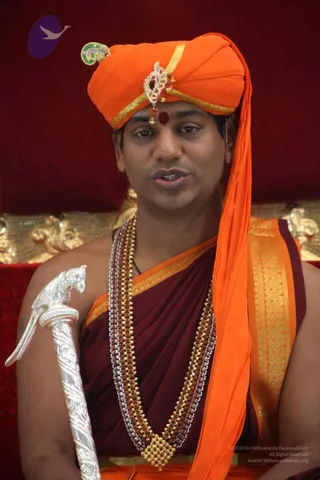
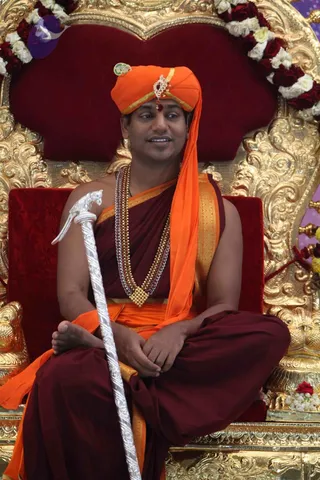
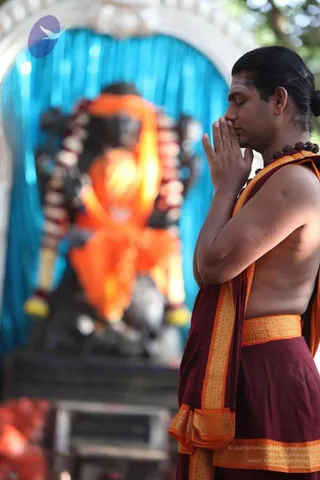
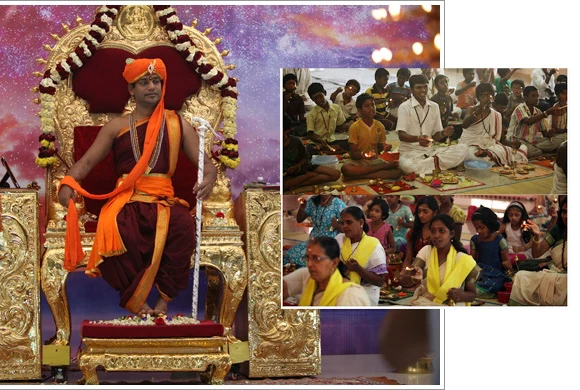
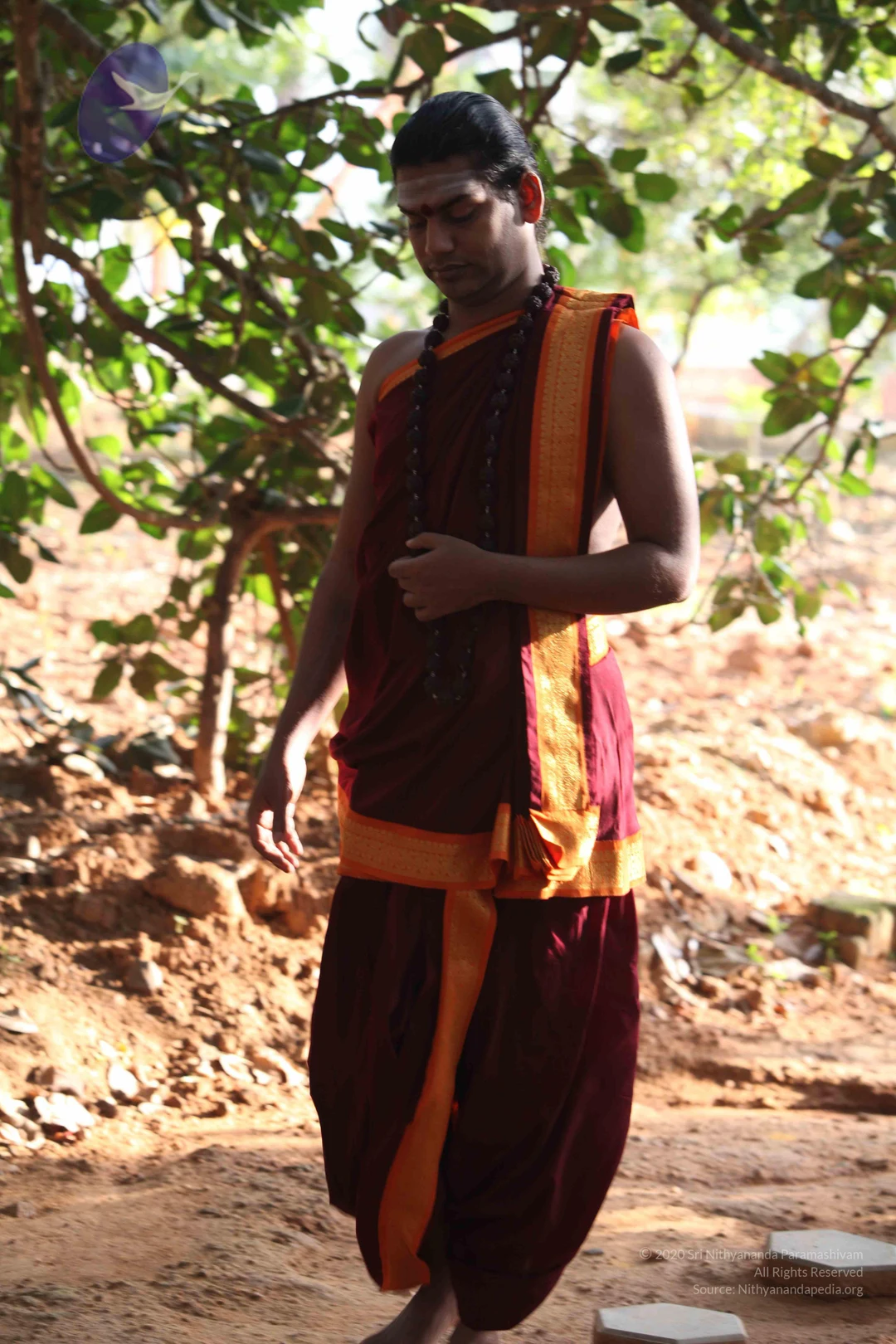
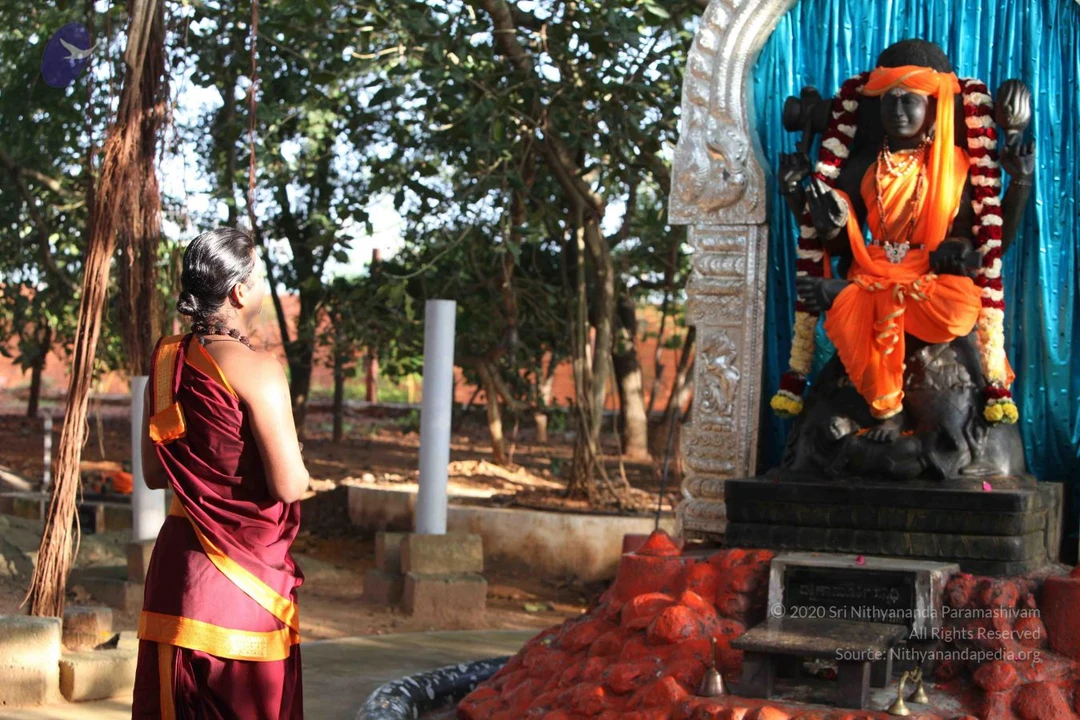
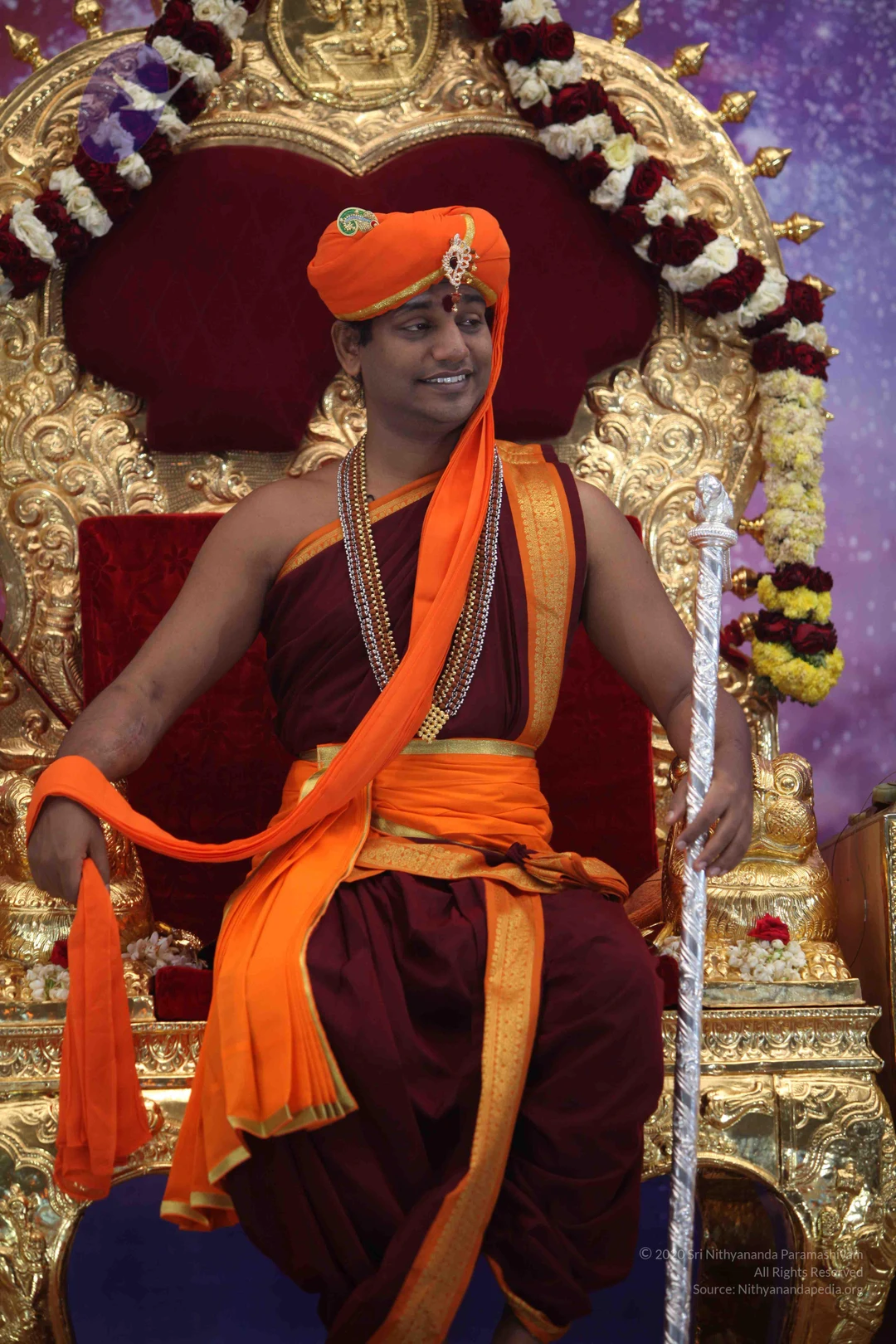
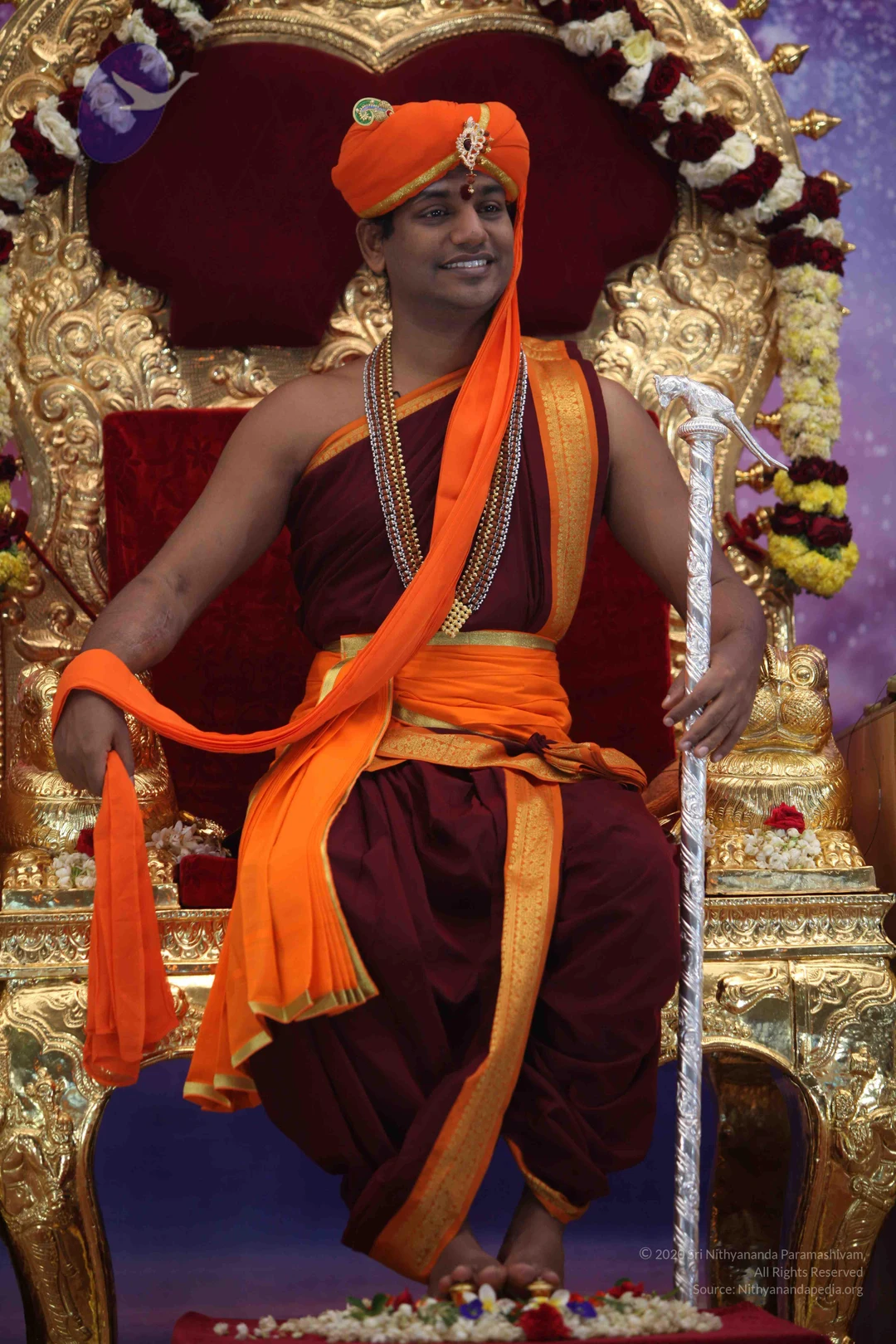
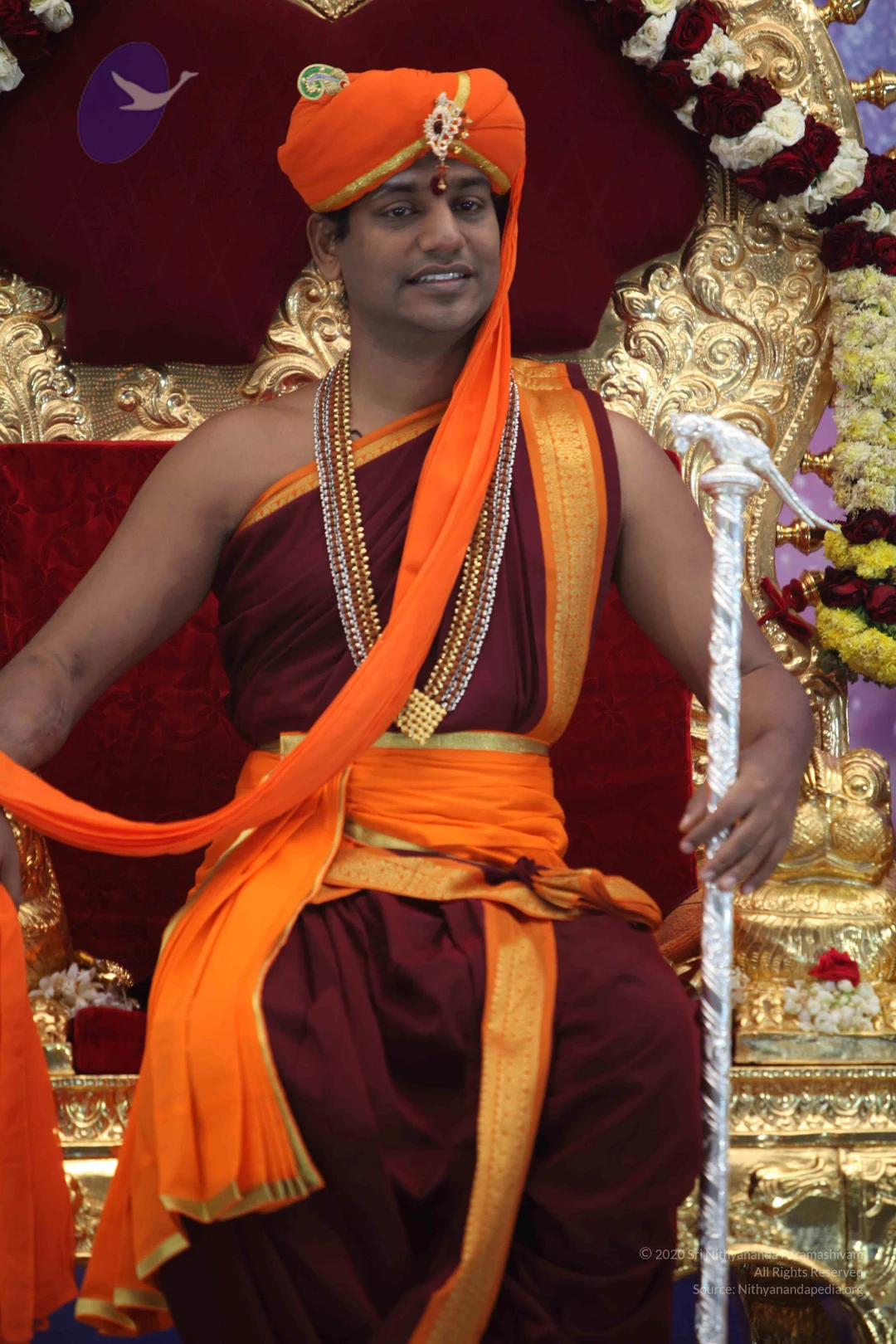
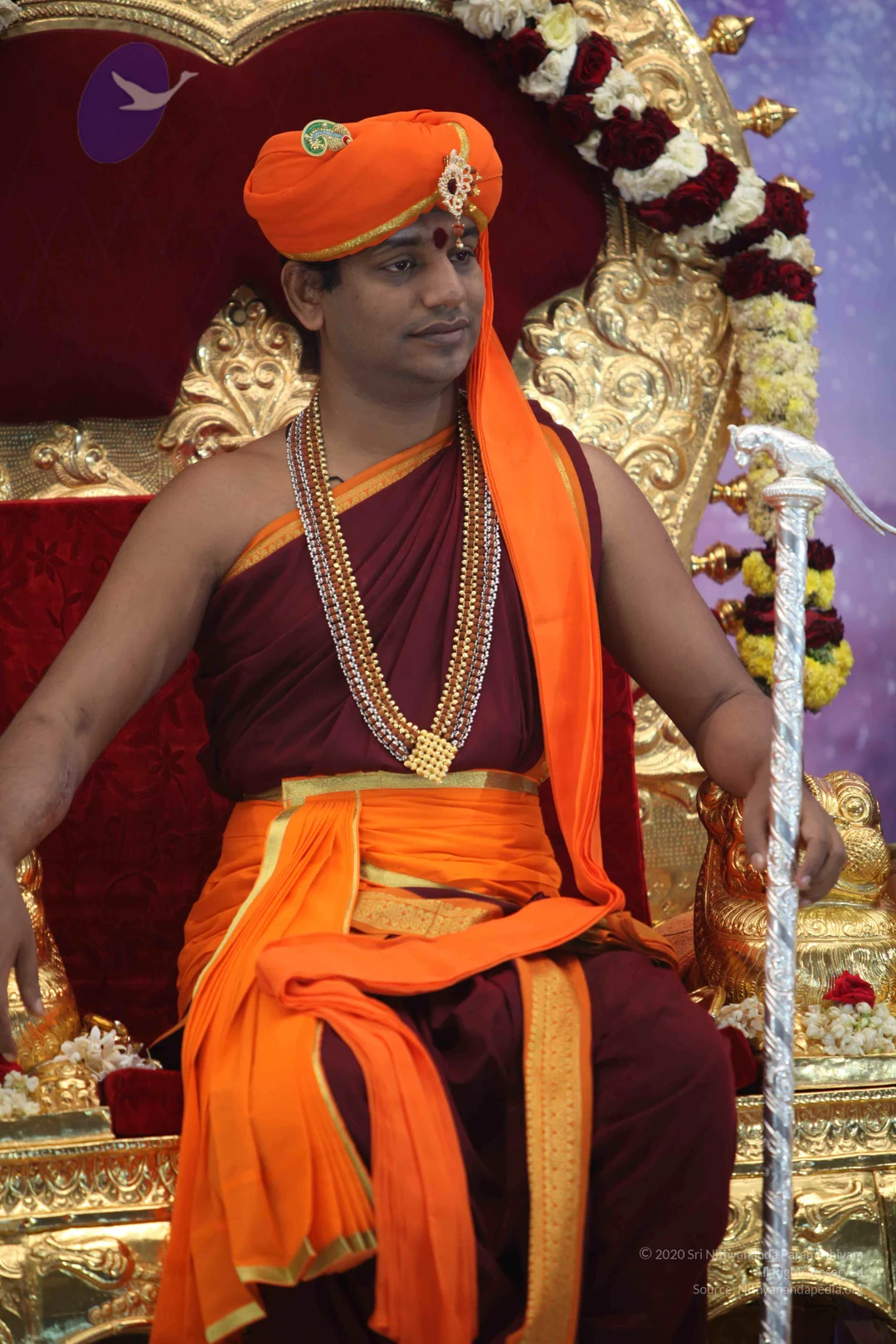
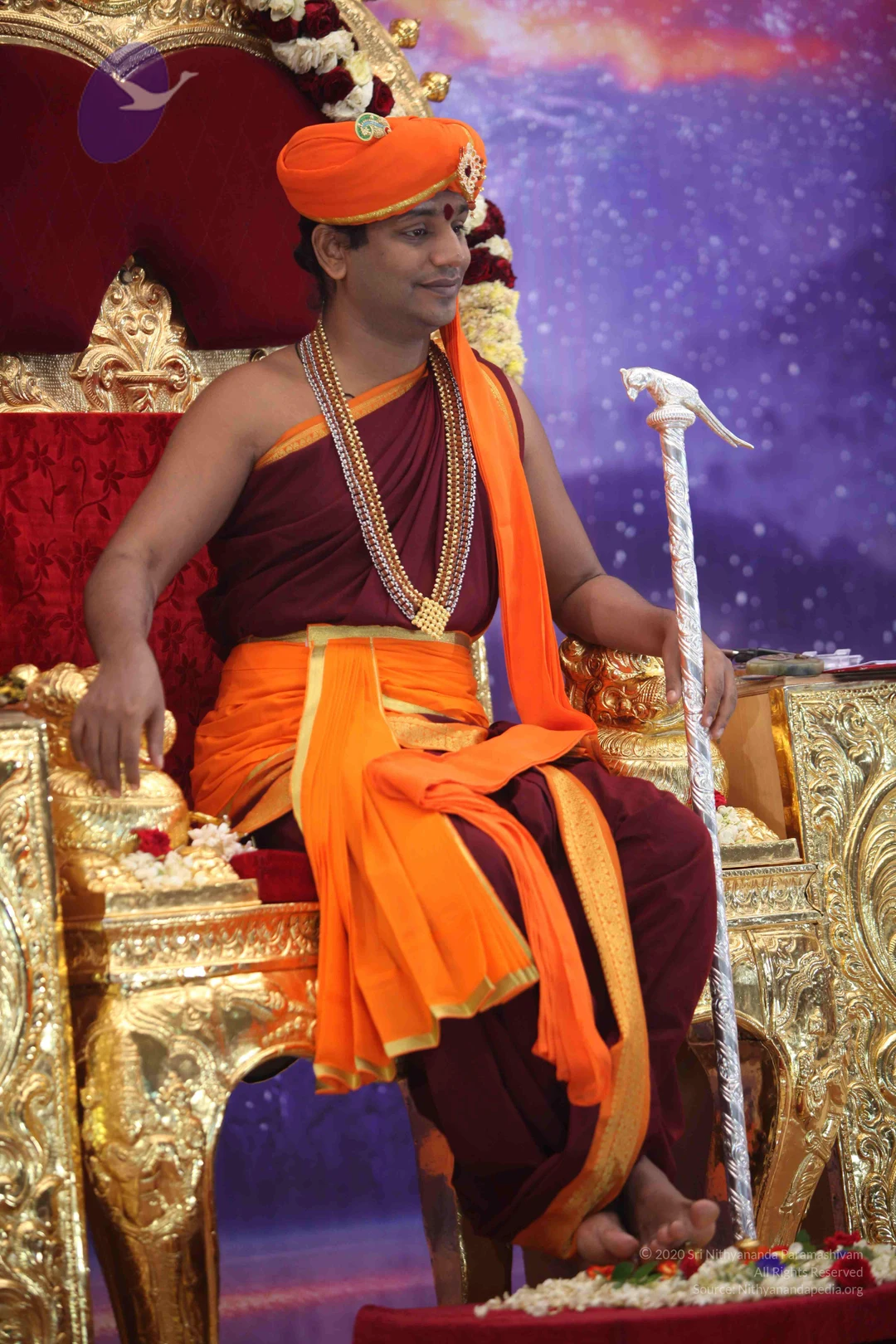
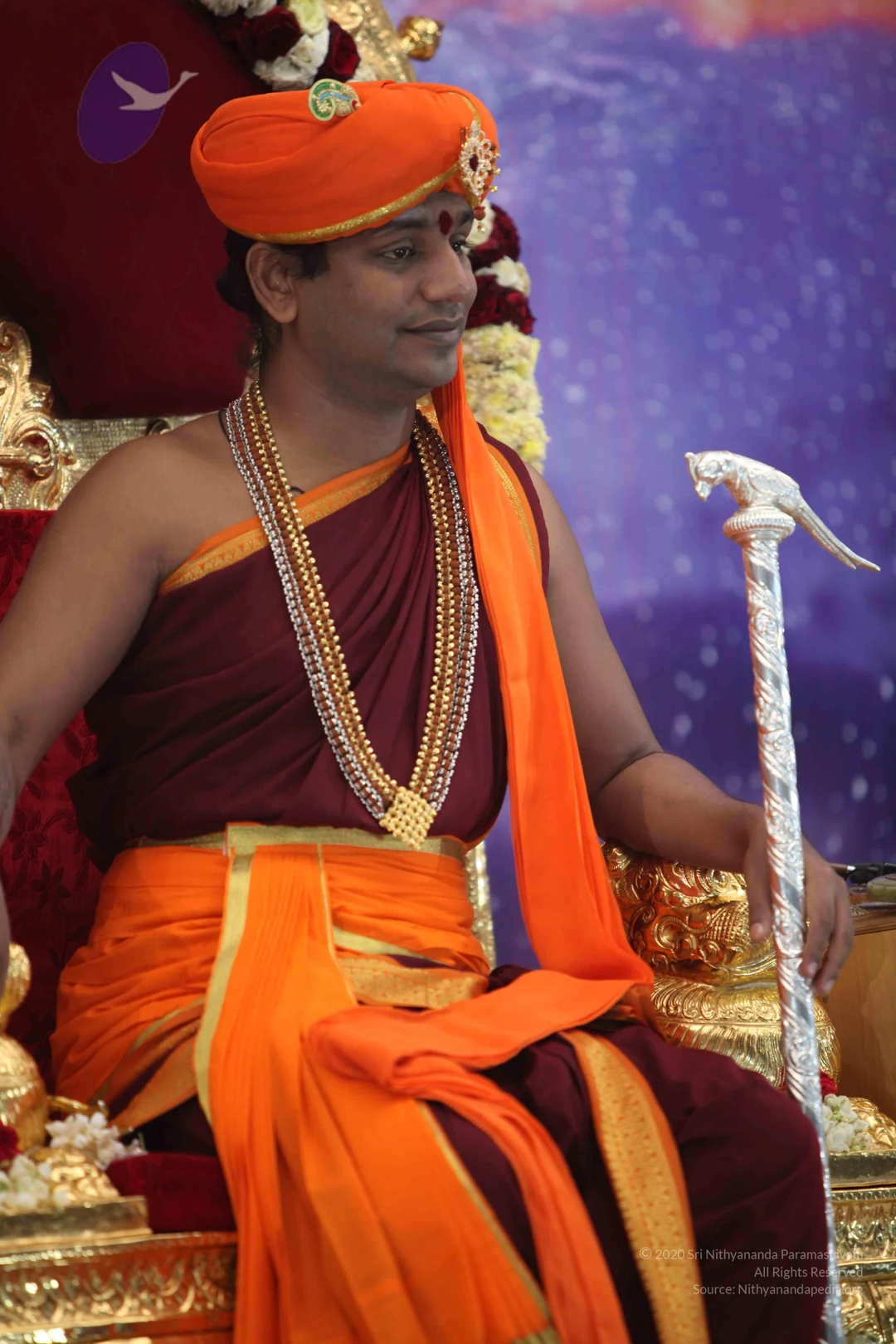
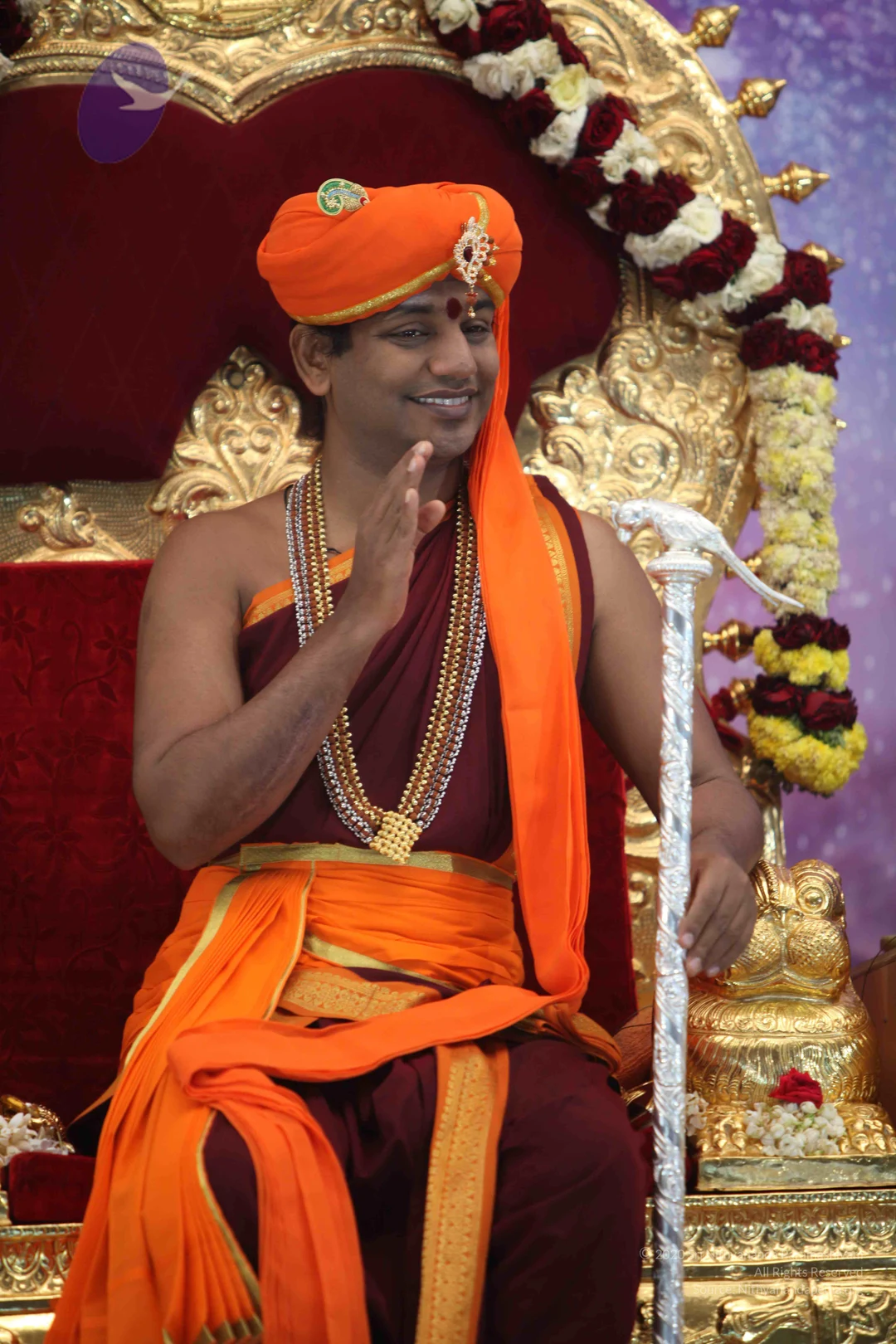
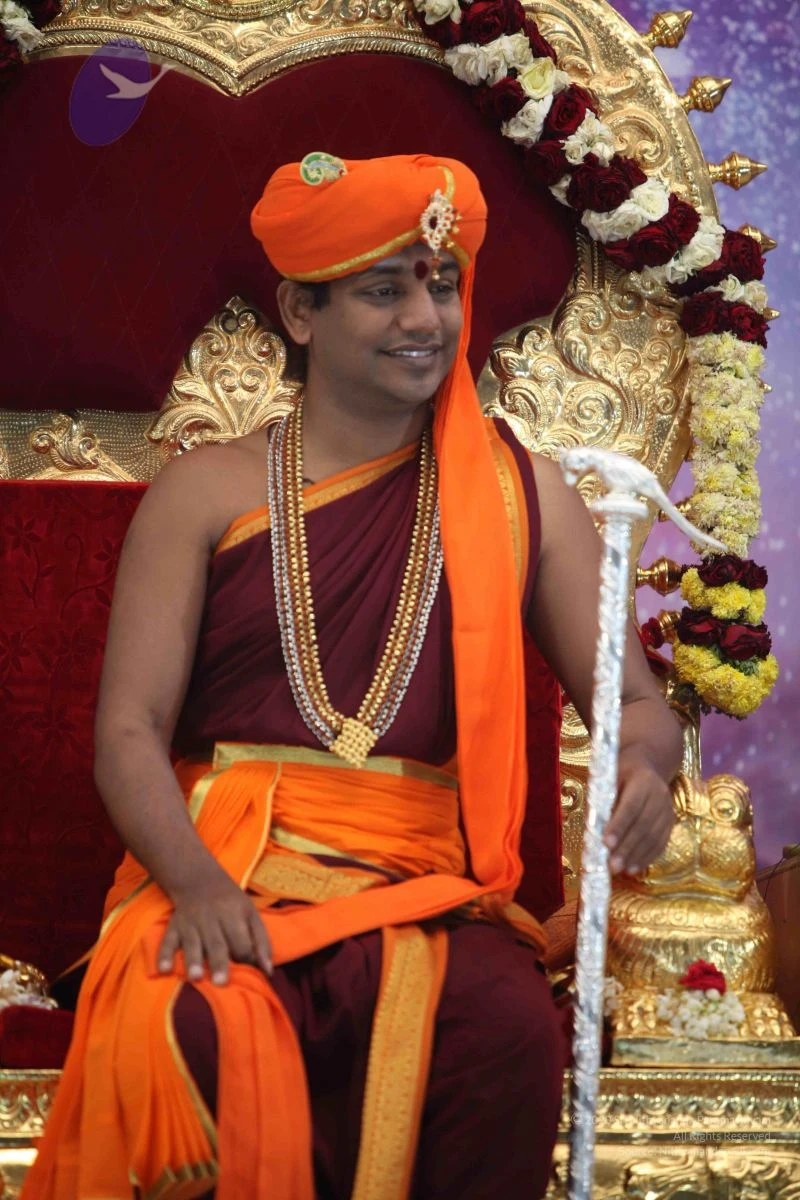
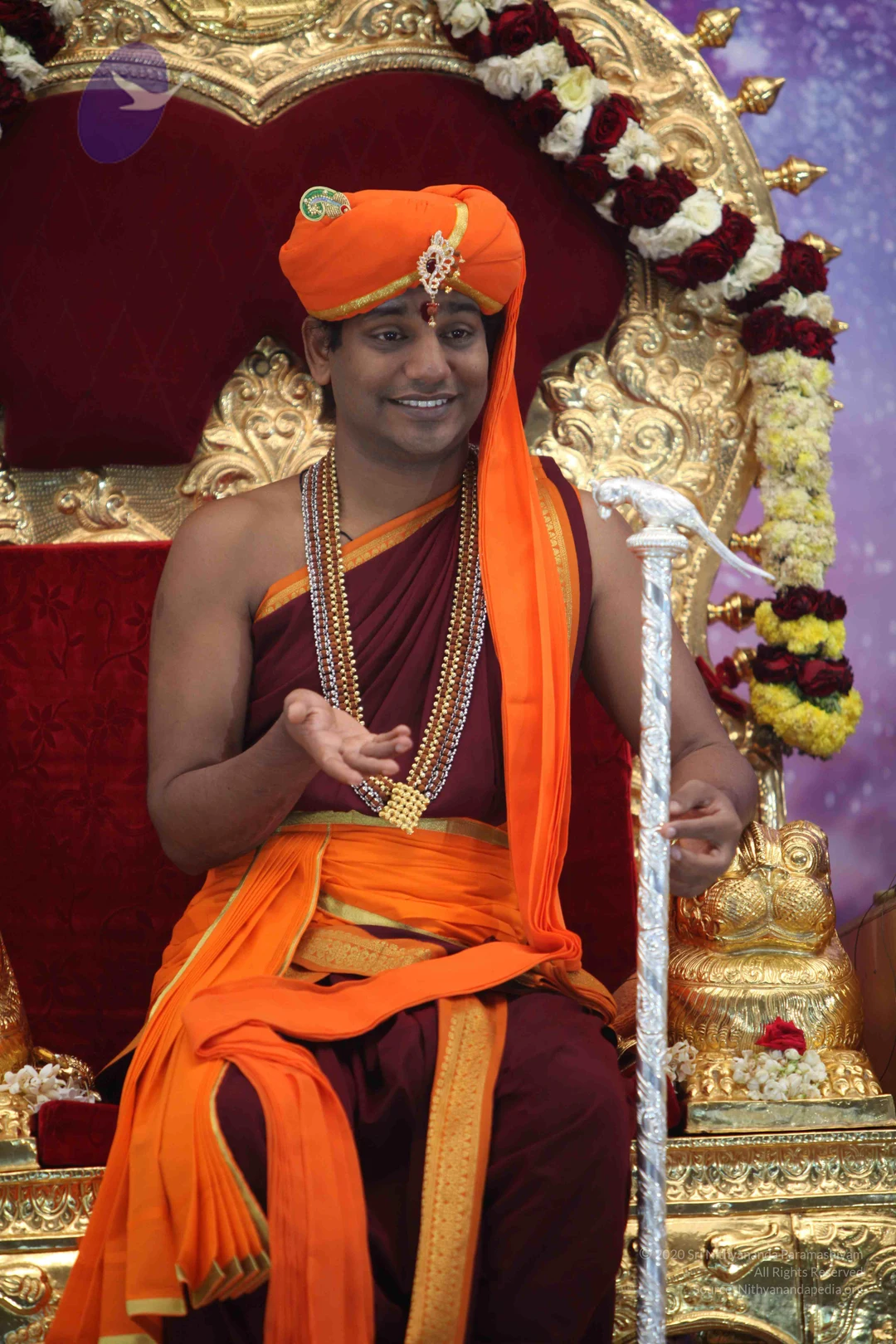
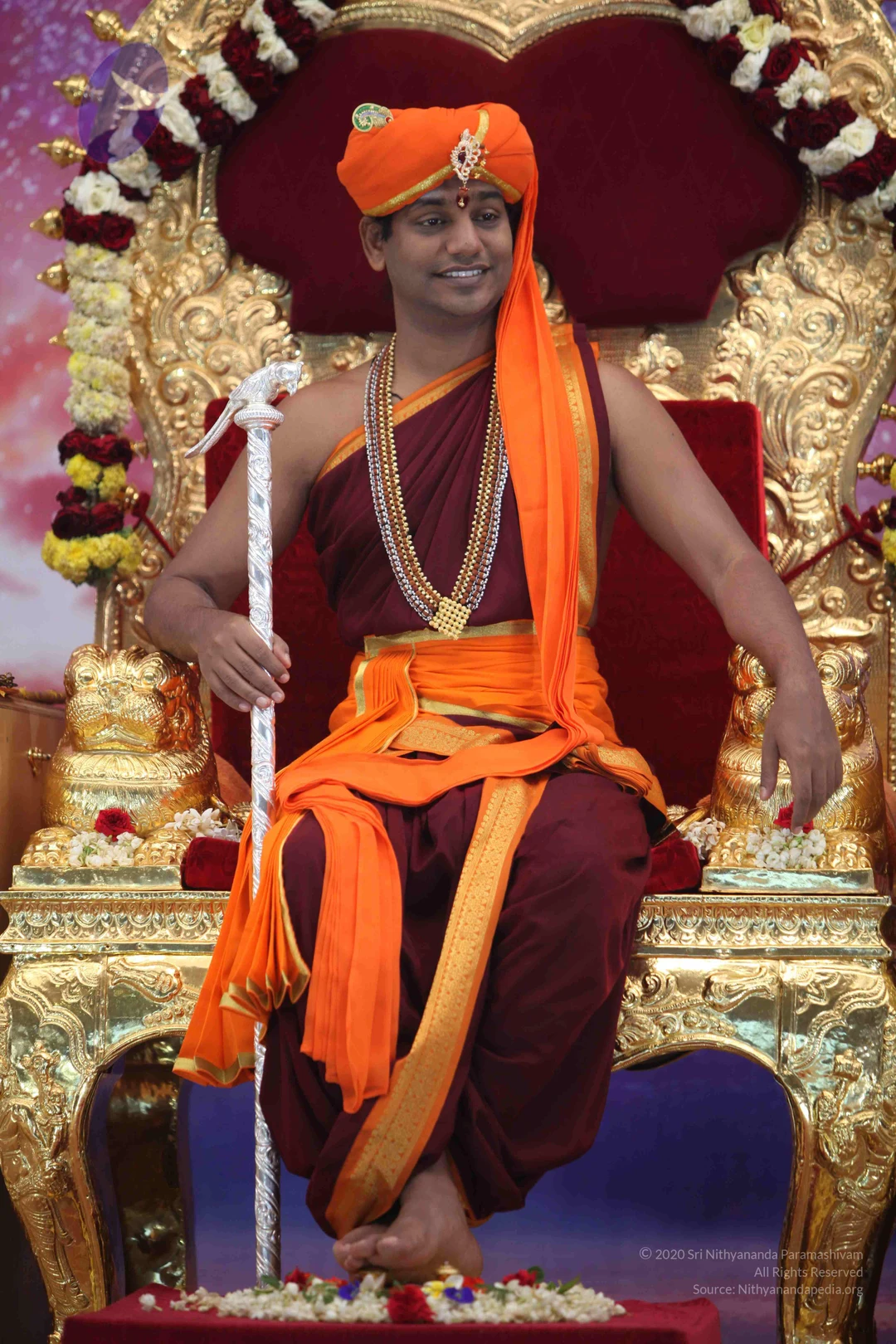
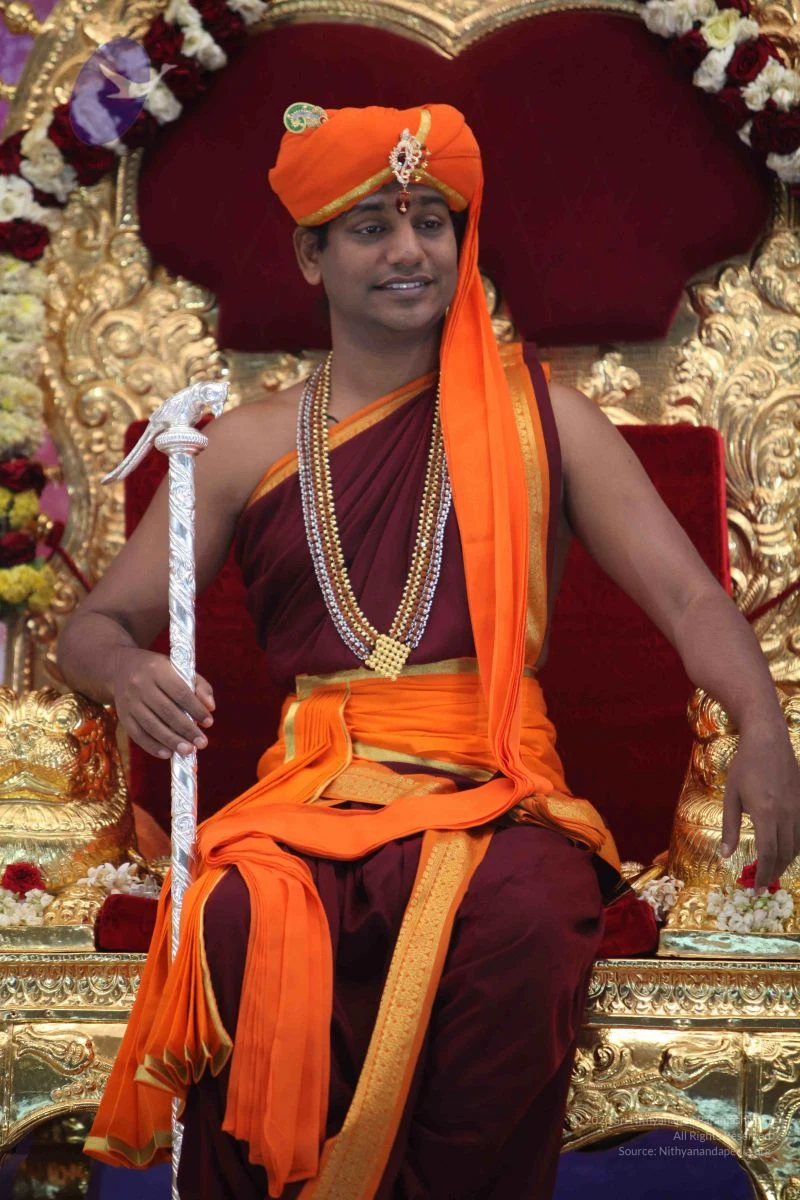
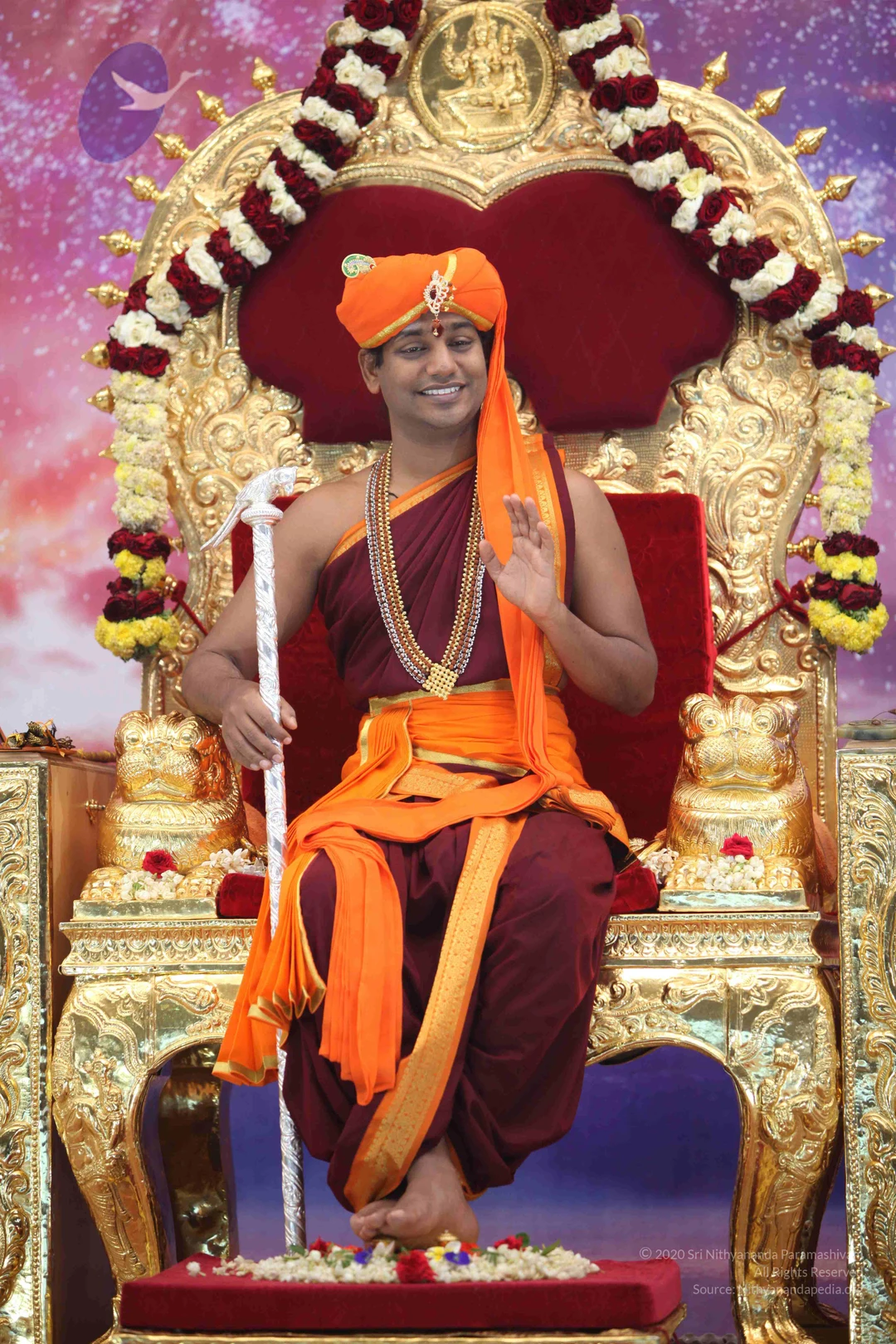
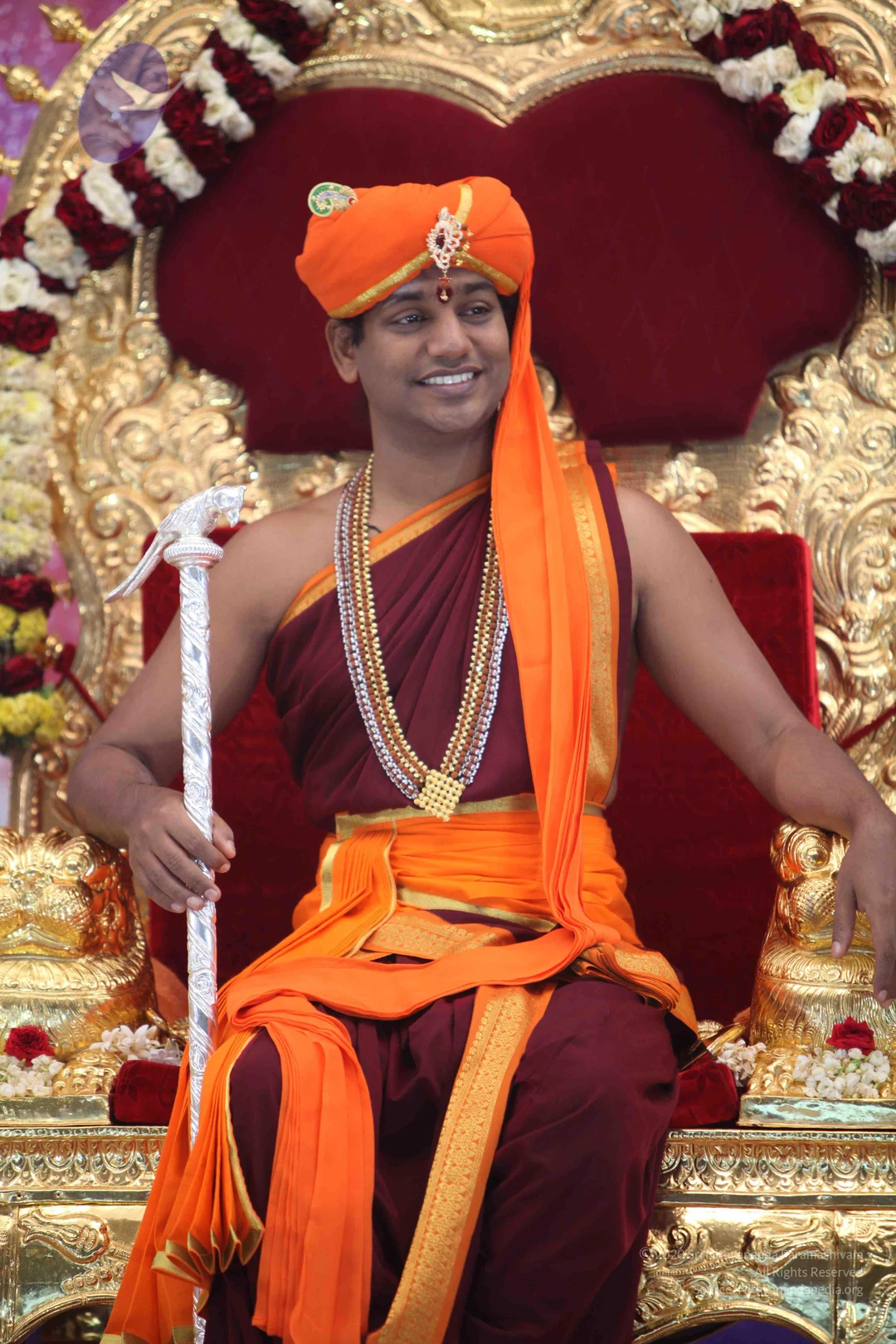
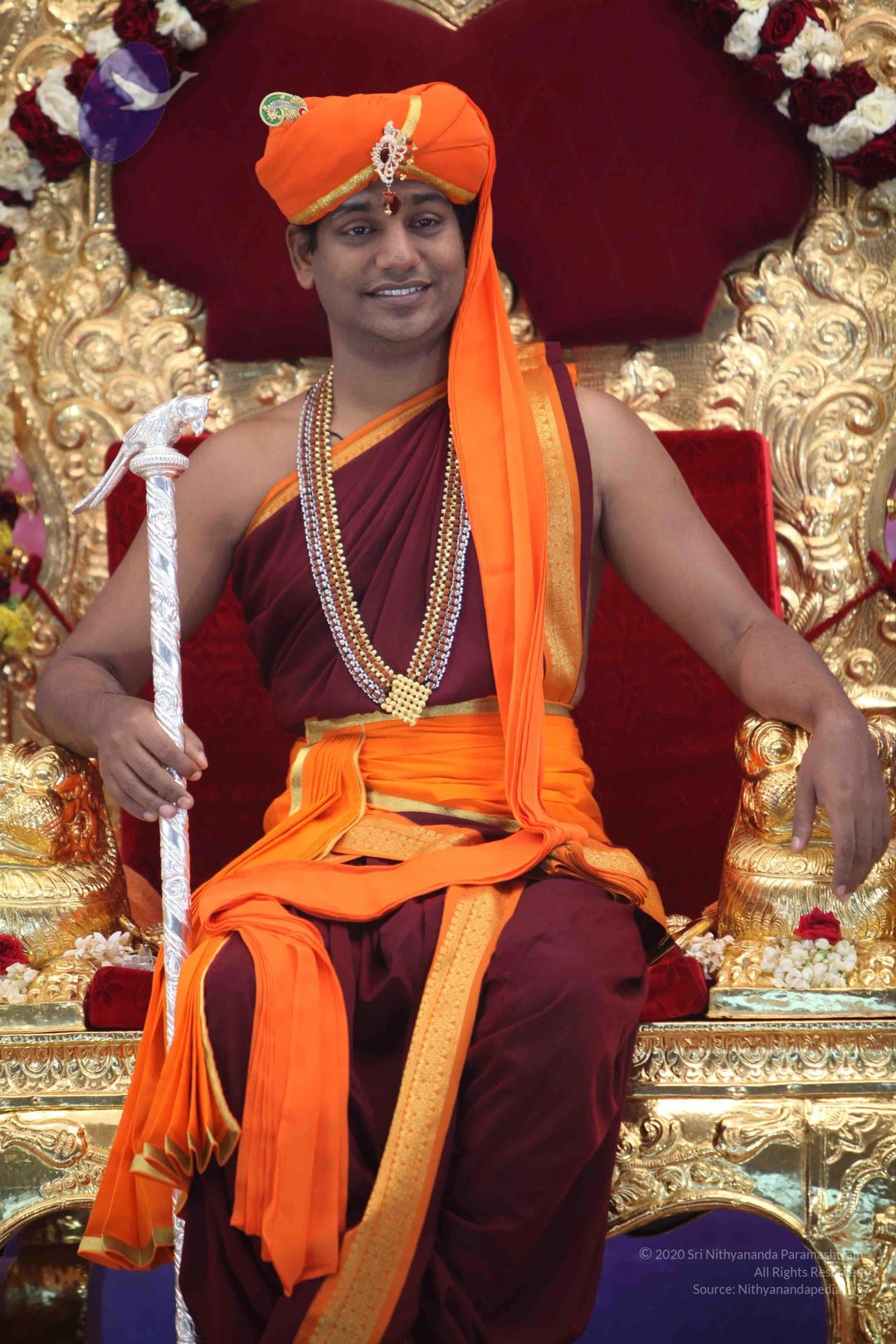
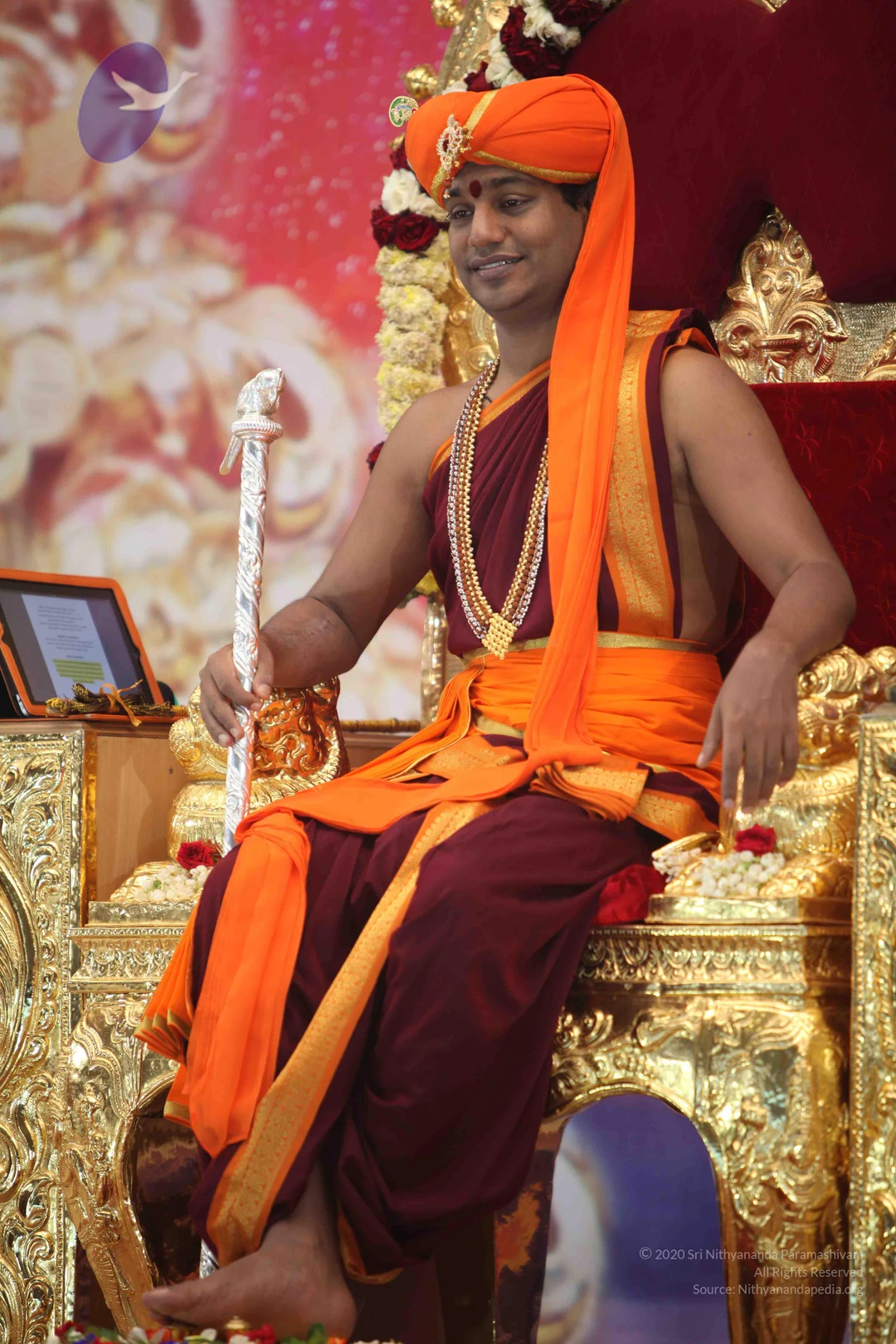
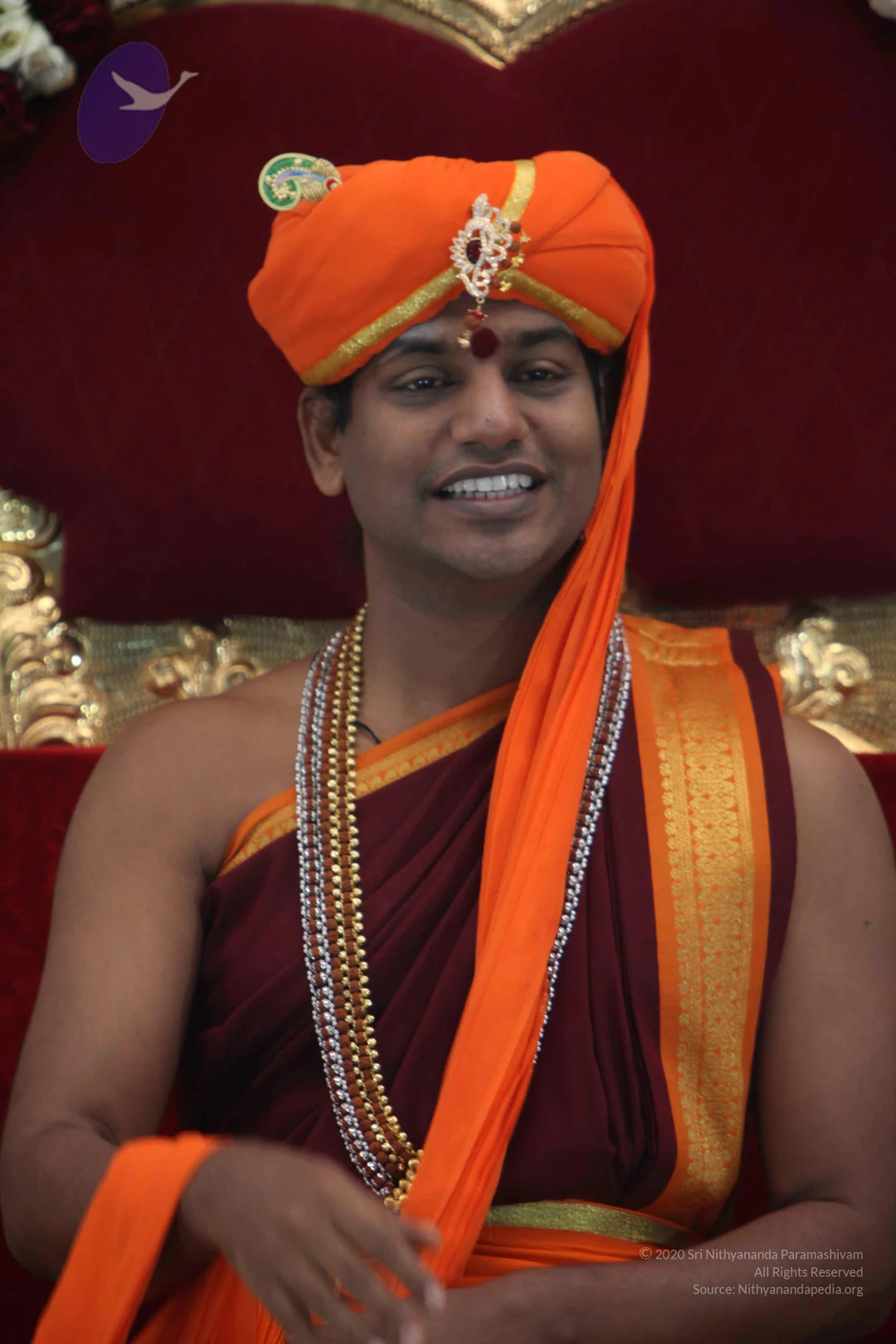
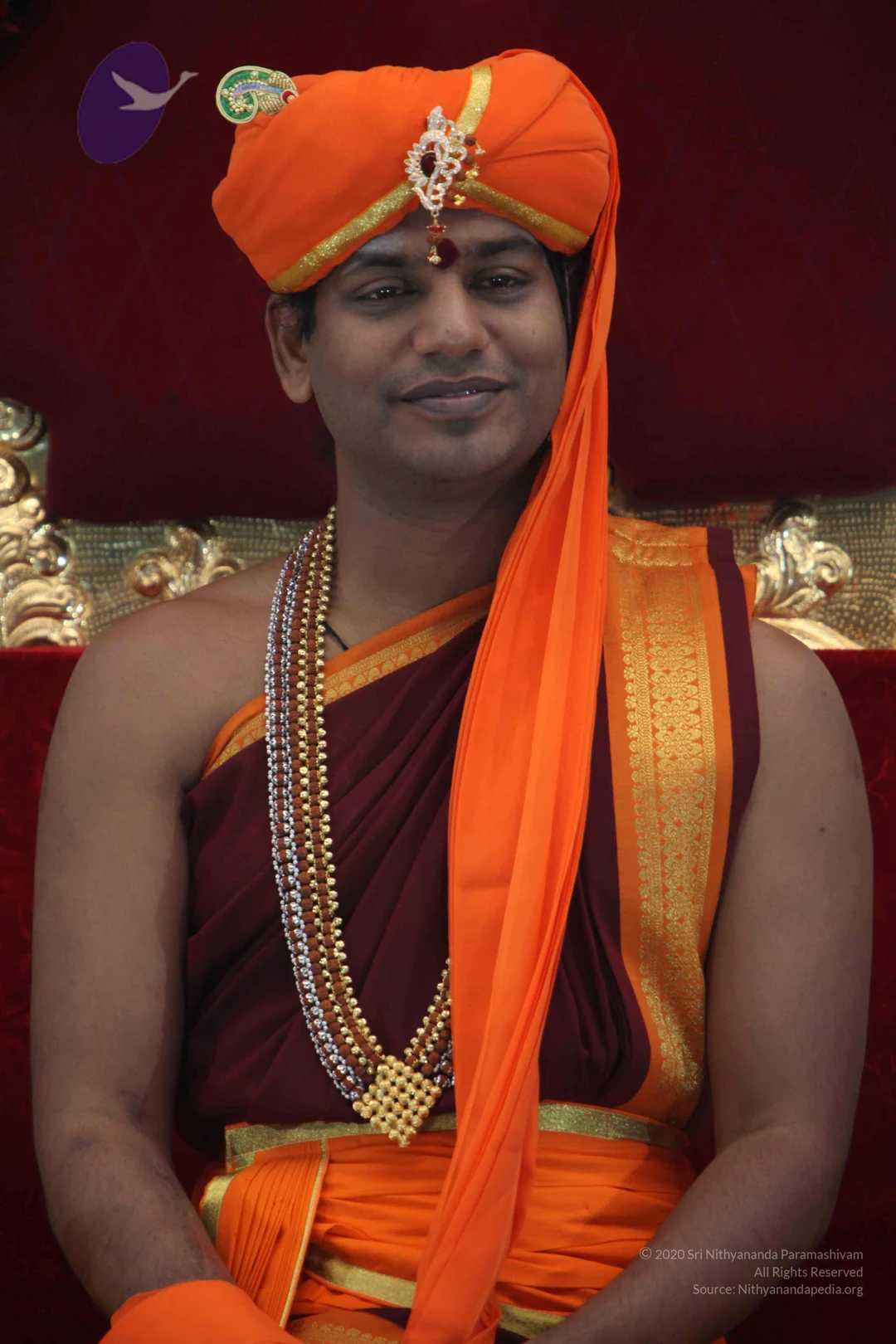
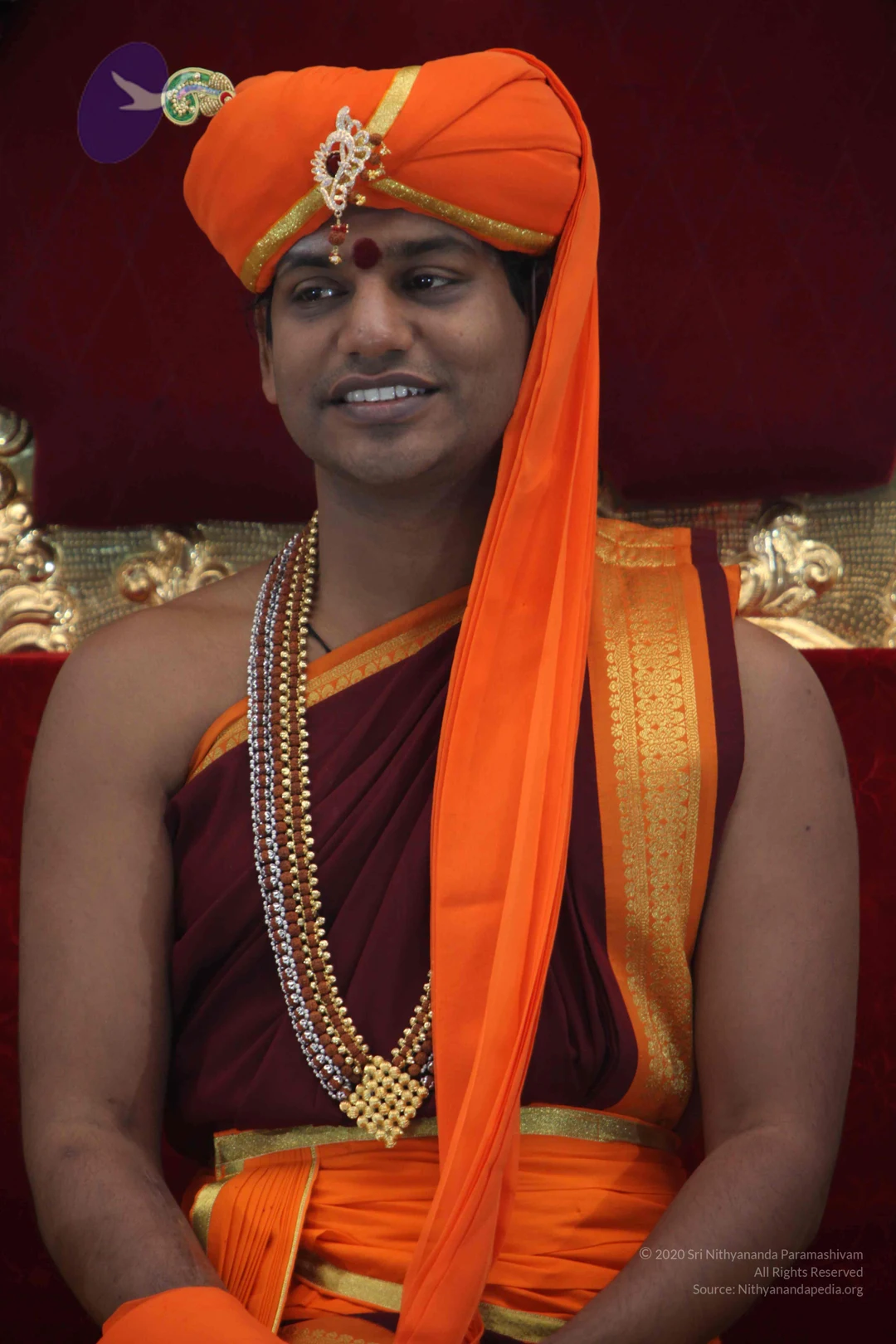
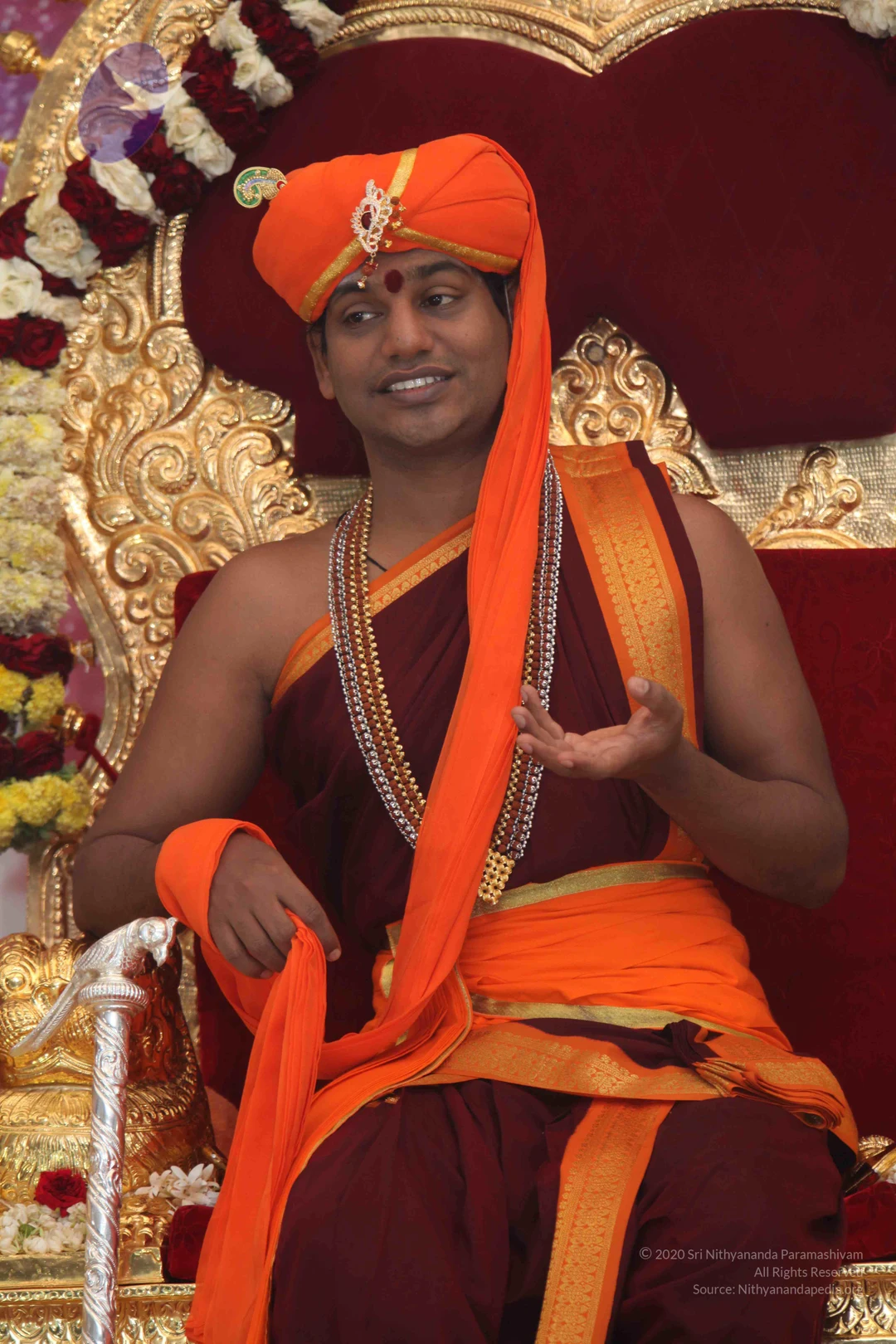
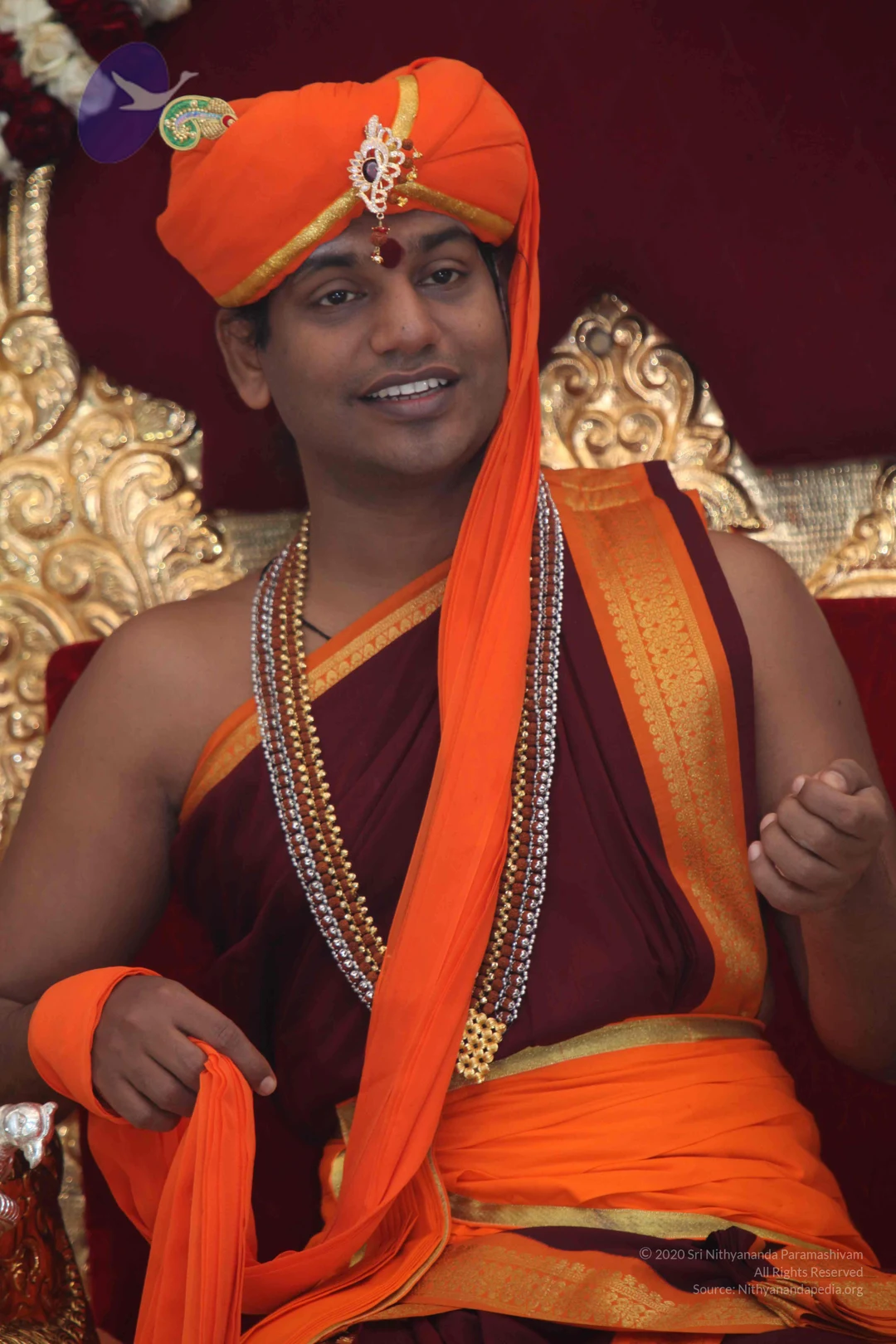
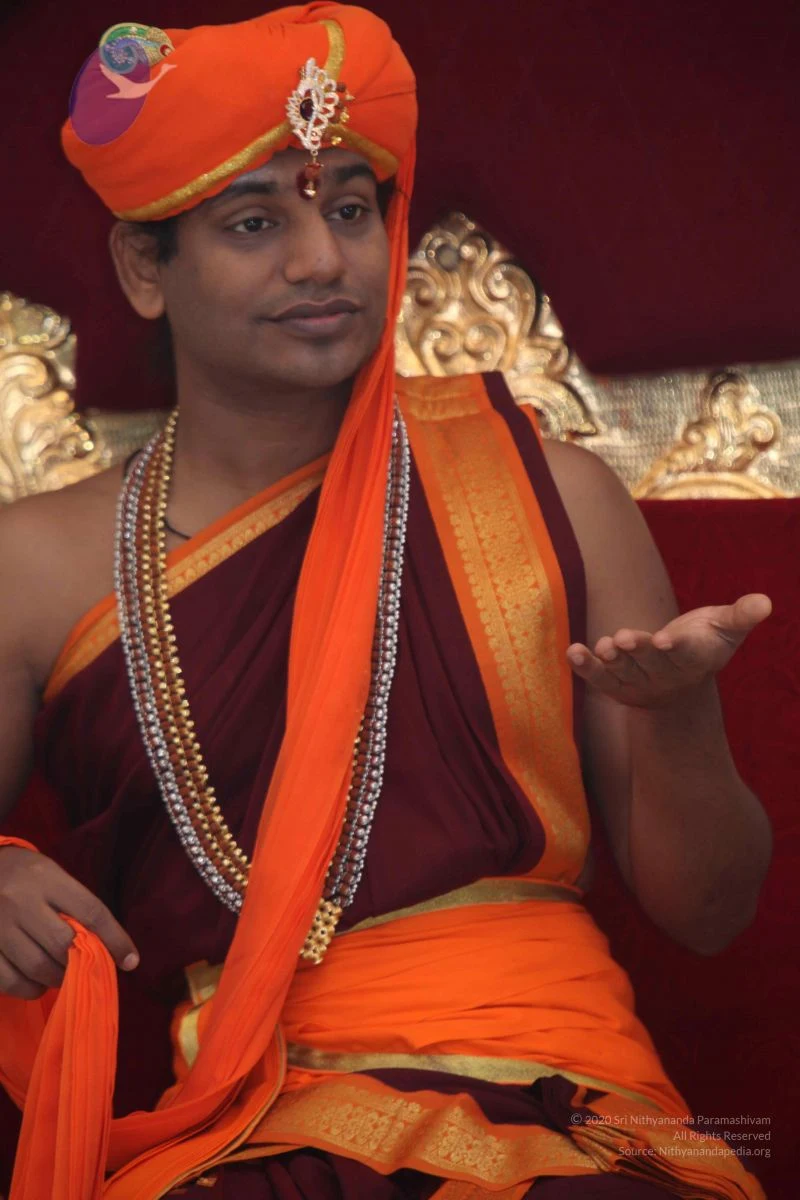
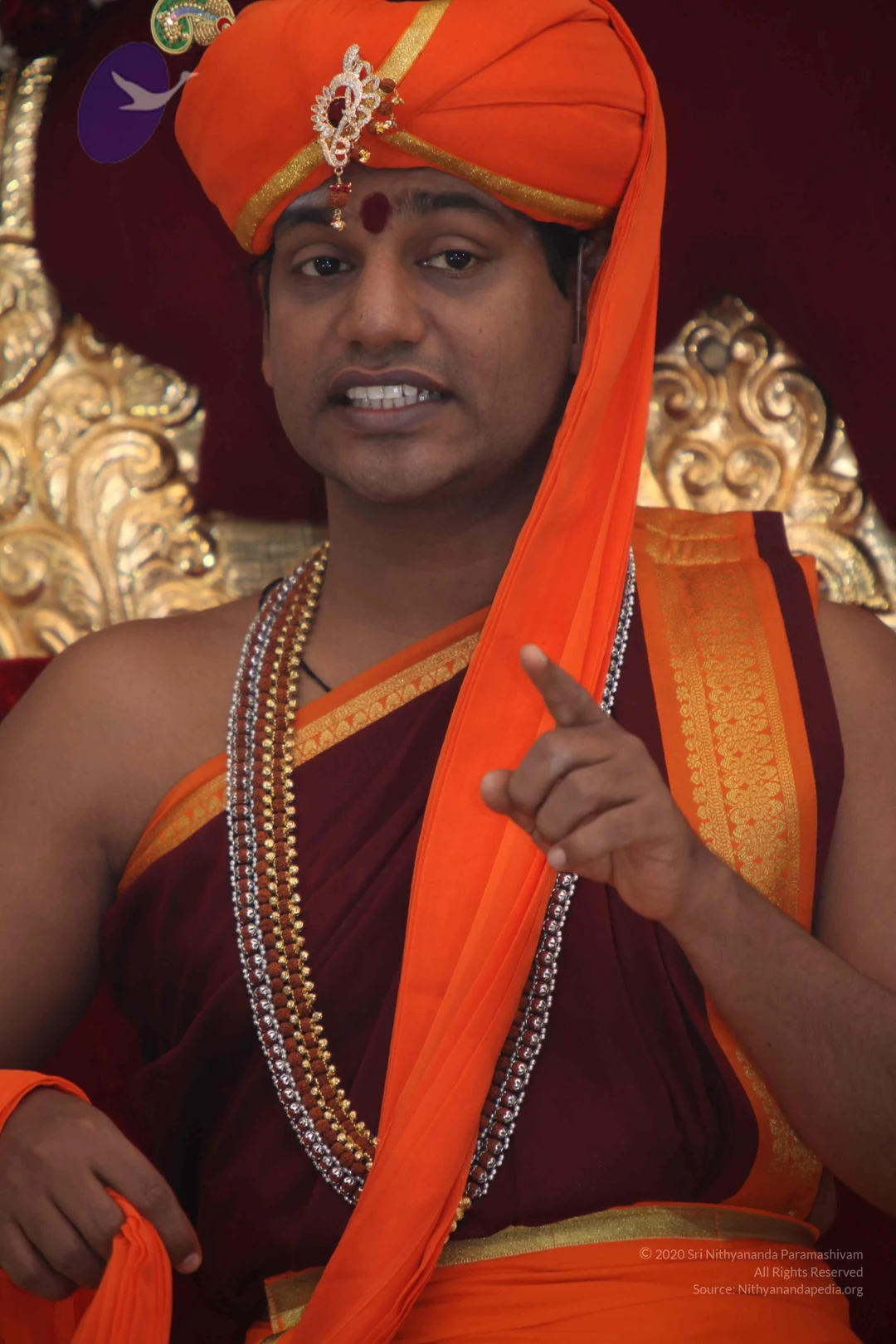
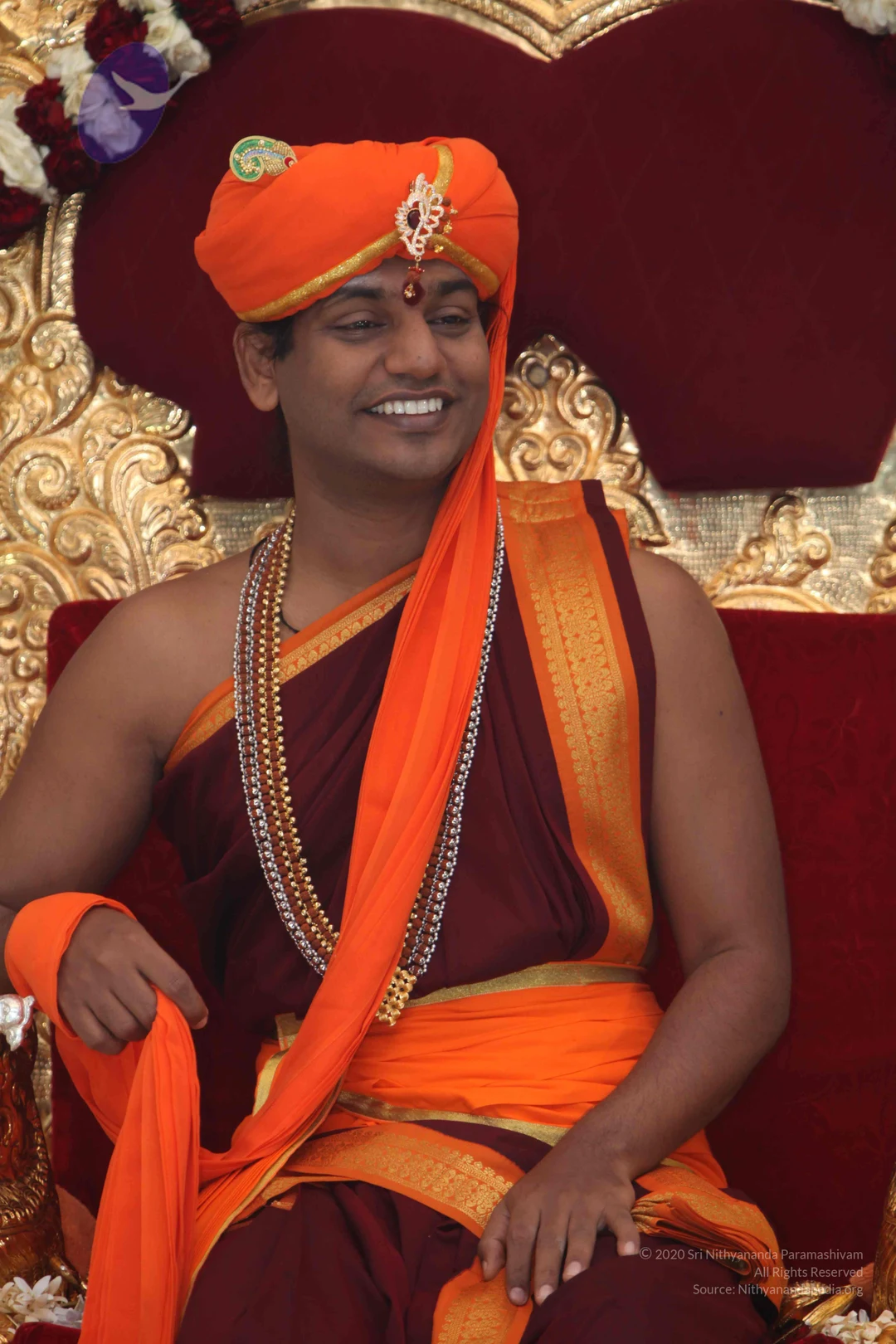
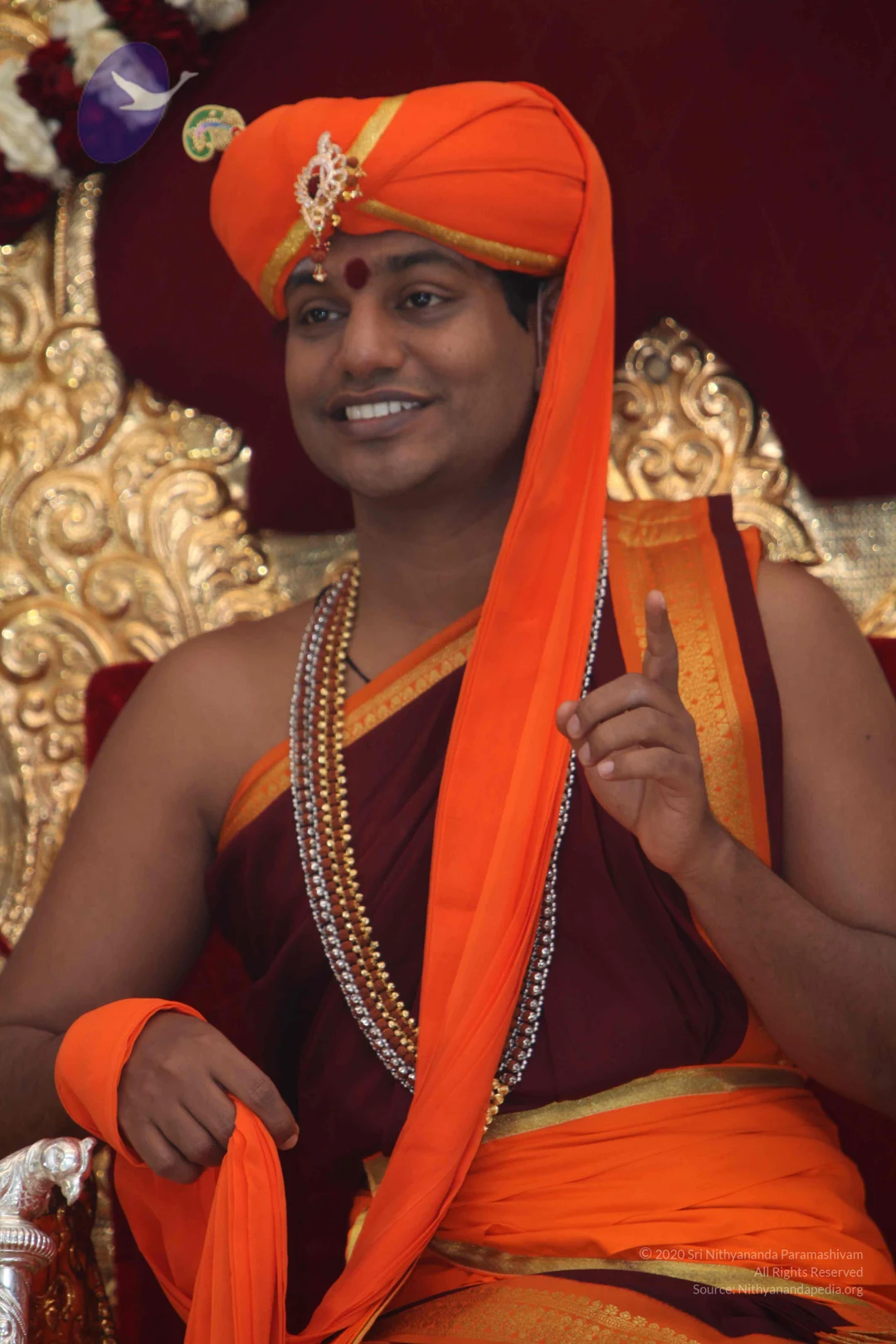
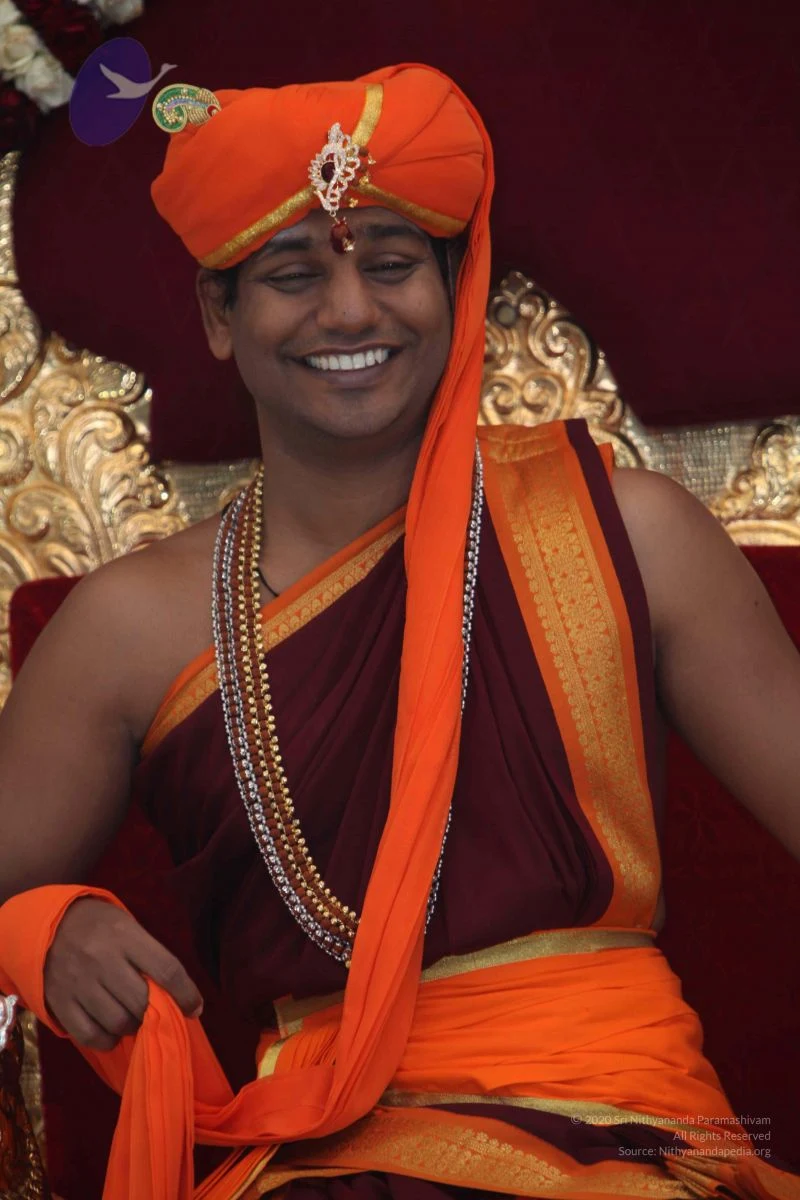
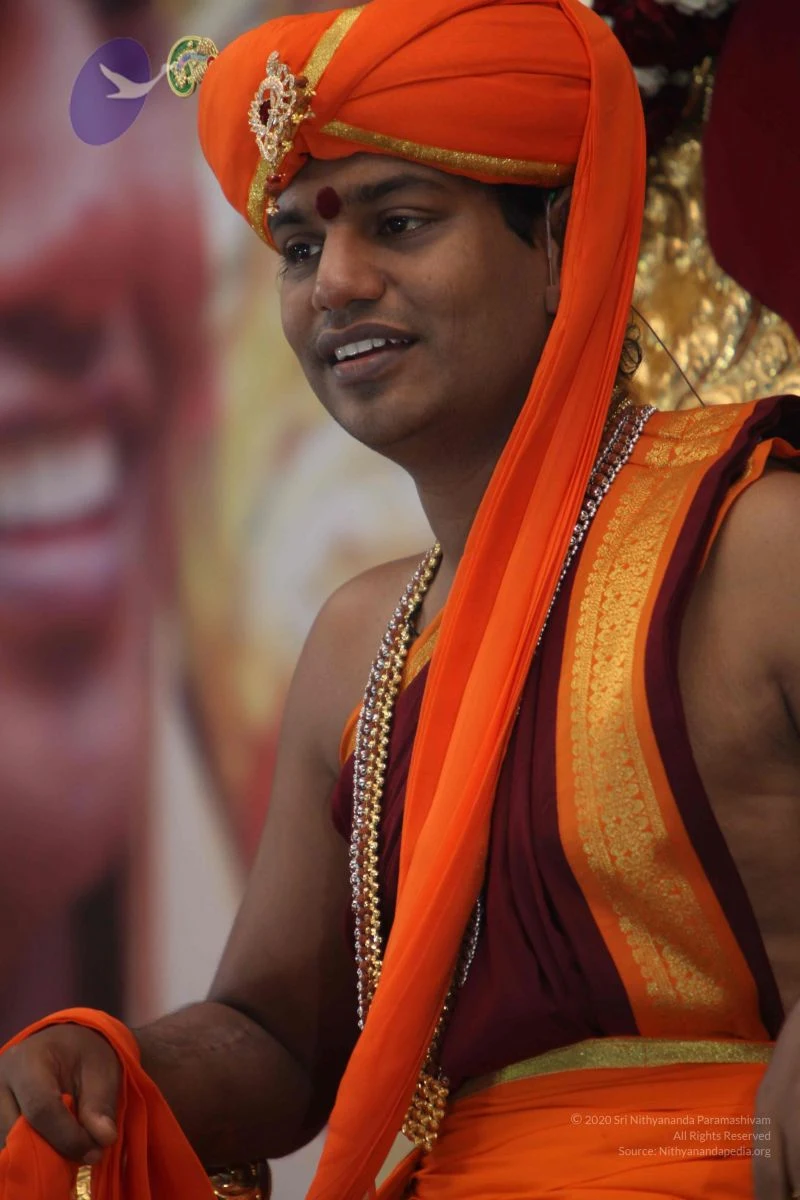
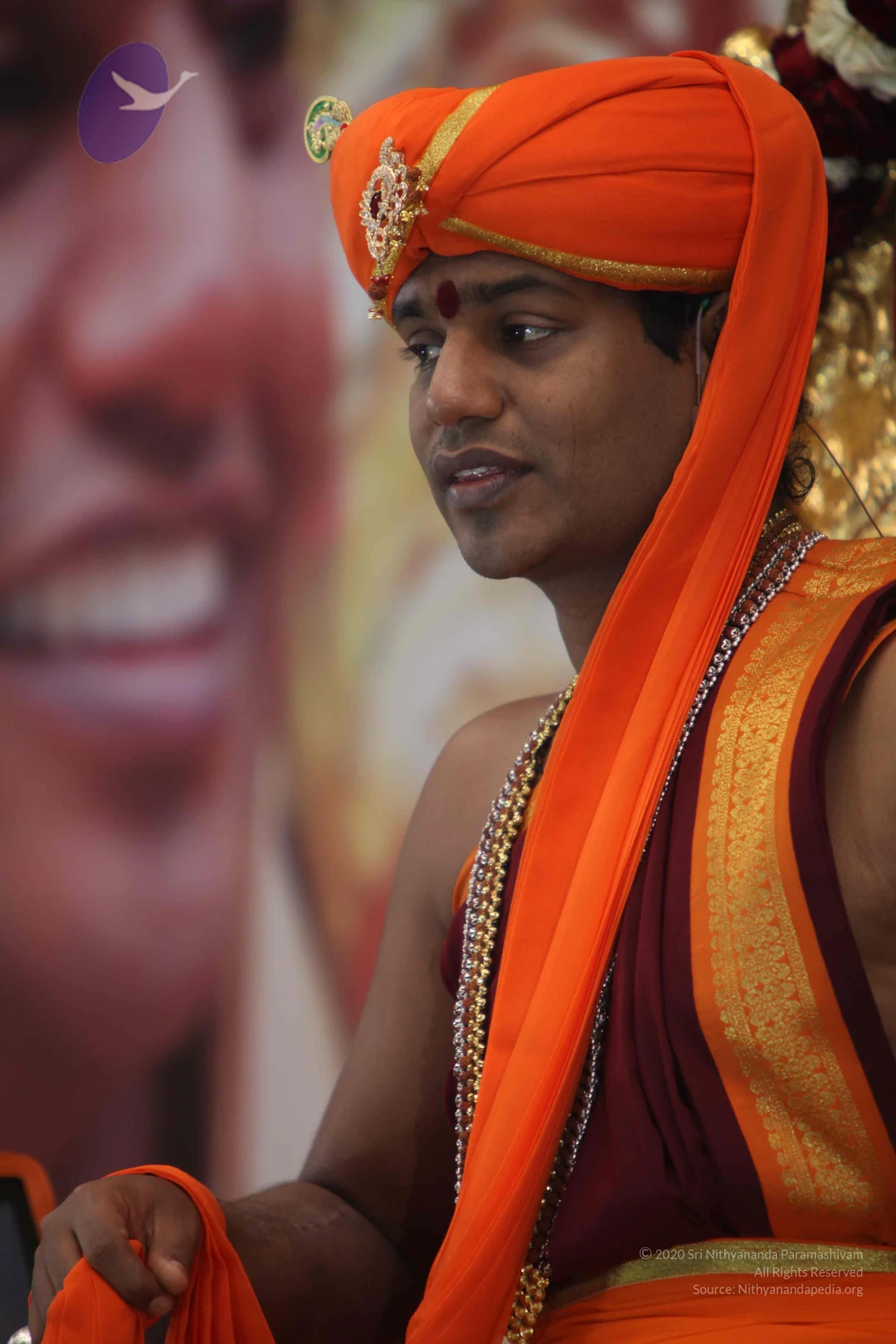
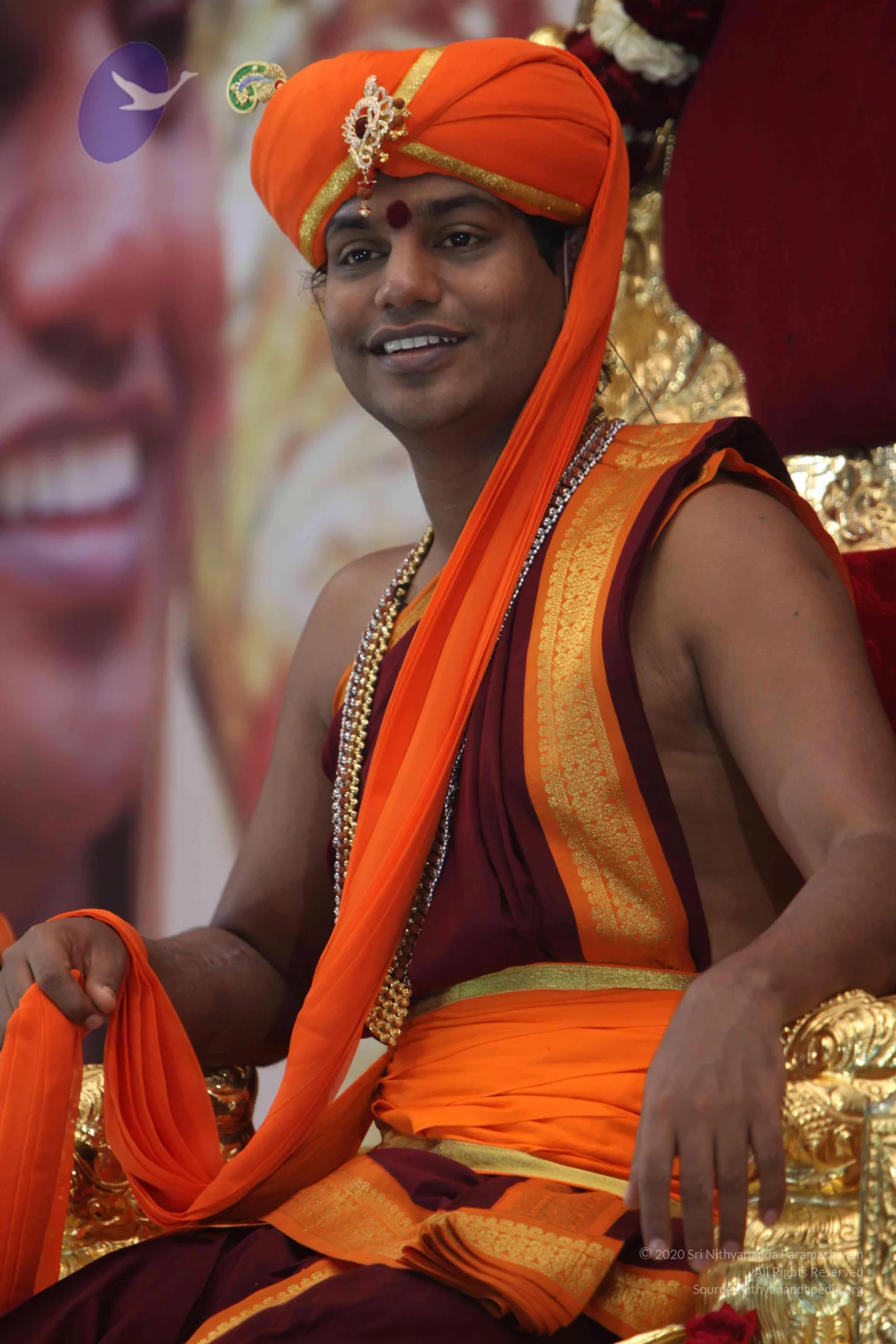
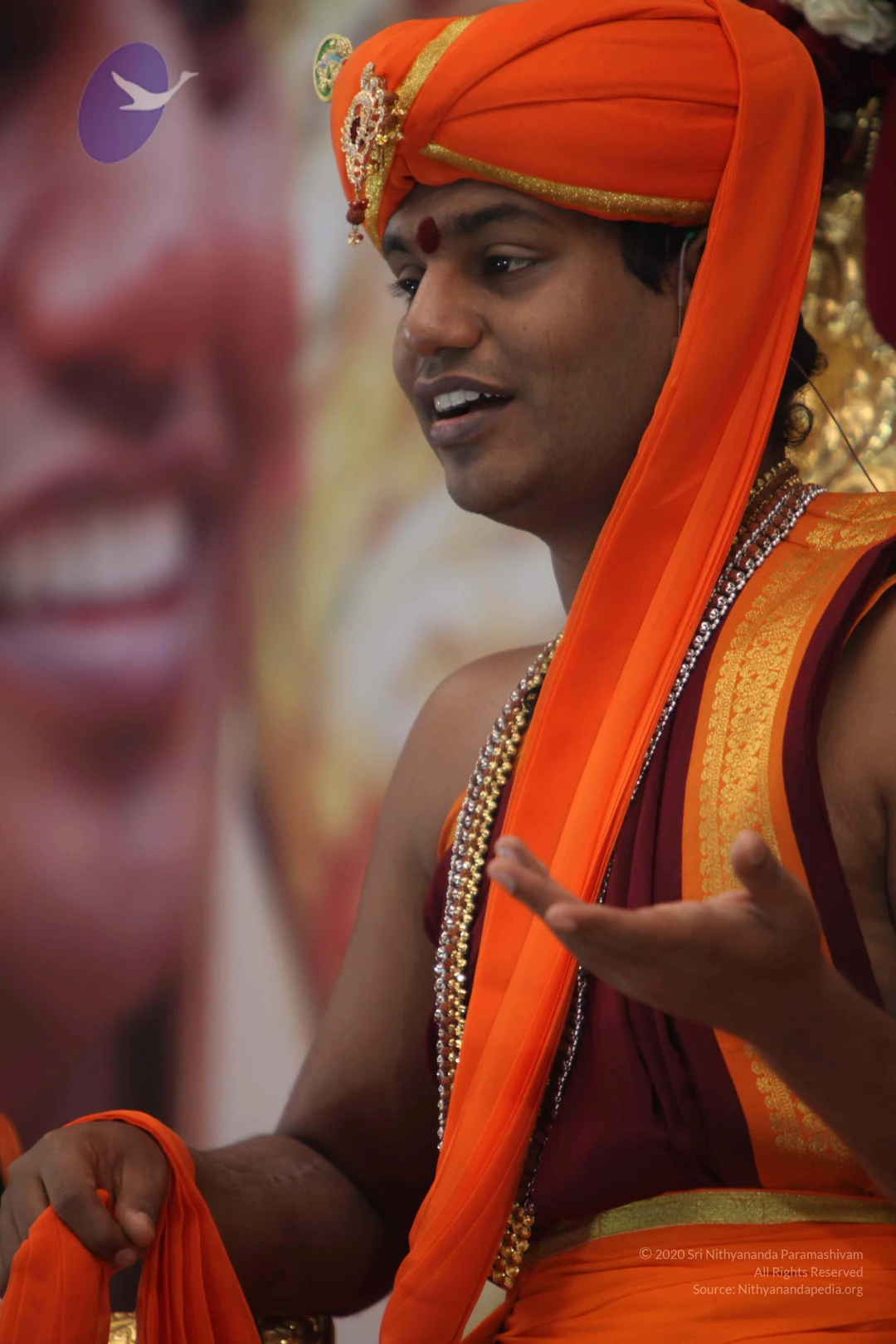
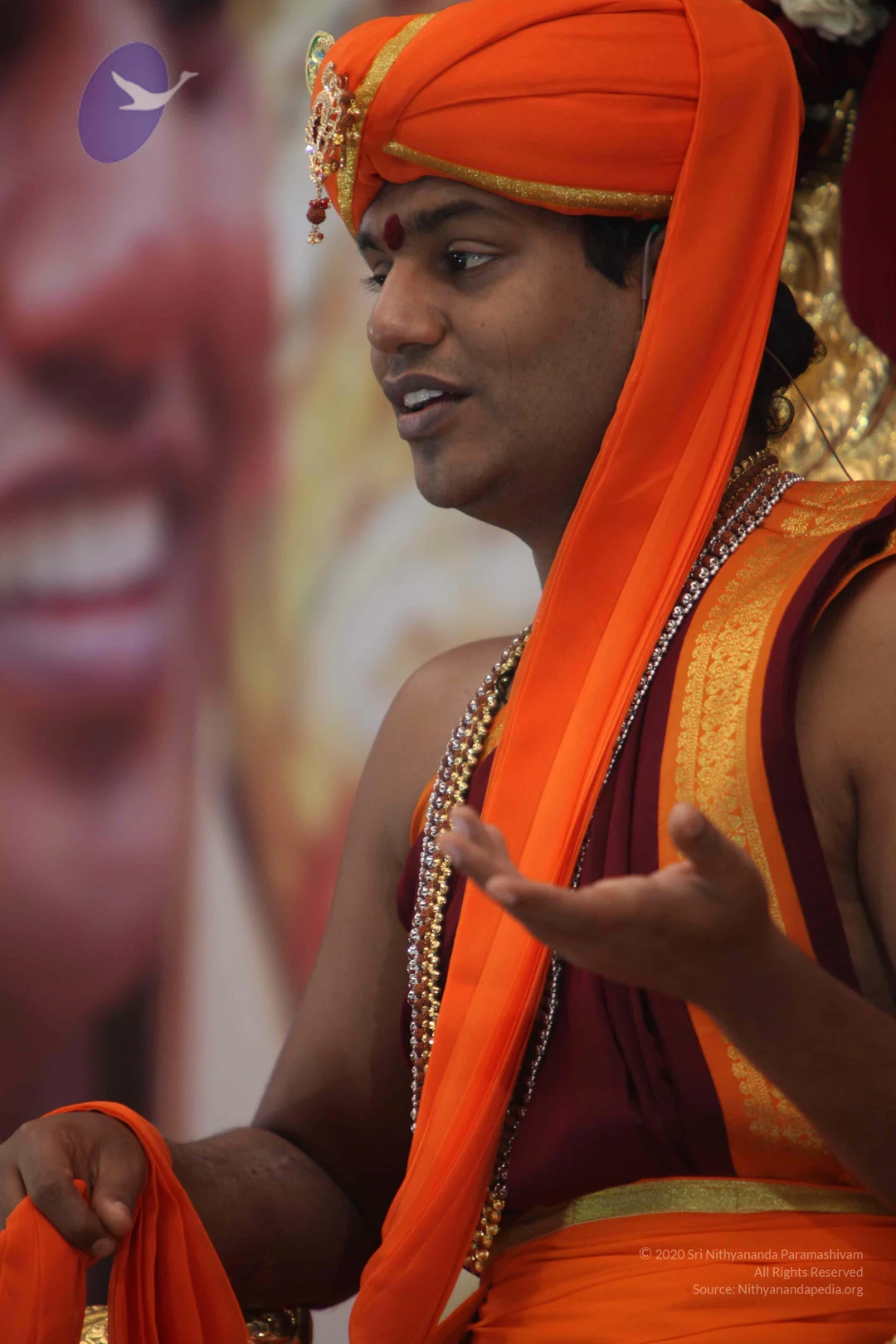
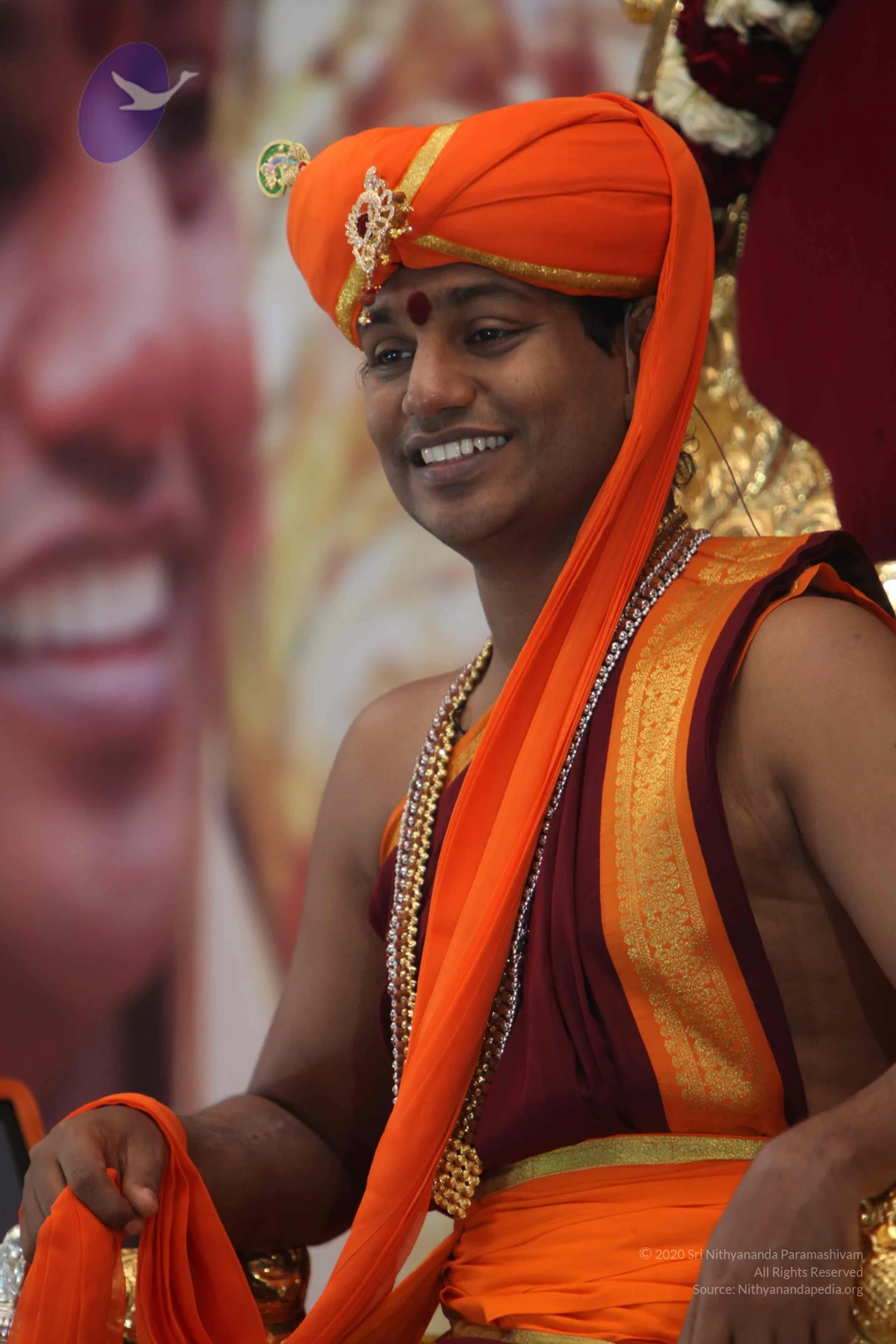
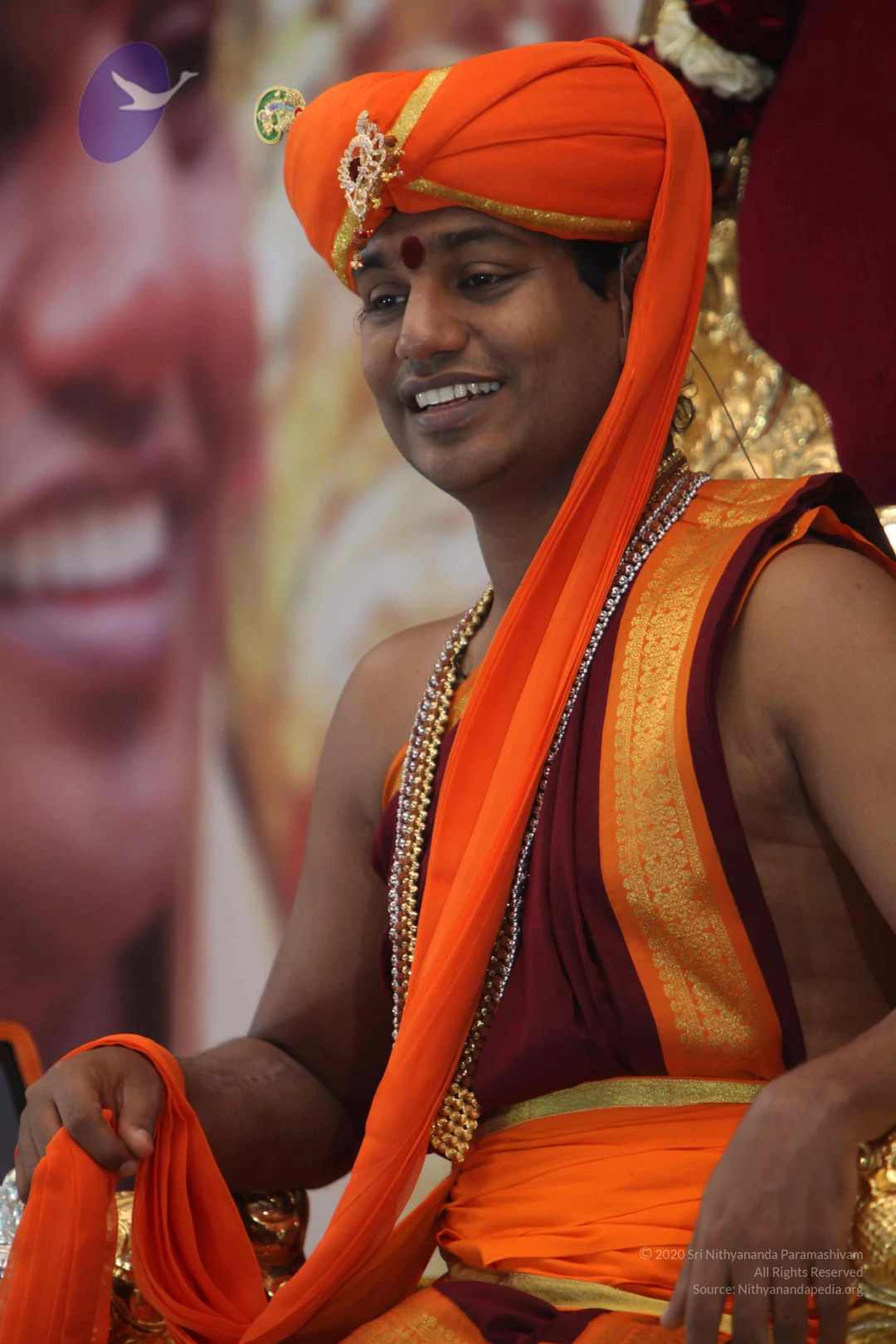
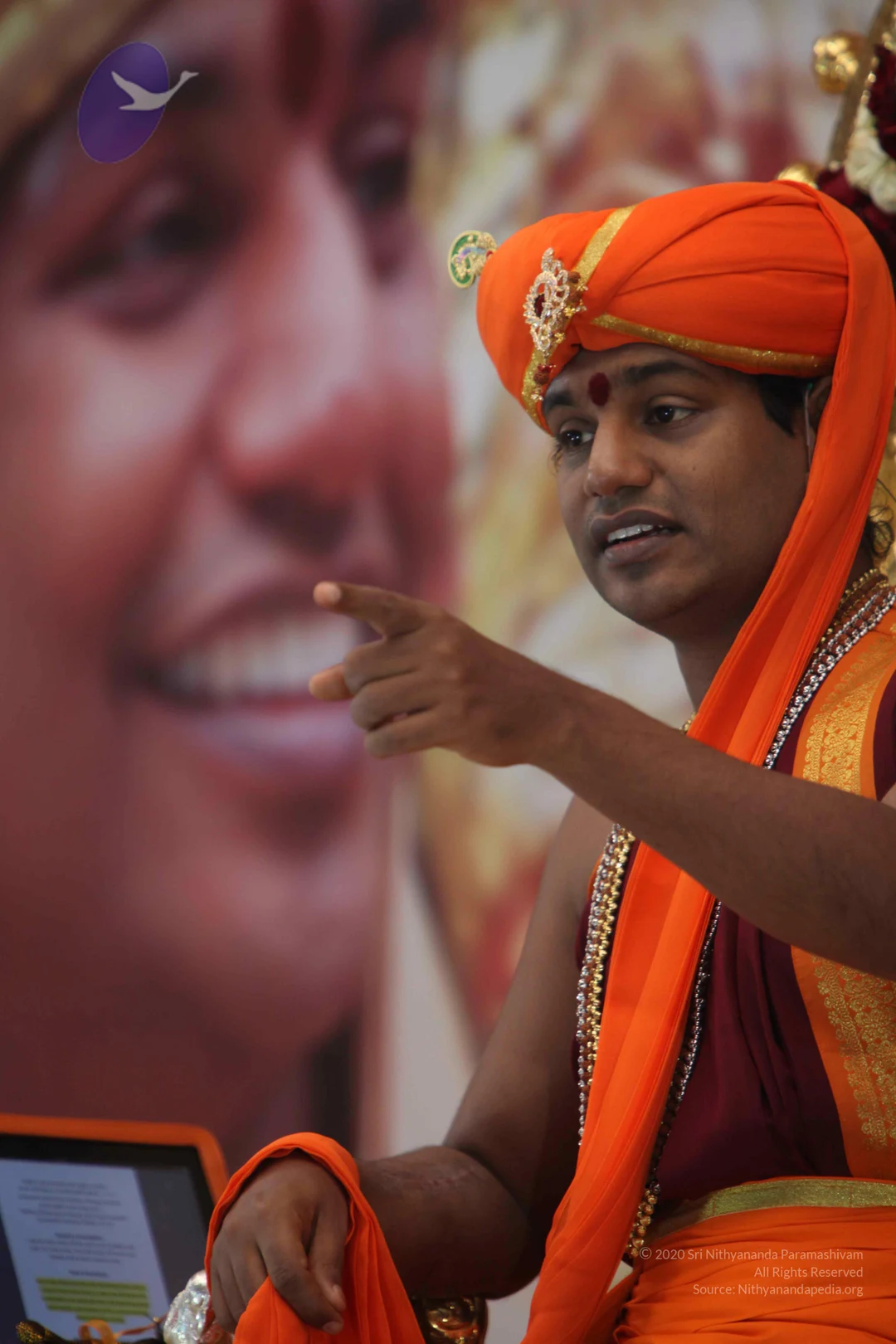
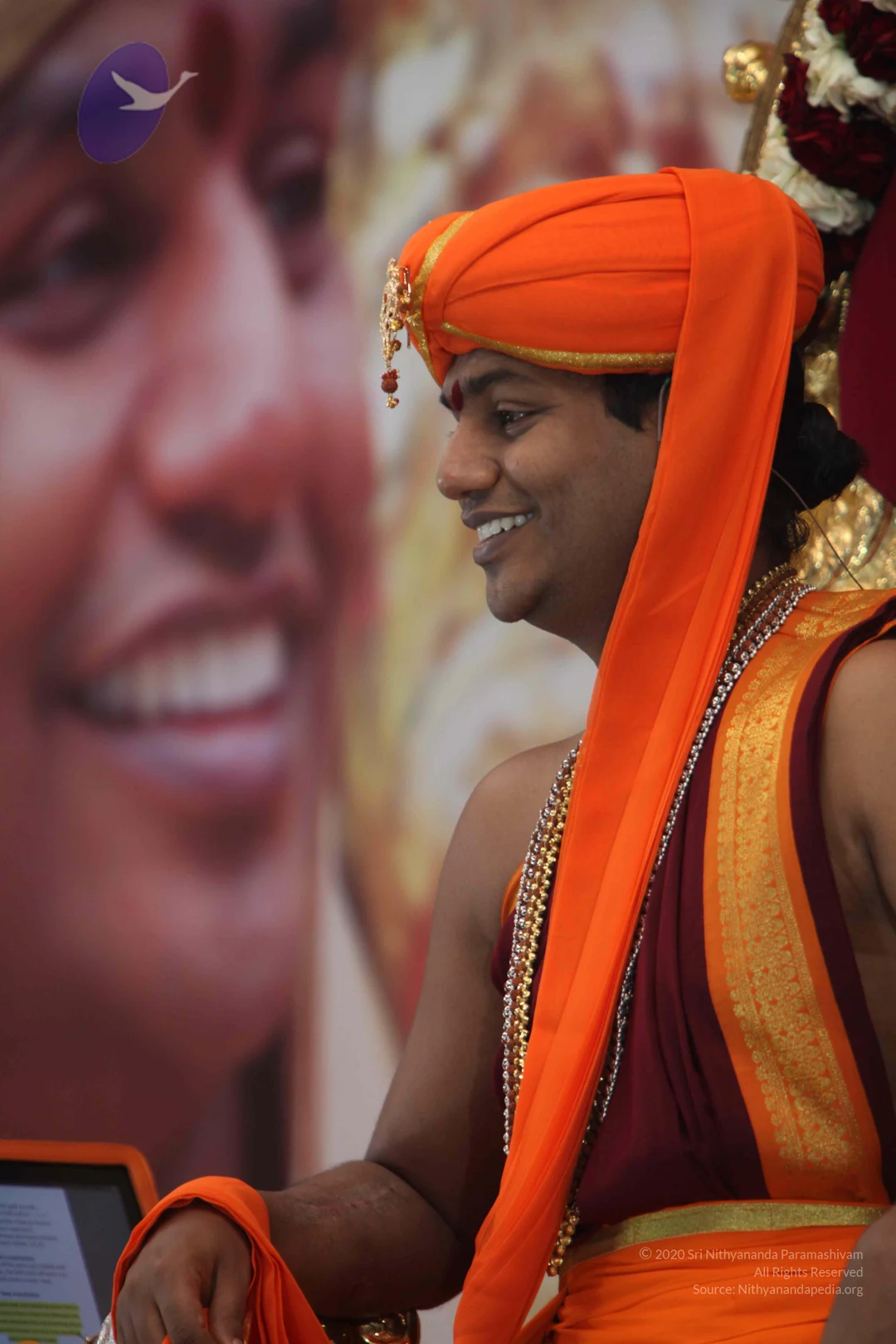
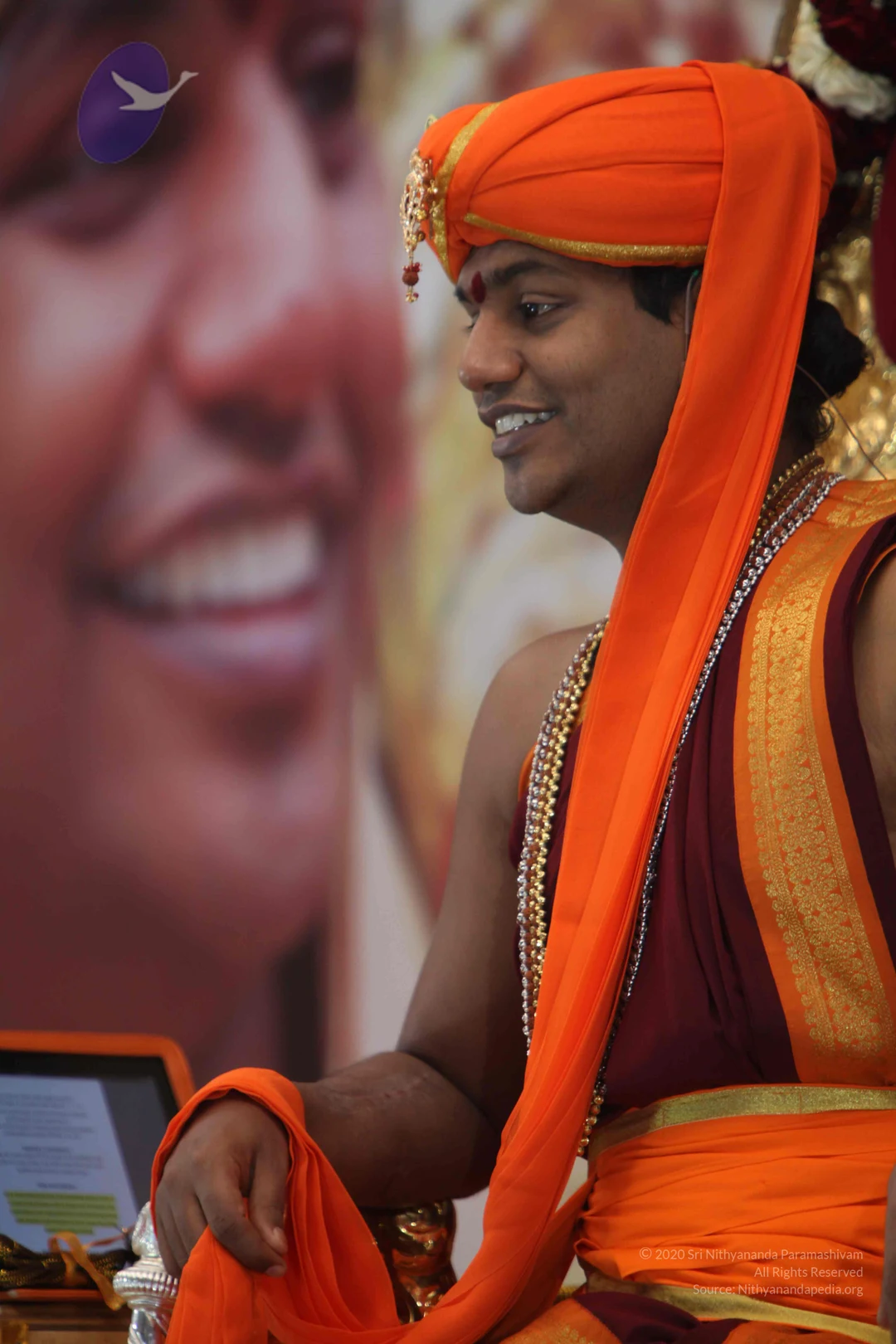
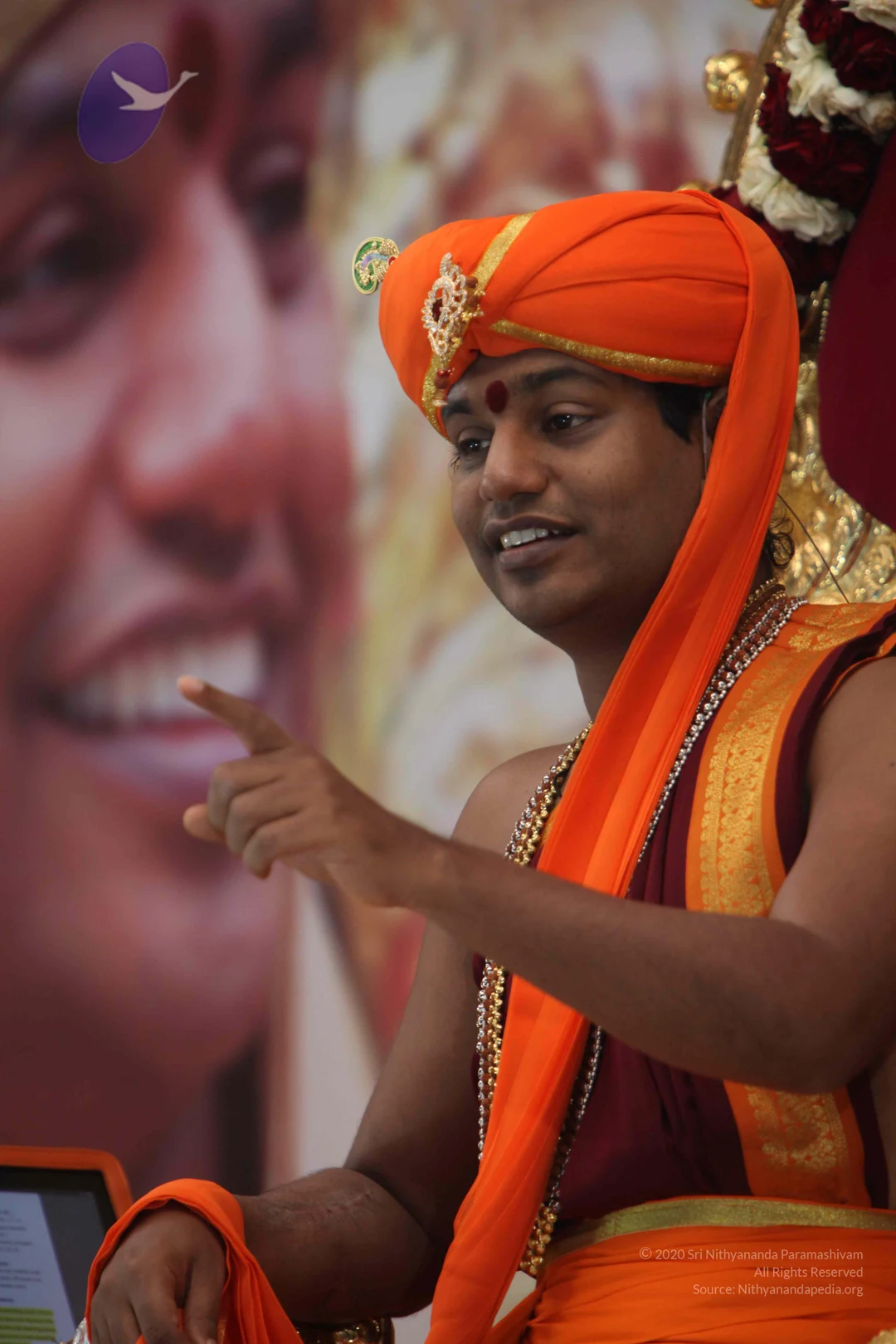
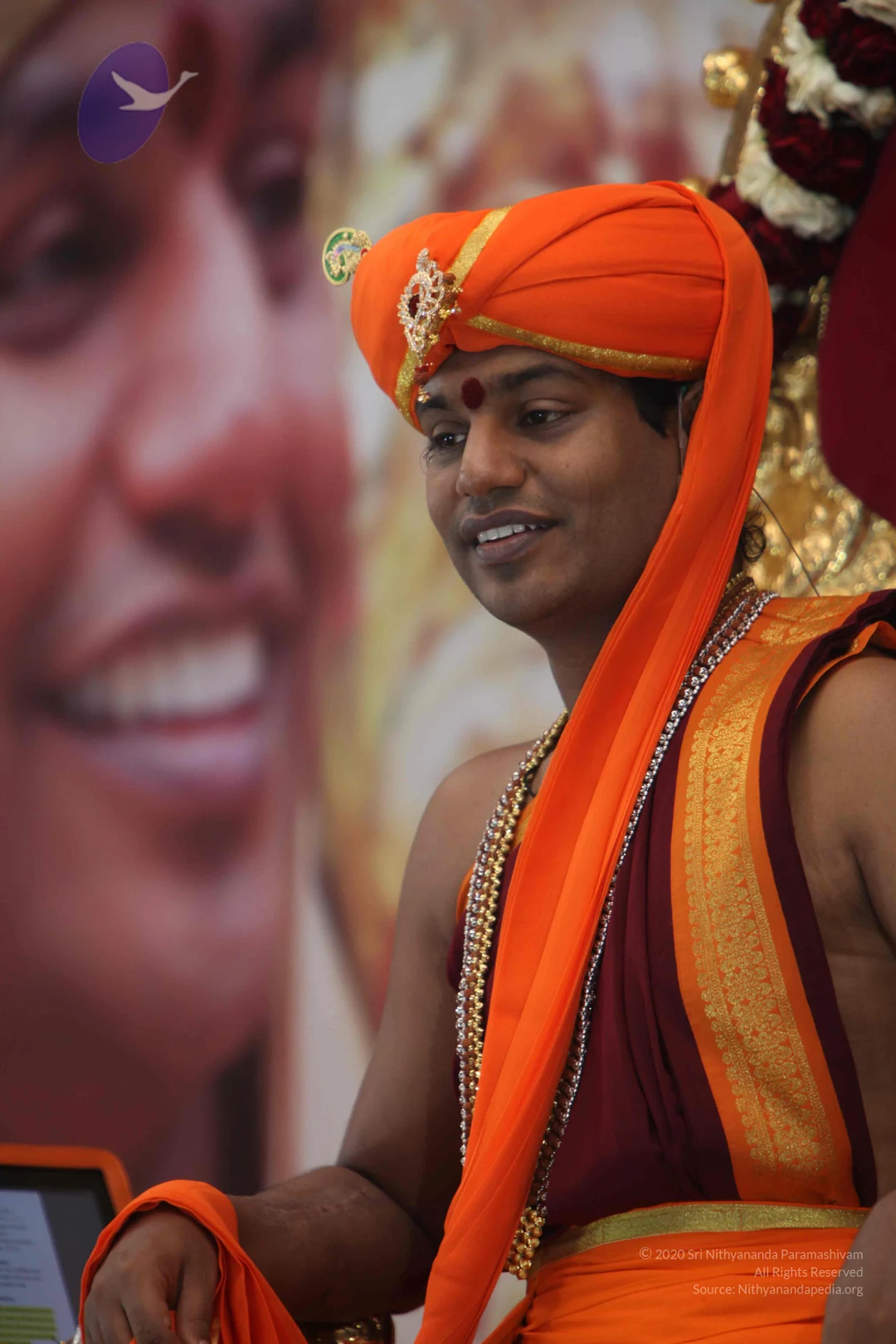
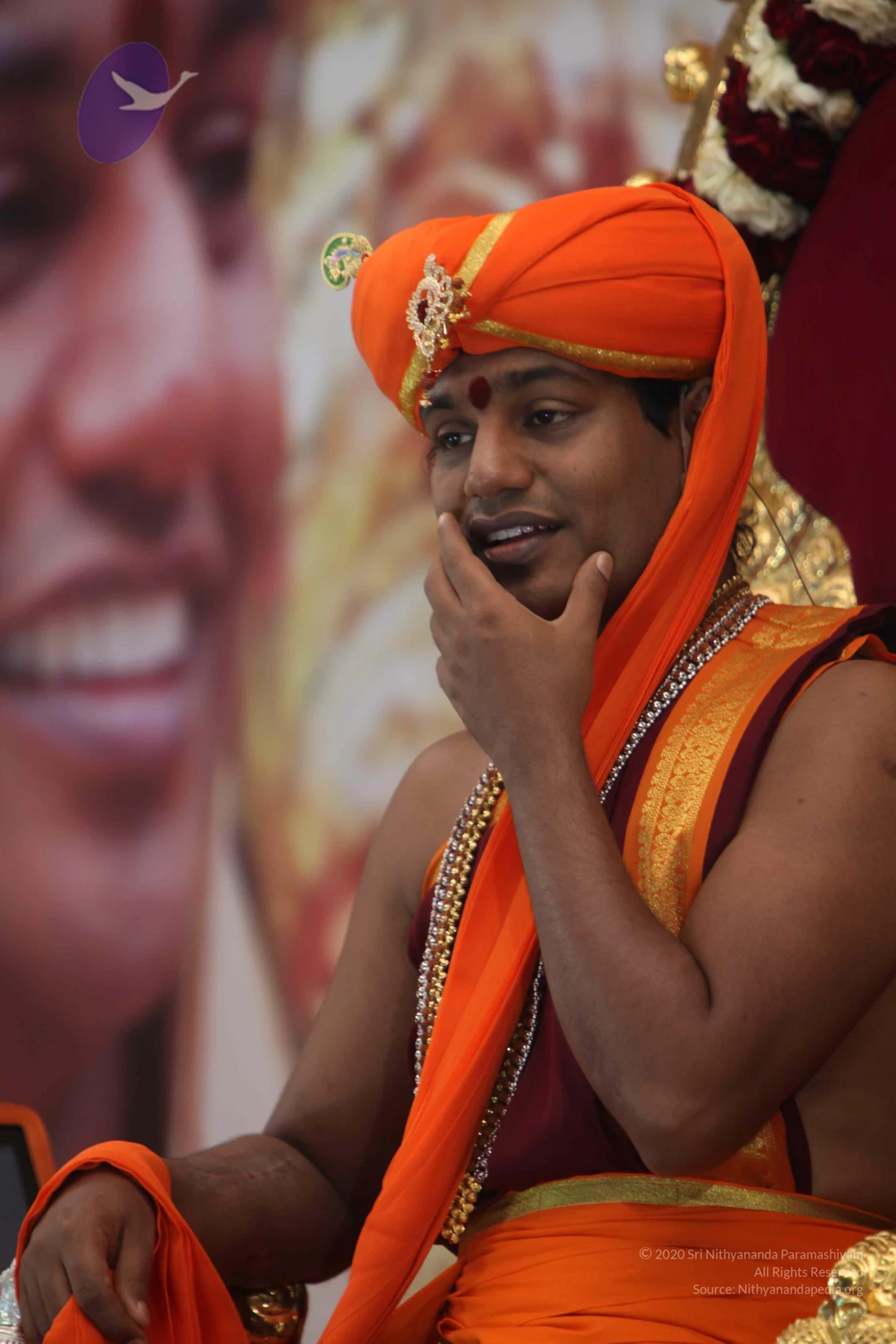
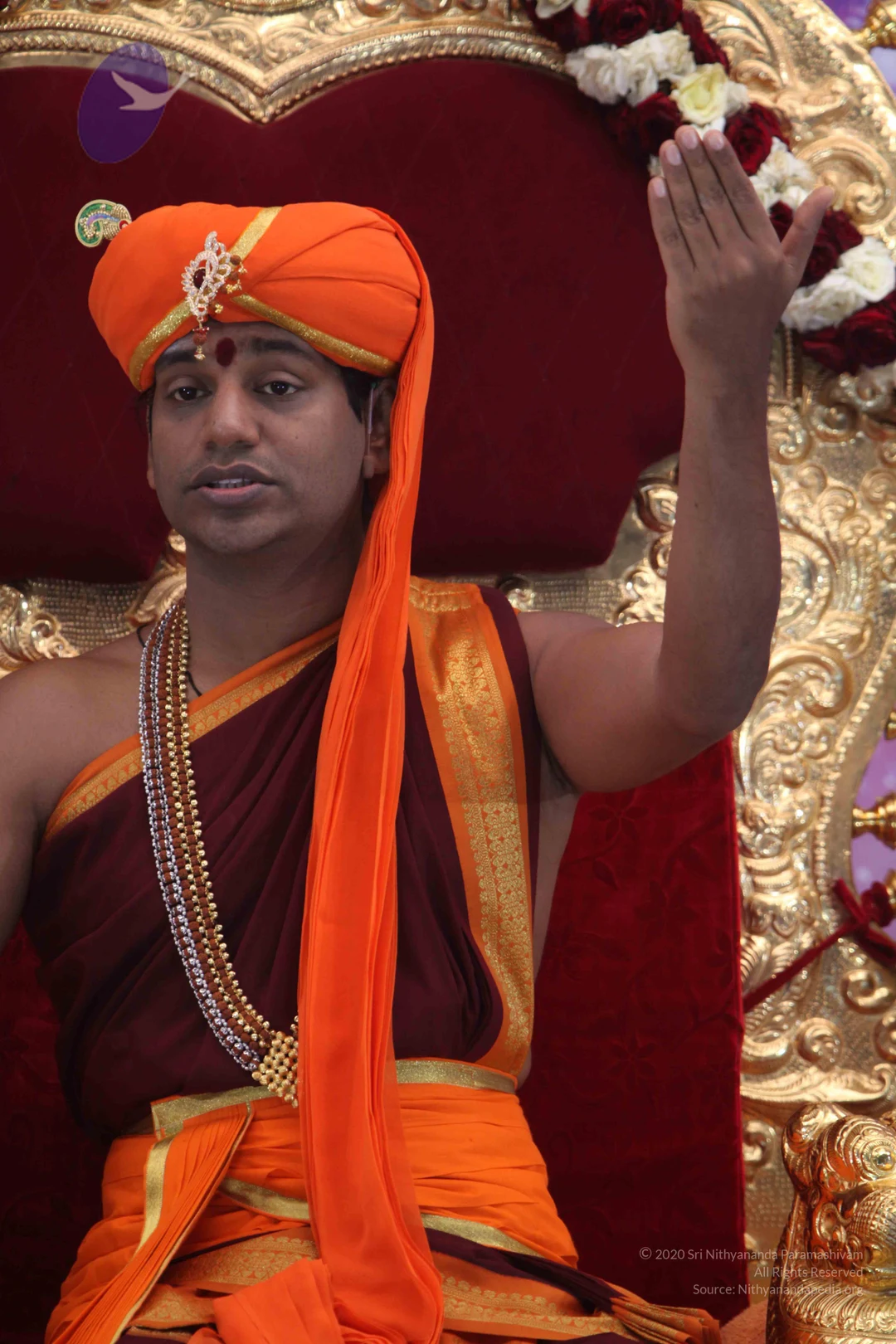
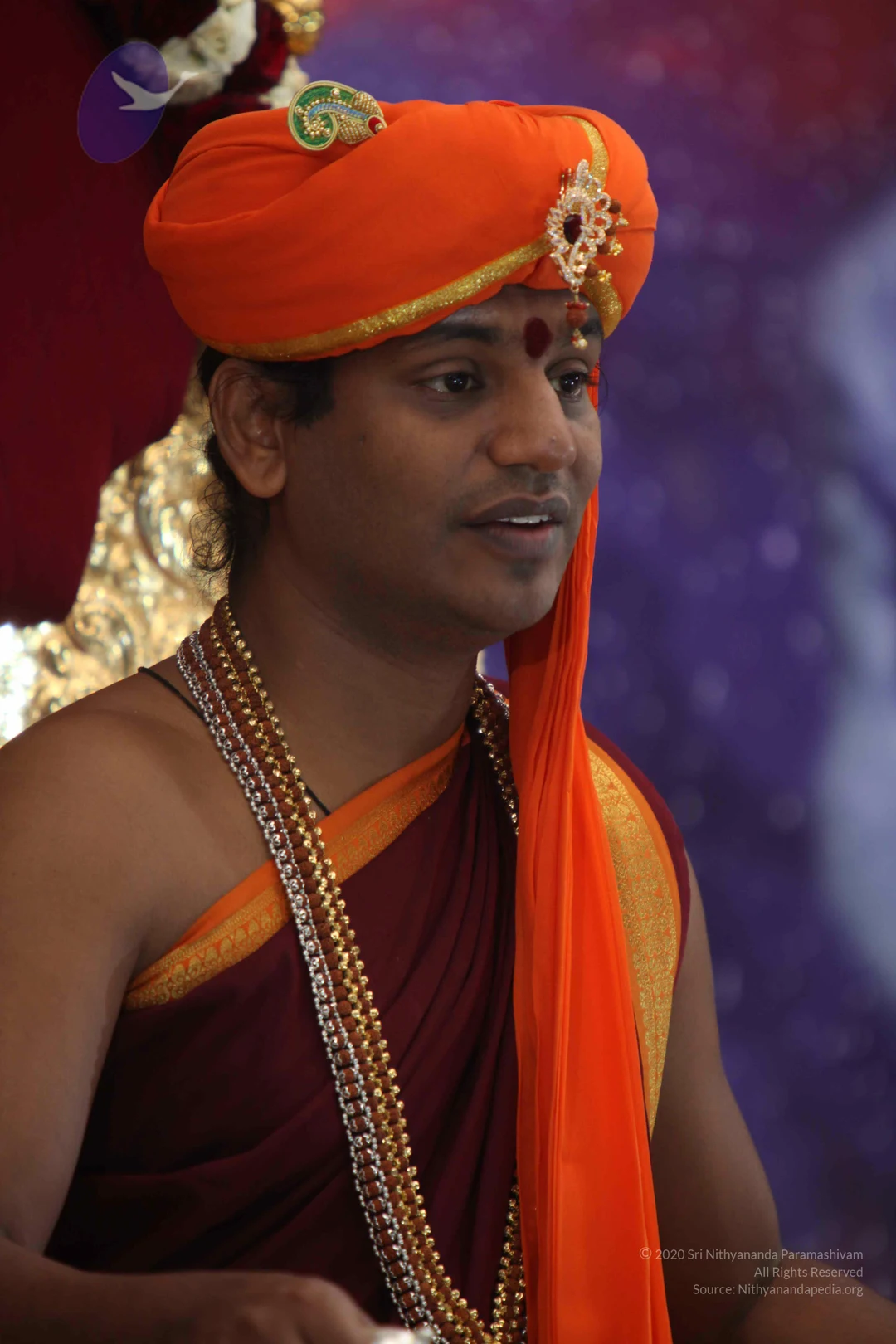
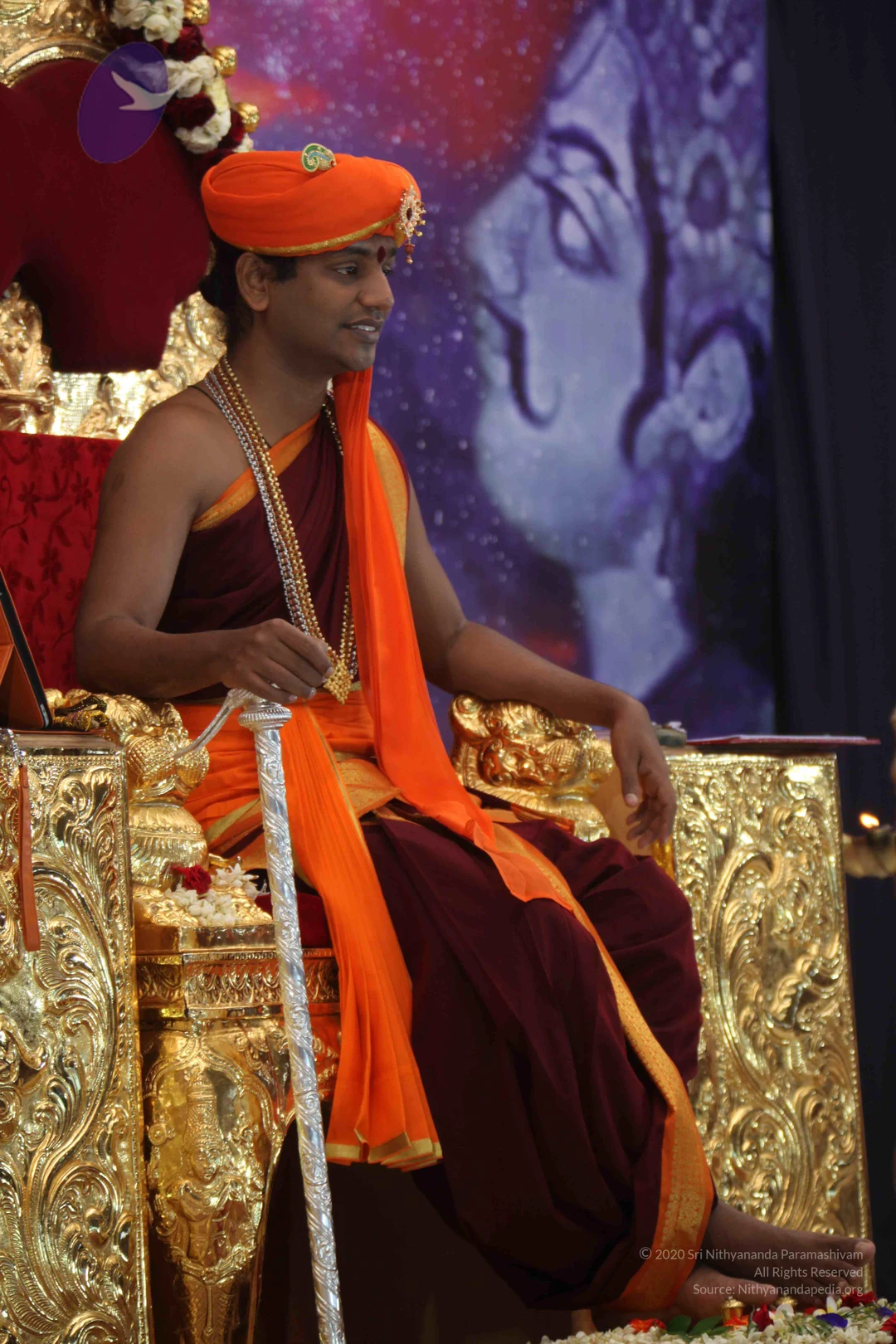
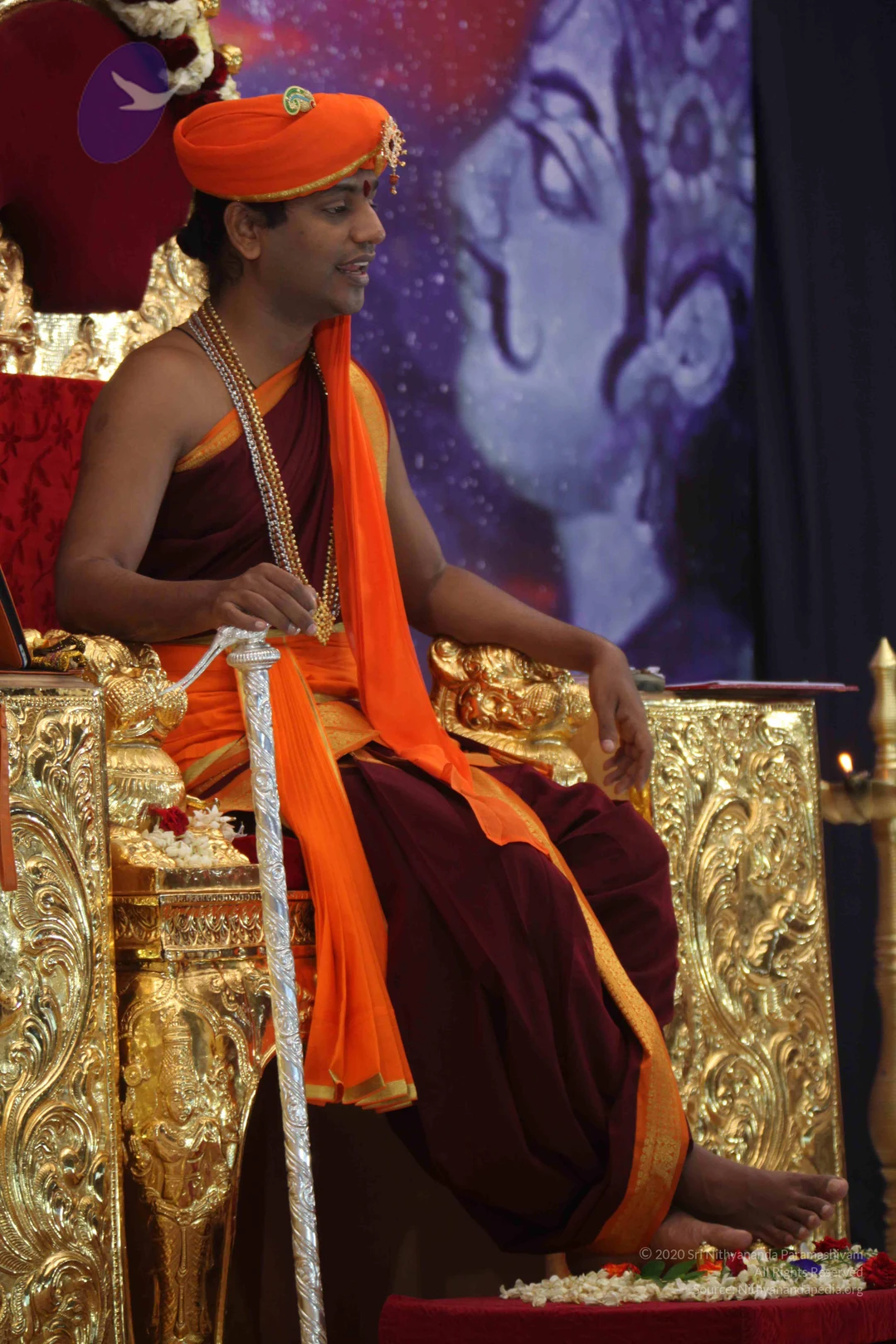
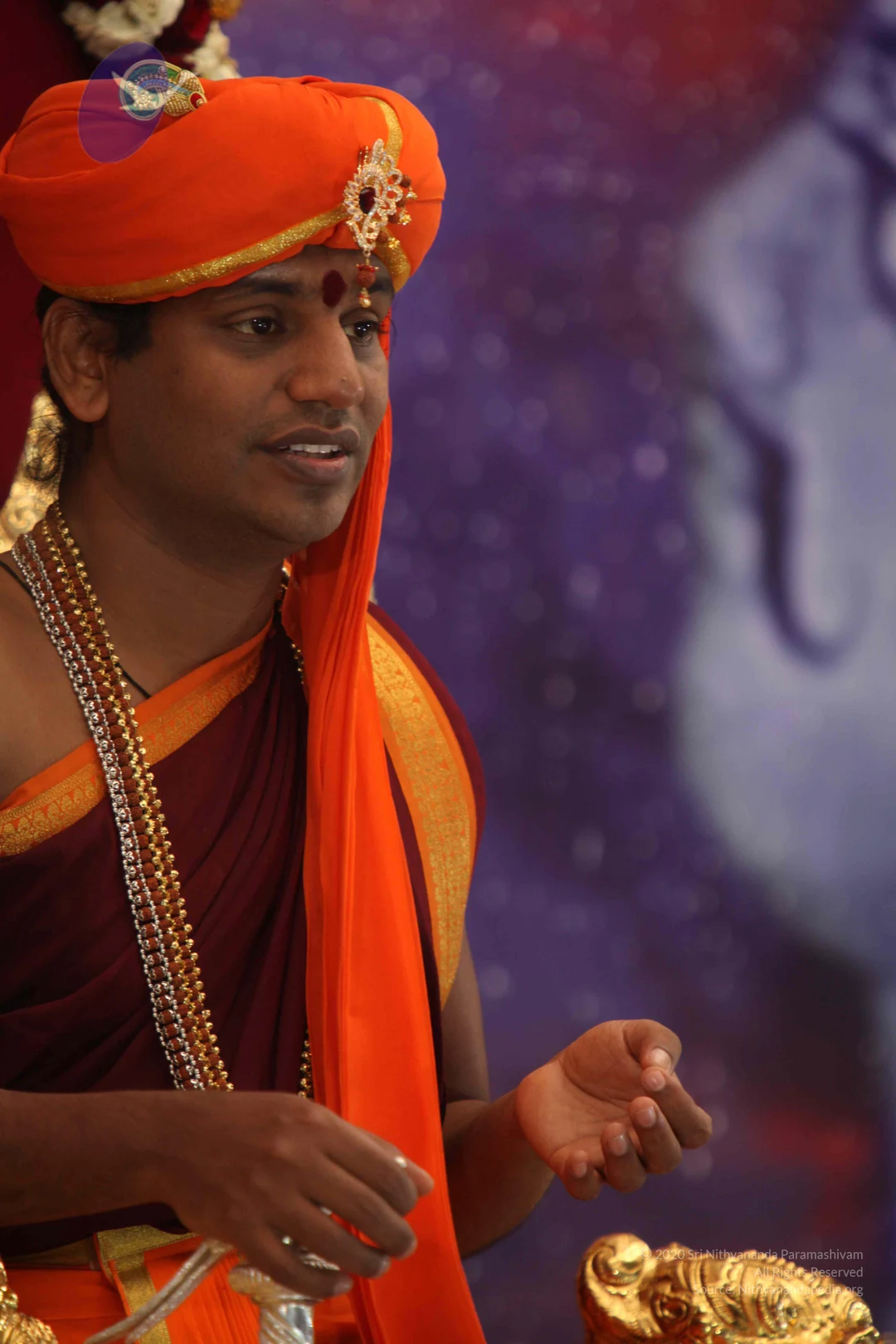
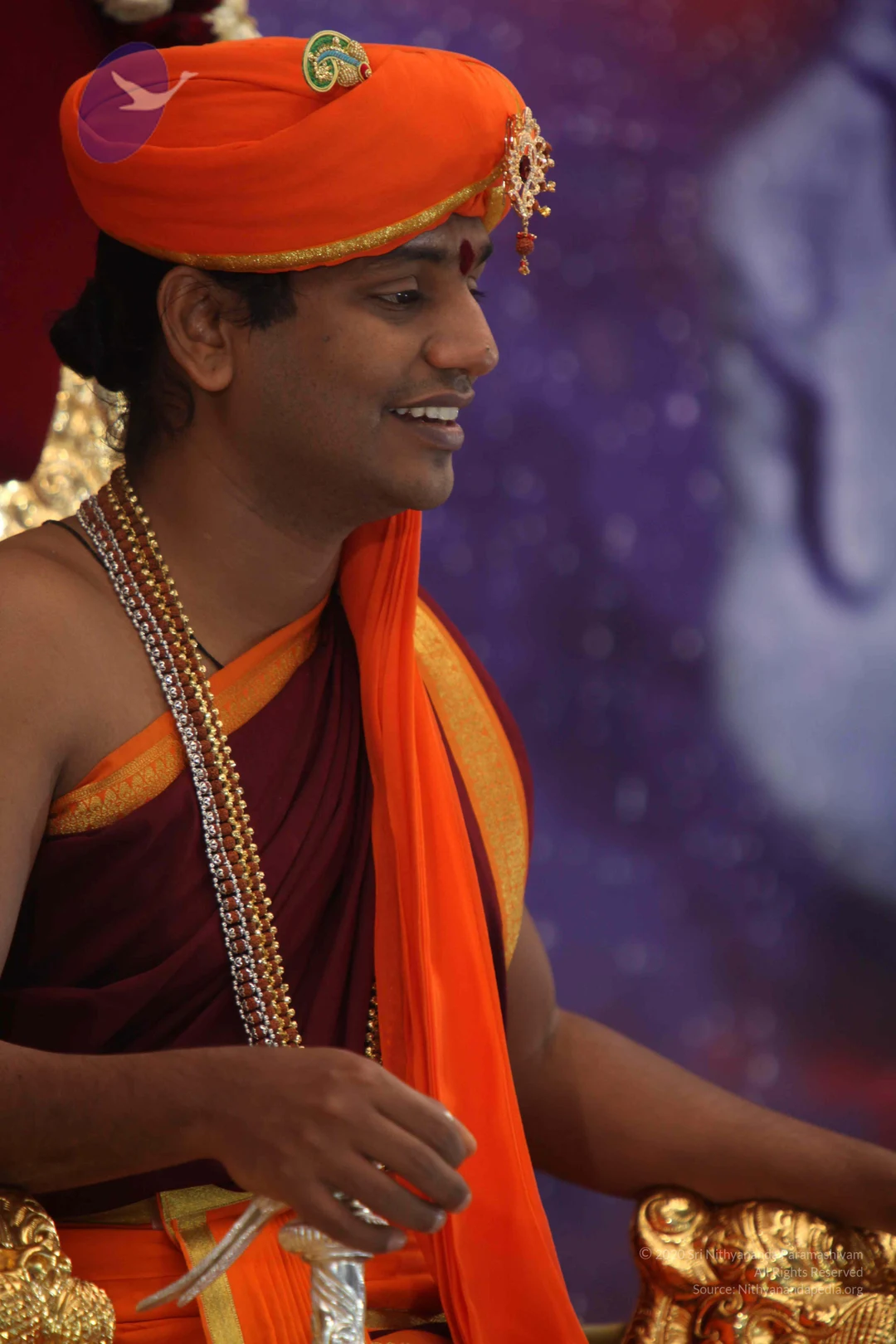
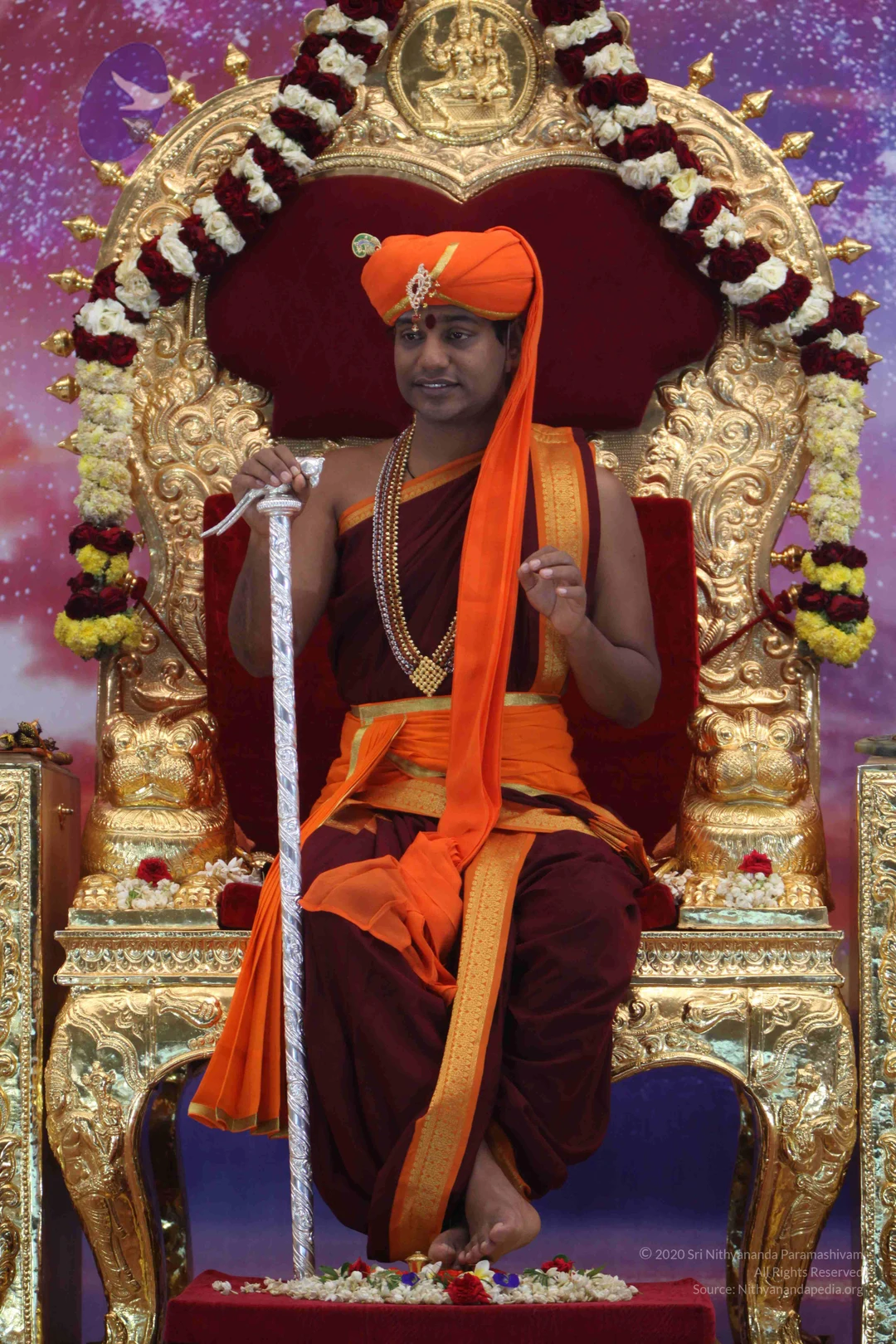
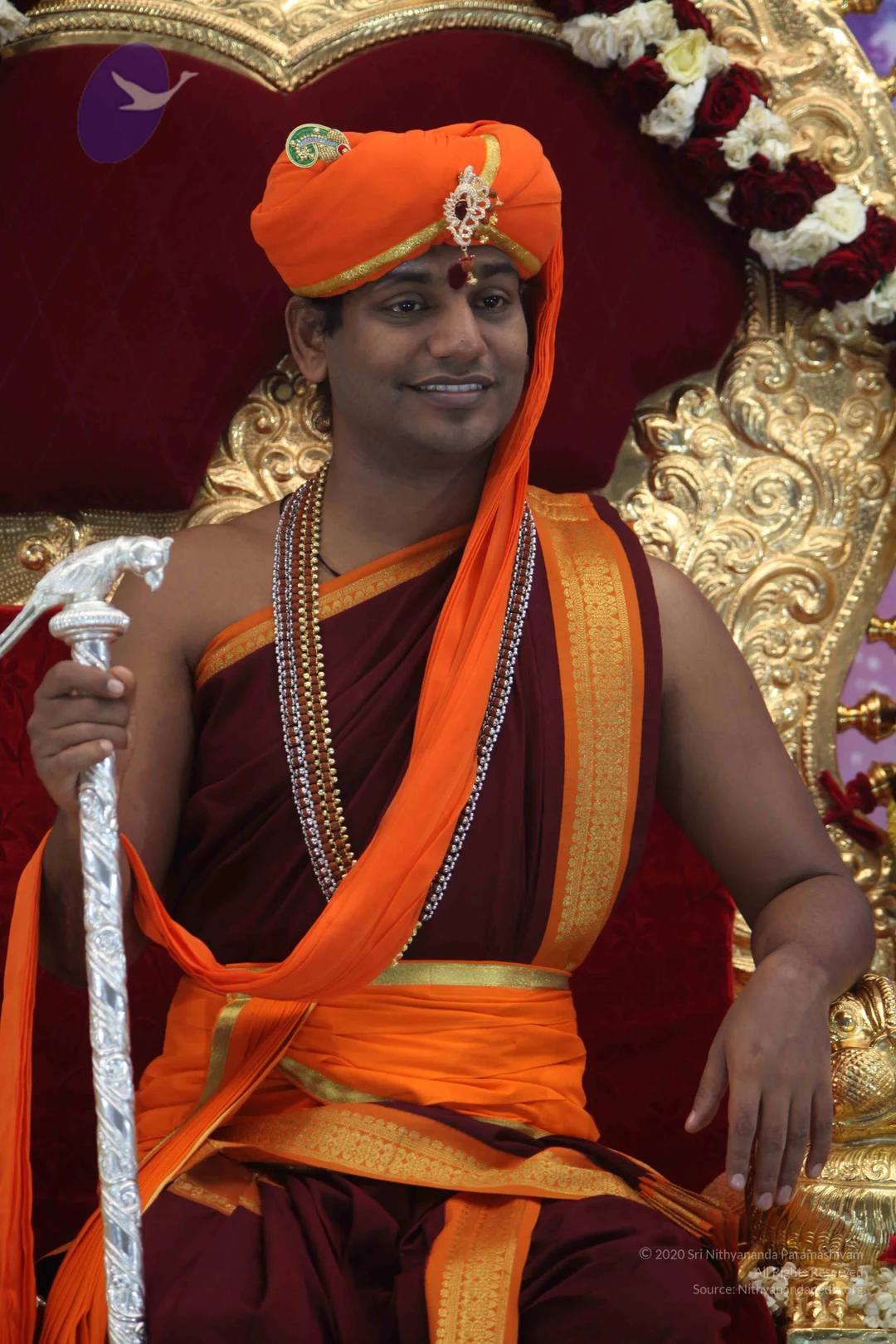
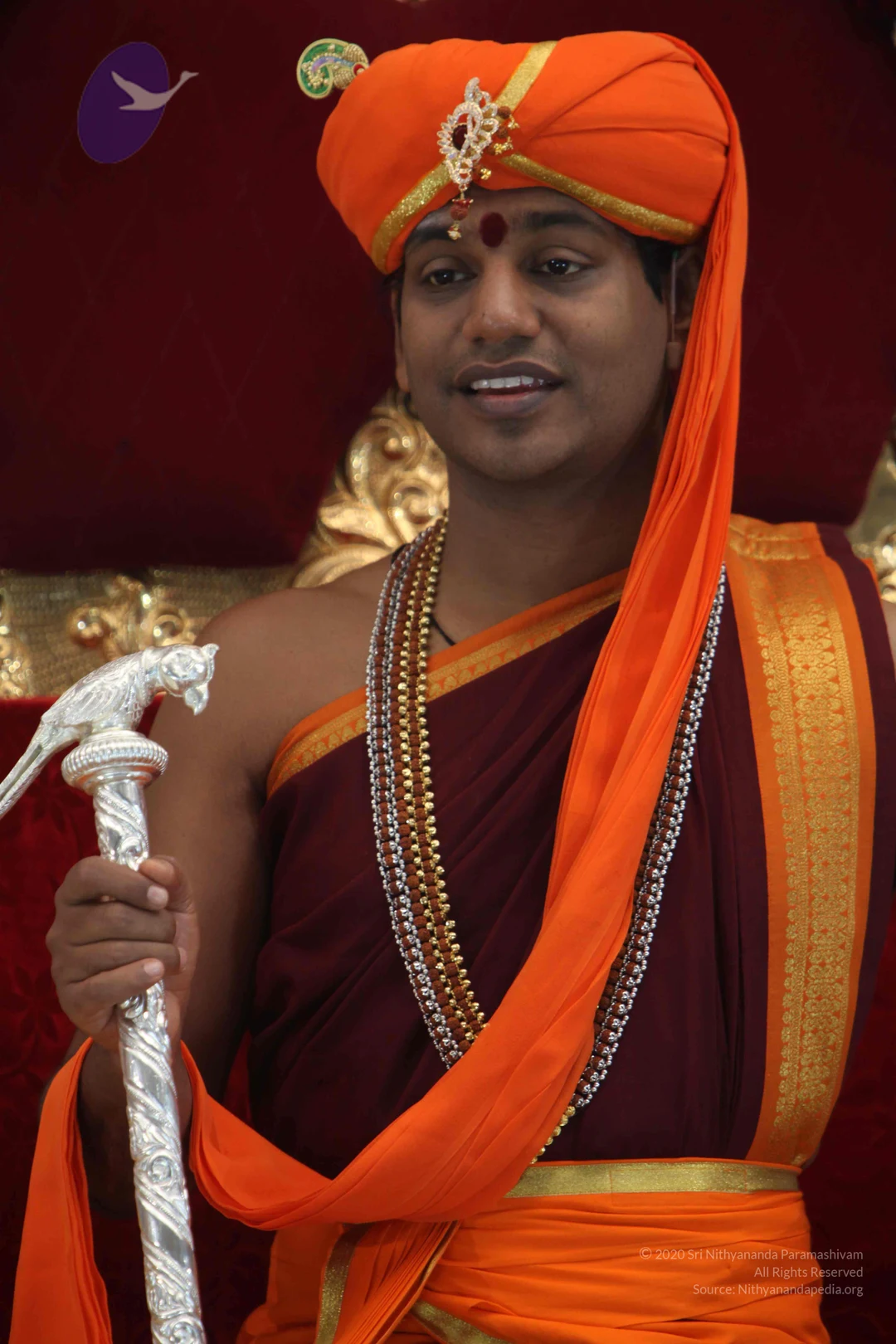
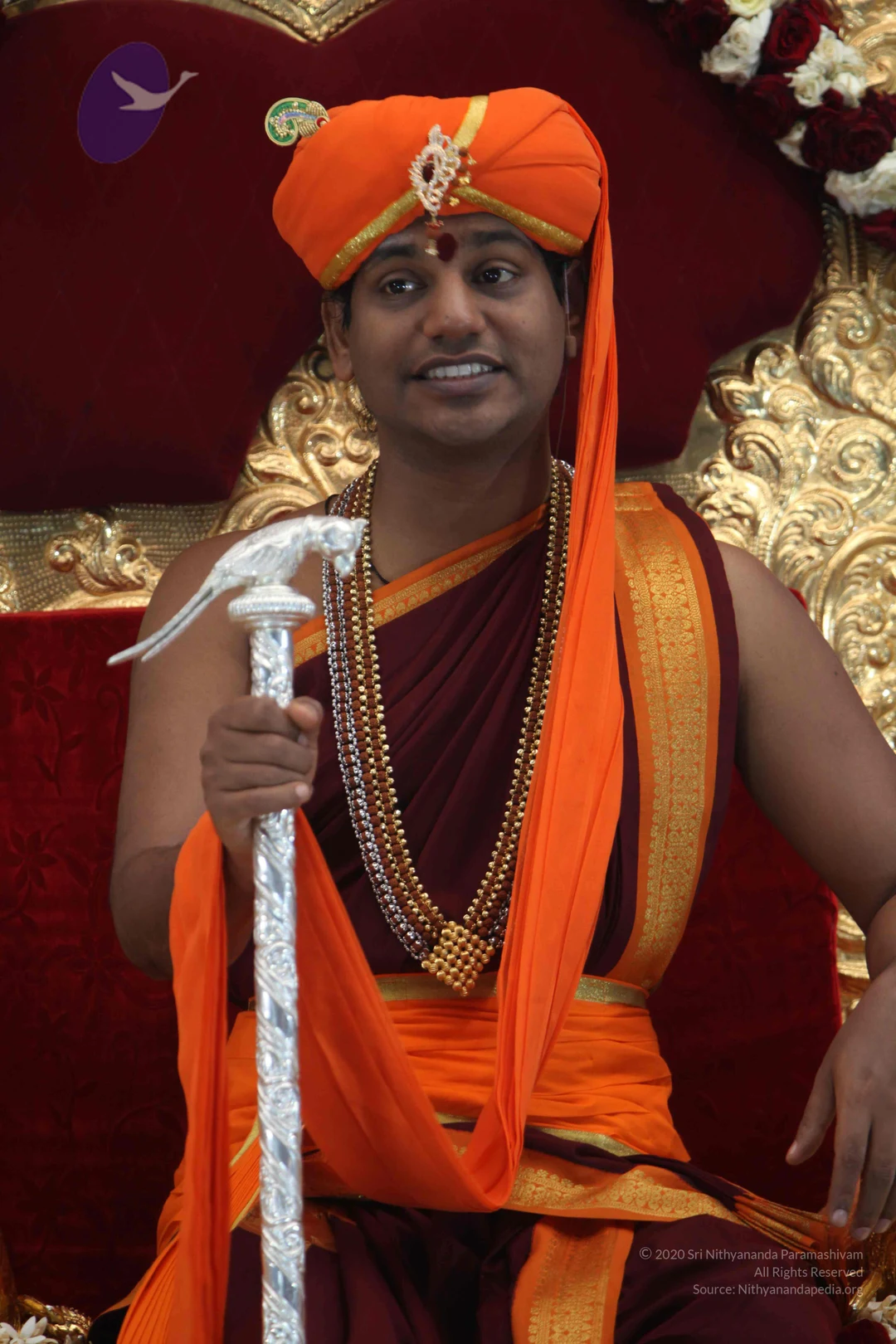
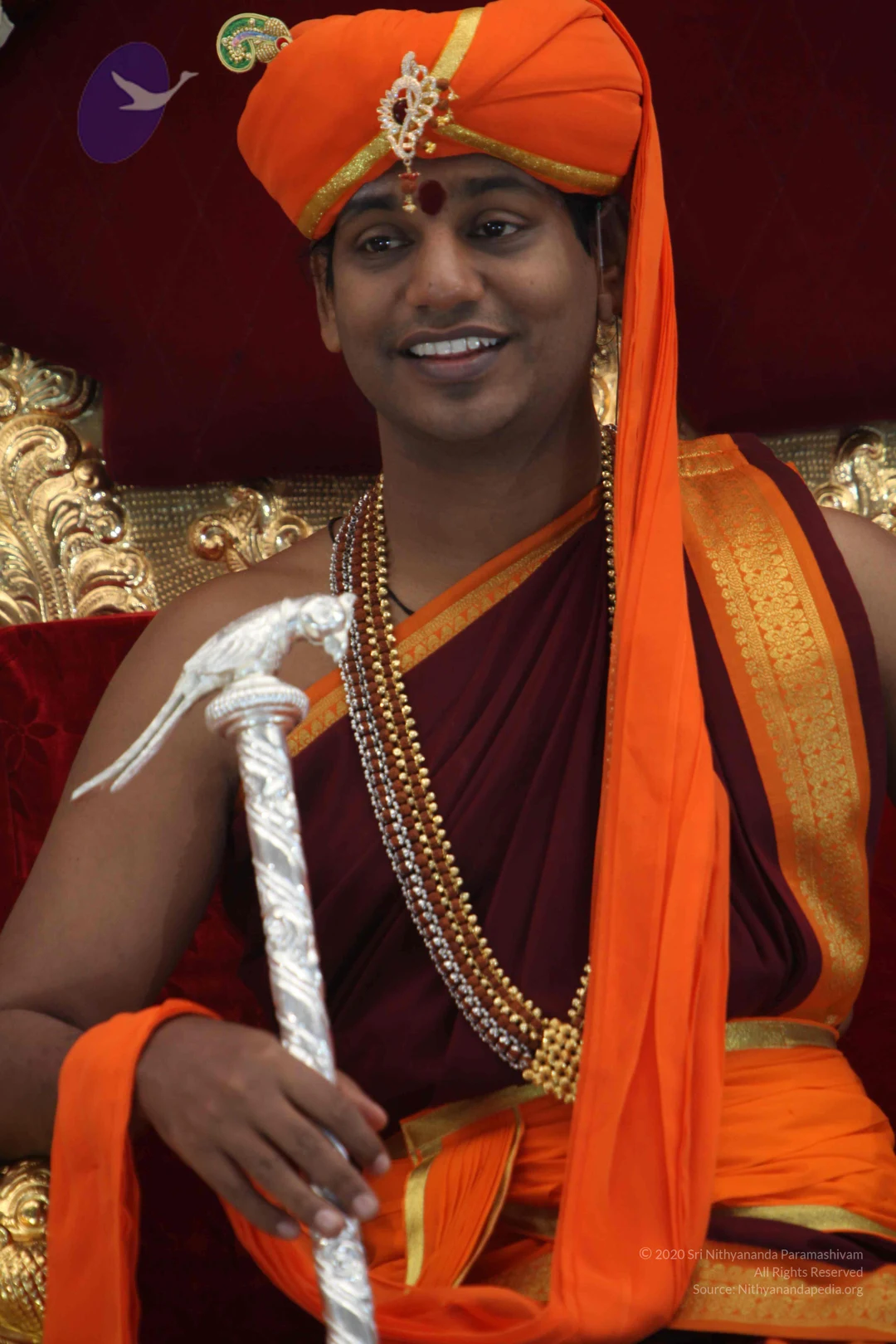
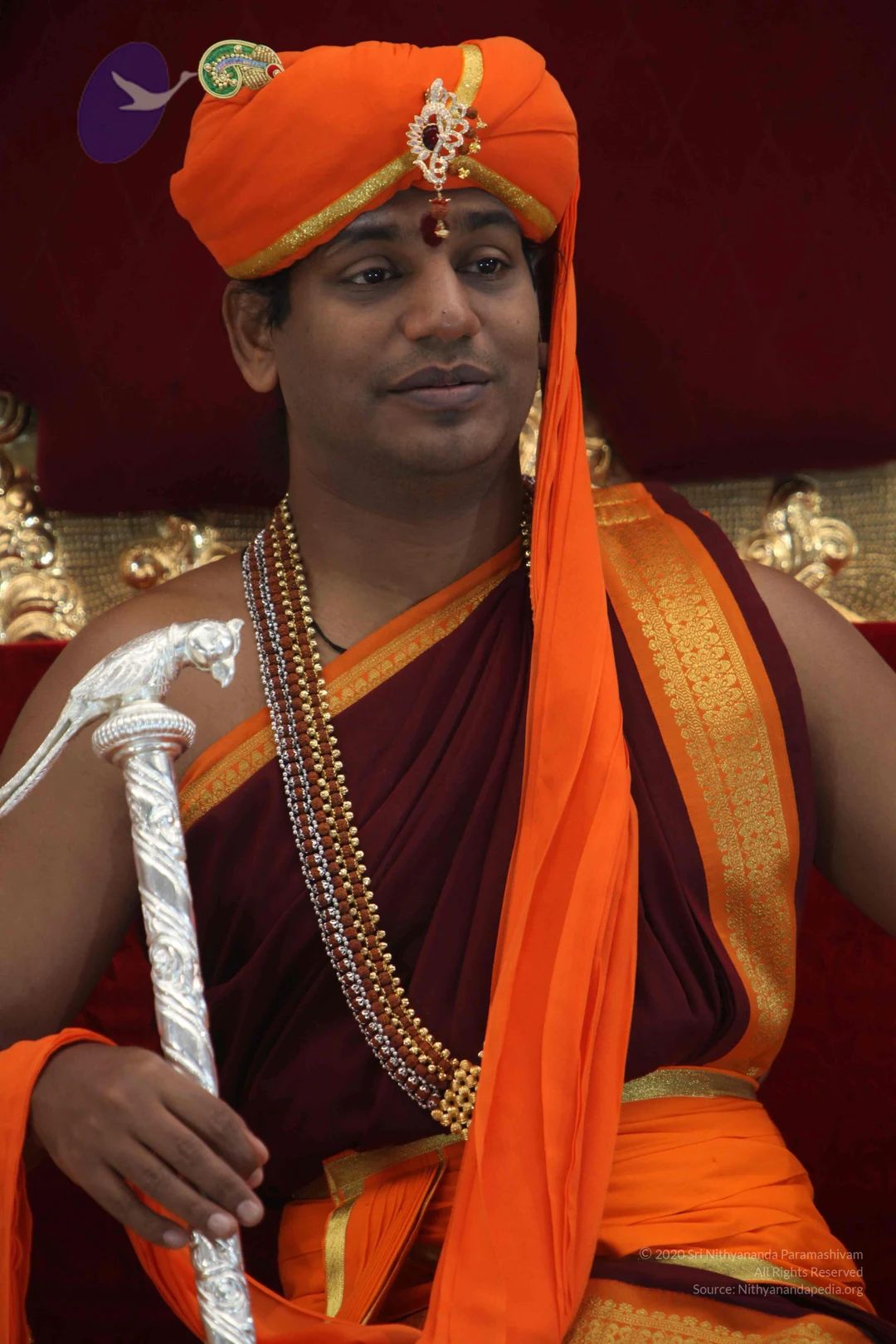
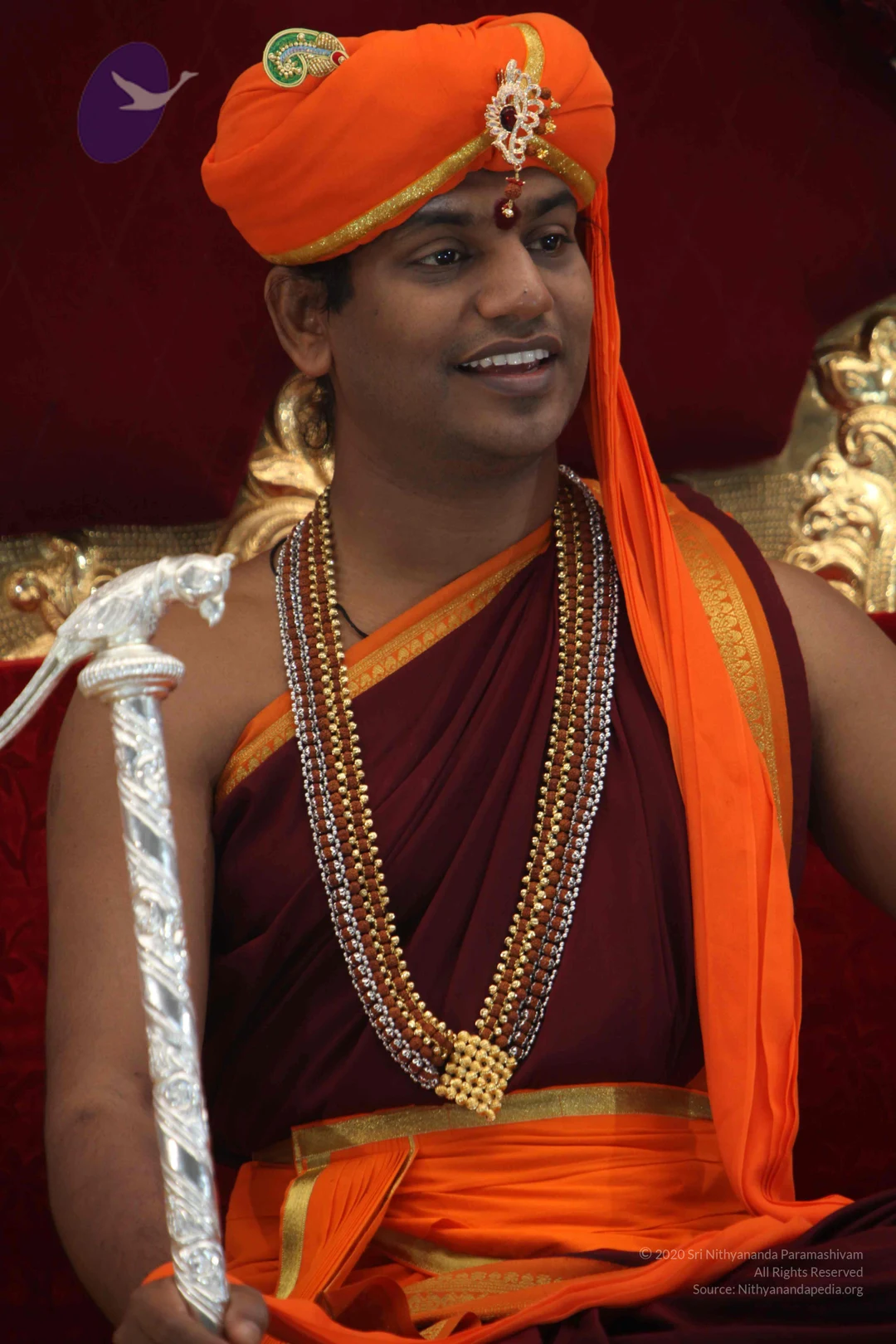
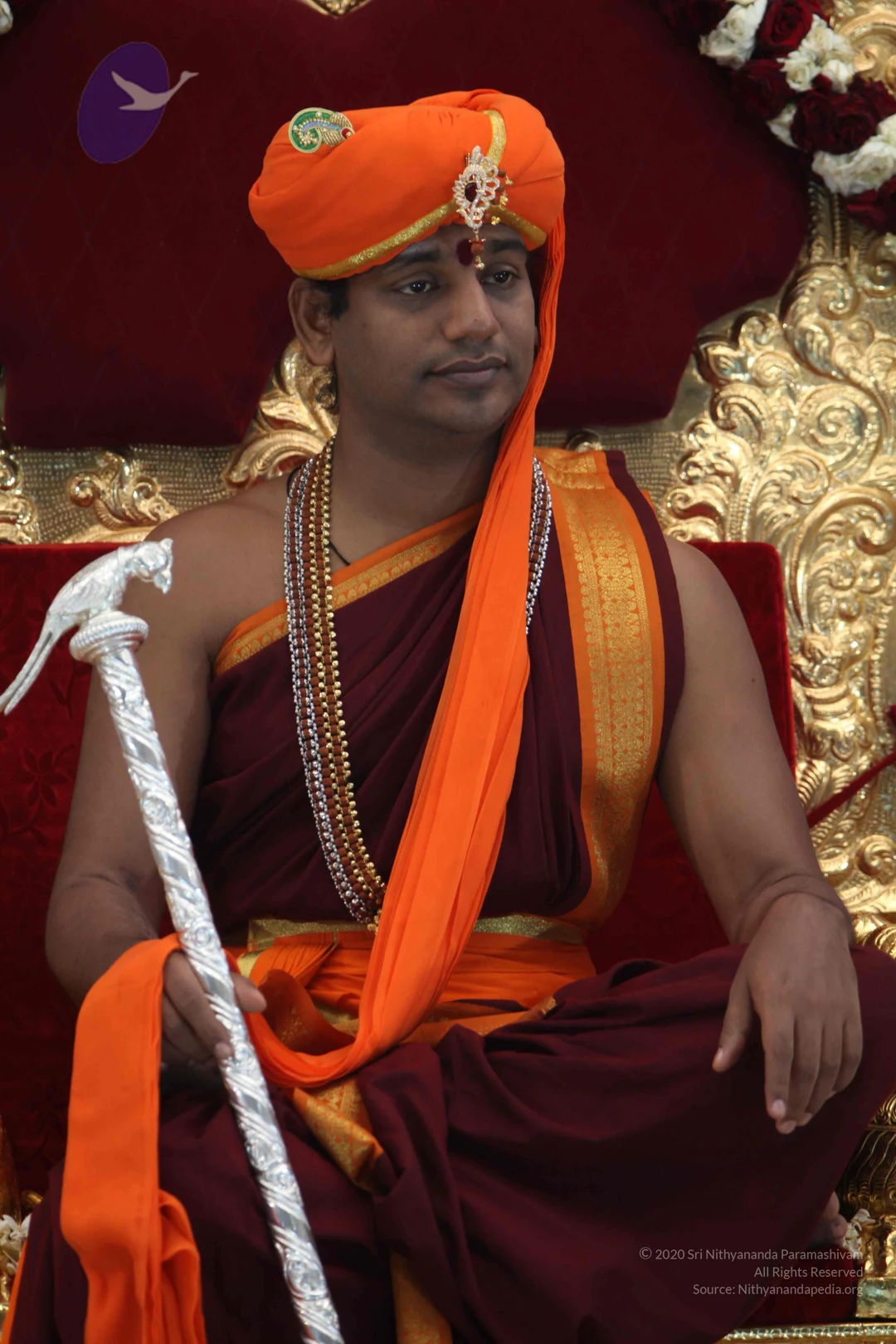
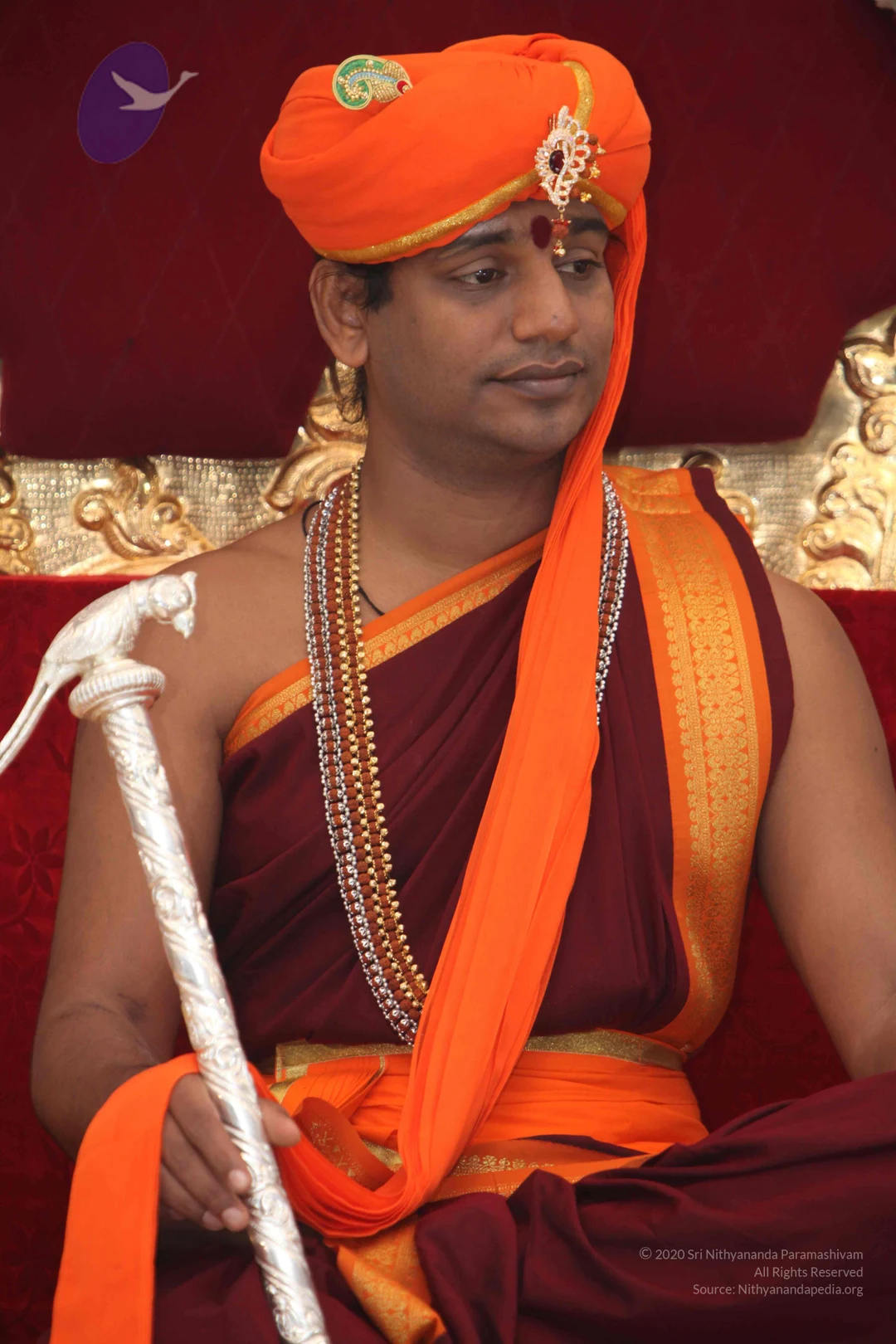
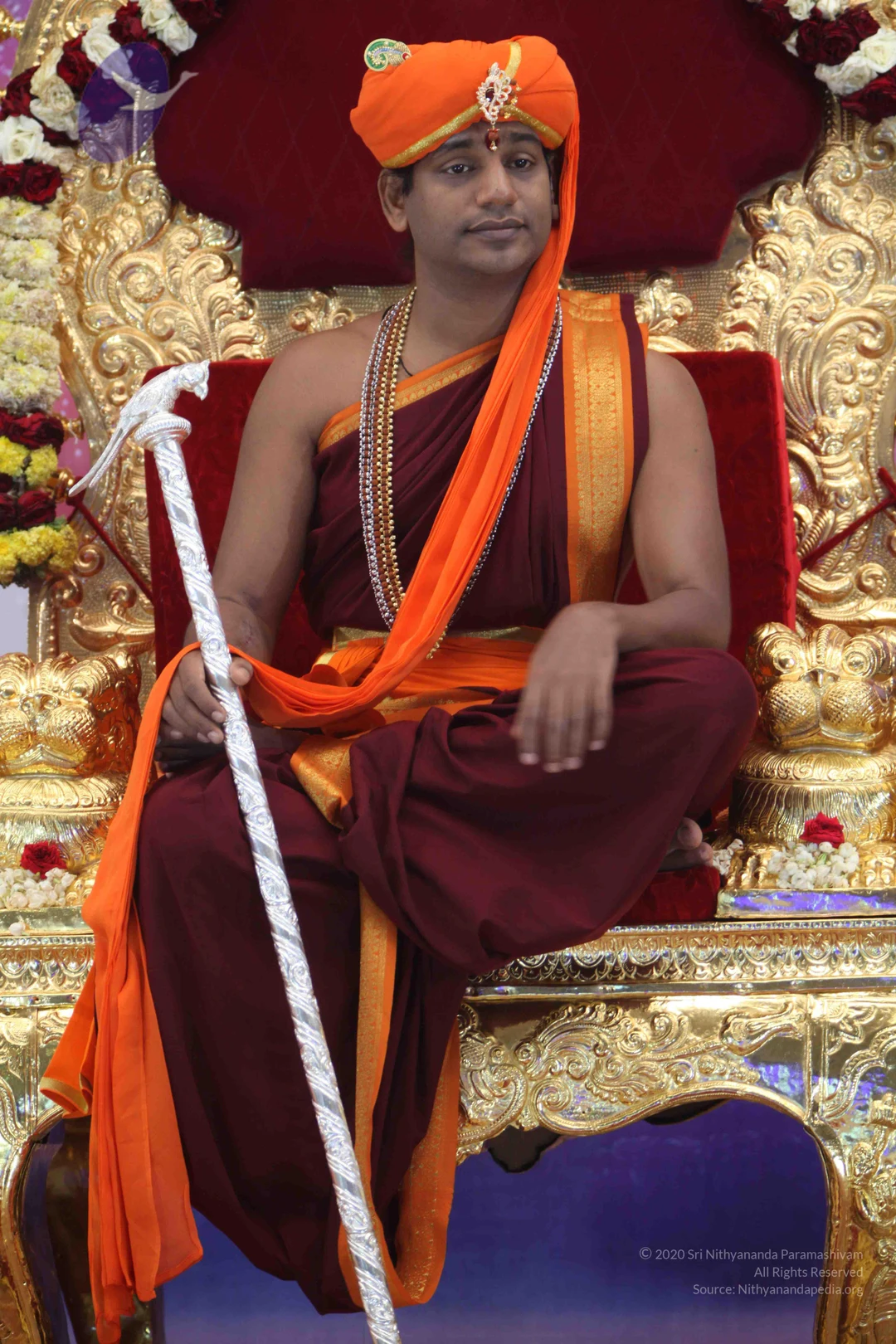
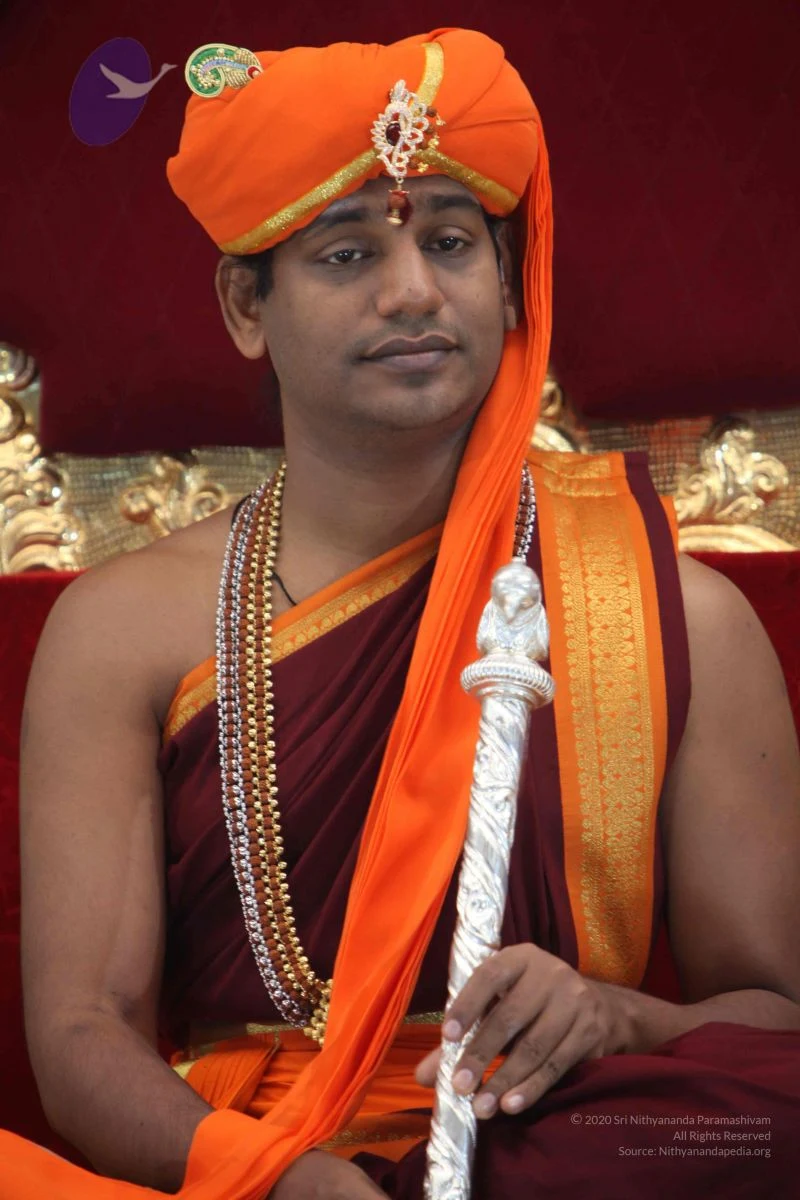
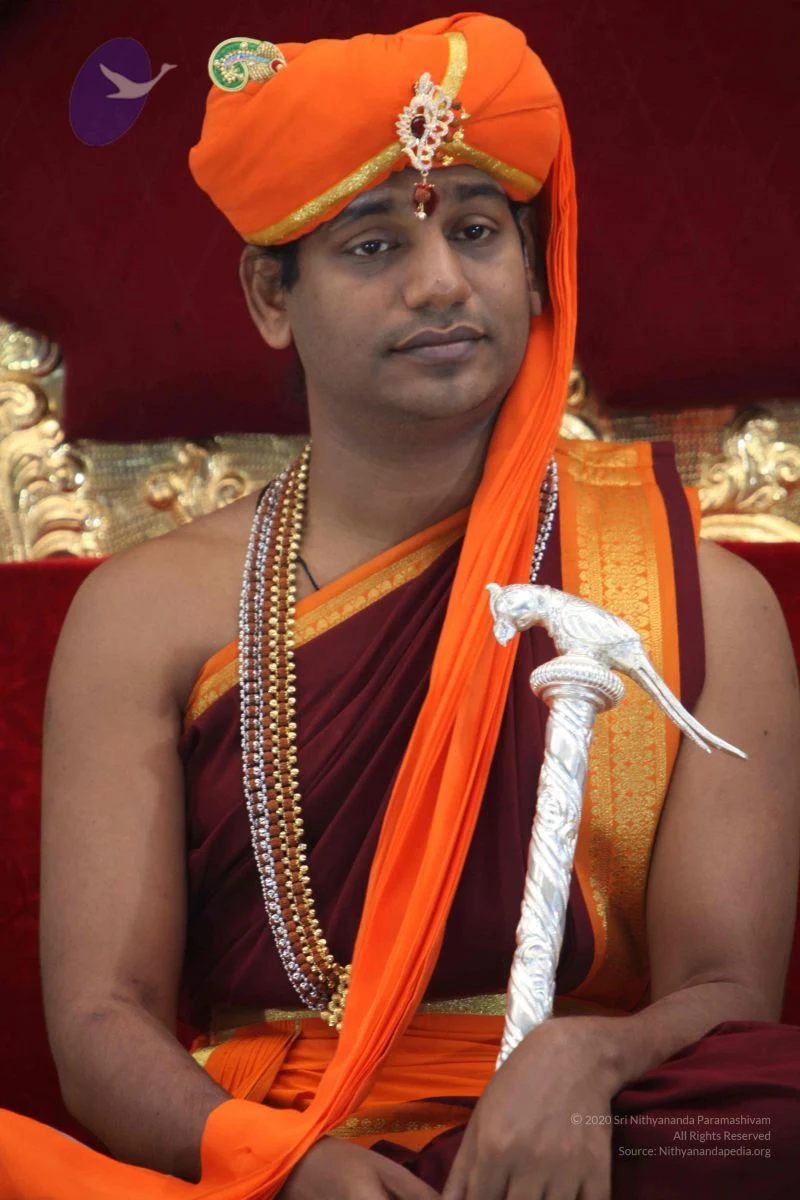
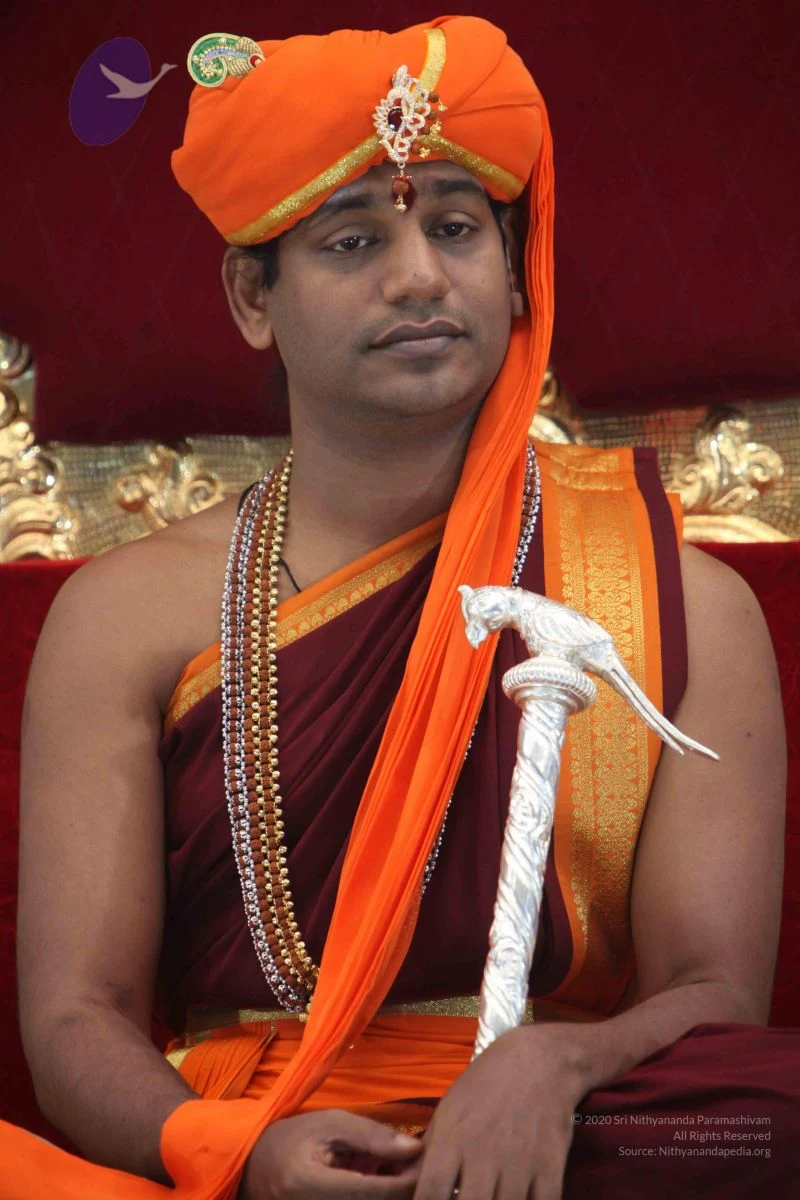
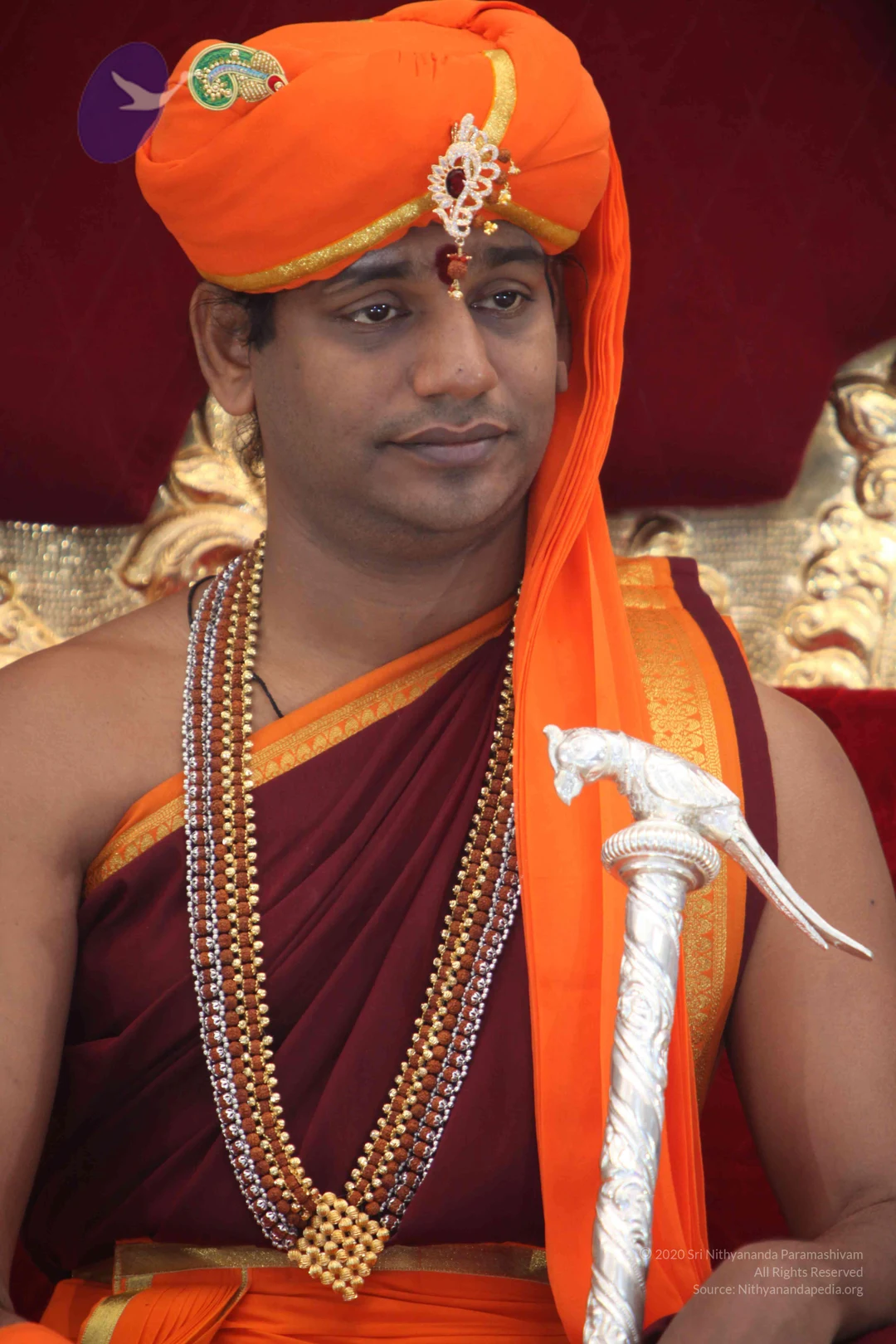
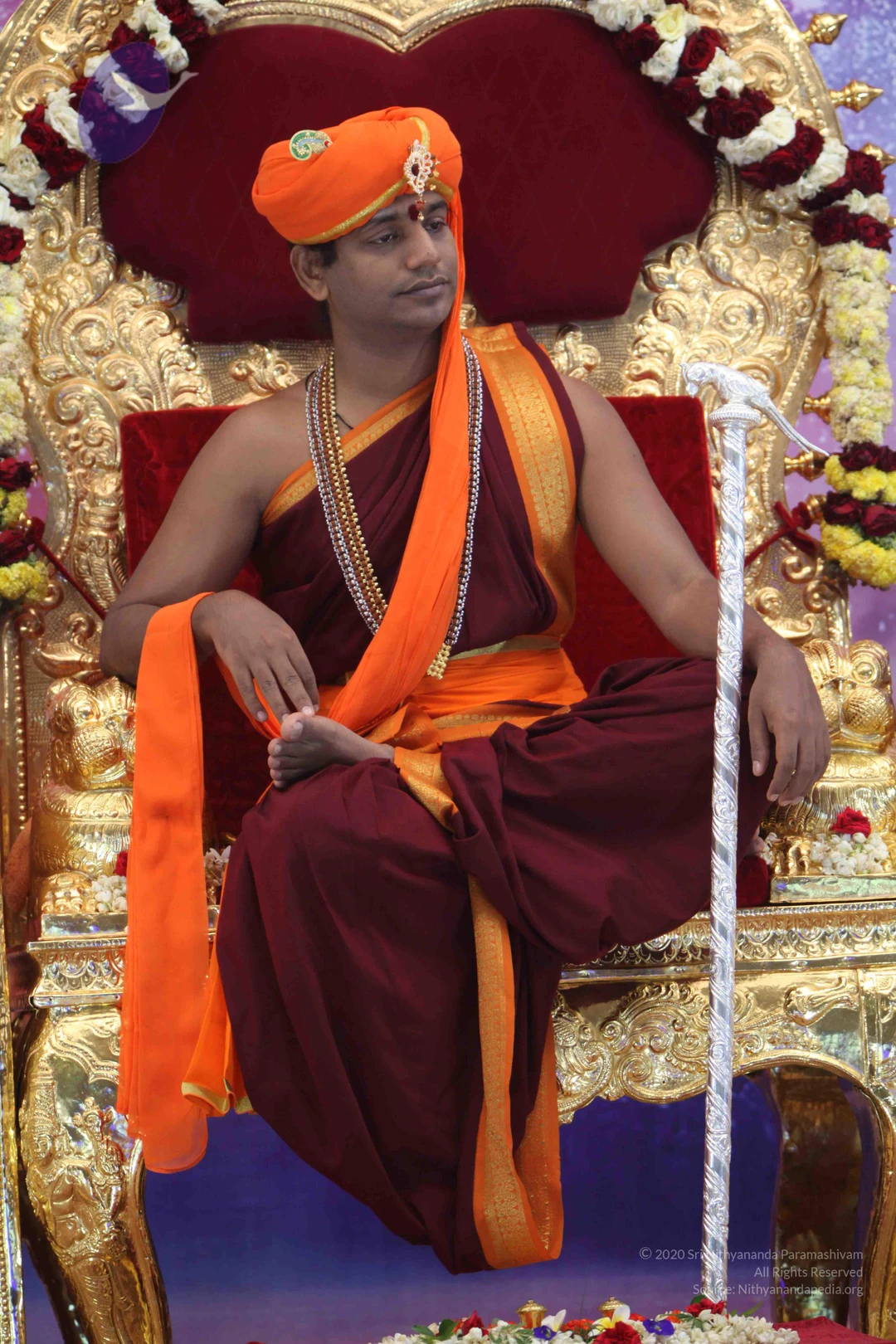
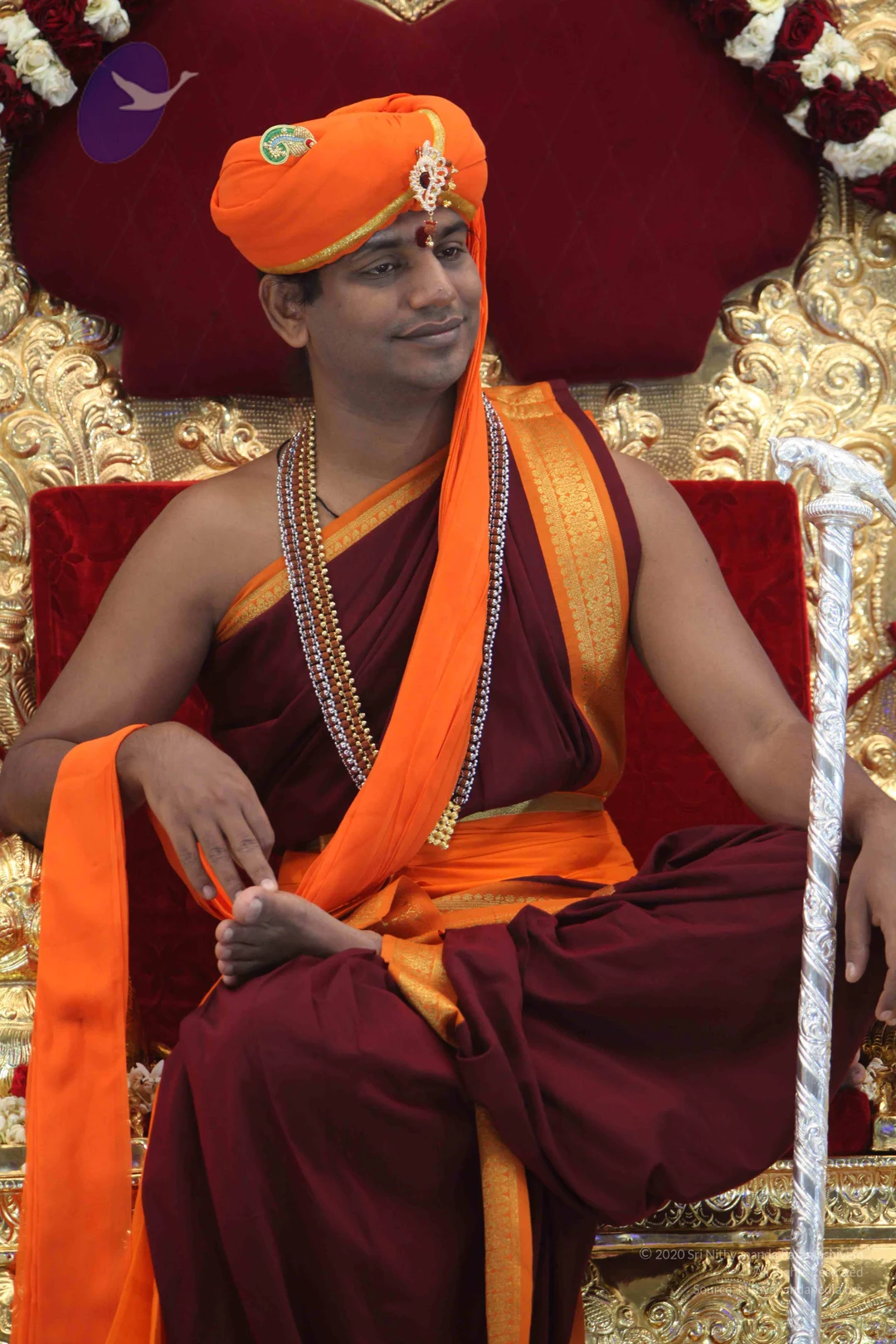
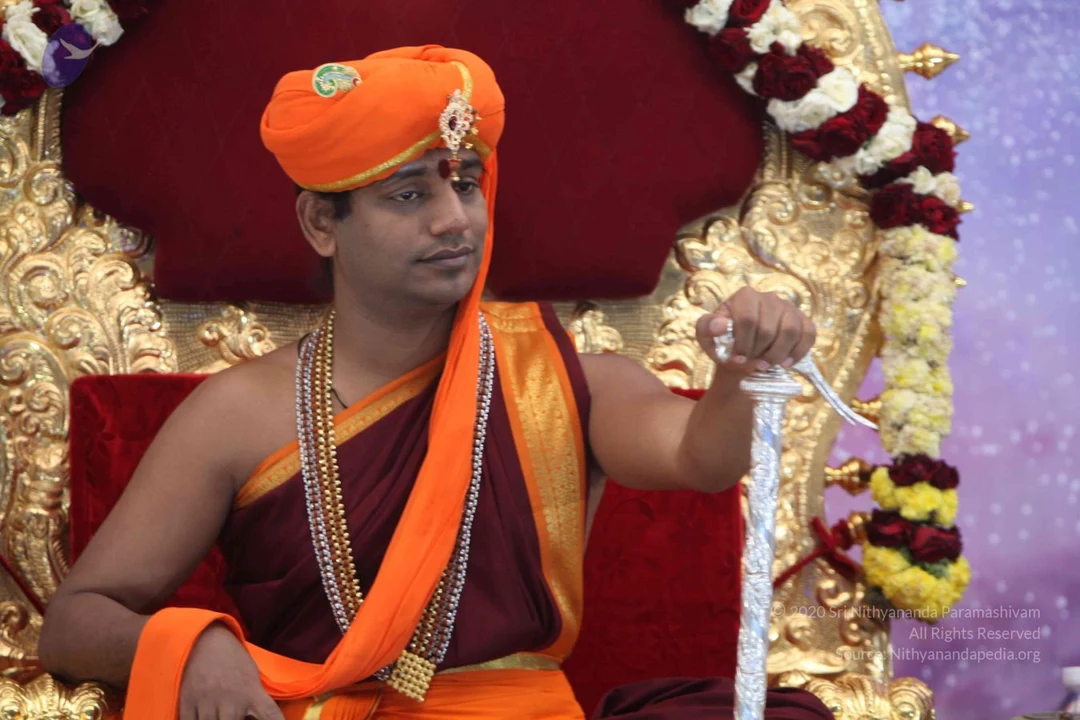
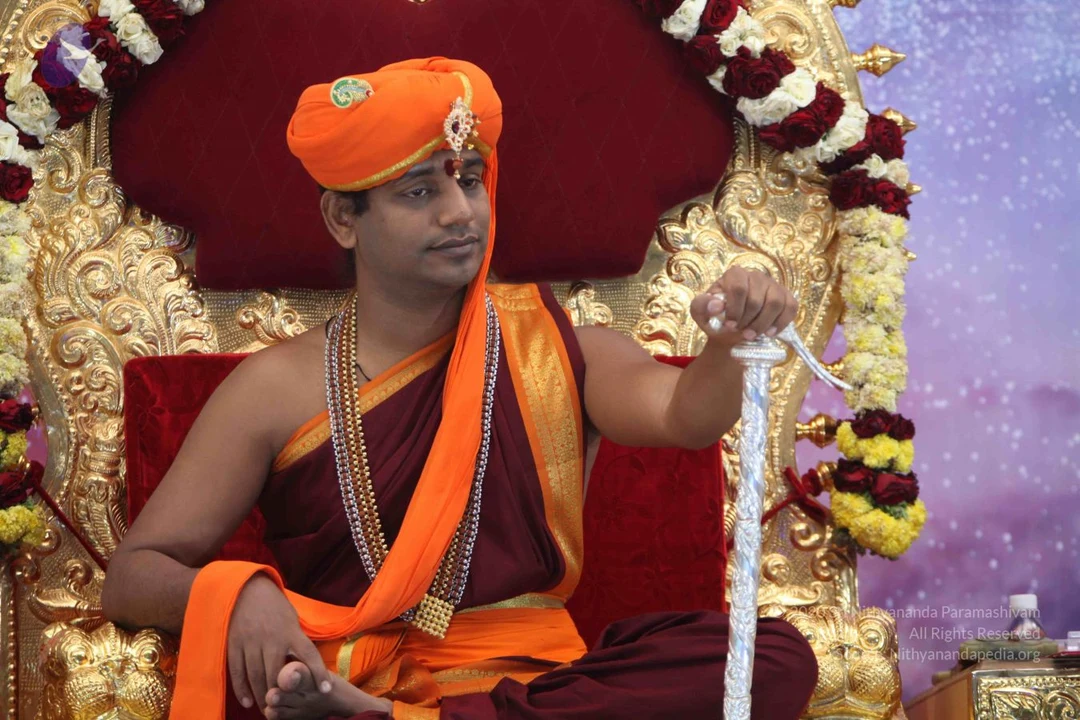
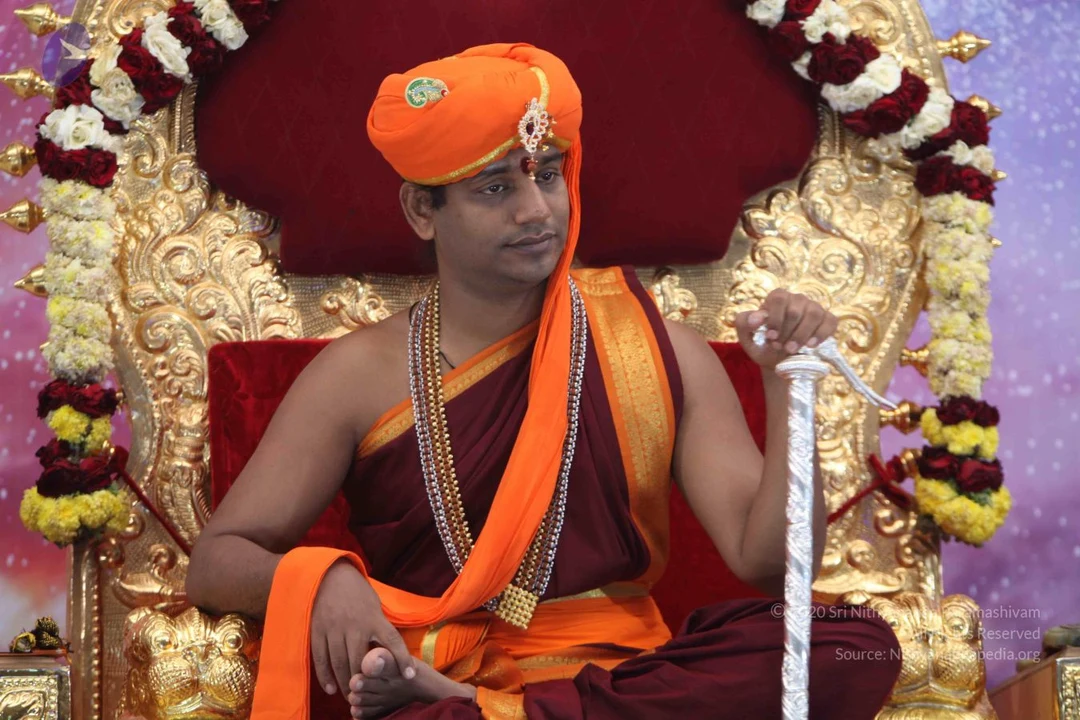
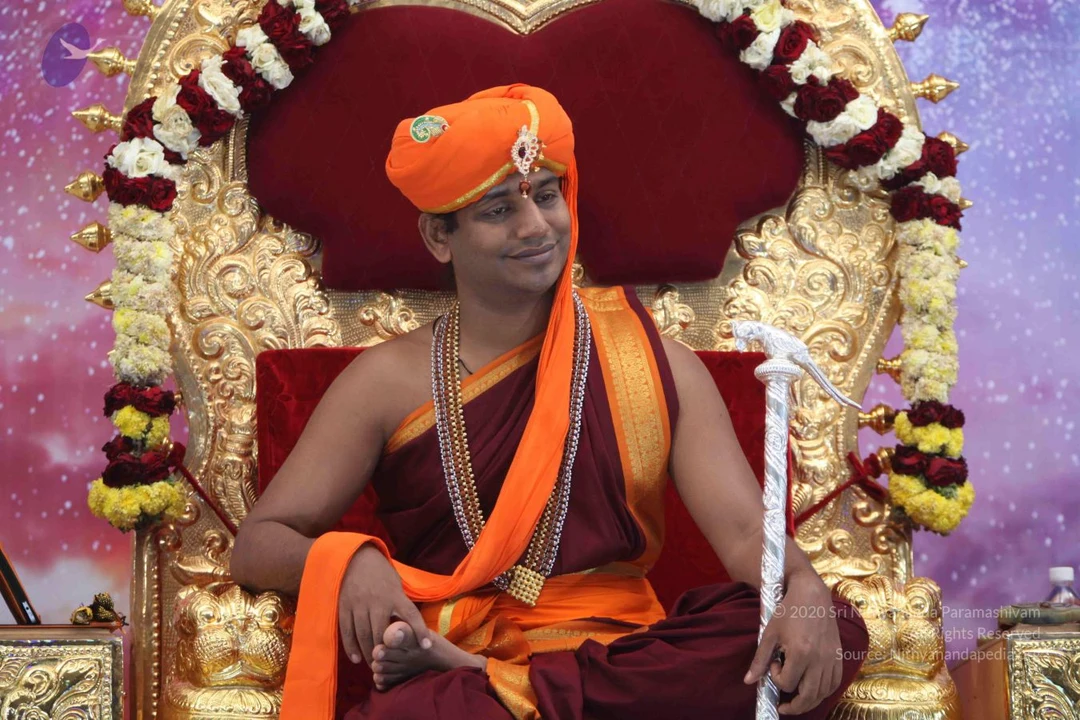
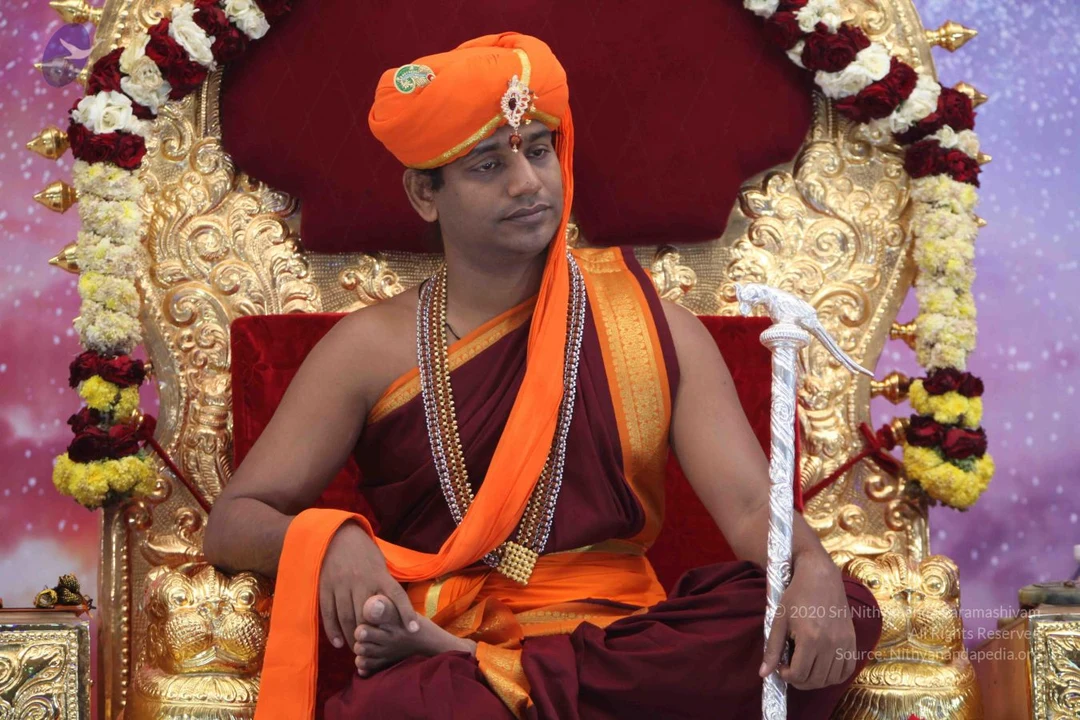
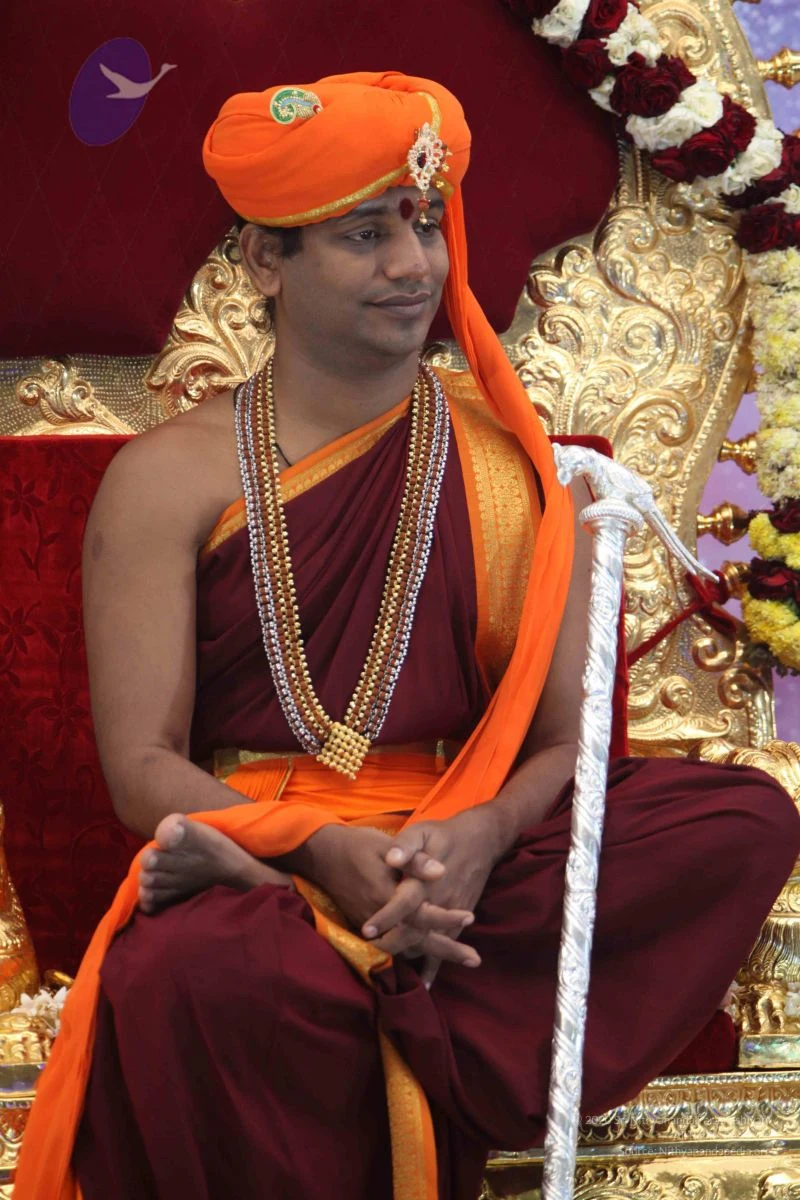
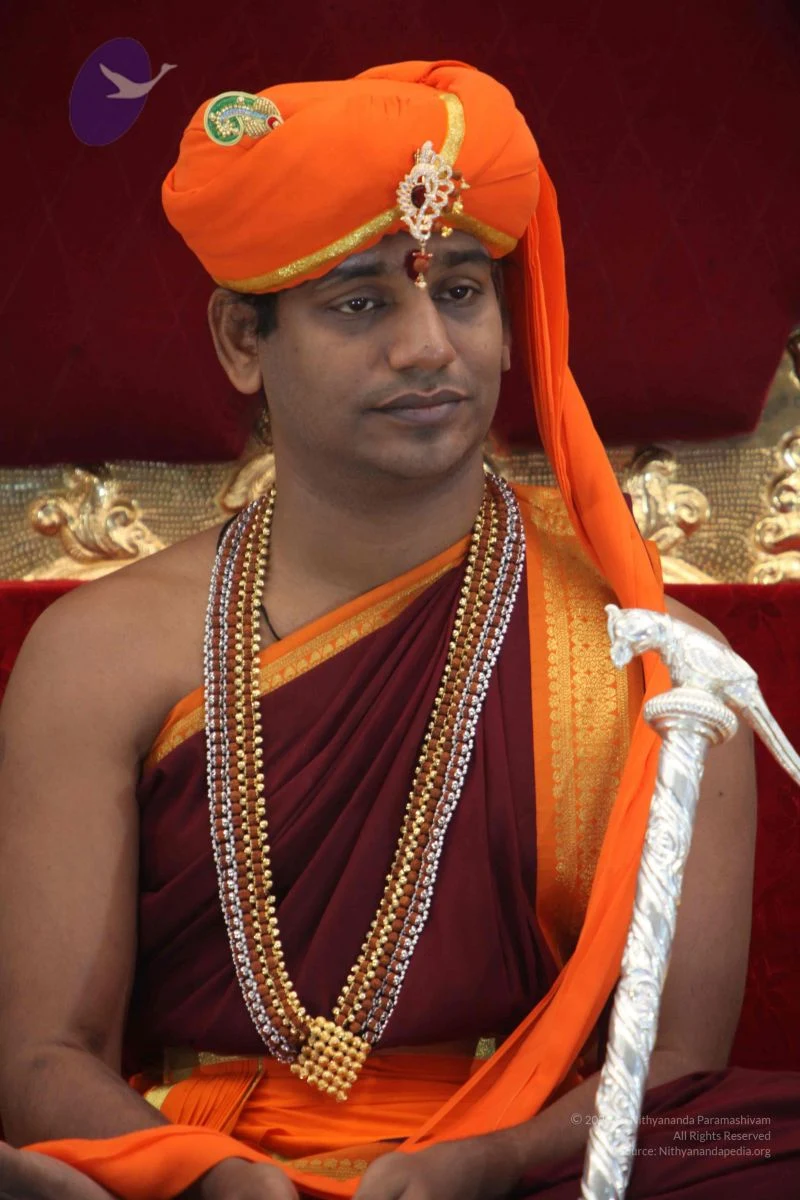
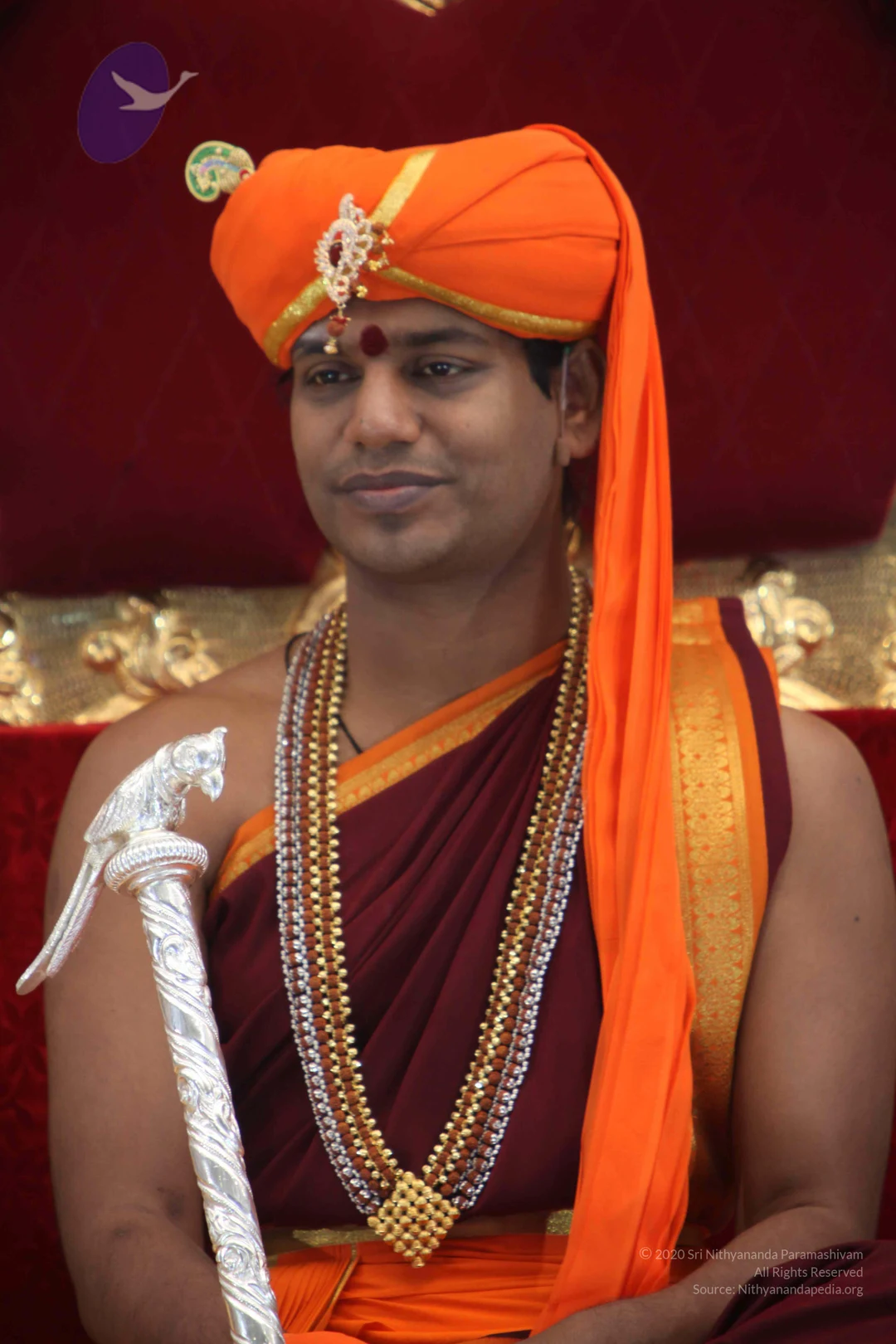
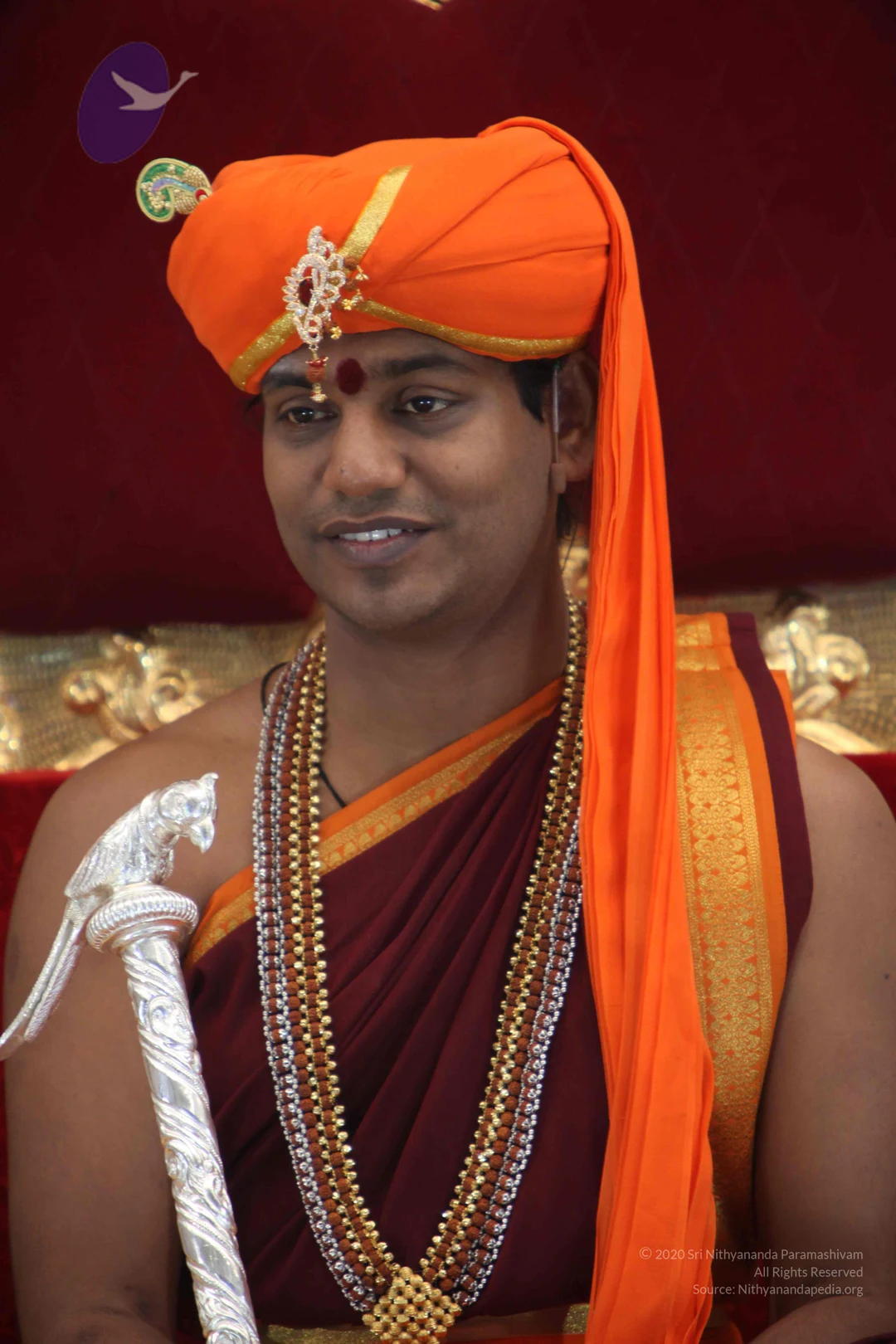
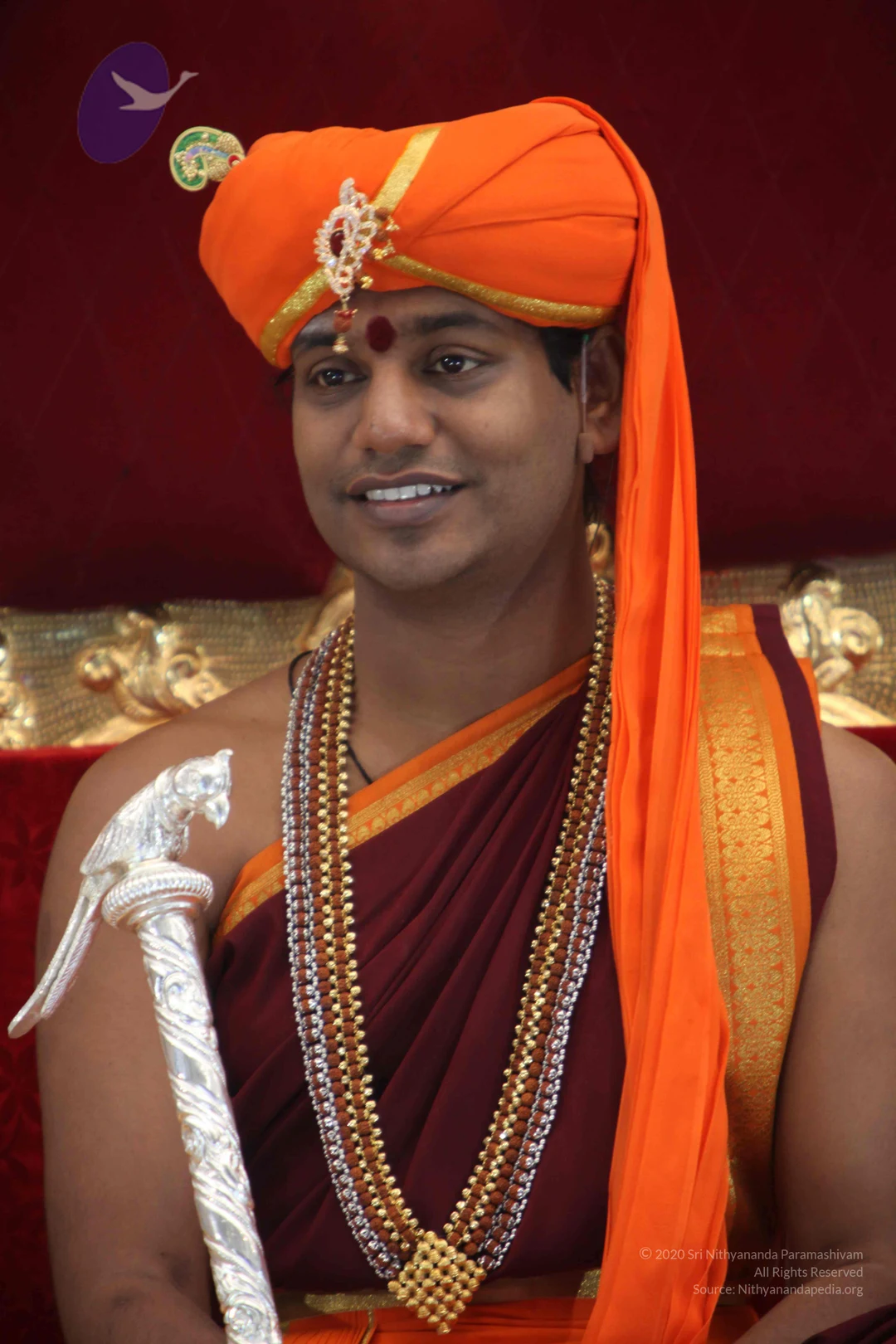
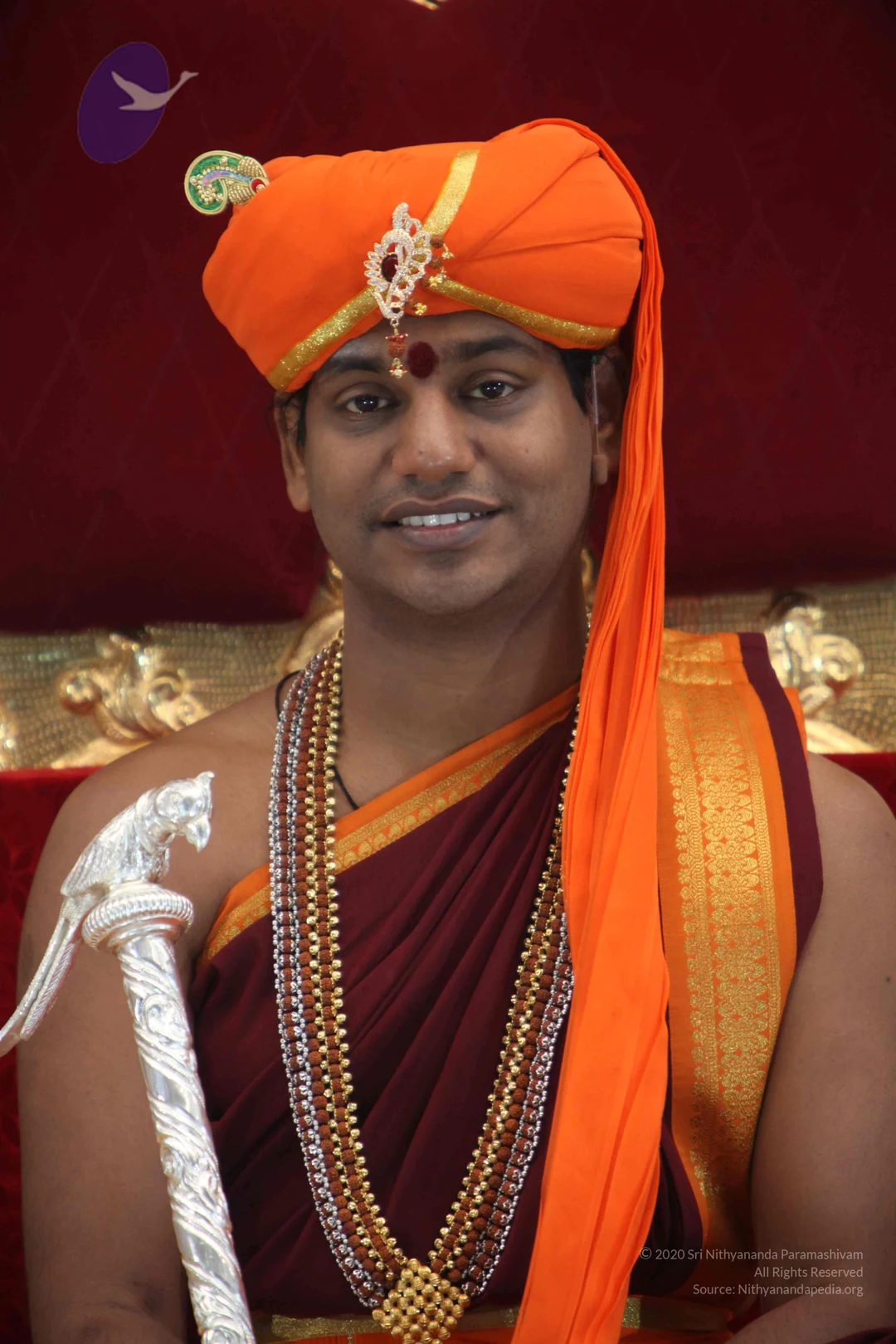
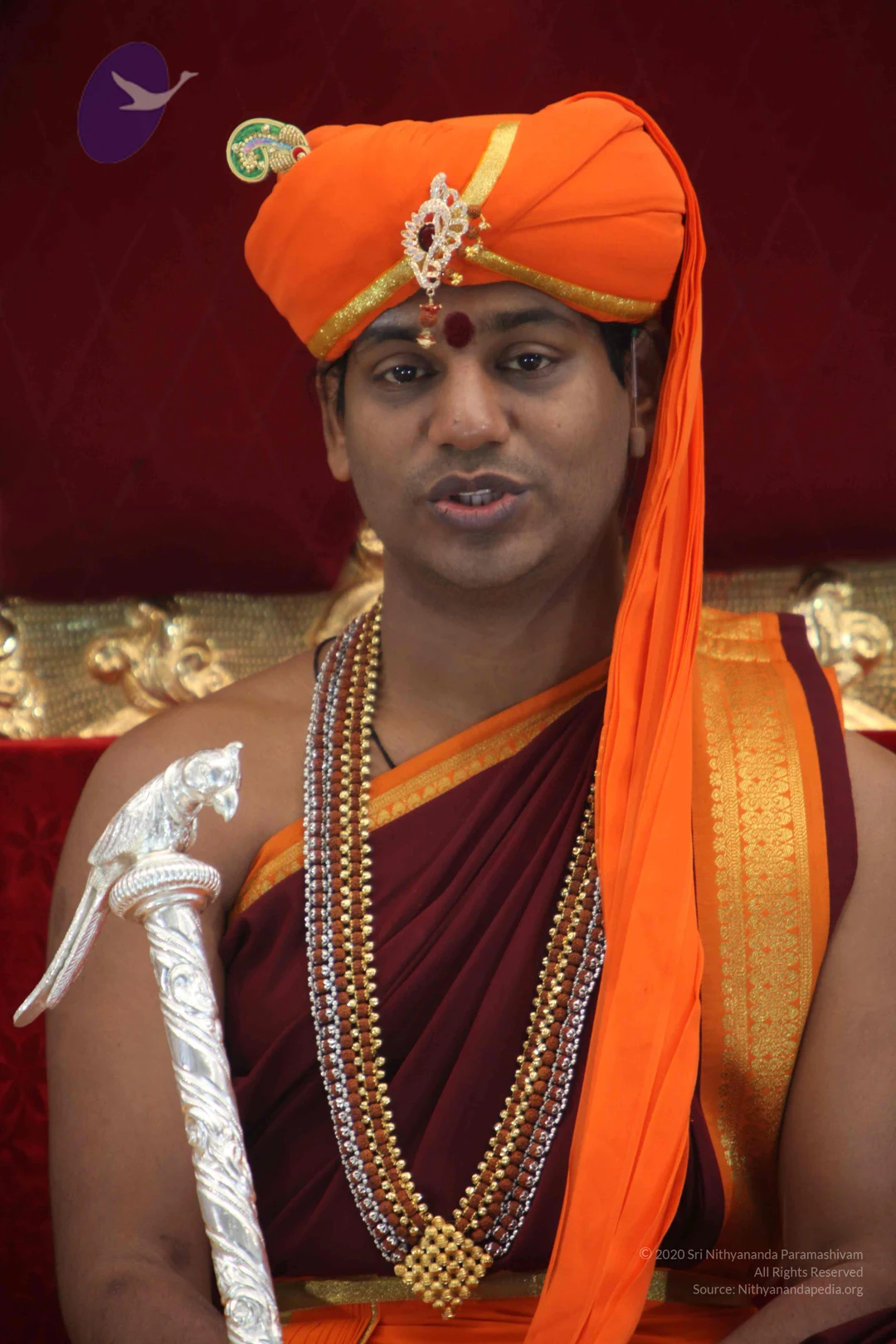
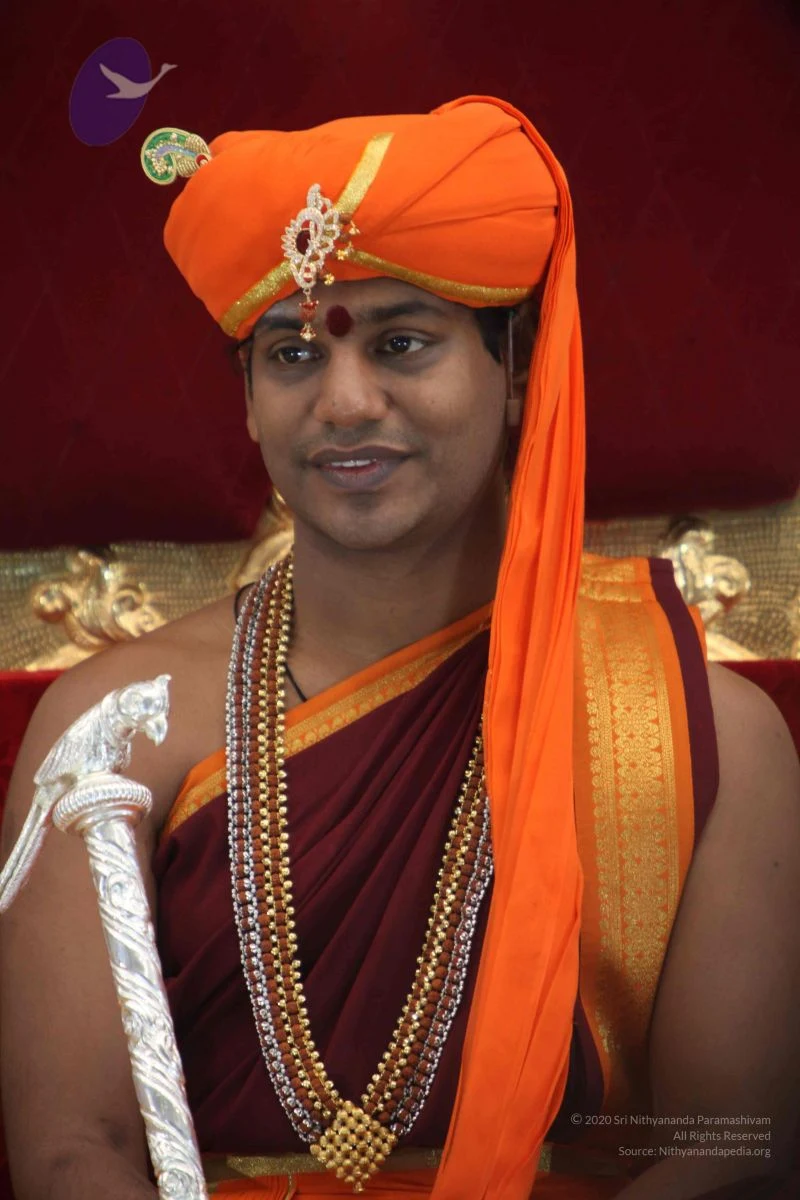
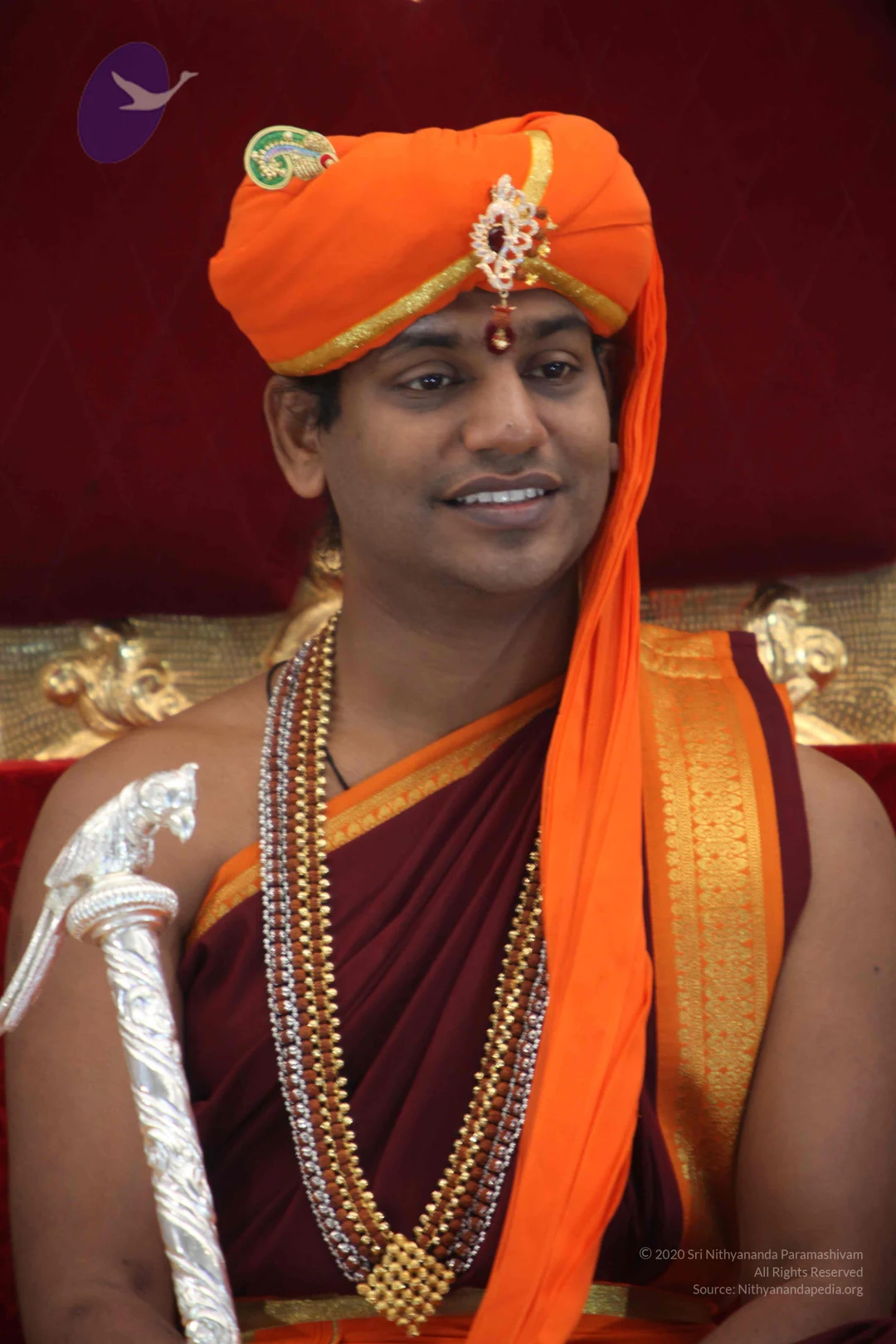
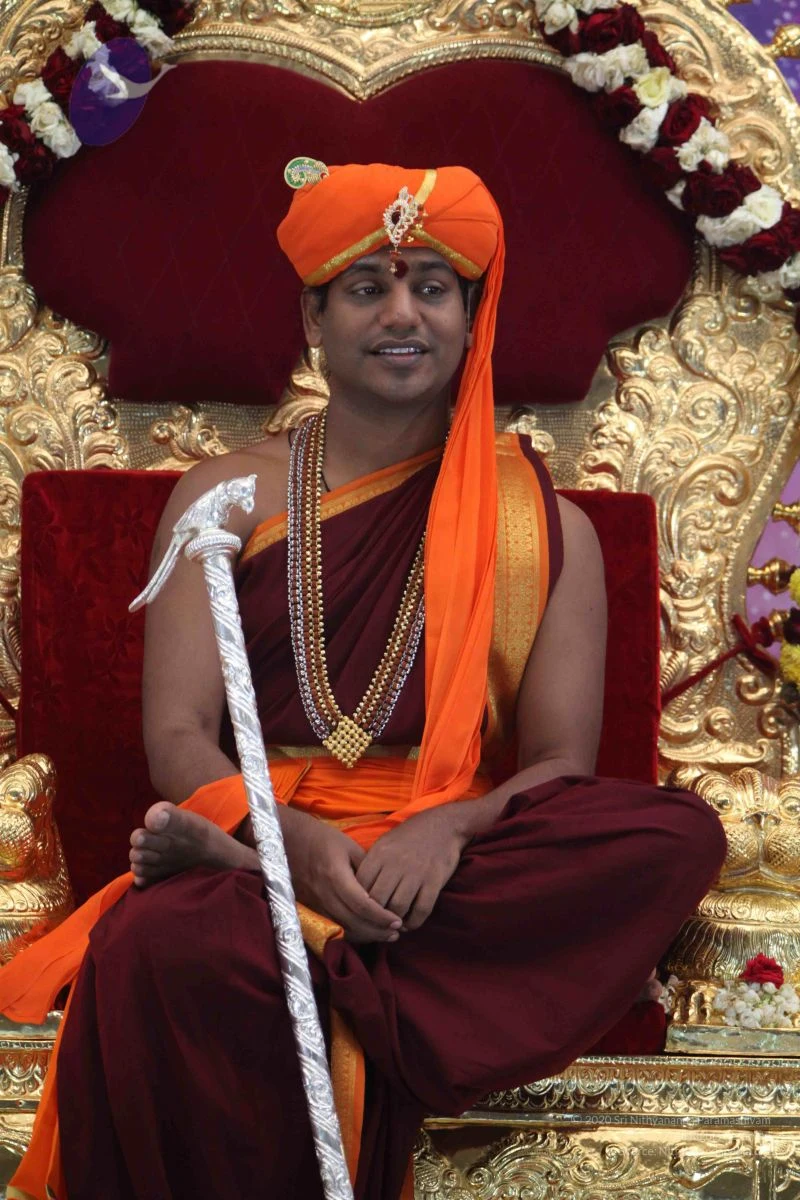
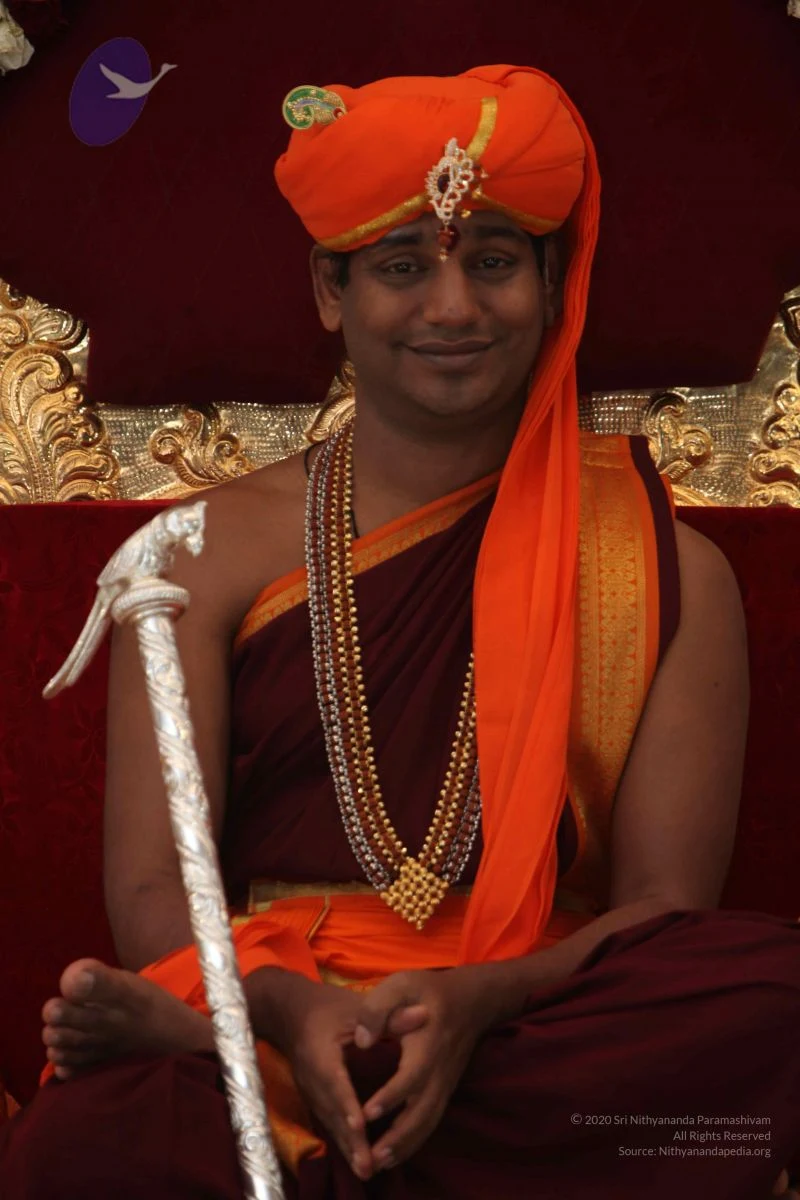
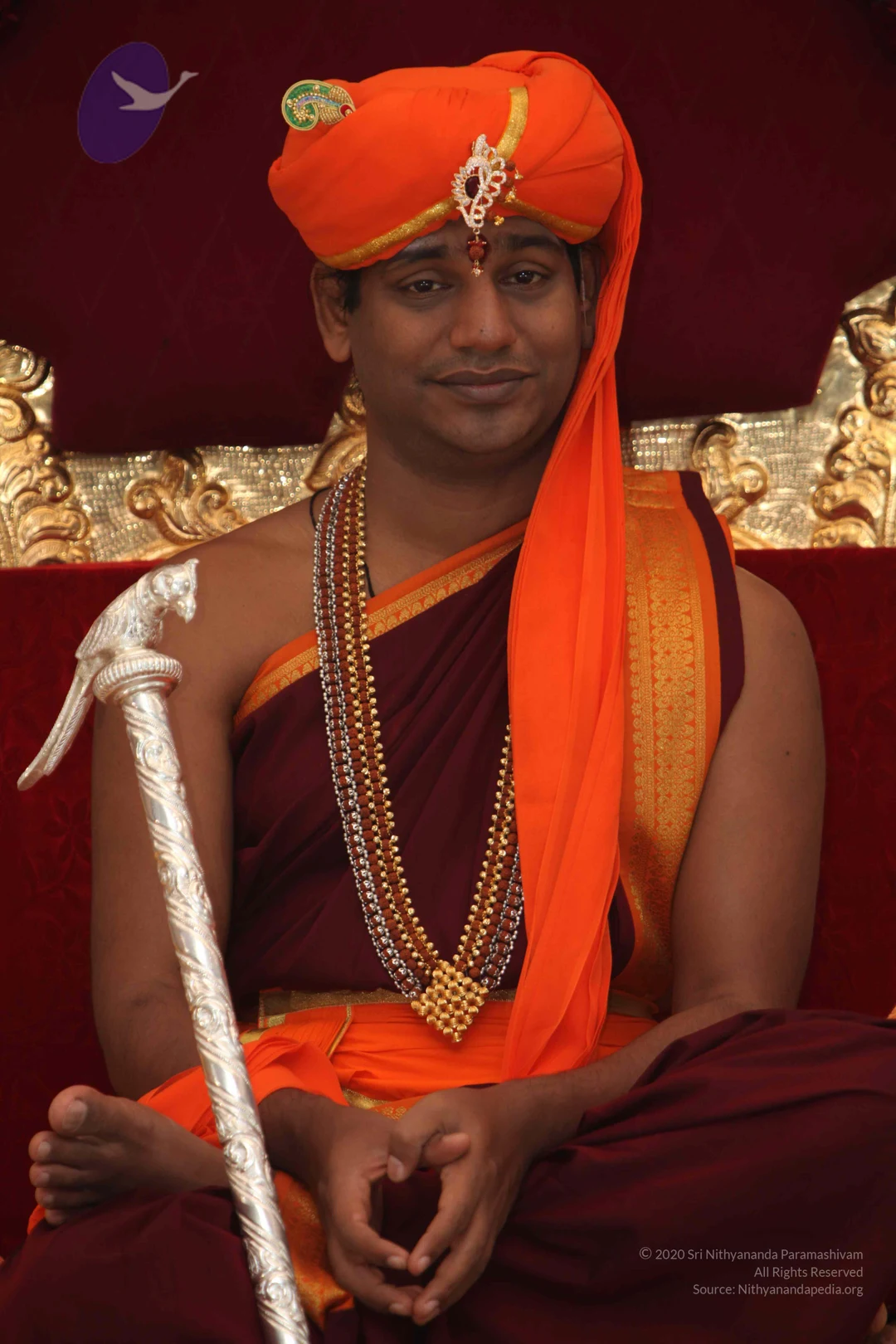
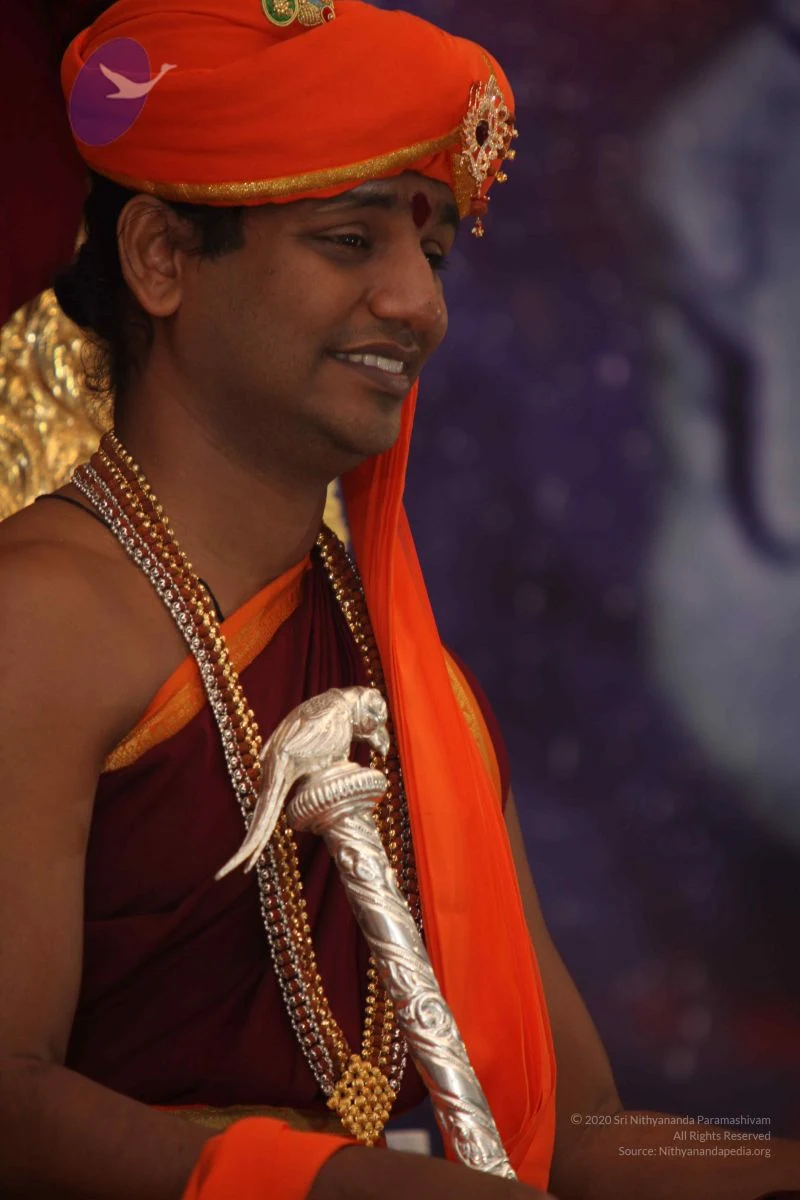
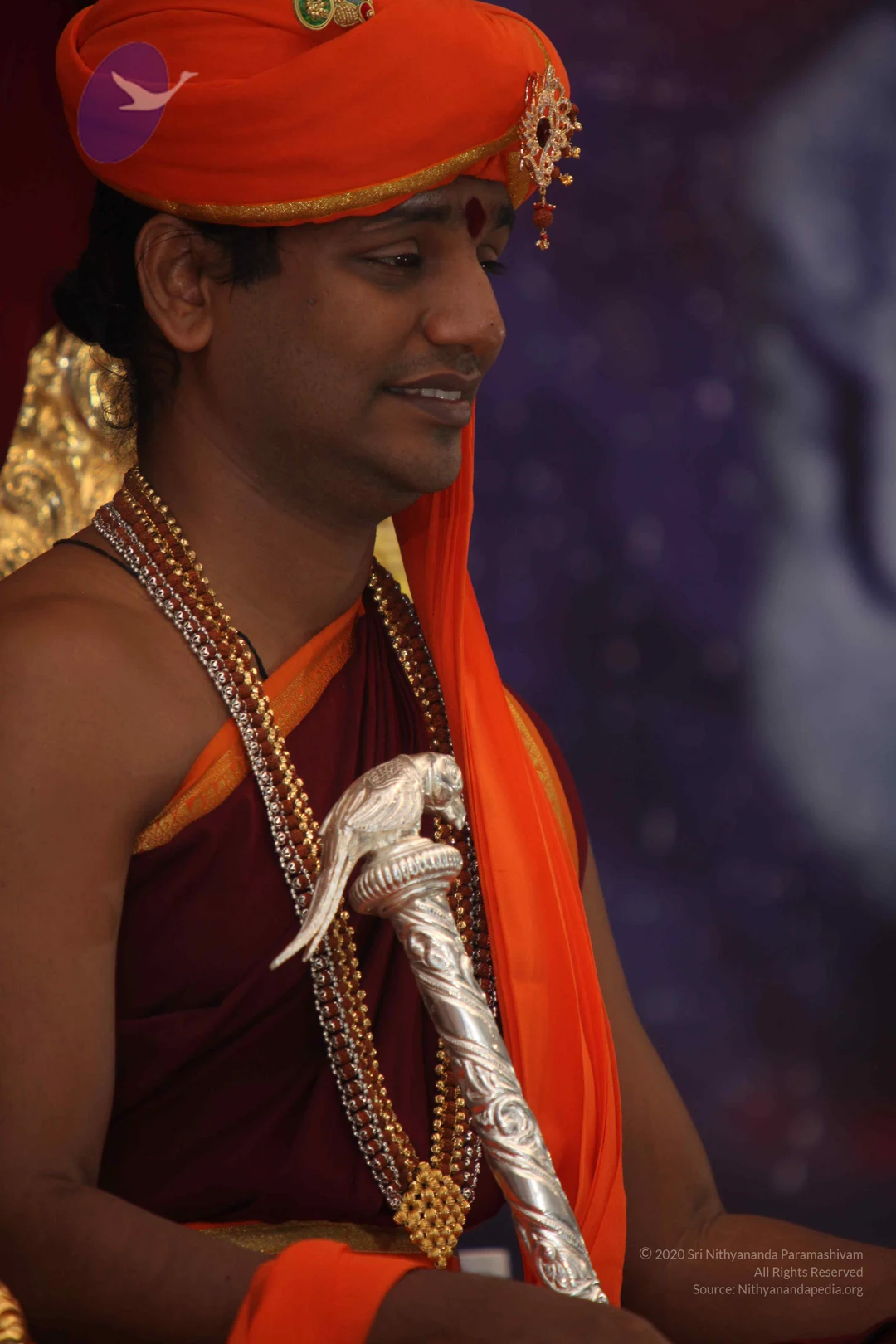
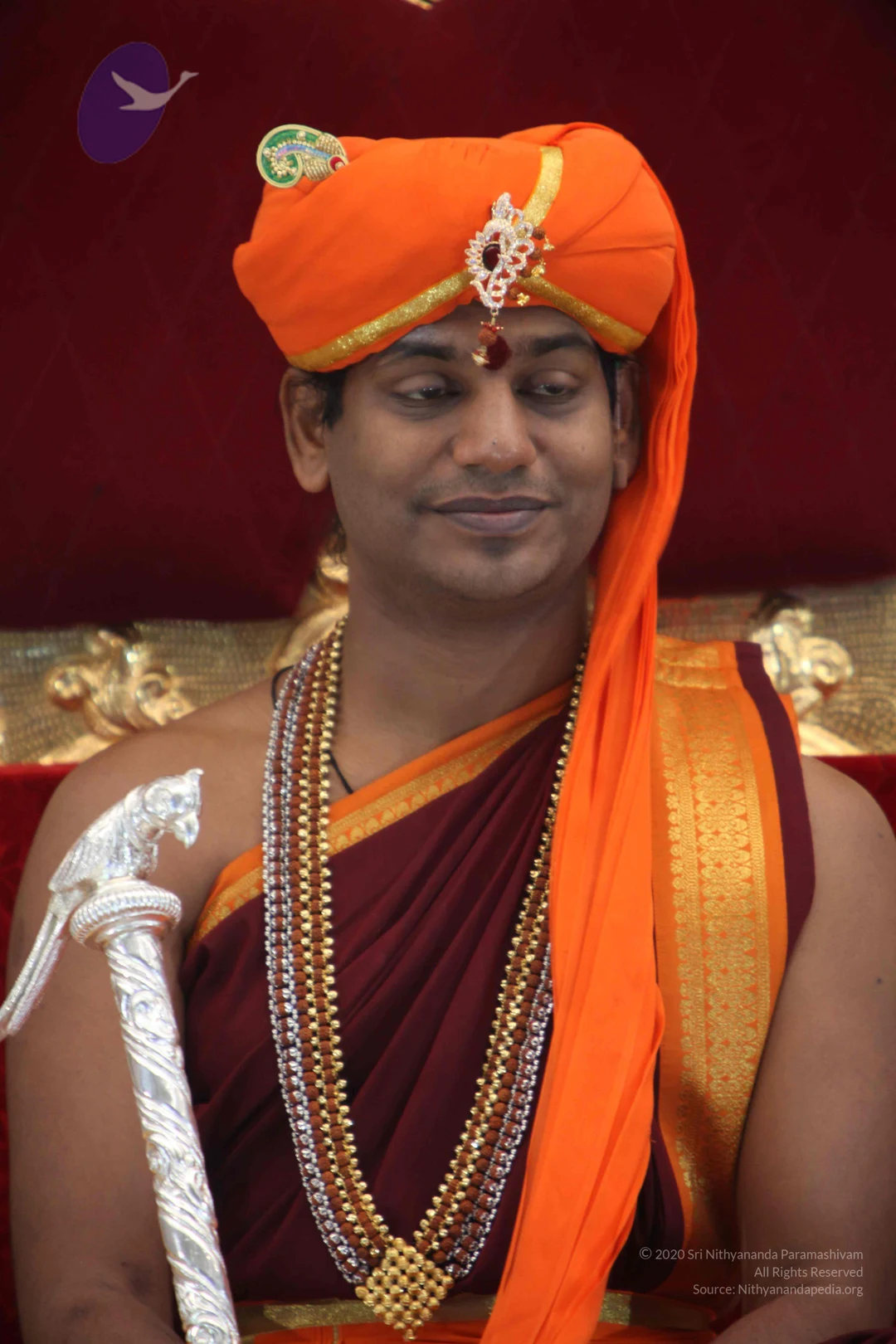
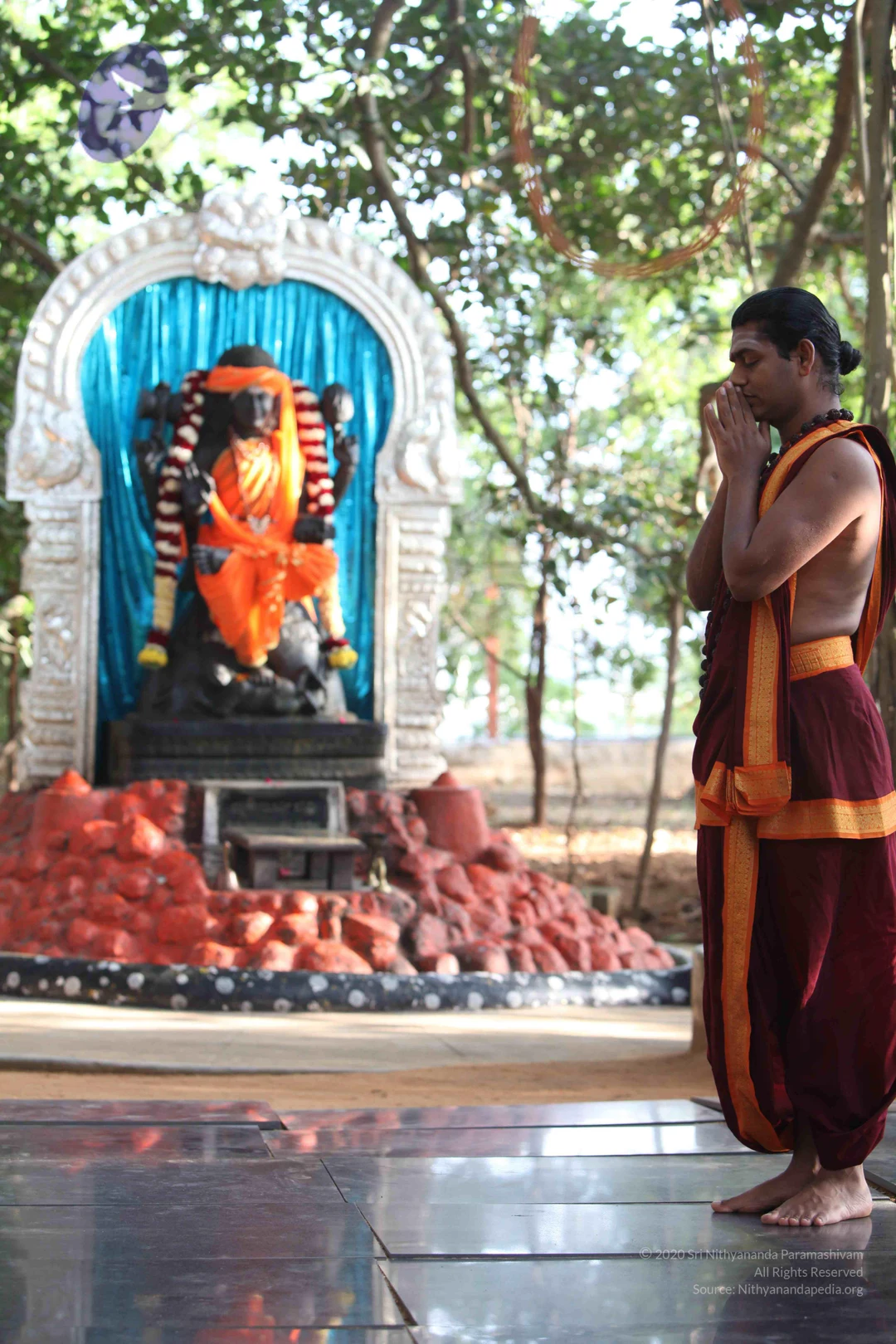
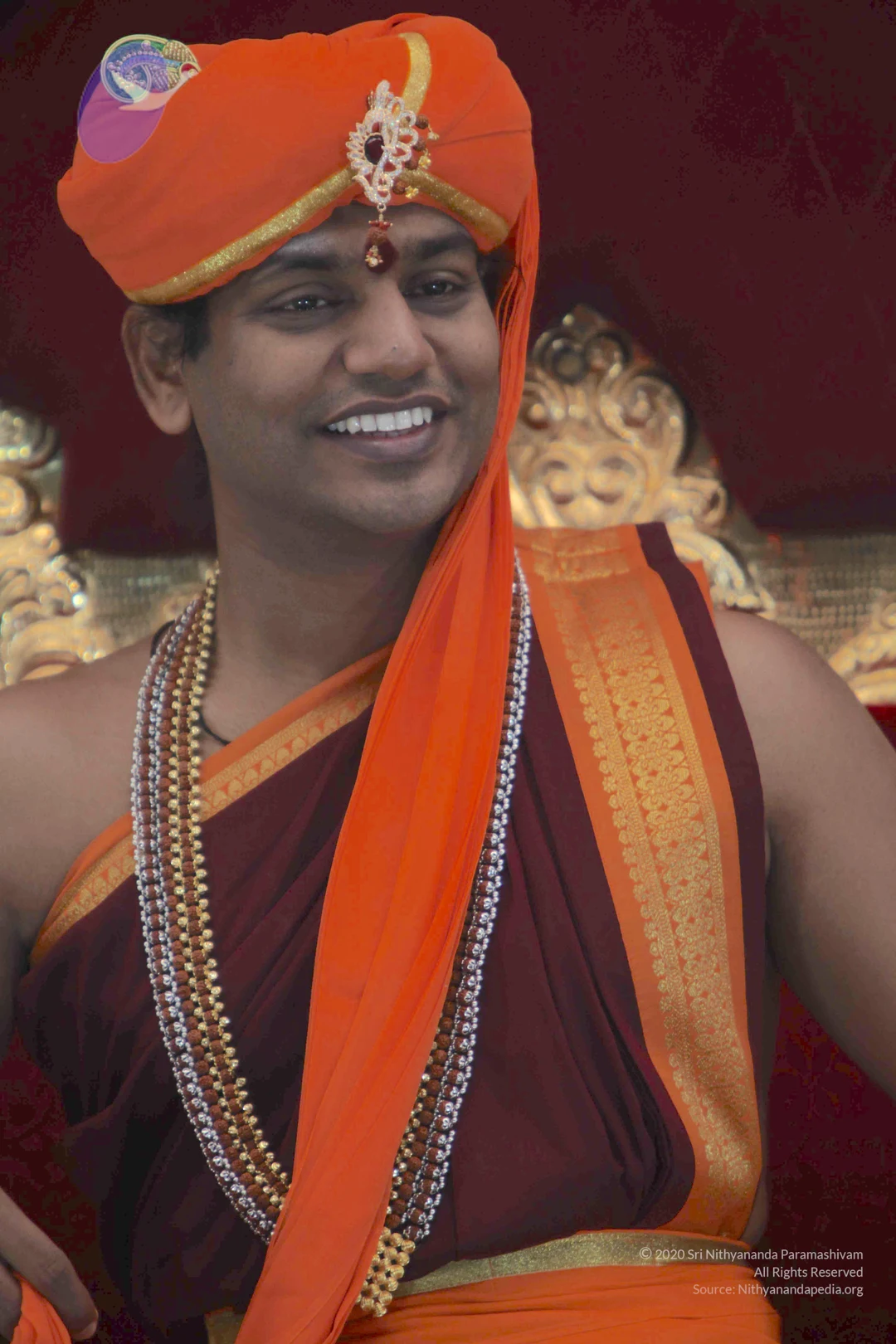
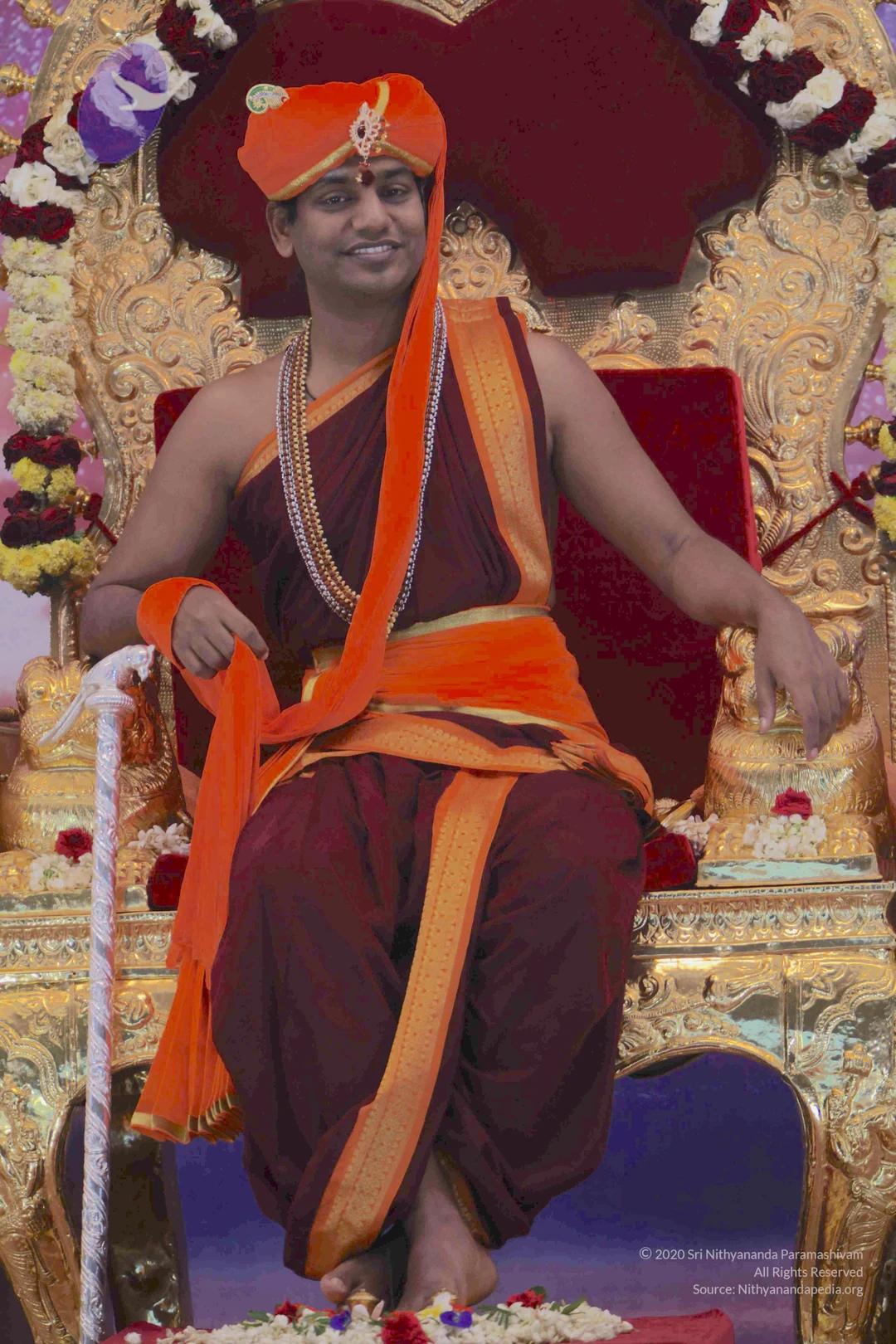
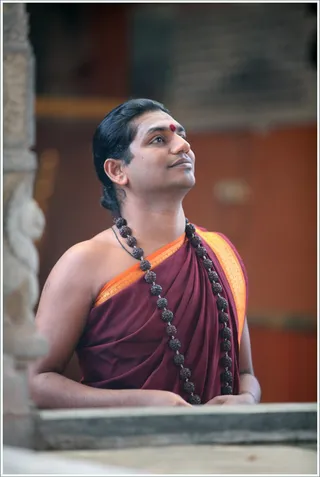
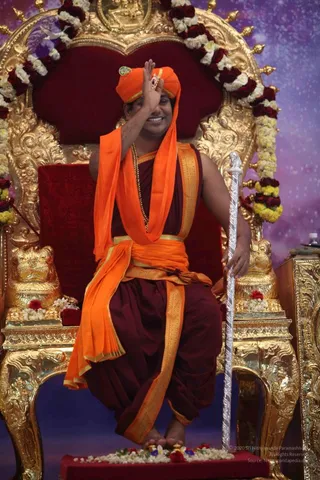
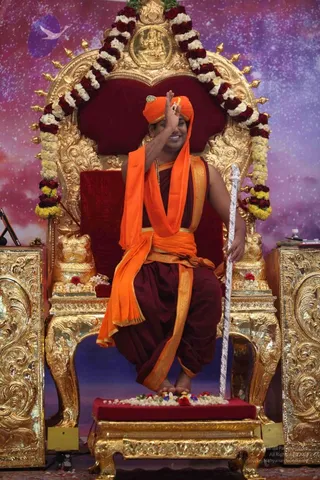
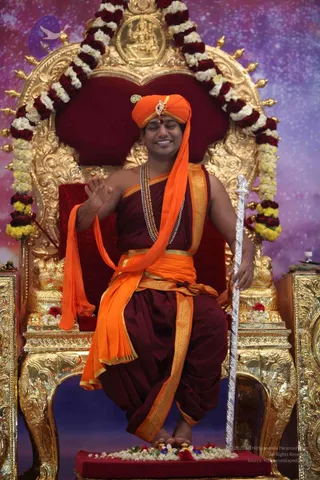
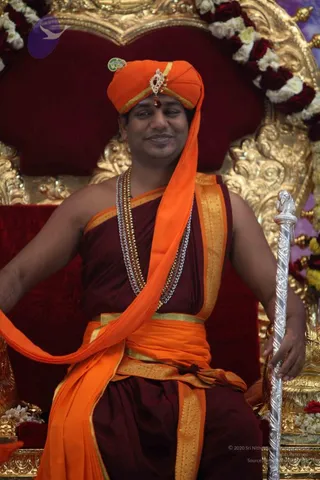
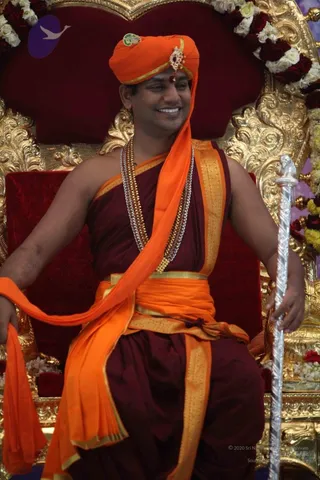
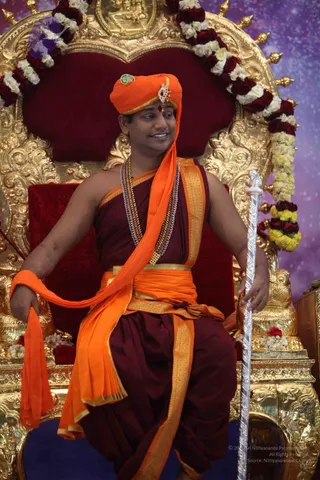
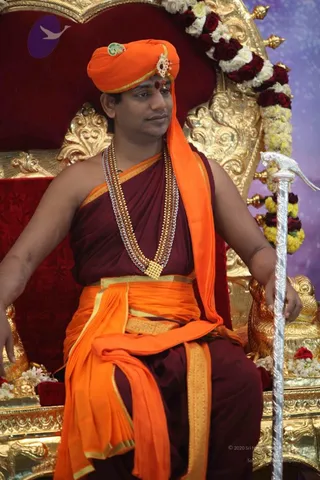
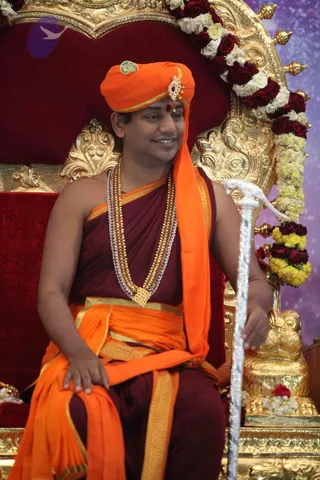
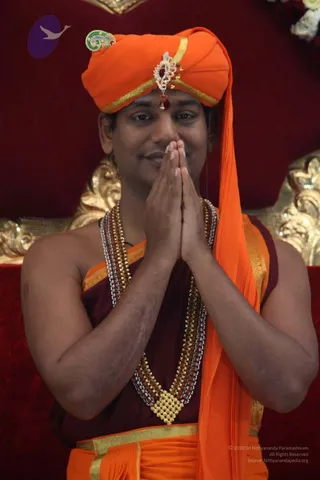
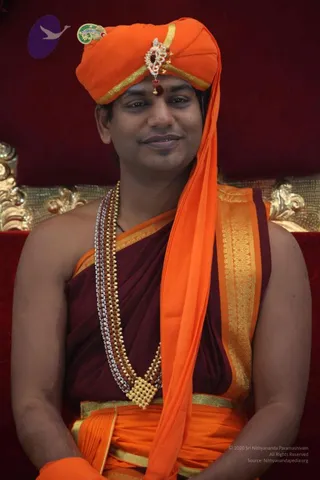
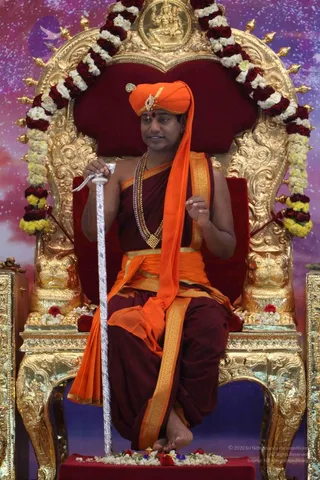
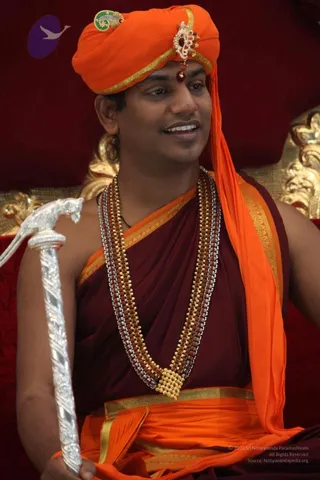
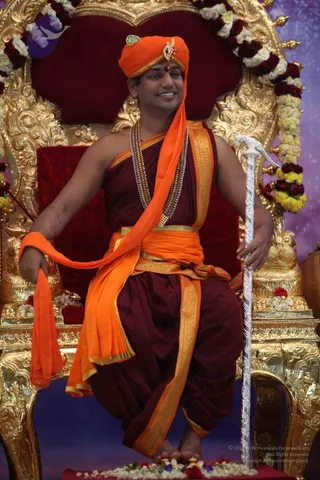
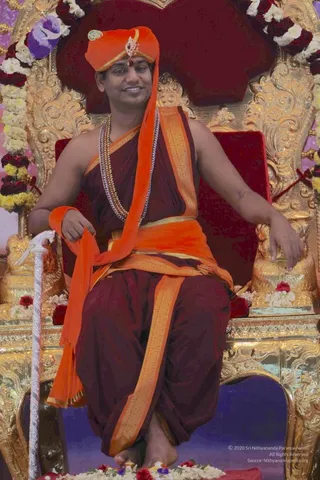
A seated man in an orange turban with a jeweled ornament and a red bindi speaks while seated on a red and gold throne. He wears a maroon and orange robe with gold border, multiple strands of rudraksha and gold beads, and holds a silver staff topped with a carved parrot. Behind him is a red upholstered backdrop with gold carved trim. Appearance-based candidate, probable Swamiji, seated in a discourse setting with a silver parrot-headed staff, orange turban and rudraksha mala.A seated man in an ornate gold-and-red throne is the main subject, wearing an orange turban with a jewelled brooch and a red bindi, an orange shawl over a maroon robe with gold border, and layered silver and gold beaded necklaces. He holds a silver staff with a carved animal-head top and rests his bare feet on the throne. Red and white rose garlands decorate the throne's back, and a purple backdrop is visible at right.A bare-chested man with hair tied back in a bun stands in profile with eyes closed and palms pressed together in namaste before a blurred deity murti draped in orange cloth and garlanded with white and red flowers, set against a turquoise backdrop under an arch. He wears a maroon dhoti and an orange-and-gold bordered shawl over his shoulder, and a rudraksha mala around his neck. A few orange offerings sit at the lower left. The man is a devotee in prayer; no appearance-based a person candidate is clearly established, so identity is unsure.

September 23 2011

Original wiki page
Contents

Title:

THE SUPREME PONTIFF OF HINDUISM HDH BHAGAVAN SRI NITHYANANDA PARAMASHIVAM

Link to Video:

VideoAudio

Transcript:

Bhagavad Gita

Death is just like a change of clothes!

DATE: Day 32: Sep 23rd 2011

Let us enter into today’s satsang. I will speak on 2nd chapter 22nd verse in Bhagavad Gita chapter title Saankhya yoga.

vasamsi jirnani yatha vihaya navani grhnati naro parani tatha sarirani vihaya jirnany anyani samyati navani dehi || 2.22

As a man discards the old dwelling place that is ruined and moved into new one likewise the embodied one discards the old dwelling place - this body and moves on to new dwelling place - another body. As I said Krishna is enjoying the sincerity of Arjuna and Arjuna is literally drinking Krishna. See in the Gita stotra it says that Gita is the essence of all the Upanishads. It’s like a Upanishads… see Vedas are cow, Upanishads are the milk and Gita is the butter. You don’t need to get a cow and take care and you don’t need to milk and then put little curd in it and make curd, then churn it and get butter out of it. NO. Bhagawan does all the job. You just eat.

Arjuna must have been in ecstasy. I tell you unless disciple is in ecstasy these highest words cannot be uttered by a Master continuously. See for last few verses continuously Bhagawan is speaking the pure truth without mixing. When the disciple is not in ecstasy you may be able to tell one word, one verse; not more than that. Only when the disciple is in ecstasy, receptive mood, joy, joy of learning more and more, joy of imbibing more and more, joy of getting fulfilled; only then Master can go on talking these extraordinary truths these extraordinary teachings.

First time an example has been used. Understand Krishna is using an example means he is in a casual mood. He is very relaxed. He is more in the mode of restful awareness than a tensed teacher who is supposed to impart certain syllabus. Please understand with syllabus there will not be similes and examples. Only when you are free to transmit the knowledge the examples and similes and stories and jokes go on pouring out of you. Without stories, jokes, examples, it will be almost like atheism - nonprofit organization. Theism is nonprofit organization atheism is nonprofit organization. Just to talk bluntly you don’t need a profit only to talk intelligent, to transmit the restful awareness, to transmit the truth, you need a profit, you need an incarnation, you need a great Master, Jagadguru like Mahadeva Bhagawan Krishna.

He says as a man discards the old dwelling place that is ruined and moves into a new one likewise the embodied one discards the old dwelling place - this body and moves to a new dwelling place - another body. What an explanation! God! I tell you exactly you feel, after death there is only one suffering. You will suffer ‘oh god it is such a simple thing! Why did I suffer my whole life thinking that this will be a suffering?’ That will be the only suffering. You would have taken many decisions thinking your death is a suffering. Because of that fear you wouldn’t have lived many things. That will be the only suffering you will have when you leave the body. When you leave the body - ‘oh god such a simple thing! Tchhe! Missed my whole life thinking that this will be a huge suffering!

It’s like a…. you know there was a huge treasury in a cave and but you have been misinformed that entering the cave will be highly dangerous. You may bleed unto death and all that. But suddenly somehow by mistake you are lost in the forest and you walk this way that way and finally you cross a thorny bush get scratched all over the body but small wound not dangerous not like death; or huge thorny bush and here and there your body is scratched and you will have a little bleeding and but you reach that cave. What will you think...Oh god only this few thorns... what a foolish idea I was in. I thought I will literally die if I reach this cave. But now I realize it’s only just few thorns nothing more, nothing else!

It is such a big difficulty only in mind. I tell you when you cross death you will have this exact wound. Now you have too many ideas misconceptions. You are misguided death is huge happening in your life. You have been misguided marriage is the huge happening and you know it after 16 days how you have been misguided. Same way you are misguided death is a big happening. Within 16 seconds of your death you will know O God such a simple thing why was I given such a wrong ideas and concepts and misleading misguiding informations?

Understand you are searching for a secret treasure. Two close friends, one who knows the secret is telling the other one and you over hear it. How you will use it? Use exactly in that same tune tone this truth. This one understanding from Bhagawan is enough to liberate you.

Photos
Sakshi Pramana:

Sharing from TWO PATANJALI YOGA SUTRAS -SATSANG

Photos Of The Day:

Temple
BG-Satsang

Sep-23-jewel -pics

Web-23Sept-2011

Photos Of The Day:

Temple
BG-Satsang
Web-23-Sept-2011

Sub Category: Shiva

Photos from this day

View all 192 photos

Photos

12 photosSource gallery
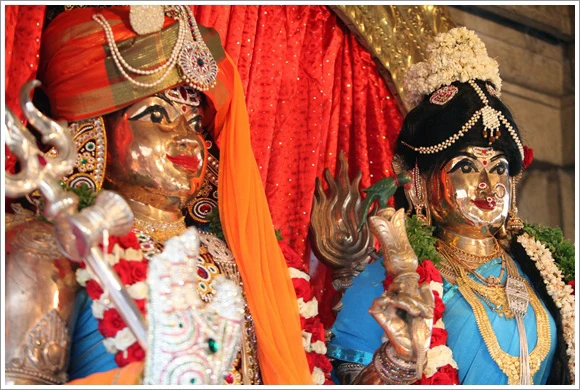
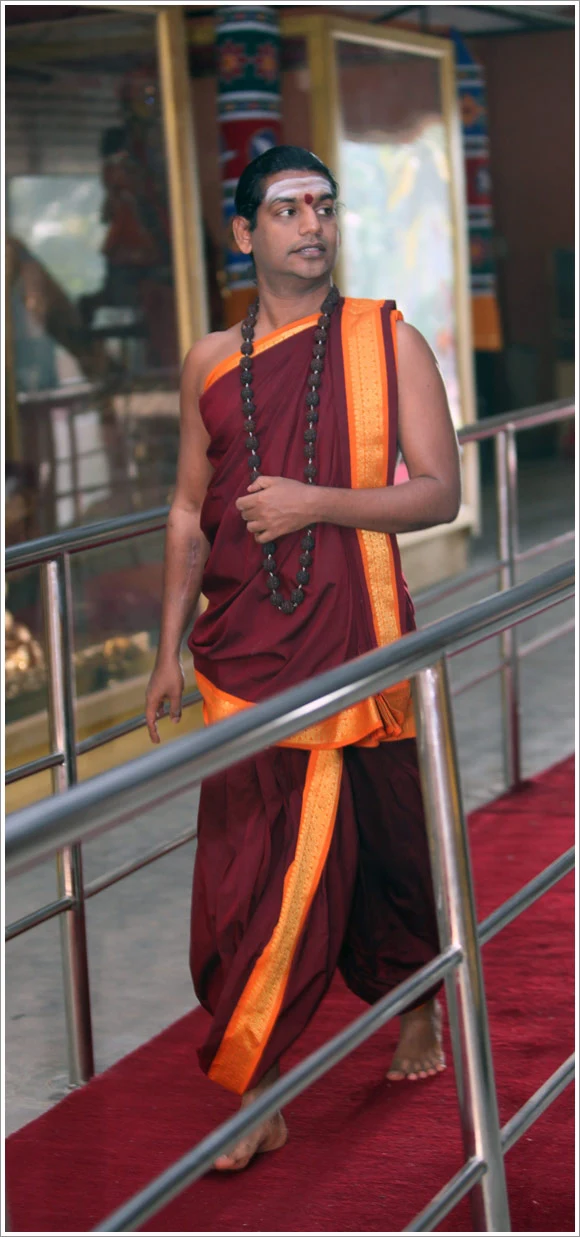
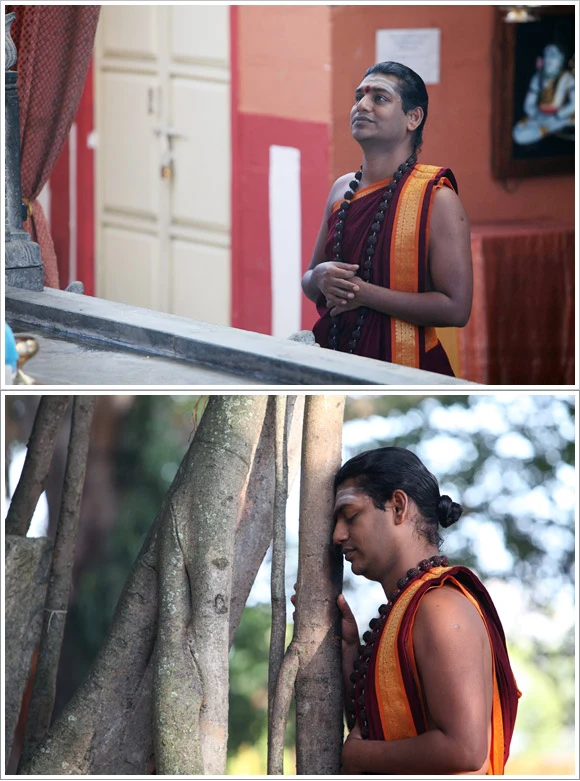
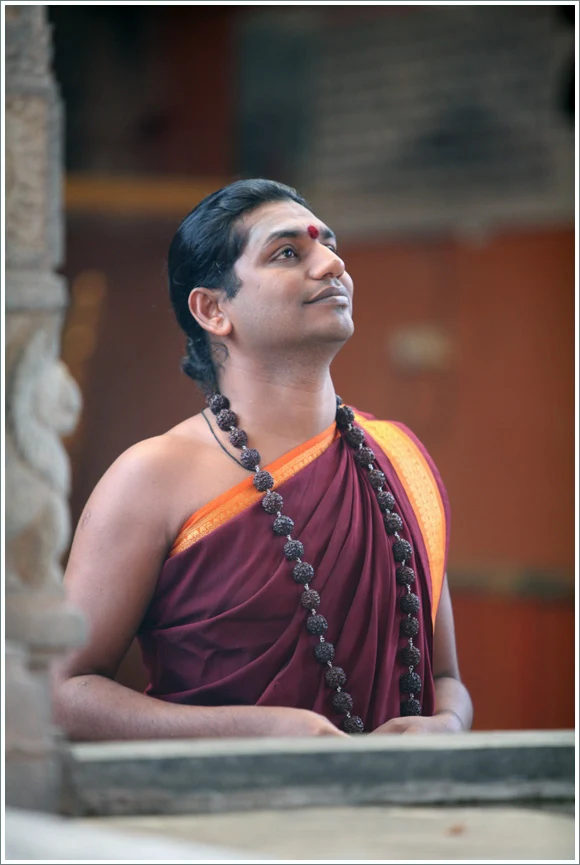
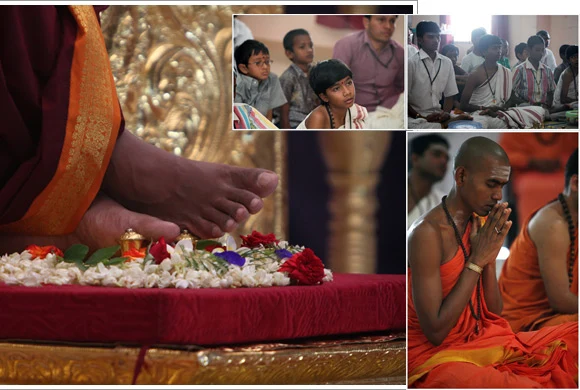
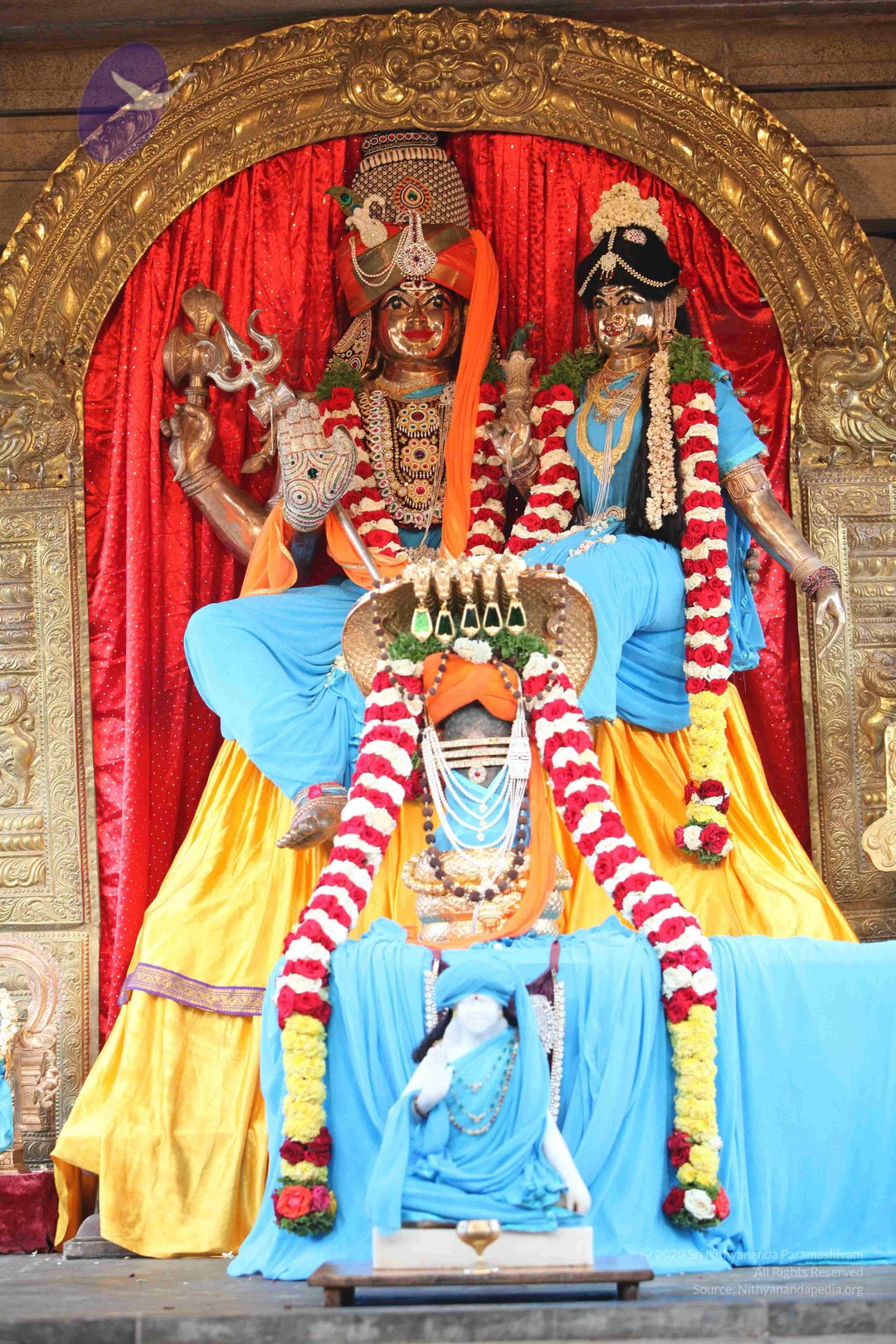
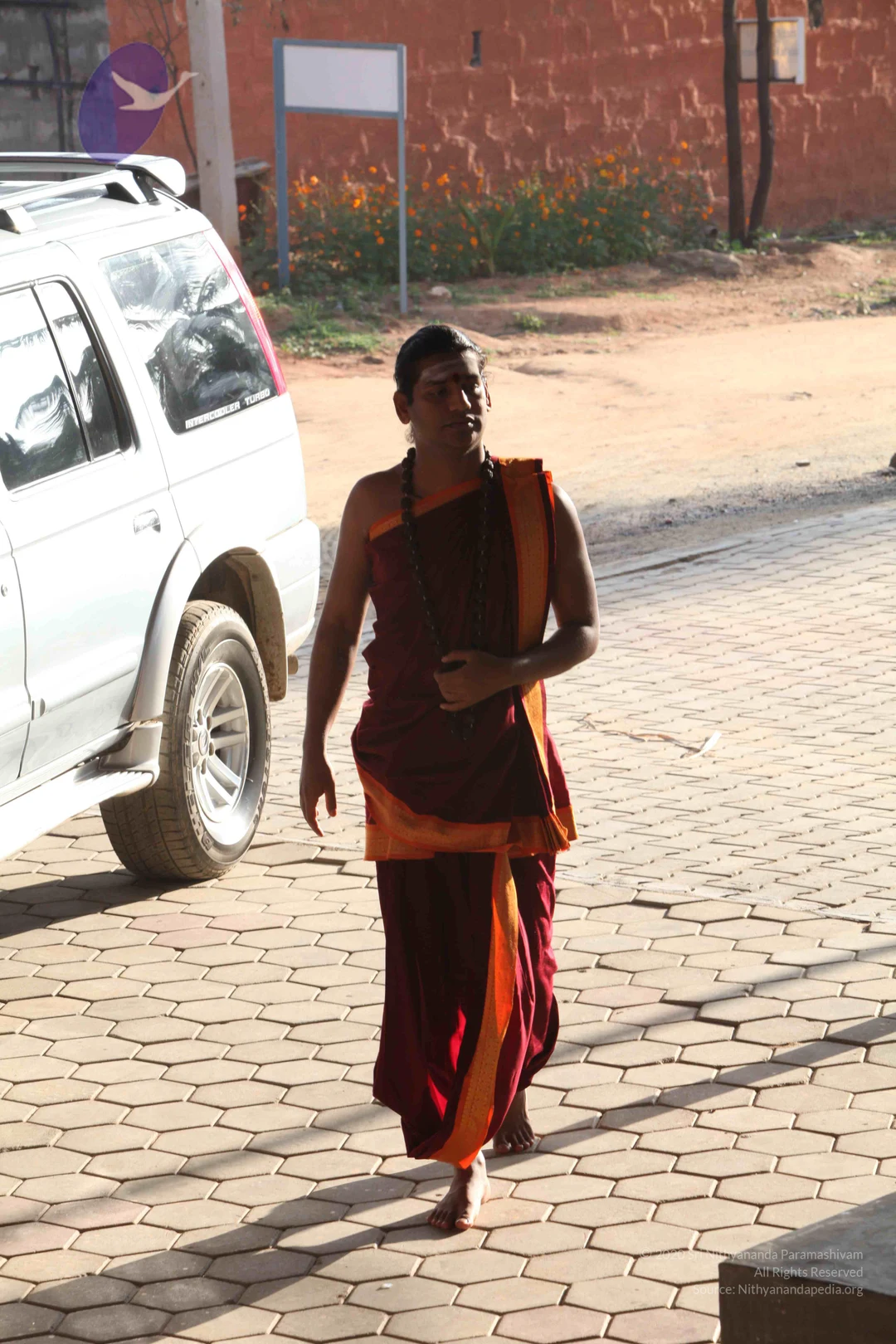
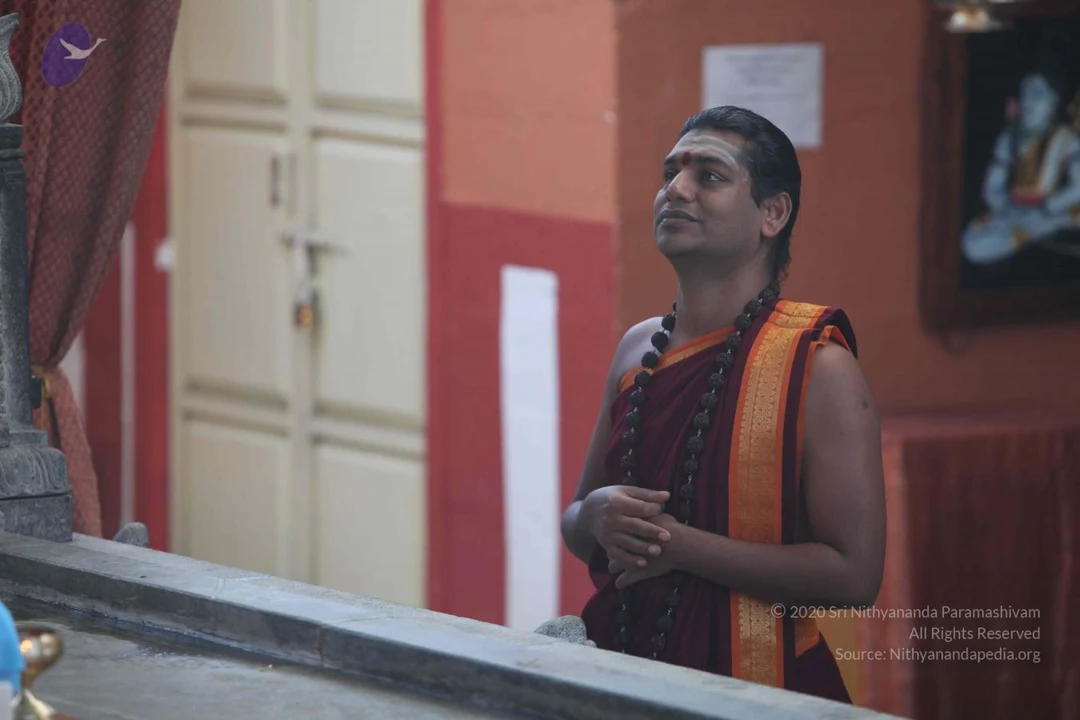
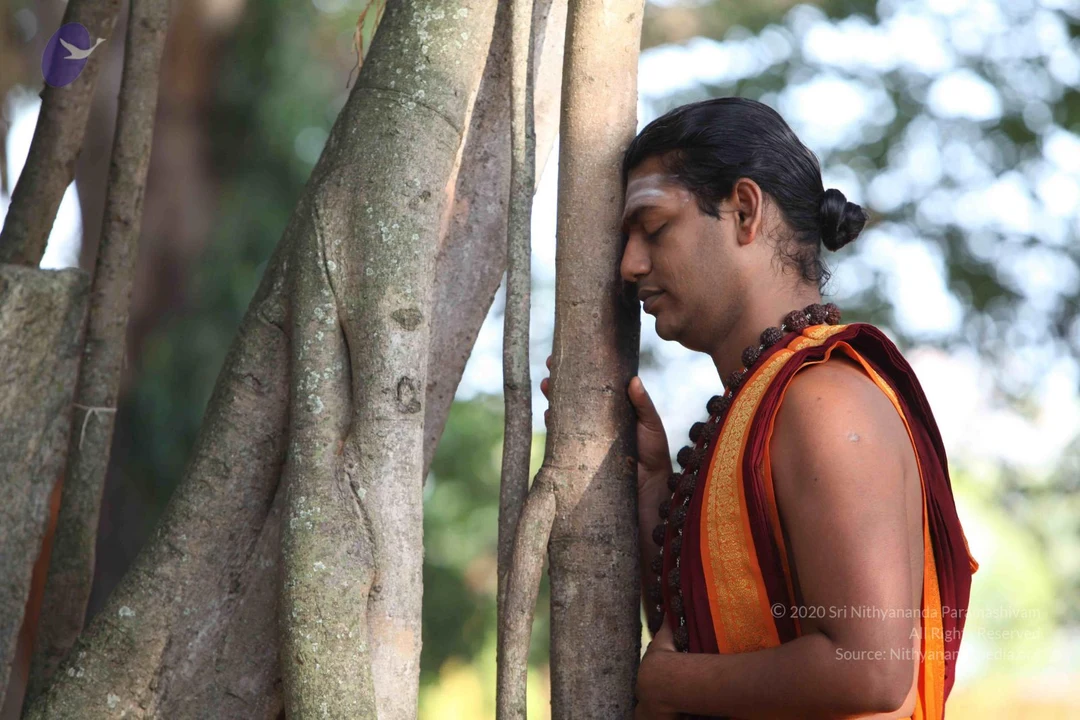
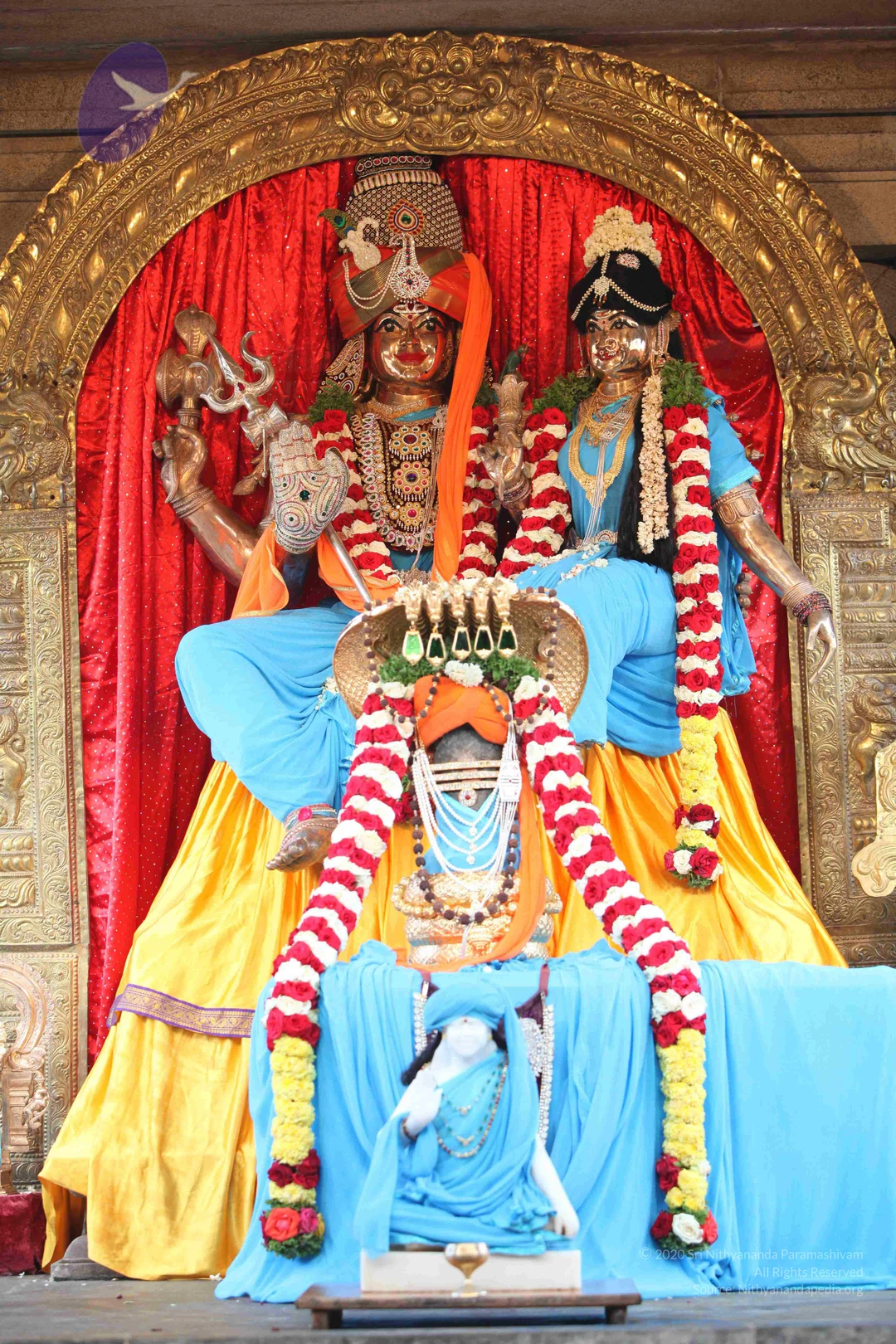
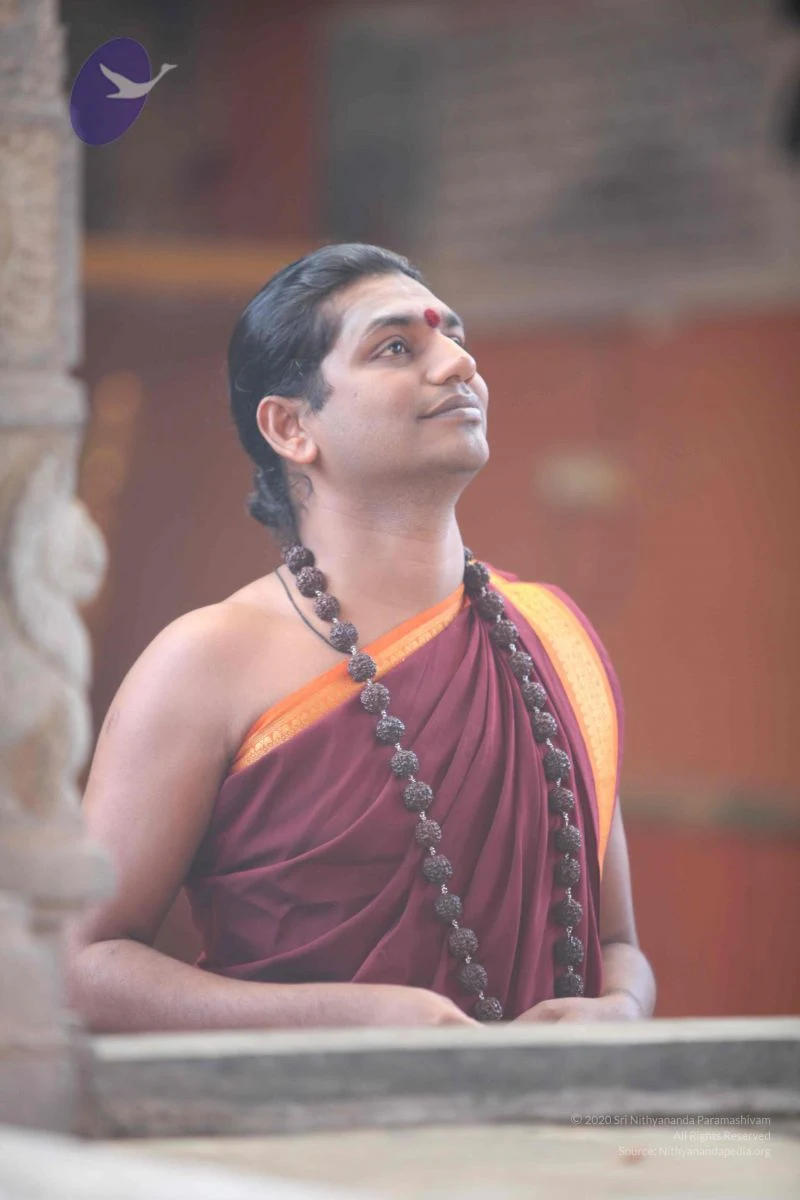
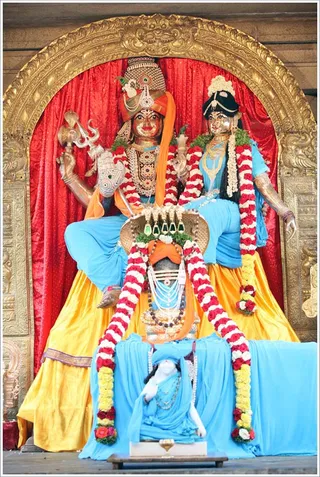
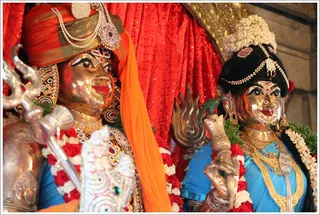
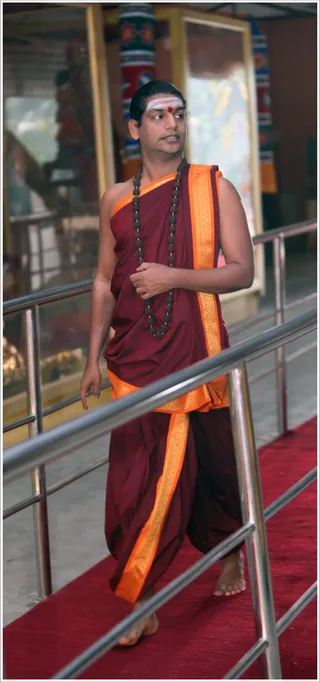
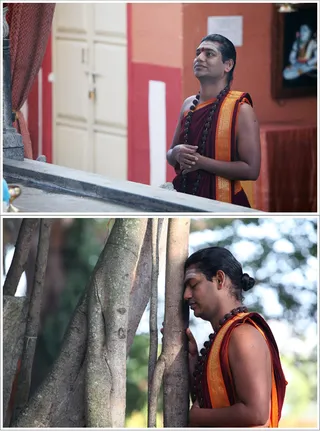
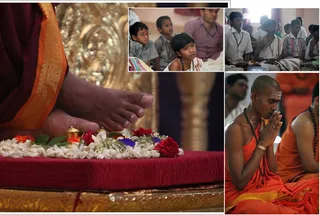
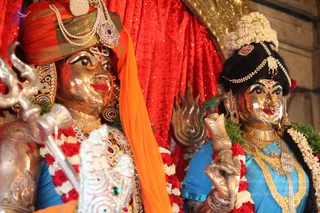
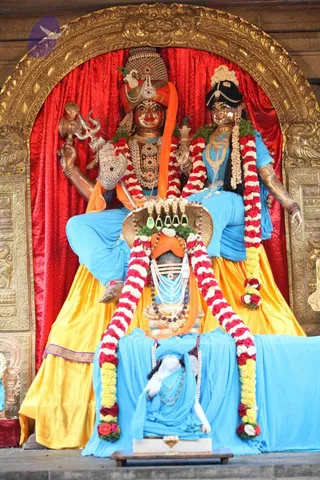
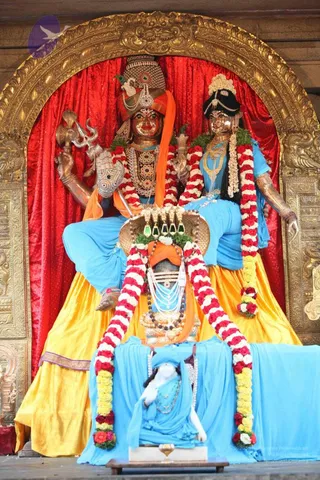
A photograph of a large ornate gold-framed shrine on a stage with a red draped backdrop, showing sculpted or painted murti figures rather than living people. A tall deity figure with a trident, wearing an orange cloth, a crown-like headdress and garlands of white and red flowers, sits with a companion figure in a yellow-and-blue dress and a shaped crown, both draped in marigold and rose garlands. A seated white figure in a blue cloth and a dark rudraksha-style garland appears in front, with a small white-marble base at the bottom. No living people are visible in the scene, and no a person candidate is present.Close photo of two life-size metal deity murti standing side by side, adorned for worship. The figure on the left wears an orange-saffron turban and a deep orange cloth draped over the shoulder, with red and white flower garlands, a large silver trident in hand, and ornate jewelled pendants. The figure on the right wears a blue garment, heavy gold necklaces, a floral crown with a red ornament, and holds a trident in raised hand, with white jasmine garlands. Behind them hangs a red and gold draped backdrop. No living people are visible.A man walks barefoot along a red carpet between silver metal handrails in an indoor hall. He wears a maroon dhoti and matching shawl with wide orange-gold borders, draped over one shoulder, and a dark rudraksha mala around his neck. He has a white vertical tilak and a red bindi on his forehead, and his hair is combed back. Glass display cases and a colourful pillar are visible behind him. a person is walking as a devotee-style attendee in ritual dress.A two-panel photo collage. The top panel shows a man with swept-back hair, a red bindi and a dark rudraksha mala, wearing a maroon and saffron-bordered shawl over his bare shoulders, standing with hands clasped and gazing upward beside a stone ledge in a temple courtyard; a framed picture of a deity hangs on a red wall behind him. The bottom panel shows a man with hair in a topknot, eyes closed and forehead resting against a large tree trunk, wearing the same maroon and orange shawl and rudraksha mala, with green foliage behind him. Both panels are graphic collage panels, and the two people are the only physical people visible.A photograph of a man standing at a stone parapet beside a carved stone pillar, looking upward with a faint smile. He has dark hair swept back and a red bindi on his forehead, and wears a maroon wrap with a bright orange-gold border over one shoulder. A long necklace of dark rudraksha beads hangs across his chest, and a thin cord is visible at his neck. The background is a blurred warm reddish-brown wall.Multi-panel collage of photographs from a KAILASA gathering. Large left panel shows bare feet of a seated figure in orange-red robes resting on a red cushion decorated with jasmine-like white flowers, red roses, blue petals and small brass oil lamps, with gold ornate woodwork behind. Upper-centre inset shows children and a man in a pink shirt seated attentively, with a girl in a pink dress in front. Upper-right inset shows young students in white shirts and dhotis seated on a floor. Lower-right inset shows two shaved-headed young men in saffron-orange robes with palms pressed together in prayer, one wearing a rudraksha mala. Collage panels are pictured activities; no physical people are counted from the collage itself beyond the scene's photographs.

Temple

21 photosSource gallery
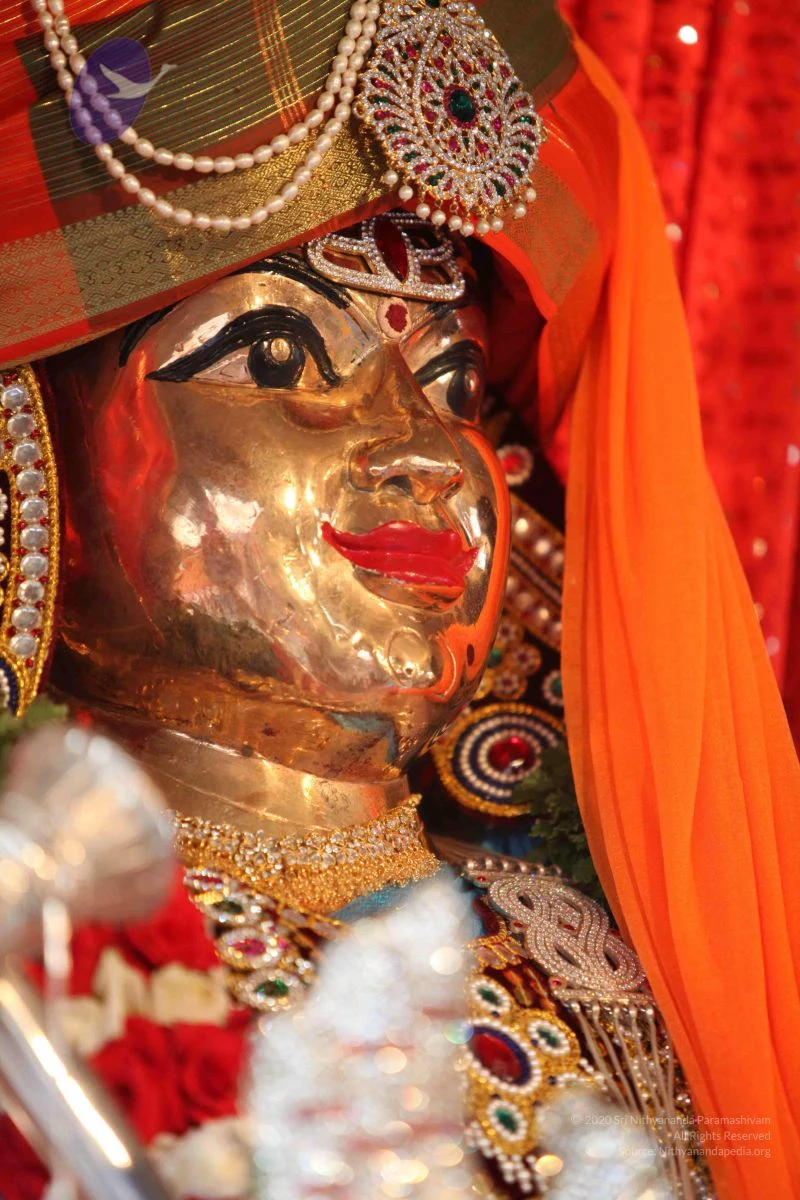
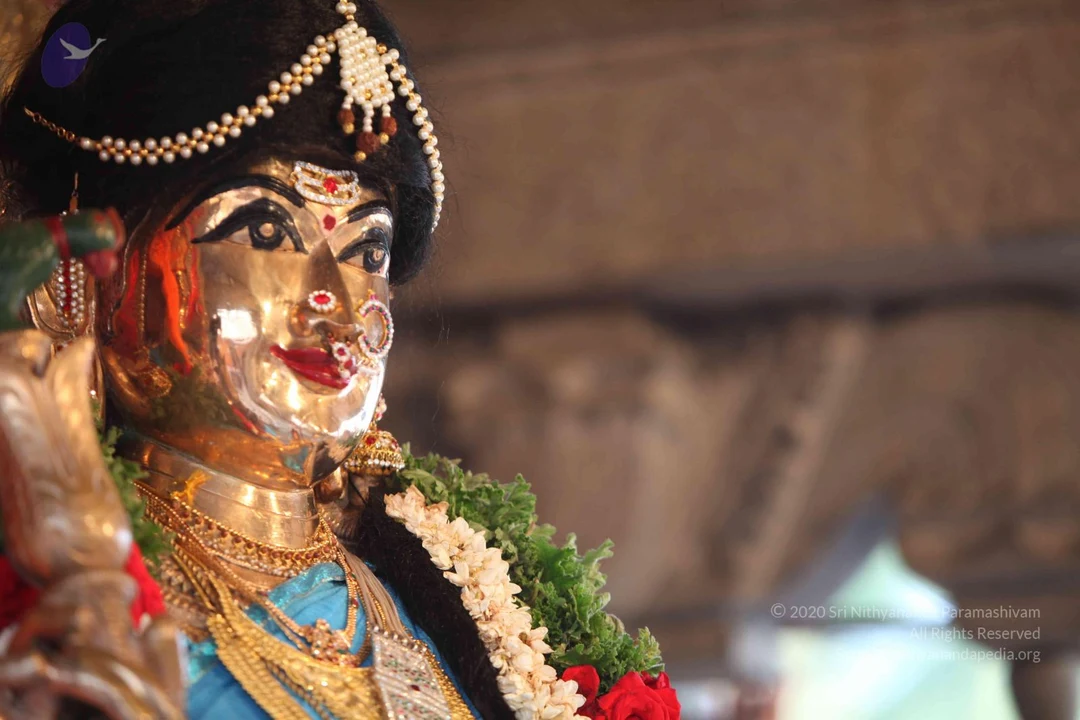
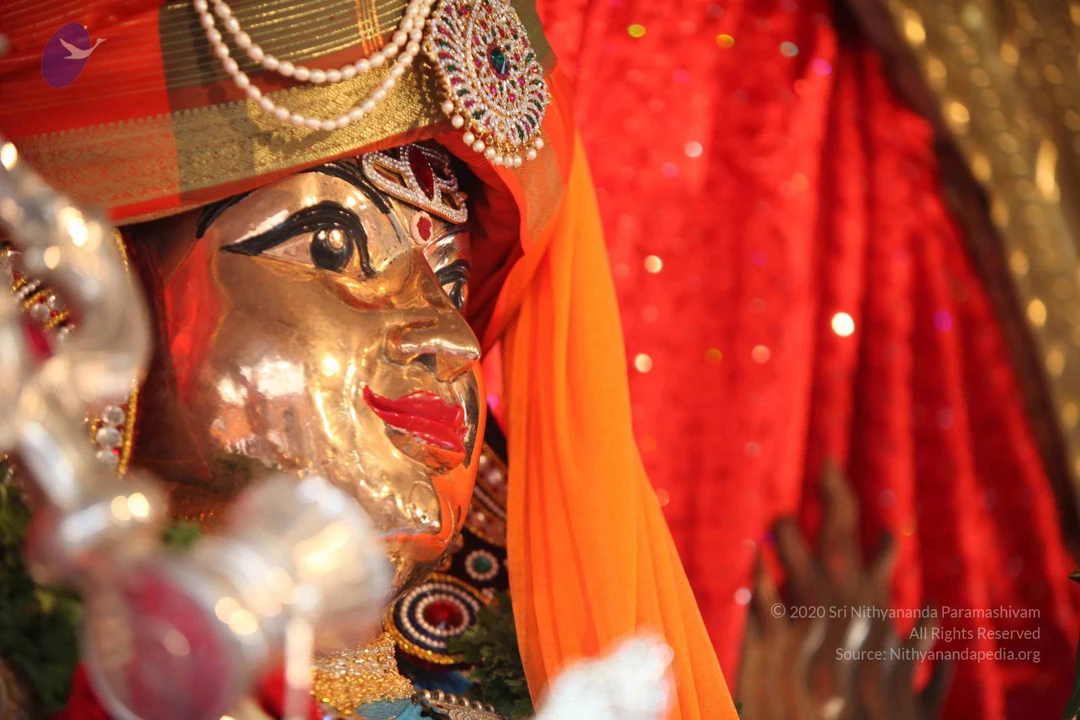
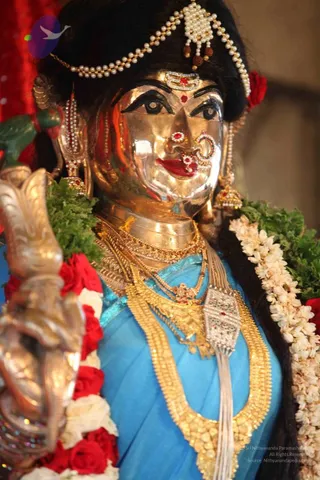
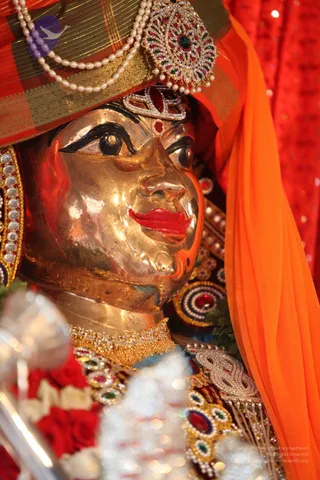
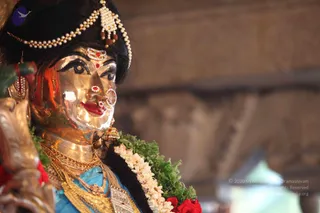
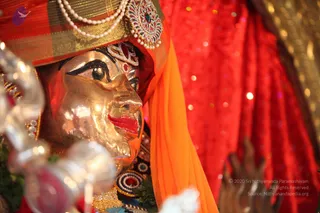
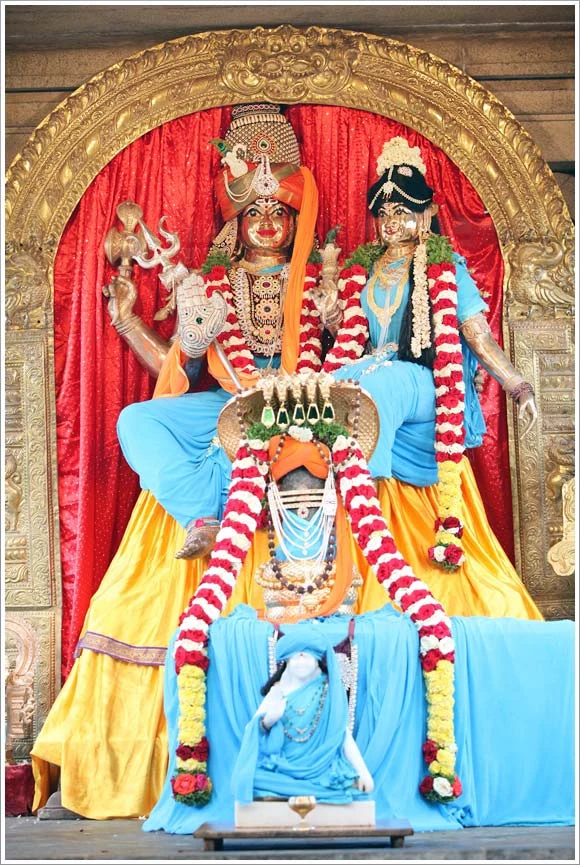
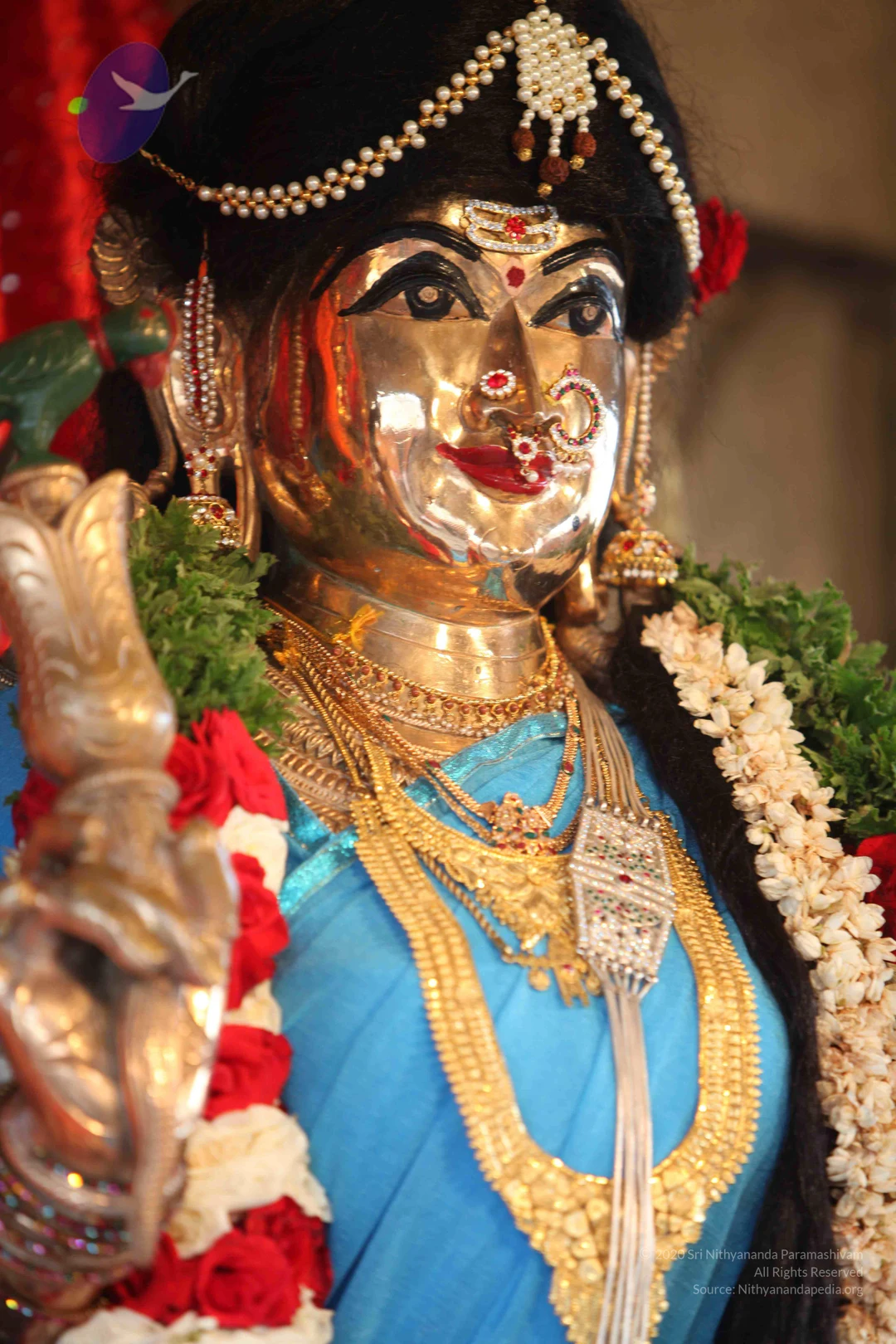
Close-up photograph of a gilded metal deity murti of a goddess with a glossy golden face, painted black eyebrows and eyes, and red lips. She wears a blue sari, layered gold necklaces, pearl and red-stone jewellery, a nose ring, pearl headpiece with rudraksha drops, and a long black hair braid. She is garlanded with white jasmine strands, red roses and green leaves, and holds a golden ceremonial staff on the left. No physical people are visible.Close-up photograph of a gilded metal deity murti with a polished golden face, black-outlined eyes, red lips and a red bindi. It wears an orange and red turban with a jeweled brooch, strands of pearls, and a red-and-orange shawl draped over the shoulder. Garlands of red roses and jeweled ornaments with red and green stones surround the face, with a blurred silver object in the foreground.Two golden deity murtis stand side by side in a decorated shrine, adorned with red and white rose garlands and jasmine. The figure on the left wears an orange and gold turban, pearl and jewelled ornaments, and a blue-and-silver garment, holding a silver trident. The figure on the right has long black hair with a jasmine crown, pearl headpiece, gold necklaces, a blue garment, and holds a golden trident and a small rod. Behind them hang red sequined drapes with an orange sash and a gold arch. No physical people are visible.Close-up photograph of a golden metal murti of a deity with a polished gold-toned face, painted dark eyes and red lips, a red bindi and nose ornament. The figure wears pearl-strung headdress, layered gold necklaces, a blue garment and a white jasmine garland with red flowers and green leaves. The background is a blurred stone wall. No physical people are visible.Close-up photograph of a gilded metal deity murti with a golden face, painted red lips and dark kohl-lined eyes, wearing a red and gold turban-style headdress decorated with jewelled ornaments and pearl strands. An orange sash drapes over the shoulder against a backdrop of red fabric with gold sequins. Blurred silver ritual objects and green foliage appear in the foreground. No physical people are visible; the figure is a statue.A photograph of a large golden-bronze deity murti of Shiva and Parvati seated together on a raised platform before a red draped curtain and an ornate gold arch. Shiva, on the left, wears an orange turban, jewelled collar and holds a trident. Parvati, on the right, wears a blue sari with a gold necklace and jasmine headpiece. Both are garlanded with red and white flower garlands. In front, a smaller white statue sits in blue cloth, and an oil lamp stands on a small wooden stand at the base. No living people are visible.

BG-Satsang
144 photosSource gallery
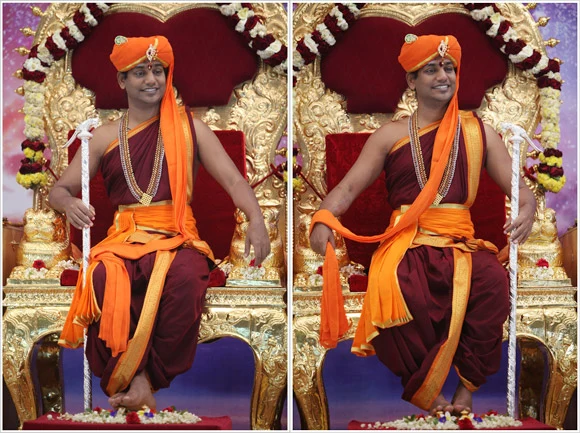
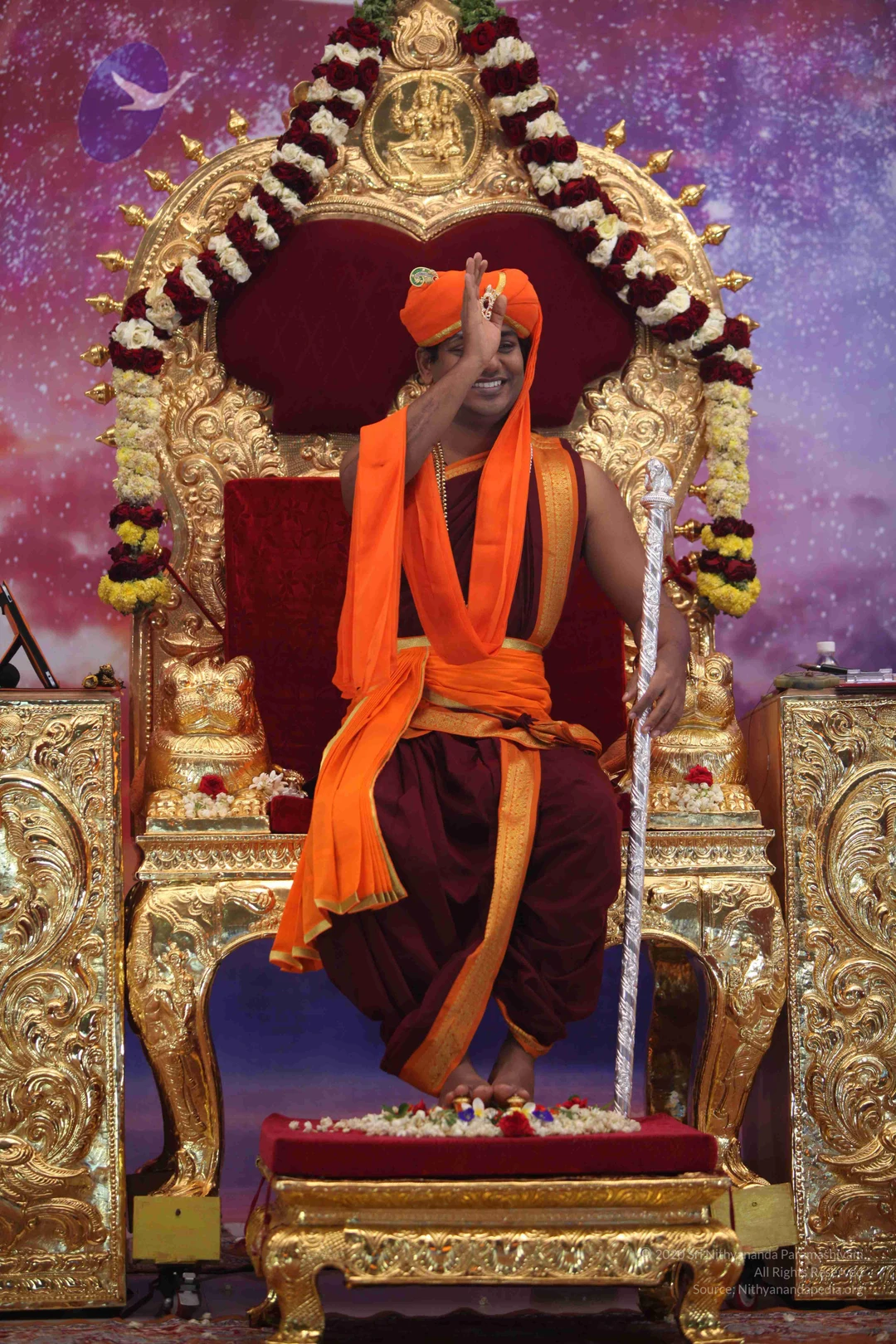
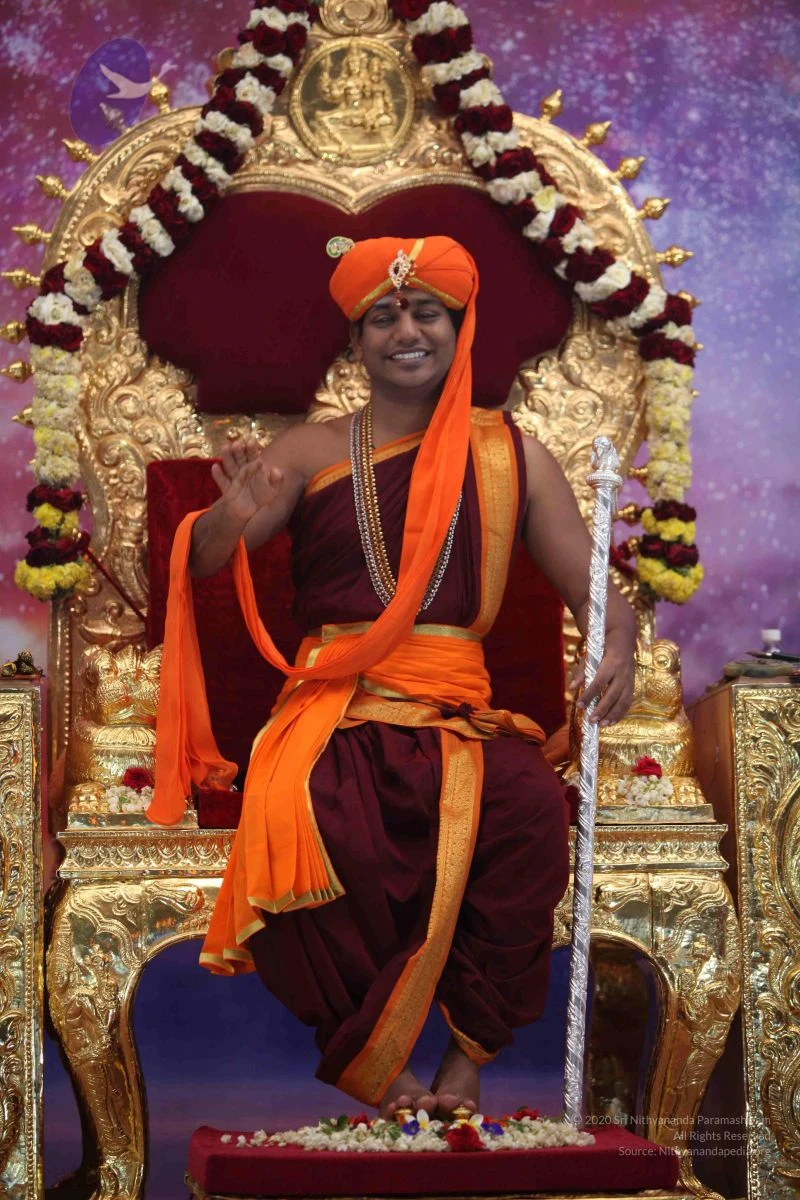
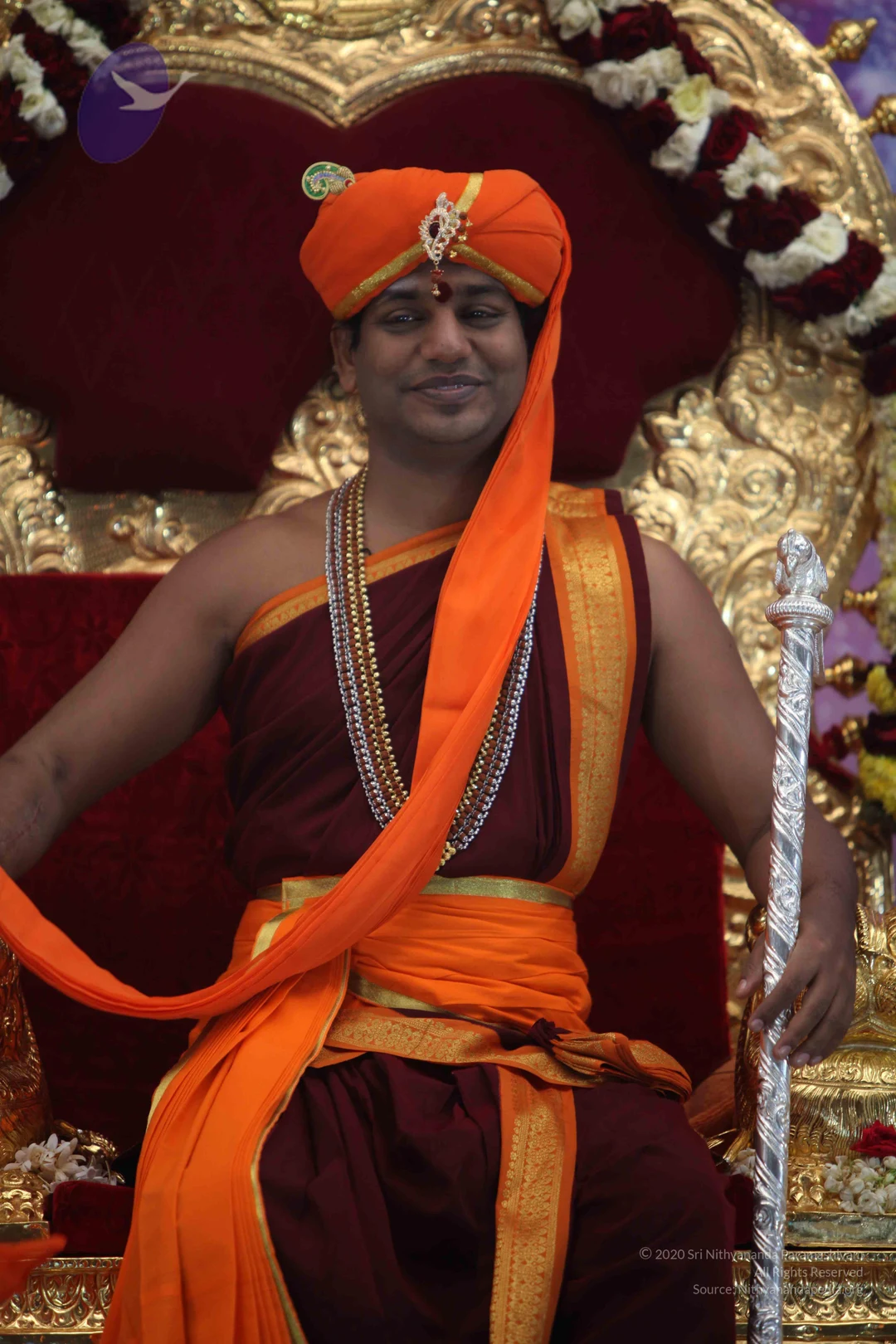
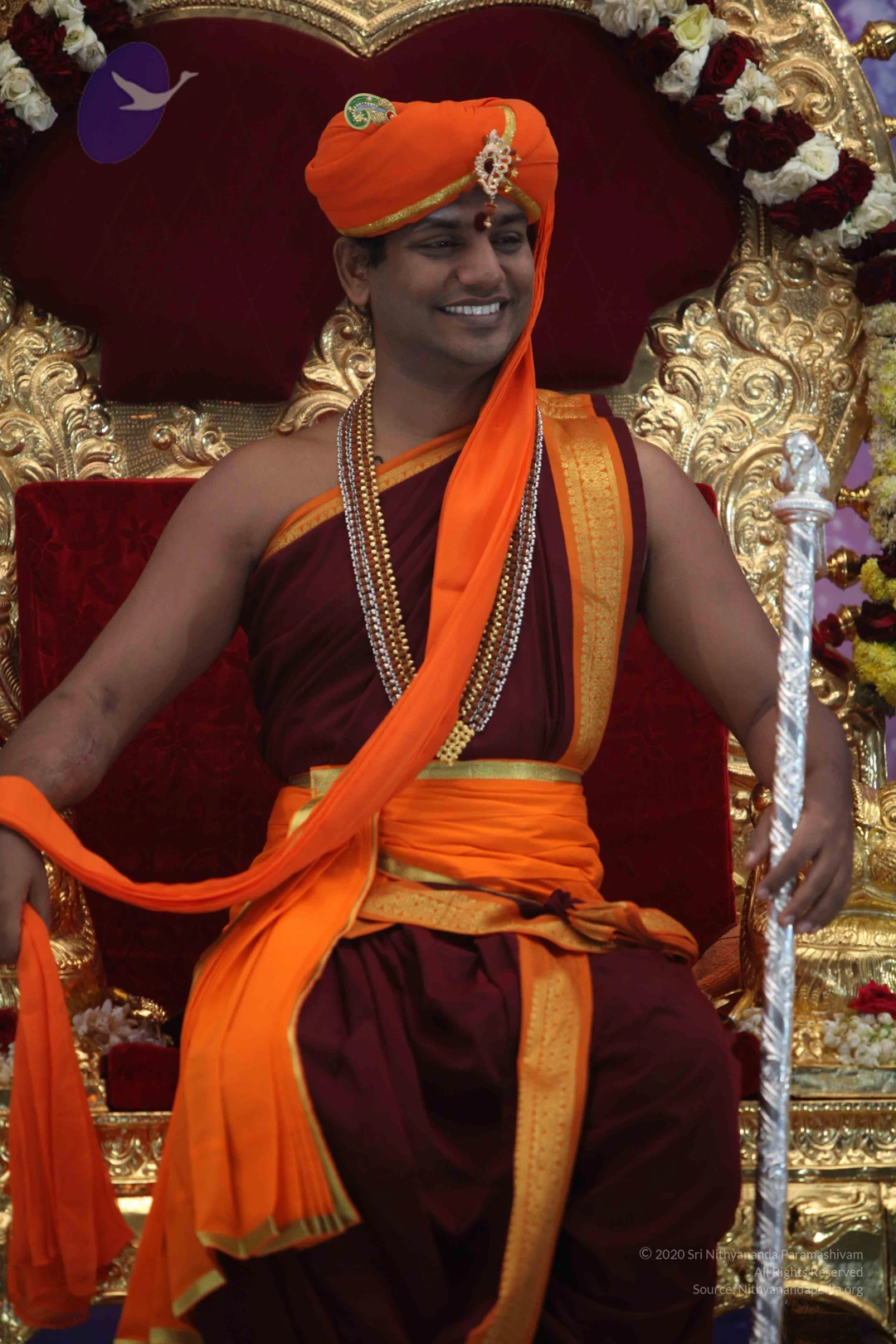
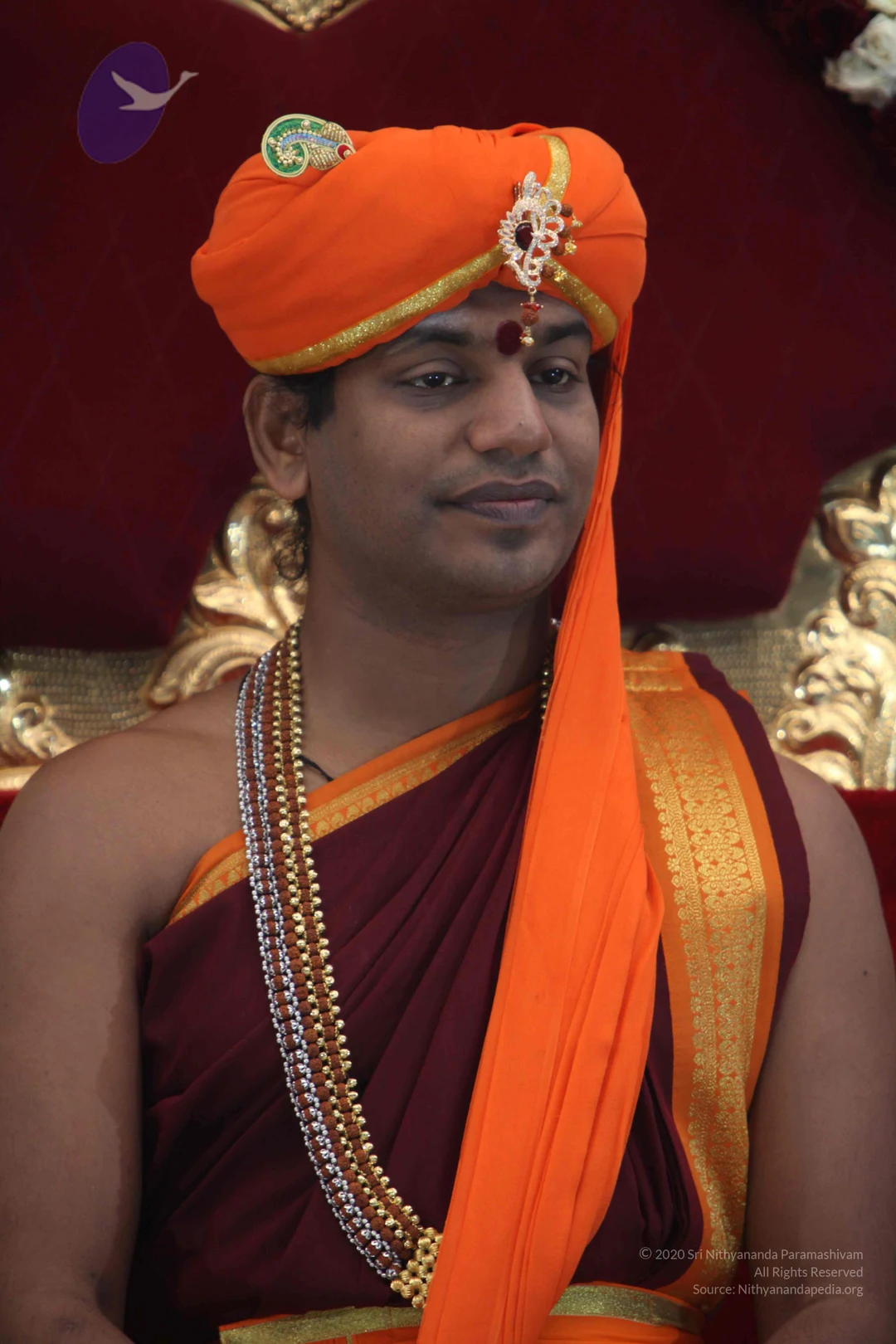
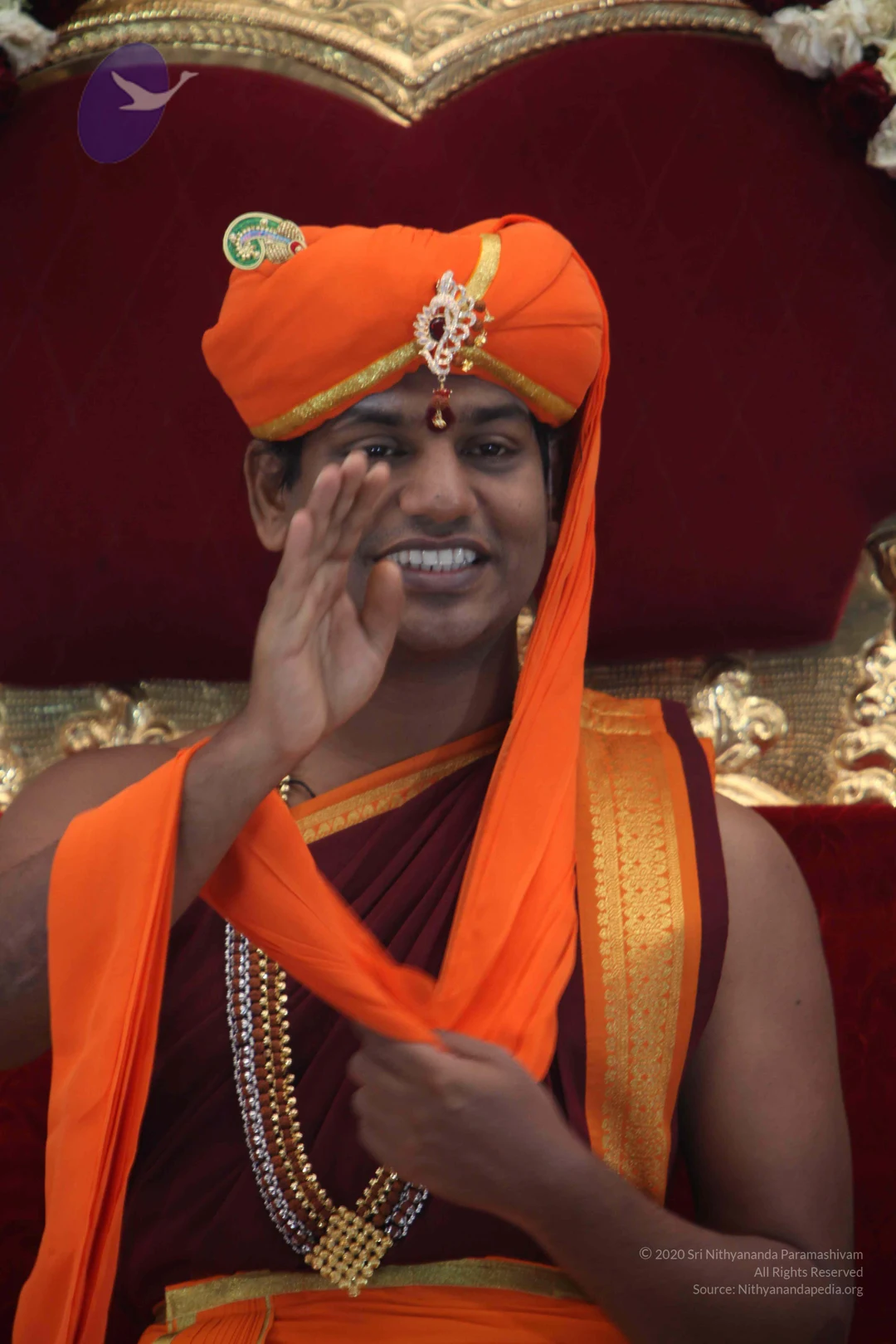
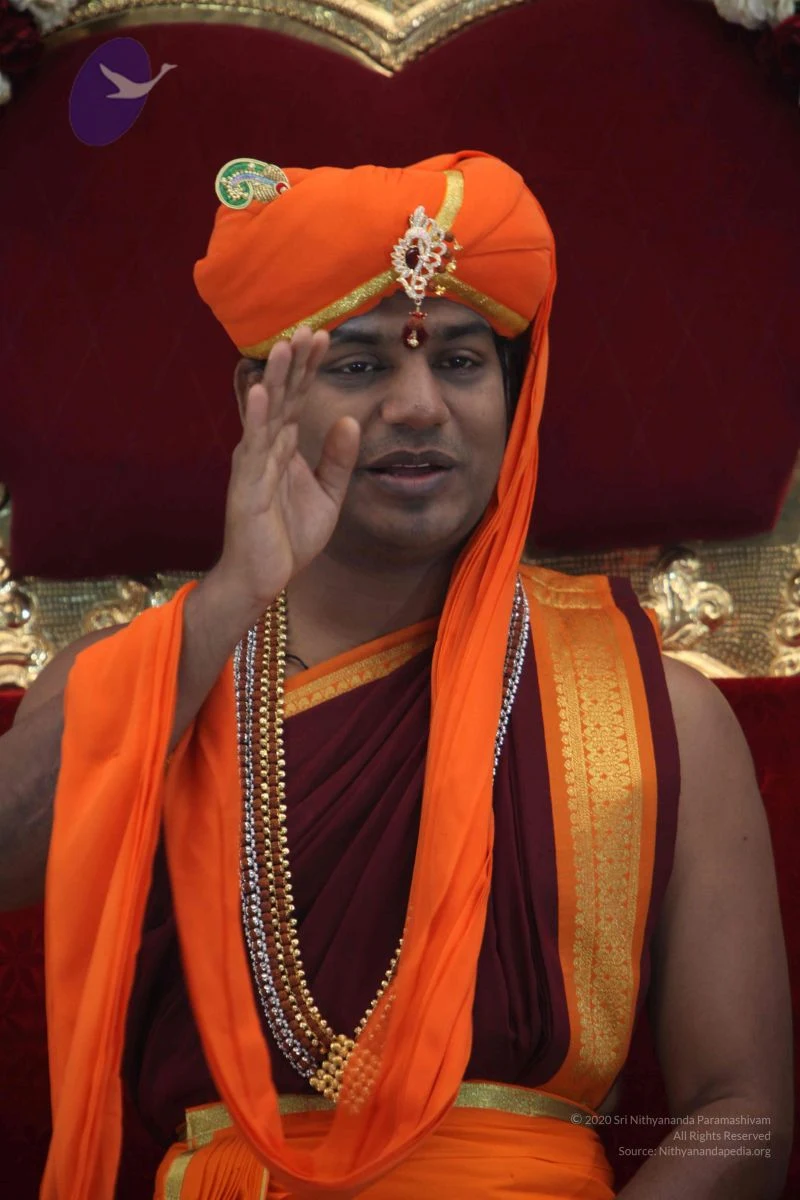
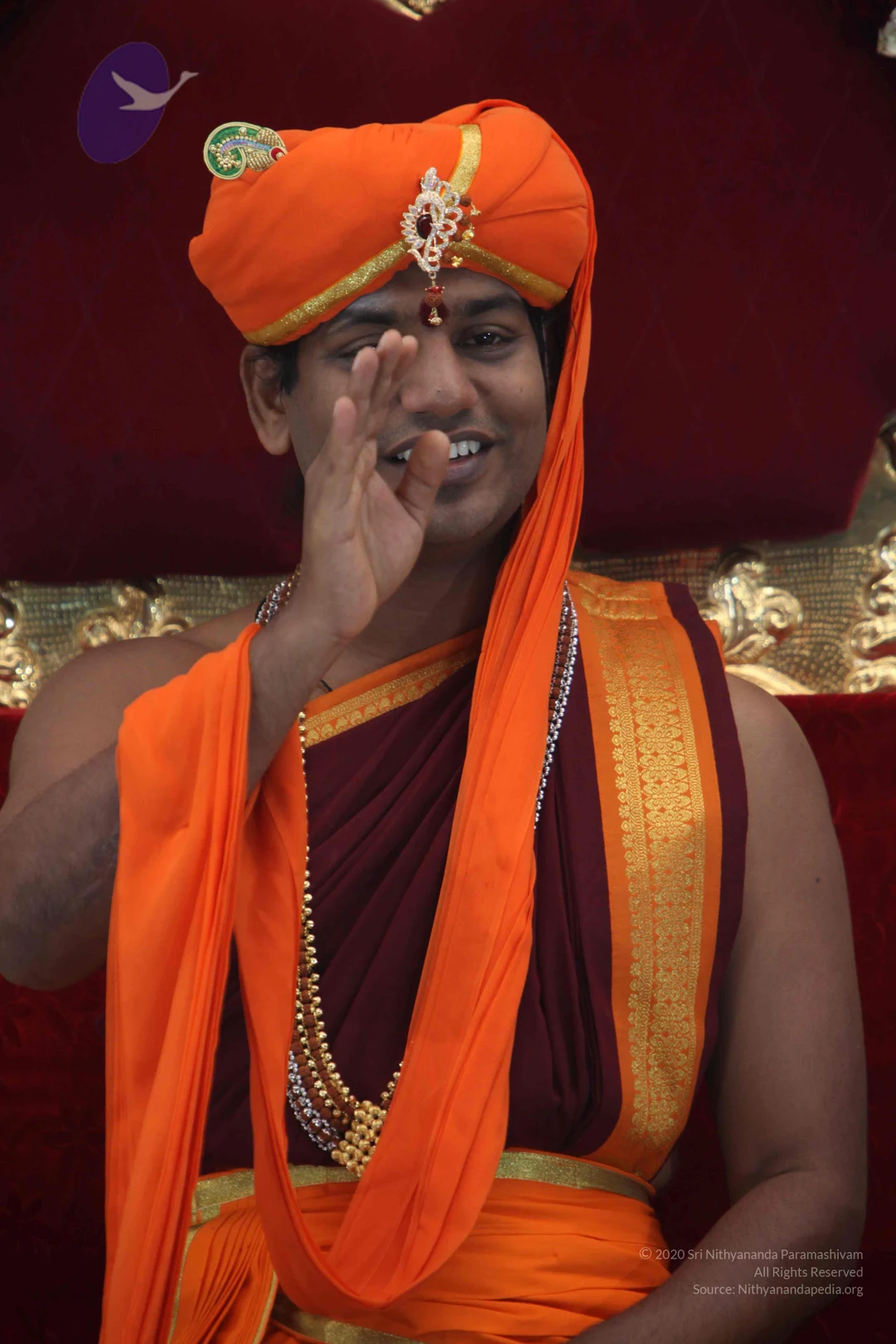
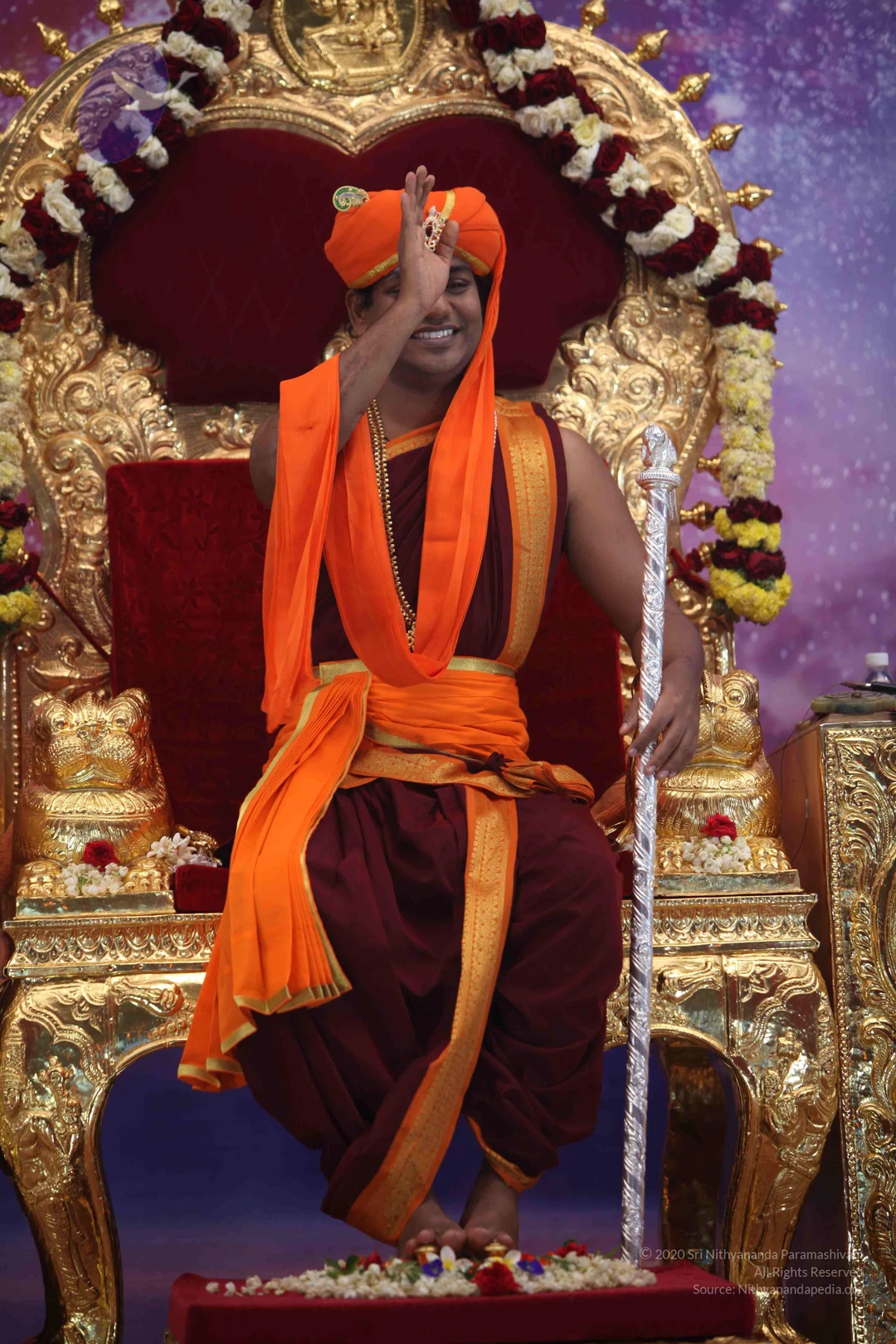
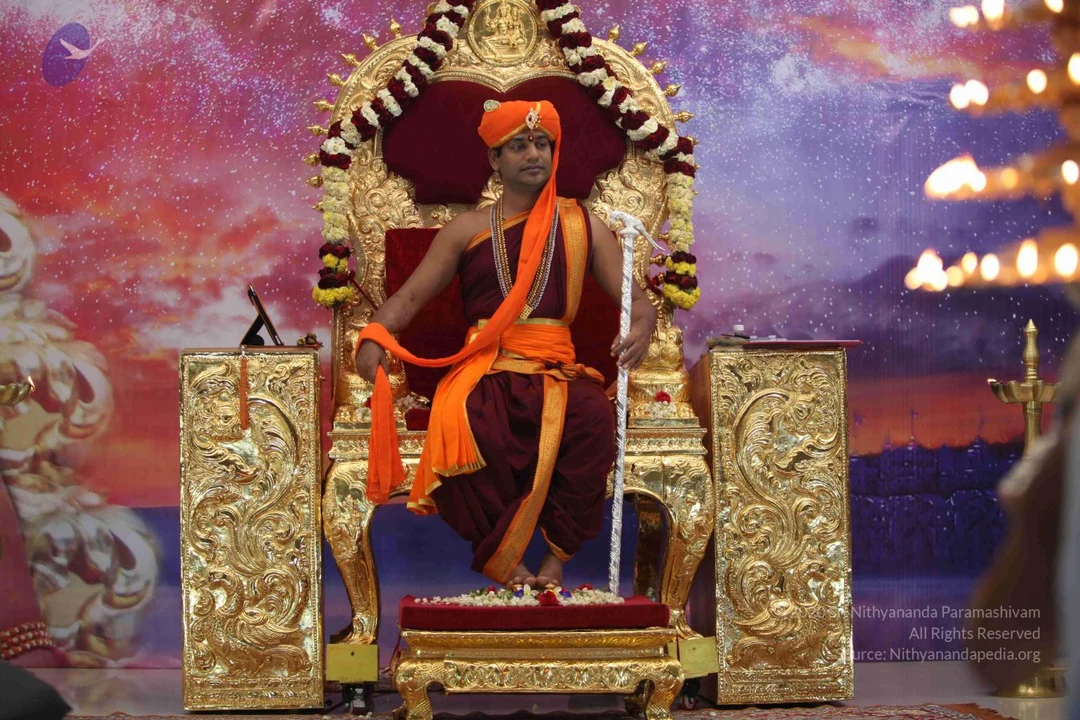
A man seated on an ornate gold throne with red velvet upholstery, decorated with red and white roses and yellow marigold garlands. He wears an orange turban with a green jewelled brooch, an orange shawl draped over his shoulders, a maroon sleeveless garment with gold border, orange waist sash, maroon dhoti-style trousers, and a rudraksha-style mala necklace. He raises one hand in blessing and holds a silver staff with a decorative top. Golden lion-head armrests flank him, and his bare feet rest on a red cushion covered with flower petals. A purple starry backdrop fills the background. a person with long-robed sannyasi attire, ceremonial gold necklace and saffron ornate clothing, seated in a throne position.A man in an orange turban and orange draped shawl over a maroon dhoti with a gold-bordered waistband sits on an ornate gold throne with red velvet seat and carved lion arms. He smiles, raising one hand to his forehead, and holds a silver staff in the other, with bare feet on a red cushioned footstool scattered with flower petals. Red and white rose garlands wreathe the throne's arch, with a gold deity relief above and a purple starry backdrop. Swamiji (probable): the man wears a turban, saffron shawl, rudraksha mala and a ceremonial gold-toned necklace, so the appearance-based label applies.A man seated on an ornate gilded throne with a red velvet back and a garland of red and white flowers arching above it. He wears an orange turban with a jewelled brooch, a maroon dhoti with orange-gold borders, an orange shawl draped over one shoulder, and a multi-strand silver and beaded necklace. He holds a tall silver staff in one hand and raises the other hand in a gesture, smiling. Bare feet rest on a red cushion scattered with flower petals. A purple cosmic backdrop and a gold deity relief appear behind him. a person seated in ceremonial dress.A seated man in an orange turban with a jeweled brooch and a red bindi, wearing a maroon garment with gold-bordered orange wrap and a long orange shawl draped over one shoulder, layered silver and gold beaded necklaces, and holding a silver staff with a carved finial. He sits on an ornate gold and red velvet throne decorated with garlands of red and white flowers.A smiling man seated on an ornate gold-and-red throne, wearing an orange turban with a jewelled brooch and a peacock-feather style emblem, a maroon dhoti-style garment with orange and gold-bordered shawl draped across the shoulder and waist, multiple strands of gold and silver beaded necklaces, and holding a tall silver staff topped with a carved finial. Garlands of red and white roses and yellow flowers frame the throne. Appearance-based candidate: a person, seated on a throne in ceremonial sannyasi-style orange and maroon attire with rudraksha-style mala necklaces. A purple logo appears in the upper left corner.A man seated on an ornate gold throne with a deep red cushioned back, decorated with a garland of red roses, white flowers and yellow blooms. He wears an orange turban with a small jewelled ornament, a red tilak mark on his forehead, an orange shawl draped over one shoulder and across the lap, a maroon garment with a gold-bordered orange sash, and layered gold and silver beaded necklaces. He holds a tall silver staff with a decorative top and smiles while looking to the side. A purple starry backdrop and gold lion-shaped armrest are visible.

Sep-23-jewel -pics

25 photosSource gallery
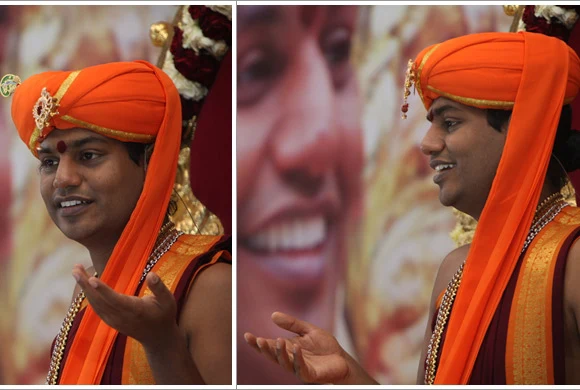
A man seated on an ornate gold-and-red throne, wearing an orange turban with a jewelled ornament and a red bindi, a maroon robe with an orange shawl draped over one shoulder and an orange sash at the waist. He wears layered gold and silver beaded necklaces and holds a silver staff with an animal-head finial in his right hand. Behind him hangs a garland of red roses, white flowers and yellow marigolds, with a purple backdrop at the right. Cues match a probable Swamiji: orange turban, rudraksha-style ceremonial necklaces, ornate robes and seated dais presence. Single physical person.A seated man in an ornate gold and red throne, wearing an orange turban with a small gold ornament and red dot on the forehead, a maroon garment with orange and gold border draped over the shoulders, an orange sash, and layered gold and silver beaded necklaces. He holds a silver staff and smiles. The throne is decorated with red and white roses and yellow flower garlands, and a gold lion-like figure appears at the base. Swamiji (probable): the appearance-based cues of orange turban, saffron clothing, and layered ceremonial necklaces match a candidate seated in a satsang setting.Swamiji (probable): a man seated before a red upholstered throne with gold carved armrests, hands pressed together in anjali namaste at chest level, smiling. He wears a saffron-orange turban with a jewelled brooch and a green-and-gold peacock ornament, a red tilak on the forehead, a maroon garment with orange and gold border, an orange shawl draped over one shoulder, and layered gold and silver beaded rudraksha-style malas. White flowers appear at the upper right.A seated man in an orange turban decorated with a green peacock-feather ornament and a jewelled brooch, with a red bindi on his forehead. He wears a maroon robe with gold-bordered orange drape and a long orange shawl falling over his shoulder, plus layered gold-beaded and rudraksha-style necklaces. He sits before an ornate gold-and-red throne, smiling calmly.A man seated on an ornate gold throne with a red velvet back and carved lion-head armrests, draped in a garland of red roses and white flowers. He wears an orange turban with a jewelled ornament, a deep maroon robe with orange border and sash, an orange shawl draped over one shoulder, and layered gold and beaded necklaces. He holds a tall silver staff in one hand and gestures with the other. Flower petals and garlands rest at the base of the throne against a purple sky backdrop. Swamiji (probable) seated on the throne with saffron-orange turban and shawl, rudraksha-style beaded mala and ceremonial gold necklace, giving a discourse.A seated man in an orange turban with a jewelled peacock-style ornament and red bindi, wearing a maroon robe with gold-bordered orange trim, layered gold and rudraksha malas, and an orange sash. He holds an ornate silver staff topped with a bird head, and sits against a red velvet and gold-carved throne. He is smiling and speaking.

Web-23Sept-2011

20 photosSource gallery
Two golden deity murtis stand side by side in a decorated shrine, adorned with red and white rose garlands and jasmine. The figure on the left wears an orange and gold turban, pearl and jewelled ornaments, and a blue-and-silver garment, holding a silver trident. The figure on the right has long black hair with a jasmine crown, pearl headpiece, gold necklaces, a blue garment, and holds a golden trident and a small rod. Behind them hang red sequined drapes with an orange sash and a gold arch. No physical people are visible.A photograph of a large gilded arch framing a red draped backdrop with two golden-toned deity murti seated together, one holding a trident and the other adorned with a crown of jewels and a white jasmine crown. Both wear blue and yellow garments, layered red-white-yellow flower garlands, and gold jewellery. Below them is a seated figure in blue robes and a saffron turban with garlands and a bead necklace, flanked by a small white figurine and a brass lamp on a low wooden stand. The setting suggests a temple shrine display with floral offerings.A man stands outdoors beside a stone ledge with hands folded at his chest, gazing upward. He wears a maroon wrap with a wide gold-bordered edge, a dark rudraksha mala draped across his chest, and a red tilak on his forehead. Behind him a red and pink wall, a cream panelled door and a framed deity picture are visible, with a brass vessel at the lower left.A photograph of a man leaning his head and forehead against the trunk of a large banyan tree outdoors, eyes closed, in a quiet meditative posture. He is bare-chested with a saffron-and-orange shawl with gold border draped over his left shoulder and a maroon wrap, and wears a long rudraksha mala around his neck. He has long dark hair tied in a bun and a white vibhuti line on his forehead. Both hands rest on the tree bark, with blurred green foliage behind him.A barefoot man with a topknot stands at right in a maroon dhoti with orange borders and a maroon shawl with orange edging, his bare upper body visible, hands pressed in namaskar with eyes closed, wearing a dark rudraksha mala. Before him, under a white arched shrine with a turquoise backdrop, a black stone deity murti with multiple arms is draped in orange cloth and garlanded with white and orange flowers. Red-painted stones surround the shrine base, with a small altar and lamp; leafy trees fill the background. The scene shows a devotee's padanamaskar at an outdoor shrine.A seated man in an ornate gold-and-red throne, dressed in maroon dhoti and blouse with orange and gold-bordered sash and orange shawl draped over one shoulder. He wears an orange turban with a gem brooch, multi-strand rudraksha-style beaded necklaces, and holds a silver staff with a carved head. The throne is decorated with red and white flower garlands, and flowers lie at his bare feet on a red cushion. A purple backdrop is behind him. Swamiji (probable): the orange turban, saffron-orange shawl and malas are visible cues of the person described in the page, seated in ceremonial satsang.

Temple

5 photosSource gallery
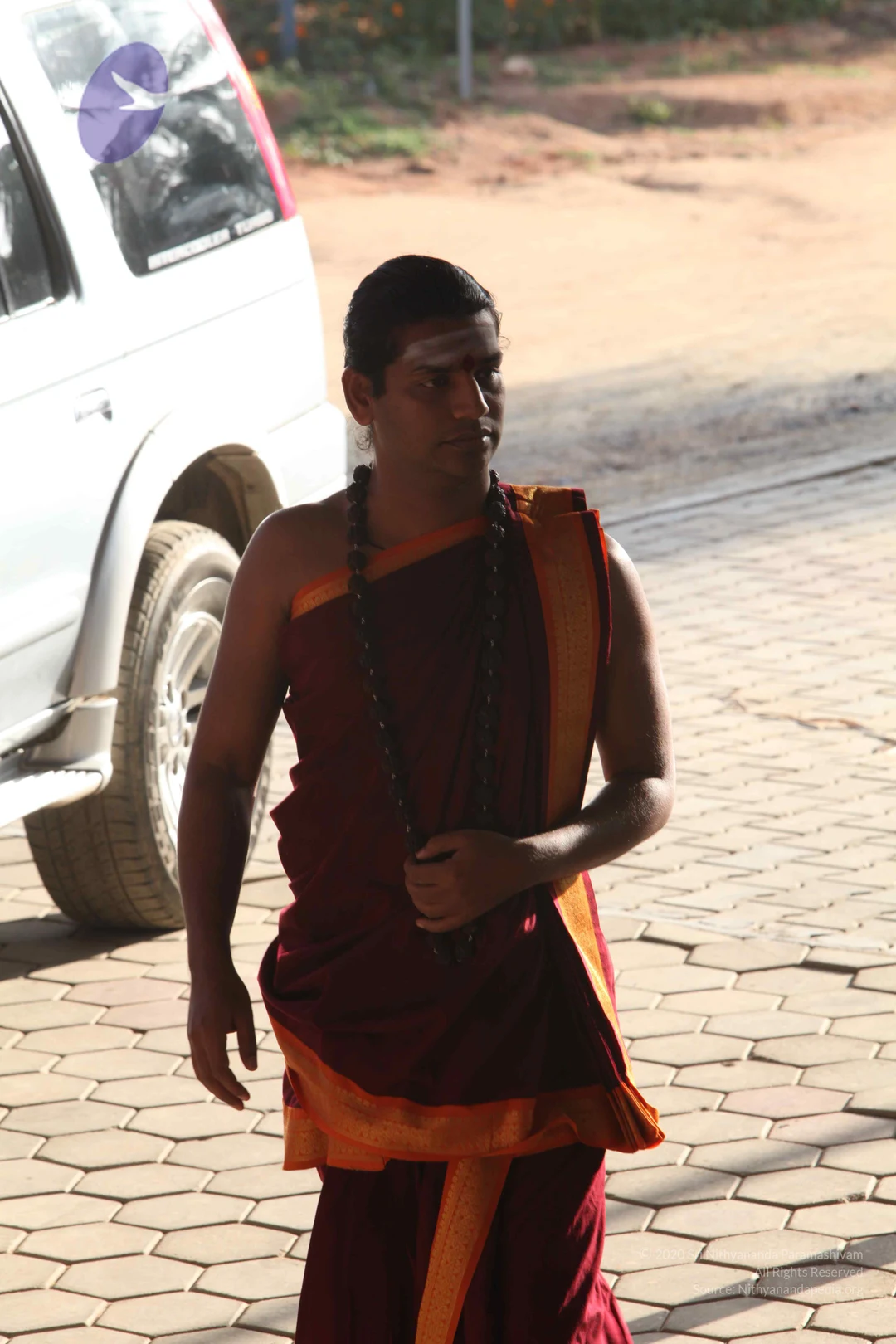
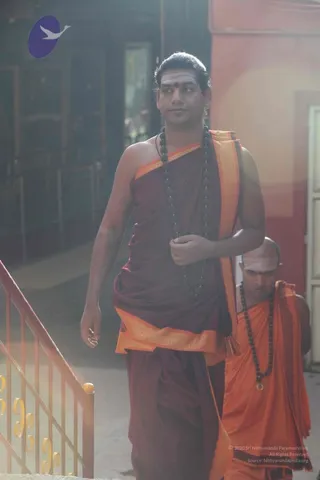
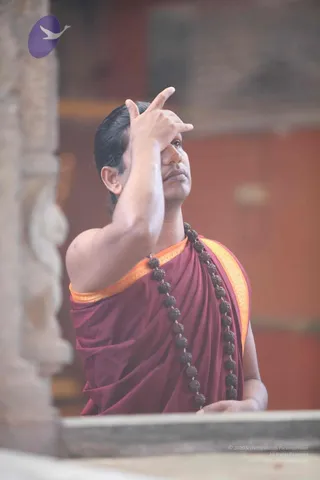
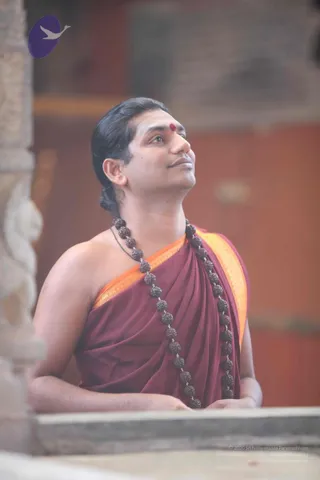
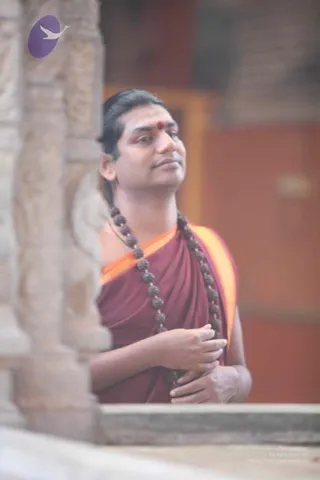
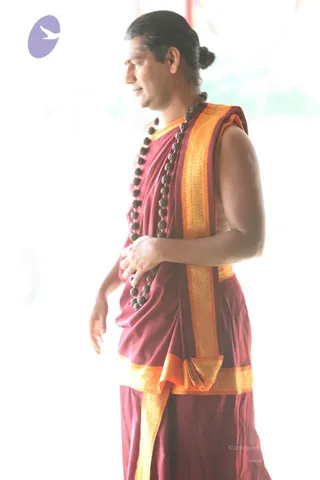
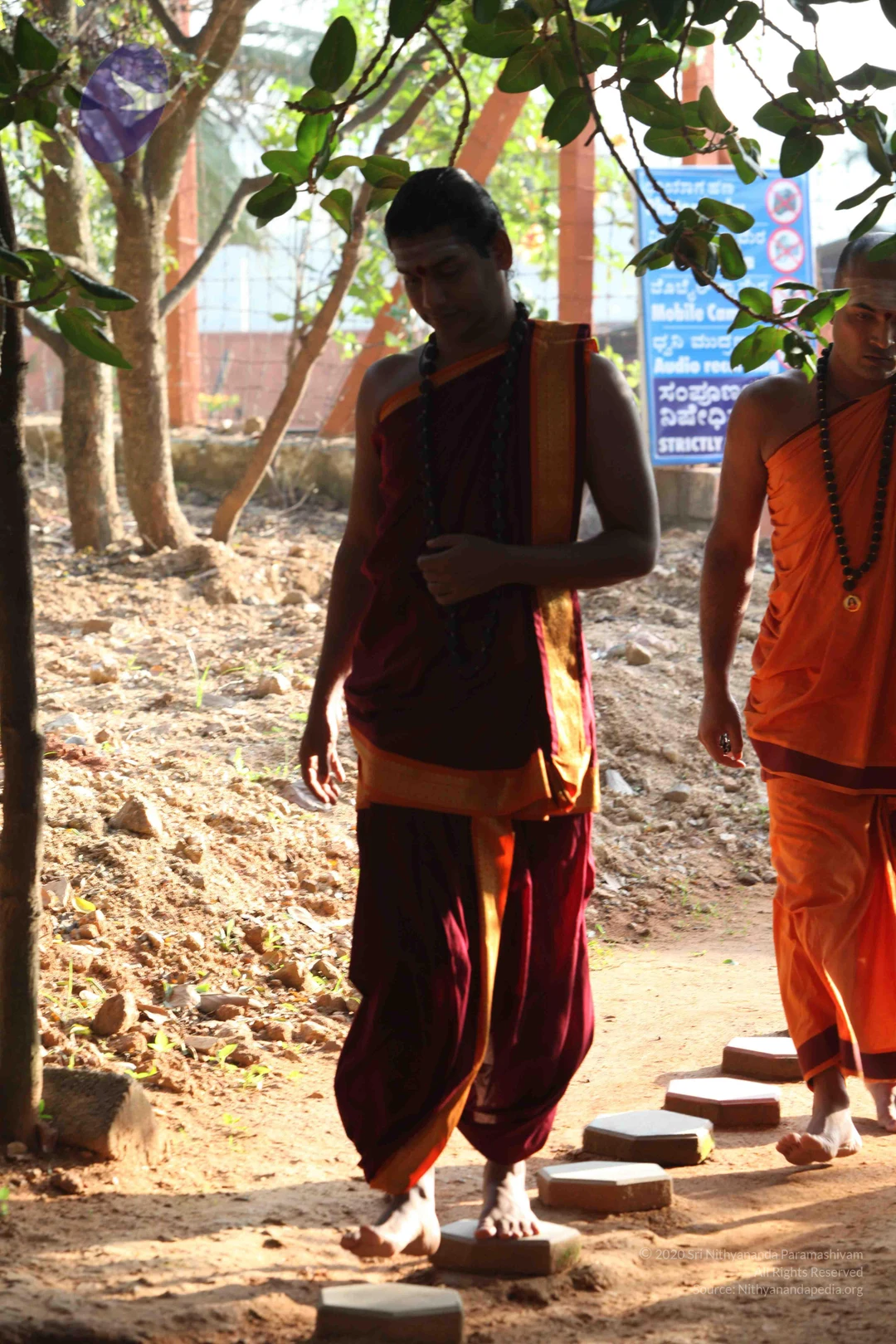
A man with swept-back dark hair and a red bindi walks outdoors in warm sunlight, wearing a maroon dhoti and a maroon shawl with gold-orange border over one shoulder, with a long dark rudraksha mala around his neck. Behind him, a bald man in orange robes and a dark rudraksha mala with white forehead markings walks along a path beside a gold-railed staircase. The setting shows a red wall and a doorway. Swamiji (probable): the lead figure has long swept-back hair, ornate maroon-and-gold clothing and a rudraksha mala, consistent with the page's reference to Swamiji.A man in a maroon robe with a wide orange border stands beside a stone pillar, raising his right hand to his forehead with the index finger pointed upward in a contemplative gesture while gazing upward. He wears a long rudraksha mala of dark beads across his chest and has his hair swept back. The background is a blurred reddish wall and stone architecture. The man is bare-shouldered on the left side, with the robe draped over his left arm. The photo is taken from a close, slightly low angle.A man in a maroon wrap with an orange-gold border sits behind a stone ledge, gazing upward with a serene expression. He wears a long rudraksha mala draped across his chest, a small red bindi on his forehead, and his dark hair is swept back. Carved stone pillar edges frame the left side, with a warm reddish wall behind him. a person in appearance, with rudraksha mala and saffron-bordered maroon clothing, shown in a satsang or discourse setting.A man stands beside a carved stone pillar at an open temple-like space, wearing a maroon wrap with an orange-gold border, a rudraksha mala draped across his chest, and a red bindi on his forehead. His hair is swept back, and his hands rest together at his waist. A purple bird logo sits in the upper left corner. The figure is not clearly identifiable as a person from appearance alone, so the role is described as a man in a maroon and orange robe with rudraksha beads.A man stands in profile facing left in a bright, overexposed setting, wearing a maroon dhoti and shawl edged with broad gold-orange border. He wears a long dark rudraksha mala draped across his chest and a red tilak on his forehead. His hair is swept back into a bun. His left hand rests at his waist and his right arm hangs bare.

BG-Satsang
4 photosSource gallery
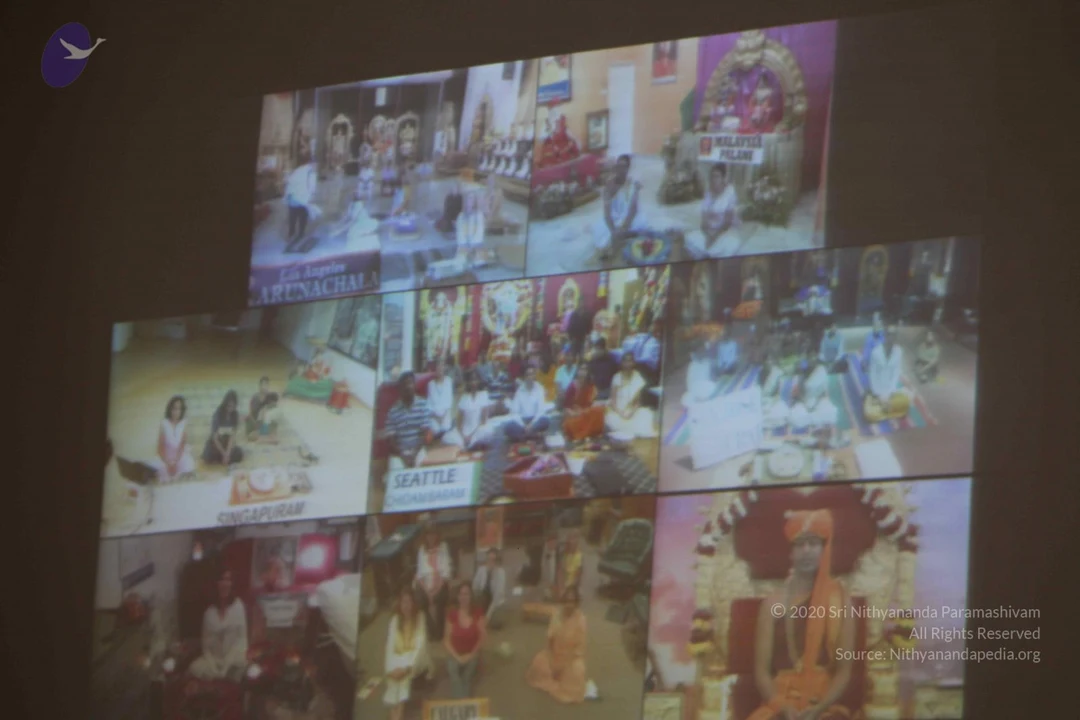
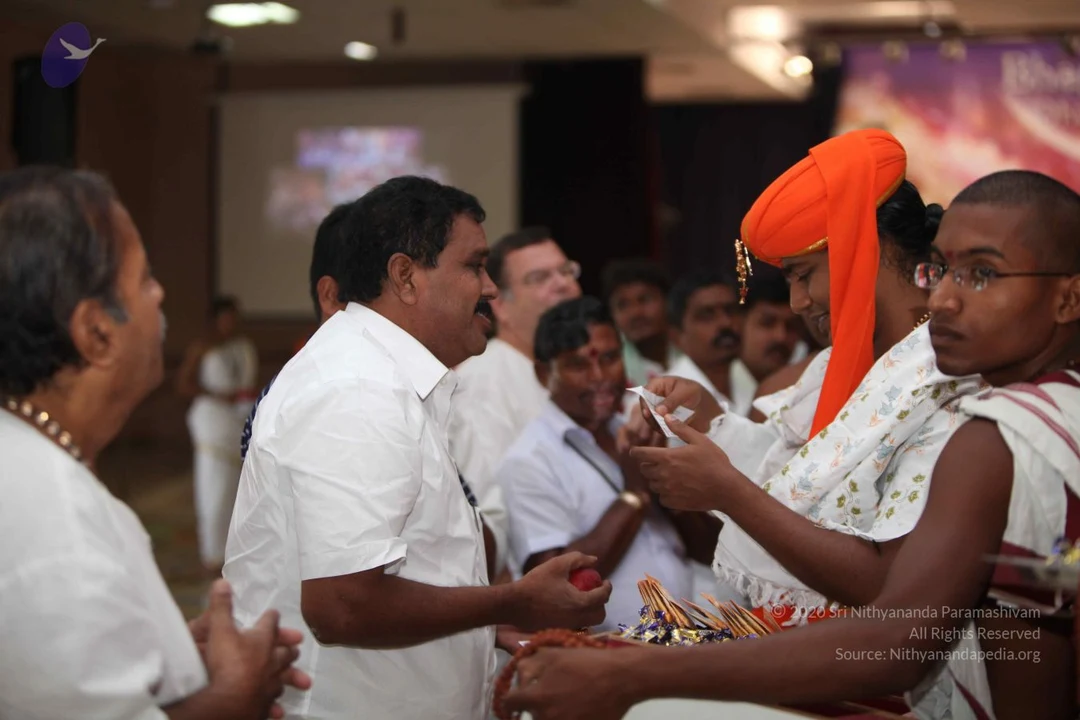
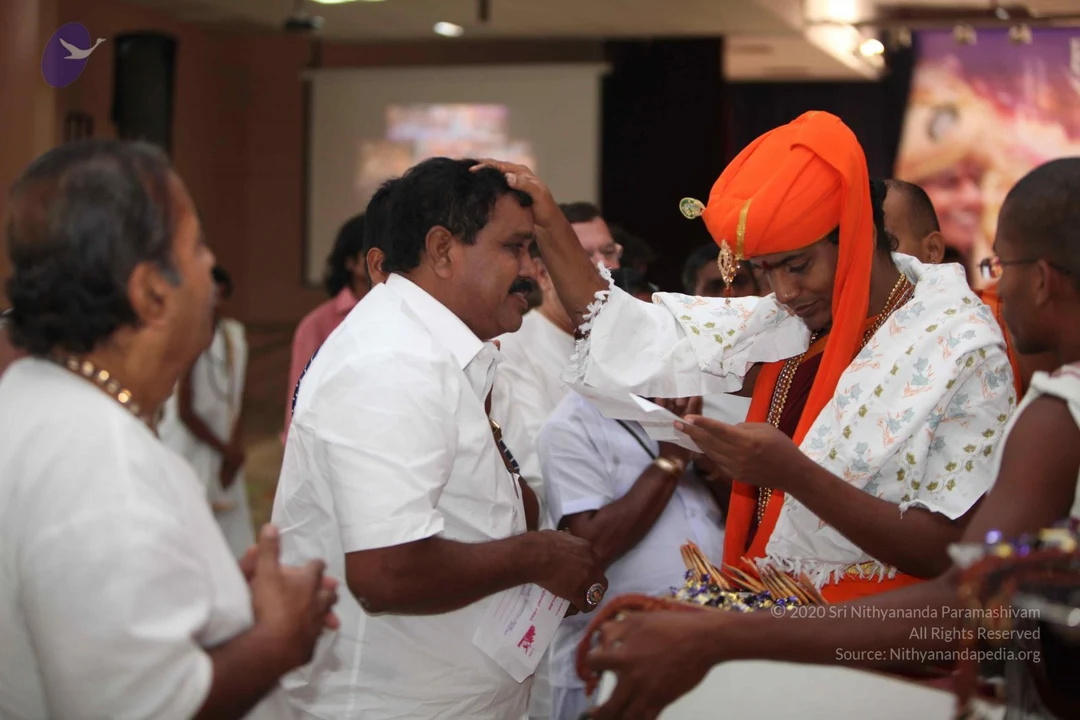
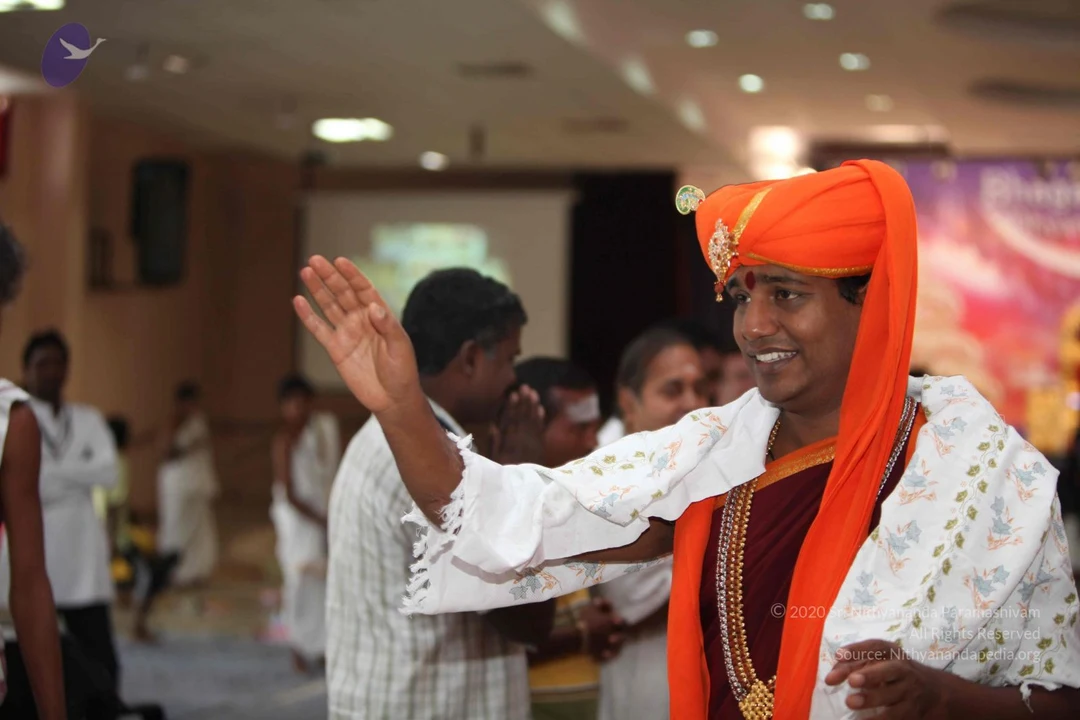
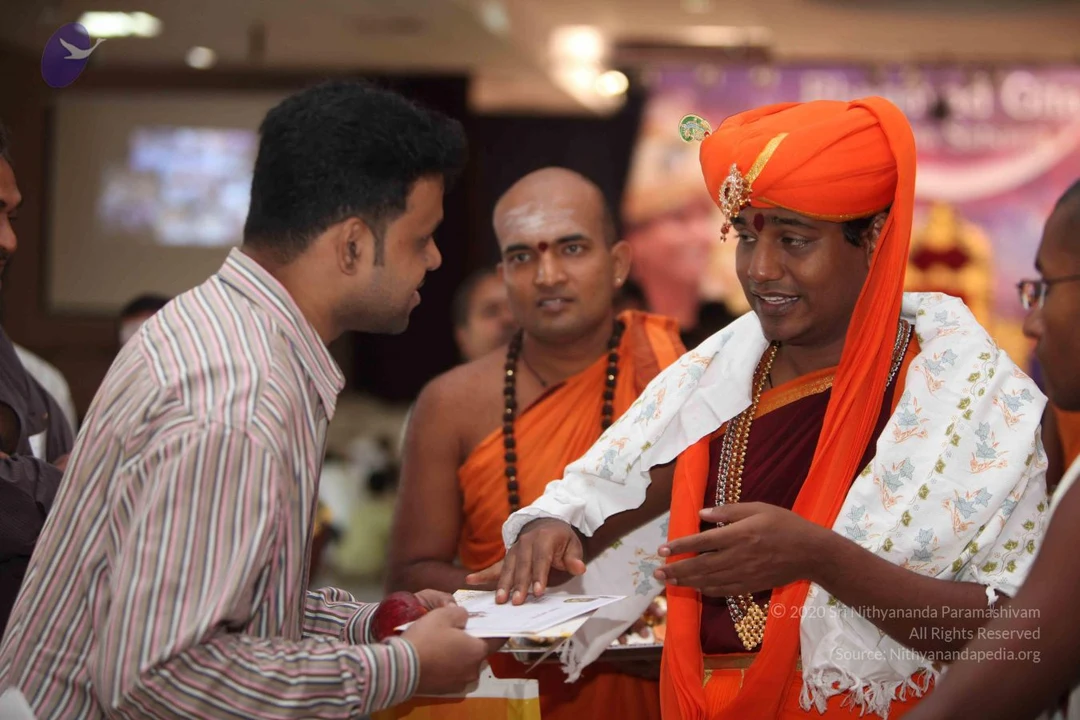
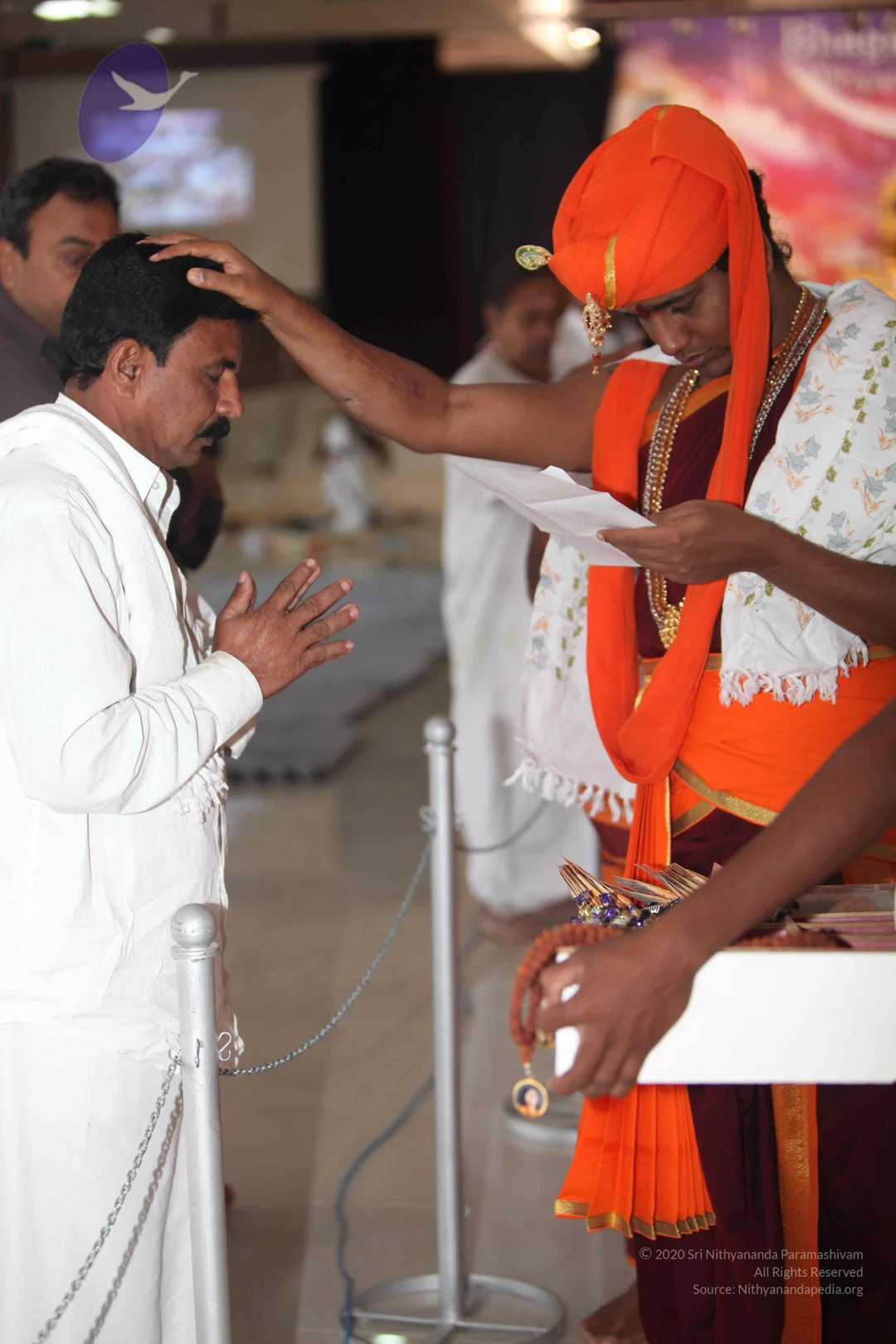
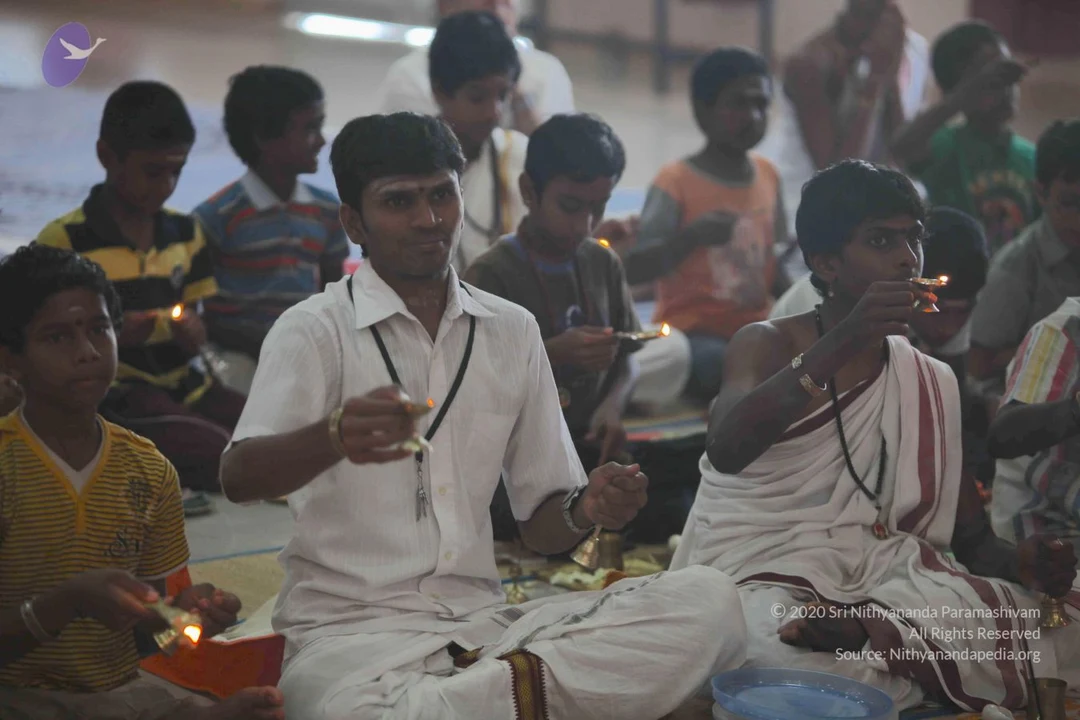
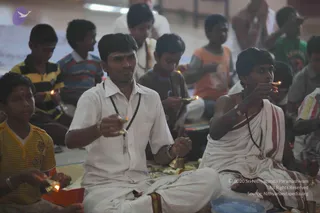
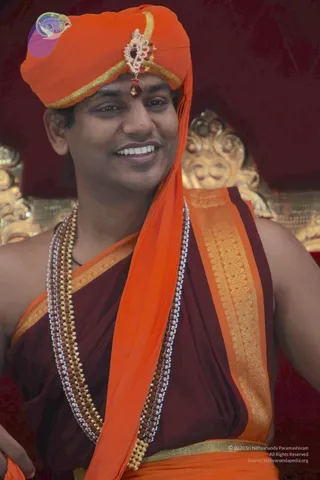
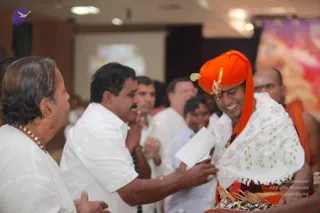
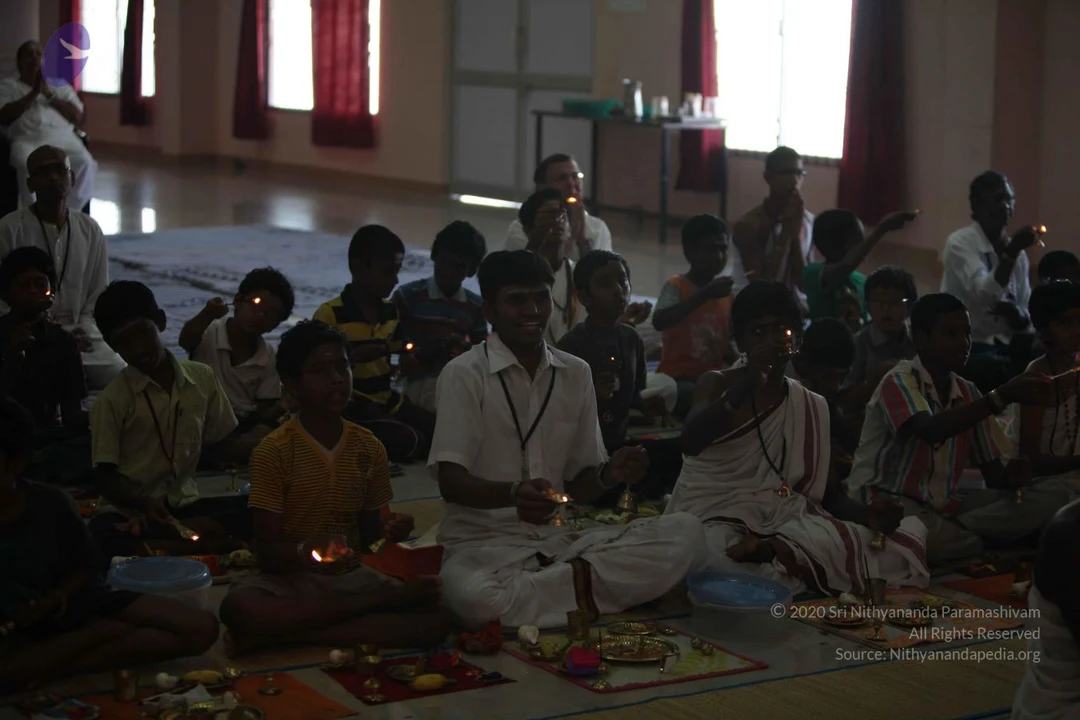
A seated group of young boys and young men on a plain floor during an evening ritual, many holding small oil lamps with lit flames. In the foreground a man in a white shirt and white dhoti, with a dark lanyard-style cord around his neck, holds a lit lamp and a small brass bell. Beside him a young man in white dhoti and shawl with a red-bordered edge, wearing a dark cord necklace, lifts a lamp to his face. Other boys in striped and orange shirts sit behind, some holding lamps, and a brass vessel rests on the floor. The people visible number about ten.Close photo of a smiling man in an orange turban decorated with a jewelled brooch and a red bindi-style mark at the forehead. He wears a maroon robe with a wide gold-bordered orange shawl draped over the shoulder, and several strands of rudraksha and silver-gold beaded malas. Behind him is ornate gold carved furniture against a deep red backdrop. Appearance-based probable Swamiji candidate: orange turban, rudraksha malas and ornate ceremonial jewellery are visible; the page indicates Swamiji at this event. One physical person is present.A man seated on an ornate gilded throne with red velvet cushions and garland-draped carvings, wearing an orange turban with a small gem brooch and a red tilak on the forehead, a loose orange shawl over a maroon robe with gold-bordered orange sash, layered beaded necklaces, and a silver-handled staff leaning beside him. a person: long-haired presence in saffron-and-maroon ceremonial attire with multiple malas, seated on a throne, smiling, with marigold and rose garlands and flowers at his feet. A photograph taken on a throne stage.A man in white shirt and white dhoti leans forward to offer a white envelope or card to a smiling man in an orange saffron turban with a gold ornament at the front, draped in a white shawl with small floral print and an orange garment underneath. Gold necklaces are visible. Other men in white and light clothing stand behind them in an indoor hall, with a projection screen and a colourful banner at the right. A tray with incense sticks and small decorative items sits at the lower right.

Web-23-Sept-2011

3 photosSource gallery
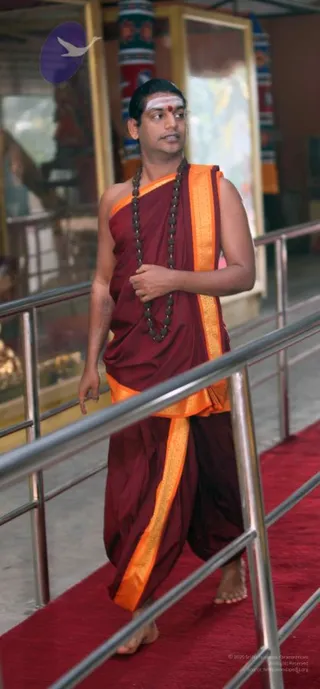
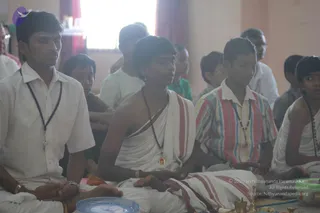
A man walks barefoot along a red carpet beside steel railings inside a temple-like hall. He wears a maroon dhoti and a maroon shawl with wide gold-orange borders, and a long rudraksha mala hangs to his waist. He has a white tripundra with a red bindu on his forehead and his hair is swept back. Behind him are a painted red and green pillar and glass display cases. a person by his garment and rudraksha cues, walking in the hall.A man in a maroon wrap with an orange-gold border sits behind a stone ledge, gazing upward with a serene expression. He wears a long rudraksha mala draped across his chest, a small red bindi on his forehead, and his dark hair is swept back. Carved stone pillar edges frame the left side, with a warm reddish wall behind him. a person in appearance, with rudraksha mala and saffron-bordered maroon clothing, shown in a satsang or discourse setting.A seated group of young men and boys sits cross-legged on a floor during a satsang-style session in a plain room with pale walls and a window. Several people in front wear white dhotis and white shirts with dark rudraksha-style beaded malas; one boy in the centre has a bare upper body draped in a white dhoti with red-striped border, eyes closed. Another boy on the right wears a colourful striped shirt with a pendant. Brass lamps and a metal plate with offerings sit on the floor in front. Others sit behind, partly visible. No person in the image is shown with distinctive a person cues, so no identification is made.