Skip to content
Thursday

22 September 2011

Power of Initiation

Dated photos
207
Source pages
1
Media
3
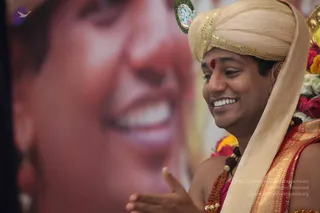
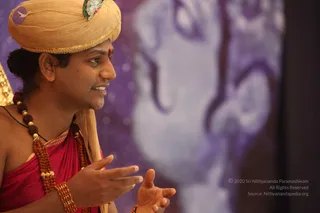
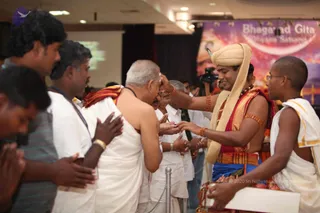
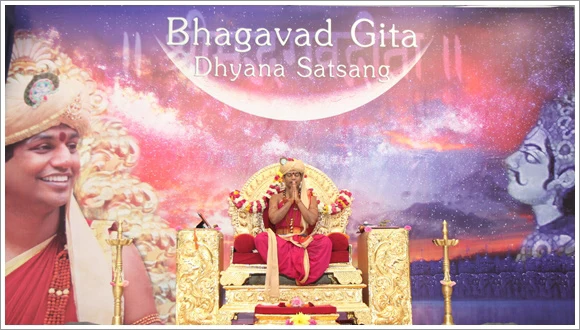
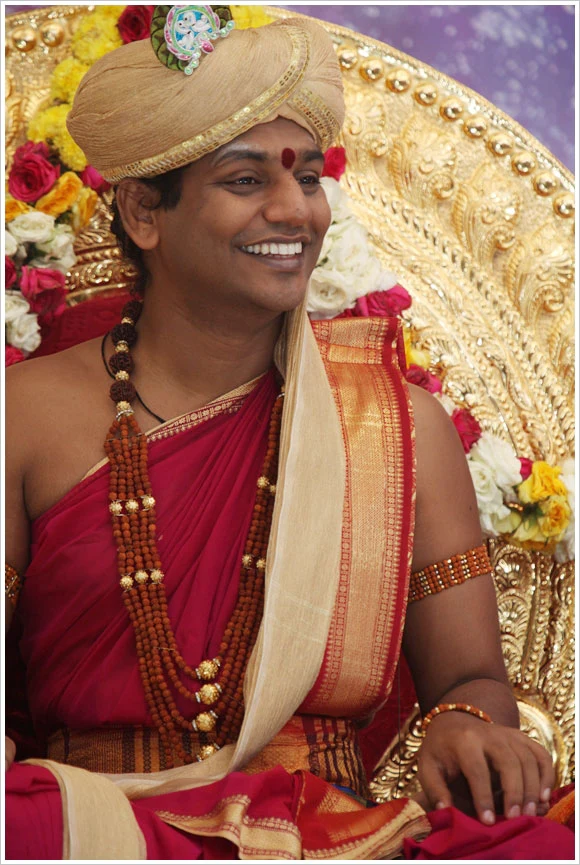
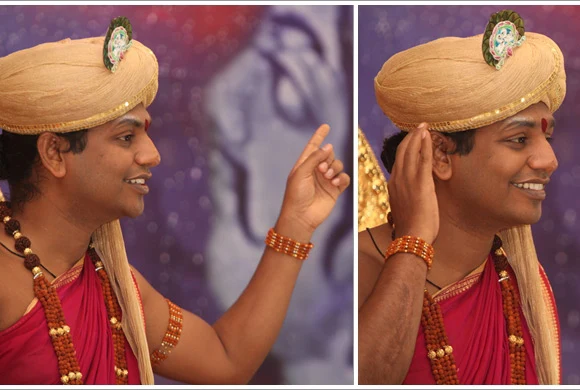
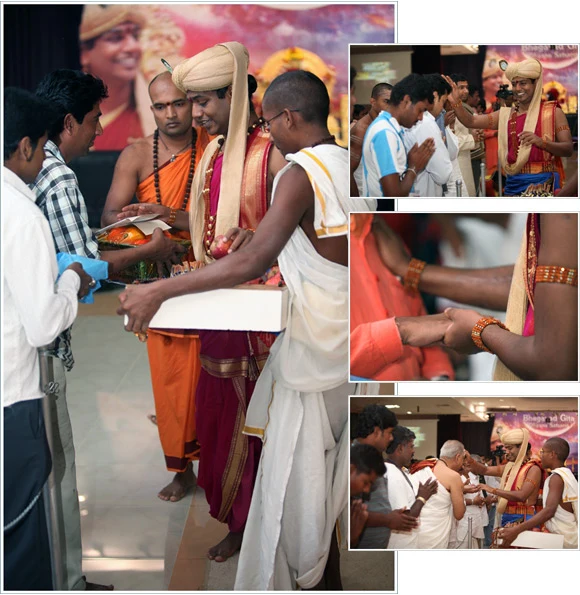
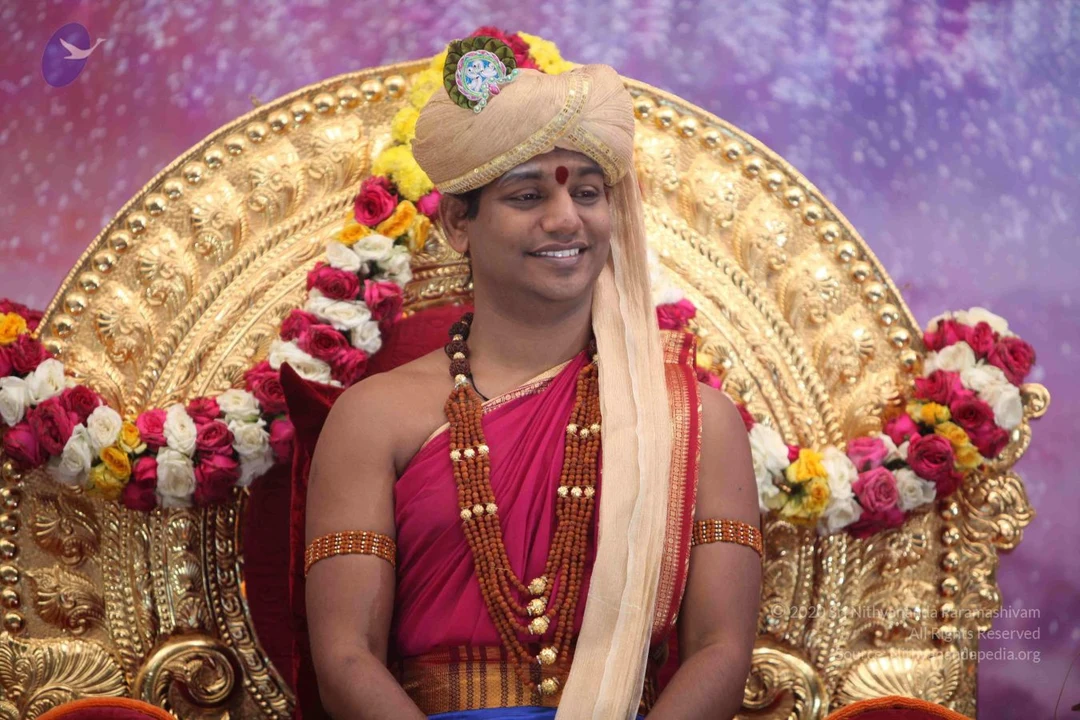
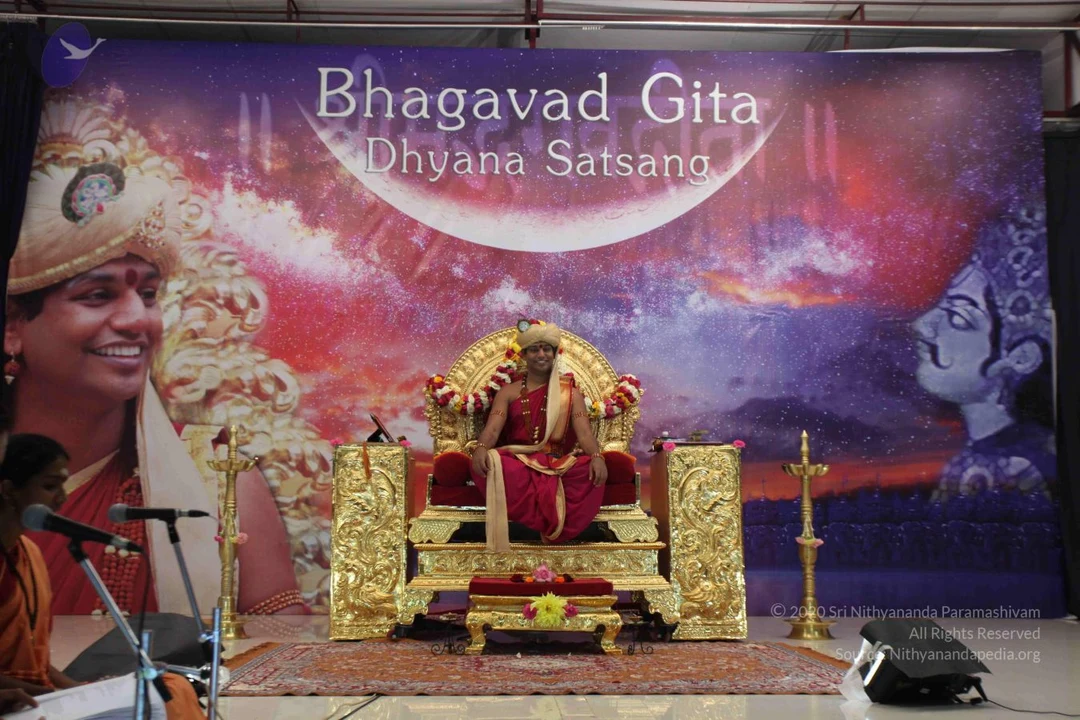
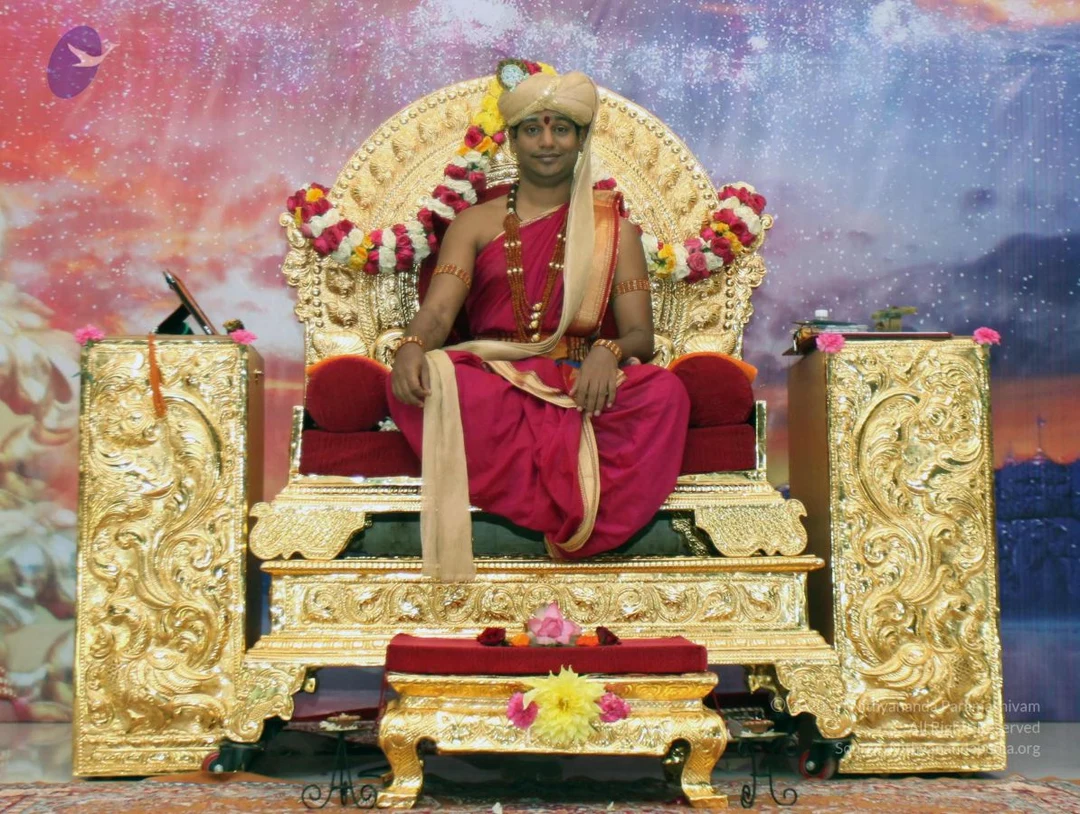
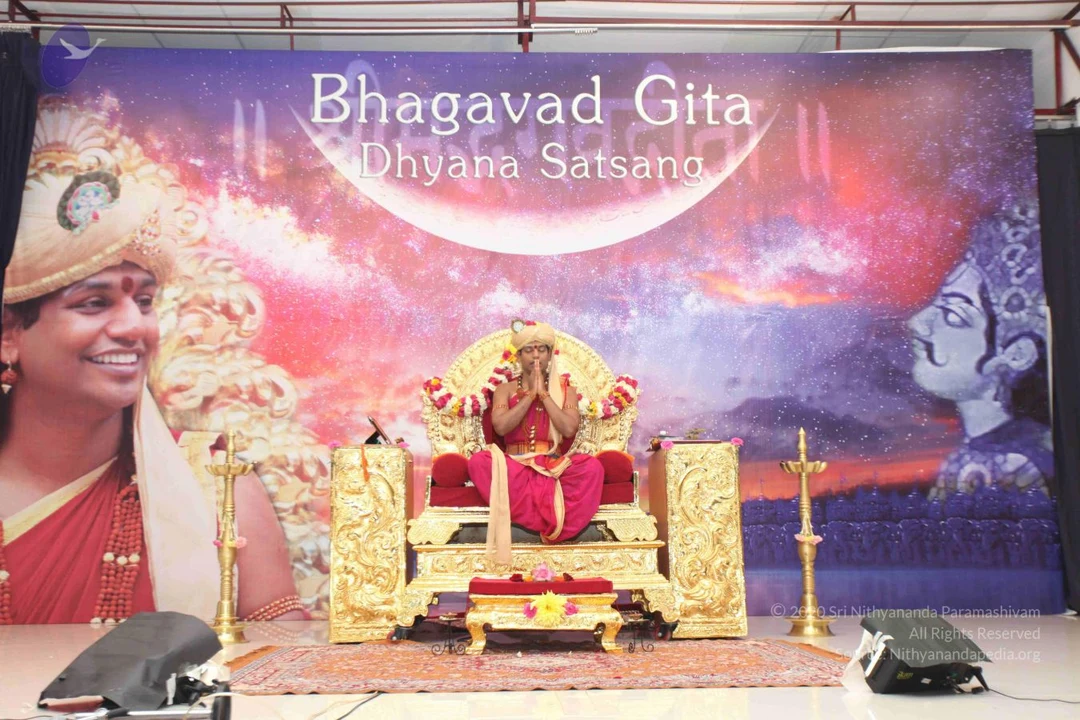
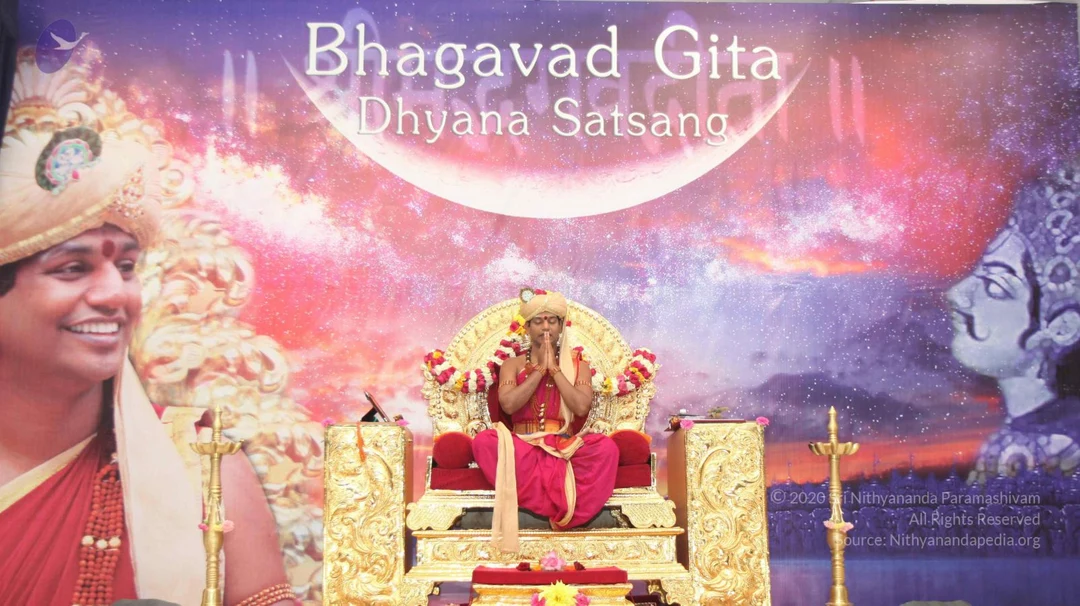
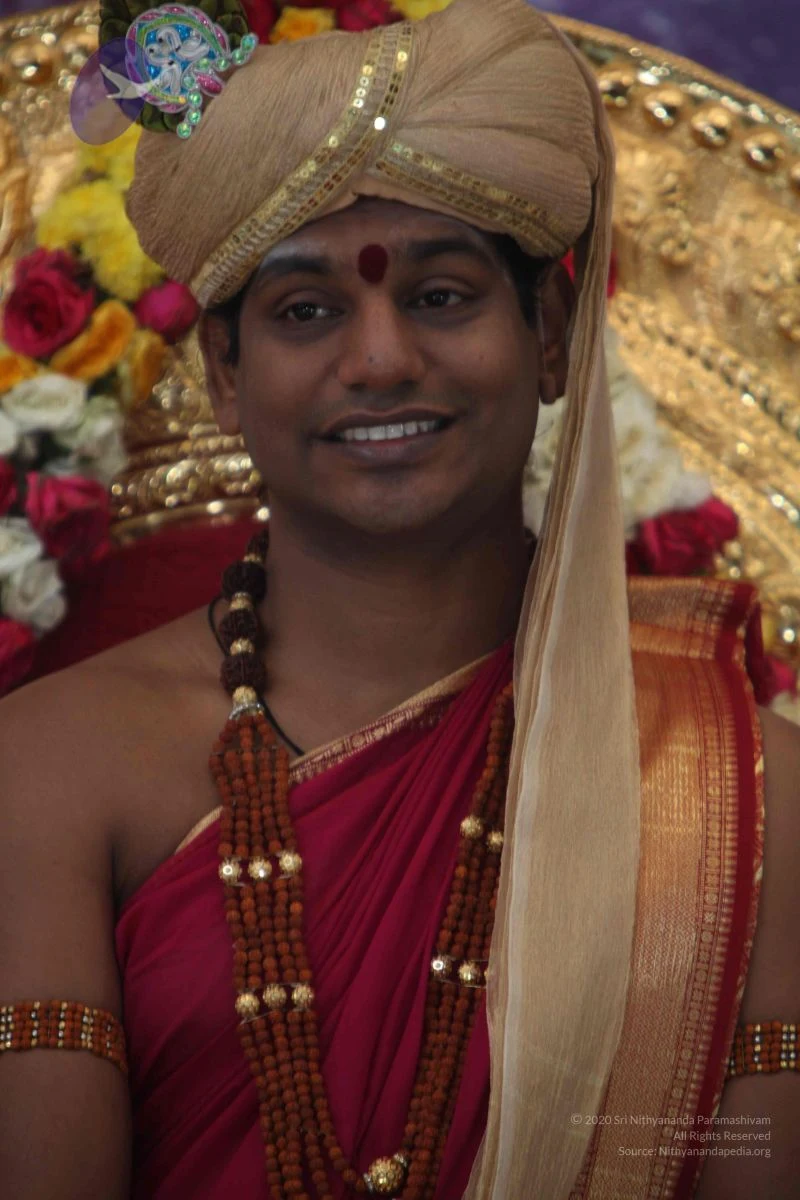
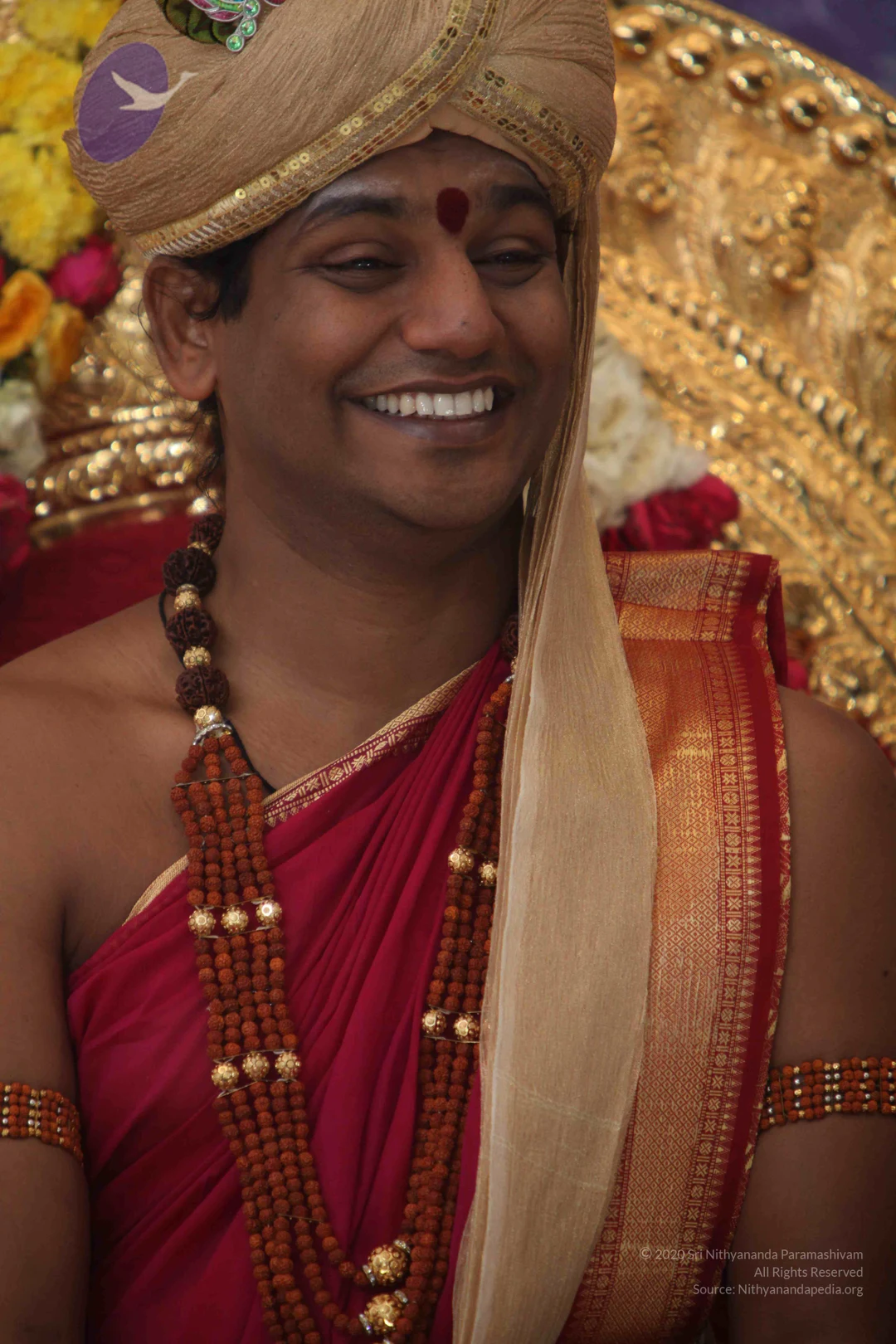
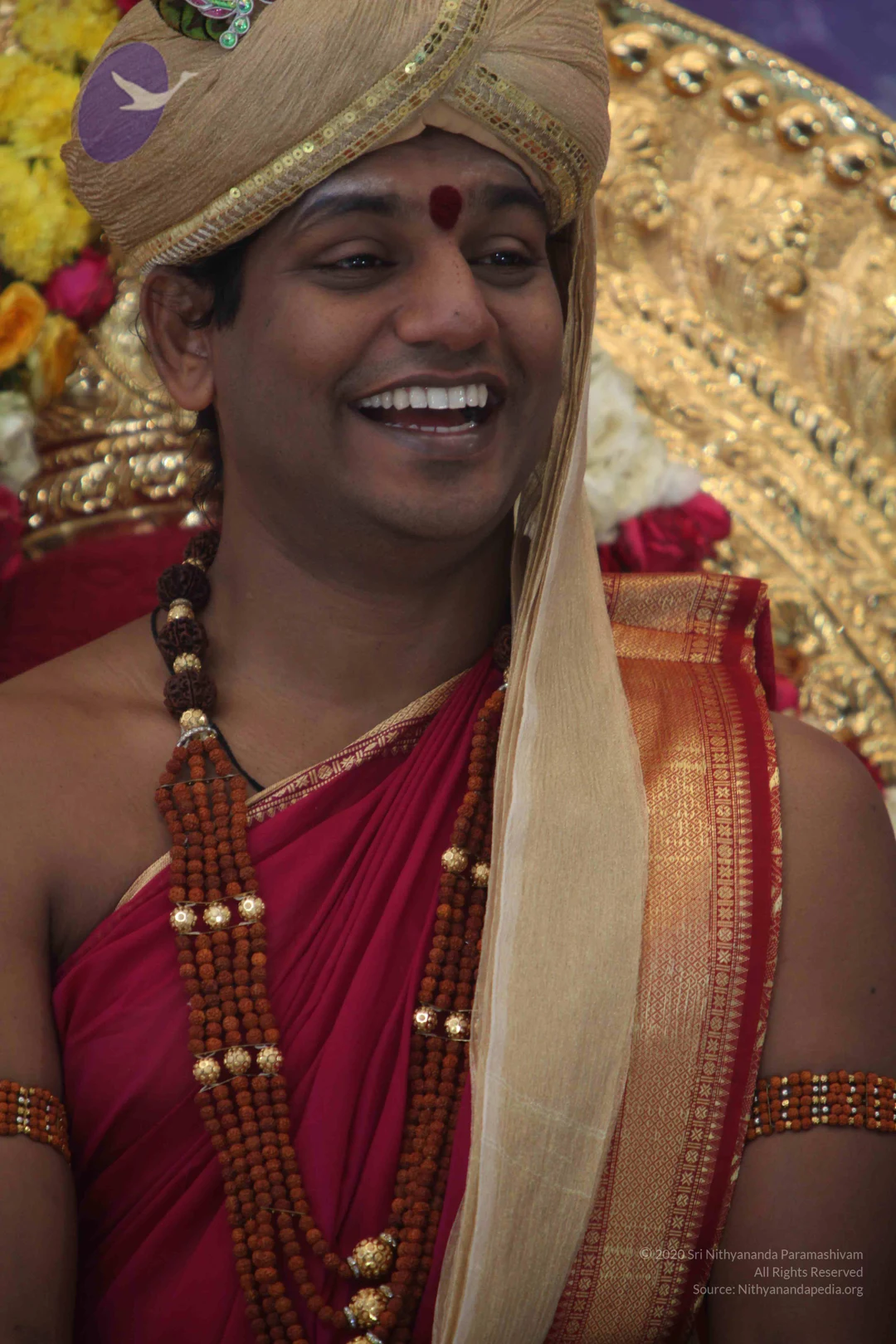
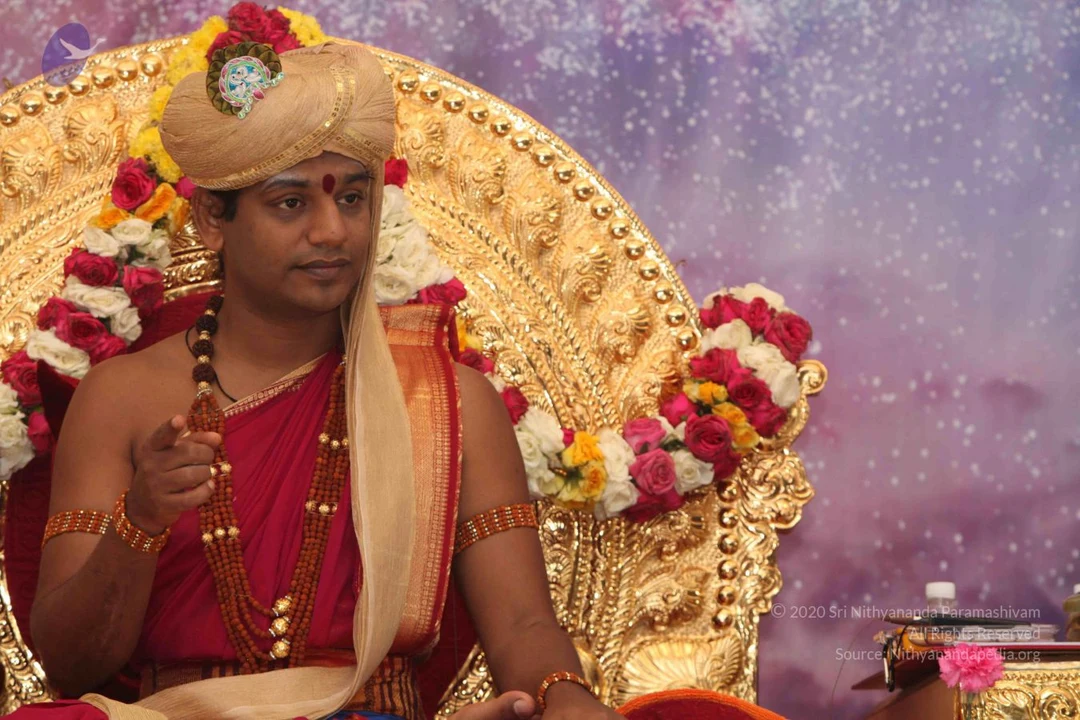
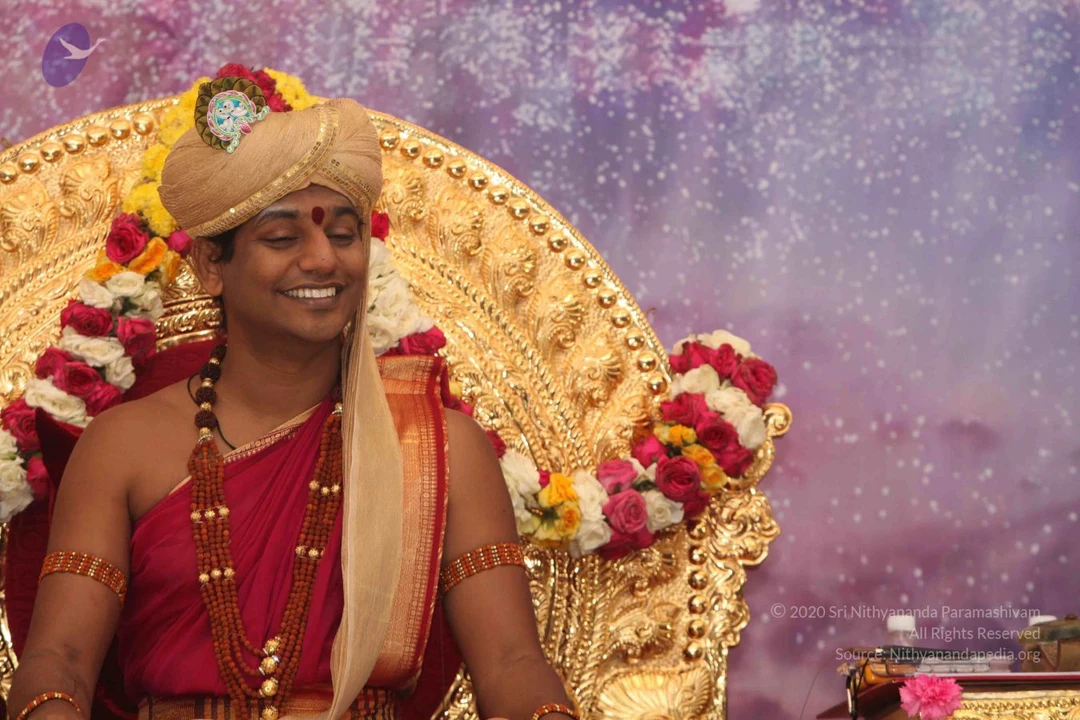
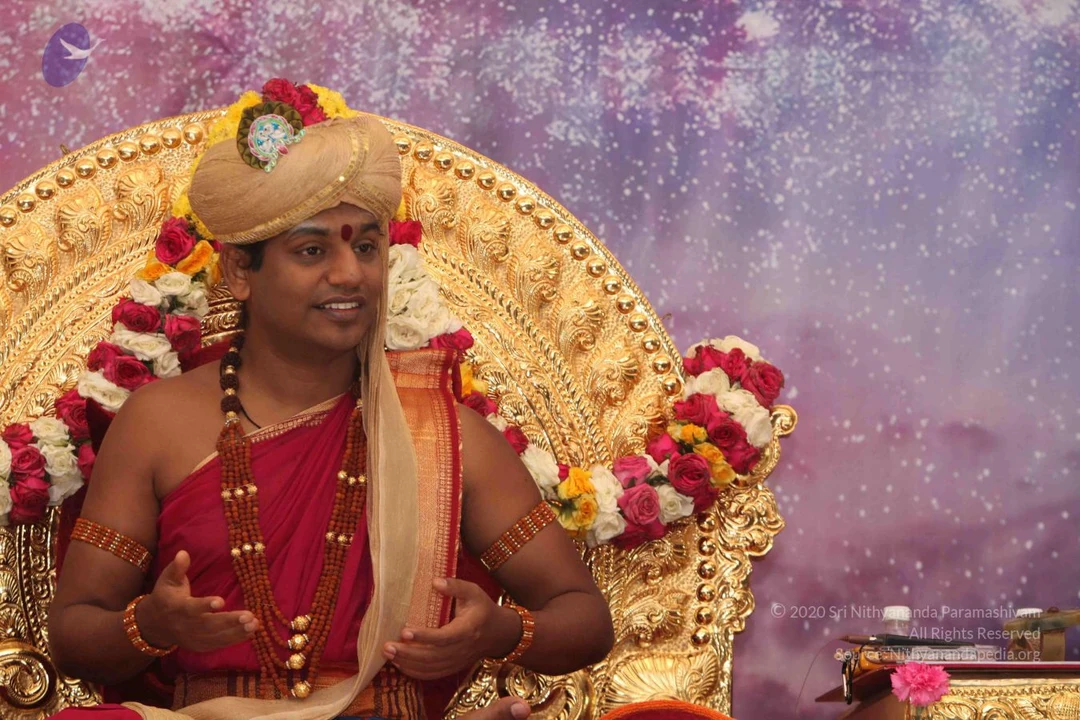
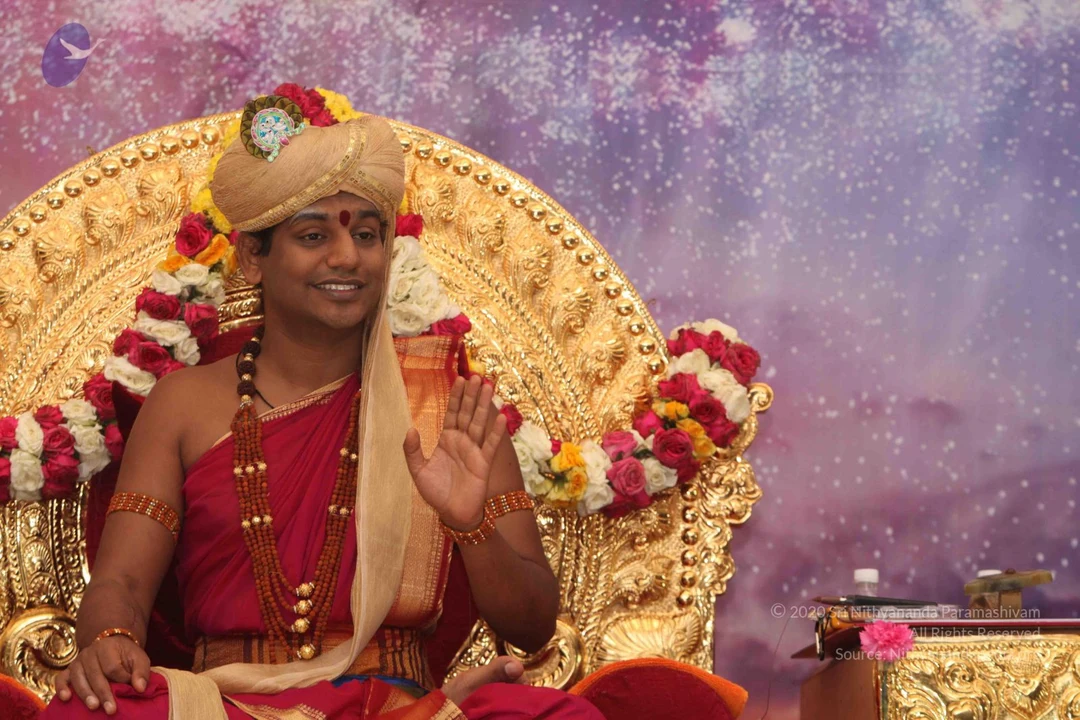
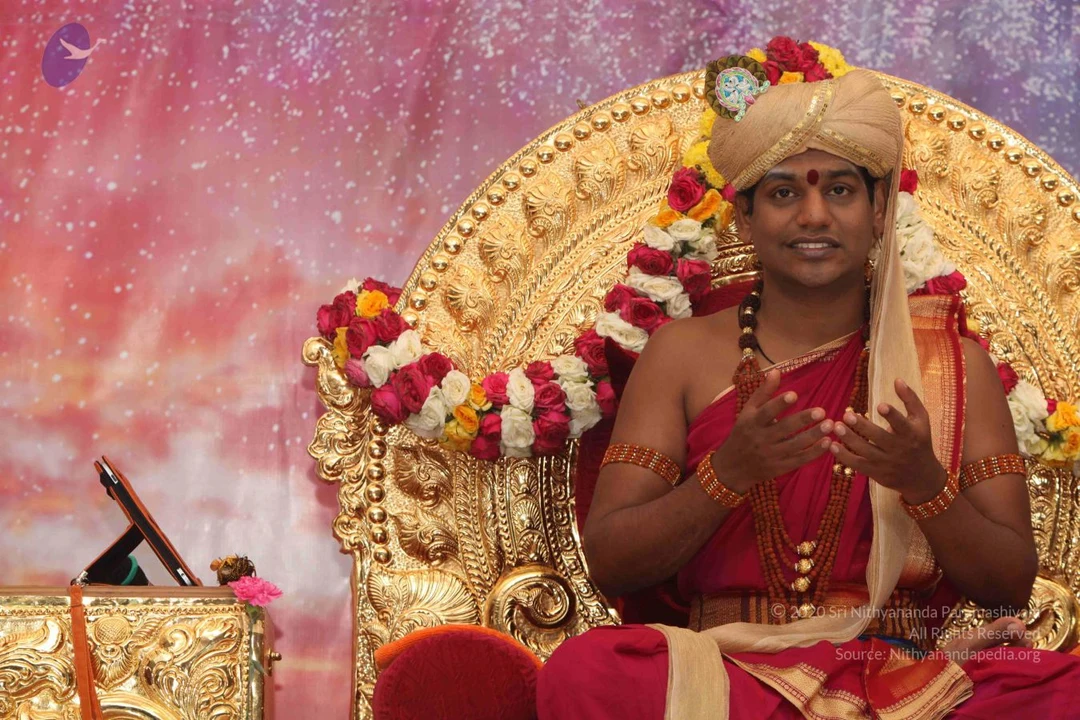
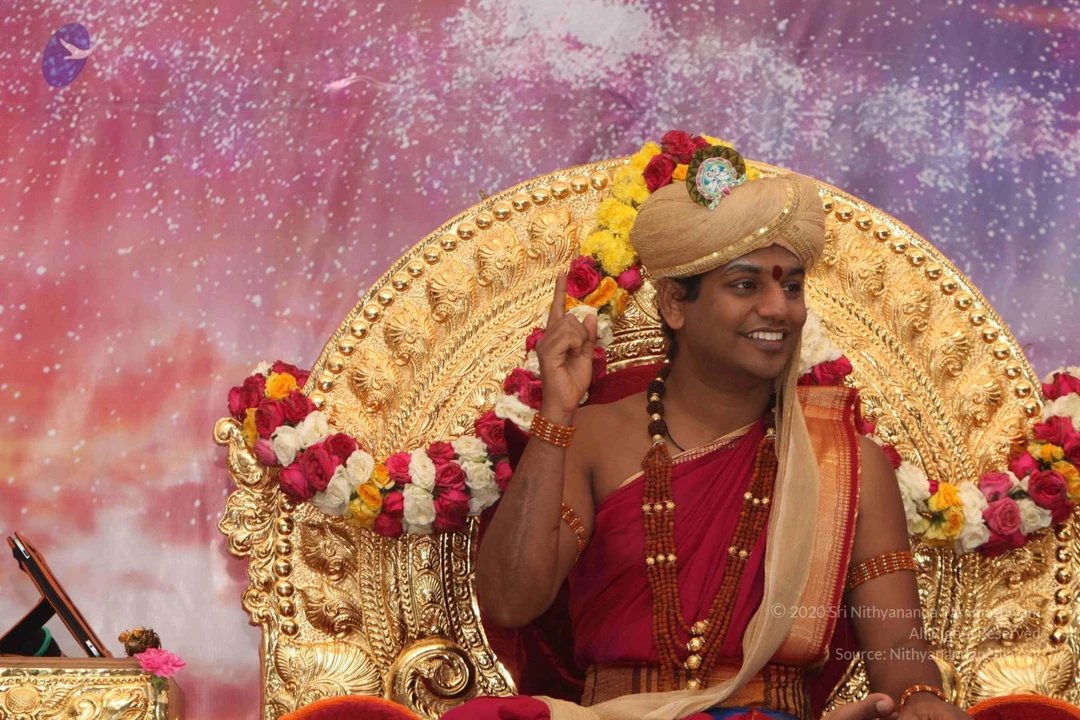
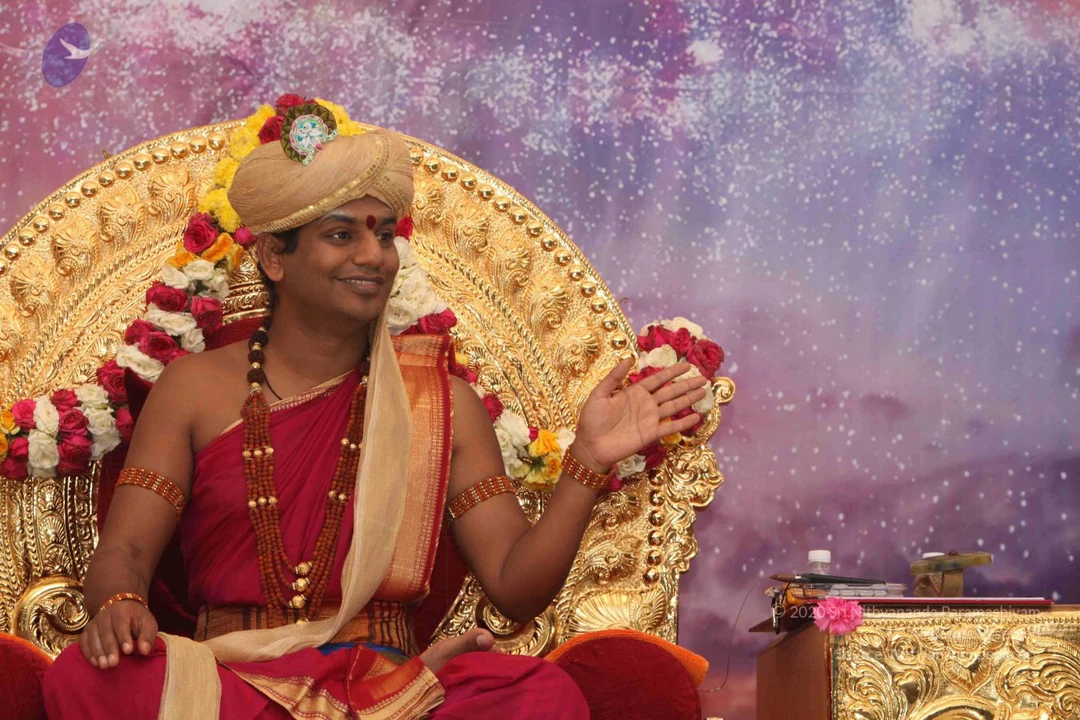
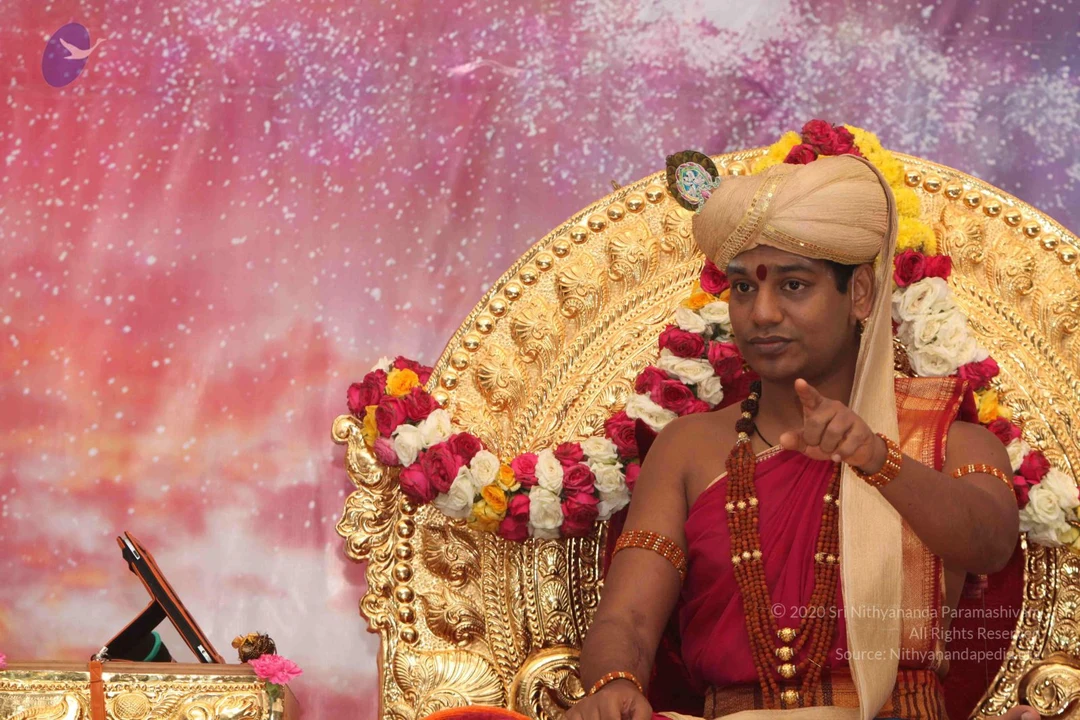
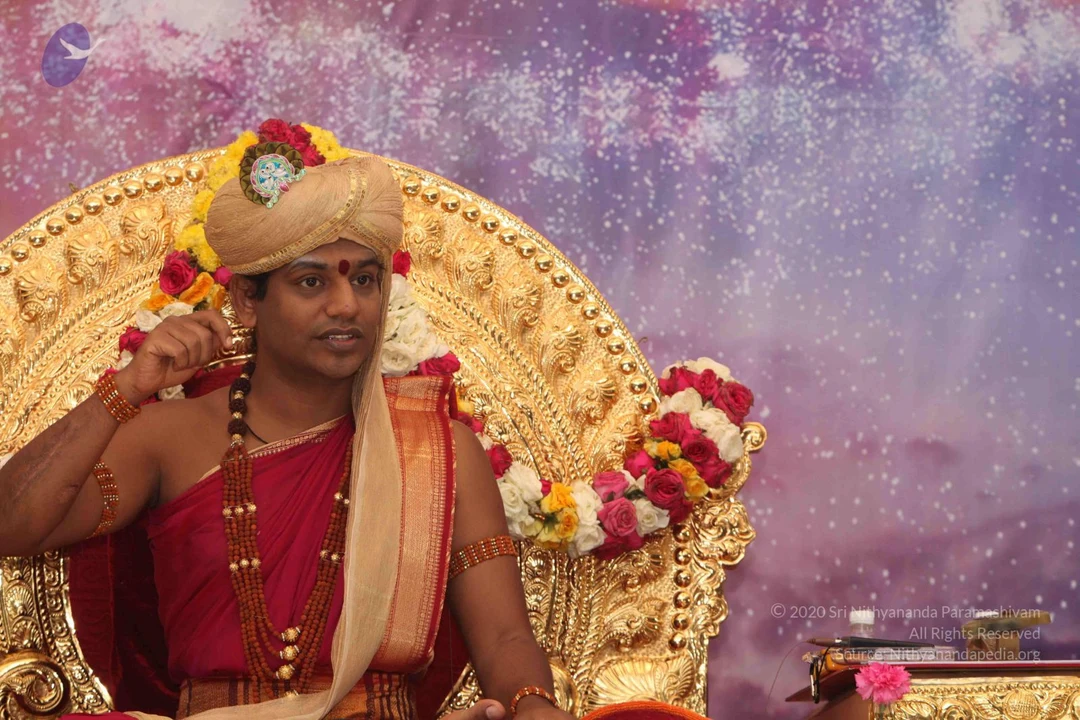
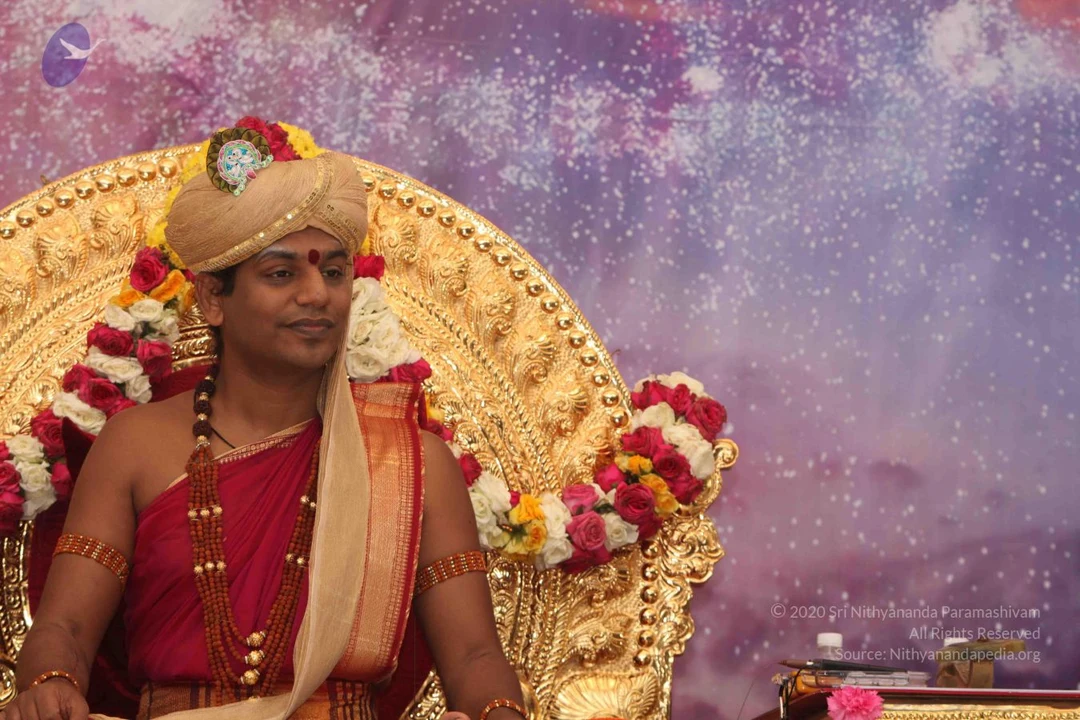
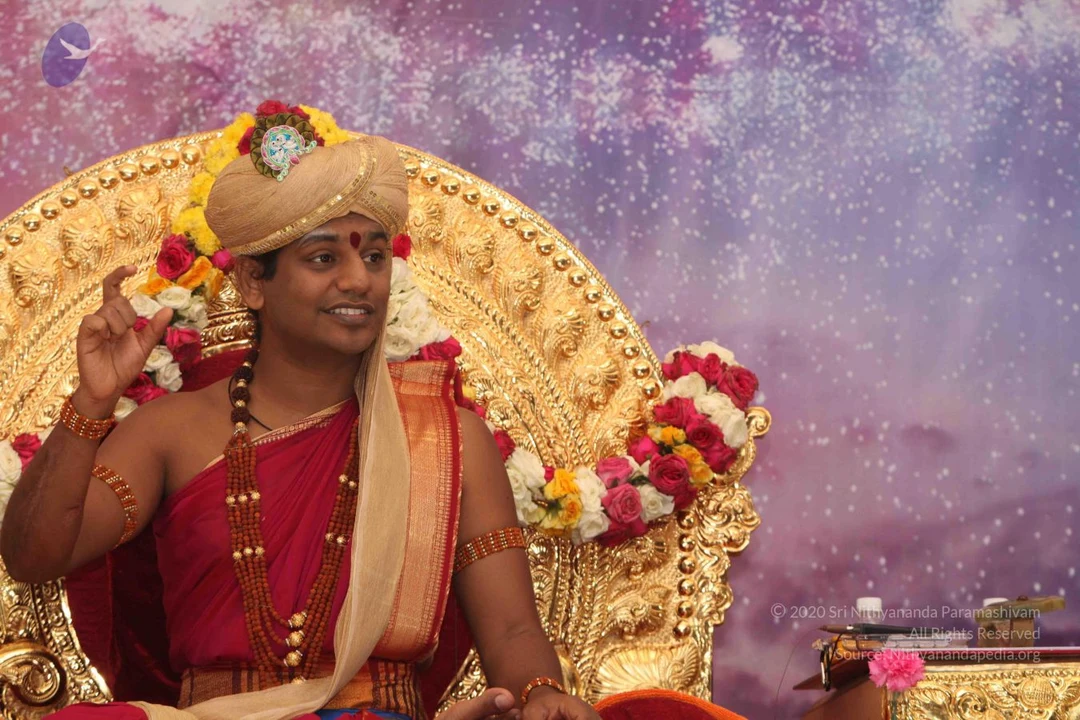
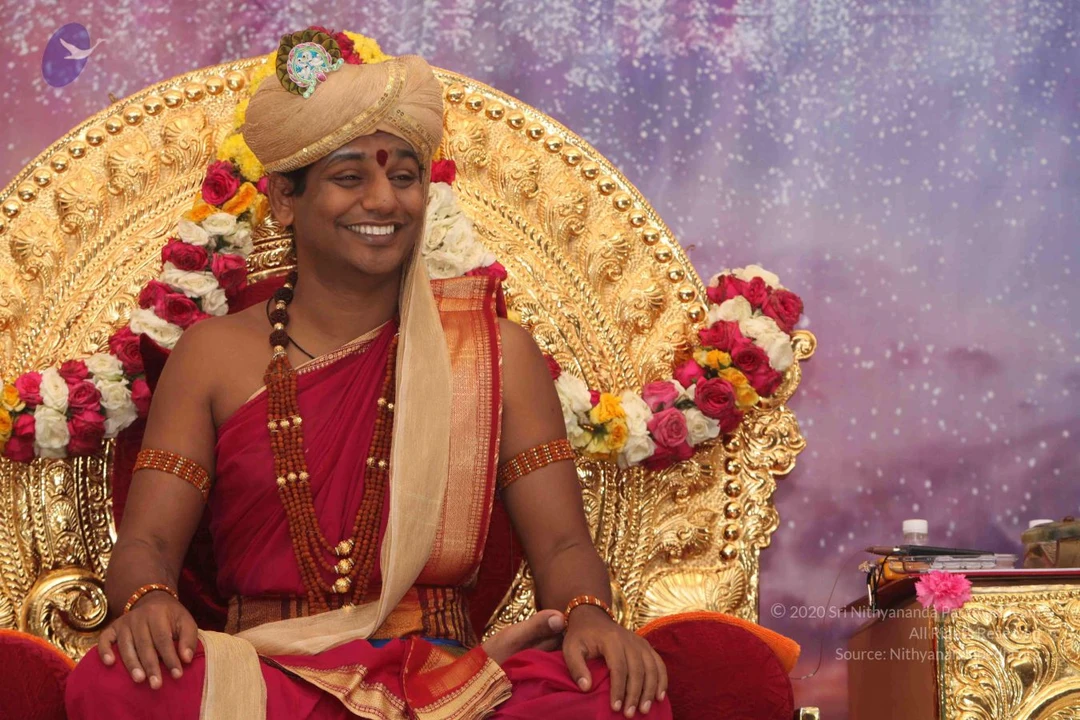
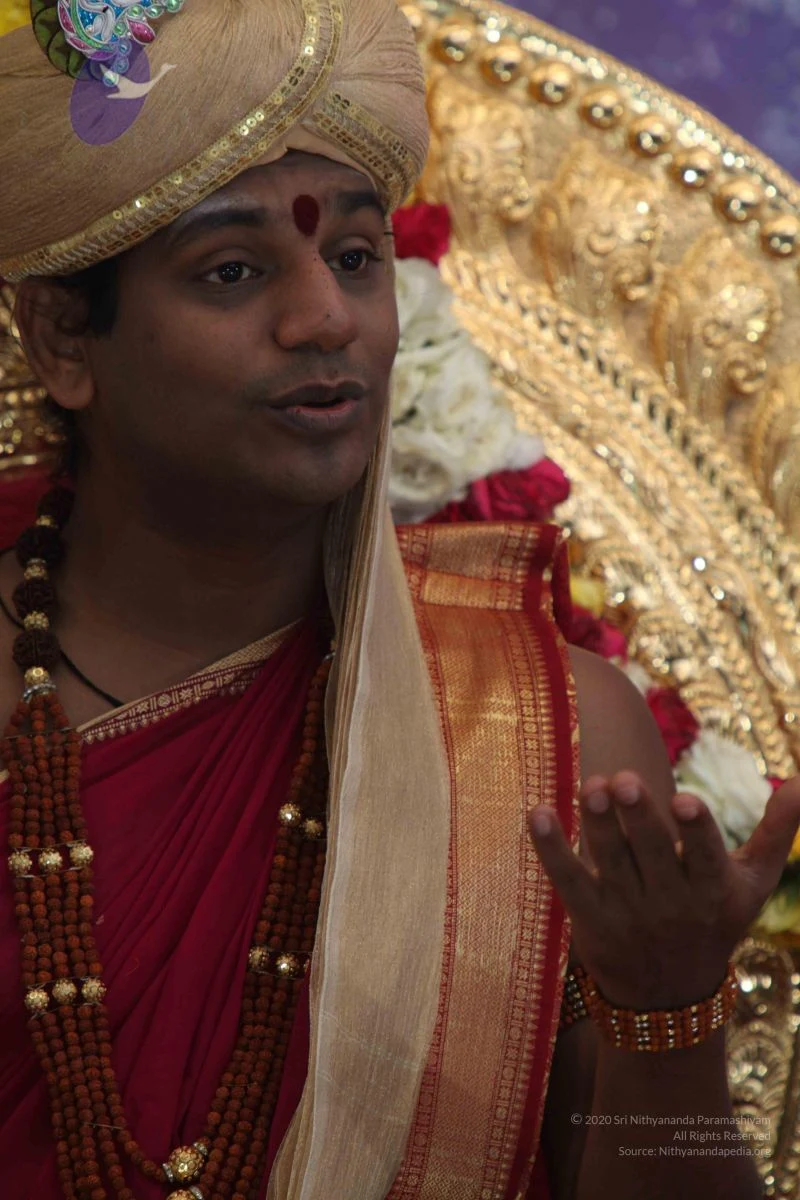
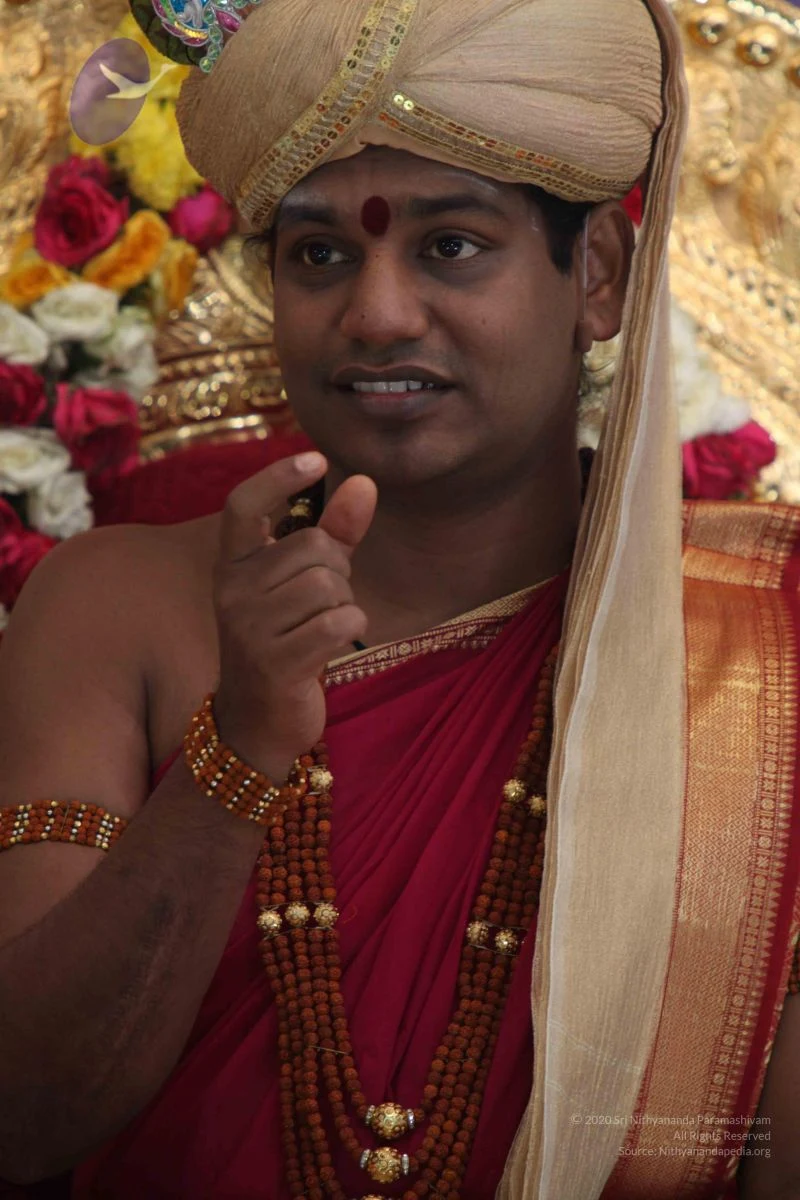
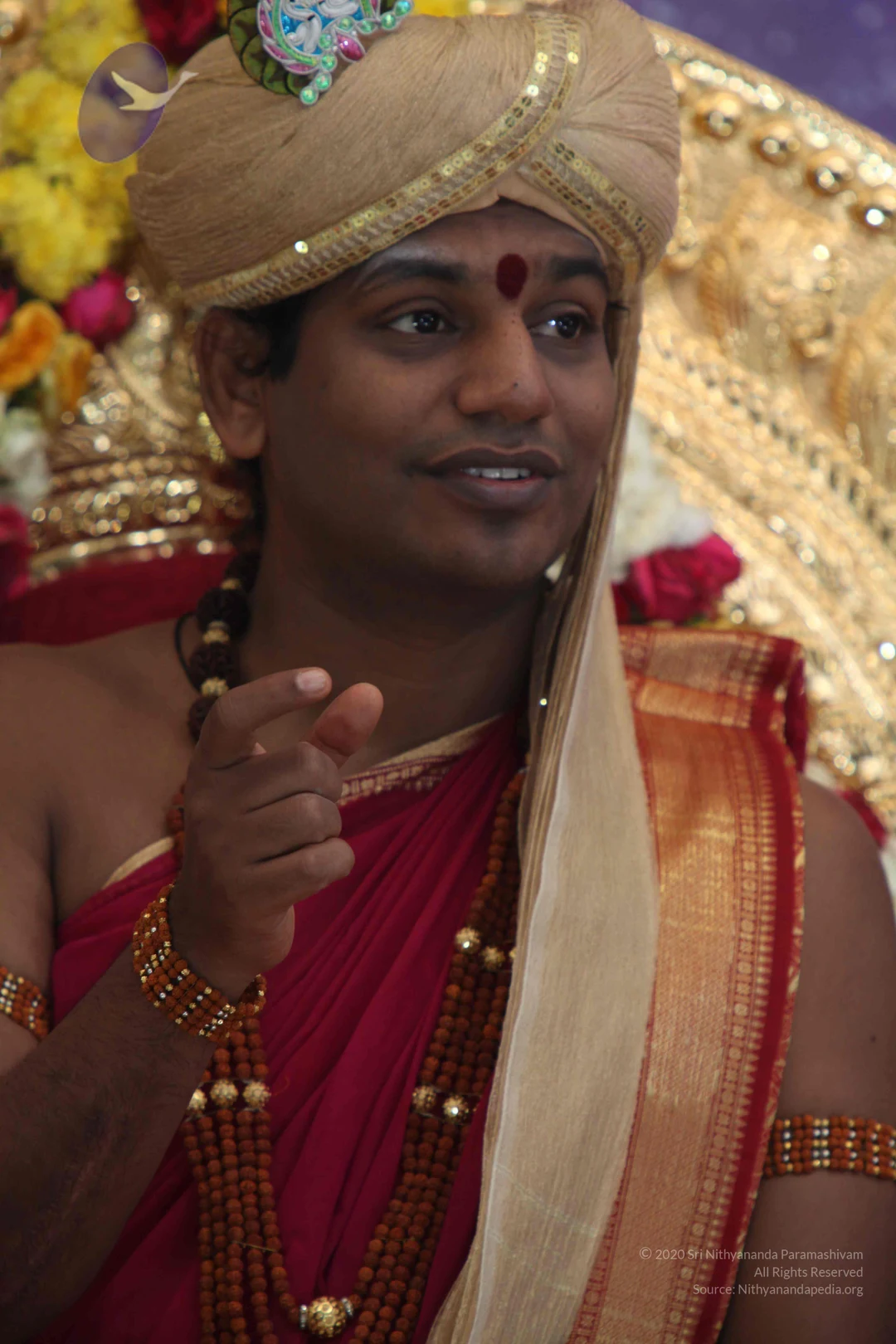
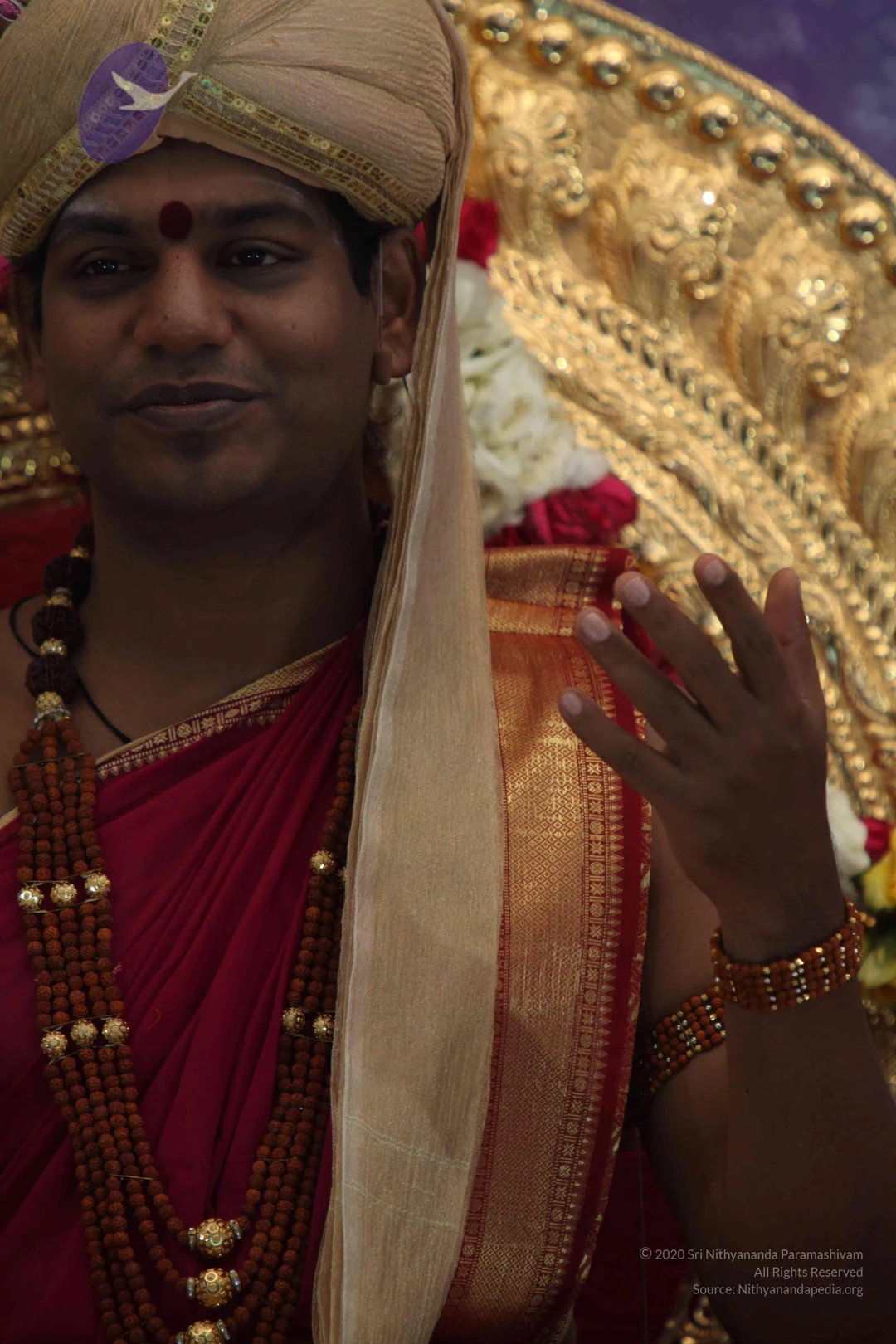
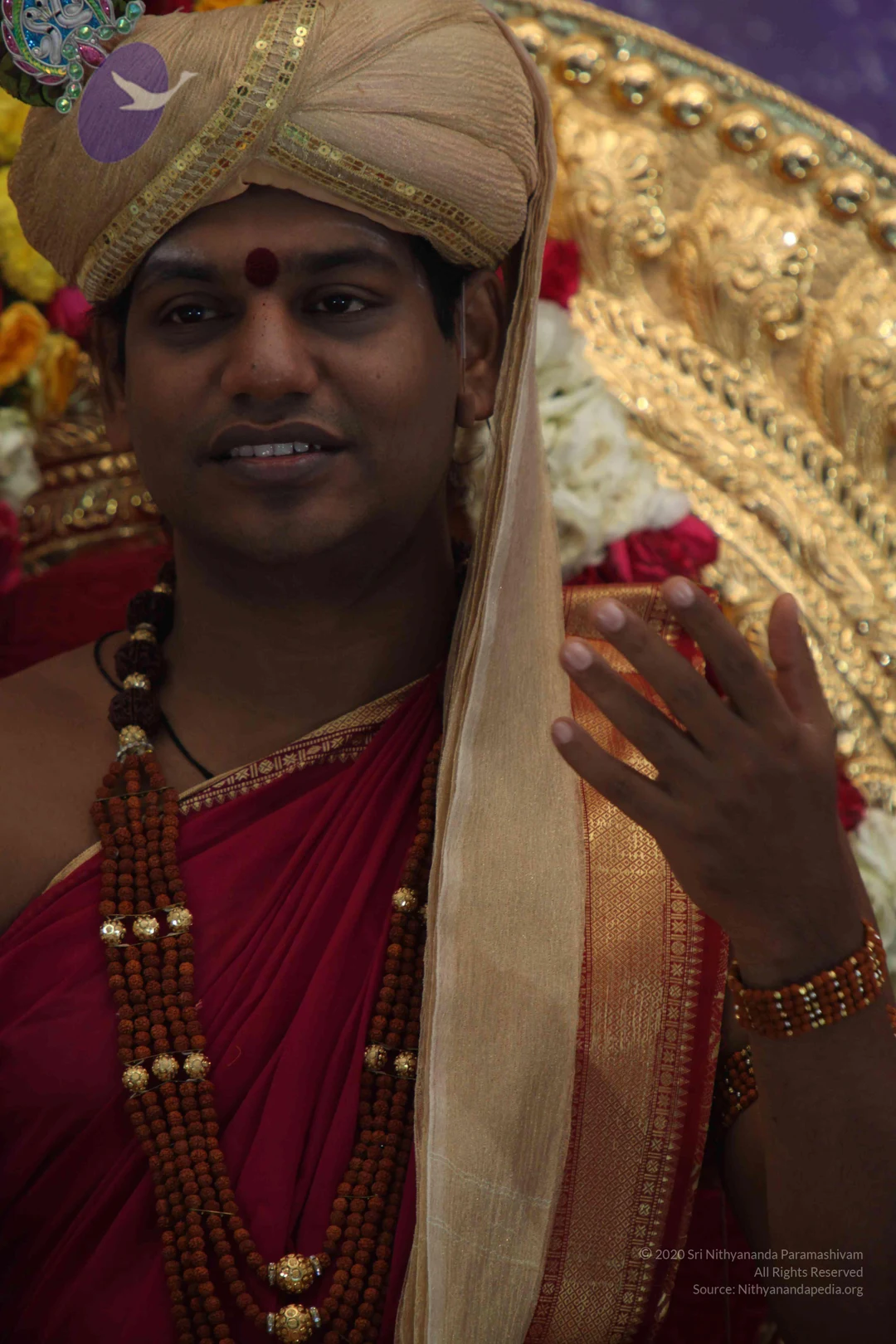
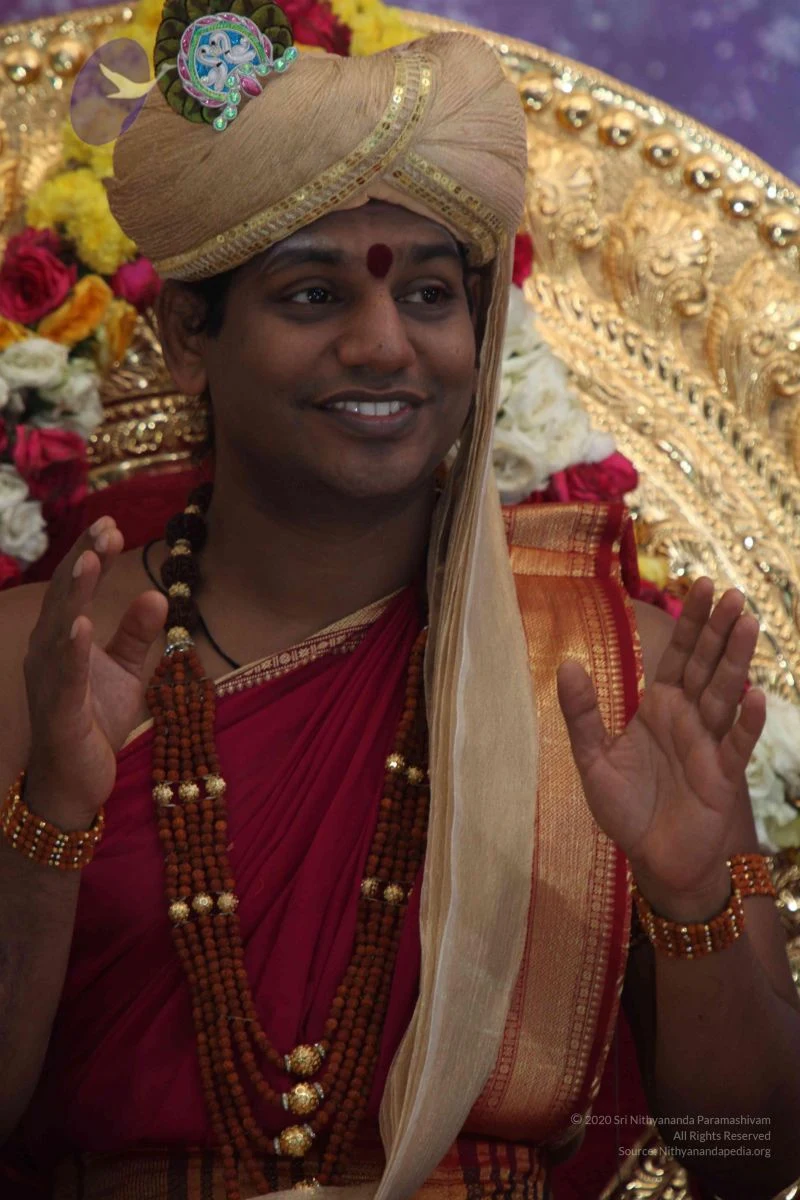
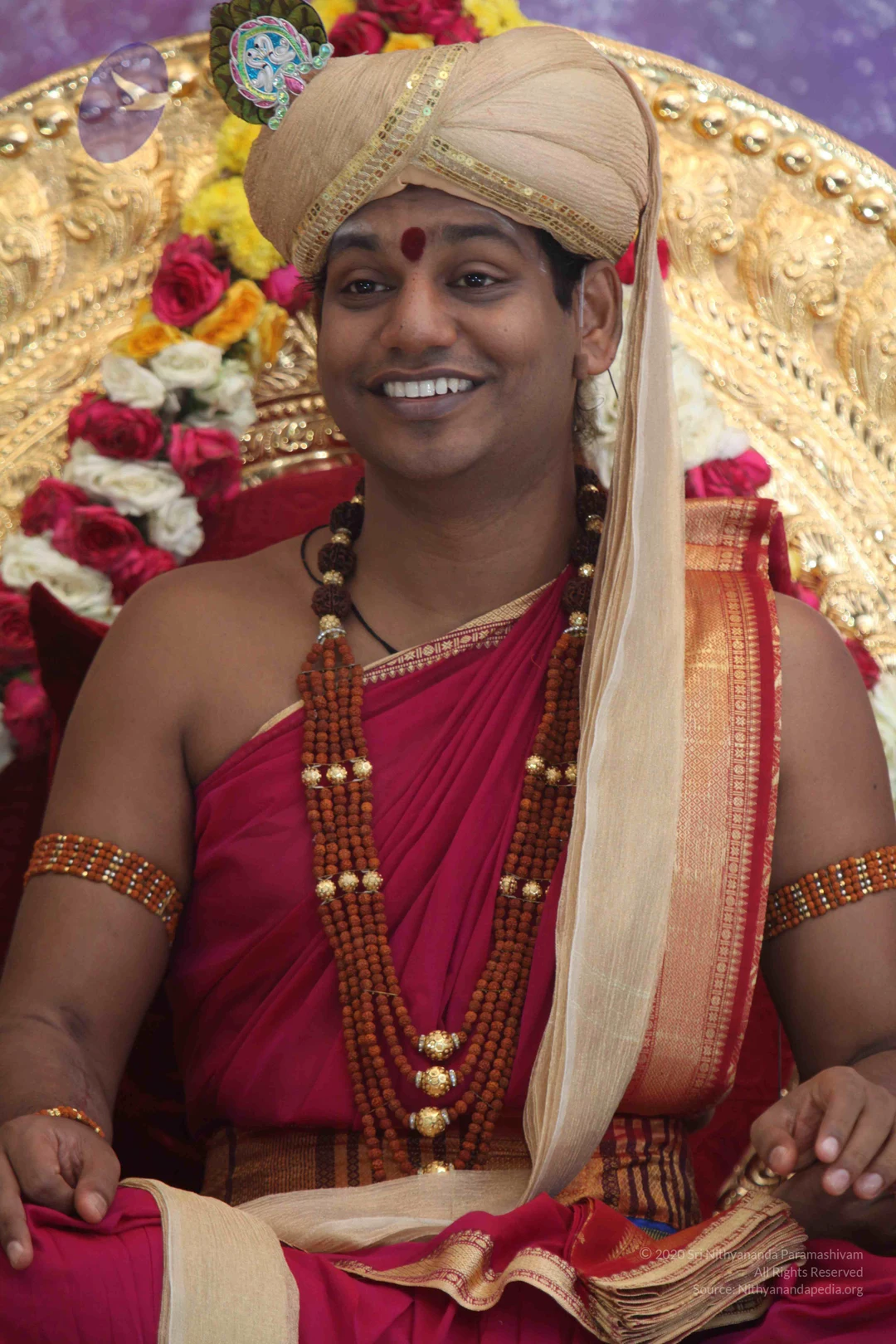
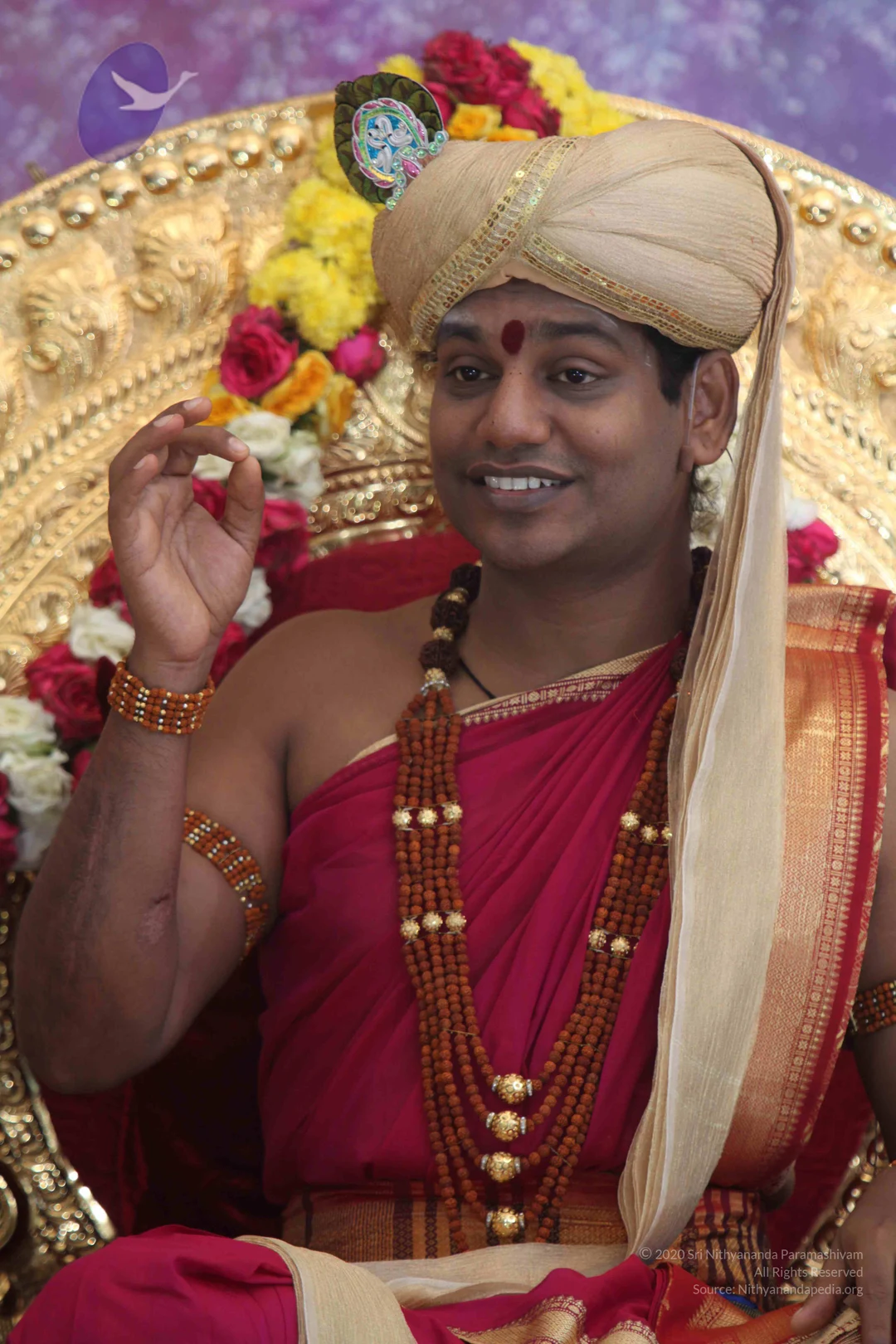
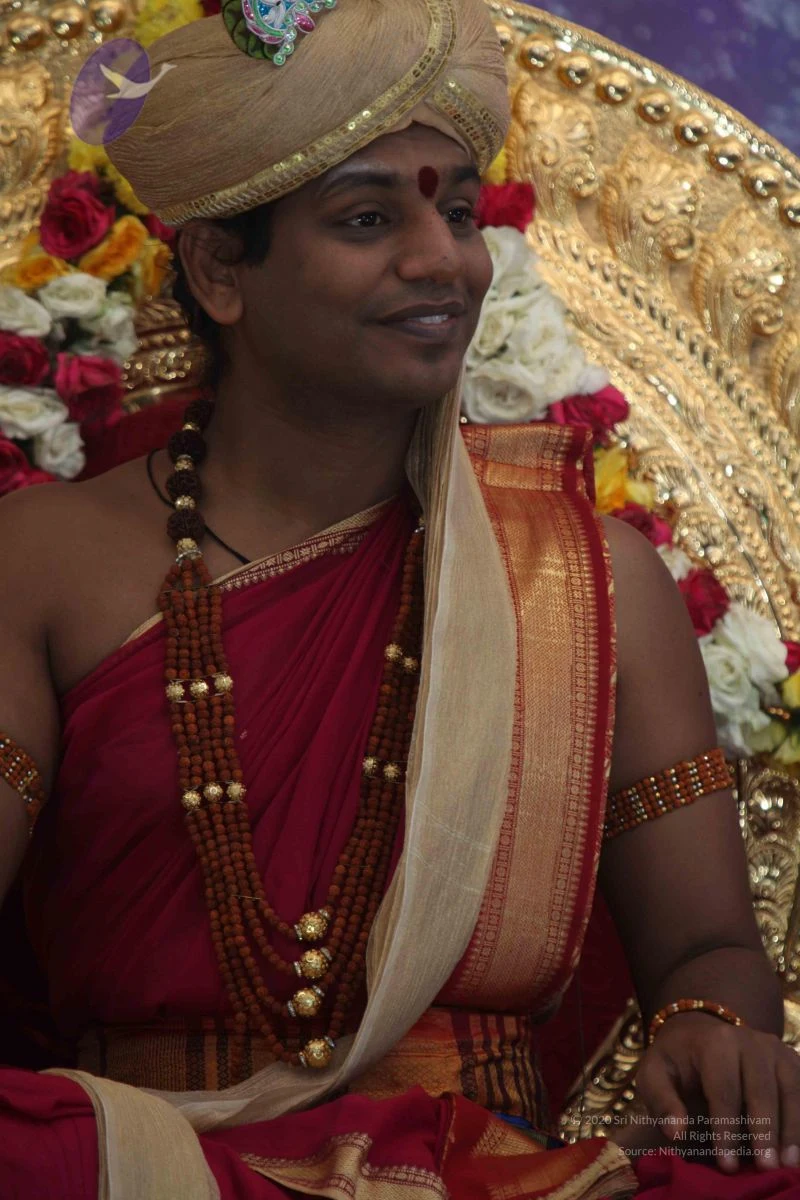
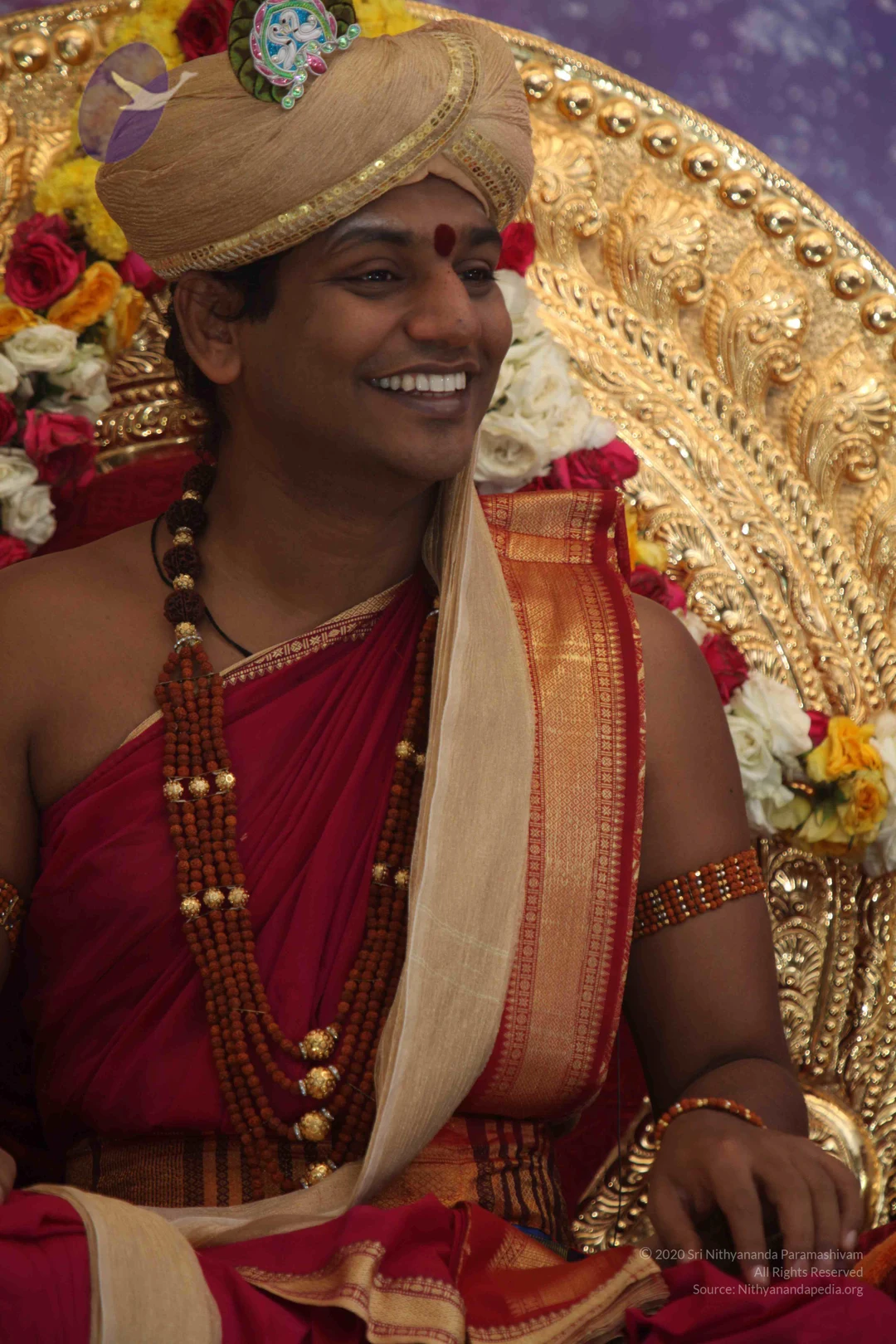
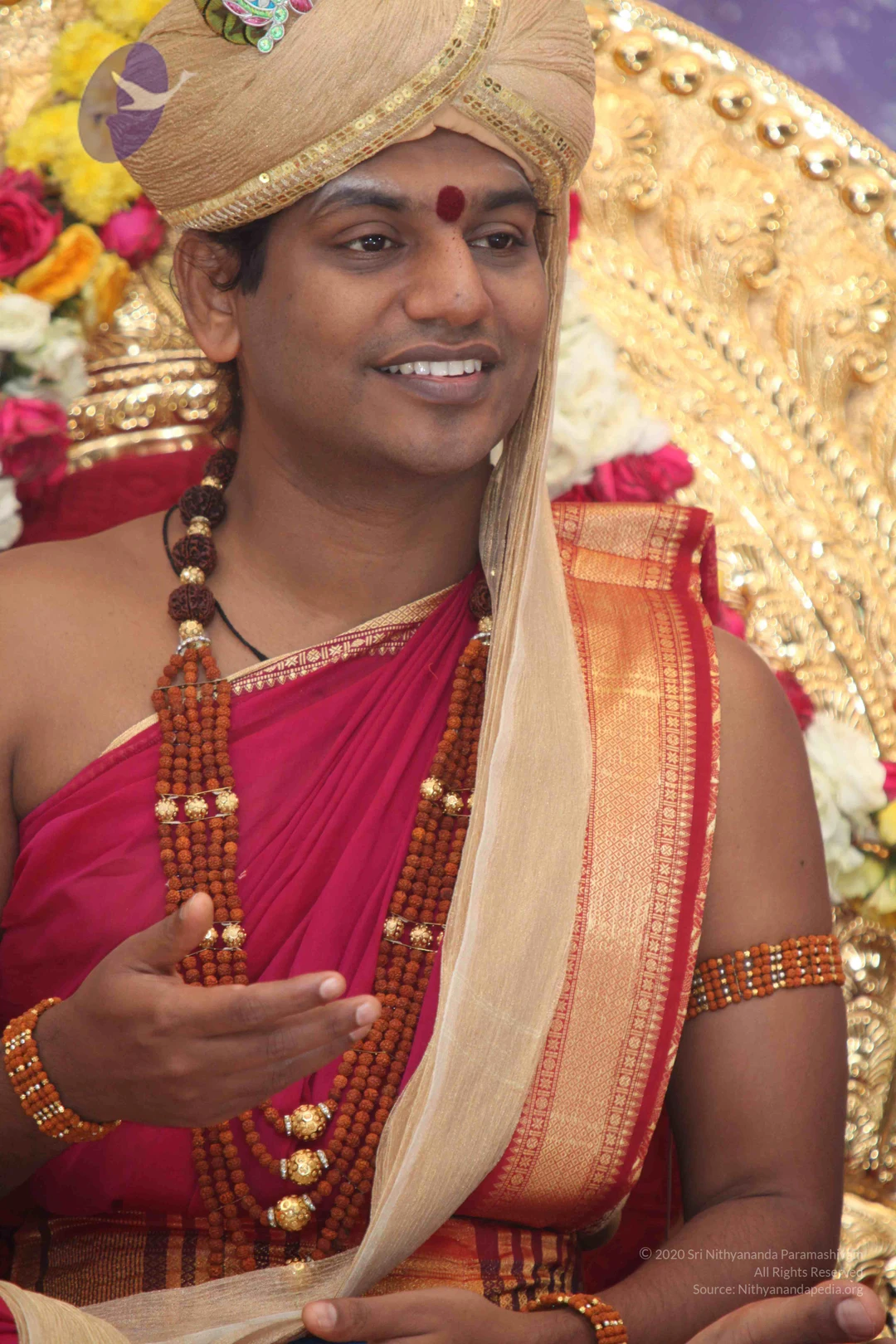
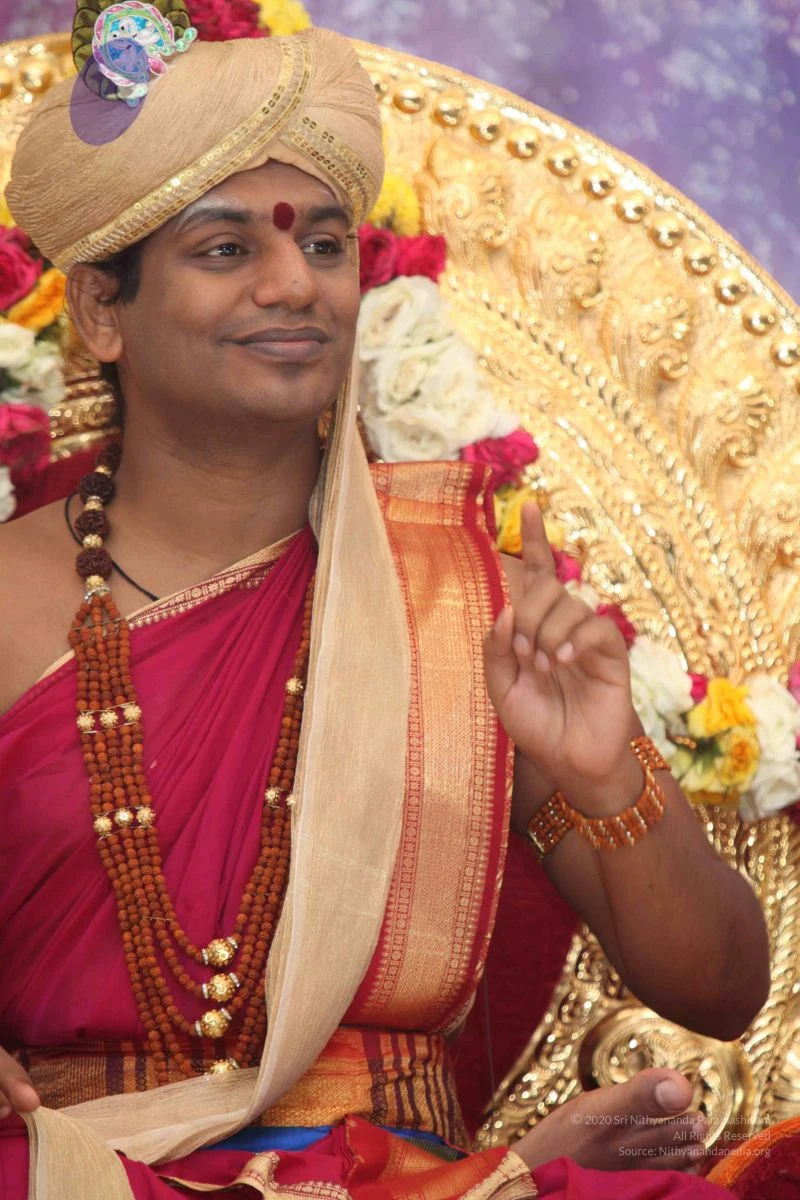
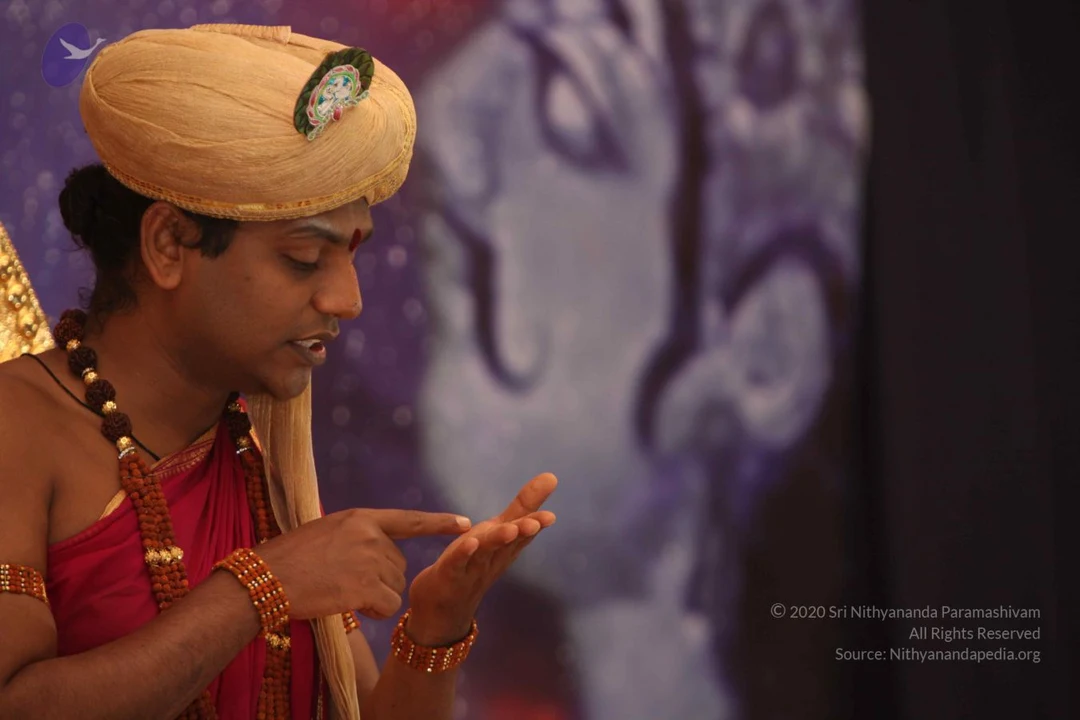
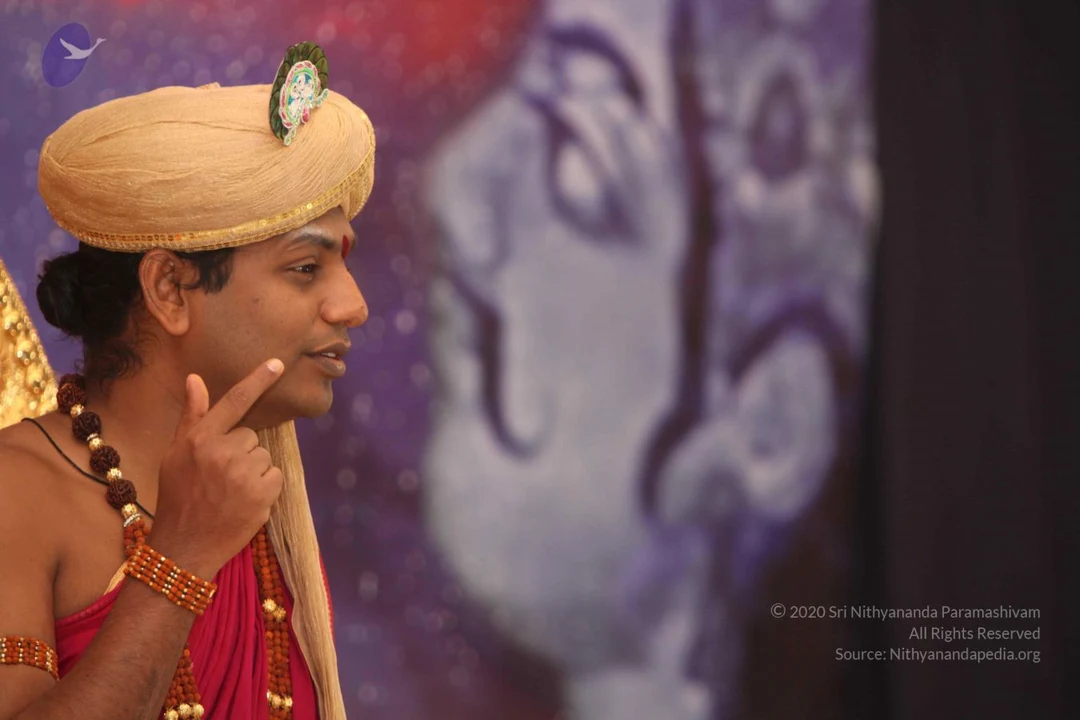
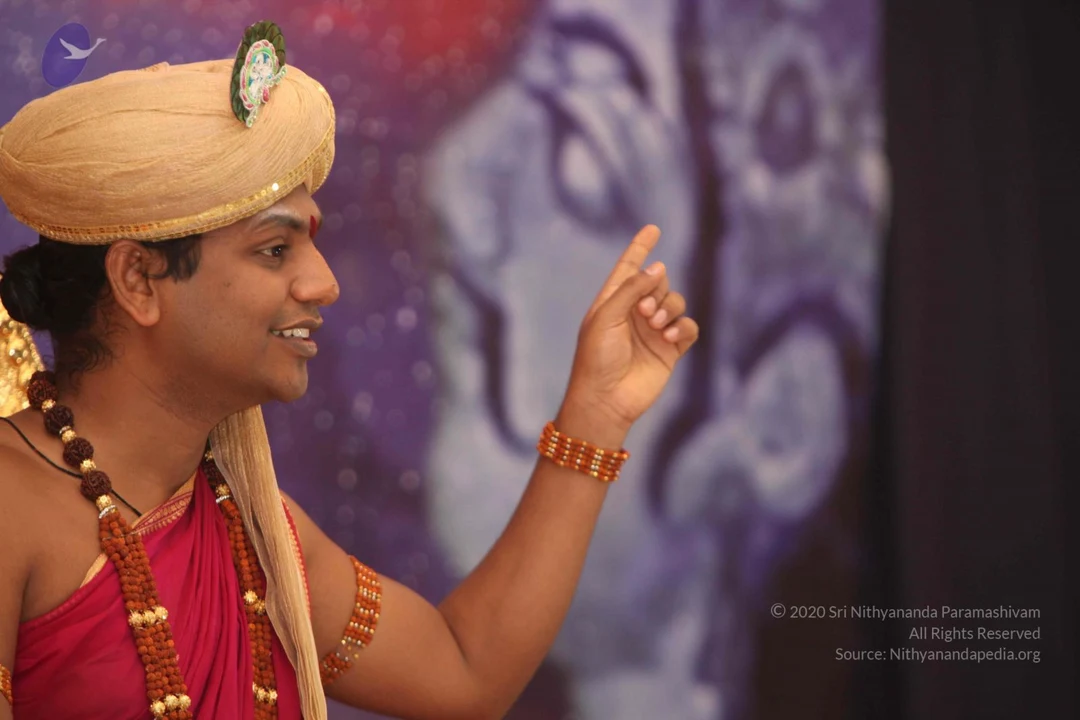
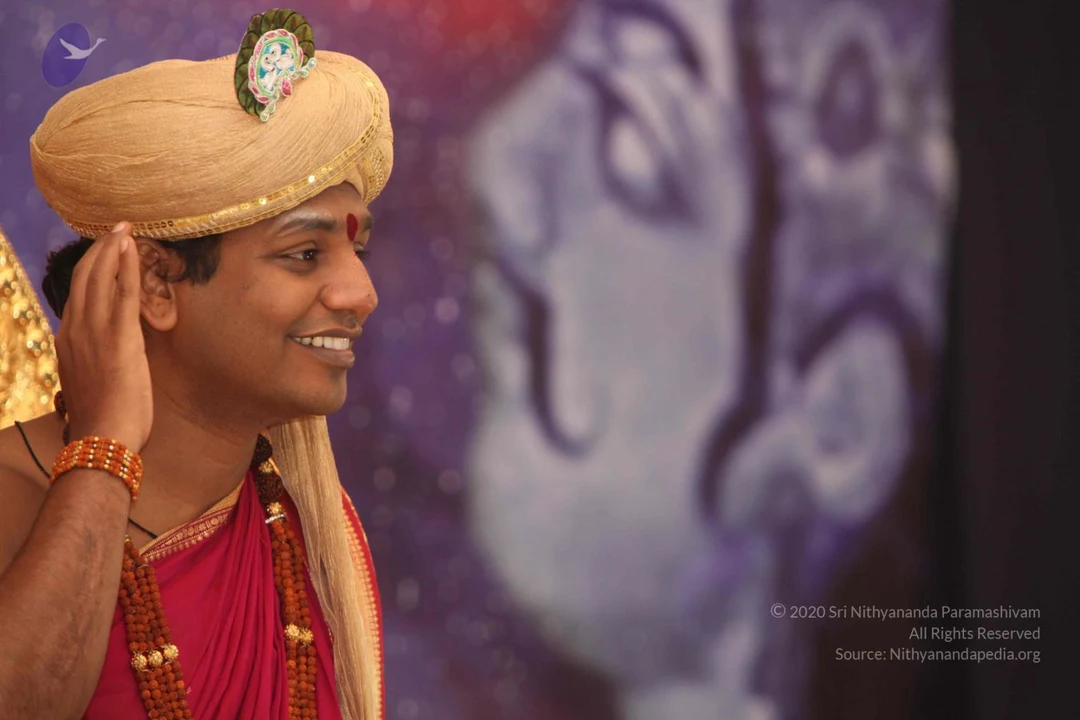
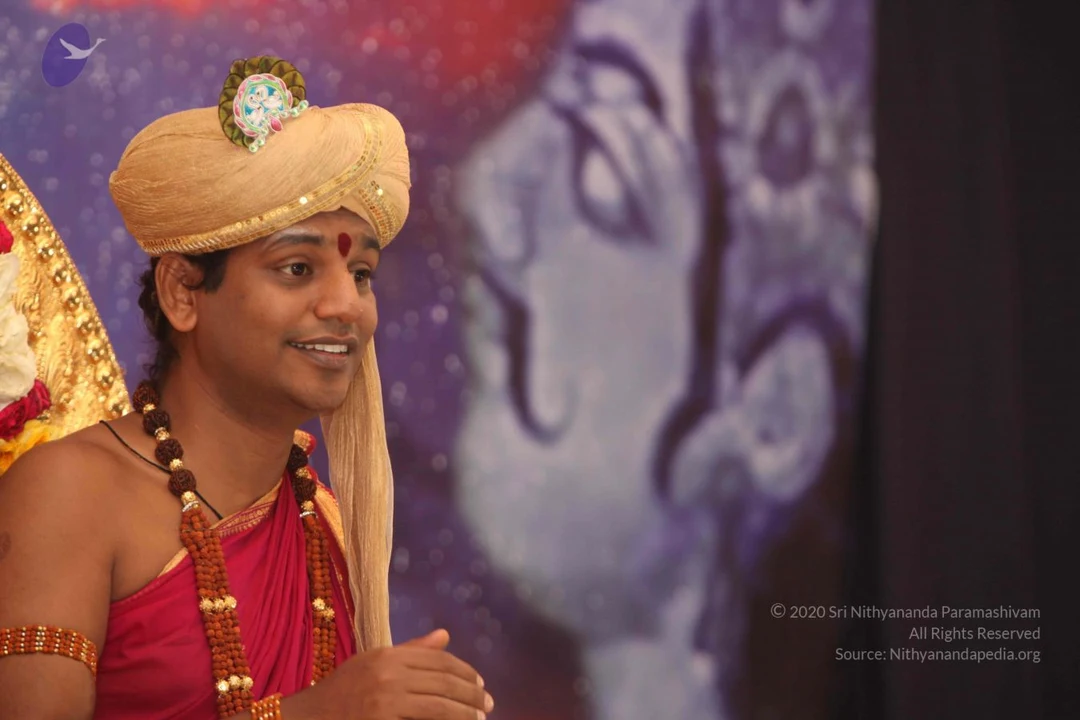
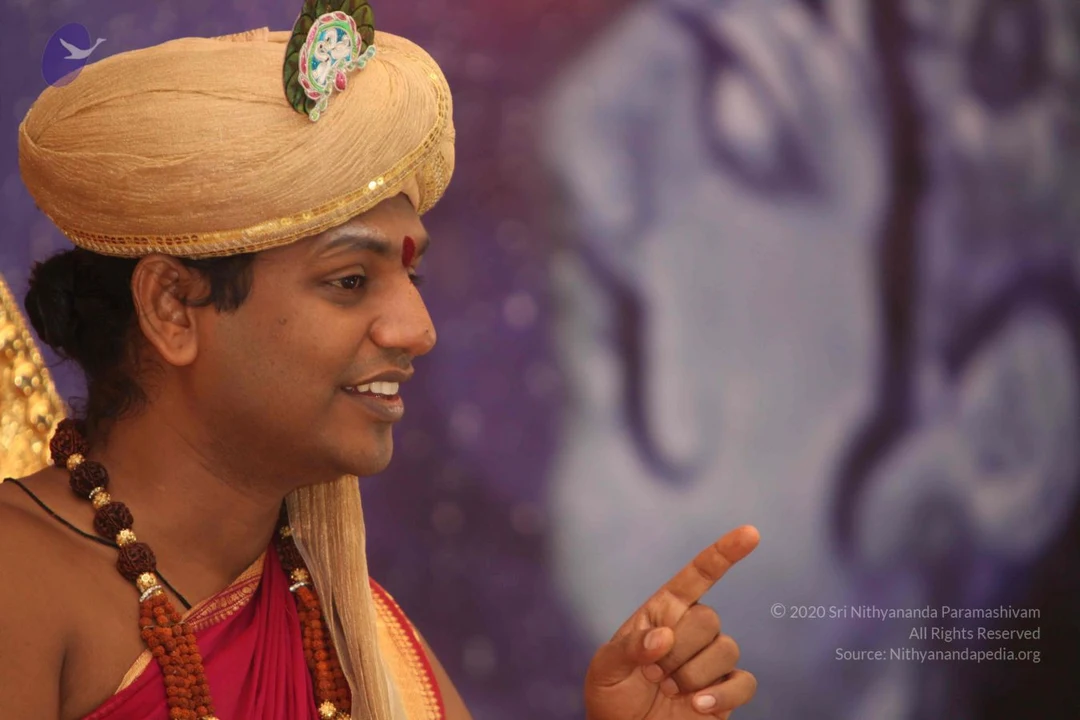
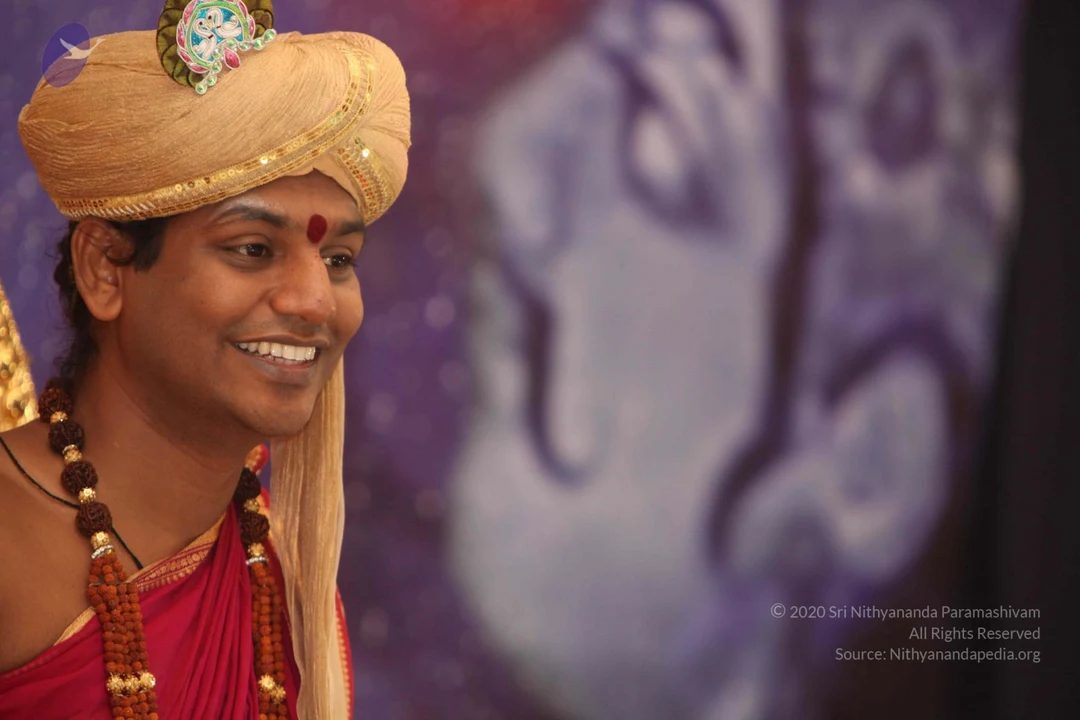
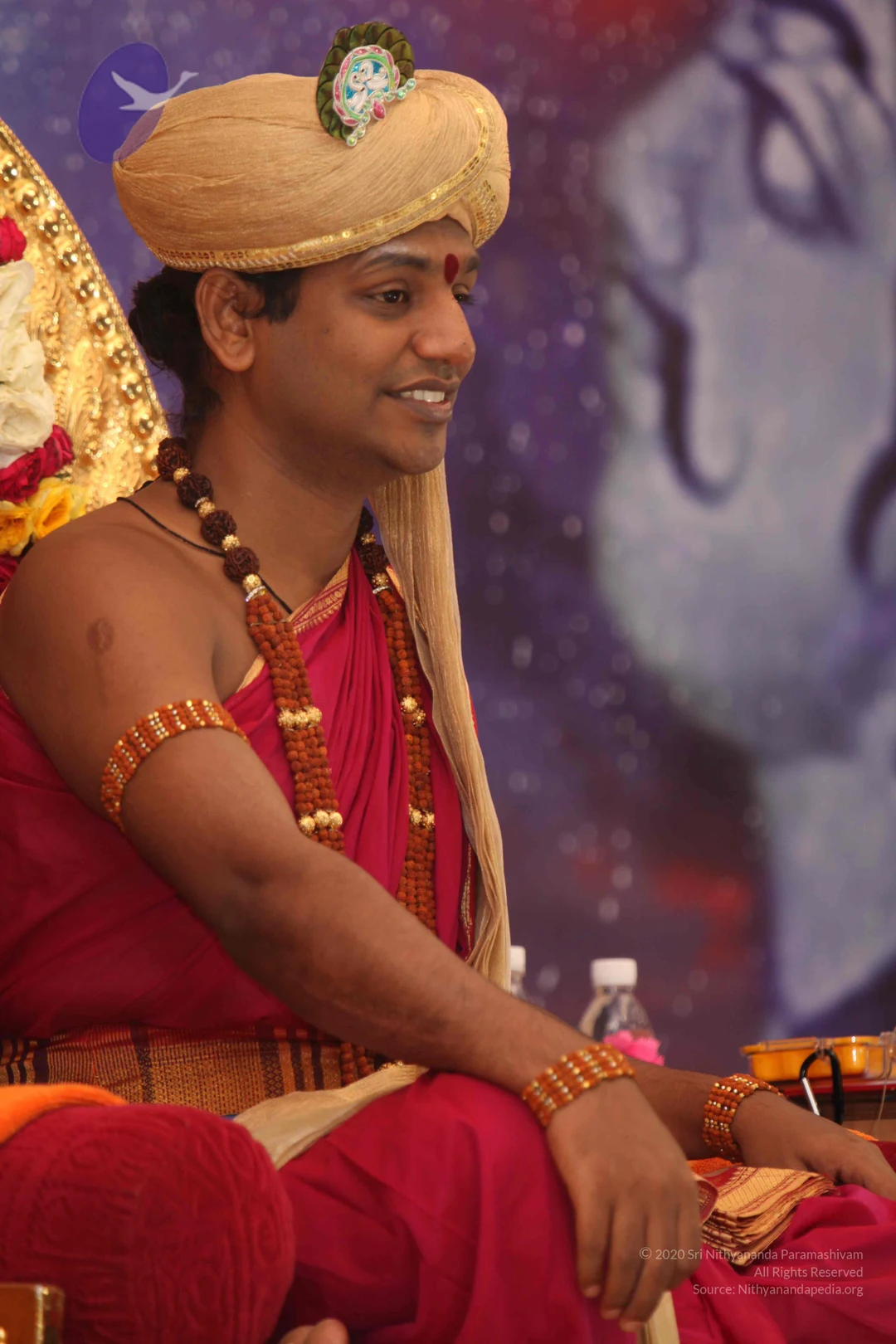
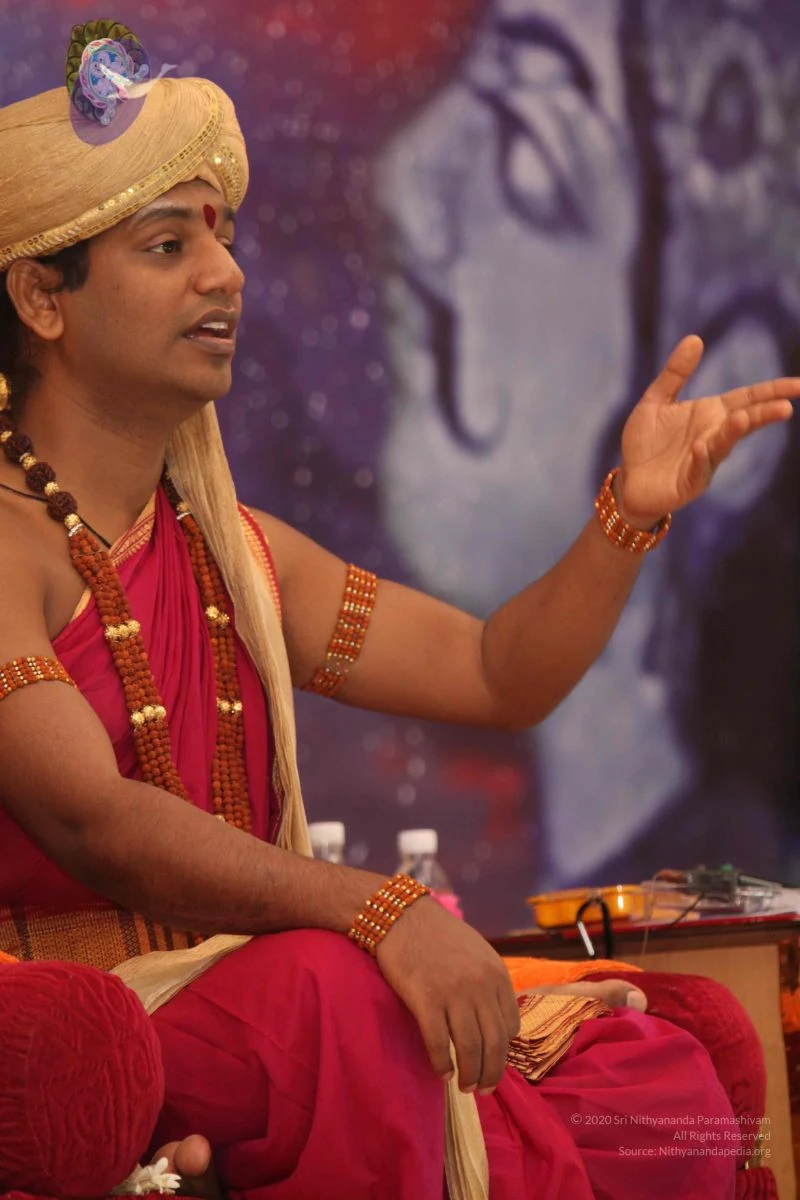
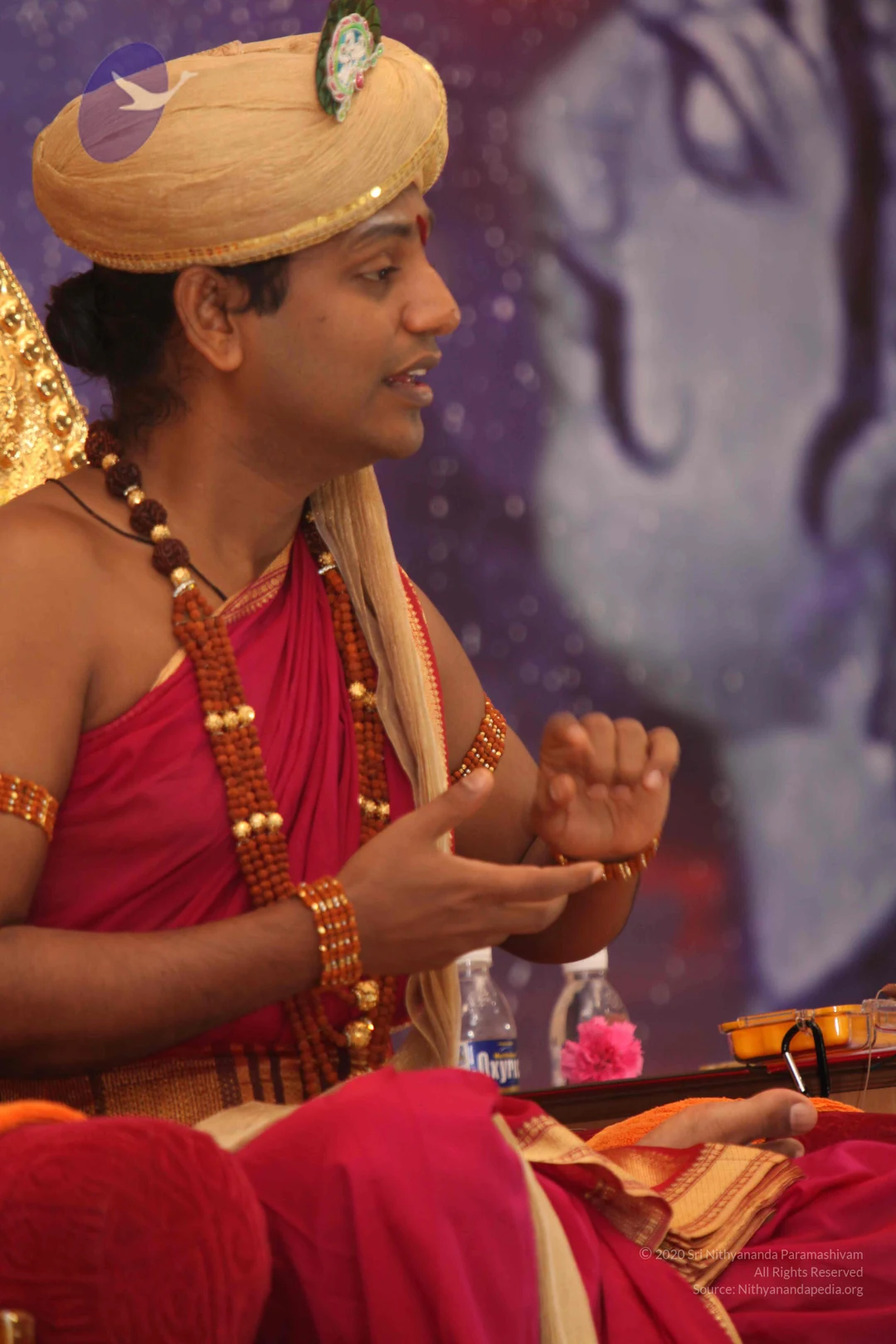
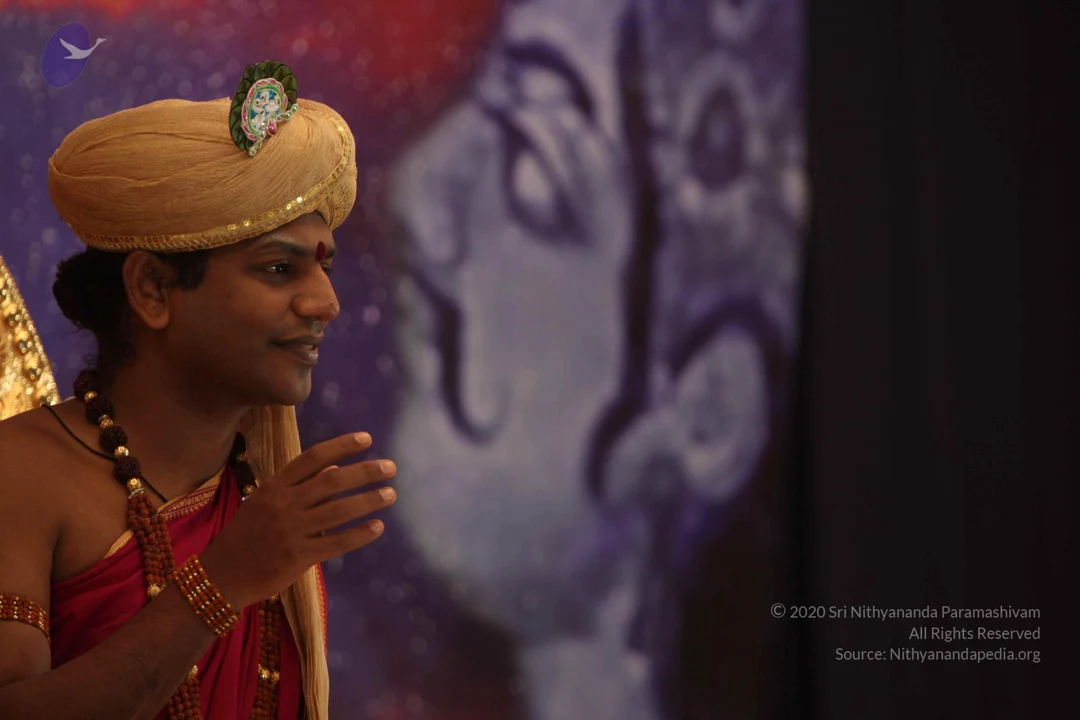
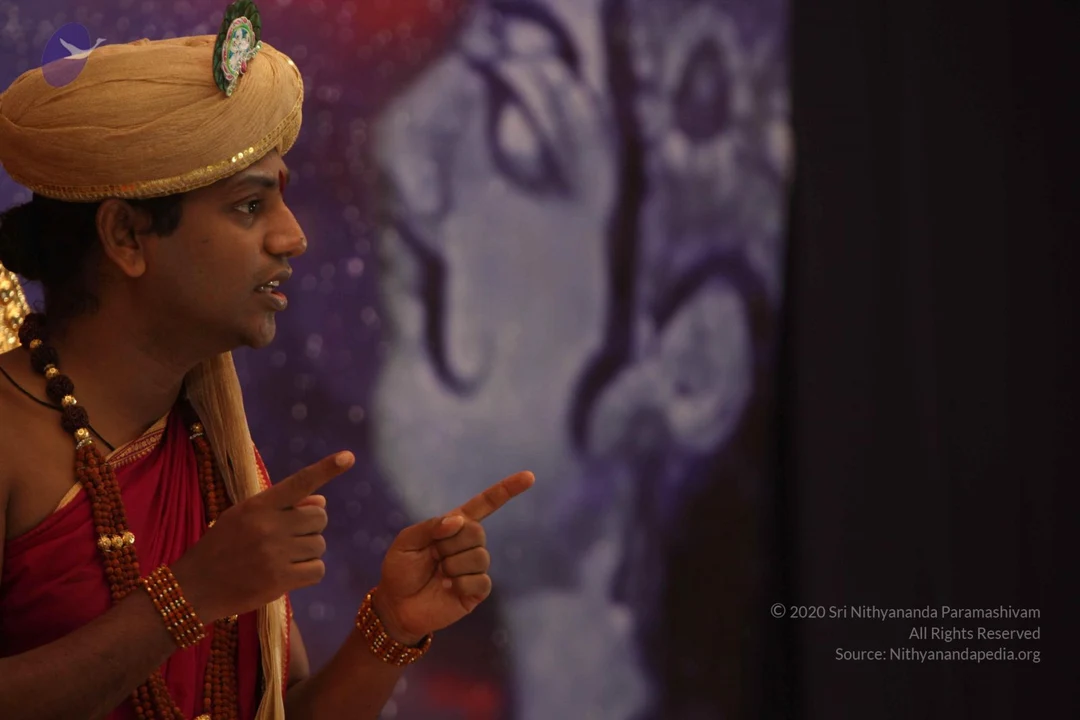
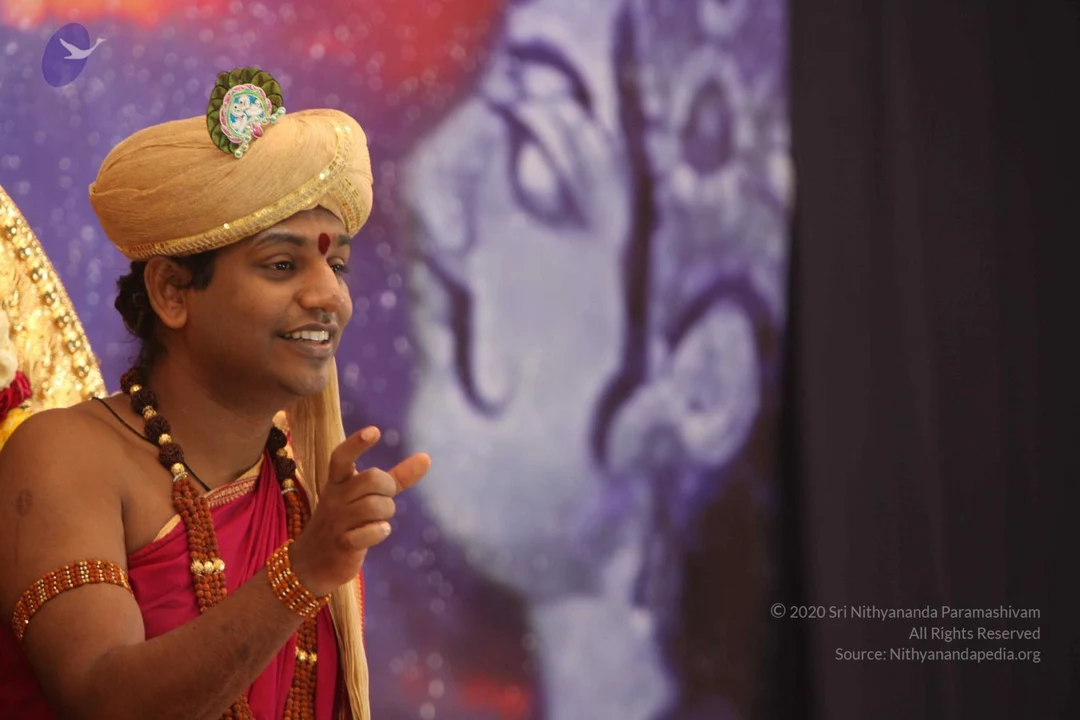
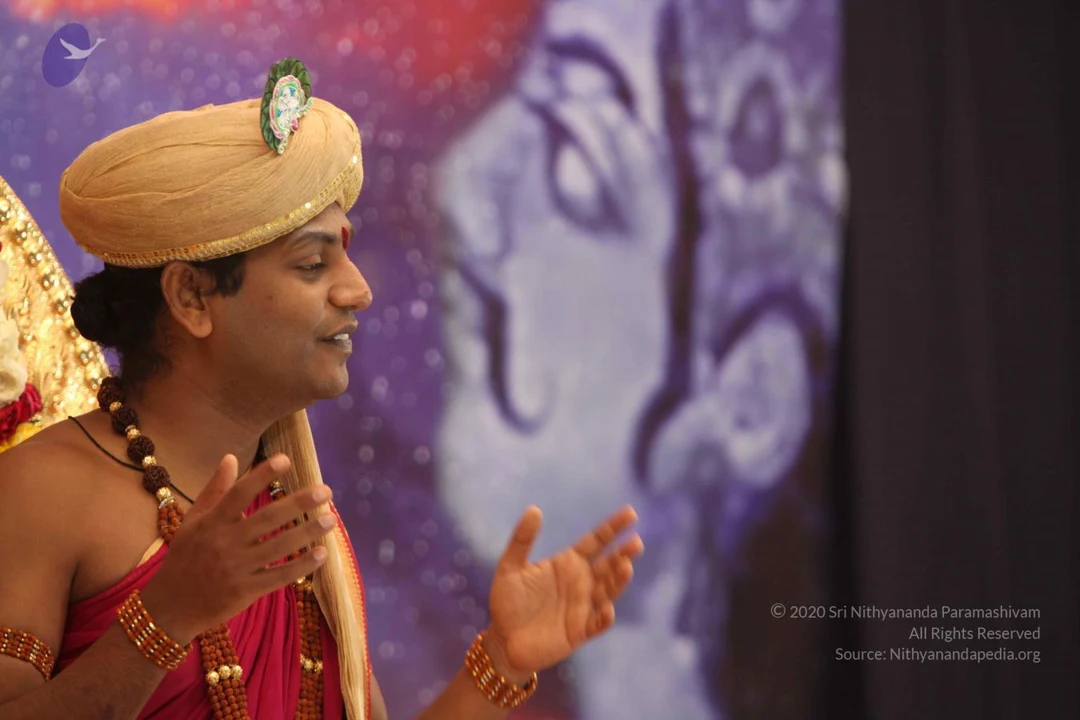
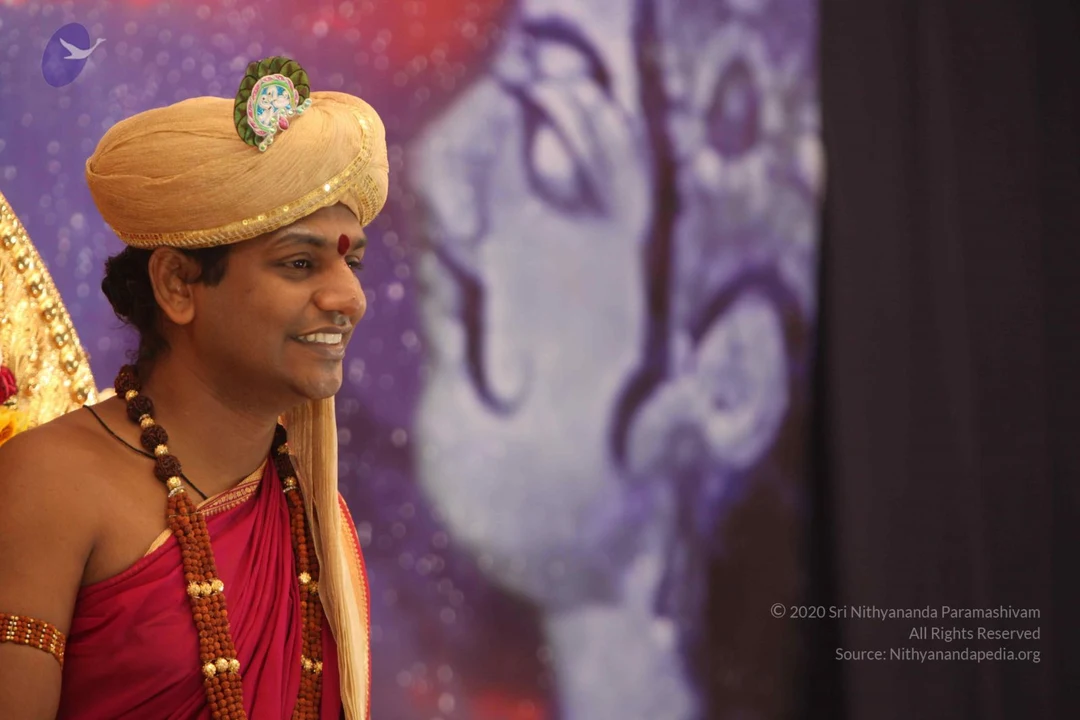
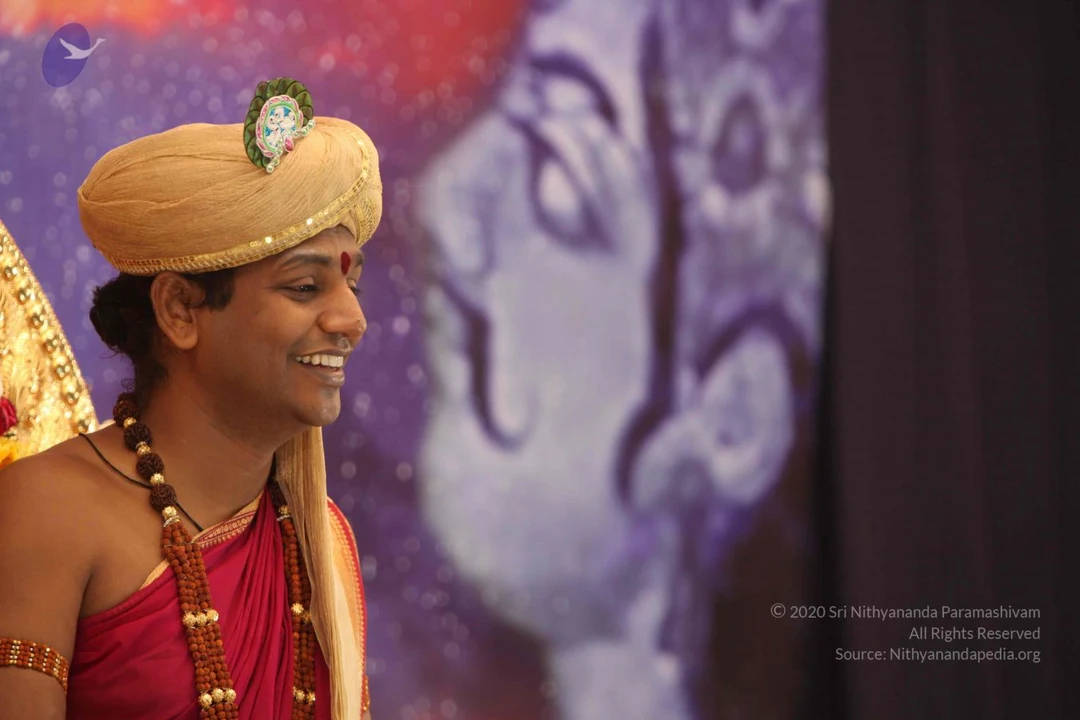
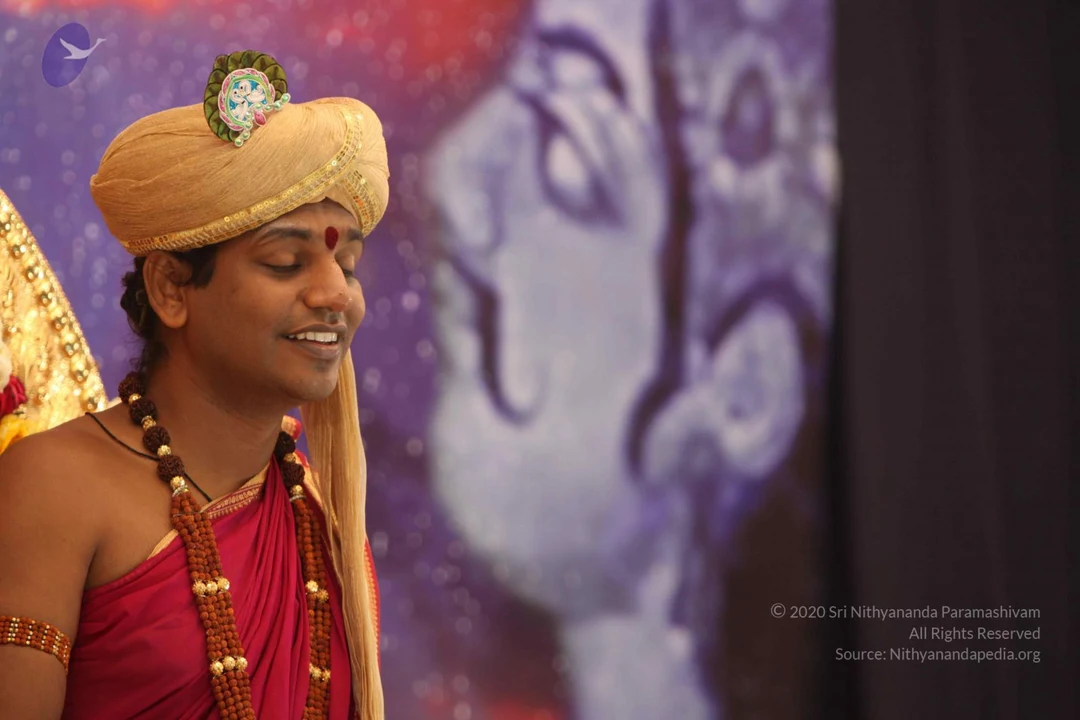
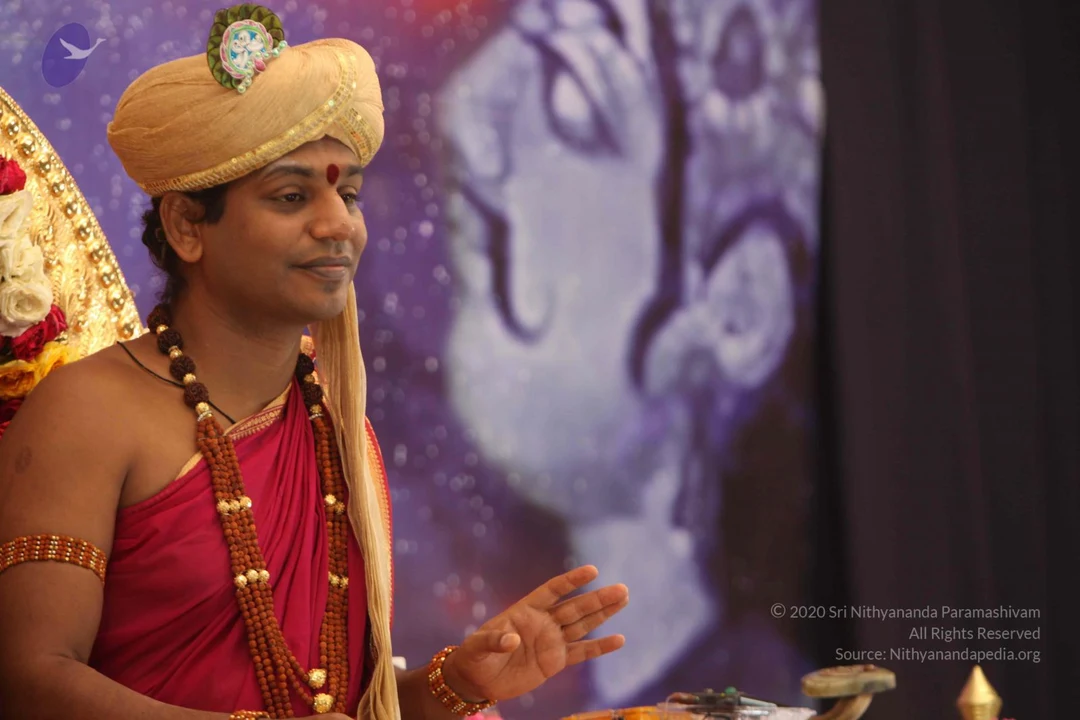
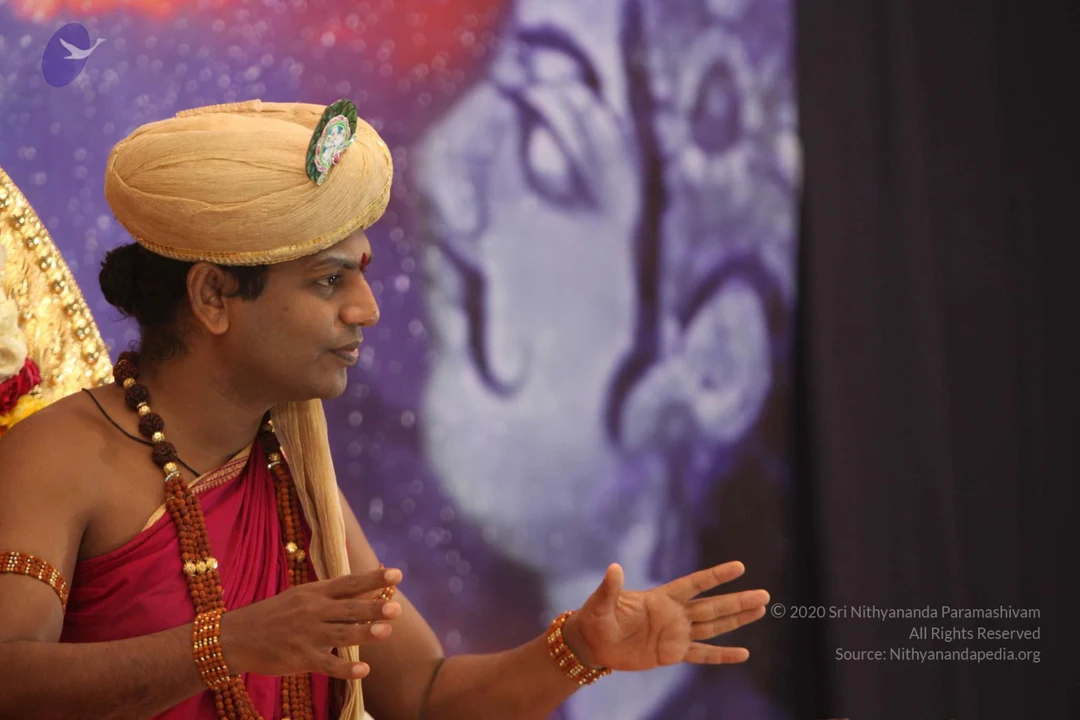
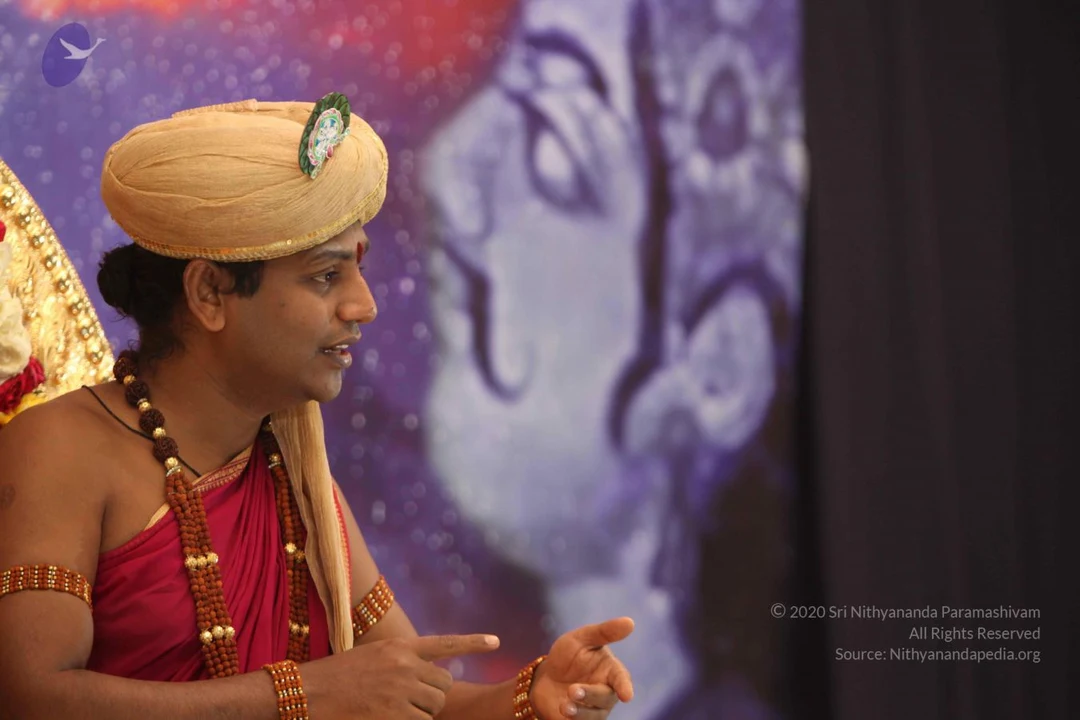
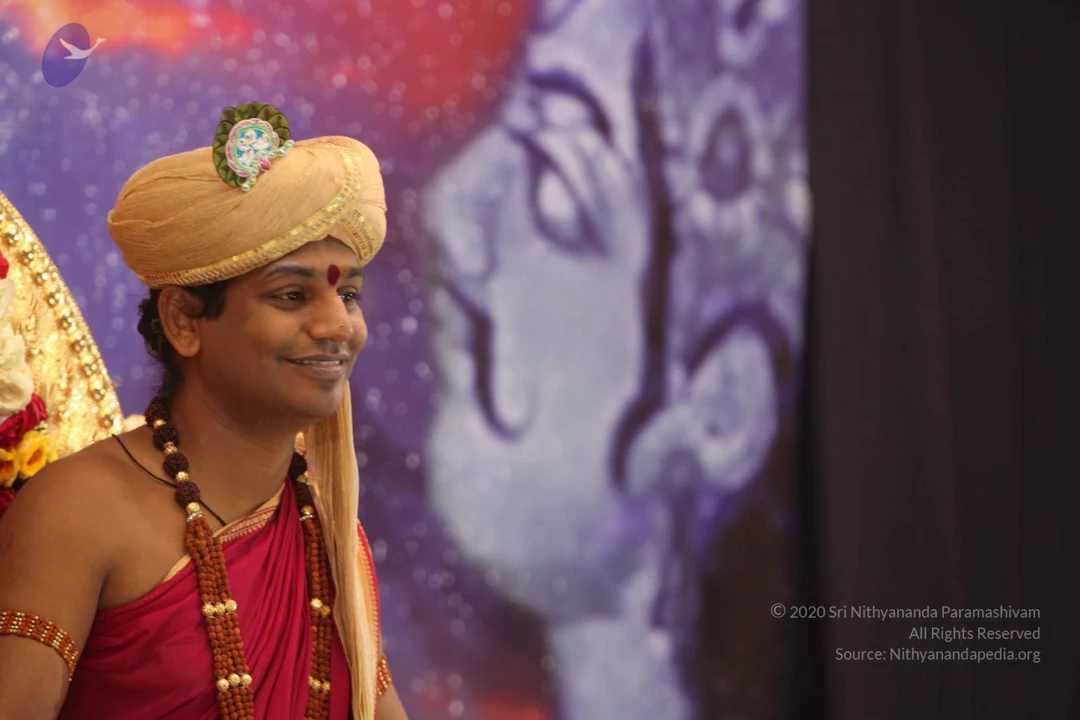
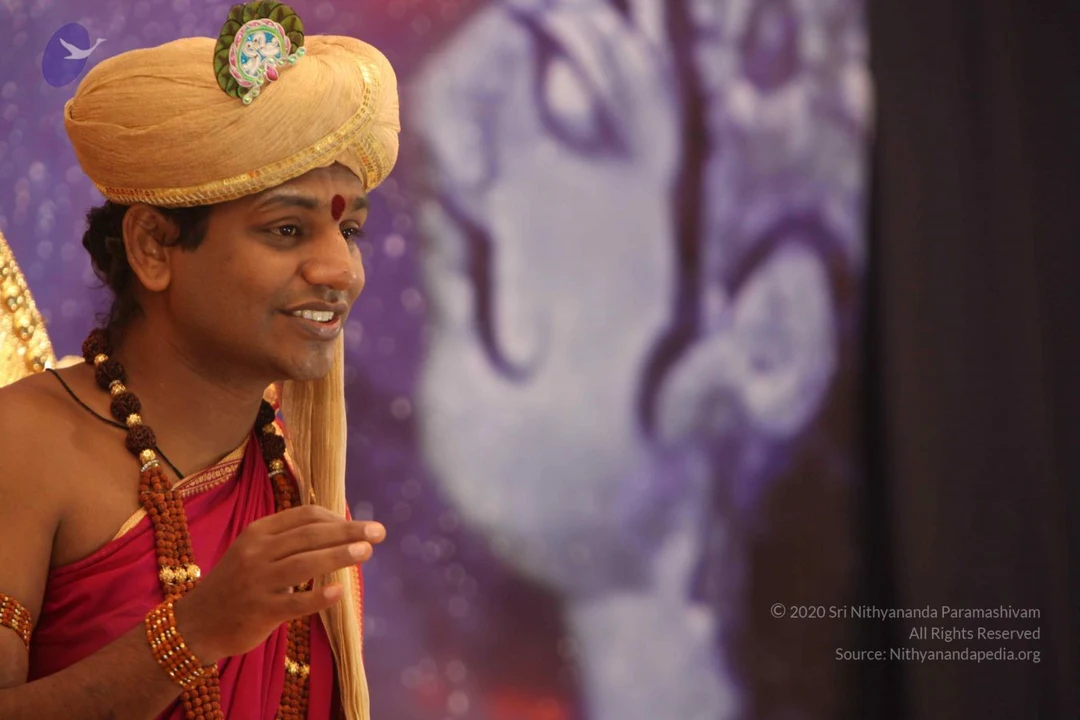
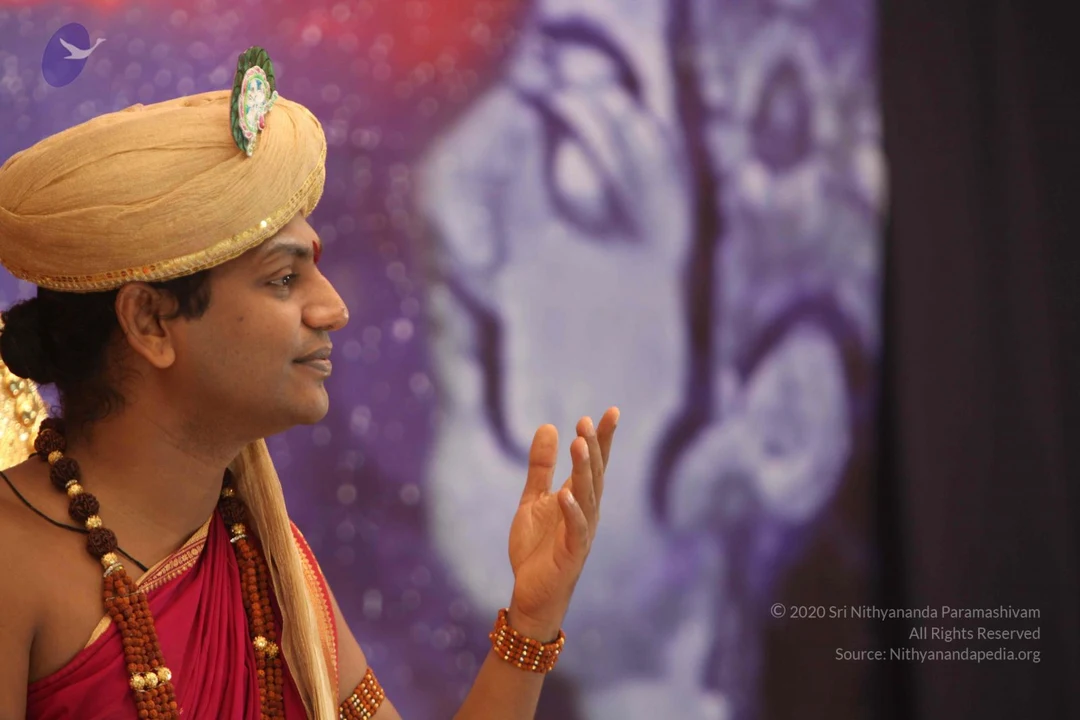
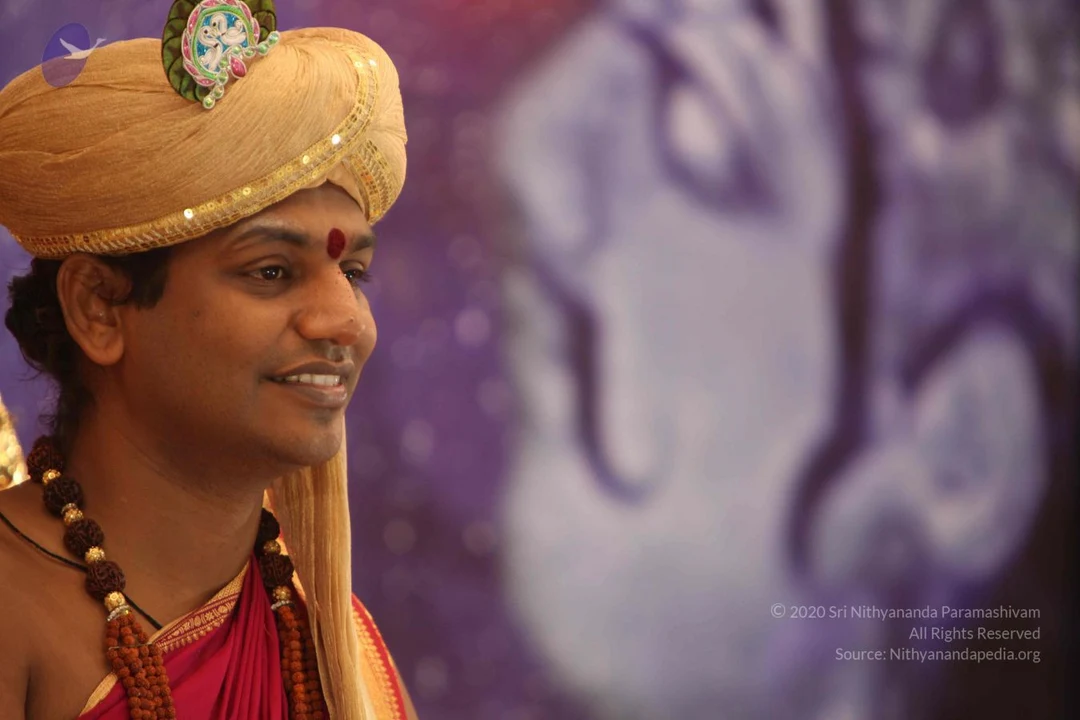
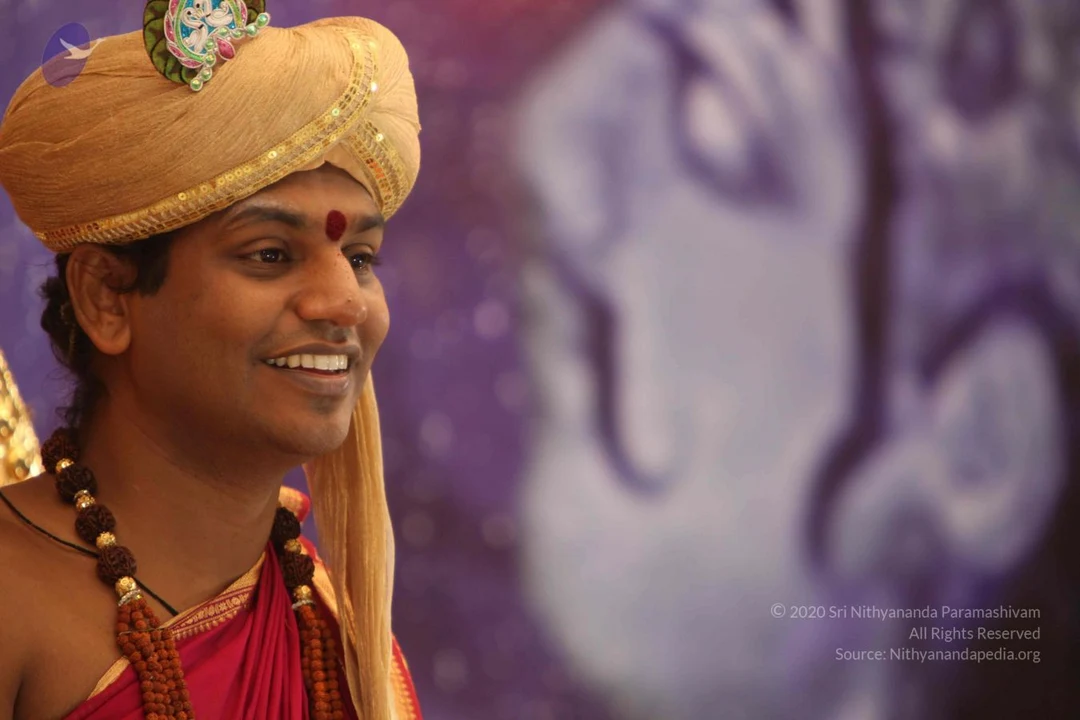
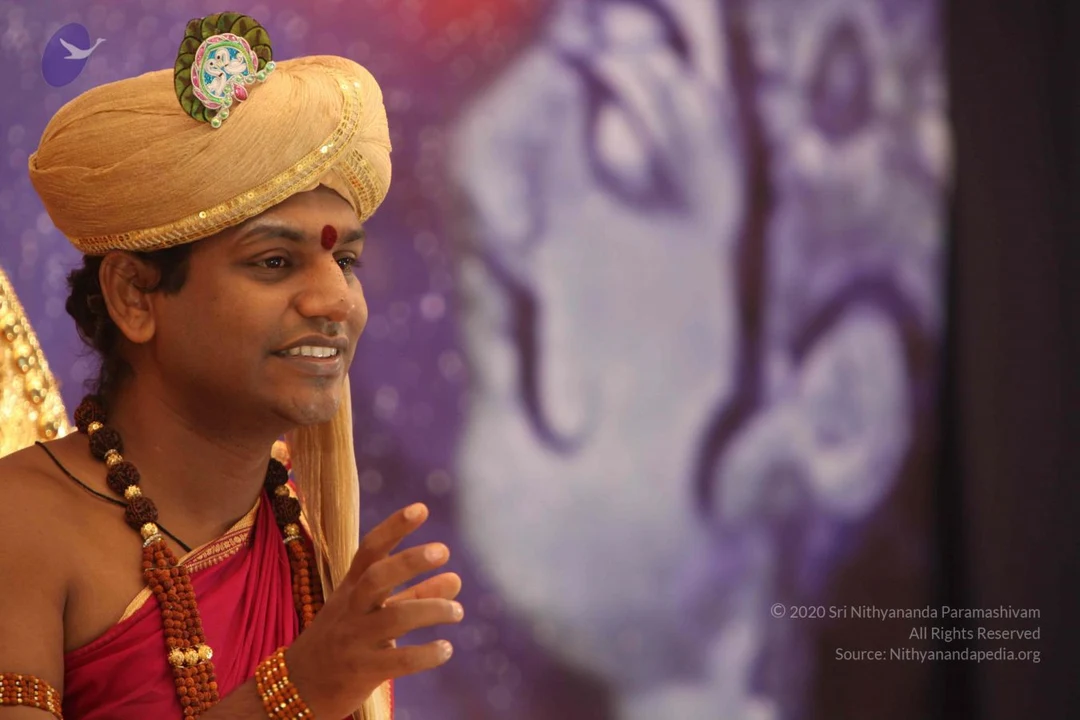
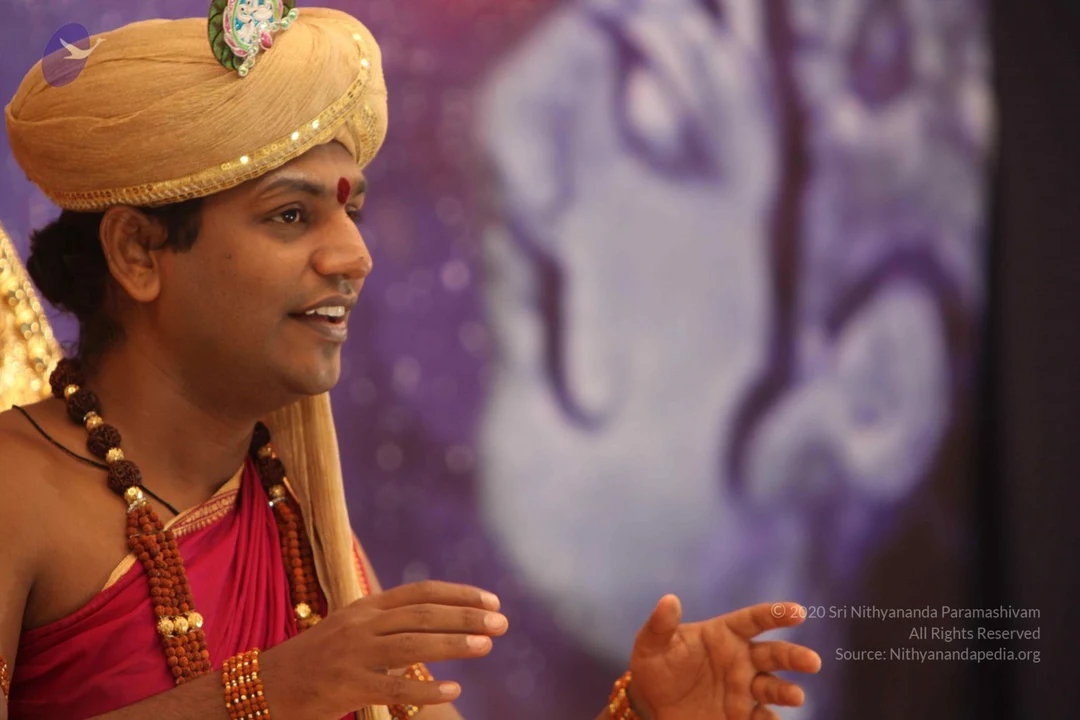
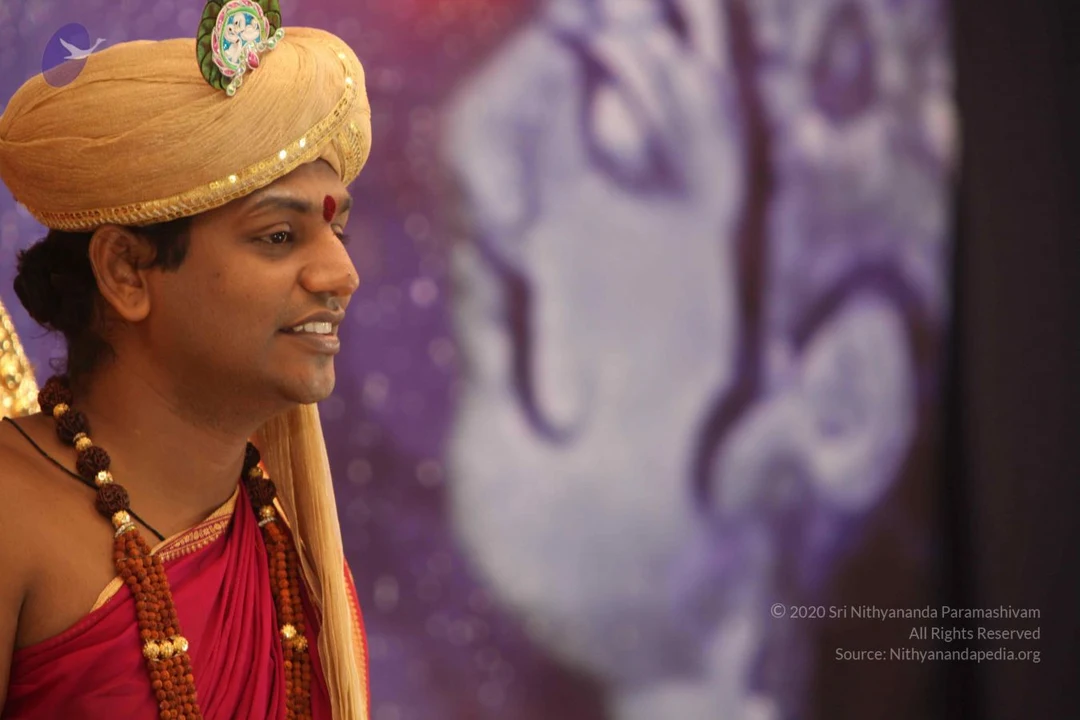
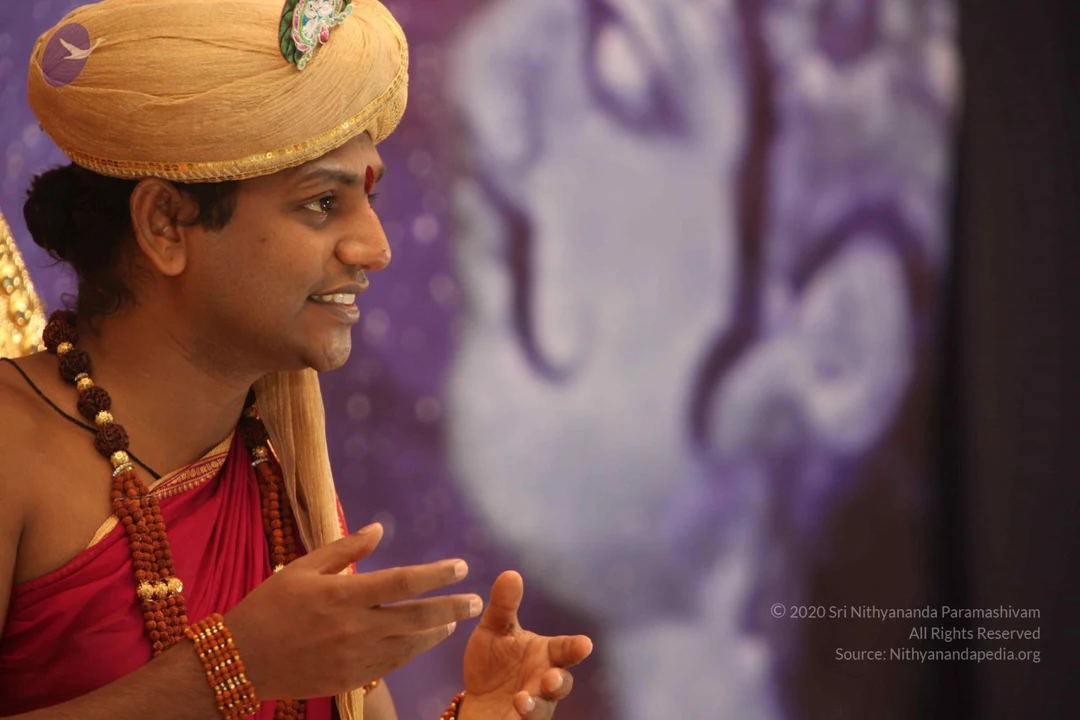
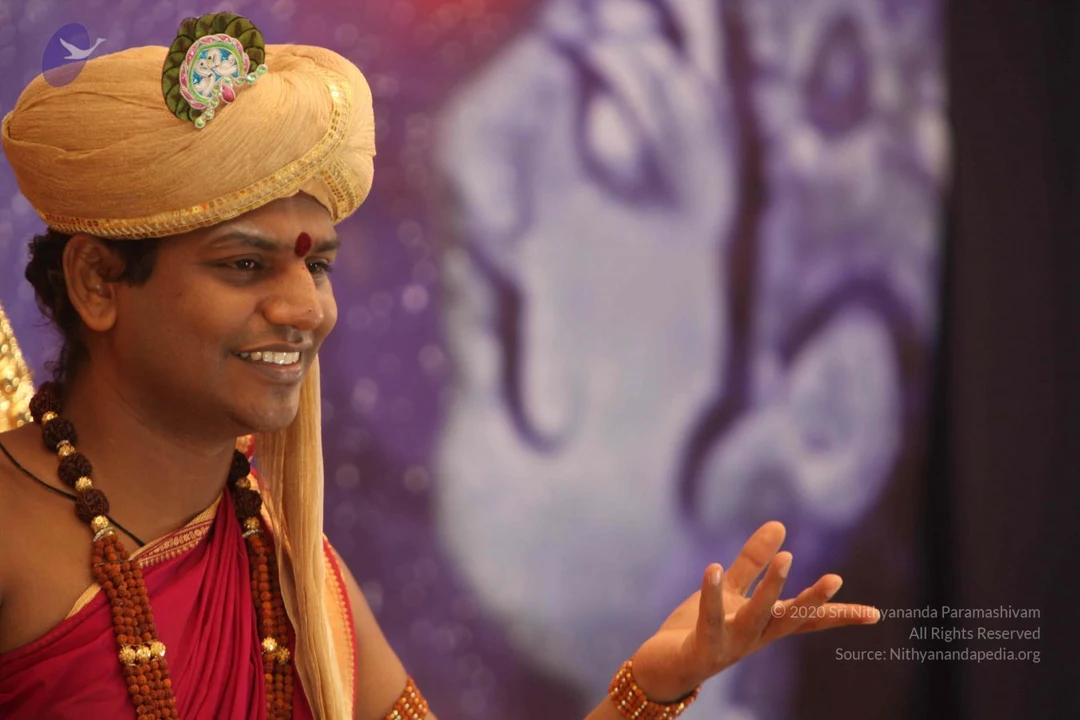
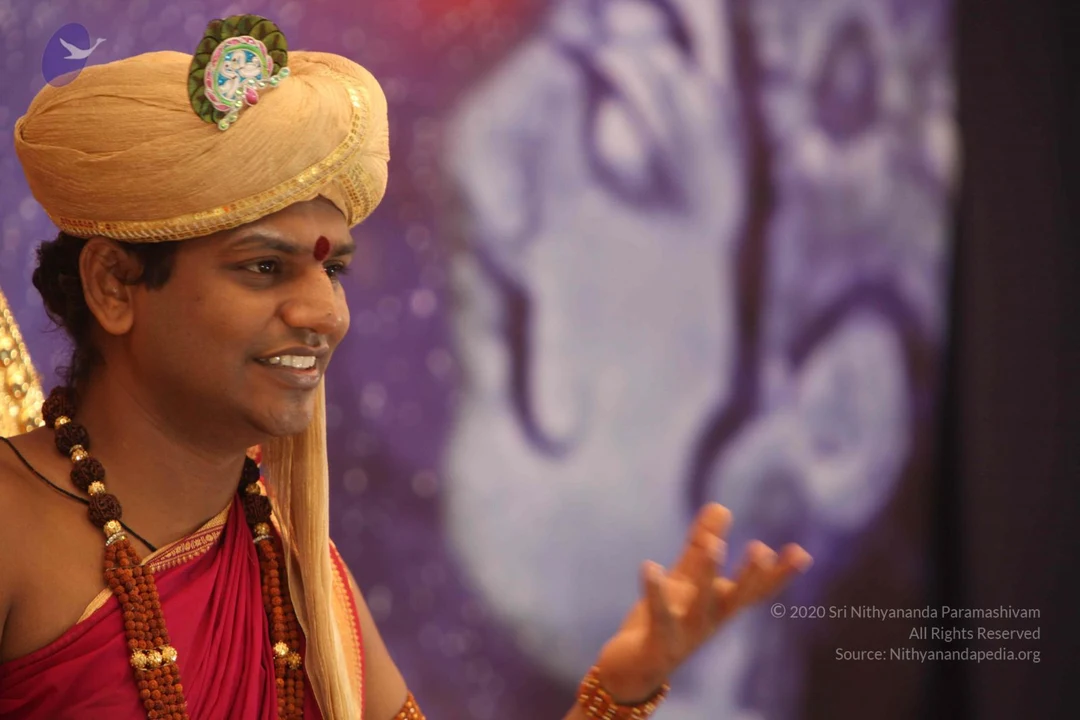
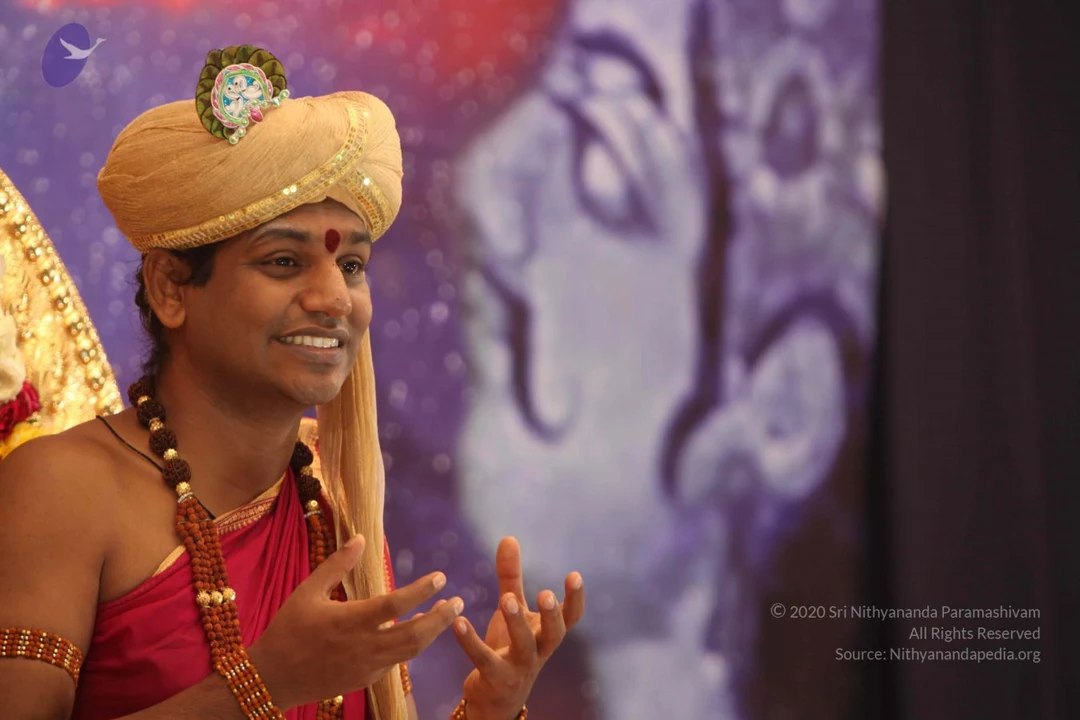
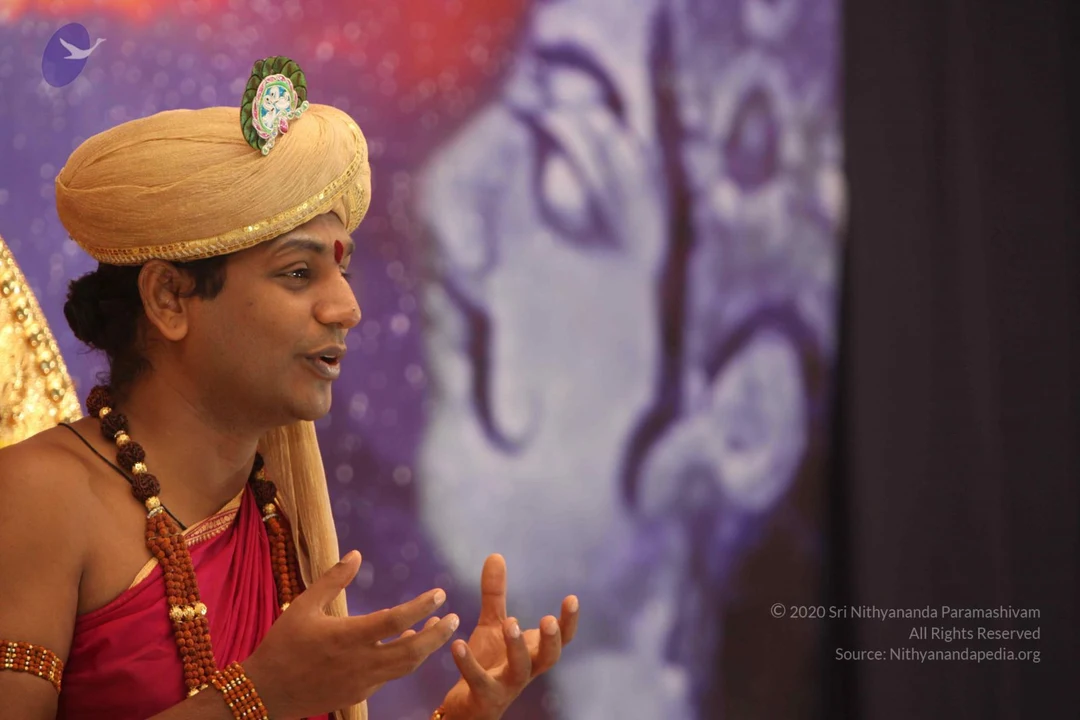
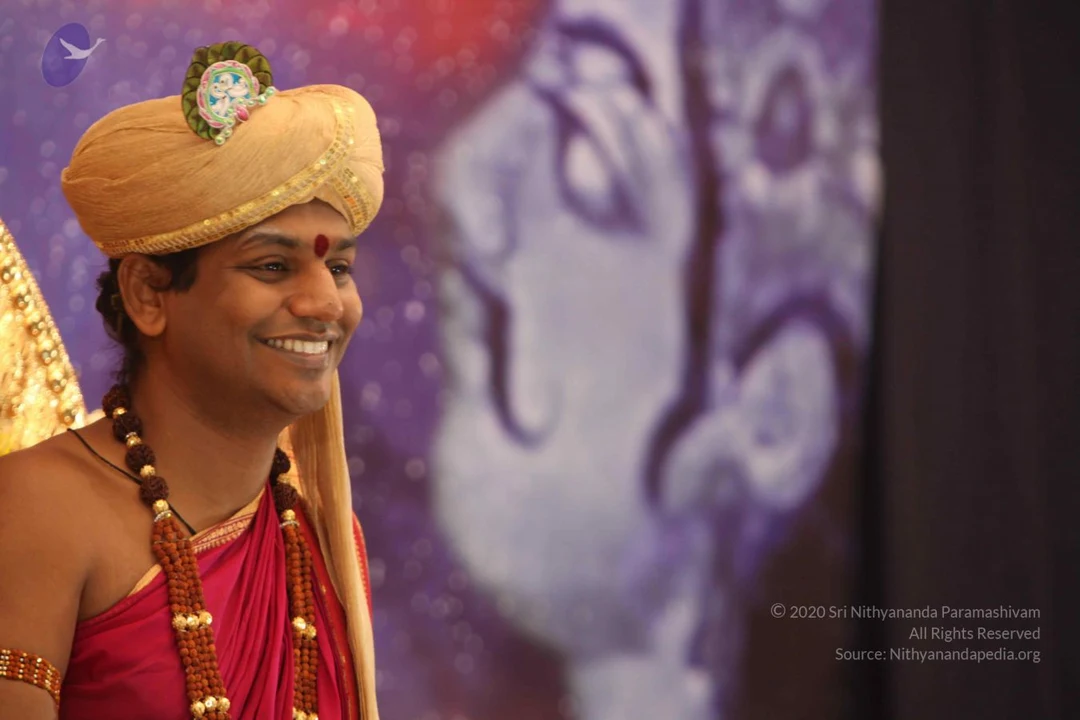
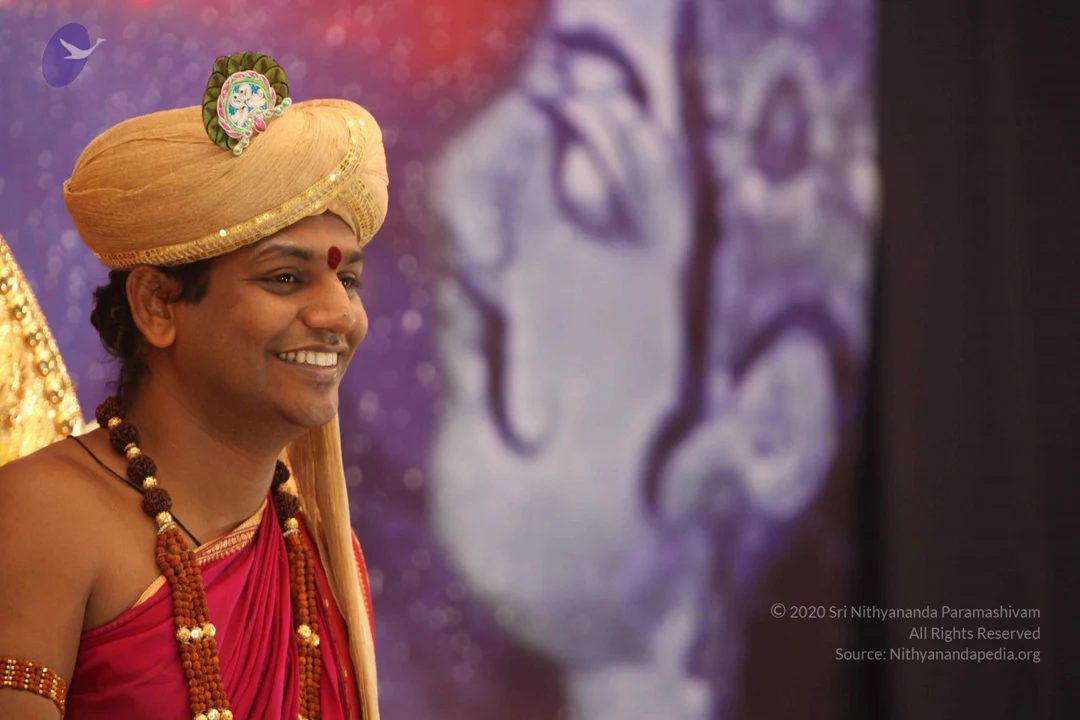
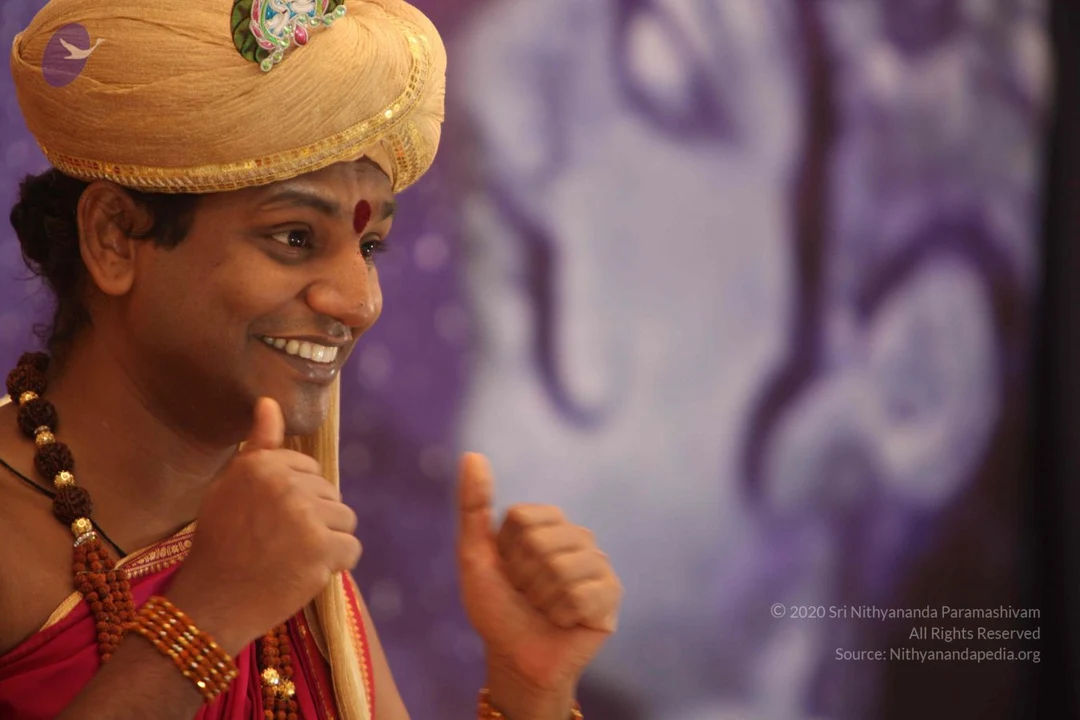
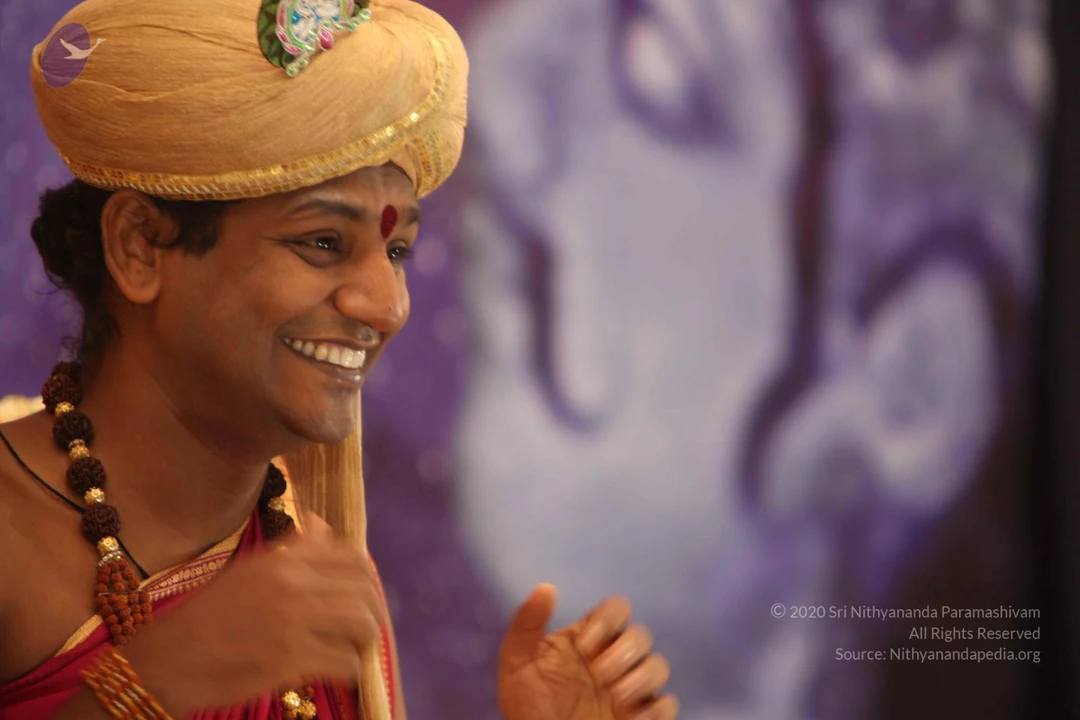
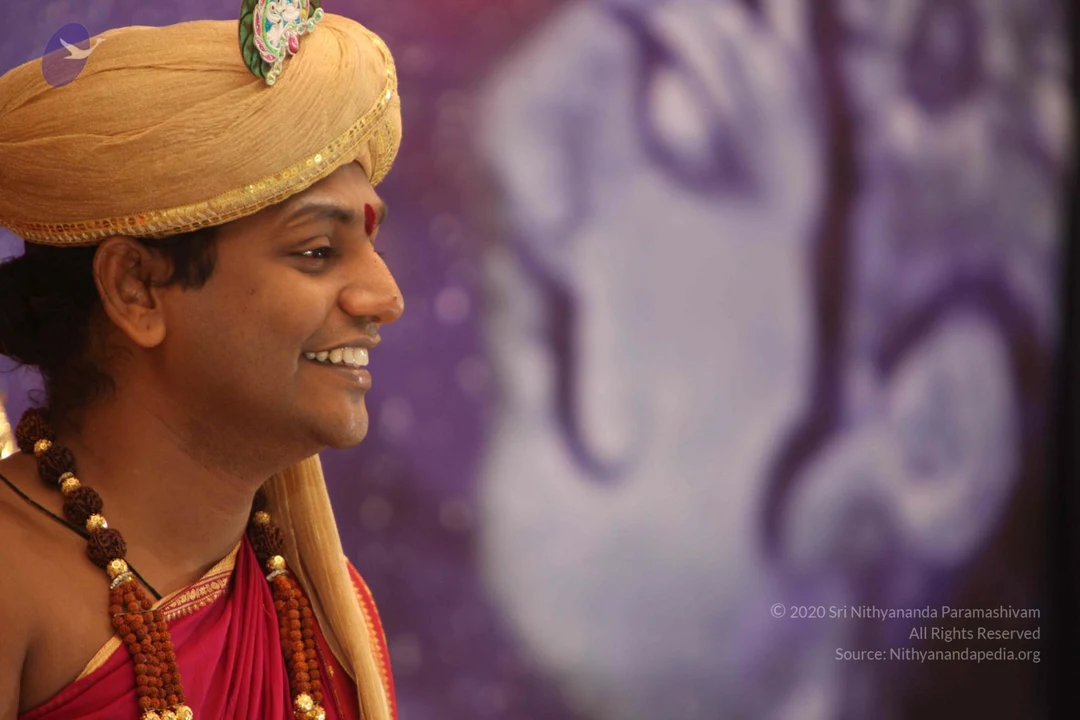
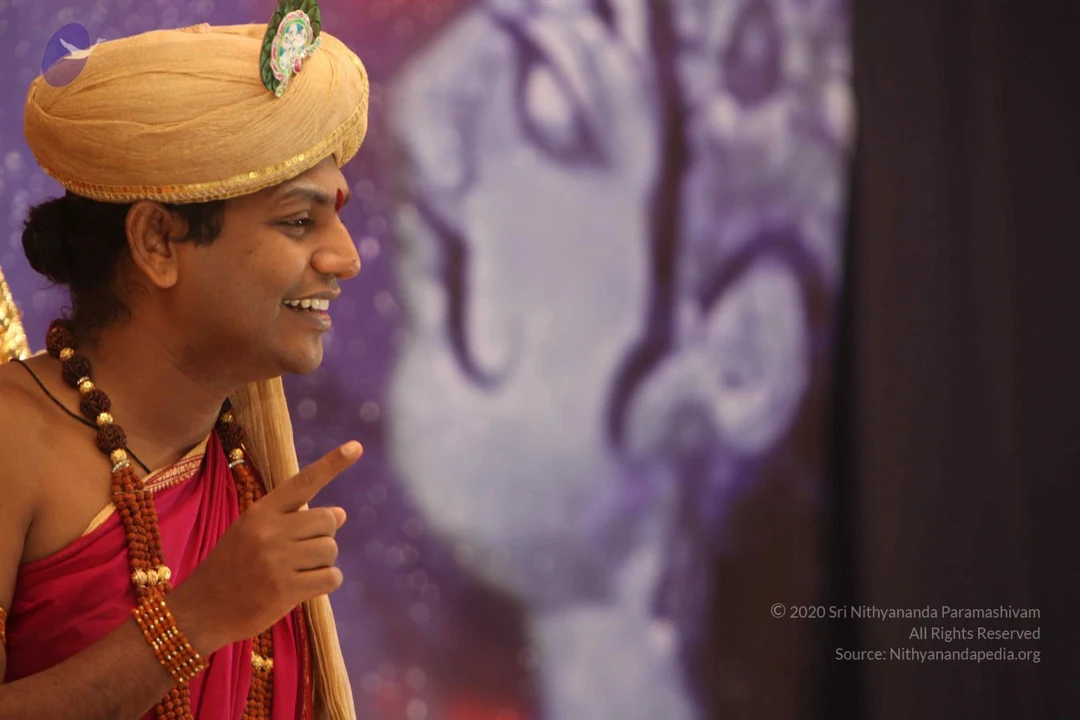
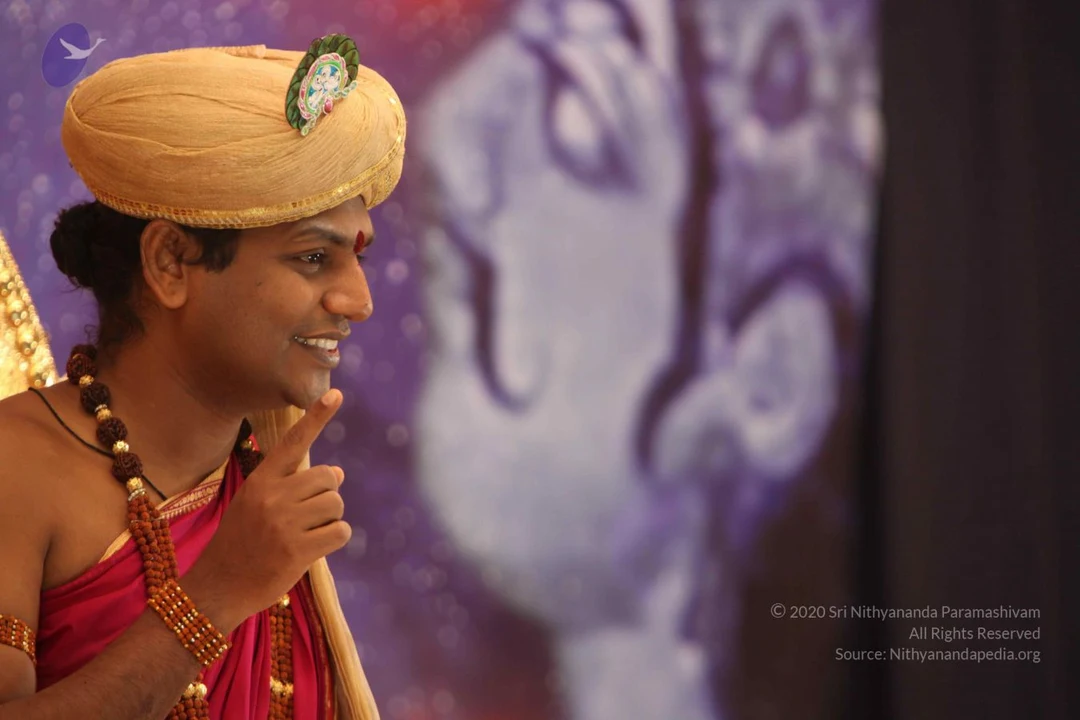
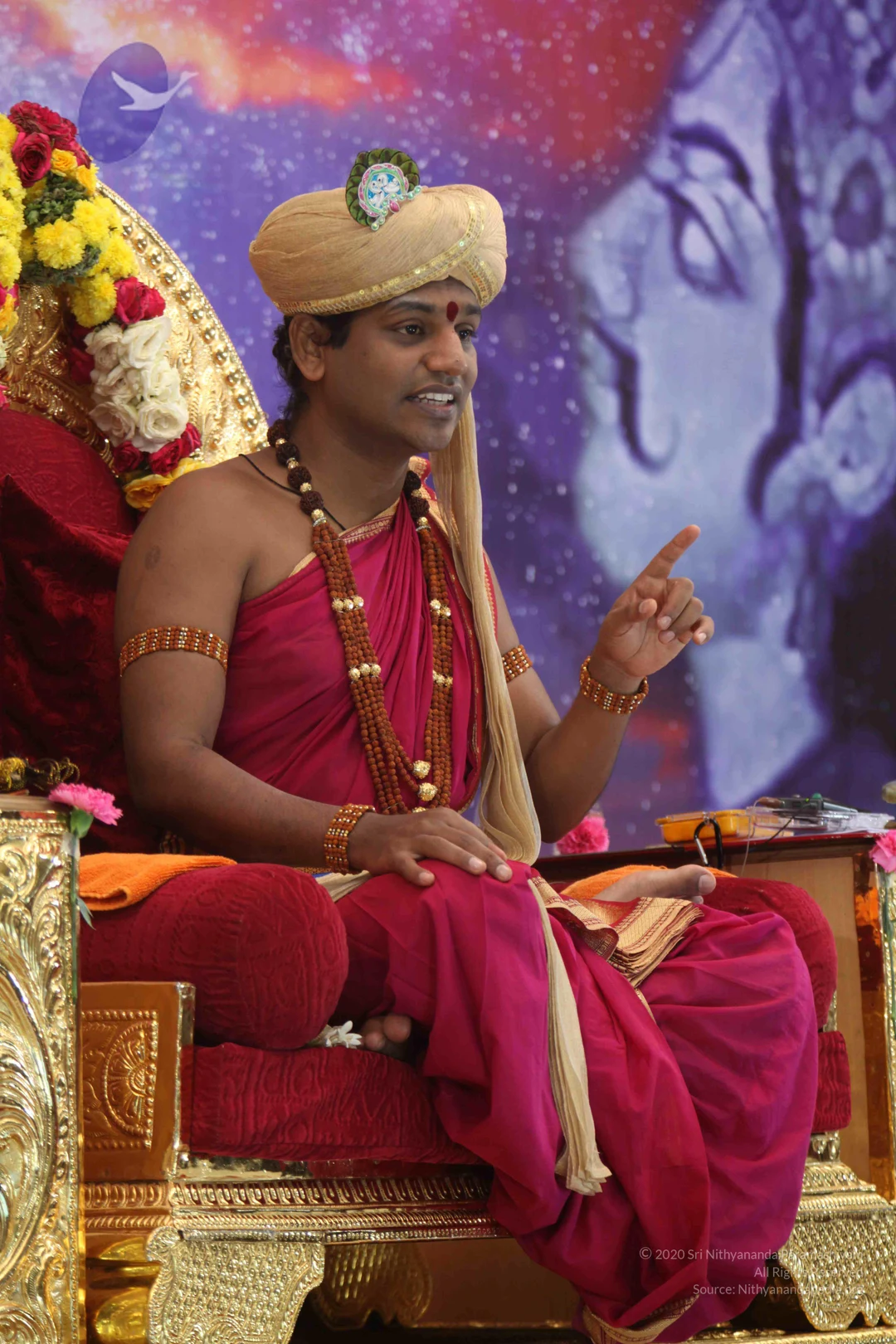
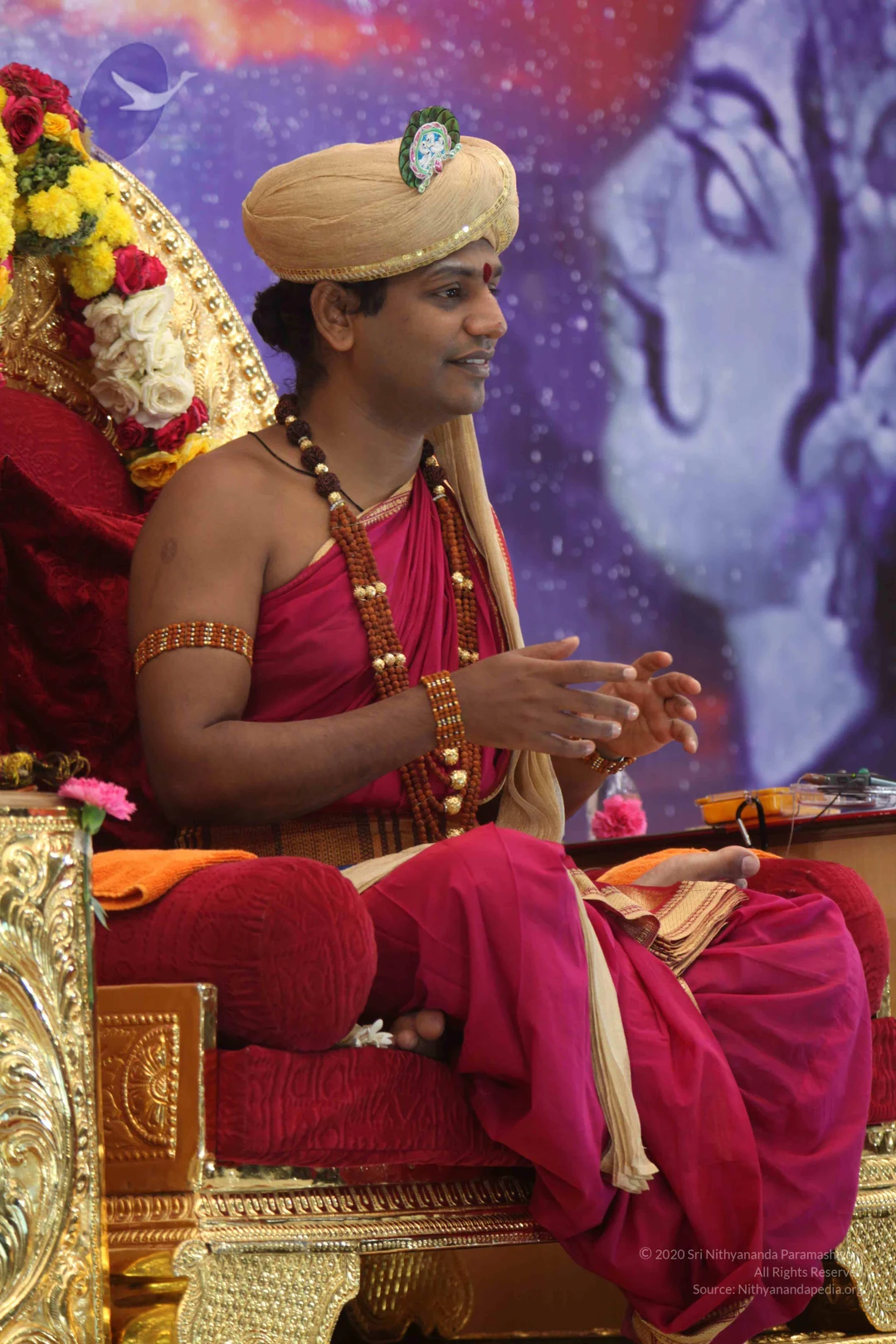
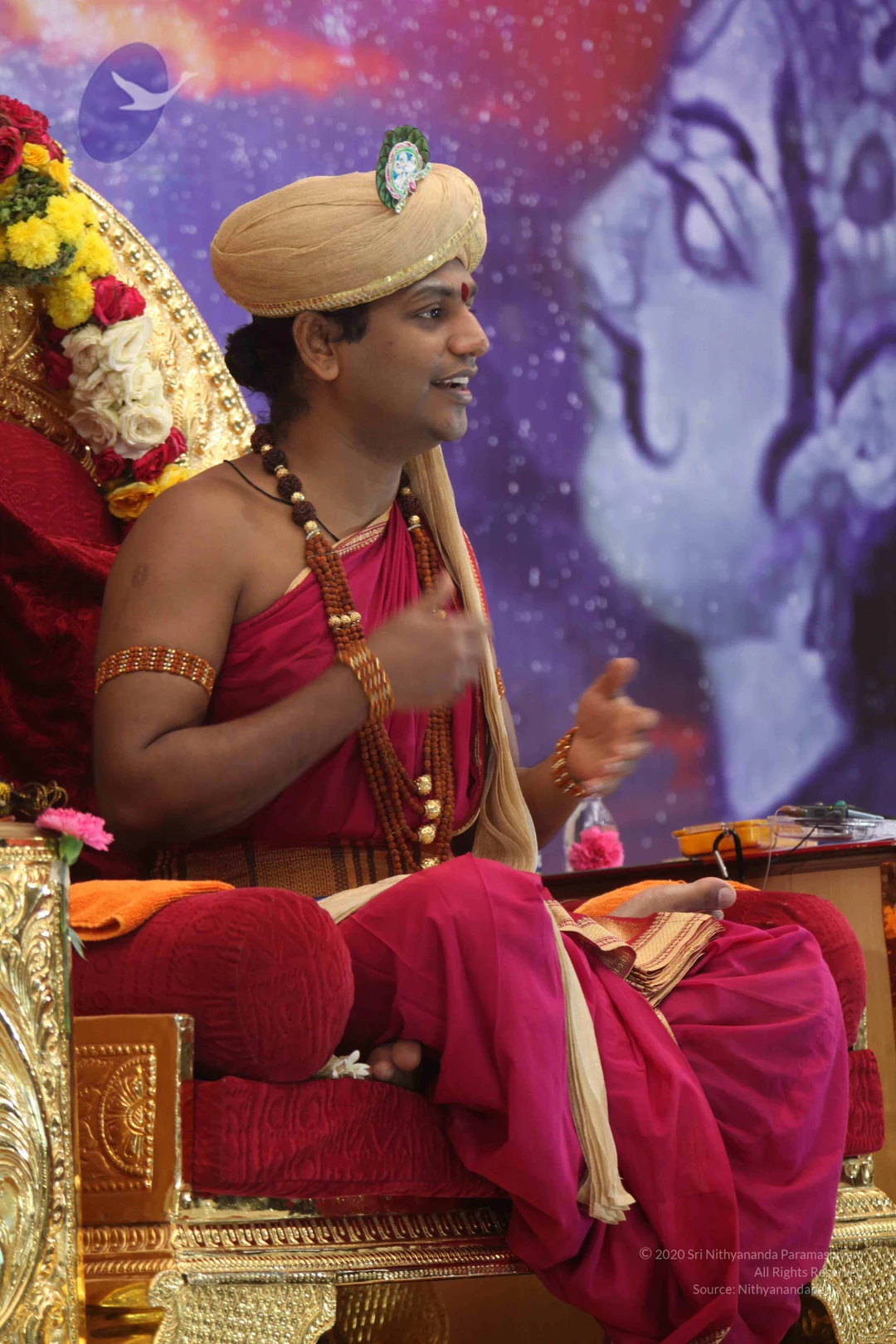
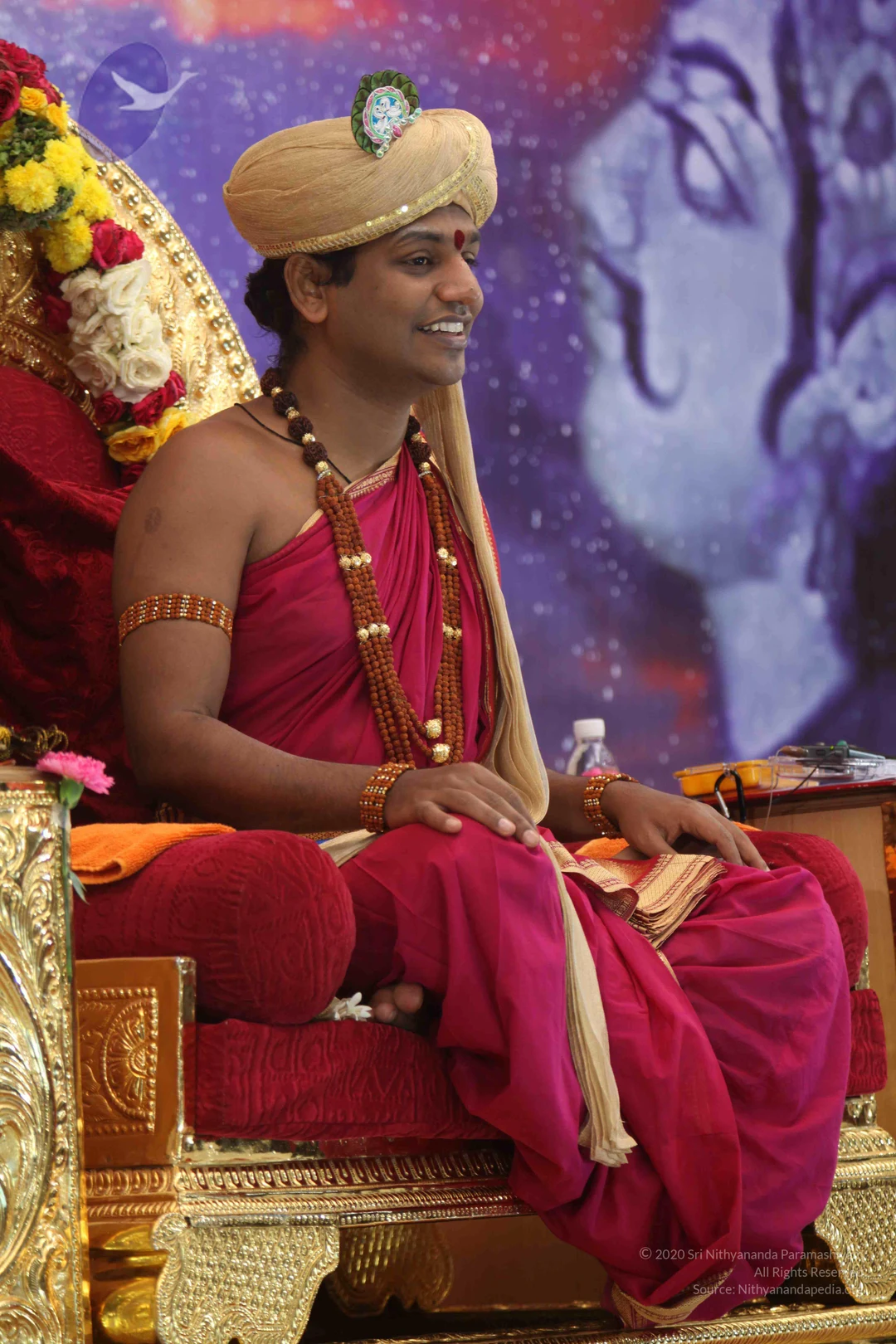
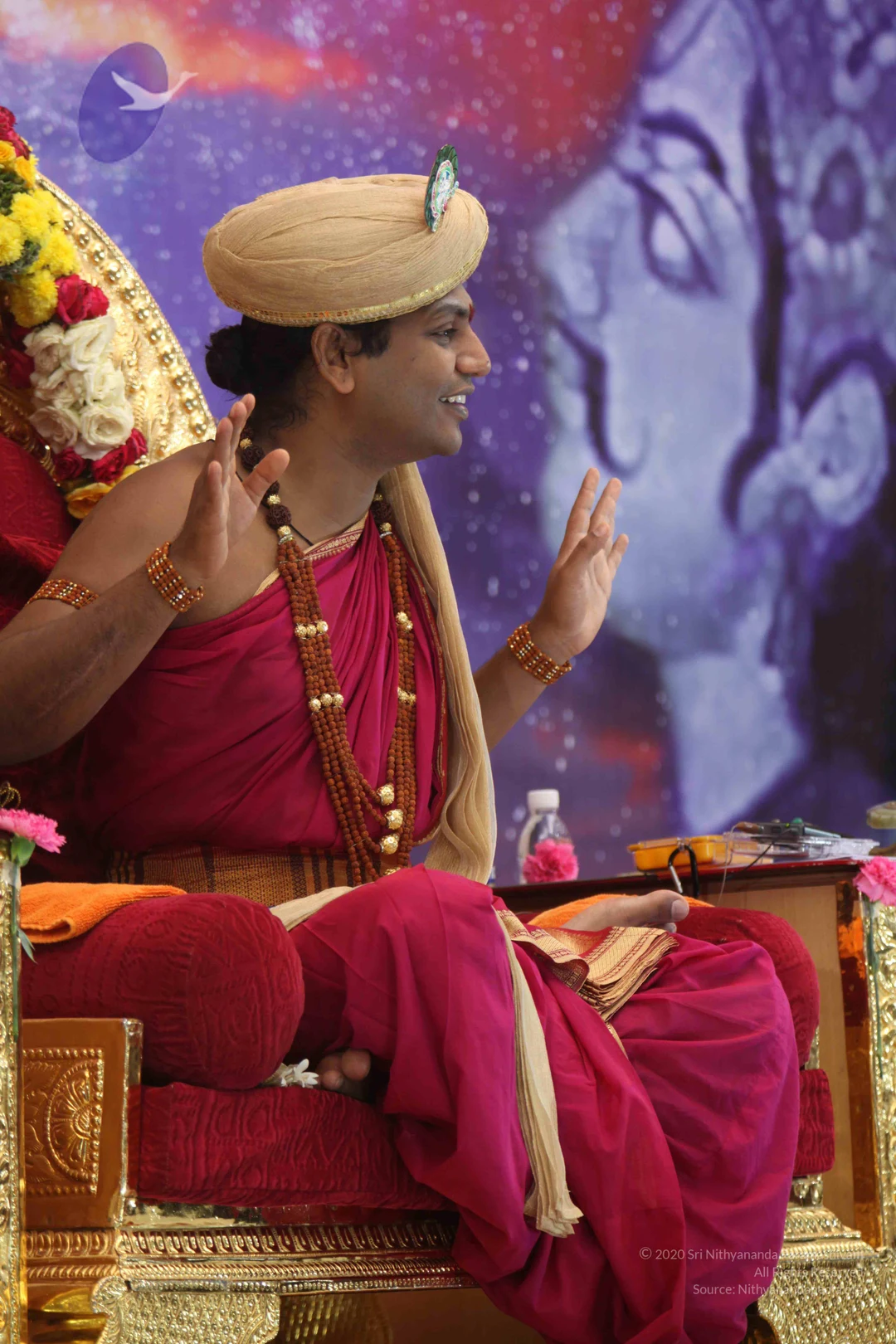
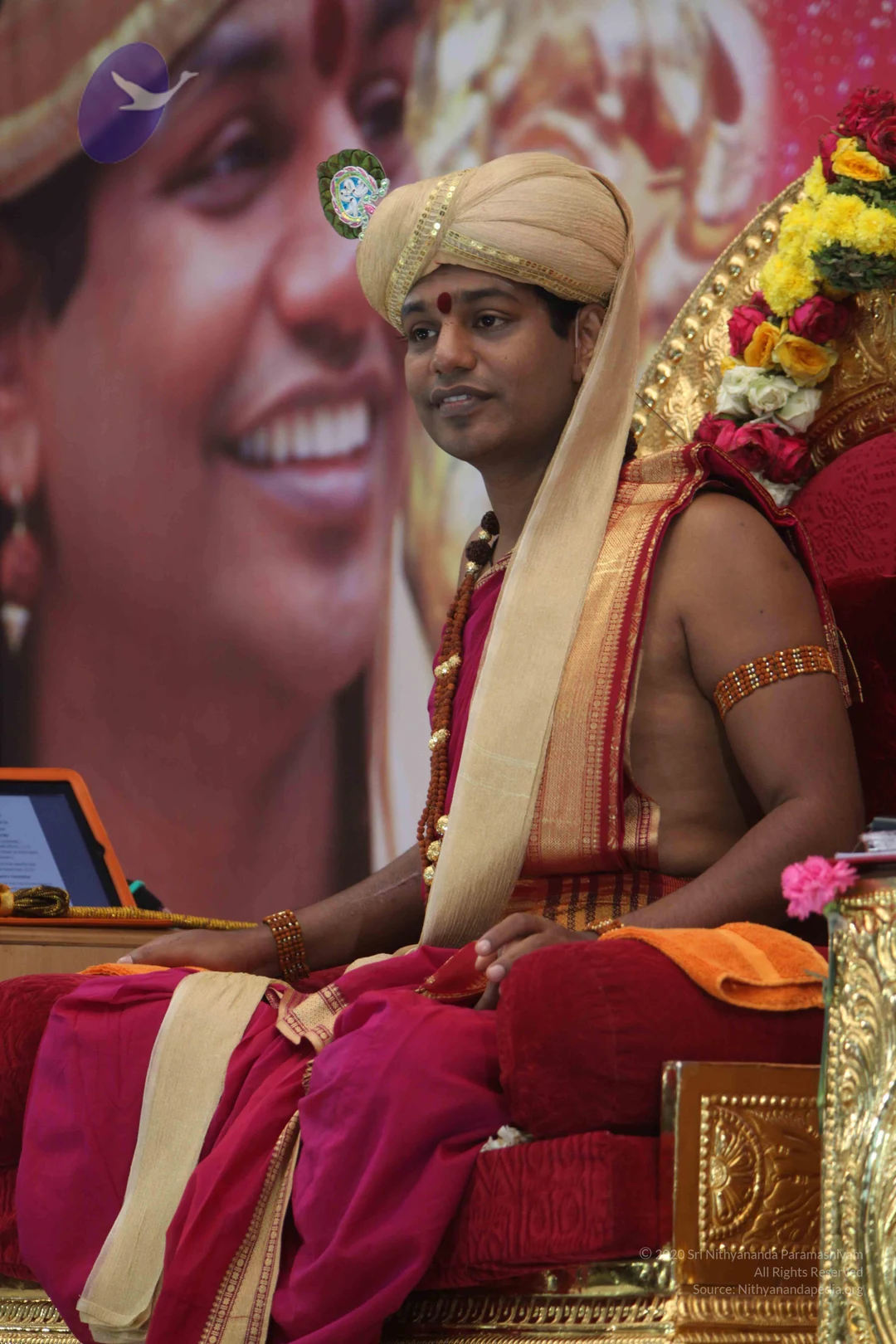
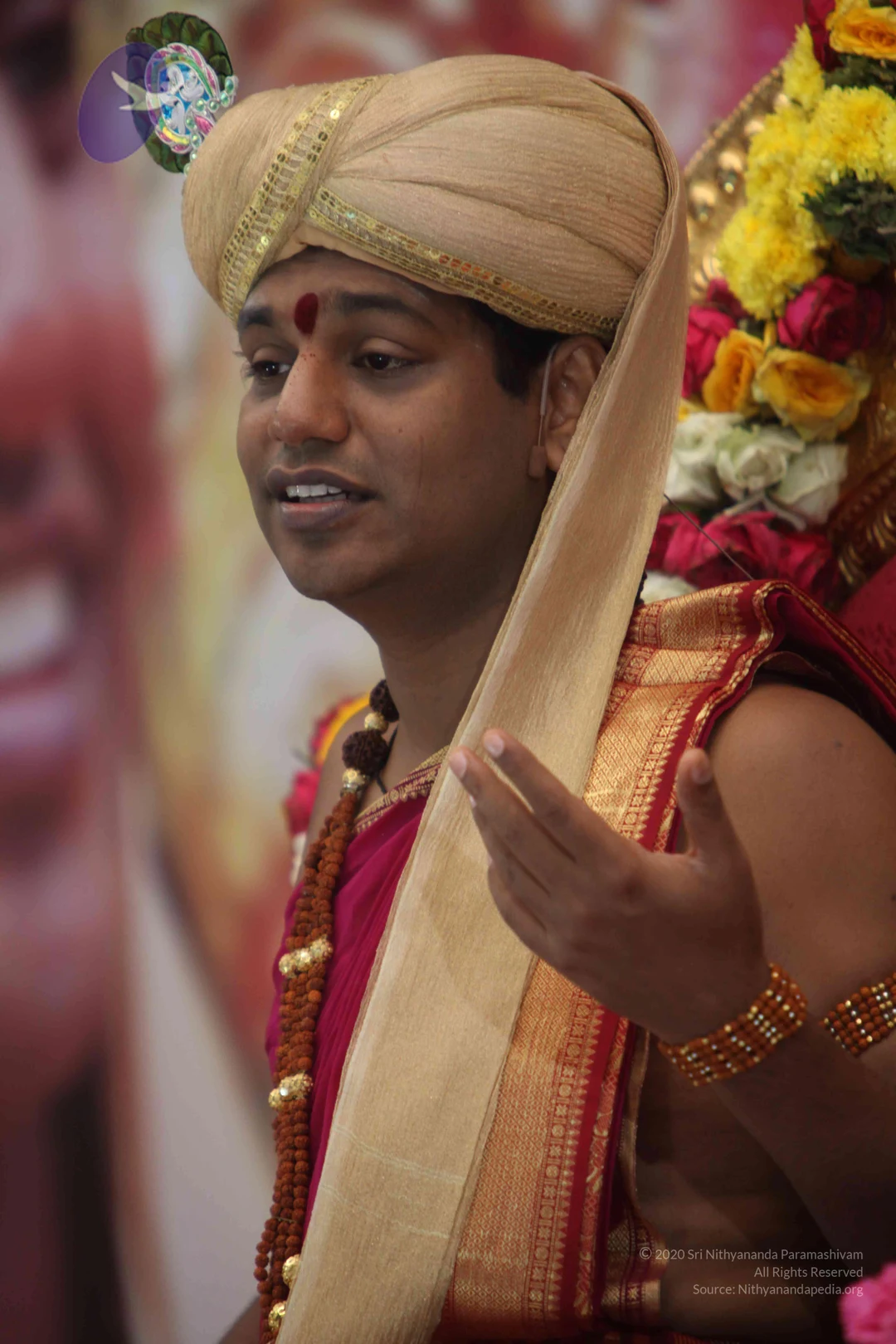
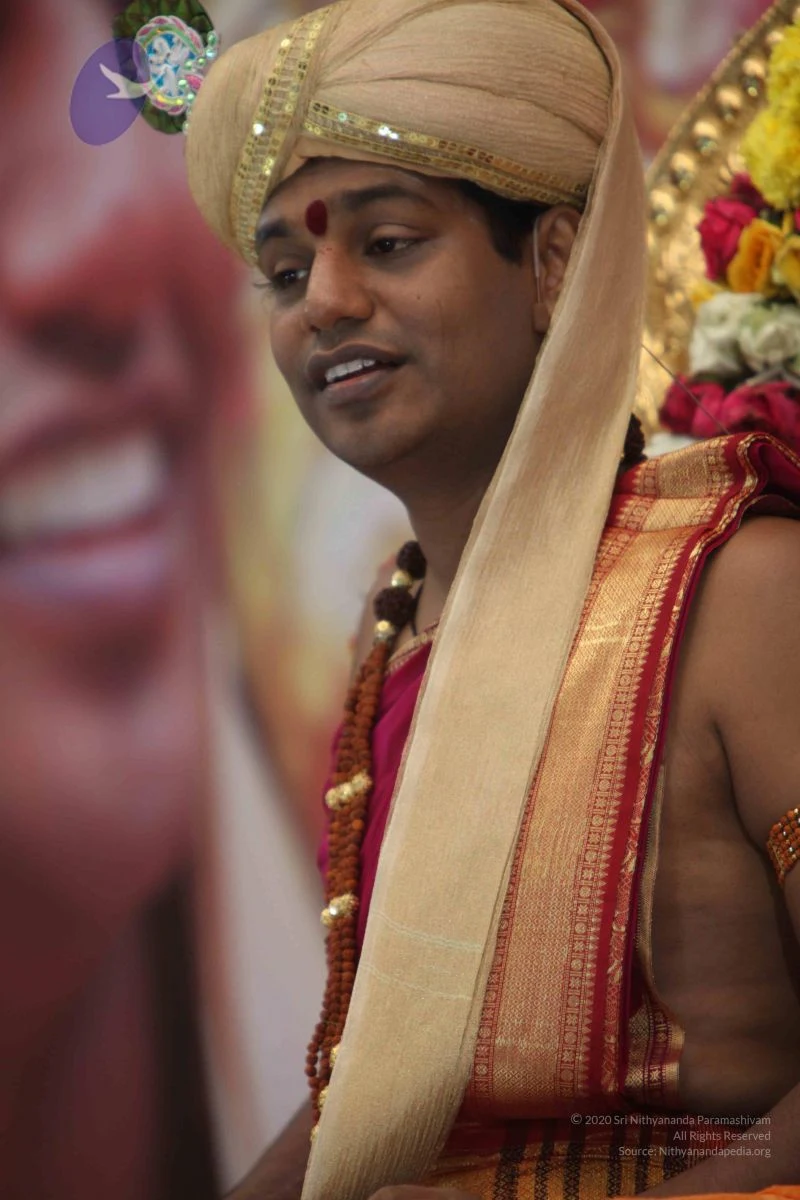
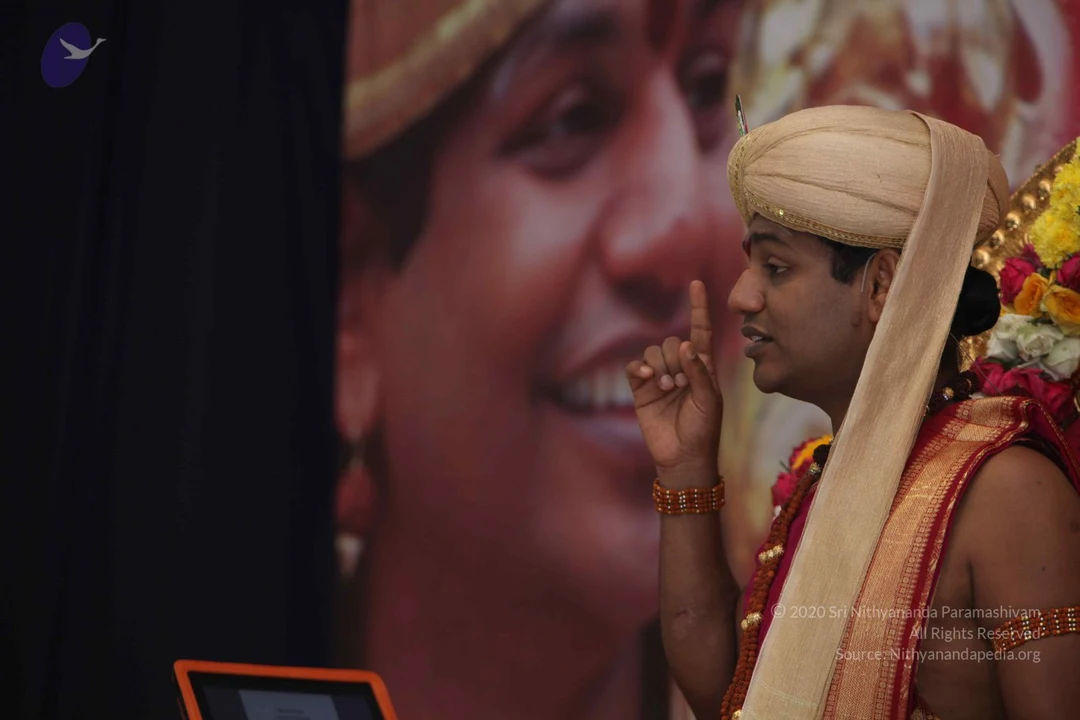
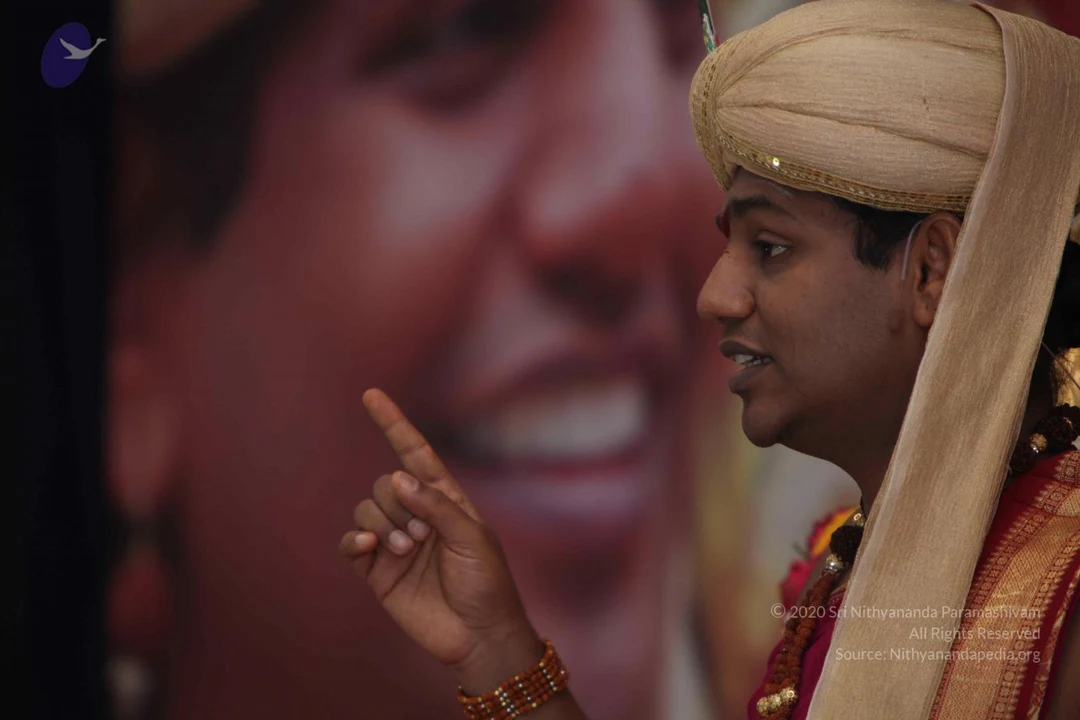
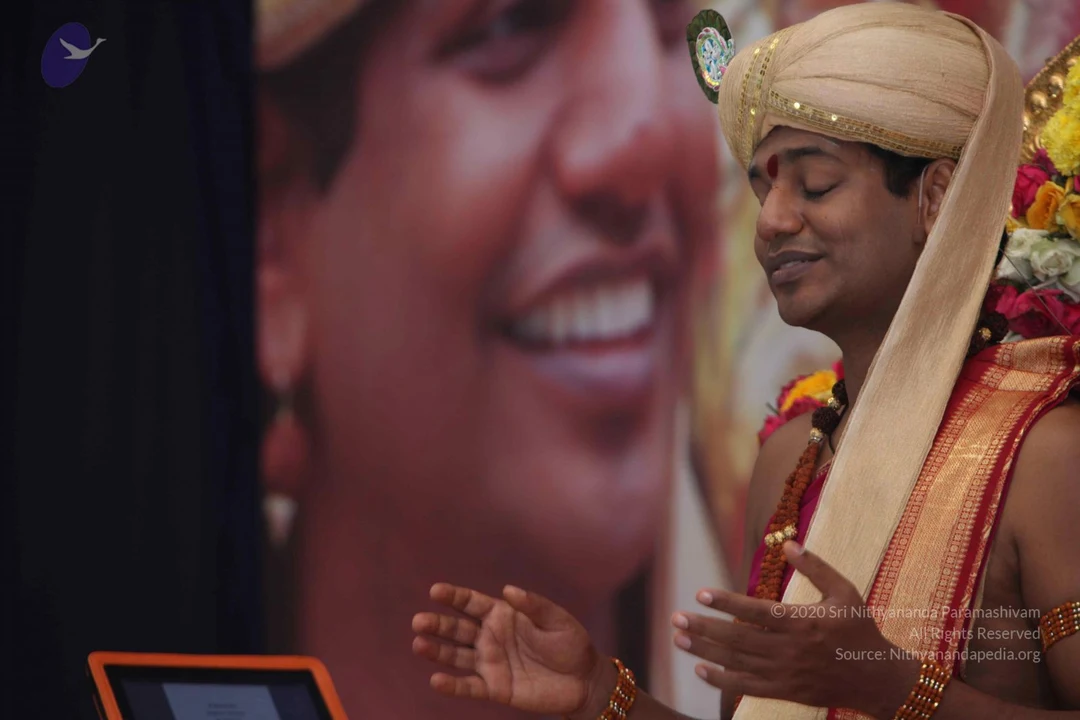
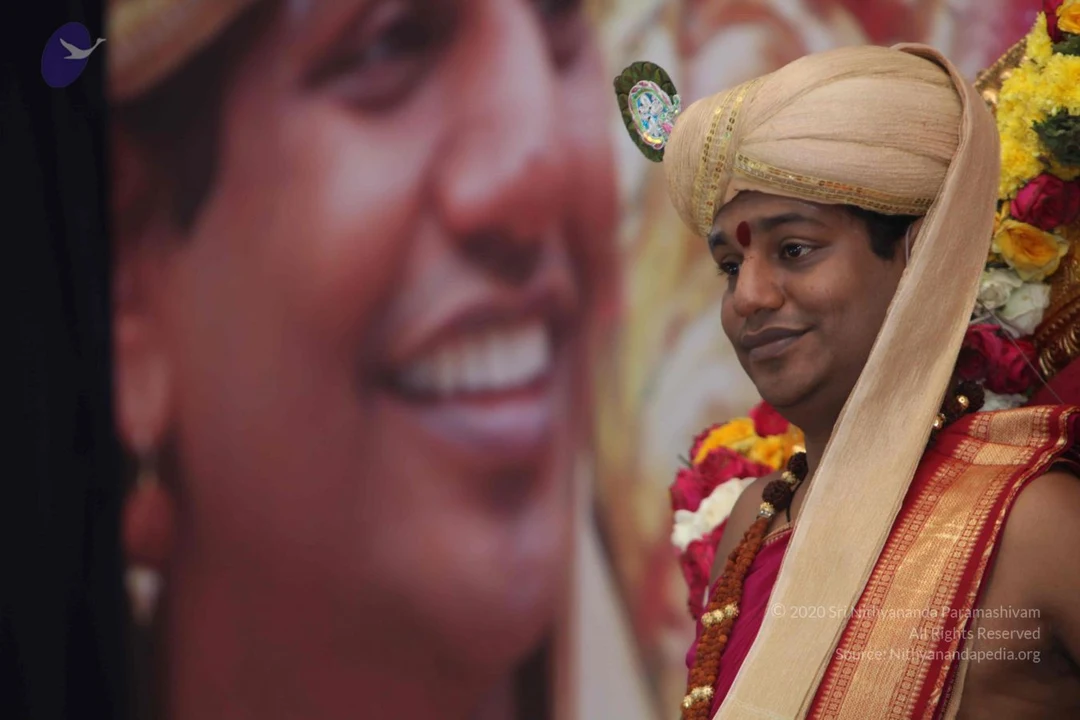
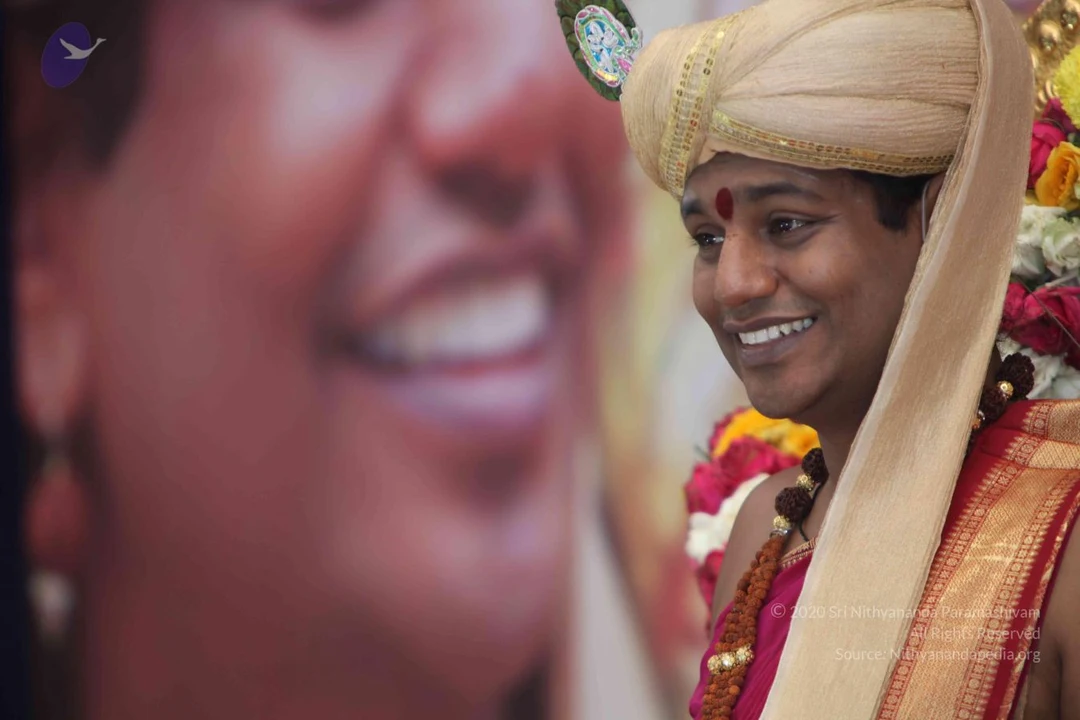
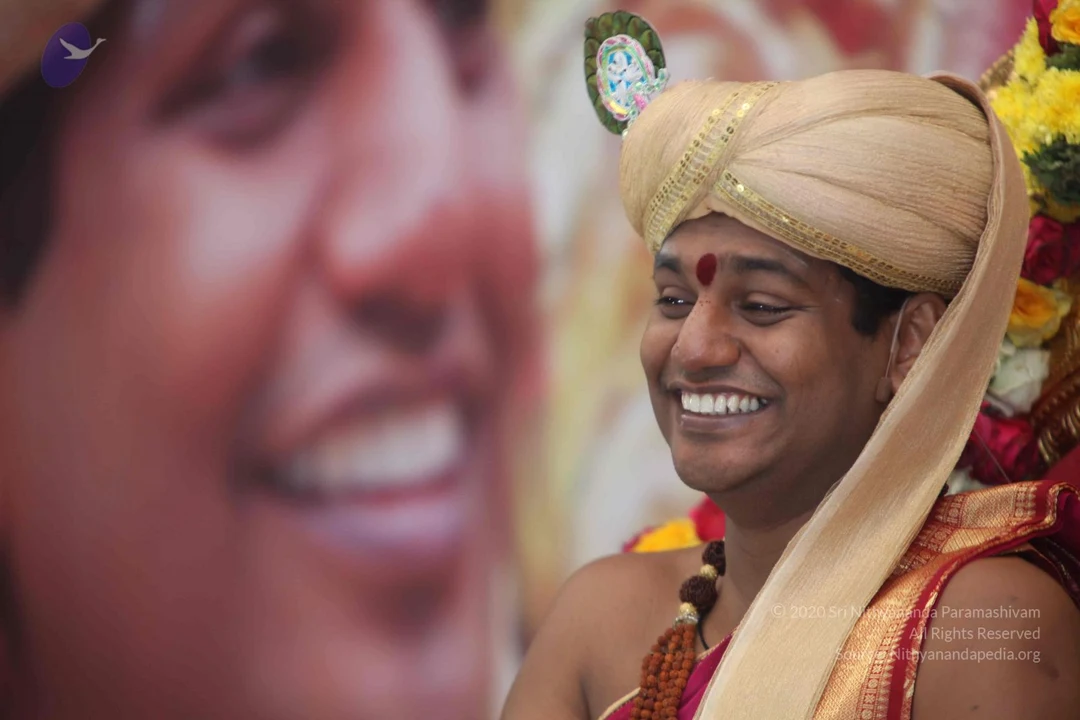
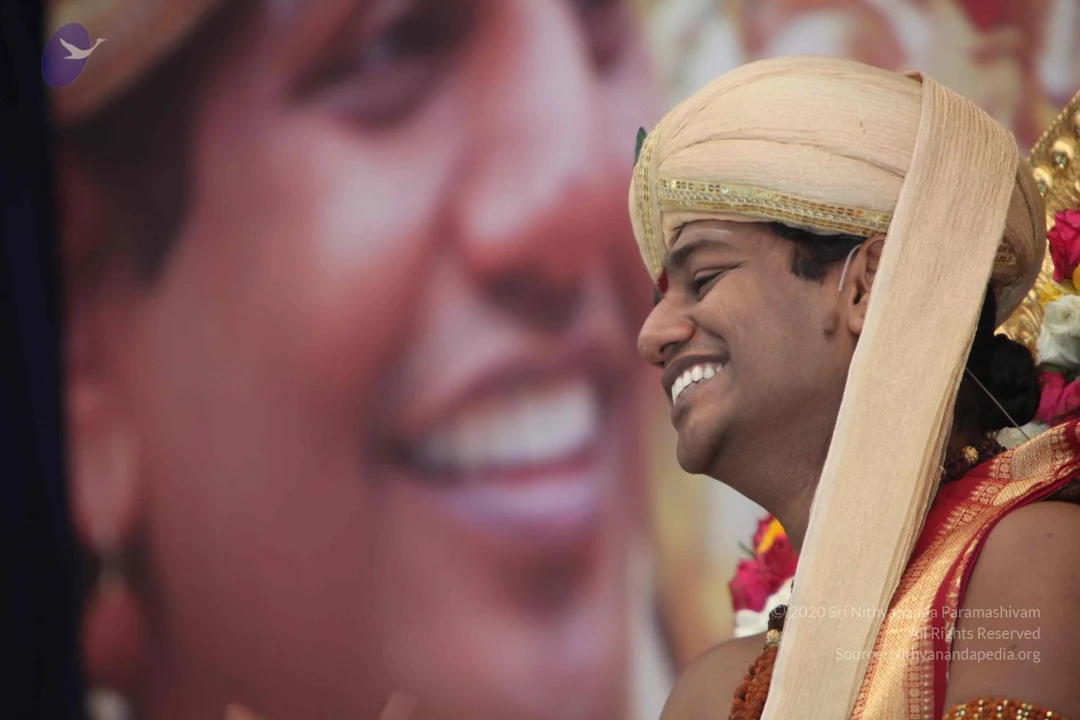
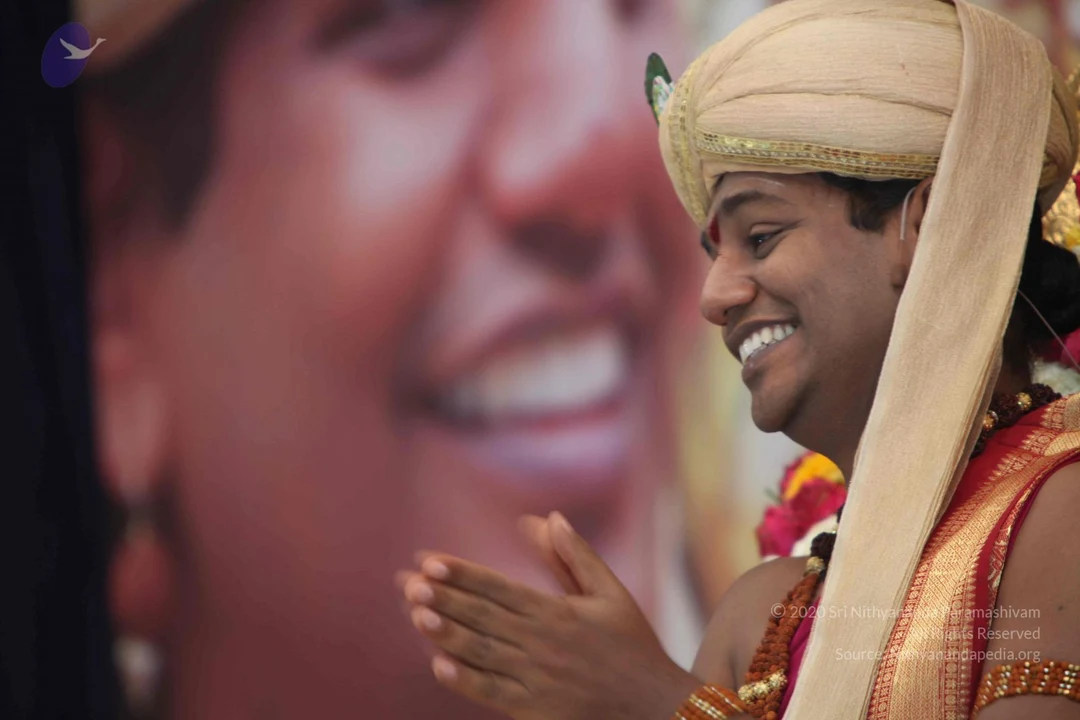
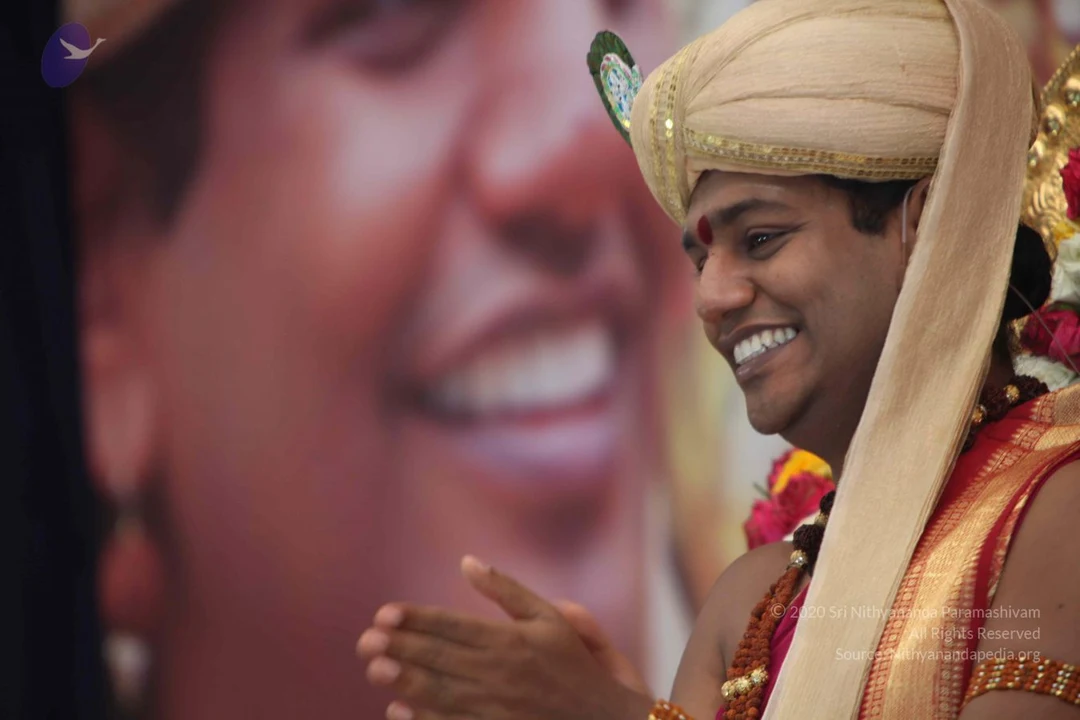
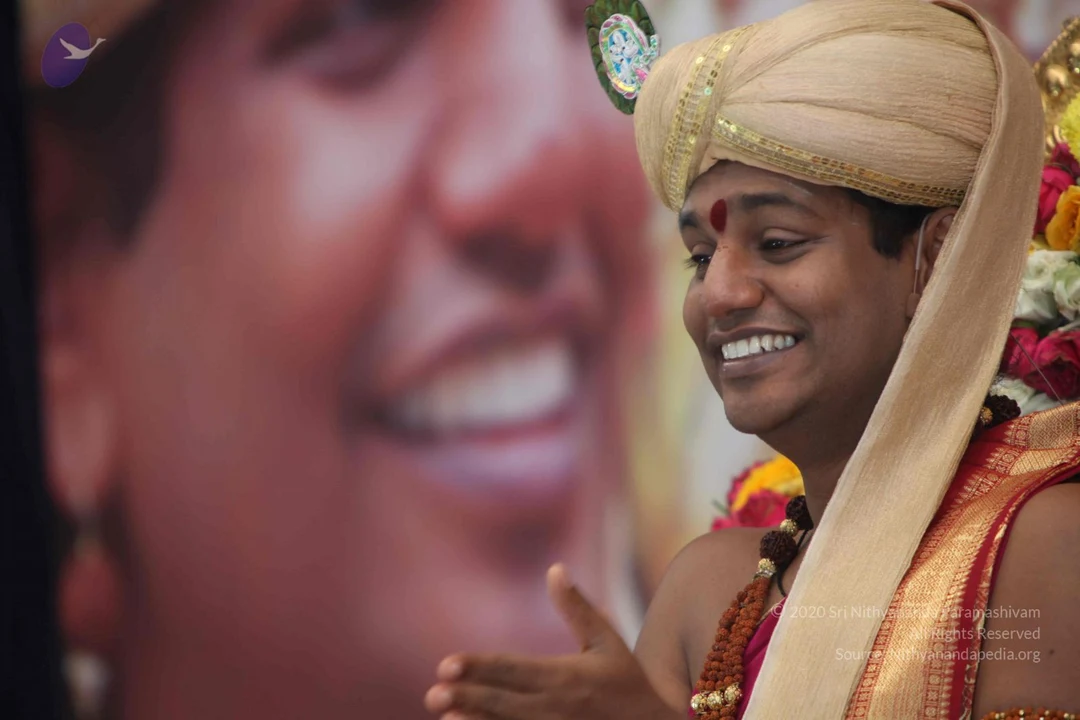
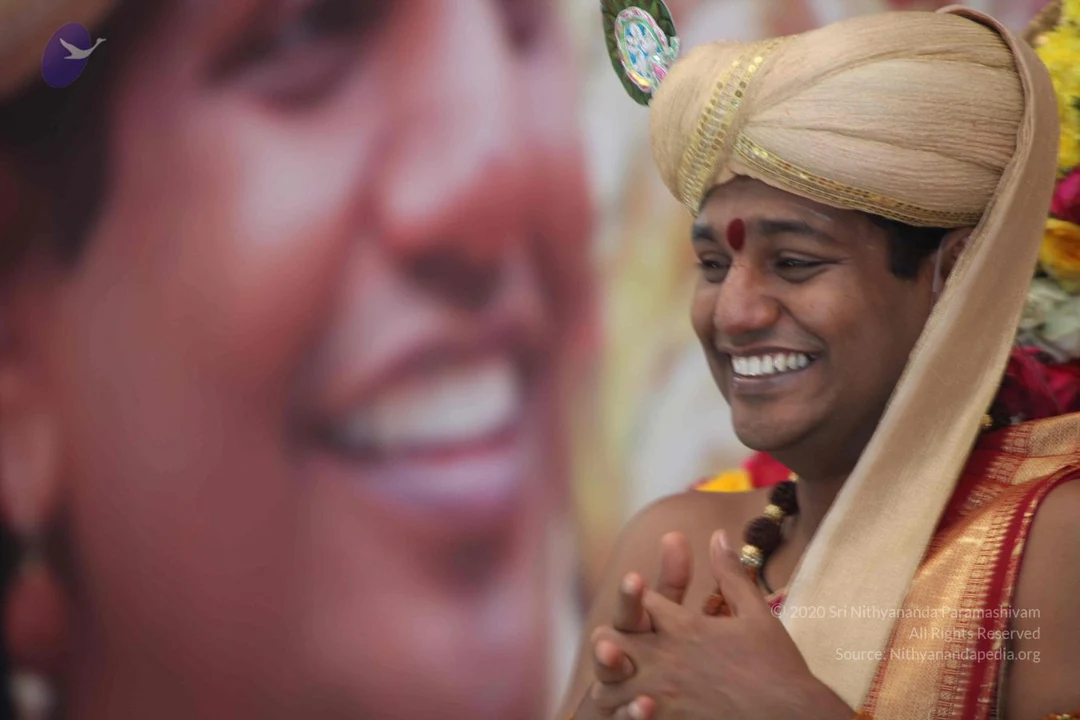
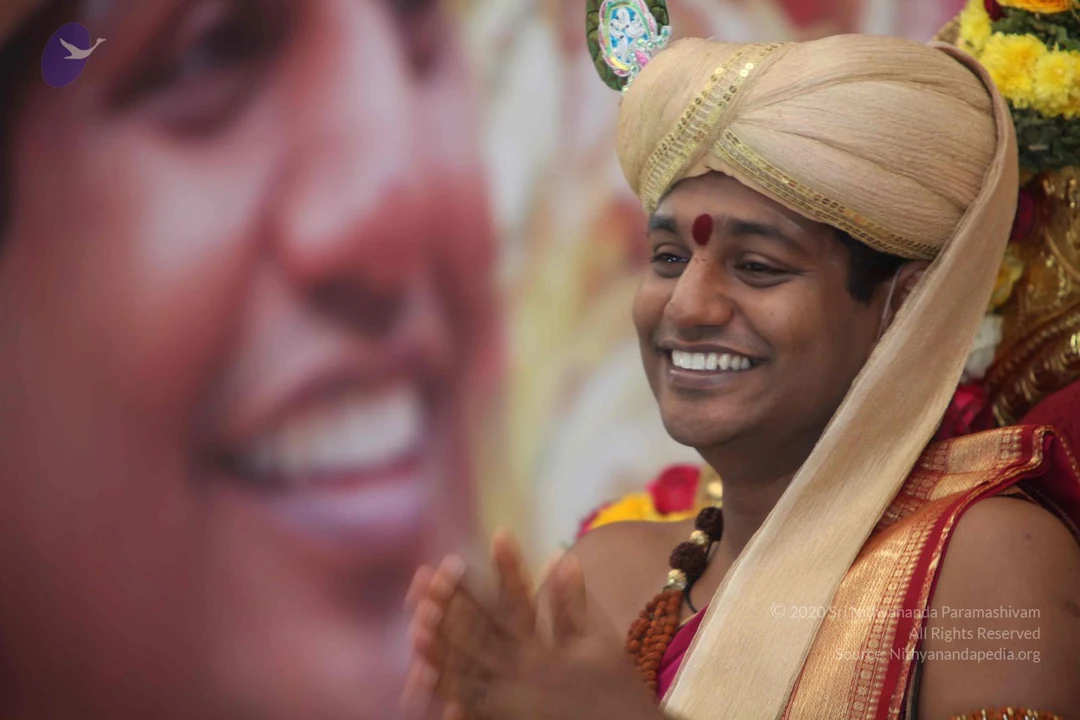
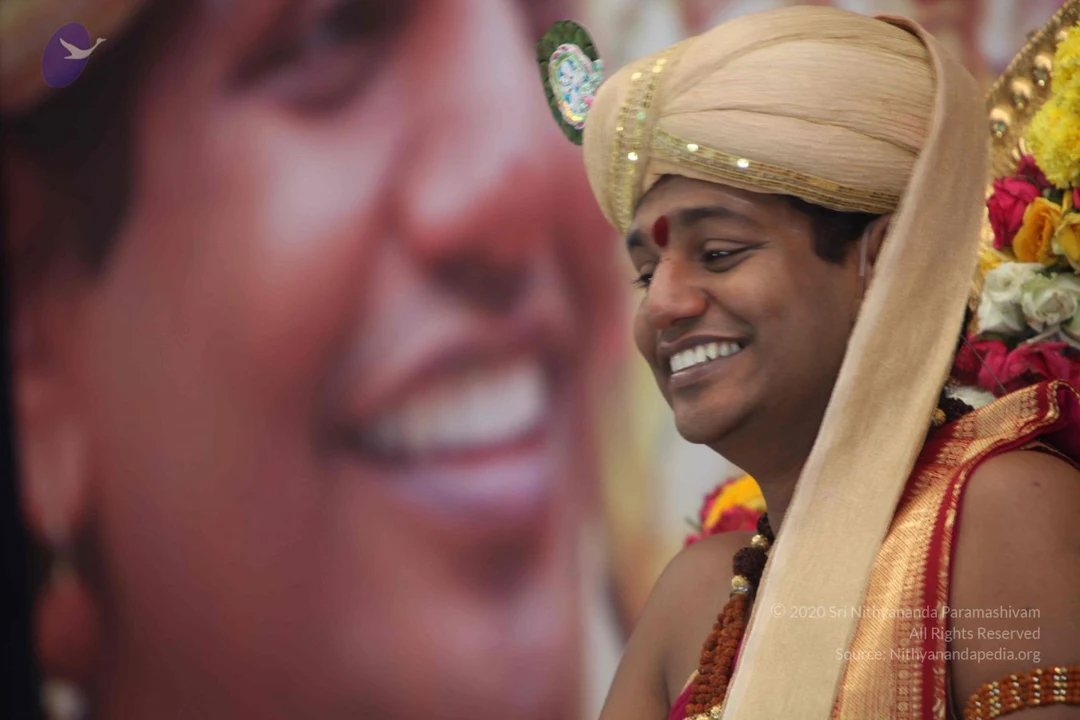
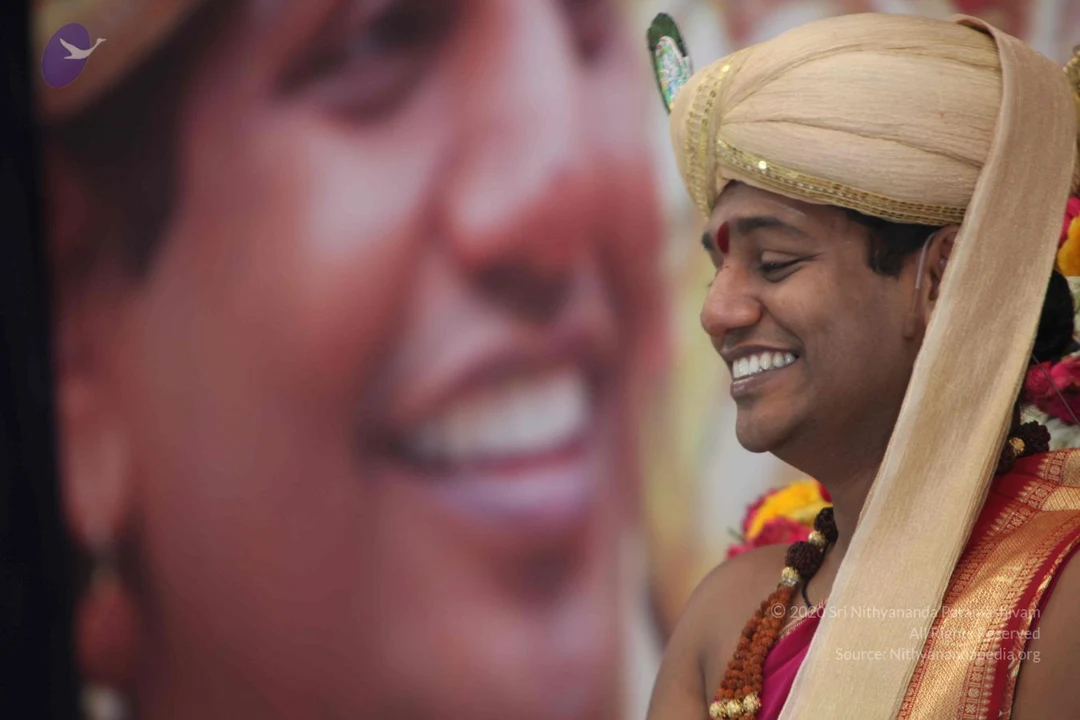
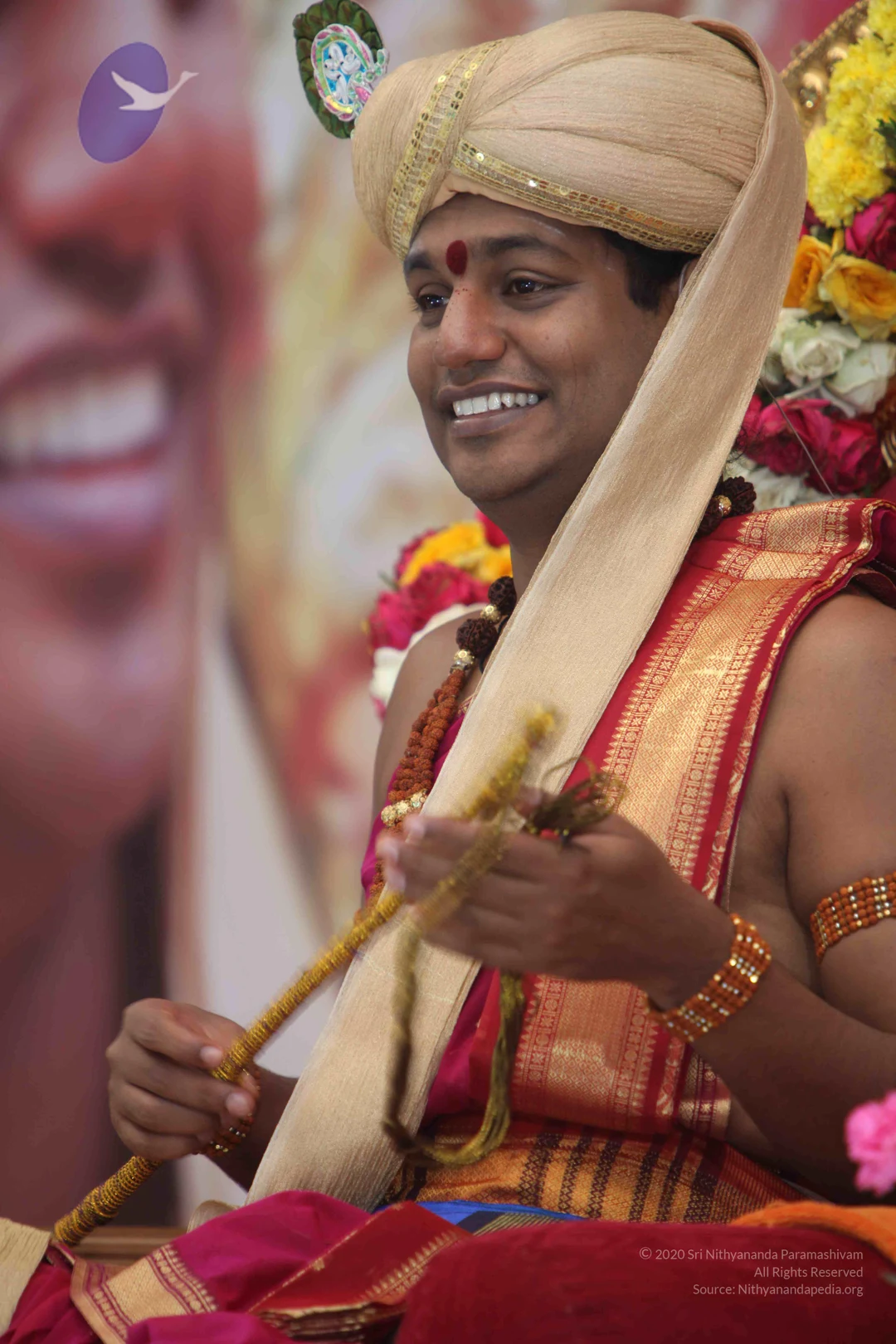
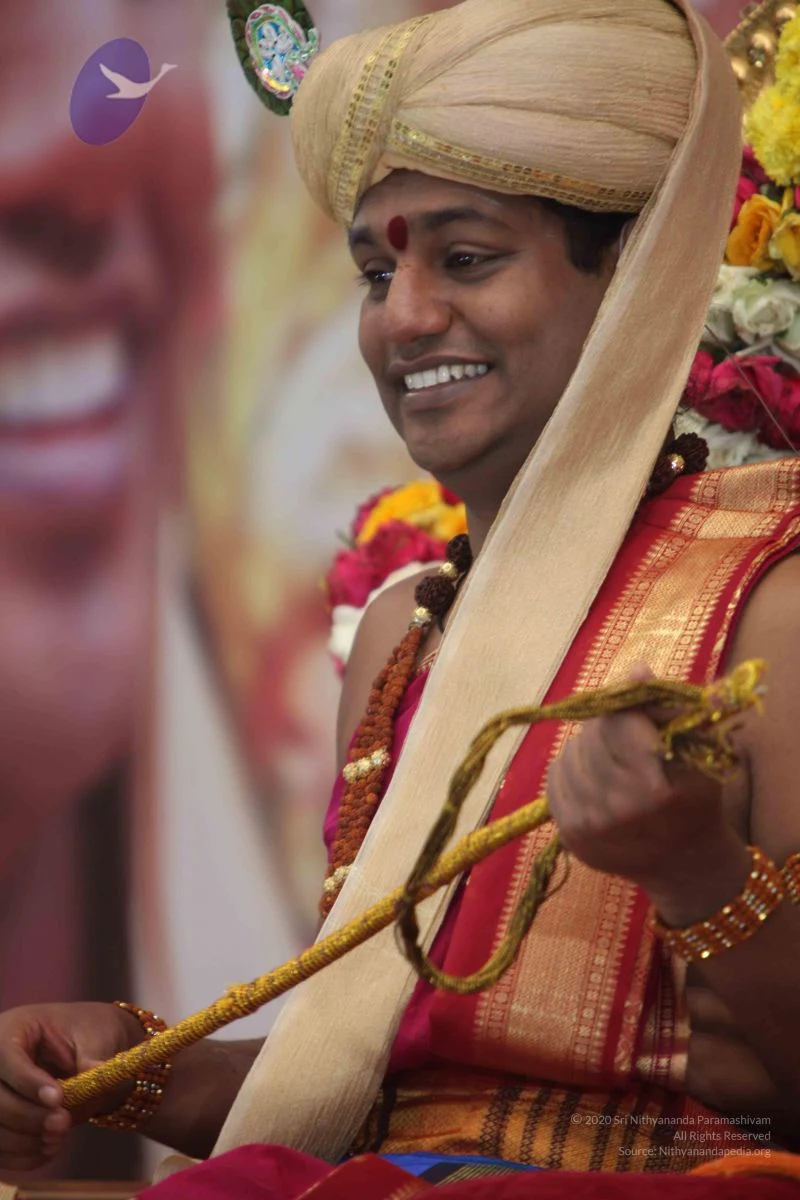
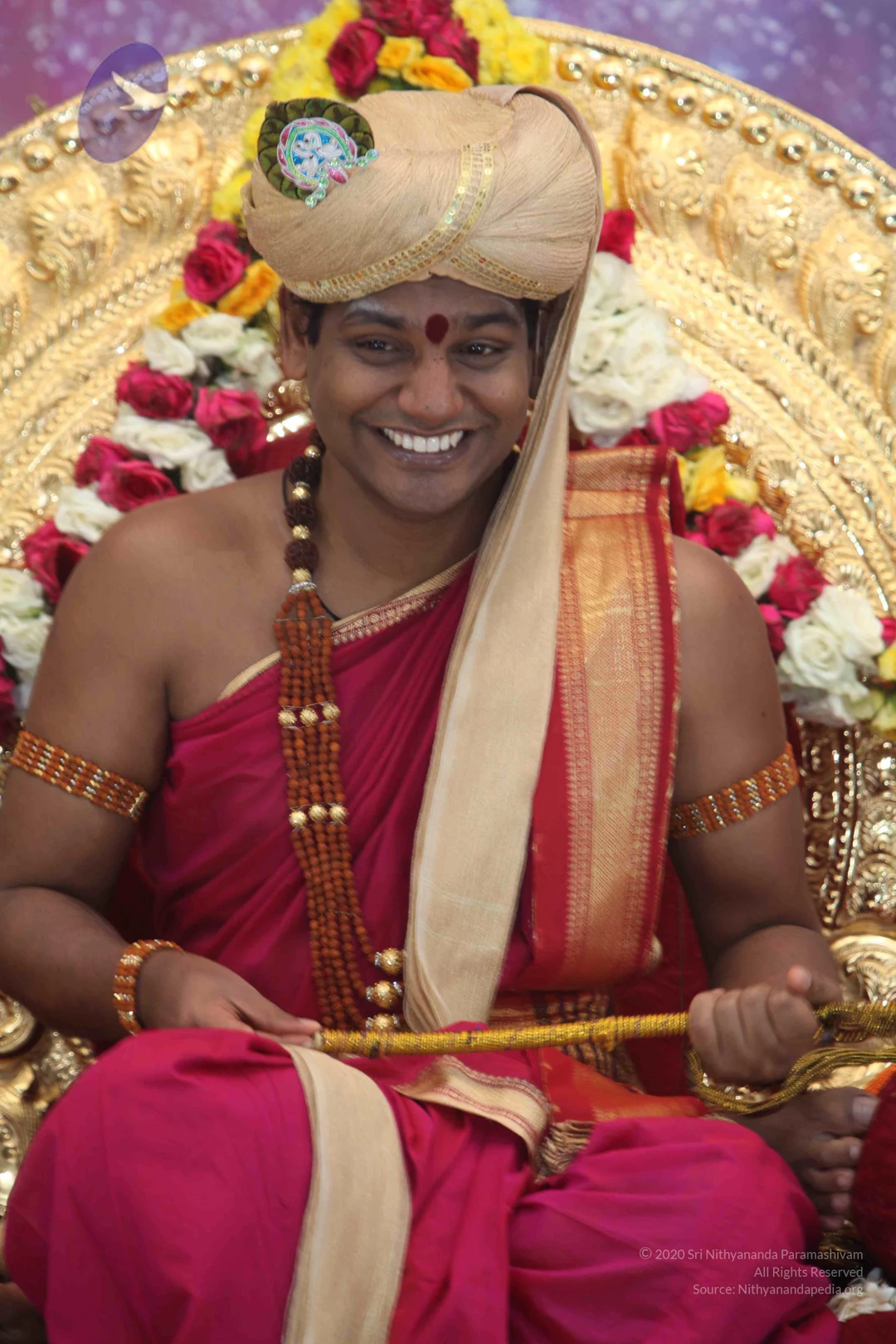
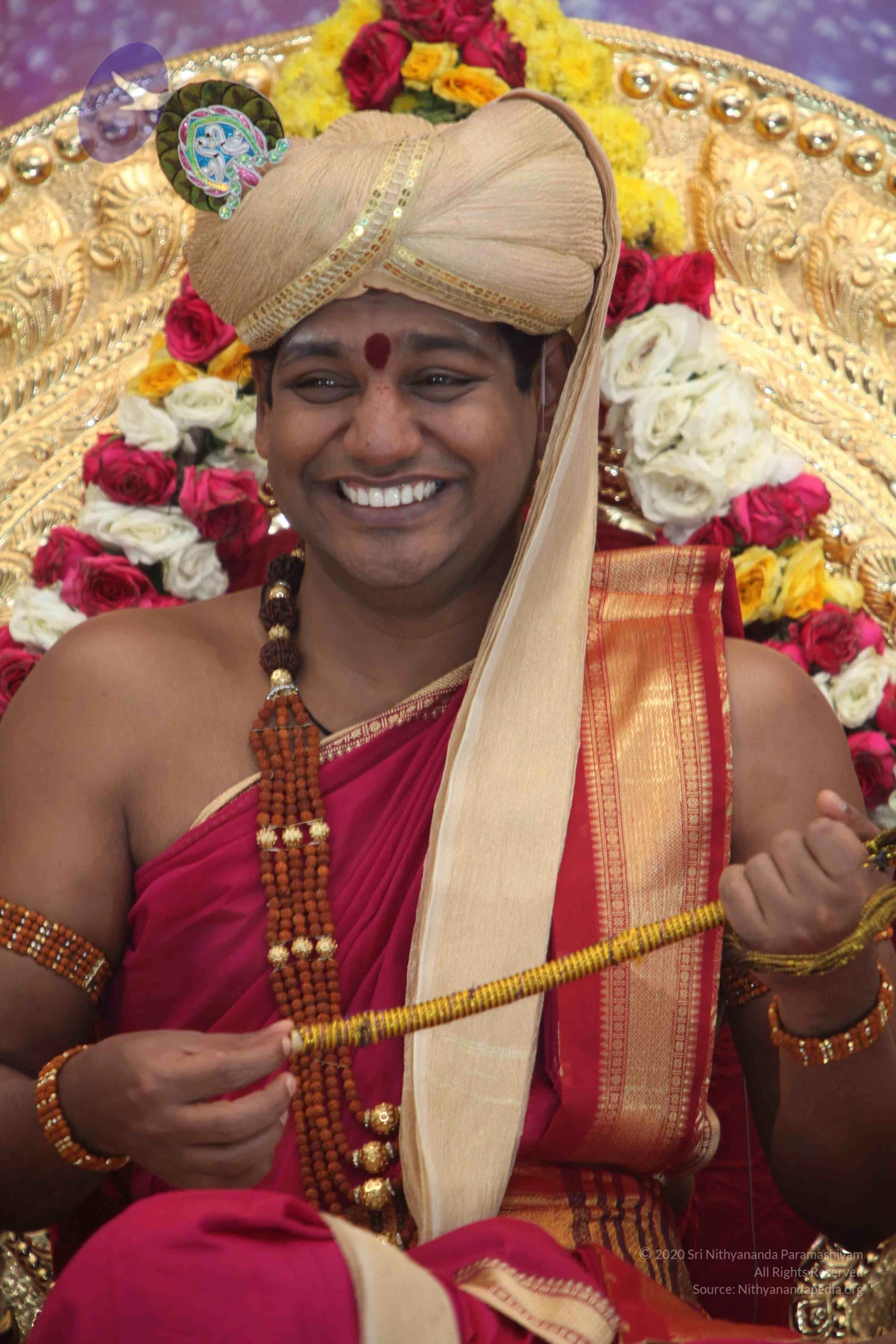
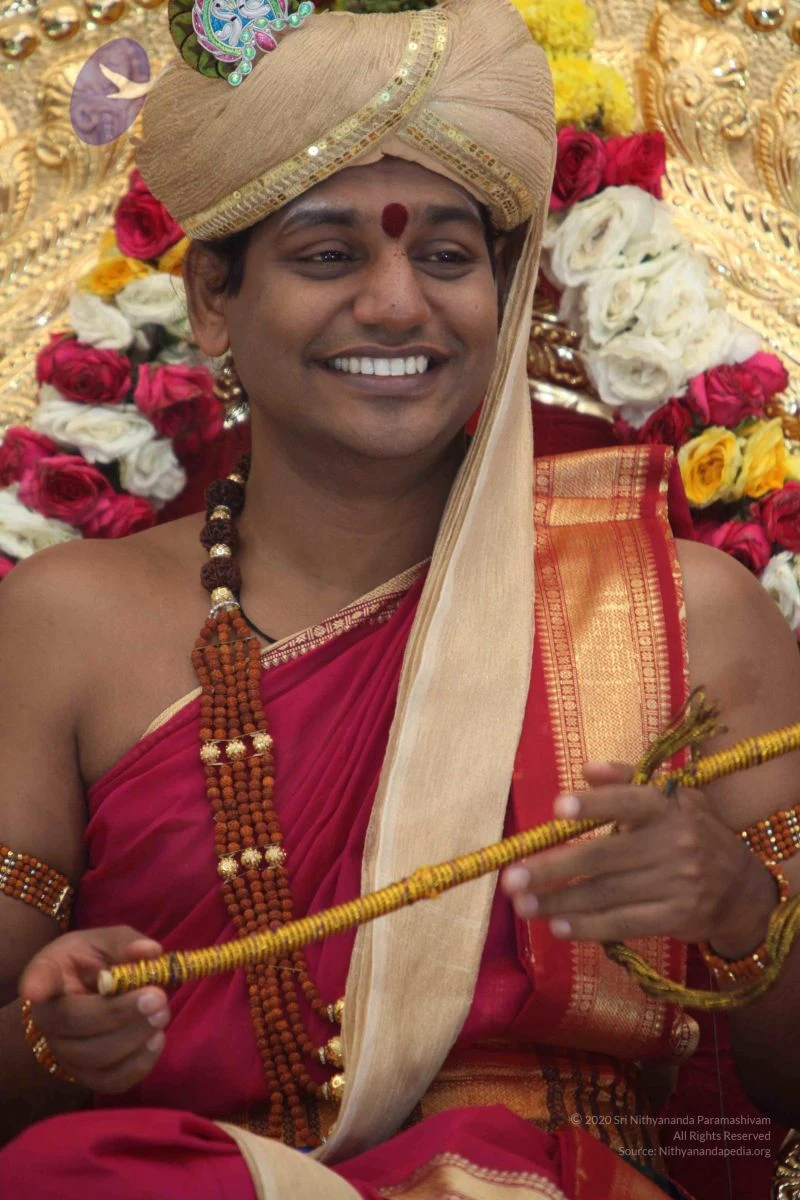
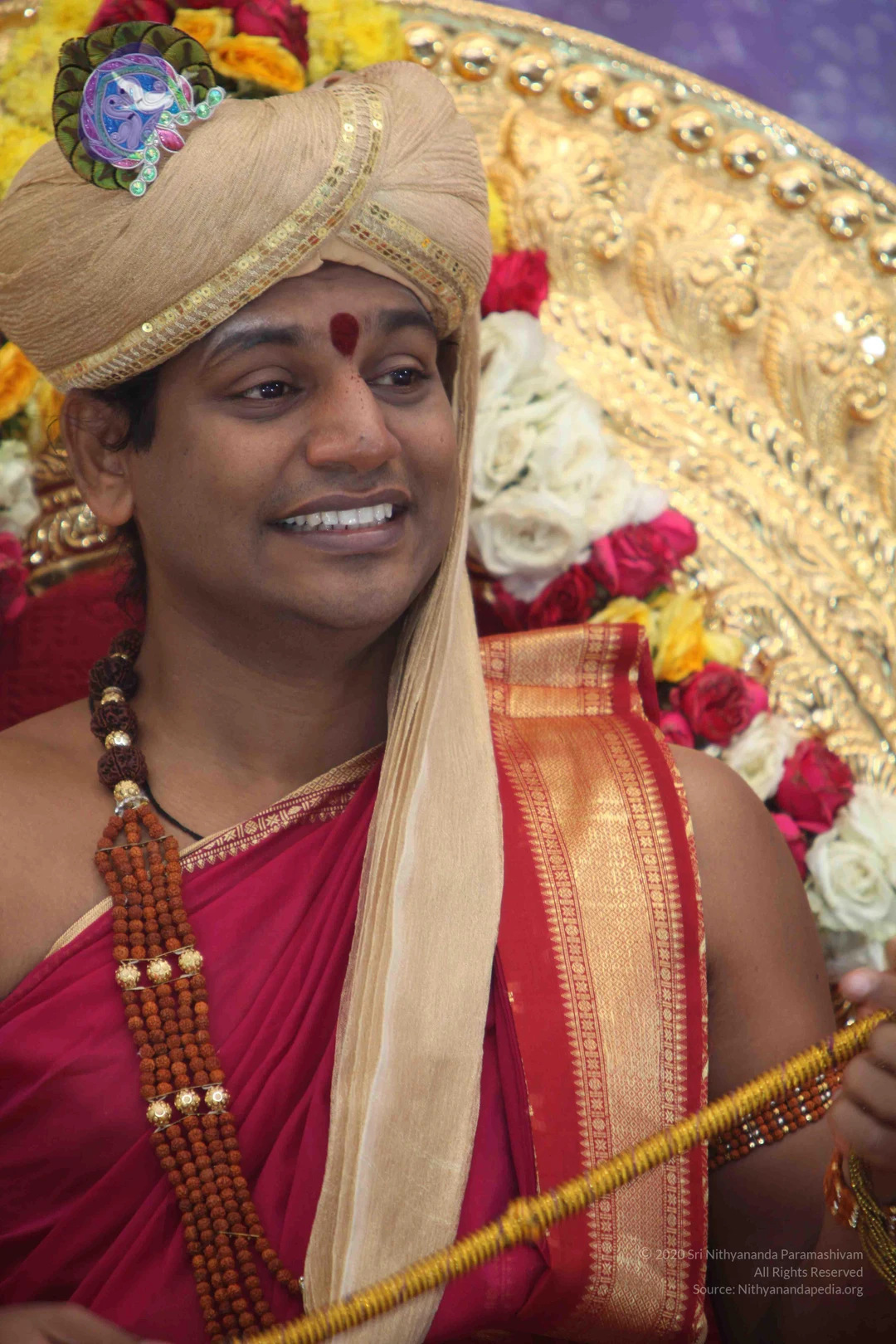
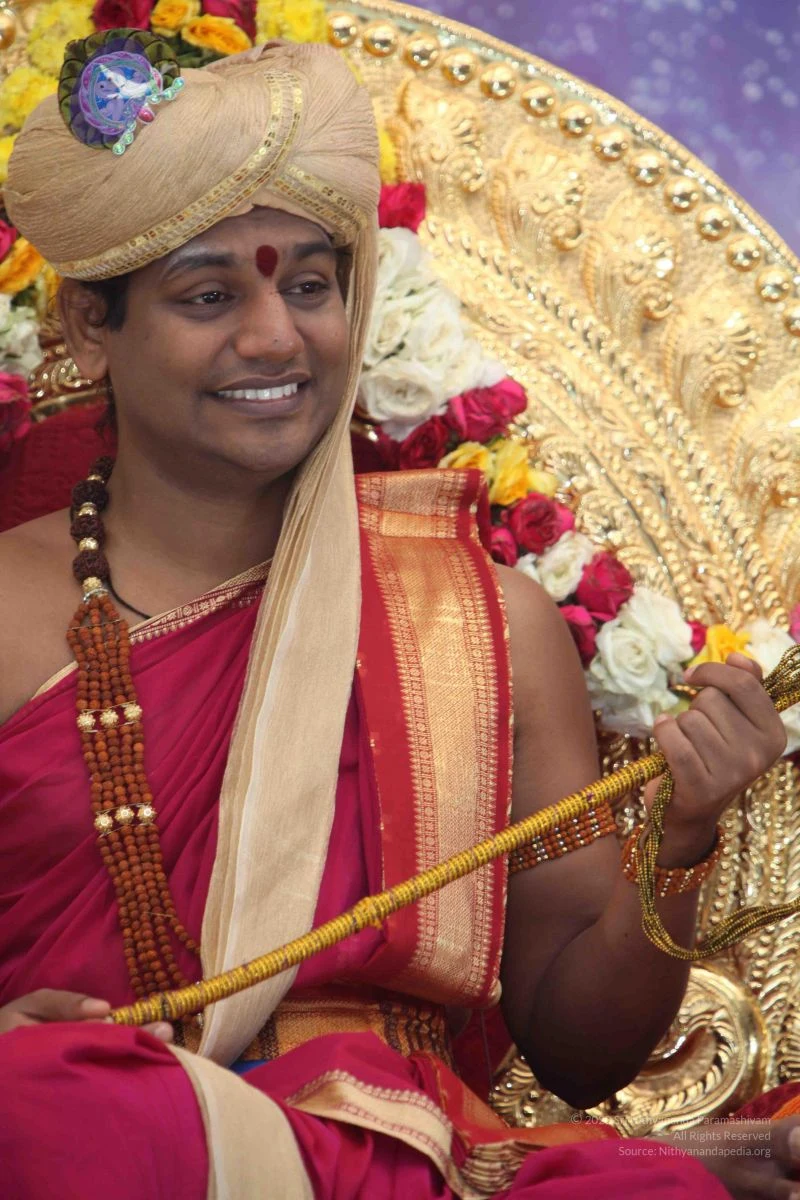
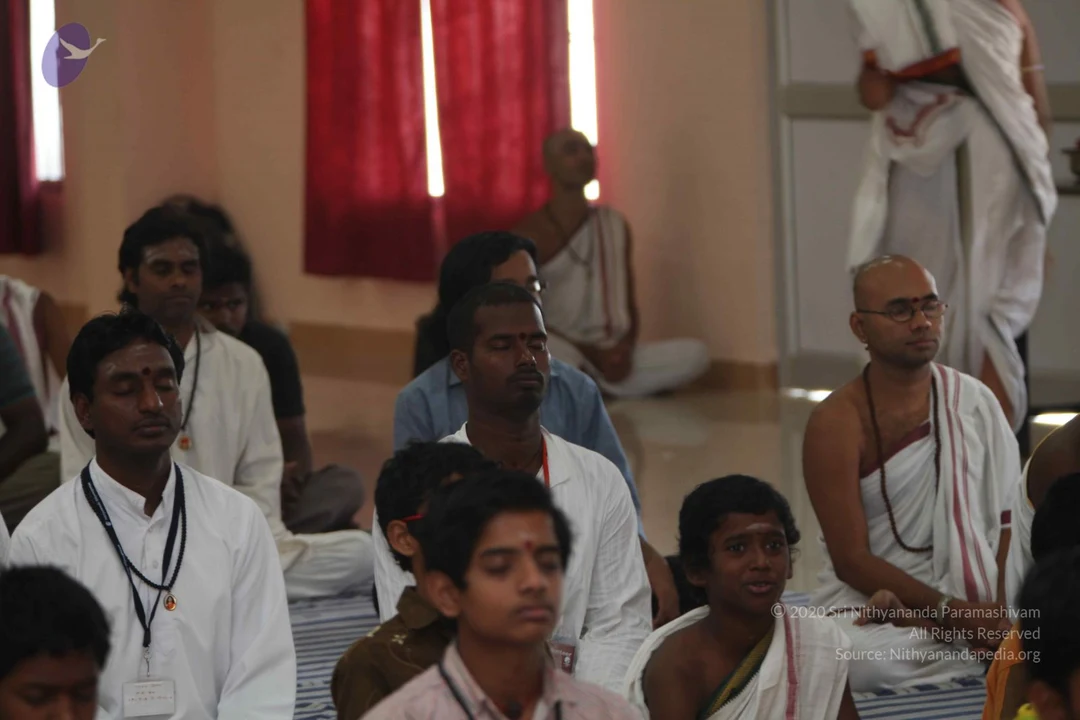
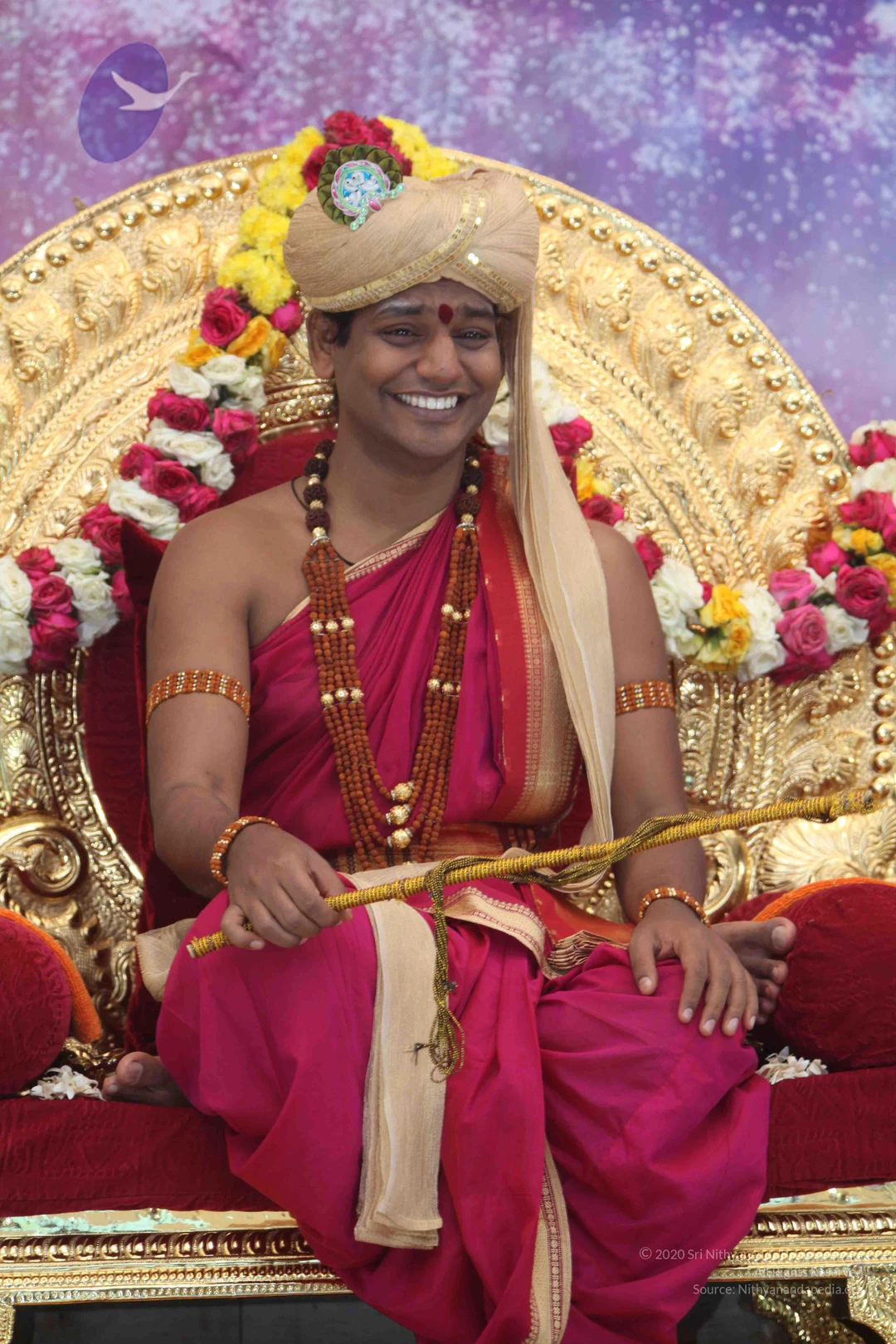
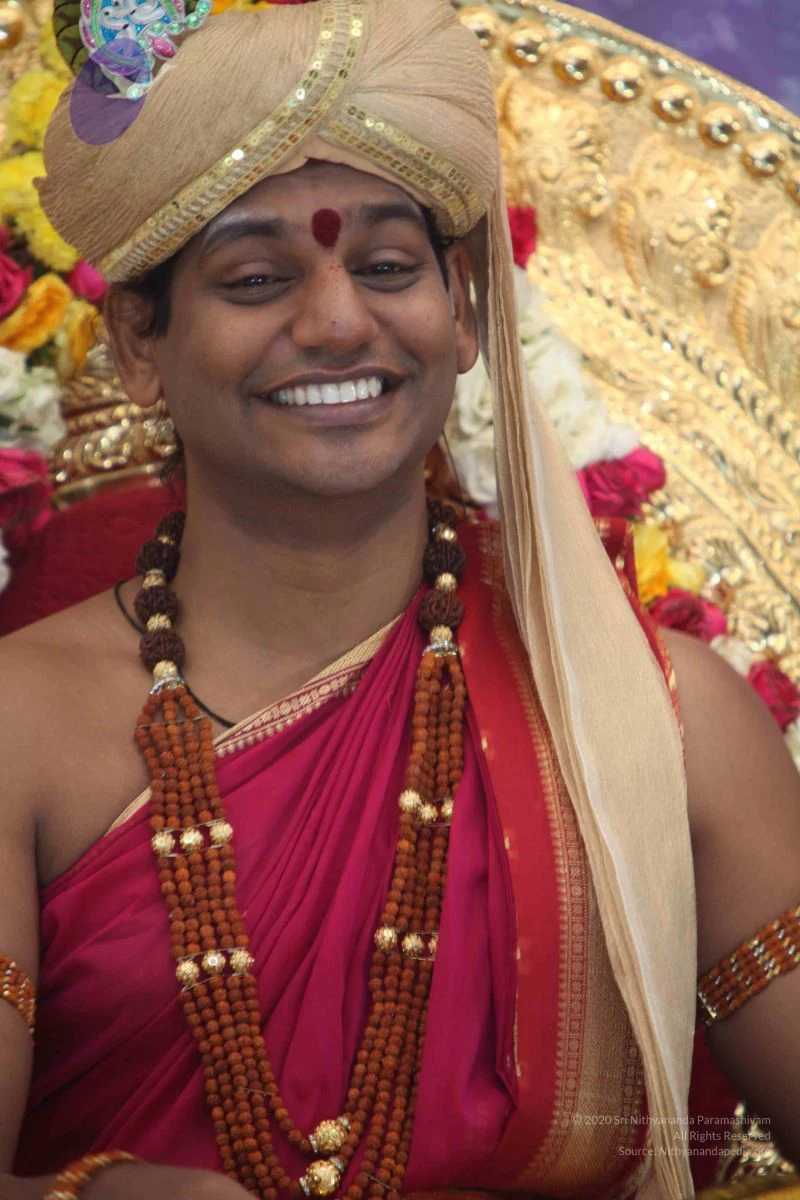
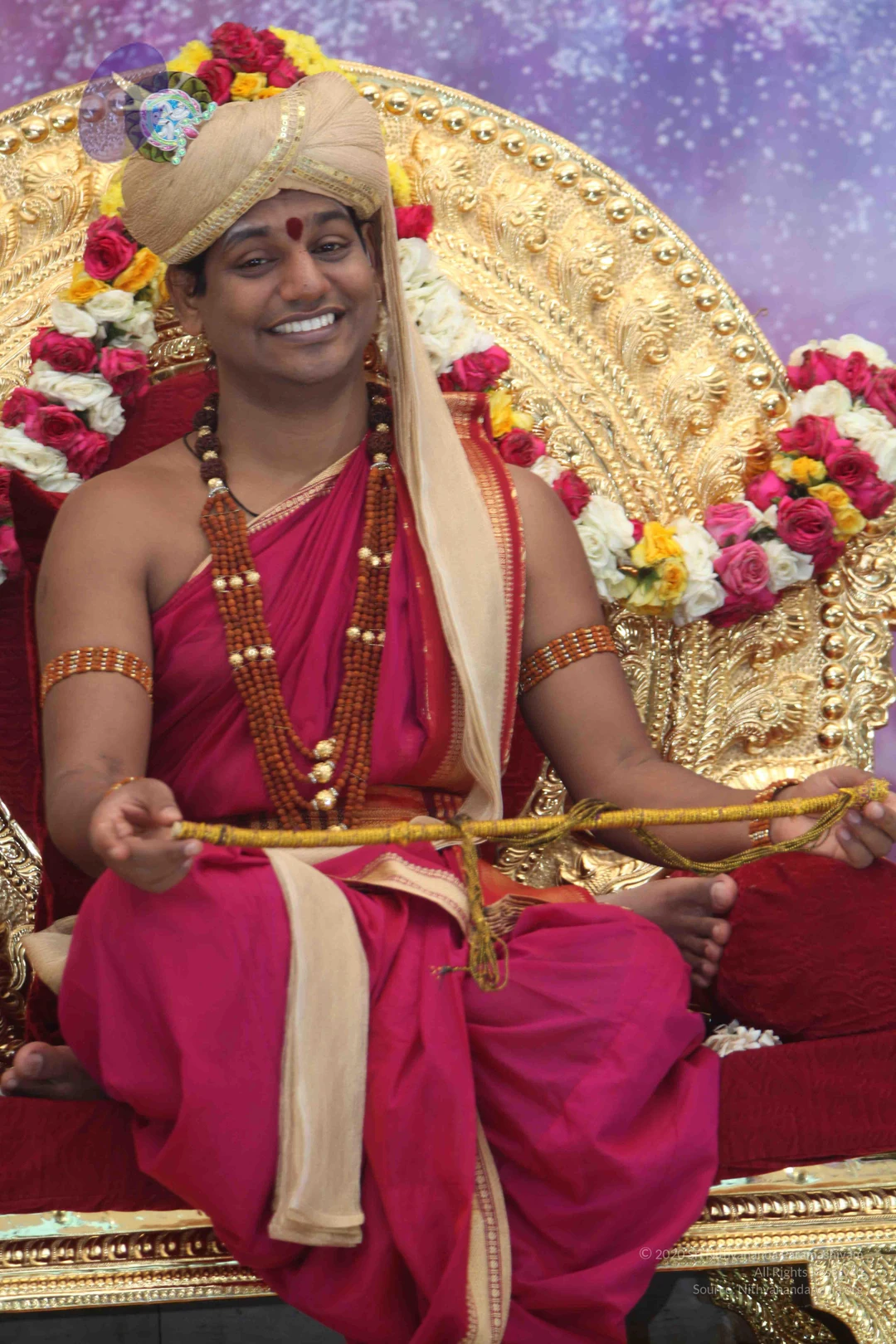
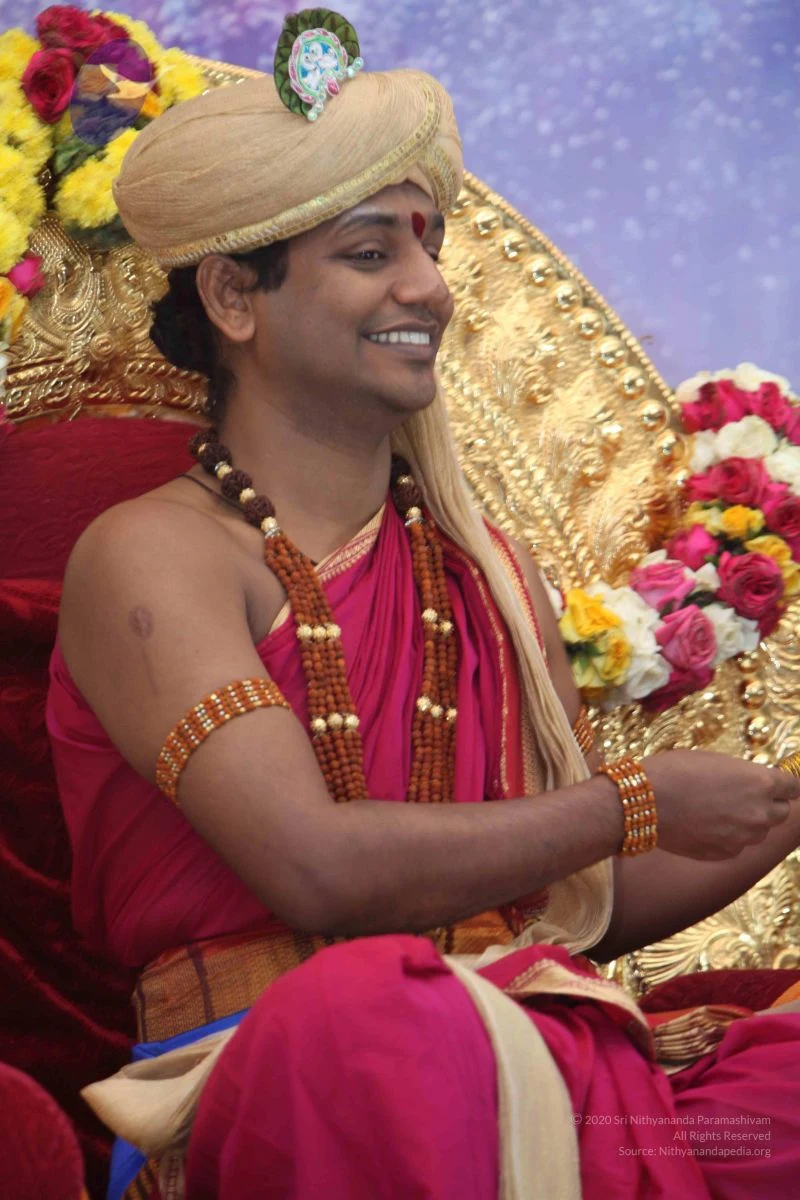
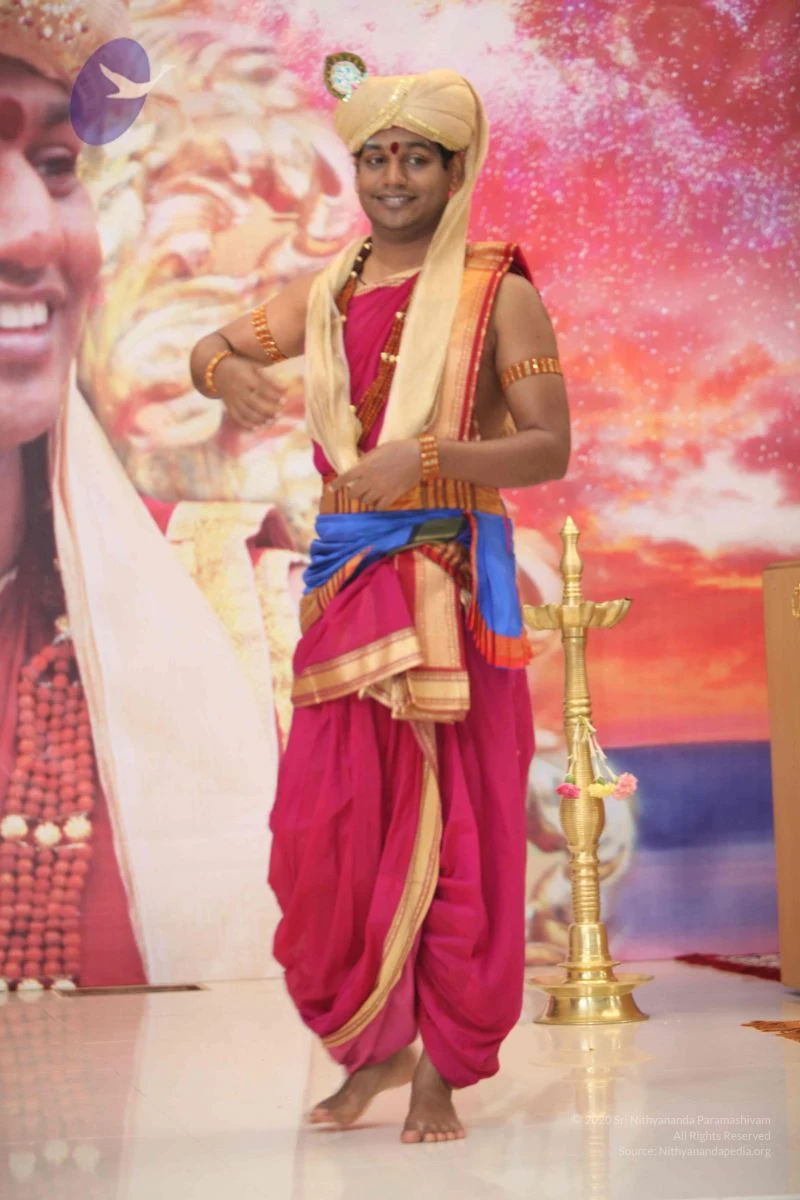
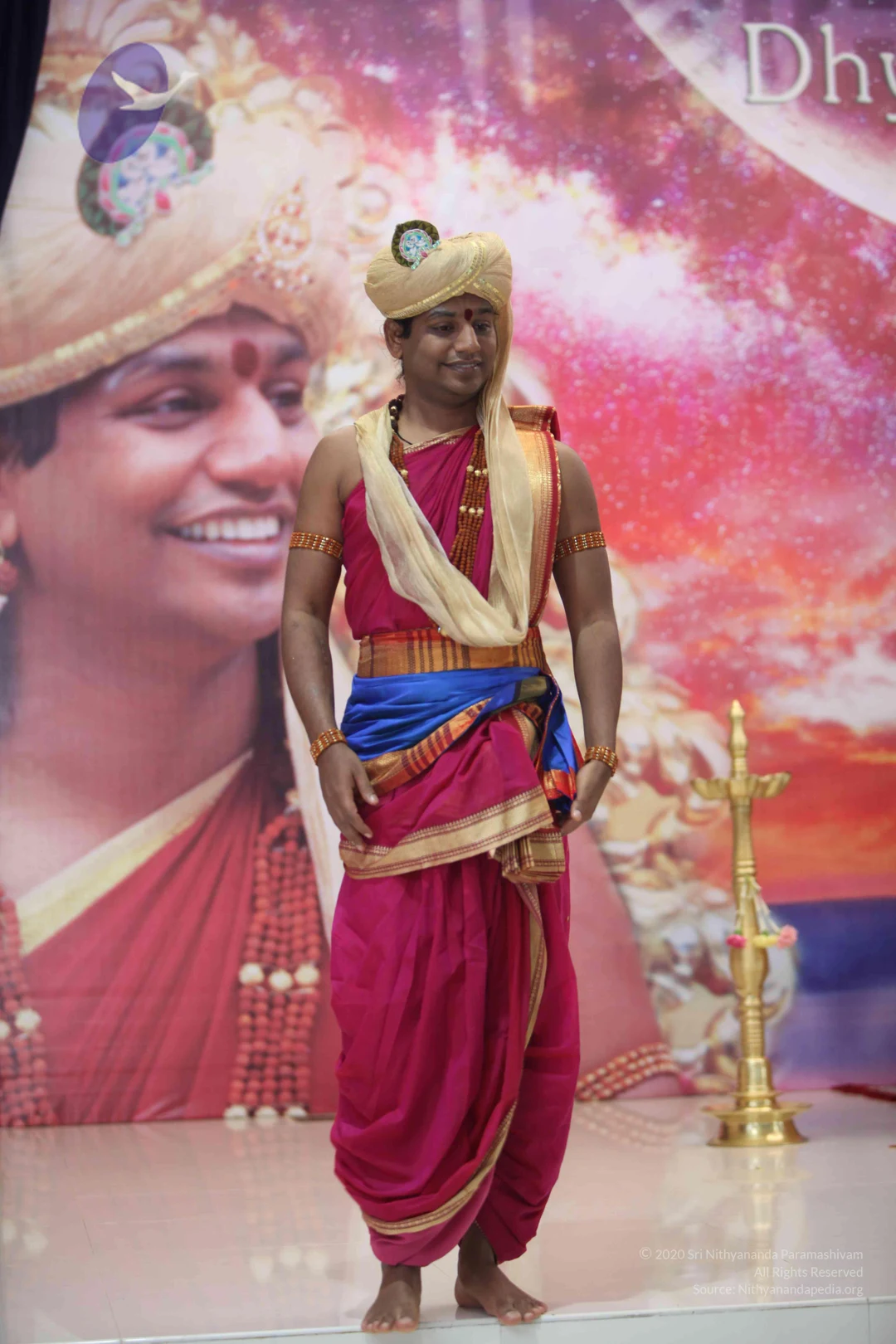
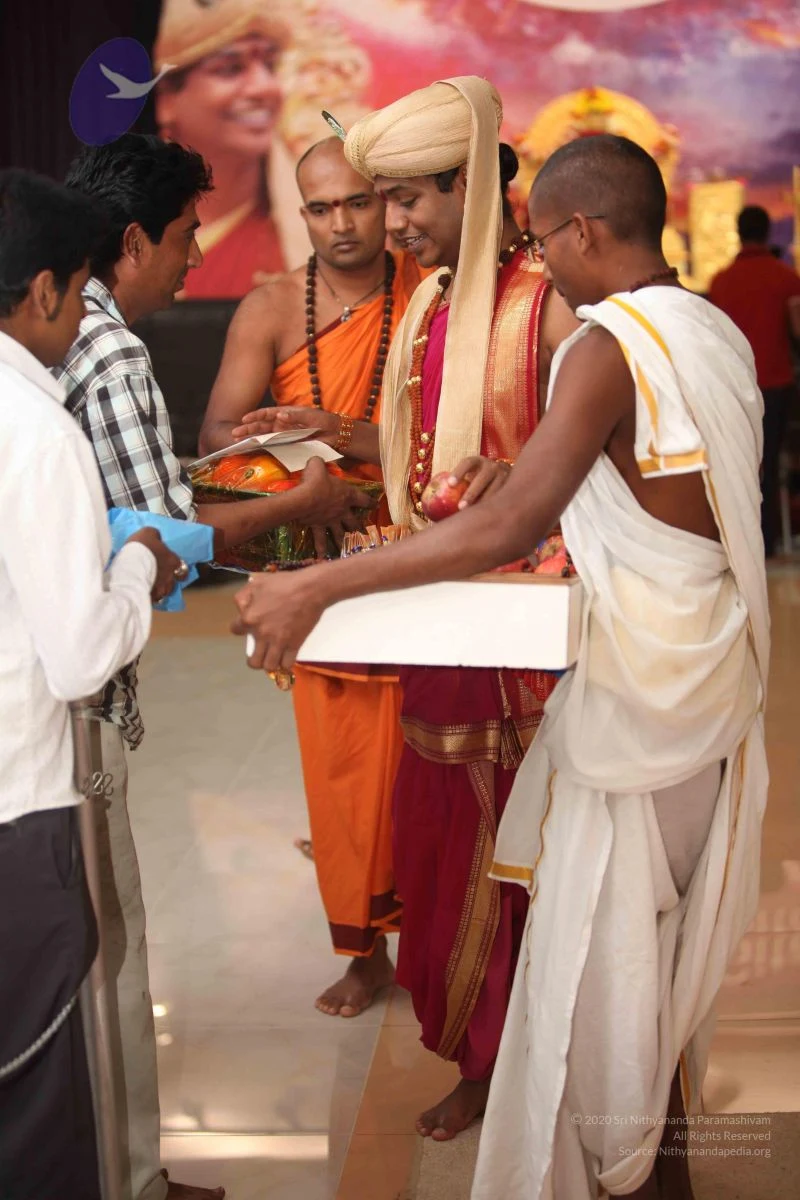
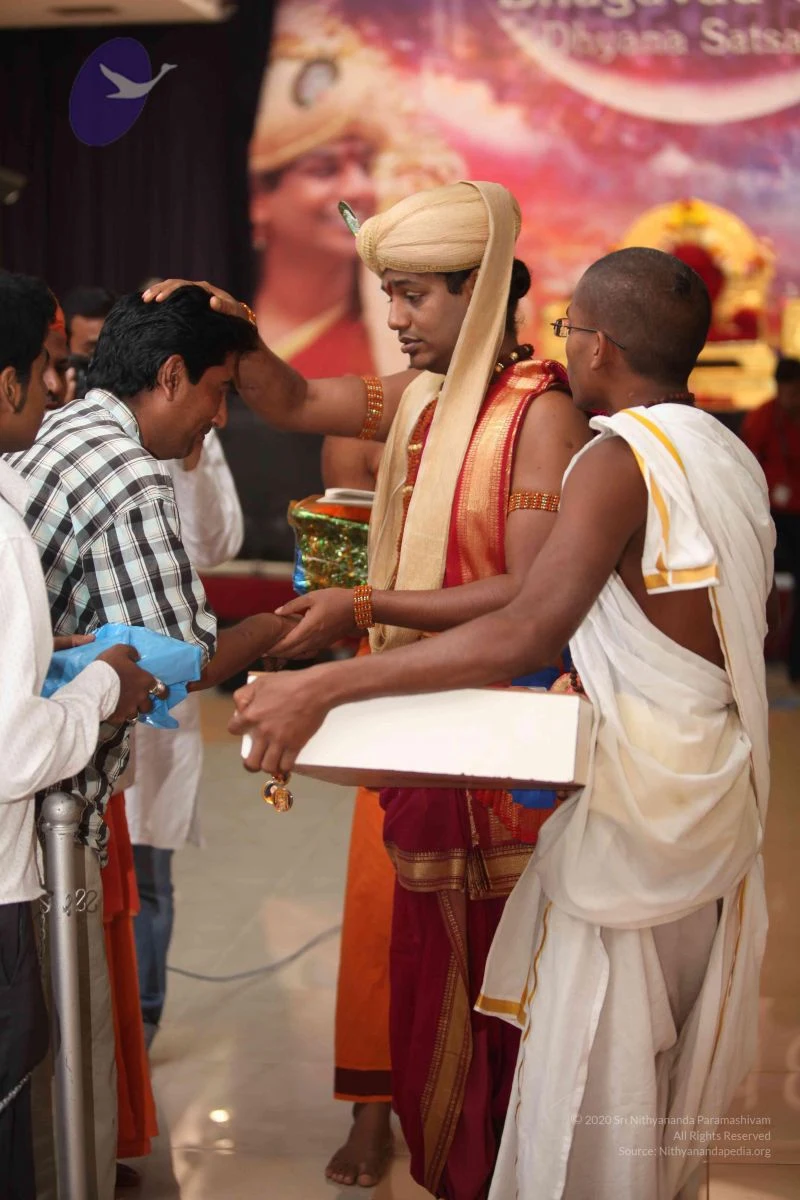
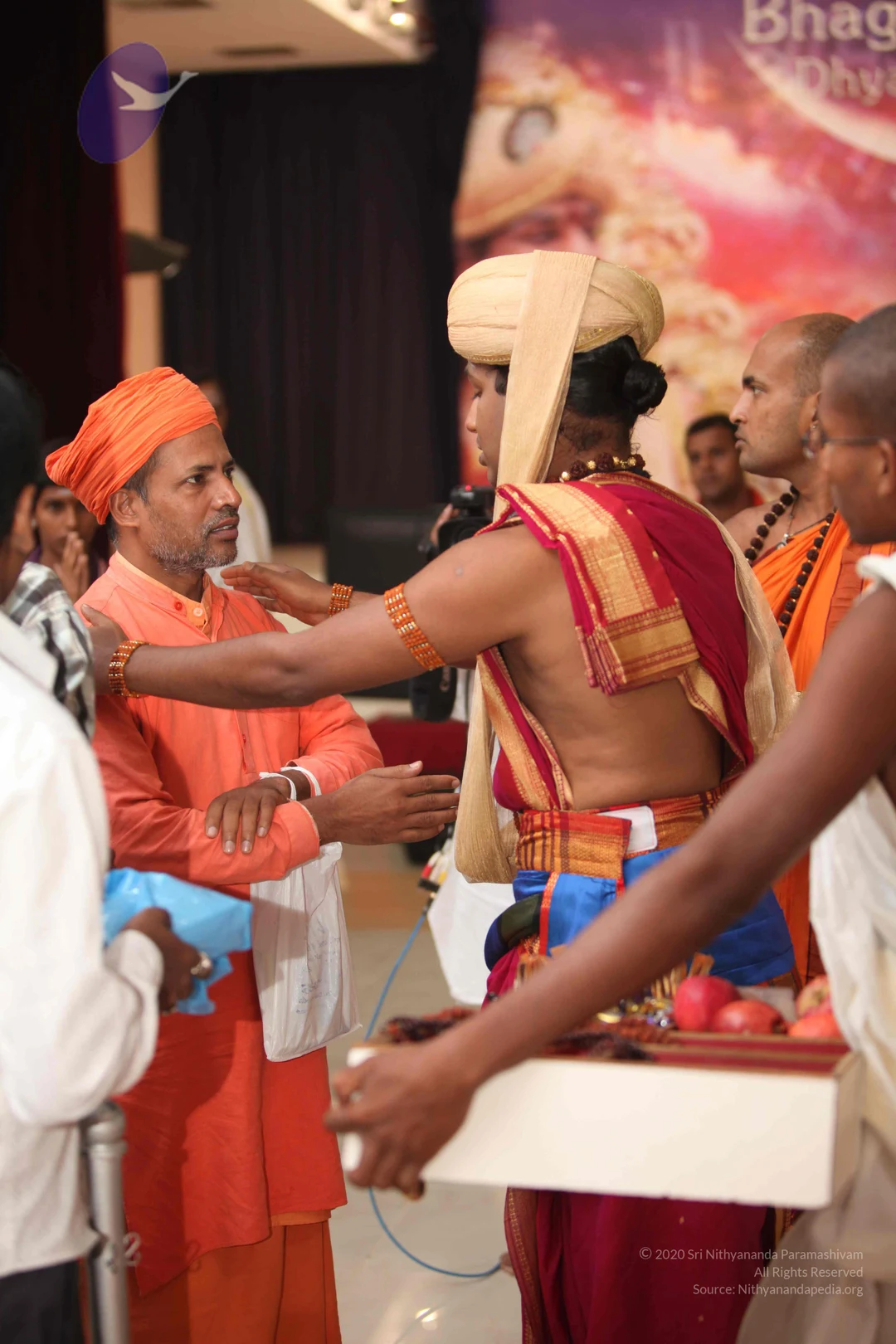
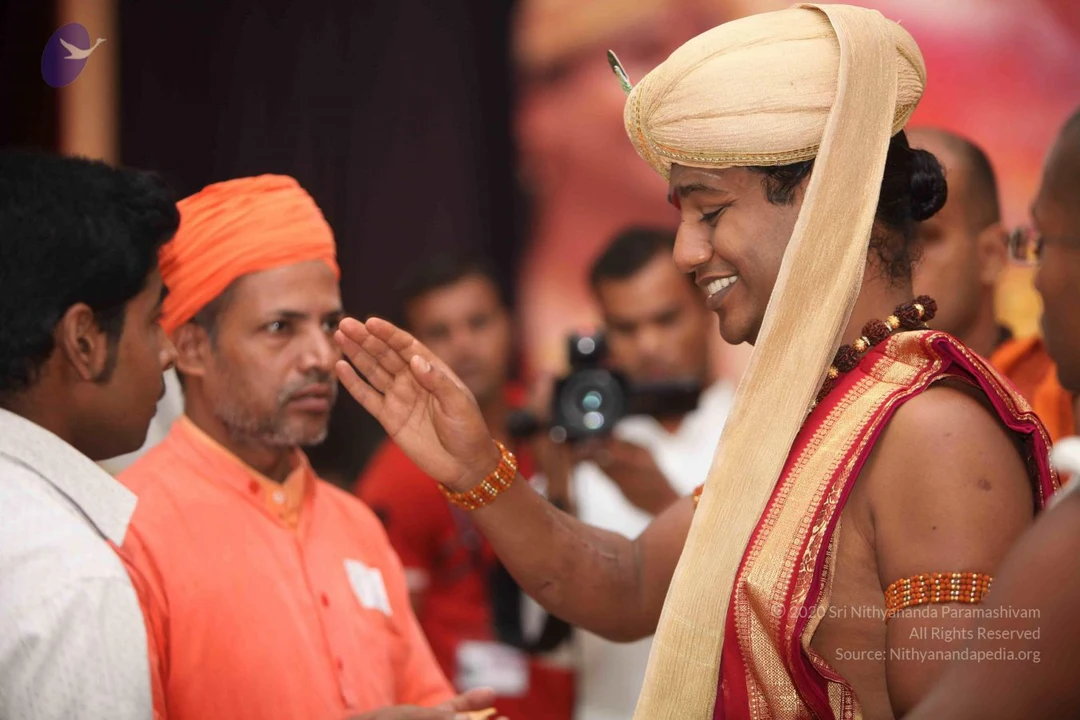
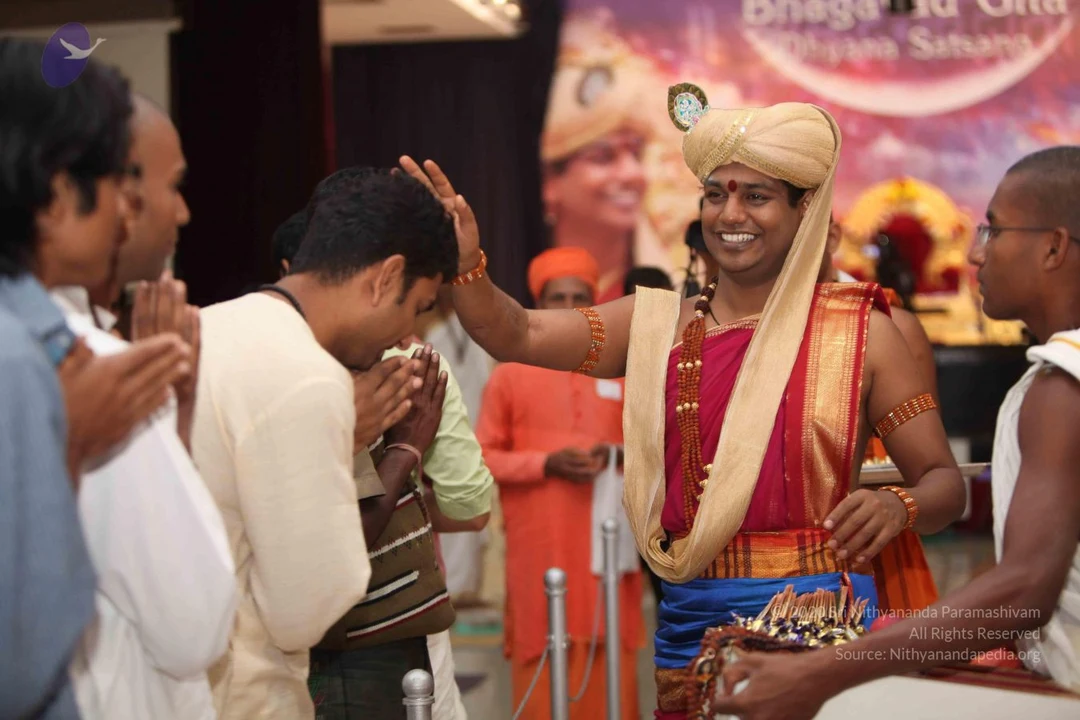
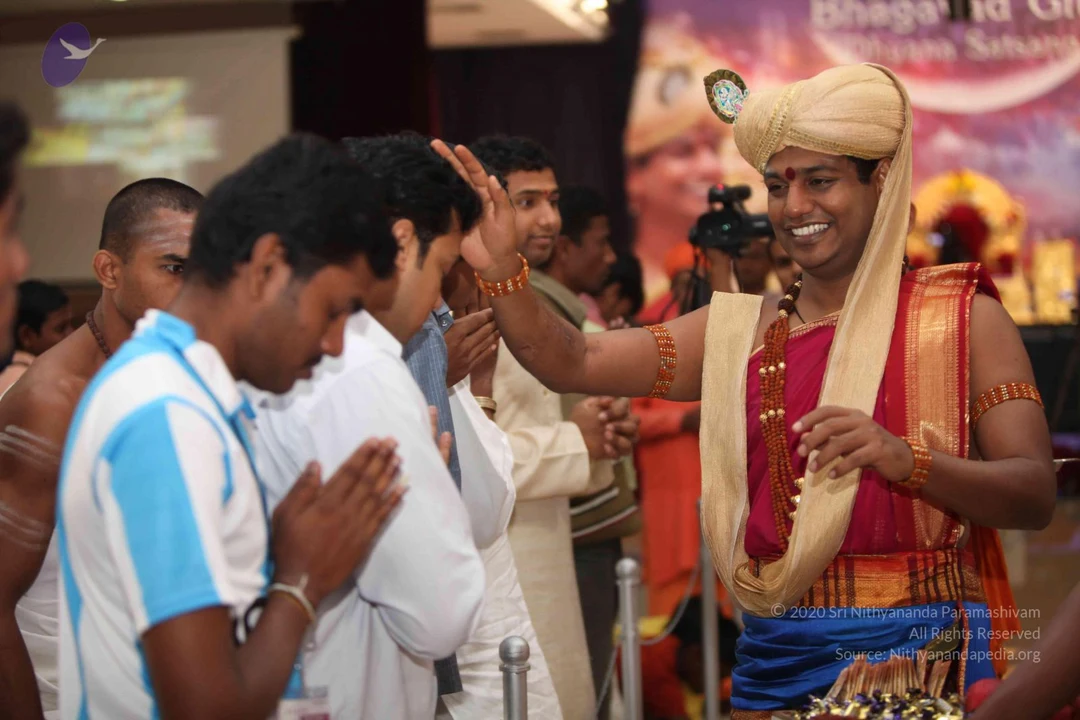
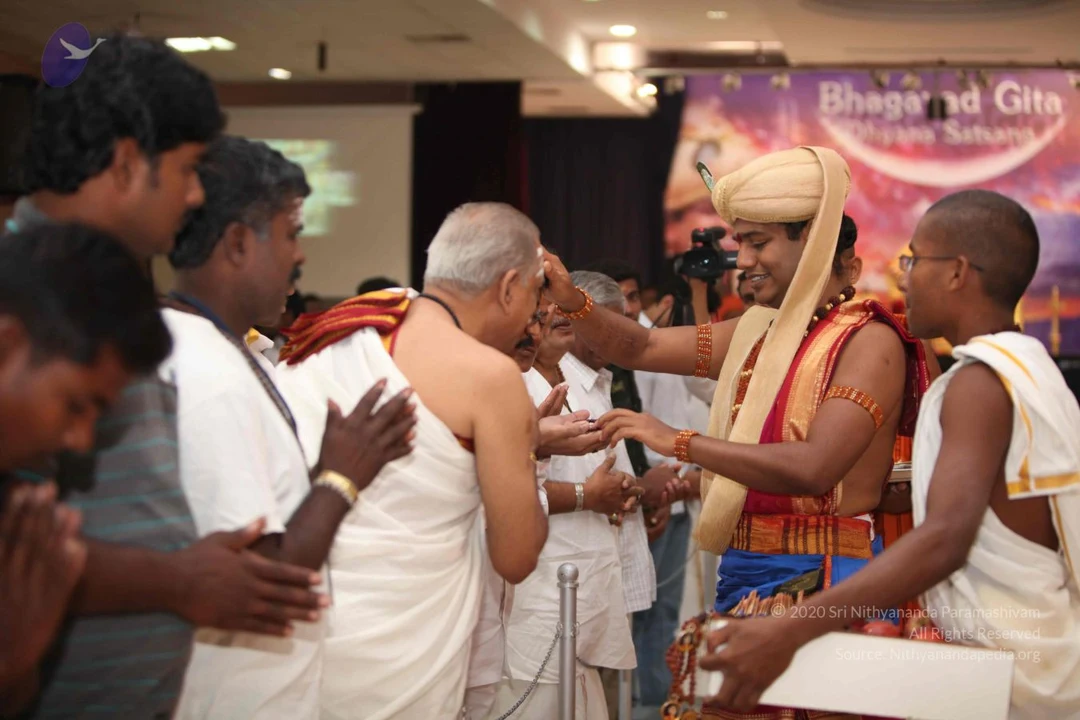
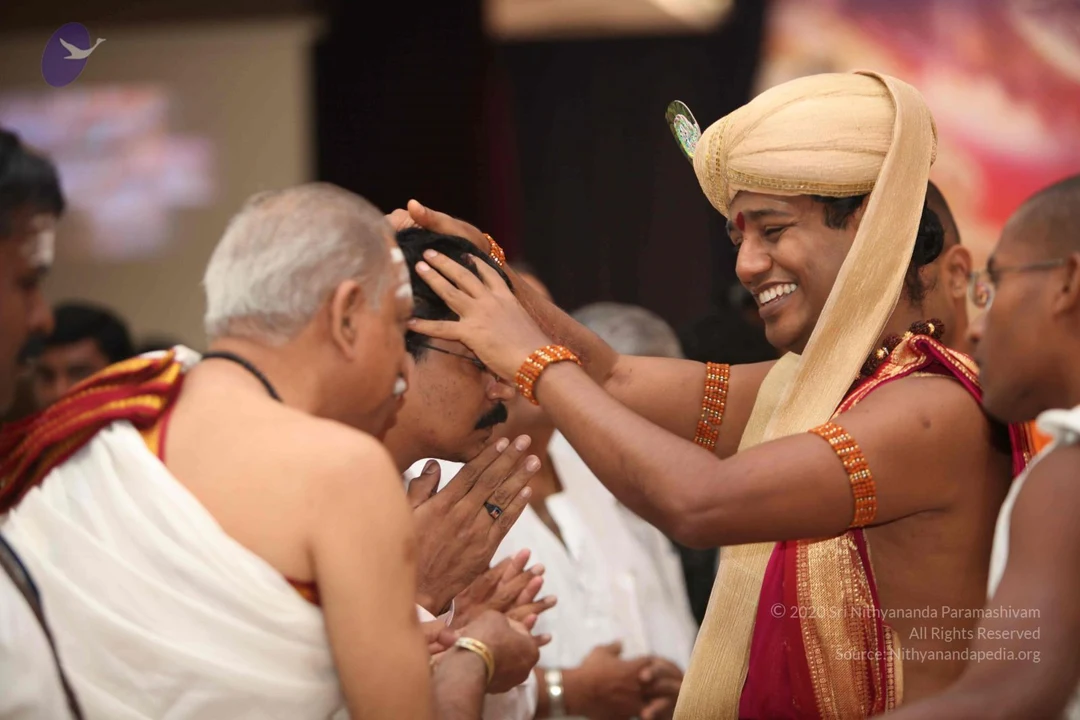
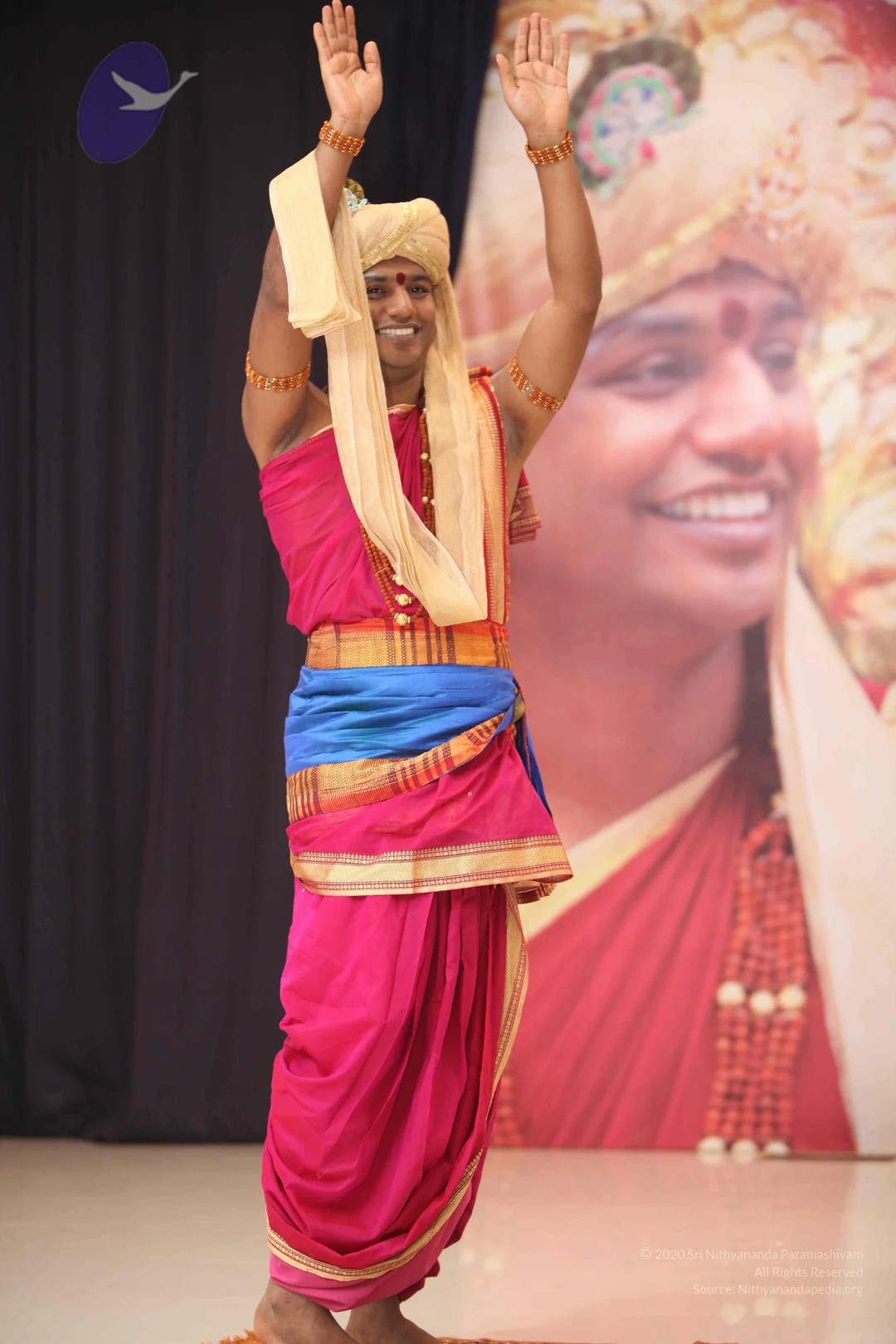
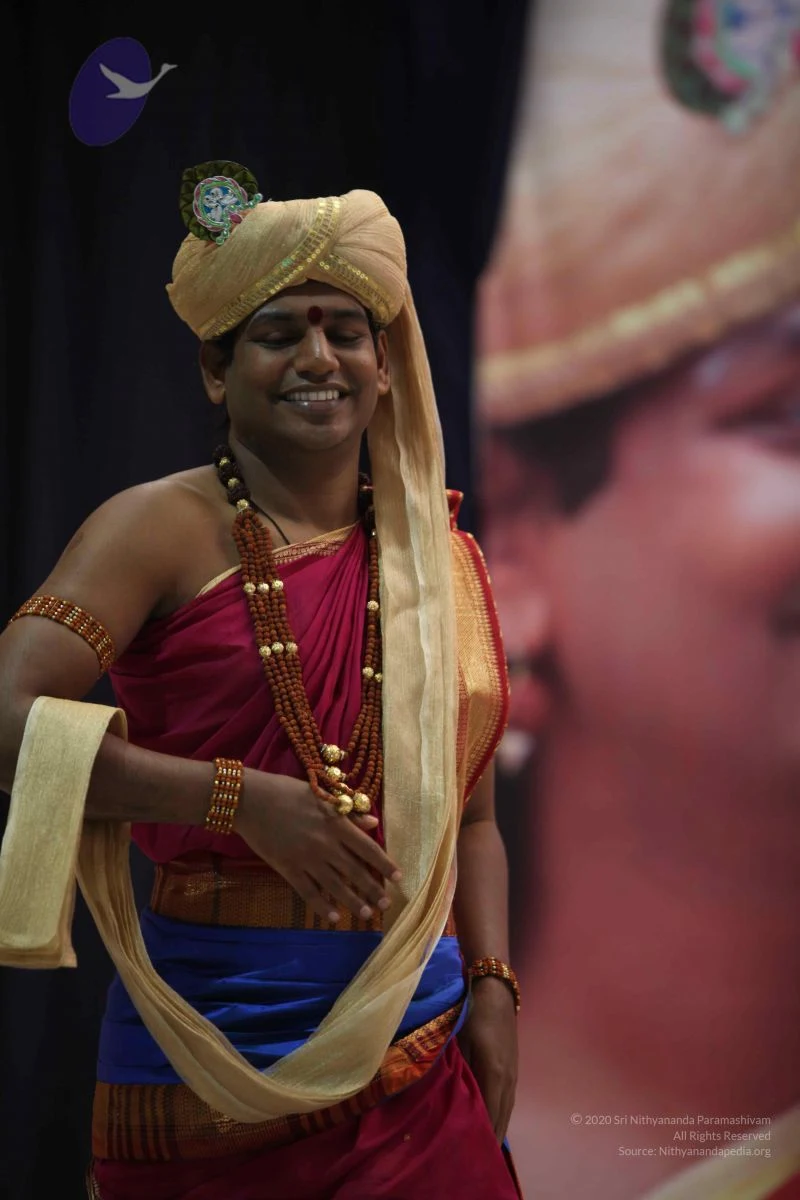
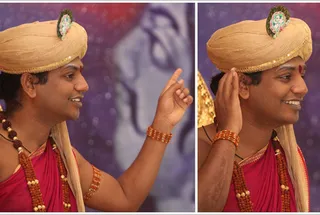
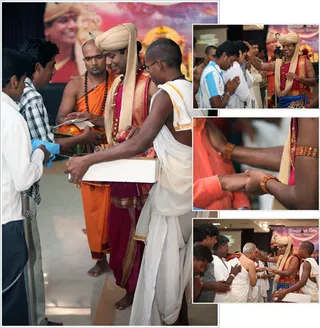
A smiling man in a cream and gold-bordered turban and a red and gold silk garment sits in front of a large, out-of-focus close-up photograph of a smiling face. He wears a red bindi, a rudraksha mala and gold-toned beads, and gestures with one hand. Flowers in pink, white and yellow lie beside him, and a jeweled ornament is pinned to the turban. The large background portrait shows a smiling face with red-toned skin and a wide grin.A man in a tan turban with a green and white emblem and a red bindi speaks while gesturing with both hands. He wears a red-orange shawl draped over the shoulder and multiple rudraksha malas in brown beads with gold accents, plus a gold bangle. Behind him a blurred lilac-and-purple painted backdrop shows a large figure's face, possibly a deity, under soft bokeh lights.A photograph at an indoor Bhagavad Gita Dhyana Satsang. A young man in a cream-coloured turban and a red and gold silk garment with a blue waist cloth stands at right, pressing a small mark of sacred ash or kumkum to the forehead of an older bald man in a white dhoti and shawl with red-and-gold border. Several devotees in white dhotis and shirts stand behind them with palms pressed together in namaskar or folded hands, and a man at left has his eyes closed in prayer. A cameraman films from the right. Behind them hangs a purple banner reading Bhagavad Gita Dhyana Satsang. Roughly 8 to 10 people are visible.

September 22 2011

Original wiki page
Contents

Title:

Power of Initiation

Link to Video:

VideoAudio

Transcript:

Bhagavad Gita

Power of Initiation

DATE: Day 31: Sep 22nd 2011

I can say this is the most sweetest space to exist for Arjuna and for Krishna; because here both these fellows…. one is telling kill, the other is going to do the killing; and this fellow is saying ‘how can the eternal one will be cause for killing’. Arey you are telling him to kill and he is going to kill and you are saying ‘how can the eternal one be the cause of killing?’ I can say very clearly the highest spectrum of the Existence – atma - soul is touching the lowest spectrum of the practicality - physical action.

Please understand the highest spectrum of soul - the Existence - consciousness without losing its purity, without losing its formula of existence… see neither killing nor getting killed is the way of existence for consciousness. But that ultimate truth, without losing its ingredients…. see the consciousness has many ingredients - many kalyana gunas – the auspicious qualities. In that one quality is neither getting killed nor being a cause for killing means achala - unmoving - not being cause or the effect of anything which is happening. So that pure spectrum of Existence, that pure presence landing in human action without losing its grace and the formula of existence.

Let me try to give you some example like a man who is really, really rich; the richest man without removing any of his suit costly dress and the diamond rings and watches with full make up… full… fully dressed coming down to the sewage and cleaning it without losing his grace, but cleaning the sewage. Understand his highest spectrum of Existence without removing any of his paraphernalia or his qualities expressing his grace and wealth coming down and cleaning the lowest dirtiest place.

Krishna without losing his way of existence, his components of existence, his formula of existence, he is bringing his pure presence into the lowest action. Lowest action on the planet earth is killing somebody; the panchama patakas. Killing is the first sin worst sin the lowest action; especially killing your teacher – acharya; forget about Guru, Acharya. Acharya droha itself is considered to be the…one of the worst killings. He is bringing the purest form of Existence to the lowest level of action. Please understand, through this, only action is getting purified. Presence is not becoming dirty. There is a big difference.

Sometime the richest man comes with all his jewels watch and everything, gets into the drain – drainage; he becomes dirty and goes out. He does not clean the drainage. So that is totally different. Then you should say drainage made richest man dirty; not that rich man made drainage clean. So here Arjuna tried his best to make Krishna dirty when Arjuna gave all his dharmic logical arguments. How can we live after killing these fellows? Come on let us become a sadhu and beg and eat. If Krishna says yes, yes oh Arjuna you are such a great dharmic person. I forgot all the things I learnt from Santibani because I was all the time remembering about gopikas. Anyhow you reminded me and now I learnt the lesson. come on now let’s turn the chariot and go back. Then you can say drainage has dirtied rich man. But now it is not the case; the pure Presence without compromising its existence, its anantha kalyana gunas - auspicious qualities, landing to the lowest action and purifying it.

I tell you beautiful incident from Ramakrishna’s life; one guy who is addicted to alcohol, extremely addicted can’t live without it. His body will start shivering if he doesn’t drink. One drunkard who can’t stand without drinking, he goes to Ramakrishna and says Bhagavan ... one great thing Ramakrishna was respected as an incarnation even while he was in the body. Very rarely few people I know who have been respected at least by their disciples as incarnation; Swami Narayan, Ramakrishna, Ramana Maharishi. Not the whole society accepted; whole society can never accept. Whole world can never accept. If that happens then satya yuga will come and what will happen to kali yuga.

Anyhow this… this guy goes and begs ‘Bhagavan please somehow liberate me. I am a sinner caught in this drinking unable to escape’. Ramakrishna says ‘All right, from tomorrow before drinking, take the bottle pour little in your hand and offer it to Mother Kali. Do the offering then drink the bottle.’ This fellow got little confused and he says ‘What do you mean? You mean to say I will be I will stop drinking, I will not be able to drink just by this act? That’s all is the solution, something great then. You are the best master for me’. That fellow one side can’t believe it can help. The other side he thought such a simple solution! Great! Come on let us enjoy then! But after two days that guy comes and falls at the feet of Ramakrishna and cries ‘Bhagavan I am not able to drink I don’t know what you have done.’

One of the main things human beings do not know is power of initiation. When a Master puts certain words into you, when those words start working in you, you do not know what all is going to happen in you. I can say the one liner for initiation is ‘Expect the unexpected’. Expect the most unexpected is the one line introduction for initiation.

Somebody goes to Sharada Devi. That guy is a womanizer. Womanizer very dirty guy; not only mentally even physically, perverted guy. Sharada Devi was very beautiful lady. If you see her first photograph it is taken at the age of fortys, after Ramakrishna passed away, left the body... but you won’t feel she is forty. You will see very clearly because in that extraordinary sensitivity and grace. She puts her head down in shyness in shy feeling. She will look less than 25. She looked just like Rajeshwari Devi. The moment this fellow enters her room Sharada feels uncomfortable and just covers herself. Then this fellow understood that his eyes are not proper, the way he looks is not proper. That’s why mother is covering herself. He just falls at the feet and asks ‘ma free me from this lustful eyes and my womanizing habit. Sharada Devi had a betel leaf next to her. She takes one leaf and puts it at her feet…. the right thumb she puts that leaf and just takes that leaf and gives it to him and says eat this.

The reminiscence says… that guy writes the reminiscence after 22 years of this incident. He says ‘I forgot whether I am a male or female from that betel leaf; over. Forget about womanizing, I did not go near even my wife. I stopped even going near my wife. I don’t know what has happened to me. He writes after 22 years ‘now when I am writing the incident only I even remember 22 long years passed without having women in my life. He says two night is the maximum gap; but now 22 years ….just one betel leaf!’

Understand the power of initiation. Whenever you receive certain words don’t come to conclusion without living these words, practicing these words. If that guy thought ‘ehh ordinary betel leaf, that also she put her feet on it, dirty betel leaf. How can that clean the dirt in my mind?’ Then you can be sitting for your whole life. And at least this is a betel leaf. Ramakrishna’s solution just a word hmmm pour it in your hand offer it to Kali and again pour it and pour inside over. Oh Ma Kali Oh Ma kali oh Ma Kali and drink; over. What is this? What kind of solution? But power of initiation!!

When the highest Existence lands to the lowest action, the lowest action is purified. I promise Arjuna did not kill anybody in the war. Krishna did not cause killing in the war. Because such pure presence!!!

Photos
Sakshi Pramana:

sharing from MEDICAL SERVICES IN BIDADI ASHRAM

Photos Of The Day:

Temple
BG-Satsang

Photos Of The Day:

Temple
BG-Satsang
Photos from this day

View all 207 photos

Photos

4 photosSource gallery
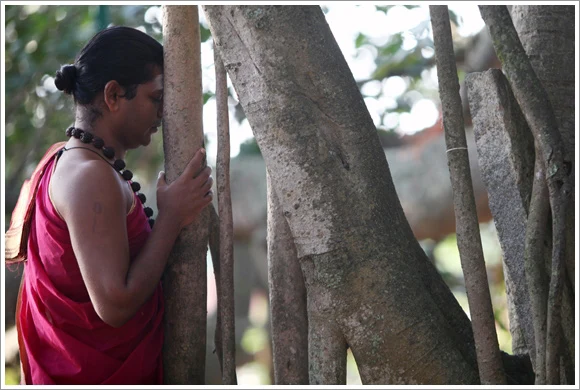
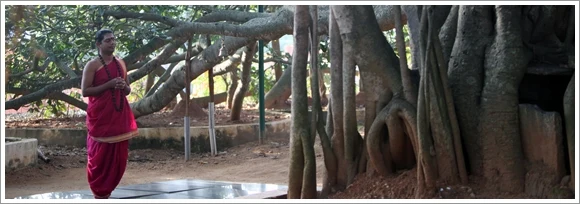
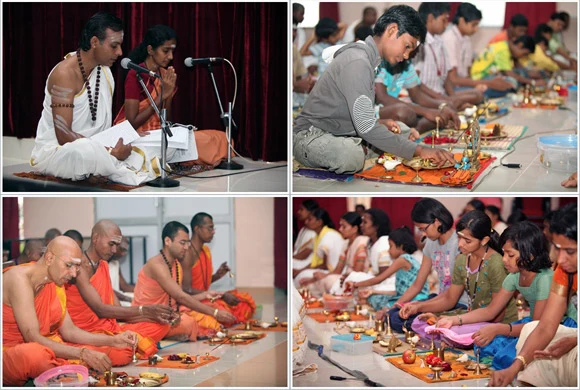
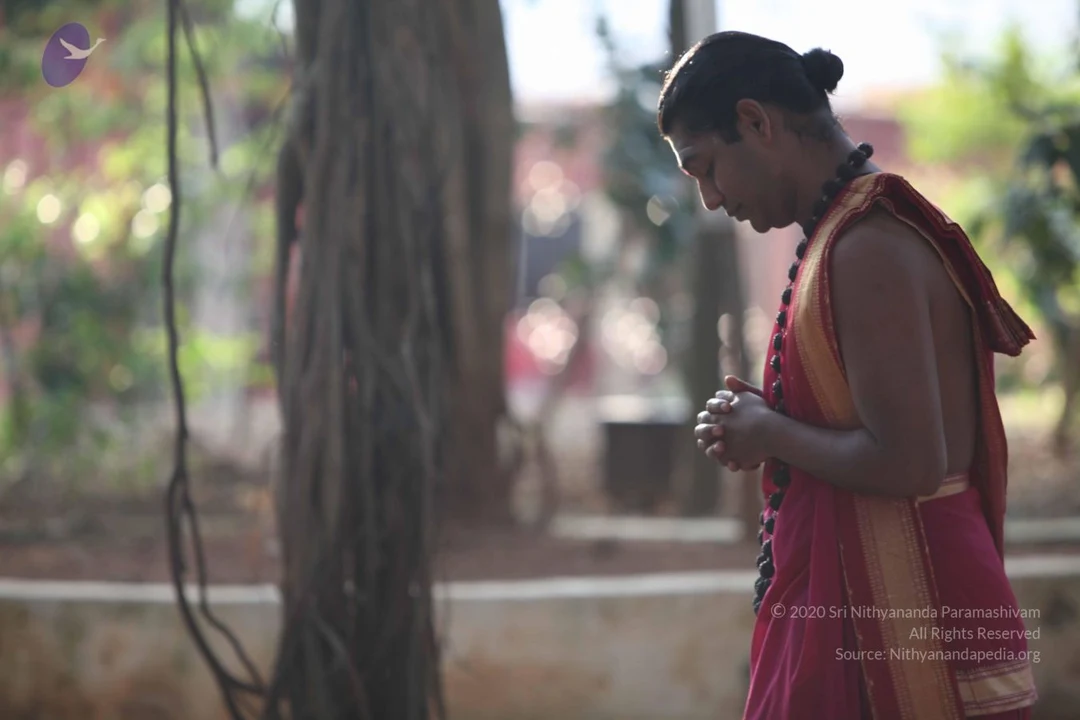
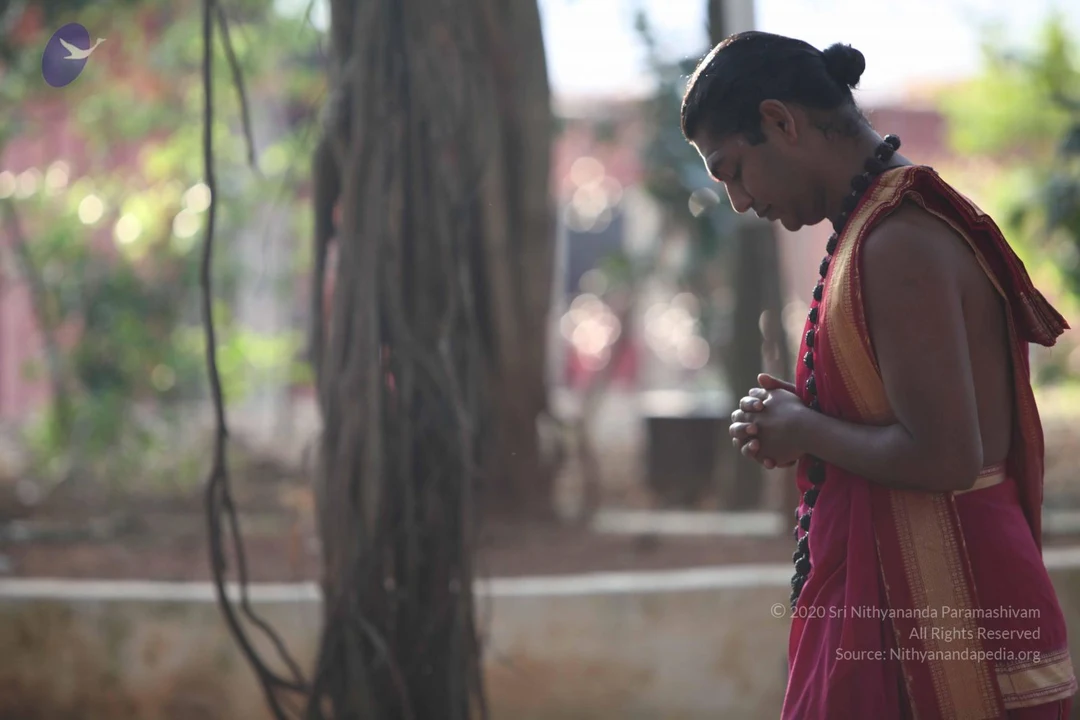
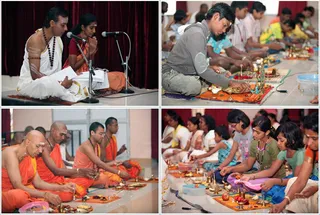
A woman in a red sari with a red blouse stands on a paved area beside a large banyan tree with thick, twisting aerial roots and spreading branches. She holds her hands together in front of her. Behind her are a low stone wall and a wooden fence post. The setting appears to be an outdoor garden area at an ashram.A four-panel collage of ritual worship in an indoor hall with red curtains. Top left: a man in white dhoti with a sacred thread and tripundra marks sits beside a woman in a red-orange sari, both joining hands in prayer before microphones. Top right: a row of devotees seated on mats, a man in a grey shirt bending over a brass thali with lit oil lamps and flower offerings. Bottom left: several shaven-headed men in saffron-orange robes seated at brass plates of puja items and oil lamps. Bottom right: a row of women and girls in saris and salwar kameez seated before brass lamps, kalasha-style vessels, fruit and flowers on orange cloth. Oil lamps and puja items are visible throughout.A two-panel photo collage of a man seated in a discourse setting, shown in two close-up frames. Left panel: he raises his right arm and points upward, speaking with a smile. Right panel: he touches his right ear with his hand while smiling. He wears a cream-colored turban with a small embellished ornament, a red-and-maroon garment with a golden border, multiple rudraksha malas around his neck, and beaded orange bracelets on his wrists. Long light hair falls over one shoulder. A red tilak mark is on his forehead, and the blurred blue-and-purple backdrop suggests a stage or satsang hall. Swamiji (probable): long swept-back hair, turban, rudraksha malas and ornate red robes, presented as the speaker of the discourse.A multi-panel collage of ceremonial scenes at an indoor hall with a banner backdrop. Main panel: a priest in orange dhoti and rudraksha mala stands beside a younger man in a maroon garment with a tan turban, holding a tray of offerings while devotees in white and a man in a checked shirt approach. Top right panel: a turbaned man in maroon and gold clothing stands with a microphone while devotees fold hands in prayer. Middle right panel: a close view of bare feet with gold bangles being touched in worship. Bottom right panel: devotees in white kneel and bow before a turbaned figure in red and gold, with a shaved-headed attendant in white nearby. Collage panels show activities; no single physical person is counted here beyond the photographed scene.

Temple

32 photosSource gallery
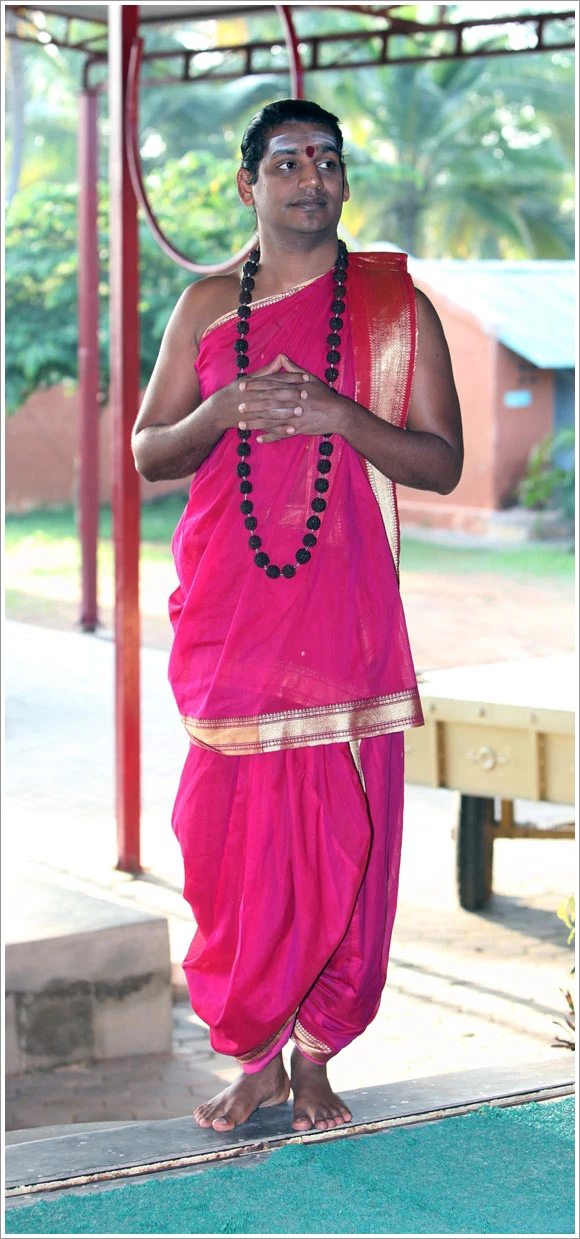
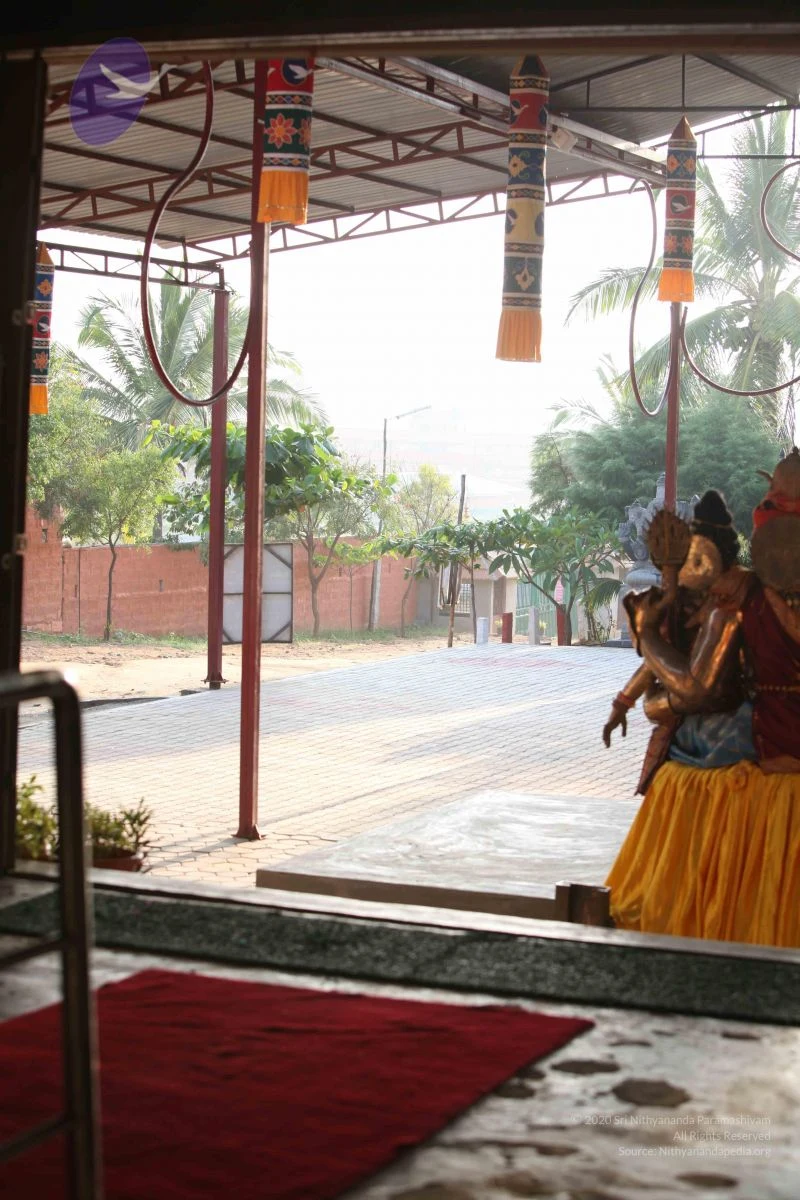
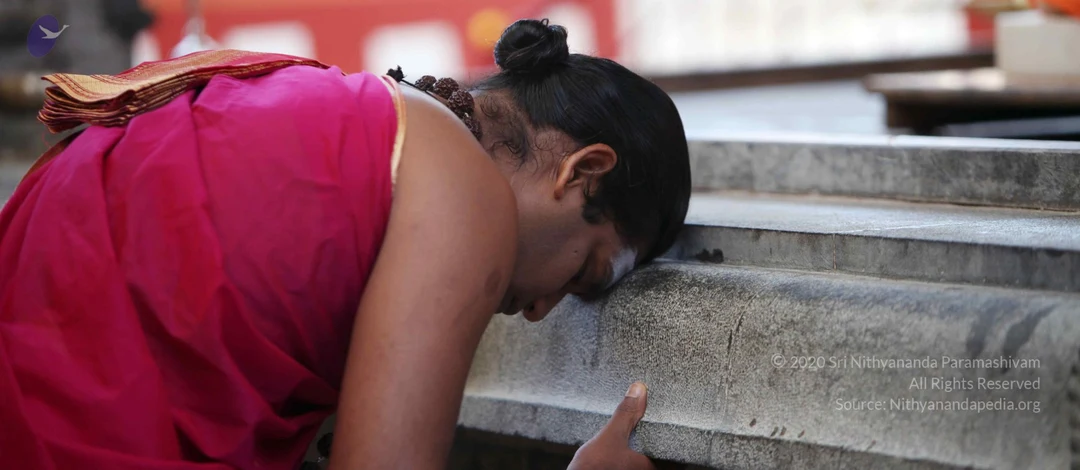
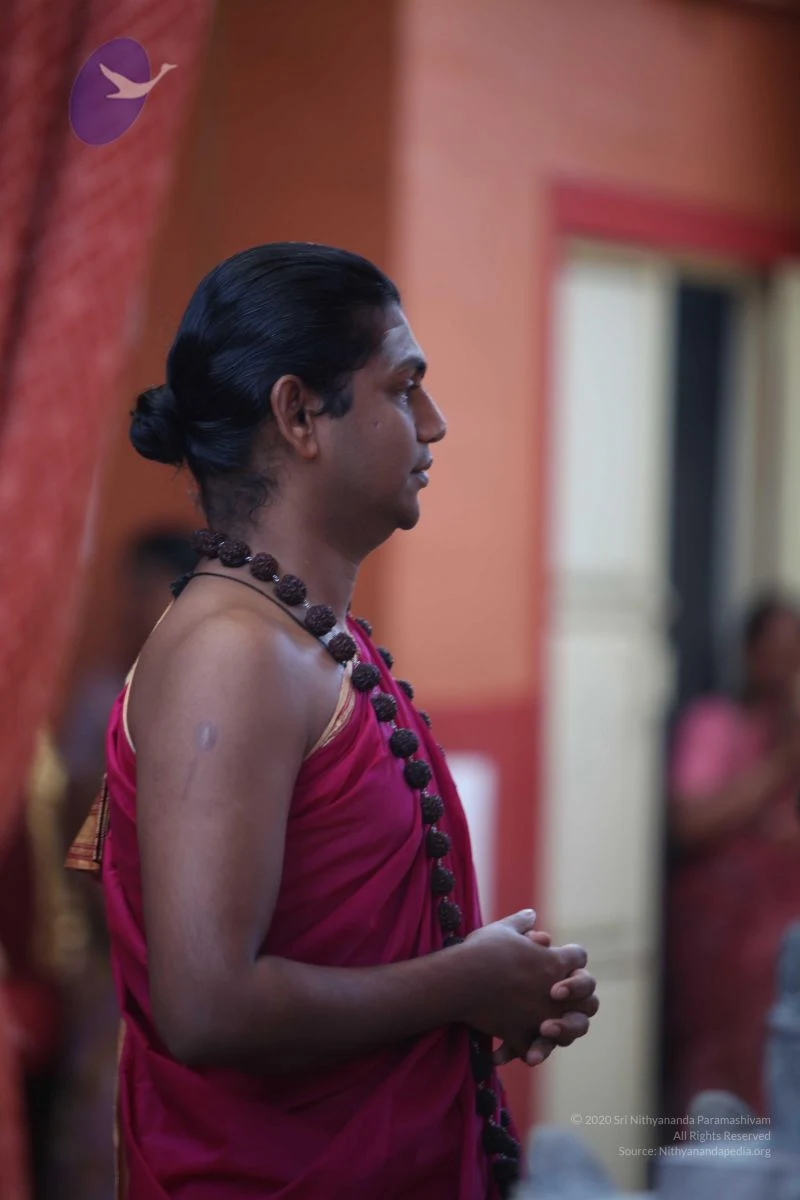
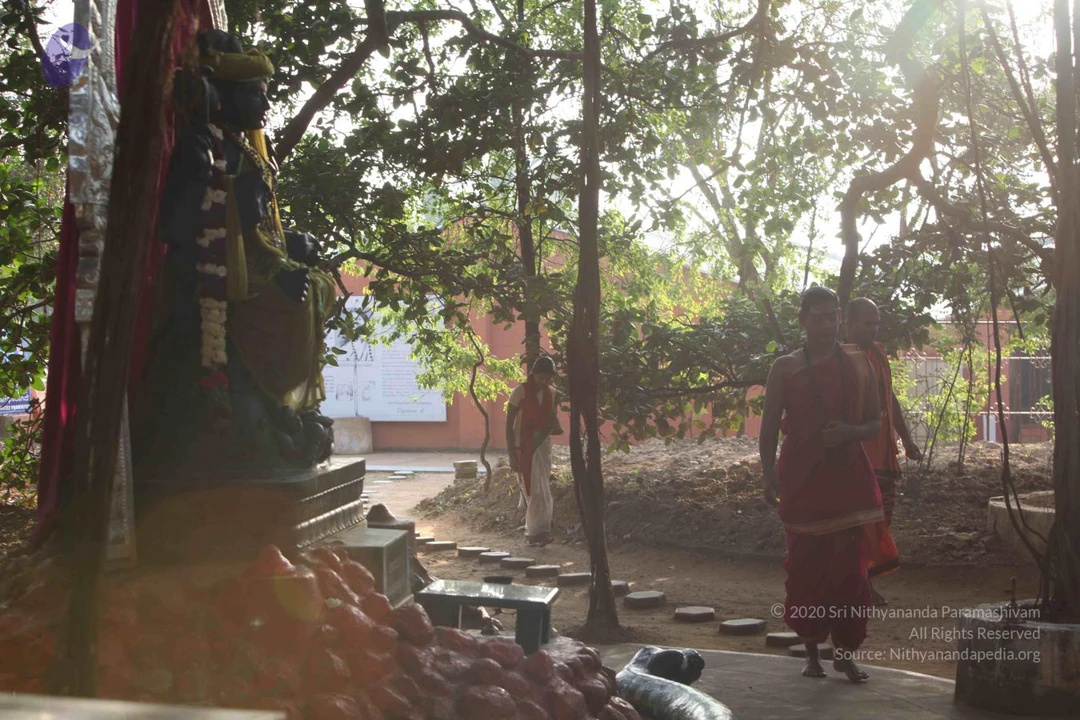
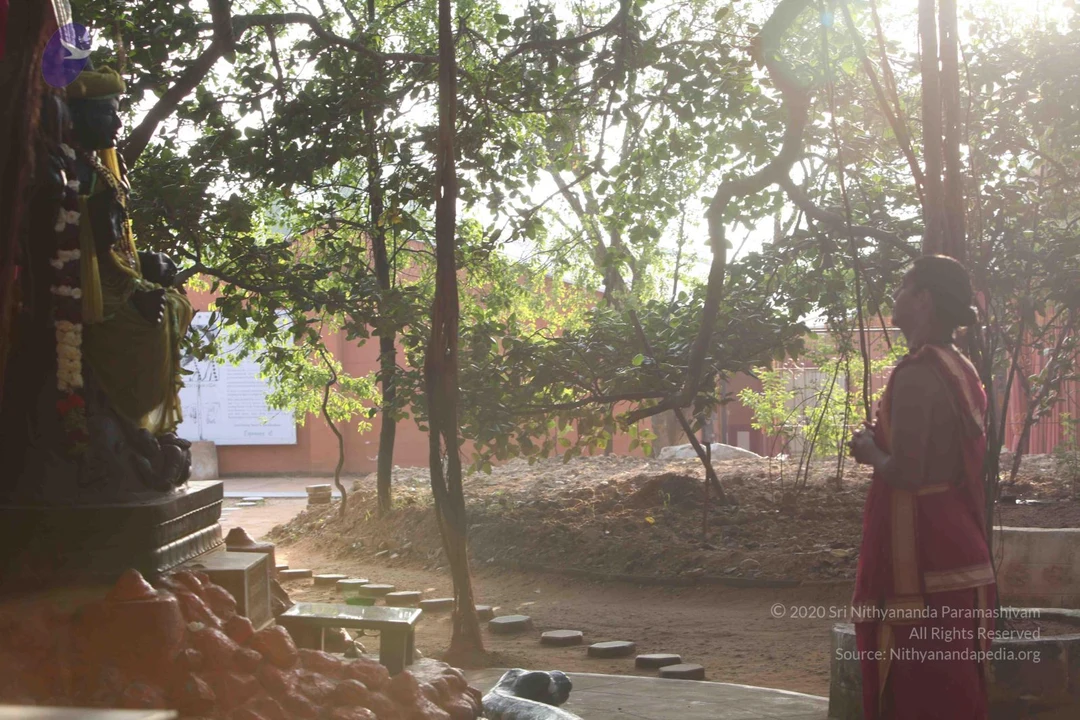
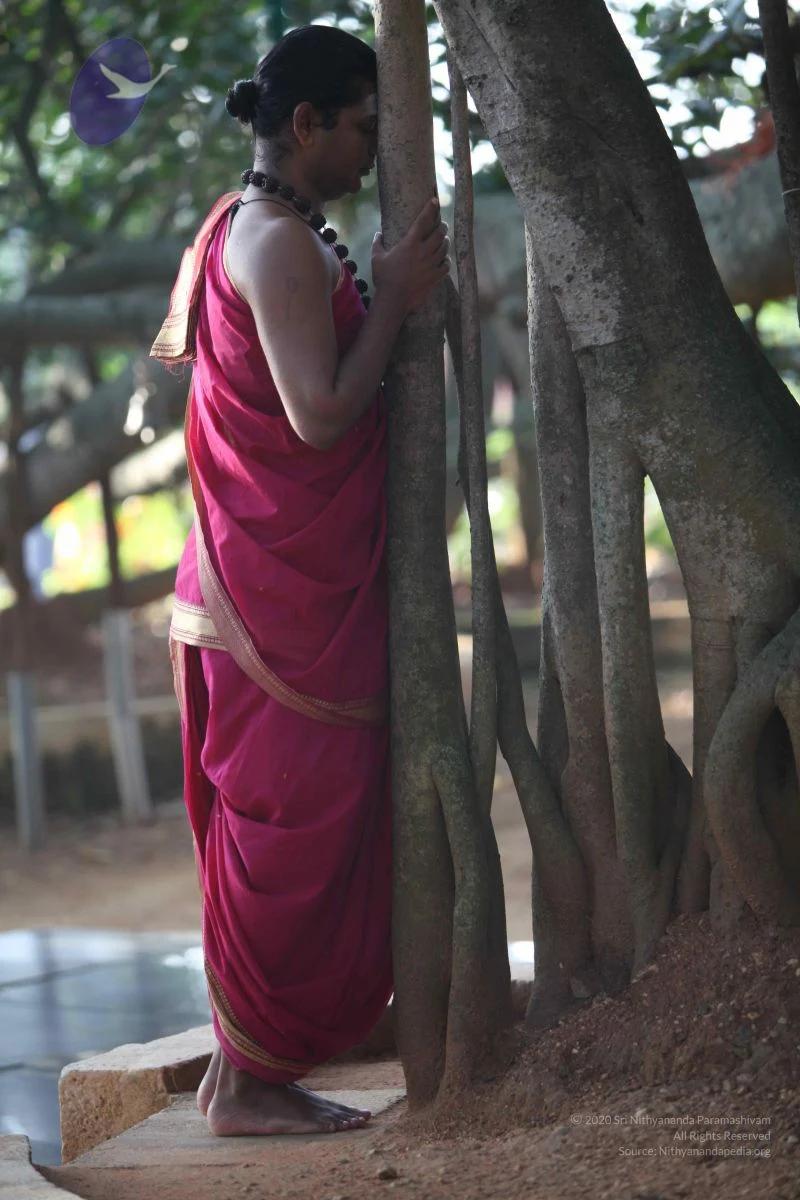
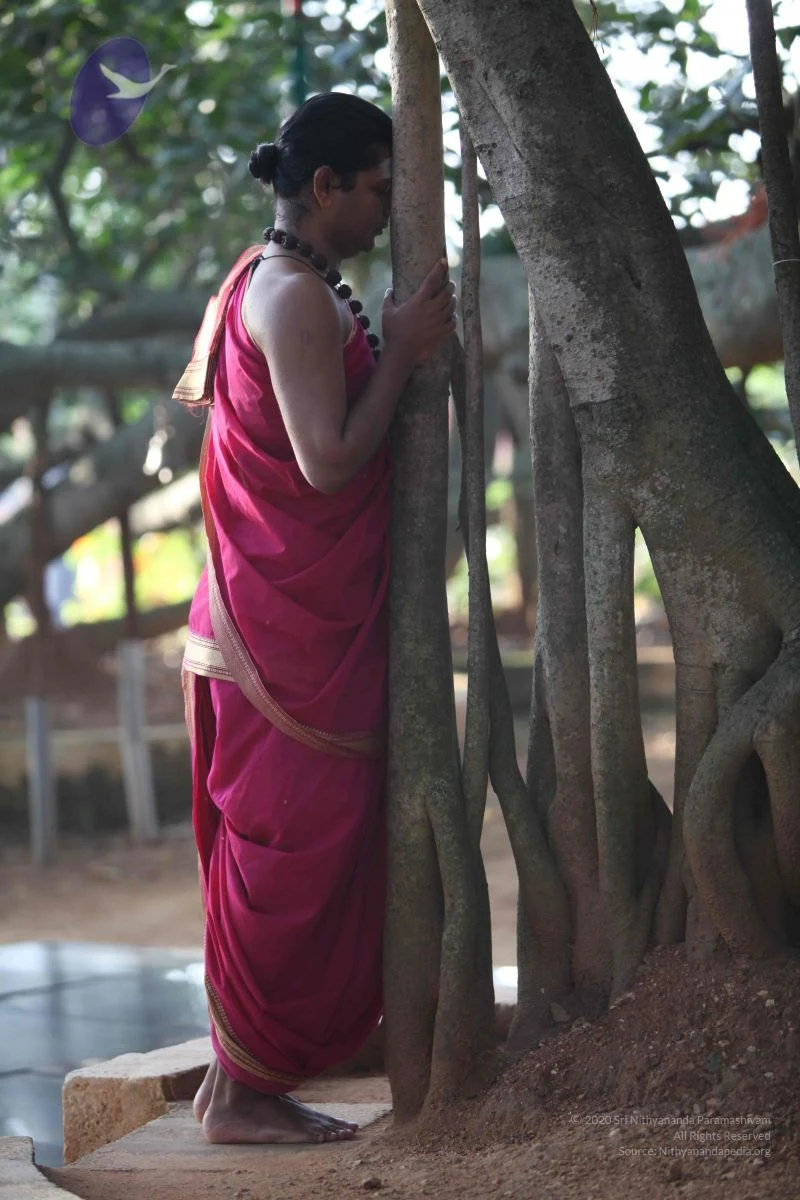
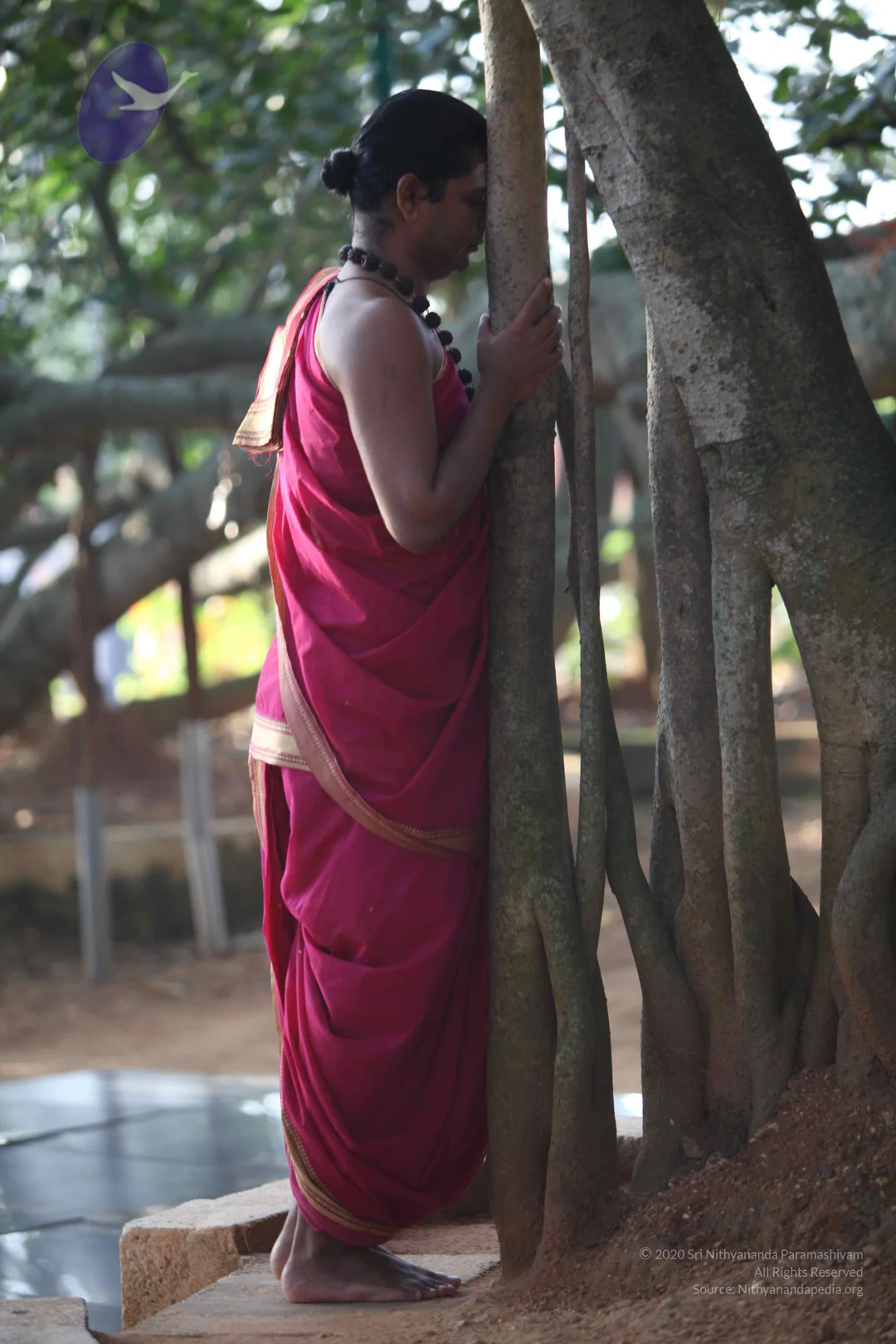
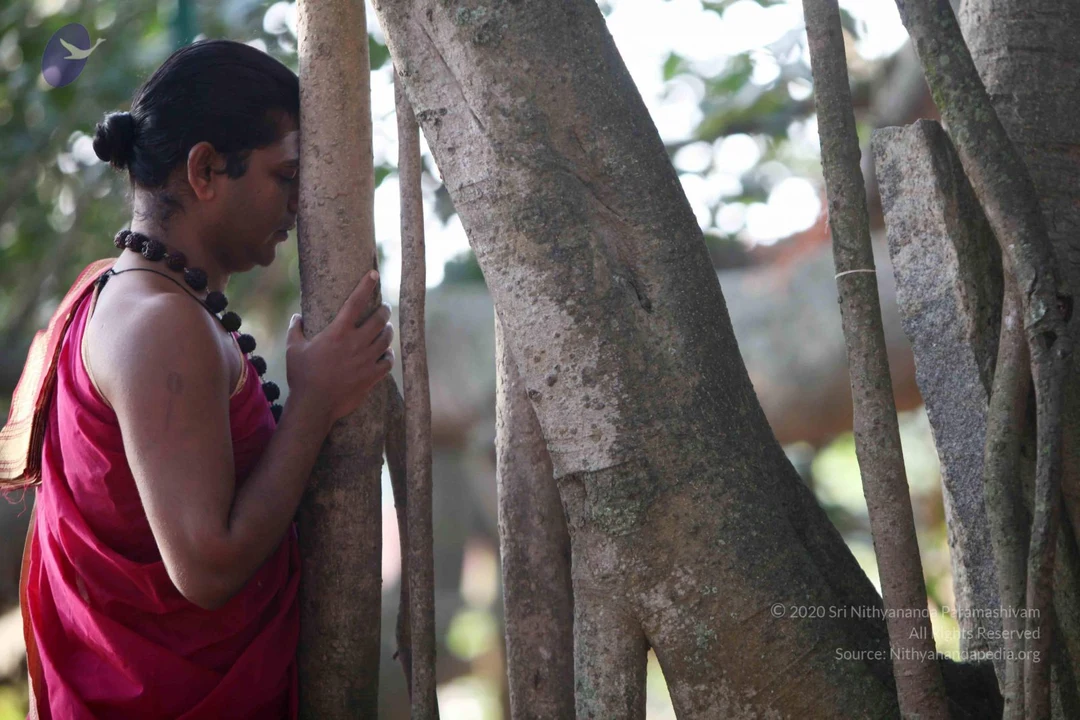
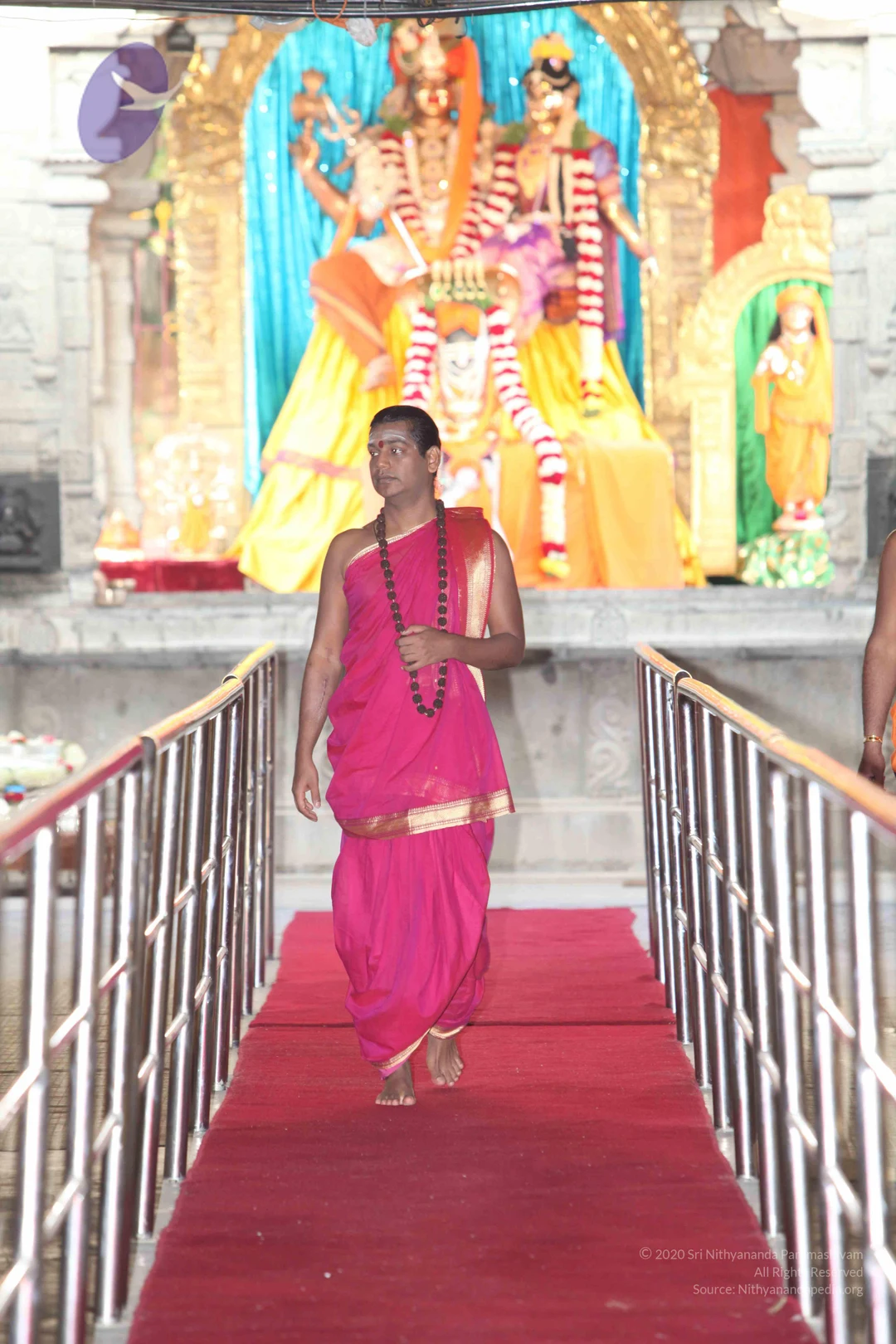
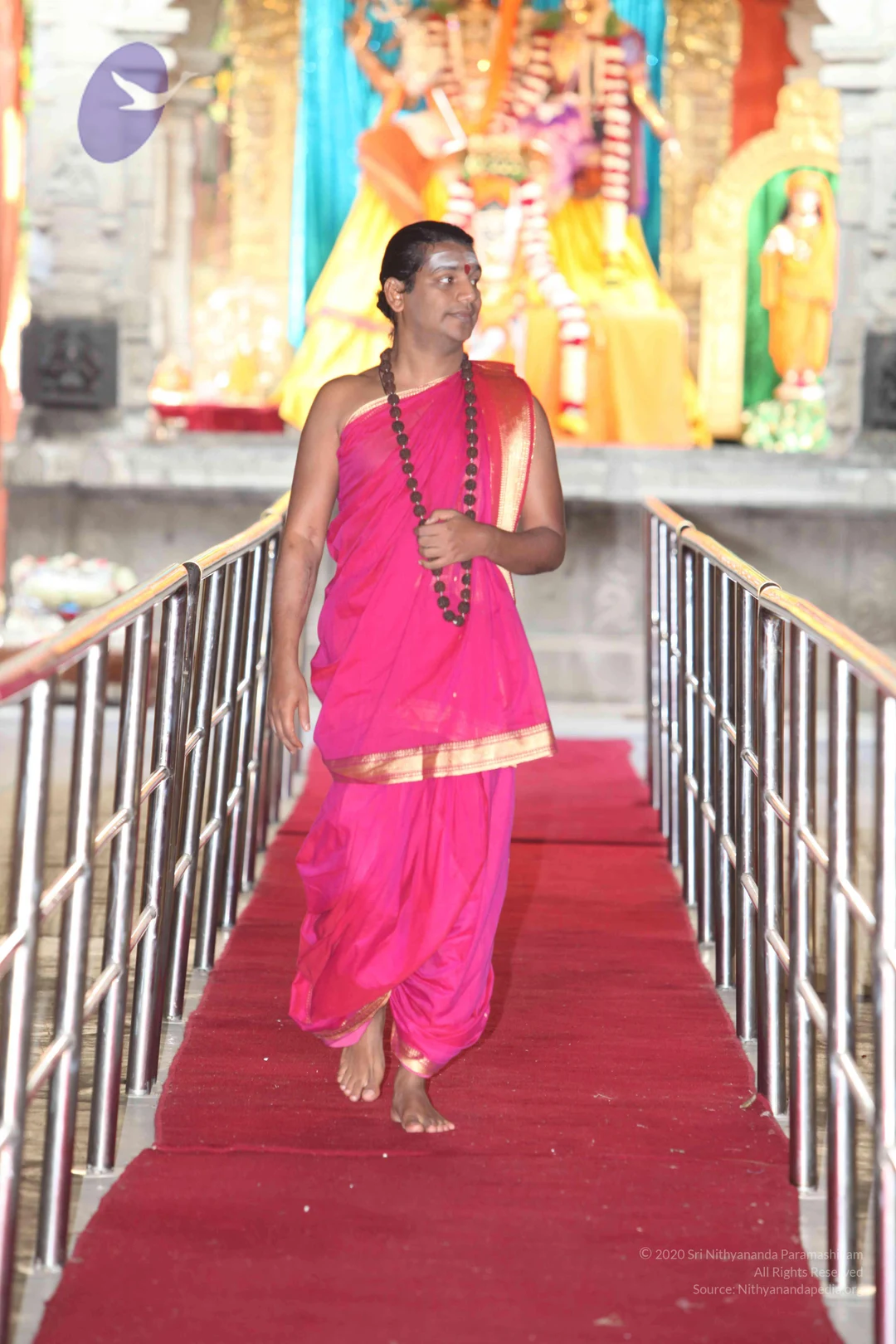
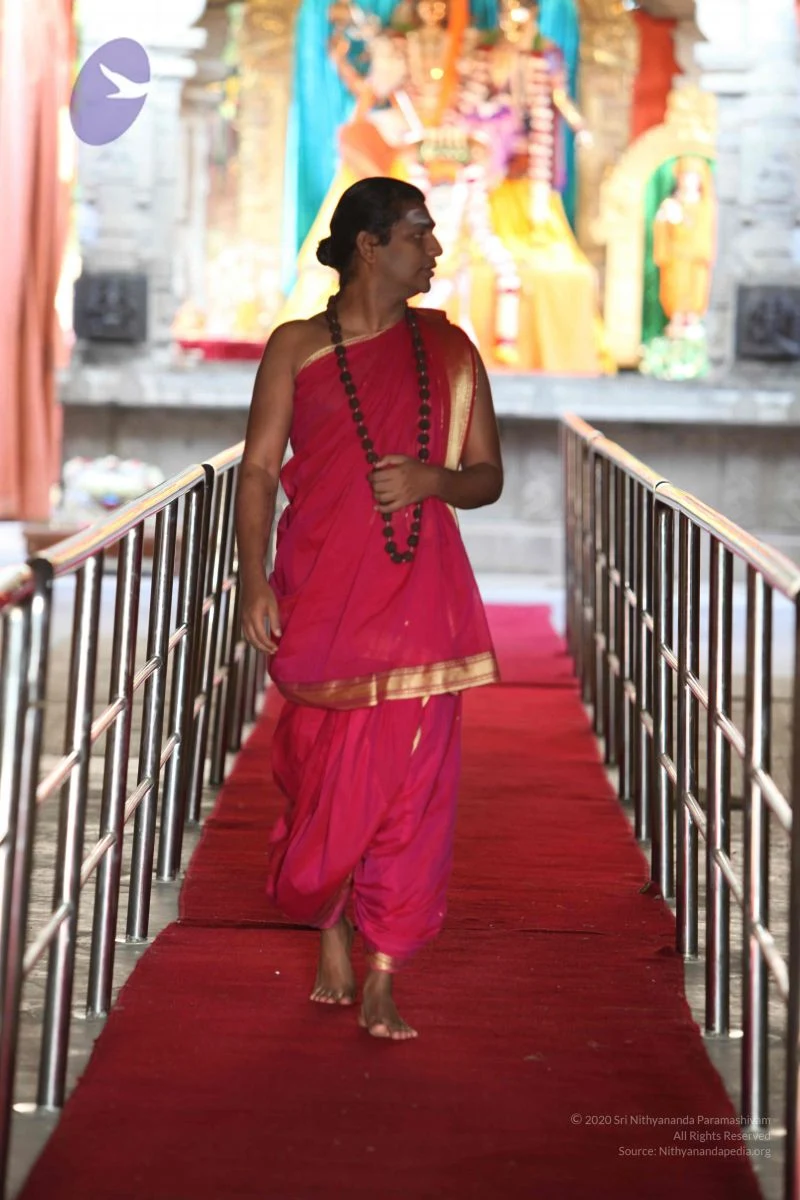
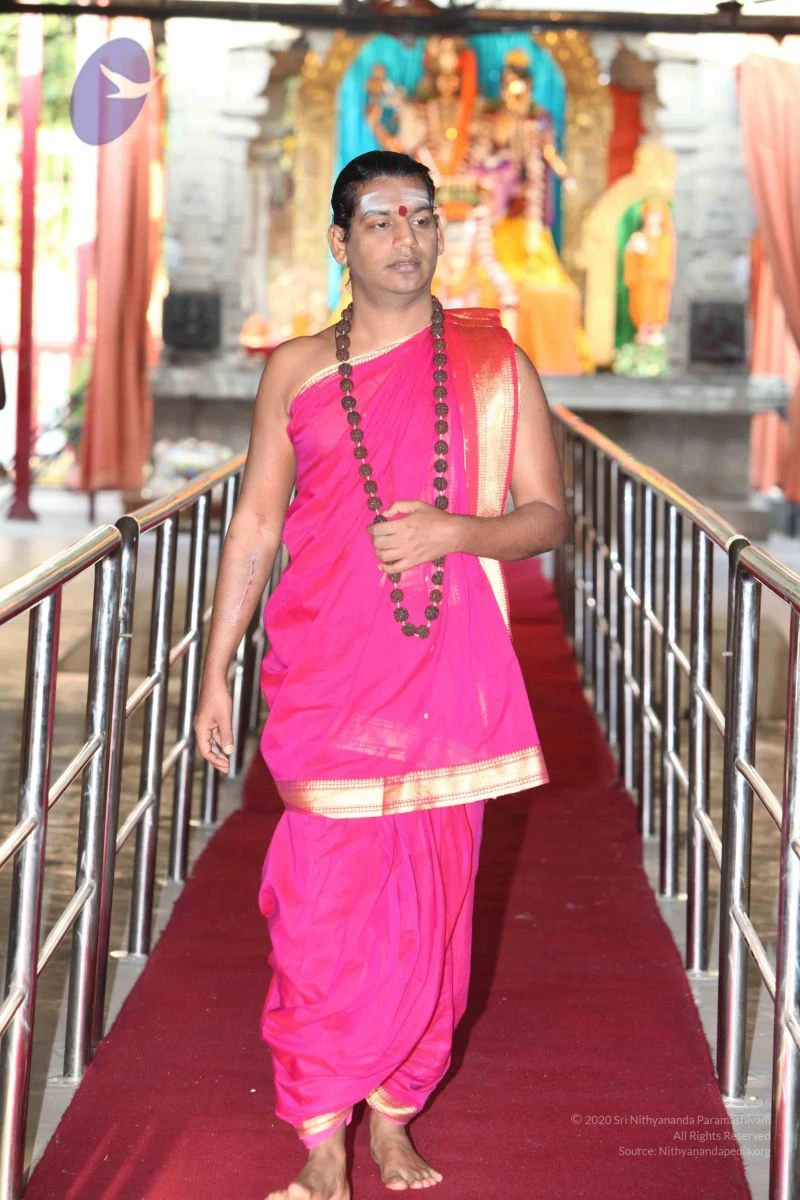
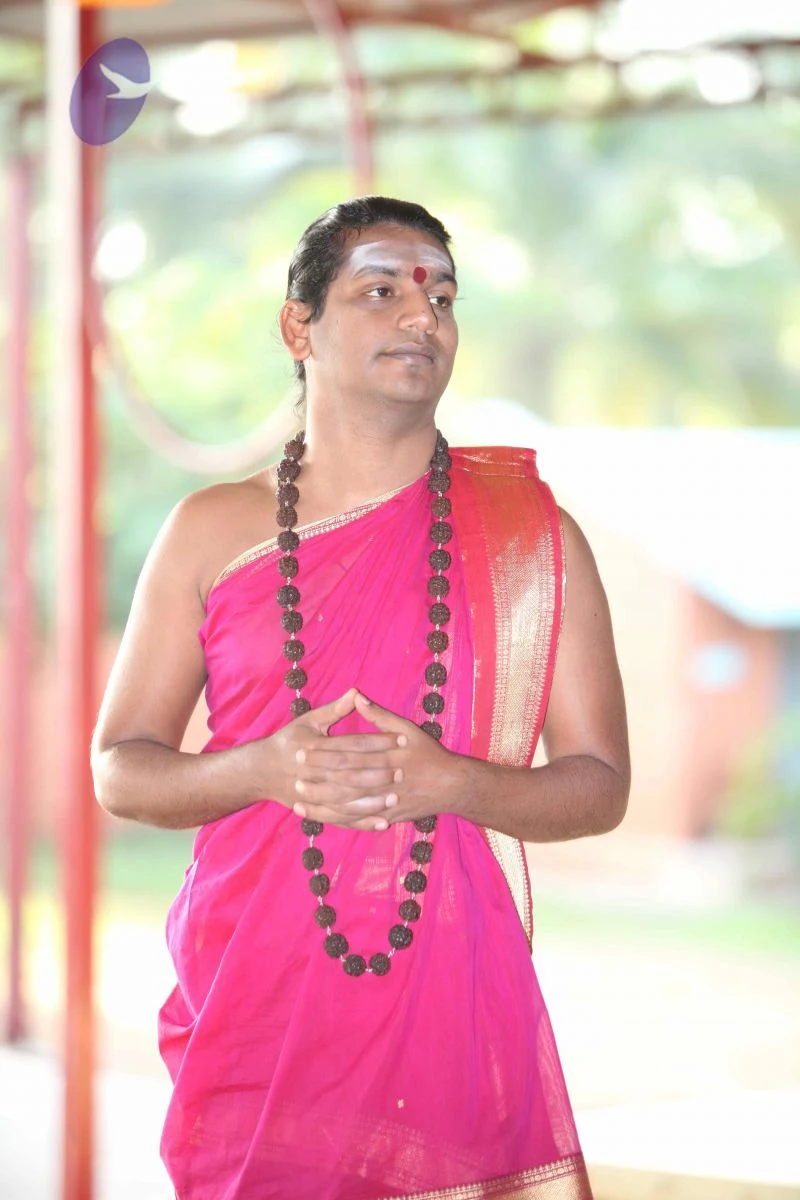
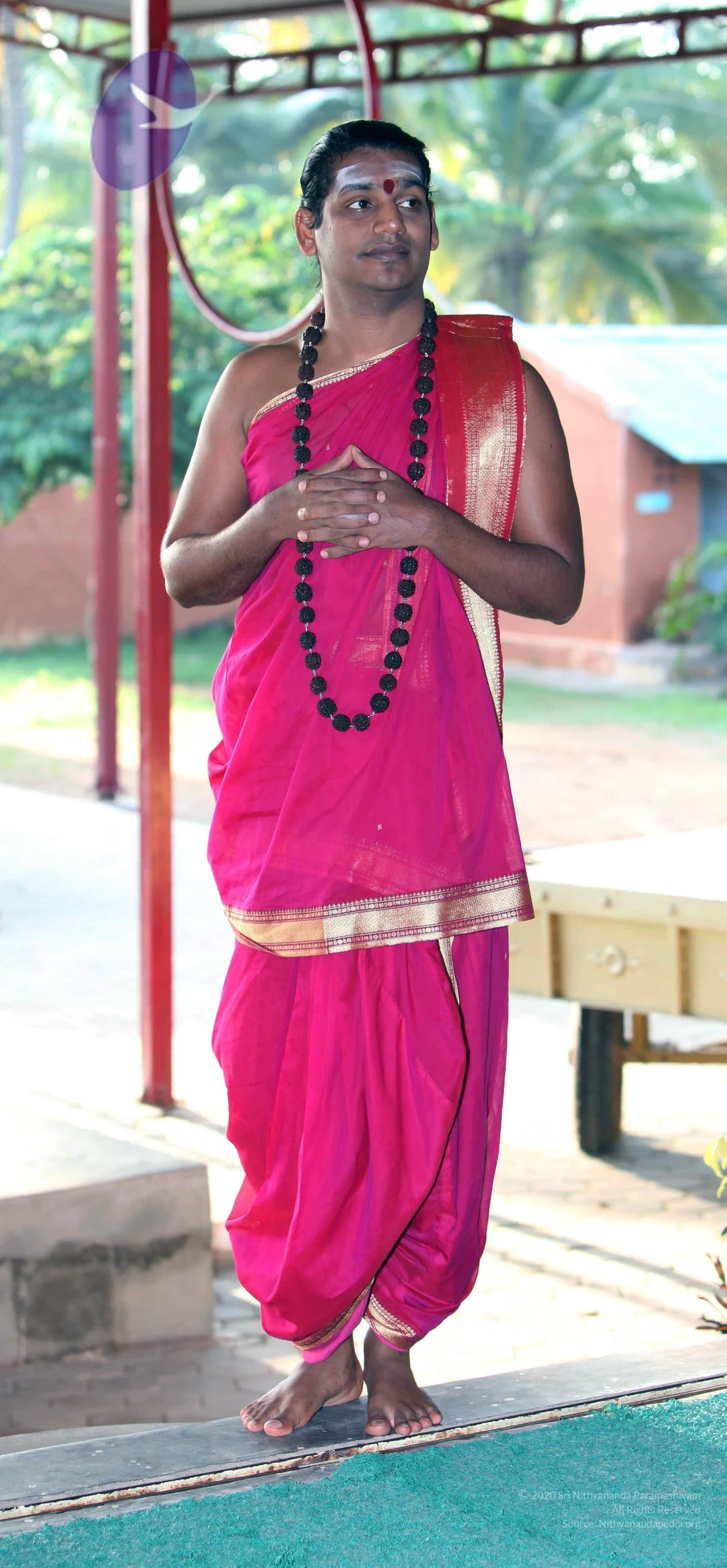
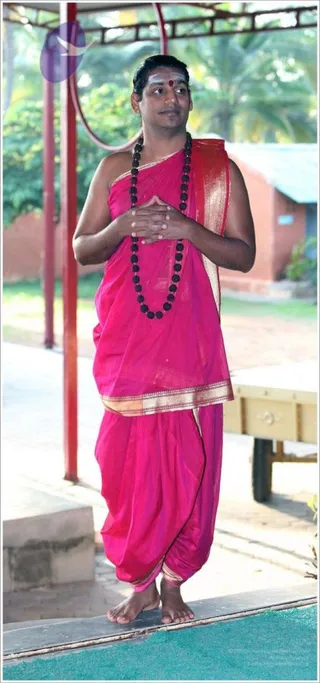
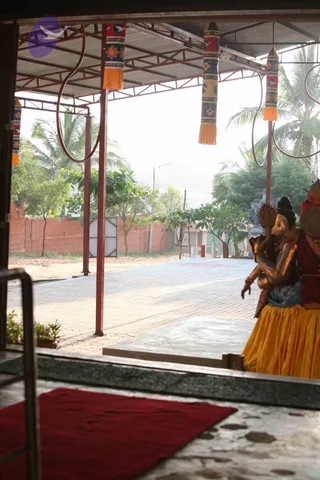
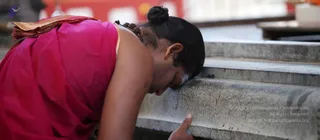
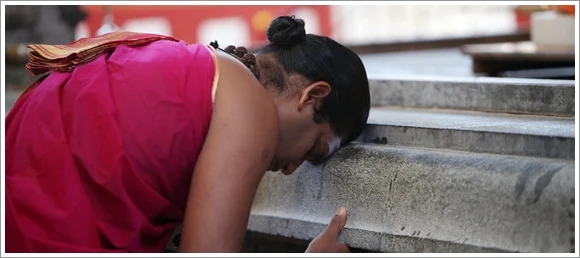
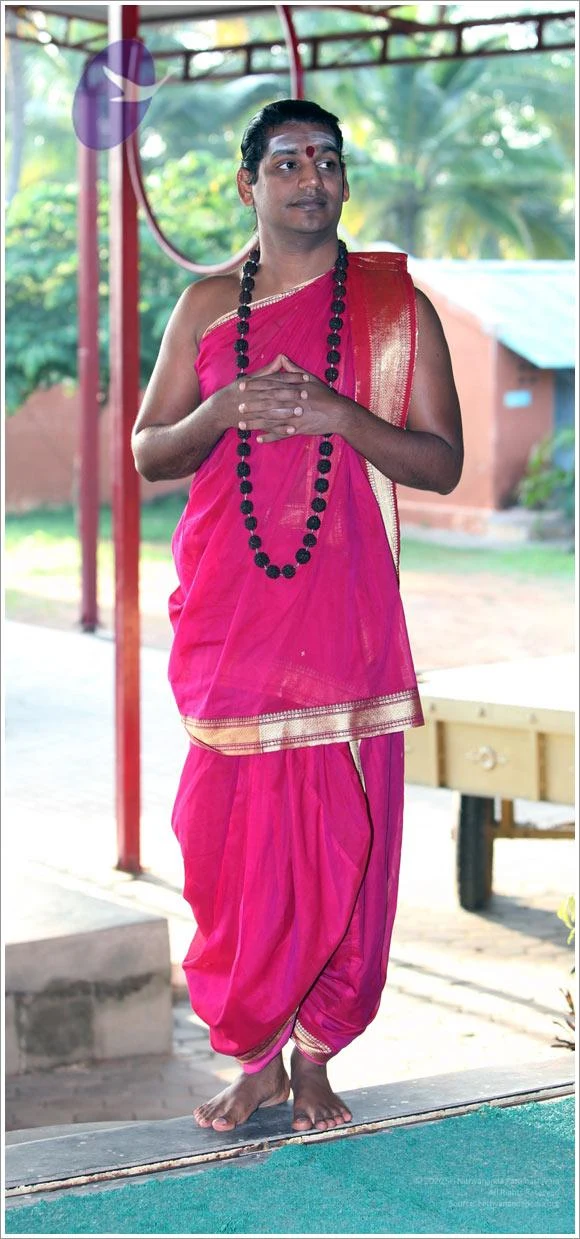
A woman in a fuchsia pink top and dark bottoms kneels and bows forward, resting her forehead on a stone surface in a temple setting. Her dark hair is tied back. The stone slab looks like a ritual platform or step, with a plain grey background behind her. Only one person is visible.A photograph of a man in a red garment standing close to a tree trunk, with his face turned toward the bark and his arm raised against it. Green foliage and leaves fill the background. He is the only person visible, and no ritual objects or readable text appear in the frame.A photograph of a large banyan tree with thick, spreading aerial roots hanging from wide branches over an open courtyard. On the left, a person in red robes stands near a low stone wall. The ground is paved and the setting appears to be an outdoor ashram or temple grounds.A standing man in a hot pink dhoti-style garment with a gold-bordered pink shawl draped over his shoulder and chest. He wears a long black rudraksha mala and a red bindi on his forehead, with his palms pressed together at his chest in namaste. He stands barefoot on a green mat in an open pavilion with red pillars, with greenery and a building behind him.A photograph taken from inside a covered entrance looking out onto a paved courtyard. Hanging from the metal roof frame are decorative cloth banners with coloured geometric patterns and orange tassels. On the right edge, a part of a deity murti is visible with a gold-toned body and a yellow skirt, next to a deep red fabric wrap; the figure is partly cropped. Outside, palm trees, green shrubs, a frangipani tree and a red brick wall stand under a hazy sky. A red mat lies on the floor in the foreground. No people are visible.A person in a bright magenta-pink garment with a gold-bordered orange and red shawl draped over the shoulder bends forward and presses their forehead to a grey stone step. Dark hair is tied in a bun with a rudraksha mala visible at the nape. Their right hand rests on the step in front. The setting is a temple-like space with a red and white backdrop and a wooden ledge in the background. The posture suggests prostration or reverence at a sacred threshold.

BG-Satsang
171 photosSource gallery
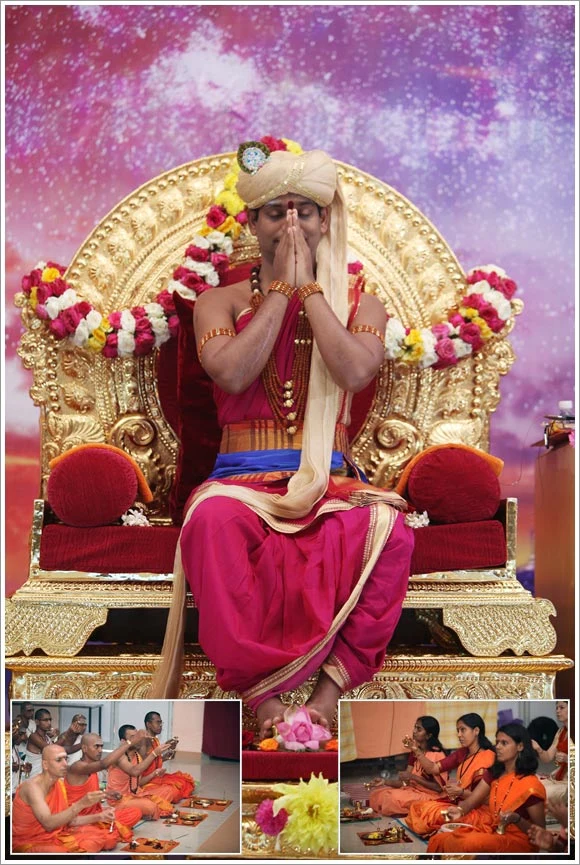
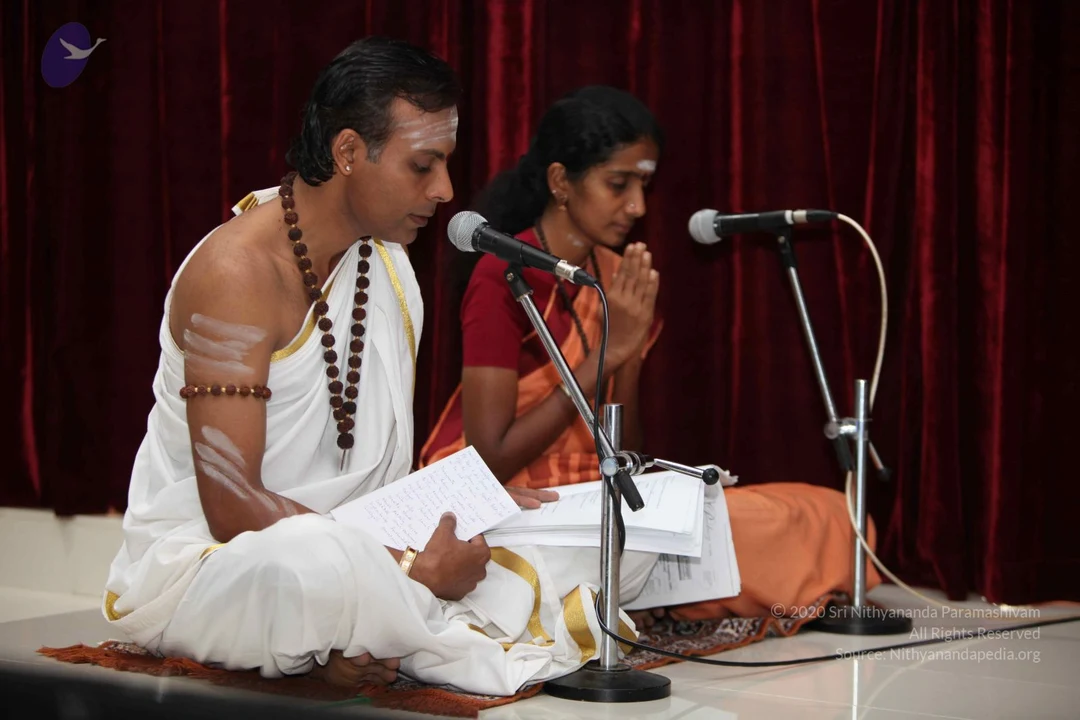
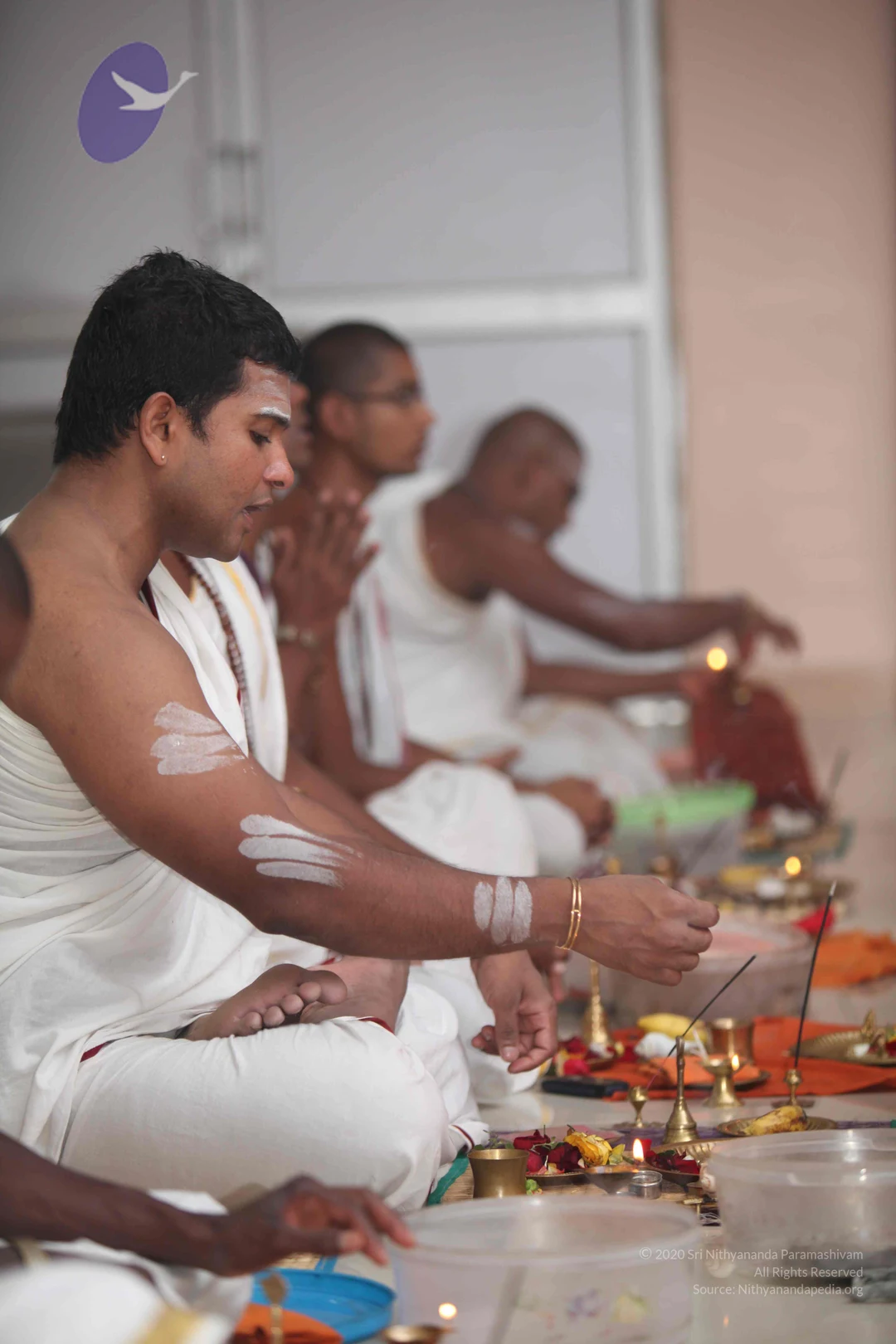
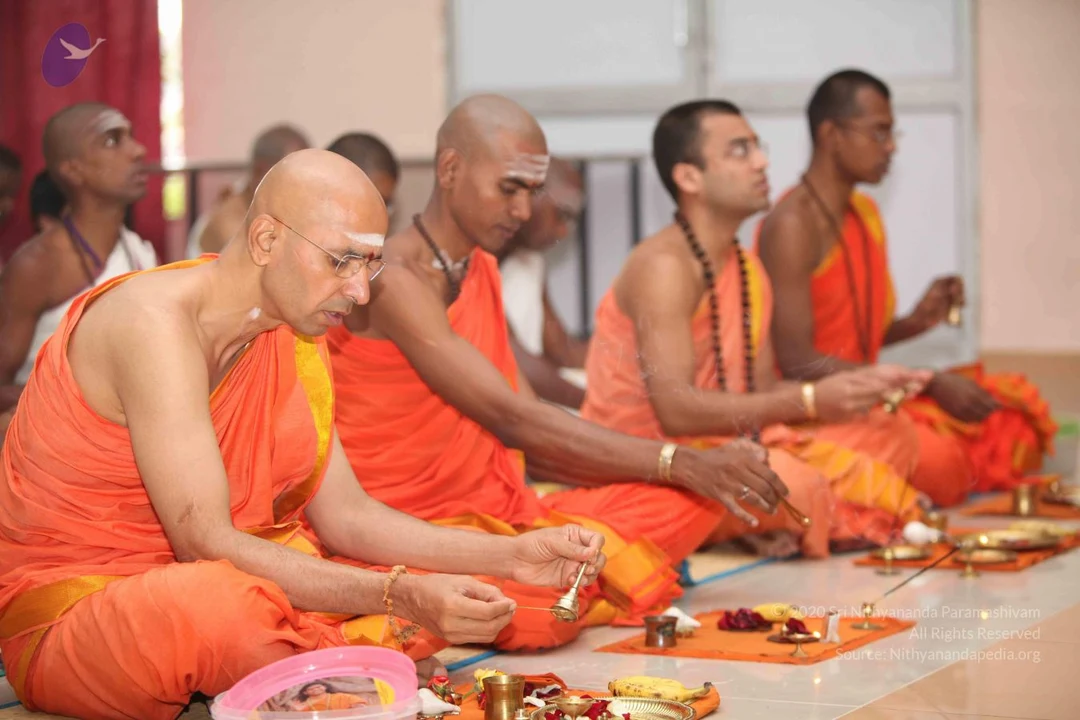
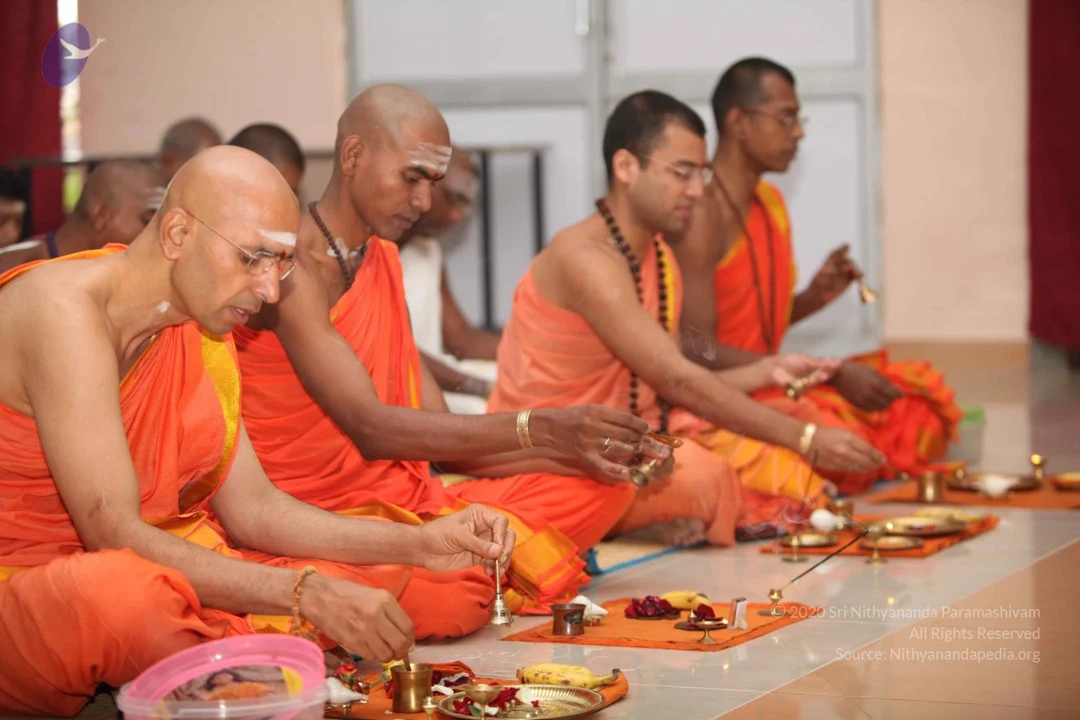
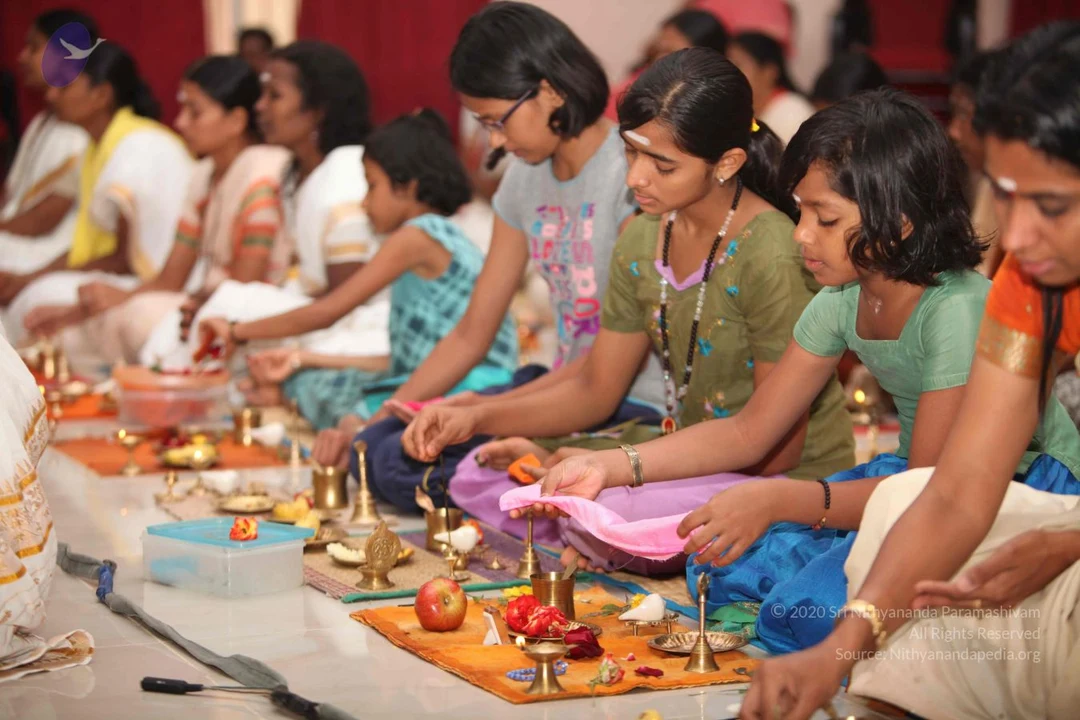
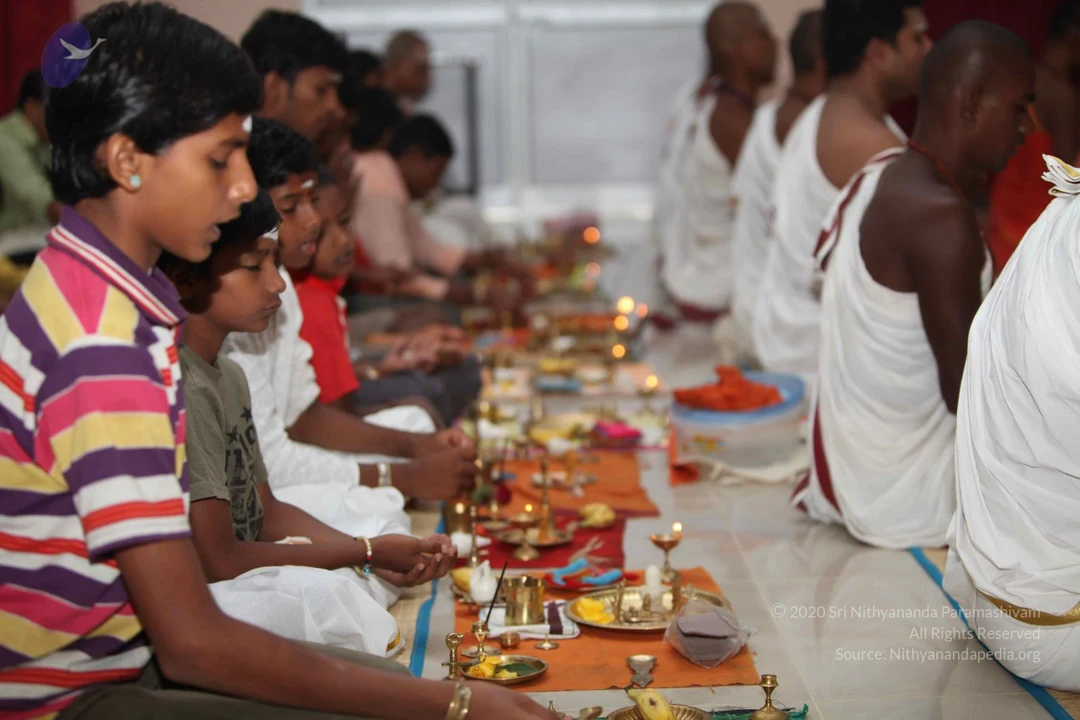
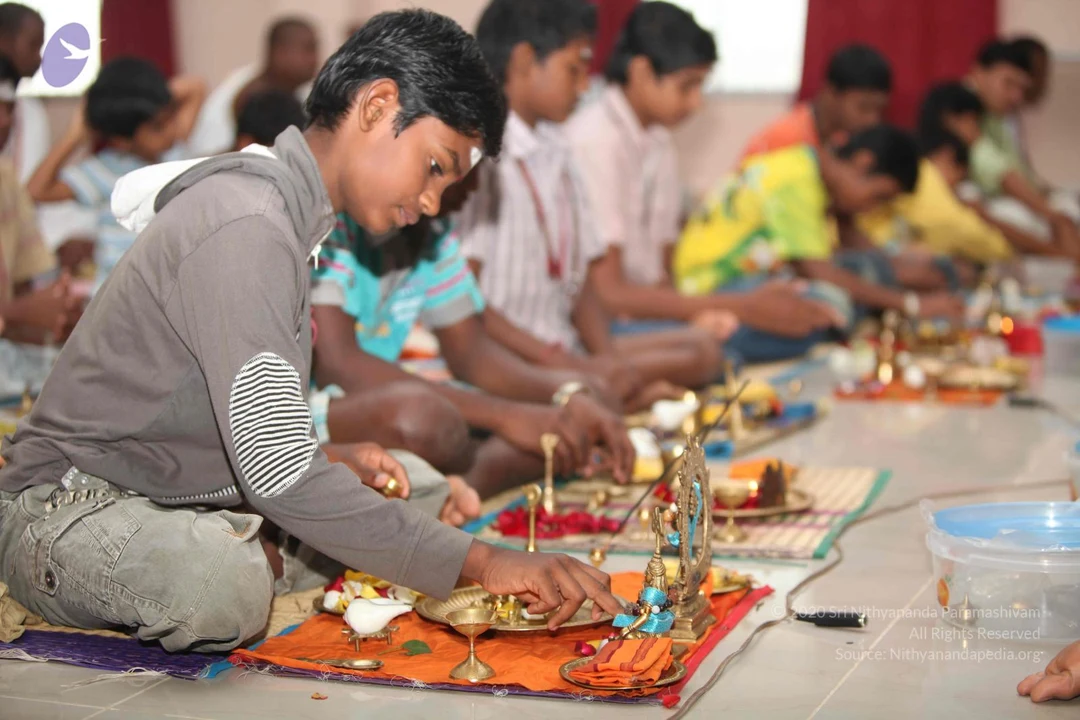
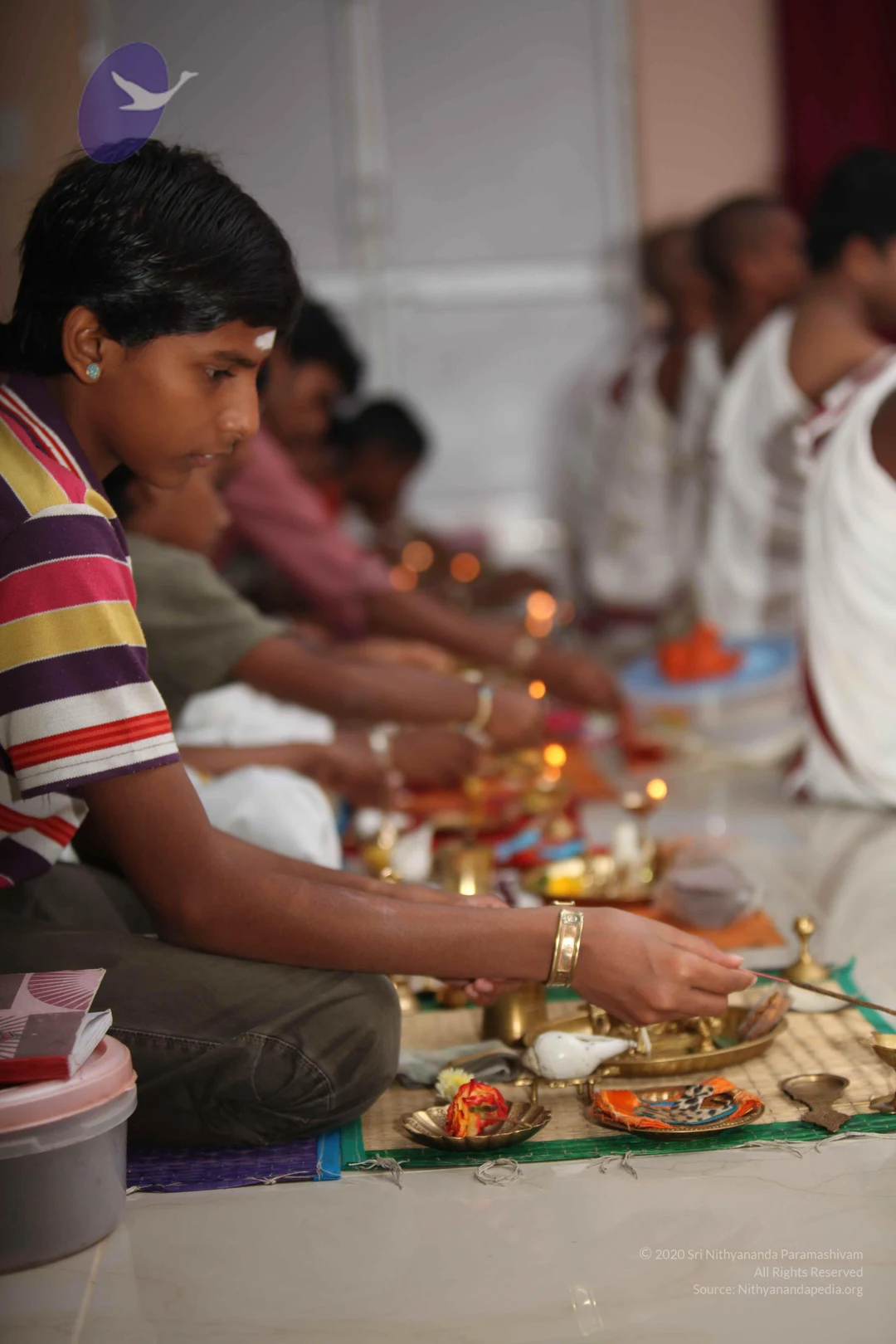
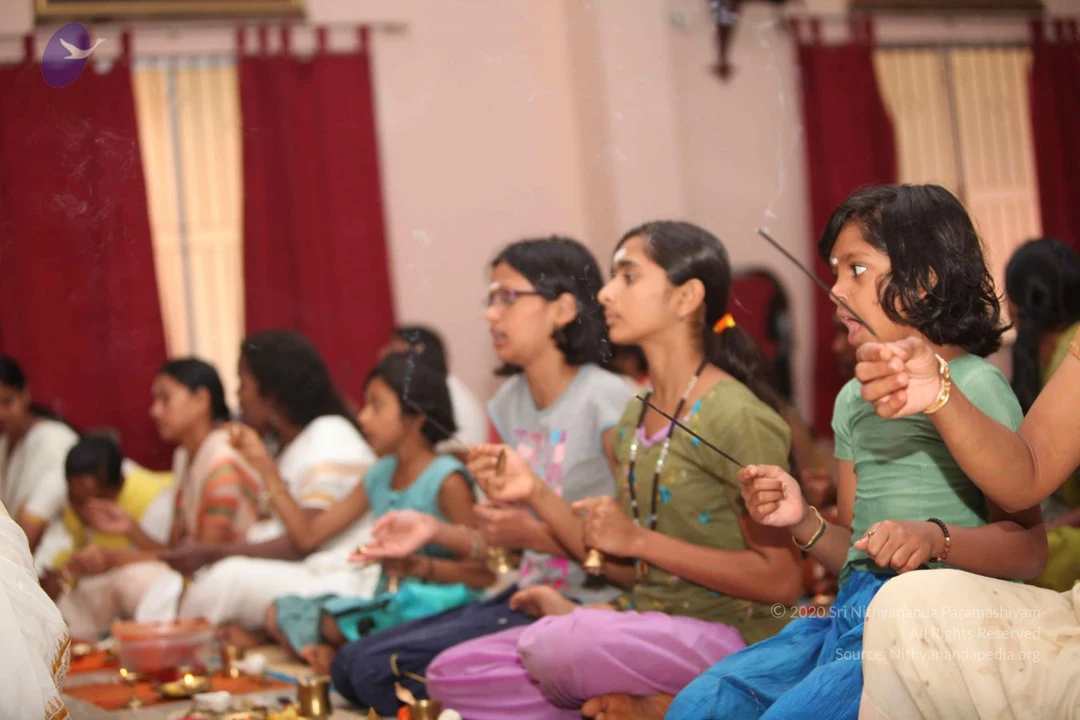
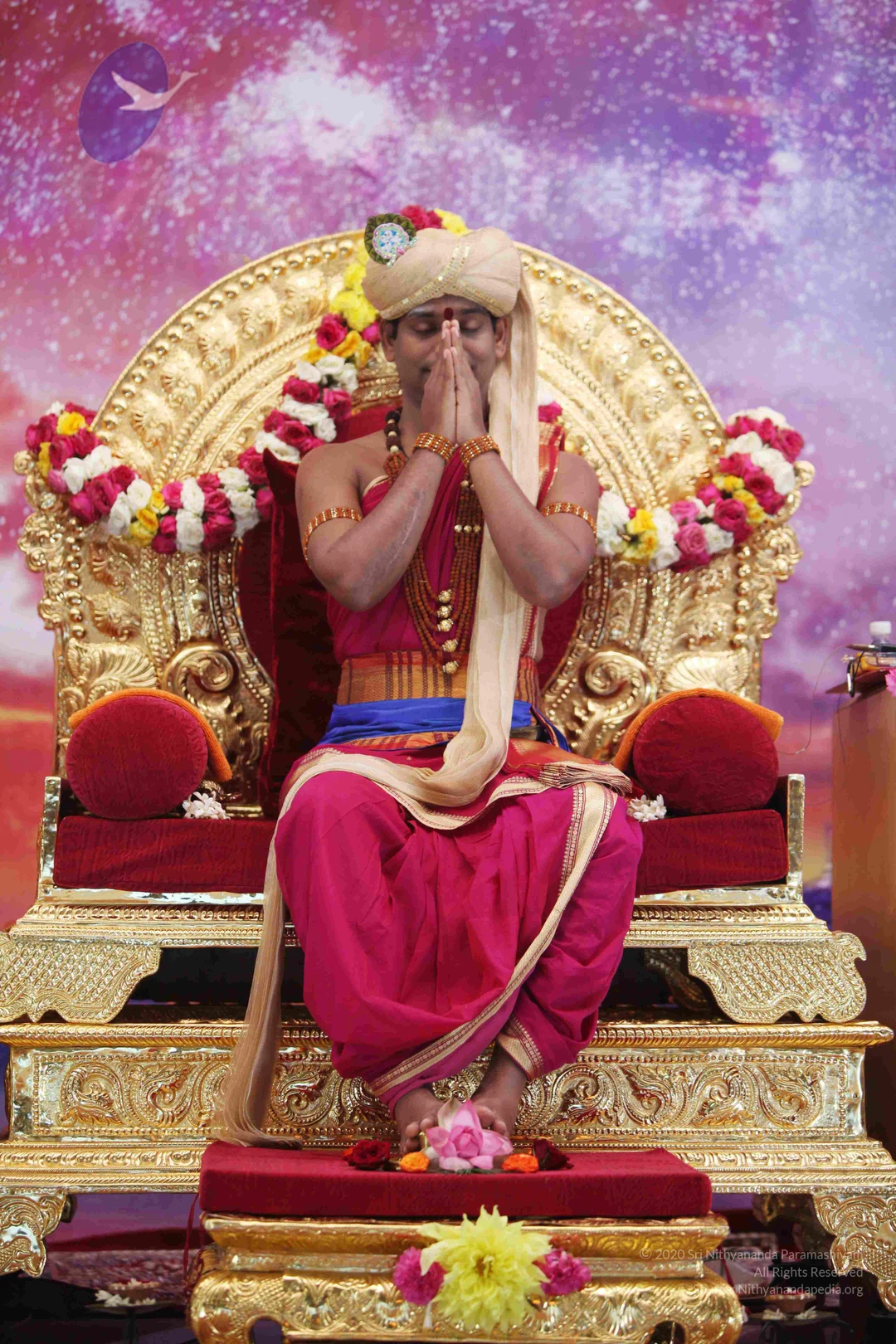
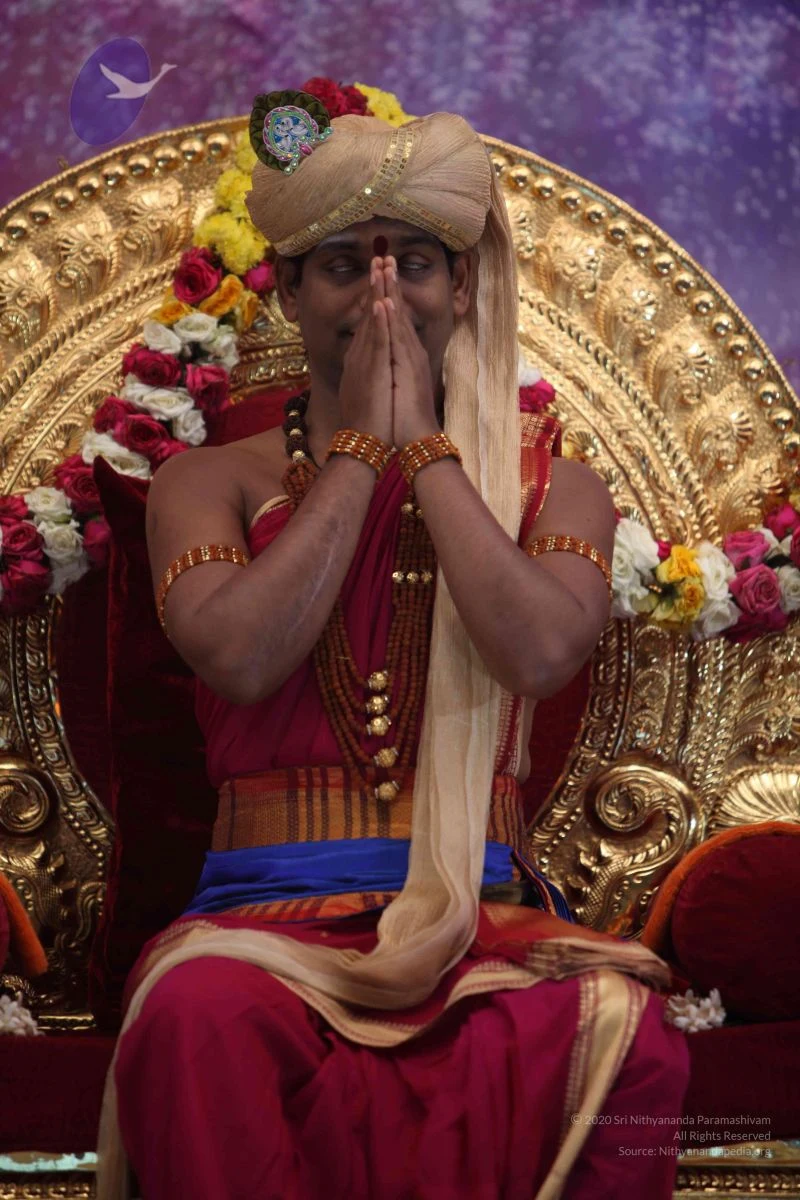
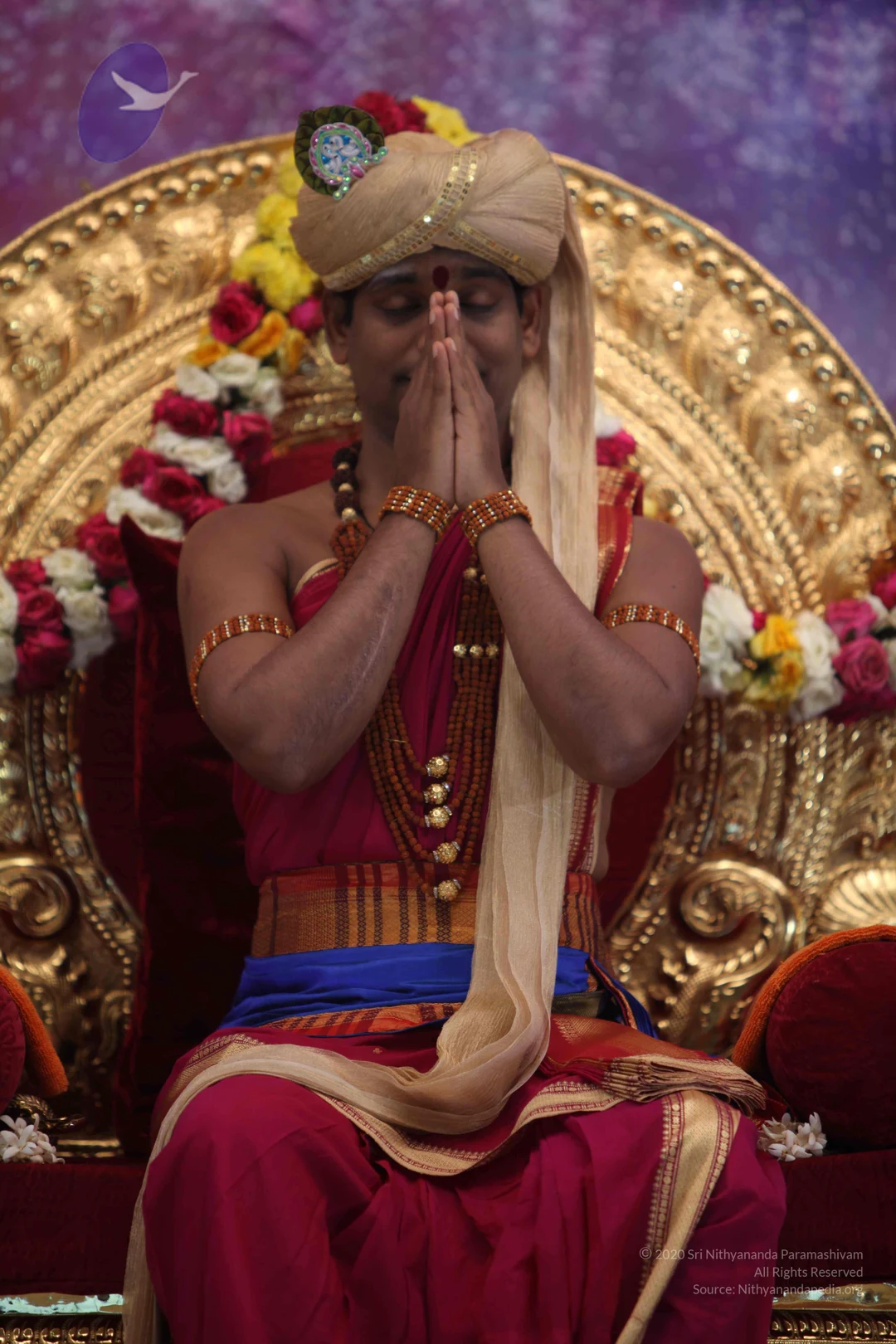
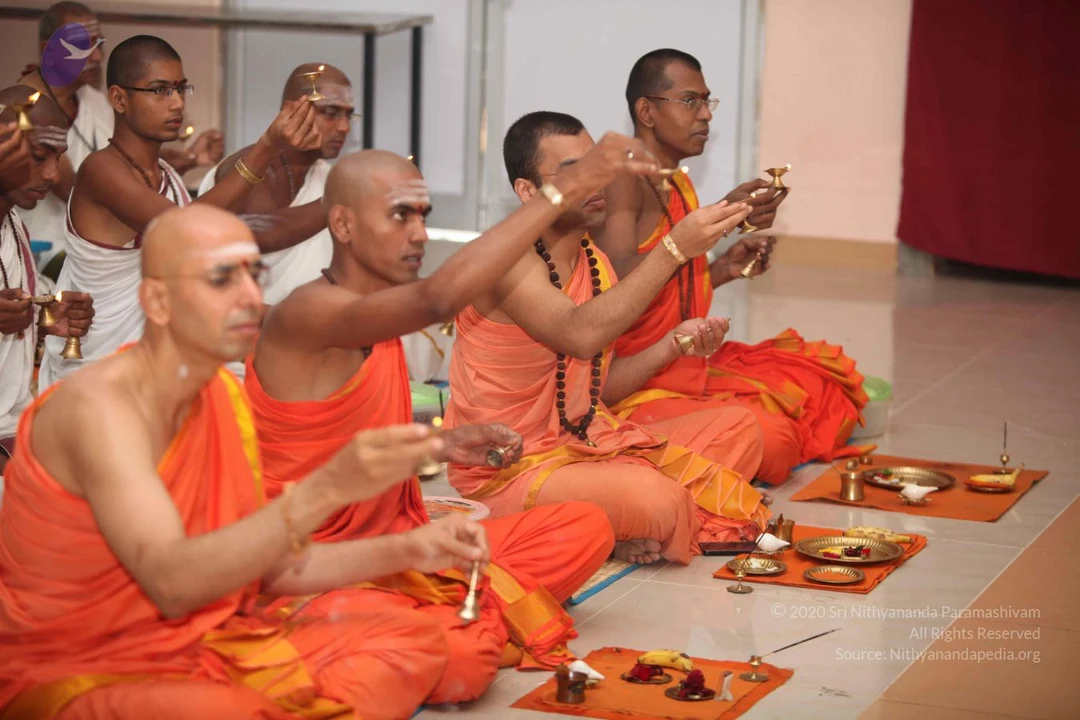
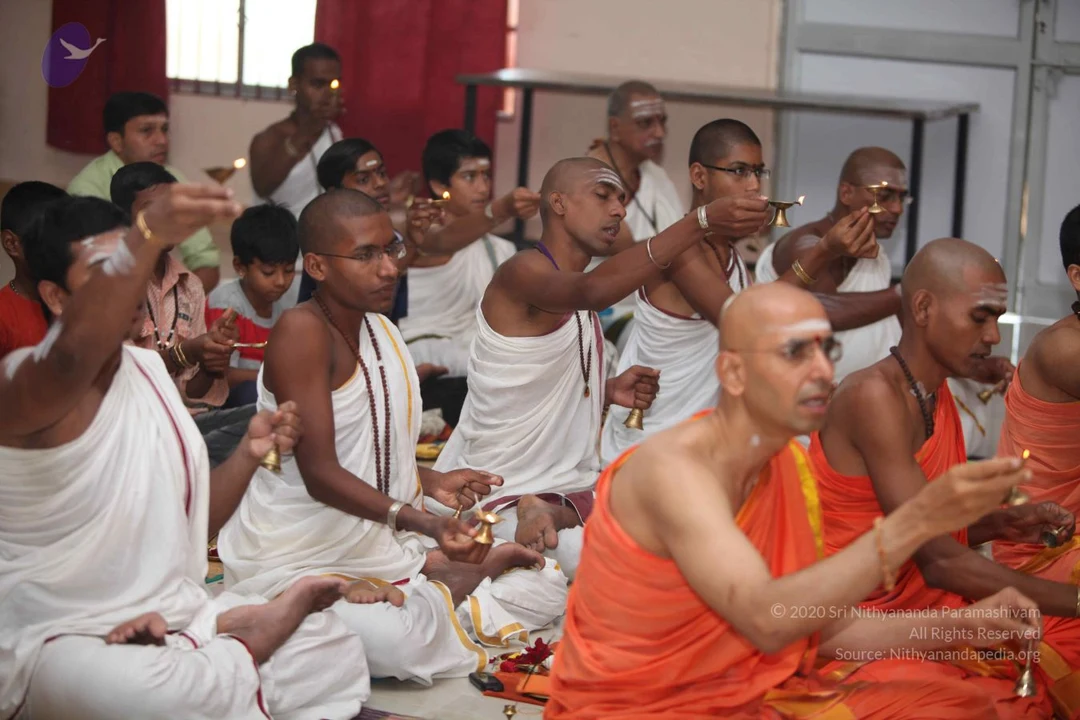
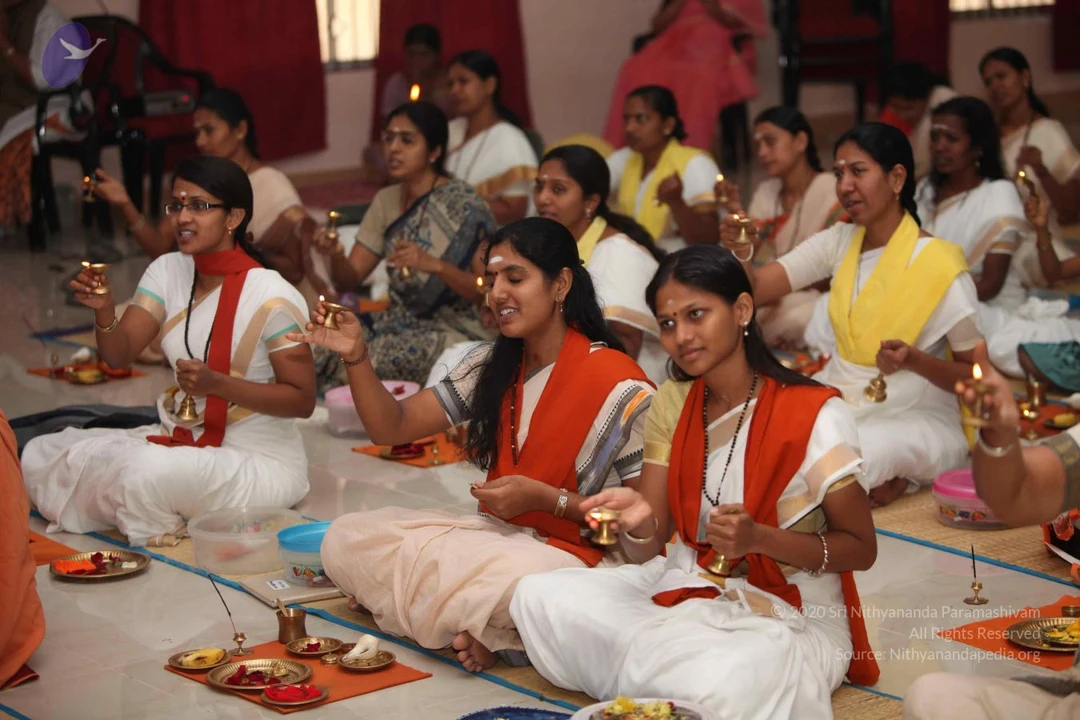
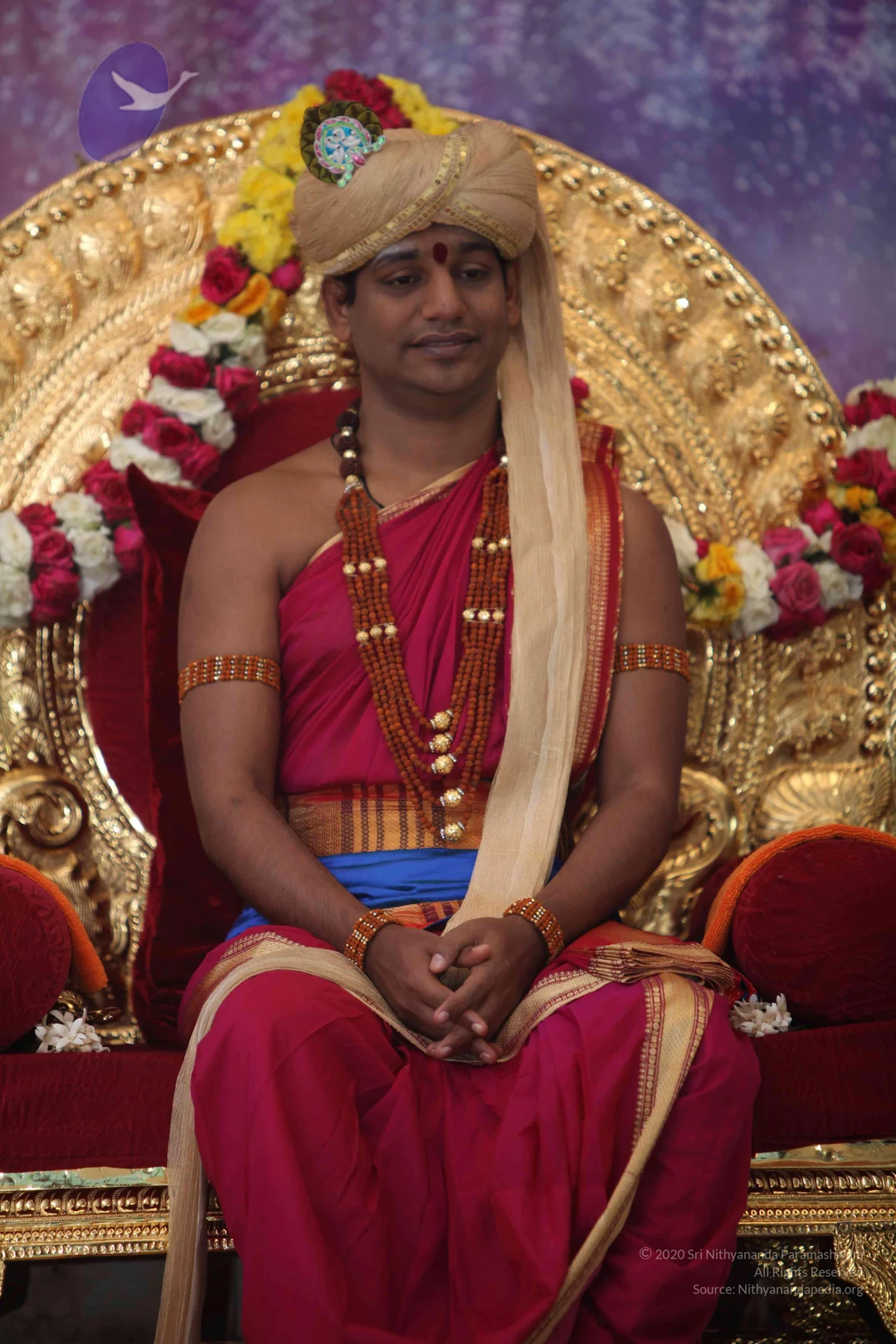
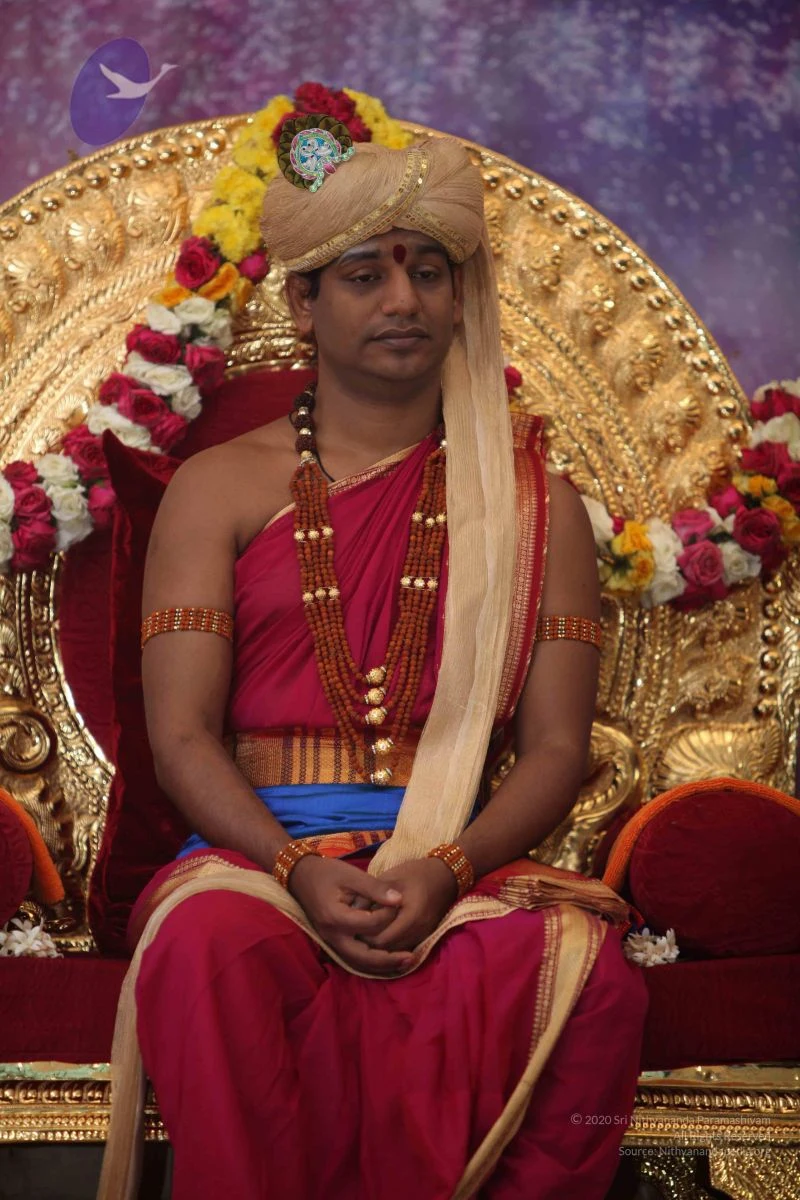
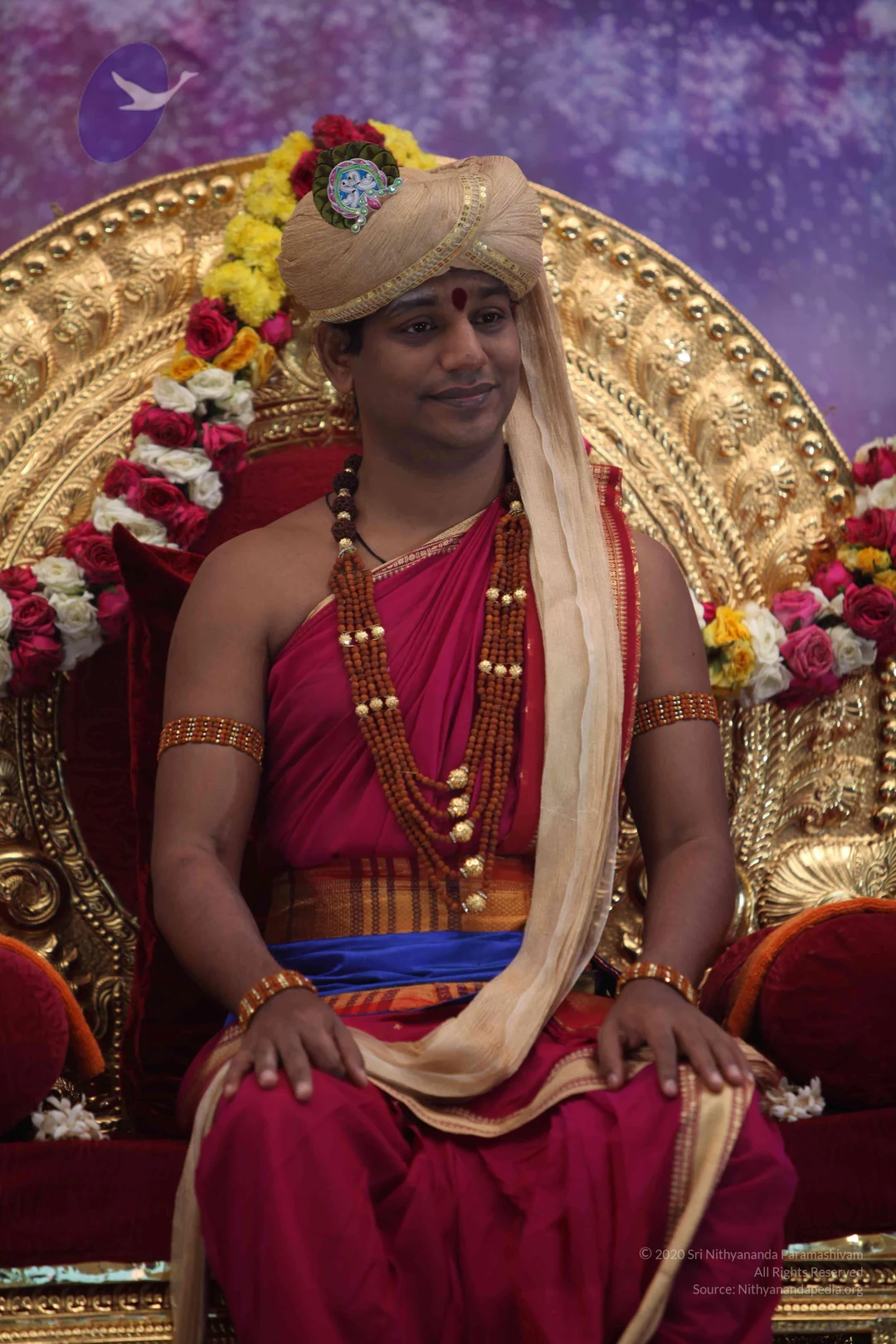
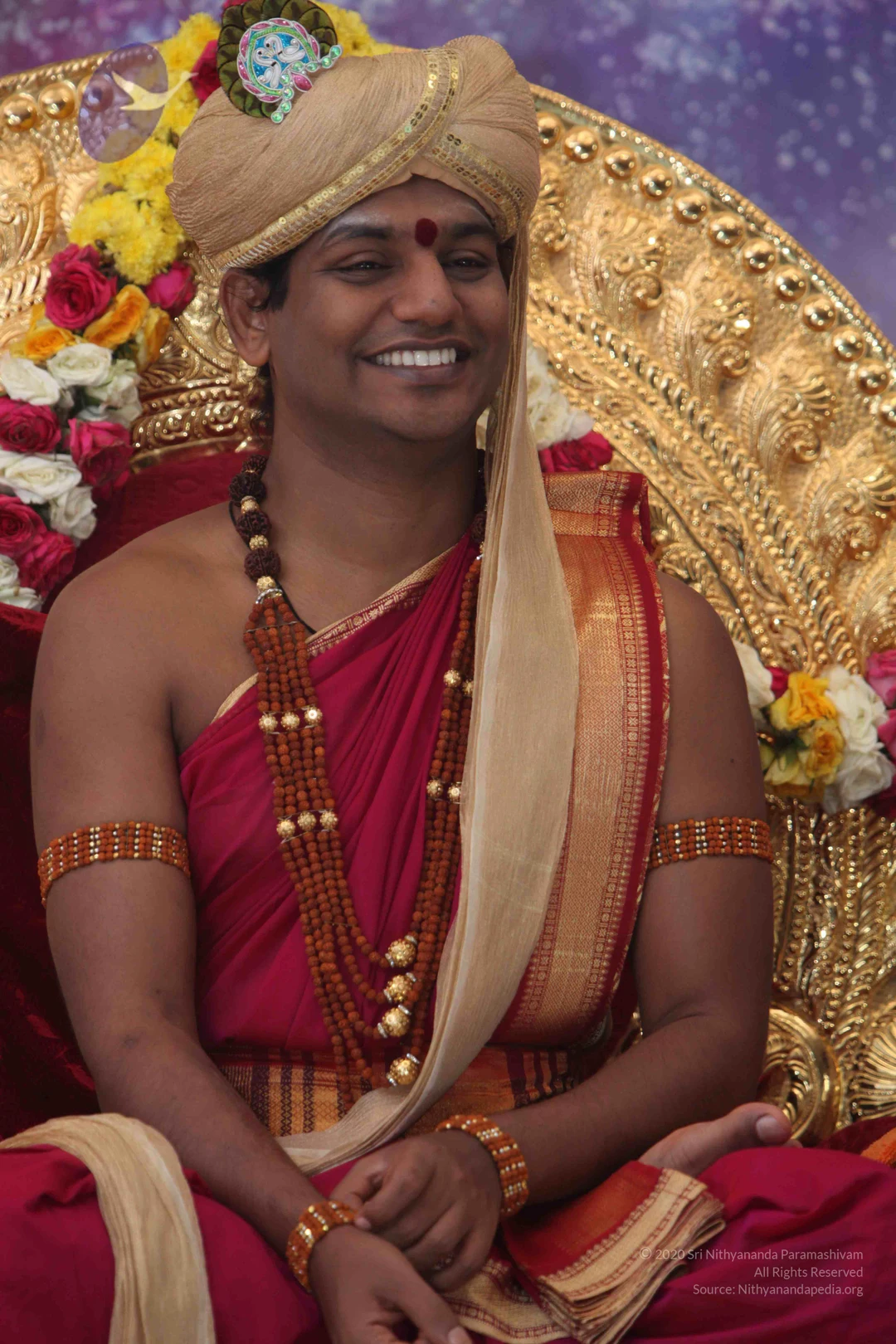
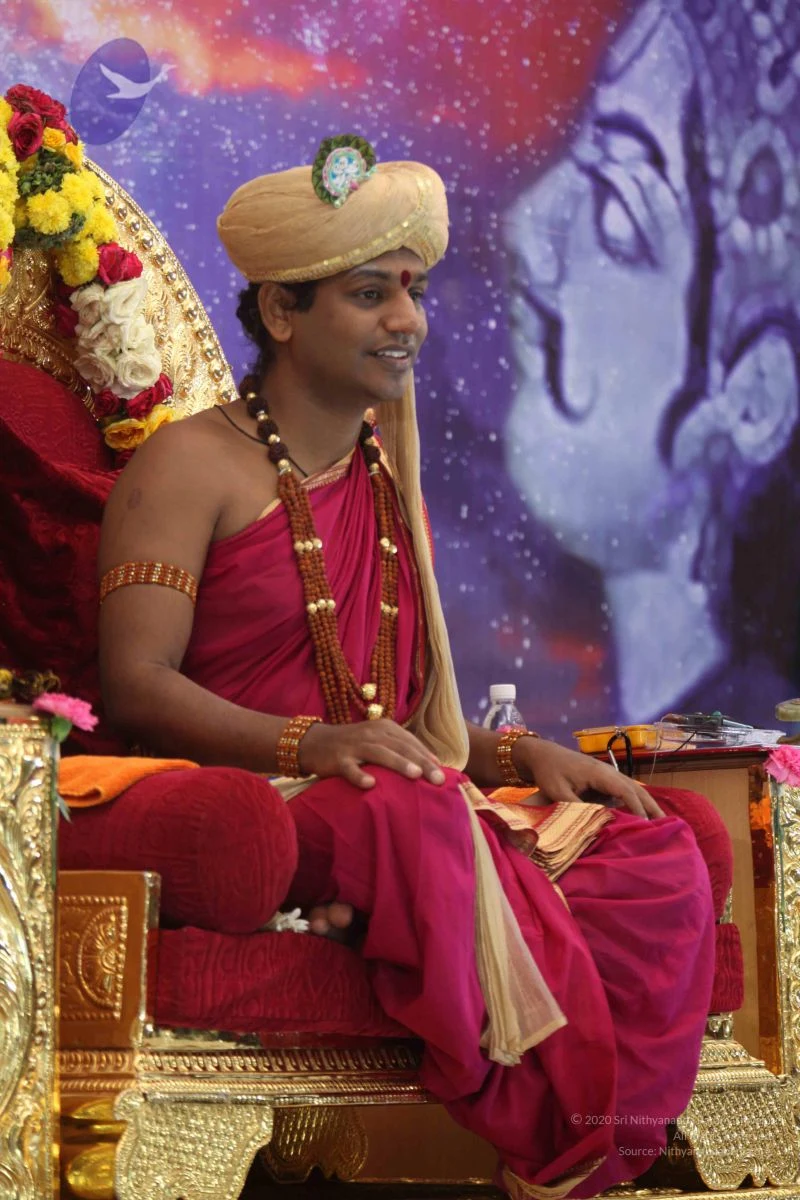
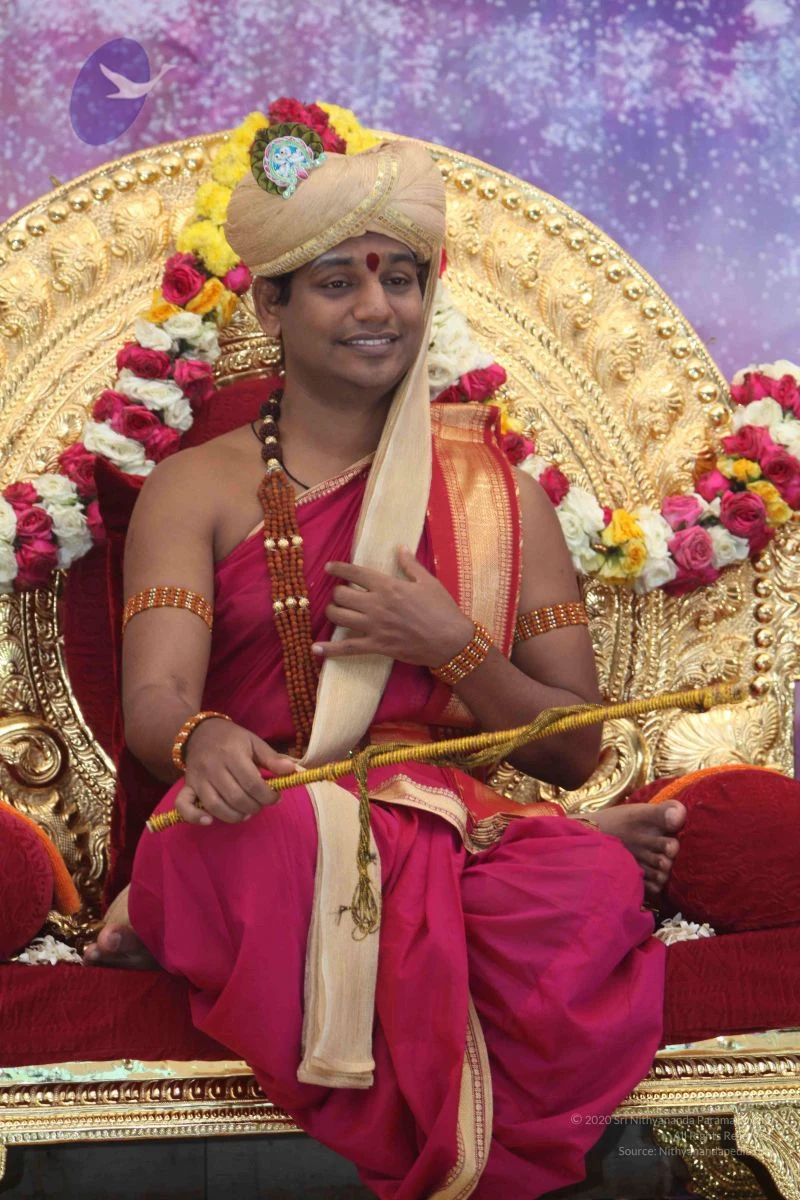
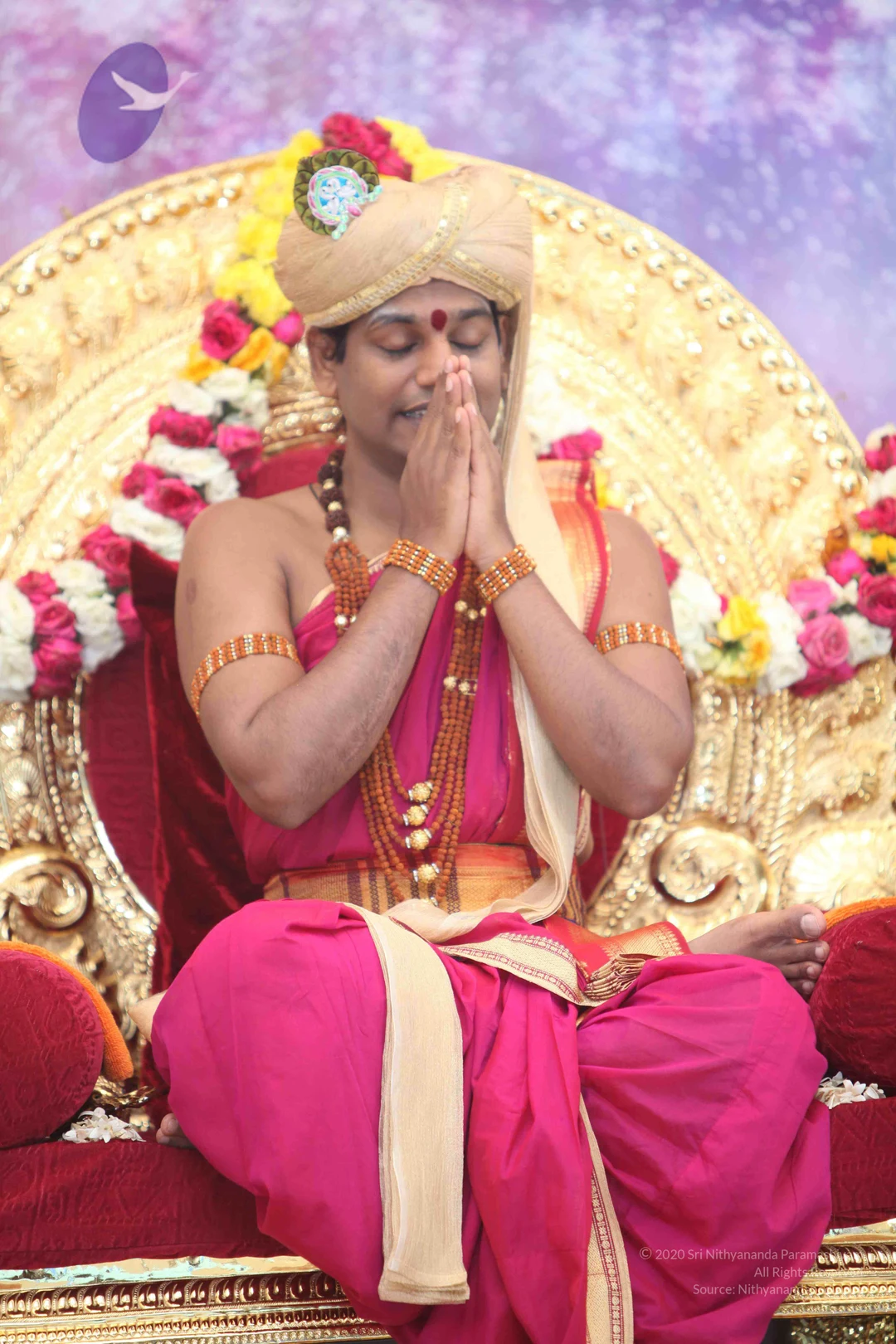
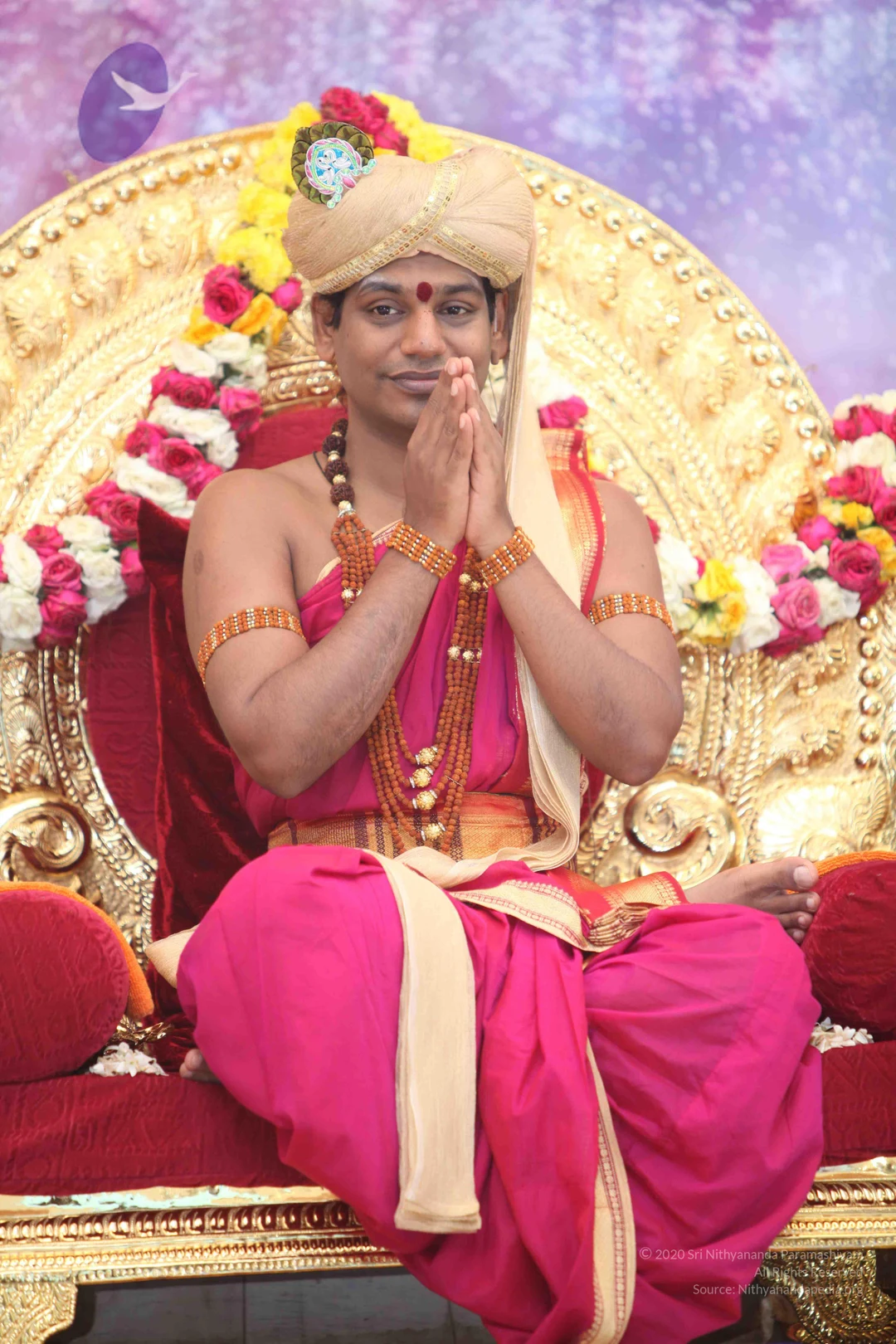
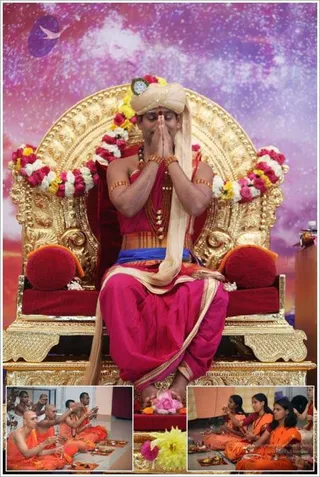
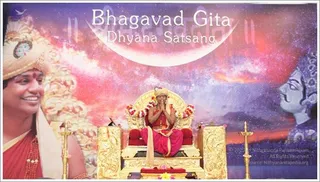
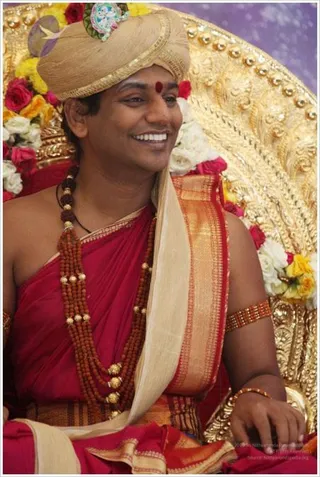
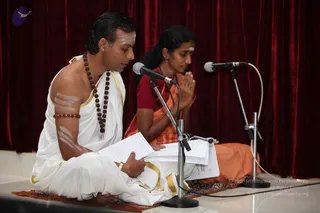
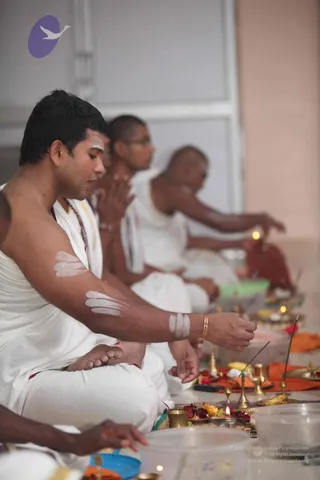
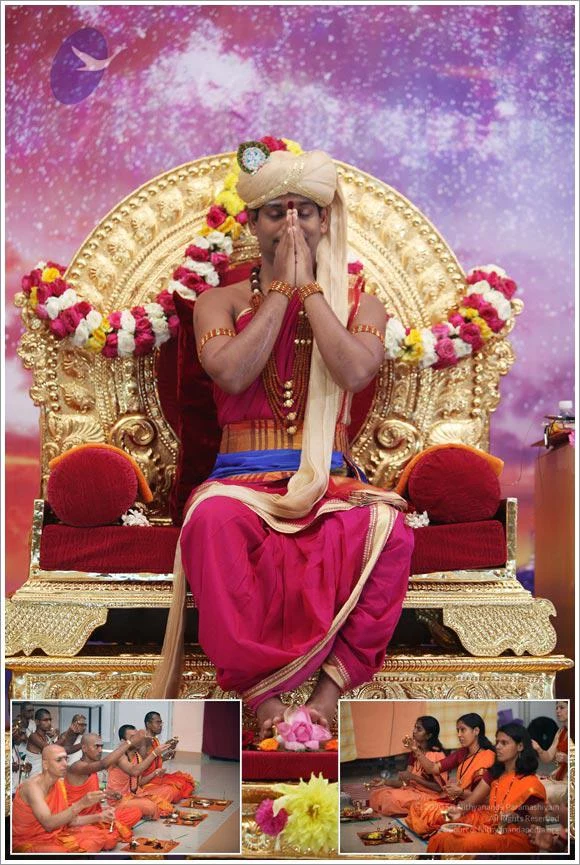
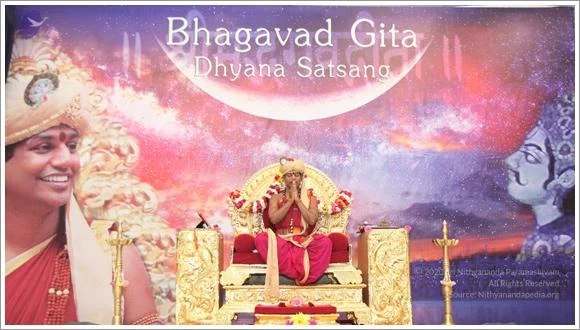
A collage of three panels from a Bhagavad Gita satsang. The large main panel shows a man seated on an ornate gold throne with a red cushioned seat and a floral garland of red, white and yellow flowers draped over its back. He sits with palms pressed together in namaskar, eyes closed, wearing a cream turban with a clock-like ornament, a magenta dhoti with a gold border, a red shawl, a blue sash and a cluster of red-bead rudraksha malas. A pink flower lies at his feet. Smaller panels show orange-robed sannyasis seated on the floor performing a puja with brass trays, and women in orange and red saris seated in a similar ritual setting. The background is a pink cosmic sky.A seated figure in red robes sits on an ornate gold throne with red cushions, hands raised in front of the chest, garlanded with flower strings. Gold oil lamps stand at both sides of the throne. Behind is a large backdrop reading "Bhagavad Gita Dhyana Satsang" with a crescent moon and a cosmic sky. A banner-style portrait at left shows a smiling man with a saffron-and-gold turban and red-and-gold garments, and a painted figure with dark hair and a crown appears at right edge. The seated person appears to be a presenter at a satsang, with the page not stating a person attends this event.A smiling man sits on an ornate gold throne decorated with white, pink, red and yellow flowers. He wears a beige turban with a small emblem, a red-and-gold silk garment draped over his shoulder, a cream shawl, multiple rudraksha malas and gold beads, a gold armband, and a red bindi. A pale purple backdrop sits behind the throne.A man seated cross-legged on a red mat reads from handwritten pages at a microphone stand, wearing a white dhoti with gold borders and a rudraksha mala, with white sandalwood marks on his forehead and arms. Beside him, a woman in an orange sari and maroon blouse sits with palms pressed together in namaskar, also with a forehead mark, at a second microphone. Behind them hangs a deep red velvet curtain. The setting suggests a satsang or discourse. A copyright notice and source credit appear in the lower right. Two people are visible.Several men in plain white dhotis and white upper cloths sit cross-legged in a row performing a ritual puja on the floor. The foreground man has white sacred ash horizontal stripes on his upper arms and a gold bangle, and holds his hands over offerings. Brass oil lamps with lit flames, brass bells, incense sticks, a brass plate of rose petals and bananas, and plastic tubs of offerings are arranged on an orange cloth before them. Other men behind them, one with a shaved head and glasses, sit with hands folded or extended toward the offerings. Nobody is identified as a person in the visible scene.A row of seated men in saffron-orange robes perform a ritual puja on a white tiled floor. The nearest man, shaved-headed with white forehead markings and round glasses, holds a small brass spoon or lamp and bends over a metal vessel. Beside him, others in orange with gold-bordered cloth, rudraksha malas and bangles hold brass vessels and offerings. Orange cloth mats hold red flower petals, bananas, a brass lamp and small copper cups. Several more seated figures in white and orange are partly visible at the left and back. A pink basket sits at the lower left.

Temple

32 photosSource gallery
A woman in a fuchsia pink top and dark bottoms kneels and bows forward, resting her forehead on a stone surface in a temple setting. Her dark hair is tied back. The stone slab looks like a ritual platform or step, with a plain grey background behind her. Only one person is visible.A photograph of a man in a red garment standing close to a tree trunk, with his face turned toward the bark and his arm raised against it. Green foliage and leaves fill the background. He is the only person visible, and no ritual objects or readable text appear in the frame.A photograph of a large banyan tree with thick, spreading aerial roots hanging from wide branches over an open courtyard. On the left, a person in red robes stands near a low stone wall. The ground is paved and the setting appears to be an outdoor ashram or temple grounds.A standing man in a hot pink dhoti-style garment with a gold-bordered pink shawl draped over his shoulder and chest. He wears a long black rudraksha mala and a red bindi on his forehead, with his palms pressed together at his chest in namaste. He stands barefoot on a green mat in an open pavilion with red pillars, with greenery and a building behind him.A photograph taken from inside a covered entrance looking out onto a paved courtyard. Hanging from the metal roof frame are decorative cloth banners with coloured geometric patterns and orange tassels. On the right edge, a part of a deity murti is visible with a gold-toned body and a yellow skirt, next to a deep red fabric wrap; the figure is partly cropped. Outside, palm trees, green shrubs, a frangipani tree and a red brick wall stand under a hazy sky. A red mat lies on the floor in the foreground. No people are visible.A person in a bright magenta-pink garment with a gold-bordered orange and red shawl draped over the shoulder bends forward and presses their forehead to a grey stone step. Dark hair is tied in a bun with a rudraksha mala visible at the nape. Their right hand rests on the step in front. The setting is a temple-like space with a red and white backdrop and a wooden ledge in the background. The posture suggests prostration or reverence at a sacred threshold.

BG-Satsang
171 photosSource gallery
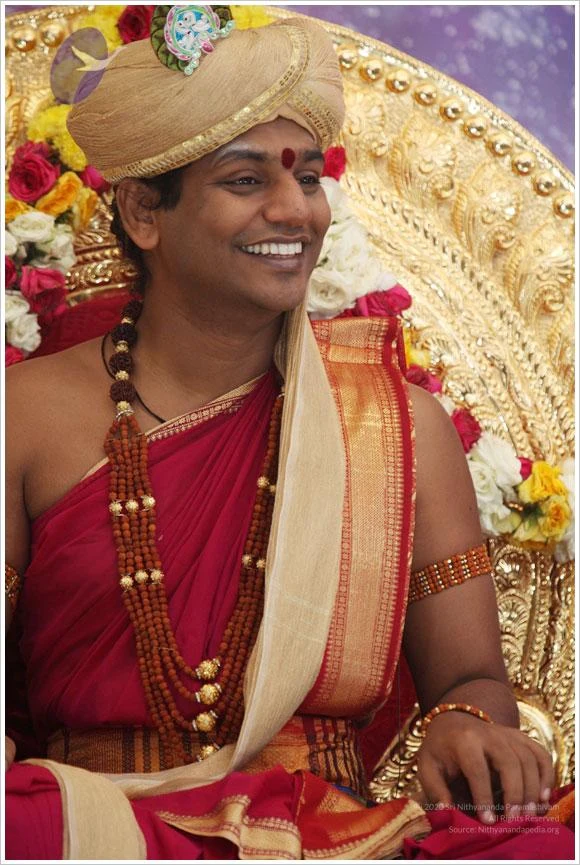
A collage of three panels from a Bhagavad Gita satsang. The large main panel shows a man seated on an ornate gold throne with a red cushioned seat and a floral garland of red, white and yellow flowers draped over its back. He sits with palms pressed together in namaskar, eyes closed, wearing a cream turban with a clock-like ornament, a magenta dhoti with a gold border, a red shawl, a blue sash and a cluster of red-bead rudraksha malas. A pink flower lies at his feet. Smaller panels show orange-robed sannyasis seated on the floor performing a puja with brass trays, and women in orange and red saris seated in a similar ritual setting. The background is a pink cosmic sky.A seated figure in red robes sits on an ornate gold throne with red cushions, hands raised in front of the chest, garlanded with flower strings. Gold oil lamps stand at both sides of the throne. Behind is a large backdrop reading "Bhagavad Gita Dhyana Satsang" with a crescent moon and a cosmic sky. A banner-style portrait at left shows a smiling man with a saffron-and-gold turban and red-and-gold garments, and a painted figure with dark hair and a crown appears at right edge. The seated person appears to be a presenter at a satsang, with the page not stating a person attends this event.A smiling man sits on an ornate gold throne decorated with white, pink, red and yellow flowers. He wears a beige turban with a small emblem, a red-and-gold silk garment draped over his shoulder, a cream shawl, multiple rudraksha malas and gold beads, a gold armband, and a red bindi. A pale purple backdrop sits behind the throne.A man seated cross-legged on a red mat reads from handwritten pages at a microphone stand, wearing a white dhoti with gold borders and a rudraksha mala, with white sandalwood marks on his forehead and arms. Beside him, a woman in an orange sari and maroon blouse sits with palms pressed together in namaskar, also with a forehead mark, at a second microphone. Behind them hangs a deep red velvet curtain. The setting suggests a satsang or discourse. A copyright notice and source credit appear in the lower right. Two people are visible.Several men in plain white dhotis and white upper cloths sit cross-legged in a row performing a ritual puja on the floor. The foreground man has white sacred ash horizontal stripes on his upper arms and a gold bangle, and holds his hands over offerings. Brass oil lamps with lit flames, brass bells, incense sticks, a brass plate of rose petals and bananas, and plastic tubs of offerings are arranged on an orange cloth before them. Other men behind them, one with a shaved head and glasses, sit with hands folded or extended toward the offerings. Nobody is identified as a person in the visible scene.A row of seated men in saffron-orange robes perform a ritual puja on a white tiled floor. The nearest man, shaved-headed with white forehead markings and round glasses, holds a small brass spoon or lamp and bends over a metal vessel. Beside him, others in orange with gold-bordered cloth, rudraksha malas and bangles hold brass vessels and offerings. Orange cloth mats hold red flower petals, bananas, a brass lamp and small copper cups. Several more seated figures in white and orange are partly visible at the left and back. A pink basket sits at the lower left.