Skip to content
Wednesday

21 September 2011

THE SUPREME PONTIFF OF HINDUISM HDH BHAGAVAN SRI NITHYANANDA PARAMASHIVAM

Dated photos
267
Source pages
1
Media
3
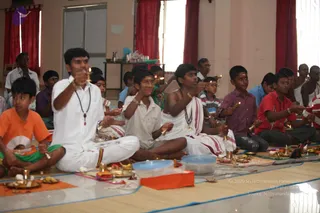
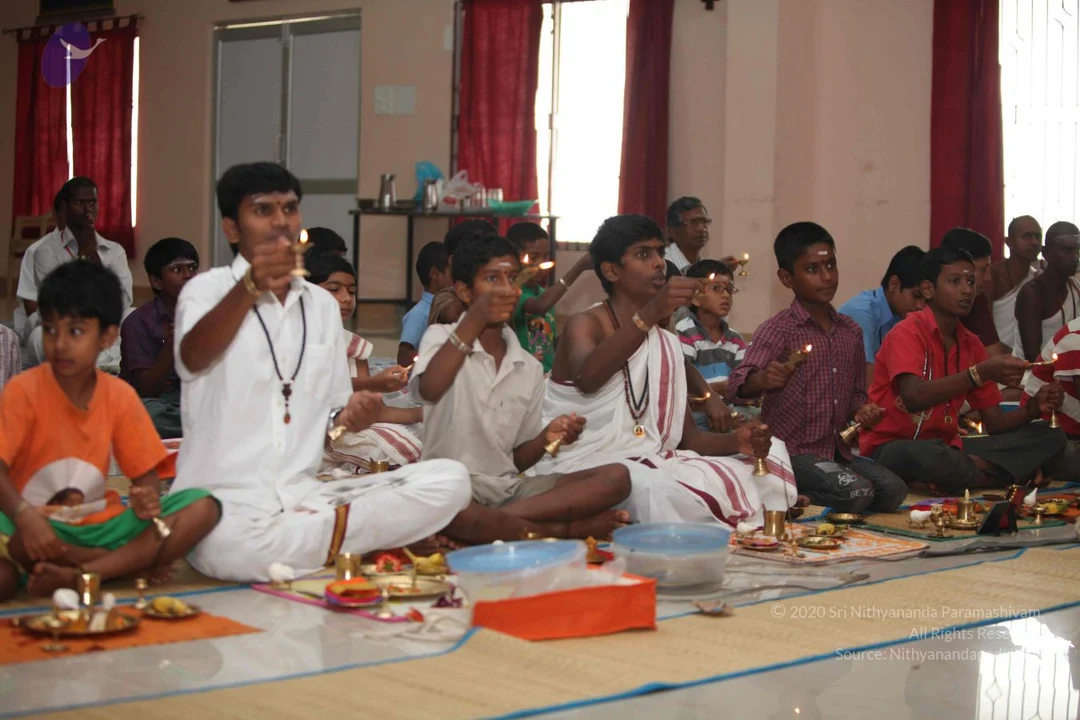
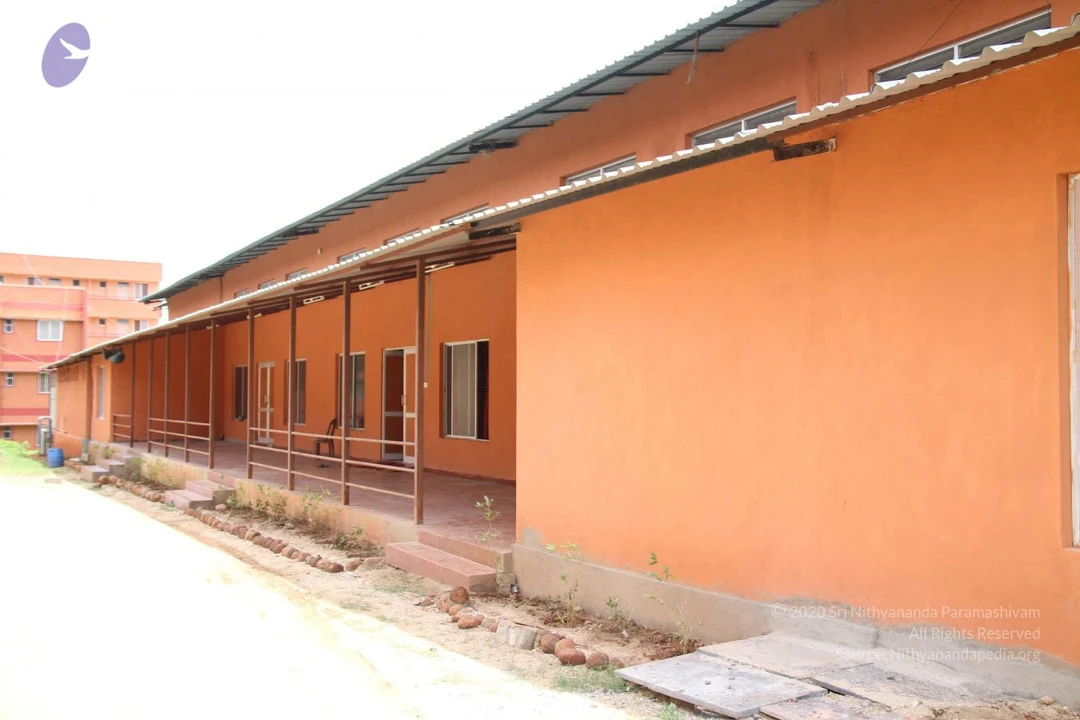
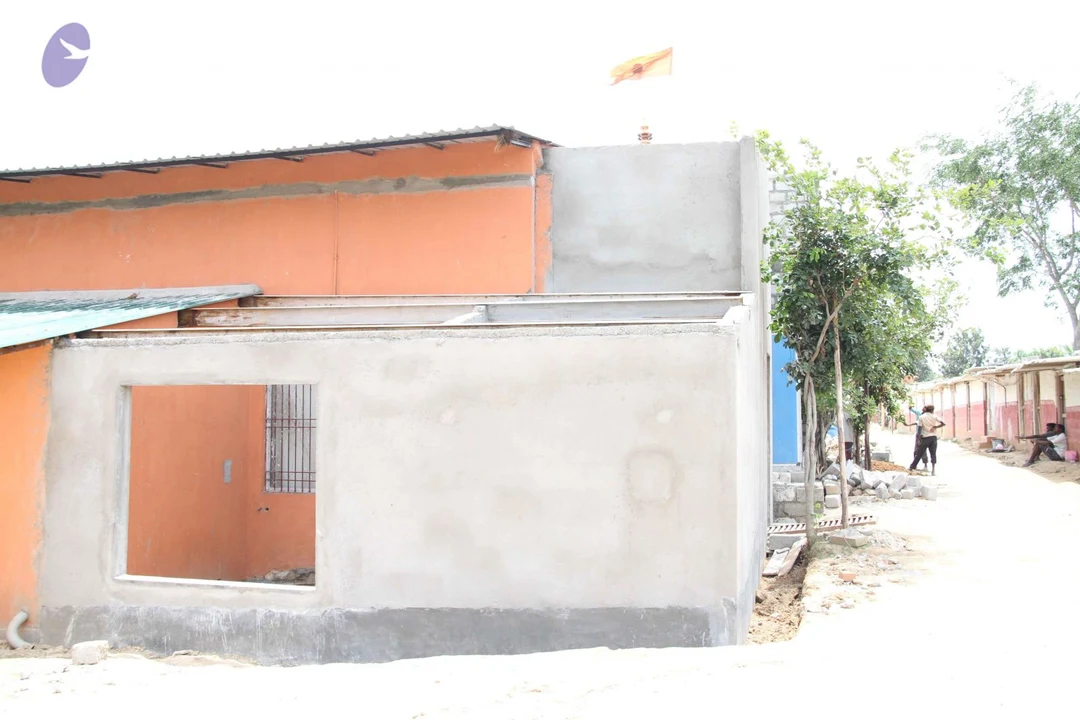
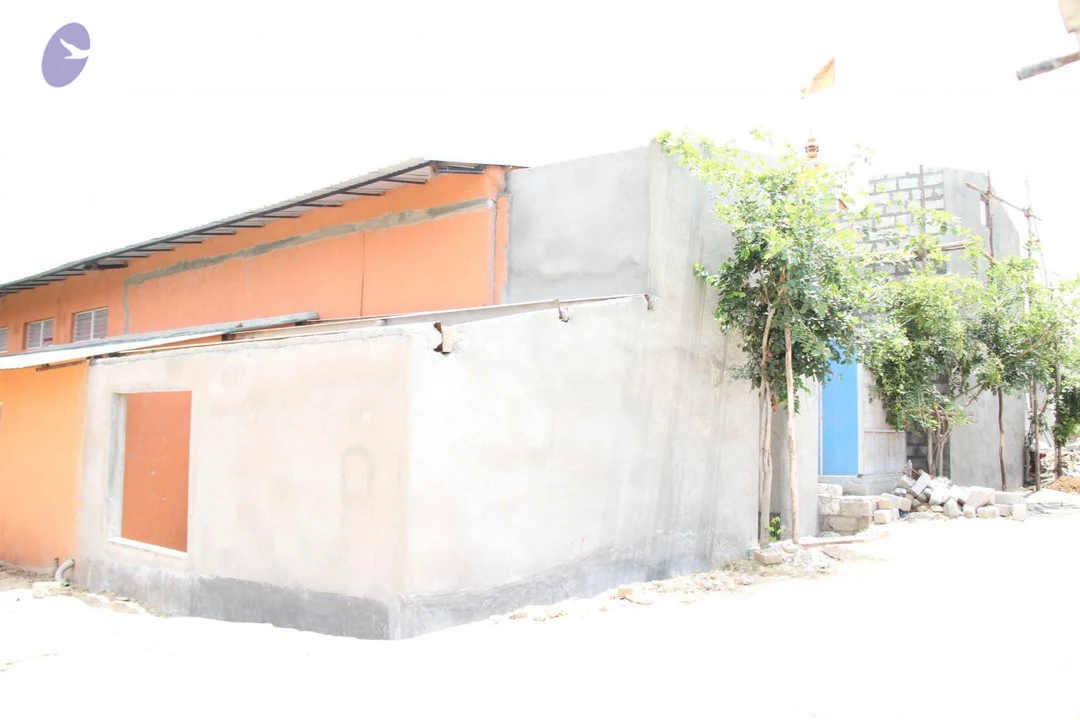
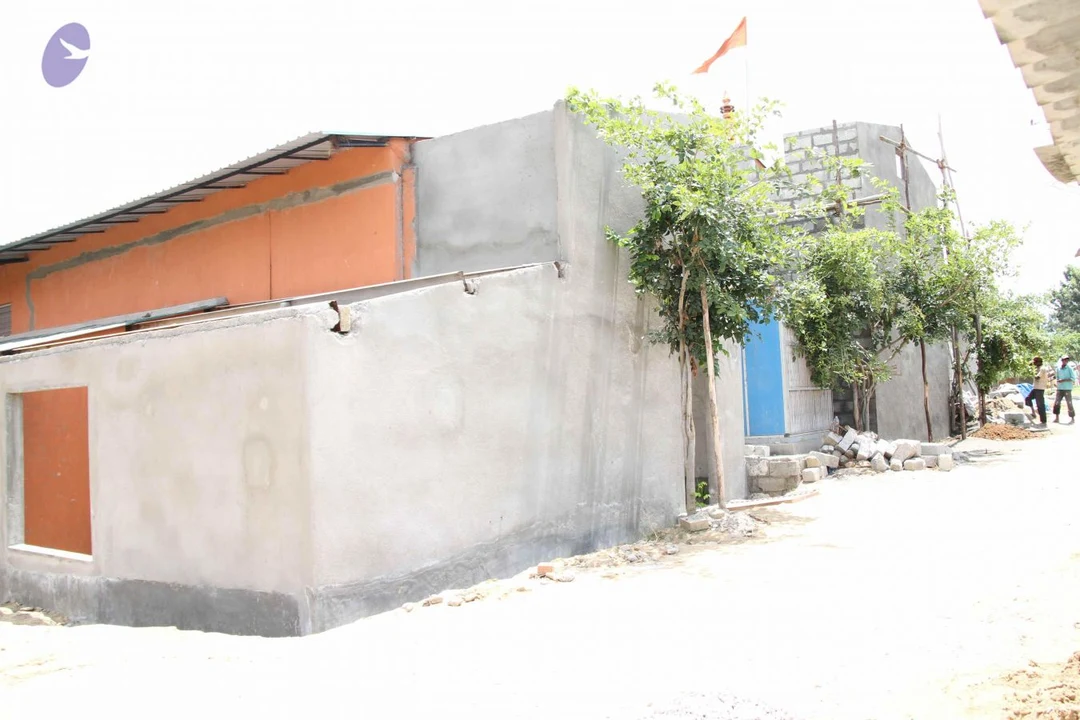
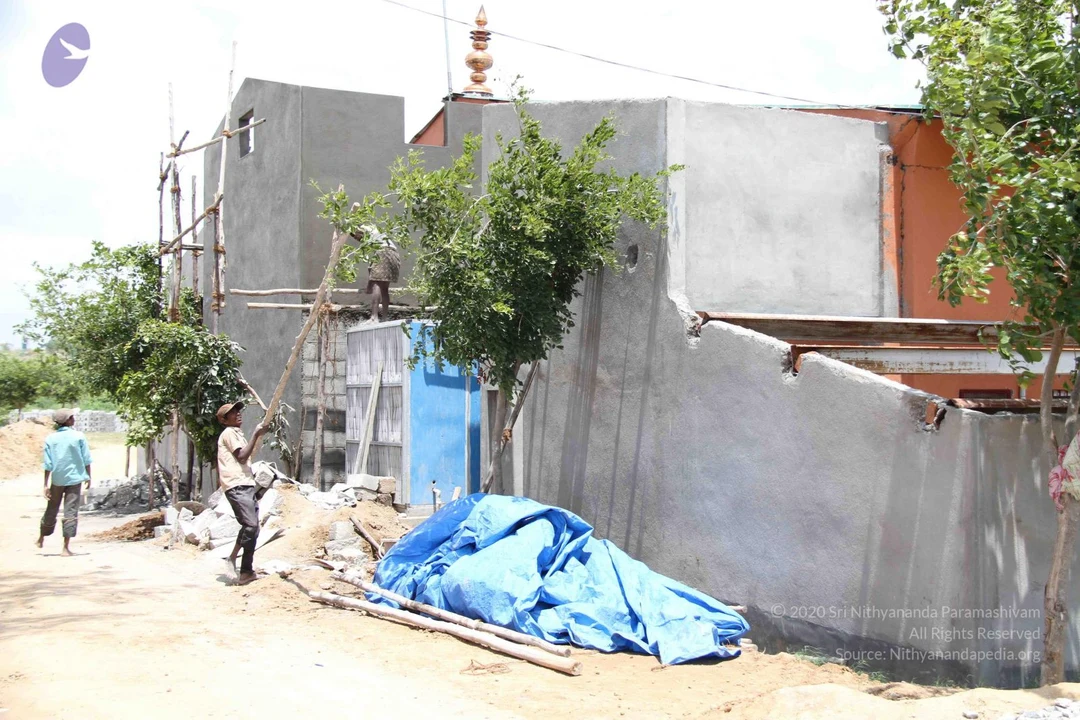
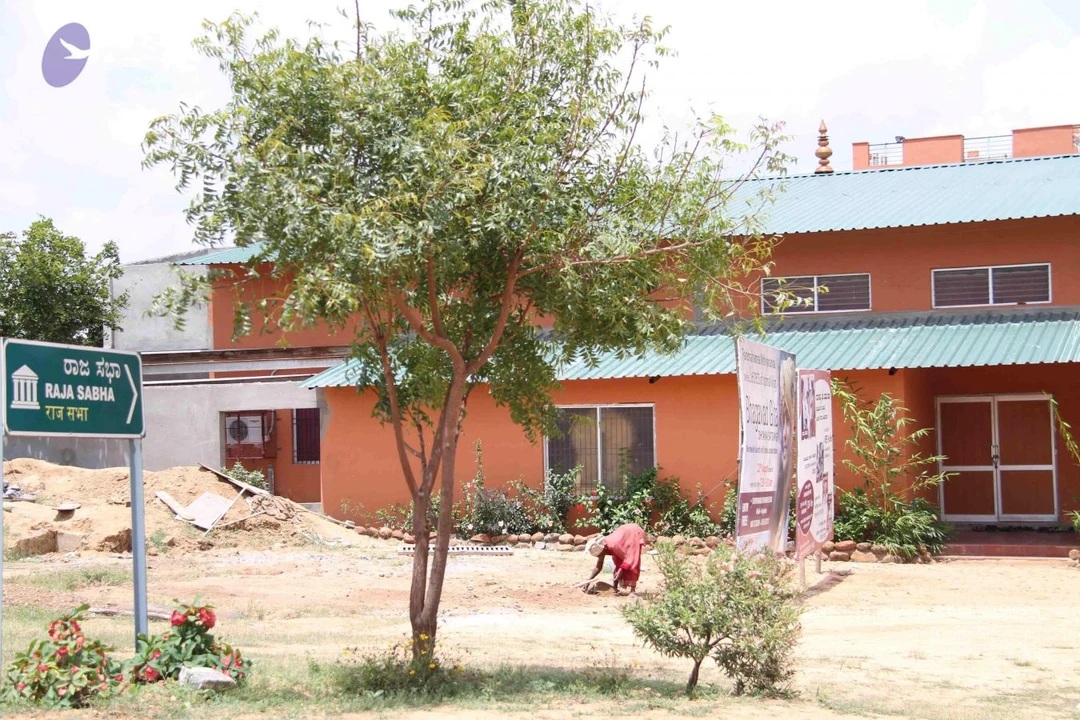
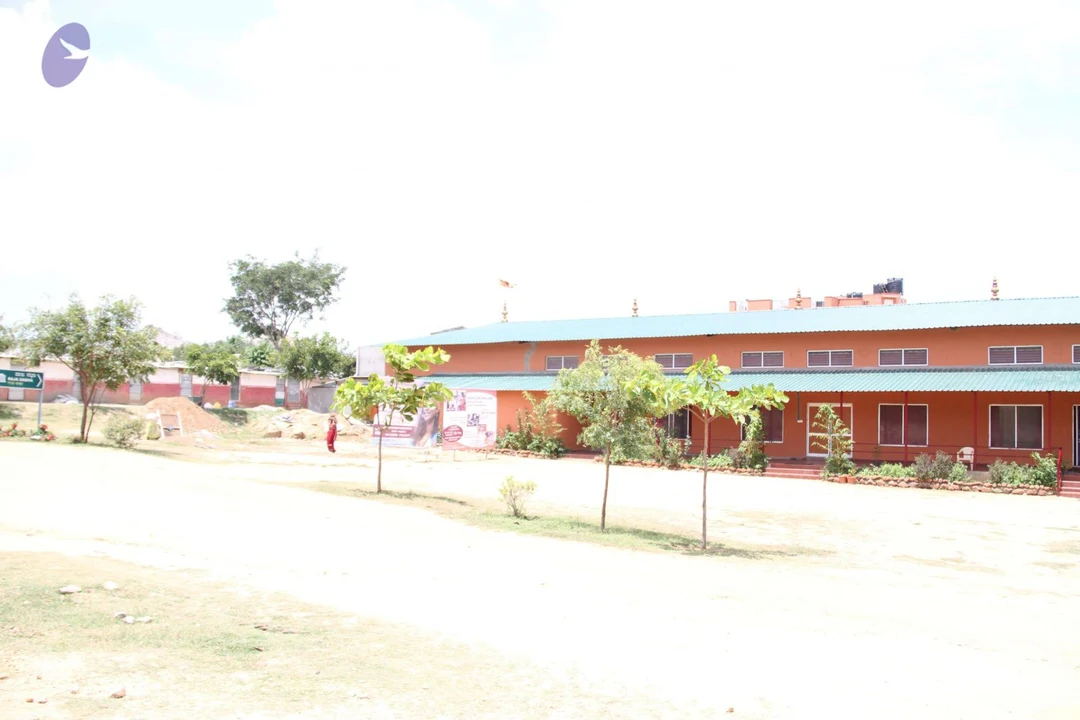
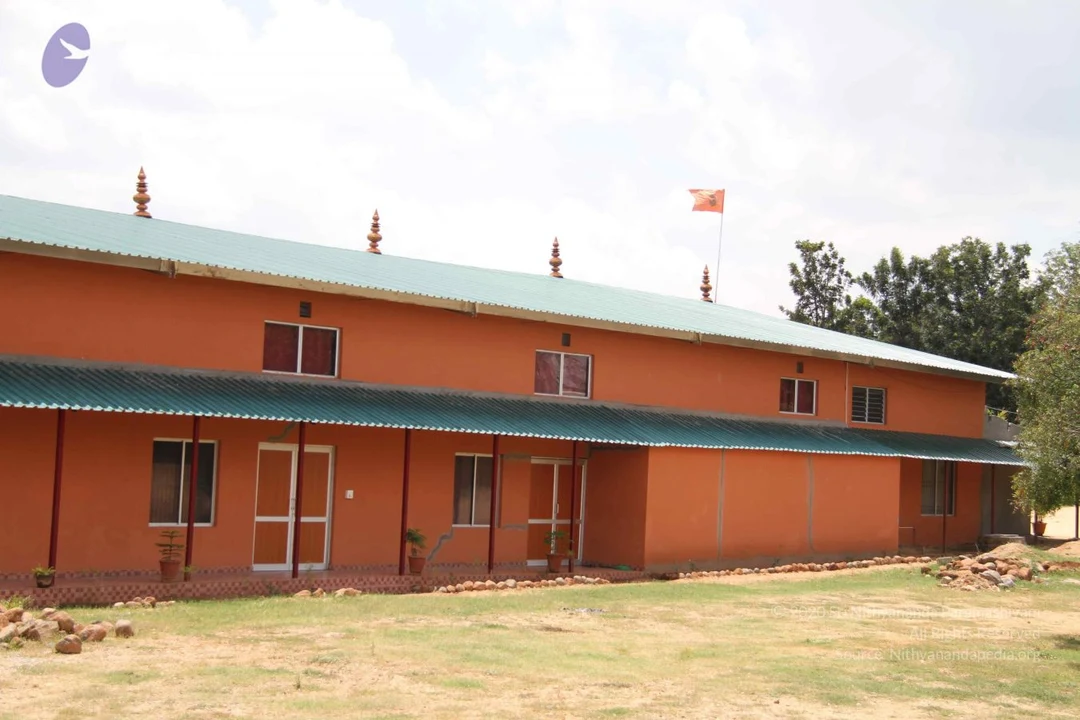
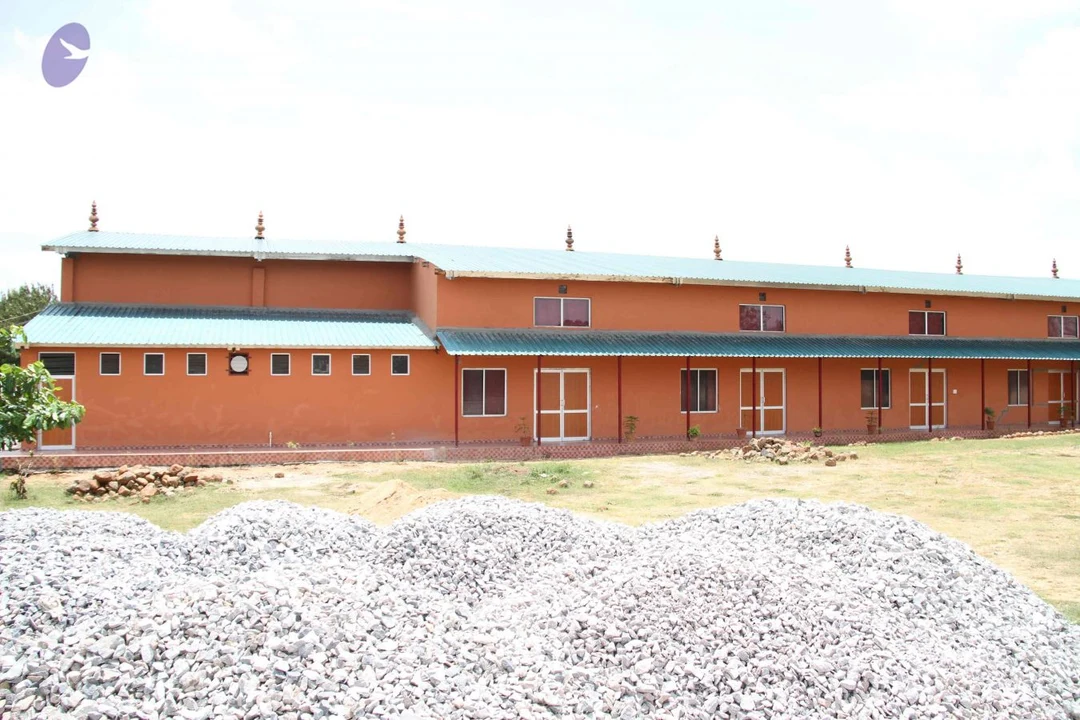
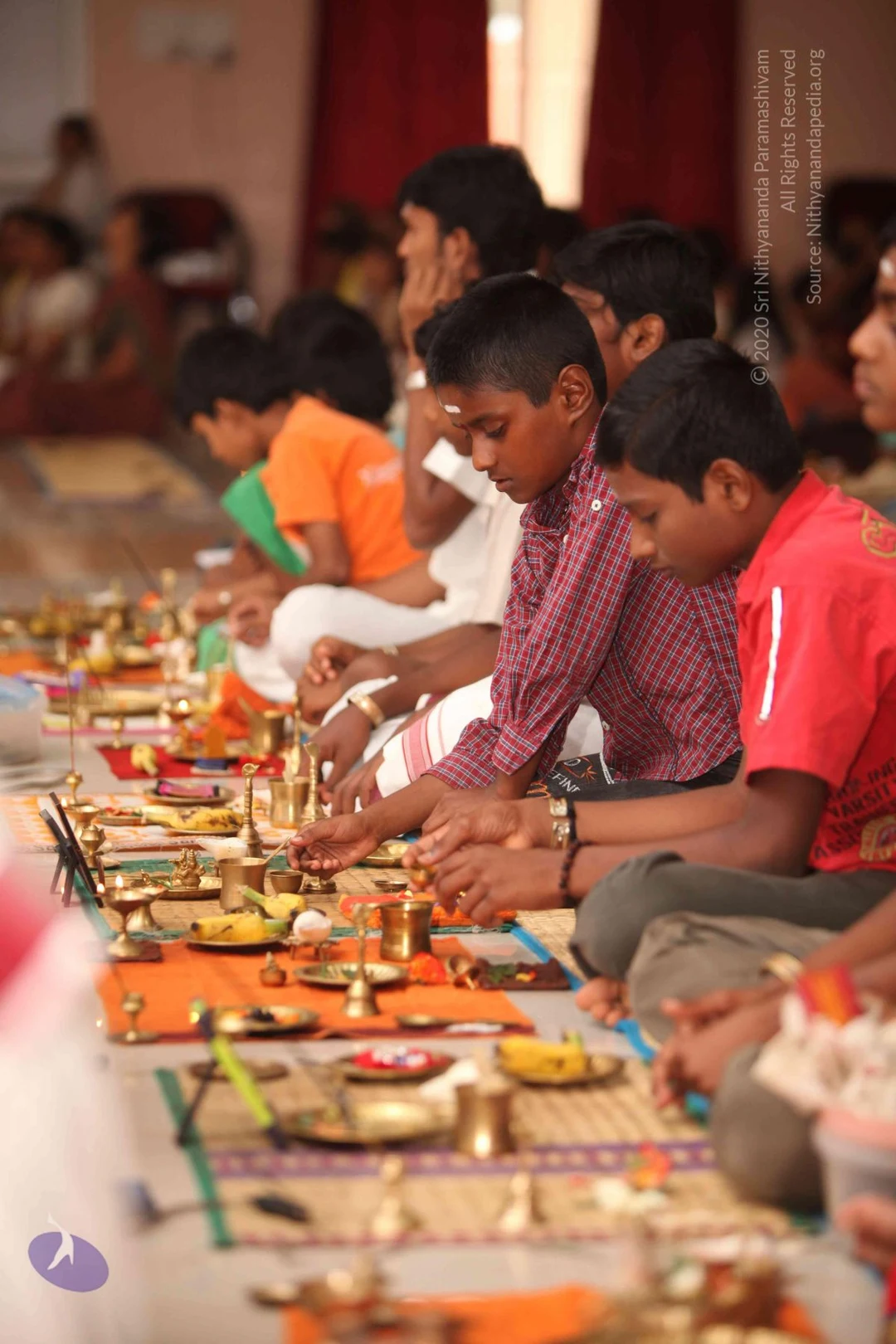
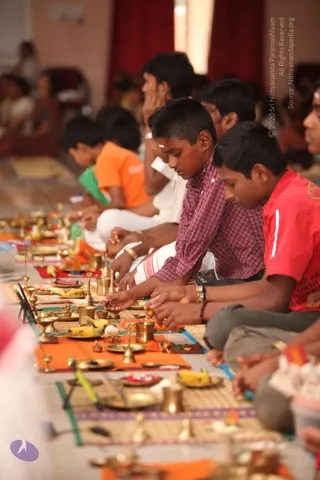
A seated group of boys and young men in an indoor hall with pink walls and red curtains performs a group ritual, holding lit oil lamps in their hands before brass plates with flowers, fruit and small offerings spread on mats. Several lead figures wear white dhotis and white shirts with rudraksha malas, one in a red shirt and another in a maroon checked shirt. A child in an orange shirt sits at left. Others in the back stand or sit near a side table with steel containers. No a person candidate is visible in the photo.A photograph of an unfinished building under construction on a dusty, sandy lane. The structure has orange-painted walls and a partly rendered grey concrete extension with an unfinished window opening and exposed timber and corrugated metal roofing. A small saffron flag flutters on a pole atop the building. Young trees line the right side of the lane, with piles of grey stone blocks and construction materials at the base of a blue wall. In the background, two people stand and sit near a row of pink-and-white structures. No readable text is visible.Outdoor photo of a building exterior with reddish-brown walls and red railings, partly screened by tall green bamboo stalks with narrow leaves. In the foreground, bright red flowering shrubs grow beside potted plants and rounded reddish stones on a sandy path. A blue signboard on the wall shows printed text, apparently listing a video centre and audio service. No people are visible.

September 21 2011

Original wiki page
Contents

Title:

THE SUPREME PONTIFF OF HINDUISM HDH BHAGAVAN SRI NITHYANANDA PARAMASHIVAM

Link to Video:

VideoAudio

Transcript:

Bhagavad Gita

It’s all in the Game!

DATE: Day 30: Sep 21st 2011

Please understand there is a part of you which goes on changing. For example; at the age of 7 who were you; you are not the same at the age of 20, you are not the same at the age of 50. The part which is changing is continuously dying. You don’t need to worry about that. The part which does not change will never die. It is there forever. It is going to be there forever. Please understand the part which changes and part which does not change. You assume yourself as mixture of both. You assume yourself as mixture of both.

na jayate mriyate va kadacin nayam bhutva bhavita van a bhuyah | Ajo nityah sasvato yam purano na hanyate hanyanmane sarire ||

There is part of you which never dies and that is real you. But you have freedom to associate yourself with the part which dies also and suffer; no problem.

See there is some utility for you, immediate utility for you when you associate yourself with the part which changes. Life looks more colorful. You can taste rasogulla, you can taste green chili, you can have little fight; you can have little so called love. You can play with all these games. I tell you, I am telling you exactly sacred secret from my experience whether a taste or a sound or smell or seeing or touching; exactly this is what I feel arey it’s just a joy, play. You also entered into this play only like a casual choice. It is not that you are interested in getting bound and suffering with these 5 senses and being tortured, no! How I am playing that is the way you started; you just forgot it is the play you started in between the play, nothing else. I am still remembering aey arey I started; if it is not there ok go… next.

My association with the perishable part of me is casual, non serious, not a committed relationship, a casual flow. In your life it is so unfortunate. It is really, really, really unfortunate, your relationship with your perishable parts, that perishable dimension has become serious commitment. Let me be very honest. When I had the fracture in the hand, all I did just only one thing, aey if it can be perished, if it can be destroyed, it can never be useful for me because my mission is to be with something which can’t be destroyed, to awaken that something which can’t be destroyed in everybody. So for that only this whole play. So naturally if something is going to be destroyed, that is not going to be useful for me. Forget about it.

And I saw there was no suffering because of something which can be destroyed. I am not saying, in one hour immediately body got healed. No. of course it got healed in 50% of time. Doctors expected and they said usually this kind of fracture takes at least 6 months but within 3 months it got healed. That is different but all I am trying to tell you even that healing is not a main effect I wanted to share with you. I wanted to share with you one thing, that perishable cannot bring suffering for you. Don’t take your relationship with perishable objects as a serious commitment. It is not committed relationship. It is a casual.

Again and again you forget there is some part of you which does not perish. Any action you do, any decision you make based on this understanding, the part of me is non perishable is tapas. The more and more tapas, more and more expansion of your existence, more and more you are expanding this great truth like it is not killed when the body is killed. Understand when Krishna says aey you don’t get killed, there was never a time I never existed or you never existed, there will never be a time both of us are not going to be existing. Keep quiet and fight. Means what? He is directly giving you the initiation. Even if you don’t realize that now, you don’t worry. I am doing what needs to be done. Go ahead.

He is initiating, giving assurance. See I just know all your suffering that you have not become enlightened also is useless. All your suffering because of your non enlightenment, please understand there is a two thing. Because you are not enlightened out of your ignorance, you do some foolish things. Only those things are dangerous but if you have the intense yearning and suffering that you are not enlightened that is useless, that is not a big thing, that is no need for that; just one assurance from a master can remove that. Krishna is first removing that suffering. Aey even if you think you are not enlightened don’t bother. When this whole body is useless for you, all the engrams which are obstructing you from enlightenment, they will also become useless. That time I can just take all these things out and give you the enlightenment.

You need to know the context and this fellow, this Krishna has kidnapped a girl for Arjuna and got her married to Arjuna and Arjuna has done all possible things to get girls for Krishna. This kind of a relationship and these 2 fellows know each other thoroughly and I don’t think Krishna will have any doubt that Arjuna is a womanizer. Of course naturally Arjuna can never have any doubt. This word womanizer may be hurting us but the truth is truth. We have to tell that. And both the fellows are this close and suddenly one friend is telling the other friend aey “ na jayate mriyate va kadacin nayam bhutva bhavita va na bhuyah” and even when your body gets killed the atman does not get killed. Don’t worry. arey to utter this word to your friend who knows completely all about you, it needs kind of a certain sacred platform.

I think Krishna got the confidence that there is a sacred platform by the Arjuna's devotion and dedication. The way Arjuna is listening. Otherwise Arjuna would have told directly Krishna aey I know what all cunning play you do in your life and how many fellows you cheated in how many ways and don’t play with all these games with me. It’s my life and death question. Leave me baba I am running. Arjuna could have done that because Arjuna knows all the things Krishna does and Arjuna could have told Krishna aey you yourself ran away from the war when you felt you can’t handle. Actually Krishna ran away once. That’s why he is called Rannchor. He ran away from the war. In Gujarat there is temple especially for that Krishna who ran away from the war.

So Arjuna could have told aey don’t play all this game. Don’t talk all these big, big things. I know when you ran away. He knows but beyond all the actions of Krishna certain click has happened for Arjuna with Krishna. I tell you the unbroken Guru Bhakti can happen only when you start looking at me beyond all my actions. Please understand I do not do any action. Now I am saying I am not talking to you; if it clicks with you your devotion can never be shaken. None of my action can be understood by you because I am not acting. I have no action.

See action needs certain components - will, ambition, energy and execution. Whatever you see as action in me, 99% of those components are missing. Then how will you call this as an action? All the components for action is missing. It is so unfortunate that people impose their ambition and reason and logic behind their actions to my actions which does not have all that. Only when you click with the Master beyond His actions you are safe forever. Fortunately that click has happened for Arjuna. I tell you to live with a disciple with whom that click has happened is a heaven for an incarnation.

Incarnation decide to live on planet earth for a longer period when they see at least few disciples for whom the click has happened beyond the action of an incarnation. Understand if you realize, if you understand my actions do not have the ambition, reason, logic which you usually have it when you do the same action is not there in my action, when this clicks with you, your devotion becomes unshakable.

Photos
Sakshi Pramana:

sharing from HIGH ACHIEVERS TECHNOLOGY

Photos Of The Day:

TEMPLE
PADA-PUJA
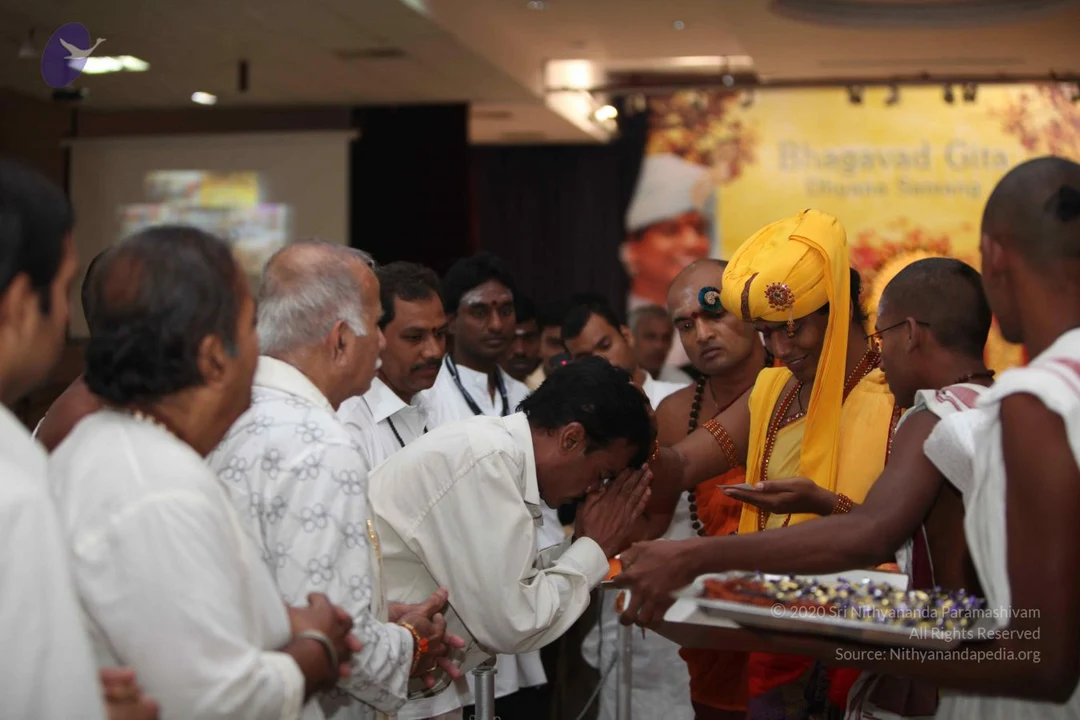
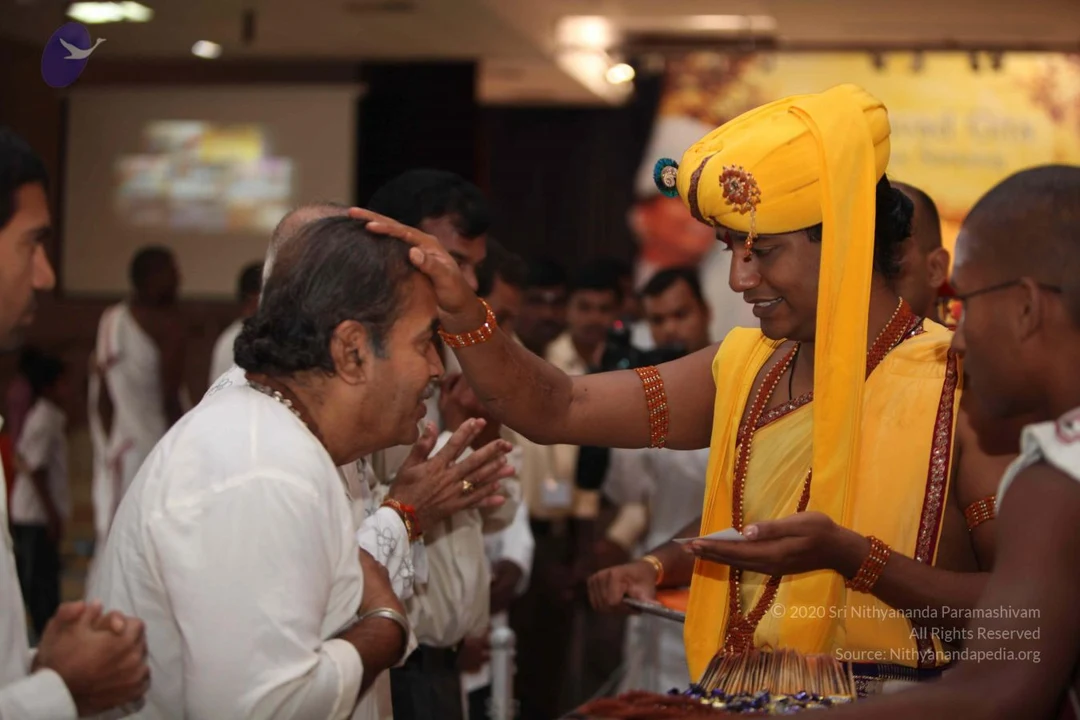
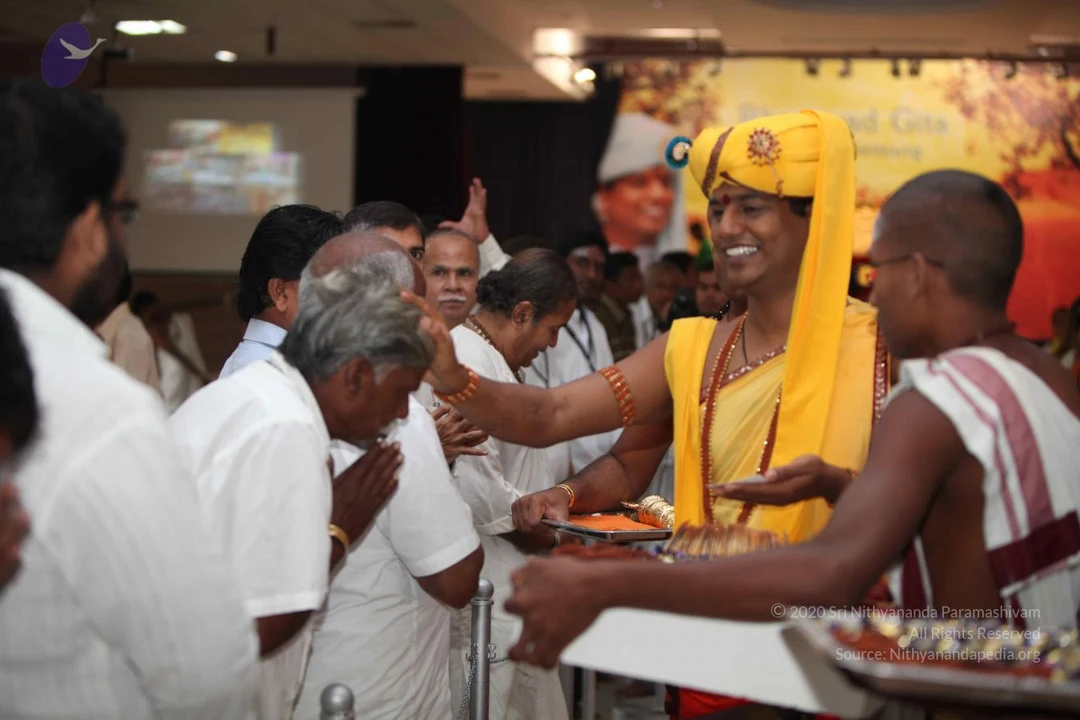
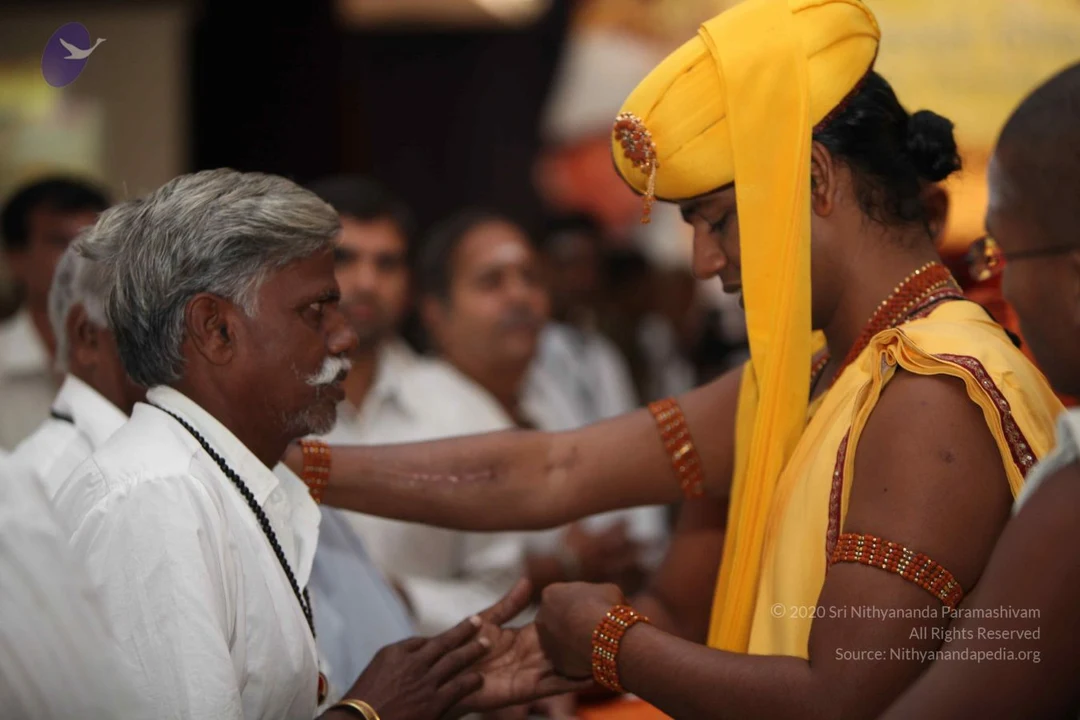
BHAGAVAD-GITA-SATSANG

JEWELLERY

ADI-KAILASA

Photos Of The Day:

Temple

Pada-Puja

Bhagavad-Gita-Satsang

ADI-KAILASA

Sub Category: Dakshinamurthy

Photos from this day

View all 267 photos

Photos

11 photosSource gallery
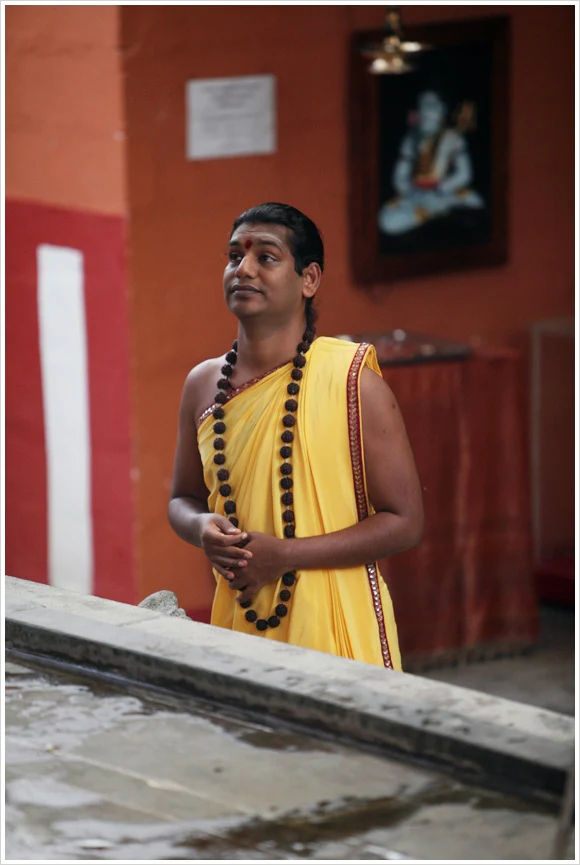
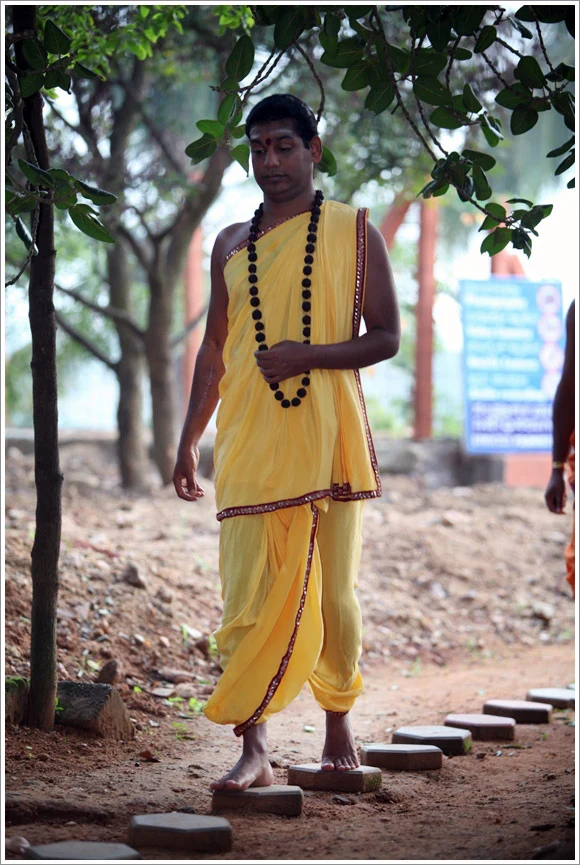
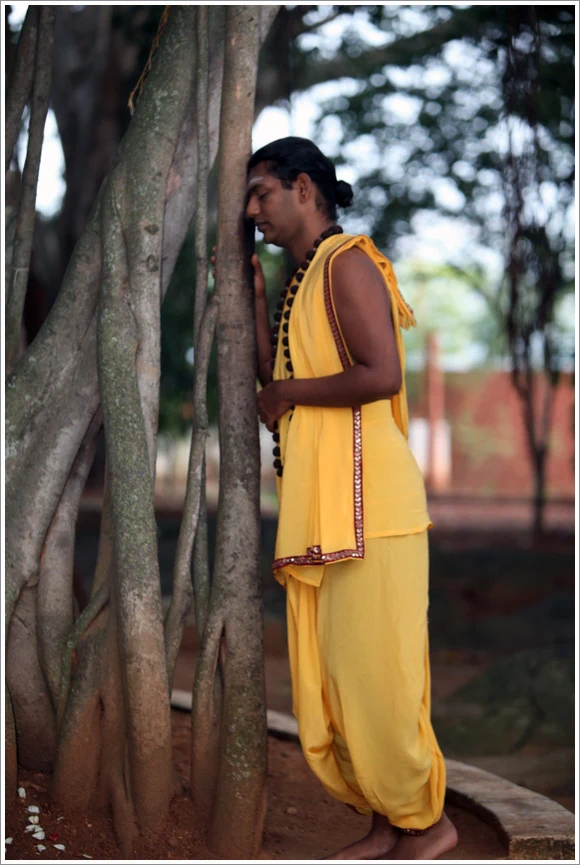
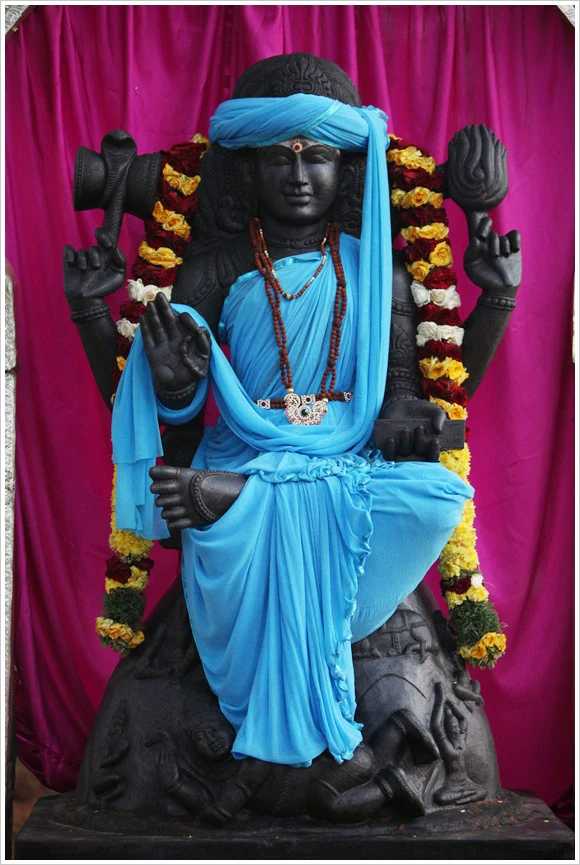
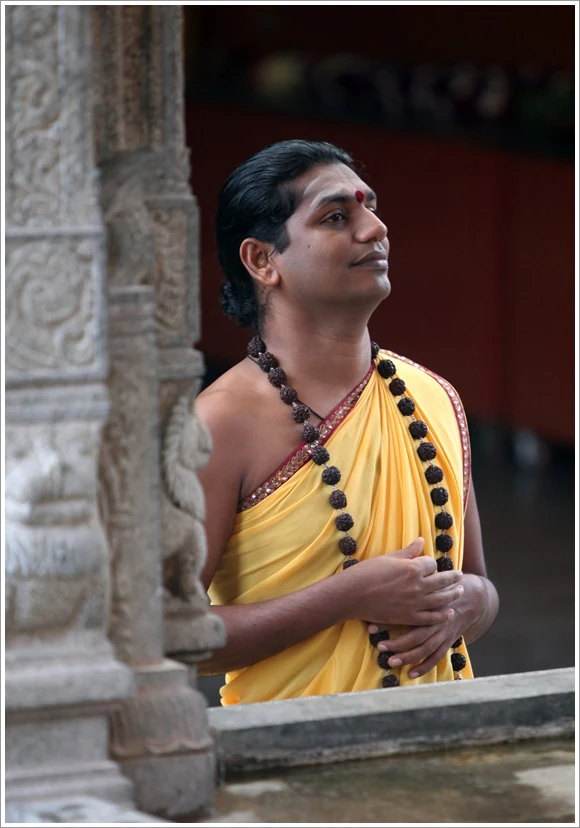
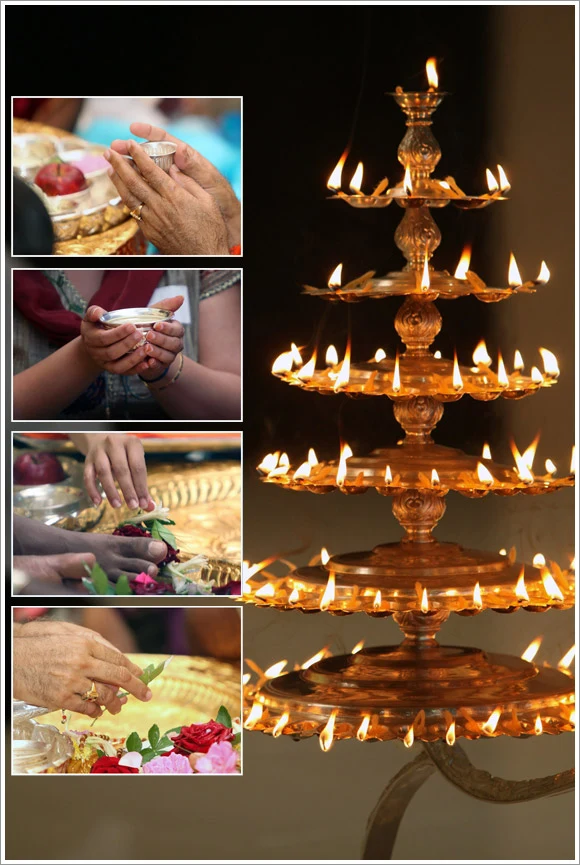
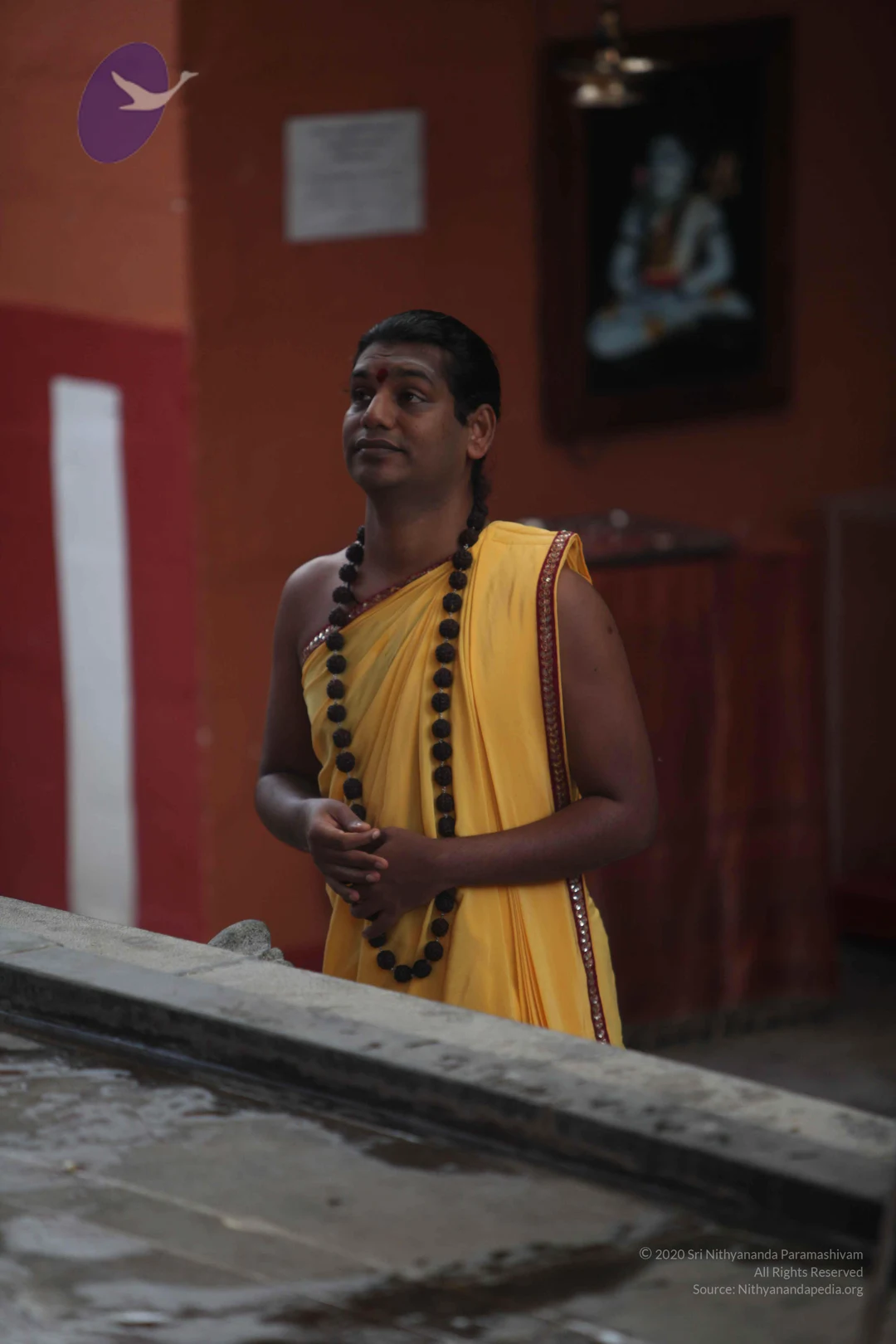
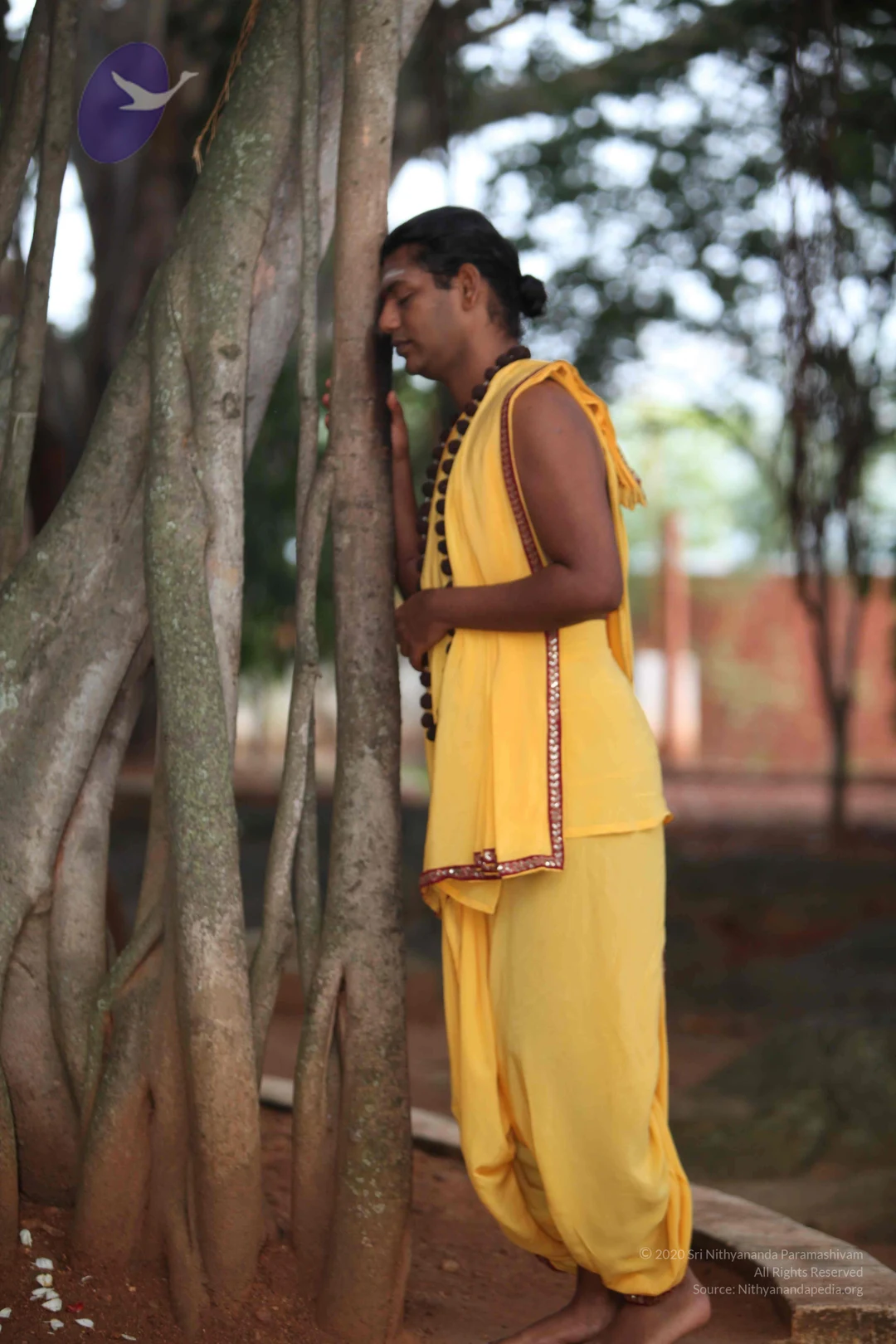
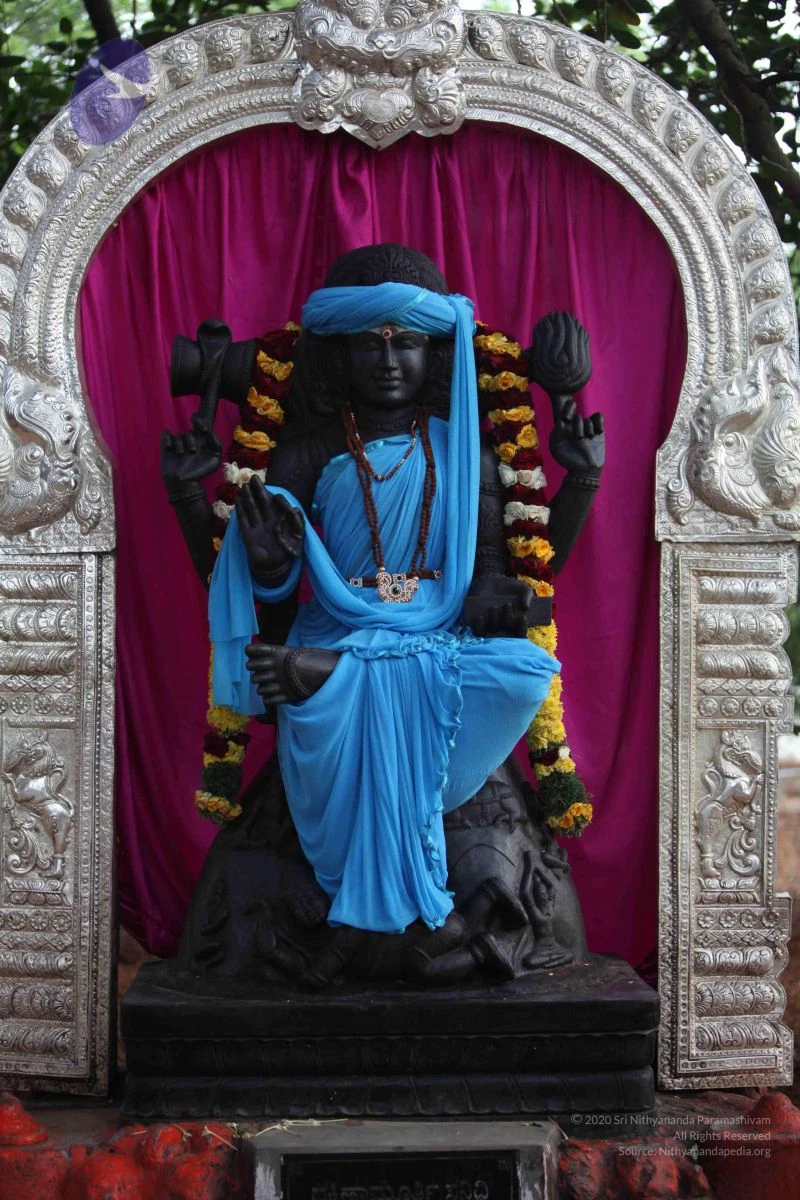
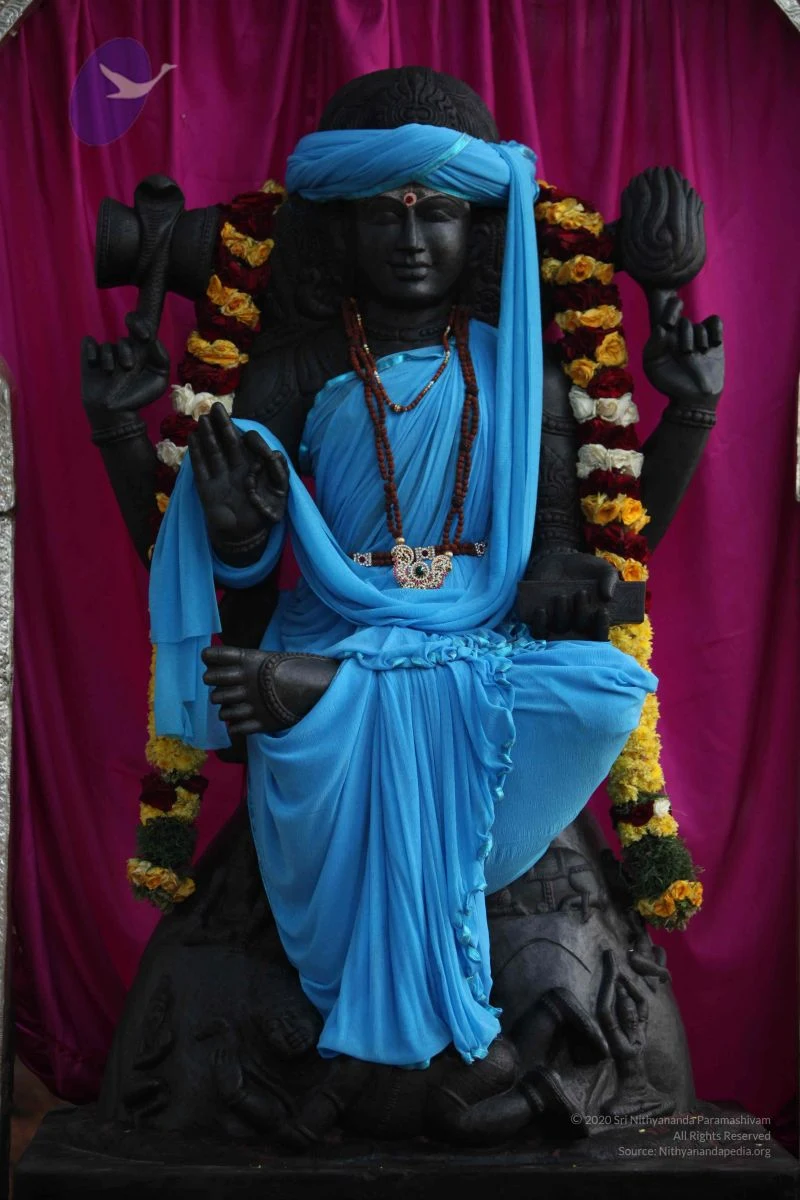
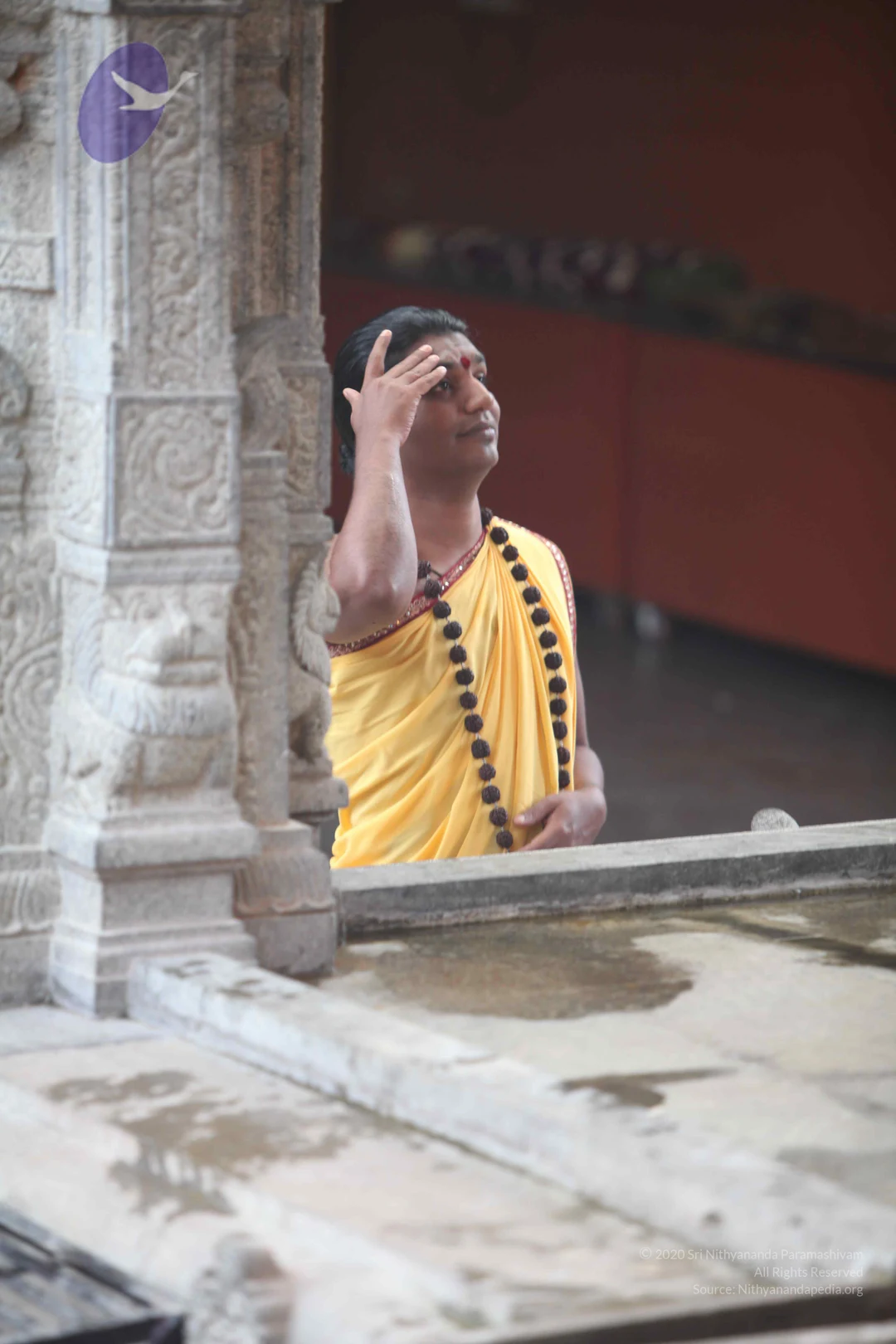
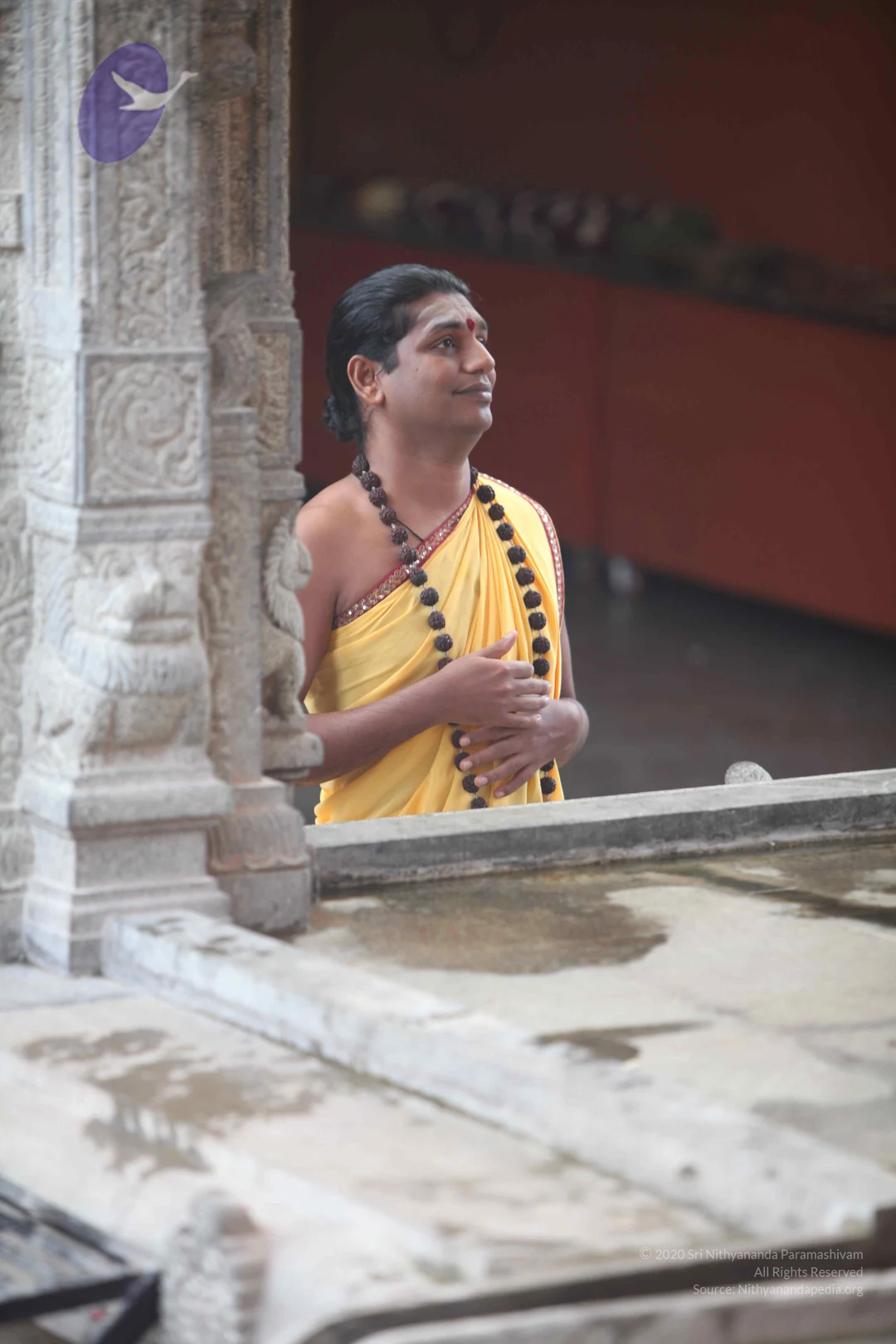
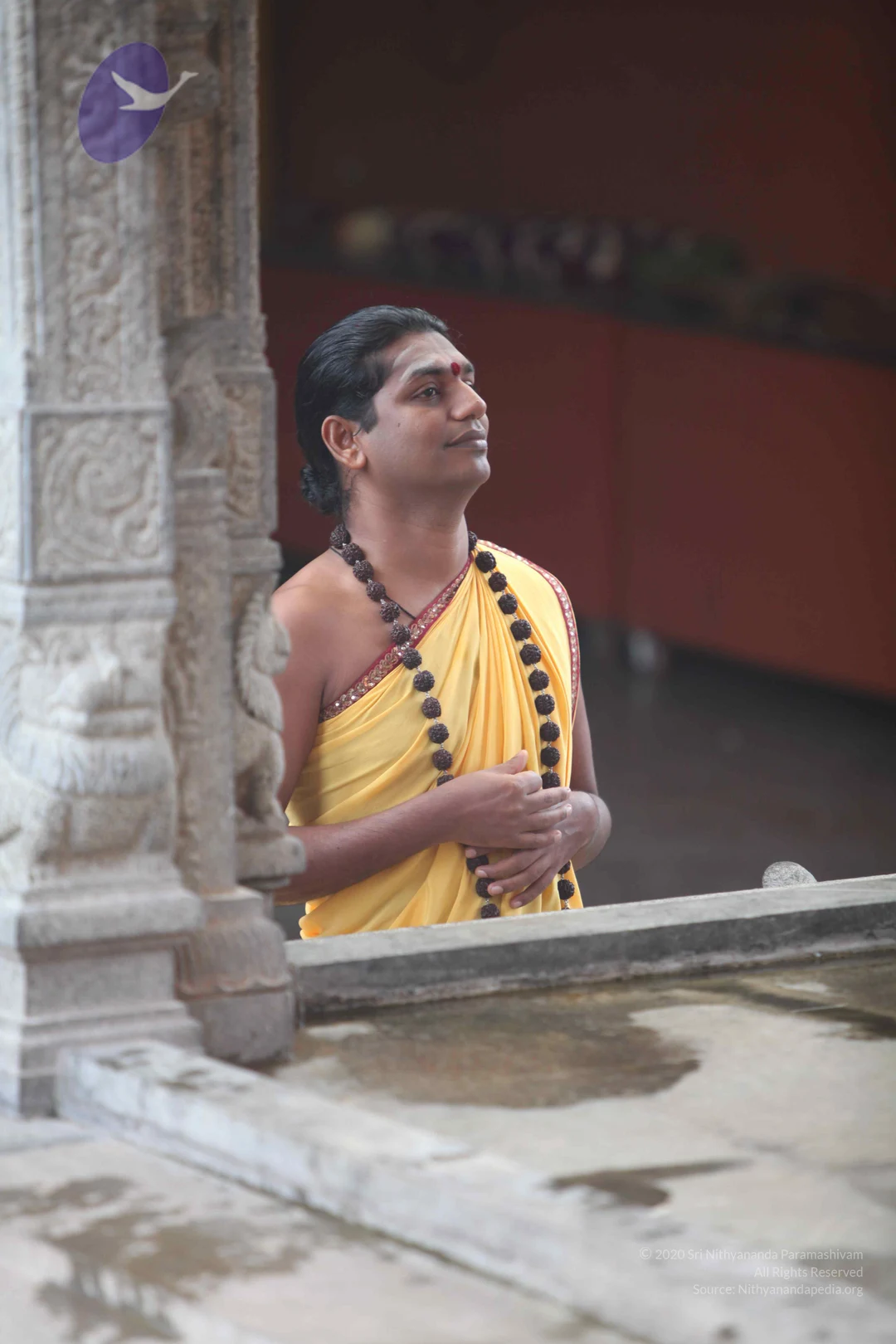
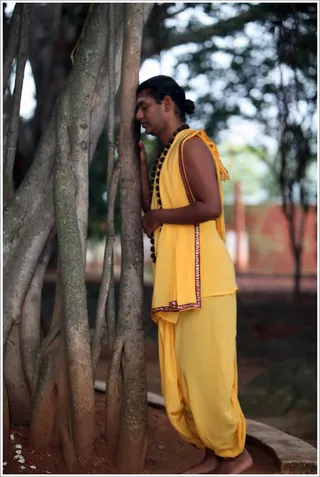
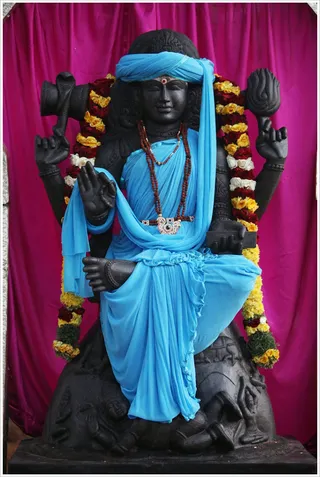
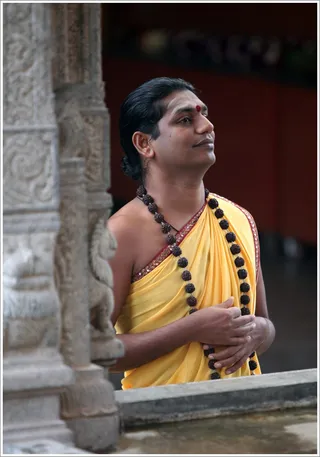
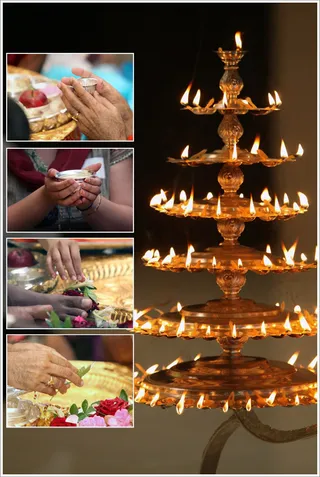
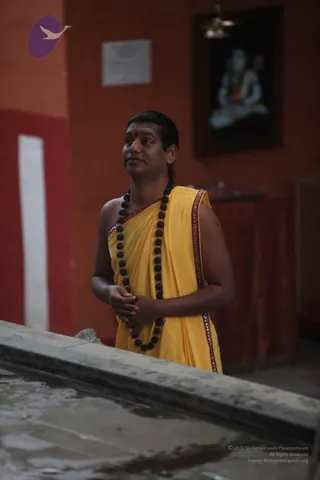
A man stands at the edge of a stone-rimmed water tank in a temple courtyard, facing left with hands clasped at his waist. He wears a flowing yellow dhoti-style wrap with a red-bordered edge over his left shoulder, a dark rudraksha mala hanging to his waist, and a red tilak on his forehead. His hair is combed back and tied in a long braid. Behind him, an orange wall bears a framed painting of a seated deity in blue, and a brass hanging lamp is visible at the top. A small white plaque is mounted on the wall, and a red-and-white painted wall stripe runs down the left side.A barefoot man in a yellow saffron-toned dhoti-style garment with a maroon-edged border walks along a path of flat stepping stones through a shaded garden. He wears a long dark rudraksha mala across his chest, one hand held near his waist, and a red tilak on his forehead. Trees and a blue signboard with white text stand behind him, and a partially visible second person appears at the right edge. The man's appearance does not clearly match a specific identity, so he is described by role and clothing only.A man in a yellow kurta-style garment with a yellow shawl edged in dark red trim stands barefoot in profile, forehead pressed against the trunk of a large banyan tree with aerial roots. He wears a long rudraksha mala around his neck and a vertical tilak on his forehead, with his hair tied up in a knot. A small scatter of white flower petals lies on the ground at the base of the tree, and a low stone edging curves beside him. Blurred green foliage and a red brick wall form the background. The figure's appearance does not clearly establish whether he is the a person, so he is described by role only as a devotee at the tree.A large black stone statue of a four-armed deity seated before a magenta draped backdrop. The statue wears a bright blue cloth draped over its body and a blue turban with a red mark on the forehead. A rudraksha mala and a jeweled waist belt adorn it, and a garland of red and yellow flowers with white blossoms hangs around its shoulders and arms. One hand is raised in a blessing gesture, and the others hold ritual objects including a trident-like staff and a drum-like emblem. The base shows carved figures. No physical people are visible; this is a statue, so the subject is a deity murti rather than a person.A man with long swept-back dark hair and a small red bindi stands beside a carved stone pillar with ornate relief, looking upward with hands folded at his waist. He wears a yellow saffron-toned shawl edged with red border and a long necklace of dark rudraksha beads. Behind him is a blurred red wall. a person: long swept-back hair, rudraksha mala and yellow ceremonial wrap are visible cues, though the appearance is only moderately distinctive; he is shown standing in a temple courtyard setting.A collage of five panels. The large right panel shows a tall brass multi-tiered lamp stand with many lit oil lamps on each tier, against a dark background. Four smaller left-side photographs show close-up views of hands performing offerings: one with hands holding a small silver bowl near fruit and sweets, another with cupped hands holding a silver dish, a third with a hand placing flowers and a green leaf on a brass plate beside an apple, and a fourth with a hand offering leaves over a plate of red and pink flowers. No faces are visible.

TEMPLE

22 photosSource gallery
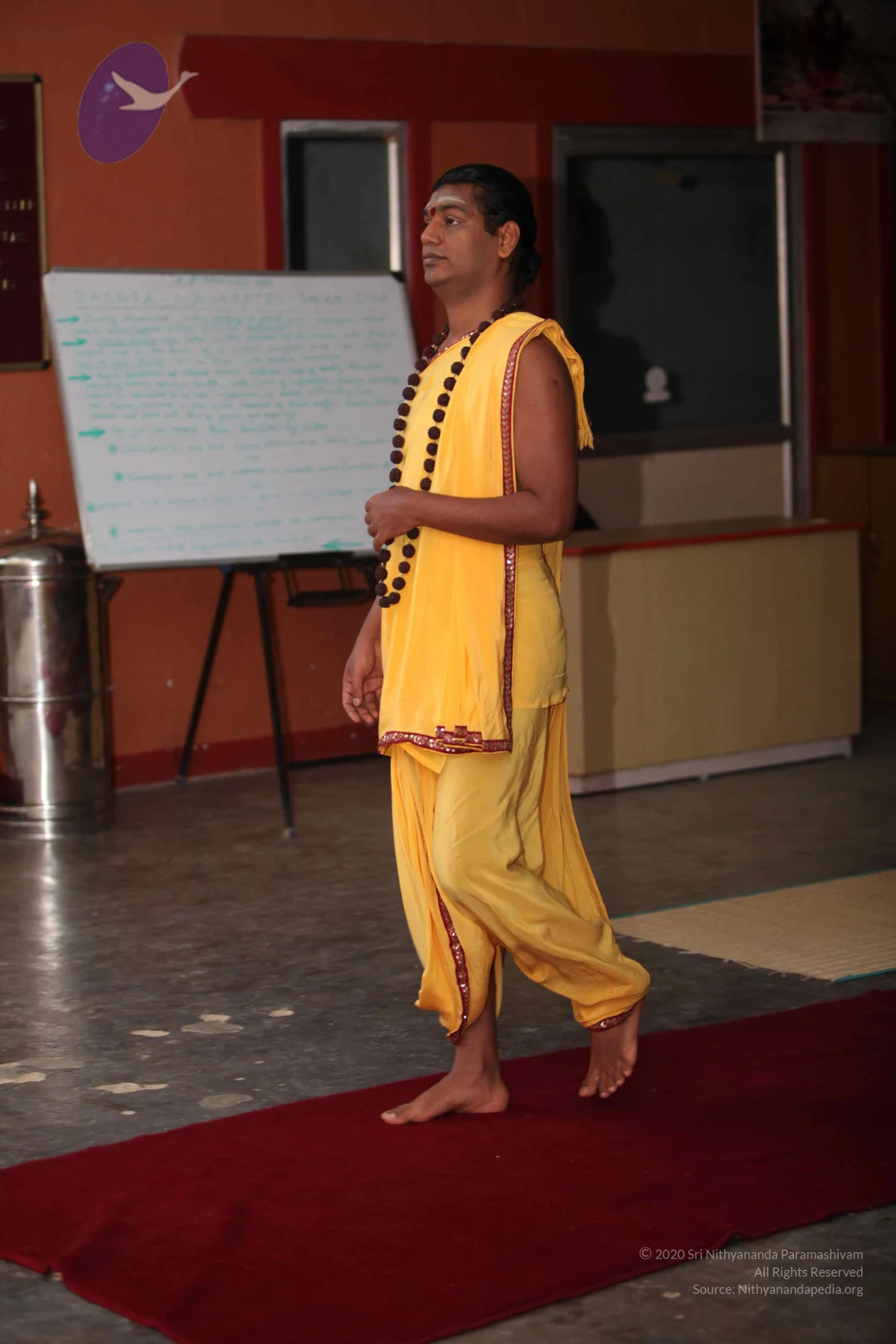
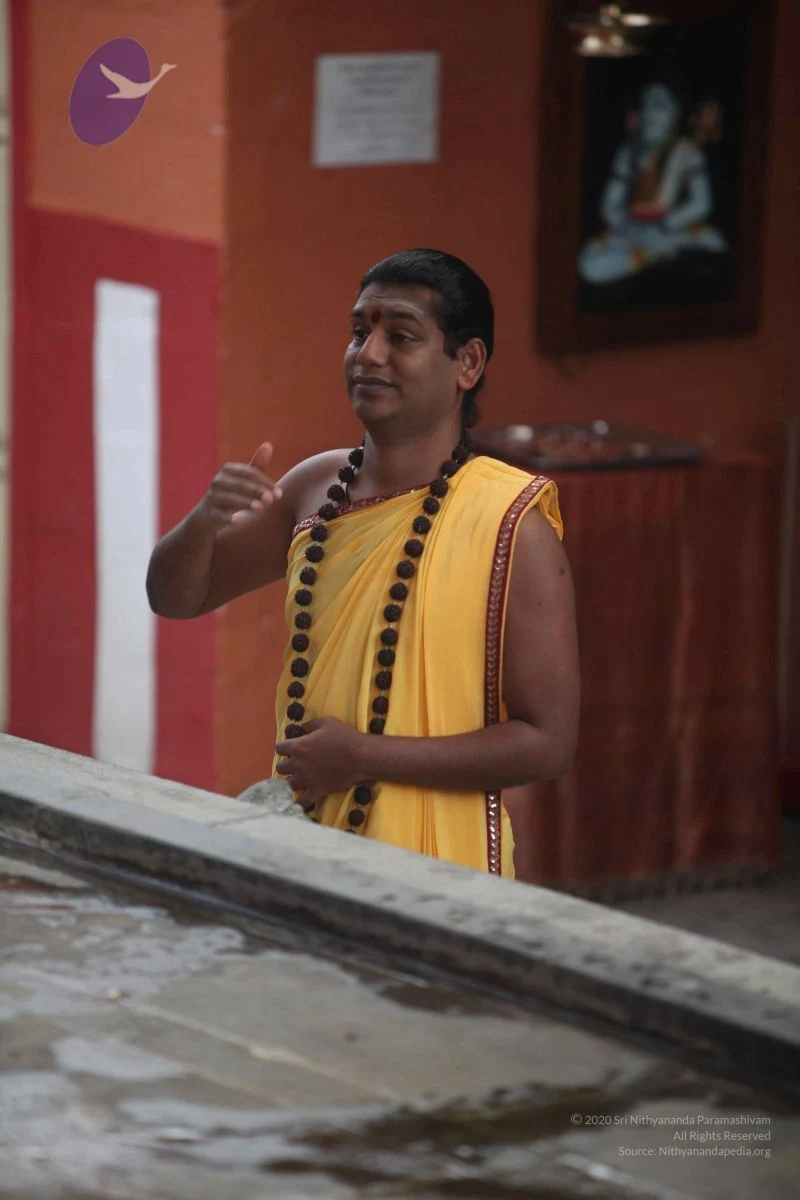
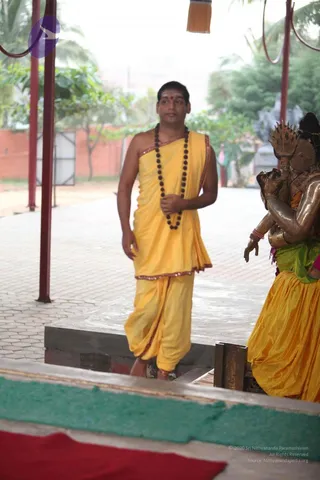
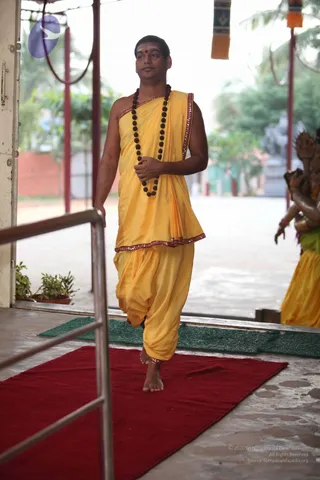
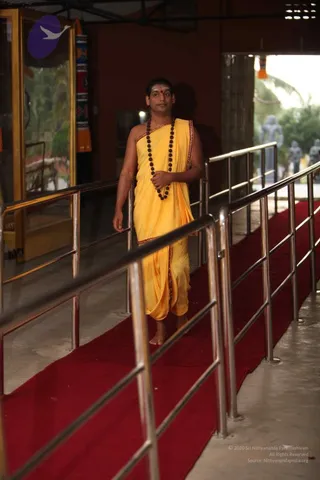
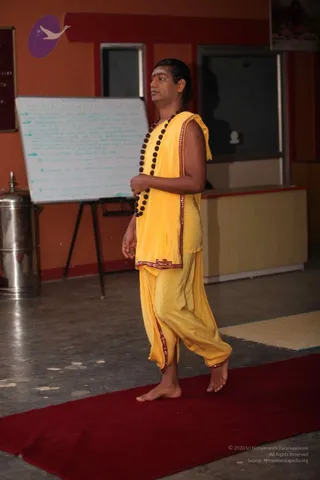
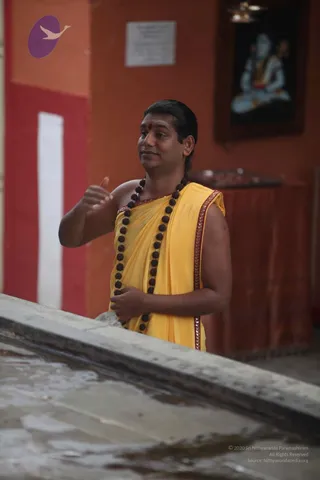
A photograph of a man standing on a paved walkway beside a metal deity murti in a temple pavilion. He wears a yellow dhoti and a yellow shawl draped over one shoulder with a reddish border, a long dark rudraksha mala around his neck, and a red tilak on his forehead. His hair is short and he stands barefoot on a raised stone step. The murti beside him, wearing a crown and green and yellow garments, is gripped by the figure's hands holding ornamented objects. Red pillars frame the open pavilion, with trees and a brick wall behind. A red and green mat lies in the foreground. The man is an appearance-based candidate for a person, though his face and the surrounding cues are not distinctive enough to confirm his identity, so he is presented as a devotee in yellow temple attire.A man in a yellow-orange draped garment with a red-bordered edge walks barefoot along a red carpet toward a covered doorway. He wears a long rudraksha mala of dark beads around his neck and a red bindi on his forehead. Behind him, a deity murti with raised arms and a yellow-green garment stands near the entrance, with potted plants and a courtyard with trees beyond. The scene reads as a temple or ashram entrance. a person: the walking man wears a rudraksha mala and saffron-yellow sannyasi-style robes, but the cues are limited, so identity is uncertain.A standing man in a saffron-yellow draped garment with a reddish border walks barefoot along a red carpet runner lined with stainless steel railings inside a covered hall. He wears a long black rudraksha mala looped around his neck and across the chest, a red bindi on his forehead, and his hair is tied up. A grey stone statue of a deity is visible through the open doorway on the right, with palm trees beyond. The figure's appearance is consistent with a person candidate by saffron-yellow robes and rudraksha mala, though the identification is uncertain.A man stands barefoot on a red carpet in a hall with orange walls, facing right. He wears a sleeveless yellow kurta-style top with red trim and matching yellow dhoti-style trousers with red borders. A long rudraksha mala hangs across his chest, and he has a red bindi and tripundra-style markings on his forehead. His hair is swept back. Behind him stands a whiteboard on an easel with handwritten teal notes, a steel urn to the left, and a wooden counter on the right. A purple dove logo appears in the upper left.A man in a yellow saffron-toned dhoti-style wrap with red-and-gold border stands beside a stone-edged water basin, gesturing with his right hand raised. He wears a long dark rudraksha mala draped across his chest and a small red tilak on his forehead, with his hair swept back. Behind him, a framed painted image of a seated deity hangs on an orange wall beside a red-and-white painted panel. The appearance matches the presentation of a person, wearing rudraksha and saffron-toned clothing, speaking near the water basin in a temple-like setting.A man stands beside a stone-edged water tank in a temple setting, wearing a mustard-yellow shawl edged with red and gold border and a long strand of dark rudraksha beads across his chest. He has a red tilak on his forehead and his hair is swept back, his hands are clasped in front of him as he gazes off to the side. Behind him an orange-red wall displays a framed painting of a seated deity murti and a small white notice is affixed nearby. The scene feels like a quiet moment of devotion at a temple tank.

PADA-PUJA
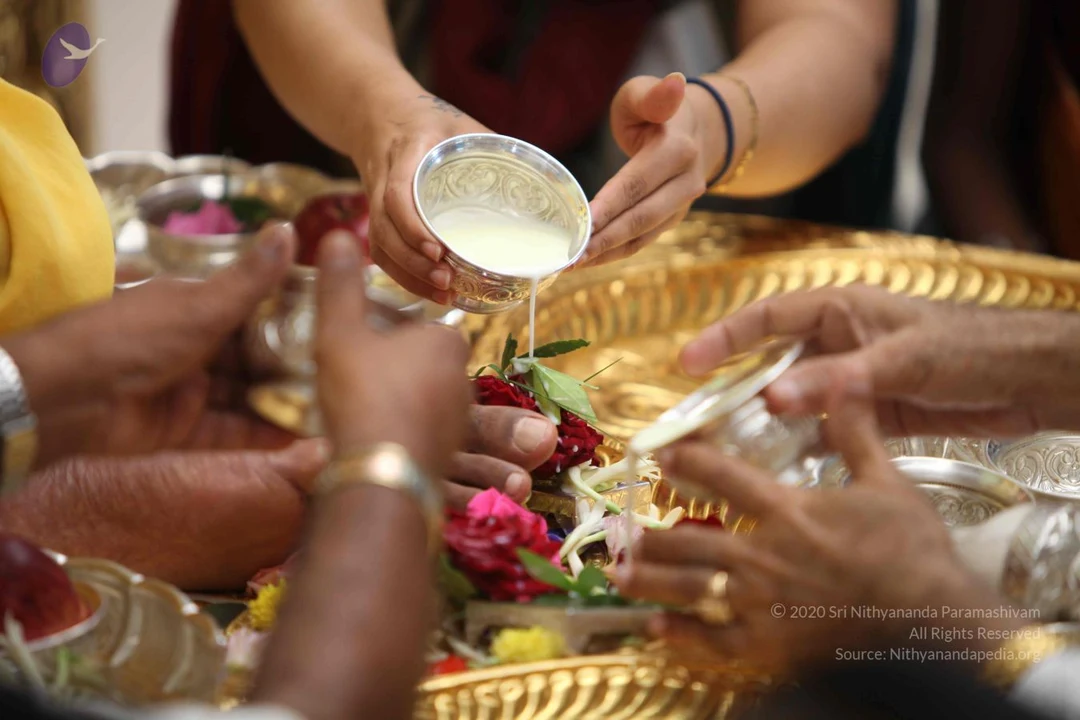
45 photosSource gallery
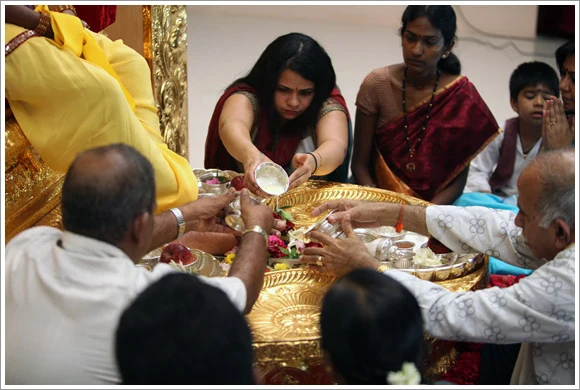
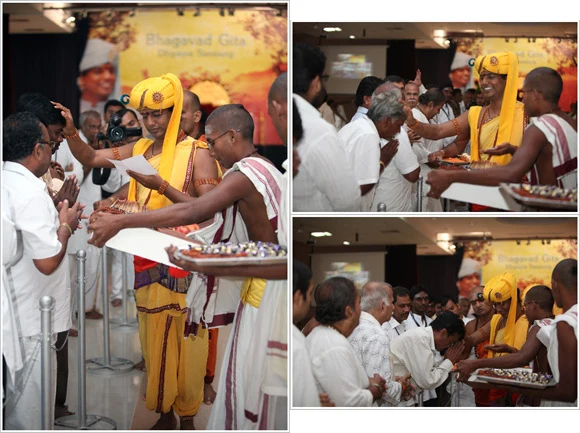
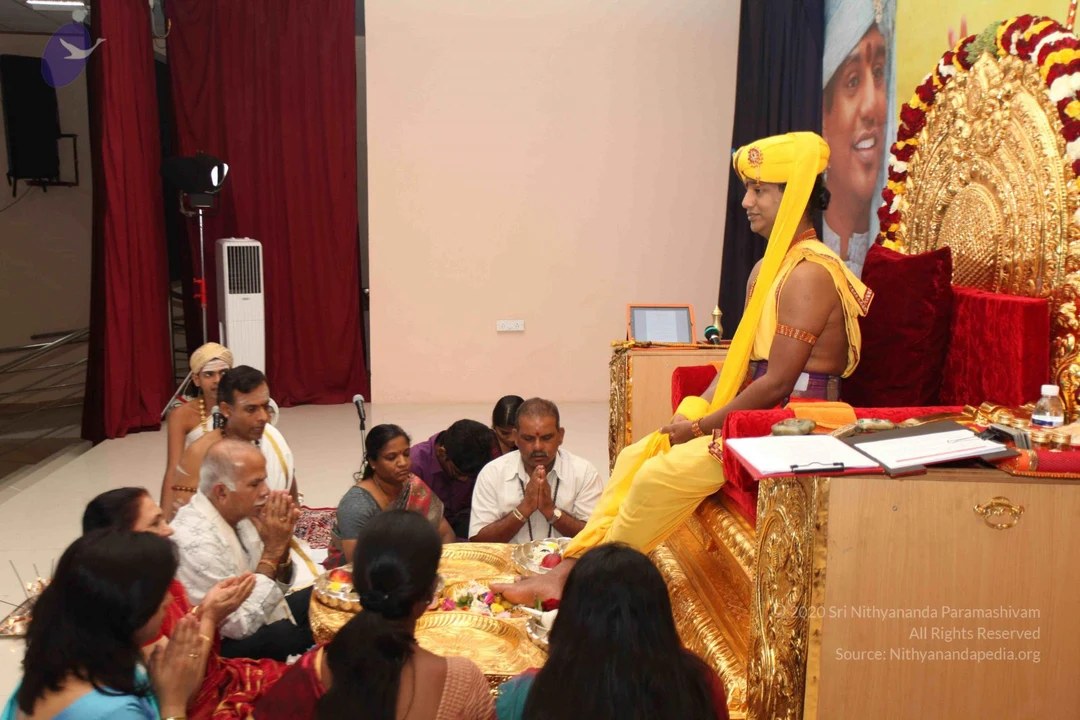
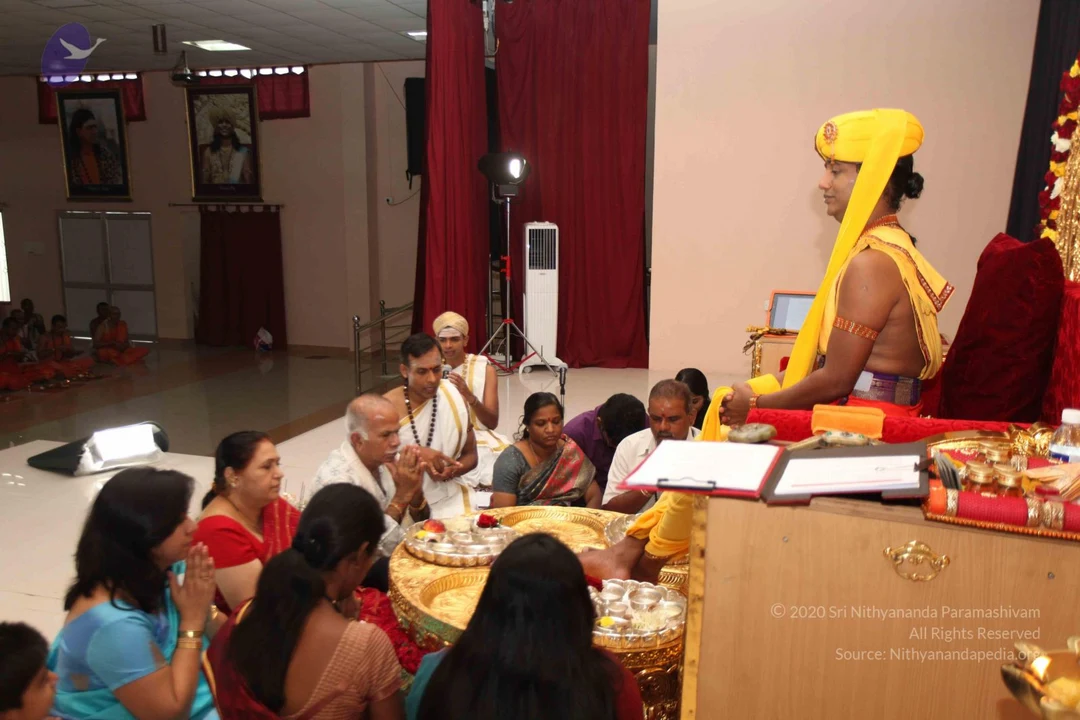
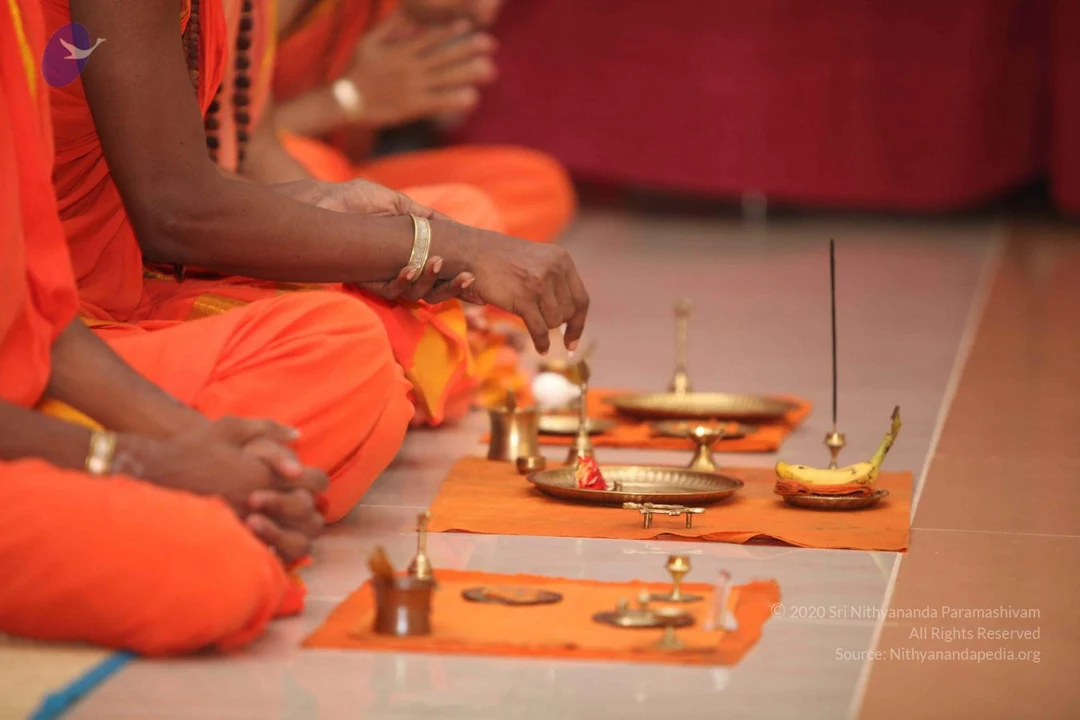
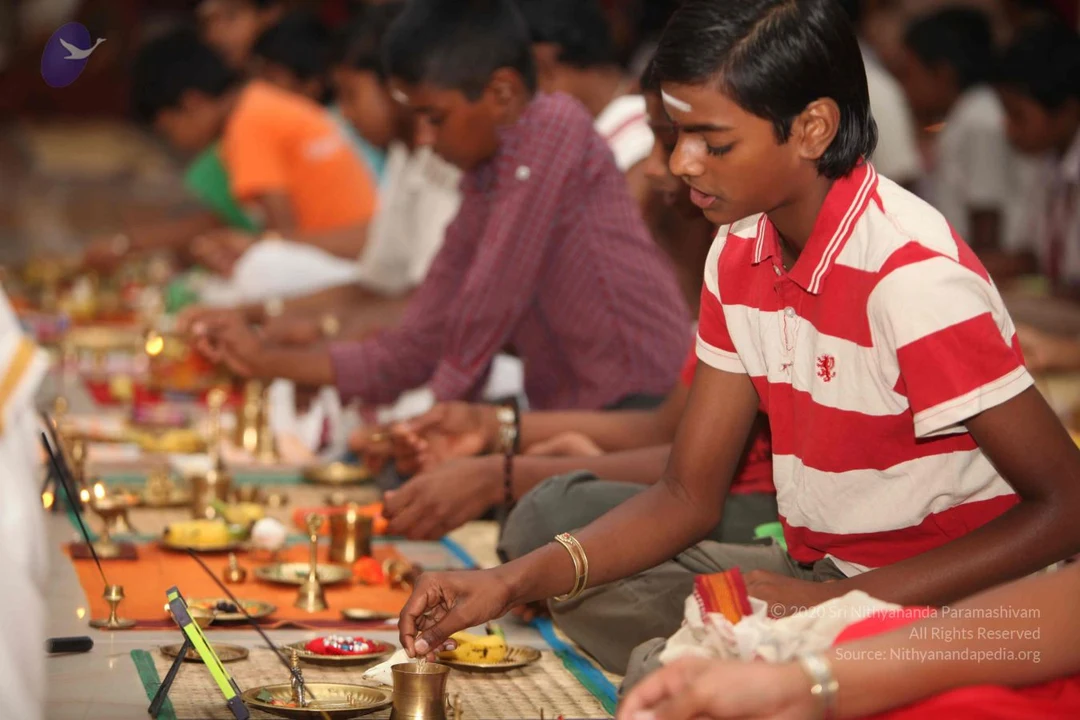
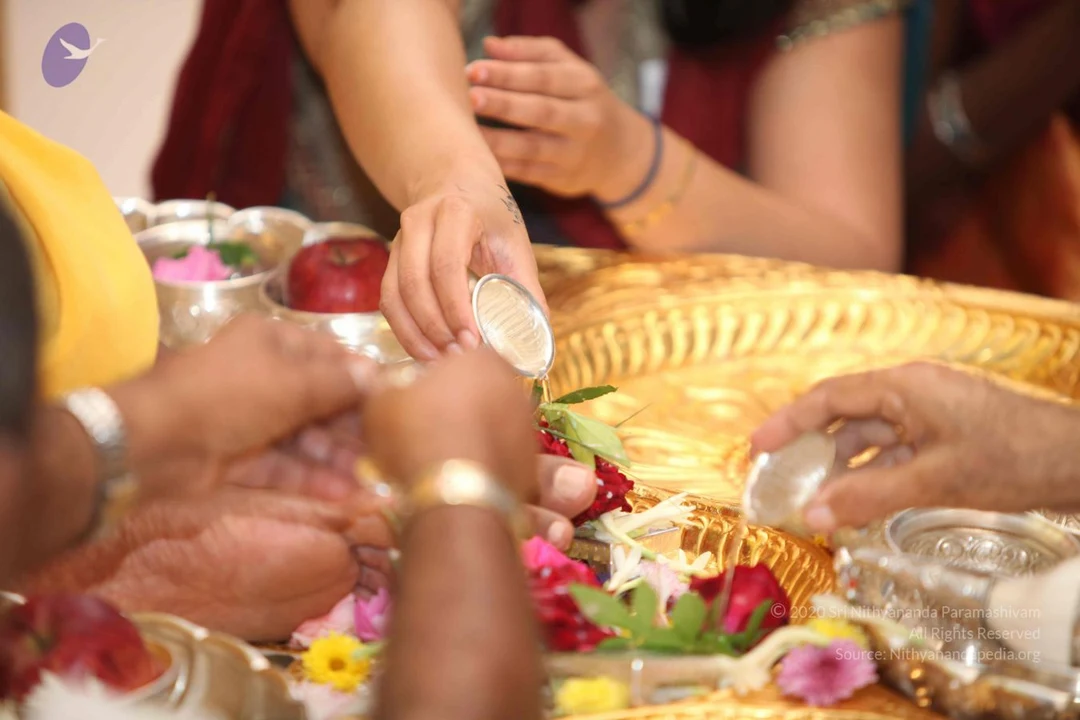
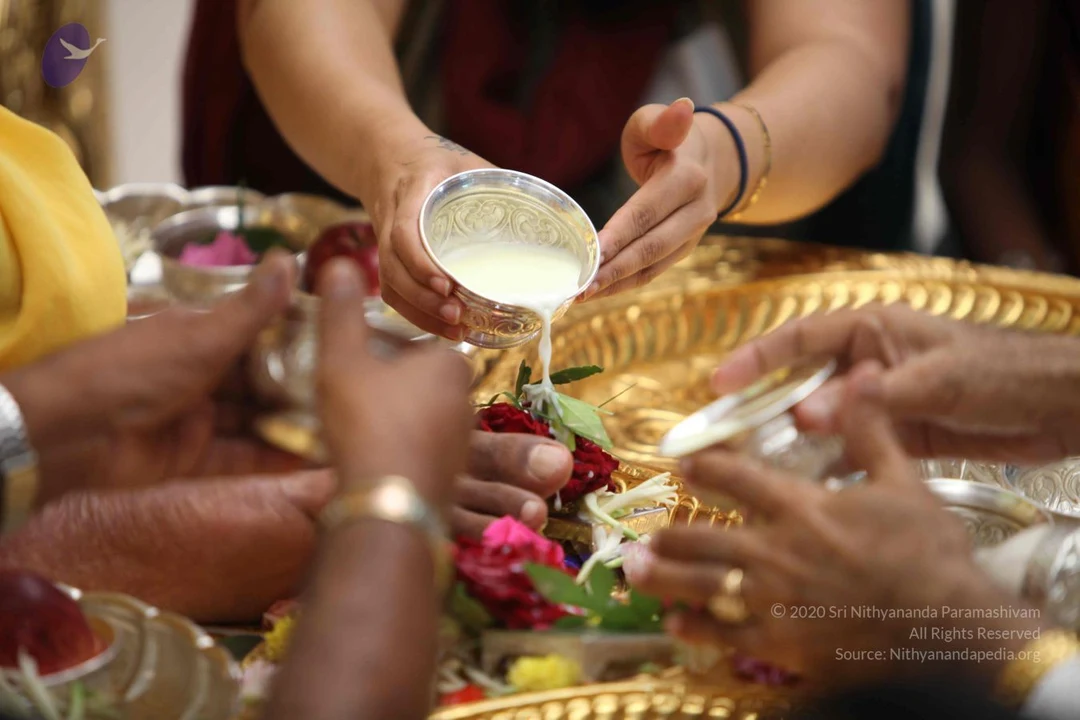
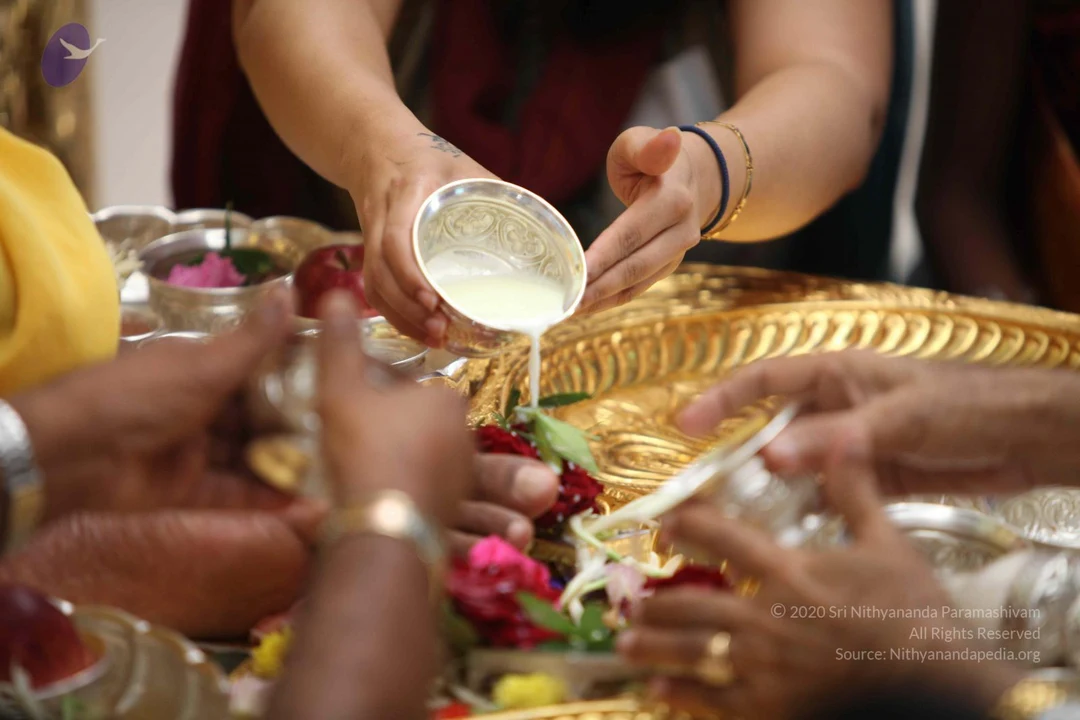
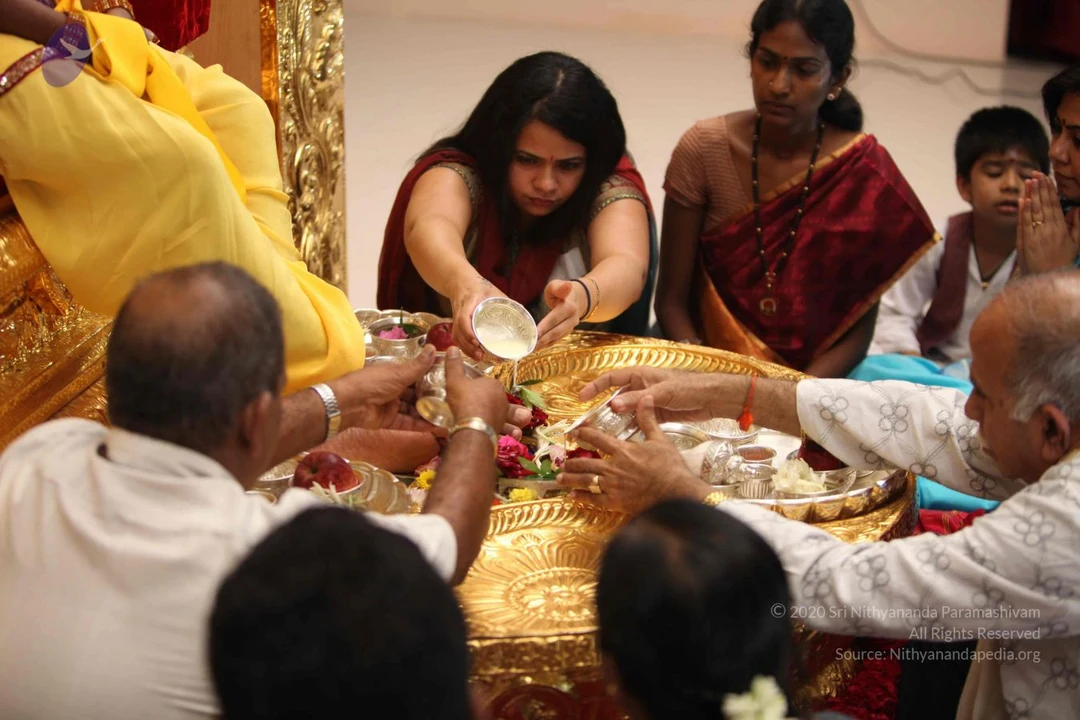
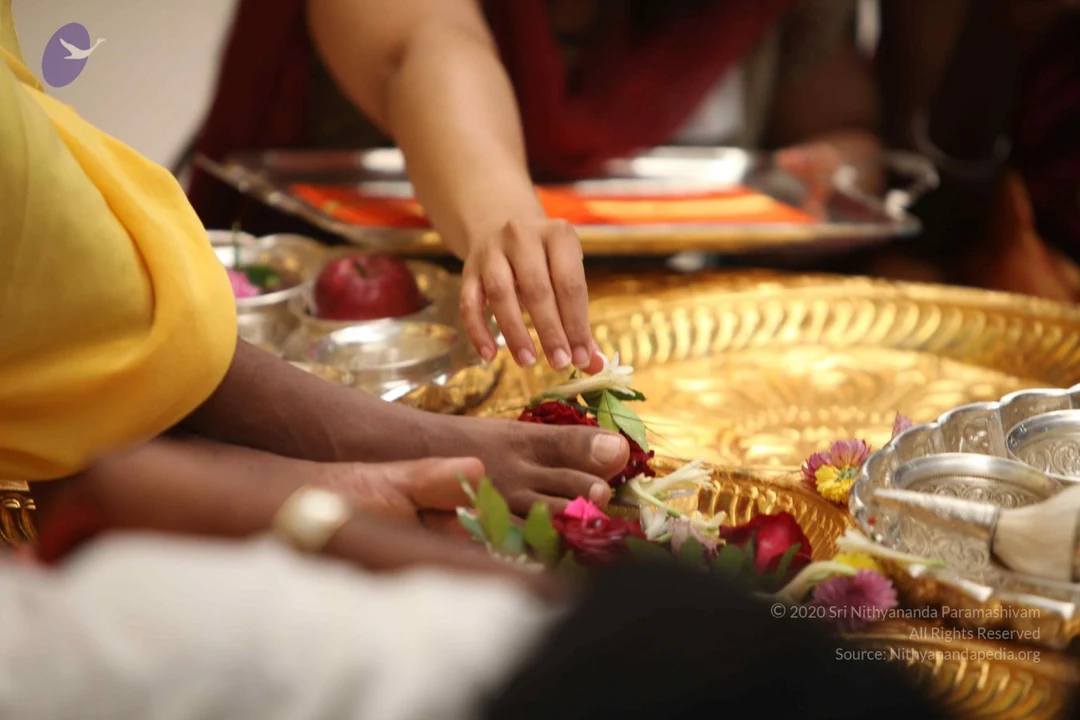
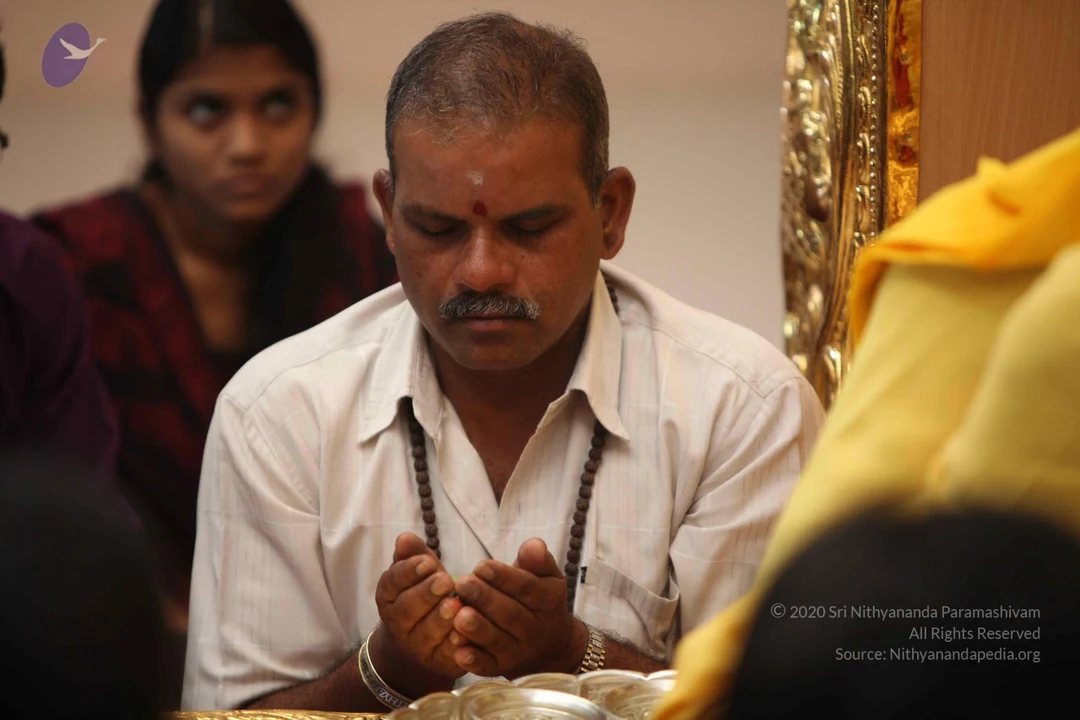
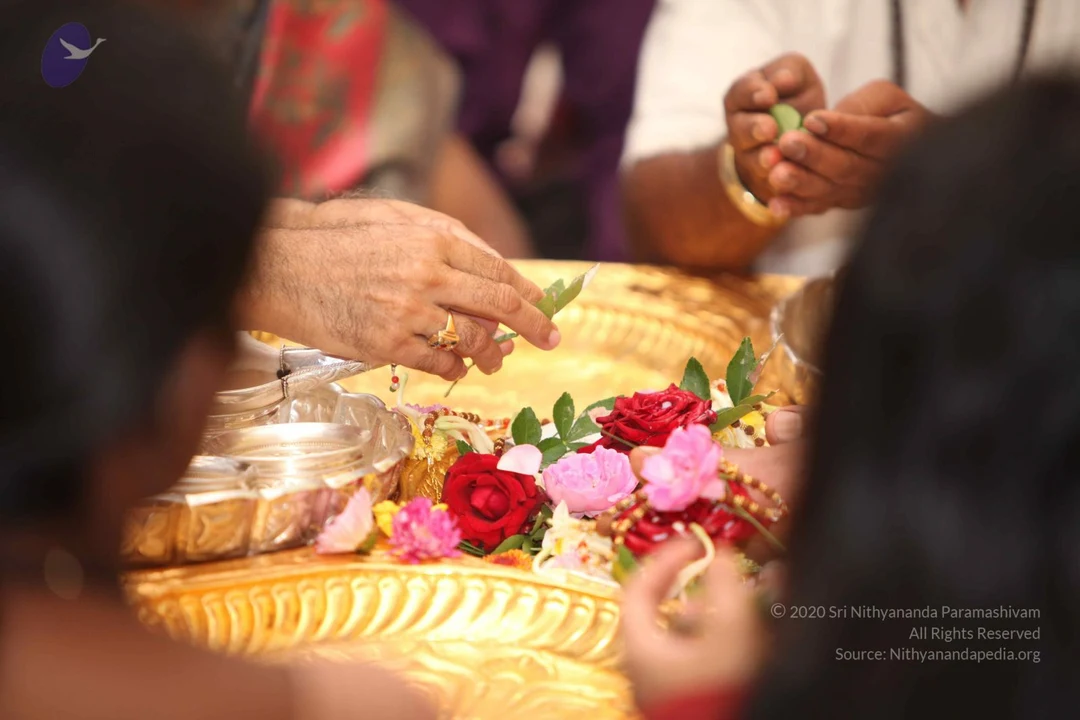
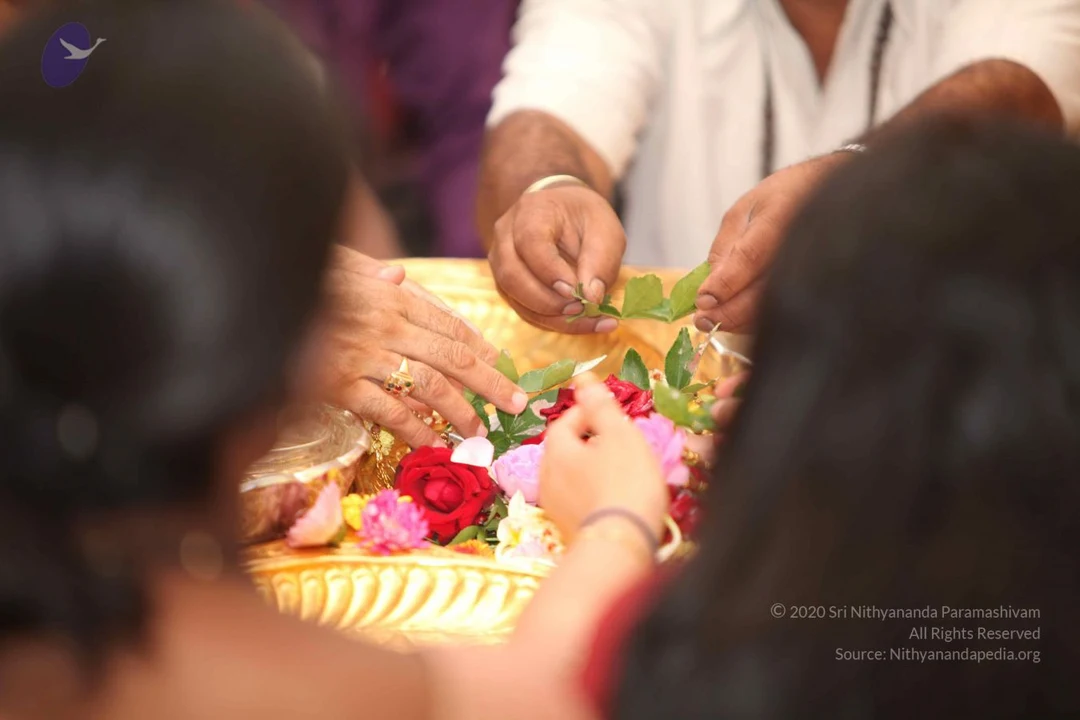
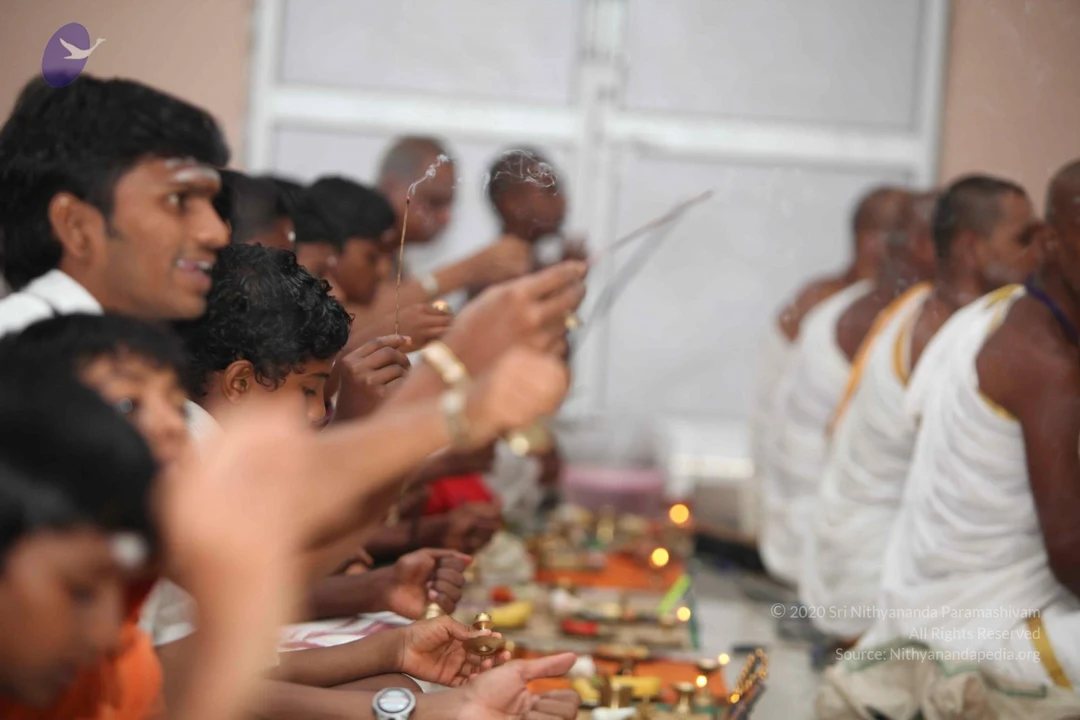
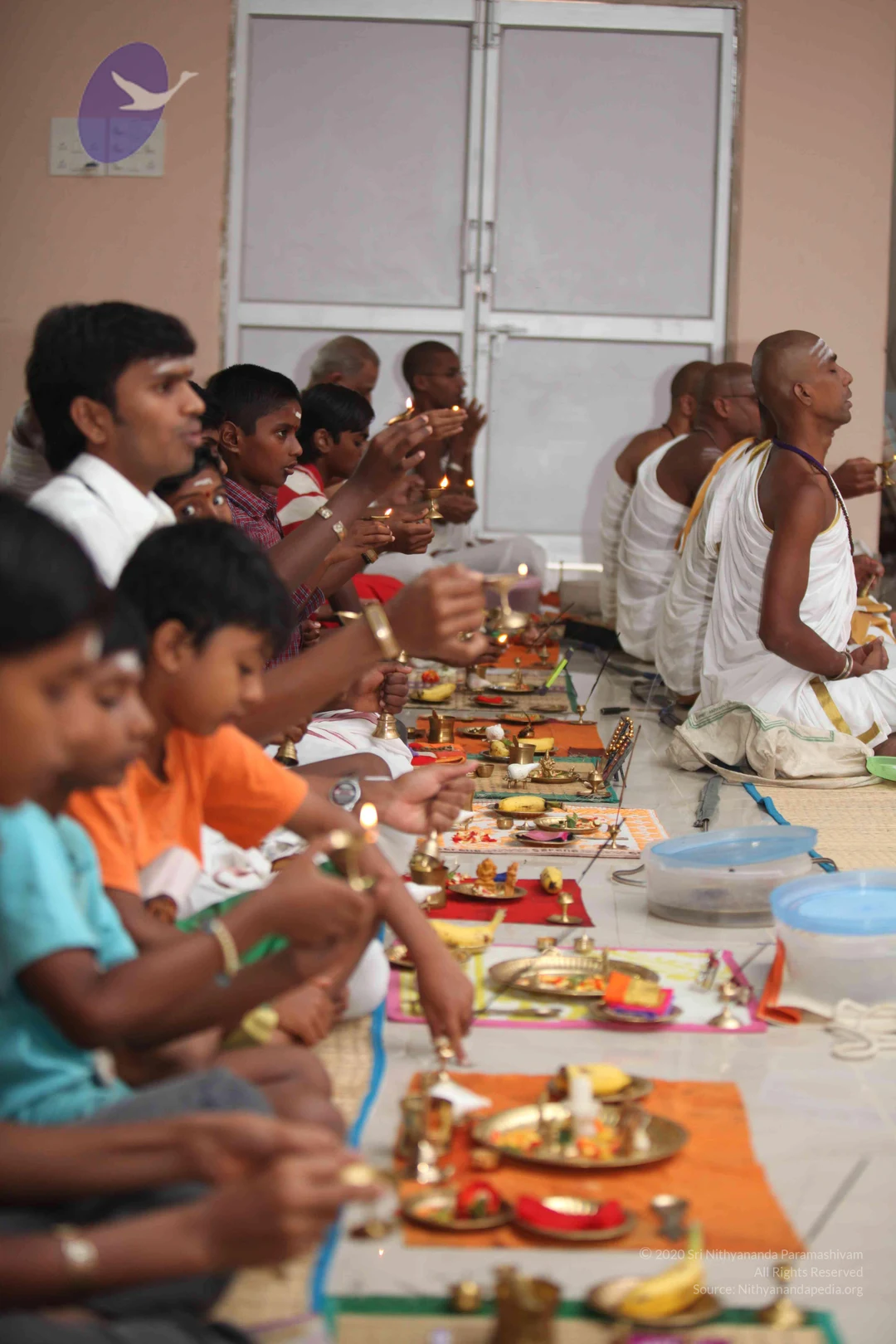
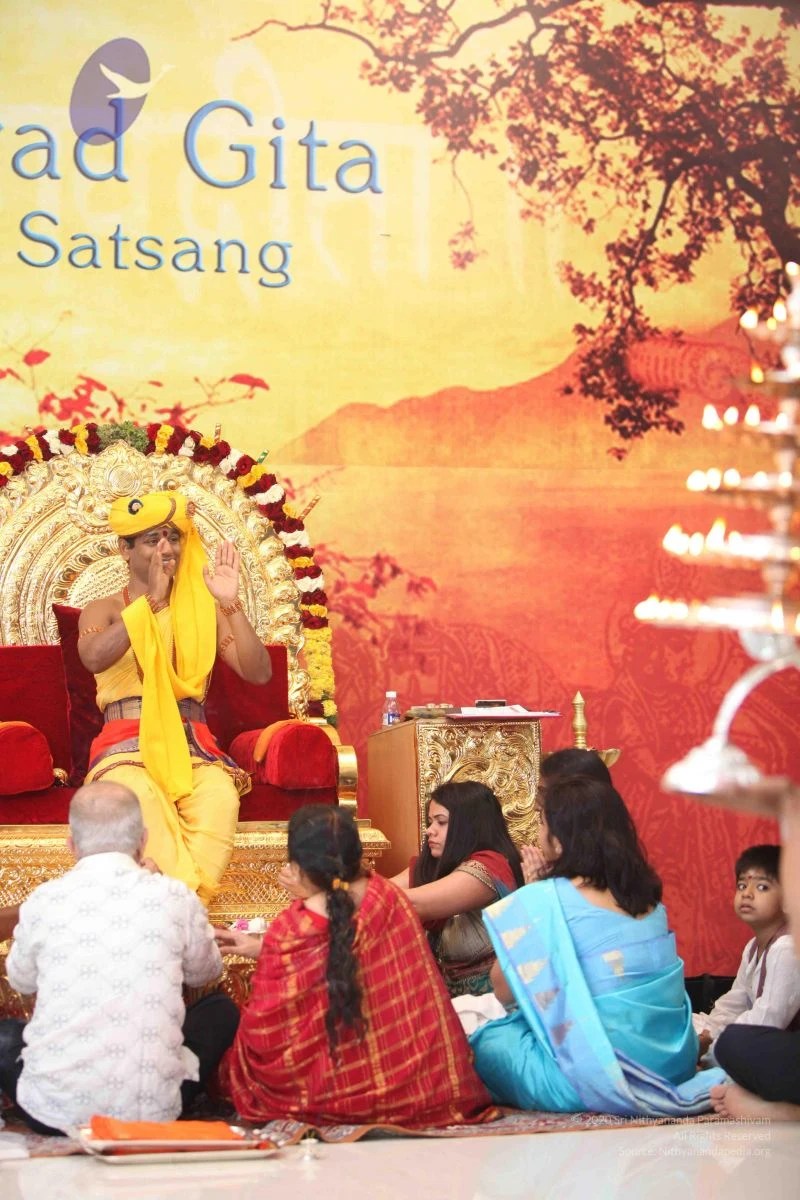
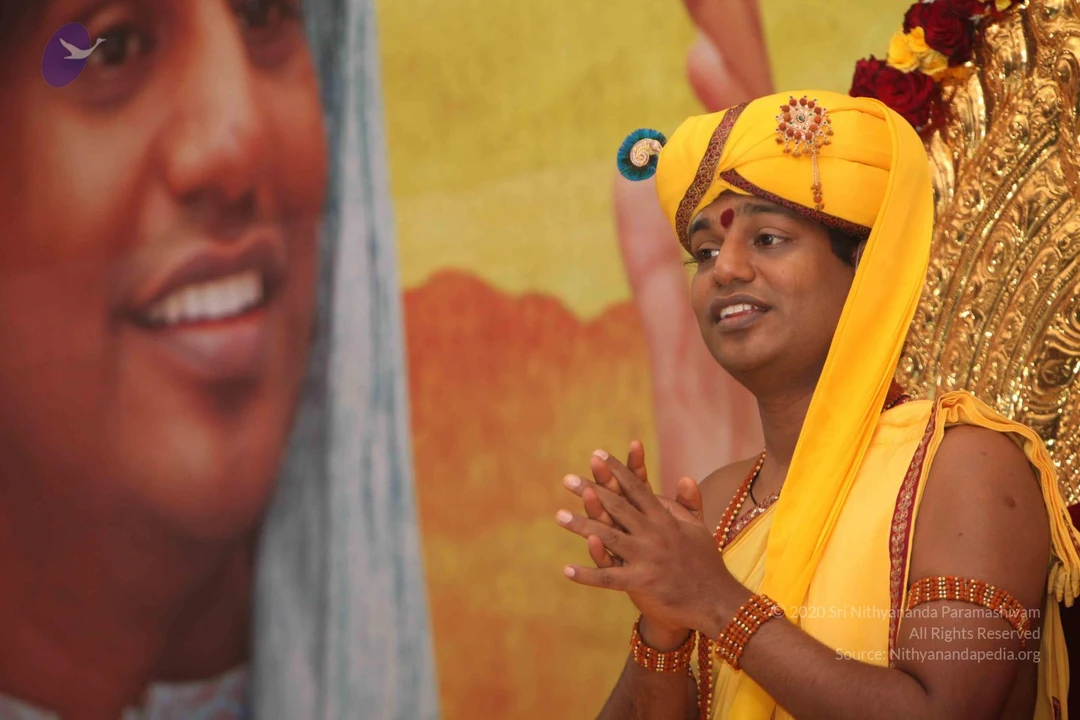
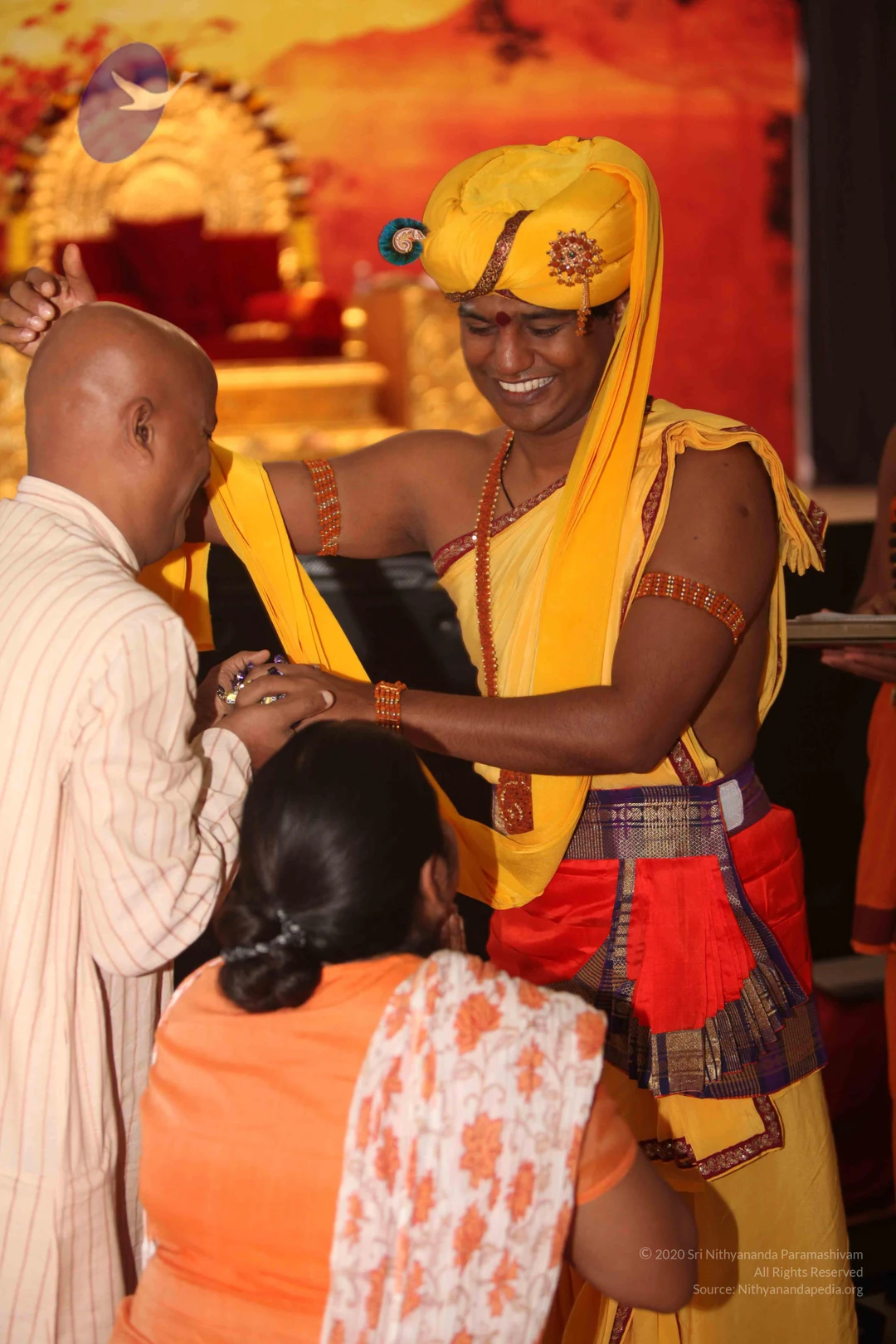
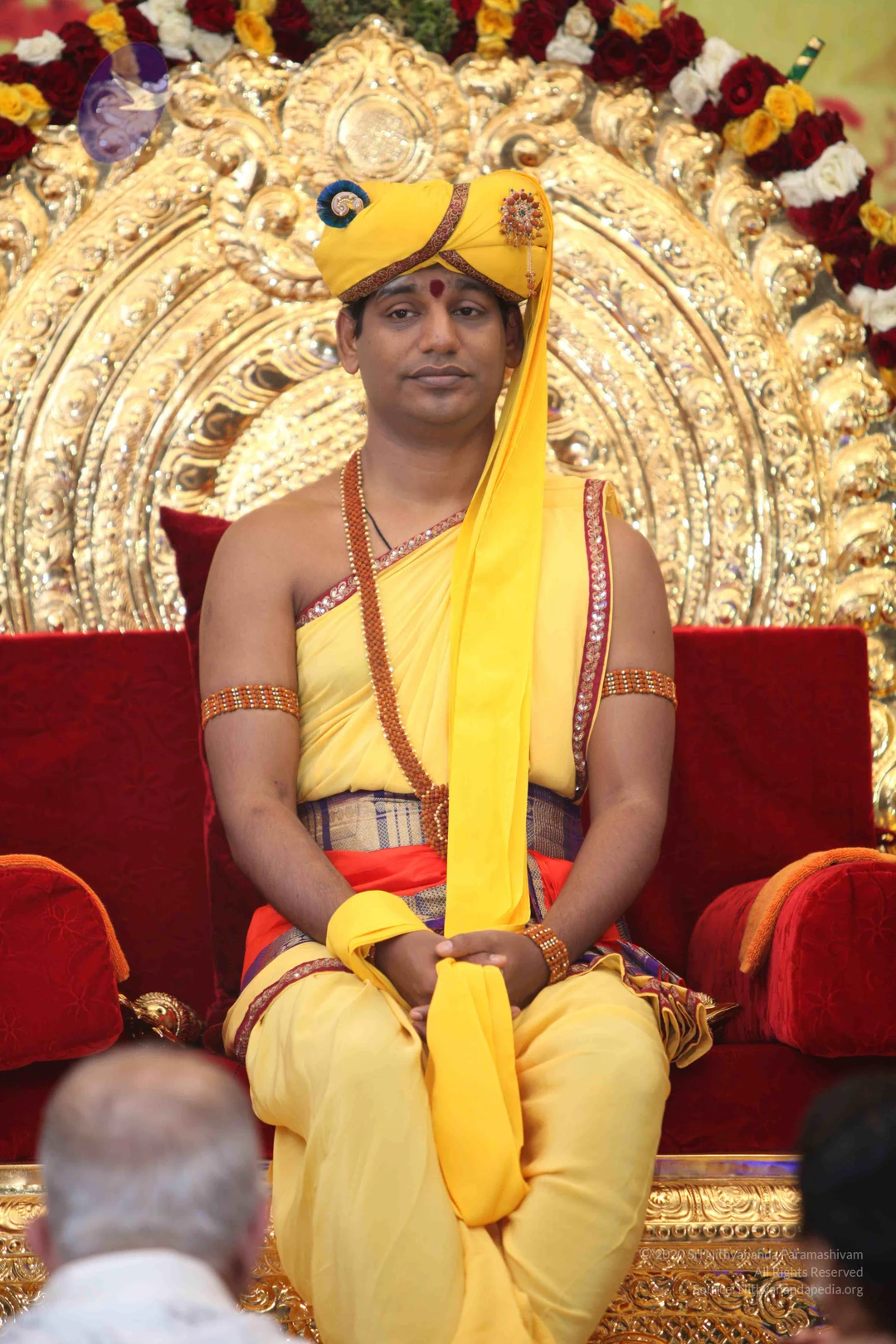
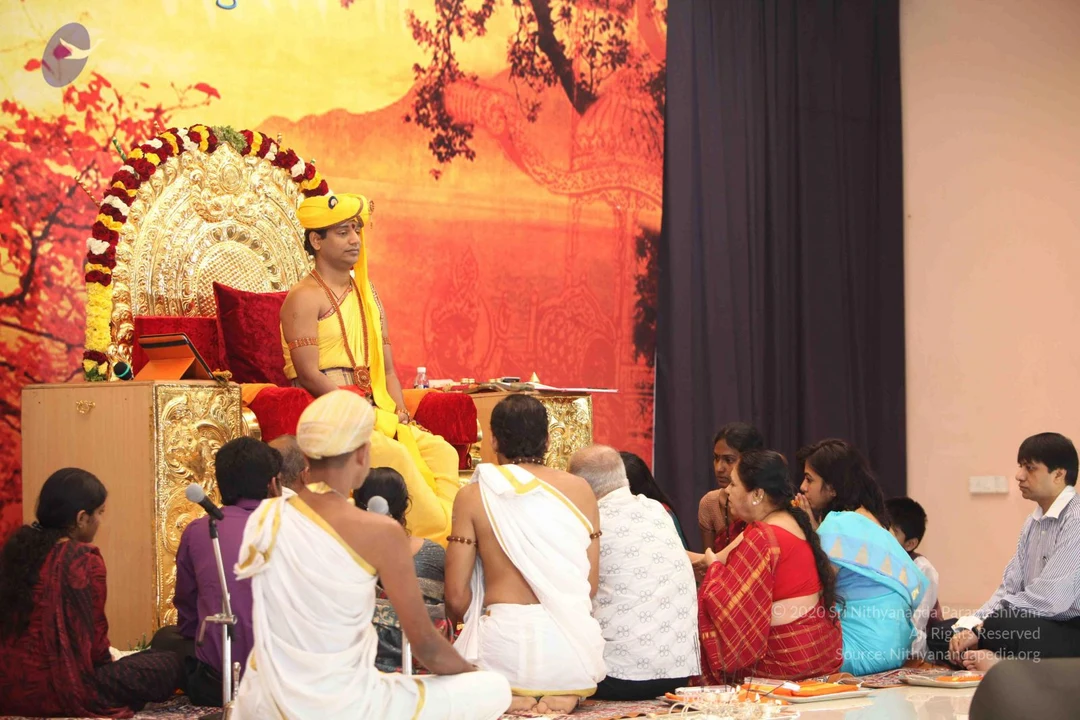
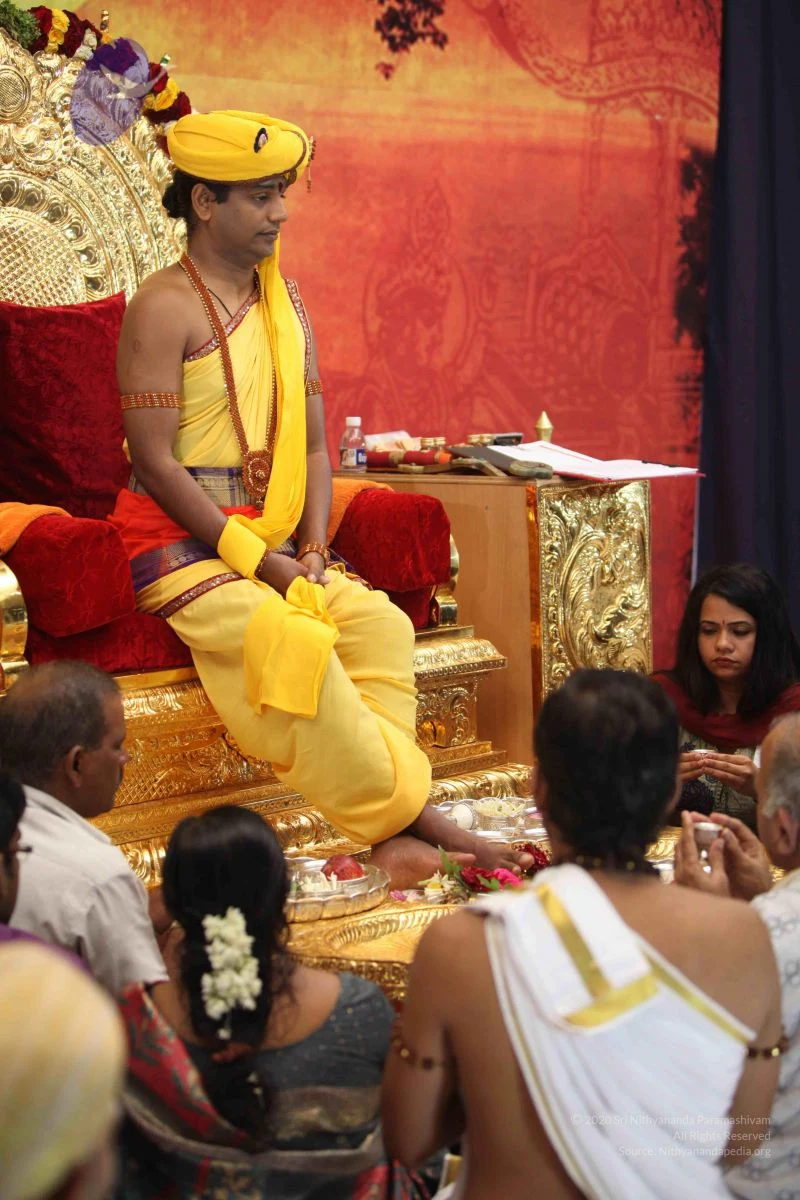
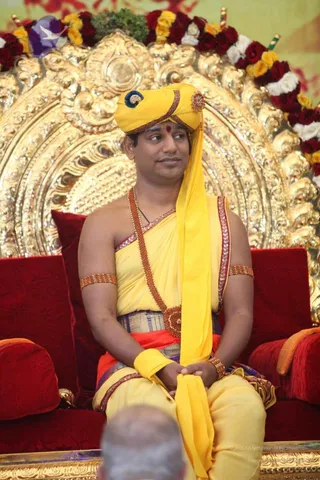
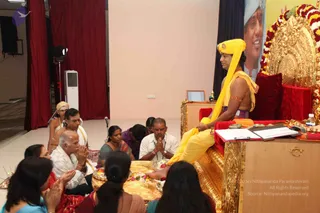
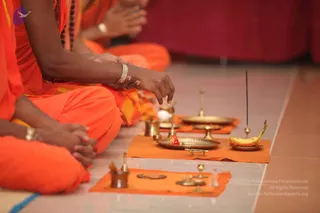
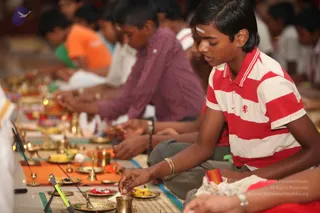
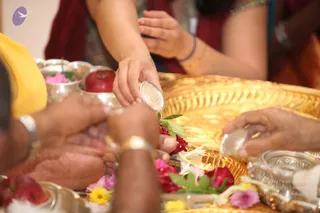
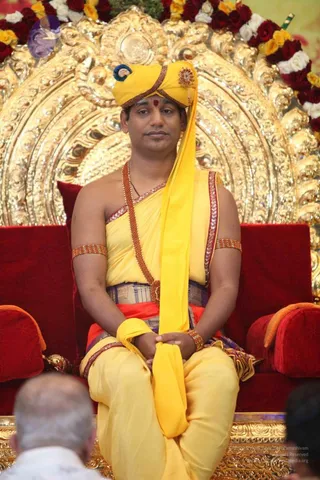
A seated man in yellow ceremonial attire sits on an ornate gold throne with red velvet cushions, decorated with red, yellow and white rose garlands along the top. He wears a yellow turban with a peacock-feather ornament and a red bindi, a yellow shawl draped over one shoulder and down his front, a rudraksha mala across his chest, rudraksha armbands, and a red and purple patterned waistband. A bald figure in the foreground partially obscures the bottom of the frame. The turban, shawl and throne suggest a formal darshan or satsang setting. a person is described by appearance cues only: long attire, ornate ceremonial dress and rudraksha adornments.A seated figure in a yellow turban, yellow garment and gold-toned waist cloth sits on an ornate gold throne with red velvet cushions, extending one bare foot toward a gold tray. Behind the throne is a framed portrait of a smiling man in a white turban, with a garland of red and yellow marigolds draped on the throne. Around the tray, devotees sit on the floor with hands folded in namaskar, including a man in white and women in saris, and offerings with flowers lie nearby. Red curtains, a pedestal fan and a wooden table with papers complete the stage-like setting.A photograph of a padapuja-style ritual in a hall with red curtains and a stage. A man standing on the right wears a yellow turban, yellow shawl and red-and-gold waist cloth, with bare upper body and gold armbands, and stands beside a red-cushioned throne-like seat. Seated devotees in front include a woman in red with bangles, a woman in blue saree with folded hands, and a bald older man in white with folded hands. A man in white dhoti with a rudraksha mala and a man in white with a white head cloth sit near a large golden thali holding fruit, flowers and small oil lamps. Framed portraits hang on the back wall, and orange-robed people sit at the far left.Close view of several people seated cross-legged on a tiled floor, dressed in saffron-orange robes, with bangles and bracelets on their wrists. Their hands are folded or reaching toward brass puja items arranged on orange cloth mats: small brass oil lamps, a brass plate, a brass bell, a ripe banana, and an upright incense stick in a holder. The scene suggests a puja or ritual offering. Red fabric is visible in the background. No face of a presiding figure is clearly shown.A row of seated devotees, mostly boys and young men, perform a puja at long tables with brass vessels, oil lamps and offering plates of bananas, fruit and flowers on orange and white cloths. In the foreground a boy in a red-and-white striped polo shirt and a white forehead mark sprinkles or places an offering, with brass bangles on his wrist. Others in orange, white and checked shirts sit beside him with hands joined near the plates. Brass kalasha-style vessels and small lamps sit along the table.Close photo of a ritual offering on a large polished gold tray. Hands pour water or milk from a small silver vessel over red roses, marigolds, and green leaves. Several silver bowls hold red apples, pink flowers, and offerings. Hands wearing gold and silver bangles reach in from both sides; one person wears a red sari and another a yellow garment. The scene suggests puja or abhishekam with flower and fruit offerings, though no deity or a person is clearly visible.
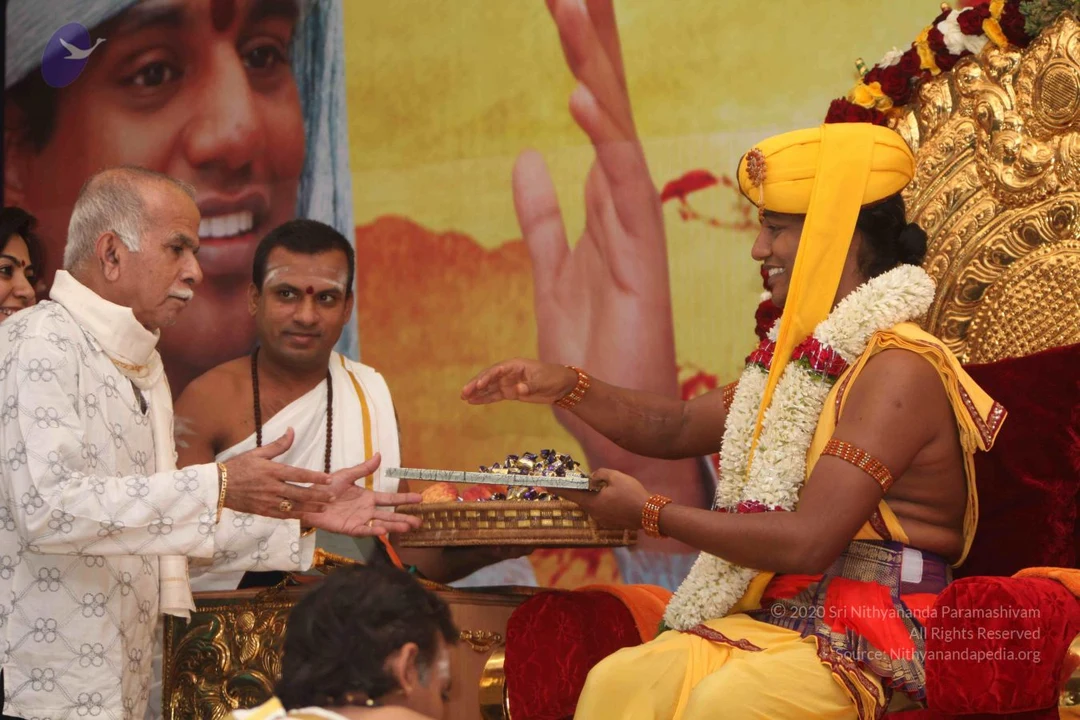
BHAGAVAD-GITA-SATSANG
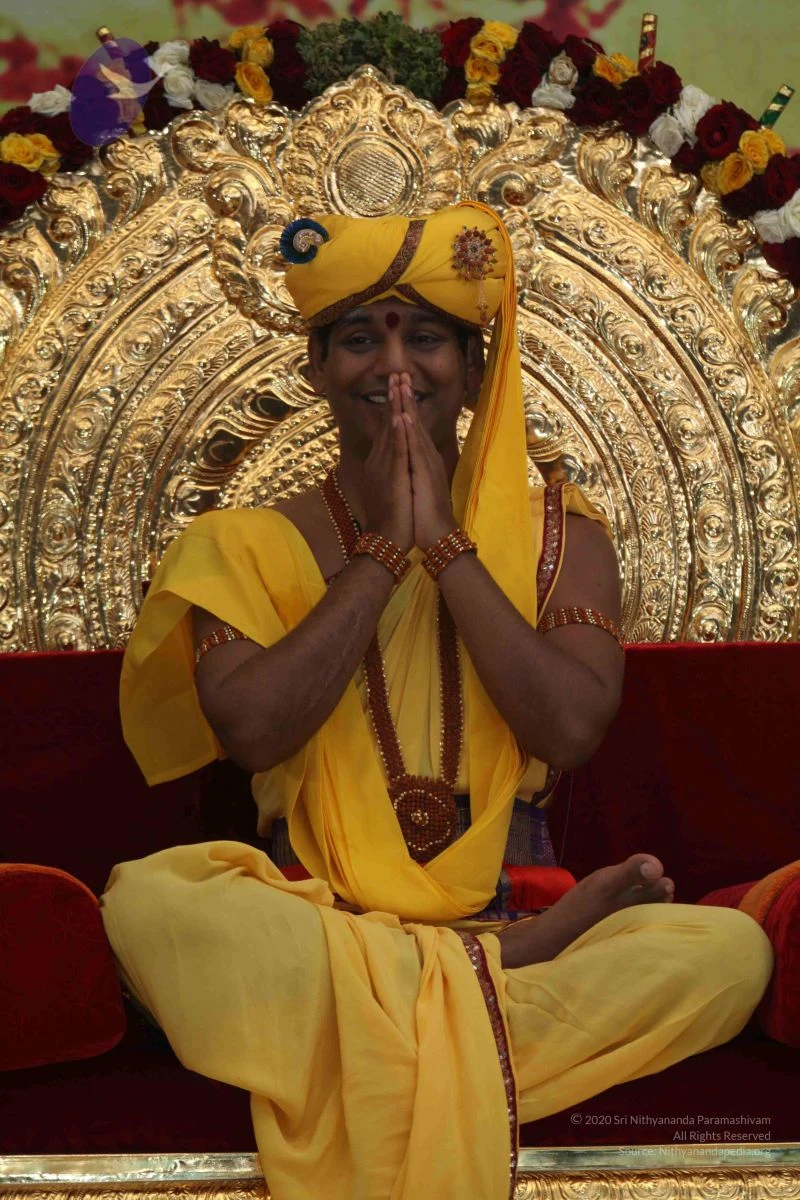
70 photosSource gallery
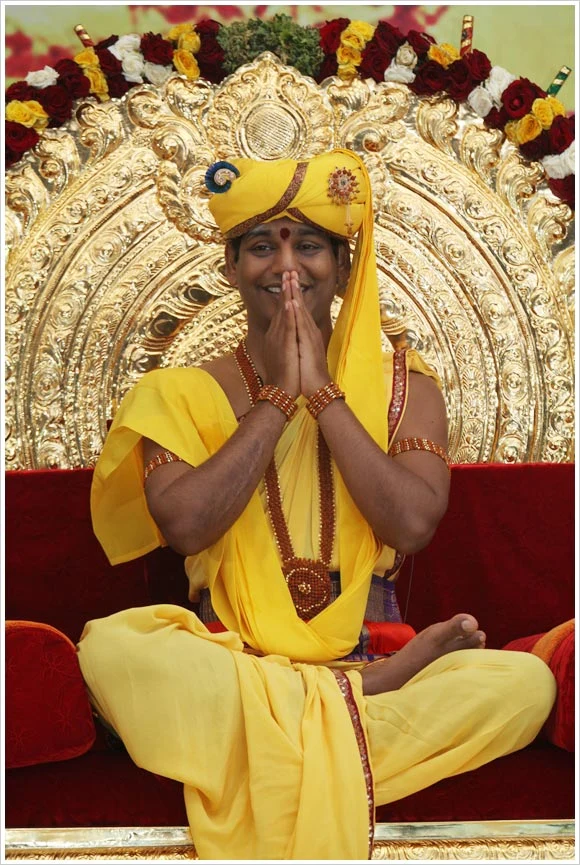
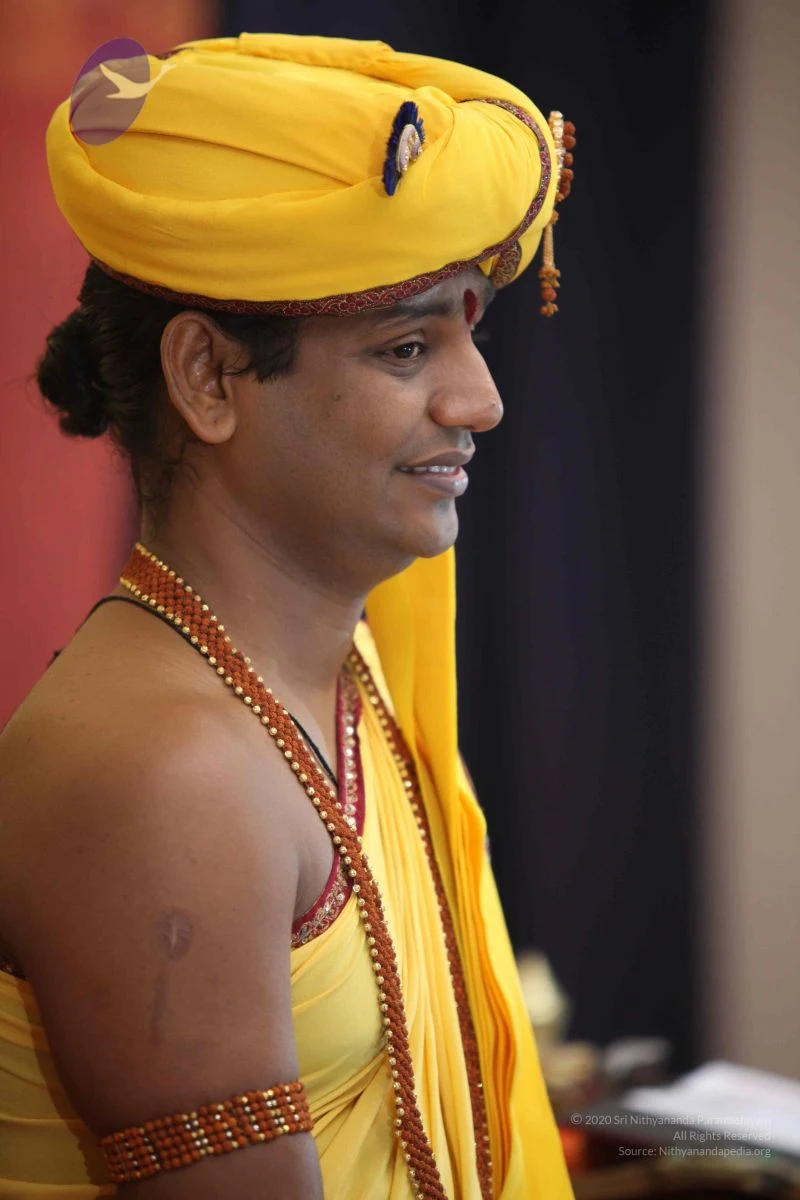
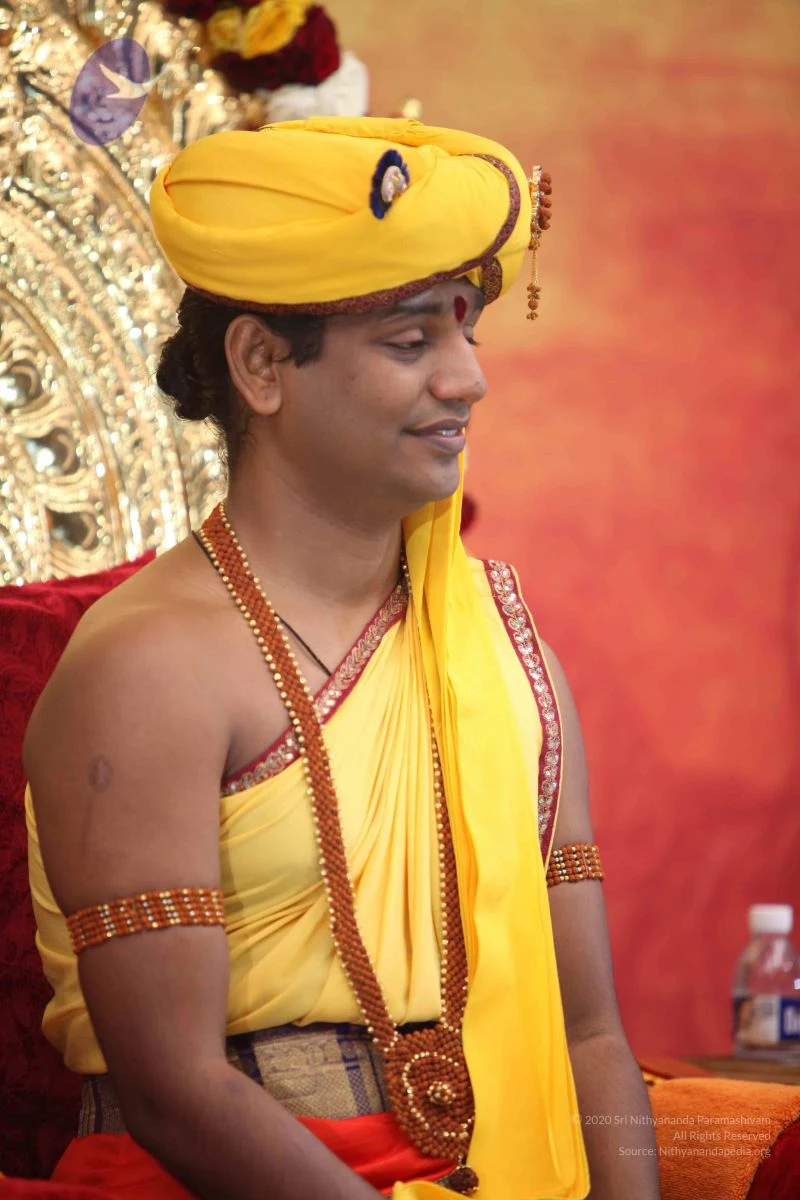
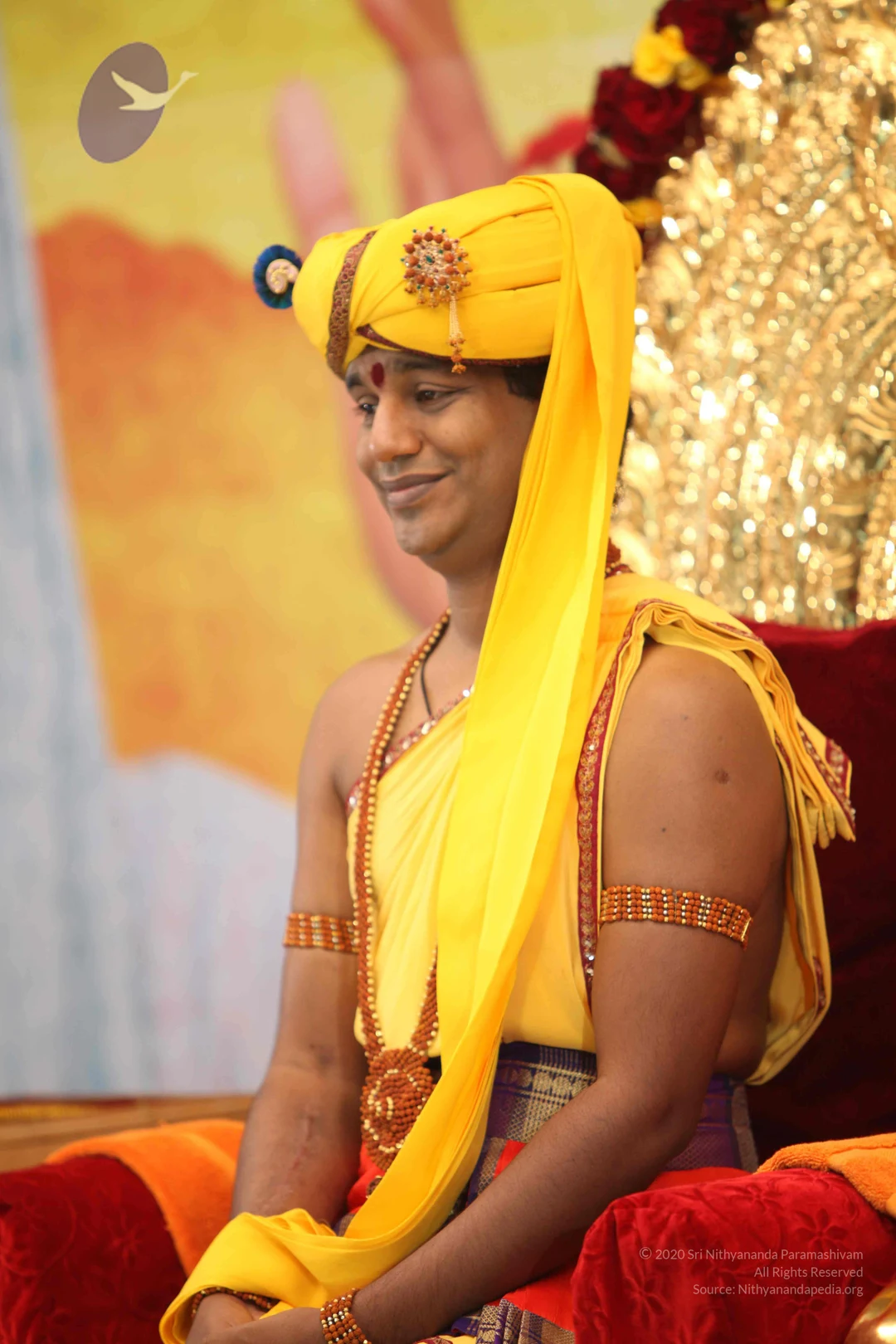
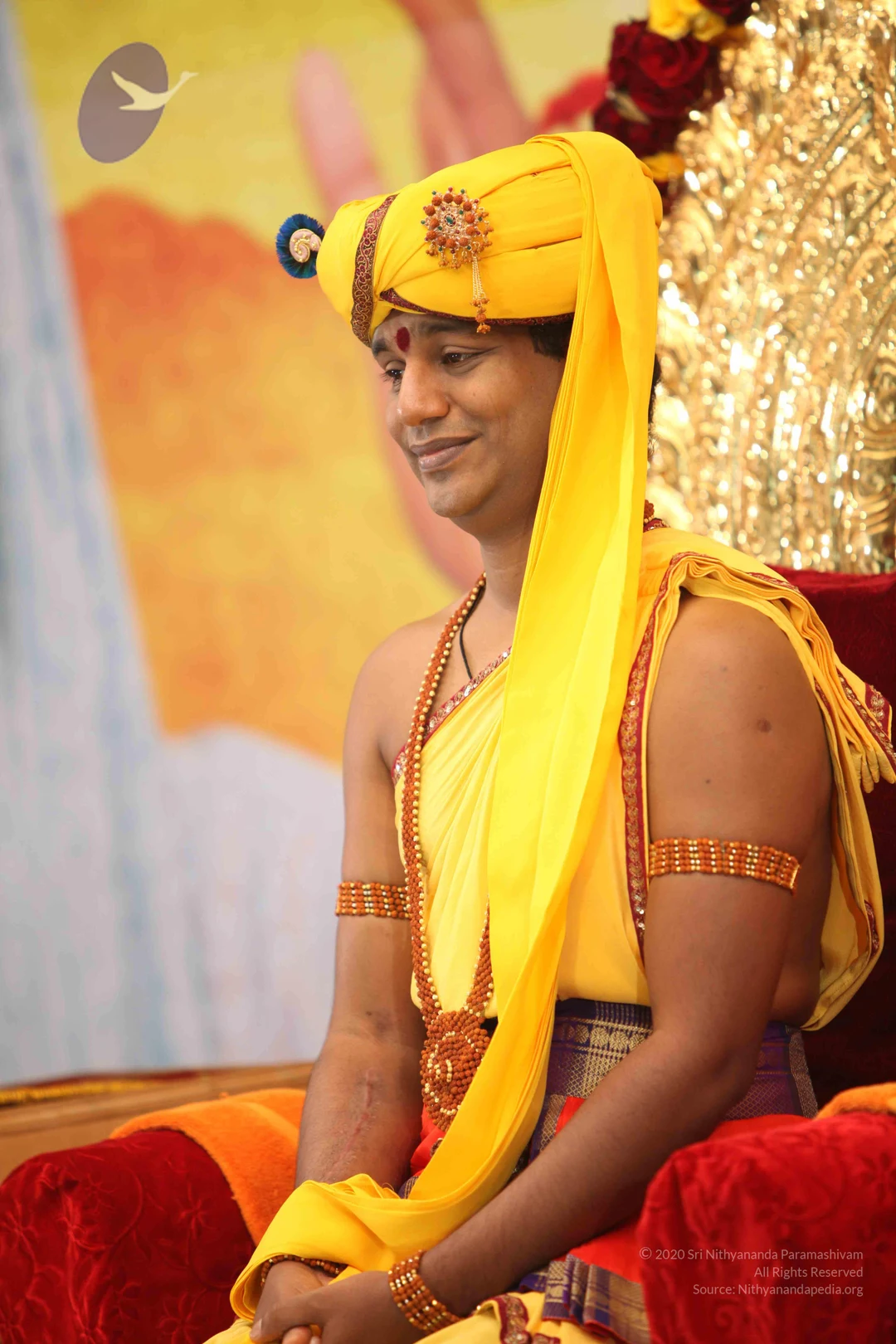
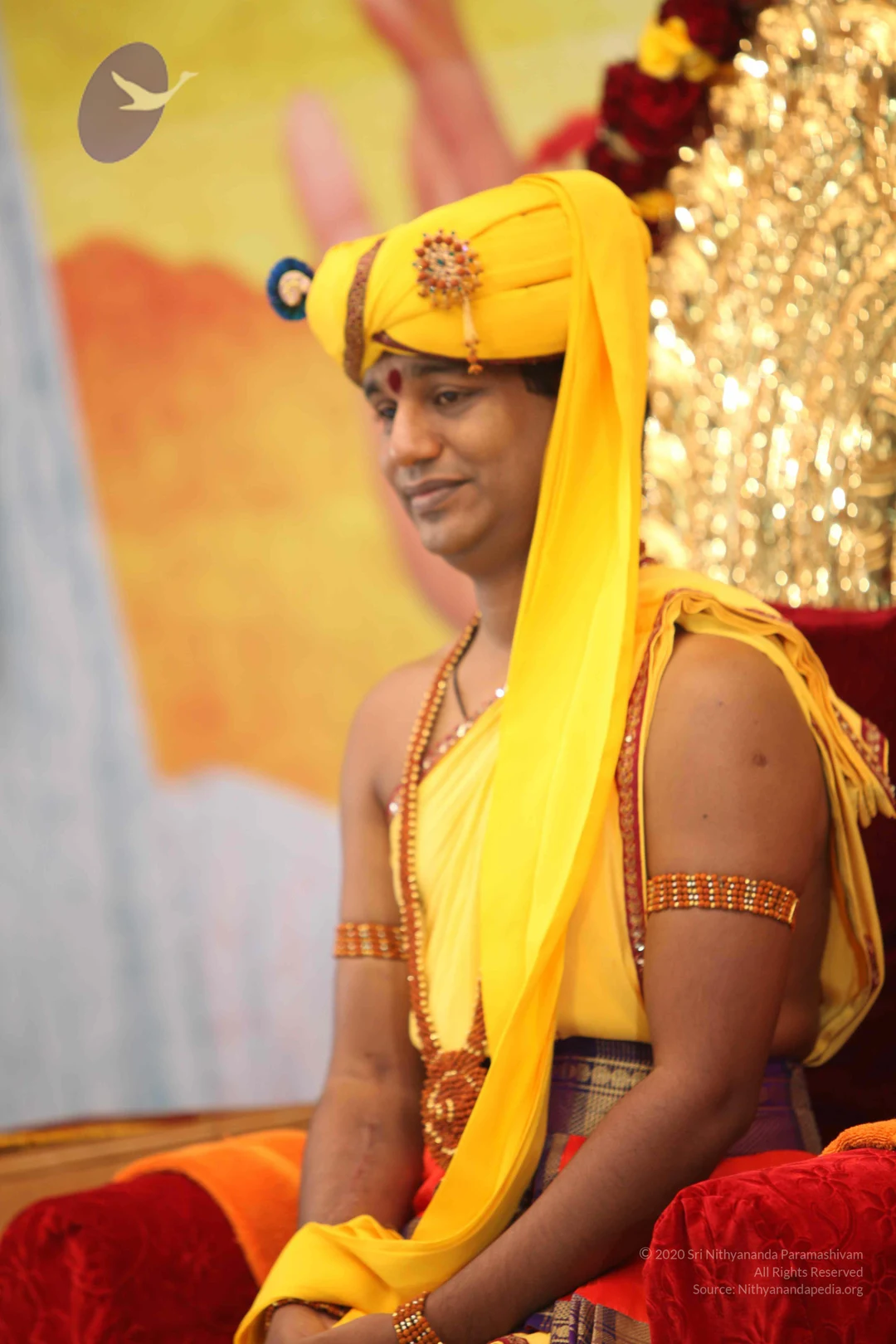
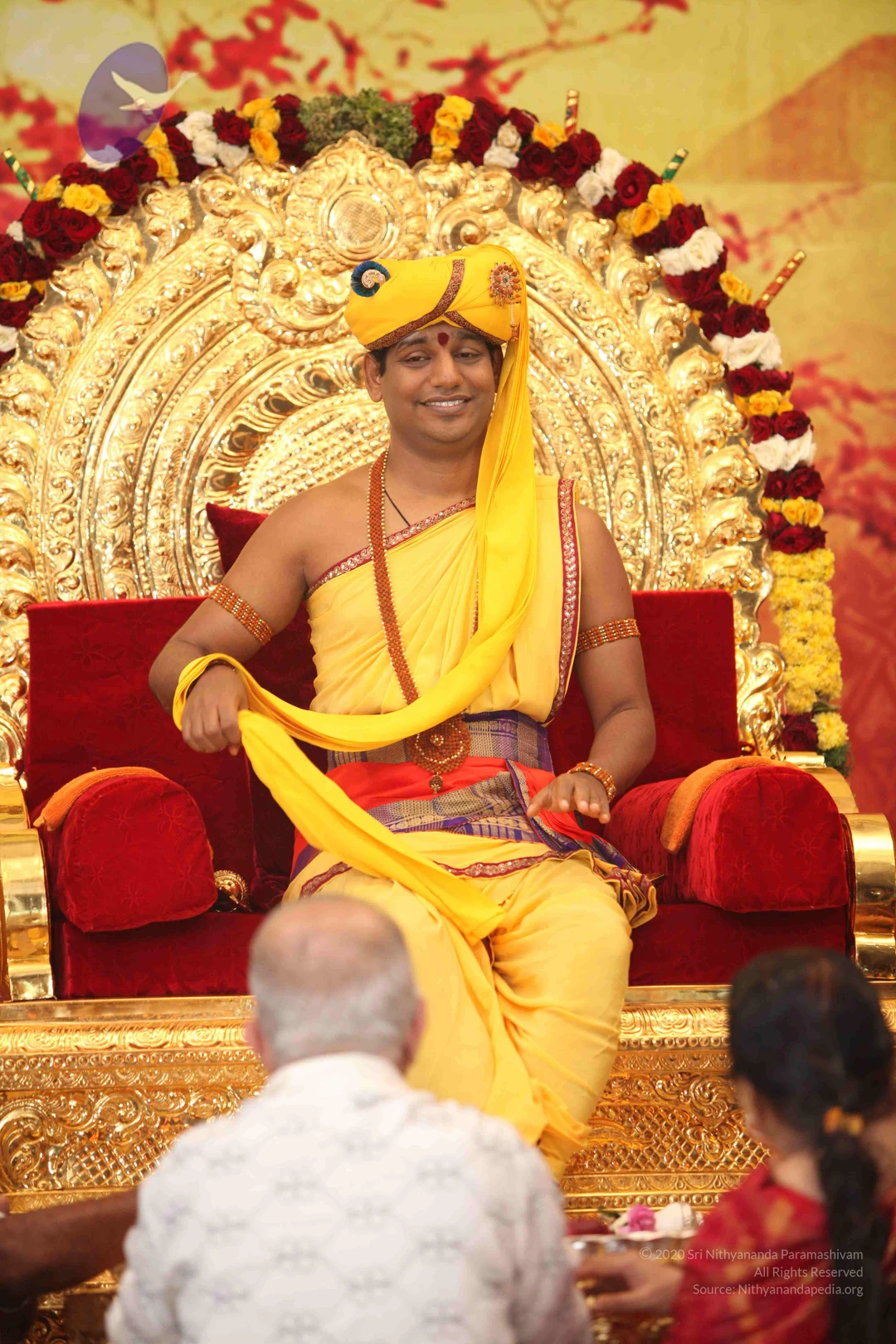
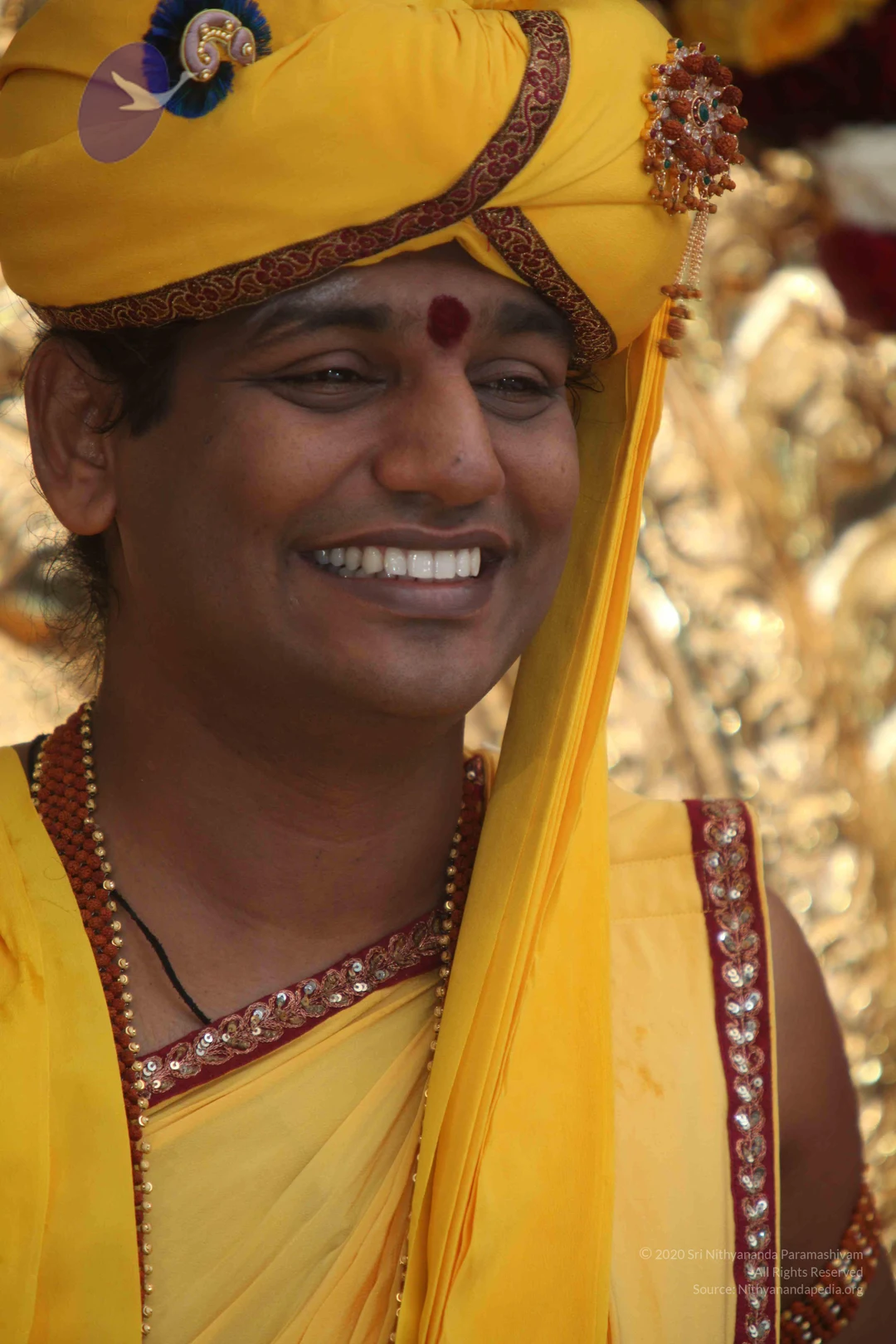
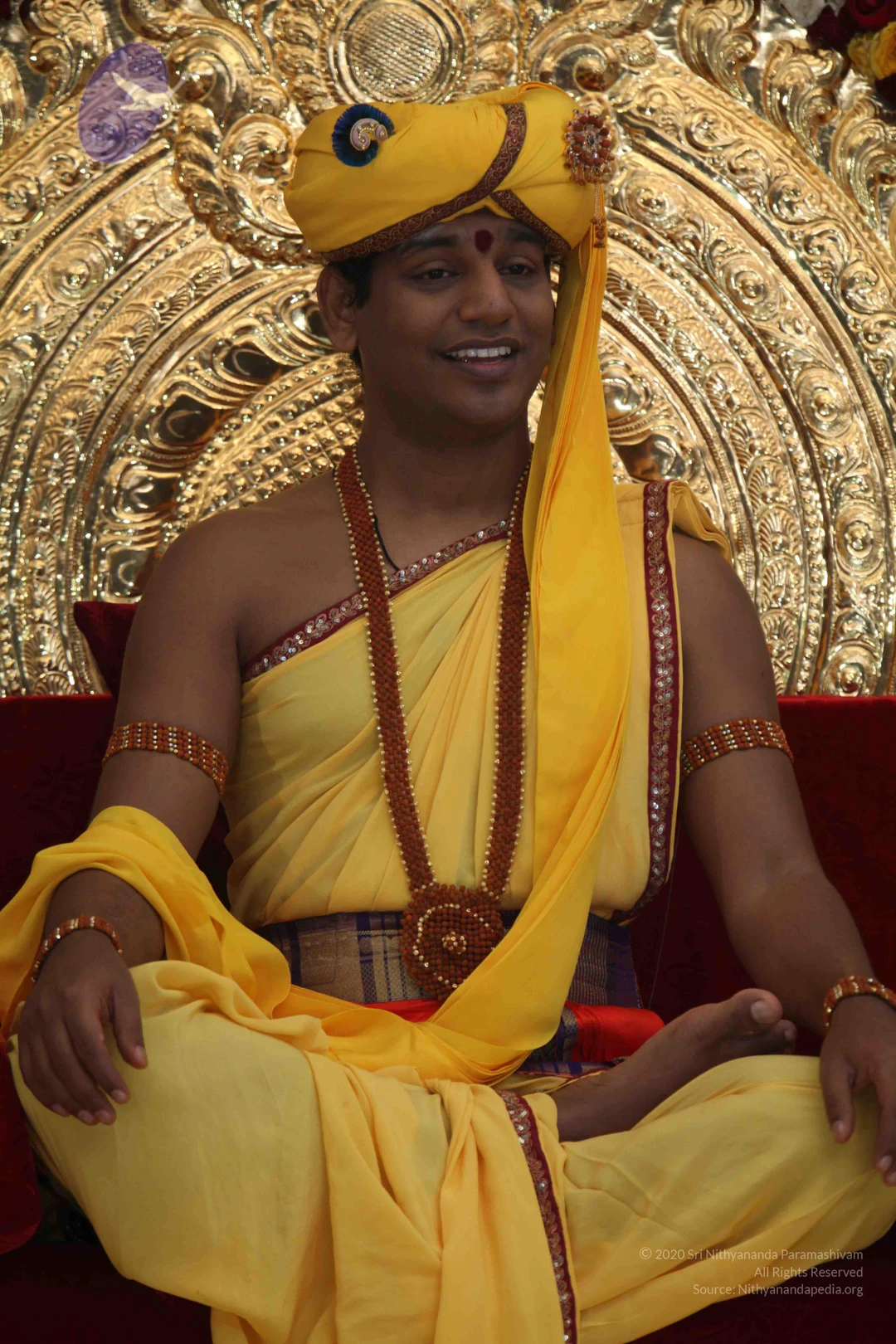
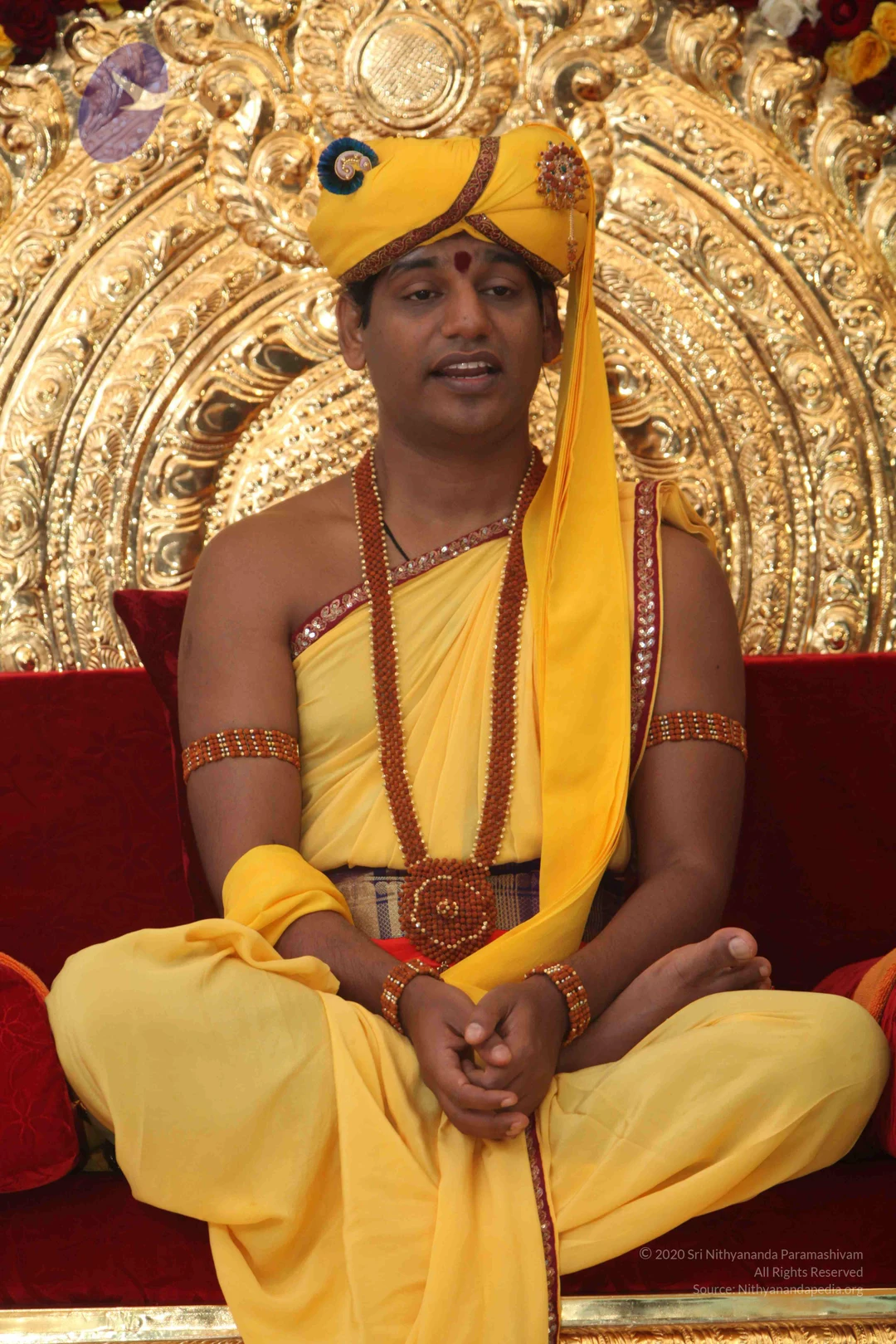
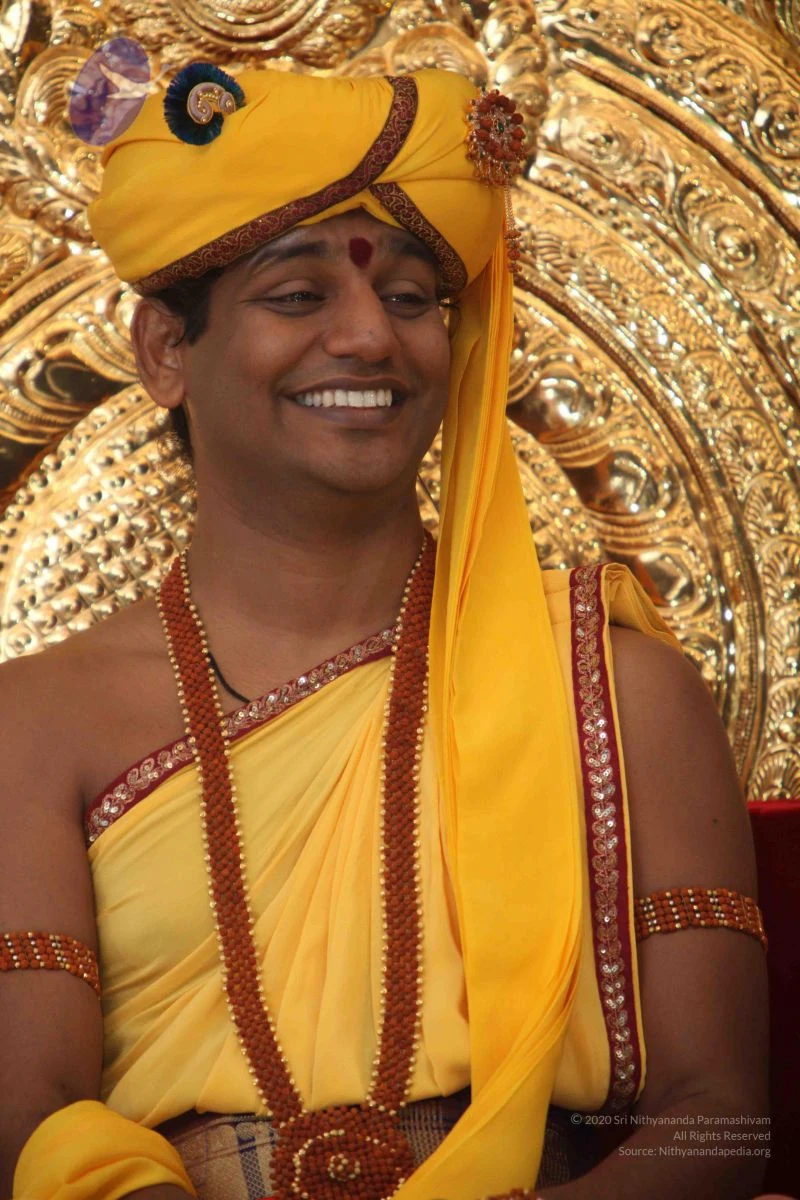
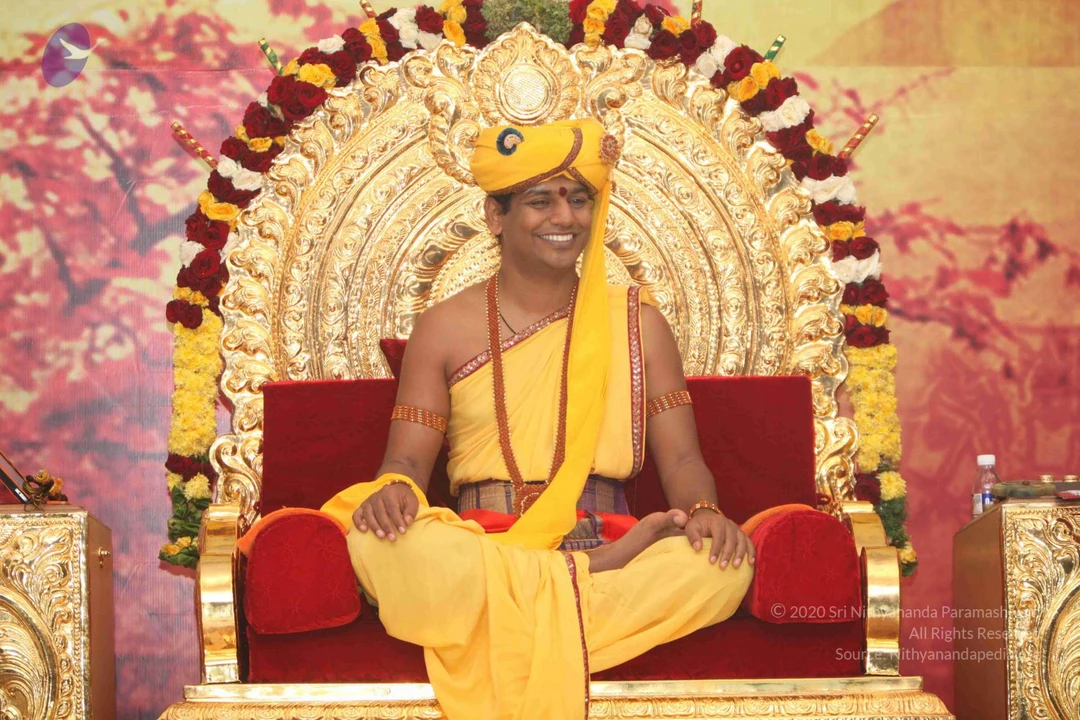
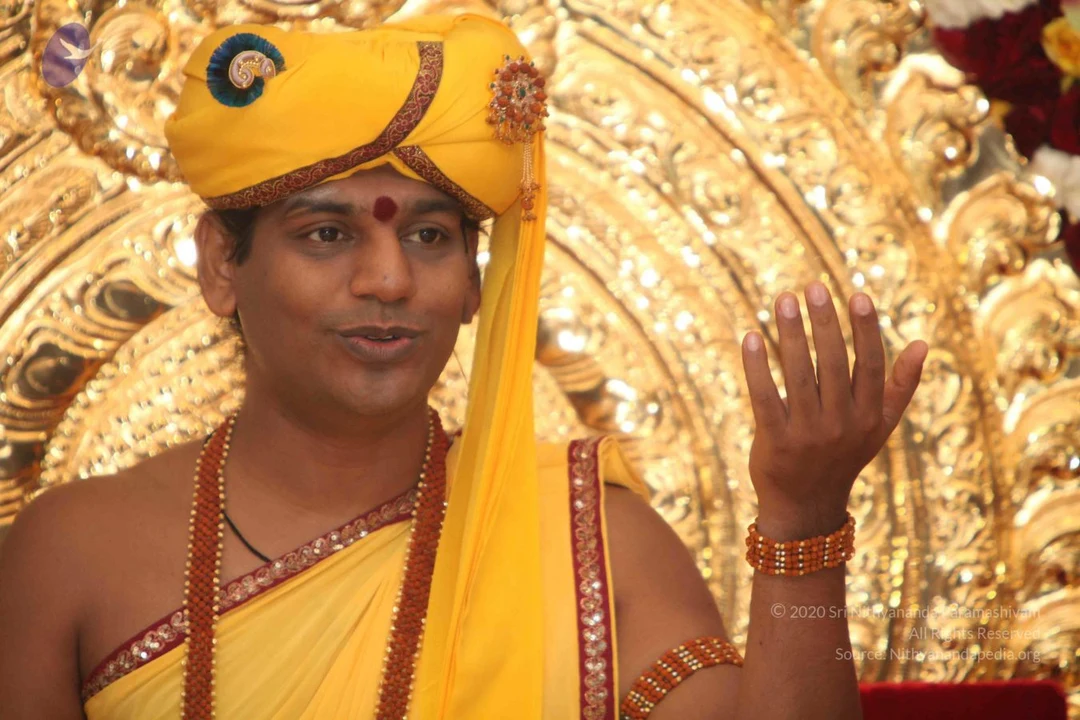
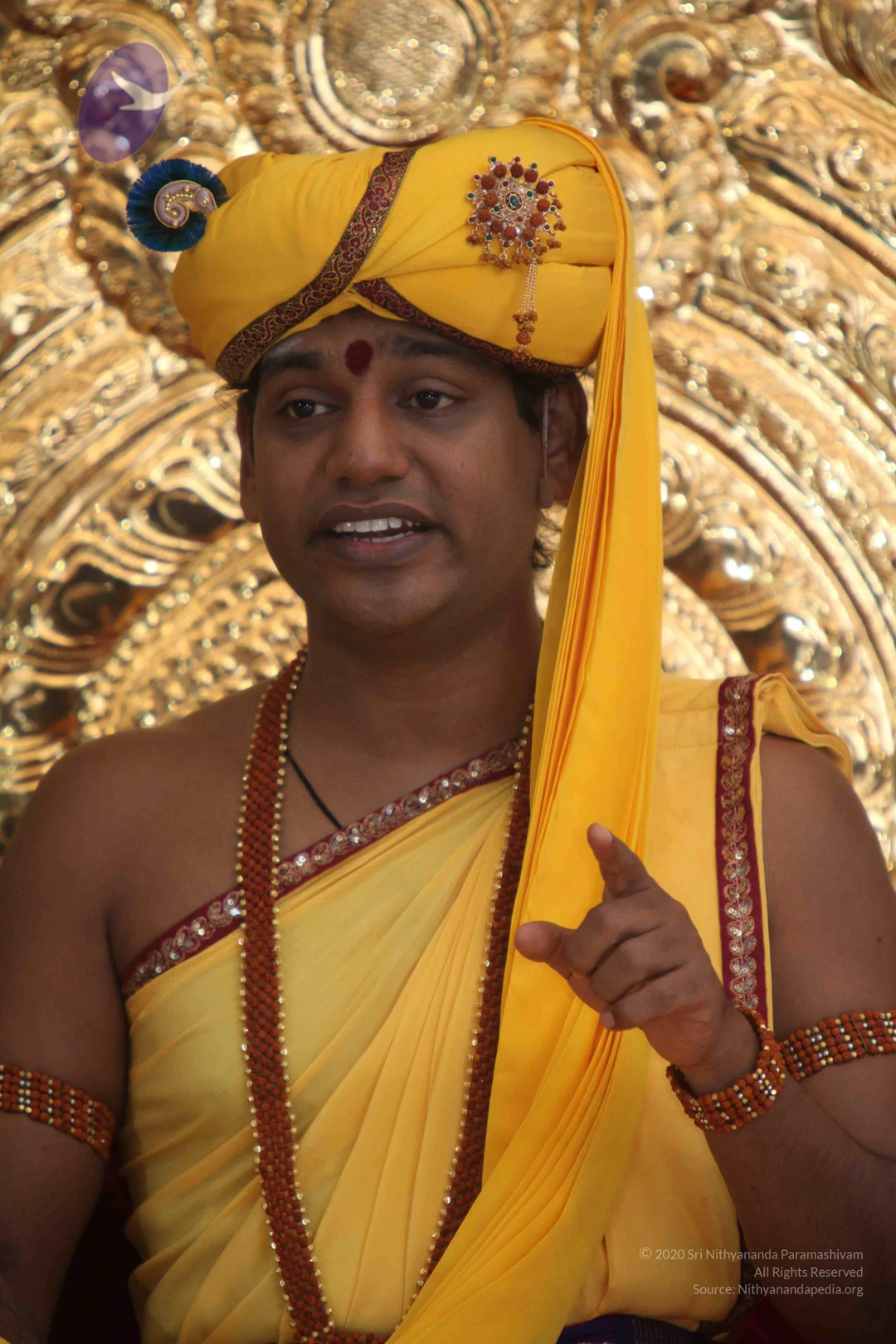
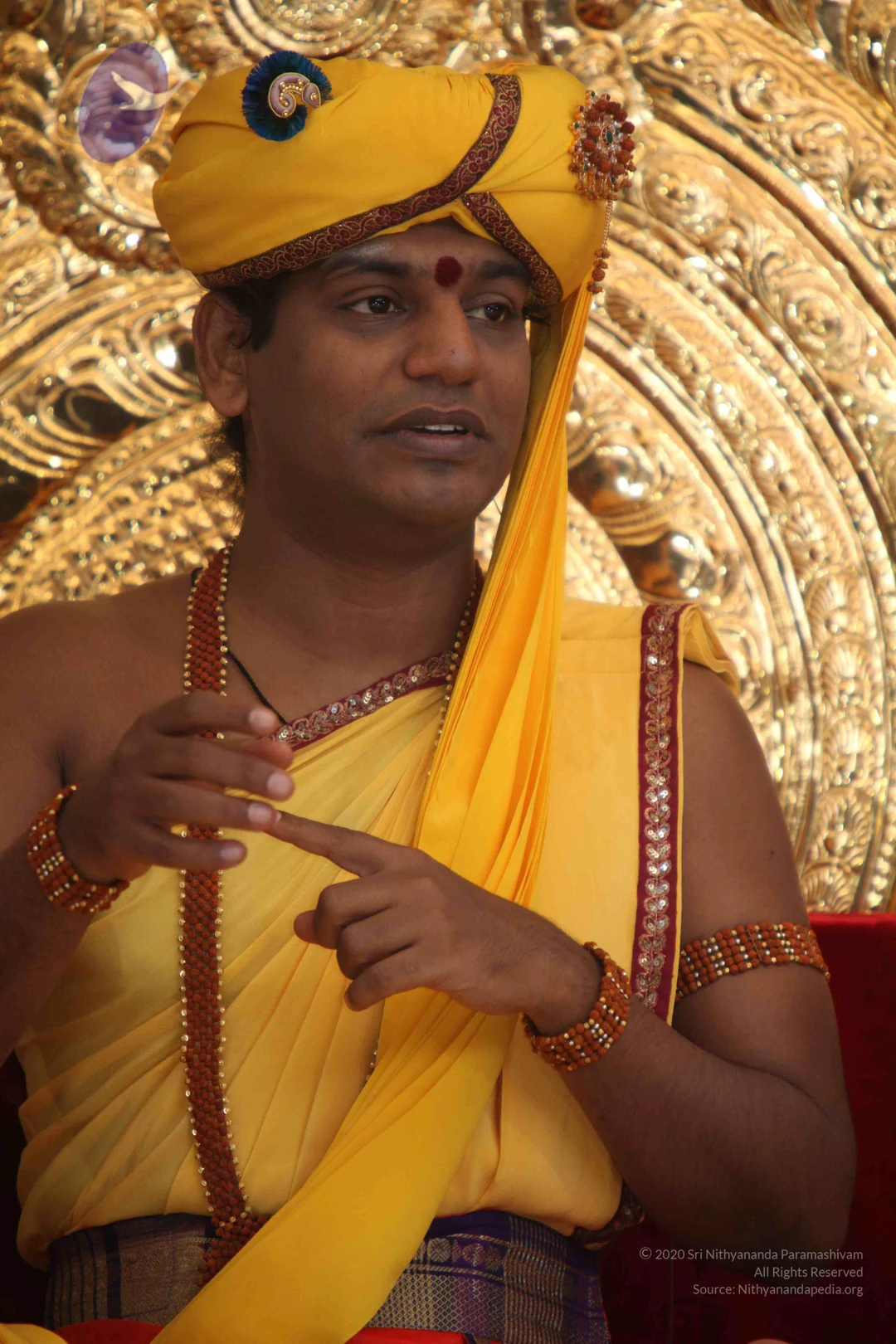
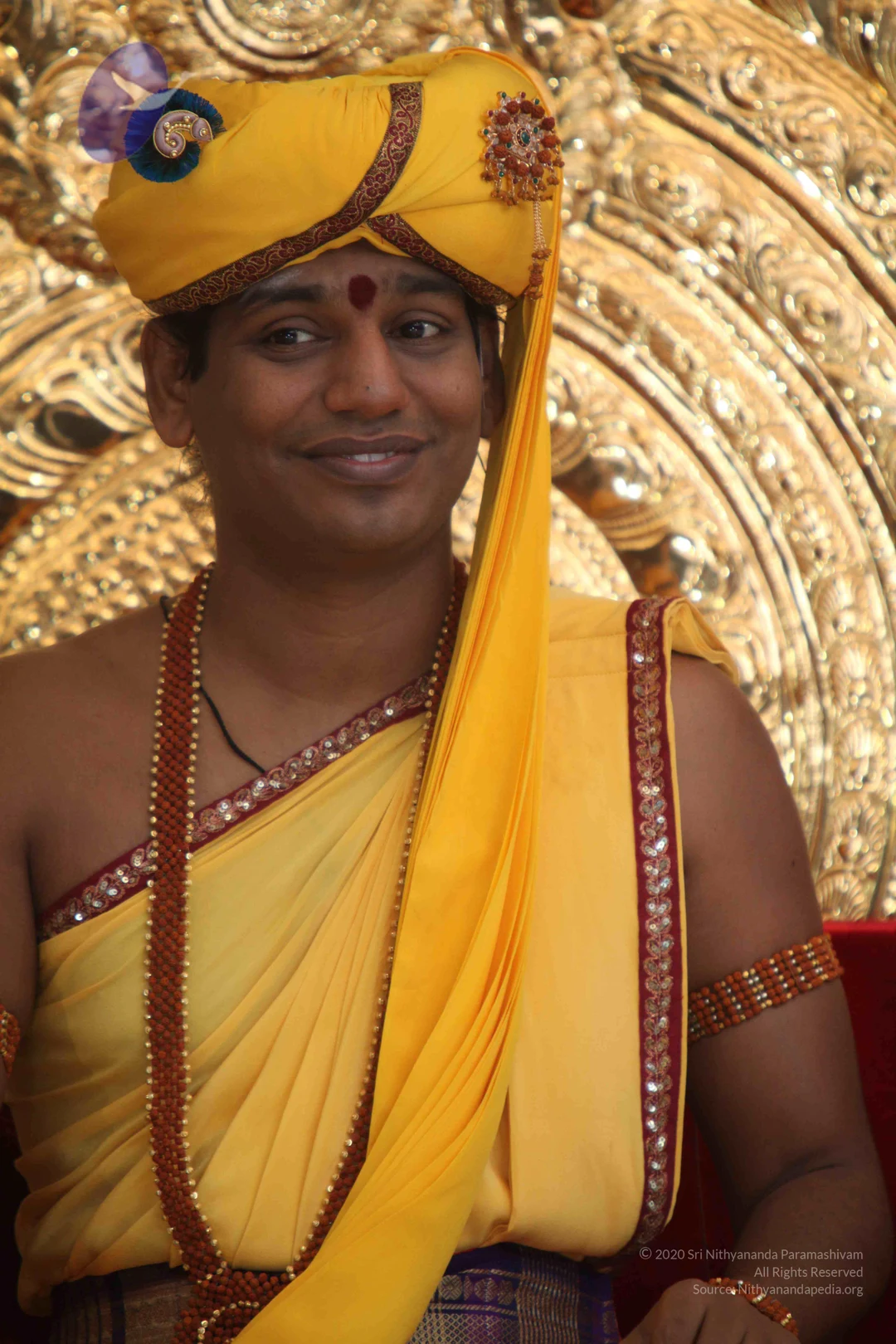
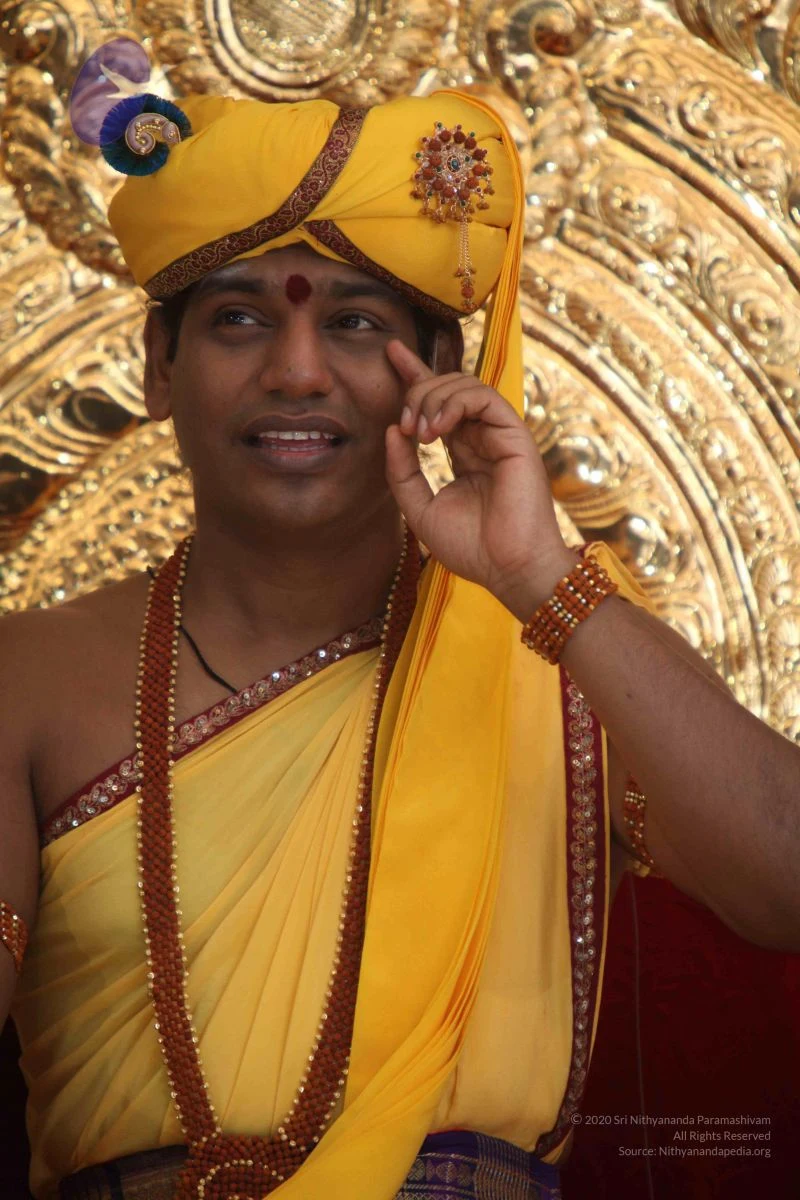
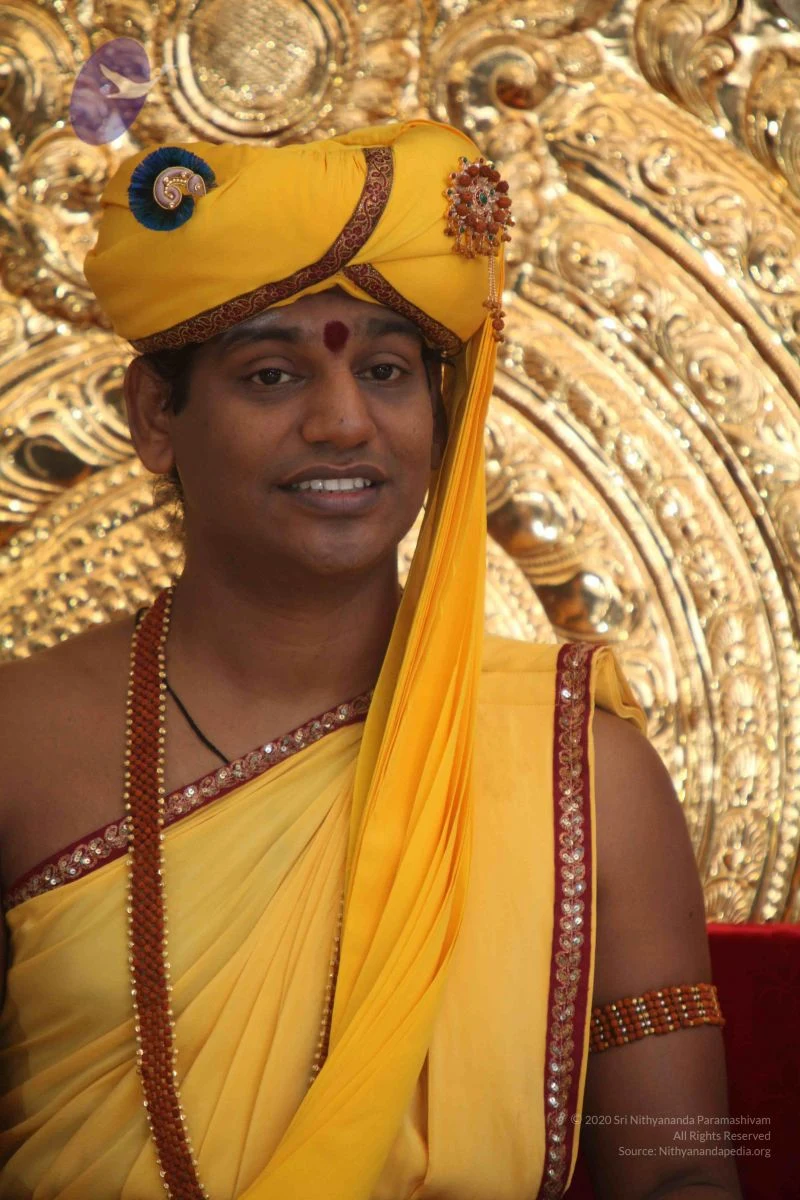
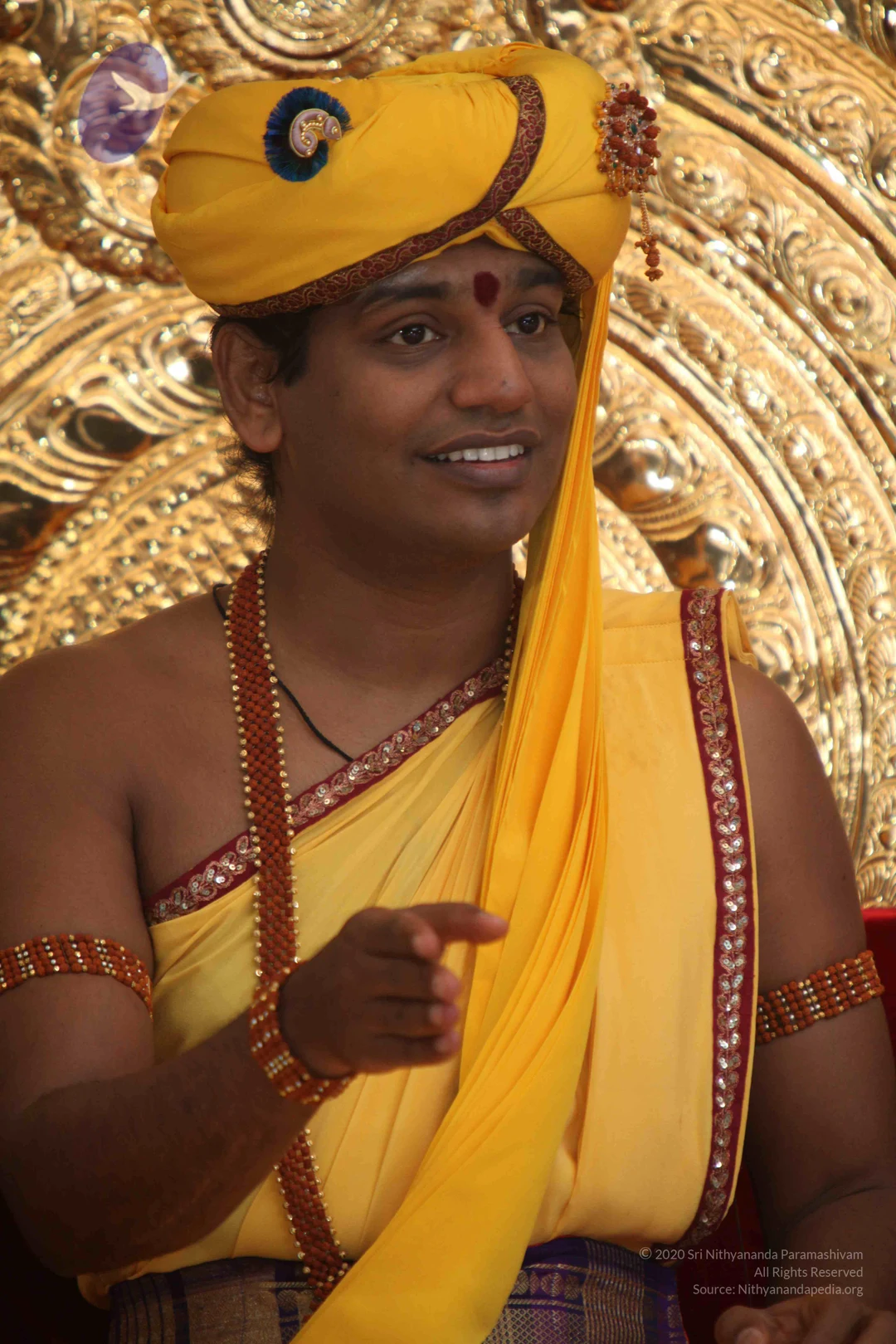
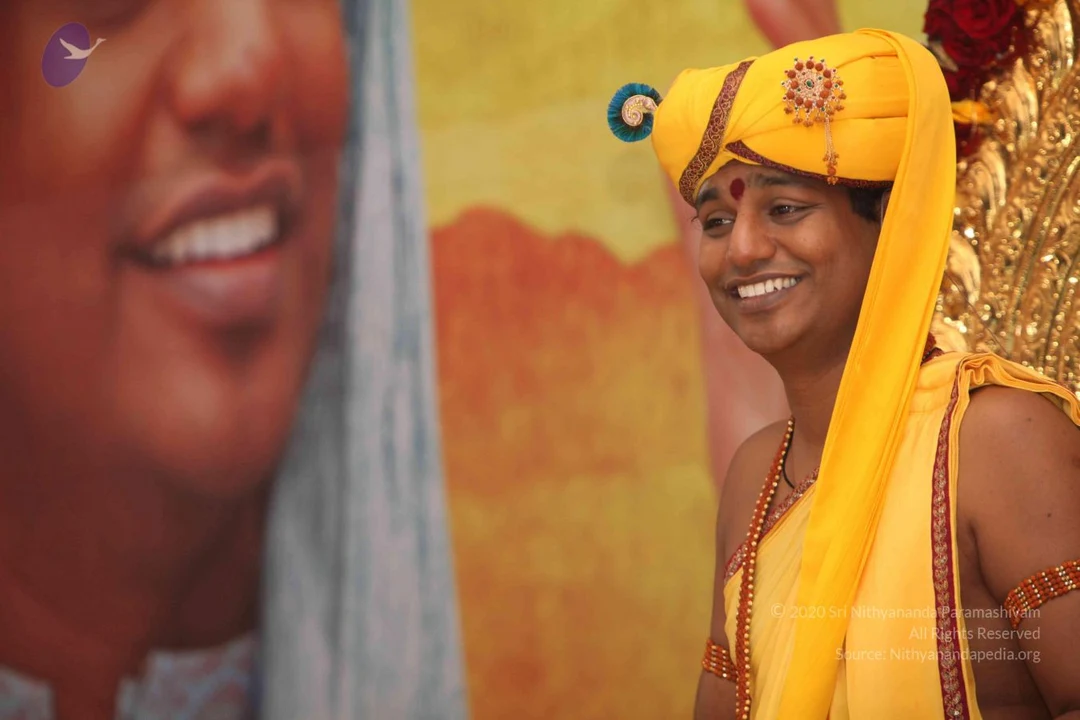
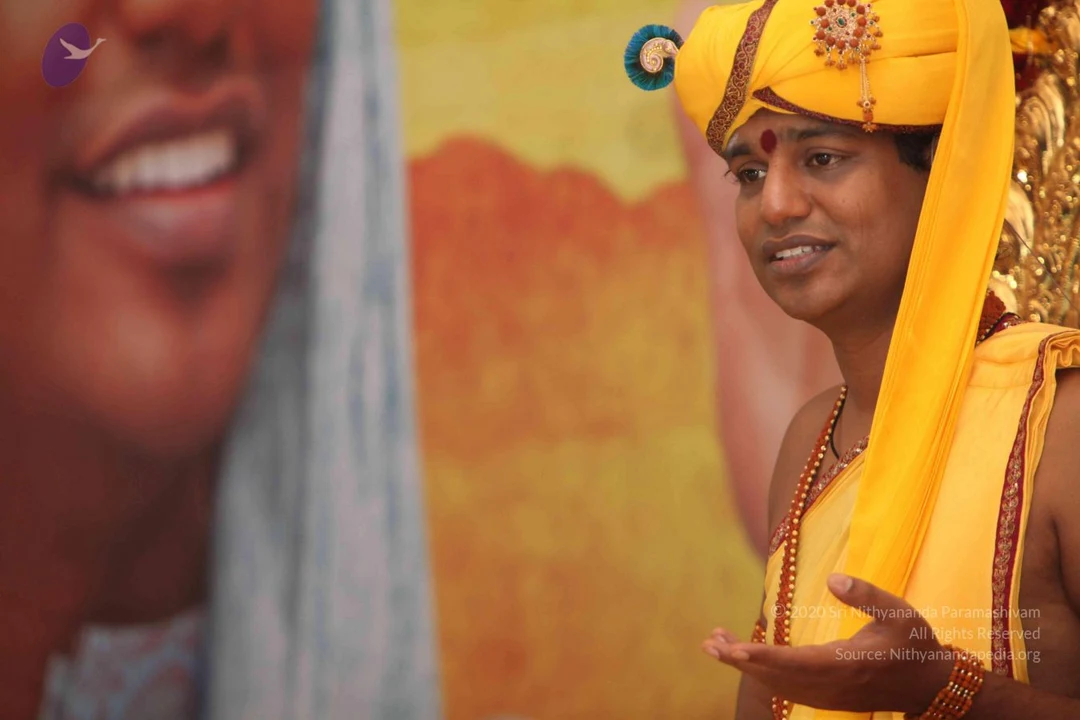
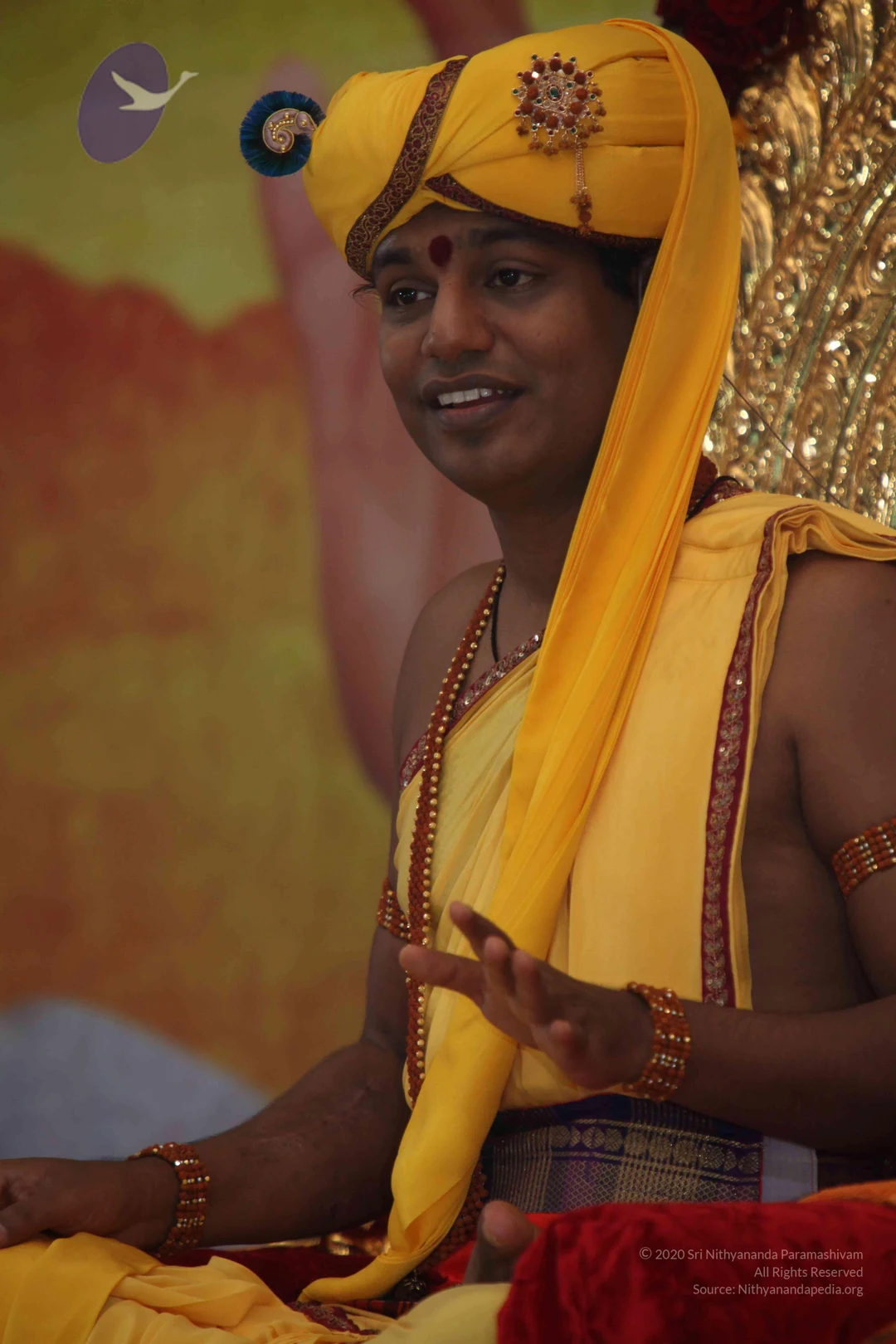
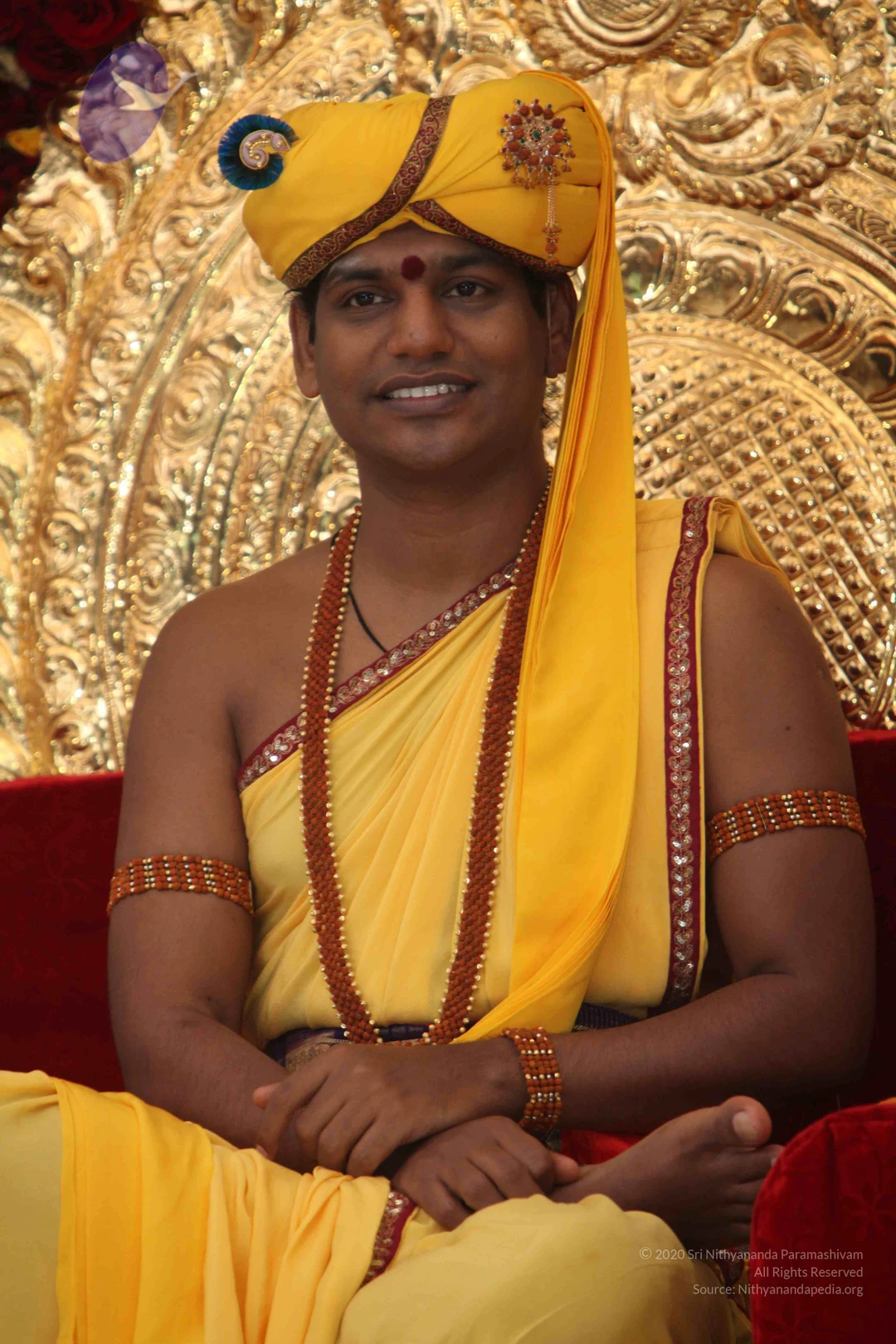
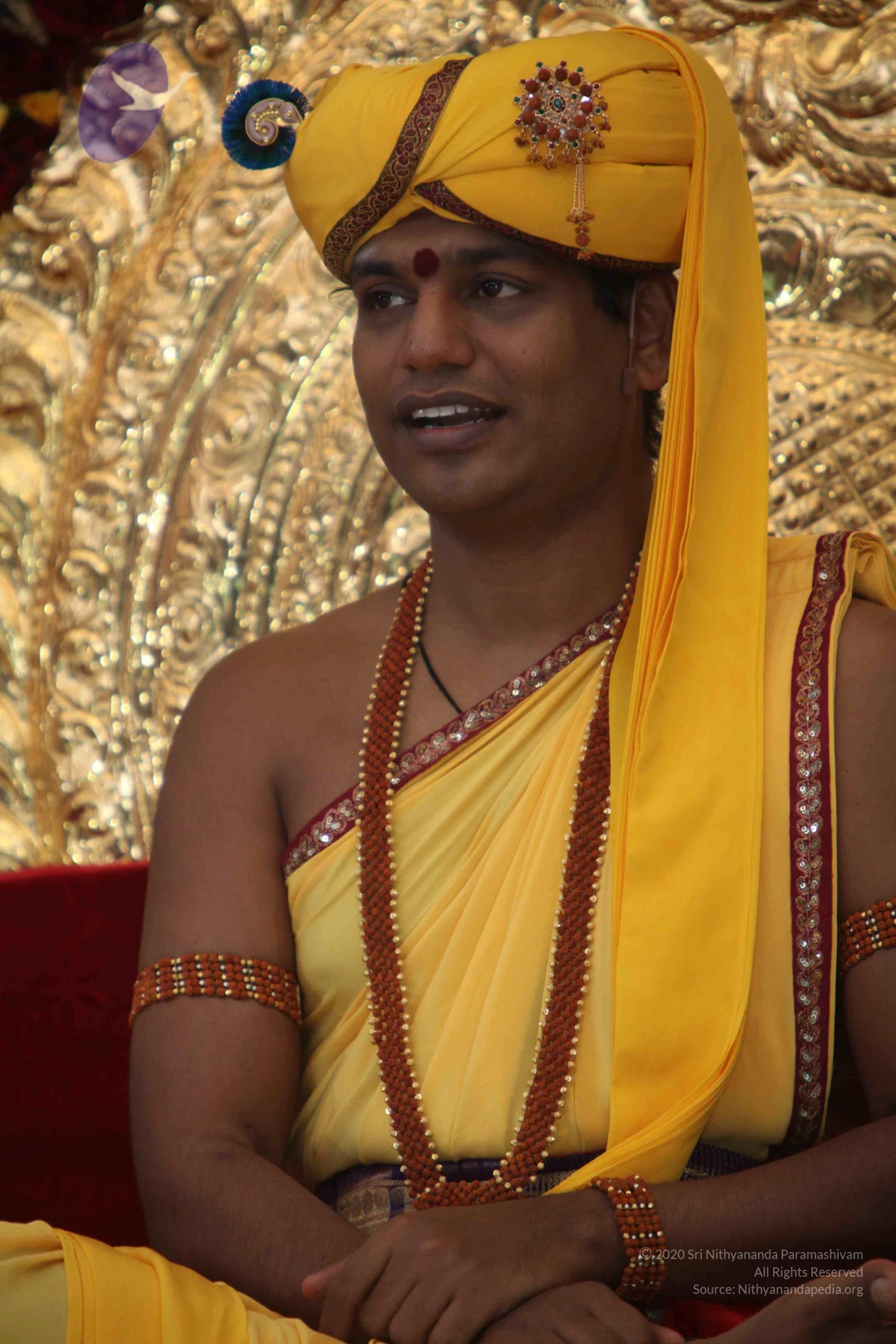
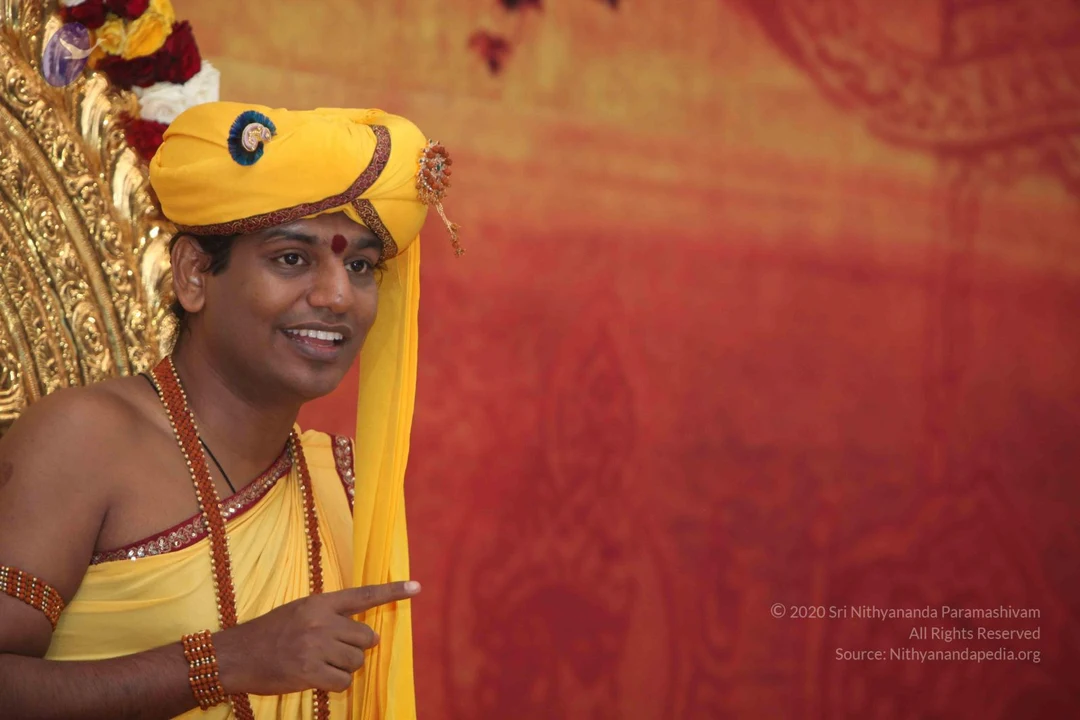
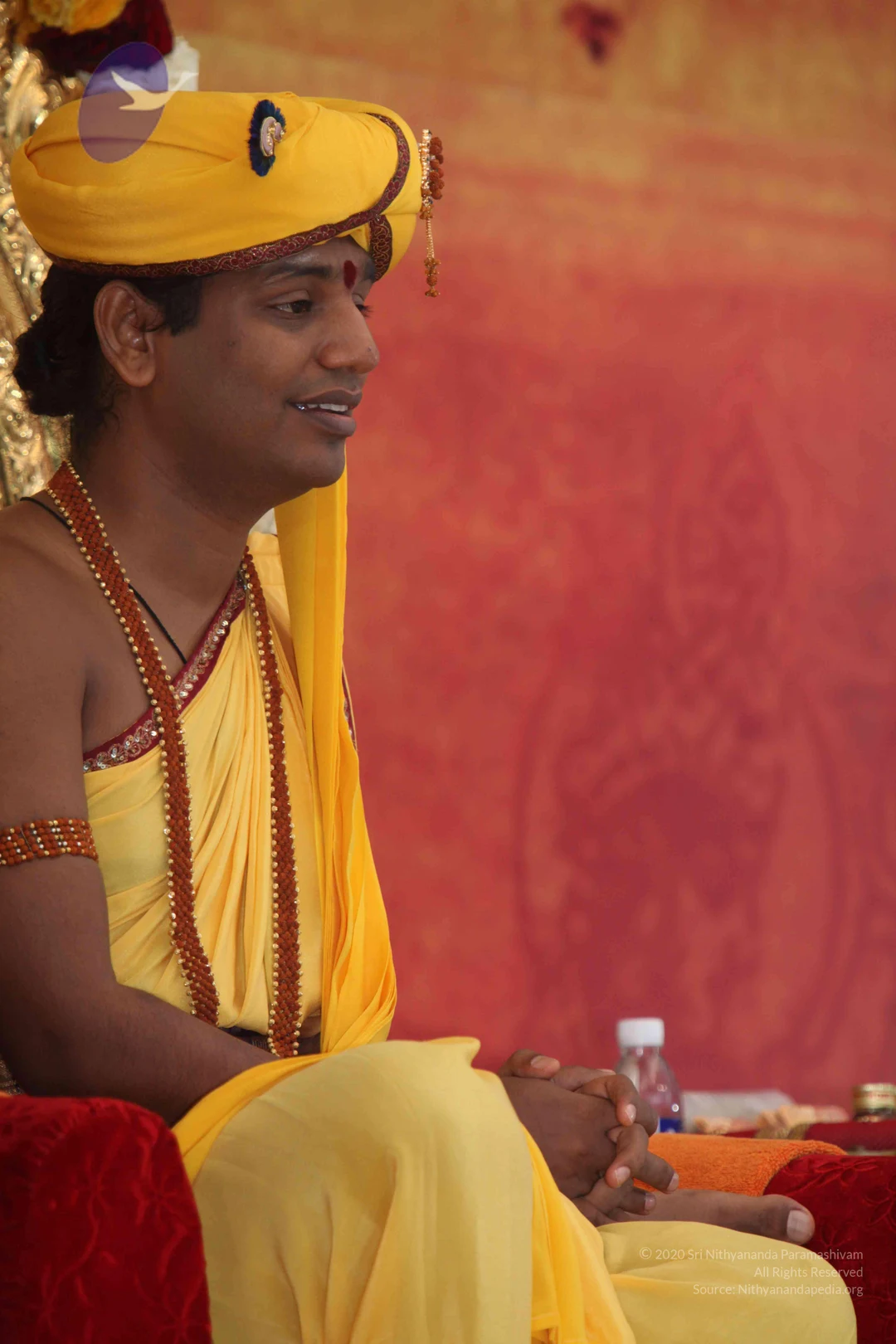
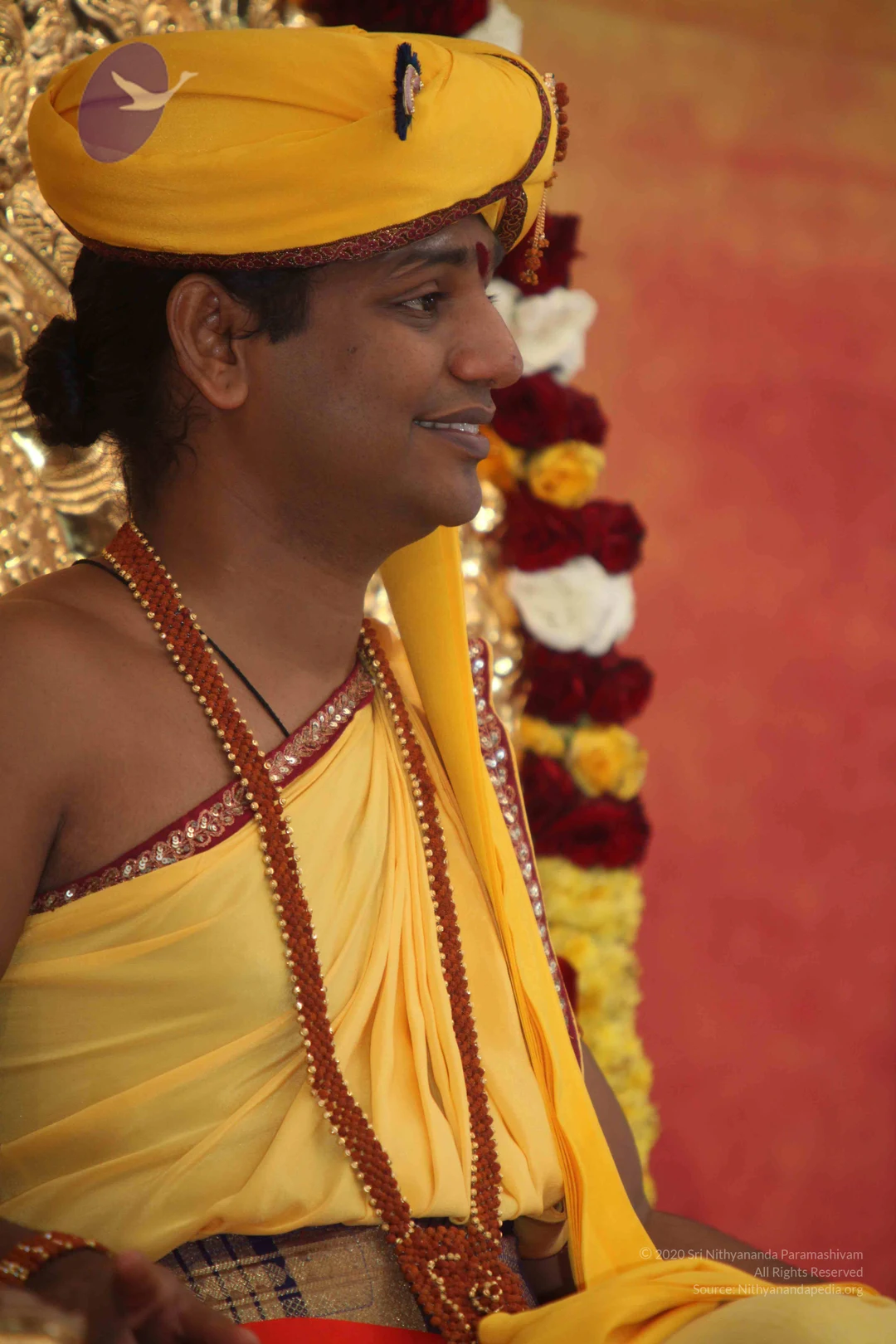
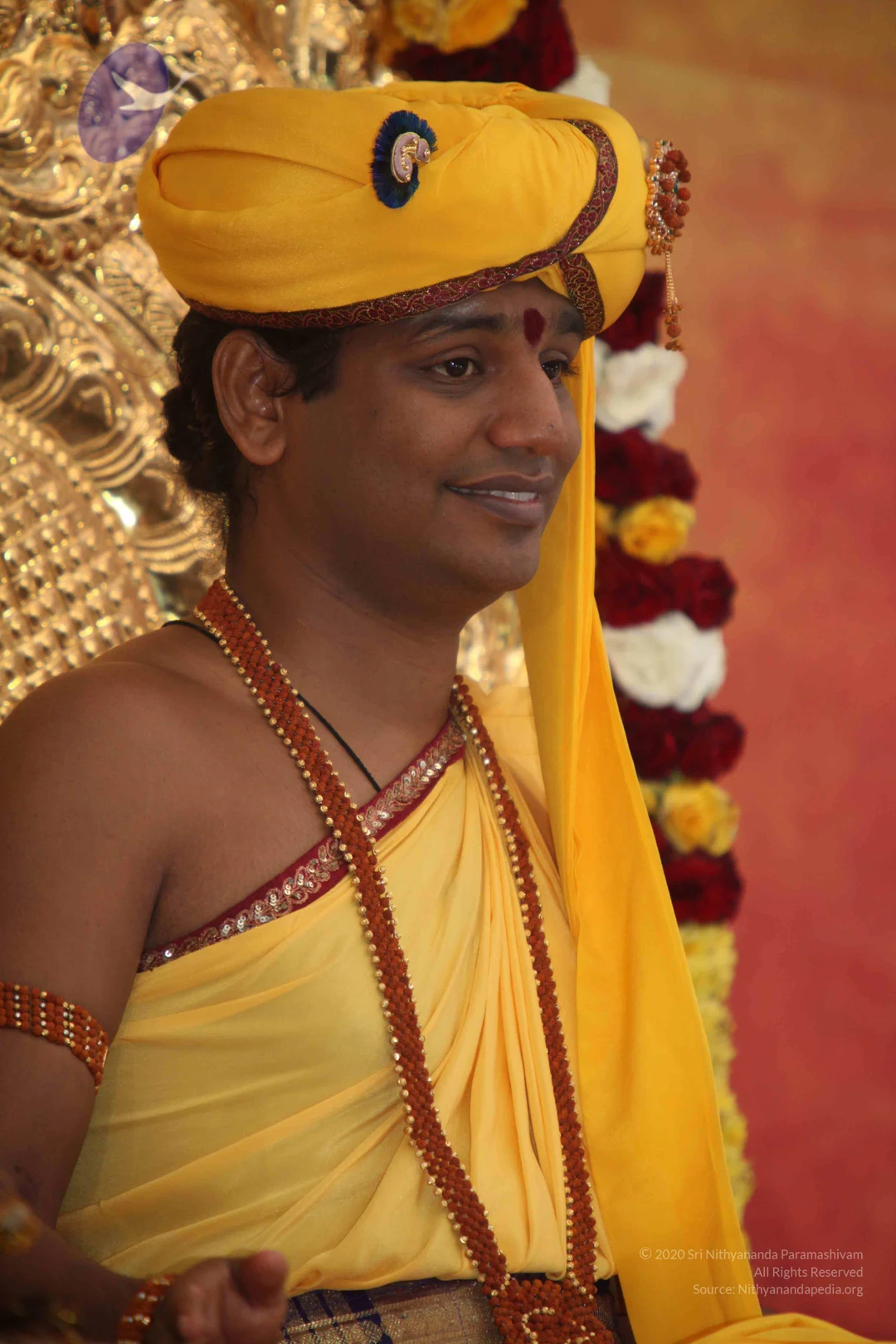
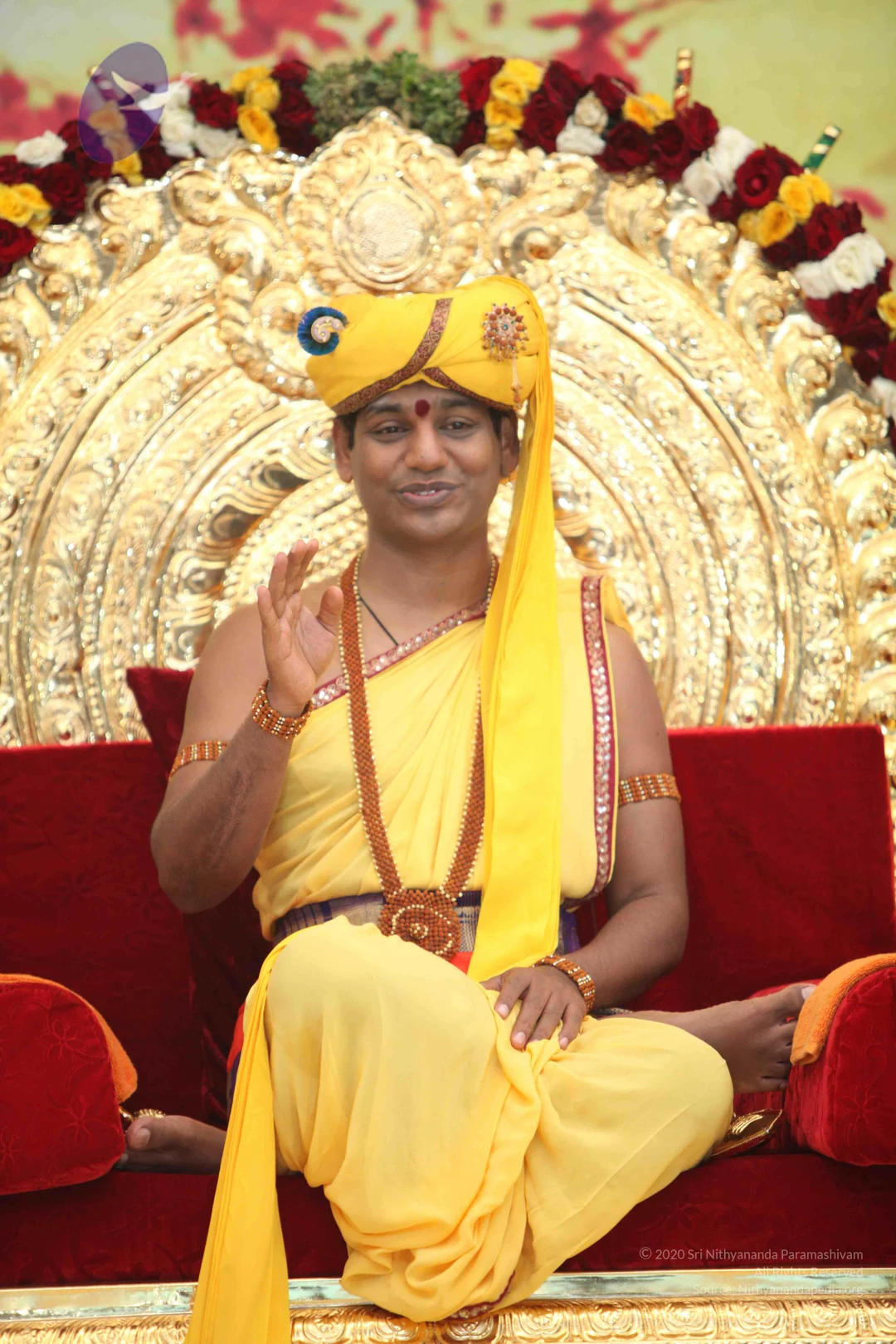
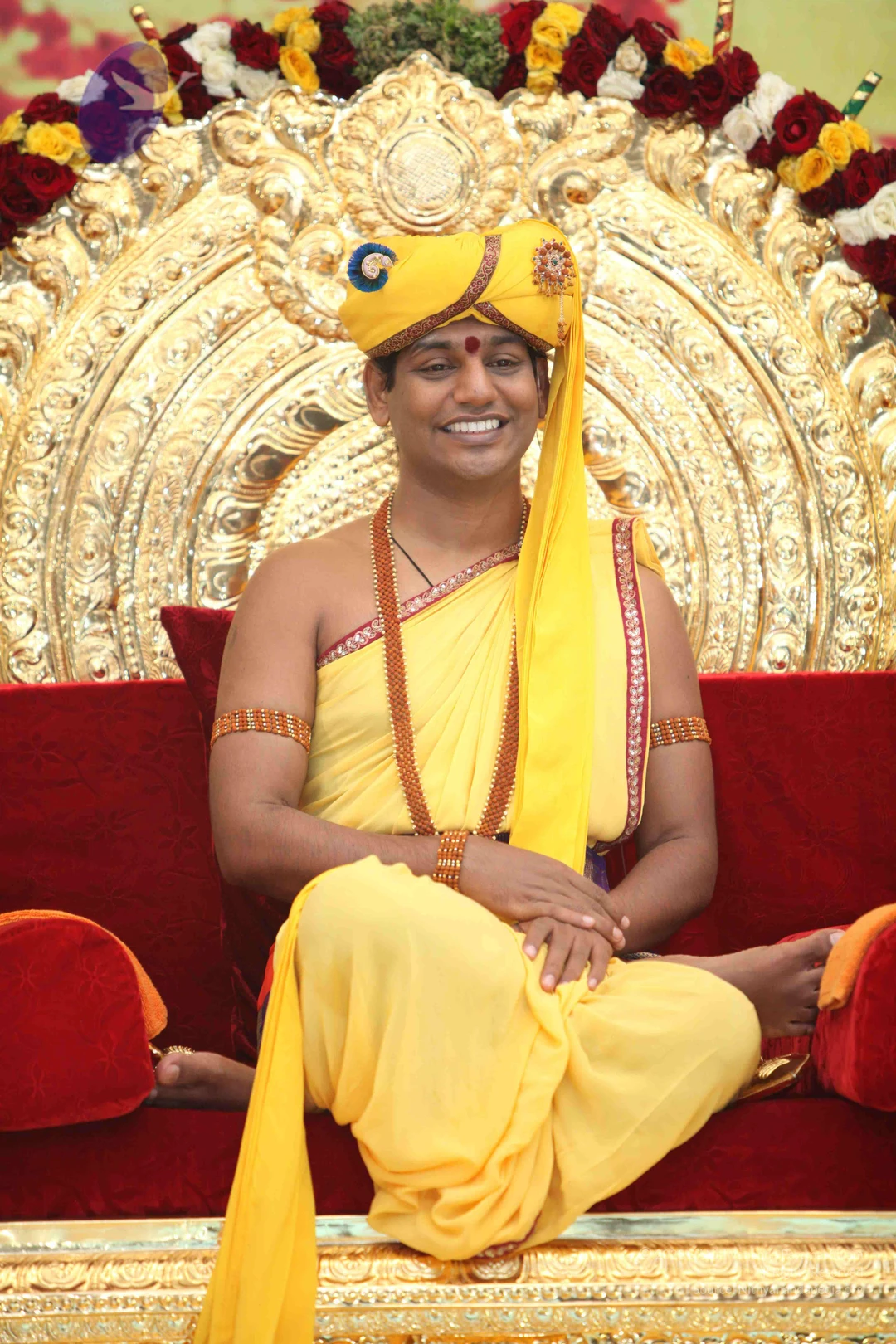
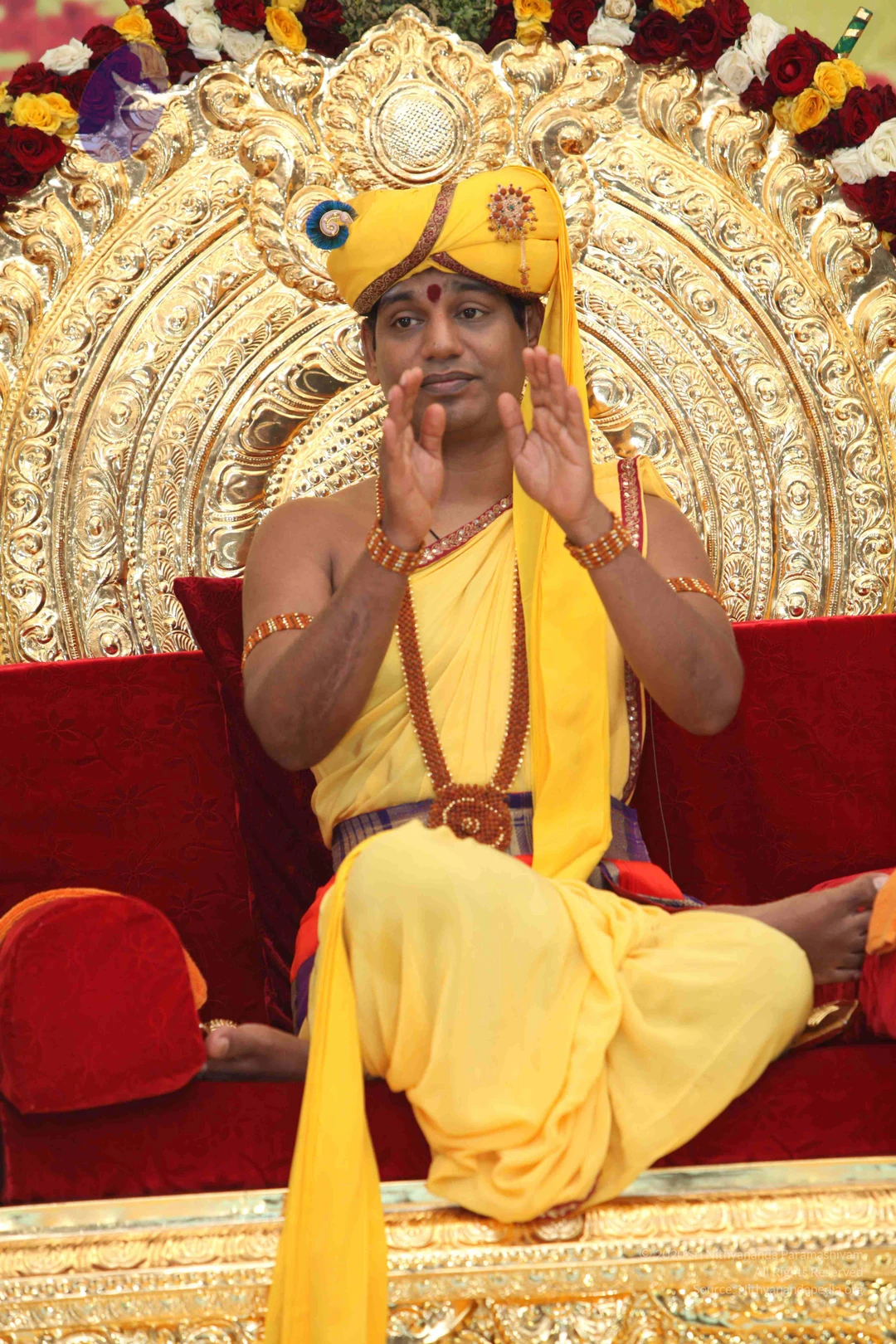
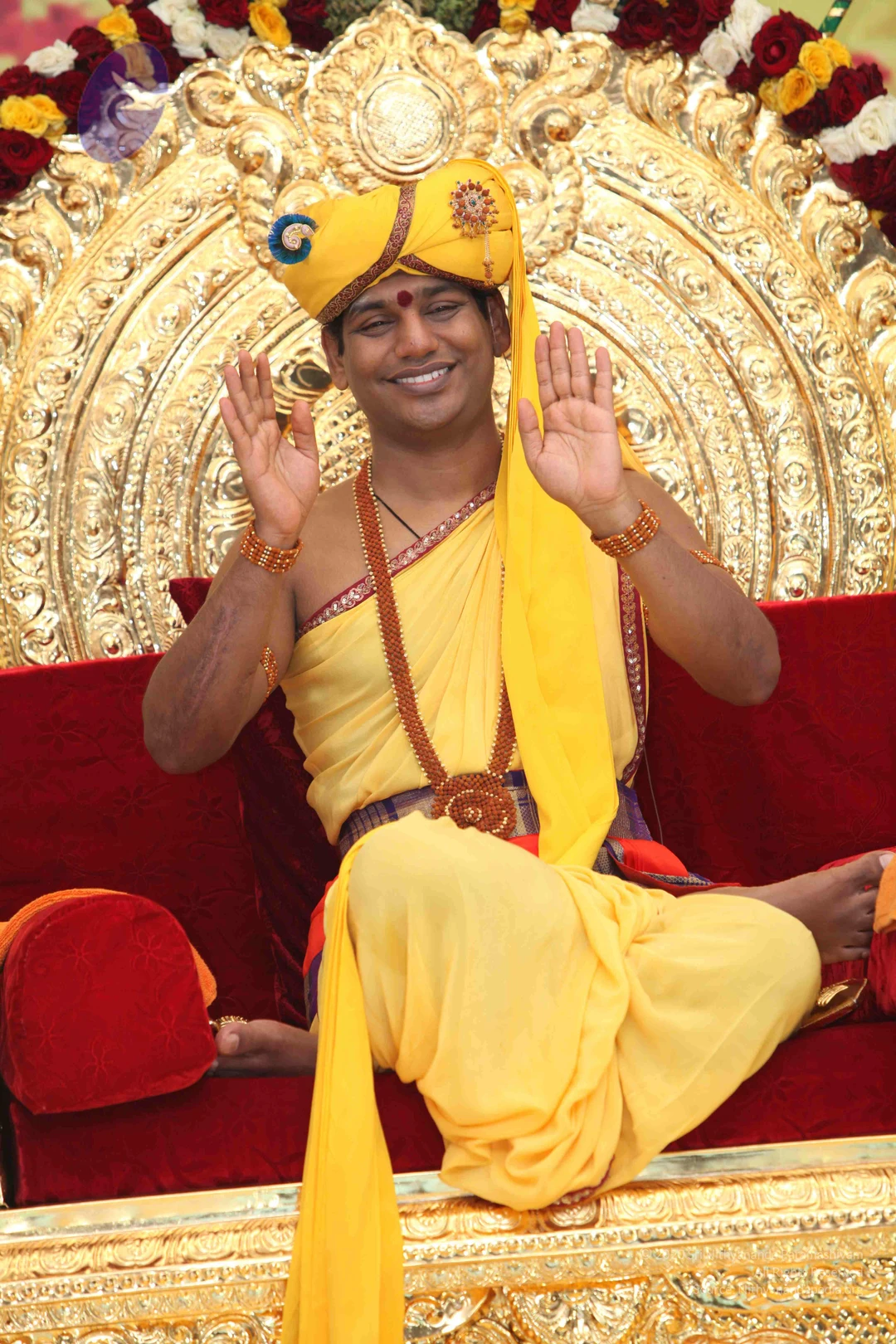
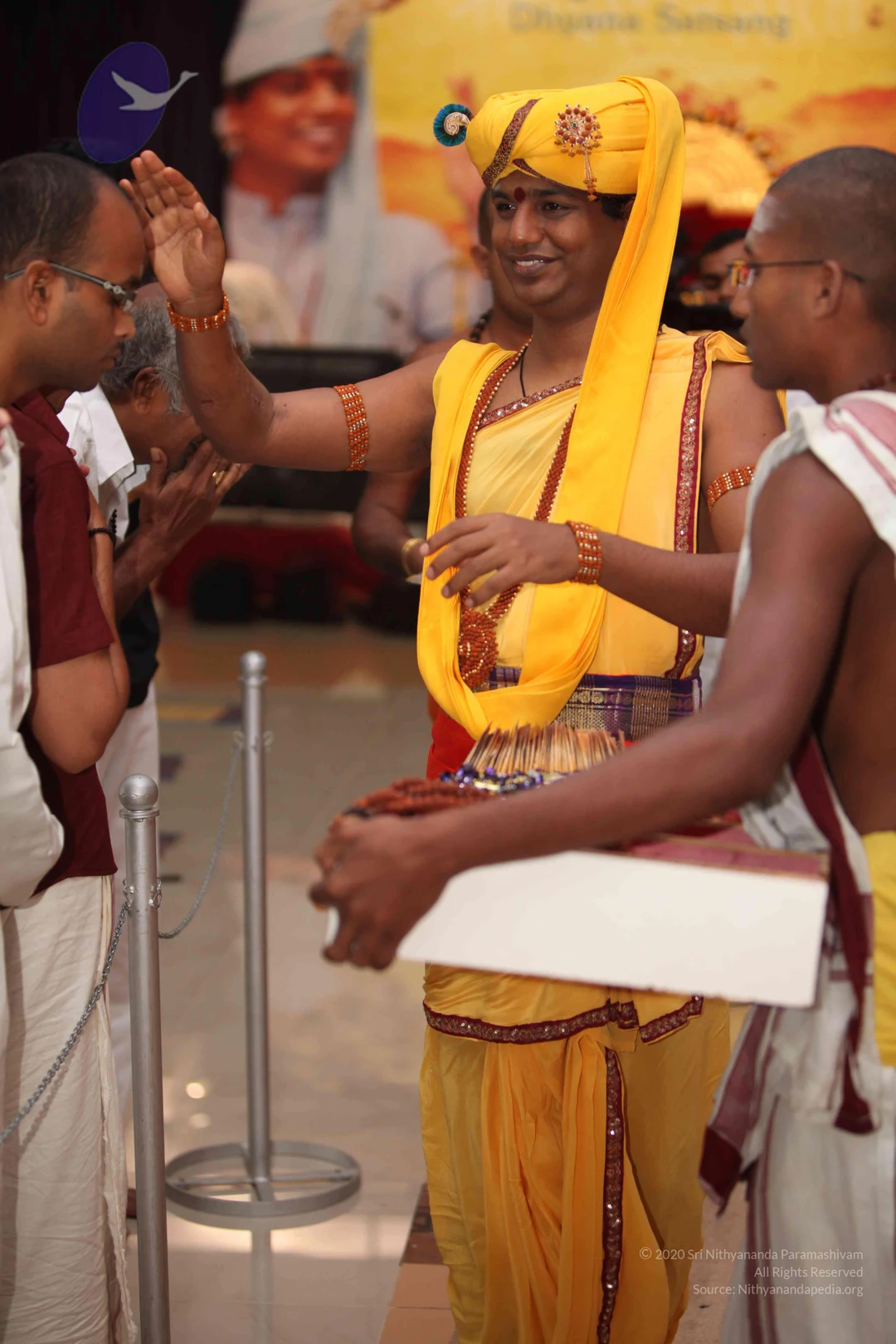
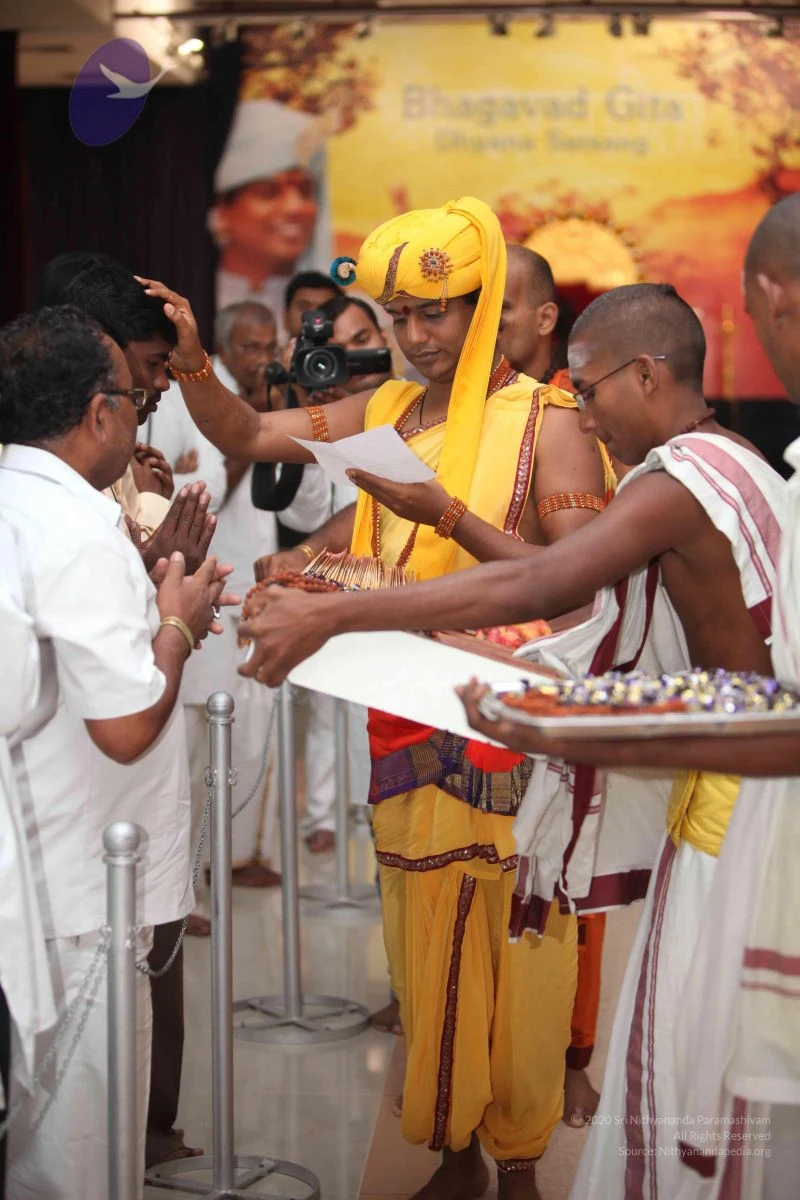
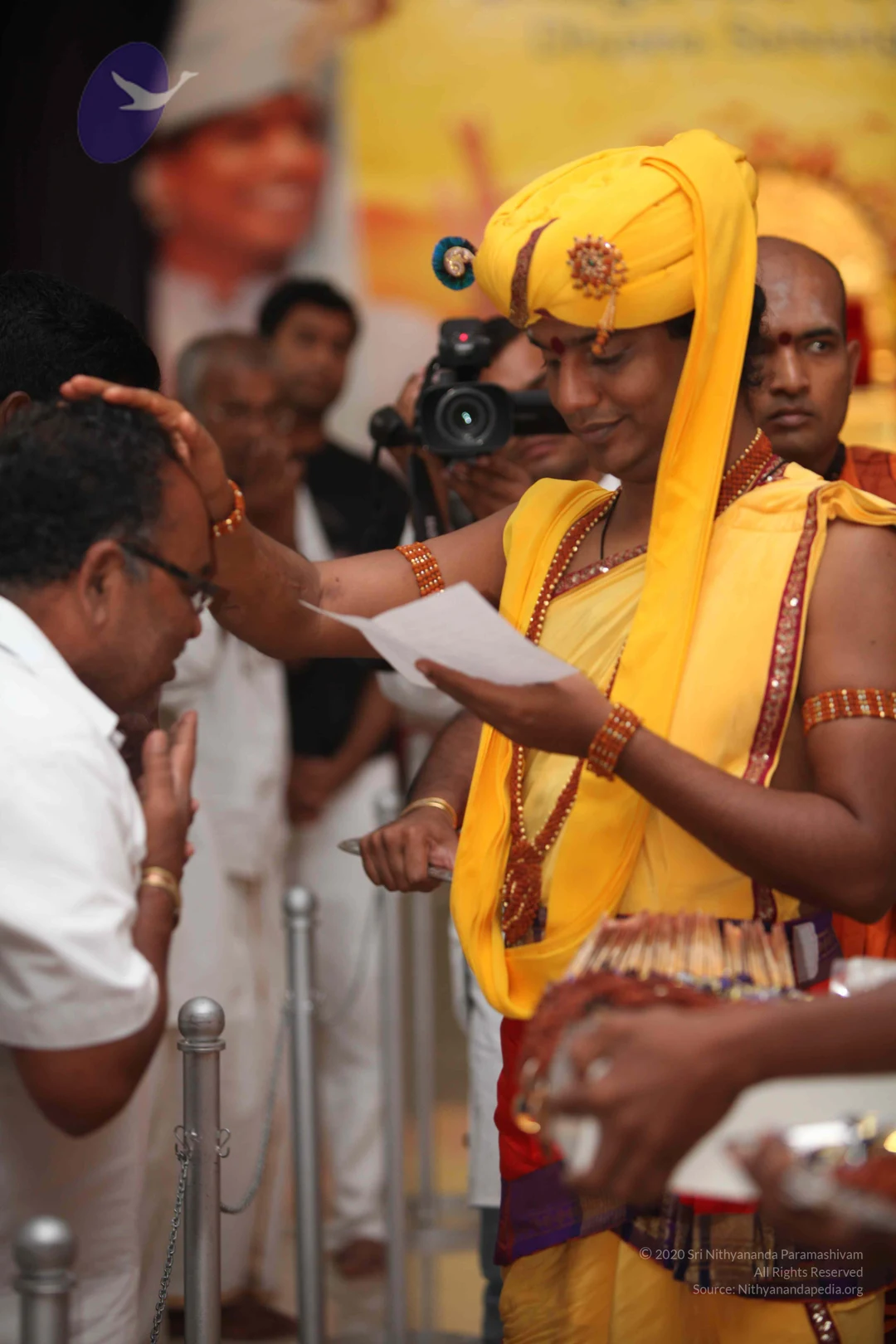
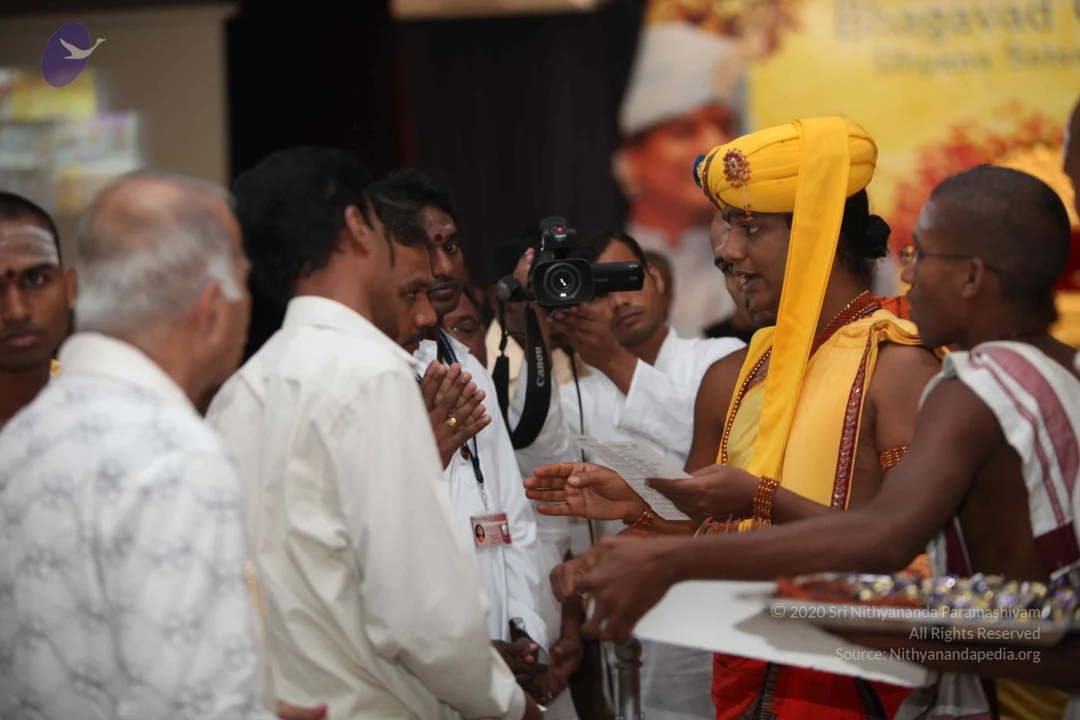
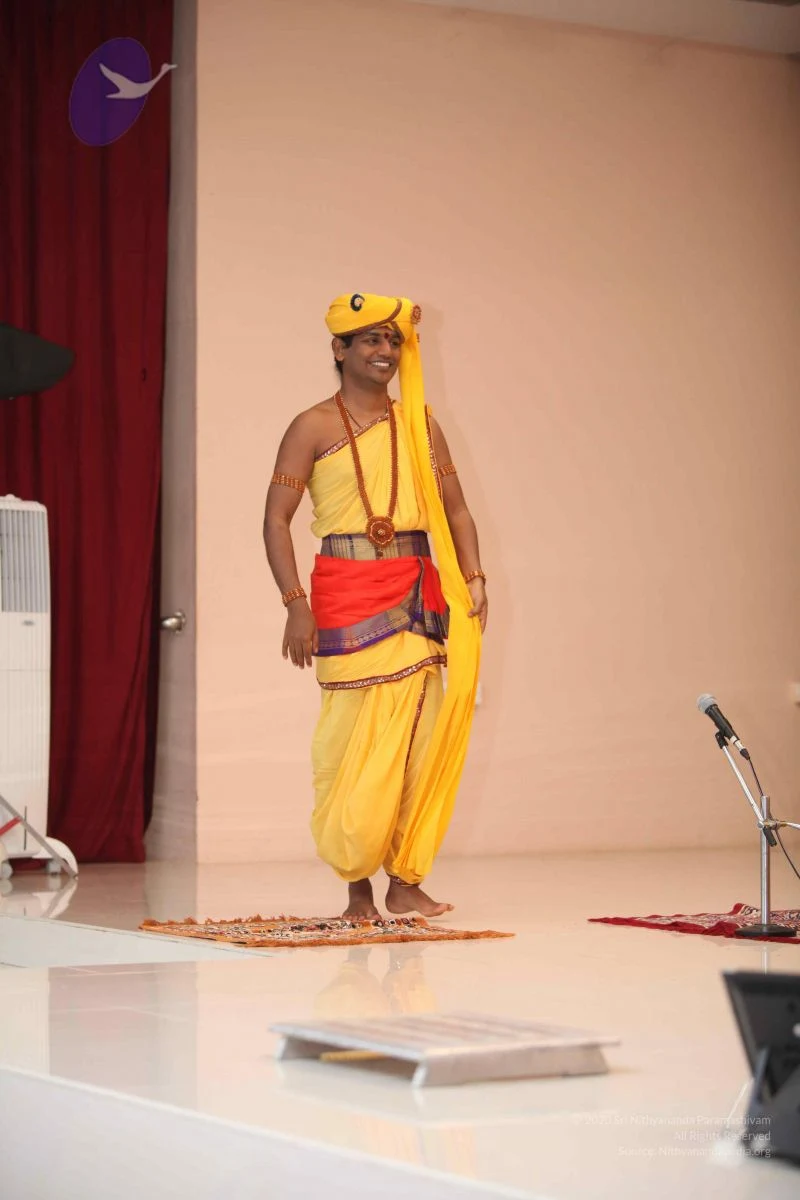
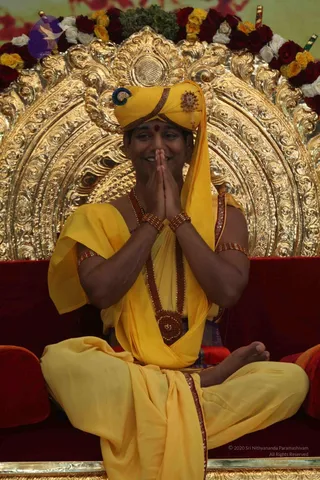
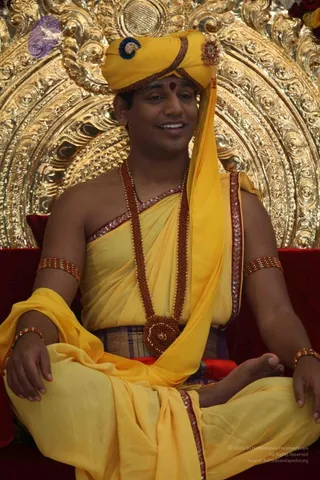
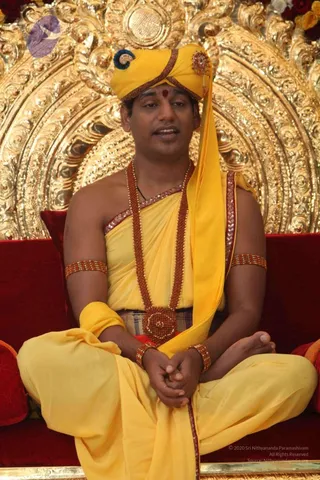
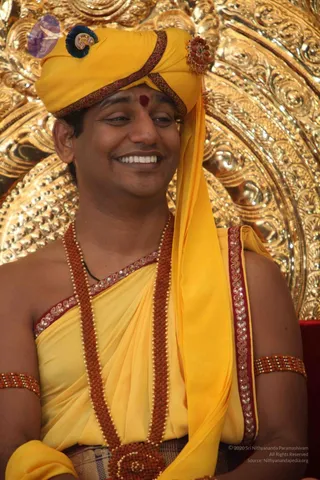
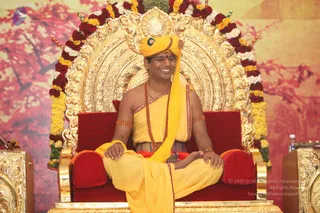
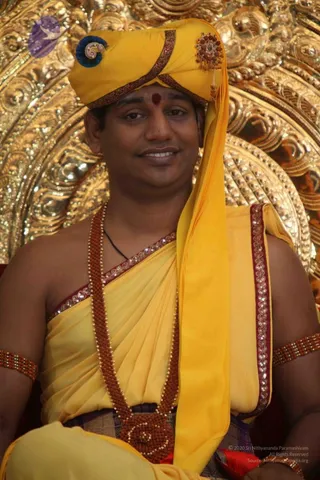
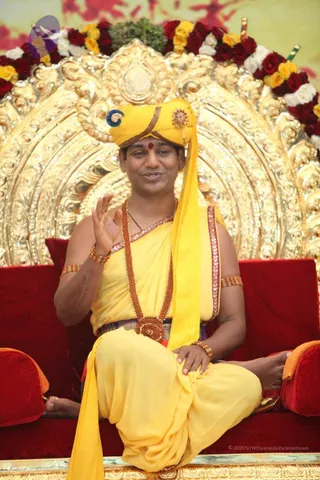
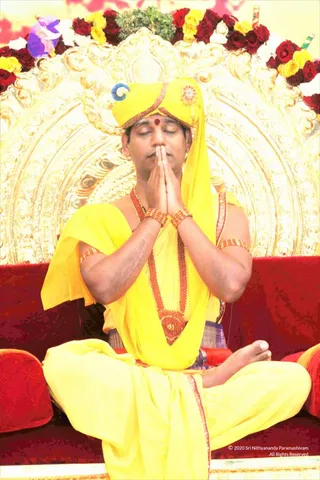
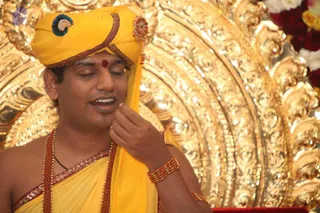
A seated man in yellow ceremonial dress sits cross-legged on a red cushioned seat before an ornate gold carved throne back decorated with red and white roses. He wears a yellow turban with a jewelled brooch and a blue-and-gold ornament, a red bindi, a long yellow shawl, and a beaded red-brown mala with a large pendant. He presses his palms together in namaste and smiles warmly, with bare feet visible. a person by appearance cues of yellow ornate clothing, a jewelled turban and beaded mala, seated on a golden throne in a greeting gesture.A smiling man sits cross-legged on a red cushioned seat in front of an ornate gold repoussé backdrop. He wears a bright yellow turban with a blue rosette and gold brooch, a red bindi, and yellow draped robes trimmed with red and silver borders. Rudraksha malas hang across his chest and rudraksha bands are on his upper arms and wrists. The pose and attire are a sannyasi-style presentation; the page's appearance-based identification is not visually confirmed here, so the figure is described by role only.Close-up photograph of a seated figure on a gold-trimmed throne with a red cushion, wearing a flowing yellow garment draped over the body and a yellow shawl over the shoulder. Beaded rudraksha-style necklace with a large round medallion sits at the chest, and matching beaded bands are worn on the upper arms and wrists. The hands are joined in front of the lap in a folded mudra, and one bare foot is visible at right. Only the torso, arms, hands and feet are visible; the face is out of frame.A seated man in yellow ceremonial dress sits cross-legged on a red cushioned seat before an ornate gold repoussé backdrop with flower garlands at the top. He wears a yellow turban with a blue and gold ornament, a red bindi, a long rudraksha mala with a central rudraksha pendant, rudraksha armlets and wristbands, and a yellow shawl draped over one shoulder and across his lap. His hands are clasped and he appears to be speaking.Close-up photo of a smiling man seated before a large ornate gold repoussé backdrop. He wears a yellow turban with a red-bordered band, a small blue and gold ornament and a red stone brooch, plus a red bindi. His yellow silk garment has a red and sequined border, and he wears a long rudraksha mala across the chest and rudraksha armlets. Probable Swamiji is present by appearance cues: a turban, saffron-yellow ceremonial clothing and rudraksha malas, seated as a central figure.A smiling man in saffron-yellow ceremonial clothing sits cross-legged on an ornate gilded throne with red velvet cushions. He wears a yellow turban with a small emblem, a rudraksha-style mala necklace, a red-and-gold bordered sash, and gold armbands. A large arched golden backrest is framed by garlands of red roses, yellow marigolds and white flowers against a pink-red backdrop. Small gilded side tables and a water bottle flank the throne. a person appears as the seated person on the throne, identified by the saffron attire, turban, mala and ceremonial throne setting.

JEWELLERY
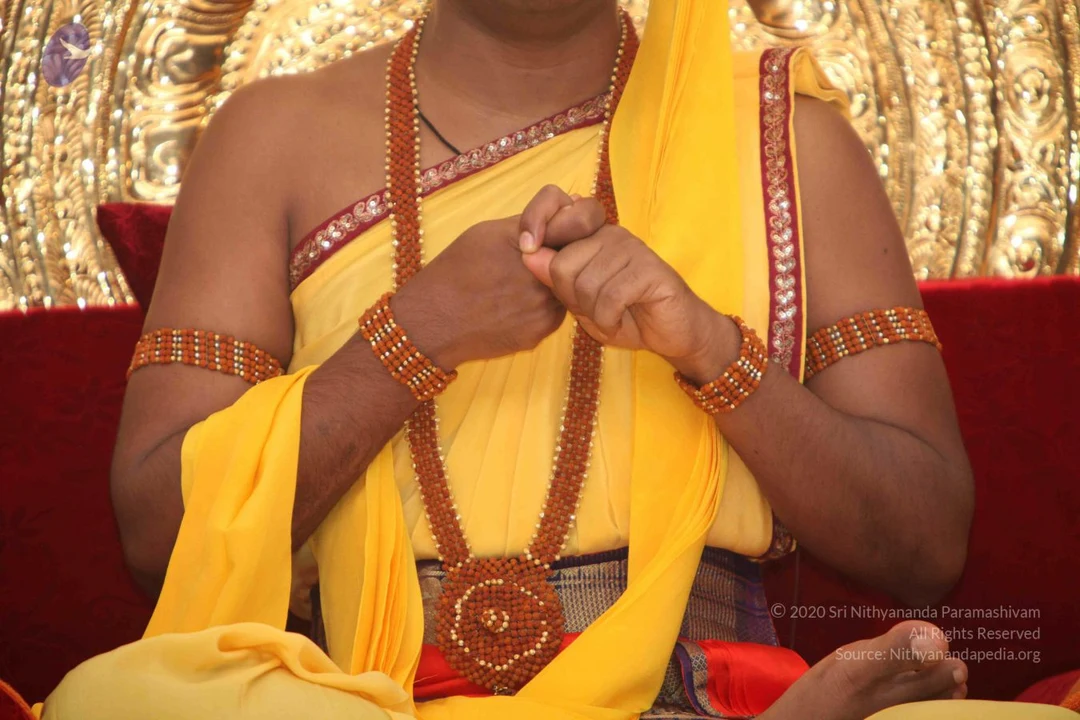
6 photosSource gallery
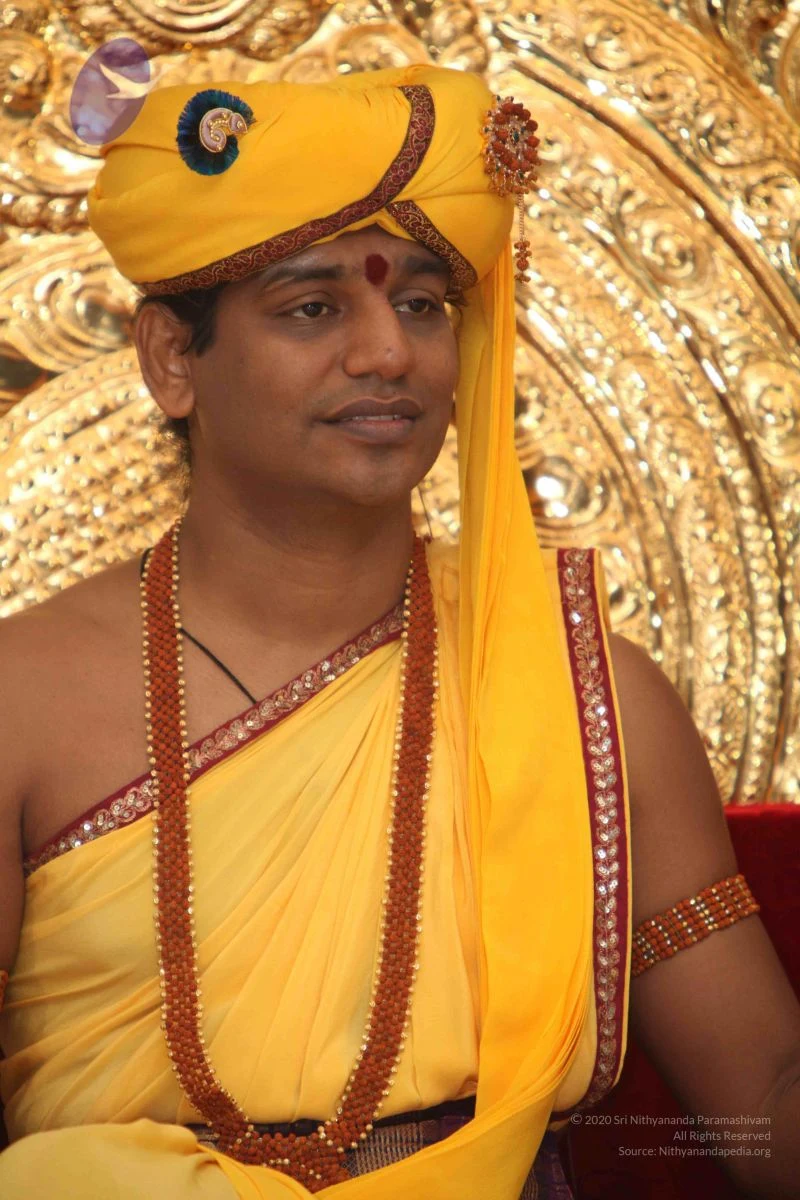
A seated man in yellow ceremonial dress sits cross-legged on a red cushioned seat before an ornate gold carved throne back decorated with red and white roses. He wears a yellow turban with a jewelled brooch and a blue-and-gold ornament, a red bindi, a long yellow shawl, and a beaded red-brown mala with a large pendant. He presses his palms together in namaste and smiles warmly, with bare feet visible. a person by appearance cues of yellow ornate clothing, a jewelled turban and beaded mala, seated on a golden throne in a greeting gesture.Close-up photograph of a seated figure on a gold-trimmed throne with a red cushion, wearing a flowing yellow garment draped over the body and a yellow shawl over the shoulder. Beaded rudraksha-style necklace with a large round medallion sits at the chest, and matching beaded bands are worn on the upper arms and wrists. The hands are joined in front of the lap in a folded mudra, and one bare foot is visible at right. Only the torso, arms, hands and feet are visible; the face is out of frame.Close-up photo of a smiling man seated before a large ornate gold repoussé backdrop. He wears a yellow turban with a red-bordered band, a small blue and gold ornament and a red stone brooch, plus a red bindi. His yellow silk garment has a red and sequined border, and he wears a long rudraksha mala across the chest and rudraksha armlets. Probable Swamiji is present by appearance cues: a turban, saffron-yellow ceremonial clothing and rudraksha malas, seated as a central figure.Close-up of a seated figure in yellow ceremonial clothing, with a yellow shawl draped over the shoulder and a red-and-white bordered garment. Long rudraksha mala beads with a large rudraksha pendant hang on the chest, and matching rudraksha armlets and wristbands adorn the arms. The hands are held together in a mudra in front of the chest. Behind is a red cushioned seat and an ornate golden backdrop. The face is cropped out of frame. a person is identified by the rudraksha malas, saffron-yellow clothing and ornate seated setting, though the face is not visible.A seated man in a yellow turban decorated with a blue peacock-feather ornament and a red-and-green jewelled brooch, wearing a yellow sari-style garment edged with sequined maroon borders and a long dark-red rudraksha mala with a large central bead. He wears rudraksha armlets, has a red bindi on his forehead, and sits before an ornate gold repoussé backdrop. a person cues: a saffron-yellow turban, ornate ceremonial clothing and rudraksha malas, but appearance-based identification is uncertain, so the role is described as a seated devotee-style figure before a gilded throne backdrop.A seated man in yellow ceremonial dress sits on a red velvet couch before an ornate gold throne-back decorated with red, white and yellow roses. He wears a yellow turban with a blue-and-gold ornament and a red bindi, a yellow draped garment with red-and-gold border, and a long rudraksha mala with a gold-and-red medallion. He raises one hand in a teaching gesture while smiling and speaking.

ADI-KAILASA
70 photosSource gallery
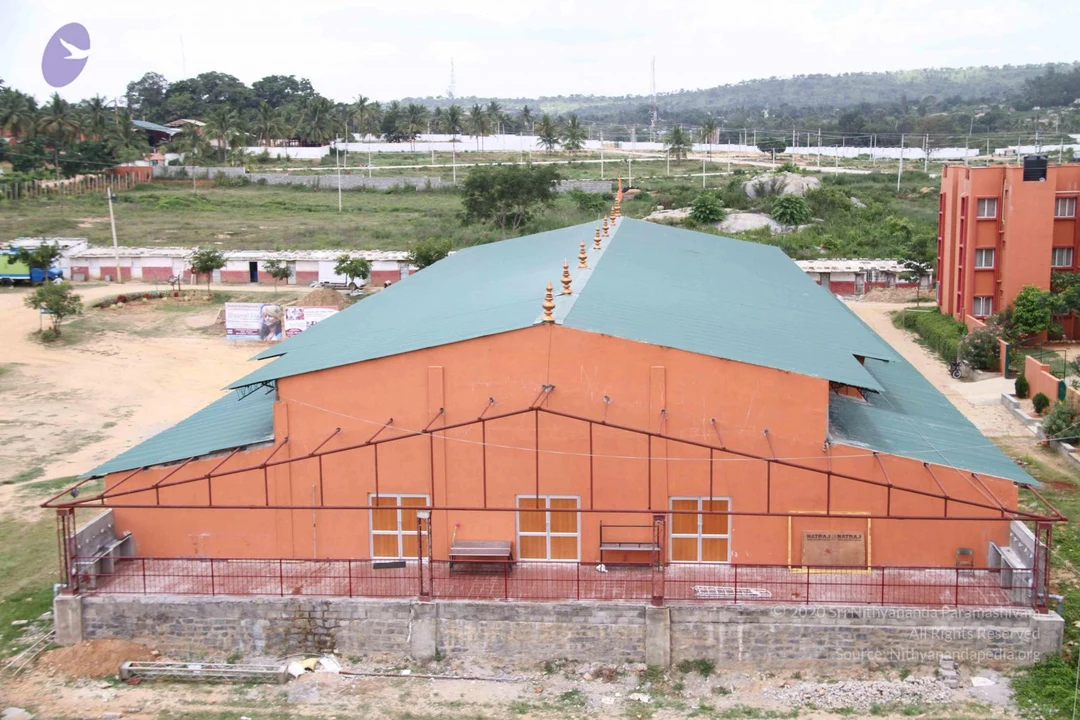
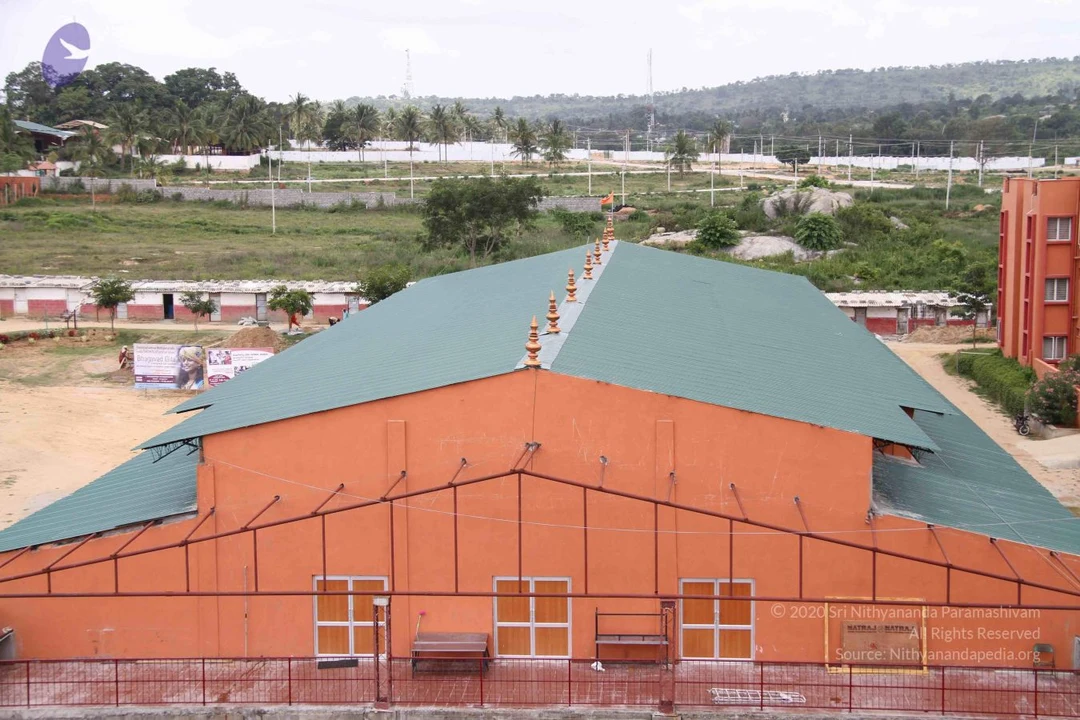
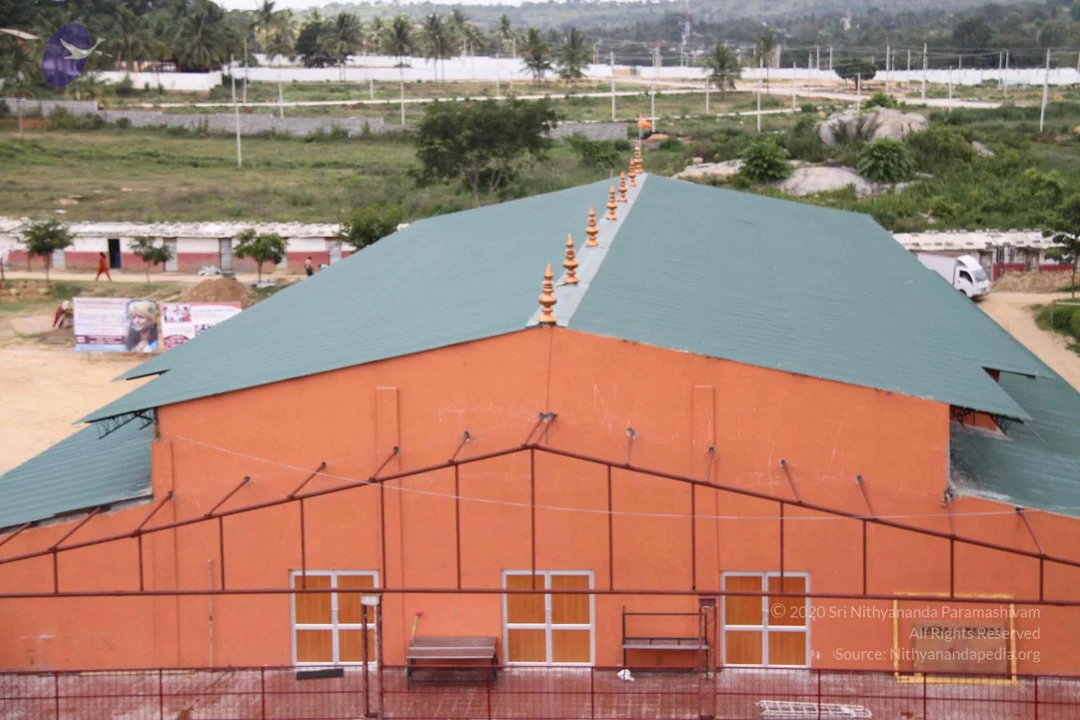
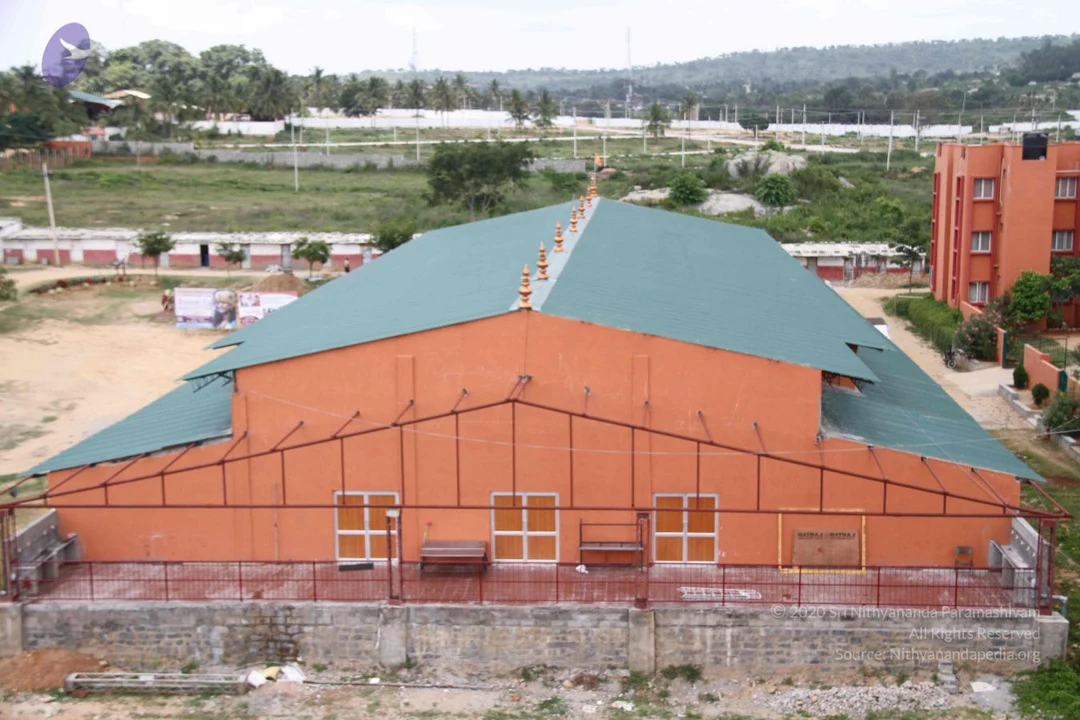
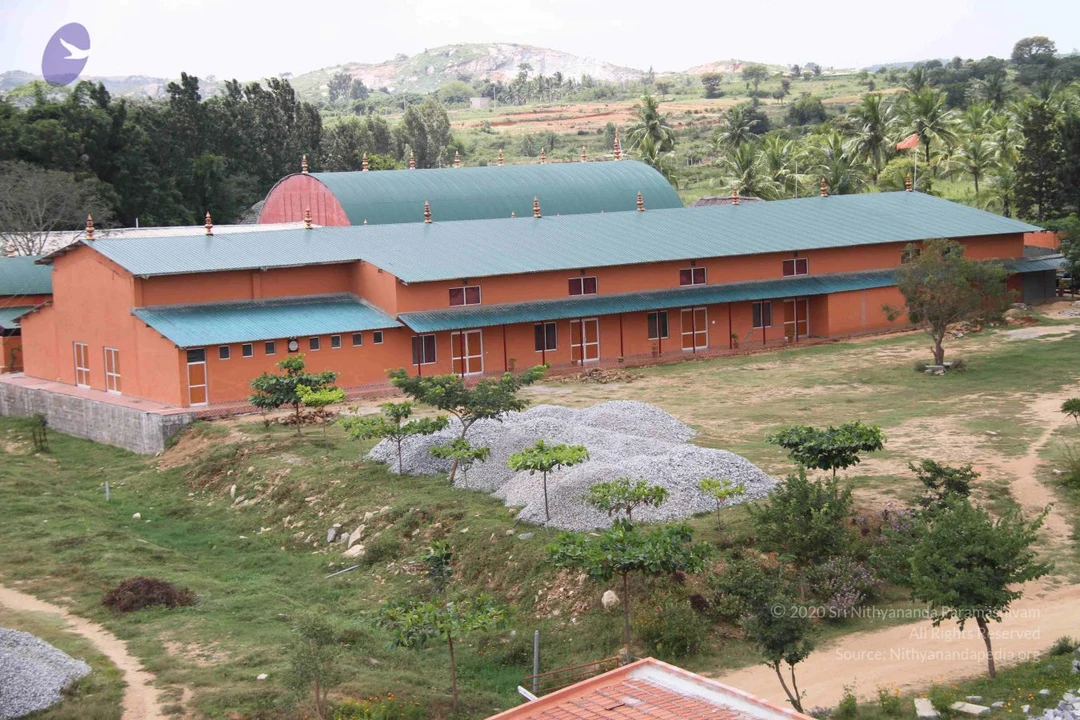
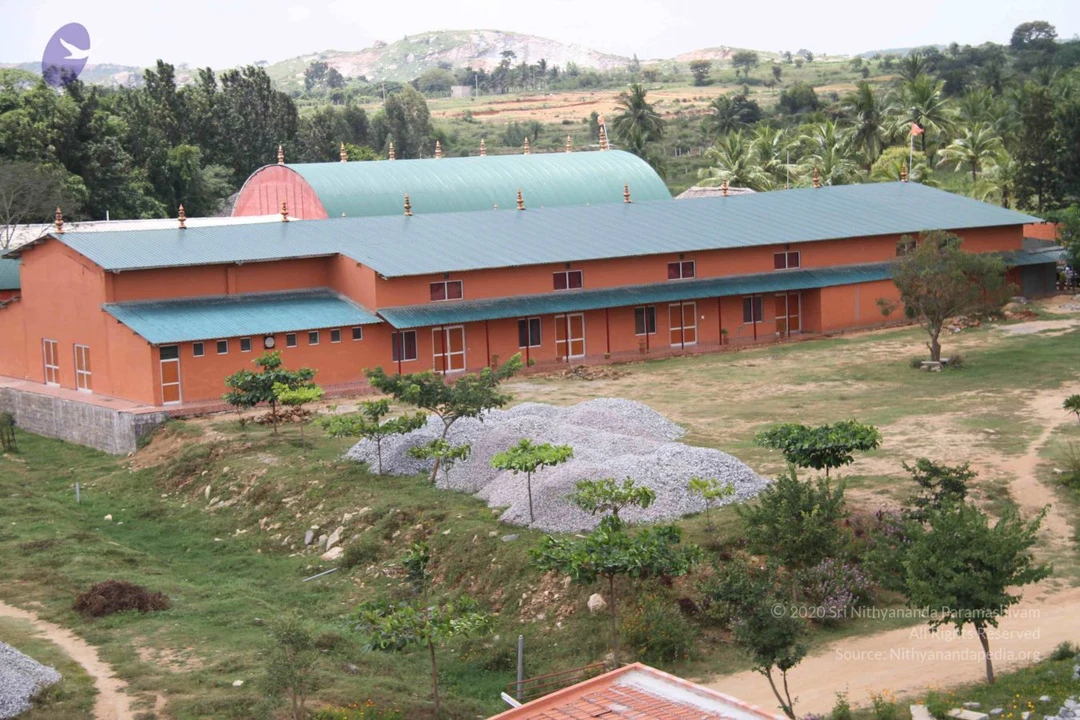
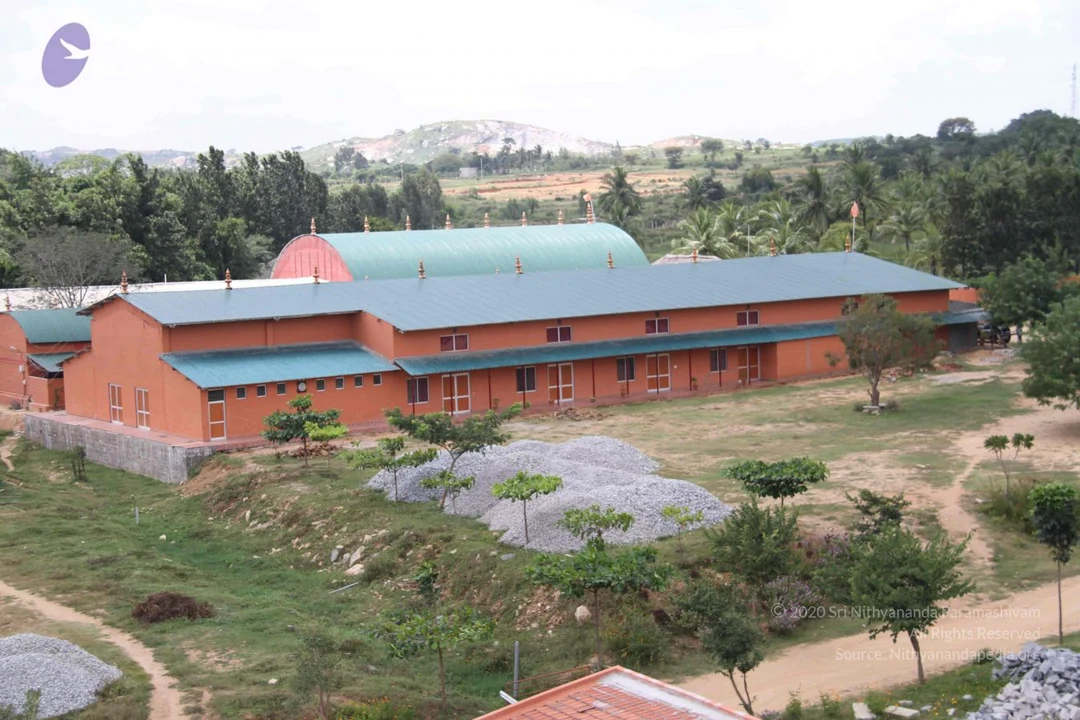
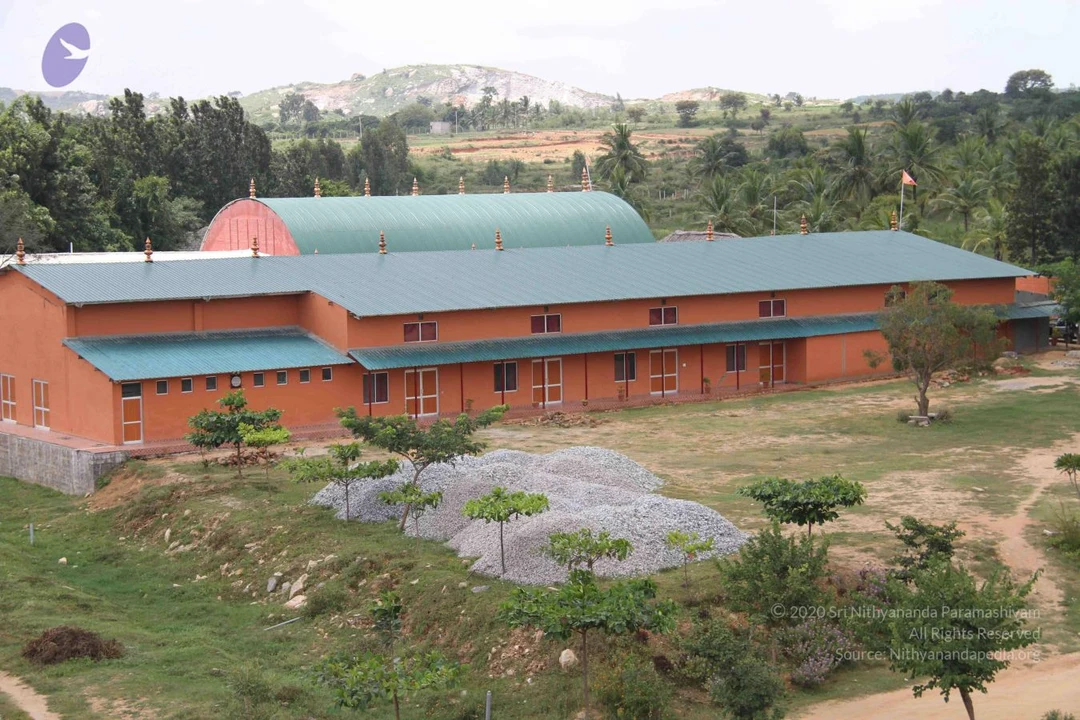
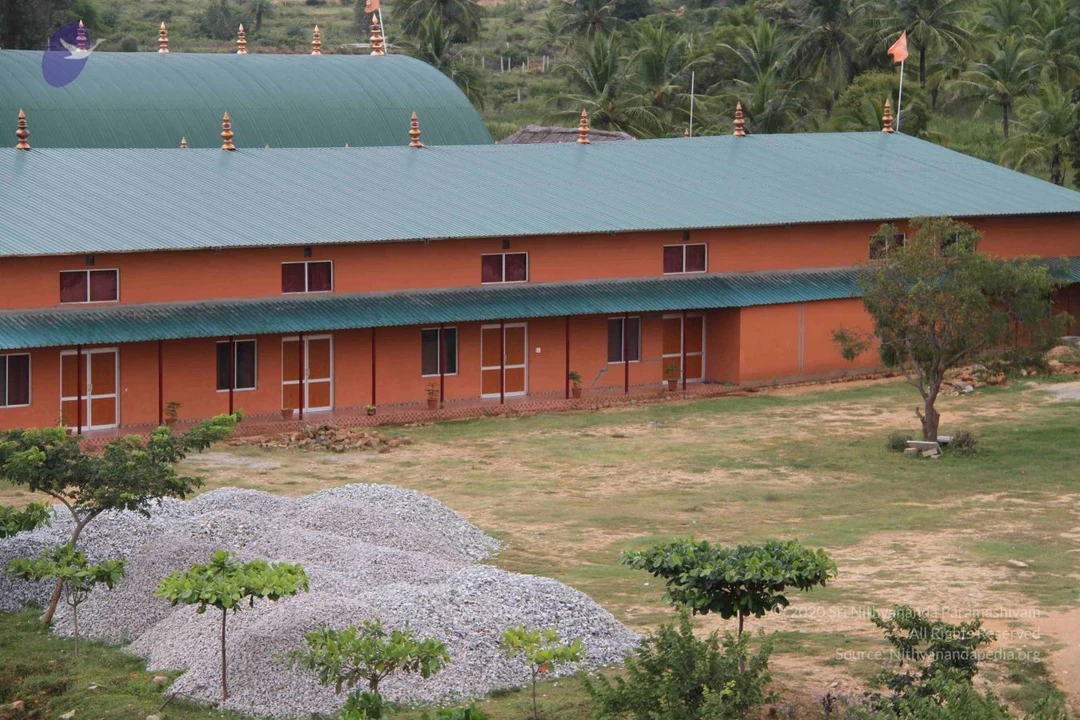
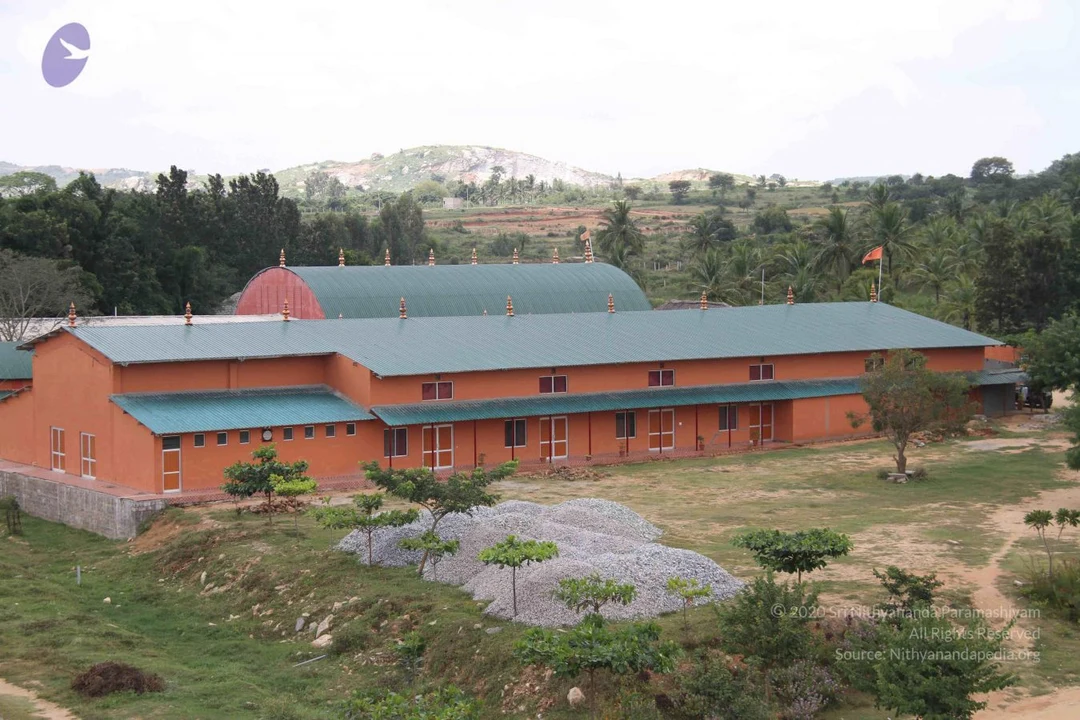
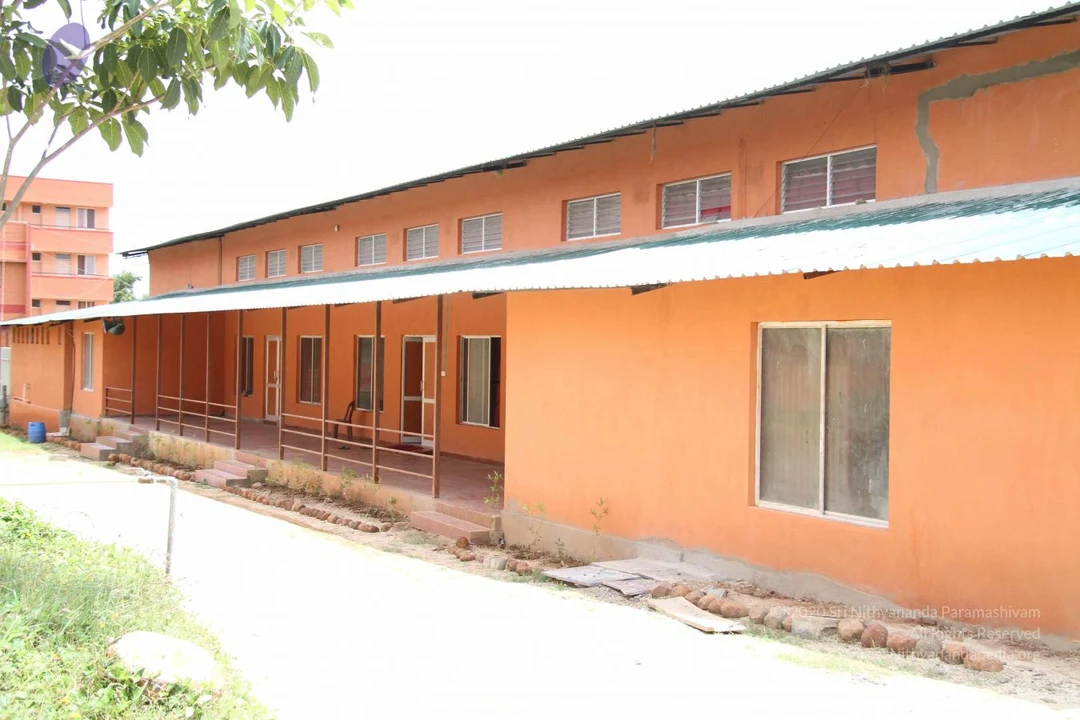
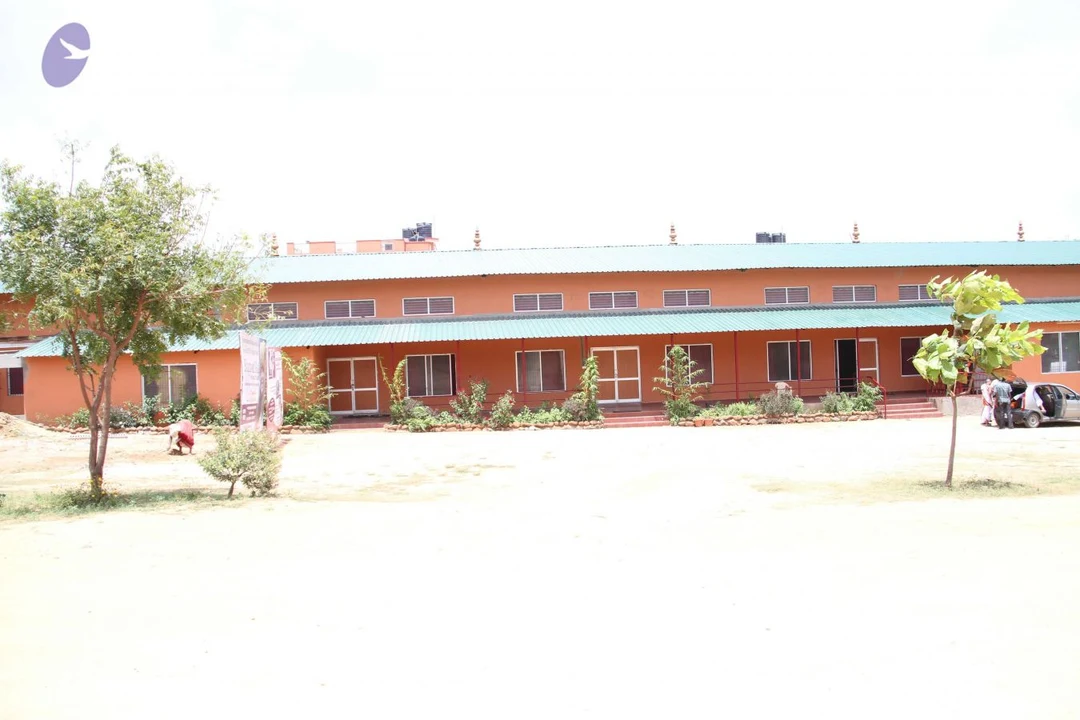
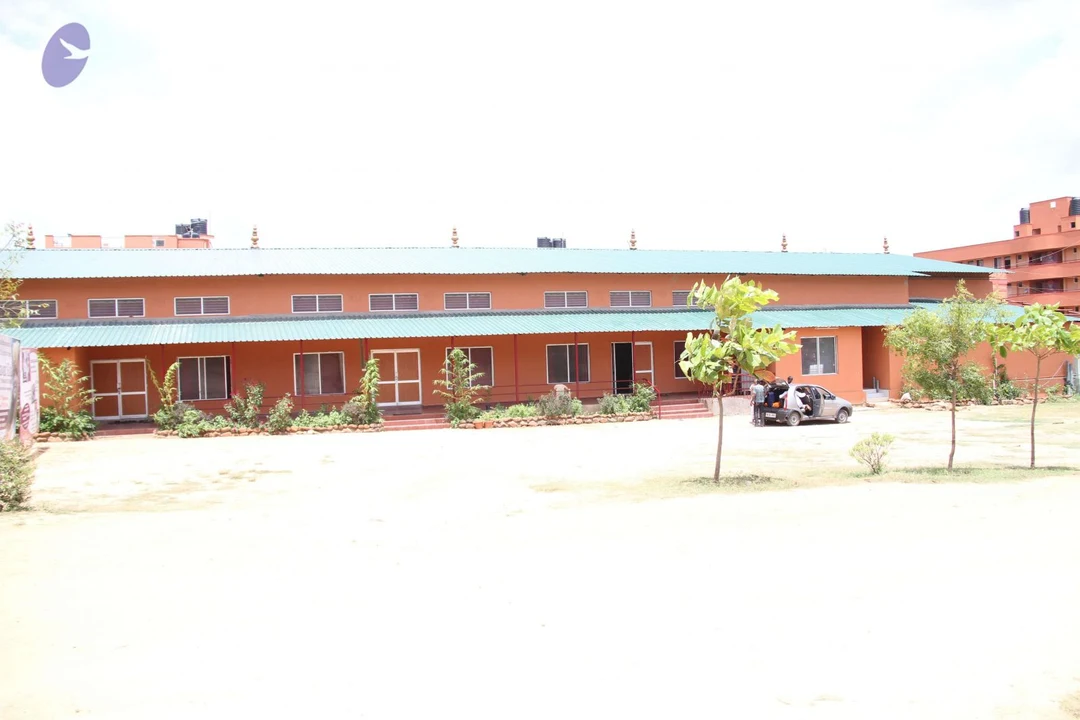
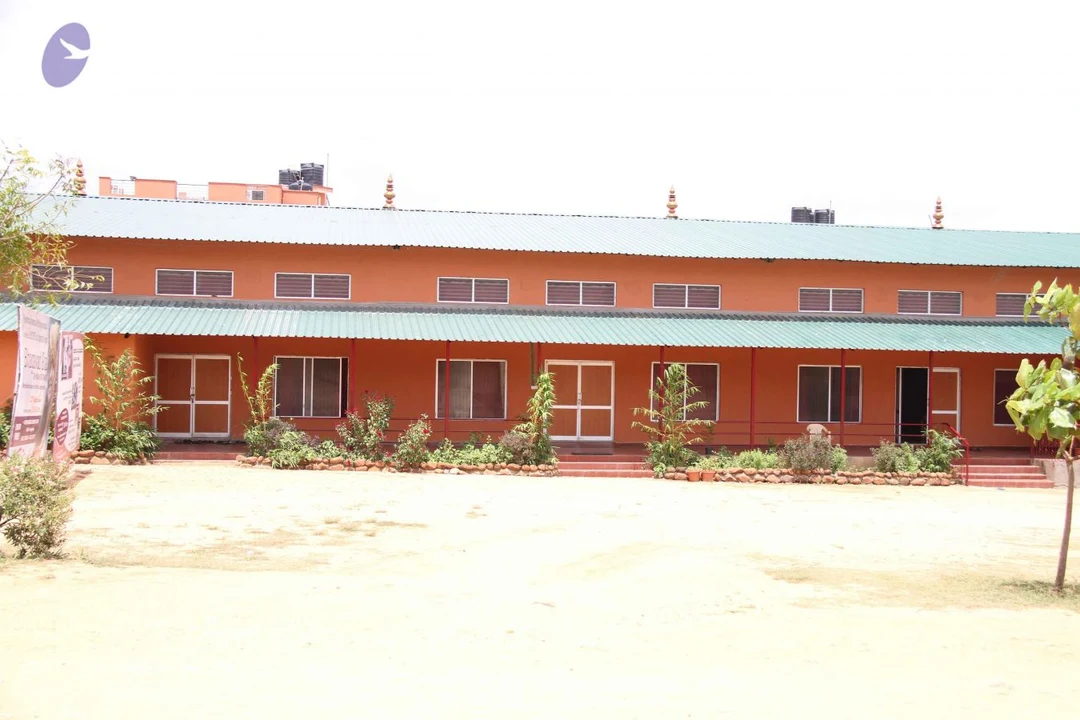
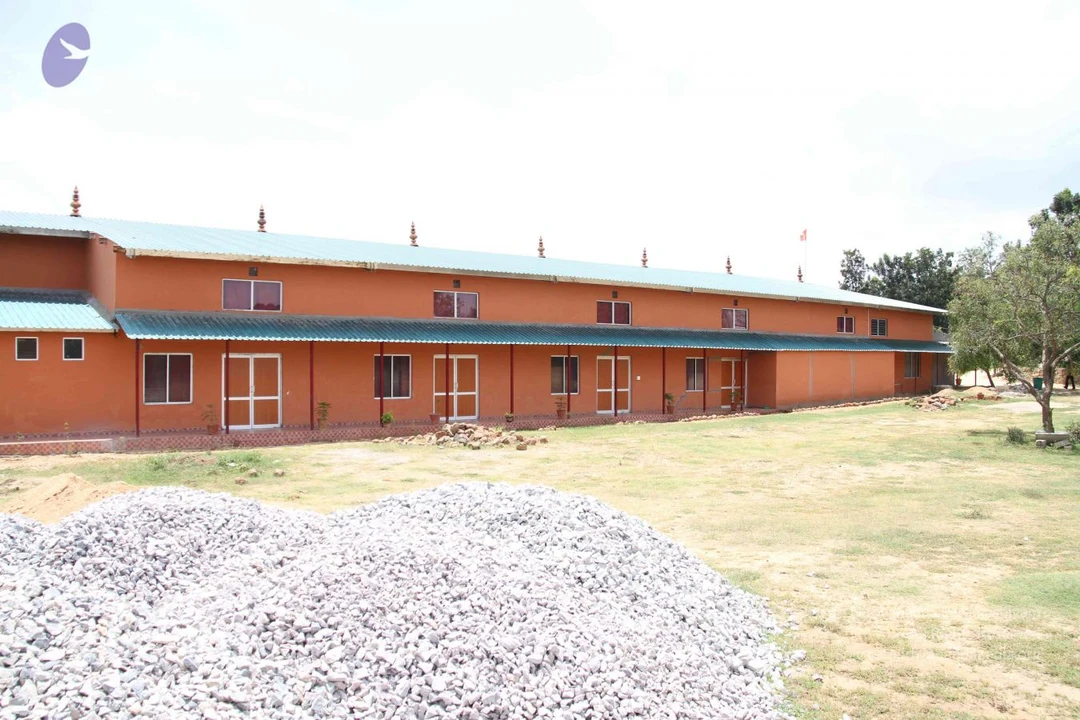
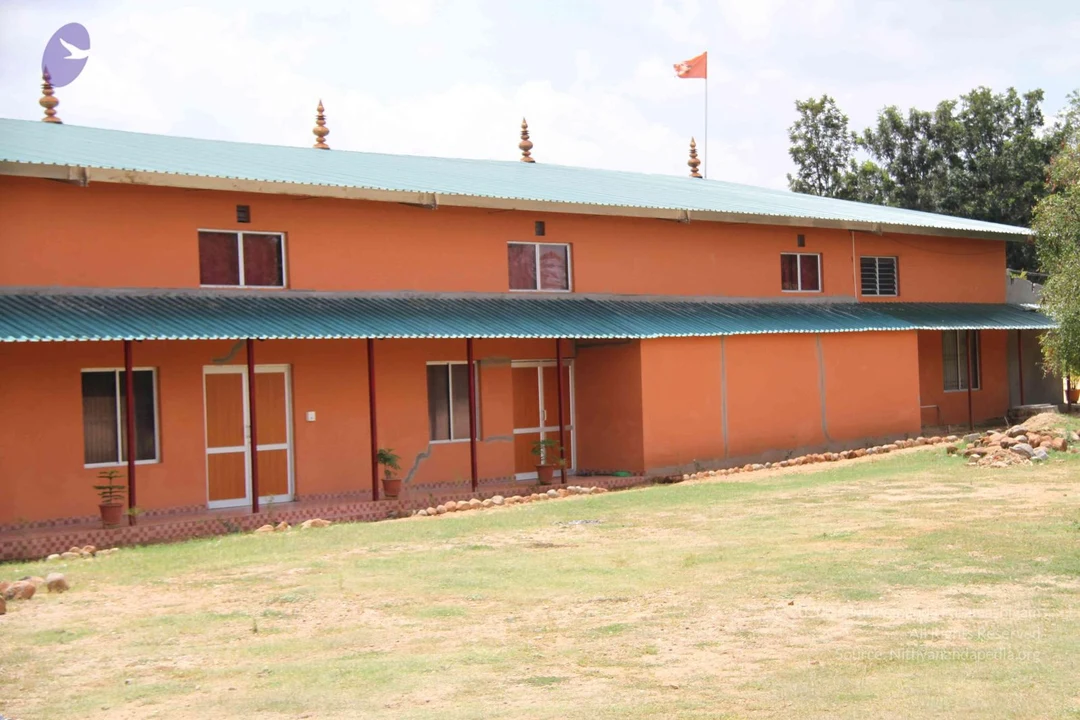
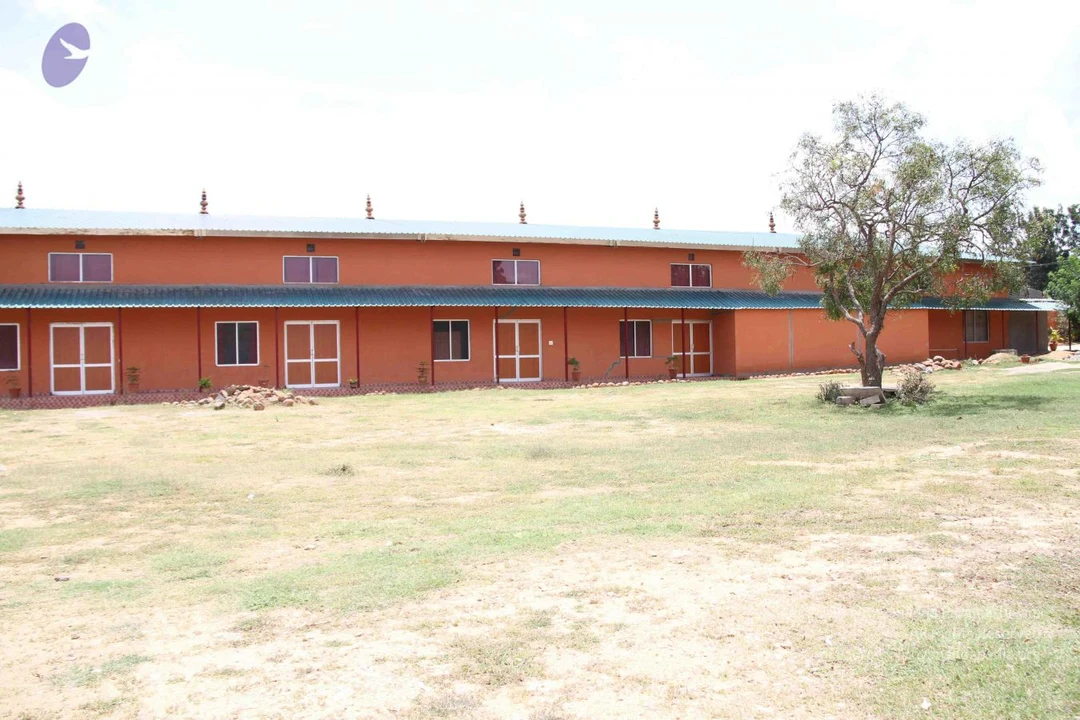
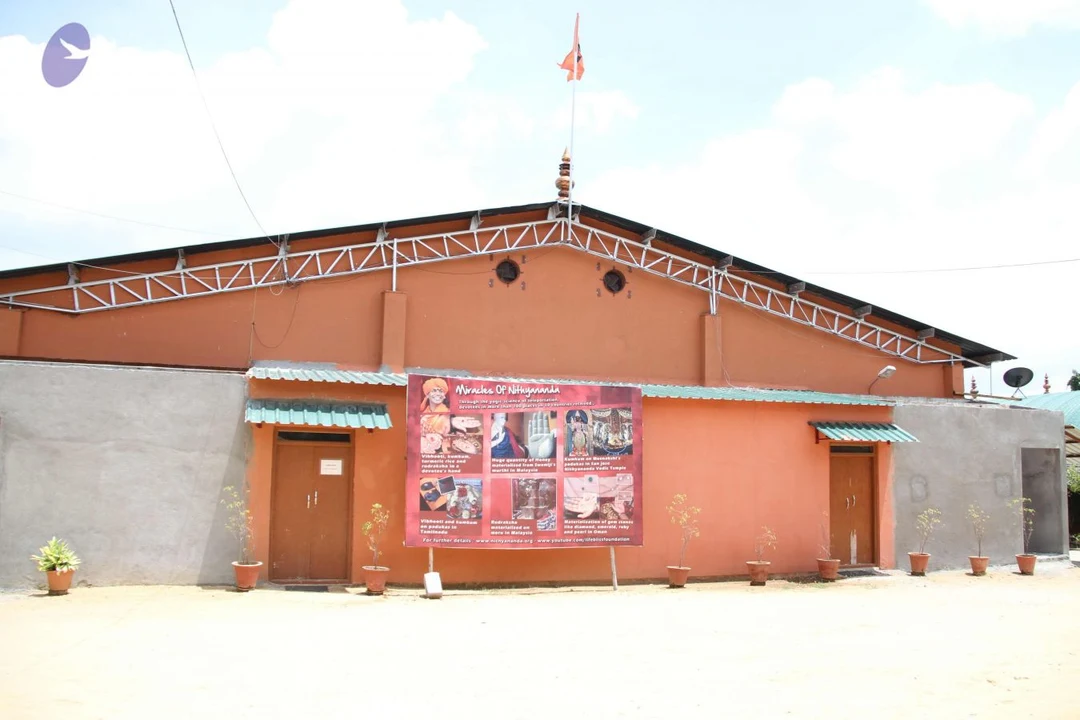
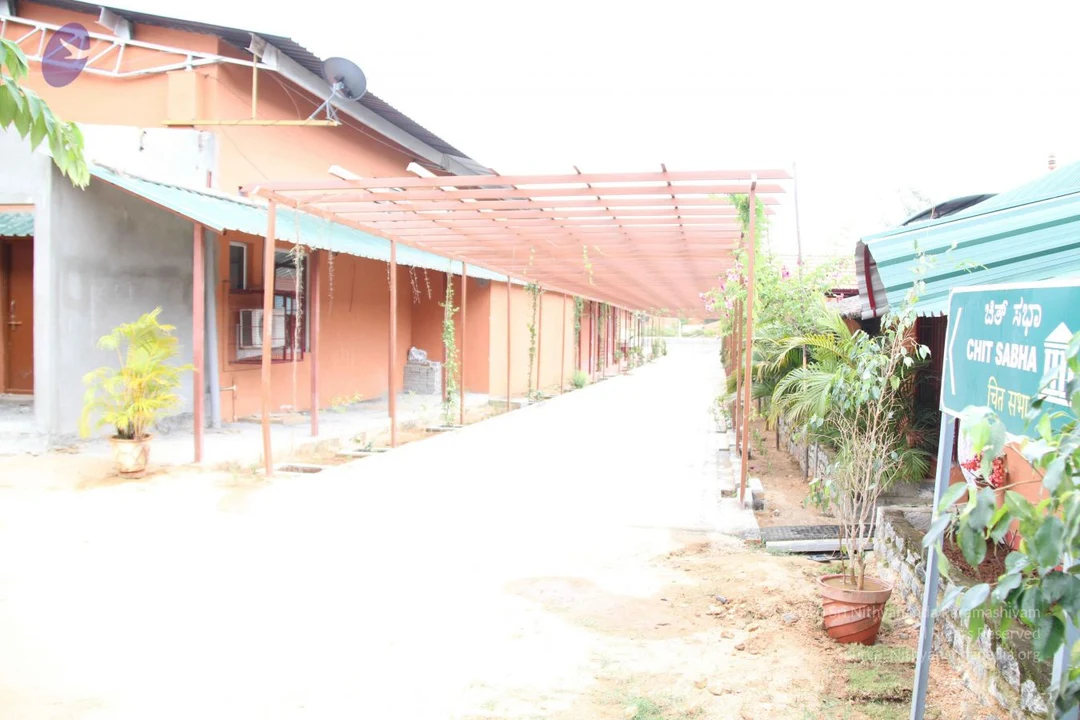
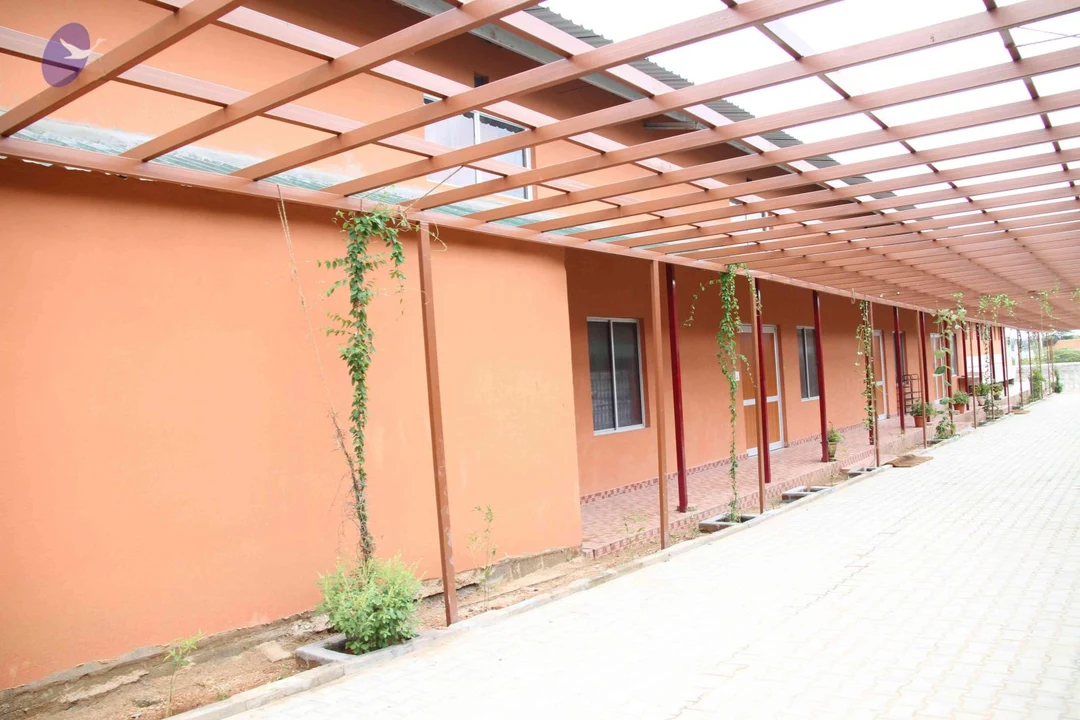
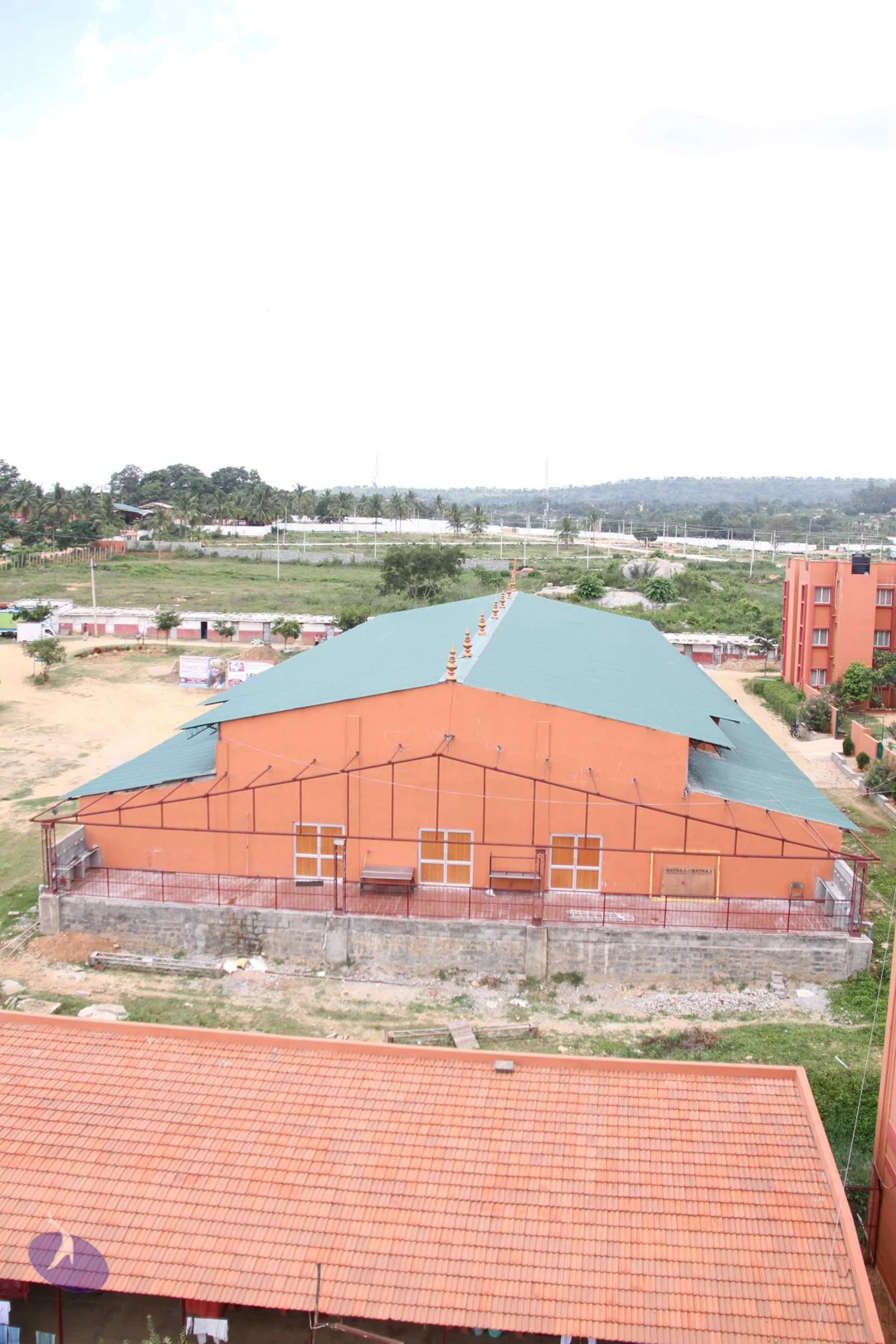
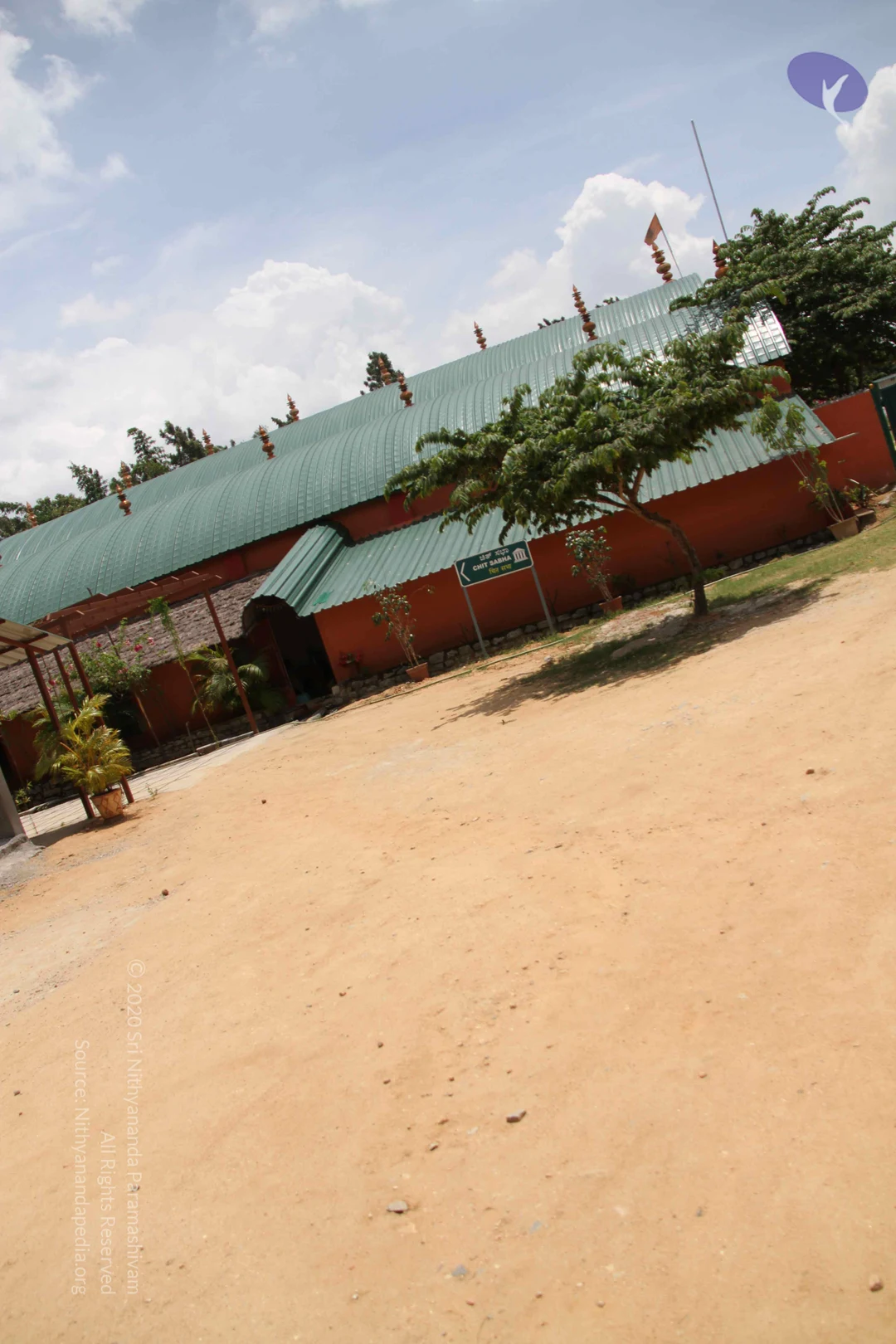
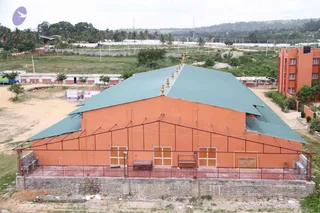
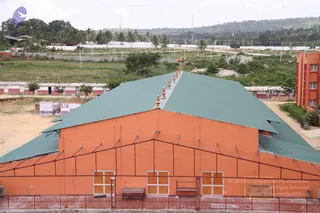
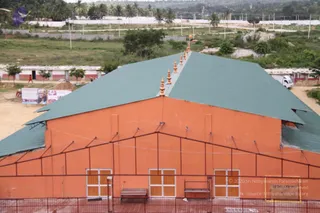
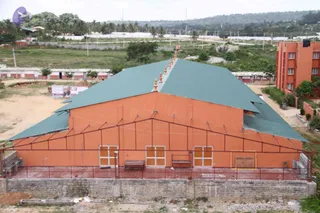
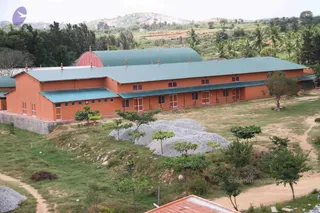
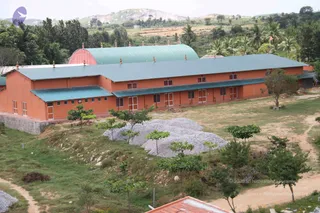
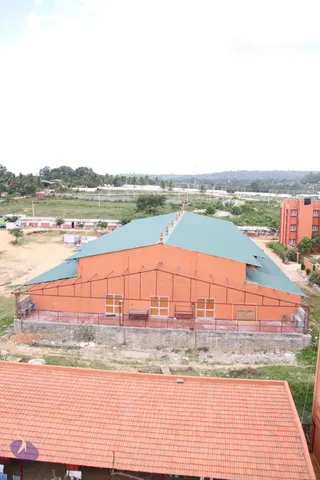
An elevated photograph of a single-storey orange-walled building with a long green corrugated roof and small golden finials along the ridge. A red metal railing runs along the front wall, with wooden-framed windows and a small signboard reading Natraj/Natraj. Beside it sit a row of white and red low buildings, a red-orange multi-storey block at right, palm trees and open dry ground with construction debris. Hills and trees lie in the distance. No people are visible.Aerial view of a large orange-walled hall with a green corrugated metal roof topped by a row of ornamental gold finials along the ridge. The building sits in an open compound with dry dirt ground, a green grassy field, scattered palm and tree clusters, and a white boundary wall in the distance under a hazy sky. Red steel framing runs along the facade, and a red fence encloses the lower area. A small banner with printed text stands on the left near the low white-and-red sheds, and a multi-storey orange building appears at the right edge. No people are visible in the scene.Aerial photo of a large orange-walled building with a green corrugated metal roof and a row of orange finials along the ridge. Beside it on the left, a banner with a portrait and text is hung on a fence in an open dirt yard. Behind the building are a white boundary wall, palm trees, scattered rocks and open land. A few small figures are visible in the distance, but no identifiable a person is shown. A white van is parked at the right edge.Aerial view of a single-storey orange-painted building with a long green corrugated roof and a row of small golden finials along the ridge. Red metal framing runs along the facade, and a red mesh fence surrounds the front. A bench sits near the entrance. Beyond, sandy open ground, scattered trees, low sheds, a multi-storey orange residential block at right, and distant hills under a hazy sky. No people are visible.Aerial view of a long, single-storey orange-walled building with green corrugated roofs and a curved red-and-green arched hall at one end, set in a landscaped compound with gravel heaps, young trees and dirt paths. Palm trees, scrubland and a rocky hill rise in the background. No people are visible.An aerial photograph of a long single-storey orange-painted building with a green corrugated metal roof and a curved green roof section behind it, with small ornamental finials along the ridges. A red-roofed structure sits at the lower edge. Gravel piles and young saplings lie on grassy ground in front, with a dirt path curving past. Palm trees, dense green trees and bare rocky hills form the background, and a small flag flies at the right.

Temple

2 photosSource gallery
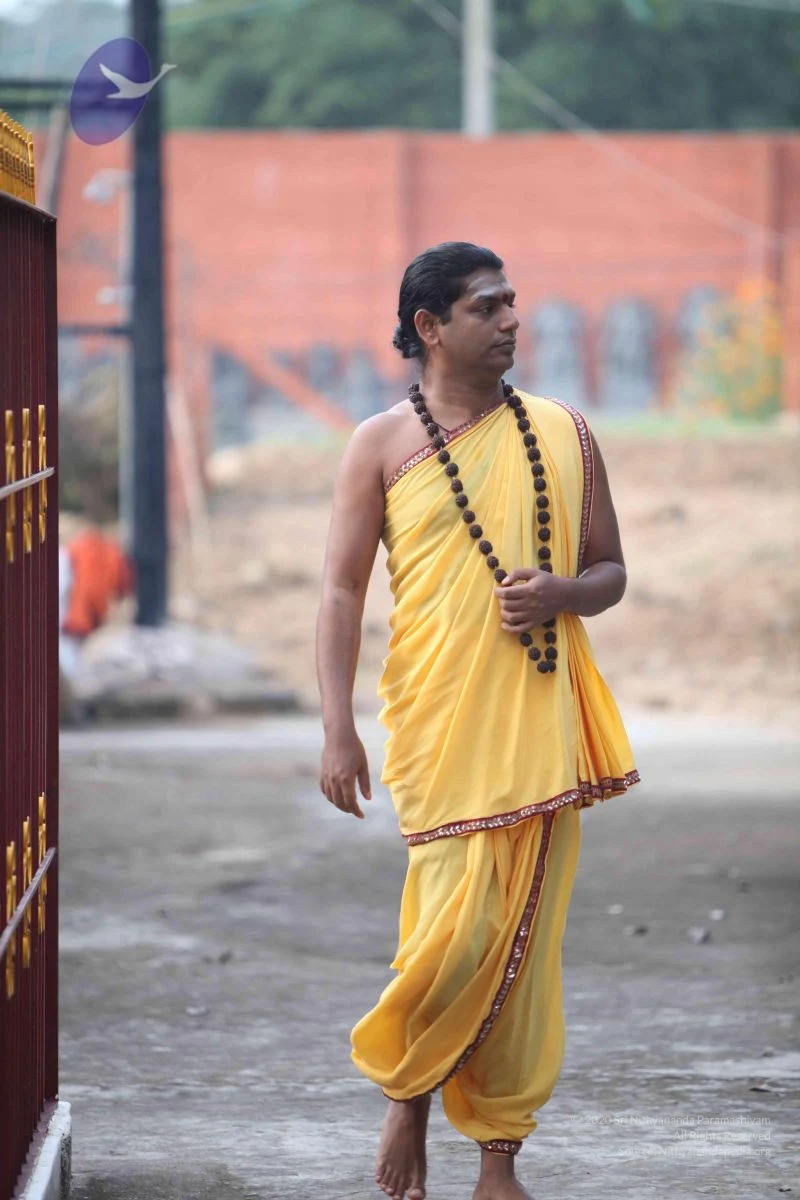
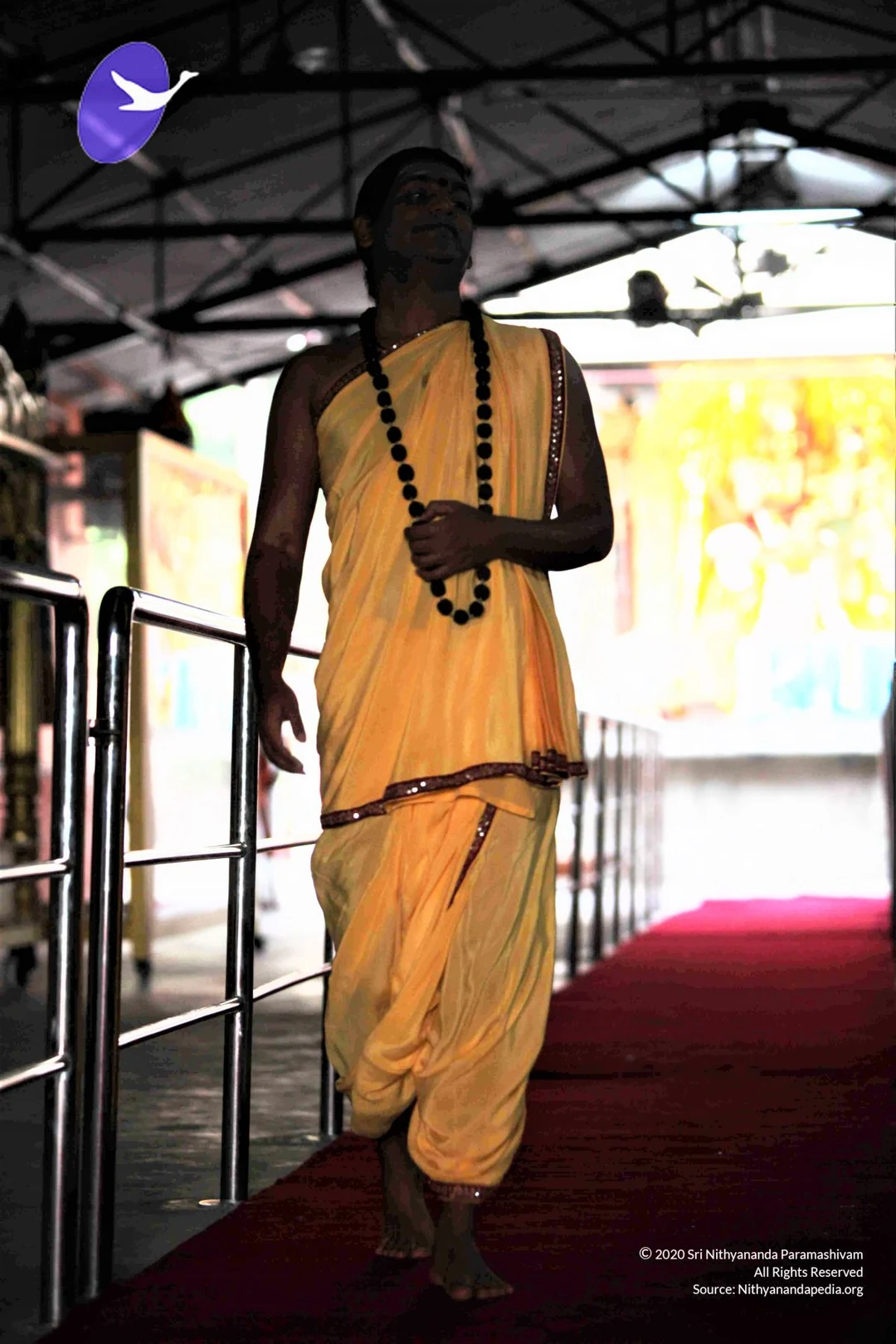
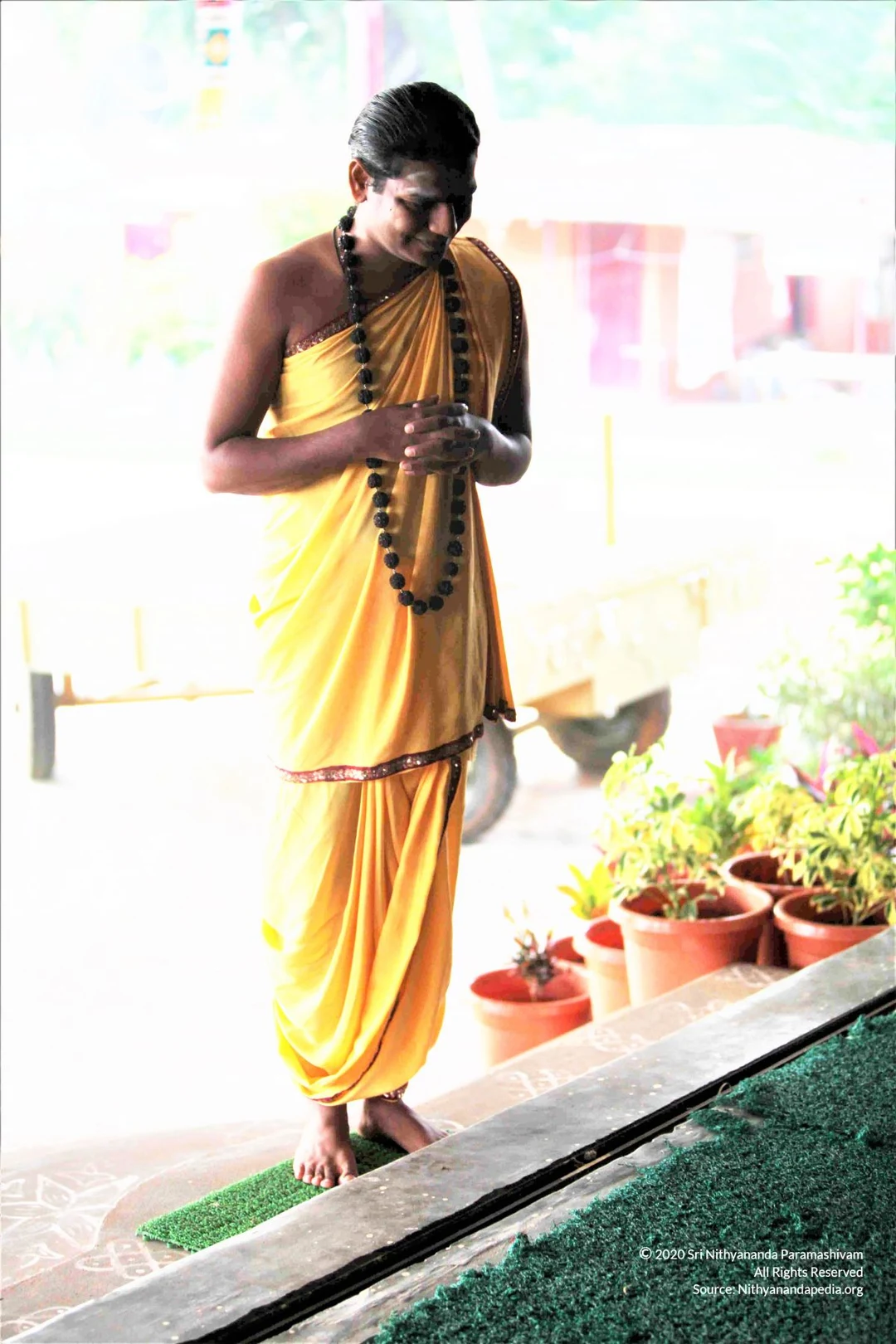
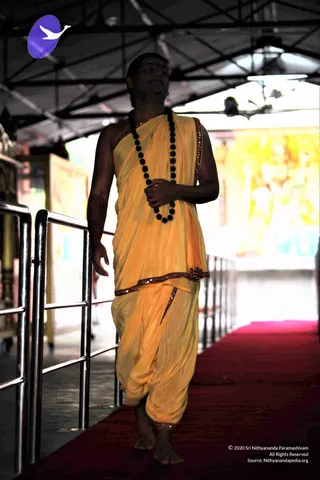
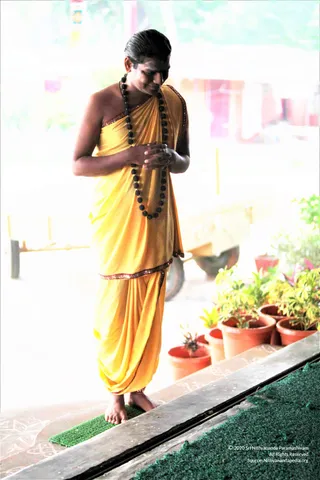
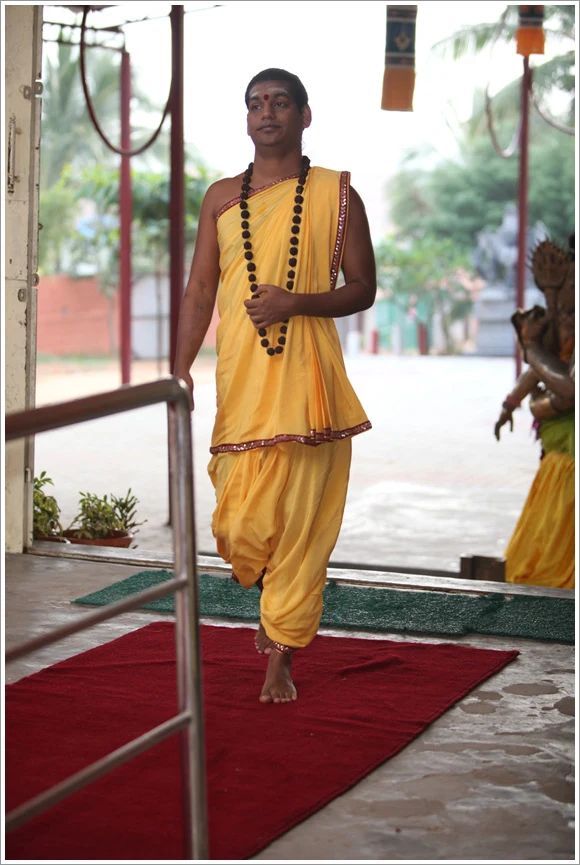
A single man walks barefoot along a red carpeted walkway inside a temple hall beneath a metal roof truss. He wears a flowing saffron-yellow garment draped over one shoulder with dark red sequined trim, matching saffron-yellow dhoti-style trousers, and a long dark rudraksha mala around his neck, which he holds with one hand. Steel handrails line the walkway, and large colourful painted panels stand in the background. The image is a photograph. Appearance cues (long-sleeved saffron wrap, dark rudraksha mala, ceremonial walk) are not distinctive enough to establish identity, so the person is described by role only as a walking devotee.A barefoot man in a yellow-orange draped garment with a gold-bordered edge stands on a green mat at a threshold, palms pressed together in namaskar and head bowed. He wears a long black rudraksha mala draped across his chest. Potted plants with green and red foliage line the step to the right, and a wheeled cart is visible in the blurred background. The white-washed doorway area shows a faint rangoli-style design on the floor. Swamiji (probable): the man has long swept-back hair, a saffron-orange draped garment and a rudraksha mala, cues consistent with the page's identification.

Pada-Puja

22 photosSource gallery
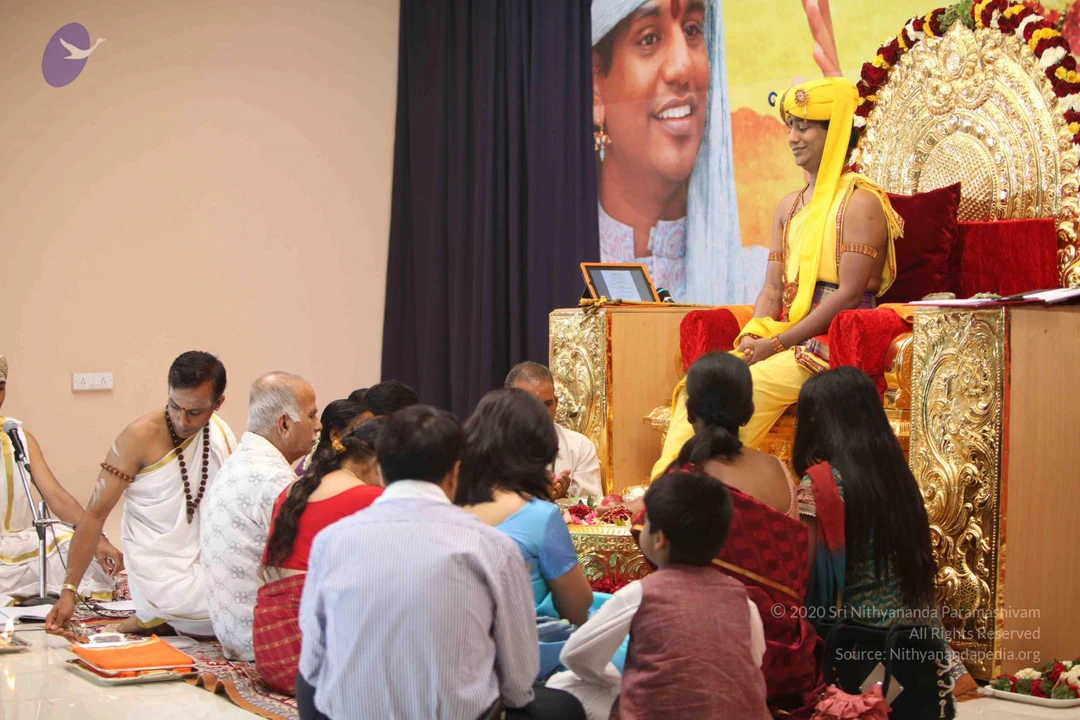
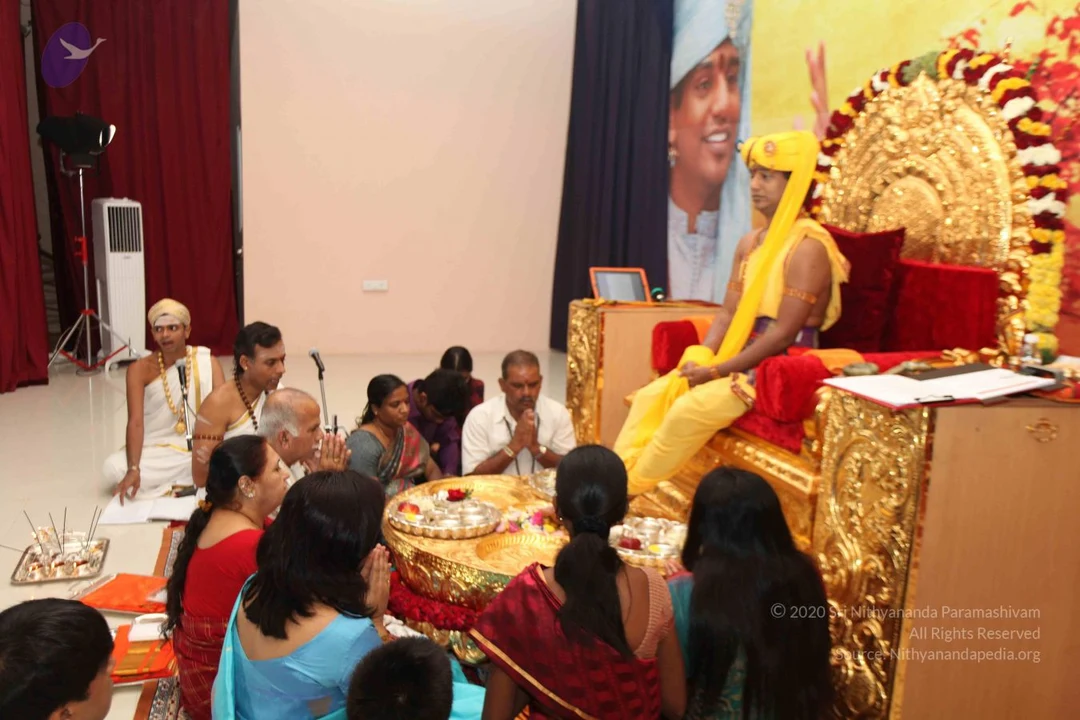
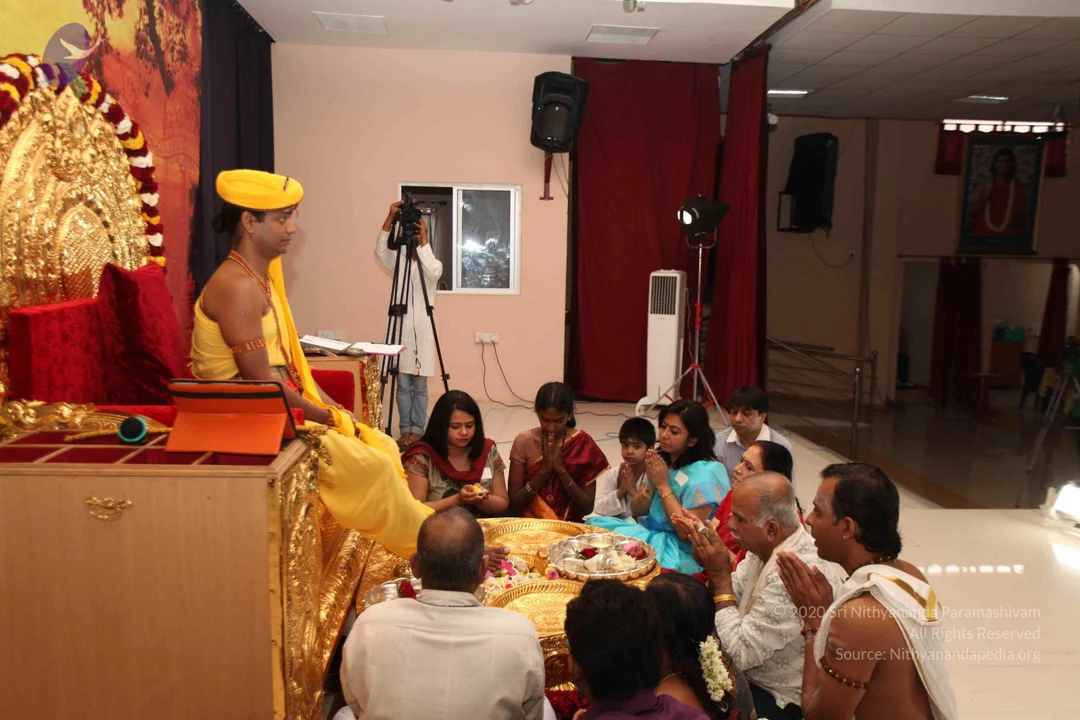
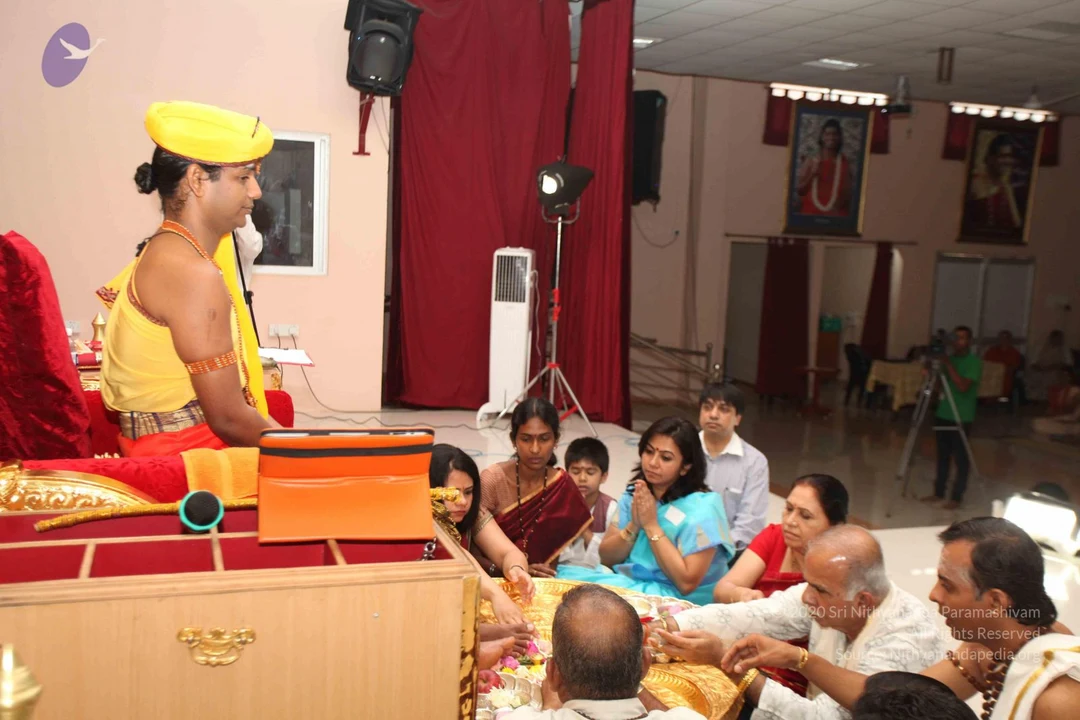
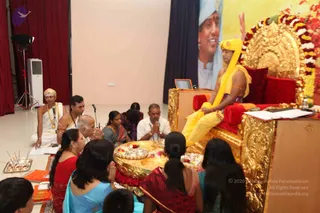
A seated man in yellow ceremonial clothing sits on an ornate gold throne with red velvet cushions, a garland of red, white and yellow roses arranged across the top of the gilded backrest. He wears a yellow turban with a blue and gold brooch, a yellow shawl draped over his shoulder and chest, a red-and-gold waistband, gold armlets, and a long orange-red beaded necklace. His hands rest folded in his lap. In the foreground at the bottom edge, the bald back of a seated person in white clothing is visible, along with a partial figure at the right edge. The man has a red bindi on his forehead, and the scene suggests a formal audience or satsang setting. Appearance-based identity is uncertain, so the subject is described by role only.A seated figure in a yellow turban, yellow garment and gold-toned waist cloth sits on an ornate gold throne with red velvet cushions, extending one bare foot toward a gold tray. Behind the throne is a framed portrait of a smiling man in a white turban, with a garland of red and yellow marigolds draped on the throne. Around the tray, devotees sit on the floor with hands folded in namaskar, including a man in white and women in saris, and offerings with flowers lie nearby. Red curtains, a pedestal fan and a wooden table with papers complete the stage-like setting.A photograph of a seated satsang in a bright hall with a gold ornate throne at right. A figure on the throne wears a yellow turban, yellow garment and yellow shawl, with gold armlets, and sits with hands in a relaxed gesture. Behind him a large printed portrait shows a smiling man in a light blue turban and blue garment, framed by red and white flower garlands. In front of the throne a gold tray holds flowers, lamps and offerings. Devotees sit on the floor with palms pressed together: a woman in a red blouse, a woman in a blue sari, a woman in a maroon sari, and a man in white. Two priests in white dhotis with gold necklaces sit at left, one with a shaved head and yellow headcloth. A microphone stand and a fan stand near the back wall. Name on portrait: a person.A seated man in a yellow turban, yellow garment and rudraksha mala sits on a gilded golden throne with red cushions, holding an open book and speaking to devotees gathered on the floor. Seated devotees in front, including a woman in a maroon sari with folded hands, a woman in a blue sari, a boy in white, and older men in white shirts and a bare-chested man with a sacred thread, pray with palms joined. Gold trays hold flower offerings and brass items. A cameraman with a tripod films in the background, beside red drapes, a speaker and a framed portrait of a garlanded deity at right.A photograph of a satsang hall where a man in a yellow turban and yellow garment with a rudraksha-style orange cord stands at a wooden lectern beside a red-upholstered seat, facing a seated group. Several devotees kneel and sit on the floor in front of a yellow cloth spread with flower offerings; a woman in a blue salwar kameez presses her palms together, while a woman in a red saree and a man in white kurta are bent forward touching the cloth. Behind them, a cameraman films beside a tripod, and framed portraits hang on the back wall between red curtains. Red and yellow tones dominate the room.A row of boys sits cross-legged on mats during a puja, with brass lamps, bowls, bananas and small brass vessels set on orange cloths in front of them. The boy in the centre wears a red-and-white checked shirt and a white forehead mark, while the boy at right wears a red t-shirt with a logo and a red thread bracelet. Other seated people in orange and white clothing are blurred in the background, and red curtains hang at the back of the hall.

Bhagavad-Gita-Satsang

12 photosSource gallery
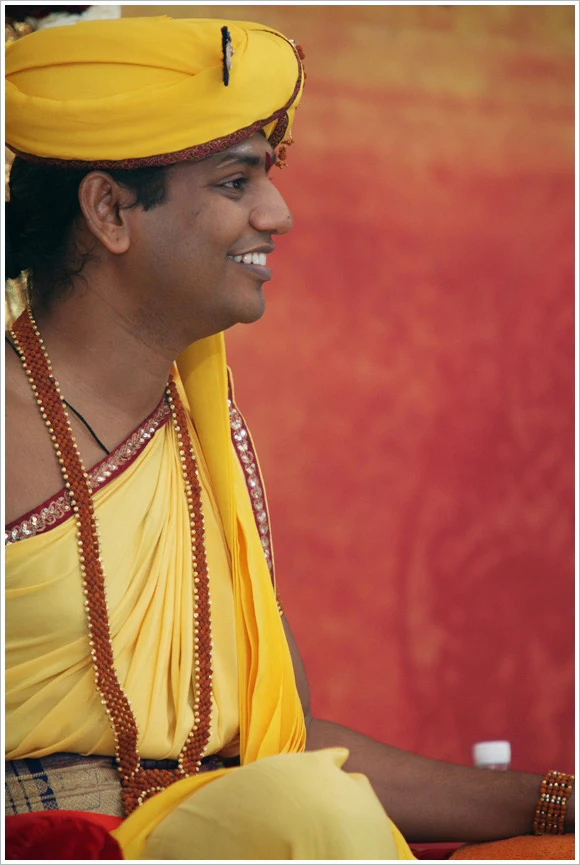
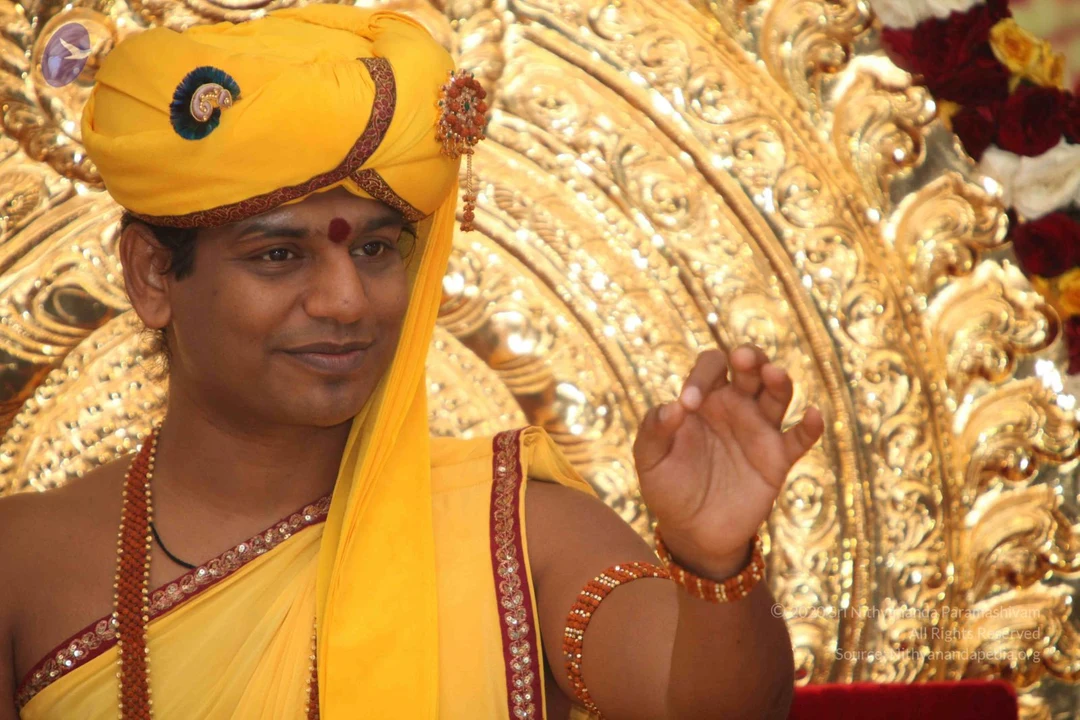
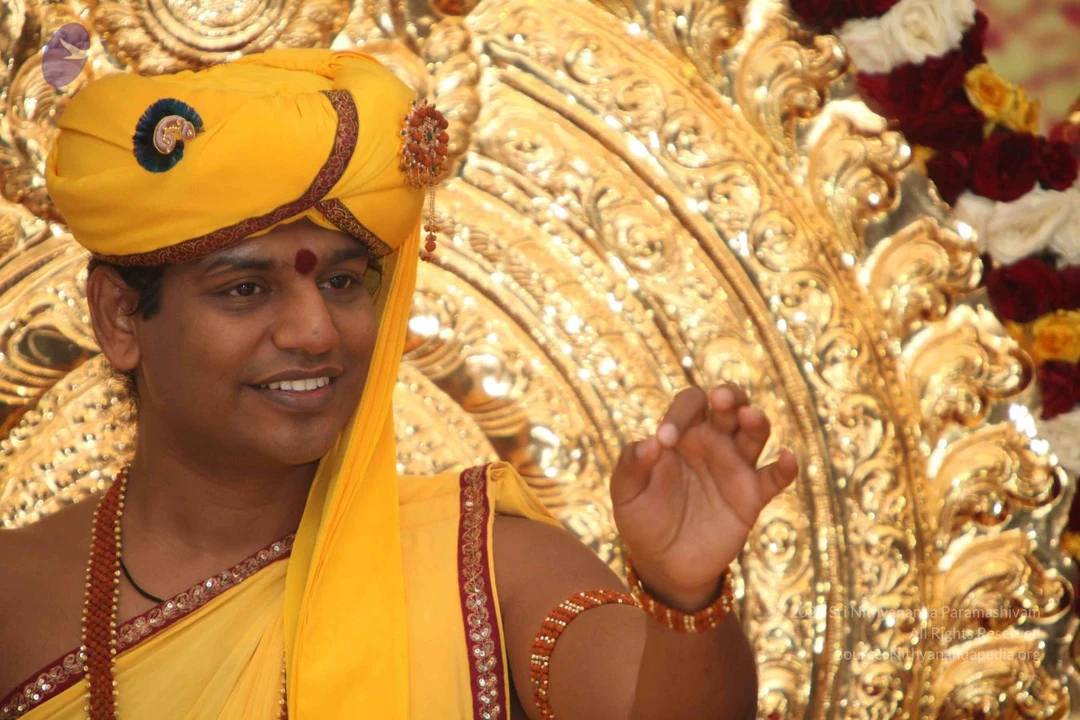
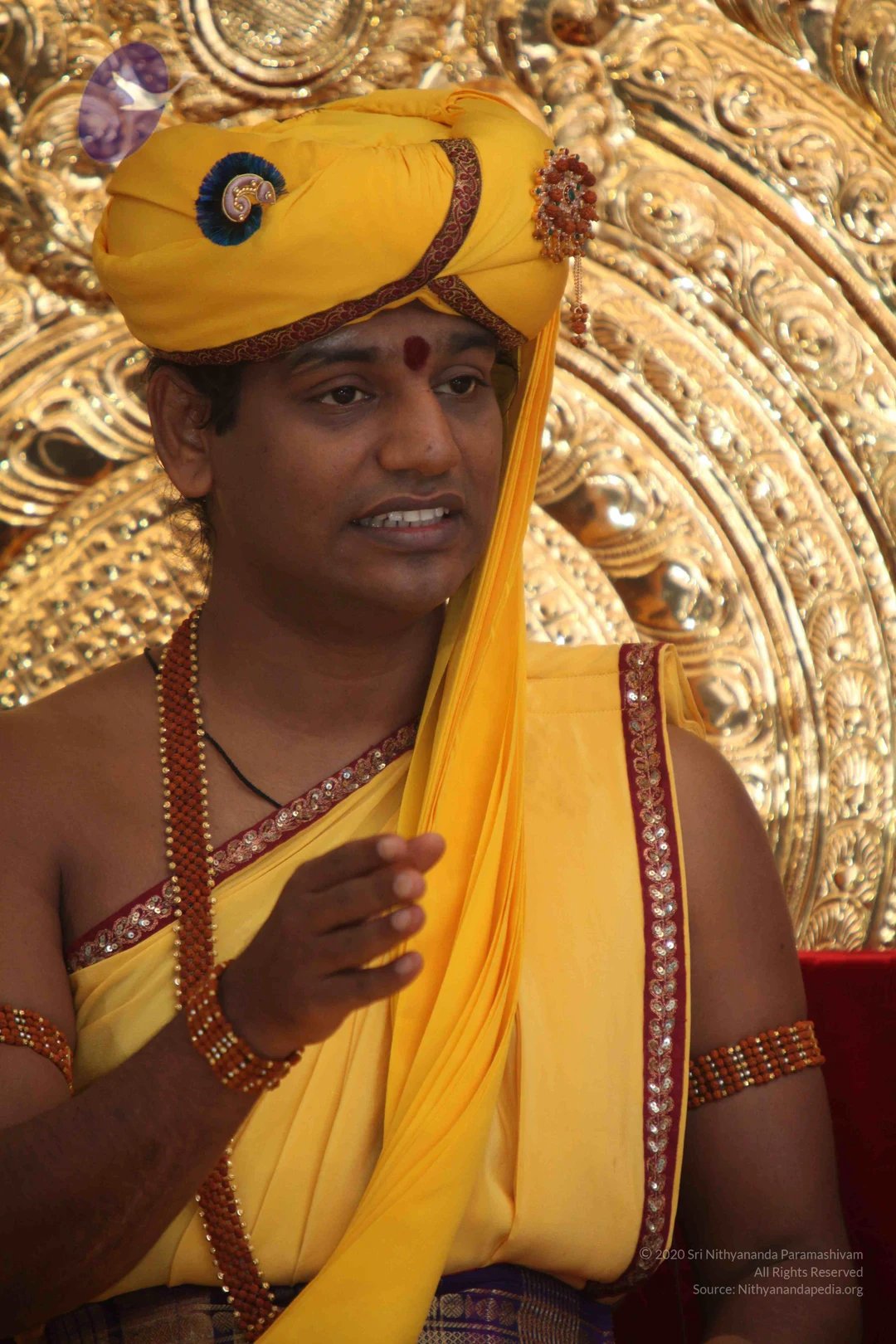
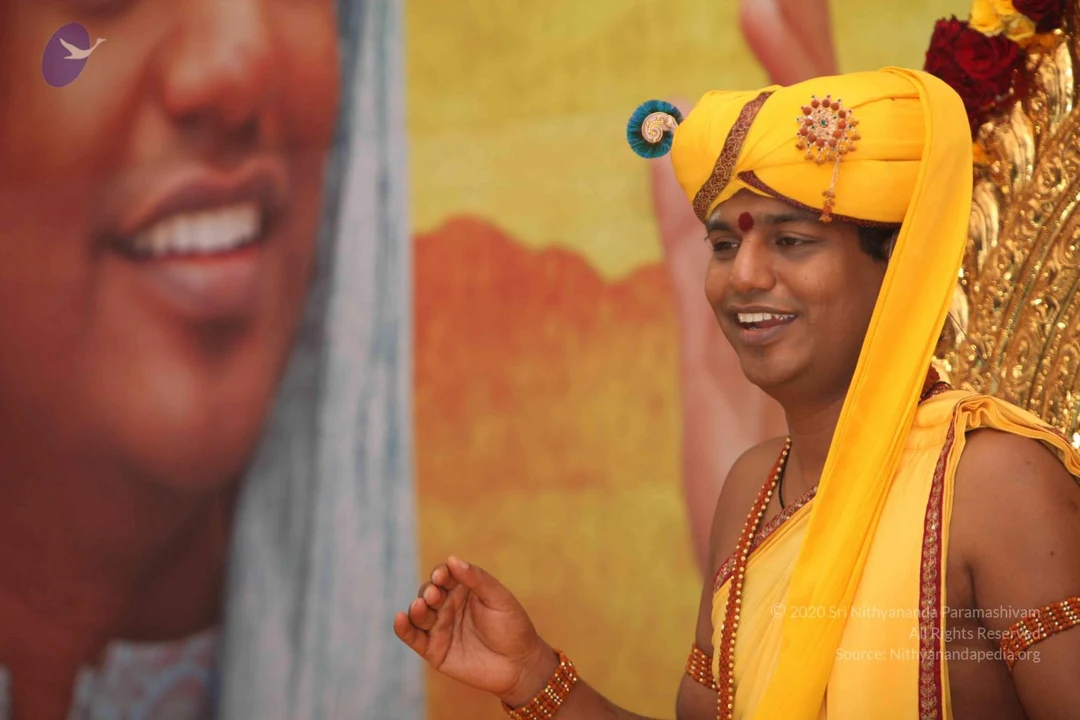
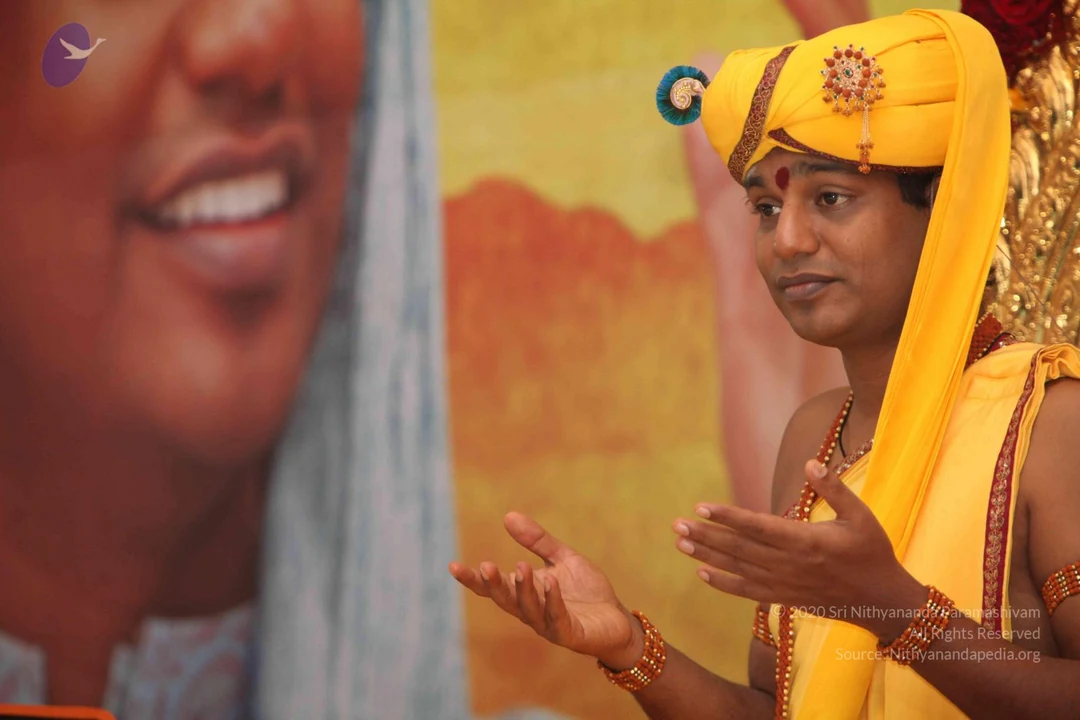
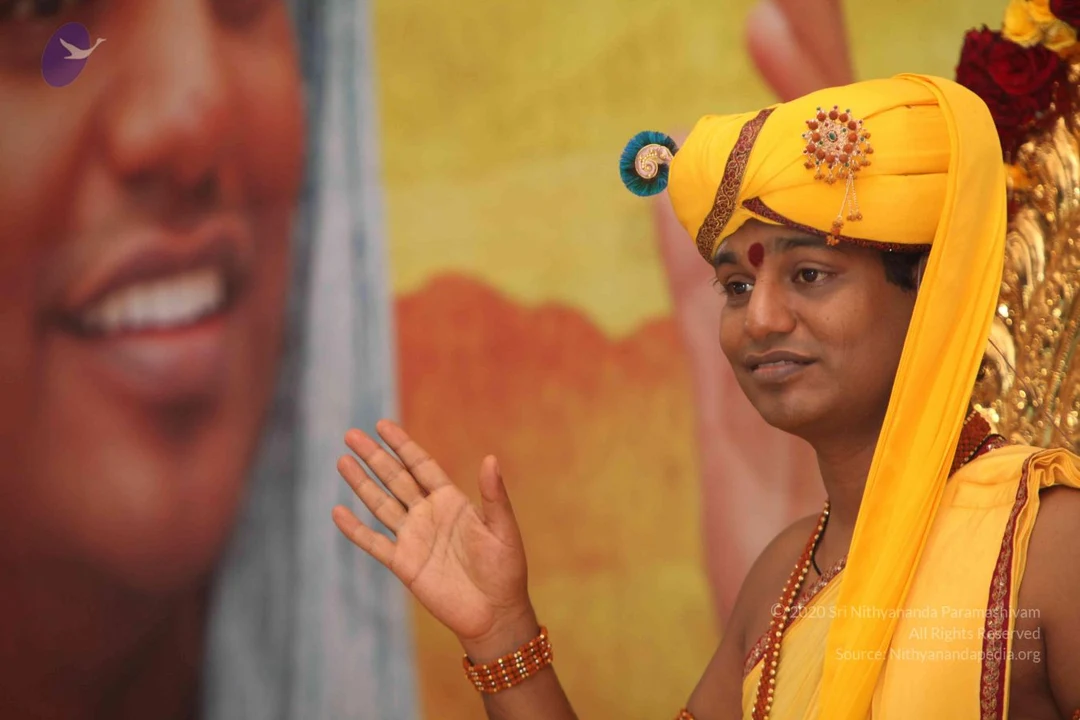
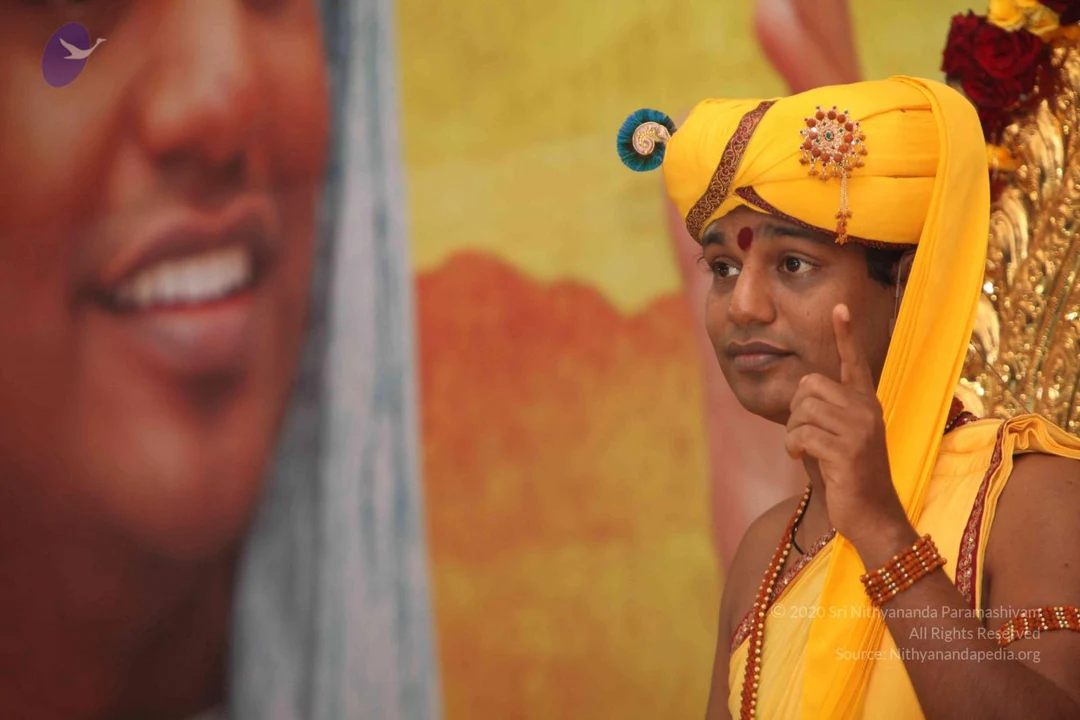
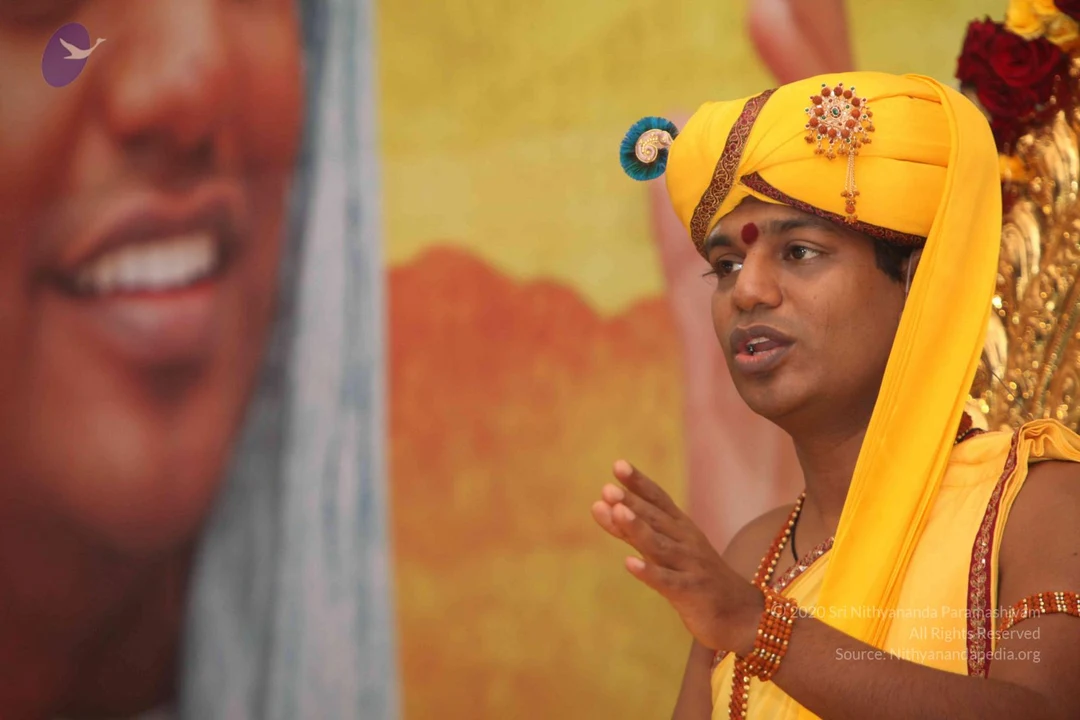
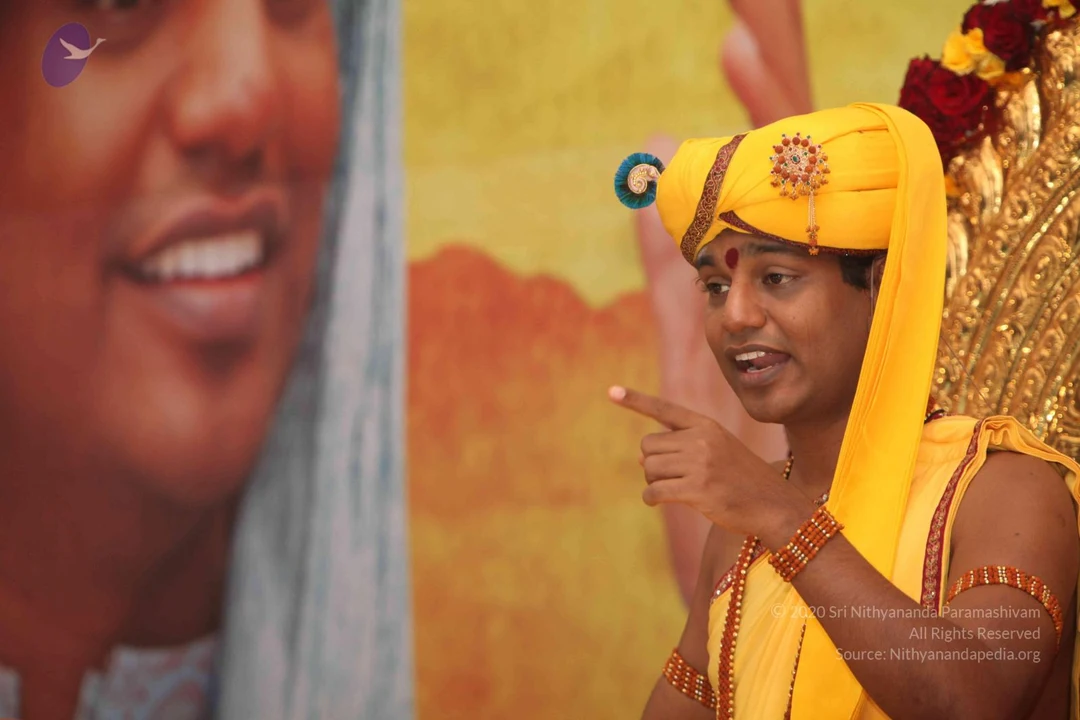
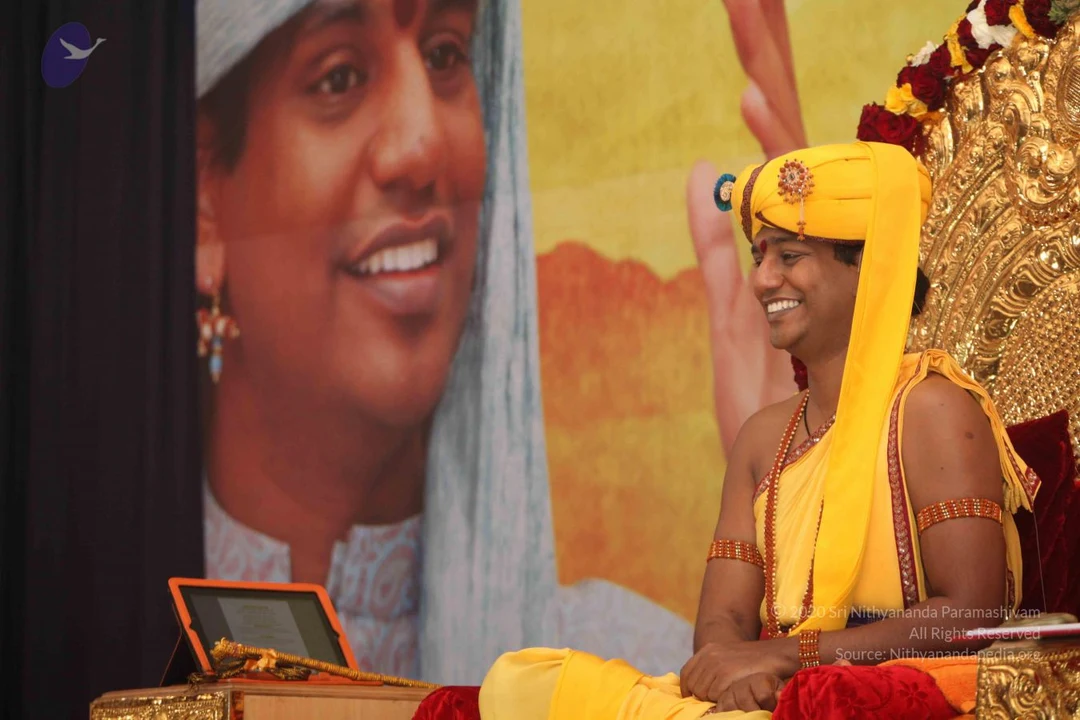
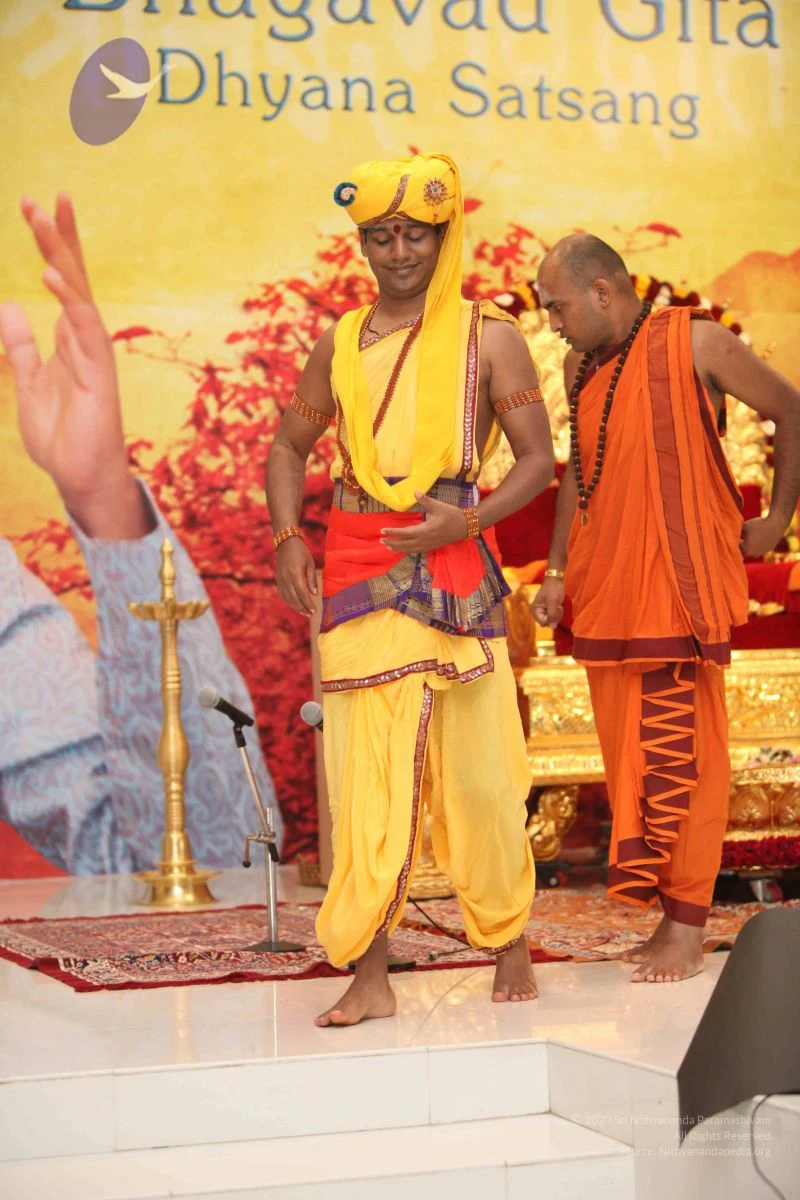
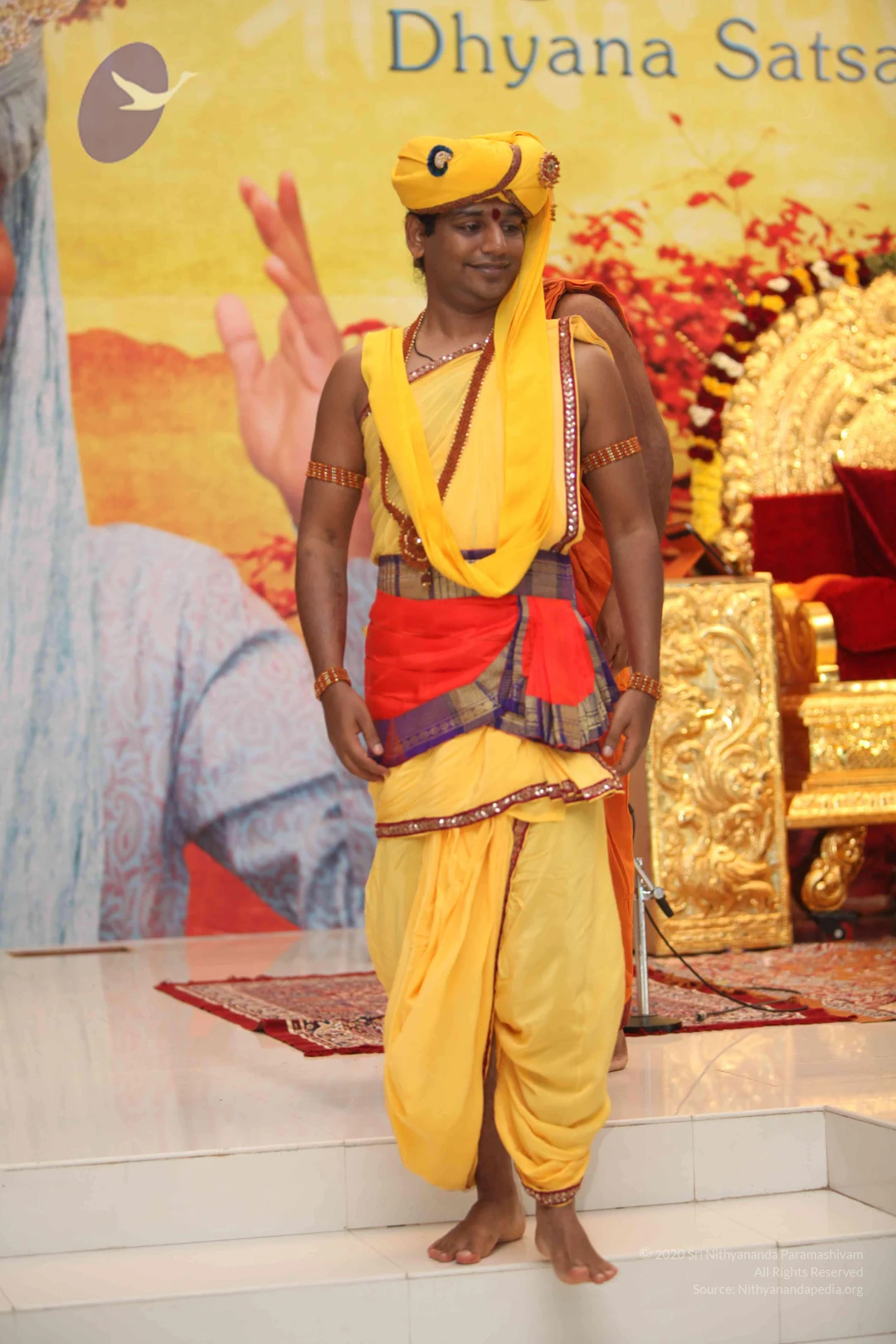
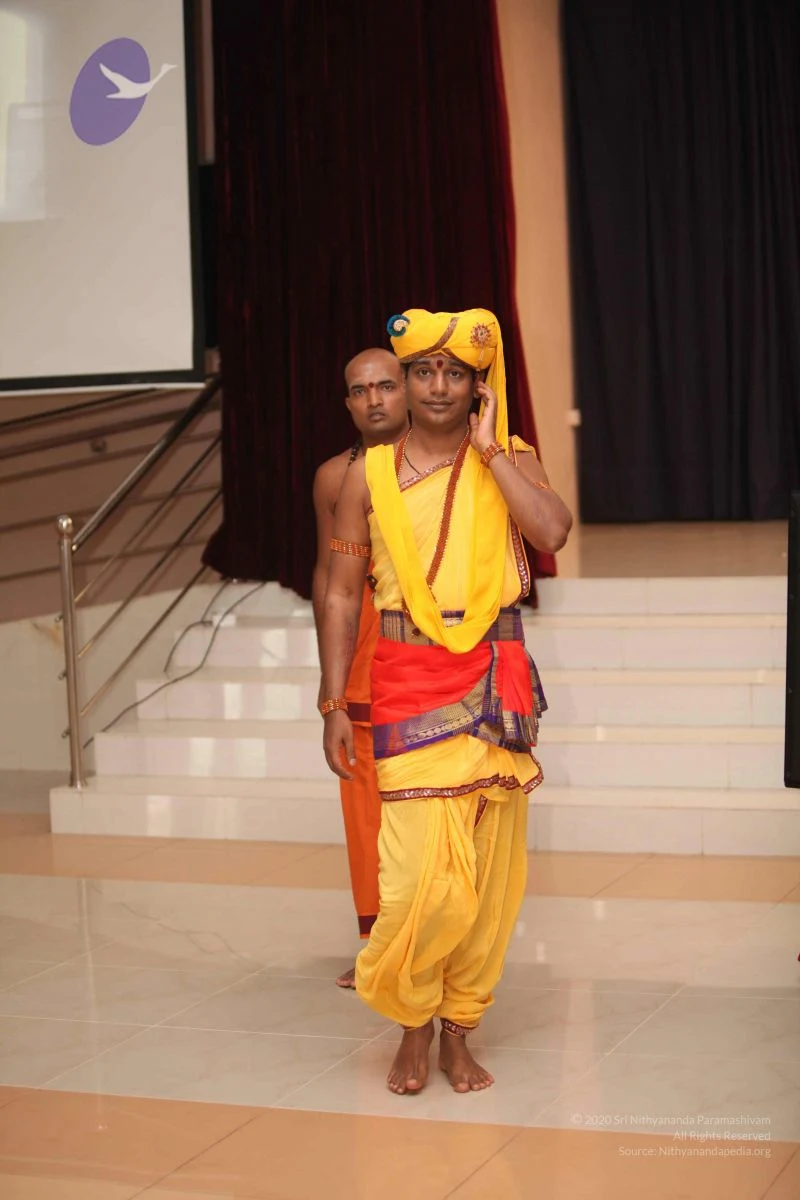
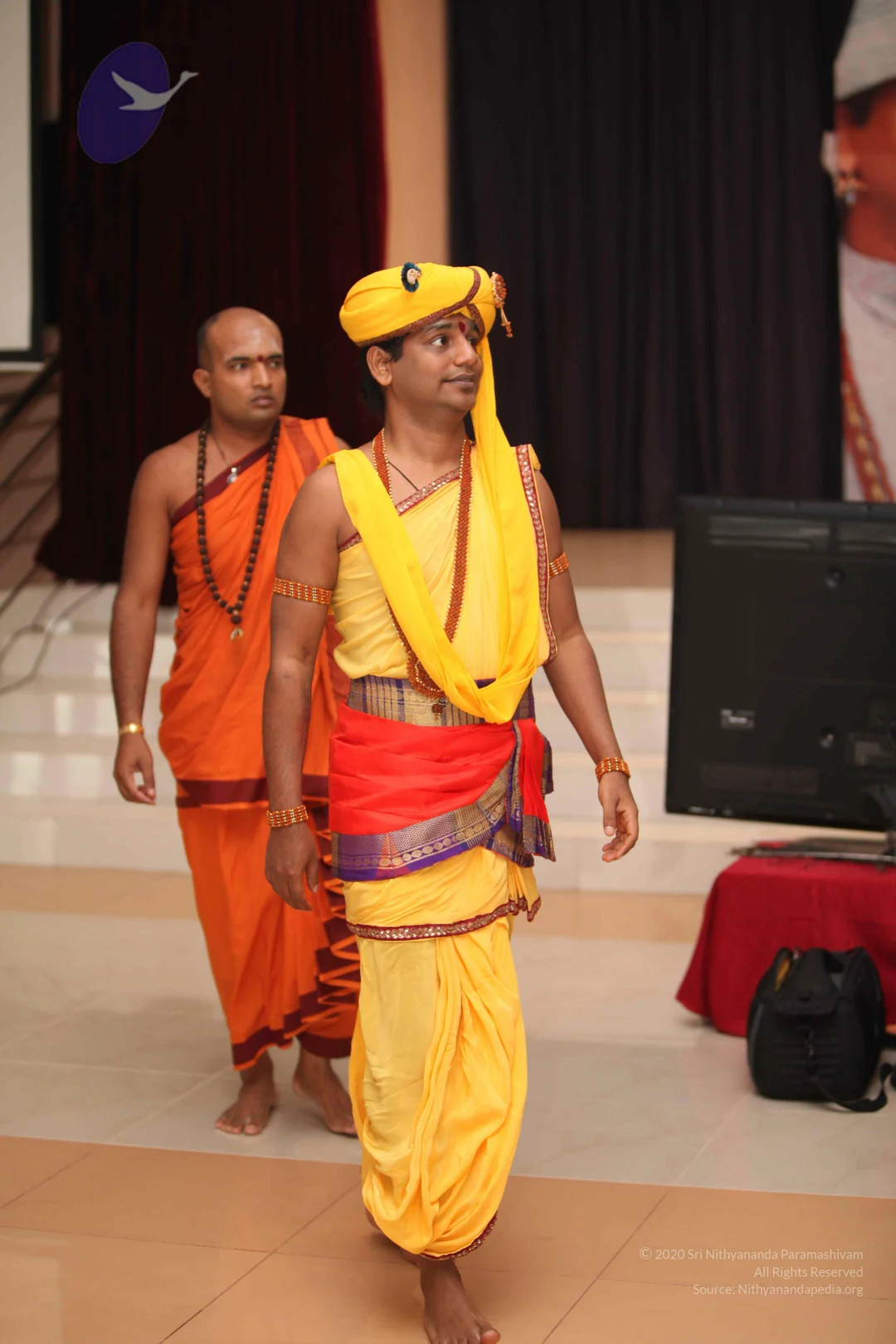
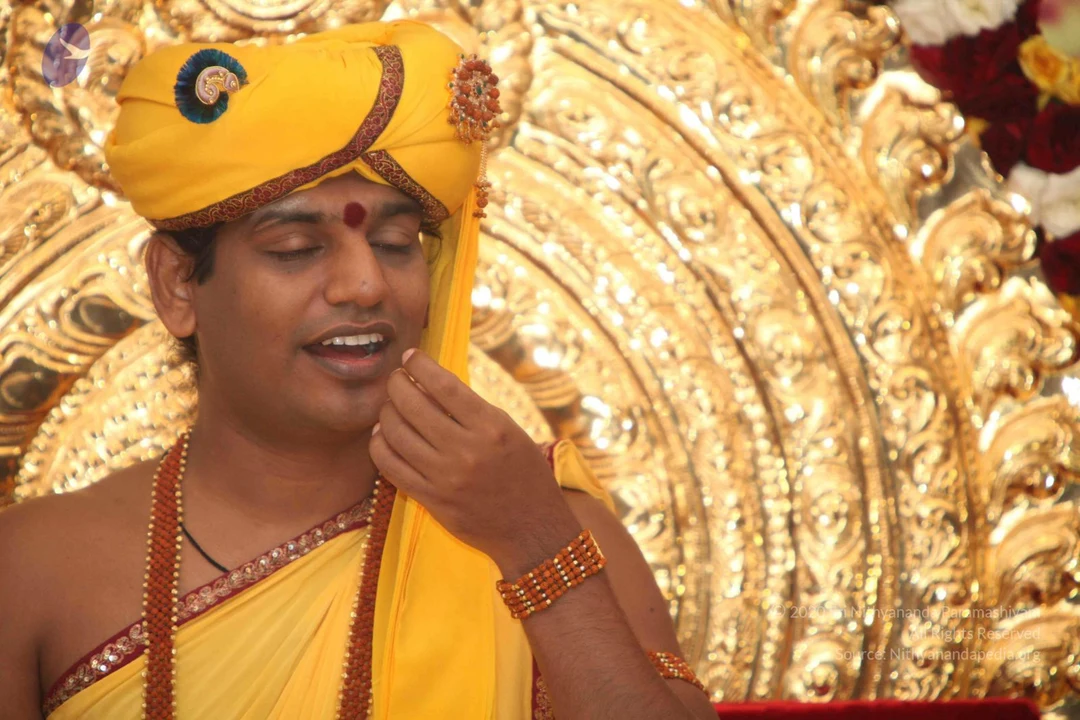
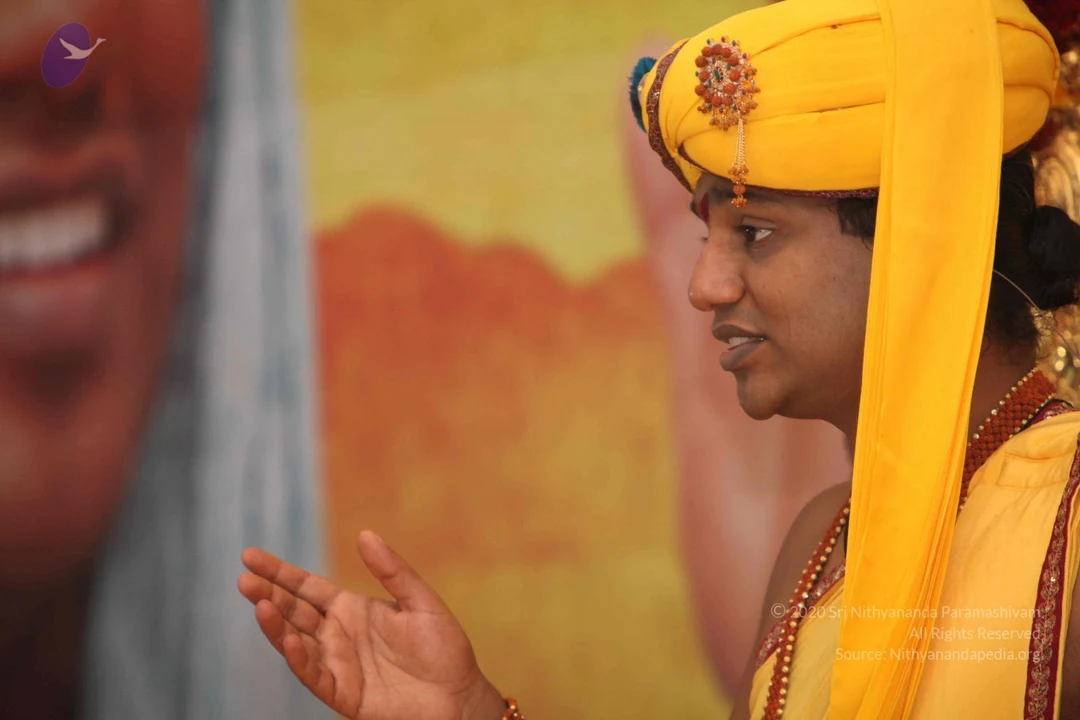
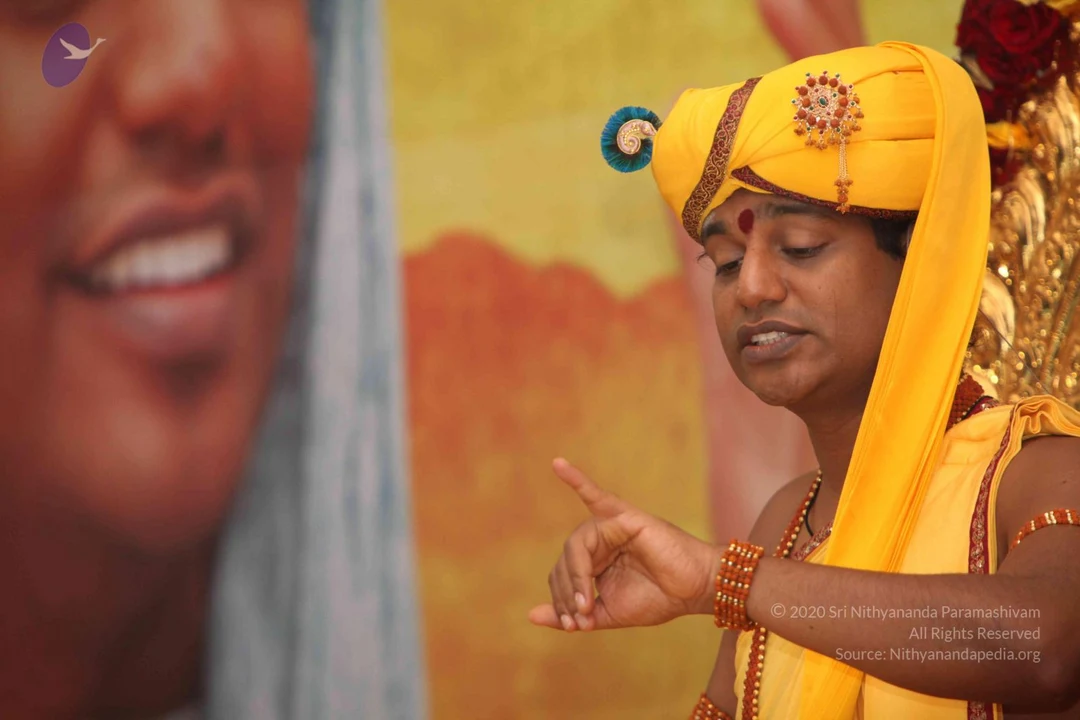
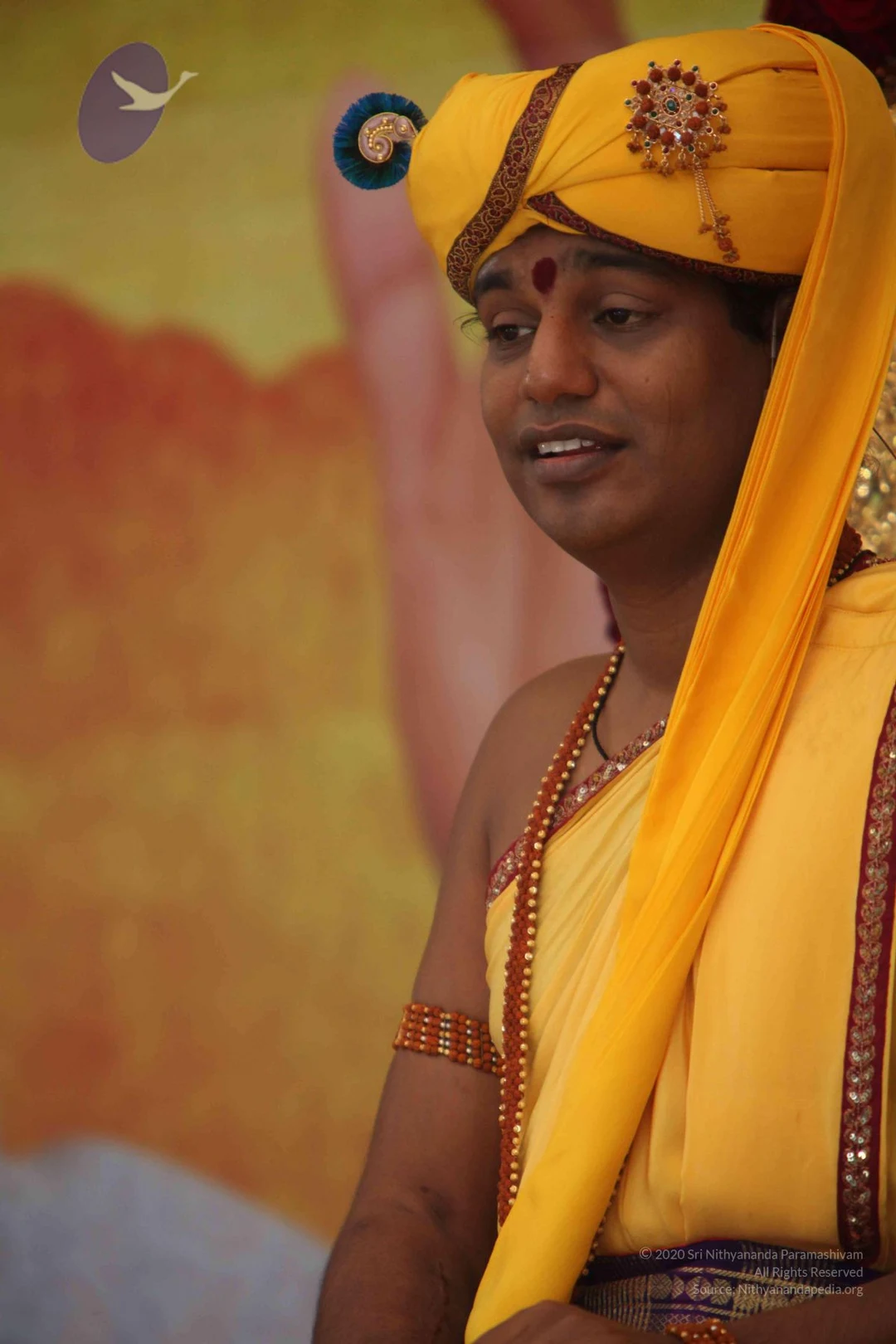
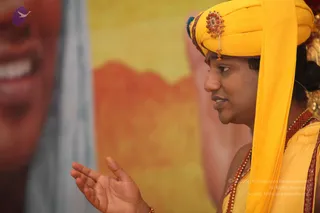
A seated man in a yellow turban and yellow garments sits cross-legged on a red velvet cushioned seat before an ornate gilded throne backrest decorated with red and yellow roses and white flowers. He holds his palms together in anjali mudra with eyes closed, wearing a red bindi, a red-and-gold beaded mala across his chest, and beaded bangles on his wrists and upper arms. The yellow turban has a blue ornamental feather-like accent and a gold brooch. Printed on the lower right is a , . The image is a photo of a meditative, devotional sitting, consistent with a discourse setting. a person is seated in the centre, identified by the turban, bangles, mala and anjali pose, with the seat and flowers indicating a throne-like arrangementA seated man in yellow ceremonial dress sits before an ornate gold repoussé backdrop with a red cushioned seat, facing slightly to the side. He wears a yellow turban with a jewelled brooch and a red tilak on his forehead, a yellow shawl draped over his shoulders, and a long rudraksha mala with a red and gold ceremonial pendant. Gold-toned armlets and bangles are on his arms, and his hands are clasped at his chest. Red and yellow roses and marigold-like flowers decorate the right edge. a person: the saffron-yellow turban, ornate yellow shawl, rudraksha mala and gold-toned adornments are consistent with the page's reference, while the person's appearance is only partly confirmed; he is a seated person in ceremonial garb during a satsang-style setting.Close-up of a seated figure in yellow ceremonial clothing, with a yellow shawl draped over the shoulder and a red-and-white bordered garment. Long rudraksha mala beads with a large rudraksha pendant hang on the chest, and matching rudraksha armlets and wristbands adorn the arms. The hands are held together in a mudra in front of the chest. Behind is a red cushioned seat and an ornate golden backdrop. The face is cropped out of frame. a person is identified by the rudraksha malas, saffron-yellow clothing and ornate seated setting, though the face is not visible.A man seated before an ornate golden throne back with floral carvings, gesturing with his right hand as he speaks. He wears a bright yellow turban with a dark blue peacock-eye ornament and a gold brooch, a yellow shawl draped over his shoulder with a red-and-gold border, and a red bindi on his forehead. He has a rudraksha mala around his neck and red beaded bracelets. Garlands of red and white flowers hang at the right edge of the frame. Swamiji (probable) appears as the seated speaker in saffron-yellow ceremonial clothing with distinctive turban and malas, giving a discourse.A man seated before an ornate gilded backdrop with repoussé scrollwork, speaking with eyes closed and one hand raised near his cheek. He wears a bright yellow turban with a blue feather and gold brooch, a red bindi, a yellow shawl edged with red and gold trim, and layered orange-red beaded necklaces and bracelets. Red and white flowers appear at the upper right corner of the frame.A photo of a man in profile speaking at a satsang-style event. He wears a bright yellow turban with a red and gold jewelled brooch and a long yellow shawl draped over his shoulder, with rudraksha-style red beads around his neck and a red tilak on his forehead. His raised right hand gestures mid-discourse. Behind him is a yellow-orange painted backdrop, and a blurred portrait of a smiling face appears at the left edge. A photo of the speaker in saffron-yellow robes, a printed portrait of a smiling face in the background, and a raised hand gesturing as he speaks. The event is a discourse, and the single visible speaker is the only physical person.

ADI-KAILASA
14 photosSource gallery
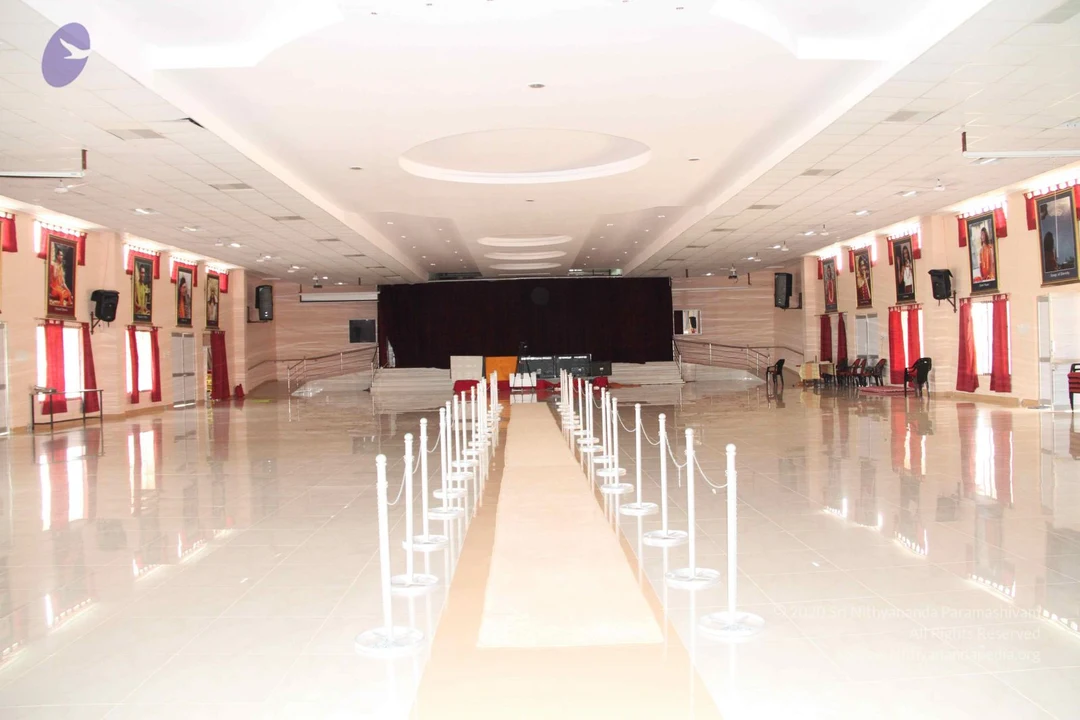
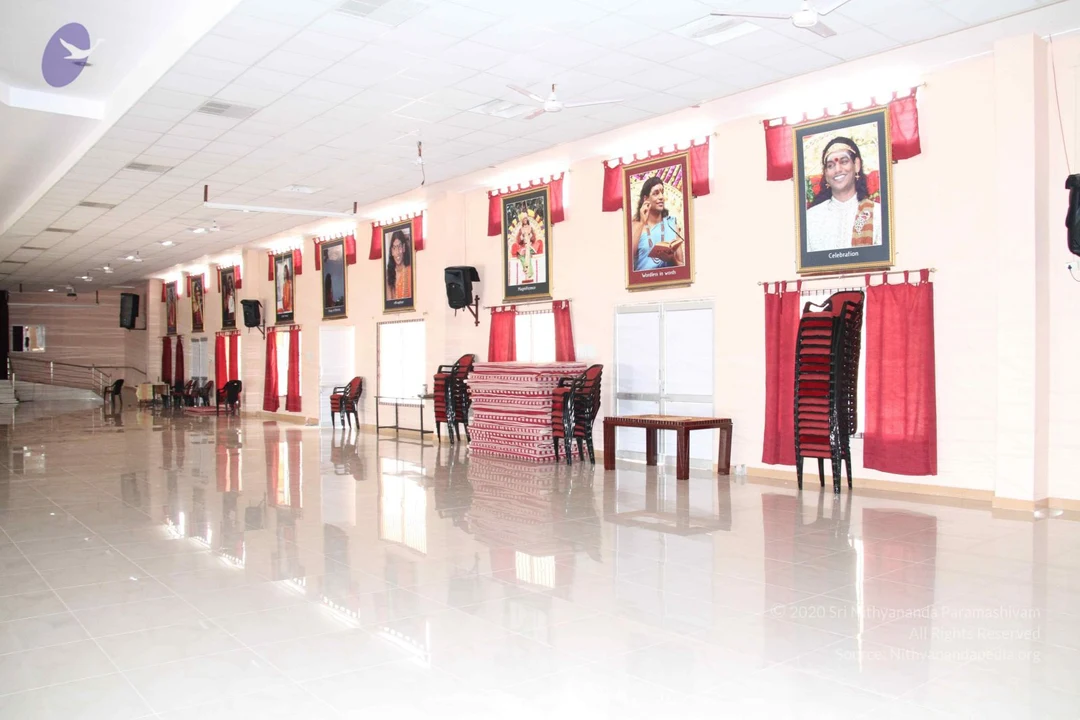
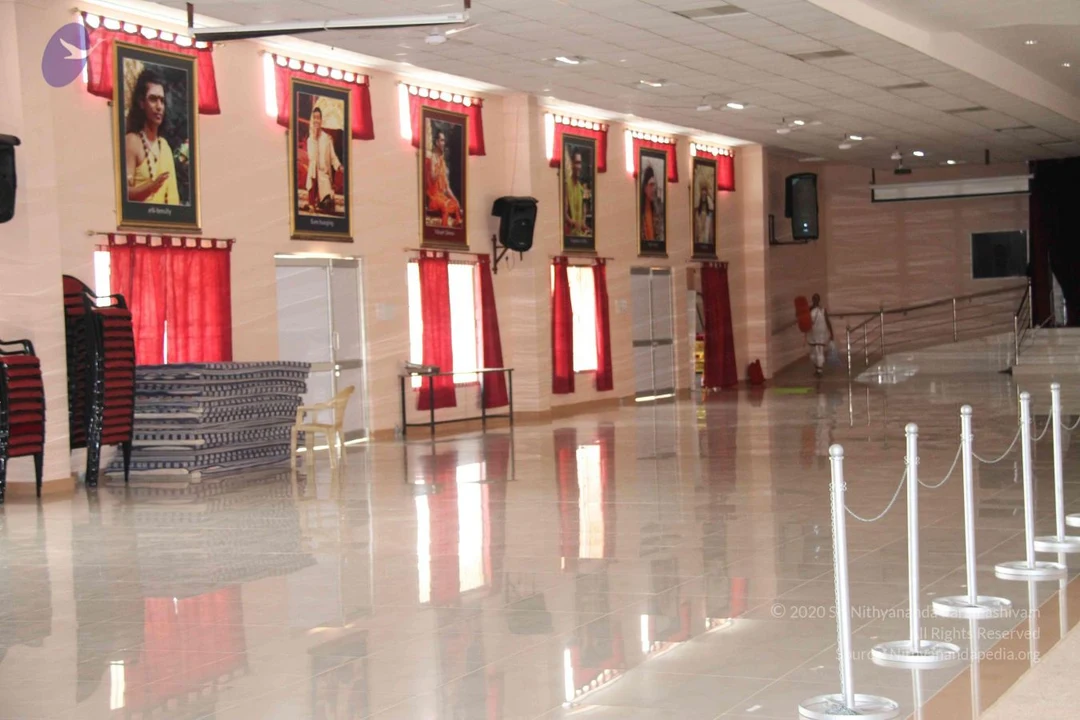
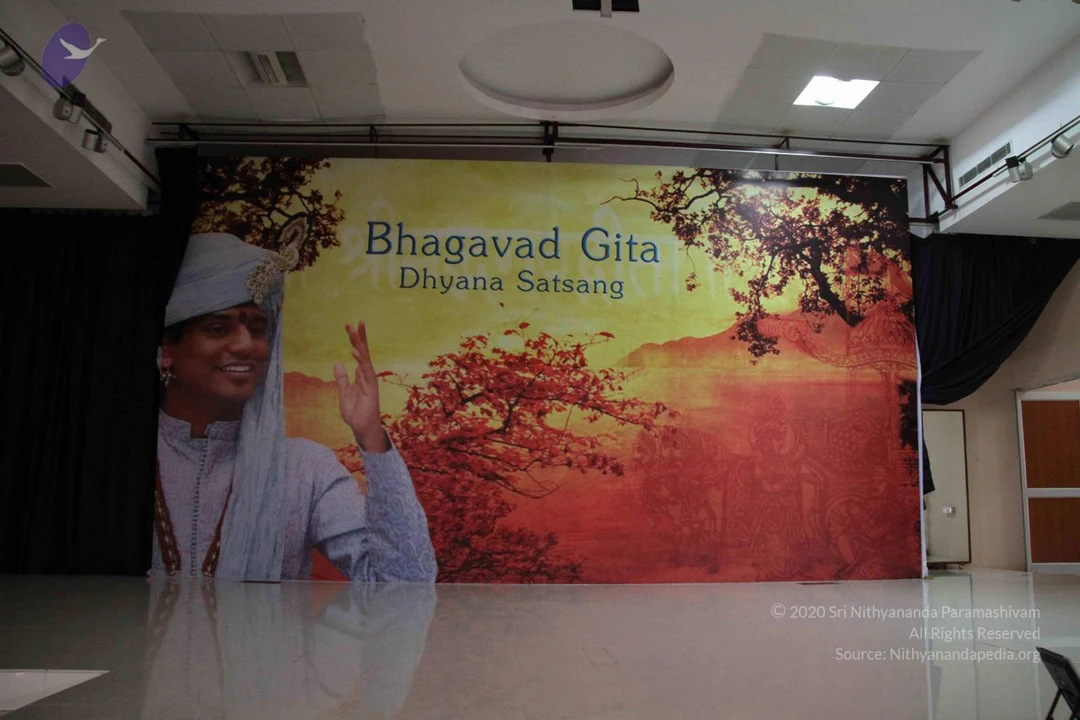
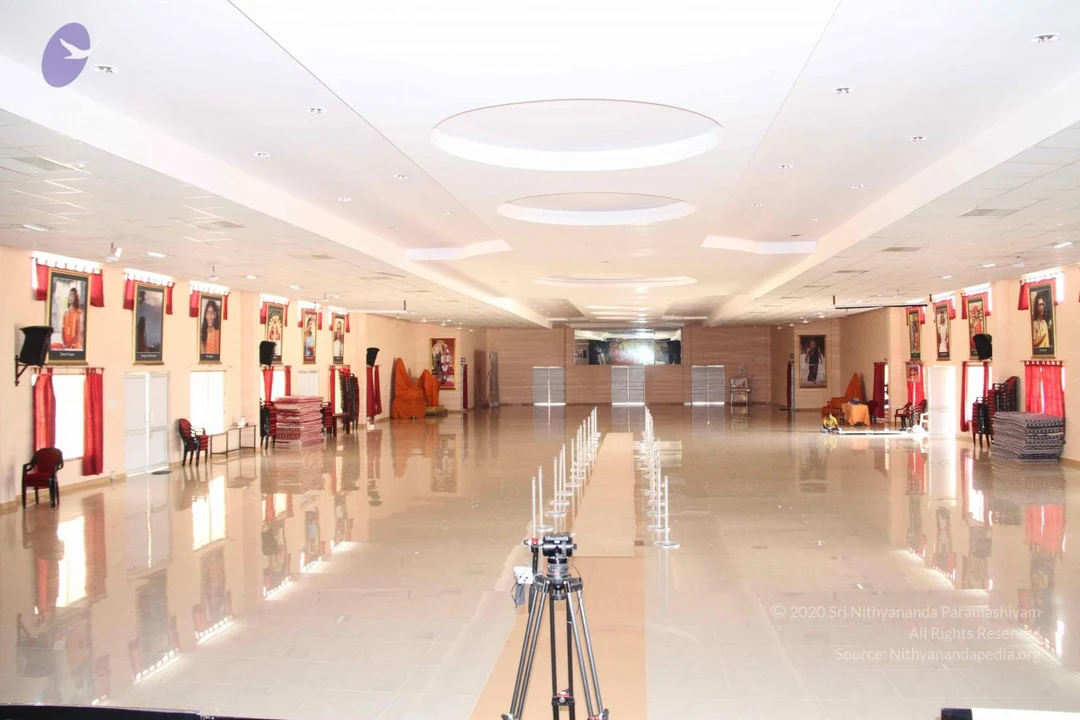
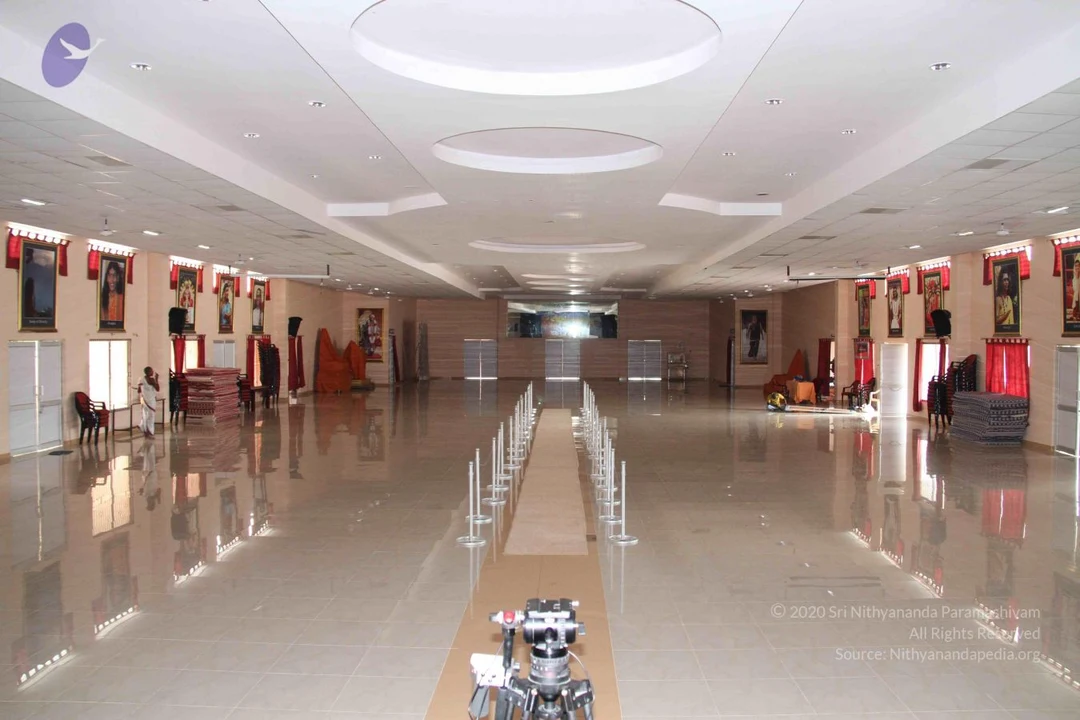
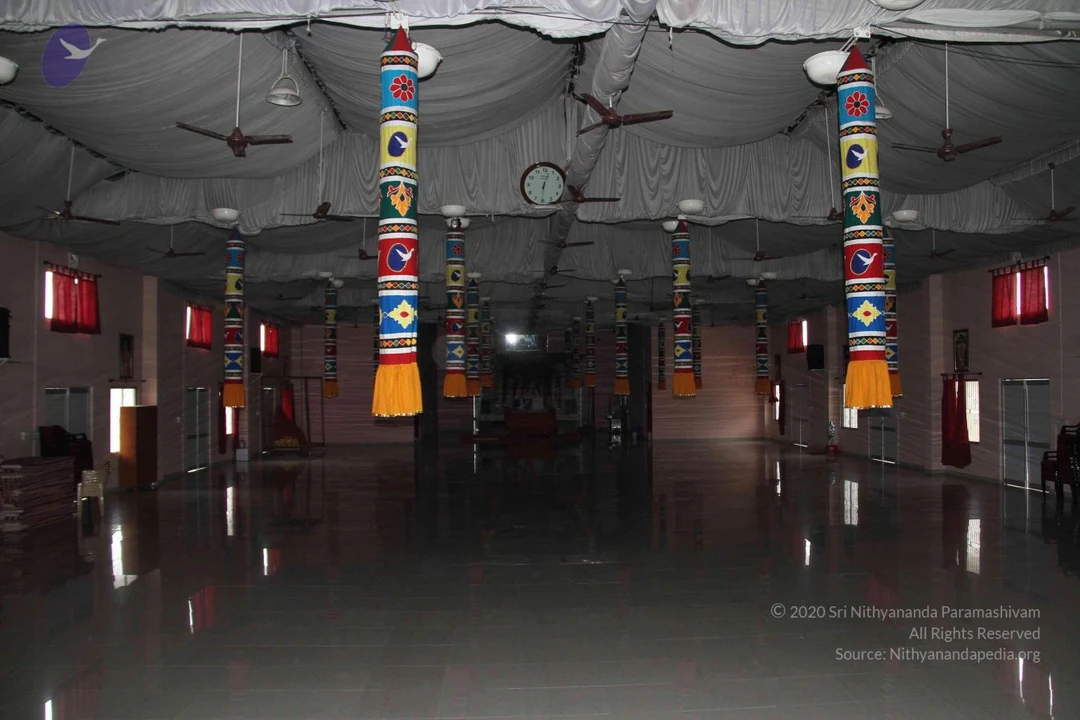
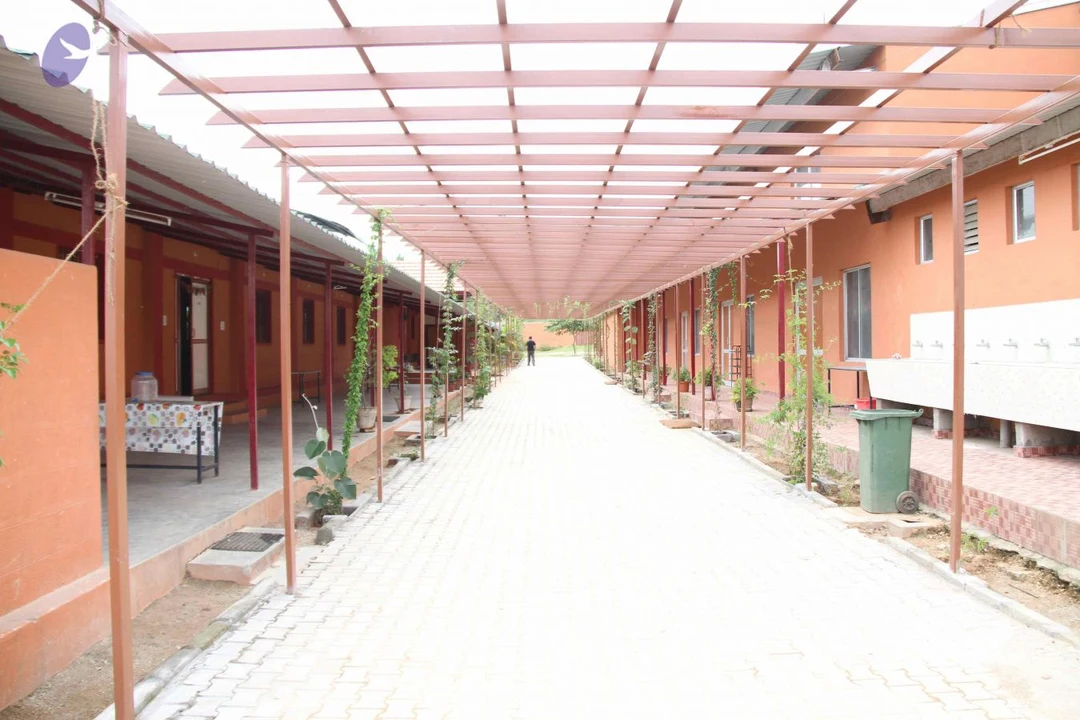
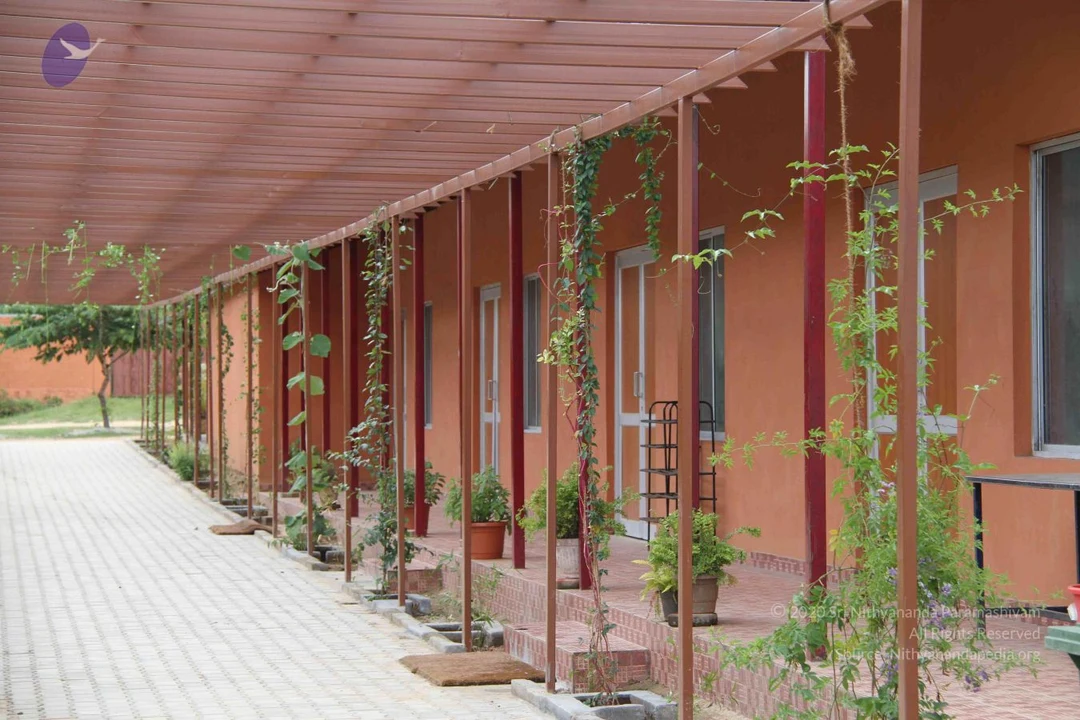
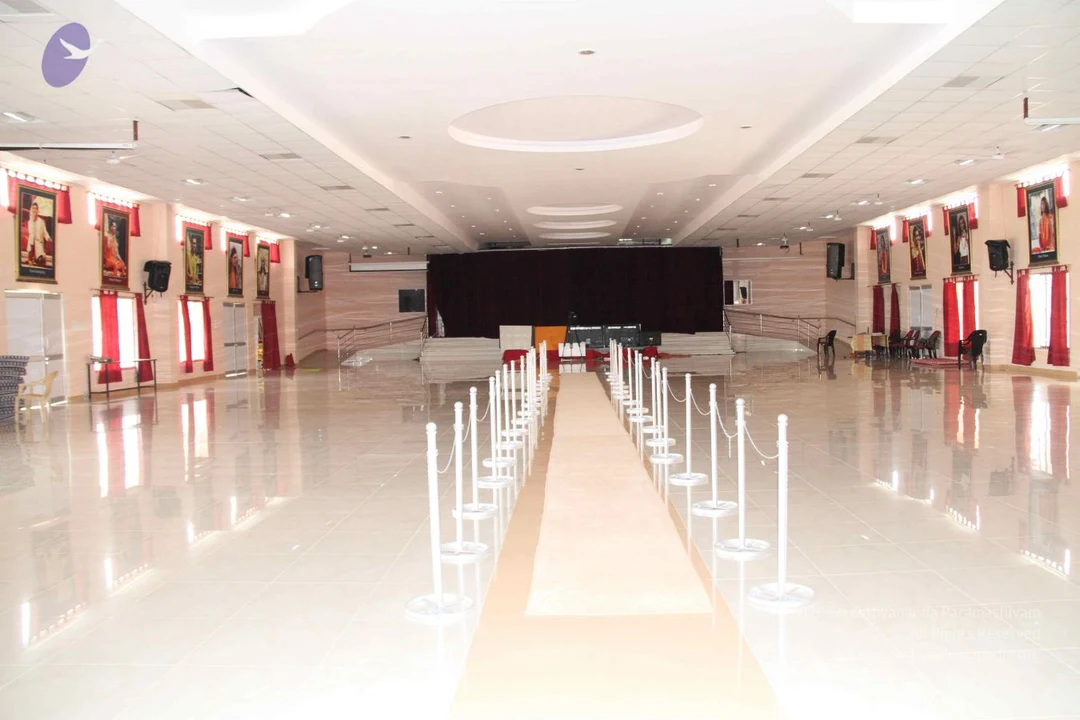
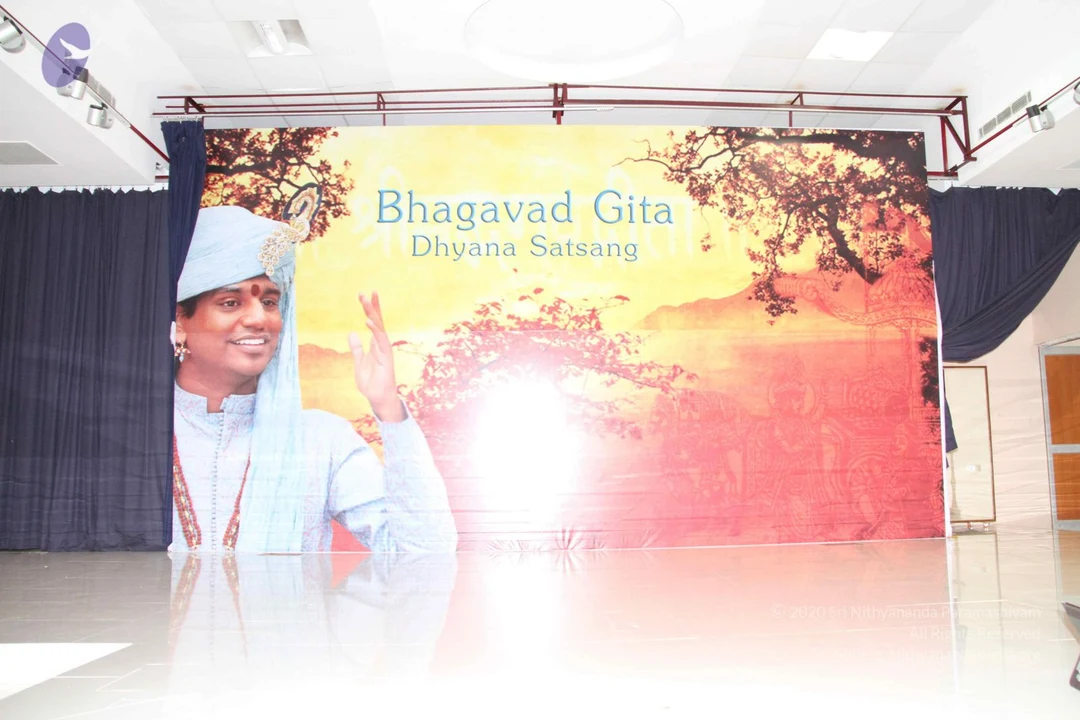
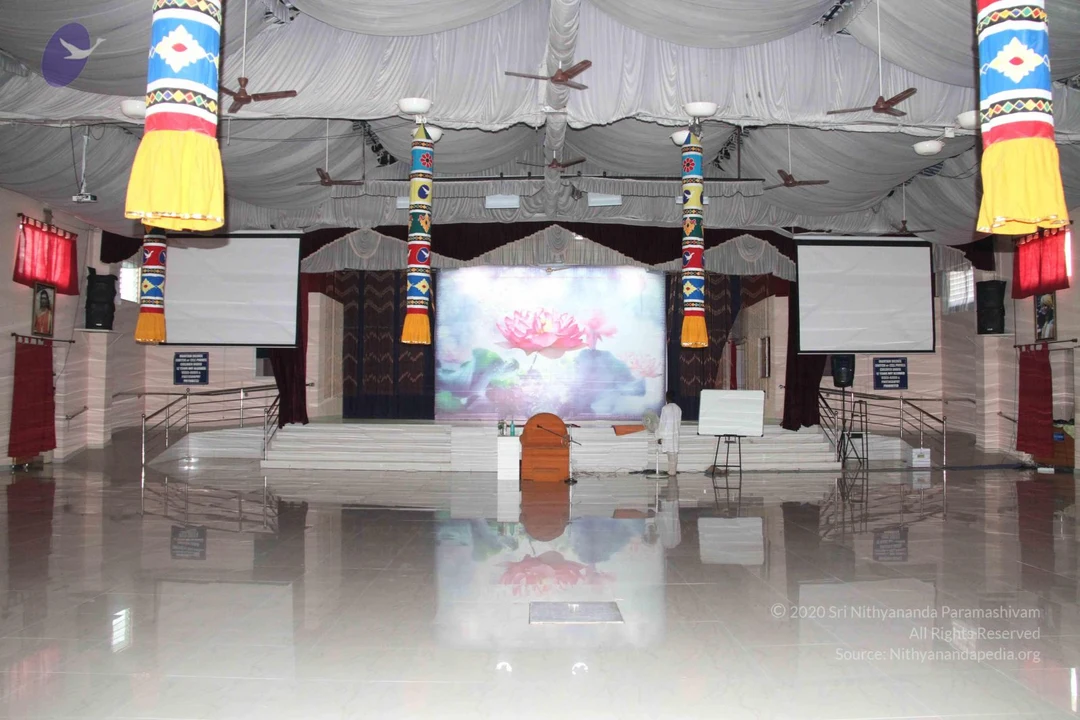
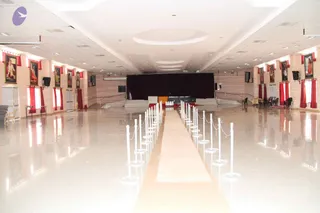
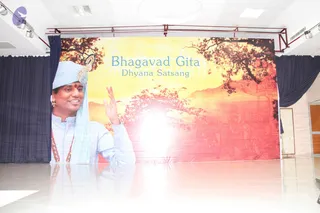
Aerial view of a single-storey orange-walled hall with a steep green metal roof and small golden finials along the ridge, set on a stone plinth with a red railing and benches beside its windows. Surrounding it are other orange buildings, an orange-tiled rooftop in the foreground, bare dirt ground, scattered trees, palm trees and open land under a pale sky. No people are visible in the scene.Empty interior of a large, polished-tile hall with a long central aisle carpeted in beige, lined on both sides by white stanchions linked with white ropes. Framed portraits in red-and-gold frames hang on the pale walls, each with red drapes beneath. A raised stage at the far end has a dark curtain backdrop, with chairs and a small lectern-like setup in front. Ceiling lights and a circular recessed ceiling feature are visible; no people are present.Empty stage hall with a large printed backdrop reading Bhagavad Gita and Dhyana Satsang. The backdrop shows a smiling man in a pale blue turban with a gold ornament and a pale blue kurta with a red beaded necklace, raising one hand, beside a golden-orange painted scene of trees, hills and a temple-like structure. Navy curtains frame the backdrop on a glossy white floor. No physical people are visible in the room; the figure is only a printed image on the banner.Interior of a plain pale pink hallway with a blue sign reading GENTS TOILET above an open grey-framed door. A dark red curtain hangs beside the doorway on a rod, and a partly visible person in an orange-red garment stands inside the doorway. A small white electrical switch is mounted on the wall and a green doormat lies on the tiled floor. No deity or ritual is visible.Interior wall of a building with peach-coloured paint. A blue sign with a white female pictogram reads "LADIES TOILET" above a doorway fitted with a dark red curtain on a black rod. A gold-coloured vertical pipe runs along the left edge. On the right, a large framed photograph shows a green tree against a bright sky. A red cloth and a brass vessel with a curved handle are partly visible at the lower left. No people are visible.A cream-painted interior wall with a blue sign reading LADIES TOILET above a doorway hung with a maroon curtain on a dark rod. To the right stands a large printed photograph of a massive banyan tree with many aerial roots and a circular raised stone platform at its base, with small yellow-marked trunk roots. Light tiled floor. No people are visible.