Skip to content
Sunday

21 September 2025

Paramashiva Sena | Navaratri | Solar Eclipse | Darshan

Dated photos
53
Source pages
1
Media
1
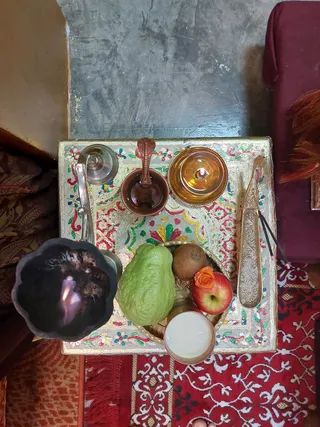
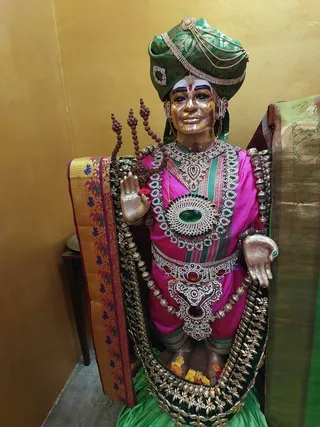
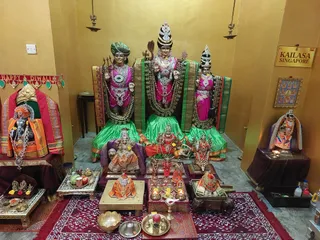
Overhead photo of a puja setup on an ornate, painted silver-and-gold tray with red, green and blue floral patterns, placed on a red patterned rug. On the tray are a dark wide-mouthed oil lamp with a lit wick, a brass bell with a handle, a small clay cup with a spoon-shaped handle holding liquid, a covered amber glass bowl, an engraved silver incense holder with incense sticks, a brass plate of fruit including a large green guava, a small brown kiwi-like fruit, a red apple with an orange flower, and a small cup of white liquid. No people are visible.A life-size gilded statue, a murti, stands in a corner against a golden wall. It wears a green turban with pearl strands and a jewelled ornament, a magenta silk garment with green borders, and heavy jewelled necklaces with emerald and ruby settings. Its right hand is raised in a blessing gesture holding rudraksha malas, and its left hand rests open at its side. A green and gold brocade cloth drapes behind it, and the base shows scattered orange and yellow flowers. No living people are visible.A shrine room with gold-painted walls holding a group of deity murtis. In the centre, a standing murti wearing a tall ornate crown, garlands and a green skirt is flanked by two murtis in pink and green garments with gold borders. To the left, an elephant-headed murti in orange and red dress sits beside a red and gold drape and a Happy Diwali banner. Brass oil lamps (deepas) burn on a low platform in front, with a plate of fruit, a brass kalasha, a bell and a bowl of offerings. A small framed picture hangs on the right beside a sign reading KAILASA SINGAPORE. No people are visible; the scene shows a puja arrangement with oil lamps and offerings laid on a red patterned mat.

Sep 21 2025

Original wiki page
Contents

Title

Paramashiva Sena | Navaratri | Solar Eclipse | Darshan

Link to Video

Transcript

Event summary

Join us as THE SPH Bhagavan Nithyananda Paramashivam, the Living Incarnation of Paramashiva, showers powerful Darshan and blessings during this profound celestial event. Discover how the energies of the Solar Eclipse can help you awaken the Divine within, shift your inner frequency, and unlock infinite possibilities. Experience the cosmic power of the Solar Eclipse 2025 Learn the spiritual significance of this rare Crescent Sunrise Eclipse Open yourself to higher states of consciousness and spiritual awakening

Full transcript

As the ultimate manifestation of Paramashiva, I bless you all with Paramatvaitha. Paramatvaitha Prapthirasthu. All the Chit Sabha members, Raja Sabha members, Adhinavasis, devotees, disciples, blessings to all. Now the auspicious moment of Surya Grahana, the solar eclipse. September 21st 2025. Understand about solar eclipse.

The Surya Suktha in Rig Veda elaborately explains eclipse as the child of waters representing the cosmic cleansing process, the cosmic serpent, Pruthra, temporarily swallows the sun, symbolizing the eternal battle between light and darkness. The solar resurrection is representing the triumph of consciousness over ignorance. This is the traditional Vedic understanding about the solar eclipse. The Adharvana Veda explains that in Kalasukta, eclipse as Maha Kala, the great time destroyer and creator, the temporal dissolution where linear time merges with the eternal time and that universal the universe is inhaling and exhaling through the eclipse cycles and this is a cosmic breathing. Say, in your breathing, there is a time where the inhaling stops, than exhaling starts that stopping gap is a Nirvikalpa Samadhi unclutched space.

That is why all great traditions say, go along with your breathing, you will get enlightened. You will touch the Nirvikalpa Samadhi. If you go along with your breath, you will touch Nirvikalpa Samadhi. Now, this is the exact moment that BrahmandapPrana, the universe breathing stops, takes turn. Listen.

This is the most significant truth you need to know. When you inhale at one point, inhaling stops, then exhaling starts. That zone is called neutral zone. That point is a neutral zone. Same way after you exhale, your exhaling stops on one point and inhaling starts. That point is a neutral zone. In that neutral zone, you are always in Nirvikalpa Samadhi. If you touch that neutral zone, you will achieve Nirvikalpa Samadhi. How many of you know that first technique Paramashiva reveals in Vijnana Bhairava Tantra is this, touching the neutral zone. So now the cosmos prana towards breathing process touches the neutral zone, then understand all of us will automatically just sucked into the Nirvikalpa Samadhi, especially when solar eclipse happens and the Bhavishya Purana explains, I'll give you one reference from Bhavishya Purana.

Bhavishya Purana says, when Surya enters the constellation of the virgin means Kanya Rasi, Virgo, during the time of cosmic churning, the great transformation shall unfold upon earth. The darkness shall reveal hidden truths. The humanity shall witness the preparation of preparation for divine incarnation. Karma restoration, avatar consciousness activation will happen. Understand this is directly from Bhavishya Purana. You should know now exactly it is happening. As Bhavishya Purana explained, this solar eclipse, the today's solar eclipse, today's Surya Grahana is happening When Surya enters constellation of virgin Kanya, now it is happening exactly. This Surya Grahana, the constellation, the Surya is entering into Kanya Rasi and all of you may be aware, I happened in Kanya Rasi, Chitra Nakshatram, Kanya Rasi. So this is specifically told in Bhavishya Purana, the Avatar consciousness awakening. So understand, now the Satya Yuga is happening, satya yuga is beginning, and it is time all of you should be awakened as Kalki.

All of us put together is Kalki. So understand, all of us put together the kalki will manifest.
SuryaGrahae ChandraGrahae Mahaa Padhaka Nasanam Snanam Dhaanam Japam Homam Sarva Paapap Pranasanam.

So now we are all supposed to do snanam dhaanam japam homam. What japa we should do? What should be the process?

Very clearly our Puranas say, I'll give you the reference. Listen.

Surya Gayathri:
Om Bhaskaraaya Vidmahae Mahat Yudhikaraaya Dheemahi
Thanno Aadhityap Prachoodhayaath

Raaghu Bheeja Mantra:
Om Braam Breem Browm Sa
Raaghavae Namaha

and Maha Mrutnjaya
Thrayambagamya Chamagae Sugandhim
Pushtiwardhanam Oorwargam Yuvawandhanar Mrutyour Mukshi Yamaamruthaath Om

Listen. I'll explain some of these references I gave, the details, This moment, right now, the cosmos is experiencing the neutral zone. The inhaling has stopped, exhaling has not yet started. That neutral zone is the eclipse time.

The cosmos is naturally settling in Nirvikalpa Samadhi. Let us all use this few hours to settle in neutral zone and experience Nirvikalpa Samadhi. I'll also give you one reference from Upanishads. I have few references. Shastra Pramanas.

I want all of you to know why I give so much importance to Shastra Pramana. If I speak only from my experience, you know you have to believe, but you can't believe. Many time you want to believe, but somehow deep down you can't believe fully. But if I give you the Shastra Pramana from the authentic scriptures, the authority for all the spiritual matters, the shastras. If I give the shastra pramana, then you just know this is the truth.

So Chandogya Upanishad gives the spiritual truths about the solar eclipse in the sixth chapter, fourteenth canto, second verse. As the sun appears to be swallowed, it remains eternal. So to the self appears bound, it remains forever free. And the time of the eclipse is best for Brahma Vidhya initiation and manifesting brahmangnanaa. This is the best time for Brahma vidhya initiation and experiencing Nirvikalpa Samadhi and manifesting brahmangnanaa. So best time to receive Mahavakya.

I'll initiate all of you into mahavakya. Sit straight. Take the atmalinga and keep in your anandaganda just below the heart above the navel. Keep the atmalinga and Sit eyes closed.

I'll initiate you all. Sit straight, close your eyes.

Om Om Om

Om Om Om

Om Bhaskaraaya Vidhmahae Mahat Yudhikharaaya Dheemahi
Thanno Aadhityap Prachoodhayath

Om Bhaskaraaya Vidhmahae Mahat Yudhikharaaya Dheemahi
Thanno Aadhityap Prachoodhayath

Om Braam Breem Browm Sa
Raaghavae Namaha

Om Braam Breem Browm Sa
Raaghavae Namaha

Om Thrayambagamya Chamagae Sugandhim
Pushtiwardhanam Oorwargam Yuvawandhanar Mrutyour Mukshi Yamaamruthaath Om

Thrayambagamya Chamagae Sugandhim
Pushtiwardhanam Oorwargam Yuvawandhanar Mrutyour Mukshi Yamaamruthaath Om

Now, Brahma Vidhya deeksha, Mahavakya, Tatvamasi, Tatvamasi, Tatvamasi, Aham Brahmaasmi, Aham Brahmaasmi, Aham Brahmaasmi.

Prakgnanam Brahma, Prakgnanam Brahma, Prakgnanam Brahma, Shivoham, Shivoham, Parama Shivoham, Soham, Ham Saha, Soham, Ham Saha,

Iayam Aanmaa Brahma, Prakgnanam Brahma, Shivathvamasi, Parama Shivathvamasi, Shivoham, Parama Shivoham.

Listen. I have given all the mahavakya of Veda and Agamas. So now I'll tell you exact precise process as our scriptures have clearly shown.

Solar eclipse is the time, Solar eclipse is the time, Cosmos is a neutral zone. Listen. Just like when you inhale, you touch the neutral zone which is nirvikalpa samadhi and exhale in this cosmic breathing process.

The cosmos inhales, touches the neutral zone, Nirvikalpa Samadhi, during this eclipse period, before beginning the exhaling. So understand, do the same. You will be aligned to the cosmos now. Use the mahavakya

Soo Humm
Soo Then Neutral Zone
Humm Exhaling
Soo Inhaling
Then Neutral Zone
Humm Exhaling

Soo Hum means "You are that"

Soo Hum means I am the ultimate. You are the ultimate. It is not like you need to believe, you need to declare. This is the truth. That's all. This is just a truth. That's all. Sit. With your atmalinga in the anandaganda, the neutral zone where the inhaling takes U-turn, touches the neutral zone and starts exhaling.

Hold the atmalinga in your anandagandha. Breathe in with mahavakya "Soo Hum, Soo Hum". Get into the neutral zone. Cosmos is in right now. This is the best time for Nirvikalpa Samadhi.

Sit straight. Now Paramashiva will manifest Nirvikalpa Samadhi in all of us. "Soo Hum, Soo Hum, Soo Hum".

Om Om Om

Listen. I'll give you two important Shastra Pramana. One from Rudra Samhita, twenty third chapter. When the sun enters Virgo, the unified conception of ShivaShakti occurs, the seed of avatar manifestation there illuminates consciously tends to Virgo, you living by liberation occurs. The compassionate lord manifests in the form of guru. This is from Rudrasamhitha. Then from Kularnava Tantra chapter two, when the sun is positioned in Virgo and other signs, the great Shakti manifestation occurs. Avatar consciousness there attains awakening state.

In different cosmic cycles, when the sun moves to space special positions, the guru principle manifests in avatar form.

Second one is Kularnava Tantra chapter two only. And I have one more reference. When the sun enters Virgo, Shakti centers awaken for the success of tantric practices, one should practice when Virgo is ascendant. When the sun enters Virgo, there is awakening of Shakti chakras. Knower of mantra should worship the form of Mahavidya. So now you all know Paramashiva bless, initiate, give Paramathvaitha to all of you. Sit, go through this powerful process, receive Paramathvaitha and all the auspiciousness.

Just do Ajapa of "Sooo Huuum, Sooo Huuum, Sooo Huuum,"

Sit in that neutral zone Do the Ajapa japa of Soham along with your inhaling and exhaling. Paramashiva will manifest Nirvikalpa Samadhi in all of us. Paramashiva will manifest Paramarthvaita right now in all of us. Sit straight. Close your eyes.

Sooo Huuum, Sooo Huum.

Event Photos
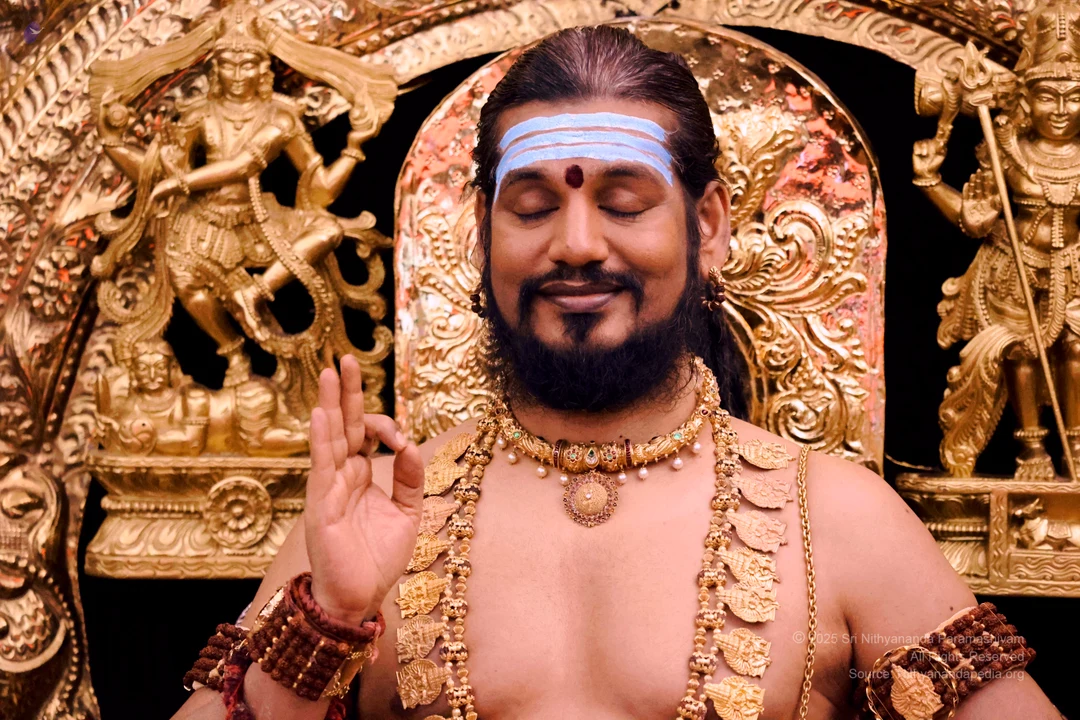
Photo 1
Photo 2
Photo 3
Photo 4
Photo 5
Photo 6
Photo 7
Photo 8
Photo 9
Photo 10
Photo 11
Photo 12
Photo 13
Photo 14
Photo 15
Photo 16
Photo 17
Photo 18
Photo 19
Photo 20
Photo 21
Photo 22
Photo 23
Photo 24
Photo 25
Photo 26
Photo 27
Photo 28
Photo 29

Sources

Video source

Photos from this day

View all 53 photos

KAILASA Adikailasa AK On 20/9/2025

4 photosView all
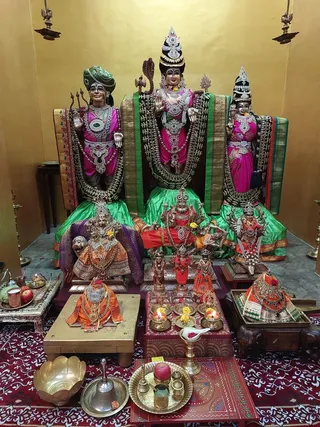
Overhead photo of a puja setup on an ornate, painted silver-and-gold tray with red, green and blue floral patterns, placed on a red patterned rug. On the tray are a dark wide-mouthed oil lamp with a lit wick, a brass bell with a handle, a small clay cup with a spoon-shaped handle holding liquid, a covered amber glass bowl, an engraved silver incense holder with incense sticks, a brass plate of fruit including a large green guava, a small brown kiwi-like fruit, a red apple with an orange flower, and a small cup of white liquid. No people are visible.A life-size gilded statue, a murti, stands in a corner against a golden wall. It wears a green turban with pearl strands and a jewelled ornament, a magenta silk garment with green borders, and heavy jewelled necklaces with emerald and ruby settings. Its right hand is raised in a blessing gesture holding rudraksha malas, and its left hand rests open at its side. A green and gold brocade cloth drapes behind it, and the base shows scattered orange and yellow flowers. No living people are visible.A shrine room with gold-painted walls holding a group of deity murtis. In the centre, a standing murti wearing a tall ornate crown, garlands and a green skirt is flanked by two murtis in pink and green garments with gold borders. To the left, an elephant-headed murti in orange and red dress sits beside a red and gold drape and a Happy Diwali banner. Brass oil lamps (deepas) burn on a low platform in front, with a plate of fruit, a brass kalasha, a bell and a bowl of offerings. A small framed picture hangs on the right beside a sign reading KAILASA SINGAPORE. No people are visible; the scene shows a puja arrangement with oil lamps and offerings laid on a red patterned mat.A photograph of a temple shrine with a golden wall and oil lamps hanging from the top corners. Three large dressed deity murtis stand centrally: the figure on the left wears a green turban and pink garment, the centre figure has a tall silver crown and green and gold draped cloth, and the right figure wears a black crown with pink clothing, all adorned with silver jewellery and garlands. In front, smaller murtis in red and orange garments sit on low platforms, with brass oil lamps lit with flames, yellow flowers, a brass bell, a brass plate holding an apple and a small kalasha, and a bowl on a patterned red cloth. No people are visible.

KAILASA GOYAVE GUADELOUPE On 21/9/2025

1 photoView all
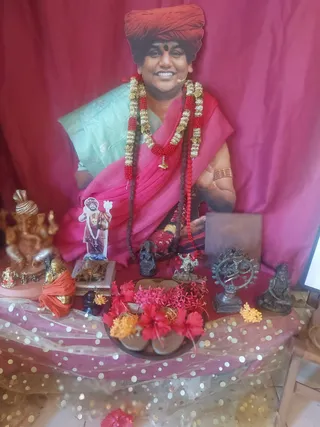
A photograph of a home altar set up with a large printed cutout portrait at the back, showing a smiling figure in a red turban, red-and-pink saffron-toned robe over a mint-green shawl, with a white-and-red garland of flowers and rudraksha beads. The cutout is a printed image, not a physical person. In front of it are small metal and brass statues including a seated Ganesha, a Nataraja dancing Shiva figure, and a small kneeling golden figure in an orange cloth. A small printed standing figure in a turban and a fire-altar box sit on the left. Red hibiscus and orange marigold flowers lie in a round tray and scattered on a sparkly pink-and-gold tulle cloth. No physical people are present in the scene.

KAILASA Selayang Malaysia On 20/9/2025

1 photoView all
A screenshot of a Zoom Workplace video call with two video tiles and a dark toolbar along the bottom. The larger right tile shows a smiling woman with dark hair pulled back, wearing a white top and an earphone cable, labelled "Ma Turiyajnana". The smaller left tile shows a woman in a dark garment with a cloth held near her face, labelled "KMY Soundala", in a dim room with a white wall and a framed picture. The toolbar reads Audio, Video, Participants 2, Chat, React, Share, AI Companion, Apps, Show captions, Notes, Record, Transcript, More and Leave. Two physical people are visible on the call.

KAILASA THIRUCHENGODE On 20/9/2025

8 photosView all
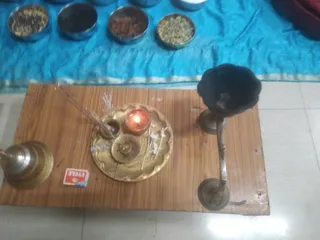
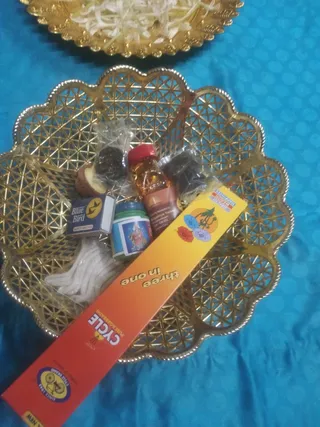
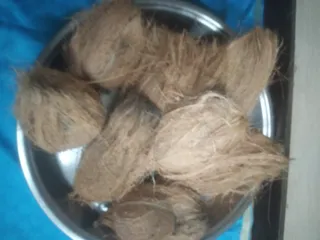
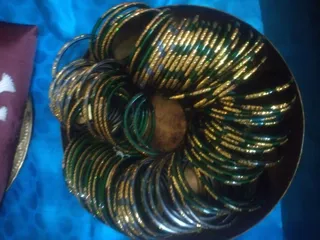
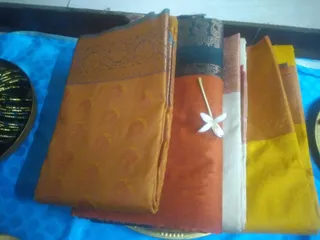
Overhead photo of a ritual setup on a wooden table placed on a floor with pale tiles. A brass puja plate with scalloped edges holds a lit red-glass oil lamp, a small brass cup, sticks of incense and scattered white ash. To the left is a polished brass vessel with a bulbous body, and to the right a tall brass stand with a dark, flared bowl. A blue silk cloth behind the table holds several steel bowls filled with grains, dried spices and seeds. No people are visible.A photograph of a gold filigree tray with a scalloped rim on a bright blue cloth. Inside the tray are puja offering items: a Blue Bird safety matches box, a small bottle of oil with a red cap, a cotton wick bundle, small packets of dark incense or camphor-like pieces, and a green jar with a deity picture label. A yellow and red box of Cycle Three in One incense sticks lies diagonally across the tray. A second gold tray with white flower petals sits at the top edge of the frame.A blurry overhead photo of a round red plate piled with fresh vegetables on a bright blue cloth. Visible produce includes several small purple-black eggplants with green stems, round purple onions or shallots with dark roots, yellow-skinned potatoes, orange carrots and a bunch of green okra pods on the right. A small sprig of green leaves sits near the bottom edge. No people, deities or ritual objects are visible; the plate appears to be a vegetable offering or simple display.A close overhead photo of several unhusked brown coconuts with fibrous hairy husks heaped in a shiny round stainless steel plate. The plate rests on a bright blue cloth, and a pale wooden edge sits at the right side of the frame. No people or figures are visible.A photograph of a large dark round tray or basket heaped with many green glass bangles, some with gold and silver glitter-striped patterns, arranged in overlapping rings around a central brown object. The tray rests on a bright blue cloth, and a maroon cloth with white embroidered motifs and a brass-rimmed plate are visible at the left edge. No people are visible.A photograph of folded silk textiles arranged on a bright blue cloth. From left to right: a mustard-orange saree with a patterned gold-toned border, a deep rust-orange saree with a dark border and a single white flower with a stem placed on it, a cream-and-rust saree with a patterned band, and a mustard-yellow saree with a subtle woven design. Brass or bronze vessels appear at the left and right edges. No people are visible.

KAILASA TORONTO CANADA On 21/9/2025

10 photosView all
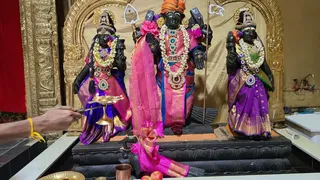
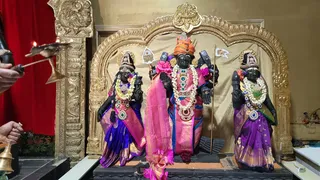
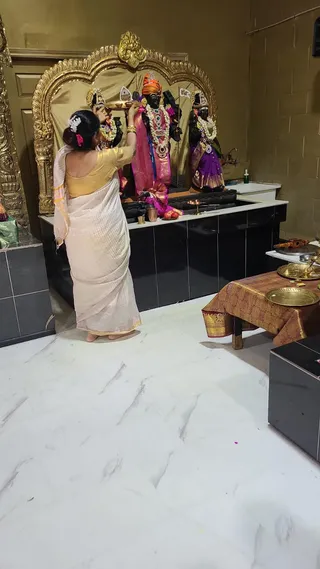
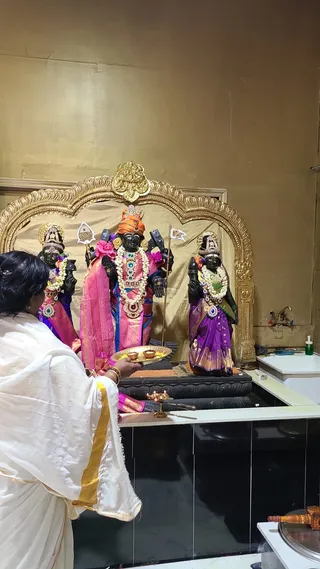
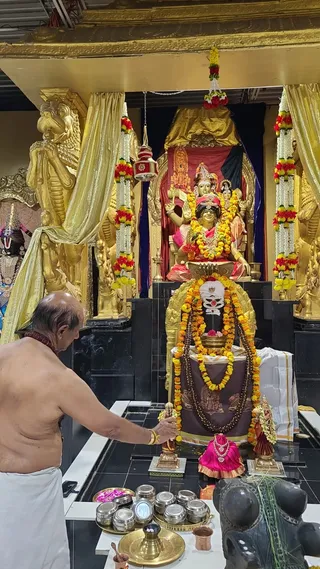
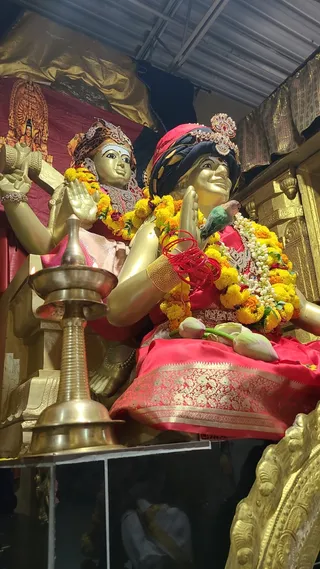
A photograph of a temple shrine with three black stone deity murtis on a dark stone pedestal, flanked by gilded arch framing. The central murti wears an orange crown, a pink silk garment with blue border, garlands of white flowers, and carries a spear and other weapons; the murtis to either side wear purple and pink silk saris with gold borders, floral garlands and jewelled ornaments. A hand holding a brass aarti lamp with a lit flame is at left, and brass vessels, a copper cup and red apples sit in front of the pedestal. No people are shown in the image apart from the partial hand.A temple shrine photo showing three black stone murtis of a deity family under an ornate gold arch. The central figure wears an orange turban-style crown, a long pink silk shawl, a multi-strand white jasmine garland and a large gem-studded necklace, and holds a spear-like staff and other ritual objects. The figures to either side wear purple and blue silk saris with jewelled ornaments and white flower garlands. Pink and magenta flowers adorn the figures. On the left, a person's hand holds a brass oil lamp with a lit flame, and a brass bell is visible at the bottom left. The surrounding setting is a golden carved frame against a beige cloth backdrop.A woman in a cream and gold-bordered sari with a yellow blouse stands barefoot on a white marble floor, holding a brass aarti tray up toward three dark-stone deity murtis in a gold-arched shrine. The central murti wears an orange turban, a pink silk dhoti, and a garland of white flowers and a rudraksha-style necklace; the murti on the left has a crown and flower garland; the one on the right wears a purple sari and white garland. A black granite altar holds brass oil lamps, a copper tumbler, and offerings of fruit. To the right, a table draped in red and gold brocade holds brass plates and a puja setup, consistent with a puja or aarti in progress.A devotee in white clothing with a gold border stands at the left and holds a brass plate with lit oil lamps toward a shrine. Three dark stone murti stand within a gold-framed arch: a central figure in an orange turban, pink silk garment and jewelled garlands, flanked by two figures in purple and pink attire with flower garlands and crowns. Small brass oil lamps sit on the black stone base in front of the murti, with a silver plate and brass items nearby. The white-walled room has a tap and a small green bottle on the right.A photograph inside a gold-decorated temple shrine. A bare-chested priest in a white dhoti stands at the lower left, reaching toward a brass figure beside a black Shiva lingam draped with marigold garlands, a rudraksha mala and a pink cloth, with a row of steel bowls and a brass plate of offerings in front. Behind the lingam, a deity murti in red and pink garments sits on a lotus-shaped seat, adorned with flower garlands and framed by hanging marigold-and-rose strings and golden curtains. A black bull figure appears at the lower right. The scene suggests abhishekam and puja.Golden statues of deities dressed for worship, adorned with marigold and jasmine garlands. The foreground figure wears a pink and gold silk sari with a black and gold turban-style crown and red bangles, holds lotus buds in its lap, and has a small green bird perched on its shoulder. Beside it, a second golden deity figure wears a pink crown and raises its hands in anjali. A brass oil lamp stands in front, and a red and gold cloth backdrop with a framed image sits behind the statues under a metal roof. The scene reads as a temple altar during puja.

Sep 21 2025

29 photosView all
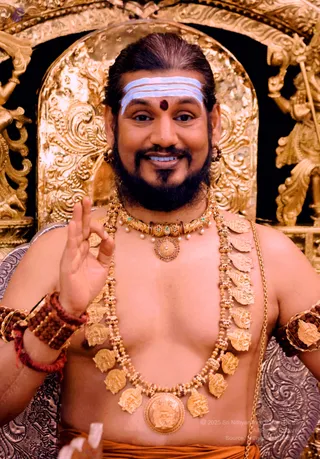
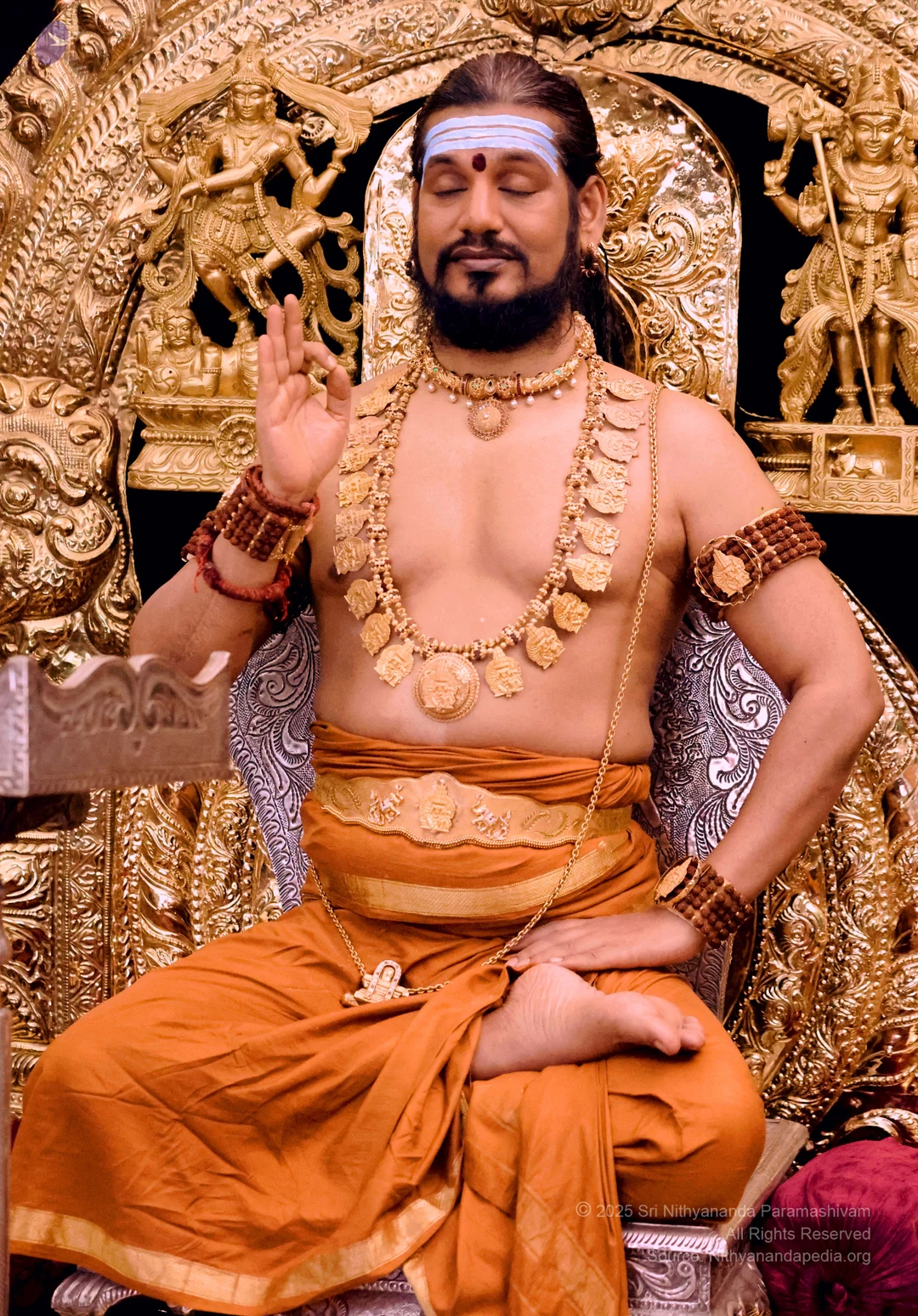
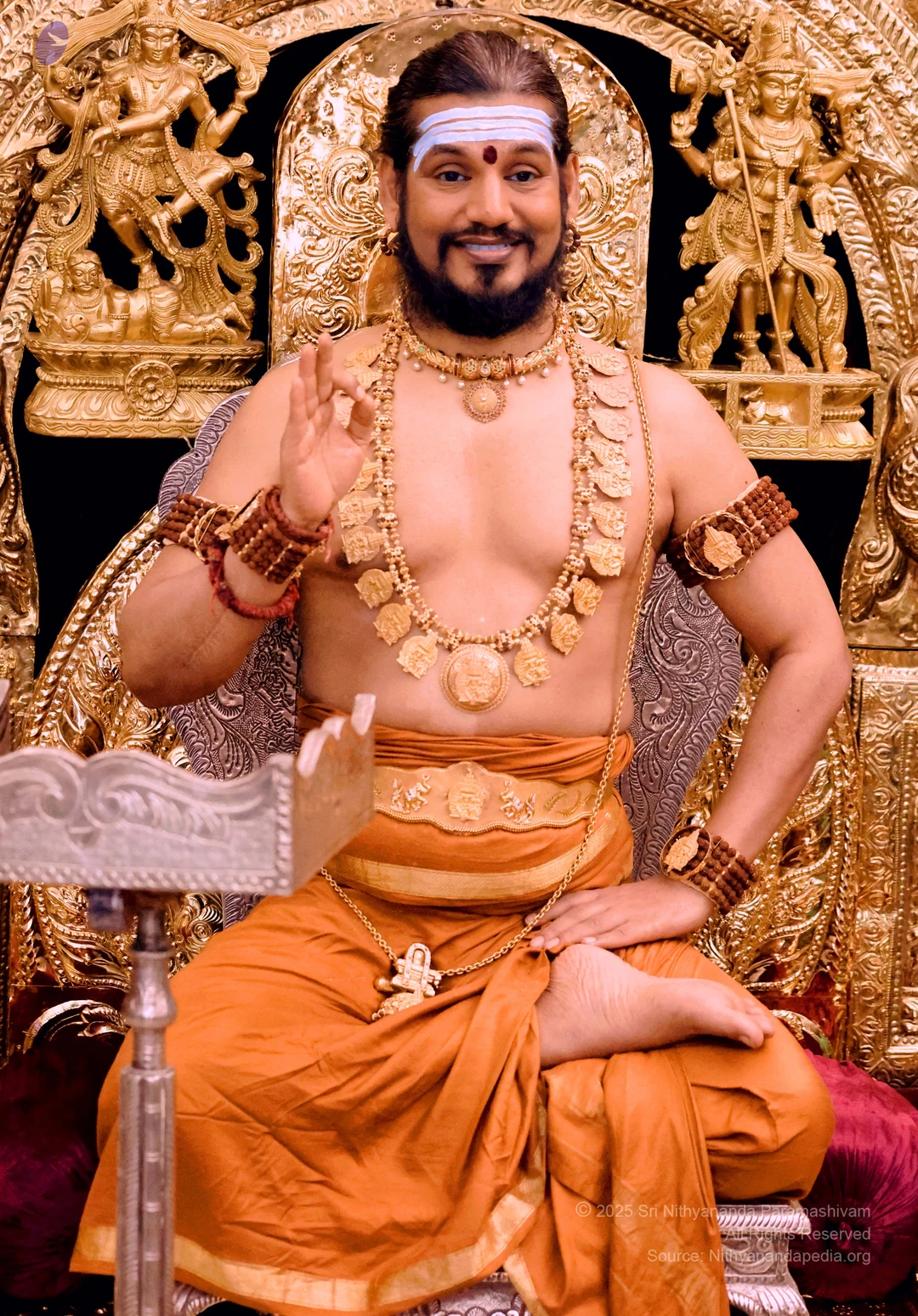
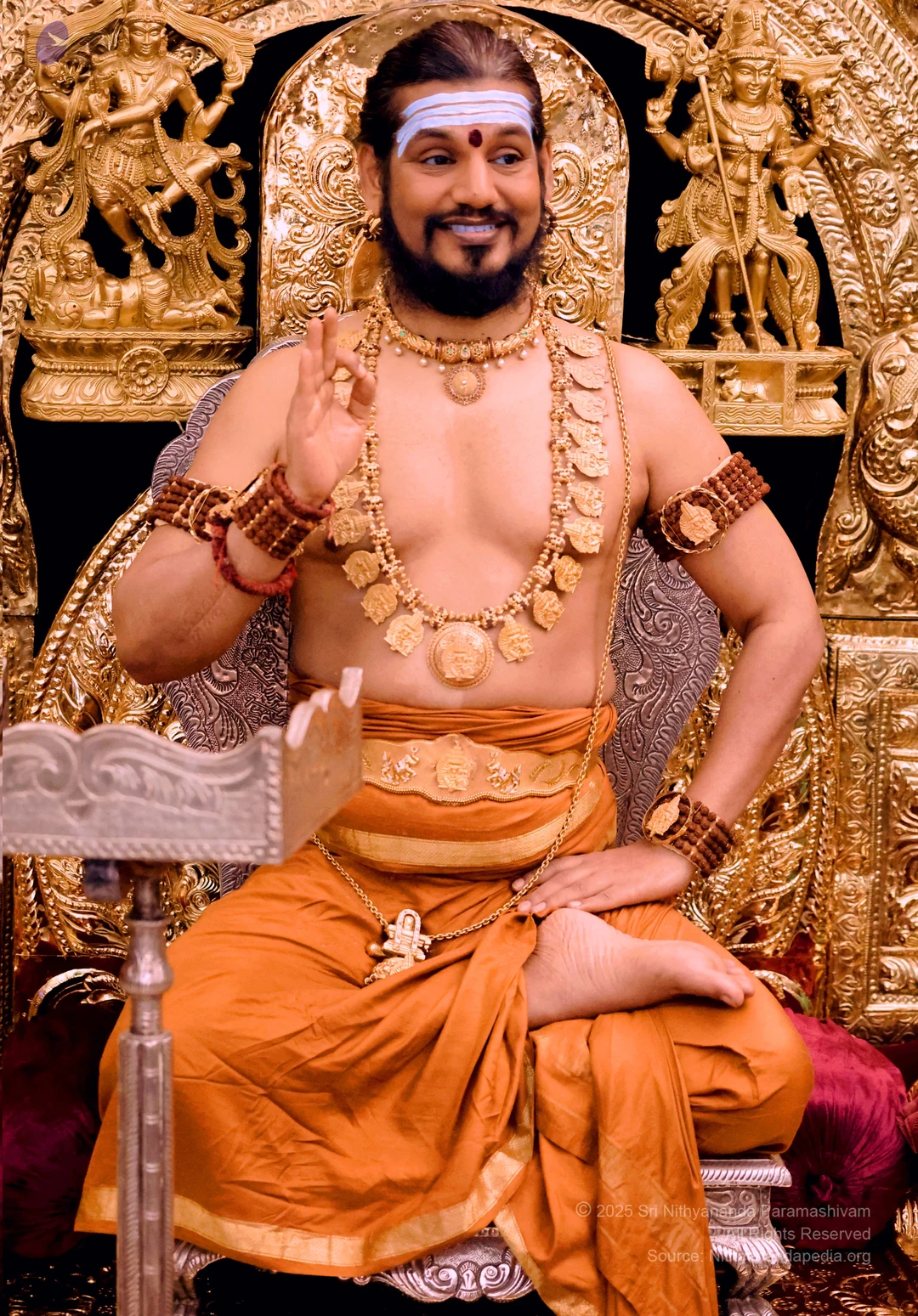
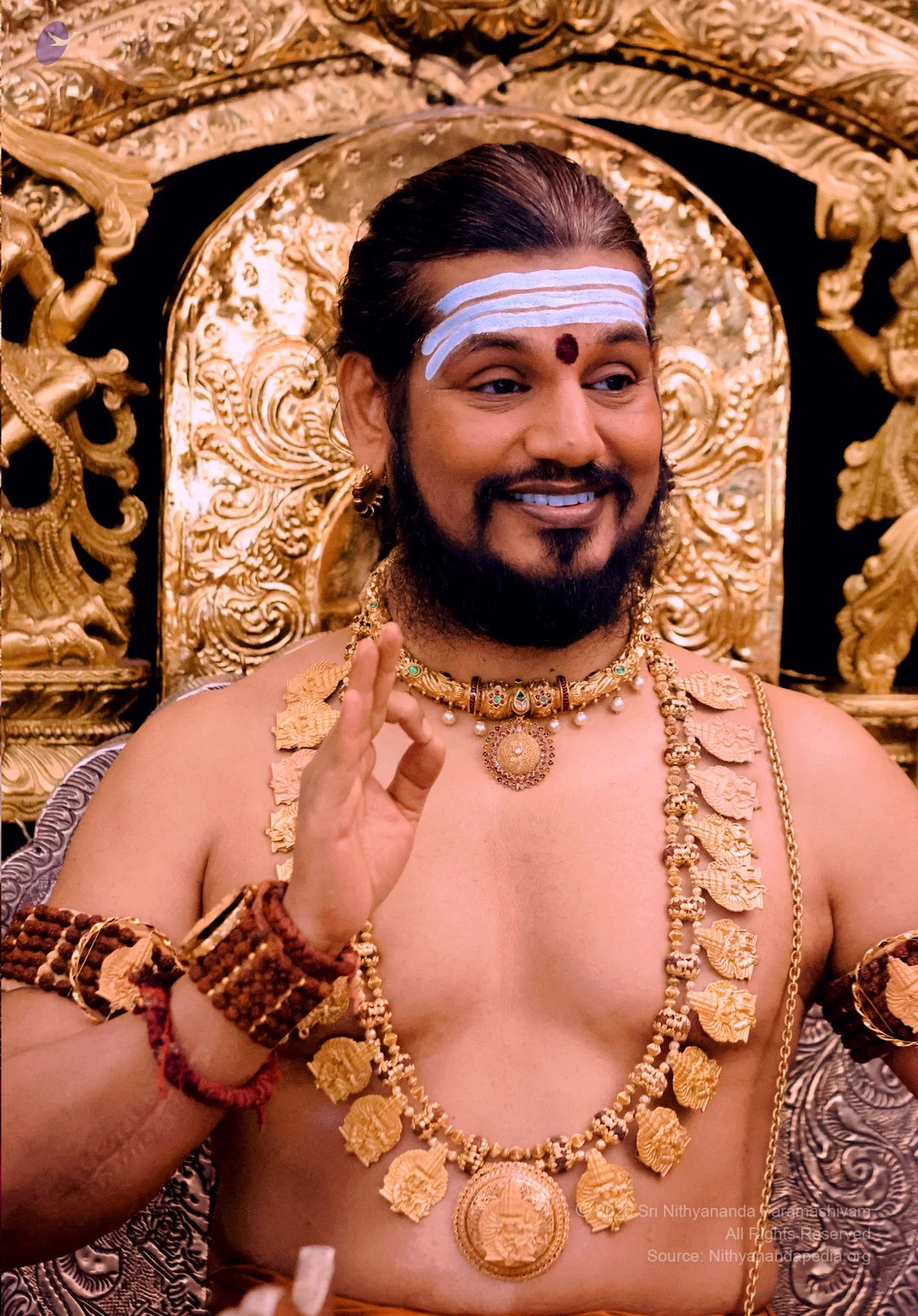
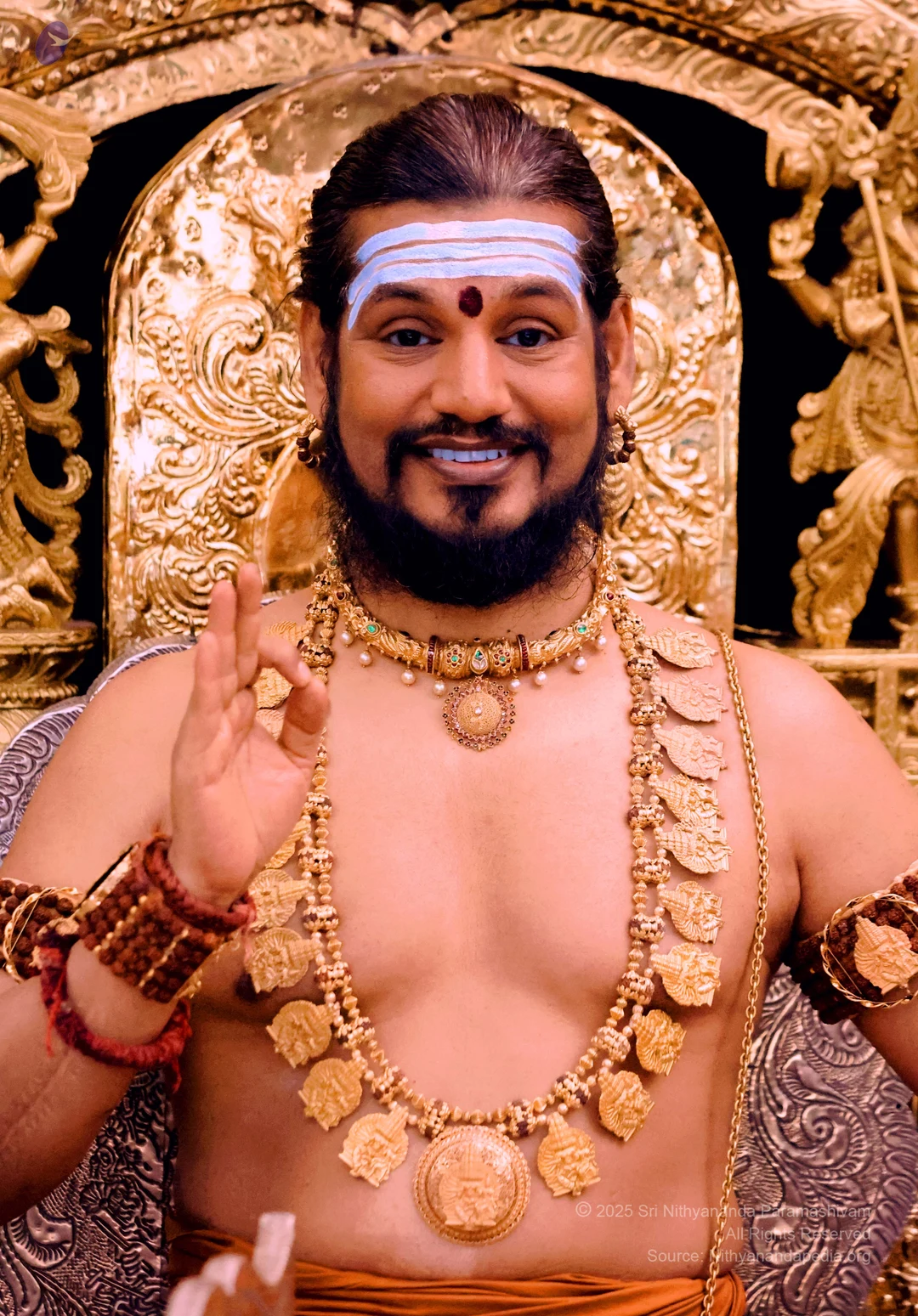
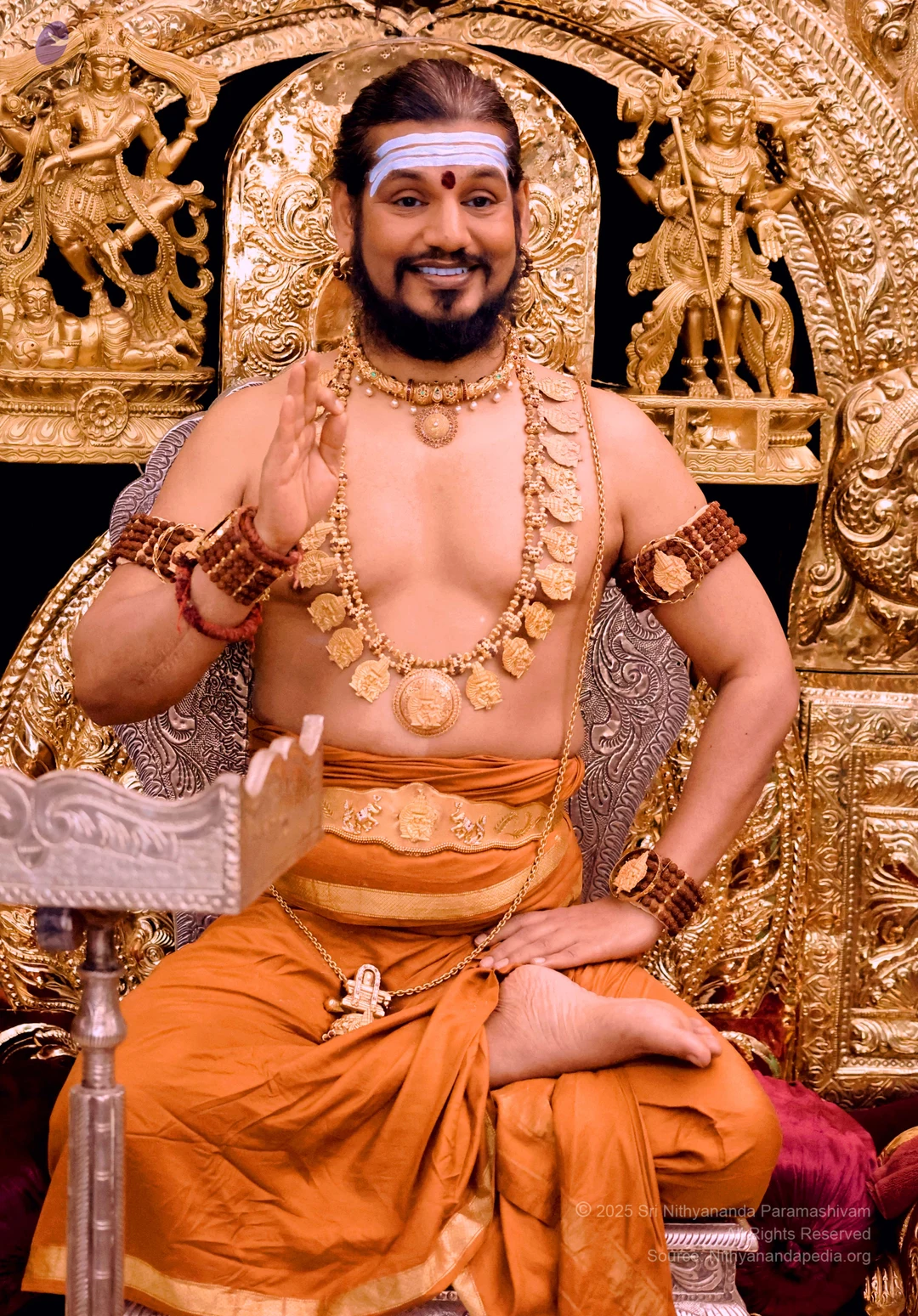
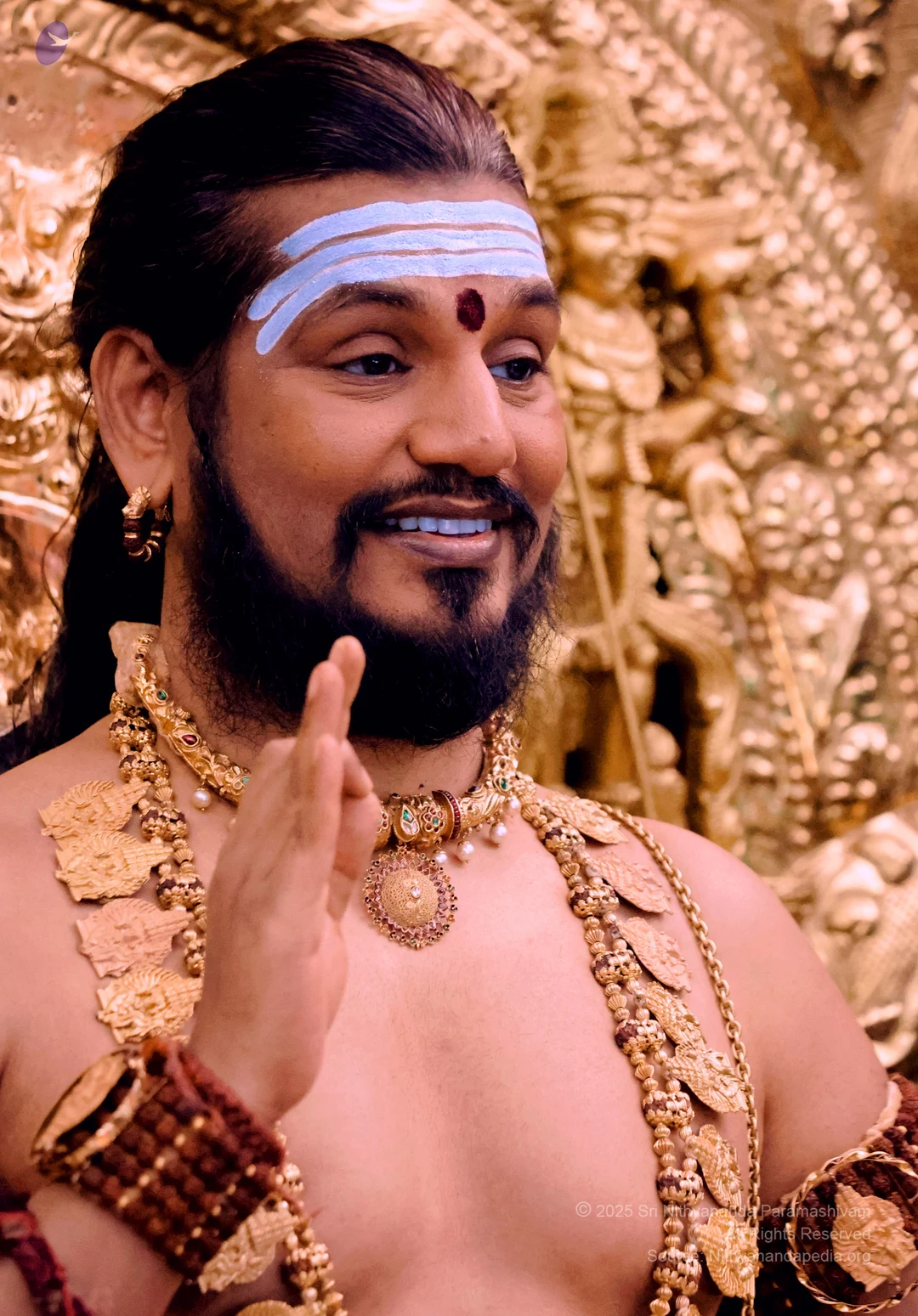
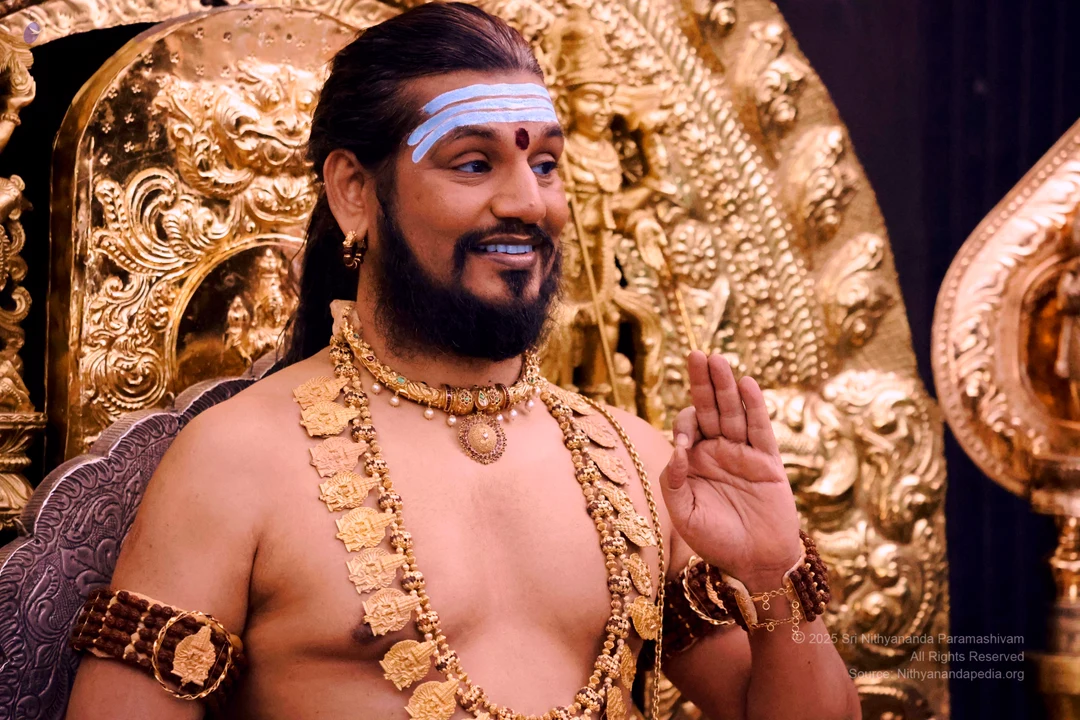
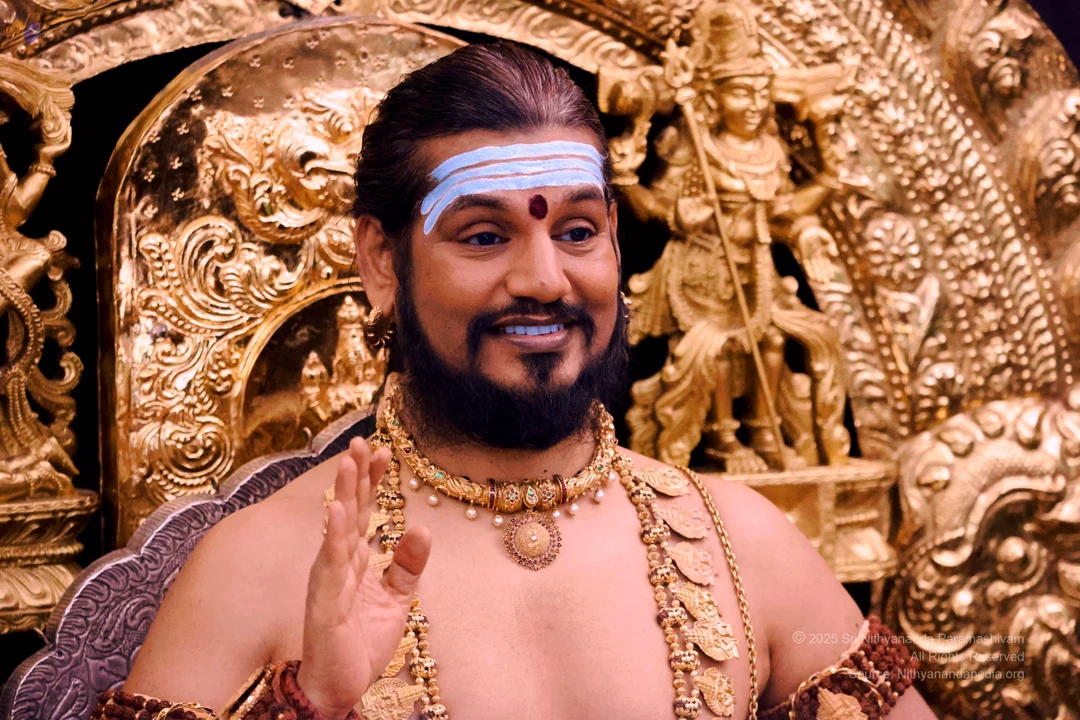
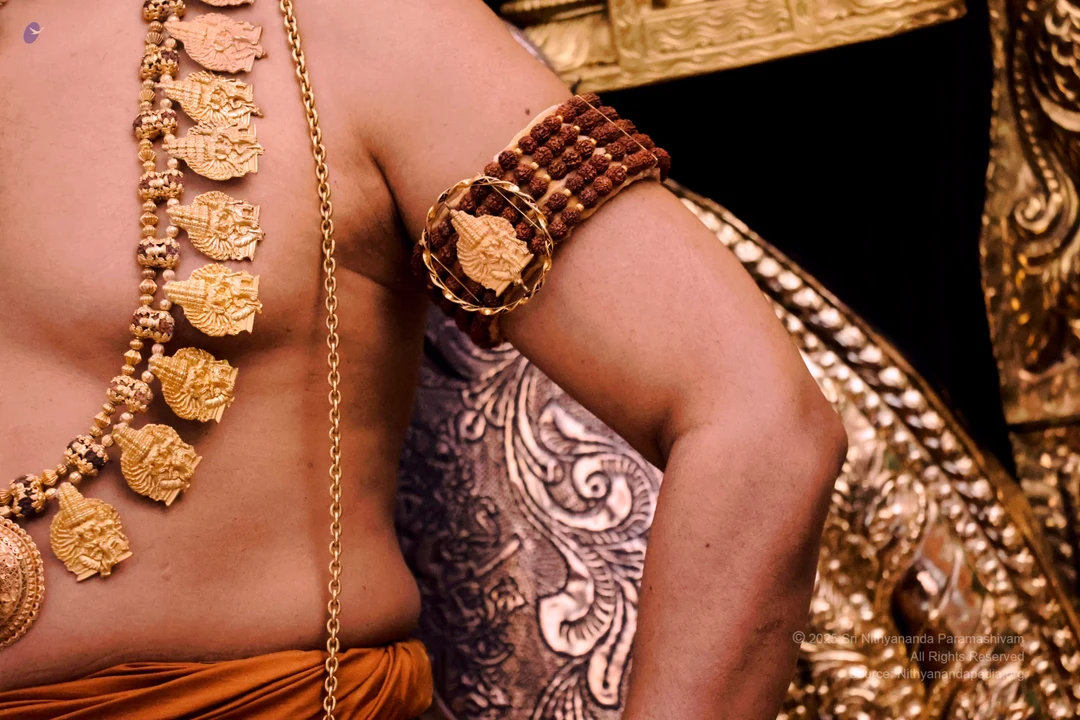
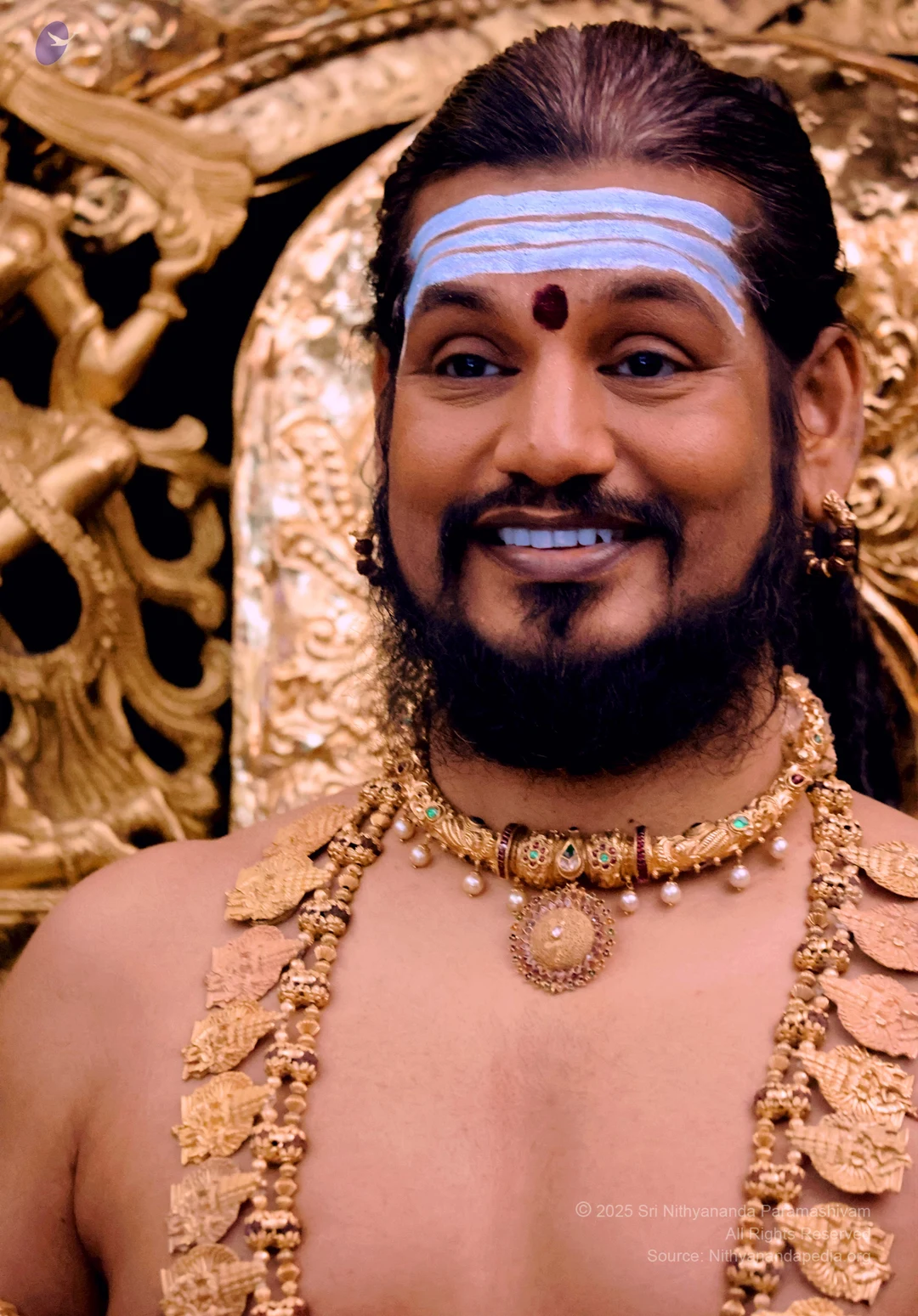
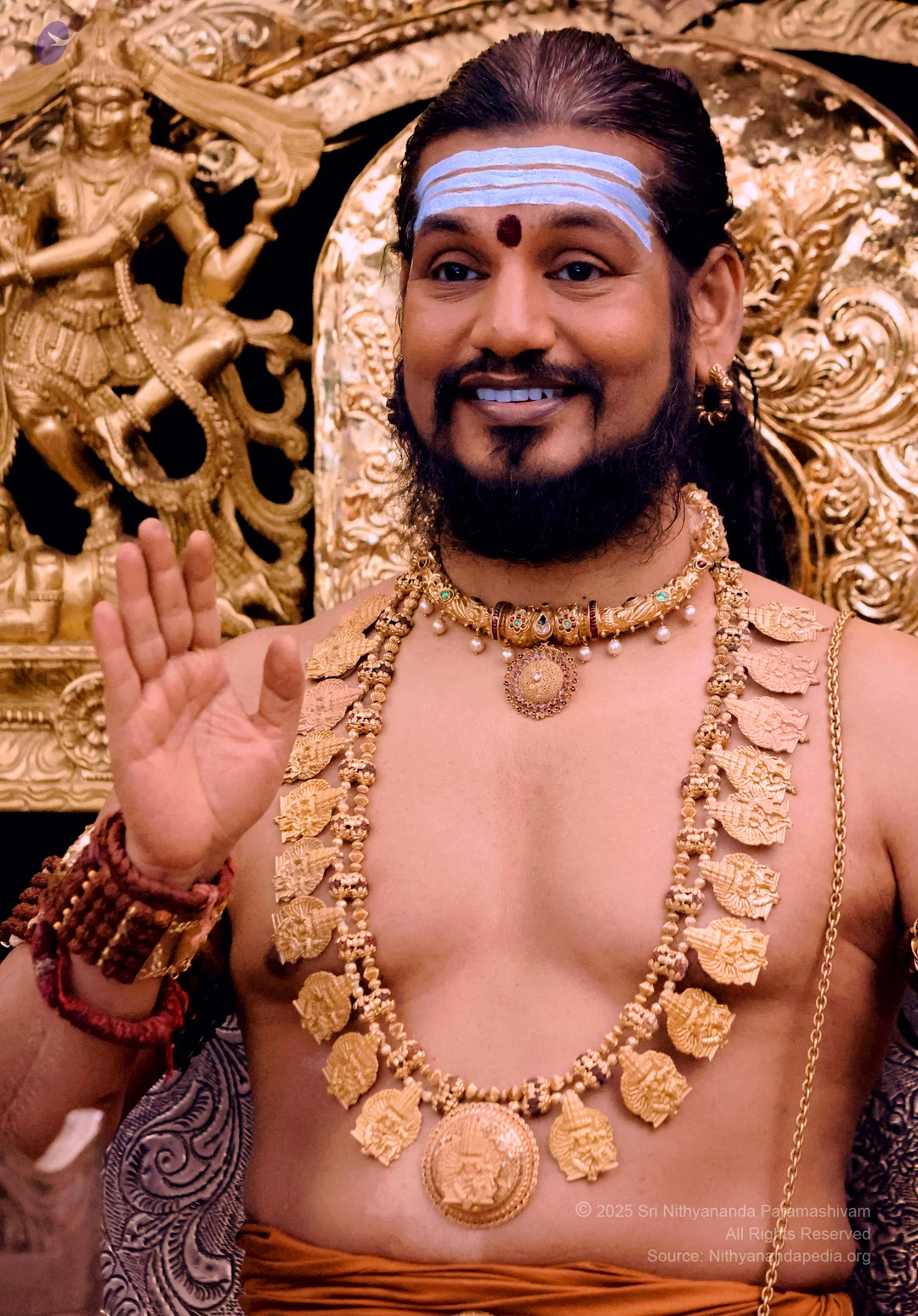
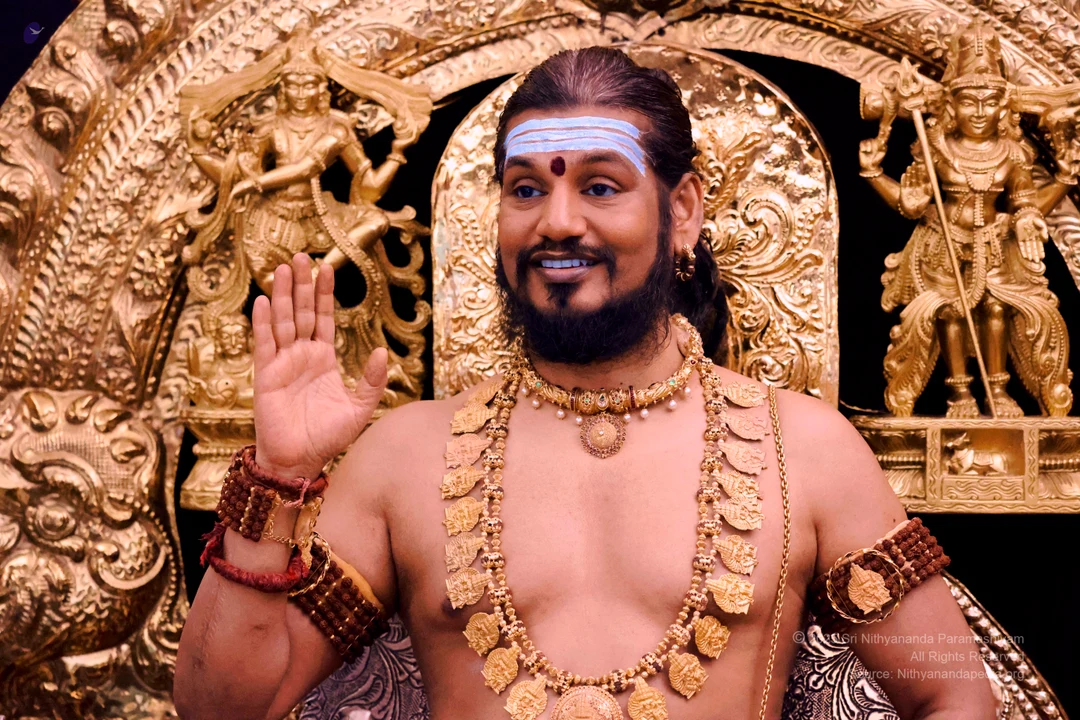
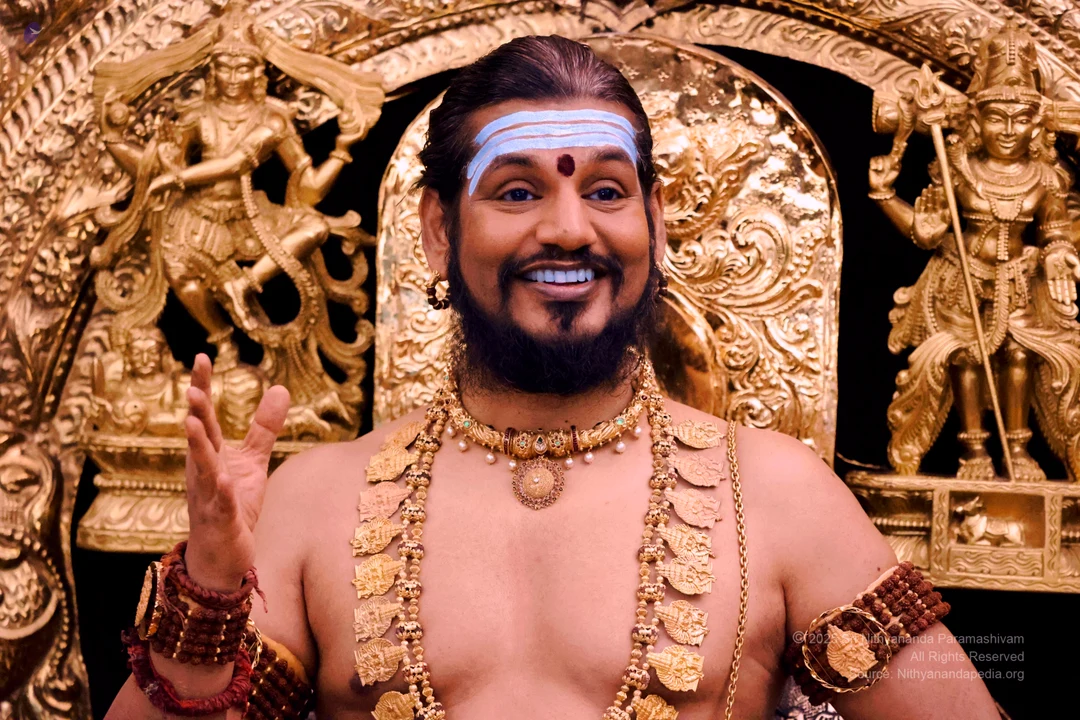
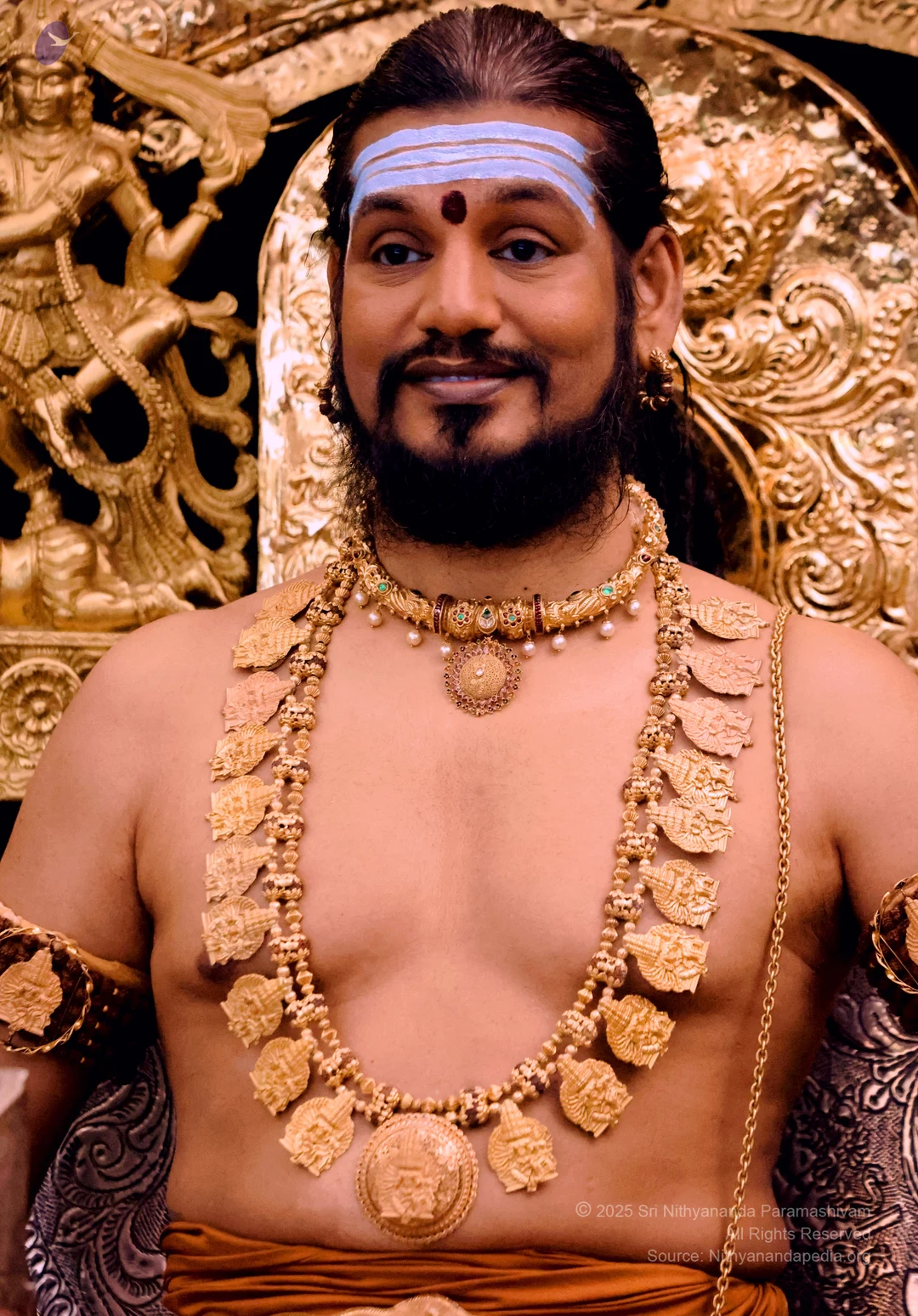
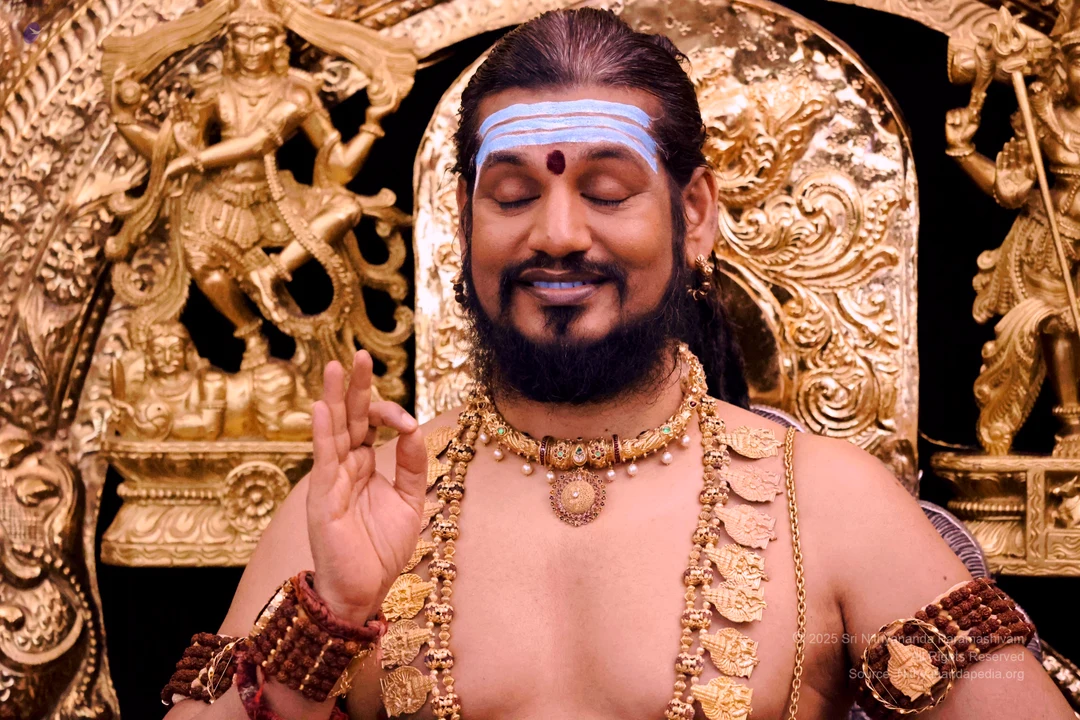
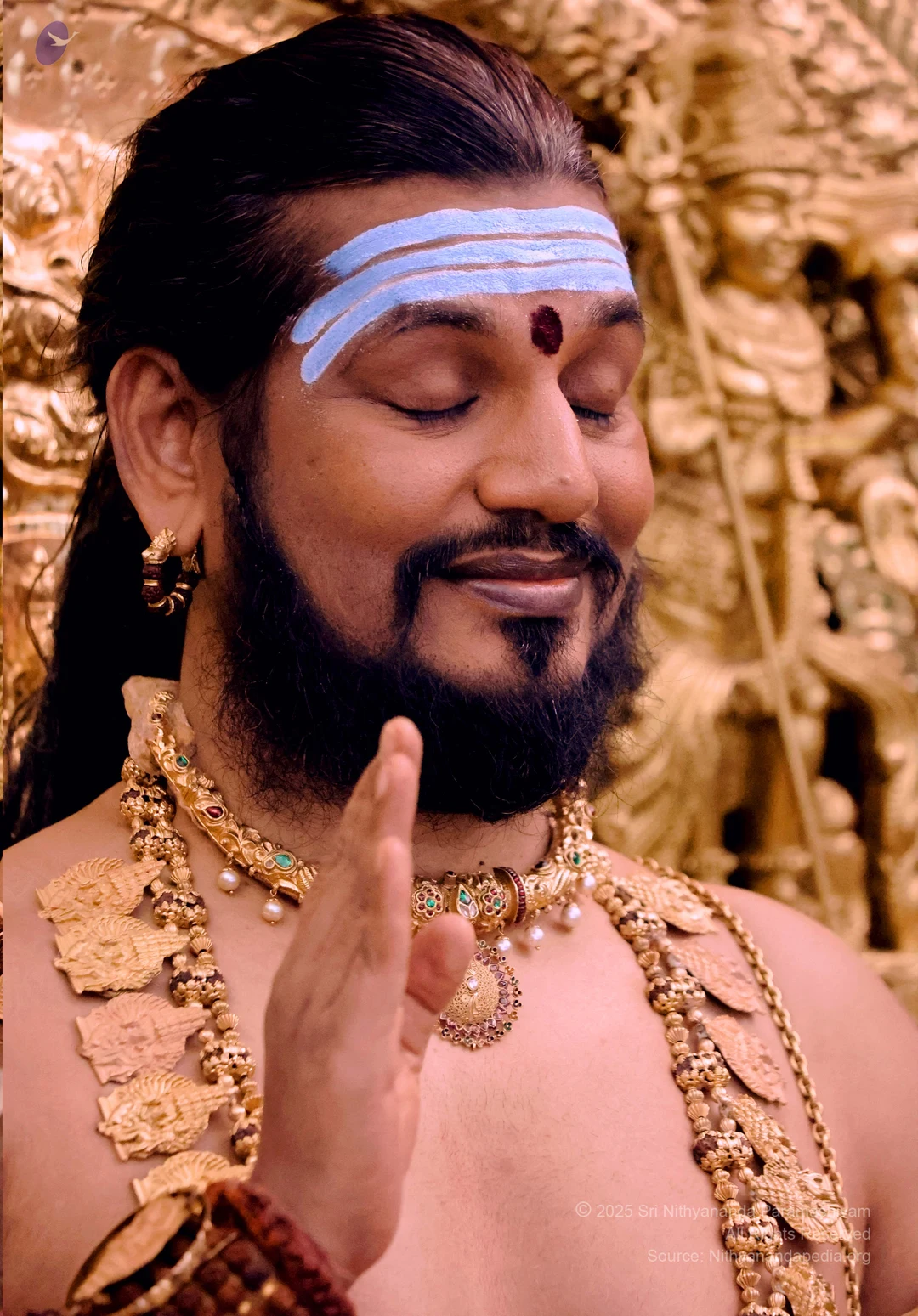
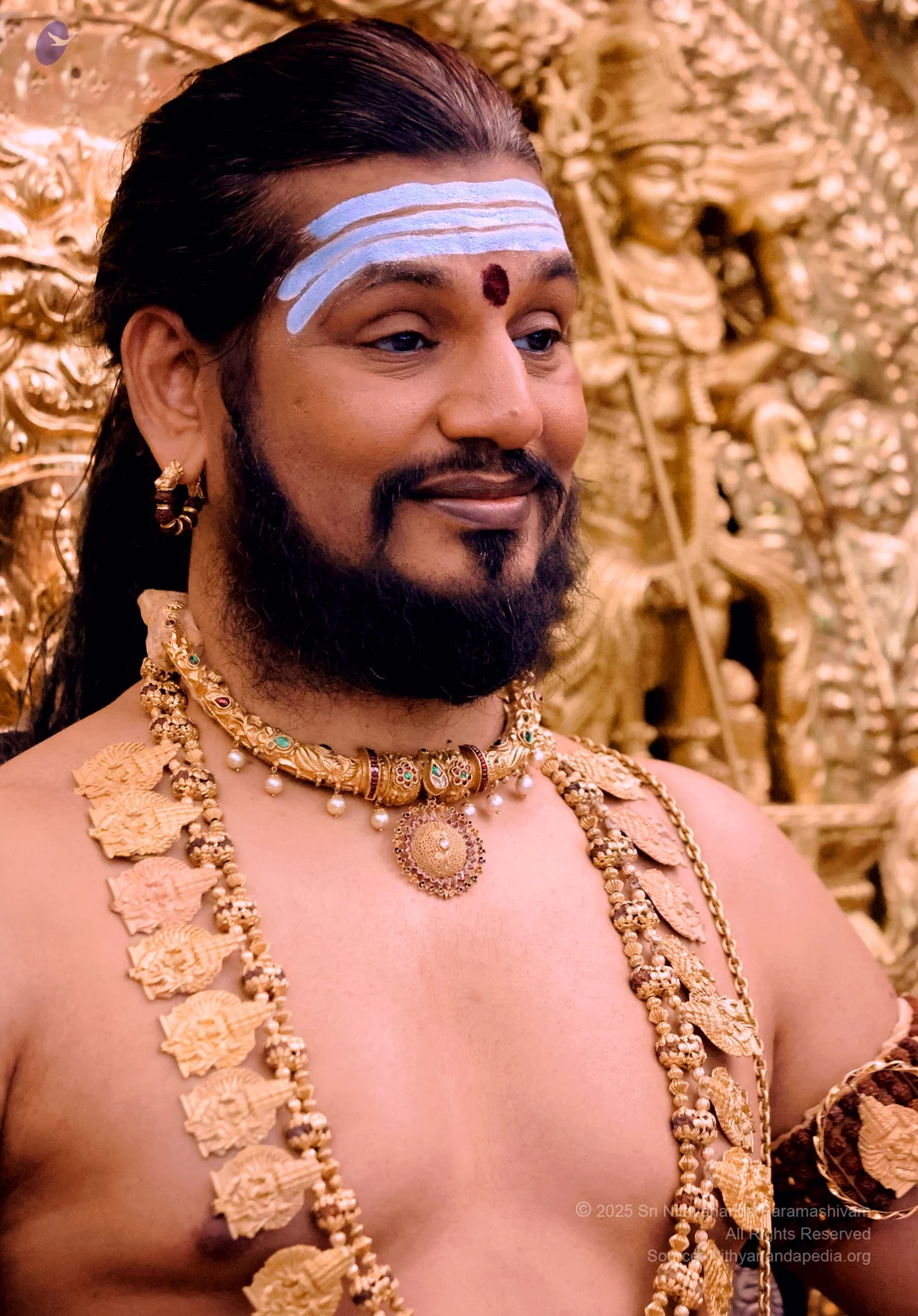
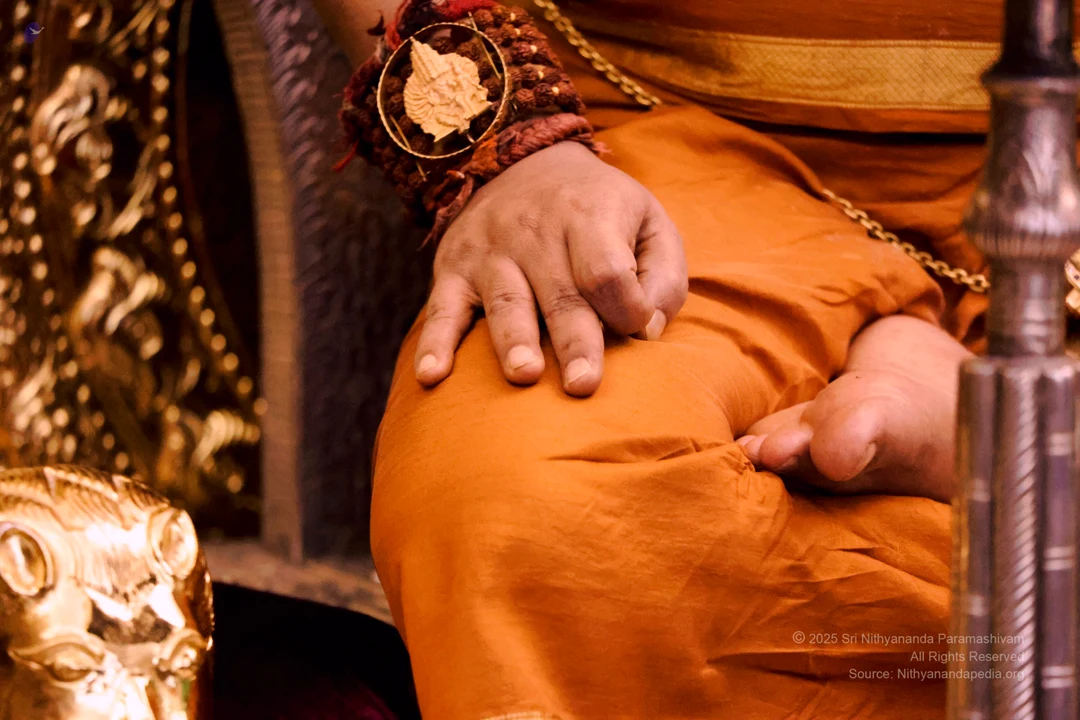
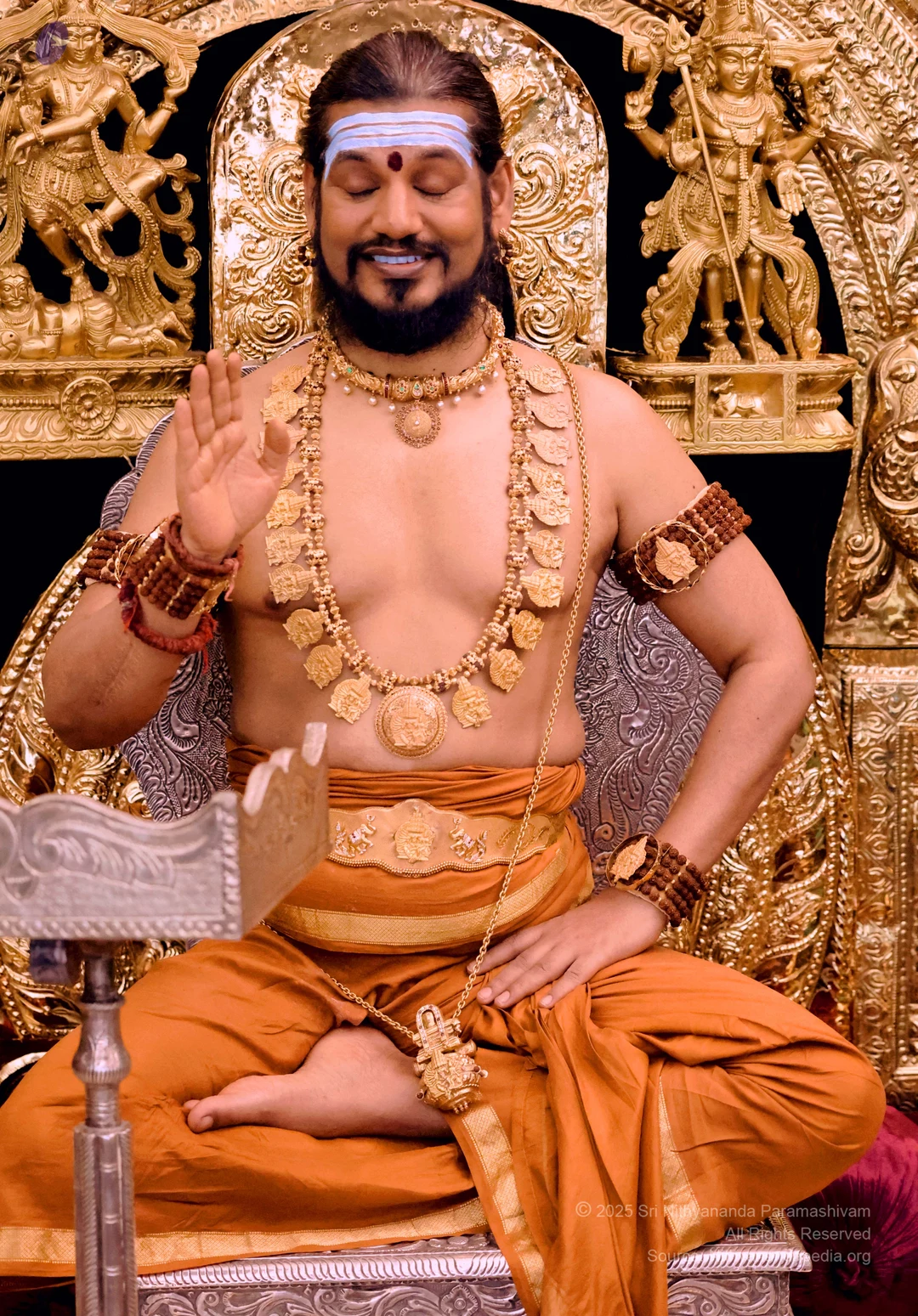
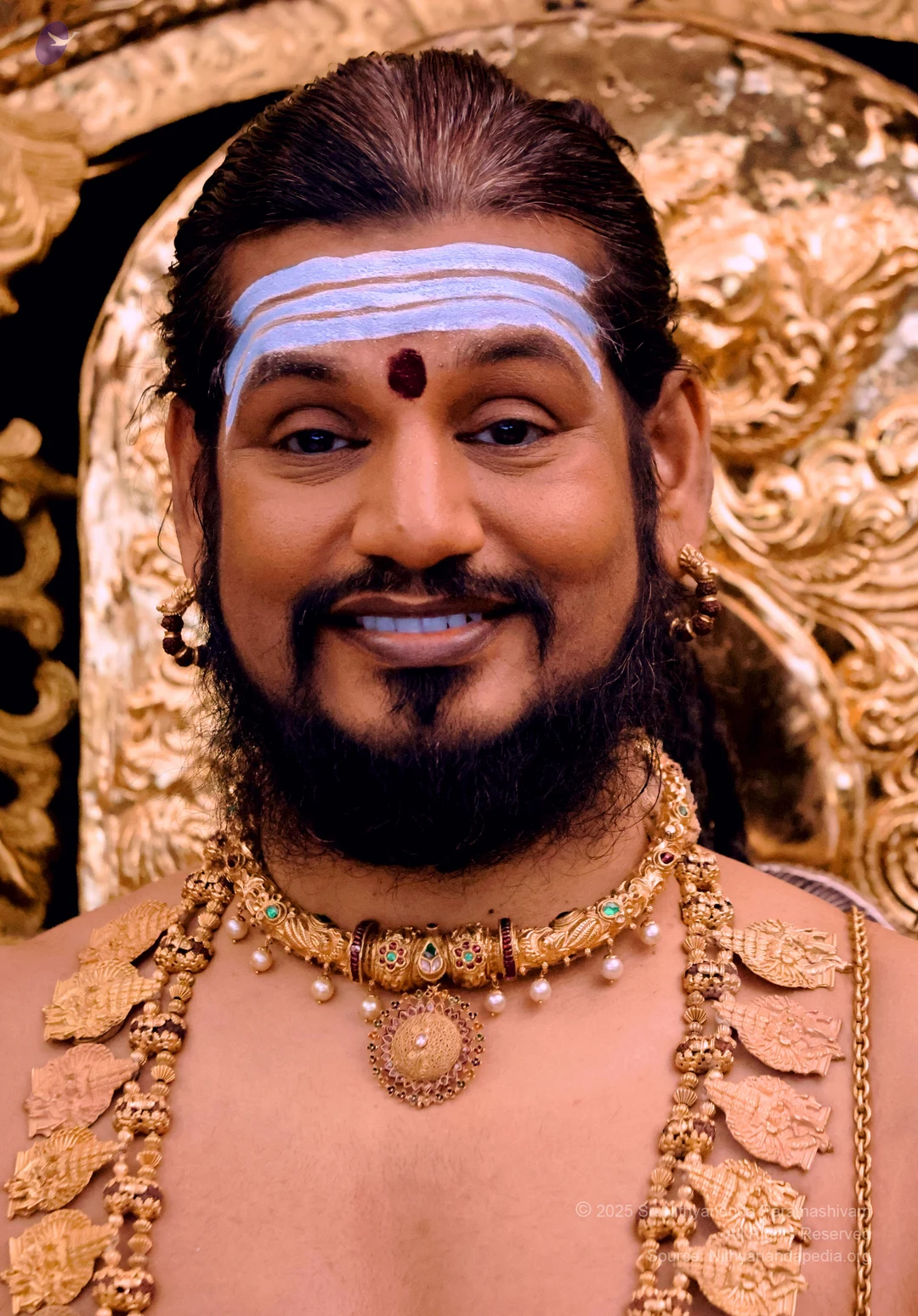
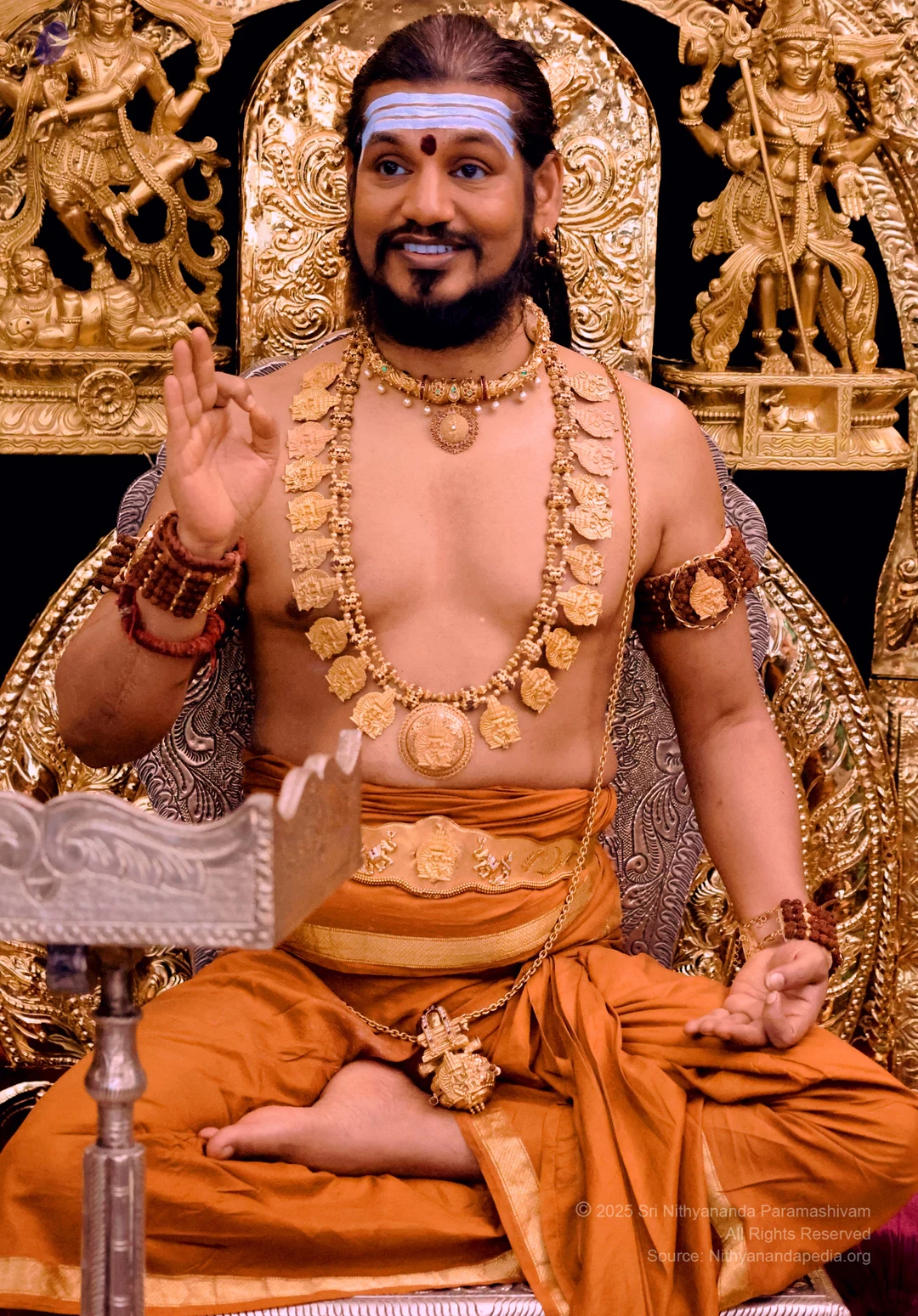
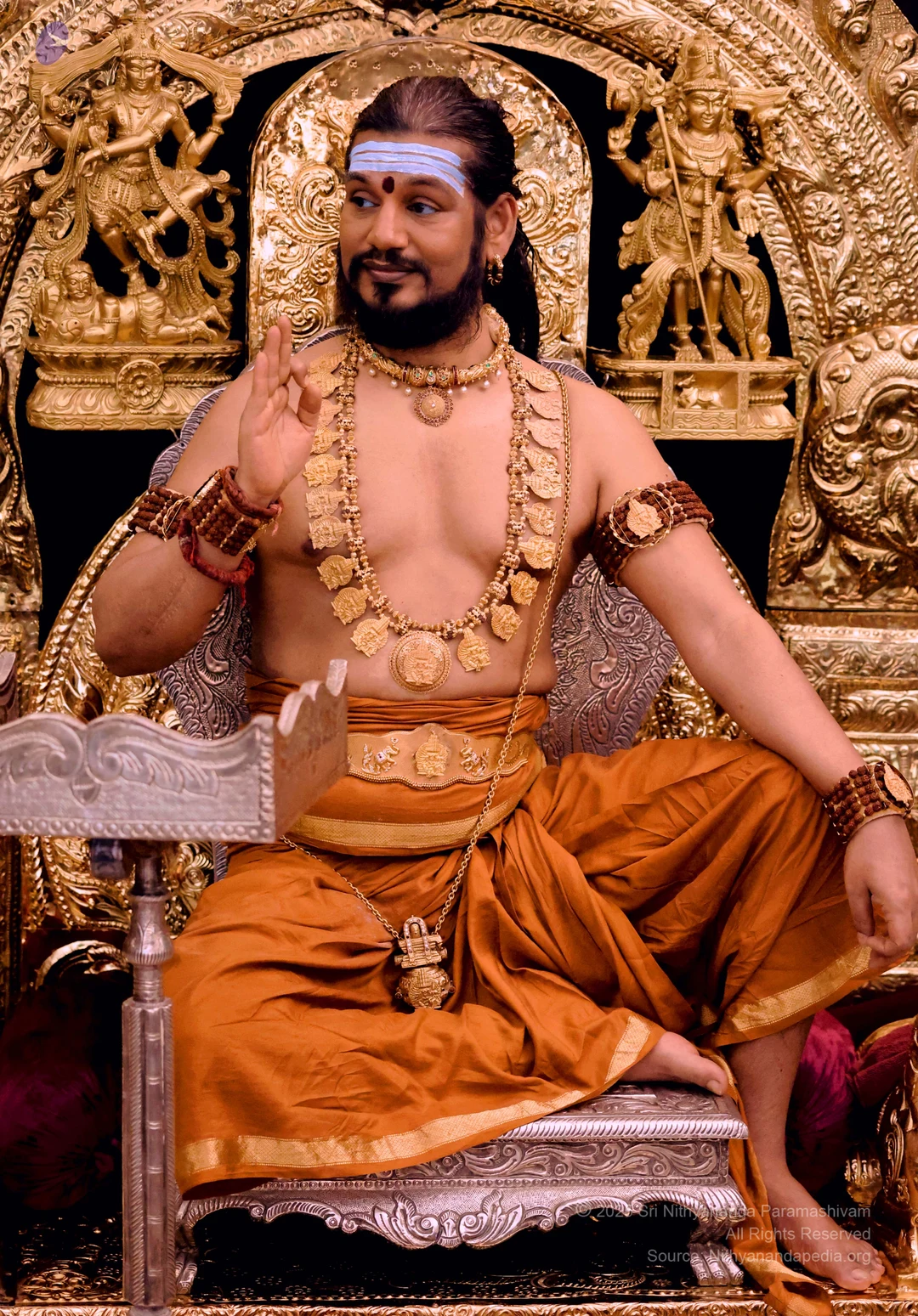
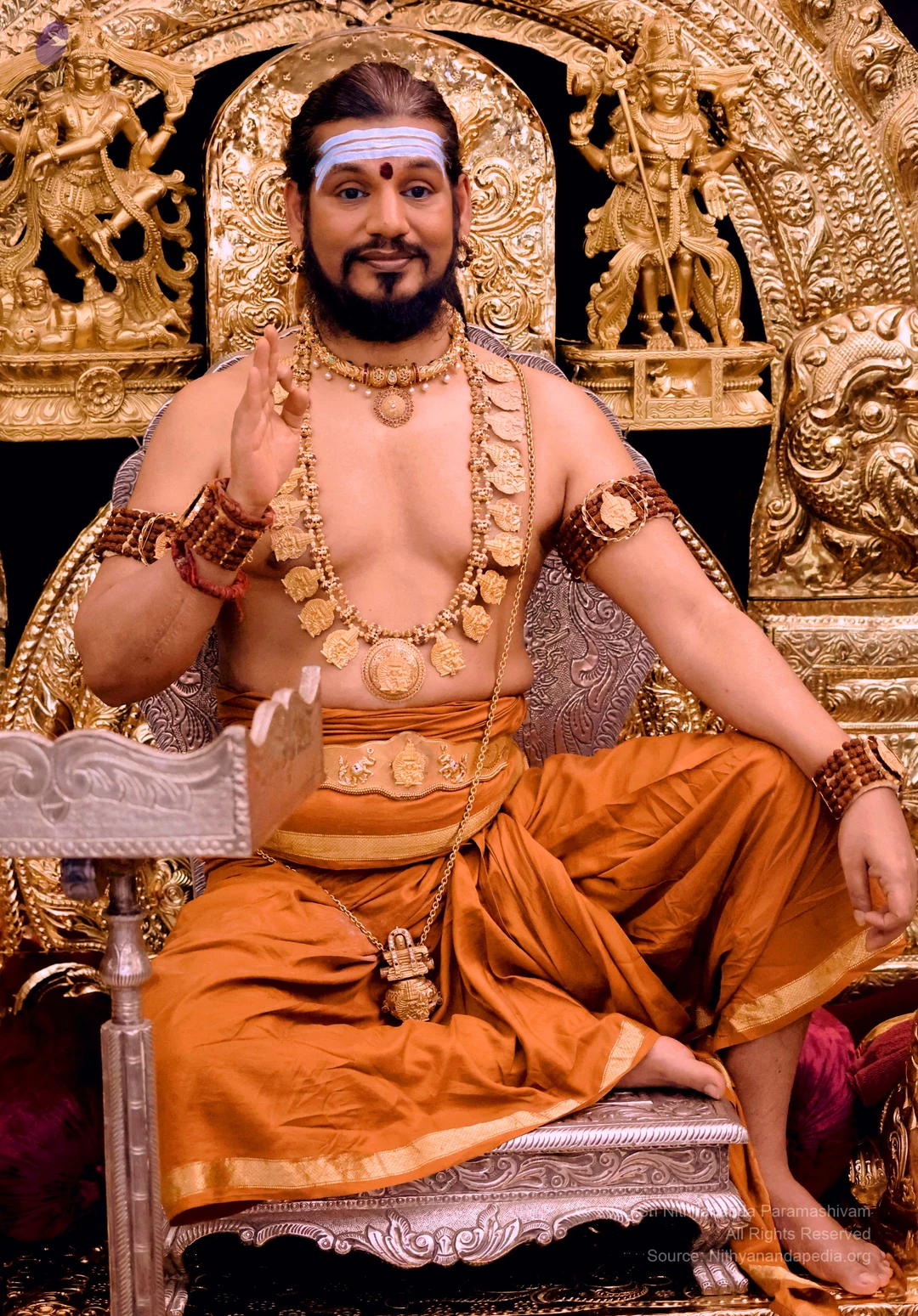
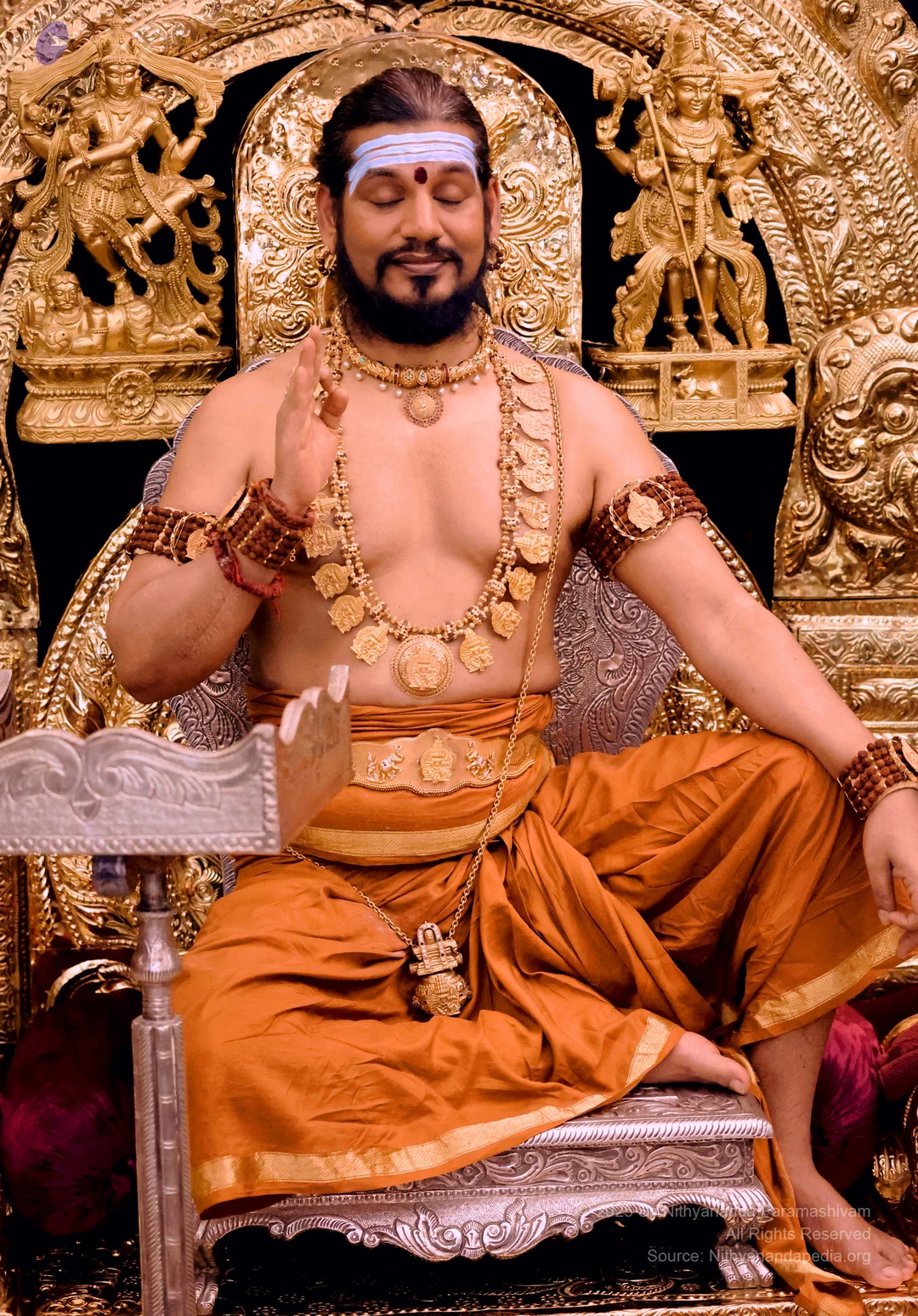
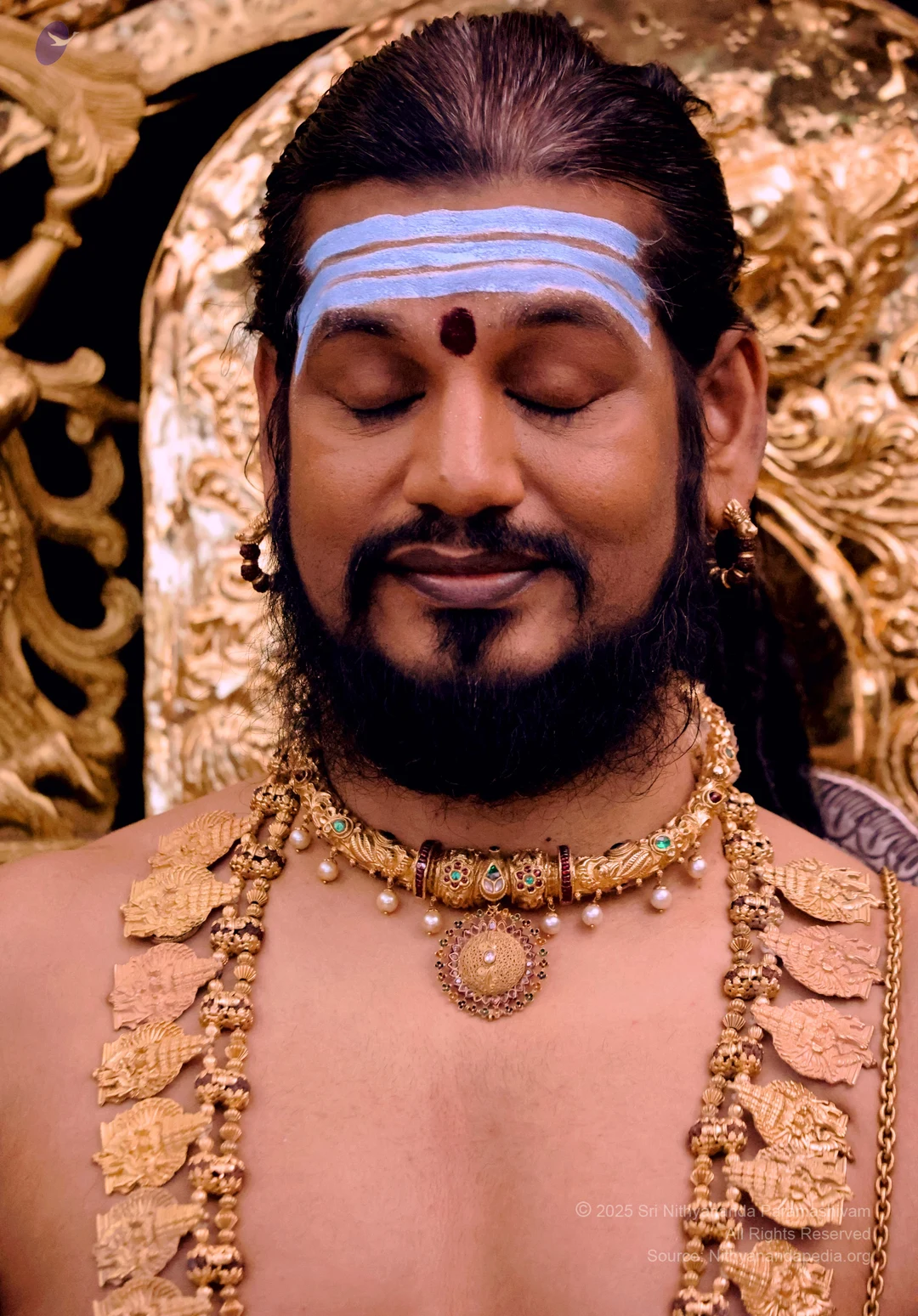
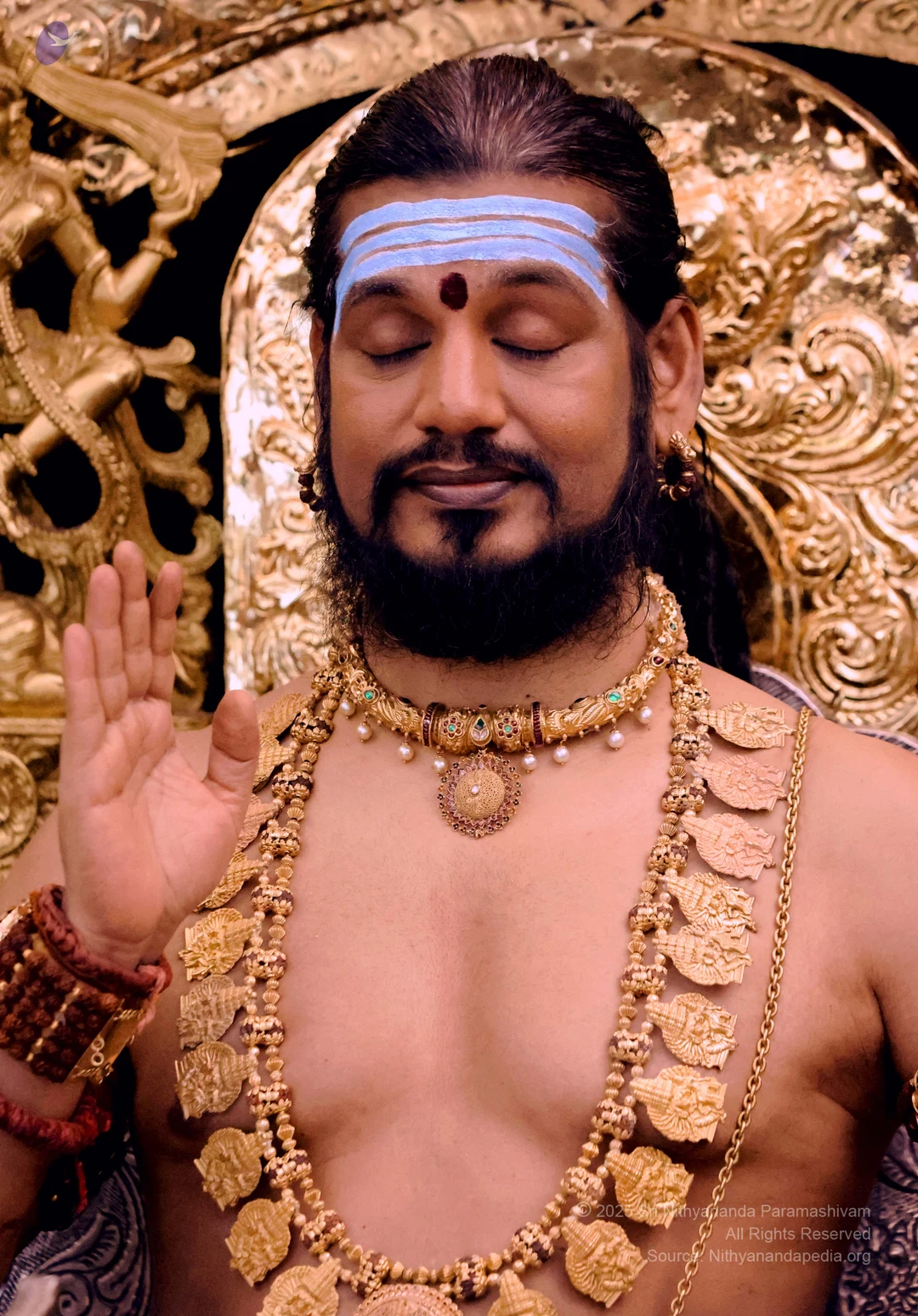
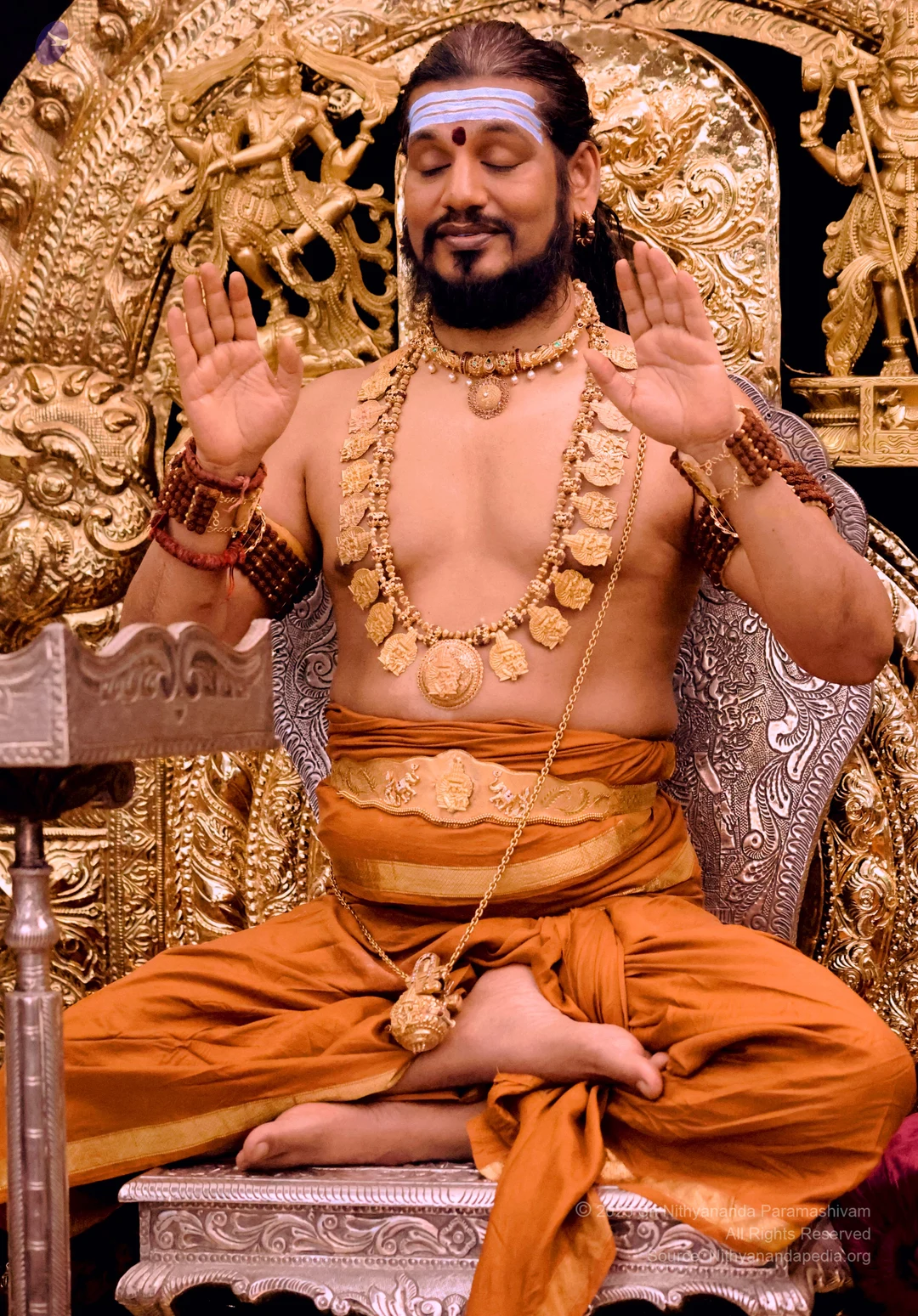
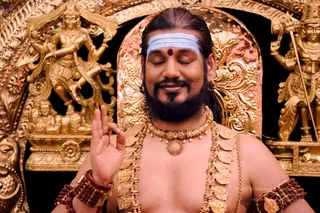
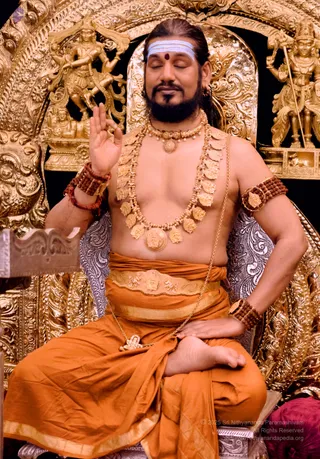
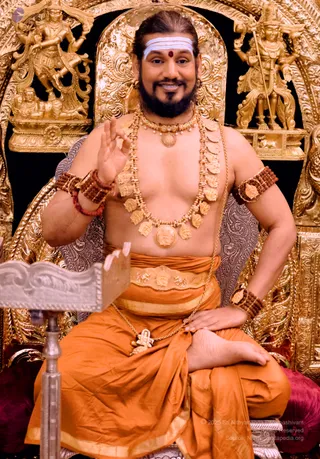
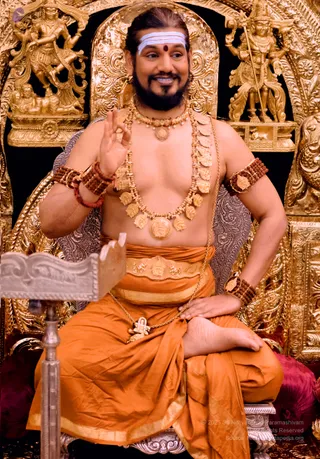
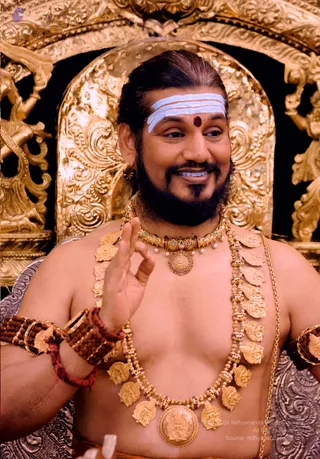
A bare-chested man with long dark hair pulled back and a full black beard sits with eyes closed in a gilded setting, his right hand raised in a mudra. He wears a blue-white vertical tripundra on his forehead with a red bindi, a gold choker with a central pendant, and long gold ornamental necklaces with leaf-shaped pendants. Multiple rudraksha bracelets and mala beads adorn his arms and chest. Behind him, a gold-toned arched backdrop frames sculpted deity figures, including one holding a trident at right and a dancing figure at left.A seated man with eyes closed, in meditative posture, on an ornate gilded throne with carved golden figures of deities behind him. He wears an orange dhoti with a golden border and gold belt, bare-chested, heavy gold necklaces with pendants, and rudraksha bracelets and armlet. His forehead has white horizontal lines with a red dot, and his right hand is raised in a mudra while his left rests on his leg. The left figure shows a dancing deity and the right shows a standing deity with a trident. a person, seated in a teaching or darshan pose.A man seated on an ornate golden throne with a gilded arch behind him, featuring carved figures of deities including one holding a trident. He wears a white tripundra forehead marking with a red bindi, a saffron-orange dhoti and waist cloth with gold border, layered gold and bead necklaces with coin-like pendants, and multiple rudraksha bracelets and armlets. He raises one hand in a blessing gesture while the other rests on his knee, and a silver stand stands at the left edge. Swamiji (probable): the figure's long swept-back hair, ornate gold jewellery, saffron clothing and rudraksha adornments match the page's event context, and he occupies the central throne in a darshan setting.A seated man on an ornate golden throne (peetha) with carved gilded deity figures on the backrest, one holding a trident. He wears an orange saffron dhoti with gold-bordered edges, a gold belt, a multi-strand gold necklace with leaf-shaped pendants and a round medallion, rudraksha bracelets and armlets, and a pendant with a gold cross-shaped ornament. He has a white tripundra forehead mark with a red bindi, raises his right hand in a mudra gesture, and sits relaxed with his left hand on his knee. Physical people in the scene: one. Appearance-based candidate with several cues (ornate gold throne, saffron clothing, rudraksha malas, ceremonial gold necklaces), matching the page's note that a person is present: a person seated in darshan on the throne.Close-up photo of a bare-chested man seated before an ornate gold-leaf throne with carved arched backrest. He has swept-back dark hair, a white three-line tilak with a red dot on his forehead, and a full beard. He wears heavy gold necklaces with a layered temple-style pendant, a jeweled choker, multiple gold bangles and rudraksha mala bracelets on his wrists. He raises one hand in a teaching gesture and smiles while looking to the side.A smiling man with a white three-line tripundra and red bindi sits before an ornate gold throne with carved gold panels and figures. He is bare-chested, wearing layered gold necklaces with pendants, a gold choker set with green and red stones, gold earrings, and rudraksha bracelets on both wrists. He wears an orange cloth around his waist and raises his right hand in a blessing gesture. Overlaid text reads 2025 Sri Nithyananda Paramashivam, , and Source . The setting suggests a darshan moment