Skip to content
Sunday

21 January 2018

Dated photos
186
Source pages
2
Media
3
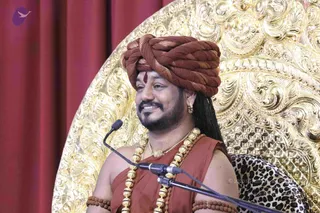
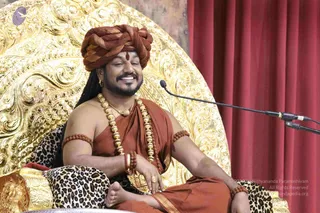
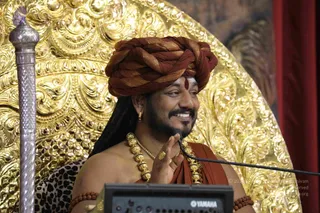
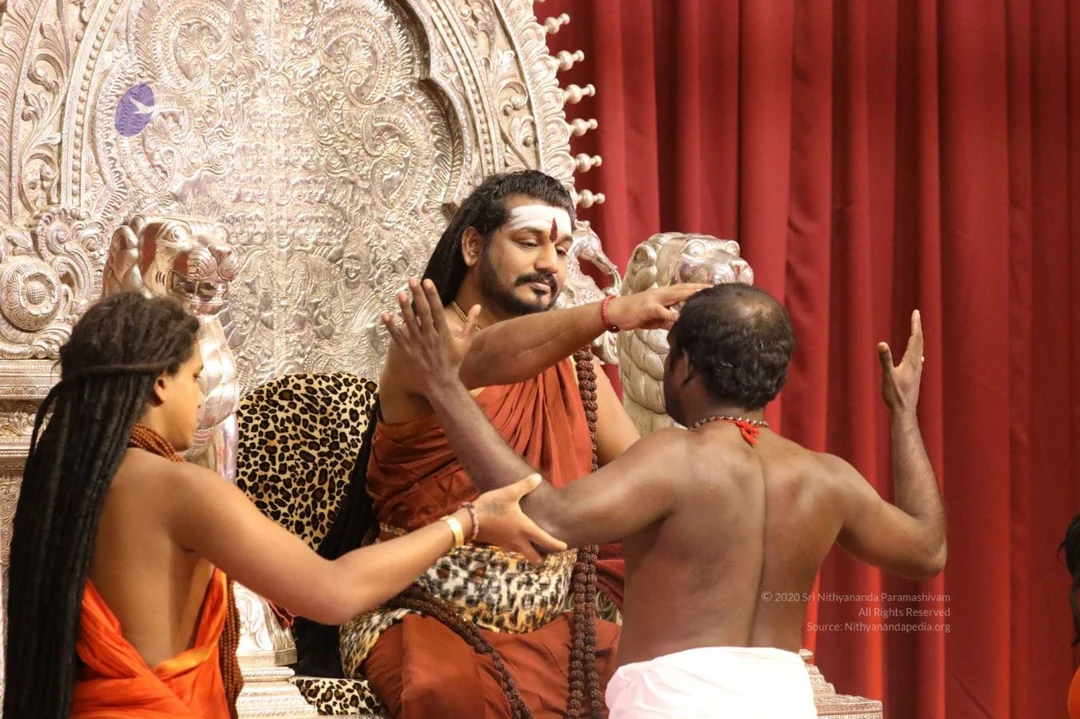
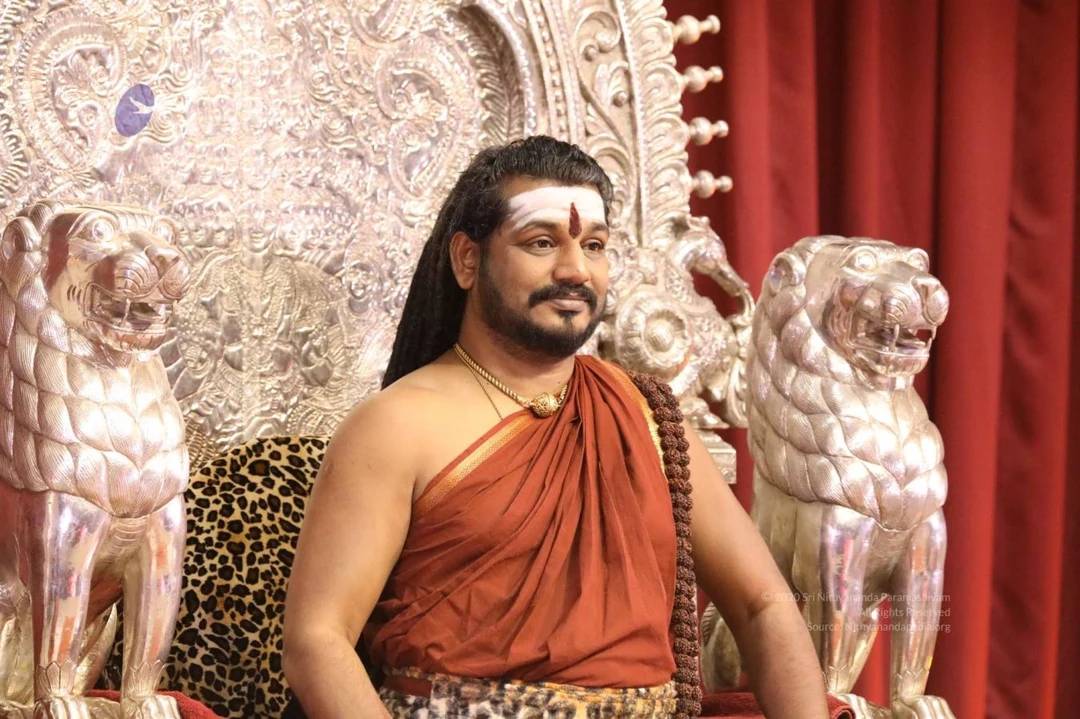
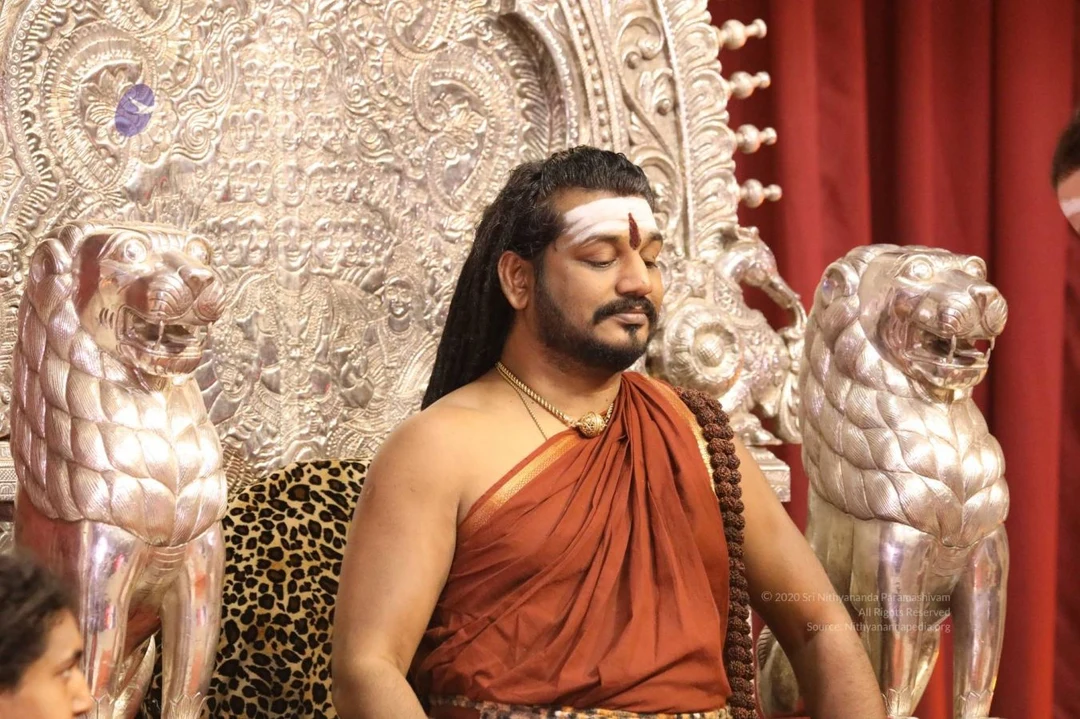
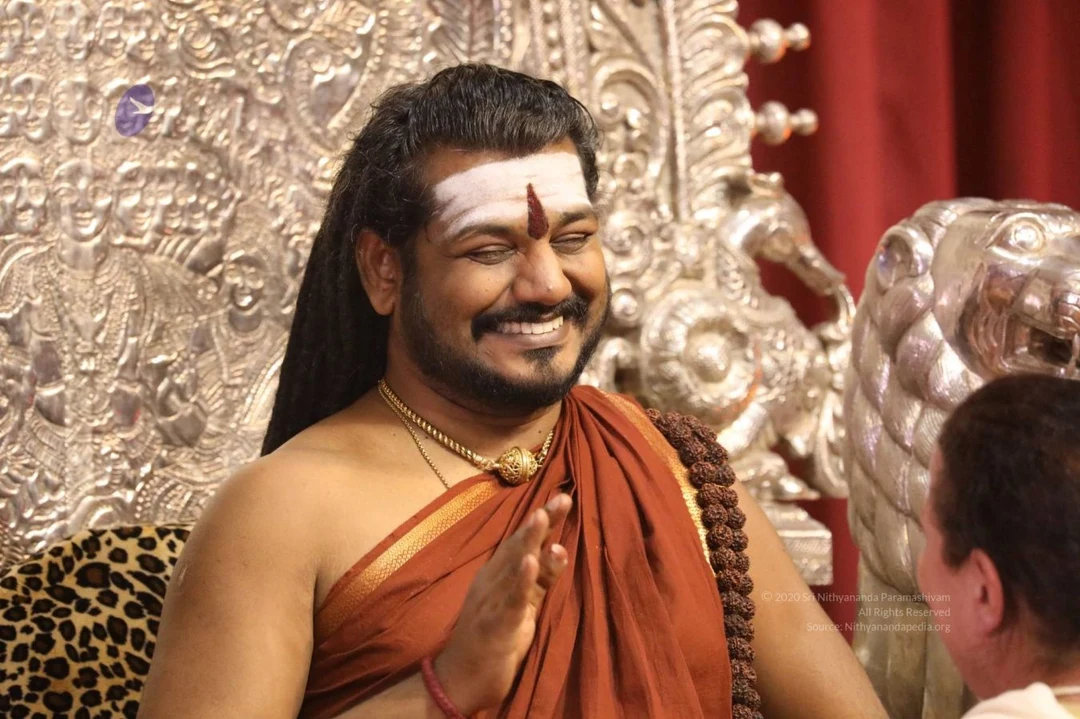
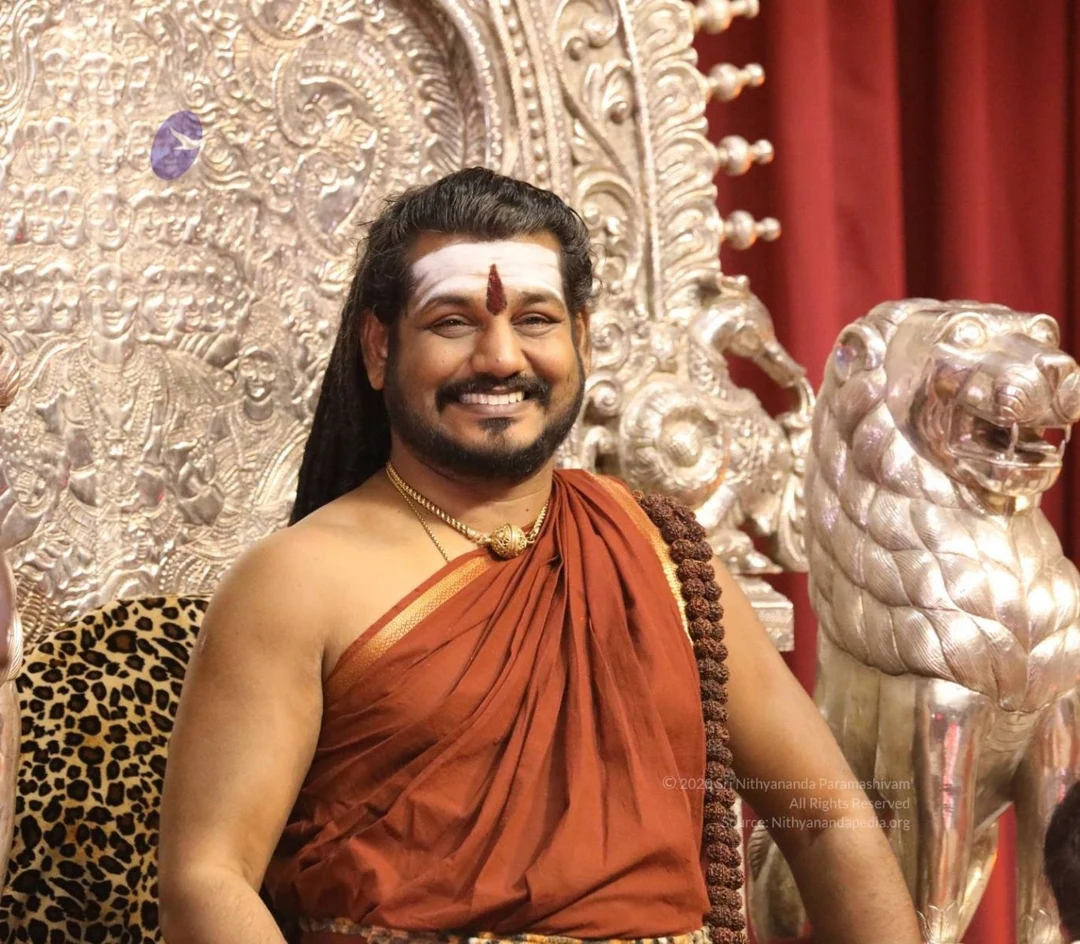
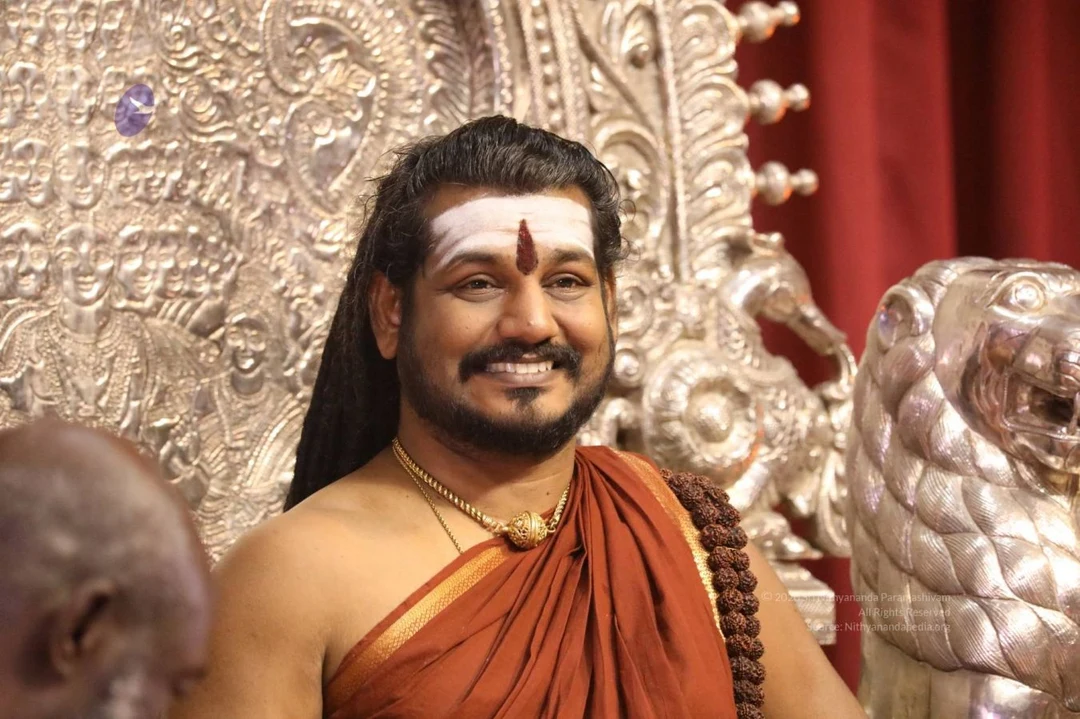
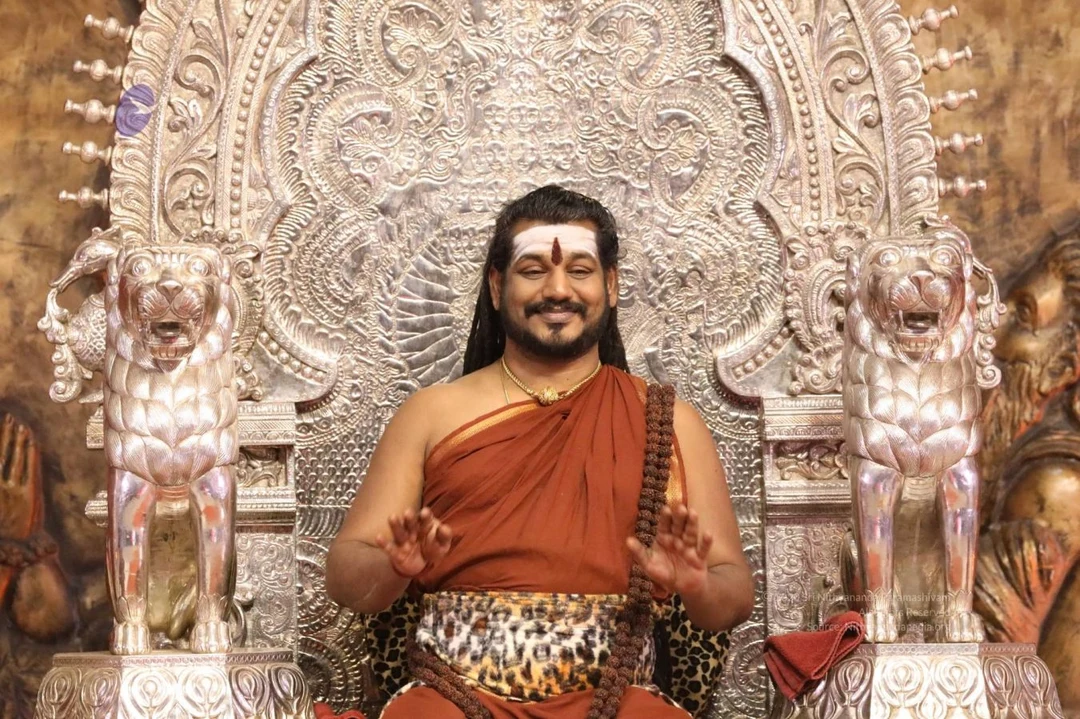
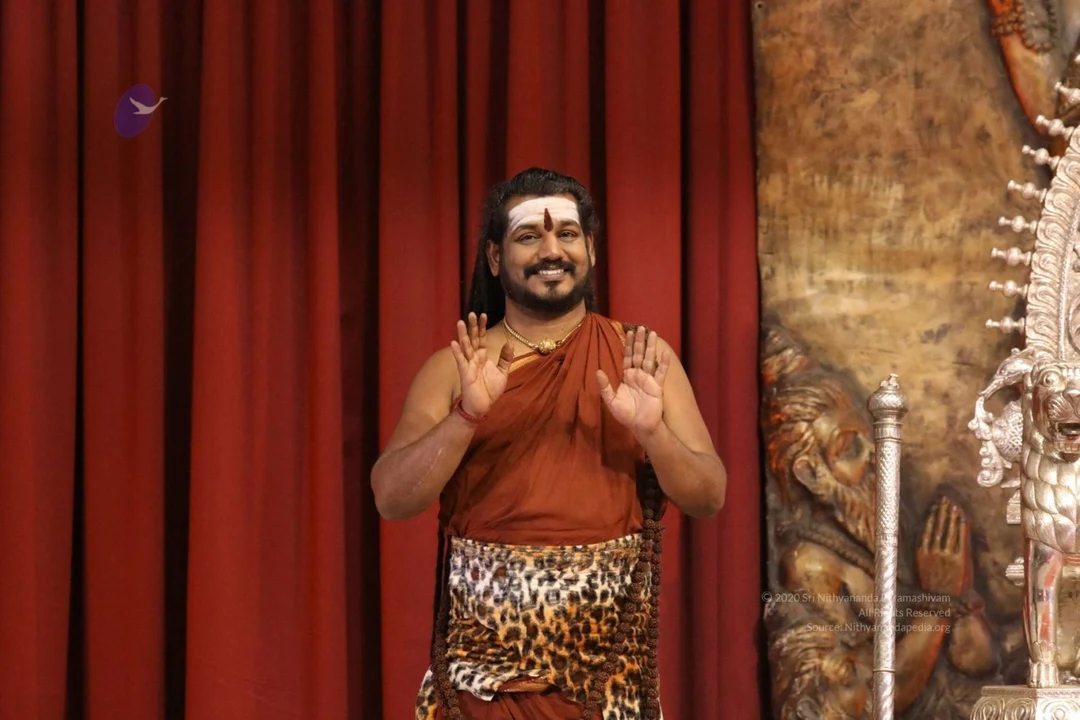
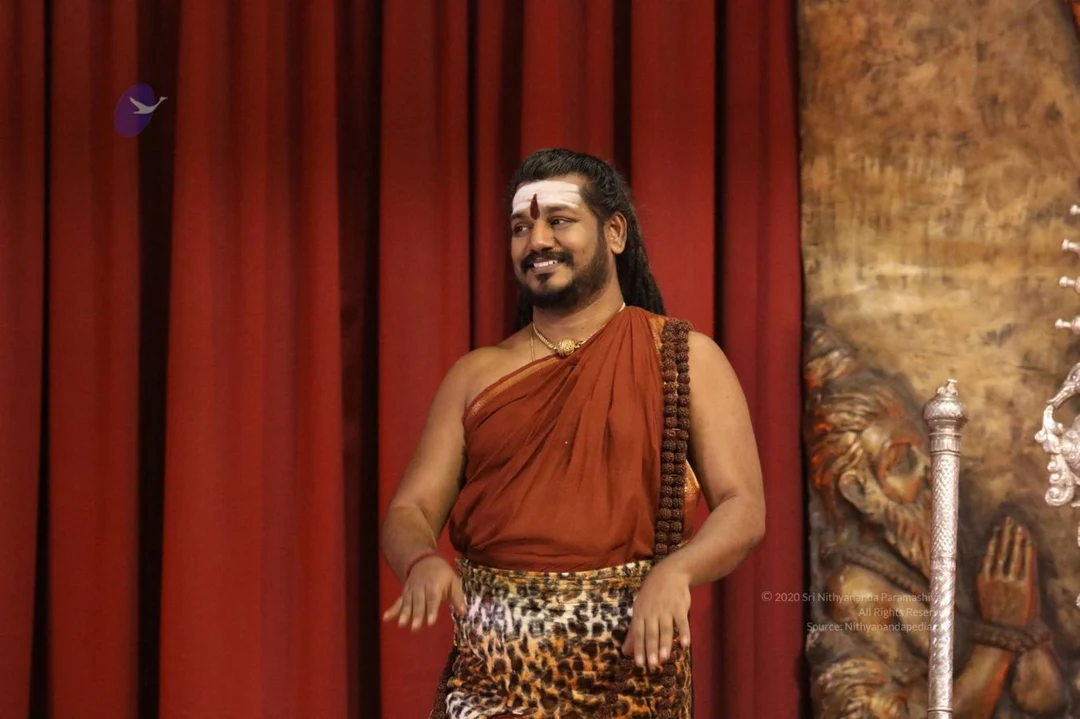
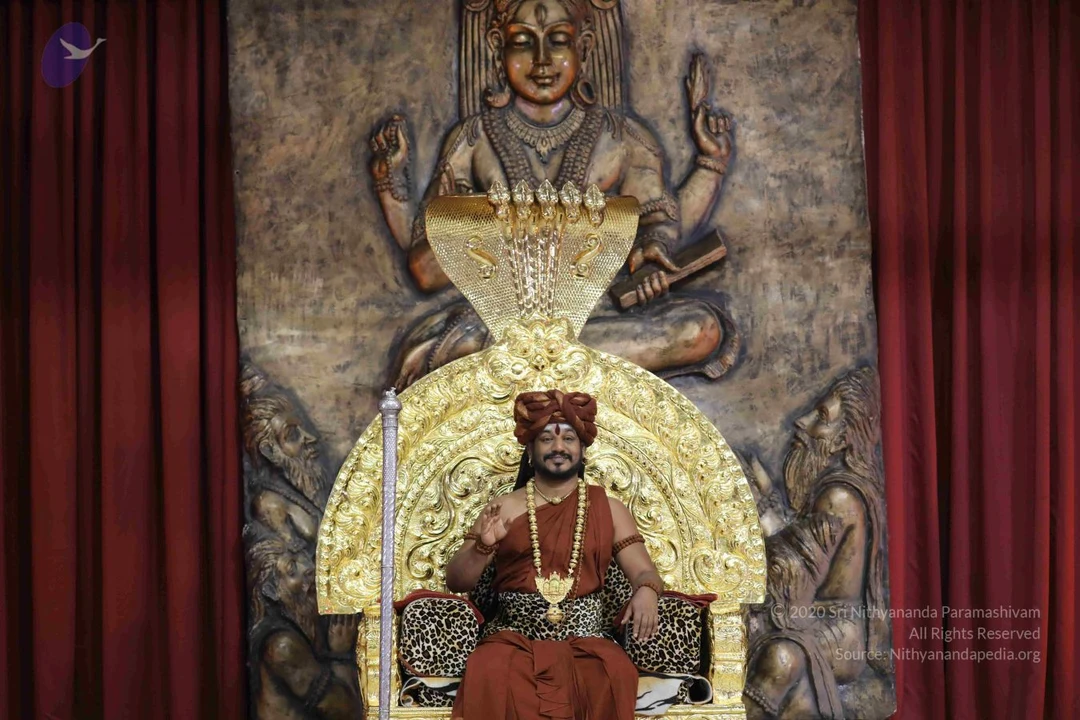
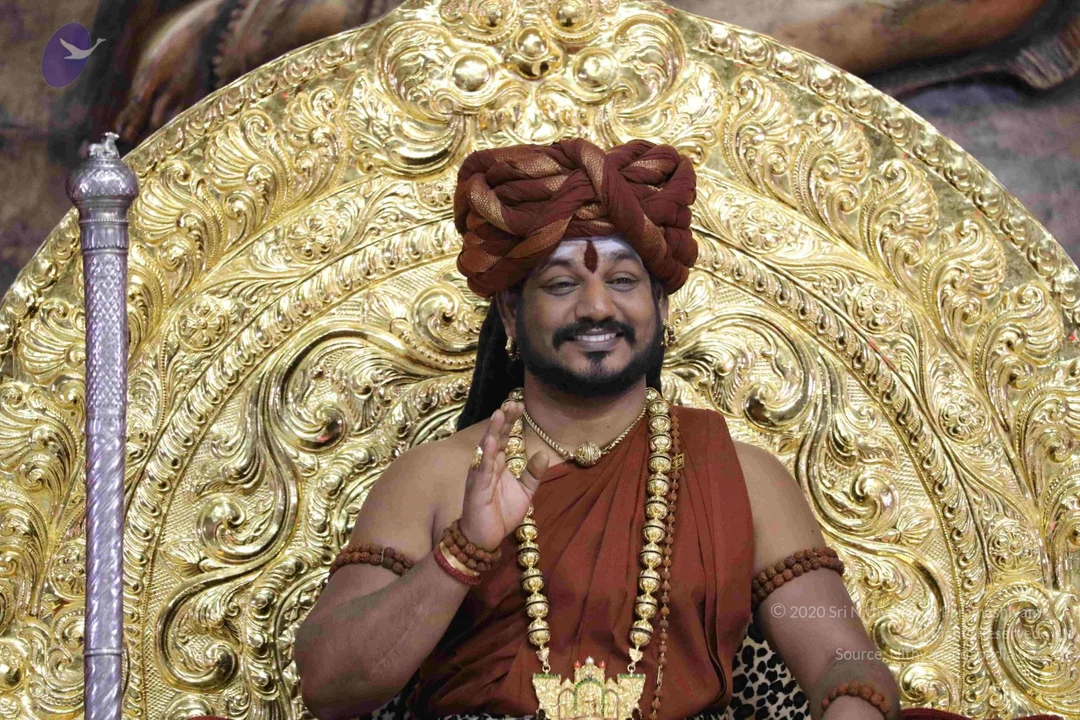
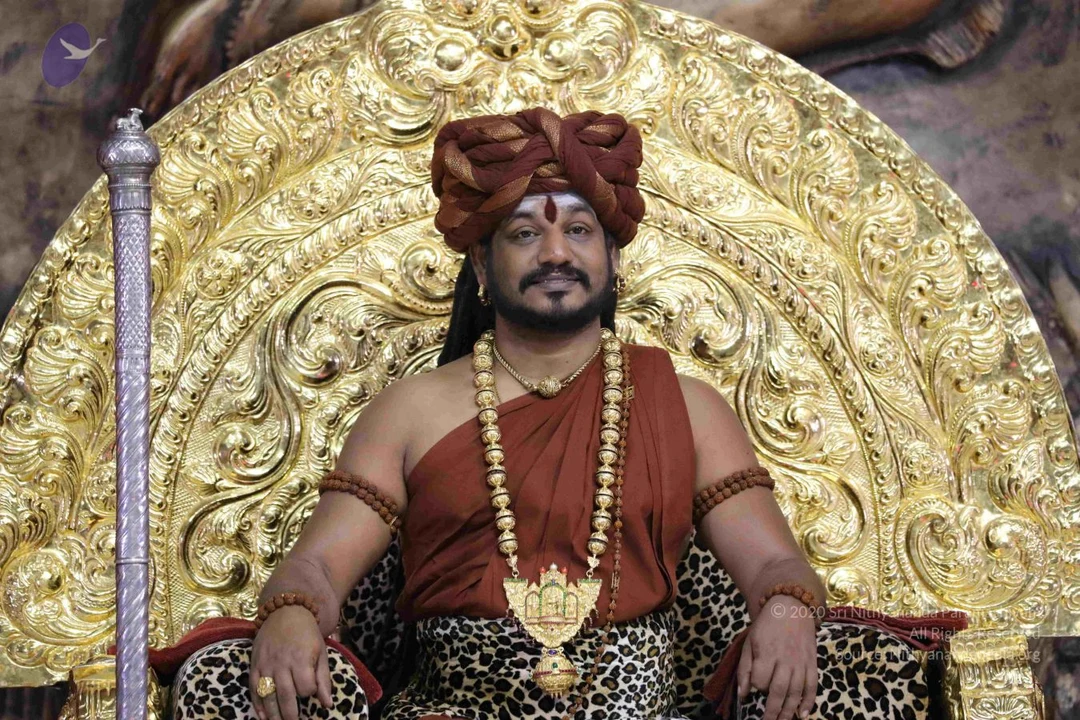
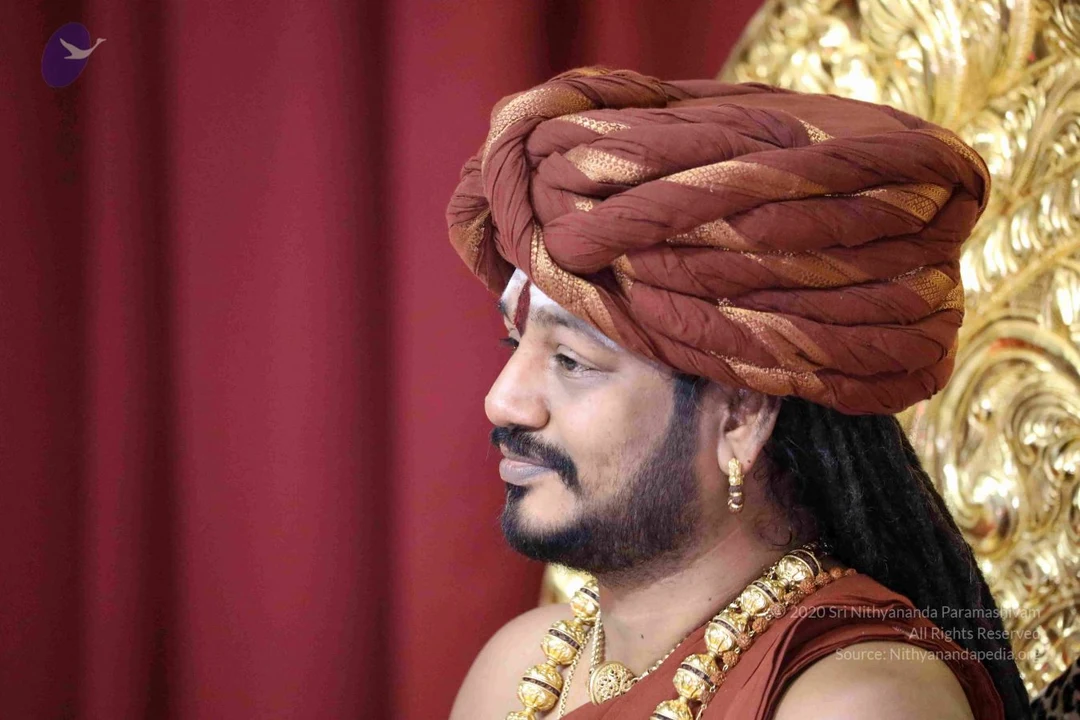
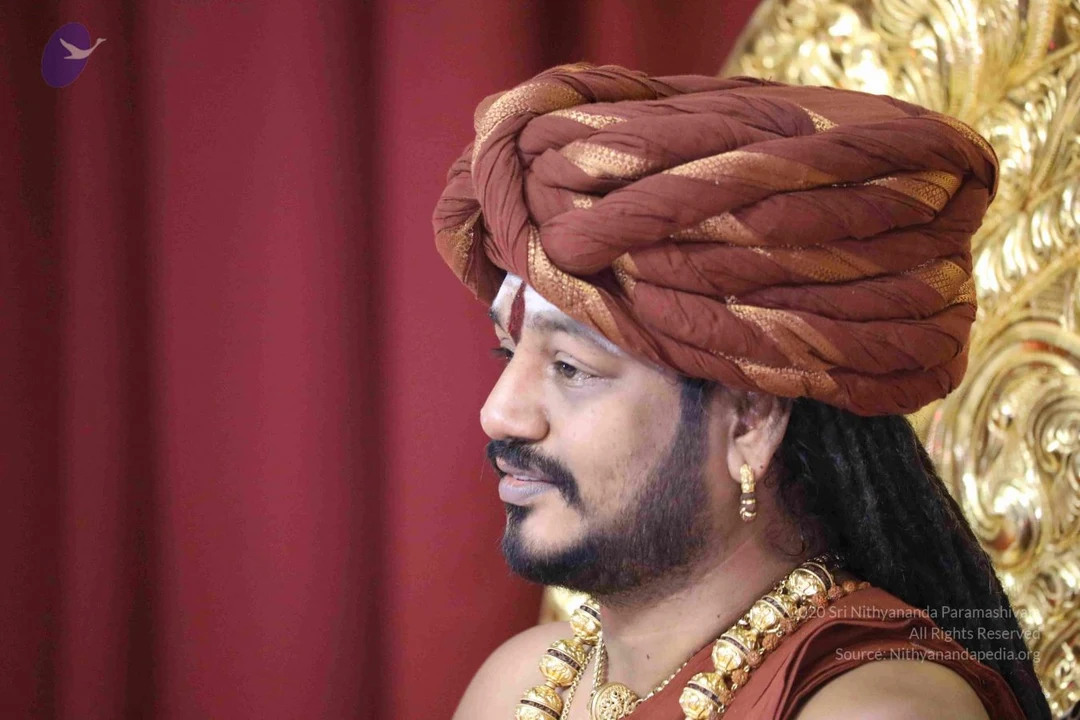
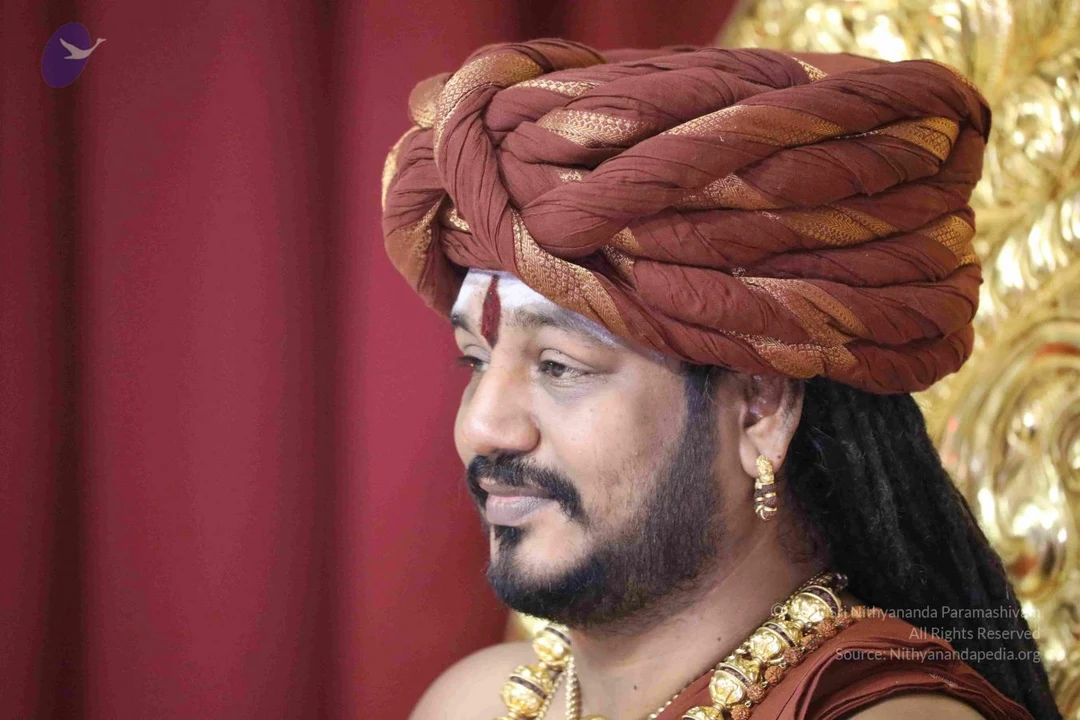
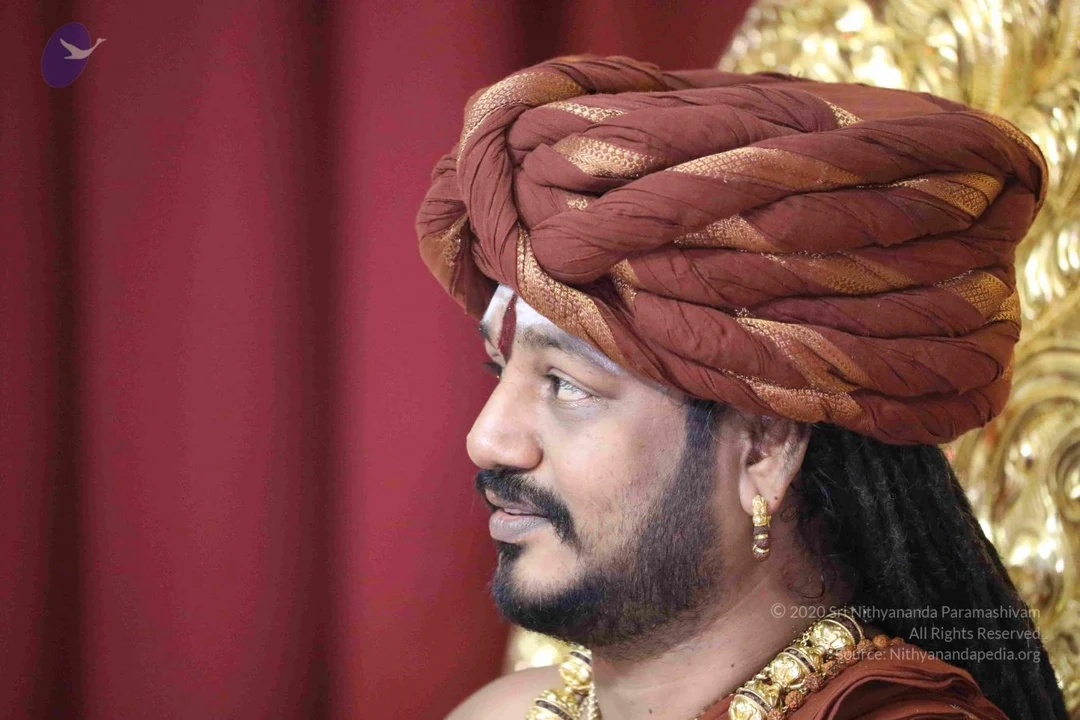
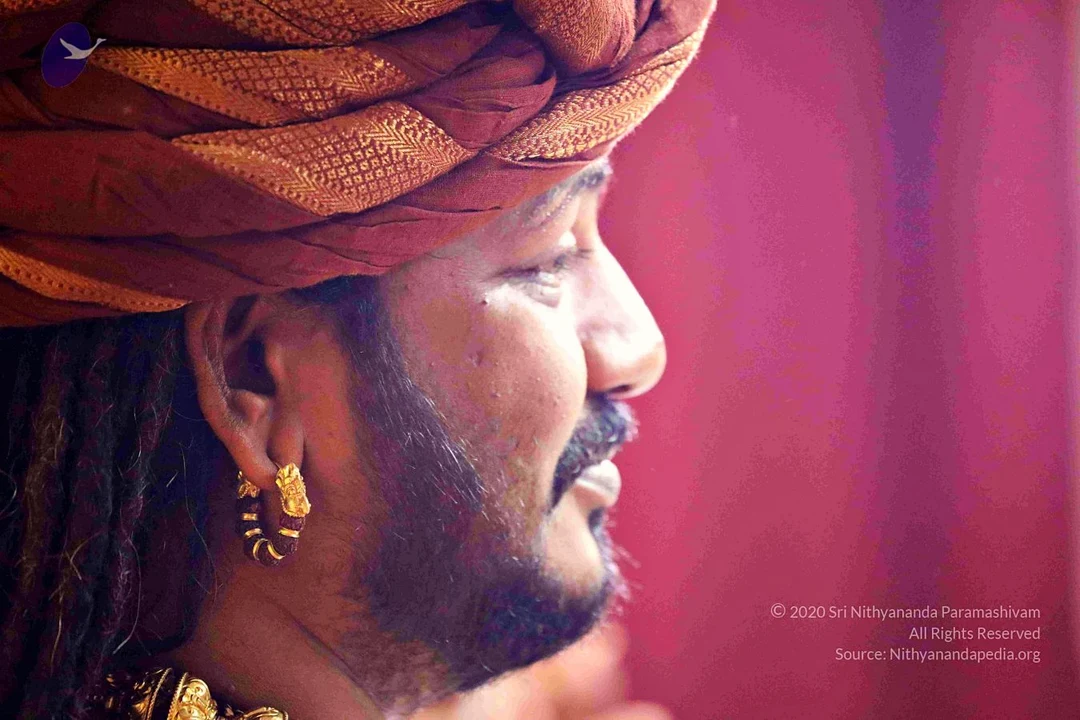
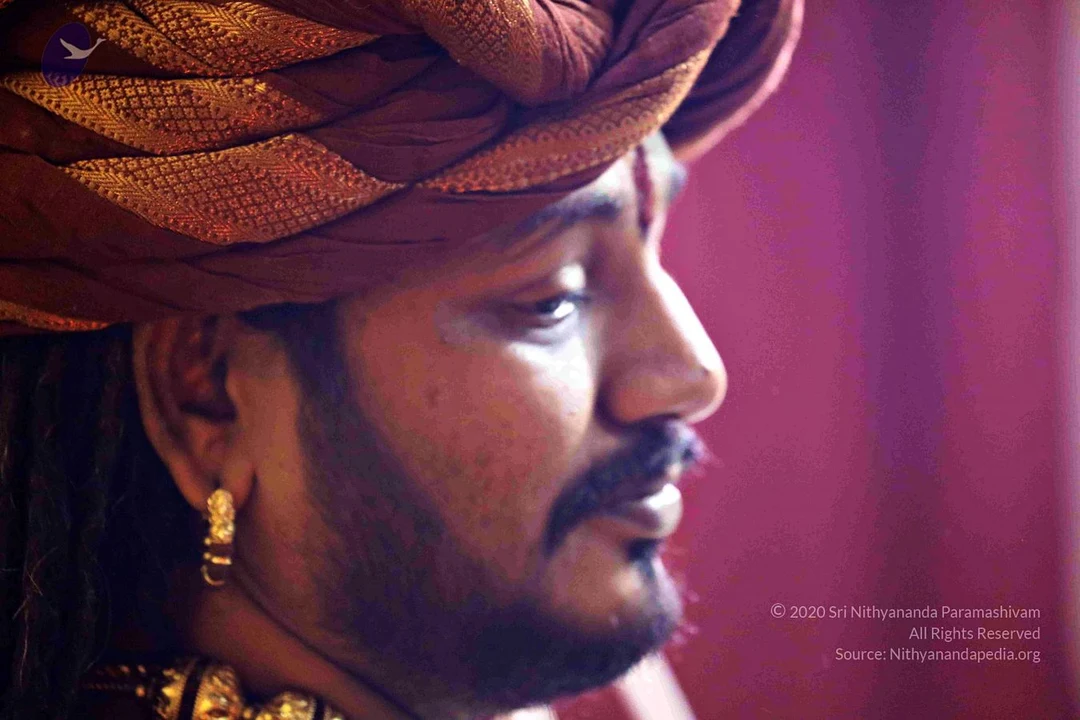
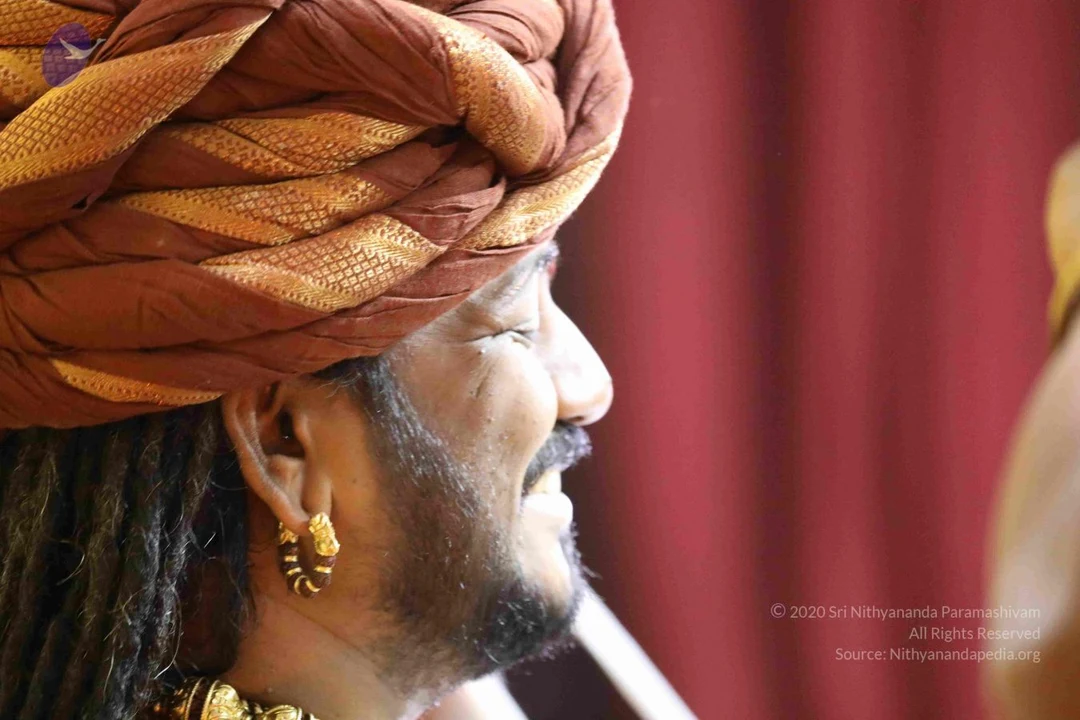
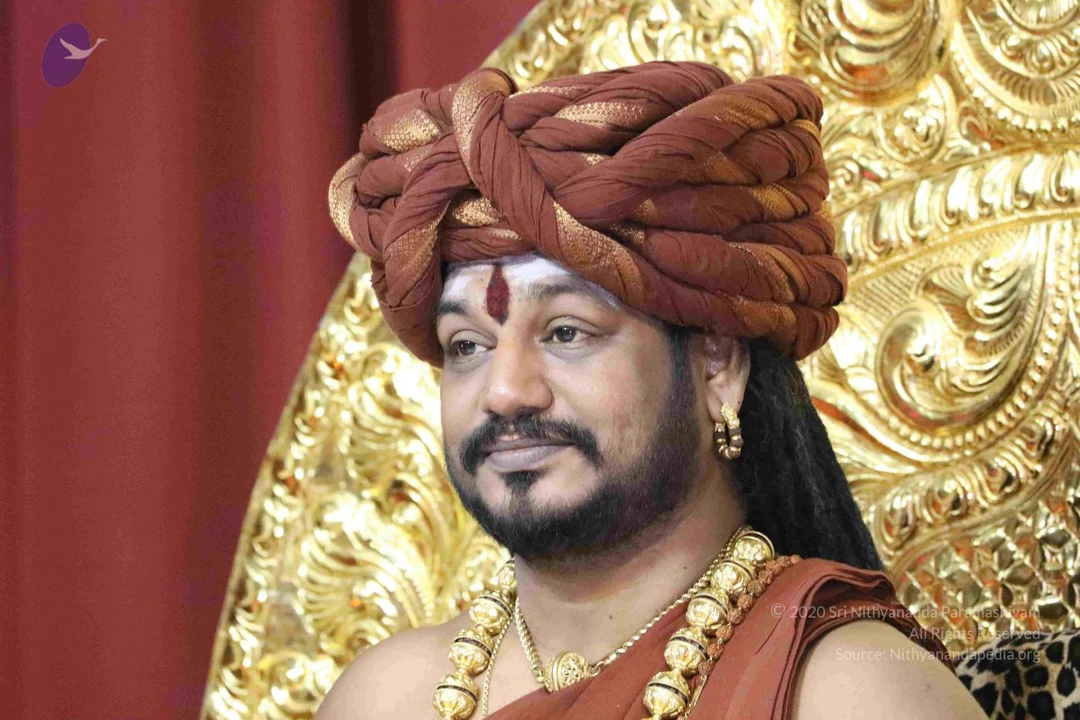
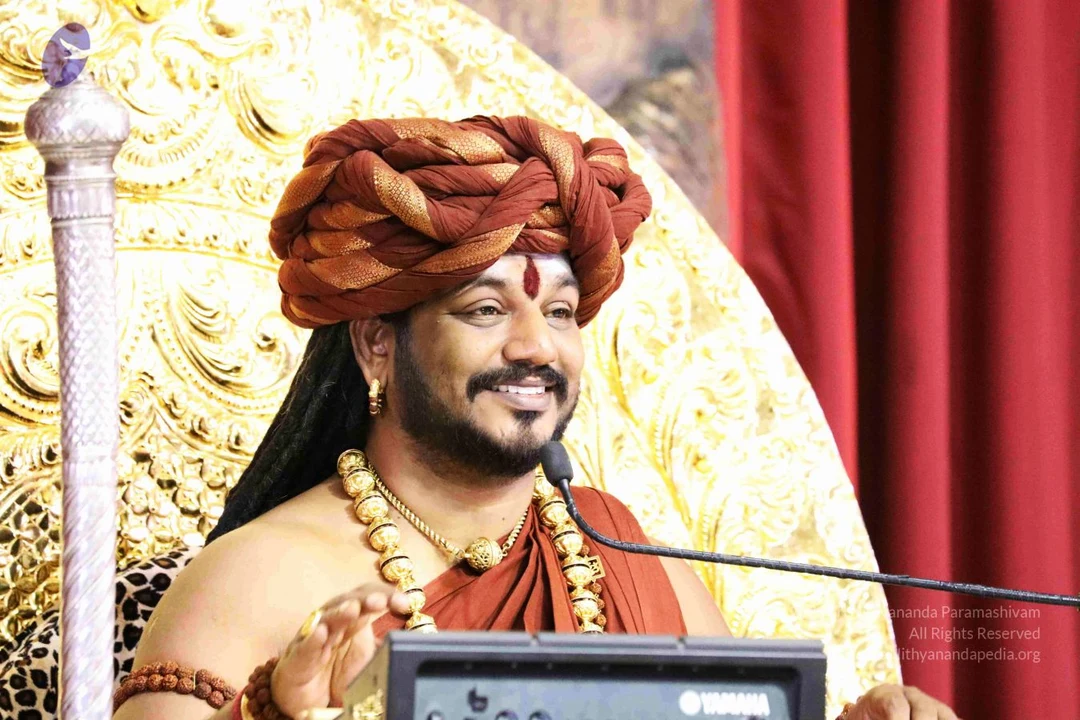
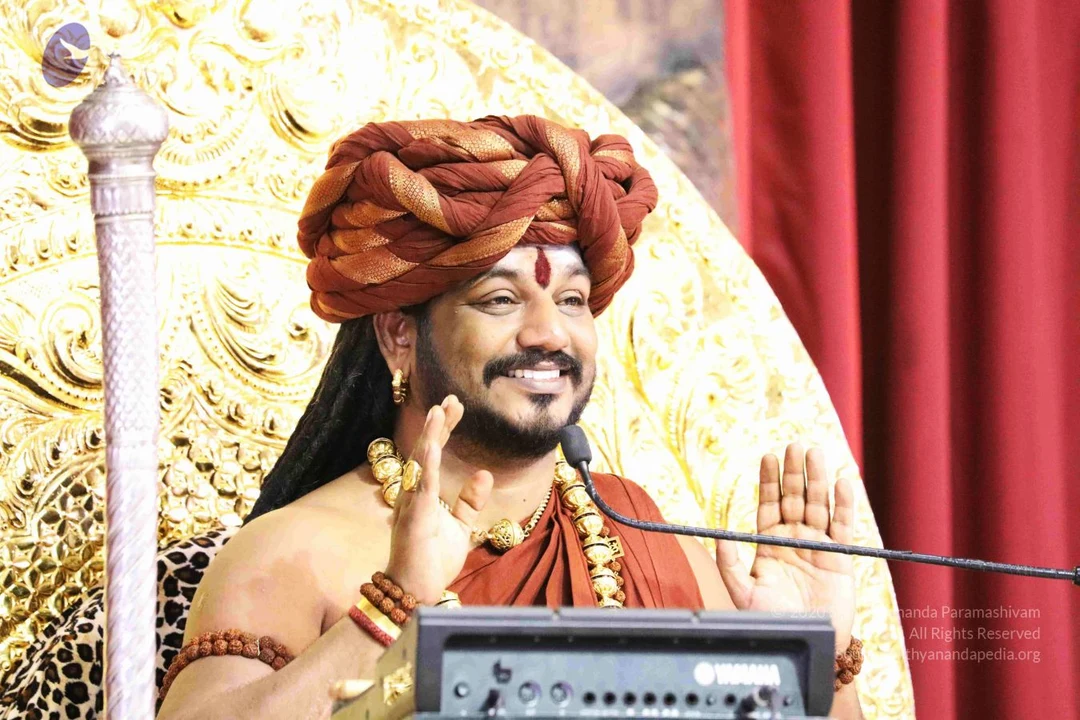
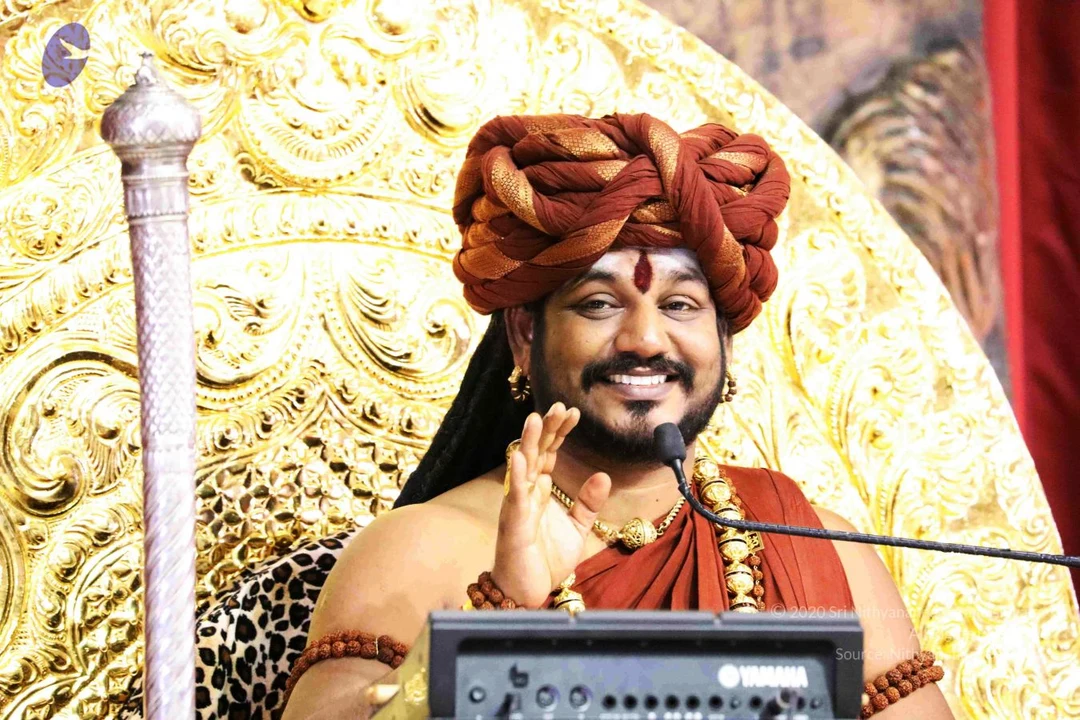
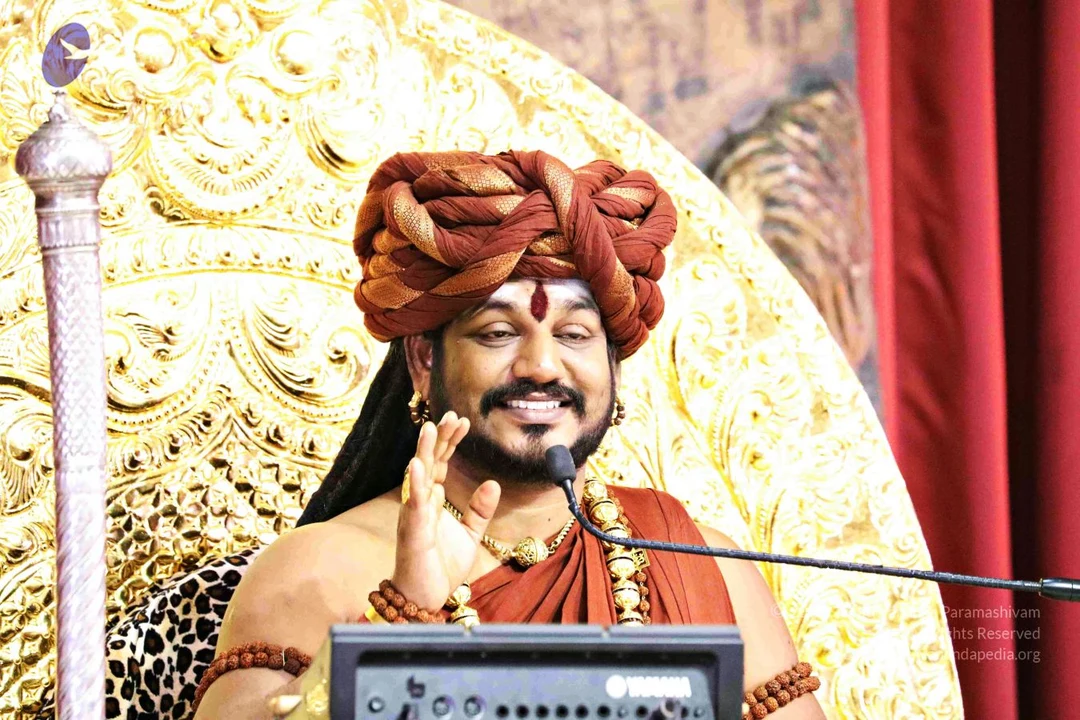
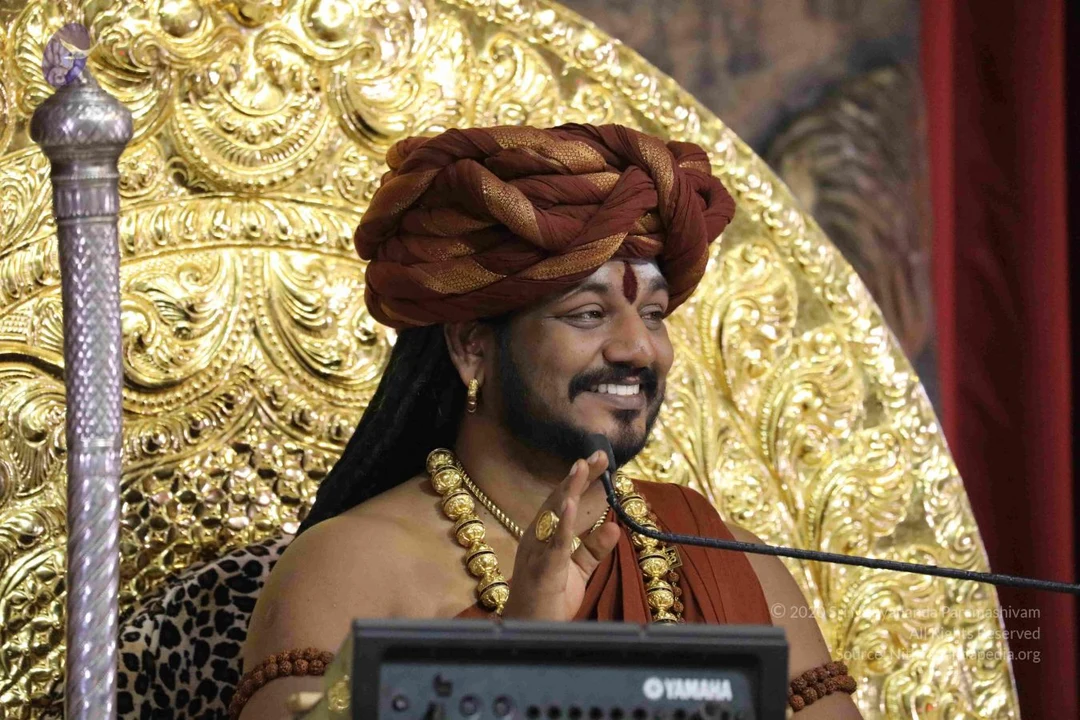
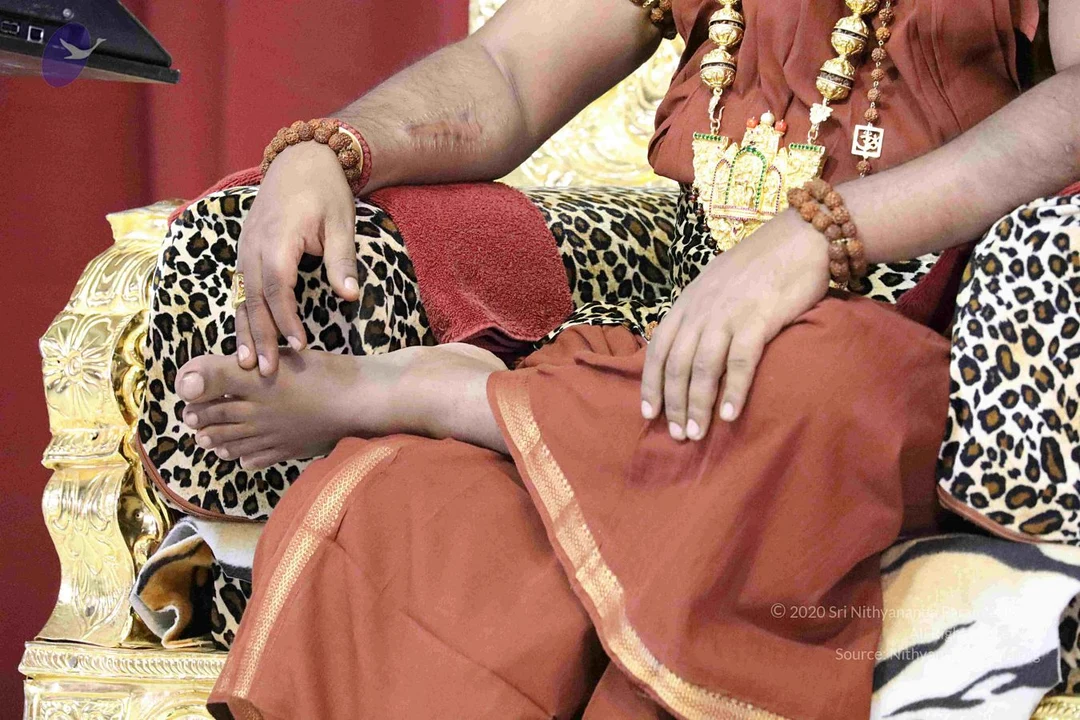
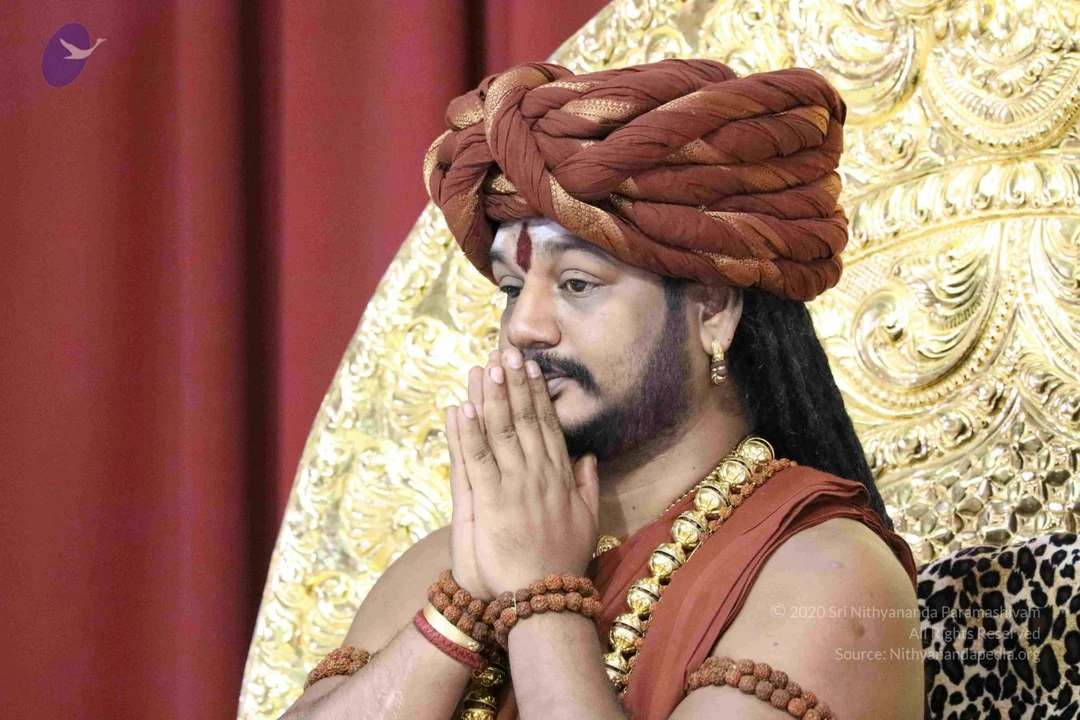
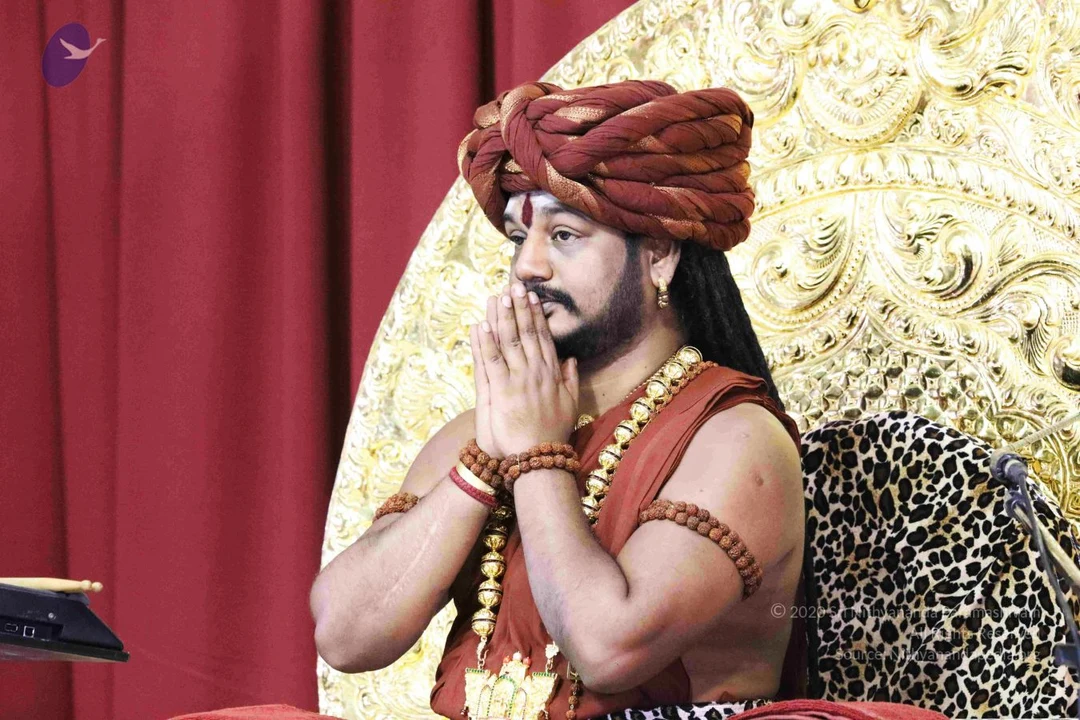
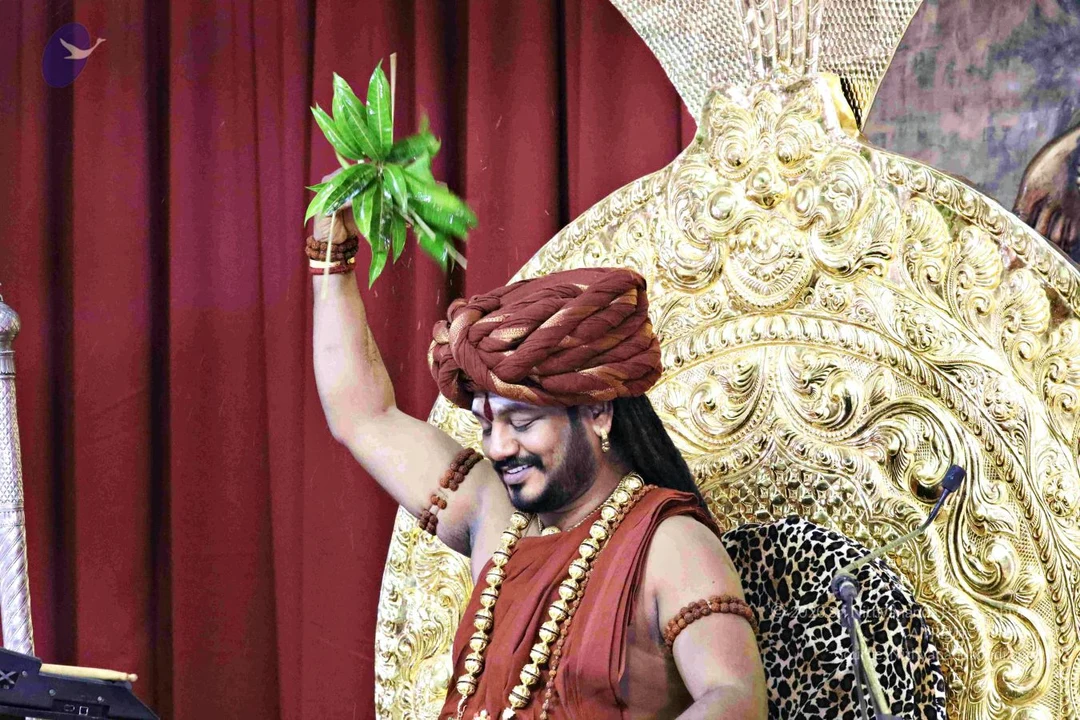
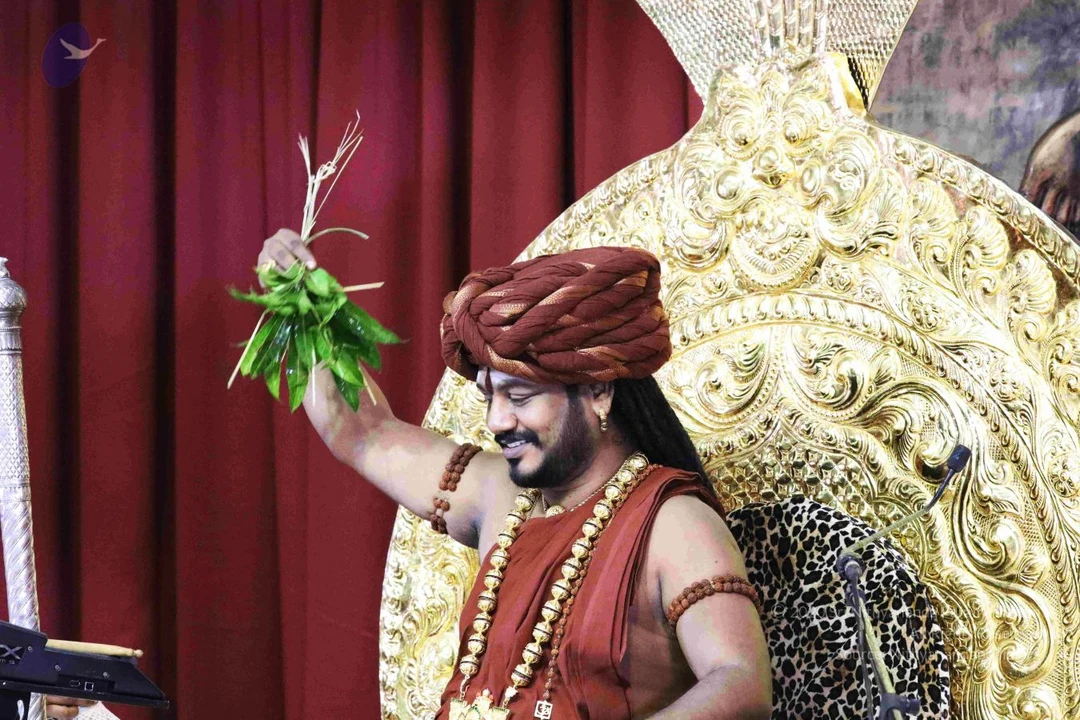
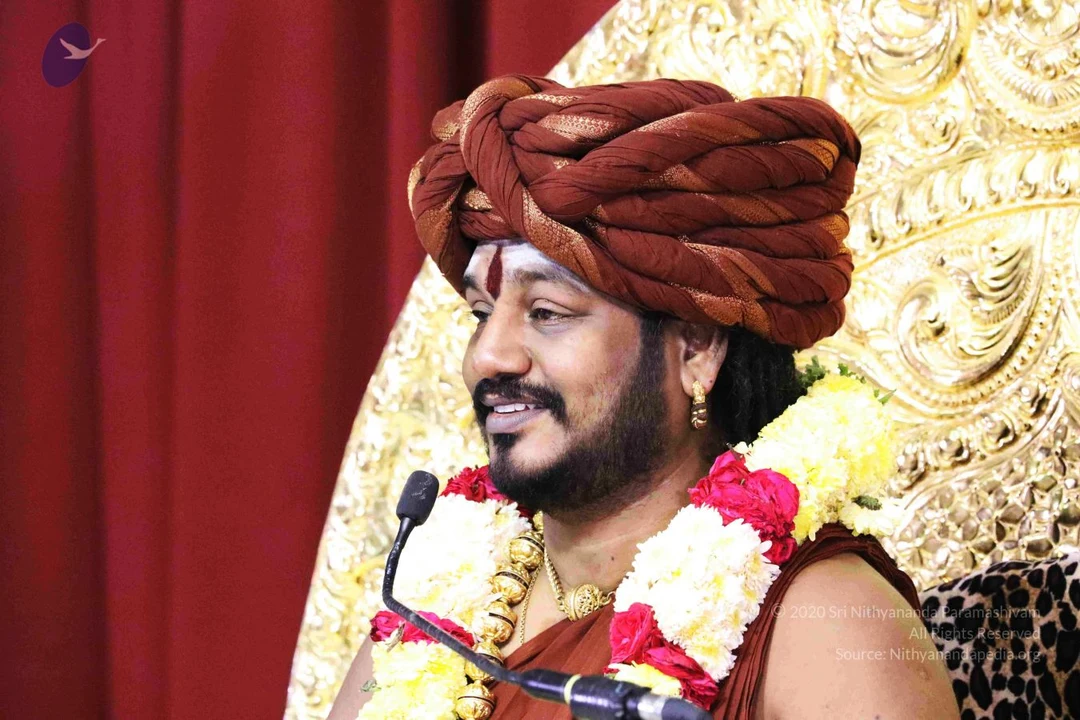
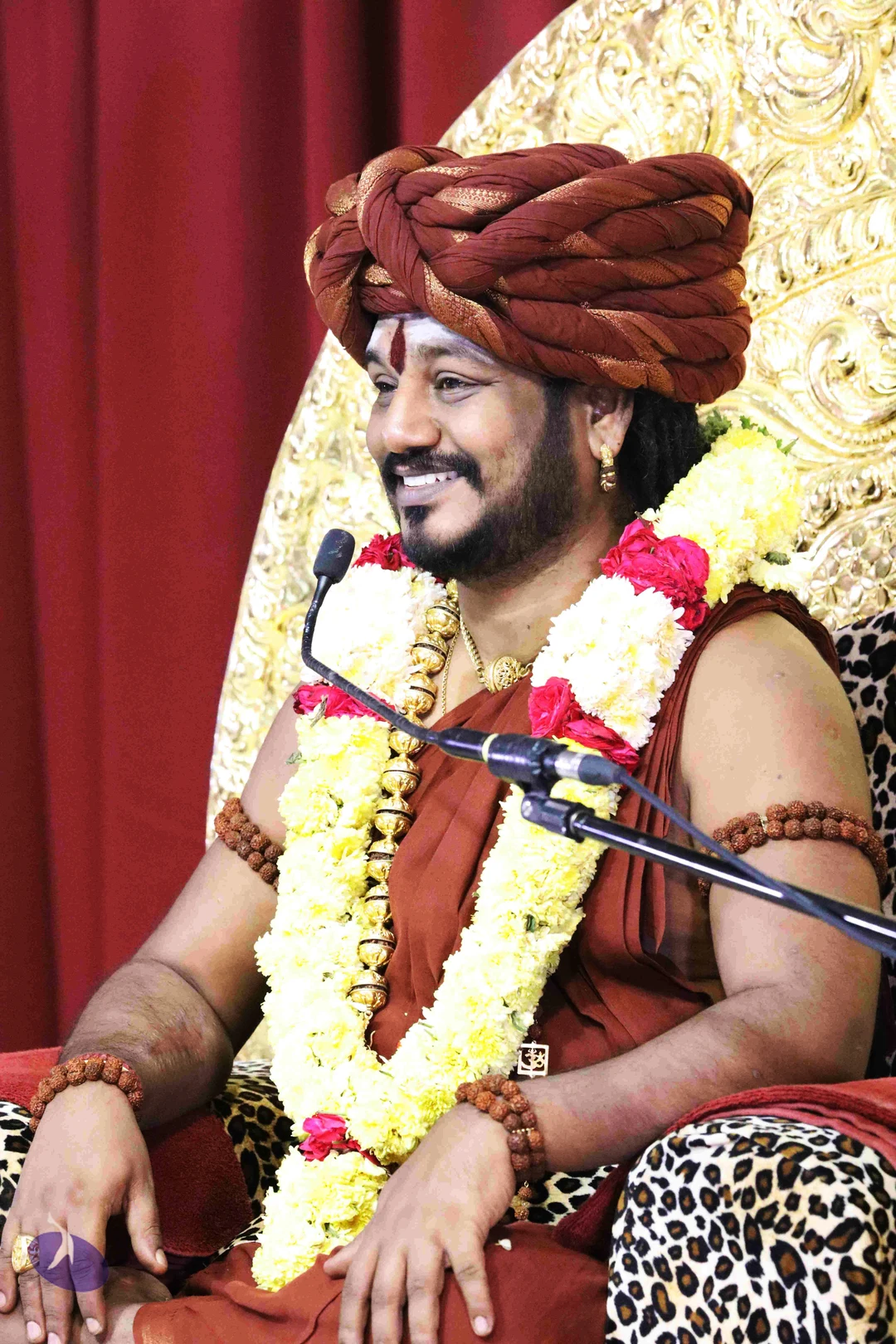
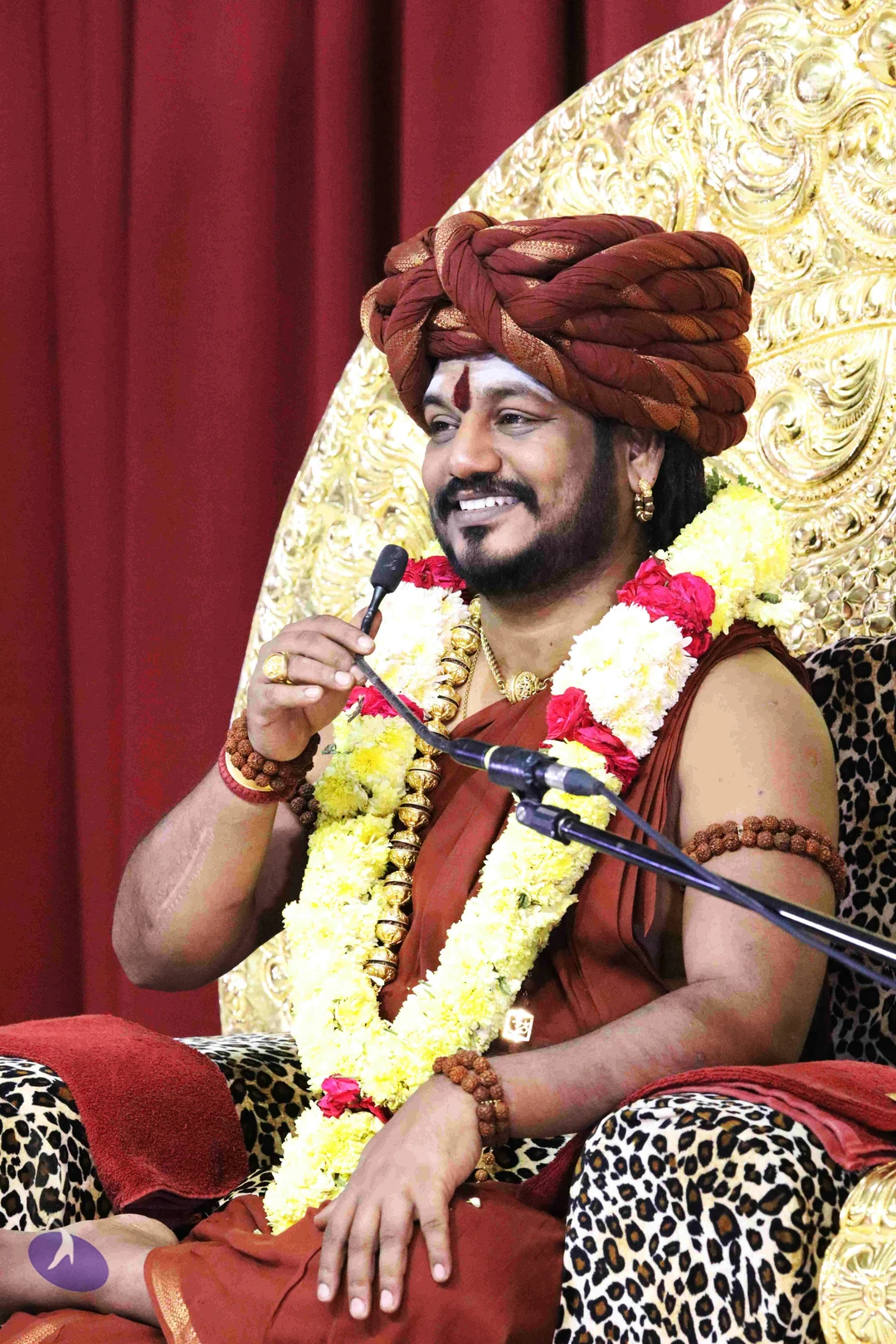
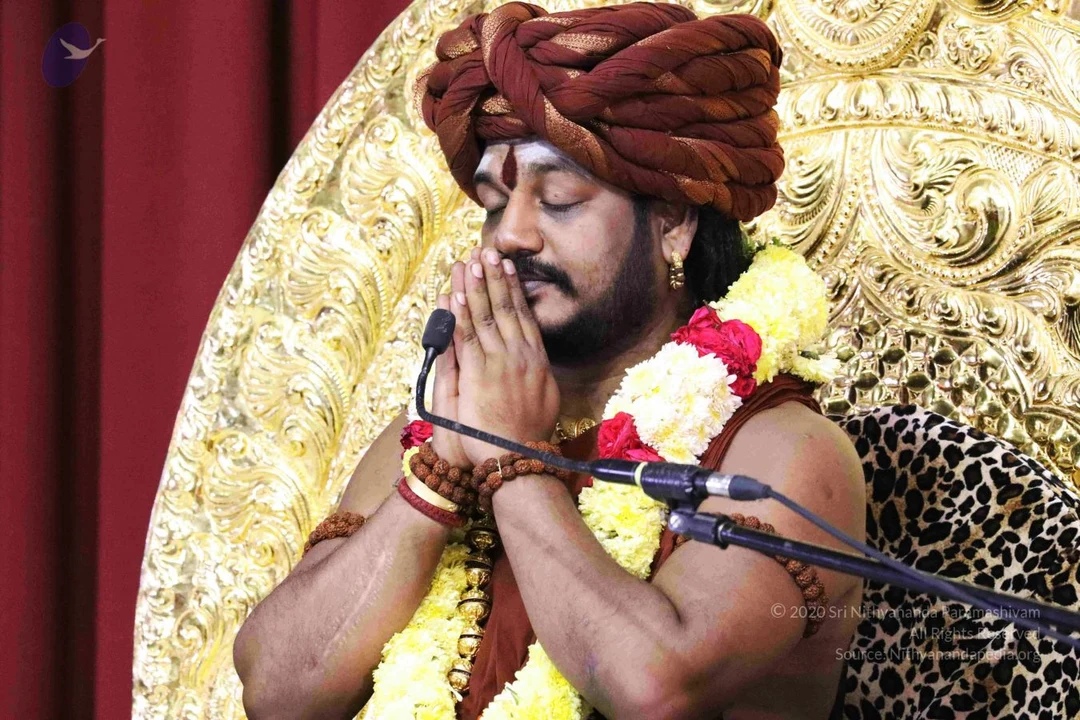
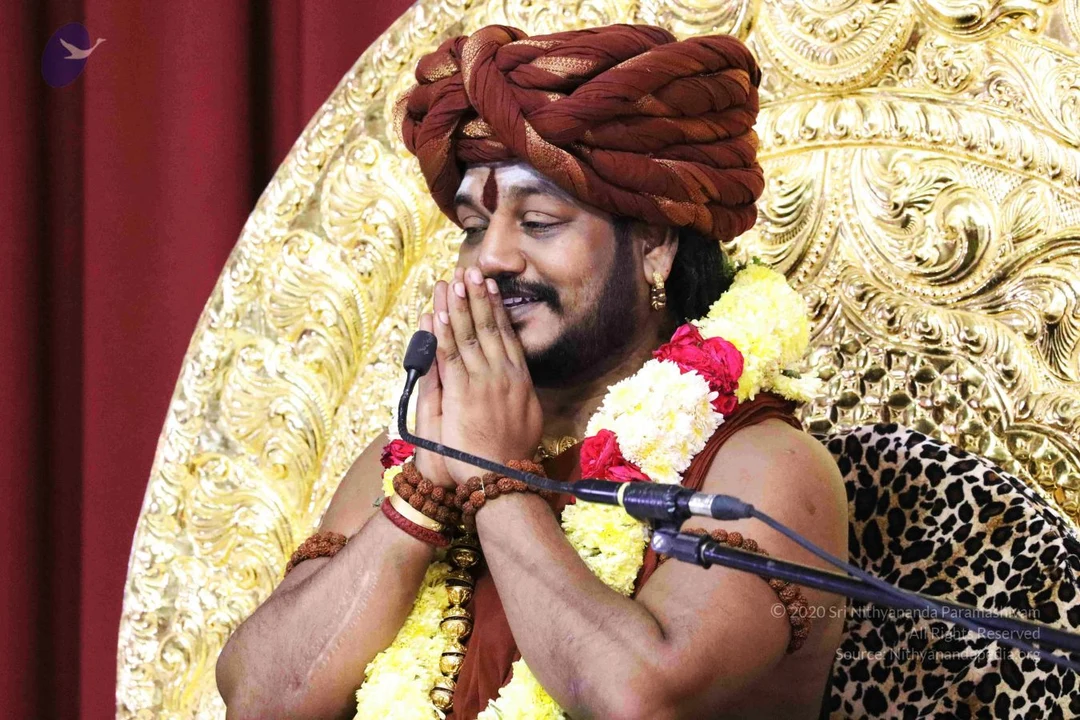
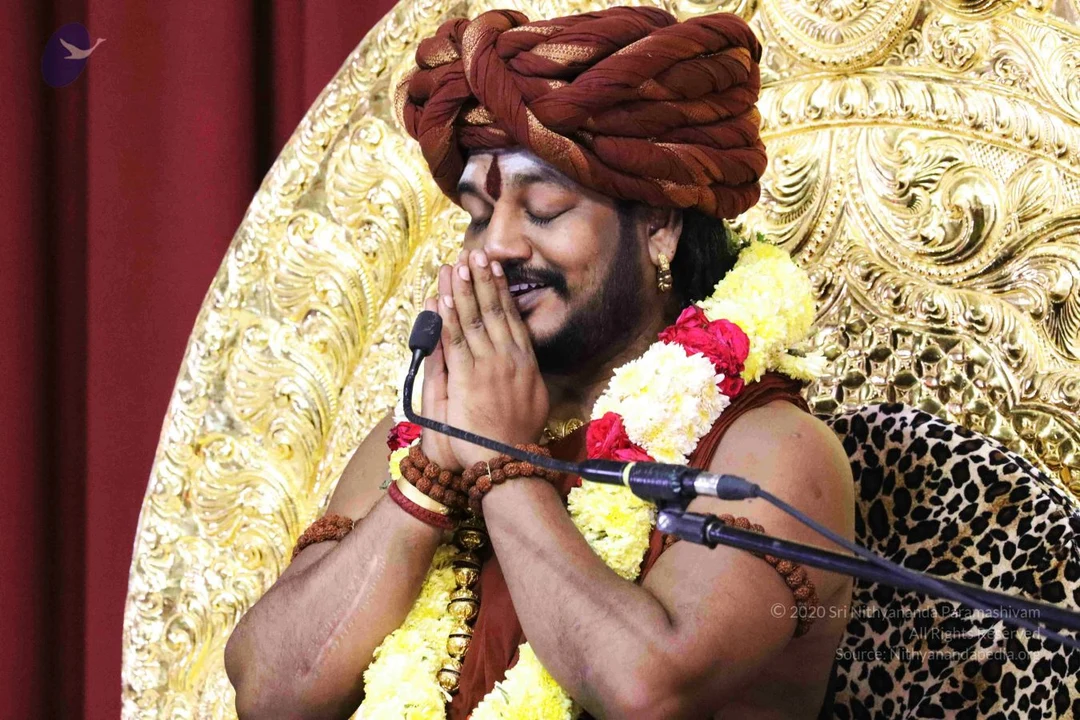
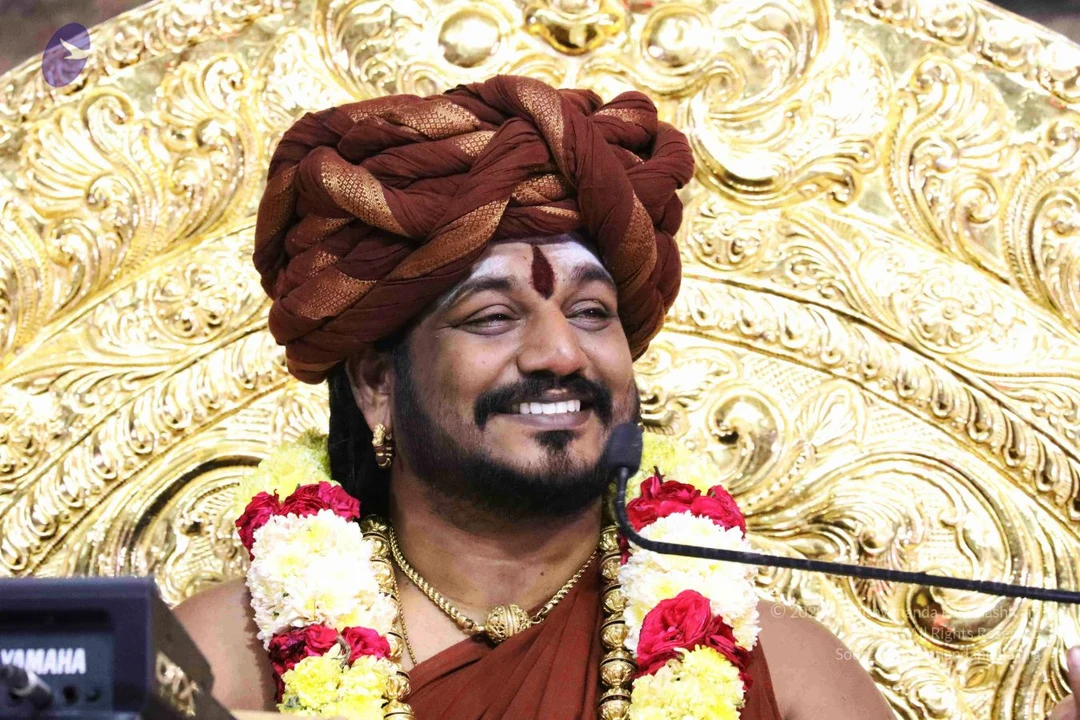
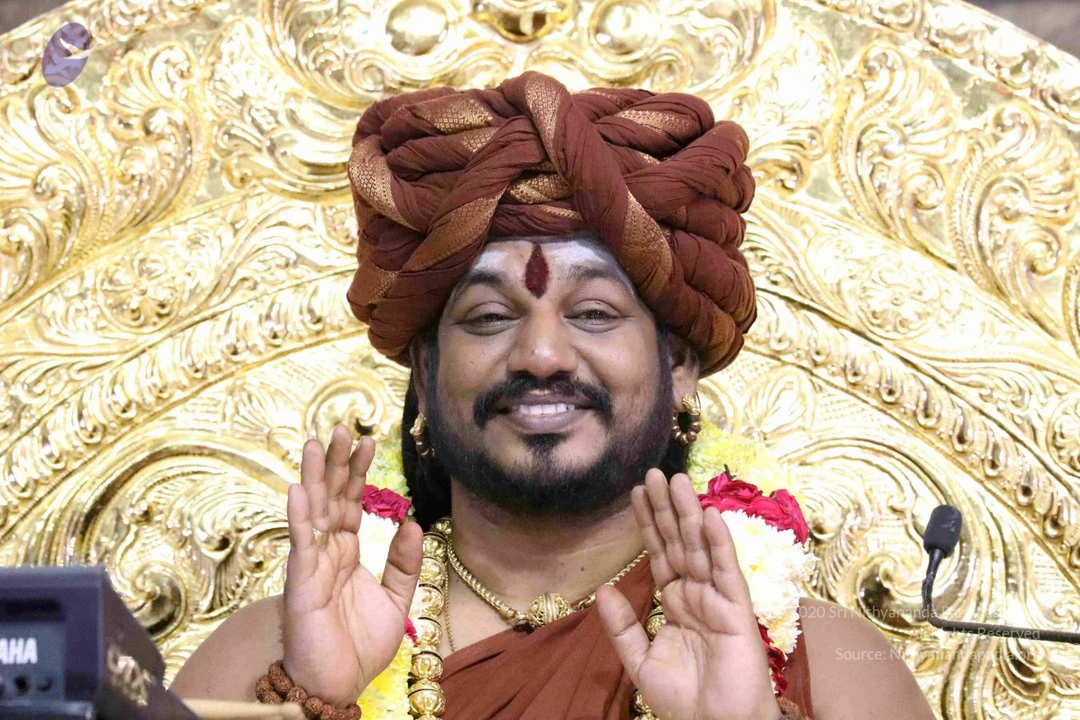
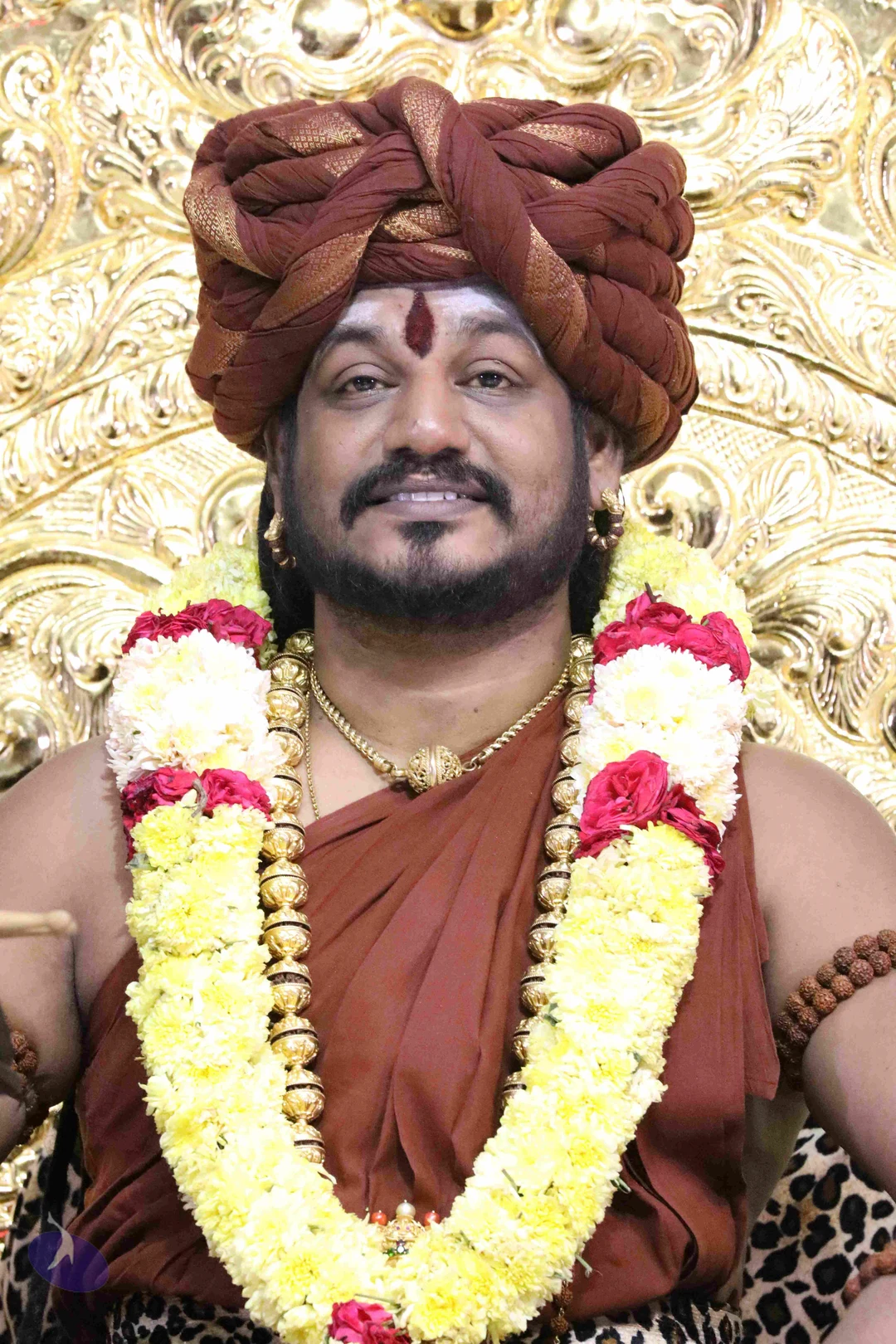
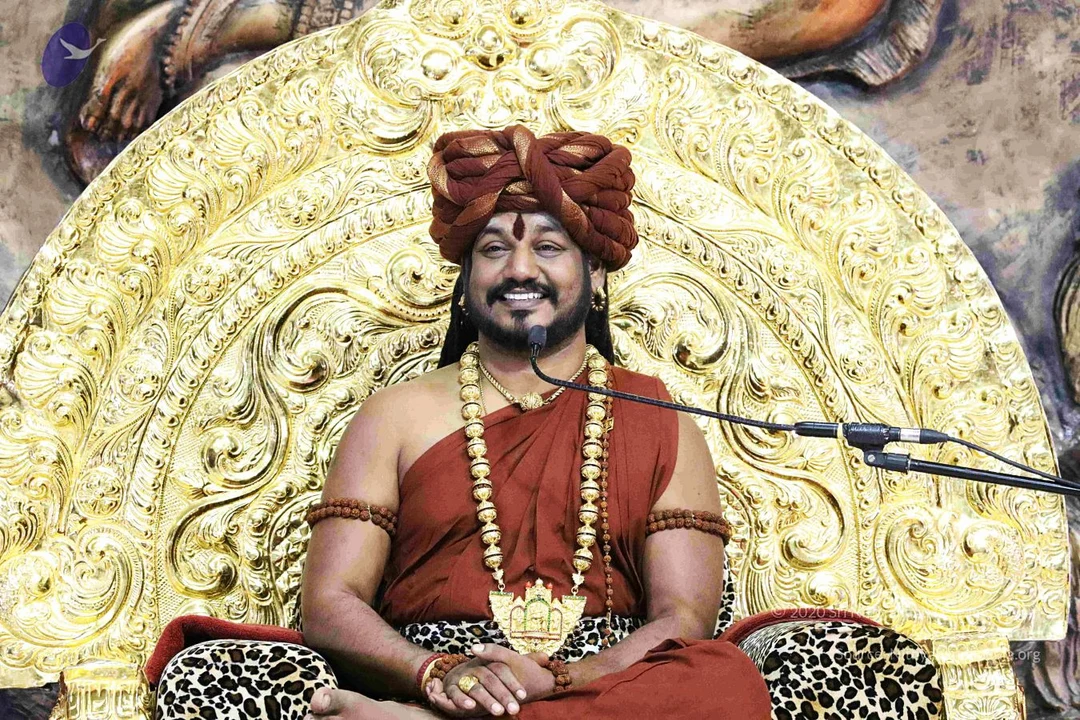
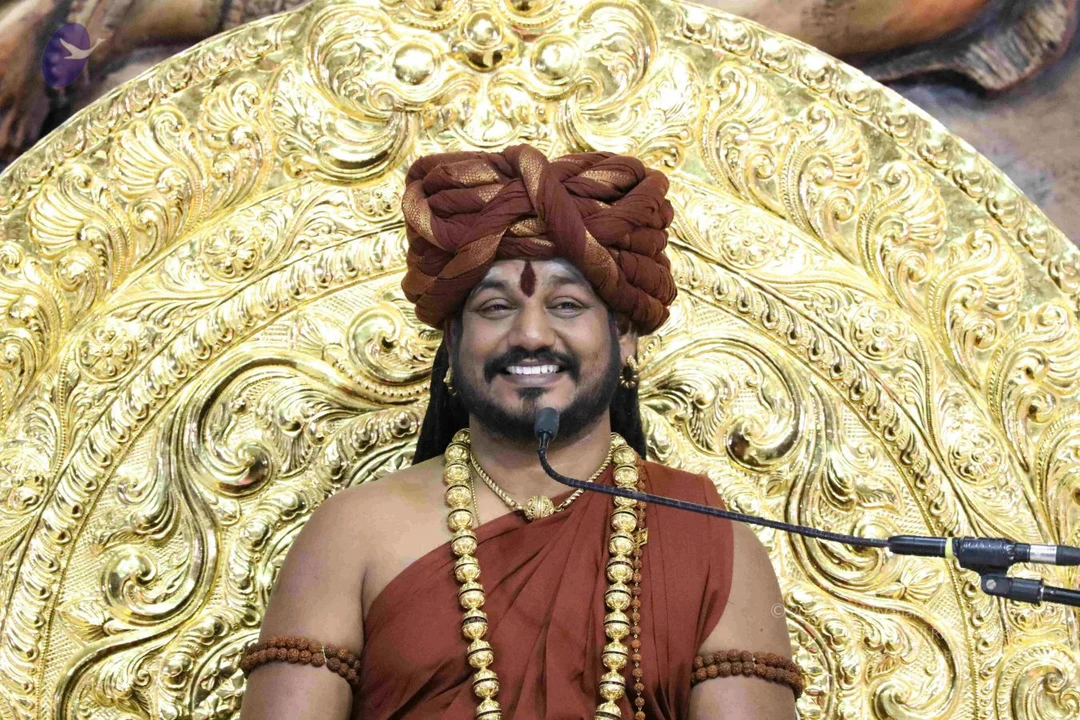
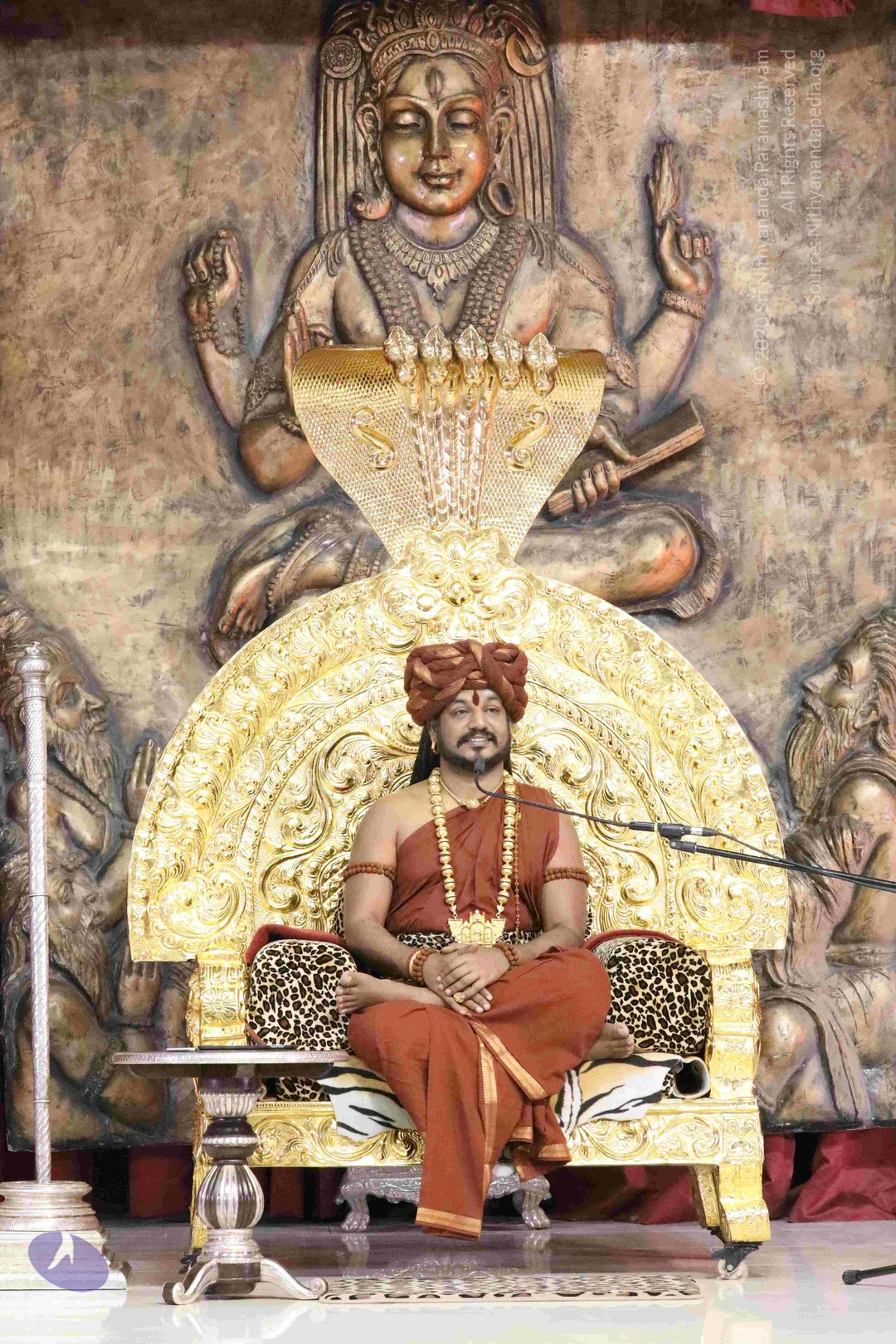
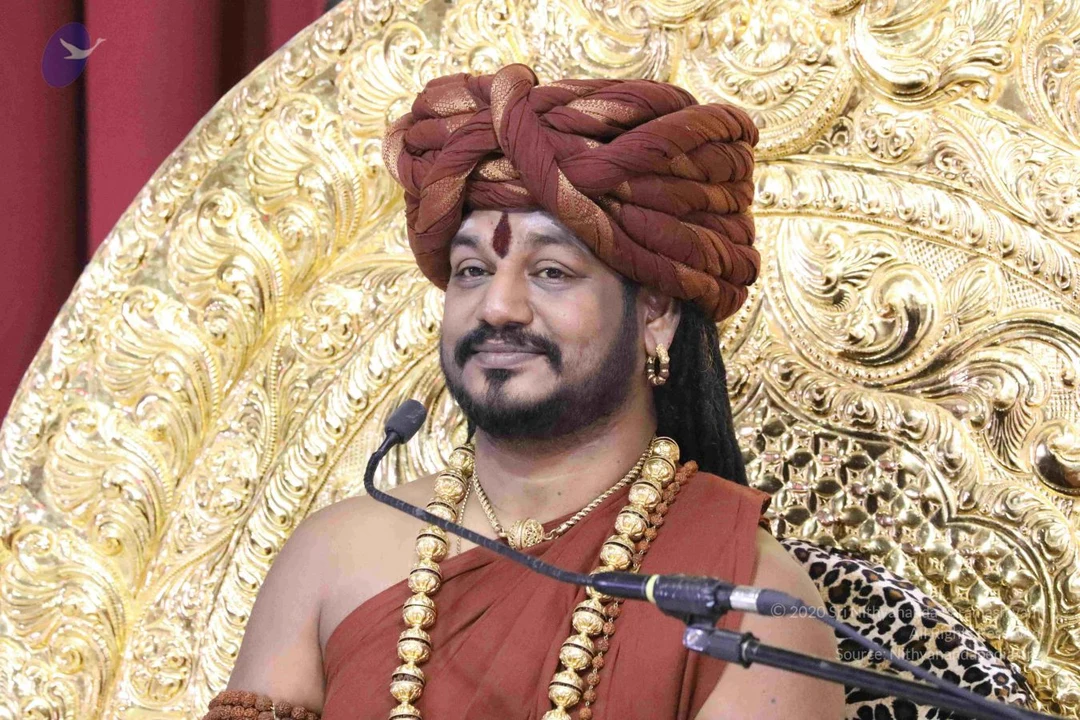
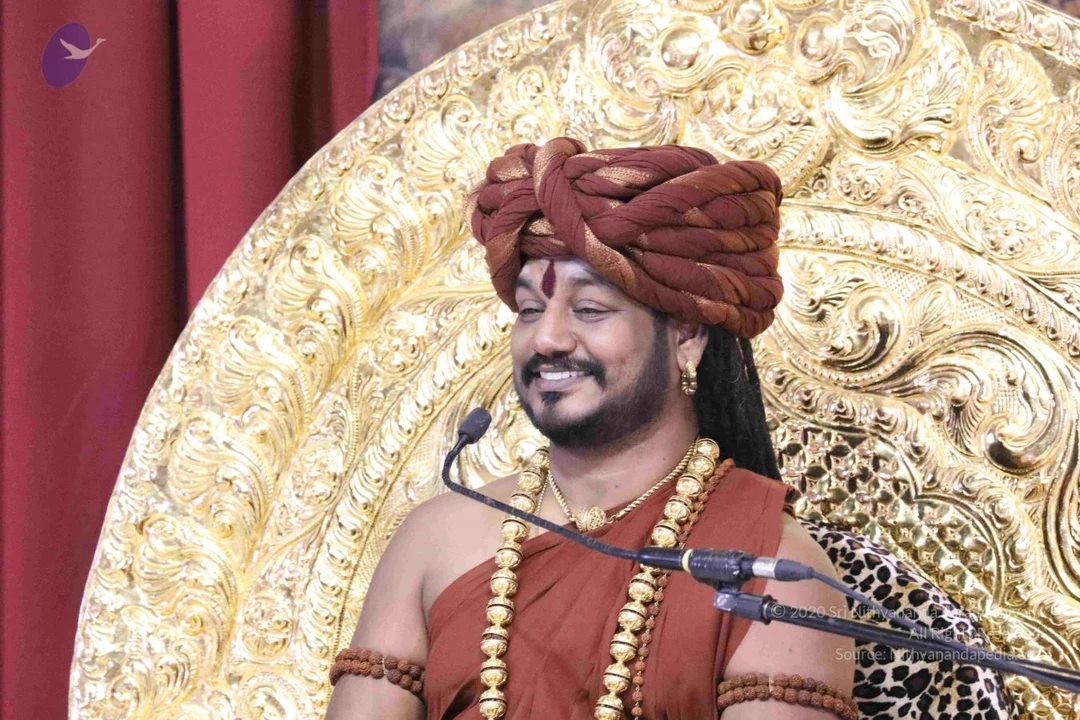
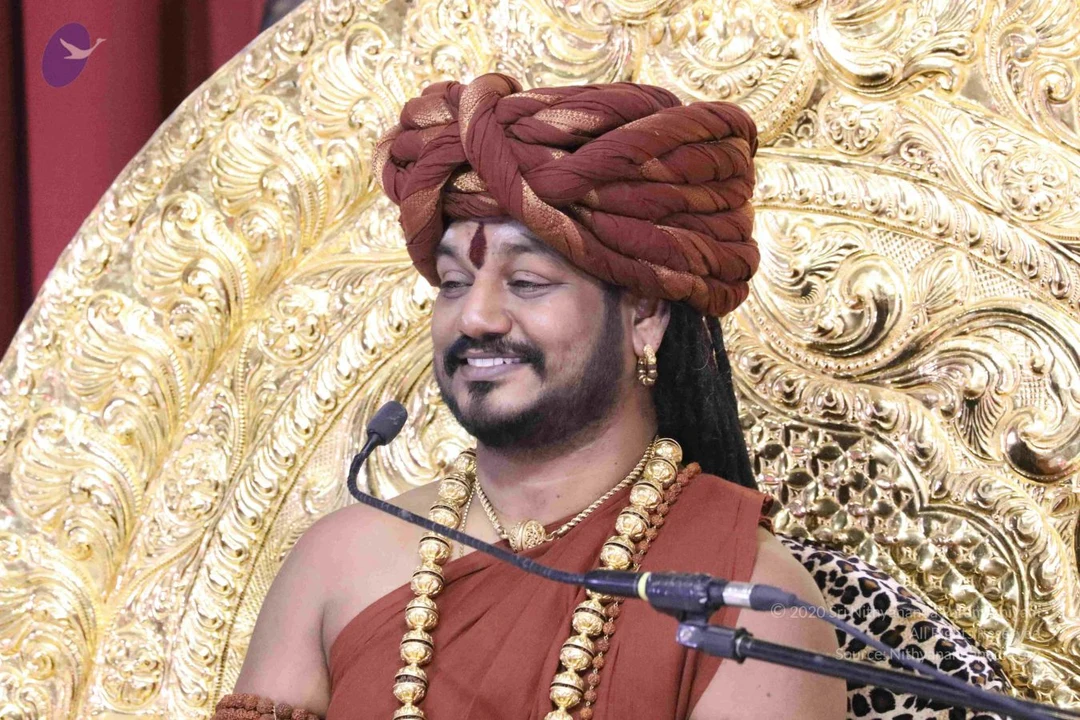
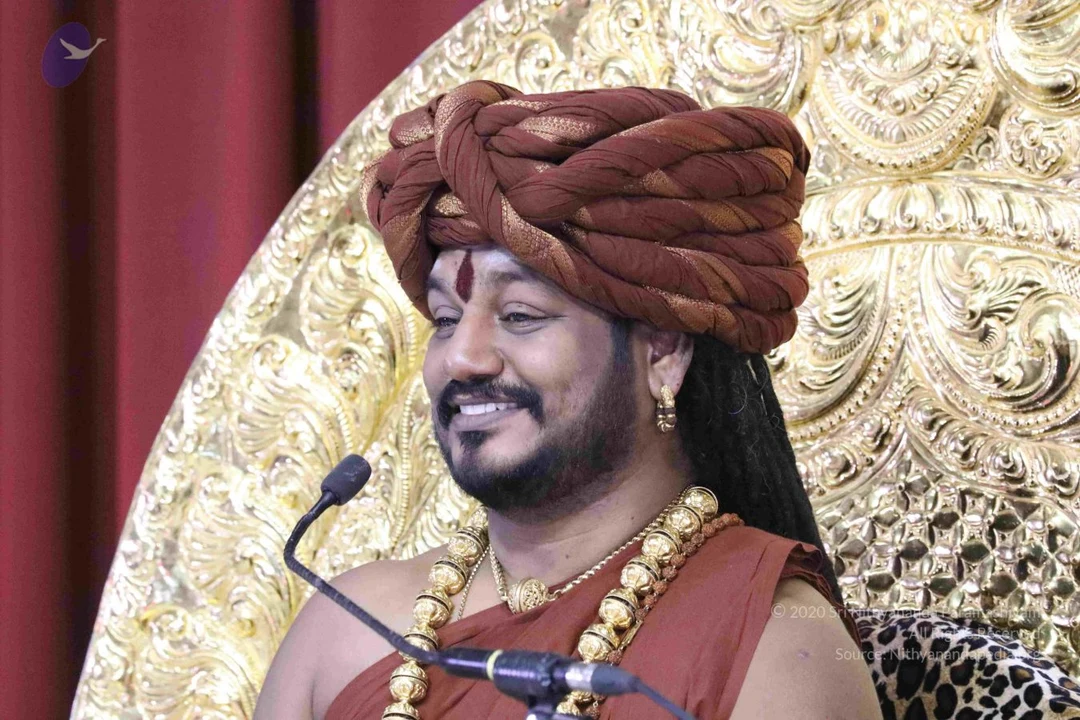
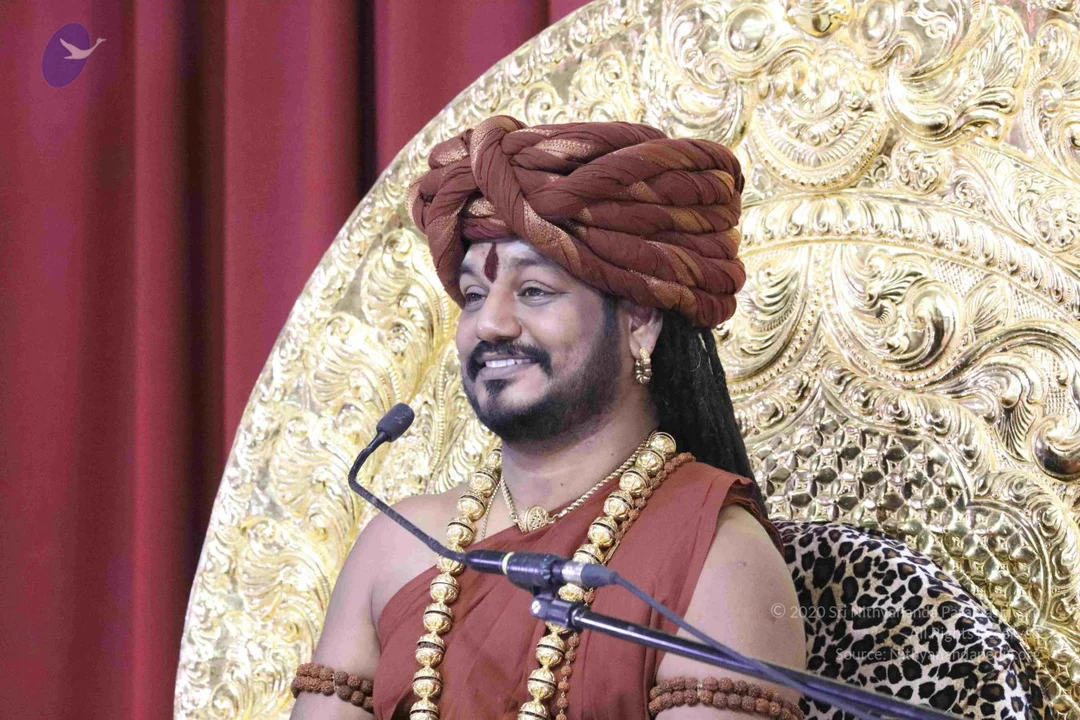
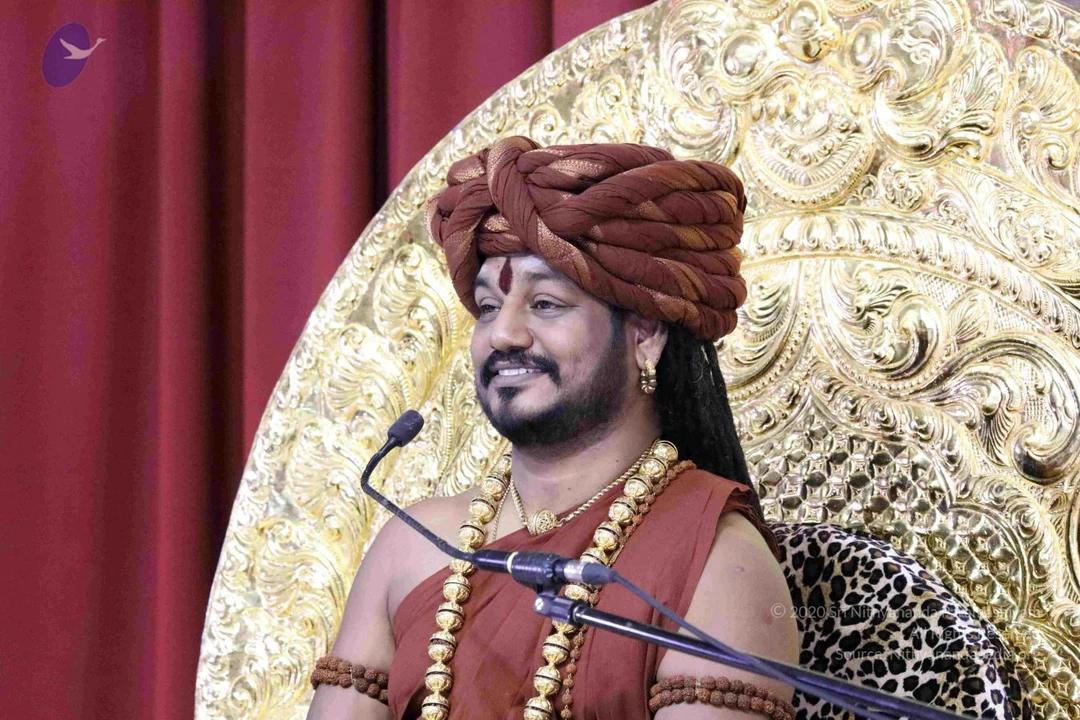
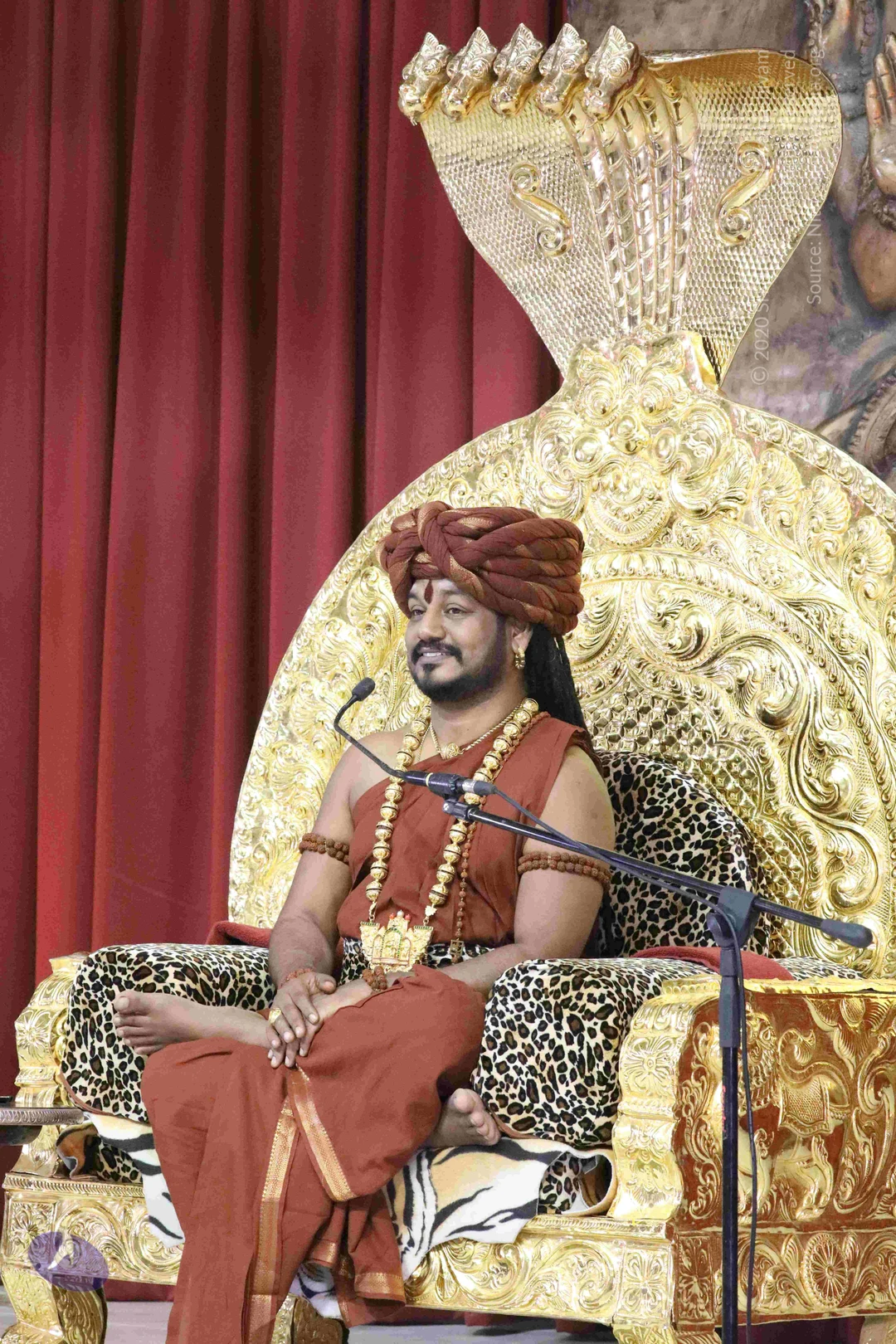
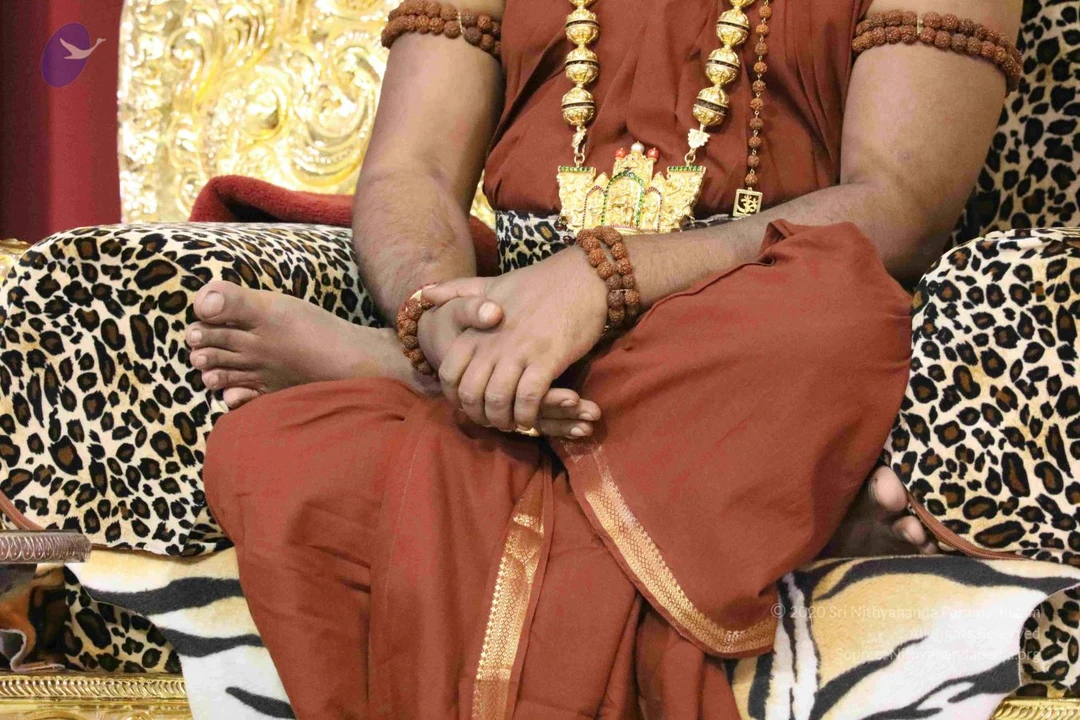
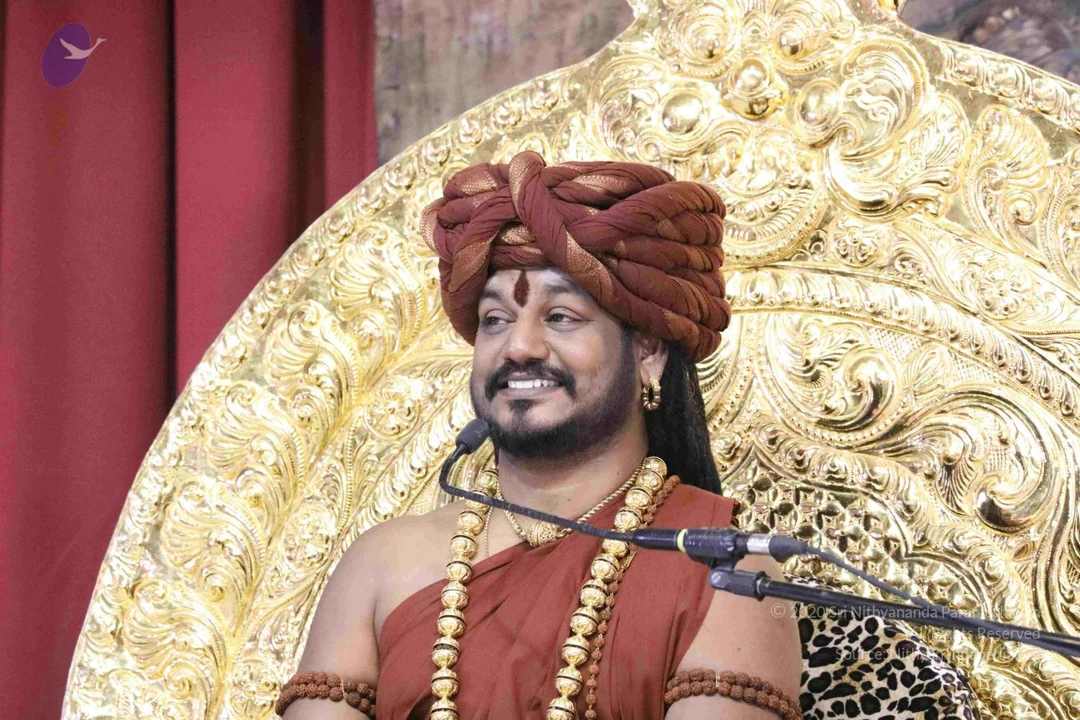
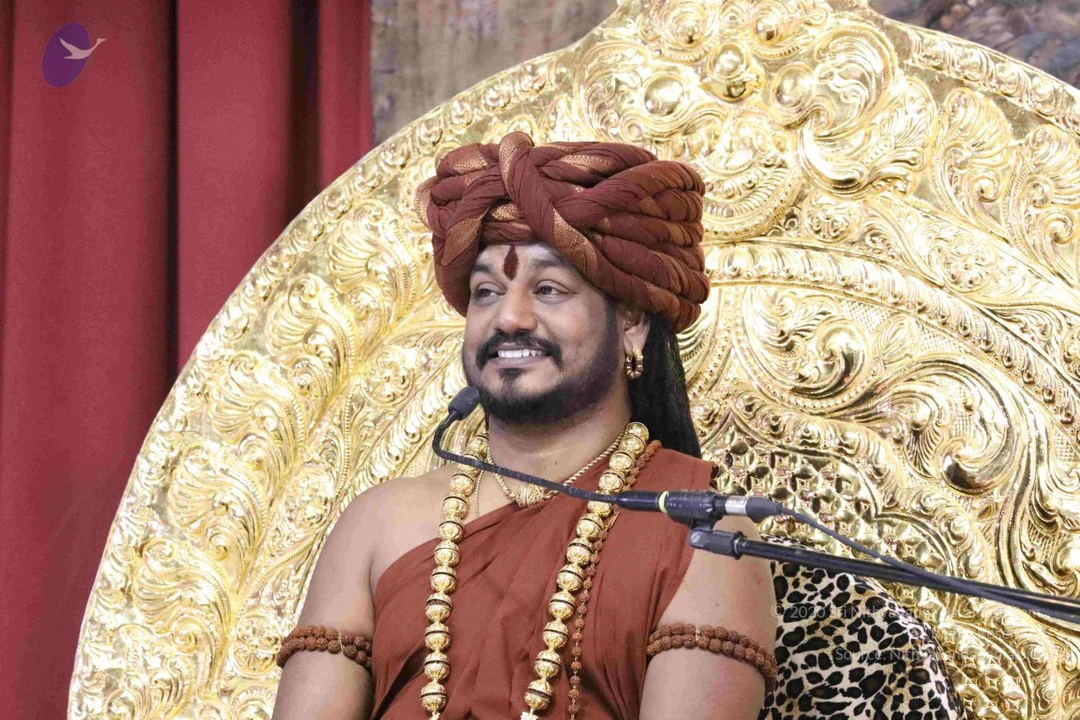
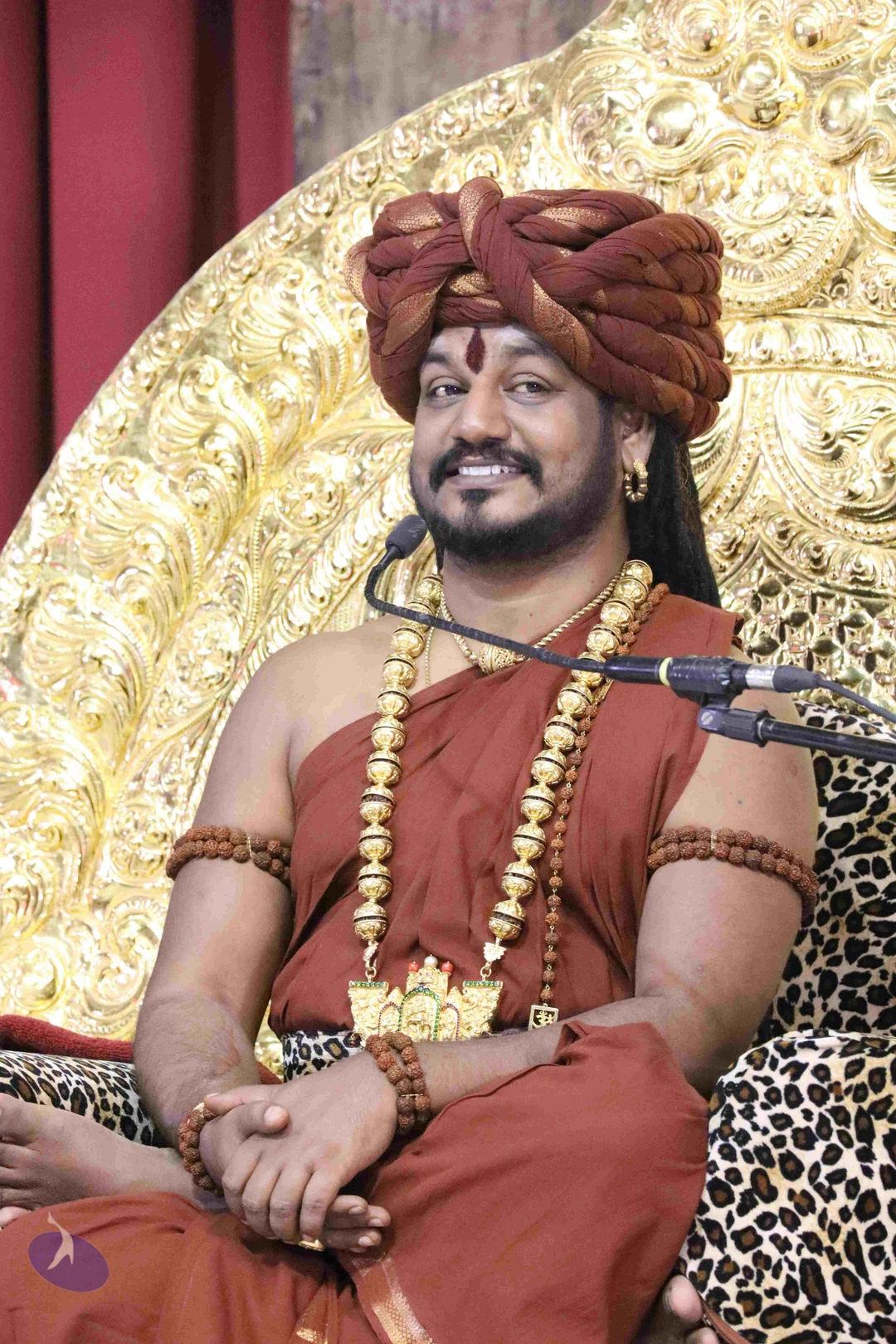
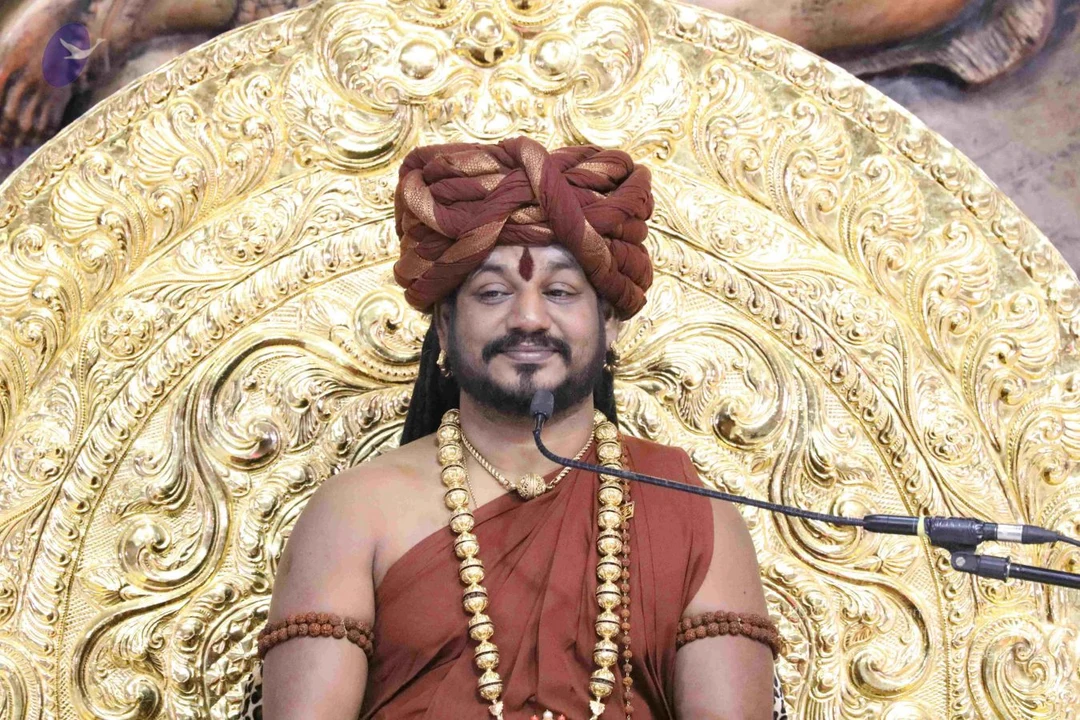
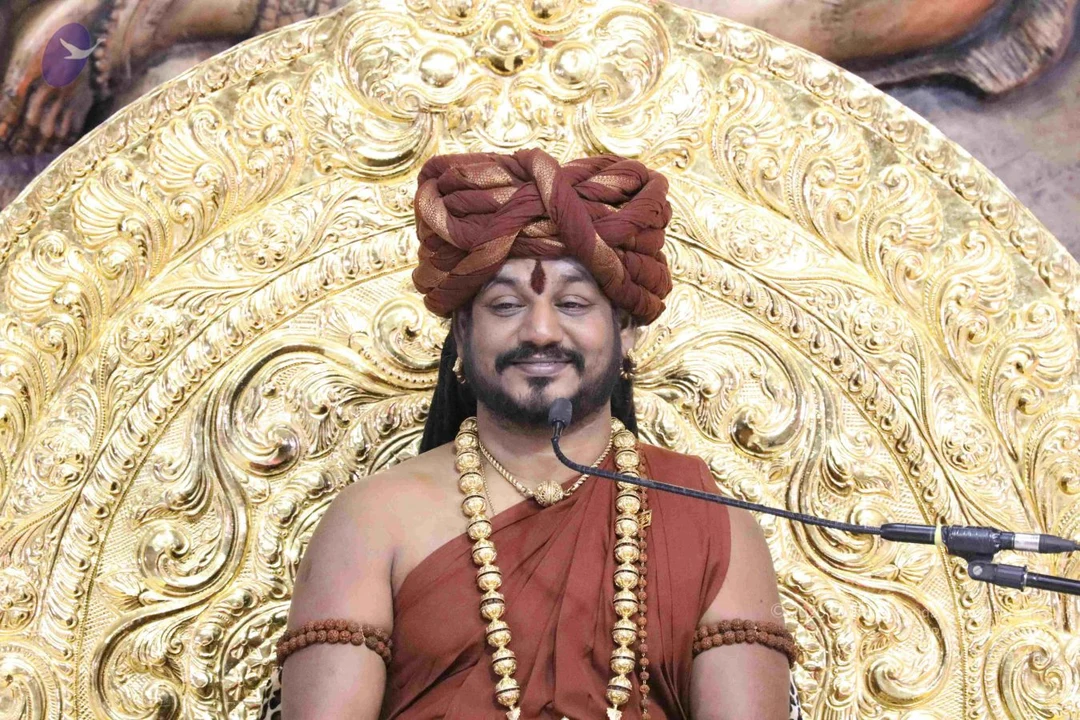
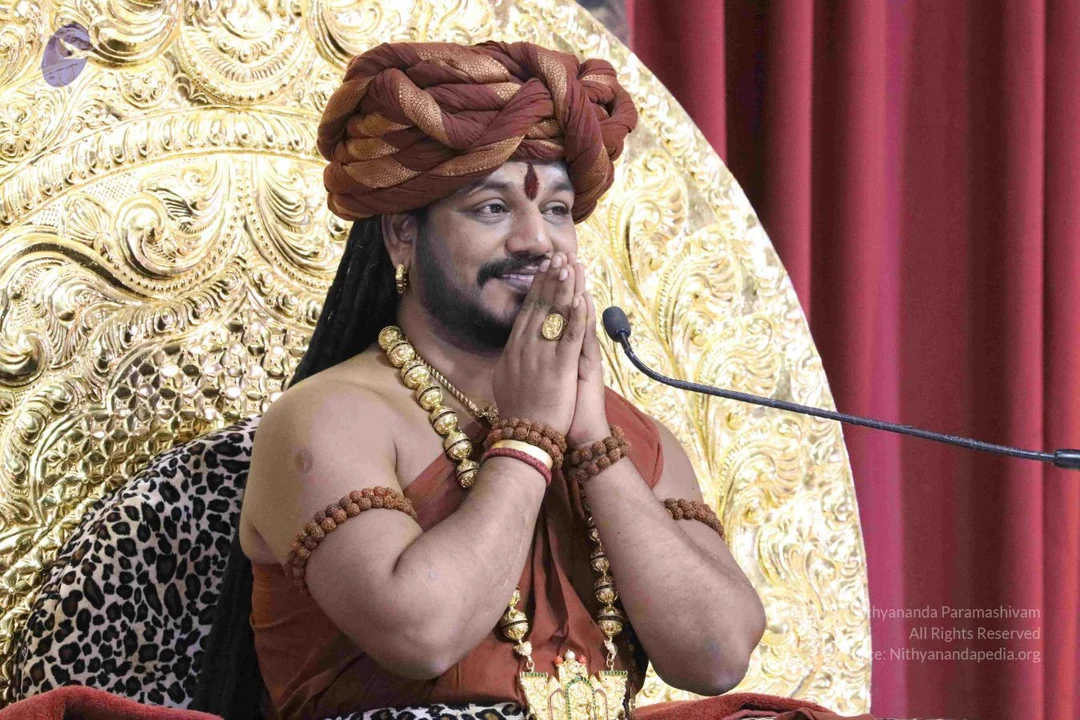
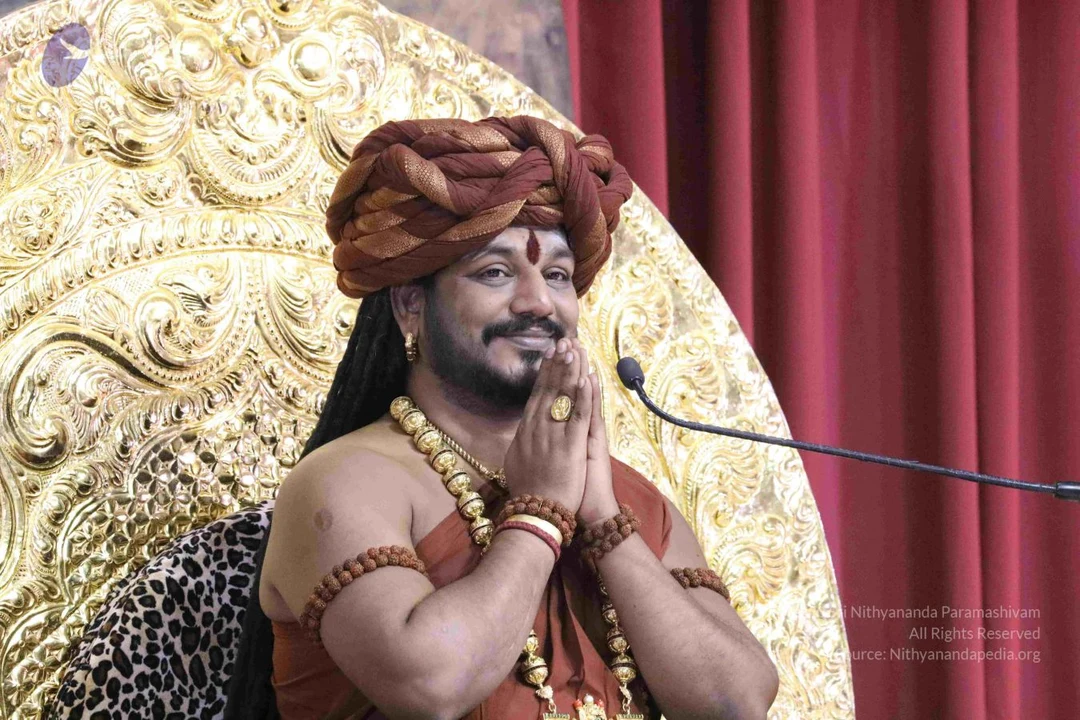
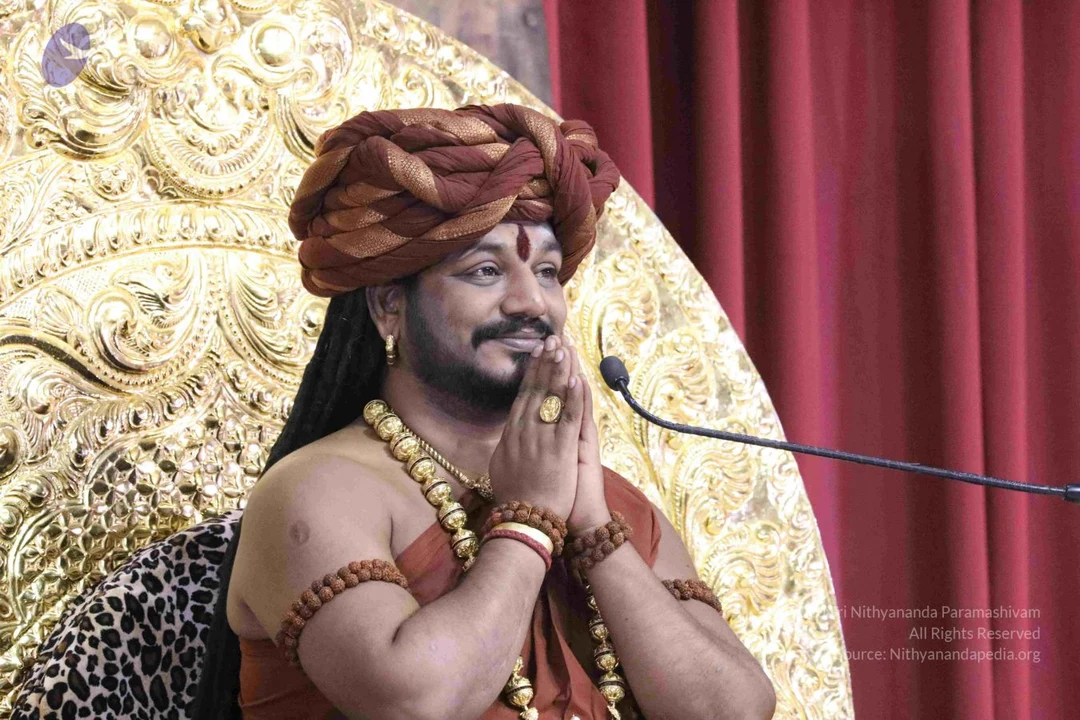
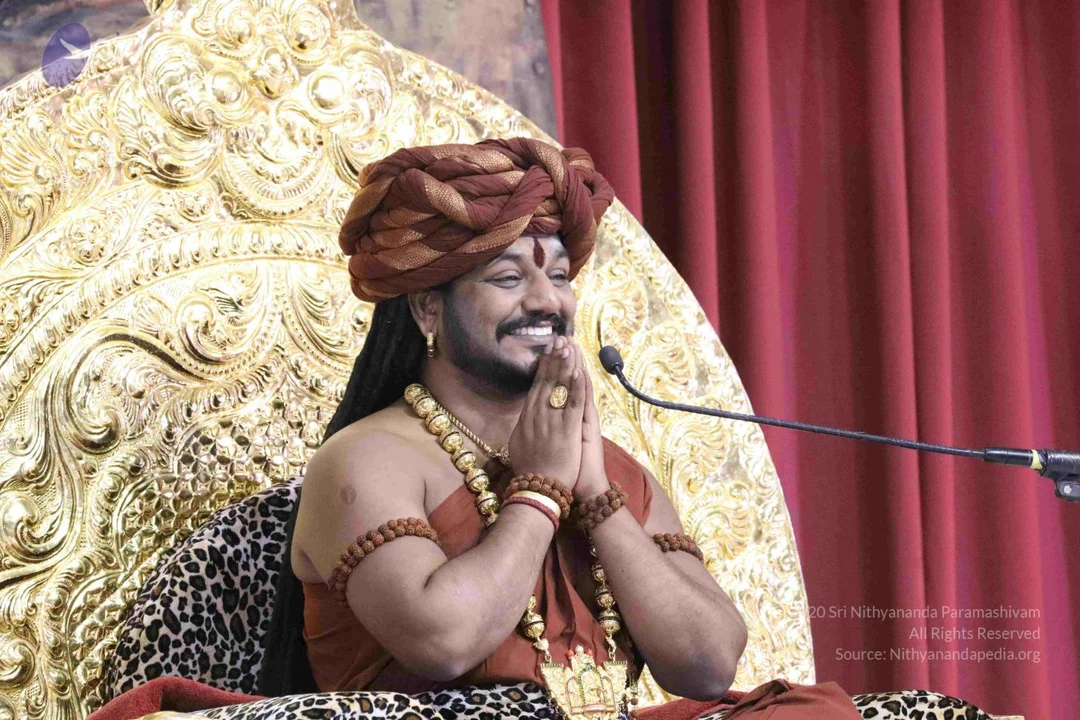
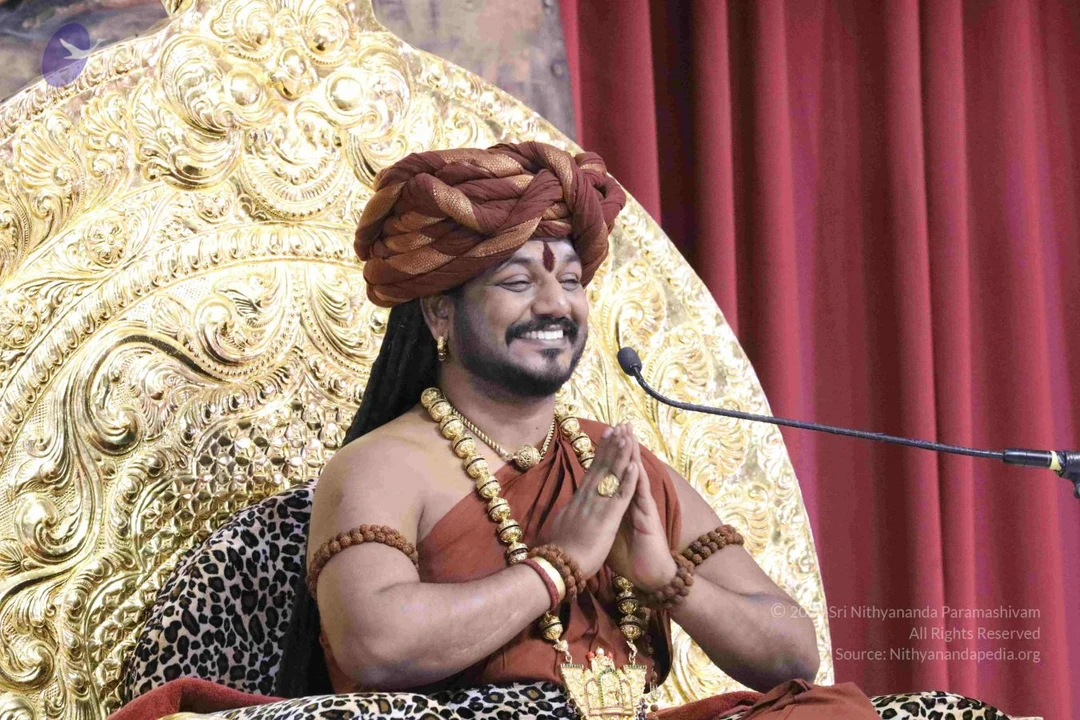
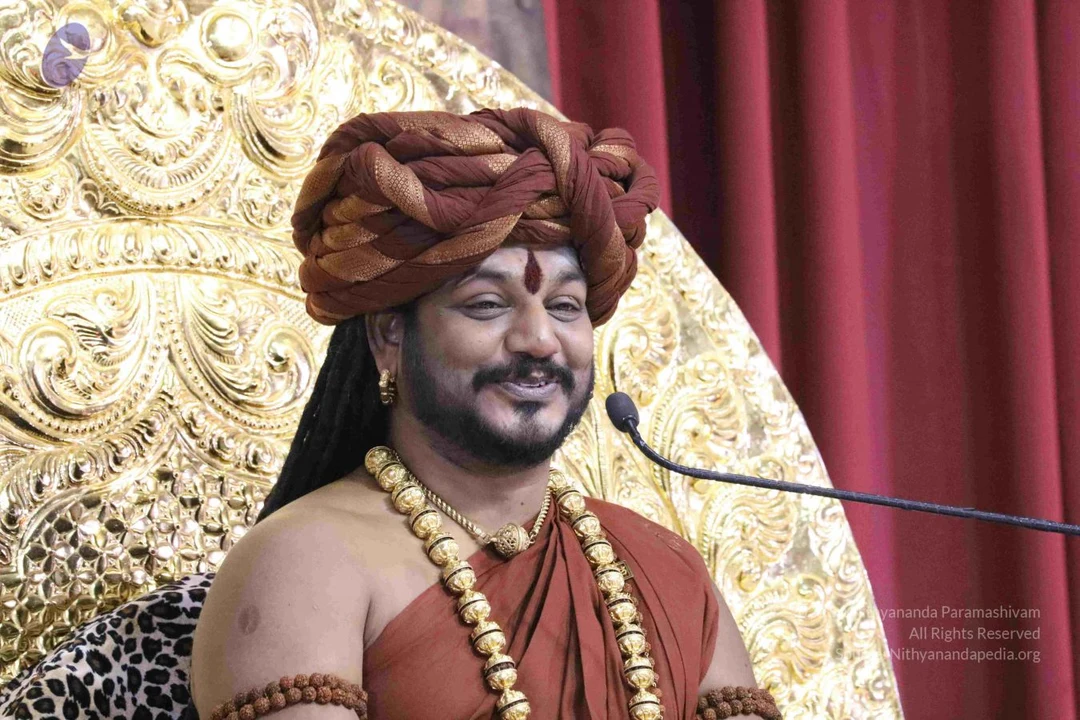
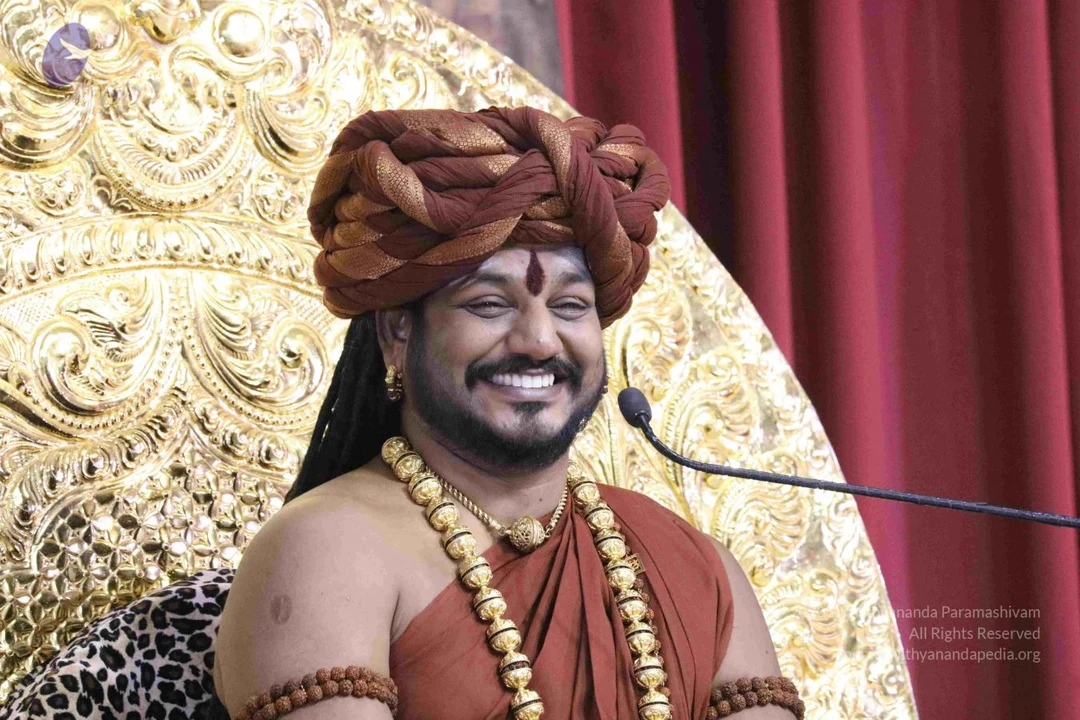
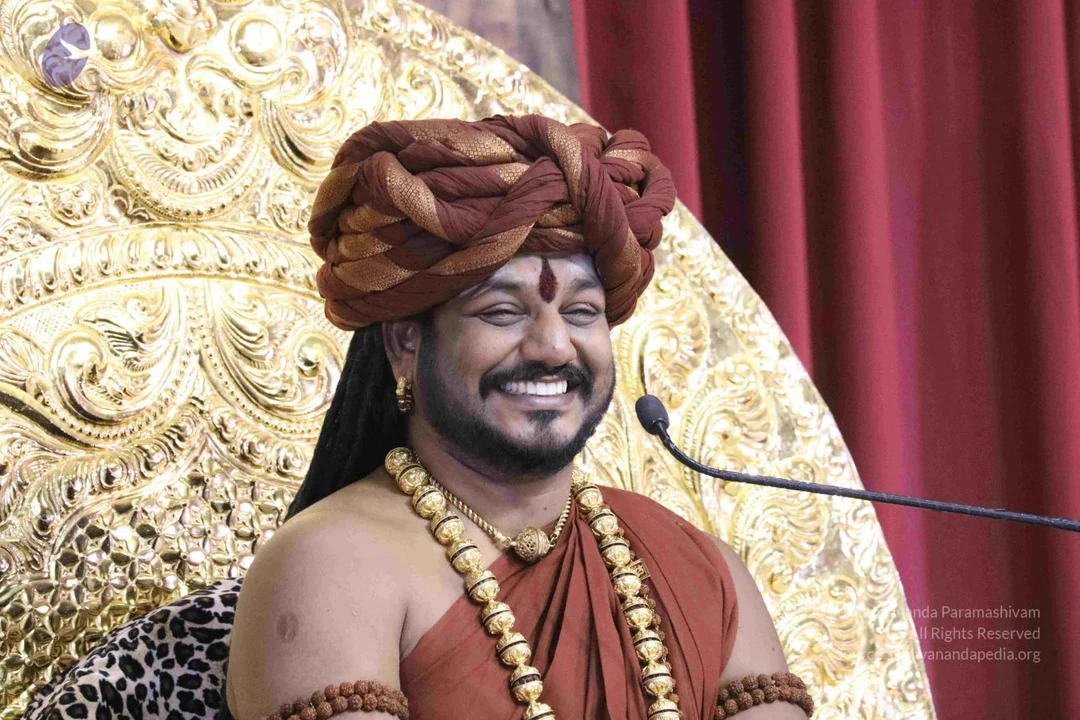
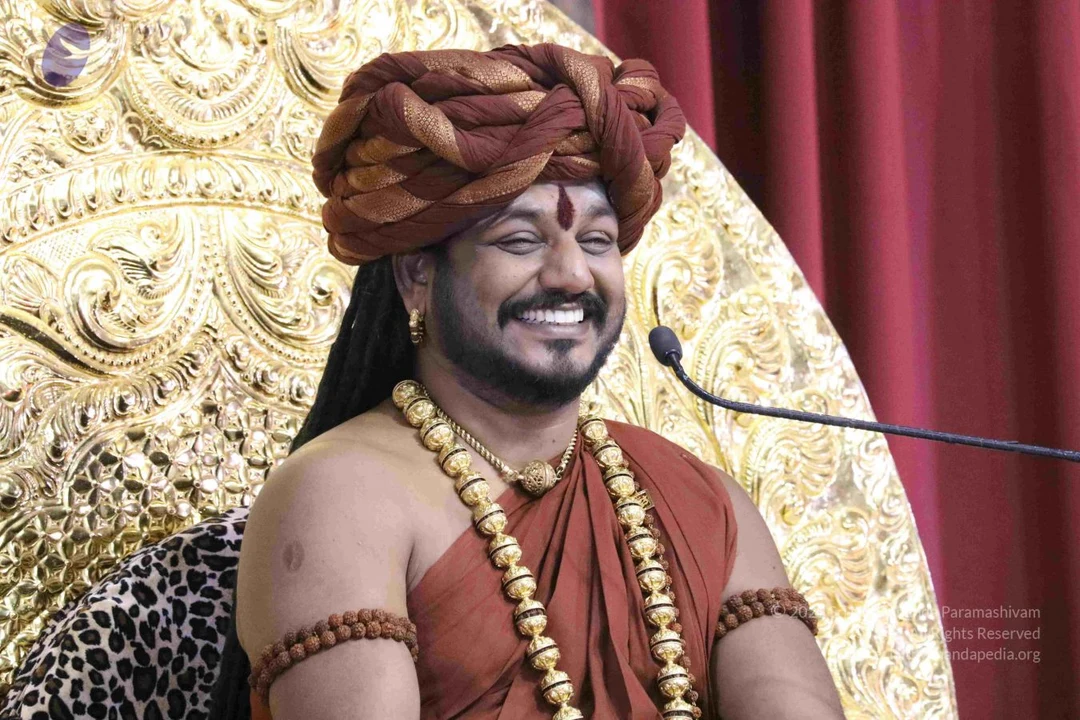
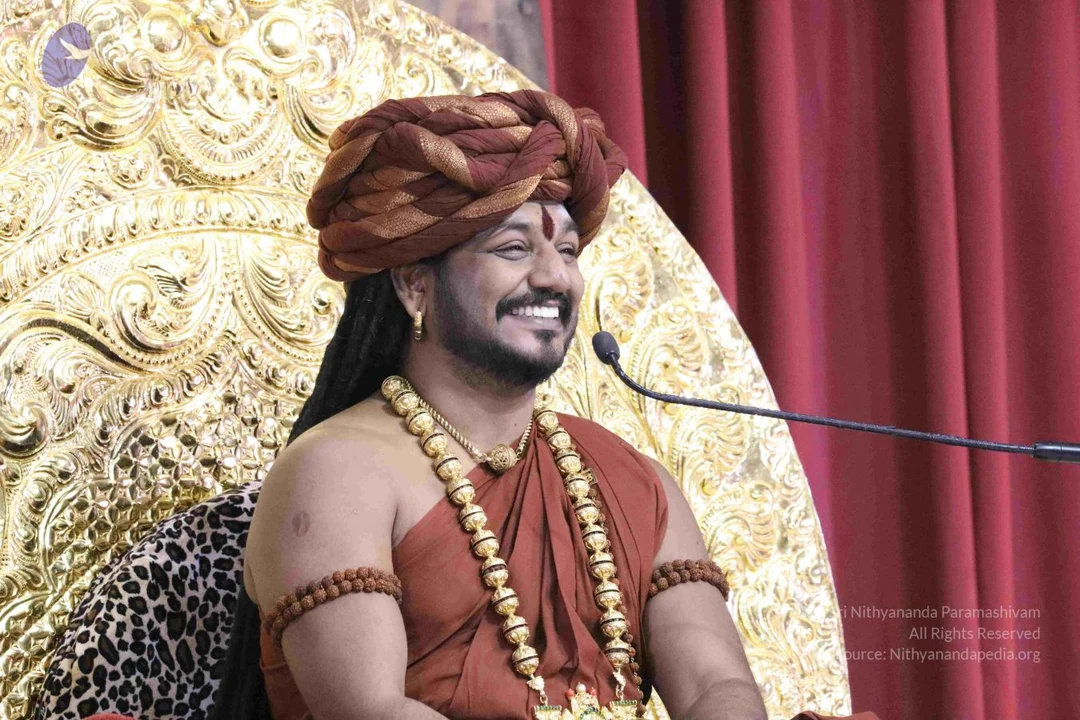
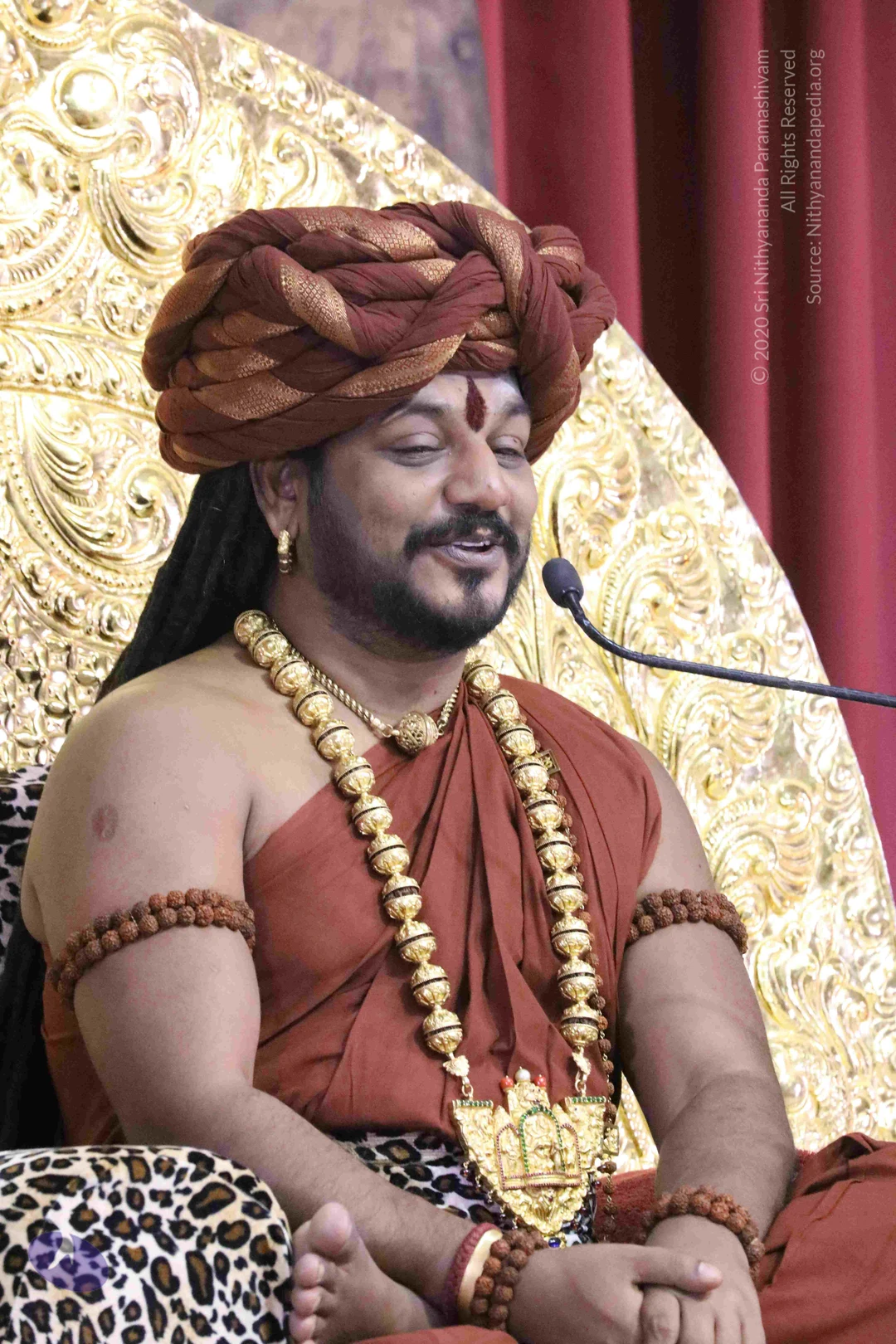
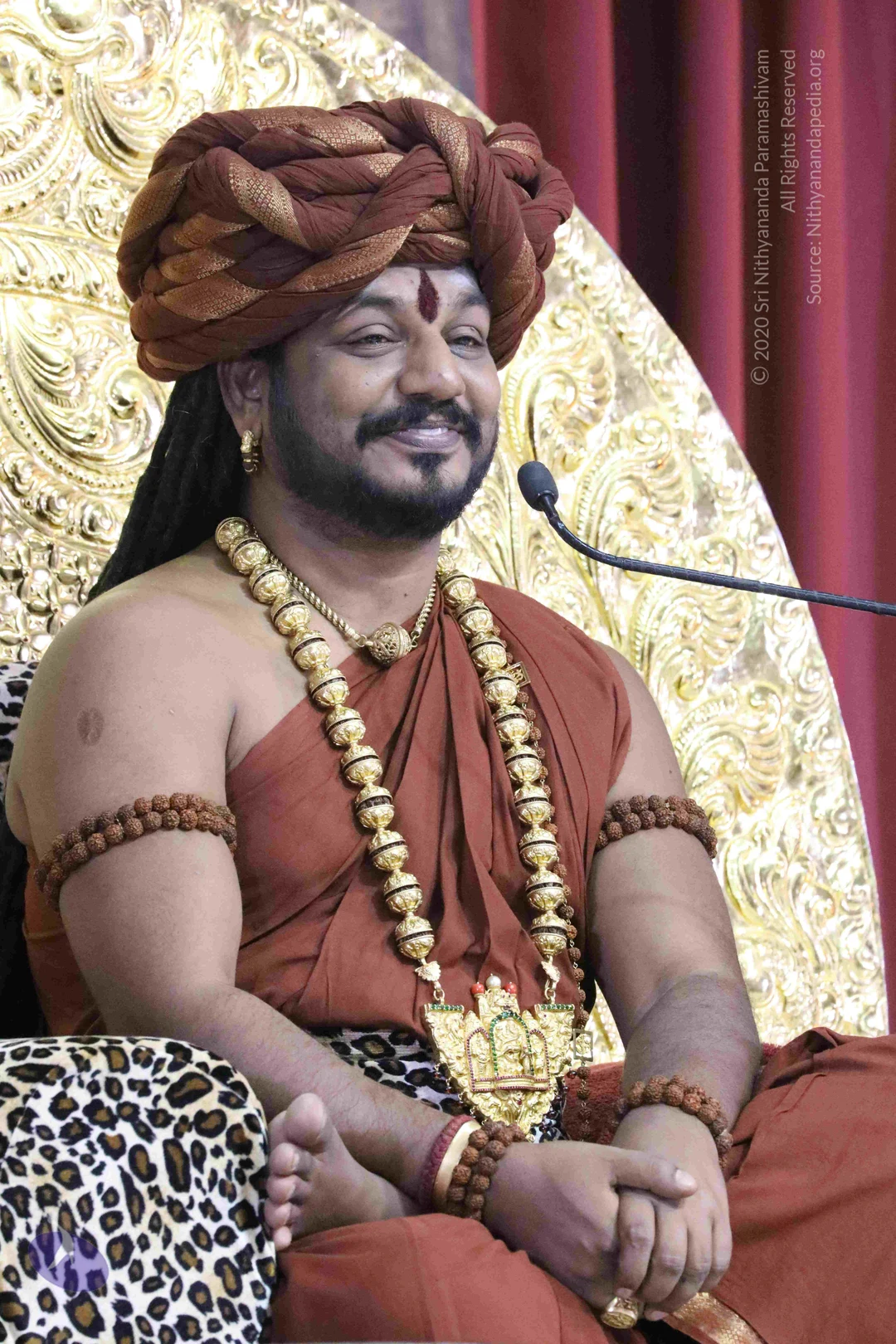
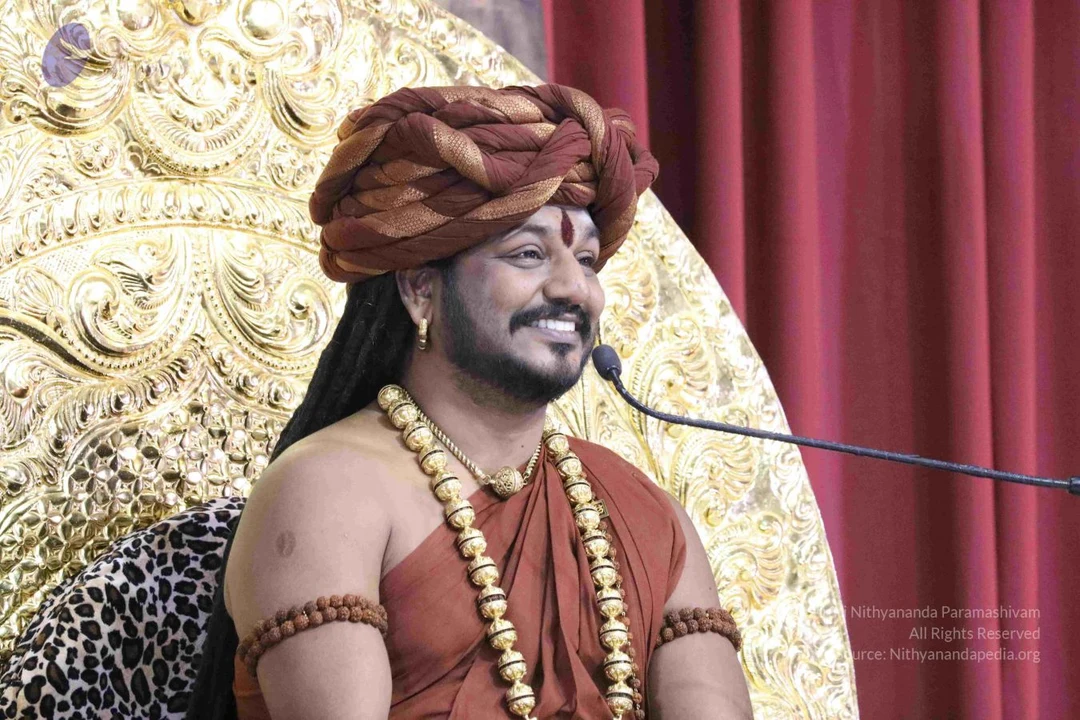
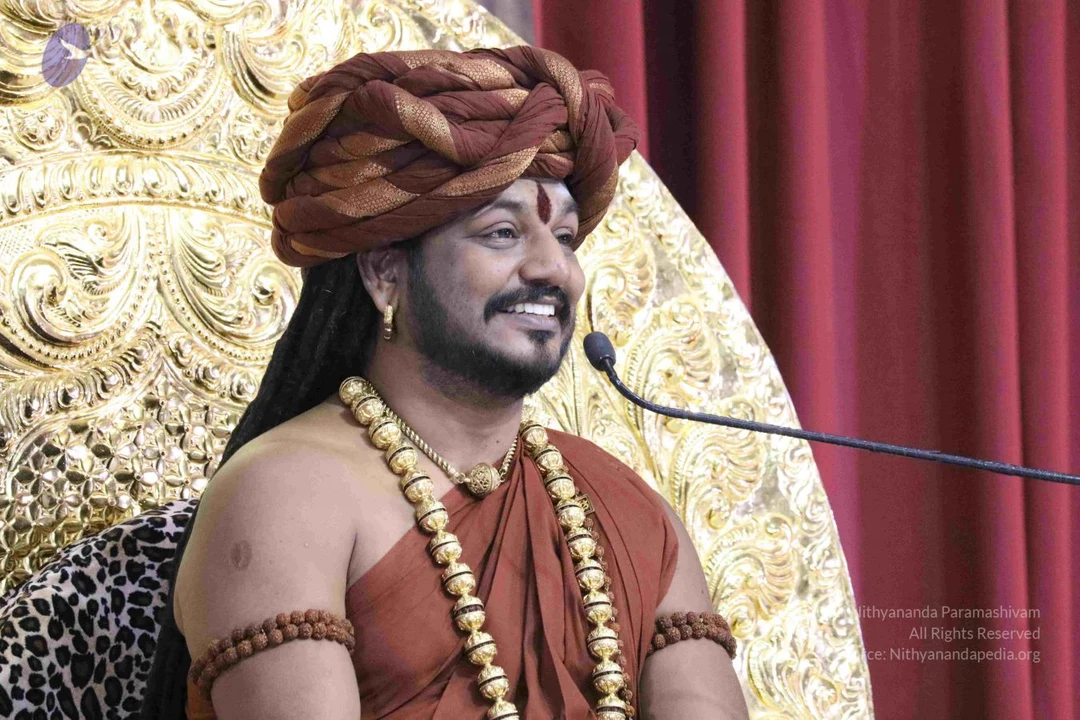
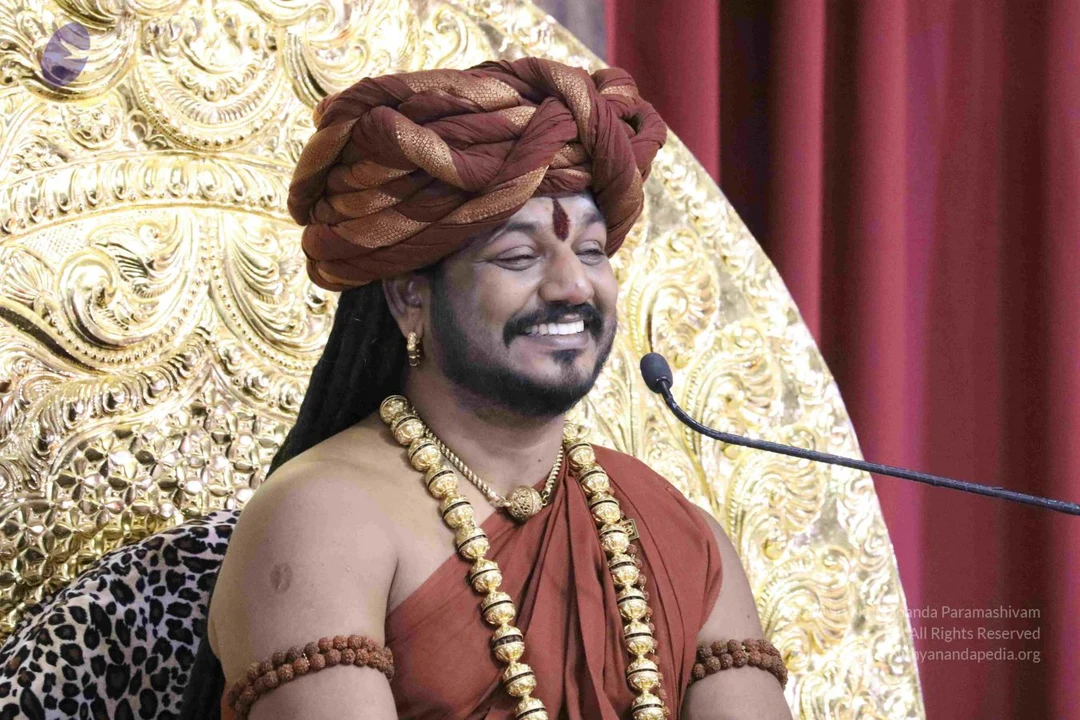
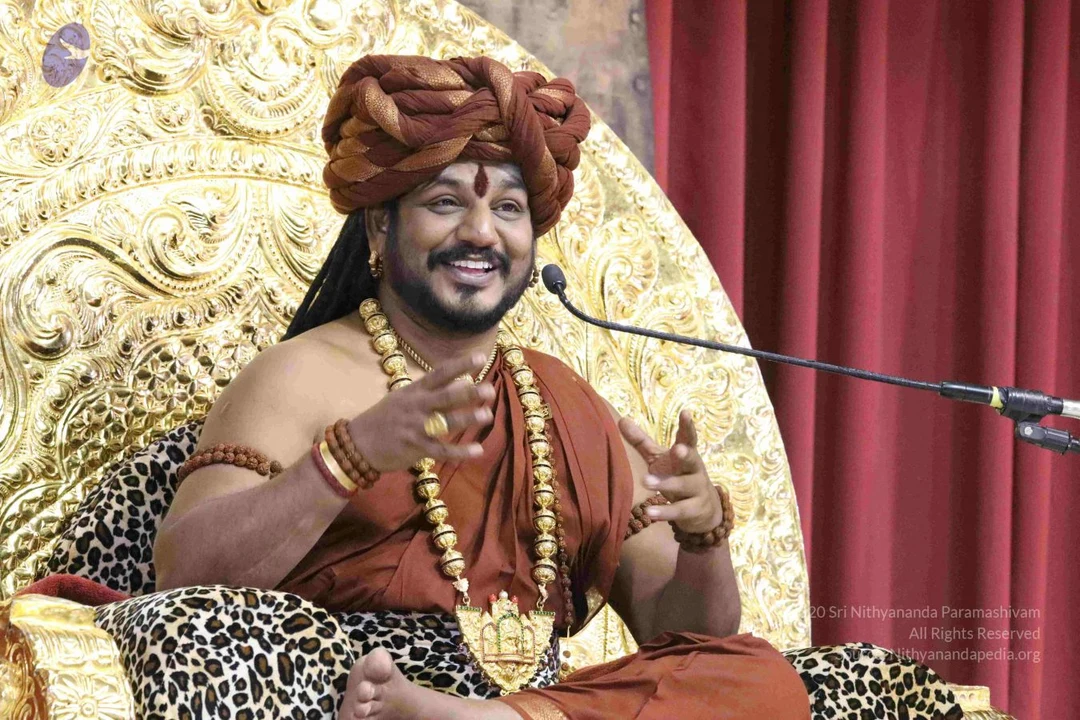
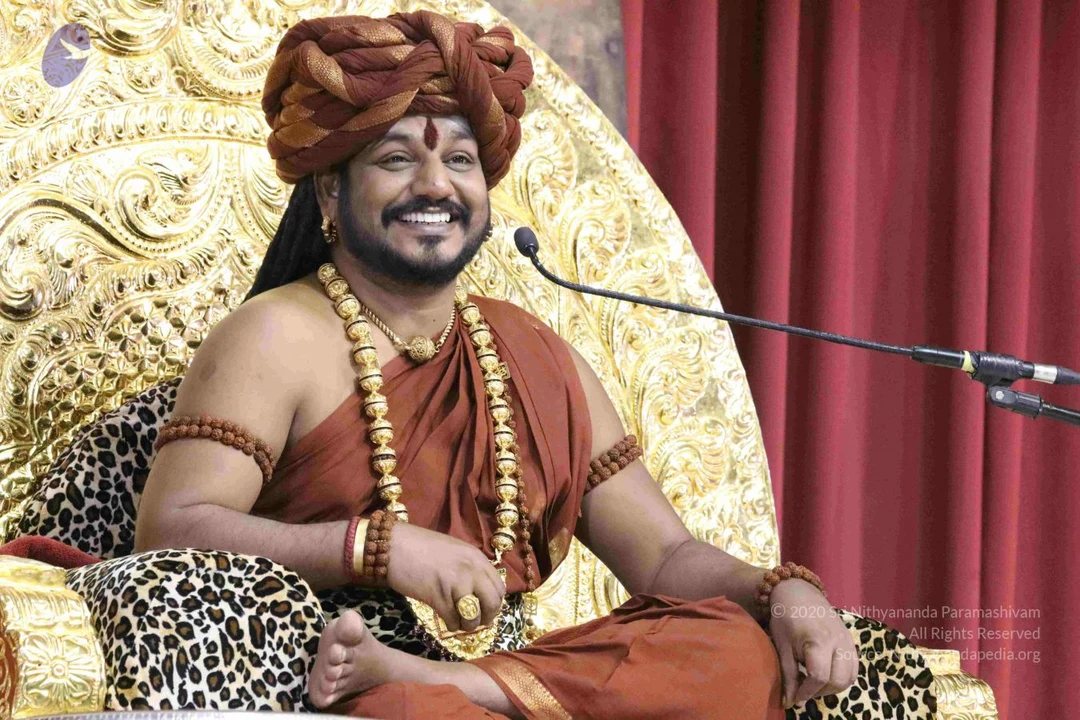
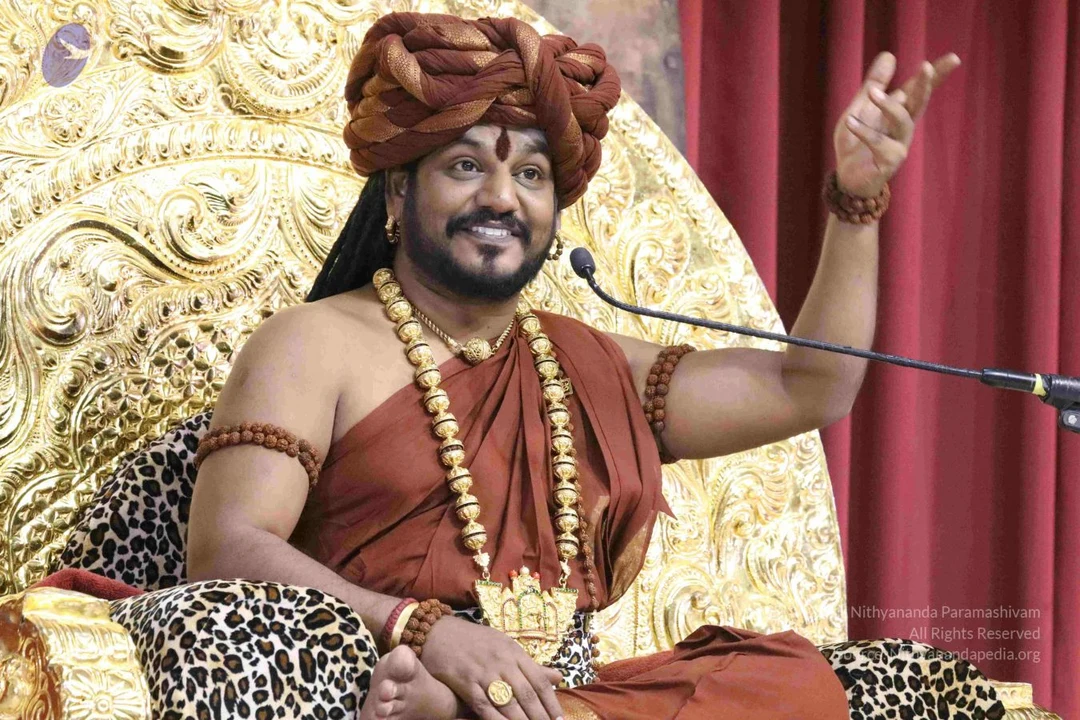
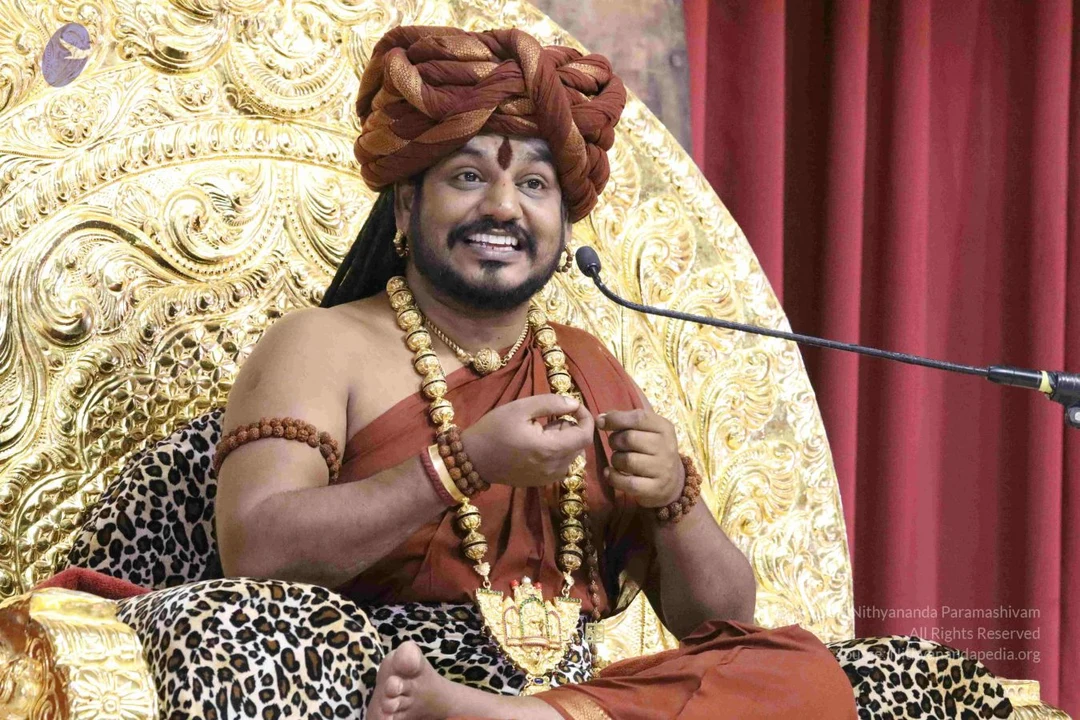
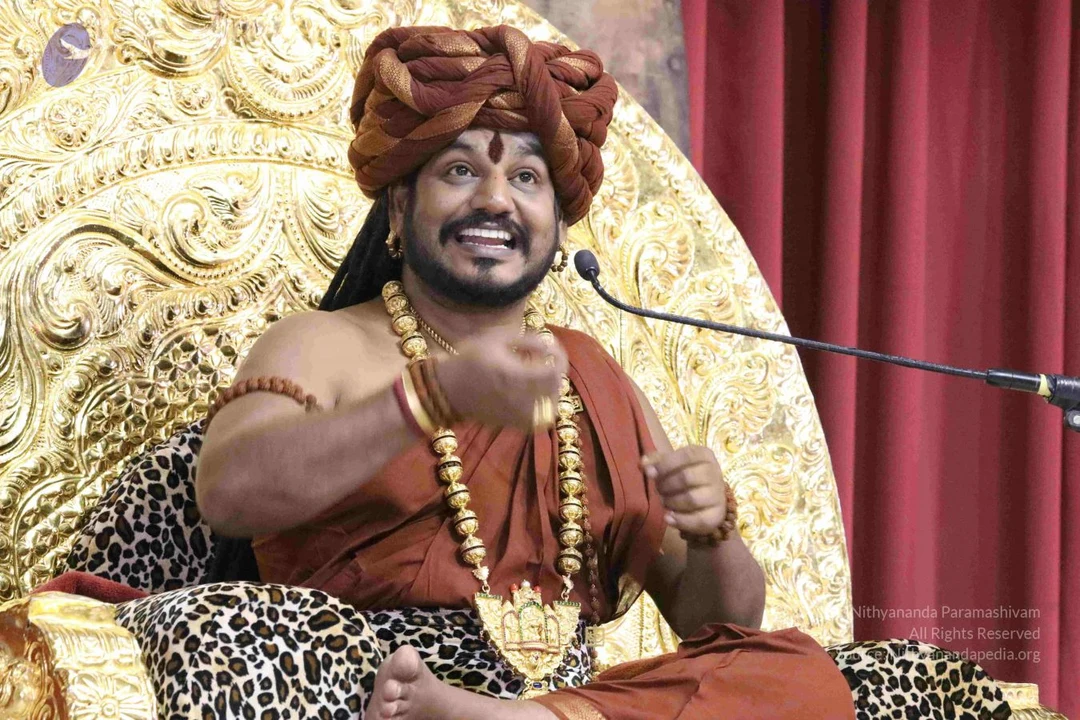
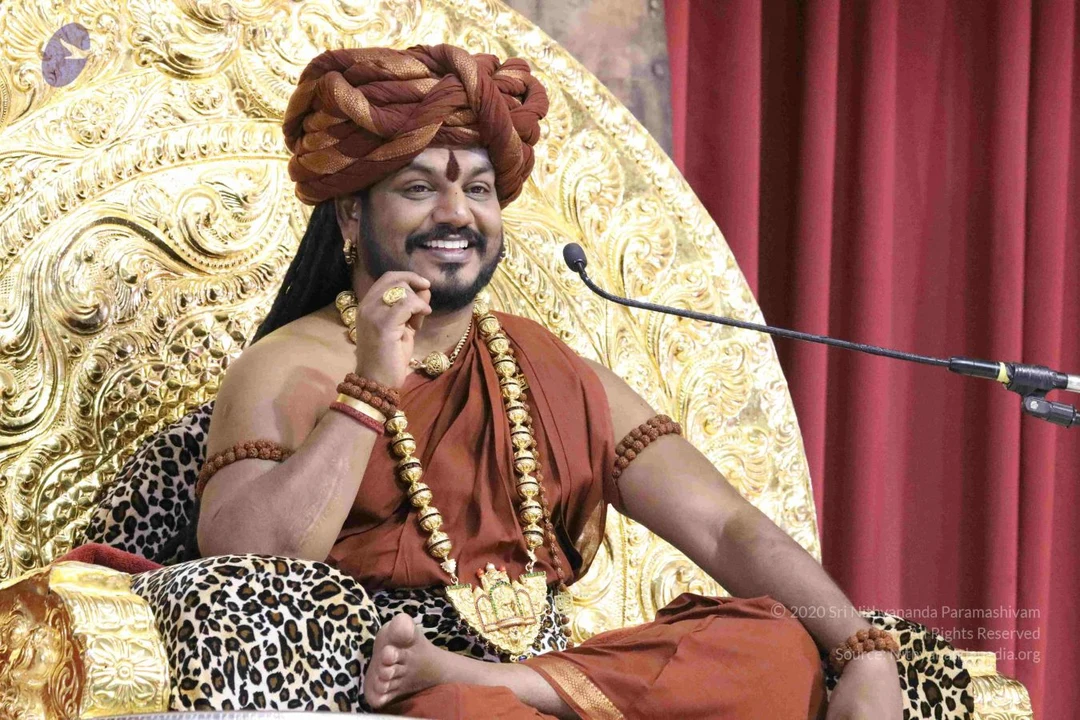
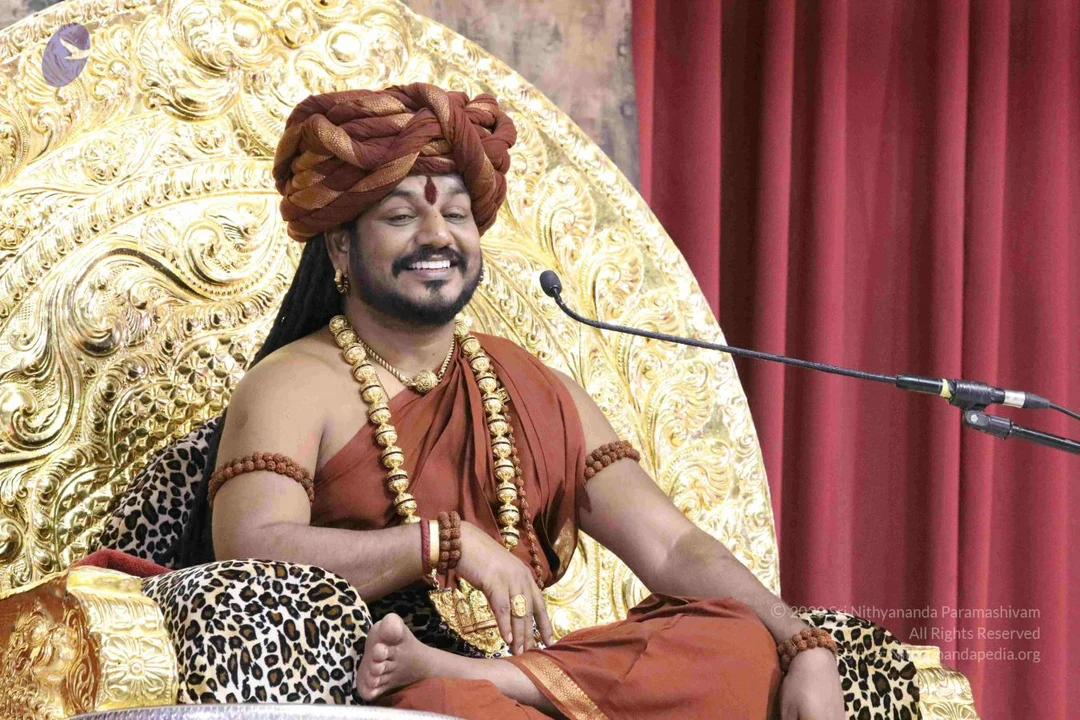
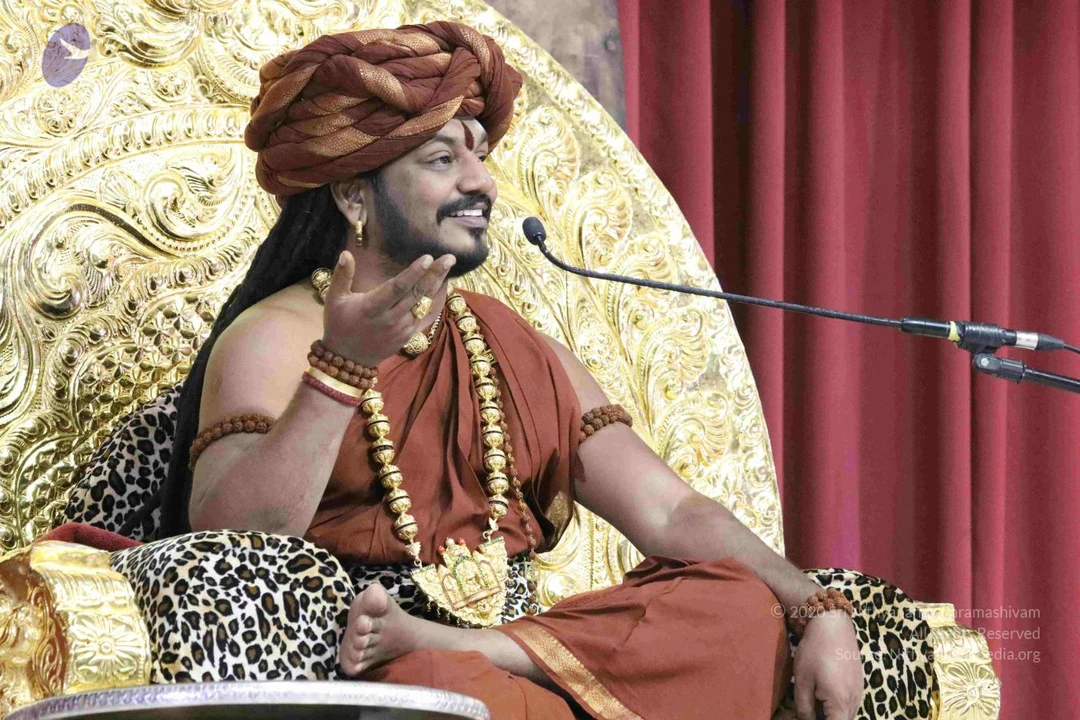
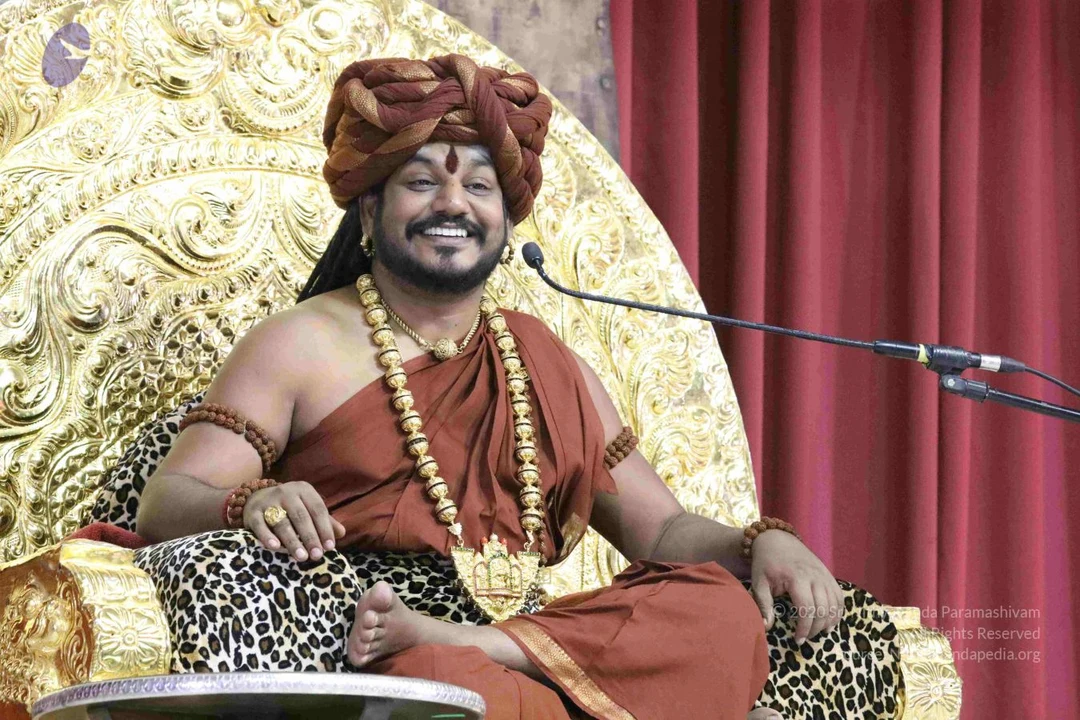
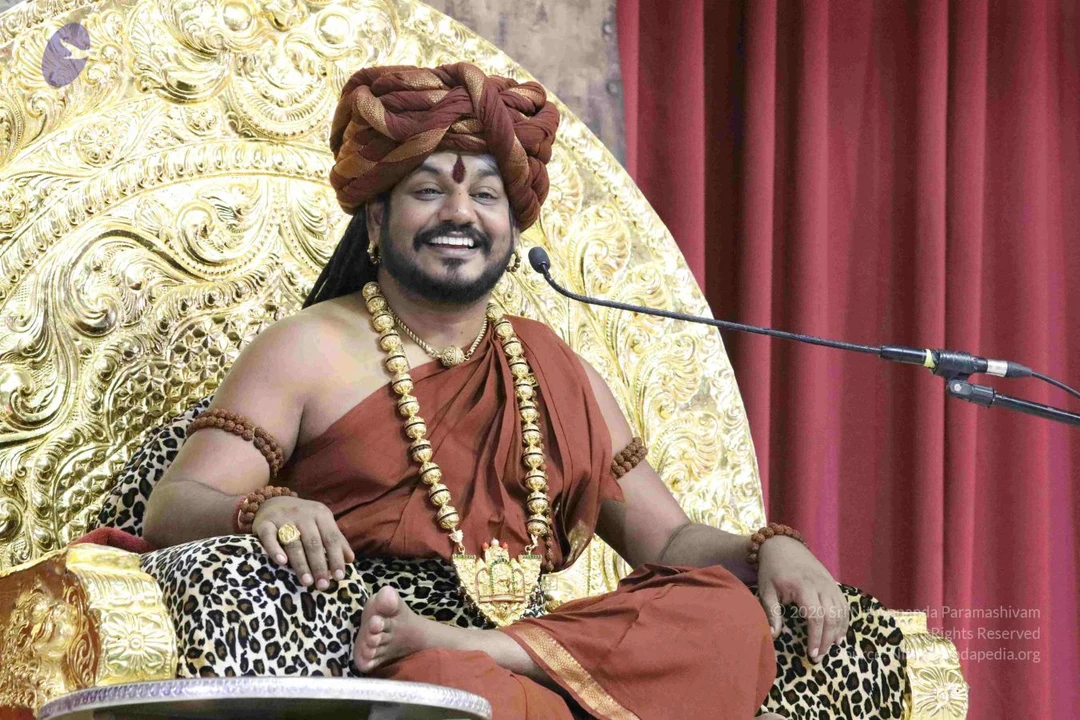
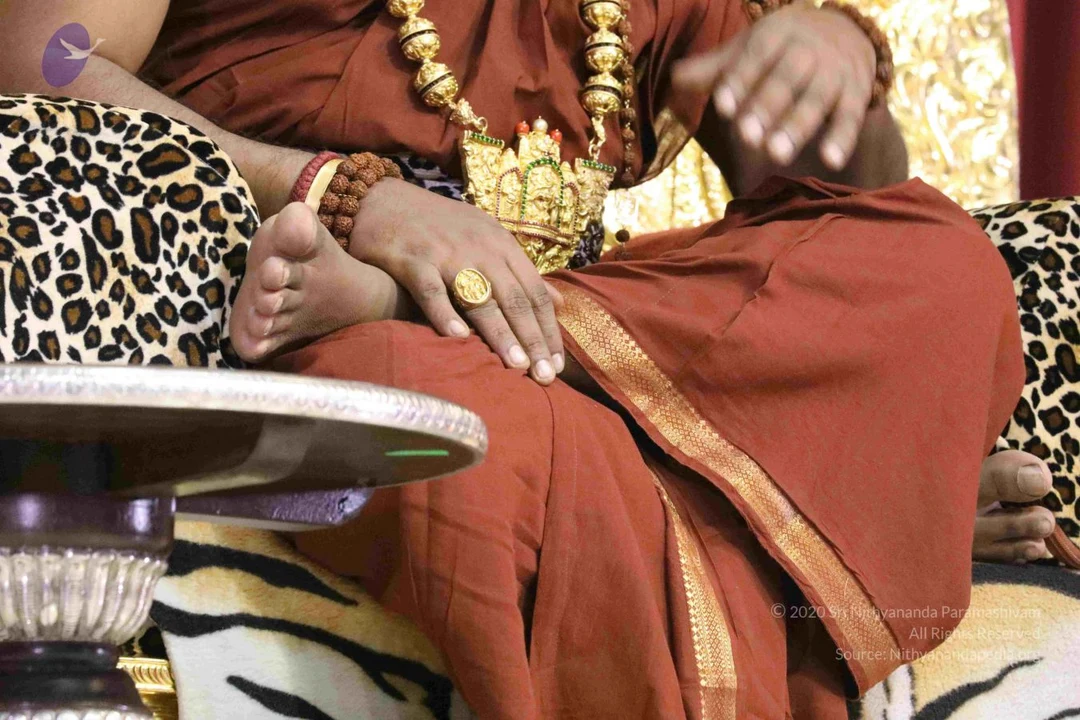
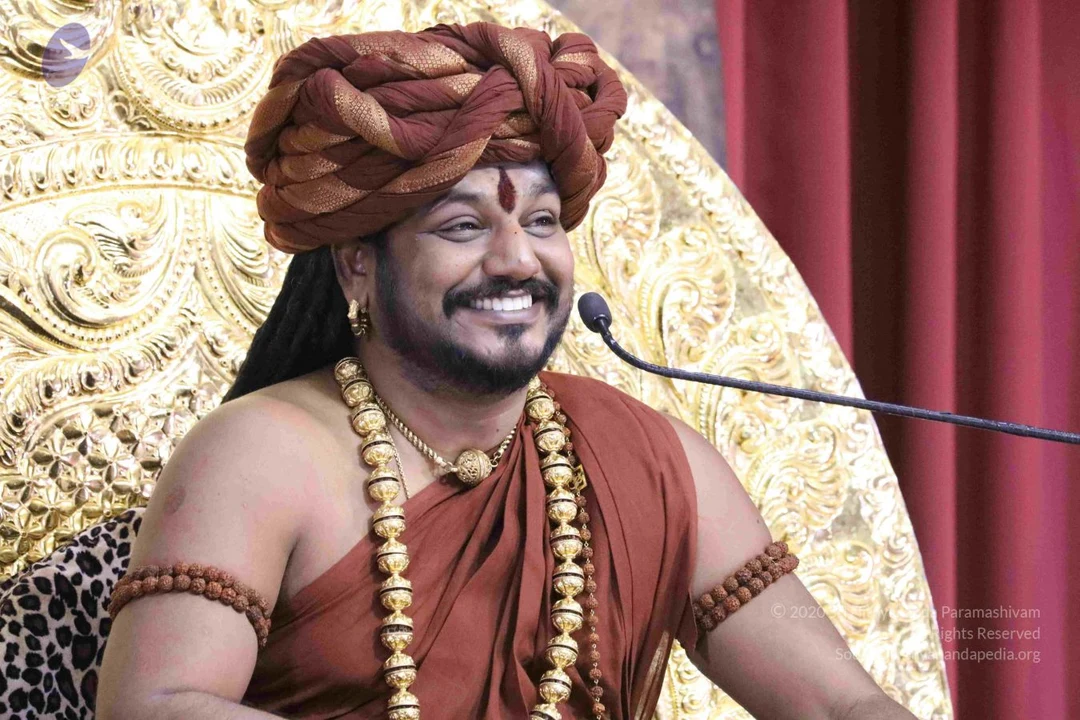
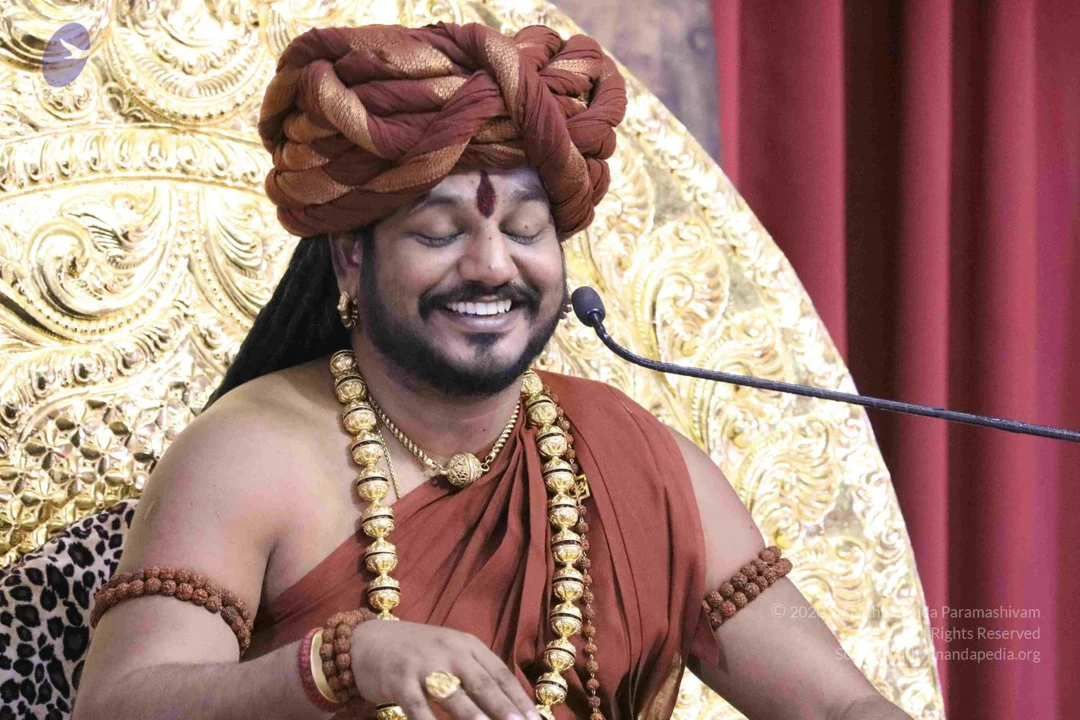
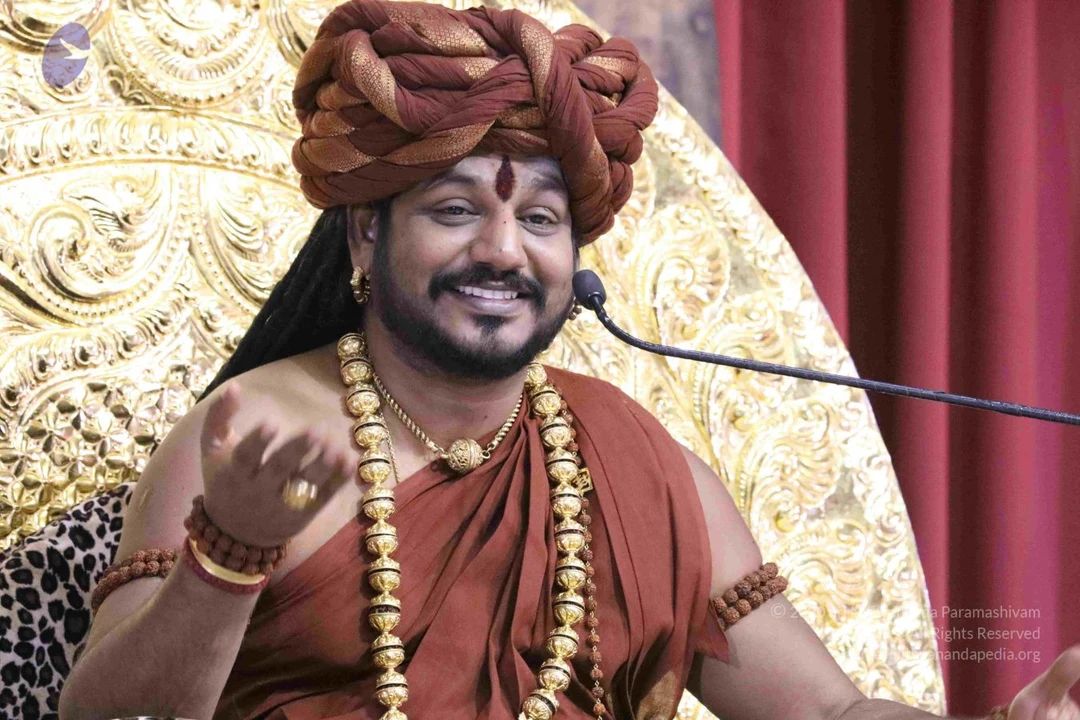
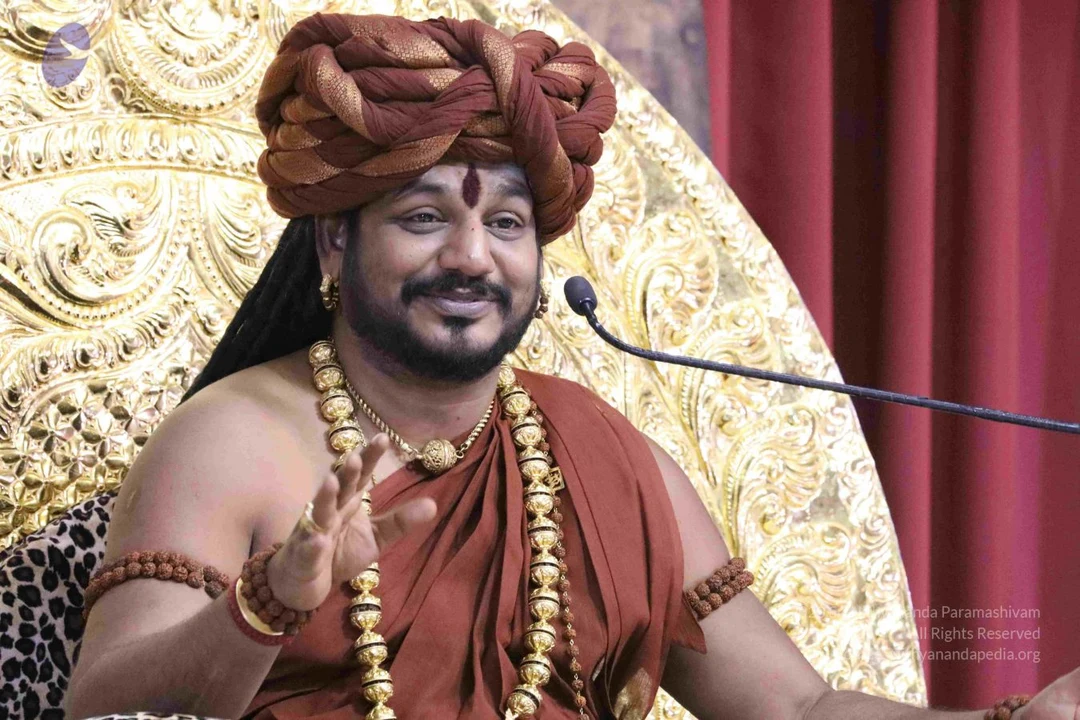
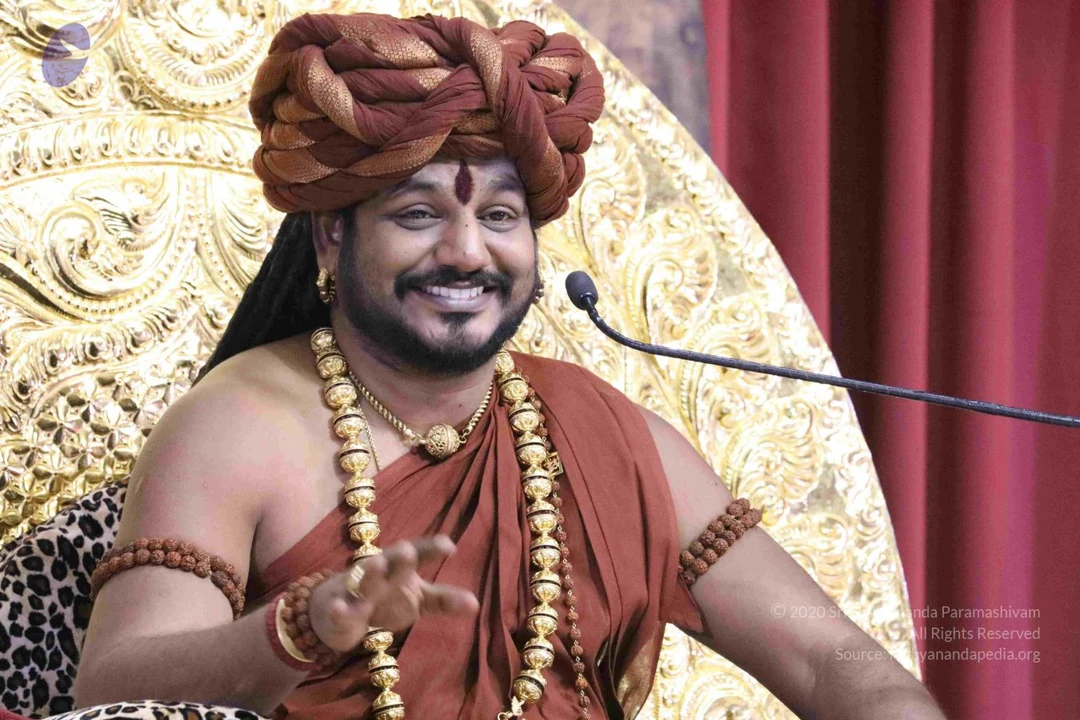
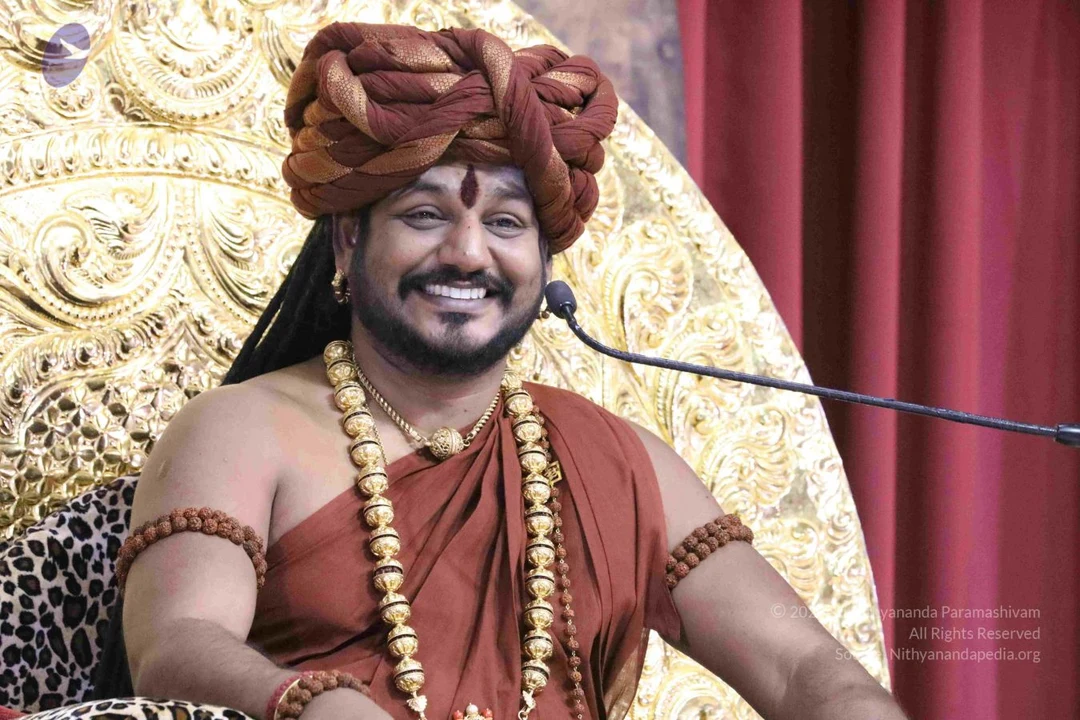
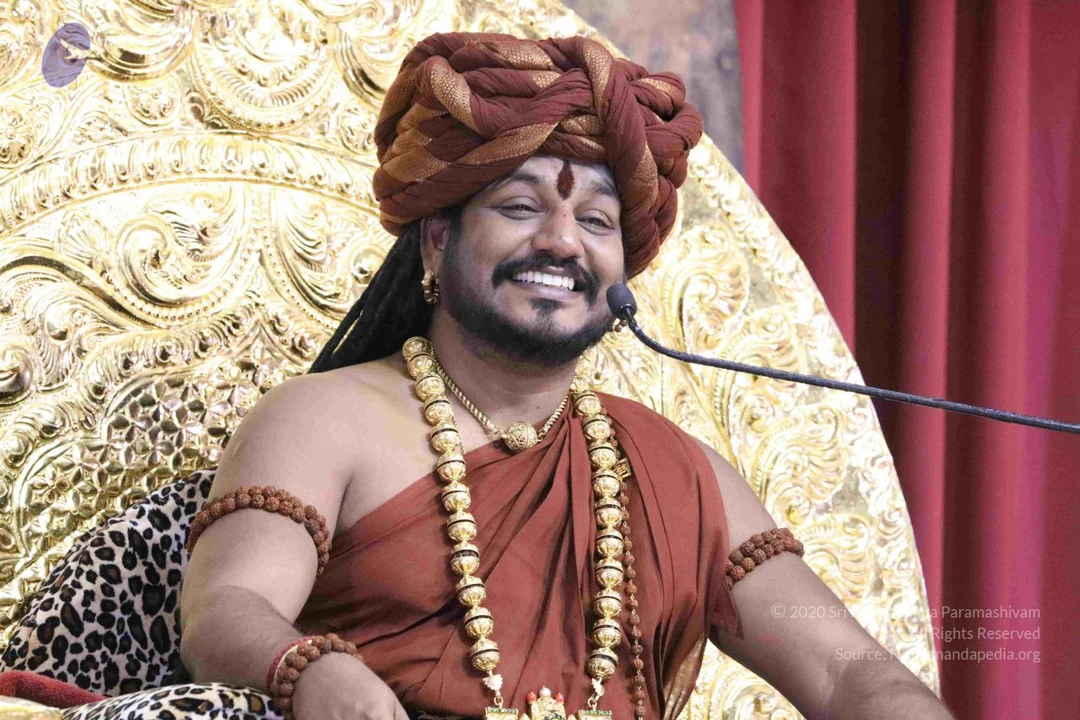
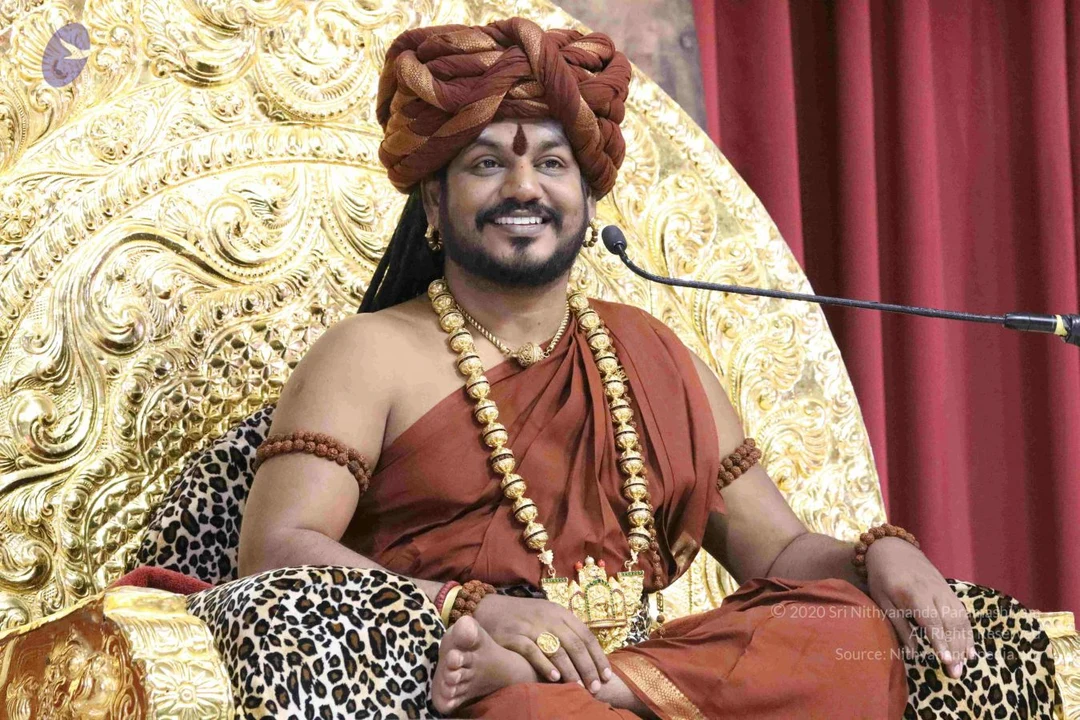
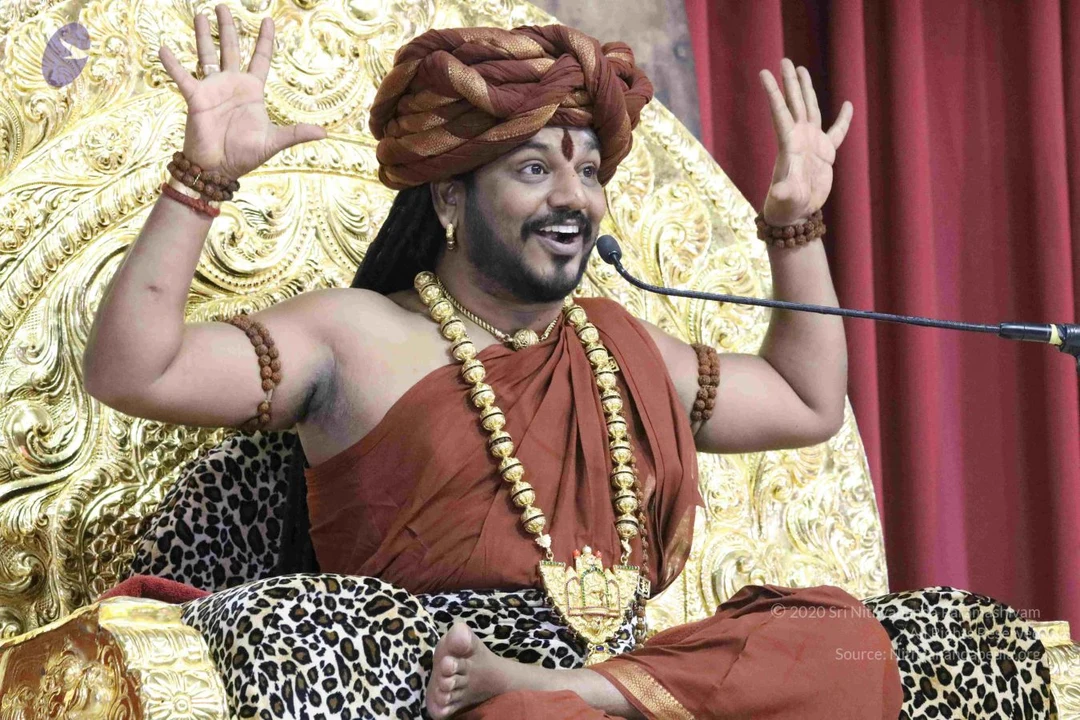
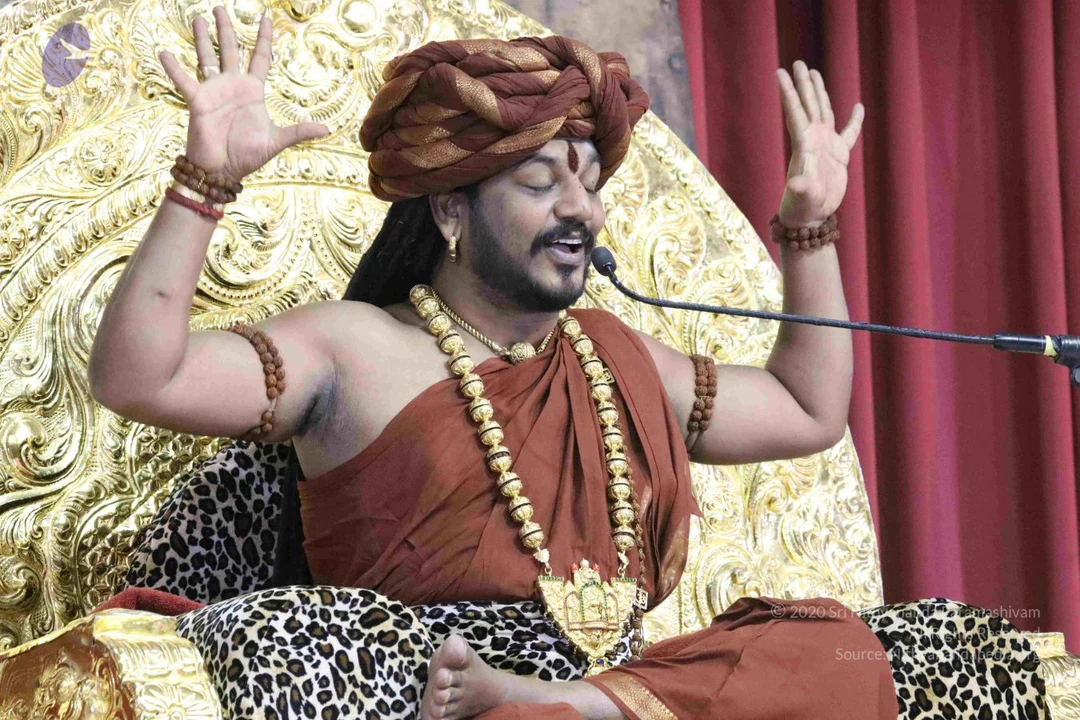
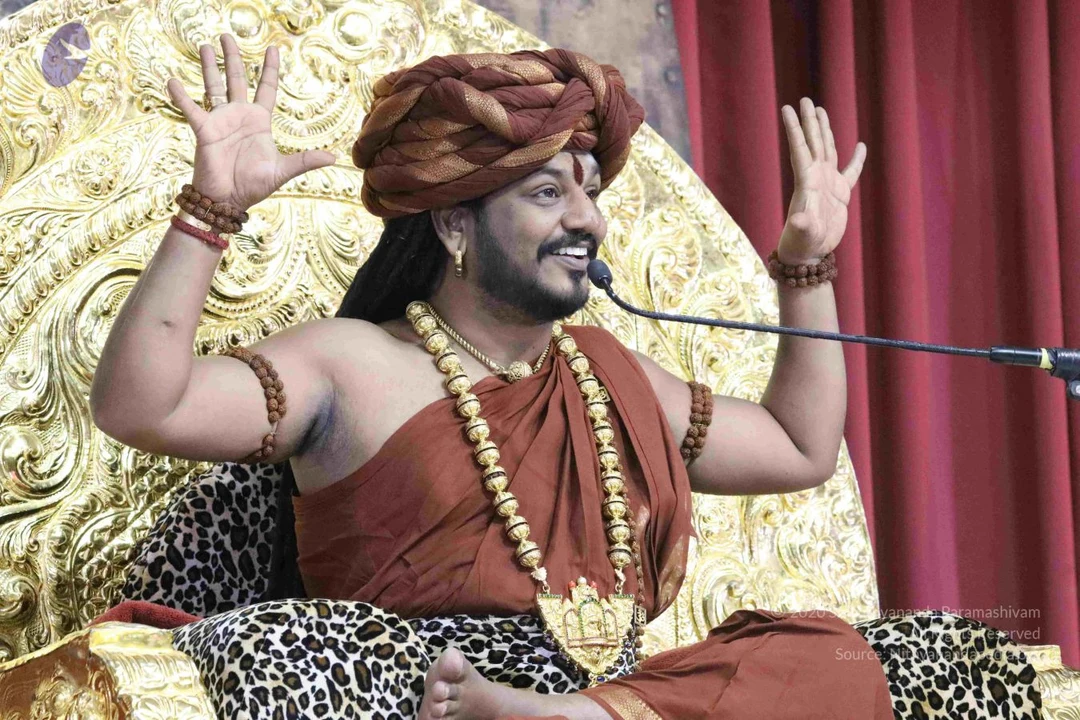
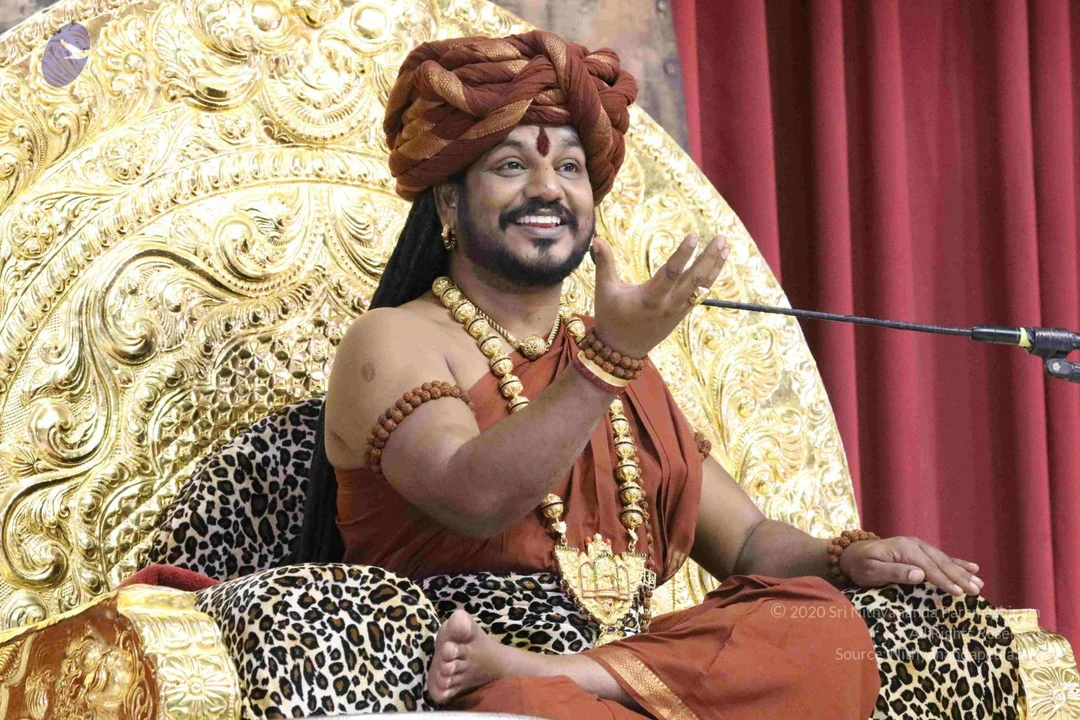
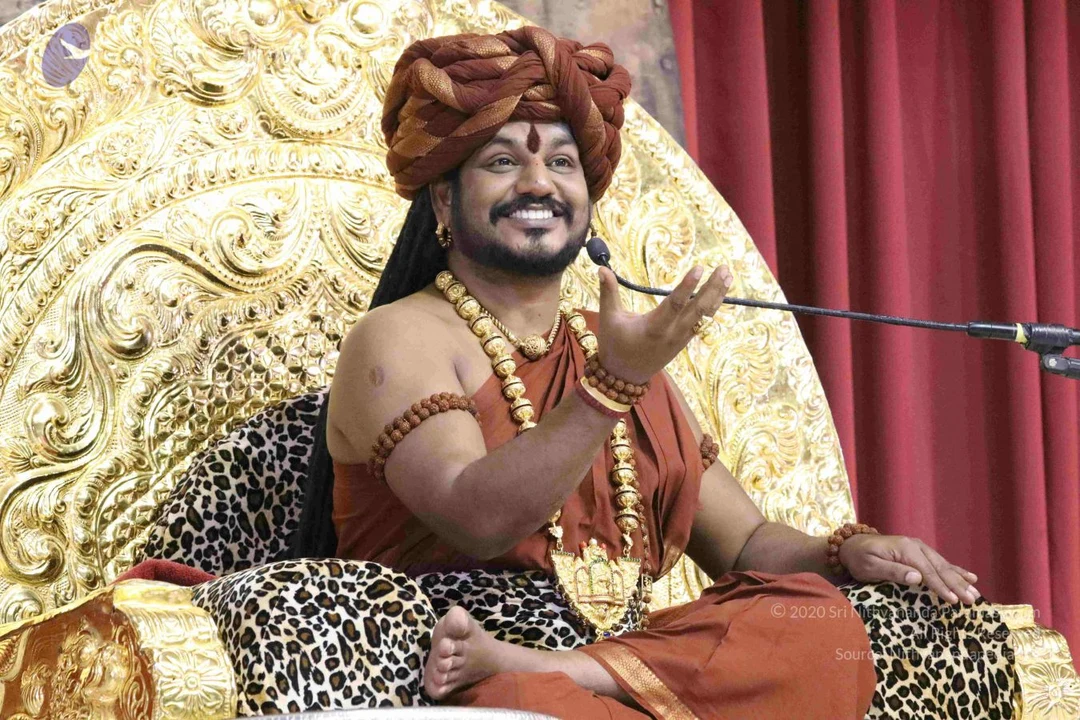
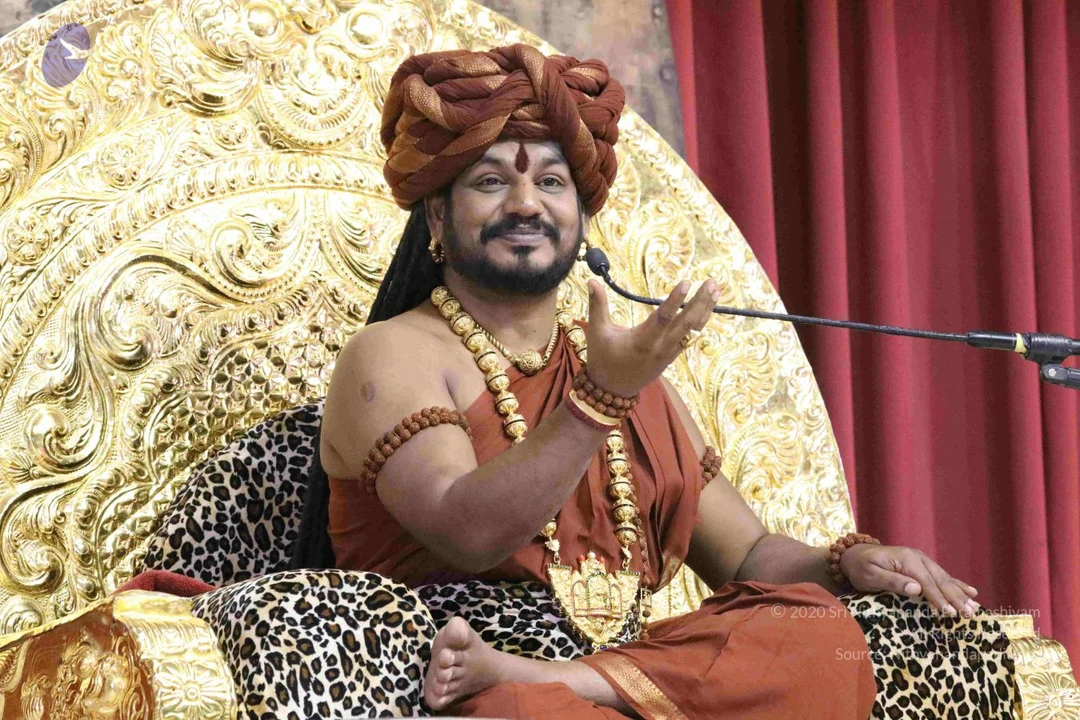
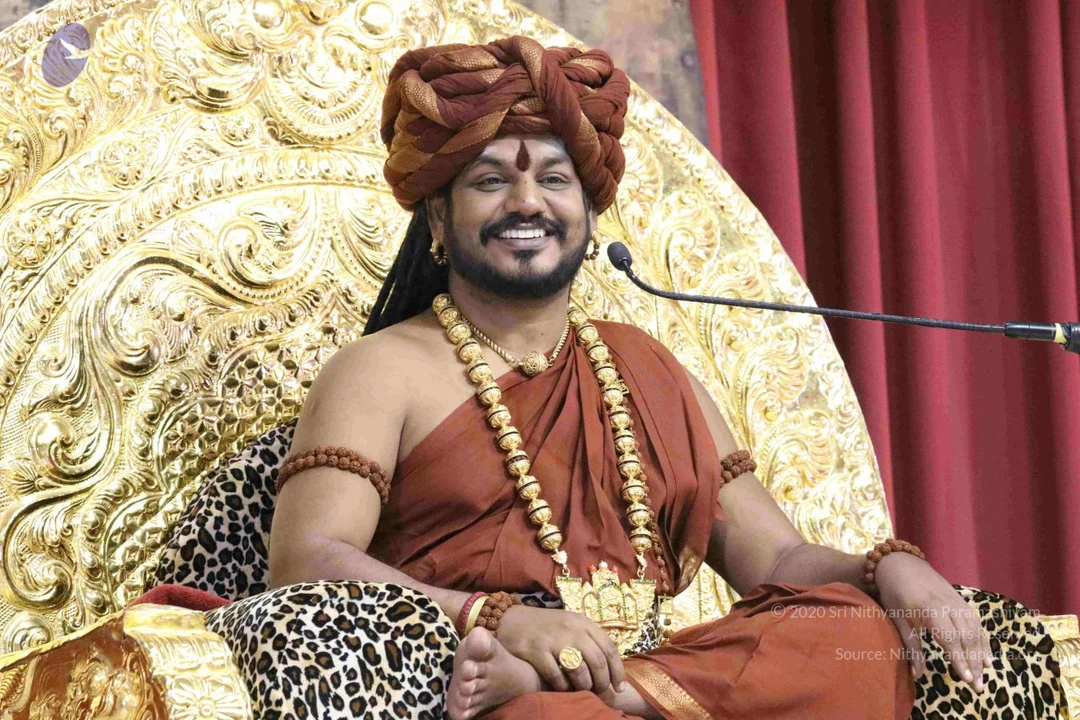
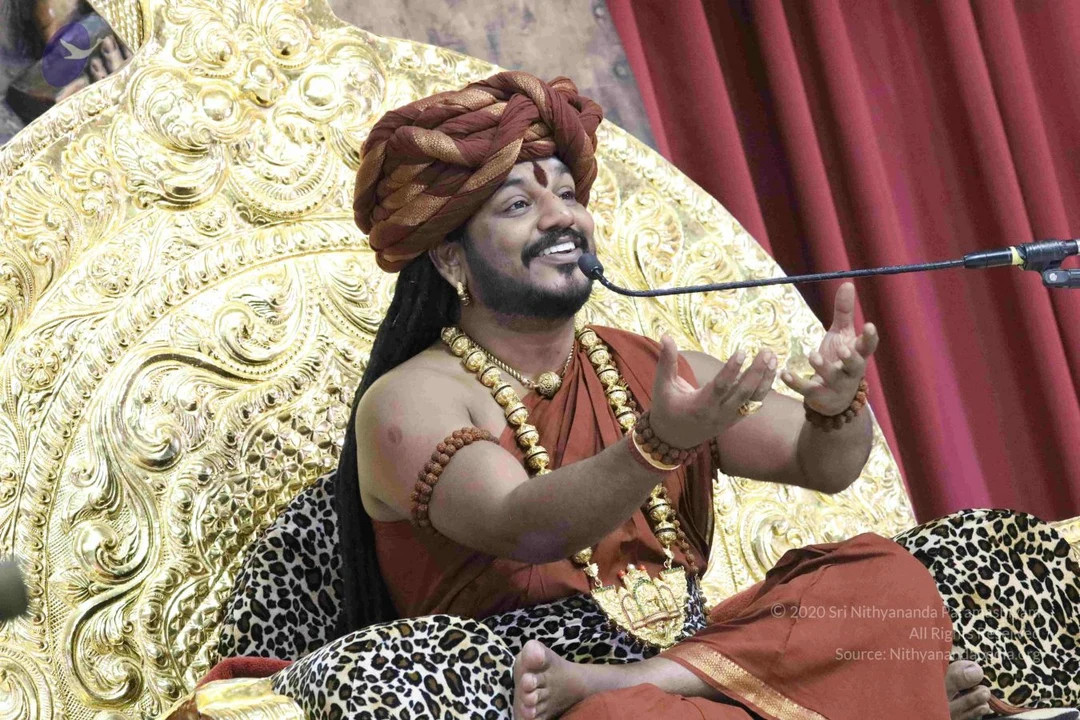
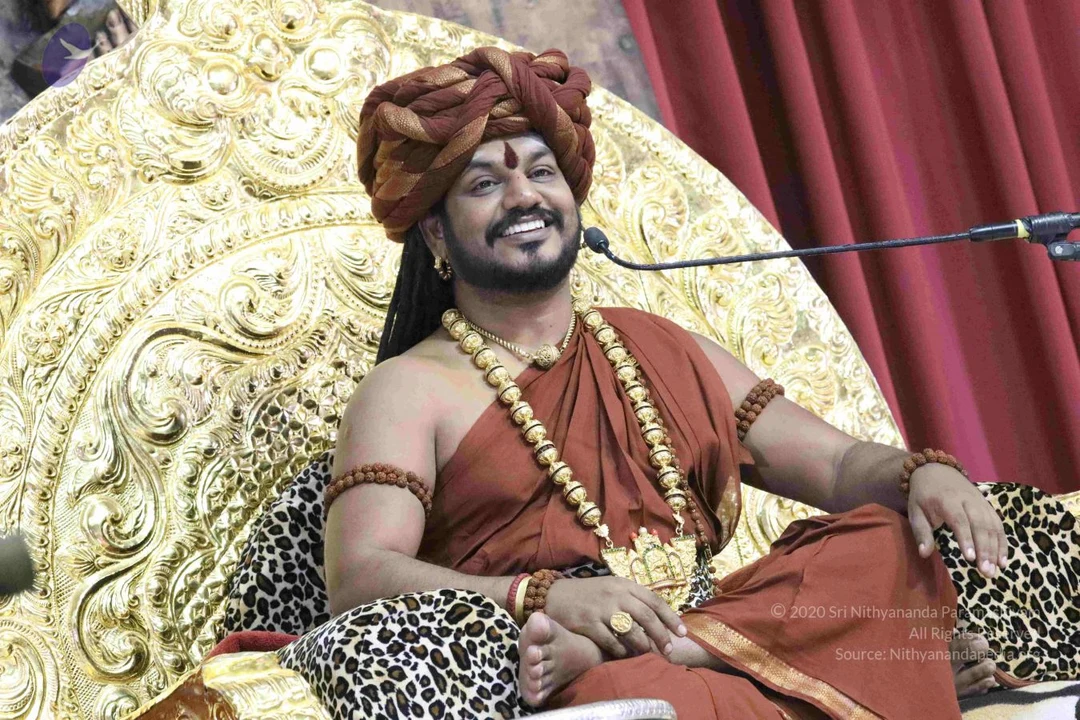
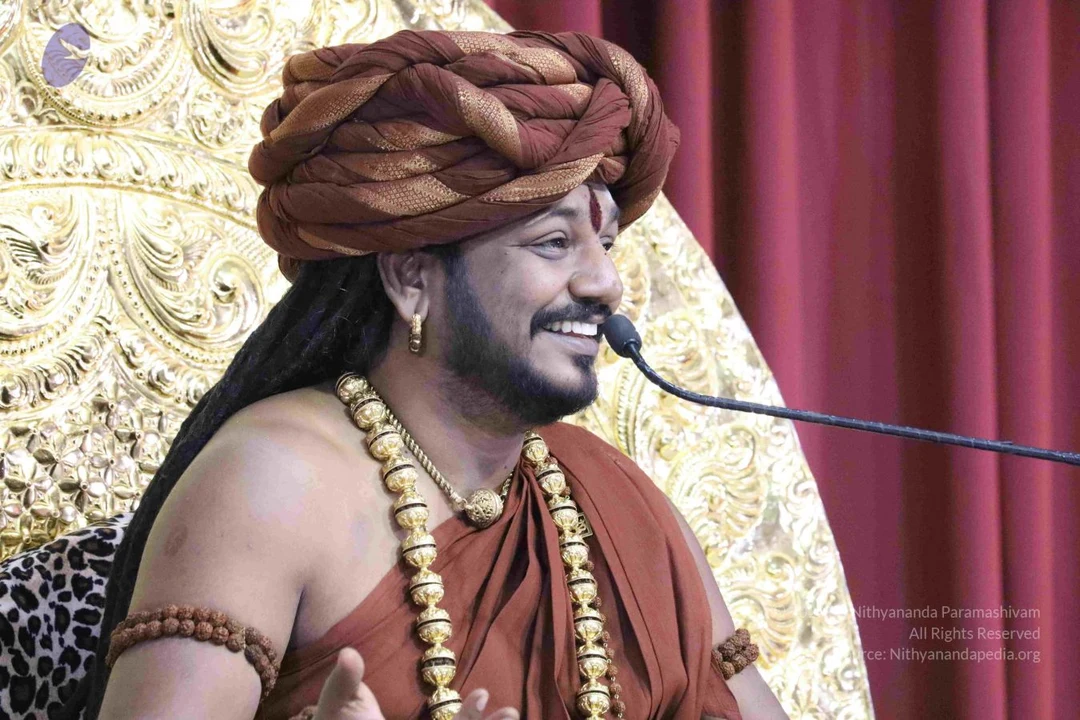
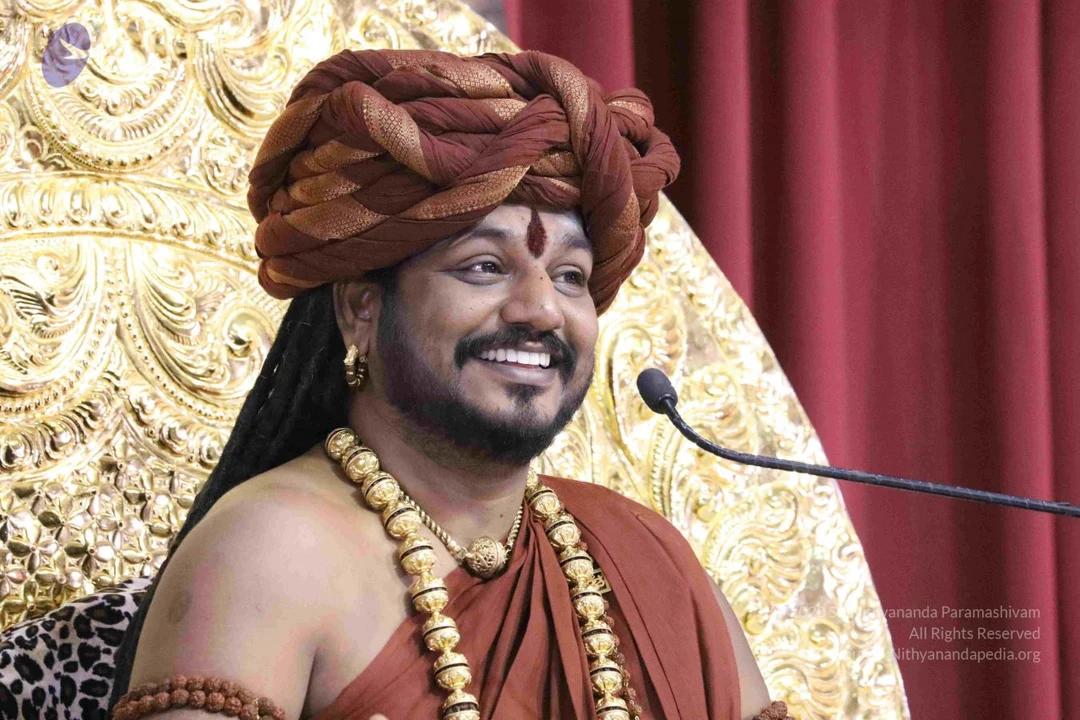
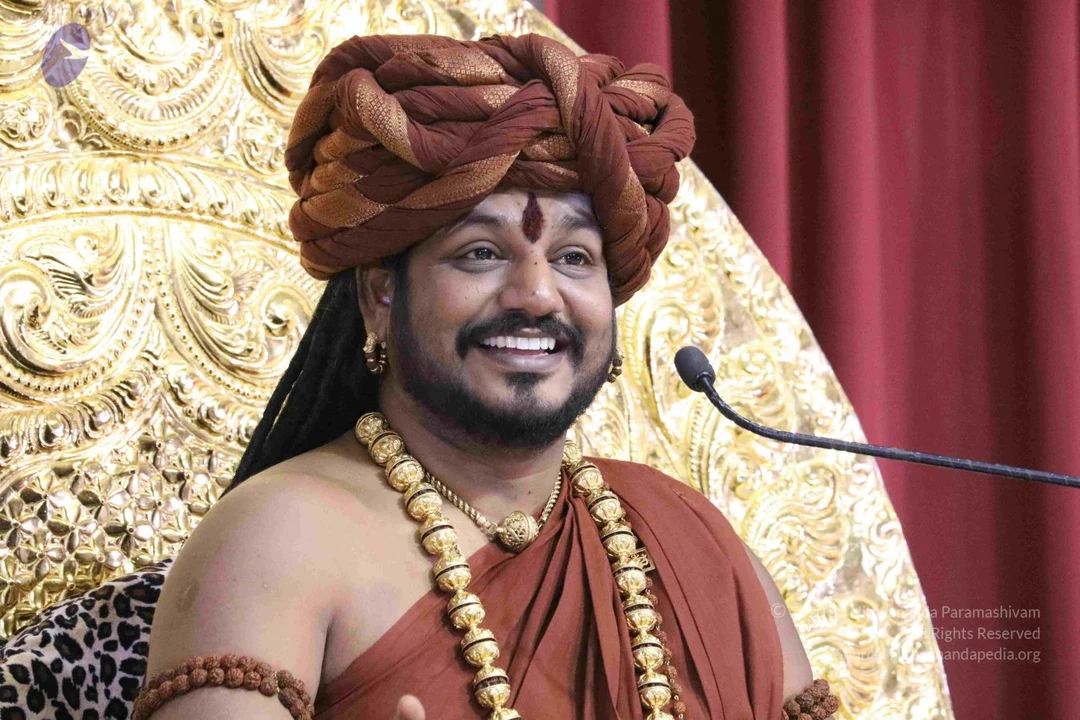
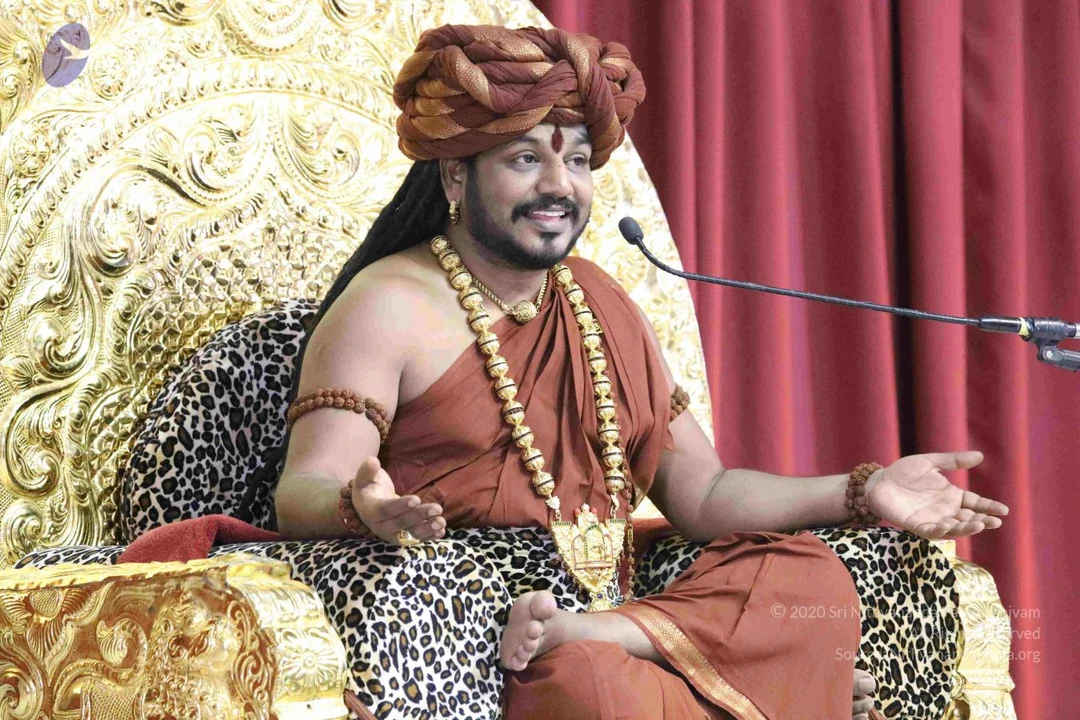
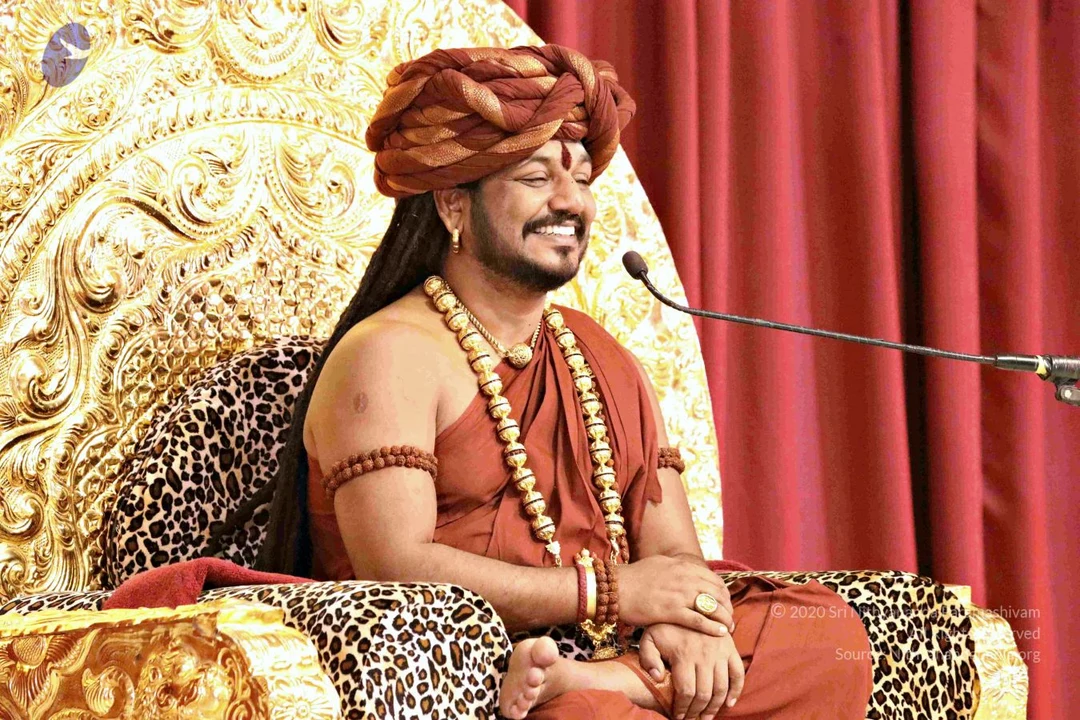
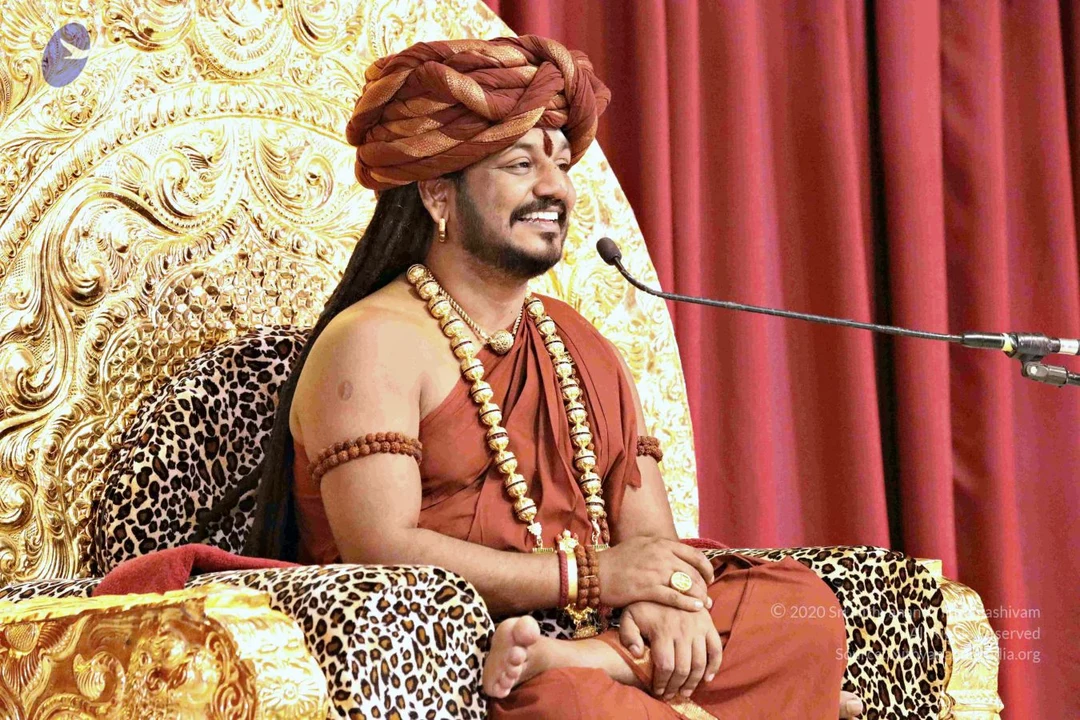
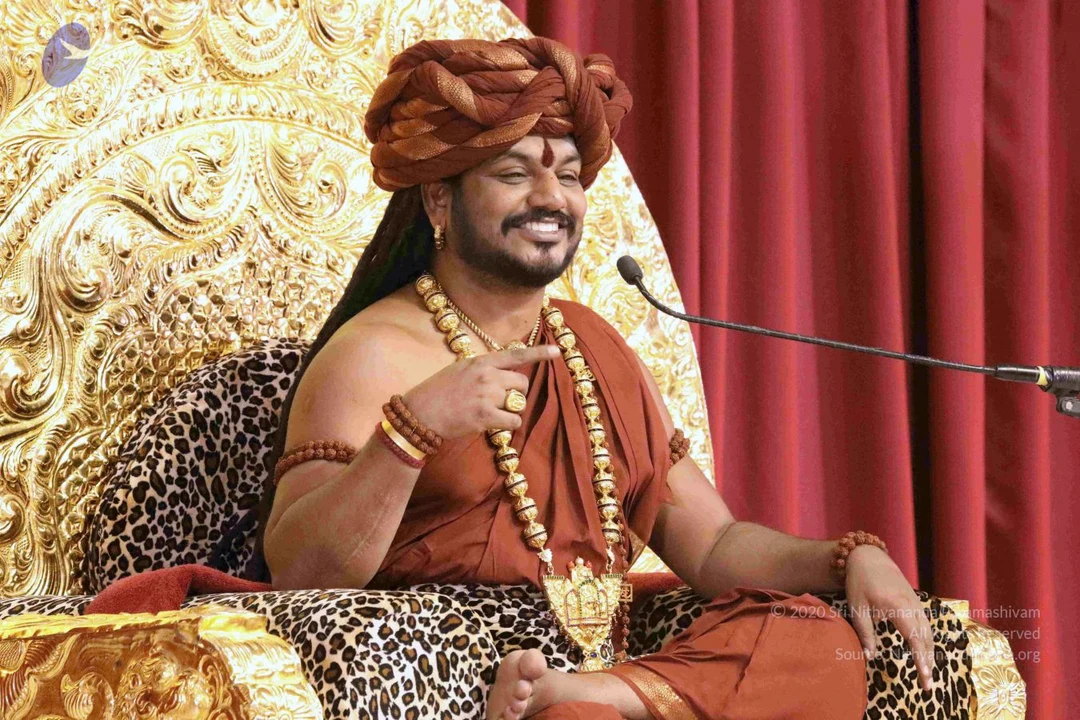
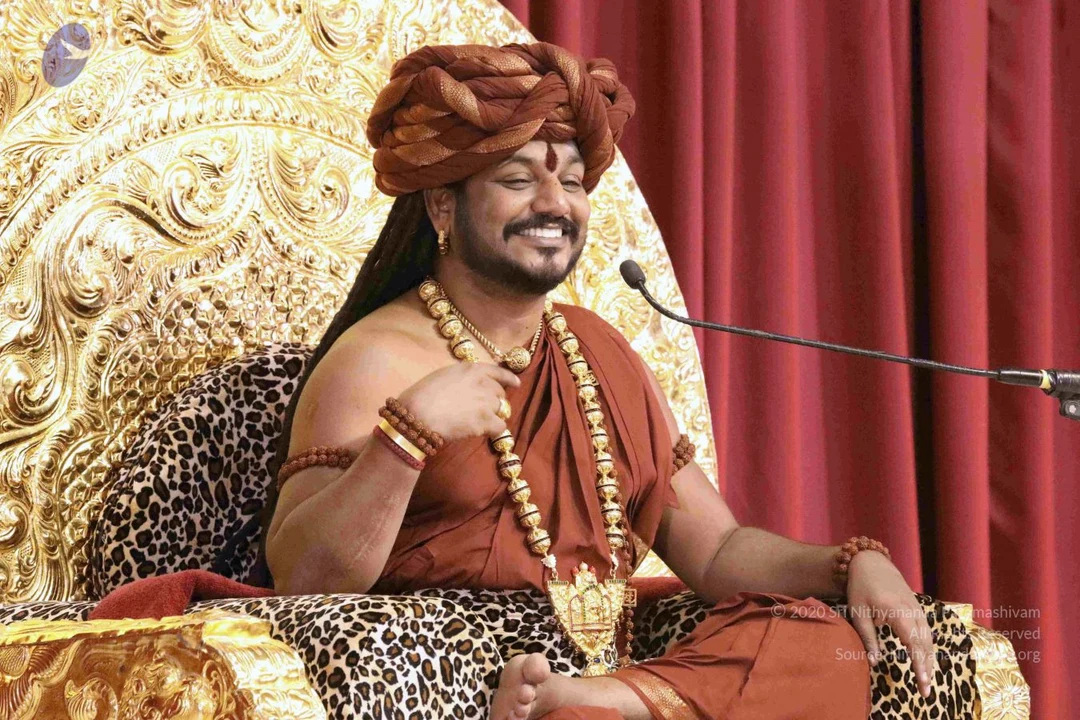
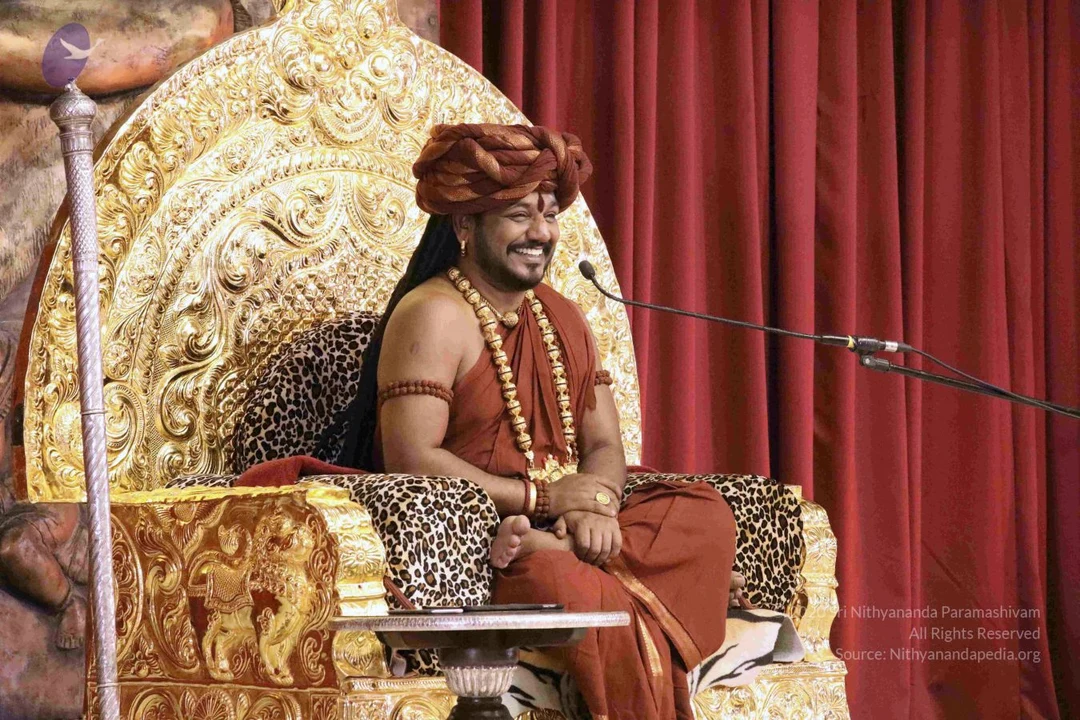
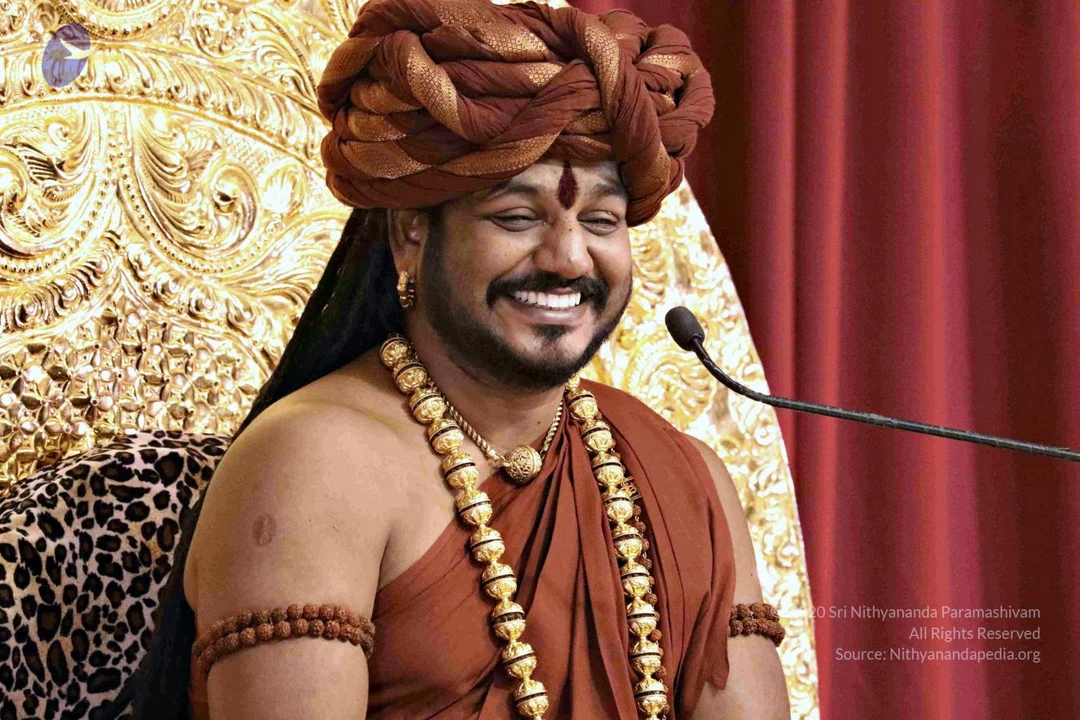
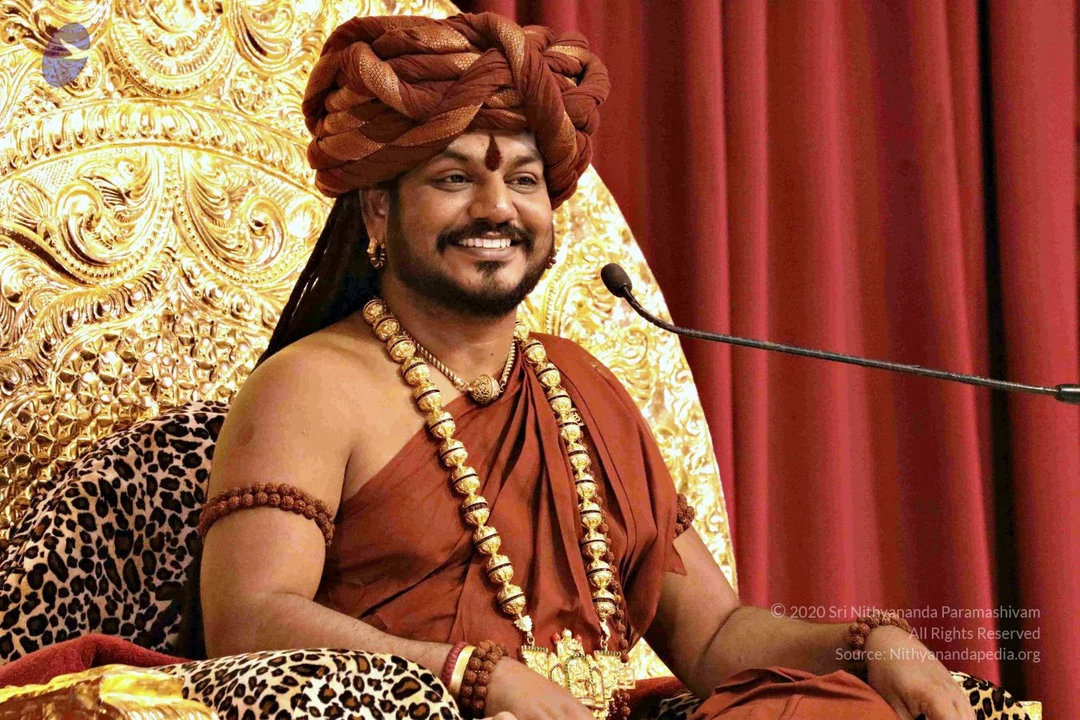
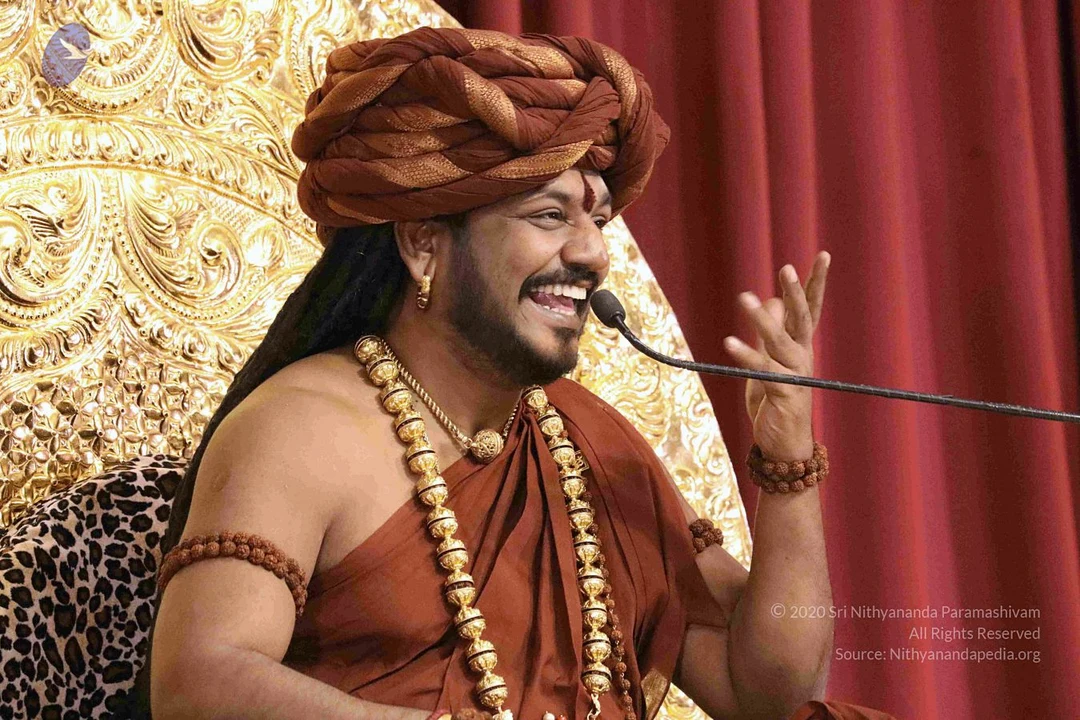
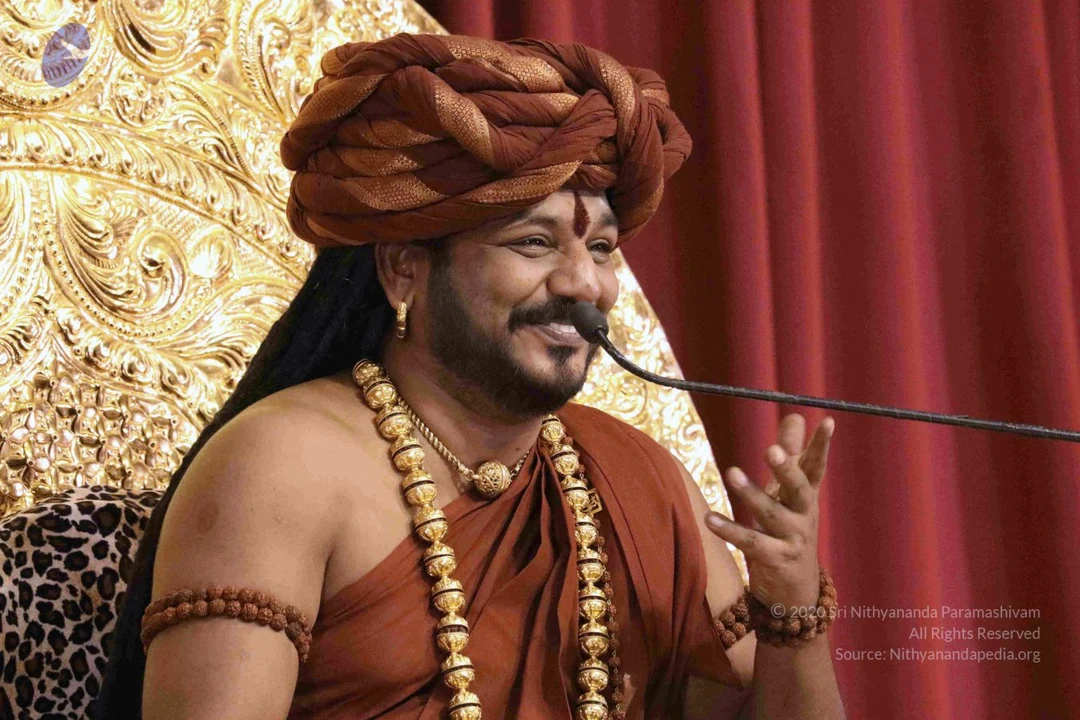
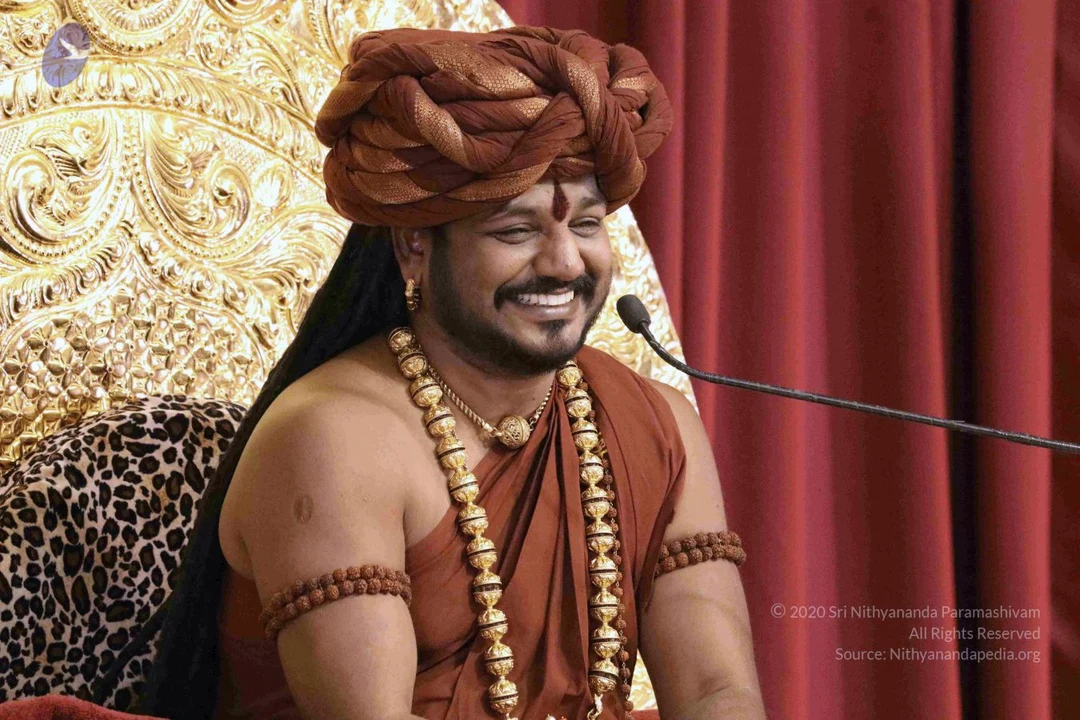
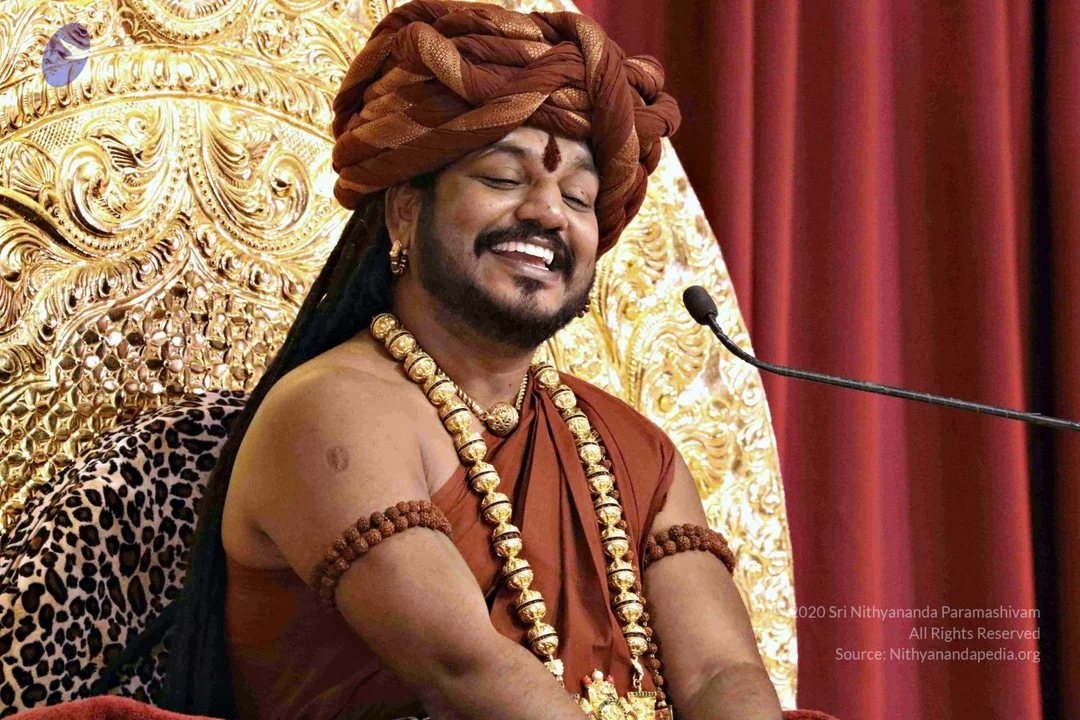
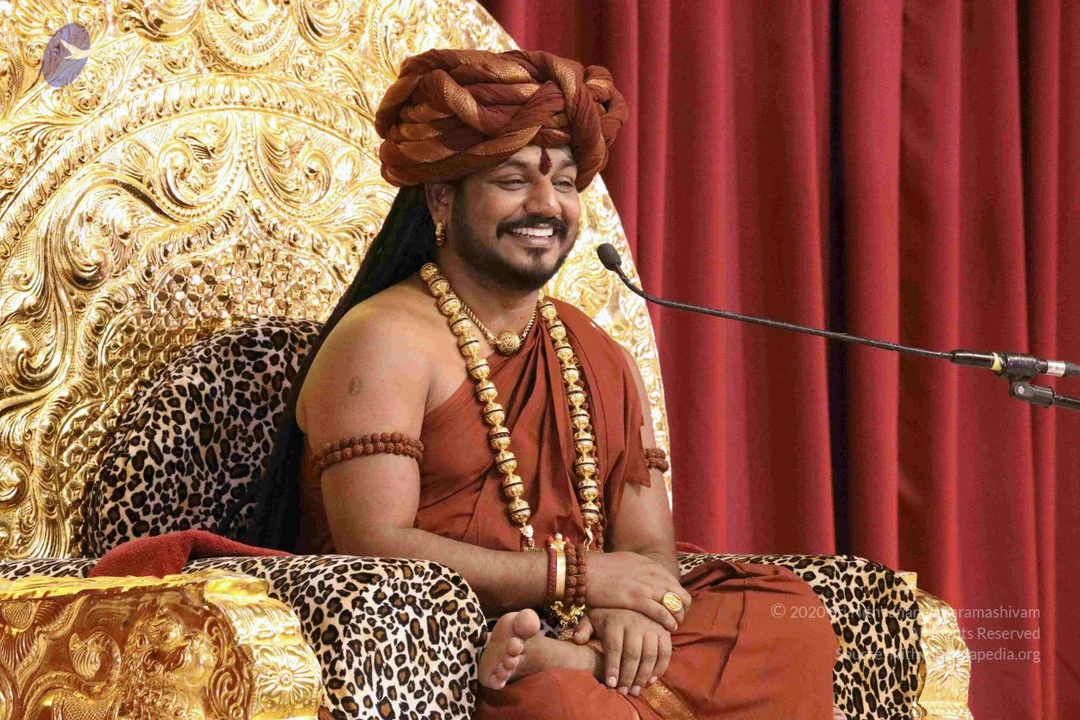
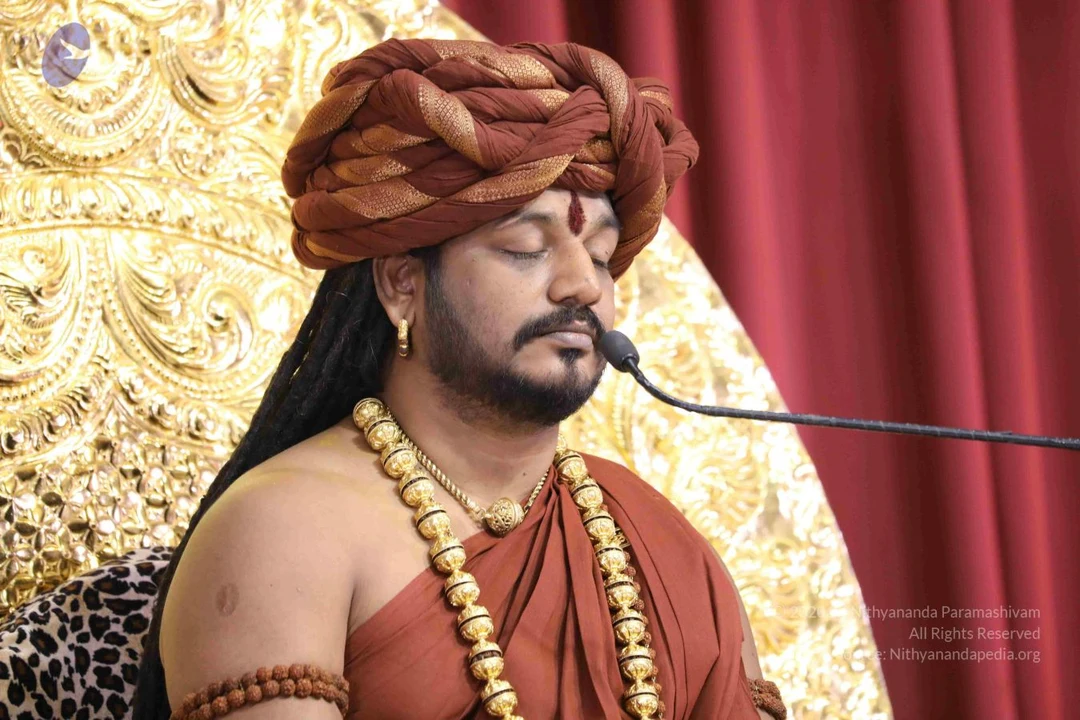
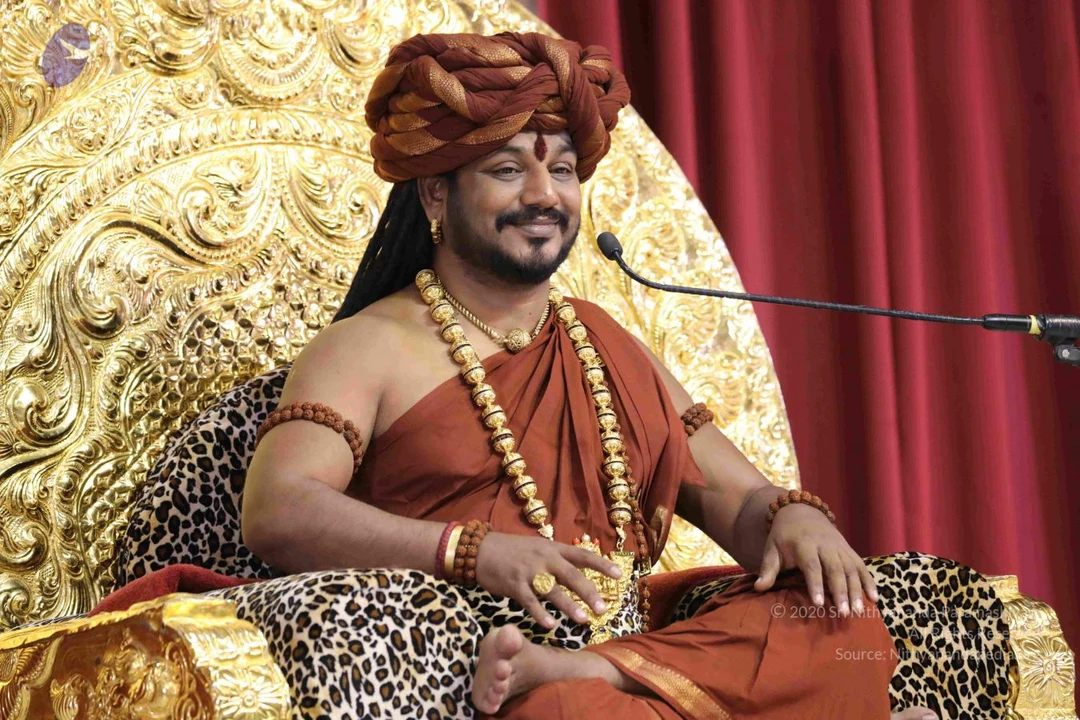
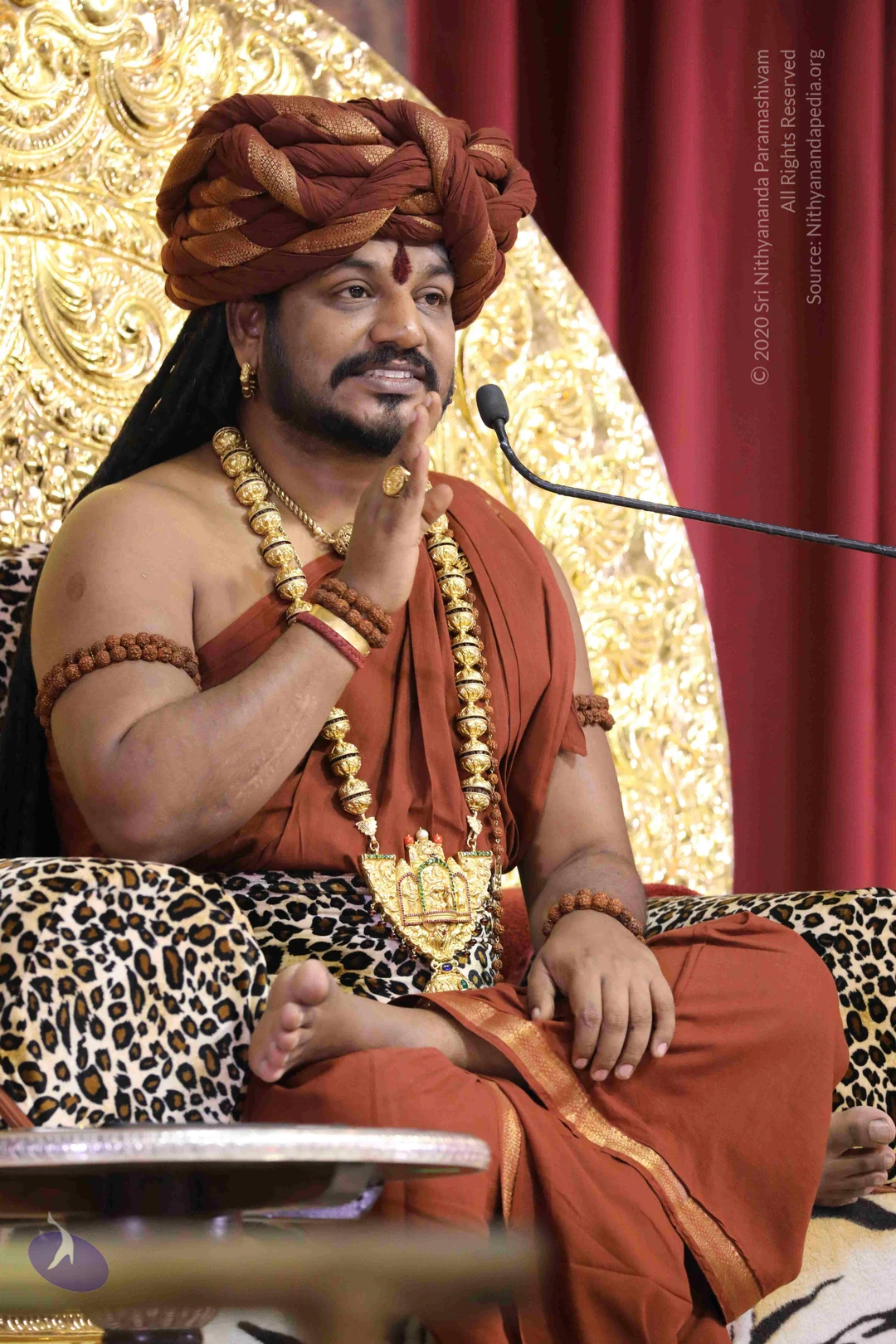
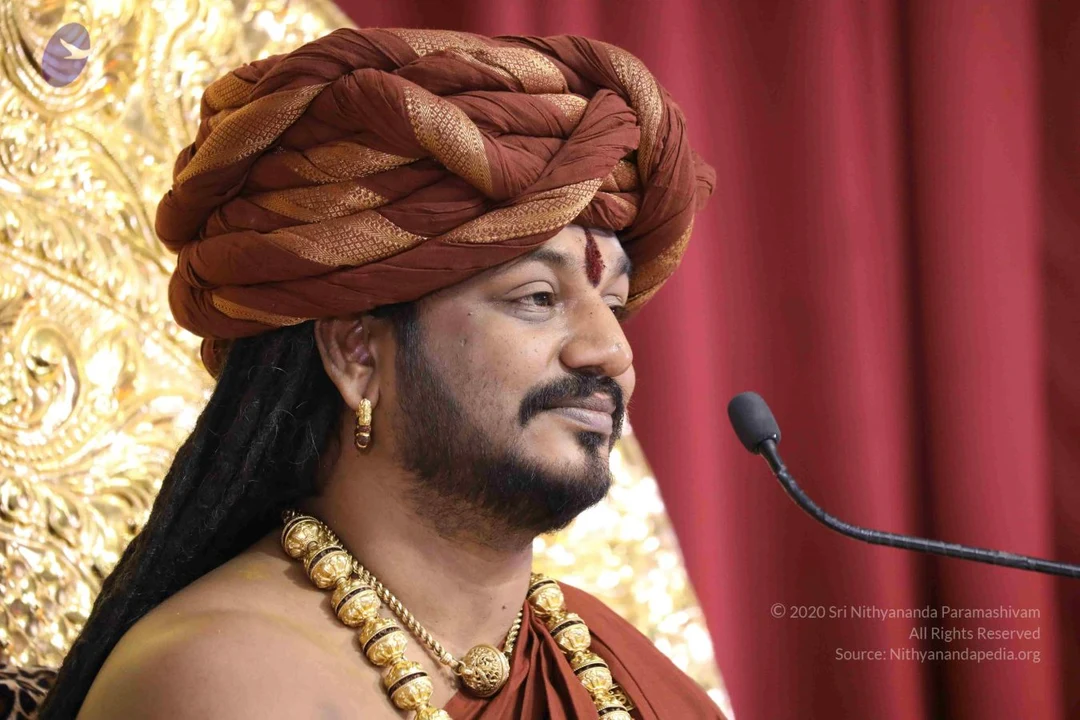
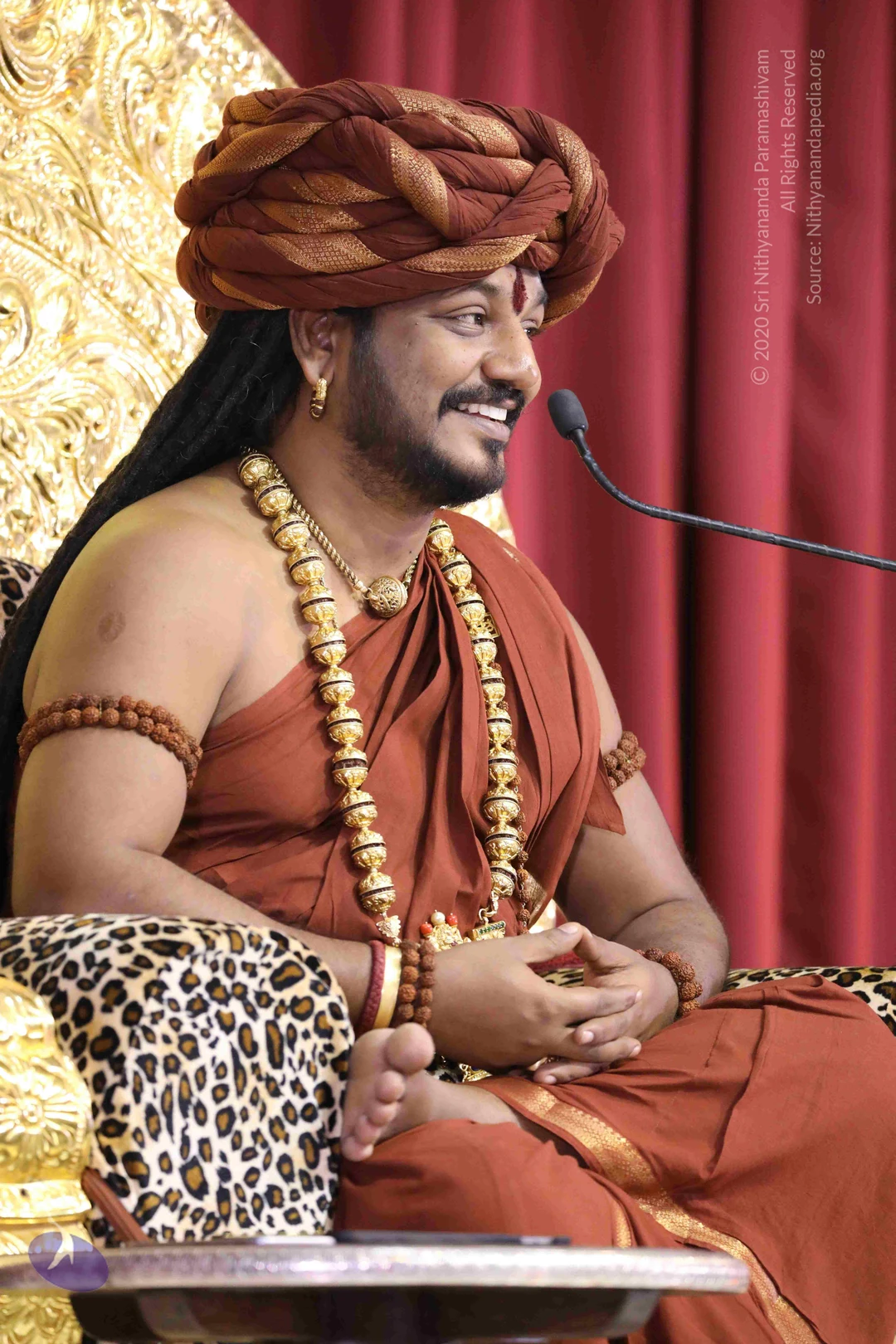
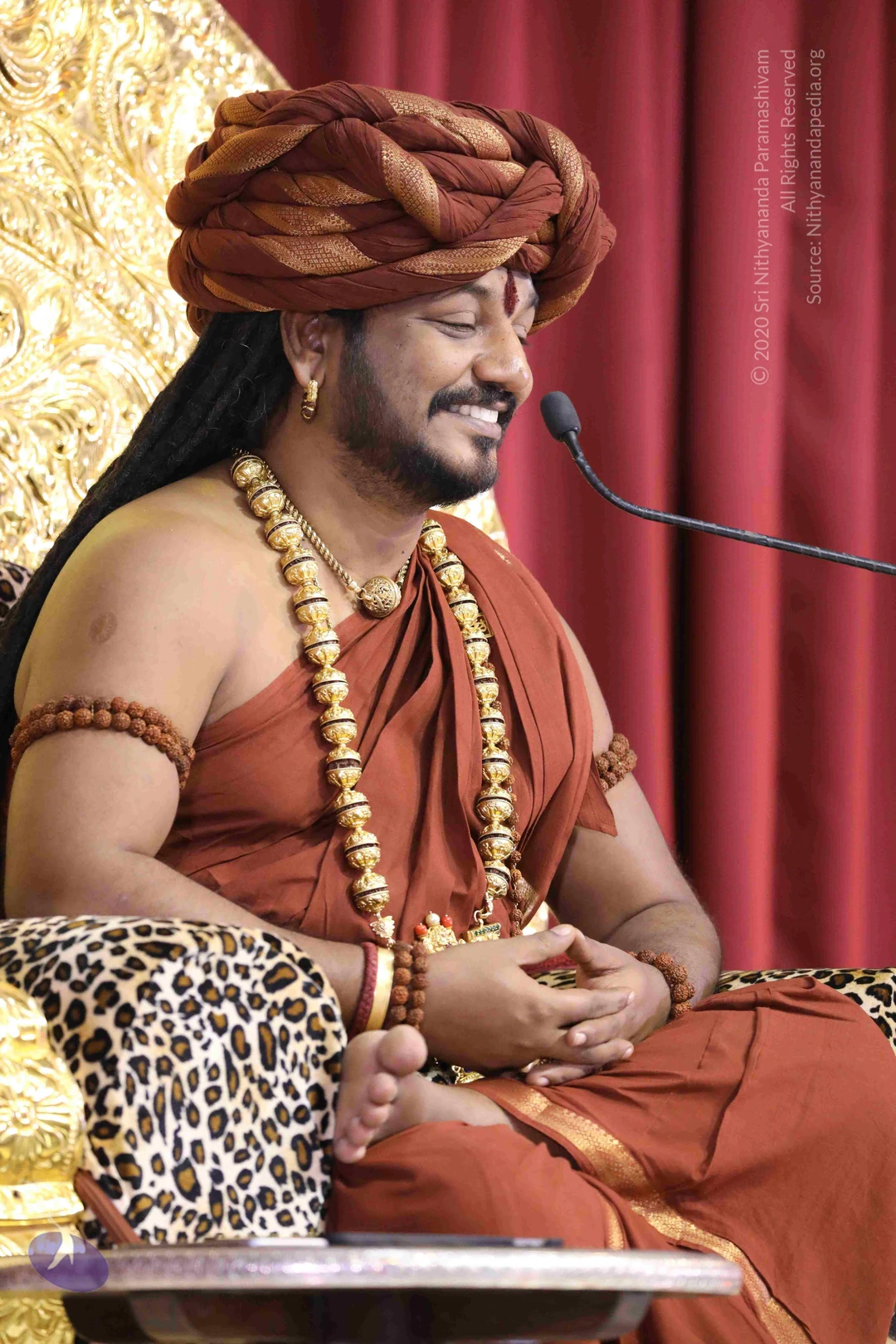
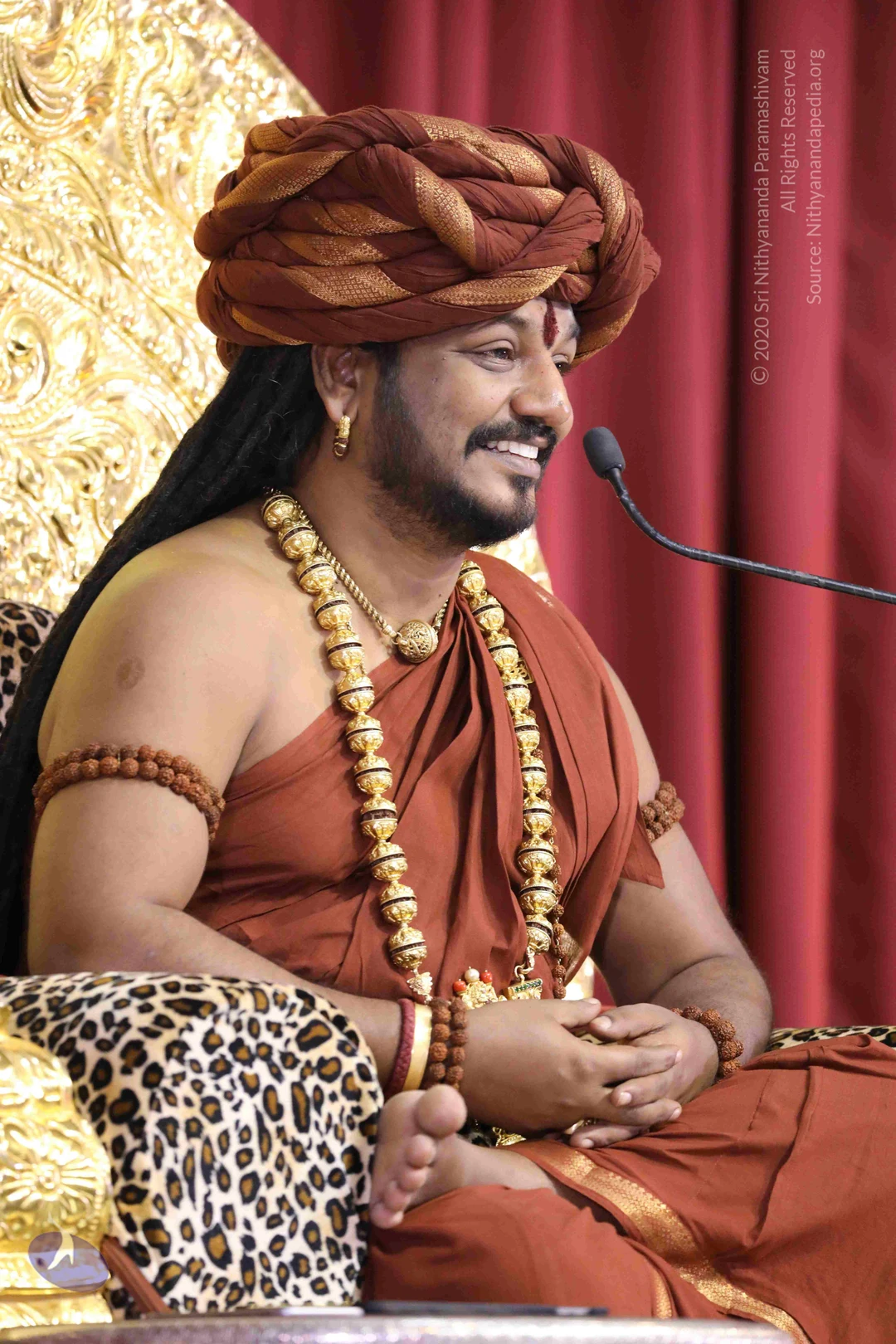
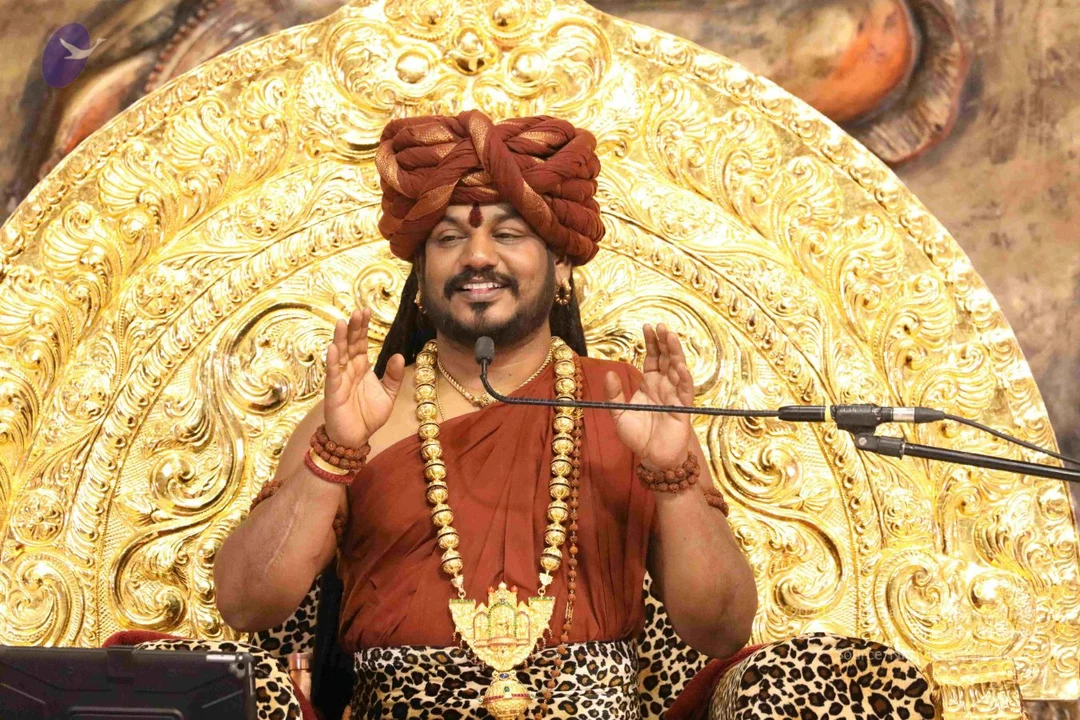
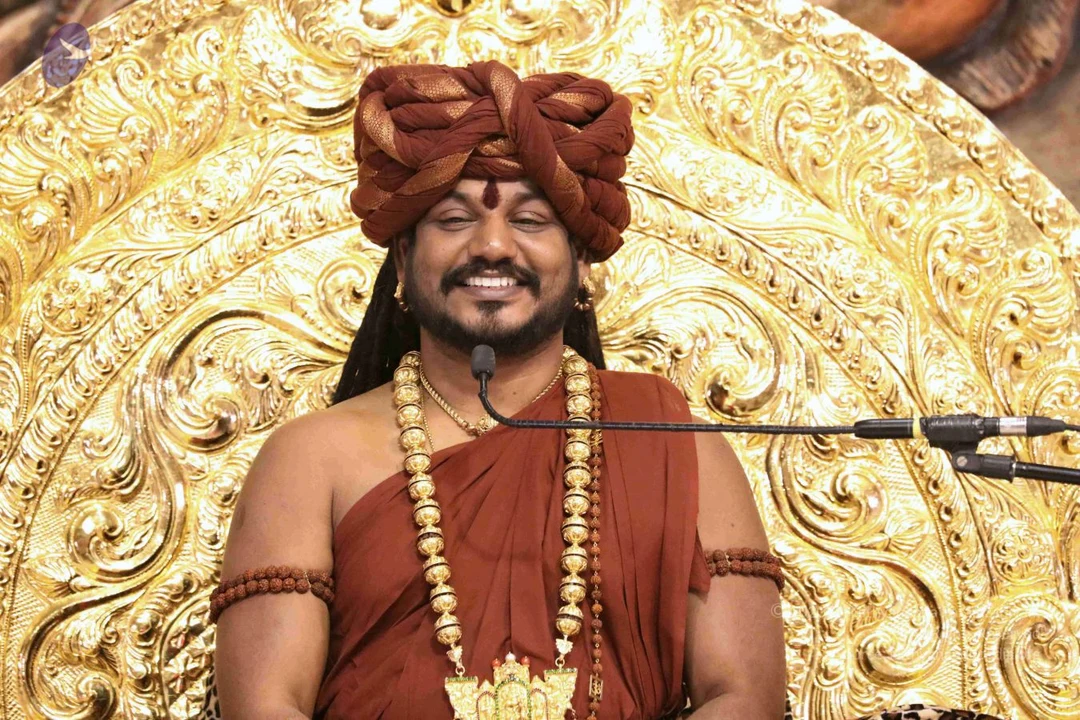
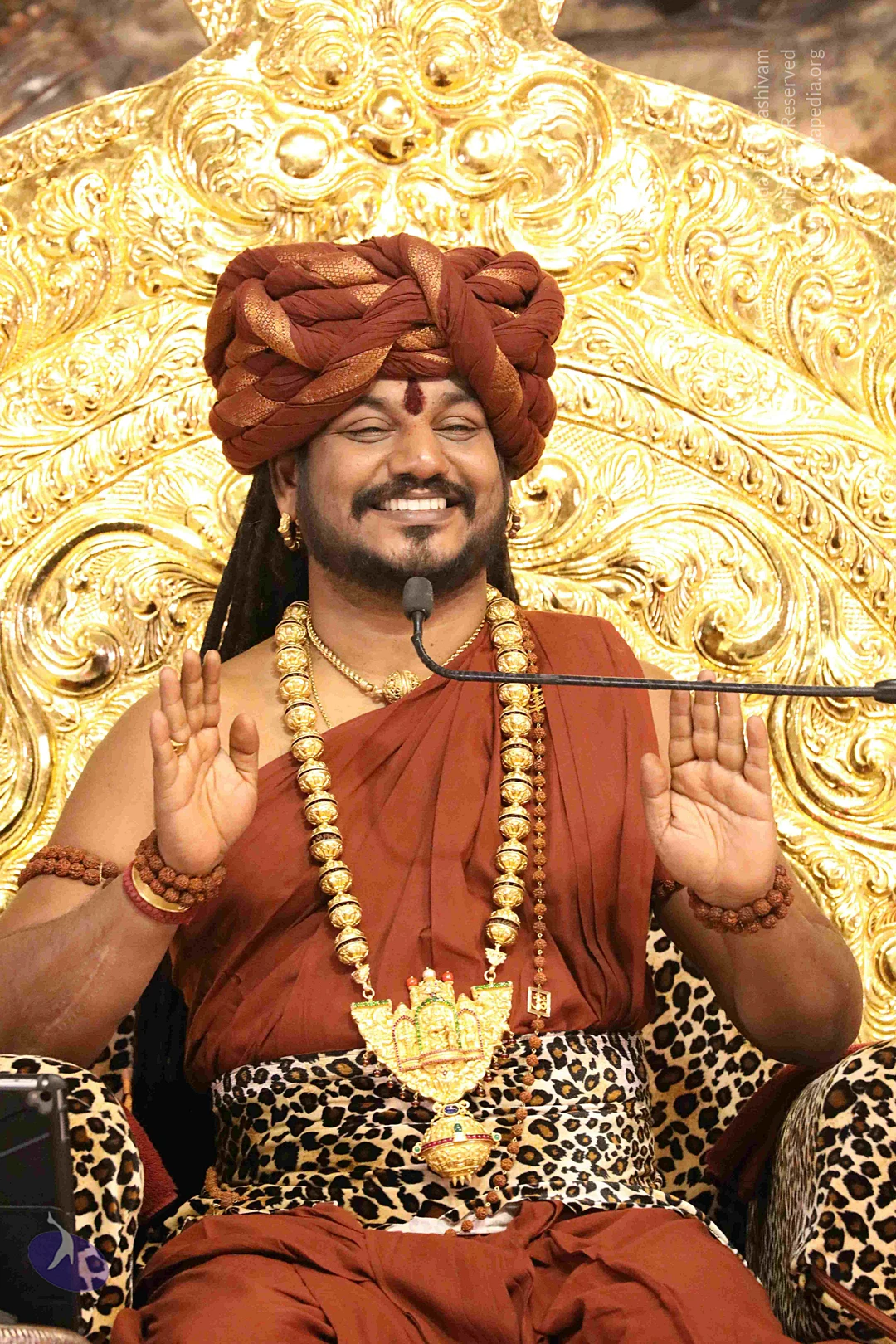
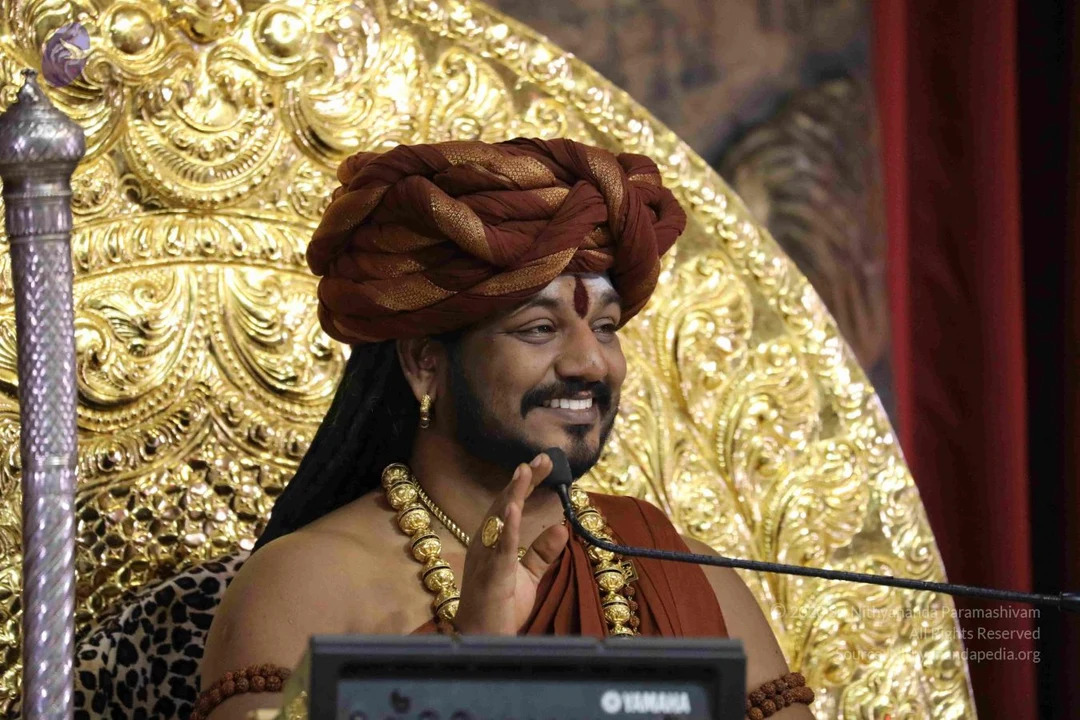
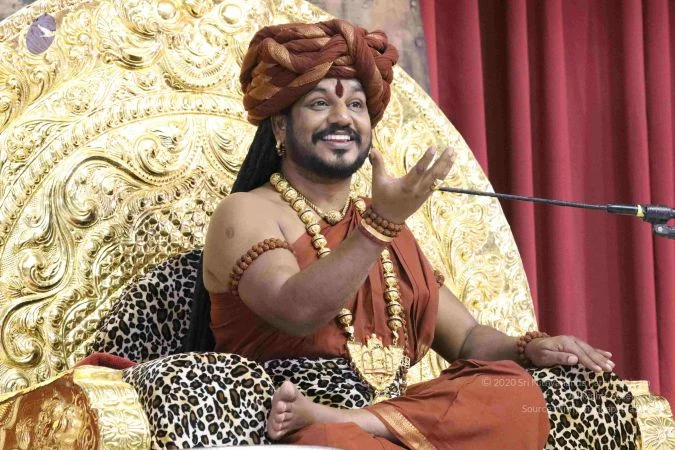
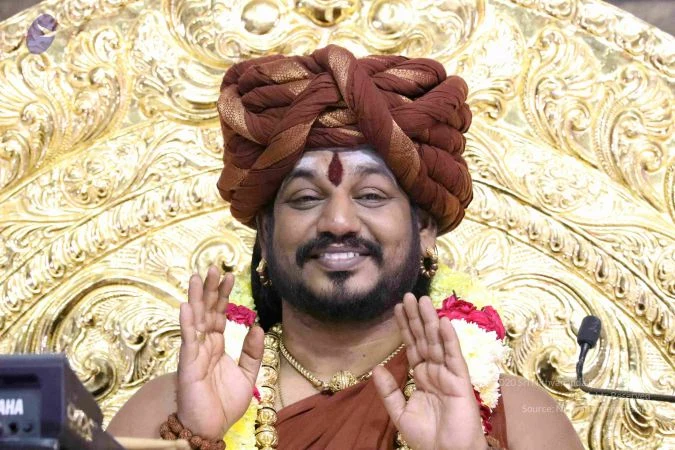
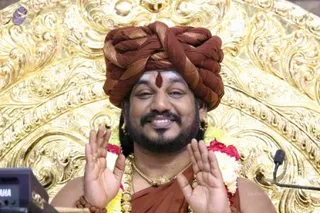
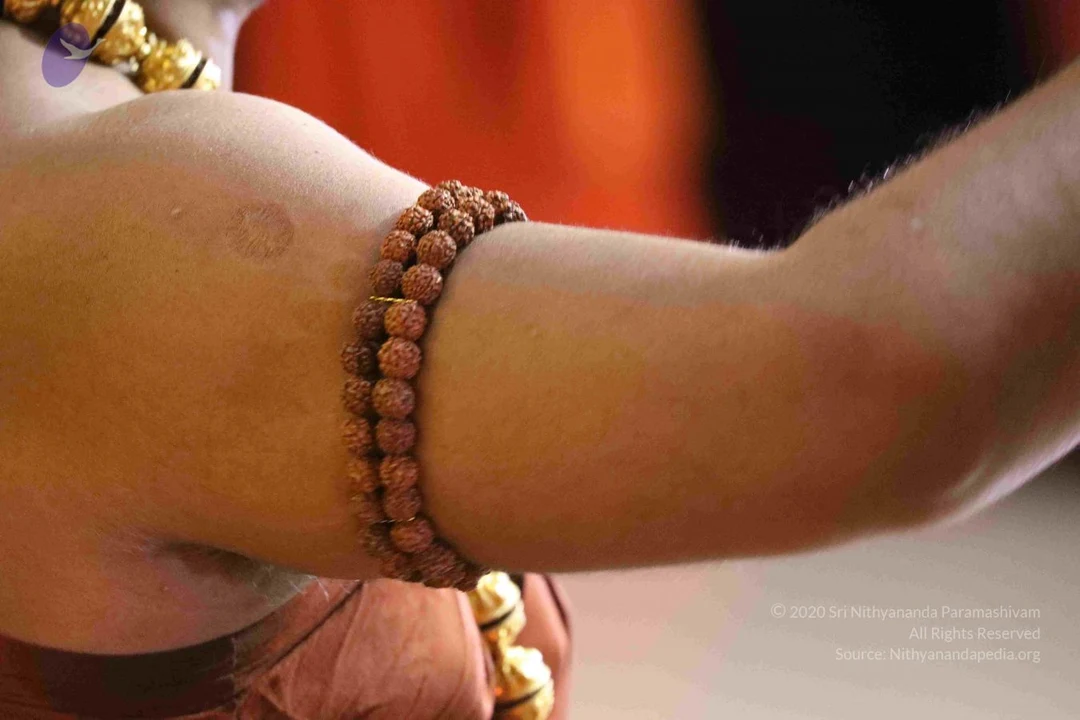
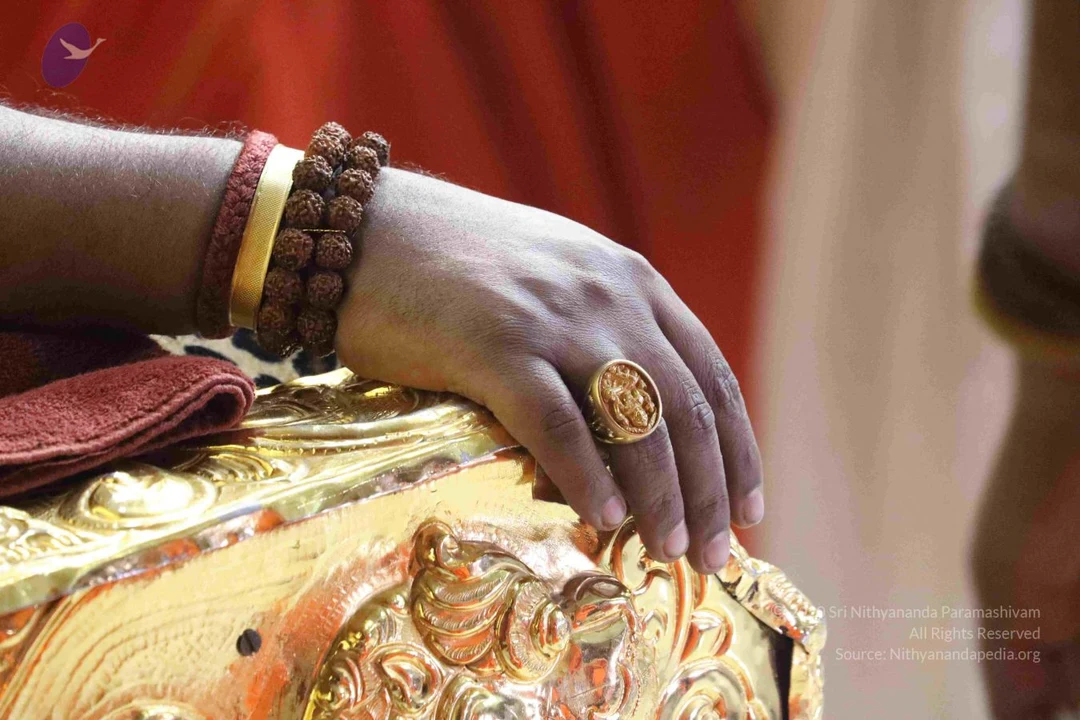
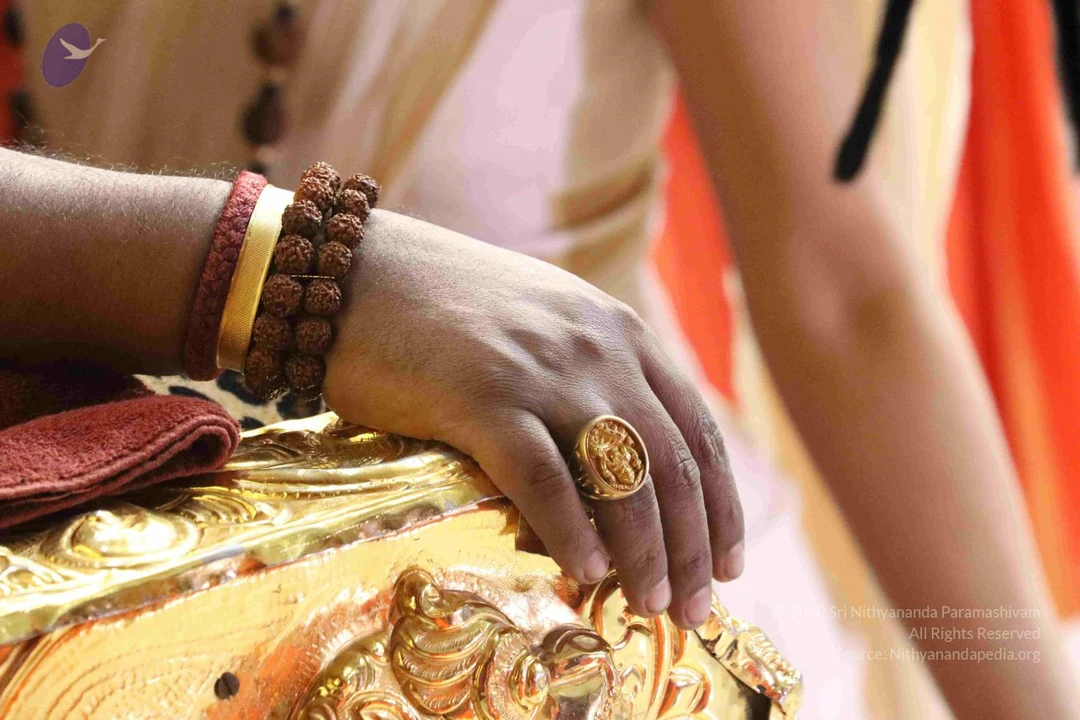
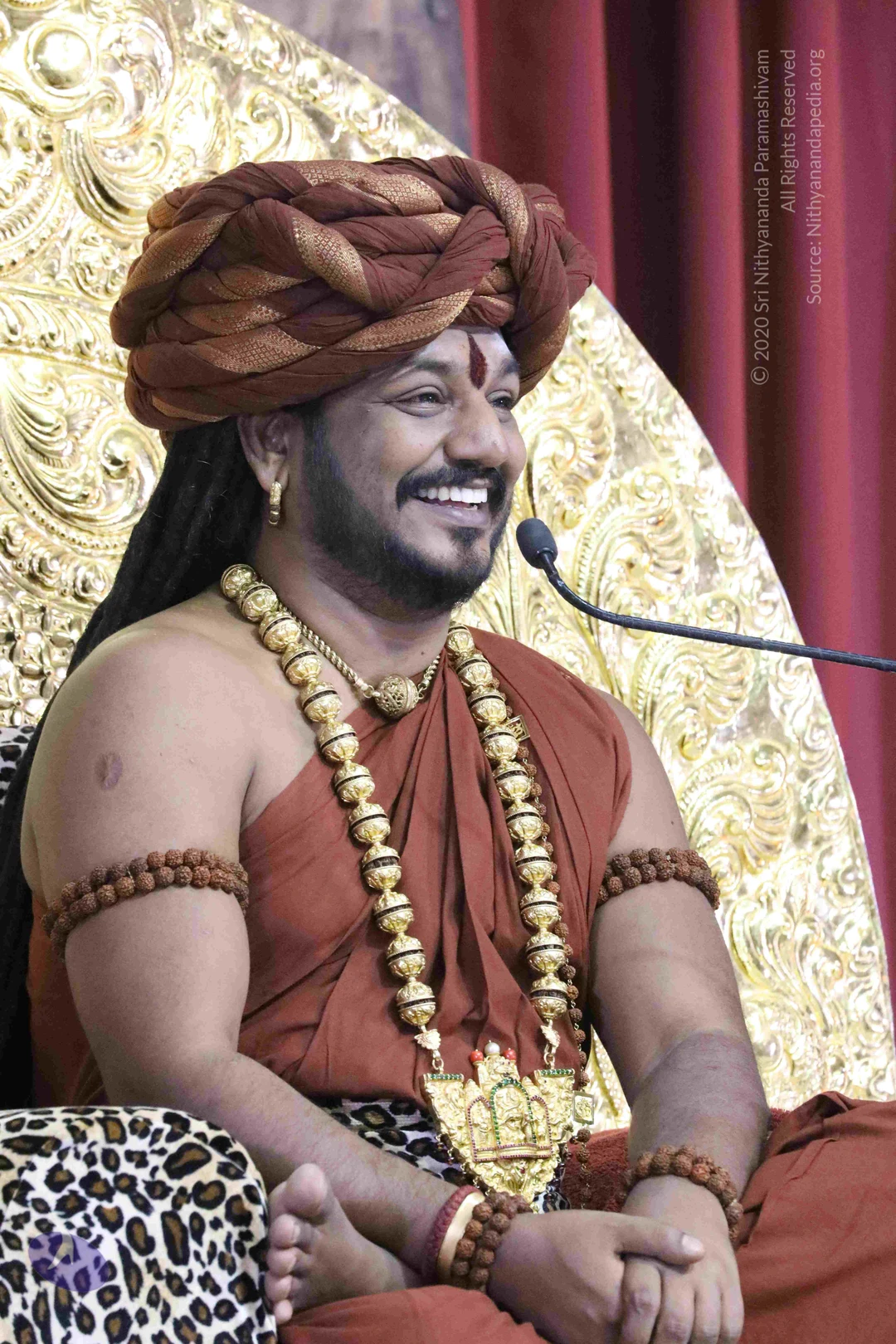
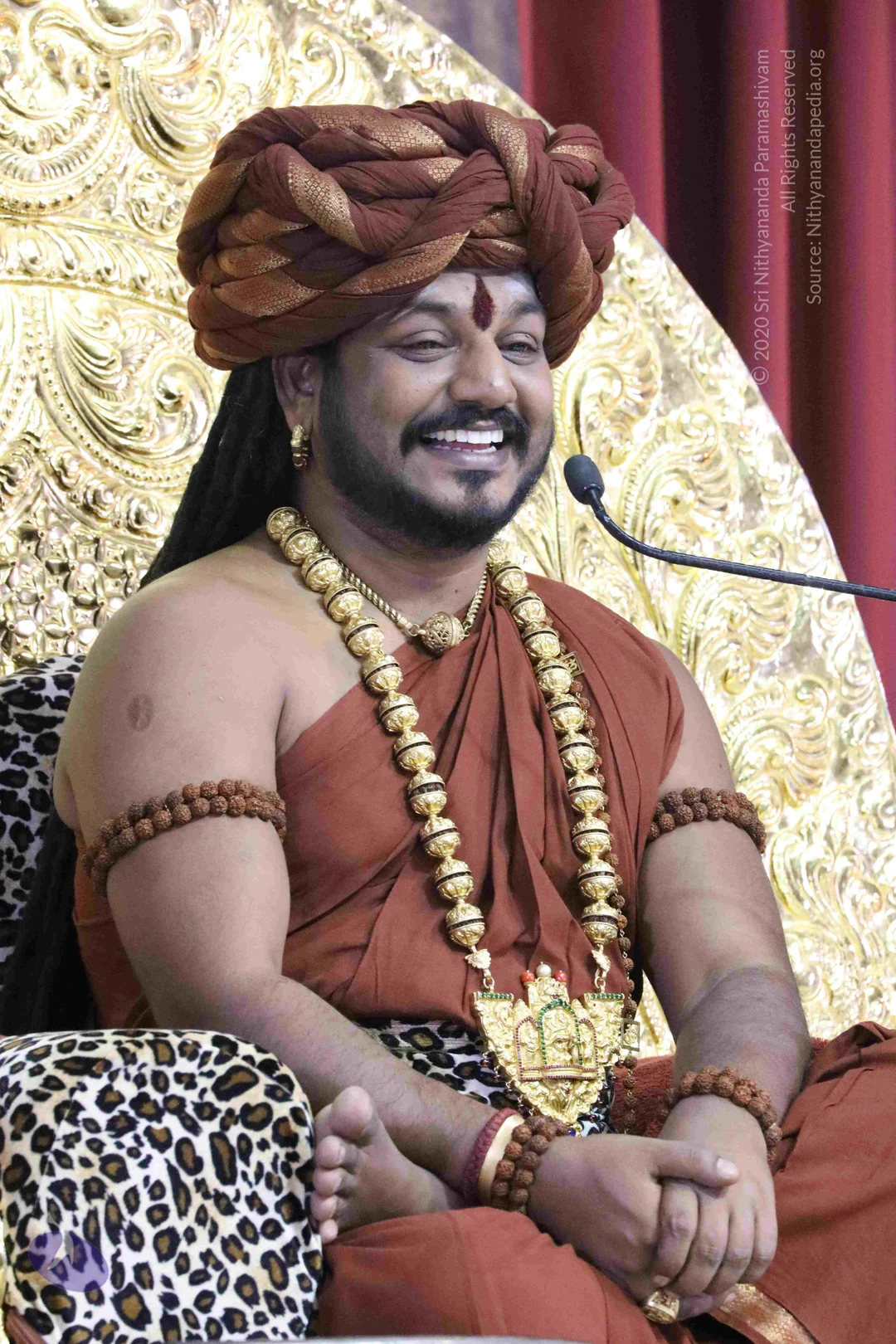
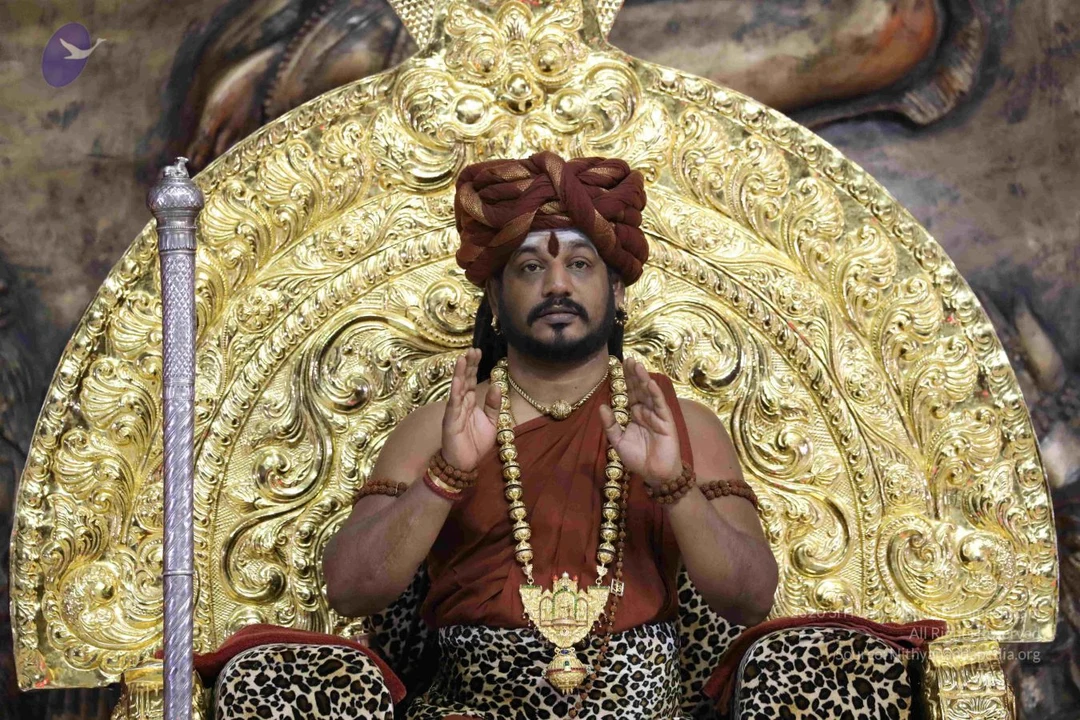
A man seated before a large ornate gold repoussé backdrop, with a deep red curtain behind him, speaking into a microphone on a stand. He wears a rust-red turban with a small red tilak on his forehead, a rust-red sleeveless garment, multiple gold beaded necklaces and a gold pendant, and rudraksha bracelets on his upper arms. He has long dark hair, a beard and moustache, and gold earrings, and he is smiling. A leopard-print cushion rests beside him on the throne-like seat. Appearance-based label: Swamiji (probable), seated as a speaker at a discourse, with long hair, rudraksha bracelets and gold beaded necklaces as the qualifying cues.A photograph of a smiling man seated cross-legged on an ornate gold throne with embossed floral and scroll carvings, with a leopard-print cushion beside him. He wears a rust-orange turban with a red tilak mark on his forehead, a rust-orange wrap over bare shoulders, a heavy gold necklace of bead-like links, rudraksha bracelets on his upper arms and wrists, and a gold chest pendant. A microphone on a stand and a deep red curtain stand to the right.A photograph of a smiling man seated before an ornate gold throne with intricate floral carving, speaking into a microphone and gesturing with his raised right hand. He wears a rust-red and gold patterned turban, a red and white tilak on his forehead, a saffron-orange garment, layered gold necklaces and gold earrings, and a leopard-print cloth on the seat. Rudraksha beads are visible on his arms. A Yamaha mixing console sits in front of him, and a red curtain hangs behind. Swamiji (probable): long dark hair, saffron clothing, ornate gold ornaments and rudraksha beads, seated on a throne during a discourse.

January 21 2018

Original wiki page
Contents

Title

Narration

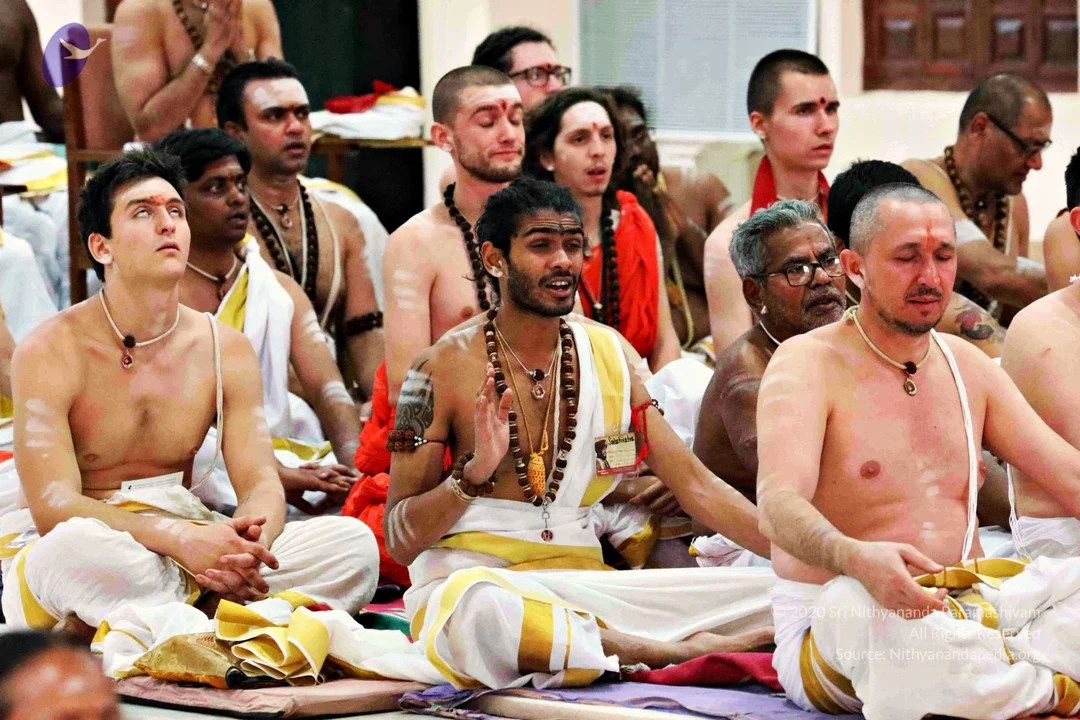
KAILASA's Department of Information Broadcasting, in collaboration with SHRIKAILASA Uniting Nations for Peacekeeping, aimed at eradicating violence and promoting peace, telecasted the Shiva Deeksha & Kalpataru Darshan conducted by The Supreme Pontiff of Hinduism, Jagatguru Mahasannidhanam, His Divine Holiness Bhagavan Nithyananda Paramashivam. His Divine Holiness (HDH) conducted Shiva Deeksha and Kalpataru Darshan. During Mahasadashivahom session further expanded on Infinite Dimension of Mahadeva, Length, Breadth and Depth of Consciousness and Maya.

Video - Infinite Dimension of Mahadeva || Part 1 || MSS

Transcript

(00:20)

Nithyanandeshwara Sadashiva Samarambham Nithyanandeshwari Adishakti Madhyamam Asmad Acharya Paryantam Vande Guru Paramparam

(01:05)

I welcome all of you with My love and blessings... What a Mahasadashivoham! (Swamiji laughing) What a program! I don't know whether all of you have recovered or not, still I am recovering, I am not yet recovered! (Swamiji laughing) I am.. I am still recovering. I went to Tiruvannamalai for few days of recovery only.. and not just physical, even settling into Samadhi and the whole thing, and..mh See, in Agama, Mahadeva gives four different… I should say, four different components of power manifestation.

(02:17)

So manifesting the state of Mahadeva, operating in the space of Mahadeva, and manifesting the powers of Mahadeva. Please understand, whenever I use the word “Mahadeva”, “Shiva”, “Sadashiva”, “Parashiva”, “Mahasadashiva”, all I mean the same, the ultimate Mahasadashiva. So do not have any confusion. When I use the word of Mahadeva, I am talking about something else, or somebody else, huh.

(02:57)

So, manifesting the state of Mahadeva, space of, operating in the space of Mahadeva, and manifesting the powers of Mahadeva. So first thing, I want to tell you, try your best everyday to catch up with the, at least English Satsang. Actually for Tamil Satsang I don’t invite people. It is so sweet, anybody who knows Tamil, simply come fall. (Swamiji laughing) And Tamil Satsang I don’t invite people. If you know only English, at least catch up with English Satsang everyday, because everyday I am going to support you in manifesting one power.

(03:52)

And, I’ll also give you more and more of shaastra pramana. See, all the power manifestation, we have shaastra pramana; like yoga, how all the thousand asanas, actually you all did only 108, because this time we had only that much time. But actually around 960 asanas Mahadeva talks about, for all 960 we have the original shaastra pramana. And we are compiling it, 108 first we released. Same way, all the 463 powers, we have Mahadeva’s original words. So everyday I will give you all the original verses and instructions, tips from Apta pramana, earlier masters, who manifested all these powers and great Enlightenment science, and My own Atma pramana.

(04:59)

I think now I also have a good vision team evolving, so even if I go for vacation one or, few days, or recovery, I think I will be able to continue with my satsang. That will not be a thing. Even if I don’t, I am not able to maintain the timing. I will just video record with Adheenavasi’s and then upload it for you guys, you guys can watch, huh. I will, I will try my best to make Myself available. And.. I also want to tell you guys, body has completely recouped. I’m, I’m completely fine and all the vitals are normal and, everything is very balanced, settled, settled and I’m.. I am able to have My regular routine without any, any difficulty. It’s, it’s smoothly going so…

(06:16)

Today I will share something about this, infinite dimensions of Mahadeva. I think that was one of the biggest spiritual joke I ever played. Asking you guys to do calculation on… Mahadeva’s dimension! (Swamiji laughing) No, to make you understand, you are, see unfortunately you strongly believe your whole life is number. For example, if you just know, how many hanging clothes are hanging? If you just know 21, and you think you know, you know everything about that hanging cloth, and you move to the next. “Oh, 21 hanging cloths are there.” “And 40 windows are there.” “And 35 doors are there.” “And 200 Adheenavasi’s are sitting.” If you just know the number, you have a false completion, you know everything about it.

(07:23)

Understand, just knowing the logical dimension of the existence, and satisfying yourself, without getting into the depth of the existence is superficial materialistic life. Just because you know 200 adheenanvasis are sitting, you think you know everything about adheenavasis. No! Each one of them are Mahasadashiva. You need your whole life to explore them.

(08:01)

Just because you know 40 hanging clothes are there, you think you know everything about the hanging clothes combined, no. There is so much of thread, weaving, coloring, stitching, and hanging is involved. Understand, Maya means, looking only the logic dimension, and not looking at the depth of the life but continue to behave and assume as if you know everything, is Maya. Understand, I am defining Maya. I think for this school definitions, explanations, understandings, for this only you need to come to this continuous education program. Maya means, just by knowing the numbers superficially, but believing you know everything.

(09:14)

How many of you are able to understand you do this in your life all the time? Whether in your business, or in your relationships, or in your decision making, you go on be doing this stupidity. I want to expose that to you, that is why that day made you just go crazy with number!

(09:48)

How can you number the dimensions, multi-dimensions of the Mahadeva? All your numbering was wrong. All your numbering is wrong. First of all, if you understand... everything which is delivered by the union of length and breadth, also becomes independent entities. So there all also need to be added, when you go to the depth. I think many people are feeling, “that time itself we got enough confused, let us not touch that.”

(10:57)

No little bit playing with that you will understand how superficially we are looking at the life. How, see, whole life is nothing but, not coming to conclusions immediately. Anybody, who doesn’t come to conclusion immediately and who don’t get agitated immediately will be successful. I am not saying don’t take decisions at all, postpone it for eternity, NO! All I am saying is, first push will always be physical in you. Reject that.

(11:53)

Why do you think our Gods, we are all given a ferocious form. Kali, Kalabhairava, very ferocious forms. The first response seeing that is fear. Push that away. Your life will be experienced... All first response, I tell you, who feels Kali is beautiful, Kalabhairava is romantic, is a person who knows life... If you feel Kali is so beautiful, Kalabhairava is so romantic, it means you pushed the first physical response and started looking deeper.

(12:48)

Understand, all major Hindu temple Deities, will be very illogical. Ten times bigger face, only two time proportion of that size hands and legs. If you see Ujjaini Kalabhairava, only big face. If you see, Kalighat Kali, only big tongue. You need to push the first response away, then see the Deity, Goddess, inside. Teaching you to get into that depth, is the reason why Deities are kept in a way initially you cannot appreciate as a first response. Your first response cannot be appreciation. It will only be, “What it is this?” Puri Jagannath, Even the concept of Shivalinga! Puri Jagannath, concept of Shivalinga, go to any Shiva temple. If you go to Thiruvarur, the snake hole, that only is the Deity. Thiruvetriyur, same way, snake hole is the Deity. Many places.

(14:23)

In Kathirkamam, the screen covering the Garbha Mandir is the Deity. So, getting into the depth, not deciding superficially in the length. Listen, when I say do not decide immediately, I am not saying never decide. I am only saying, do not decide superficially. Whether you say ‘yes’ or ‘no’. Just seeing the length dimension, it will always be wrong. Whether you say ‘yes’ or ‘no’, getting into the depth, it will always be right, that’s all. Right is not ‘yes’ or ‘no’, right is whether it is from length or depth.

(15:35)

People asks Me, “Is Sannyas right for me? Or married life right for me”. I say I cannot answer this question. If you just see, “Wow, free food and free shelter”, only length dimension and get into sannyas, it’s wrong for you. (Swamiji laughing). And if you see “Oh God, I have to do puja, I have to wear only this color cloth, no other cloth.” No, then again it is wrong for you, because it is superficial ‘yes’ or ‘no’. Only from length dimension, any ‘yes’ or ‘no’ is wrong. From depth dimension, ‘yes’ or ‘no’, both are right. From the depth, I think, “What is sannyas?”

(16:36)

I tell you… See, Consciousness is your portion of Sadashiva, like how your home is your land in this planet Earth. Consciousness is your portion of Mahadeva. That Consciousness going on expanding, whatever it feels as it, if that Consciousness feels, “I am a human being”, it produces more human beings. It works in that line. If that Consciousness feels, “I am a doctor” it starts producing more doctors. If that Consciousness feels, “I am a confused person,” it produces more confused people, like Sigmund Freud. Whatever that Consciousness feels as itself, it starts working on expansion, because Universe is constantly expanding, this is a fundamental principle. Fundamental principle, “Ekoham Bahusya”.

(18:36)

Cosmos is continuously expanding, it is fundamental principle. So, your part of the Cosmos also increases, expands, as what you identify yourself. Whether it is universe, or your portion of universe, it goes on expanding. Now, increasing the frequency of your Consciousness is only My job. Means, if you’re owning 10 acre home, making it into a million acre. If you’re owning 3-state frequency Consciousness, 3-state means, waking, dreaming, deep sleep; pulling and pushing, expanding it into 25 states, that is all is My job. That’s all I’m doing through initiation, power manifestation, aushadha, everything.

(20:06)

Narration

The Supreme Pontiff of Hinduism, Jagatguru Mahasannidhanam, His Divine Holiness, Bhagavan Nithyananda Paramashivam, is the visionary through whom this whole revival of KAILASA is made possible. His Divine Holiness, in a 2 part MSS Series titled: “Infinite Dimension of Mahadeva,” expanded on Length, Breadth and Depth of Consciousness and Maya. He also arrived in His home town of Thiruvannamalai to celebrate the Hindu festival of Pongal and to go on Girivalam around the sacred Arunachala showering blessings on everyone around the way. The Gates of the Aadheenman also were opened offering Anna Daan, free, organic, Sattvic food, to all those participating in this walk.

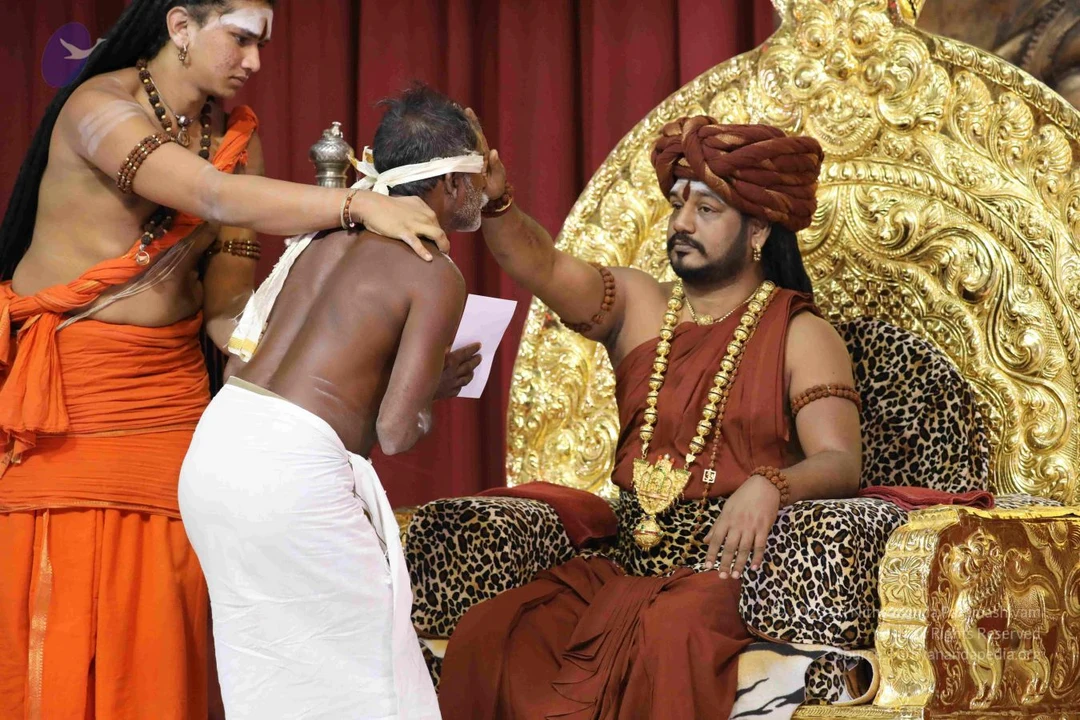
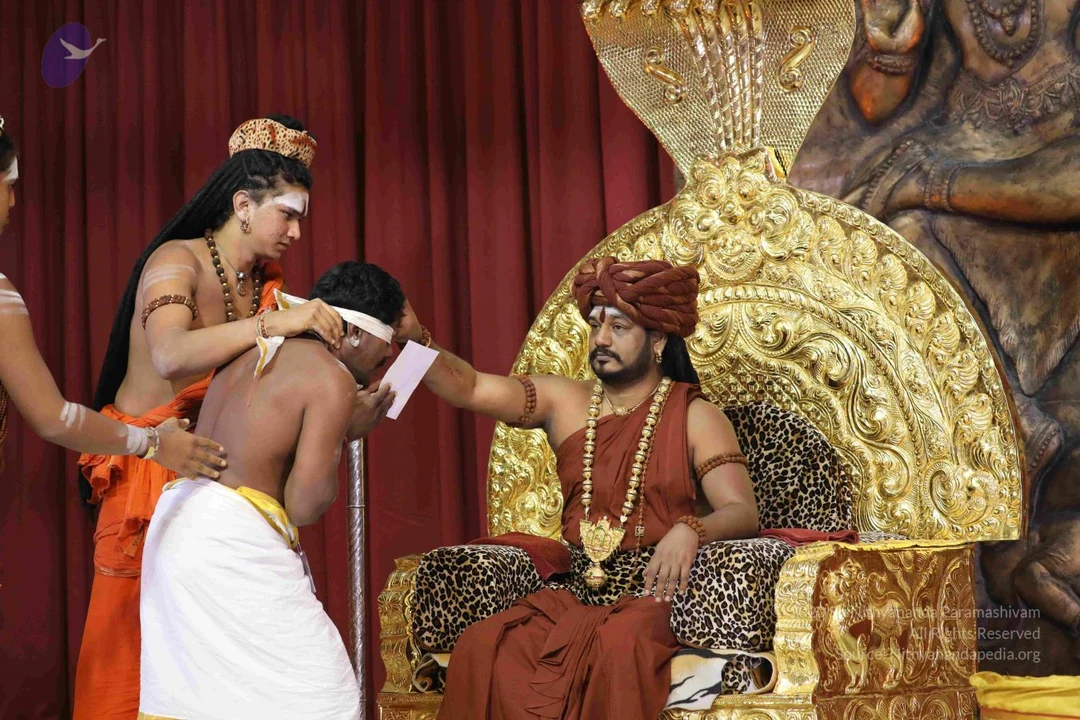
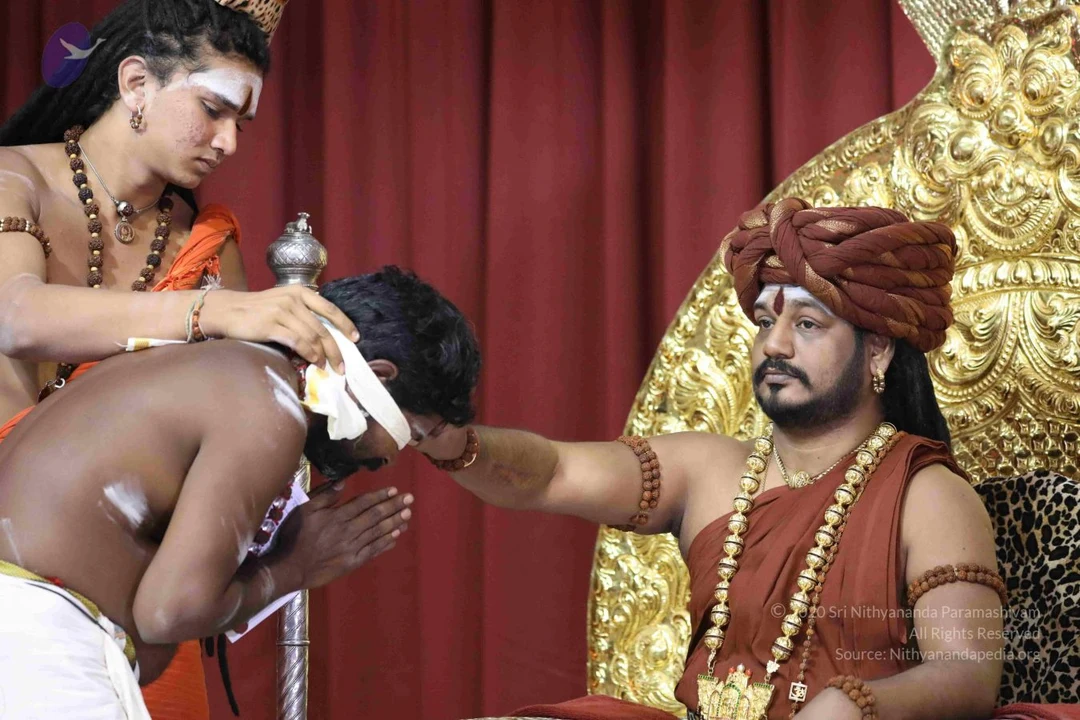
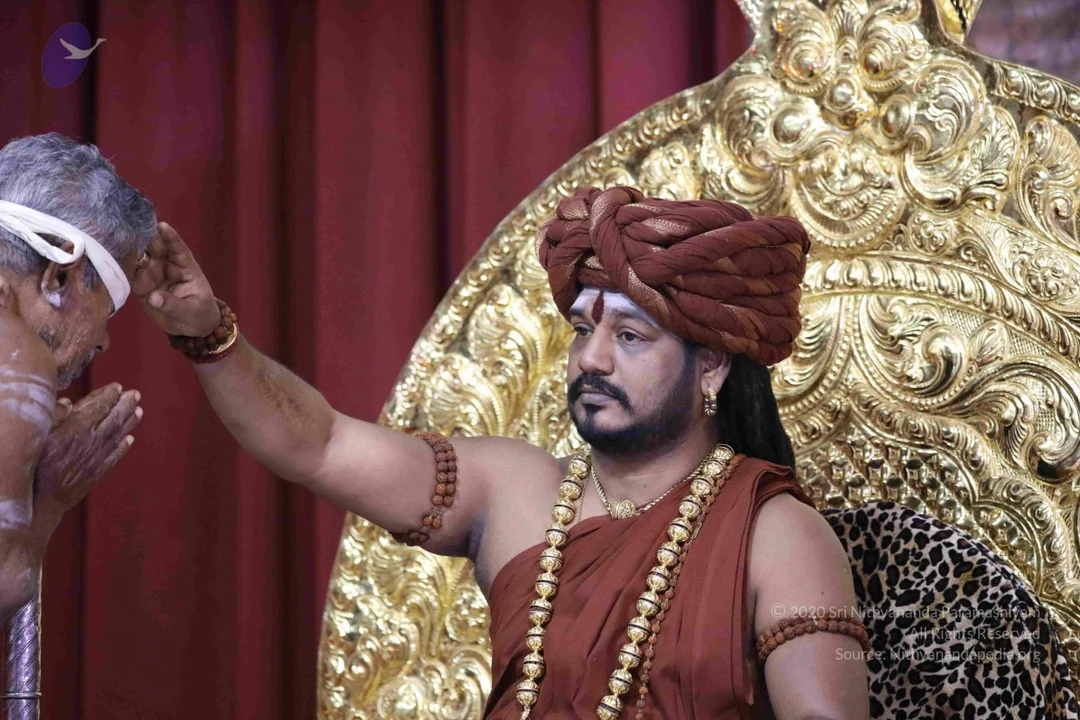
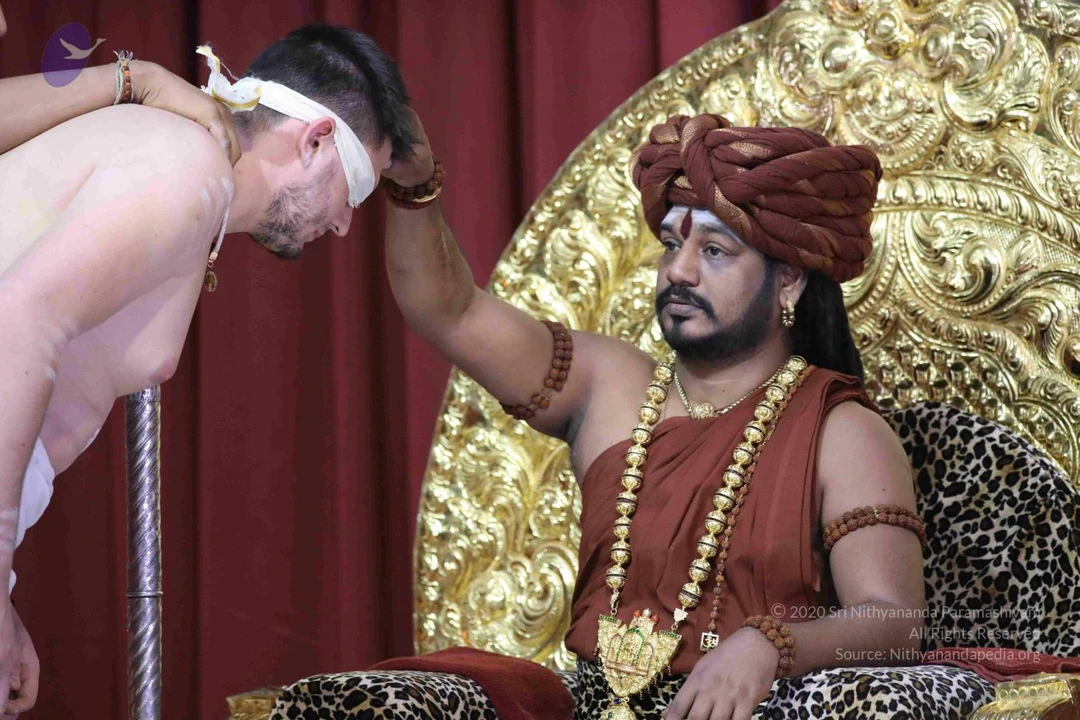
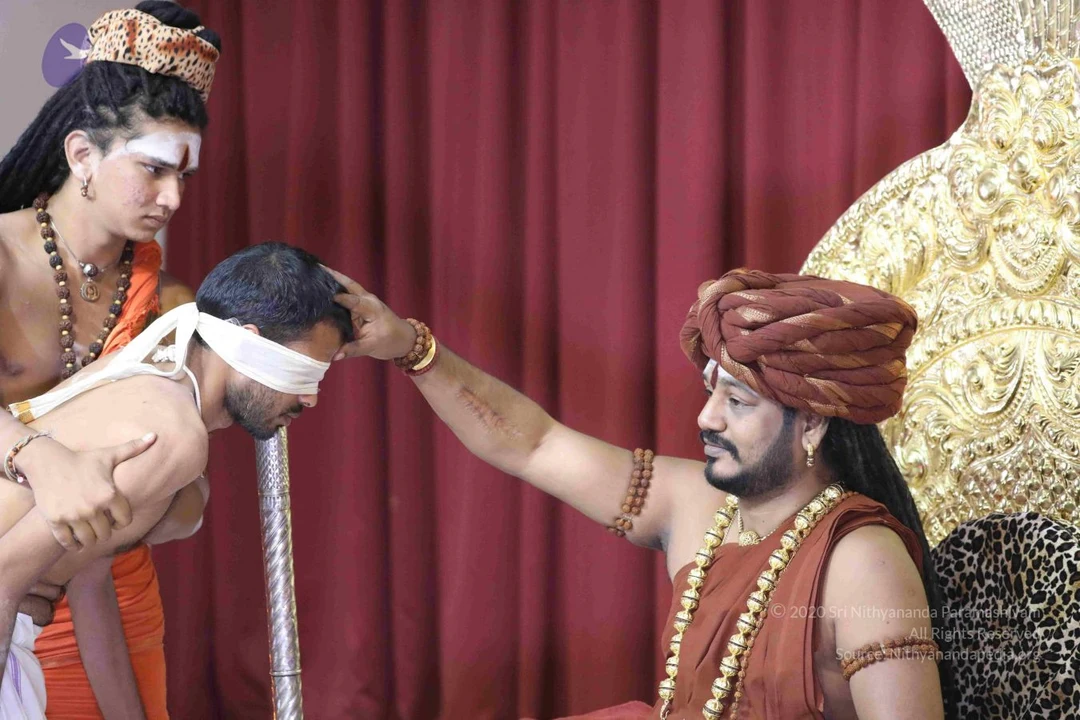
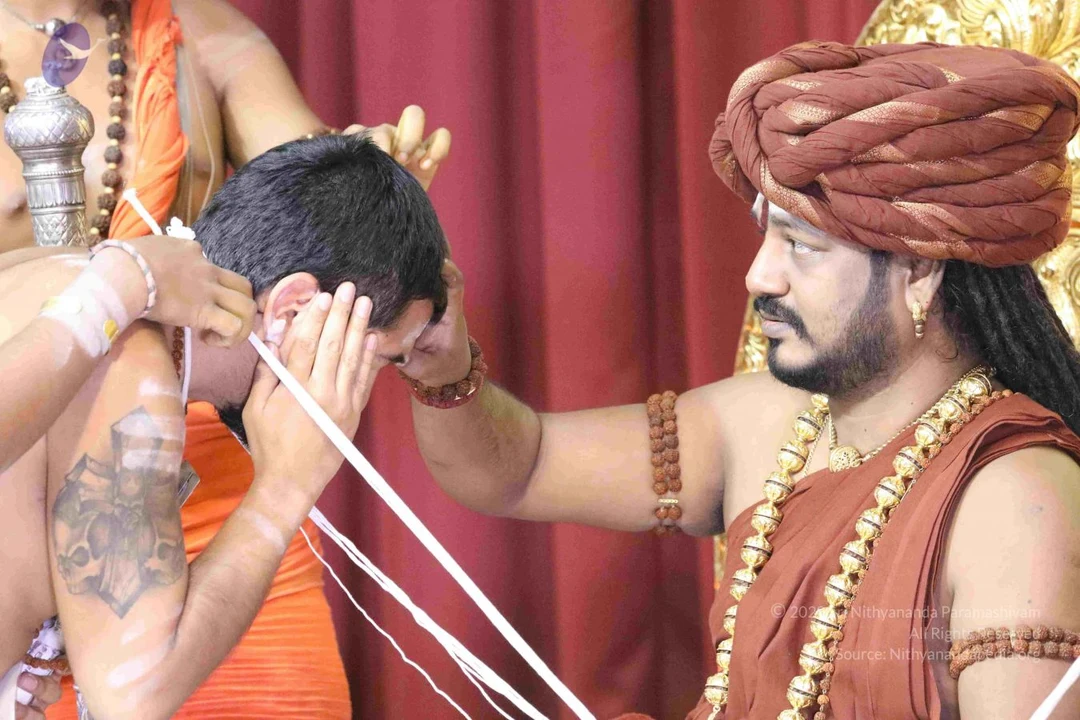
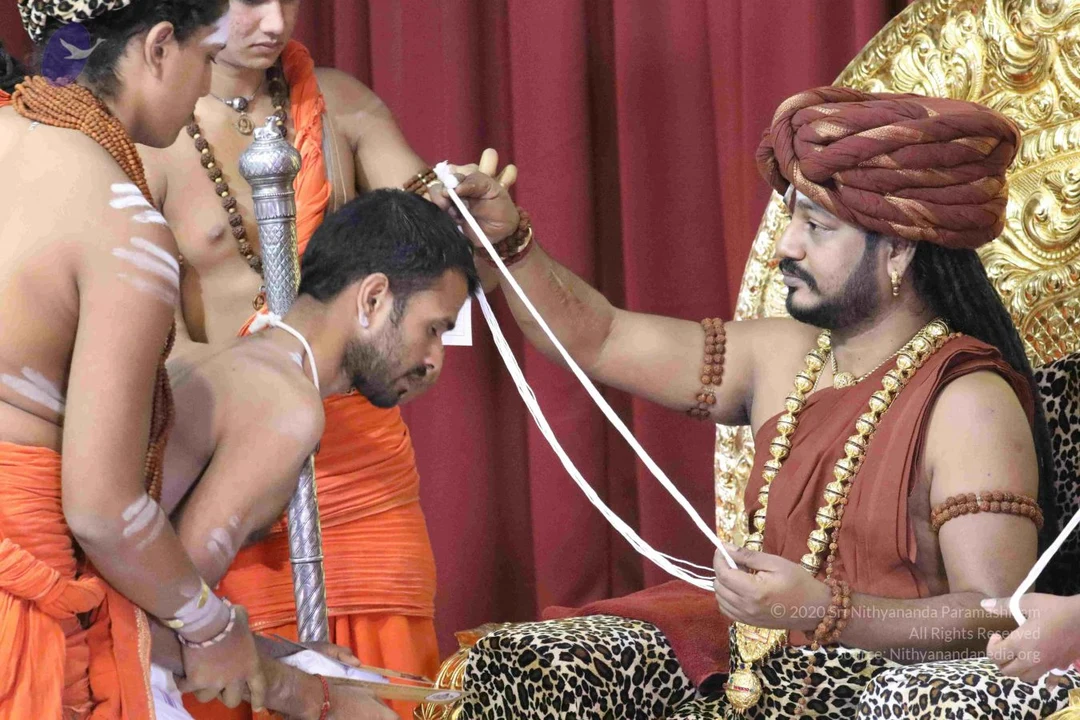
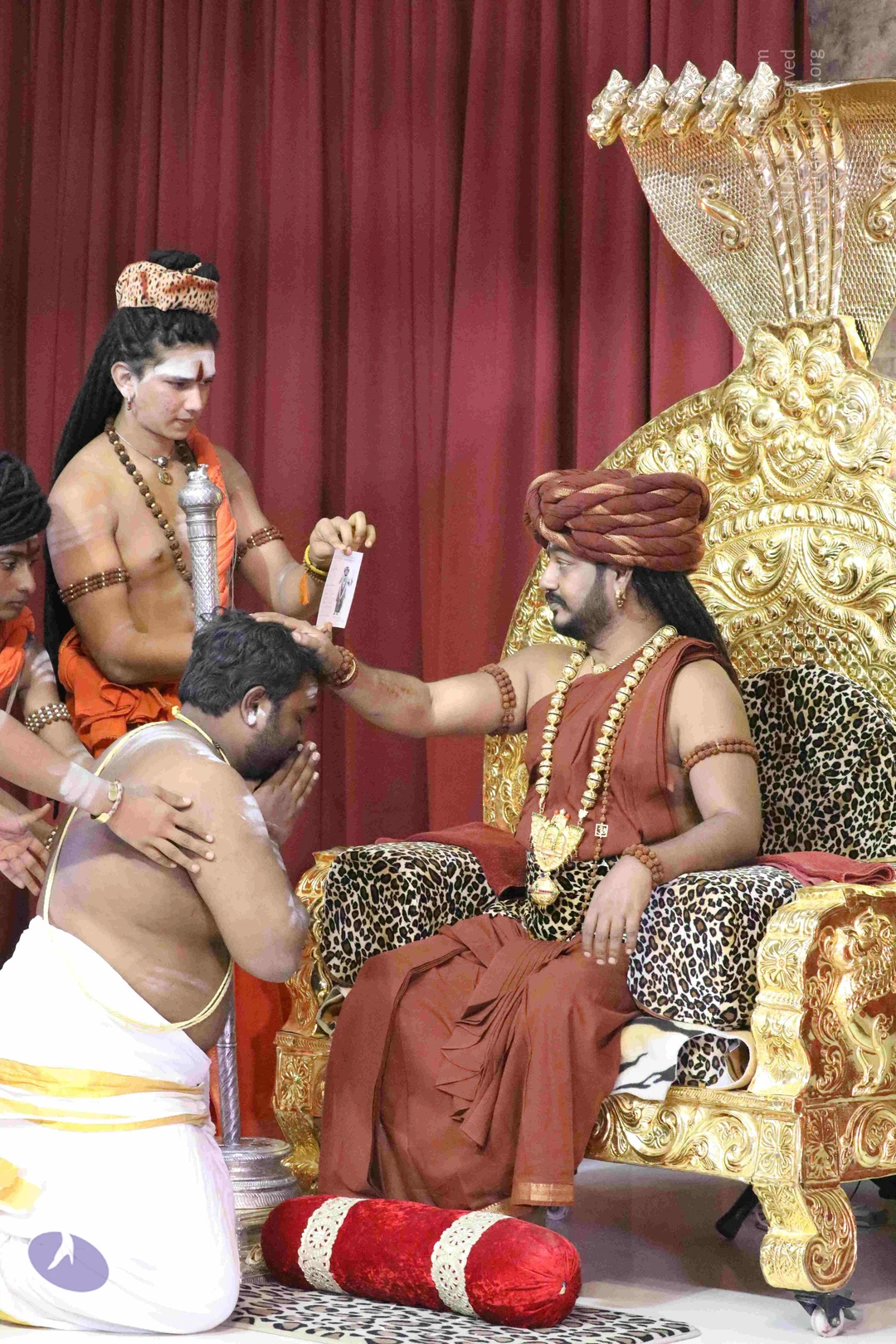
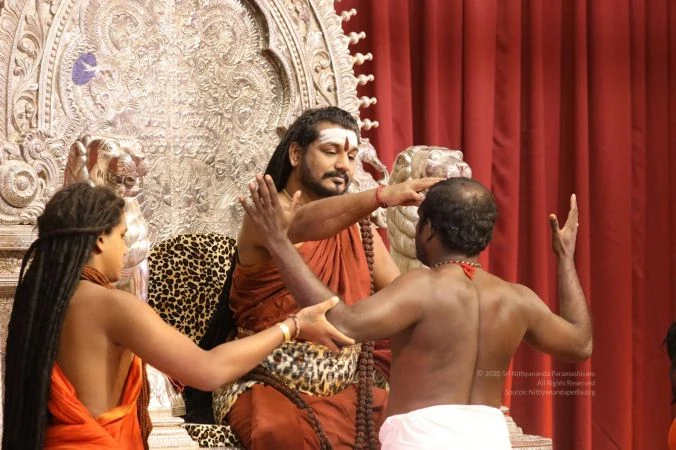
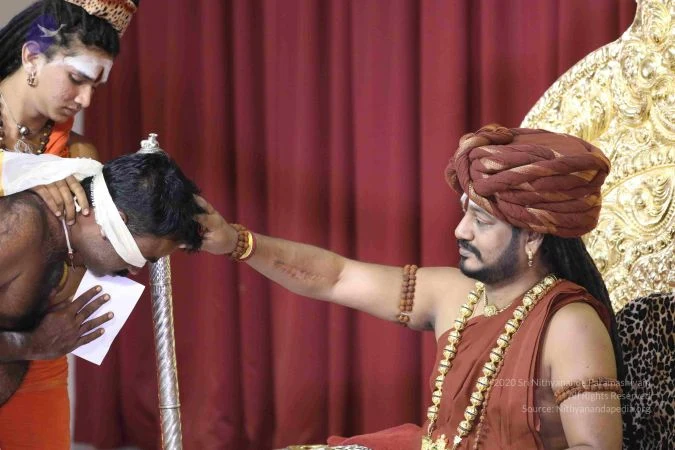
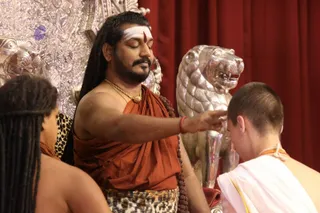
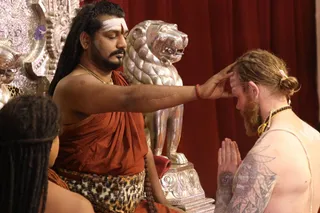
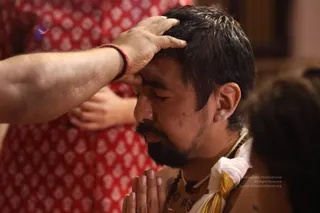
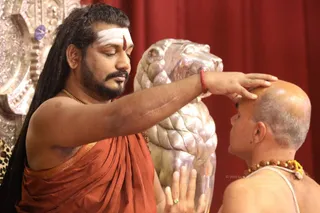
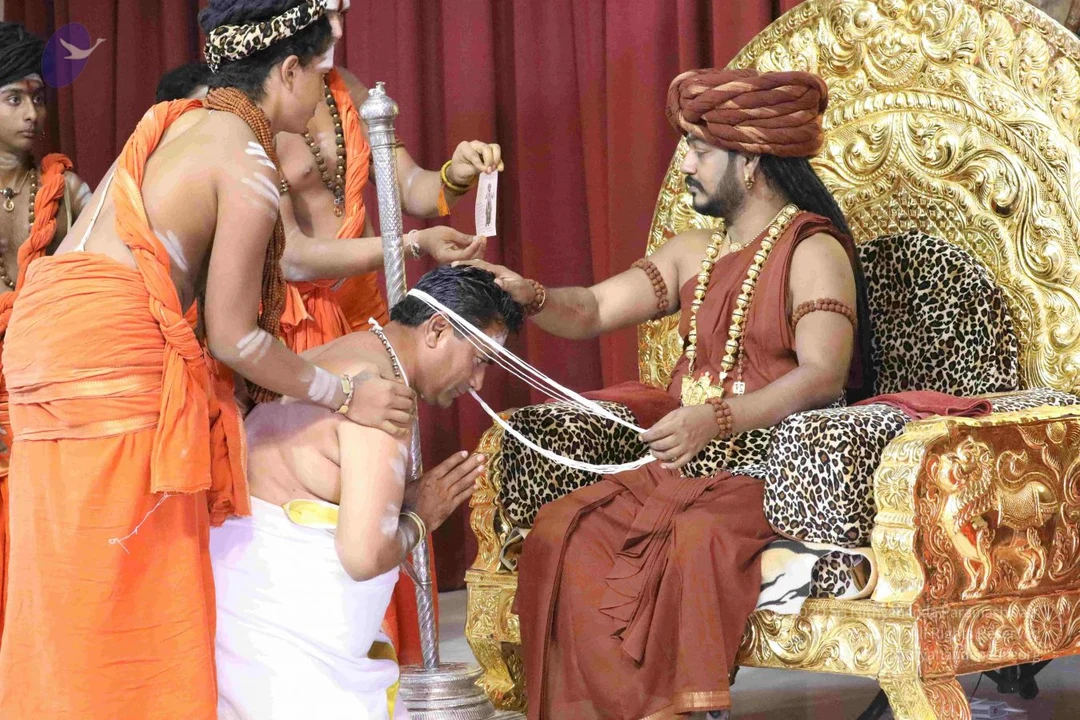
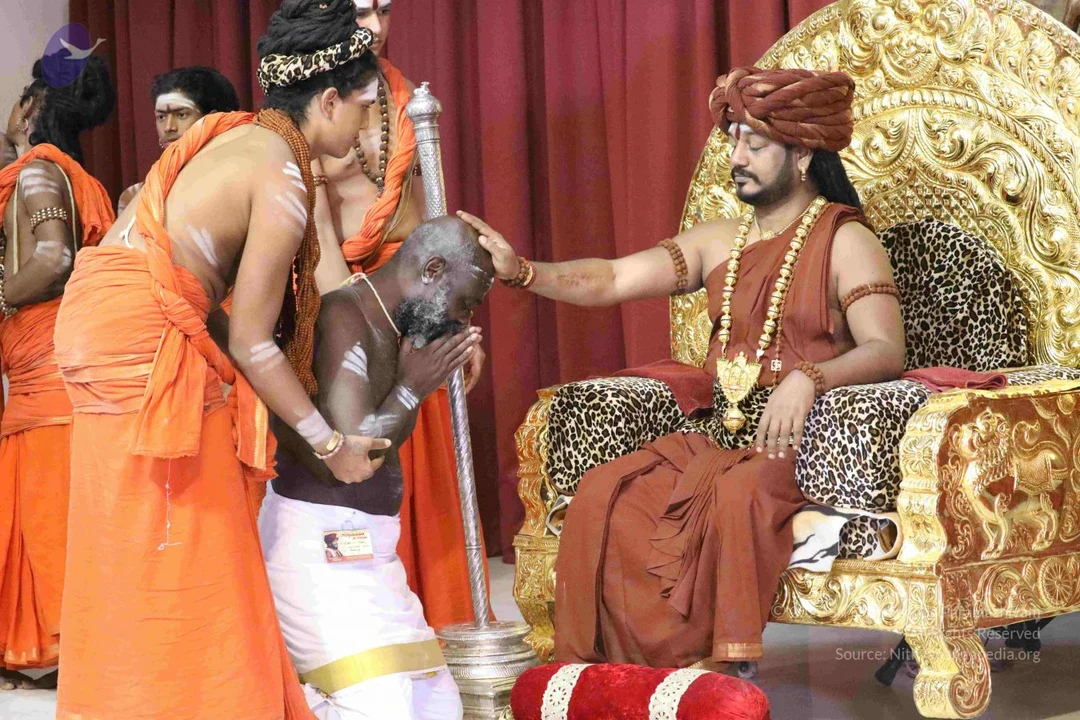
His Divine Holiness initiated, on this day, hundreds of delegates of the Sadashivatva Program into Healer’s Initiation and Shiva Deeksha and a gave Kalpataru Darshan at the Bengaluru Aadheenam.

Announcements of the following upcoming programs were shared: Inner Awakening, Mahasadashivaratri, Kalpataru and Mahasadashivoham.

Video - Infinite Dimension of Mahadeva || Part 2 || MSS

Transcript

(00:15)

Everything I am doing, is just to increase the frequency of your consciousness. During the power manifestation, I will give you a simple tips for power manifestation. Just sit, declare the Mahavakya, the truth you need to de declaring, like the truths I gave, “the static matter, dynamic existence, dynamic activity, sorry, dynamic activity and strategic existence is one and the same”. Declare that and then just go to your third eye or Ananda Gandha, remember; the Darshan is the best way to remember, that’s why the Darshans are given with the, all this music, light, the light and sound effect. Just close your eyes and remember the Darshans you had, any one Darshan, just replay. It’s already recorded in your system. Just replay any one Darshan you had in Mahasadashivoham. I don’t know how many Darshans you had, any one Darshan, just replay. shhhhhhhhhhhhh, that song and light and show, the whole thing, that’s all, for few minutes then give the instruction now. Simply the matter will obey, matter will do, what you ask it to do. Manifest powers. I am seeing lot of people uploading videos, I think Ravi’s video also I saw, he moves cashew nut, biscuit, pen. No, I think, you see, it will bring a lot of healing inside you. You will start seeing you, newly. You will start seeing you, newly. So much of confidence on you will happen. Understand, these are not psychic powers, you see. Somebody told me: ”Oh, with some other technique, I‘ve been, I have been taught the same power and this same, this kind of moving things.” I said, “Understand, the moment you do some technique and do its psychic power, I am not teaching you psychic power. Understand very clearly, I am teaching you Sadashiva’s Shakti’s, consciousness. See, Shakti always manifests buddhi in you, bhakti in you, mukthi in you”.

(03:37)

I tell you even for a headache, ask Mahadeva to solve because when He solves, you will never have headache again. So, when you manifest powers, as per His instruction, Shastra Pramana, as per proper Shaktipada. Not just it is moving the matter, it moves you. The next effect of that in your life just shoots up. You can now manifest so much of bhakti, so much of shakti, so much of buddhi, so much of yukti in multidimension. And one more thing I want you, all of you to know, if you manifest any one power thoroughly you will manifest all the powers because each power is not separate-separate technique. It is all fundamentally increasing the quality and frequency of your consciousness. That’s all. So, if you do power manifestation in one, like a moving the biscuit or moving the cashew nut or moving the pen, now you will manifest all powers like the, changing the vatavarana, changing the atmosphere, changing somebody’s mind, changing a thought current, doing right things are all the other powers. Any other power you are initiated and going to be initiated. All I want all of you, I want to tell that Rajata Murti I gave you. That will continue to initiate you even further powers I am initiating. So just keep that when you are coming for these classes and satsangs next to you. If you are coming physically, you don’t need to bring. But if you are not physically near, just keep that in the room, that's enough. If that, somebody has sent Me message, it has come away. Don’t worry, you can stick it. It is the deity which is energised. So you don’t need to worry about it anything else hmm. The deity is only energised.

(06:25)

Whenever you find time, just play with the powers. That’s the best space to be in. Do body scanning, house scanning or even you don‘t need to do specifically some place, satsang only, just see what is going on in the building, Sadashiva’s temple, let me see. Just do the remote vision and enjoy what is going on. But even if you try what Swamiji is doing, let me see, you cannot because it is classified information. It is classified, nobody can scan where I am. It’s beyond your frequency. You can just visit Tirumala temple you see, visit Bidadi temple, the achala murtis give the access. Sachalamurthi, because I am still in the body, it’s kept as a classified. So you can visit some temples.

(07:55)

Just start playing more and more with power manifestation, not just moving the objects alone. All the other cognitions, other power manifestations, play with all of it. Today I thought I’ll do one thing. Wherever you are, if you are not physically here in Bengaluru aadheenam, keep your Rajata Murthi next to you and touch. I'll connect with all of you through that murti. So today I will finish Initiation, means preparing you to receive continuously Initiations and the next, next, next power manifestation. If you are here, you don’t need to. You just sit here, that’s enough. If you are not physically in Bengaluru aadheenam, all the online participants, can you just pick up your Rajata murty and bring it near your room, means where you’re sitting.

(09:42)

So, sit with the Rajina, Rajata murti, Mahasadashiva mandala and, understand I’ll give you the instruction how the Mahavakya should be chanted.

(9:56)

In Tamil, there's a beautiful instruction by a great saint called Tirumular

வாயால் ஜபியாது உதடும் உள்நாக்கும் அசையாது மனத்துலக்கையால் உணர் உலக்கையில் இடித்து

(10:18)

Means, without chanting, without lip or the throat moving, taking the consciousness and hitting it on your super Consciousness through this mantra Mahavakya. Means, the humming has to happen inside. Don’t chant. It has to be happening inside your being as deep as possible, come on, let’s start..

(11:36)

Remember any one Darshan you had in Mahasadashivoham on your third eye Ananda Gandha.

(20:31)

I bless you all. Let you all manifest all the powers of MahaSadashiva. We’ll continue the sessions. Thank you. Be blissful.

(20:51)

Photos
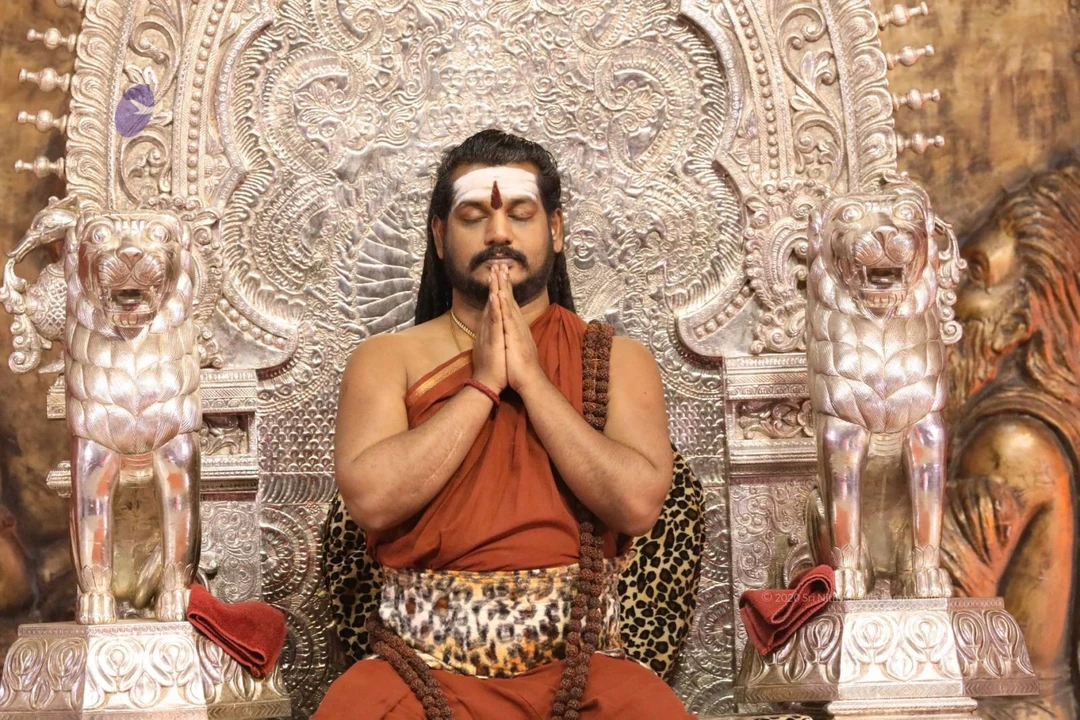
Shiva-Deeksha-MSS-Continued
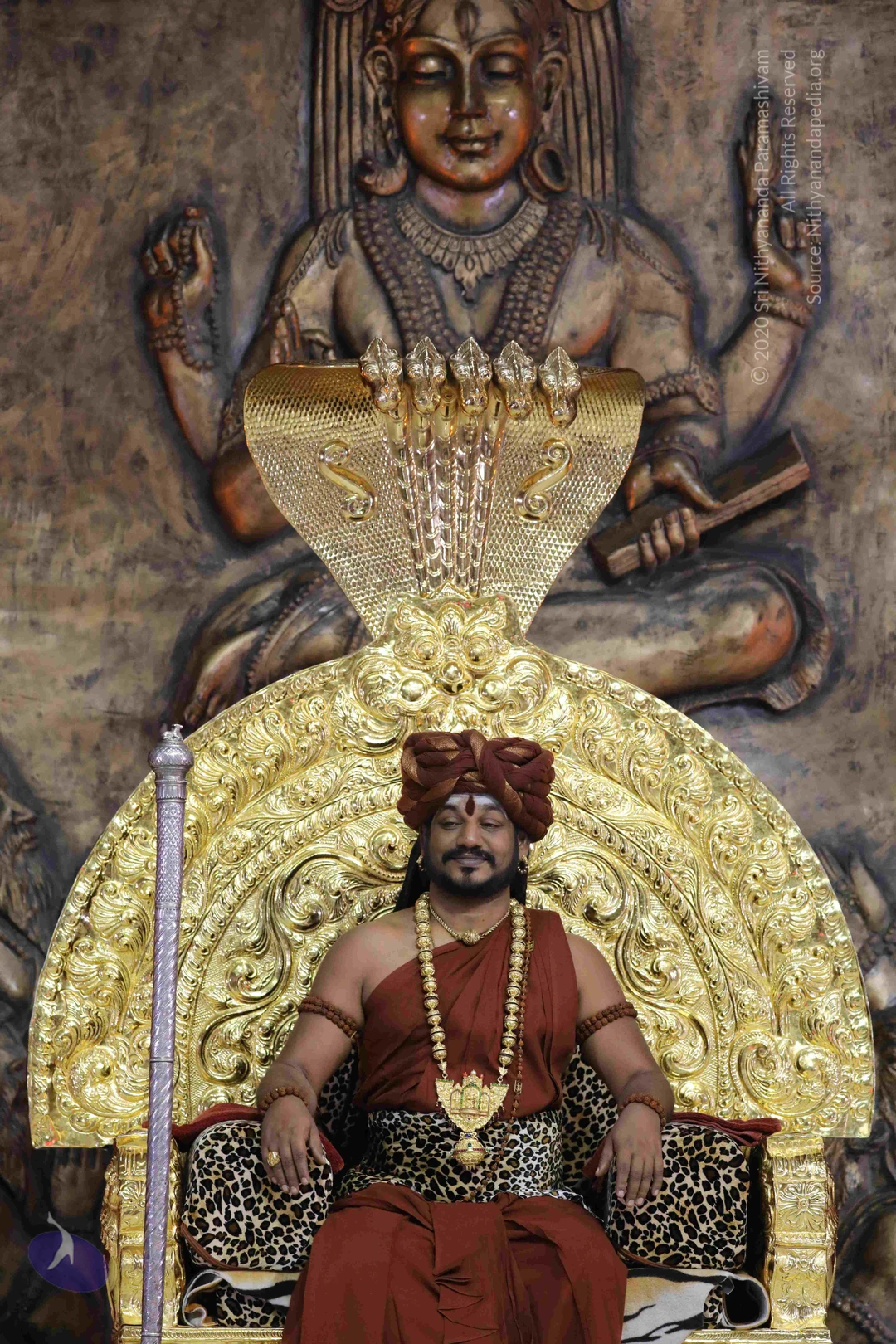
Shiva-Deeksha-MSS

Shiva-Deeksha-MSS

Nithyananda Times

Link to Facebook Post

https://www.facebook.com/ParamahamsaNithyananda/posts/1627333540687823

Photos Of The Day:

Shiva-Deeksha-MSS

Photos Of The Day:

Shiva-Deeksha-MSS

Photos Of The Day:

Shiva-Deeksha-MSS

Photos Of The Day:

Shiva-Deeksha-MSS

Photos Of The Day:

Shiva-Deeksha-MSS

Photos Of The Day:

Shiva-Deeksha-MSS

Photos Of The Day:

Shiva-Deeksha-MSS

Photos Of The Day:

Shiva-Deeksha-MSS

KAILASA FAMILIA PORTUGUESA, PORTUGAL on 1/21/2018

Original wiki page
Contents

Daily Update - PDB + Daily pictures

Event Details
Participants Count0
Event TypeIn-Person
Was Food Served in Event?Yes
Count of Meals Served
Volunteers Count0
Event Duration

O Satsang Center Kailasa Família Portuguêsa-Portugal, dá as boas vindas a Sua Divina Santidade Bhagavan Sri Nithyananda Paramashivam e as famílias da língua Portuguêsa.

Pictures from the day

Videos from the day

Photos from this day

View all 186 photos

Photos

20 photosSource gallery
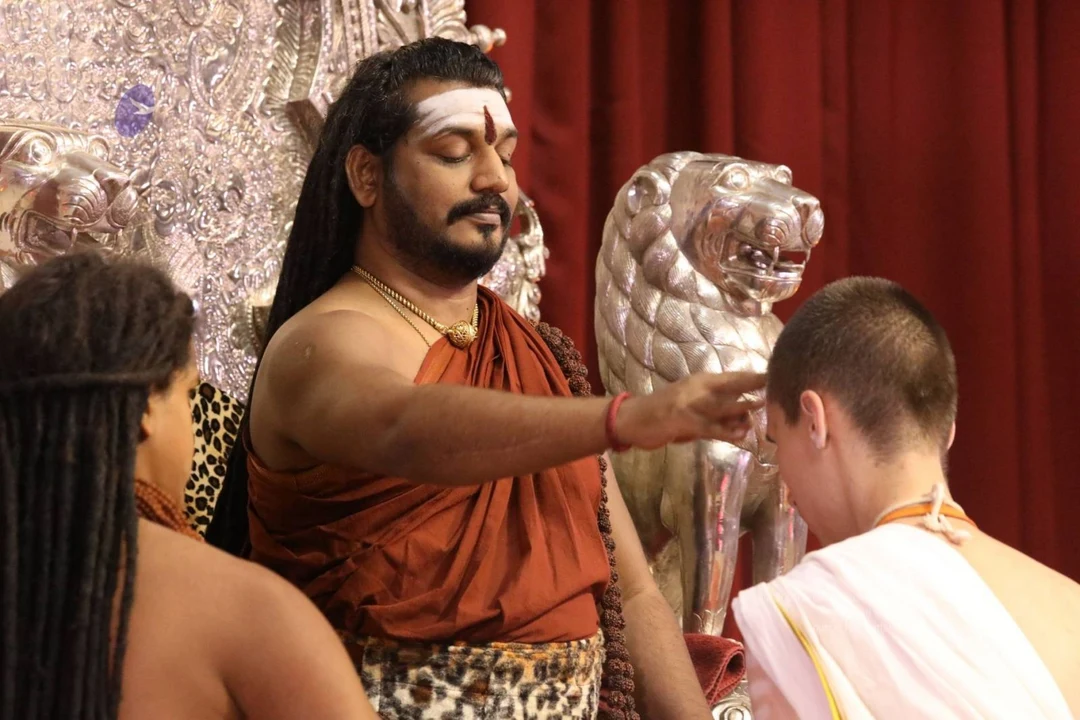
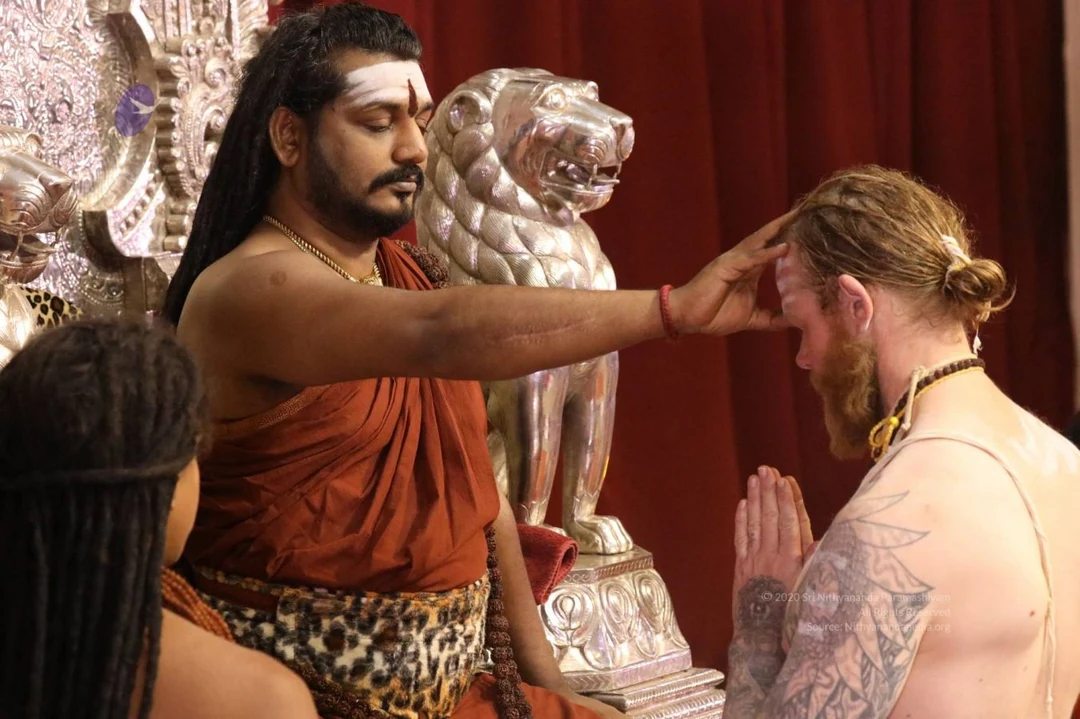
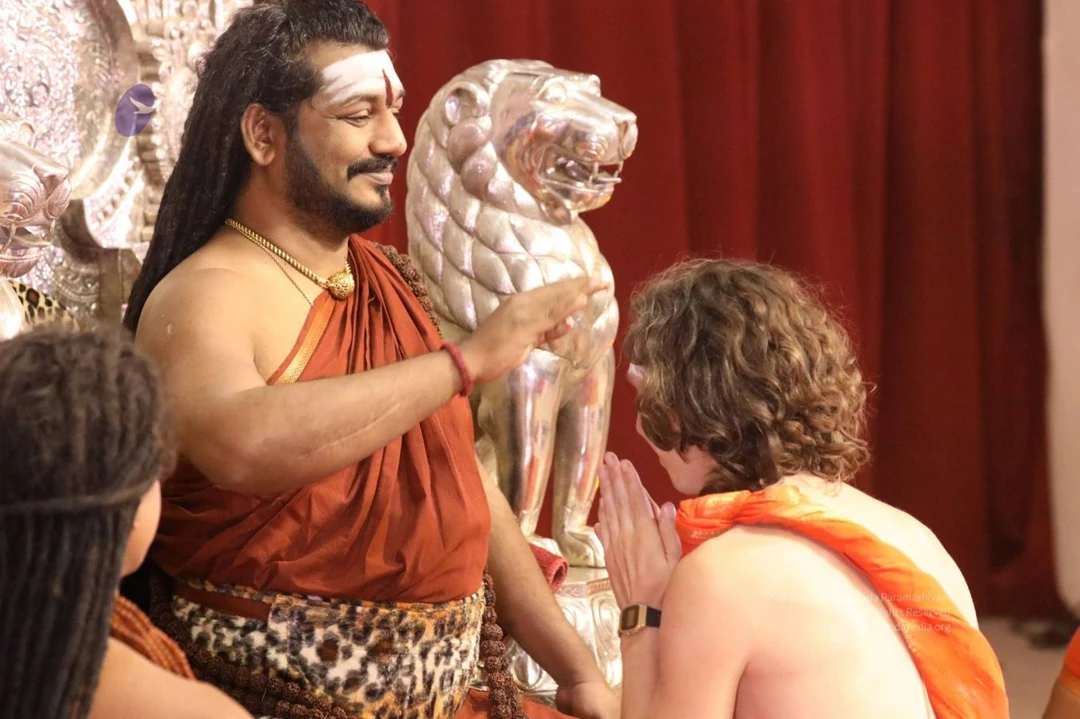
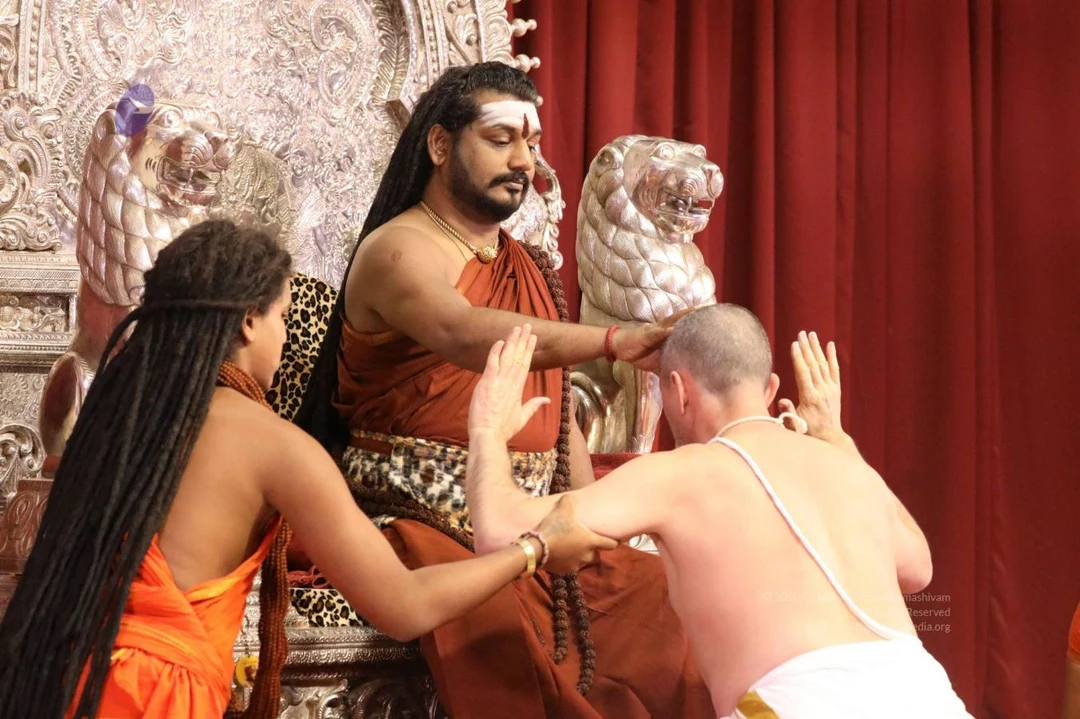
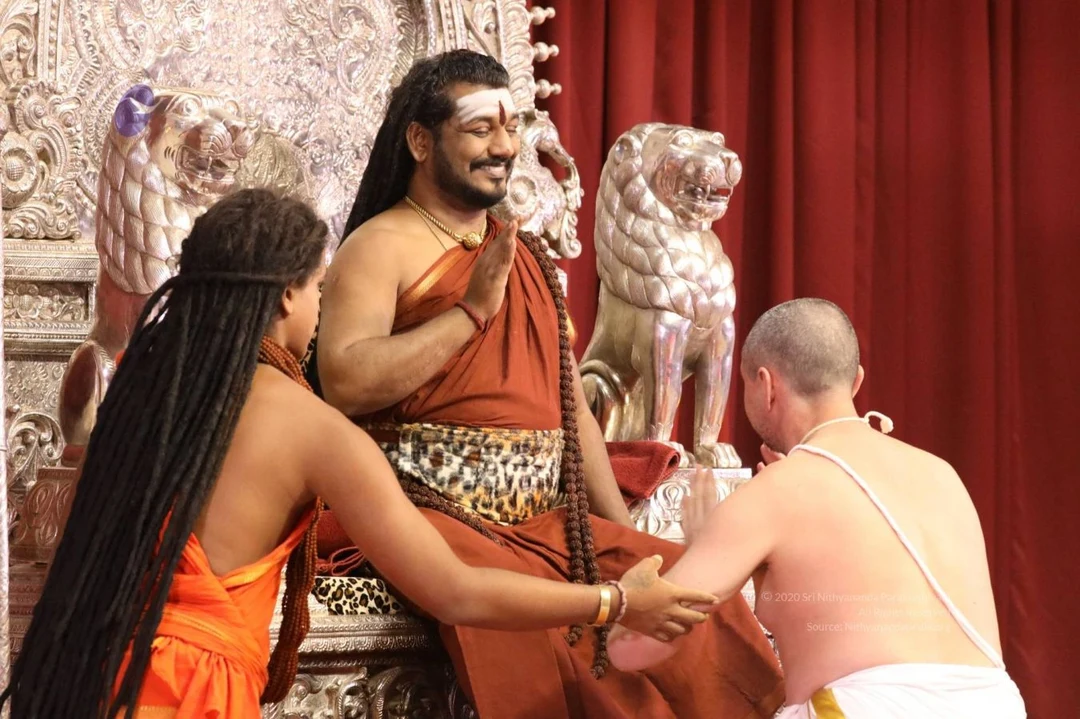
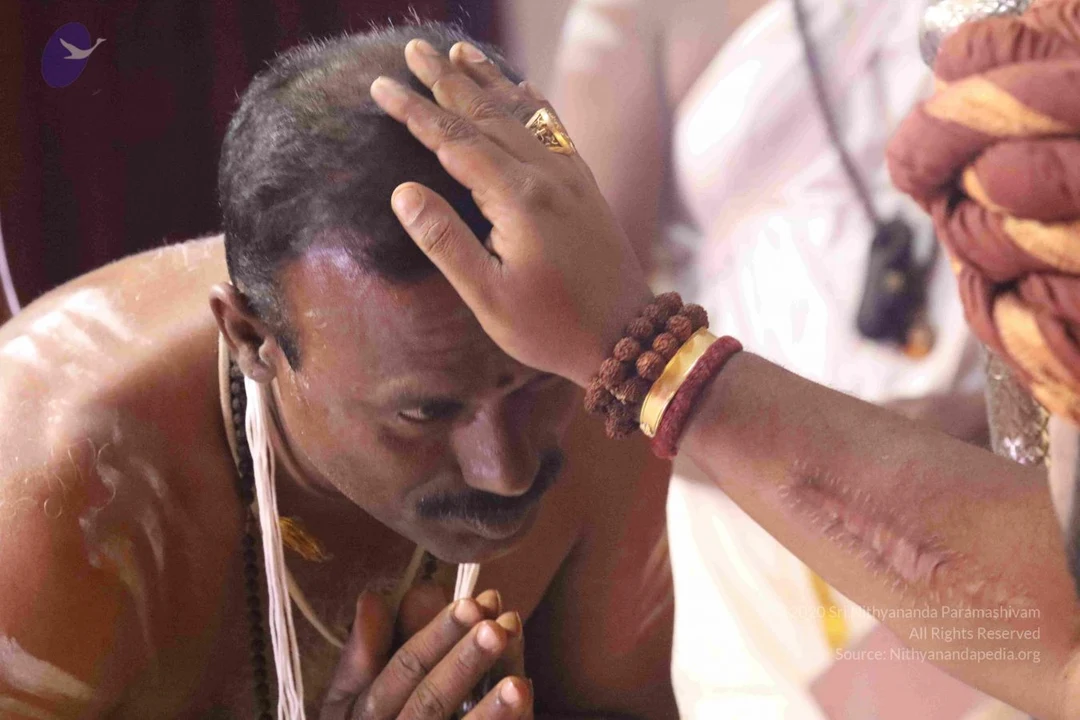
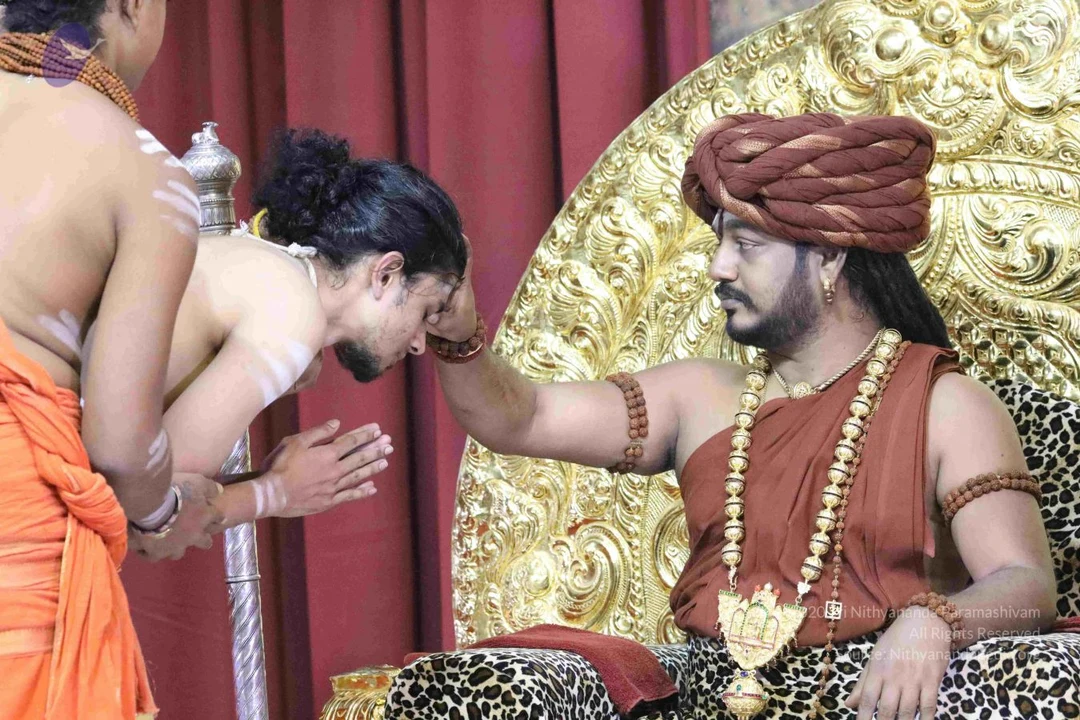
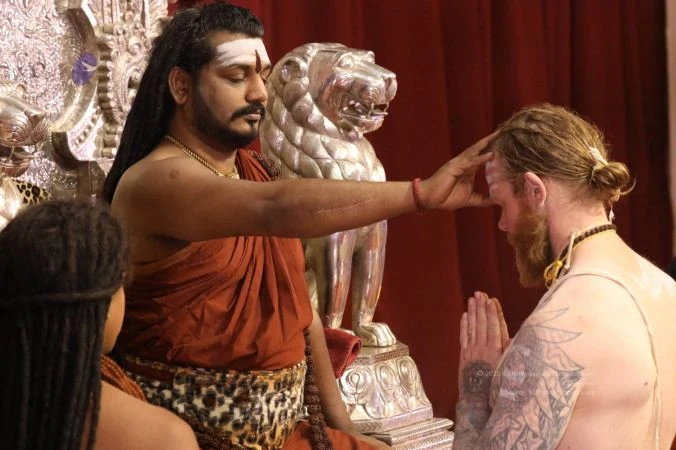
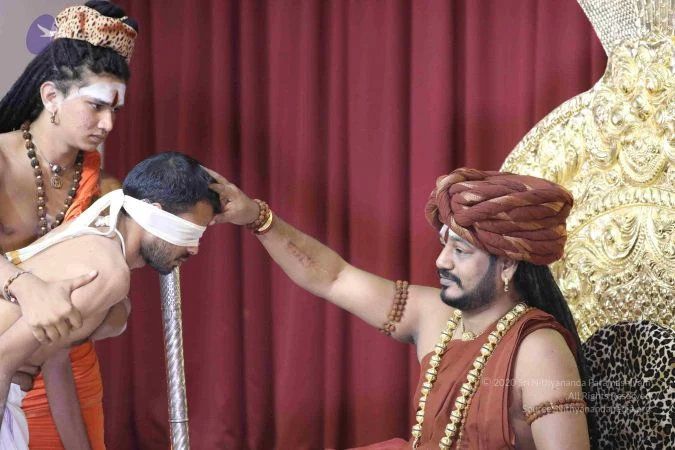
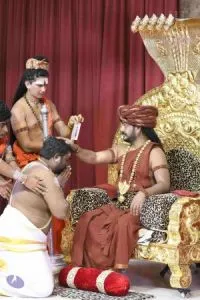
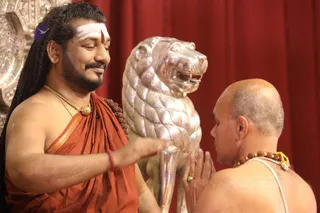
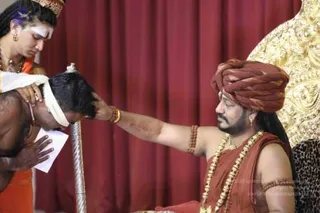
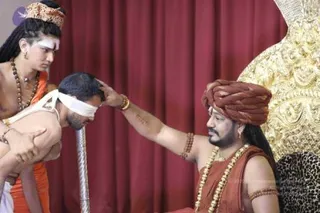
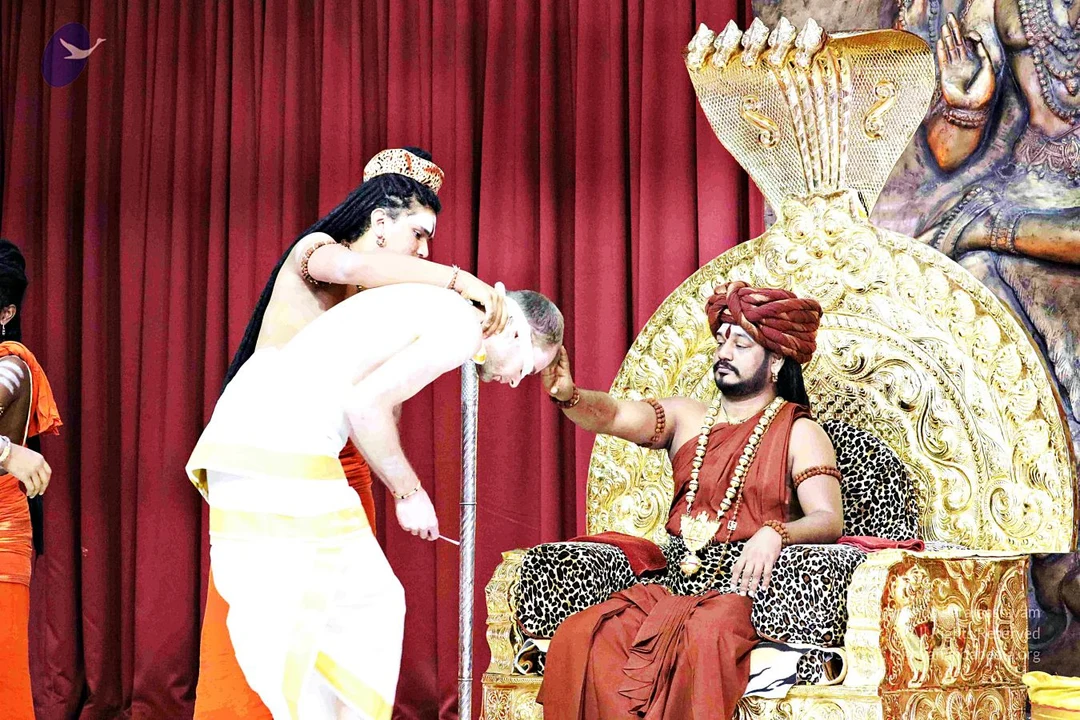
A photograph of a ceremonial blessing inside a temple-like hall. A man in an orange-saffron shawl and a leopard-print waist cloth stands with his right hand placed on the forehead of a bearded man with a topknot, who is seated with palms pressed together in anjali and his back to the camera, shirtless and wearing a rudraksha mala. The standing man has long hair, a white tripundra with a red bindi, a gold chain and a red wrist thread. Behind them are a silver lion sculpture and an ornate silver throne against red drapery, and a woman with long dreadlocked hair is visible at the left edge. The figure in orange with long hair and a gold chain matches the visible cues for a person, performing a blessing on a devotee, the person receiving the blessing.

Shiva-Deeksha-MSS-Continued
153 photosSource gallery
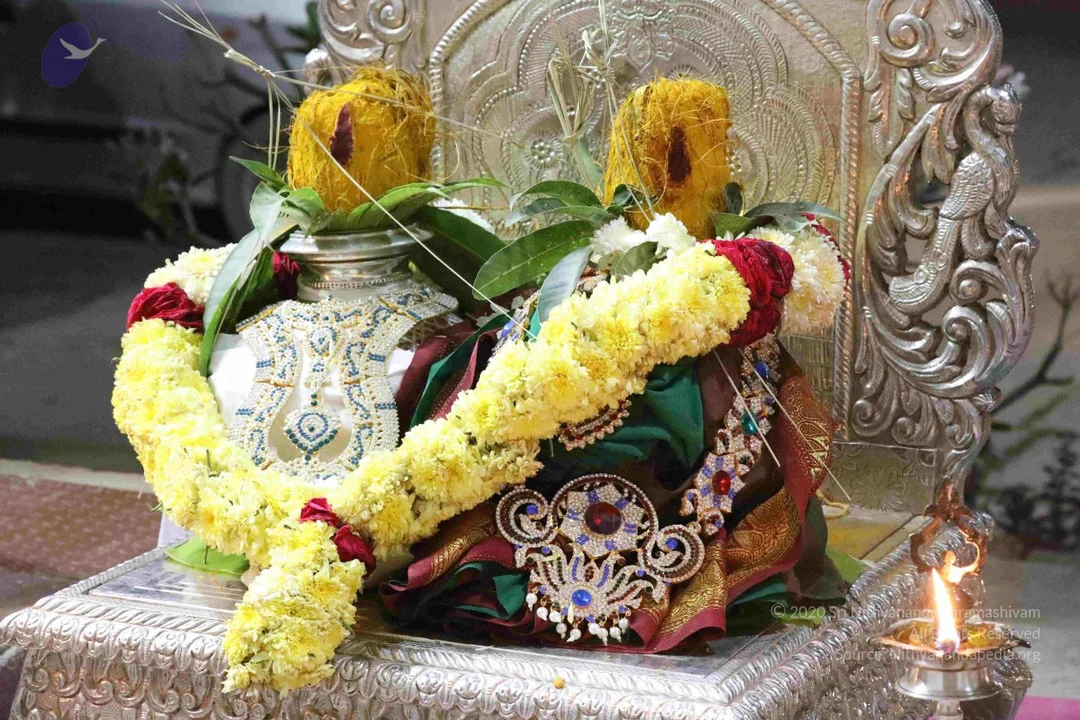
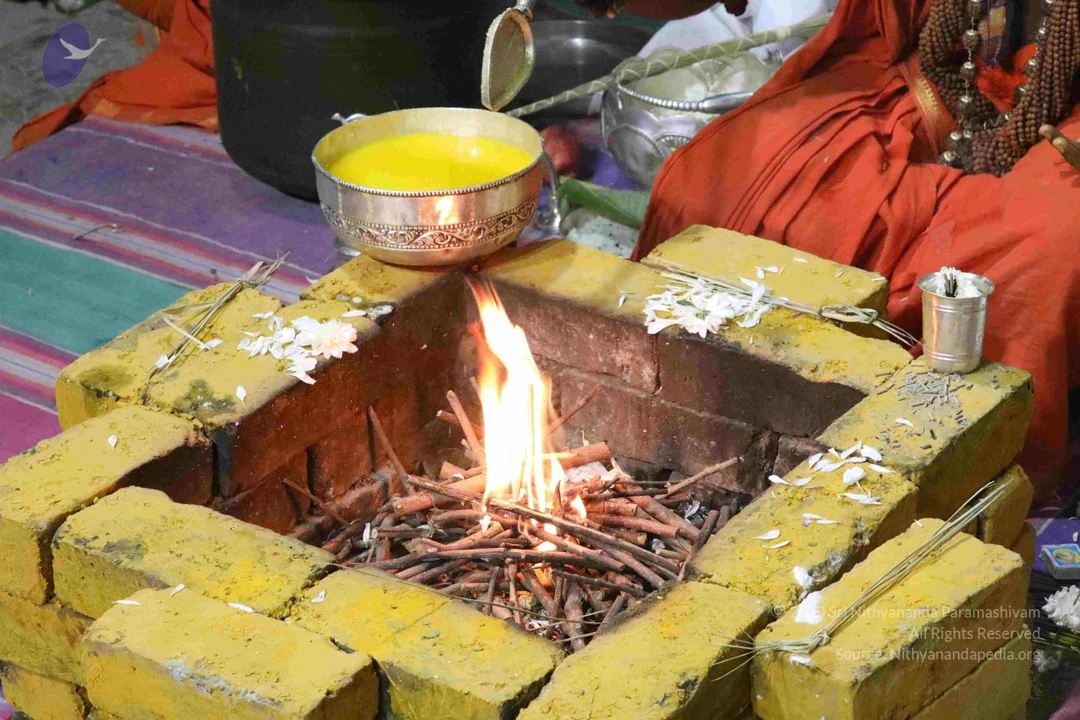
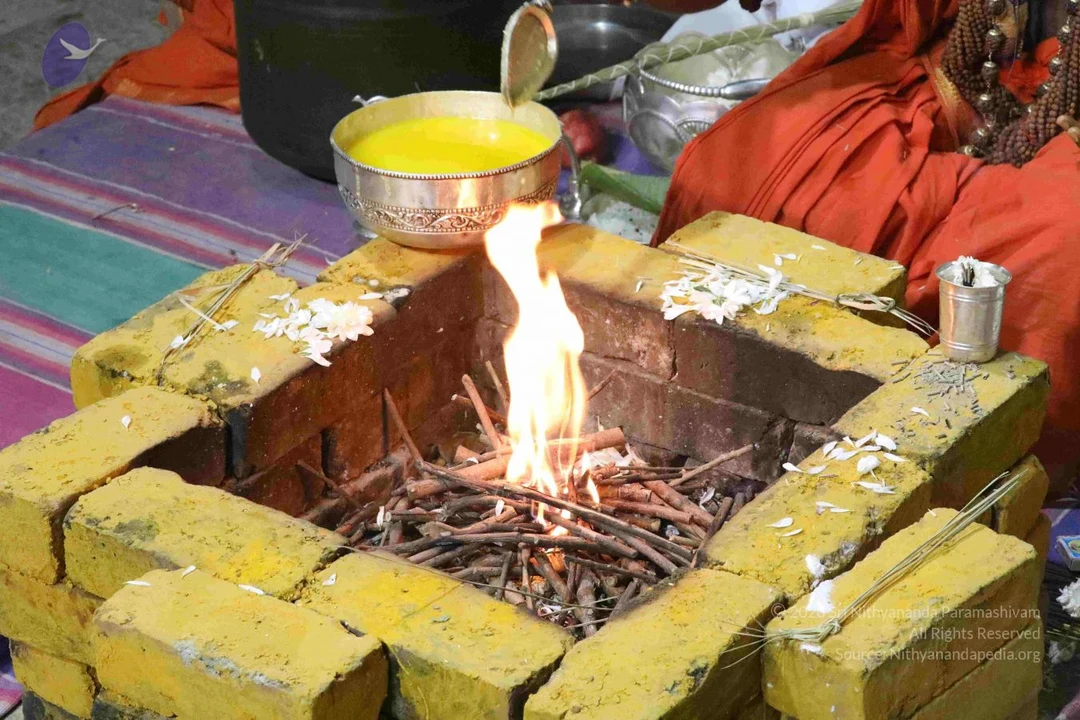
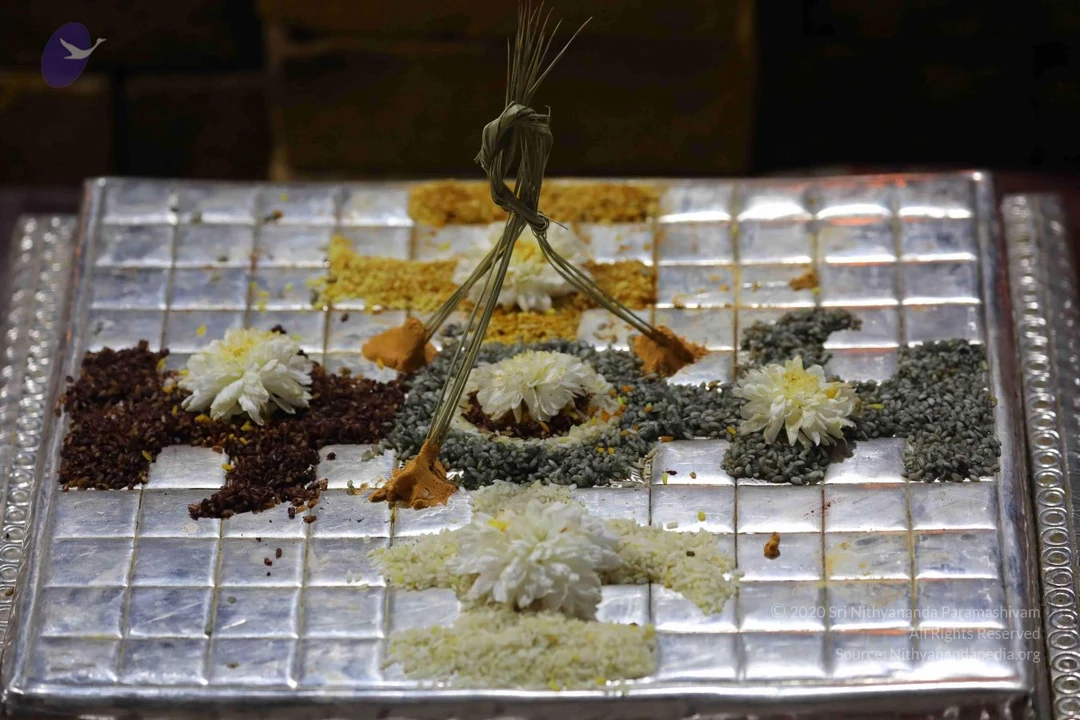
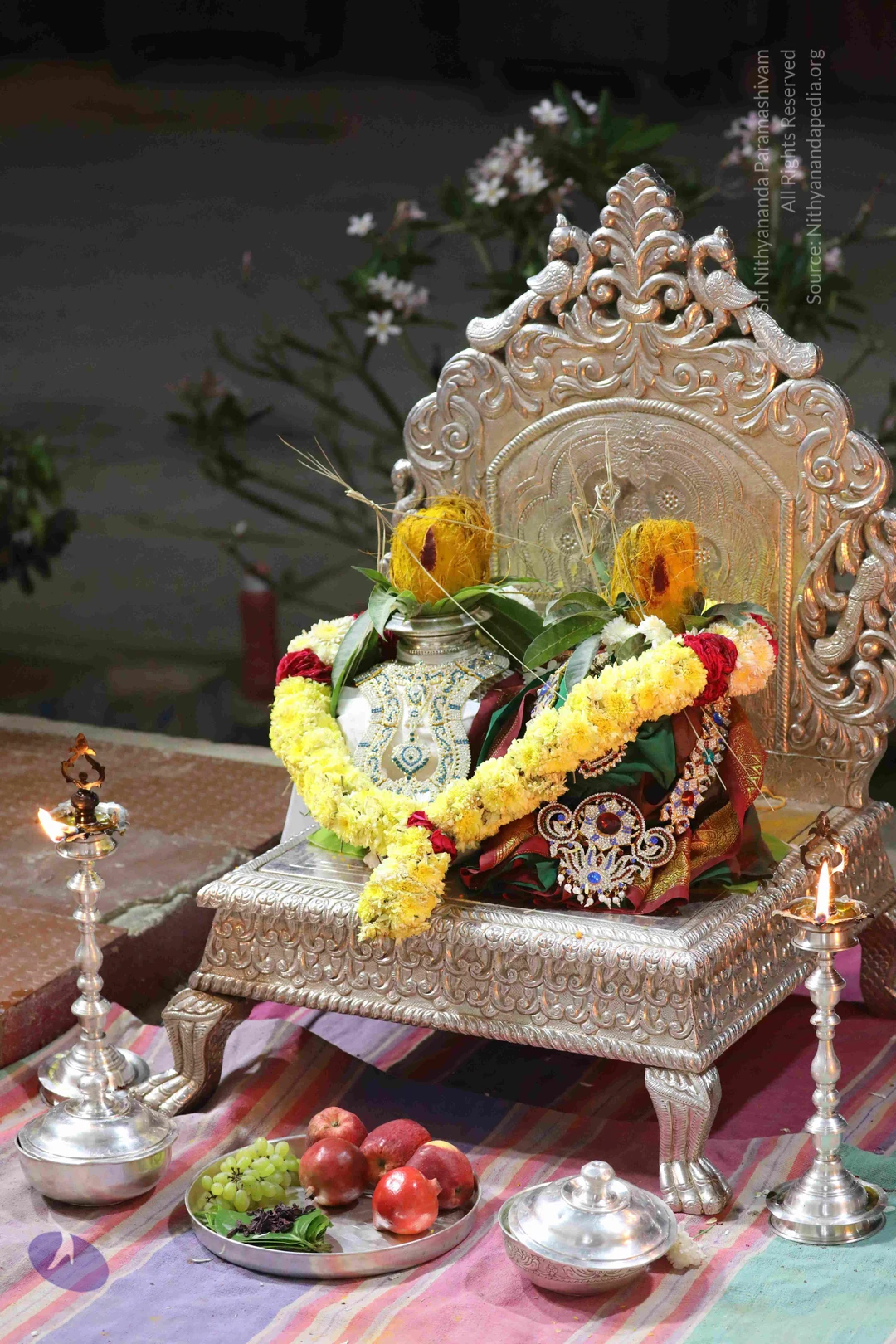
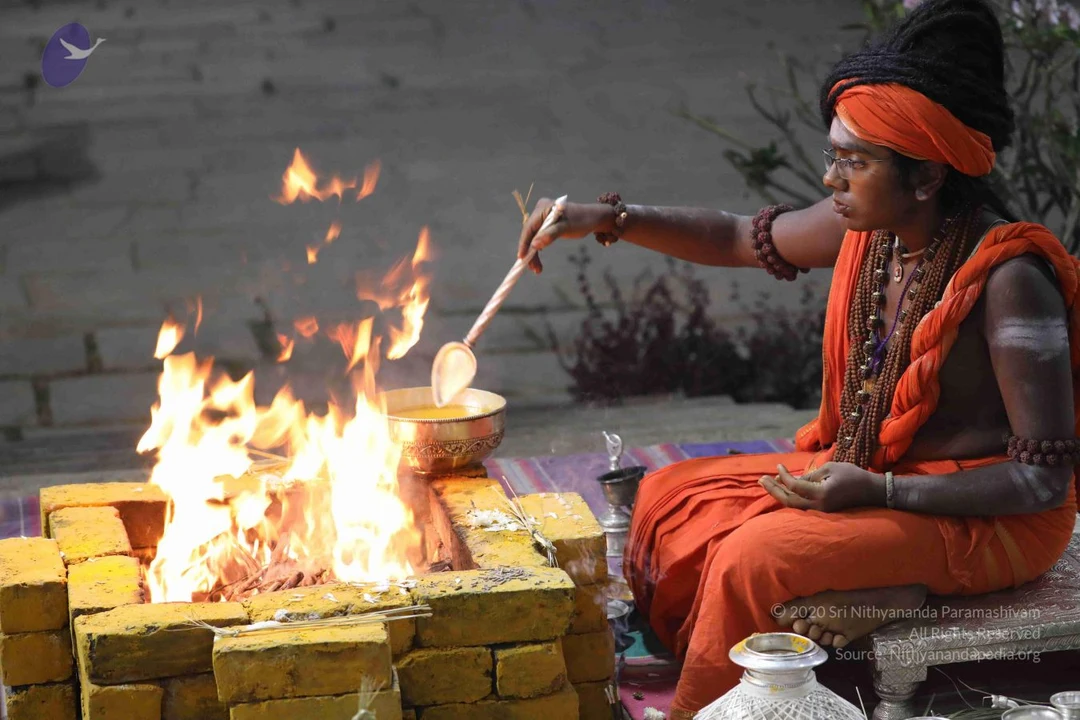
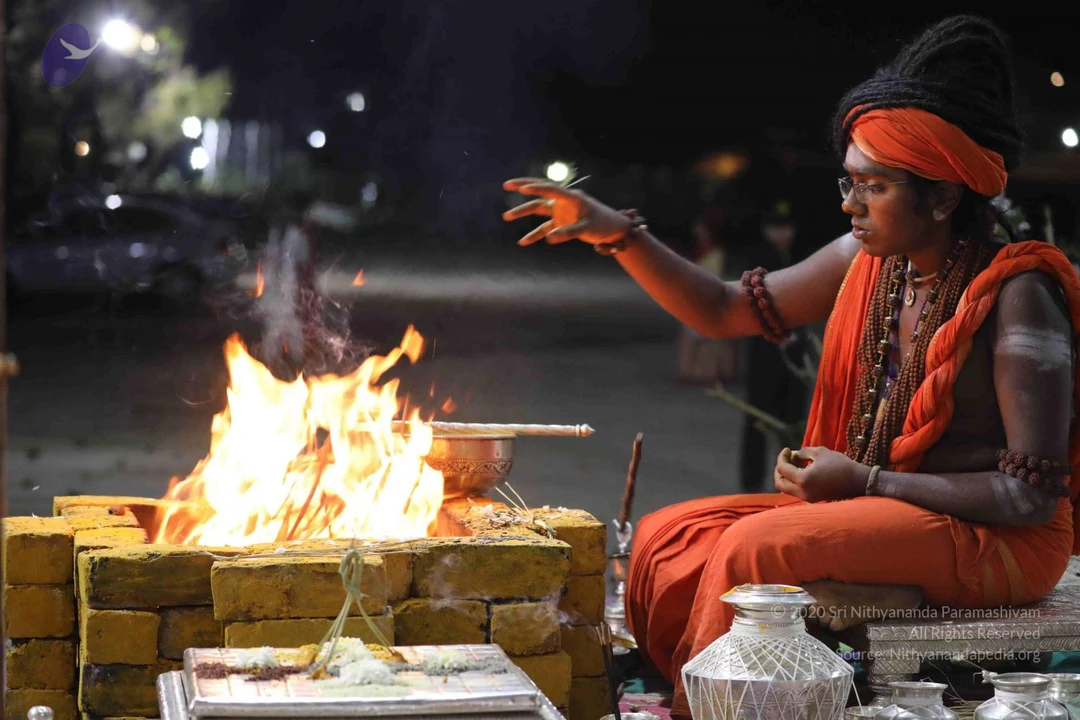
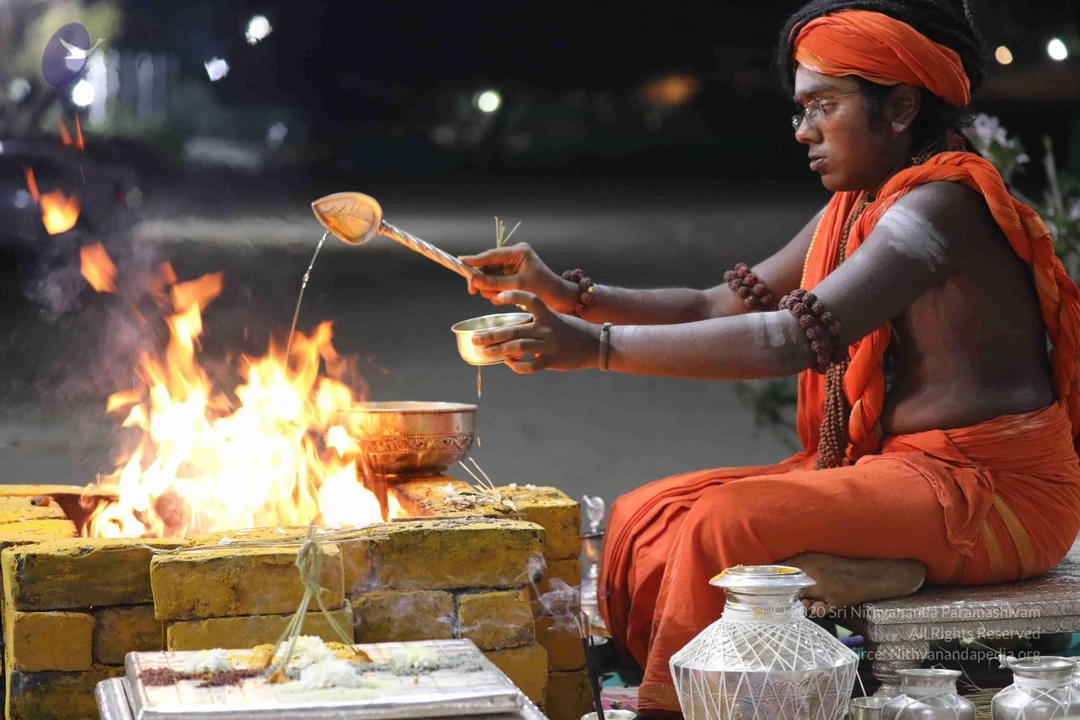
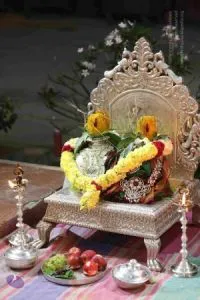
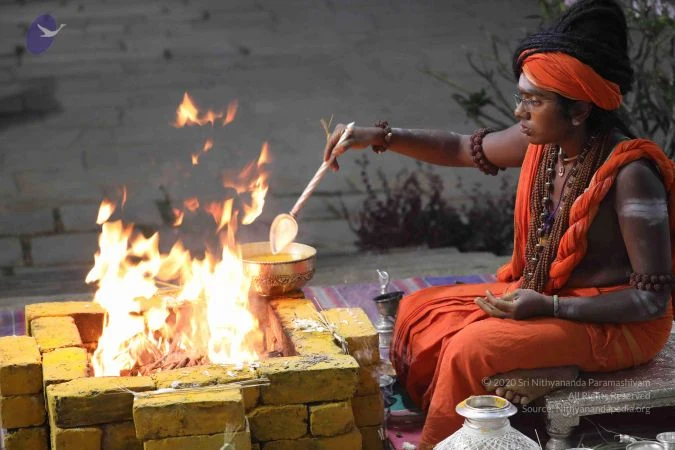
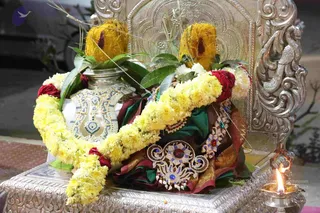
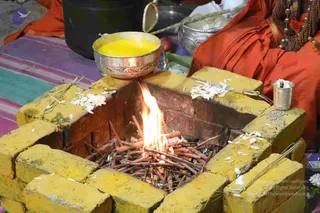
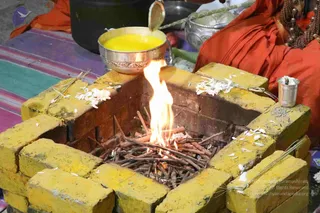
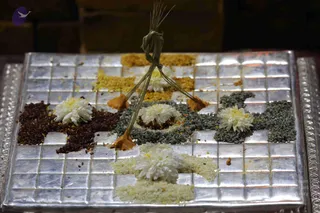
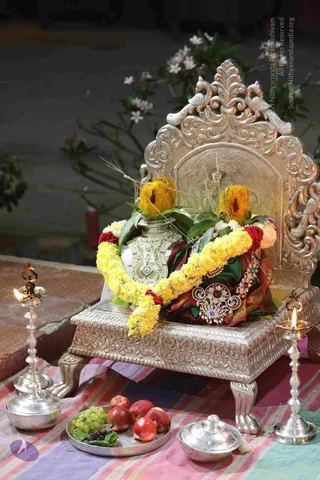
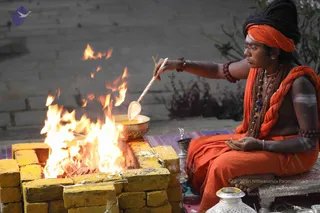
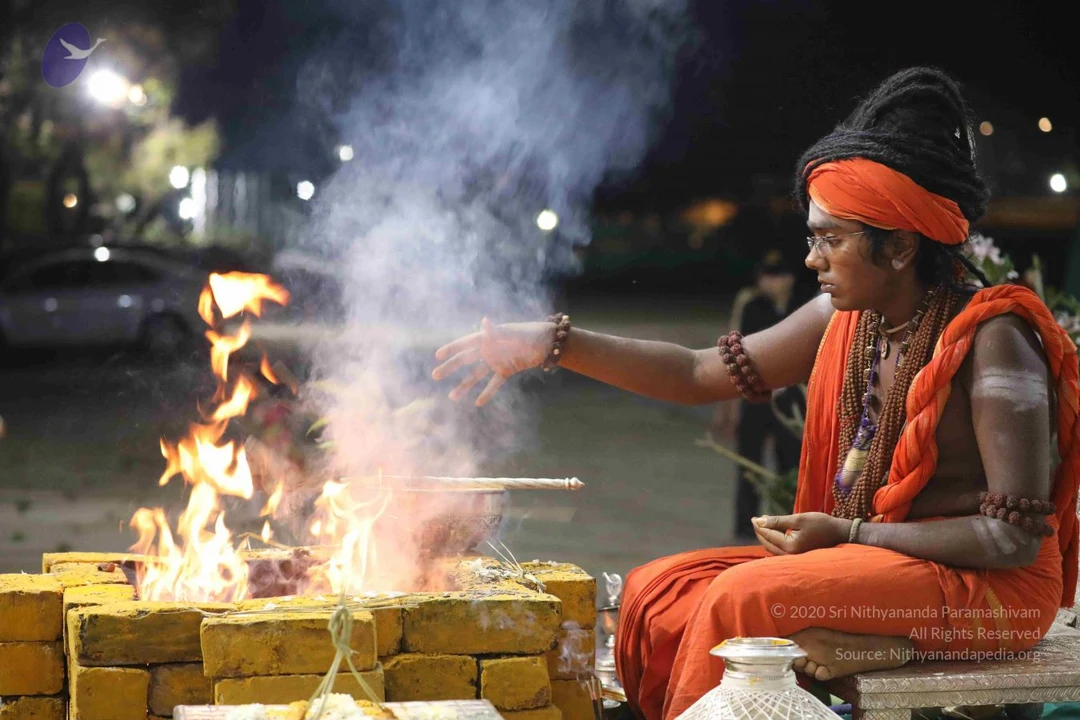
A photograph of an ornately decorated silver throne-like seat, with no people visible. A pair of yellow-wrapped conical items topped with leaves sits on a silver kalasha-style vessel, draped with yellow and white marigold garlands and red flowers. Embellished cloth with gold and gemstone-studded jewellery and an ornate pendant rests on the seat, and a lit oil lamp burns at the right edge. The silver backrest is carved with floral and bird motifs. The setting suggests a ritual decoration of an empty seat with floral garlands and lamps.A square homa fire pit built from yellow-painted bricks, with a small flame and sticks burning in the centre. A brass bowl of yellow liquid. Behind, people in orange-saffron robes sit on a striped mat, with a rudraksha mala and ornate gold necklace visible on a seated figure at right. No faces are shown clearly enough to identify anyone.A homa fire burns inside a square pit built of yellow-painted bricks. Dry sticks are stacked in the pit and a bright flame rises from them. A brass bowl of yellow liquid sits on the brick edge, with a ladle resting in it. White flower petals and flowers are scattered around the bricks, and a small steel cup sits at the right edge. Behind the pit, a person in orange robes and a rudraksha mala is partly visible at the right, and a striped mat lies beneath. No face is shown in the frame.A silver tray divided into a grid of square compartments holds a ritual arrangement of coloured grains and powders. Brown, grey-green, pale yellow and off-white grains fill the sections in patterned clusters. White chrysanthemum-like flowers are placed at several points, and a bundled dry grass or reed stalk stands upright in the centre, tied with orange-brown paste. This is a grain and flower arrangement on a silver yantra-style tray, with no people visible.A photograph of an ornate silver throne-like seat with a peacock-carved back, decorated with yellow and red flower garlands, green leaves, and a silver pot with blue-and-white embellishment. Silver oil lamps burn on either side, and a silver plate holds grapes, pomegranates and betel leaves in front. No people are visible; the seat is an empty ritual setting with a dark background and flowering branches behind.A photograph of a homa at an outdoor fire pit lined with yellow-painted bricks. Flames rise from wood inside the pit, and a brass bowl sits beside the fire. A seated priest in saffron-orange robes and an orange headwrap pours an offering from a long-handled ladle into the fire. He wears rudraksha malas, bead bracelets, and white markings on his arms and face. A small brass vessel and an oil lamp rest on the mat in the foreground, with a wall and shrubs behind him.
Shiva-Deeksha-MSS
163 photosSource gallery
A photograph of an ornately decorated silver throne-like seat, with no people visible. A pair of yellow-wrapped conical items topped with leaves sits on a silver kalasha-style vessel, draped with yellow and white marigold garlands and red flowers. Embellished cloth with gold and gemstone-studded jewellery and an ornate pendant rests on the seat, and a lit oil lamp burns at the right edge. The silver backrest is carved with floral and bird motifs. The setting suggests a ritual decoration of an empty seat with floral garlands and lamps.A square homa fire pit built from yellow-painted bricks, with a small flame and sticks burning in the centre. A brass bowl of yellow liquid. Behind, people in orange-saffron robes sit on a striped mat, with a rudraksha mala and ornate gold necklace visible on a seated figure at right. No faces are shown clearly enough to identify anyone.A homa fire burns inside a square pit built of yellow-painted bricks. Dry sticks are stacked in the pit and a bright flame rises from them. A brass bowl of yellow liquid sits on the brick edge, with a ladle resting in it. White flower petals and flowers are scattered around the bricks, and a small steel cup sits at the right edge. Behind the pit, a person in orange robes and a rudraksha mala is partly visible at the right, and a striped mat lies beneath. No face is shown in the frame.A silver tray divided into a grid of square compartments holds a ritual arrangement of coloured grains and powders. Brown, grey-green, pale yellow and off-white grains fill the sections in patterned clusters. White chrysanthemum-like flowers are placed at several points, and a bundled dry grass or reed stalk stands upright in the centre, tied with orange-brown paste. This is a grain and flower arrangement on a silver yantra-style tray, with no people visible.A photograph of an ornate silver throne-like seat with a peacock-carved back, decorated with yellow and red flower garlands, green leaves, and a silver pot with blue-and-white embellishment. Silver oil lamps burn on either side, and a silver plate holds grapes, pomegranates and betel leaves in front. No people are visible; the seat is an empty ritual setting with a dark background and flowering branches behind.A photograph of a homa at an outdoor fire pit lined with yellow-painted bricks. Flames rise from wood inside the pit, and a brass bowl sits beside the fire. A seated priest in saffron-orange robes and an orange headwrap pours an offering from a long-handled ladle into the fire. He wears rudraksha malas, bead bracelets, and white markings on his arms and face. A small brass vessel and an oil lamp rest on the mat in the foreground, with a wall and shrubs behind him.

Shiva-Deeksha-MSS
163 photosSource gallery
A photograph of an ornately decorated silver throne-like seat, with no people visible. A pair of yellow-wrapped conical items topped with leaves sits on a silver kalasha-style vessel, draped with yellow and white marigold garlands and red flowers. Embellished cloth with gold and gemstone-studded jewellery and an ornate pendant rests on the seat, and a lit oil lamp burns at the right edge. The silver backrest is carved with floral and bird motifs. The setting suggests a ritual decoration of an empty seat with floral garlands and lamps.A square homa fire pit built from yellow-painted bricks, with a small flame and sticks burning in the centre. A brass bowl of yellow liquid. Behind, people in orange-saffron robes sit on a striped mat, with a rudraksha mala and ornate gold necklace visible on a seated figure at right. No faces are shown clearly enough to identify anyone.A homa fire burns inside a square pit built of yellow-painted bricks. Dry sticks are stacked in the pit and a bright flame rises from them. A brass bowl of yellow liquid sits on the brick edge, with a ladle resting in it. White flower petals and flowers are scattered around the bricks, and a small steel cup sits at the right edge. Behind the pit, a person in orange robes and a rudraksha mala is partly visible at the right, and a striped mat lies beneath. No face is shown in the frame.A silver tray divided into a grid of square compartments holds a ritual arrangement of coloured grains and powders. Brown, grey-green, pale yellow and off-white grains fill the sections in patterned clusters. White chrysanthemum-like flowers are placed at several points, and a bundled dry grass or reed stalk stands upright in the centre, tied with orange-brown paste. This is a grain and flower arrangement on a silver yantra-style tray, with no people visible.A photograph of an ornate silver throne-like seat with a peacock-carved back, decorated with yellow and red flower garlands, green leaves, and a silver pot with blue-and-white embellishment. Silver oil lamps burn on either side, and a silver plate holds grapes, pomegranates and betel leaves in front. No people are visible; the seat is an empty ritual setting with a dark background and flowering branches behind.A photograph of a homa at an outdoor fire pit lined with yellow-painted bricks. Flames rise from wood inside the pit, and a brass bowl sits beside the fire. A seated priest in saffron-orange robes and an orange headwrap pours an offering from a long-handled ladle into the fire. He wears rudraksha malas, bead bracelets, and white markings on his arms and face. A small brass vessel and an oil lamp rest on the mat in the foreground, with a wall and shrubs behind him.

Shiva-Deeksha-MSS
163 photosSource gallery
A photograph of an ornately decorated silver throne-like seat, with no people visible. A pair of yellow-wrapped conical items topped with leaves sits on a silver kalasha-style vessel, draped with yellow and white marigold garlands and red flowers. Embellished cloth with gold and gemstone-studded jewellery and an ornate pendant rests on the seat, and a lit oil lamp burns at the right edge. The silver backrest is carved with floral and bird motifs. The setting suggests a ritual decoration of an empty seat with floral garlands and lamps.A square homa fire pit built from yellow-painted bricks, with a small flame and sticks burning in the centre. A brass bowl of yellow liquid. Behind, people in orange-saffron robes sit on a striped mat, with a rudraksha mala and ornate gold necklace visible on a seated figure at right. No faces are shown clearly enough to identify anyone.A homa fire burns inside a square pit built of yellow-painted bricks. Dry sticks are stacked in the pit and a bright flame rises from them. A brass bowl of yellow liquid sits on the brick edge, with a ladle resting in it. White flower petals and flowers are scattered around the bricks, and a small steel cup sits at the right edge. Behind the pit, a person in orange robes and a rudraksha mala is partly visible at the right, and a striped mat lies beneath. No face is shown in the frame.A silver tray divided into a grid of square compartments holds a ritual arrangement of coloured grains and powders. Brown, grey-green, pale yellow and off-white grains fill the sections in patterned clusters. White chrysanthemum-like flowers are placed at several points, and a bundled dry grass or reed stalk stands upright in the centre, tied with orange-brown paste. This is a grain and flower arrangement on a silver yantra-style tray, with no people visible.A photograph of an ornate silver throne-like seat with a peacock-carved back, decorated with yellow and red flower garlands, green leaves, and a silver pot with blue-and-white embellishment. Silver oil lamps burn on either side, and a silver plate holds grapes, pomegranates and betel leaves in front. No people are visible; the seat is an empty ritual setting with a dark background and flowering branches behind.A photograph of a homa at an outdoor fire pit lined with yellow-painted bricks. Flames rise from wood inside the pit, and a brass bowl sits beside the fire. A seated priest in saffron-orange robes and an orange headwrap pours an offering from a long-handled ladle into the fire. He wears rudraksha malas, bead bracelets, and white markings on his arms and face. A small brass vessel and an oil lamp rest on the mat in the foreground, with a wall and shrubs behind him.

Shiva-Deeksha-MSS
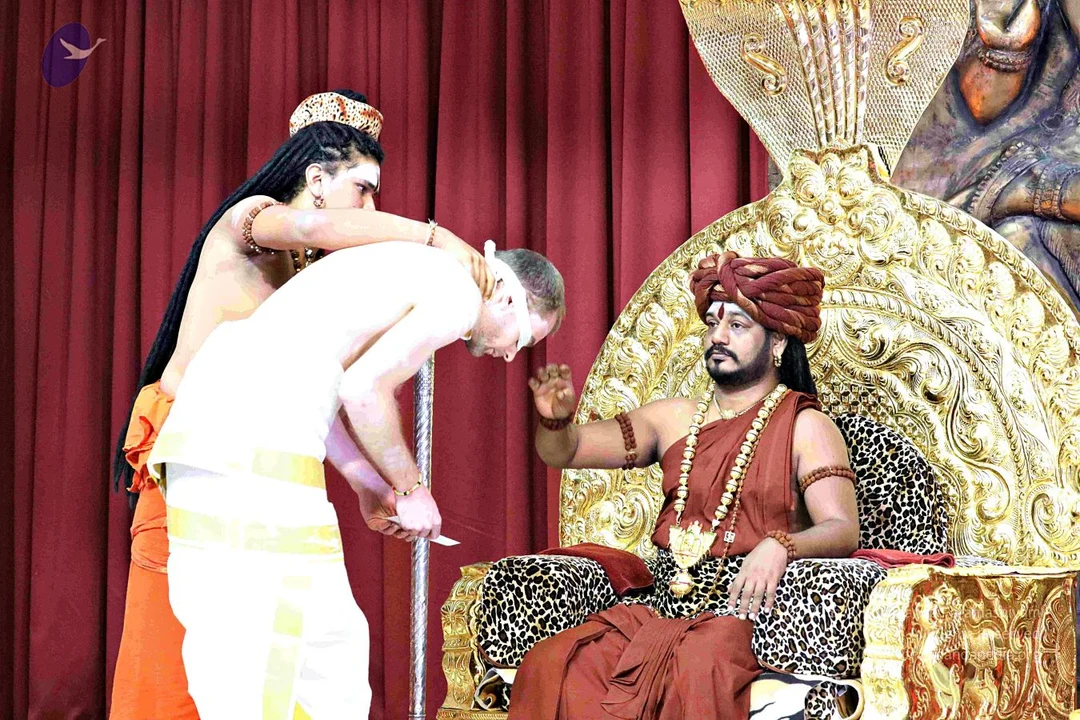
163 photosSource gallery
A photograph of an ornately decorated silver throne-like seat, with no people visible. A pair of yellow-wrapped conical items topped with leaves sits on a silver kalasha-style vessel, draped with yellow and white marigold garlands and red flowers. Embellished cloth with gold and gemstone-studded jewellery and an ornate pendant rests on the seat, and a lit oil lamp burns at the right edge. The silver backrest is carved with floral and bird motifs. The setting suggests a ritual decoration of an empty seat with floral garlands and lamps.A square homa fire pit built from yellow-painted bricks, with a small flame and sticks burning in the centre. A brass bowl of yellow liquid. Behind, people in orange-saffron robes sit on a striped mat, with a rudraksha mala and ornate gold necklace visible on a seated figure at right. No faces are shown clearly enough to identify anyone.A homa fire burns inside a square pit built of yellow-painted bricks. Dry sticks are stacked in the pit and a bright flame rises from them. A brass bowl of yellow liquid sits on the brick edge, with a ladle resting in it. White flower petals and flowers are scattered around the bricks, and a small steel cup sits at the right edge. Behind the pit, a person in orange robes and a rudraksha mala is partly visible at the right, and a striped mat lies beneath. No face is shown in the frame.A silver tray divided into a grid of square compartments holds a ritual arrangement of coloured grains and powders. Brown, grey-green, pale yellow and off-white grains fill the sections in patterned clusters. White chrysanthemum-like flowers are placed at several points, and a bundled dry grass or reed stalk stands upright in the centre, tied with orange-brown paste. This is a grain and flower arrangement on a silver yantra-style tray, with no people visible.A photograph of an ornate silver throne-like seat with a peacock-carved back, decorated with yellow and red flower garlands, green leaves, and a silver pot with blue-and-white embellishment. Silver oil lamps burn on either side, and a silver plate holds grapes, pomegranates and betel leaves in front. No people are visible; the seat is an empty ritual setting with a dark background and flowering branches behind.A photograph of a homa at an outdoor fire pit lined with yellow-painted bricks. Flames rise from wood inside the pit, and a brass bowl sits beside the fire. A seated priest in saffron-orange robes and an orange headwrap pours an offering from a long-handled ladle into the fire. He wears rudraksha malas, bead bracelets, and white markings on his arms and face. A small brass vessel and an oil lamp rest on the mat in the foreground, with a wall and shrubs behind him.

Shiva-Deeksha-MSS
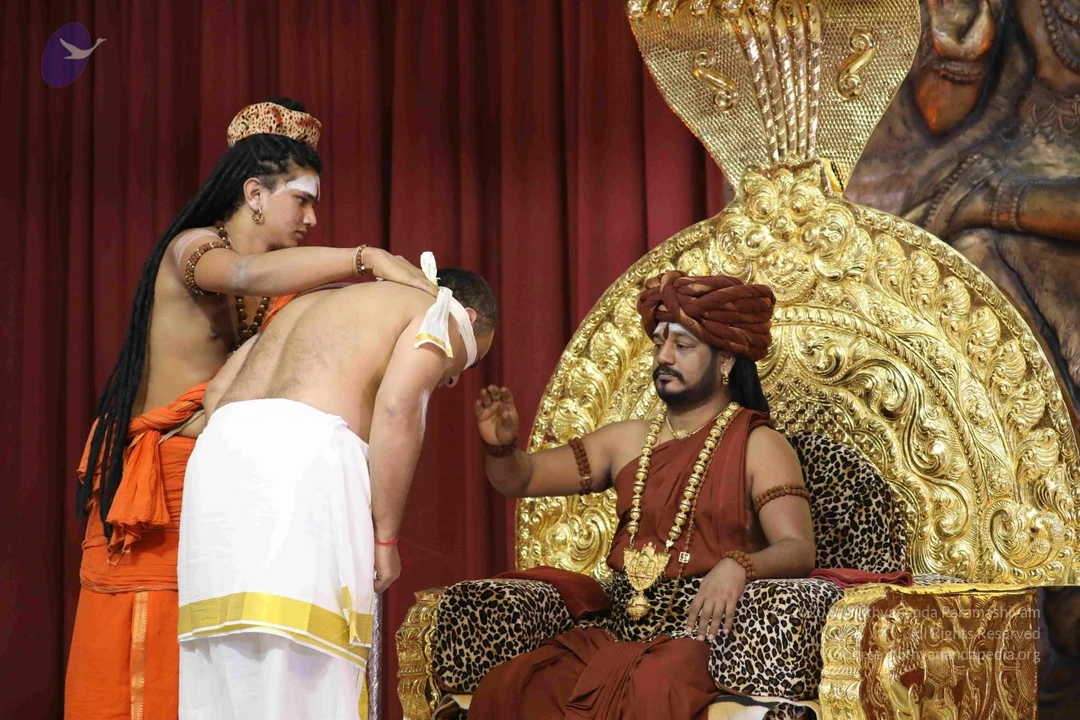
163 photosSource gallery
A photograph of an ornately decorated silver throne-like seat, with no people visible. A pair of yellow-wrapped conical items topped with leaves sits on a silver kalasha-style vessel, draped with yellow and white marigold garlands and red flowers. Embellished cloth with gold and gemstone-studded jewellery and an ornate pendant rests on the seat, and a lit oil lamp burns at the right edge. The silver backrest is carved with floral and bird motifs. The setting suggests a ritual decoration of an empty seat with floral garlands and lamps.A square homa fire pit built from yellow-painted bricks, with a small flame and sticks burning in the centre. A brass bowl of yellow liquid. Behind, people in orange-saffron robes sit on a striped mat, with a rudraksha mala and ornate gold necklace visible on a seated figure at right. No faces are shown clearly enough to identify anyone.A homa fire burns inside a square pit built of yellow-painted bricks. Dry sticks are stacked in the pit and a bright flame rises from them. A brass bowl of yellow liquid sits on the brick edge, with a ladle resting in it. White flower petals and flowers are scattered around the bricks, and a small steel cup sits at the right edge. Behind the pit, a person in orange robes and a rudraksha mala is partly visible at the right, and a striped mat lies beneath. No face is shown in the frame.A silver tray divided into a grid of square compartments holds a ritual arrangement of coloured grains and powders. Brown, grey-green, pale yellow and off-white grains fill the sections in patterned clusters. White chrysanthemum-like flowers are placed at several points, and a bundled dry grass or reed stalk stands upright in the centre, tied with orange-brown paste. This is a grain and flower arrangement on a silver yantra-style tray, with no people visible.A photograph of an ornate silver throne-like seat with a peacock-carved back, decorated with yellow and red flower garlands, green leaves, and a silver pot with blue-and-white embellishment. Silver oil lamps burn on either side, and a silver plate holds grapes, pomegranates and betel leaves in front. No people are visible; the seat is an empty ritual setting with a dark background and flowering branches behind.A photograph of a homa at an outdoor fire pit lined with yellow-painted bricks. Flames rise from wood inside the pit, and a brass bowl sits beside the fire. A seated priest in saffron-orange robes and an orange headwrap pours an offering from a long-handled ladle into the fire. He wears rudraksha malas, bead bracelets, and white markings on his arms and face. A small brass vessel and an oil lamp rest on the mat in the foreground, with a wall and shrubs behind him.

Shiva-Deeksha-MSS
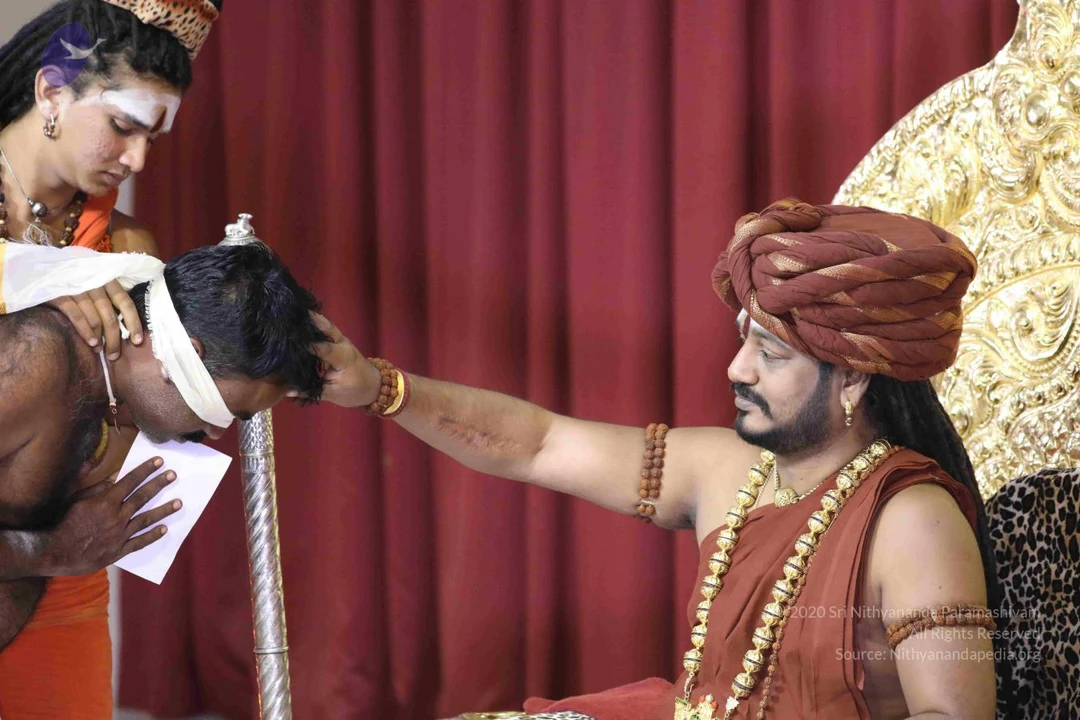
163 photosSource gallery
A photograph of an ornately decorated silver throne-like seat, with no people visible. A pair of yellow-wrapped conical items topped with leaves sits on a silver kalasha-style vessel, draped with yellow and white marigold garlands and red flowers. Embellished cloth with gold and gemstone-studded jewellery and an ornate pendant rests on the seat, and a lit oil lamp burns at the right edge. The silver backrest is carved with floral and bird motifs. The setting suggests a ritual decoration of an empty seat with floral garlands and lamps.A square homa fire pit built from yellow-painted bricks, with a small flame and sticks burning in the centre. A brass bowl of yellow liquid. Behind, people in orange-saffron robes sit on a striped mat, with a rudraksha mala and ornate gold necklace visible on a seated figure at right. No faces are shown clearly enough to identify anyone.A homa fire burns inside a square pit built of yellow-painted bricks. Dry sticks are stacked in the pit and a bright flame rises from them. A brass bowl of yellow liquid sits on the brick edge, with a ladle resting in it. White flower petals and flowers are scattered around the bricks, and a small steel cup sits at the right edge. Behind the pit, a person in orange robes and a rudraksha mala is partly visible at the right, and a striped mat lies beneath. No face is shown in the frame.A silver tray divided into a grid of square compartments holds a ritual arrangement of coloured grains and powders. Brown, grey-green, pale yellow and off-white grains fill the sections in patterned clusters. White chrysanthemum-like flowers are placed at several points, and a bundled dry grass or reed stalk stands upright in the centre, tied with orange-brown paste. This is a grain and flower arrangement on a silver yantra-style tray, with no people visible.A photograph of an ornate silver throne-like seat with a peacock-carved back, decorated with yellow and red flower garlands, green leaves, and a silver pot with blue-and-white embellishment. Silver oil lamps burn on either side, and a silver plate holds grapes, pomegranates and betel leaves in front. No people are visible; the seat is an empty ritual setting with a dark background and flowering branches behind.A photograph of a homa at an outdoor fire pit lined with yellow-painted bricks. Flames rise from wood inside the pit, and a brass bowl sits beside the fire. A seated priest in saffron-orange robes and an orange headwrap pours an offering from a long-handled ladle into the fire. He wears rudraksha malas, bead bracelets, and white markings on his arms and face. A small brass vessel and an oil lamp rest on the mat in the foreground, with a wall and shrubs behind him.

Shiva-Deeksha-MSS
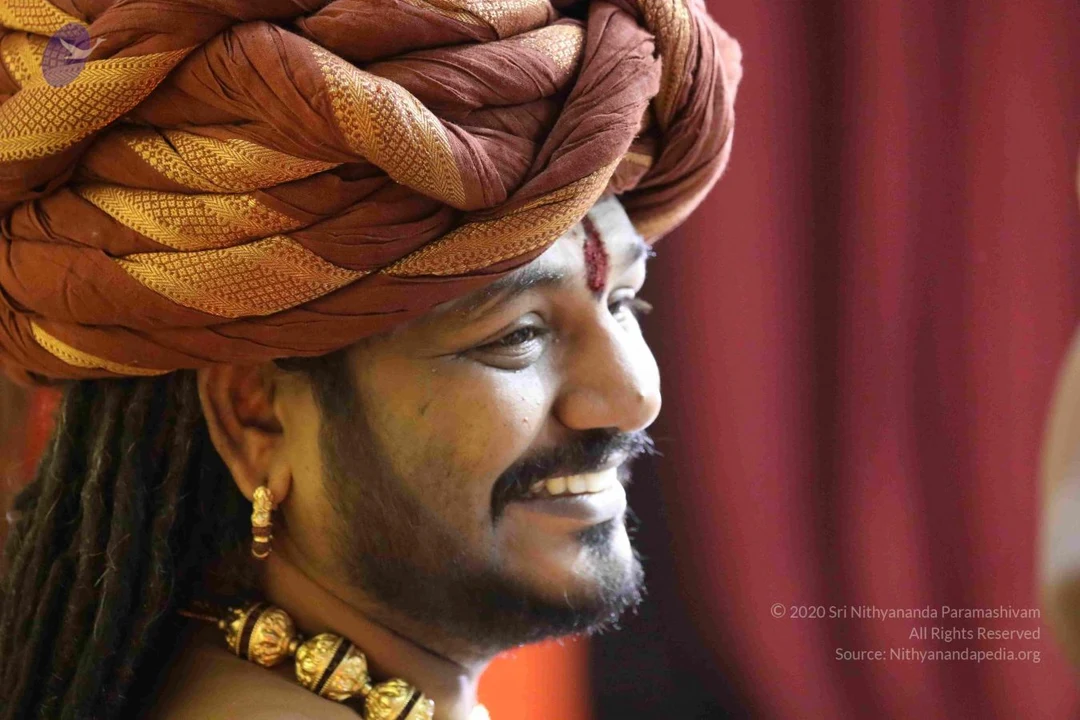
163 photosSource gallery
A photograph of an ornately decorated silver throne-like seat, with no people visible. A pair of yellow-wrapped conical items topped with leaves sits on a silver kalasha-style vessel, draped with yellow and white marigold garlands and red flowers. Embellished cloth with gold and gemstone-studded jewellery and an ornate pendant rests on the seat, and a lit oil lamp burns at the right edge. The silver backrest is carved with floral and bird motifs. The setting suggests a ritual decoration of an empty seat with floral garlands and lamps.A square homa fire pit built from yellow-painted bricks, with a small flame and sticks burning in the centre. A brass bowl of yellow liquid. Behind, people in orange-saffron robes sit on a striped mat, with a rudraksha mala and ornate gold necklace visible on a seated figure at right. No faces are shown clearly enough to identify anyone.A homa fire burns inside a square pit built of yellow-painted bricks. Dry sticks are stacked in the pit and a bright flame rises from them. A brass bowl of yellow liquid sits on the brick edge, with a ladle resting in it. White flower petals and flowers are scattered around the bricks, and a small steel cup sits at the right edge. Behind the pit, a person in orange robes and a rudraksha mala is partly visible at the right, and a striped mat lies beneath. No face is shown in the frame.A silver tray divided into a grid of square compartments holds a ritual arrangement of coloured grains and powders. Brown, grey-green, pale yellow and off-white grains fill the sections in patterned clusters. White chrysanthemum-like flowers are placed at several points, and a bundled dry grass or reed stalk stands upright in the centre, tied with orange-brown paste. This is a grain and flower arrangement on a silver yantra-style tray, with no people visible.A photograph of an ornate silver throne-like seat with a peacock-carved back, decorated with yellow and red flower garlands, green leaves, and a silver pot with blue-and-white embellishment. Silver oil lamps burn on either side, and a silver plate holds grapes, pomegranates and betel leaves in front. No people are visible; the seat is an empty ritual setting with a dark background and flowering branches behind.A photograph of a homa at an outdoor fire pit lined with yellow-painted bricks. Flames rise from wood inside the pit, and a brass bowl sits beside the fire. A seated priest in saffron-orange robes and an orange headwrap pours an offering from a long-handled ladle into the fire. He wears rudraksha malas, bead bracelets, and white markings on his arms and face. A small brass vessel and an oil lamp rest on the mat in the foreground, with a wall and shrubs behind him.

Shiva-Deeksha-MSS
163 photosSource gallery
A photograph of an ornately decorated silver throne-like seat, with no people visible. A pair of yellow-wrapped conical items topped with leaves sits on a silver kalasha-style vessel, draped with yellow and white marigold garlands and red flowers. Embellished cloth with gold and gemstone-studded jewellery and an ornate pendant rests on the seat, and a lit oil lamp burns at the right edge. The silver backrest is carved with floral and bird motifs. The setting suggests a ritual decoration of an empty seat with floral garlands and lamps.A square homa fire pit built from yellow-painted bricks, with a small flame and sticks burning in the centre. A brass bowl of yellow liquid. Behind, people in orange-saffron robes sit on a striped mat, with a rudraksha mala and ornate gold necklace visible on a seated figure at right. No faces are shown clearly enough to identify anyone.A homa fire burns inside a square pit built of yellow-painted bricks. Dry sticks are stacked in the pit and a bright flame rises from them. A brass bowl of yellow liquid sits on the brick edge, with a ladle resting in it. White flower petals and flowers are scattered around the bricks, and a small steel cup sits at the right edge. Behind the pit, a person in orange robes and a rudraksha mala is partly visible at the right, and a striped mat lies beneath. No face is shown in the frame.A silver tray divided into a grid of square compartments holds a ritual arrangement of coloured grains and powders. Brown, grey-green, pale yellow and off-white grains fill the sections in patterned clusters. White chrysanthemum-like flowers are placed at several points, and a bundled dry grass or reed stalk stands upright in the centre, tied with orange-brown paste. This is a grain and flower arrangement on a silver yantra-style tray, with no people visible.A photograph of an ornate silver throne-like seat with a peacock-carved back, decorated with yellow and red flower garlands, green leaves, and a silver pot with blue-and-white embellishment. Silver oil lamps burn on either side, and a silver plate holds grapes, pomegranates and betel leaves in front. No people are visible; the seat is an empty ritual setting with a dark background and flowering branches behind.A photograph of a homa at an outdoor fire pit lined with yellow-painted bricks. Flames rise from wood inside the pit, and a brass bowl sits beside the fire. A seated priest in saffron-orange robes and an orange headwrap pours an offering from a long-handled ladle into the fire. He wears rudraksha malas, bead bracelets, and white markings on his arms and face. A small brass vessel and an oil lamp rest on the mat in the foreground, with a wall and shrubs behind him.

Shiva-Deeksha-MSS
163 photosSource gallery
A photograph of an ornately decorated silver throne-like seat, with no people visible. A pair of yellow-wrapped conical items topped with leaves sits on a silver kalasha-style vessel, draped with yellow and white marigold garlands and red flowers. Embellished cloth with gold and gemstone-studded jewellery and an ornate pendant rests on the seat, and a lit oil lamp burns at the right edge. The silver backrest is carved with floral and bird motifs. The setting suggests a ritual decoration of an empty seat with floral garlands and lamps.A square homa fire pit built from yellow-painted bricks, with a small flame and sticks burning in the centre. A brass bowl of yellow liquid. Behind, people in orange-saffron robes sit on a striped mat, with a rudraksha mala and ornate gold necklace visible on a seated figure at right. No faces are shown clearly enough to identify anyone.A homa fire burns inside a square pit built of yellow-painted bricks. Dry sticks are stacked in the pit and a bright flame rises from them. A brass bowl of yellow liquid sits on the brick edge, with a ladle resting in it. White flower petals and flowers are scattered around the bricks, and a small steel cup sits at the right edge. Behind the pit, a person in orange robes and a rudraksha mala is partly visible at the right, and a striped mat lies beneath. No face is shown in the frame.A silver tray divided into a grid of square compartments holds a ritual arrangement of coloured grains and powders. Brown, grey-green, pale yellow and off-white grains fill the sections in patterned clusters. White chrysanthemum-like flowers are placed at several points, and a bundled dry grass or reed stalk stands upright in the centre, tied with orange-brown paste. This is a grain and flower arrangement on a silver yantra-style tray, with no people visible.A photograph of an ornate silver throne-like seat with a peacock-carved back, decorated with yellow and red flower garlands, green leaves, and a silver pot with blue-and-white embellishment. Silver oil lamps burn on either side, and a silver plate holds grapes, pomegranates and betel leaves in front. No people are visible; the seat is an empty ritual setting with a dark background and flowering branches behind.A photograph of a homa at an outdoor fire pit lined with yellow-painted bricks. Flames rise from wood inside the pit, and a brass bowl sits beside the fire. A seated priest in saffron-orange robes and an orange headwrap pours an offering from a long-handled ladle into the fire. He wears rudraksha malas, bead bracelets, and white markings on his arms and face. A small brass vessel and an oil lamp rest on the mat in the foreground, with a wall and shrubs behind him.

Shiva-Deeksha-MSS
163 photosSource gallery
A photograph of an ornately decorated silver throne-like seat, with no people visible. A pair of yellow-wrapped conical items topped with leaves sits on a silver kalasha-style vessel, draped with yellow and white marigold garlands and red flowers. Embellished cloth with gold and gemstone-studded jewellery and an ornate pendant rests on the seat, and a lit oil lamp burns at the right edge. The silver backrest is carved with floral and bird motifs. The setting suggests a ritual decoration of an empty seat with floral garlands and lamps.A square homa fire pit built from yellow-painted bricks, with a small flame and sticks burning in the centre. A brass bowl of yellow liquid. Behind, people in orange-saffron robes sit on a striped mat, with a rudraksha mala and ornate gold necklace visible on a seated figure at right. No faces are shown clearly enough to identify anyone.A homa fire burns inside a square pit built of yellow-painted bricks. Dry sticks are stacked in the pit and a bright flame rises from them. A brass bowl of yellow liquid sits on the brick edge, with a ladle resting in it. White flower petals and flowers are scattered around the bricks, and a small steel cup sits at the right edge. Behind the pit, a person in orange robes and a rudraksha mala is partly visible at the right, and a striped mat lies beneath. No face is shown in the frame.A silver tray divided into a grid of square compartments holds a ritual arrangement of coloured grains and powders. Brown, grey-green, pale yellow and off-white grains fill the sections in patterned clusters. White chrysanthemum-like flowers are placed at several points, and a bundled dry grass or reed stalk stands upright in the centre, tied with orange-brown paste. This is a grain and flower arrangement on a silver yantra-style tray, with no people visible.A photograph of an ornate silver throne-like seat with a peacock-carved back, decorated with yellow and red flower garlands, green leaves, and a silver pot with blue-and-white embellishment. Silver oil lamps burn on either side, and a silver plate holds grapes, pomegranates and betel leaves in front. No people are visible; the seat is an empty ritual setting with a dark background and flowering branches behind.A photograph of a homa at an outdoor fire pit lined with yellow-painted bricks. Flames rise from wood inside the pit, and a brass bowl sits beside the fire. A seated priest in saffron-orange robes and an orange headwrap pours an offering from a long-handled ladle into the fire. He wears rudraksha malas, bead bracelets, and white markings on his arms and face. A small brass vessel and an oil lamp rest on the mat in the foreground, with a wall and shrubs behind him.

Pictures from the day

3 photosSource gallery