Skip to content
Friday

10 November 2017

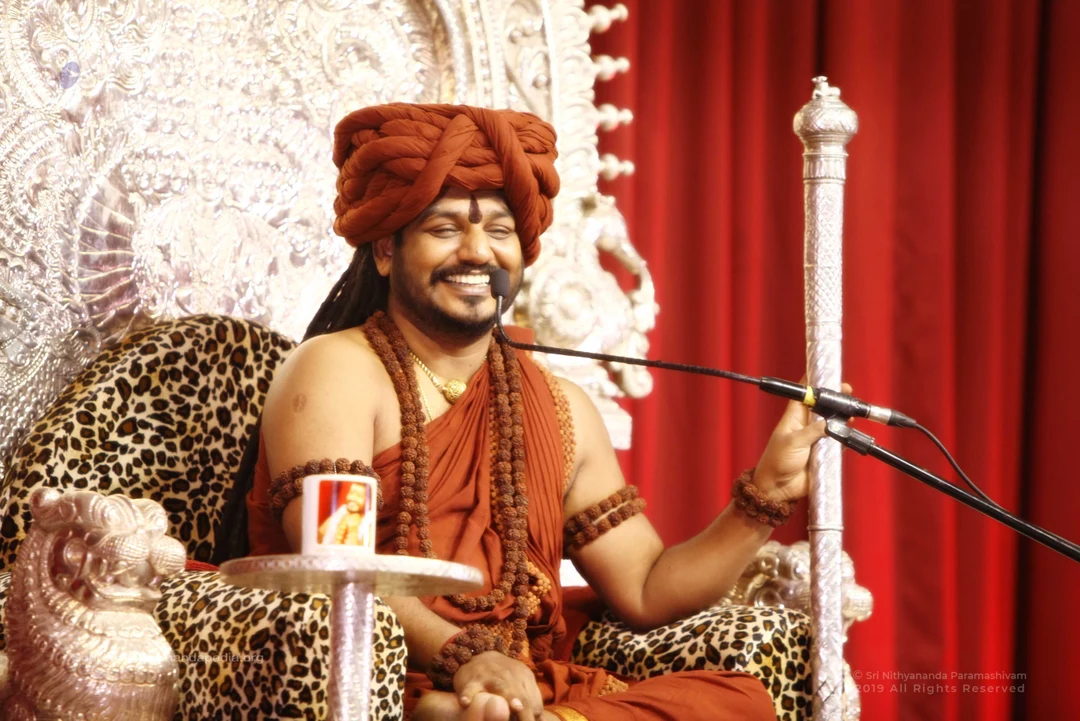
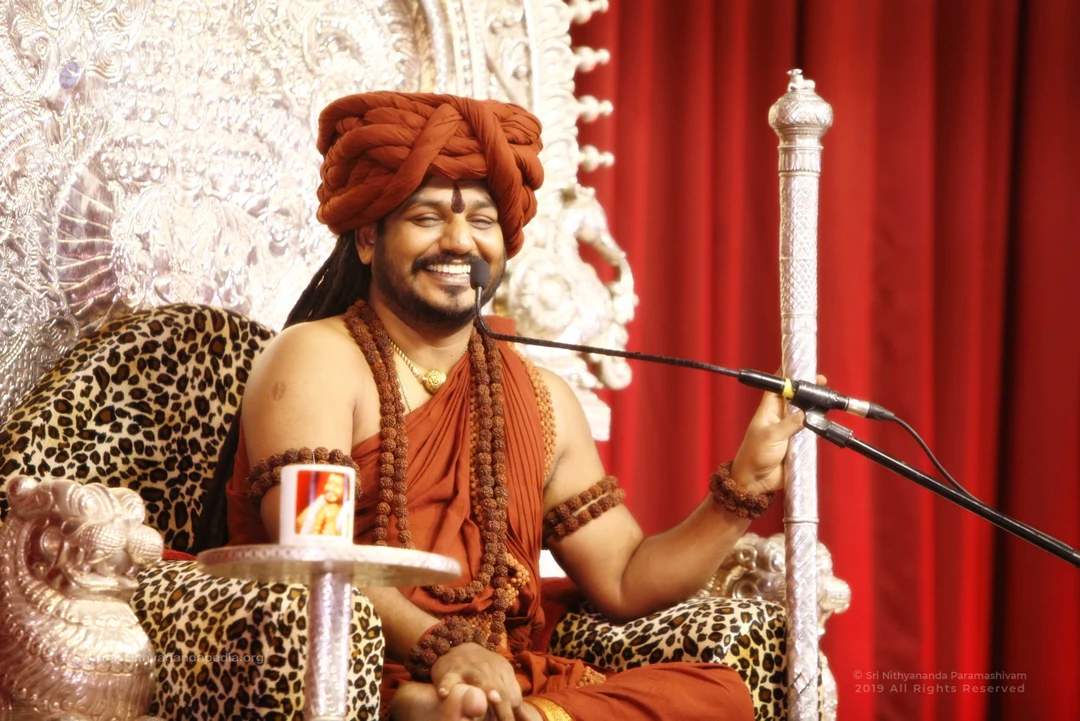
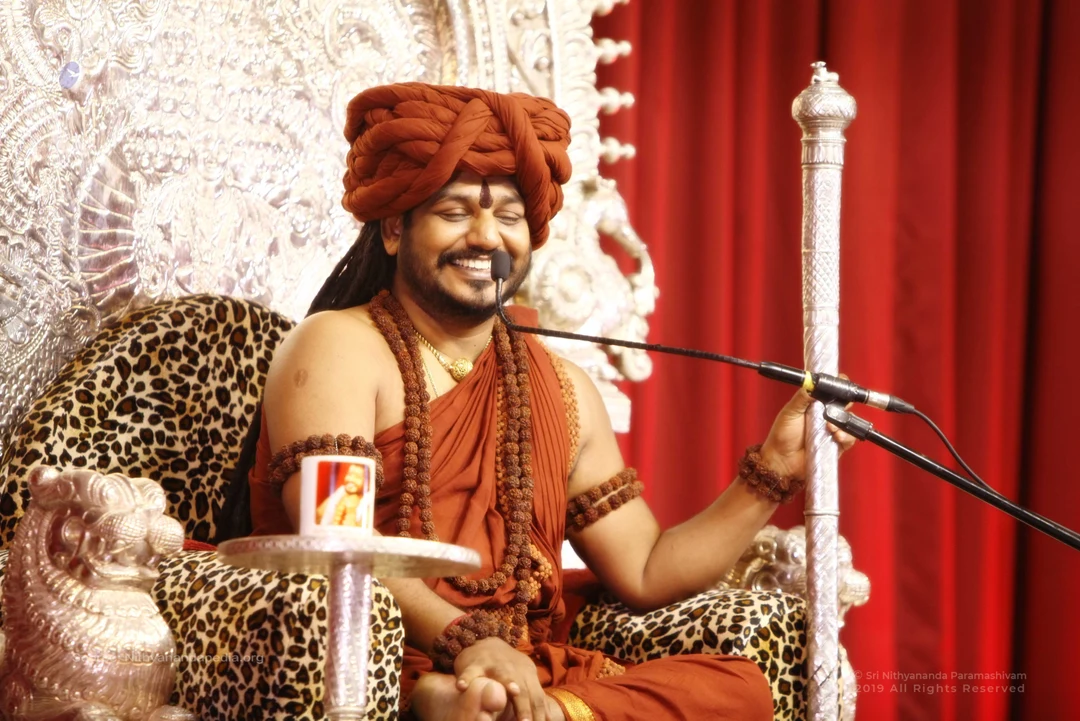
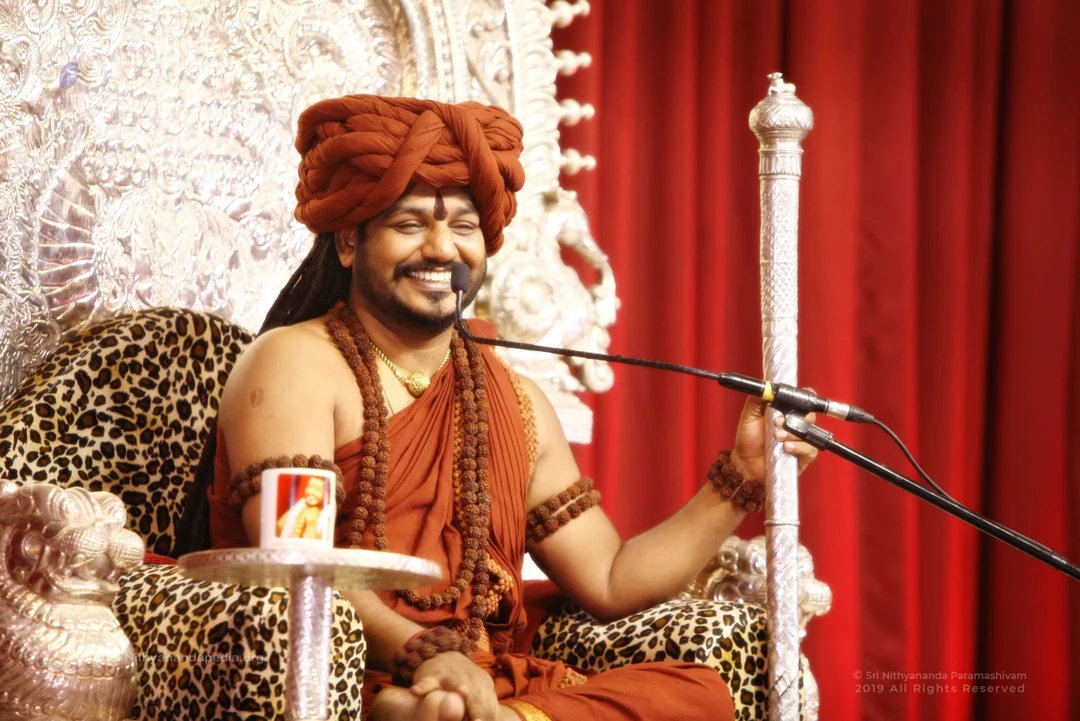
Ask the Avatar - Rapid fire Q & A

Dated photos
79
Source pages
1
Media
5
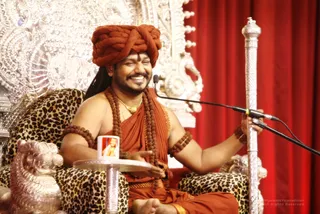
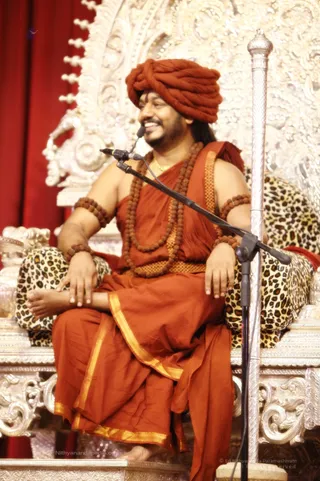
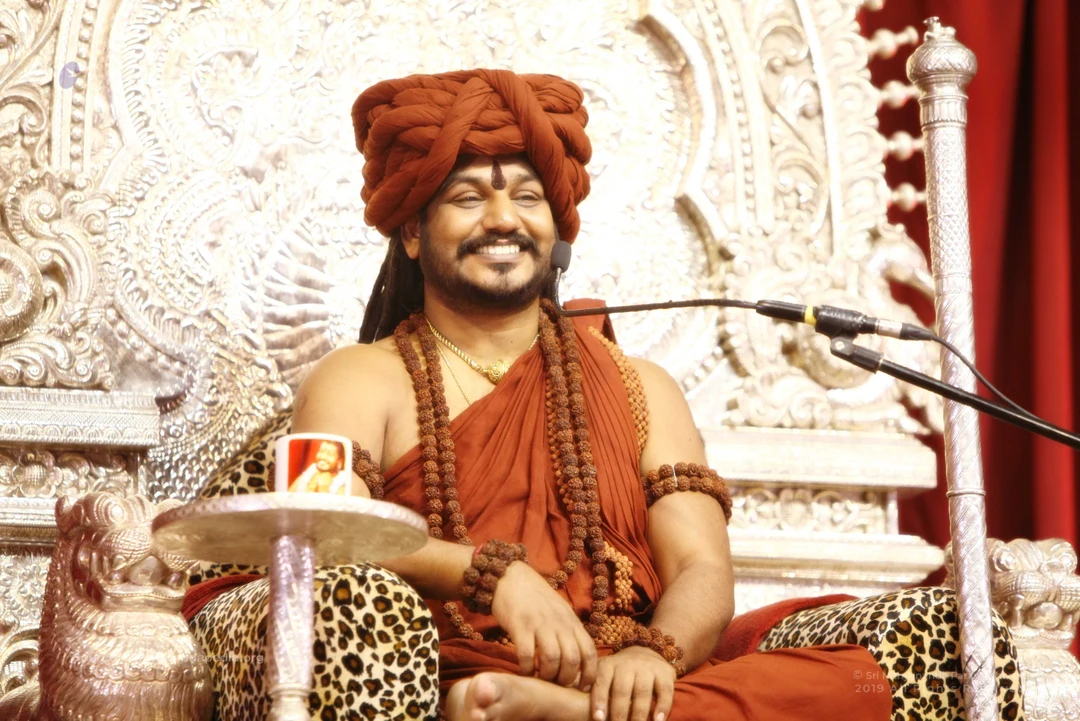
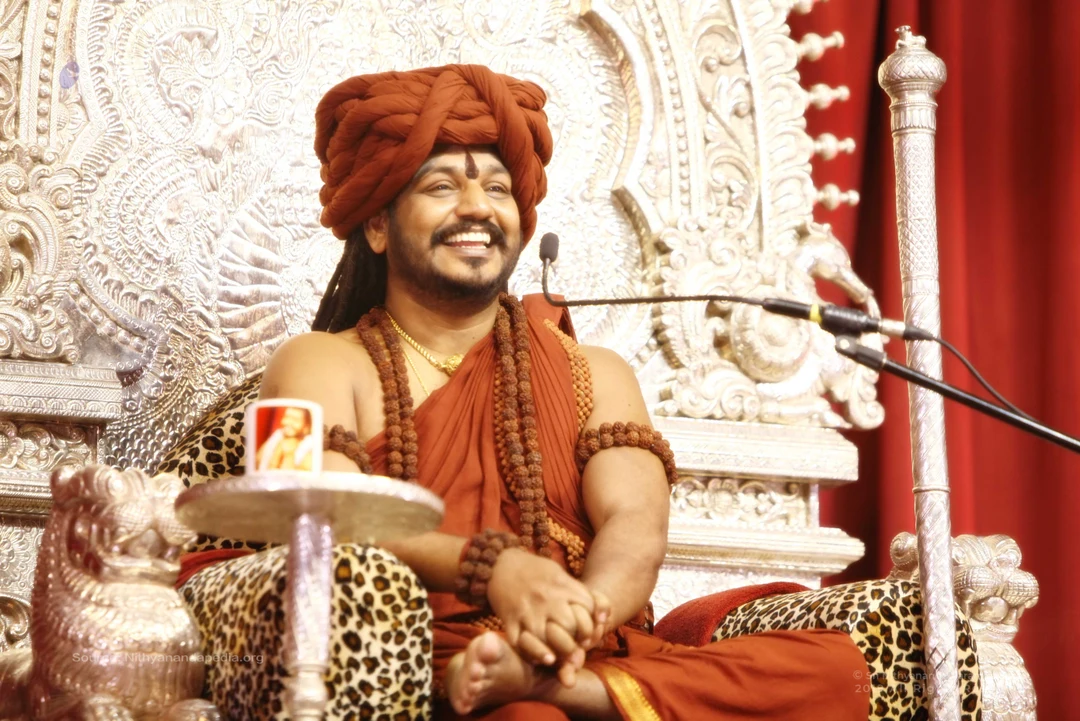
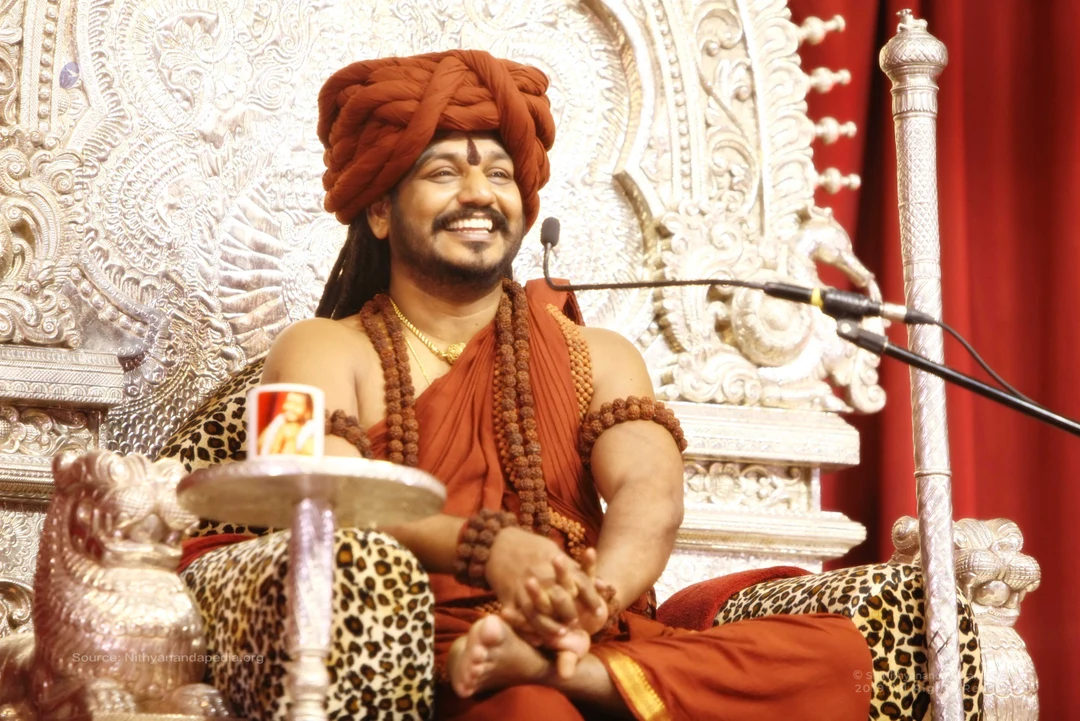
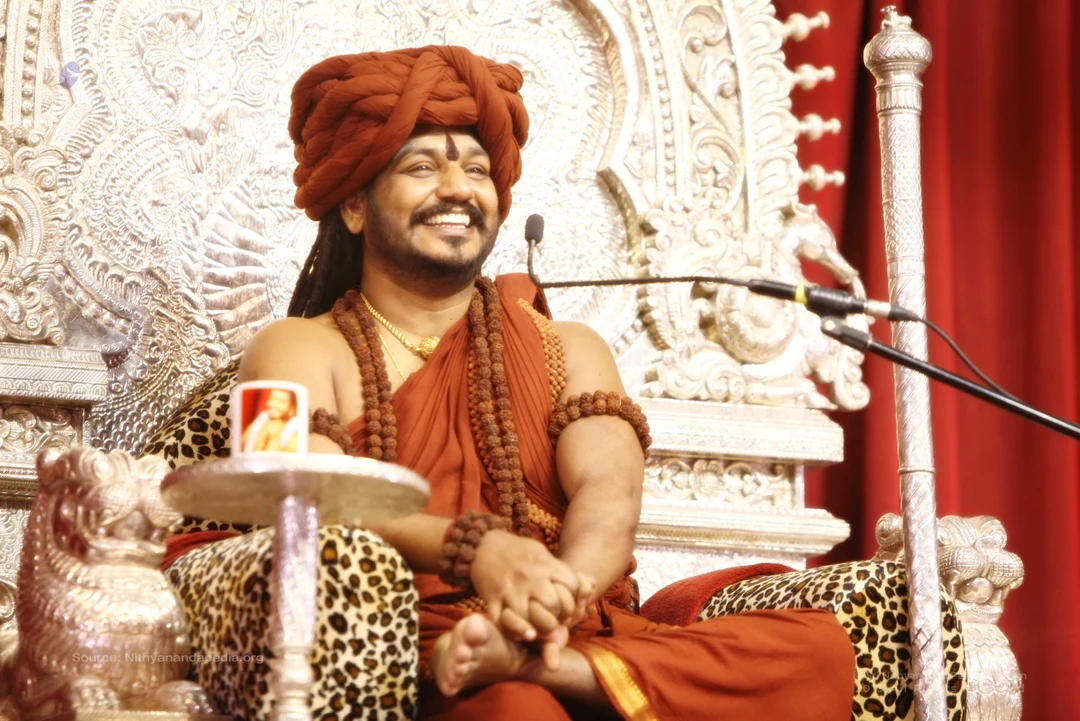
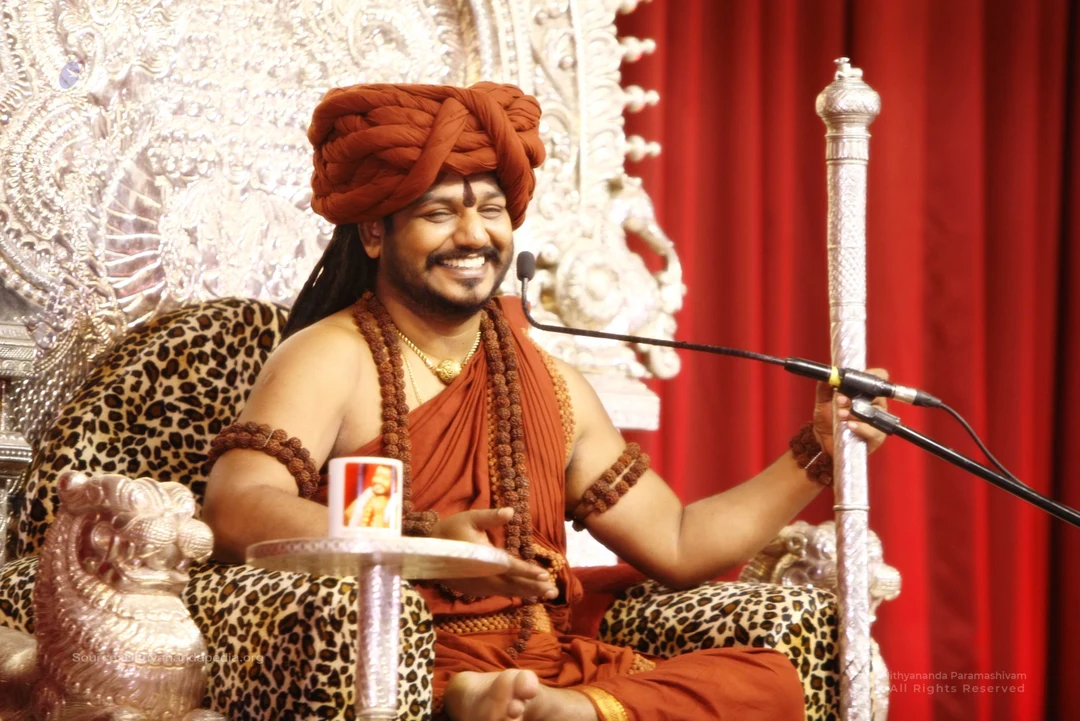
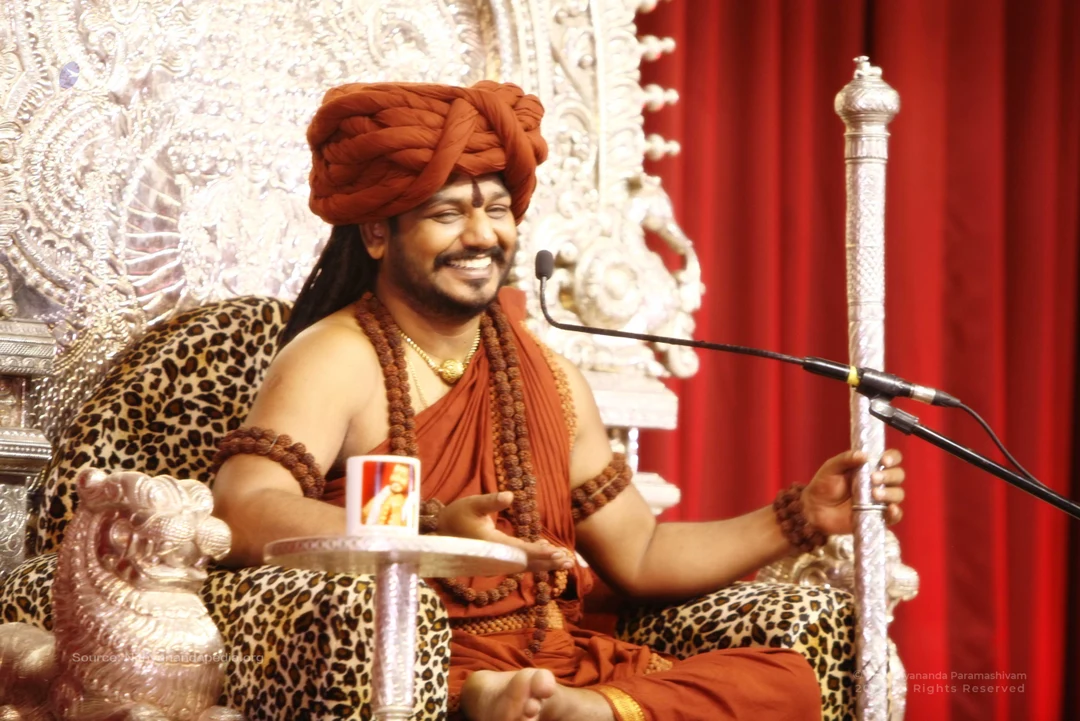
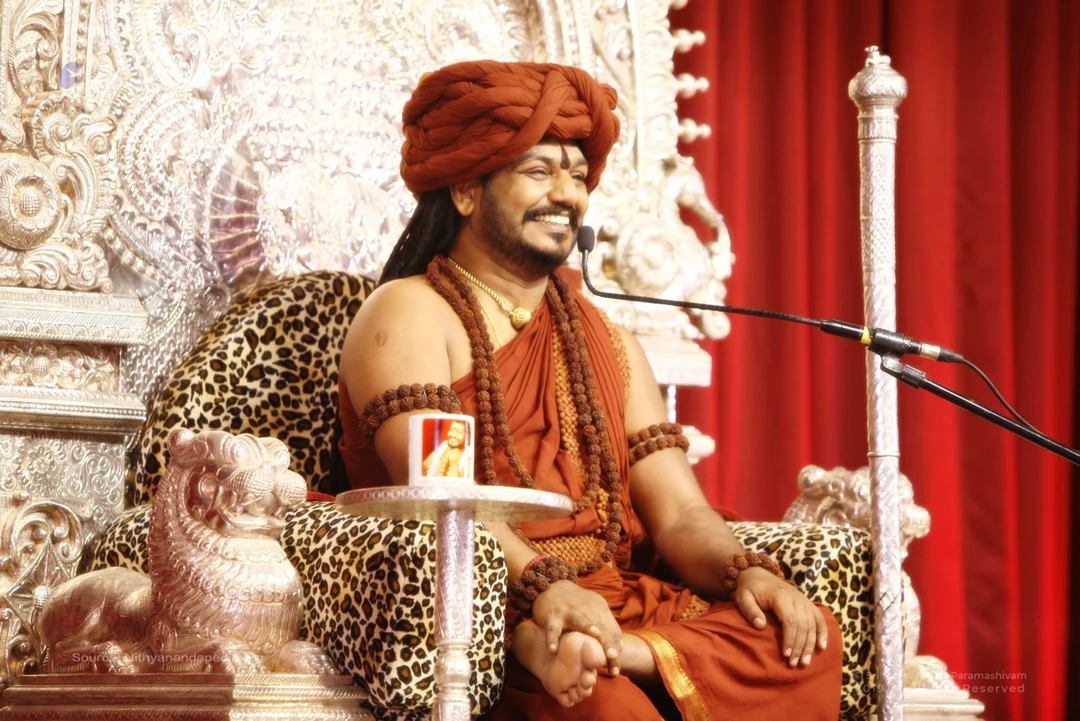
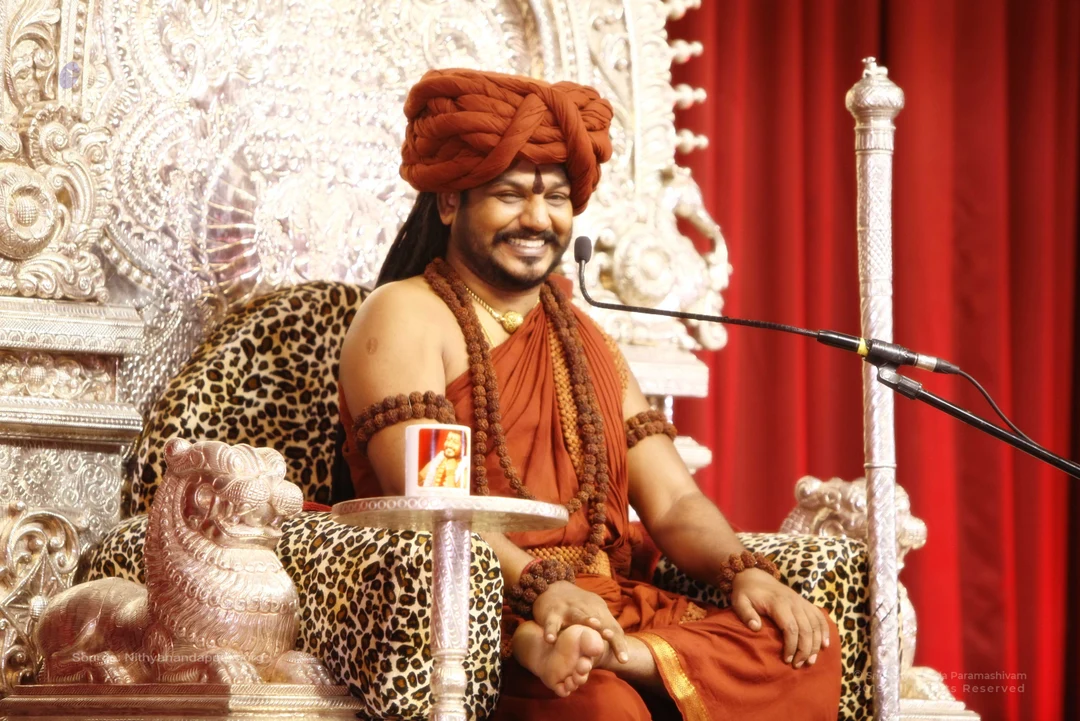
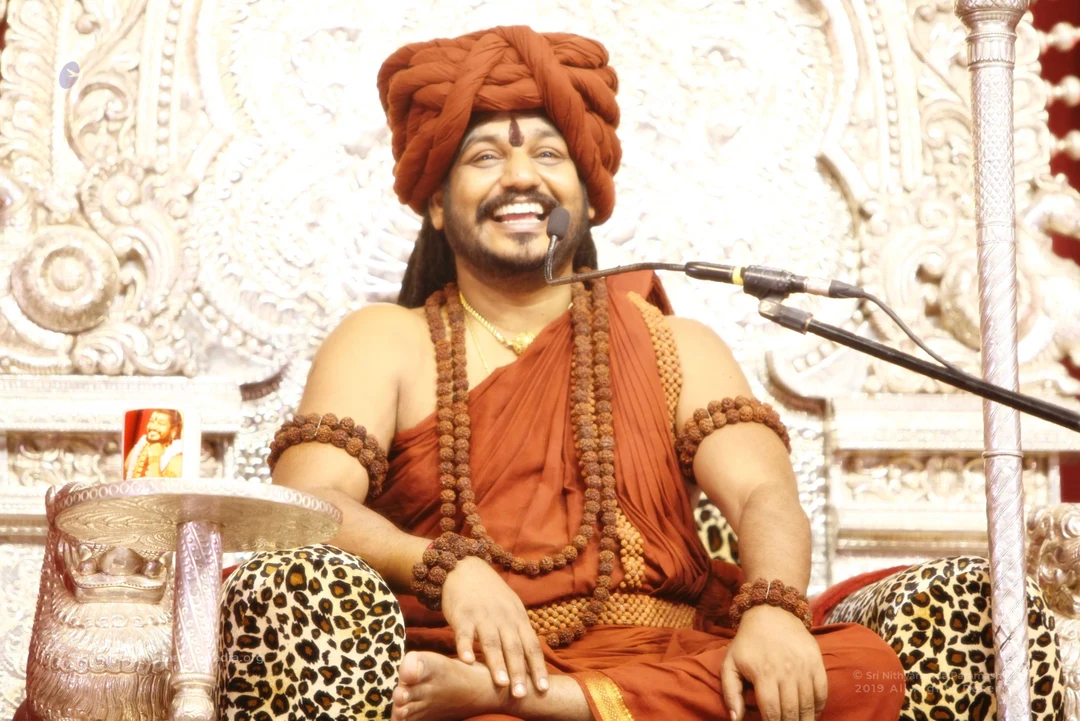
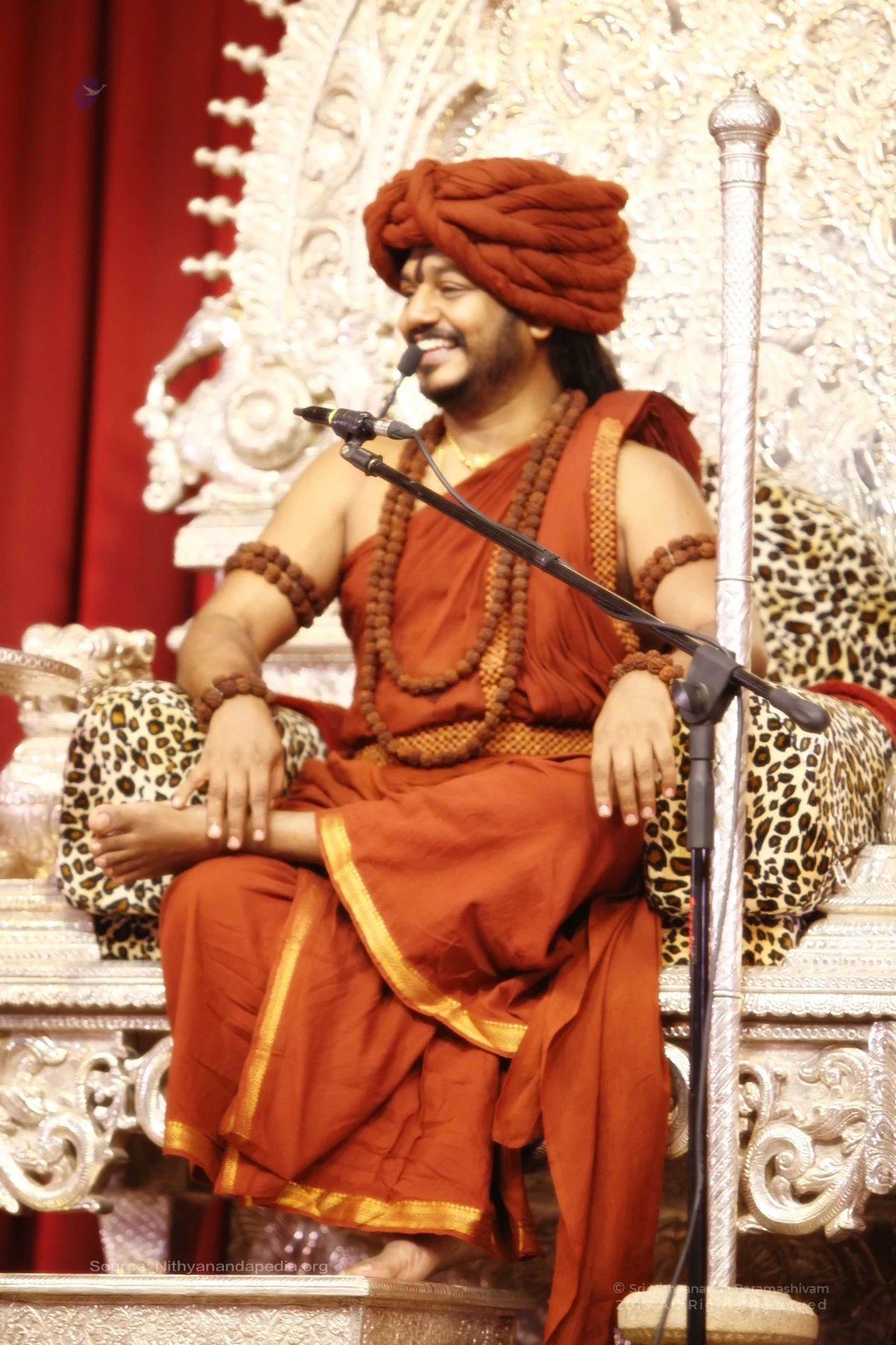
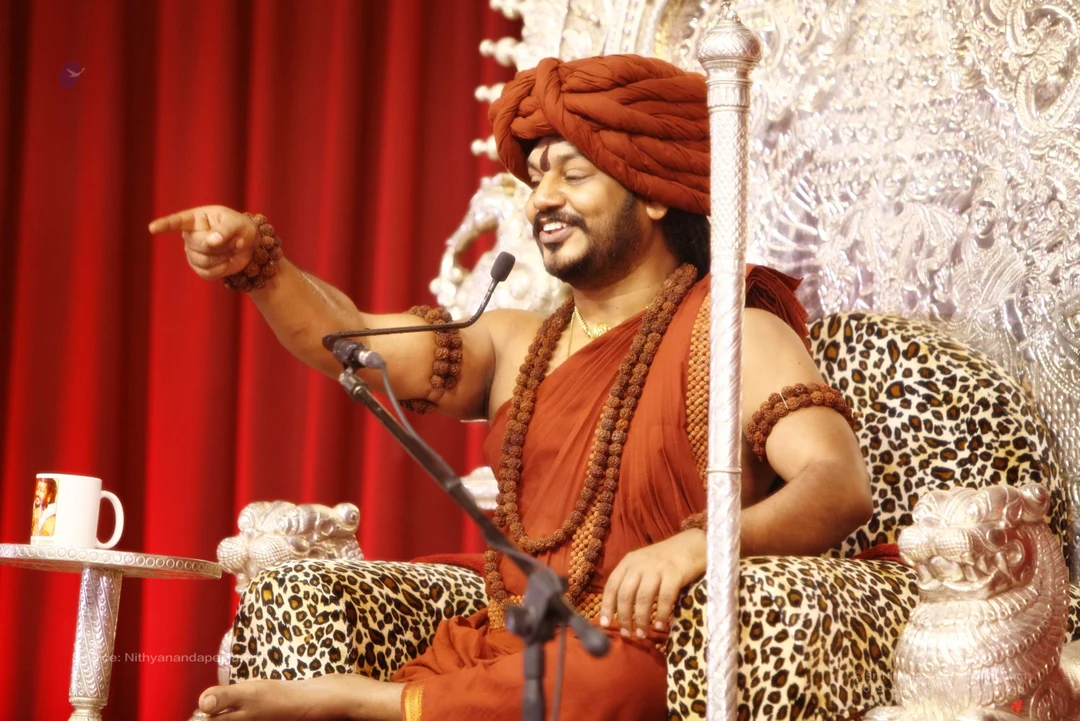
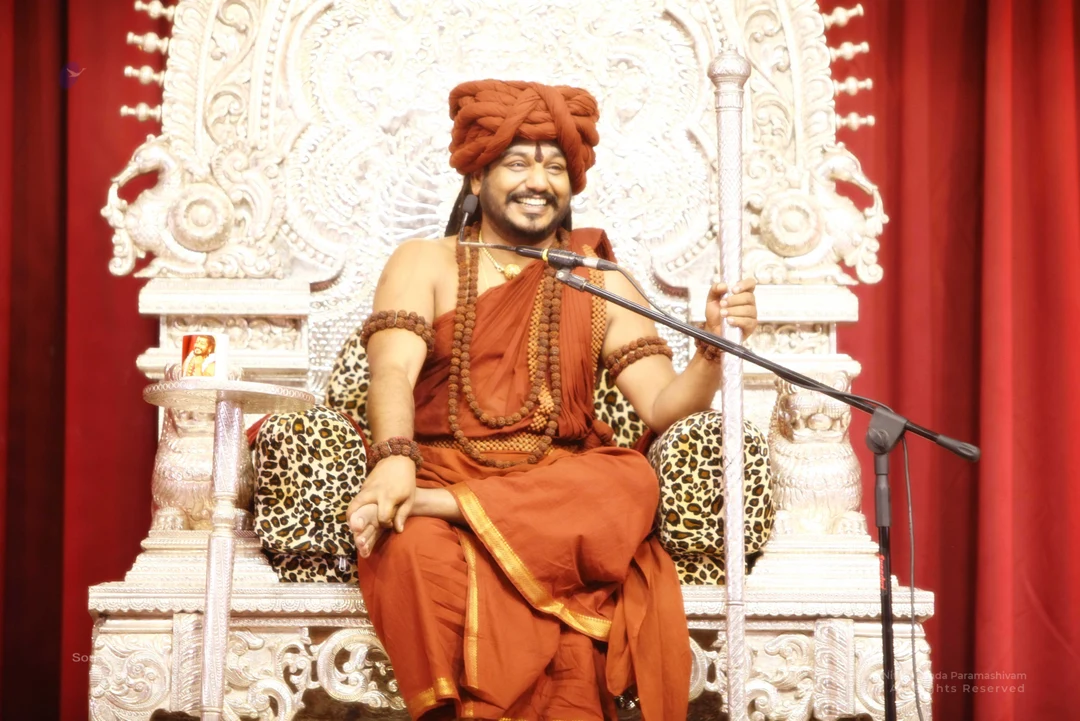
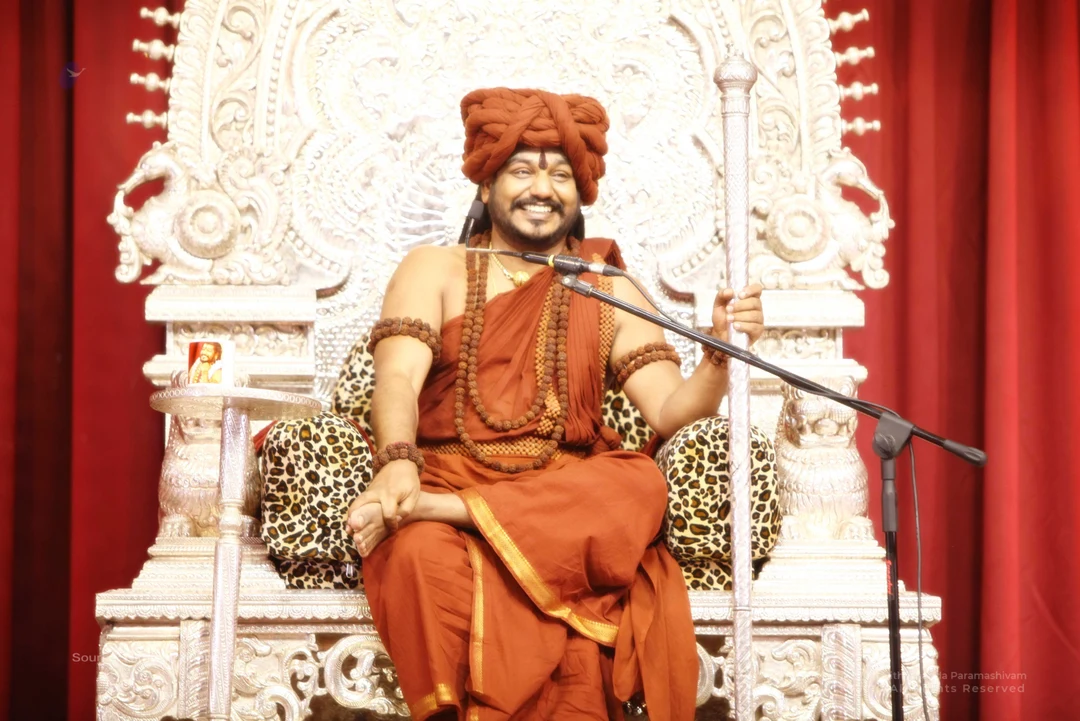
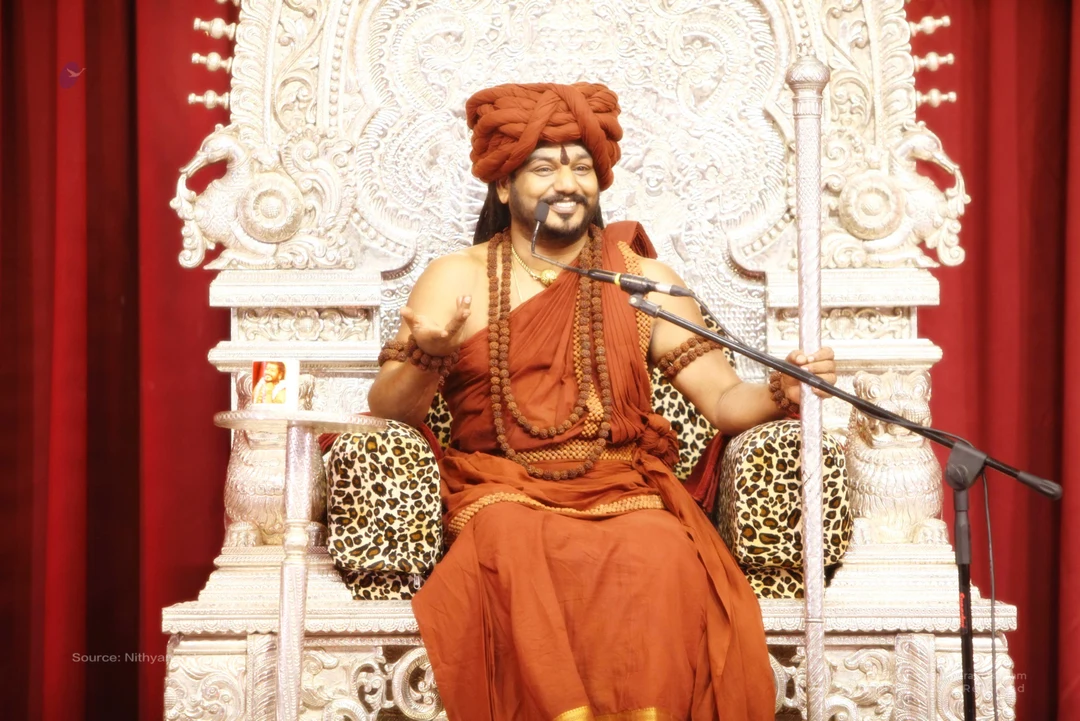
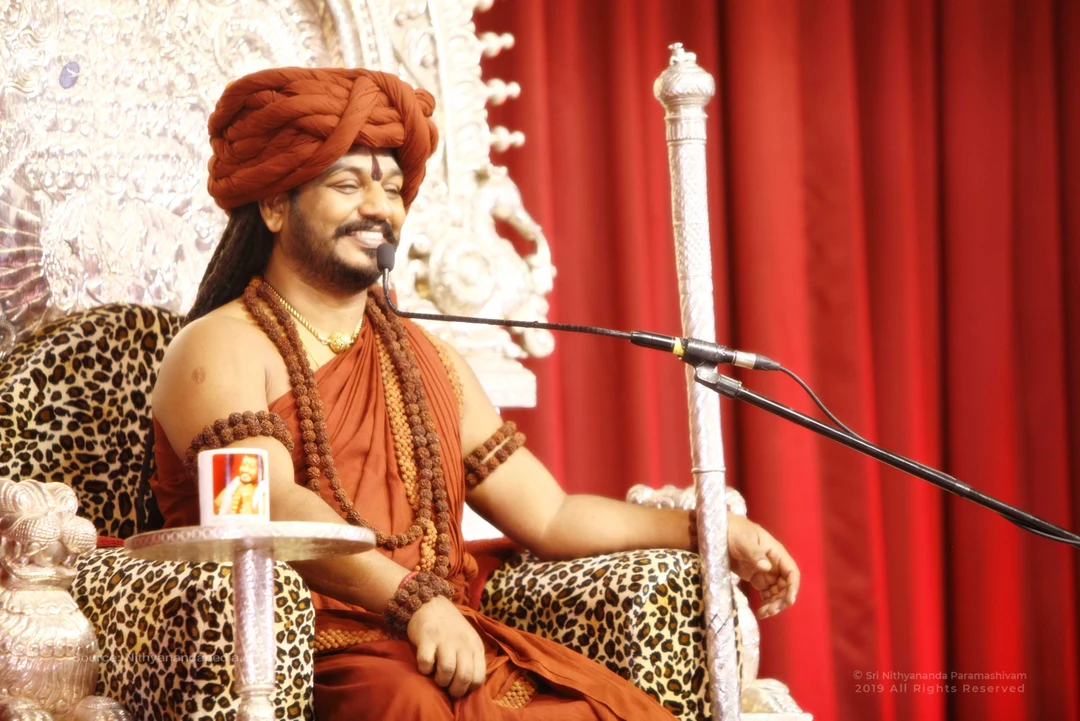
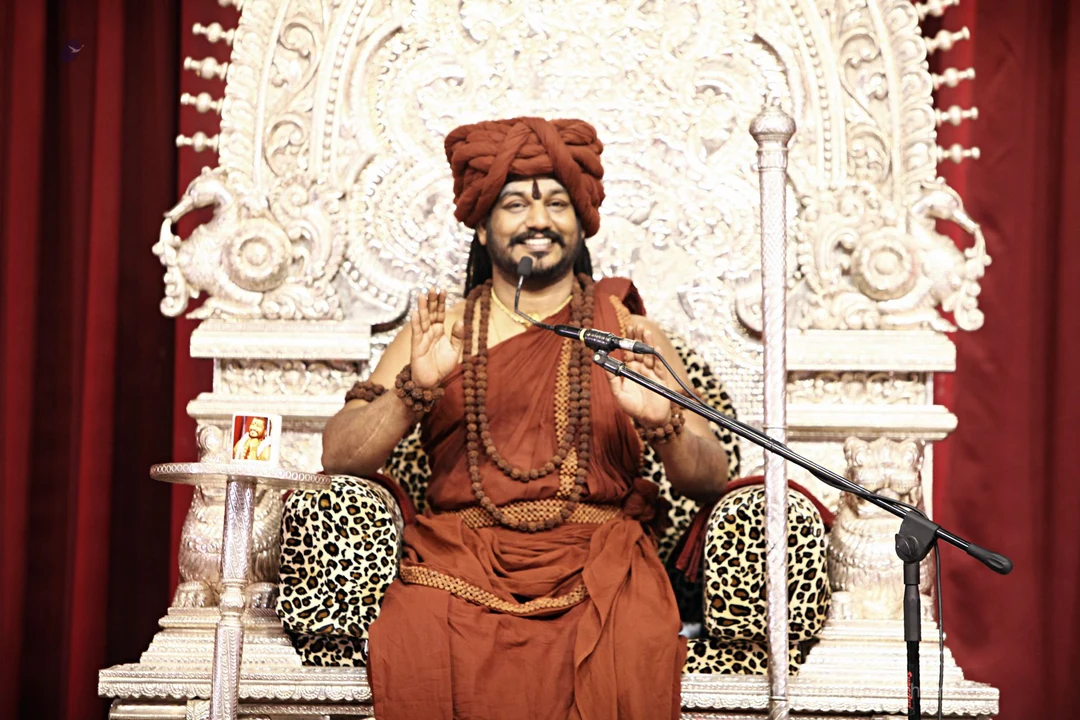
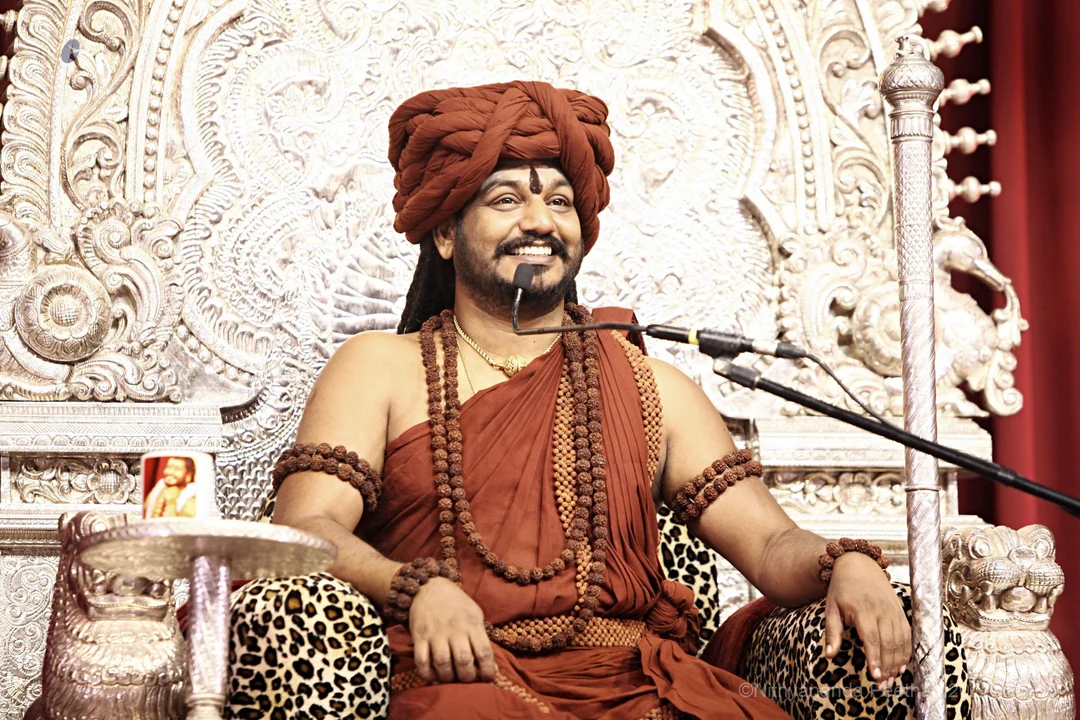
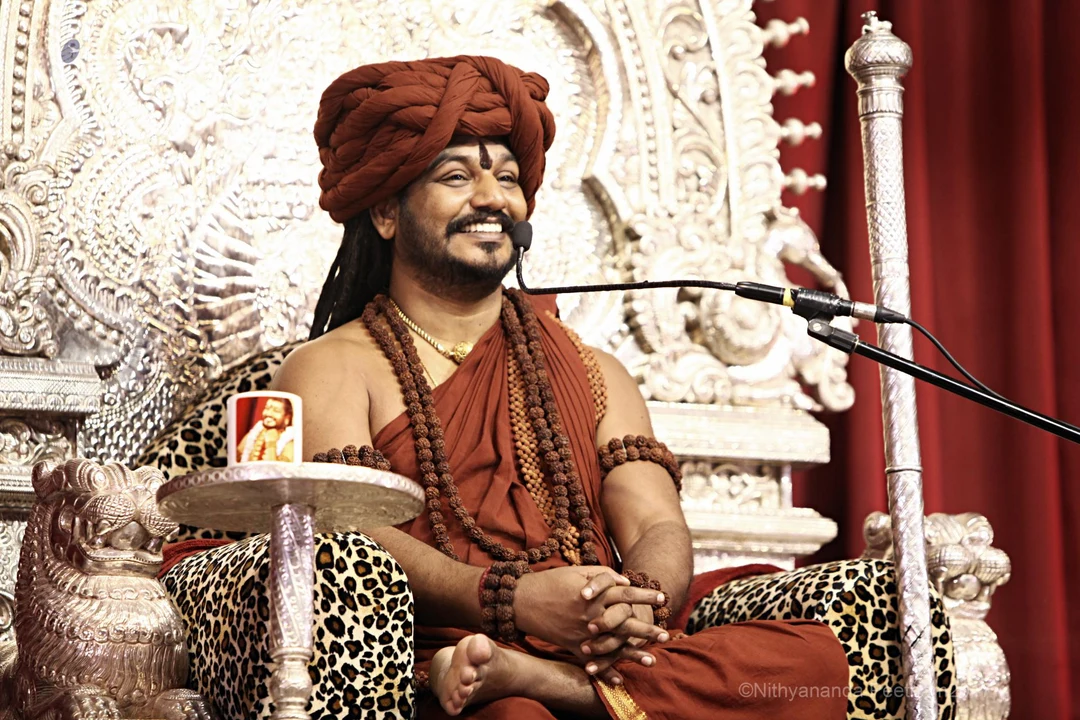
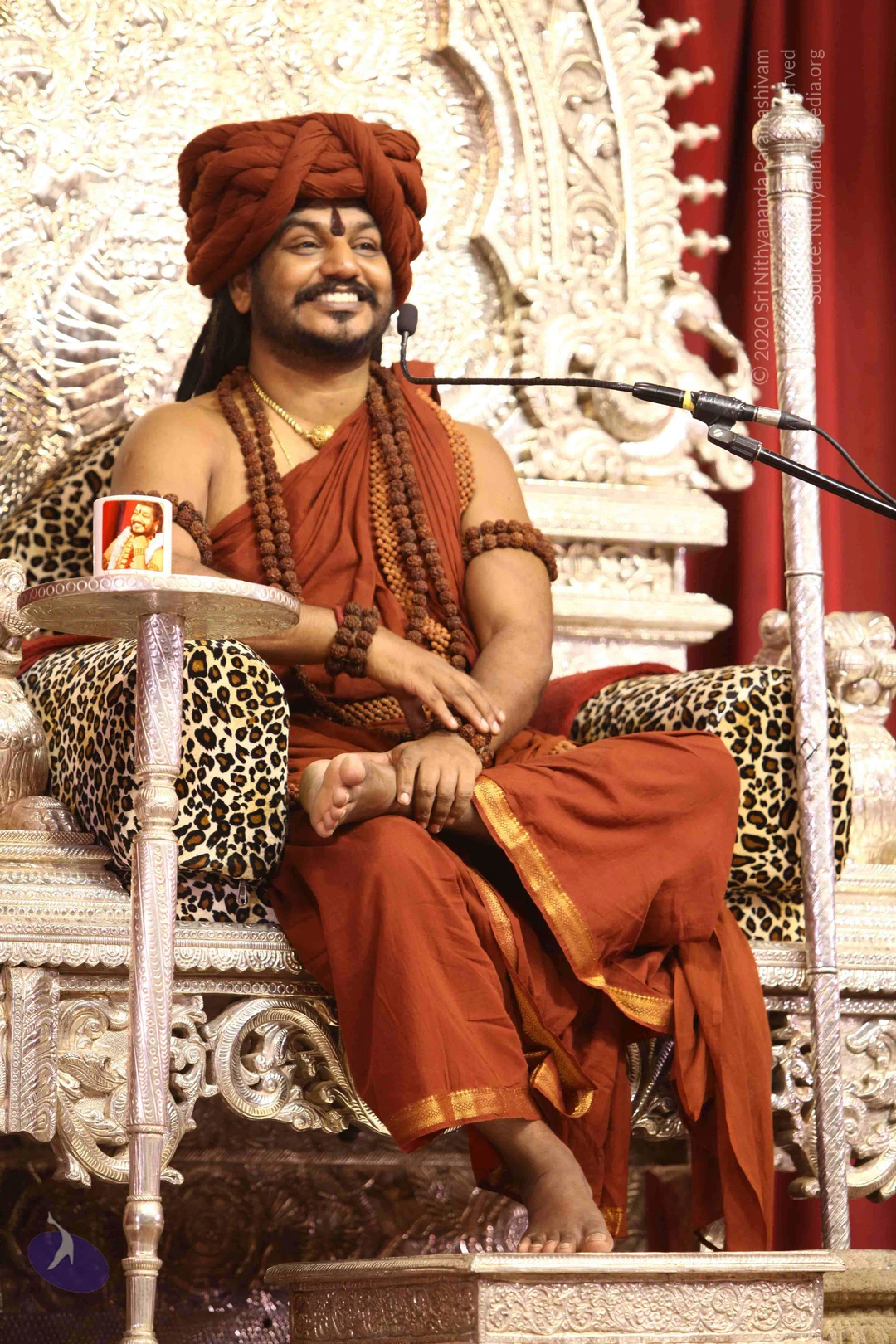
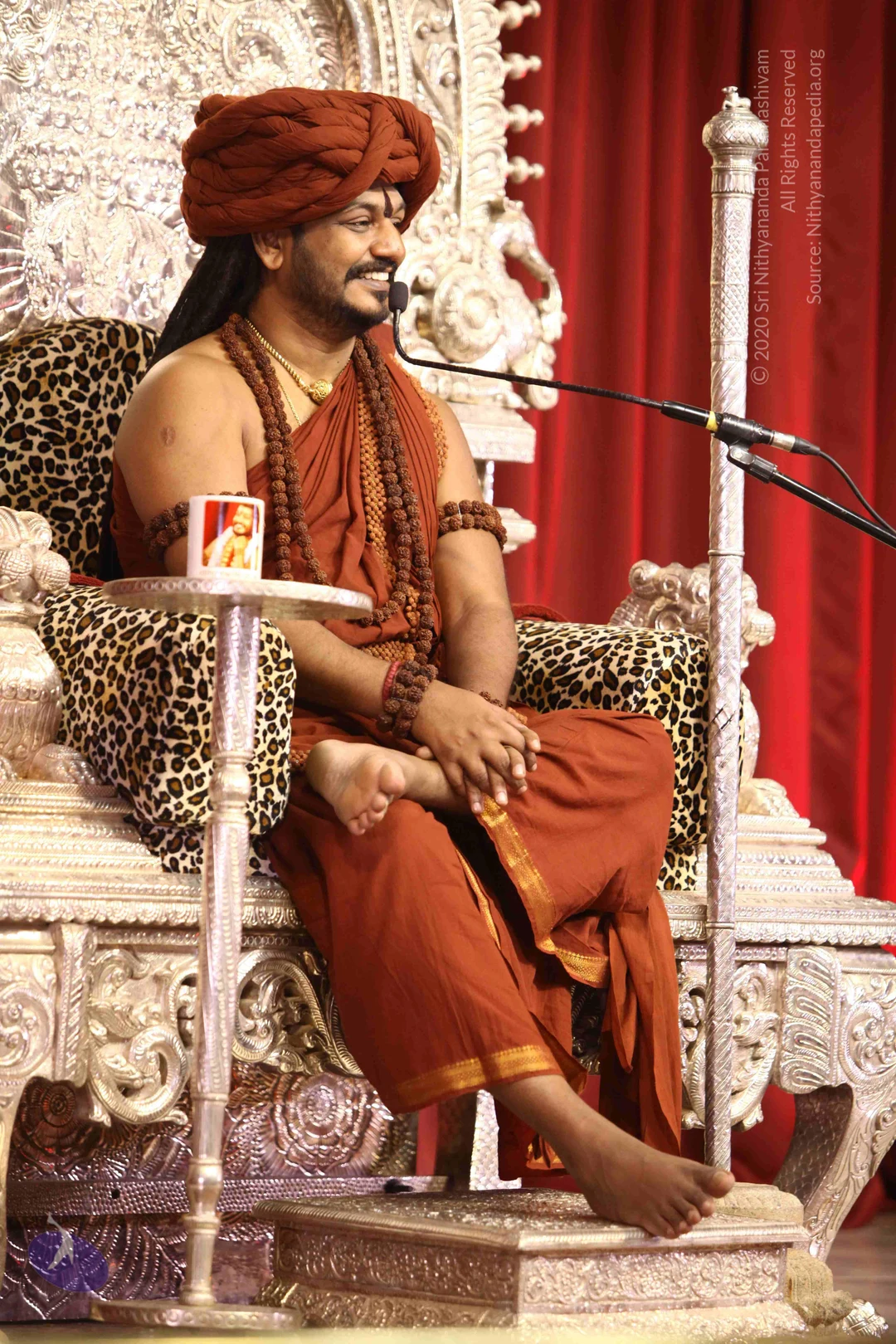
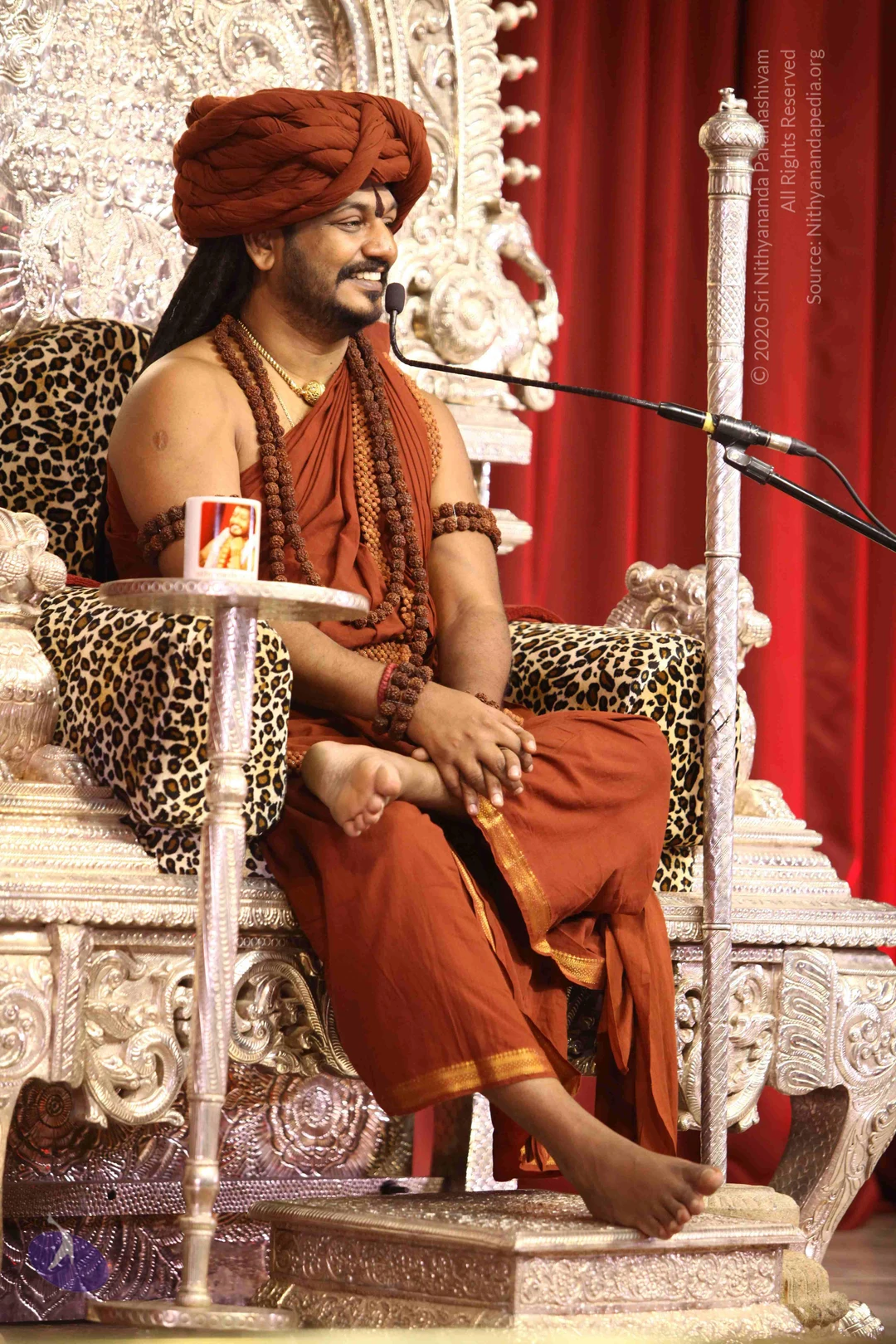
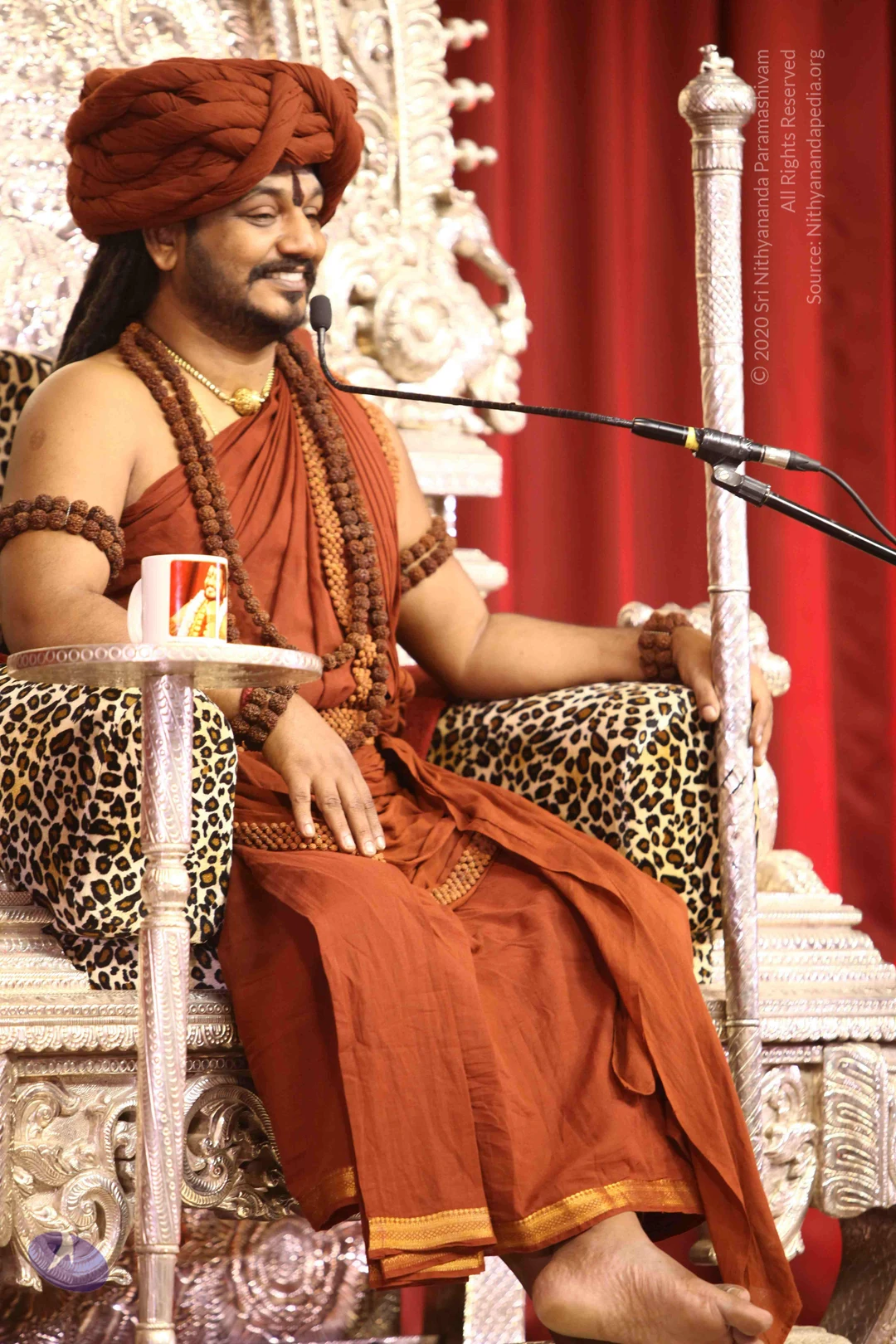
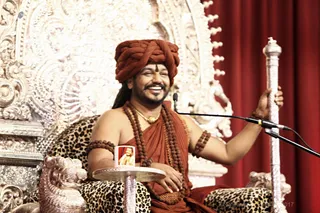
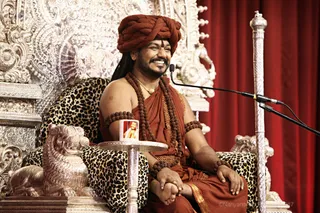
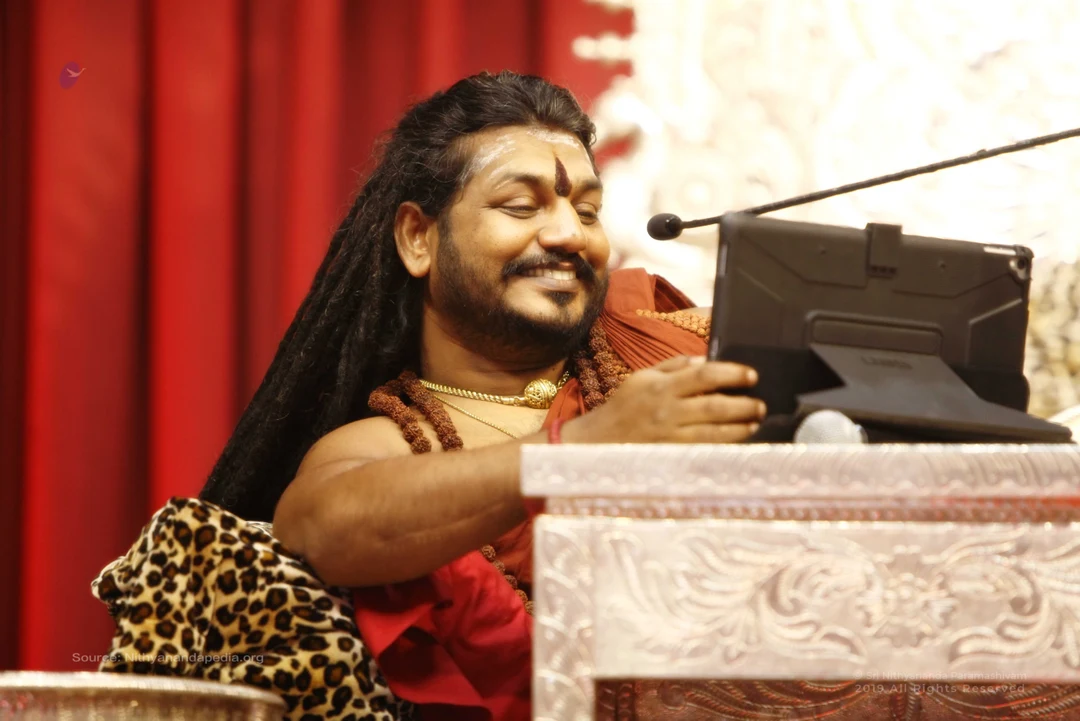
A smiling man in saffron-orange robes and an orange turban sits on a leopard-print cushioned silver throne before red drapes and an ornate silver backdrop. He wears layered rudraksha malas, a gold pendant necklace, and orange rudraksha bands on his arms, and holds a silver microphone stand while a microphone is positioned near him. A small framed photograph of a seated figure stands on a silver side table beside him. Swamiji (probable): long dark hair and a turban, saffron clothing, rudraksha malas and ceremonial gold necklace, seated as the speaker on a throne.A bearded man with long dreadlocks sits smiling behind a white ornate lectern holding a black tablet in a UAG rugged case. He wears a red and orange wrap over bare shoulders, a leopard-print cloth on his lap, multiple rudraksha mala necklaces, a gold chain and a red wrist thread, with a red tilak on his forehead. A microphone on a stand is at right, and a red curtain and white floral backdrop fill the background.

November 10 2017

Original wiki page
Contents

Title:

Ask the Avatar - Rapid fire Q & A

Description:

In this video (10 November 2017), Paramahamsa Nithyananda answers a flurry of rapid fire questions on Facebook Live.

Link to Video:

VideoAudio

Title:

Science of Giving Superconscious Breakthrough to Animals

Link to Video:

VideoAudio

Transcript:

(0:08)

Ma Nithya Swaruparpriyananda -

Sweta is asking Swamiji - “ How can I make people I love - love me back?”

(0:13)

Swamiji -

First thing, don’t be a harassment, bad memory - for people. When they remember you, when they are alone….when they are alone, if they remember you - how they feel, is very important for them to love you back. Be very clear, don’t be a possessive Pondatti and hot, spicy, Bondatti. Hot spicy Bonda will burn the tongue, possessive Bonda will burn the whole body, burn the mind. So do not burn somebody inside or outside. Just make sure, when they remember you, they have a pleasant memory, they will simply love you. What is the definition of love? Anything bring pleasant memory in you, you love that. You will love to remember that. So be a beautiful sweet pleasant memory for people and of course, if you want to be a Guru for somebody, then it cannot be about pleasant, it has to be all about ‘right.’ It’s not that I am always pleasant for My disciples, but I can guarantee in front of Kalabhairava, I am always right for My disciples. Guru - Disciple relationship is not love based, it is trust based. Even when you feel, “you are not loved,” memories are not pleasant, if you know it is only good for me, that trust based is Guru - Disciple relationship. Understand. If you want normal relationship, it should all be about love. If you want Guru - Disciple relationship, it should all be about trust. So, if you want any normal relationship, just make sure that people remember you very pleasantly. That’s all is the way to make people whom you love - love you back.

(2:44)

Ma Nithya Swarupapriyananda -

Shivam Shivoham is asking - “How can I also love Swamiji, the way He loves all?”

(2:50)

Swamiji -

Fundamentally, decide one important truth. People will not have gratitude even if you give your life for them. If you come to that conclusion, then decide to love, you will never stop loving. You will just showering, you know - you don’t care about whether they shower back or not.

(3:13)

Ma Nithya Swarupapriyananda -

Tony Lofton is asking - “Why the Kali Yuga happened? Why did we fall to a lower state of consciousness?”

(3:21)

Swamiji -

I think Kali Yuga happens to fellows who are already in lower state….whatever state you are in, you attract that kind of people around you. Yuga itself is not responsible, it is you who is responsible.

(3:37)

Ma Nithya Swarupapriyananda -

“Swamiji, I am struggling with the stress of the Maya Matrix. What can I do to shift this permanently?”

(3:46)

Swamiji -

“I am struggling with the stress of the Maya Matrix. What can I do to shift this permanently” - I think you need to suffer little more. If you suffer more, you will automatically shift. Maybe the suffering is not enough, still you have a hope you can manage both. So once you know,”suffering is too much,” you will find a solution. You will find a solution.

(4:15)

Ma Nithya Swarupapriyananda -

Kirti is asking - “Swamiji, I know you have a program to help conceive conscious children, but when we were going through the process of adoption, how can I help my adopted child, become a conscious being?”

(4:29)

Swamiji -

I think, bring the child to MahaSadāshivoham. I’ll enlighten the child, that’s all.

(4:38)

Ma Nithya Swarupapriyananda -

Parveen is asking - “Pranam Swamiji, is paying for a spouse who is not yet willing to come to MahaSadāshivoham - enriching and creating a space, for that spouse to grow and attend or is there something more that should be done?”

(4:57)

Swamiji -

Start slowly enriching, not by giving advice but by giving attention. Give more and more attention, say, it’s the best gift you are giving it to her. It’s a paid vacation, spiritual vacation you are providing. So by giving more attention, you’ll be able to successful, not by giving any advice.

(5:24)

Ma Nithya Swarupapriyananda -

Karunakar Vasu is asking - “Swamiji, how can I overcome my victim mental pattern?”

(5:30)

Swamiji -

Two thing. The moment you know, it’s a victim mental pattern and dropping it, building a responsible personality or just collapsing and dying for few births. That’s a long route. So up to you, which route you want to take.

(5:48)

Ma Nithya Swarupapriyananda -

Ma Nithya Mrigapatikananda says - “Nithyanandam Swamiji, how should the inner space of a Sannyasi be? Can a Grihastha have a space of the Sannyasi and become enlightened?”

(6:00)

Swamiji -

See ultimately, whether Grihastha or Sannyasi, inner space has to become Sannyasi. It’s only when the inner space becomes a Sannyasi, enlightenment happens. Fundamentally, in the inner space there is no change, whether you can be this or that. Only in the outer space, there is a certain kind of an idea. What I am saying, “If you think, your inner space itself will be different for Sannyasi and Grihastha - I don’t think you are right. So inner space is one and the same for Grihastha and Sannyasi both.

(6:52)

Ma Nithya Swarupapriyananda -

Sabhapati Ramaswamy says - “We are the children of God, then why is He punishing us, even if we do mistakes, when we are not punishing our kids this cruelly for doing them….

(7:04)

Swamiji -

Stupid! Stupid! Stupid! You are not children of God - You are God! If you are thinking, “you are children of God,” already you destroyed yourself. You are God - that is the truth. So you are not children of God, you are God.

(7:24)

Ma Nithya Swarupapriyananda -

Swamiji, Mary Smith is saying - “Swamiji told us that when someone is selfish, their inner space is stinky. Can Swamiji smell this even online?”

(7:34)

Swamiji -

Please understand. I can smell your inner space, whether you are online, offline or deadline. Understand. I don’t need anything to smell your inner space, whether you are online, offline, deadline - I can smell your inner space. Then anywhere in the 11 dimensions of the Universe, I can smell your inner space.

(8:15)

Ma Nithya Swarupapriyananda -

Krishan Amrawad wrote - “I wanna live, see and operate my life through the third eye only. How to make it happen?”

(8:25)

Swamiji -

It’s too simple. Everyday spend at least 2-3 hours, more and more with blindfolded and using the third eye, it will become a lifestyle, that’s all. Nothing else. Morning when you wake up, put your blindfold and start doing all your day to day activities. You will simply see that your whole system starts functioning, using third eye as the fuel. That’s it.

(8:52)

Photos:
https://nithyananda.org/sites/default/files/photo-gallery/2017-11-Nov-10-nithyananda-diary_bengaluru-adheenam_nithya-satsang-q-and-a_IMG_1092.jpg?1510398698
https://nithyananda.org/sites/default/files/photo-gallery/2017-11-Nov-10-nithyananda-diary_bengaluru-adheenam_nithya-satsang-q-and-a_IMG_1099.jpg?1510398702
https://nithyananda.org/sites/default/files/photo-gallery/2017-11-Nov-10-nithyananda-diary_bengaluru-adheenam_nithya-satsang-q-and-a_IMG_1158_0.jpg?1510398710
https://nithyananda.org/sites/default/files/photo-gallery/2017-11-Nov-10-nithyananda-diary_bengaluru-adheenam_nithya-satsang-q-and-a_IMG_1231_0.jpg?1510398723
https://nithyananda.org/sites/default/files/photo-gallery/2017-11-Nov-10-nithyananda-diary_bengaluru-adheenam_nithya-satsang-q-and-a_IMG_1268.jpg?1510398730
https://nithyananda.org/sites/default/files/photo-gallery/2017-11-Nov-10-nithyananda-diary_bengaluru-adheenam_nithya-satsang-q-and-a_IMG_1292.jpg?1510398736

Sakshi Pramana:

Sharing about healing:

Tags:

Bhagavan Sri Nithyananda Paramashivam Paramahamsa Nithyananda, Nithyananda, Swamiji, Sadāshiva, kalabhairava, guru-disciple relationship, trust based, kali yuga, maya matrix, MahaSadāshivoham, enlightenment, enriching, victim mental pattern, inner space has to become sannyasi, grihastha, sannyasi, you are god, 11 dimensions of the Universe

Link to Facebook Post:

https://www.facebook.com/ParamahamsaNithyananda/posts/1557350327686145

Photos Of The Day:

FB-Photos-of-the-Day

01-Satsang

02-Bidadi-Deities

Photos from this day

View all 79 photos

Photos:
37 photosSource gallery
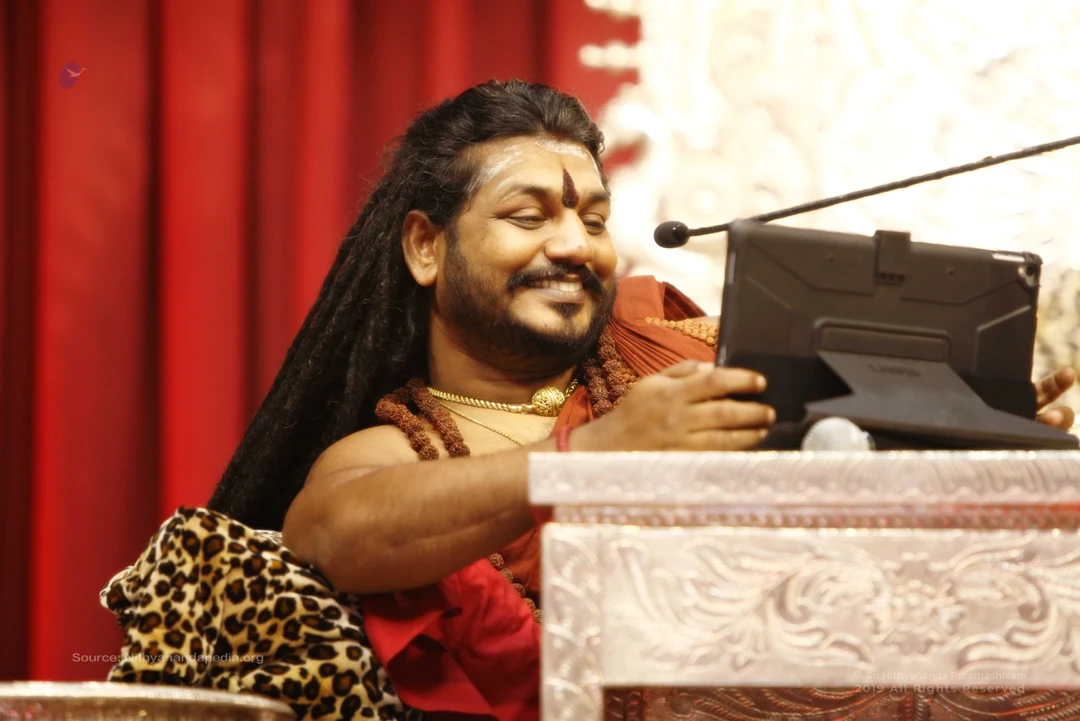
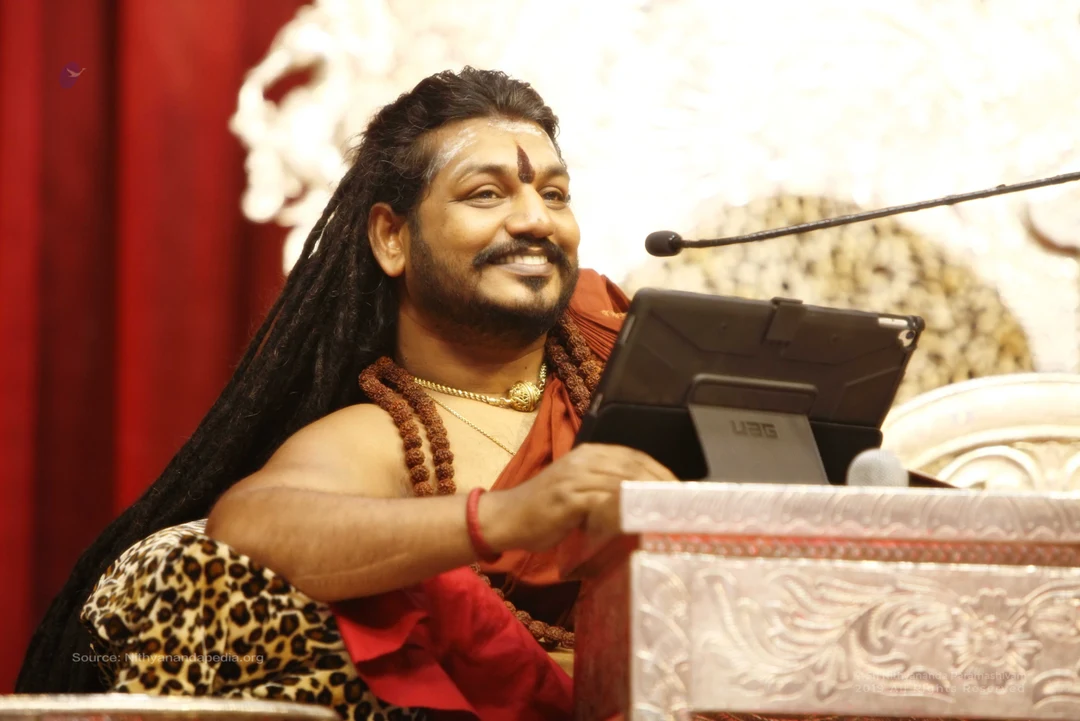
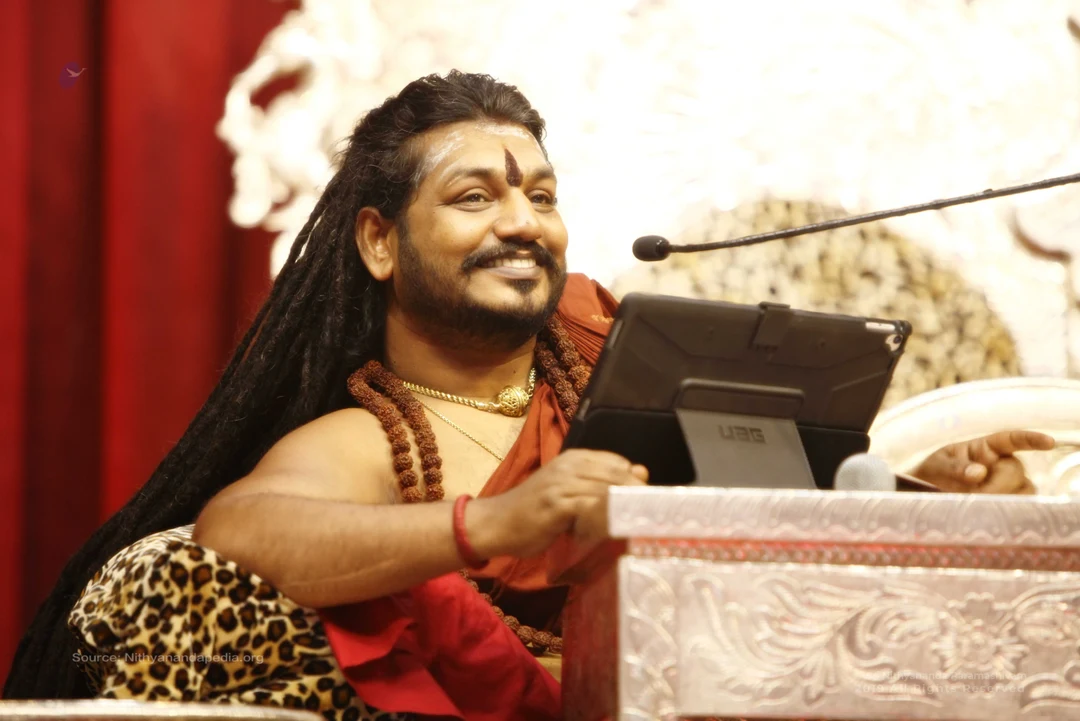
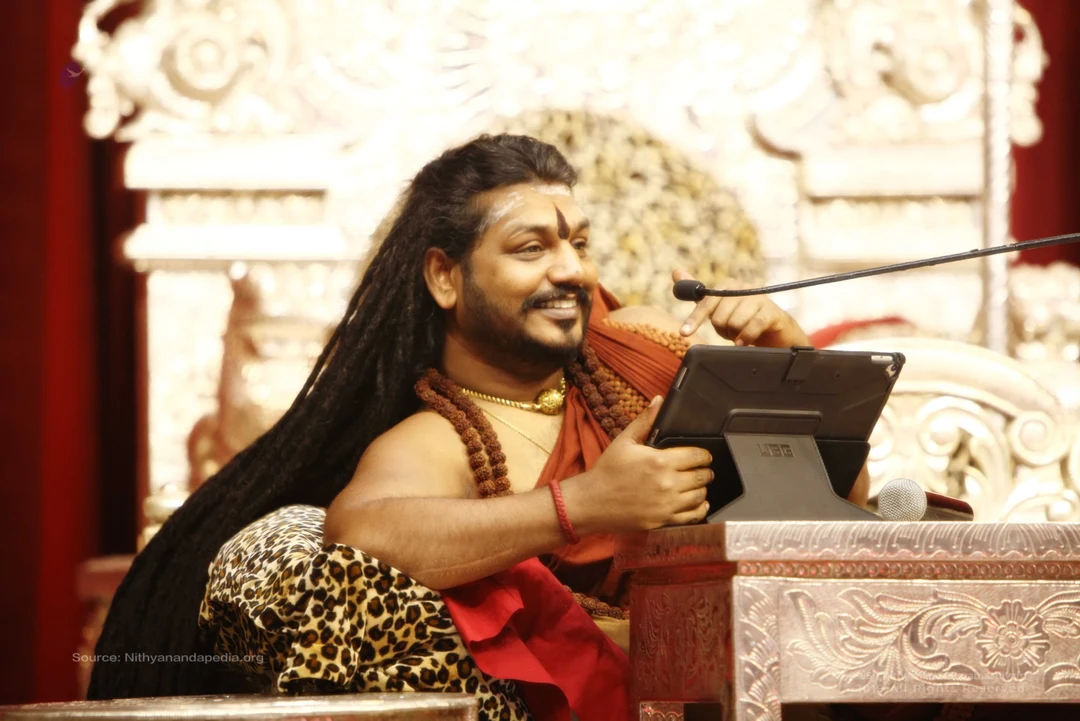
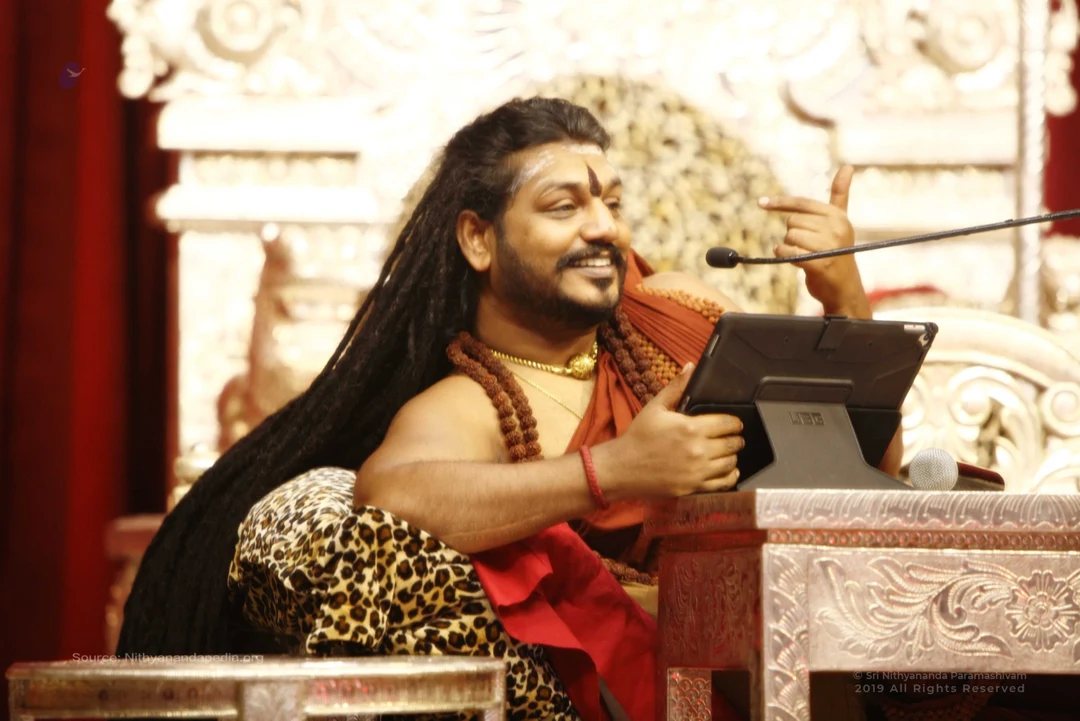
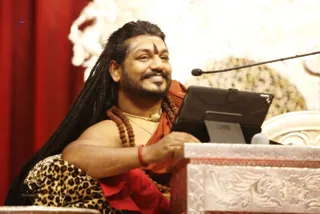
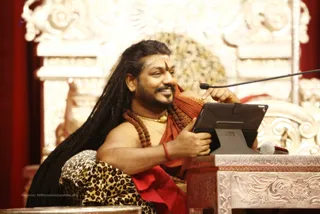
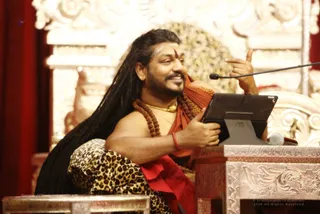
A smiling man with long dreadlocks, a forehead tilak, a beard and a red-orange robe sits behind a silver-trimmed podium, leaning toward a black tablet mounted on a stand with a microphone arm. He wears layered rudraksha malas and a gold chain necklace, and a leopard-print shawl drapes over his shoulder. Red curtains and a white floral backdrop fill the background. Appearance-based a person with long dreadlocks, rudraksha malas and gold necklace, seated at the podium as a speaker. No other people are visible.A bearded man with long dreadlocks and a white and red tilak on his forehead sits behind a silver-embossed podium, smiling as he looks at a black tablet on a stand with a microphone arm. He wears a rust-orange garment, a leopard-print shawl over his lap, and layered rudraksha malas and a gold chain at his neck. Behind him hang red drapes and a white ornate backdrop. The man may be the a person depicted on the page, but his appearance alone is insufficient to confirm it, so the identity is marked unsure.A smiling man with long dreadlocked hair and a trimmed beard sits at a silver-decorated lectern, holding a black tablet in a rugged UAG case with its stand raised. He wears rudraksha malas across his chest, a gold chain necklace, a saffron-orange shawl and a leopard-print garment on his lap. A red sash hangs behind him against a red curtain, and a microphone arm reaches toward him. A tilak mark is visible on his forehead. Swamiji (probable) based on long swept-back hair, saffron clothing, rudraksha malas and gold necklace, presented in a tablet-based Q&A setting.A bearded man with long dreadlocks sits smiling behind a white ornate lectern holding a black tablet in a UAG rugged case. He wears a red and orange wrap over bare shoulders, a leopard-print cloth on his lap, multiple rudraksha mala necklaces, a gold chain and a red wrist thread, with a red tilak on his forehead. A microphone on a stand is at right, and a red curtain and white floral backdrop fill the background.A smiling man with long dreadlocked black hair, a forehead vibhuti marking and a dark beard sits at a carved silver lectern, pointing upward with one hand while holding an open black tablet on a stand. He wears an orange-saffron cloth draped over the shoulder, layered rudraksha malas and a gold chain, and a red sash beneath a leopard-print cloth on his lap. A microphone on a gooseneck stand is in front of him, and an ornate white-and-gold carved backdrop with a red curtain sits behind him. a person: the long dreadlocks, saffron cloth, rudraksha malas and gold necklace are consistent with the page's identification.A bearded man with long dreadlocked hair and a white and orange tilak on his forehead sits on an ornate silver-and-cream throne-like seat, smiling and raising one index finger while holding a black tablet in a rugged case at a carved wooden lectern with a microphone. He wears an orange-red shawl over bare shoulders, multiple rudraksha malas, a gold necklace and a red wrist thread, and a leopard-print lower garment. Behind him are white floral carvings and a red curtain. One person is visible.
FB-Photos-of-the-Day

2 photosSource gallery

01-Satsang
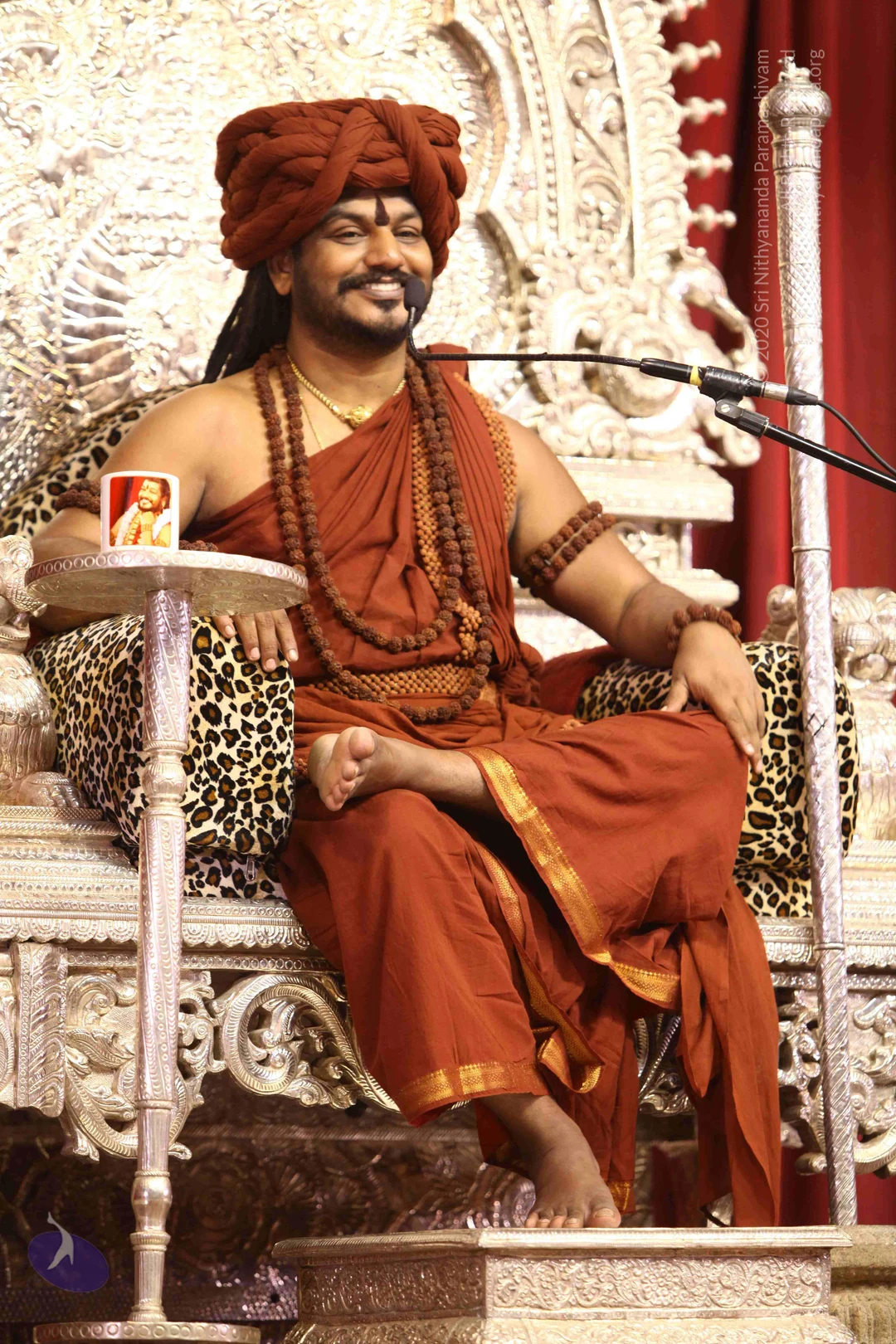
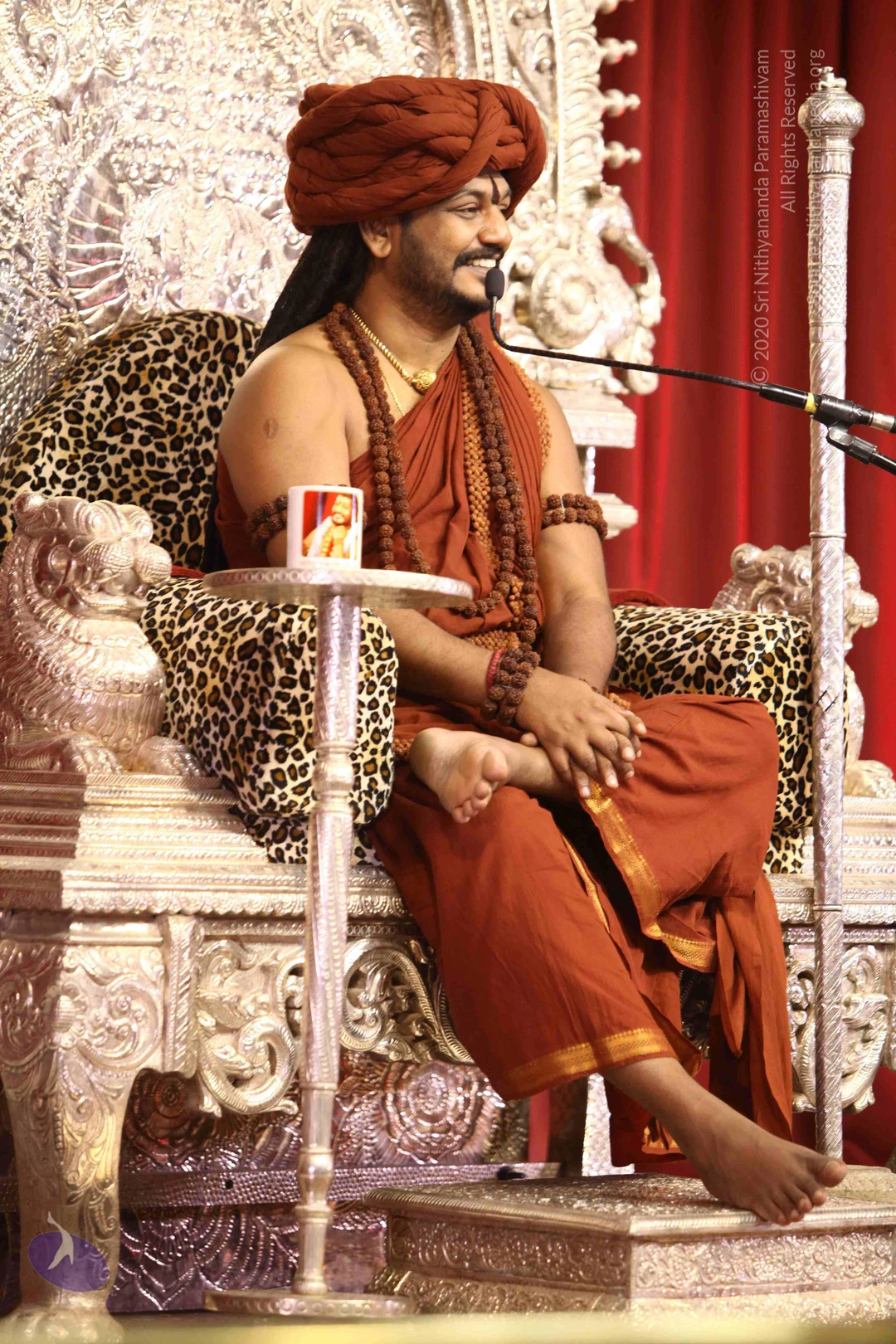
31 photosSource gallery
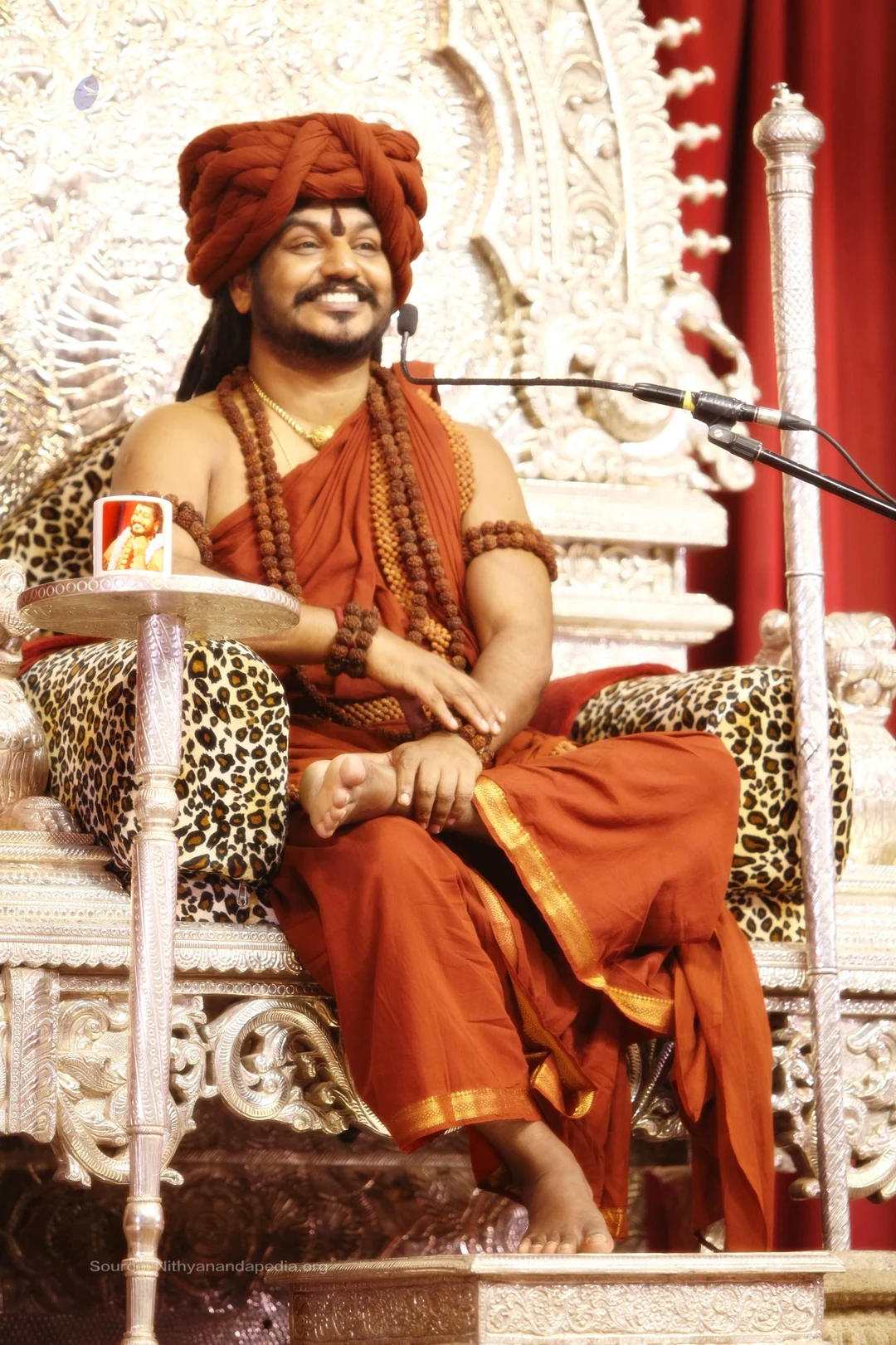
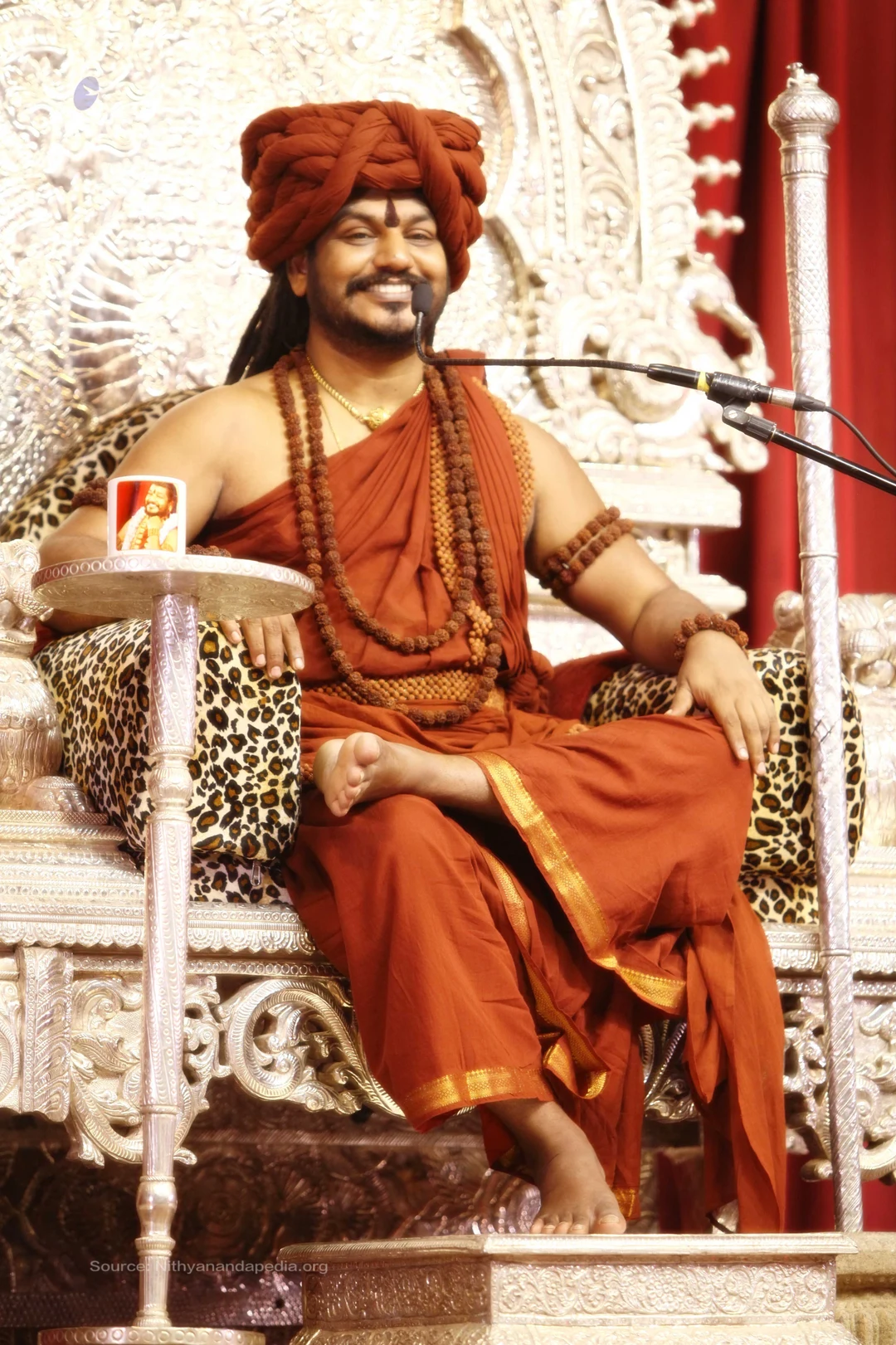
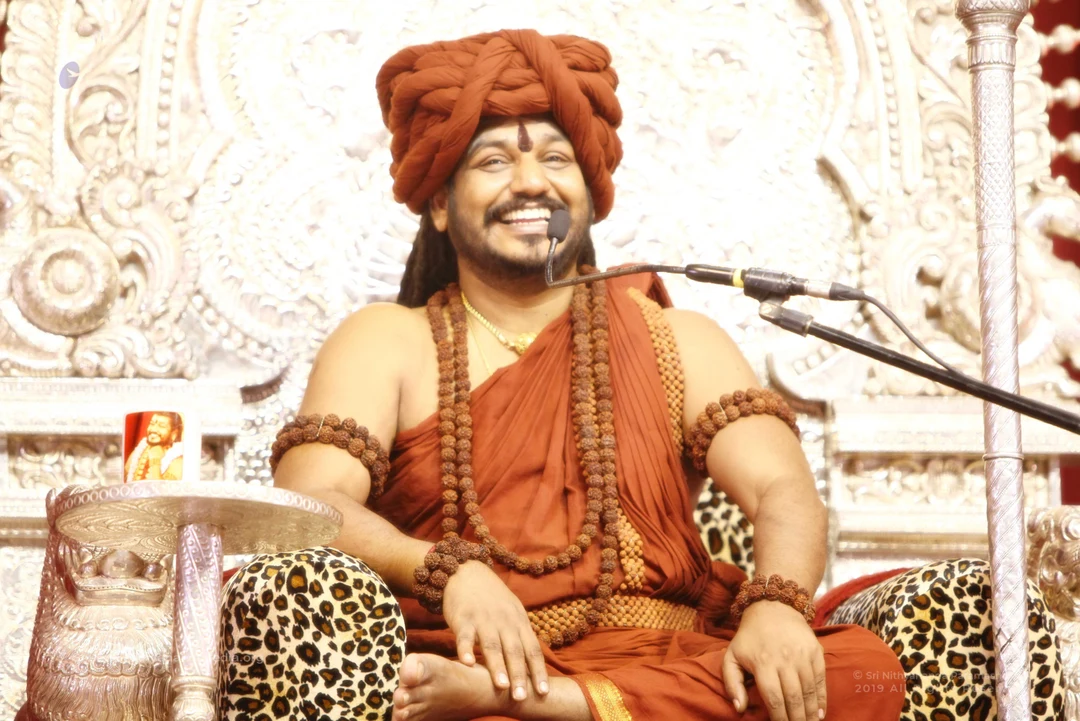
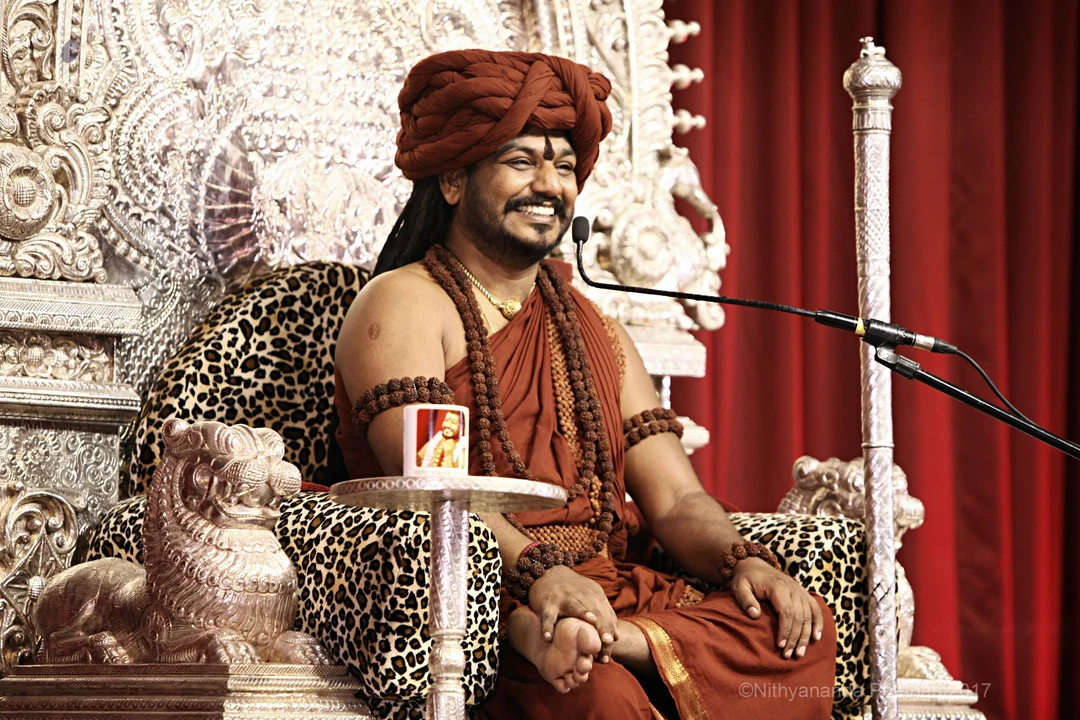
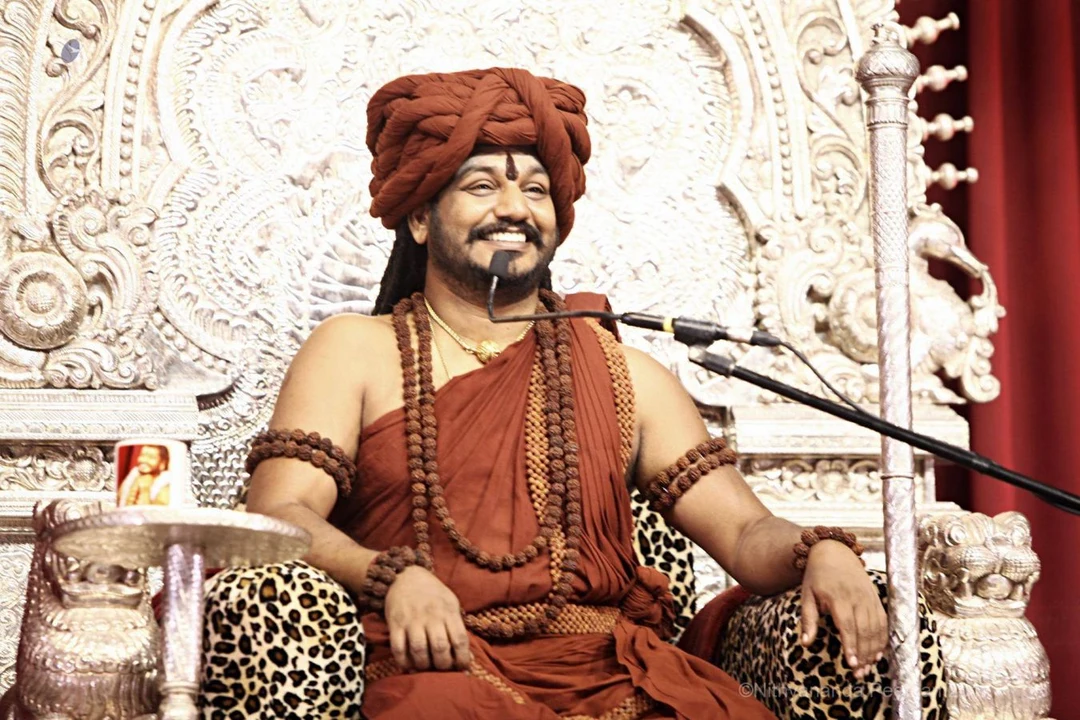
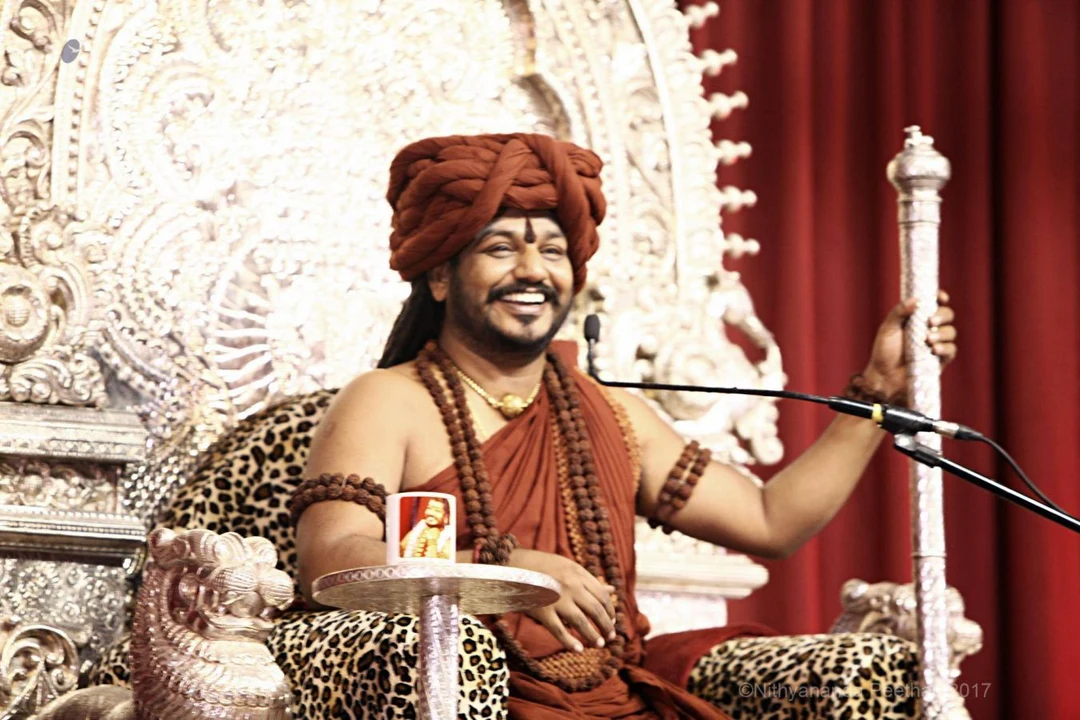
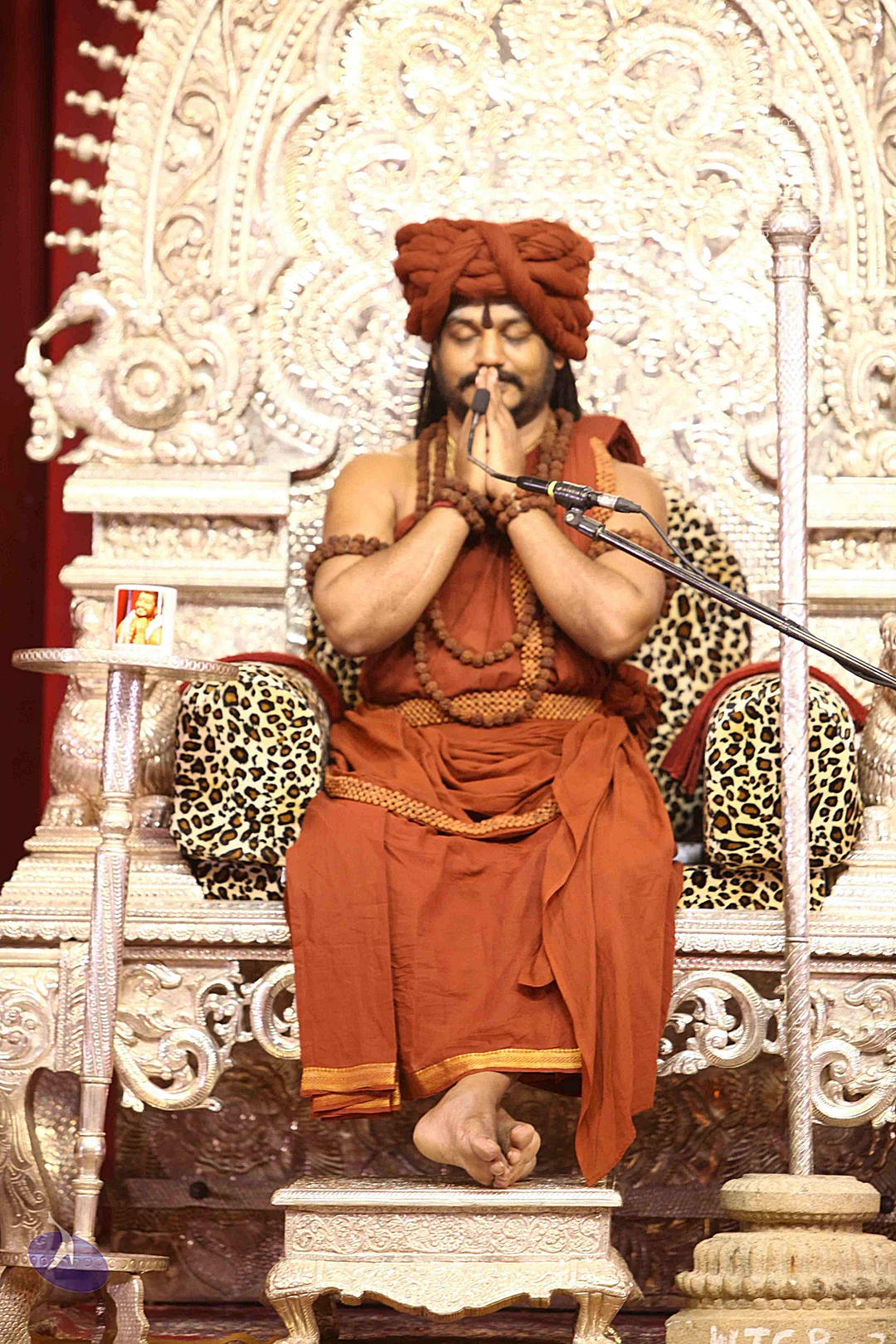
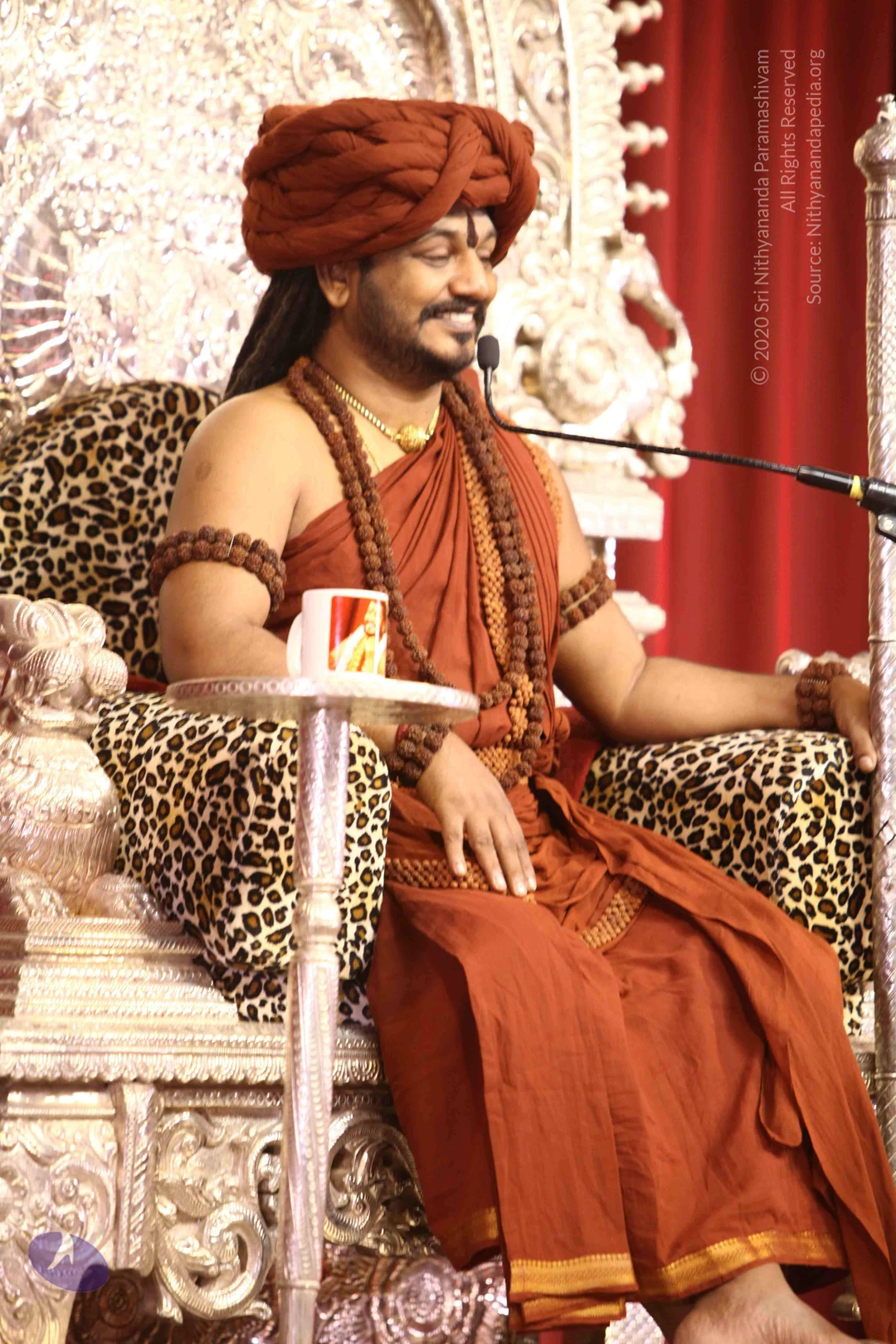
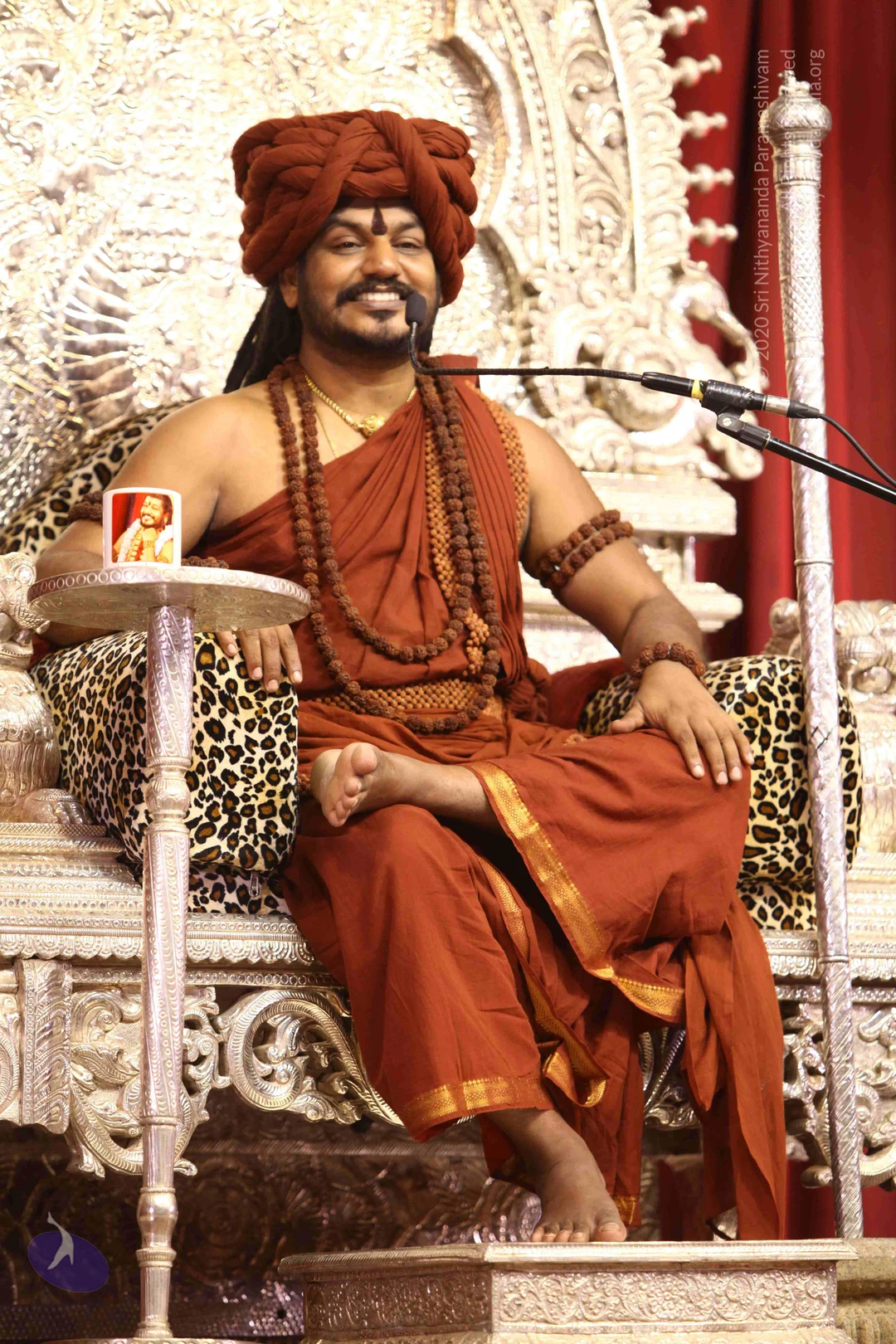
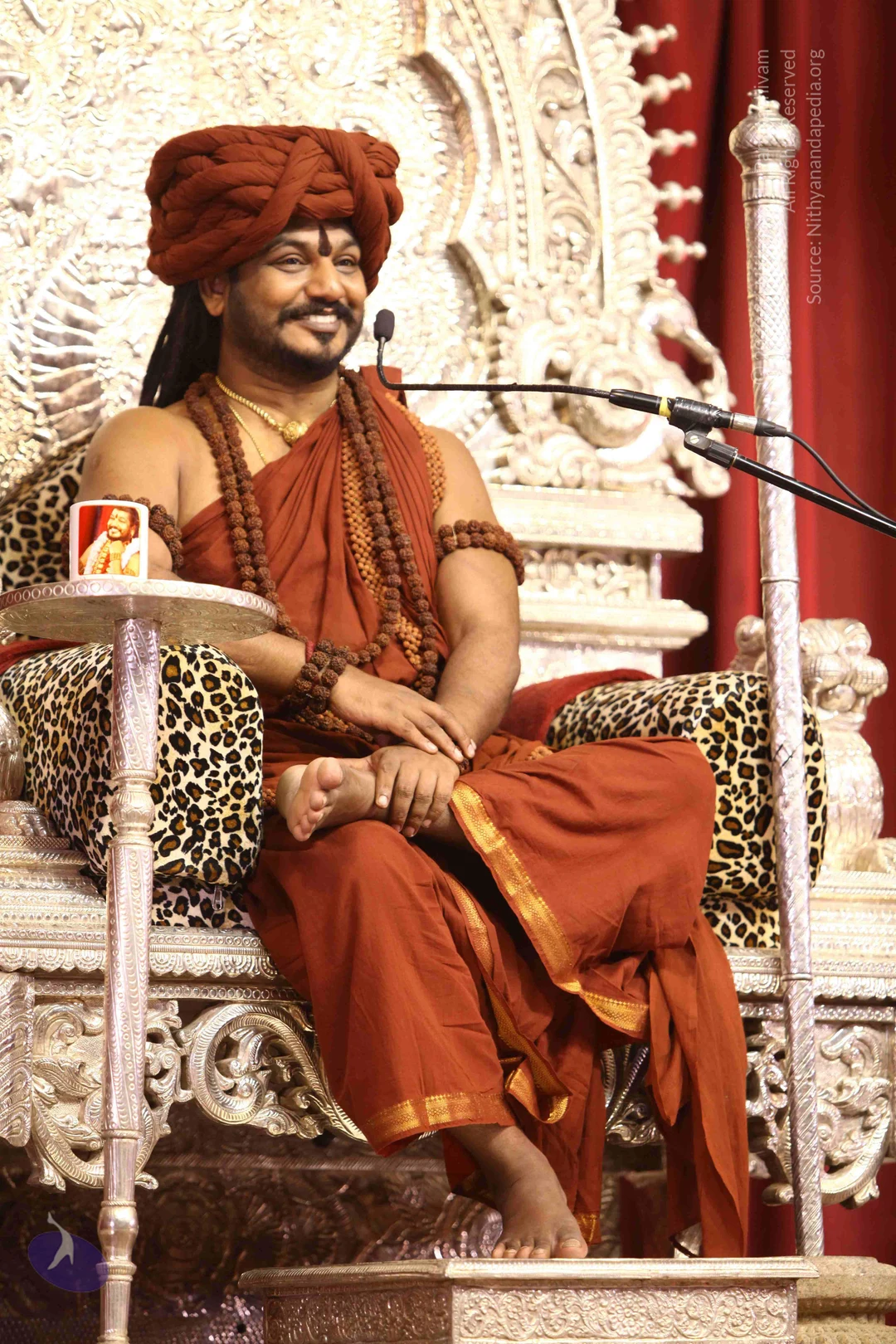
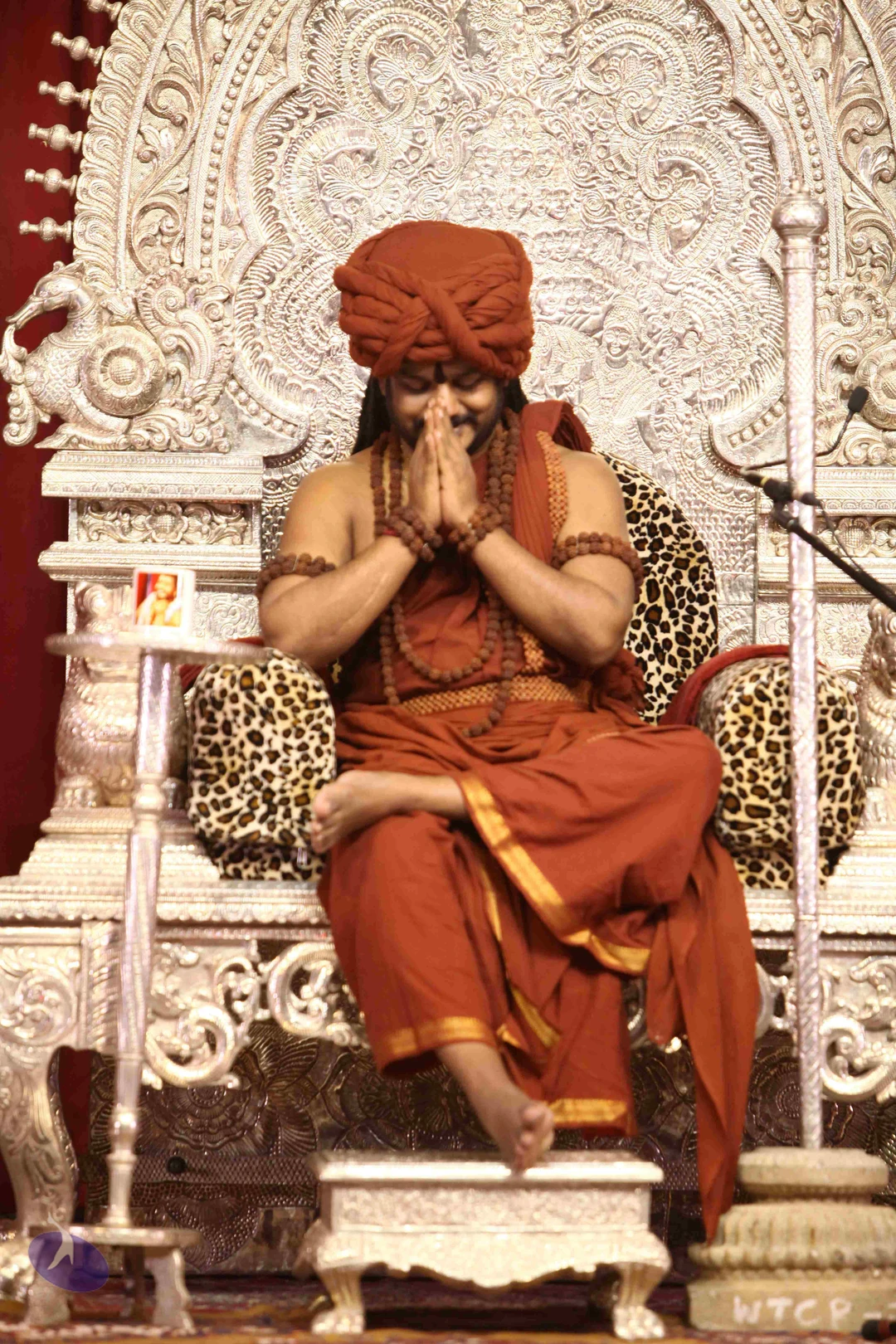
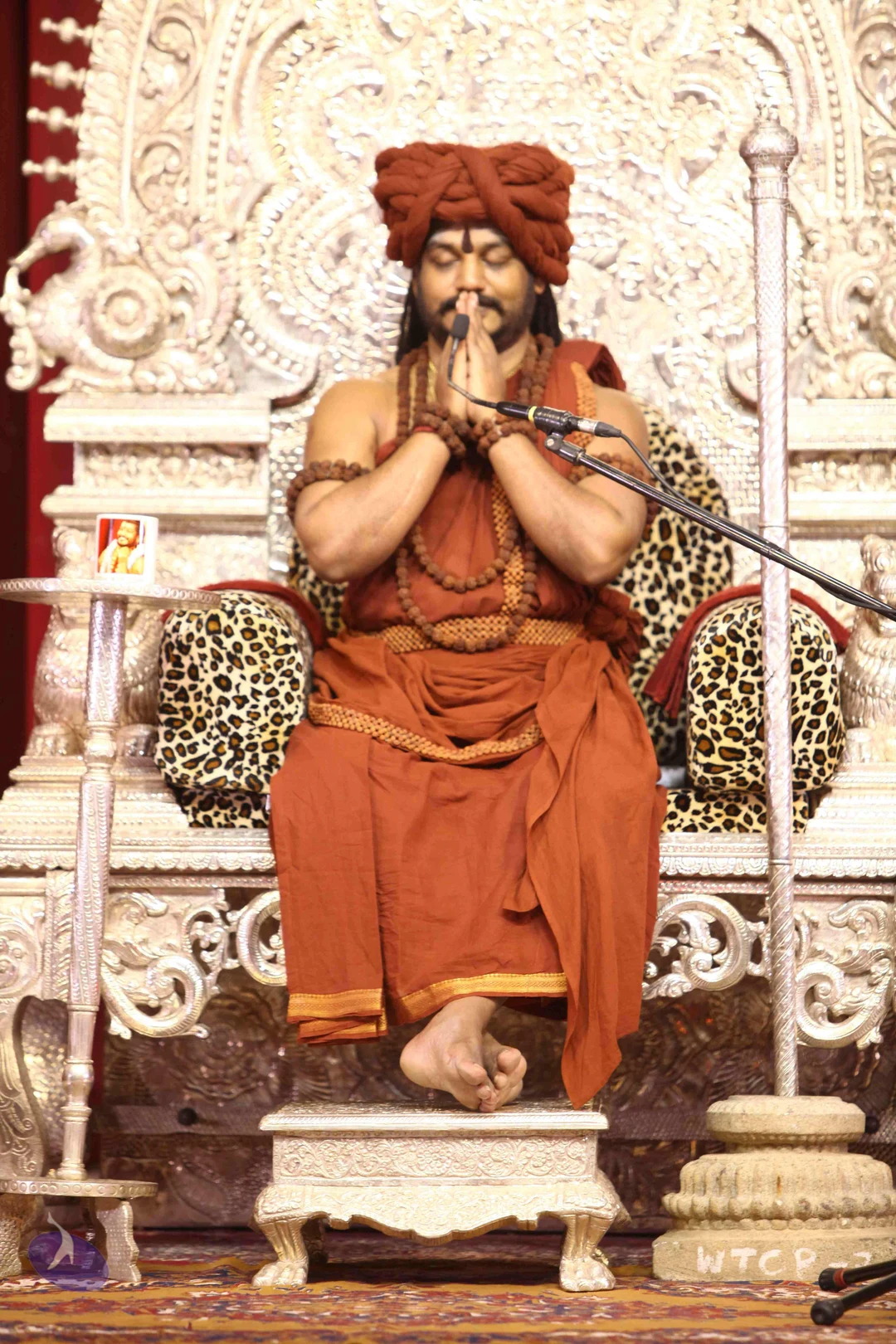
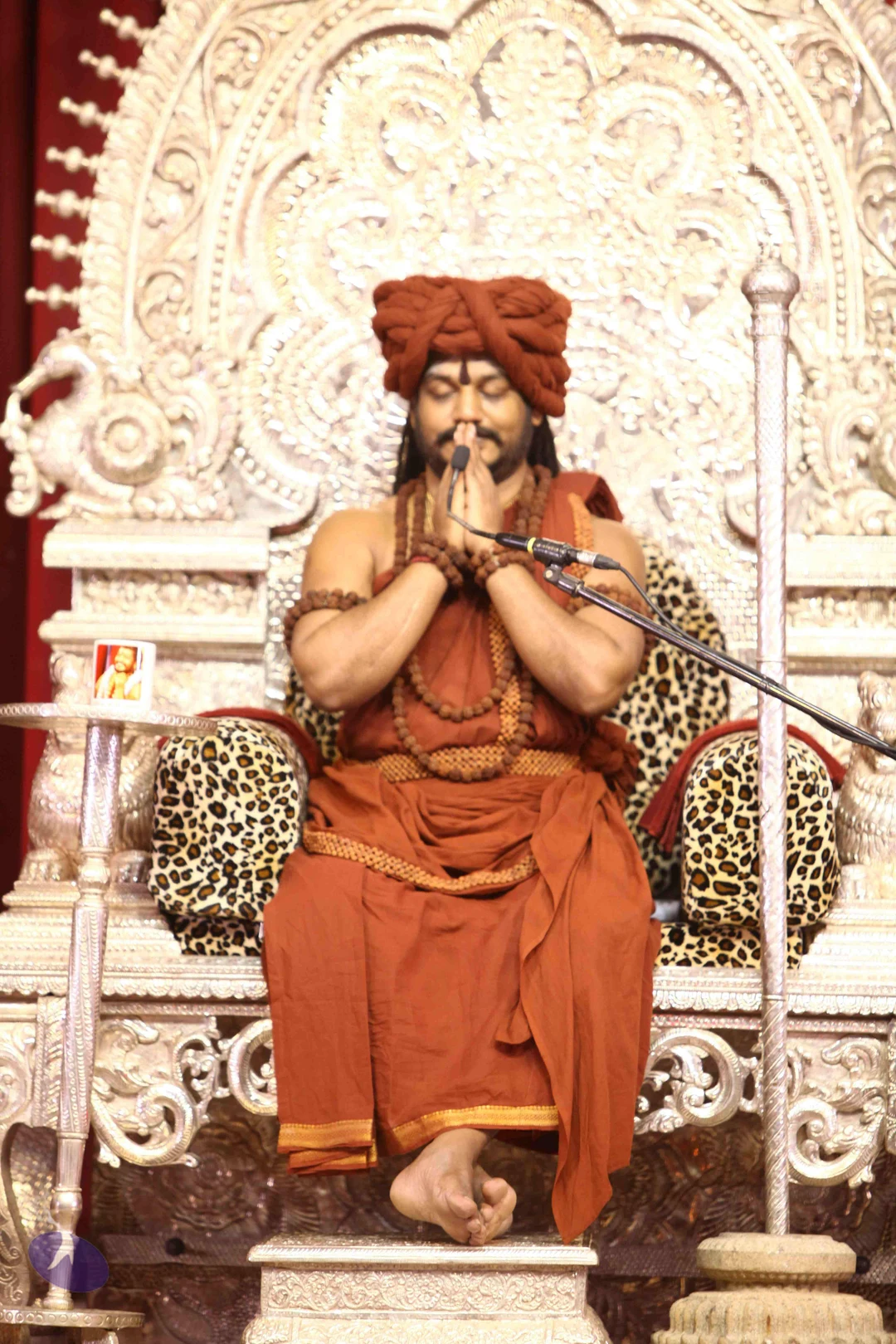
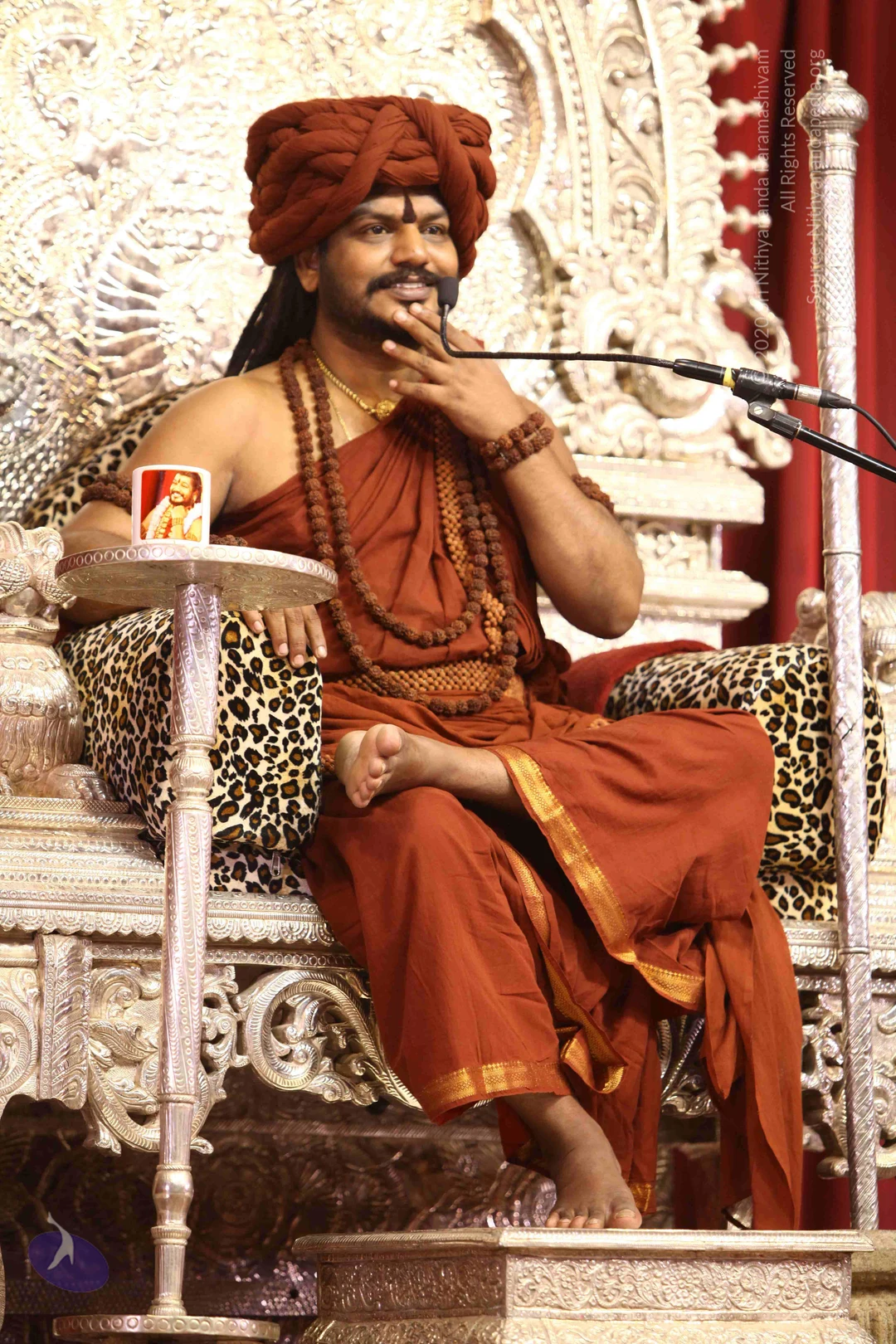
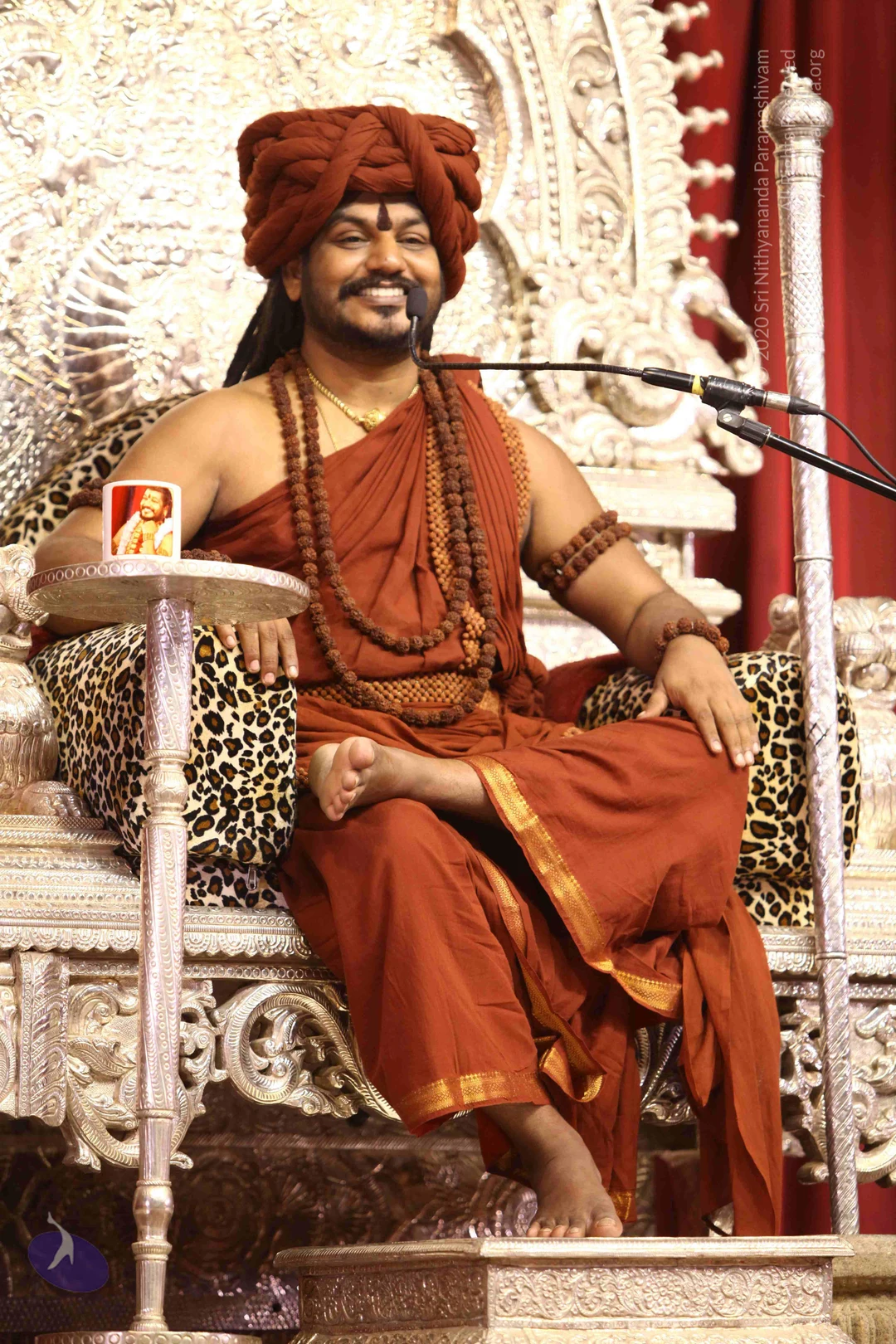
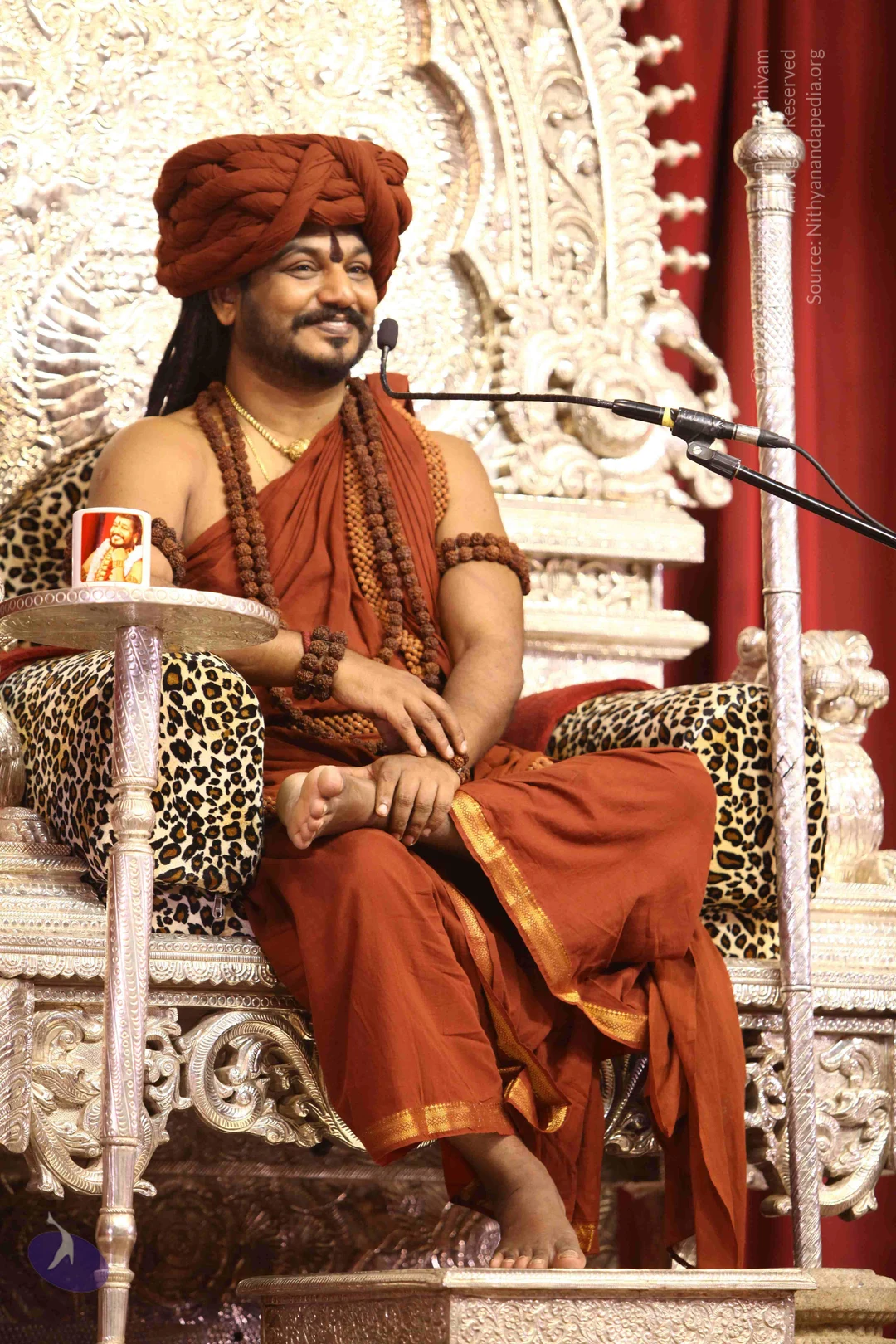
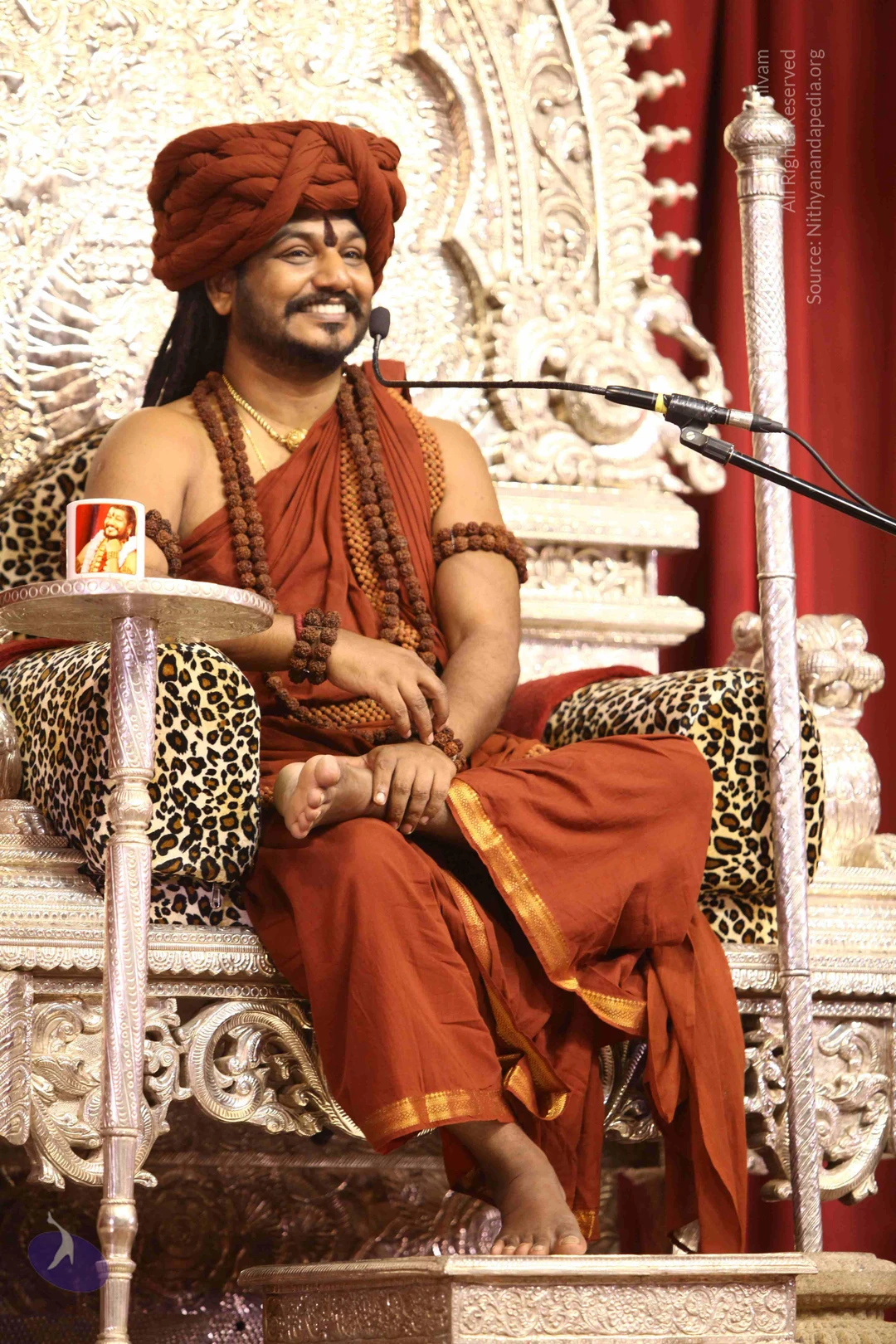
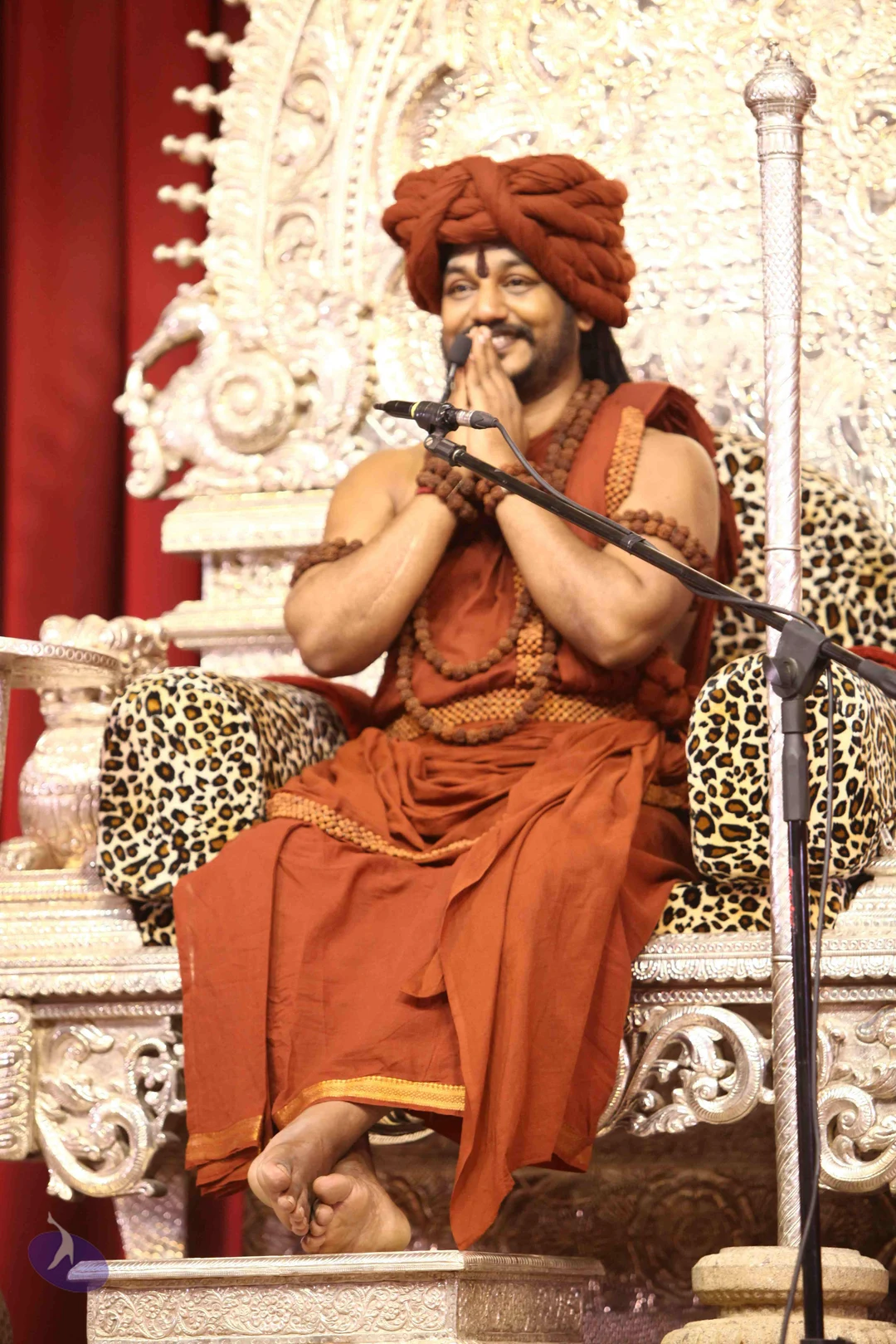
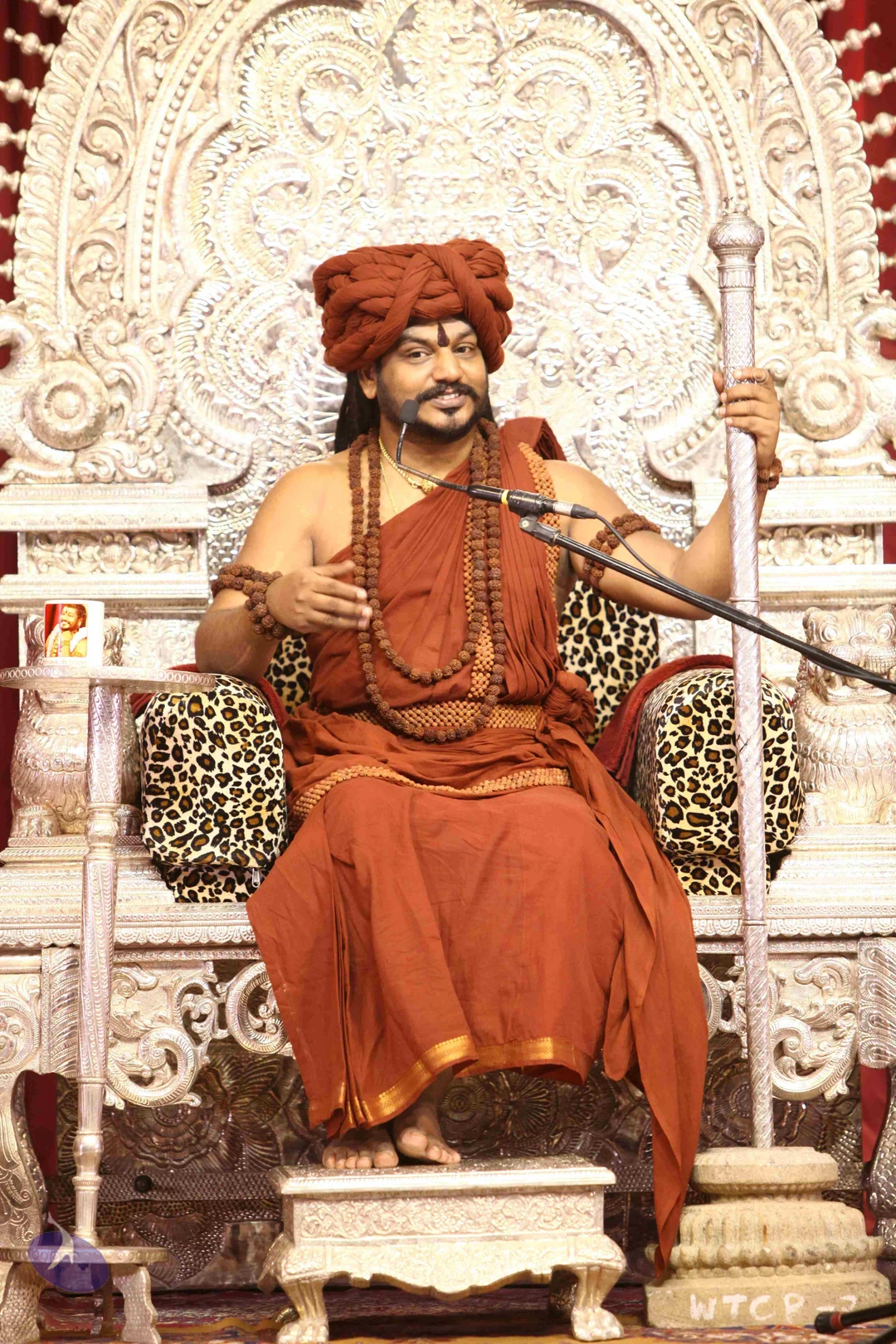
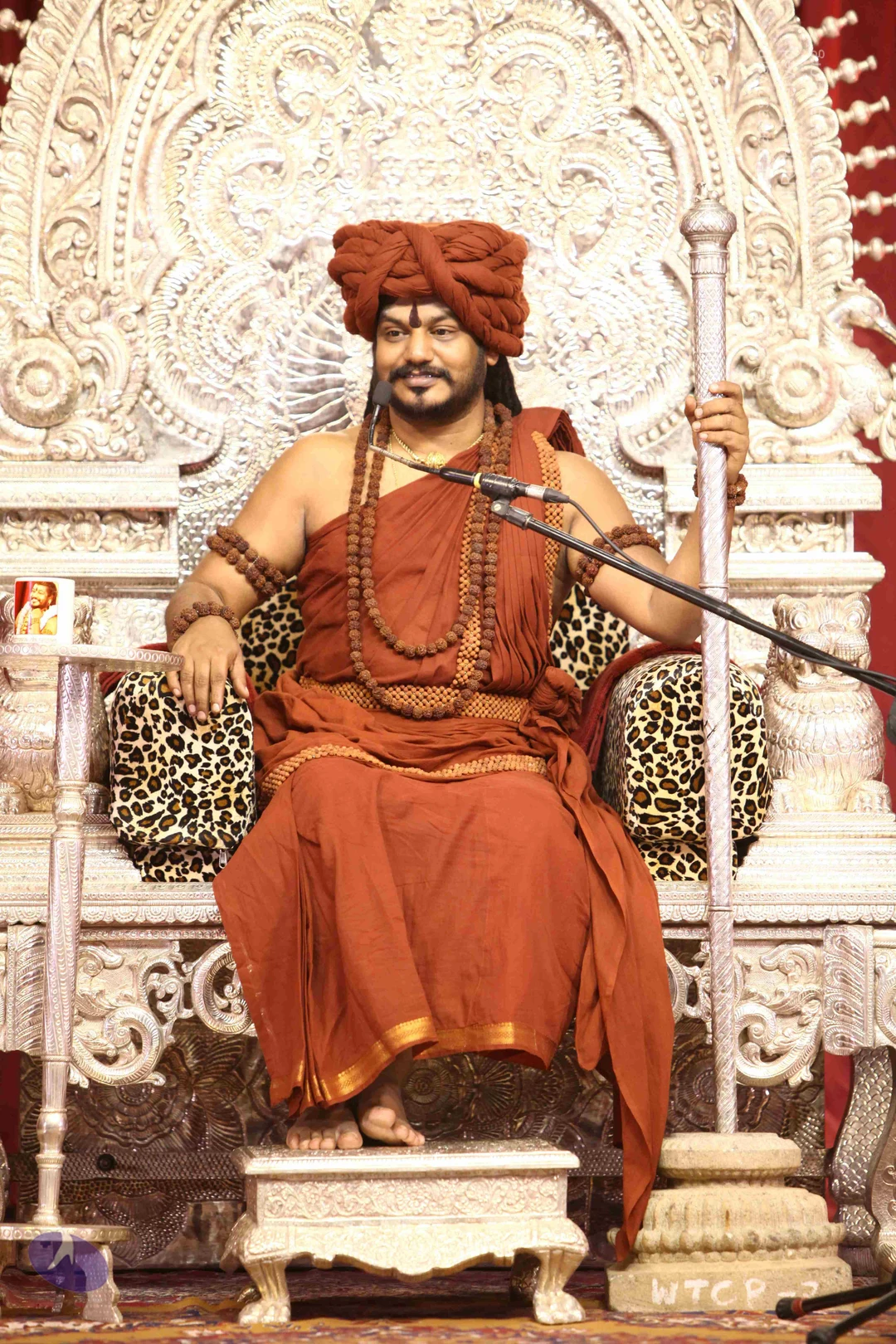
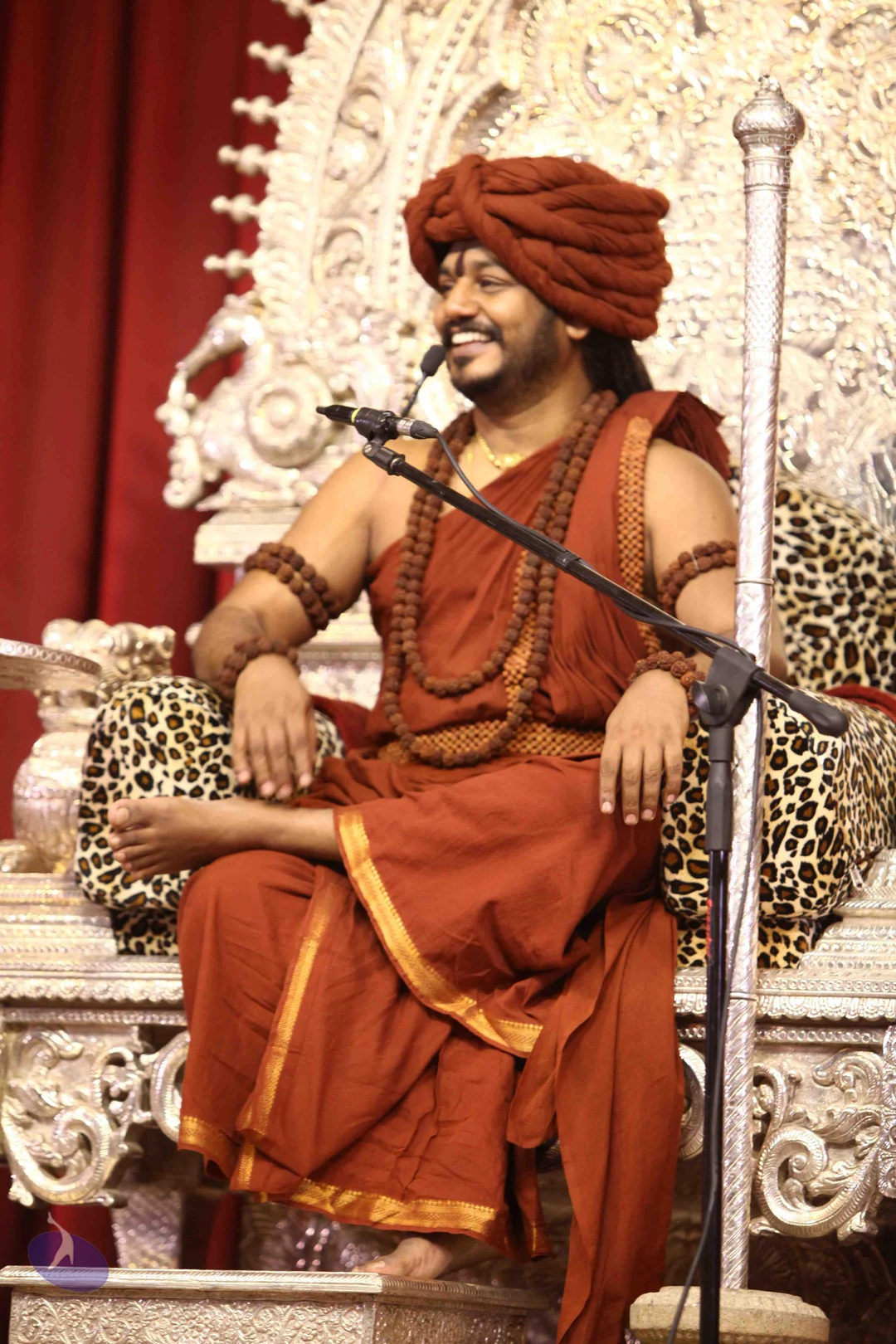
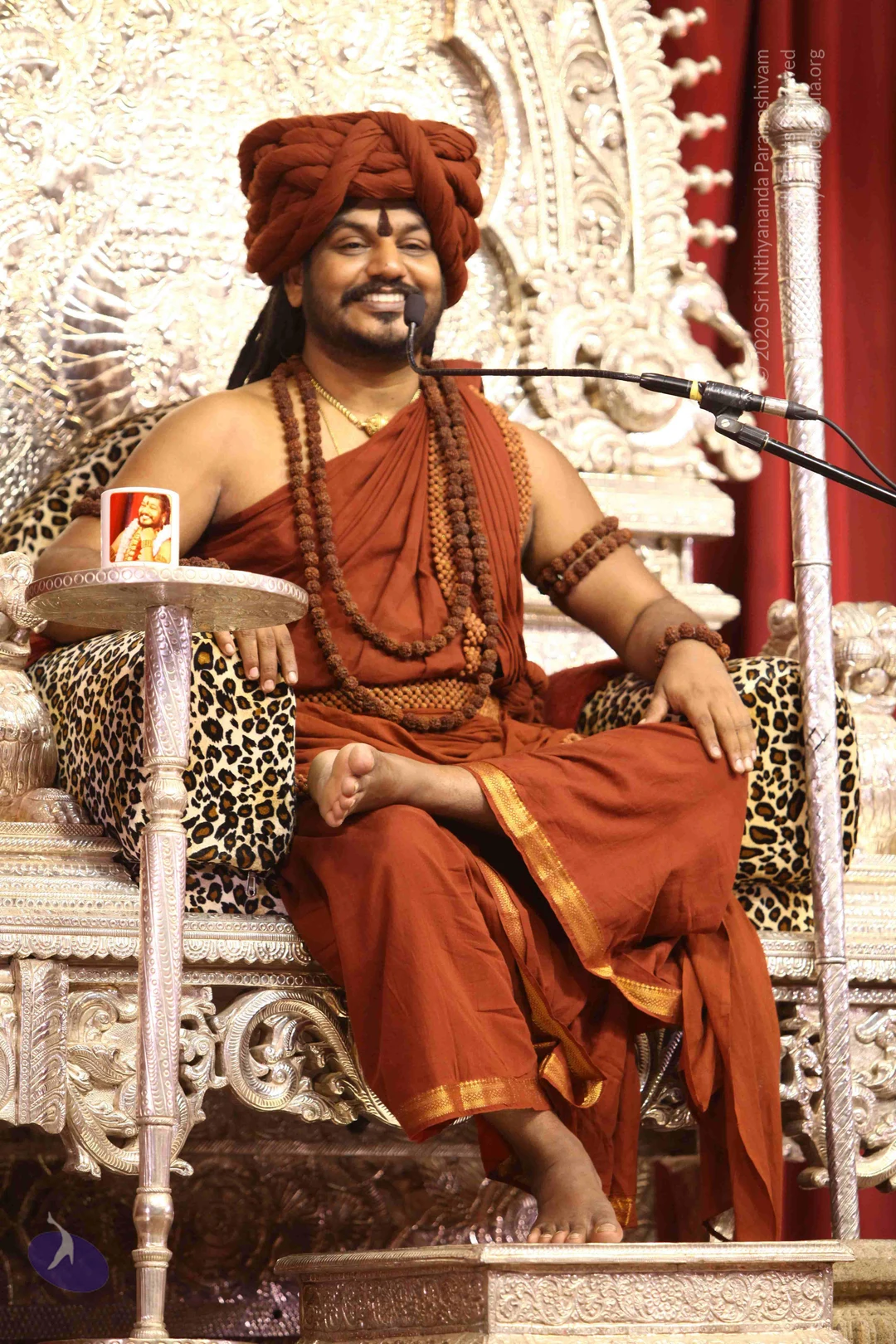
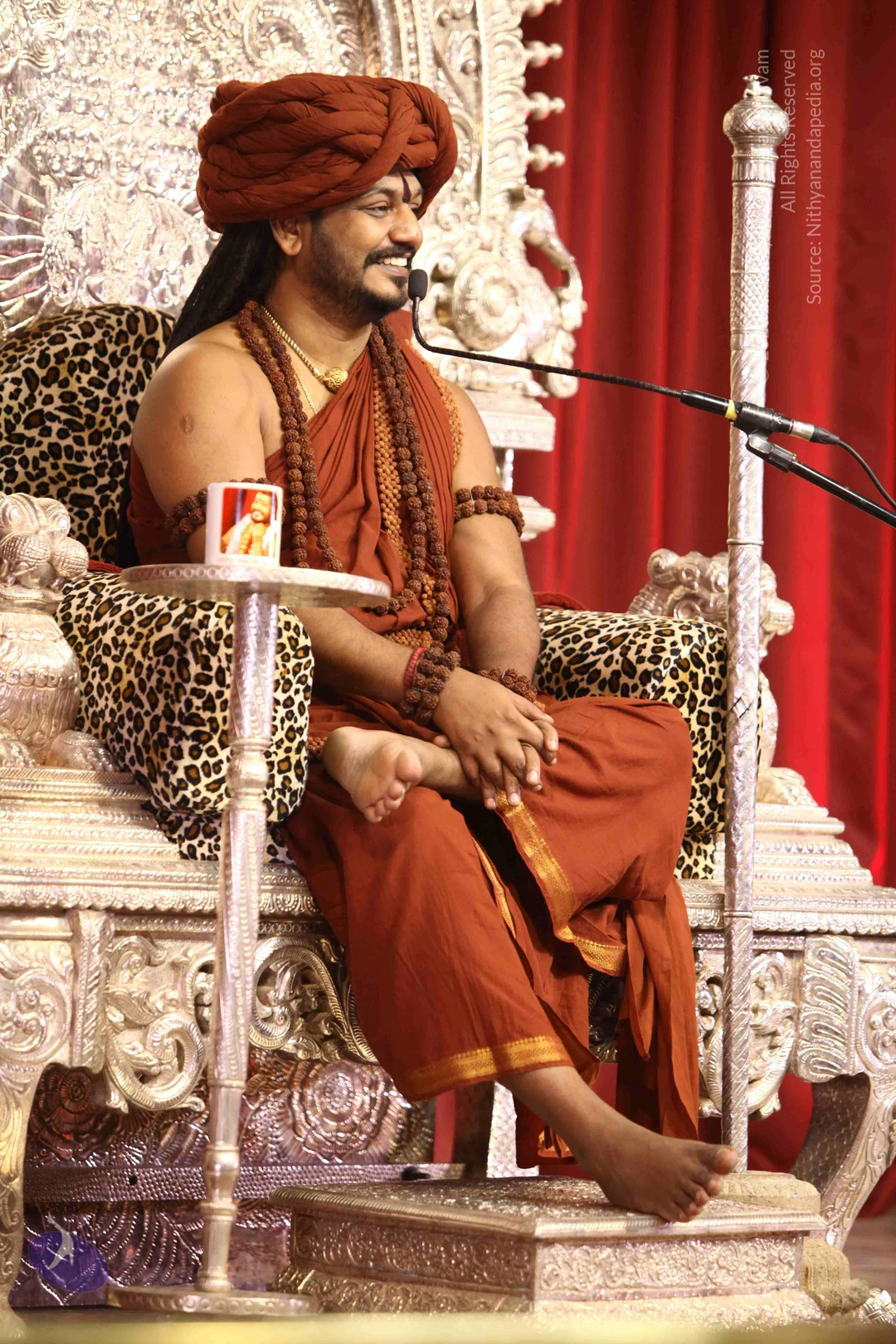
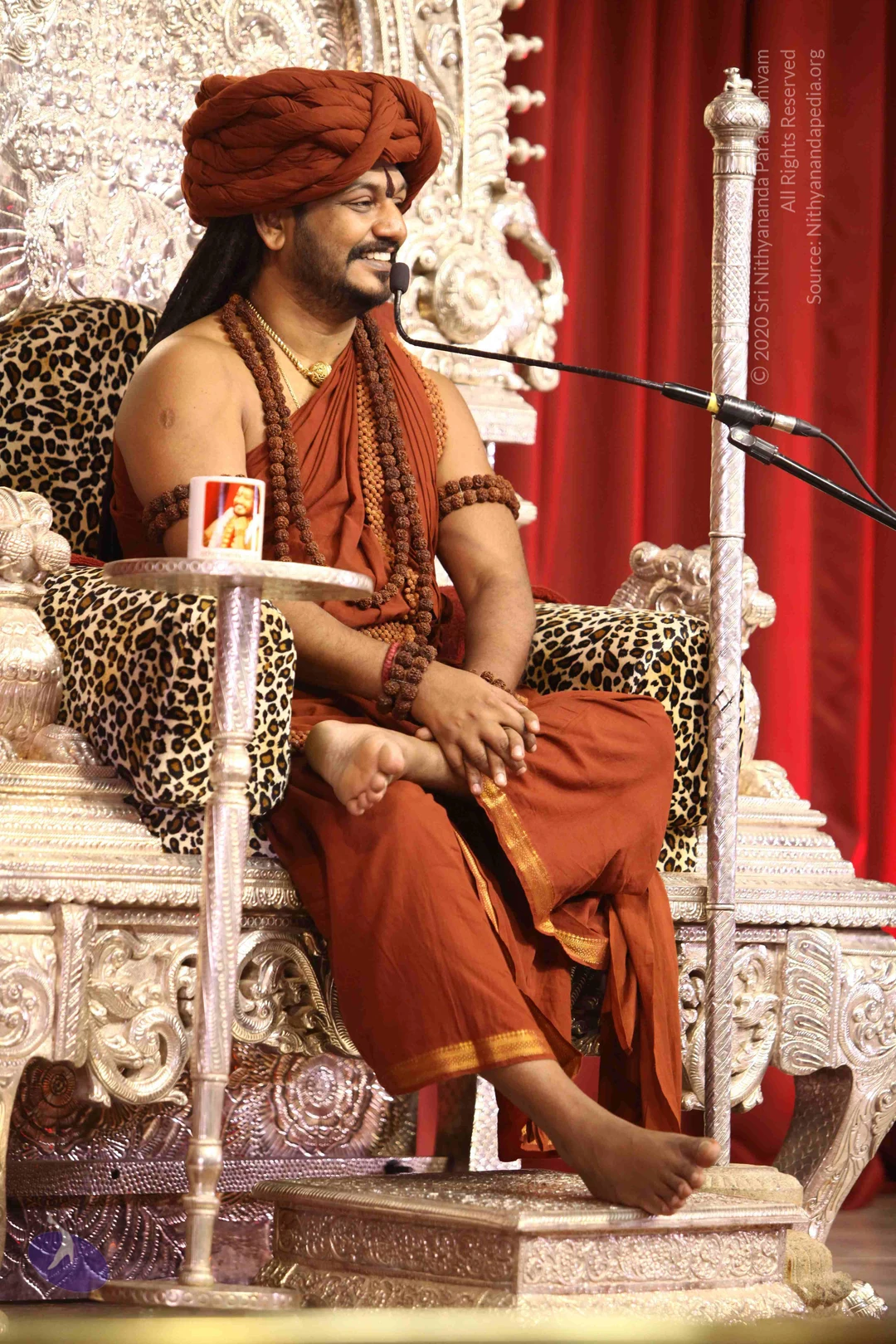
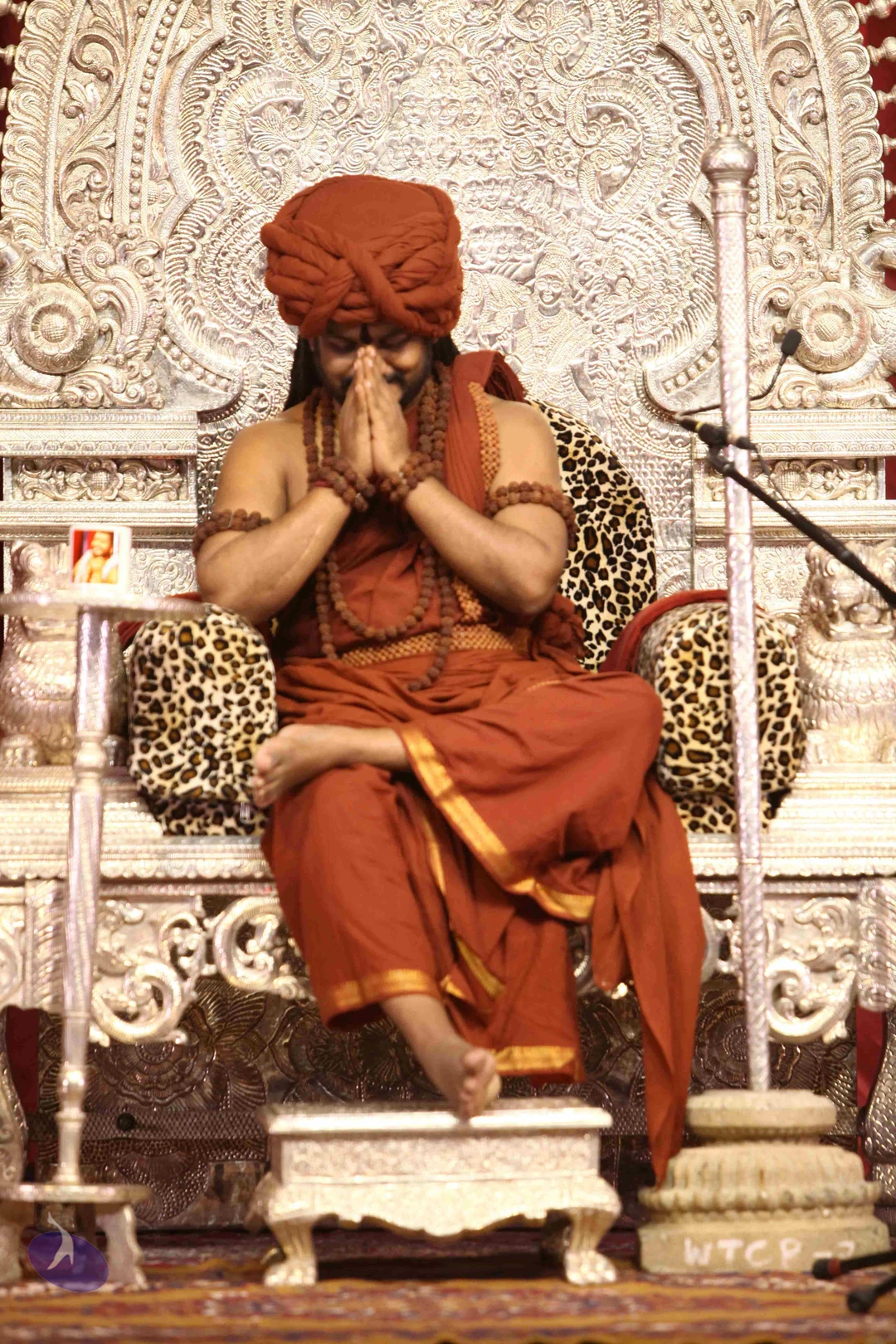
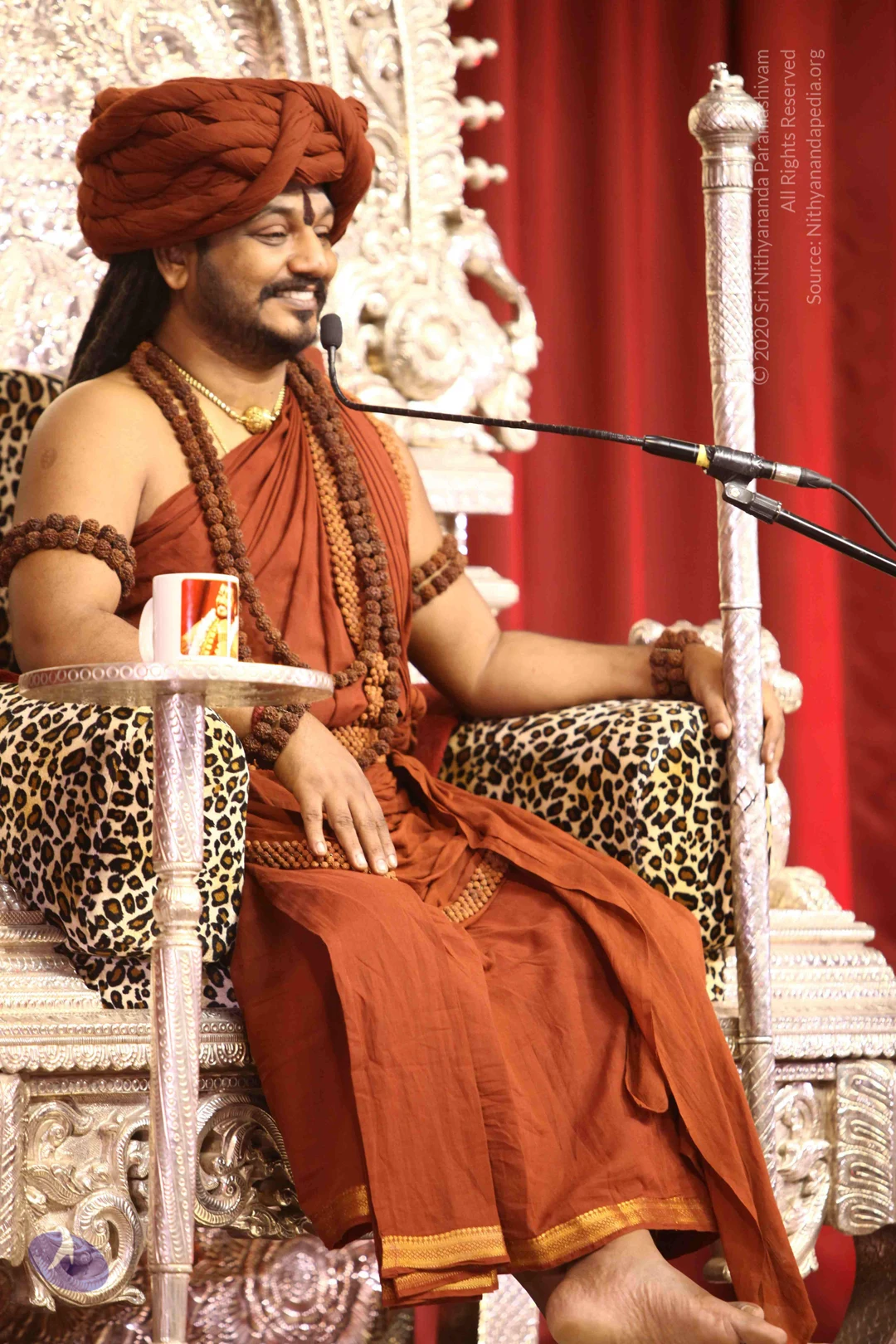
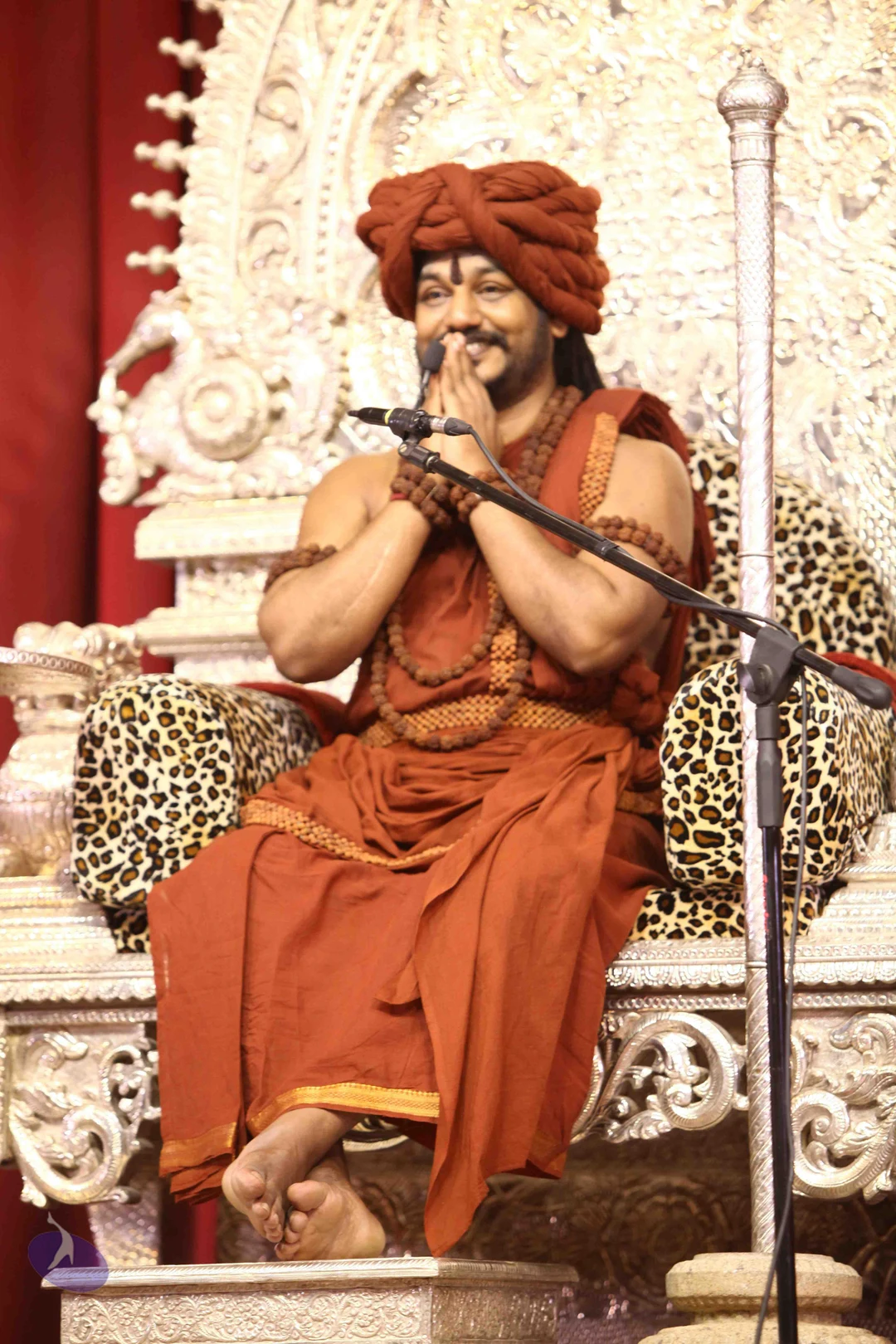
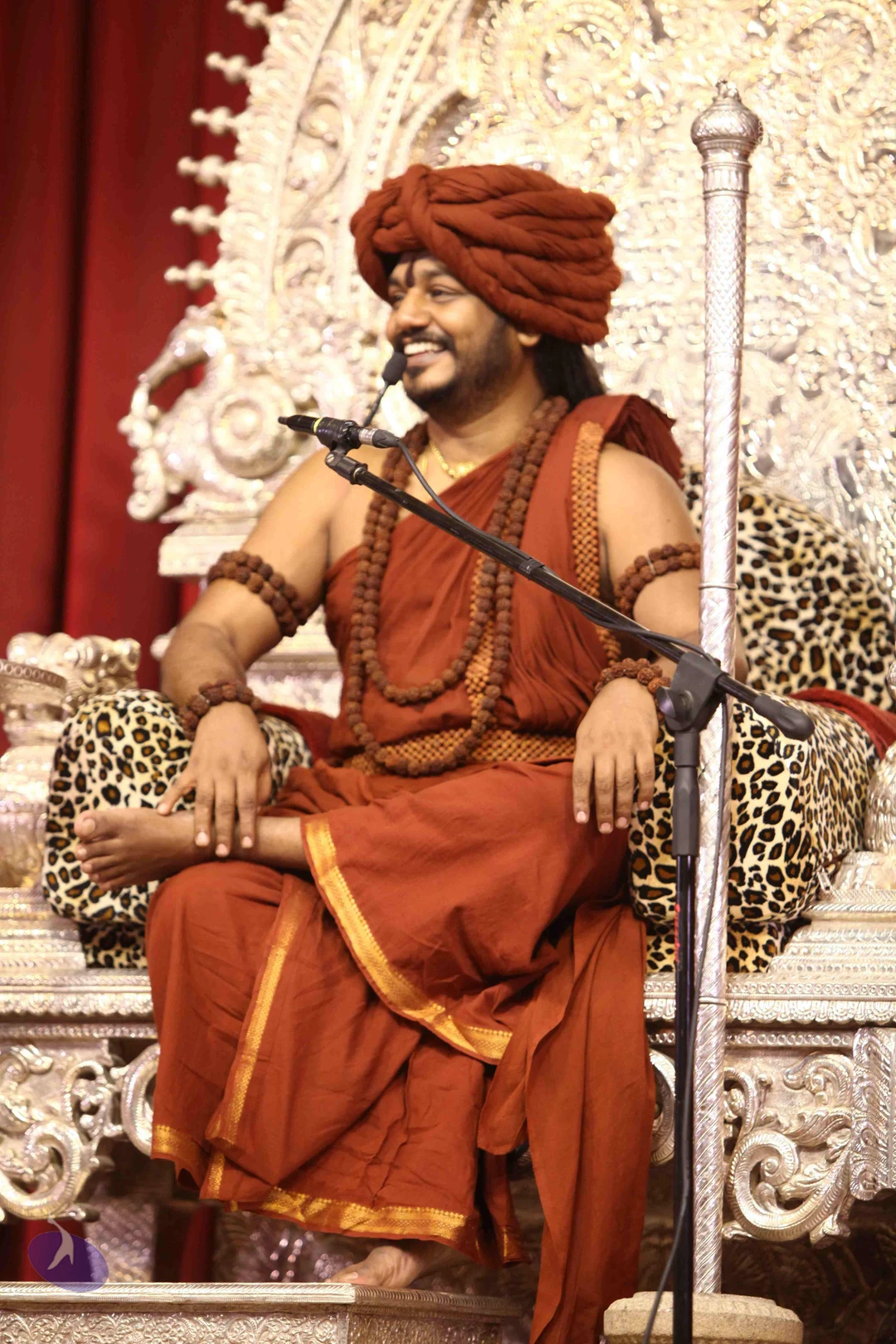
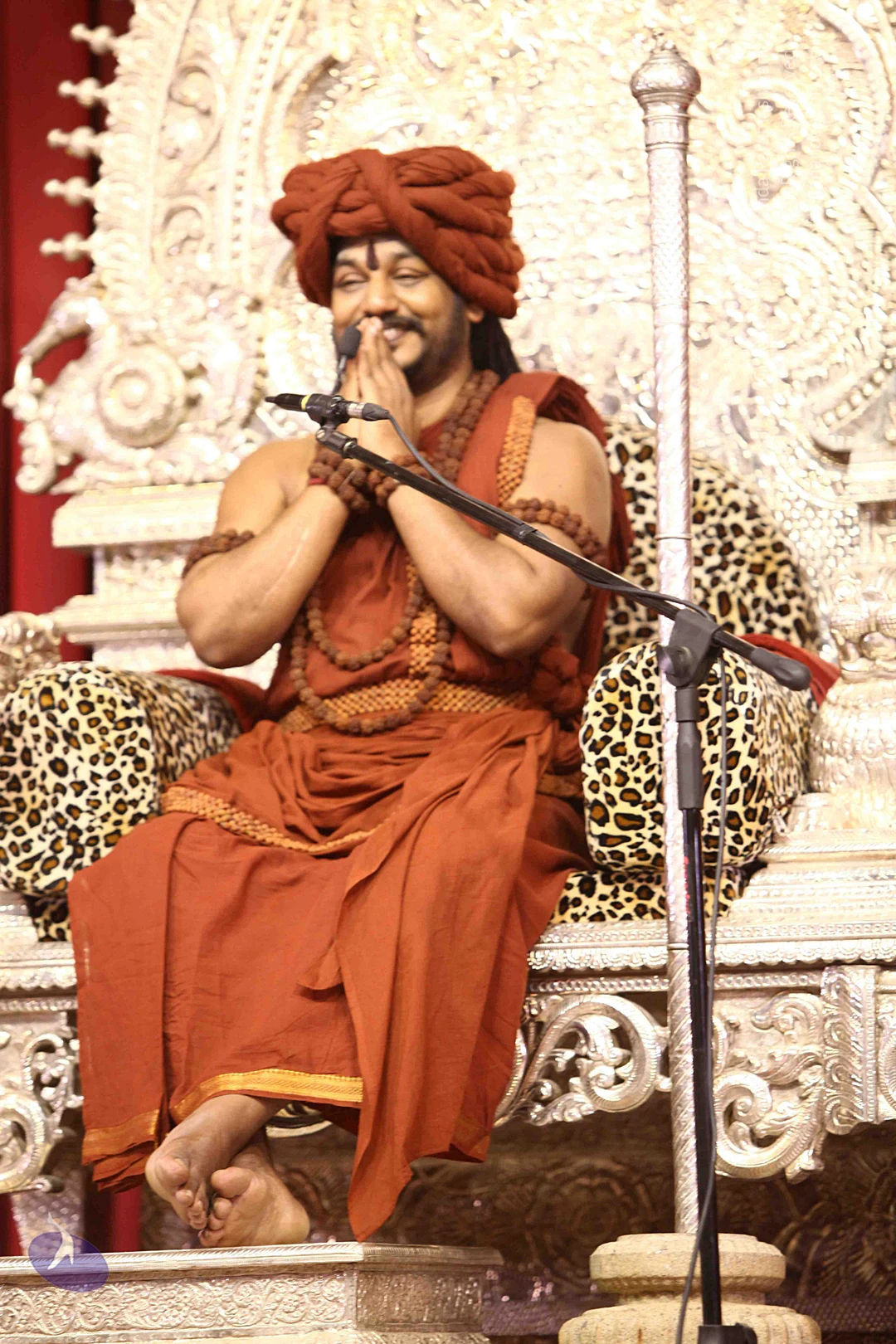
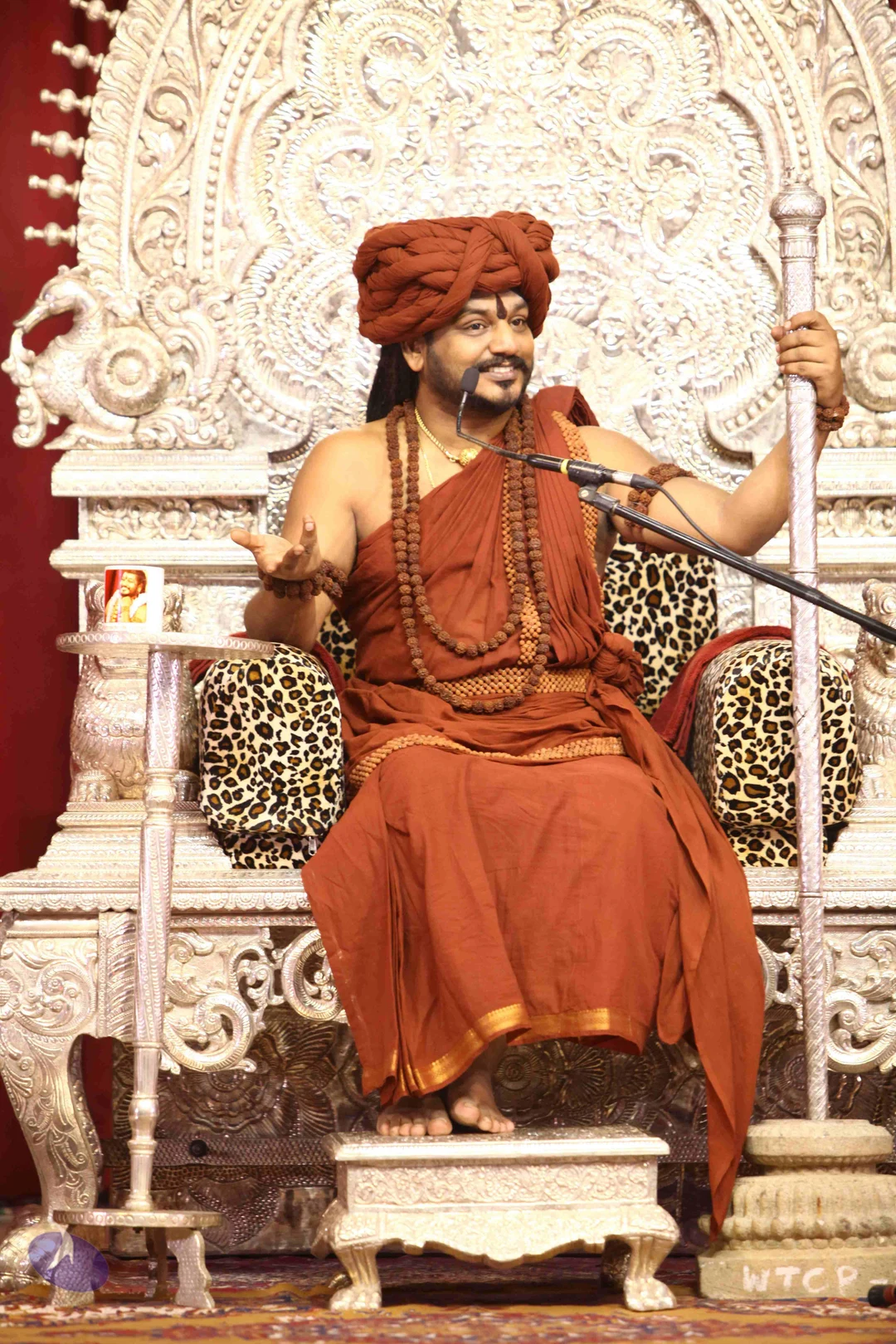
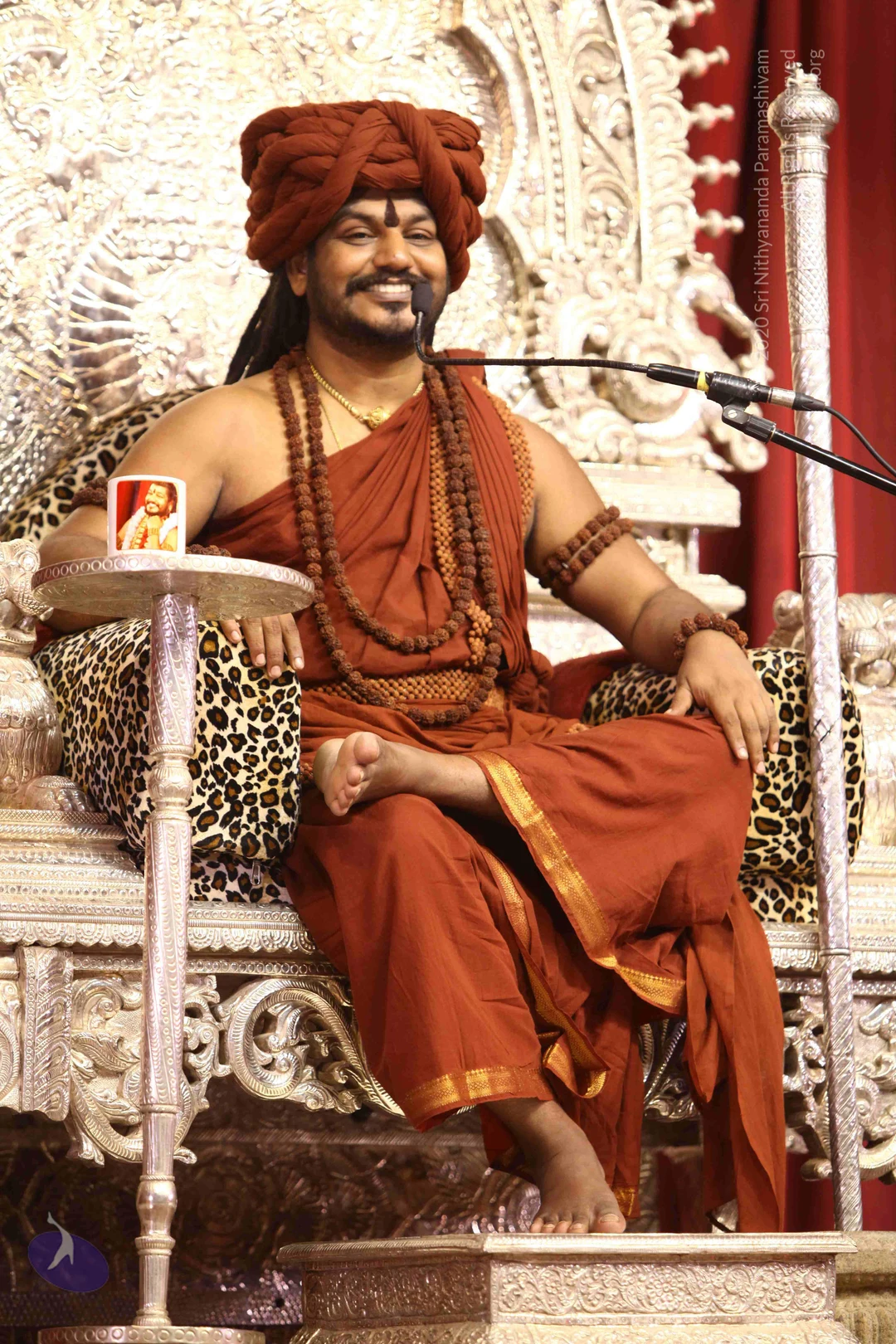
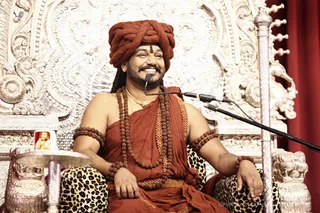
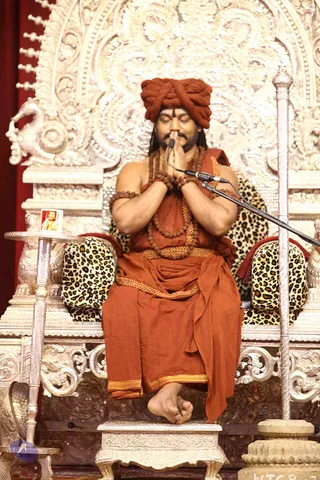
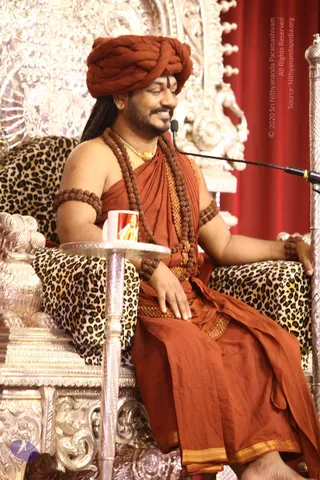
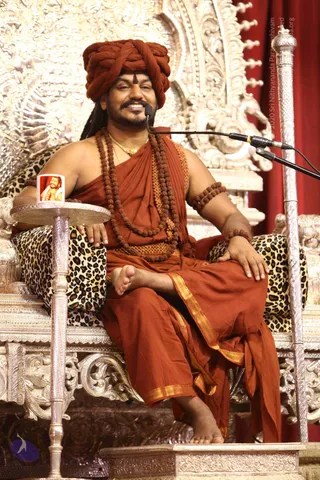
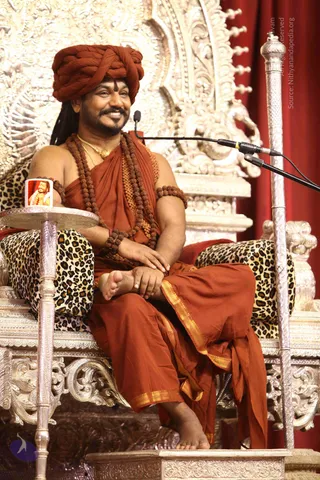
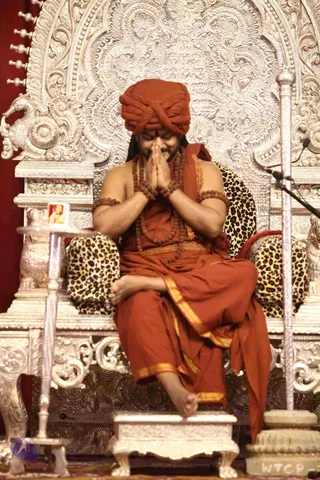
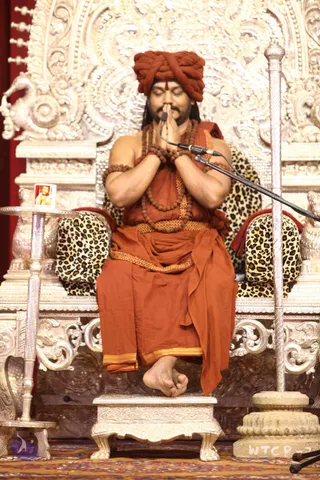
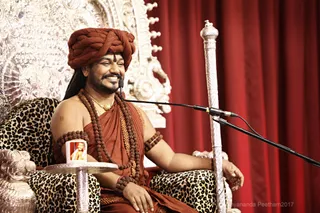
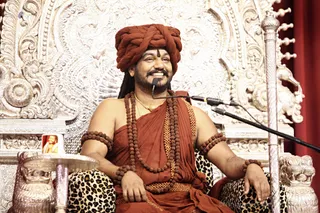
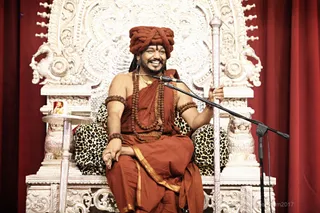
A man seated on an ornate silver throne with leopard-print cushions, eyes closed and palms pressed together in namaste at a microphone. He wears a rust-orange turban, orange robes with a gold-bordered wrap, and multiple rudraksha malas around his neck and wrists. A small framed photo of a saffron-robed figure sits on a silver side table to the left. A silver staff stands at right. The background is an elaborately carved silver arch.A man seated on an ornate silver throne with leopard-print cushions, smiling and looking to the side. He wears a rust-orange turban with a vertical tilak on the forehead, rust-orange draped robes with gold-bordered hem, multiple rudraksha mala necklaces, rudraksha armbands and bracelets, and a gold chain. A microphone stands beside him and a small silver side table holds a white cup with a red-framed portrait. Behind him is a red curtain and silver carved backdrop. Appearance-based candidate for Swamiji (probable): long hair, saffron turban and rudraksha malas, seated on a throne in a satsang setting.A smiling man in a rust-orange turban and orange-red robe with gold border sits cross-legged on an ornate silver throne with a leopard-print cushion. He wears multiple rudraksha malas, a gold chain, and rudraksha bracelets, and a microphone stands beside him. A small framed photo on a silver side table shows a man in orange with a garland. Swamiji (probable) appears in person, with the appearance cues of an orange turban, rudraksha malas and ceremonial gold necklace. The ornate silver backdrop and red curtain frame a discourse setting.A smiling man in a rust-orange turban and matching orange robes sits cross-legged on an ornate silver throne upholstered with leopard-print cushions, with a microphone on a boom stand beside him. He wears layered rudraksha malas, a gold chain and rudraksha bracelets, and a small tilak on his forehead, and holds one bare foot in his hands. A small framed photo of a man in orange sits on a silver side table at his elbow, and a red curtain hangs behind the throne. The setting suggests a seated discourse or satsang. Swamiji (probable): the orange turban, rudraksha malas and ceremonial gold chain are the qualifying cues for the seated speaker.A seated figure in an orange-red turban and matching saffron-orange robes with gold borders sits in a richly carved silver throne with leopard-print cushions, hands pressed together in namaste with eyes closed. He wears layered rudraksha malas on the neck and wrists and armlets, and a bare foot rests on a silver footstool. A silver stand holding a small framed photograph sits at left, and a microphone stand is at right.A seated man in a rust-orange turban, orange robes with a gold-bordered cloth, and multiple rudraksha mala necklaces and bracelets sits with palms pressed together in a namaste greeting and eyes closed. He is seated on an ornate silver throne with leopard-print cushions, with a microphone stand in front of him. A small framed photo sits on a silver side table to his left, and a silver staff stands to his right. The setting is a stage with a carved silver backdrop.
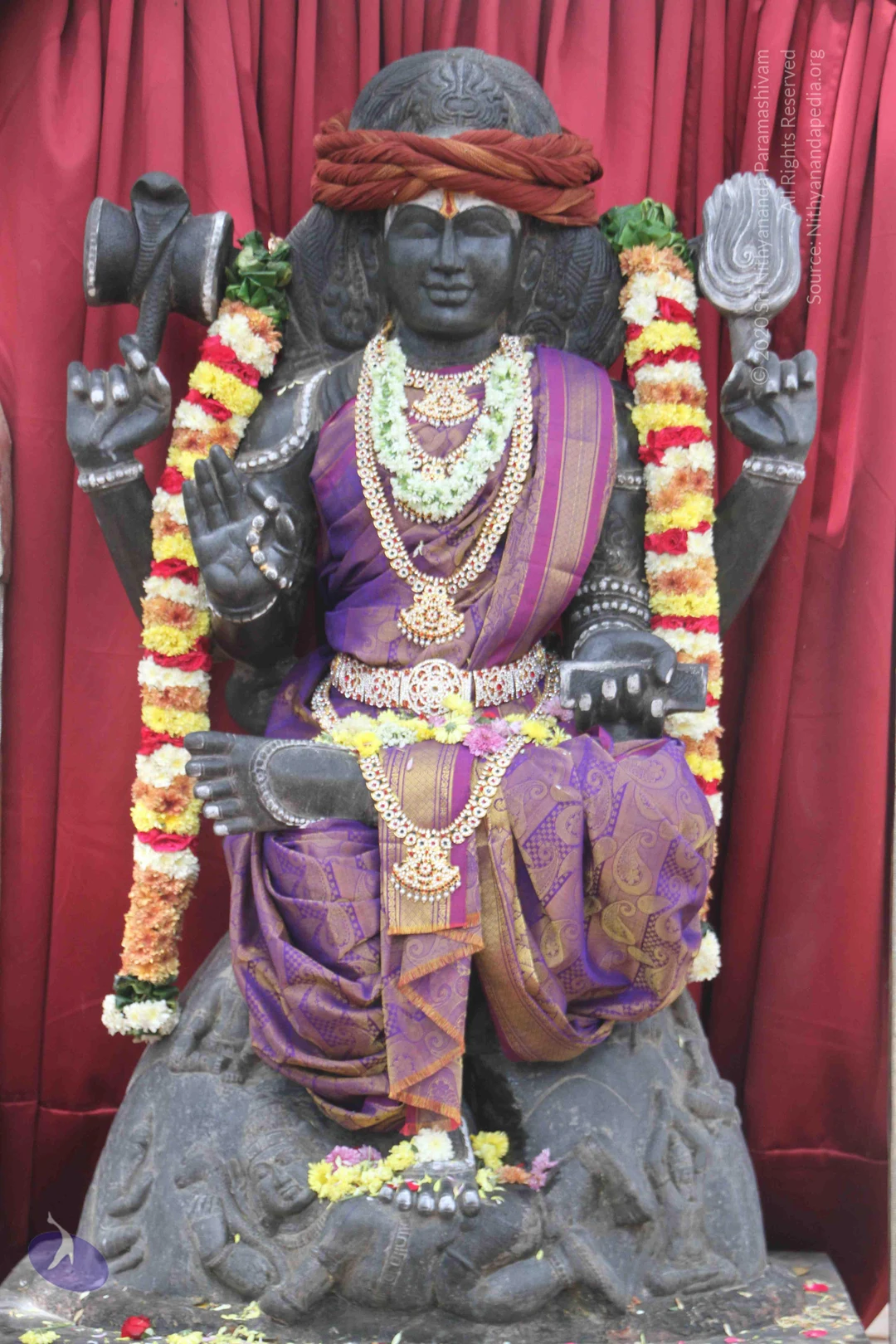
02-Bidadi-Deities
4 photosSource gallery
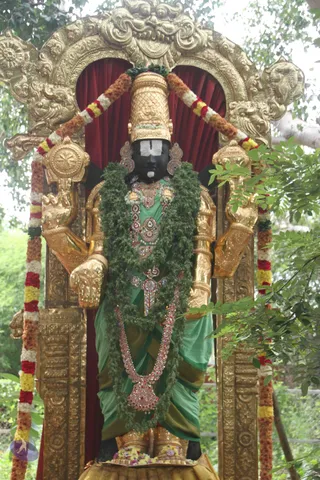
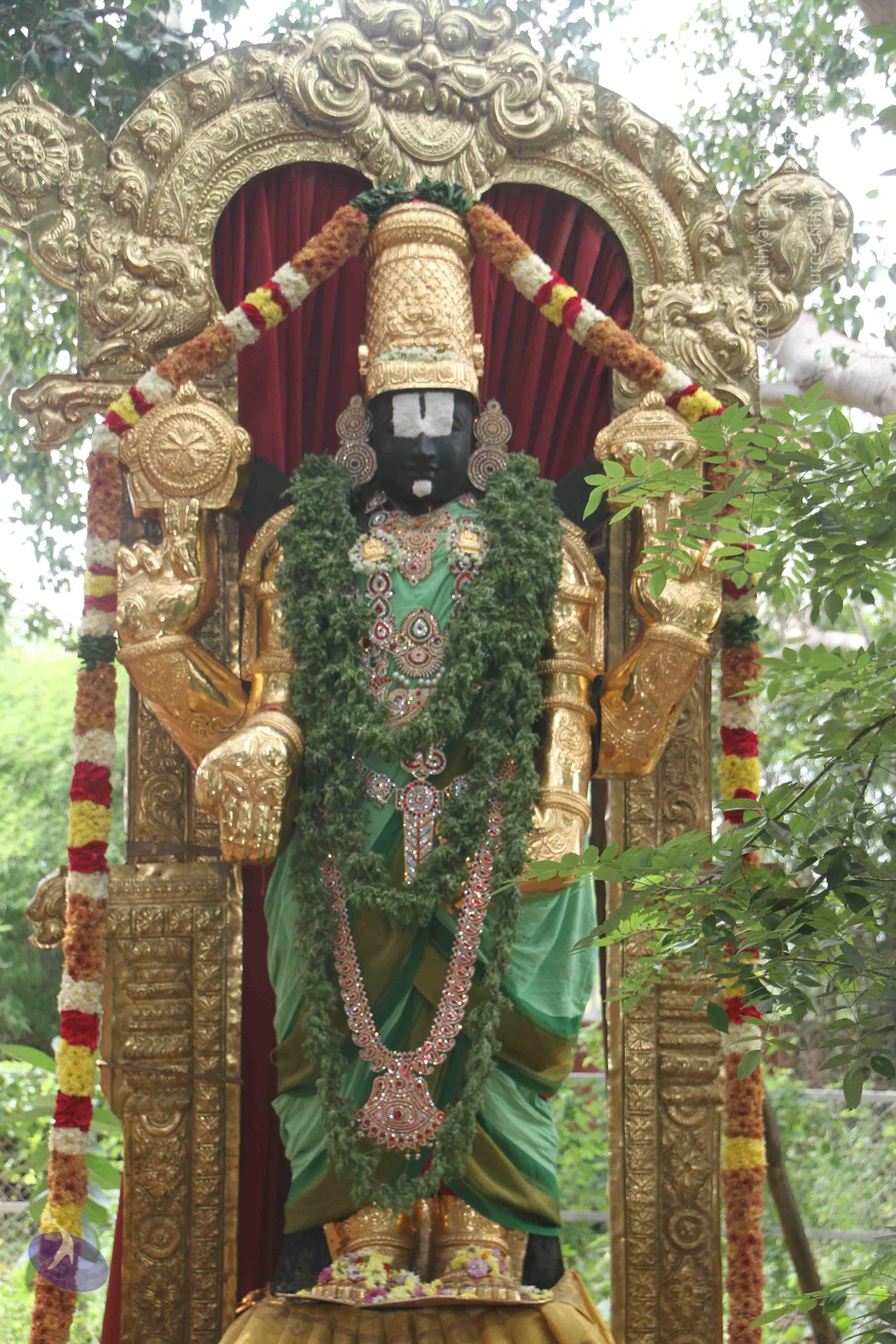
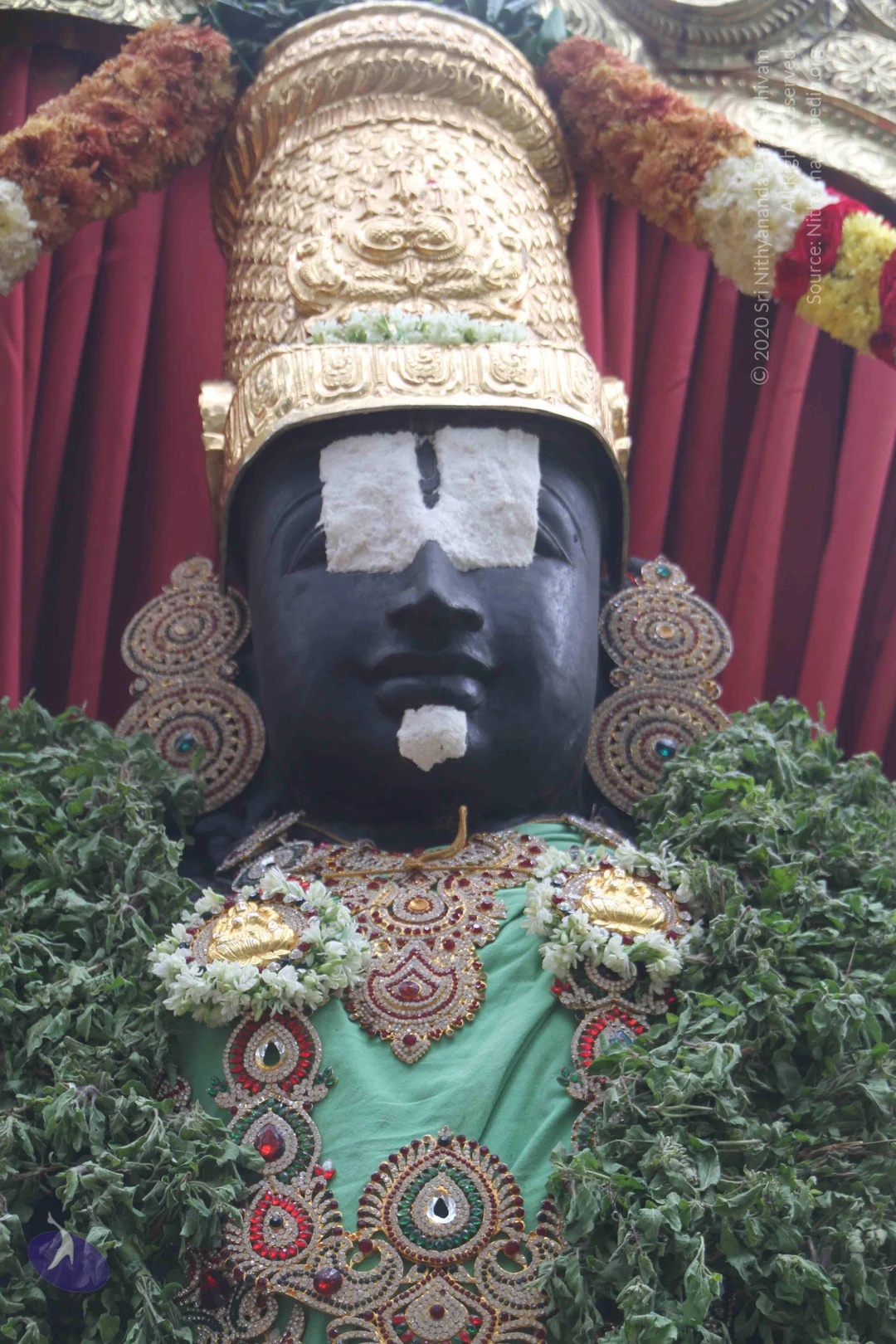
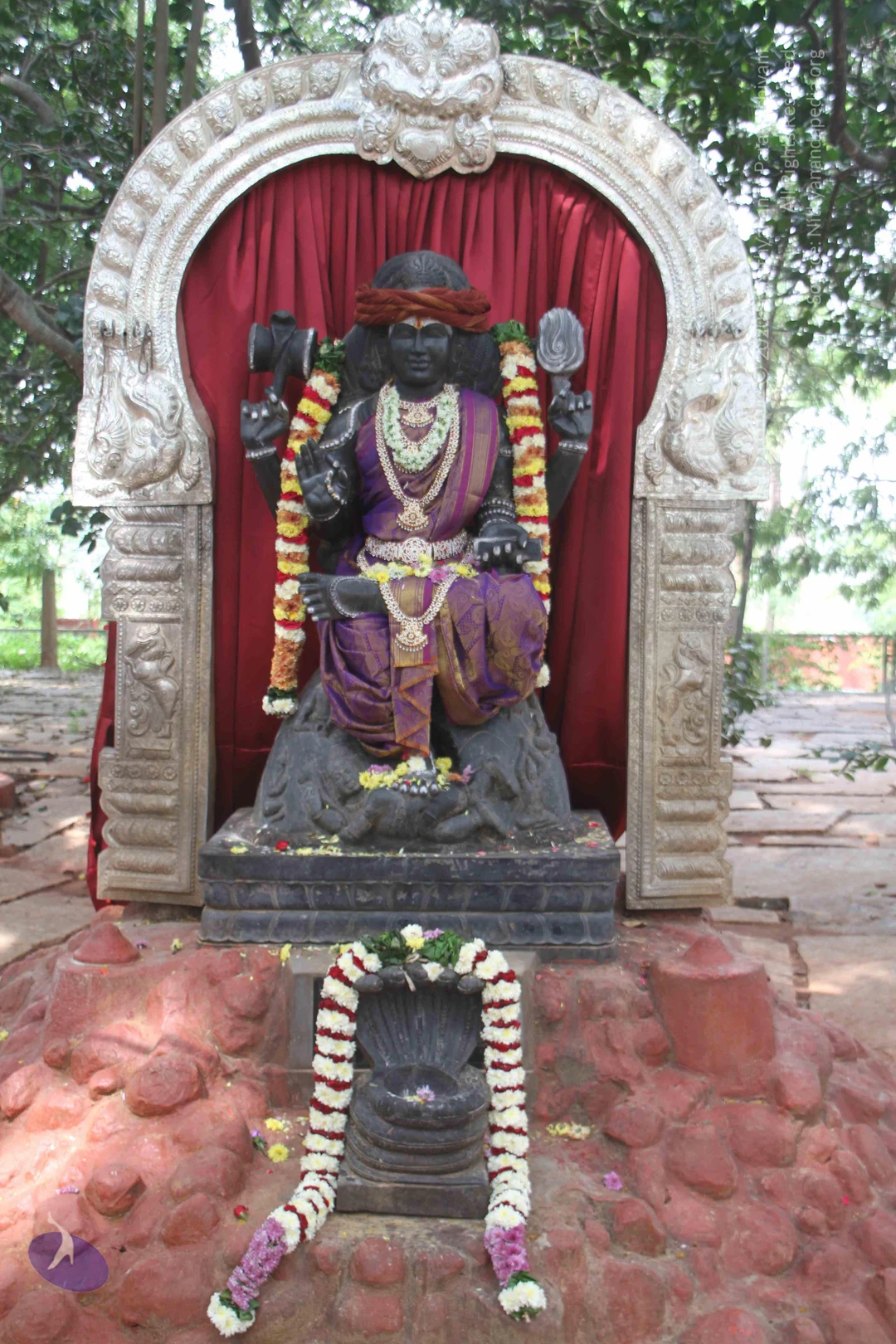
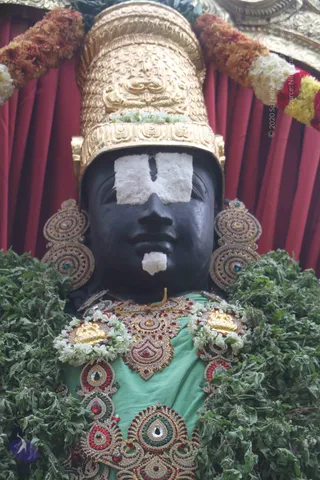
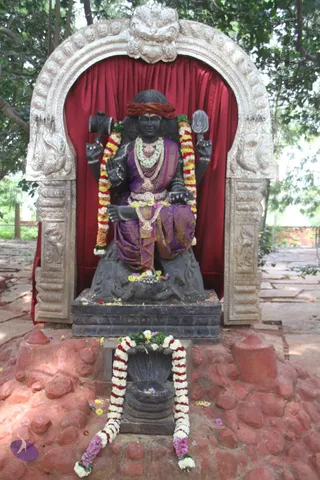
A dark stone deity murti seated on a rock base before a red draped backdrop. It has multiple arms, one raised in abhaya gesture and others holding objects, a red headcloth and a tilak mark. It wears a purple and gold silk dhoti with a jewelled belt, layered white and gold necklaces, and garlands of yellow, red and white flowers hang on both sides. Scattered petals lie at its base.A large outdoor deity murti of Lord Venkateswara standing before an ornate gilded arch with a deep red curtain behind it. The dark-faced murti wears a tall golden crown, a white and orange vertical Vaishnava tilak, and a green dhoti with gold trim. It is draped with a long green leafy garland, layered jeweled necklaces and earrings, and multicolored marigold and rose garlands hang from the arch on each side. Four gold-toned arms hold ceremonial objects, and flower offerings sit at the base beside green foliage.A black stone deity murti with a tall gold crown (kiritam) and white urdhva pundra-style tilak marks on the forehead and chin, decorated with gold and jewelled ornaments, a green cloth, white jasmine garlands and a dense covering of green leaves, with orange and white flower garlands draped above against a red curtain. No people are visible; the image shows a Vishnu-form murti in ritual adornment.A dark stone deity murti stands in a silver-toned arched frame with carved lion-head crest and a red cloth backdrop, set outdoors among trees on a red rocky plinth. The four-armed figure wears a purple and gold silk dhoti, layered white and gold necklaces, a jewelled waist belt, bangles and a red headband with a vertical tilak. Its hands hold a trident-like staff and a lotus-shaped object, and the figure is decorated with flower garlands in red, white and yellow. Fresh marigold and white flower garlands are draped across the plinth and offerings lie before it, with a carved stone pedestal below.

November 10 2017

5 photosView all
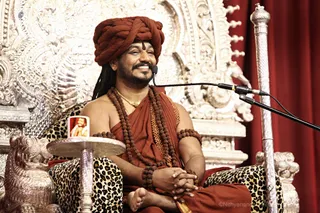
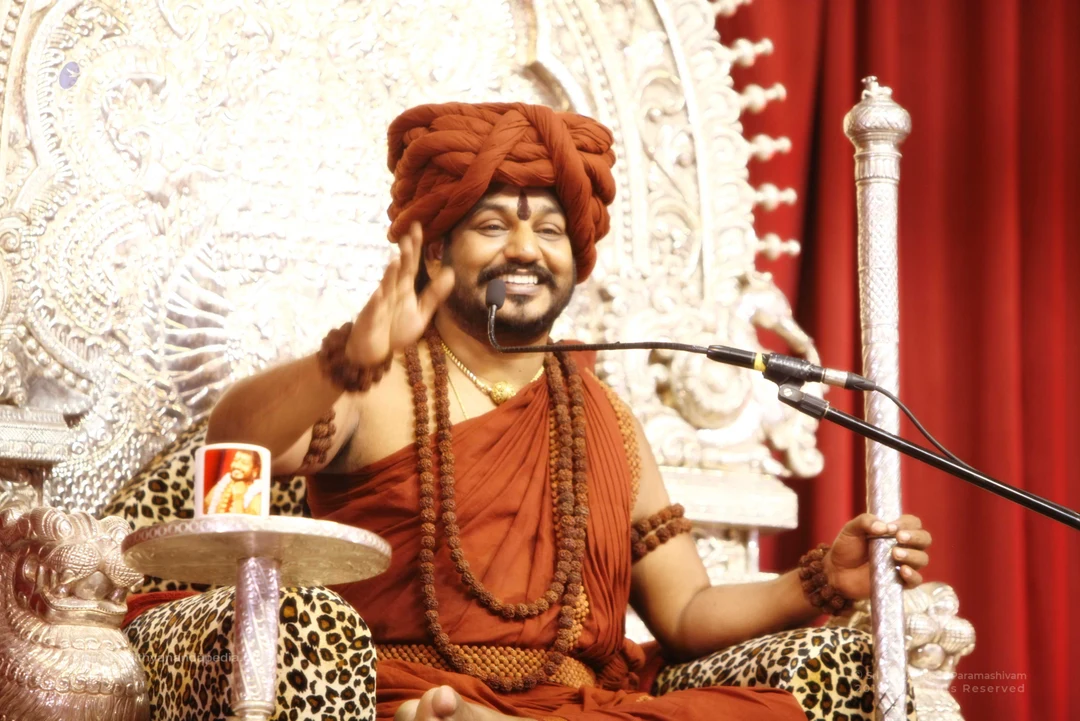
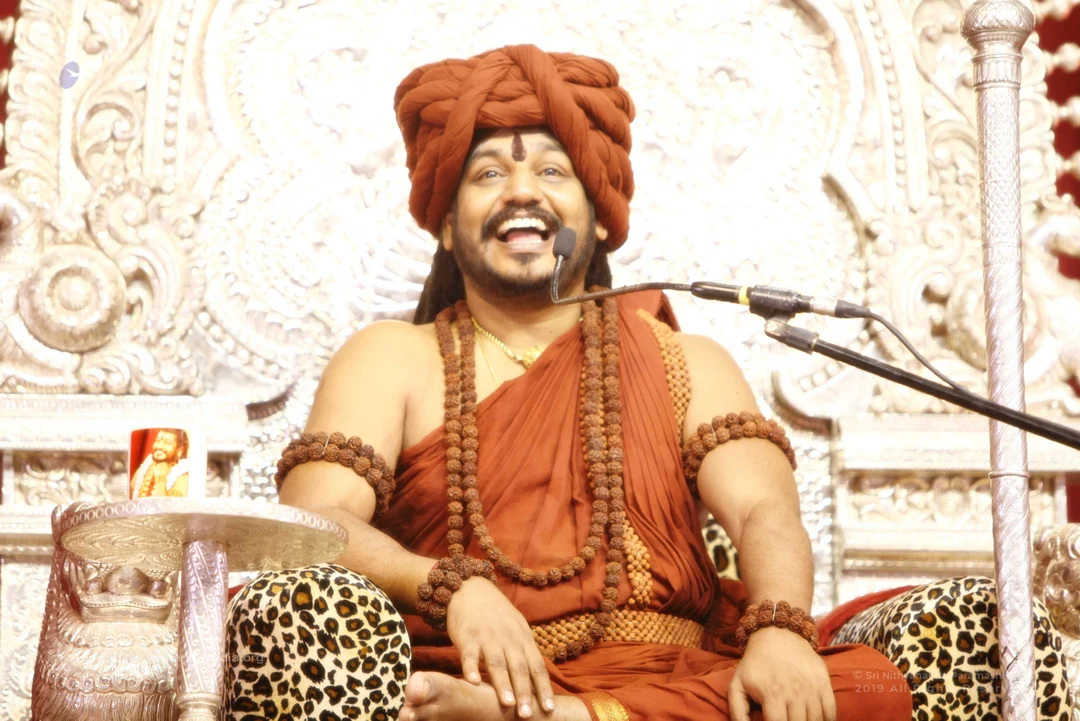
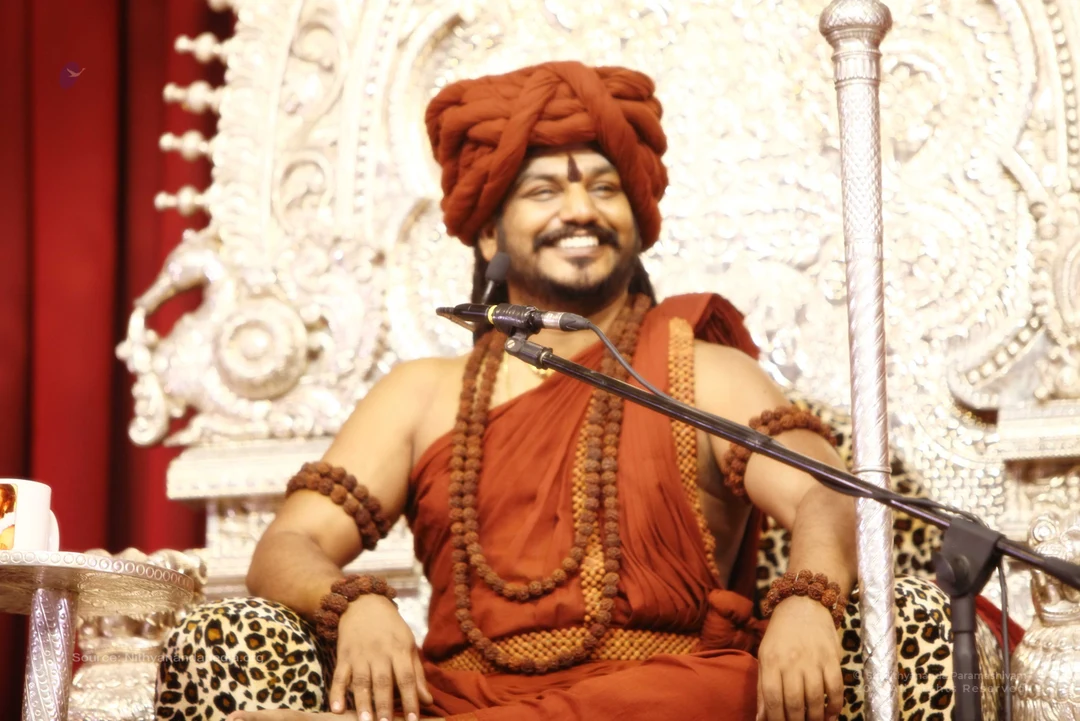
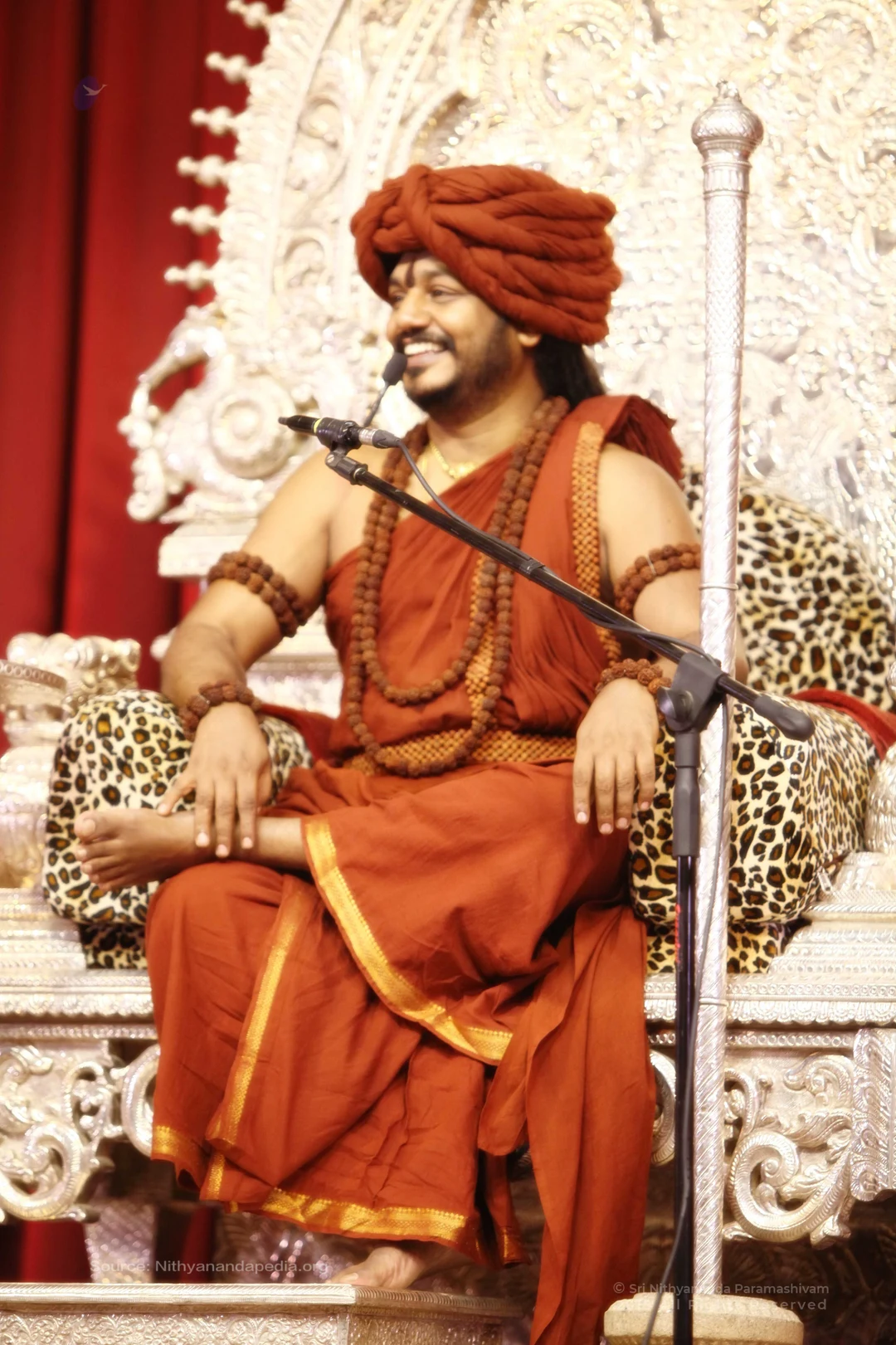
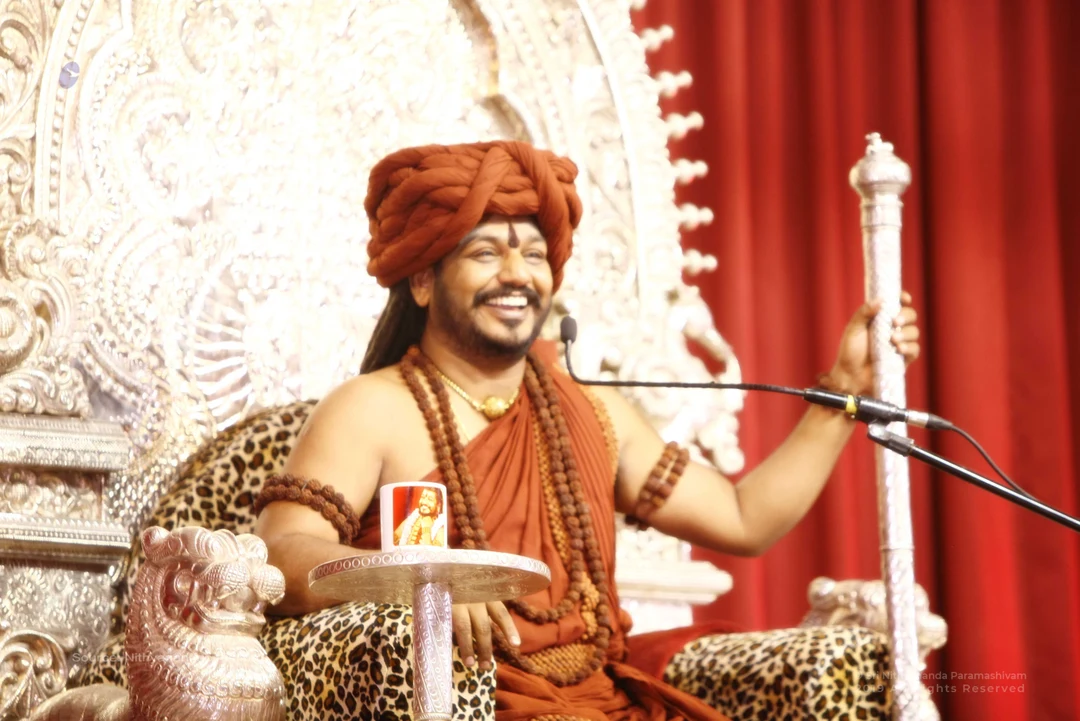
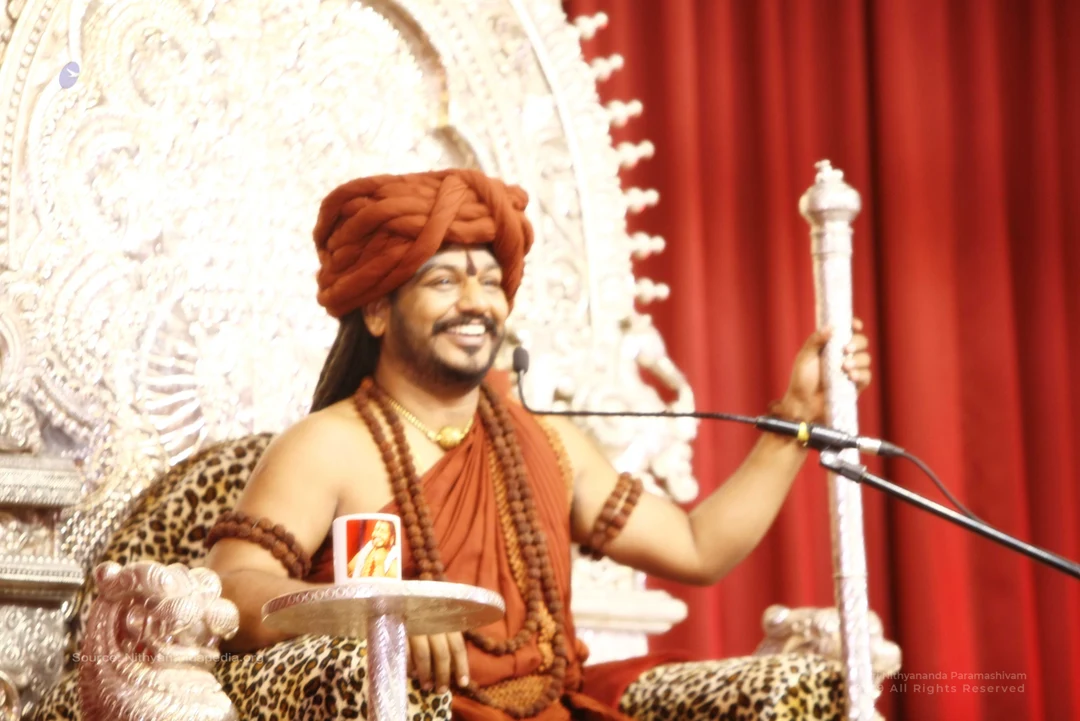
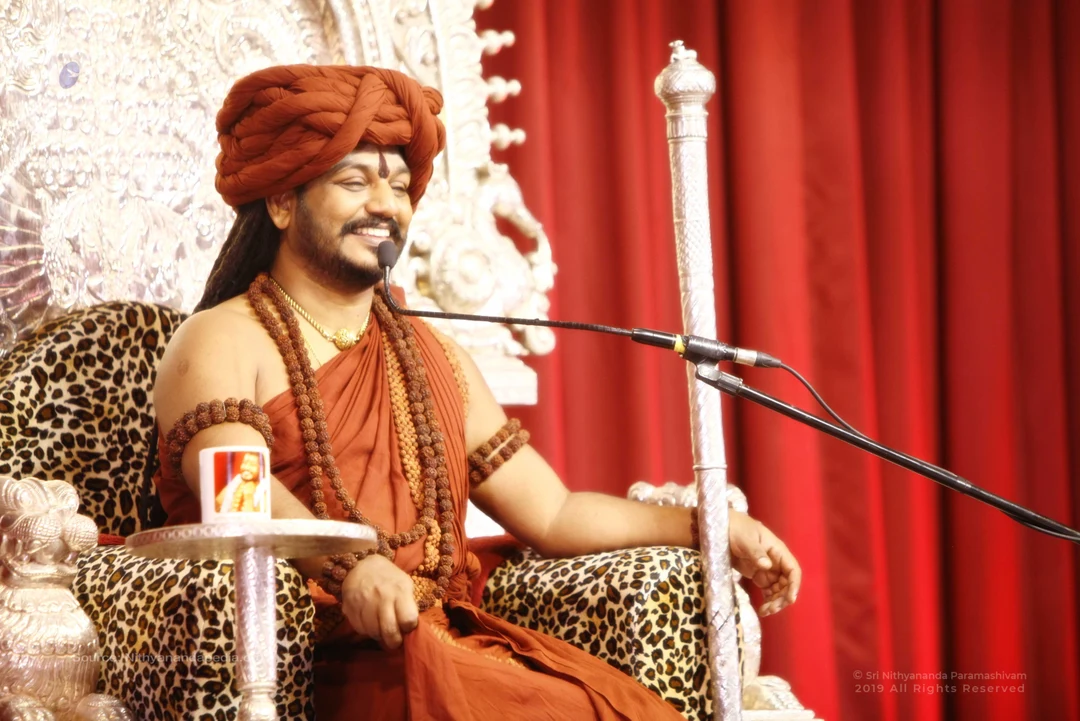
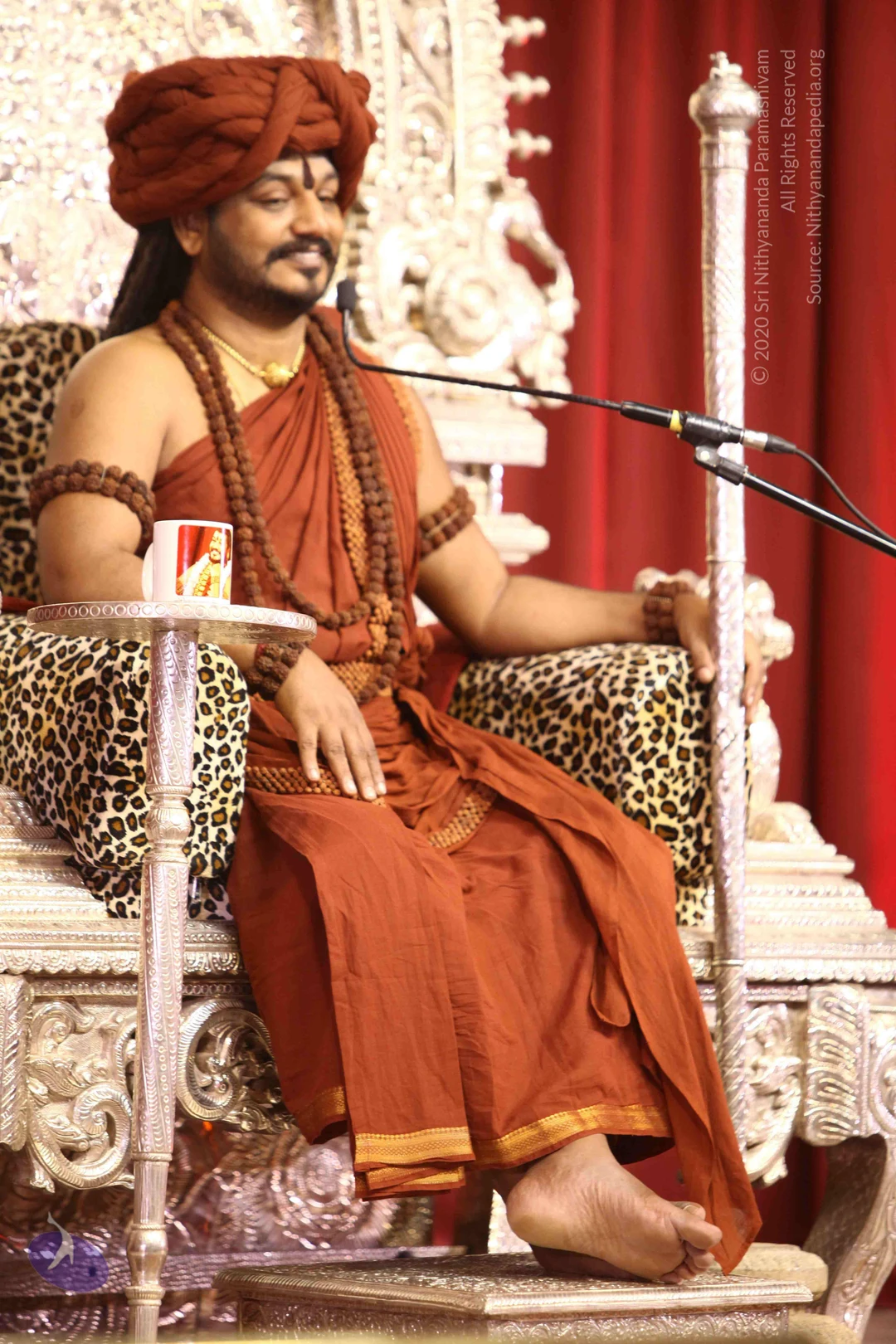
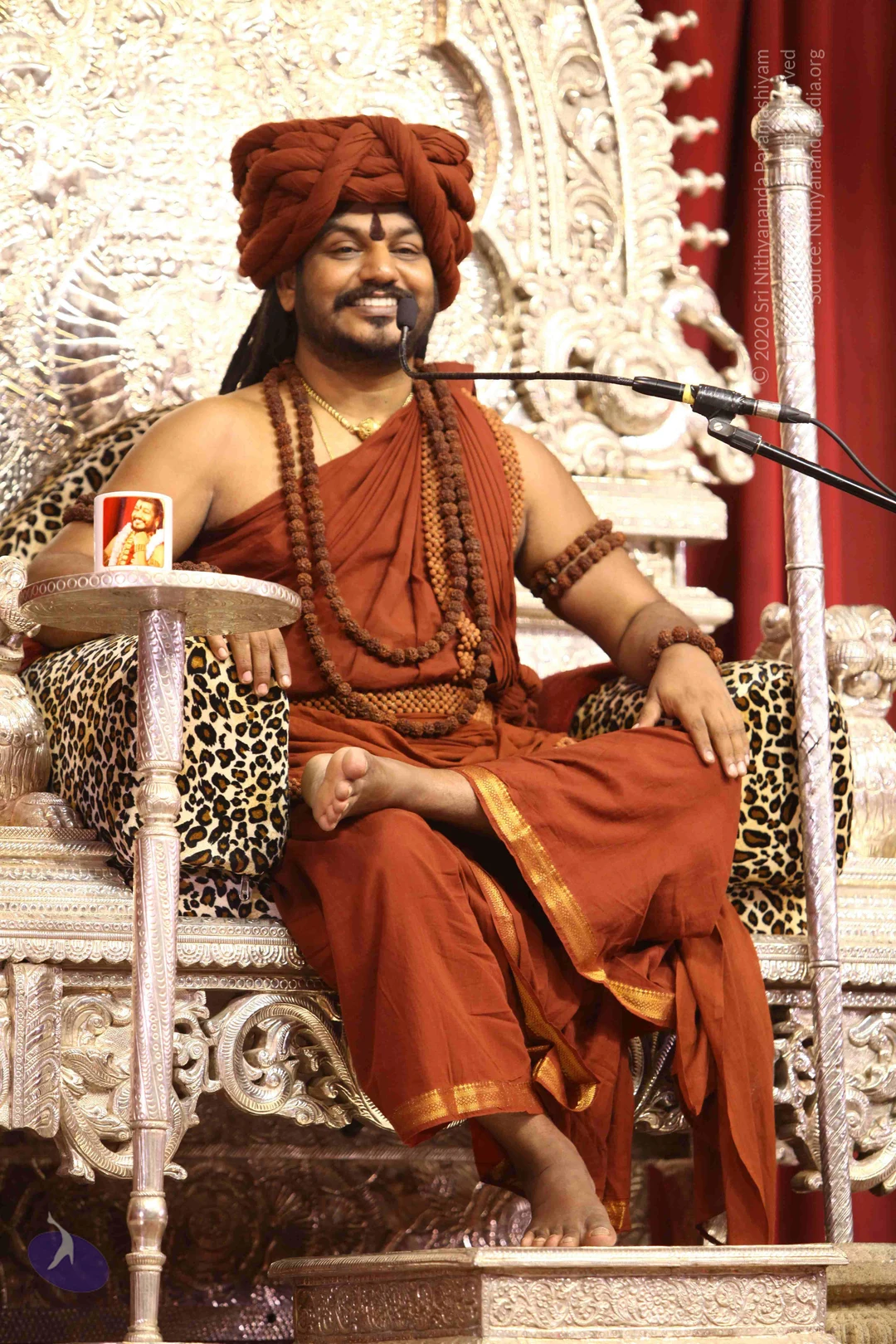
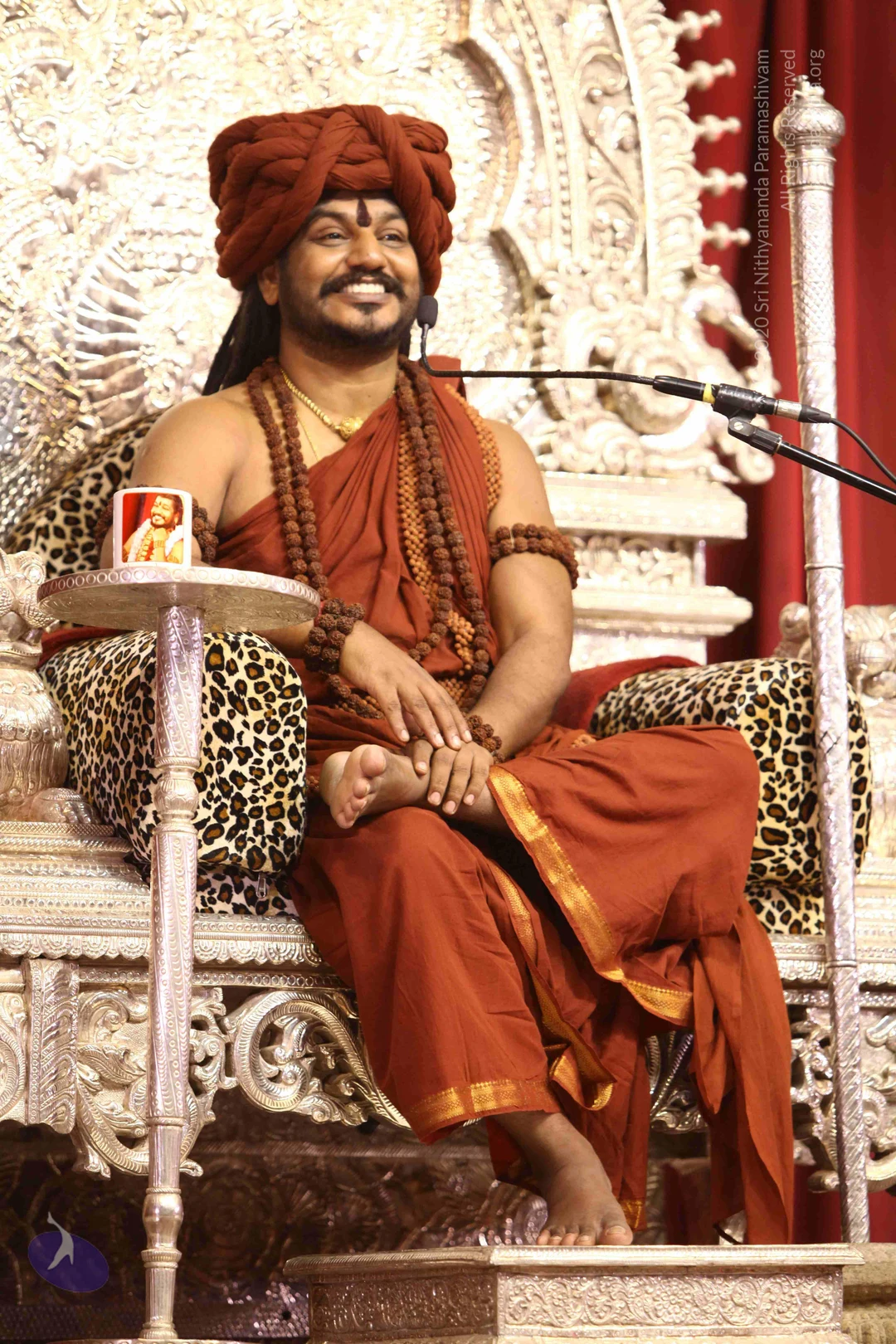
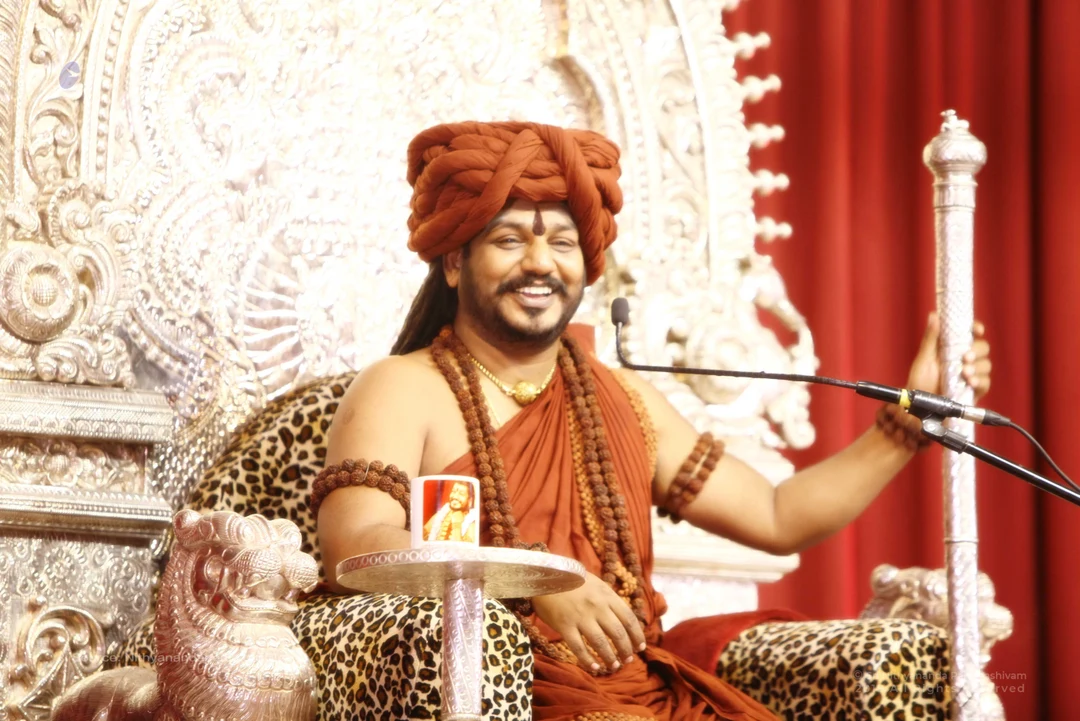
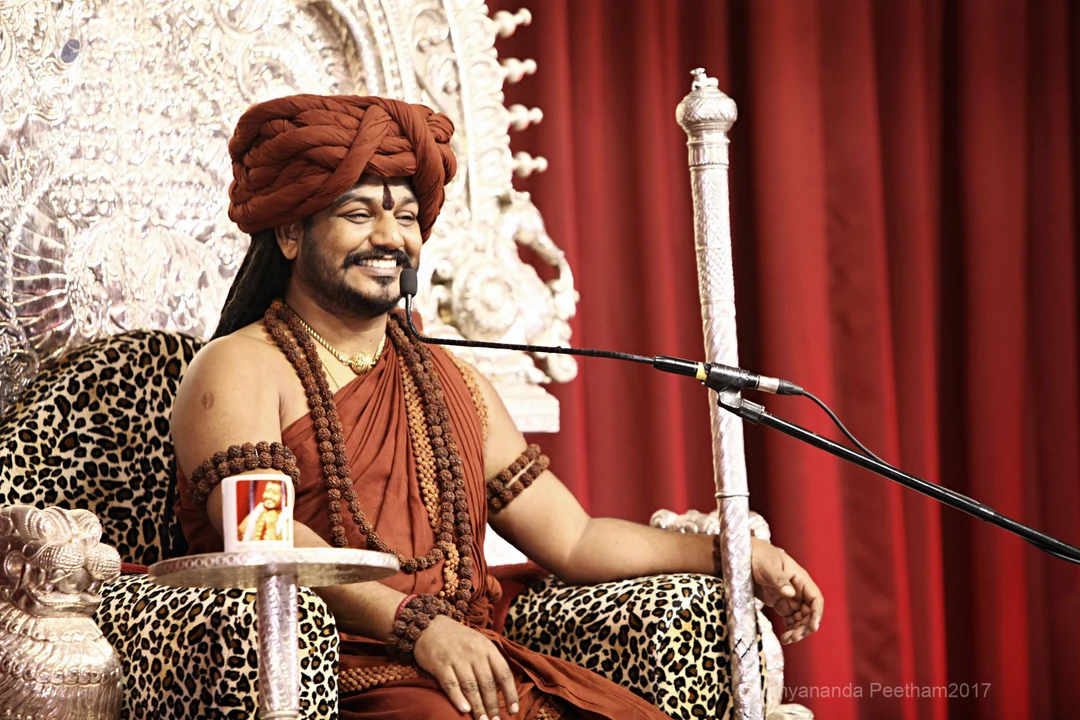
A man in a rust-orange turban and orange-red robes sits smiling on an ornate silver throne with carved lion and scroll details, leopard-print cushions, and red curtains behind him. He wears layered rudraksha malas and bracelets, and holds a silver staff upright in his right hand while speaking into a microphone on a stand. The seated figure is an appearance-based probable Swamiji, identified by the turban, saffron-orange robes, and rudraksha malas, giving a satsang discourse. A small framed photo sits on a side table at left.A man seated on an ornate silver throne with leopard-print cushions, smiling and holding his hands clasped in his lap while speaking into a clip-on microphone on a boom stand. He wears a dark red-orange turban, orange-red robes, multiple rudraksha malas across his chest and arms, and a gold necklace. A small framed photo of a bearded man in similar orange attire sits on a silver side table to his left. A red curtain and a silver staff are in the background. Probable Swamiji seated in satsang, with appearance cues of a red-orange turban, rudraksha malas and ceremonial gold necklace.A man seated on an ornate silver throne with leopard-print cushions and a carved silver lion at its base, smiling broadly with hands resting on his lap. He wears a rust-orange turban, a rust-orange draped garment, long rudraksha mala necklaces across his chest and arms, a gold chain, and beaded bracelets. A microphone on a stand is at his right and red curtains hang behind. A small framed picture stands on a silver side table beside him. Swamiji (probable) is visible in this seated-throne discourse setting, with his distinctive turban, rudraksha malas and ceremonial gold necklace identifying the role.