Skip to content
Sunday

24 January 2016

Celebration Of Thaipoosam

Dated photos
416
Source pages
1
Media
5
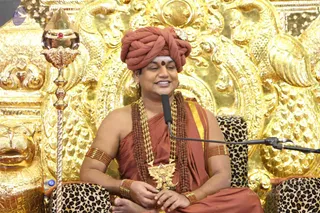
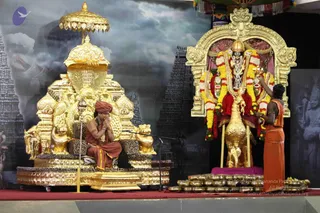
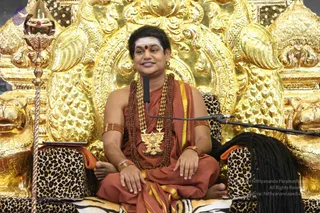
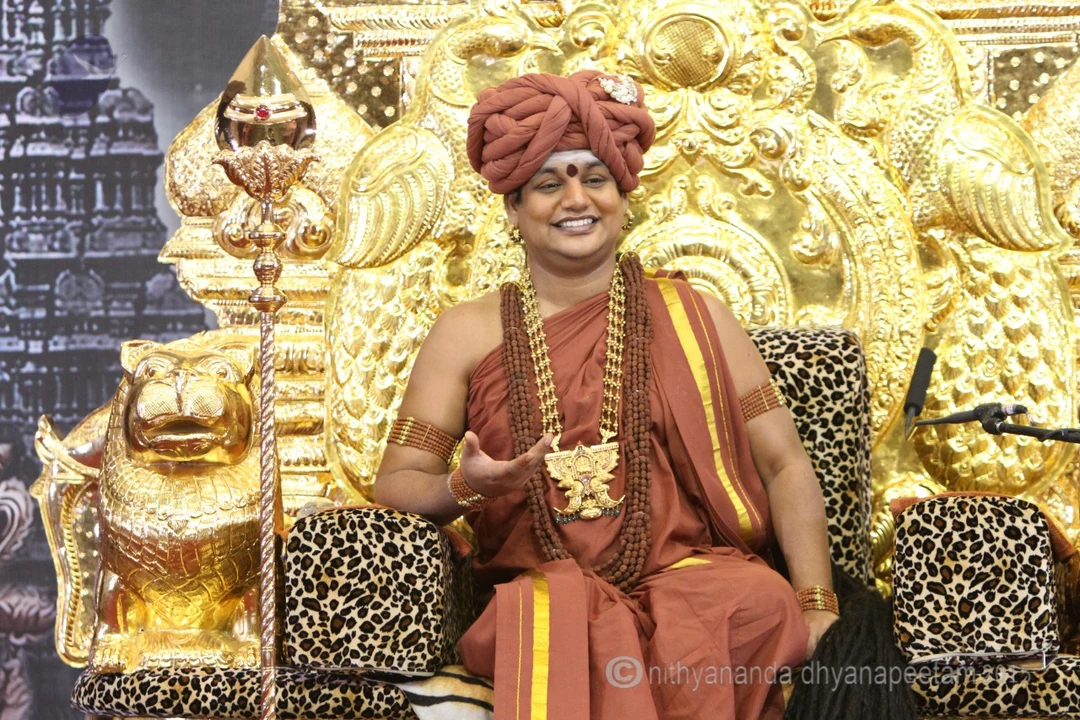
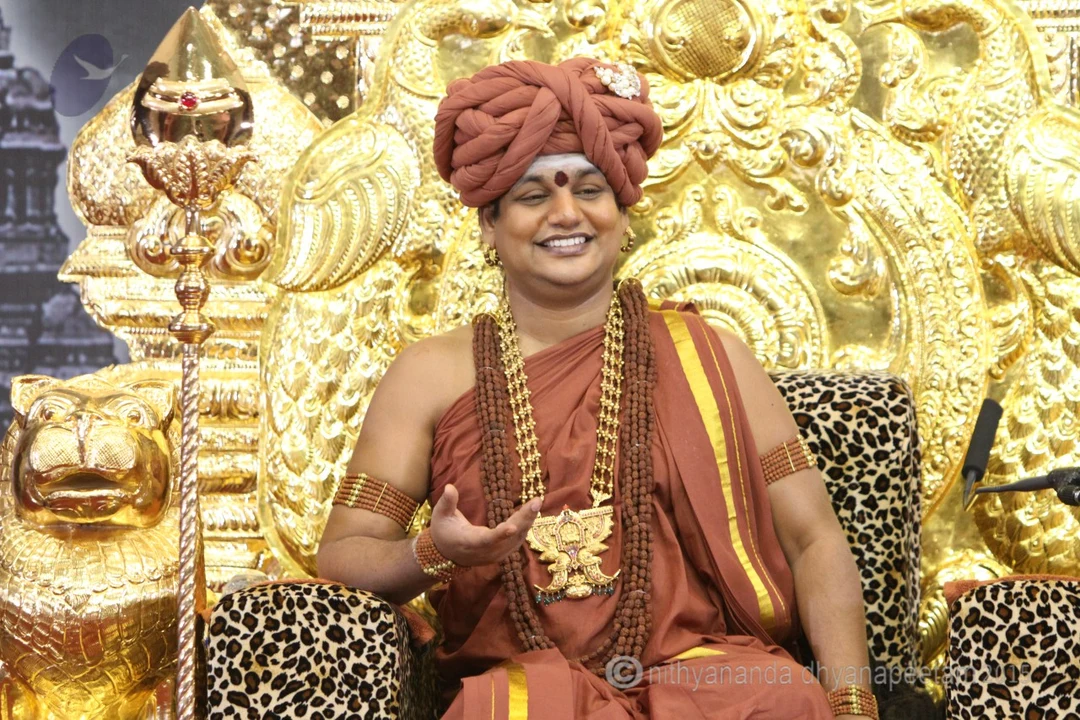
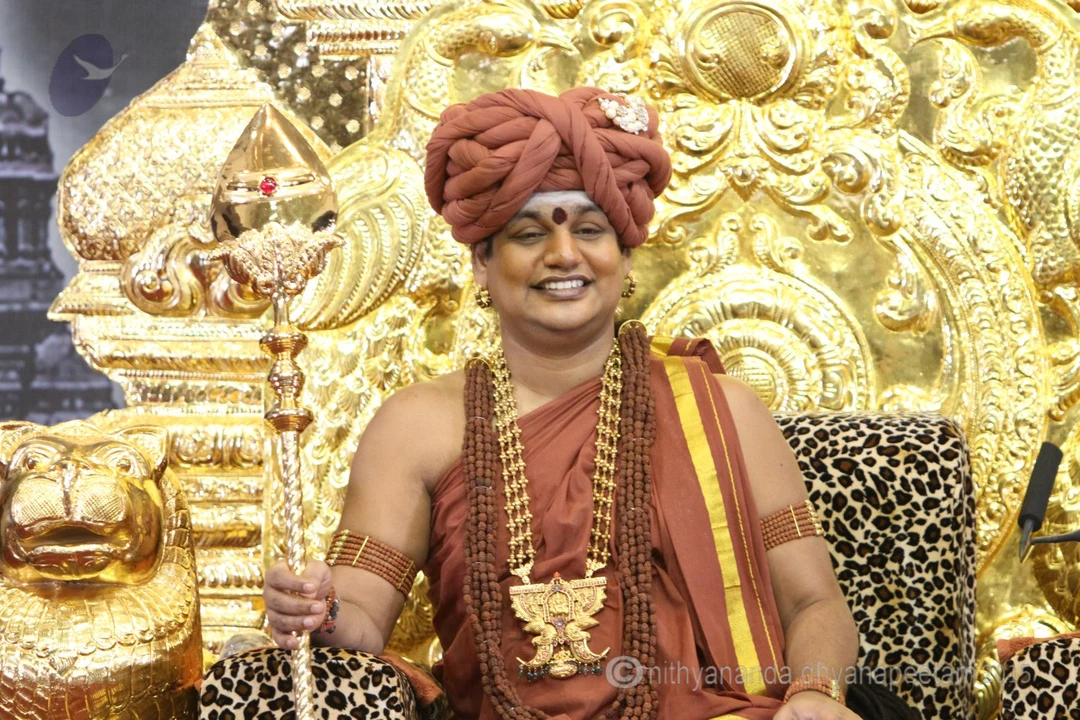
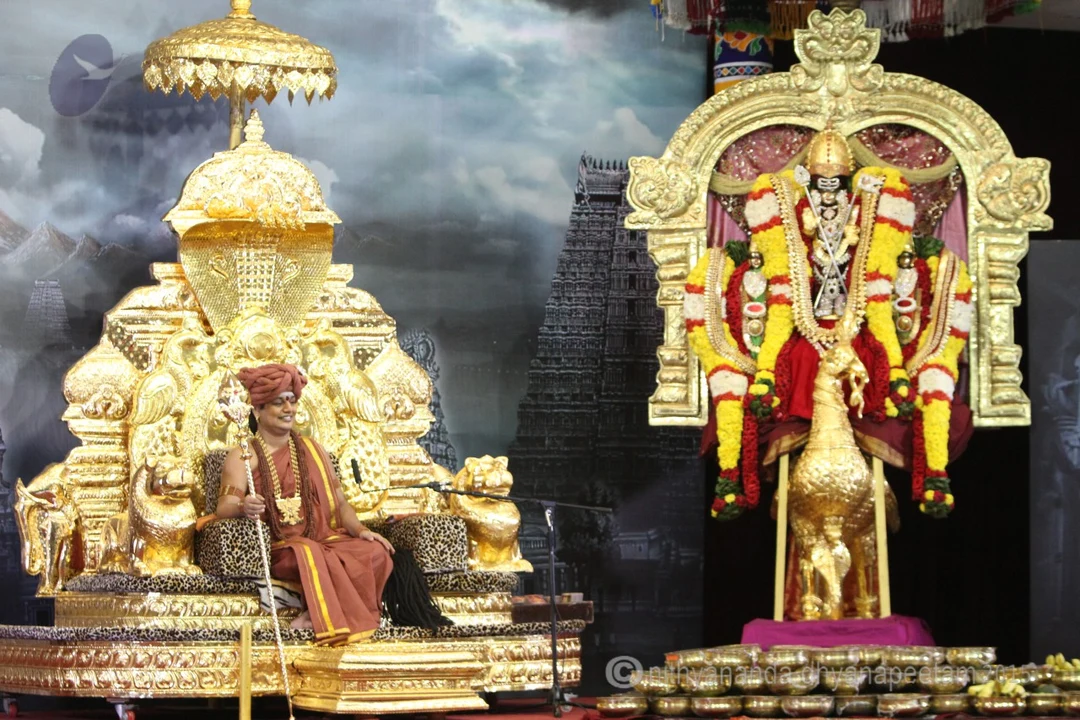
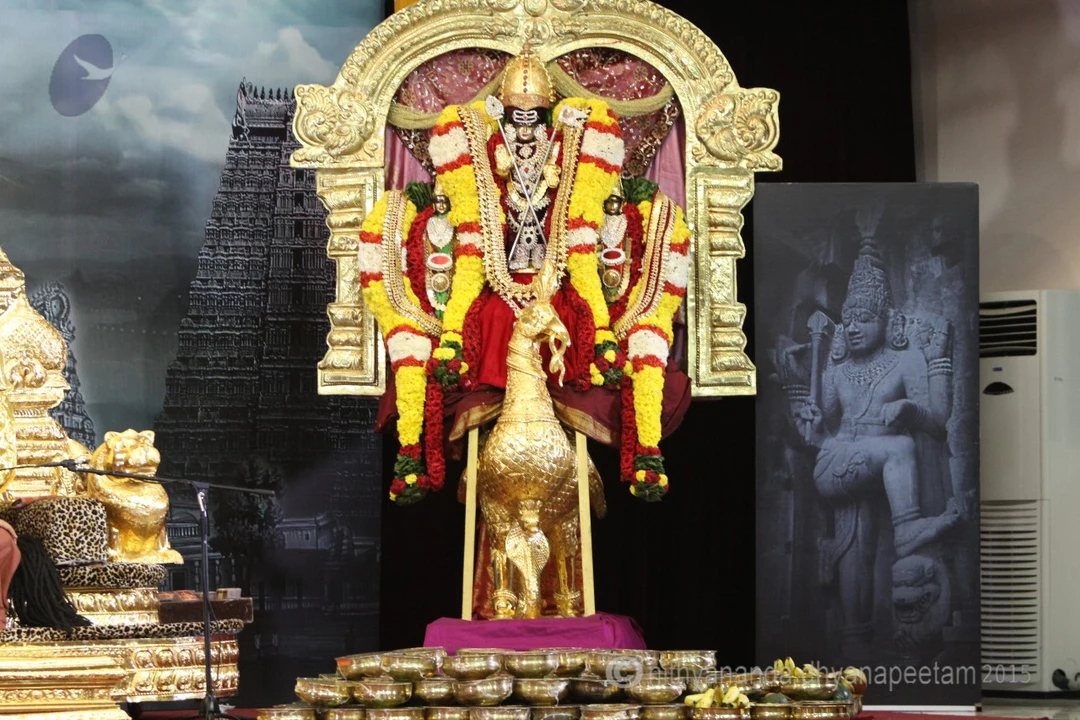
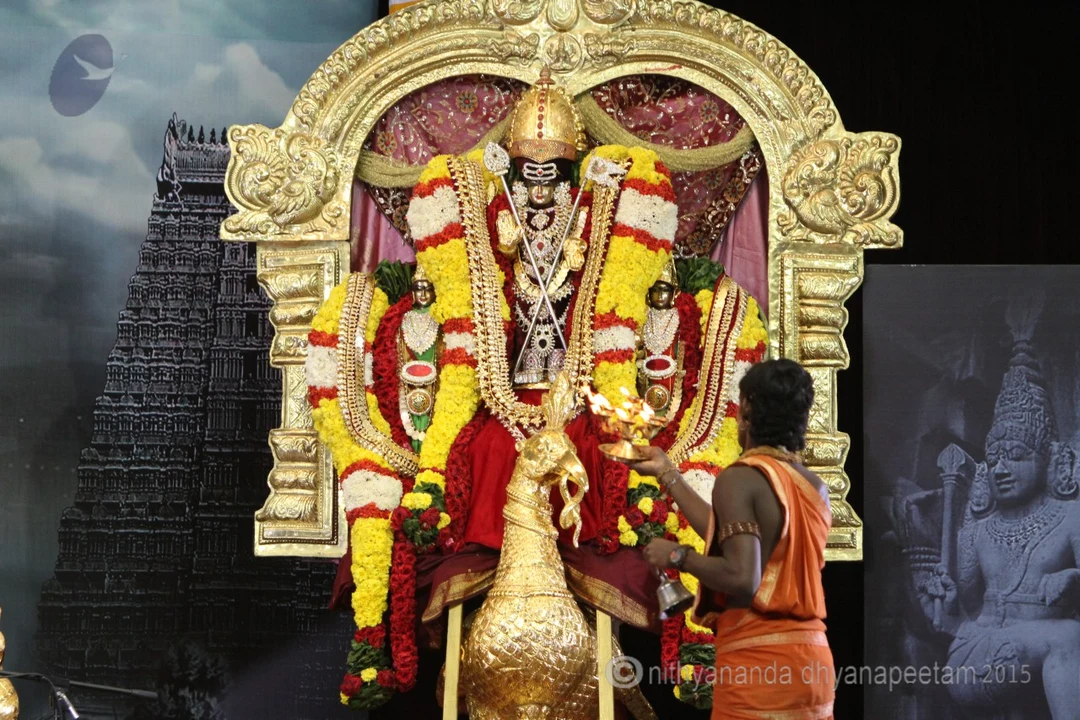
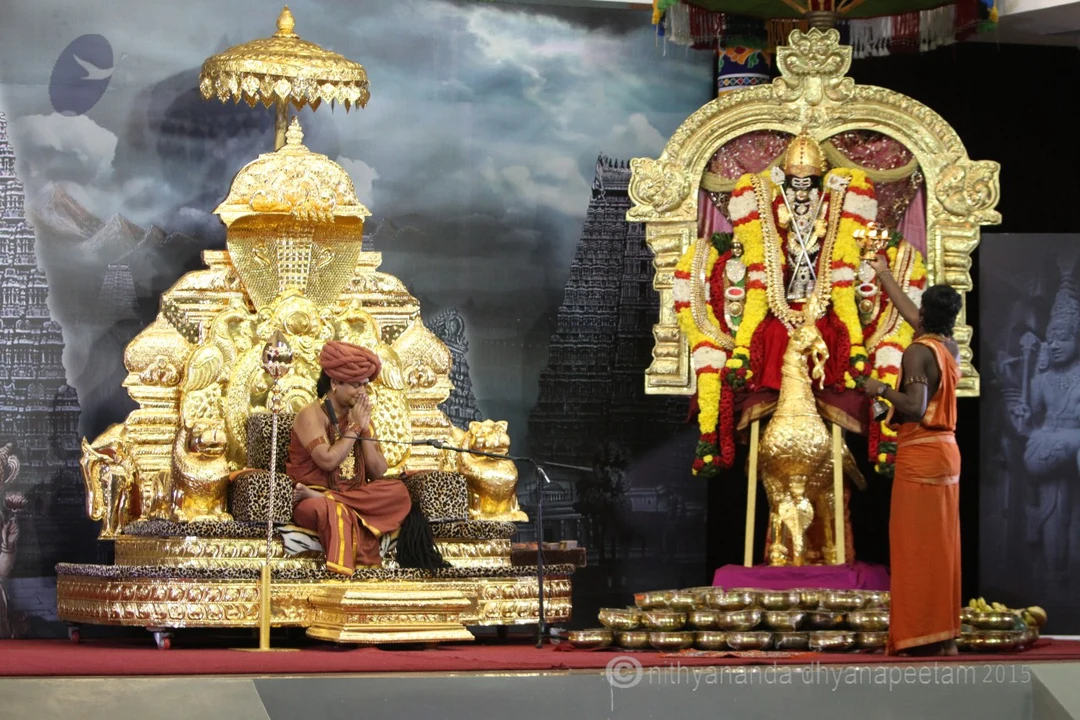
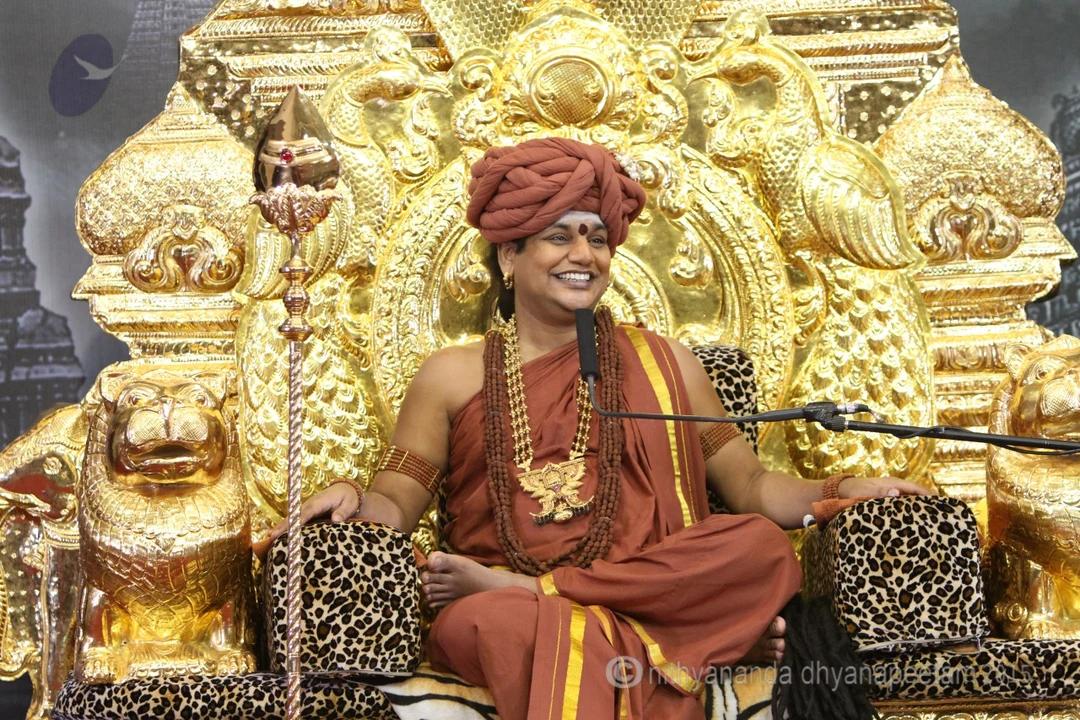
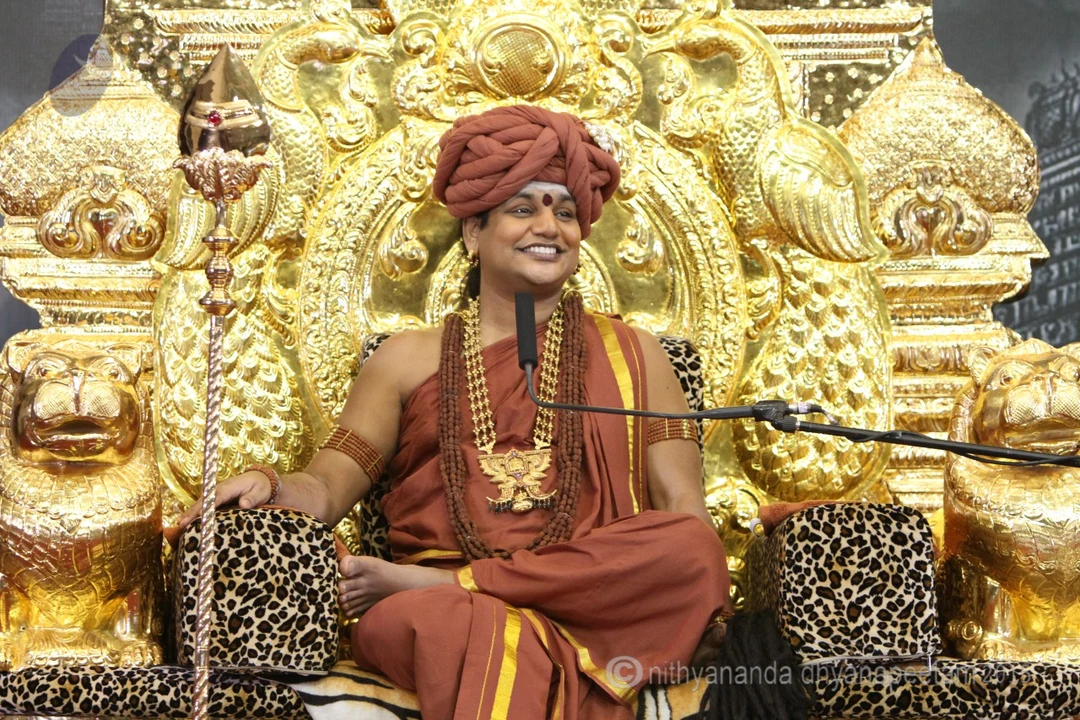
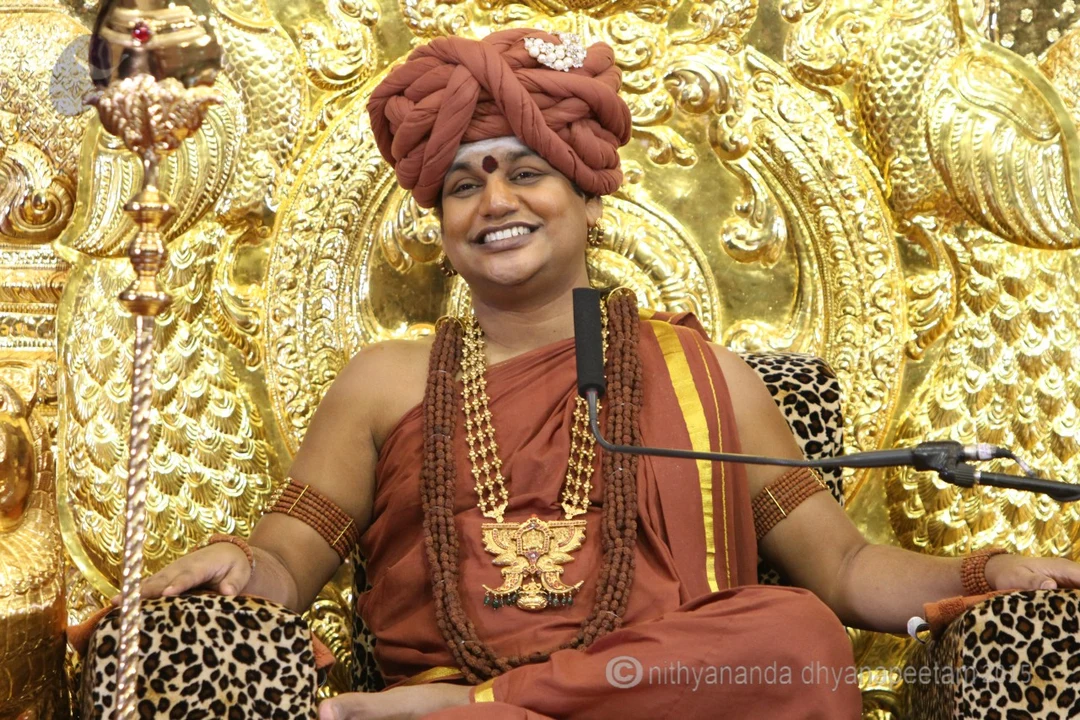
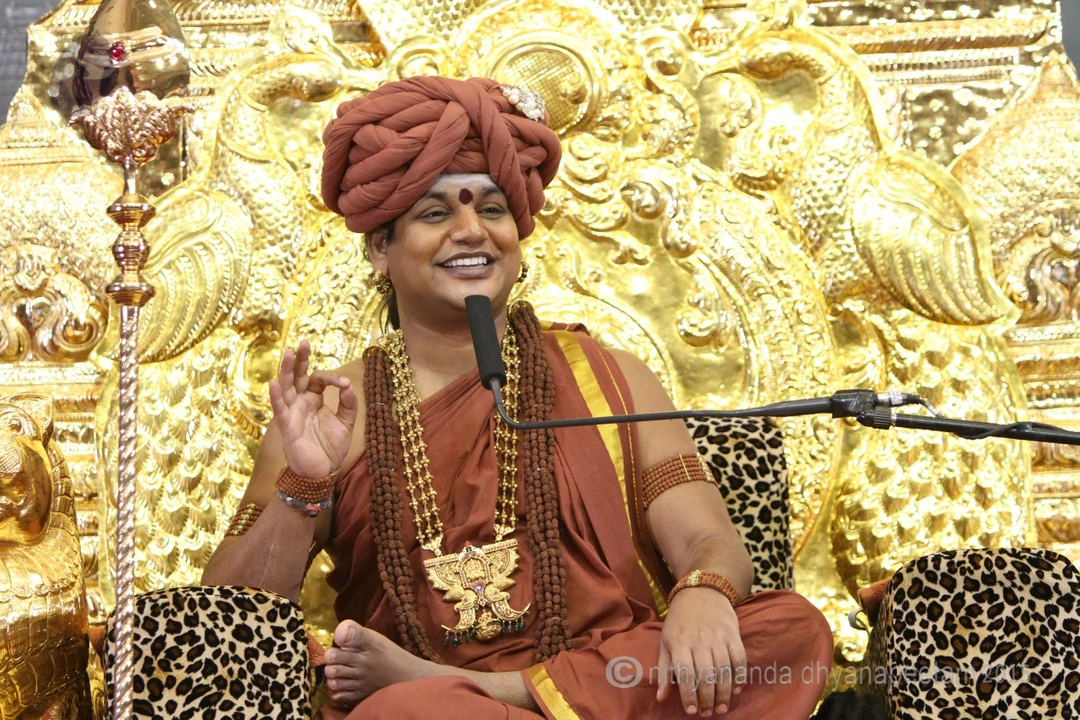
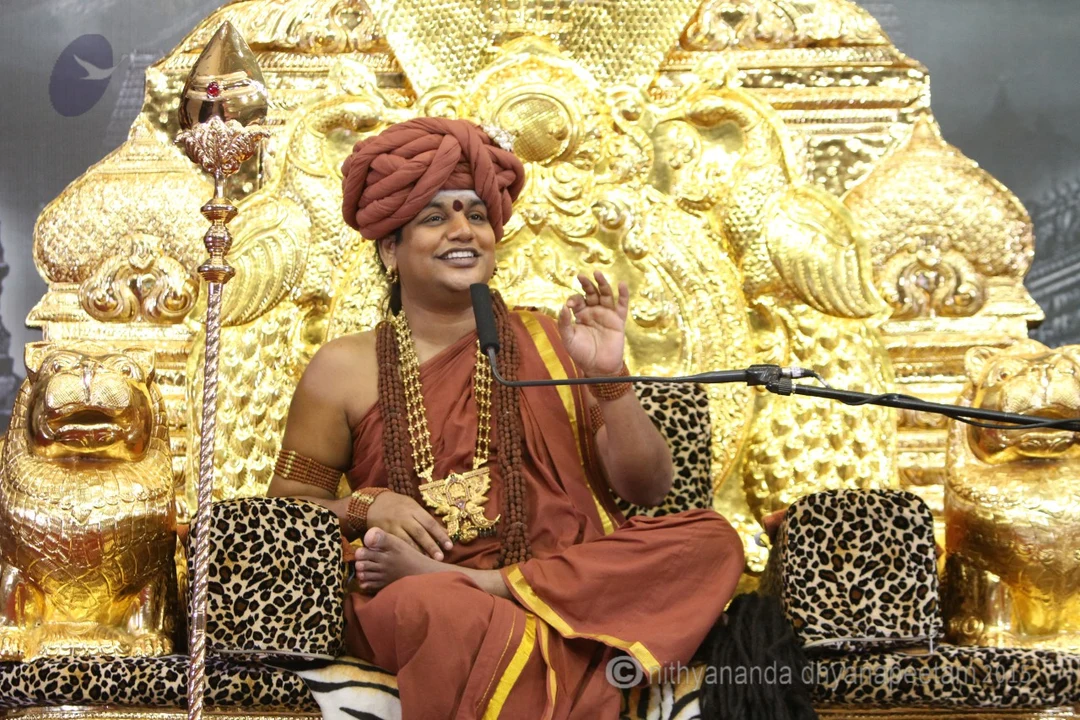
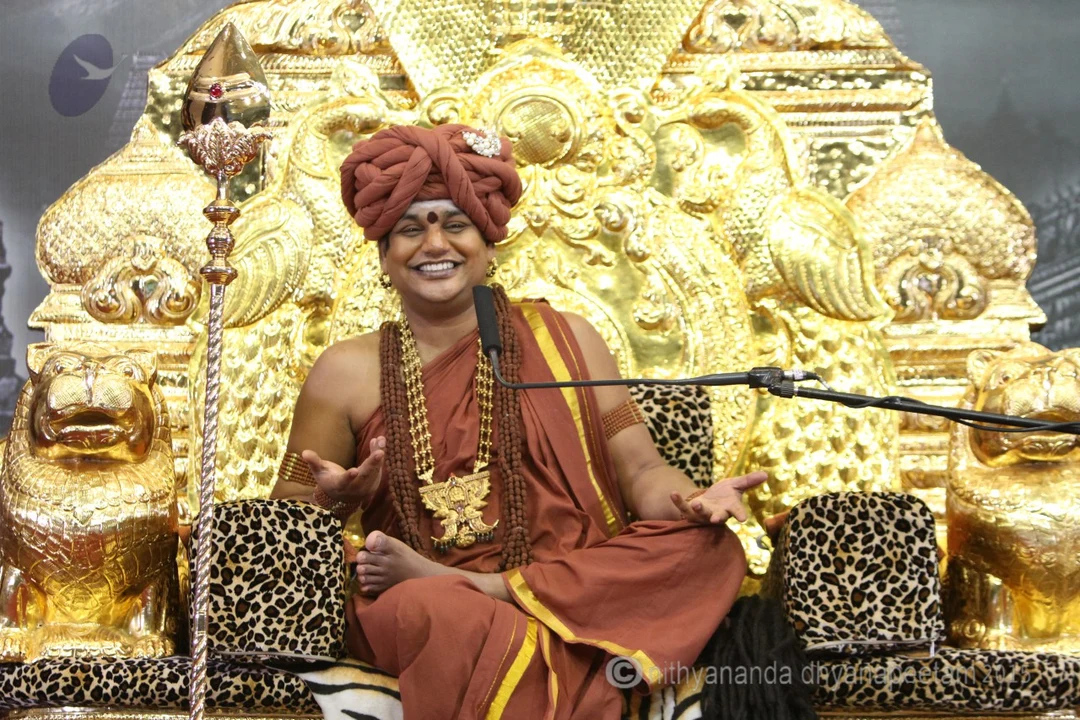
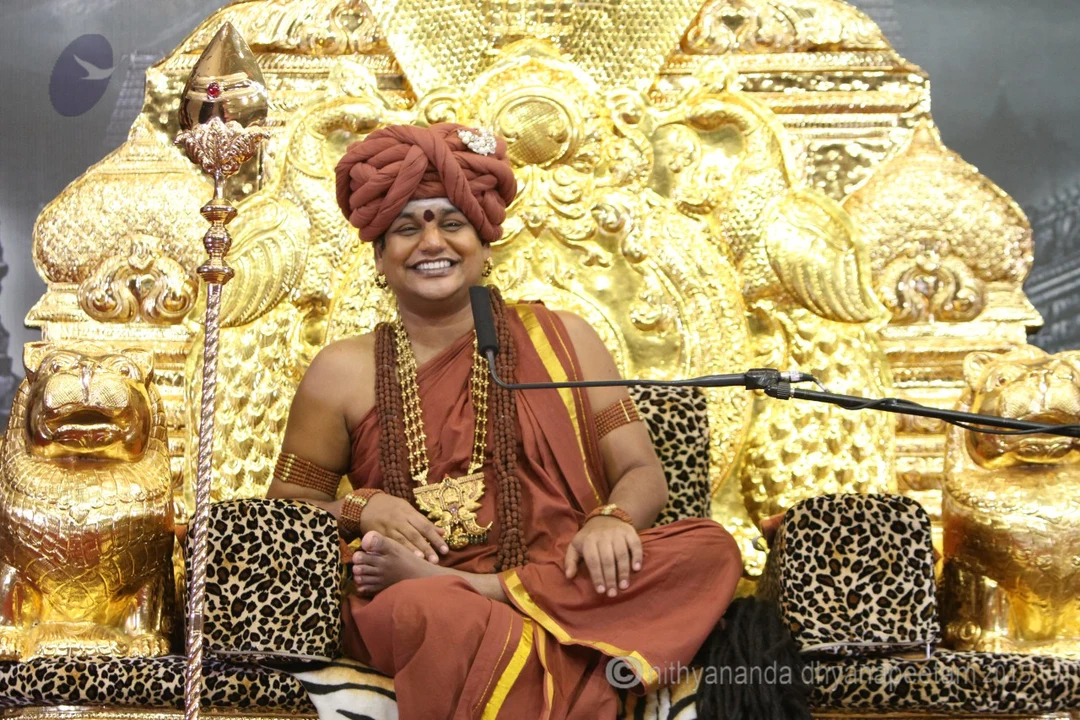
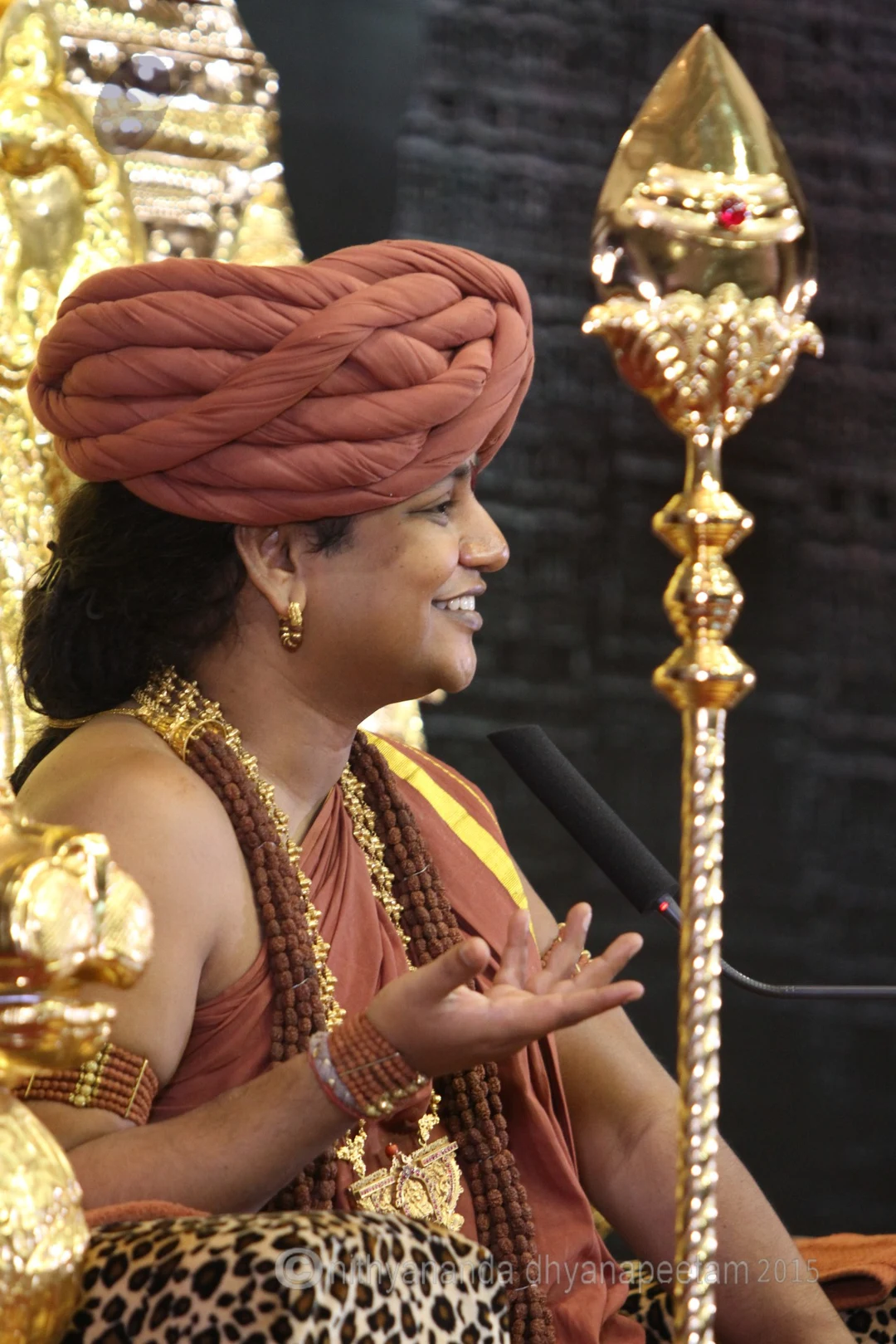
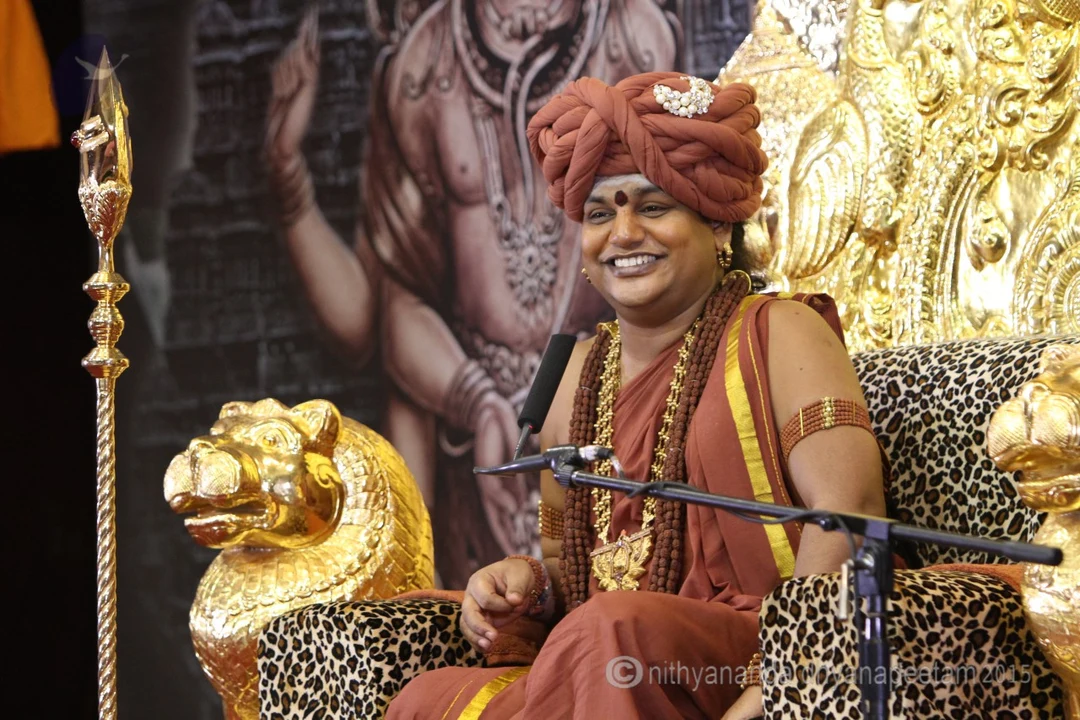
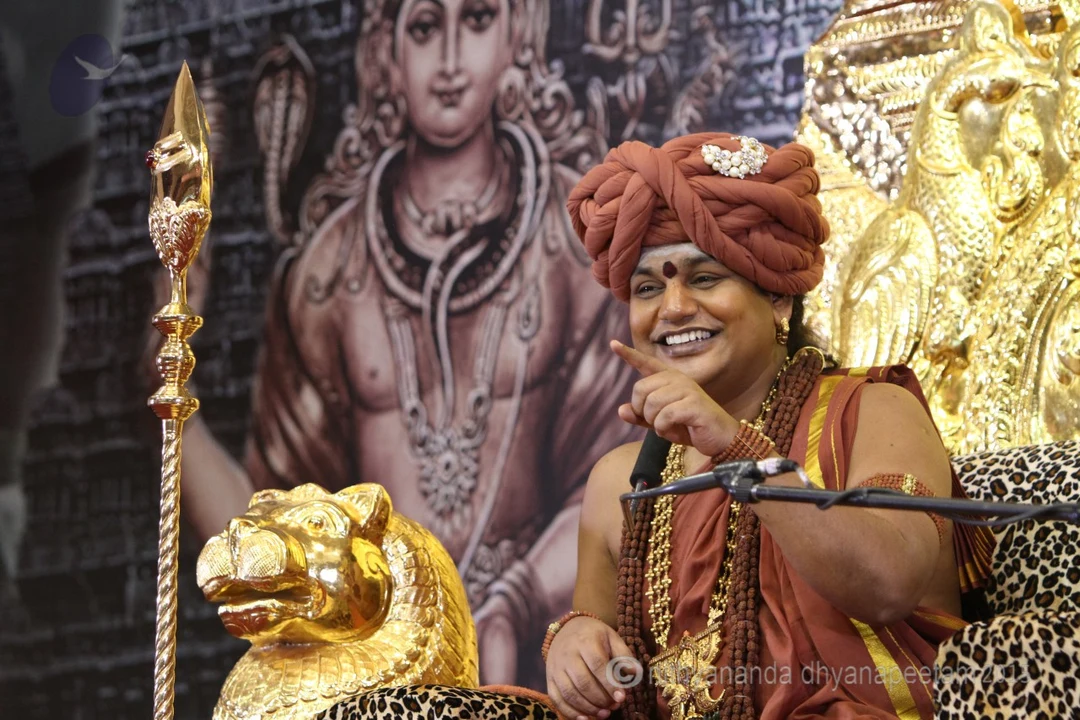
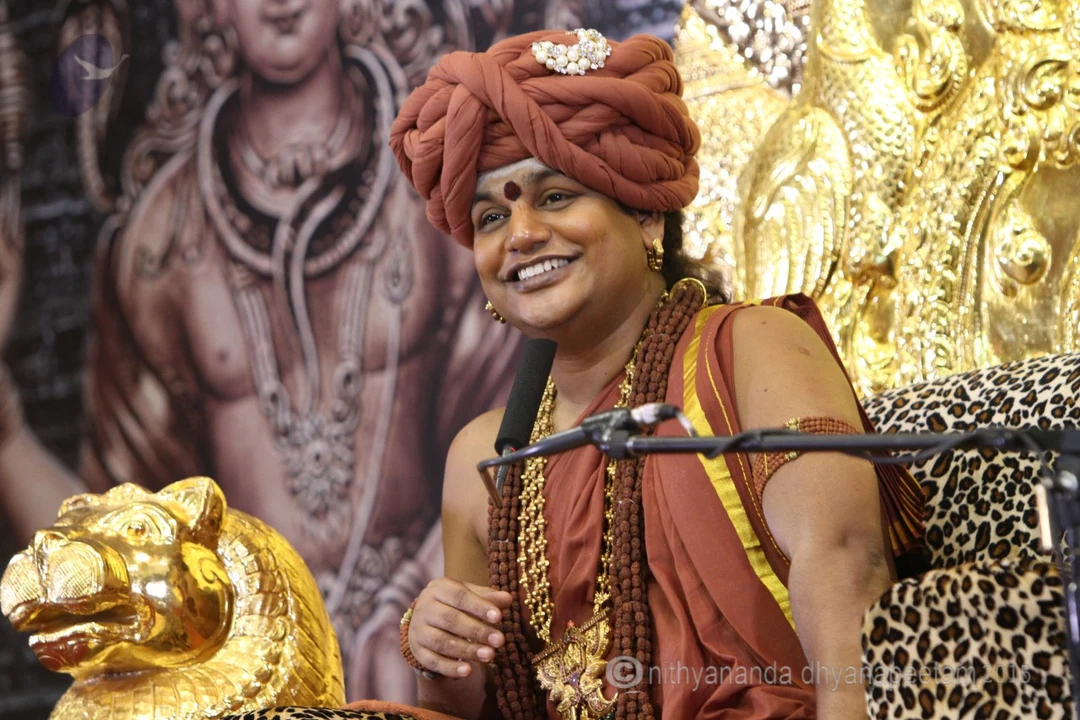
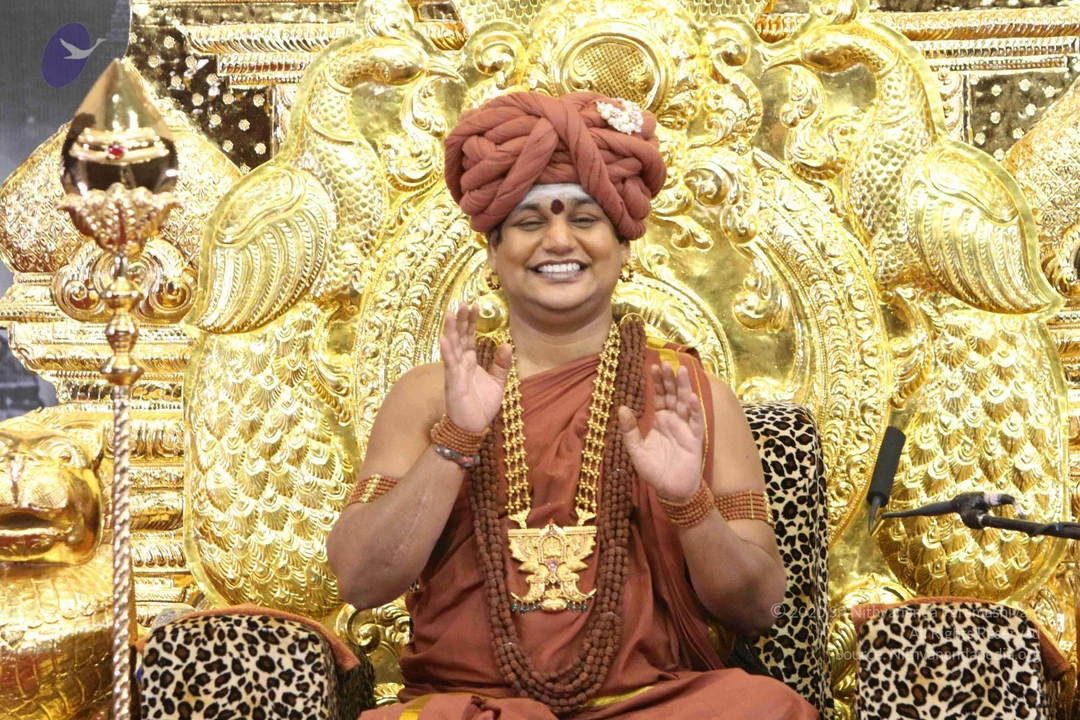
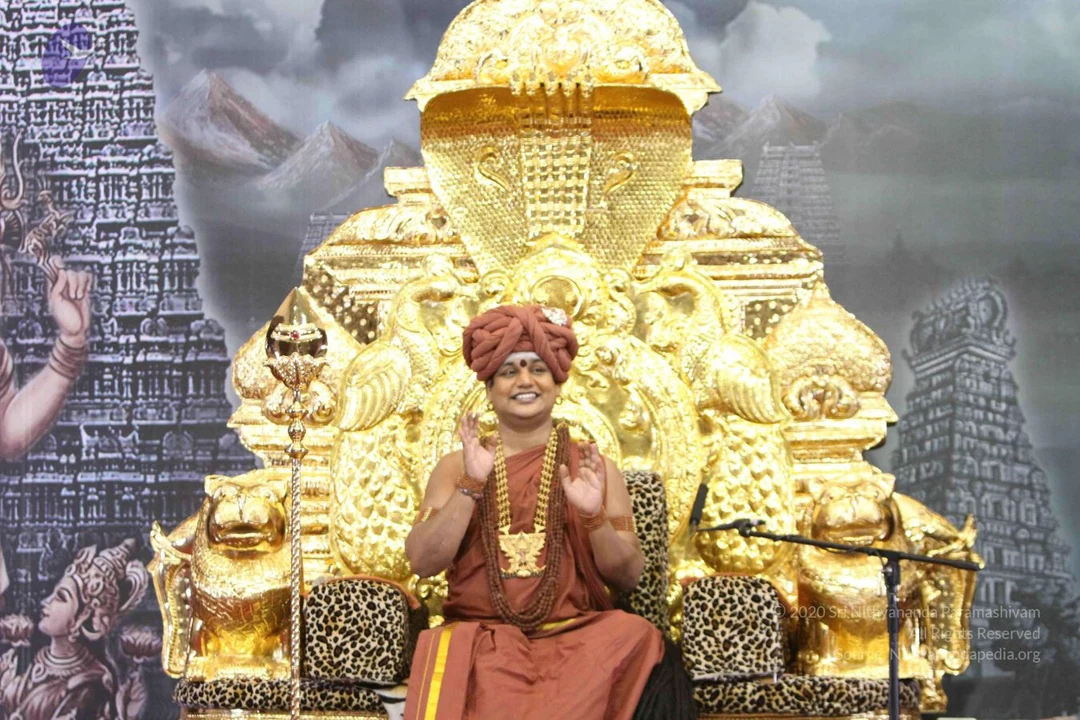
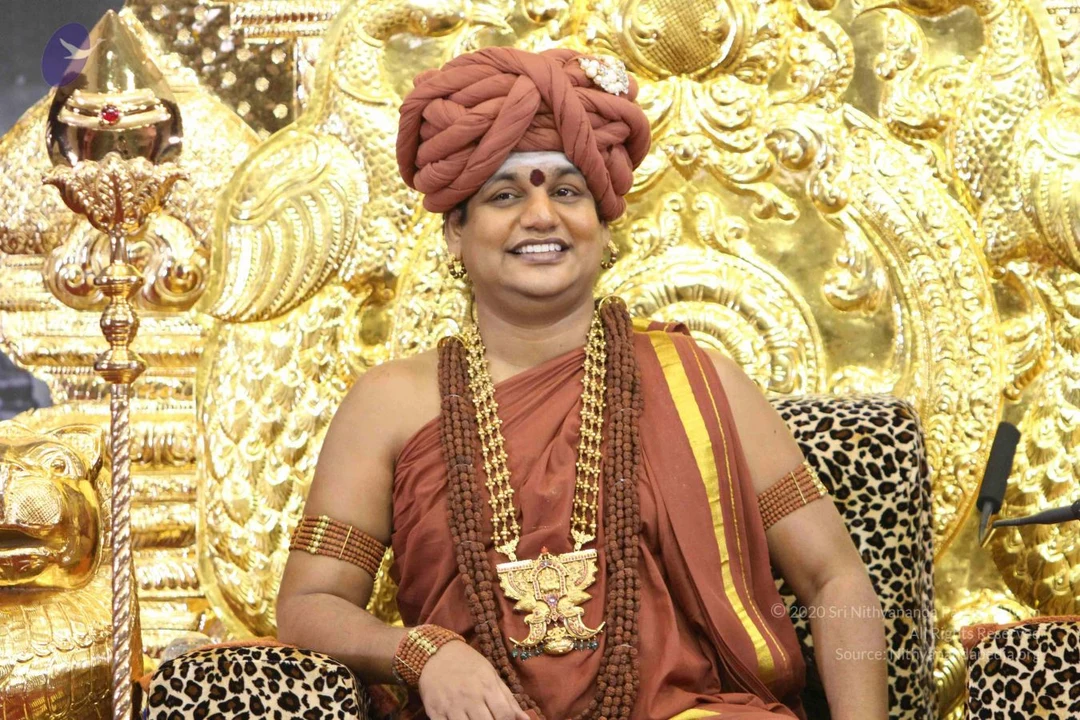
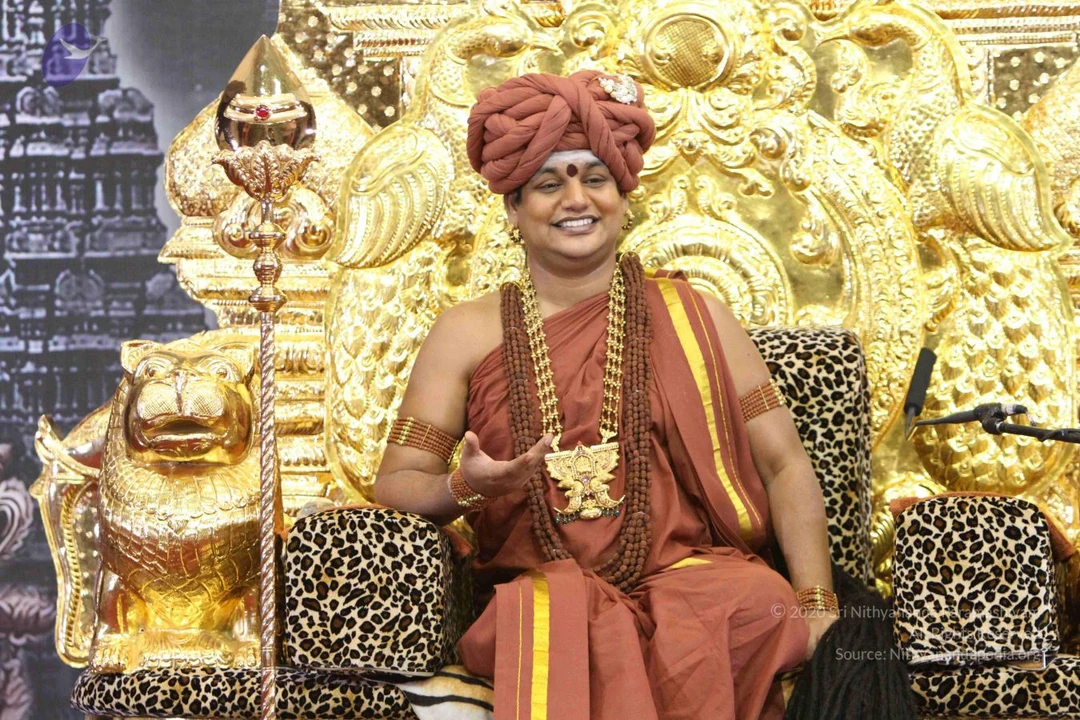
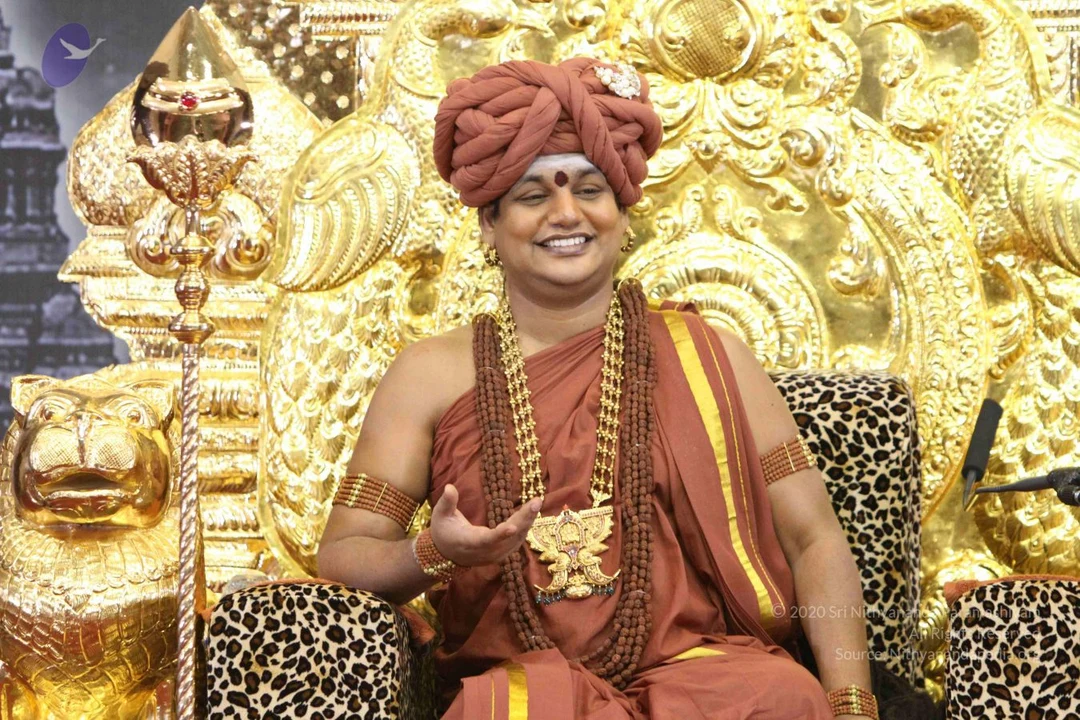
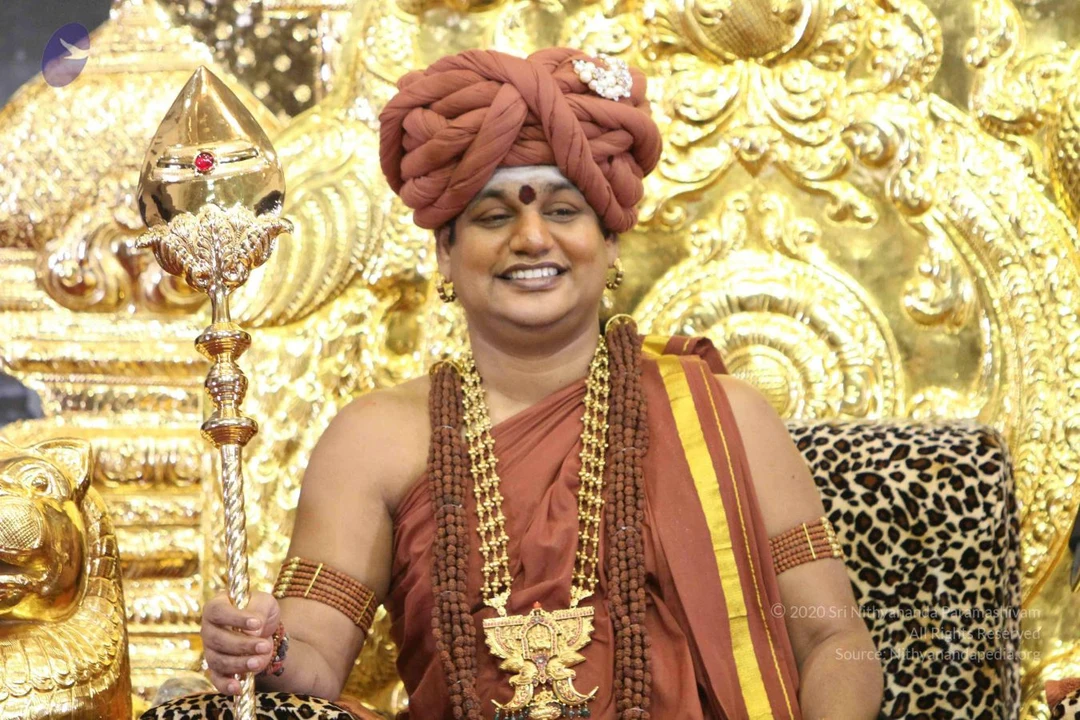
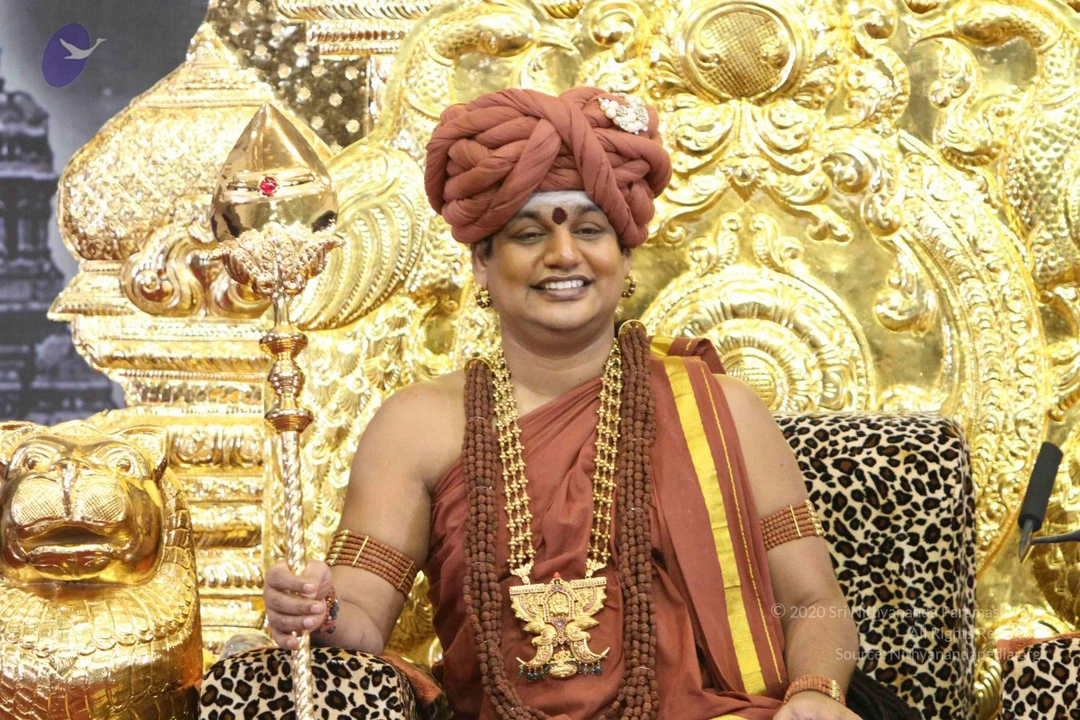
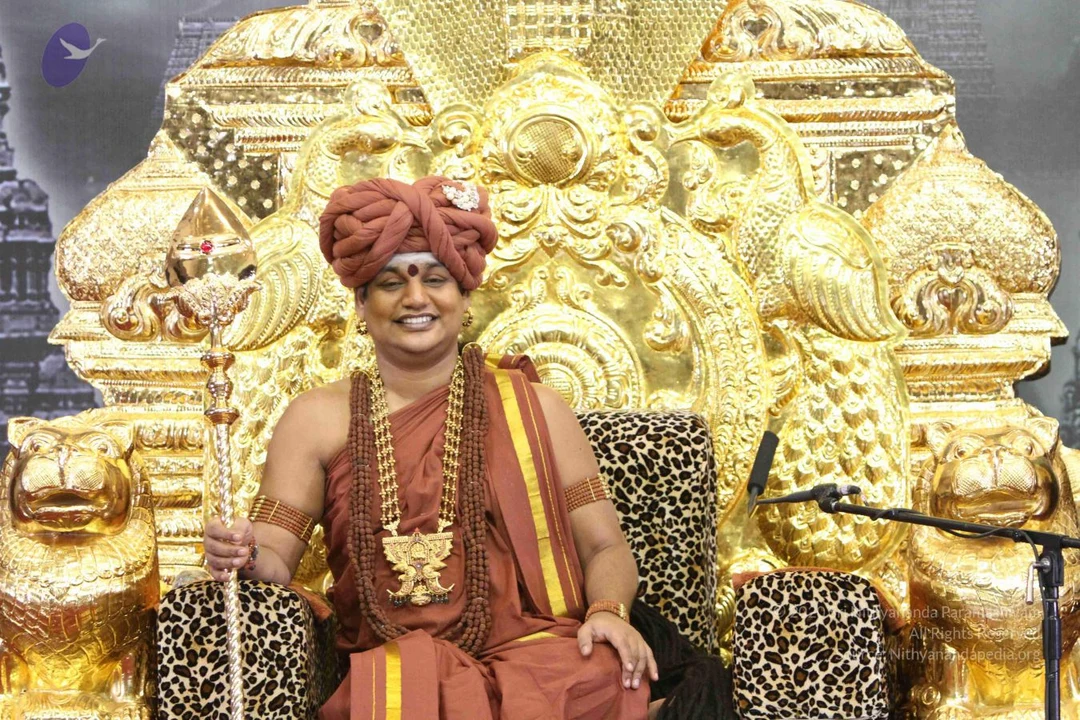
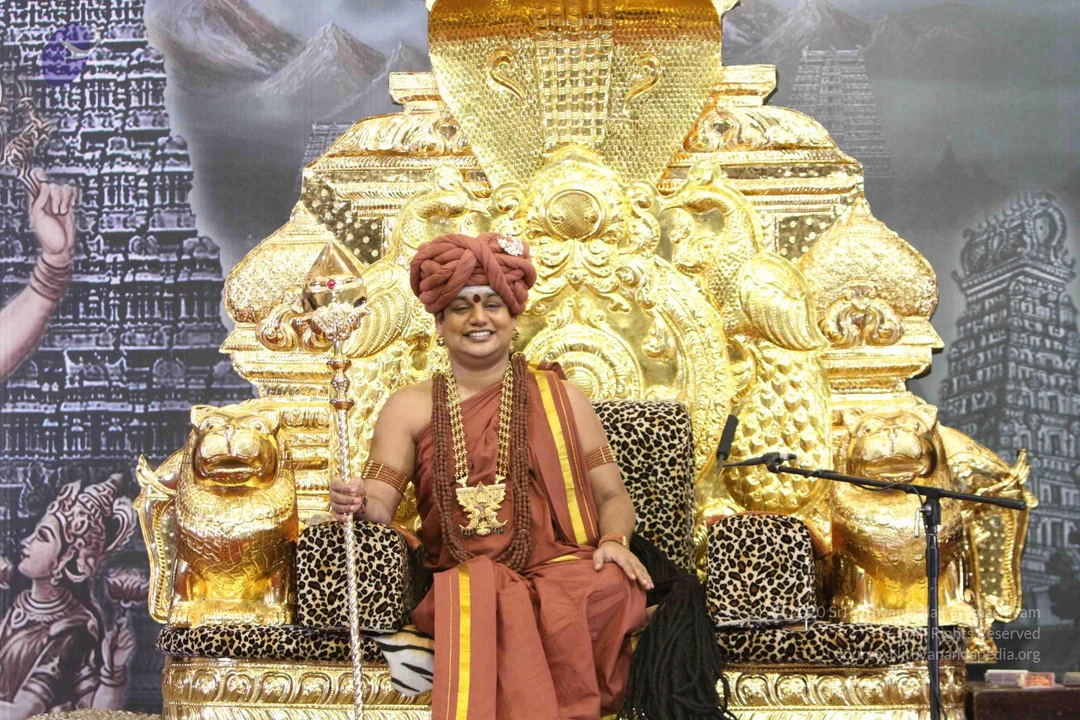
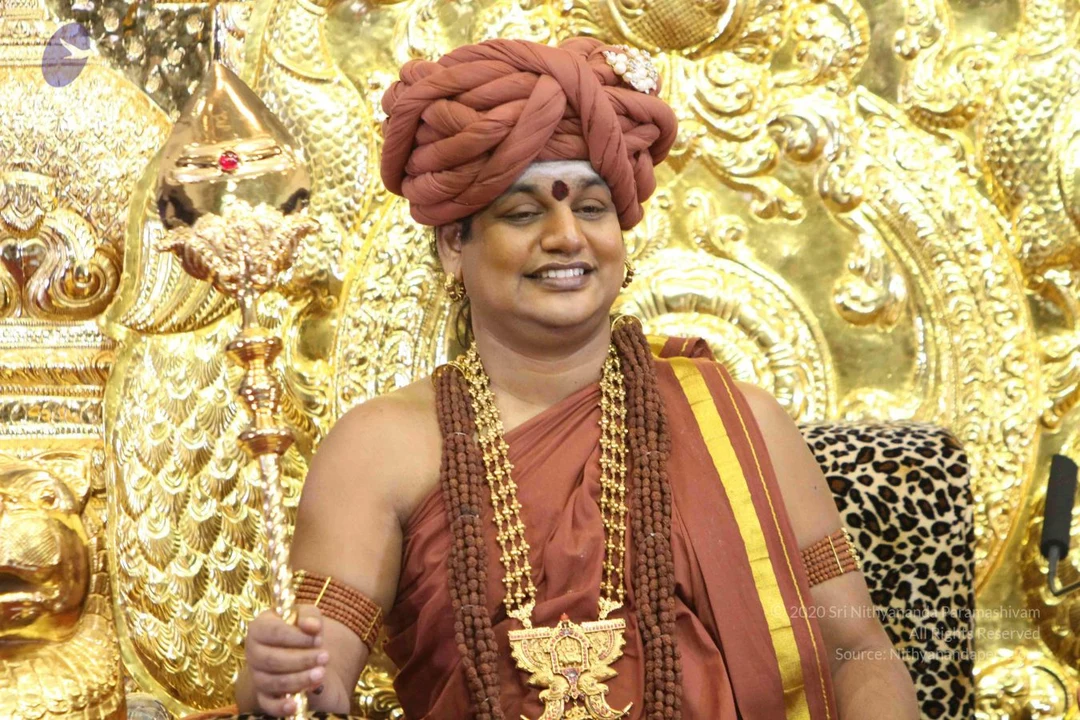
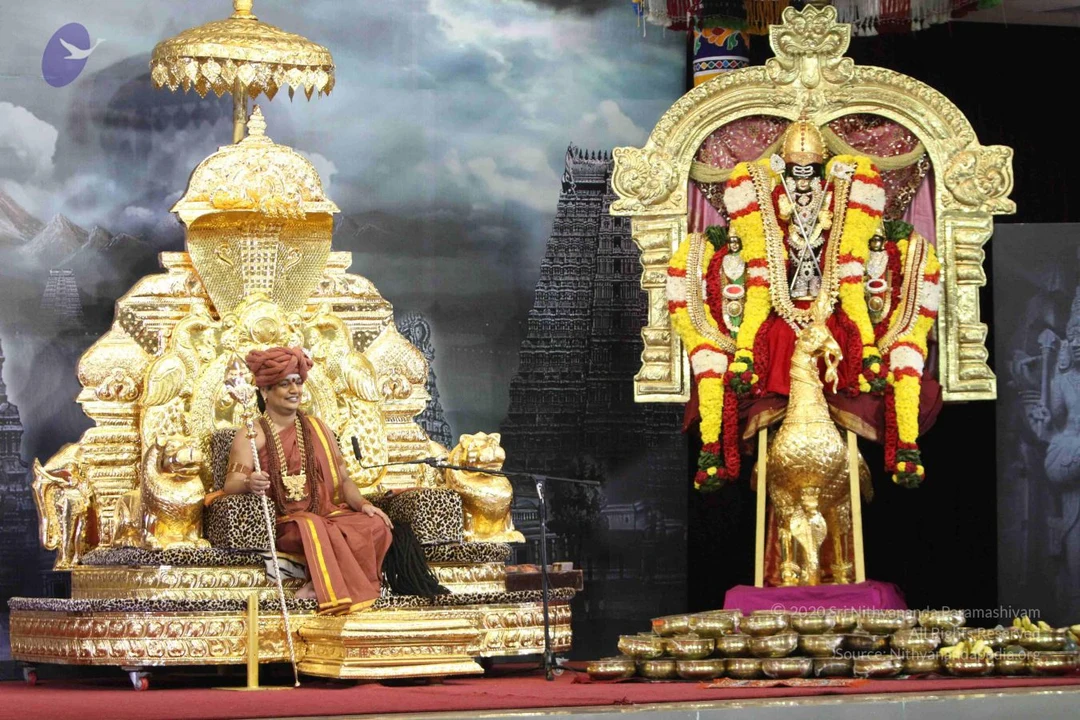
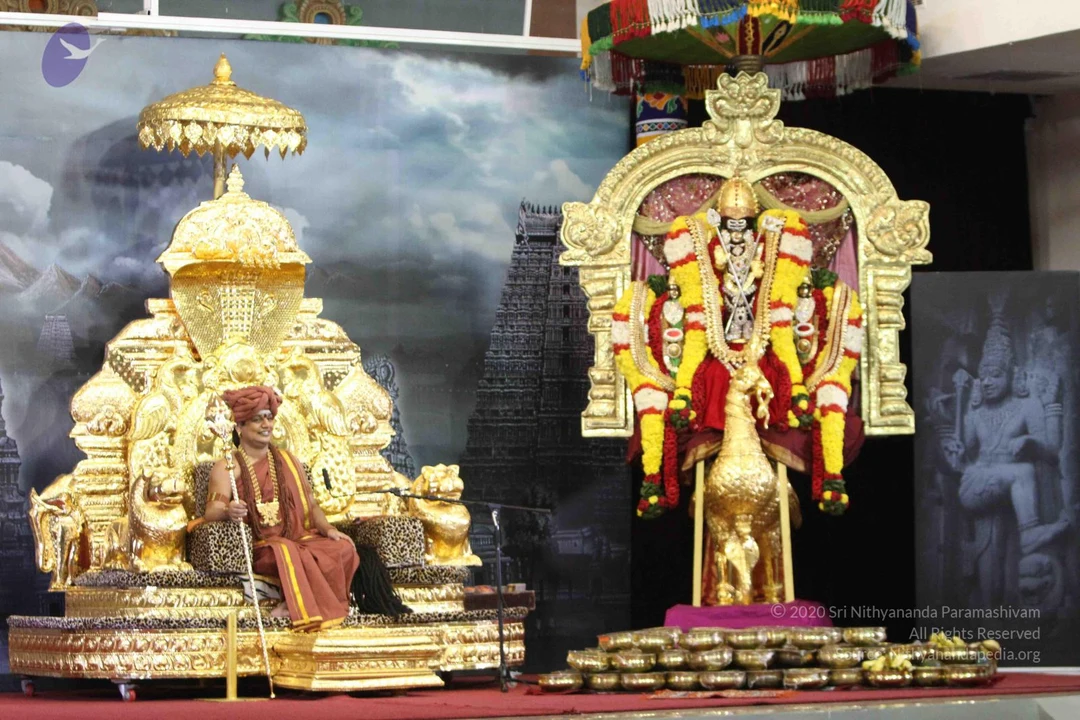
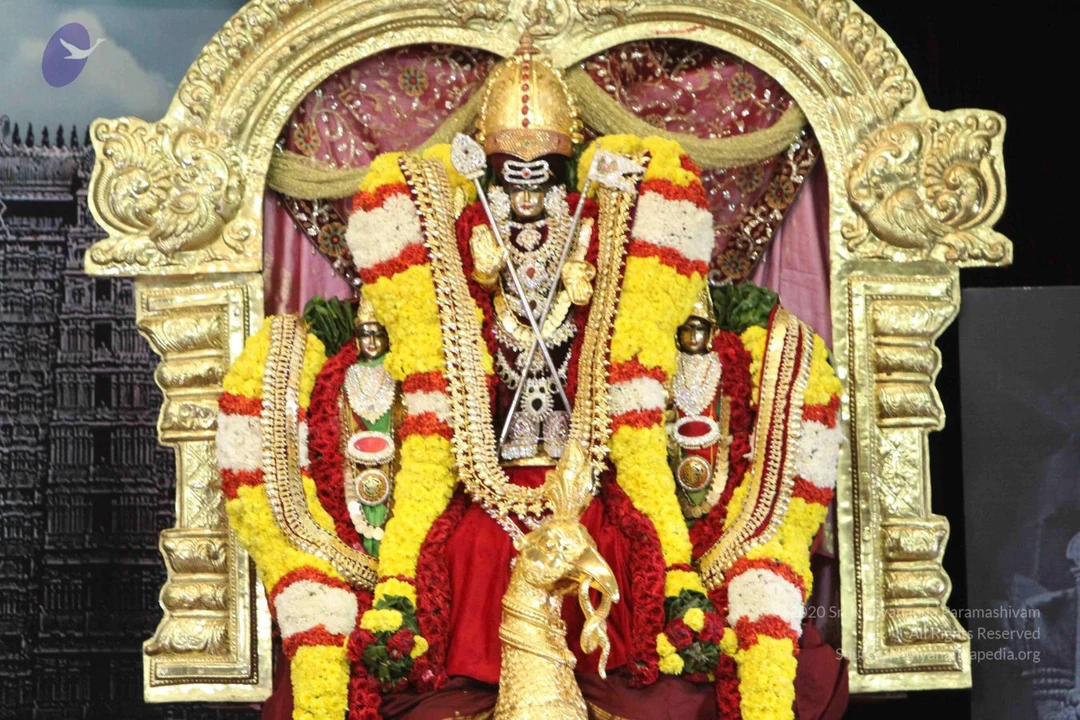
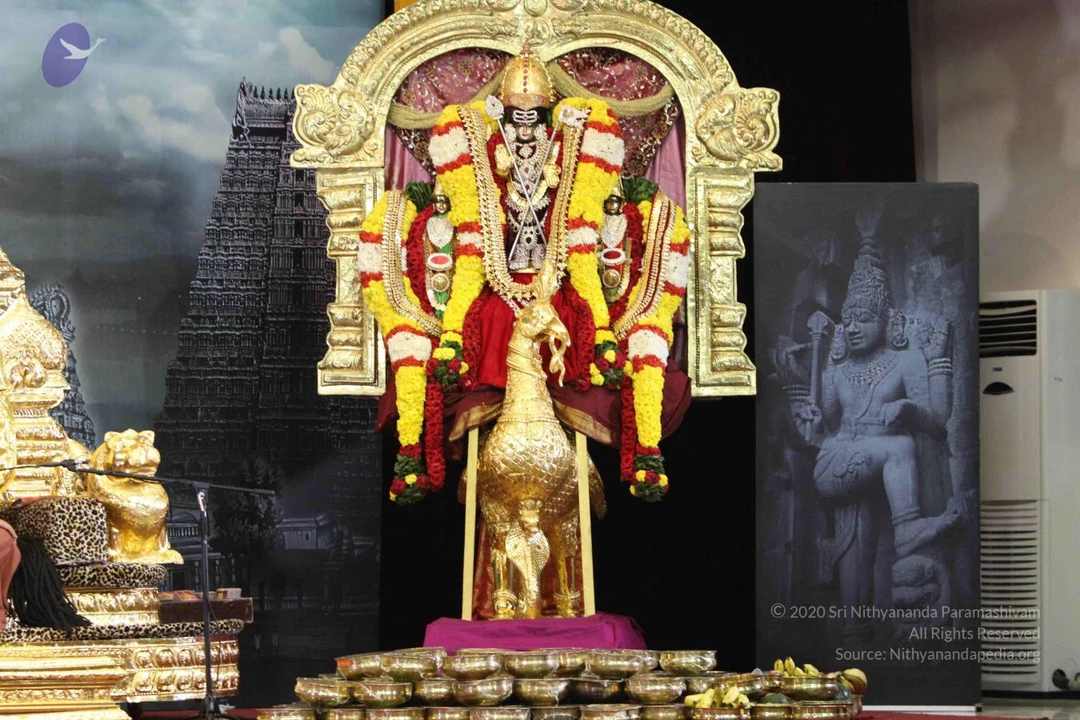
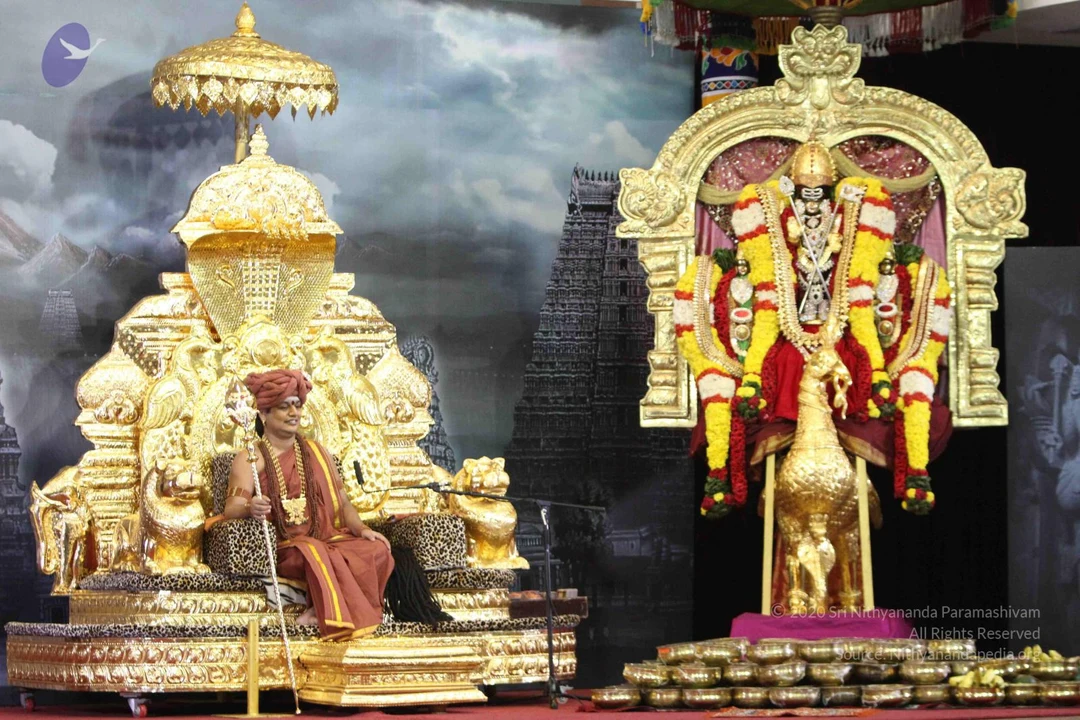
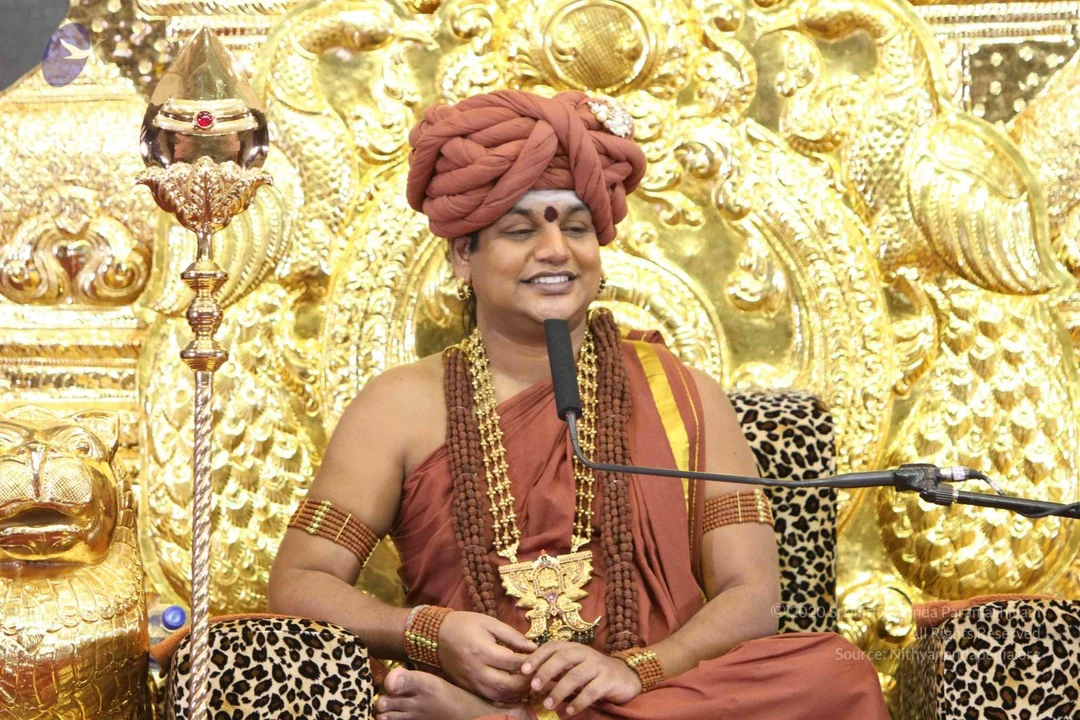
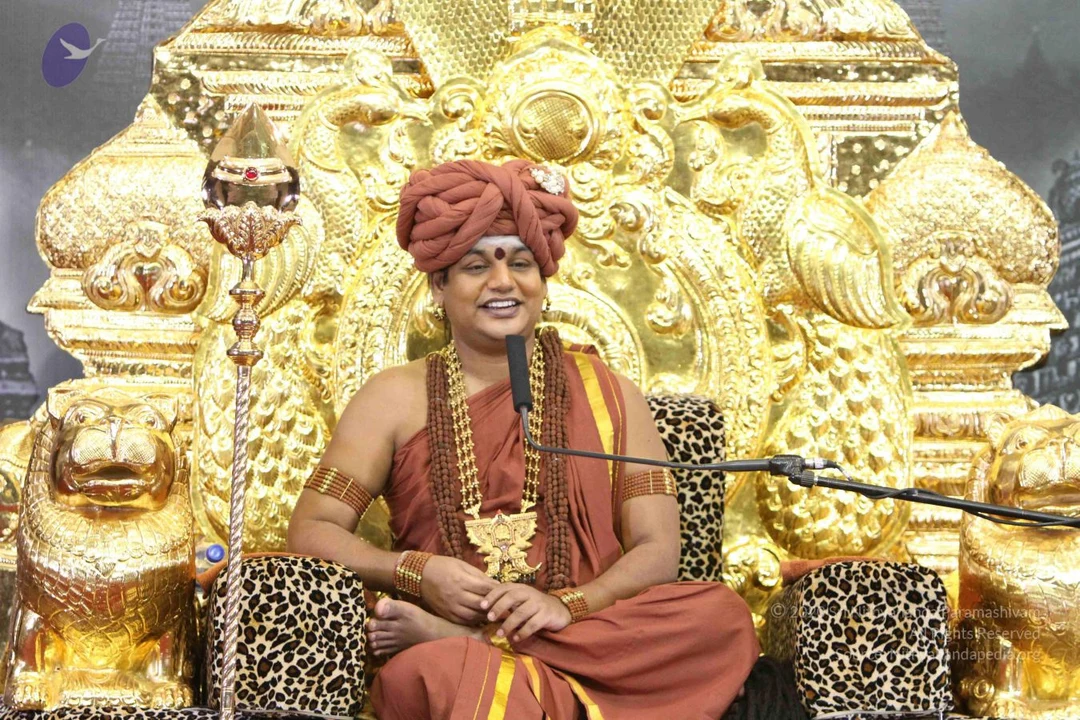
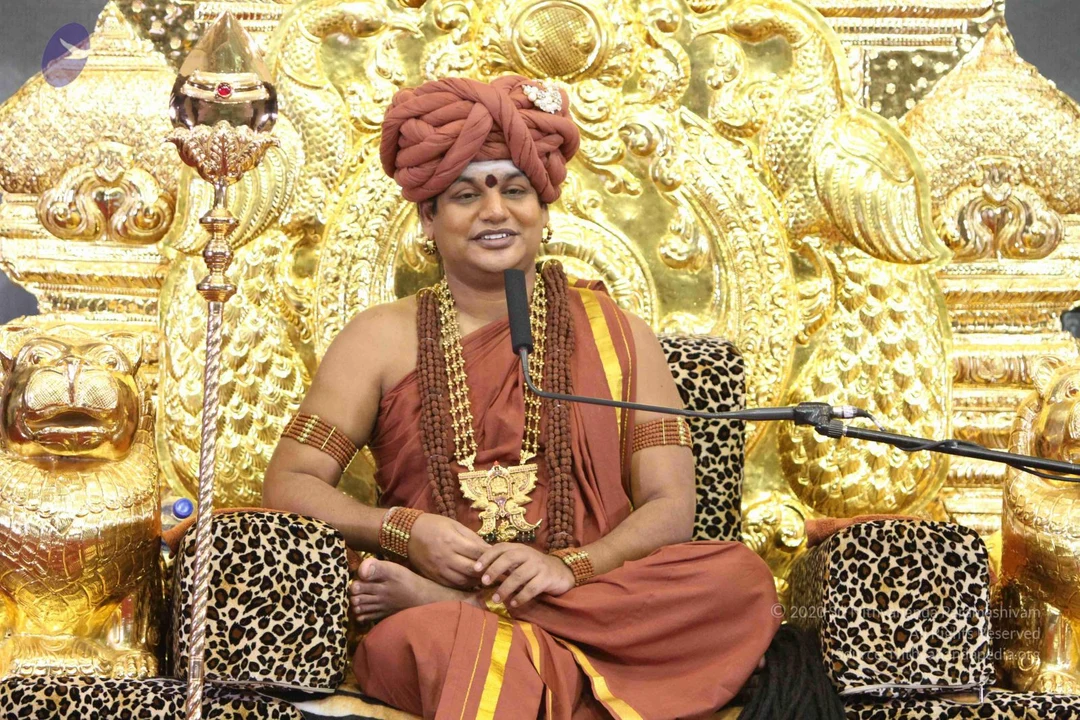
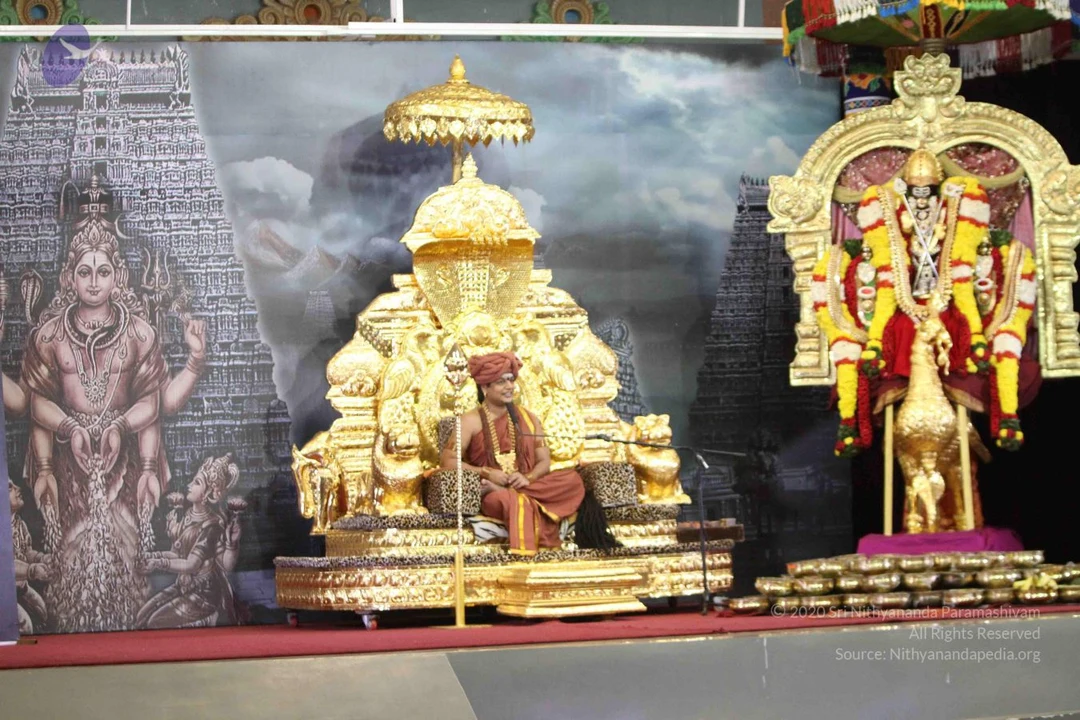
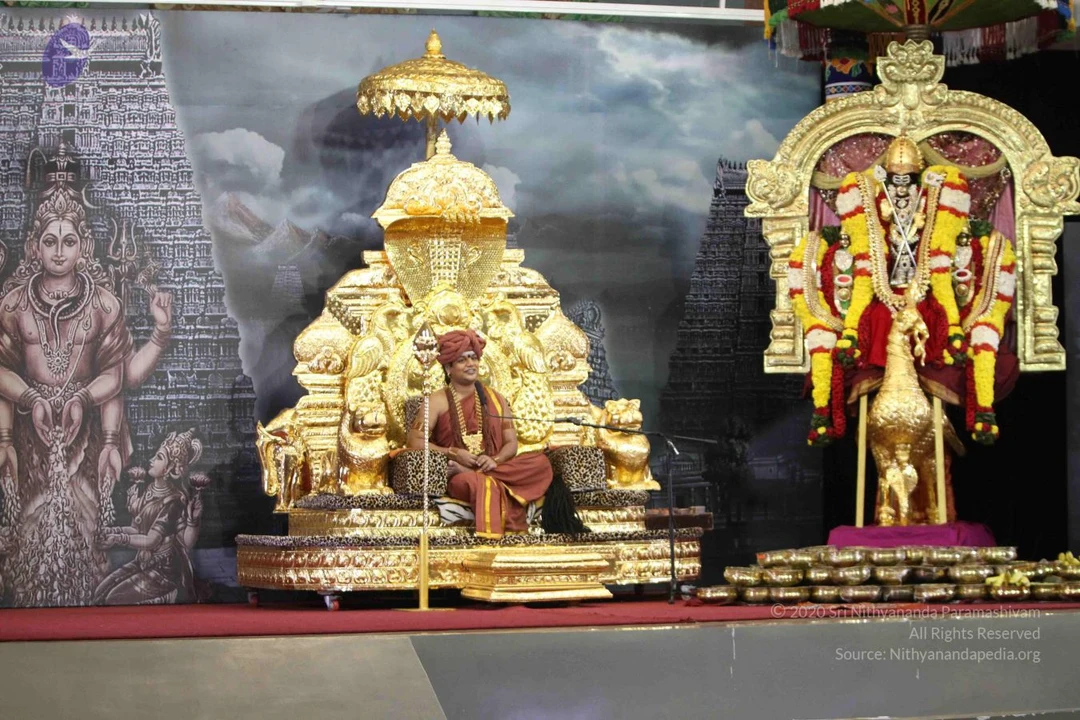
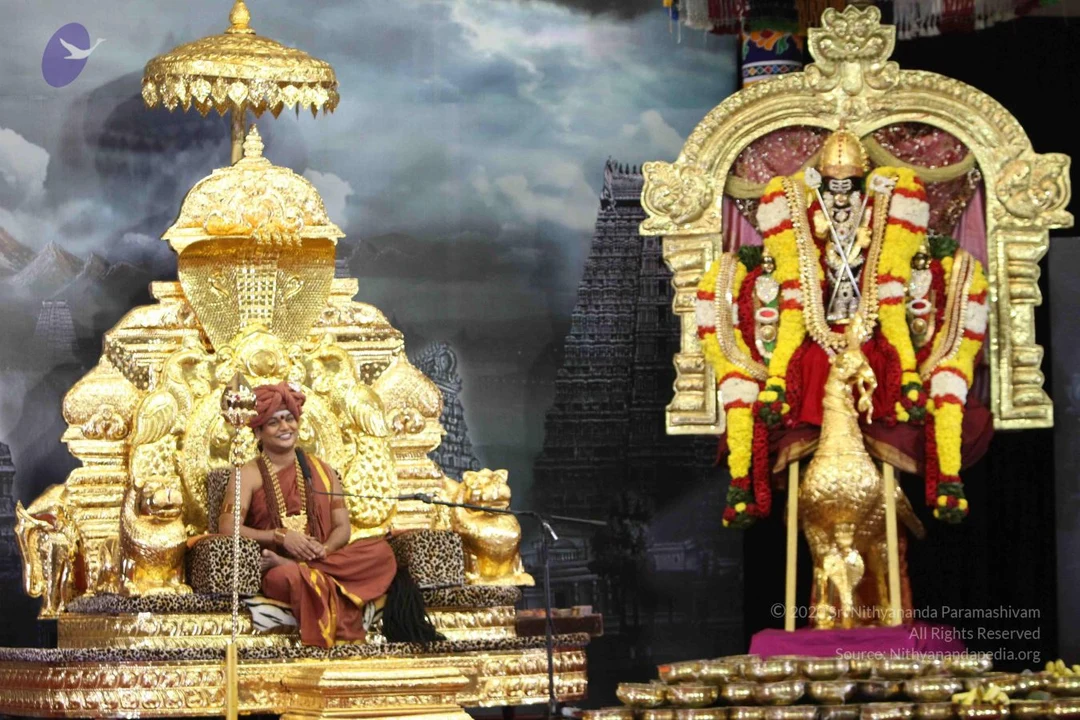
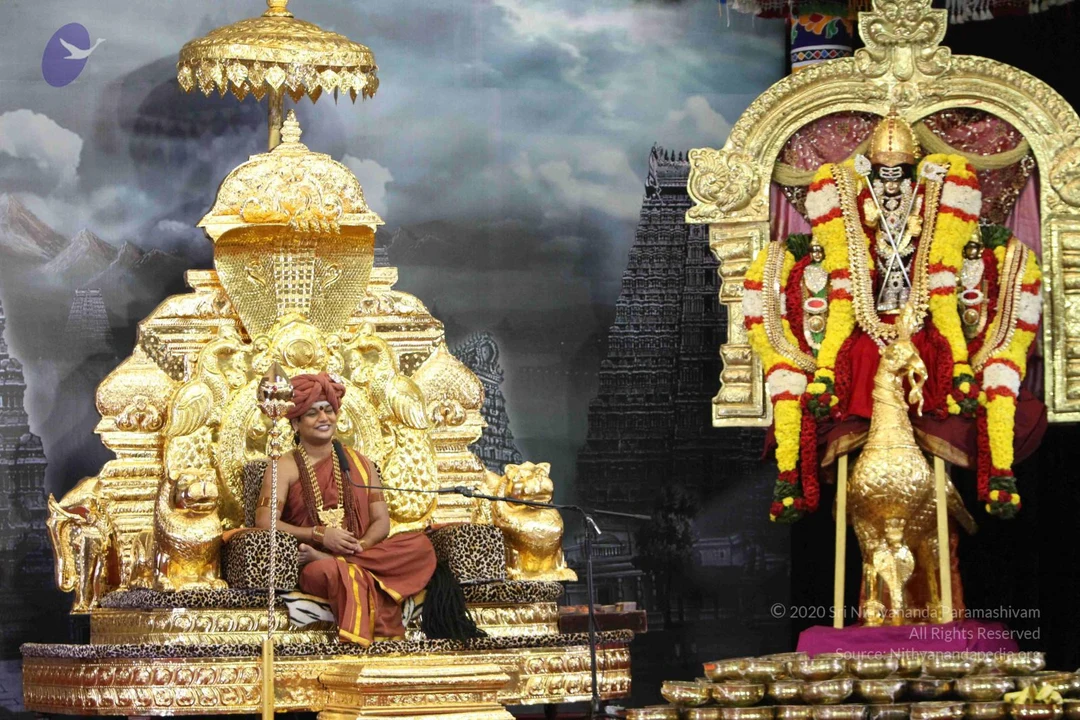
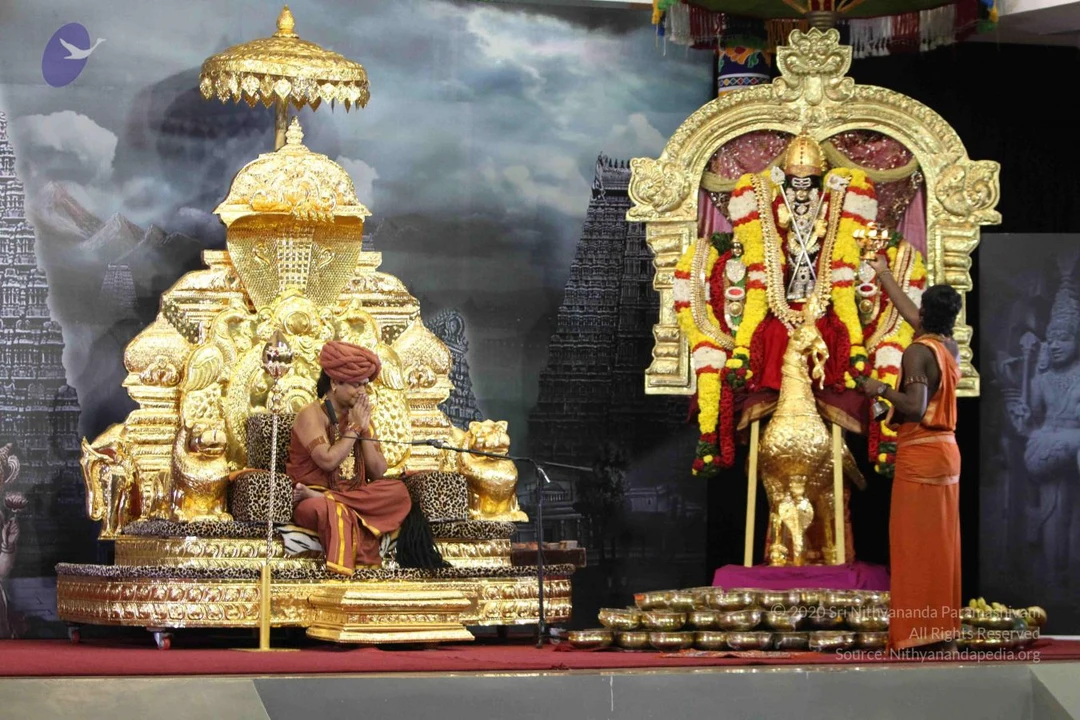
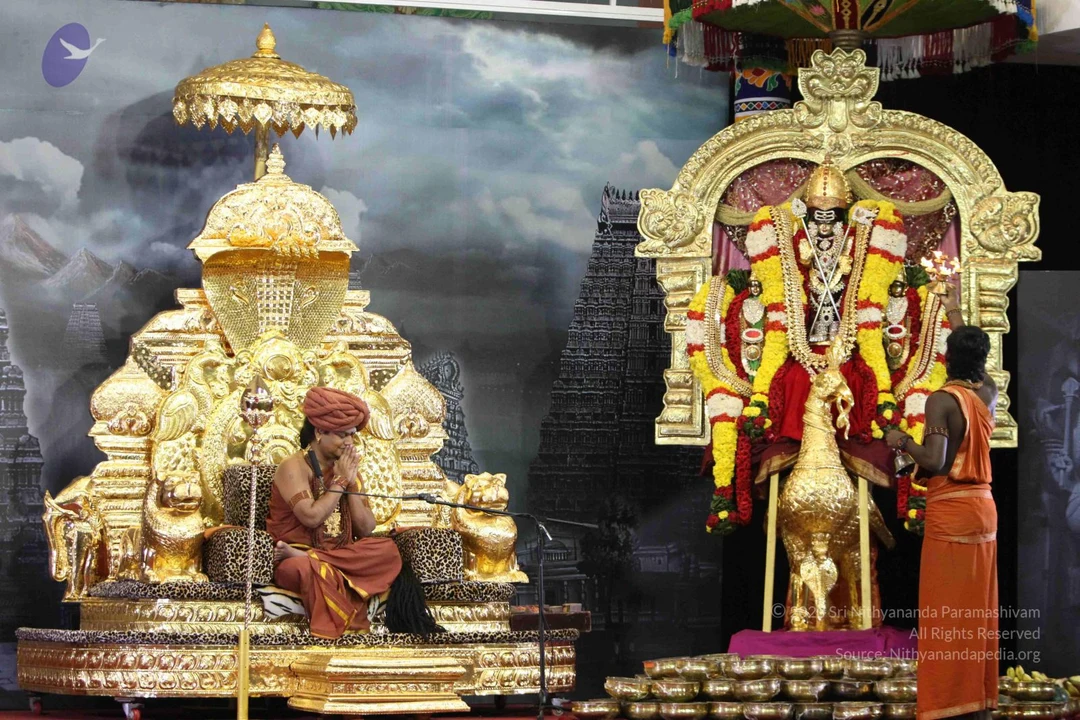
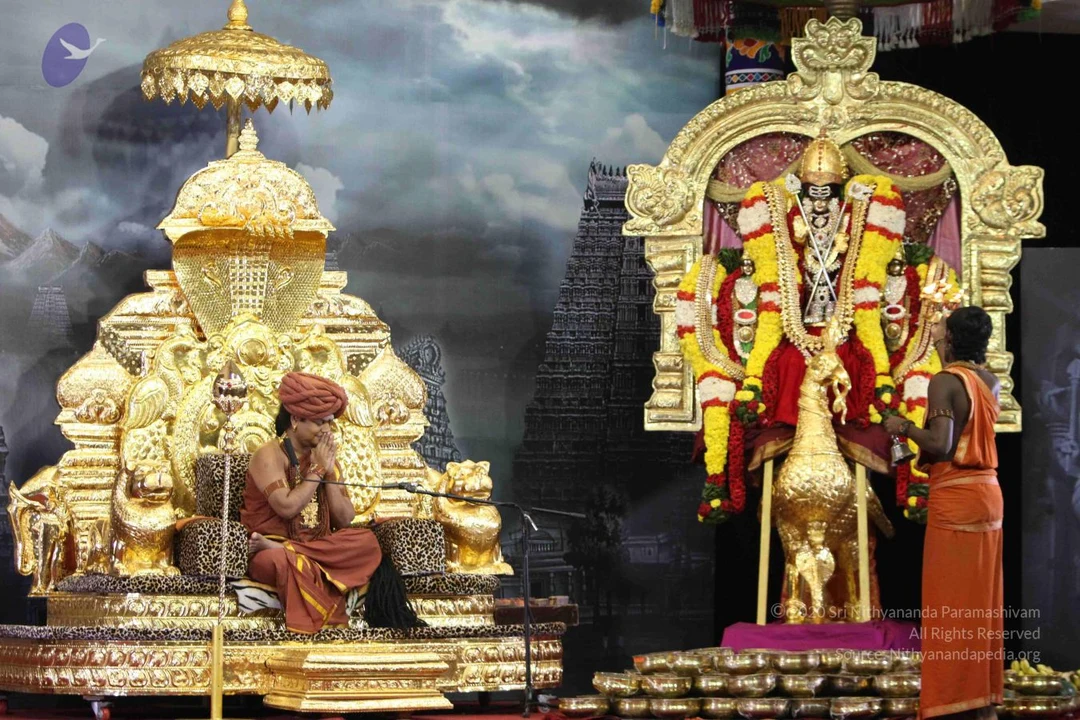
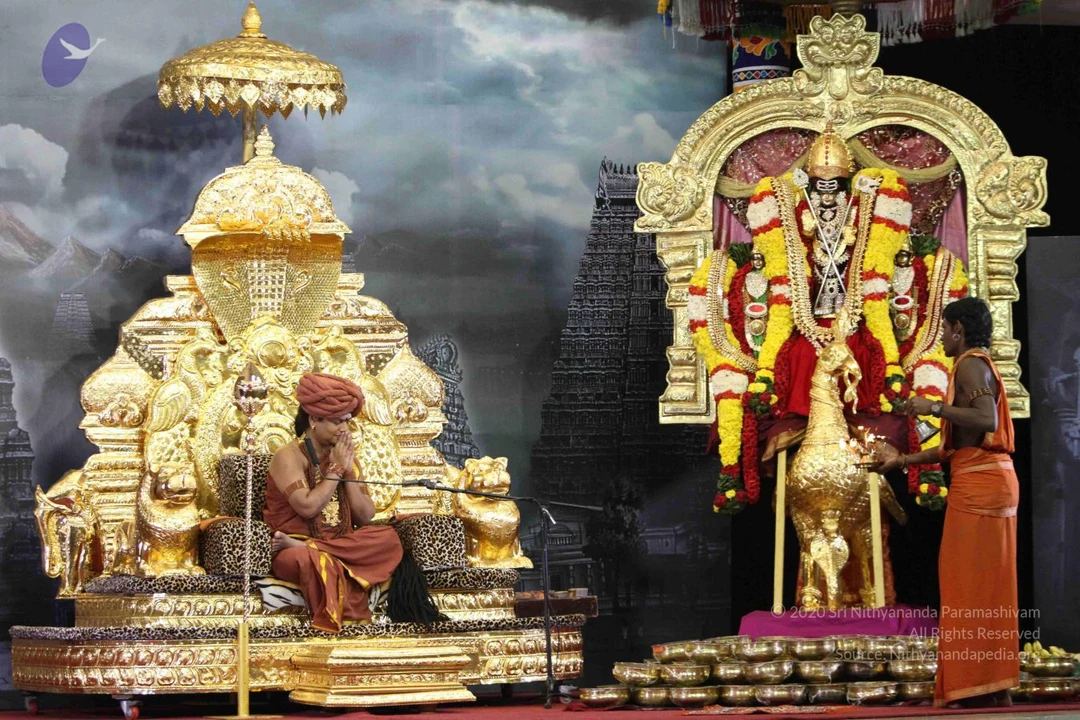
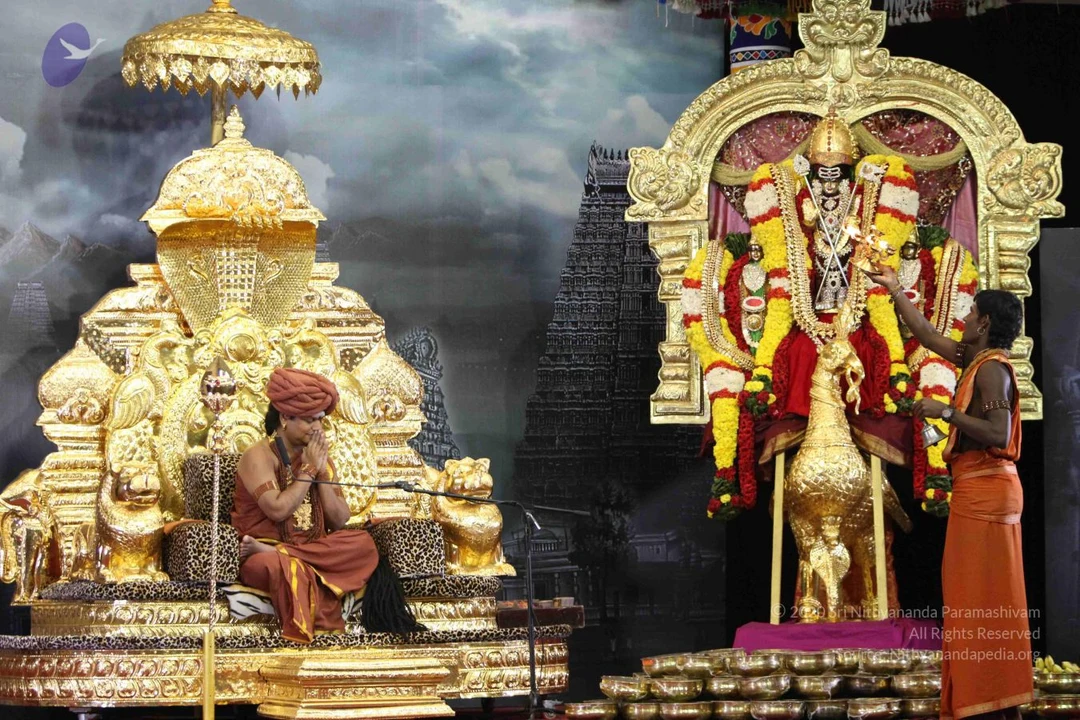
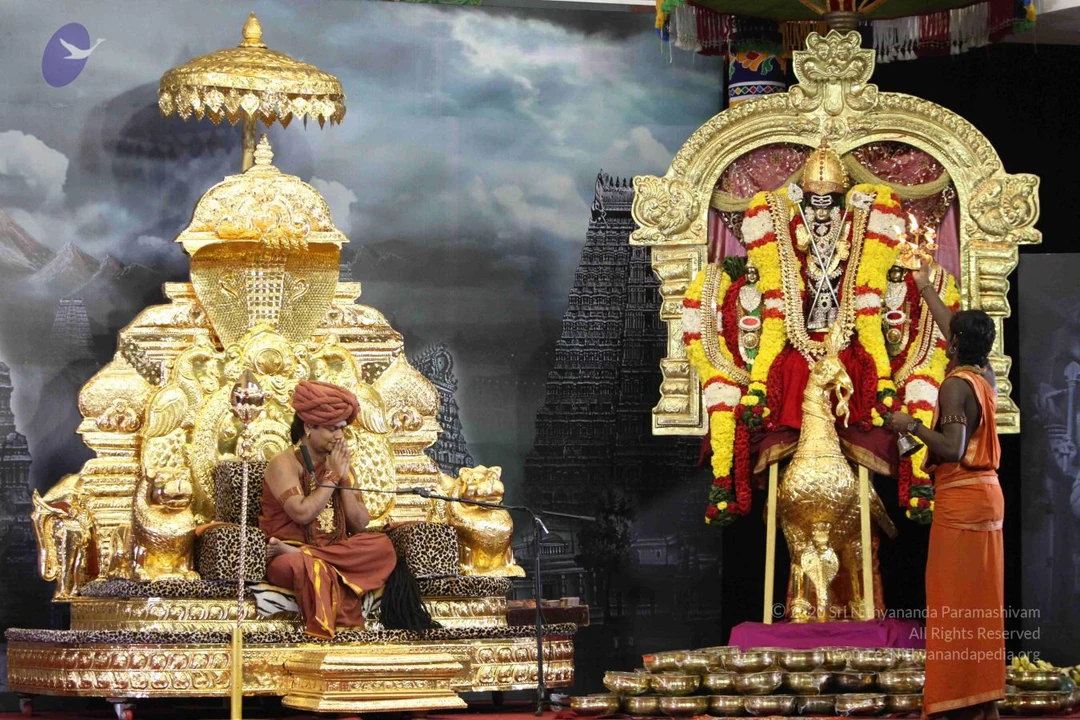
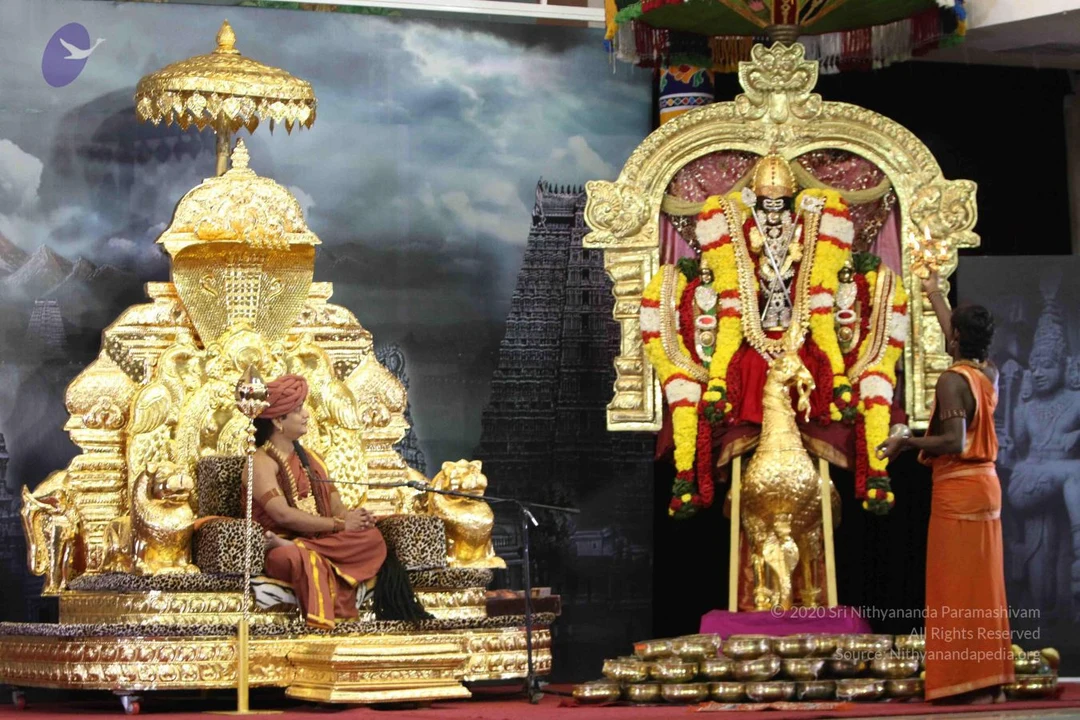
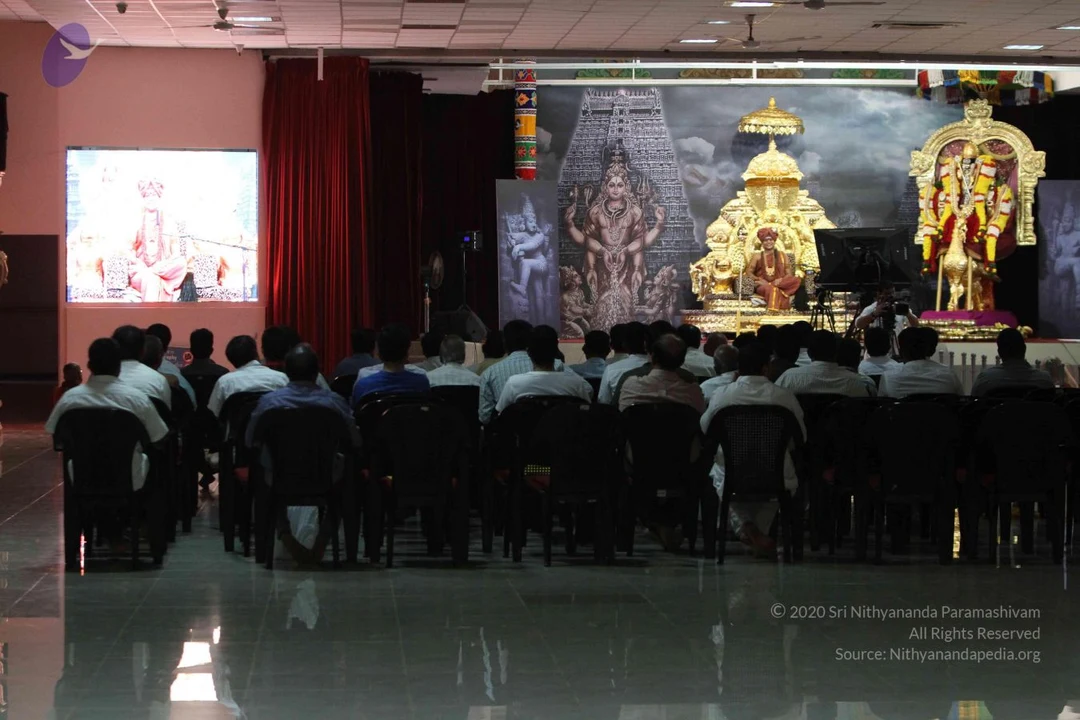
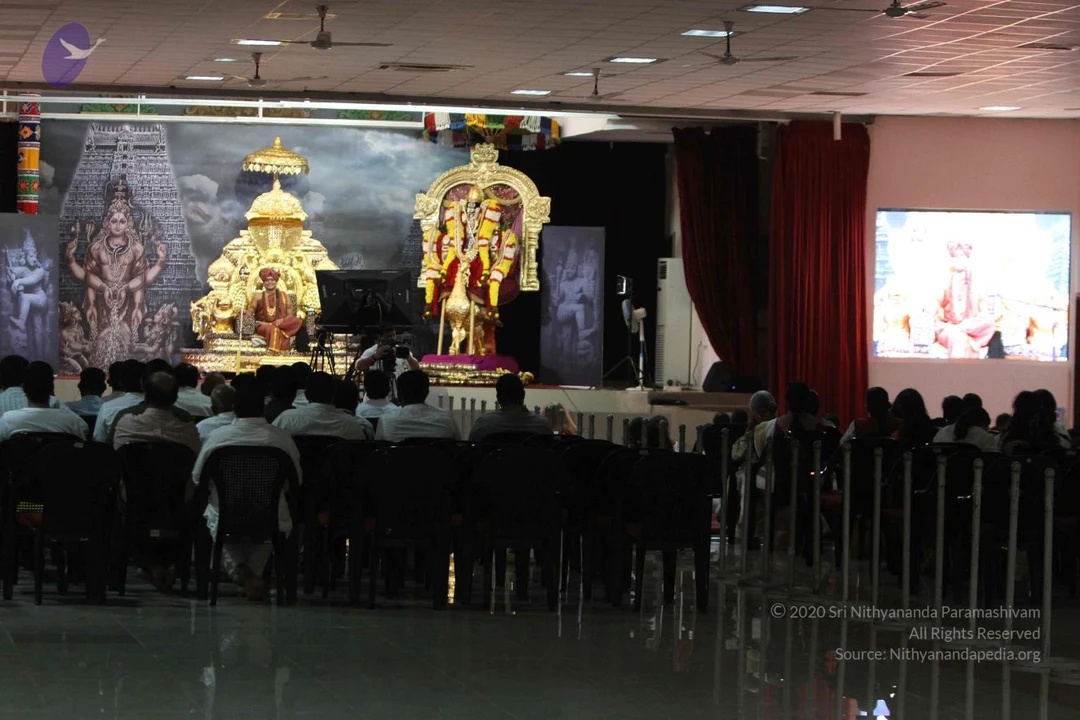
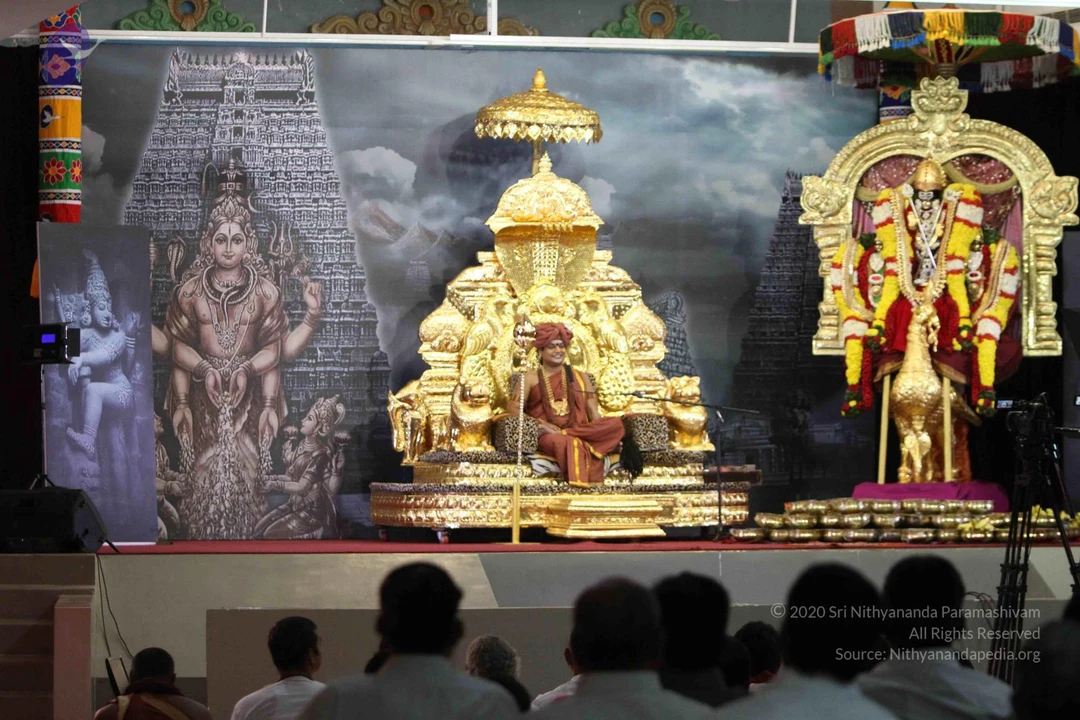
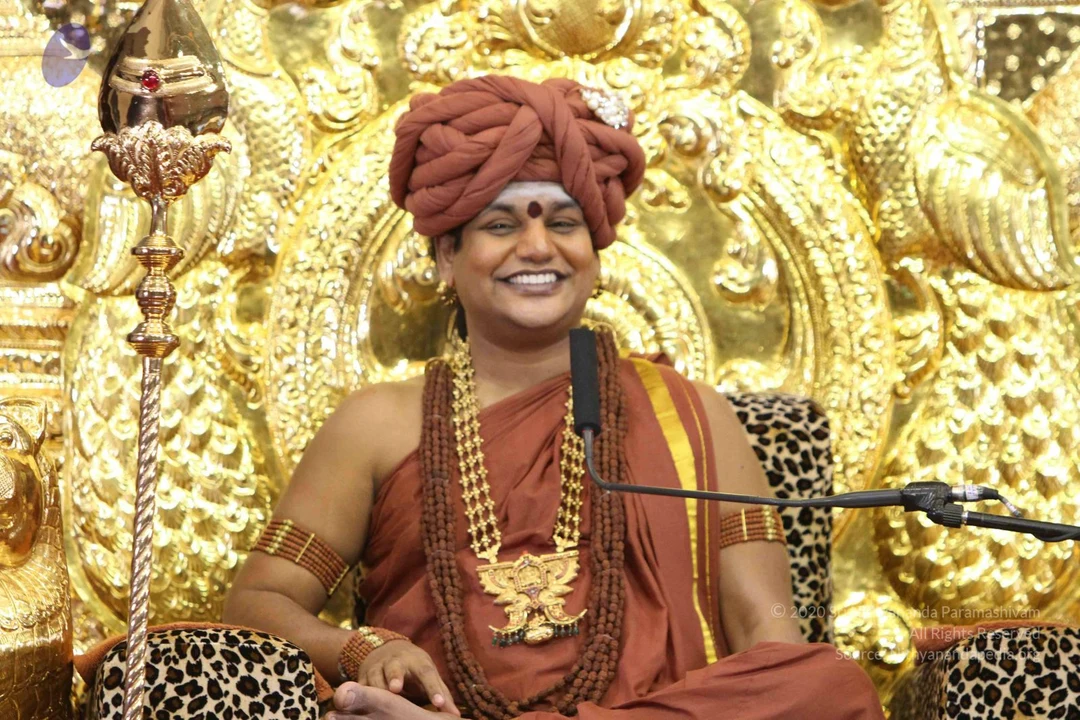
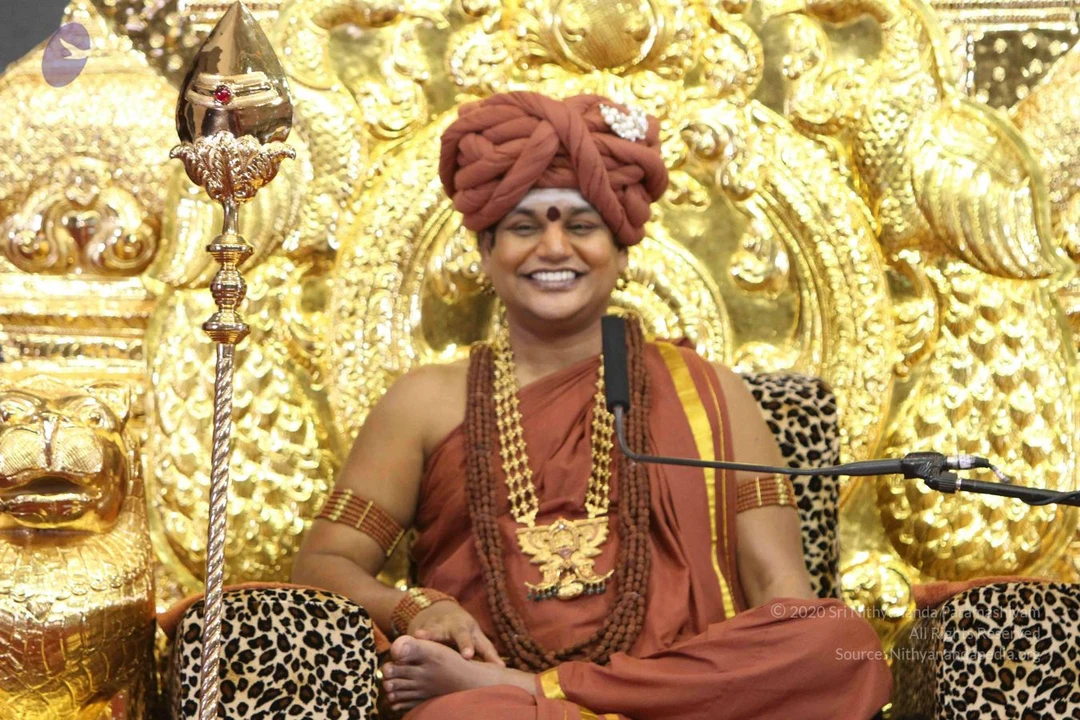
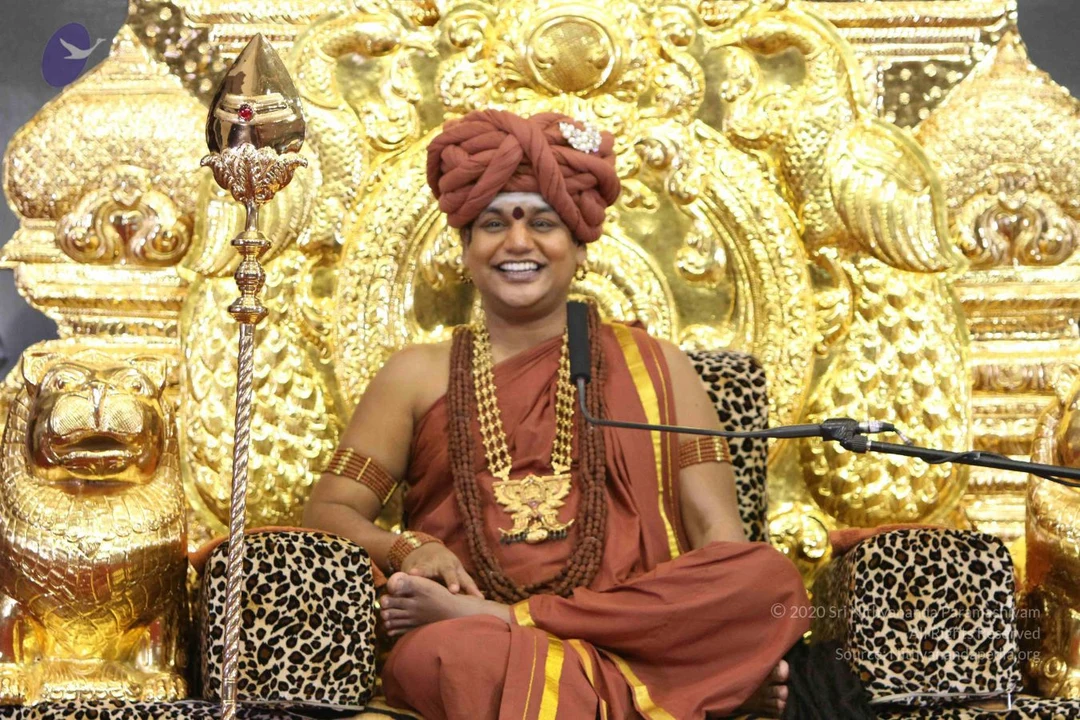
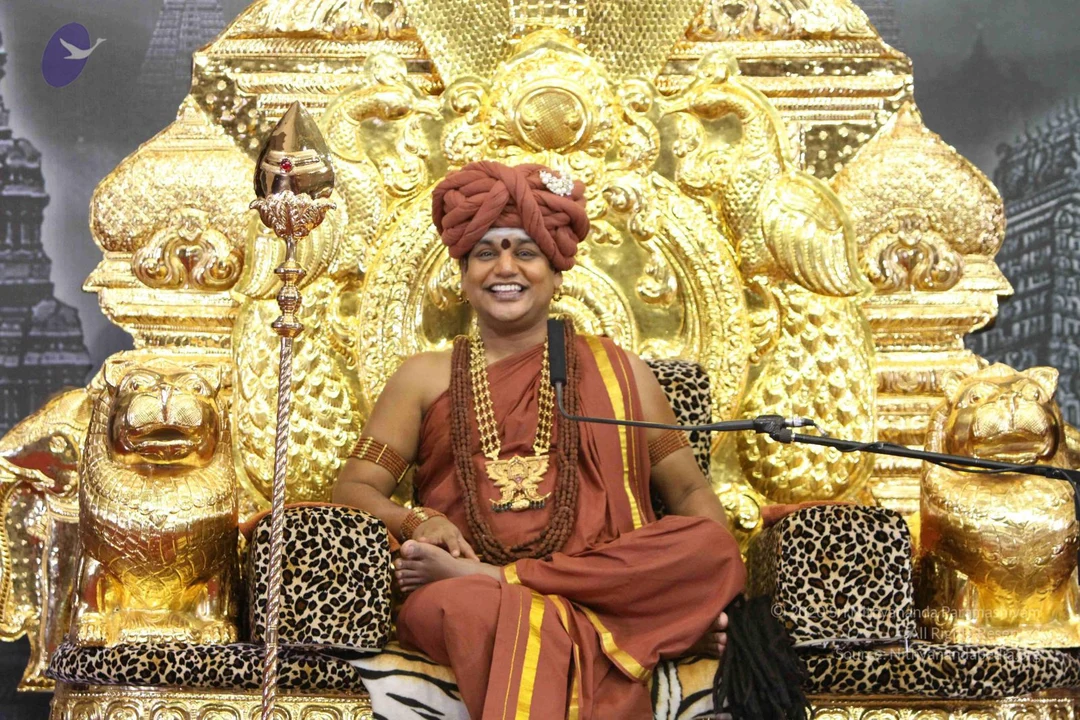
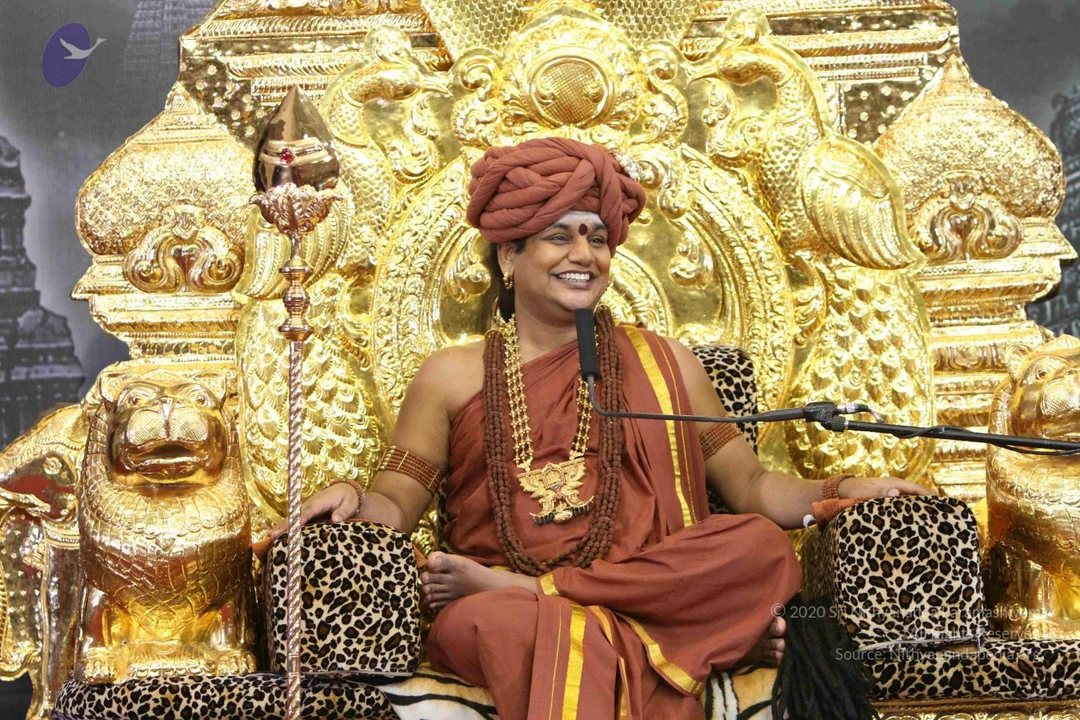
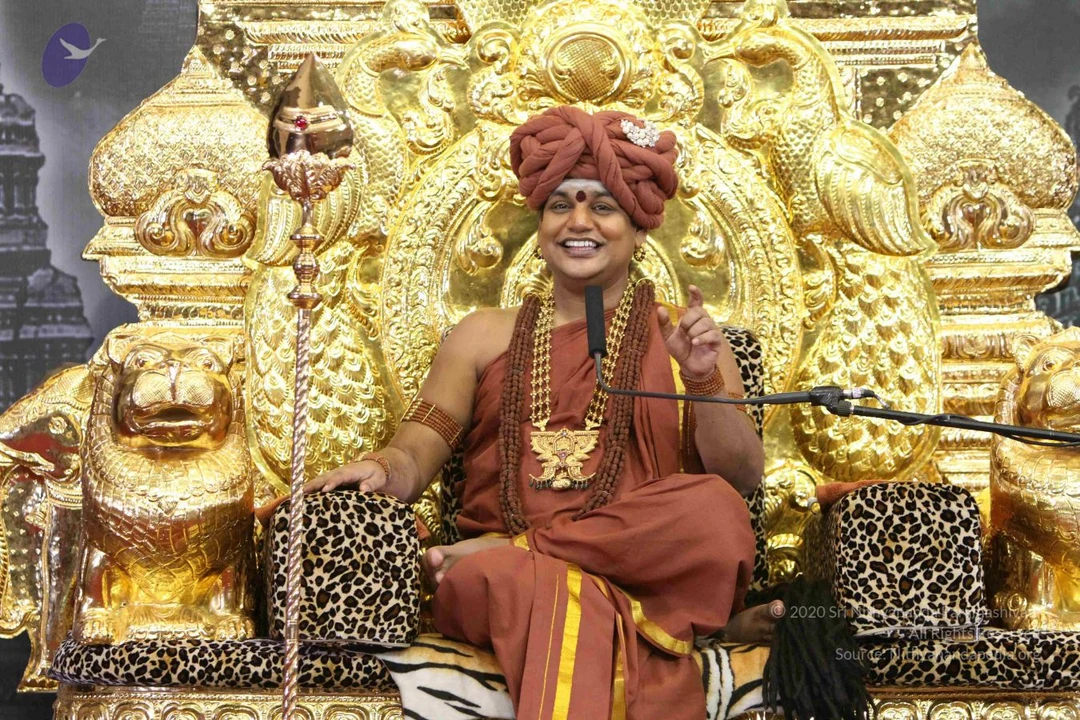
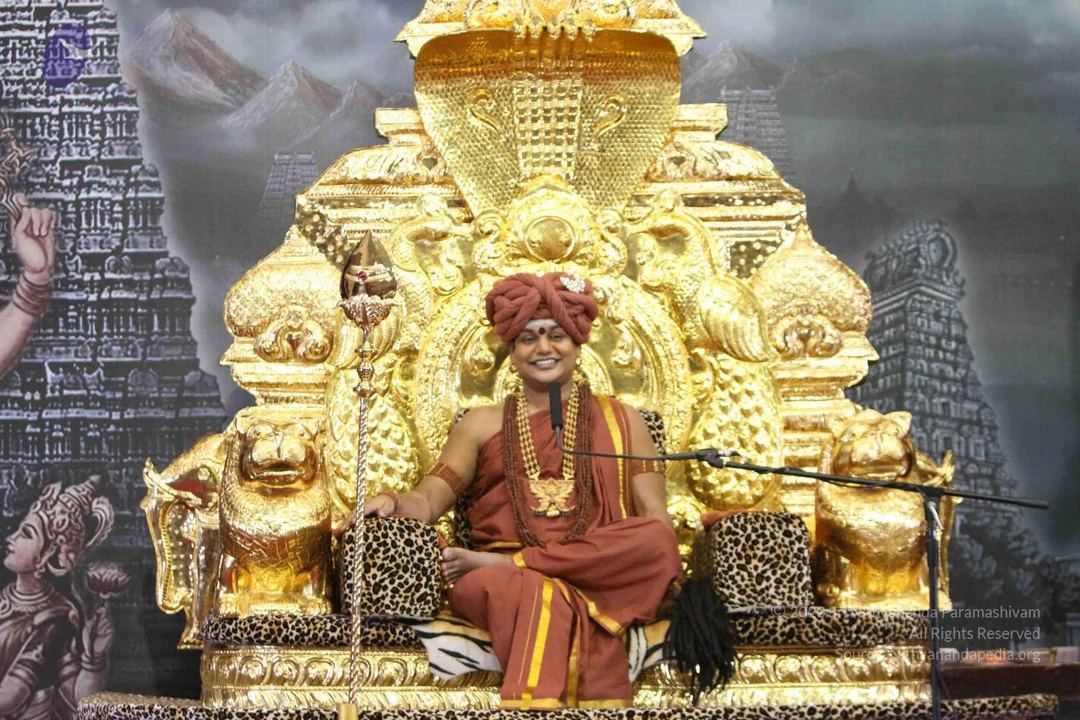
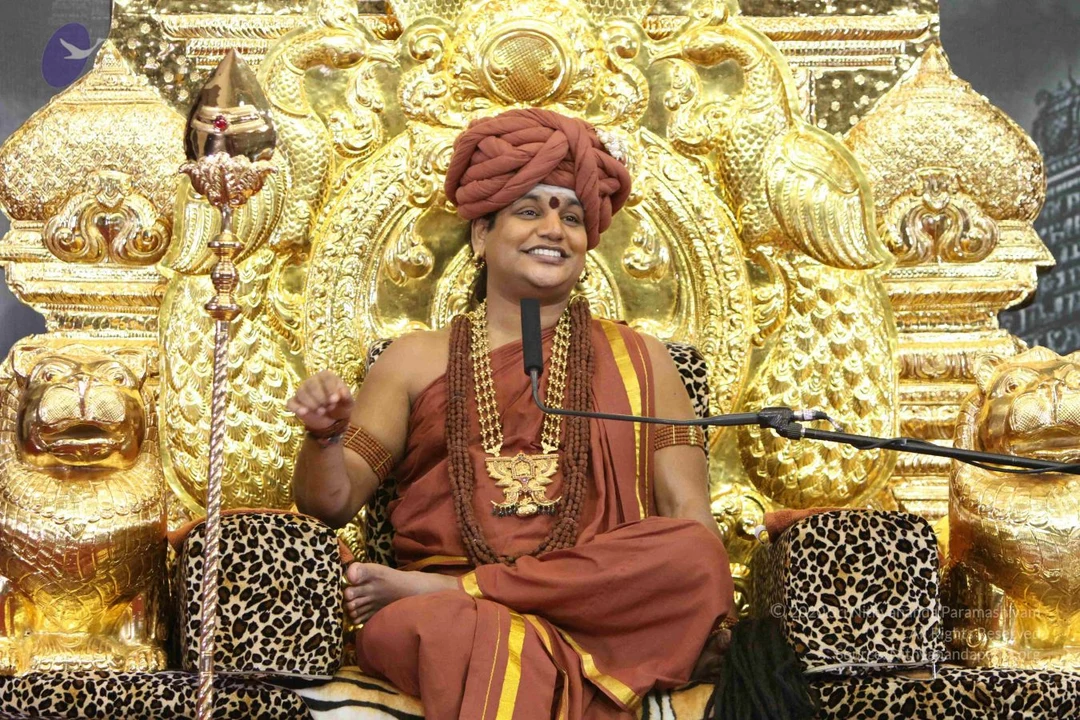
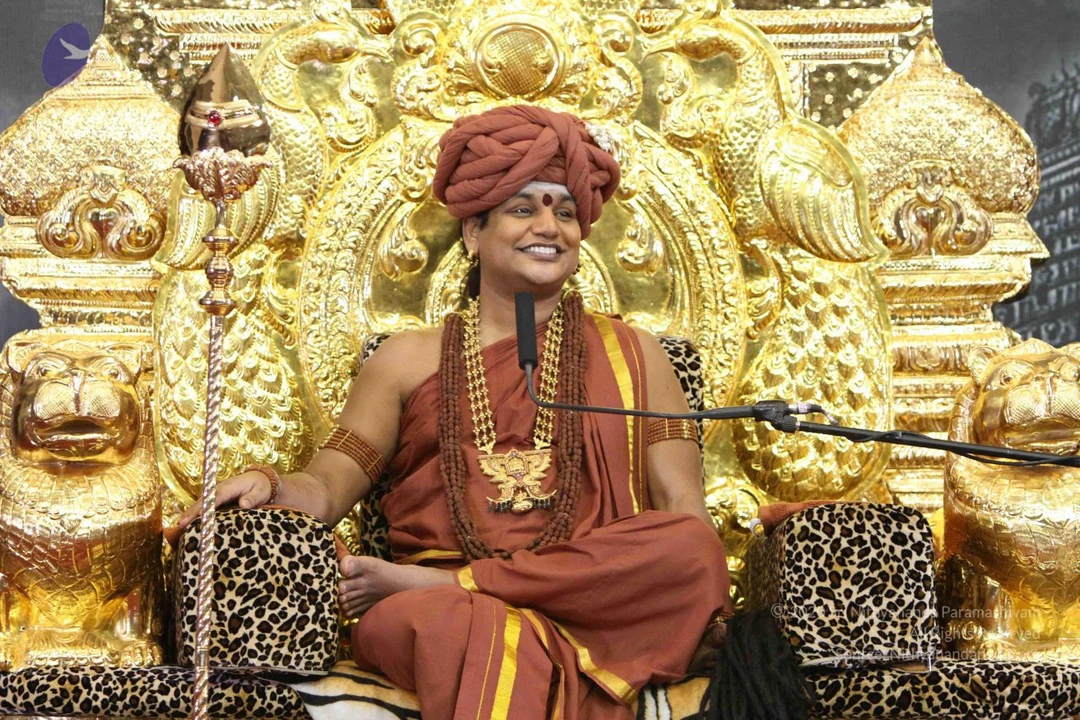
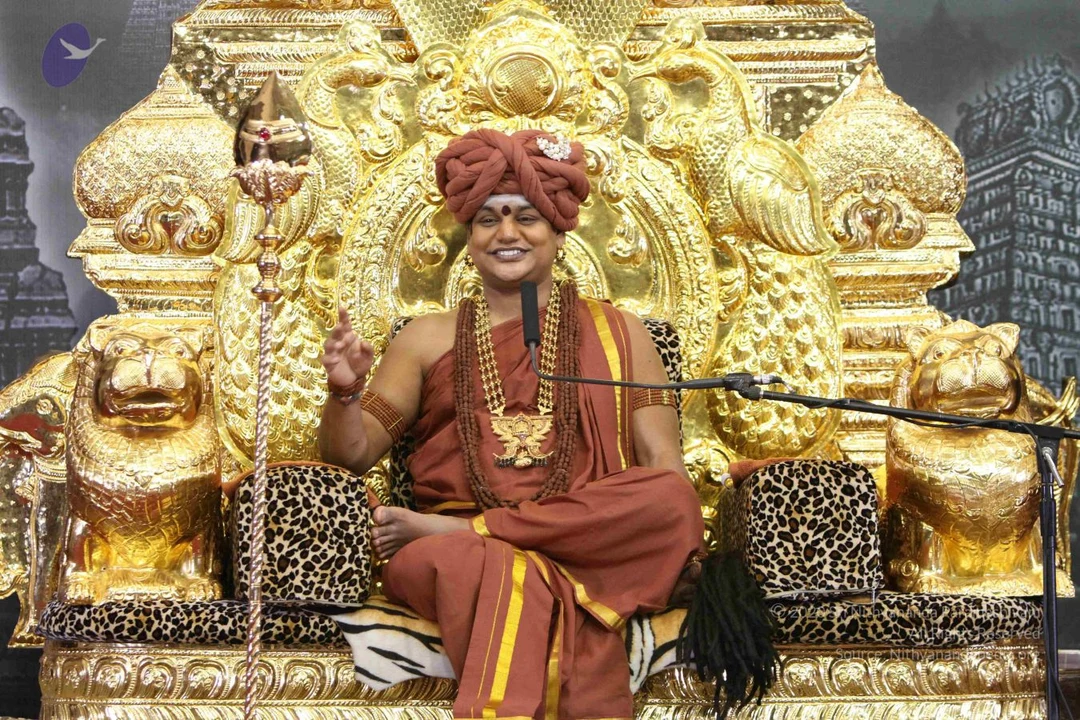
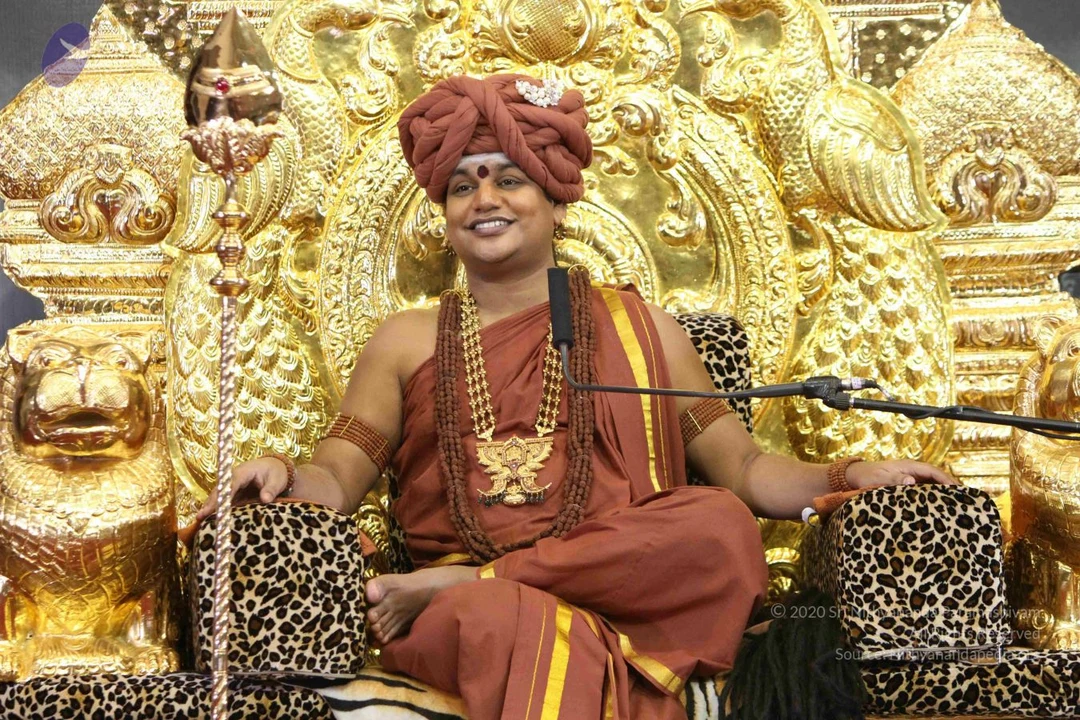
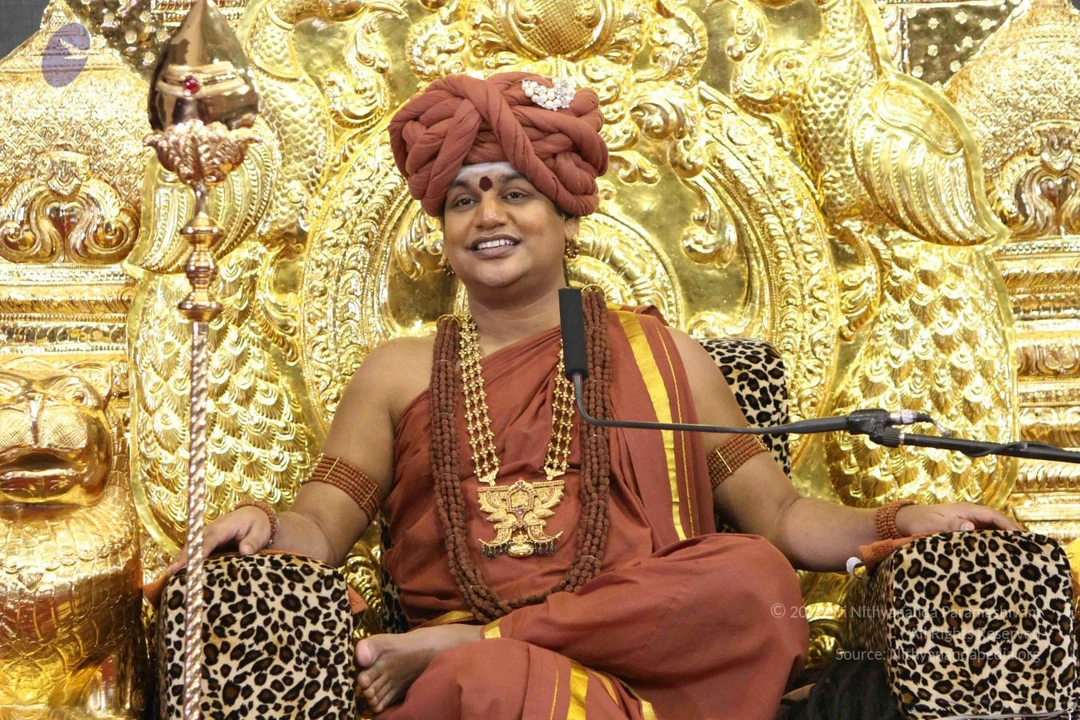
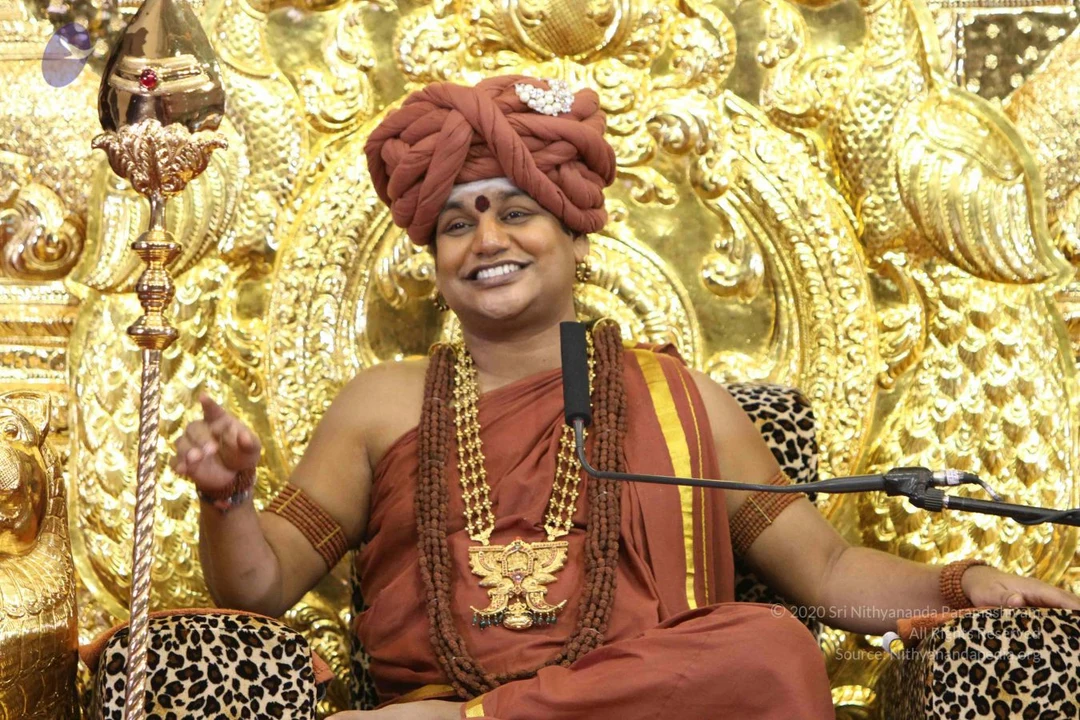
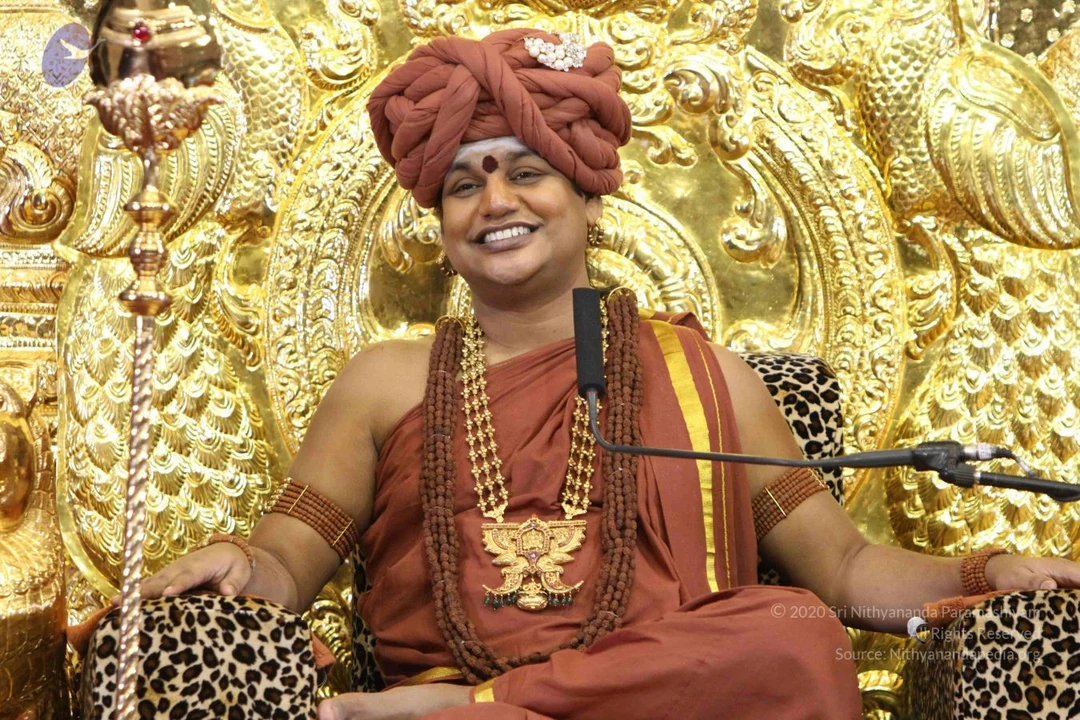
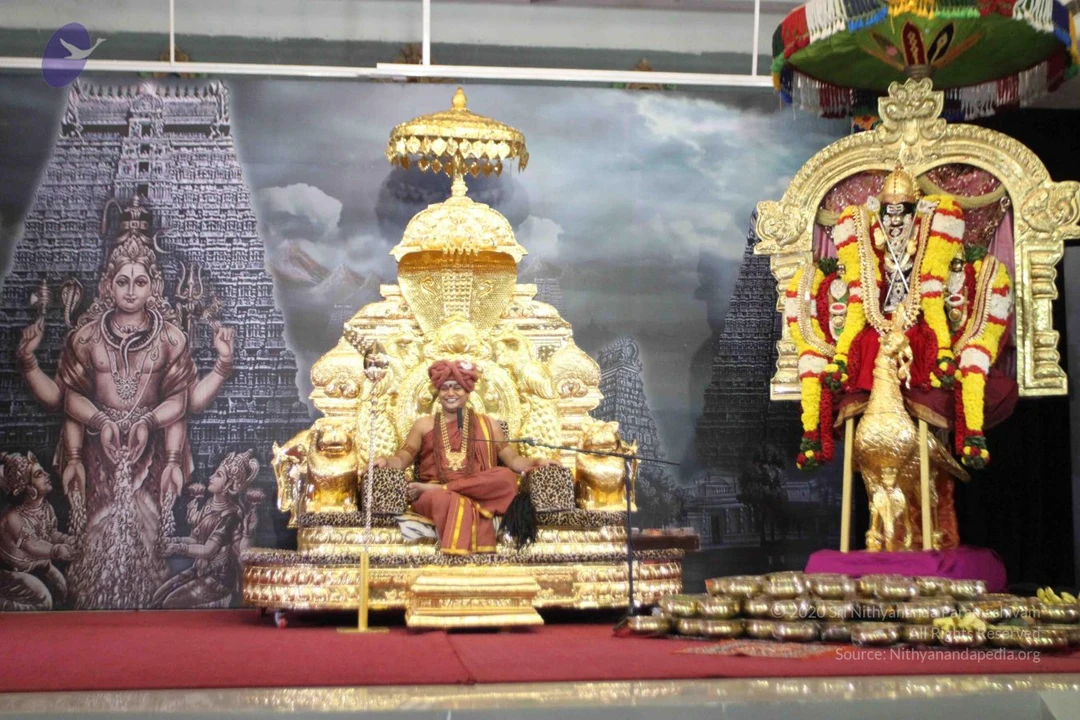
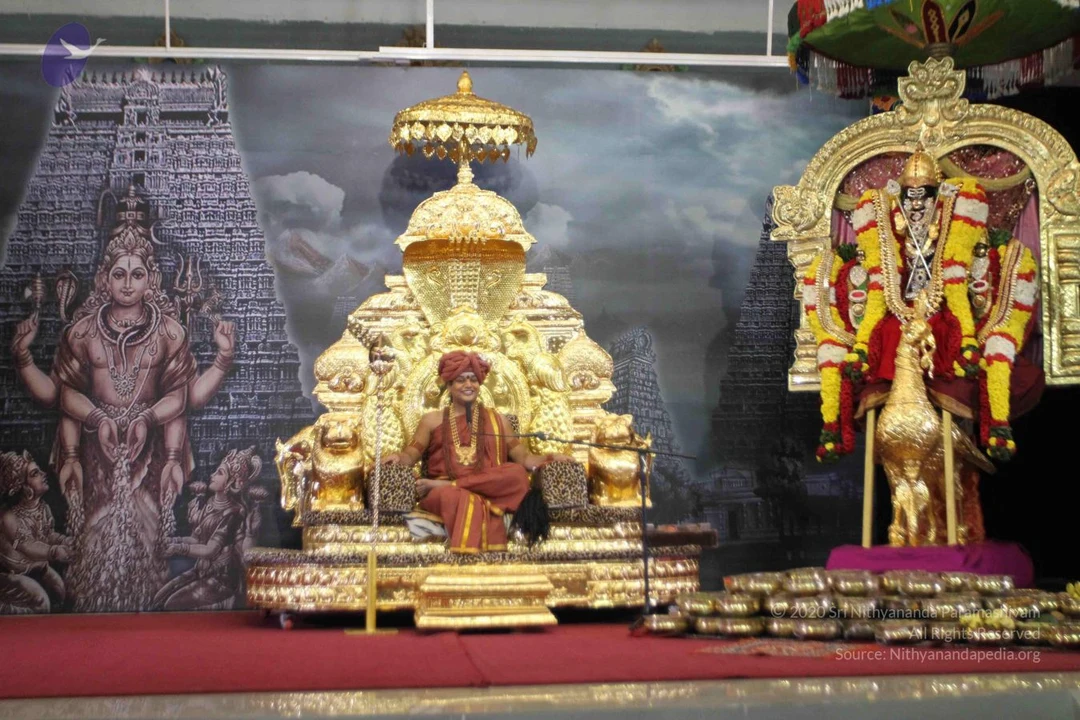
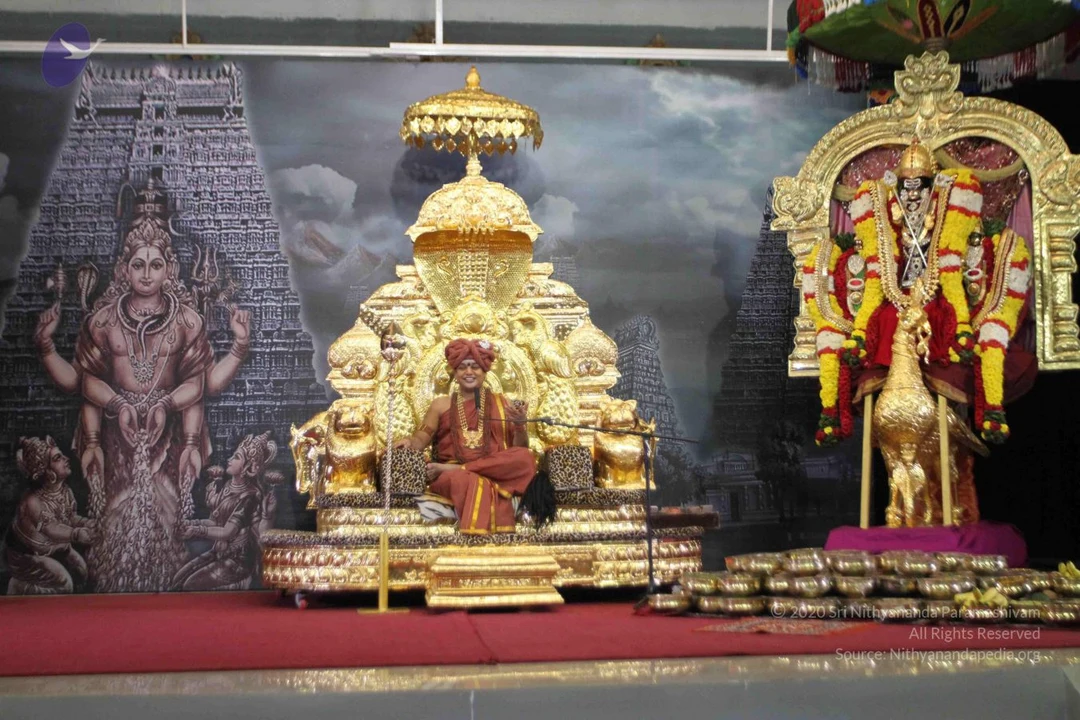
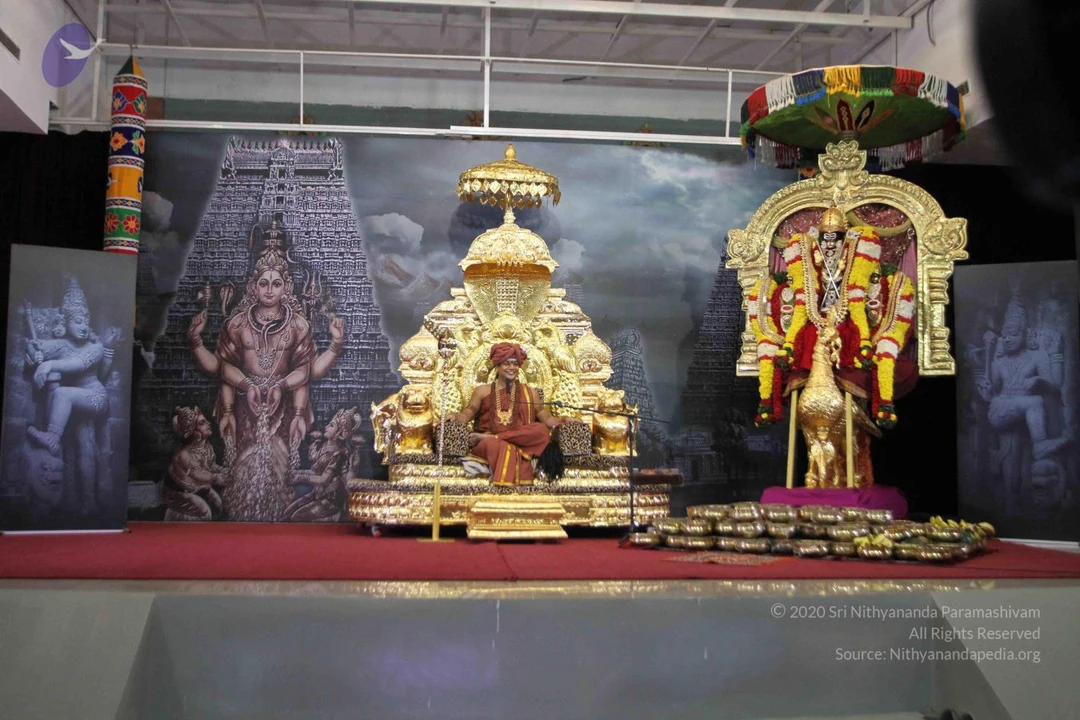
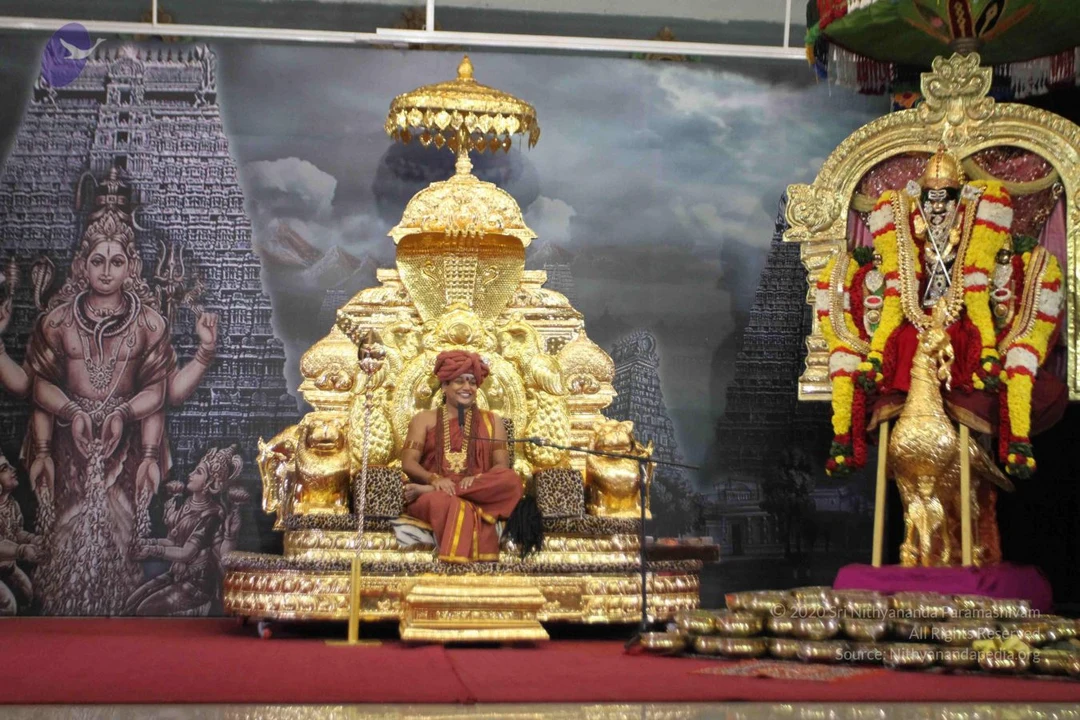
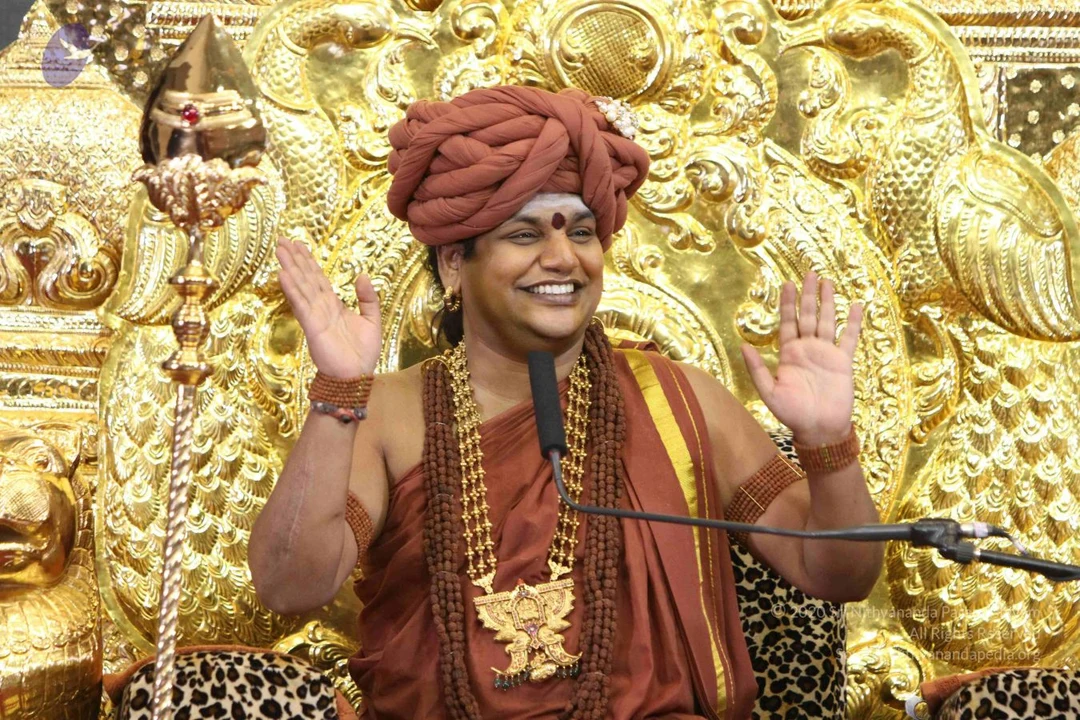
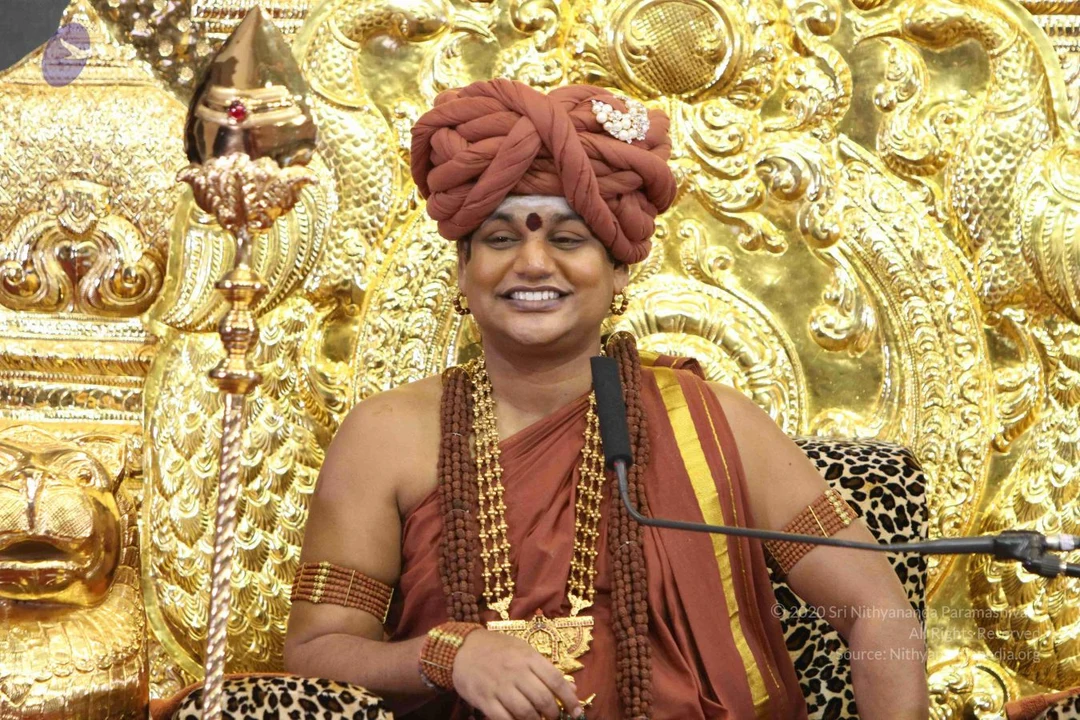
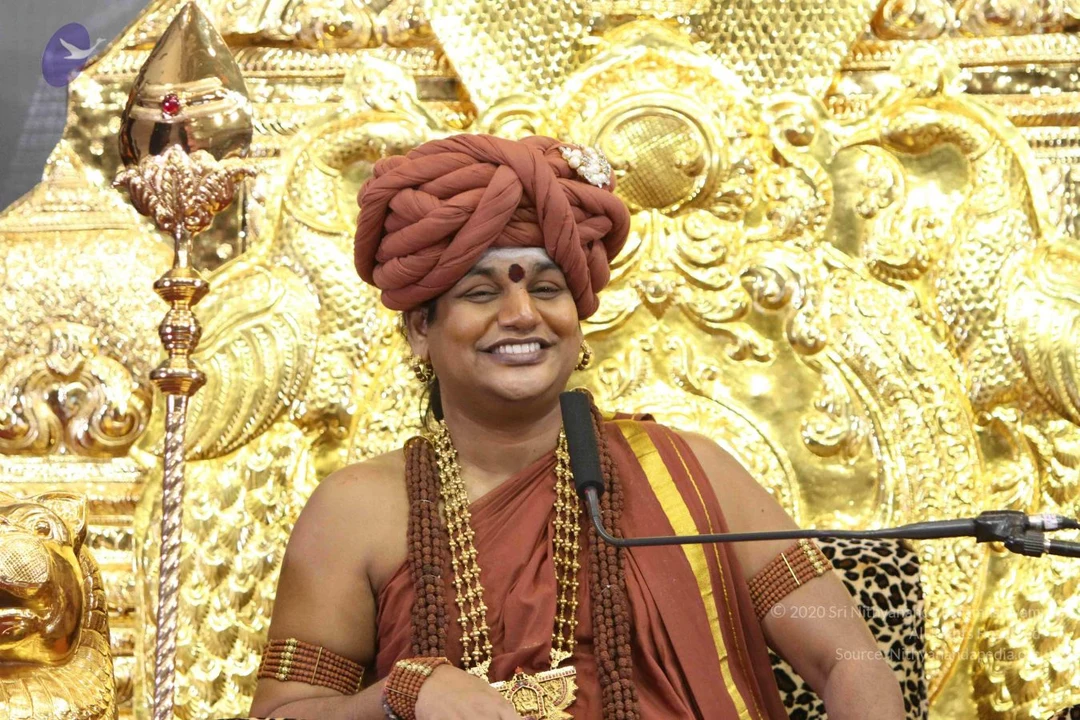
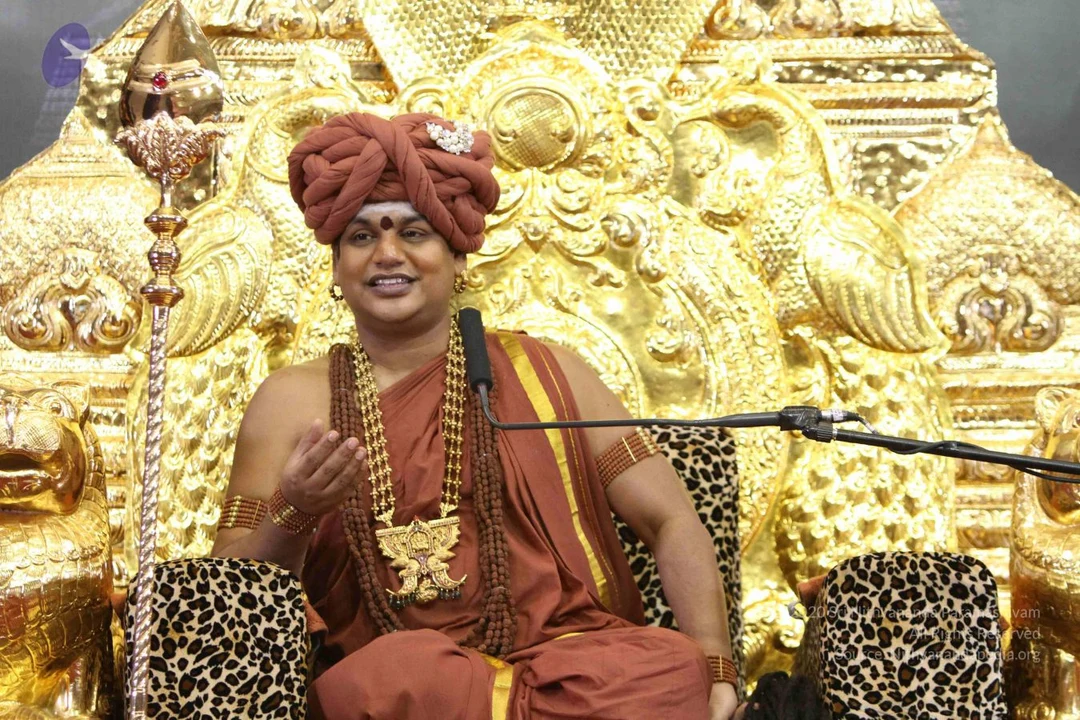
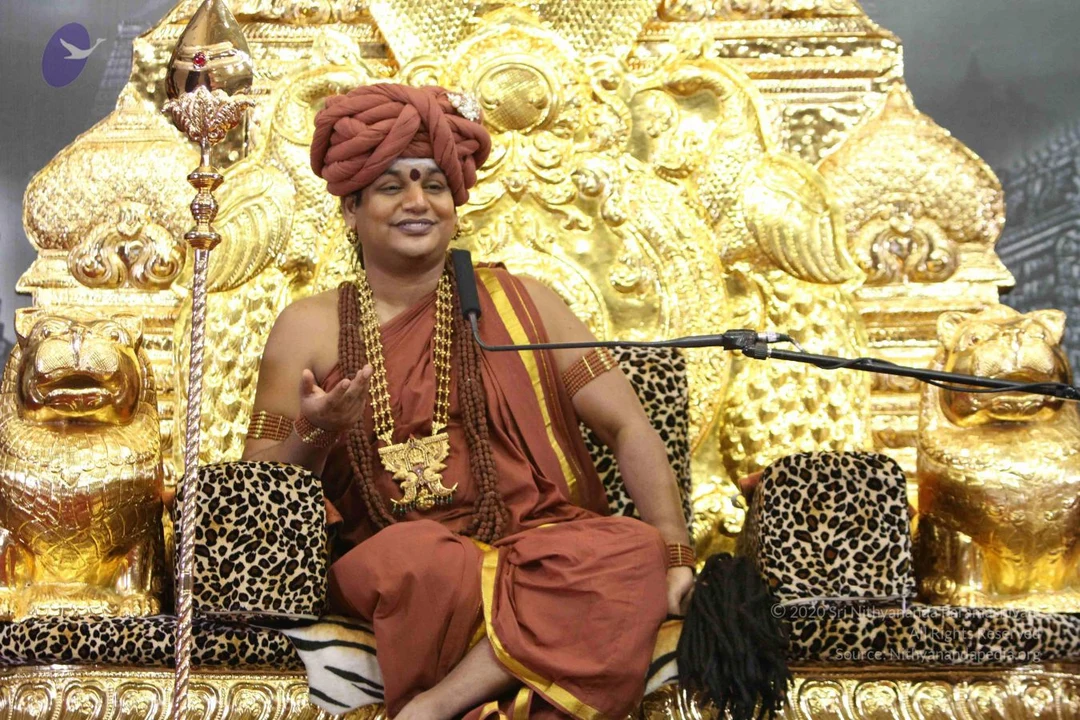
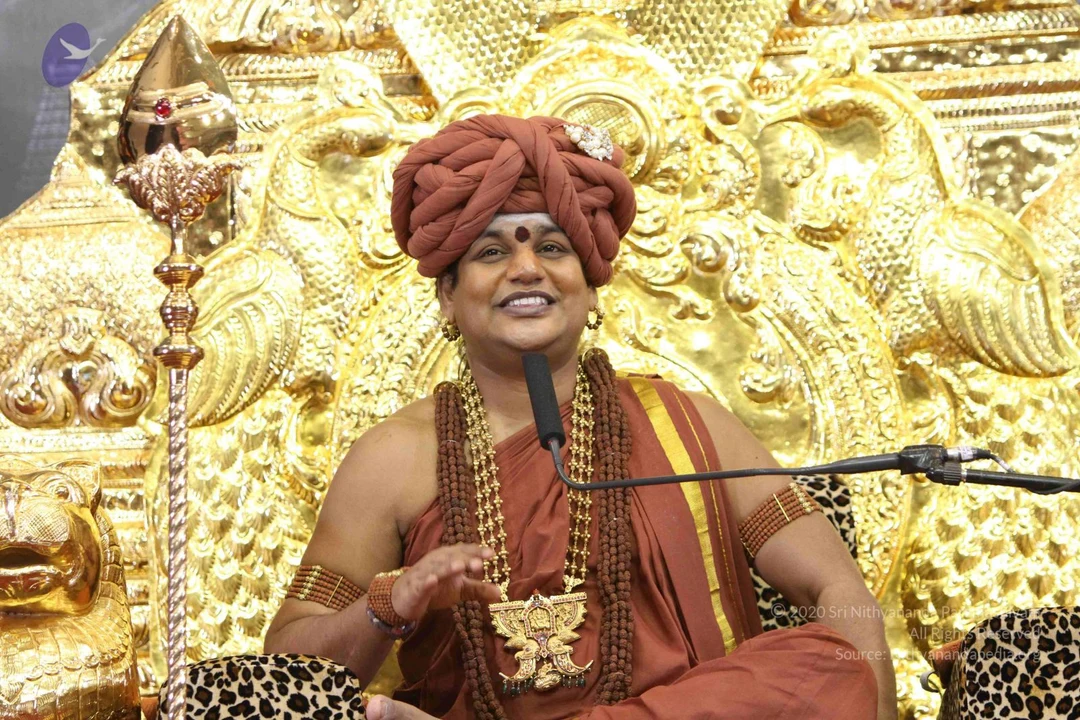
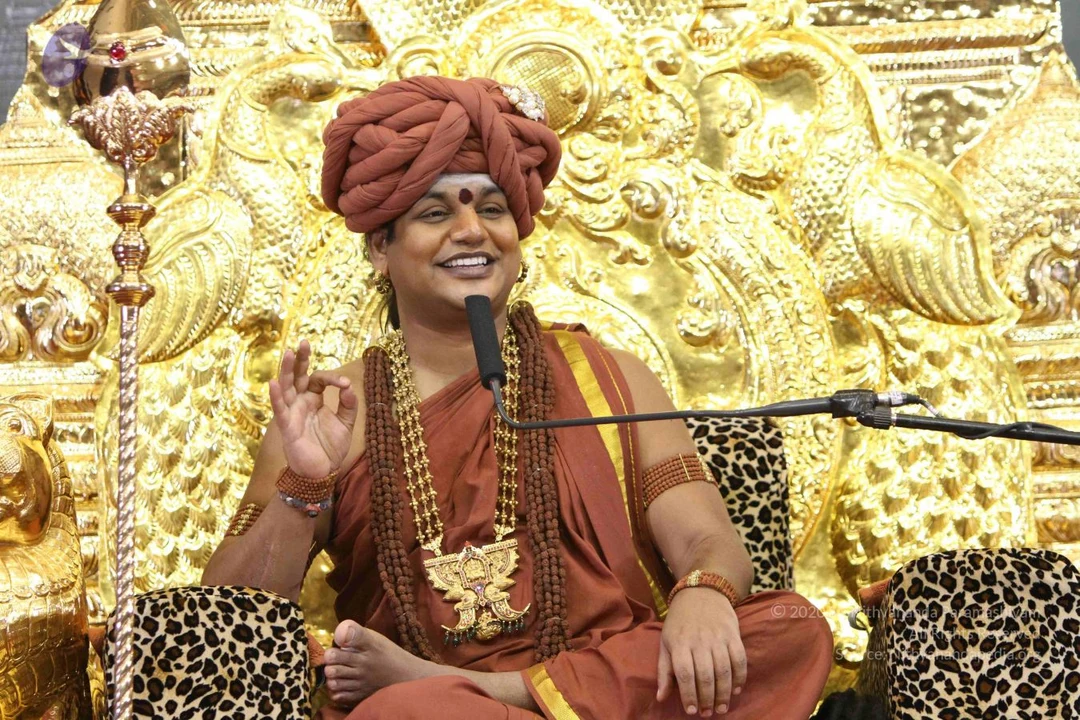
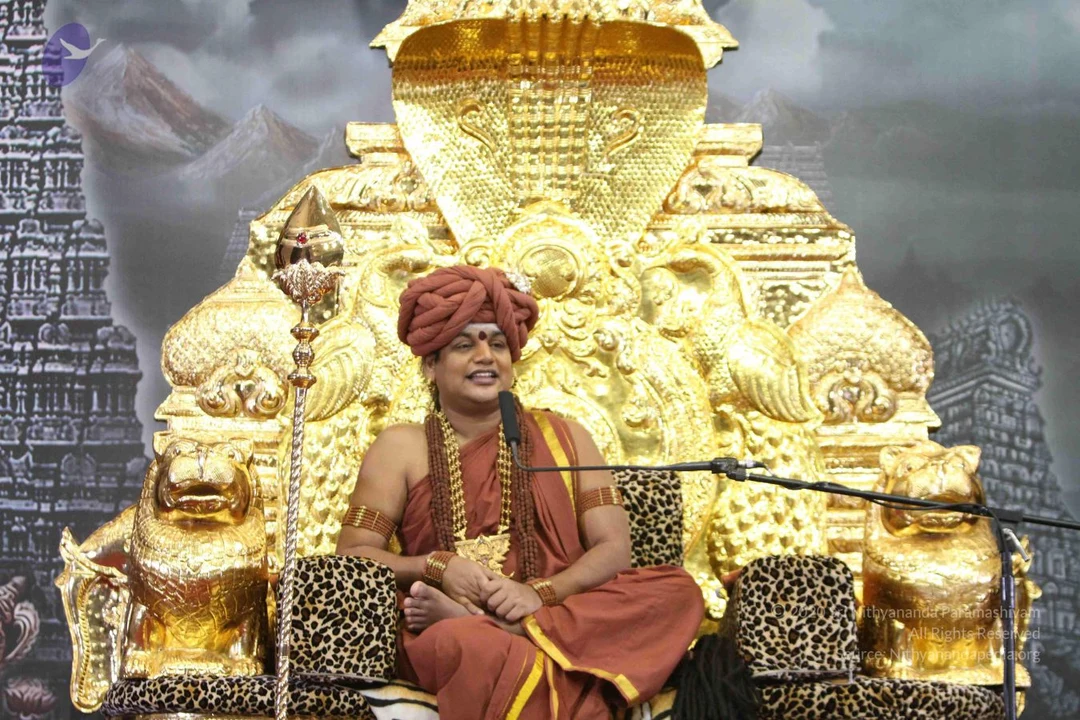
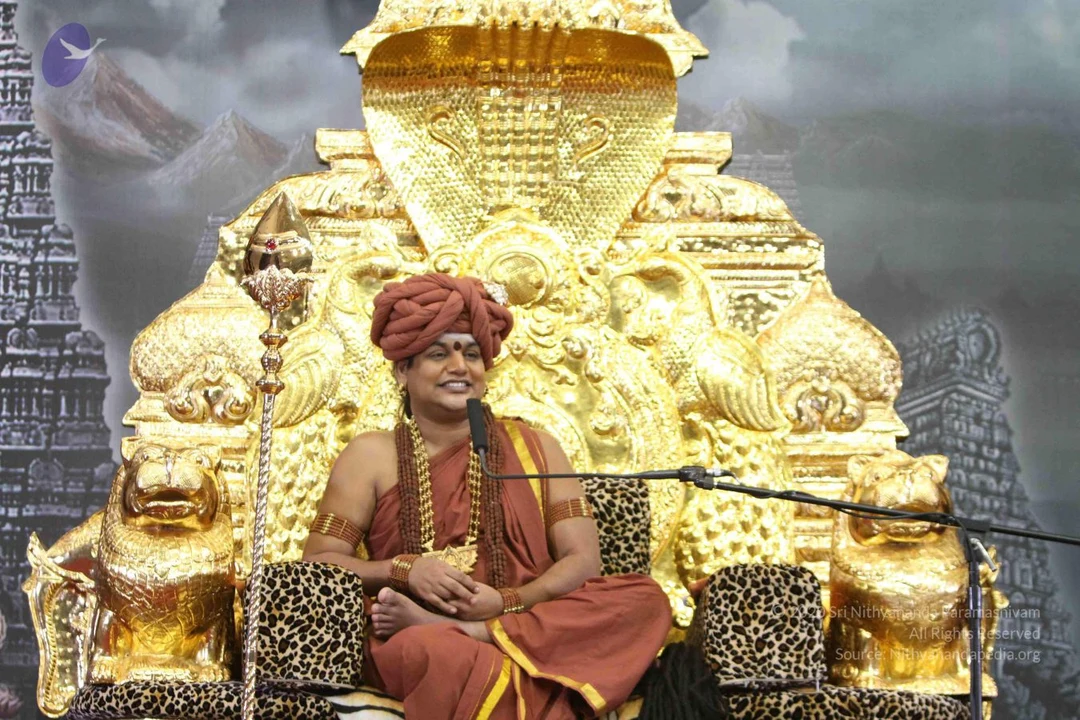
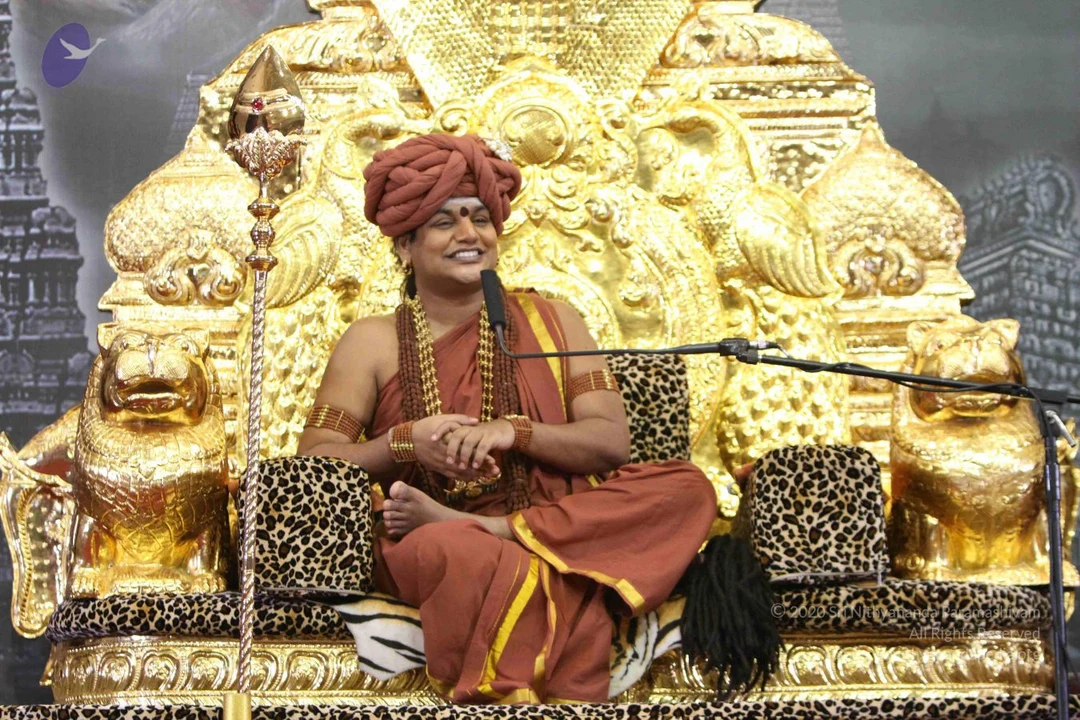
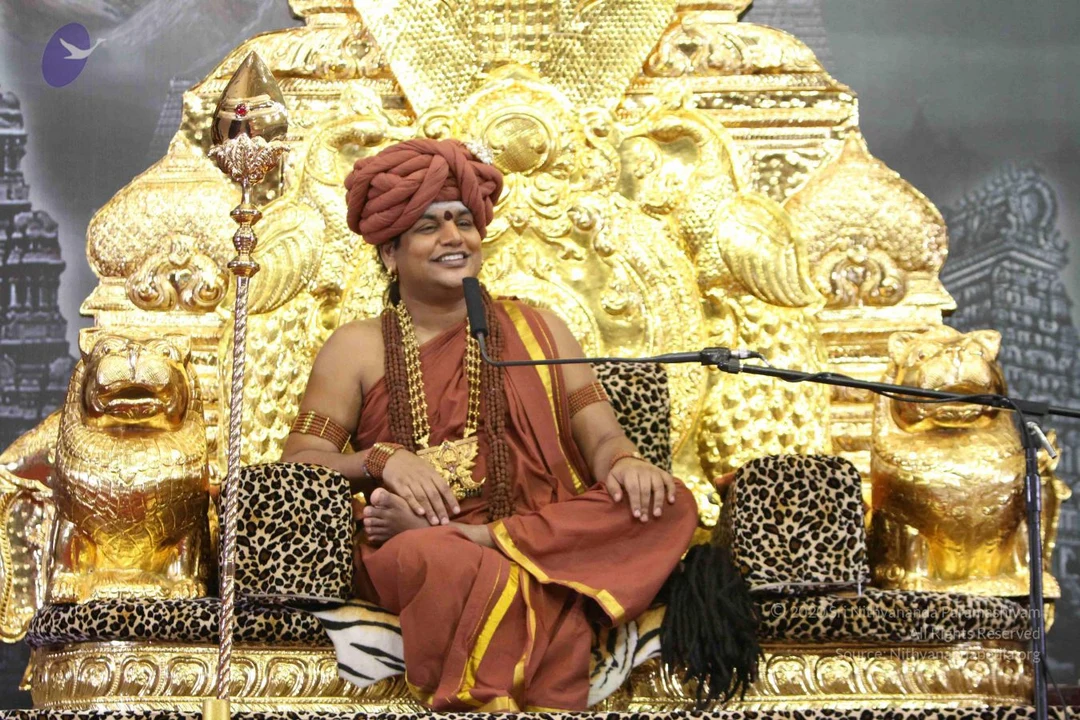
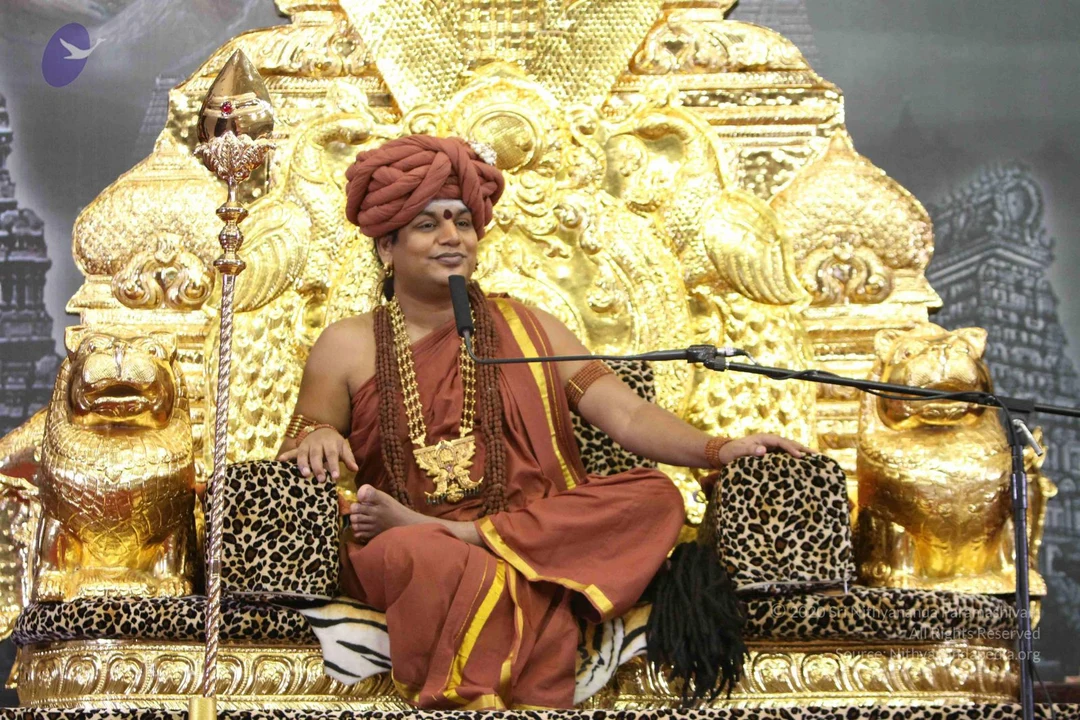
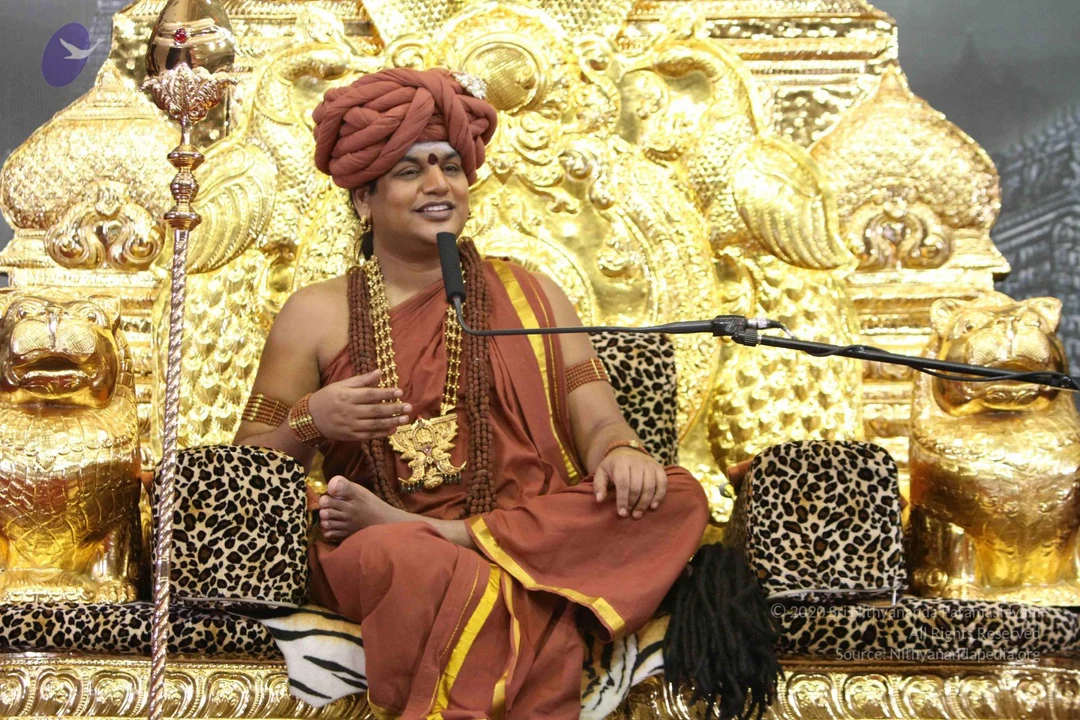
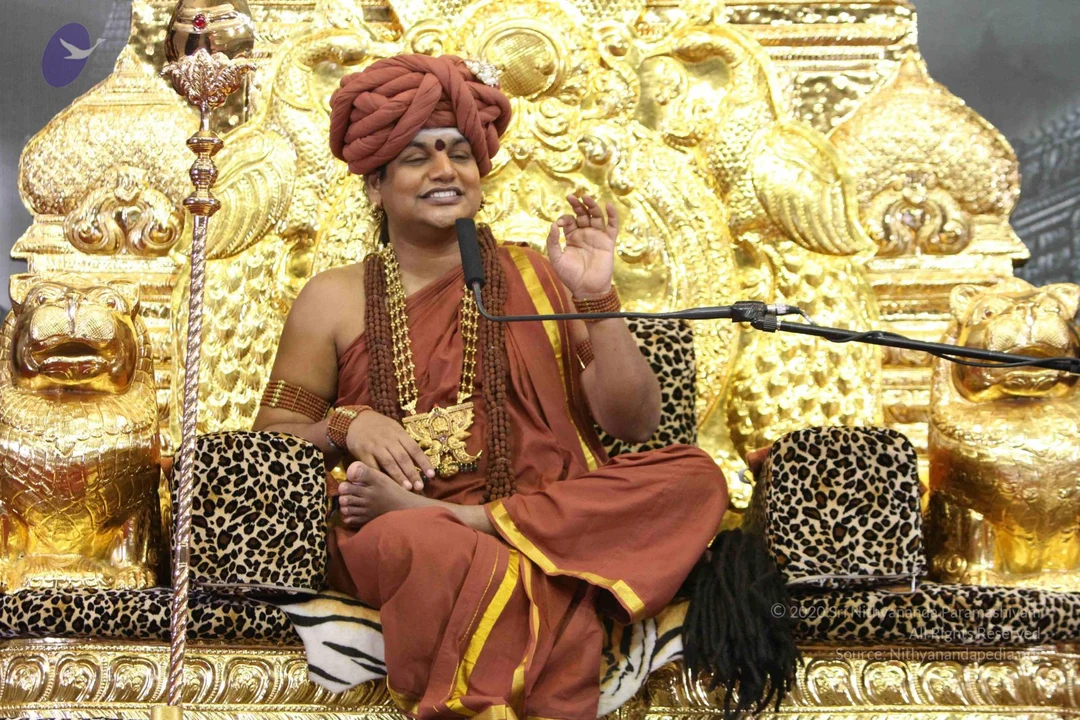
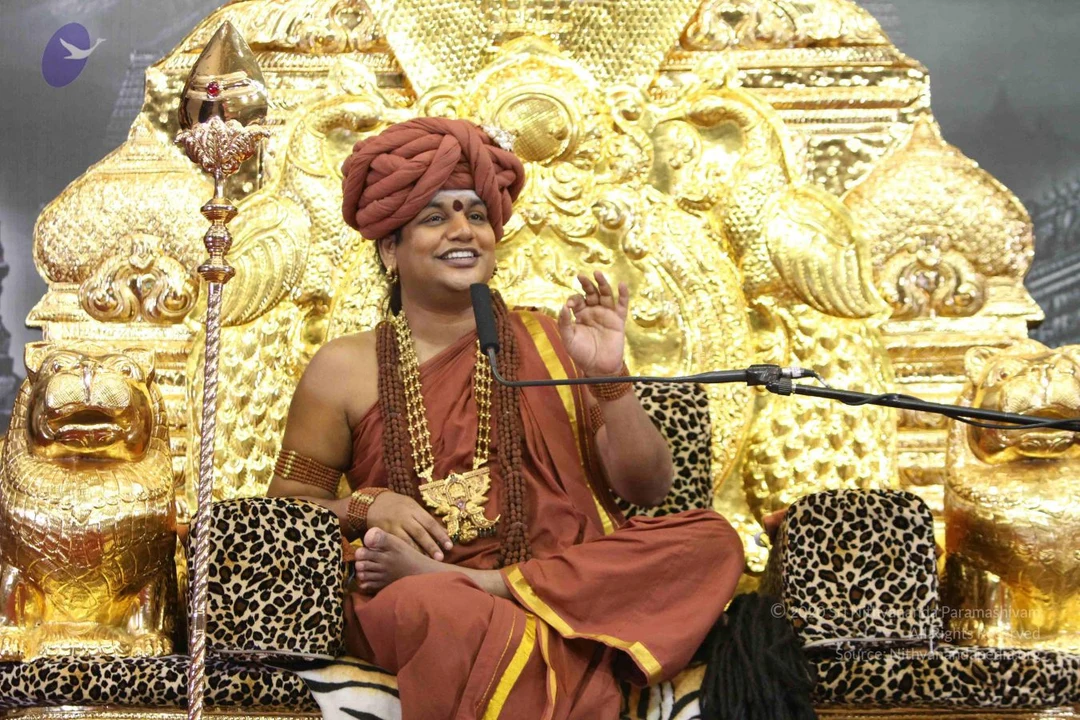
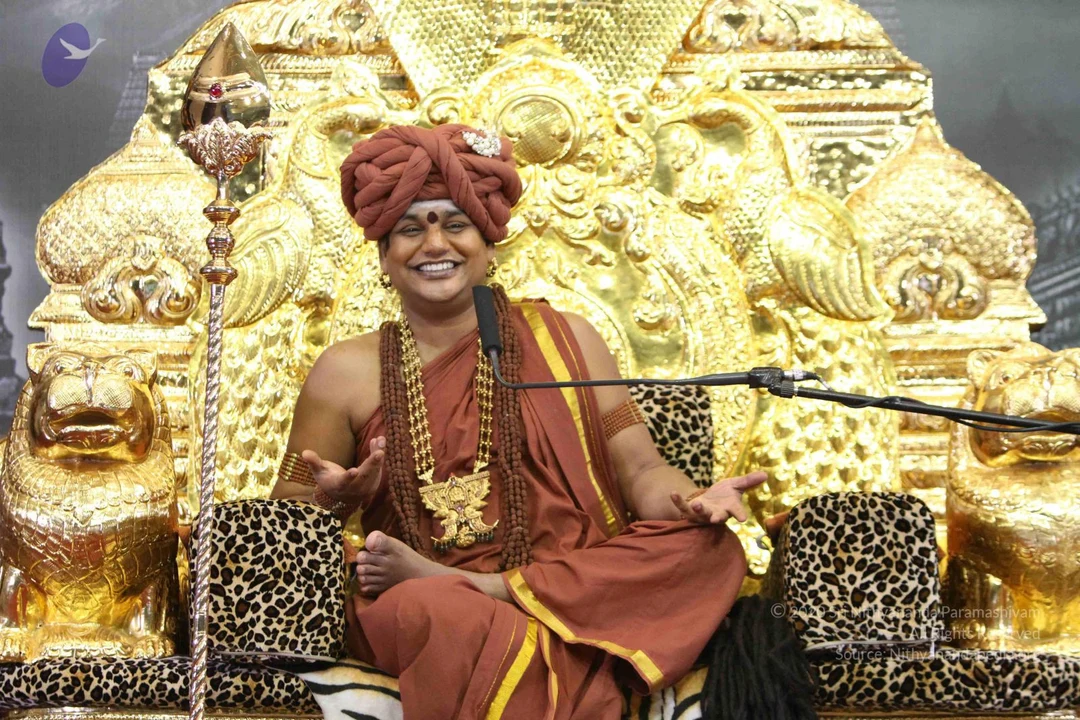
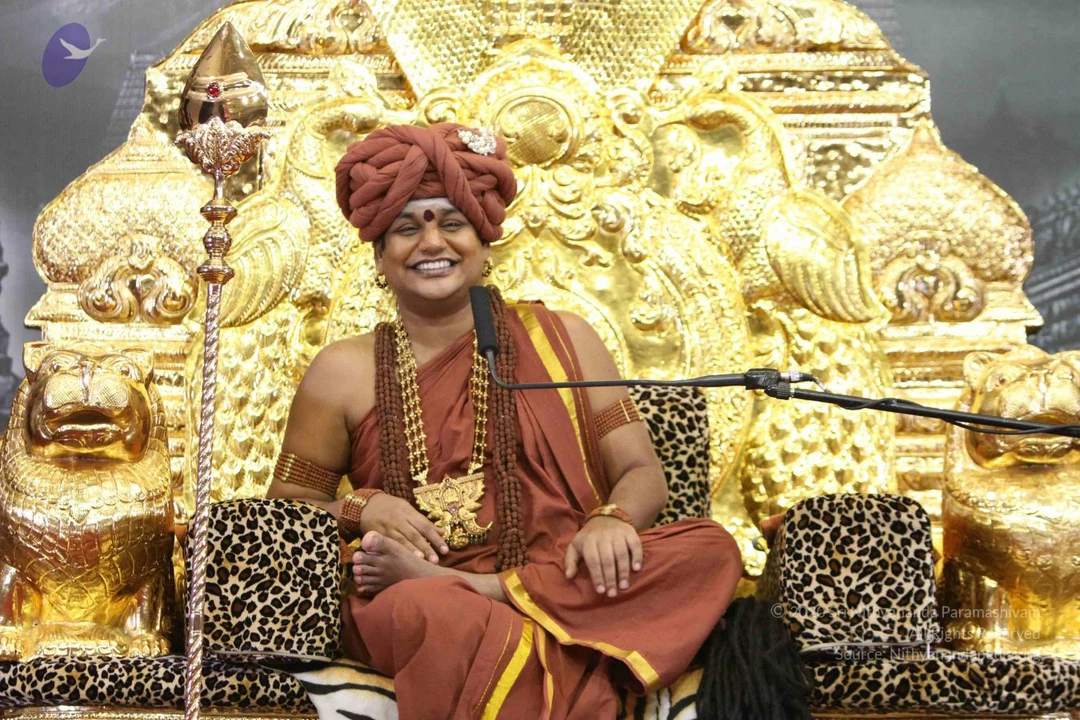
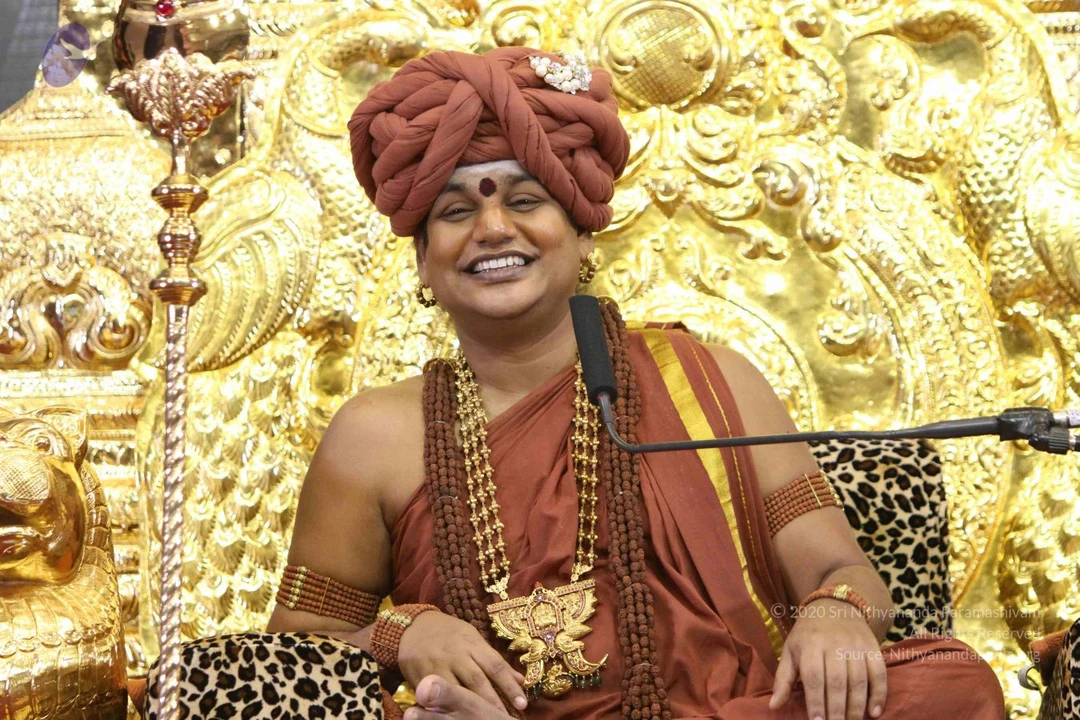
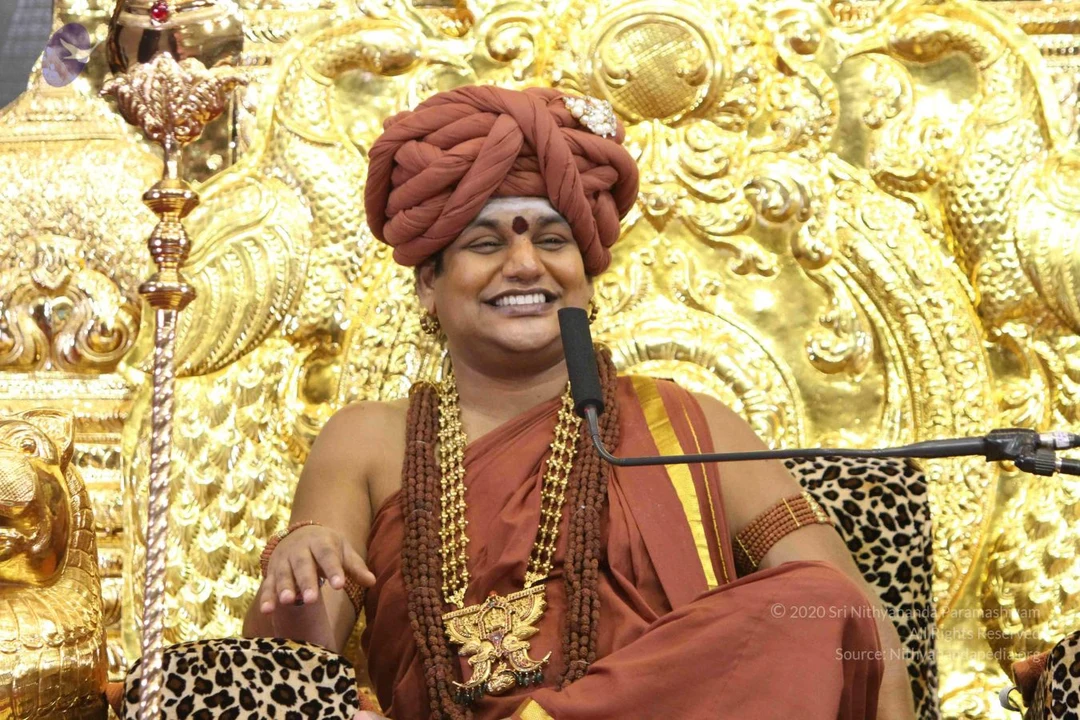
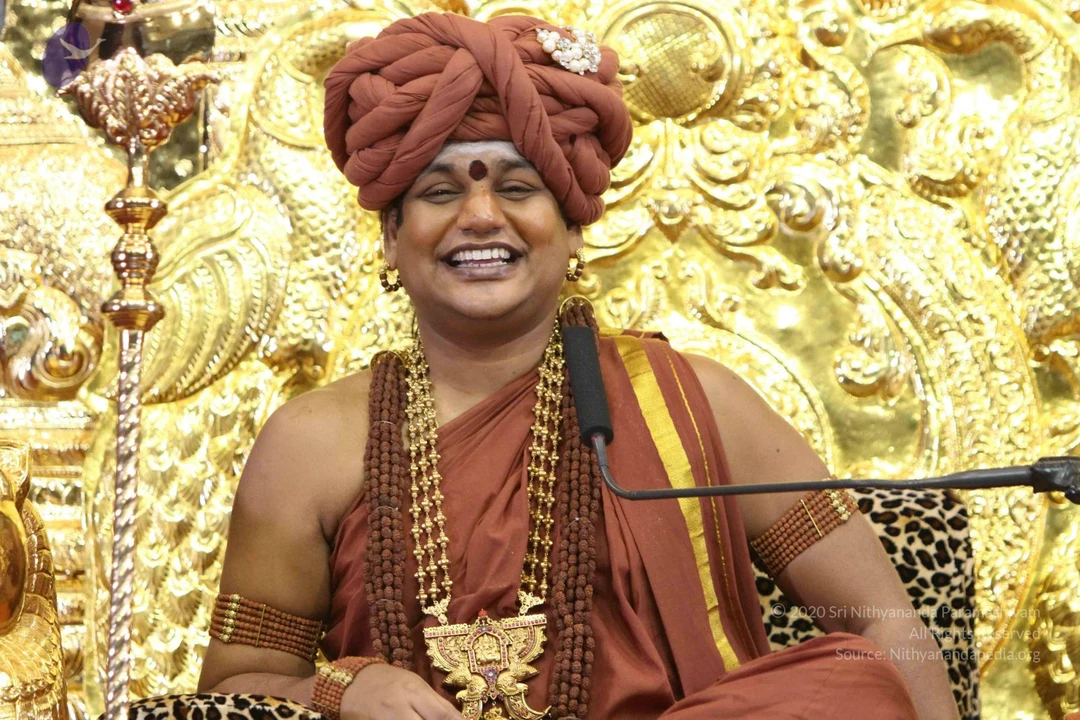
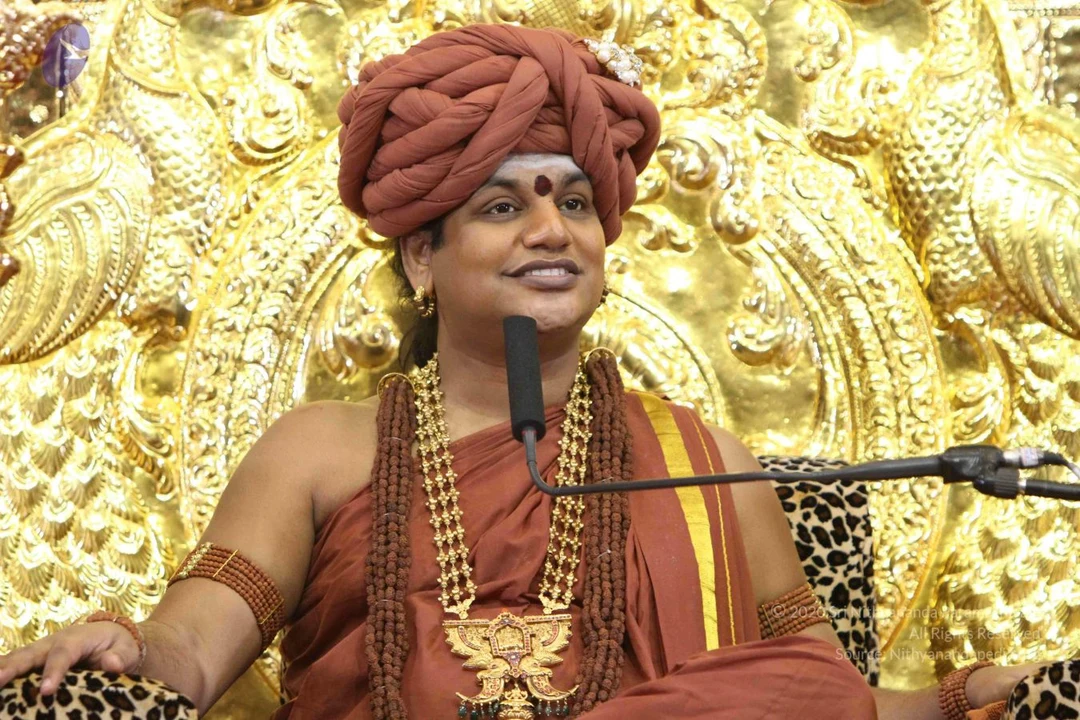
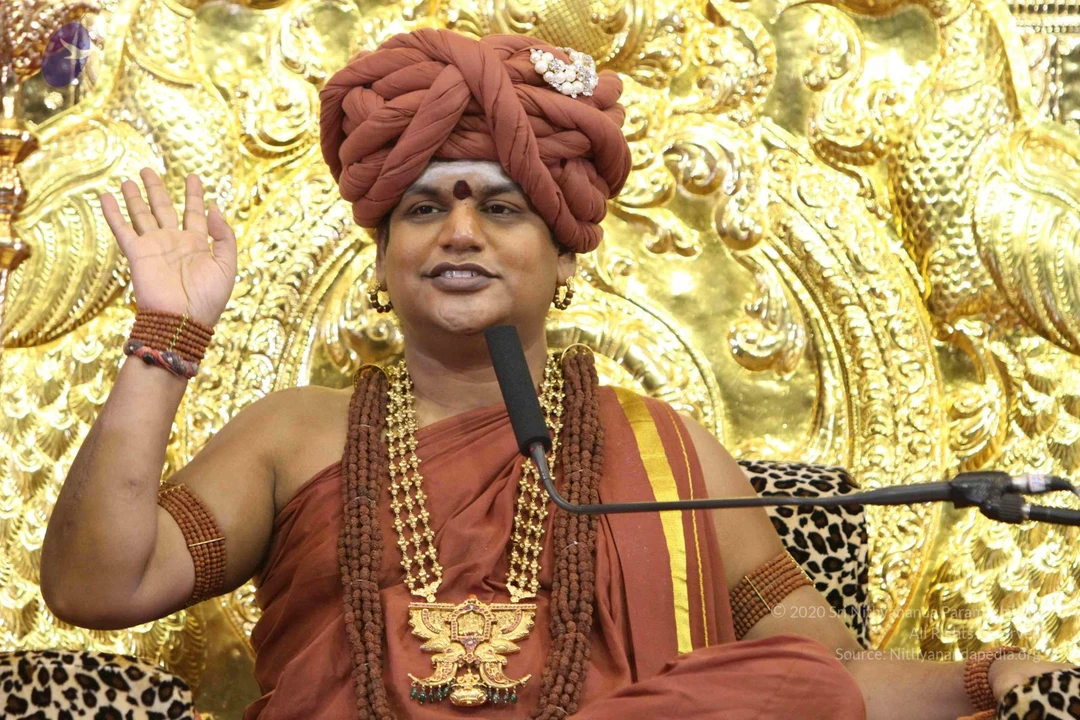
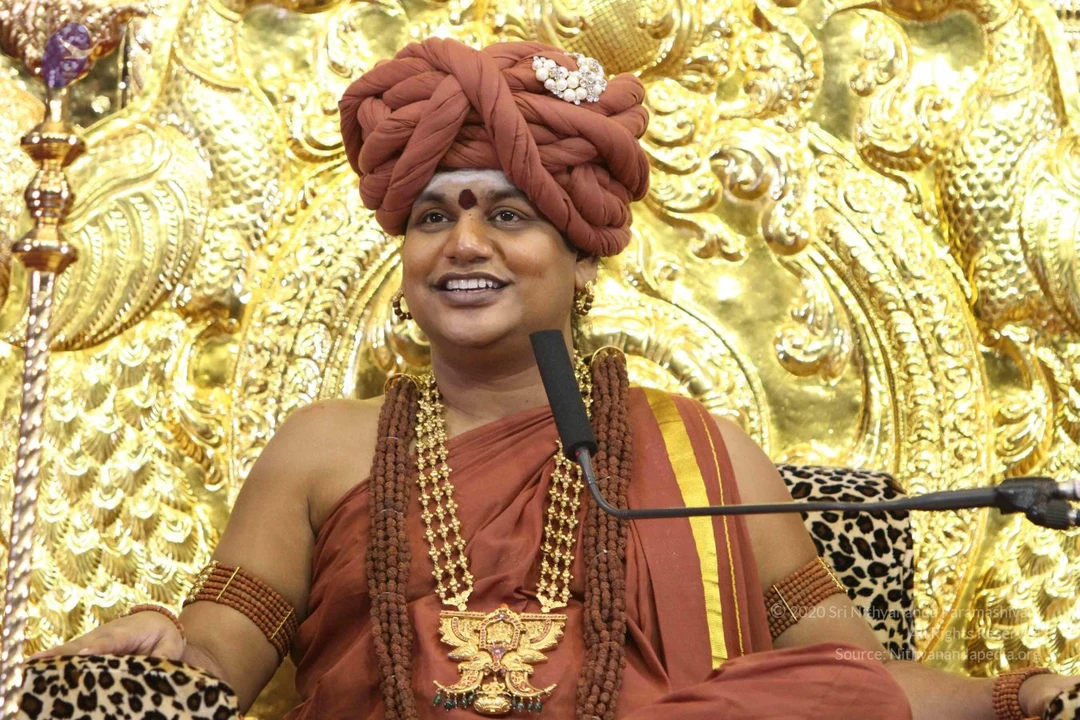
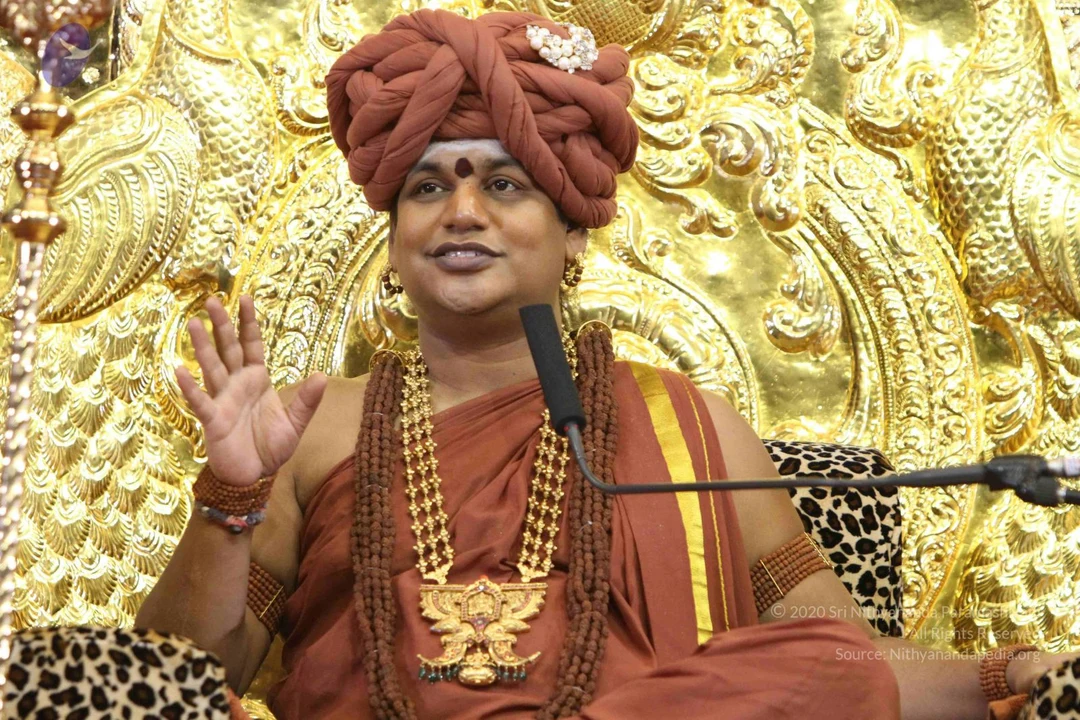
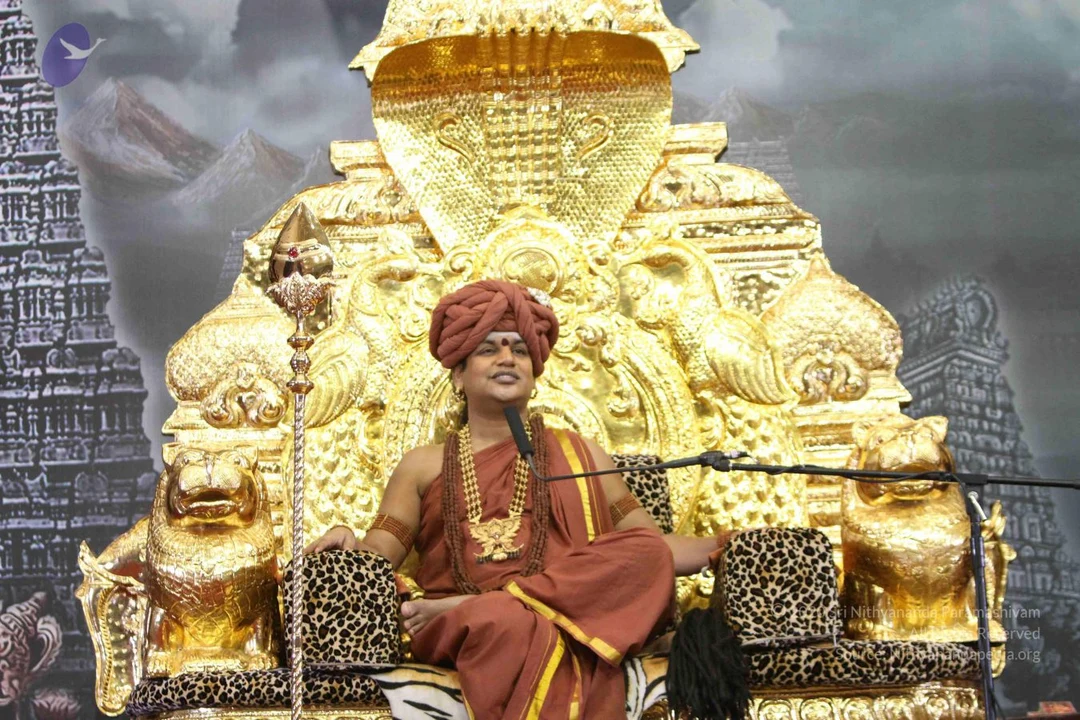
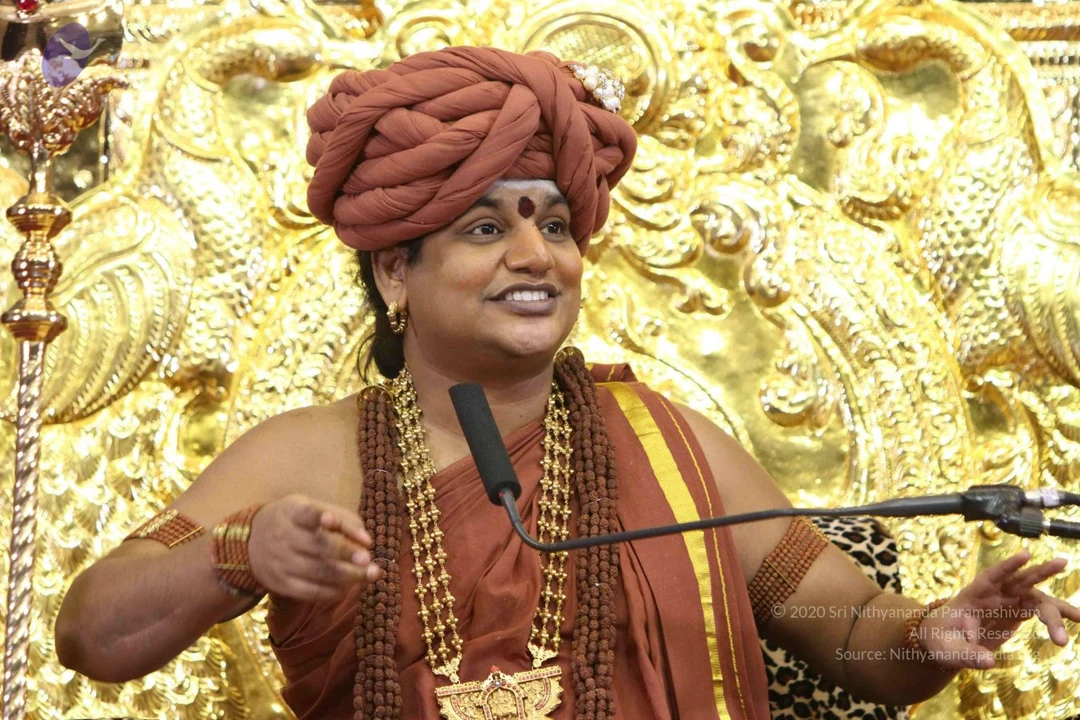
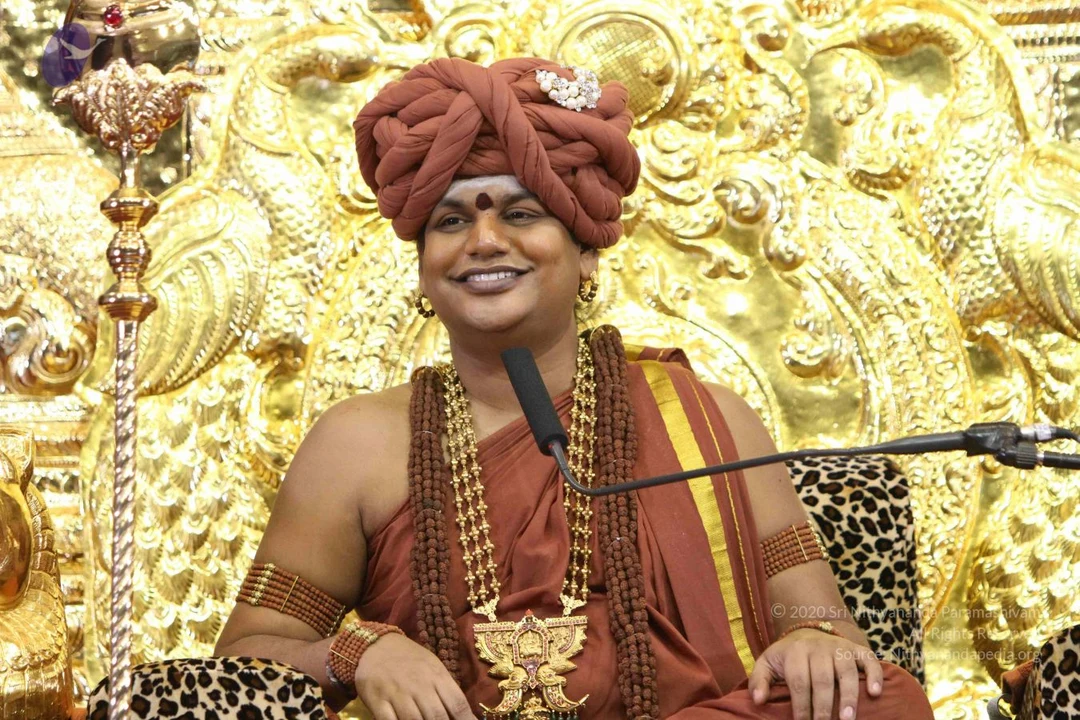
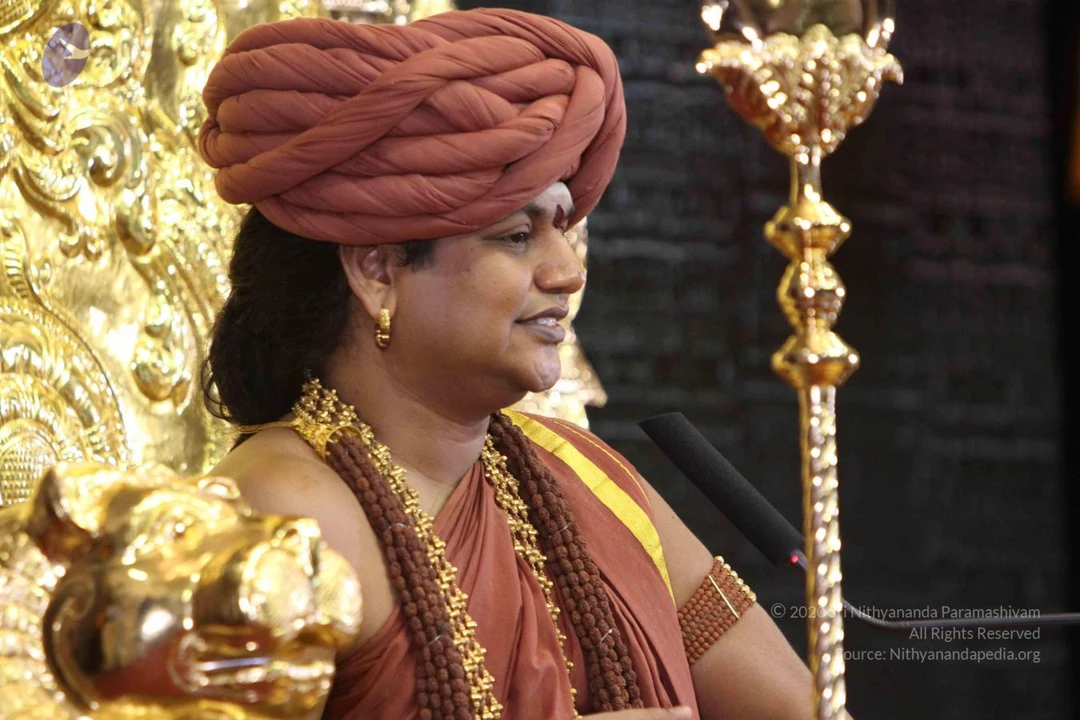
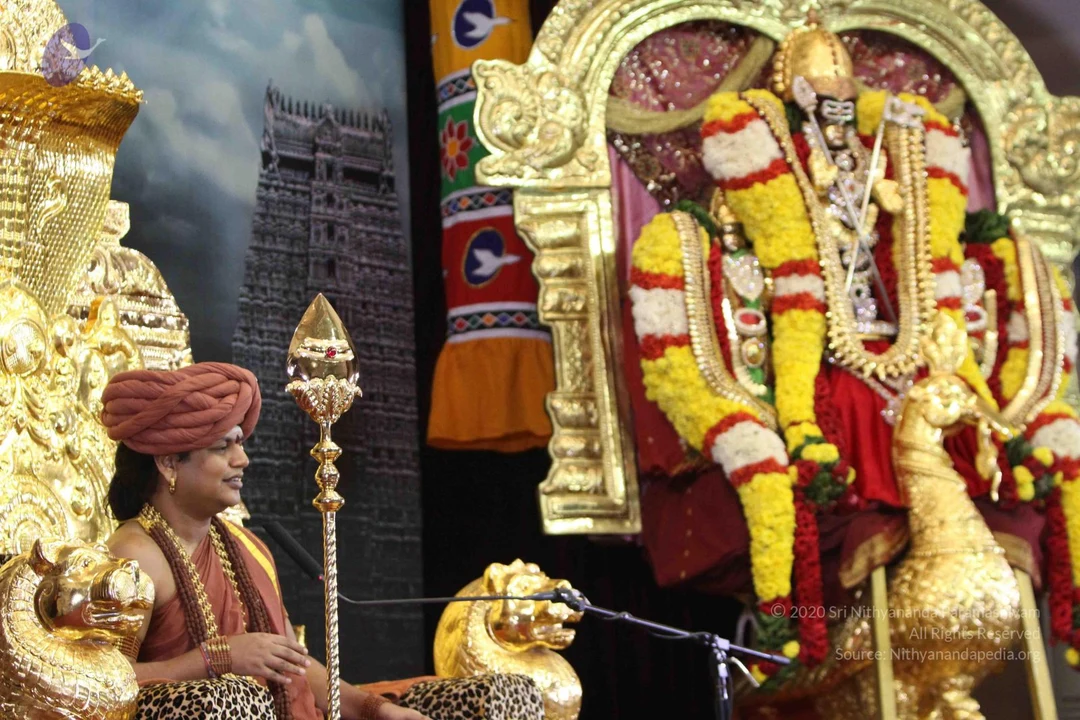
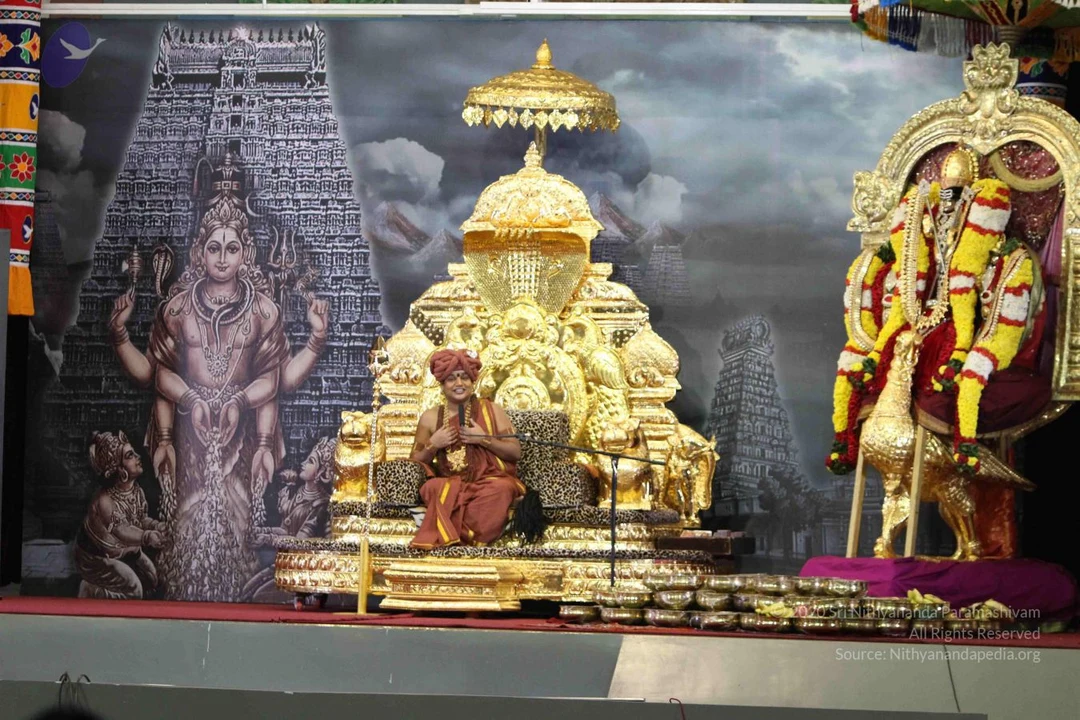
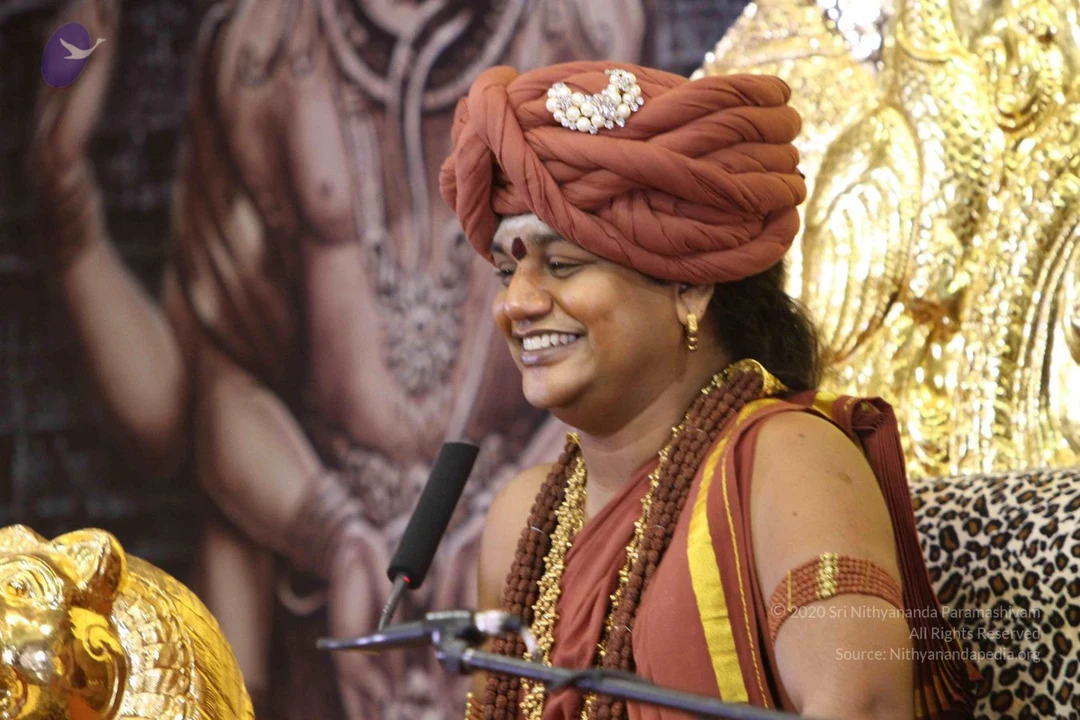
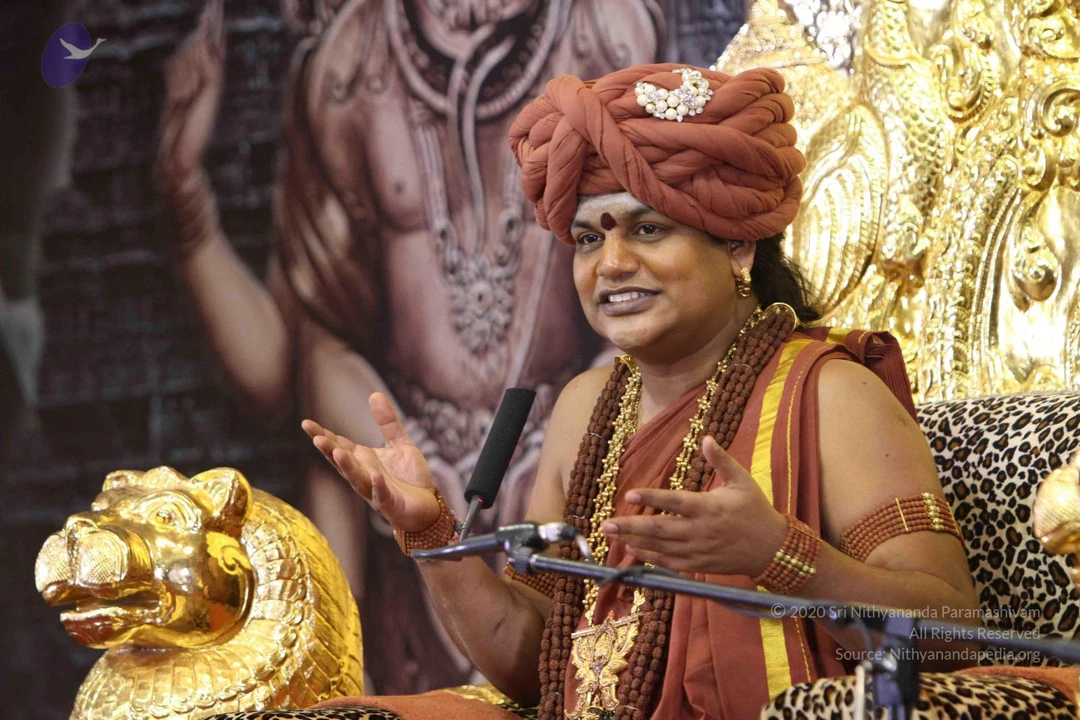
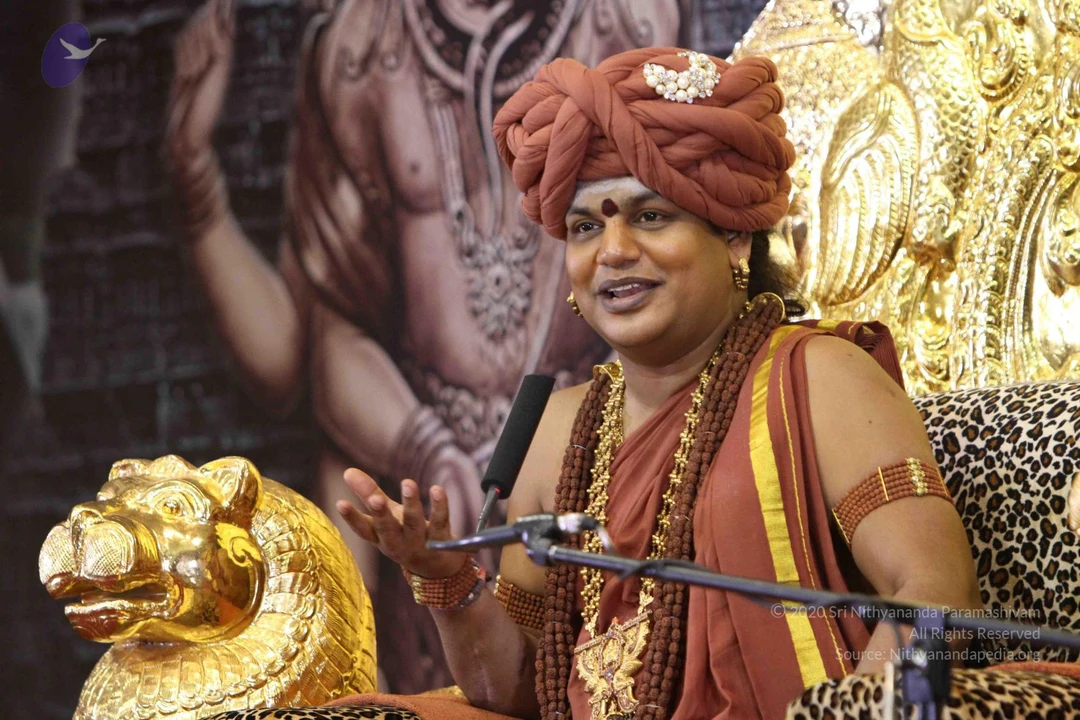
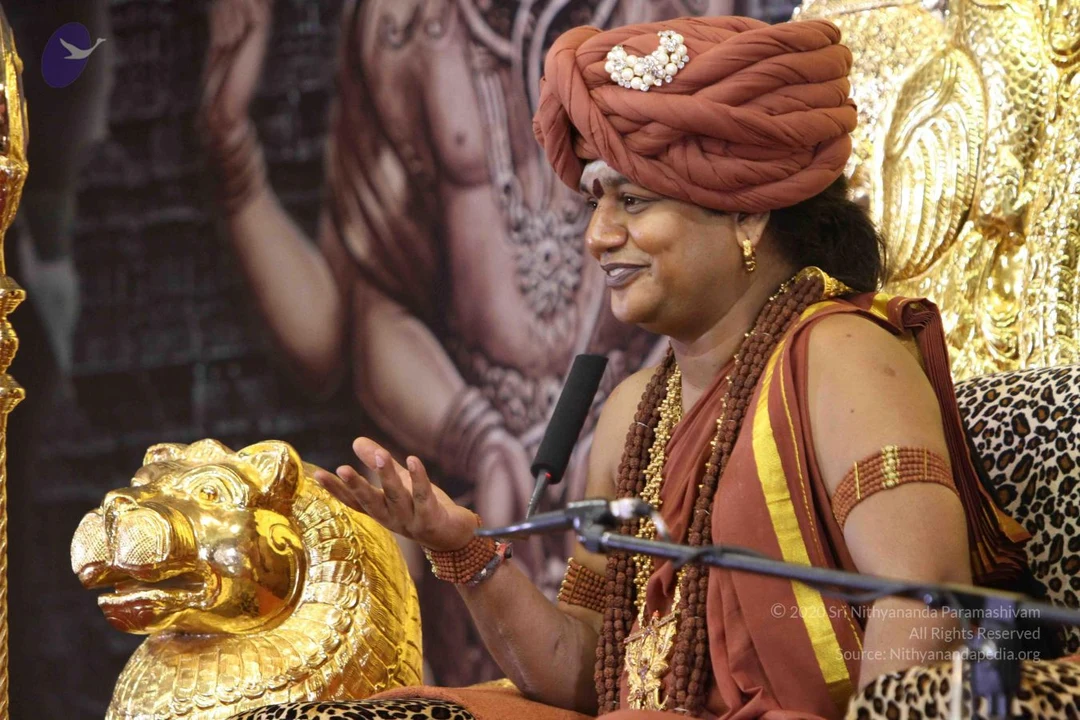
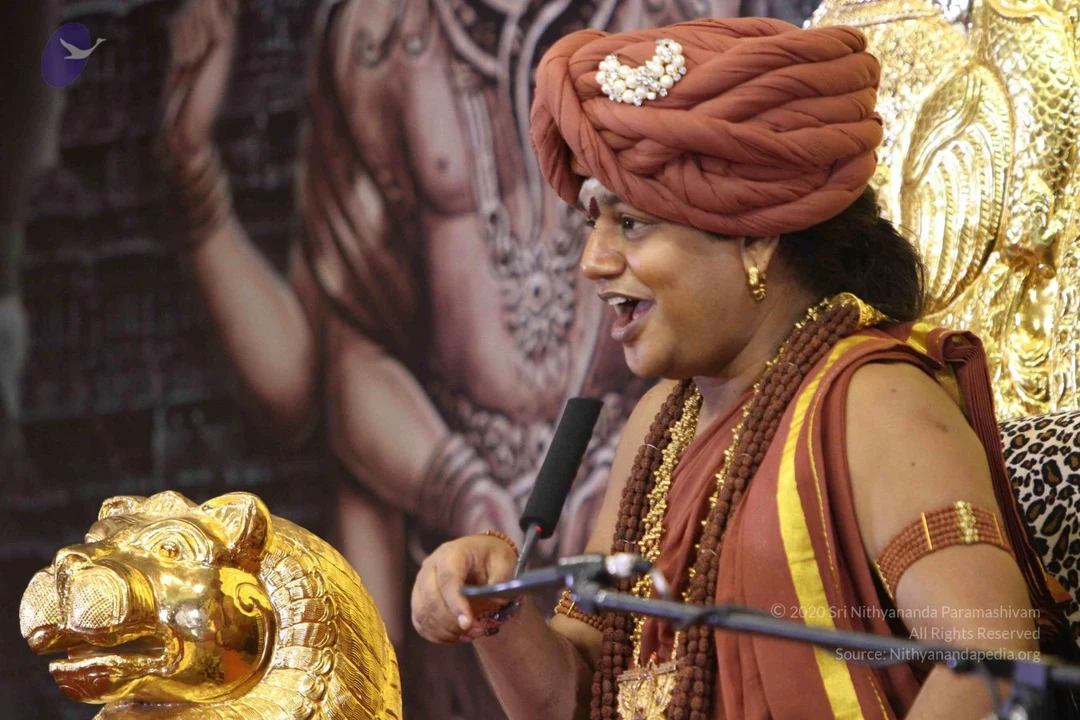
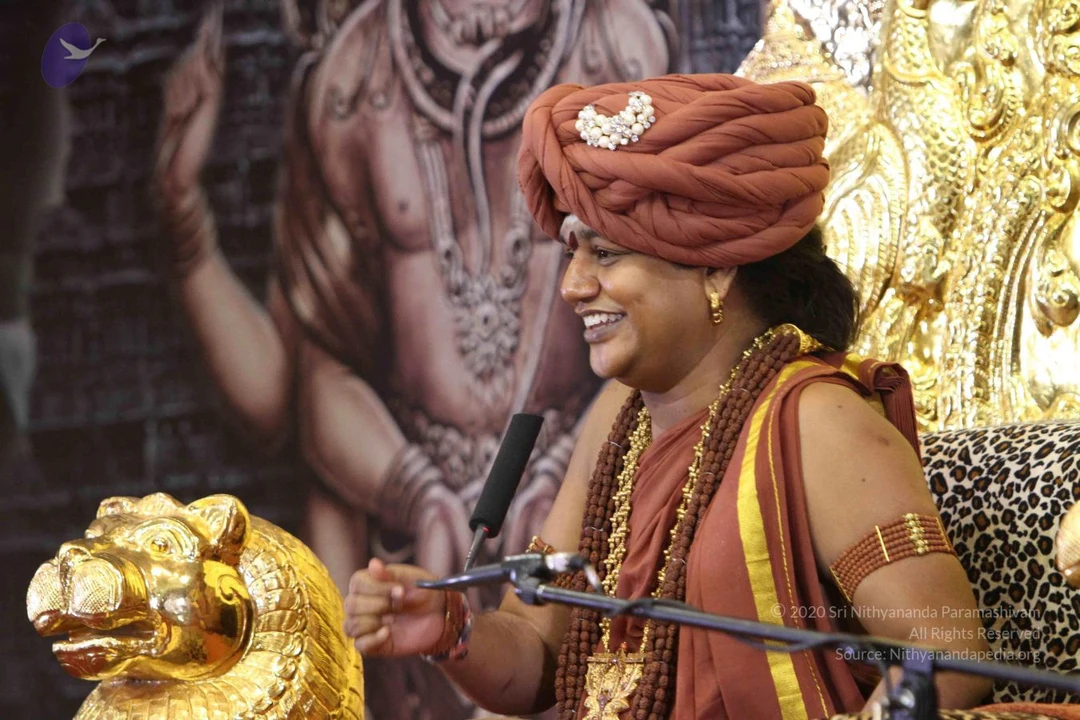
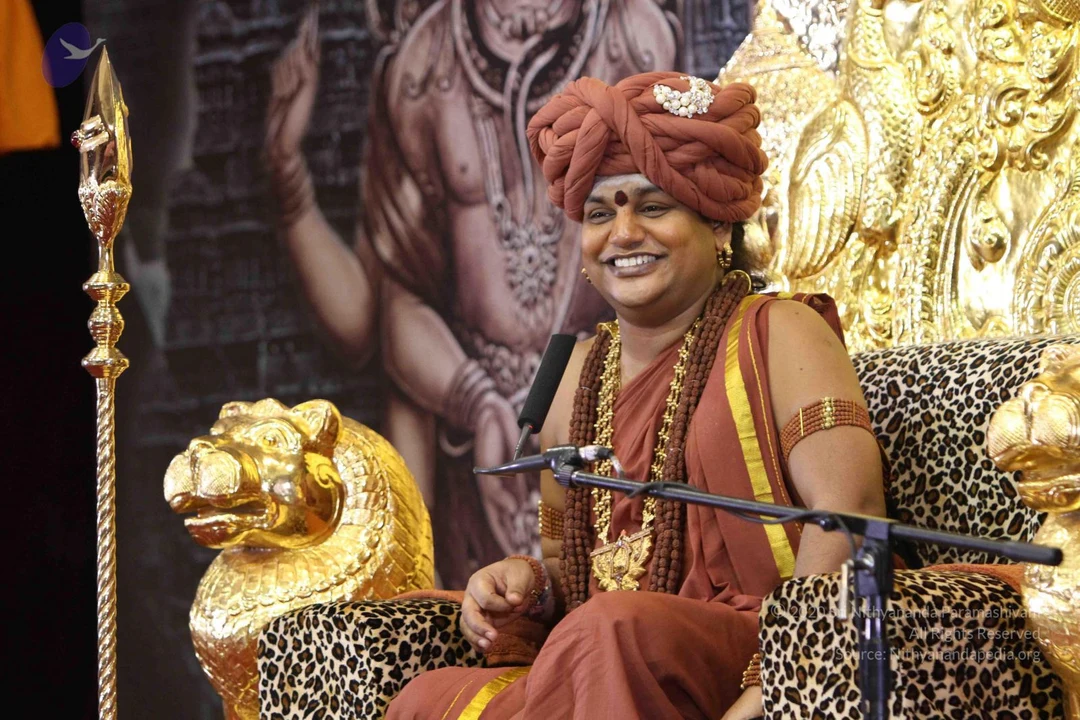
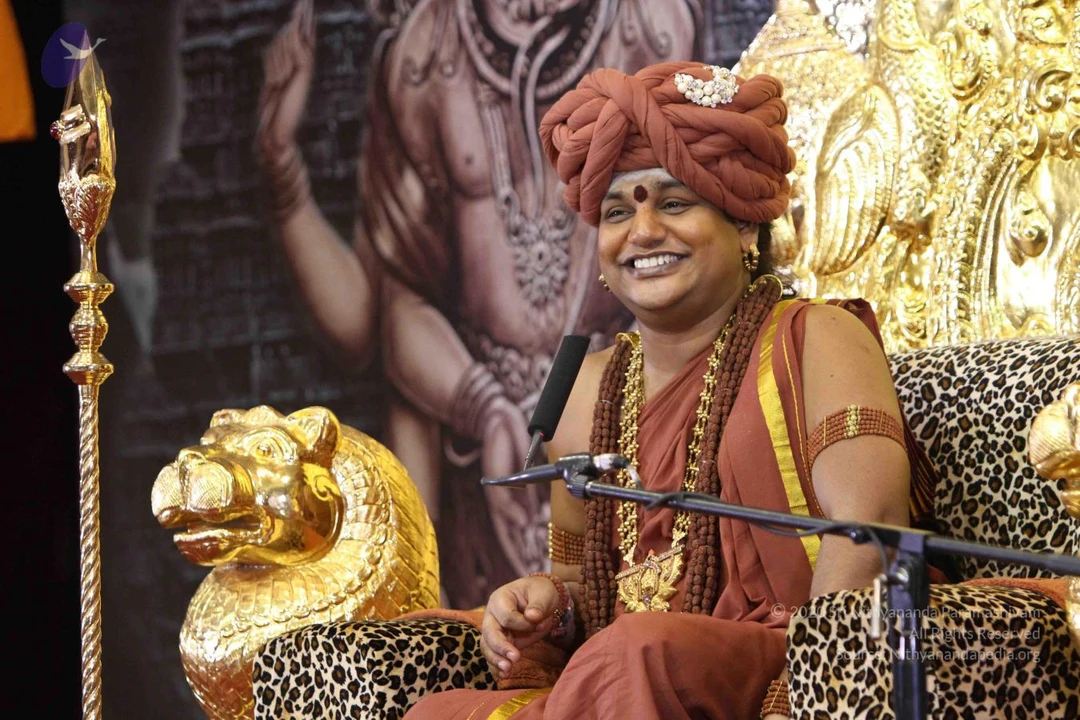
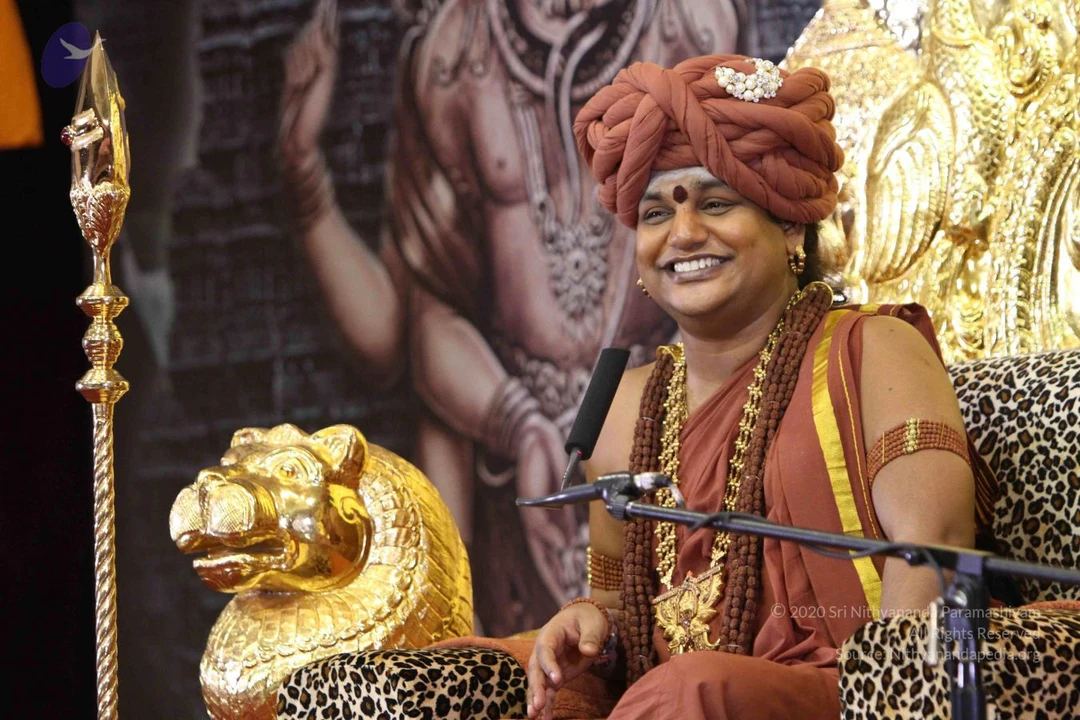
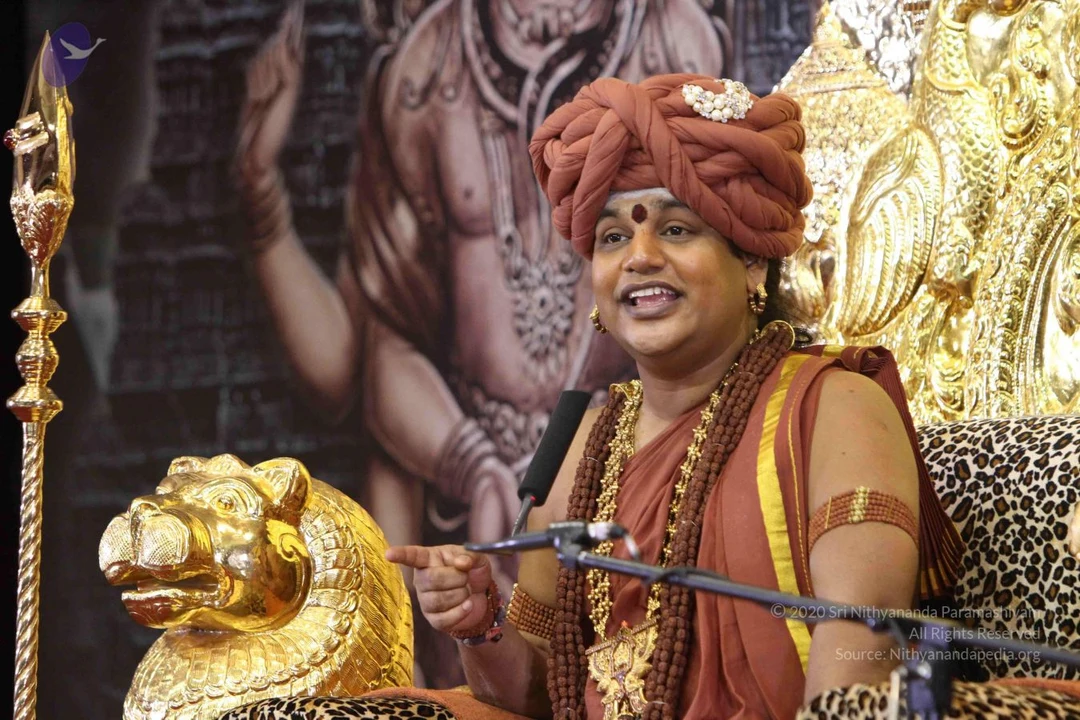
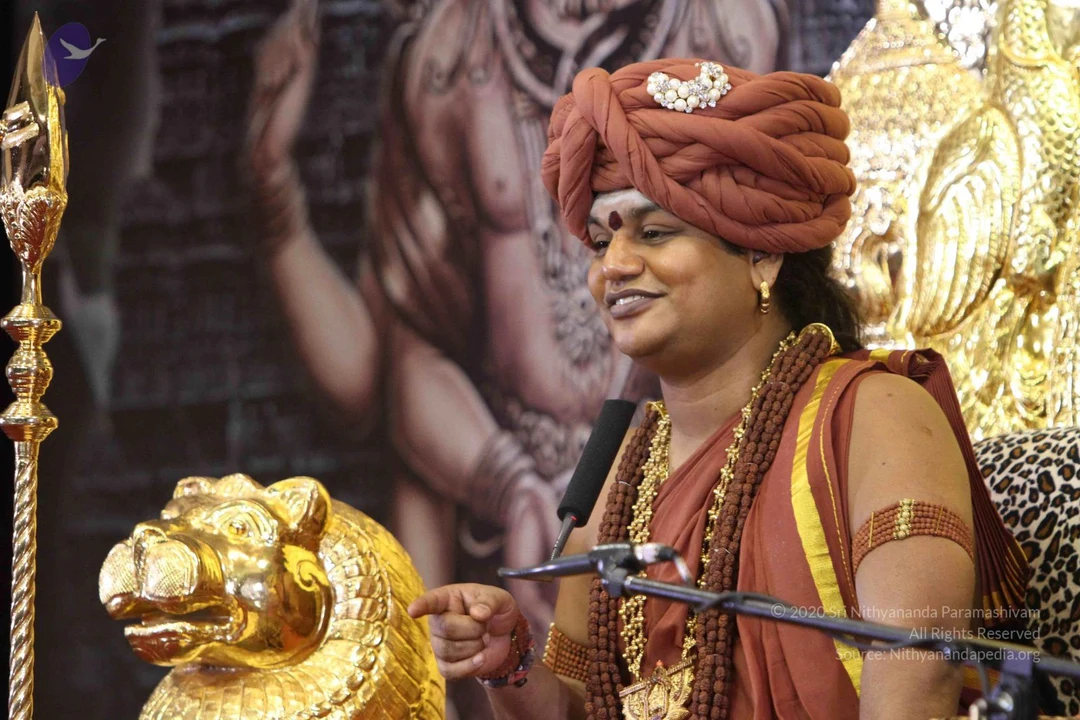
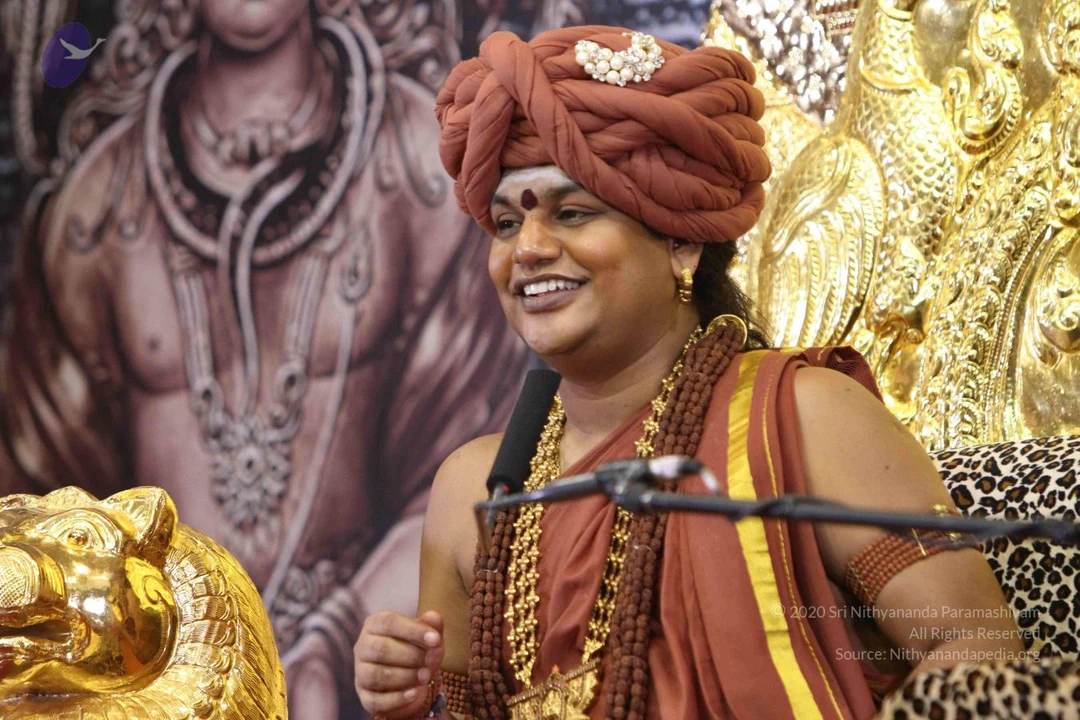
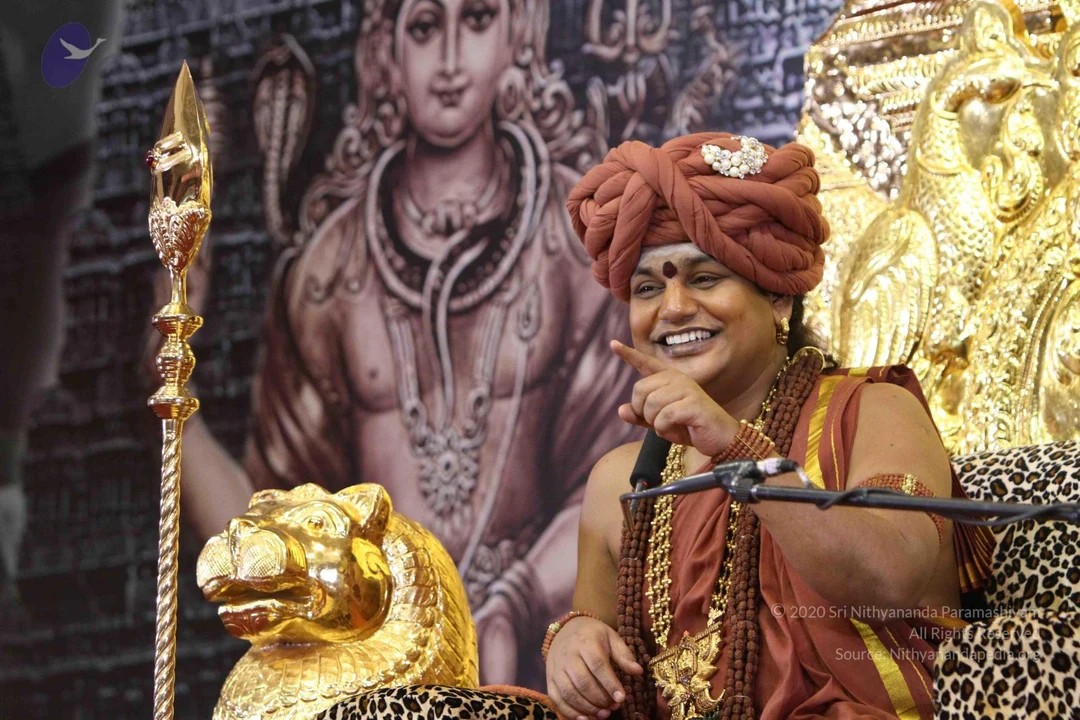
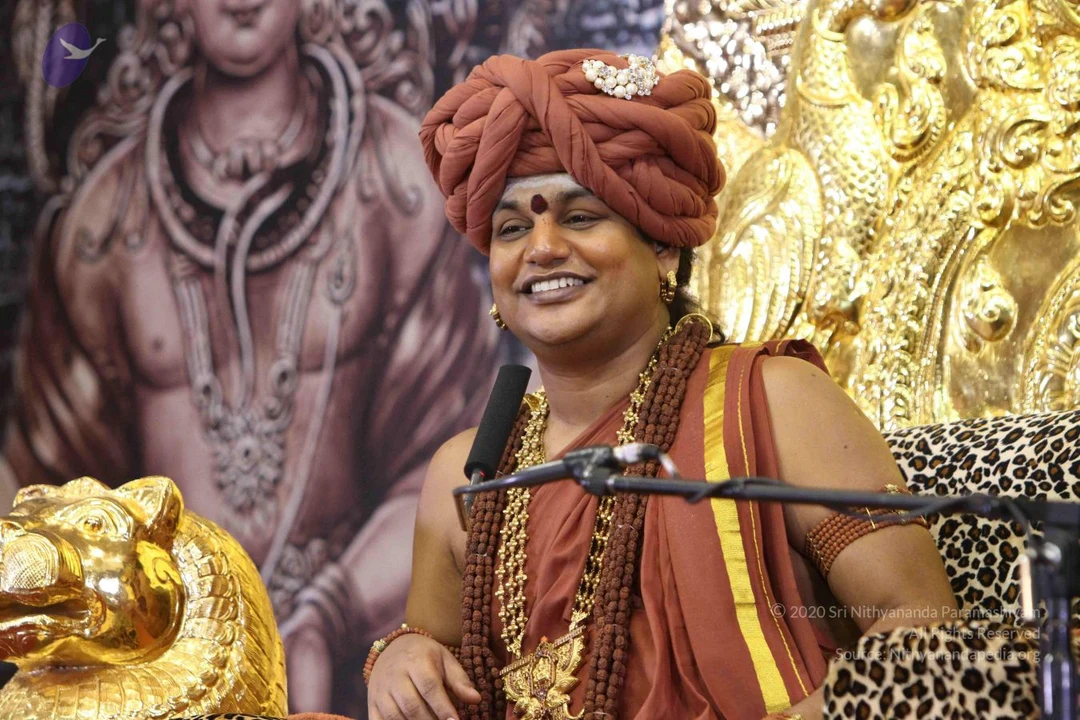
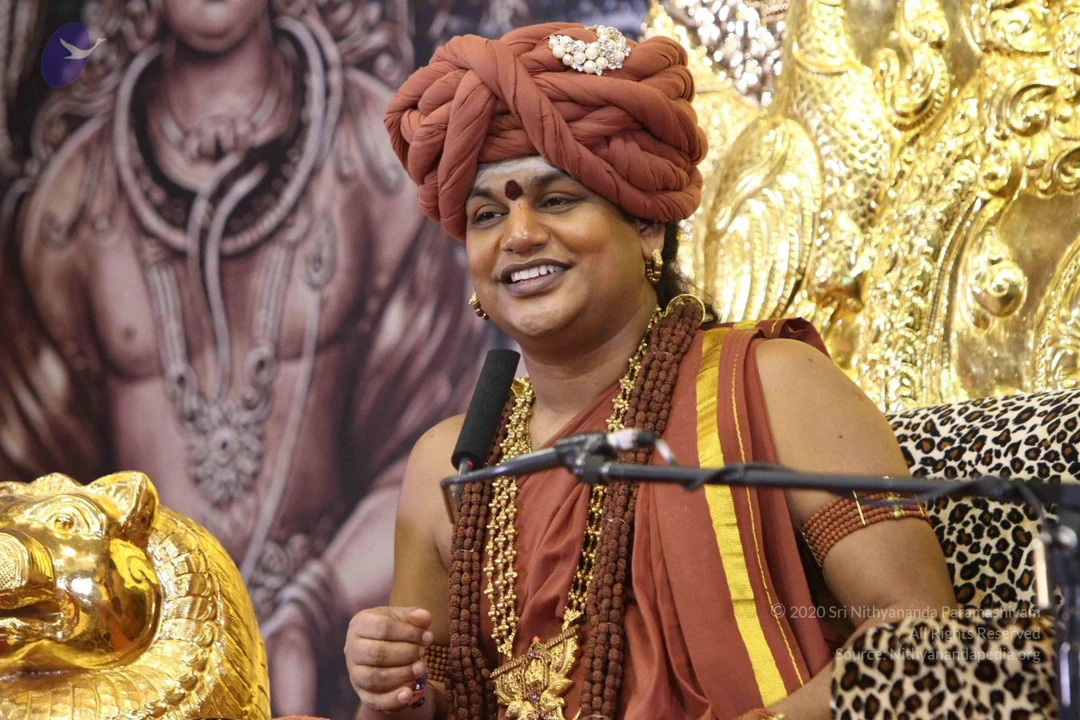
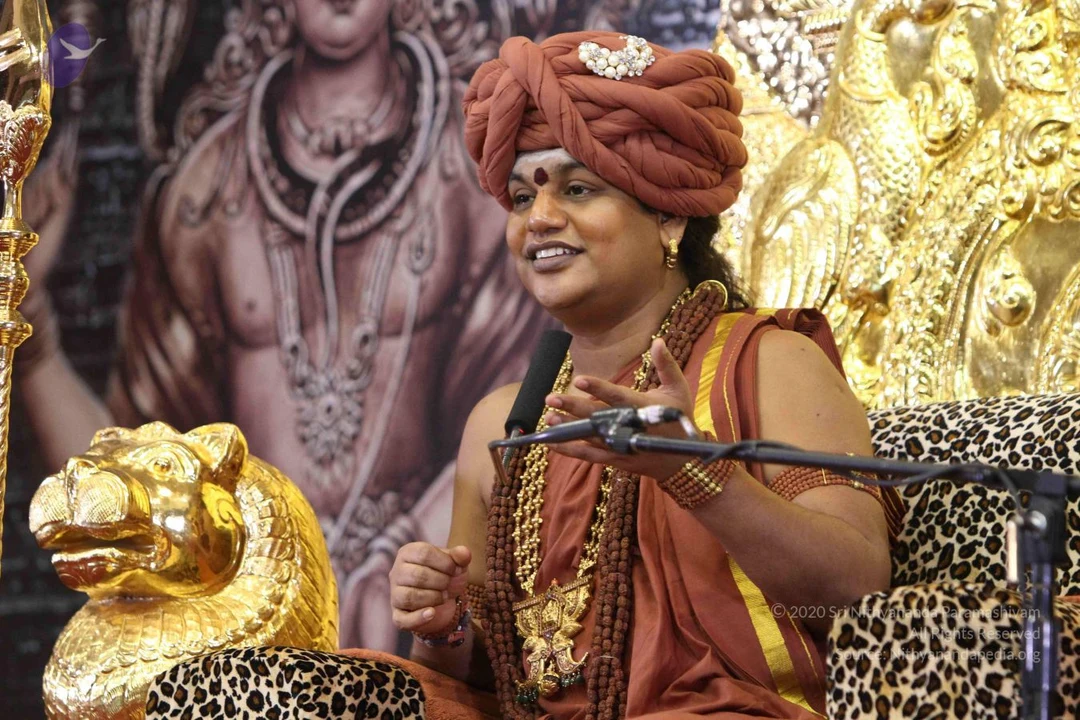
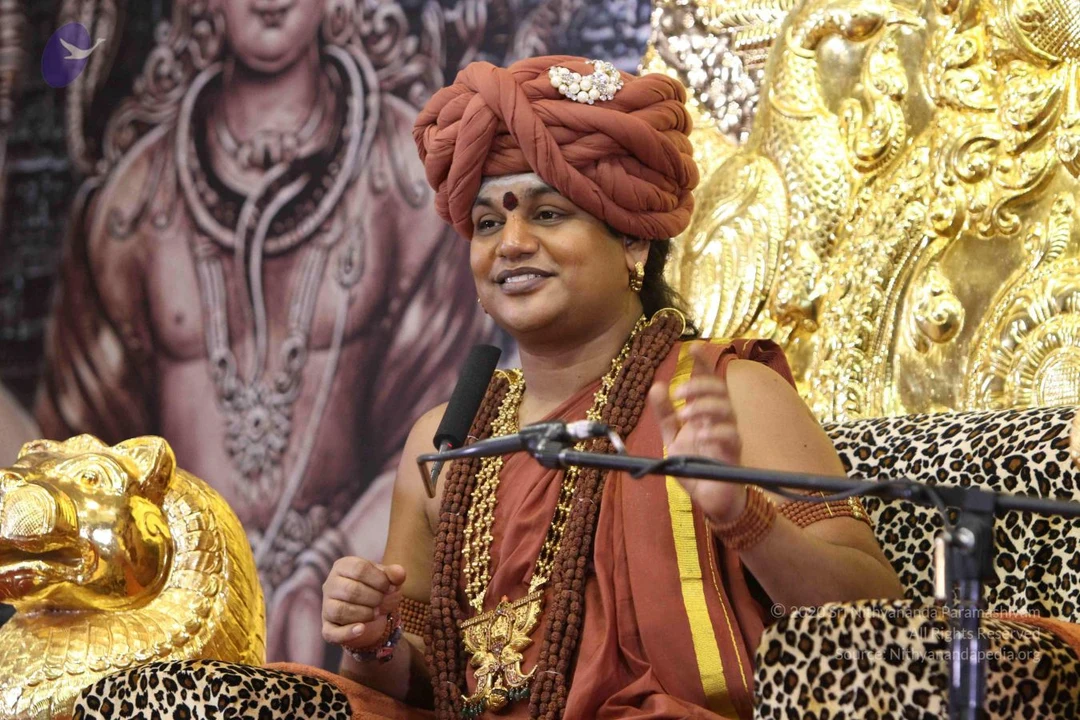
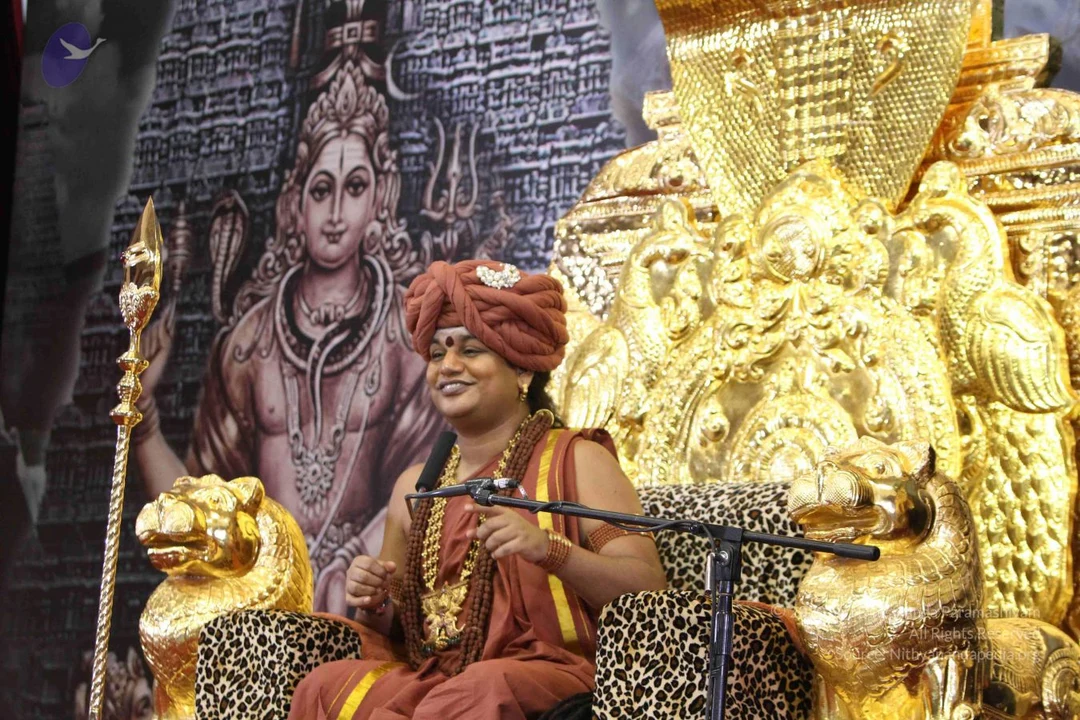
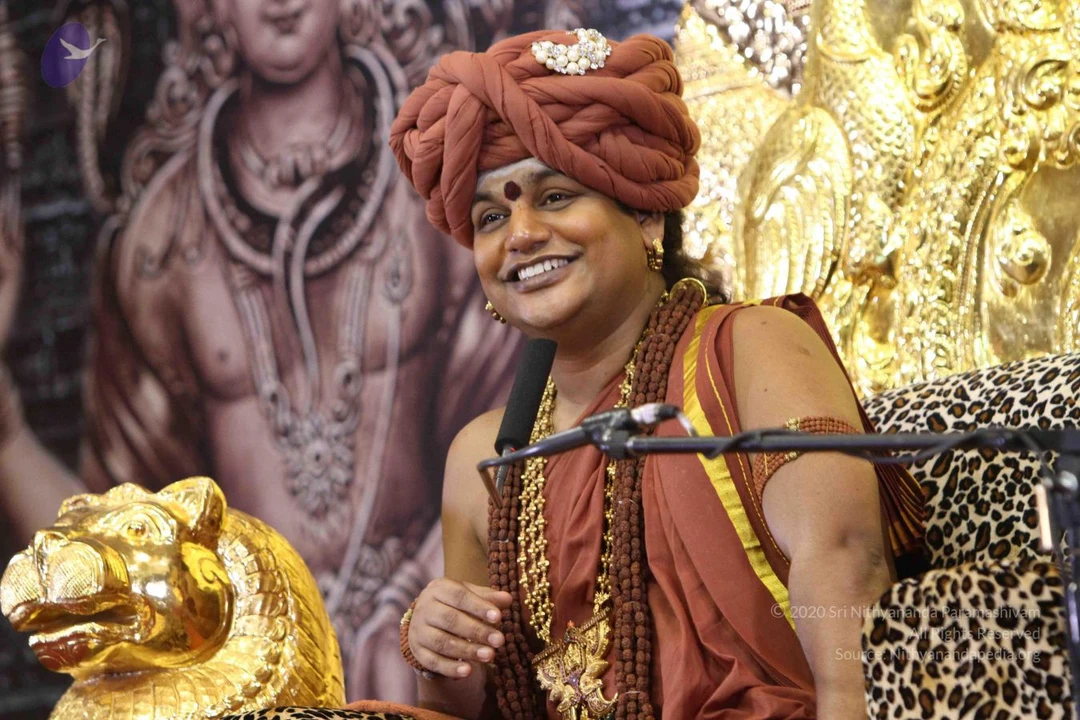
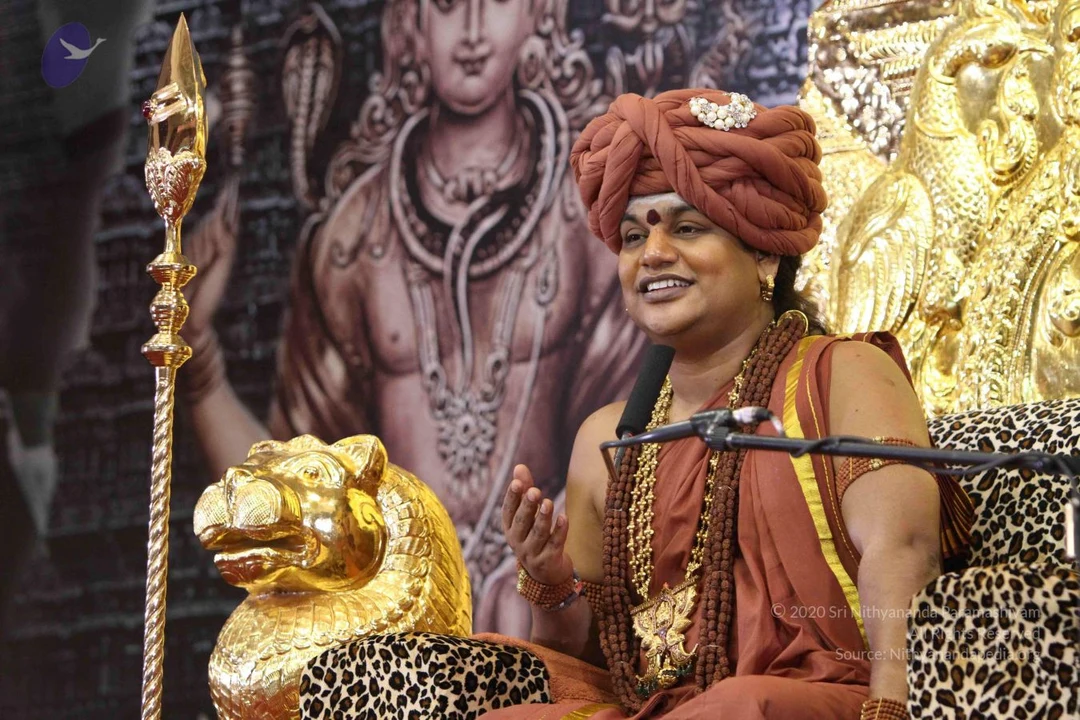
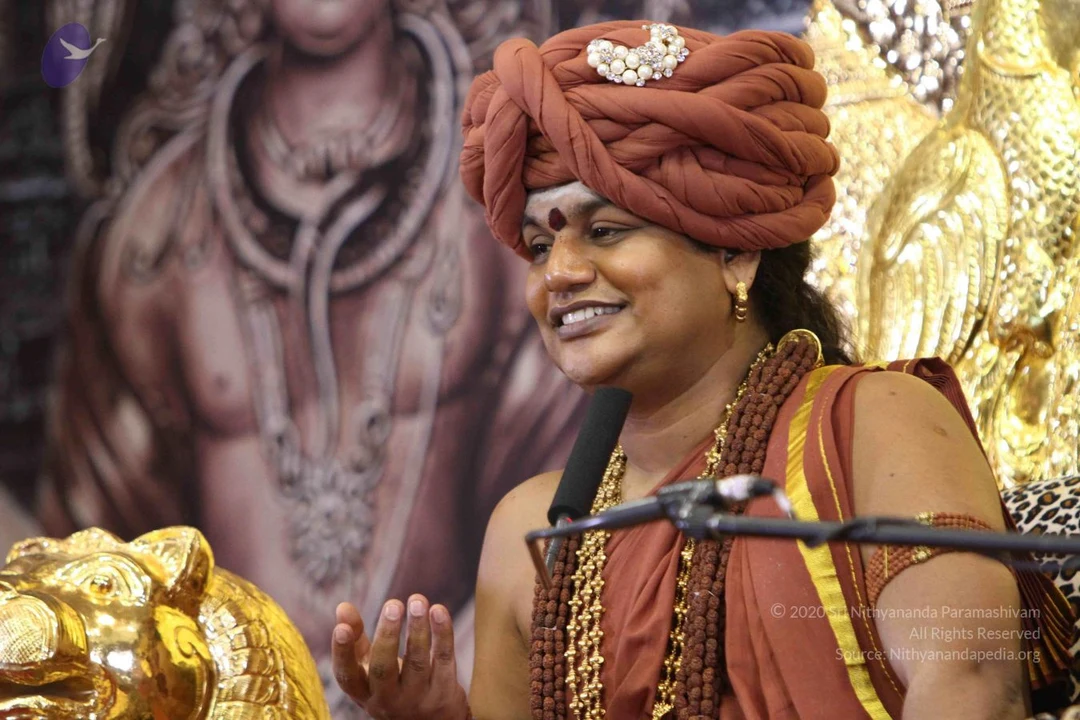
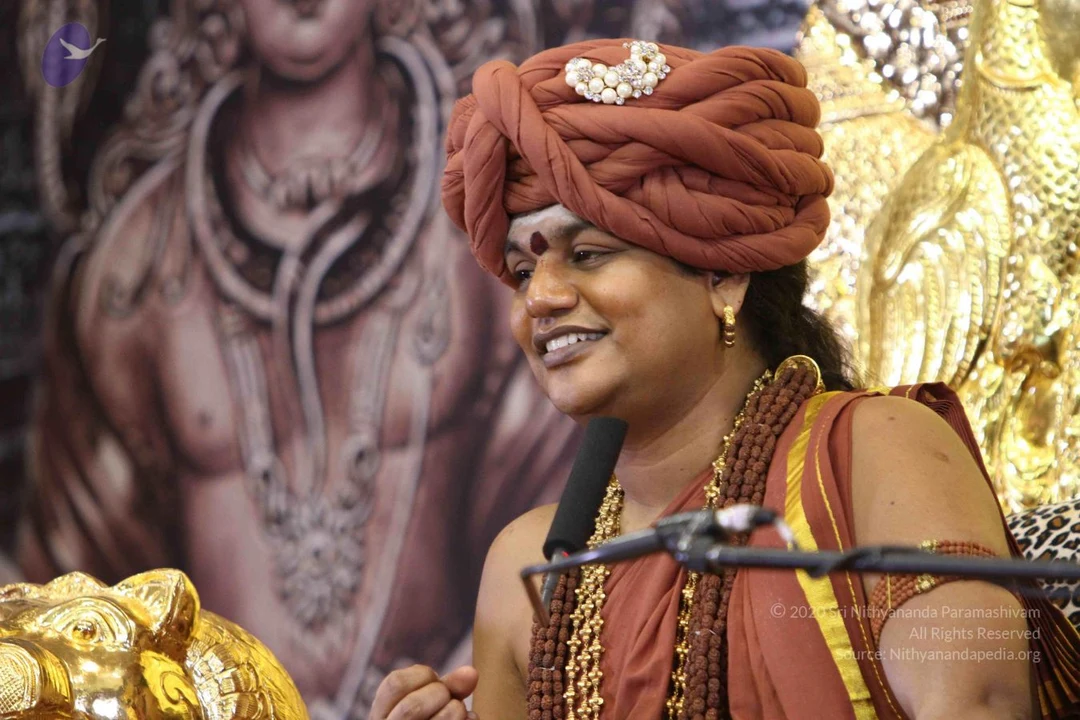
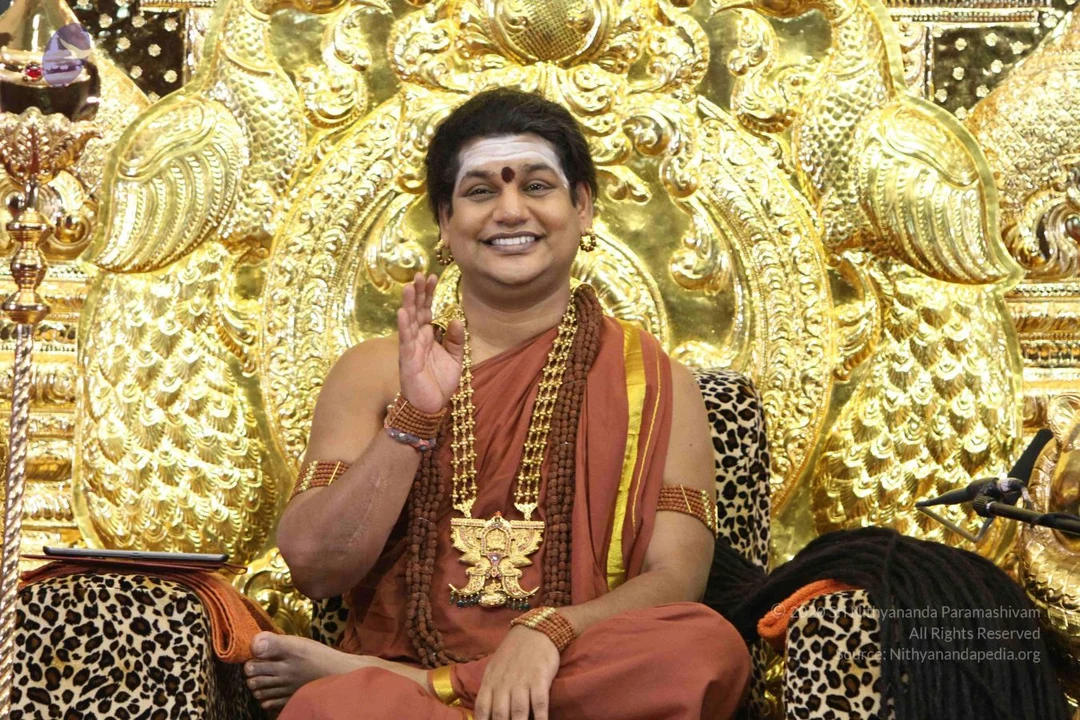
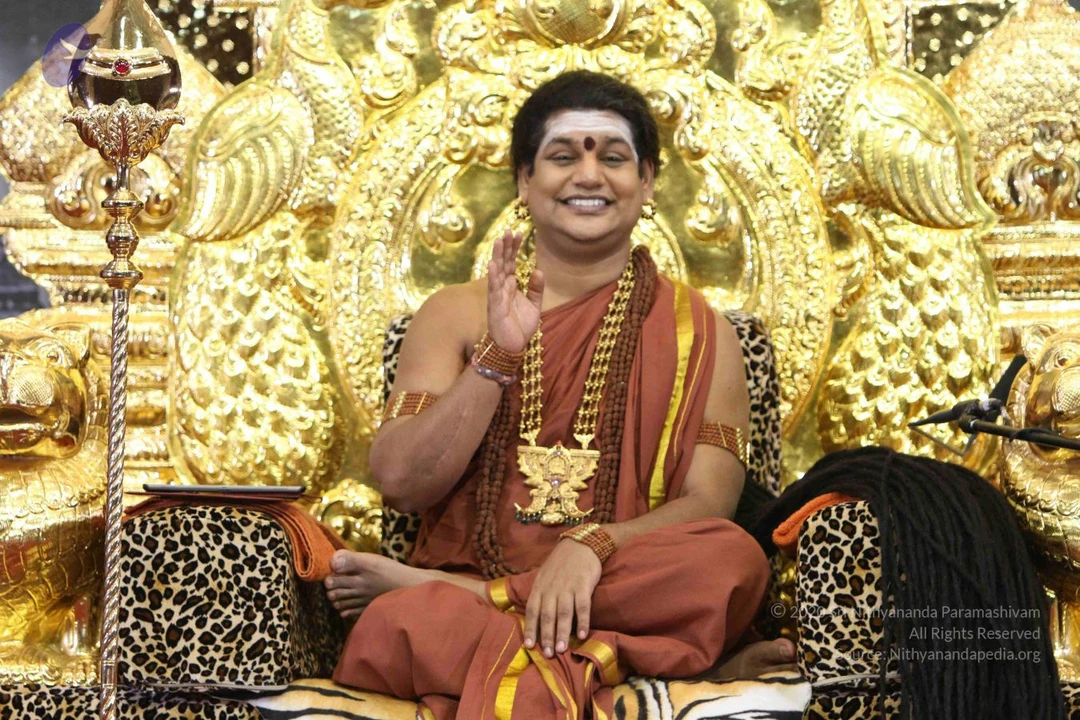
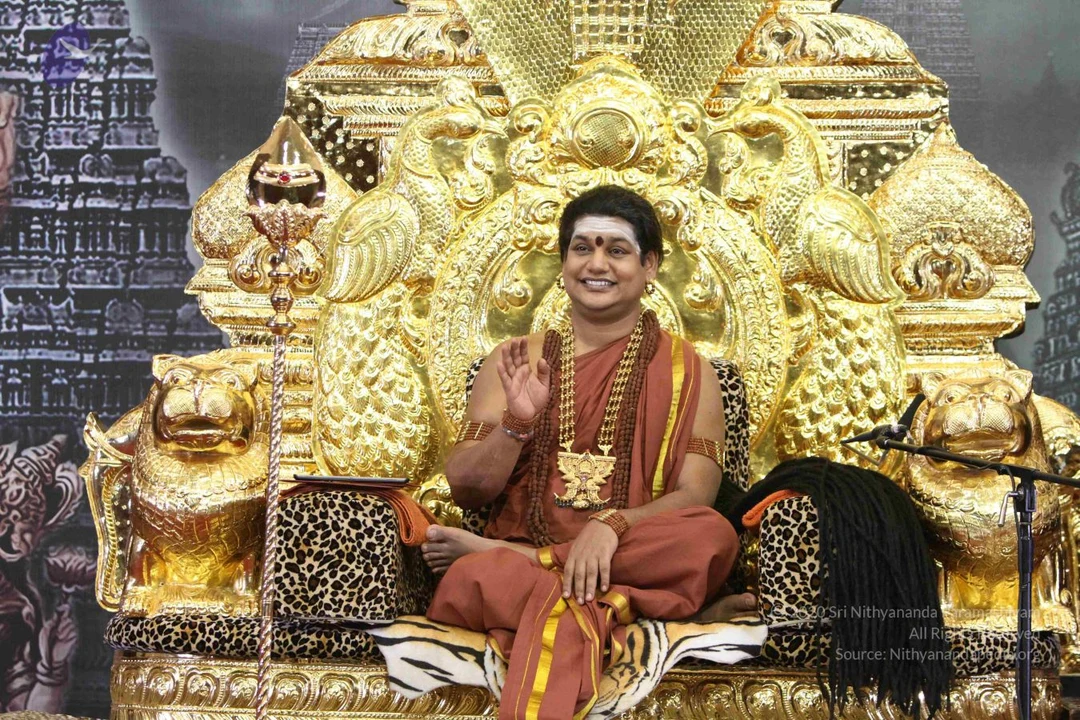
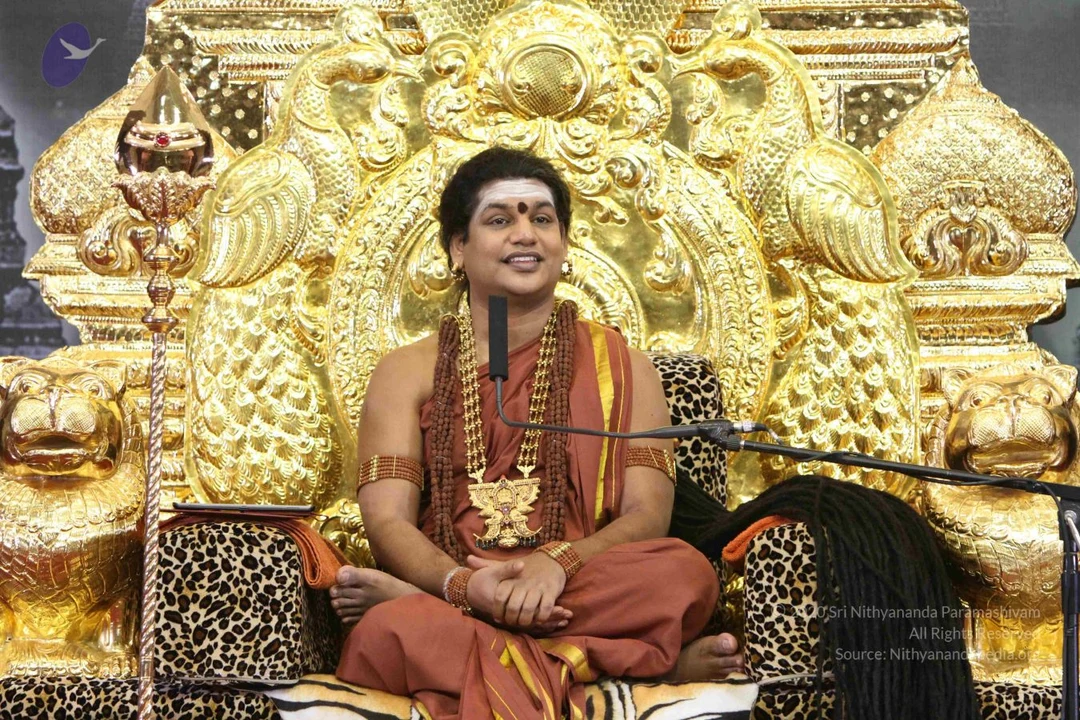
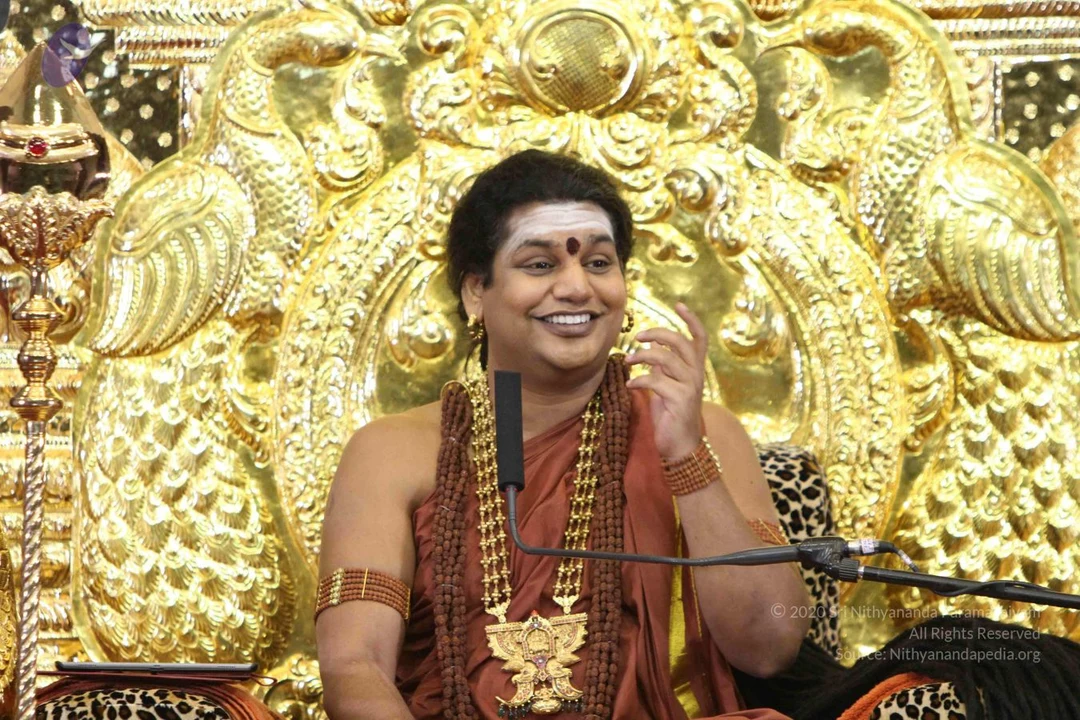
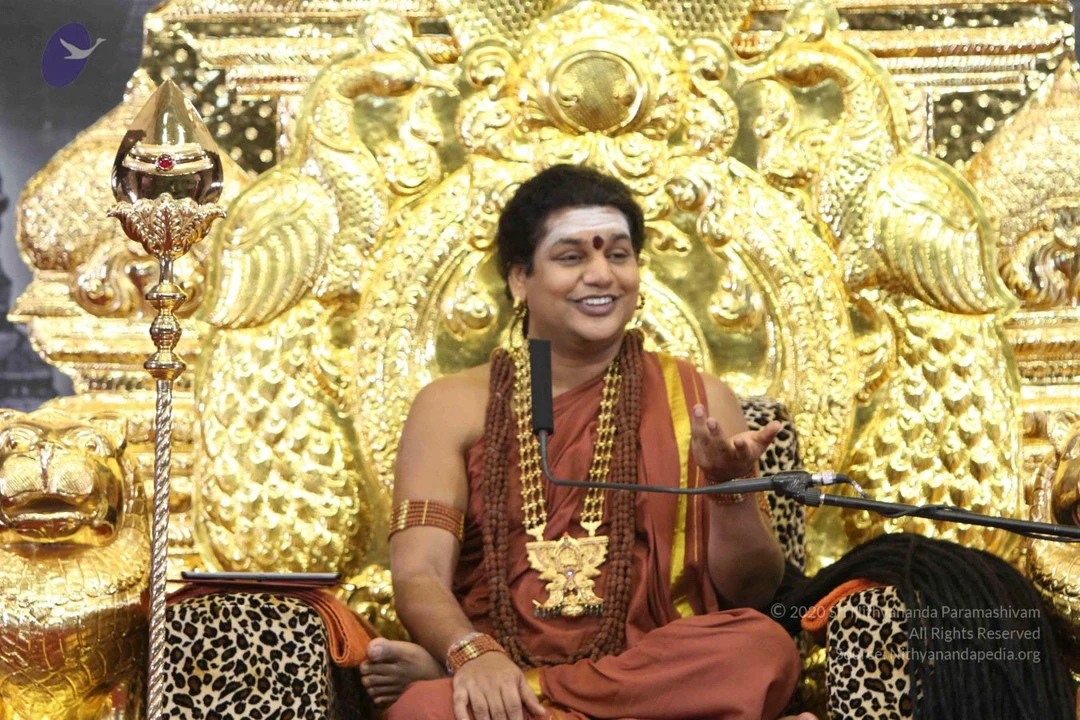
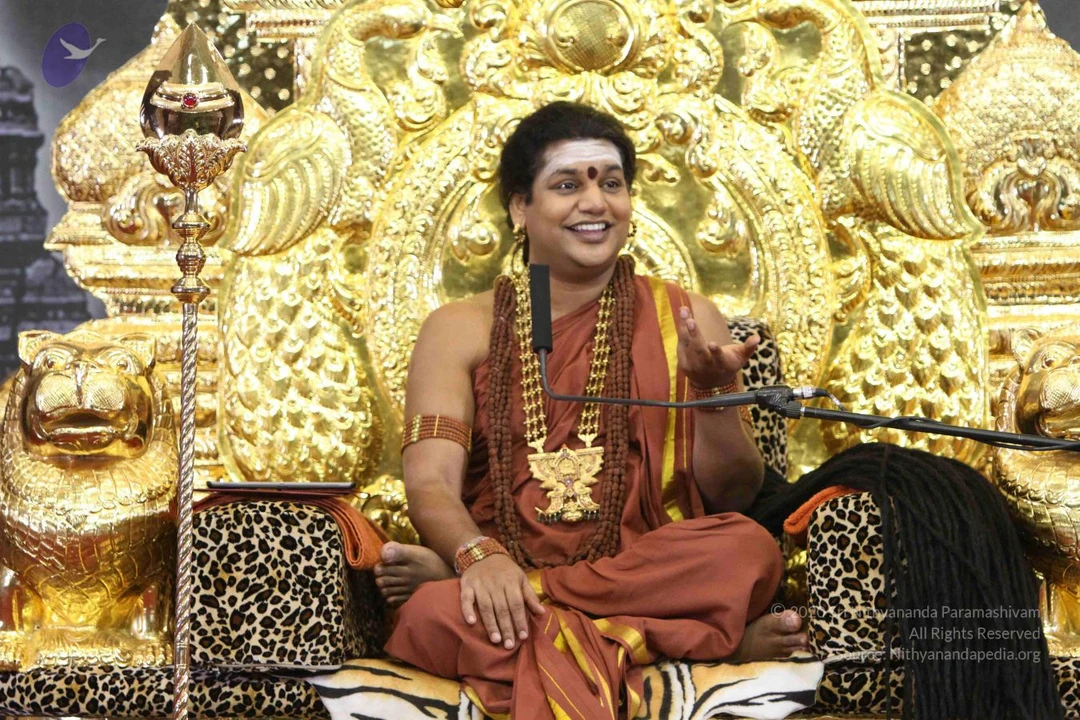
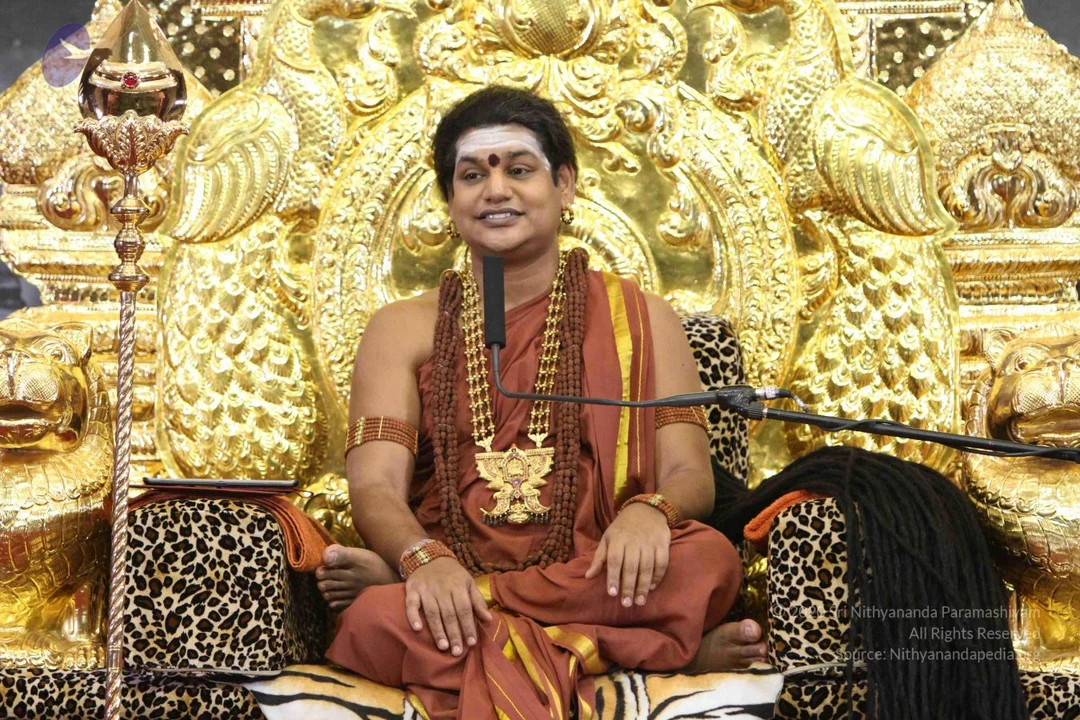
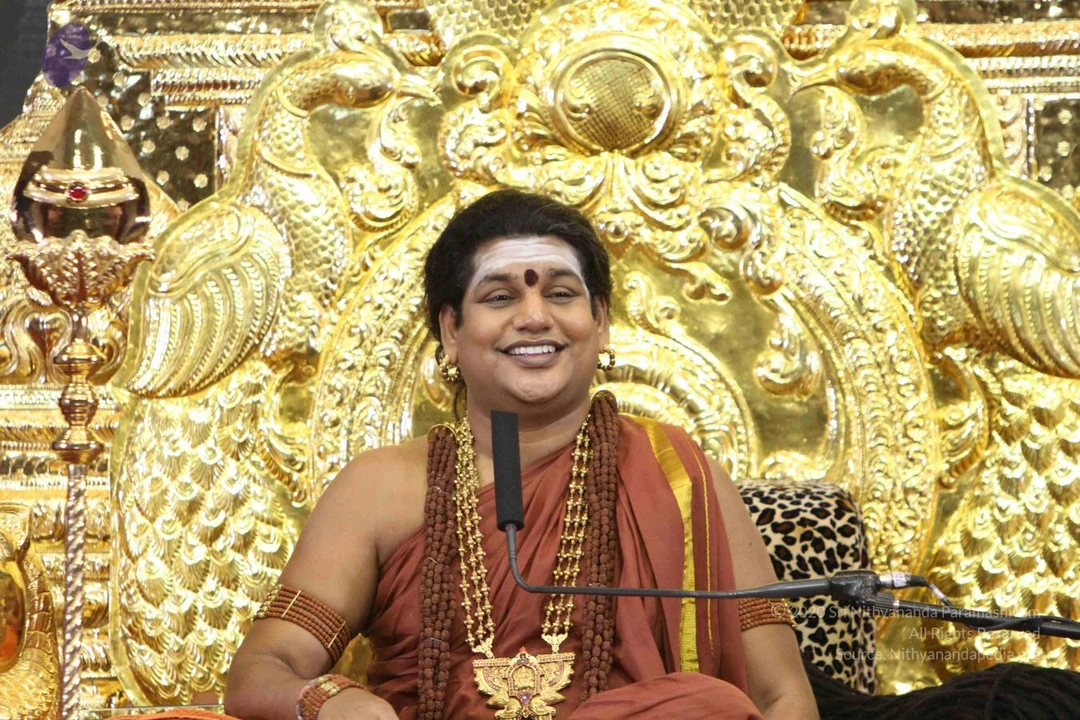
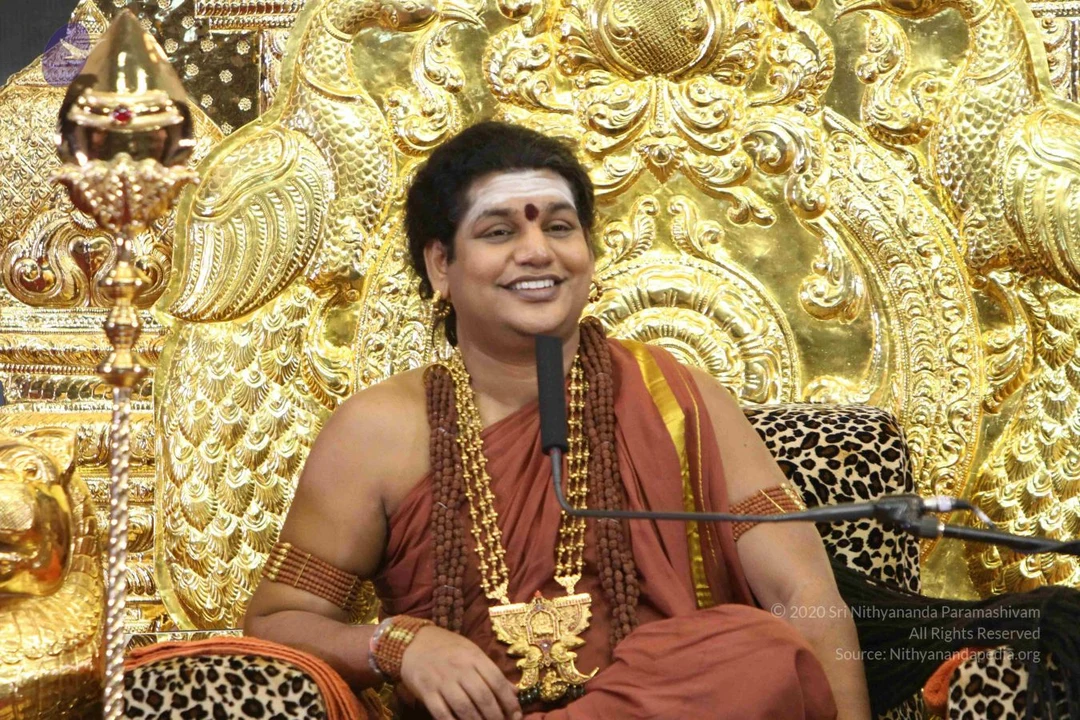
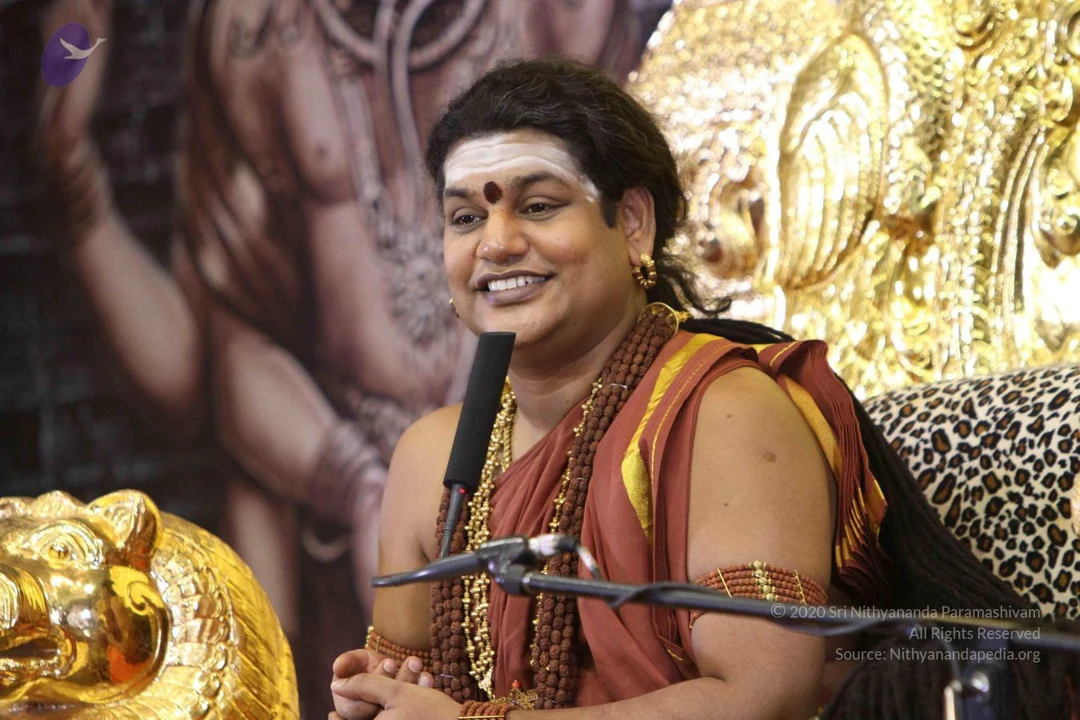
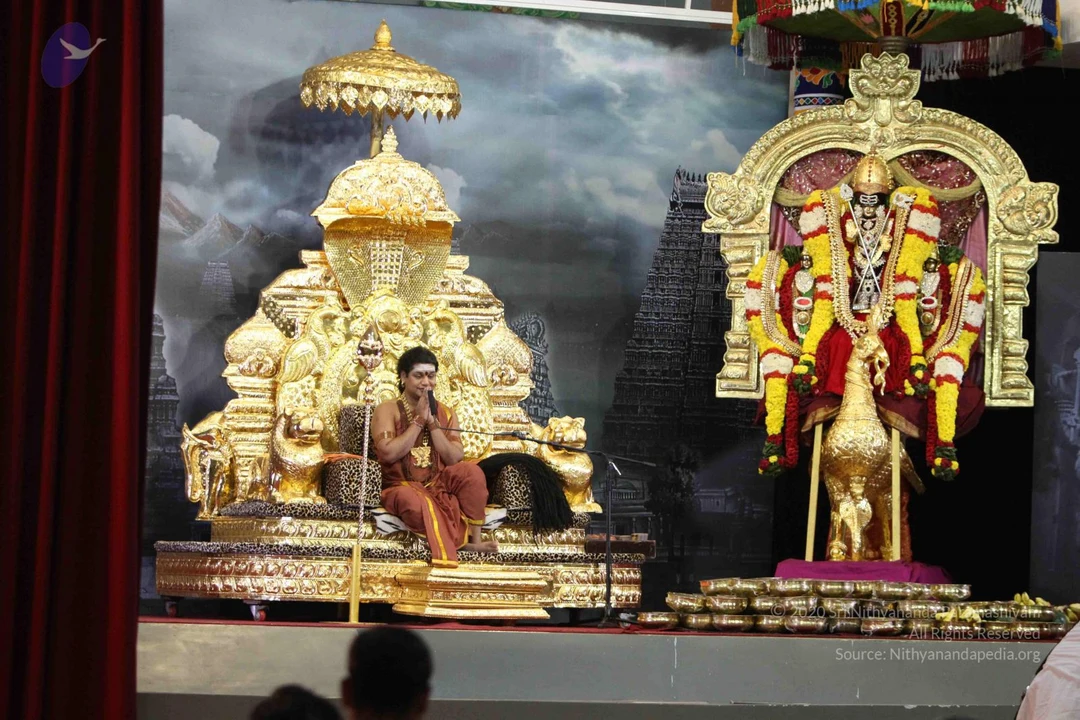
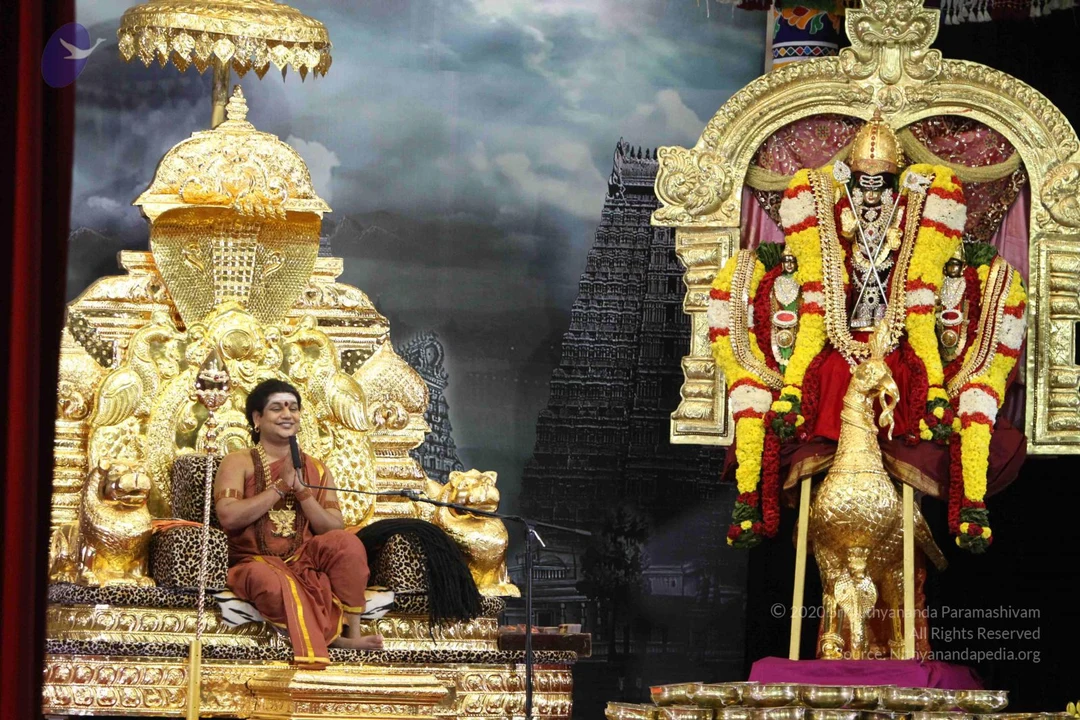
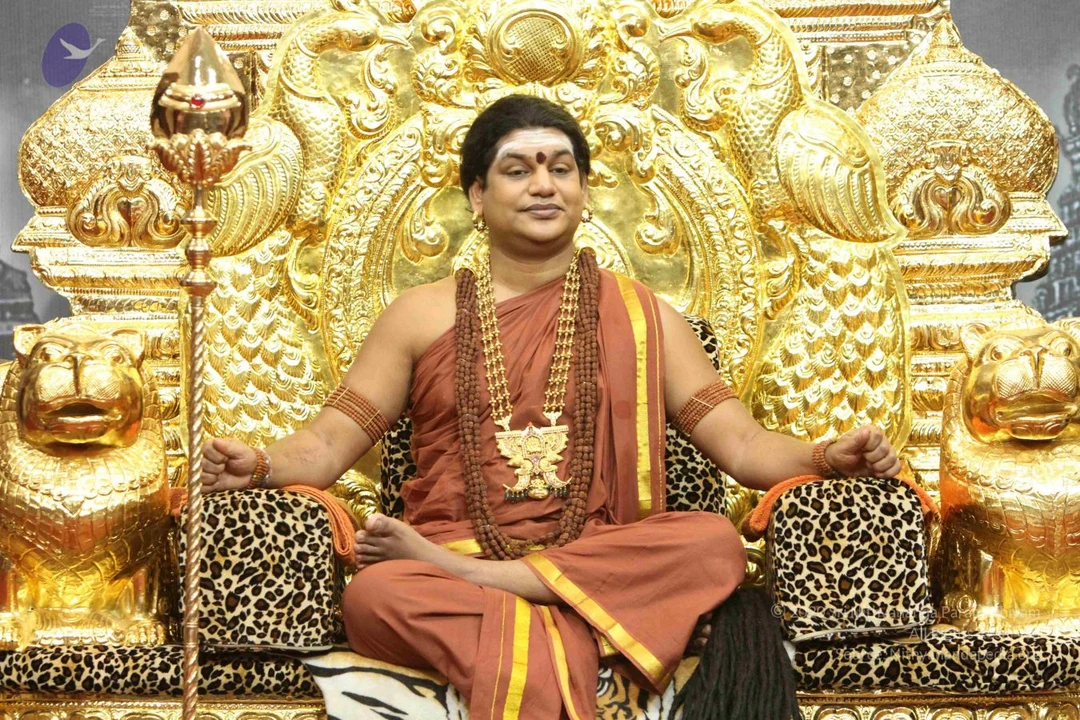
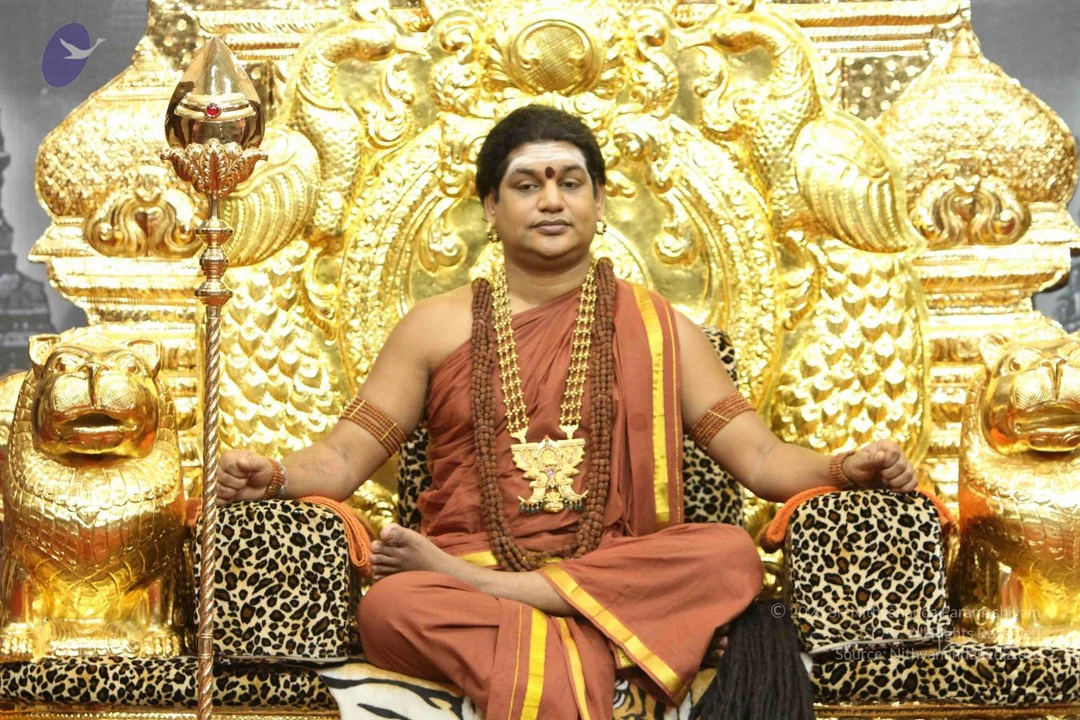
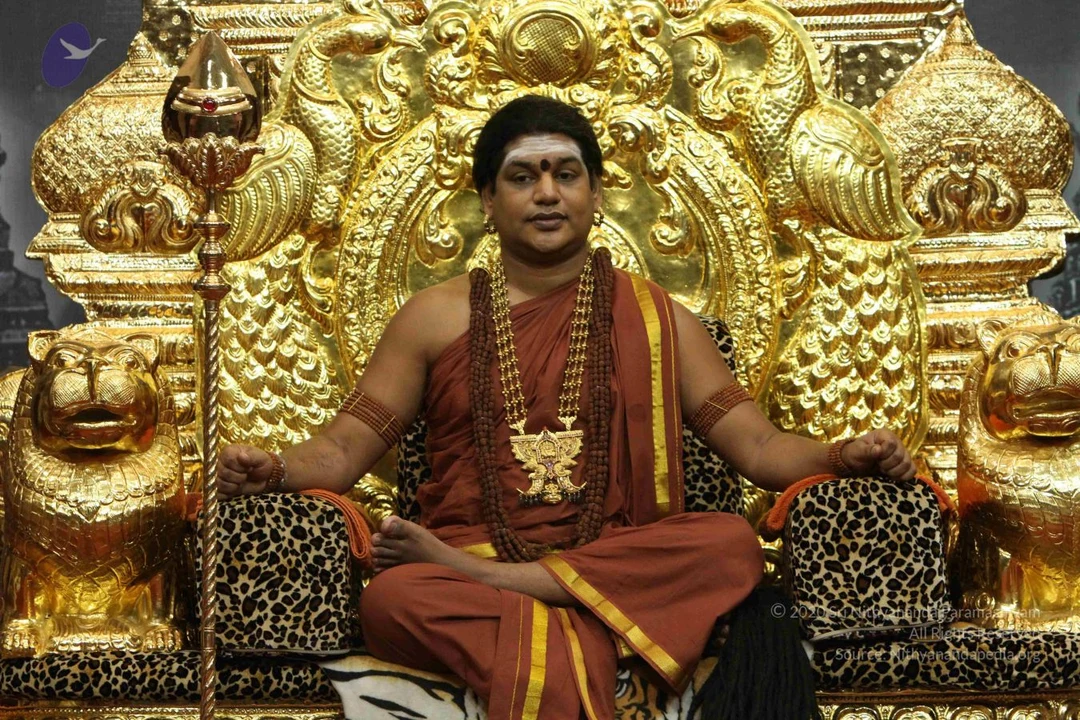
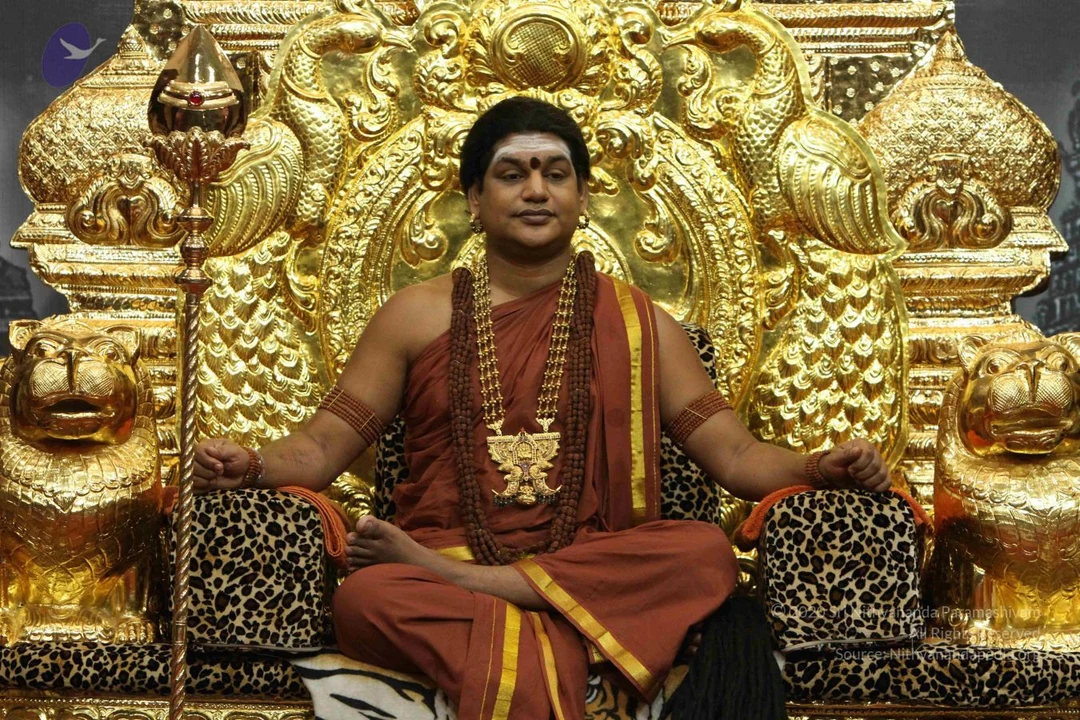
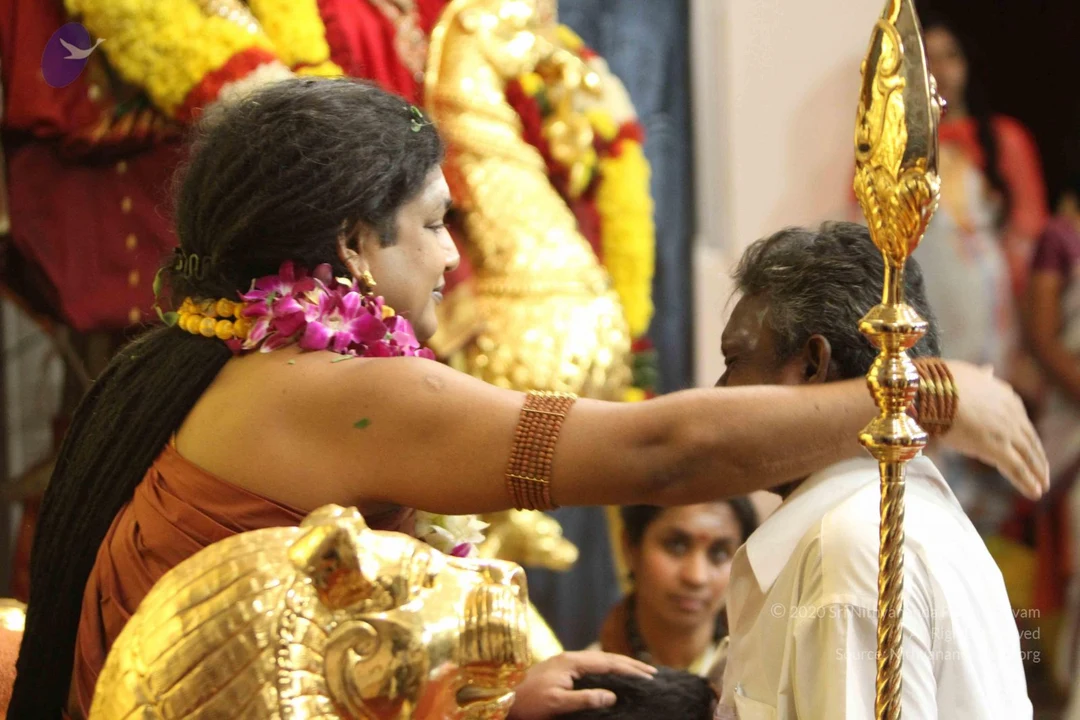
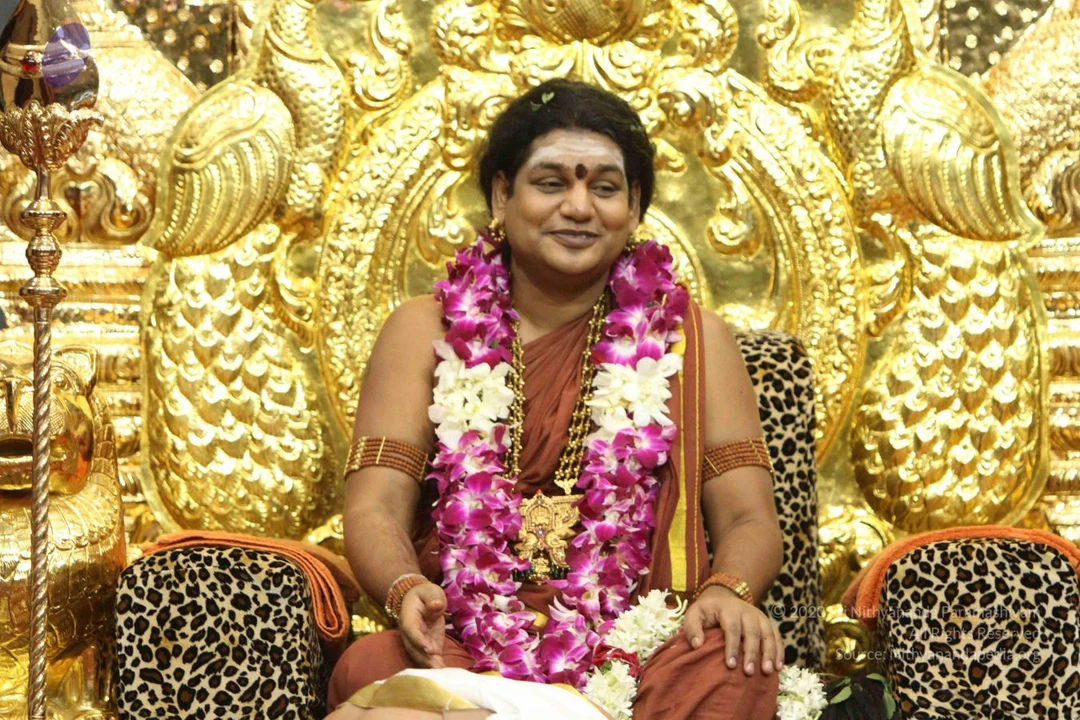
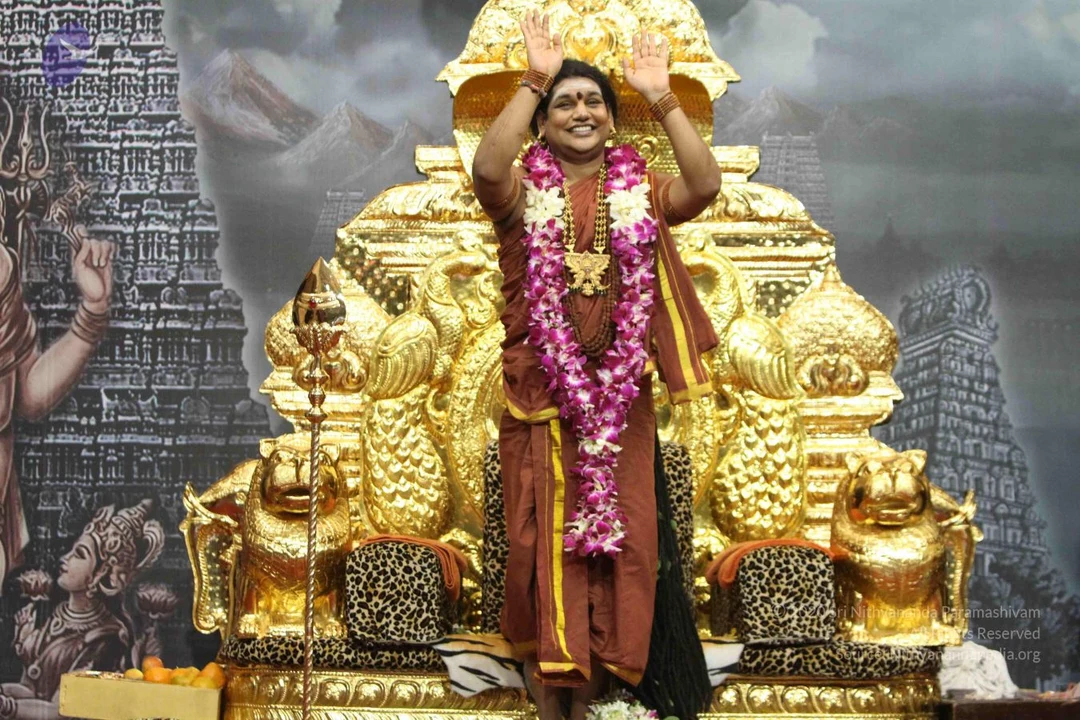
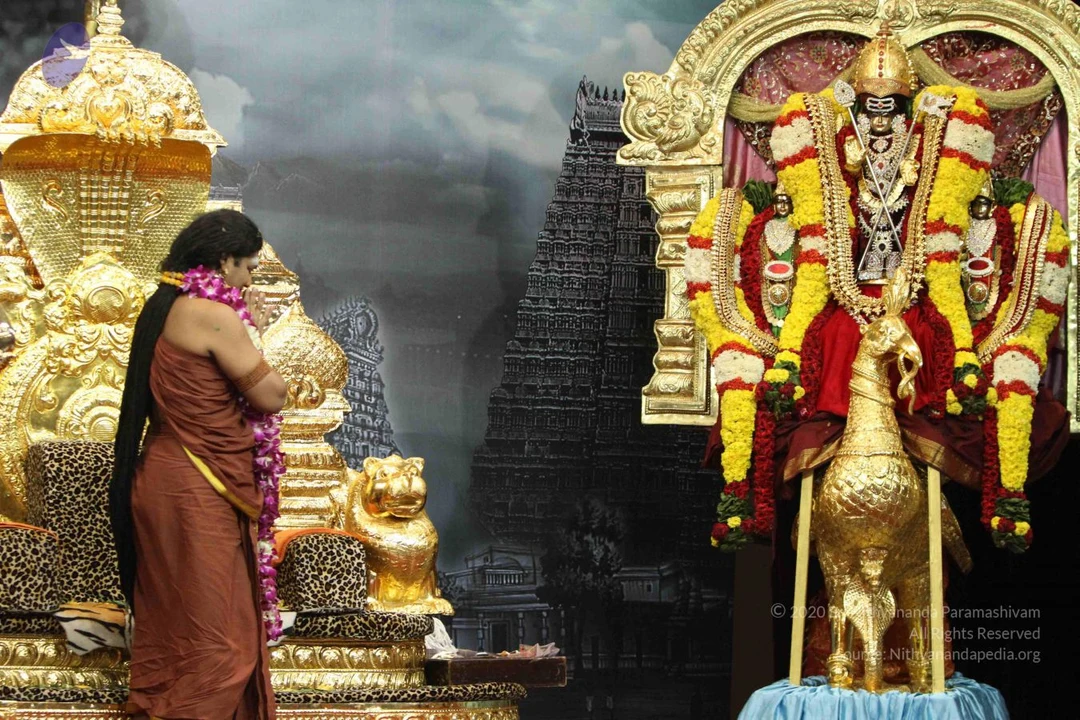
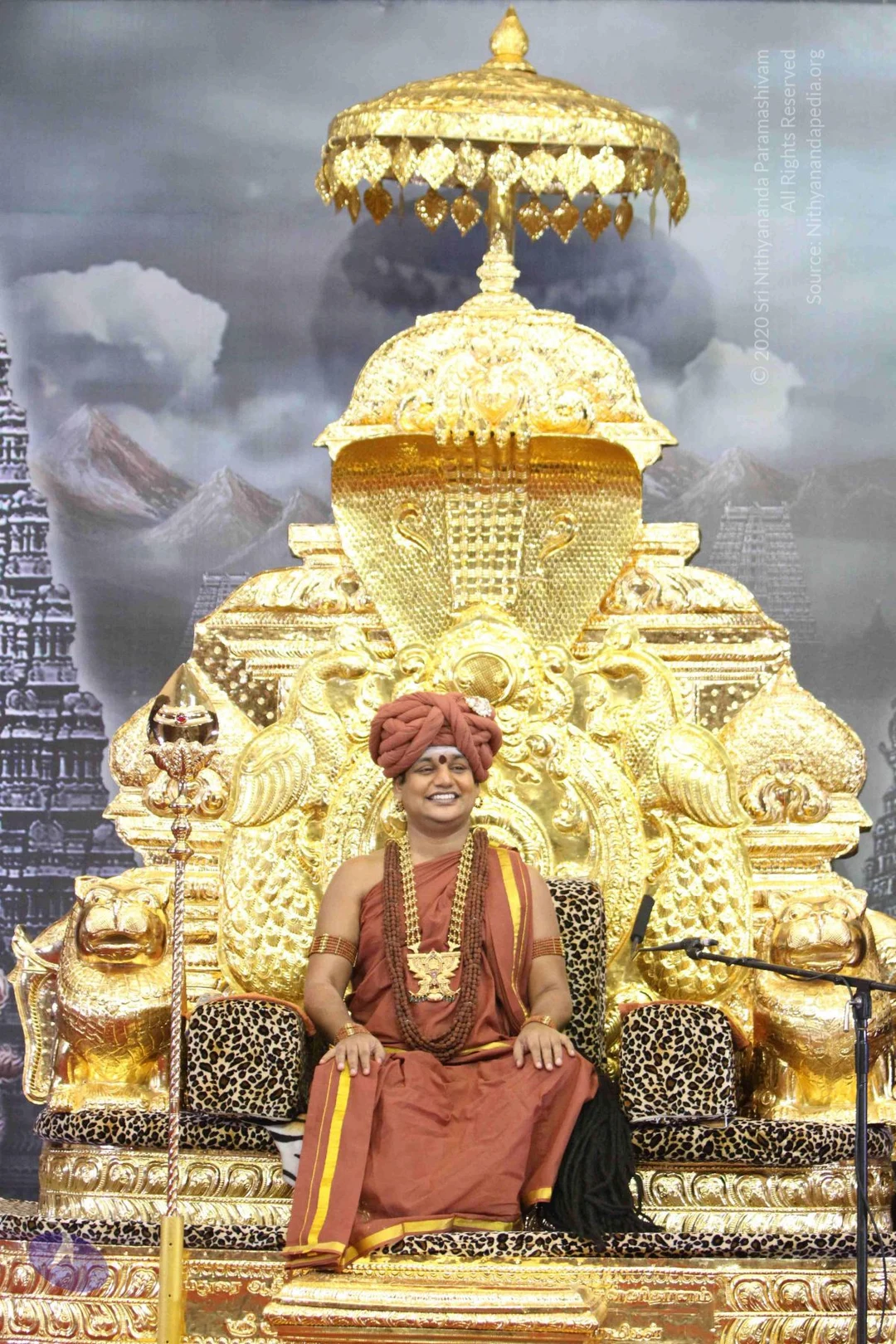
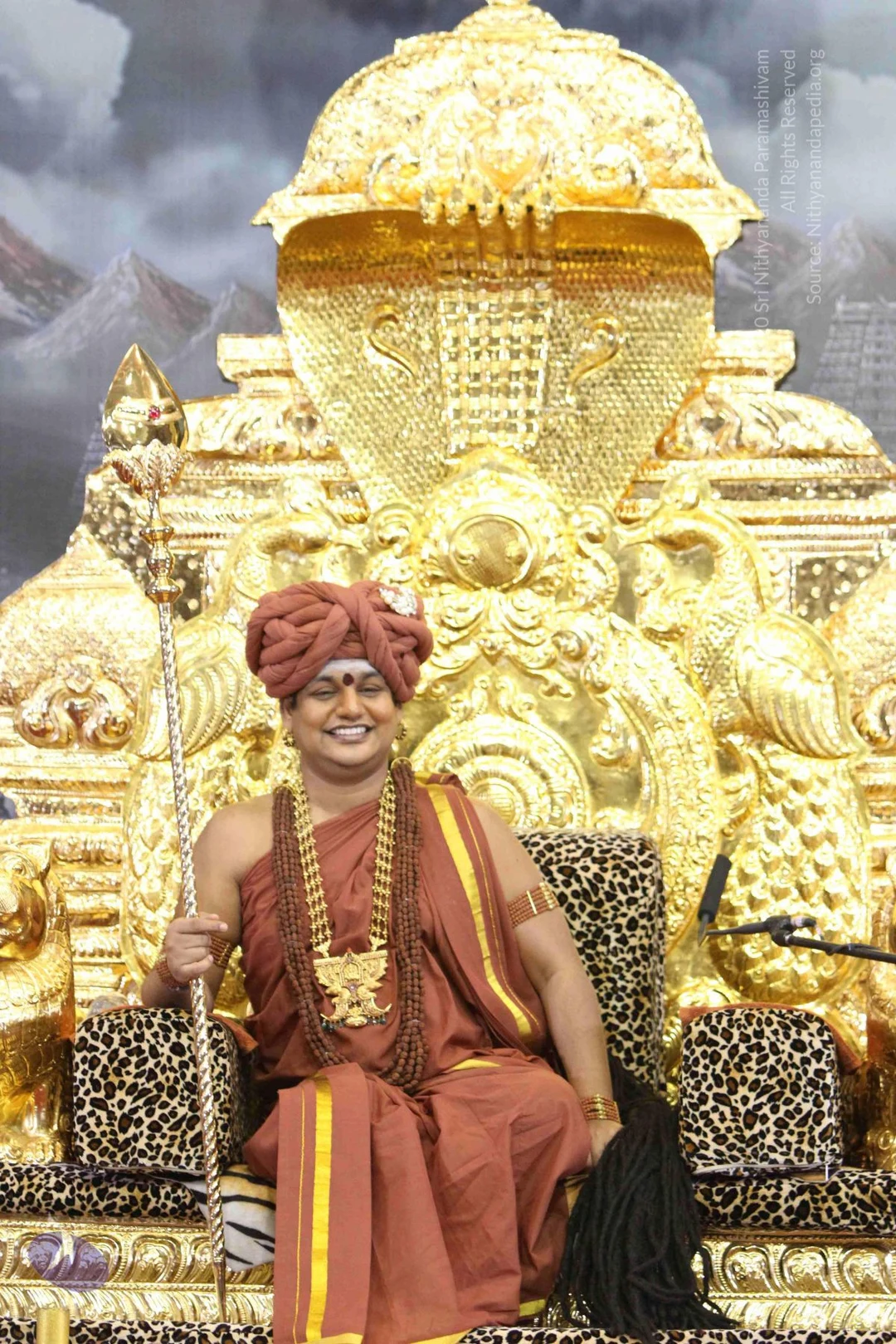
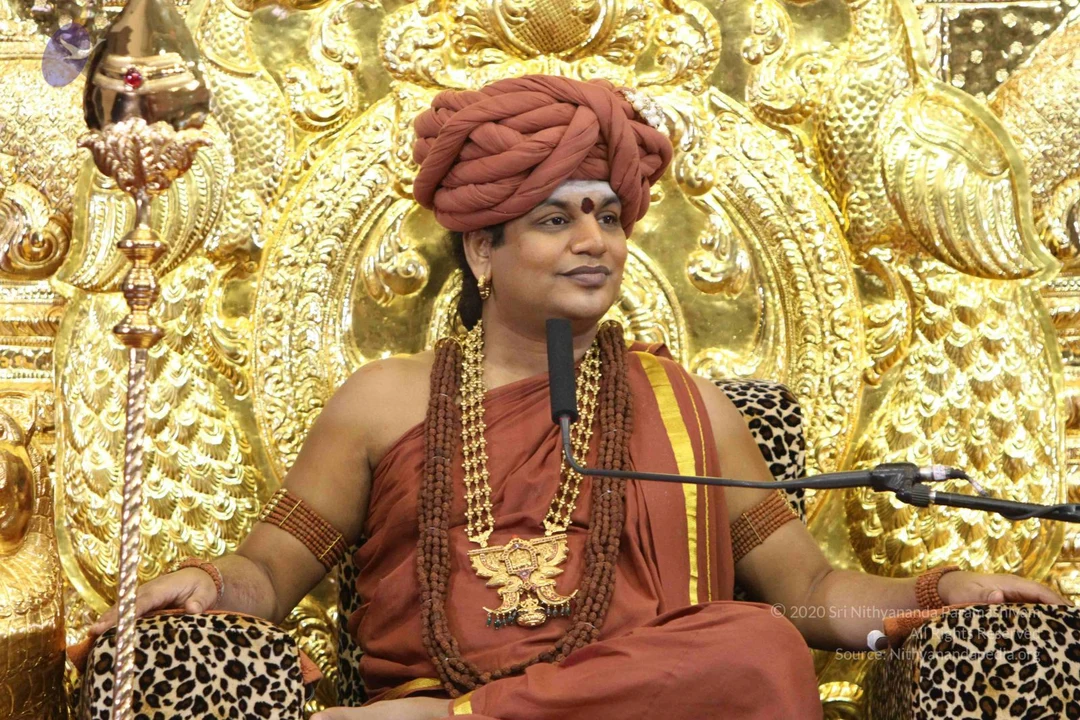
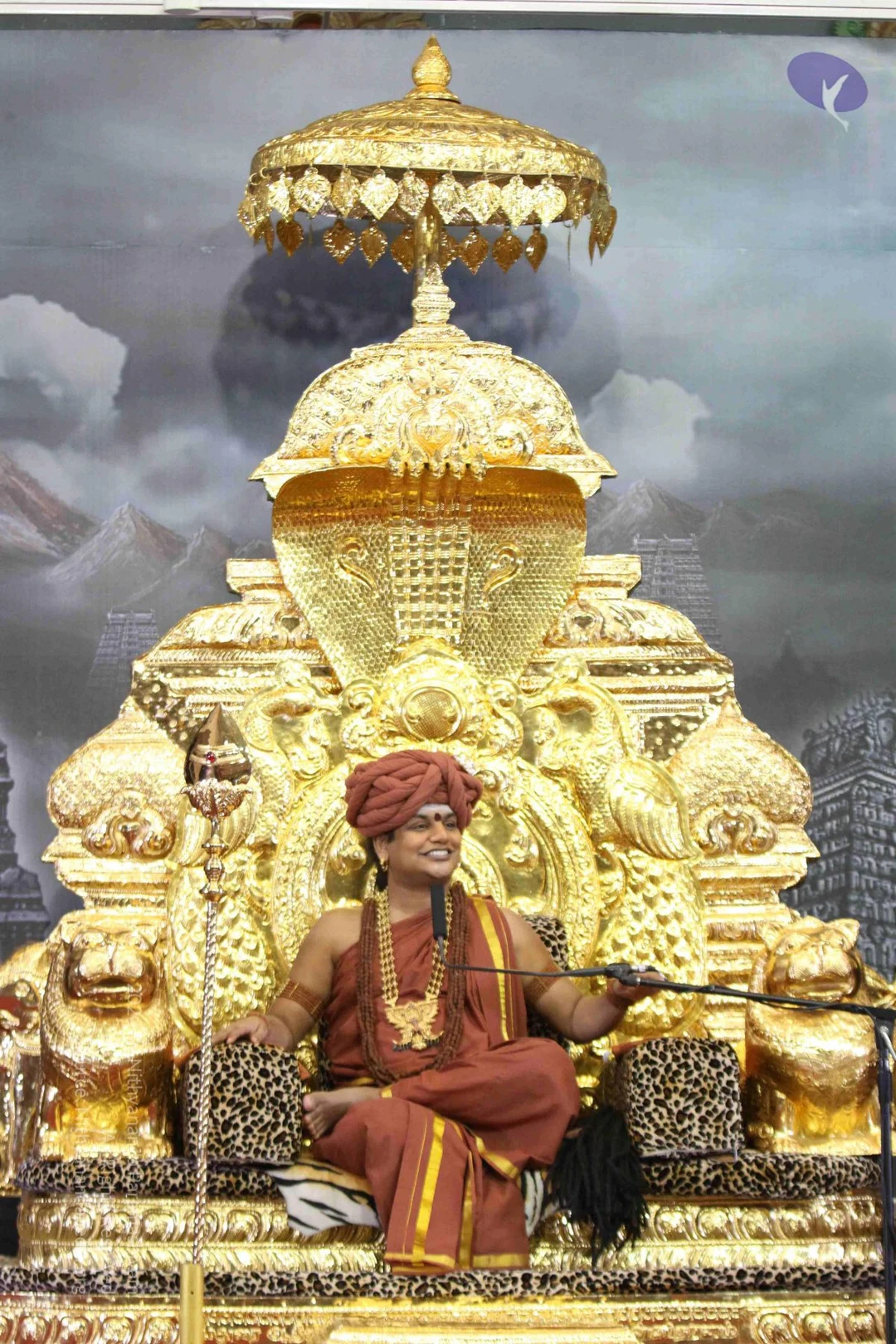
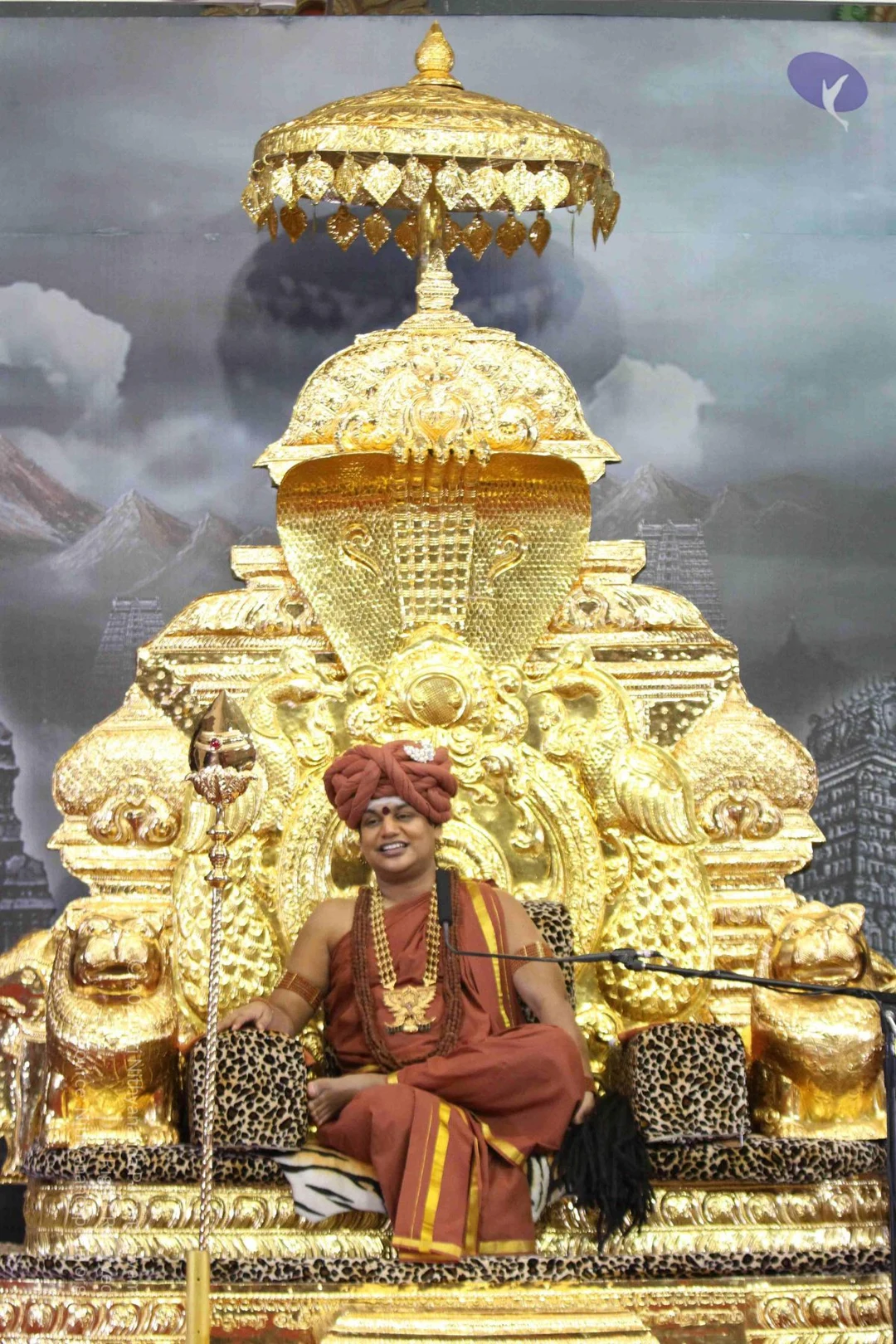
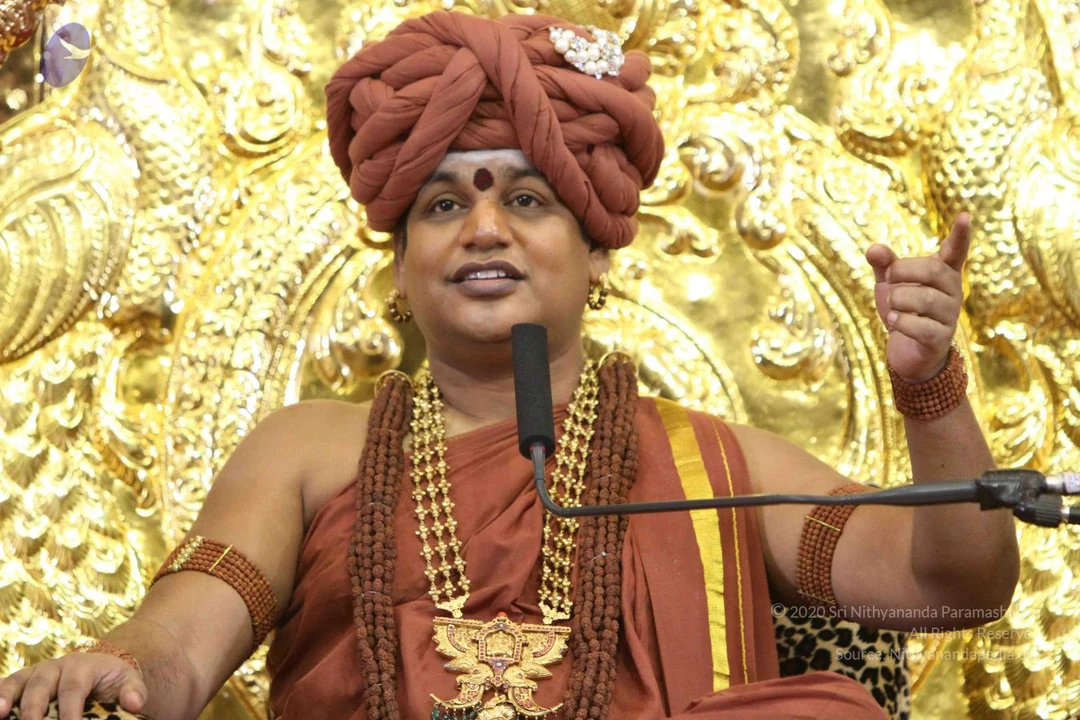
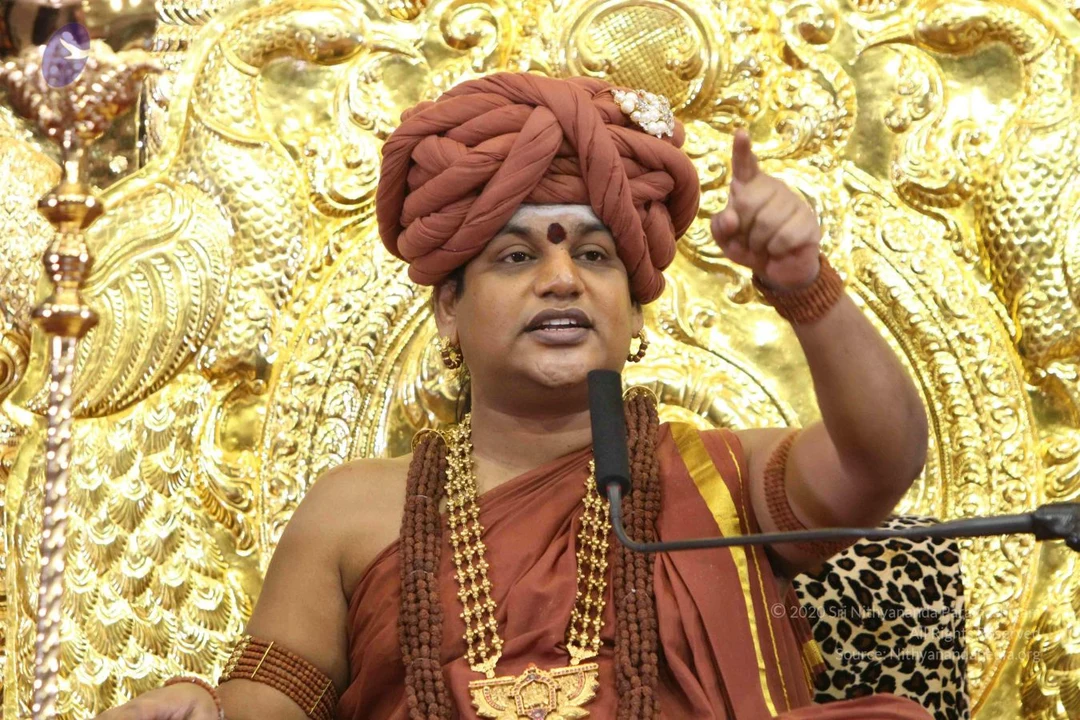
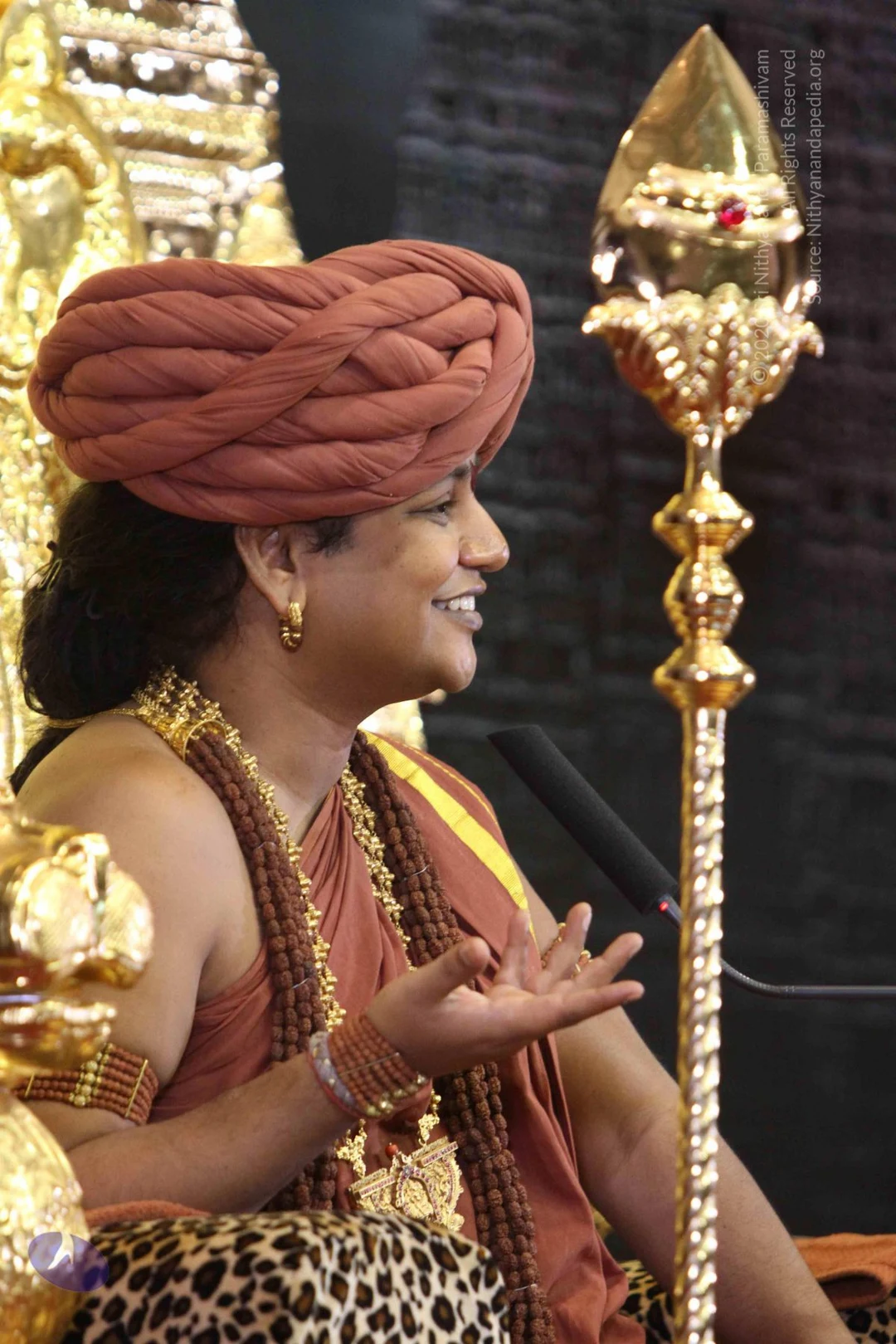
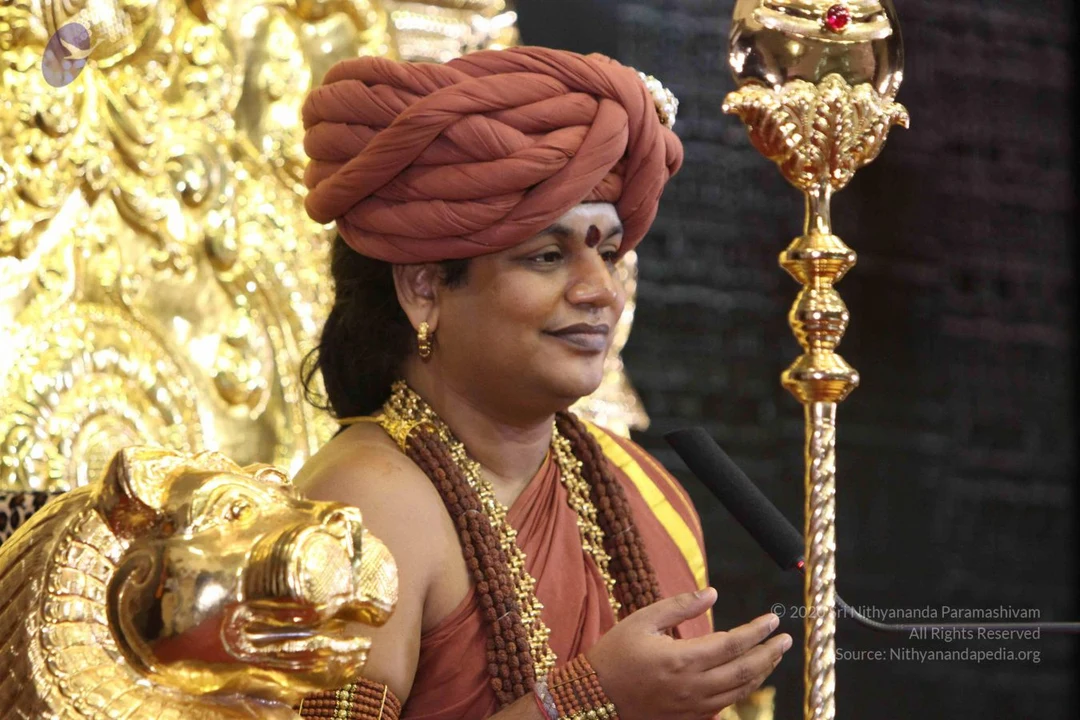
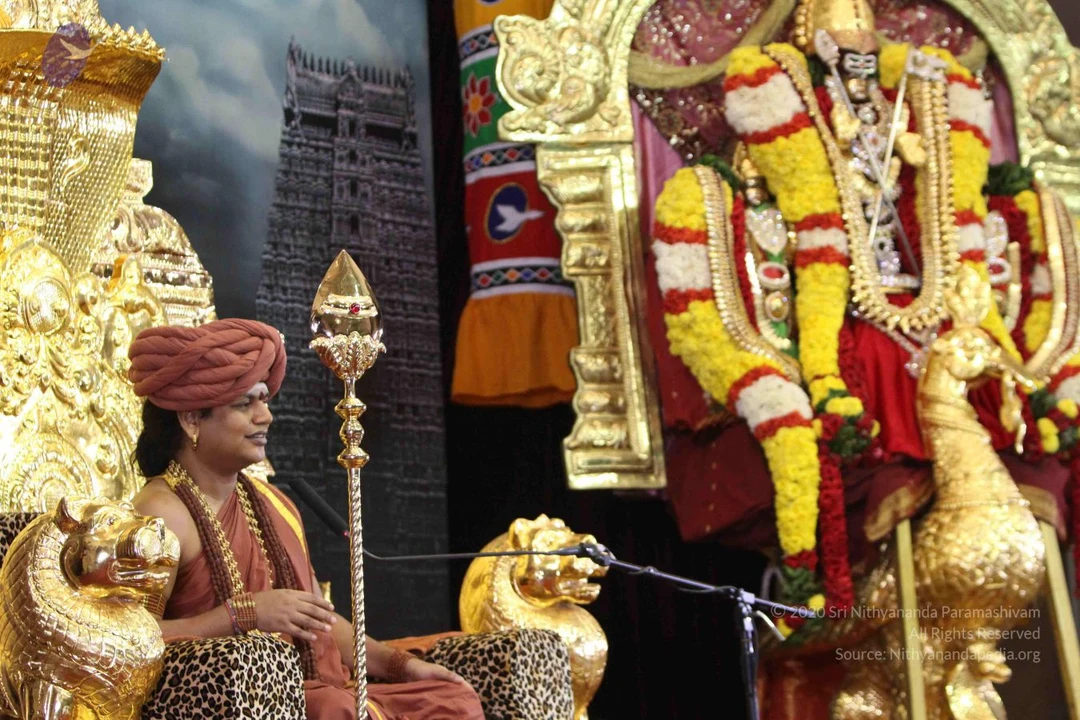
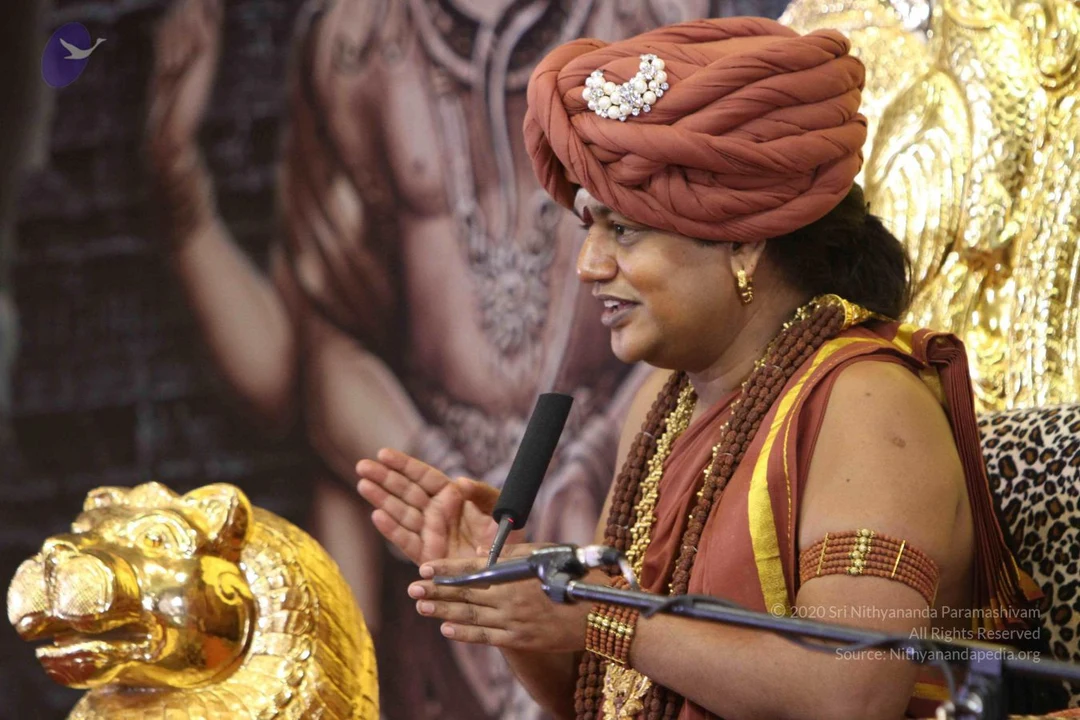
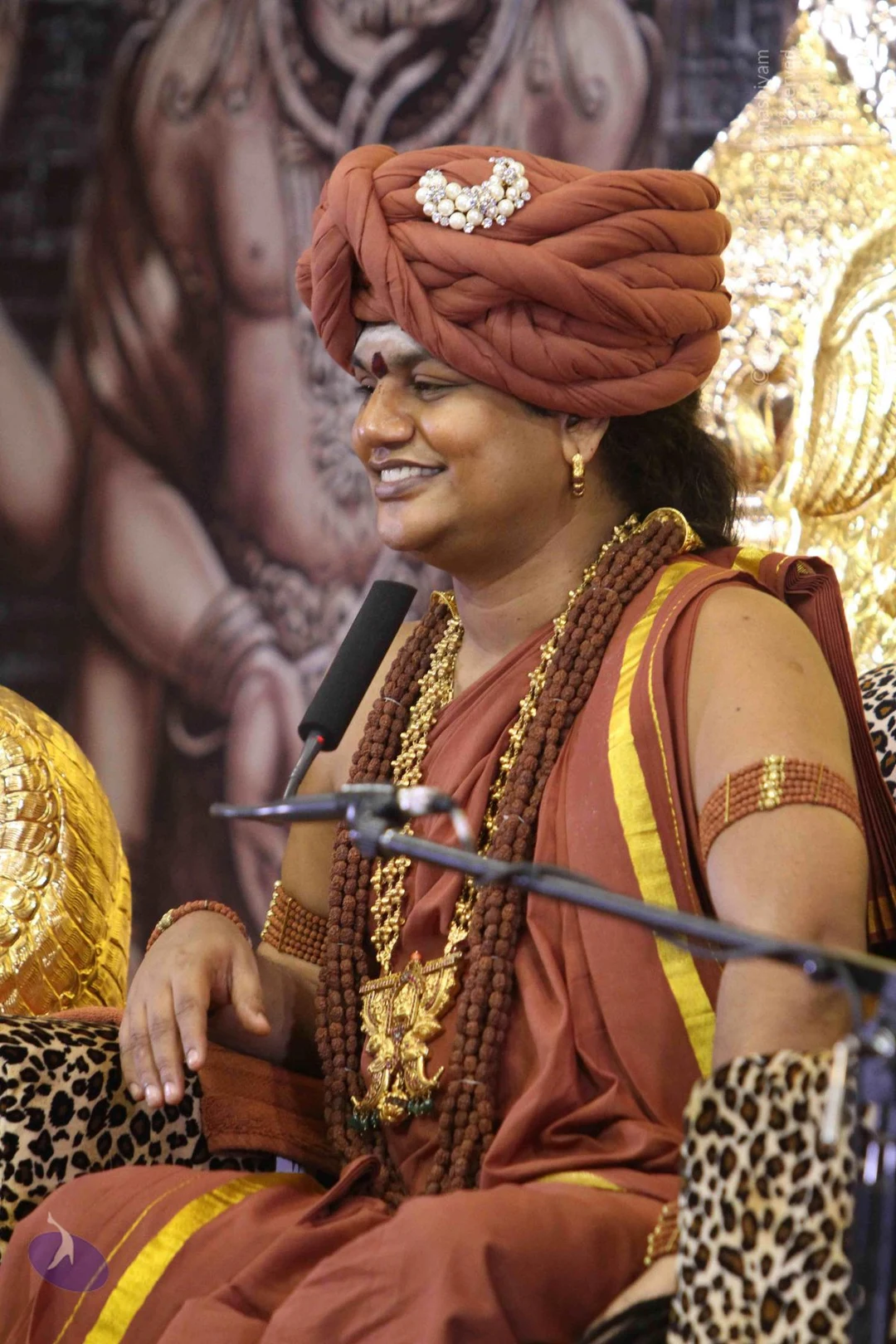
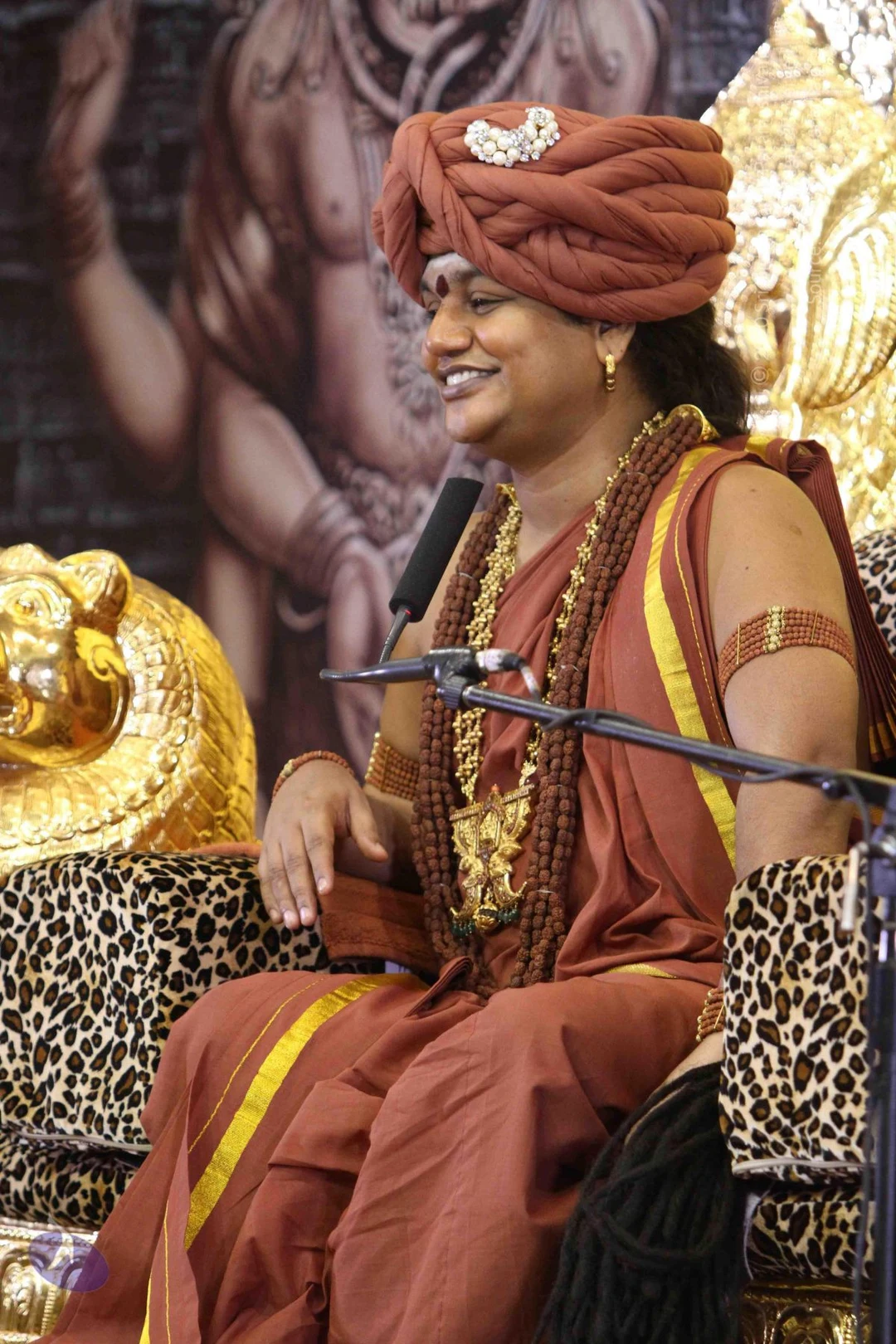
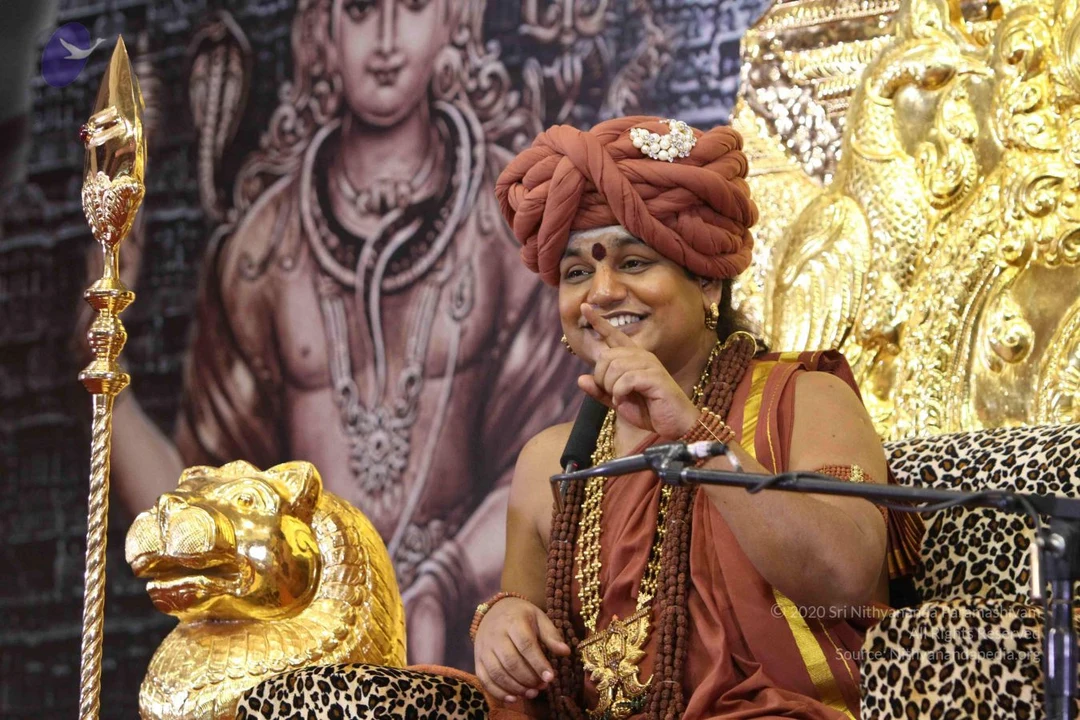
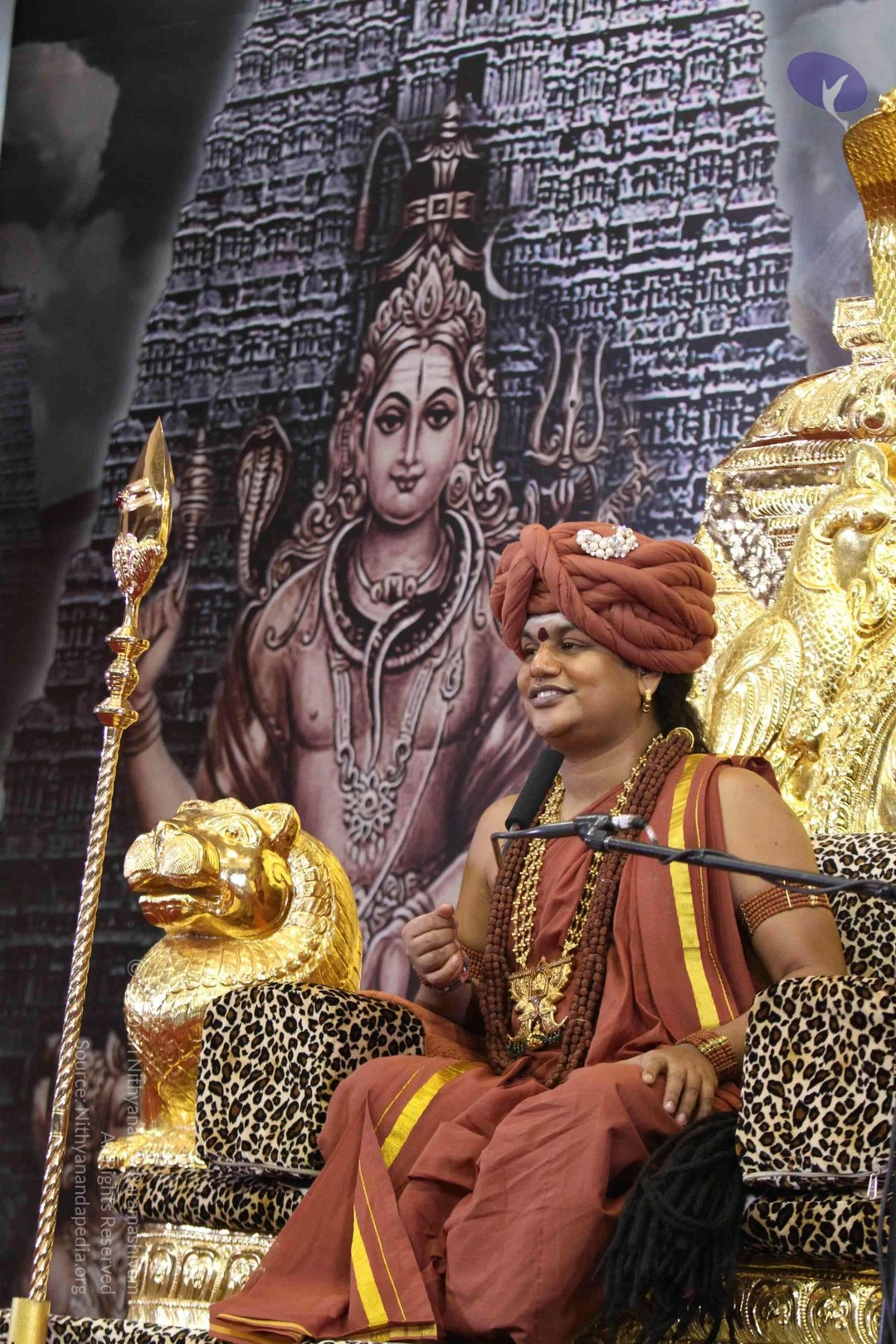
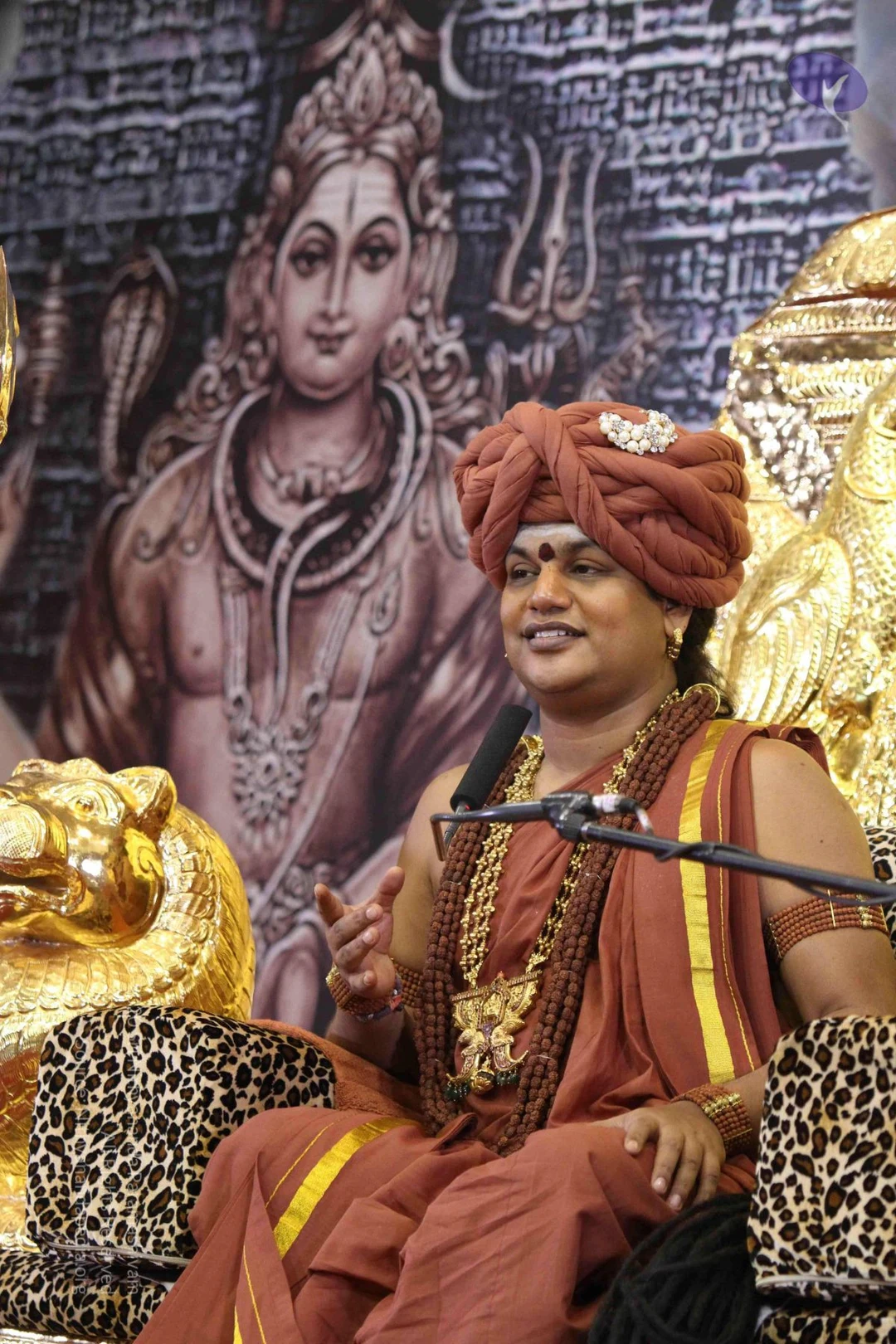
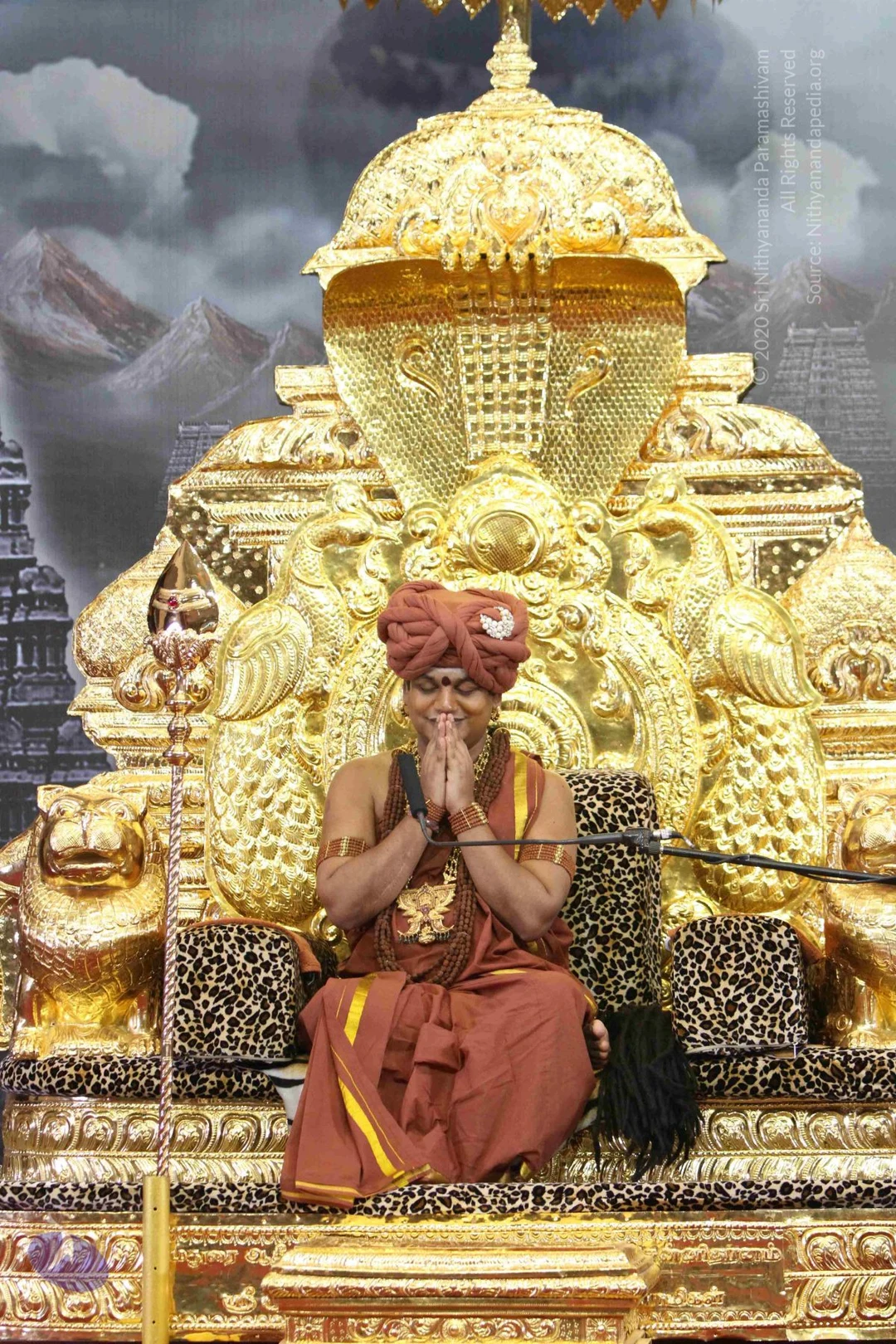
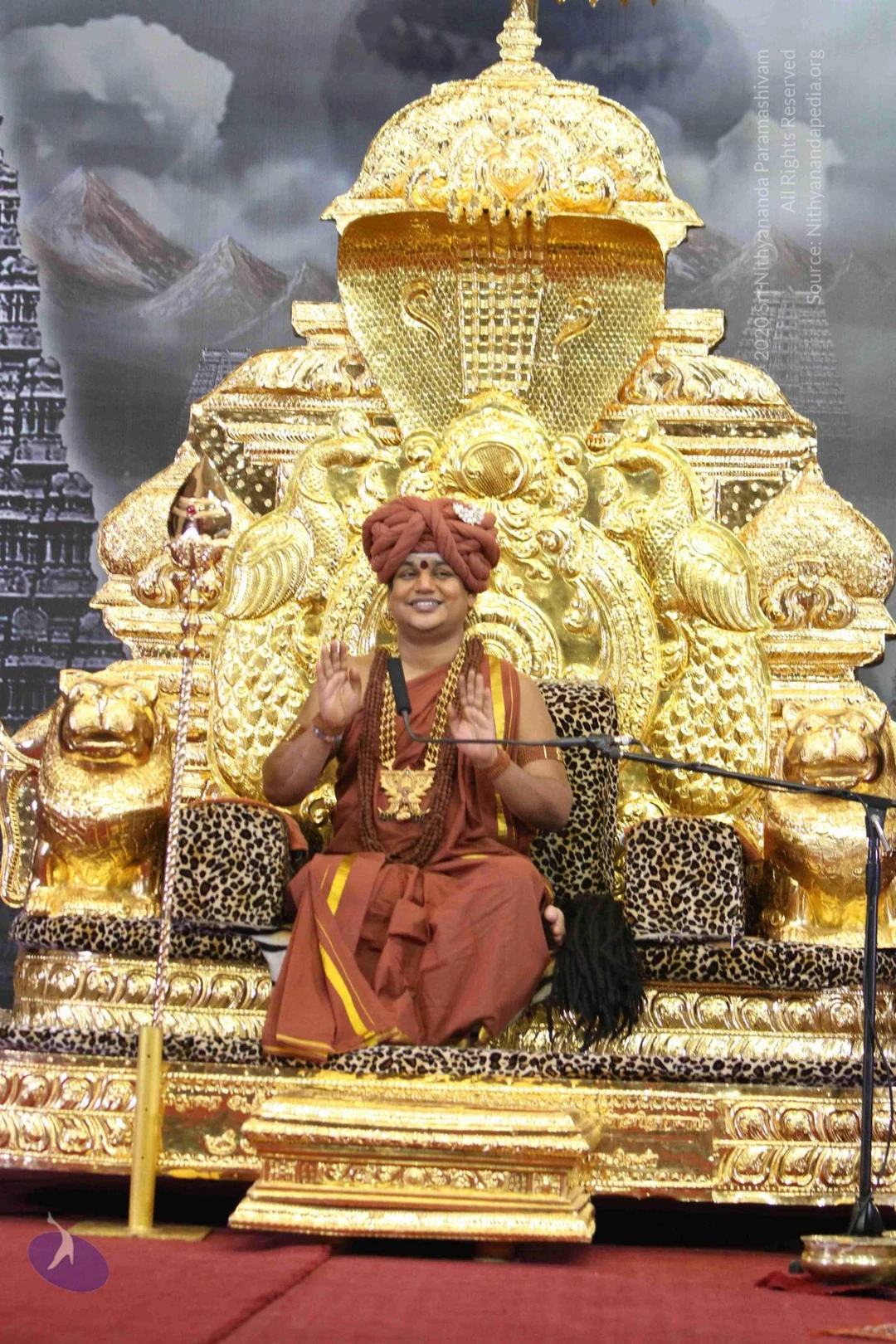
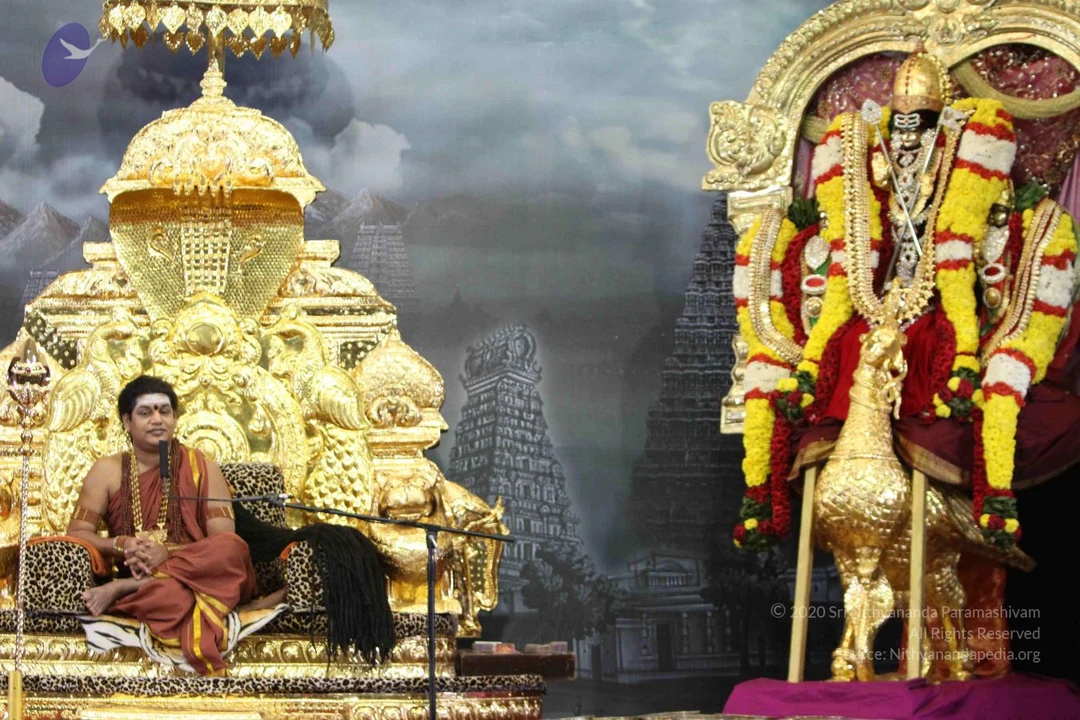
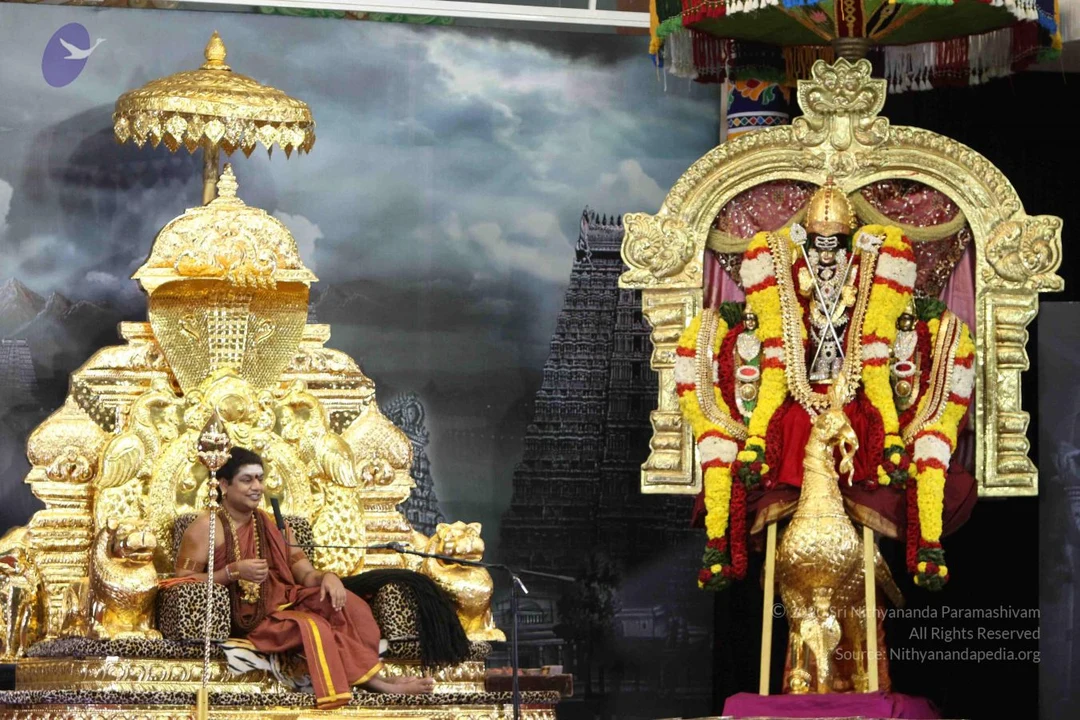
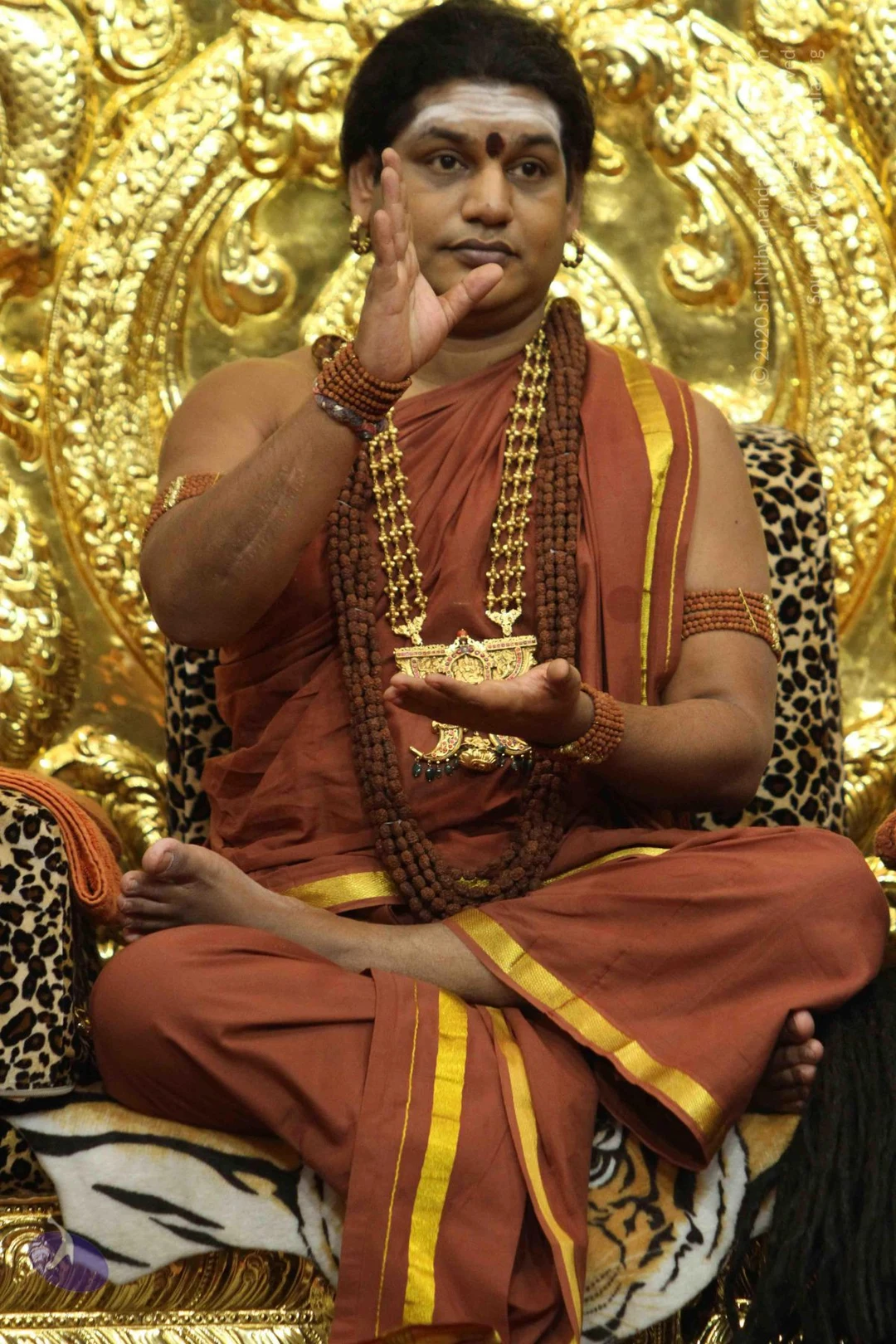
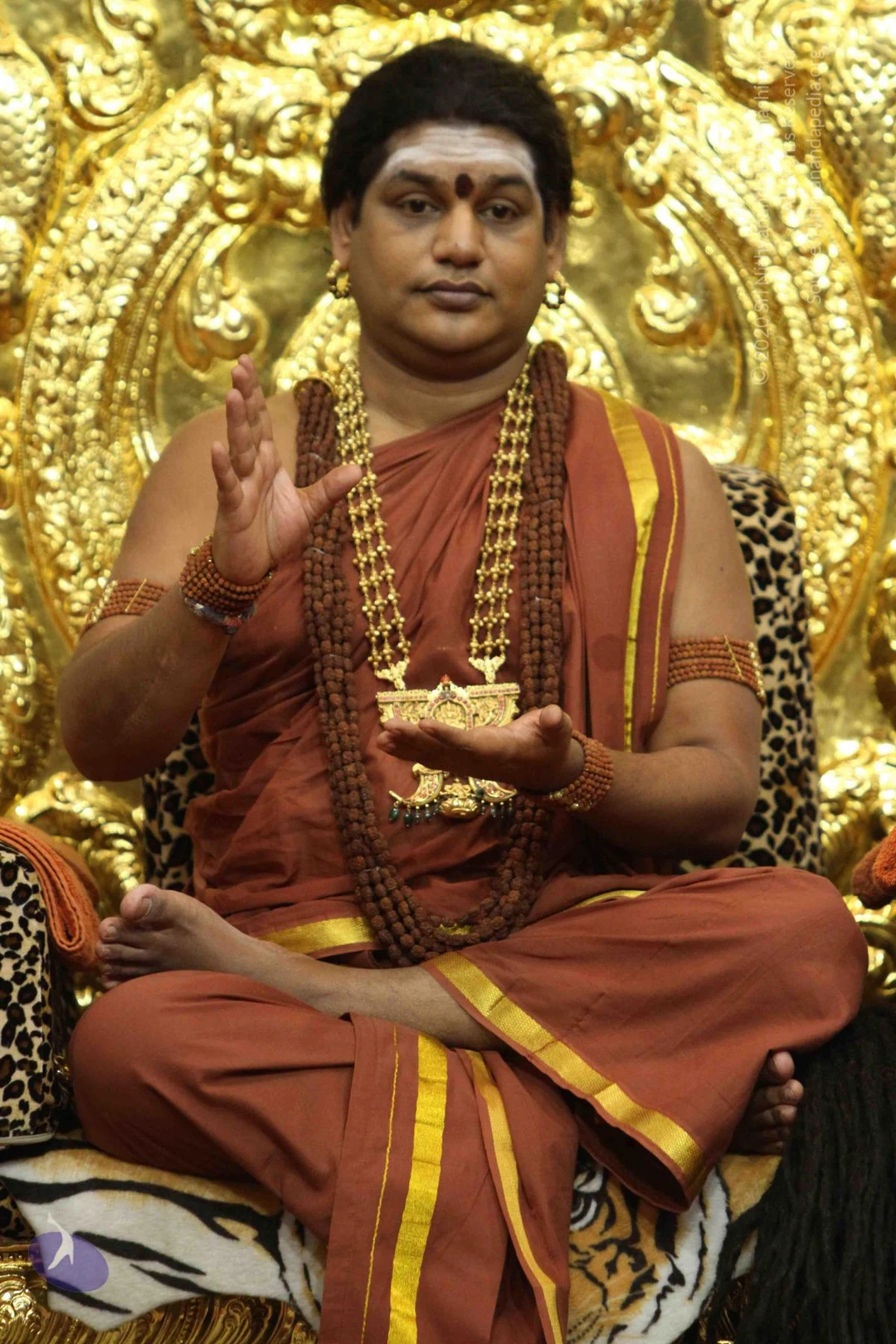
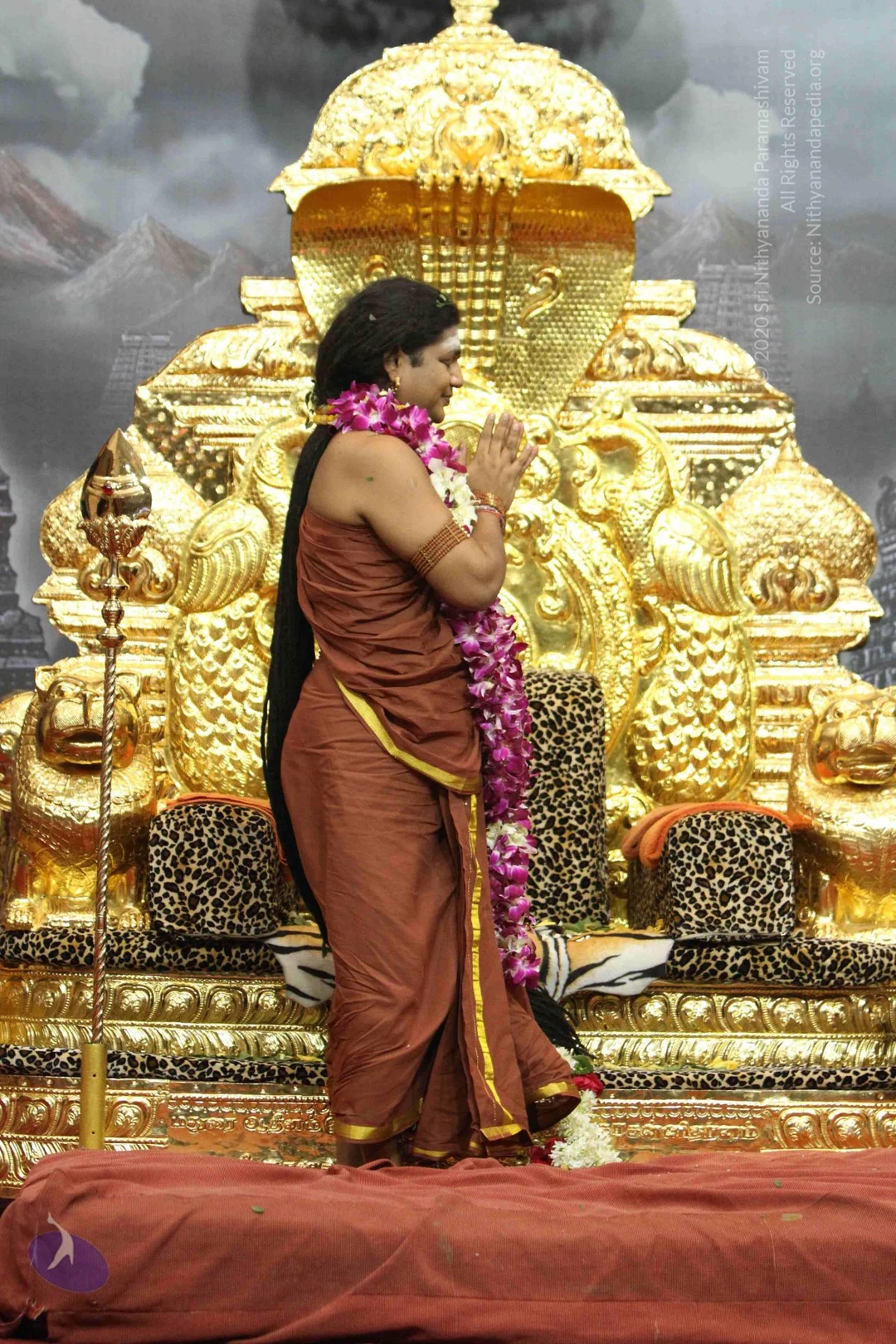
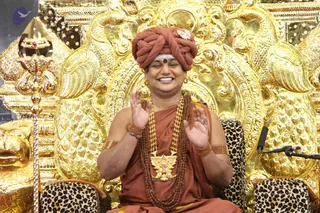
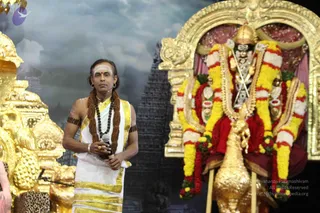
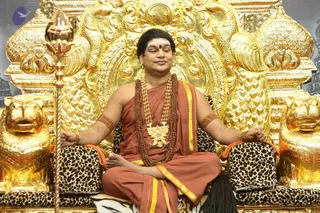
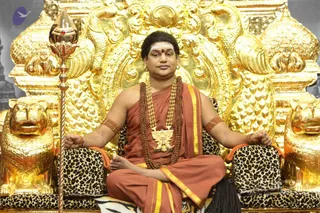
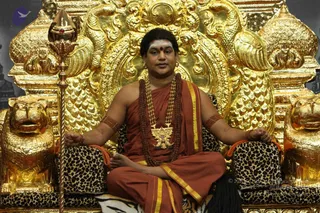
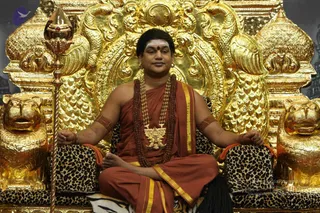
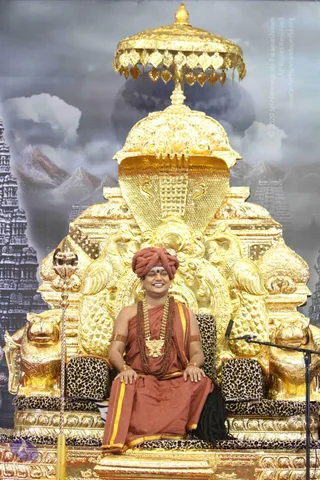
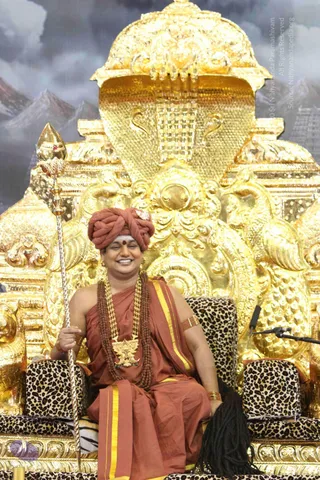
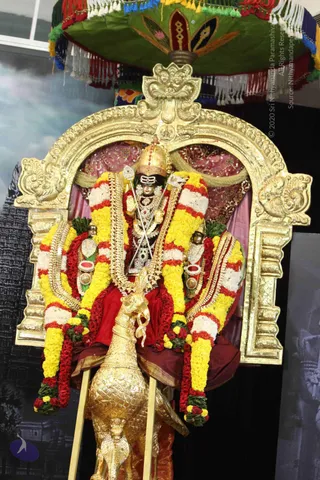
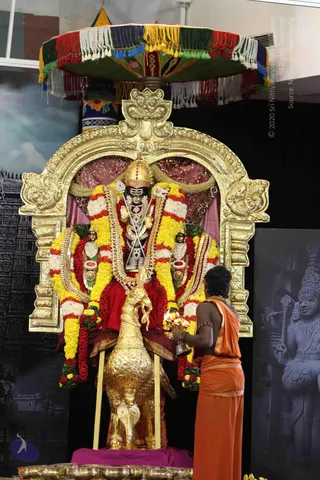
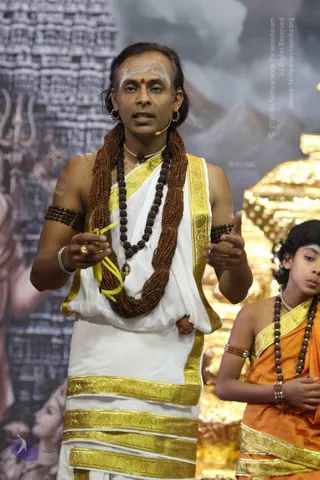
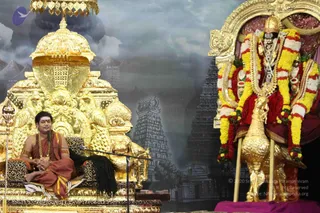
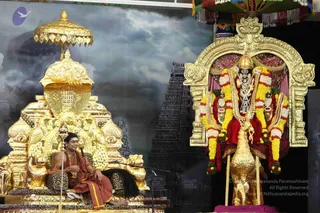
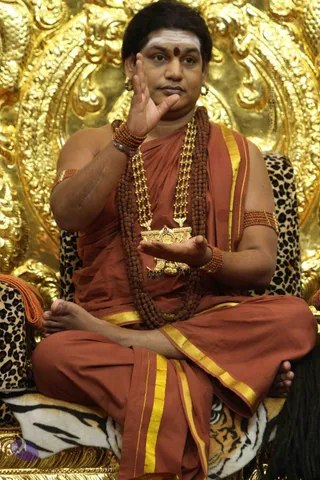
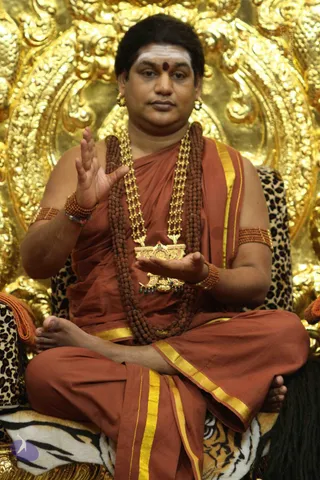
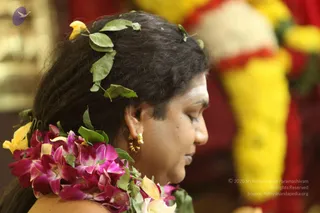
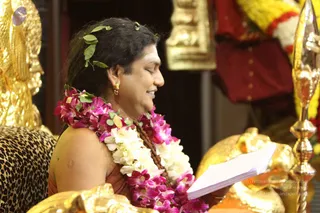
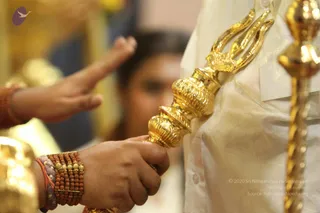
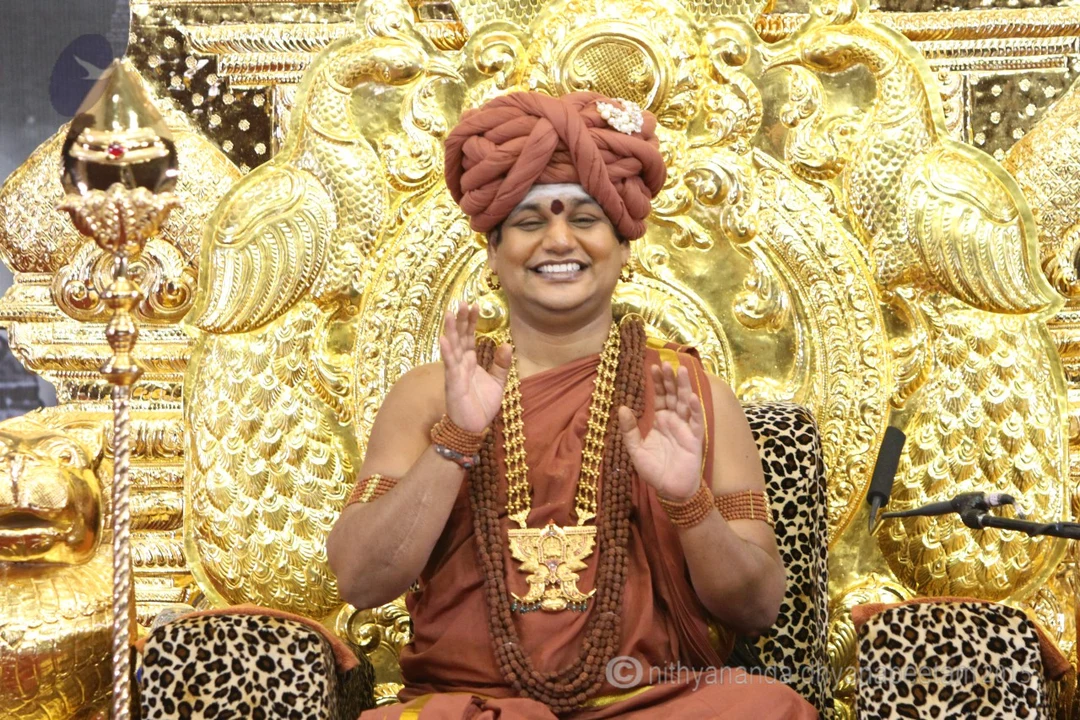
A seated man in an ornate golden throne setting speaks into a microphone on a stand. He wears a rust-orange turban with a decorative pin, a rust-orange shawl over a bare upper body with a yellow-gold border, multiple rudraksha malas and a large gold ceremonial pendant, and orange armbands. A red-brown tilaka marks his forehead. Behind him, gold-embossed carved panels frame the throne, and a leopard-print cushioned chair sits at the side. A golden ceremonial staff with a red stone topped by a finial stands at left, beside a golden lion-head armrest. He is smiling with eyes closed, hands resting in his lap.A photograph of a stage with an ornate gold throne on the left, flanked by carved gold lions and topped with a gold canopy. A seated figure in a saffron-orange robe and an orange turban sits on the throne with hands pressed together in namaste, with a microphone stand in front. On the right, a gold arched shrine frames a deity murti of Shiva-like form decorated with yellow and orange marigold garlands, red cloth and a gold crown, standing on a gold pedestal. A standing attendant in an orange dhoti and orange shawl holds a lamp toward the murti, and a row of brass oil lamps sits at the base of the shrine. Painted backdrop shows temple gopurams and misty mountains.A man seated cross-legged on an ornate golden throne with leopard-print cushions and carved golden lion-head armrests. He wears saffron-orange robes with a gold-and-orange border, a rudraksha mala and layered gold necklaces including a pendant, gold bangles on his upper arms and wrists, a white tripundra with a red bindi, and is speaking into a microphone on a stand. A golden ceremonial staff with a finial stands at his left.

January 24 2016

Original wiki page
Contents

Title

Celebration Of Thaipoosam

Narration

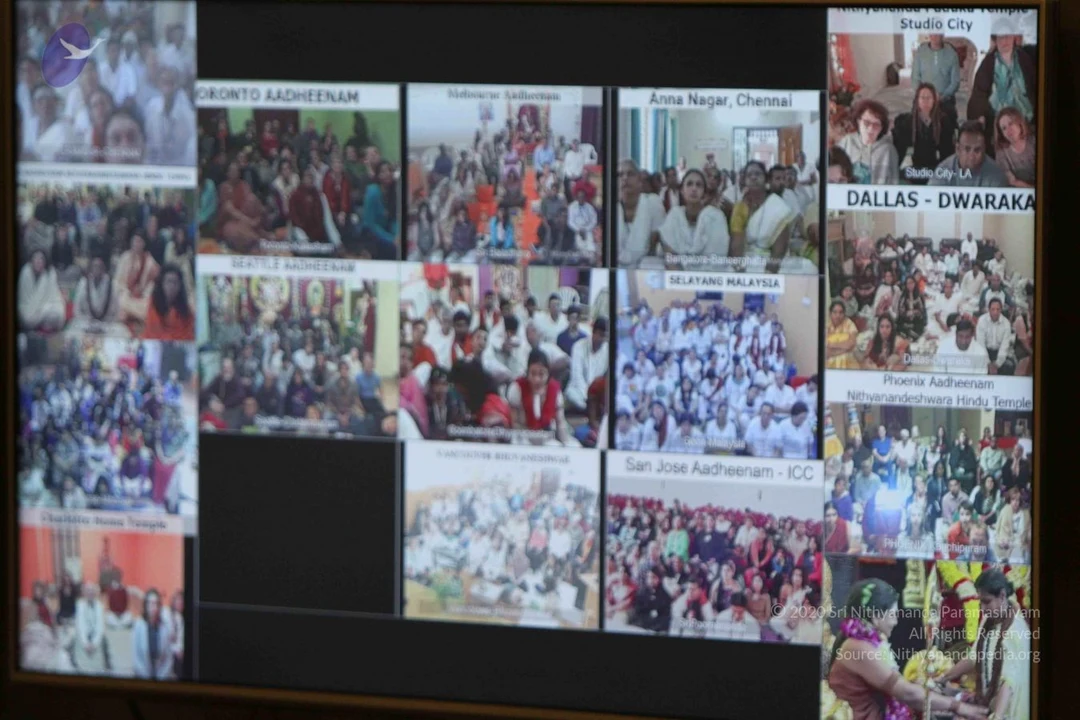
The Supreme Pontiff of Hinduism, Jagatguru Mahasannidhanam, His Divine Holiness, Bhagavan Nithyananda Paramashivam (SPH), expounded on the Cosmic Principles of the Wealth and Abundance during a 2 day workshop on Wealth Consciousness, part of the Nithya Dhyana Yoga. During this session titled Q&A Session on Wealth and Abundance, The SPH revealed the powerful truth that parents are parents only when we are given Birth, after that they are needed in our lives only as Guru.

He expanded further by sharing that having everything and sharing everything is the space of Completion, defining Aparigraha as living with minimal things. He explained that feeling bored means denying our life, denying the Possibilities of our Space and Time and revealed that a Guru can play the complete role of the parent and also give us Enlightenment. The SPH Further expanded on this truth sharing that while parents may come first, Guru only will come for last. The power and benefits of Completion were shared with all sharing that Completion itself has reached its Completion with the Nithyanandoham process.

Video and Audio - Q&A Session on Wealth and Abundance

This excerpt has been taken from the Nithya Dhana Yoga (enWealth) program conducted by Swamiji on 24 Jan 2016 at Nithyananda Peetham, Bengaluru Aadheenam.

VideoAudio

Transcript

I welcome you all for today’s session. I will answer your questions first.

QUESTION: From Dubai Saroj is asking, “Swamiji, I am attending your session for the 1st time, My question is, “Who comes first, Guru or parents? Thanks”

SWAMIJI: The question is very important—“I am attending your session for the 1st time. My question is, Who comes first, Guru or parents?” Listen, even parents...they are parents only when you are given birth, after that they are needed in your life only as Guru. Understand, even parents are needed in your life only as Guru. After they give birth, the job of the parent is done. Bringing you up properly is job of the Guru in the parents. So, the question, “Who comes first, Guru or parents?”, literally the parents come first, actually Guru comes first. If you take this letter, see if you take this question as per letter, parents come first, but as per spirit Guru comes first. Understand, whether you want to take this question as per letter or spirit is up to you. Even parents have to come as Guru. Even Guru has to play the role of the parent. It is actually both. But ultimately, parent cannot play the complete role of Guru, of Guru by giving enlightenment. Guru can play the complete role of the parent and give you Enlightenment also. Parents may come first but Guru only will come for last. Understand, parents may come first but only Guru can come last. So Guru has his own place. Parents cannot come at last, only Guru can come at last. Yesterday’s evening satsang was about this from Isa Vasya Upanishad. Maybe today’s evening satsang if you attend, this question will be cleared more detailed way. Today’s evening satsang on Isa Vasya Upanishad it’s going to be about death—the Hindu, Indian way of death. Yes, next question.

QUESTION: From Houston Adheenam, Pratibha asks, “I want to come out of worldly life and be more with God which is not happening these days. I am so busy with worldly life and I don’t get time.”

SWAMIJI: This question, “I want to come out worldly life and be more with God which is not happening these days”, please understand, the concept of worldly life is worldly life, the context of God is God. There is no such thing as coming out of worldly life, come out of your concept of worldly life; that’s all you need. Come out of your concept of worldly life. Get into your context of God. Understand, coming out of worldly life getting into God does not mean you will come out from one place and enter into another place. You have to come out from one space and enter into another space. It’s not place to place shift, it’s a space to space shift. Sometimes, initially a place to place helps you to strengthen your space to space transformation. For example, if you go to some place where really this truth is taught to you–moving from concept of worldly life into the context of God–that place may be a help for you, but that place itself cannot give you what do you want. For example, you all have come here, I can help you to move out of the concept of your worldly life and context of God. But, moving from that place to this place itself is not enough. You have to move from that space to this space. That only will lead you...experience God. I think just moving from place to place, may not be solution. Learn to move from space to space and then...if needed we can move from place to place, also. See, only if the movement from space to space happens, place to place is useful. Otherwise you will come and eat My head here; no really. Actually I have more Jatta just to scratch the Jattas only. I am, each one pulls My hair so much, now I decided, all right, let Me have more Jattas, so that more people can pull. ☺ Without changing the space if you just change the place, what will happen? You will be hanging on my Jatta. So, that is no way going to help you and surely it is not going to help Me. It’s only going to be more trouble for Me. So understand, please do not change place to place unless you change space to space. It is My humble request ☺, and prayer to all My devotees ☺. You would have seen disciples praying to Guru and please see first time, Master praying to disciples ☺. Unless you change from the space of the context of world or the concept of world to the context of God, please do not change your place from house to Ashram ☺. It is My humble prayer to all the devotees through the Pratibha of Houston Adheenam ☺. Next.

QUESTION: From Auckland, New Zealand, Stephen asks, “Dear Swamiji, some people are keen on doing Inner Awakening from my center. Can you please share some words on why Inner Awakening 21 day program and what will they get by doing the program. Gratitude, Stephen.”

SWAMIJI: Stephen, Auckland New Zealand. First thing, the Inner Awakening, especially now the way the program is offered, literally awakens the God particle in you. Now especially after this Nithyanandoham process added, with this beautiful method of completion and through completion cleaning up bio-memory, sorry, cleaning up the muscle-memory and opening your possibilities... and through the Shivoham process cleaning up your bio-memory and opening the powers and ultimately awakening the God particle–bio-energy in you–the Kundalini Shakti, and flooding that Kundalini Shakti into your bio-memory and muscle-memory; the whole Inner Awakening has reached to its next higher level. I can say its perfection... its completion through the Nithyanandoham process. You should attend the Inner Awakening now, because it is THE Inner Awakening. It has reached its completion. I can say, Inner Awakening itself has reached its completion, with this Nithyanandoham process; completion cleans up muscle-memory. Shivoham process cleans up bio-memory. The Nithyanandoham process awakens your bio-energy. Completion itself has reached its completion, with the Nithyanandoham process. All I can tell you... see actually I am not a person who can market or promote something. With all My integrity I can say, it’s really worth trying at least once, then you will understand; and you will never feel you wasted your time or money or your energy. That much I can guarantee you... that much I can guarantee you. Actually with this new combination of completion, Shivoham process, Nithyanandoham process, I can comfortably tell you, at least one spiritual power will start expressing through you, which will be useful for you in your day to day life... strengthens and enriches you in your everyday life. And, it’s THE program. At least on the planet Earth, this is the most powerful spiritual program available now. That much I can be very clear. On the planet Earth the most powerful spiritual program available is Inner Awakening. Narada can vouch for it because he only goes to all the world. Next.

QUESTION: From Toronto, Rajeshwari Ramasamy asks, “Swamiji, this is the first session with You. My question is how do I find my Guru?”

SWAMIJI: You do not need to worry, think, so much about finding your Guru. It is like, if I have to put it in a language which you all understand—love at first sight. Don’t even try to make Me as a Guru or remember and all that—just leave it—you will not be able to forget Me if I am your Guru. You will not be able to forget Me if I am your Guru. It is like a click happens; something will click in you, you just will not be able to forget. I am there all the time inside, whether you are cooking or you are in your office meeting... whatever you are doing, I am there all the time as undercurrent in you, then I am your Guru. If that does not happen, don’t worry; continue your search you will find. My Blessings! So you don’t have to worry, think too much about how do I find my Guru. You go on become more and more authentic, you will see simply you will, the Guru will find you and the click will happen. Understand, this is the underline; the moment you wake up–whether you are brushing the teeth or taking bath, or cooking, going to office, attending your routine, or reading books, or watching TV, or watching movie–whatever you may do, I will be there as undercurrent sitting inside you. How many of you feel that experientially? For all of you I am Guru, that’s all I can say. There is a big team, so you don’t have to think, plan—nothing—it will just click, it will just click. So in your language you call it falling in love, I say rising in love. It will just happen, it will just happen. Rajeshwari, I bless you—it will happen to you now, My Blessings.

QUESTION: From New York center, “Dear Swamiji, I heard you say not having time is one of the worst forms of poverty. Also heard you say in Abundance Webinar that not having time is just because of your deep boredom and tiredness. I feel like I don’t have any time because I am constantly so busy doing so many things, so I am not seeing where the boredom or tiredness comes in. Please clarify for me. Thank You.”

SWAMIJI: Actually, one of the biggest problem the humanity is going to face in next five years, is not HIV, aids or population, or terrorism, no. One of the biggest problem humanity is going to face in next five years, is deaths due to boredom and tiredness. Whatever you want to give, people don’t want to live anymore. They are bored. Give them pizza – they are bored. Okay, provide them all the variety, varieties of sex – no, they are bored; pornography – they are bored; entertainment–bored; alcohol–bored; drugs–bored; Facebook–bored; TV–bored. This is one of the biggest problem humanity is going to face within next five years. Understand, feeling bored means denying your life, denying the possibilities of your space and time meeting, it is very important truth. I have decided, I will do a 2 day program just like Nithya Dhana Yoga on Conquering Time; because, it is too much to share in one question answer–one question. I really want to help people to get out of boredom. Understand, if boredom captures you nothing can make your life happy. I am not promoting drinking, smoking, pornography, womanizing all that... I am not promoting. But all I am trying to tell you is boredom is much worse than all these. Even with all these if you are able to keep yourself excited at least okay, be alive. Boredom is going to be one of the worst problems. Because, nowadays by the time they are thirty, maximum thirty five, they have seen everything, they have done everything which you can imagine, you can’t imagine. What more to do, nothing more. The only way, to win this game of boredom is—understanding what is time, what is space, the interaction between this two, and knowing the very entry of time into space and space into time—is exciting celebration. Only that will give you the eternal celebration. Otherwise people are tired of dancing, drinking, marijuana; people are tired of everything, they have done everything. All these became outdated – drinks, womanizing, marijuana – whatever you call it as pleasure – vacation, cruise, this–that. Everything has become old fashion–old style. Now all this no more attracts, the next generation. Uh, we have seen, what is there – next! Uh, we have seen, what is there – next. Human-beings have gone to the extreme, now nothing more excites. I am not even looking at ten years; I am looking at next five years – the grand collapse of human civilization due to boredom. Understand, the human civilization is going towards, moving towards, heading towards grand collapse not because of economical melt-down, no global political crisis, no terrorism, no HIV–AIDS, or no virus, no aliens attack, no. All that is not going to be a big problem humanity will face. The share market melting down, banks becoming bankrupt – no, global warming – no. Within next five to ten years, the biggest blow, the human civilization is going to face is boredom. Big, big cars - we have seen; big, big cigarettes - we have seen; varieties of drugs - we have seen; multiple varieties of sex - we have seen; pornography - we have seen. All vacation, cruise, this food–that food, this drink–that drink - we have seen. Even if you see two drink, third, you know about the third drink – leave it, I am bored. The biggest problem is going to be inability to handle boredom. Human civilization will collapse due to boredom if we don’t teach people to conquer time. It is time... people learn the science of conquering time. So that the constant excitement, joy, cerebration, looking forward to life, having hope on life, joy. See something has to pull you towards the future. You can’t always be pushed from the past. See being pushed from the past is dragging your life; something has to pull you from the future...only then you will run with excitement. Please understand, being pushed by the past–being pulled by the future, there is too big difference. Pushed by the past, you will be moved hmm hmm hmm. Pulled by the future, you will be just flying, dancing. So this science of conquering time, need to be taught to the world. Mahadeva very beautifully, gives around thirty five verses on this science of time. Very recently I read. I may not be able to translate all the thirty five and transmit that knowledge...that experience to all of you, in this one question-answer. I’ll soon, we will have two day program just like Nithya Dhana Yoga–Conquering Time. This will be My gift to all of you from Agama. So you are free from this mess of not having time or feeling bored. It’s actually both are the agitation of the inner space. Next question…

QUESTION: From Nithyananda Sangha, Mulund Paduka Mandir, Meera asks, “First in the Gita it is said that steadiness in all situations good or bad, pleasure/pain is what we should be striving for, that your inner space is independent of external situations. Is this living in abundance? Is the desire for more a sign of incompletion?

SWAMIJI: Meera first thing understand–what Gita says–steadiness in all situation in good and bad, pleasure and pain, is true, but striving for it is not good. Understanding it and living is good, but striving to achieve that is not good. Please understand, striving means what! You are not convinced about it; you are not clear about it. See, if you ask somebody, “Give me ten thousand rupee as donation, I want to build a temple.” That will be literally, legal snatching. That’s the word I will use. Thieves illegally snatch and run away, these people try to snatch legally. That is, that money will not be useful for Mahadeva. But if somebody understands – money is not the goal, it’s only the way, when you share you are showered – when all these cognition happens and then he offers, let this ten thousand be used to establish and teach, enrich what I learnt and how I became...that ten thousand only will be useful to build a temple, to spread this knowledge and science. Understand, always I tell people, people come and tell Me, “Swamiji, he is very rich guy; a big, rich person – shall I bring him?” I say first thing, if he is rich what is there, let him be, I don’t care. He is no way going to be useful for himself or Me. If somebody gets the context and then decides to share, only that money will be useful for doing any good work. Please understand, when he understands the higher context, these smaller things automatically happen. In your life also, you should understand the futility of ego and utility of knowledge. Futility of ego and utility of knowledge – truth, then simply just by listening you will be in the space of good and bad, pleasure and pain steadily. If you are striving for it, it is stupidity. Like a convincing somebody to give ten thousand rupee and taking that money is no way going to be useful. Same way, striving to achieve the good and bad, pleasure and pain situation steadiness, striving to achieve being steady during good and bad, pleasure and pain is not going to help you. Understand this example – this very important. When somebody understands – money is not everything, it is only utility, when you share more is showered and starts experiencing it – when he shares that's a real sharing... that will be useful for him and others. He has understood the highest context, then his actions are okay. But if he is struggling, I have seen people, they will take out their purse, remove all the hundred rupee, five hundred rupee, fifty rupee, twenty rupee, ten rupee, finally pick up one five rupee and find out, it’s only one note not two note and then put it at the feet. ☺ Understand, I have seen the givers like that. I have seen, no, I am not disrespecting. I am saying, you will be, if you are trying to practice steadiness... during pleasure and pain, and good and bad, you will be like that person only – opening the purse, moving all the thousand rupee note, five hundred rupee note, hundred rupee note, and fifty rupee note, twenty rupee note, ten rupee note, and finally five rupee, because below five rupee nowadays it is not available in the society. And you pick up that five rupee, not only that, after picking up that five rupee, just find out, make sure it is only one note not two note. Then, tatak, with a big sound ☺ You will be like that only. Understand, the striving is the bad word in your question. Your whole question is great, but that word striving is the bad word. Gita says, yes, “steadiness in all situations of good and bad, pleasure and pain”– is right. But that should be lived, not to be strived. It should become a simple understanding. So, your next question – “is desire for more is a sign of incompletion?” NO. Neither content is sign of completion nor the desire for more is incompletion. The context – why you are asking for more or why you are content? If you are content because you don’t want to take more responsibility, it is incompletion. You are asking for more because you want to enrich the world, it is completion. The why decides whether it is completion or incompletion – not what. What do you want has not decide, whether you are in the space of completion or incompletion. Why you want or don’t want decides whether you are in the space of completion or incompletion. I should say the best context is – have everything, share everything. Have everything, share everything – is the space of completion. Next

QUESTION: From Dallas Dwarka, Ghanshyam asks, “In one of your previous satsangs/videos, I heard you saying that being poor can give you lots of wisdom and that even you learned lots during your 9 years of being poor. How can someone manage such an experience?

SWAMIJI: Please understand, I never said being poor can give you lots of wisdom. Living in aparigraha can give you lots of wisdom. Means, living with minimal things, I never uttered a word “being poor”– look through the whole satsang. Living with minimal things, gives you lots of, lots of wisdom. During My 9 years of Parivrajaka Yatra, I lived with minimal things or nothing – no things, but I was never poor, understand. There is a big difference between these two. You want and you don’t have is poverty. You don’t want and you don’t have – is living with minimal things. You don’t want, you may/may not have is living with minimal things. Understand there is a big difference. In My case I lived with minimal things; even now in My personal life, I live with minimal things. See all these are... the responsibility I have taken up, for the sake of sangha. All this throne everything is to respect the dharma for which I stand up... the concept for which I am dedicating My life, the truths which I am radiating - for that. Understand, here, individual is not celebrated by this throne; a energy, a concept, a truth is celebrated by this throne. So still in My personal life, I live with minimal things and I tell you–it really keeps you in high energy, keeps you in high energy. So living with minimal things is what I call Aparigraha, yes. Next Question.

QUESTION: From Manhattan, Amy asks, “Dear Swamiji, can you open my third eye in this seminar or do I have to go to you in person? Thank you”

SWAMIJI: Oh Amy, if I open your third eye in this seminar, actually you are asking, “Can you open?”– I can open but you can’t handle. You need to be in a space where you are supported, helped, to get comfortable with the third eye for few days. That is why I am calling you to come to Inner Awakening. I can handle, I can open it, you won’t be able to handle the opening – that initiation. Imagine suddenly you know everything your husband does, your wife does... whole day and night, what will happen? Your whole family stability, everything, what will happen! ☺ Even within you, if you just know what all happens, you will be shaken. So understand, I can open your third eye even in this seminar, but you may not be able to handle it. That is why I am saying come here, spend little time, so I will make you comfortable with it and then send you back. I think it’s time; you all have to go for your meal break. For India - breakfast, for some countries–lunch, for some countries–brunch, for some countries–dinner, for some countries–evening snack. Literally all time zone–all temperature, people are sitting. So let’s gather for the next session. Thank You. Be Blissful.

Title

The biggest problem humanity is facing in next five years

Description

The biggest problem humanity is facing, the greatest calamity happening in the next five years, is boredom and tiredness. Excerpt from Q&A Session on Wealth and Abundance

We have seen it all, we have done it all: from drugs to porn and from cruise holiday to TV. Nothing excites us anymore! To overcome our boredom and tiredness, we need to conquer time. In the Agamas, Mahadeva gives around 35 verses on the science of time. To help people overcome their boredom, Swami Nithyananda is providing a two day program for free: ‘Conquering Time’.

Video and Audio - The biggest problem humanity is facing in next five years

VideoAudio

Transcript

[00:12]

One of the biggest problem the humanity is going to face in next five years is not HIV, AIDS, or population, or terrorism. No. One of the biggest problem humanity is going to face in next five years is deaths due to boredom and tiredness. Whatever you want to give, people don’t want to live anymore. They are bored. Give them pizza, they’re bored. Okay, provide them all the variety varieties of sex. No, they are bored. Pornography - they are bored. Entertainment - bored. Alcohol - bored. Drugs - bored. Facebook - bored. TV - bored! This is one of the biggest problem humanity is going to face within next five years.

Understand. Feeling bored means, denying your life, denying the possibilities of your space and time meeting. It is very important truth. I have decided I will do a two day program, just like Nithya Dhana Yoga, on conquering time. I really want to help people to get out of boredom. Understand. If boredom captures you, nothing can make your life happy. I am not promoting drinking, smoking, pornography, womanizing all that, I am not promoting. But all I am trying to tell you is, boredom is much worse than all this. Even with all this if you are able to keep yourself excited, at least okay, be alive. All these became outdated - drinks, womanizing, marijuana, whatever you call it as a pleasure, vacation, cruise, this, that. Everything has become old fashion, old style. Now all these no more attracts the next generation. Ah, we have seen what is there, next. Ah, we have seen what is there, next. Human beings have gone to the extreme, now nothing more excites.

[03:07]

I am not even looking at ten years, I am looking at next five years. The grand collapse of human civilization due to boredom. Understand. The human civilization is going towards, moving towards, heading towards grand collapse, not because of economical meltdown, no global politcal crisis, no terrorism, no HIV, AIDS or no virus, no aliens attack. No! All that is not going to be a big problem humanity will face. The share market melting down, banks becoming bankrupt... No. Global warming, no. Within next five to ten years the biggest blow the human civilization is going to face is boredom. Human civilization will collapse due to boredom if we don’t teach people to conquer time. It is time, people learn the science of conquering time. So that the constant excitement, joy, celebration, looking forward to life, having hope on life, joy, you see something has to pull you towards the future. You can’t always be pushed from the past. See, being pushed from the past is dragging your life. Something has to pull you from the future, only then you will run, with excitement.

[00:05:26]

Please understand. Being pushed by the past, being pulled by the future, there is too big difference. Pushed by the past, you will be moved, (Swamiji gesturing) mm, mm, mm. Pulled by the future, you will be just flying, dancing. So this science of conquering time need to be taught to the world. Mahadeva very beautifully gives around 35 verses on this science of time. Very recently I read, I may not be able to translate all that 35 and transmit that knowledge, that experience to all of you in this one question-answer. I’ll soon.. we will have a two day program, just like Nithya Dhana Yoga, conquering time. This will be my gift to all of you from Agama.

[00:06:31]

Title

Nithyananda Times, 24th January, 2016

Description

Video Magazine of the Nithyananda Peetham - 22nd January 2016 covering: - Live Evening Satsang from Bengaluru Aadheenam - Nithya Dhana Yoga worldwide program - 3rd Eye Awakening Demonstrations - Kalpataru Live programs in Tamil and Kannada - Nithyananda Galleria's best items available now - Sanskrit class for Nithyananda Gurukul and Ananda Yogam Students - Ananda Yogam Upanishads Classes - Nithya Yoga for Nithyanandam Kids - Thai Poosam Preparations from Nithyananda Peetham at Batu Caves - 3rd Eye Awakening demonstrations by Nithyananda Peetham at Chennai Trade Fair - "Do I need Inner Awakening?" - Upcoming Events

Video-Nithyananda Times, 24th January, 2016

Photos

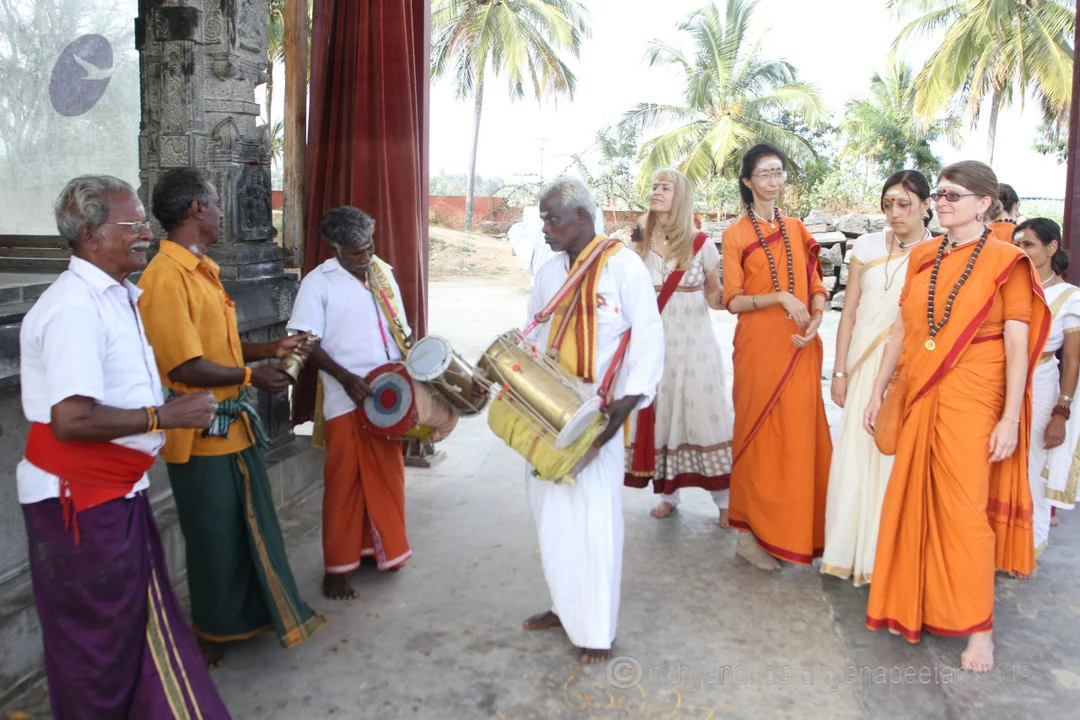
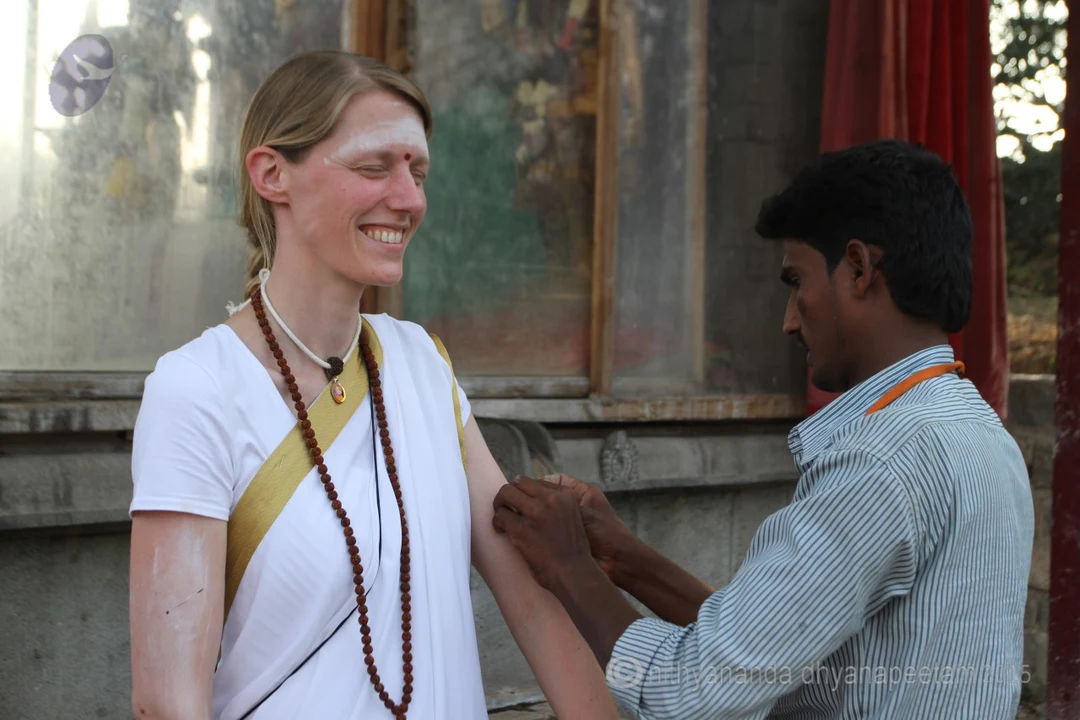
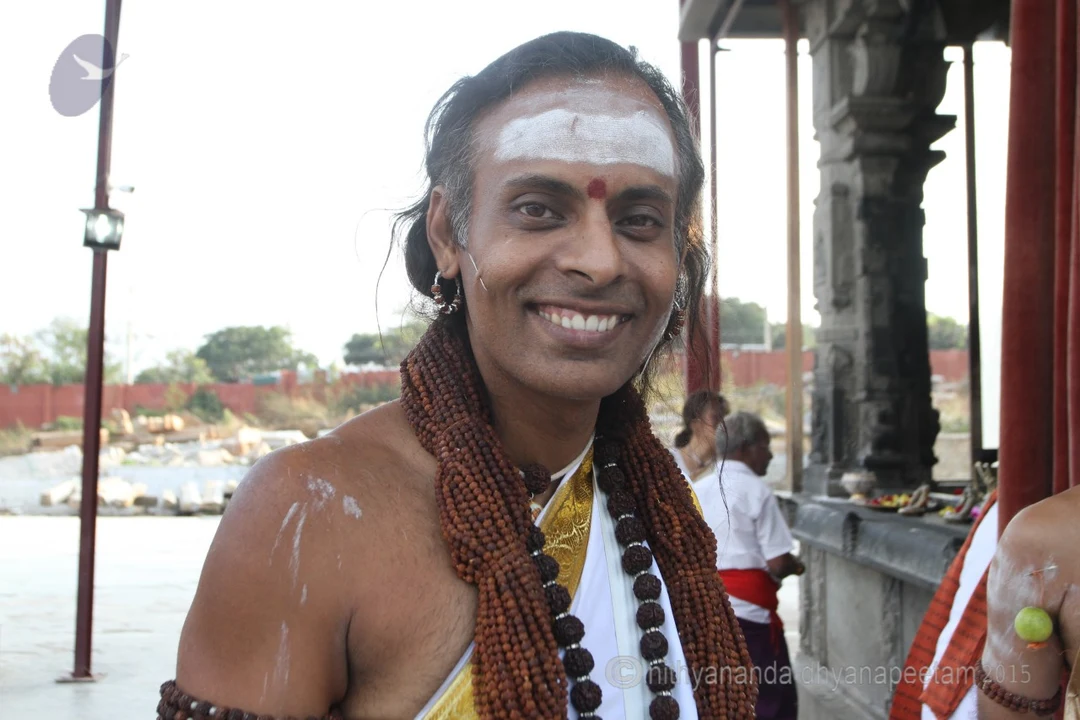
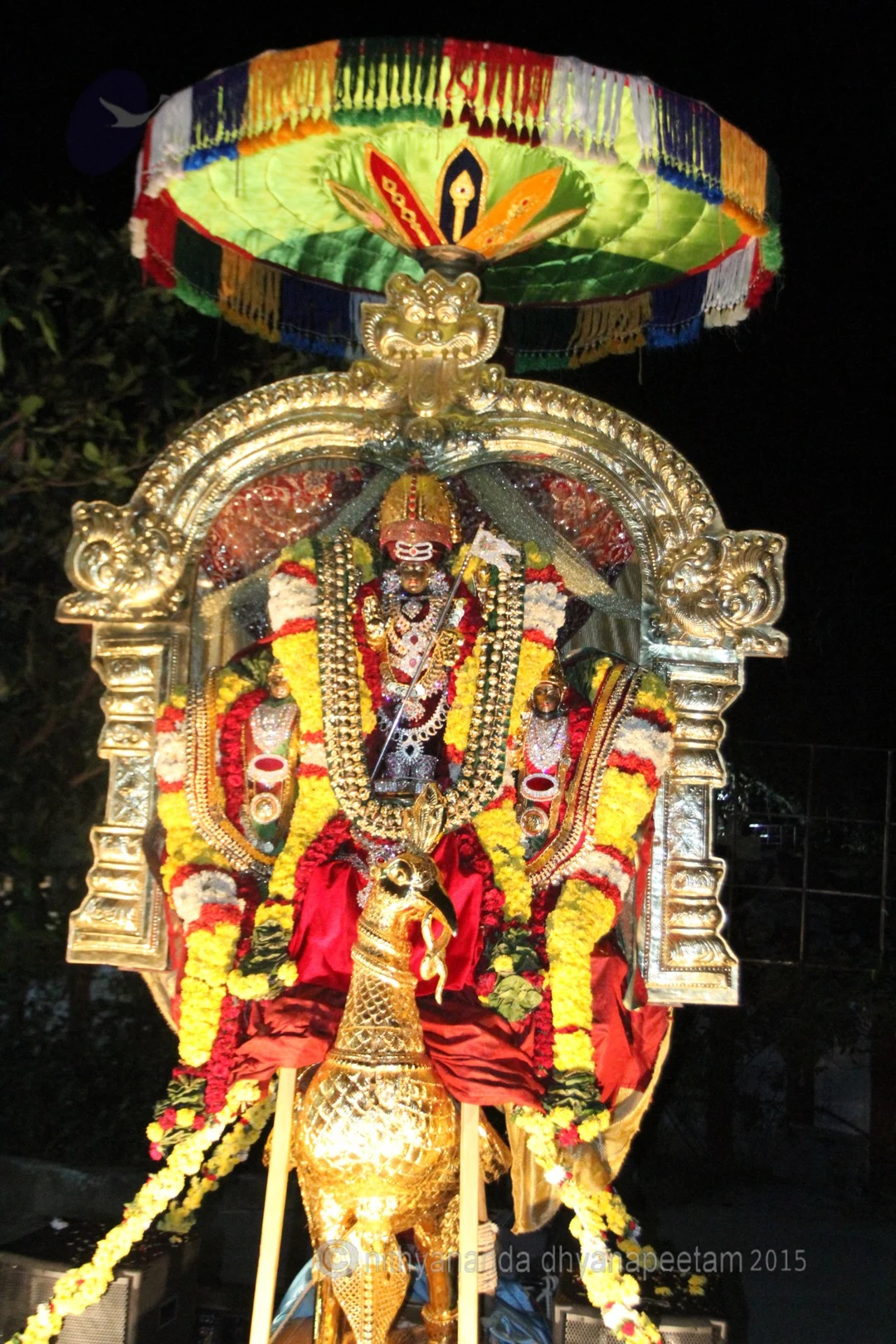
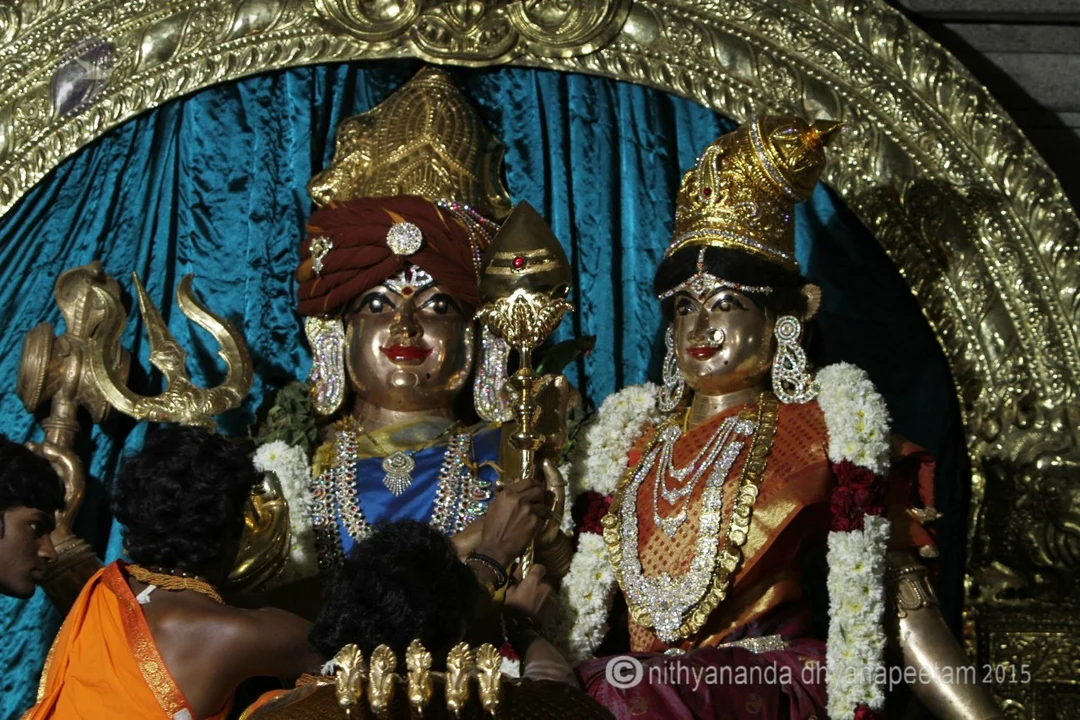
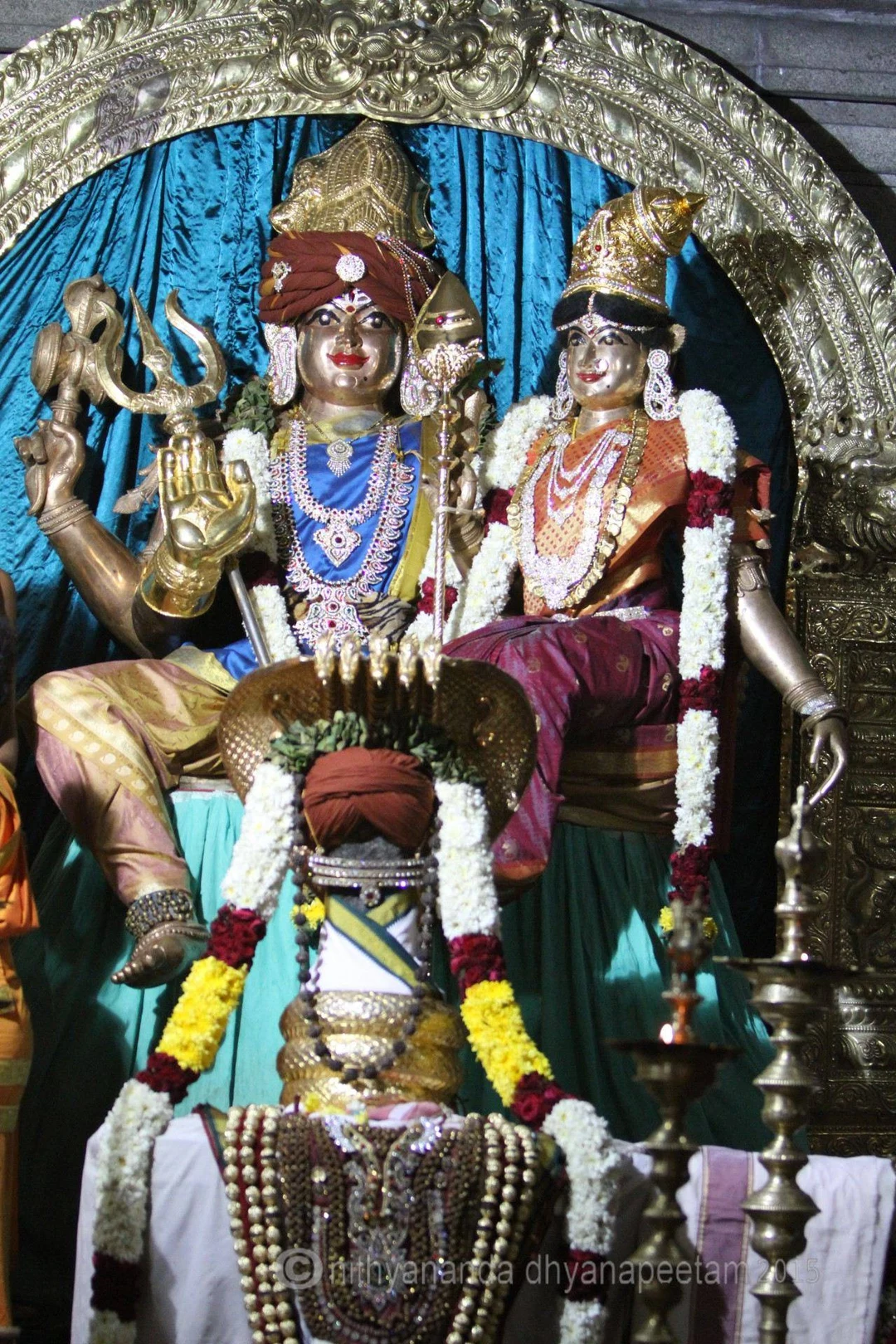
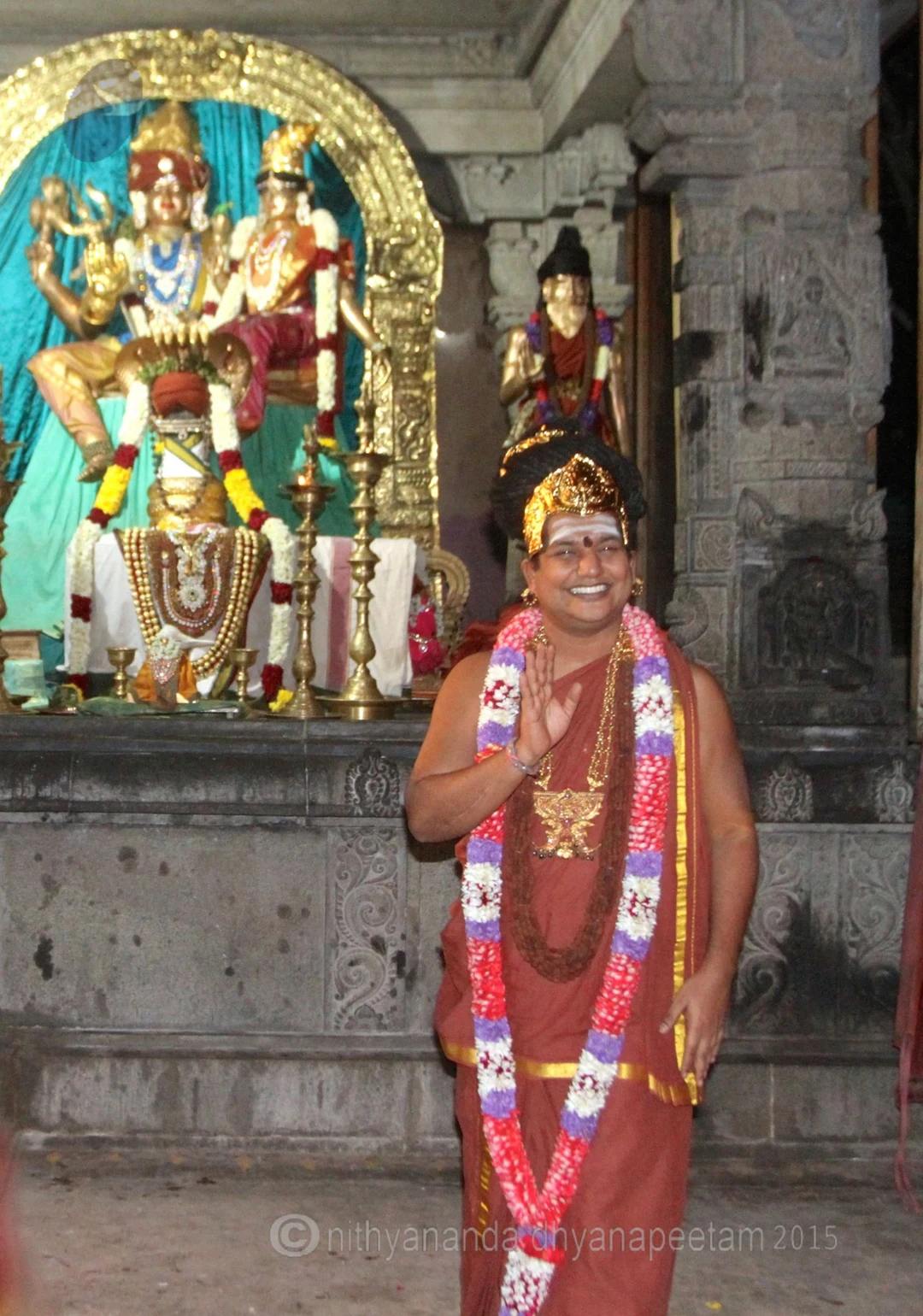
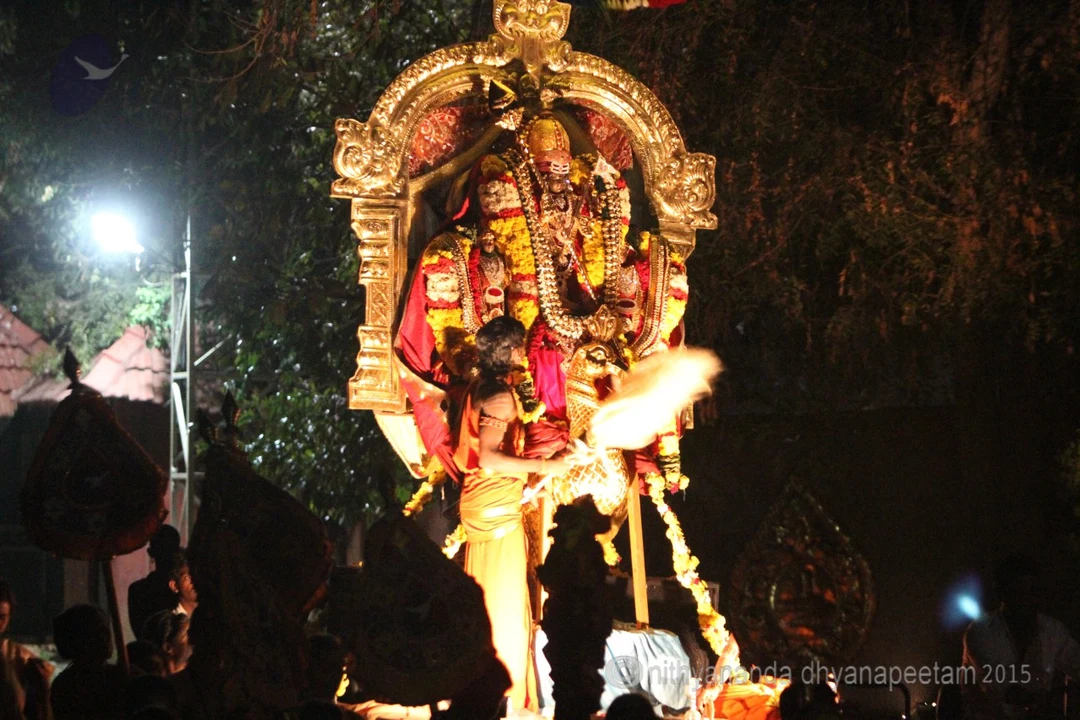
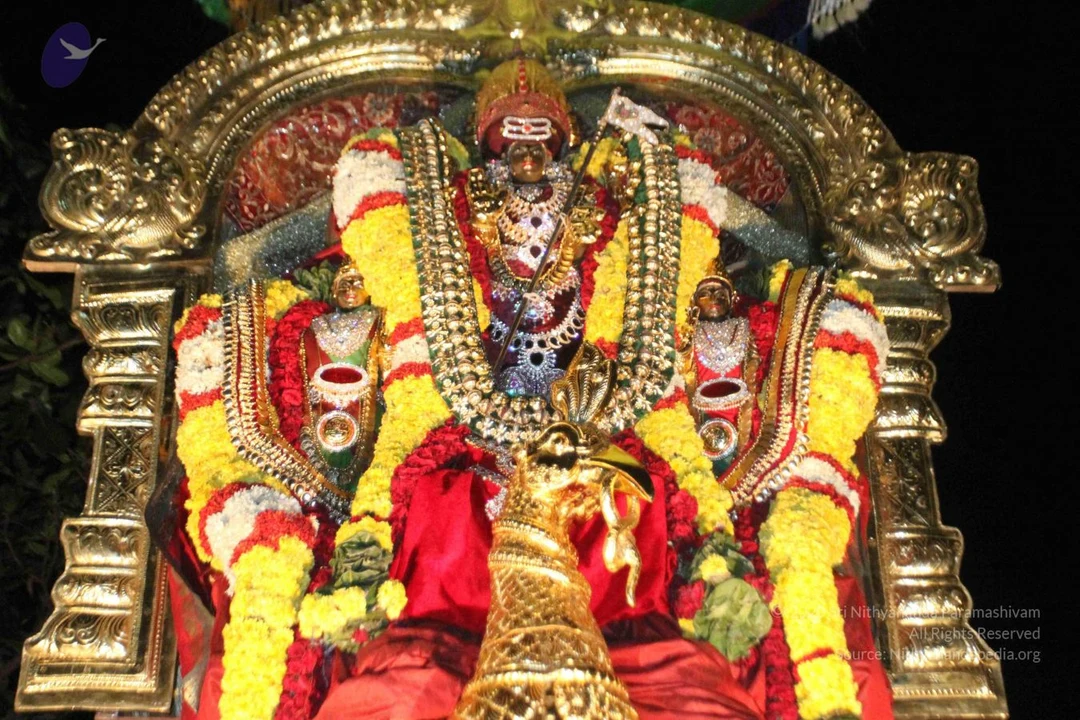
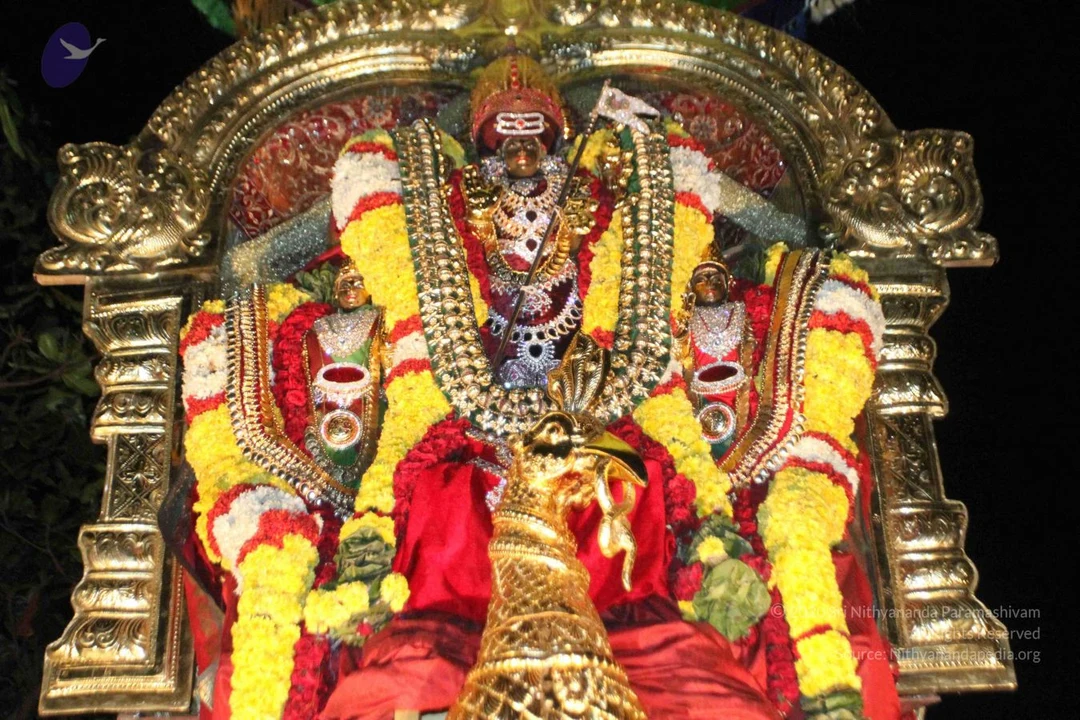
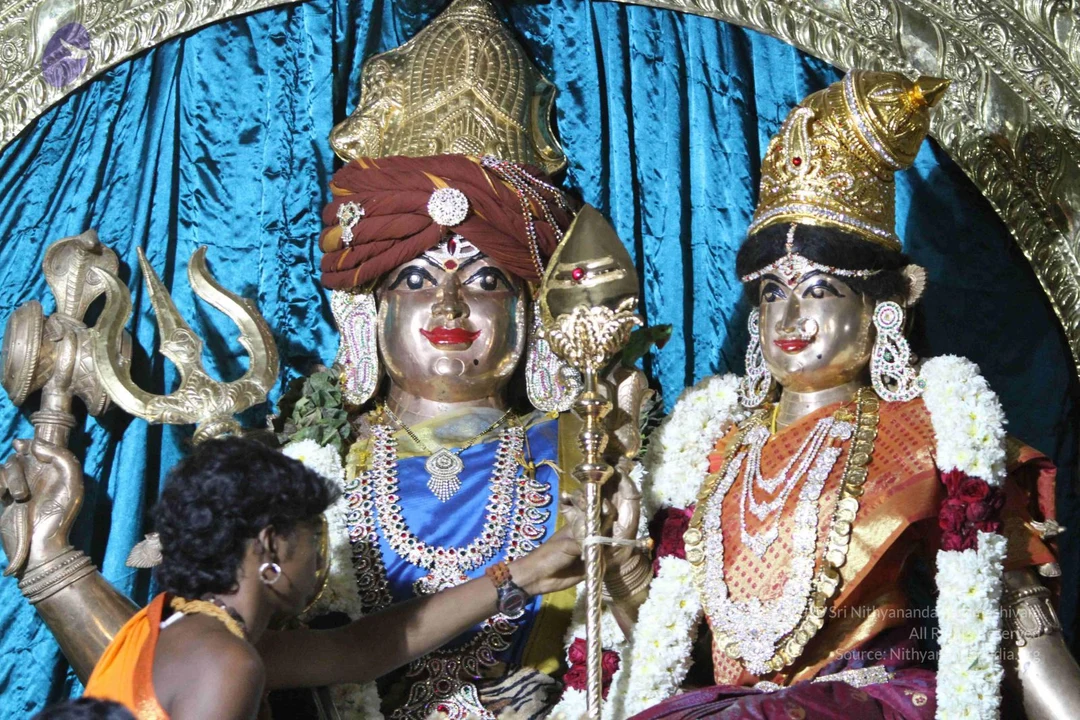
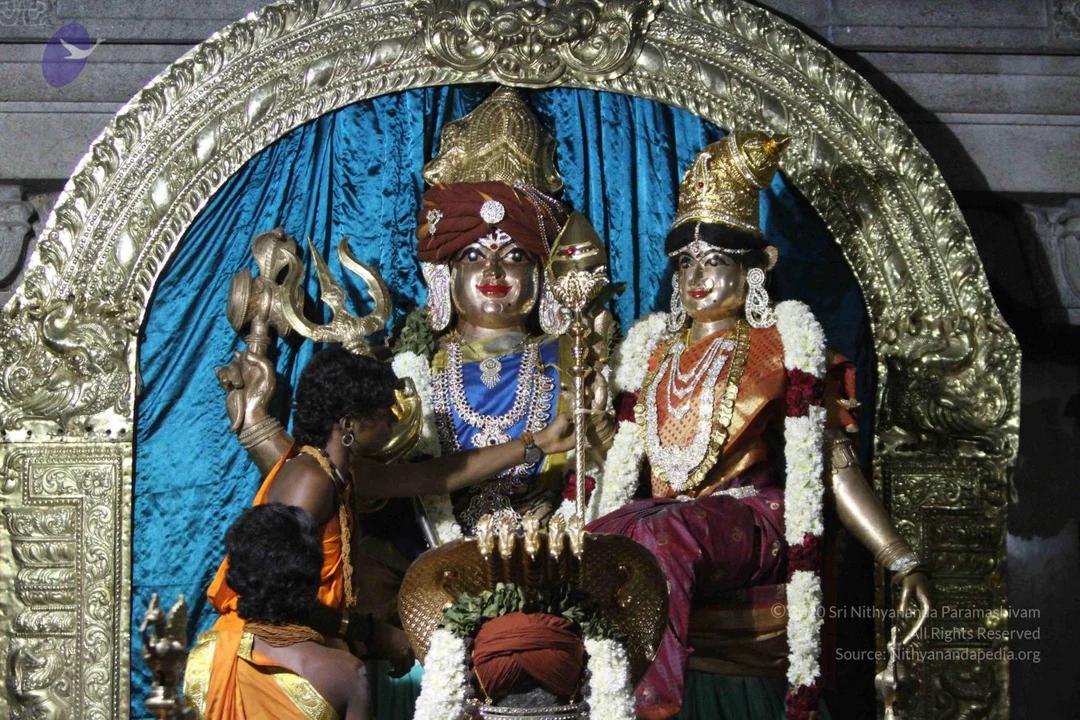
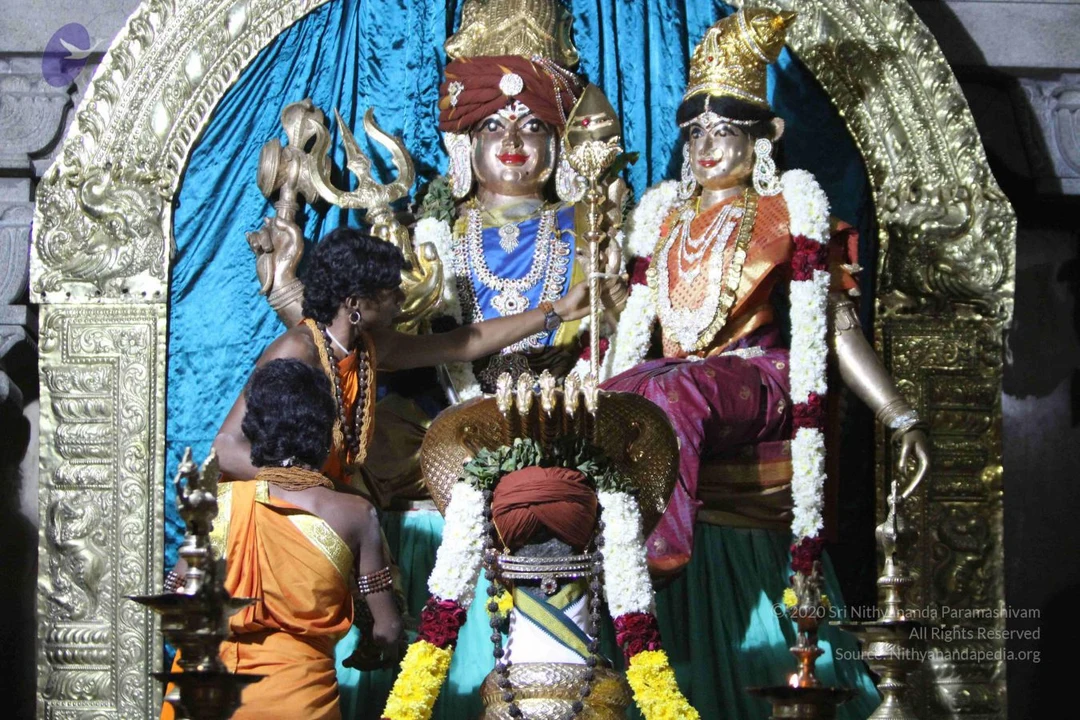
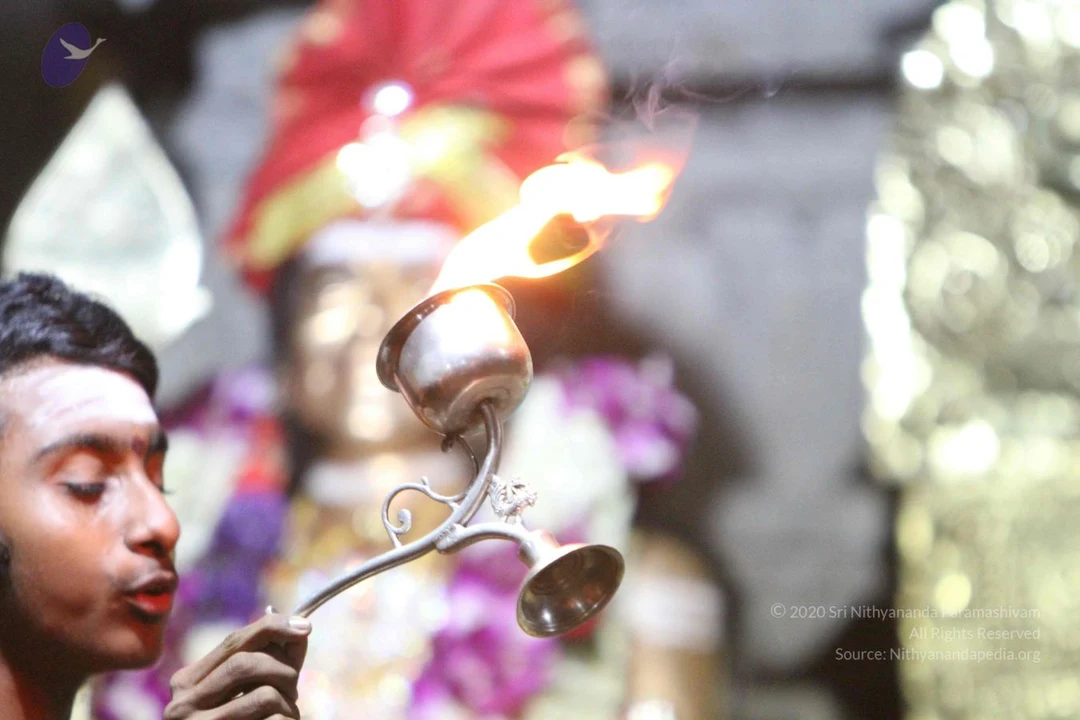
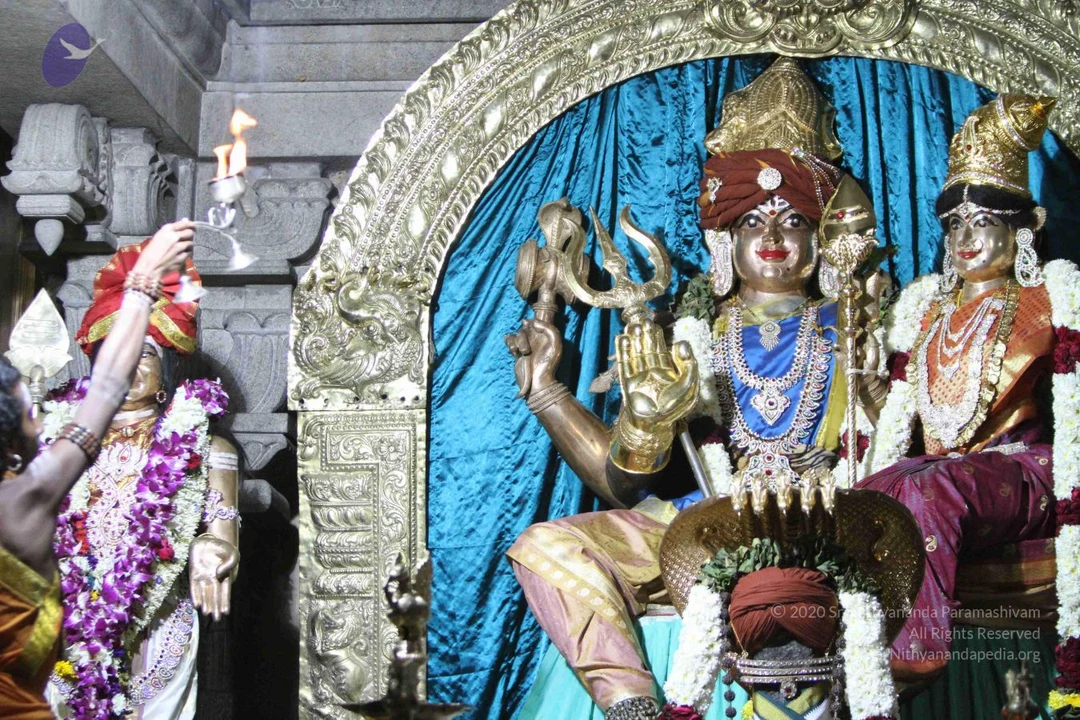
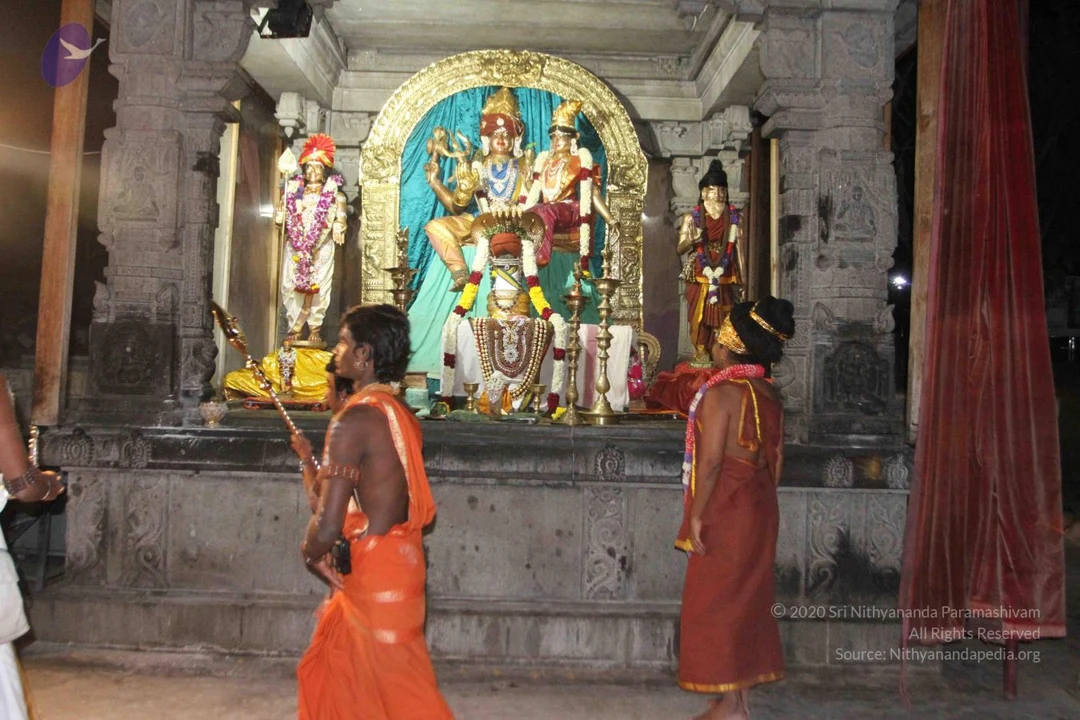
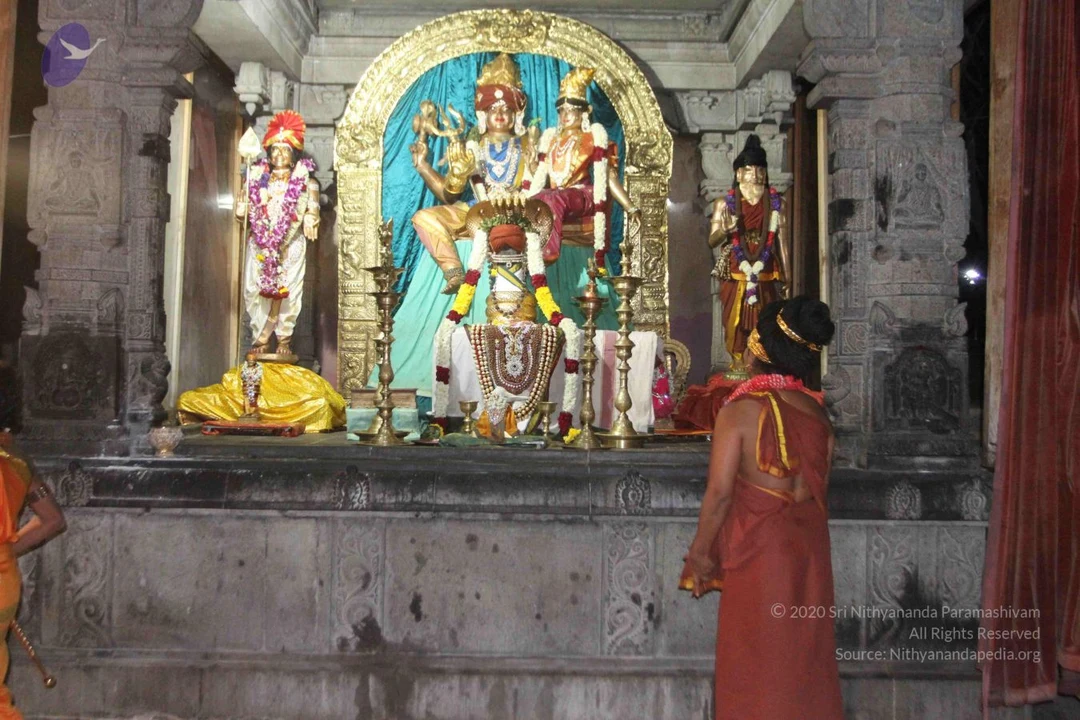
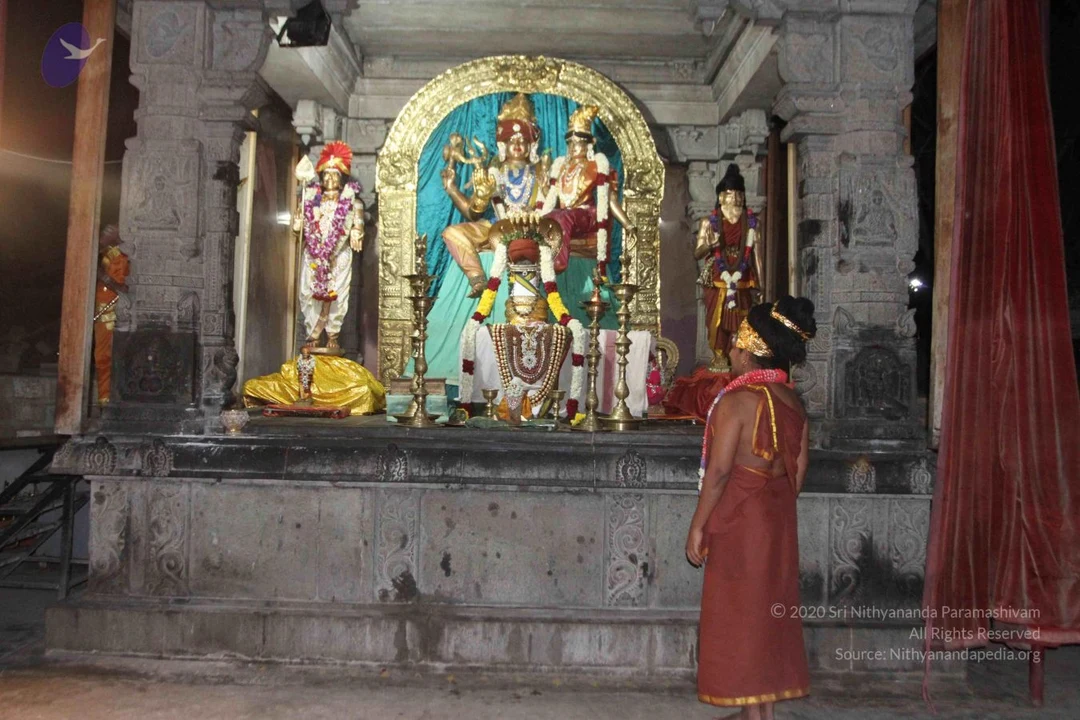
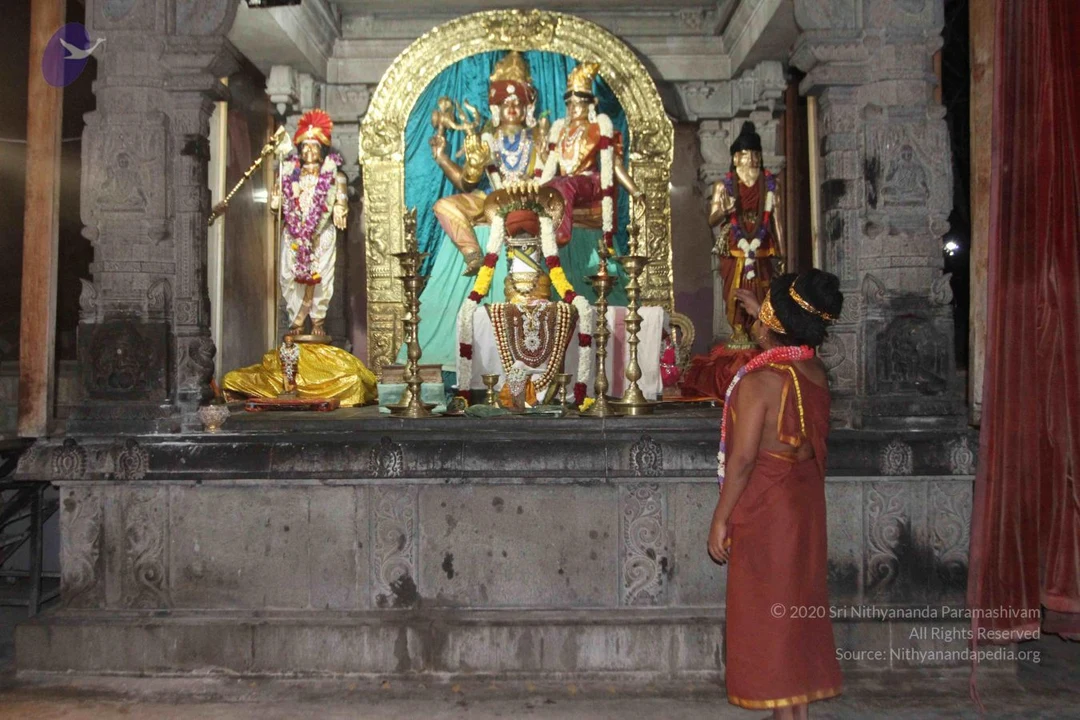
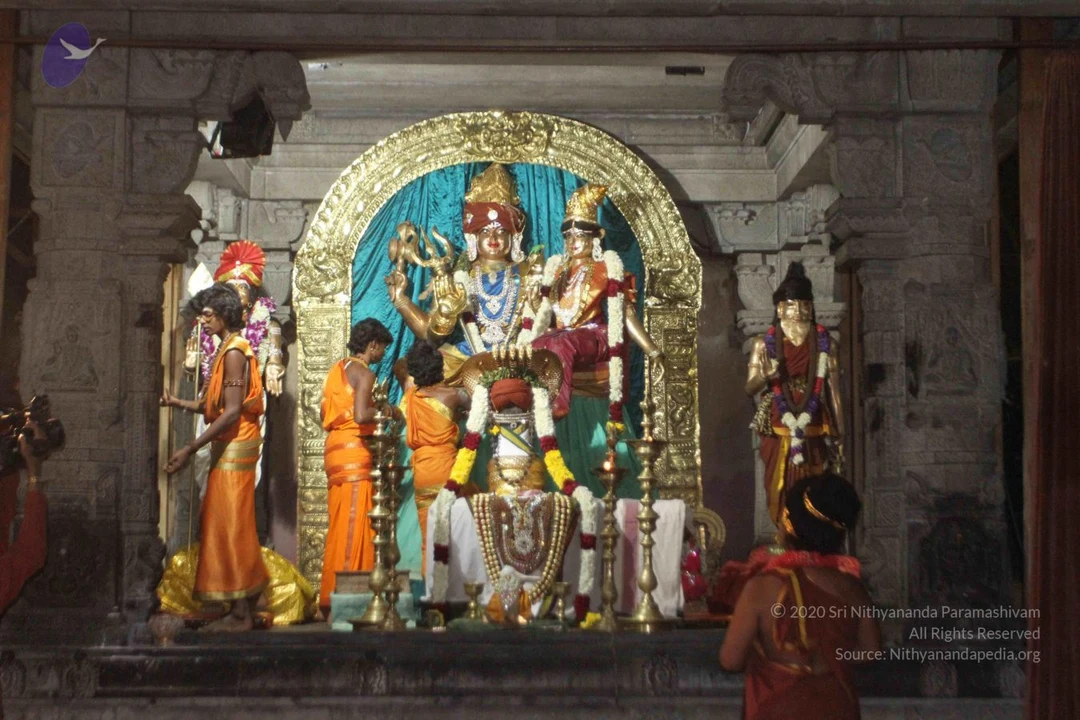
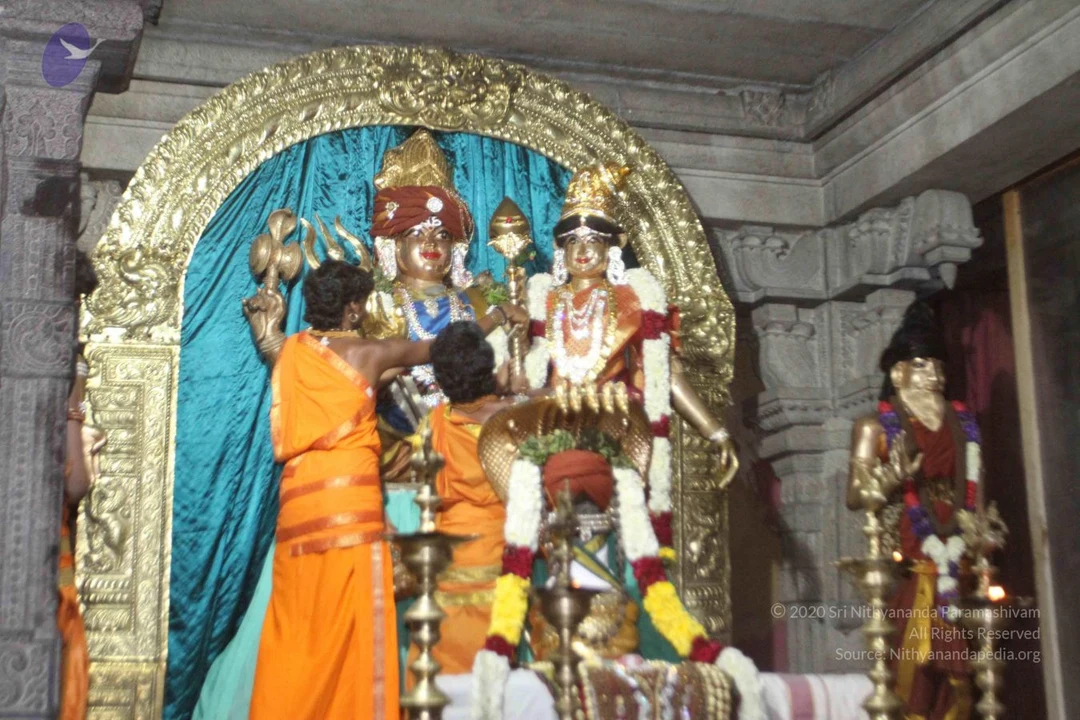
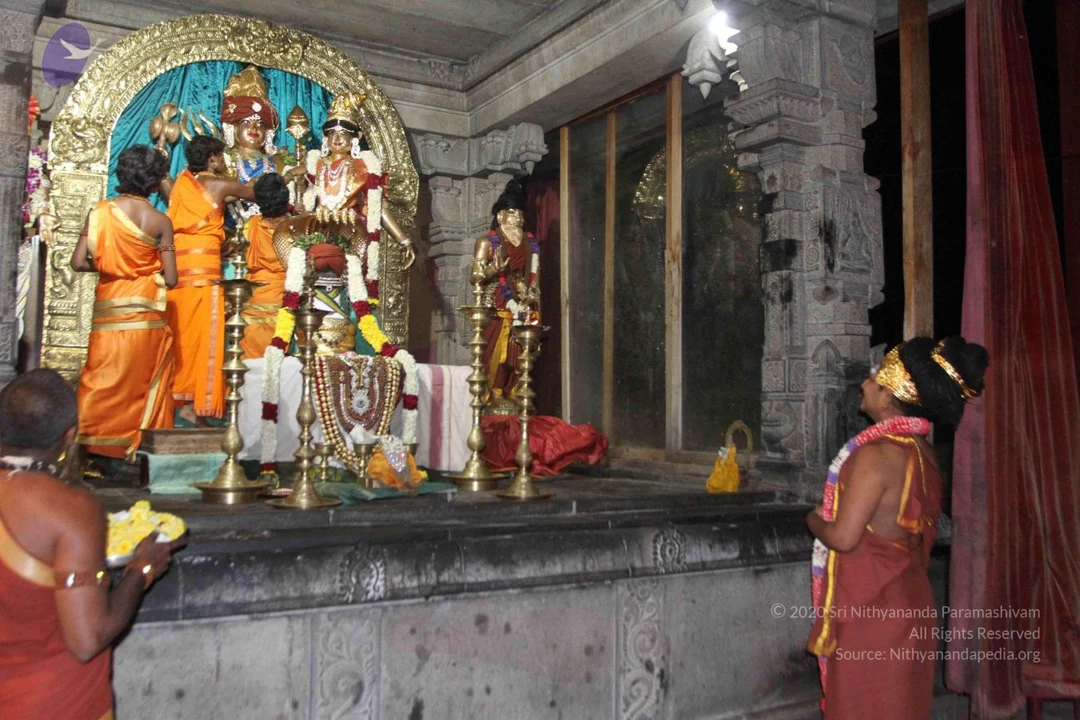
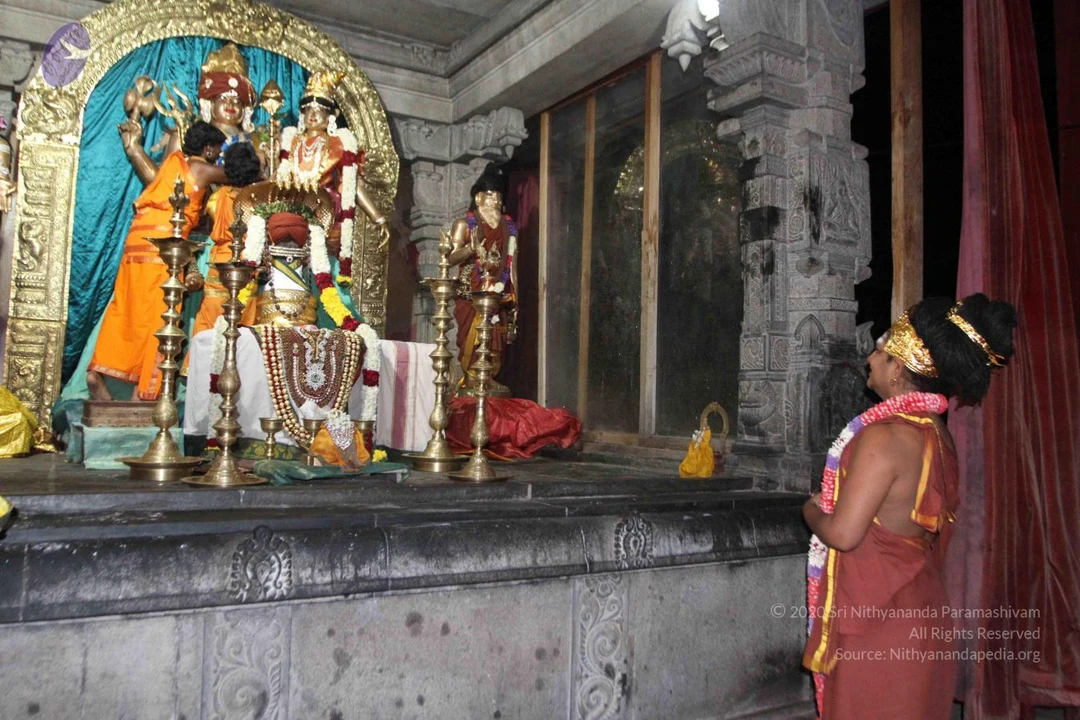
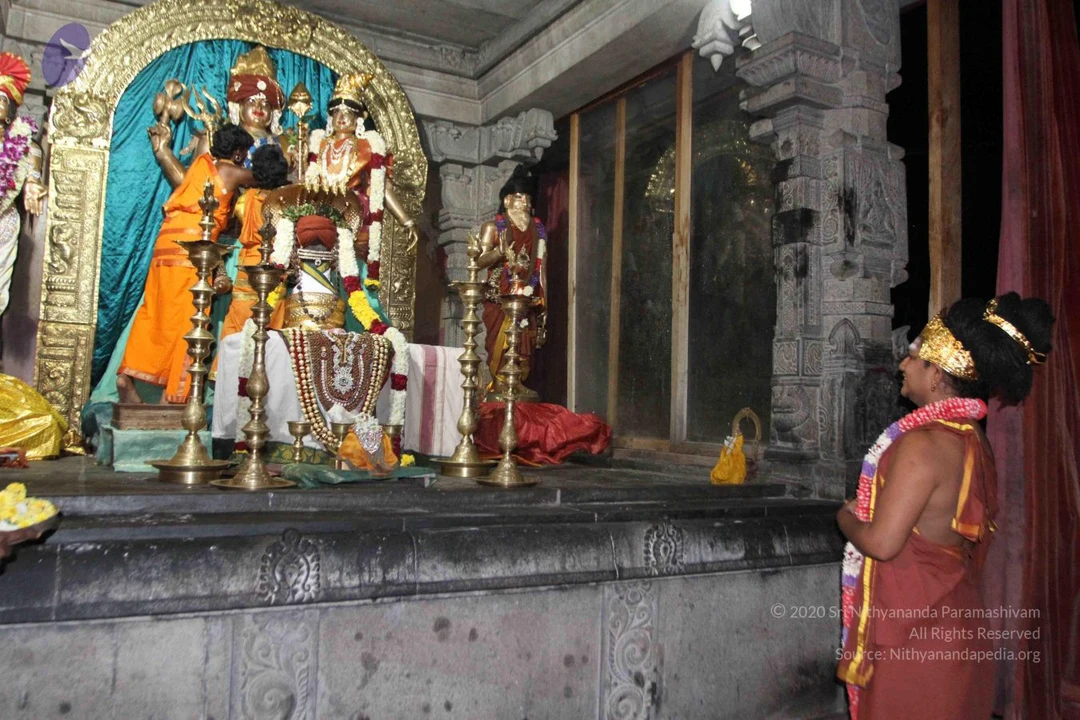
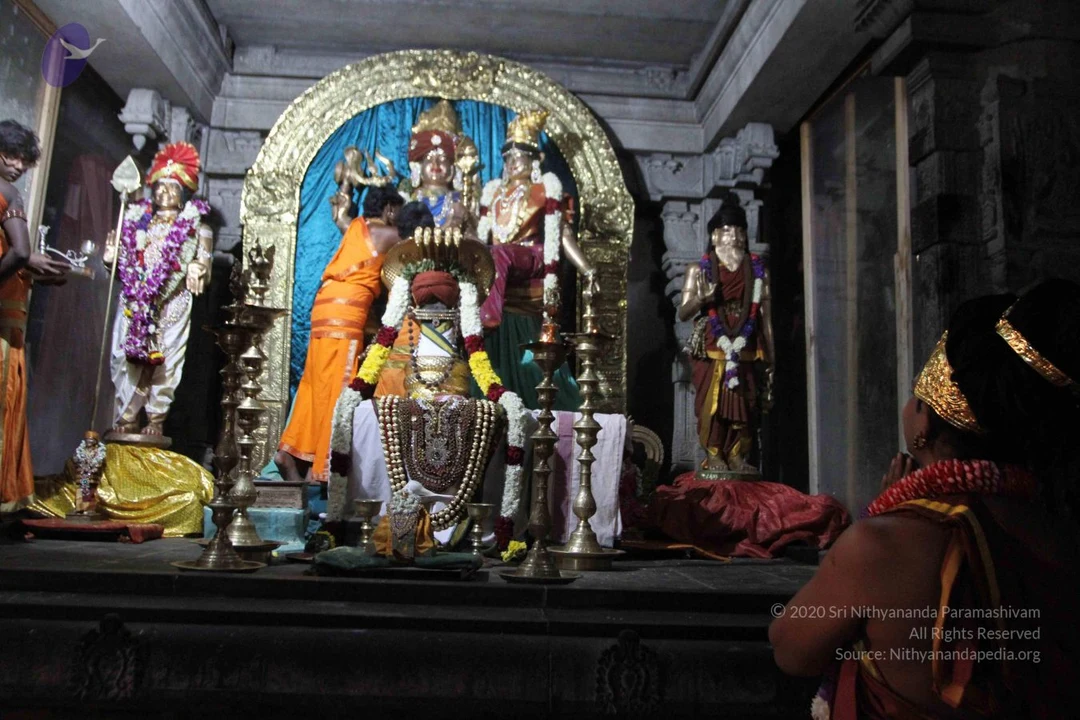
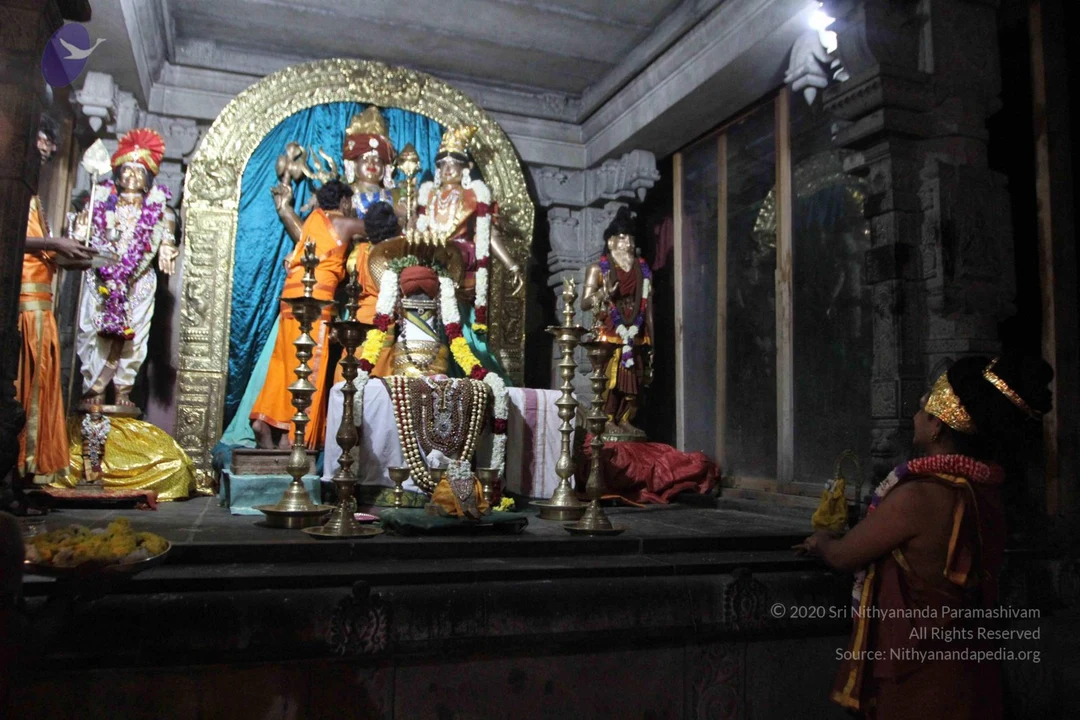
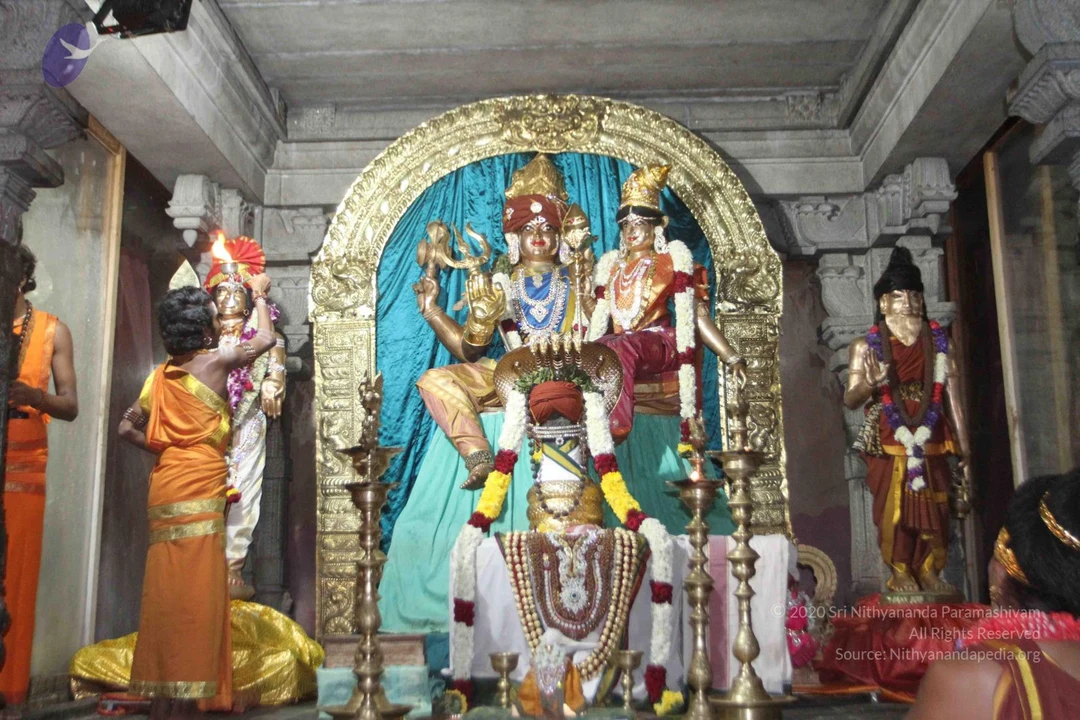
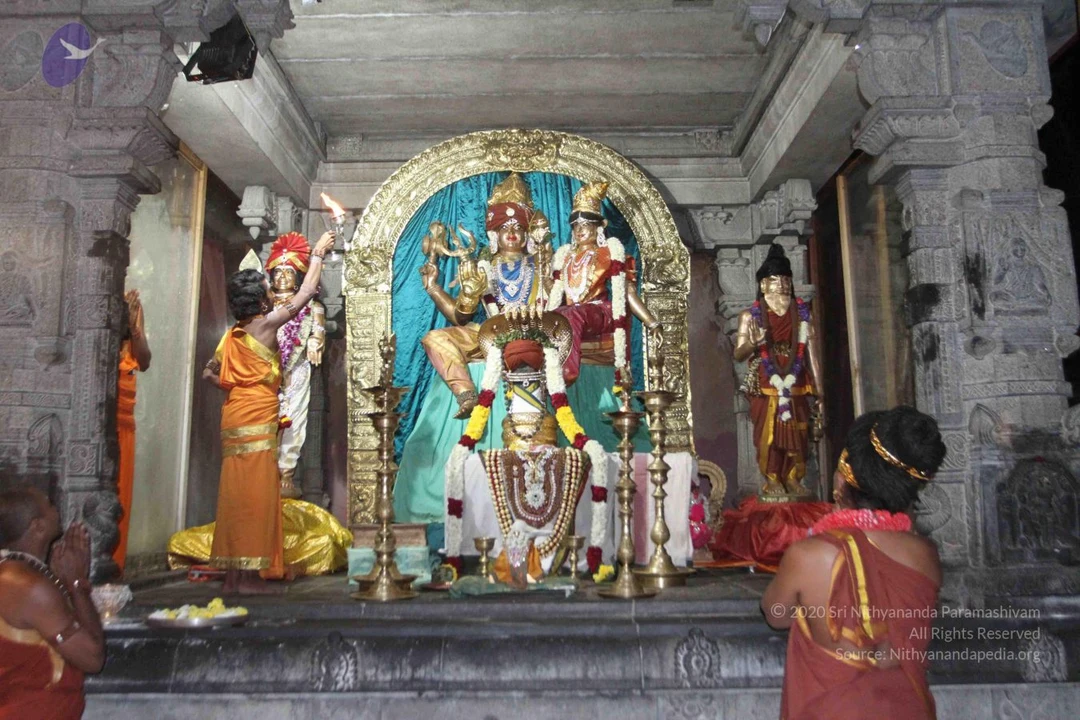
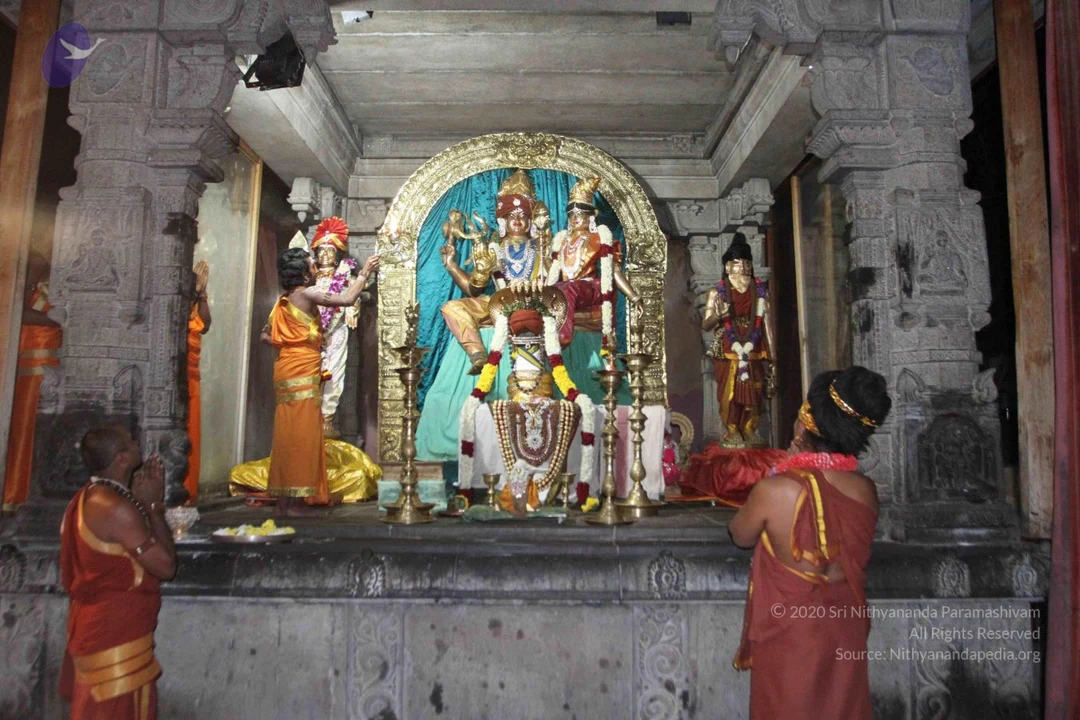
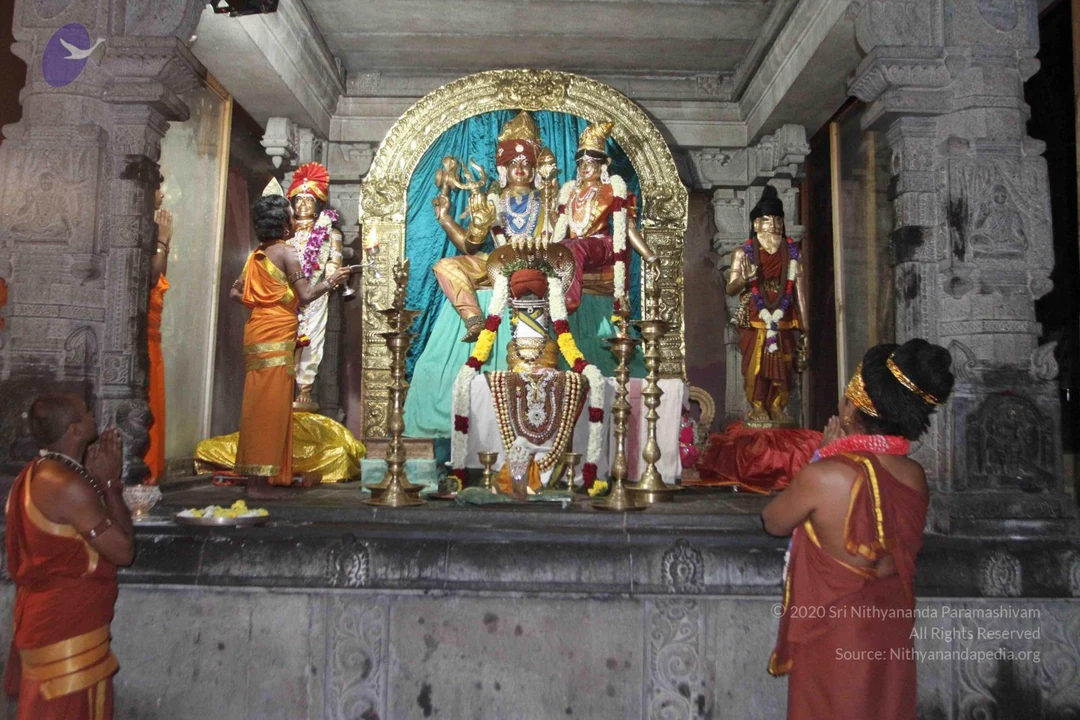
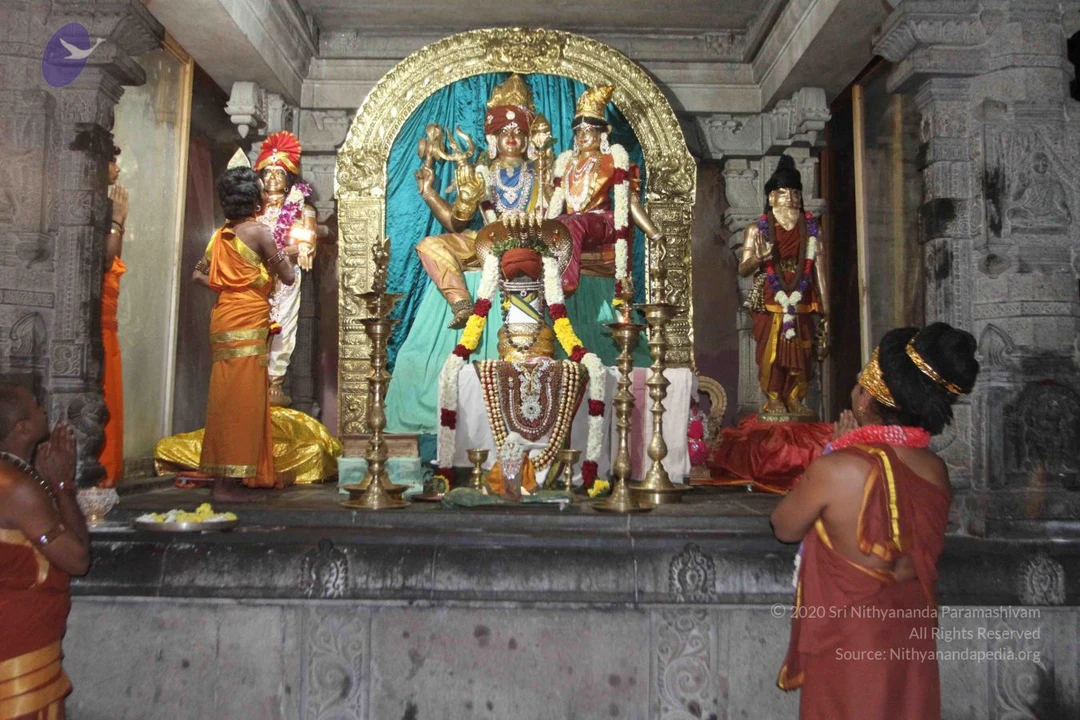
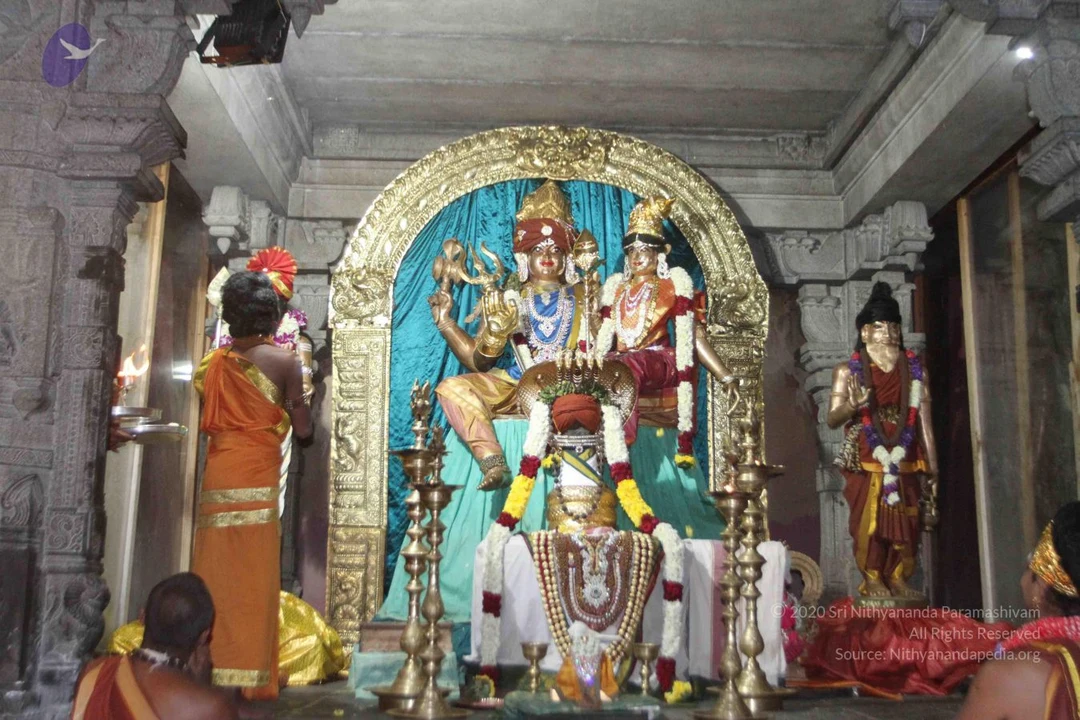
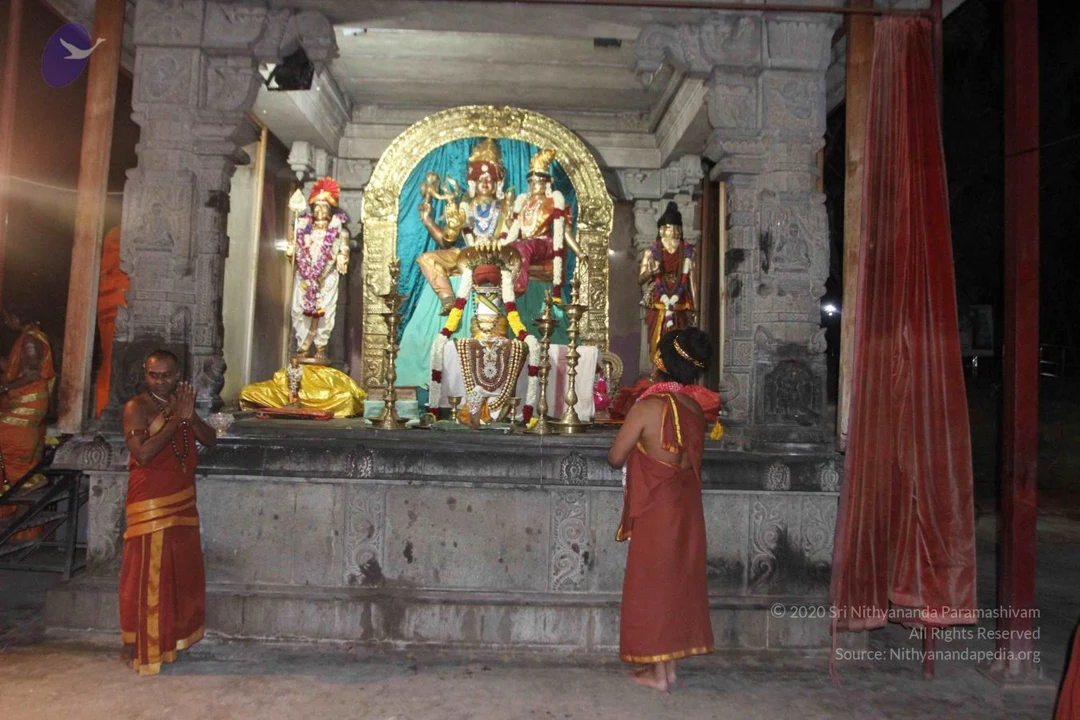
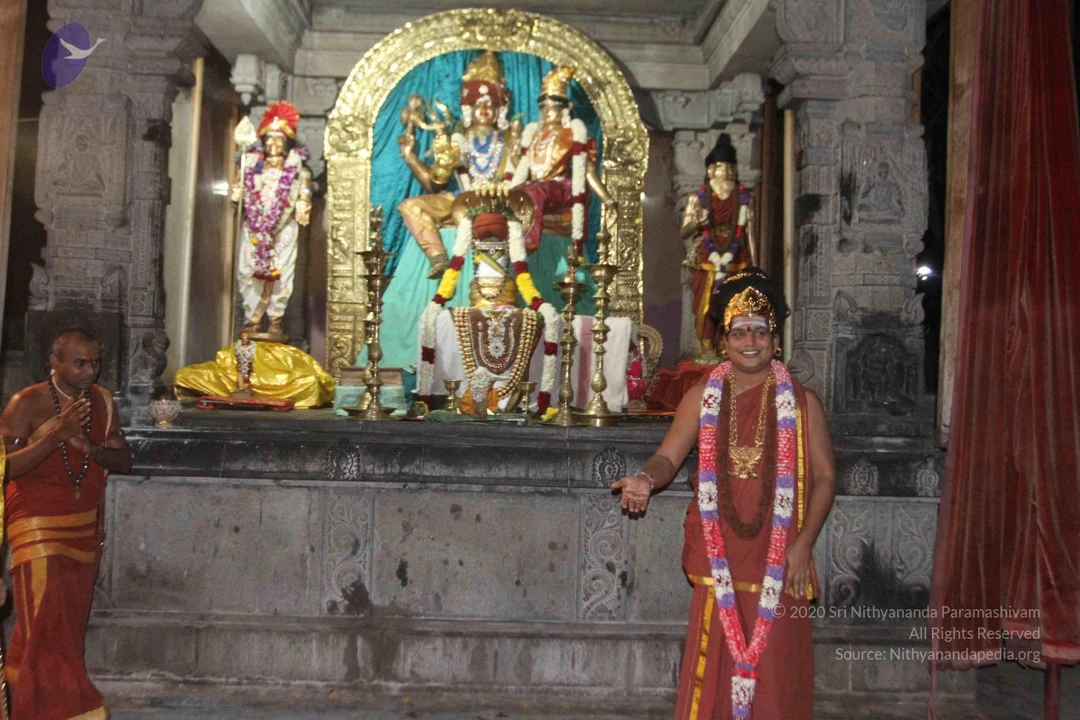
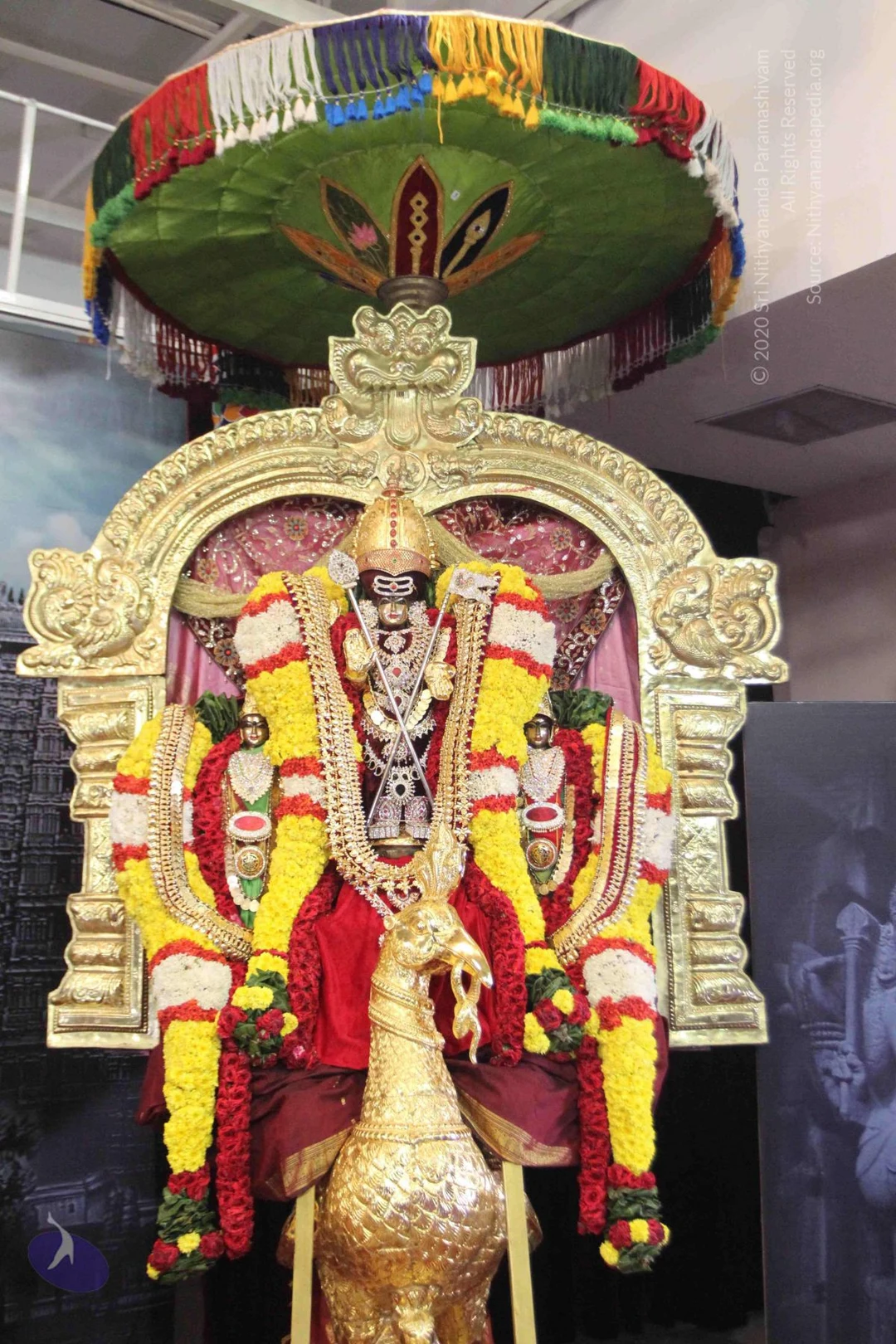
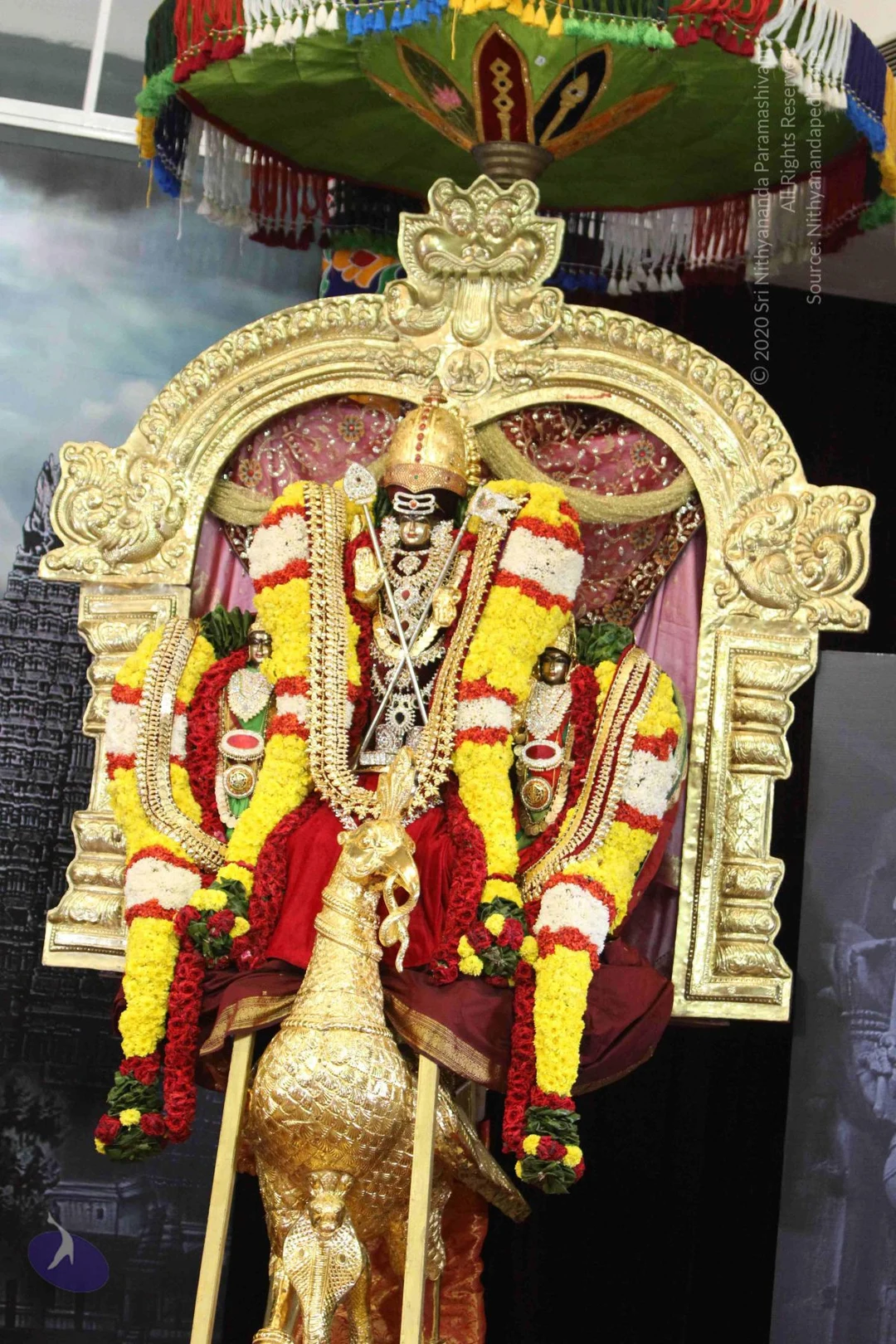
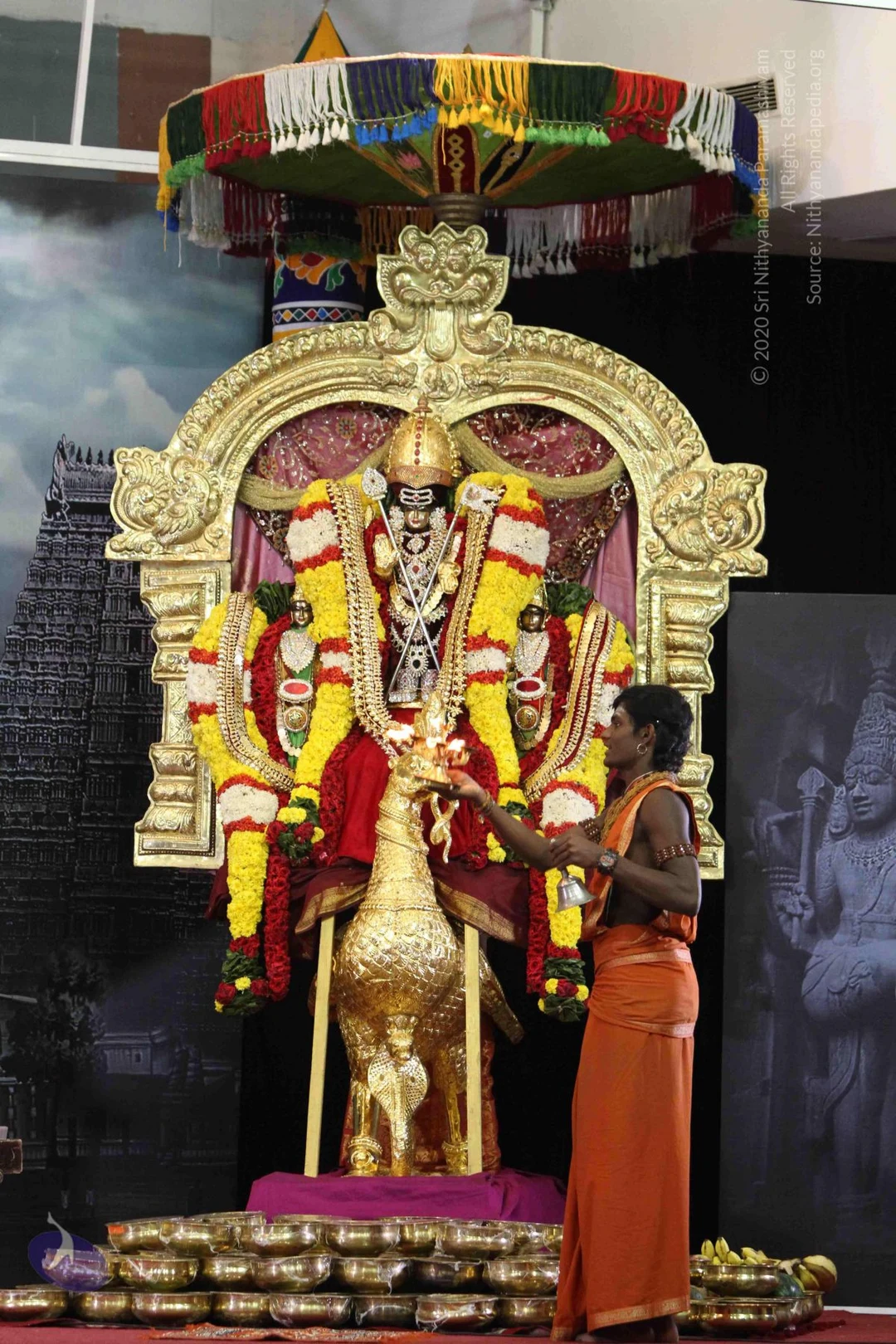
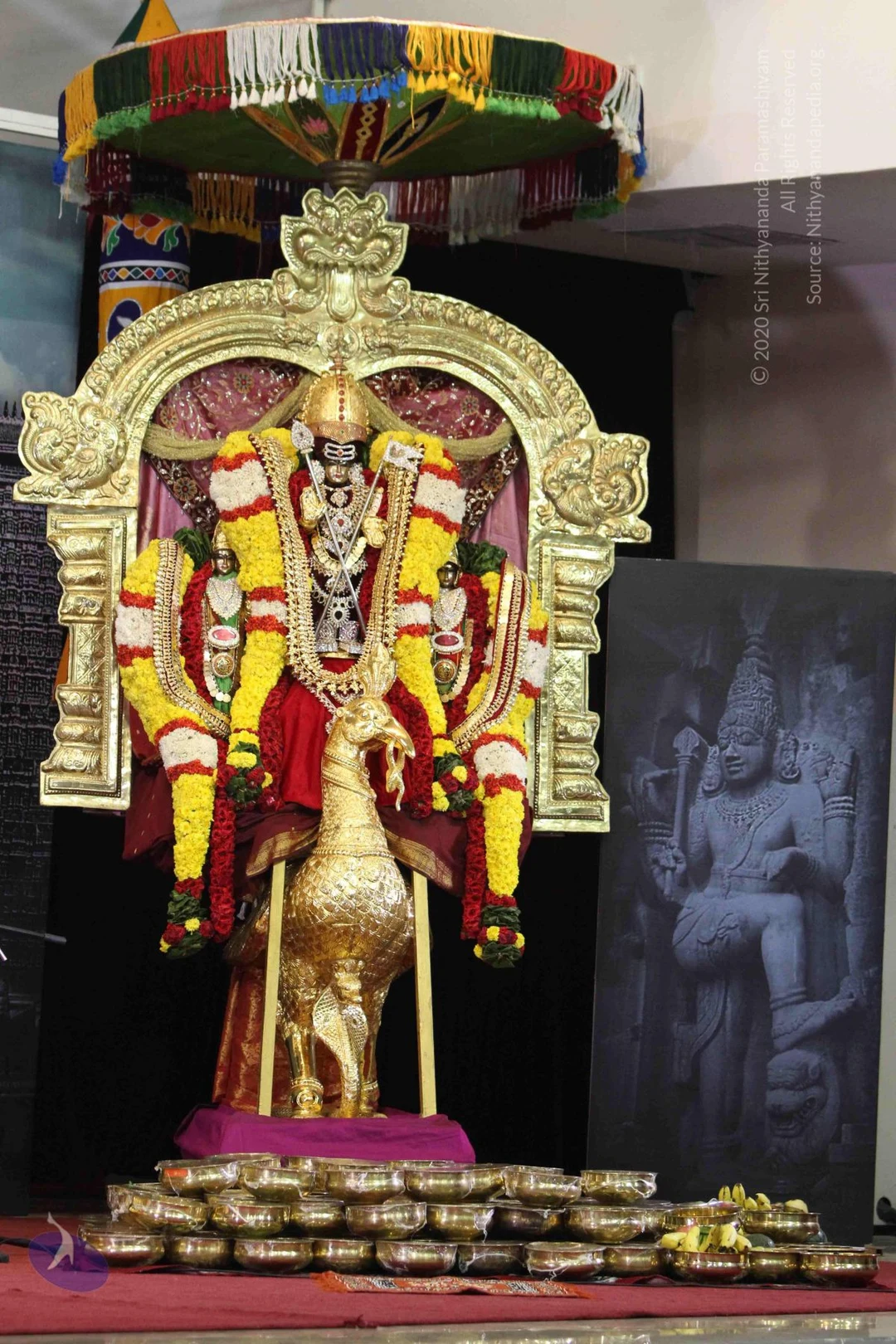
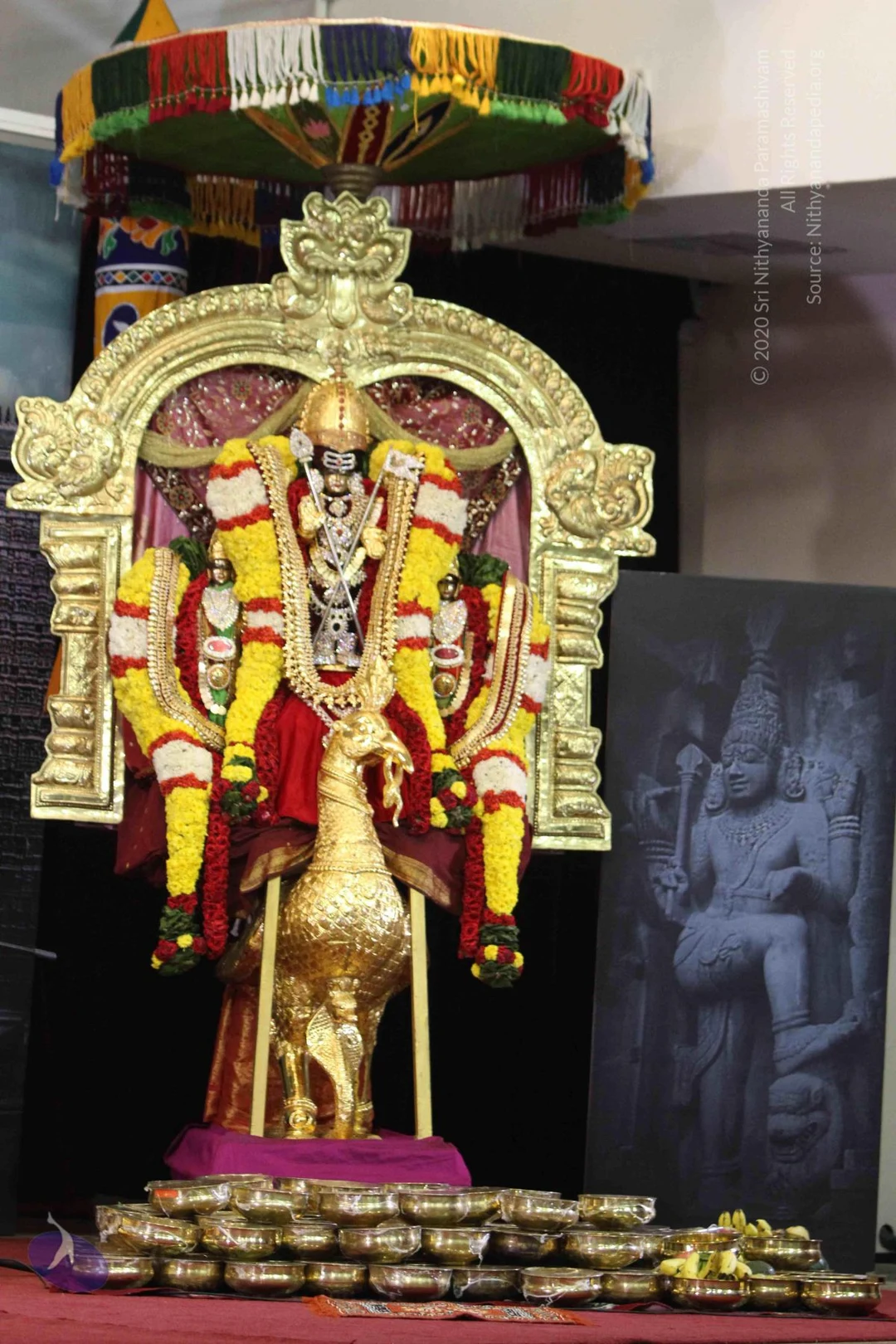
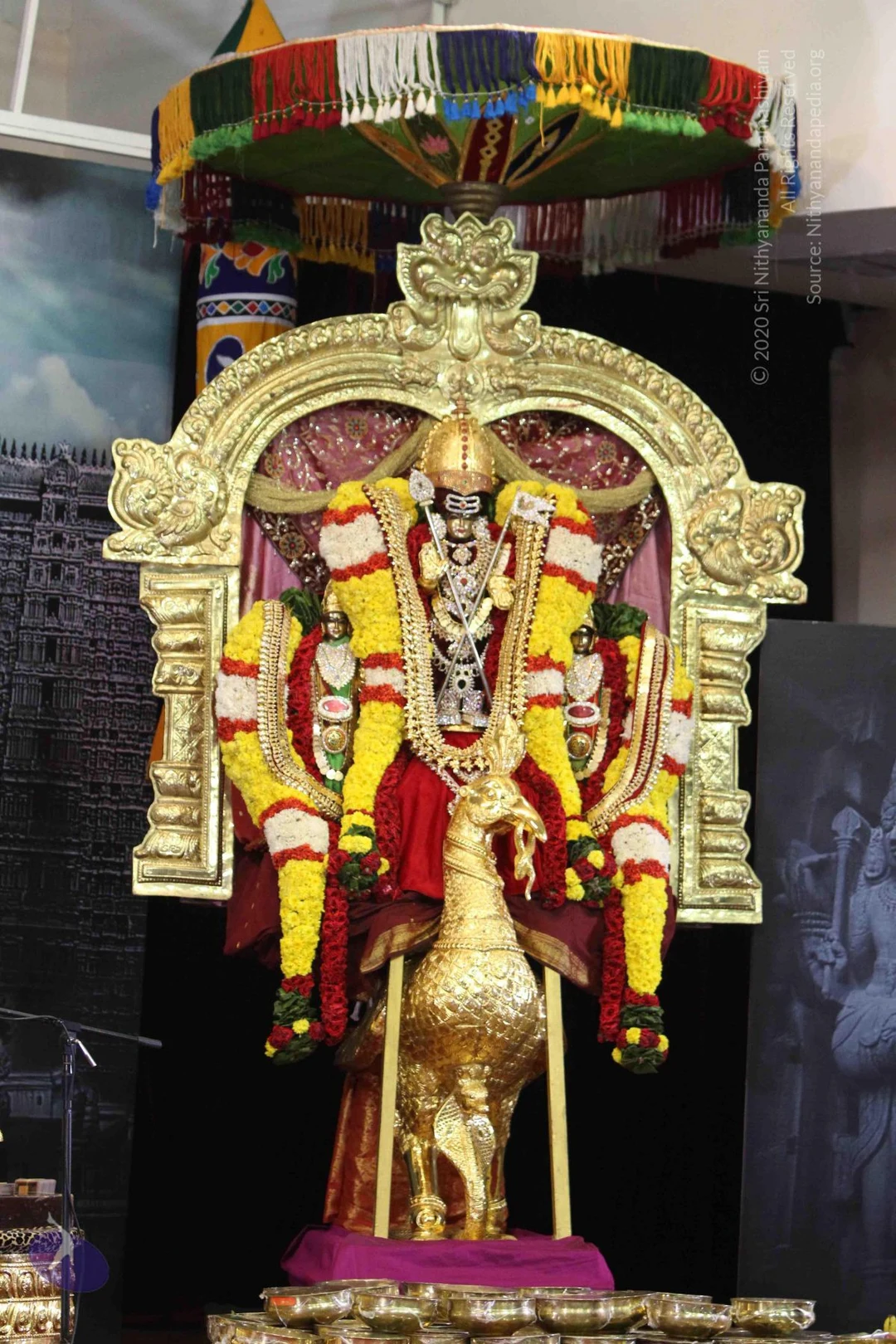
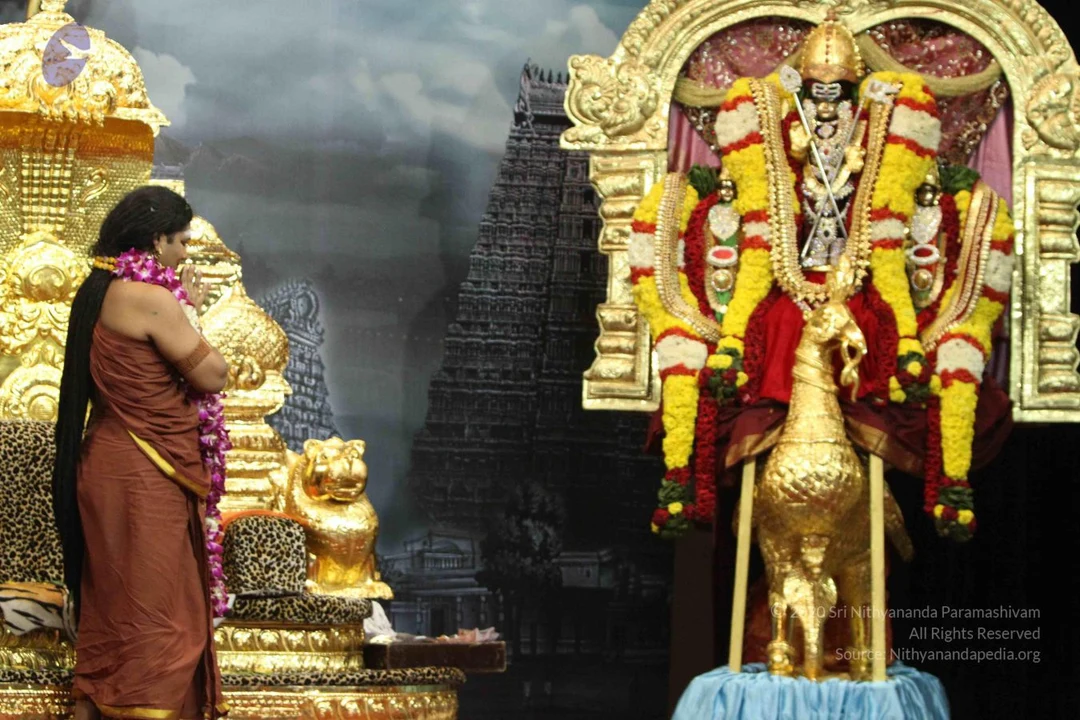
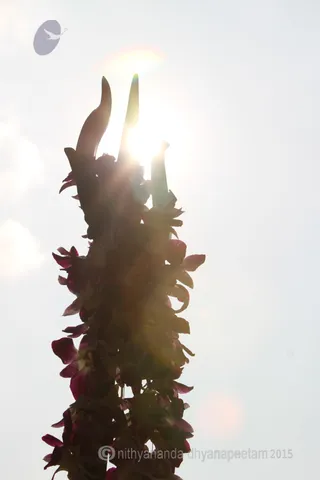
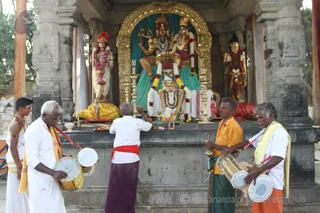
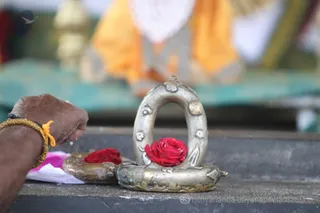
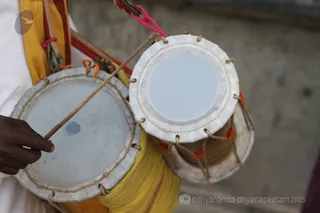
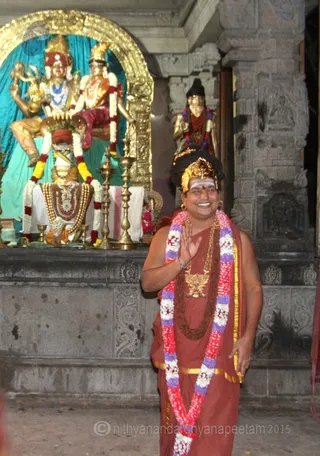
Celebrating Thaipusam at Nithyanandeshwara Paramashiva Devalayam
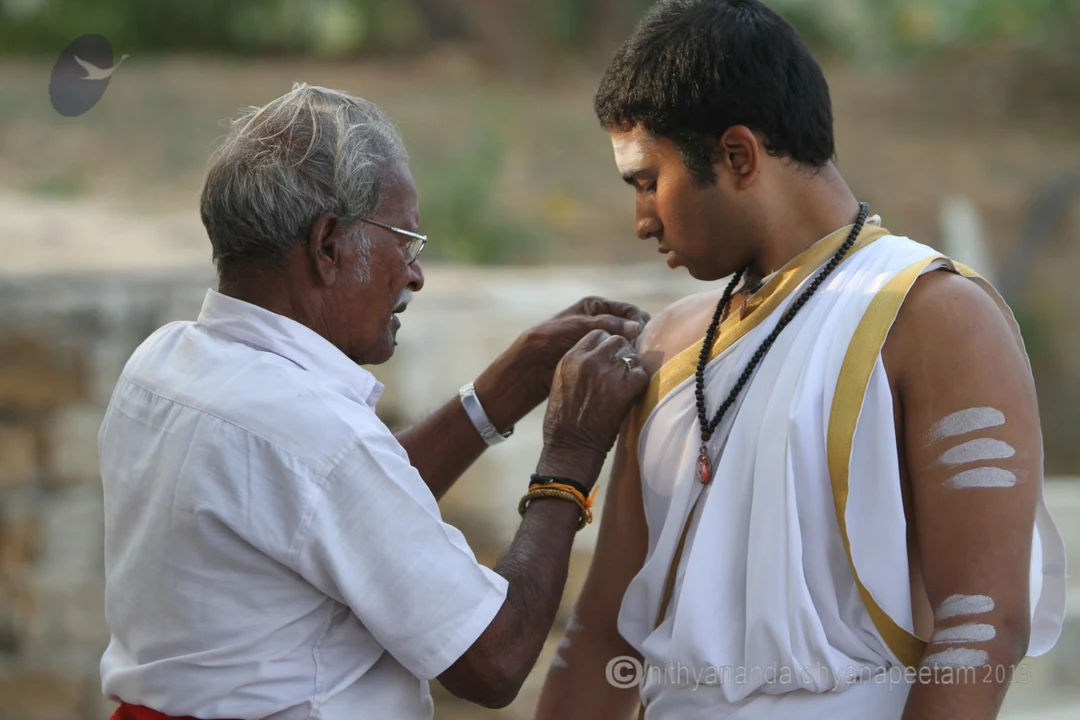
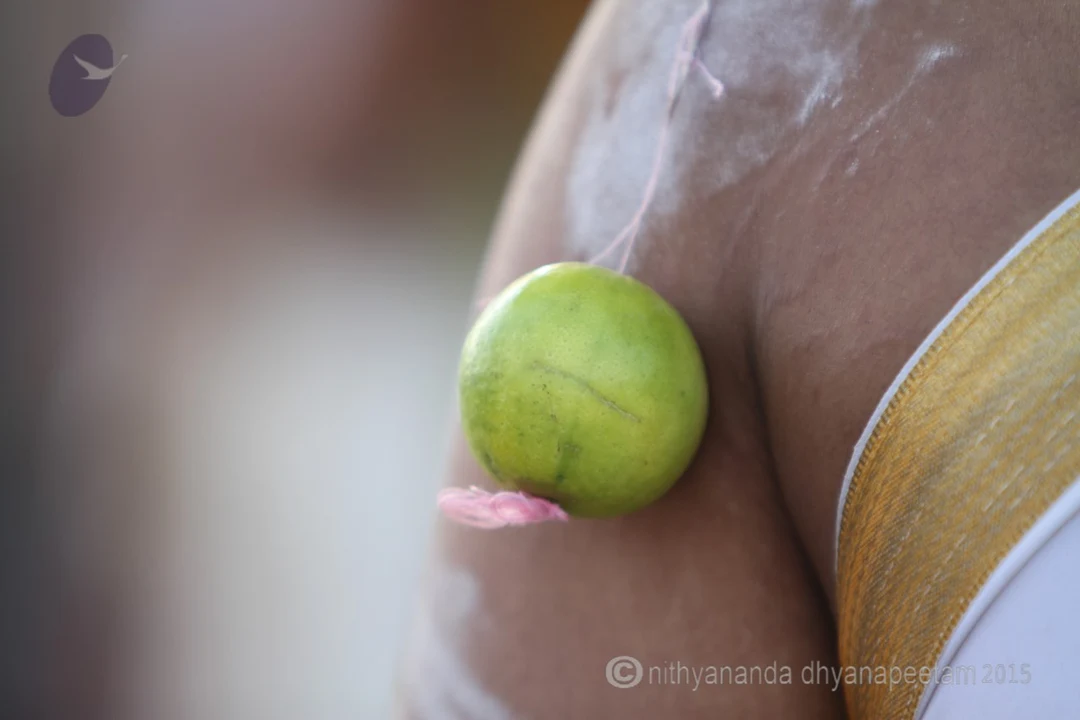
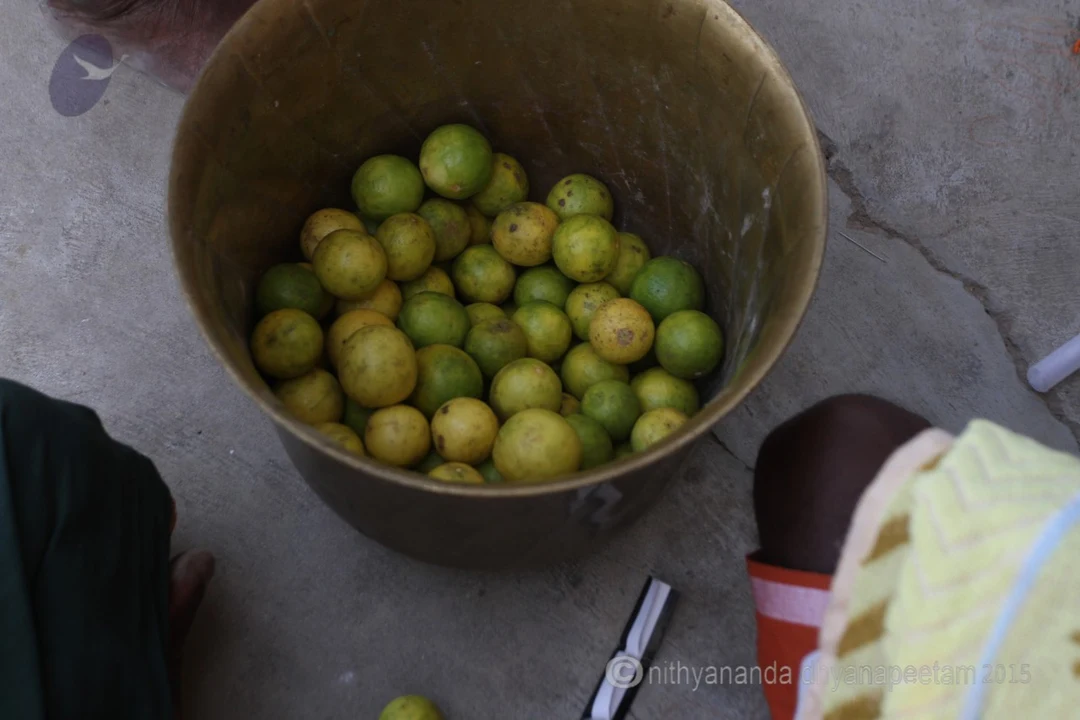
Lemon piercing

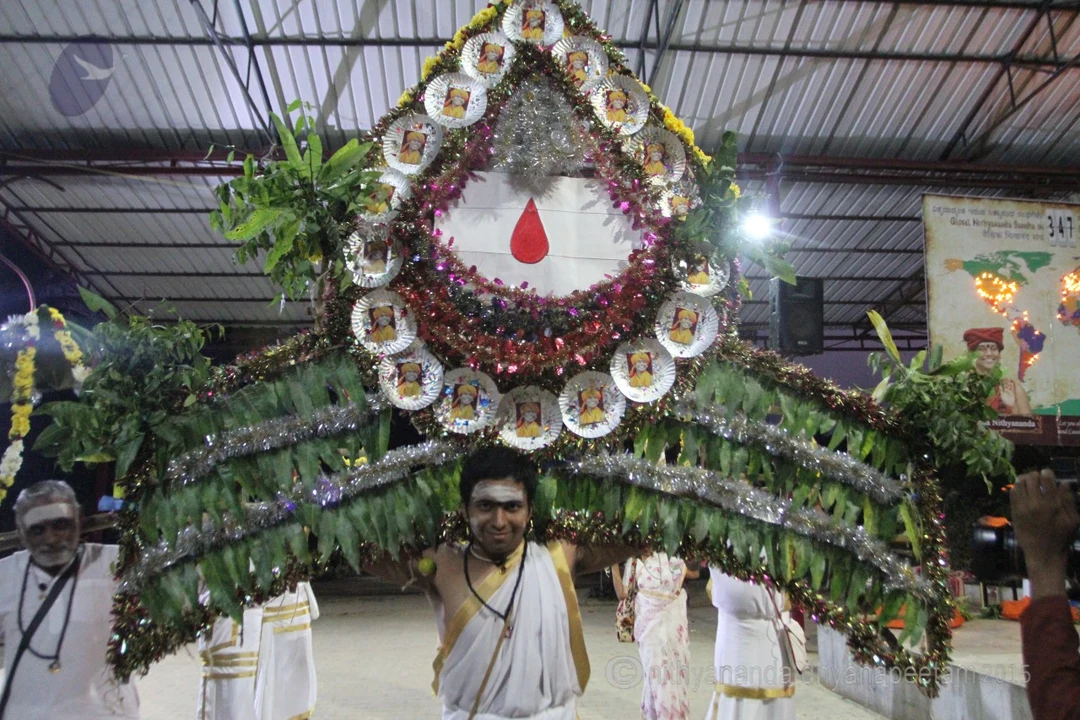
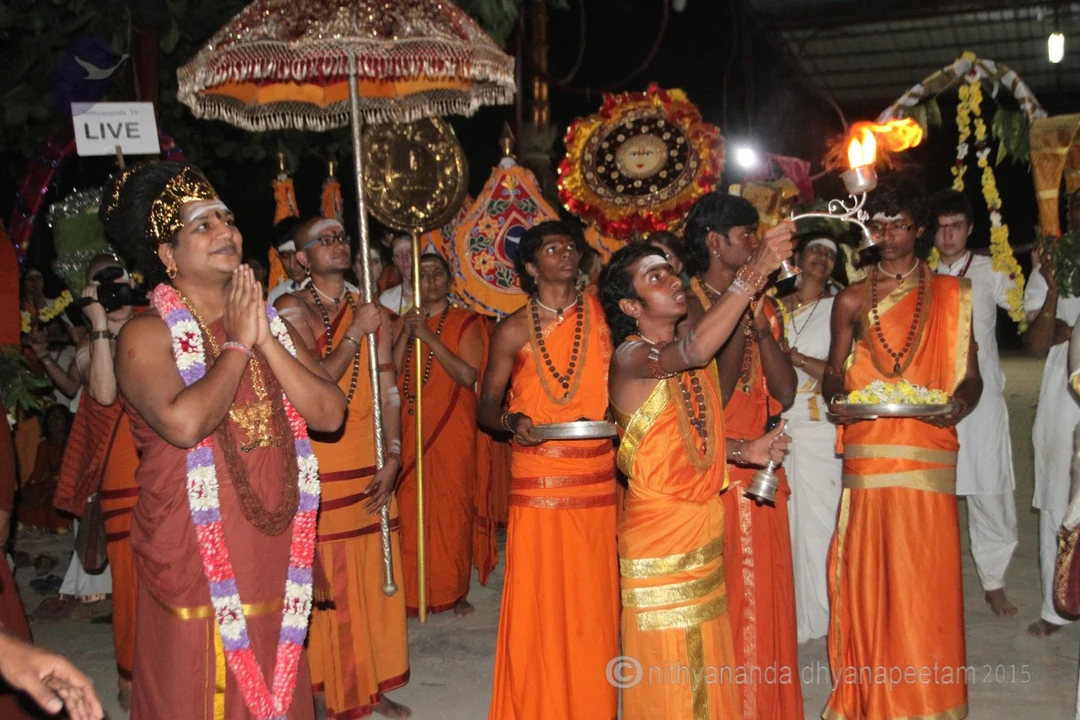
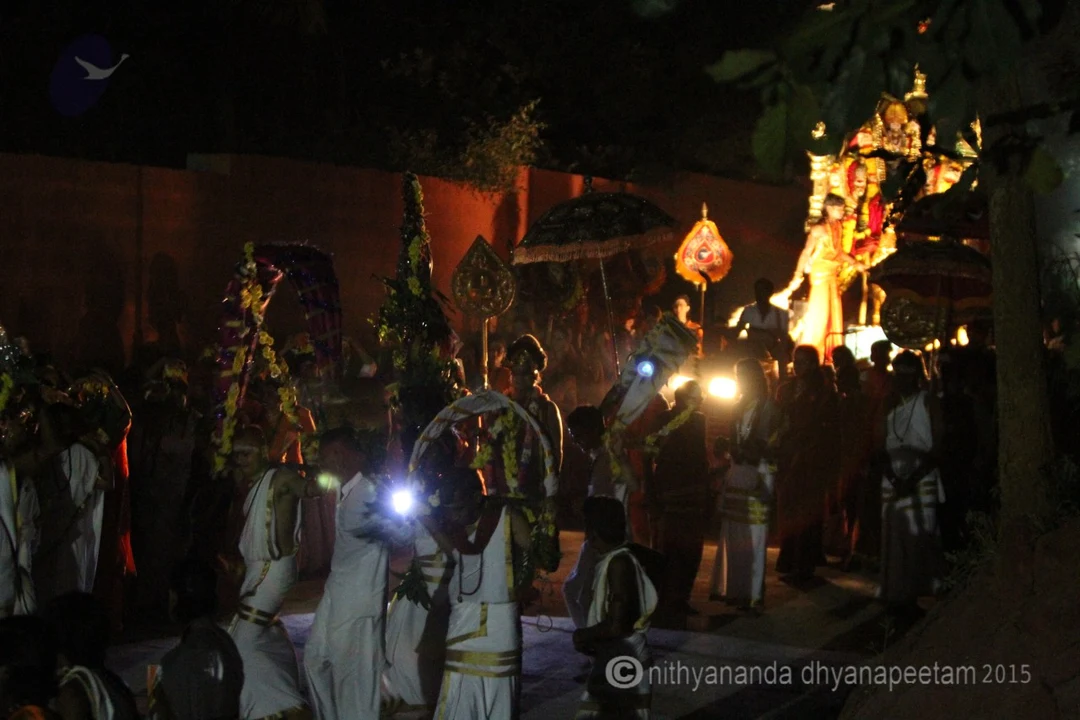
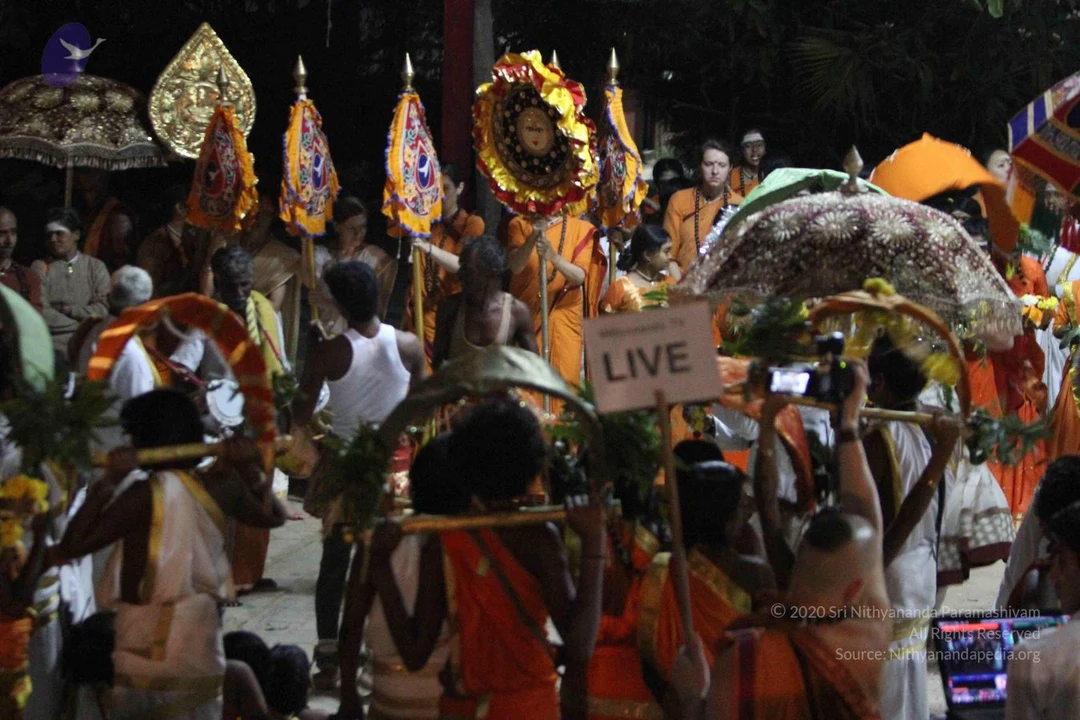
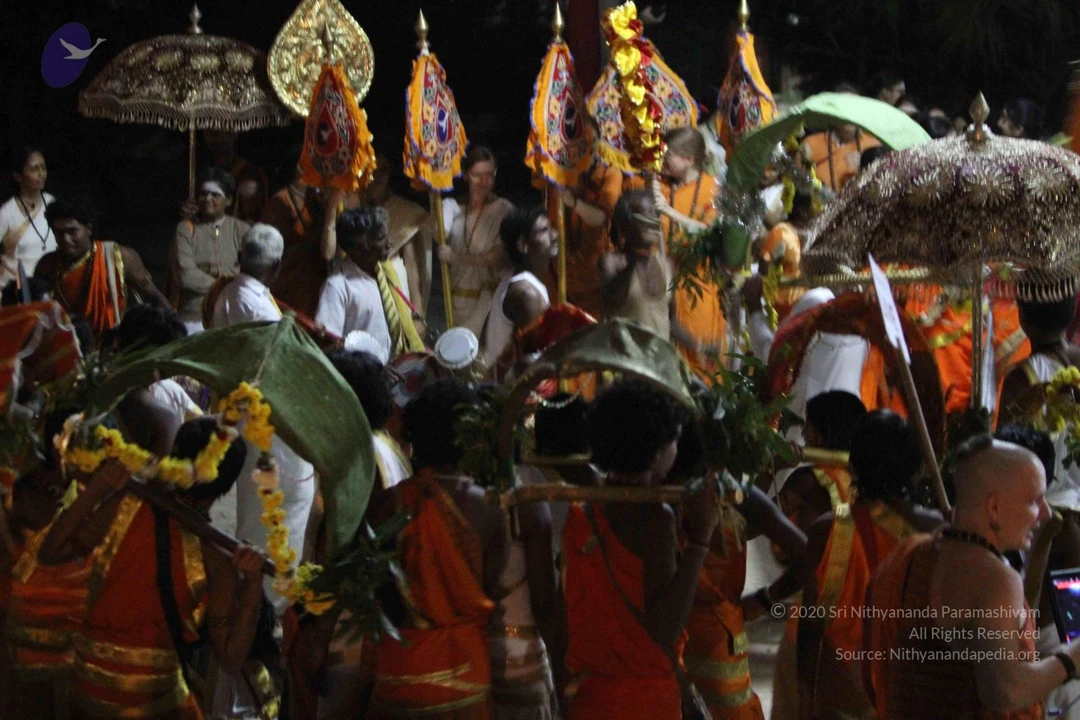
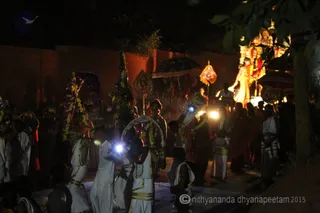
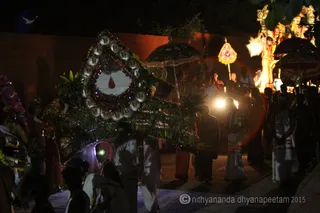
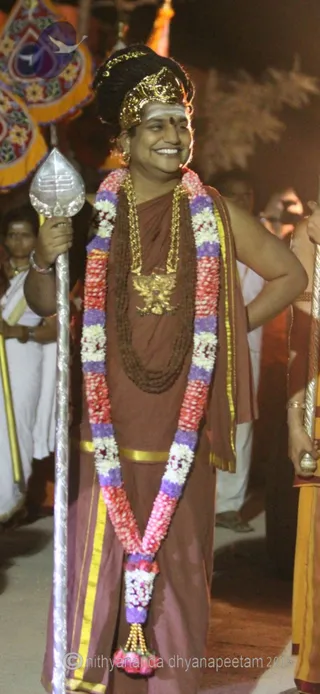
Procession

Day's Events

Overview of today's events at Nithyananda Peetham, Bengaluru Aadheenam:

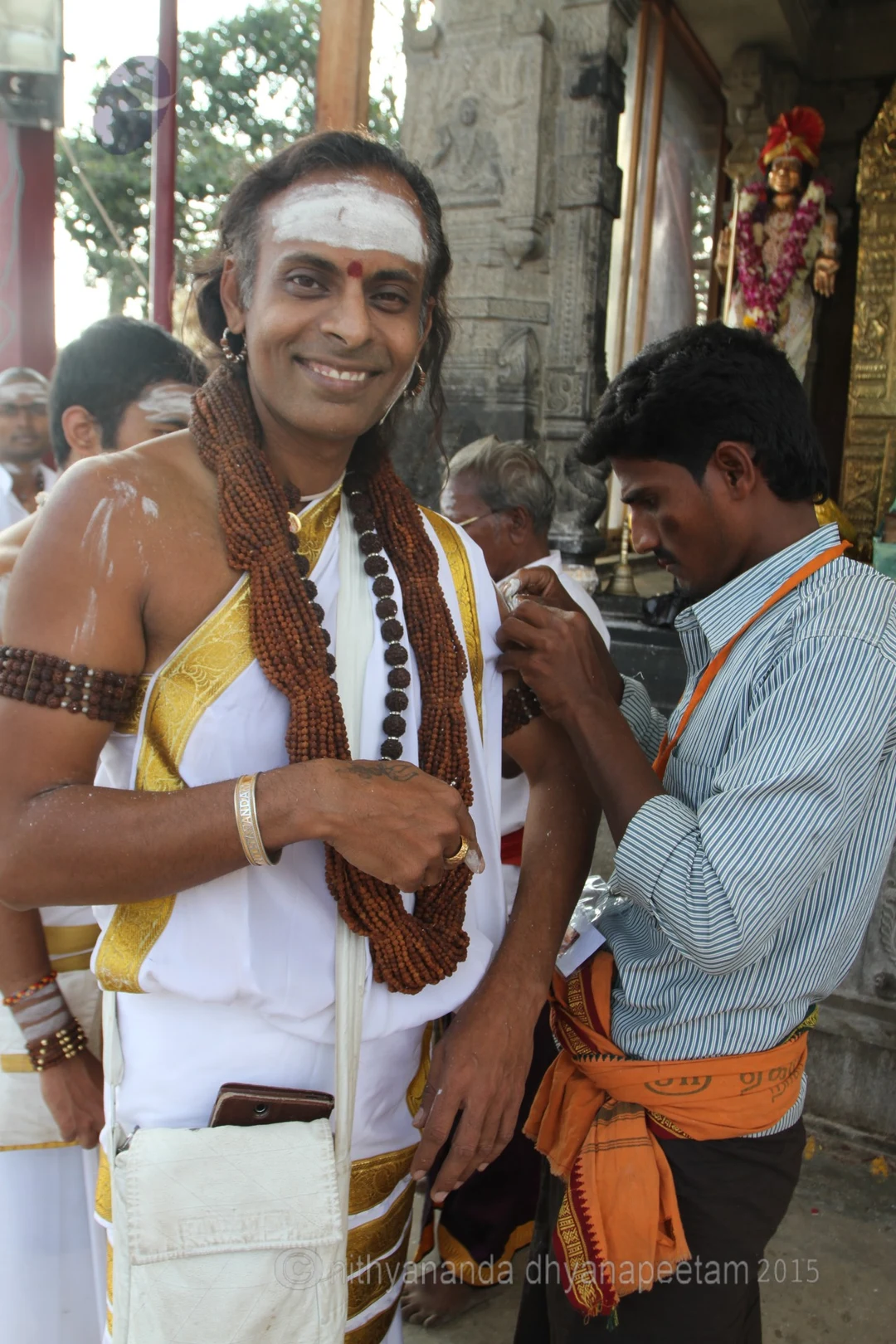
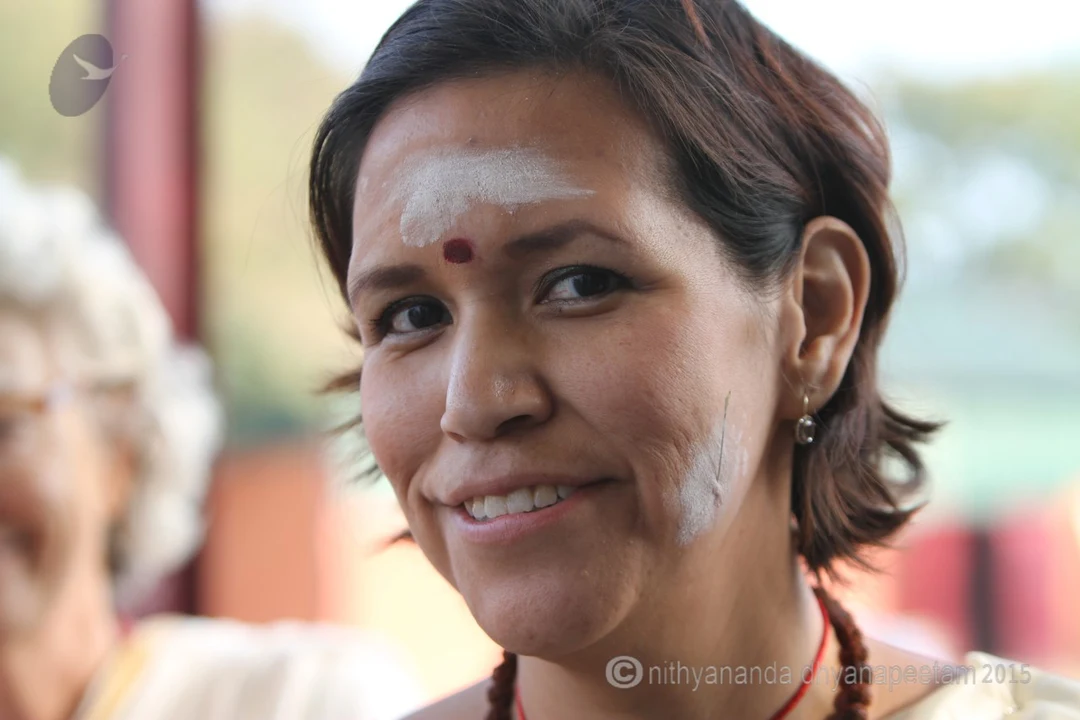
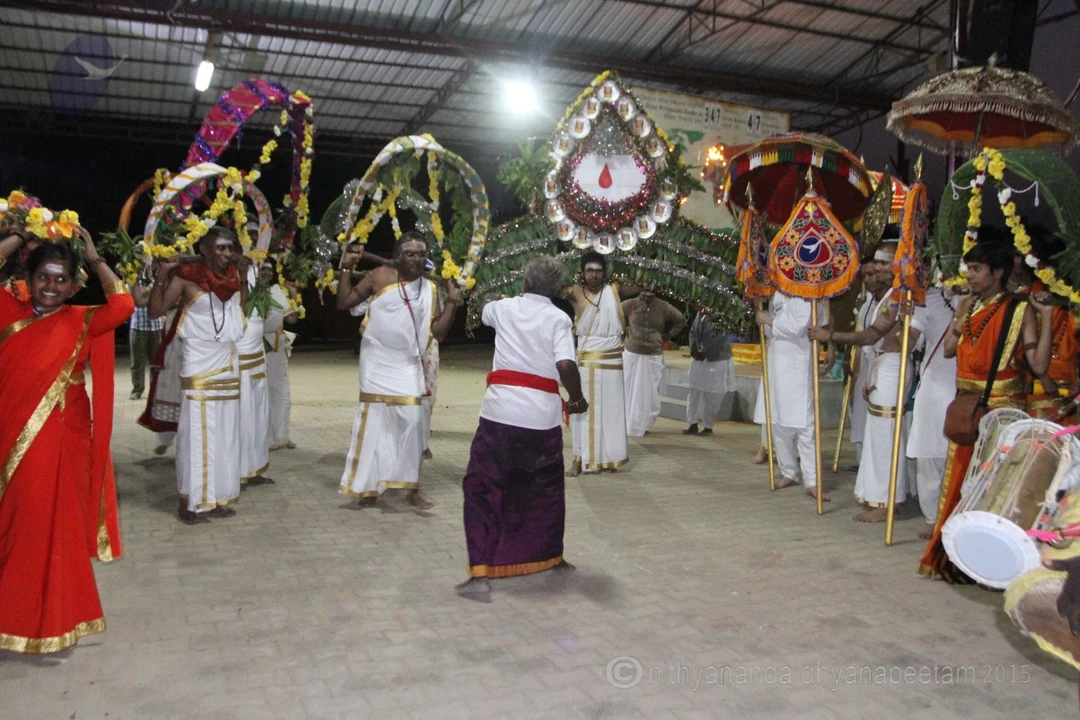
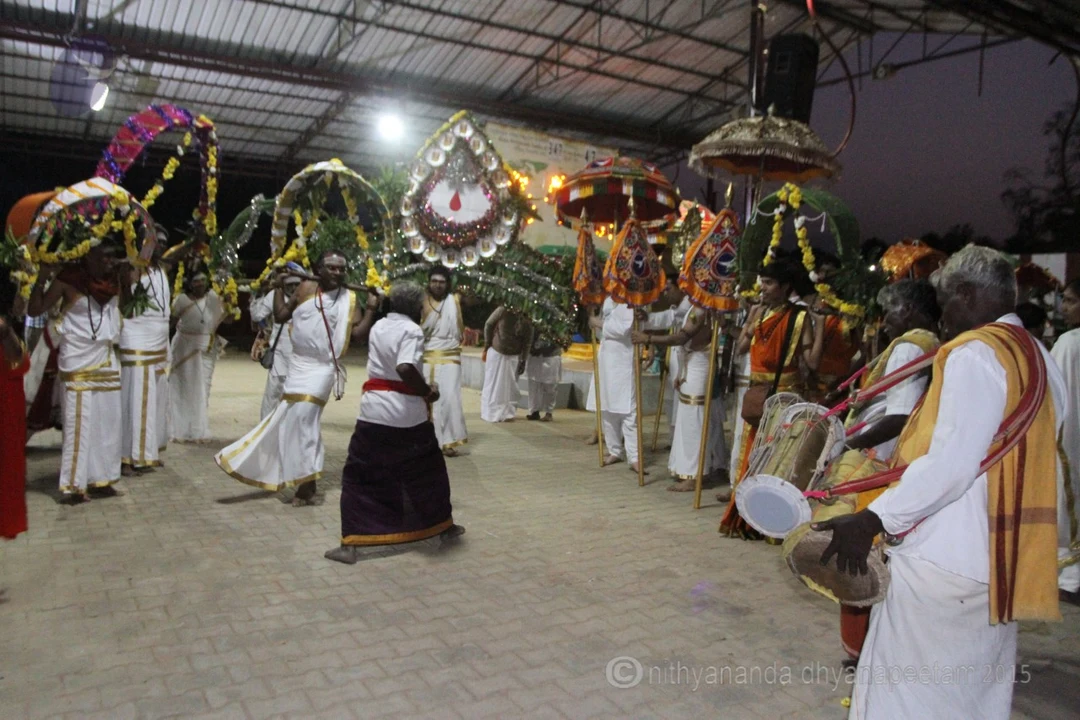
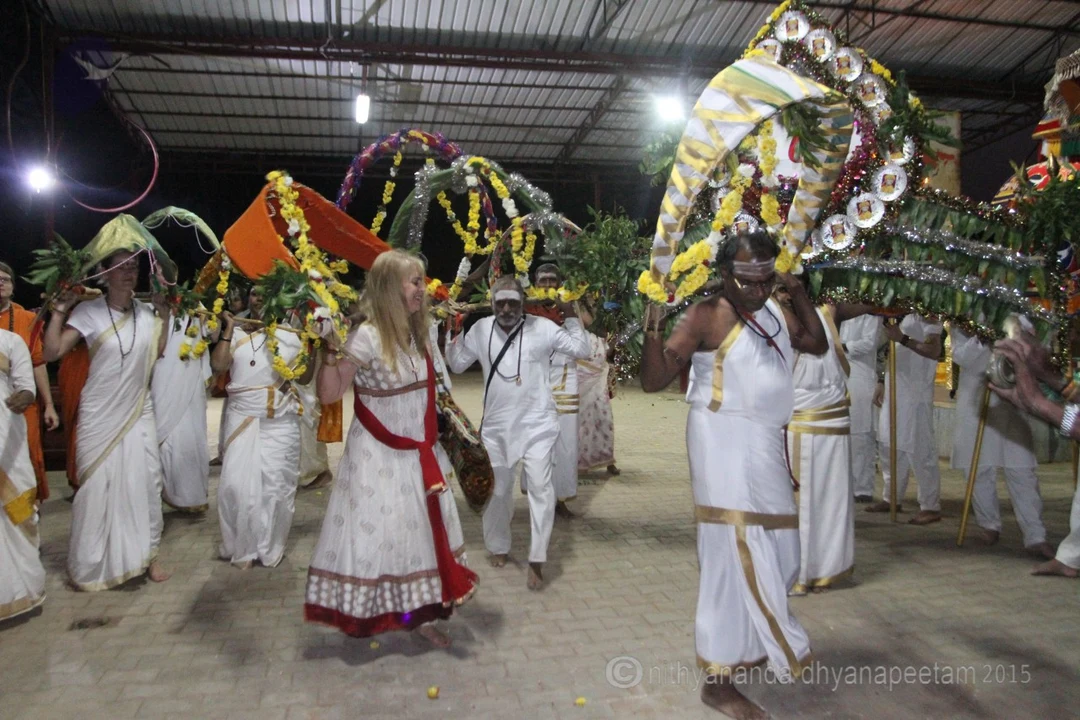
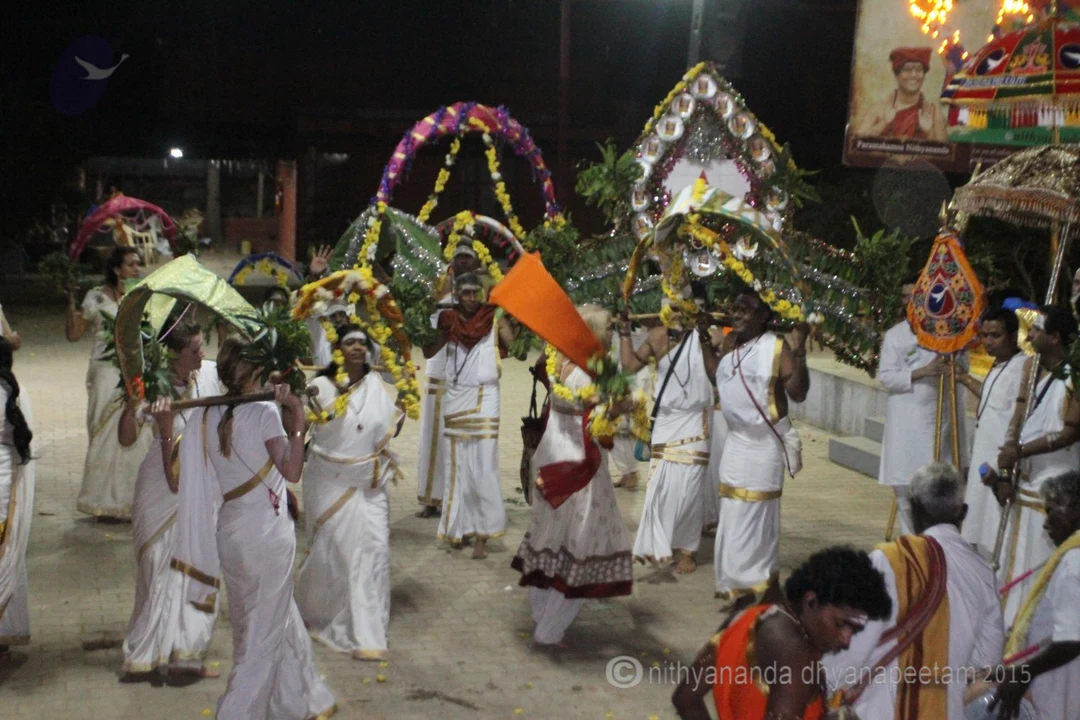
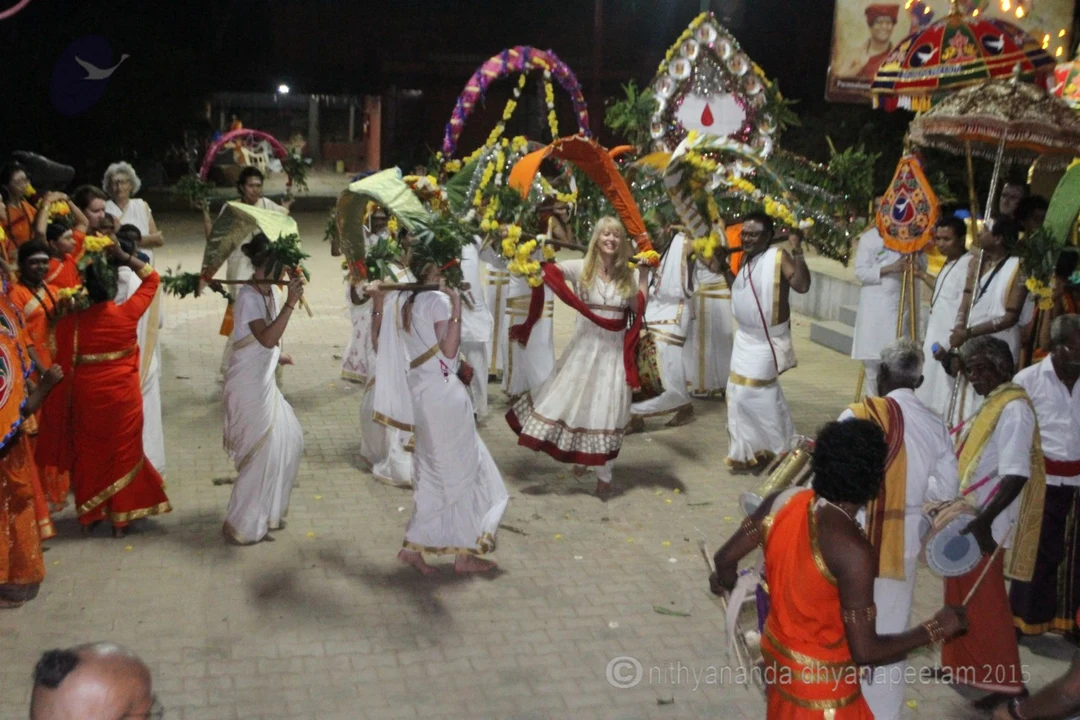
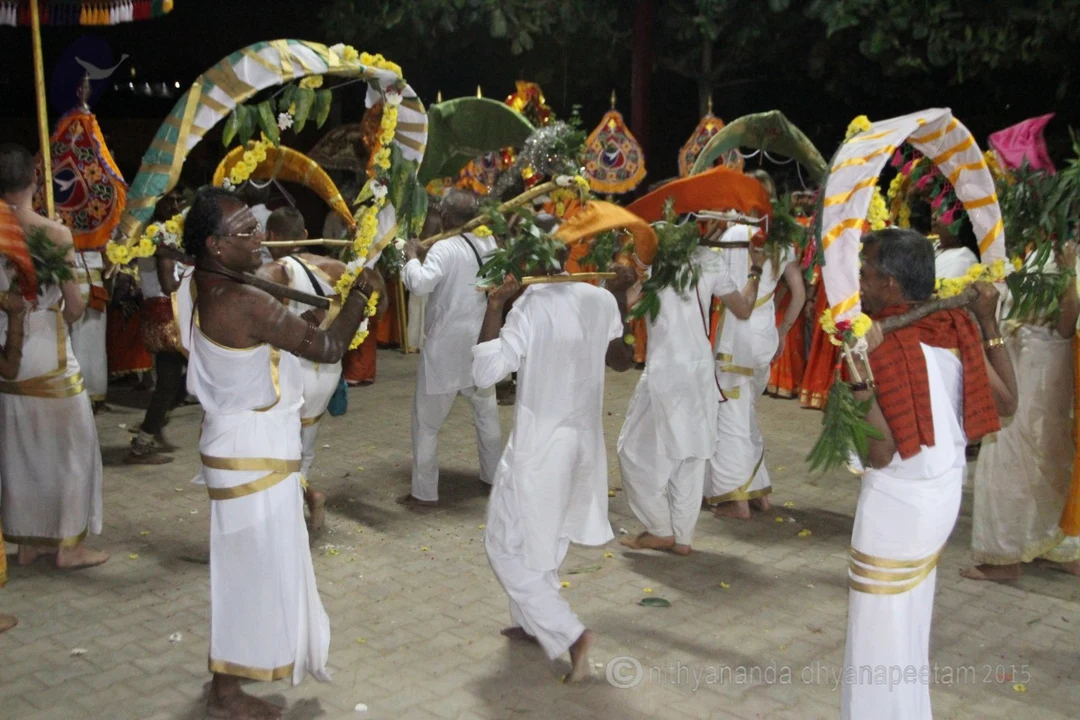
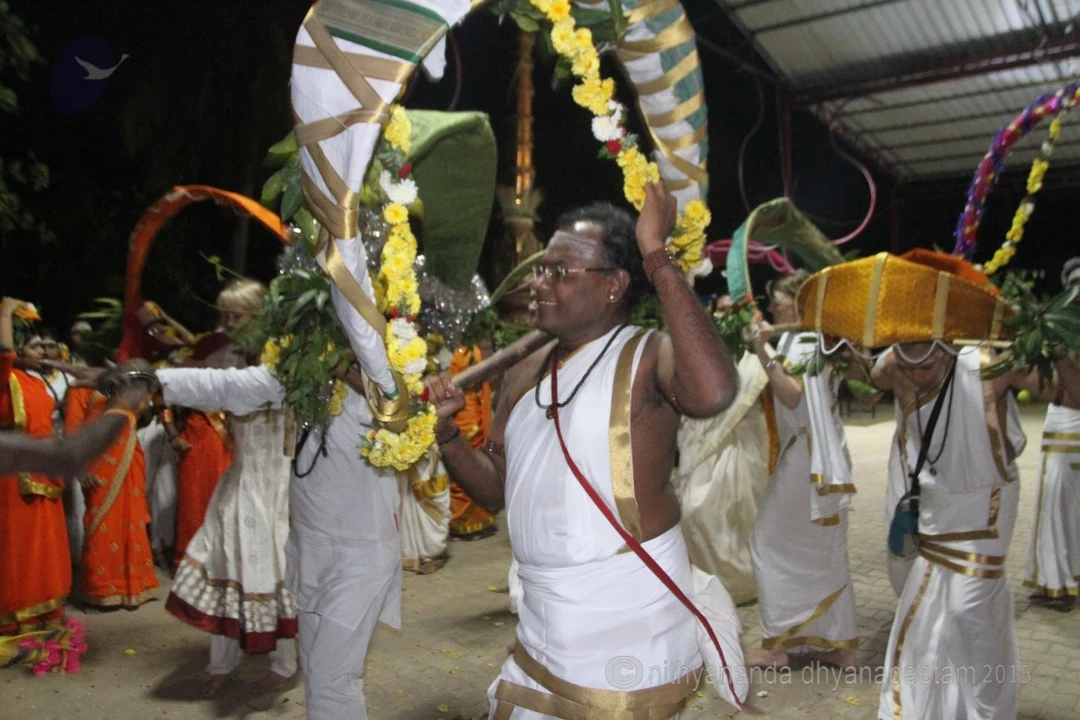
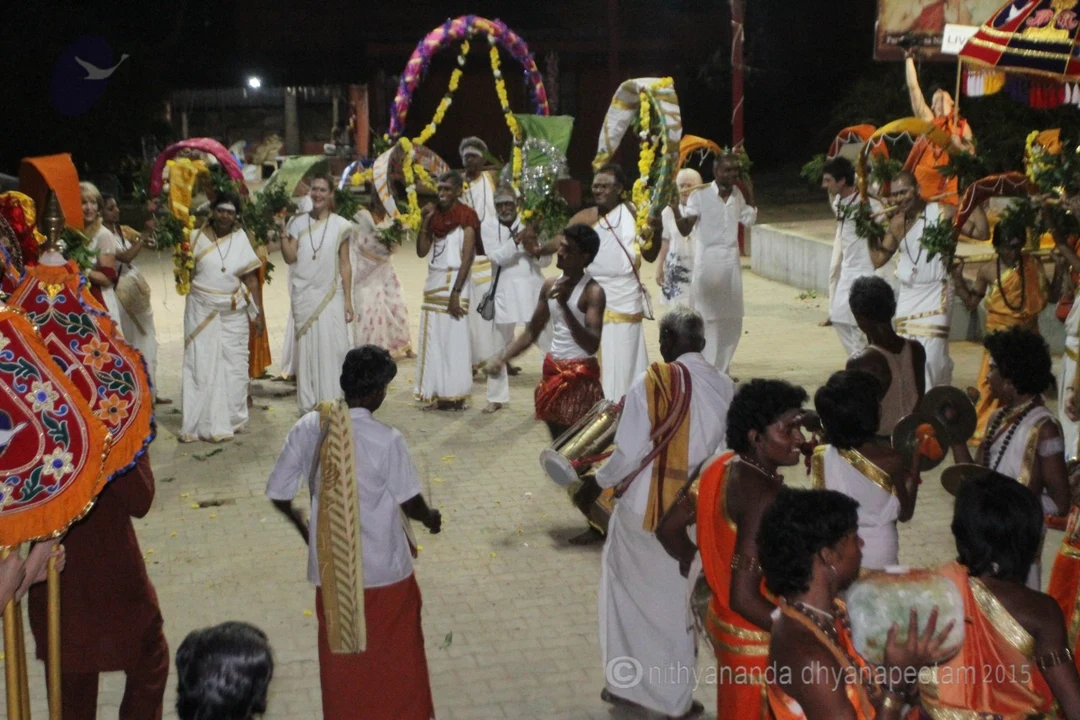
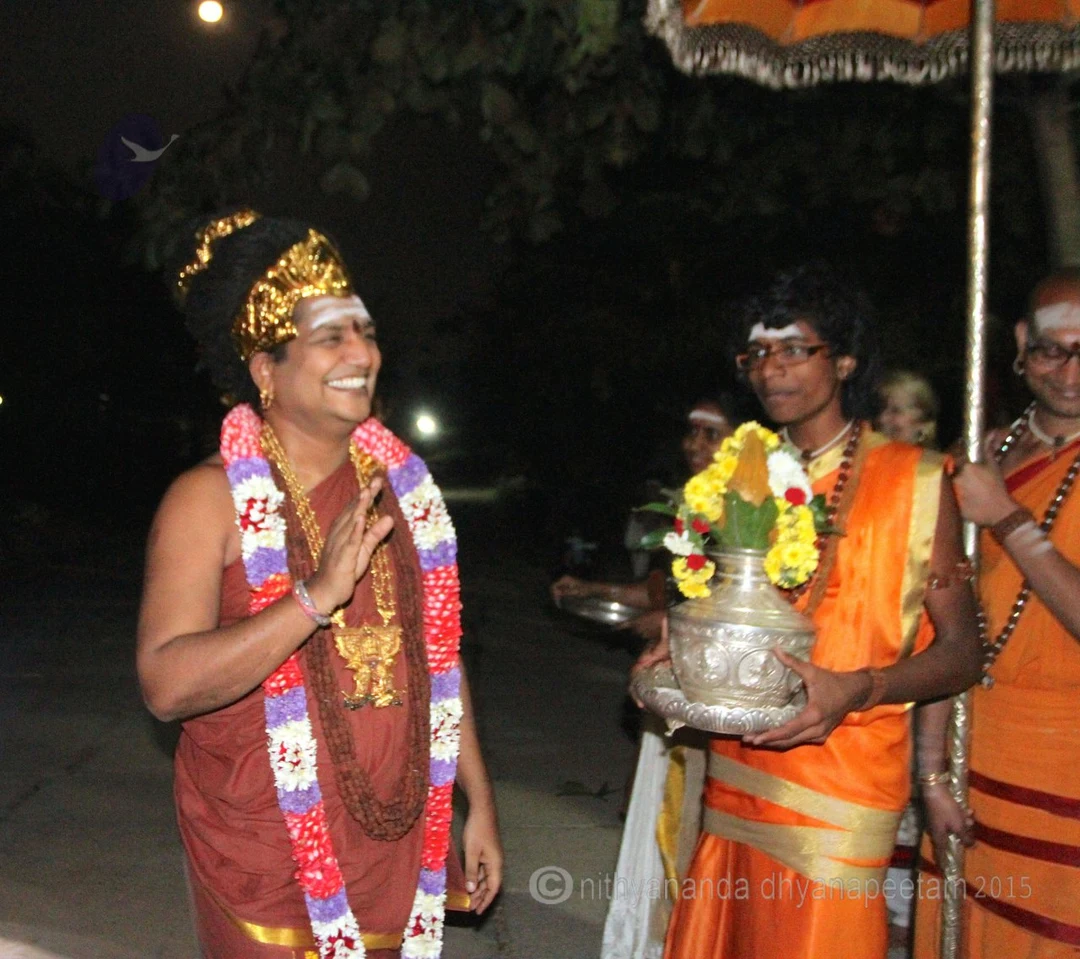
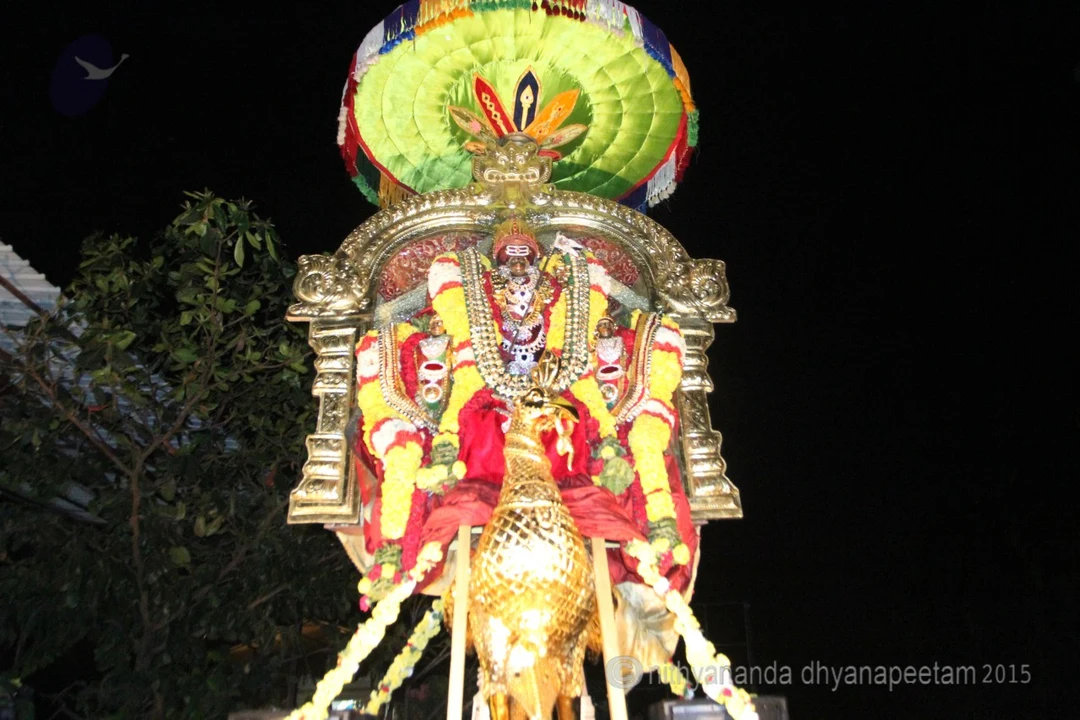
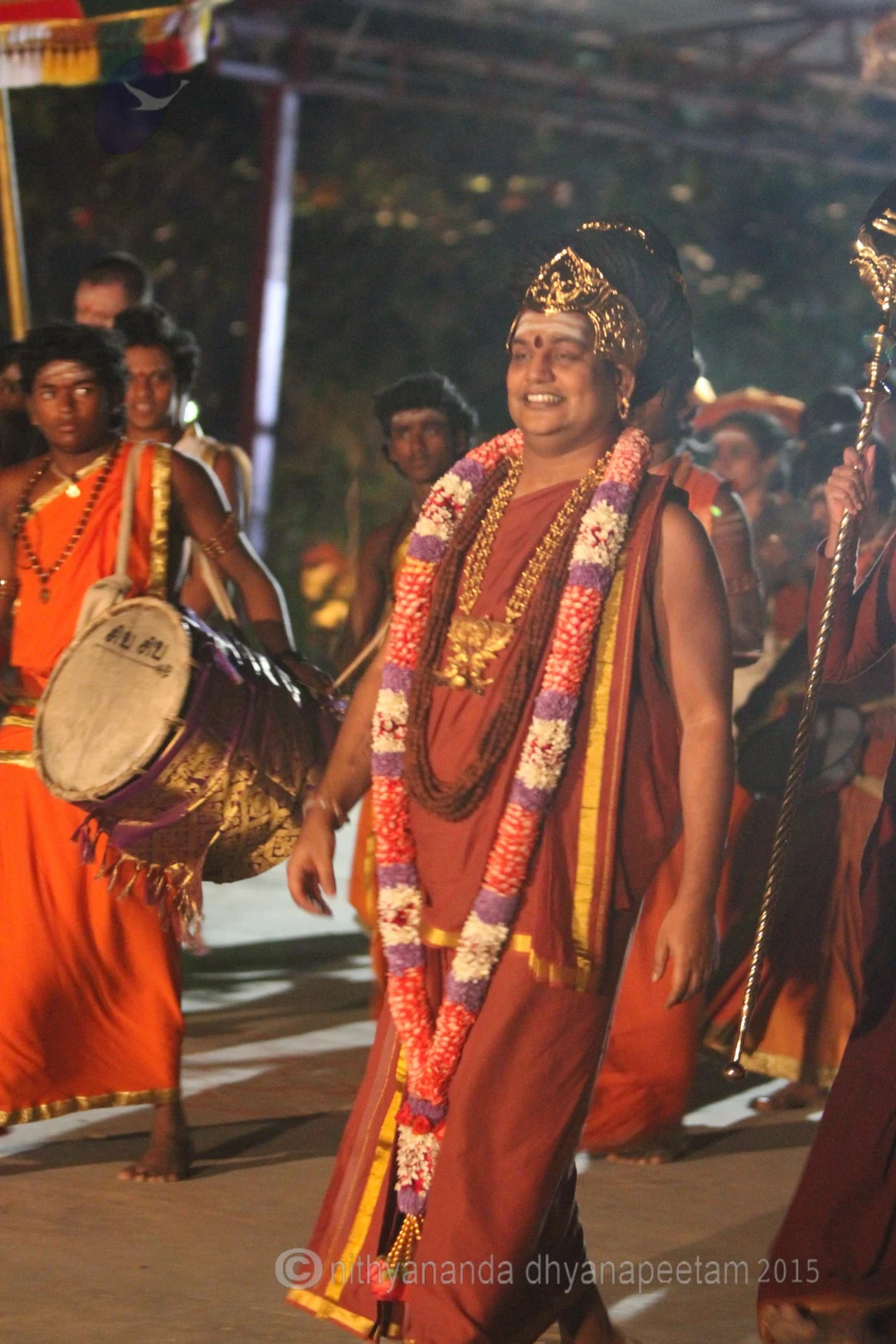
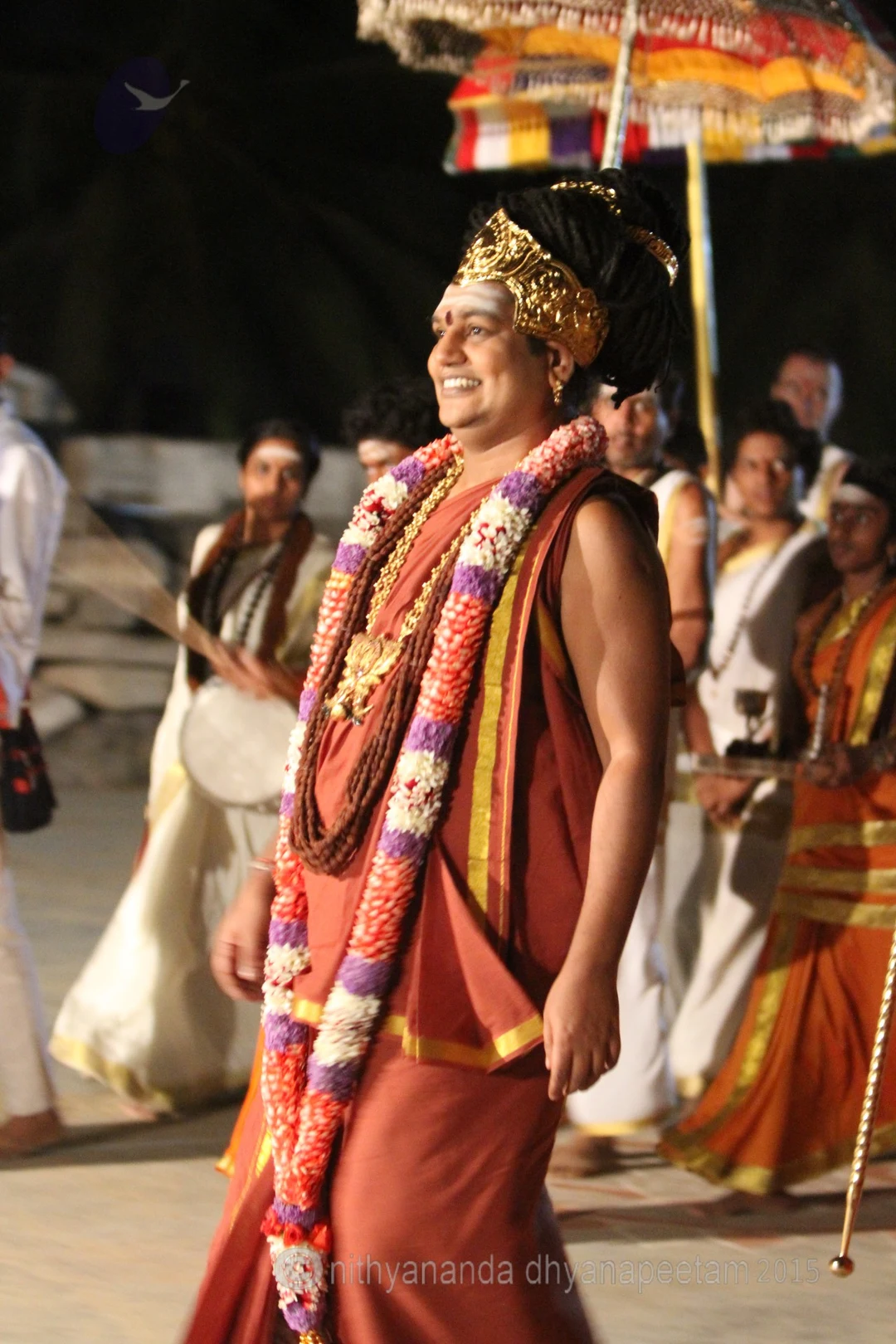
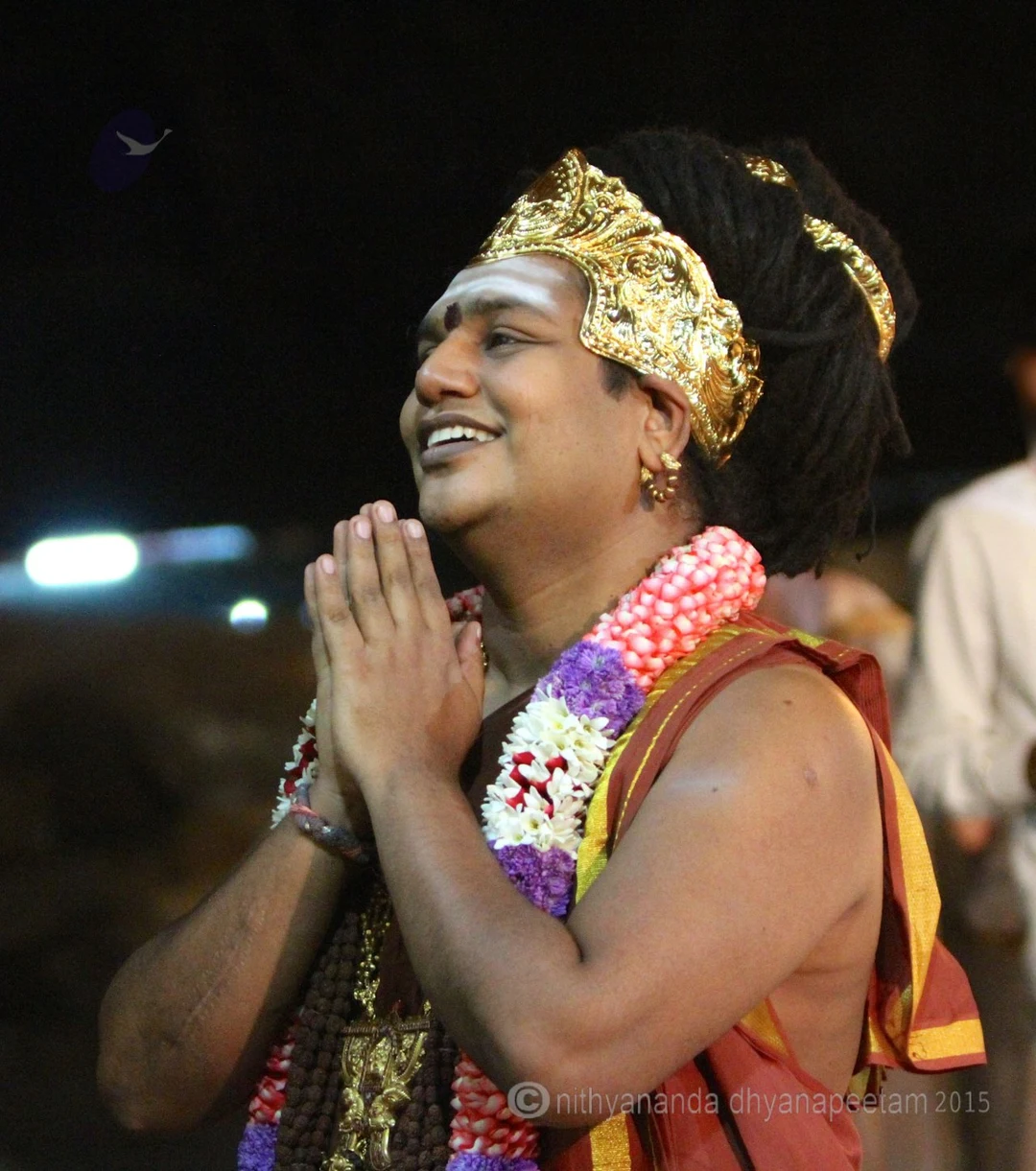
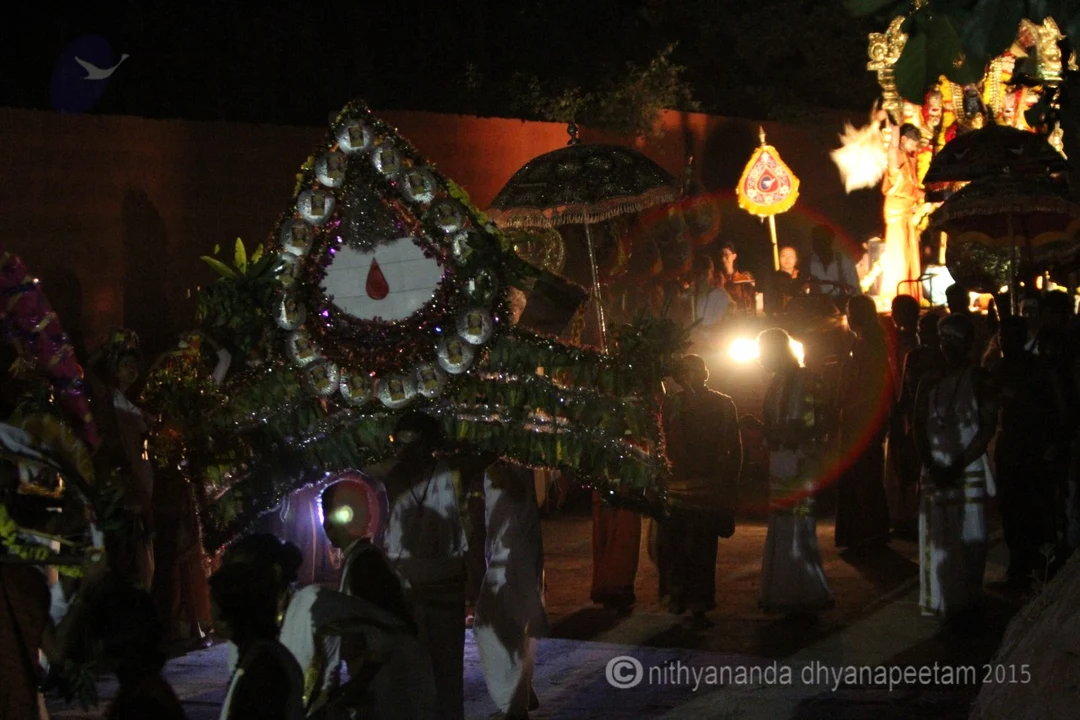
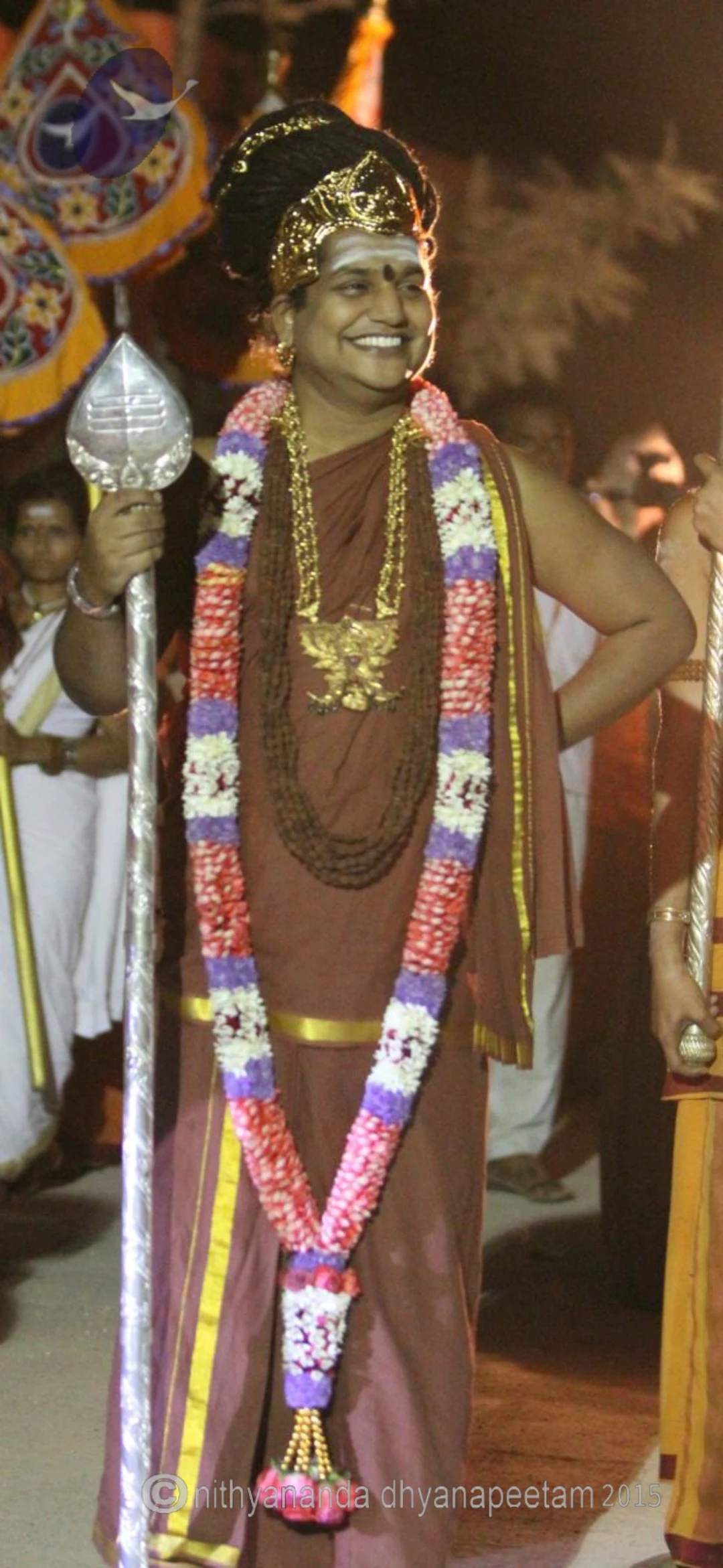
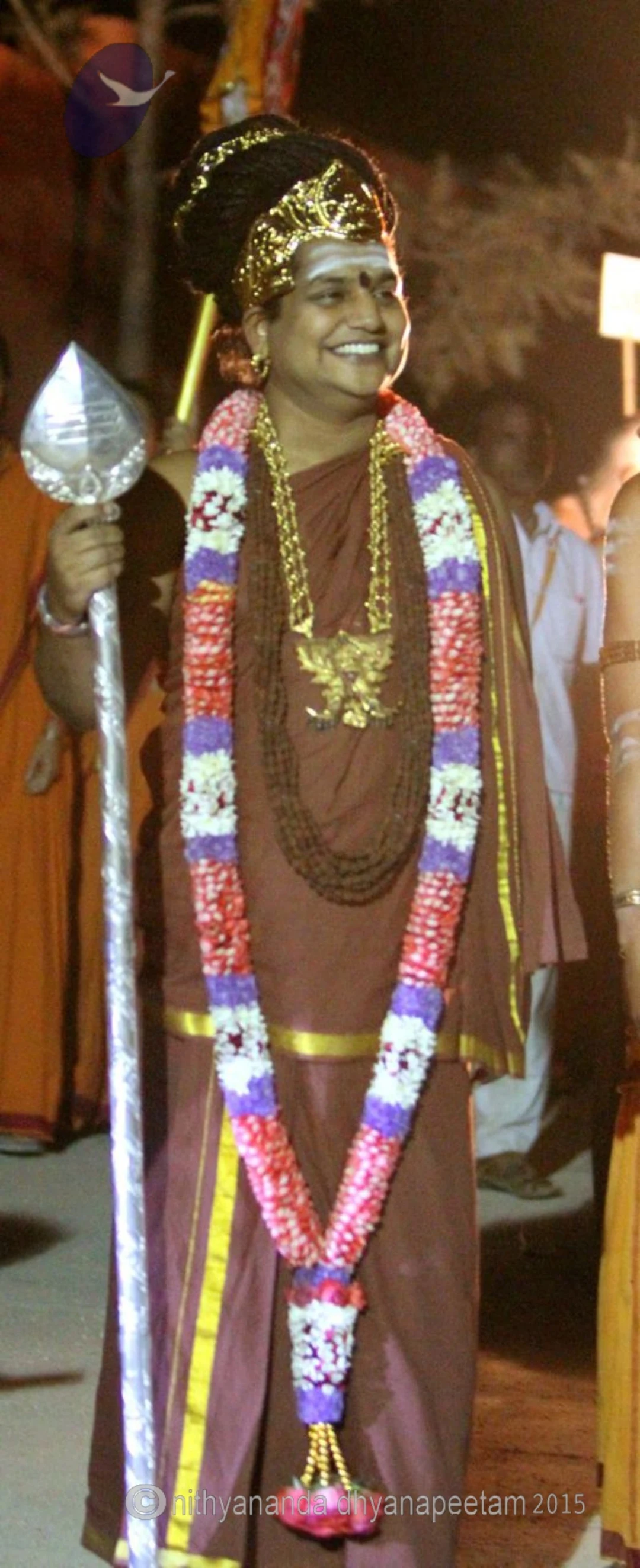
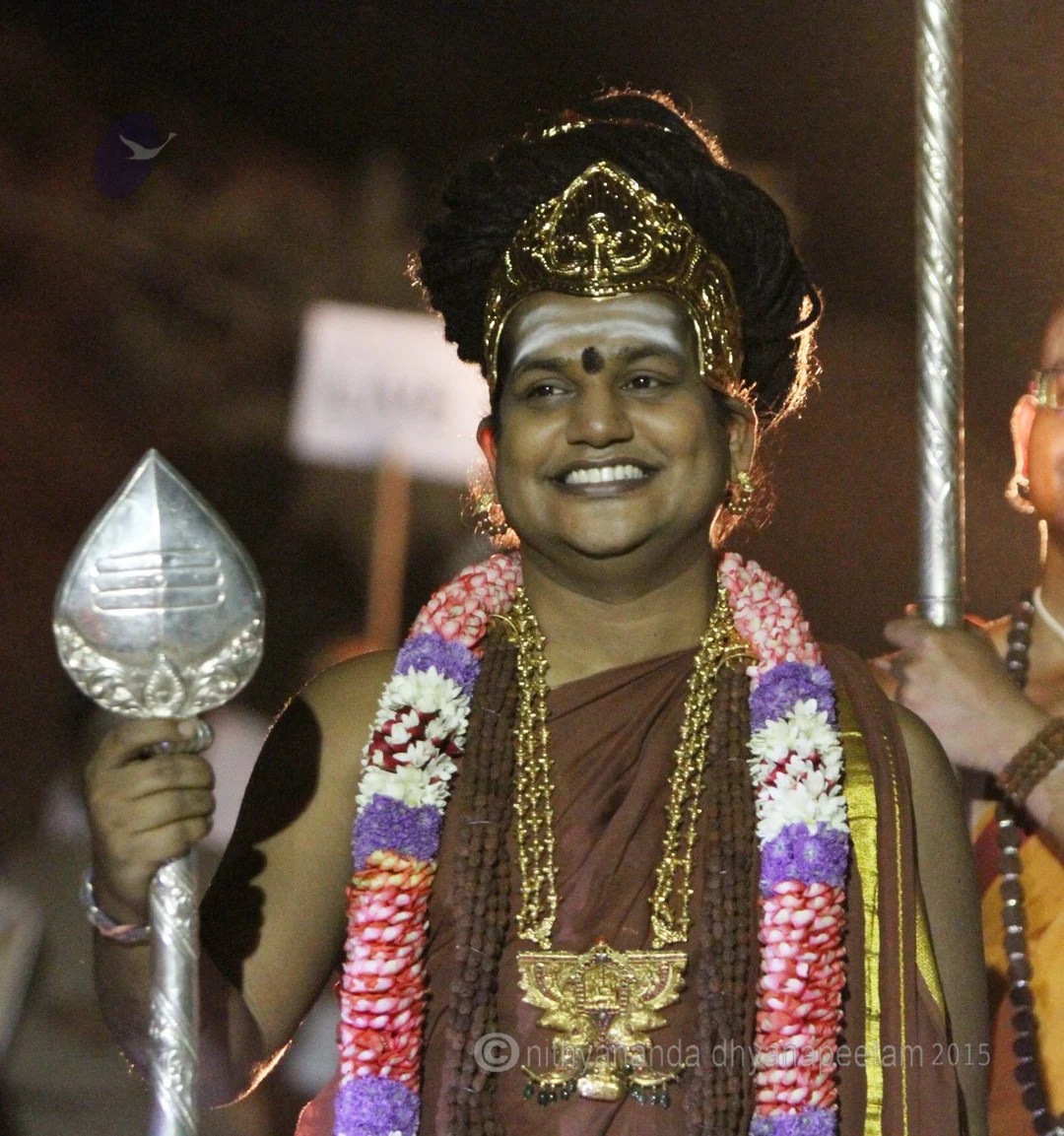
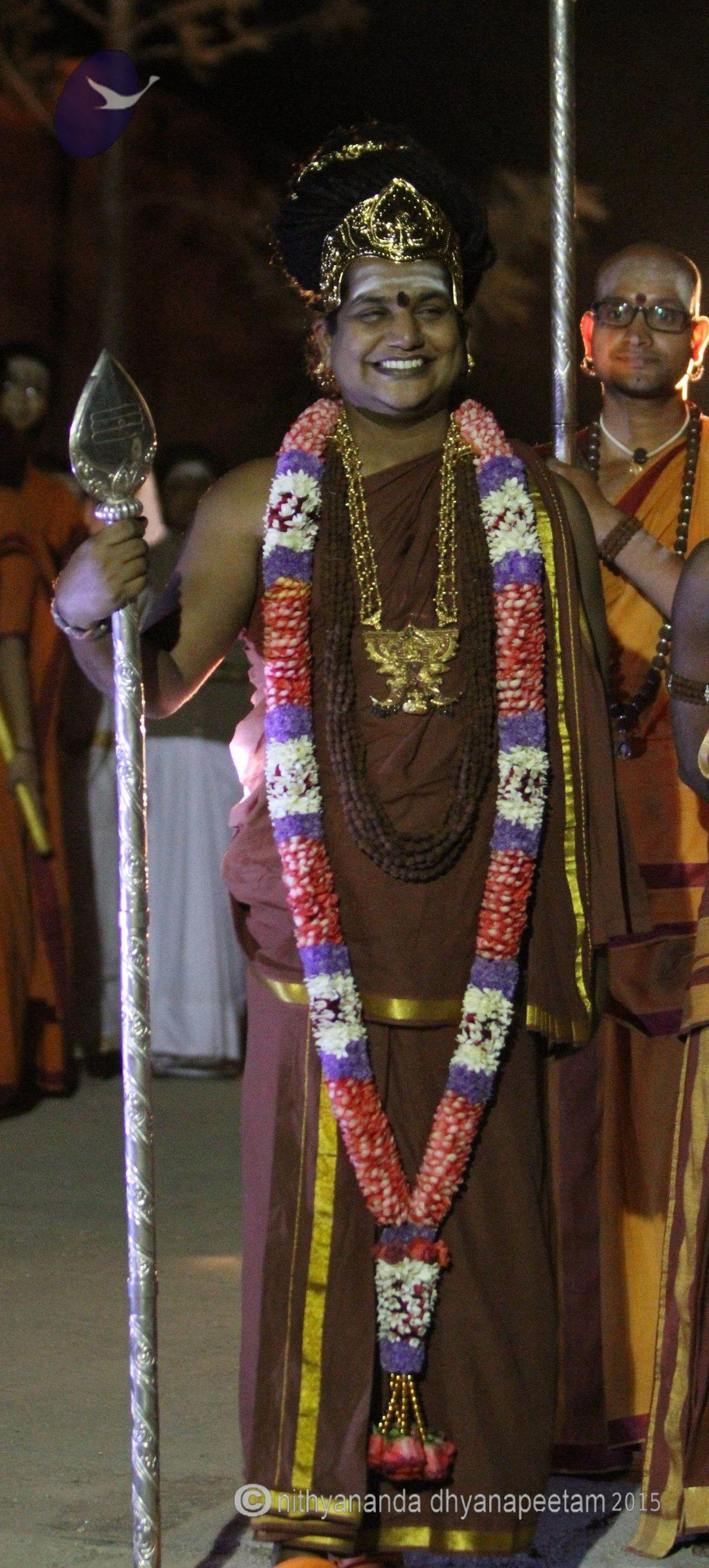
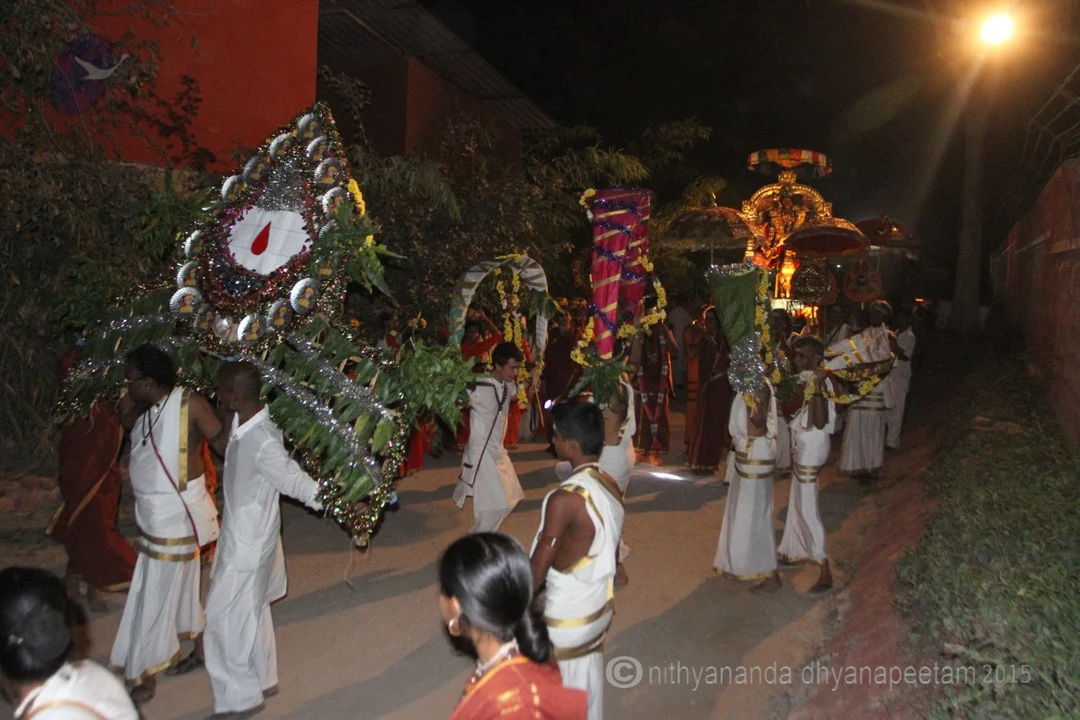
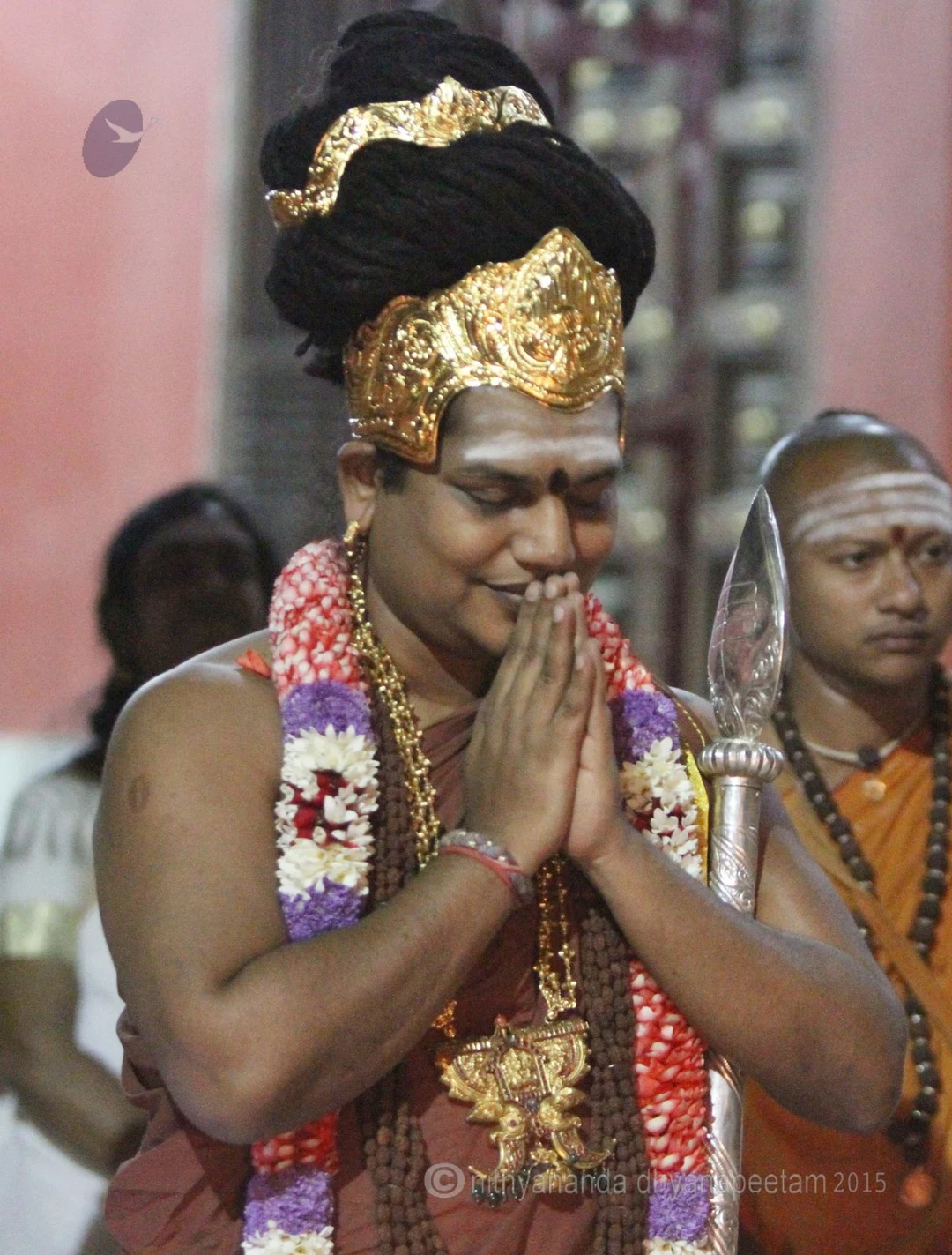
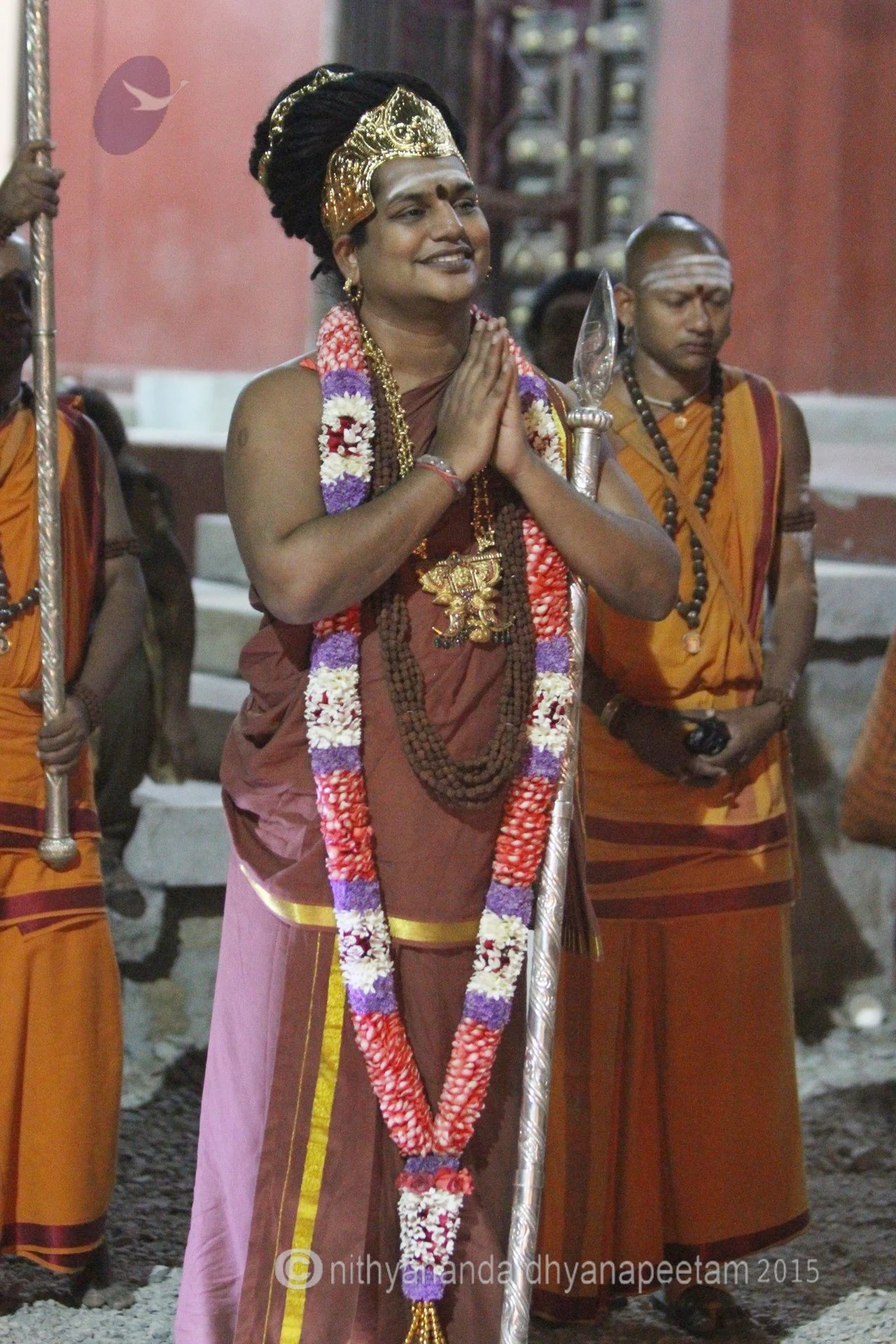
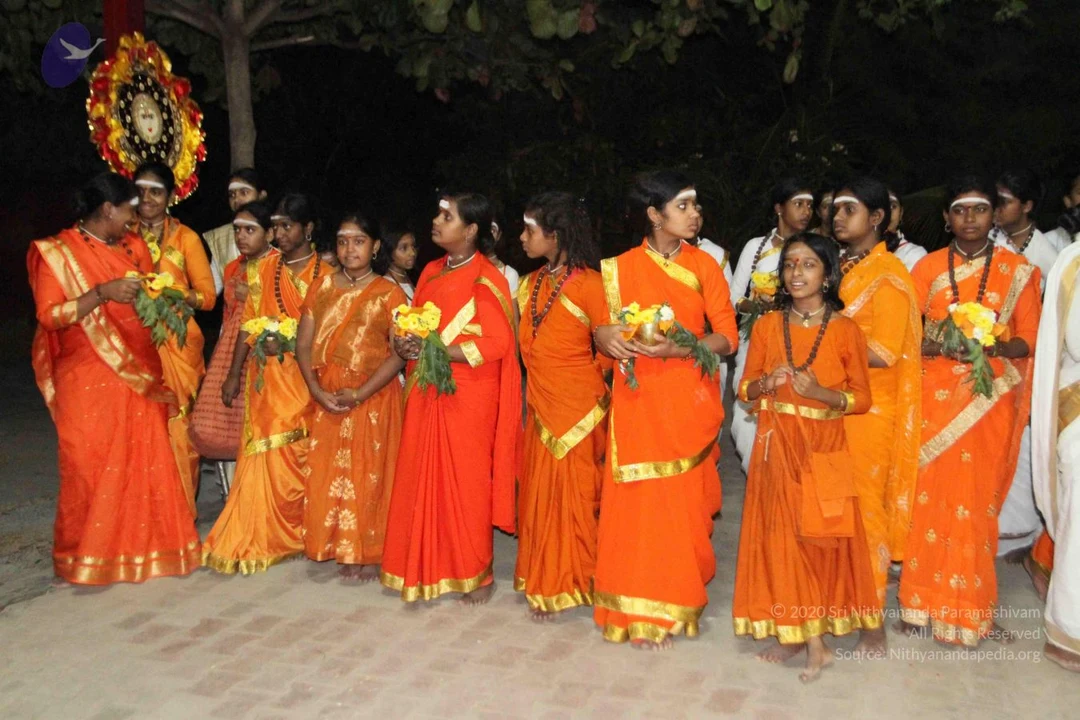
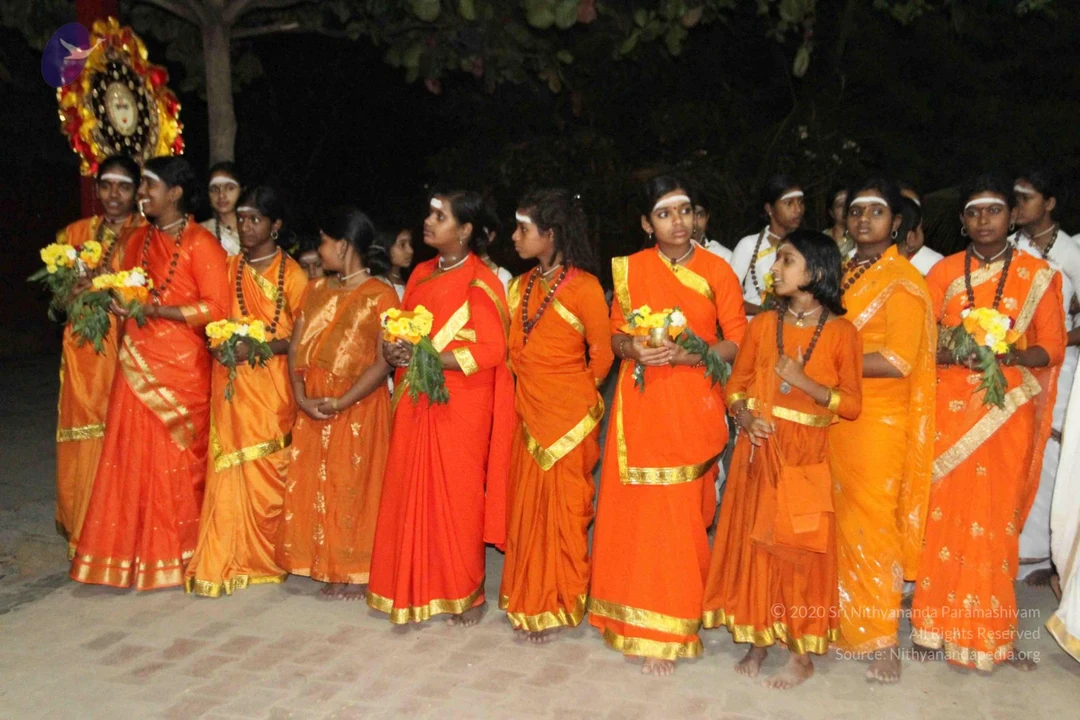
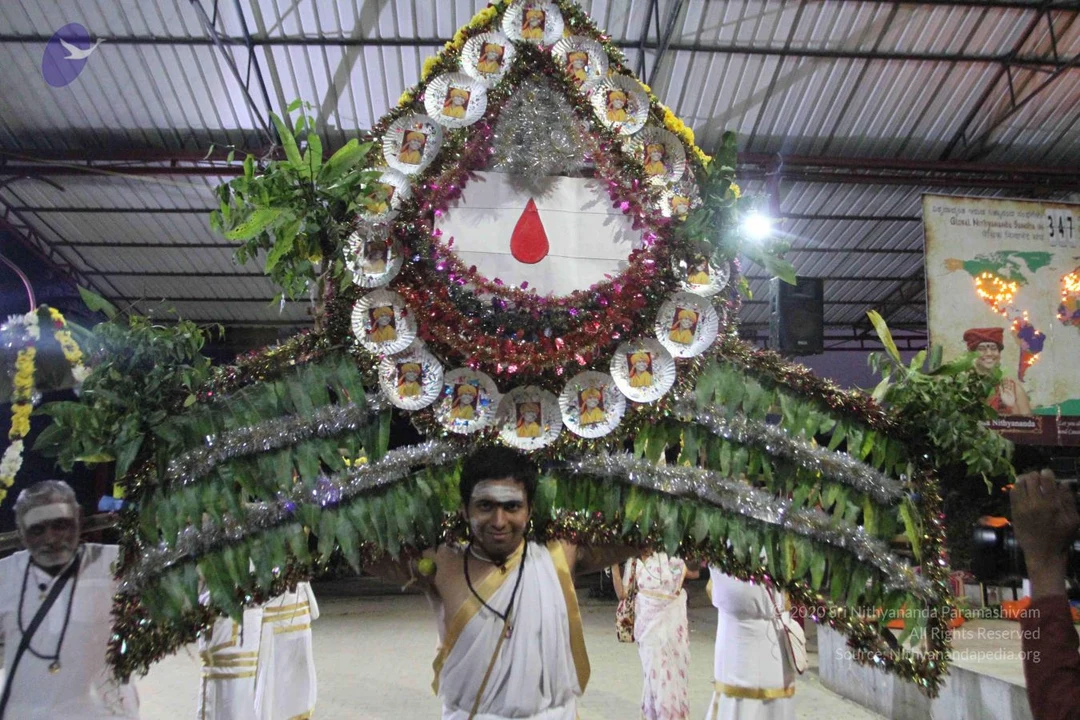
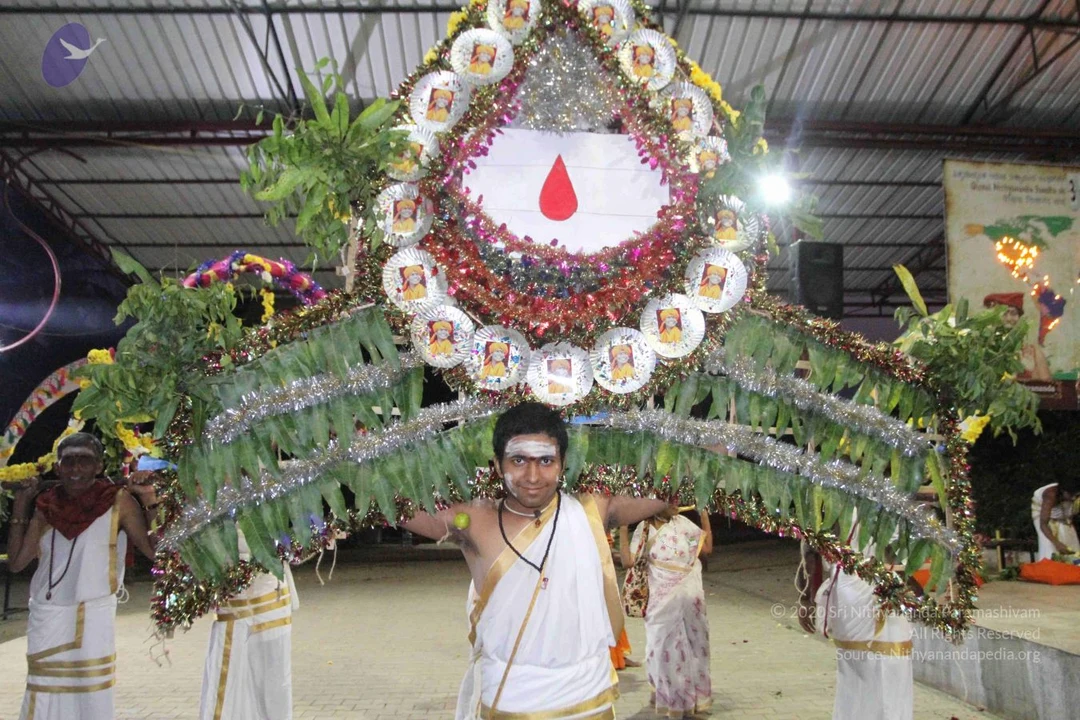
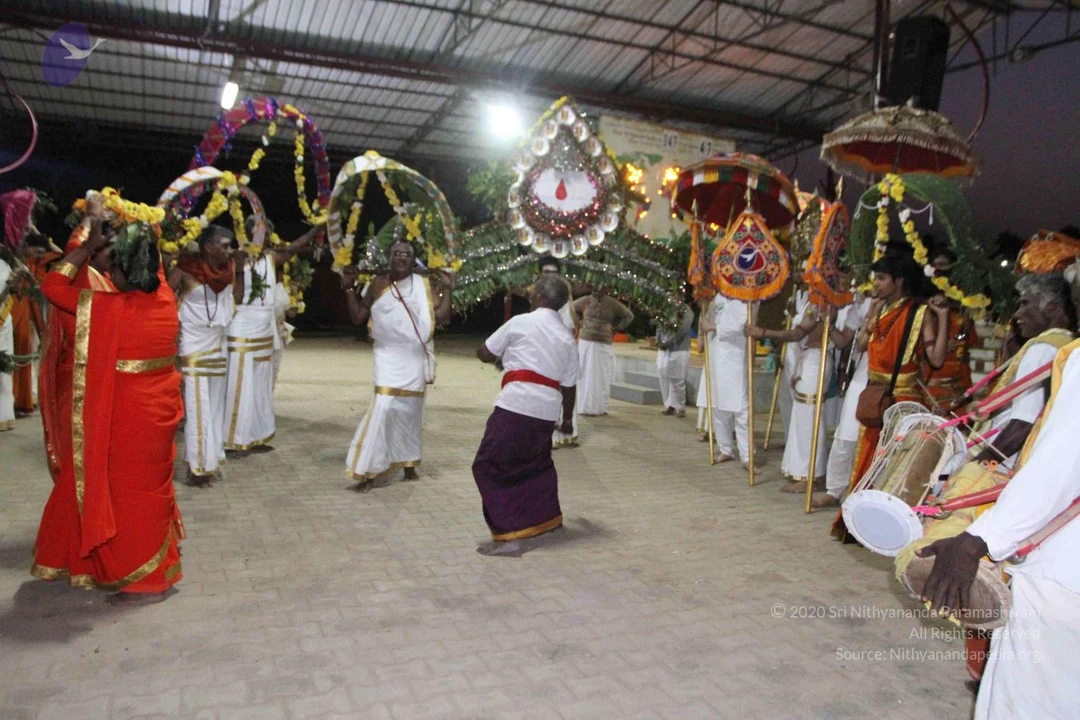
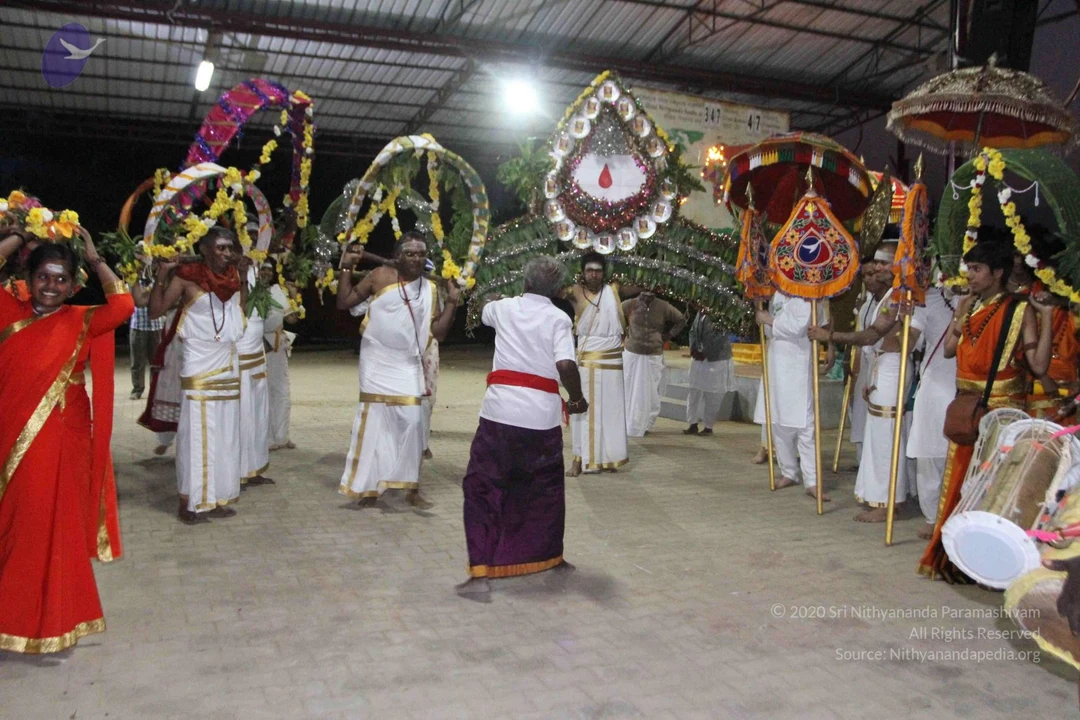
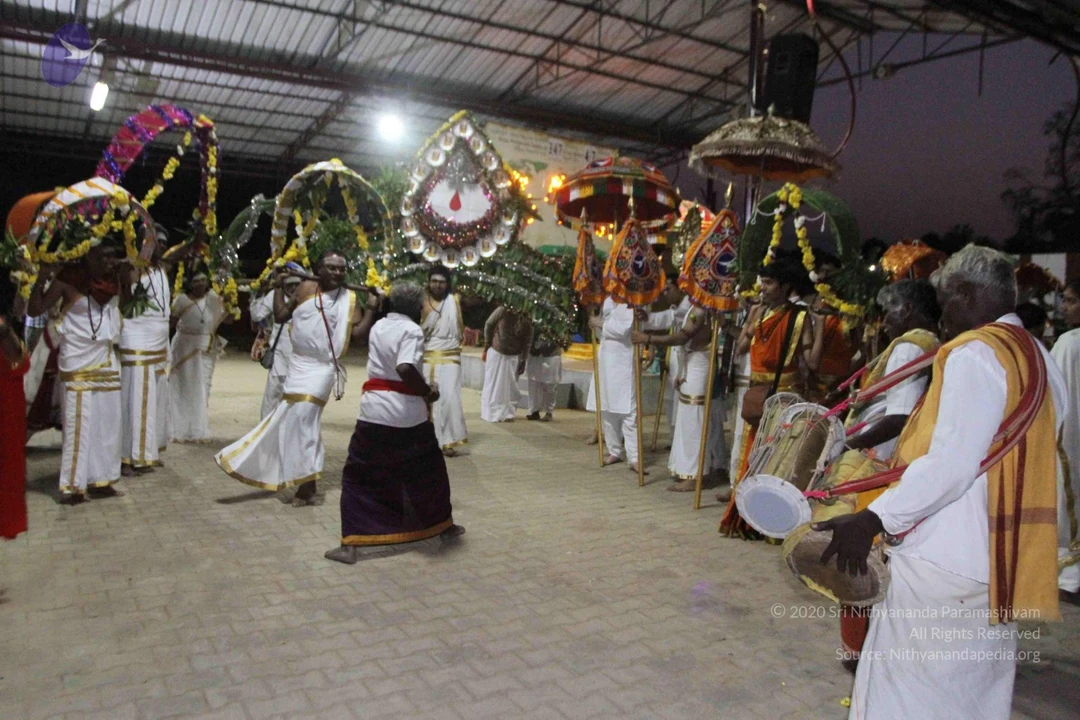
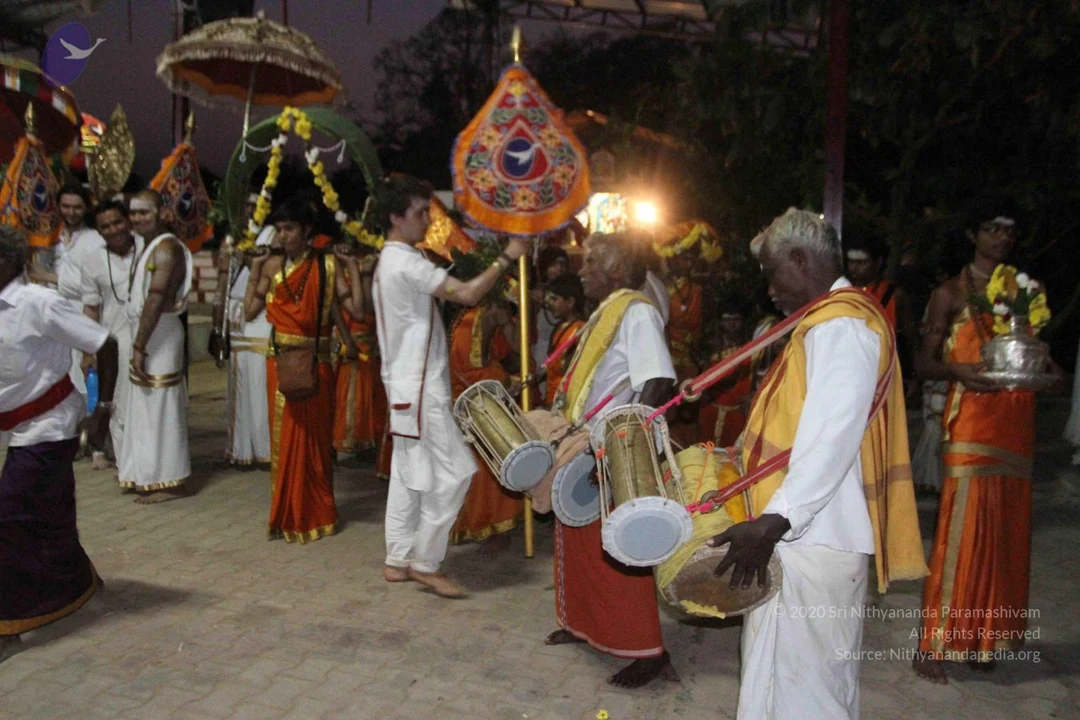
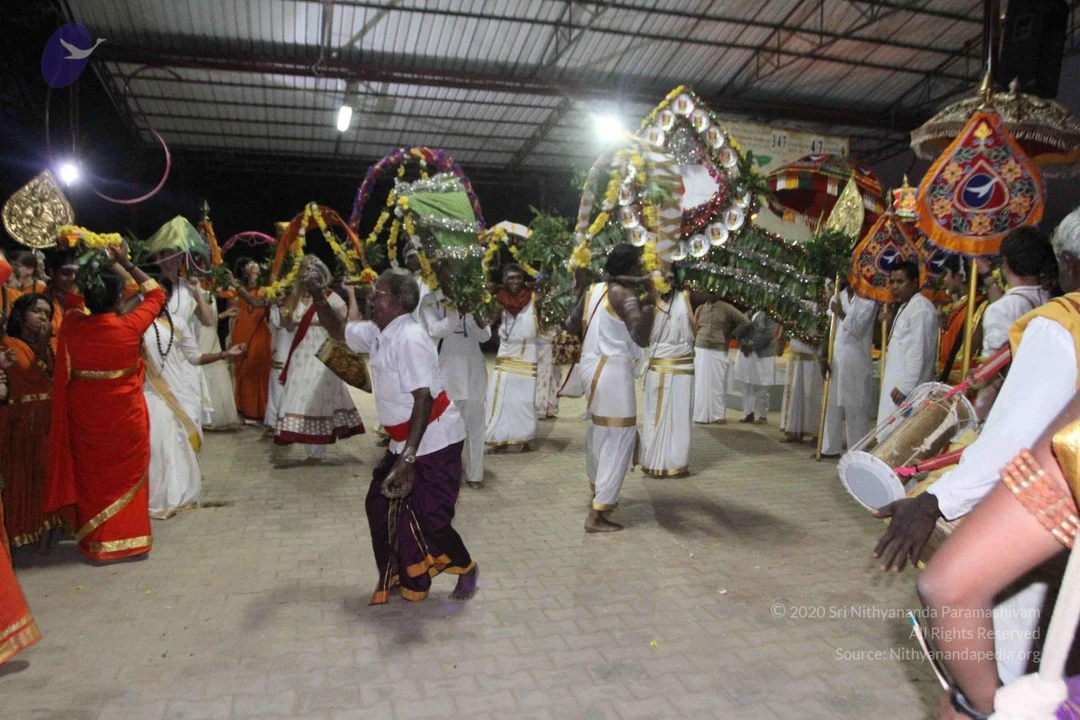
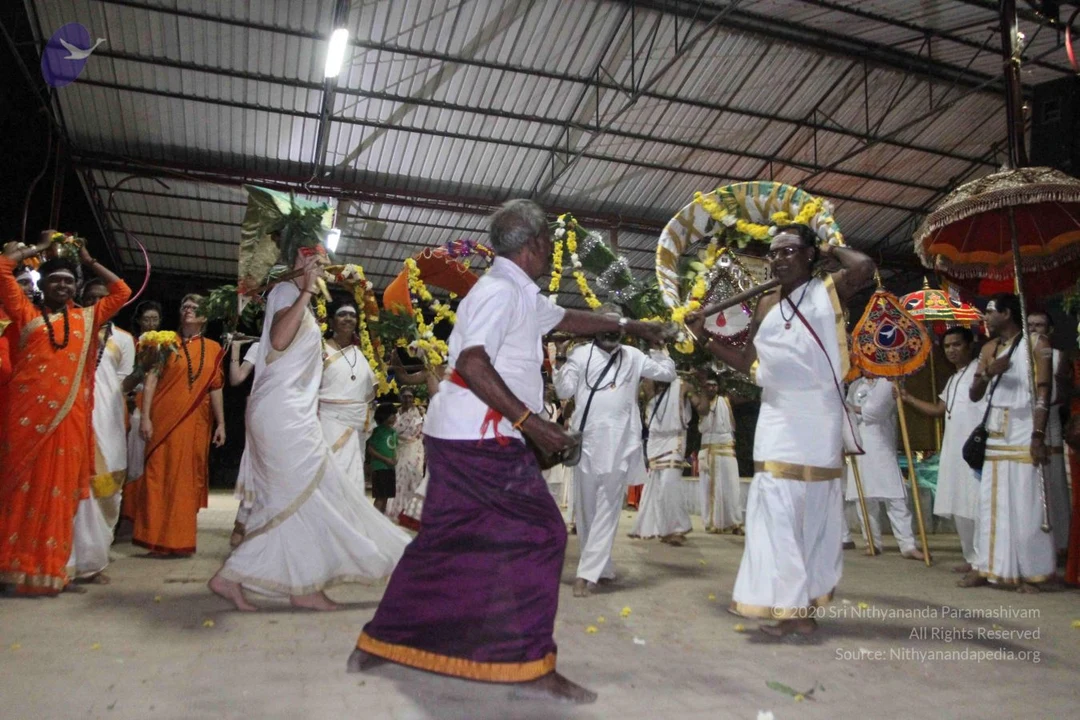
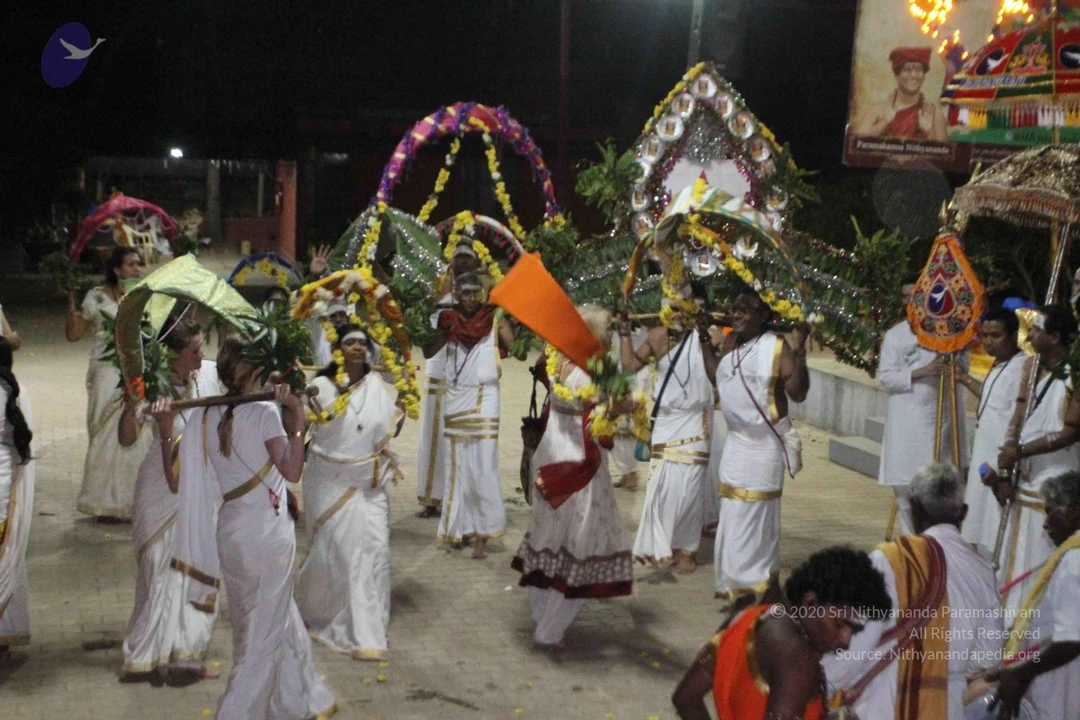
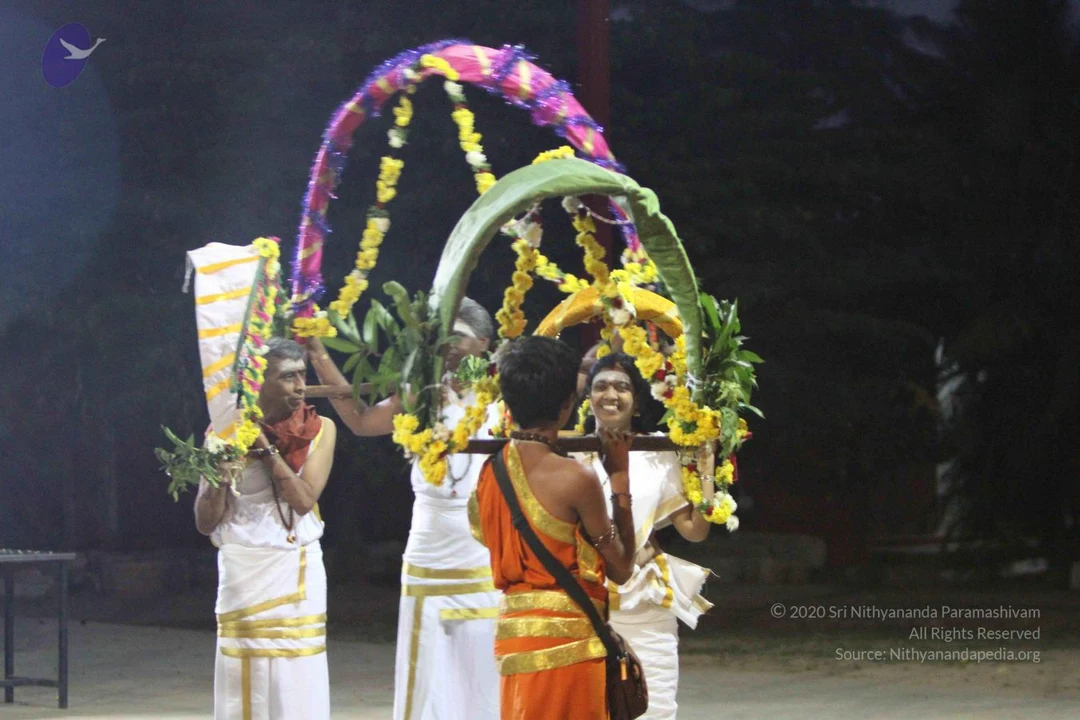
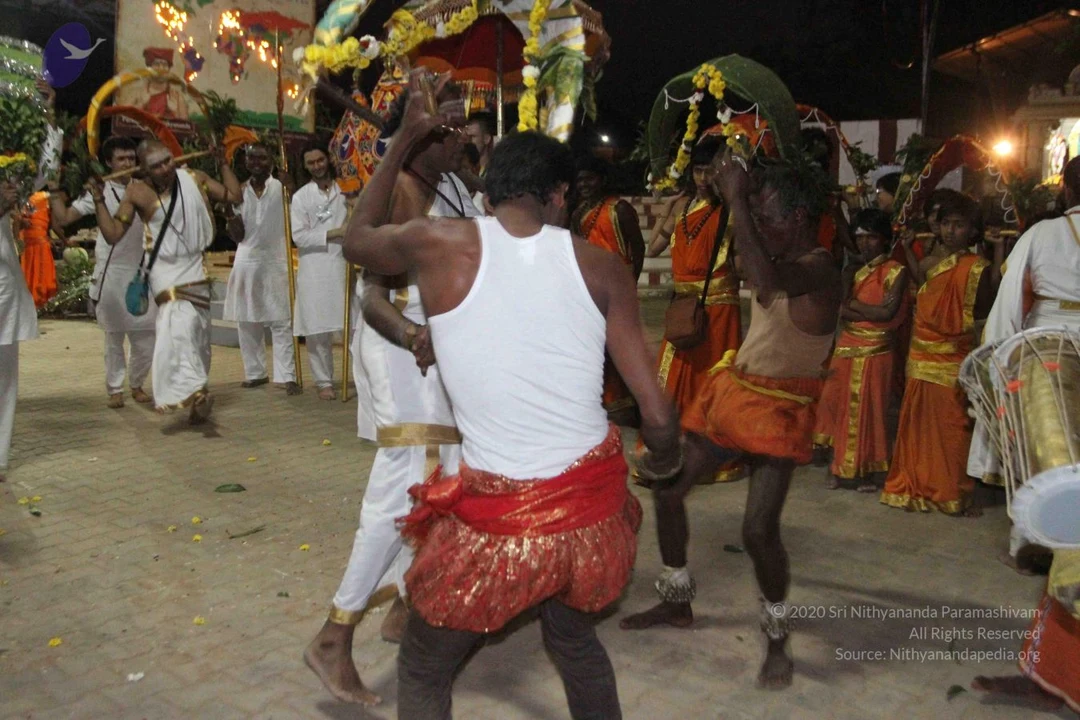
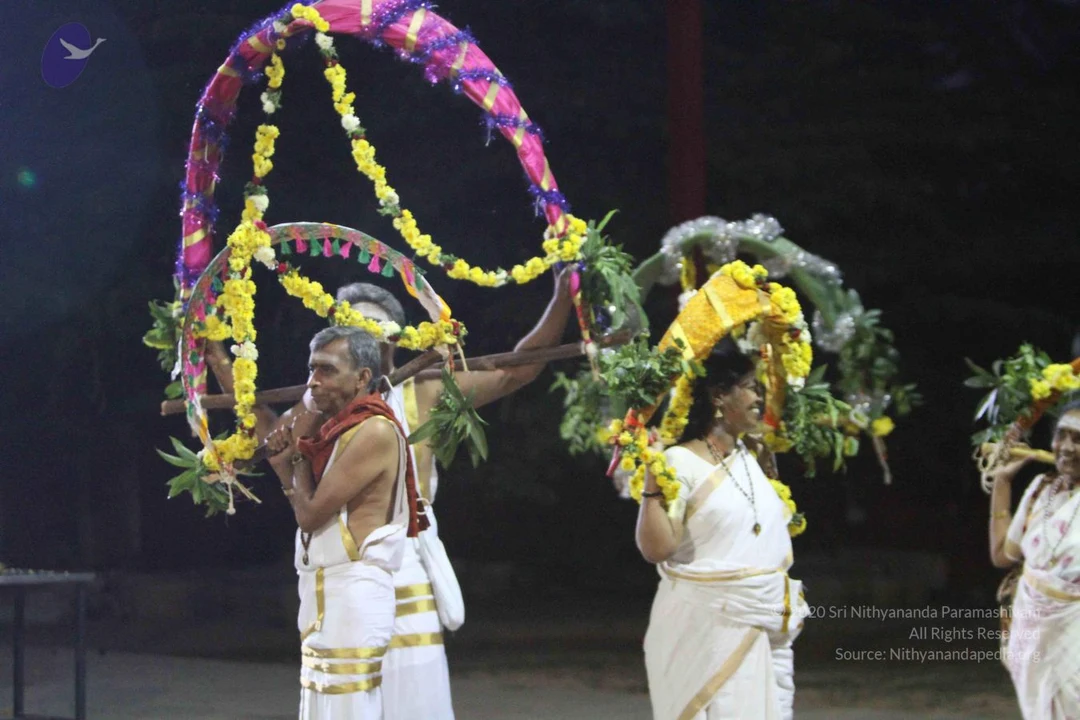
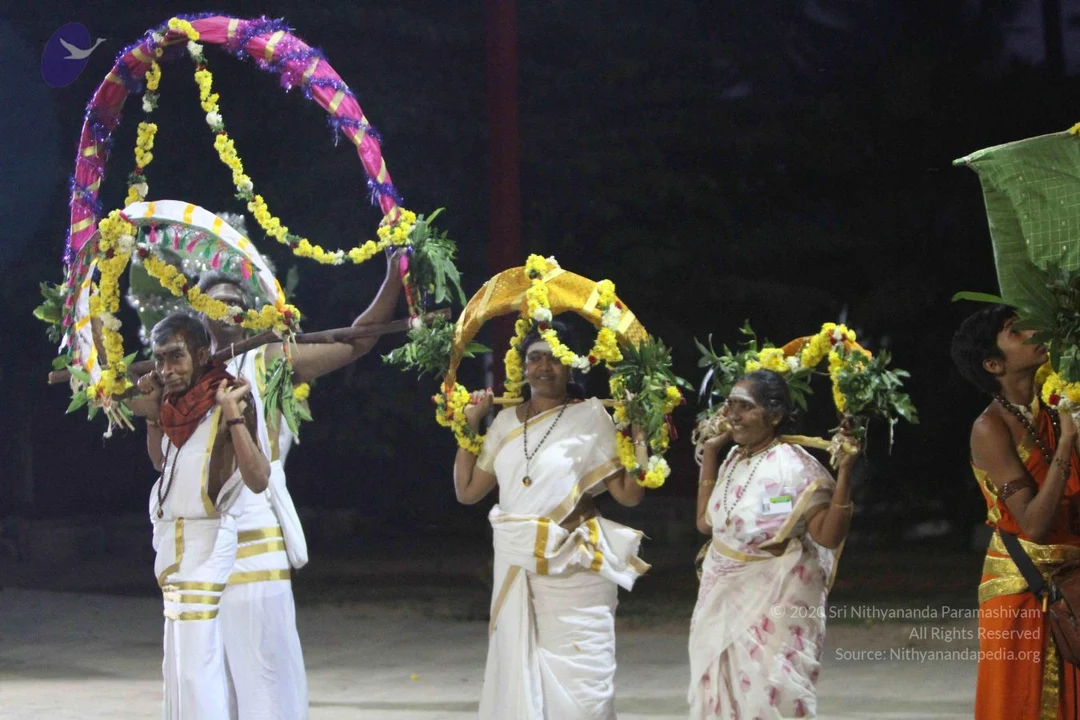
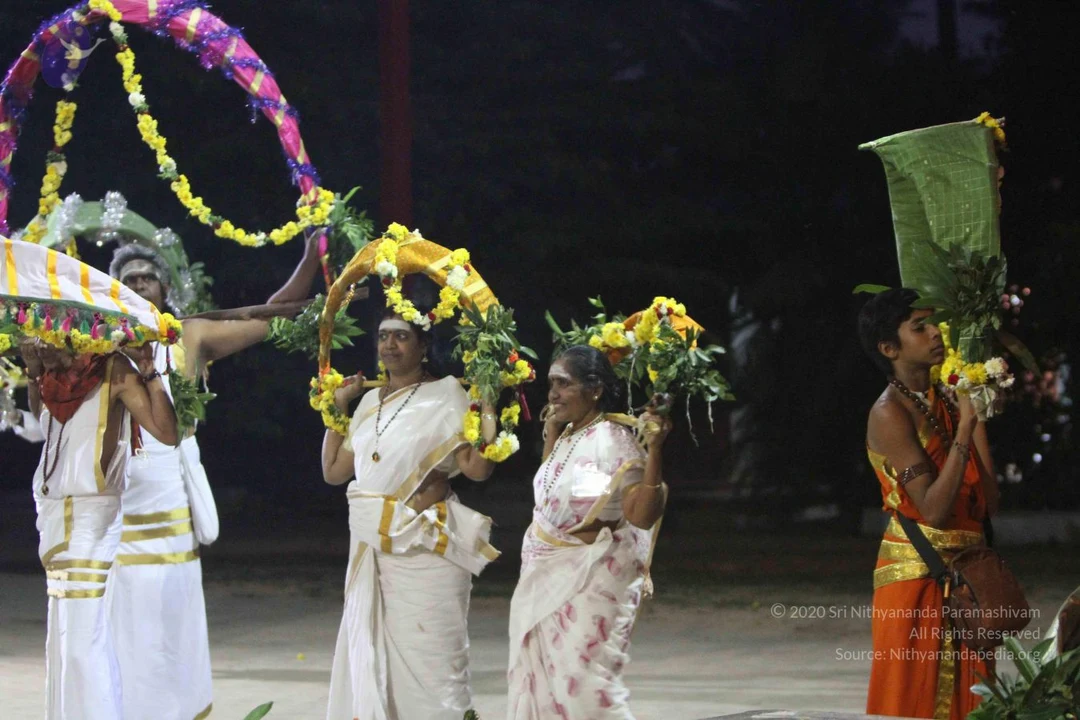
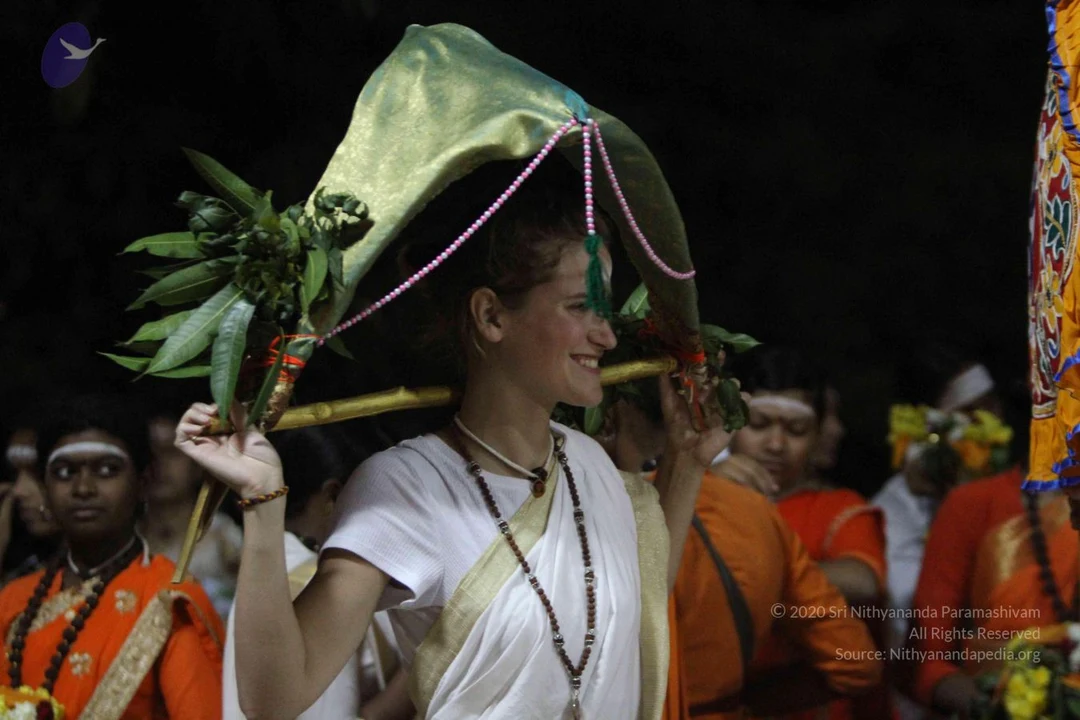
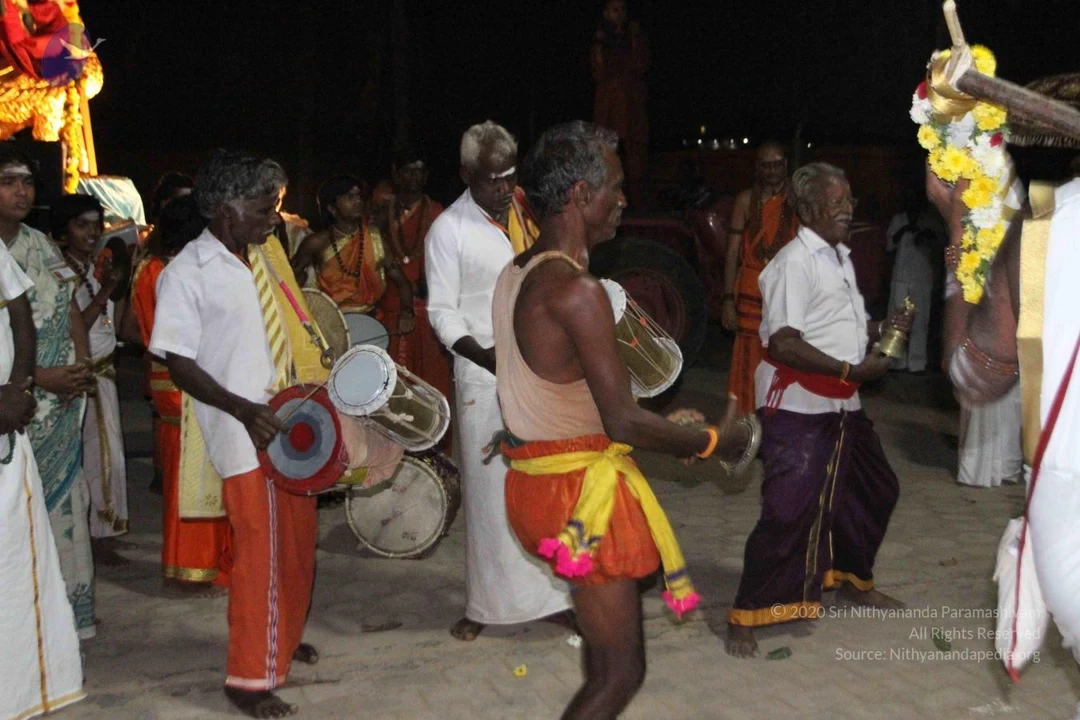
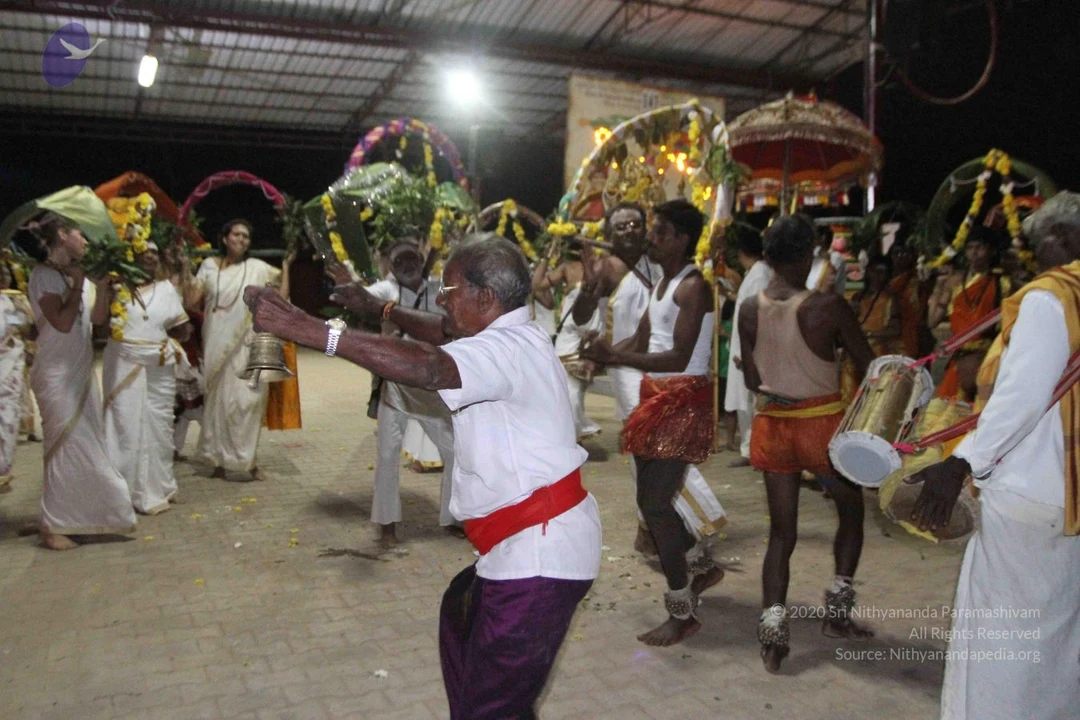
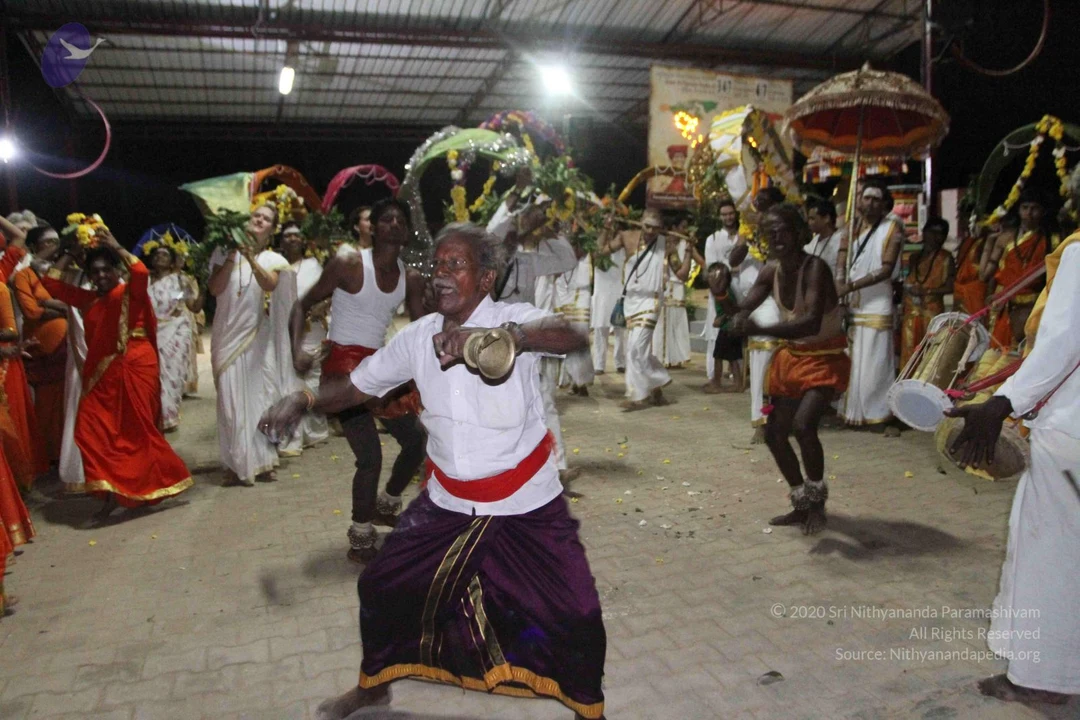
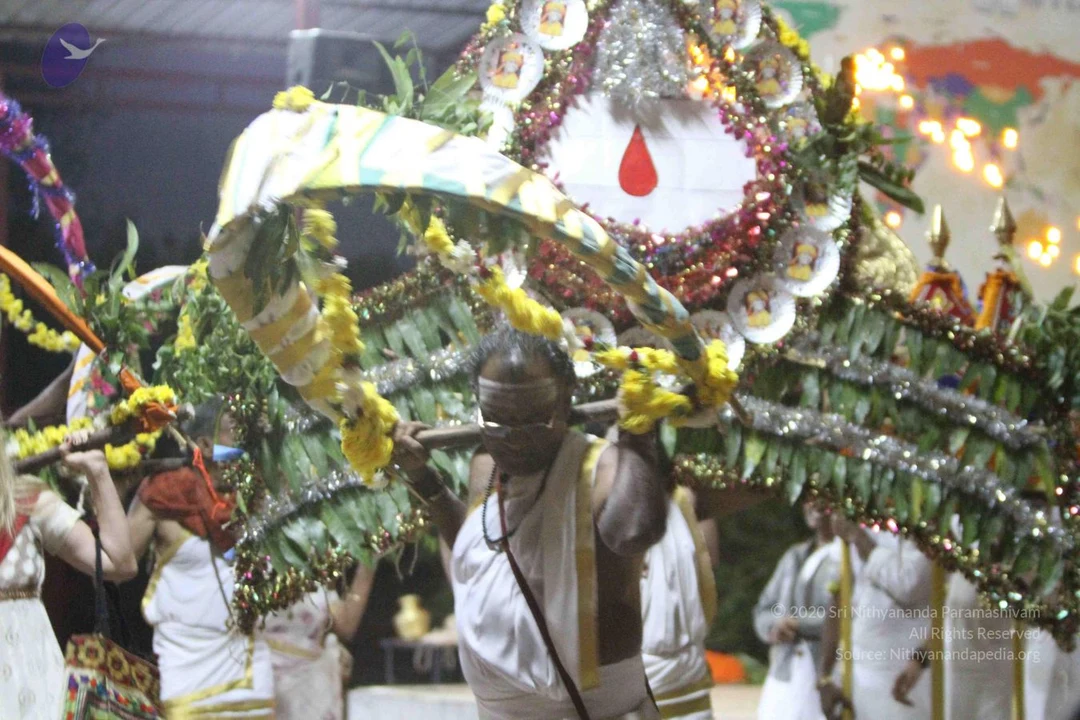
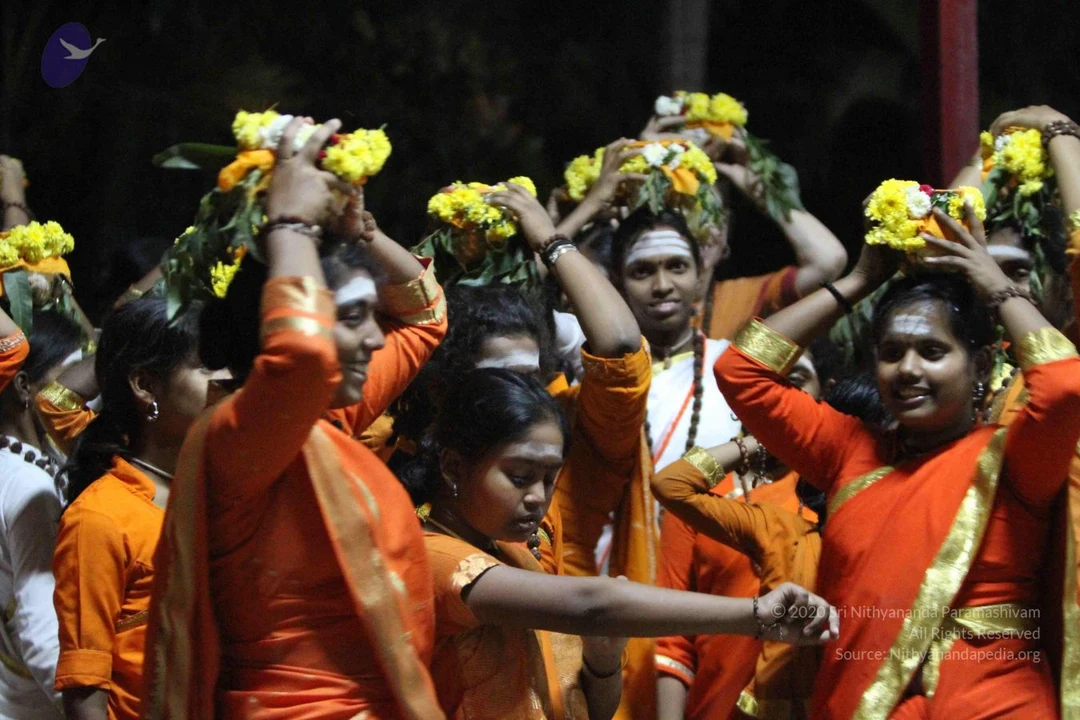
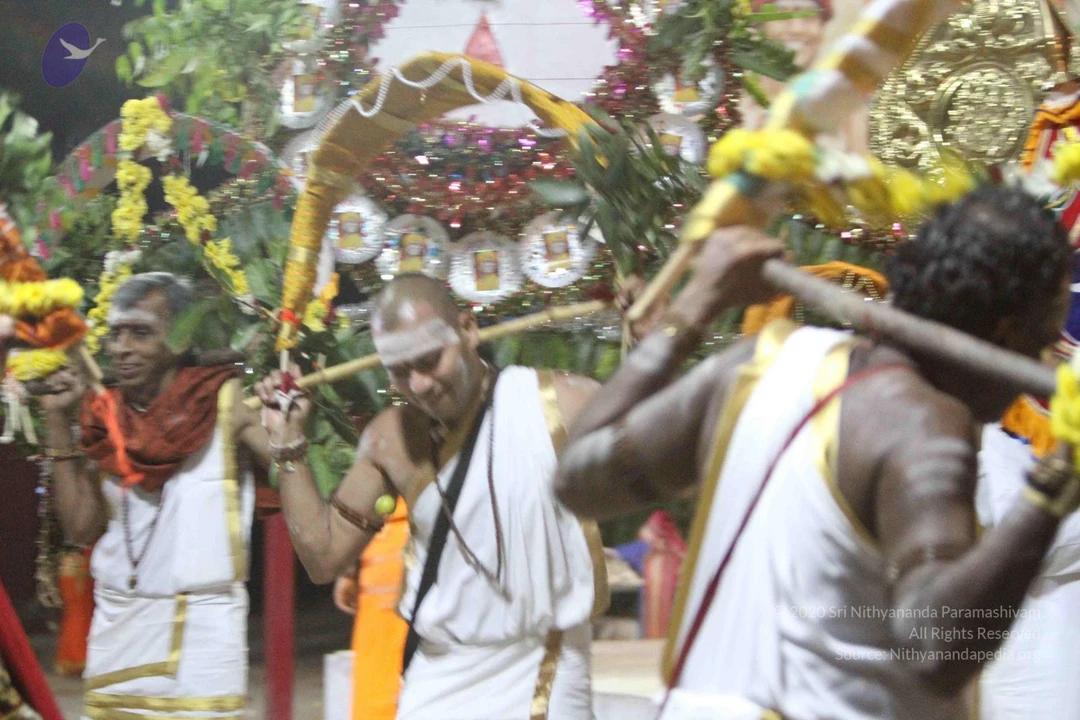
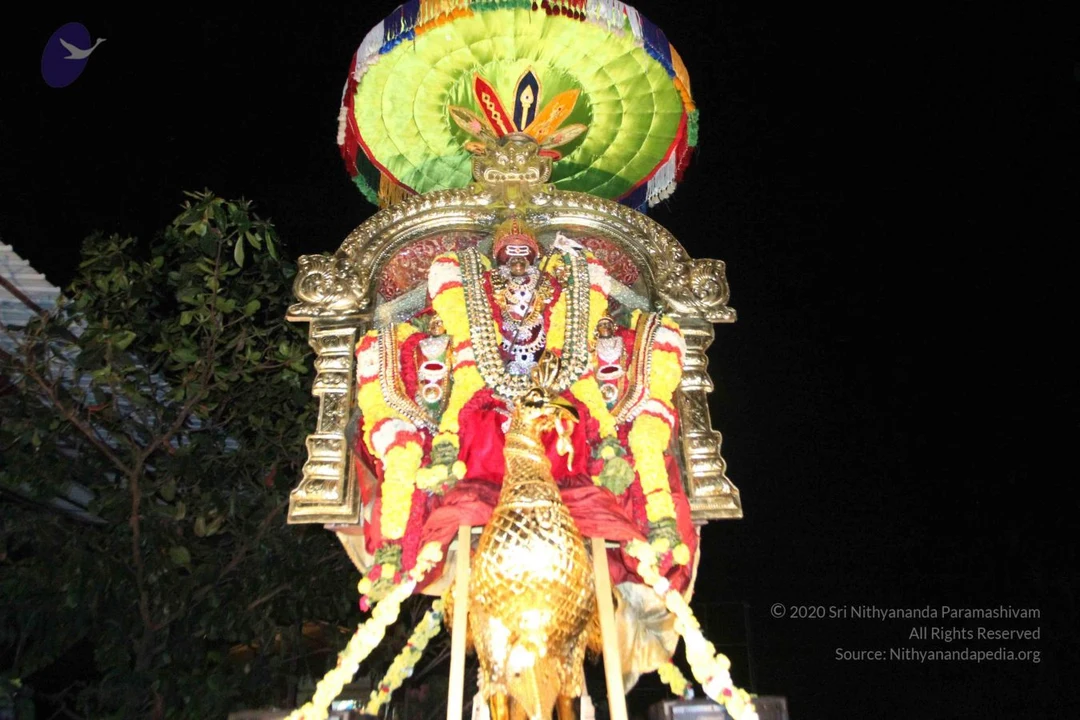
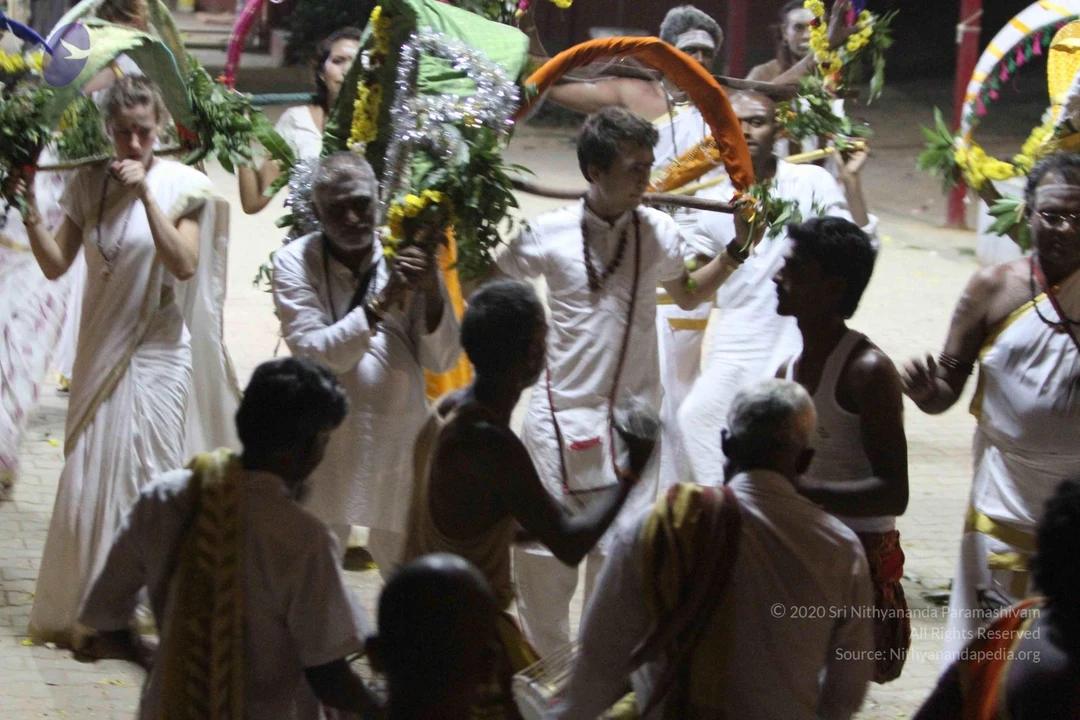
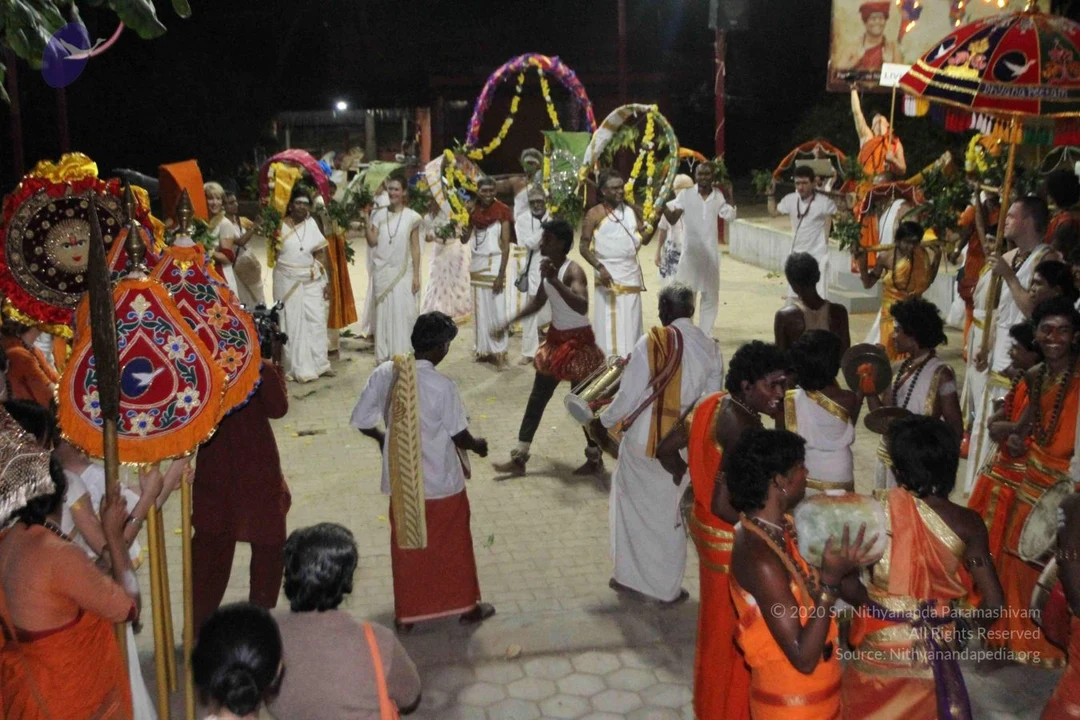
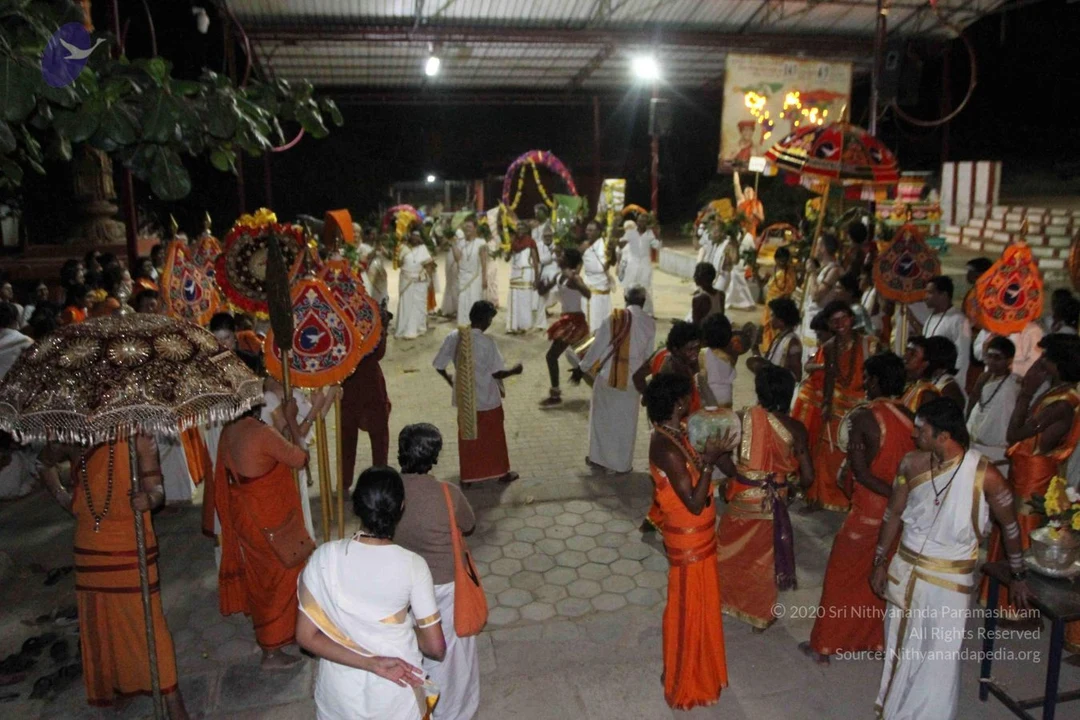
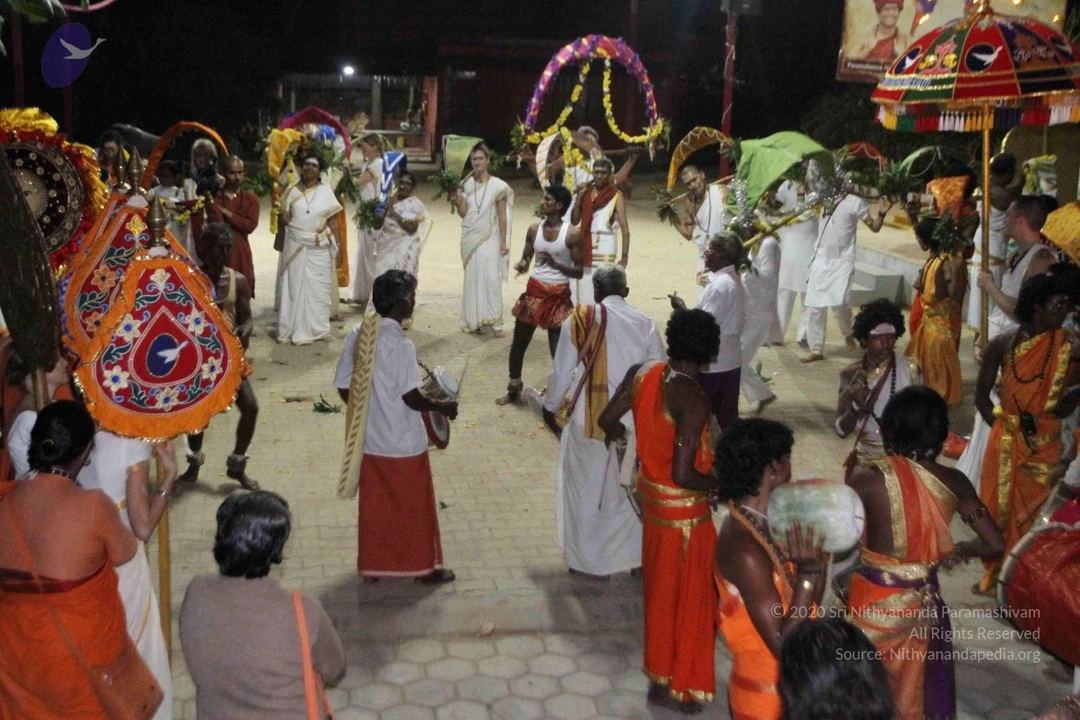
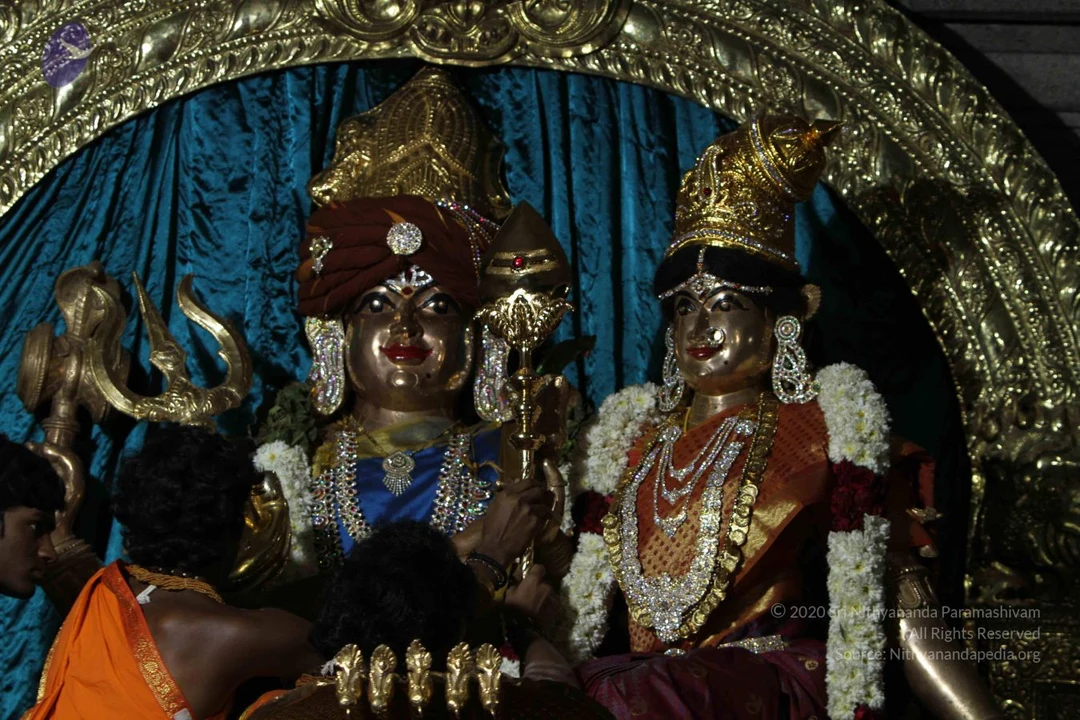
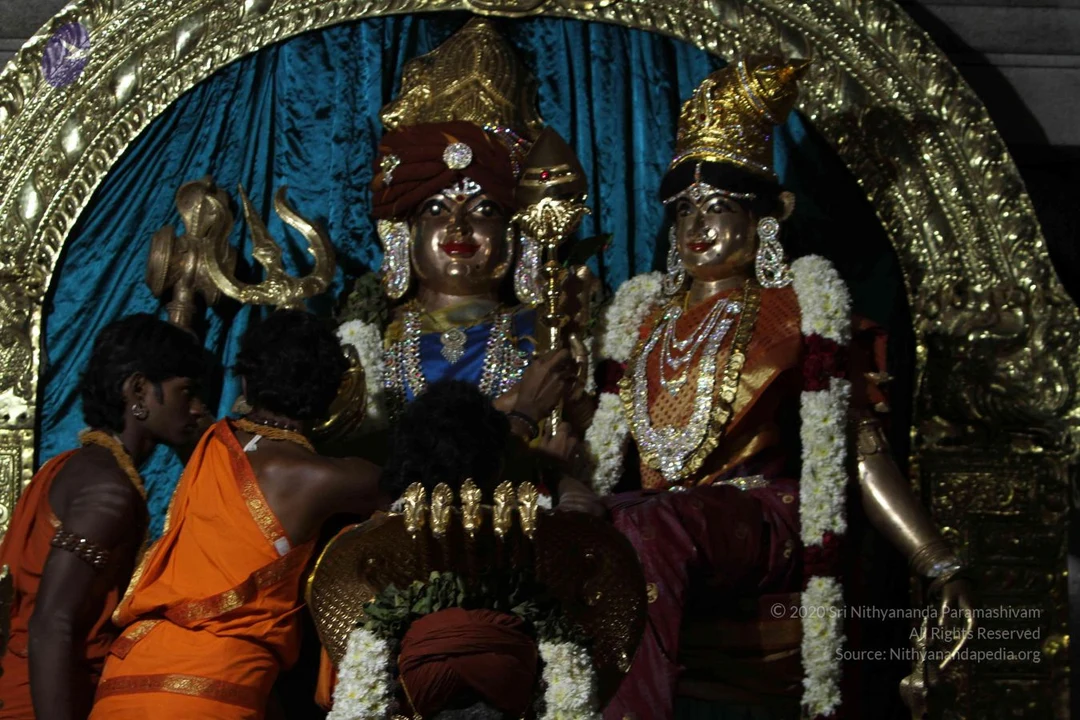
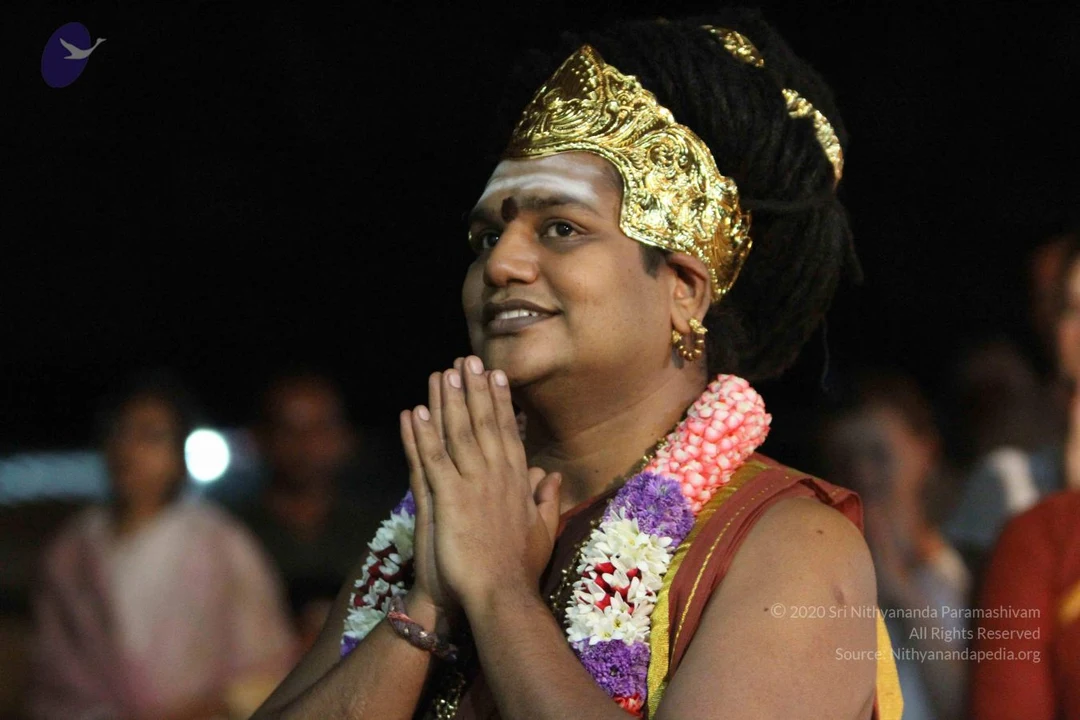
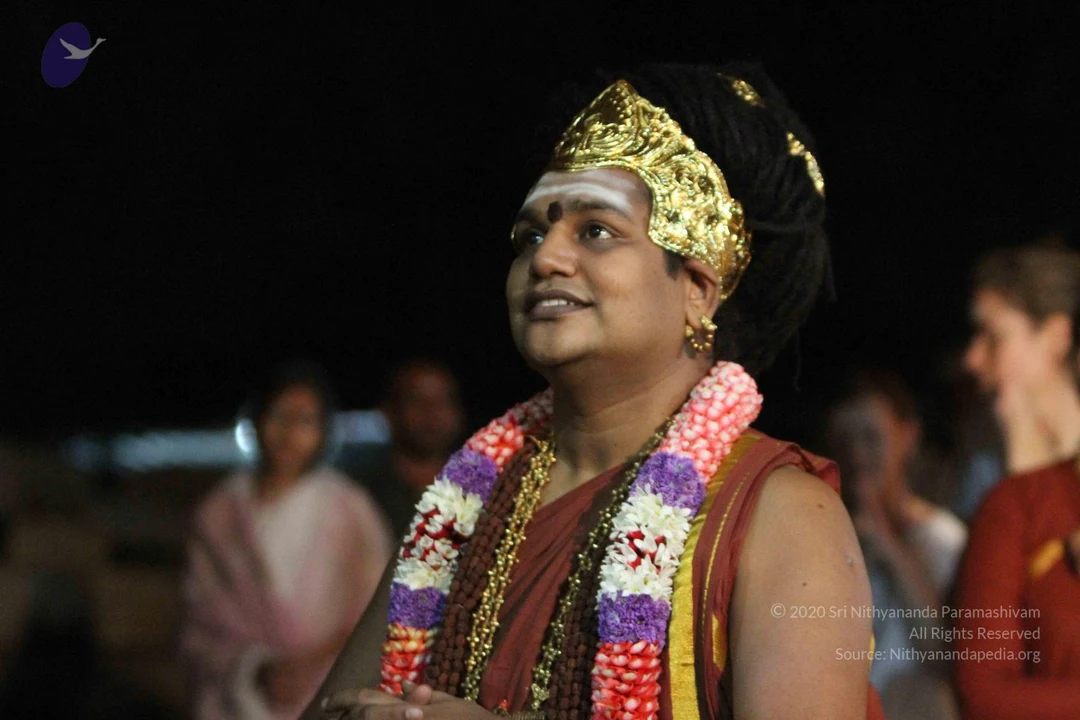
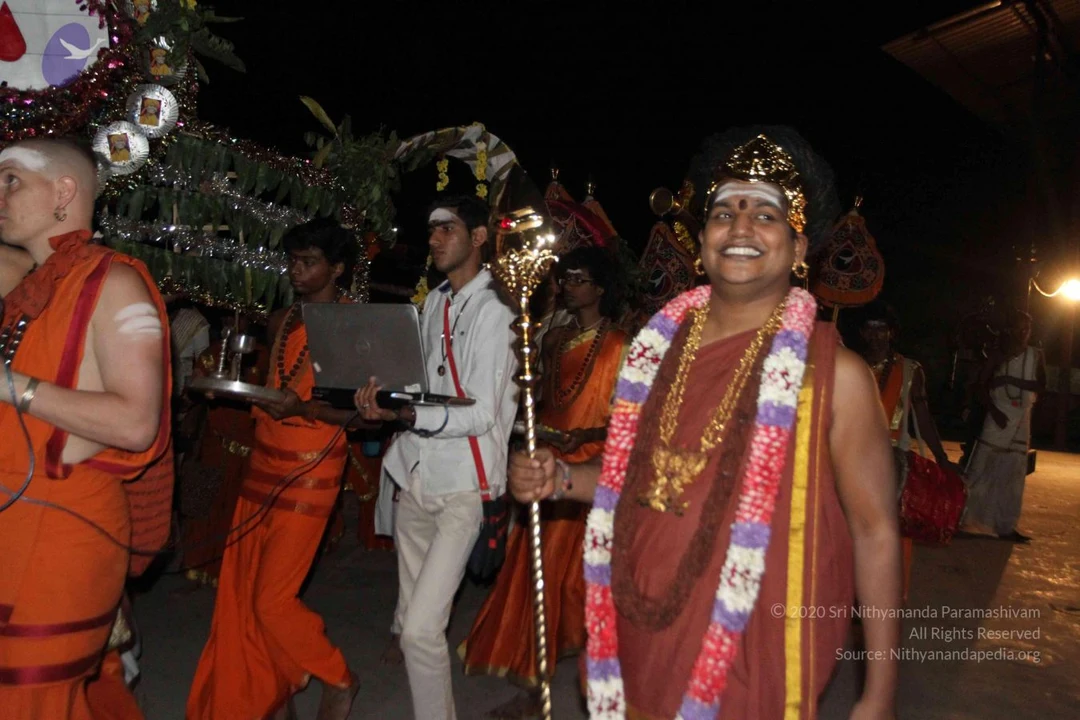
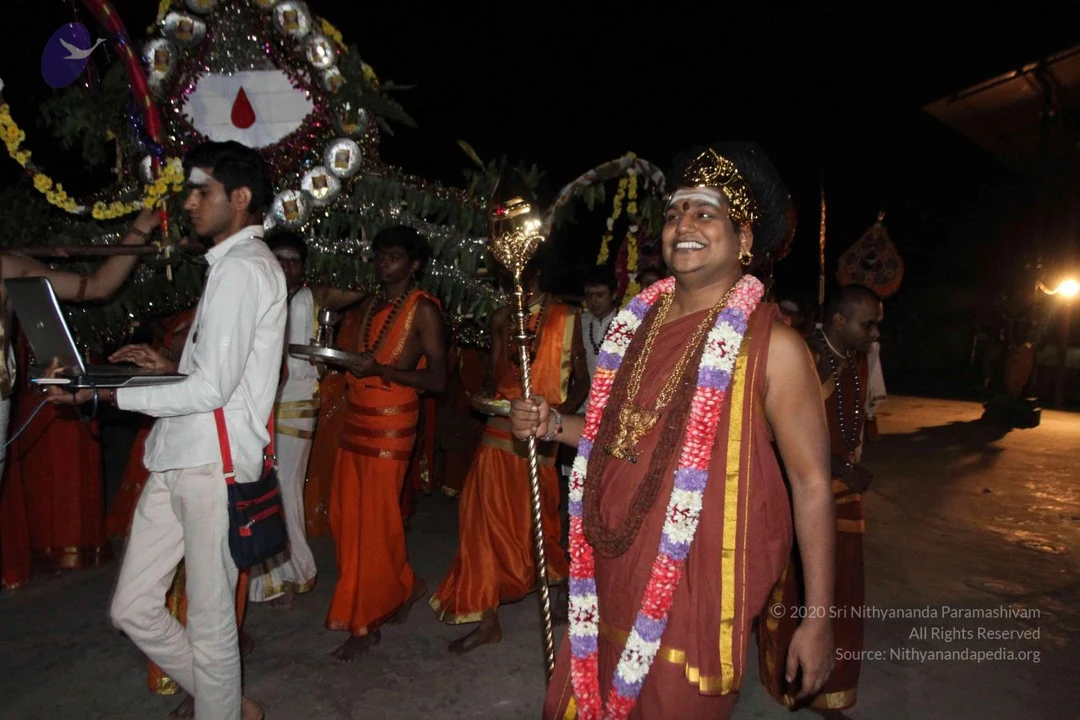
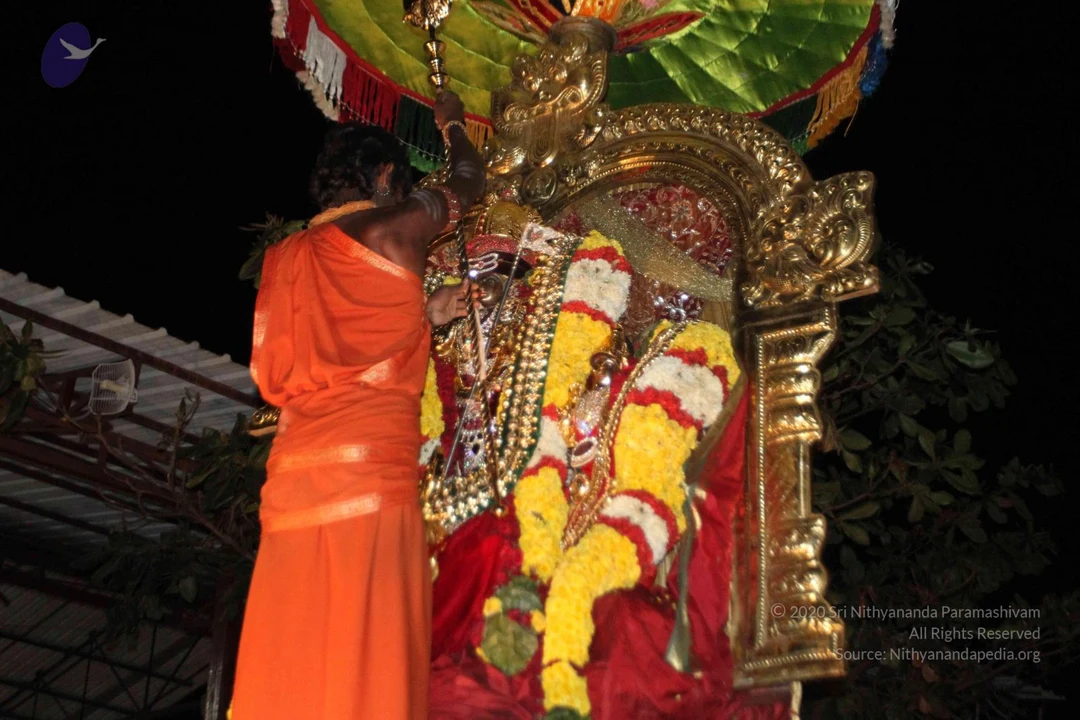
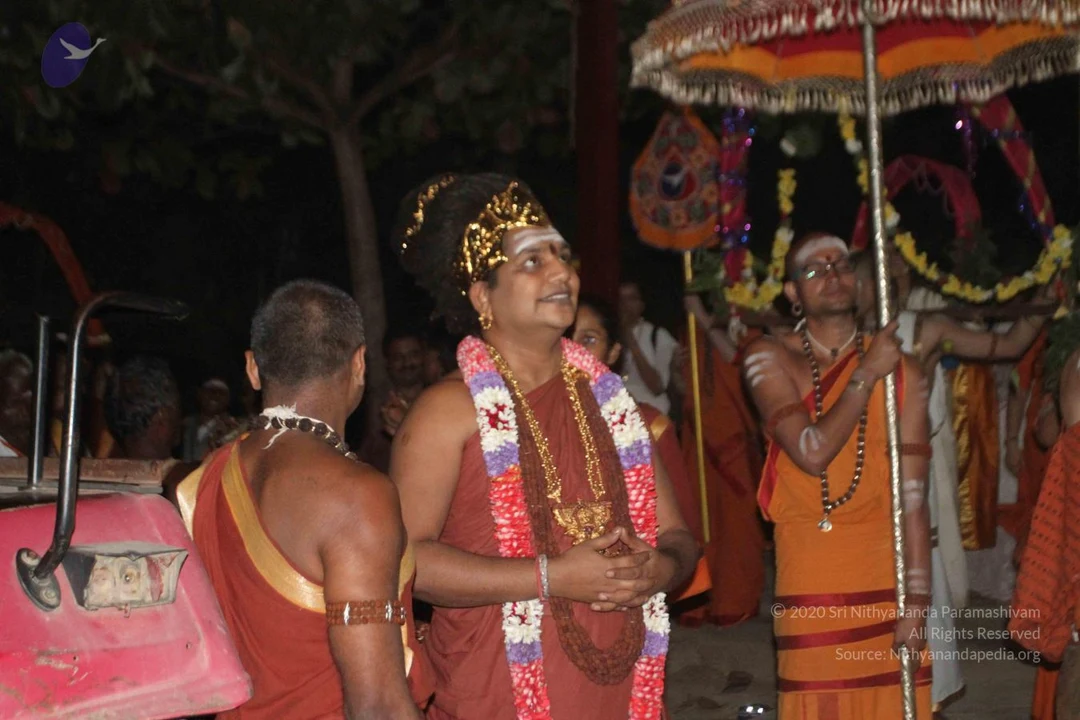
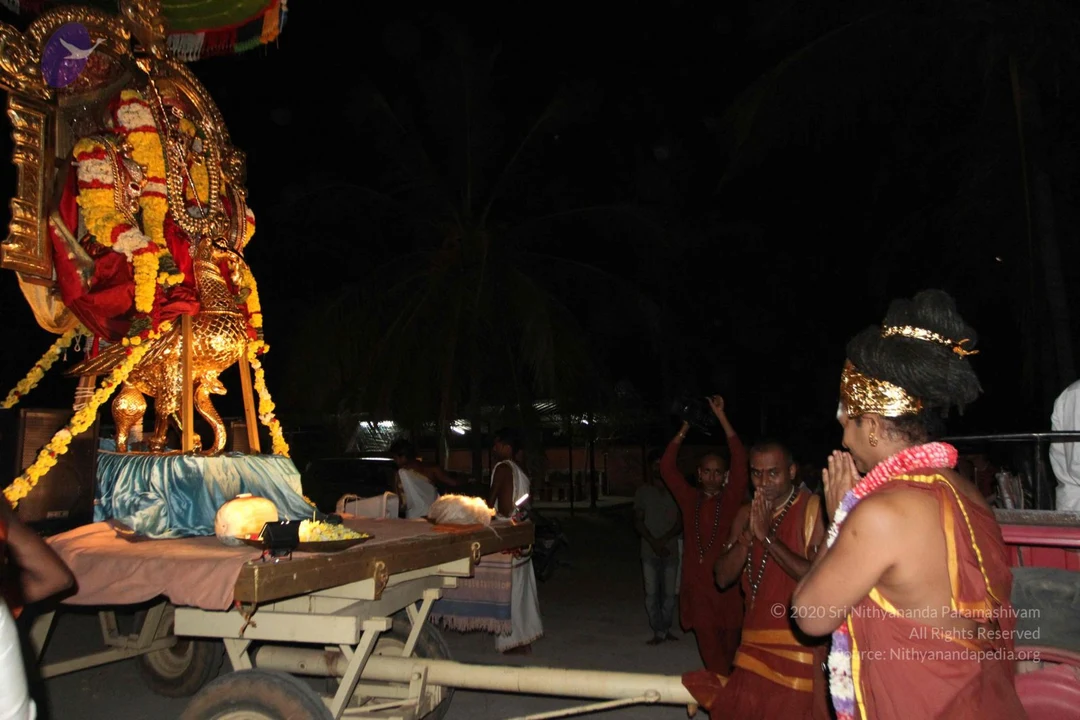
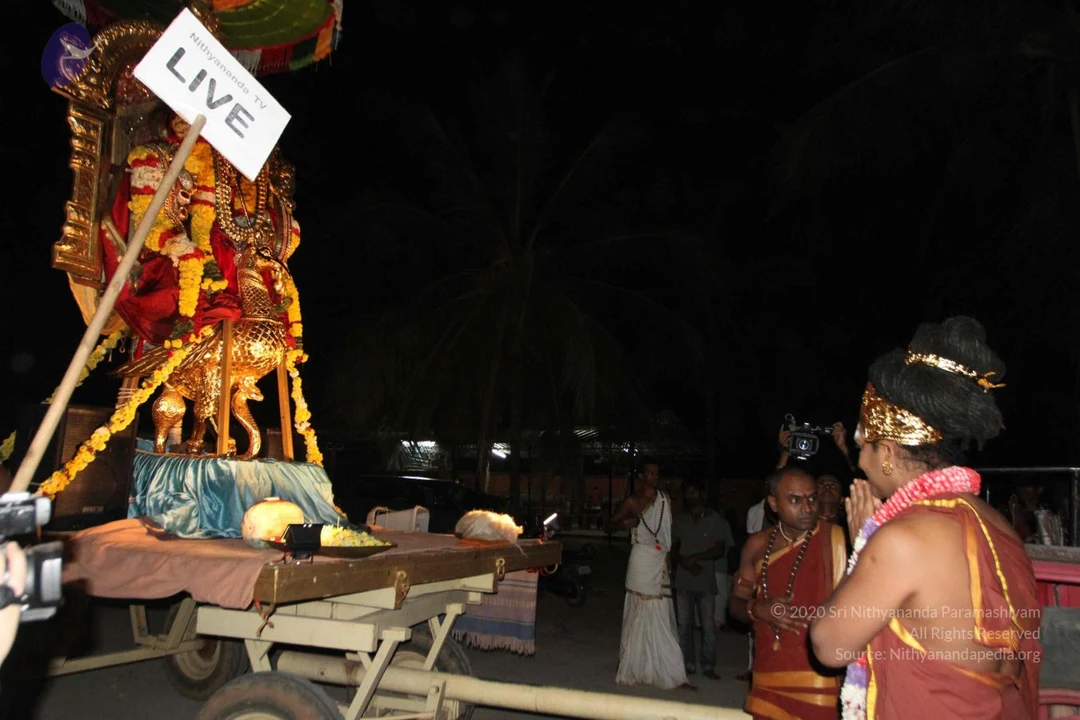
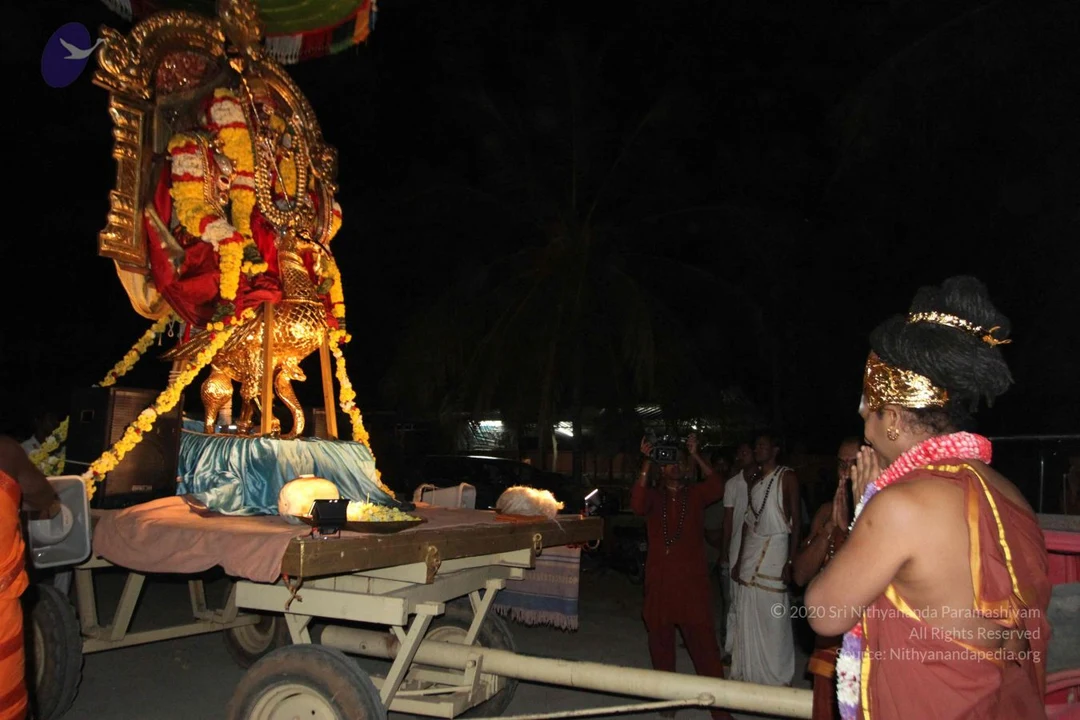
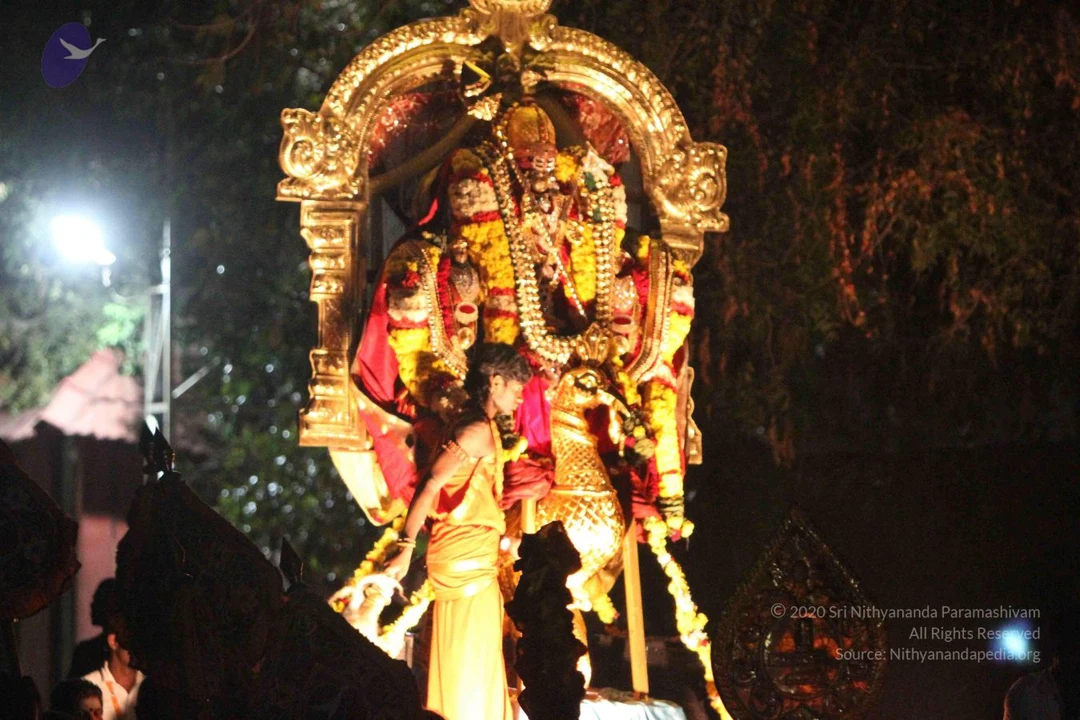
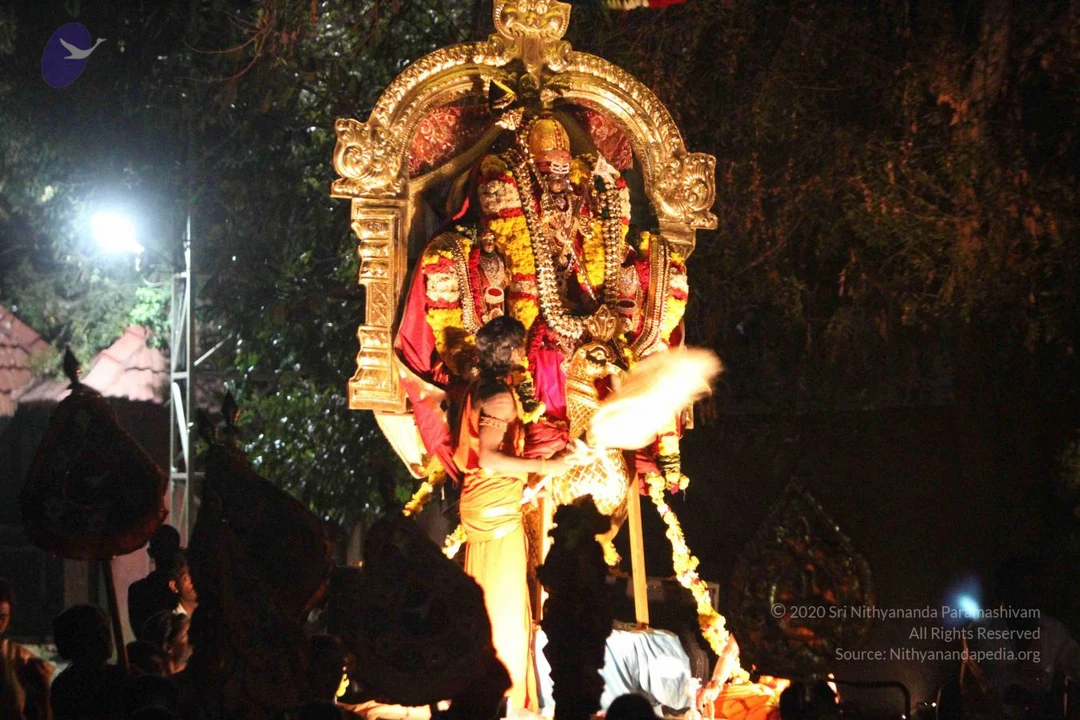
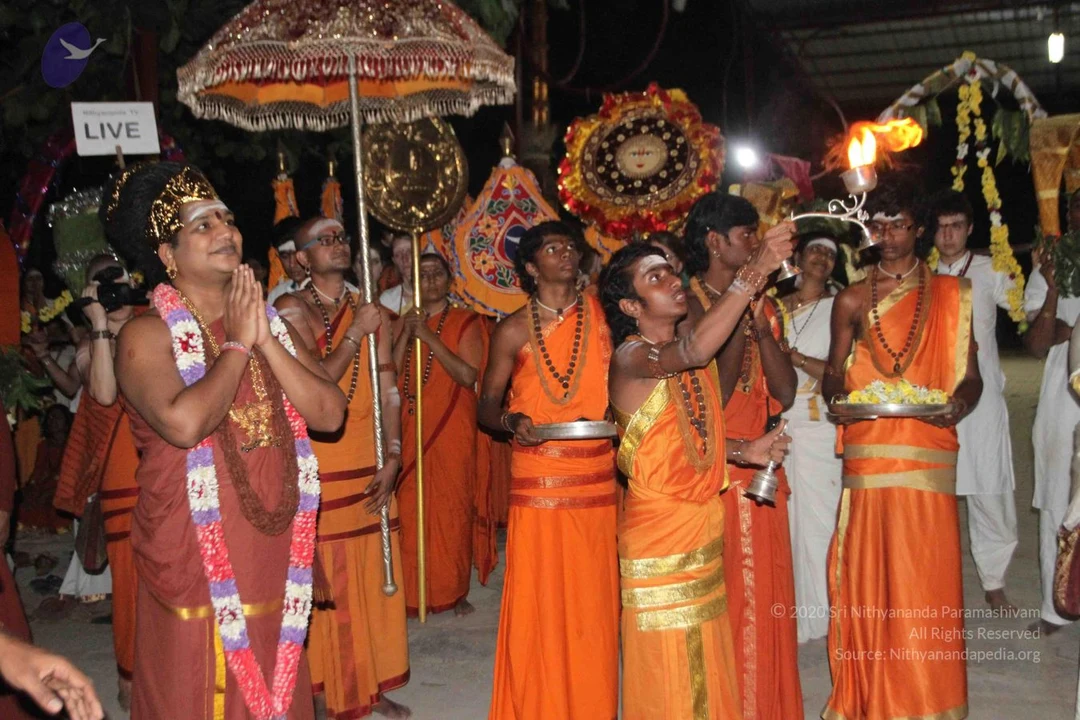
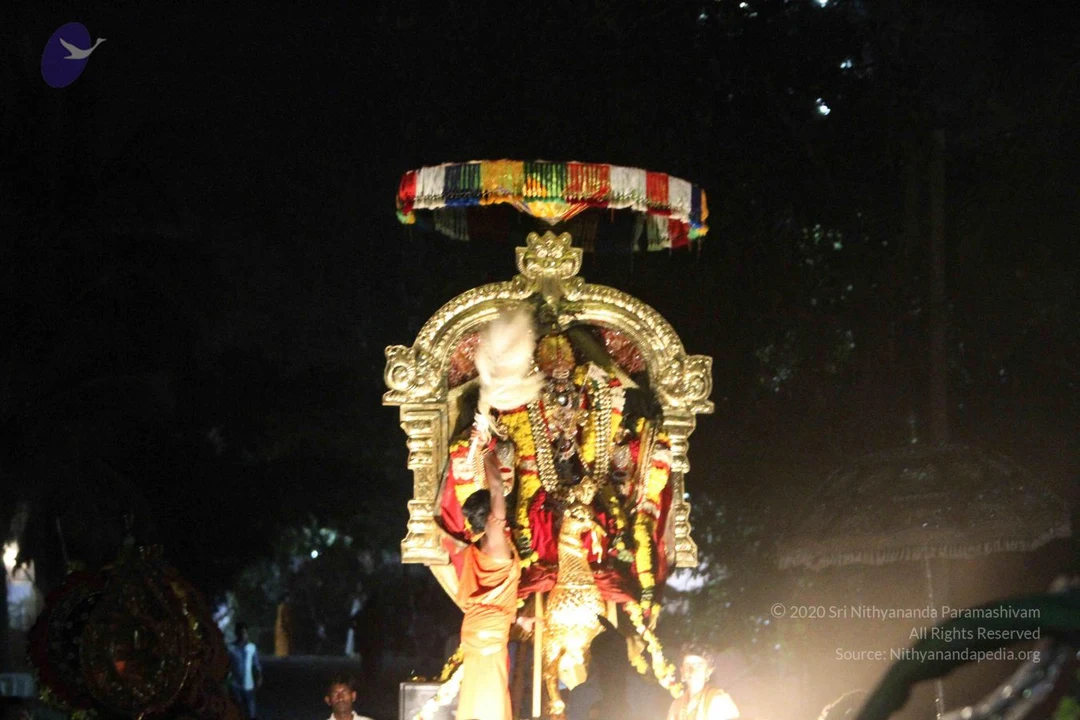
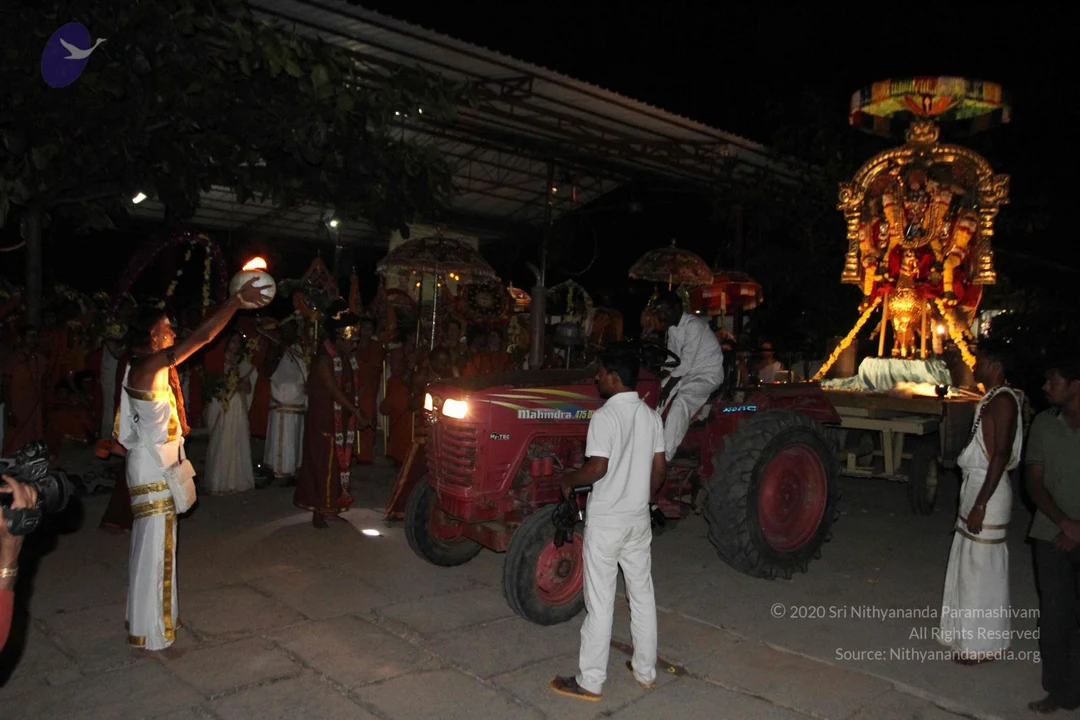
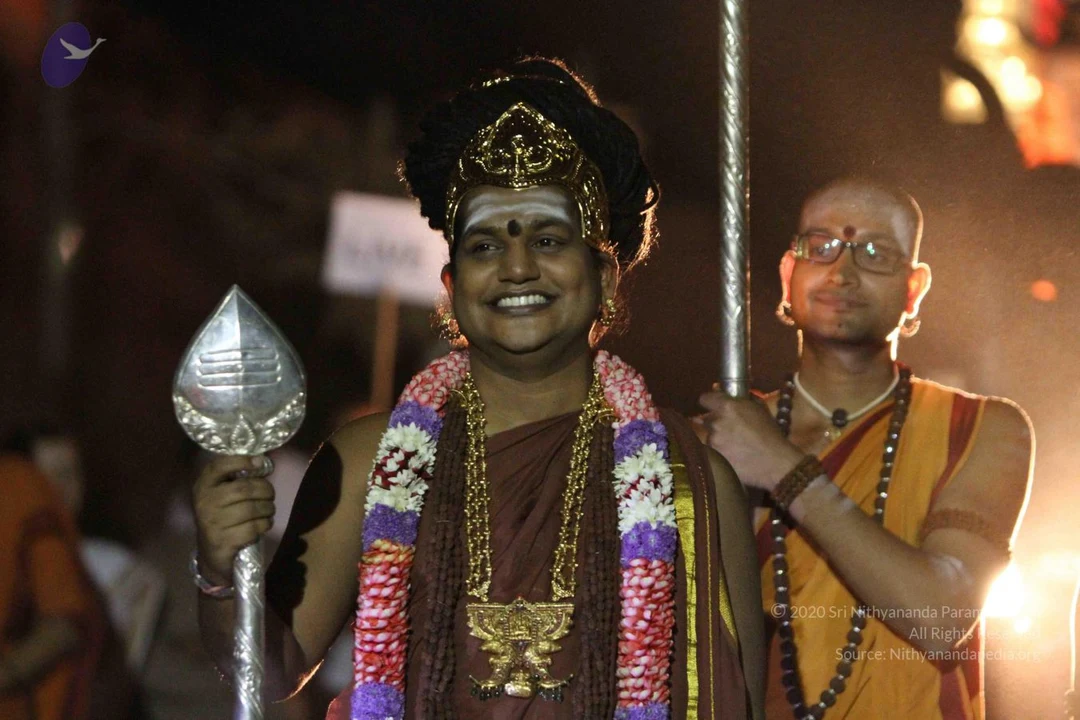
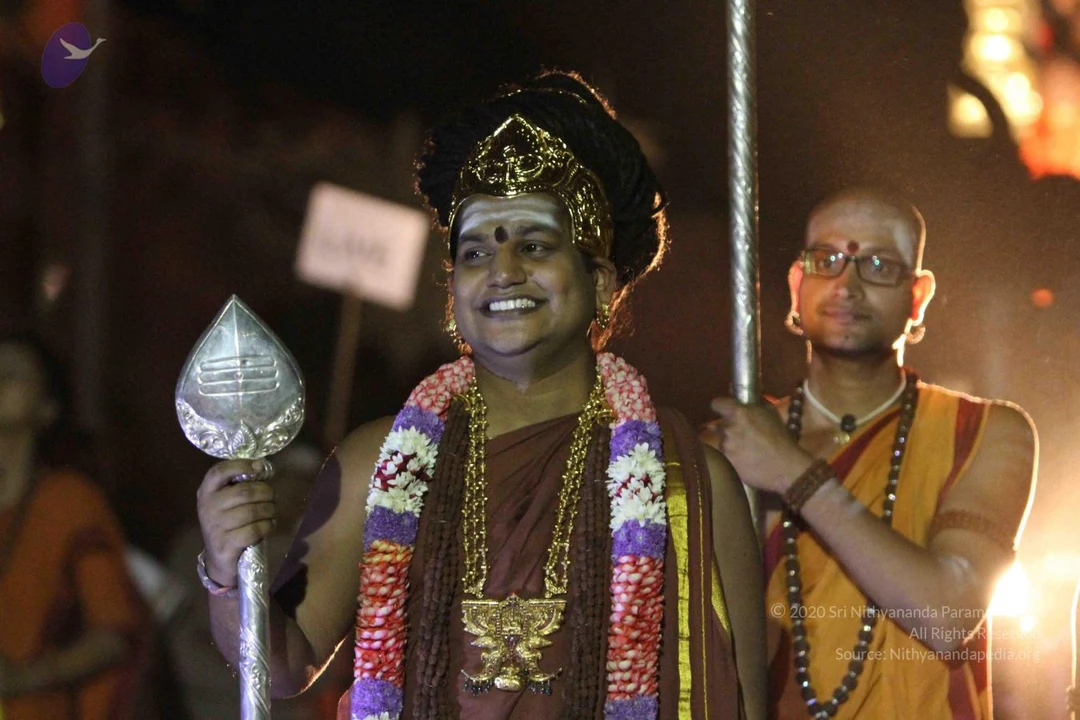
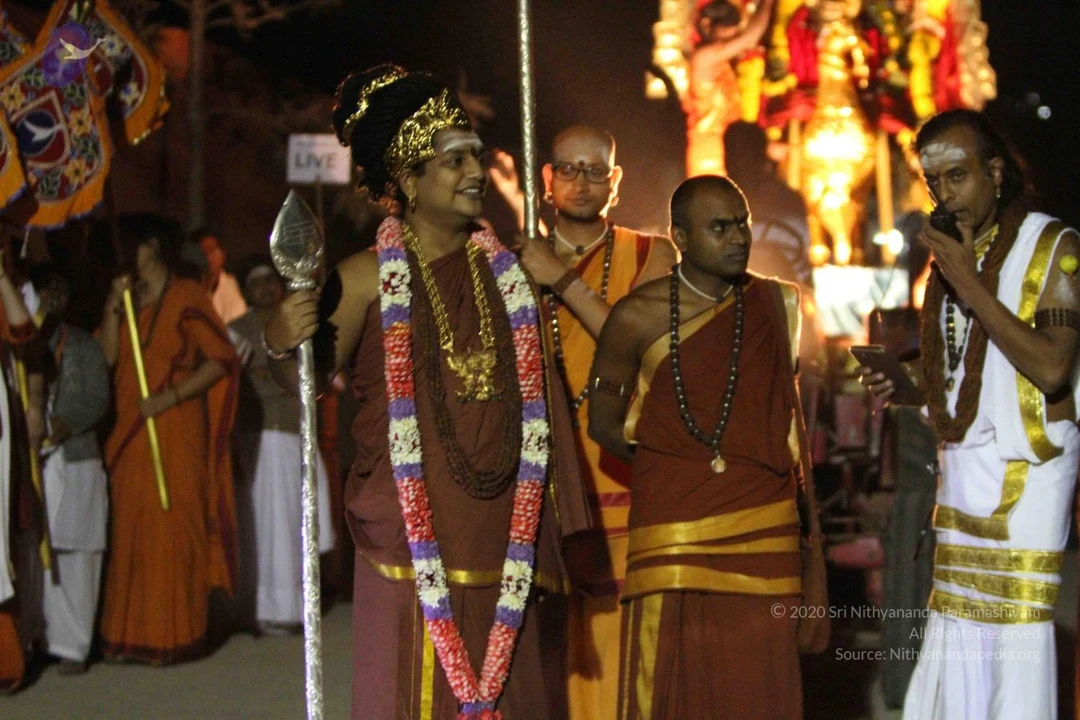
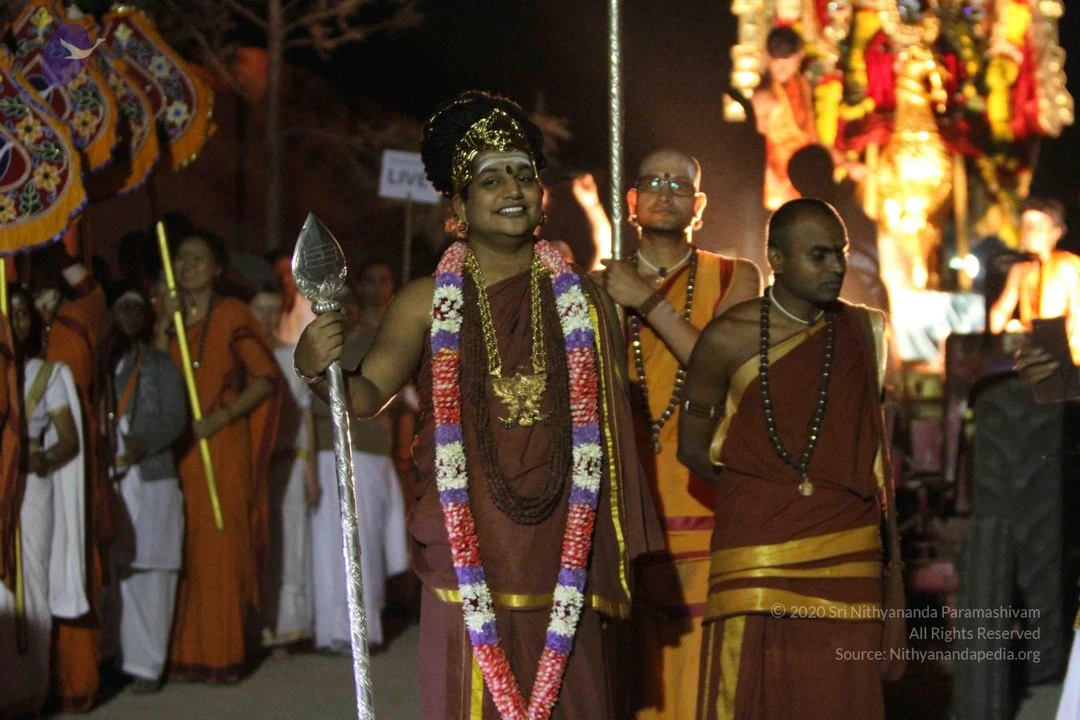
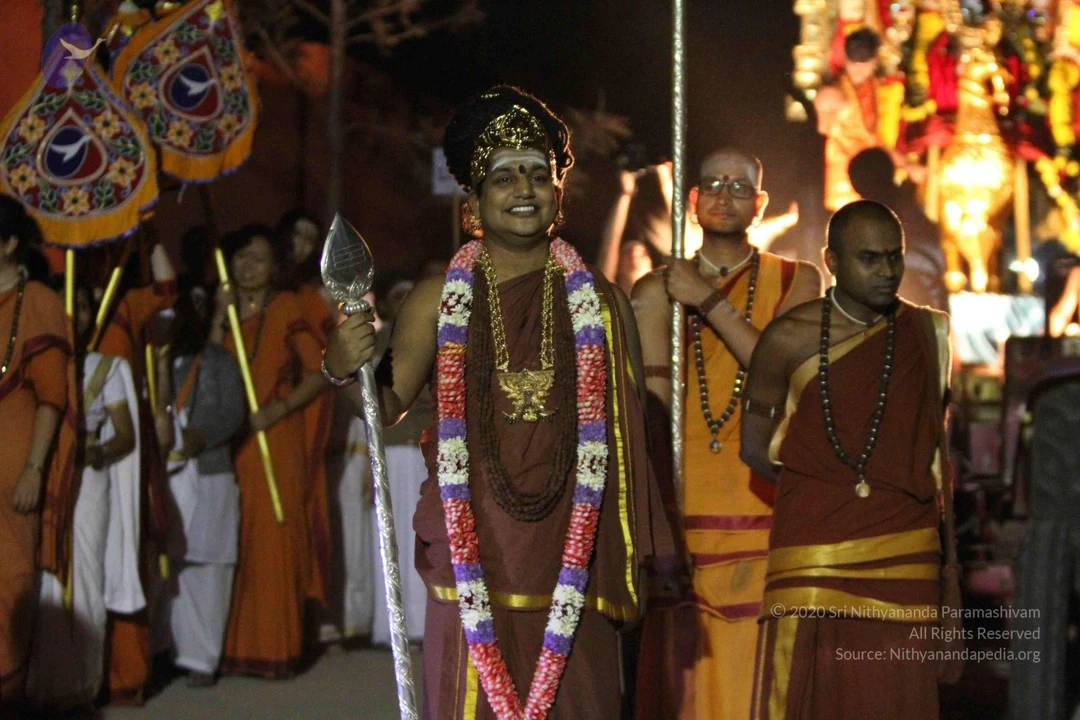
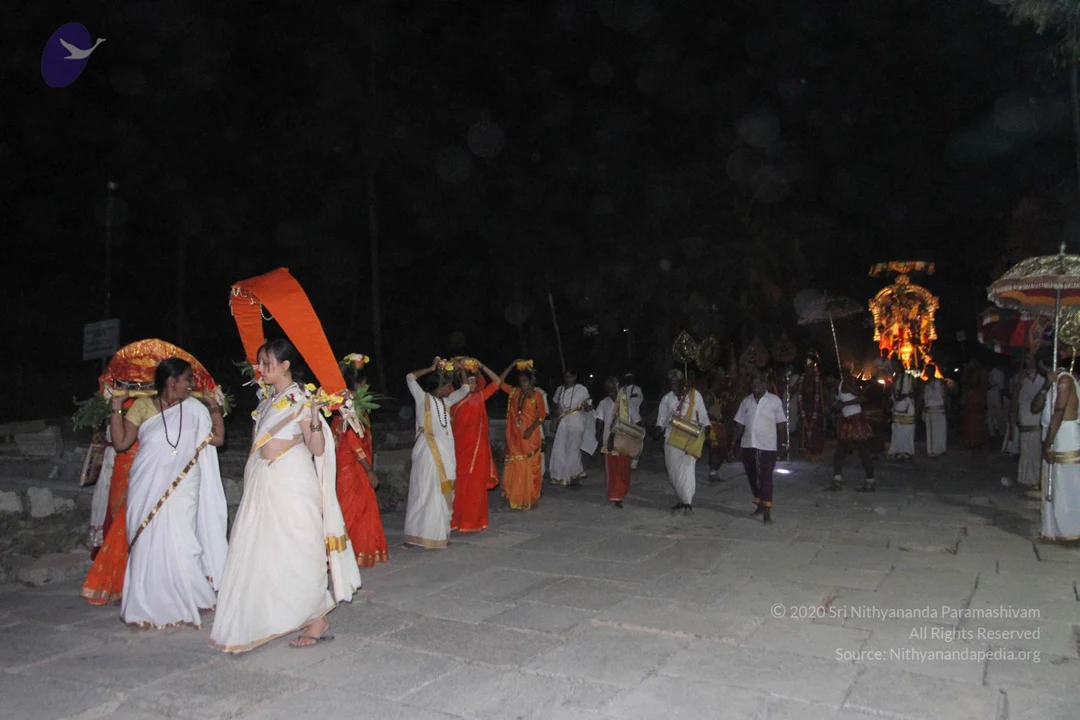
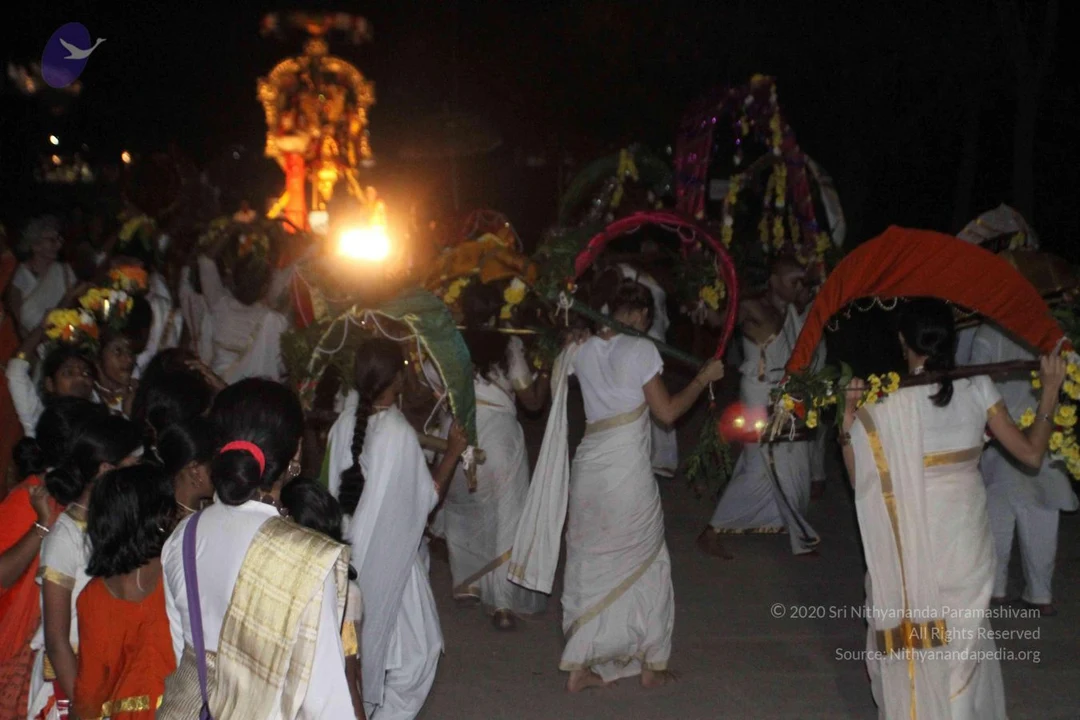
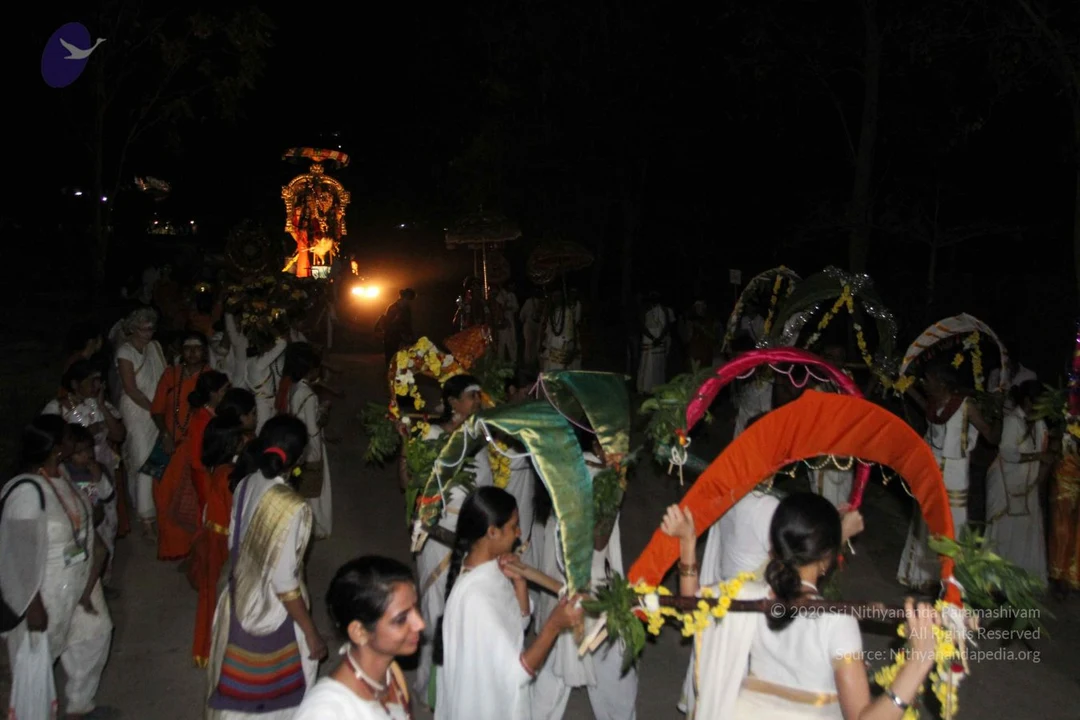
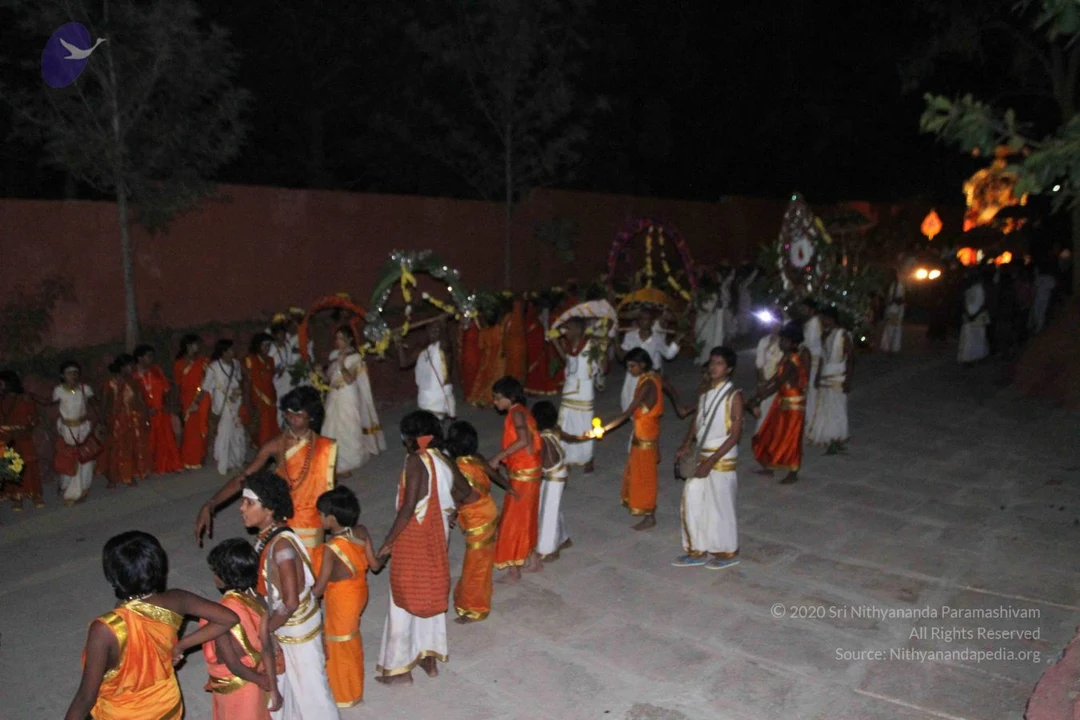
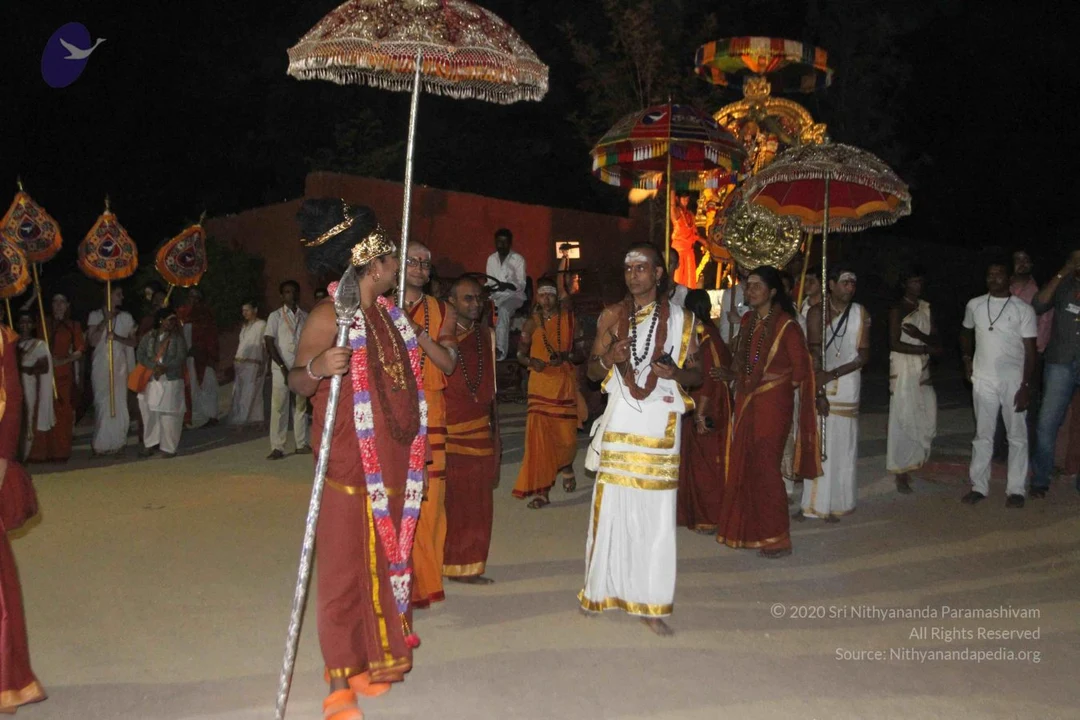
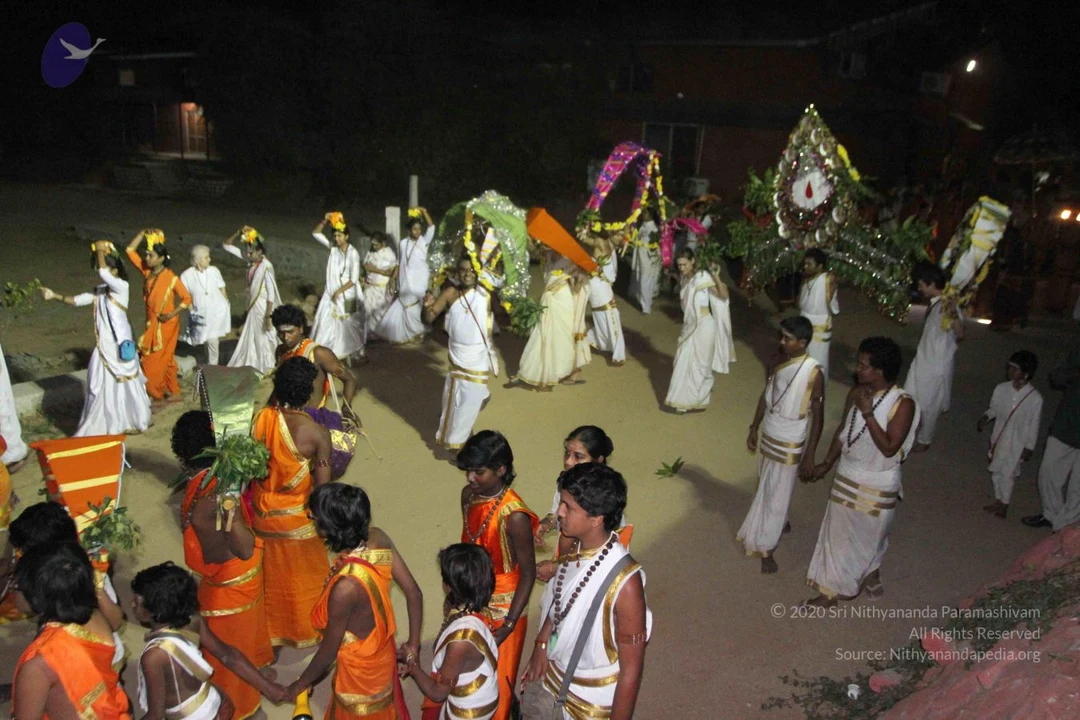
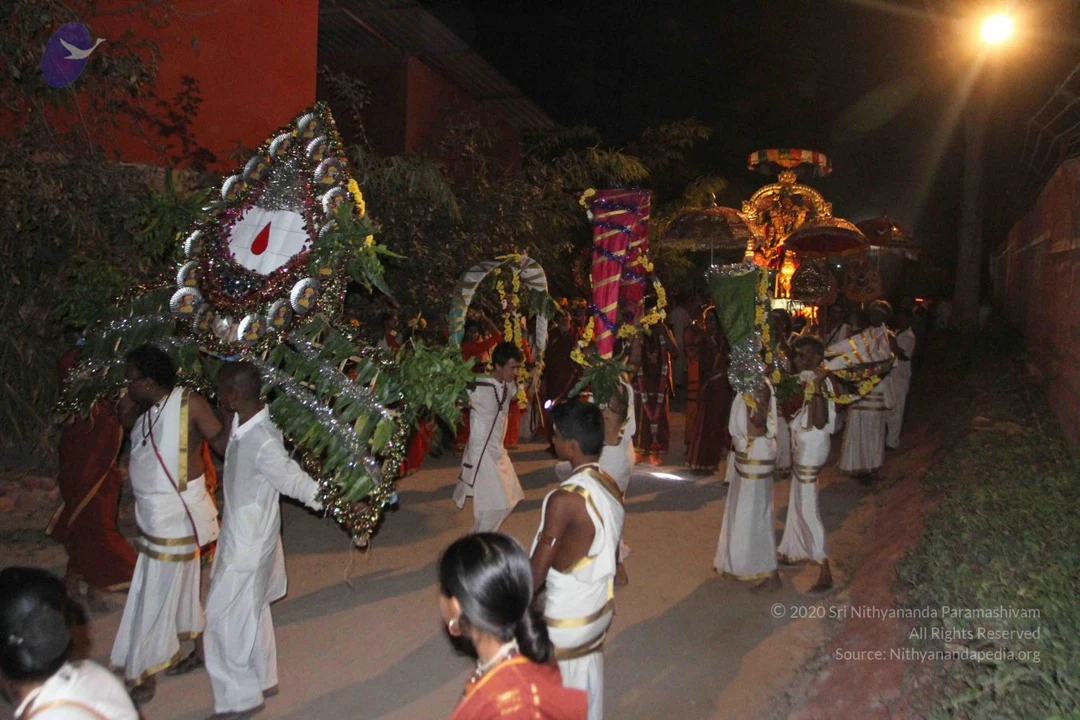
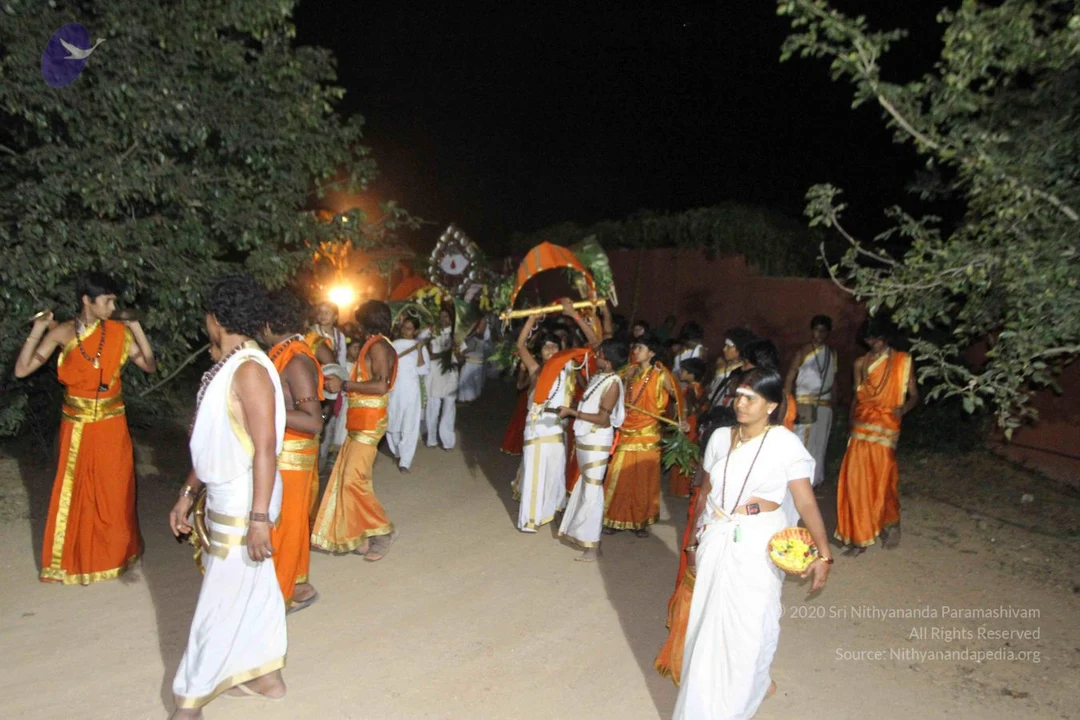
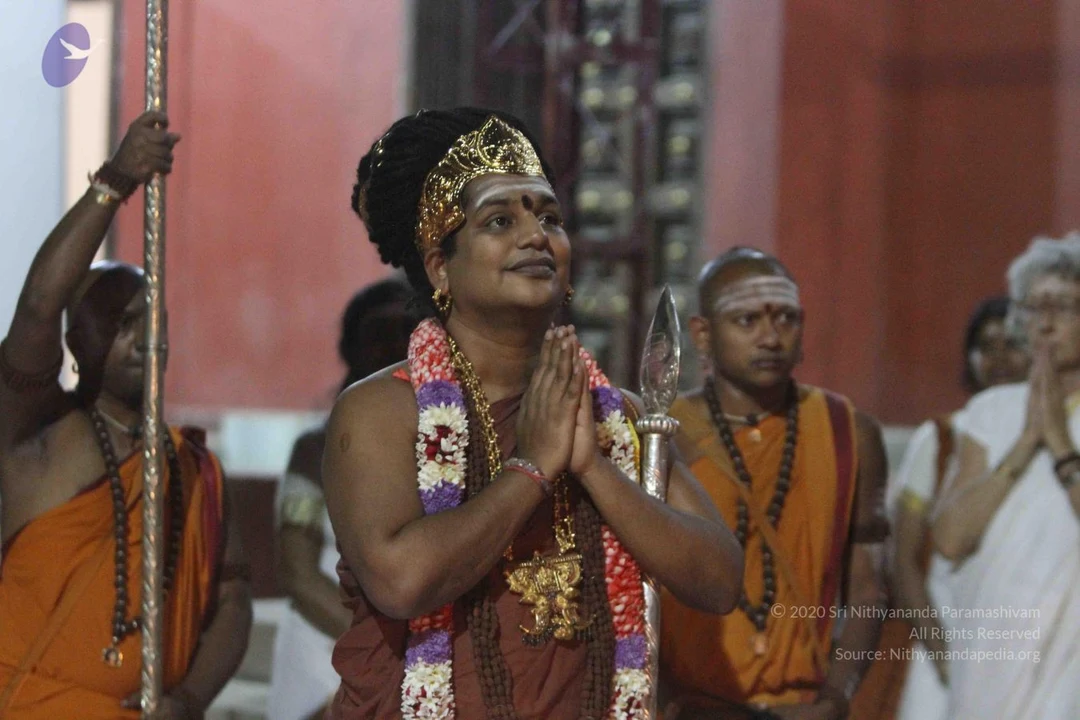
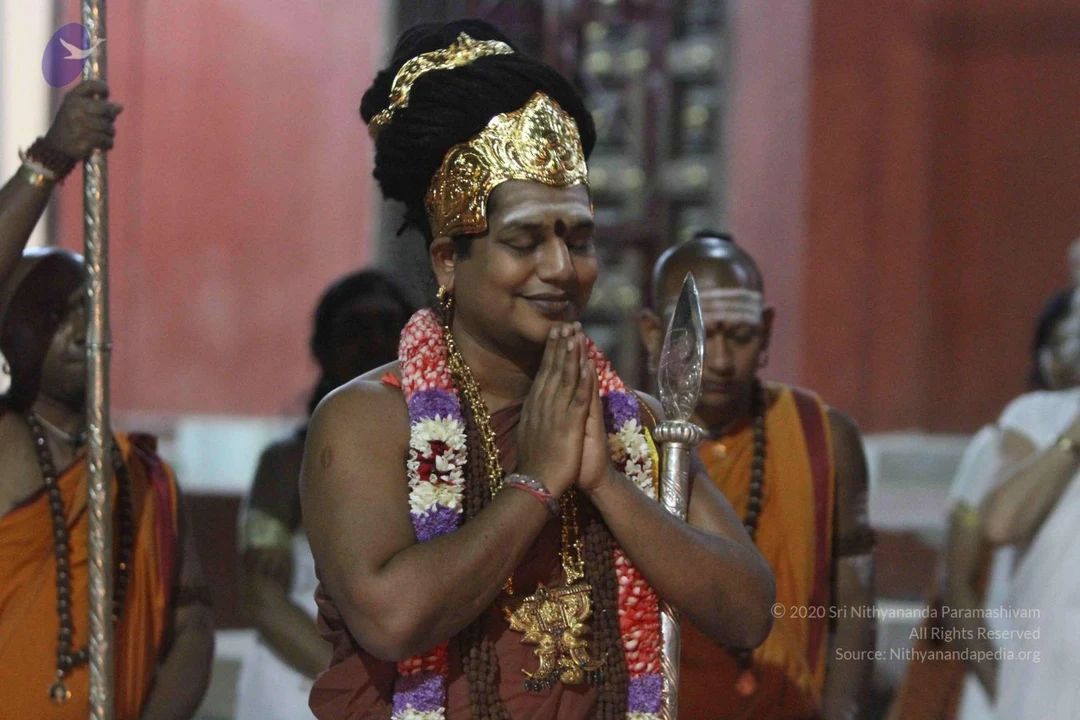
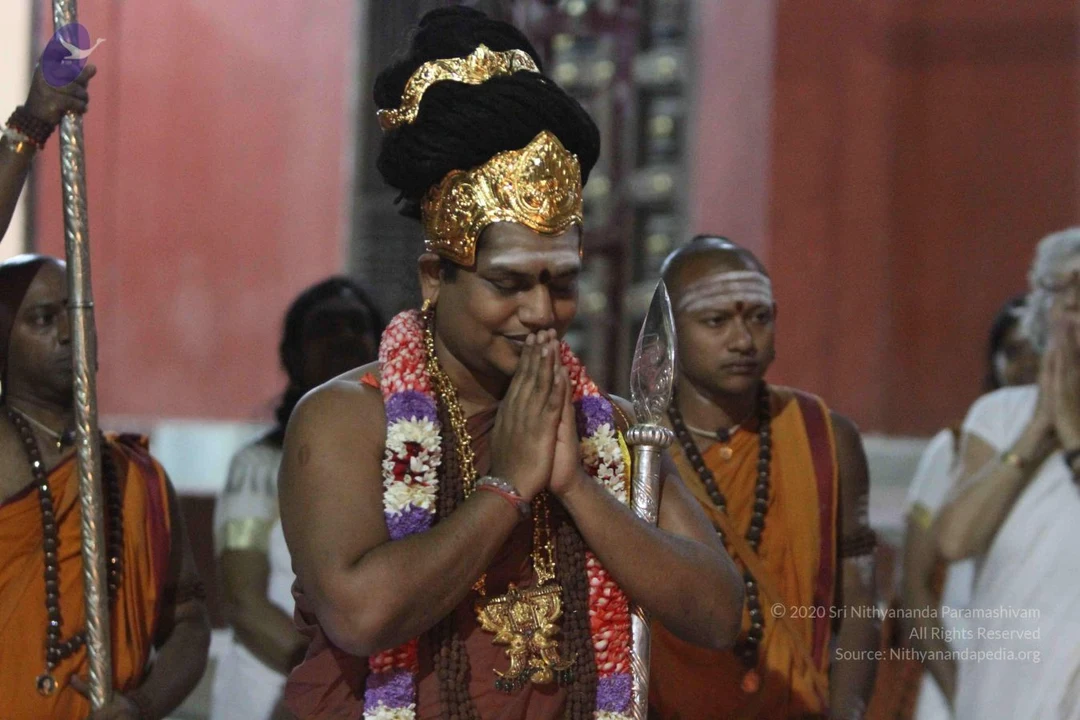
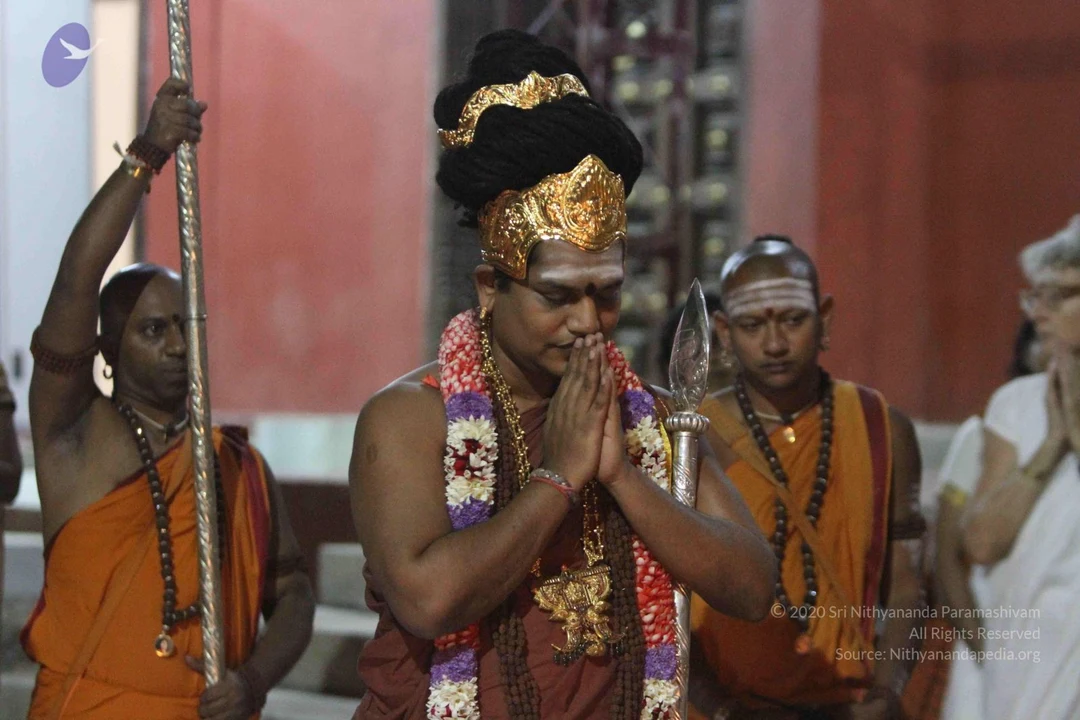
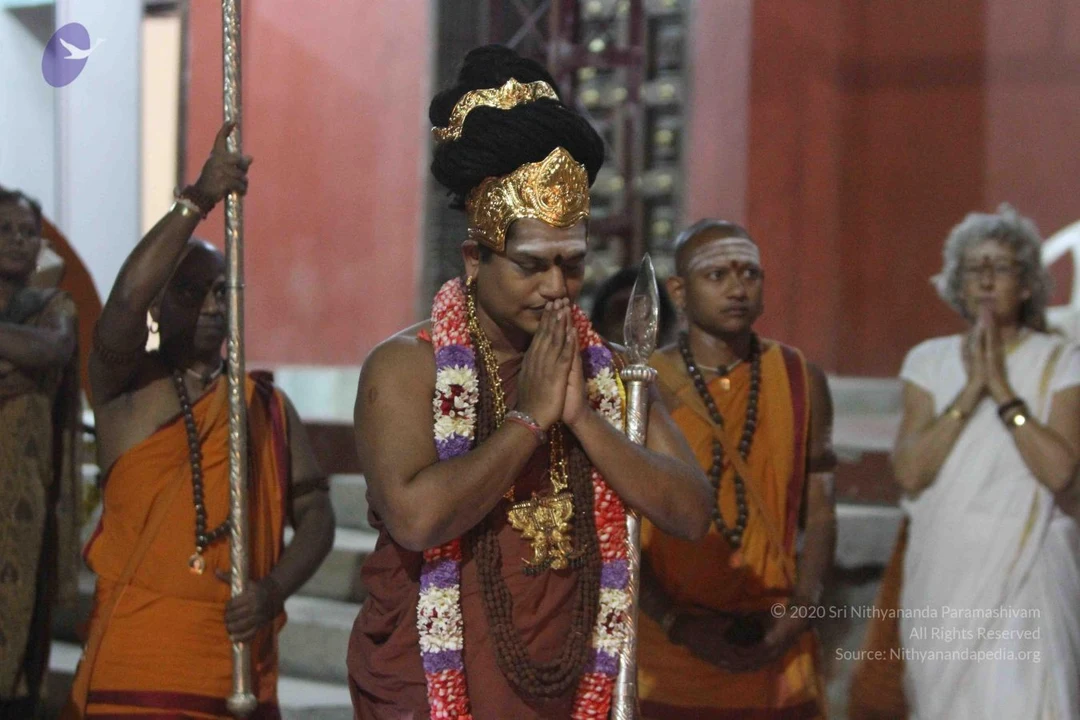
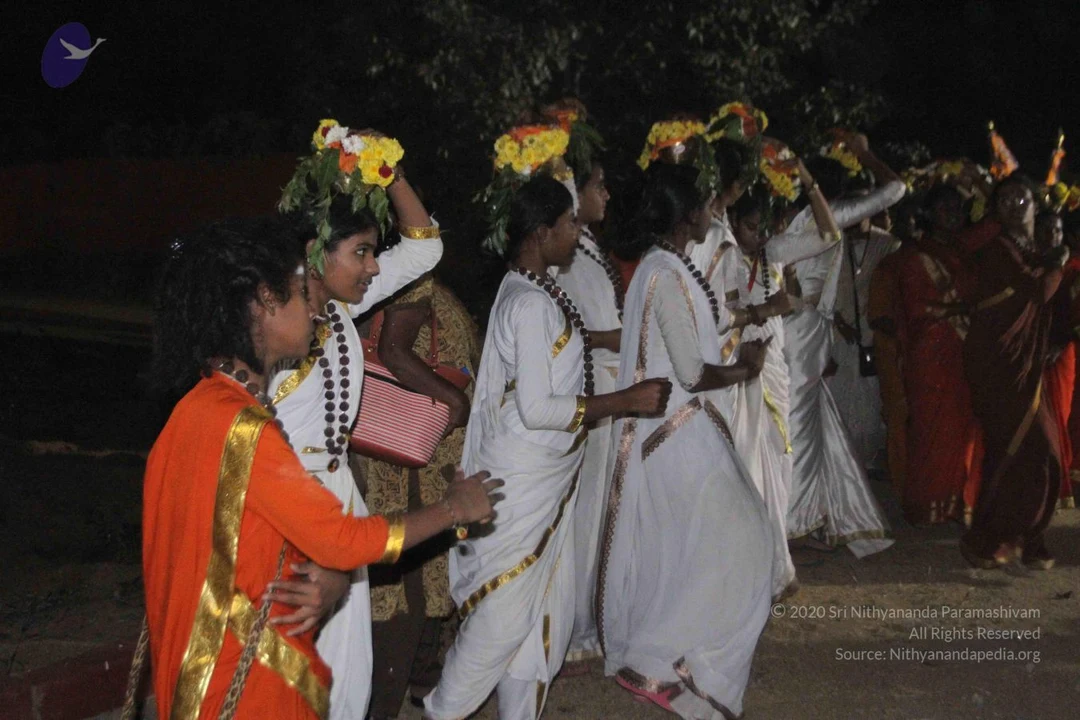
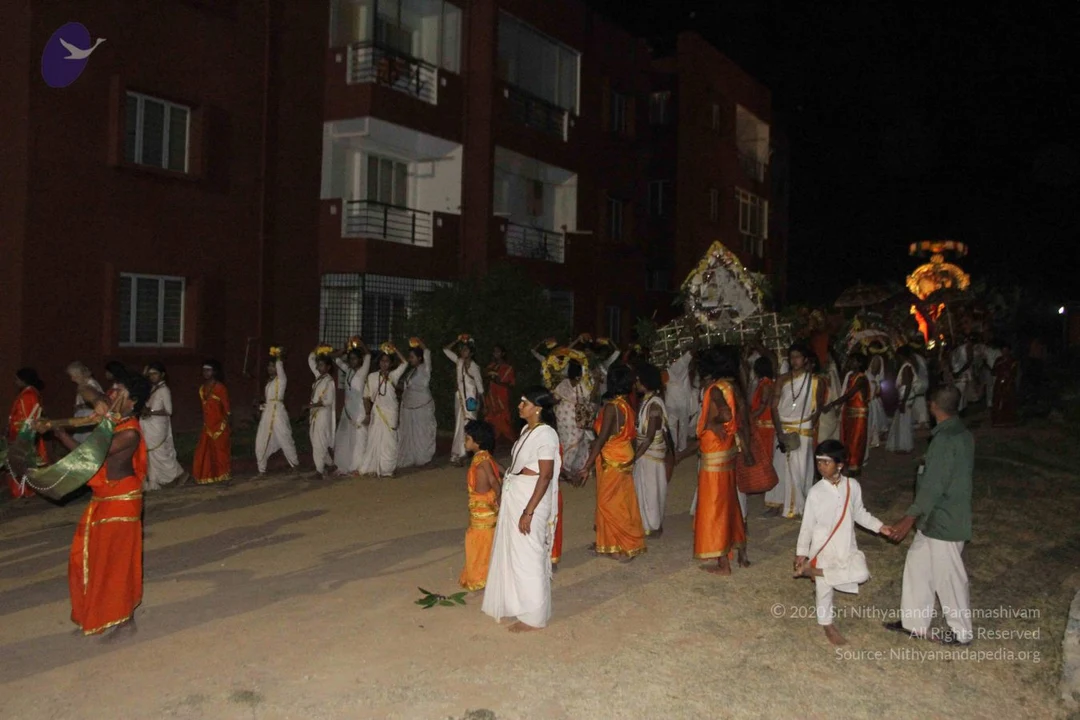
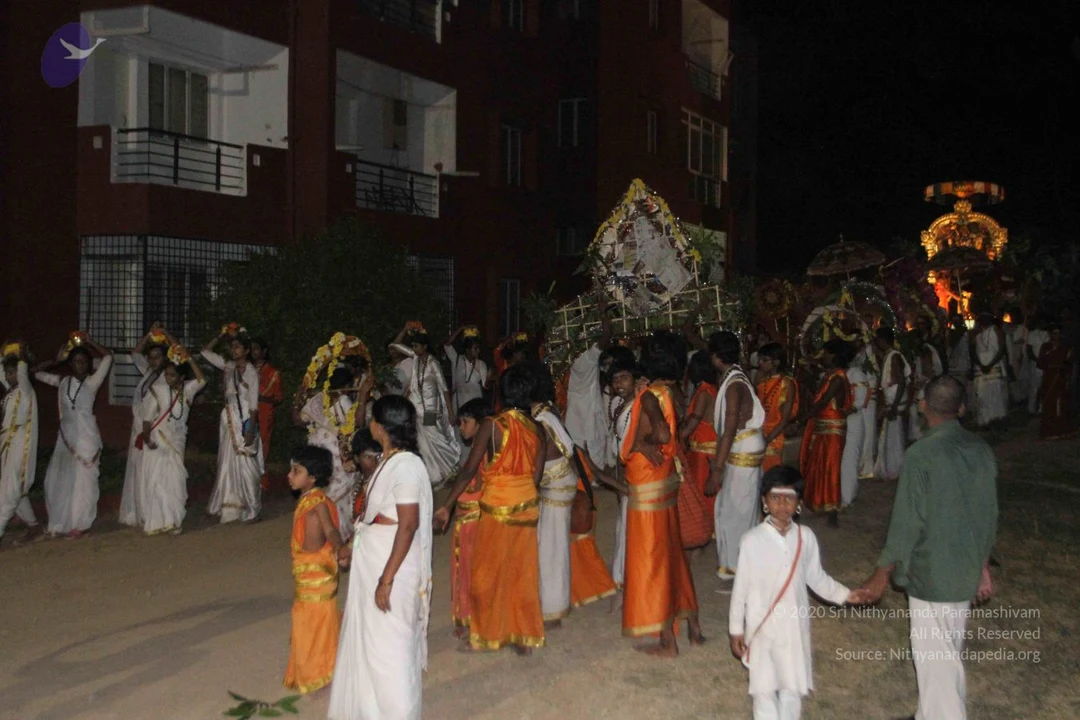
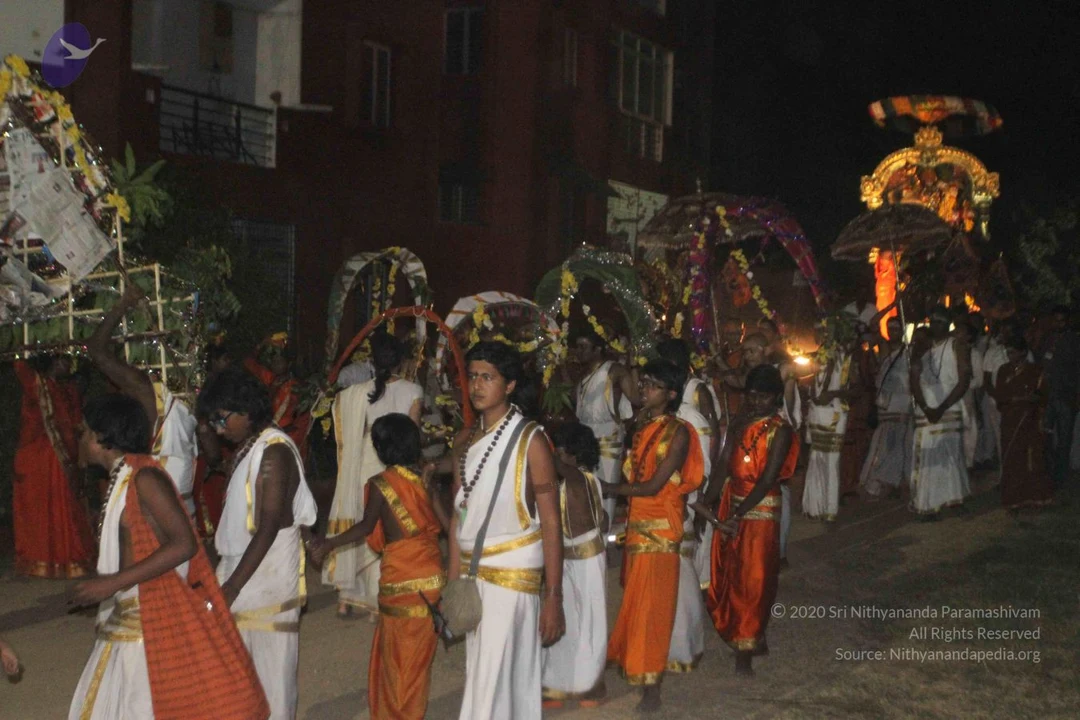
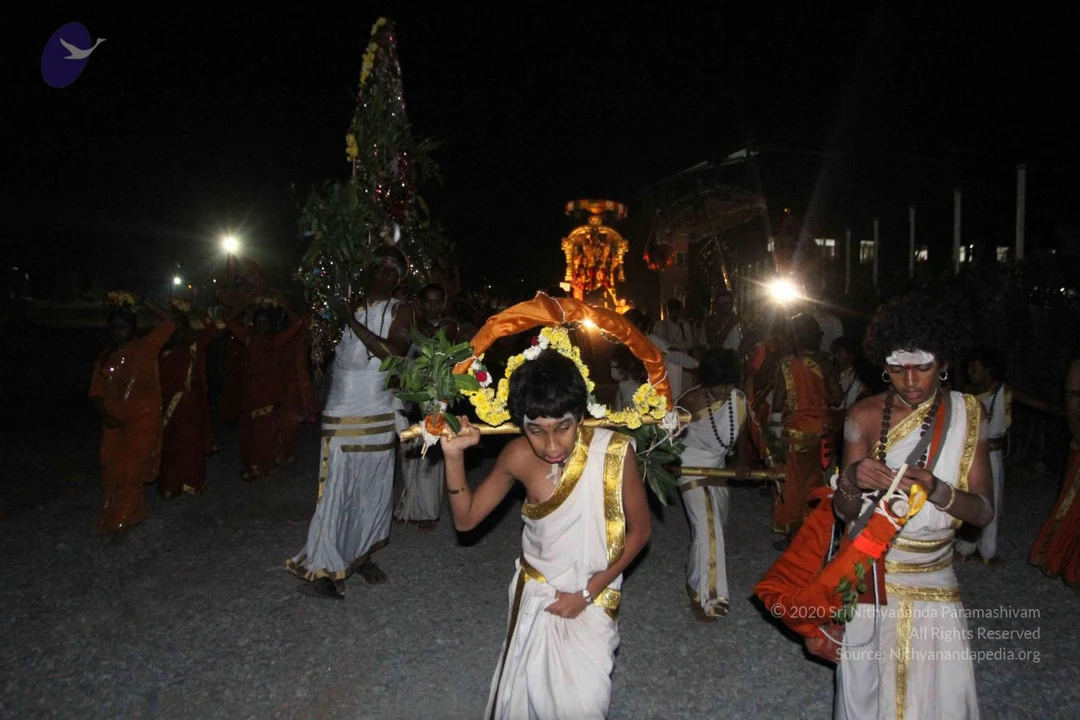
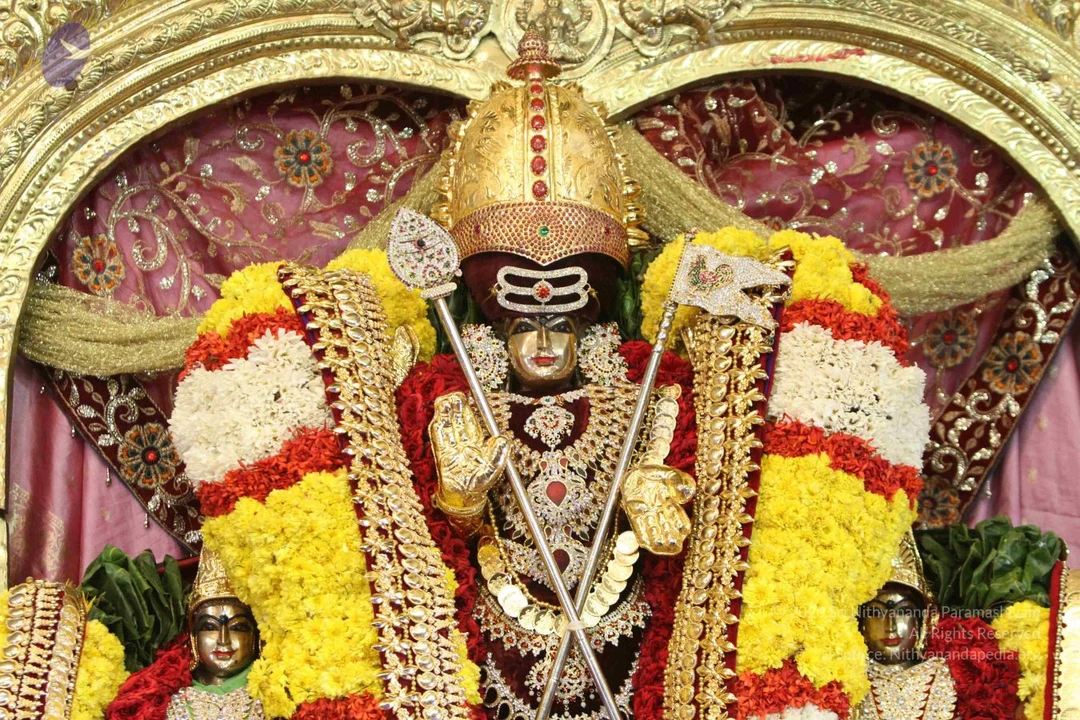
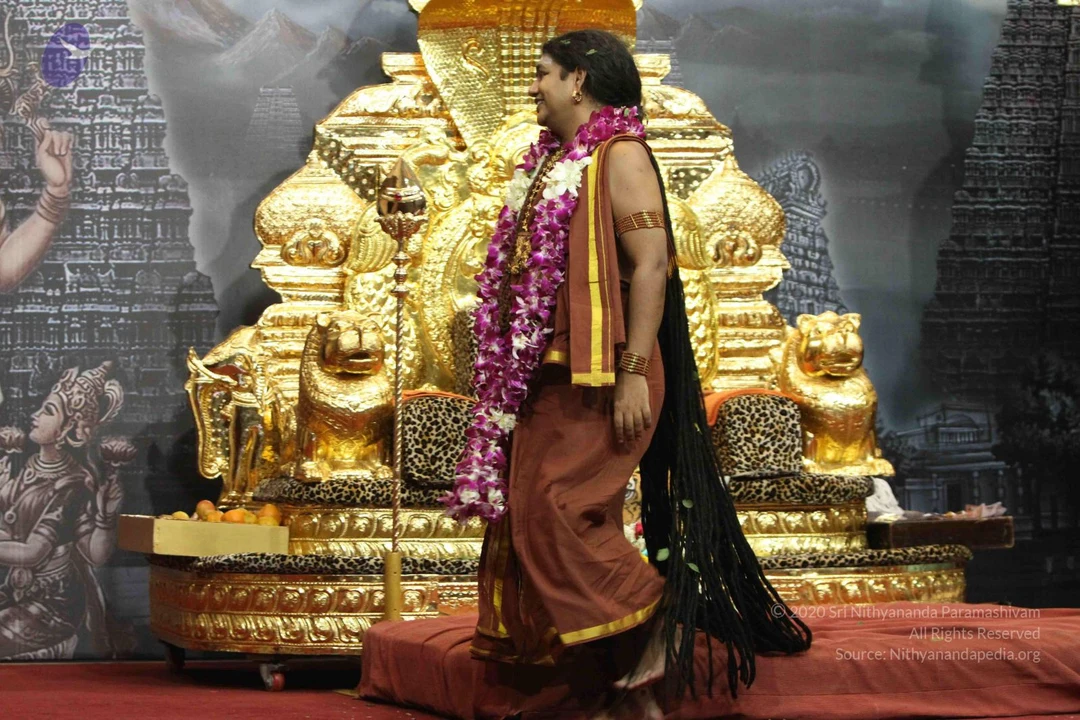
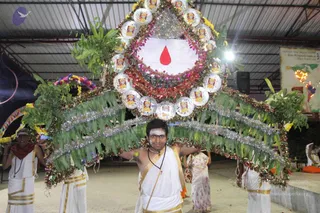
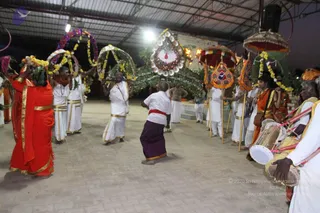
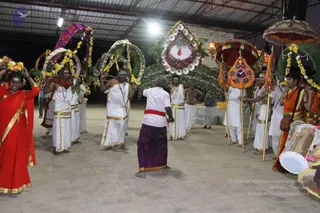
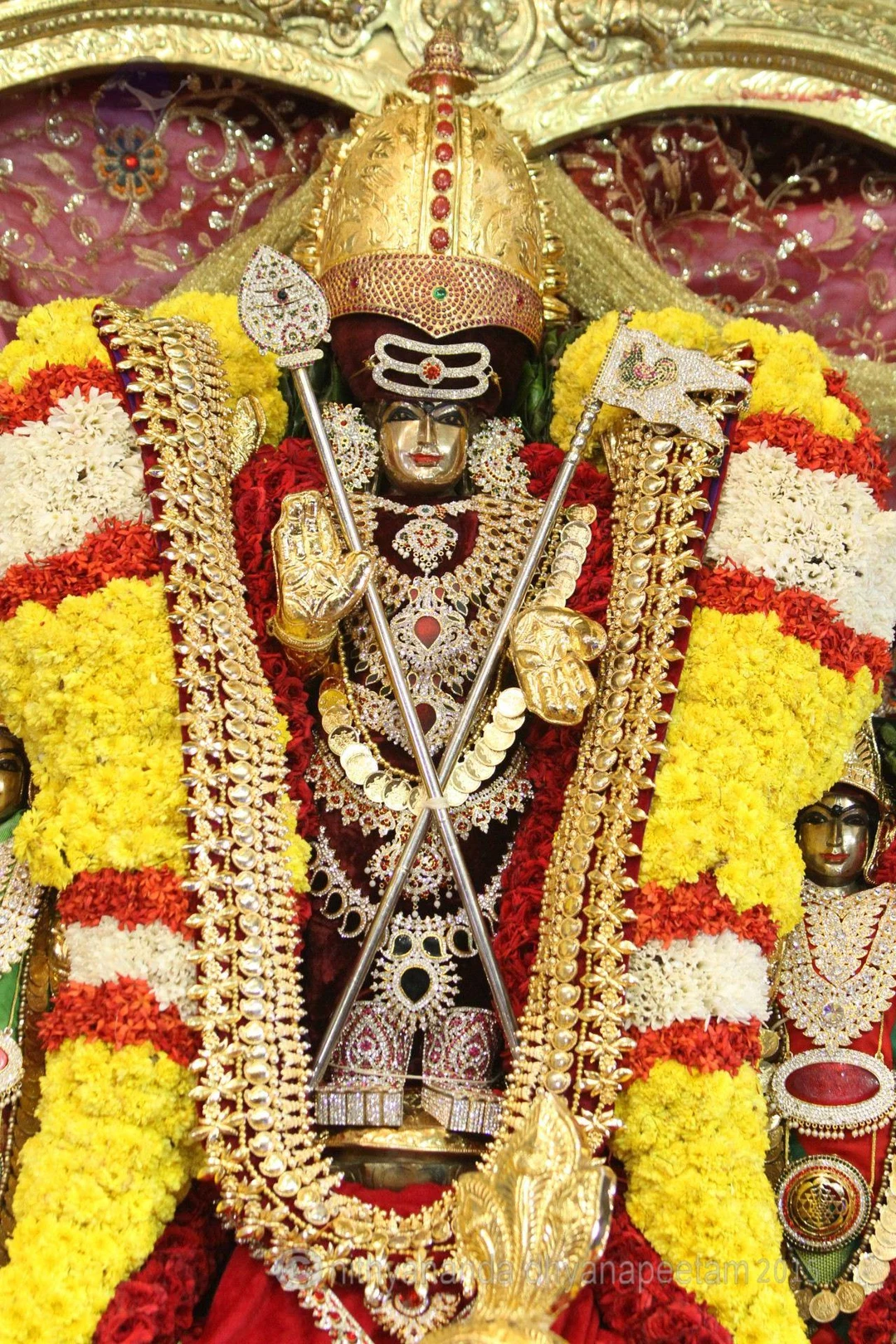
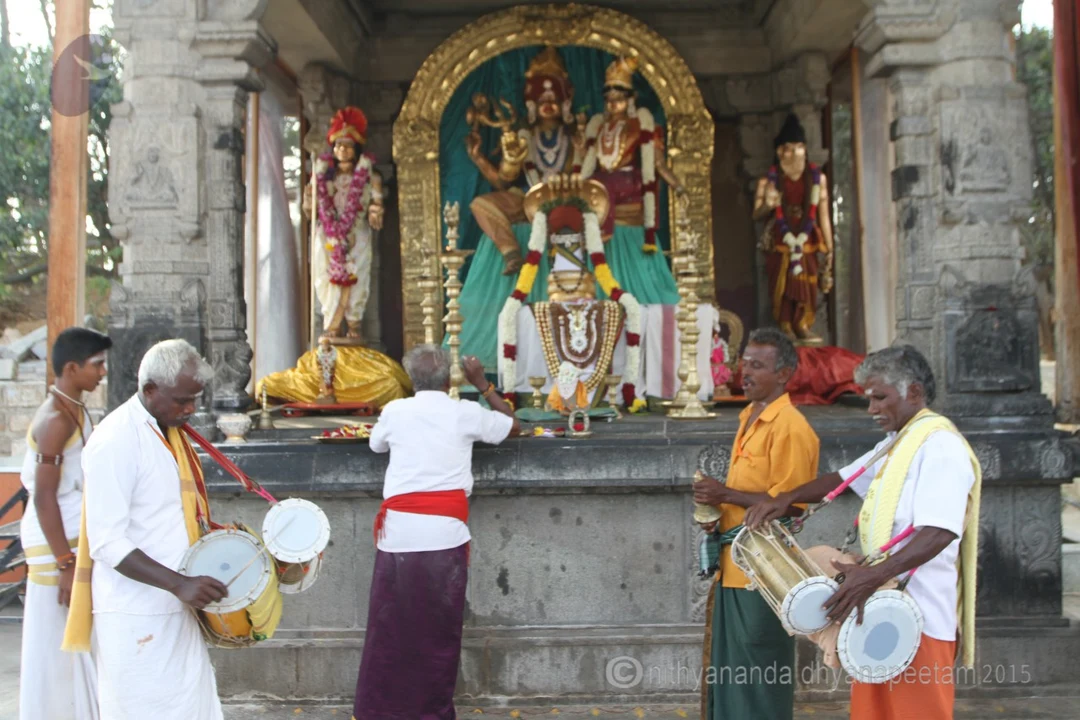
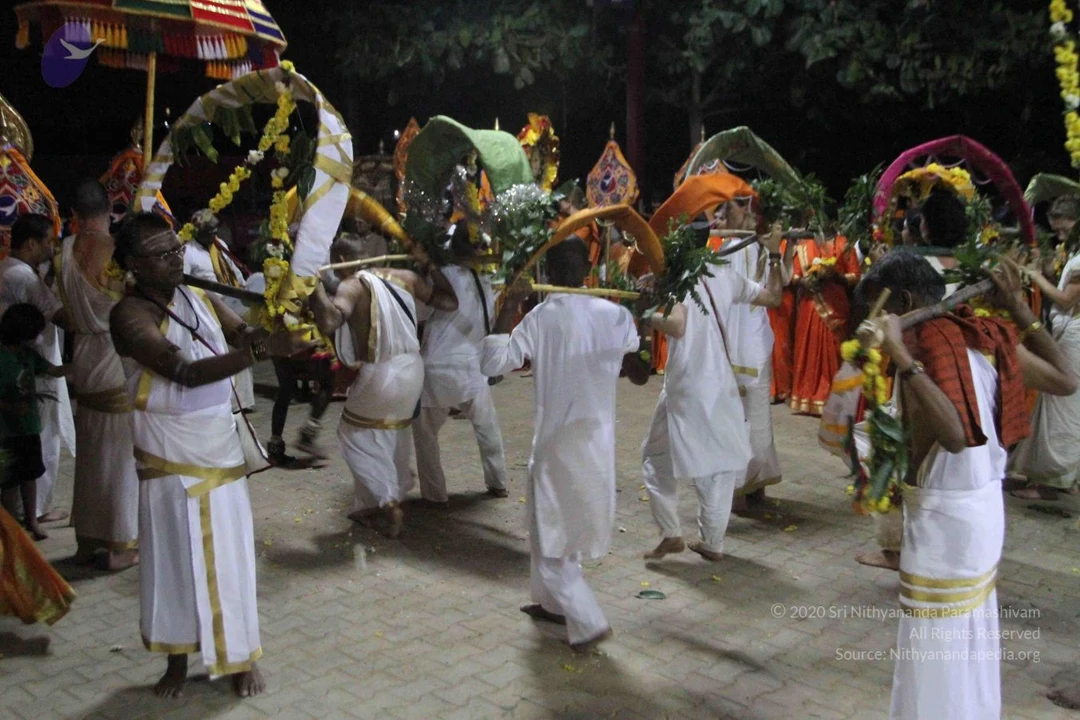
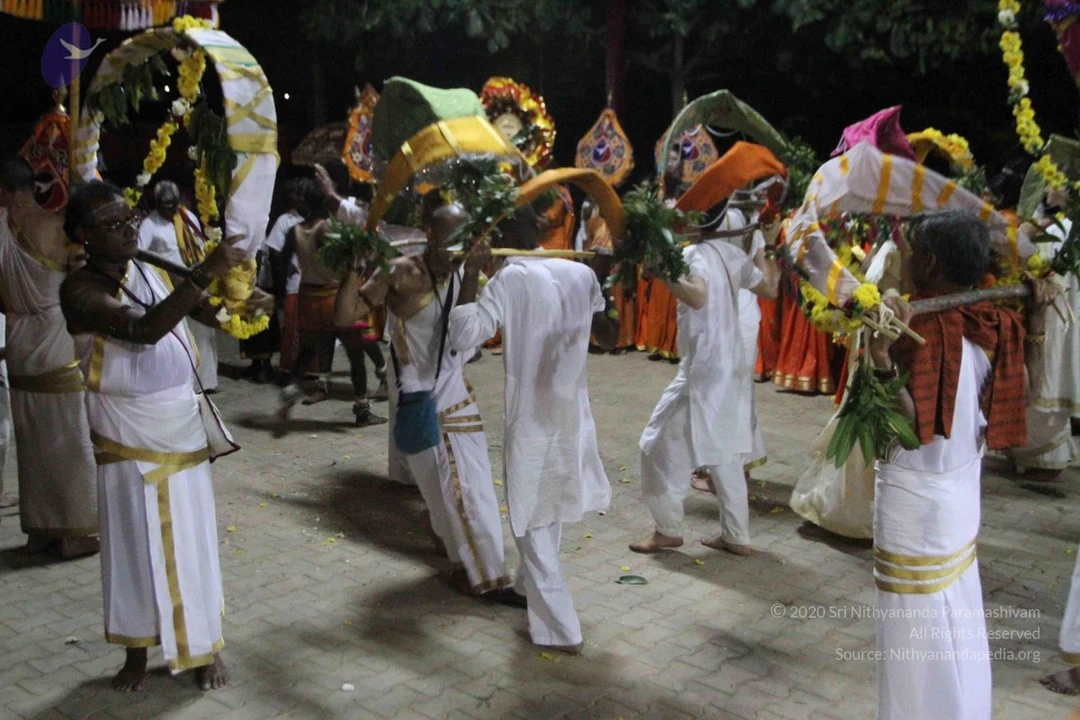
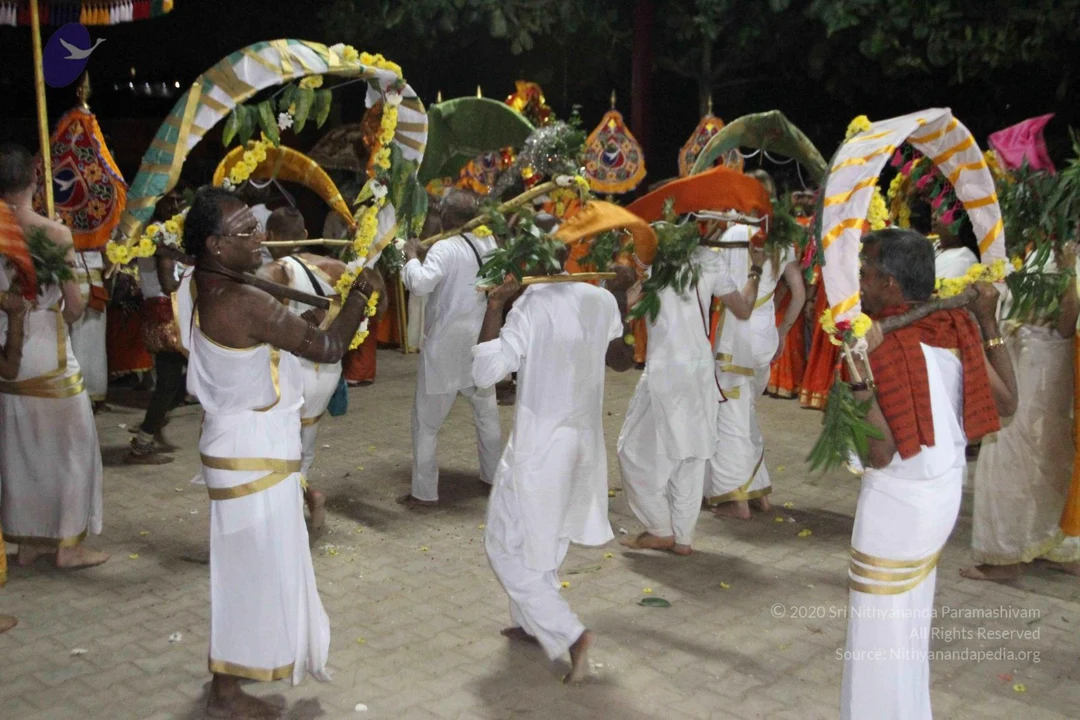
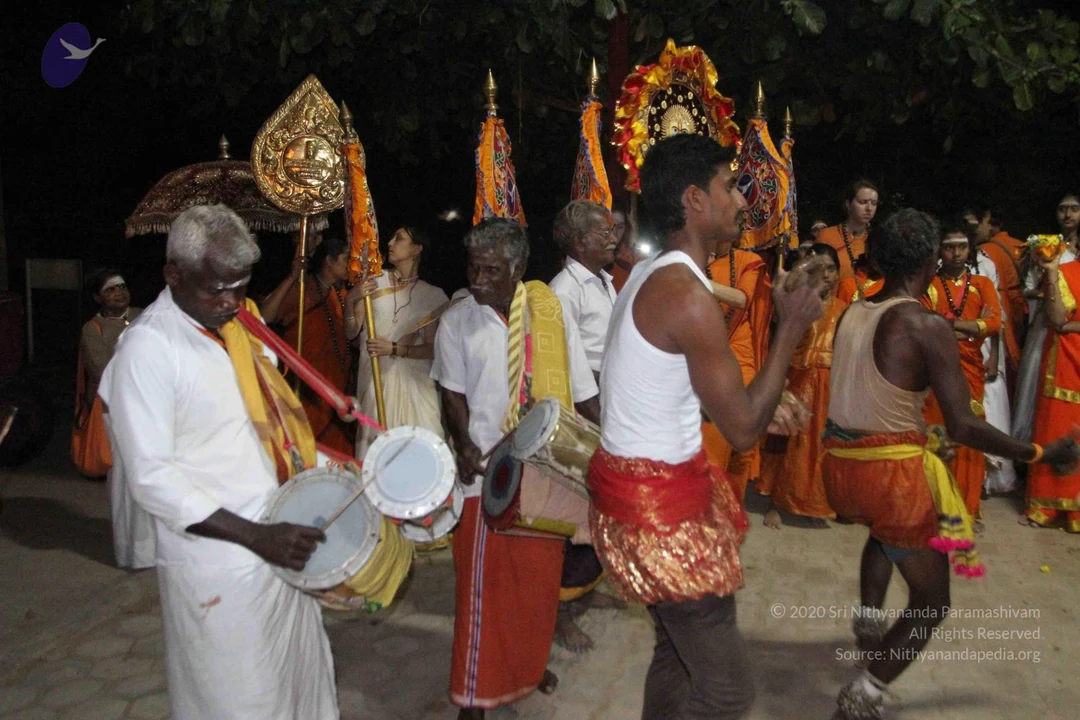
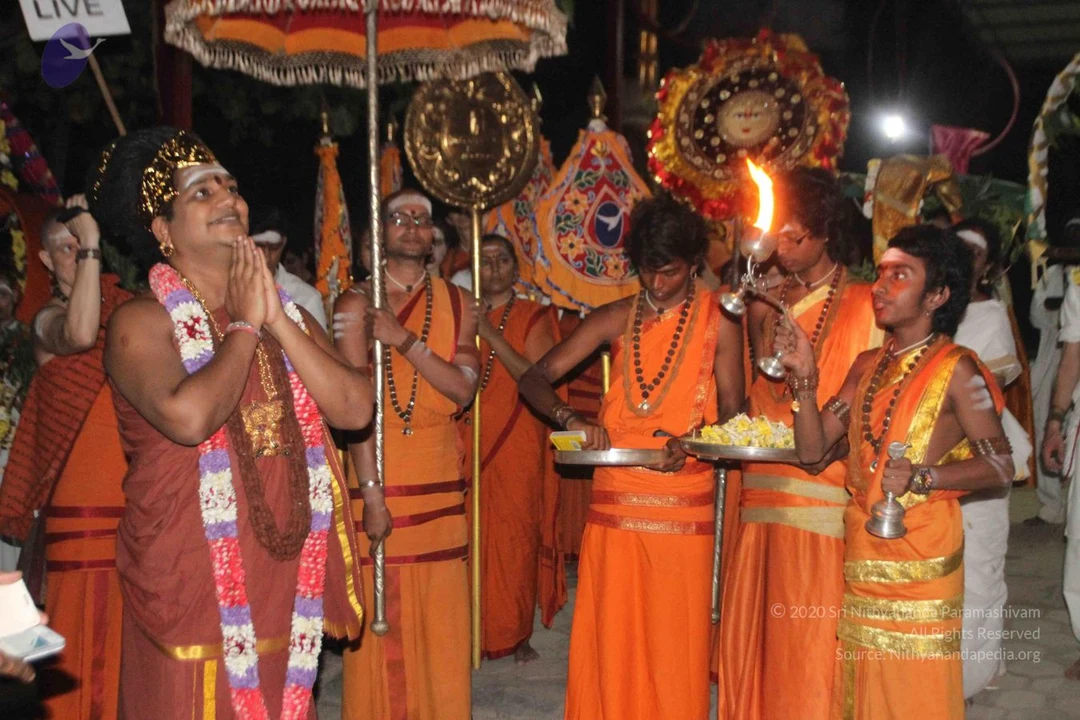
Thousands around the world experienced profond transformation during the concluding day of the Day Nithya Dhana Yoga meditation program delivered by His Holiness Paramahamsa Nithyananda.The Aadeenam was in a high festive spirit, celebrating Thaipusam, which is the day Devi gave the sacred Lance to Lord Subrahmanya to vanquish evil. At Nithyanandeshwari Hindu Temple, many participated in the ancient tradition of piercing the body with vels and lemons called Alagu Kuthal, that awakens the Kundalini, life energy. The day concluded with dancing as His Holiness lead Lord Subrahmanya's procession around the Aadeenam.

Photos Of The Day:

Thaipusam-Procession

Photos Of The Day:

NDY

Power-Manifestation-Demo

SarvaDarshan

Photos Of The Day:

NDY

Power-Manifestation-Demo

SarvaDarshan

Photos from this day

View all 416 photos

Celebrating Thaipusam at Nithyanandeshwara Paramashiva Devalayam
3 photosSource gallery
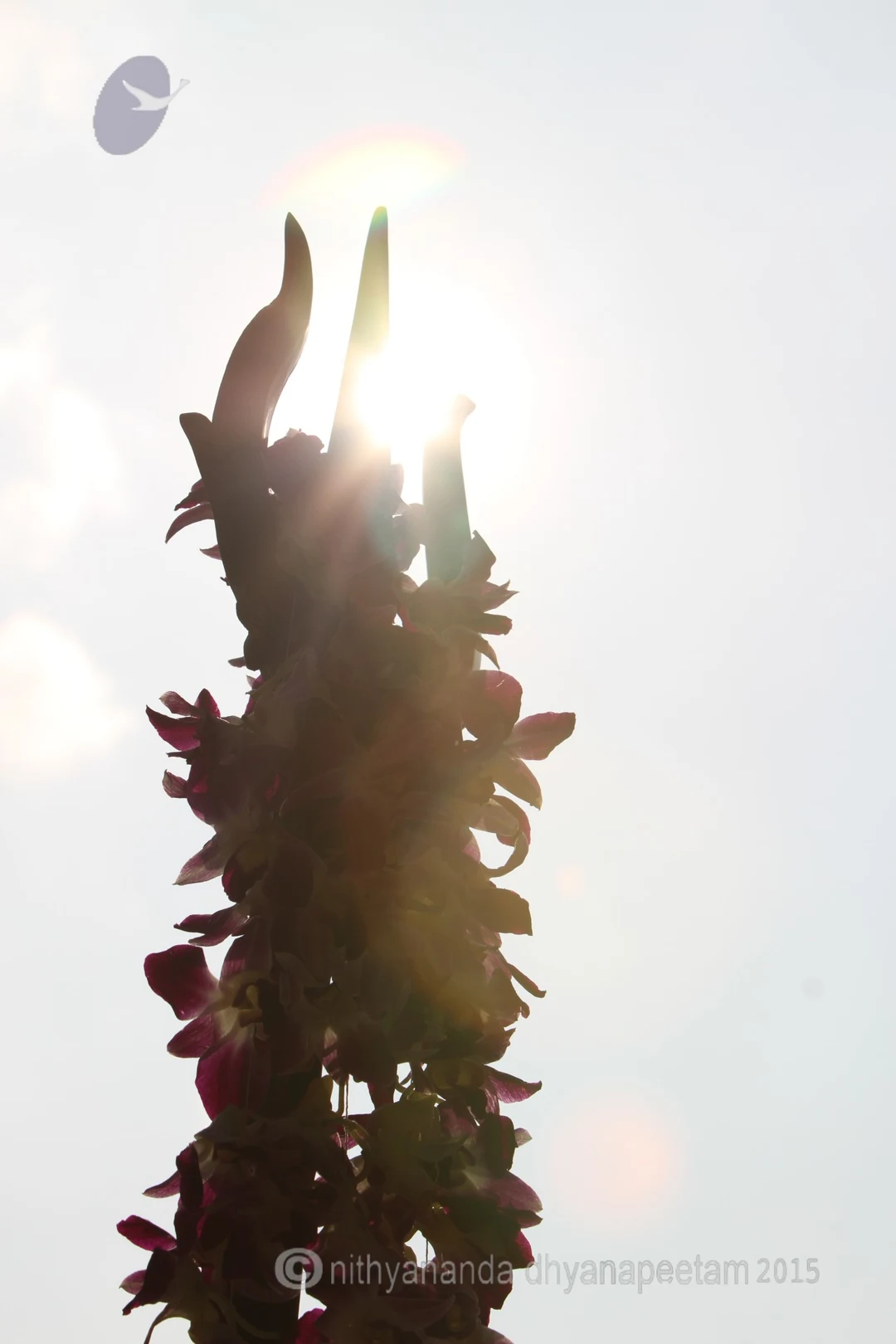
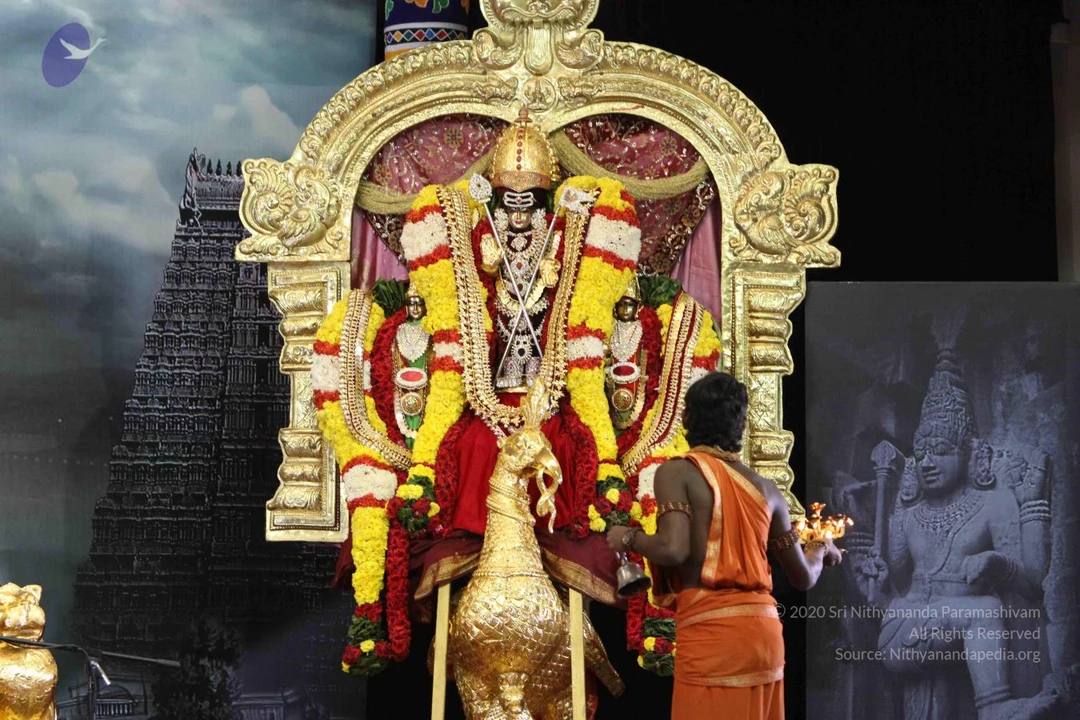
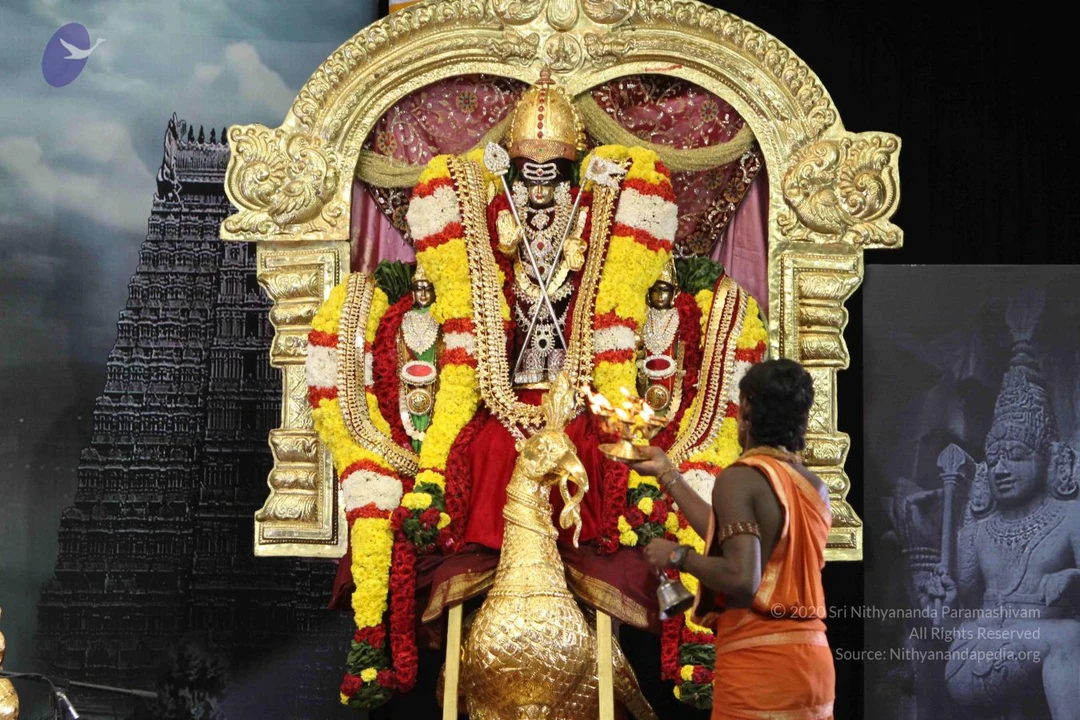
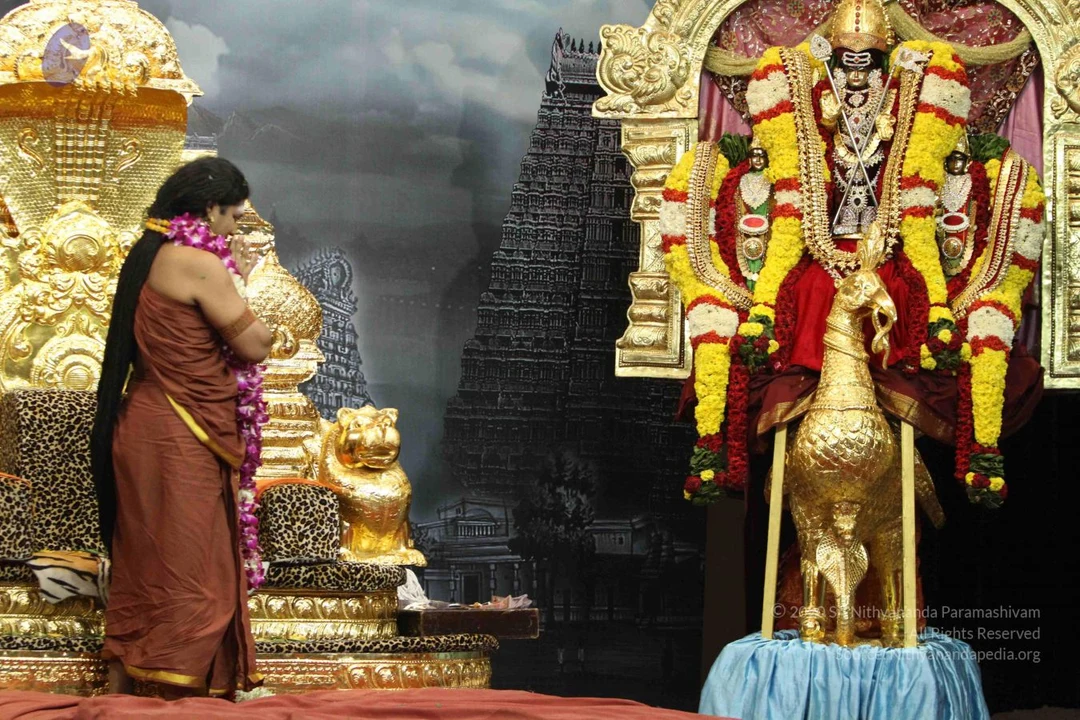
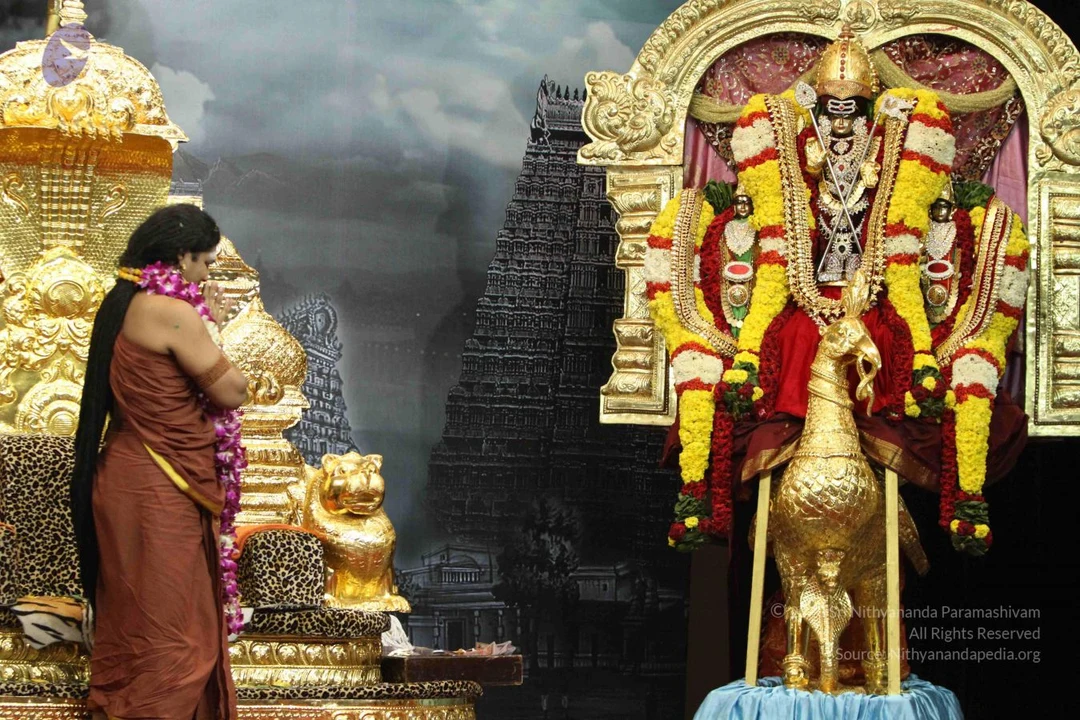
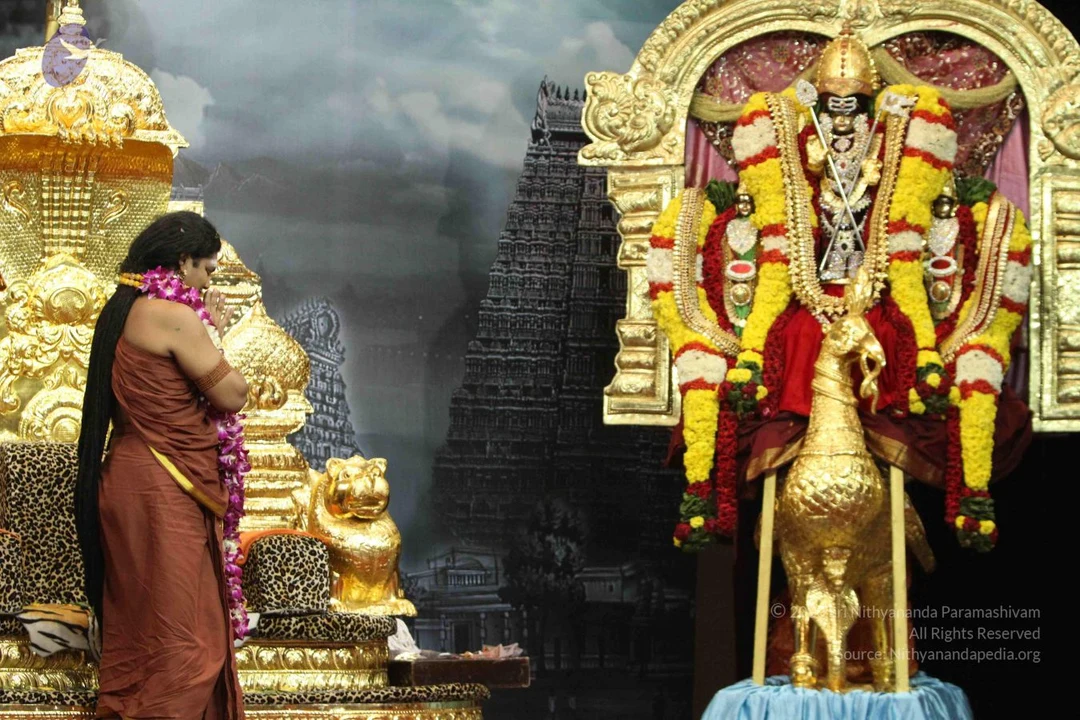
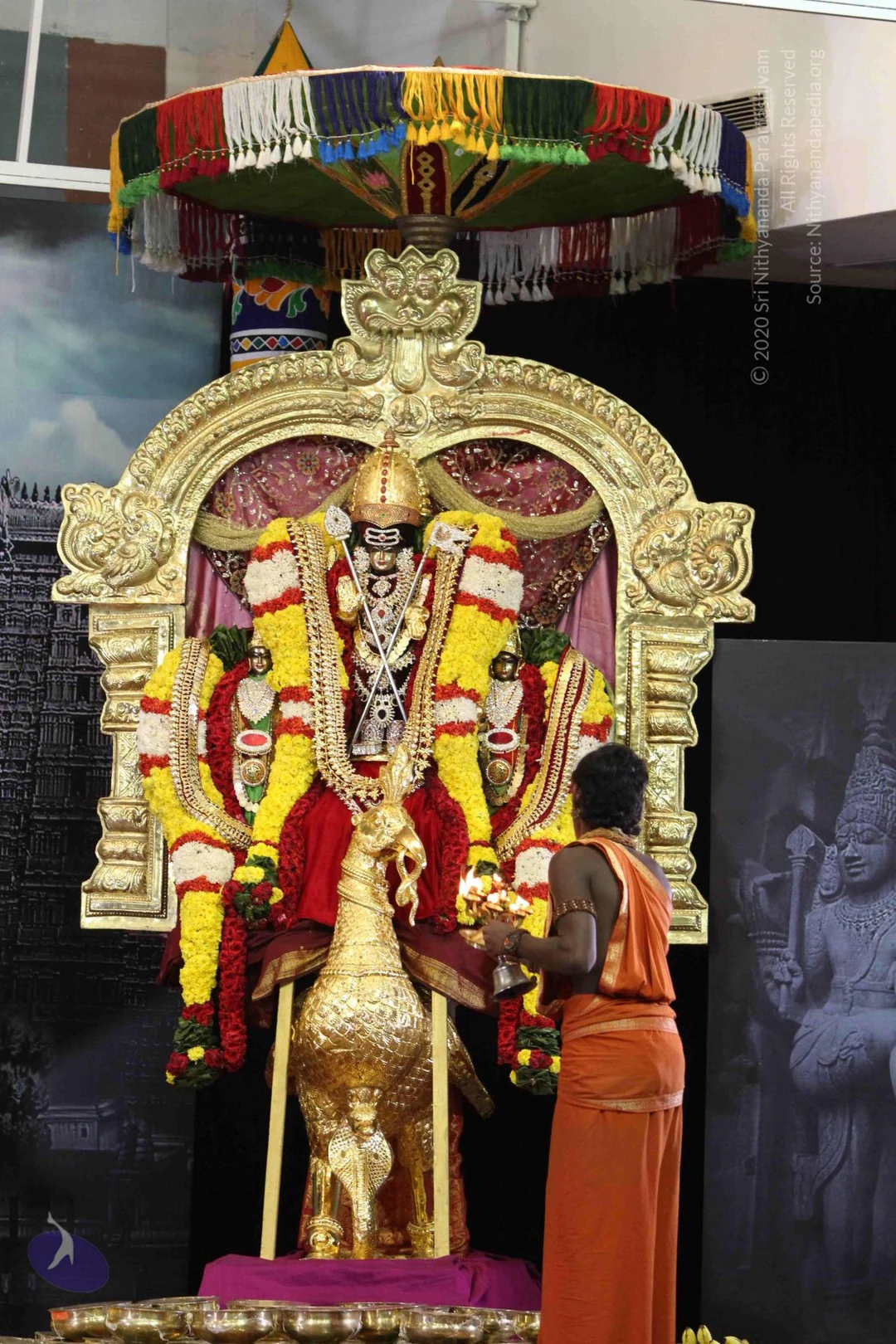
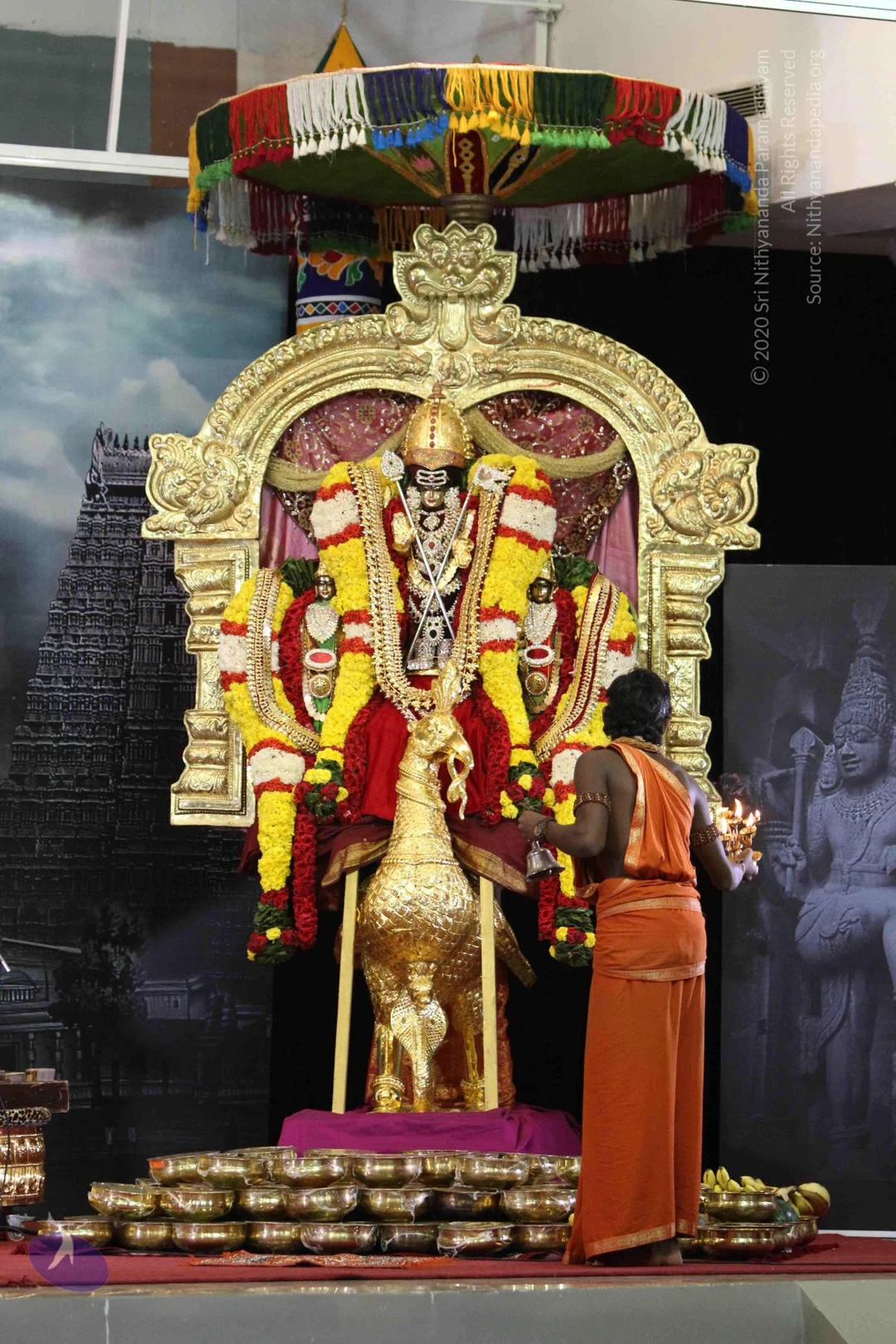
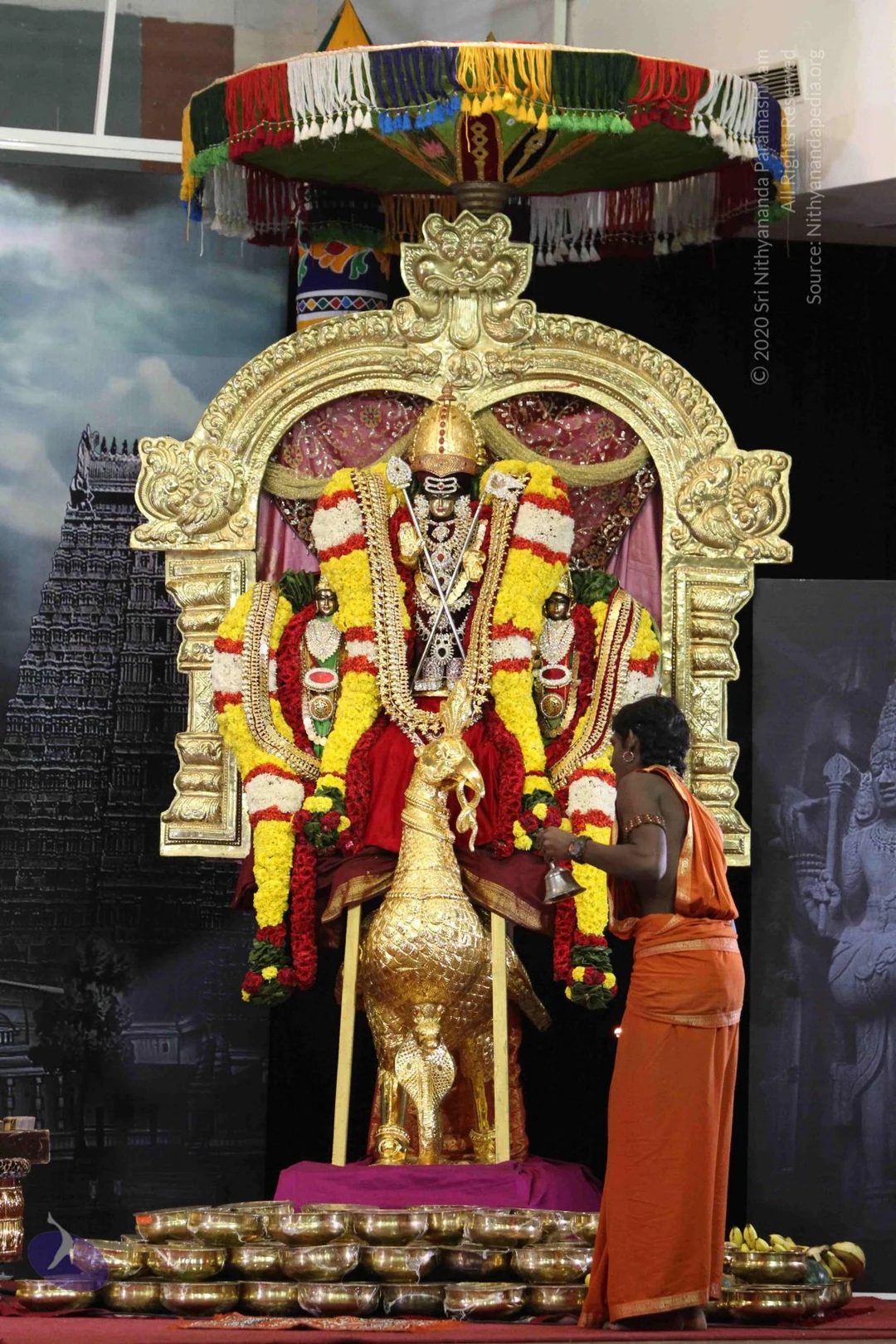
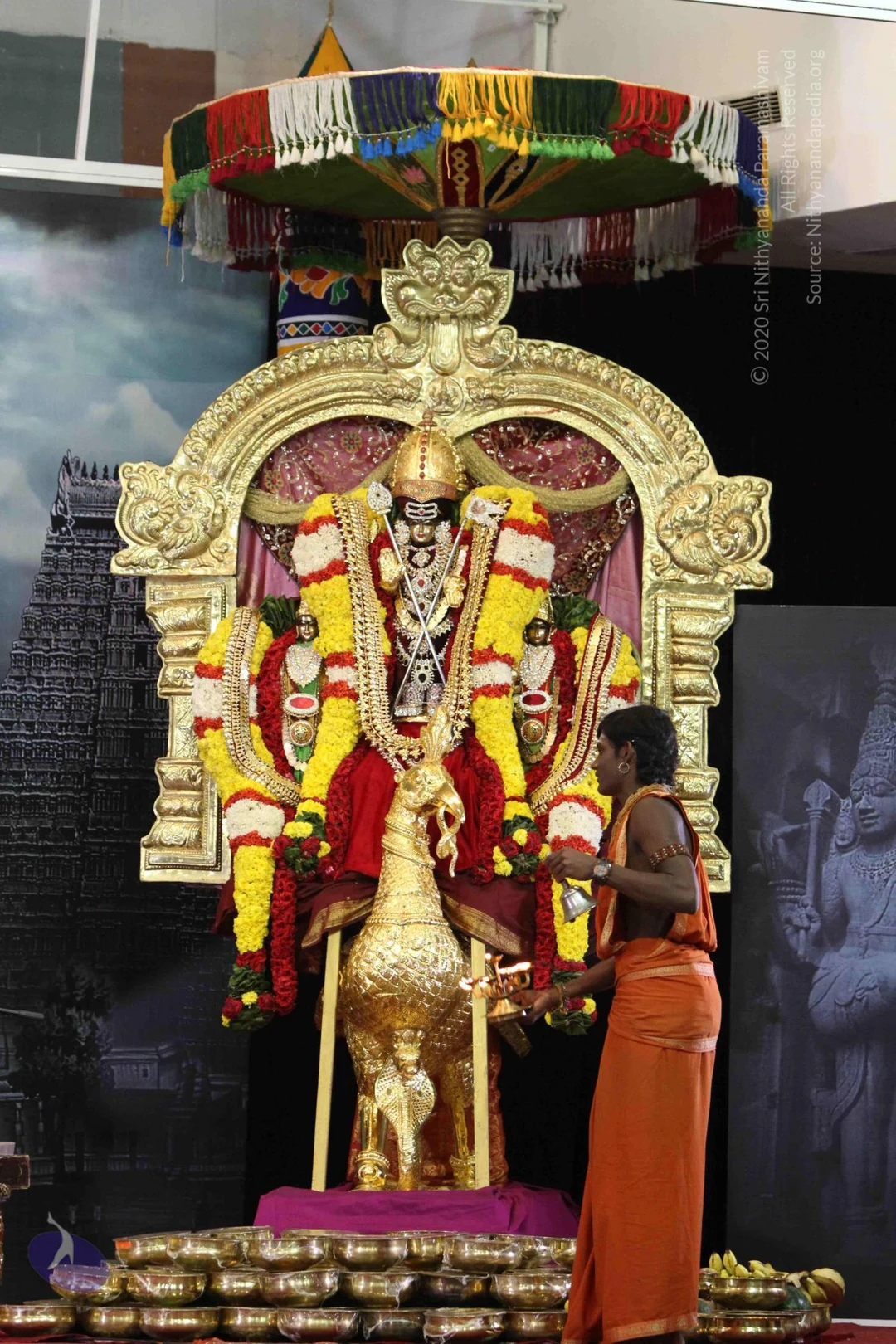
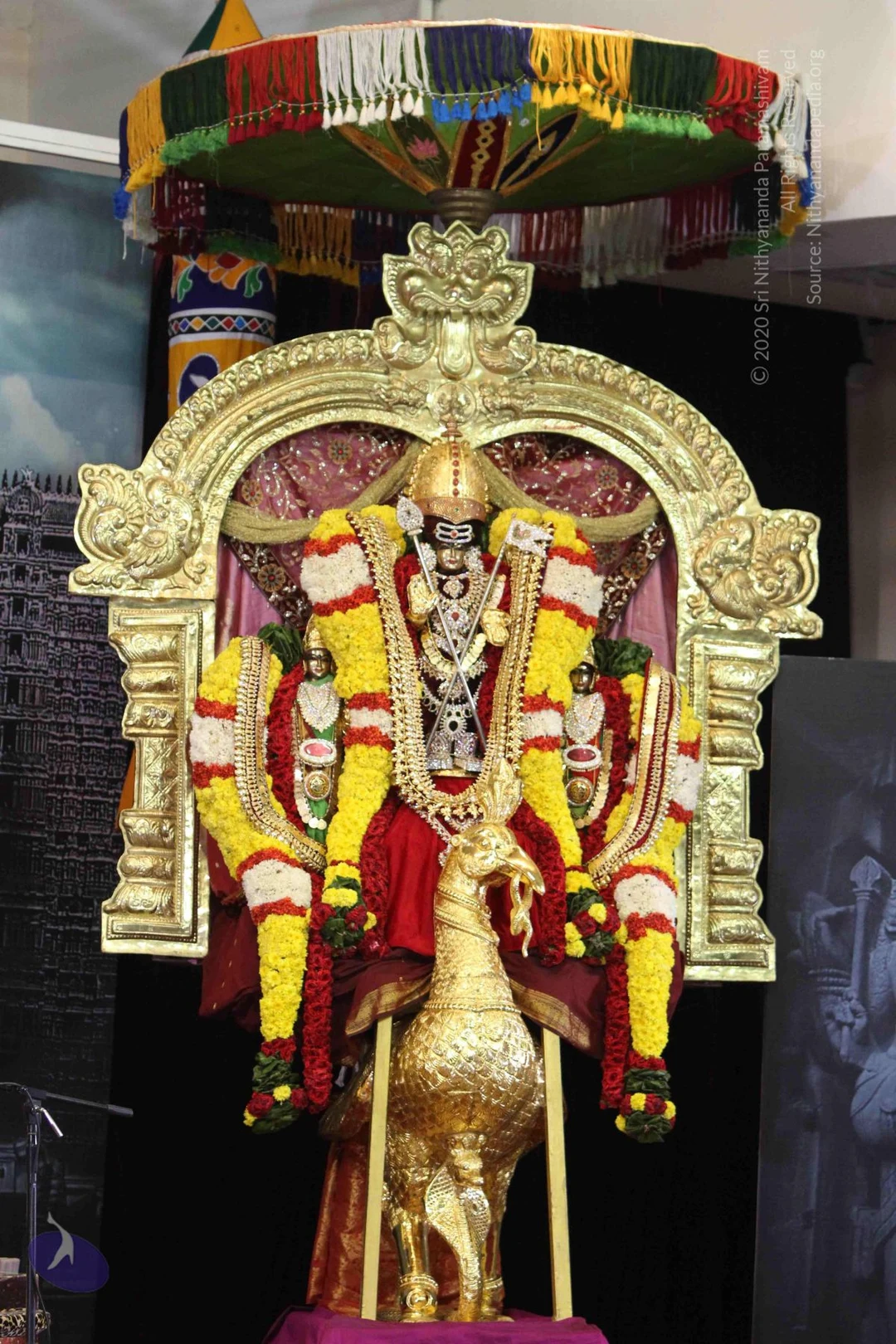
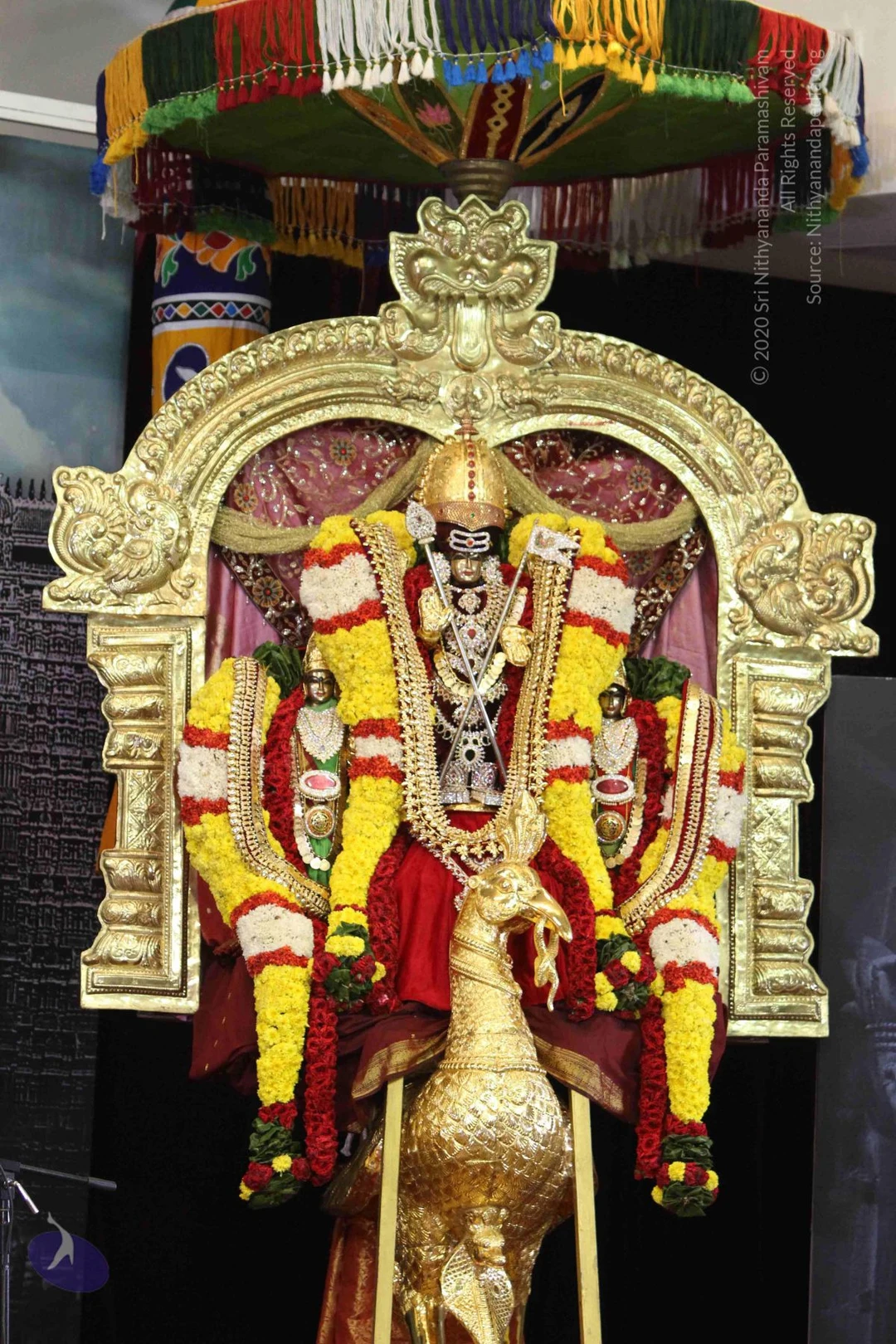
A priest in orange ochre garments stands at right, holding a lit oil lamp in one hand and a small handbell in the other, performing aarti before a deity murti of Murugan. The murti sits on a golden peacock-headed seat under a gilded arched canopy, draped with garlands of yellow and red flowers and wearing a gold crown, white and gold ornaments and a pointed sacred thread. Two smaller attendant figures flank the central deity, each with garlands and red-trimmed draping. A large gilded kalasha or vessel sits in front. Behind them, a stylised temple gopuram and a grey stone sculpture of a figure are shown on backdrops.Backlit photograph of a tall trishul (trident) silhouetted against a bright sunlit sky, its three prongs rising above a dense garland of pink and magenta orchids that wraps the shaft. Sun flare and soft lens glare surround the tips. No people are visible; the trident is the sole subject.

Lemon piercing
27 photosSource gallery
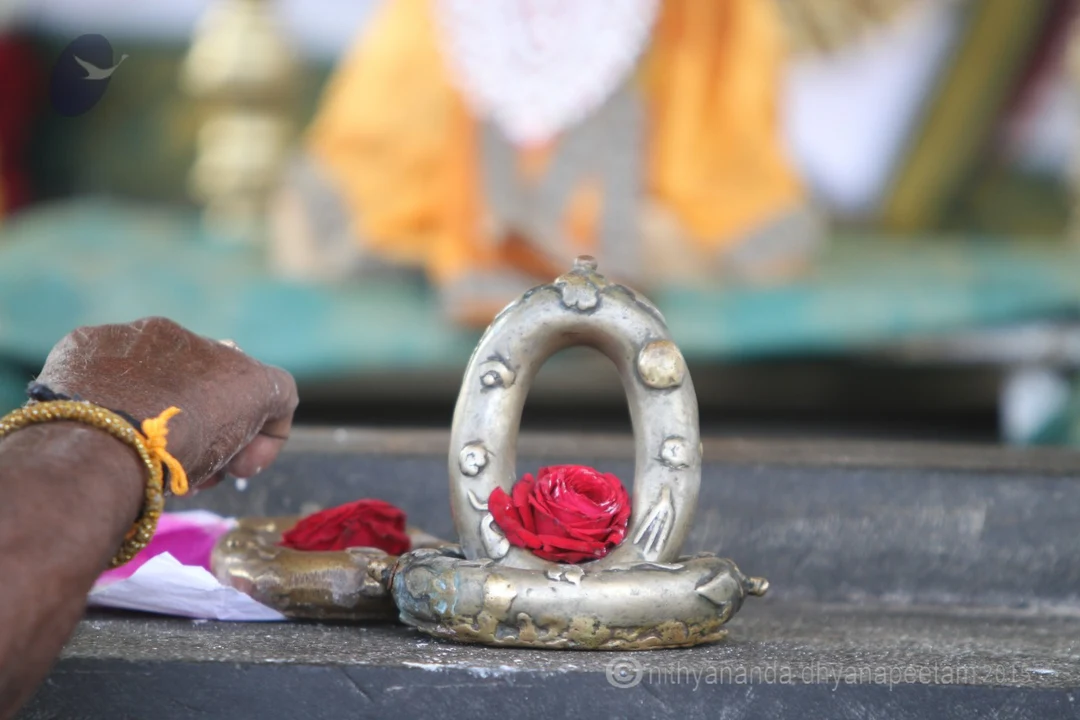
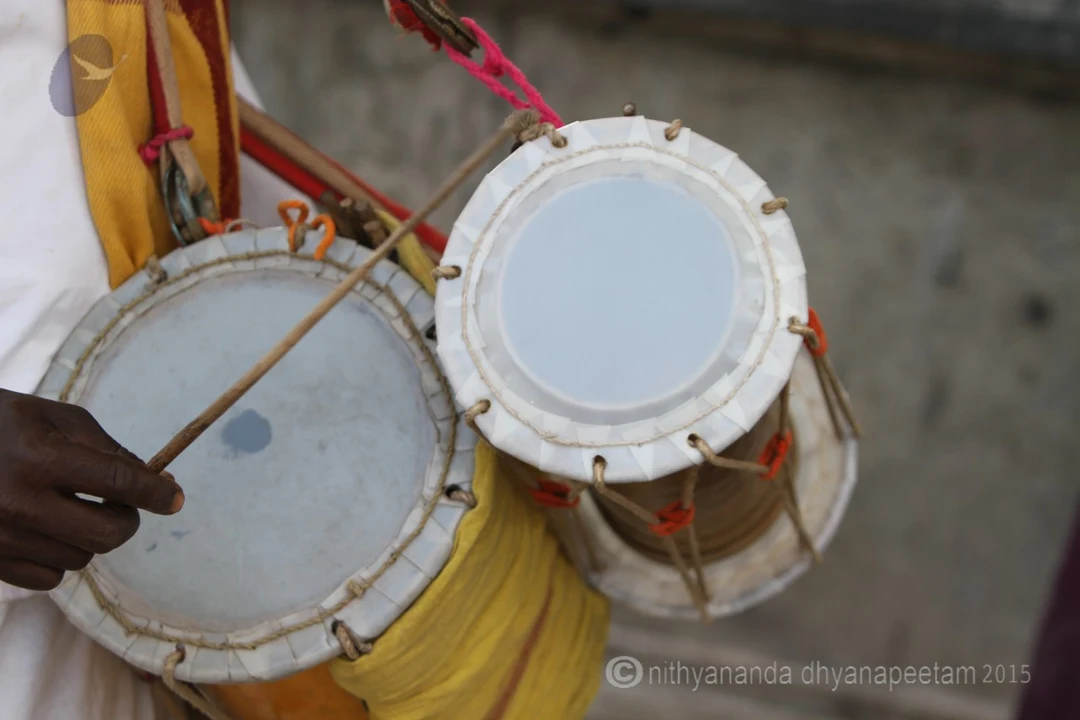
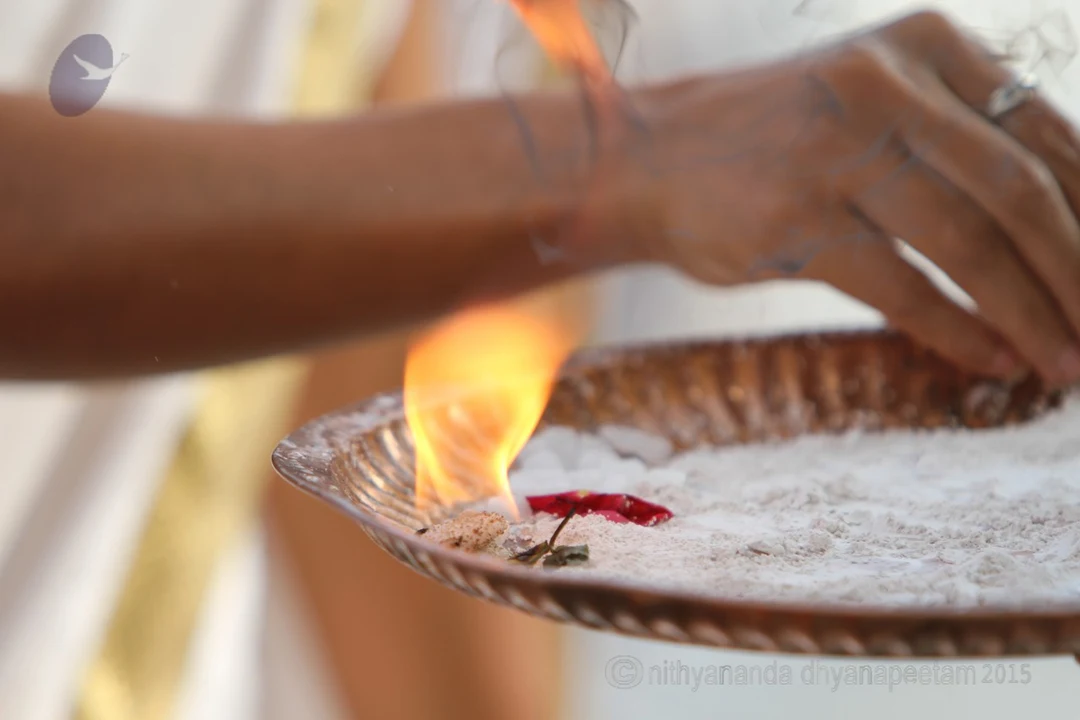
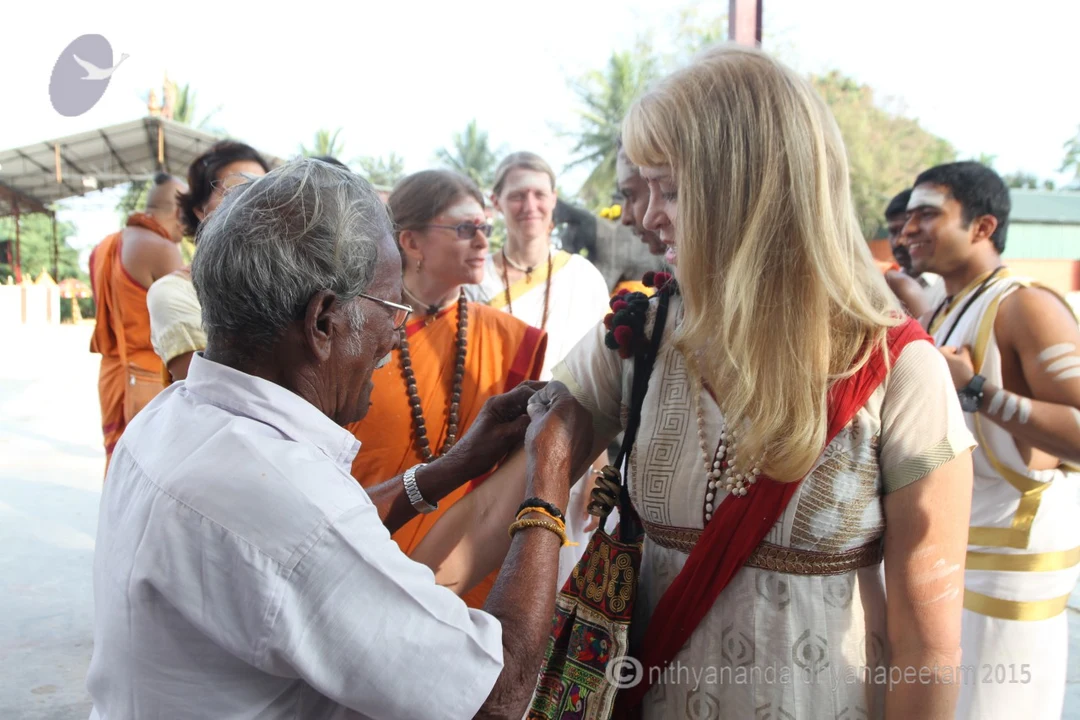
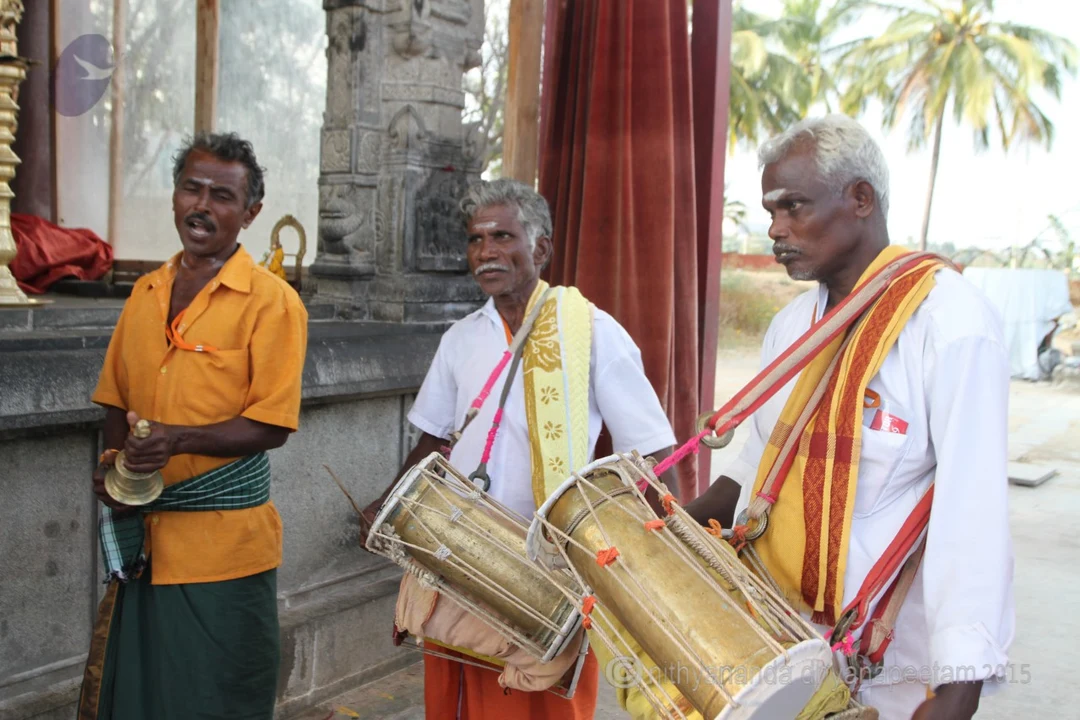
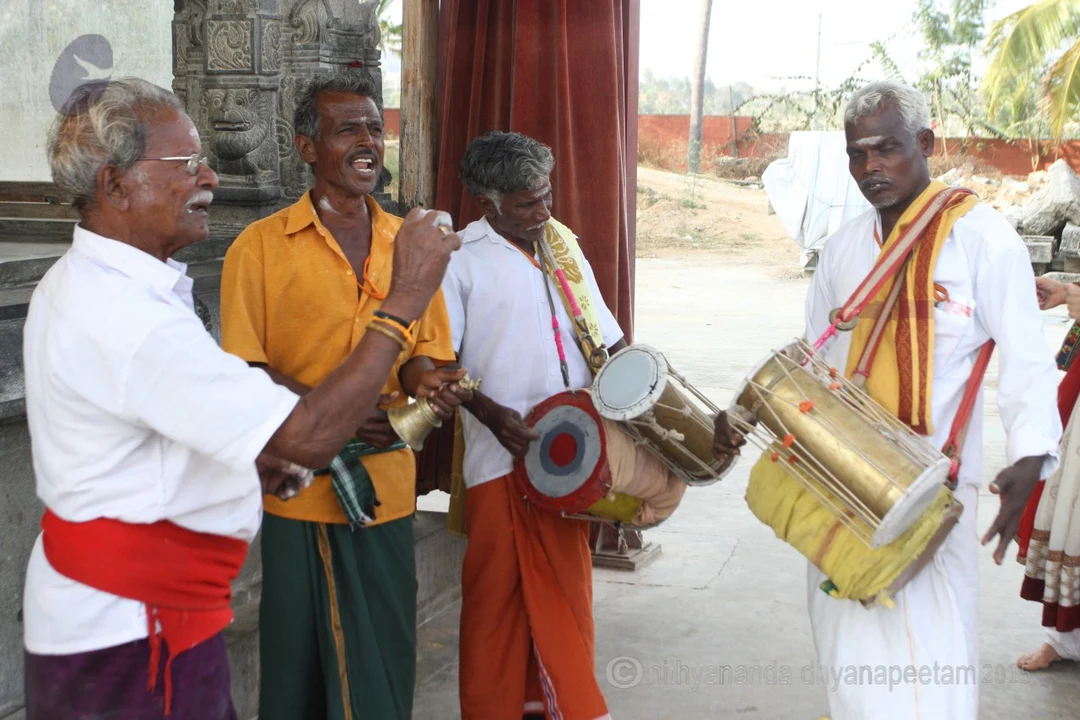
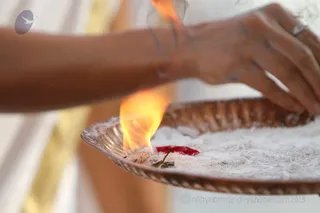
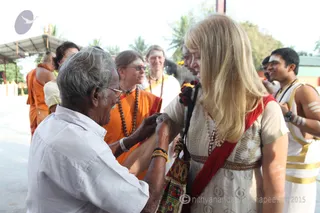
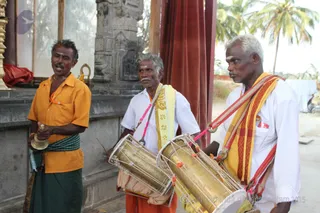
Four drummers and a priest perform at a shrine with a golden arched niche holding a deity murti. Central figures are a seated deity with a crown and a standing deity holding a trident, both draped in green cloth and garlanded with flowers. Two statues flank the shrine, one in a red-and-yellow garment and one in red. A priest in white dhoti with a red sash stands at the stone platform making offerings. Two drummers on the left wear white with yellow shawls and play double drums; a drummer in an orange shirt and green dhoti plays a small drum, and a drummer in white with a yellow shawl plays on the right. A boy in a white dhoti stands at the far left. Brass lamps and offerings sit on the platform.Close-up photograph of a silver-toned metal ritual object resembling a shiva lingam-style yoni base with an upright arched ring, decorated with small embossed motifs, with a red rose placed inside the arch and another red rose beside it on a dark stone surface. A man's hand with a gold-coloured beaded bracelet and a yellow thread tied at the wrist reaches toward the object. Blurred in the background are orange and white draped cloth and a green cloth.Close-up photograph of a drummer's hands playing a pair of white-headed drums, a dholak-style drum and a smaller tabla-like drum. The drummer wears white clothing with a yellow cloth wrapped at the waist, and red and orange cord ties are visible around the drum bodies. A wooden stick strikes the left drum head. The background is a blurred grey stone surface.Close-up photograph of a hand holding a round brass aarti plate with a lit flame. The plate holds white camphor-like powder, a red kumkum or flower petal, and a small green leaf. A bare forearm and hand with a ring are in the foreground, with smoke and a blurred white background.An elderly man in a white shirt and glasses, with grey hair, holds the wrist of a blonde woman in a cream embroidered kurta with a red sash and a patterned bag, while he appears to tie or fasten a thread bracelet on her arm. Behind them, several people stand under a open-sided shelter: a man in saffron robes with a rudraksha mala, a woman in orange with glasses and beads, a smiling woman in white with a beaded necklace, and young men in white dhotis with yellow borders and white ash markings on their arms.Three men play traditional drums outdoors beside a stone temple pillar with a curtained shrine. The man on the left wears an orange shirt, a green-checked cloth at his waist, and holds a brass bell in his right hand while singing. The middle man wears a white shirt and orange dhoti and plays a brass drum slung across his shoulder. The man on the right, with white hair and a white tilak, wears a white shirt and a yellow-and-red shawl over his shoulder, playing a second brass drum. Behind them hang red curtains, and palm trees and a bright sky stand beyond the pavilion.

Procession
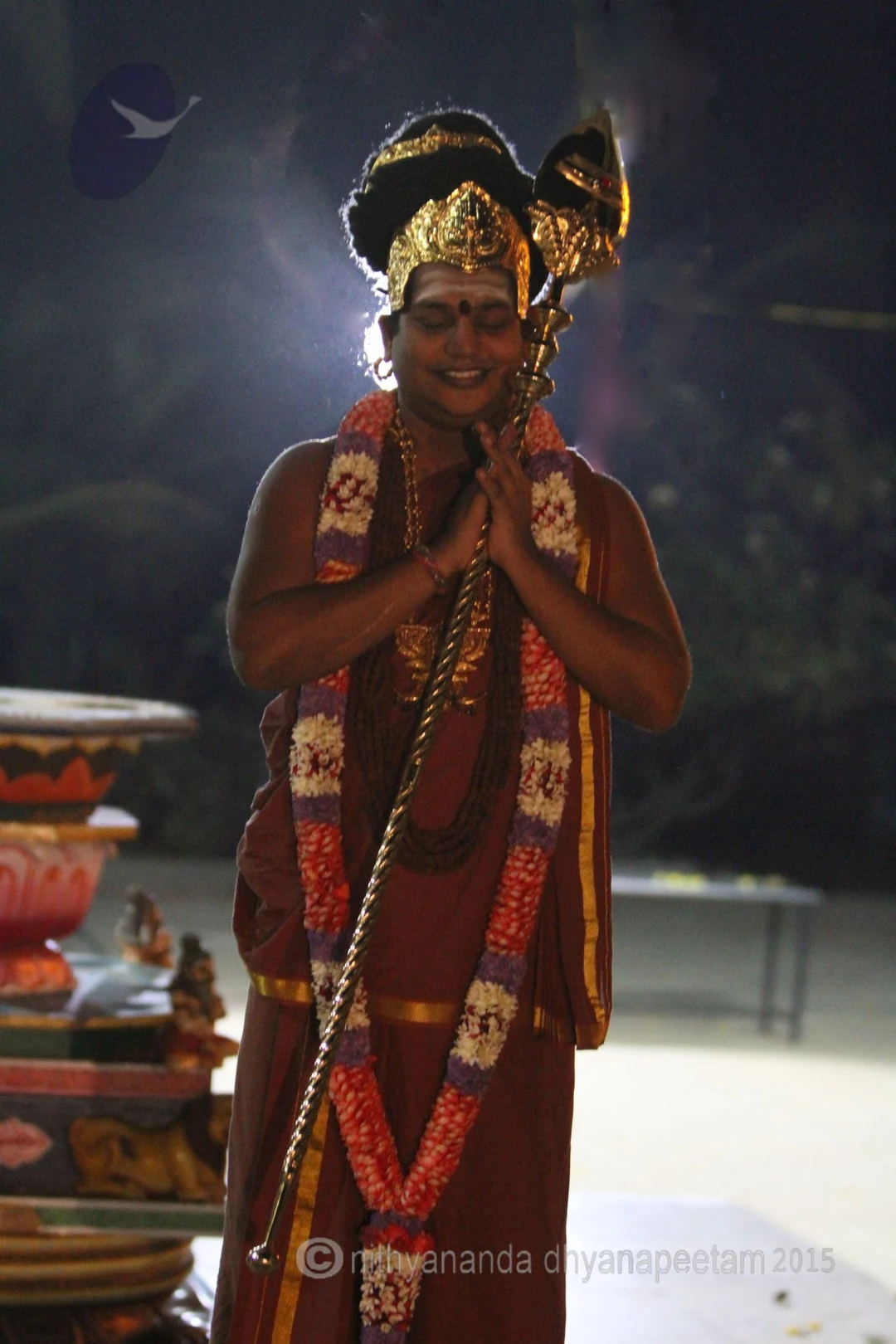
10 photosSource gallery
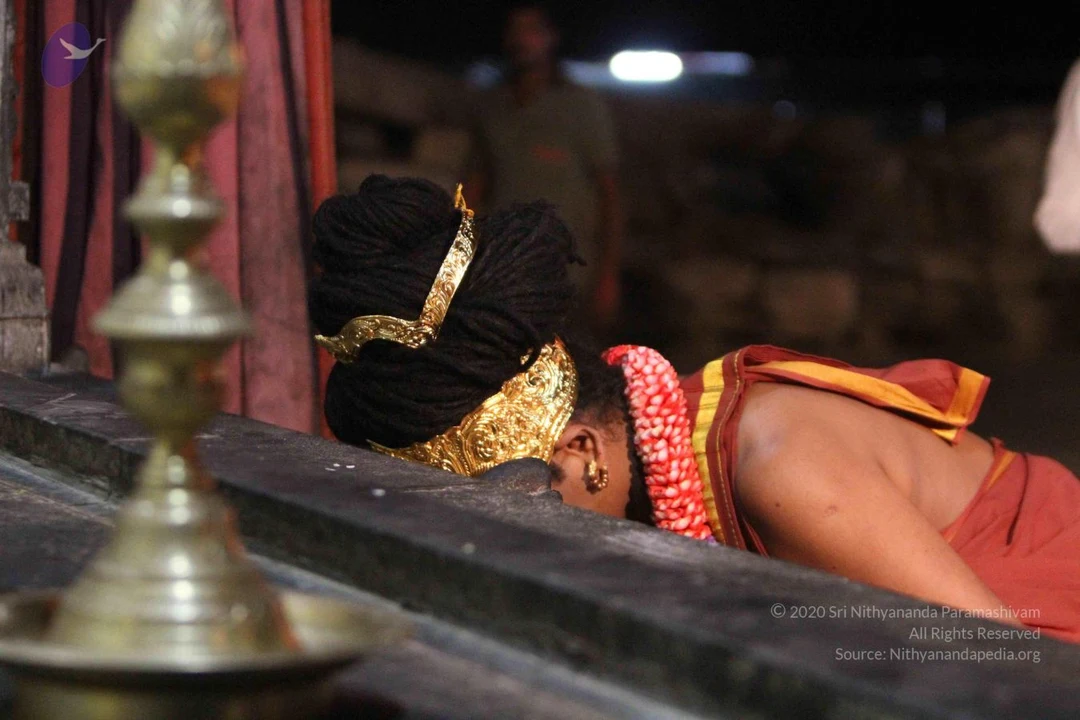
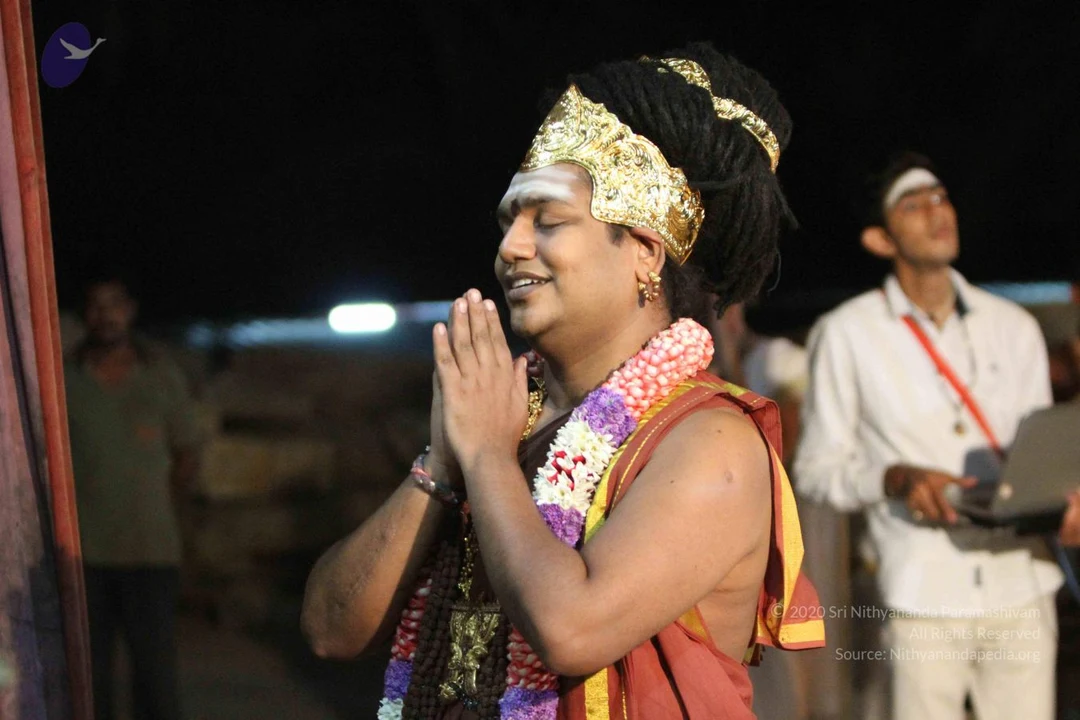
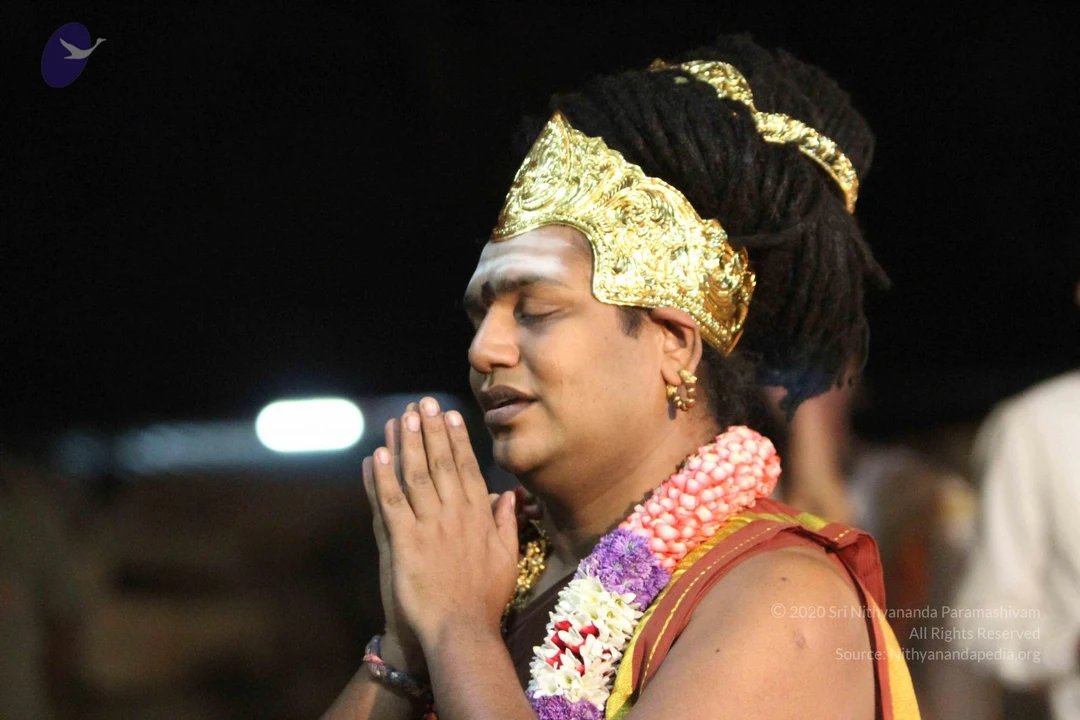
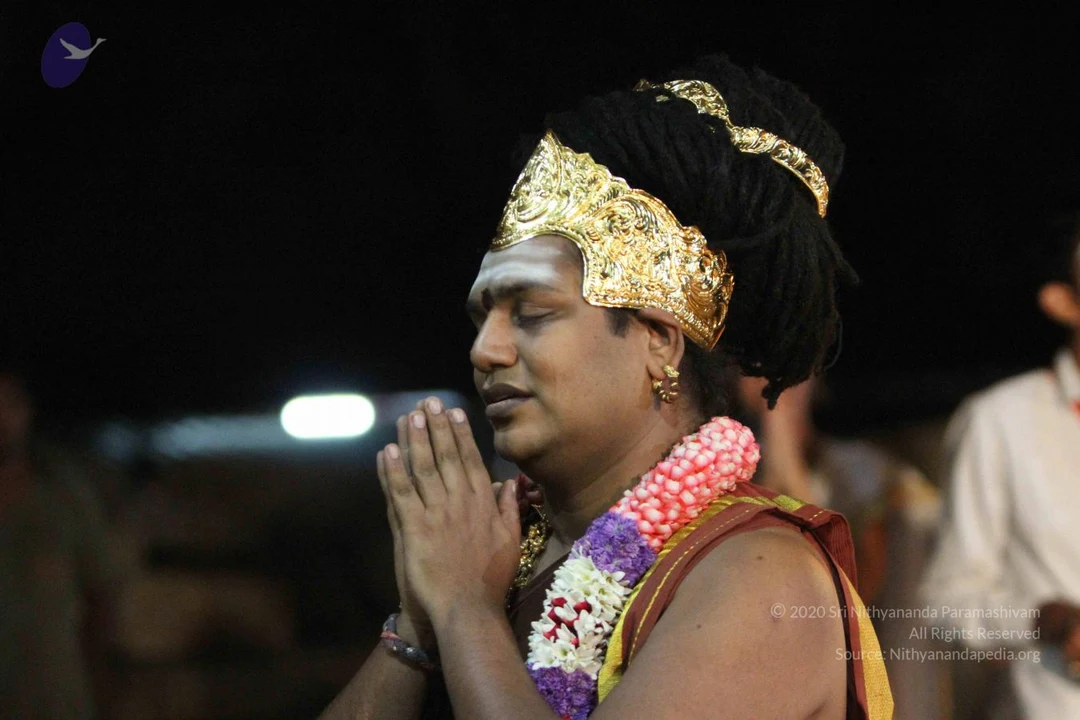
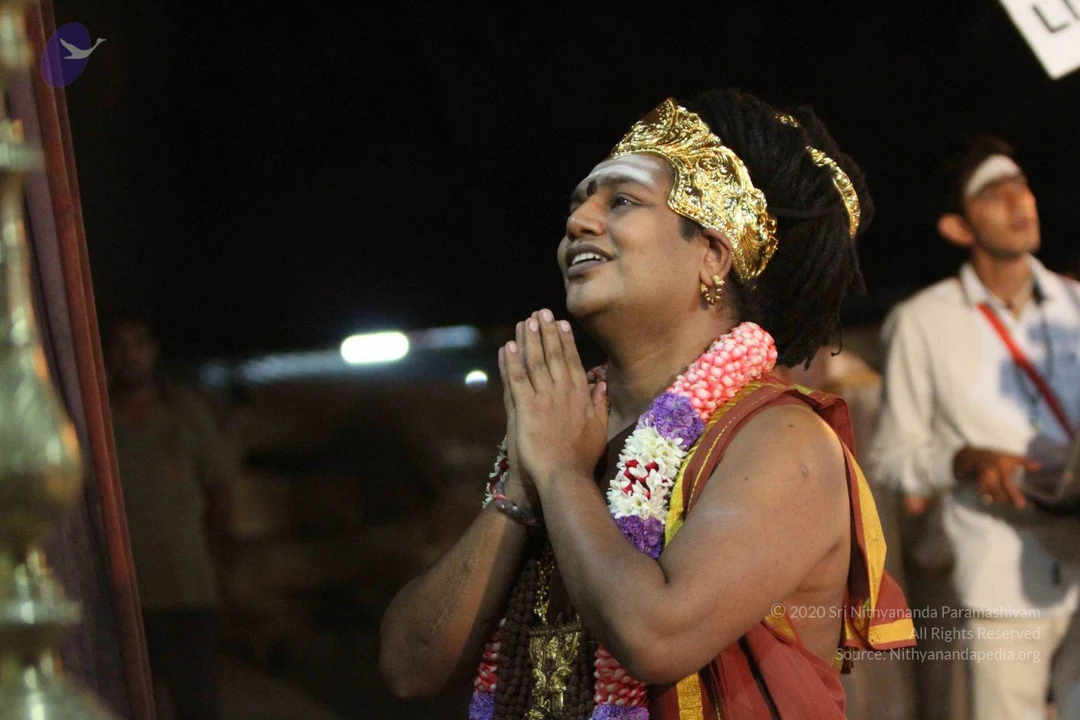
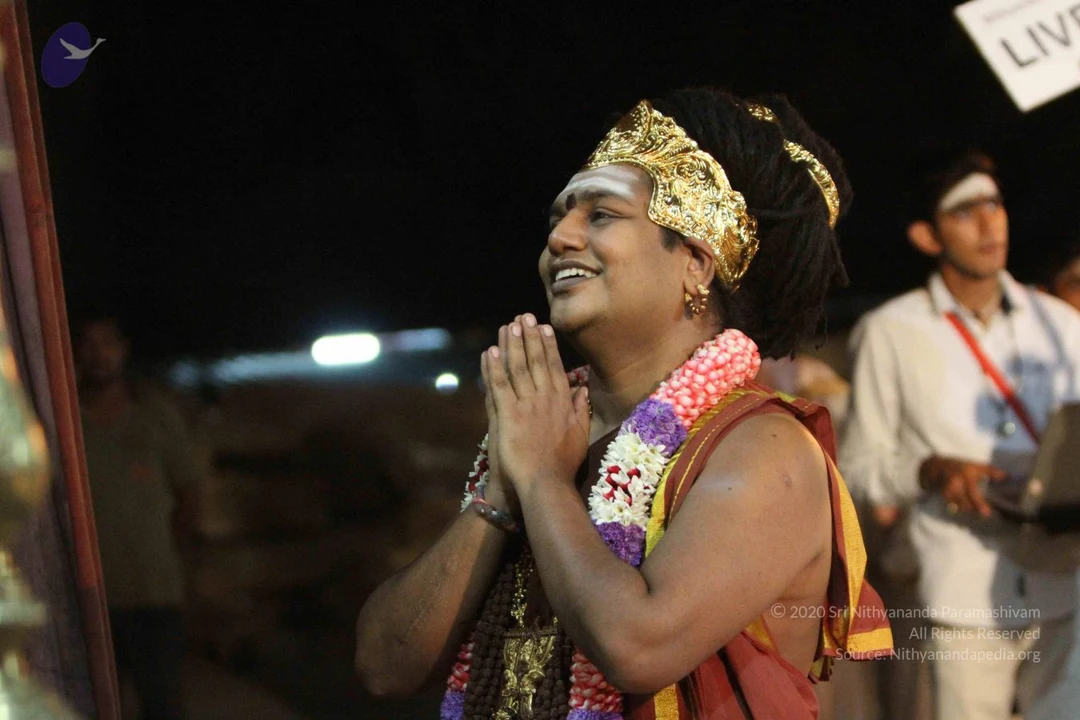
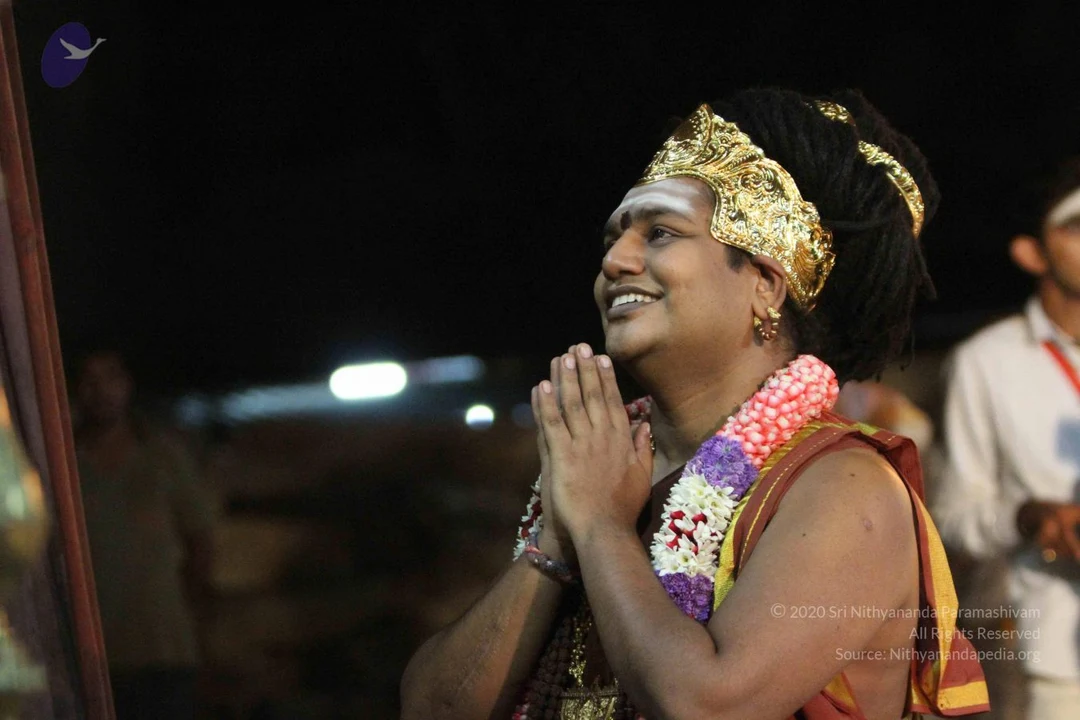
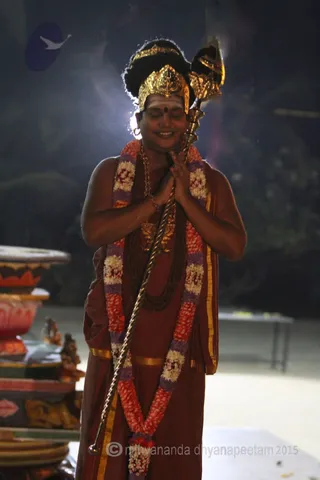
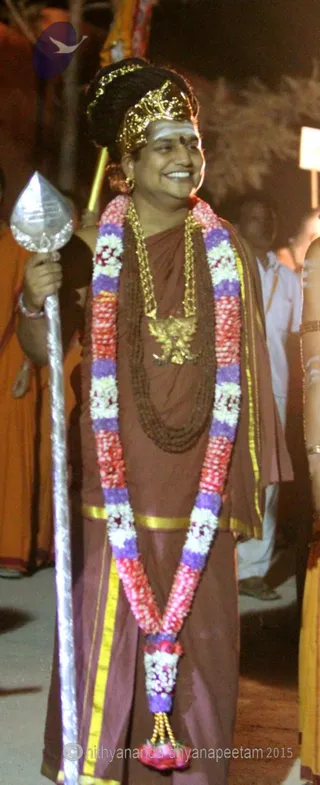
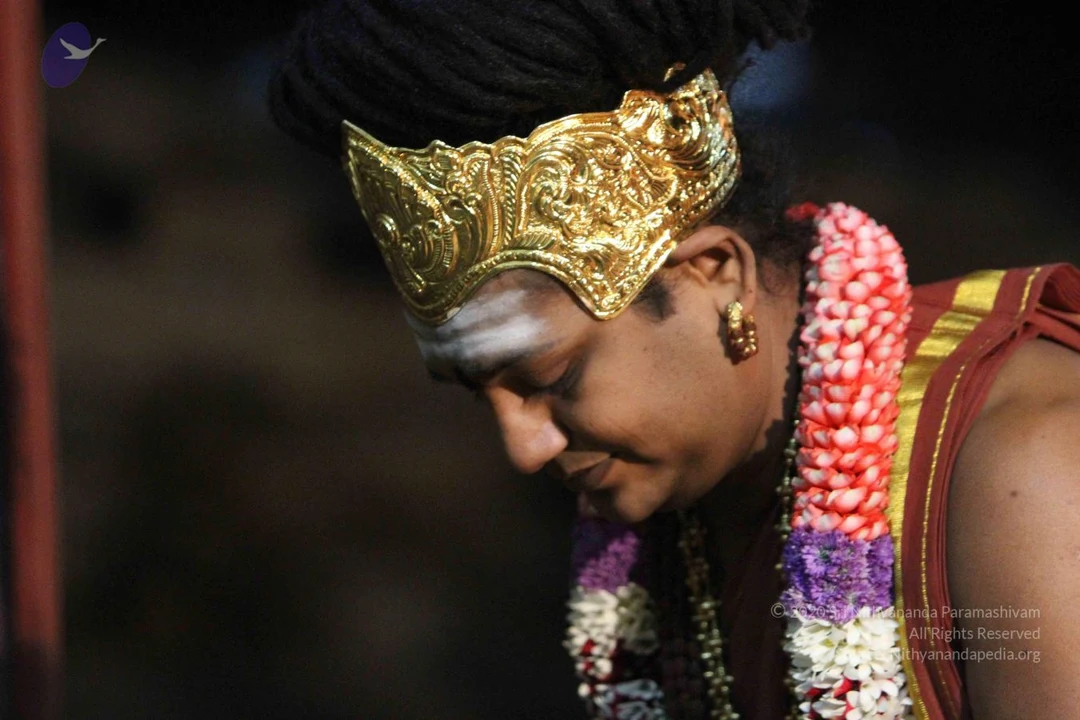
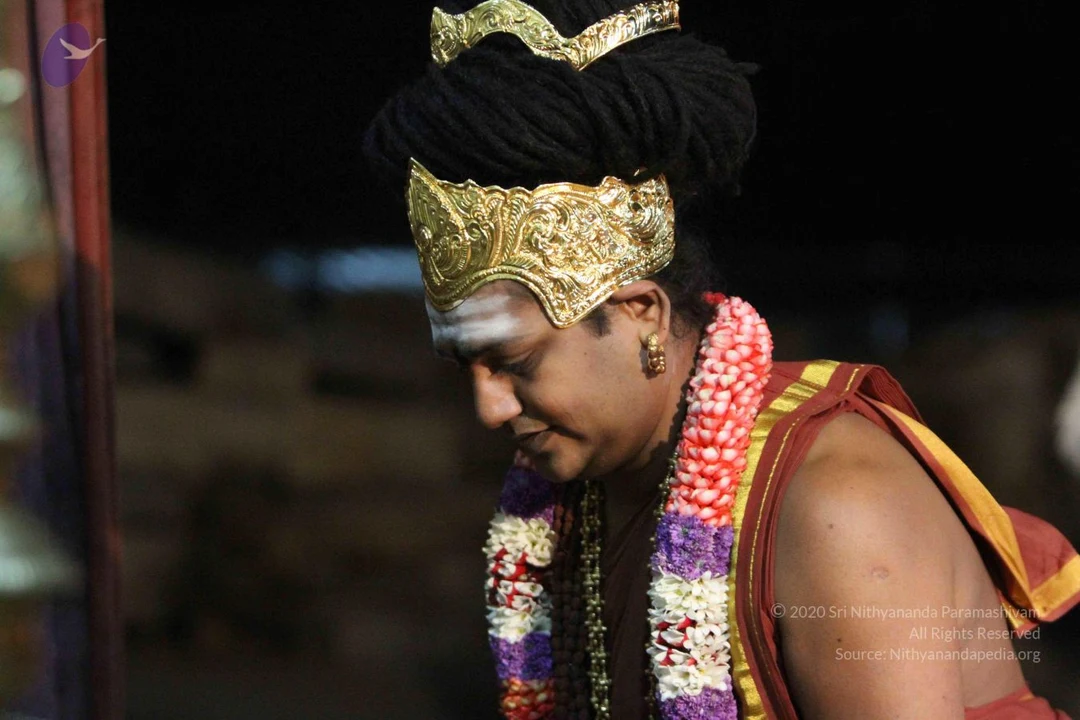
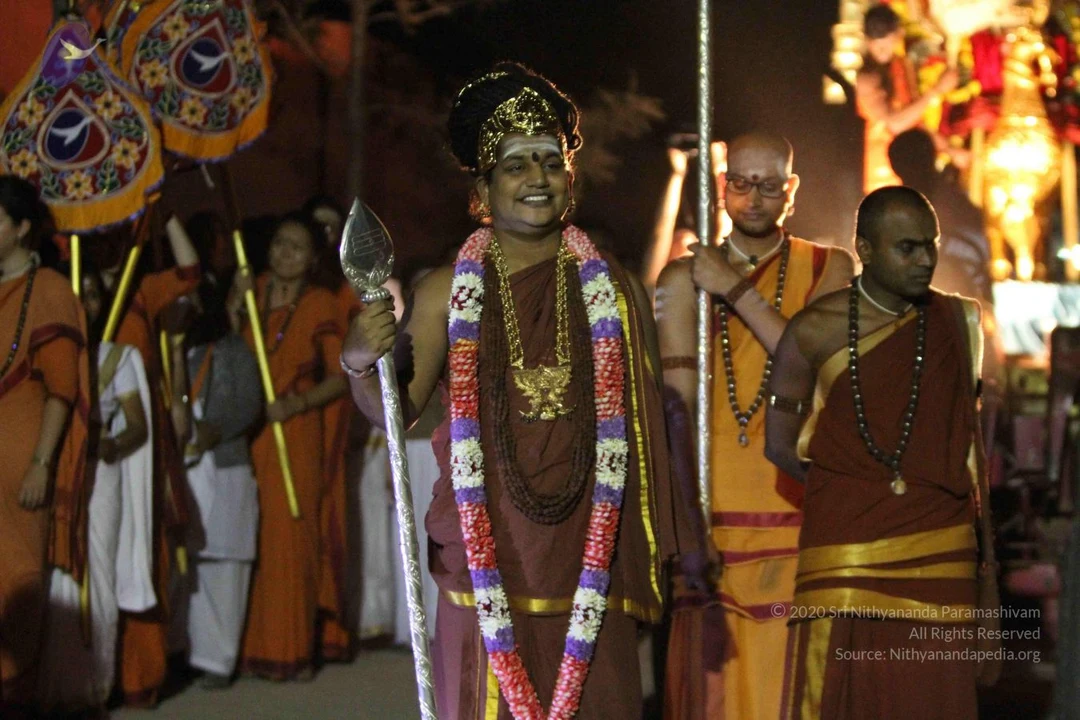
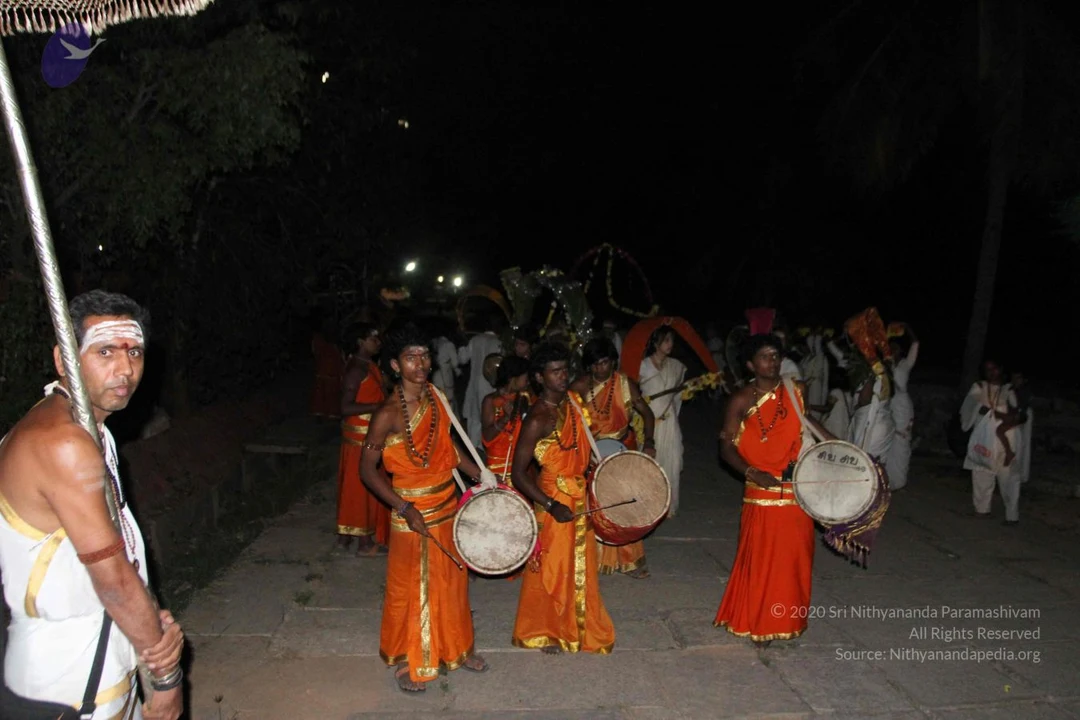
A figure stands with palms pressed together in namaste at the chest, eyes closed and smiling, holding a gold-tipped staff with a ornate finial. He wears a gold crown, a long garland of white, pink and purple flowers, a rudraksha mala and gold necklace, and a rust-red dhoti with gold border, bare-chested with a shawl. Behind him are ornate red and gold pedestals and a dark night background. Probable Swamiji appears in person, based on the crown, rudraksha mala, ornate gold ceremonial dress and staff.A smiling man stands in a temple hall, raising his right hand in greeting. He wears a golden crown, a rust-red saffron-style robe with a gold border, a gold chain with a large pendant, a rudraksha mala, and a long garland of red, white and purple flowers. A white tilak and red bindi mark his forehead. Behind him stands an ornate shrine with two gilded deity figures seated on a throne, one holding a trident, draped in teal cloth and garlanded, with brass oil lamps in front. A third gilded figure stands to the right in the background.Night procession at a temple celebration, lit by bright torches and lamps. White-clad devotees in white dhotis with gold-bordered cloth carry flower garlands on arched frames and bamboo-like poles, and a few hold lit lamps. On the right, a decorated palanquin-style chariot carries an ornate deity murti draped in flowers and garlands, with red and gold decorations. Parasols and a small ceremonial standard with a leaf-shaped finial appear among the crowd. Dark walls and trees frame the scene.A night-time procession moves along a paved path past a high wall. In the foreground, a large triangular ratha-style float is decorated with green leaves, tinsel, and rows of round silver-coloured plates or mirrors around a central motif with a red drop. Behind it, ceremonial black and gold parasols are carried over the procession, and a small yellow-and-red banner is raised. Several people in white dhotis and cloths walk along, and a person in a light garment holds a lit lamp, casting warm light. On the right, an ornately decorated palanquin or deity figure with gold ornaments is visible, lit by lamplight.A photograph of a procession at night. A smiling man stands centre frame wearing a tall dark hair bun topped with an ornate gold crown, a white forehead marking and a red bindi, a long multi-strand garland of red, white and purple flowers, and a rust-brown robe with a gold border. He wears layered gold chains and a gold pendant, and holds a tall silver staff with a pointed finial. A second person in a yellow-bordered garment holds a silver staff at the right edge, and a figure in white stands at the left. Colourful embroidered umbrellas or banners fill the background. Probable Swamiji is identified by the crown, gold ornaments and rudraksha-style beads, and the page states he is present at this event.A smiling man stands in a nighttime procession, wearing a golden crown over piled dark hair, white vibhuti with a red bindi on his forehead, and a maroon-brown draped garment with a gold border. He wears a multi-strand rudraksha mala, a gold chain and a gold pendant, and a long garland of red, white and purple flowers hangs to his knees. He holds a silver staff with a pointed finial in his raised hand.

Thaipusam-Procession
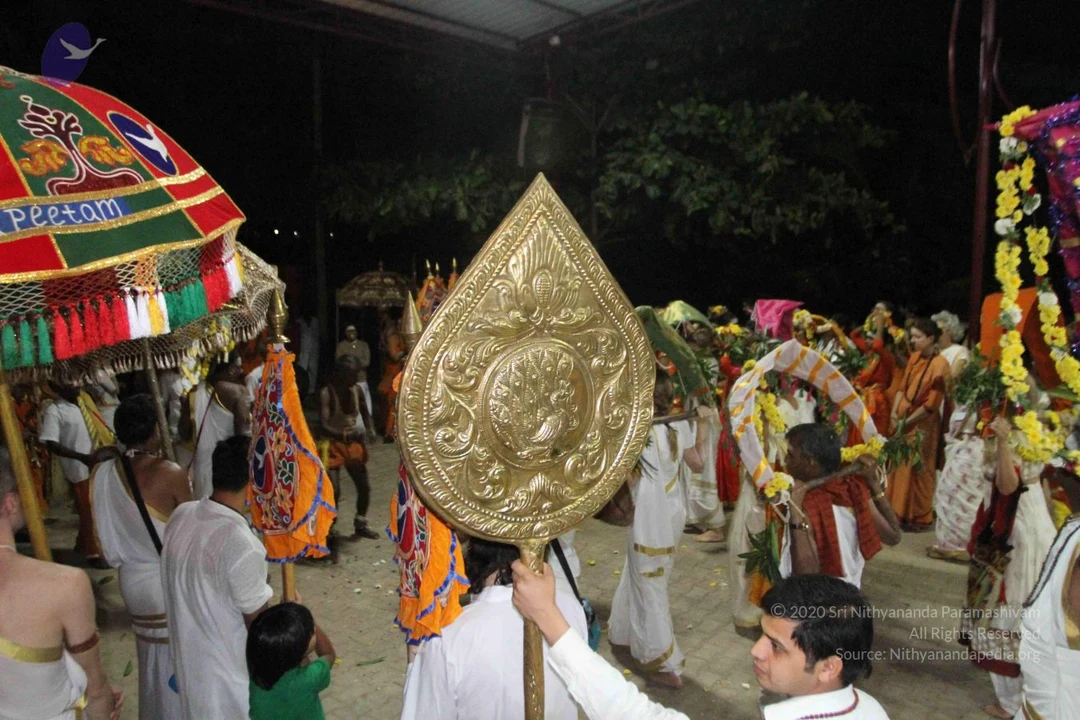
116 photosSource gallery
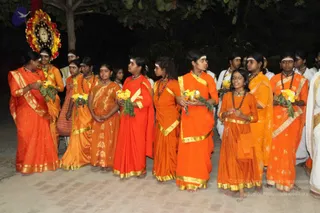
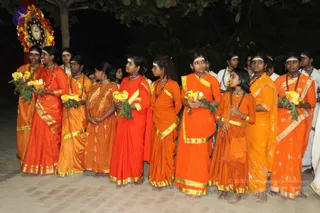
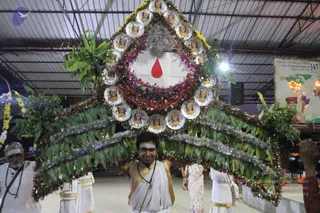
Night photograph of a procession of women in saffron and orange saris with gold borders, many with white vibhuti stripes on their foreheads and rudraksha malas around their necks. They hold bundles of yellow flowers and green leaves in their hands. A large floral garland decorated with red and yellow blossoms is visible at upper left, and white-clad attendants stand at the right edge. Trees and dark night sky form the background, with a paved path underfoot.Night procession of women and girls in orange and saffron saris with gold borders, many with white vibhuti stripes on their foreheads and rudraksha malas around their necks. Several hold bunches of yellow flowers and green stems. Behind them stands a decorated framed image or palanquin with yellow and red flower garlands. Men in white clothes stand at the right edge. A tree and paved ground are visible; the setting looks like an outdoor ritual procession.A procession at night under a corrugated metal roof shows a large decorated kavadi-style frame carried on shoulders. The structure is covered with green leaves, silver and multicoloured tinsel, marigold garlands, and a ring of round paper plates each bearing a printed portrait. A red teardrop motif sits at its centre. A bare-chested man in white dhoti with a gold-bordered shawl and rudraksha-style beaded necklace smiles while bearing the frame, with other white-clad attendants around him. Behind them a banner shows a world map with lights and a label reading Global Nithyananda.A night-time procession at an open-sided hall shows a decorated kavadi-style arch carried on the shoulders of men. The central bearer wears a white dhoti with gold borders, a black bead necklace and white sacred ash markings on his forehead and body, with a lime hung on his shoulder. The arch is covered with green leaves, silver tinsel, red and yellow flowers and a red tinsel frame, and many small round printed portraits decorate it around a central white panel with a red drop motif. Other men in white dhotis with gold borders stand beside and behind the arch, and a banner with a world map is visible on the right.Photograph of an evening procession under a open-sided shed with a paved floor. Several men in white dhotis and shirts walk and dance, one in an orange-red shawl and gold-bordered garment at left carrying a flower-garlanded object on his shoulder. Behind them, drummers in white and orange clothing play large drums, and attendants hold tall umbrella-like parasols with red and orange fringed canopies. Arched frames decorated with yellow marigold garlands, green leaves and a silver-bead medallion stand in the background. Lights glow overhead and a banner with text is partly visible. No identifiable a person candidate is clearly visible.An evening procession under a roofed open hall at night, with bright lights overhead. Several men in white dhotis with gold borders carry decorated kavadi arches of flowers, leaves and sparkling white and pink ornaments. A woman in a red sari with gold border, bright face markings, and flower garlands carries a flower-decorated load on her head. Men in orange and saffron clothing carry tall gold-tipped staffs and umbrellas, and a drummer in orange plays a drum. A man in a white shirt with a red sash and purple dhoti stands with his back to the camera facing the procession. Garlands of marigolds and green leaves decorate the scene.
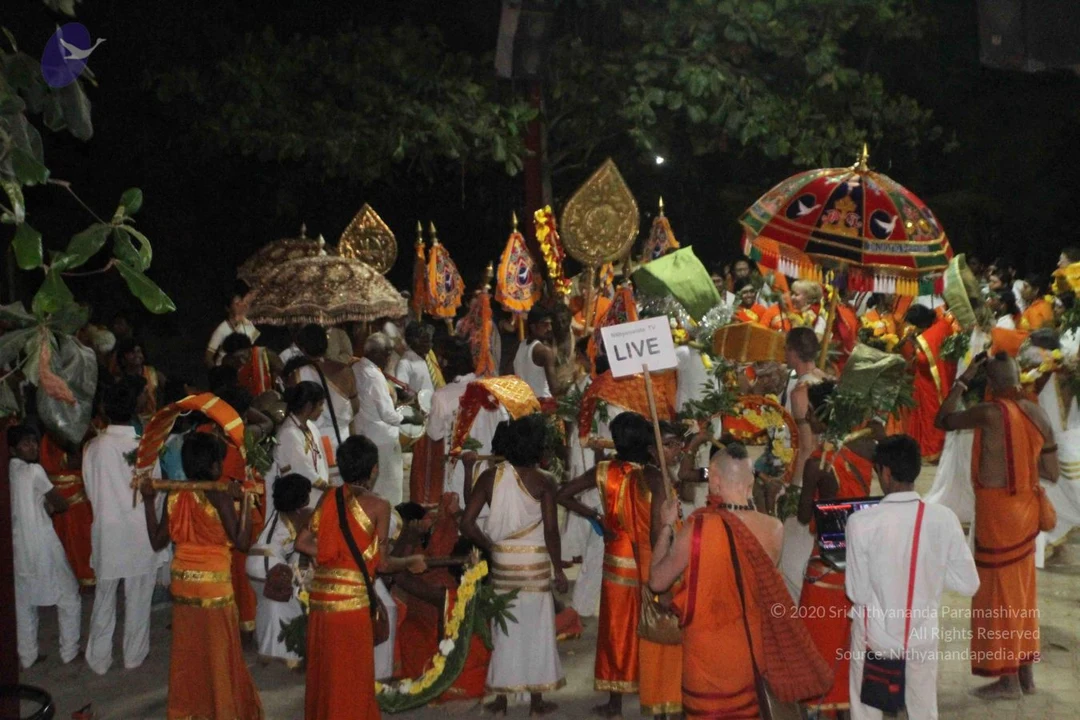
NDY

118 photosSource gallery
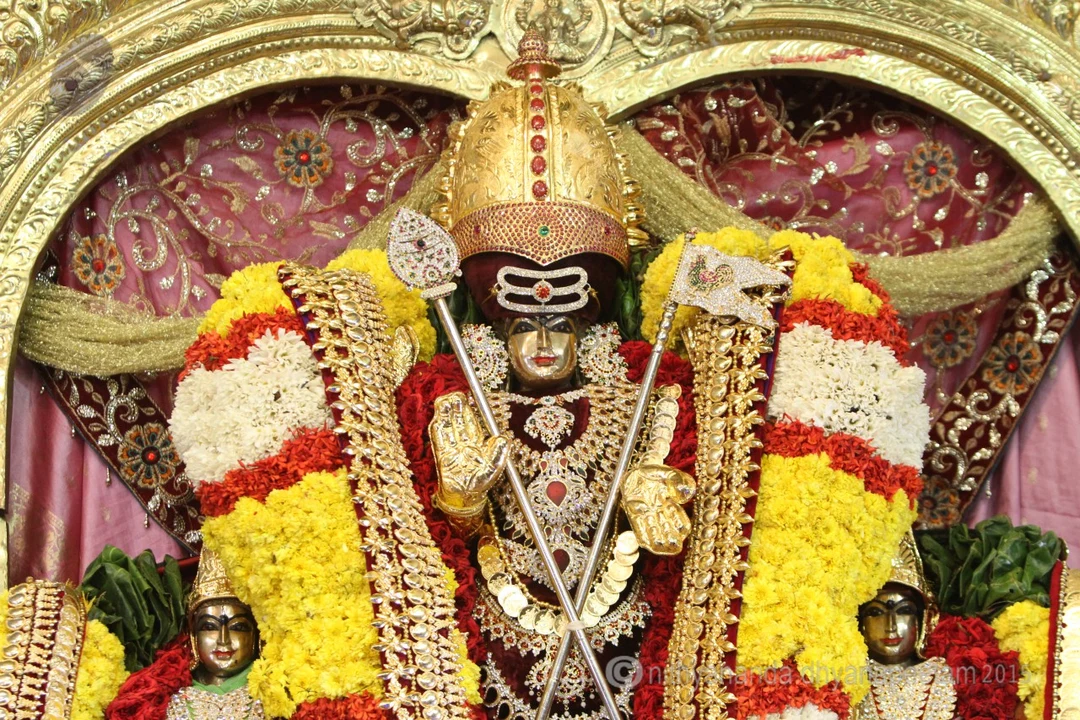
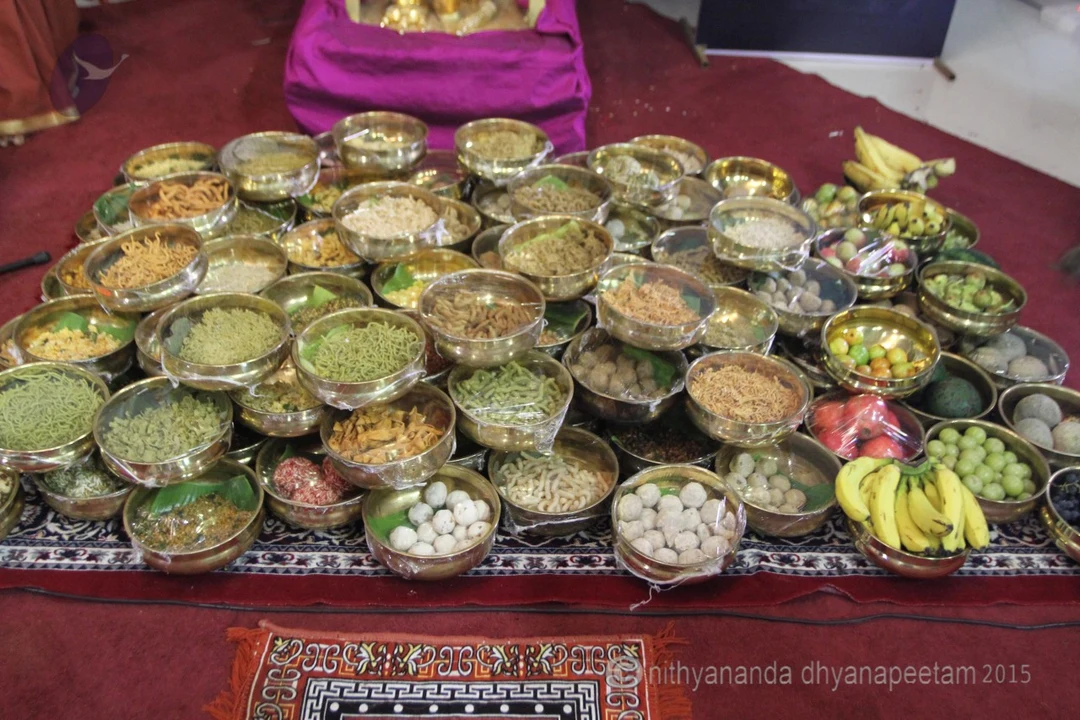
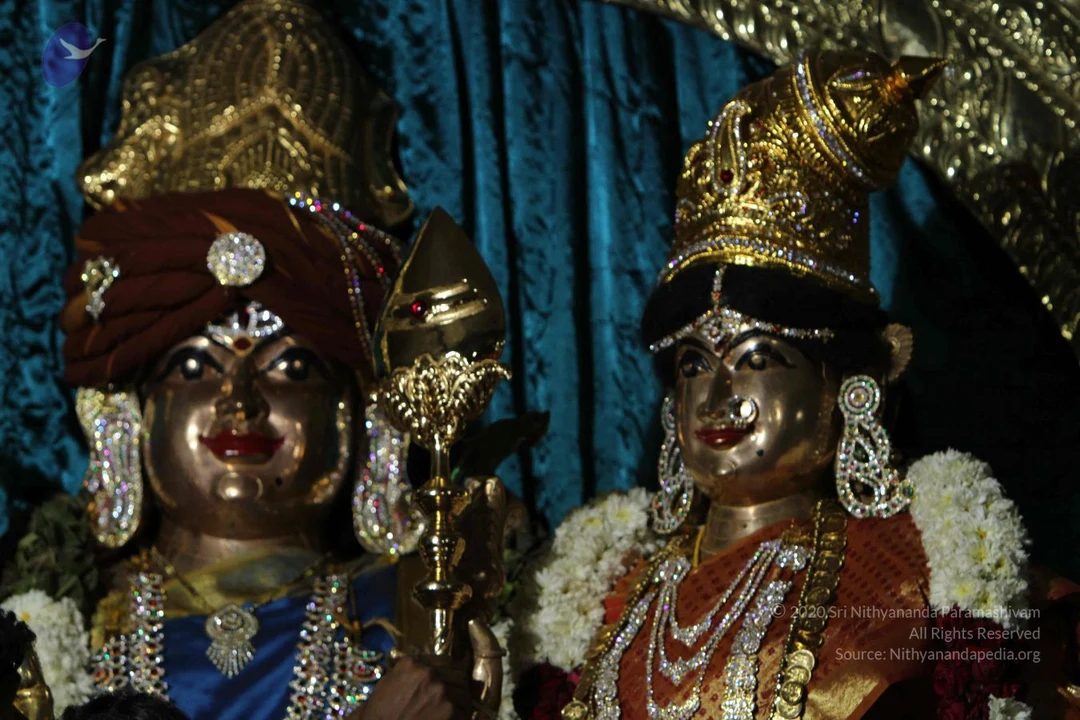
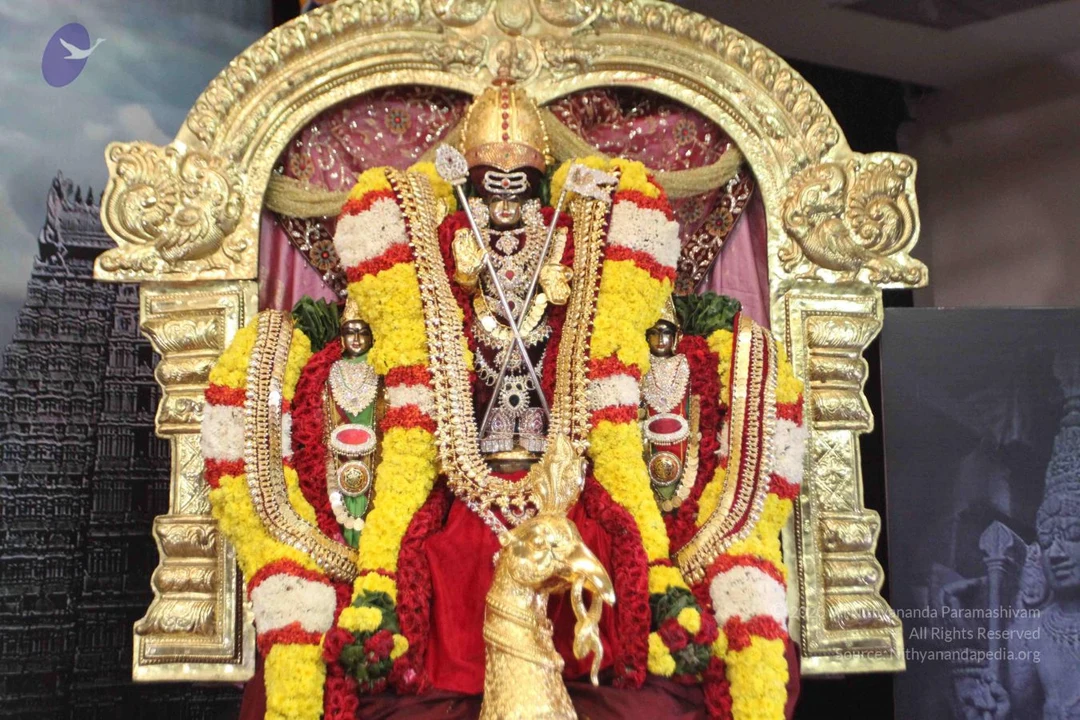
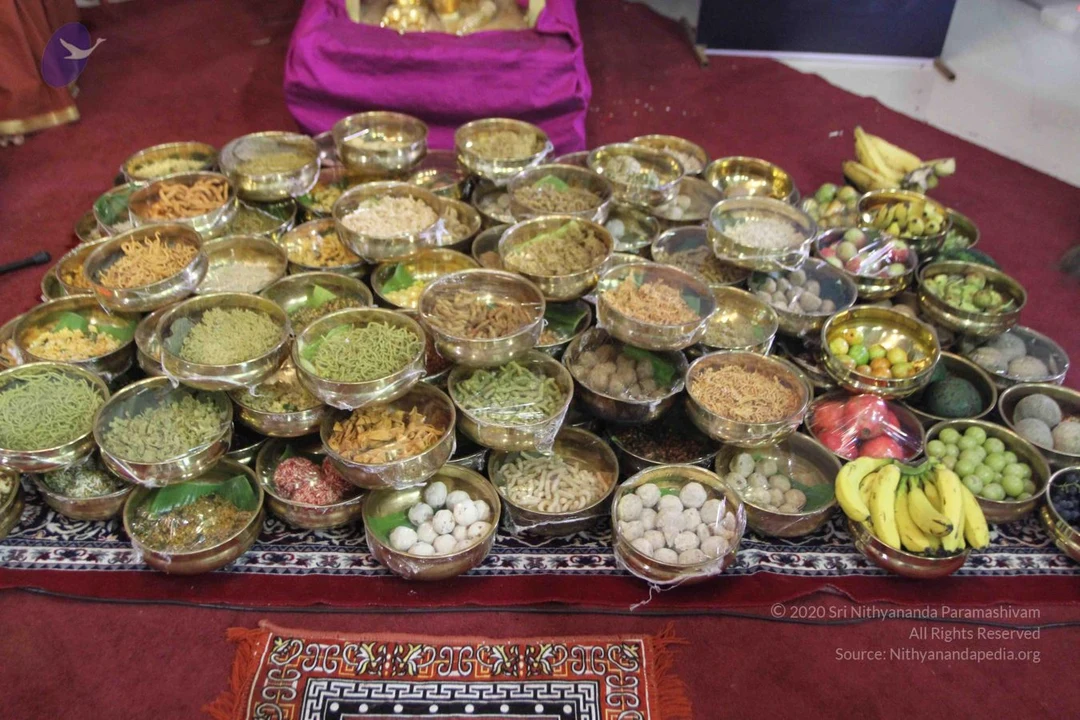
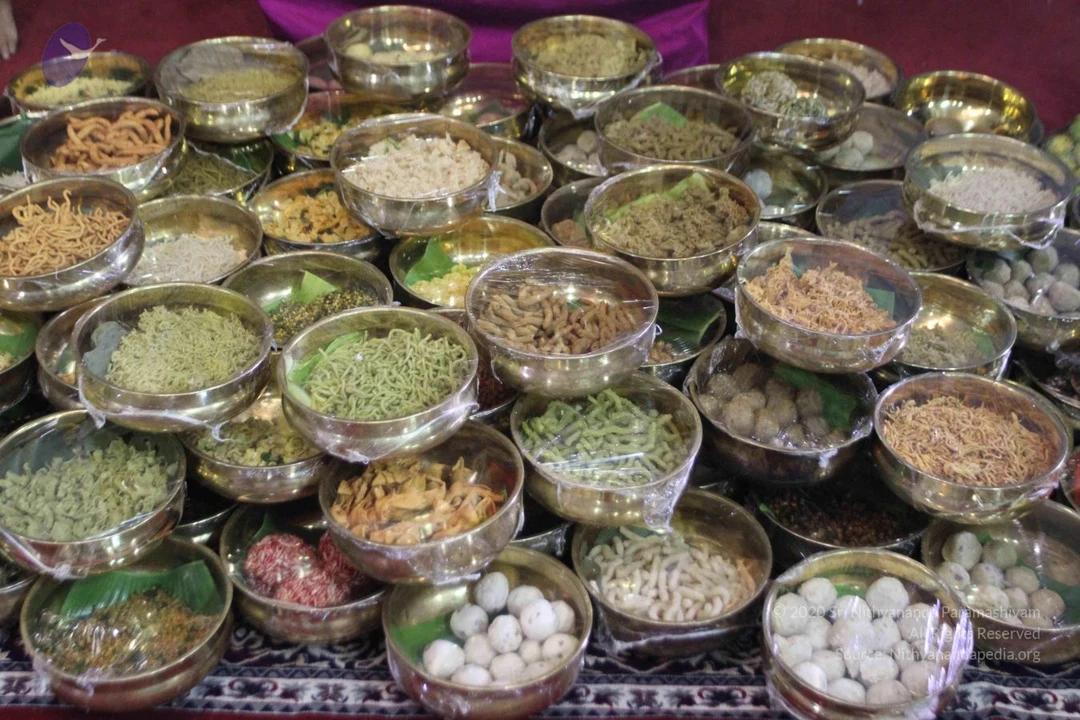
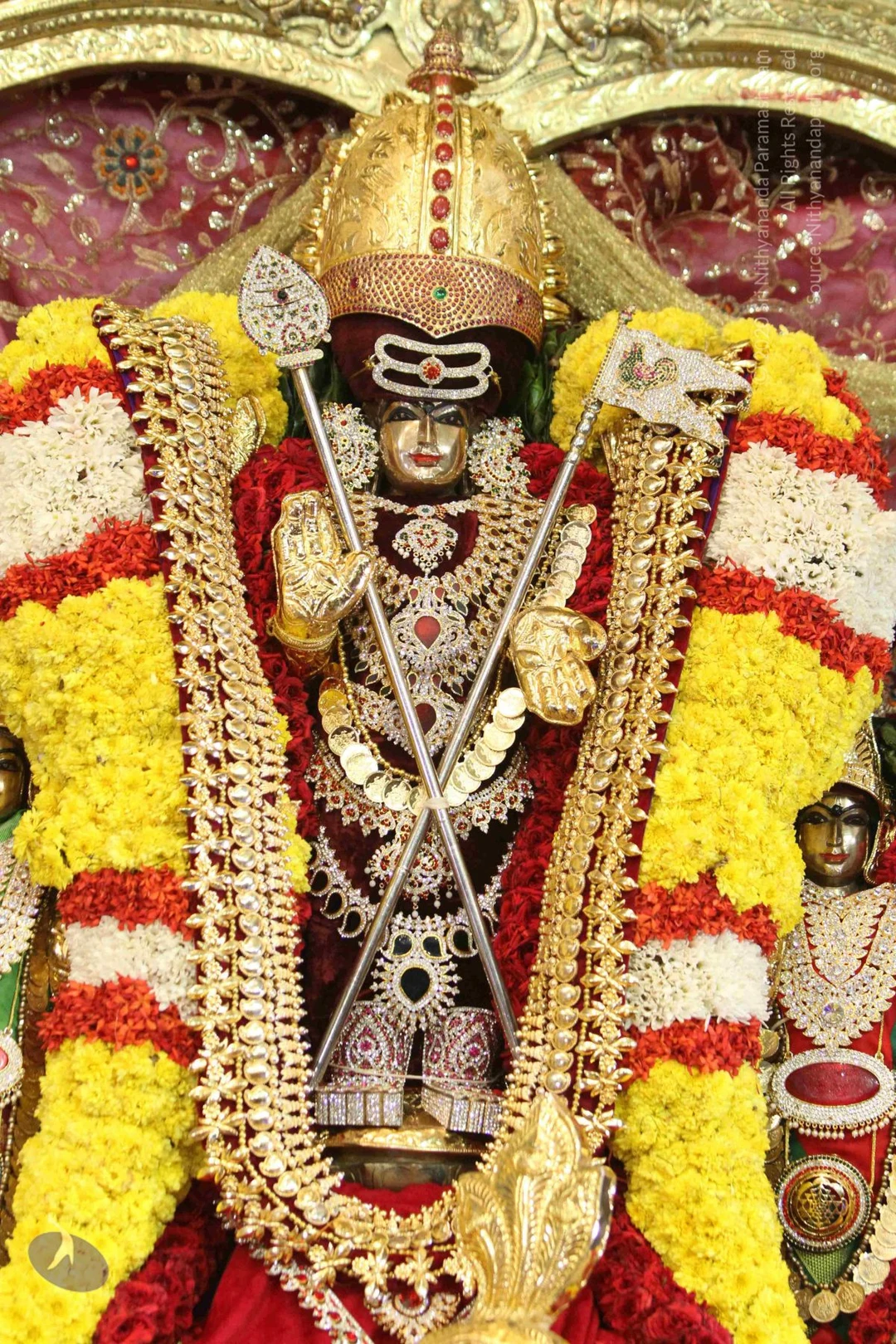
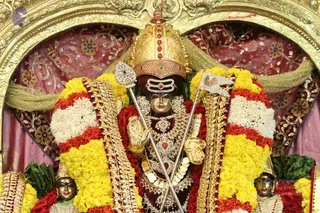
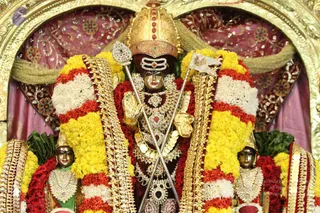
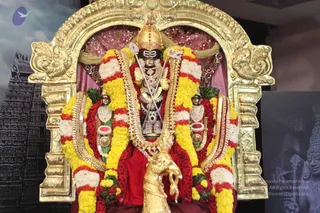
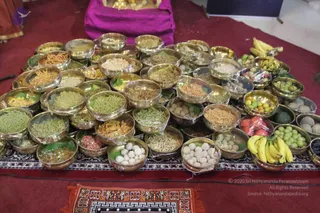
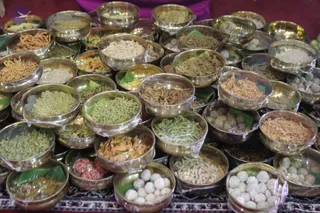
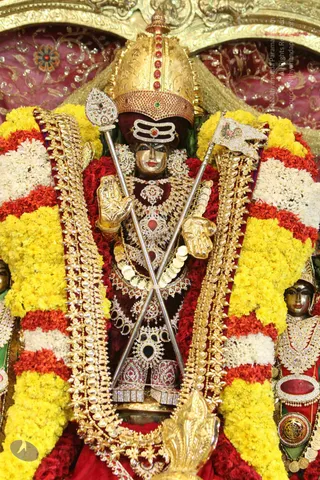
A golden deity murti of Murugan, a Hindu deity, is displayed in an ornate temple shrine, dressed in heavy gold and jewelled adornments. The central figure wears a tall golden crown set with red and green stones and a silver-white sacred ash line on the forehead. He holds a silver vel spear and a golden hand gesture, and is draped with thick garlands of yellow marigolds, red flowers and white jasmine. Smaller gold consort figures flank him on either side, also garlanded, and green leaves frame the lower edges. The background features gold-embossed arches and rich maroon fabric with floral embroidery.A deity murti of Murugan (Subramanya) decorated for worship, standing centrally in a gold-framed shrine niche with a pink and gold embroidered backdrop. The murti wears a tall gold crown, a three-horizontal-line tripundra on the forehead, and a heavy gold and jewelled necklace, and holds a silver vel spear in one hand. It is draped with garlands of yellow marigolds, white jasmine and red roses. Two smaller consort murtis flank it, each wearing gold jewellery and garlands, with green leaves placed at the sides.A photograph of a deity murti seated on a gilded throne with an arched golden backdrop and red velvet cushions. The murti is adorned with thick garlands of yellow marigolds and red flowers, a gold crown, a gold necklace, a trident-like staff and a gold vahana of a bull in front. Two smaller attendant figures flank the central murti, also garlanded. A printed backdrop of a temple tower is behind the throne. No physical people are visible.A photograph of a large offering arranged on a red carpet: dozens of polished brass bowls heaped with food, including green and yellow noodle-like preparations, sweet balls, fried snacks, fresh bananas, red apples, green grapes and mixed fruit, some bowls covered with clear plastic wrap and decorated with green leaves. A purple cloth and a partially visible brass or golden object sit at the top, and a patterned rug lies at the bottom edge. No people are visible.Dozens of polished brass bowls are arranged in tiered rows on a patterned cloth, filled with savoury and sweet food offerings such as fried snacks, green and orange noodle-like sev, round laddu-style balls, crisp fried strands and rice preparations. Many bowls are covered with clear plastic wrap and some rest on green banana leaves. A purple cloth edge is visible at the top, and a small purple-and-white logo appears at the upper left. No people are visible; the image shows a prasadam or annadan style food display.A photograph of a smiling man seated on an ornate golden throne with carved peacock and lion motifs, palms raised in greeting or blessing. He wears a rust-orange turban with a white flower, an orange-red robe, a long rudraksha mala, a gold ceremonial pendant necklace, and gold bangles. A red bindi and white forehead markings are visible. Leopard-print cushions flank the throne, a gold staff with a finial stands at left, and microphones are placed nearby. a person is seated in the central role of the teaching session.
Power-Manifestation-Demo

53 photosSource gallery
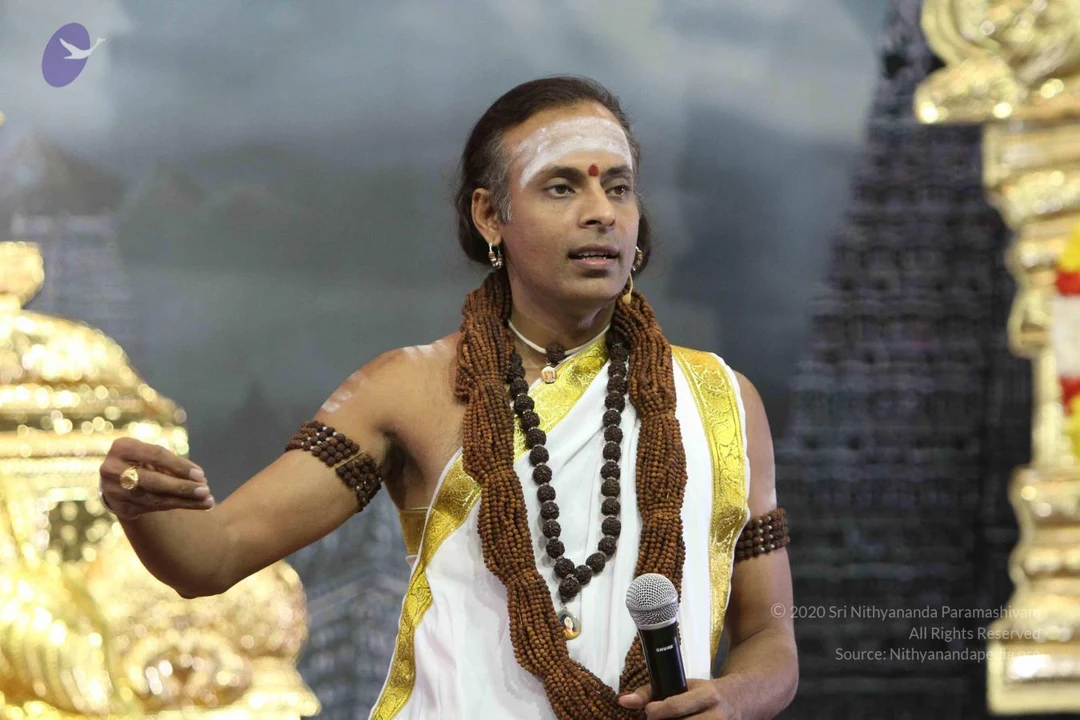
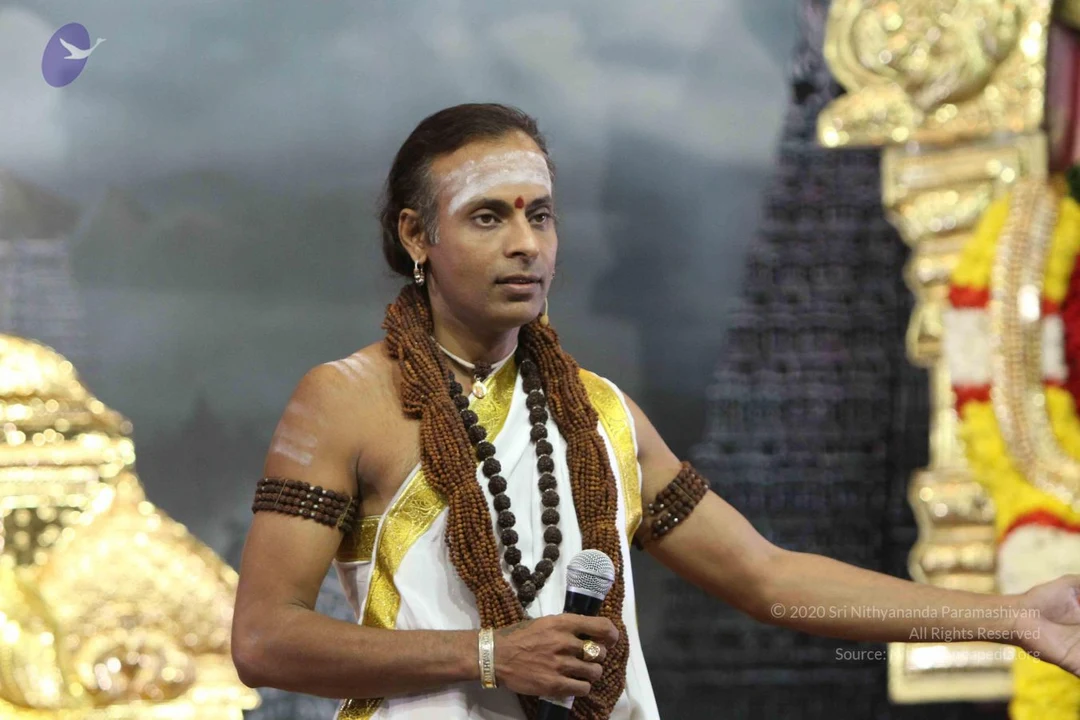
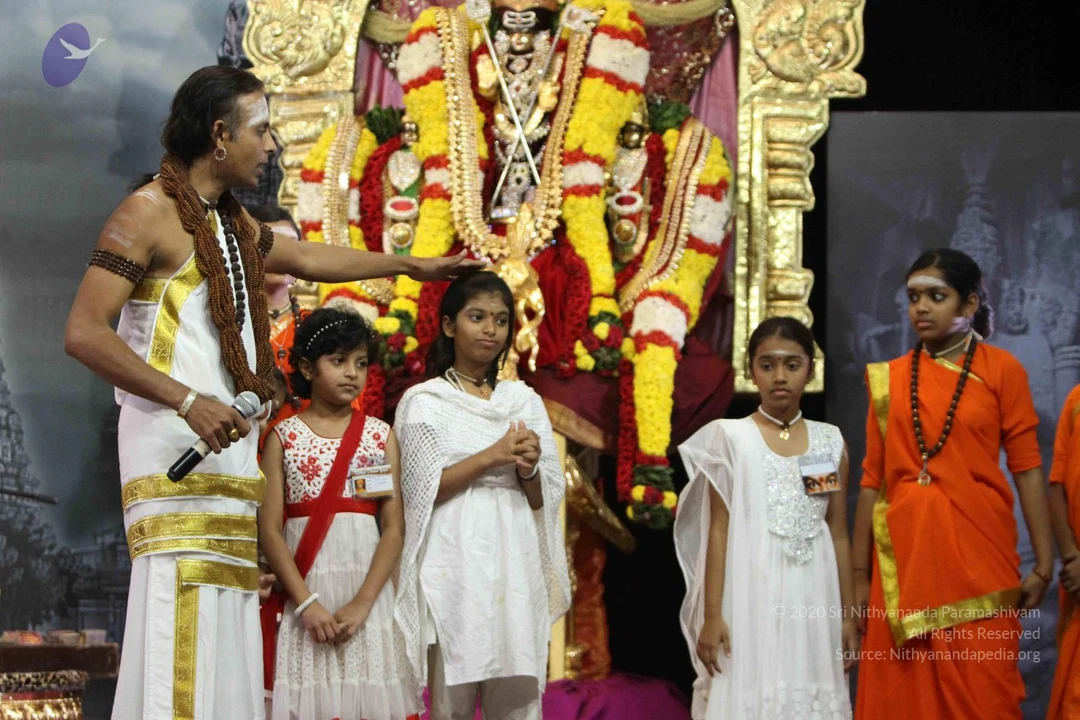
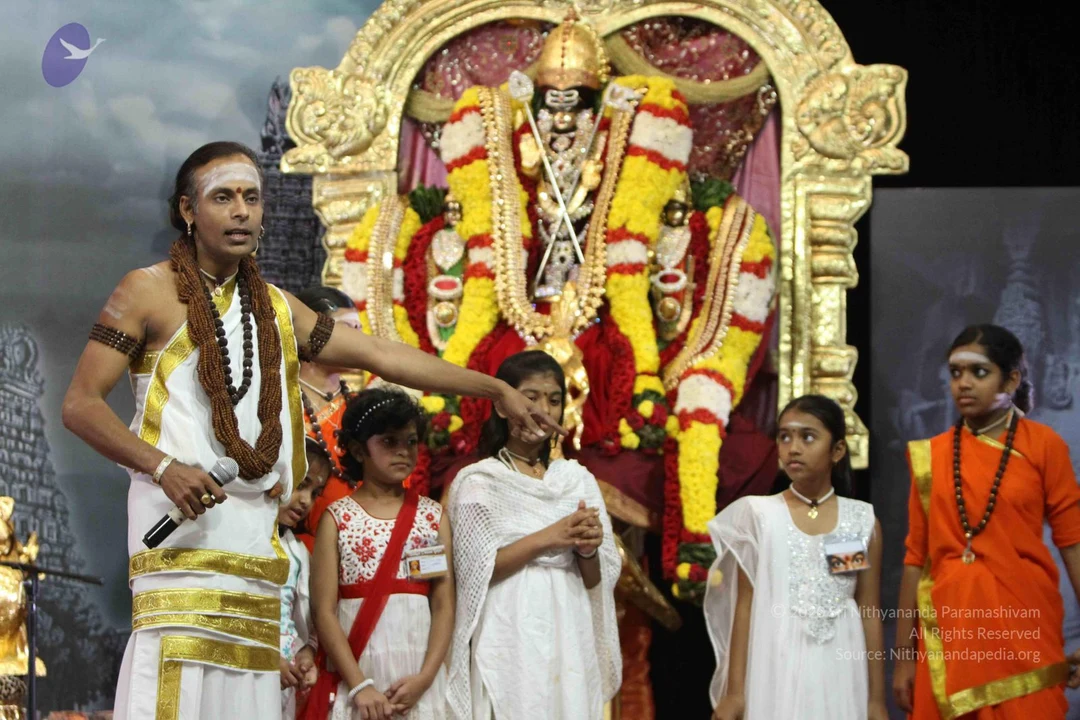
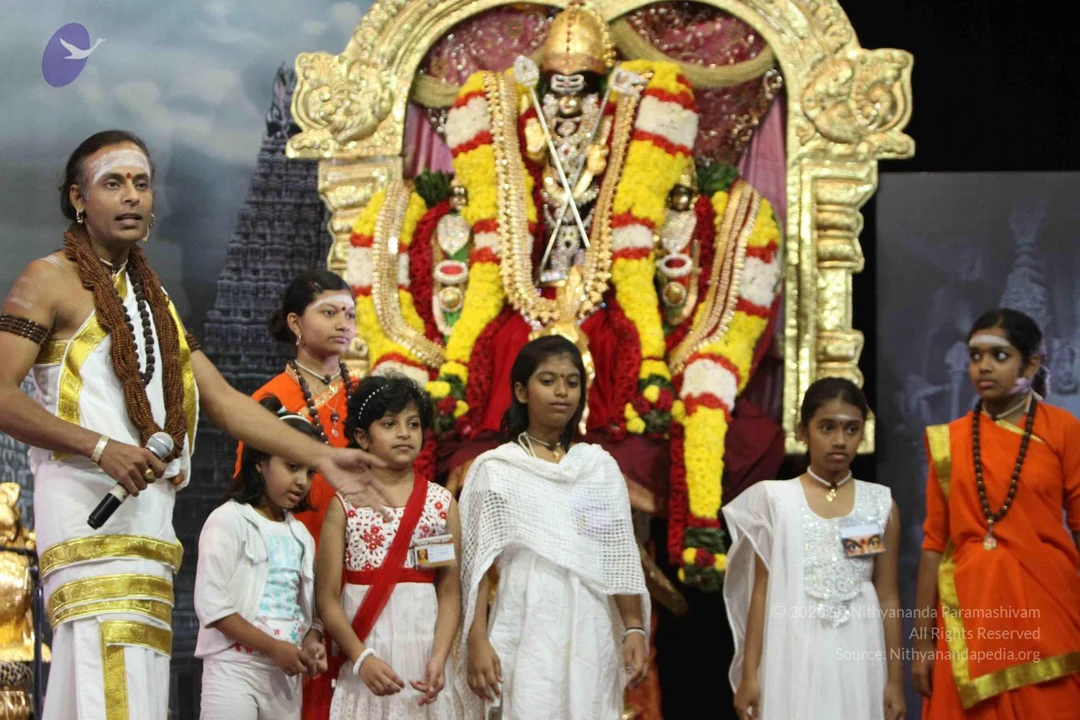
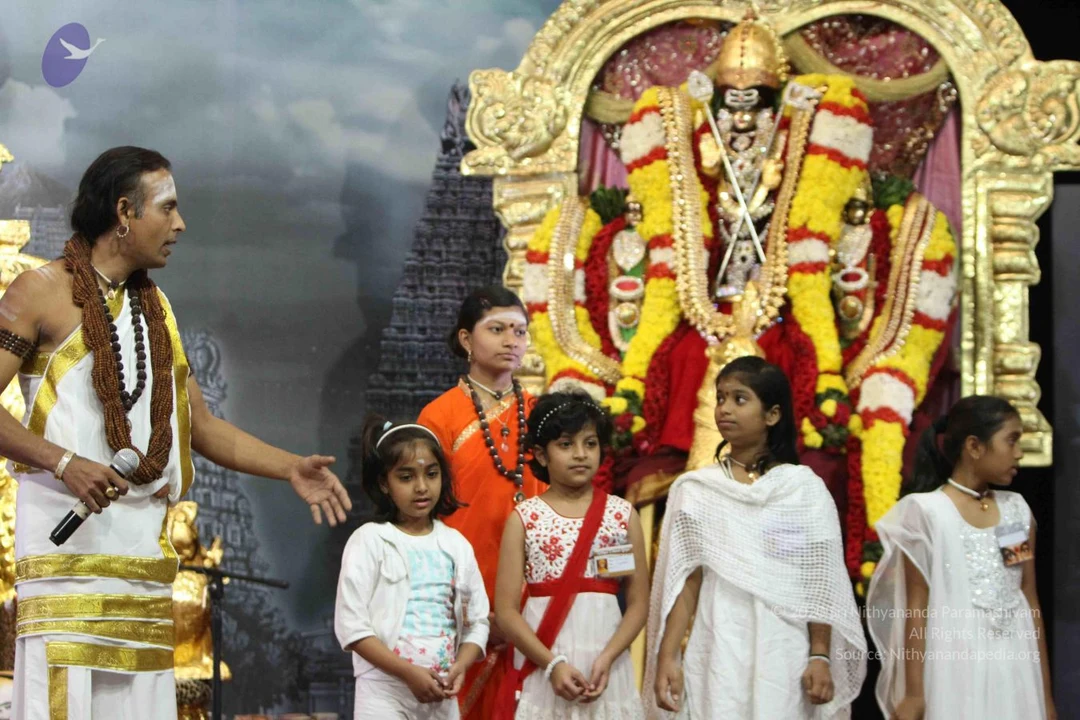
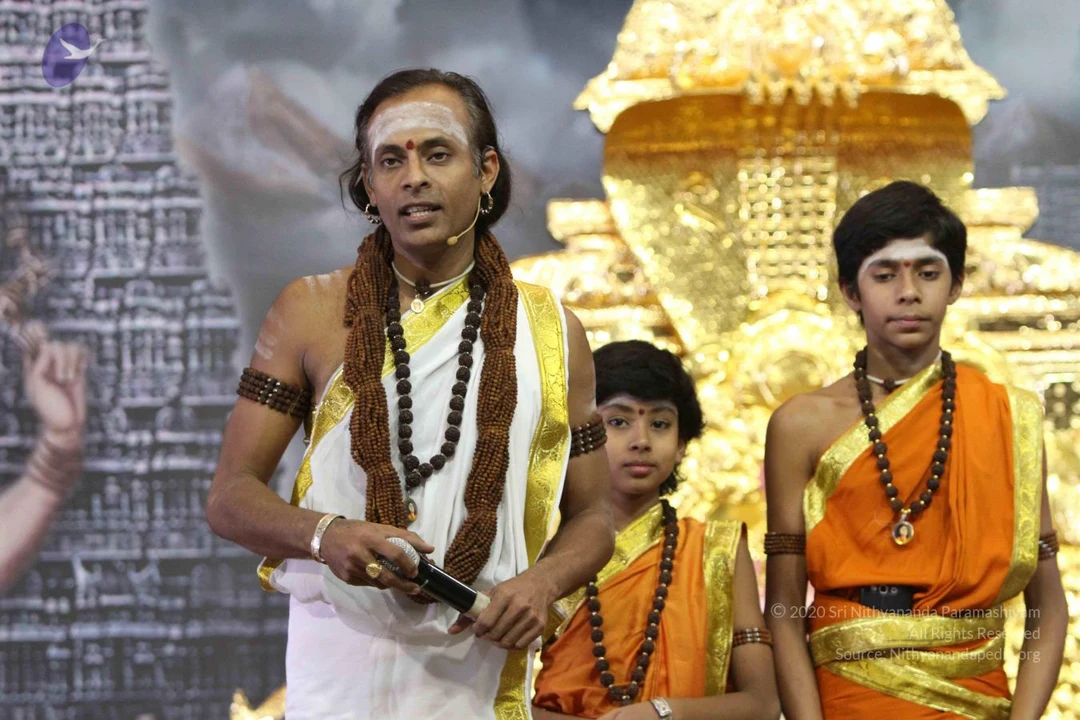
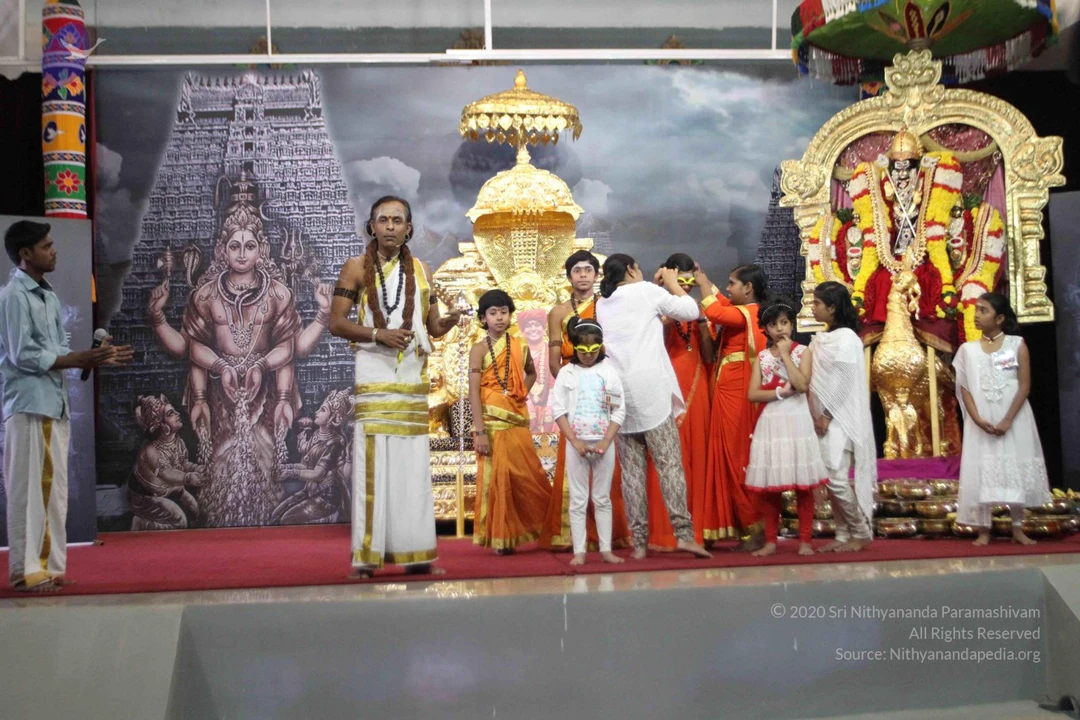
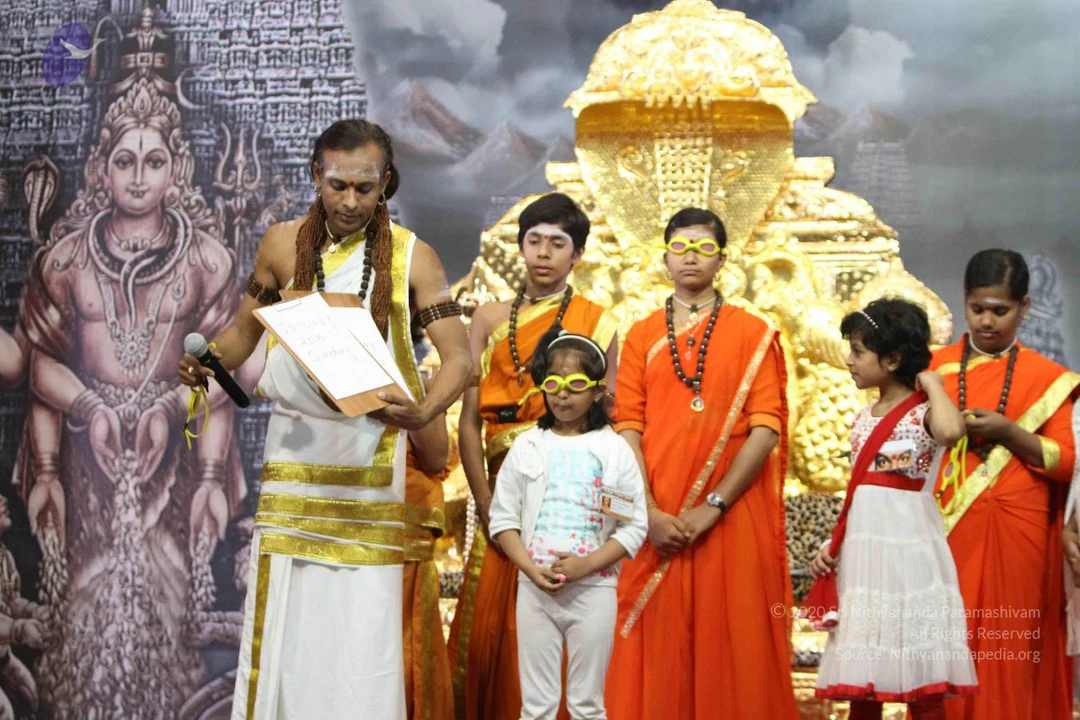
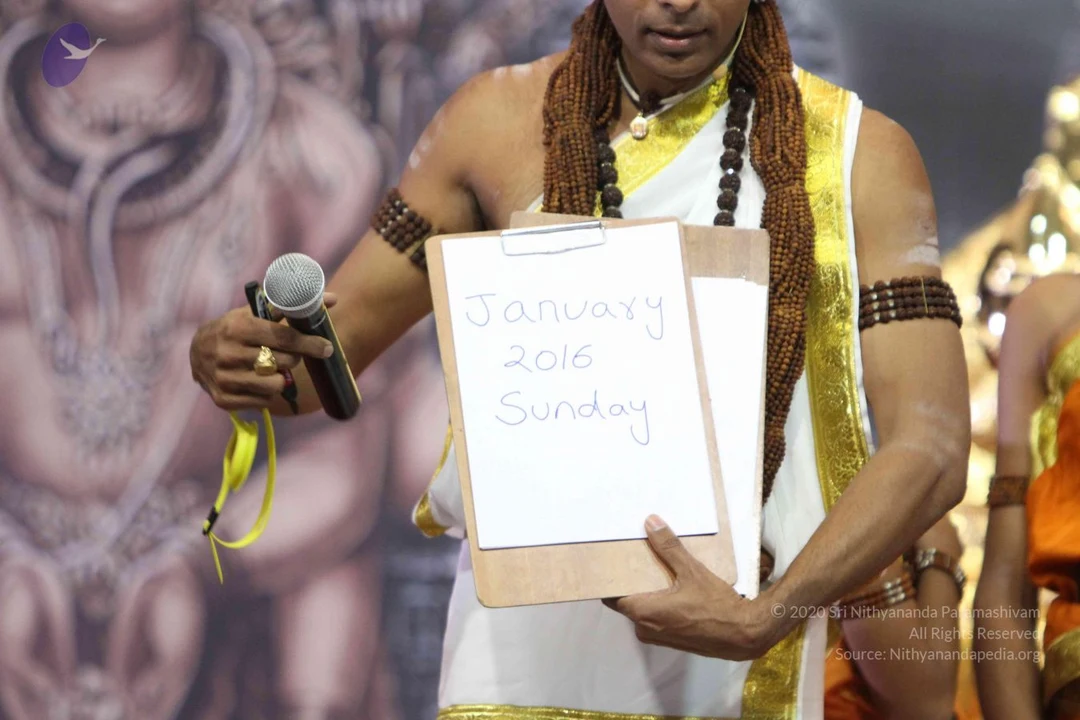
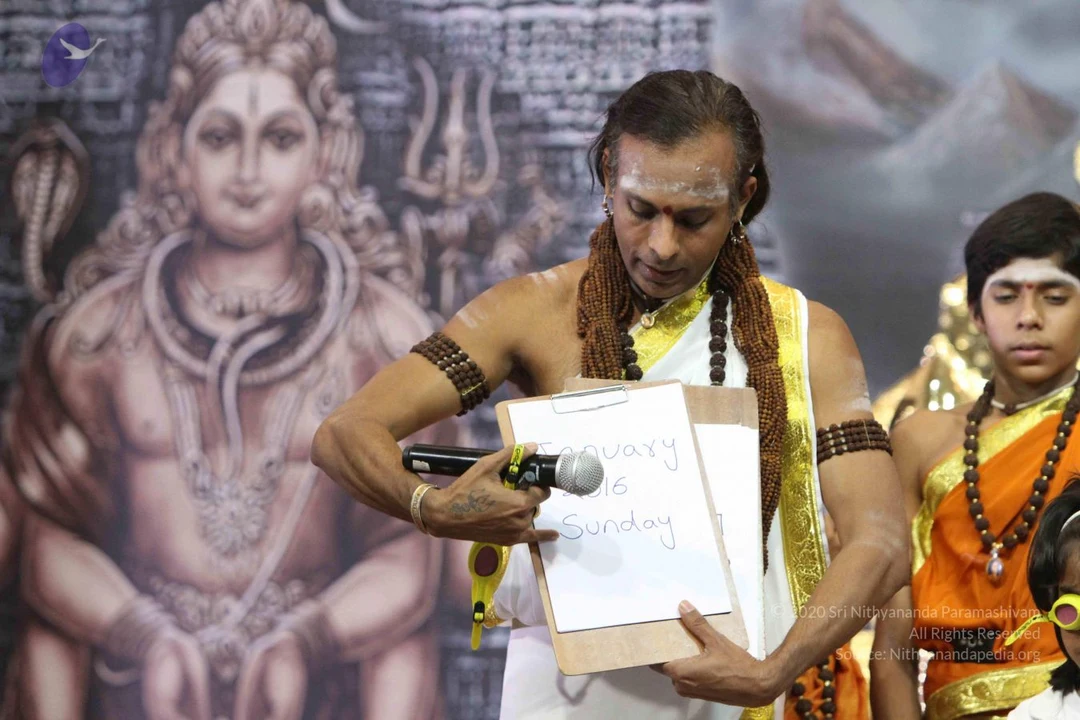
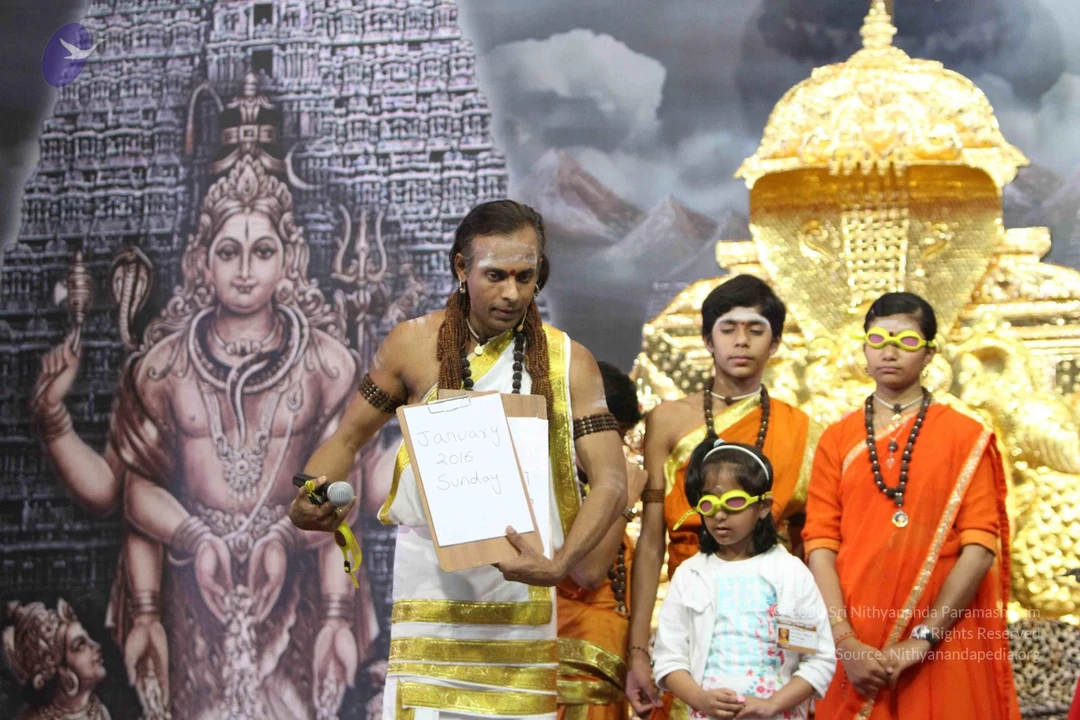
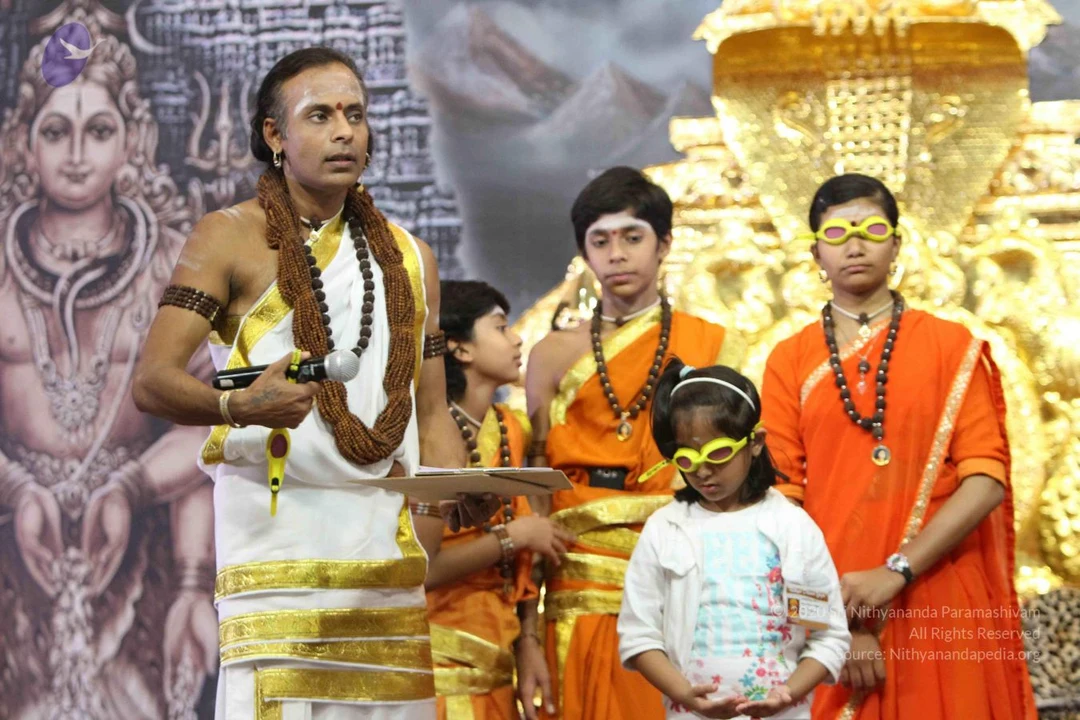
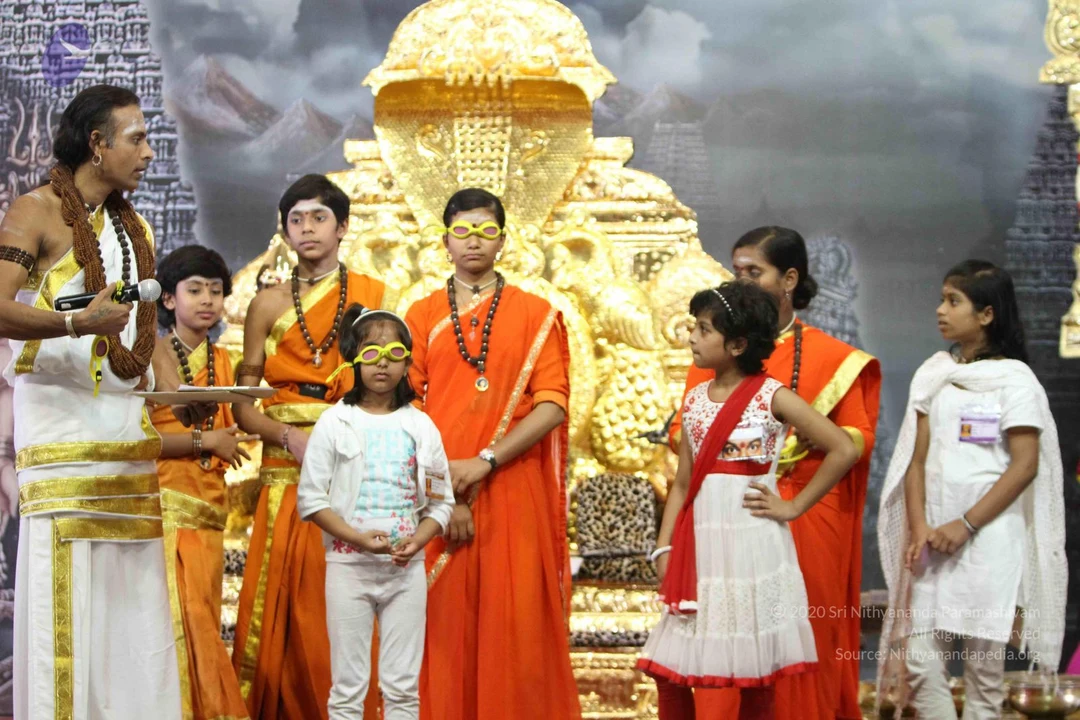
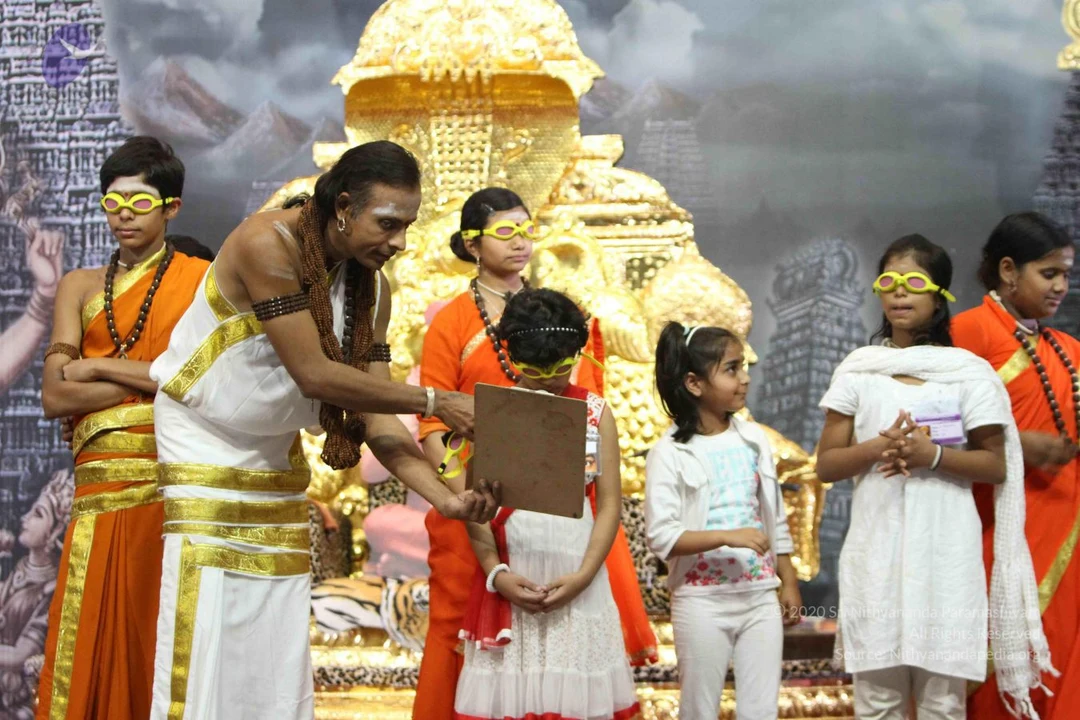
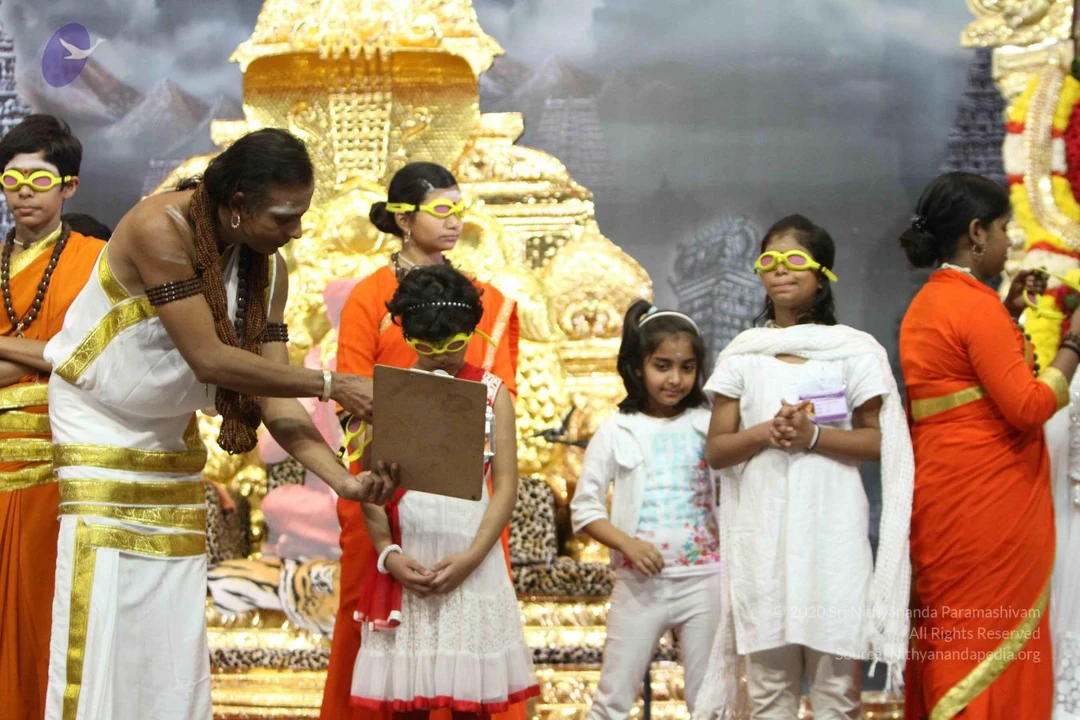
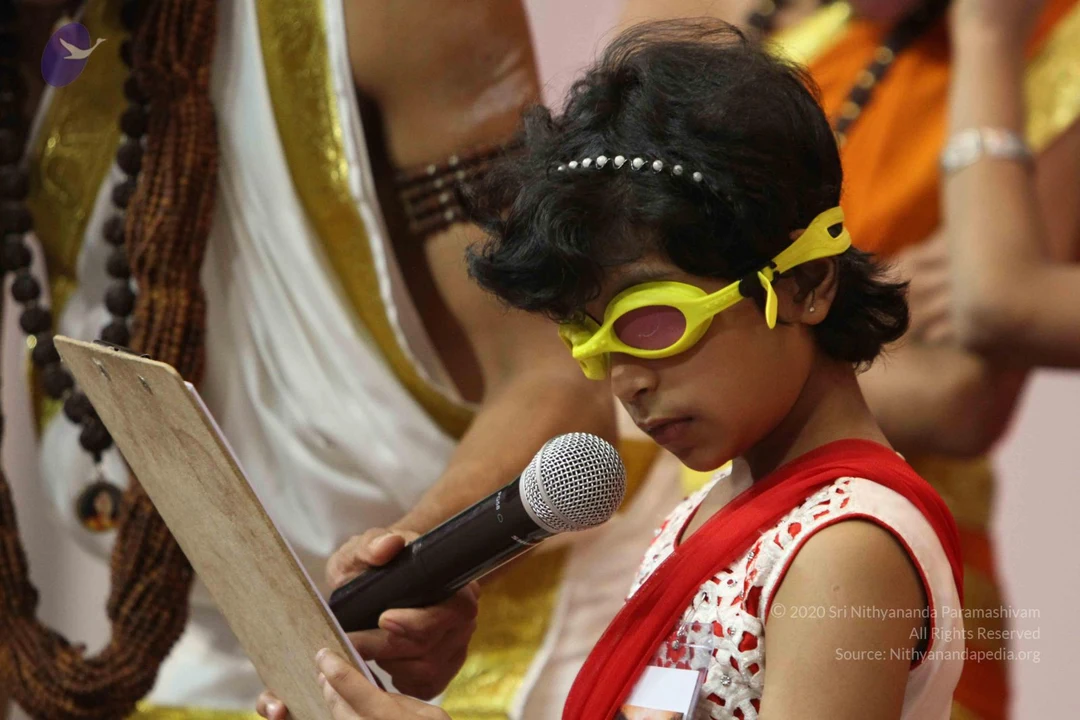
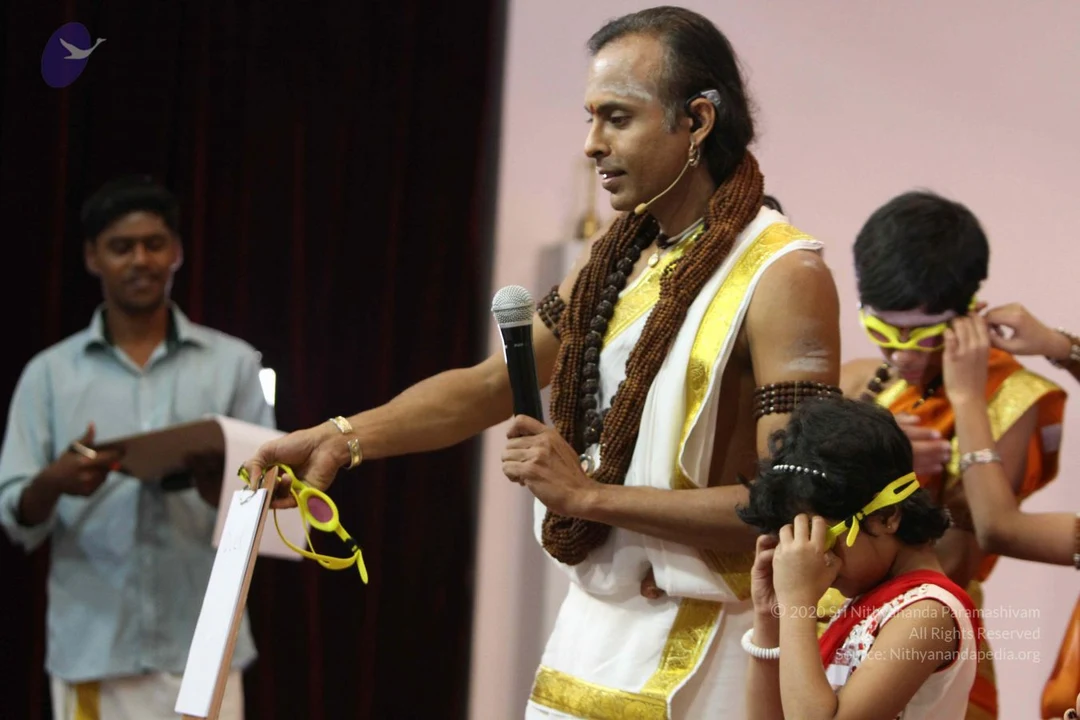
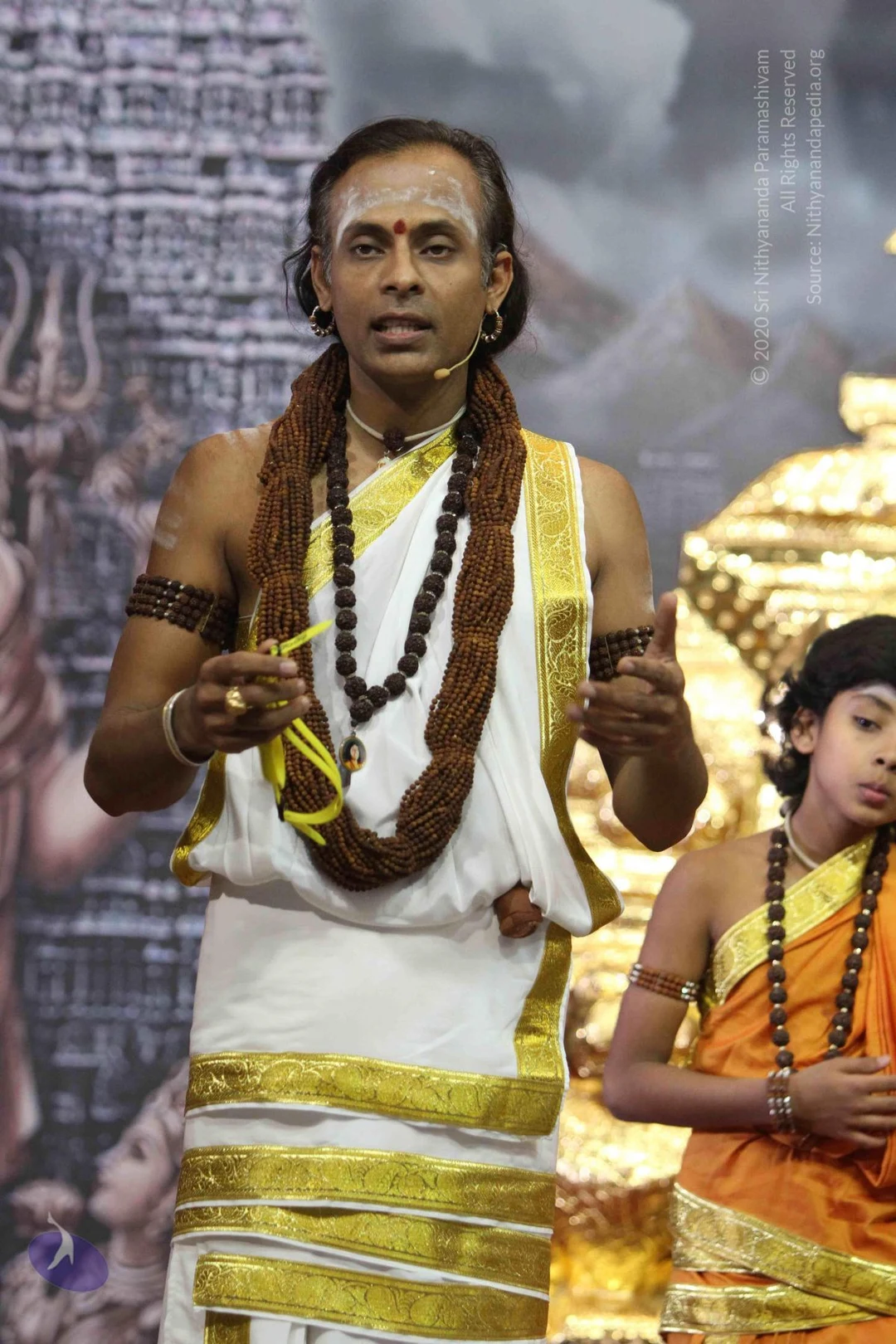
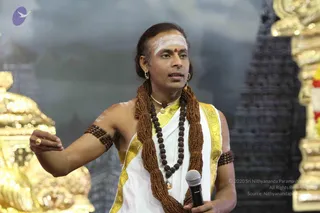
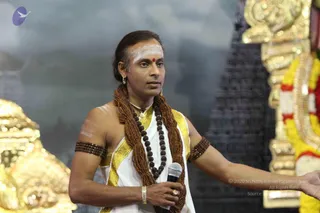
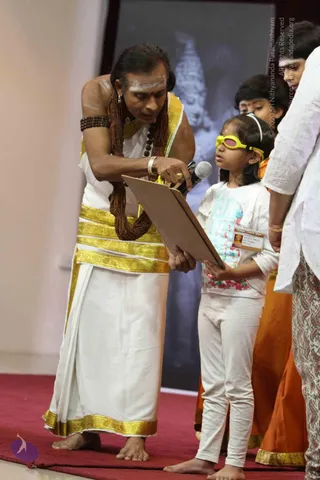
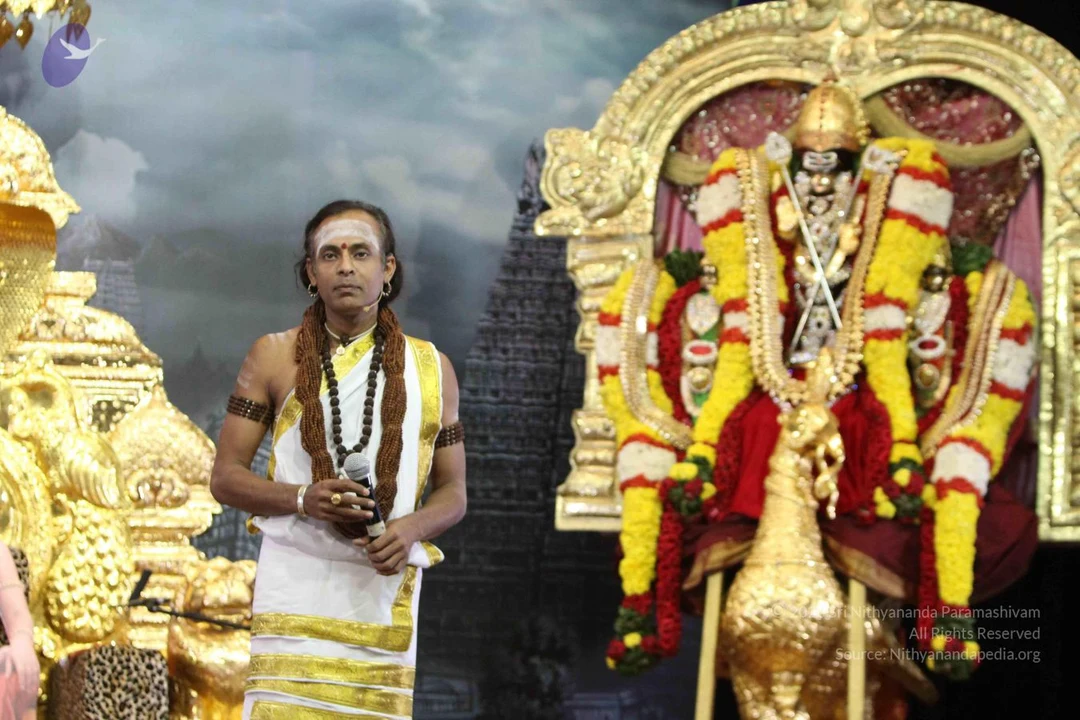
A man stands on a stage holding a microphone, wearing a white dhoti with gold borders, a bare upper body with copper-brown armbands, a long brown rudraksha mala over his shoulders and a dark rudraksha necklace, with white tilak on his forehead. Beside him, a gilded deity murti sits on a throne decorated with yellow and red garlands and a gold crown. Golden ornamental pillars, a painted temple tower backdrop and a large gilded kalasha-like vessel complete the stage setting. The scene resembles a devotional talk or satsang.A man speaks into a handheld microphone on a stage with a gold-trimmed backdrop. He wears a white dhoti-style garment with gold borders, multiple rudraksha mala necklaces and rudraksha arm bands, with white tripundra vibhuti and a red bindi on his forehead. He gestures with his left hand. Golden ornamental pillars and a temple-tower backdrop frame him.A man stands on a stage holding a microphone in his right hand, his left arm extended toward the edge of the frame. He wears a white dhoti-style garment with gold-bordered edges, multiple rudraksha mala strands across his chest and a shorter dark rudraksha necklace, plus beaded rudraksha armbands. White vibhuti marks his forehead with a red kumkum dot, and he has a small gold pendant and earrings. Behind him are golden temple-style decorations and a painted temple tower backdrop, with a garland of yellow and red flowers at the right edge. a person in the centre, identified by rudraksha malas, white and gold ritual dress and the stage setting, speaking as a teacher during a discourse.A man in a white dhoti with wide gold borders and a white shawl-style top stands on a stage holding a microphone in his right hand while extending his left hand toward a large decorated deity murti behind him. He wears a long brown rudraksha mala and gold-toned bangles, and his hair is long and swept back. Beside him, several girls in white and one in orange stand in a line. A tall deity murti adorned with yellow and white garlands, gold ornaments and a crown dominates the background. The scene is a stage programme in front of an ornate golden frame.A man with long swept-back hair, white forehead markings and a red bindi stands at left holding a handheld microphone and gesturing with his right arm. He wears a white dhoti with gold borders, a bare upper body with gold armbands, and a long multi-strand rudraksha mala. Behind him is a golden deity murti or utsava image draped in yellow and red marigold garlands, with a gold crown and ceremonial ornaments. Girls in white and orange-red dresses stand beside him, one wearing a white shawl with hands folded. Students wear name badges.A photograph on a stage in front of a large golden-framed backdrop with a gilded murti of a deity adorned with yellow and red flower garlands and a golden crown. A man on the left wears a white dhoti with gold borders, rudraksha malas, a bare upper body with gold arm bands, and holds a microphone while speaking and gesturing. Beside him stand several children and young girls: one in an orange-saffron dress with rudraksha beads, one in white with a red sash, one in a white shawl, one in a white dress, and one in orange with rudraksha beads on the right. Some wear white and orange ritual-style clothing with tilak marks. A temple tower is painted on the backdrop behind them.

SarvaDarshan

41 photosSource gallery
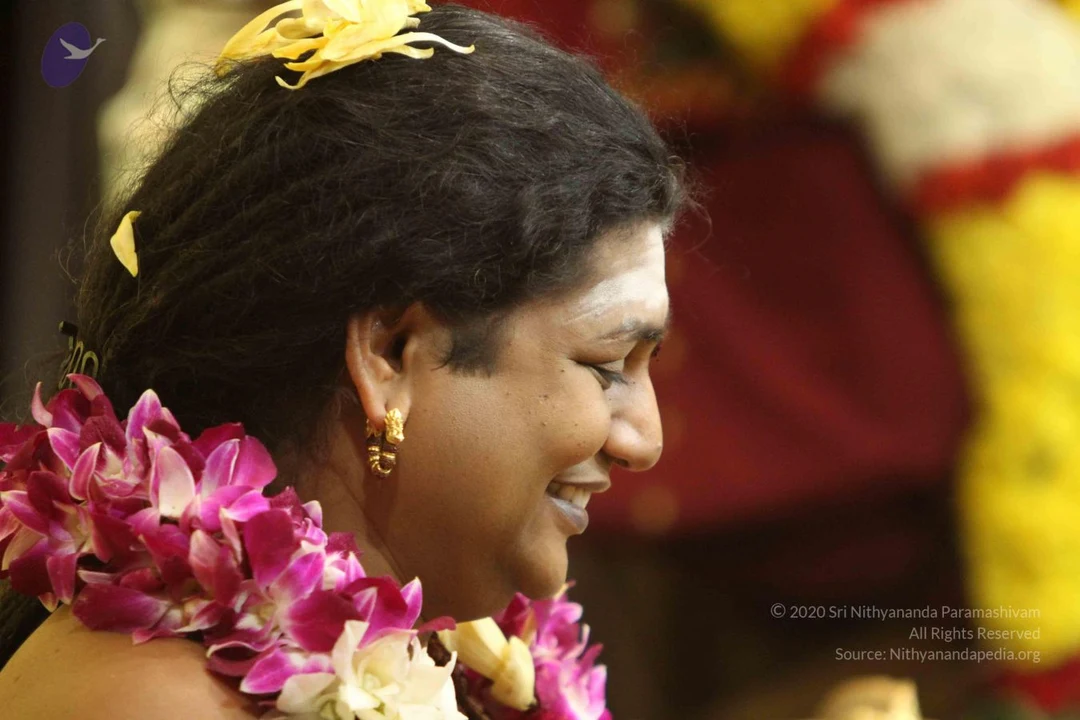
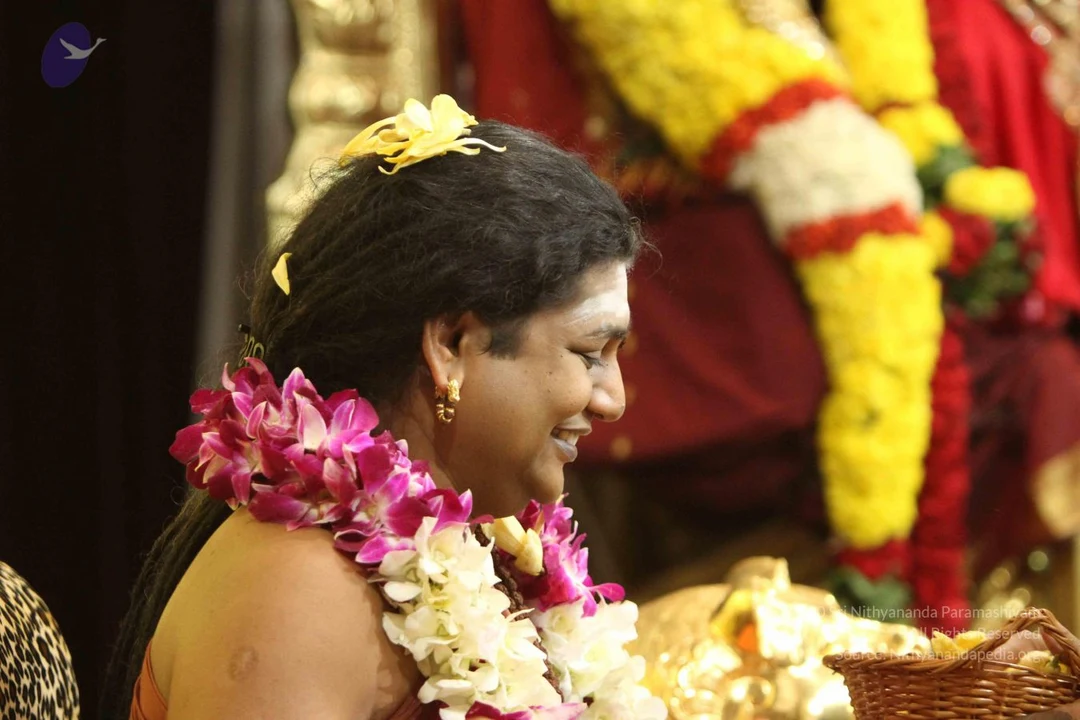
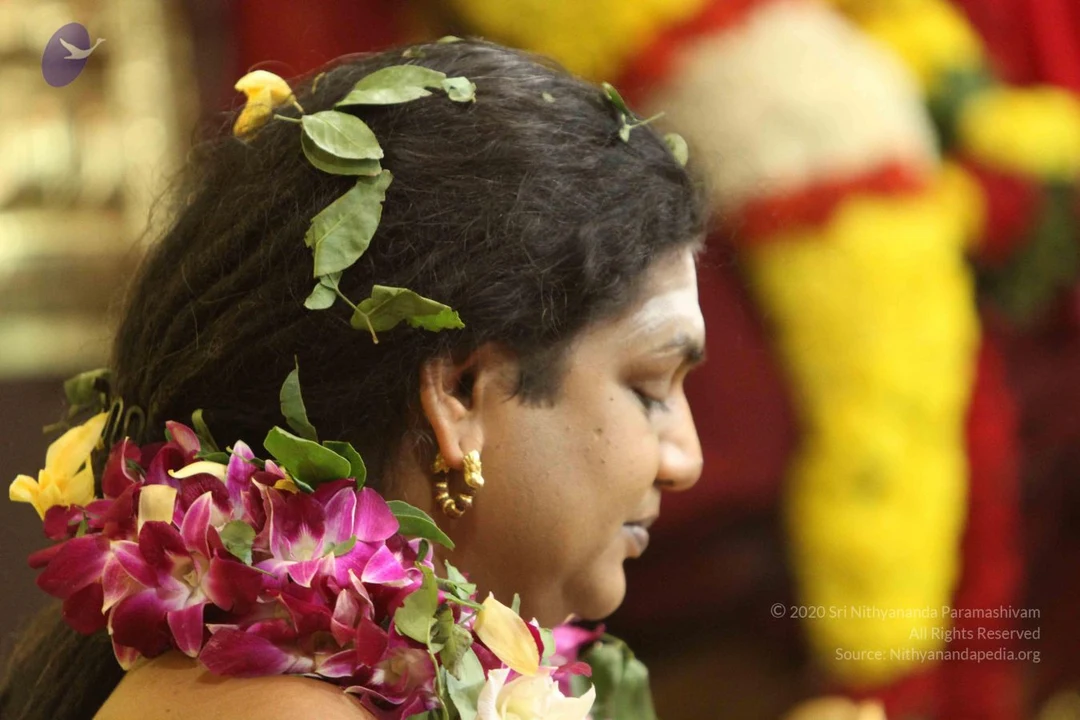
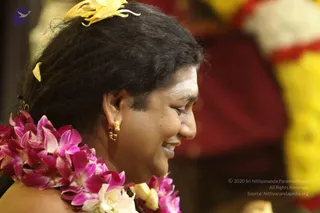
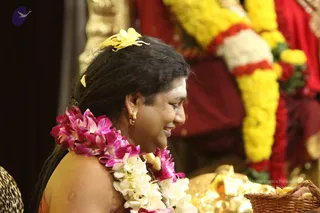
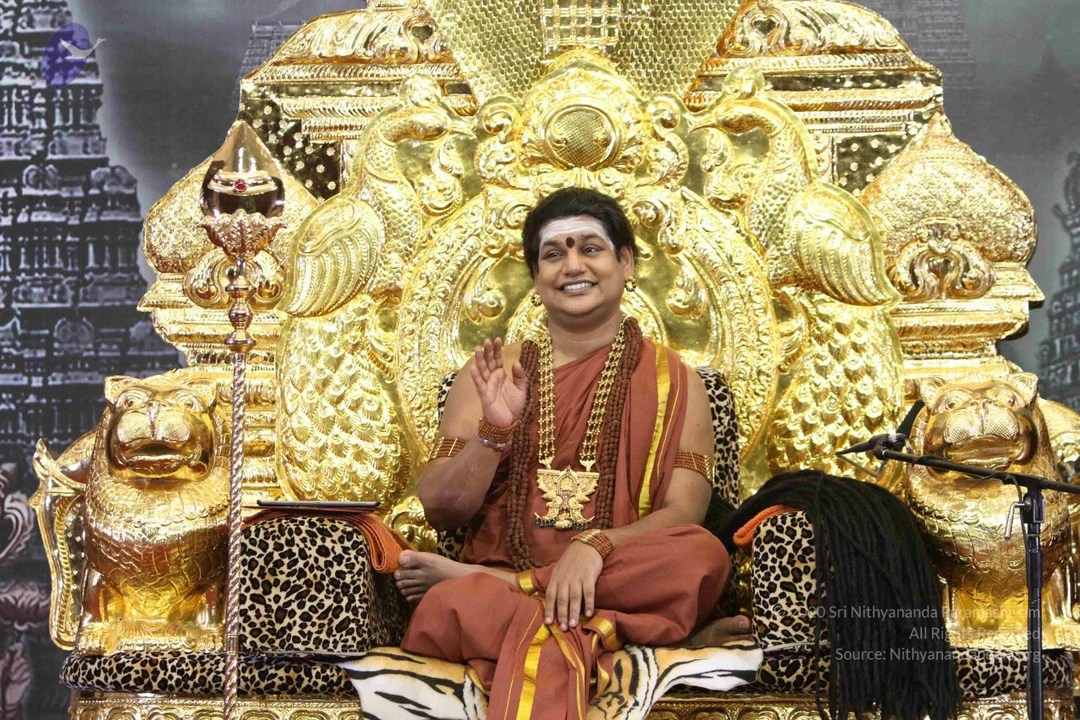
A seated man in orange-saffron robes sits cross-legged on an ornate golden throne with carved lion heads on the armrests and leopard-print cushions. He wears a long beaded rudraksha mala and a large gold ceremonial pendant with multiple gold chains, plus gold bangles on his upper arms. He has a white vibhuti line and red bindi on his forehead, with hands resting in a meditative pose, and holds a gold-topped ceremonial staff at his left side. a person shown seated on the throne, with the saffron robes, rudraksha mala and gold ornaments as distinguishing cues.A man sits cross-legged on an ornate golden throne with lion-head armrests, cushioned in leopard-print fabric over a tiger skin. He wears a rust-orange sannyasi robe with a gold border, a multi-strand rudraksha mala and a large gold ceremonial pendant, plus gold armlets. A white vibhuti marking and red bindi adorn his forehead, and a golden ceremonial staff with a finial stands to his left. Hands rest open on his knees in meditation. a person seated on the throne in meditation pose, with saffron robe, rudraksha mala and gold regalia.A seated man in saffron-orange robes with gold-bordered cloth sits cross-legged on an ornate golden throne carved with lion heads and scrolling motifs. He wears long rudraksha malas and a heavy ceremonial gold pendant, with bangles on his upper arms and a tilak on his forehead. Leopard-print cushions and a tiger skin cover the seat, and a gold staff with a finial rests beside the throne. The figure is seated alone and appears to be a person, shown as the central speaker at the event.A seated man in saffron-orange robes with gold borders sits cross-legged on an ornate golden throne carved with lion heads, scrollwork and scale-patterned panels, draped with a leopard-print cushion. He wears multiple rudraksha malas, a large gold ceremonial pendant necklace, gold earrings, beaded bangles on both arms, and a white and red tilak on his forehead. A tall golden staff topped with a finial stands at his left.Close side profile photo of a smiling woman with dark hair decorated with yellow flower petals and a small yellow flower tucked above her ear. She wears a large garland of magenta and white orchids around her neck, gold earrings and a white forehead marking. The background is blurred with red and yellow flower arrangements.Close-up photograph of a smiling person with long dark hair tied back and a yellow flower tucked above the ear, wearing a multi-coloured garland of pink orchids and white flowers around the neck. A white marking is visible on the forehead and a small gold earring is worn. Behind is a richly decorated backdrop with yellow marigold garlands, red fabric and gold ornaments, and a woven basket of flowers sits at the lower right.

NDY

33 photosSource gallery
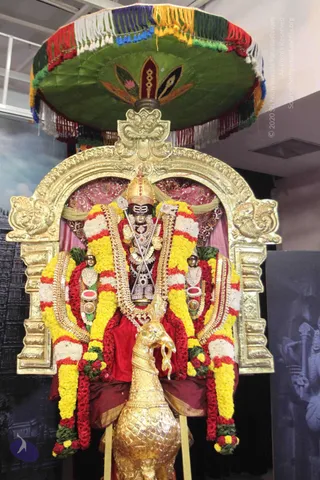
A richly decorated metal deity murti of Murugan (Subramanya) with a golden crown set with red and green stones, a silver-and-gem tilaka-like ornament on the forehead, and heavy gold and jewelled necklaces with coin pendants. It holds a silver vel and a silver flag-topped staff crossed before its chest. Thick garlands of yellow marigolds and white and red flowers drape the figure. Smaller metal murtis flank it on both sides, one wearing a red-and-gold jewelled necklace. The shrine is framed by gold filigree arches and a maroon brocade backdrop with floral embroidery.A decorated murti of the deity Murugan (Subramanya) seated in a gilded arched shrine, wearing a golden crown, vel spear crossed behind him, and layers of rudraksha-style and gold necklaces. Yellow and red marigold garlands hang across the figure, and a golden peacock stands in front. A green canopy with red, yellow, white and blue tassels hangs above, and two smaller figures with red kumkum bowls flank the central deity. No physical people are visible.A seated man in a rust-red saffron-toned robe with a gold-yellow border sits on an ornate gilded throne with lion-head armrests, a golden canopy and a cobra-hood backrest, in front of a painted backdrop of mountains, clouds and temple gopurams. He wears a maroon turban with a red bindi, a rudraksha mala and a gold ceremonial pendant, and smiles while his hands rest on leopard-print cushions. A microphone stands at the right and a ceremonial scepter with a finial rises at the left. Appearance-based cues match Swamiji (probable) in a ceremonial seat on the throne, with the turban, saffron robe, rudraksha mala and gold pendant as the qualifying cues.A smiling man in a rust-orange turban and matching orange-saffron robe with gold border sits on an ornate gold throne with a golden kalasha-style canopy, leopard-print cushions and a tiger-skin mat. He holds a tall silver staff with a red gem finial in his left hand, wears layered rudraksha malas and a large gold ceremonial pendant, and has a red bindi and tilak. A microphone stand is visible at right.A deity murti of Murugan (Subramanya) is seated on a gilded throne-like palanquin with an arched gold frame, decorated with thick garlands of yellow marigolds and red roses. The figure wears a golden crown, a vel-like spear held in the hands, layered gold and jewelled necklaces, and a tilaka on the forehead. Two consort figures stand flanking the central deity, wearing jewelled ornaments and red-and-white garlands. A golden peacock stands in front of the throne, and a green, red and yellow tasselled canopy hangs overhead. A dark backdrop with a painted temple tower is visible behind. The scene appears to be a festival or temple procession display of the utsava murti.A priest in an orange-saffron dhoti and shawl stands with his back to the camera, performing aarti with a lit lamp and a handbell before a large deity murti. The murti is adorned with yellow and red garlands and a gold crown, seated in a gold arched canopy with a multicoloured fringed umbrella overhead. A golden bull or vahana stands in front of the murti, with two smaller figures flanking the seated deity. Rows of brass lamps sit at the lower edge of the frame, and a grey stone sculpture is visible on the right.
Power-Manifestation-Demo
4 photosSource gallery
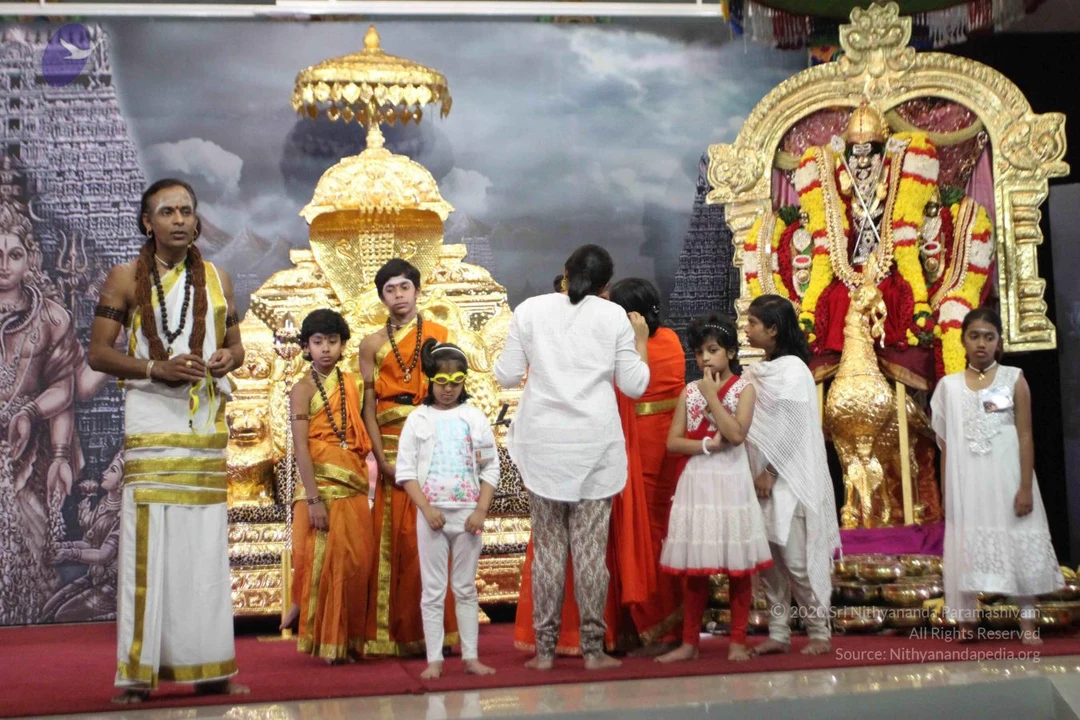
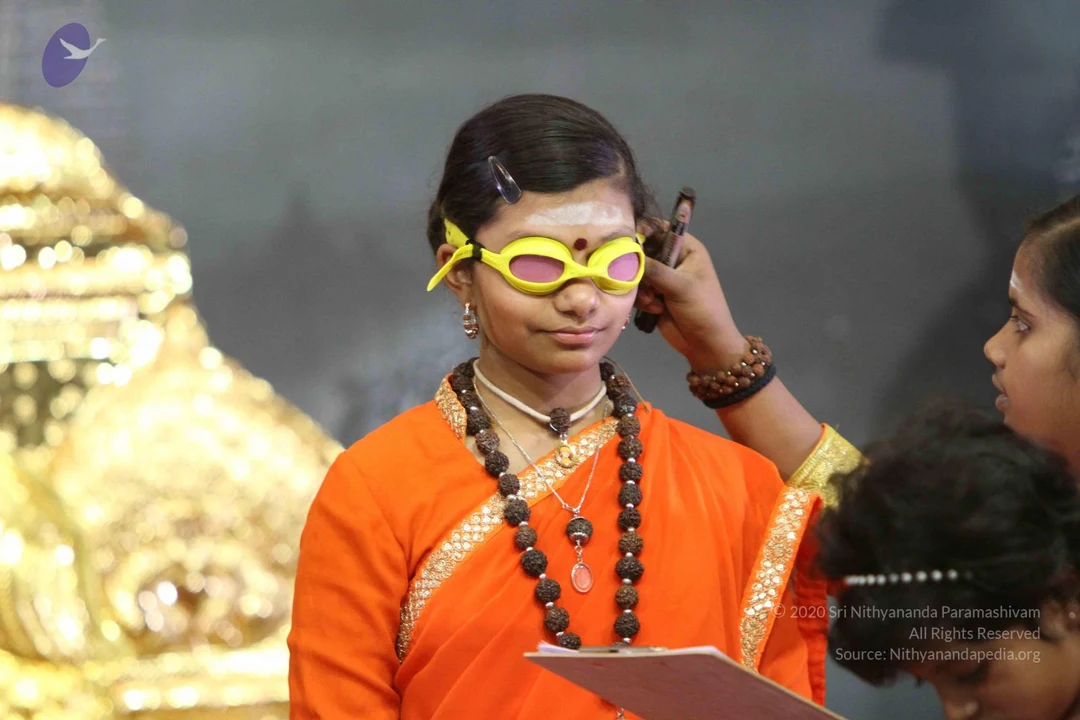
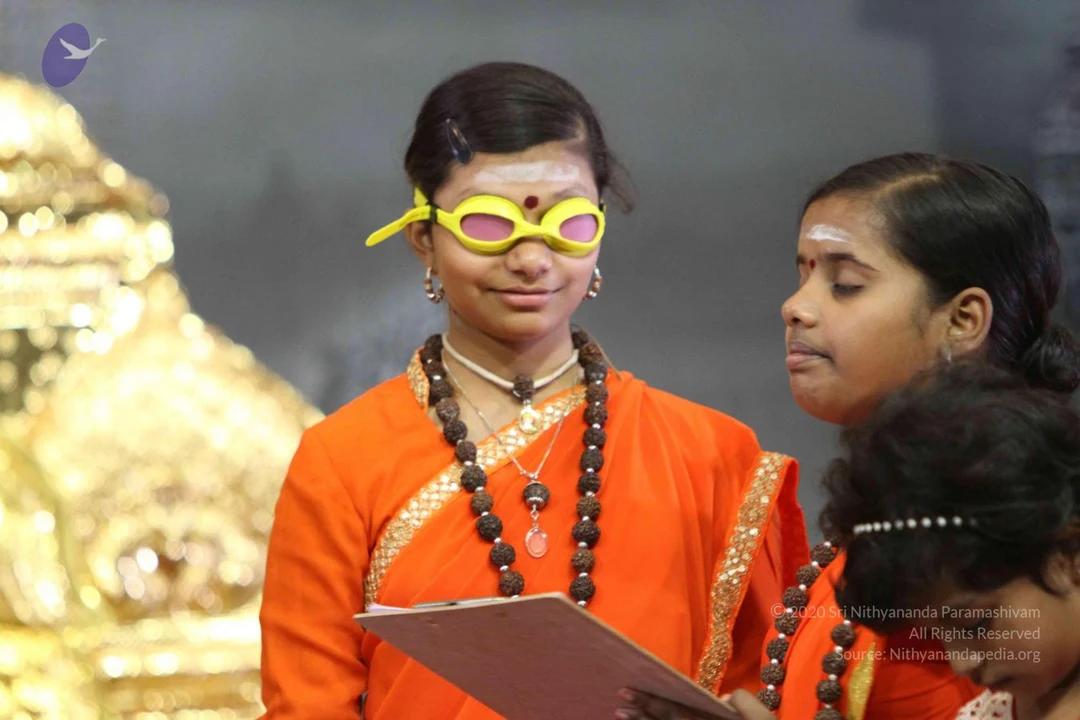
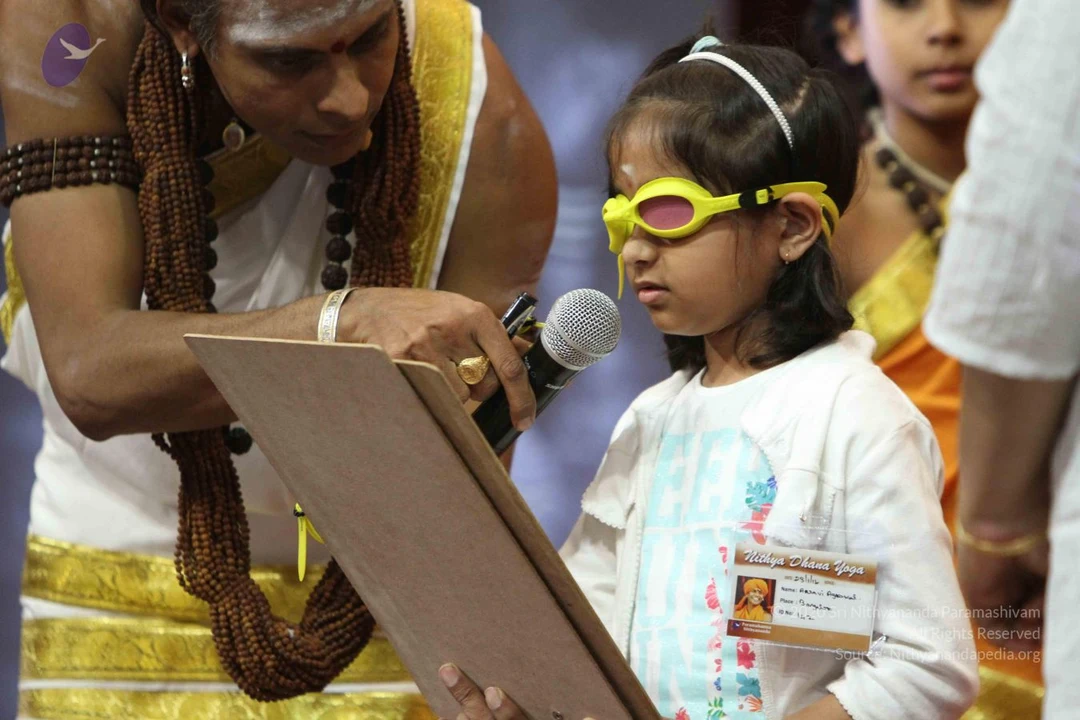
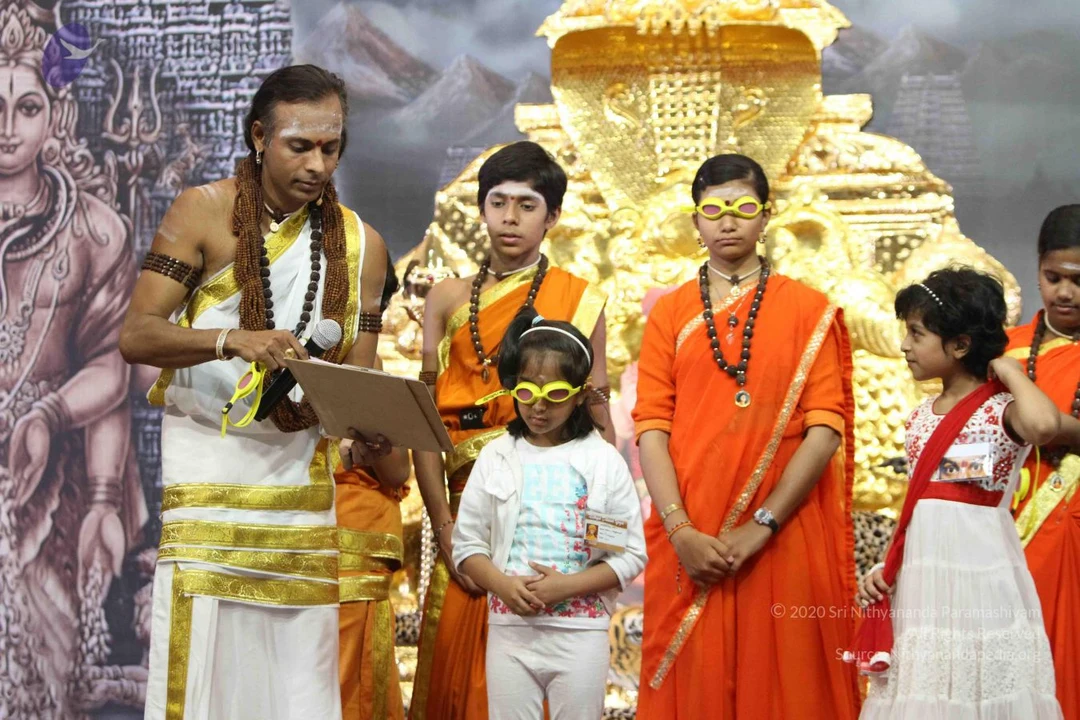
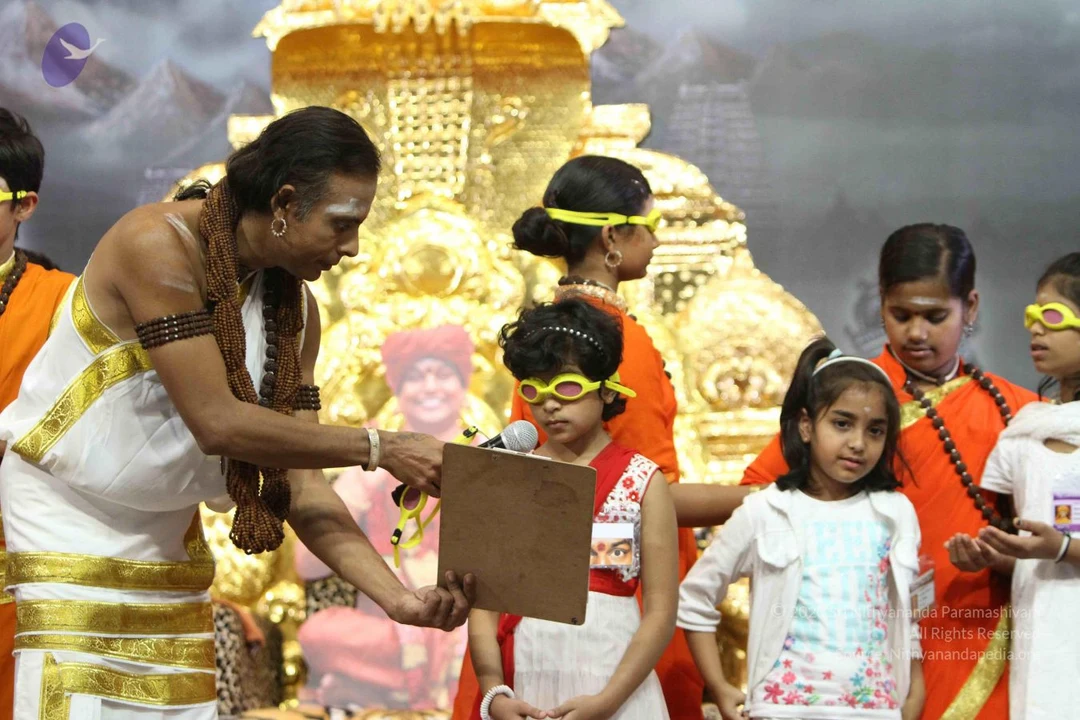
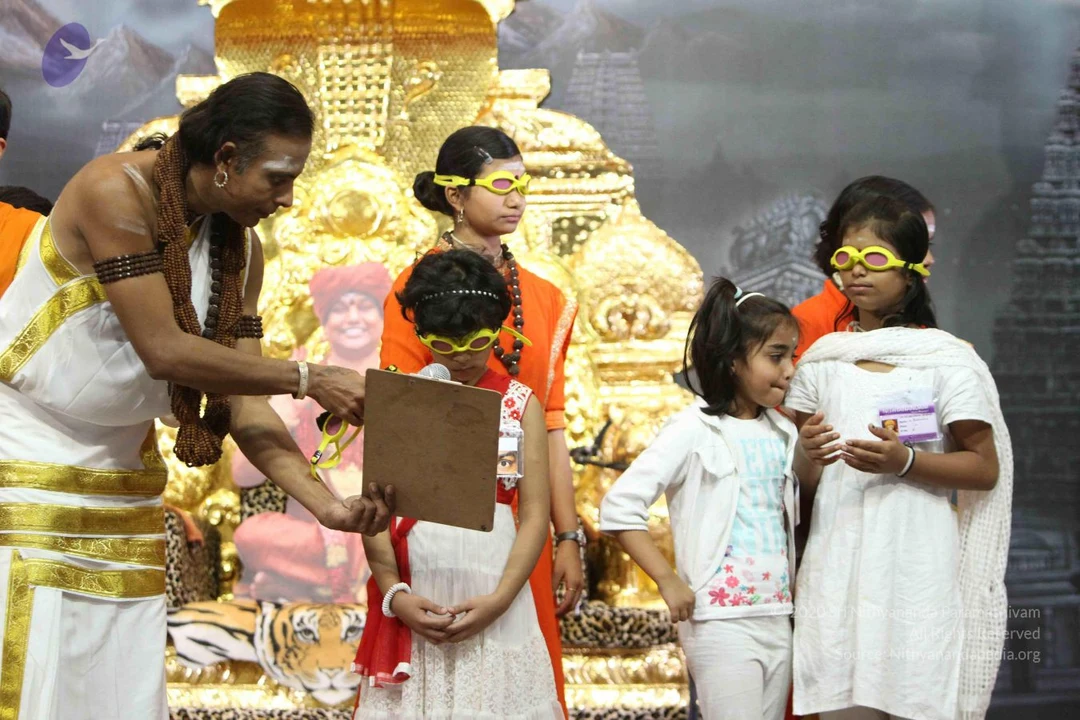
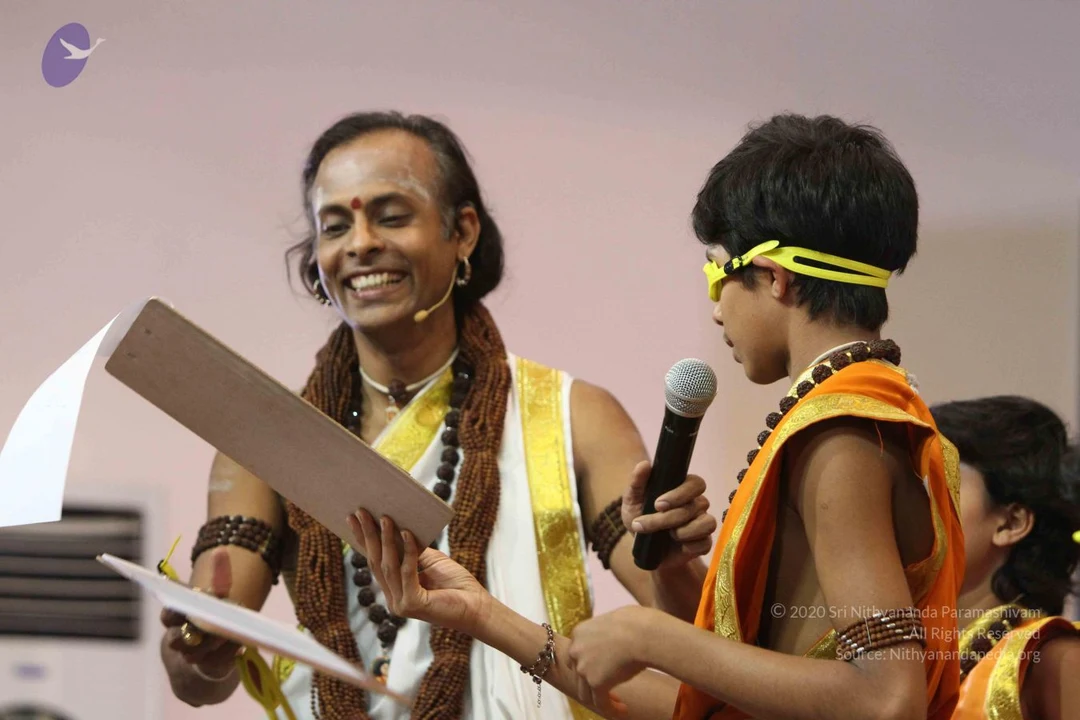
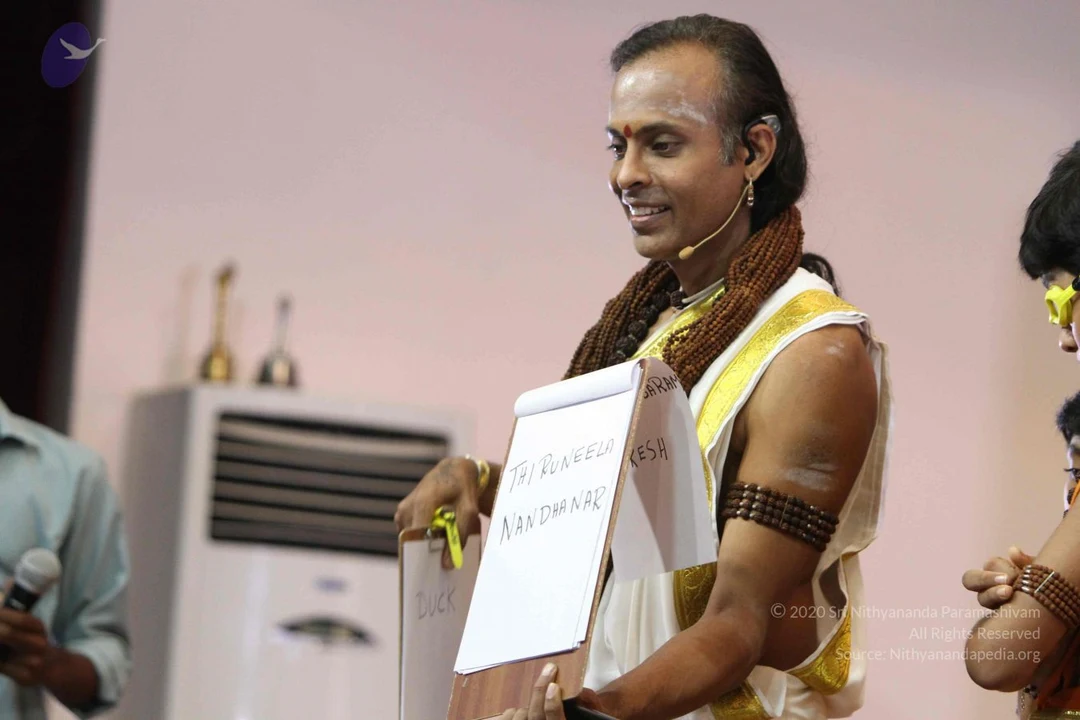
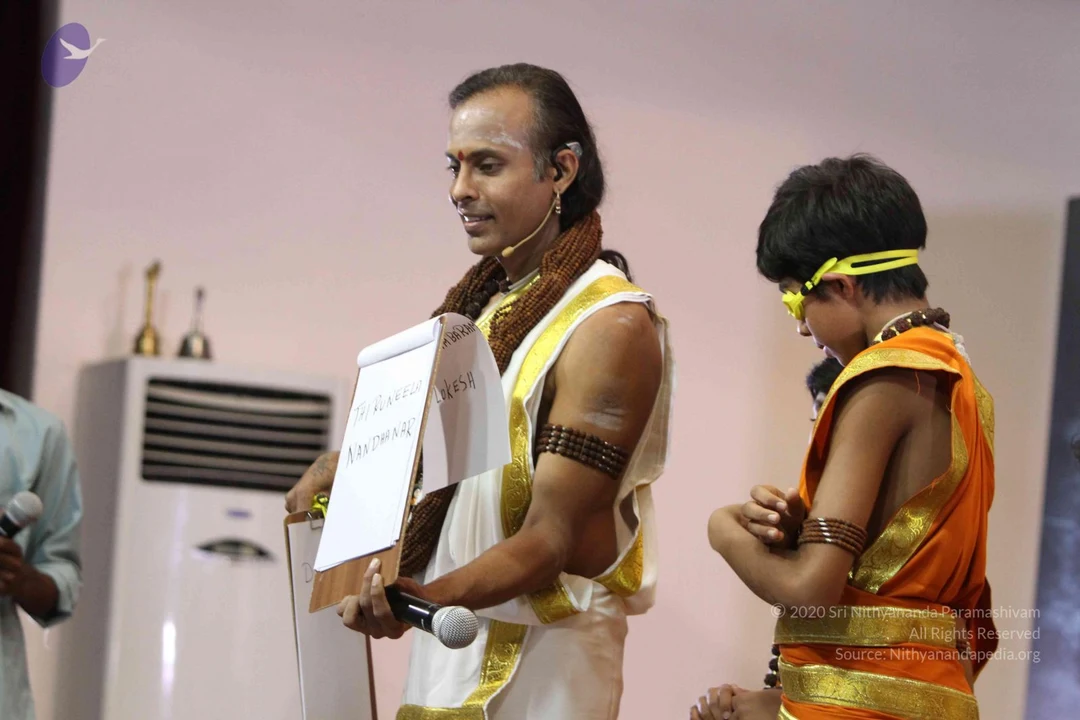
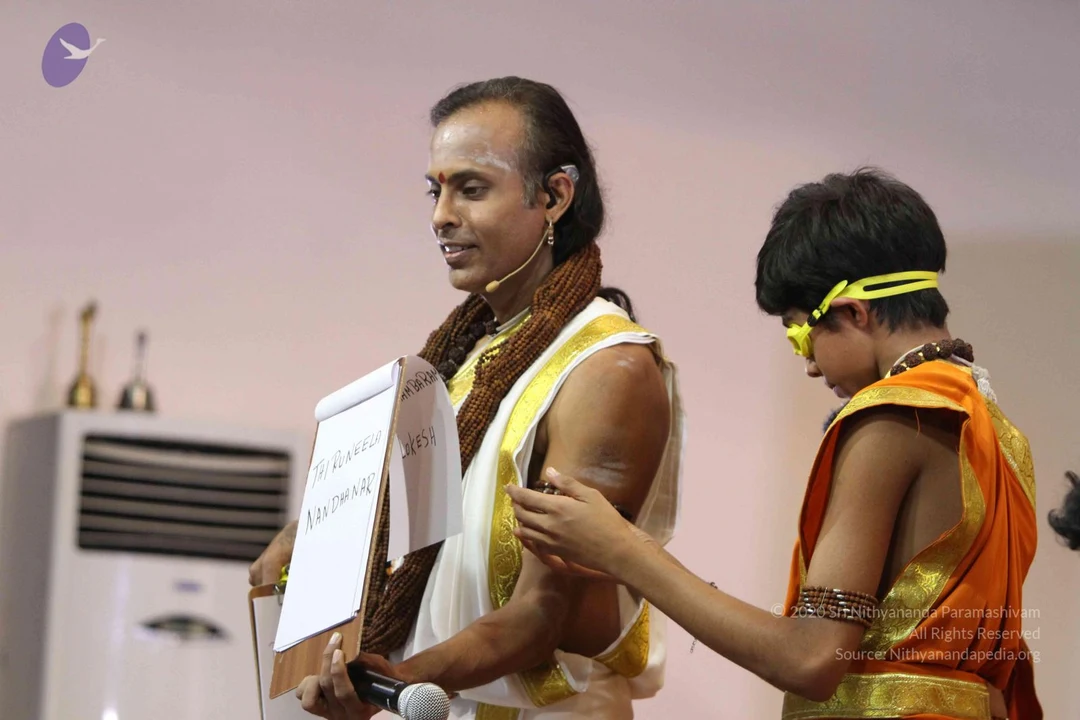
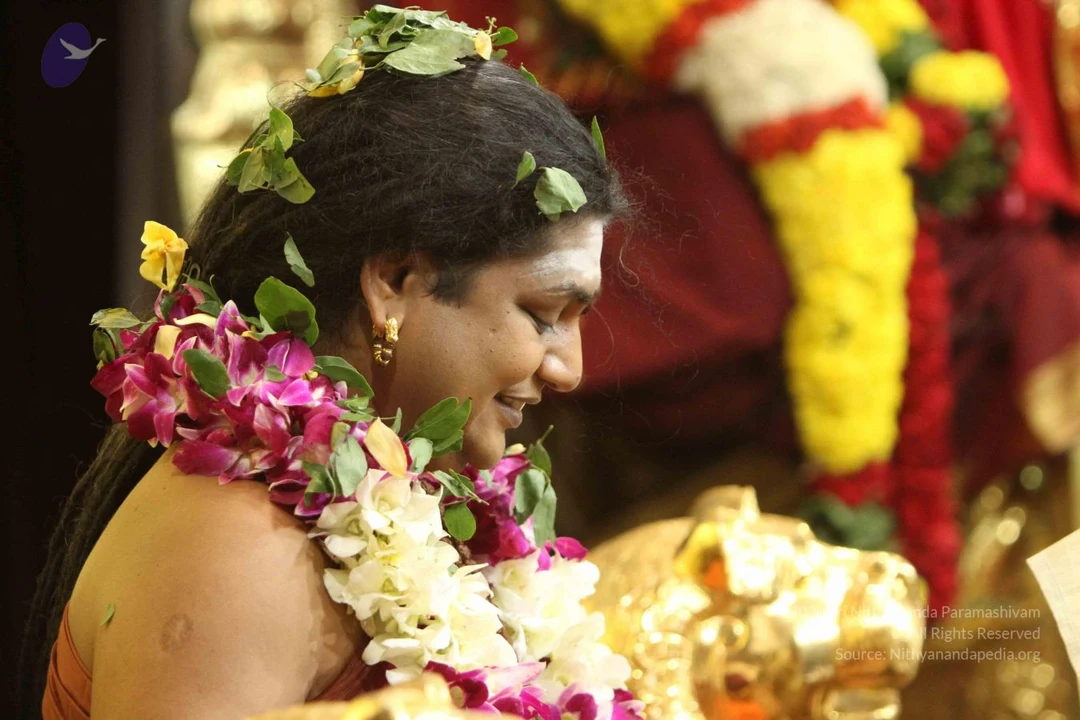
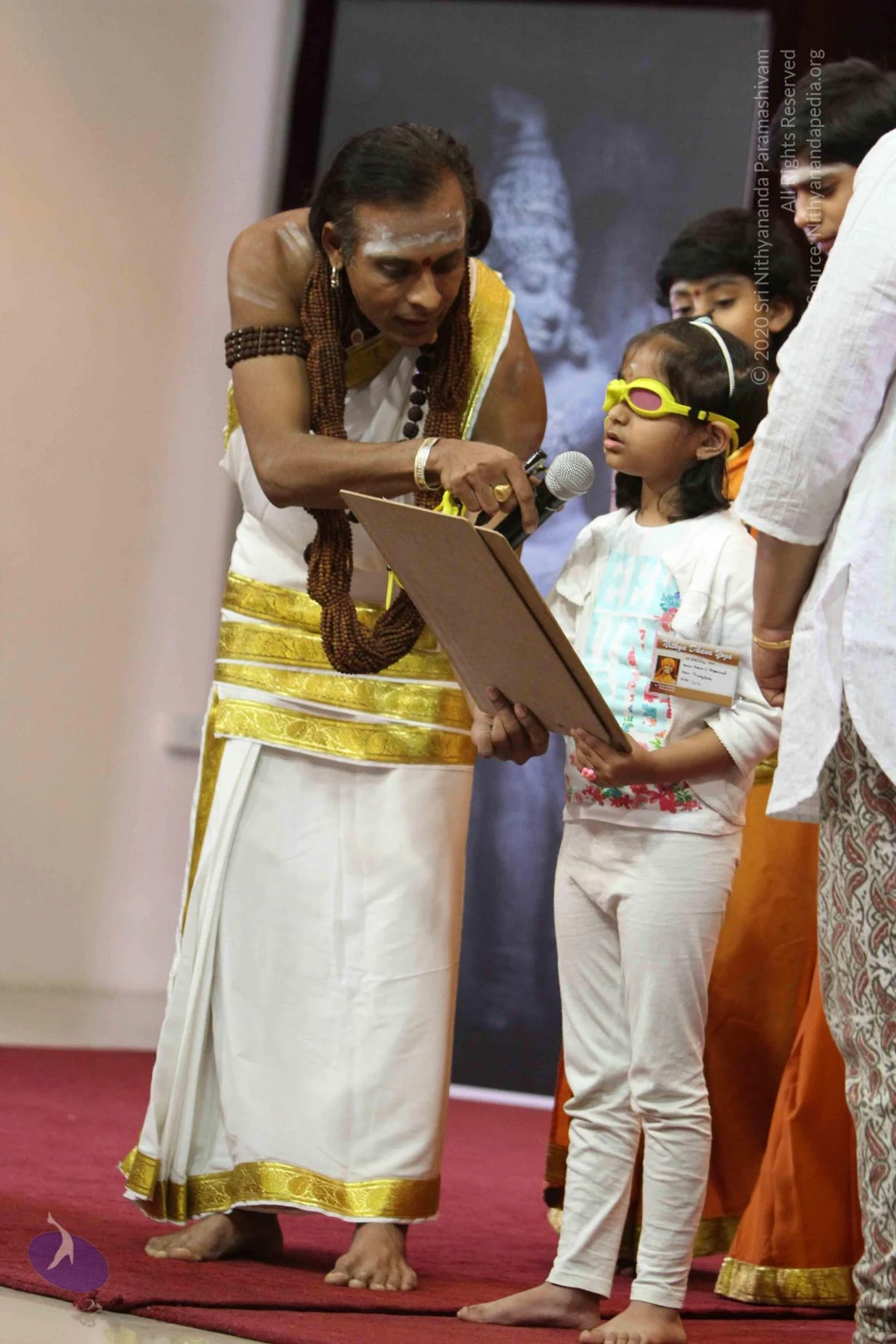
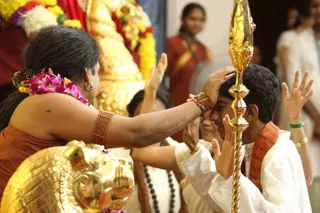
A photograph of a man standing on a stage delivering a talk, wearing a headset microphone. He has white vibhuti and a red bindi on his forehead, long swept-back hair, and wears a white dhoti and shawl edged in gold zari, with multiple strands of brown rudraksha beads and a dark rudraksha mala around his neck. He gestures with his hands, one holding a yellow ribbon. Beside him, a young boy in an orange saffron robe with rudraksha beads stands in the foreground. Behind them, a large temple tower backdrop with carved deity figures and a golden shrine structure are visible.A photograph on a stage with a red carpet. A man in a white dhoti with wide gold borders and a gold-bordered upper cloth stands barefoot, wearing a long rudraksha mala and a wrist mala, with white sacred ash marks on his forehead and arms. He leans forward holding a brown folder and a handheld microphone, pointing toward a girl in a white outfit with yellow goggles and a white hairband, who holds the folder open. Beside her, a child in white and a person in orange and a white shirt stand nearby. A grey backdrop shows a carved deity image. The man's identity is not established by visible cues, so he is described by role only.A seated man in orange and saffron draped clothing sits on an ornate gold throne with a canopy shaped like a hooded cobra, a leopard-print cushion, and a microphone on a stand before him. He wears a gold necklace, bangles and rudraksha-style beads, with his hands folded in his lap. To the right, a deity murti is decorated with long garlands of yellow and red flowers, and a gold animal figure (likely a bull or vahana) stands at its base. Behind them are painted temple gopurams against a stormy sky backdrop. The setting suggests a discourse or satsang, and the visible candidate shows long dark hair, gold ornaments and saffron clothing, so this is a probable Swamiji appearance in person.A seated man in orange-and-saffron robes with a rudraksha mala sits on an ornate gold throne with lion-figure armrests and a gold canopy, speaking into a microphone. Beside him, a gilded arched shrine holds a deity murti adorned with yellow and white flower garlands and a crown, with a gold bull figure in front. A painted backdrop shows a stone temple gopuram under a stormy sky, and a colourful fabric canopy hangs above. The setting suggests a discourse on a satsang stage.
SarvaDarshan
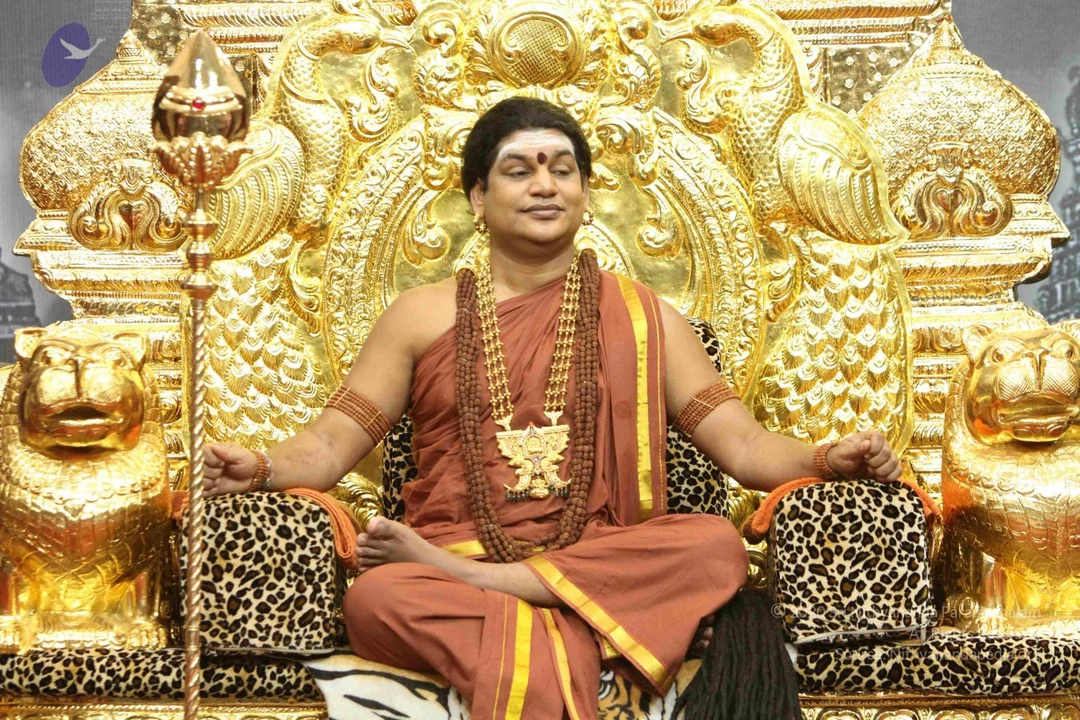
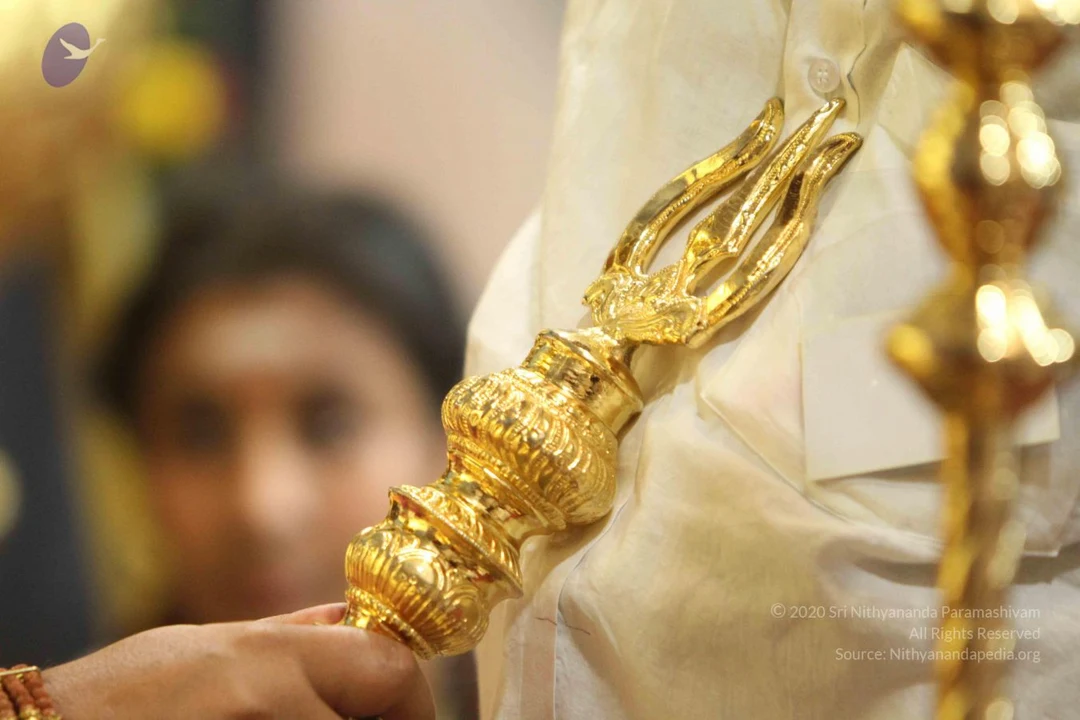
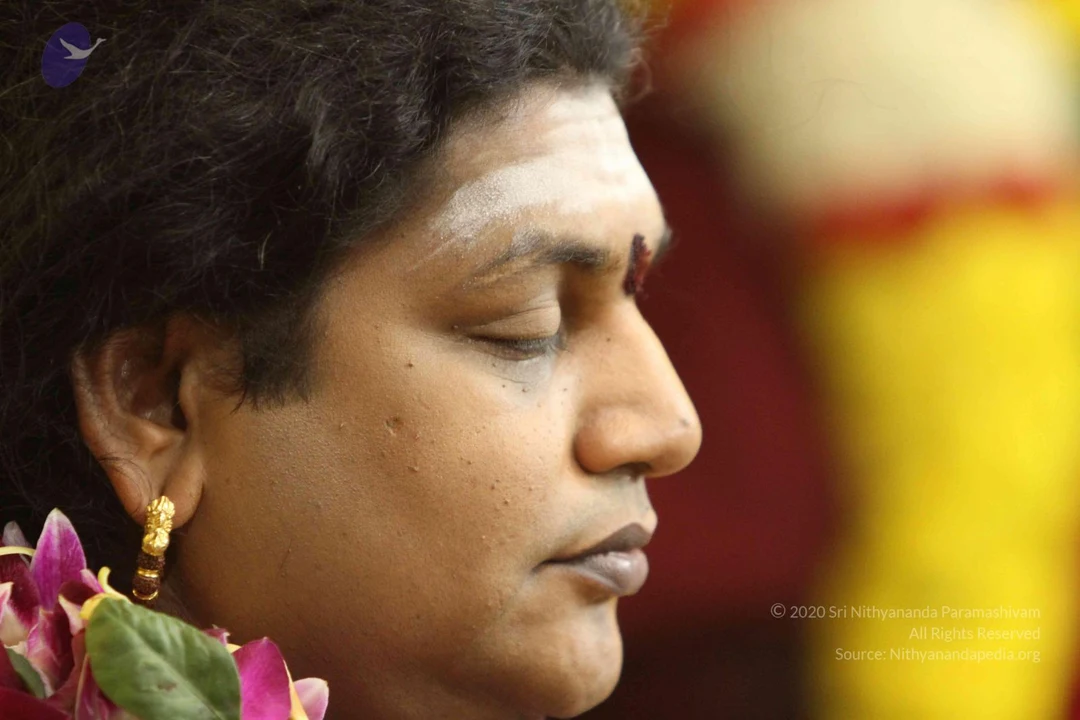
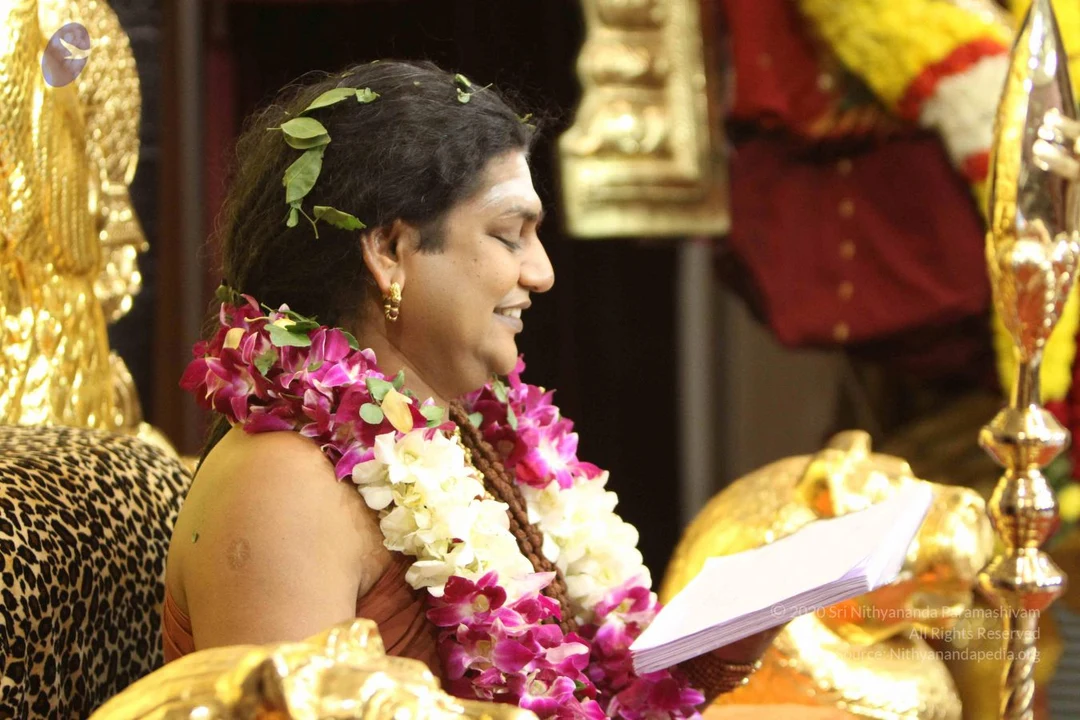
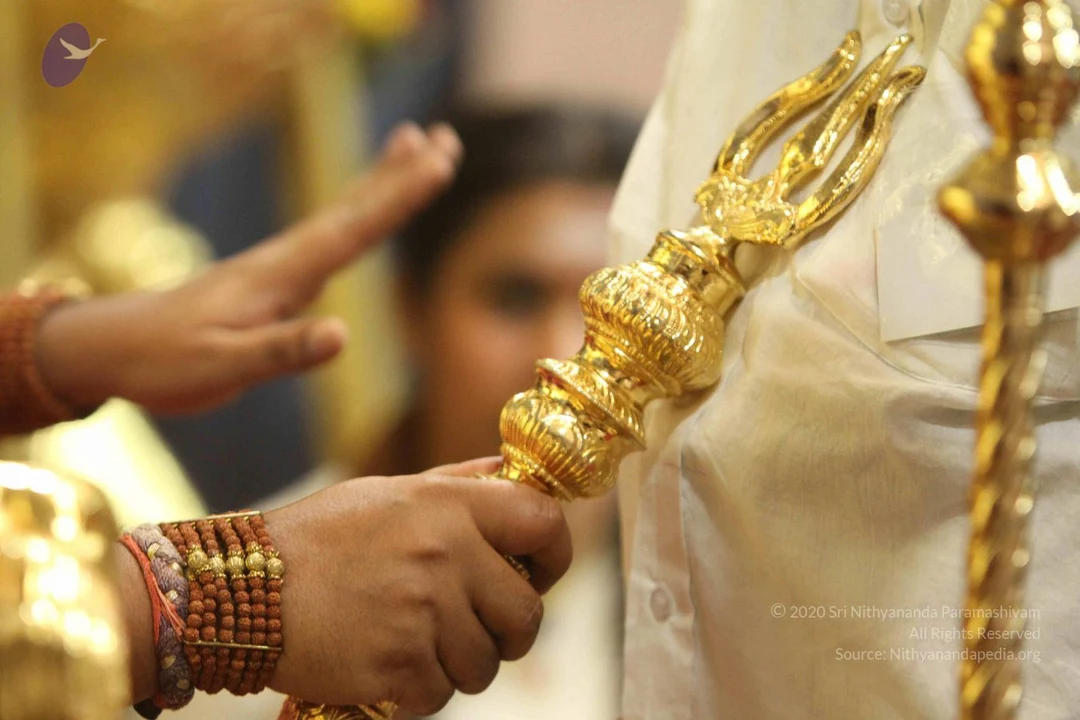
11 photosSource gallery
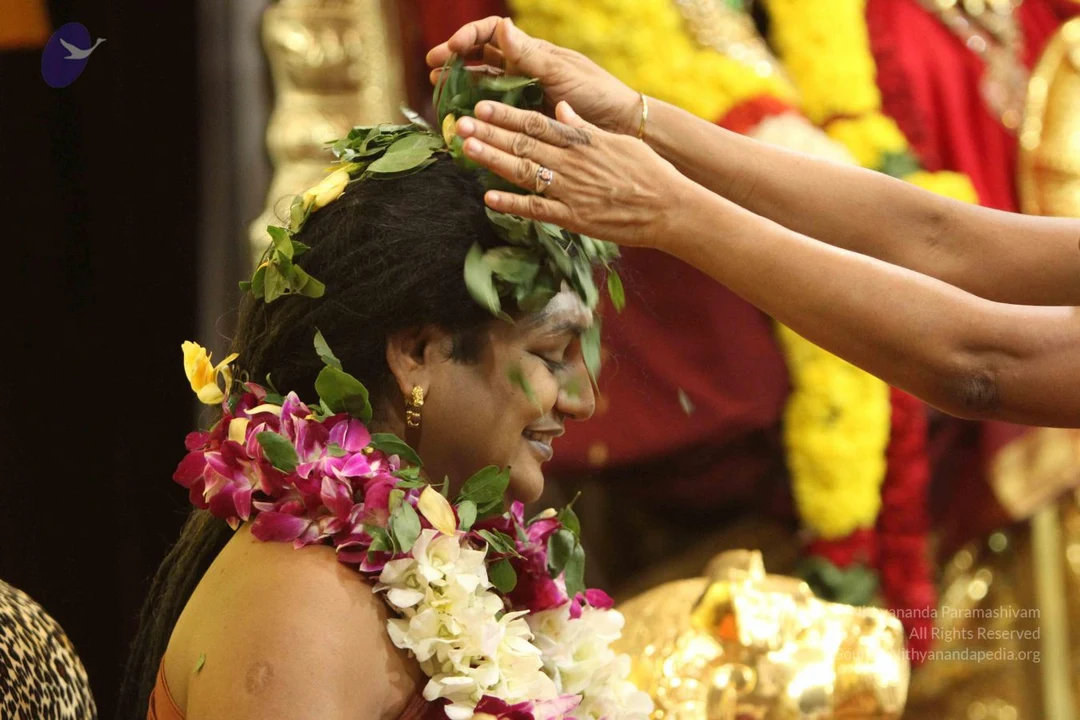
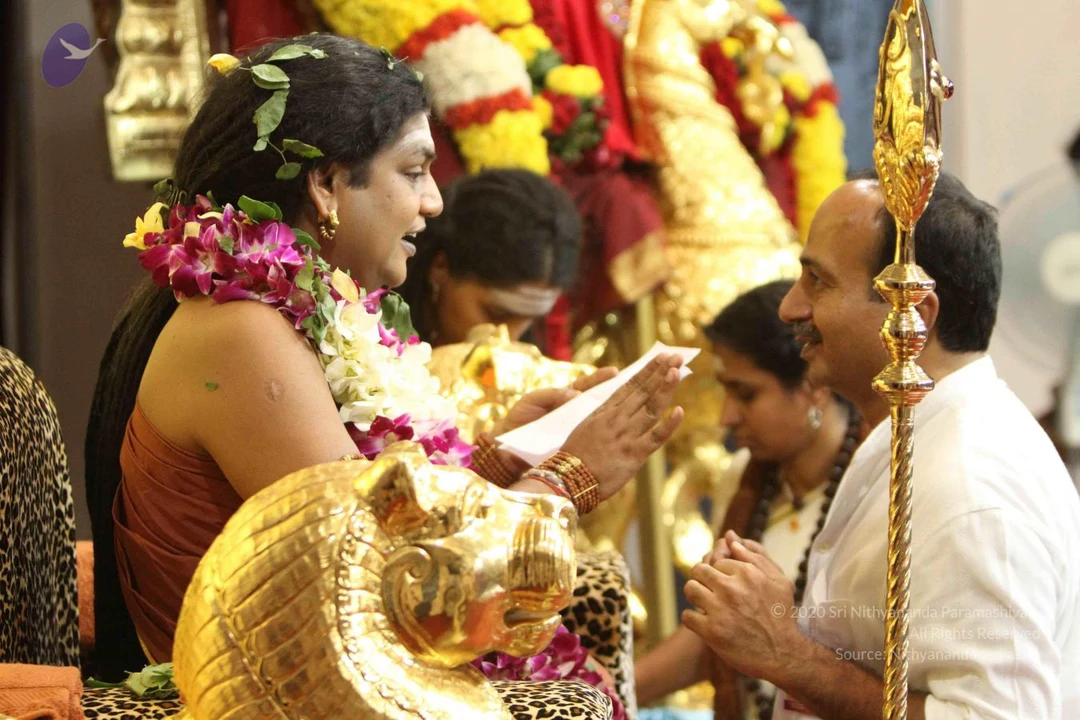
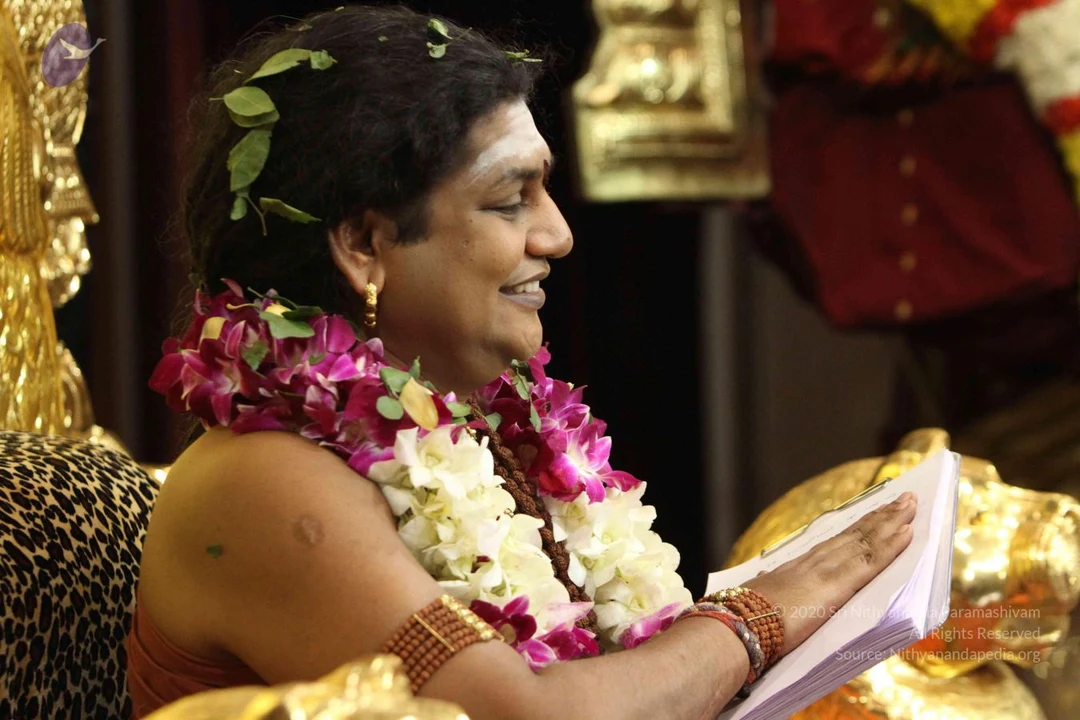
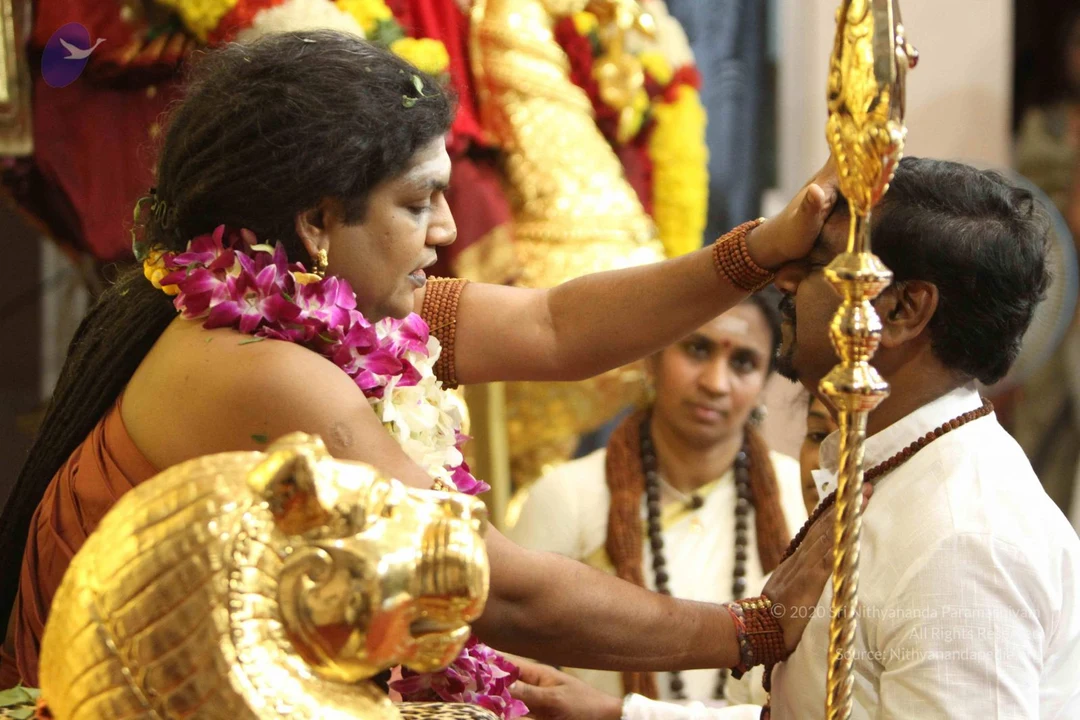
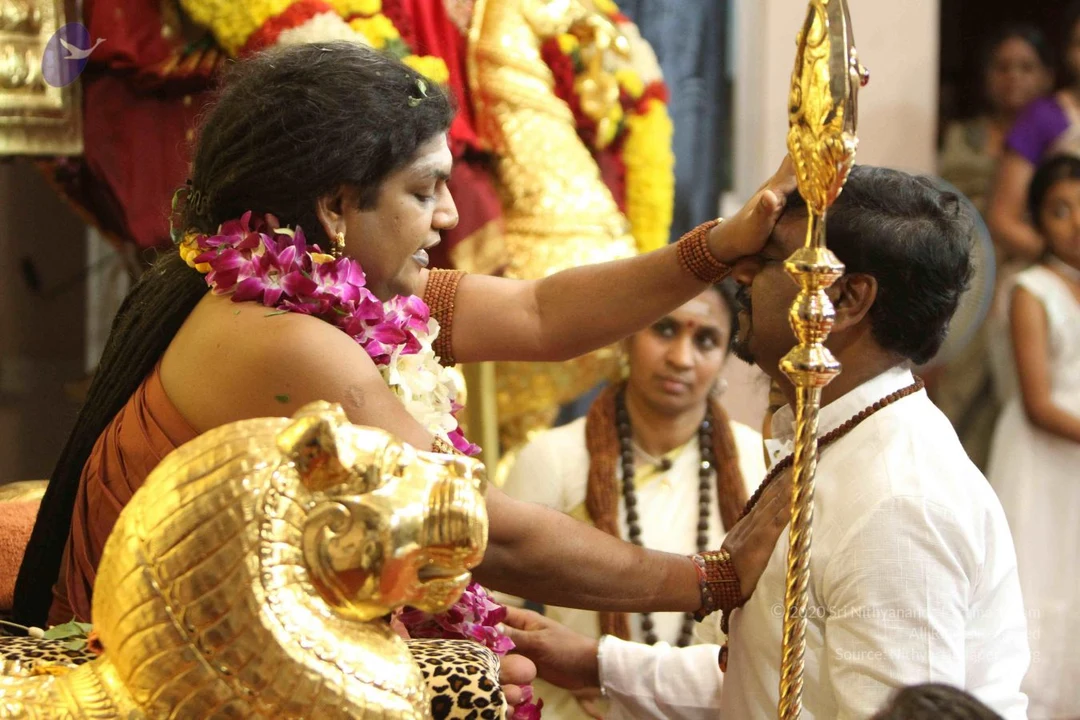
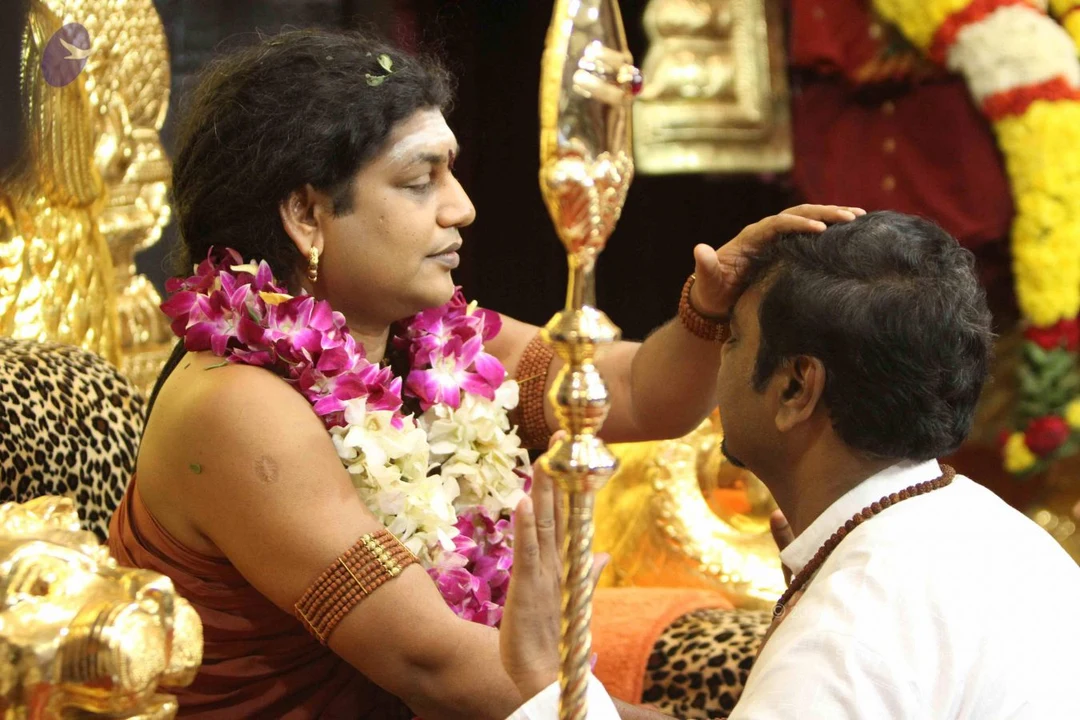
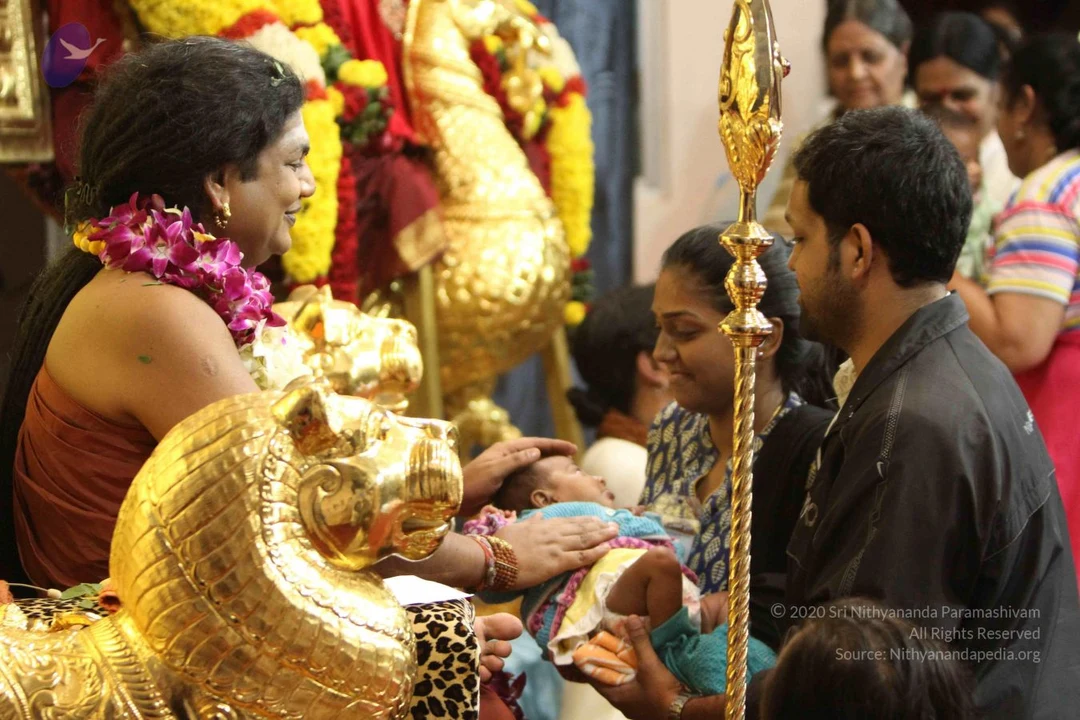
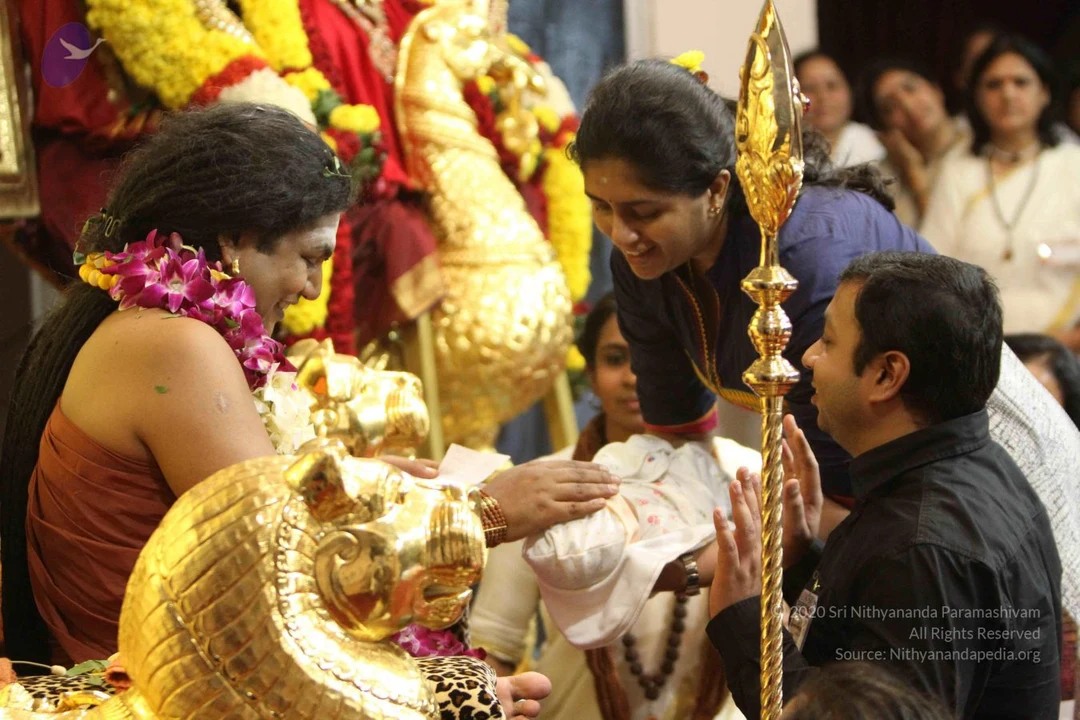
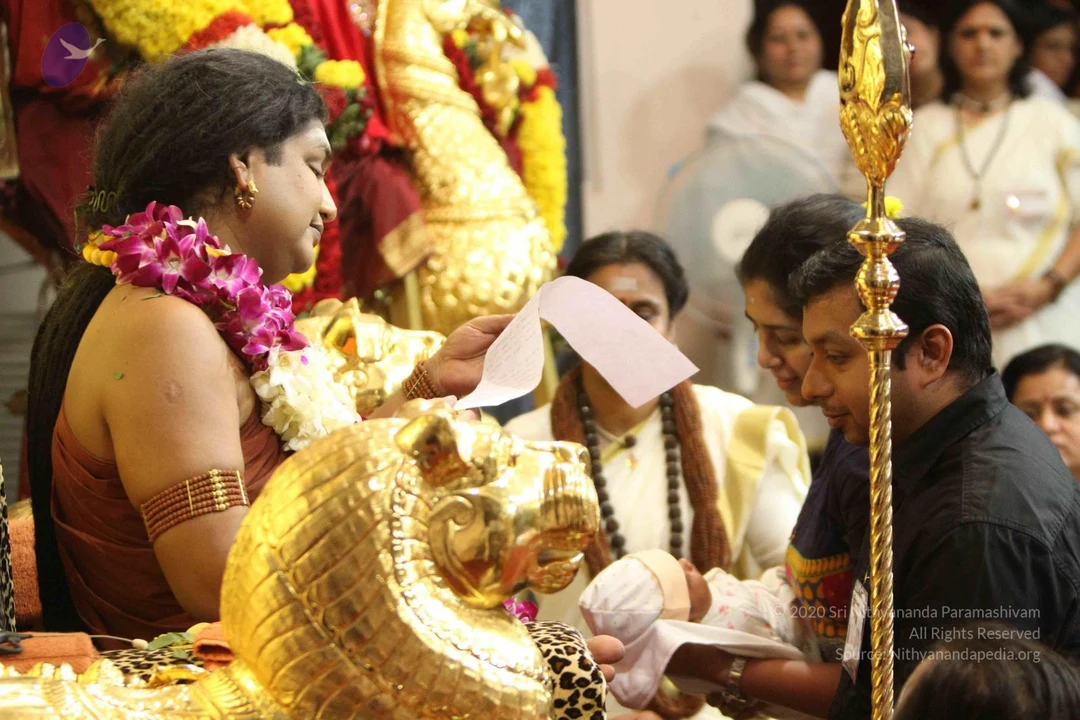
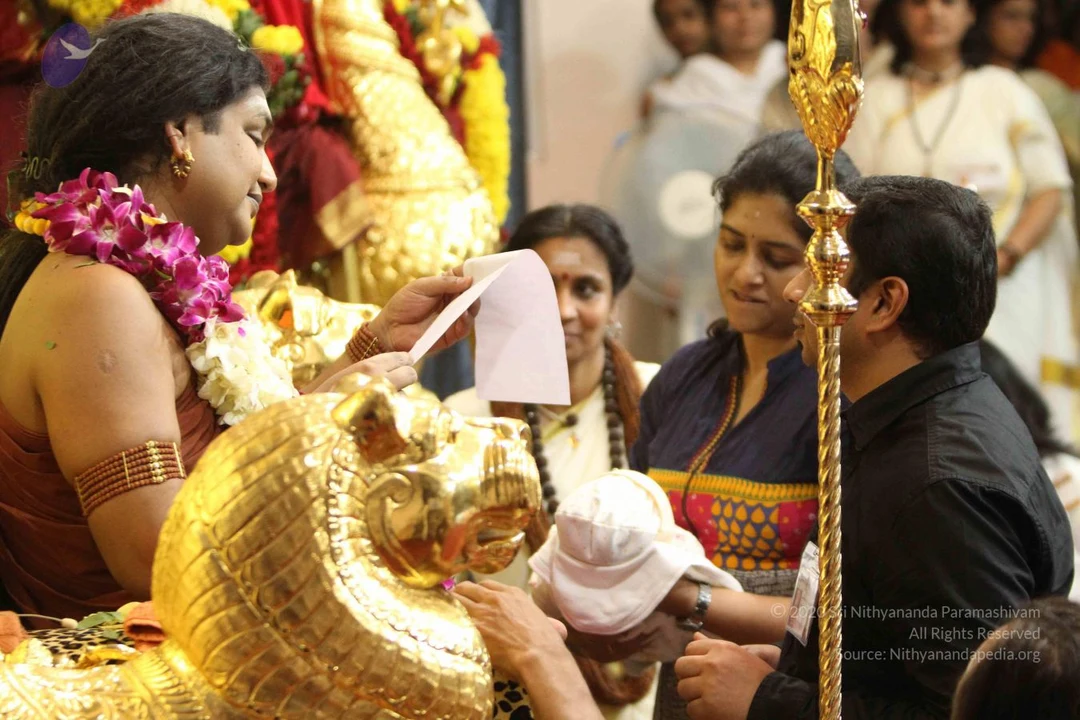
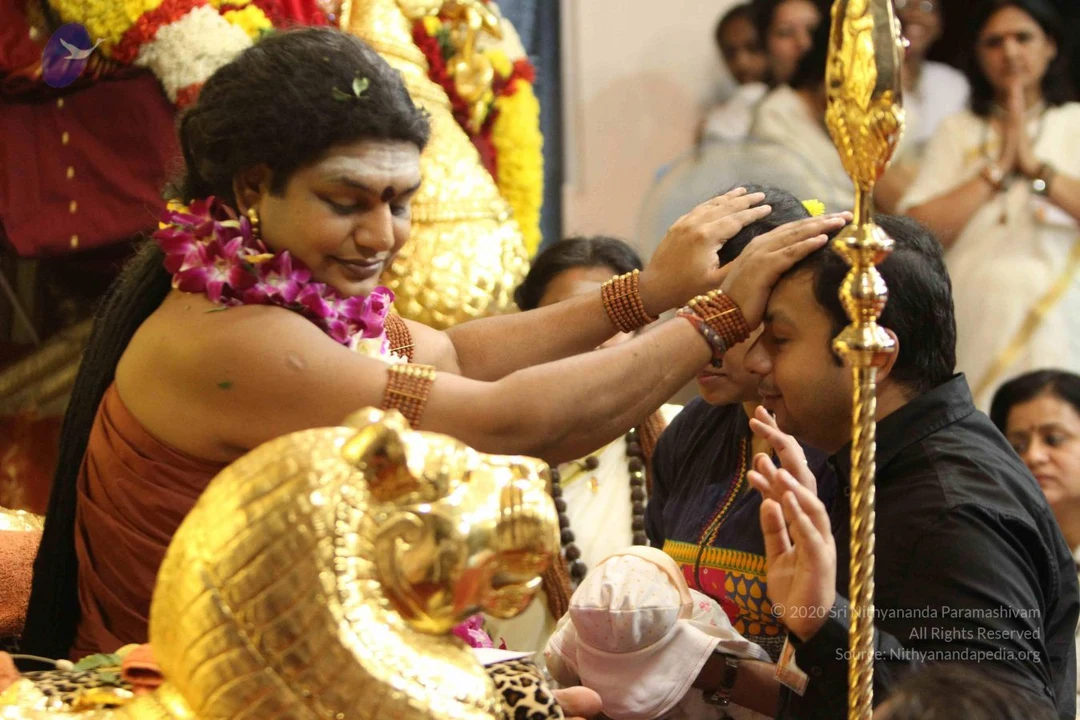
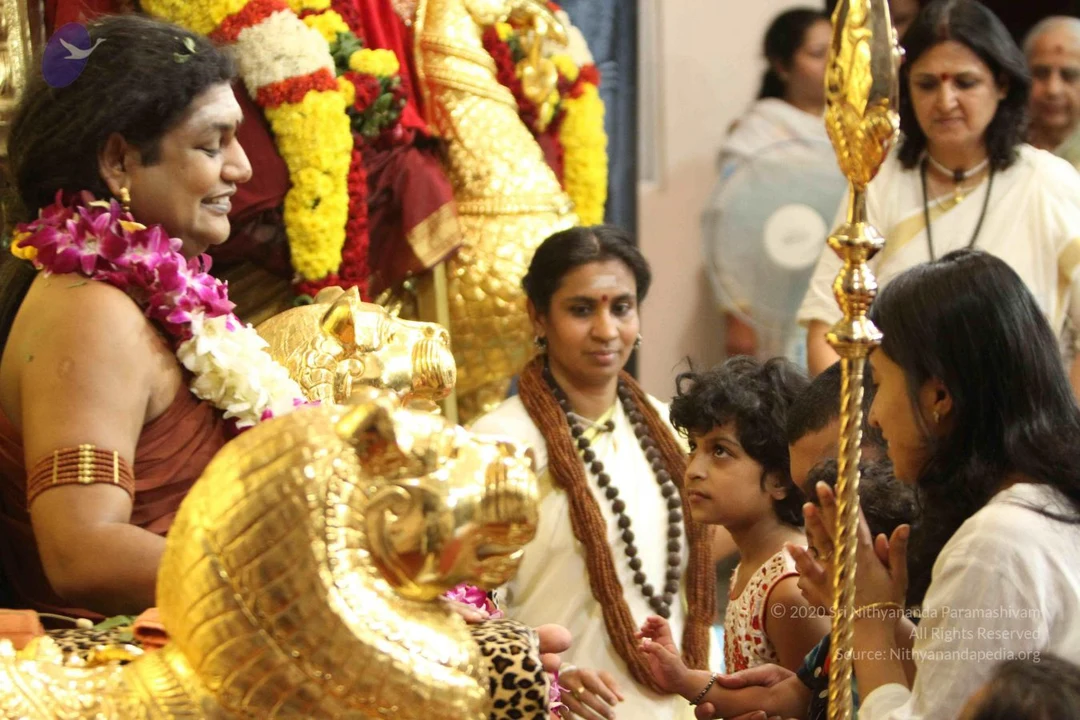
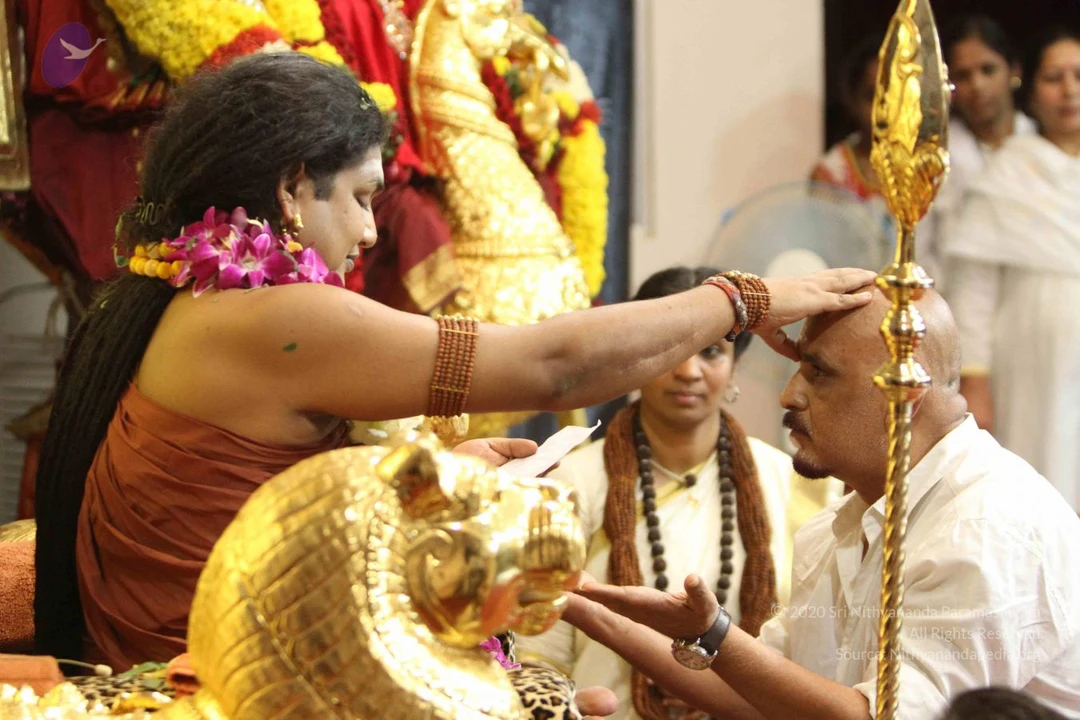
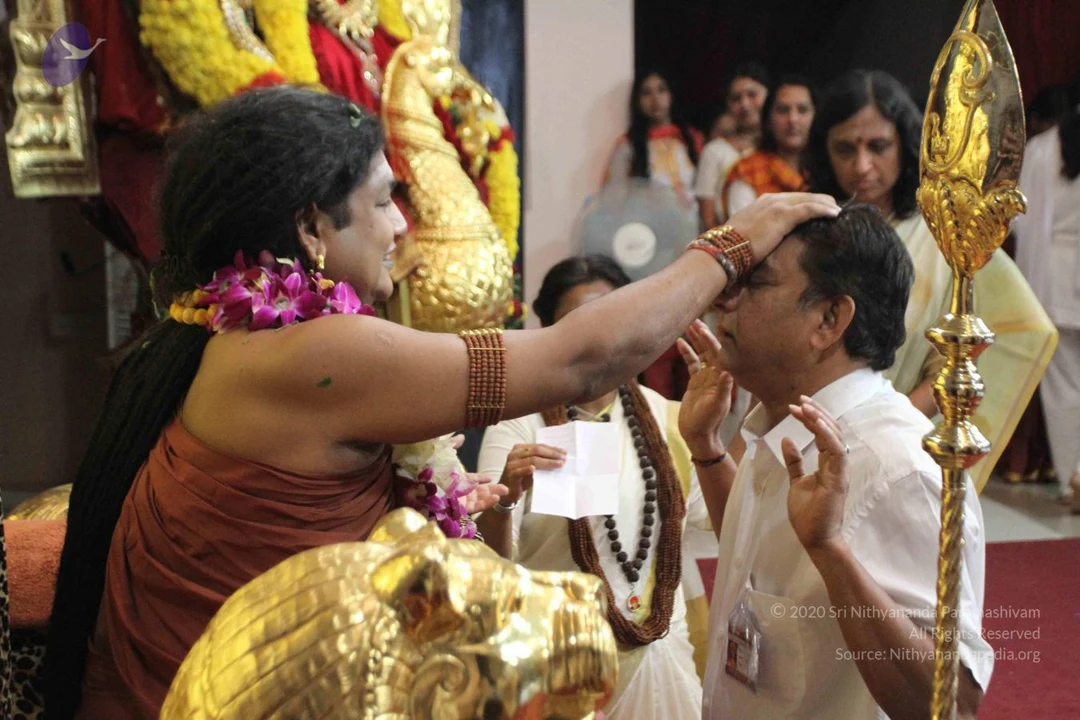
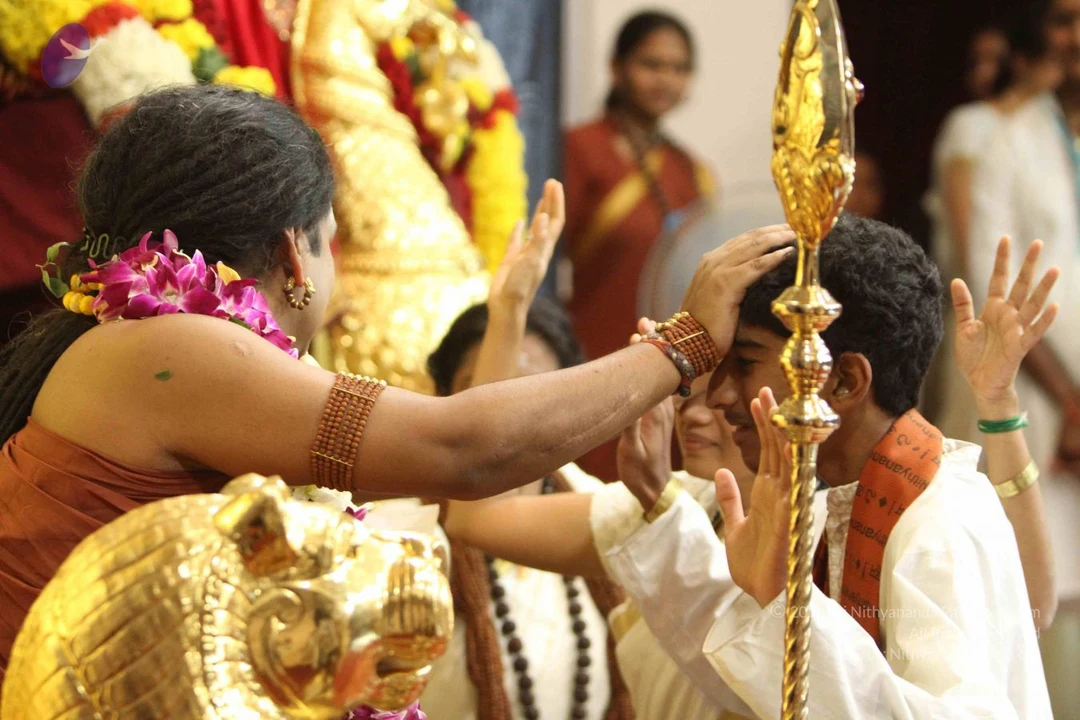
A man seated cross-legged on an ornate gold throne with leopard-print and tiger-skin cushions, wearing rust-orange robes with gold borders and a rudraksha mala with a gold ornamental necklace. He has a white tripundra with a red bindi on his forehead, earrings, and rudraksha armlets. He raises one hand in a teaching gesture while the other rests open at his waist. a person seated in the discourse setting, with the orange robes, rudraksha malas and gold necklace as the qualifying cues.A man seated cross-legged on an ornate gold throne with leopard and tiger-print cushions, wearing a rust-orange robe with gold borders and rudraksha malas with a gold ceremonial necklace and gold-tipped earrings. He holds up his right hand in a teaching gesture while his left hand rests open, holding a gold pendant. He has a white forehead mark and a red bindi. Golden carved backdrop behind him.Close side profile photograph of a woman with long dark hair decorated with green leaves and a yellow flower. She wears a necklace of magenta and white orchids with green leaves, gold hoop earrings, and a white vertical forehead mark. Her eyes are lowered. Blurred yellow and red floral garlands fill the background.A photograph of a smiling person seated with eyes lowered, reading from a small stack of white pages held in both hands. The person wears a large garland of purple orchids, white flowers and green leaves around the neck, leaves woven into the hair, a rudraksha mala, gold earrings and a rust-orange shawl. Gold-coloured ceremonial decor, a leopard-print seat cover and a gold ritual staff with a pointed finial are visible behind and beside them, and a red and gold cloth hangs in the background. a person appears in this seated pose with garlands and rudraksha beads, reading a text during a talk setting. No other people are visible.Close-up photo of a hand holding a gold ceremonial staff topped with a trident finial, held against the white clothing of a person whose torso fills the right side of the frame. A wrist wears several rudraksha beads and a thread bracelet. Behind, a blurred raised hand and a second person's face are visible, along with gold-coloured ceremonial objects at the edges. The setting appears to be a ritual or temple occasion. No identity cue confirms a person's presence; the visible person wears plain white and is only partly shown.A photograph of a ritual blessing in a temple-style setting. A woman in an orange-brown sari with a purple and yellow flower garland and gold bangles stands at left, placing her right palm on the head of a young man in white kurta with an orange-and-white shawl and a green bangle. A tall gold ceremonial staff with a finial stands beside him, and a gold lion-shaped object is in the foreground. Other devotees in white and orange-red clothing raise their palms in the background, and gold deity decorations with yellow and red garlands fill the upper left.