Skip to content
Friday

7 June 2013

Dated photos
125
Source pages
1
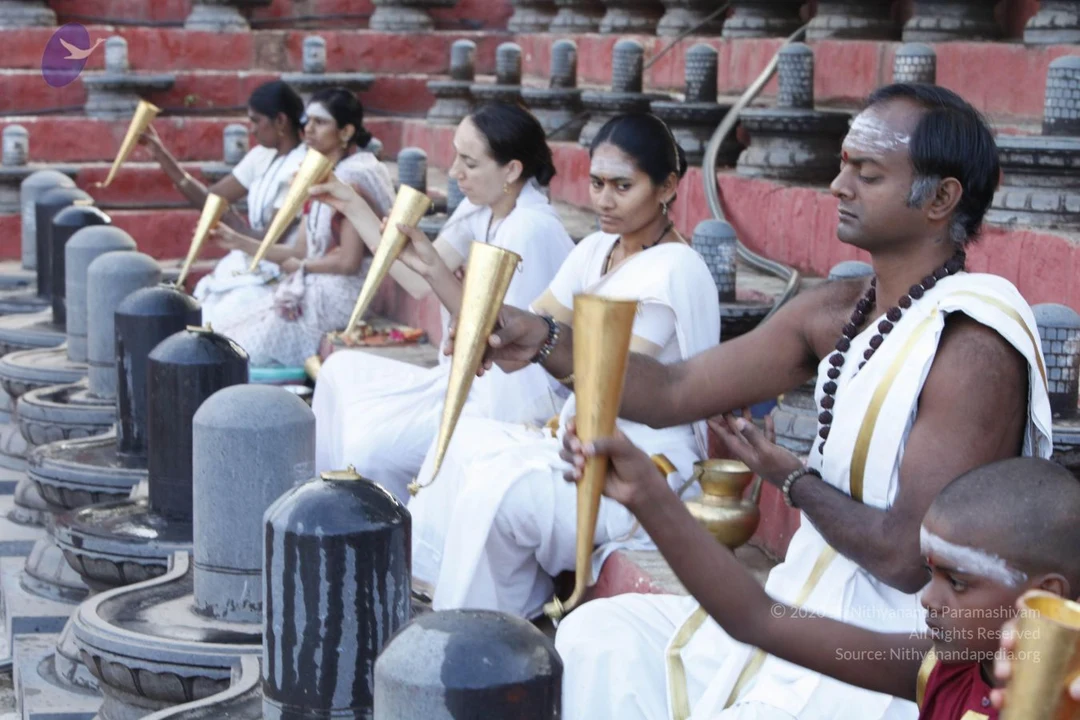
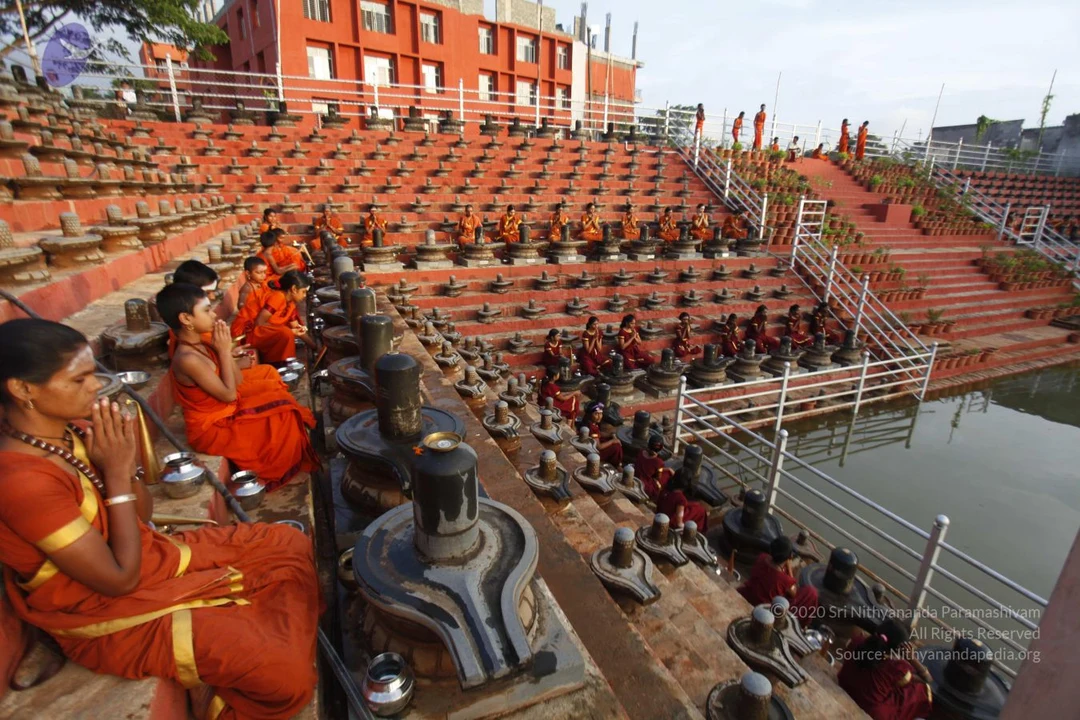
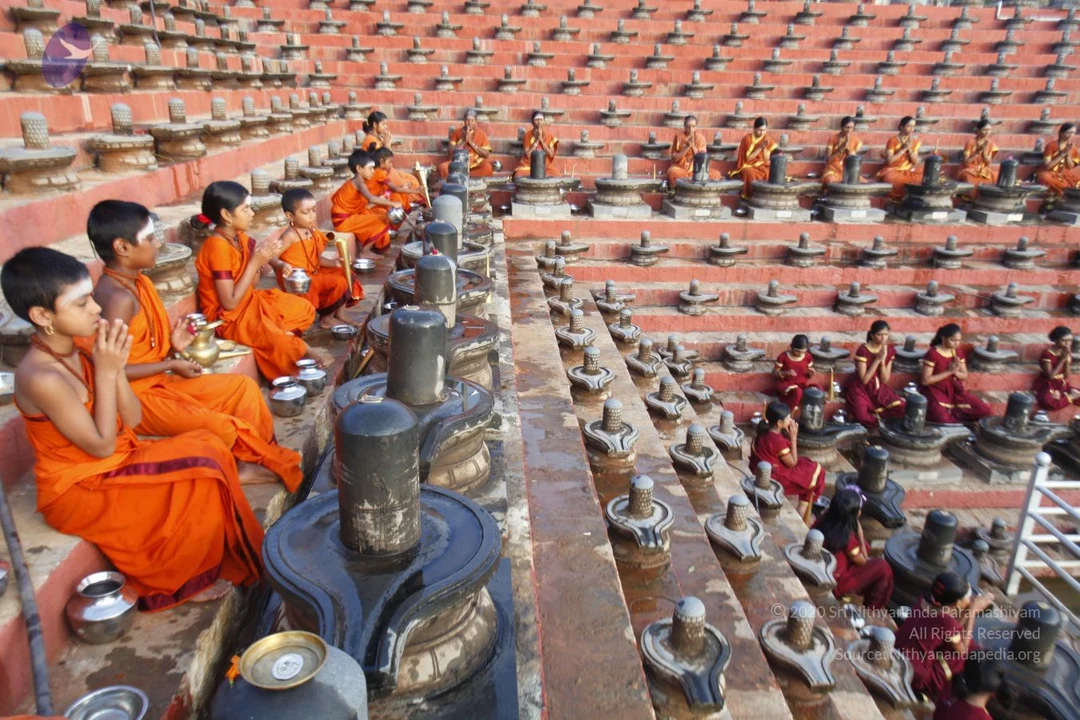
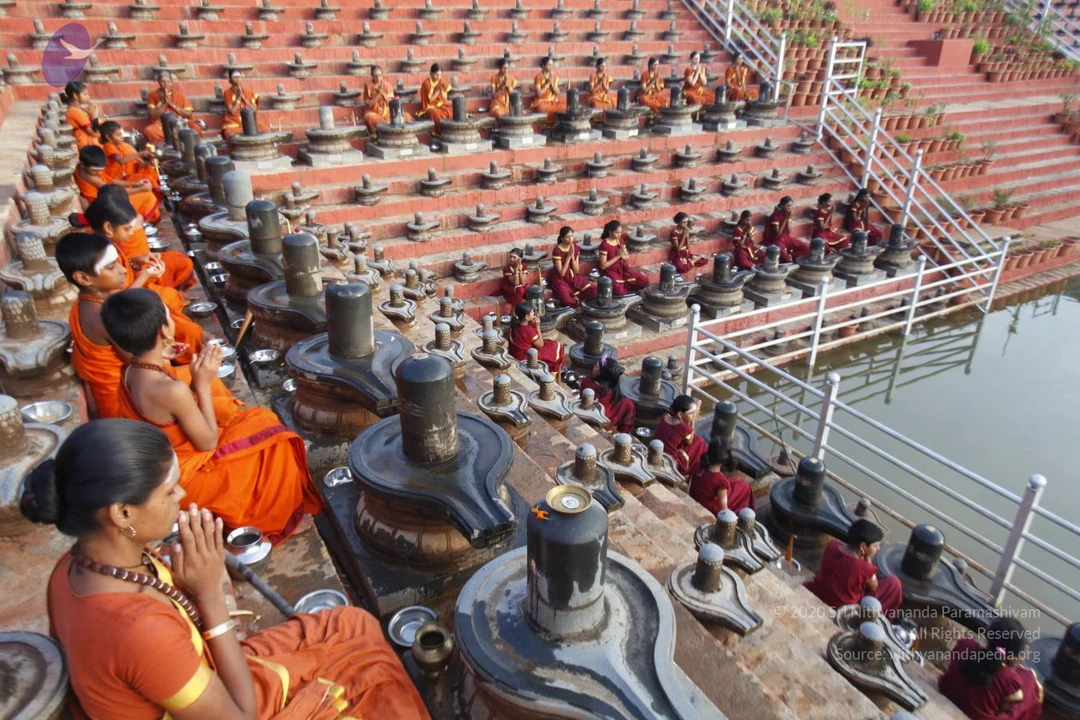
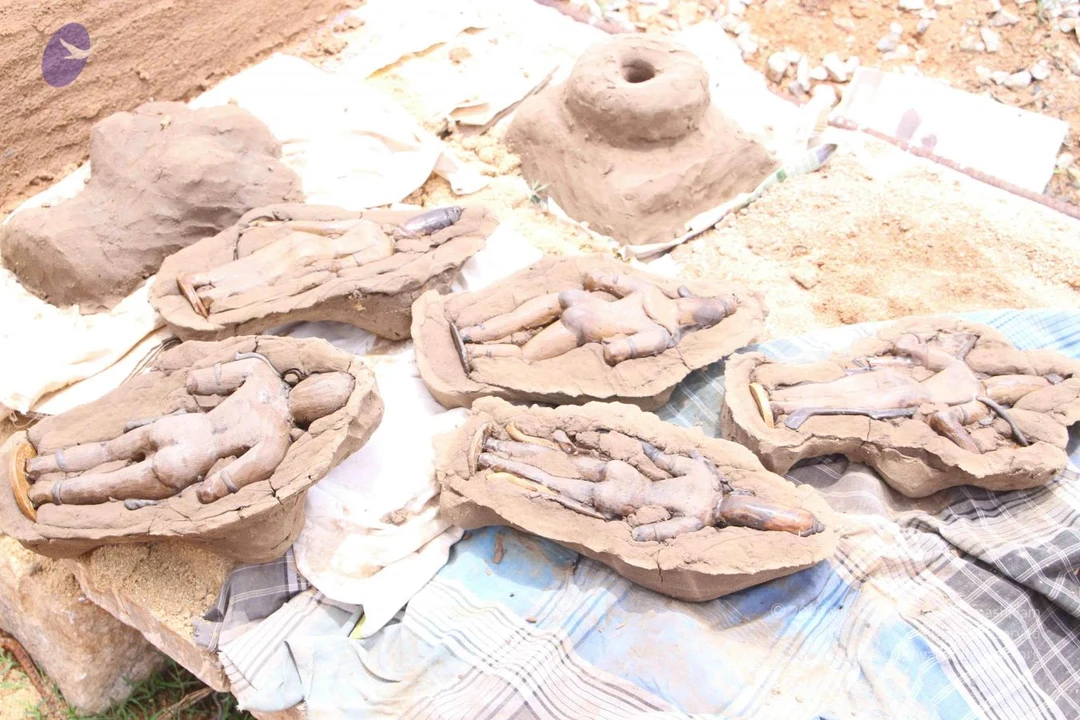
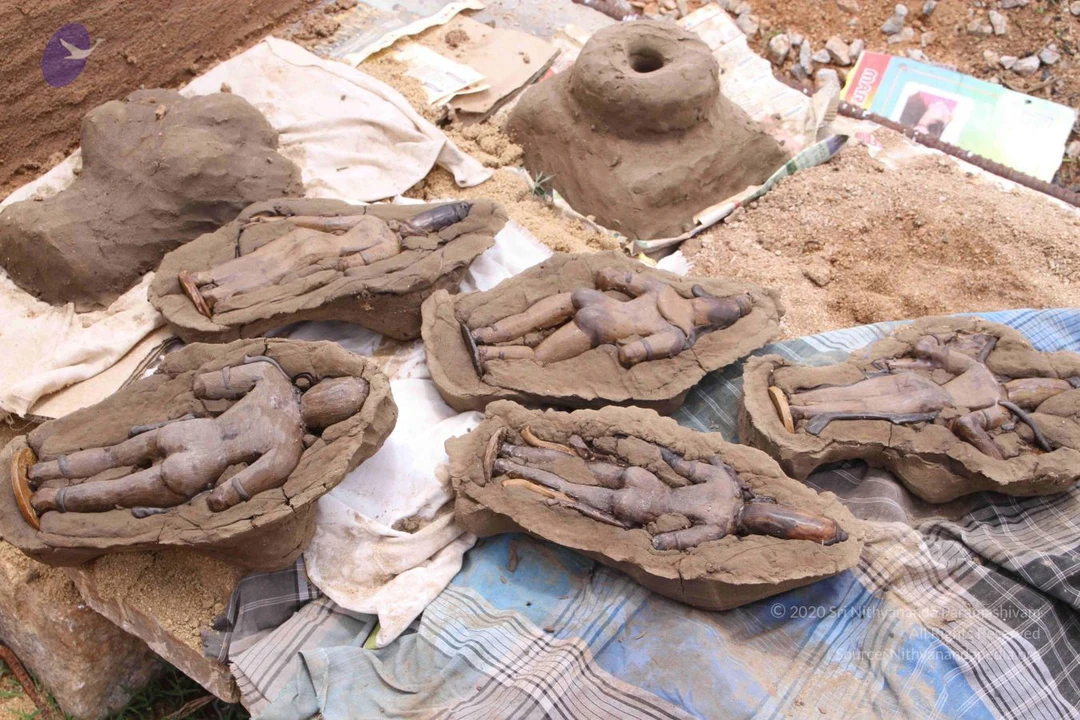
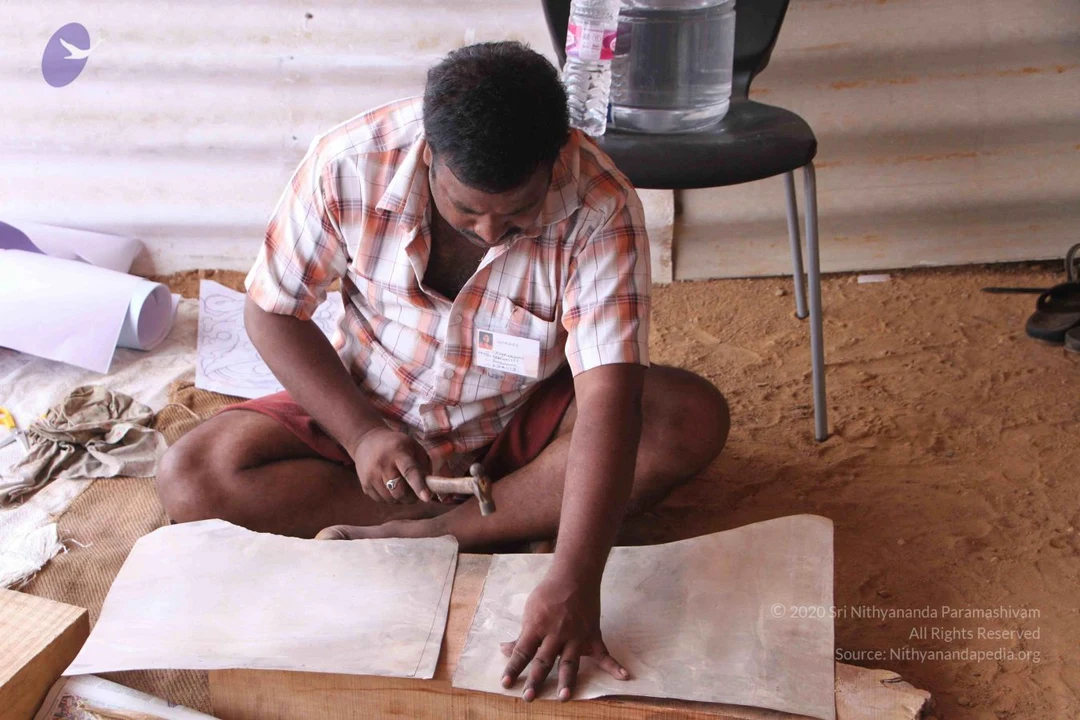
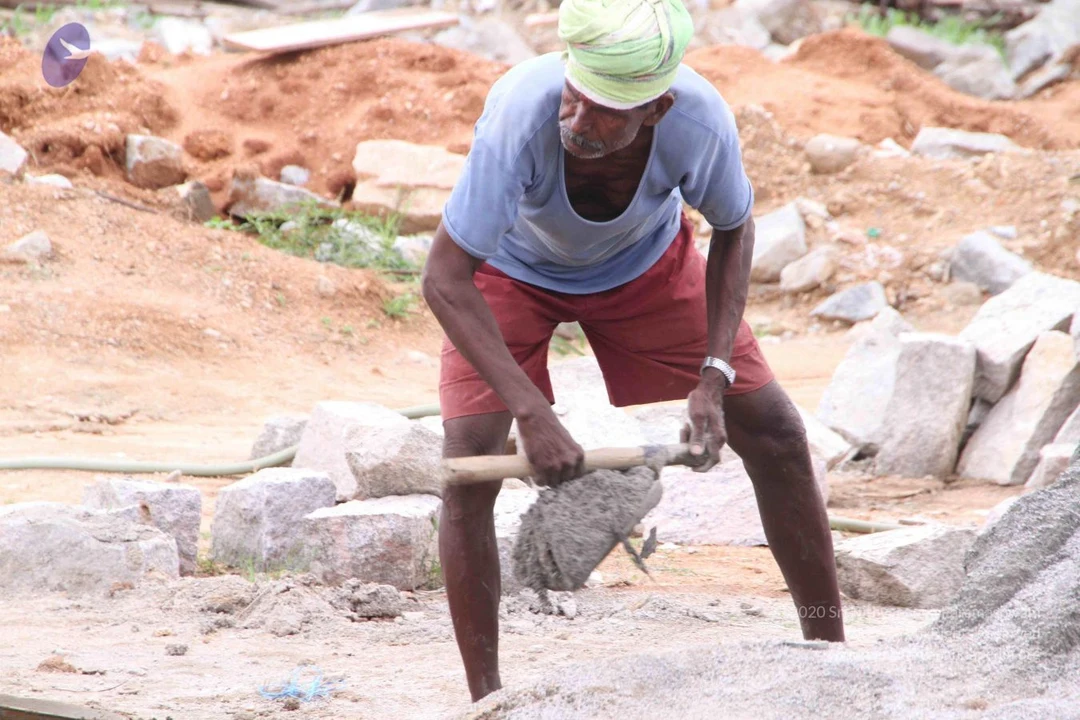
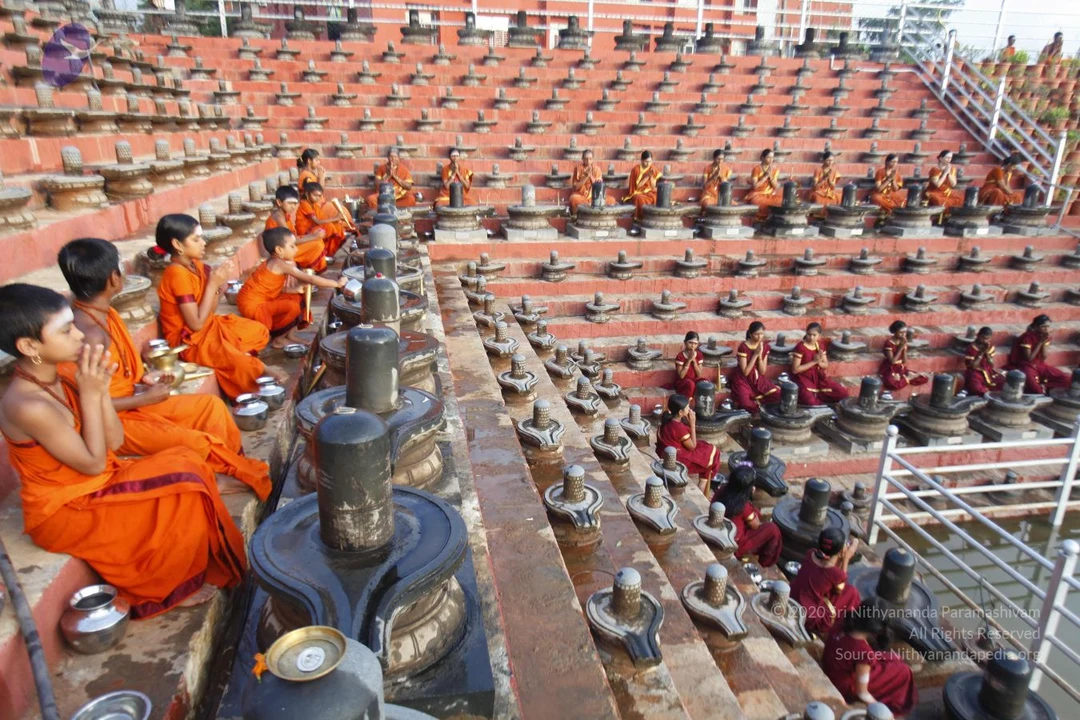
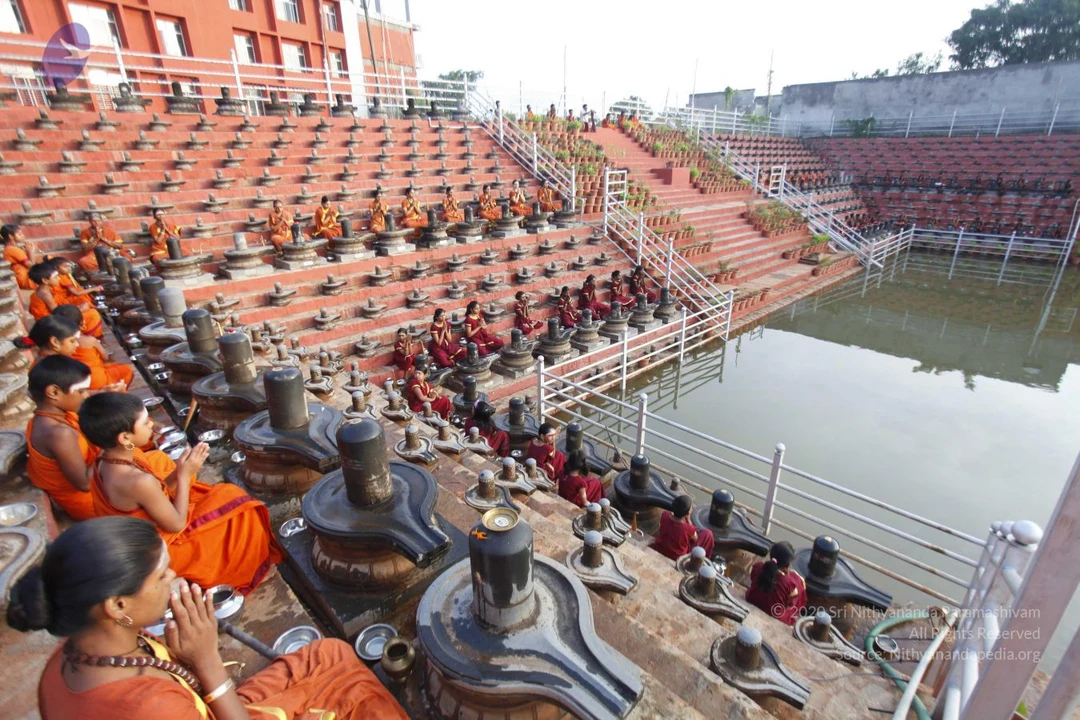
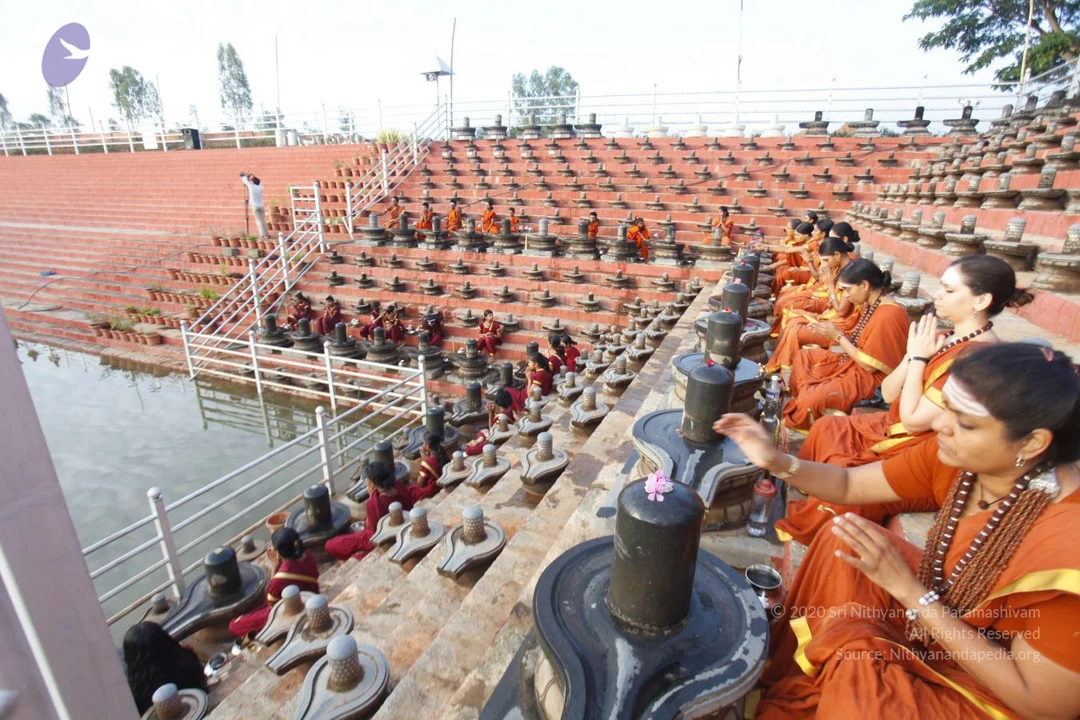
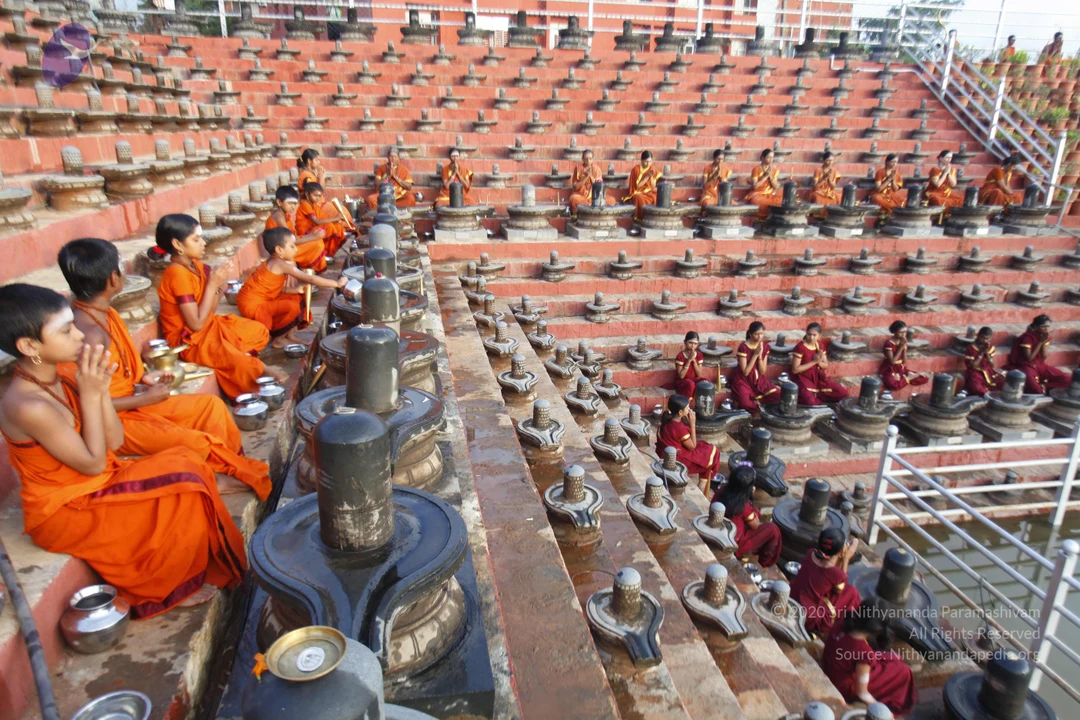
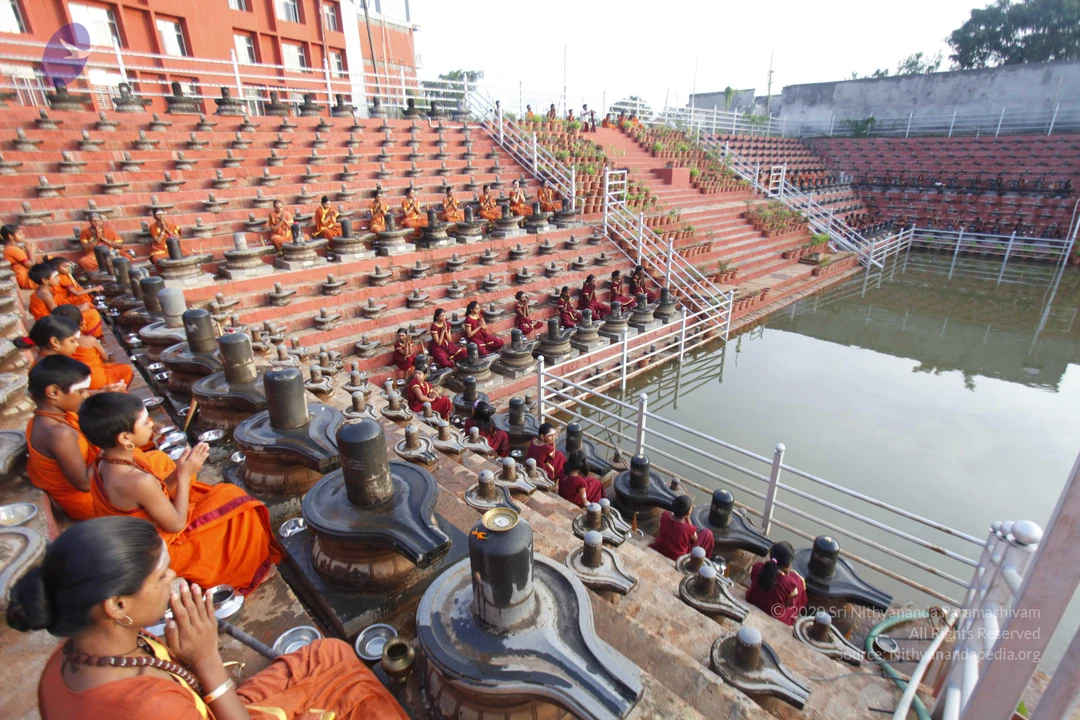
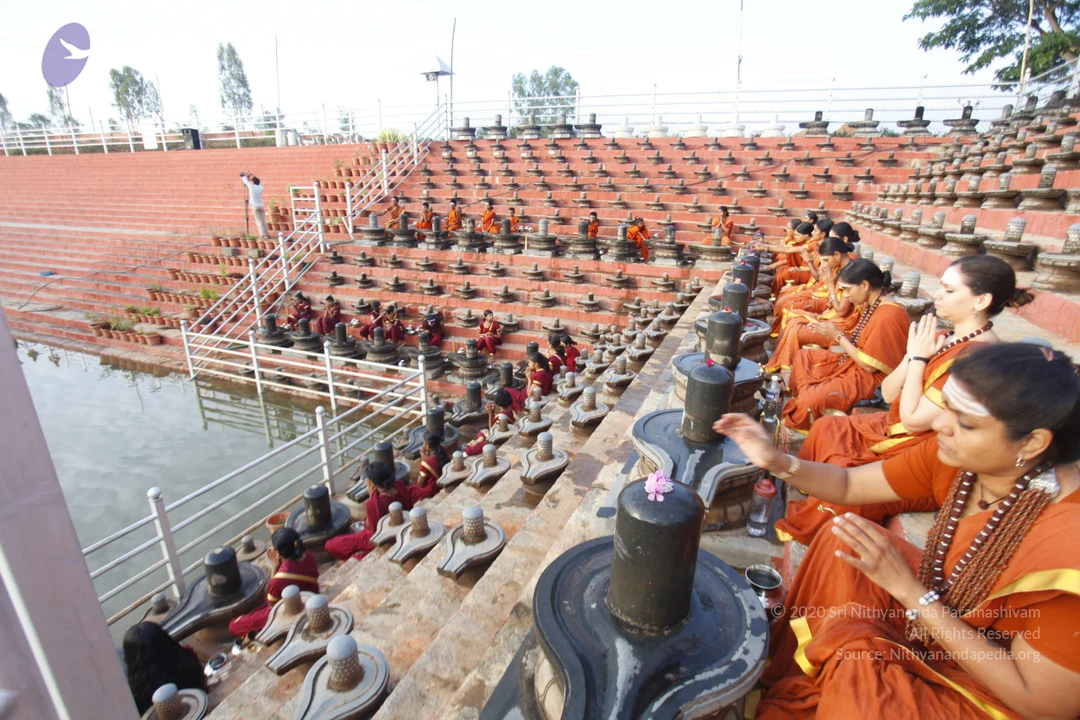
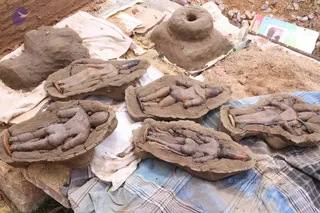
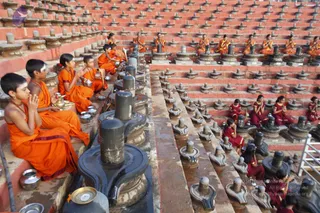
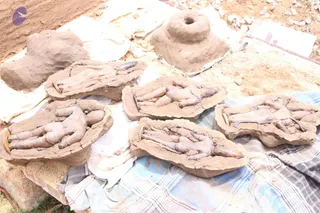
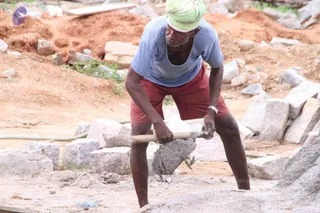
A photograph of a rudra abhishekam on red stepped terraces lined with many black stone shivalingams on pedestals. Young boys in saffron-orange robes sit in front, one with hands pressed in prayer, others holding small brass vessels and a brass pot among the lingams. Further back, rows of young people in saffron robes sit in meditative posture, and to the right, girls in maroon-red garments sit in rows amid the lingams, some with hands folded. Brass plates and metal pots rest on the steps. Several dozen people are visible.A photograph of several wet clay moulds laid out on a blue and white checked cloth on bare ground. Each mould holds a sculpted figure in relief, with limbs and bodies pressed into soft brown clay. A taller clay form with a hollow cylindrical top sits at the upper right, and a larger lump of clay lies at the upper left. Sand, gravel and a white cloth surround the arrangement. No people are visible, and no event or ritual is shown beyond the sculpting work.A man in a light blue short-sleeved shirt, red shorts and a green head wrap works outdoors on a construction site. He leans forward, using a wooden-handled tool to spread or mix grey mortar or concrete on the ground. Around him are scattered grey granite stone blocks, reddish-brown dirt mounds and patches of sparse green weeds, with a green hose lying across the ground behind him. A wristwatch is visible on his left wrist. No deity, ritual or a person depiction is present.

June 07 2013

Original wiki page

Photos from this day

View all 125 photos

Photos

6 photosSource gallery
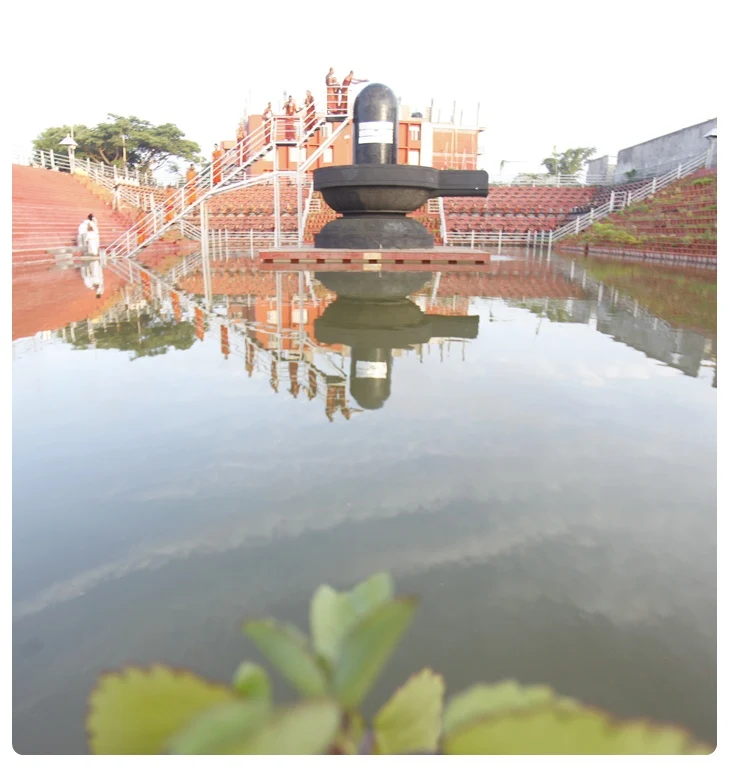
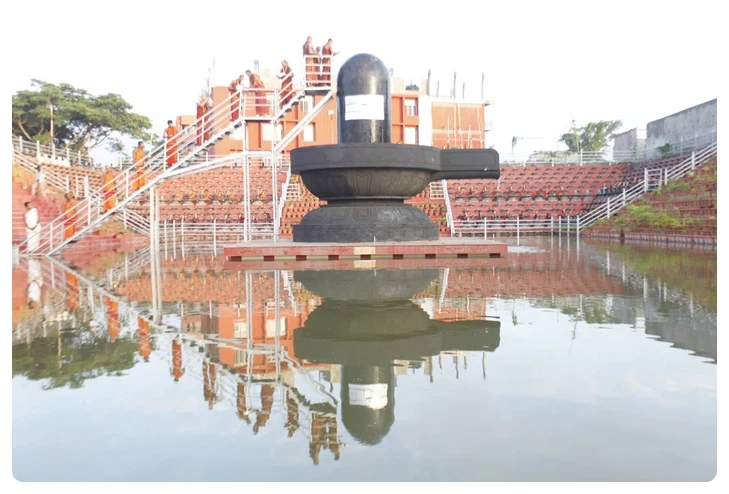
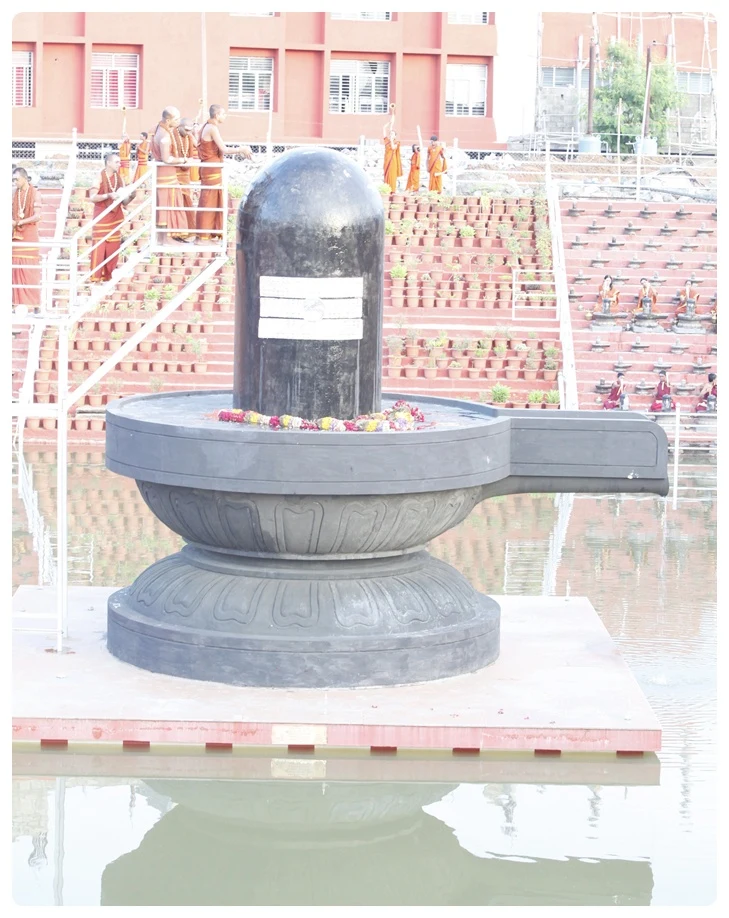
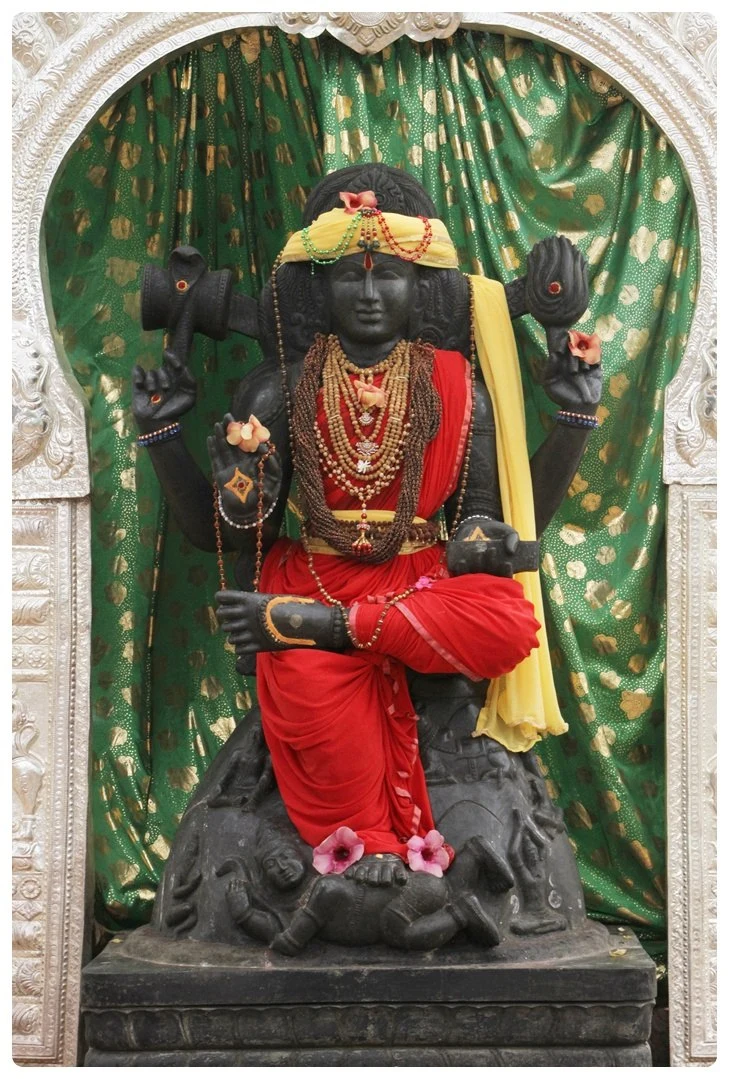
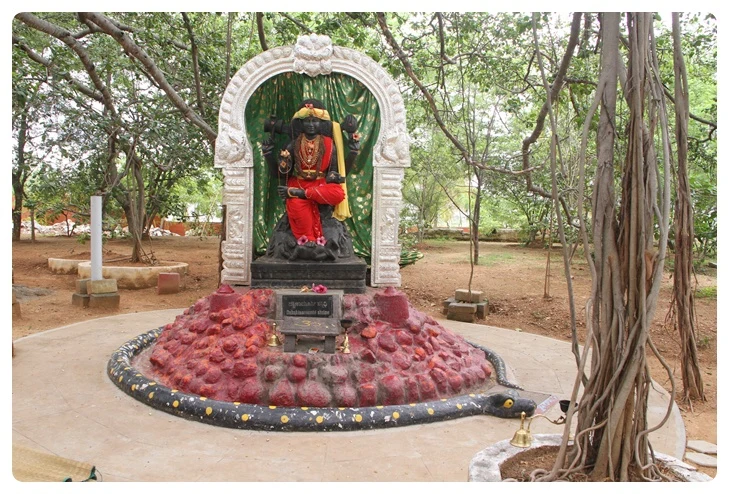
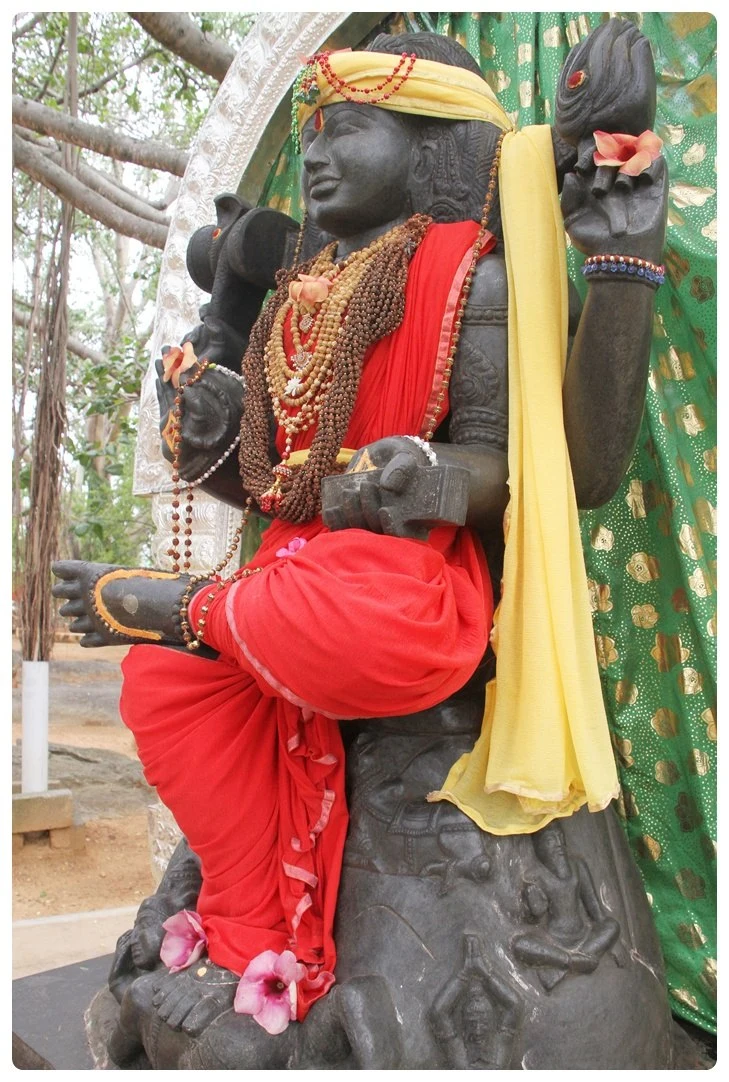
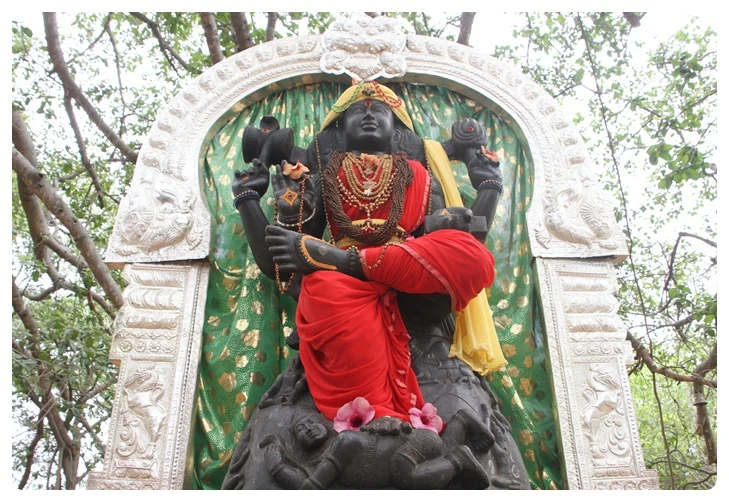
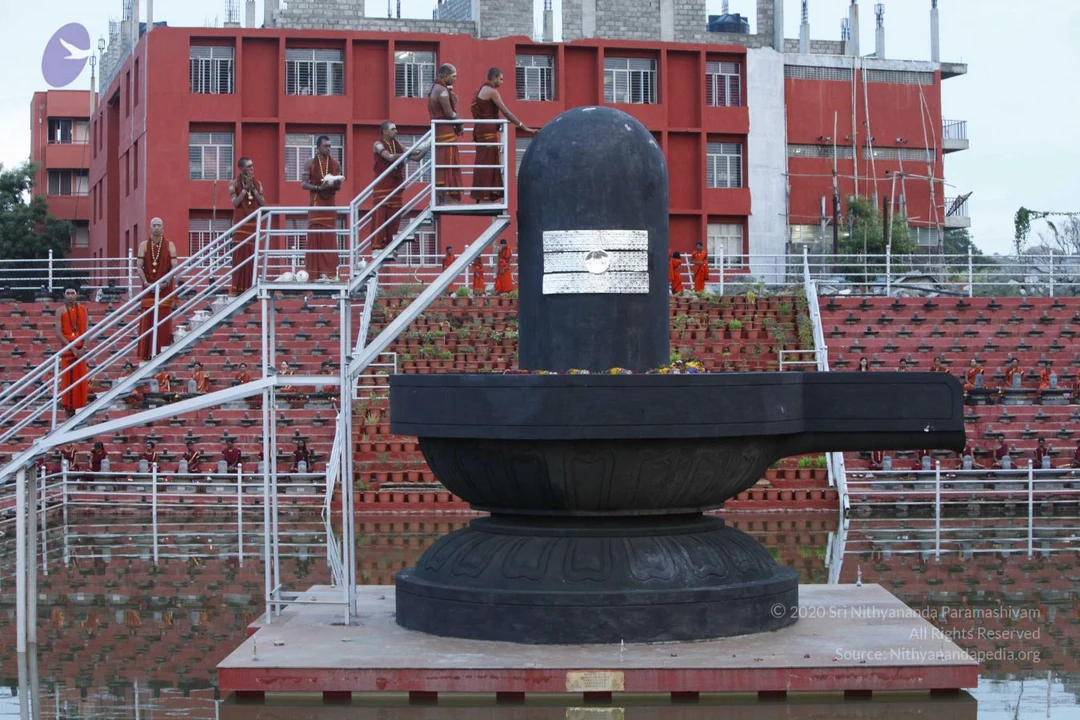
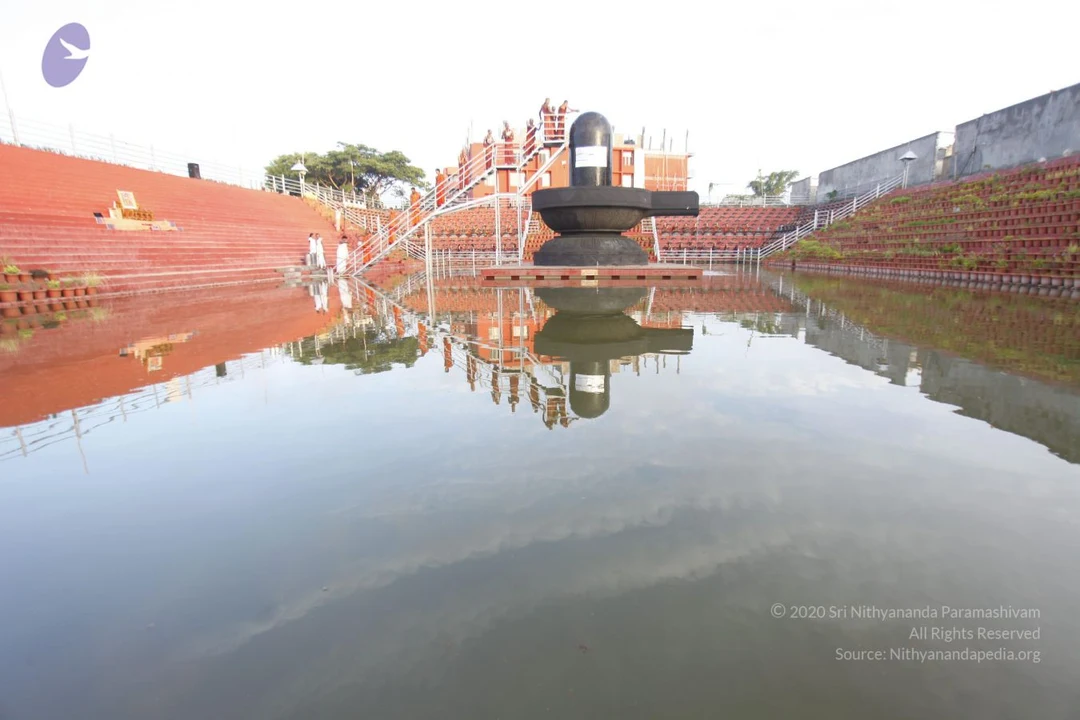
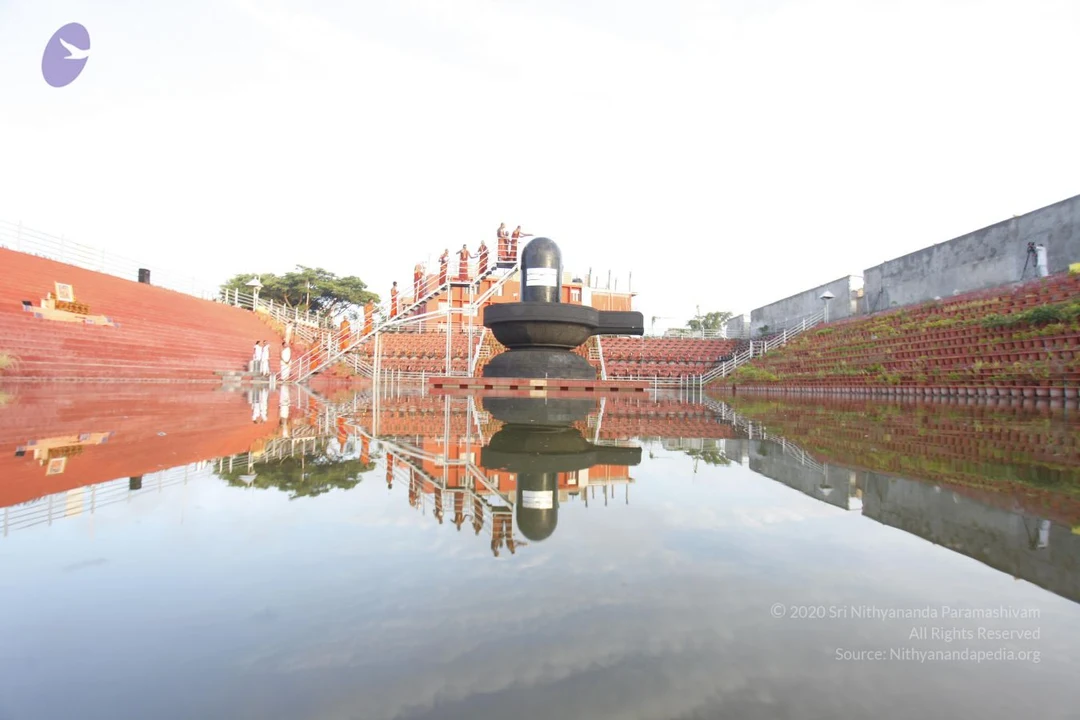
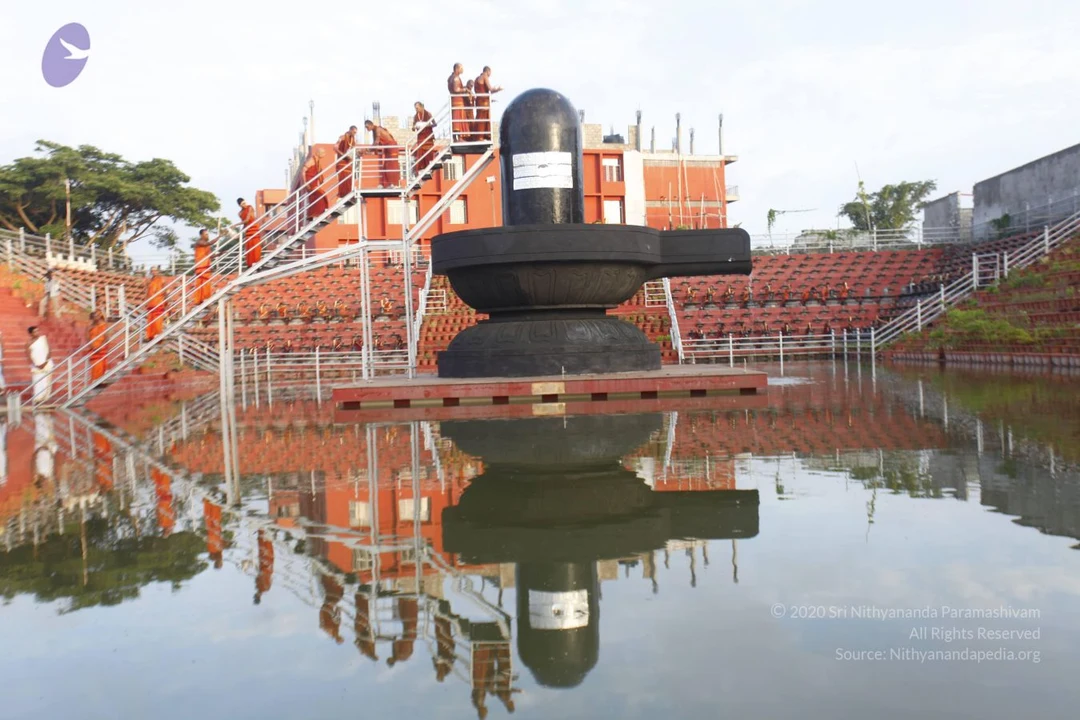
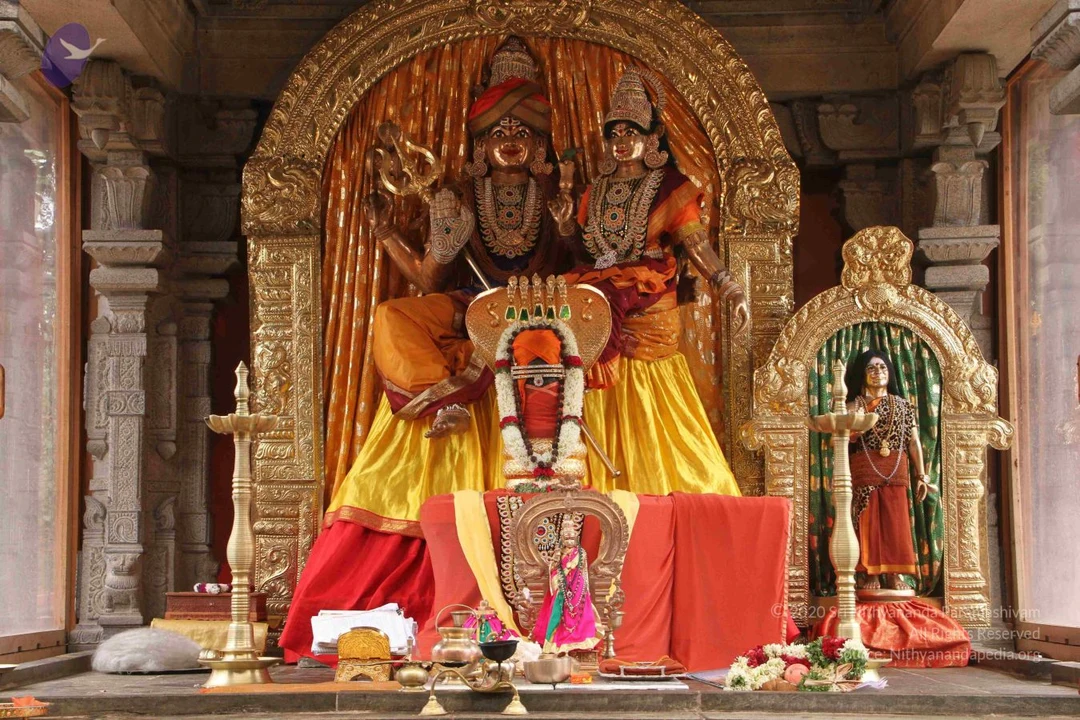
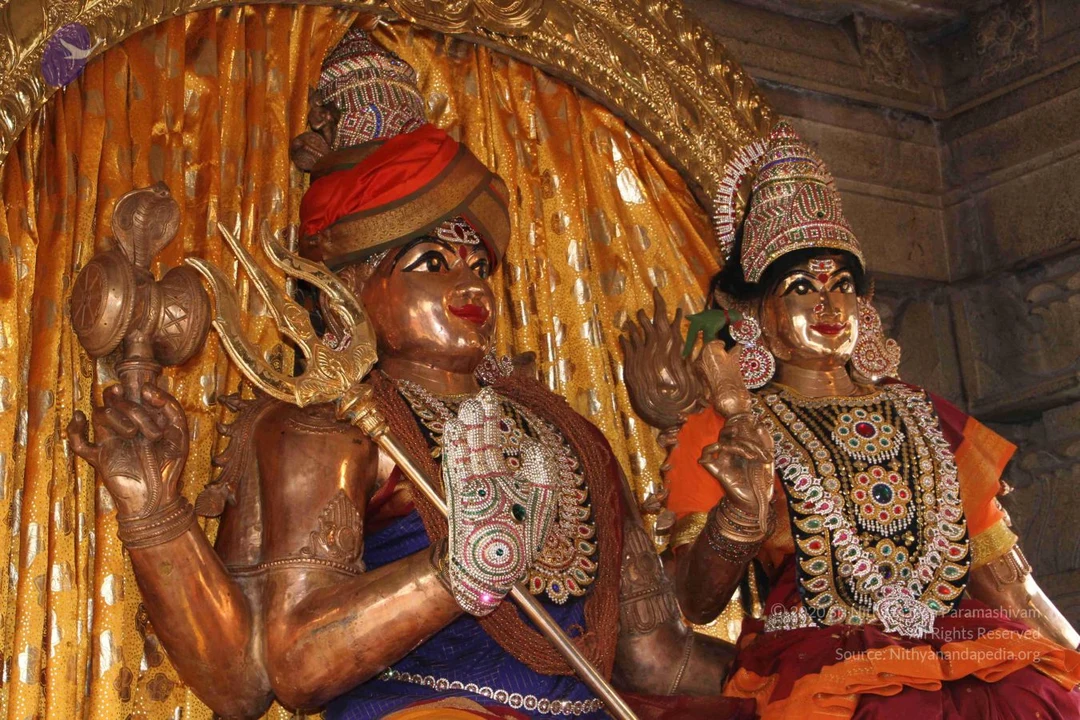
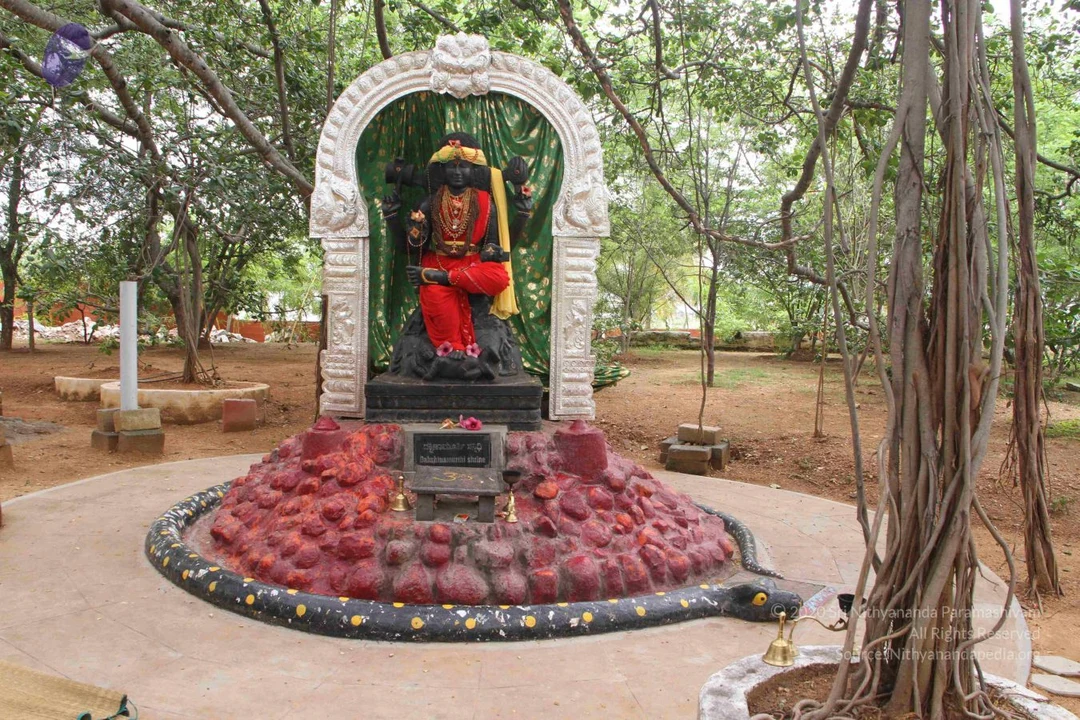
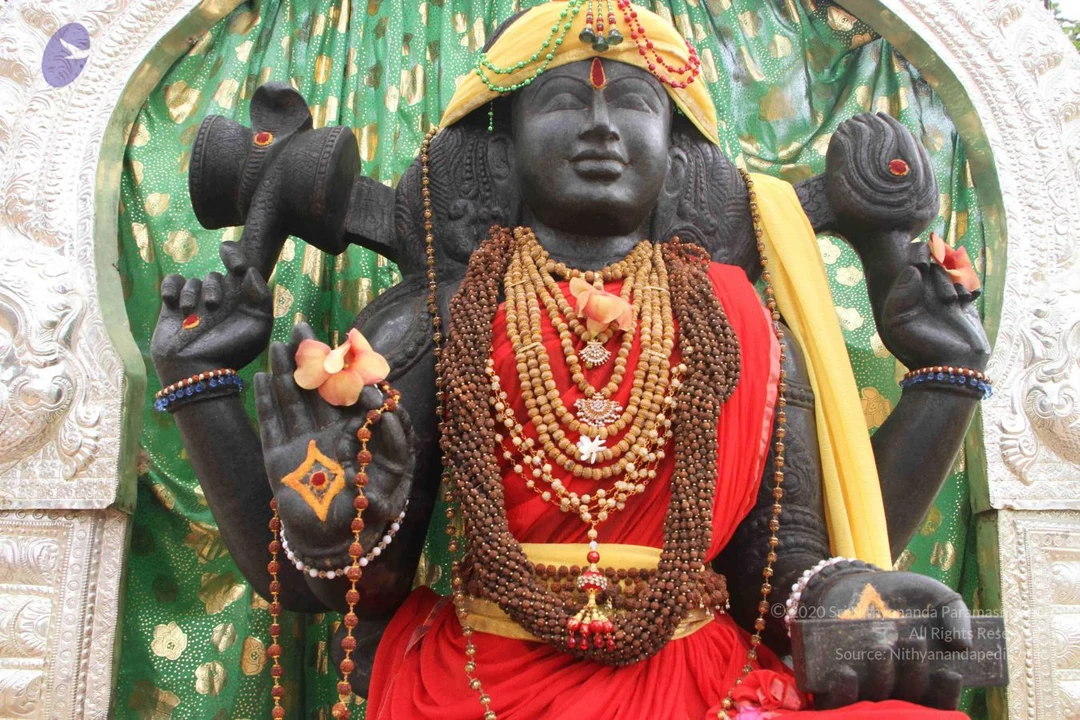
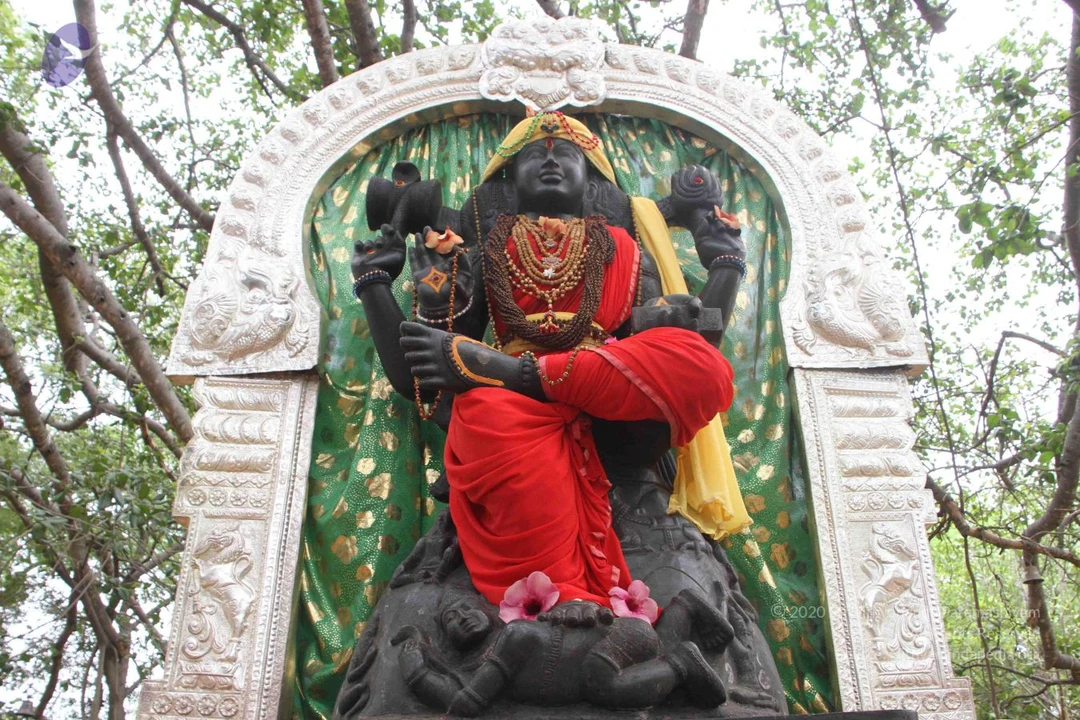
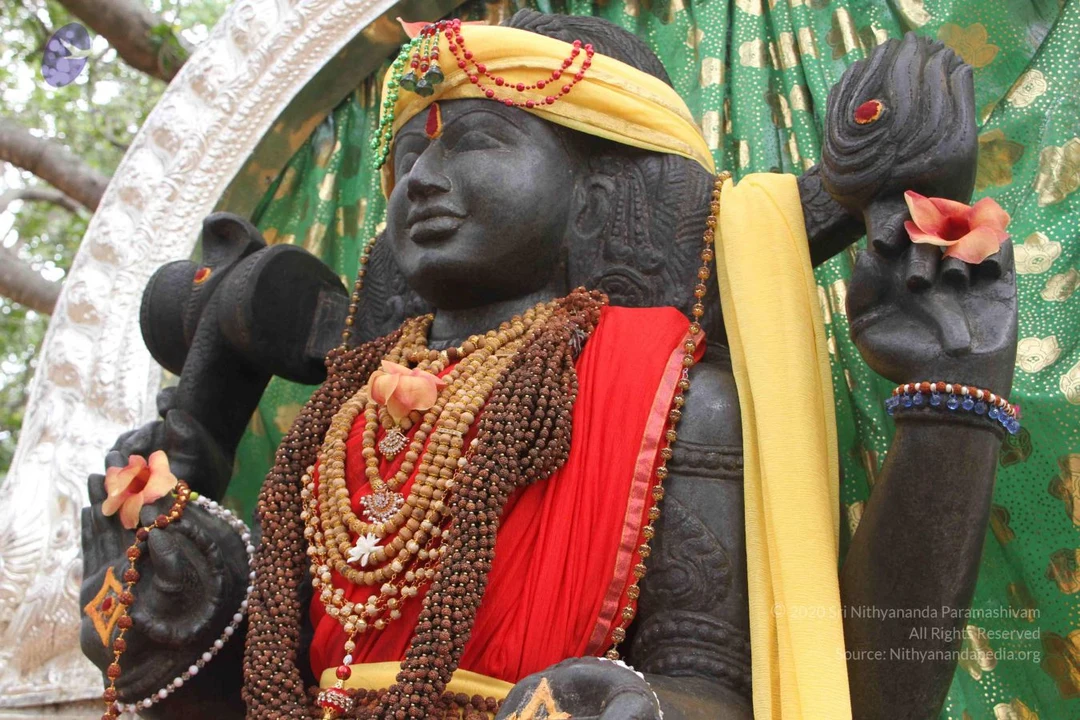
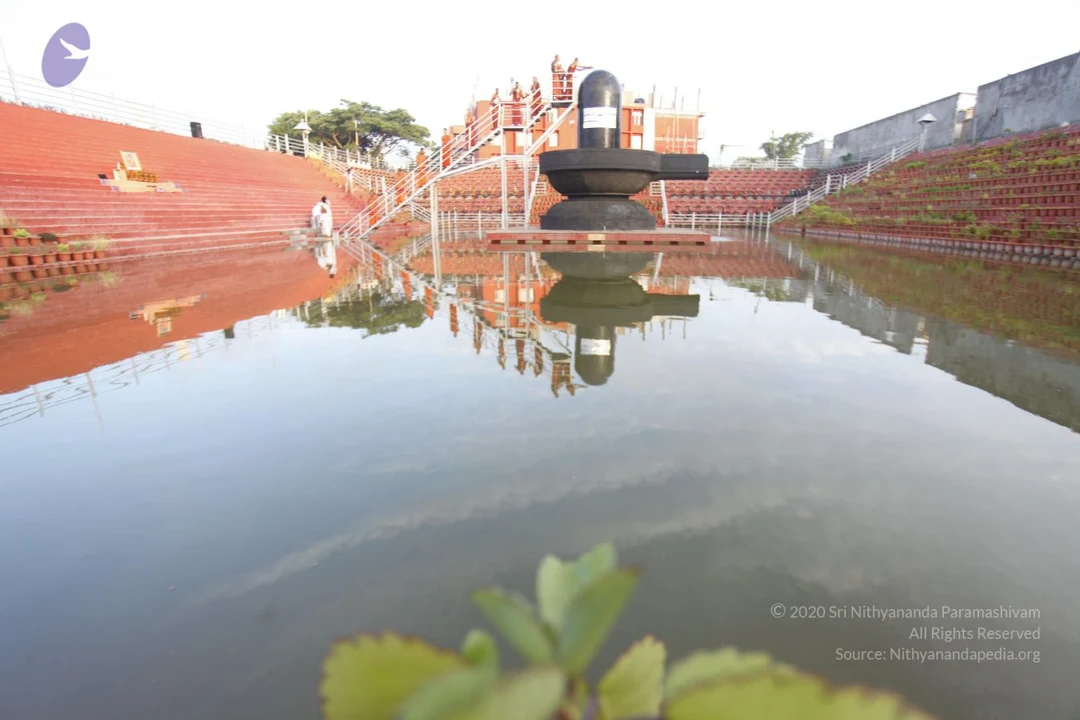
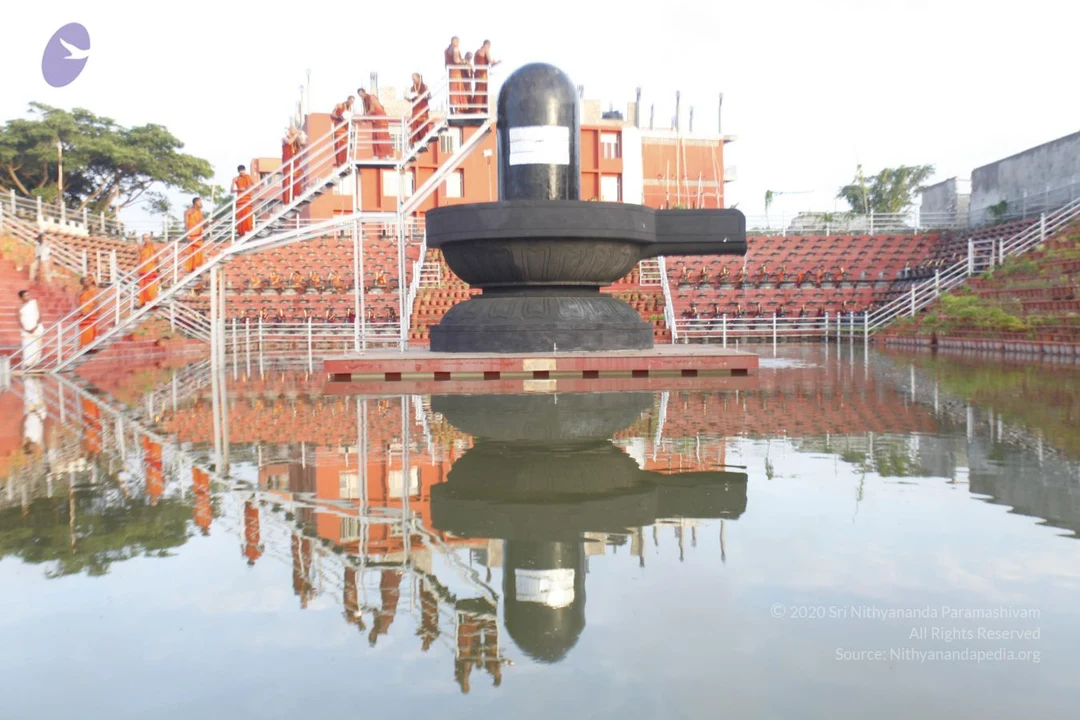
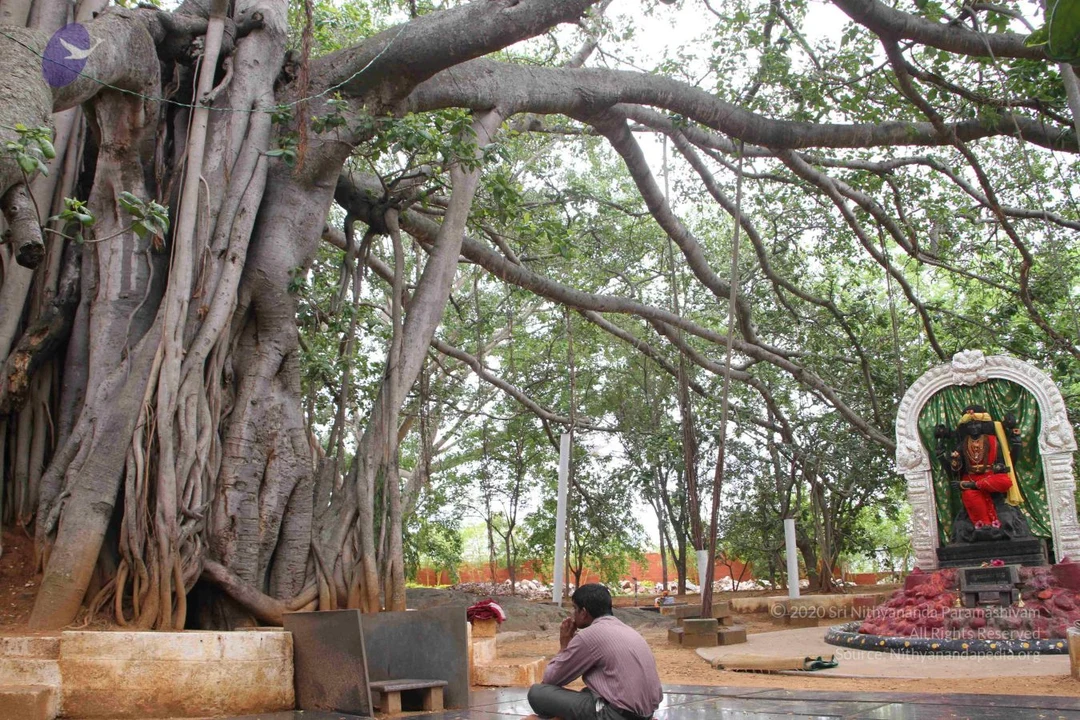
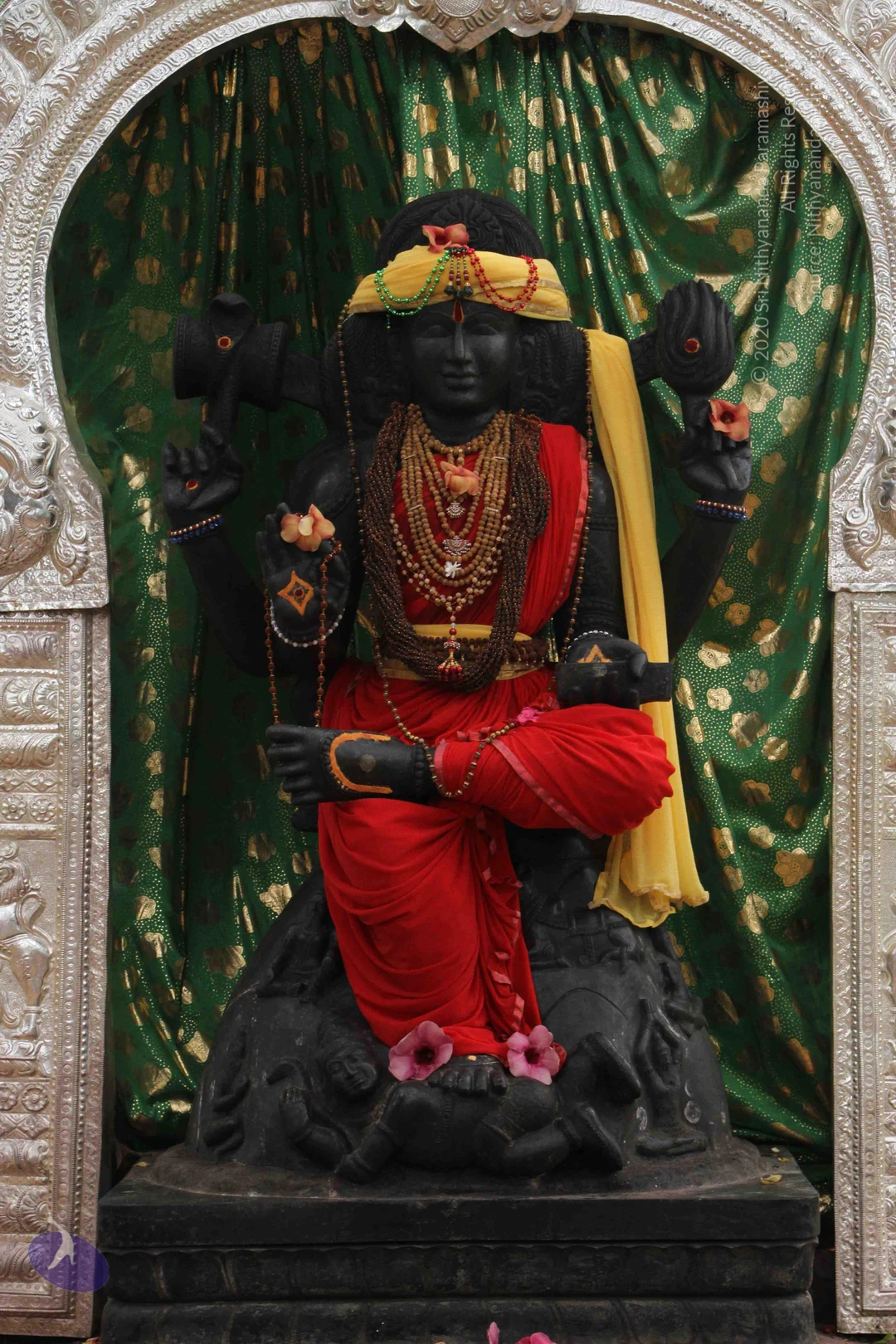
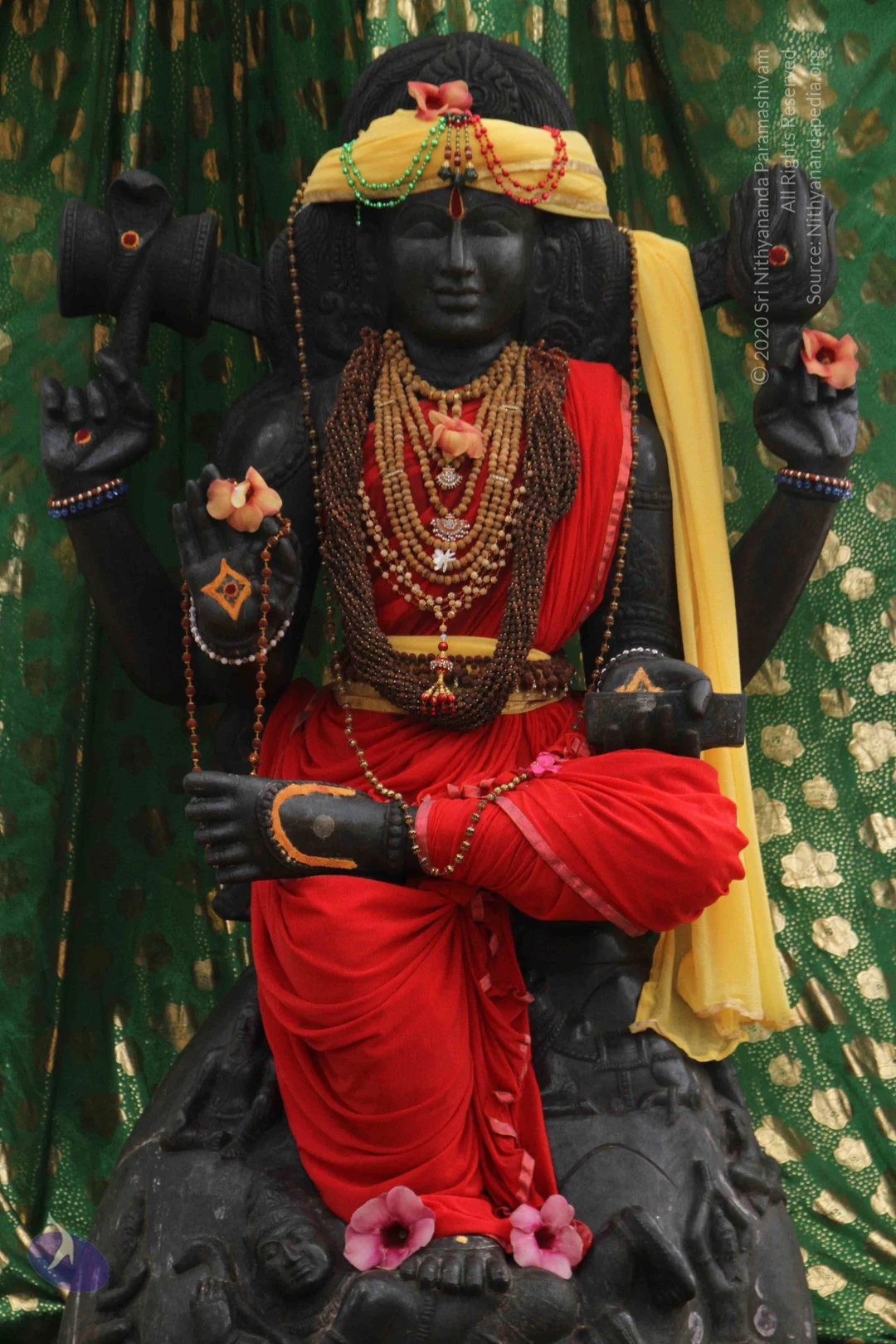
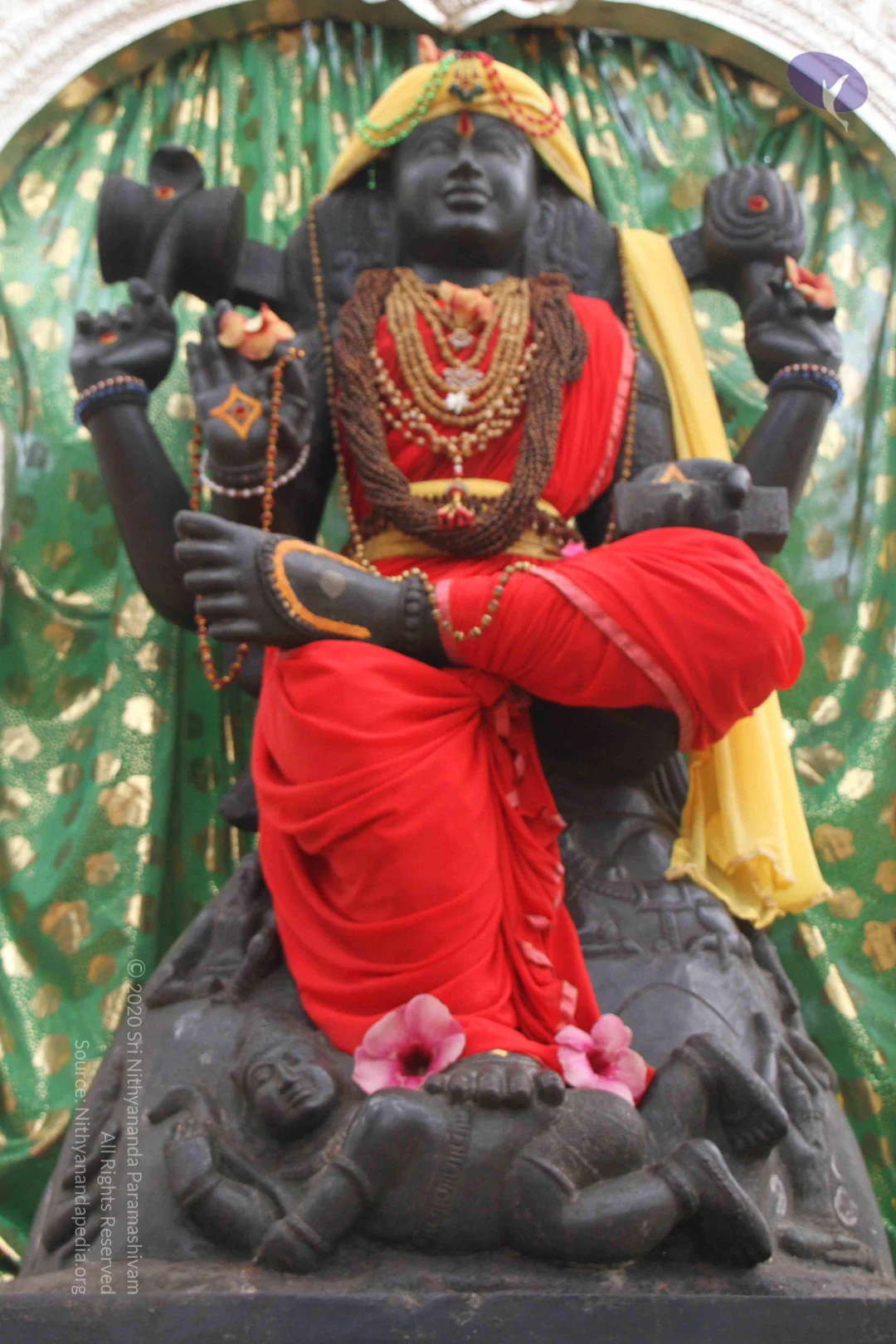
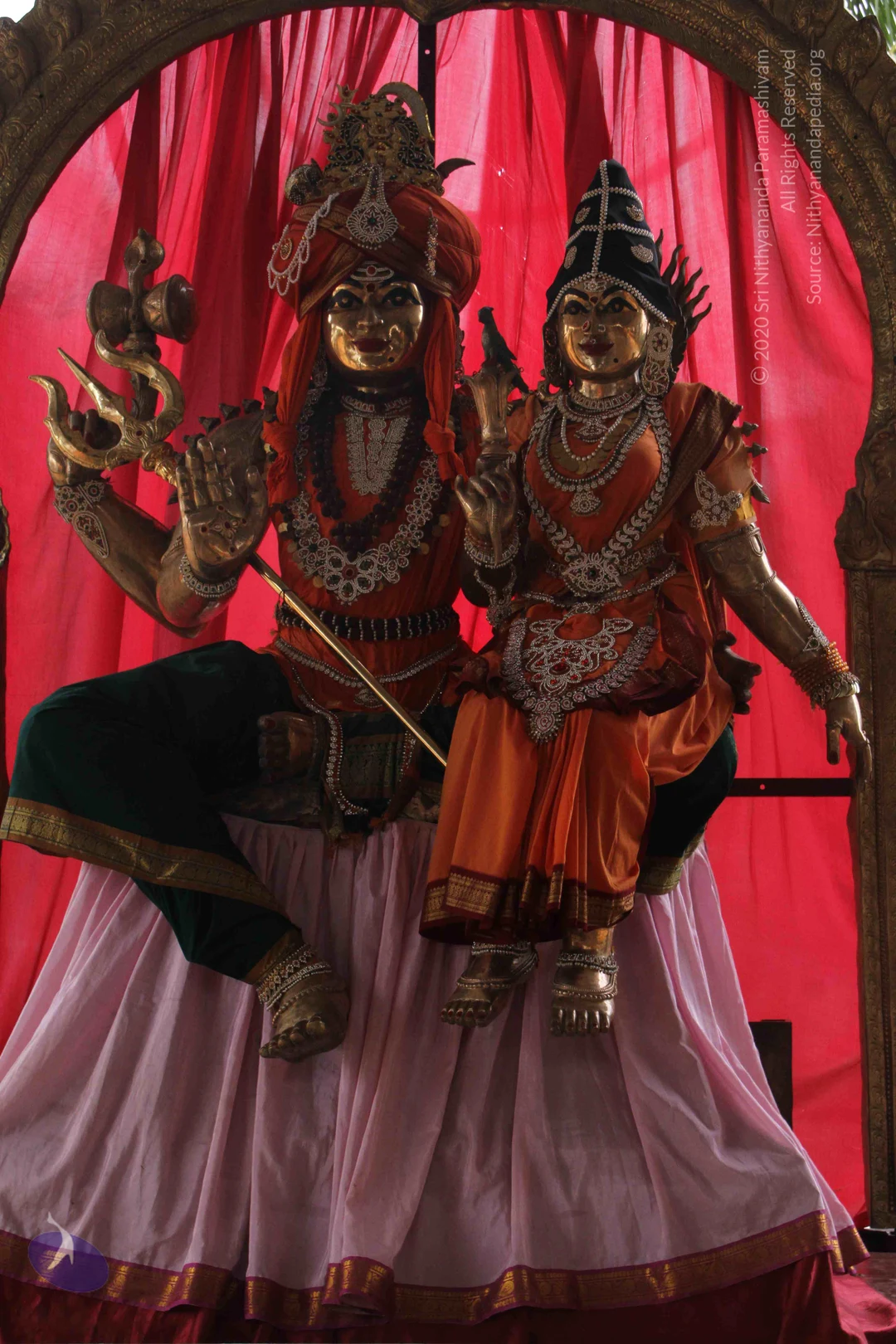
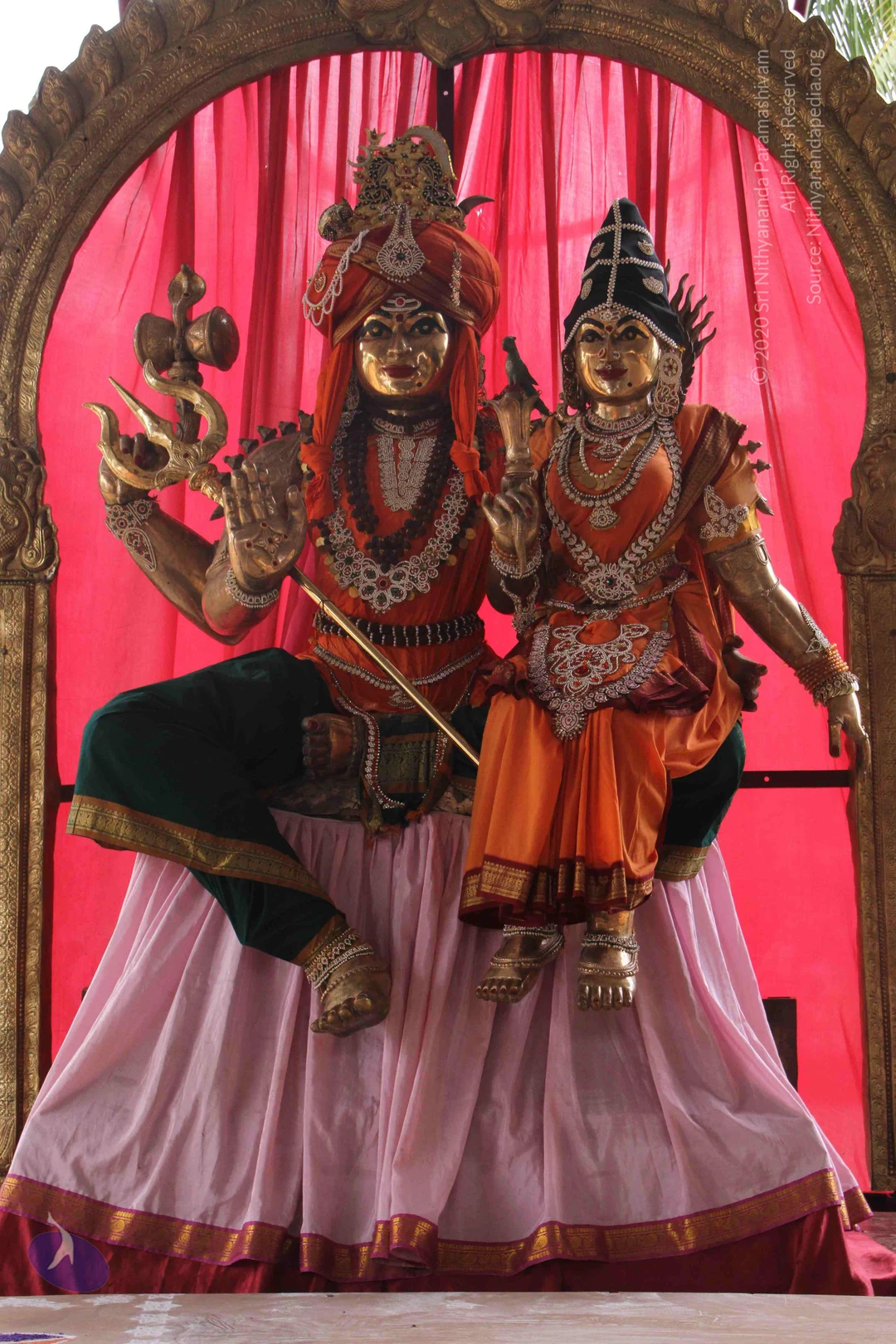
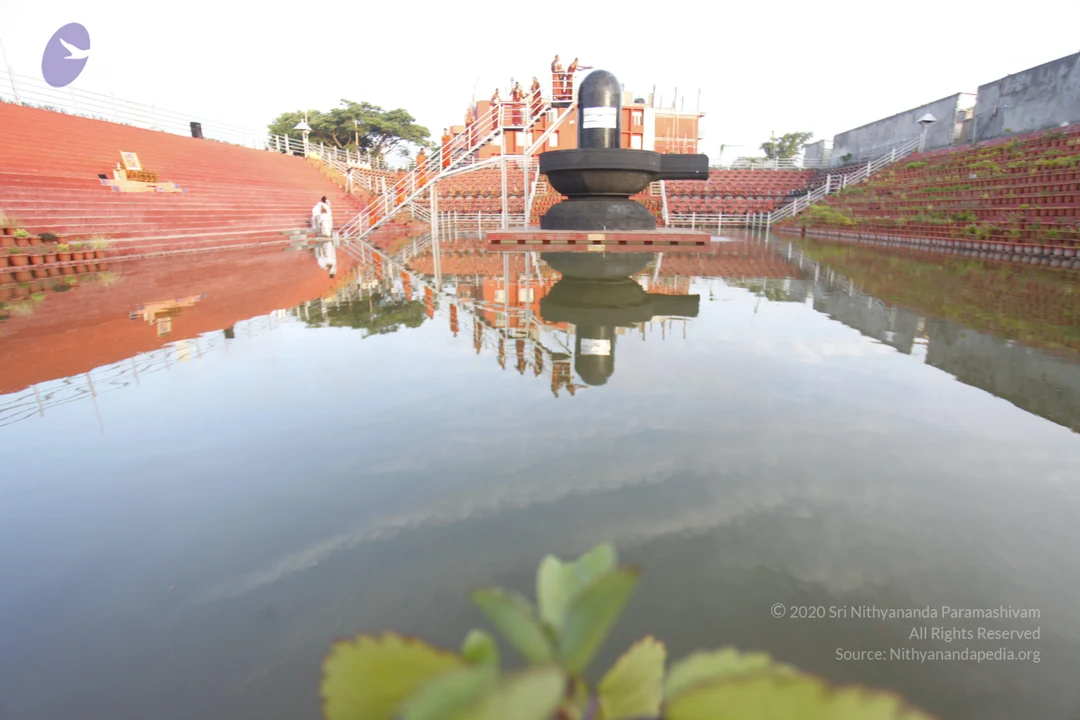
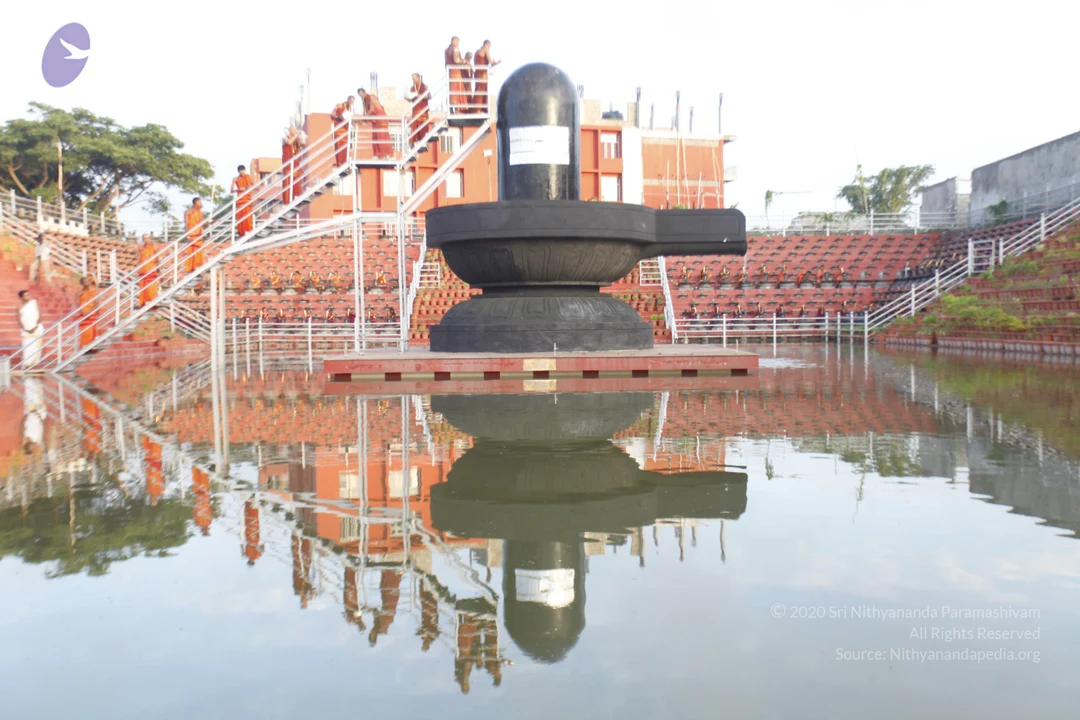
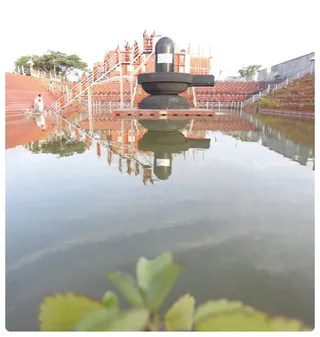
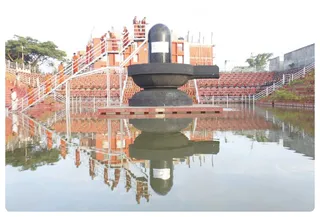
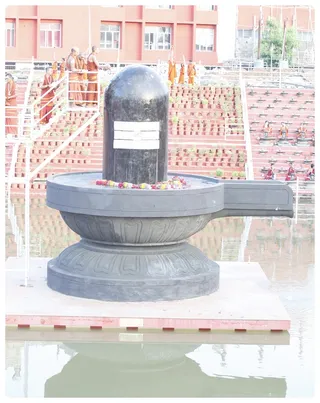
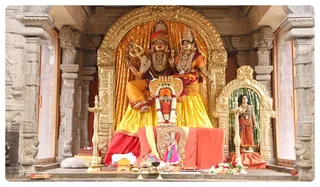
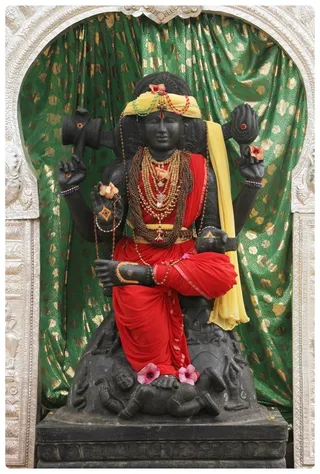
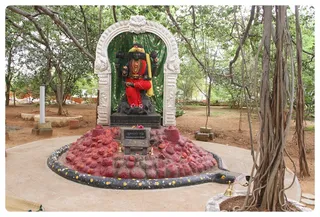
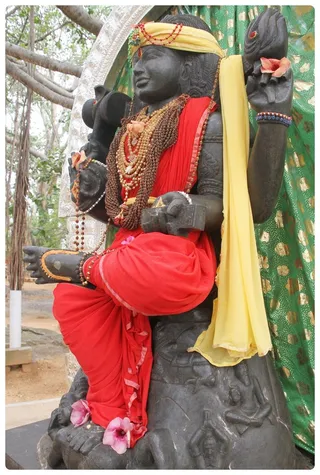
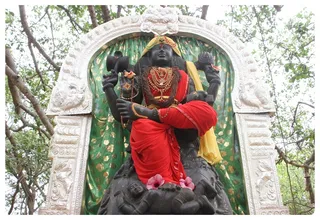
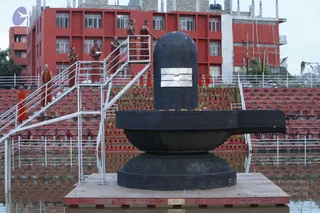
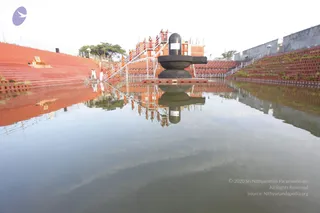
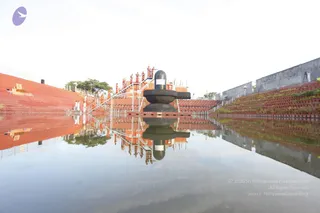
A large black stone Shivalinga stands on a tiered black pedestal at the centre of a still reflecting pool, its image mirrored in the water. Red-brick stepped embankments and white railings frame the pool, with a red-brick structure and a few small figures in white on the stairs behind the lingam. On the left, a single person in white clothing stands at the water's edge on the red steps. Green leaves overlap the lower foreground. The scene reads as a temple-tank setting for abhishekam-style worship, though no ritual action is clearly visible.A large black stone Shivalingam rises from a black pedestal base standing in still water, its reflection mirrored below. Behind it, tiered red-brown seating steps climb up a terraced hillside, with white metal railings and staircases. Several people in orange and saffron clothing stand on the upper staircase and landing near a multi-storey building, while one lone figure in white stands at the left edge of the water. Trees and a pale sky frame the scene.A large black stone Shiva lingam with its yoni-pitha base stands on a platform in shallow water, decorated with a red and white flower garland at its base. Behind it, a tiered red stone stepped structure holds rows of small oil lamps, and several people in saffron-orange robes stand on a raised railed platform and along the steps at the back. Two figures in saffron are visible on the left, and a few more in orange robes stand near the top right, with a red brick building behind them. The image is a photograph of the lingam and temple setting with the reflection visible in the water.Interior shrine of a temple with carved stone pillars and gilded arched niche. Two large deity murtis, a male and female pair, sit on a raised pedestal draped in yellow and red cloth, wearing garlands and ornaments. Brass oil lamps stand at the sides, with a brass kalasha, flower offerings, a small pot and a red-and-gold decorated seat in front. A standing female figure in a green-framed niche to the right. No people are visible.A dark stone murti of a four-armed deity seated cross-legged on a rocky base, set within a silver-framed arched niche draped with green cloth patterned in gold dots. The figure wears a yellow headband with a red flower, layered beaded necklaces and rudraksha-style malas, a red dhoti-like garment and a yellow shawl draped over one shoulder. Two hands hold a trident-like staff and a drum-like object, while other hands are adorned with red flowers and bracelets. Pink flowers rest at the base beside small carved figures. No people are visible; this is a statue shown in a temple shrine.Outdoor photograph of a shrine in a leafy garden. A black stone deity murti, dressed in a red garment with a yellow sash and red-and-gold necklaces, sits in an arched white stone niche draped with green cloth. Before it stands a large mound of red, rounded stones or kumkum-covered pieces on a circular stone platform edged with black and gold dots. Small brass bells and a brass lamp lie at the base. Tall banyan roots hang on the right and mango-like trees surround the area. No people are visible.

Photos

2 photosSource gallery
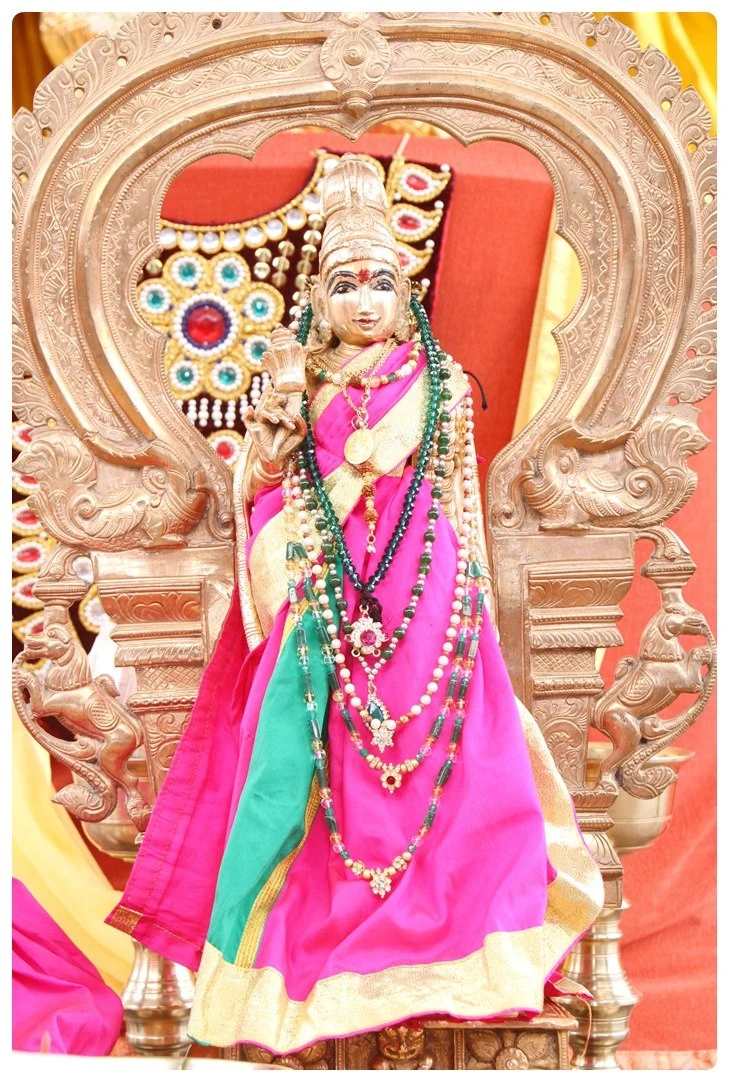
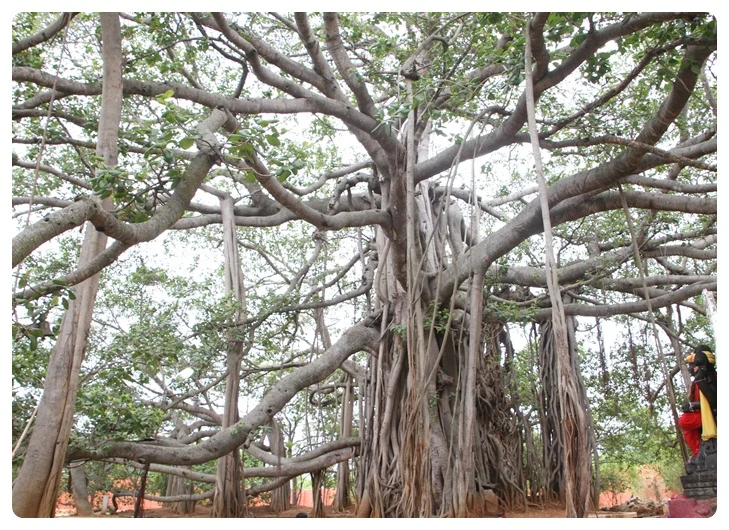
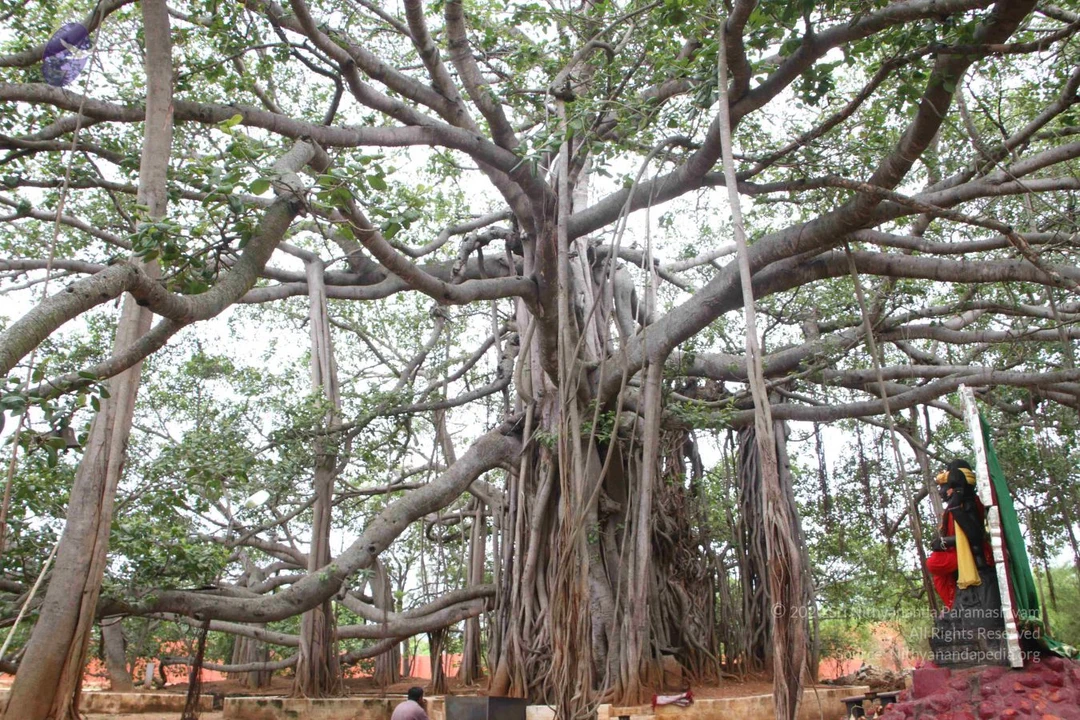
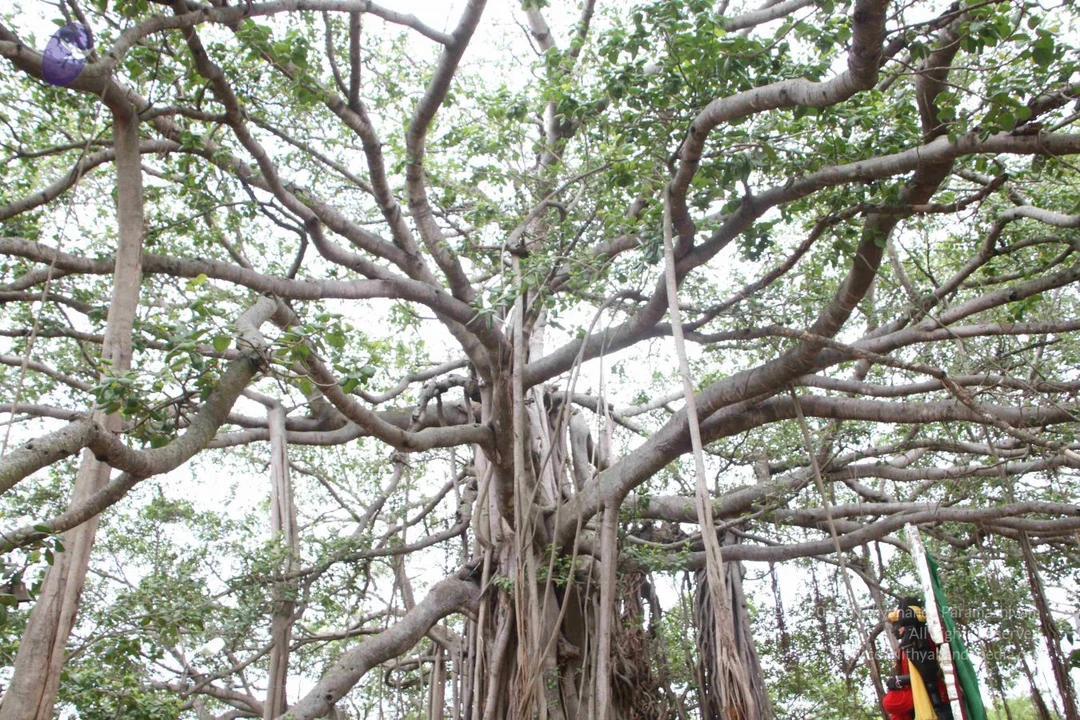
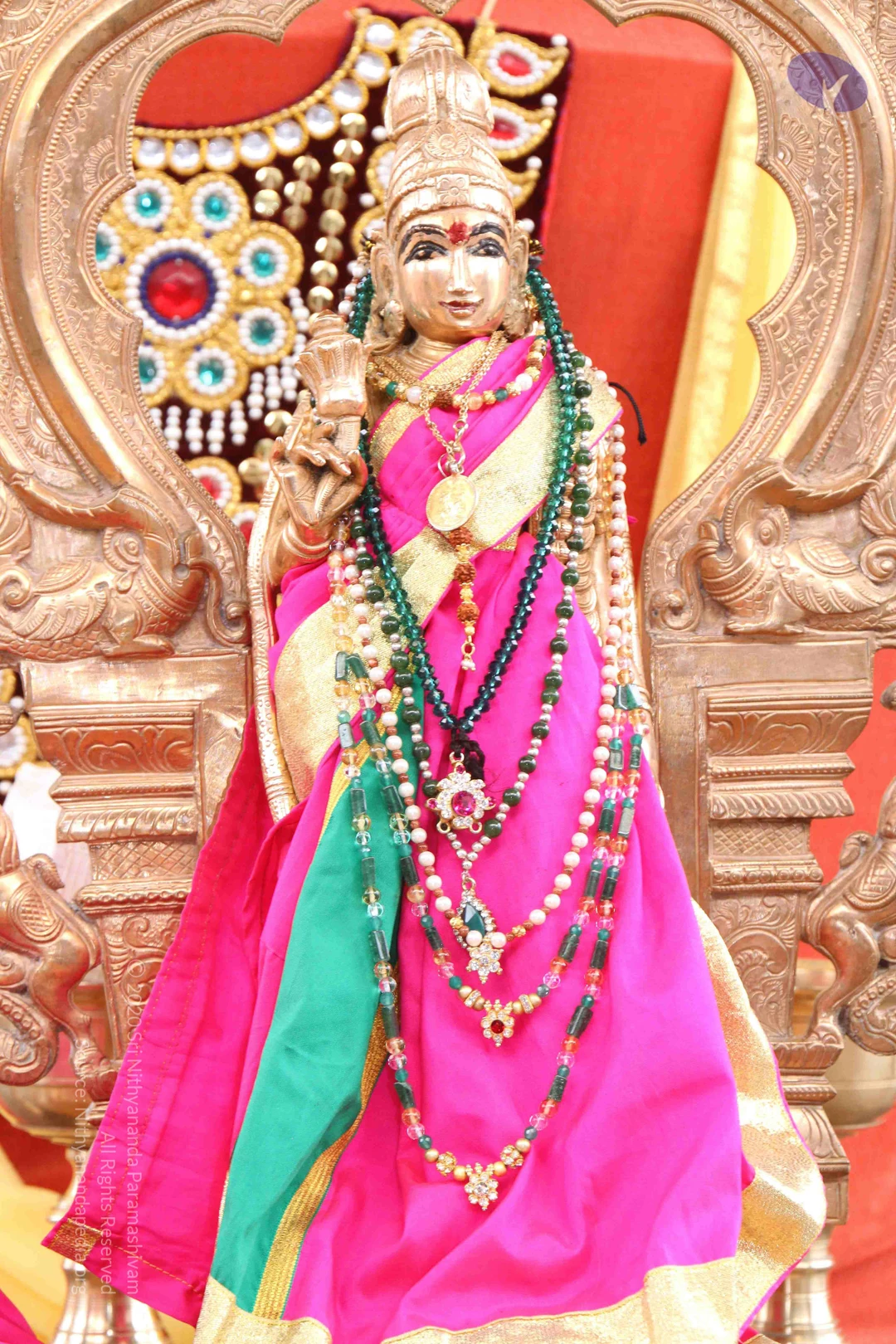
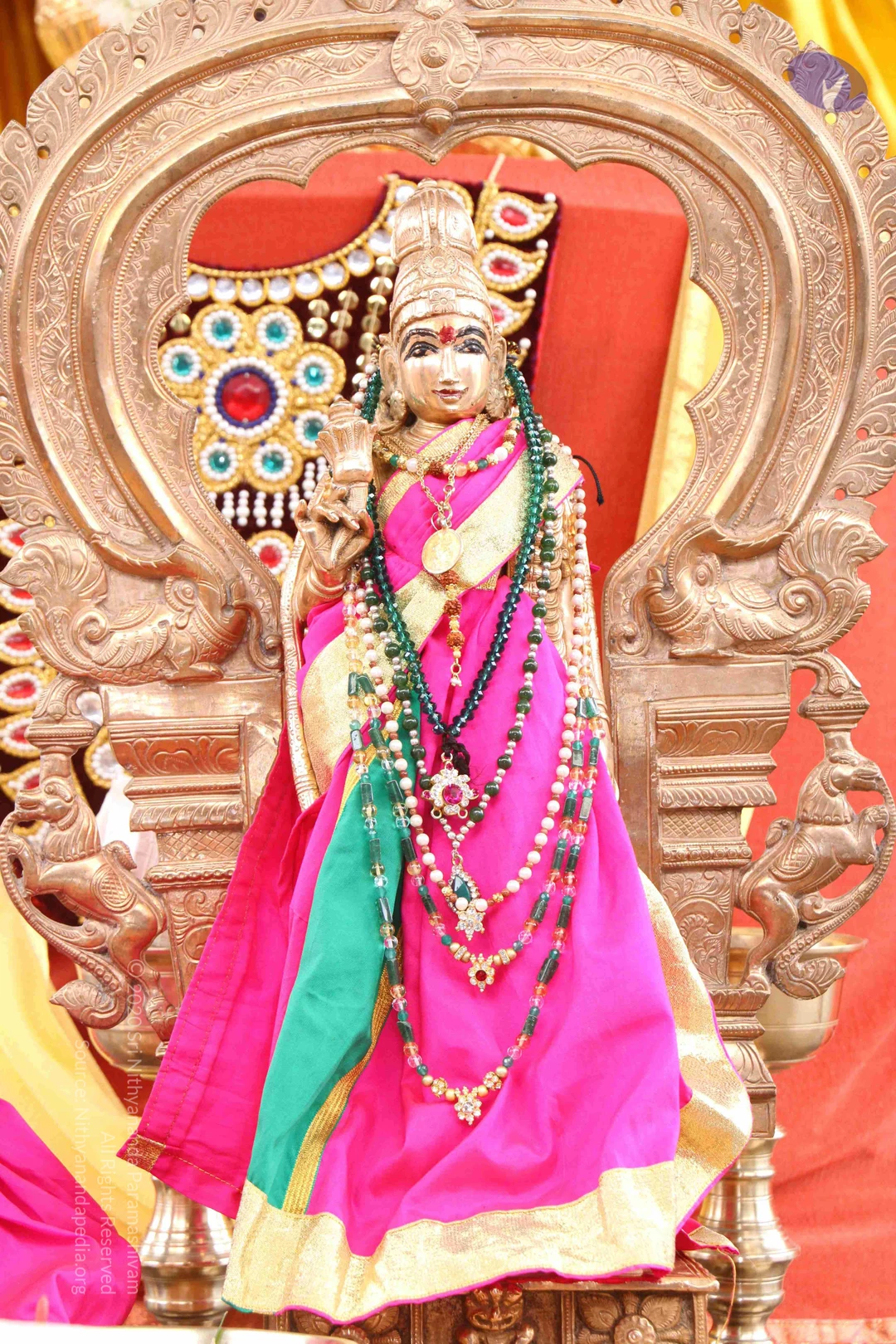
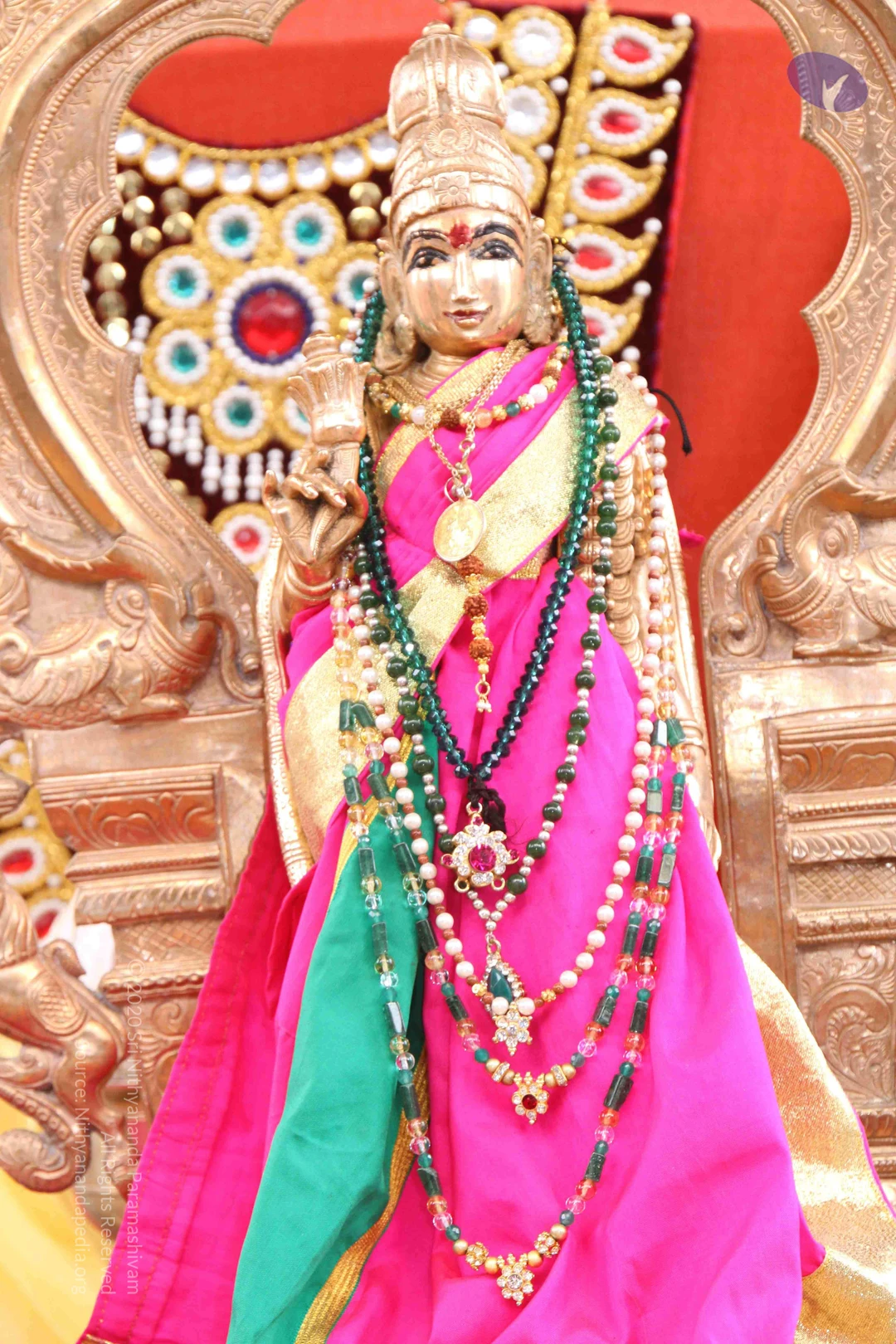
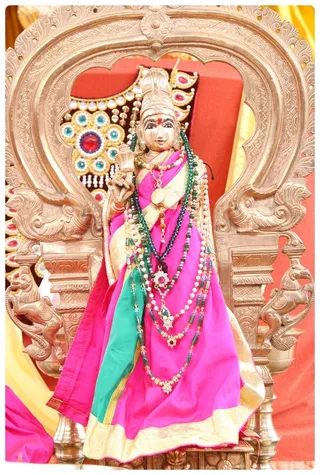
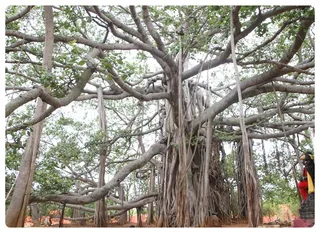
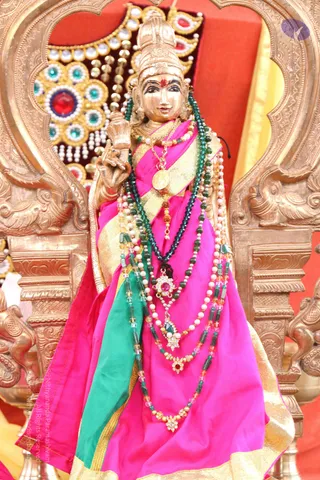
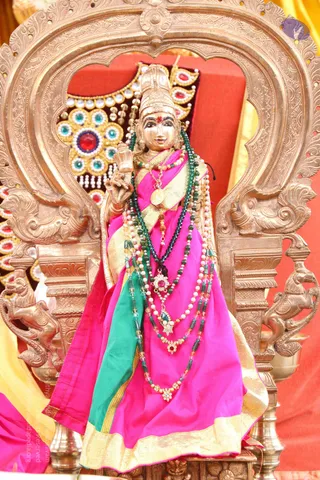
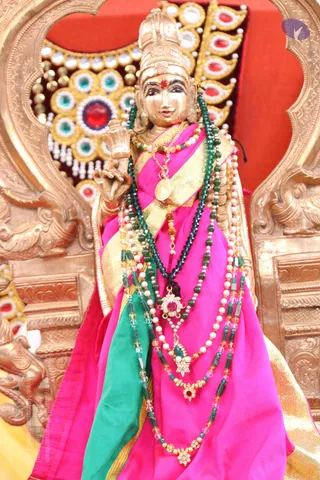
A photograph of a carved wooden or painted murti of a female deity standing within an ornate golden arched throne frame with carved lion-like figures at its base. The figure wears a magenta and green sari with gold border, layered strings of green and white beads, a gold pendant, and a red bindi on the forehead. A jeweled backdrop with red and green gems and gold-trimmed red cloth frames the figure. No physical people are visible.A large, sprawling banyan tree dominates the frame, its many thick horizontal limbs spreading across the sky and dense green leaves forming a canopy. Numerous aerial roots hang down and merge into multiple trunks around a central trunk. At the lower right edge, a small shrine-like structure is visible with a figure partly showing red and yellow cloth. The ground beneath is reddish-brown earth. No people are visible.

Photos

6 photosSource gallery
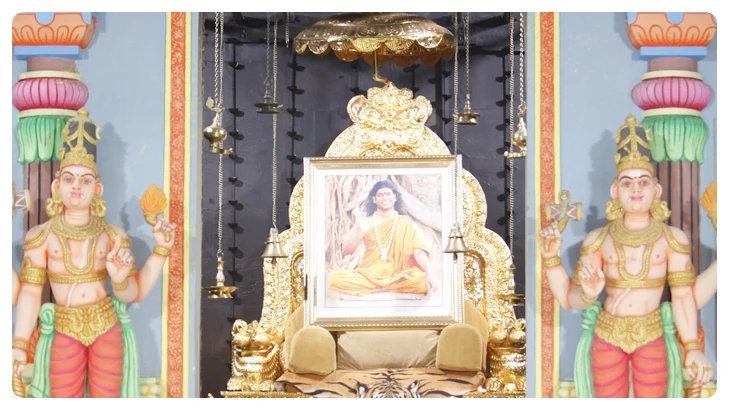
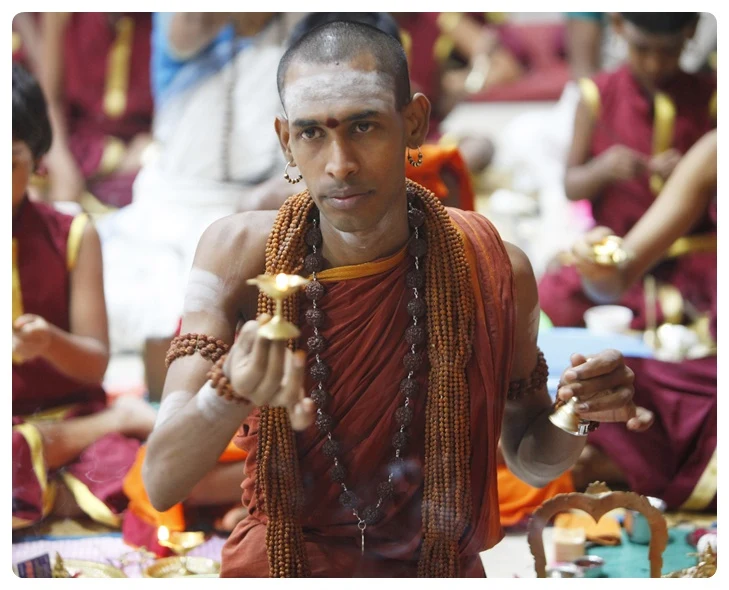
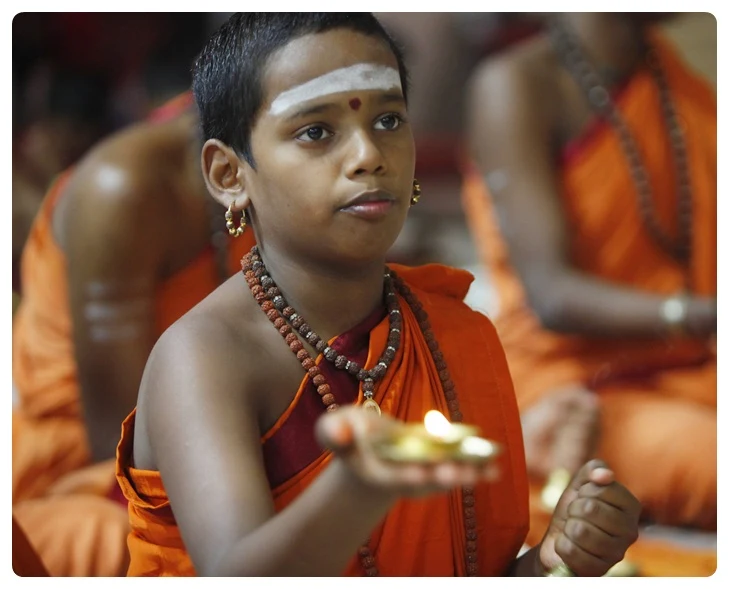
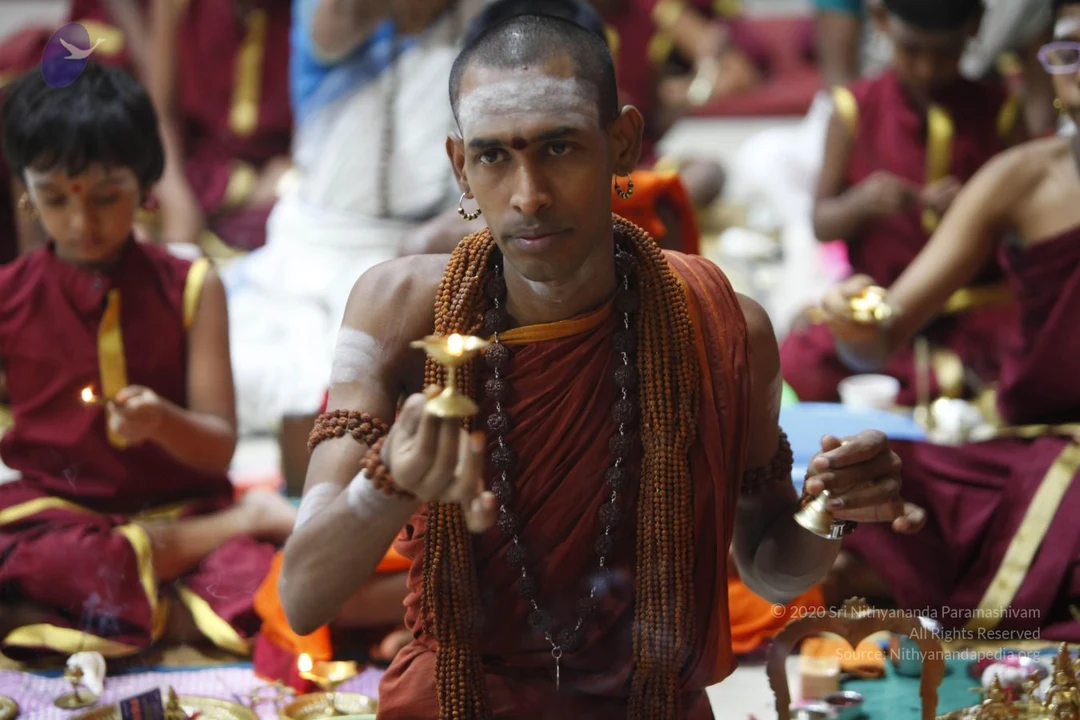
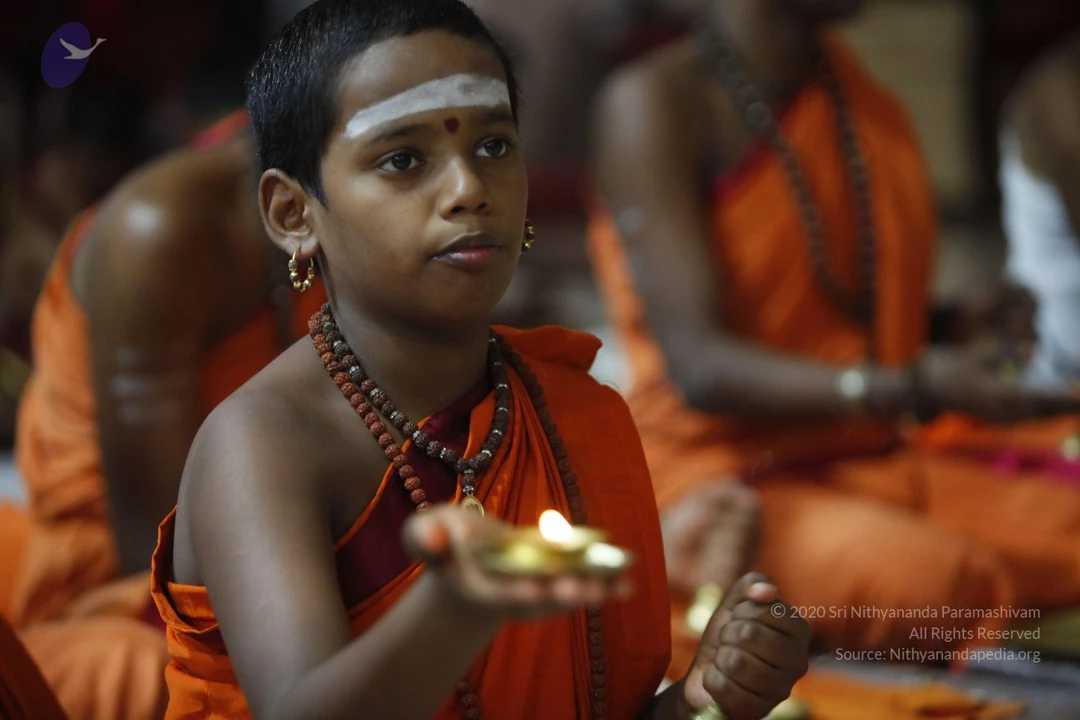
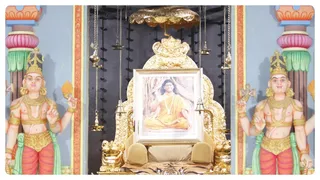
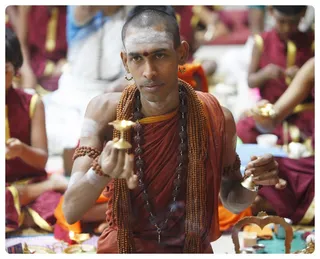
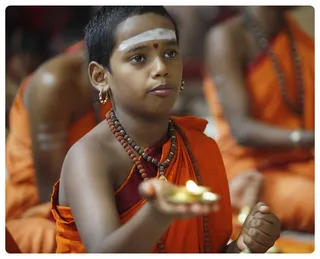
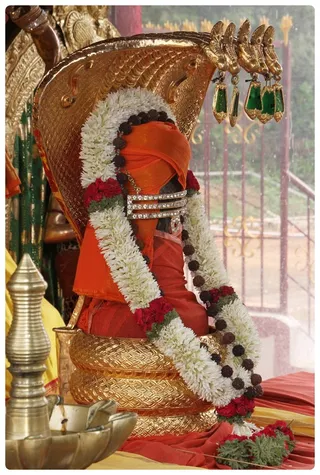
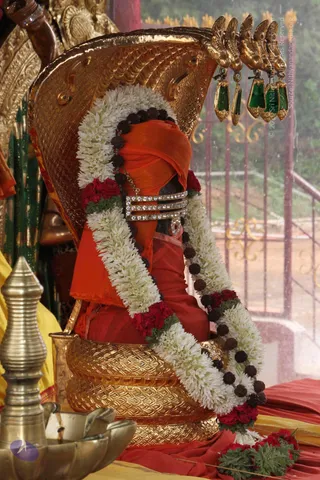
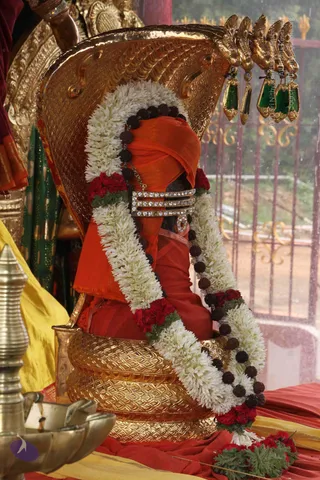
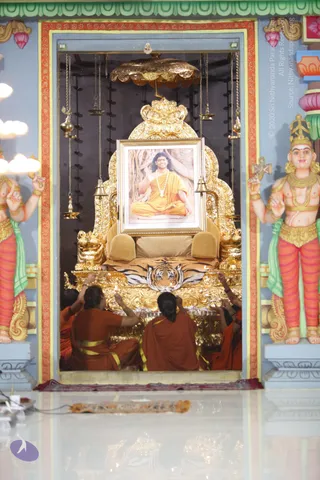
A framed portrait of a seated man in saffron-orange robes and a beaded necklace sits on a gold-ornate throne with a tiger-skin cushion beneath a gold canopy and hanging bells. Flanking the throne are two painted standing deity murti figures with gold crowns, multi-armed ornaments, gold necklaces and red-and-gold lower garments against blue pillars. No living people are visible.Photo of a ritual scene with a central man in a rust-red saffron-toned robe and orange shawl, shaved head with white and red tilak marks, rudraksha malas around neck and wrists, holding a brass oil lamp (aarti) in one hand and a small brass bell in the other. Seated devotees in maroon and gold-bordered garments surround him with brass lamps and vessels on a cloth-covered floor. Partly visible brass tray with a figure at lower right.A young boy with a shaved head, a white vertical tilak and a red dot on his forehead sits in the foreground holding a small brass oil lamp with a lit flame in his right hand. He wears a saffron-orange cloth draped over his bare shoulder, a dark red undergarment, a rudraksha mala around his neck, and gold earrings. Behind him, other people in saffron and orange robes with rudraksha malas sit in a blurred temple setting, consistent with an oil lamp offering during a ritual.Close photo of a seated figure on a golden cobra-hood throne, the hood rising behind with carved snake heads and green gem-like pendants hanging below. The figure wears an orange-red cloth wrapped over the head, a wide band of diamond-like studs across the forehead, and an ornate silver-and-diamond ornament. Long garlands of white jasmine and red roses with green leaves drape the shoulders and lap, interspersed with brown rudraksha beads. A brass oil lamp stands at the lower left, and a red cloth covers the base. The setting appears to be a temple or ritual space with a barred metal gate behind. No other people are visible.A large black stone statue of a deity murti seated outdoors beside a green cloth backdrop with gold spots and a tree behind. The figure wears a red dhoti-style lower garment, a yellow sash draped over the shoulder, a yellow headband with red beads, and multiple layers of rudraksha and bead malas around the neck. Pink flowers adorn the raised hand and the base, and a trident-like weapon is visible at the side. No living people are visible.A dark stone murti of a deity stands in a white carved arch set against a green cloth backdrop with gold speckles, surrounded by trees. The figure wears a red and yellow dhoti-style cloth, layered red and gold necklaces, bangles and an ornate headdress with a red tilak. Multiple arms hold ritual objects, and pink flowers rest at its base beside small carved figures on the pedestal. The setting appears to be an outdoor shrine.

Rudra-Abhishekam

12 photosSource gallery
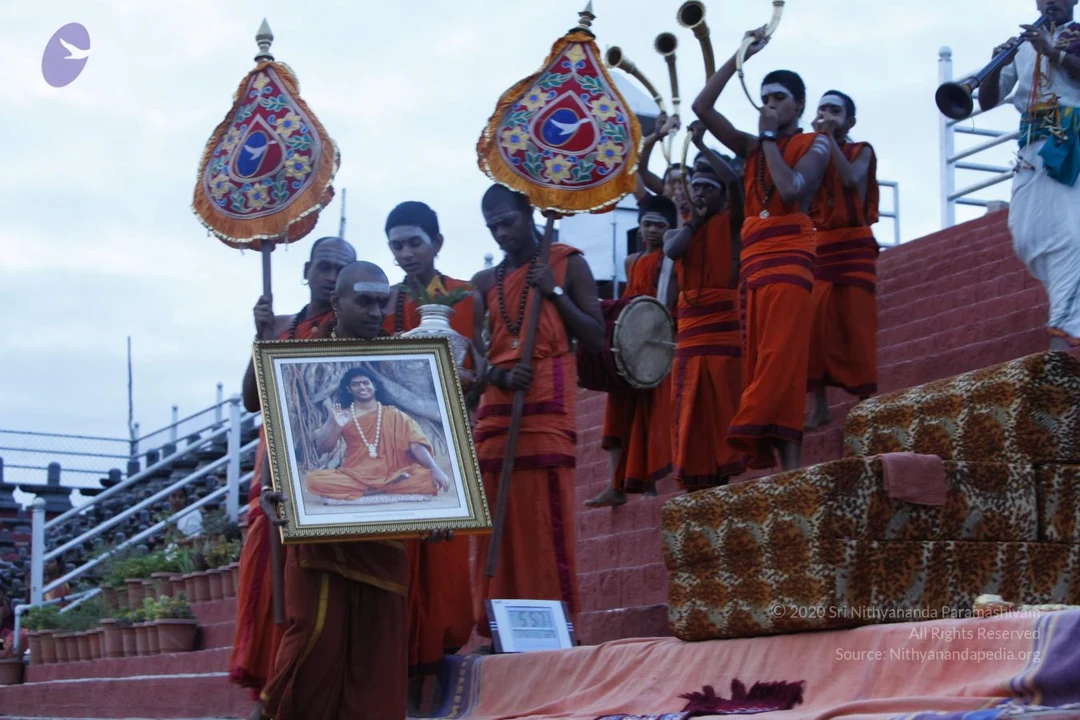
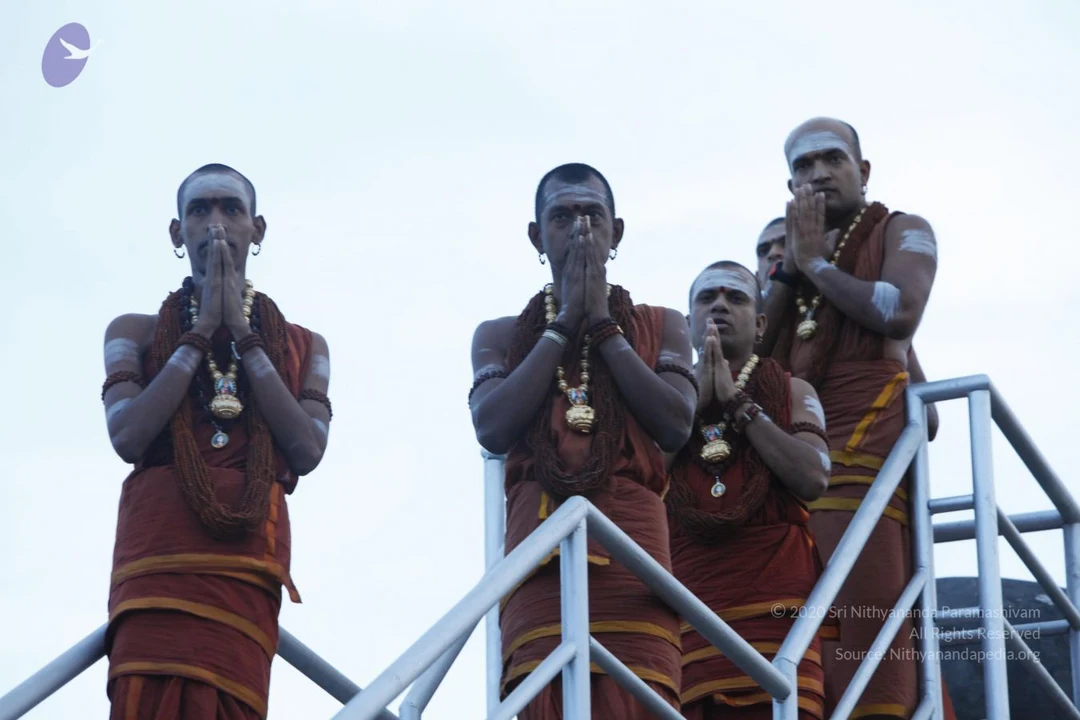
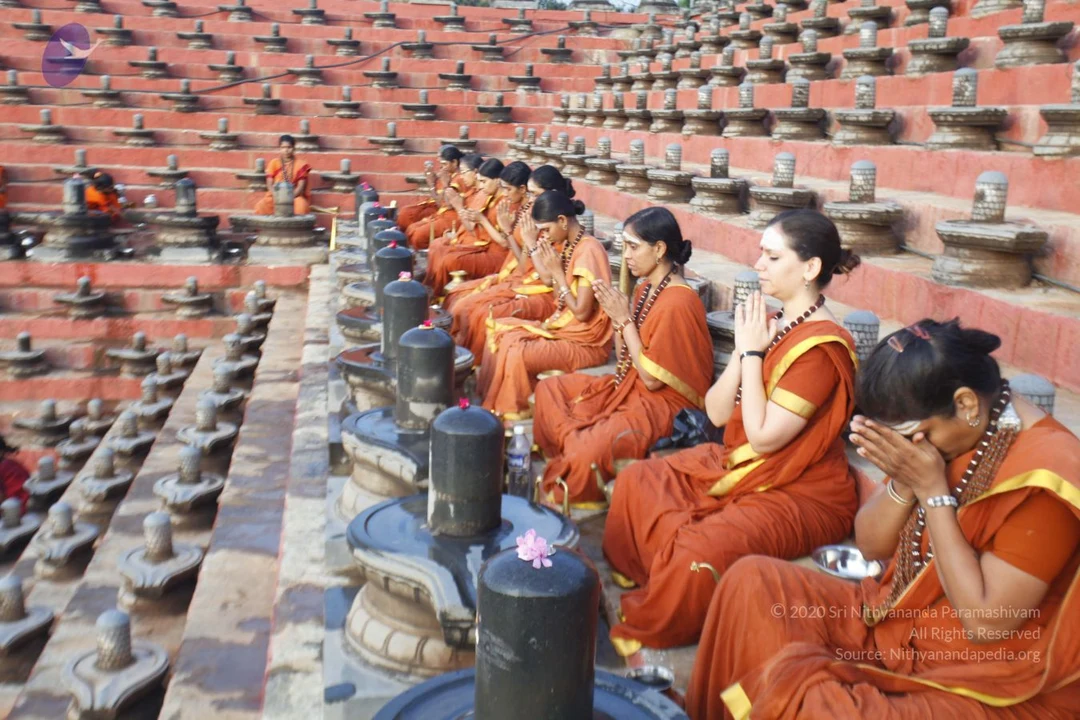
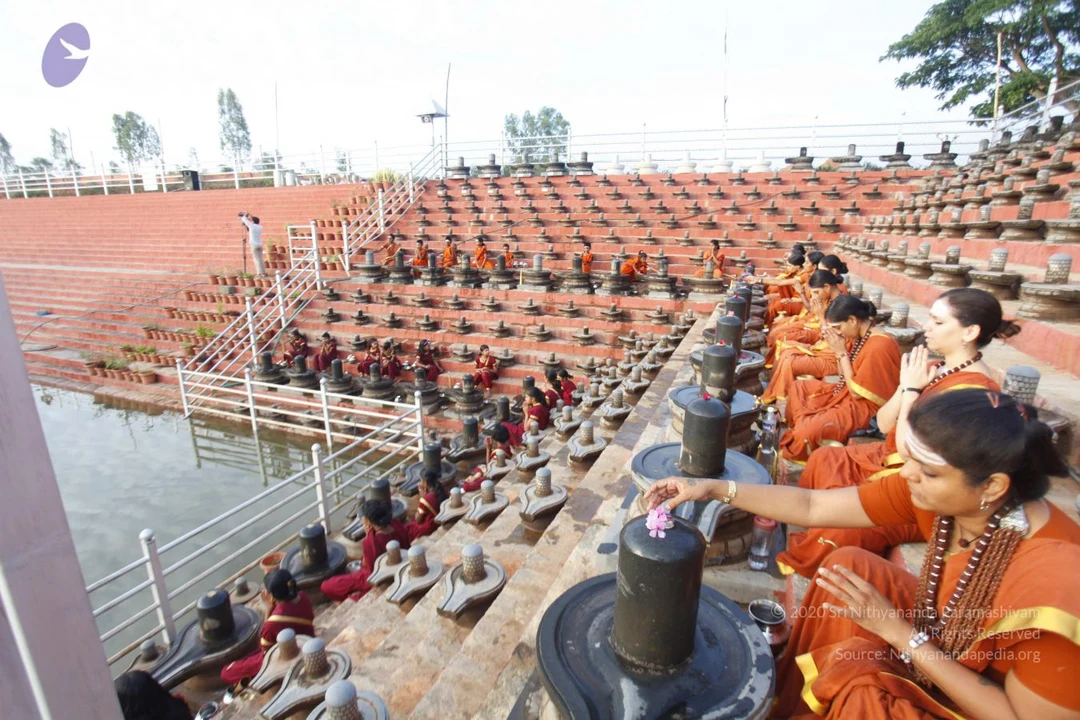
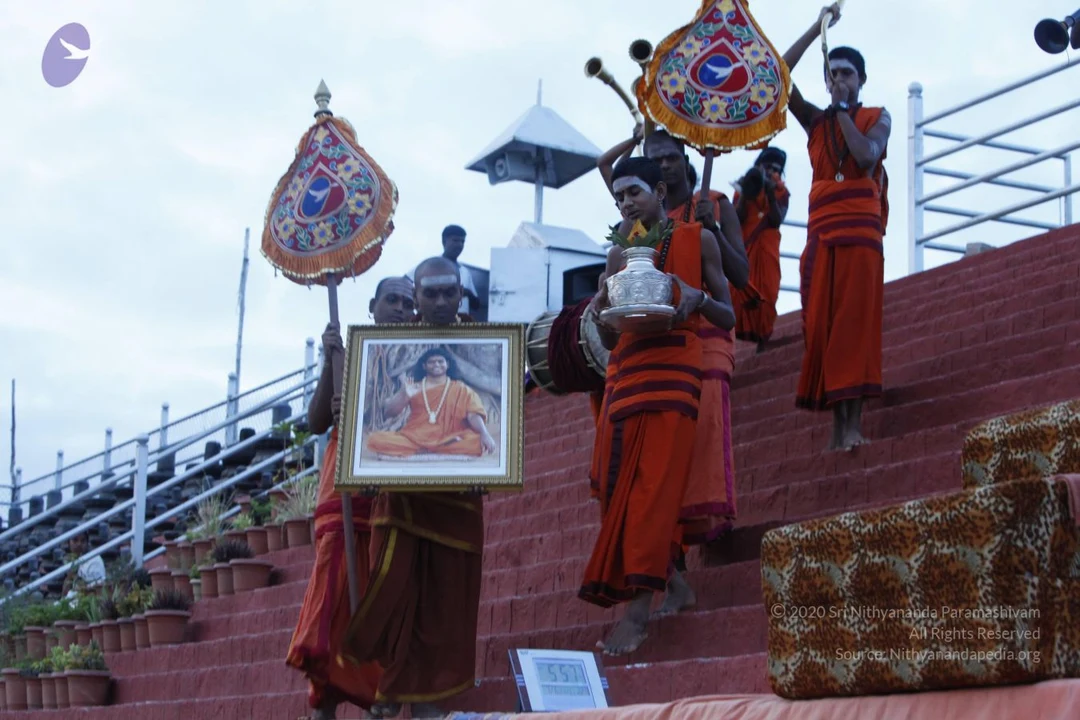
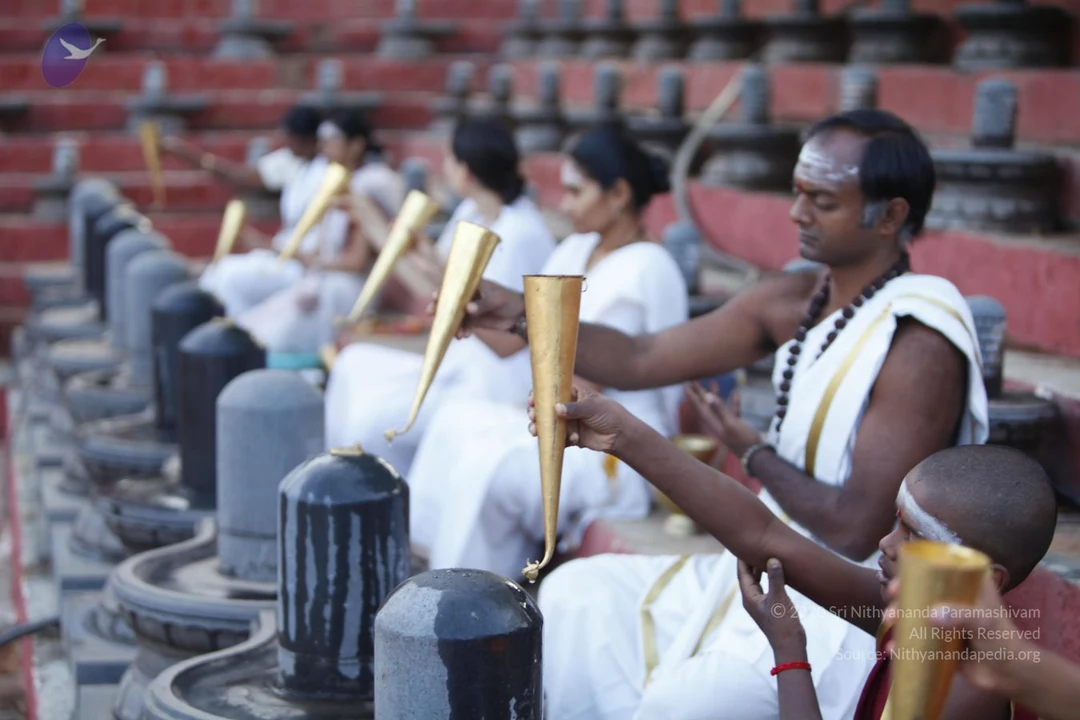
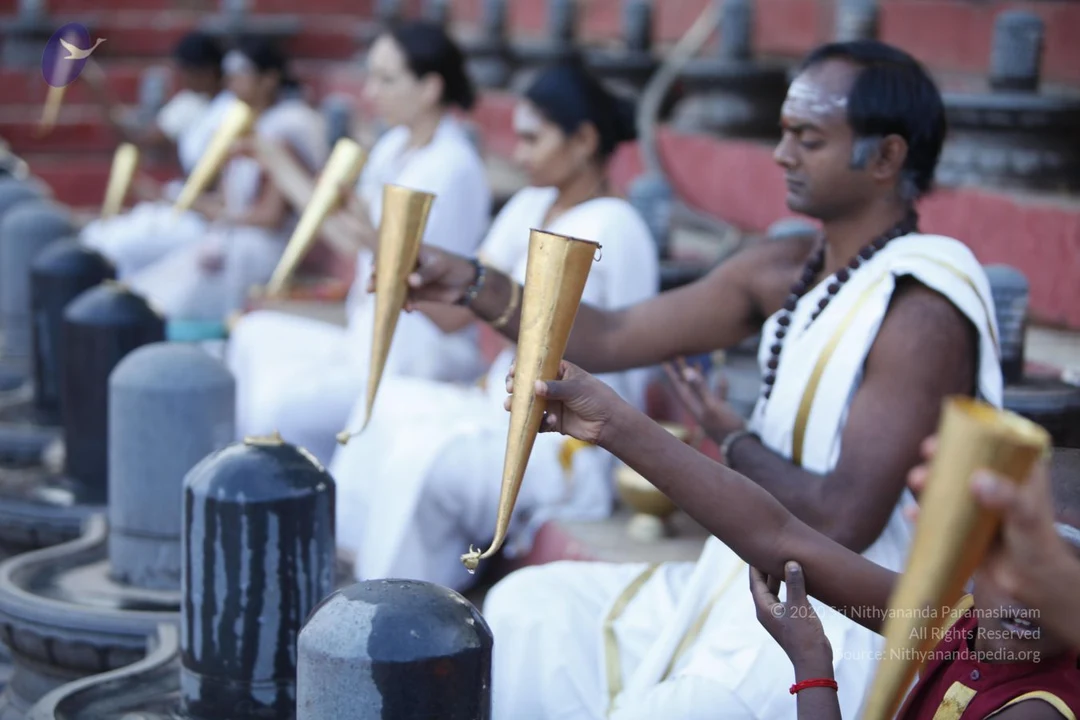
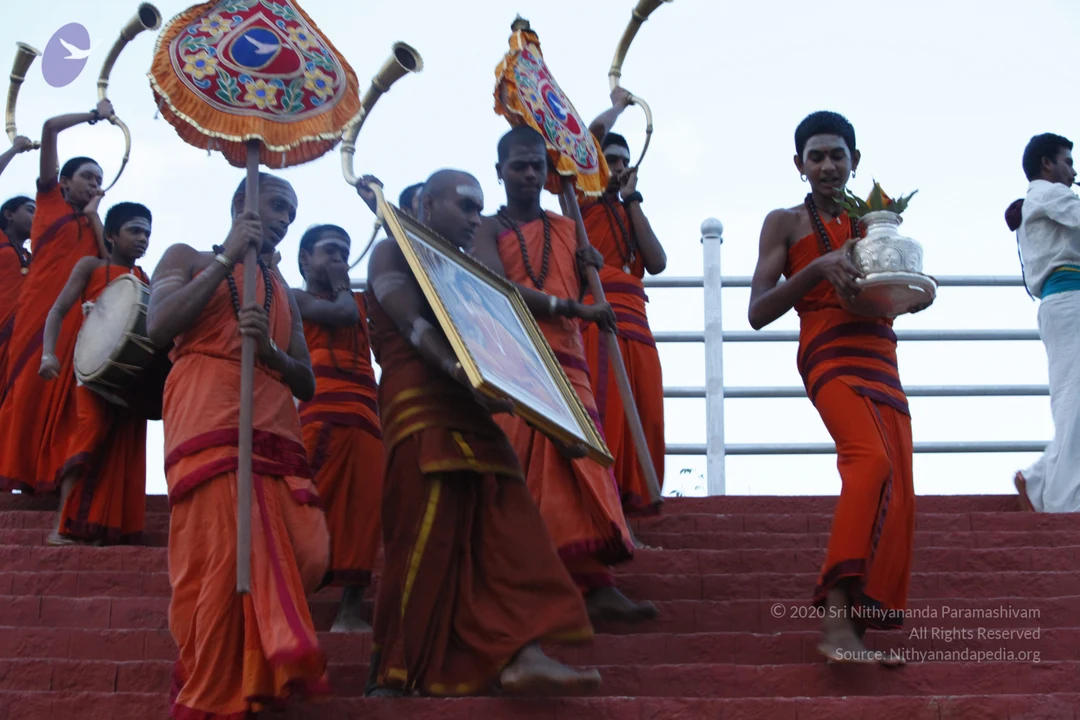
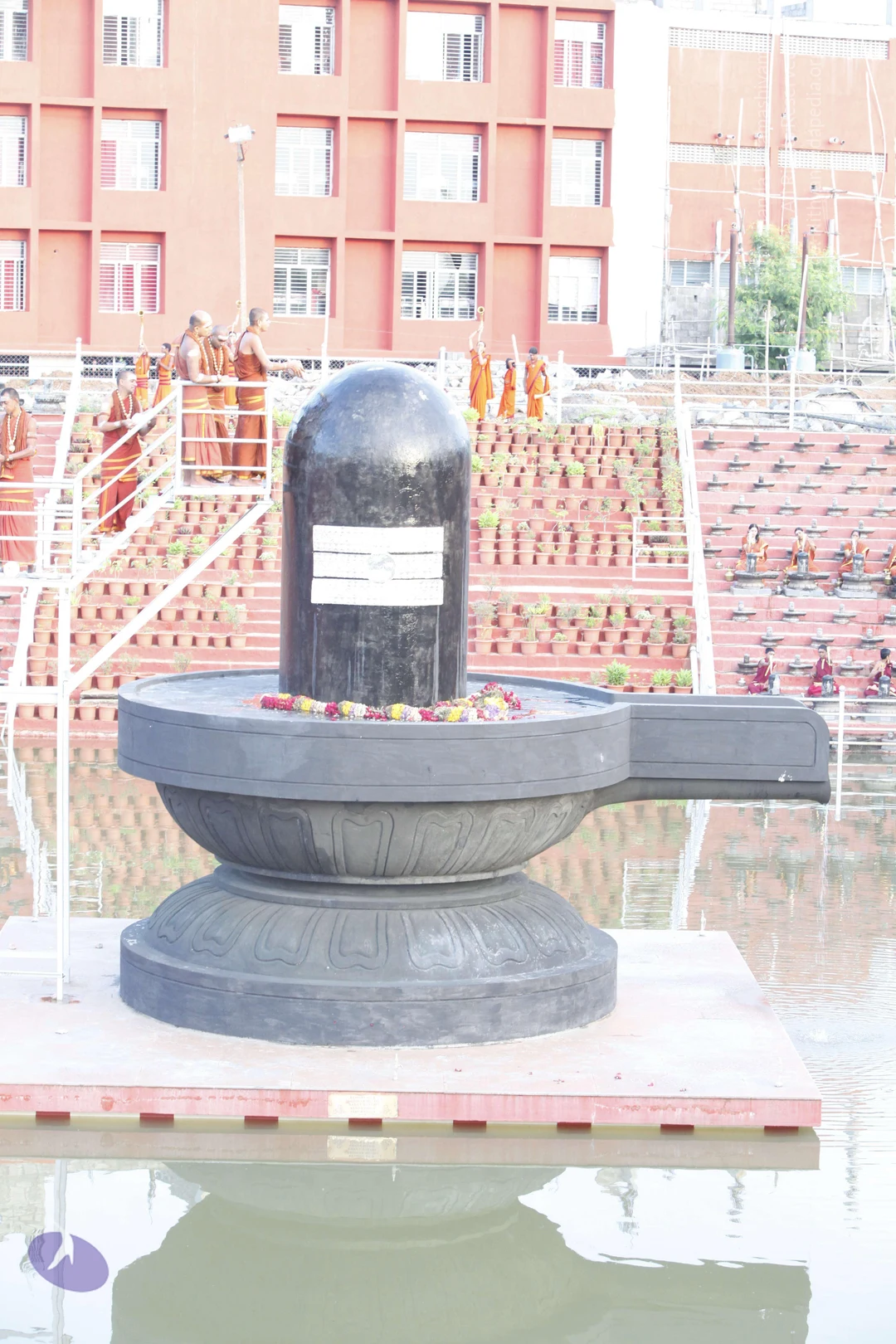
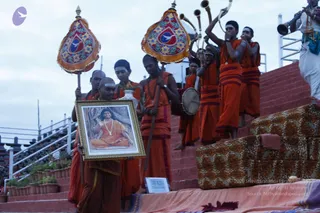
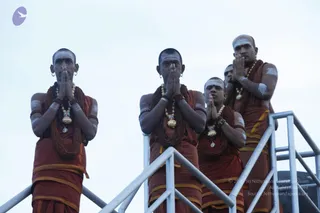
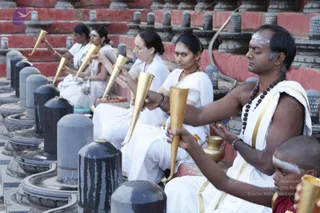
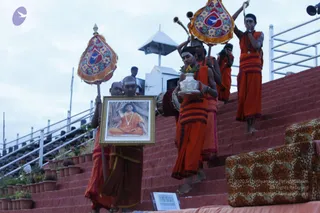
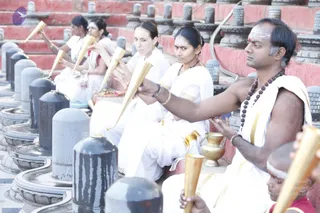
Outdoor procession on a red-brick stepped platform at dusk. A bald man in a rust-brown dhoti holds up a gilded framed portrait of a seated figure in orange robes with a white beaded mala, set against a tree backdrop. Around him, young men in saffron-orange robes with maroon borders carry ornate orange-and-gold ceremonial banners on poles. Players in orange blow long brass horns and a drummer beats a hand drum. A small framed placard sits on the steps and an orange-and-gold cushioned seat is at right. The portrait is a depiction on a printed frame, not a person present.Four shaved-headed men in rust-red sannyasi-style cloth stand in a row on a white metal railing platform against a pale sky, palms pressed together in anjali mudra. Each wears rudraksha malas, gold pendant necklaces and beaded bracelets, with white horizontal tilak and white arm markings. Their pose suggests reverent worship during a ritual.A large black stone Shiva lingam with a silver-plated yoni-pattha base stands on a raised platform in water, decorated with flower petals at its base. Around it, saffron-robed monks stand on metal staircases and railings and sit in rows on the red-tiered steps of a basin, many holding offerings. Behind them is a red multi-storey building with grey construction scaffolding above. A purple logo appears at the upper left. The scene reflects a Rudra abhishekam ritual at a temple basin.A photograph of a Rudra abhishekam at a temple with rows of black stone lingams on a platform with red-painted steps behind. Several devotees in white clothing pour water through long golden funnel-shaped vessels onto the lingams. A bare-chested man in the foreground wears a rudraksha mala, white garment with gold border, and white tripundra on his forehead. Beside him a small child in red pours from a golden funnel, and a brass pot sits nearby.A photograph of a large black stone Shivalinga rising from still water at the centre of a reflecting pool. The linga sits on a square black yoni-peetha base and is reflected clearly in the water. Tiered red-brick terraces with rows of steps line both sides, with a white railing and a set of stairs leading up toward a red and white structure. Two or three figures in white clothing stand near the left-hand steps and a few more appear on the upper terrace near the structure. Grey sky and a green tree are visible at the back.A large black stone lingam on a dark circular yoni-pitha stands at the centre of a tiered red-brick structure, reflected in still water that fills the foreground. Several small figures in white clothing stand on the left-side steps and walkway near the base, and a few more stand along the upper stair railings. Red-brick terraces with white railings frame the water on both sides, and a concrete wall rises at right under a pale sky. A person with a camera stands at the top right corner. The scene is a temple setting centred on the lingam, consistent with Shiva worship.

PadukaPuja

8 photosSource gallery
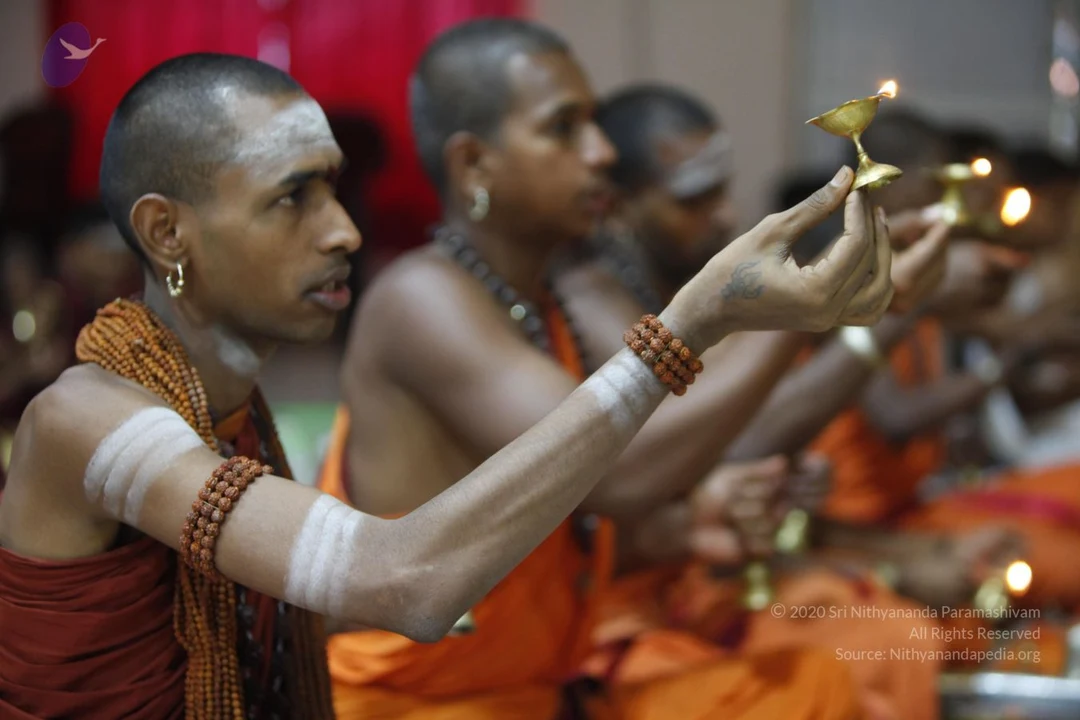
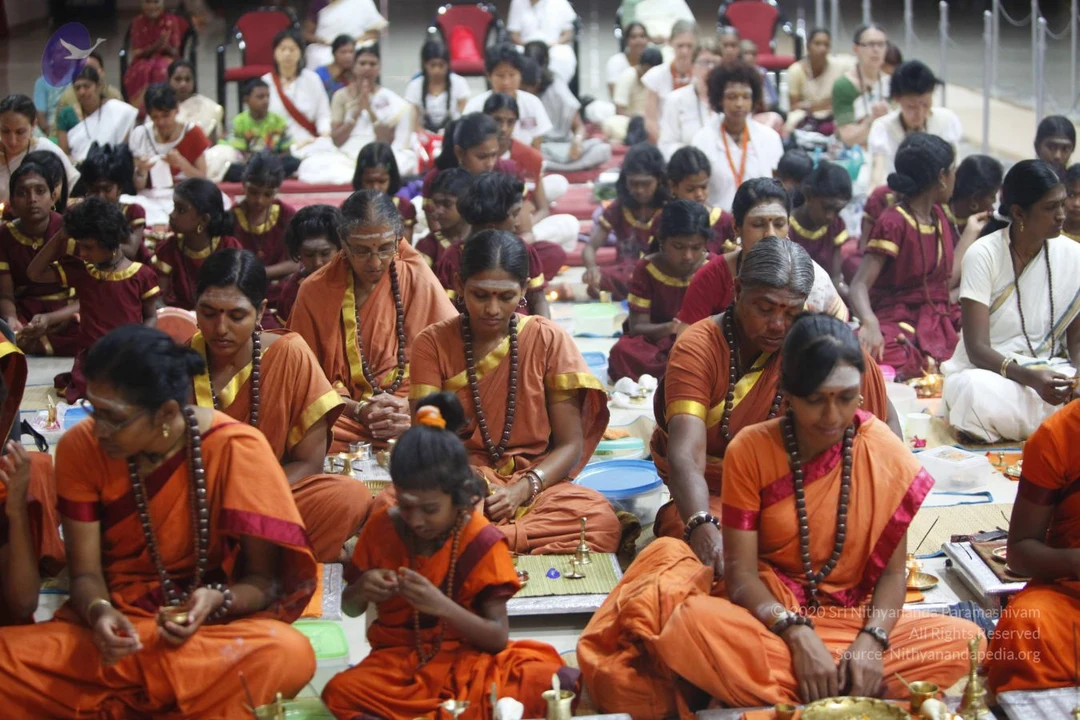
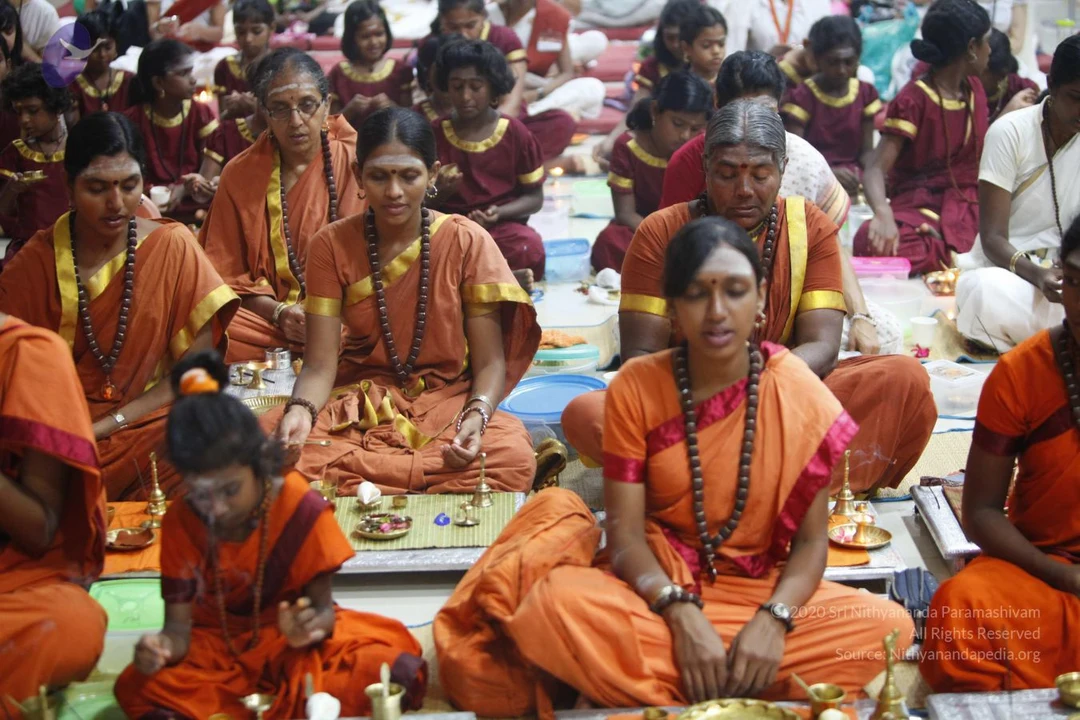
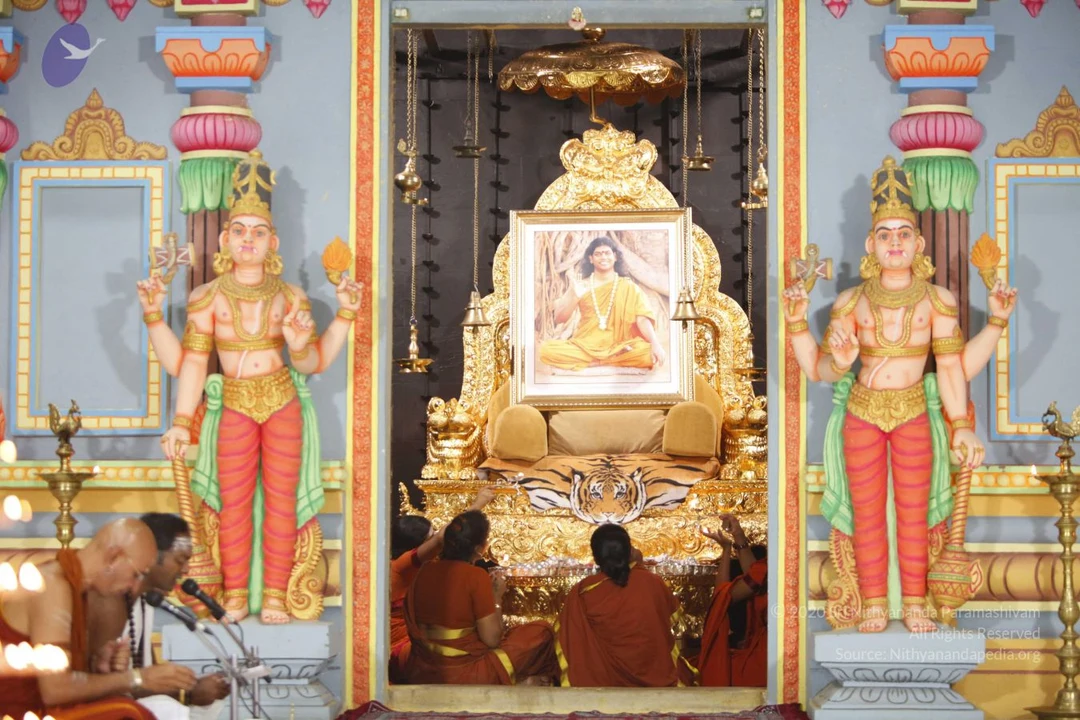
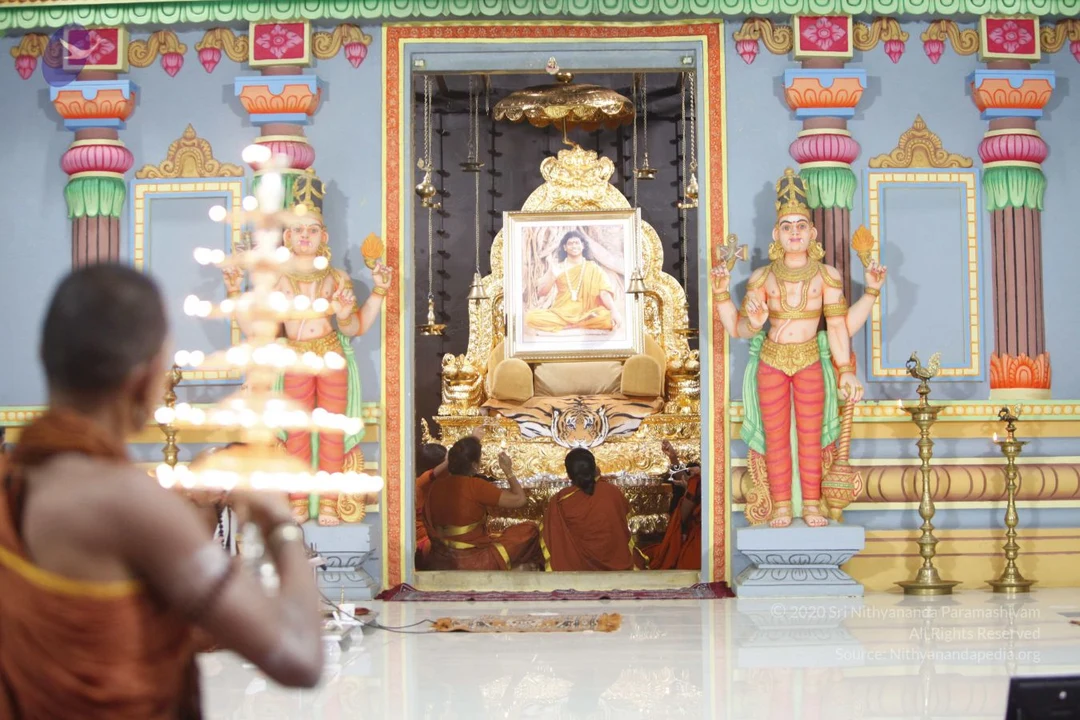
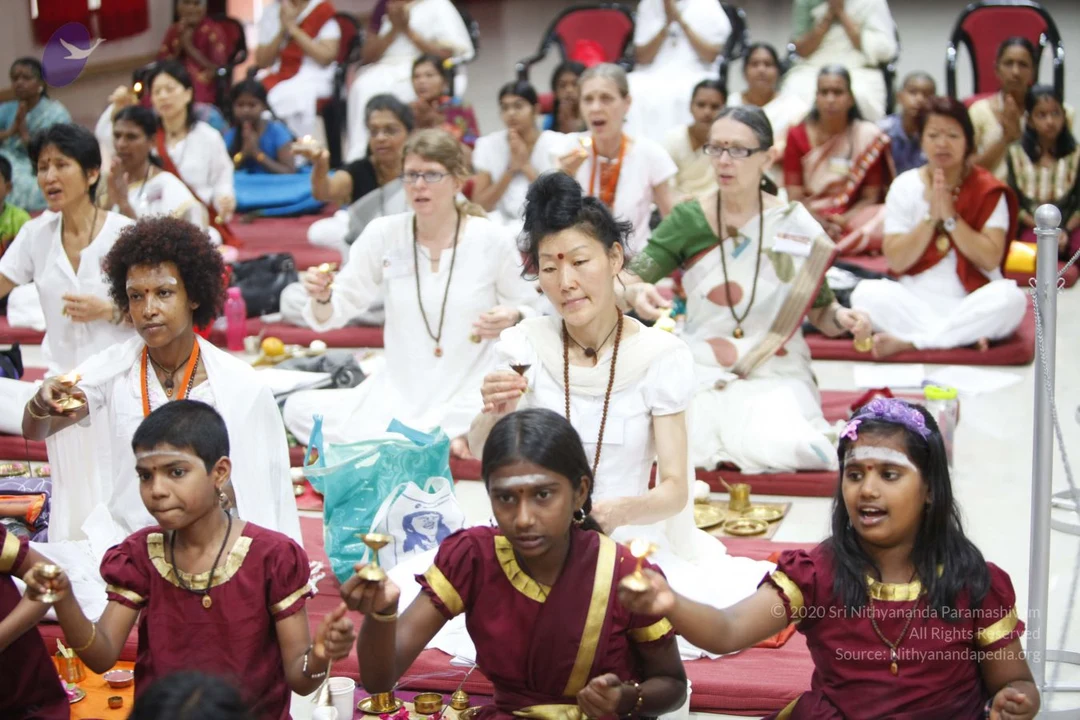
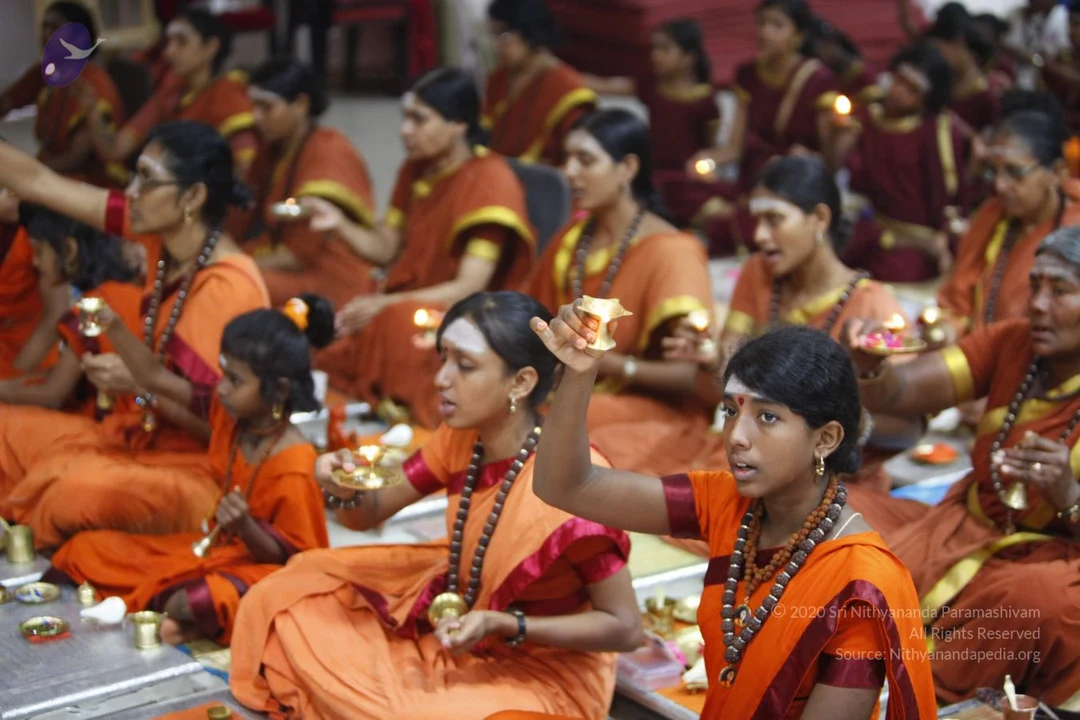
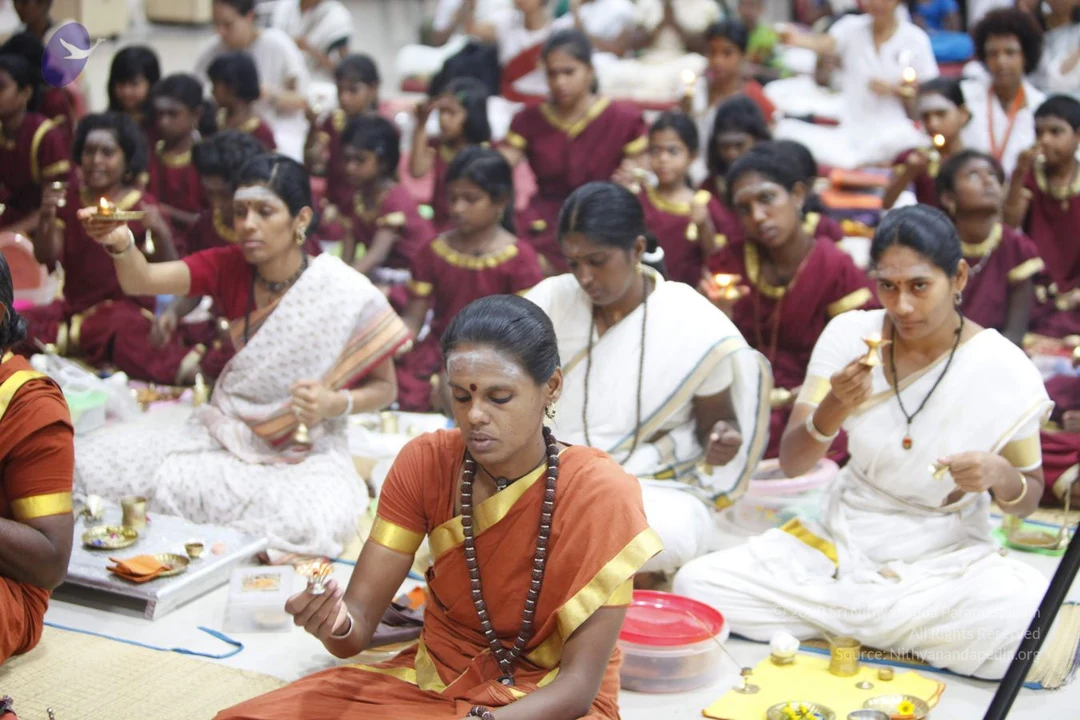
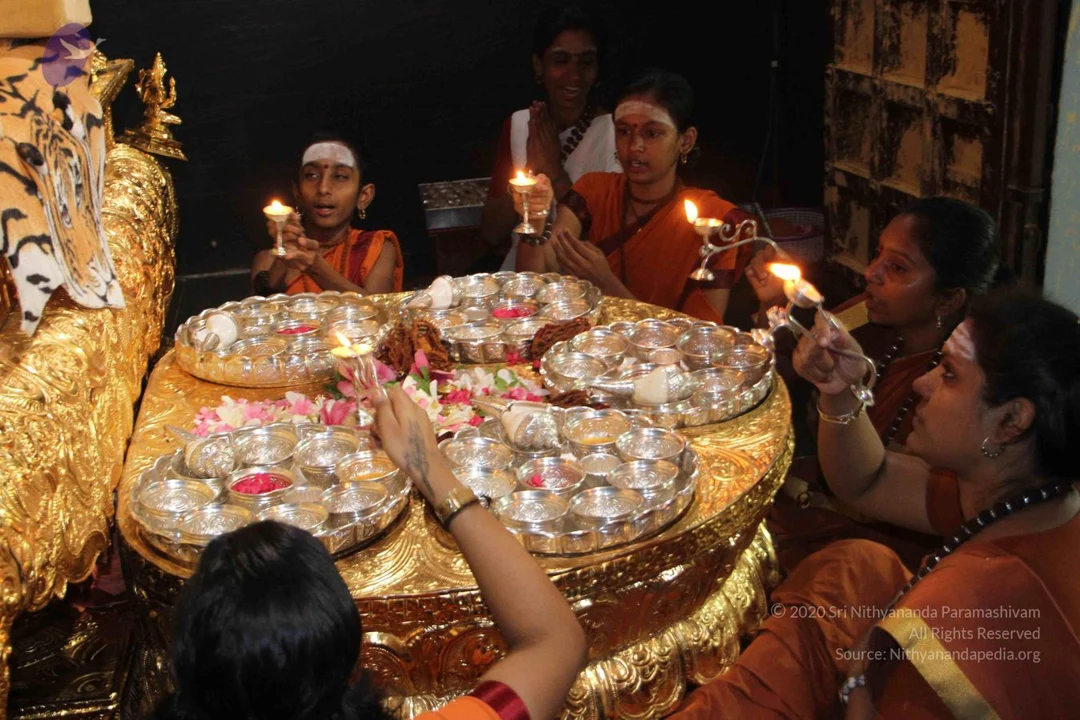
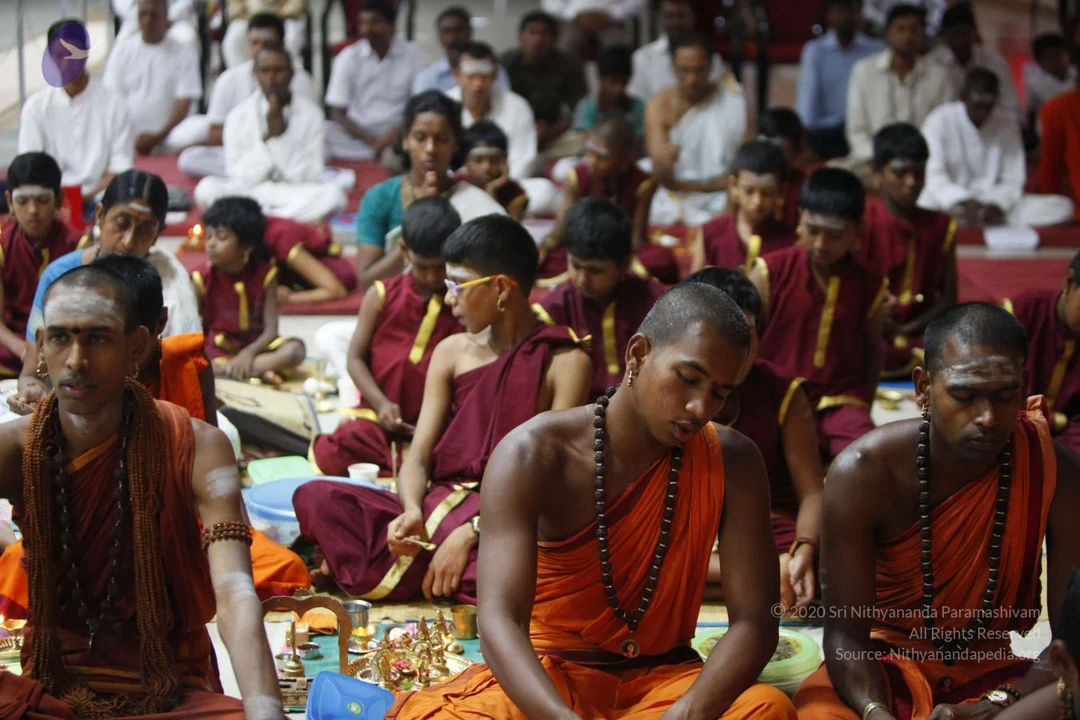
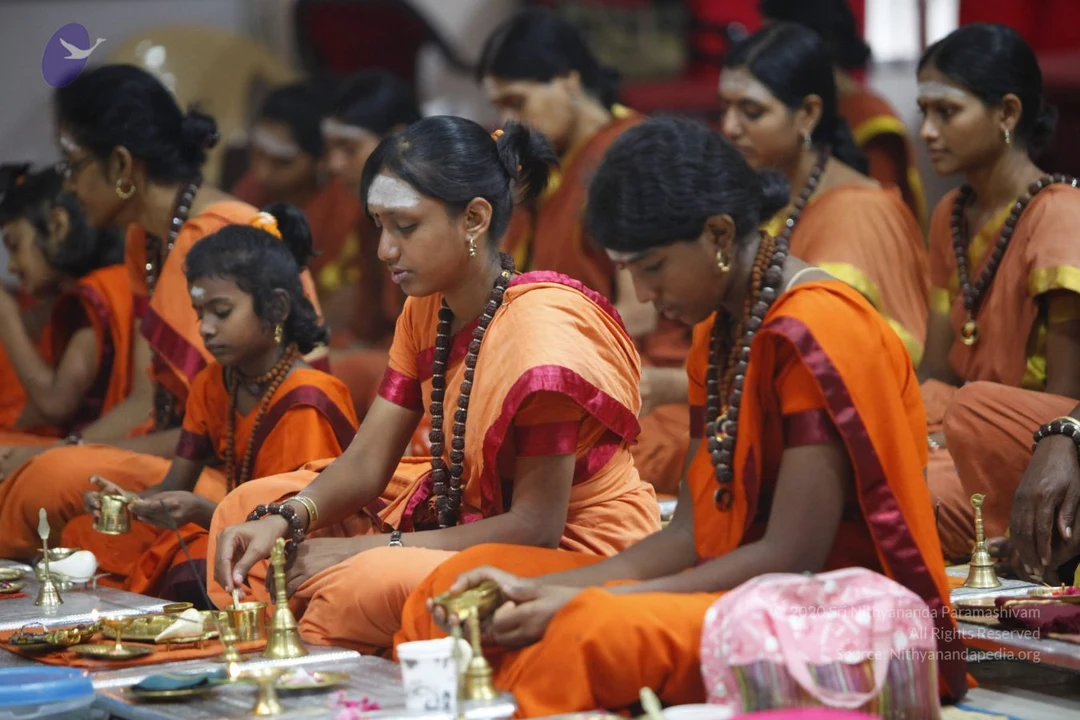
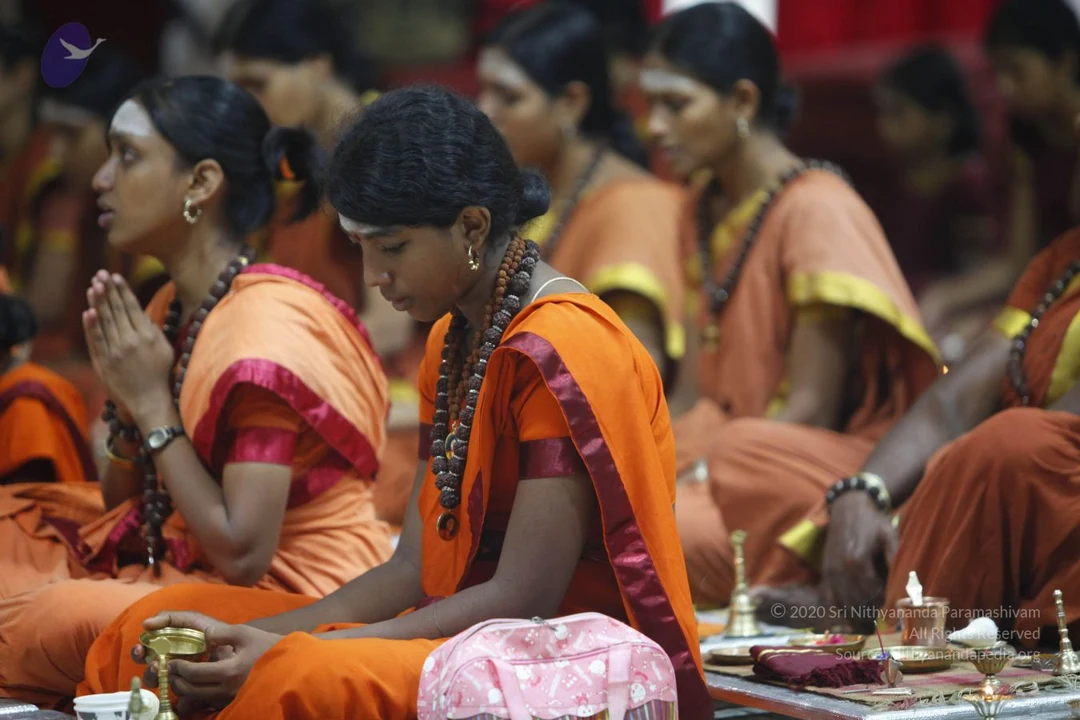
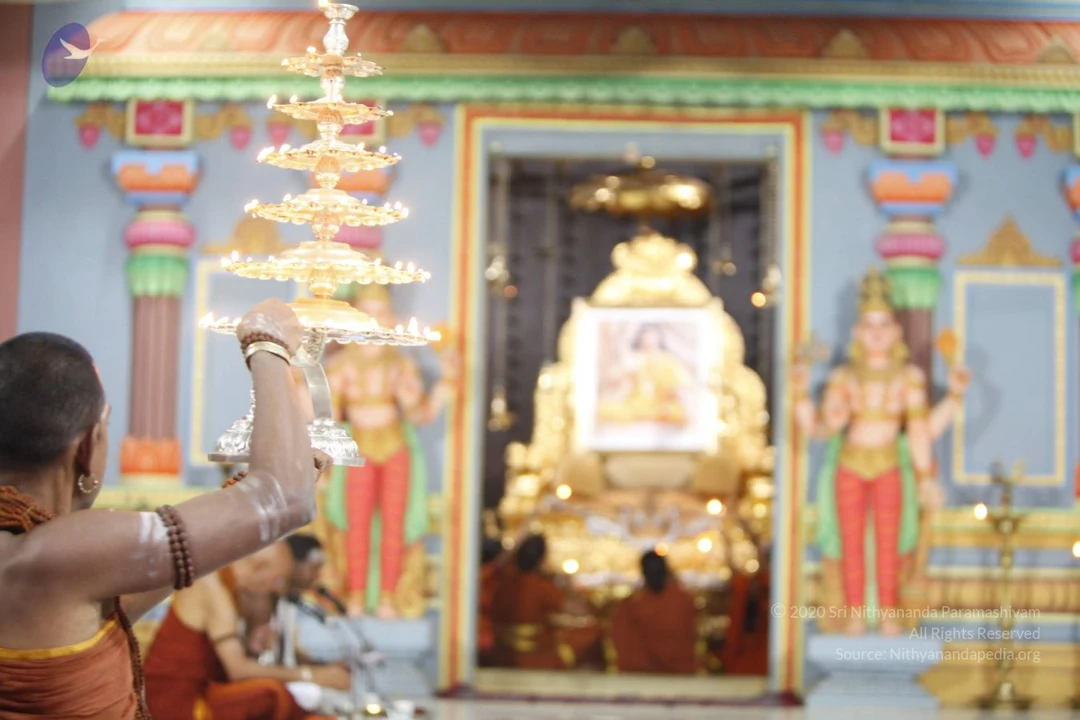
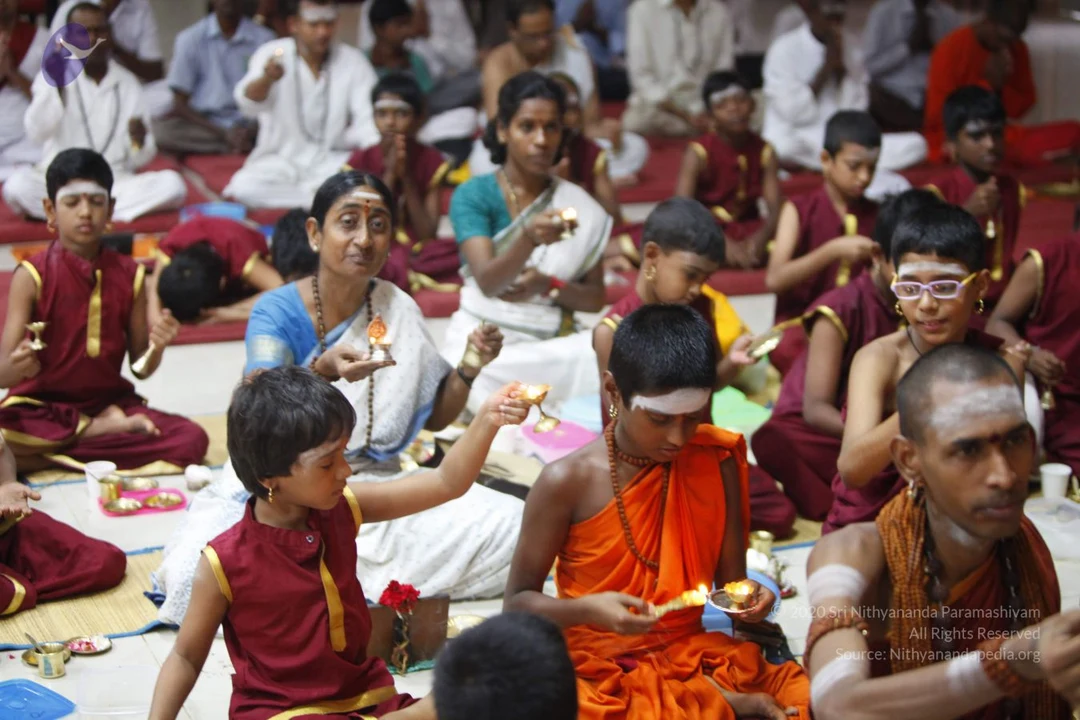
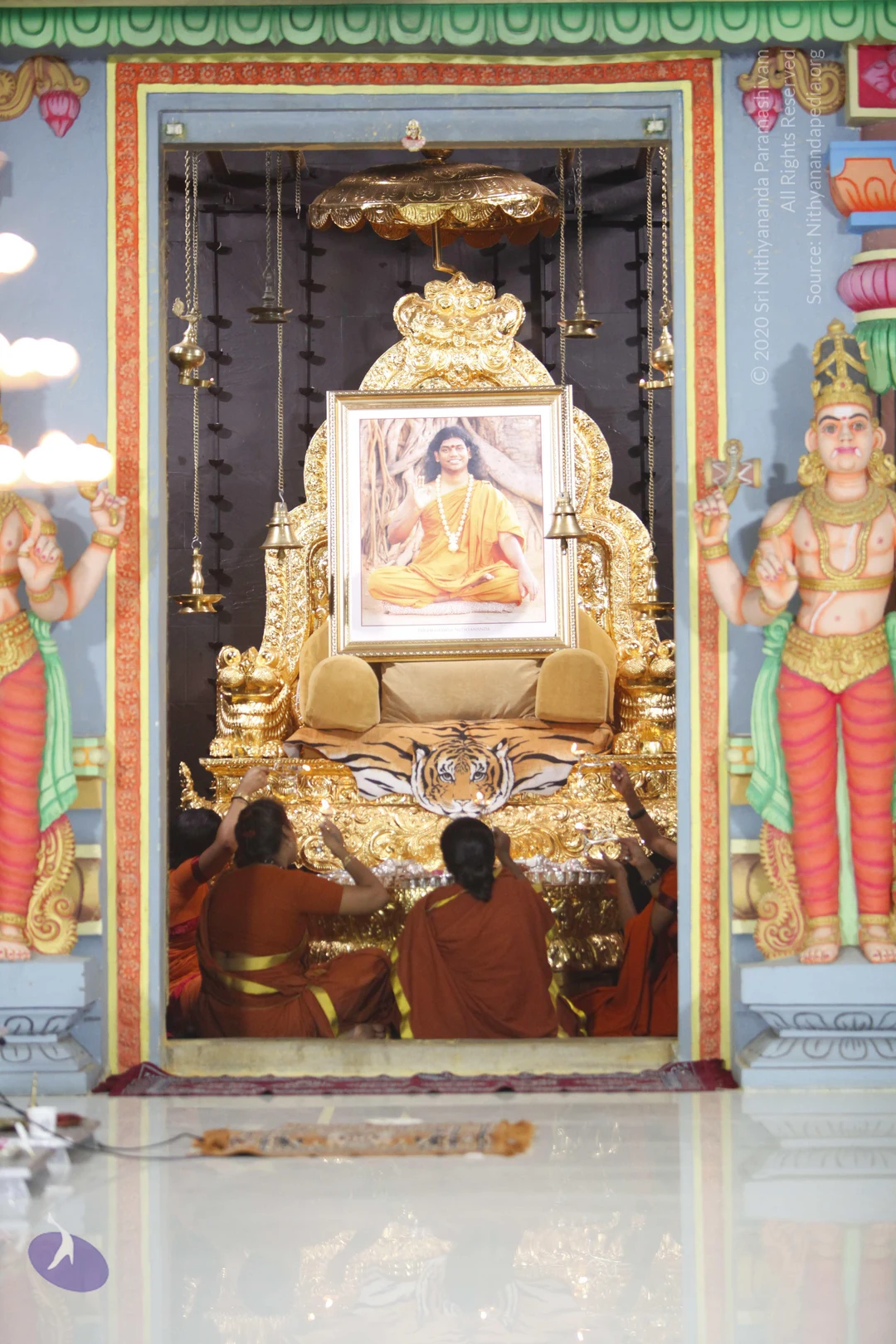
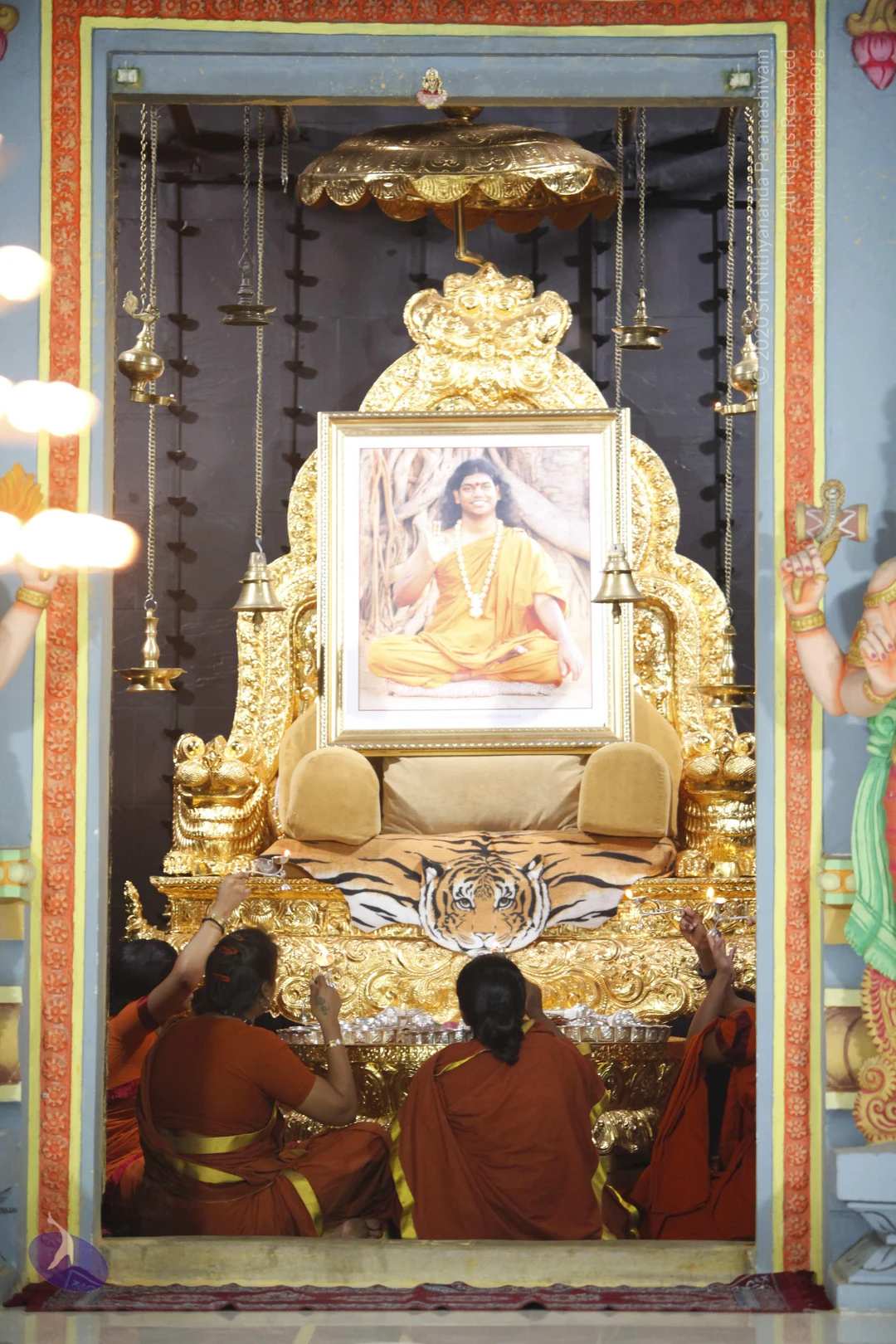
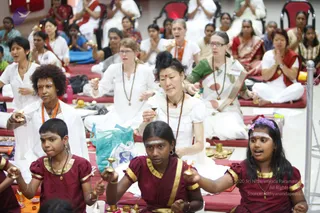
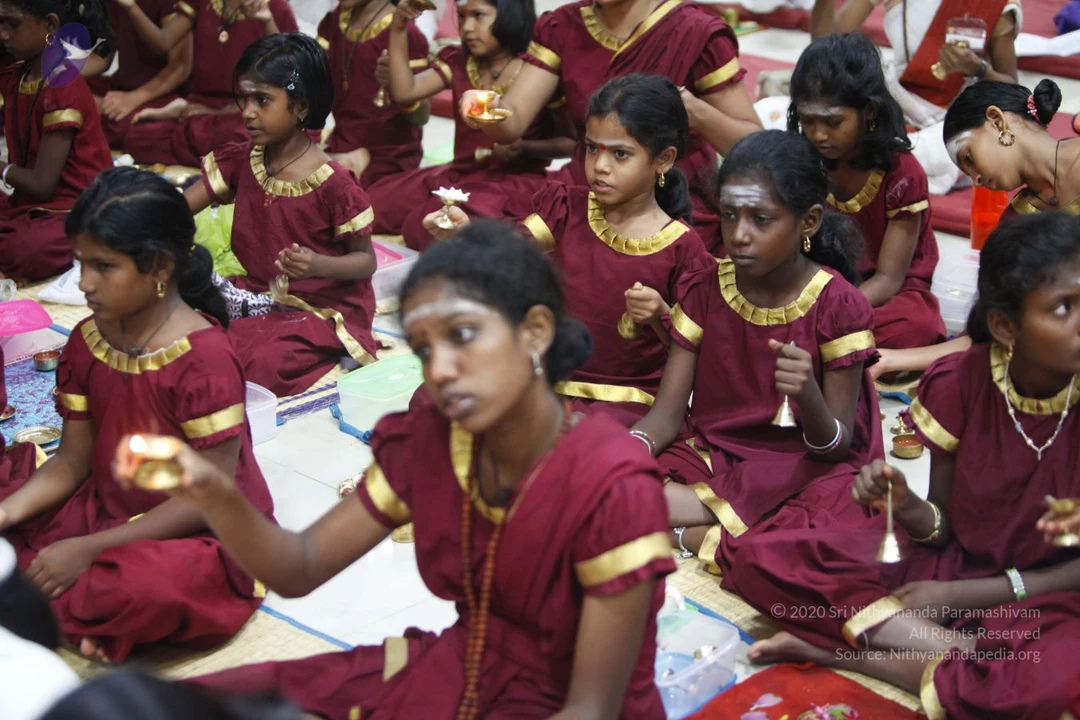
A photograph of a row of shaved-headed sannyasi devotees in saffron-orange robes and rudraksha malas, seated side by side. The foremost man in the left foreground holds a brass oil lamp aloft with a lit wick in his right hand, while white horizontal lines mark his arms and face. Others behind him hold similar lit lamps, and a red backdrop fills the upper background.Women in orange and saffron saris with rudraksha malas sit cross-legged on mats in rows, performing a puja. Several hold small brass vessels and lamps; brass plates, bowls and a small bell sit on the floor before them. Behind them, a large seated gathering in white and maroon clothing watches, with a young girl in an orange sari and a woman in white in the foreground. The scene suggests a ritual abhishekam or padapuja in a temple hall.A seated group of devotees in orange and saffron clothing performs a ritual puja on the floor. Women and girls wear orange saris with yellow borders and rudraksha malas, some with white-and-red forehead markings. Brass oil lamps, small brass pots and offering plates with flowers sit on mats in front of them, and some participants hold their hands together in prayer while others sit with eyes closed. Behind them, more people in maroon and white clothing sit in rows in a hall, with plastic containers and cups on the floor. The scene reflects a group abhishekam and padapuja gathering.Interior temple shrine with a golden throne draped in an orange-and-black tiger-striped cloth, topped by a golden canopy and hanging bells. Above the seat, a framed portrait labelled "Paramahamsa Nithyananda" shows a seated figure in orange robes with a beaded necklace. Two tall painted guardian figures with multiple arms stand on either side in red and green dress with gold jewellery. Several devotees in orange and maroon robes kneel at the base of the throne, one making offerings. At lower left, a shaved-headed priest in orange sits with a microphone beside a second priest, with brass oil lamps lit in the foreground.A photograph inside a temple shrine with painted blue walls and ornate pillars. In the centre a golden throne draped with a tiger-skin cloth sits in an arched niche, bearing a framed portrait of a seated saffron-robed figure with a raised hand. Two painted standing dvarapala guardian figures in red dhotis and green sashes flank the niche. In the foreground a robed priest in saffron with a bare shoulder holds an oil-lamp arati tray lit with many flames. Several saffron-robed devotees kneel before the throne, one offering flowers, and brass lamps stand at the right.A seated group of devotees performs a ritual puja in a hall with red floor mats. Women in white clothes, many with rudraksha malas, hold brass lamps, small cups and offering vessels with hands raised in namaste. Three girls in maroon dresses with gold trim sit in front, holding brass lamps and wearing vibhuti or white markings on their foreheads. Brass plates with lamps and offerings lie on the floor. Some women in saffron and red sarees sit behind them. The scene reflects rudra-abhishekam and paduka-puja worship.

GarbaMandir

5 photosSource gallery
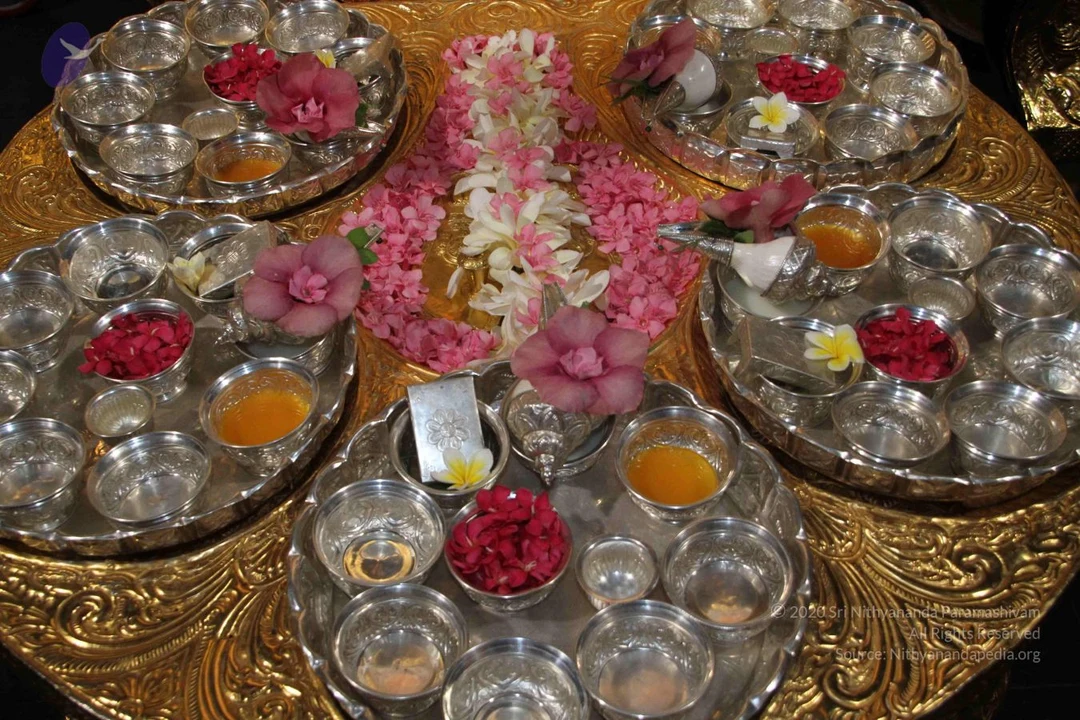
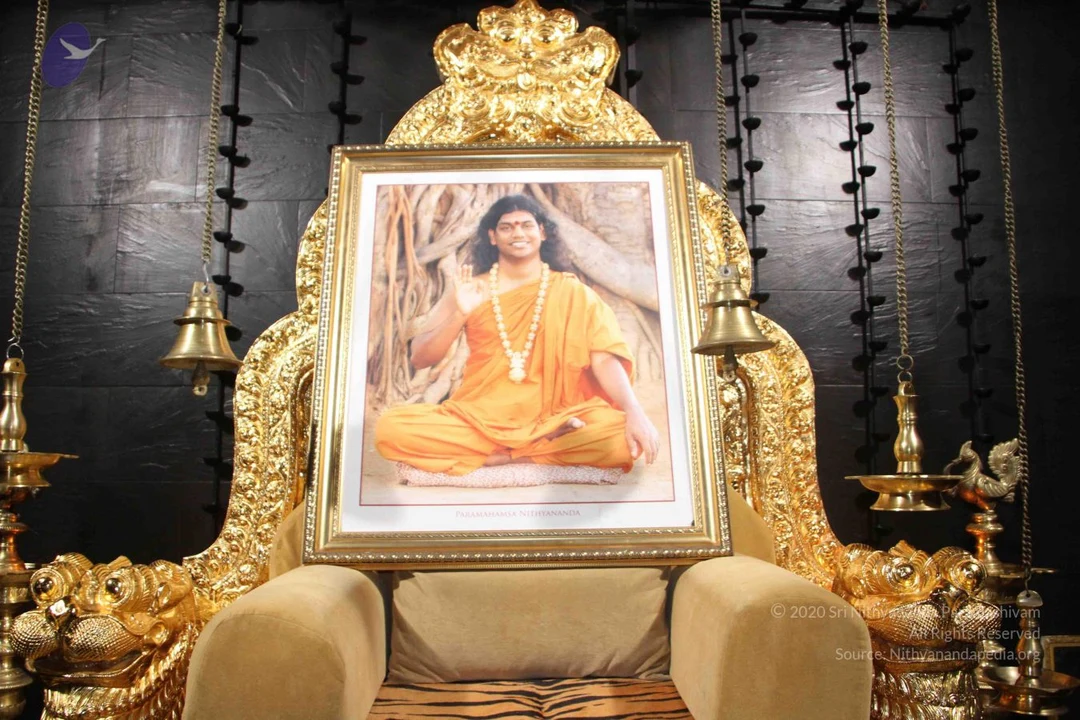
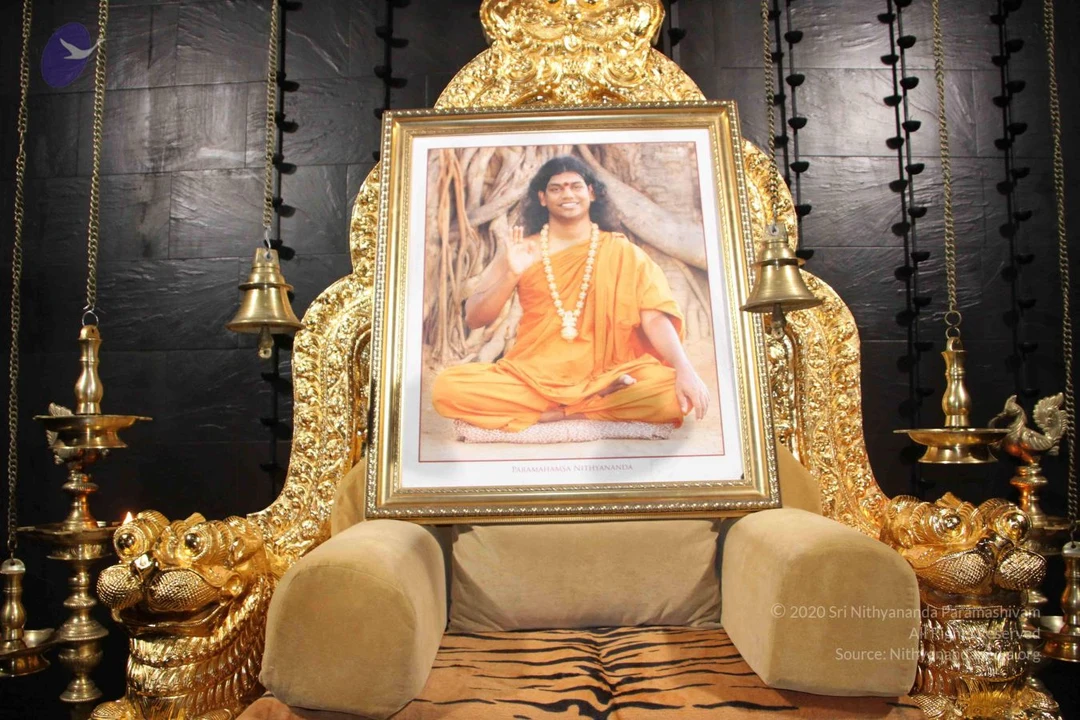
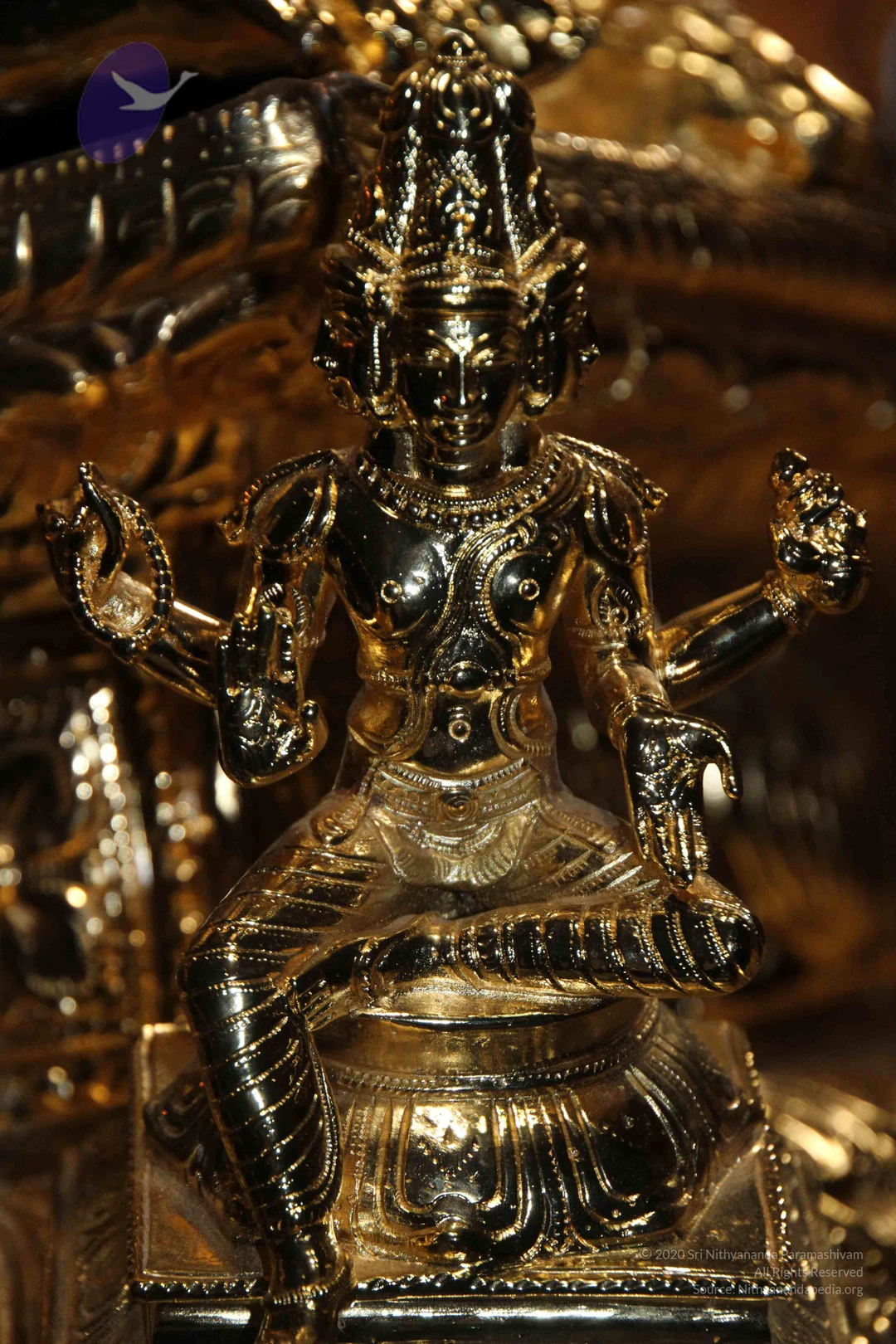
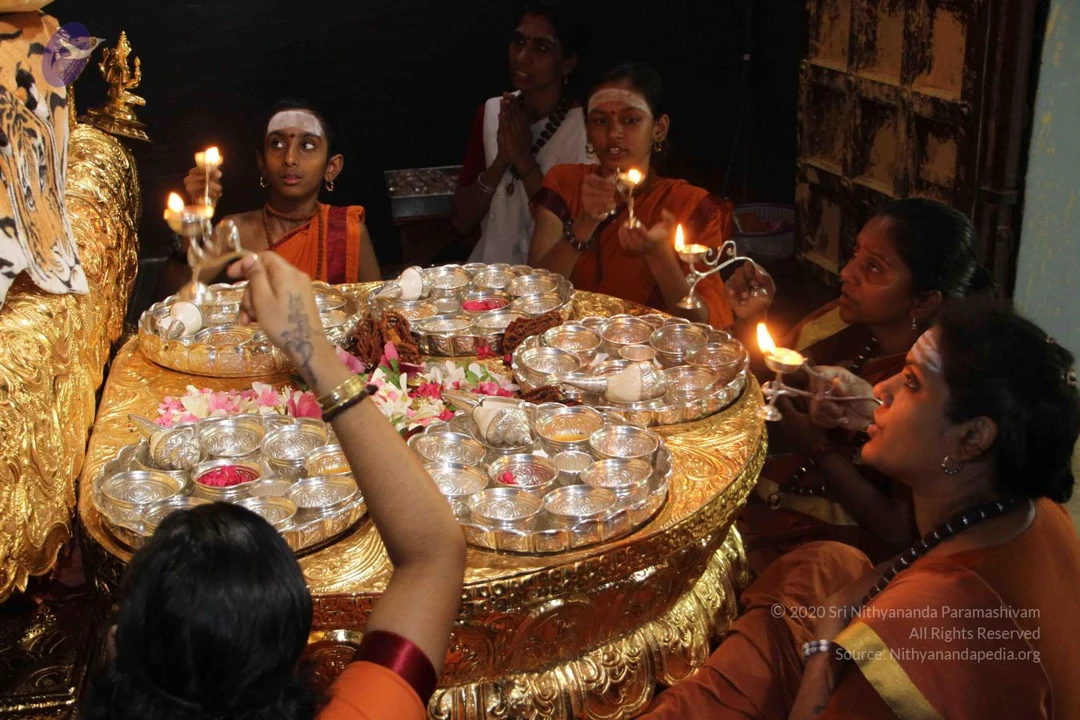
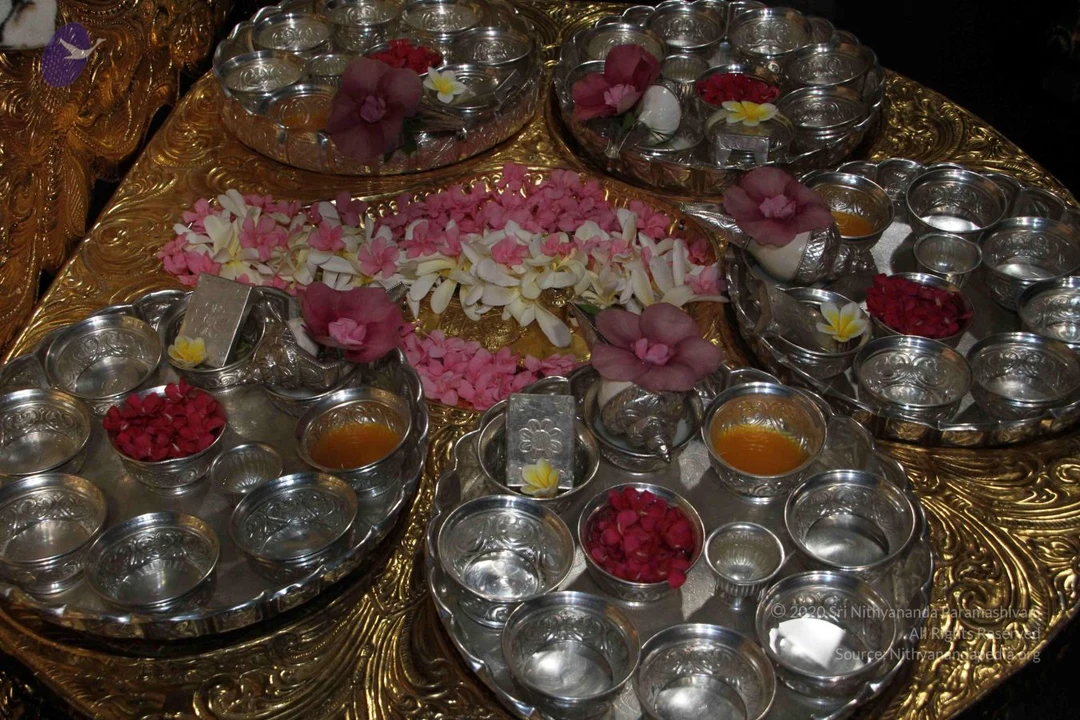
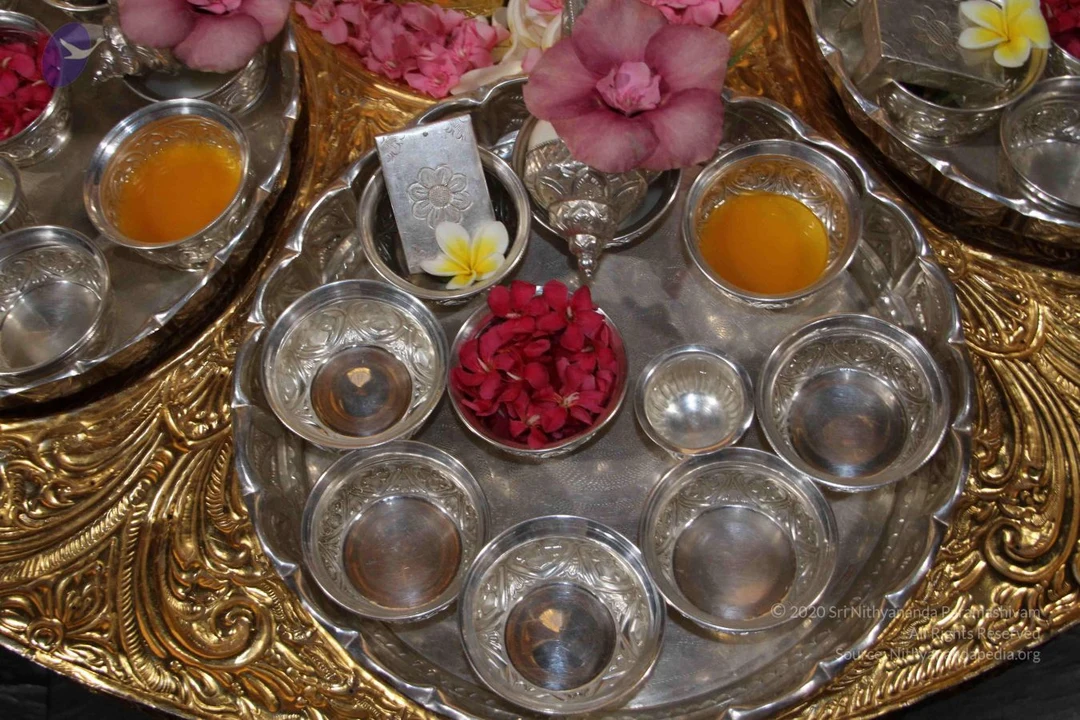
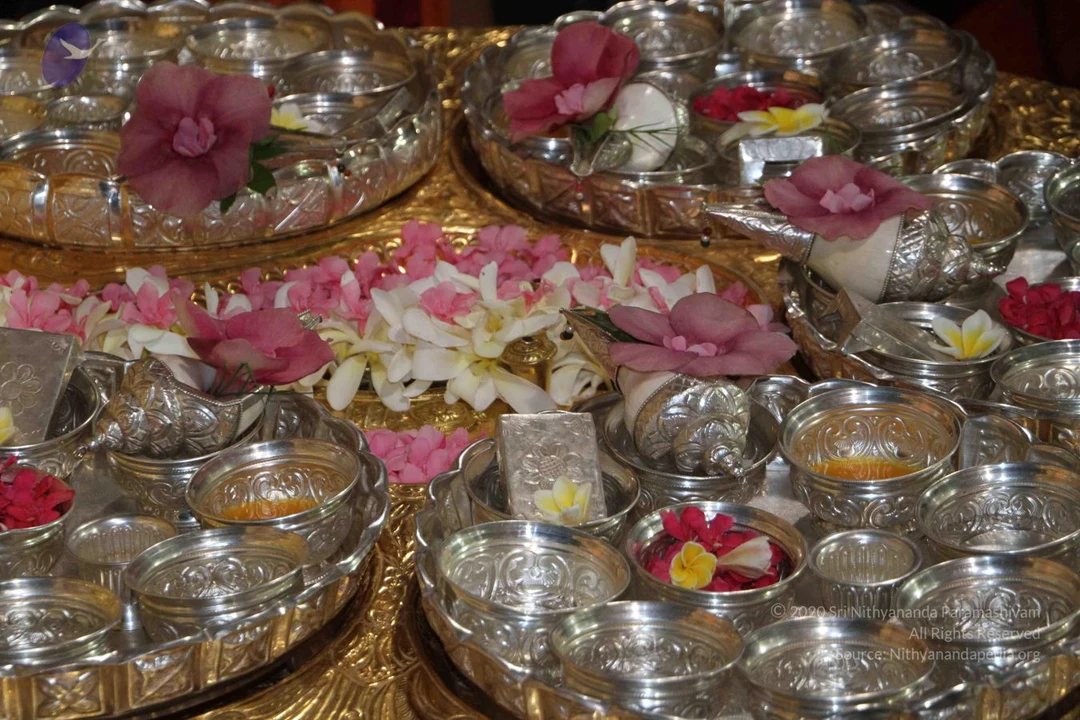
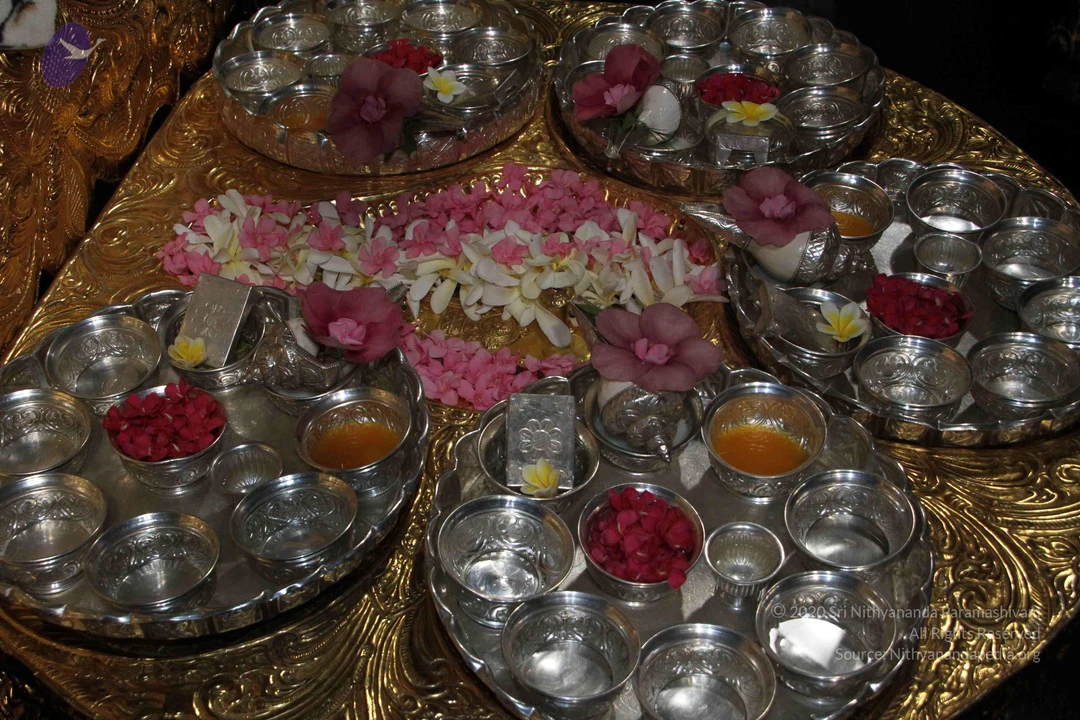
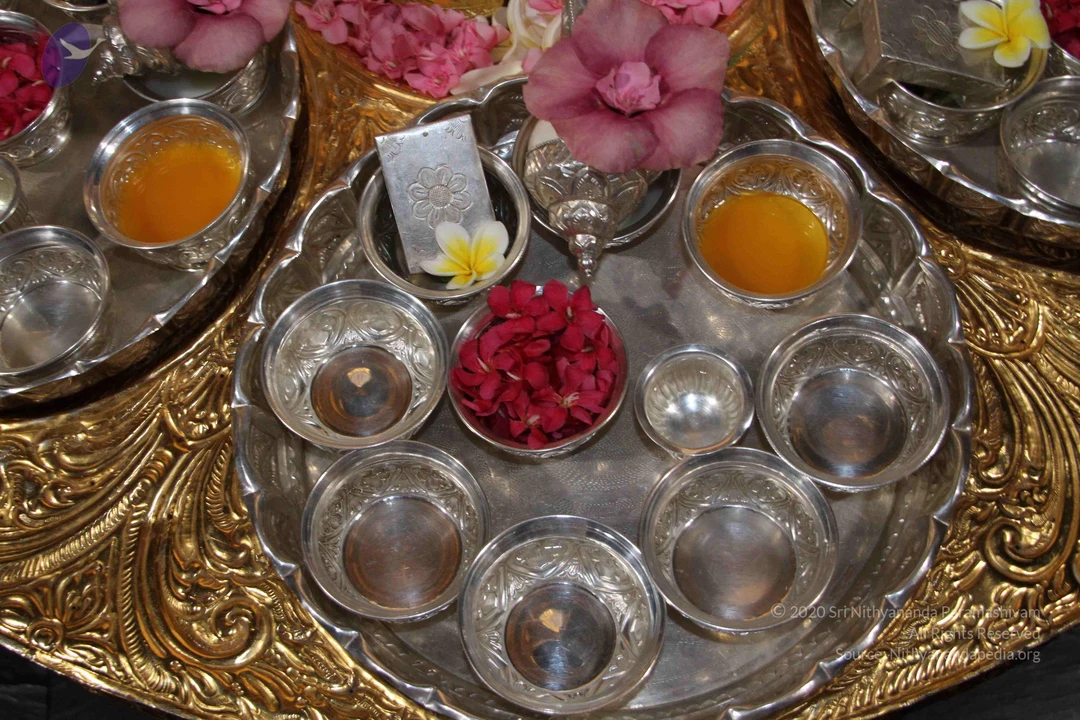
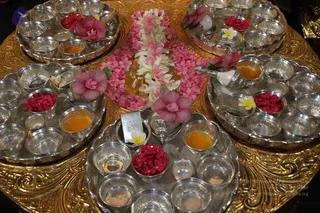
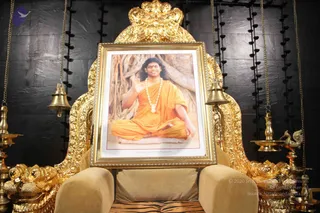
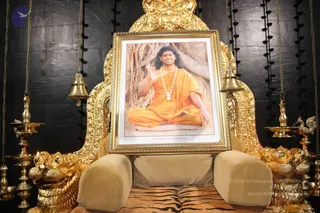
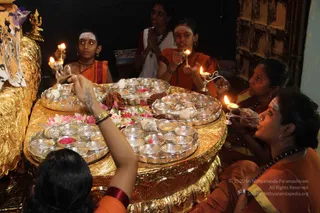
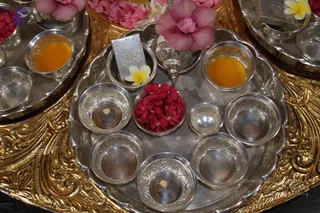
Overhead photograph of a ritual offering arrangement on a gold-embossed tray. Multiple ornate silver bowls and small silver cups hold honey-coloured liquid, red rose petals, and clear water. Pink and white flower garlands are laid in the centre, with pink orchid-like blooms and white plumeria flowers scattered among the bowls. No people are visible; the scene shows only the offering setup for an abhishekam and padapuja style worship.A large framed portrait of a seated man in saffron-orange robes and a white flower garland sits on an ornate gold throne-like chair with a gold crown-shaped top, flanked by hanging brass bells and brass oil lamps against a dark wall; the chair is upholstered in tan with a tiger-striped footrest. The printed portrait is shown on a chair, not as a physical person, so no one is present. A caption on the frame reads Paramahamsa Nithyananda, attributed to the portrait's printed label.A framed photograph is displayed on a gilded ornate throne with carved lion-like armrests and a tiger-striped seat cushion. The framed print shows a seated man in saffron-orange robes with a white flower garland, sitting cross-legged on a cushion before a tree with large aerial roots, one hand raised in blessing. Brass oil lamps and hanging brass bells flank the throne against a dark stone wall. A small caption beneath the print reads Paramahamsa Nithyananda, attributing the name to the portrait label. No physical people are present; the seated figure is a printed depiction, and his appearance matches the page's a person reference only as a depiction on paper.Close-up photo of a gleaming gold-toned metal deity murti seated in a cross-legged meditation pose on a lotus-petalled pedestal. The four-armed figure wears an ornate tall crown, layered beaded necklaces, and elaborate armlets, with one hand raised in a gesture and another resting with palm open. Blurred ornate gold and silver ritual objects fill the background.Women devotees perform a puja at a golden altar beside a gilded deity murti. Several women in orange and saffron saris, some with white and red tilak marks on their foreheads and rudraksha malas around their necks, hold lit oil lamps and wick lamps. Silver thalis filled with small bowls, kumkum, pink and white flower garlands and conch shells are arranged on the golden platform. One woman in the foreground raises a hand toward the offerings. Dark walls and a wooden door frame the scene.

Temple

17 photosSource gallery
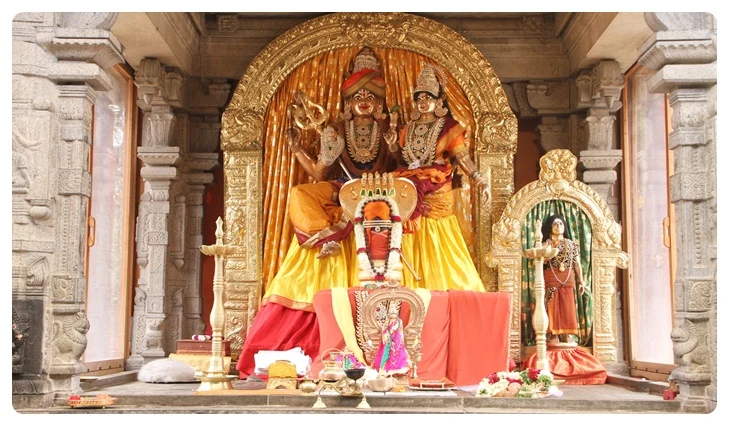
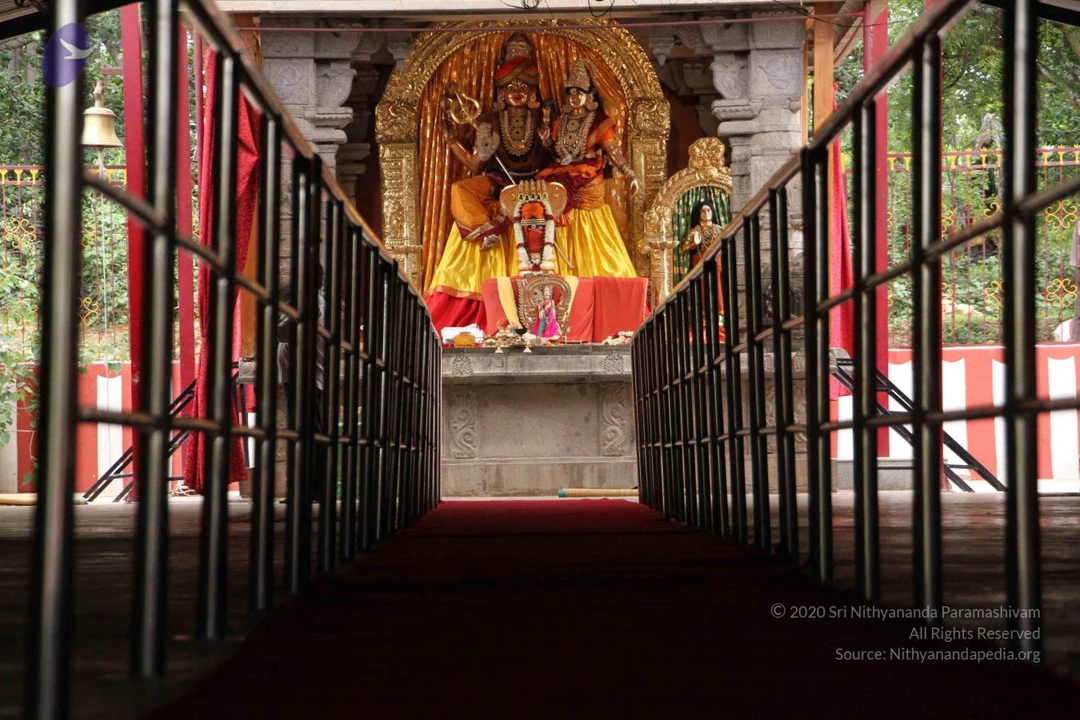
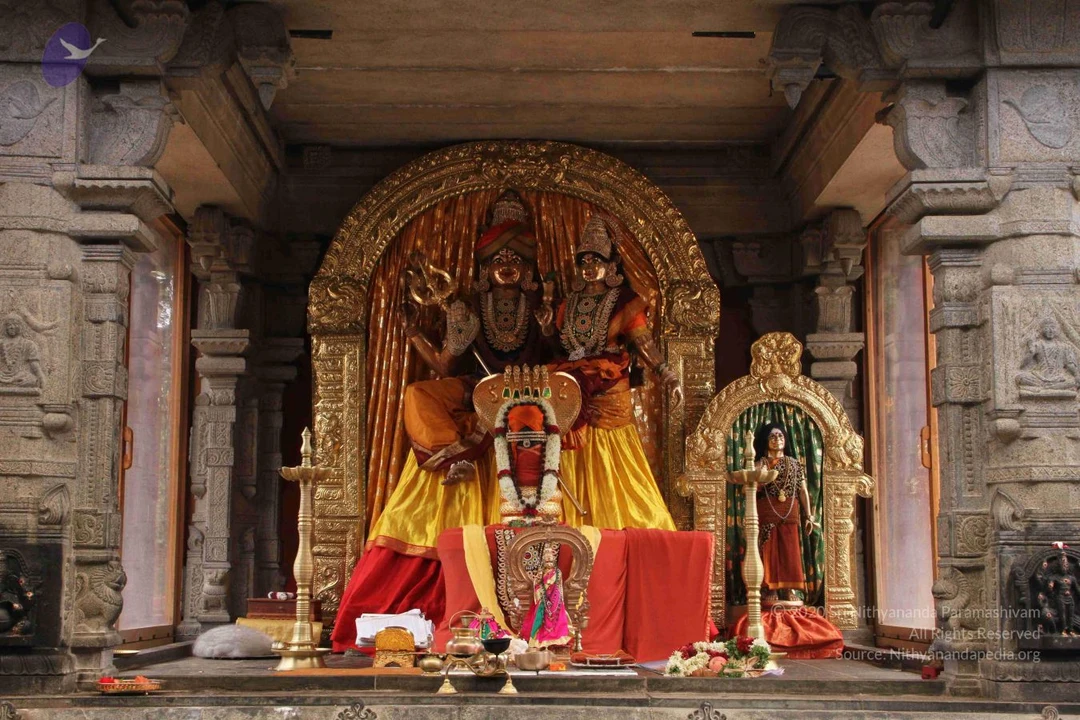
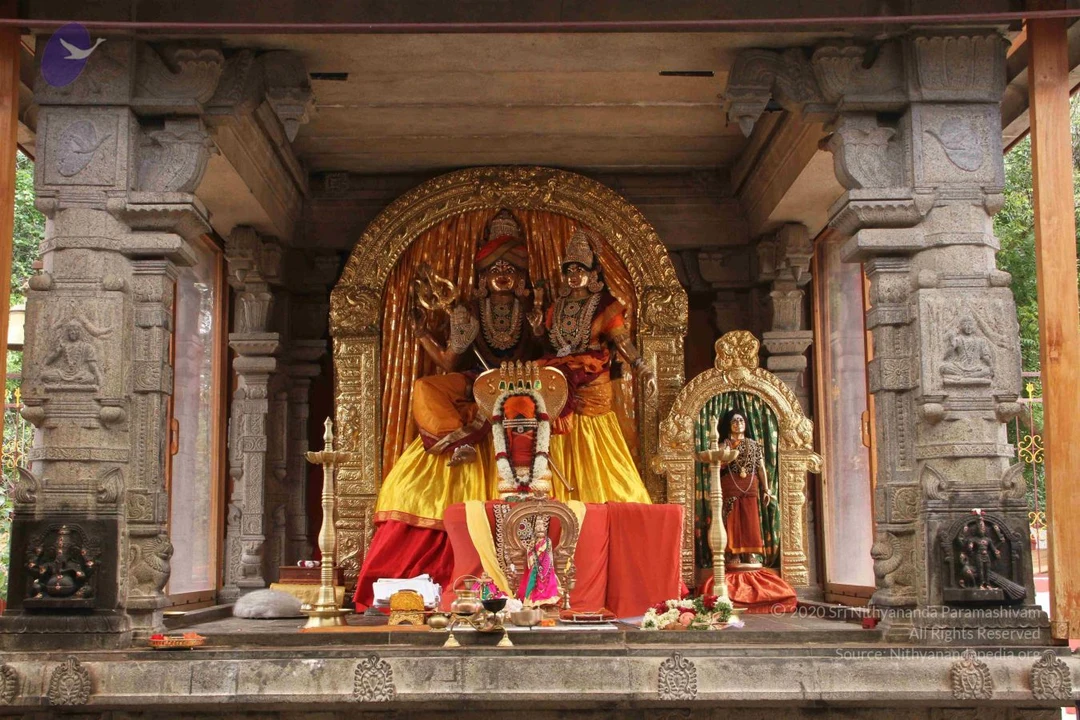
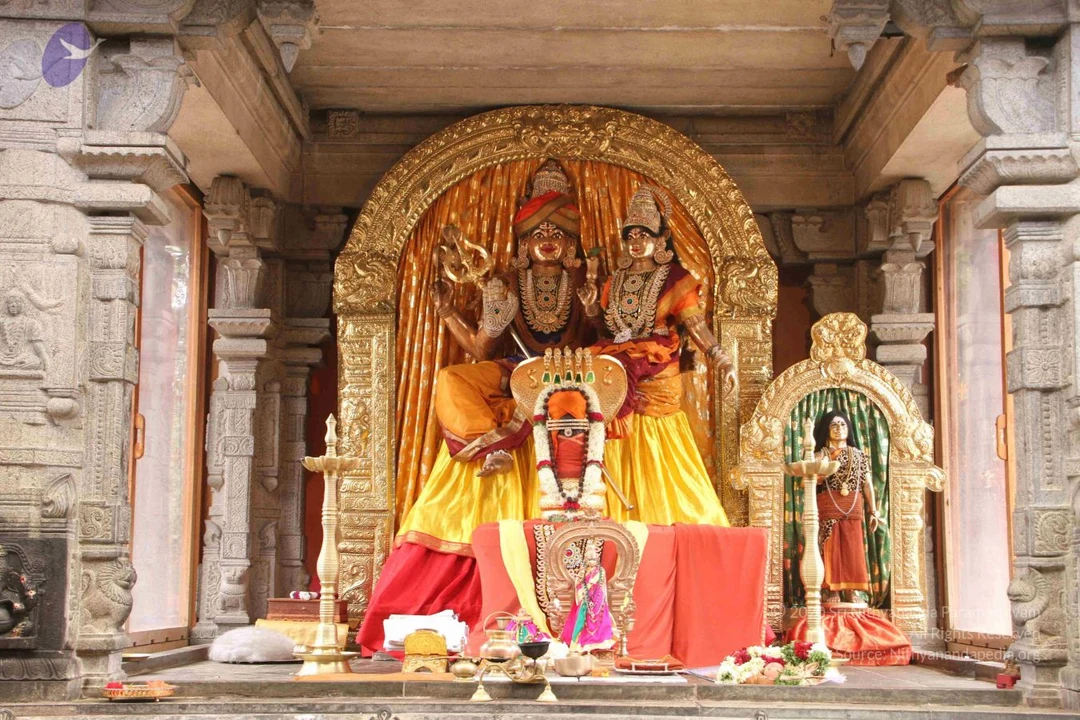
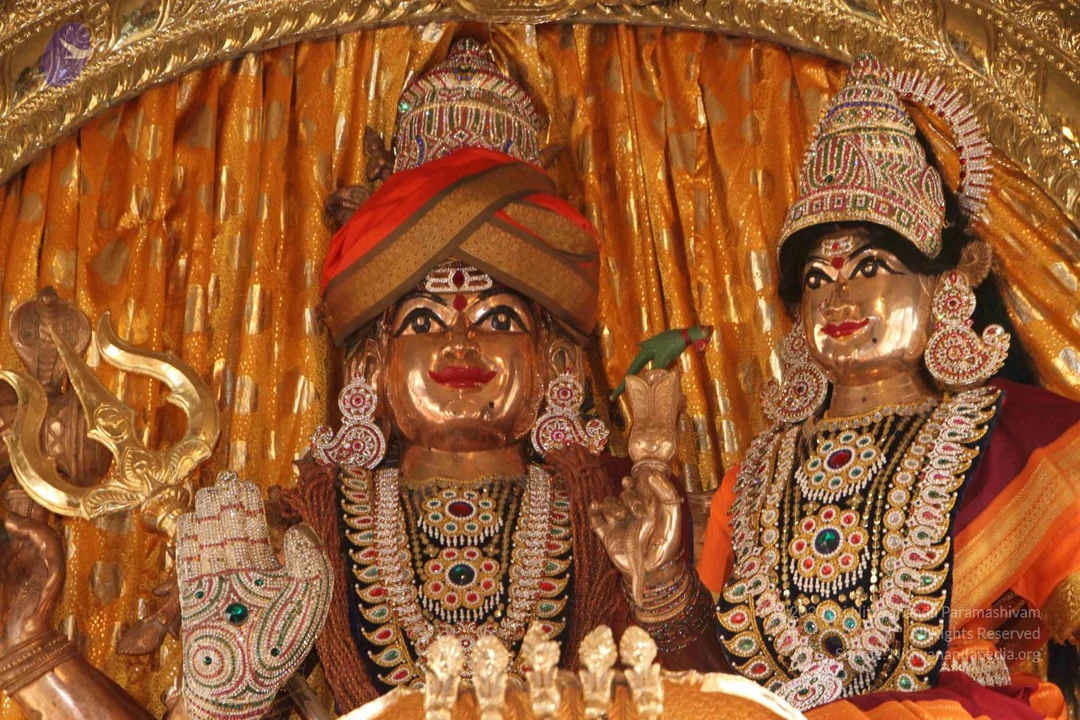
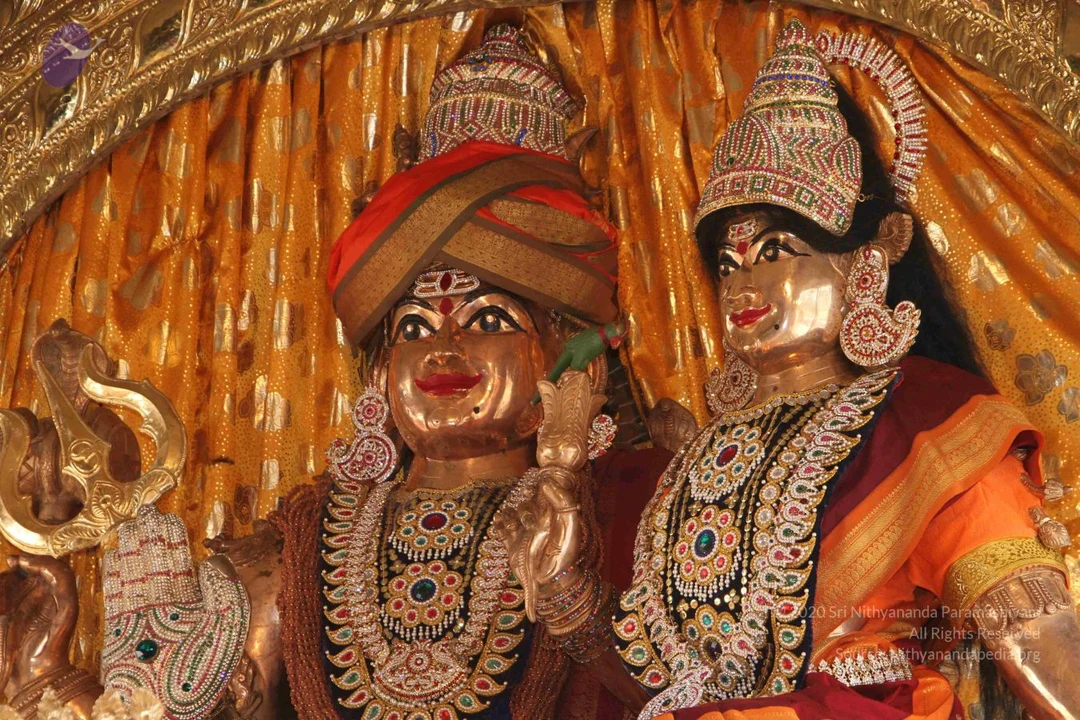
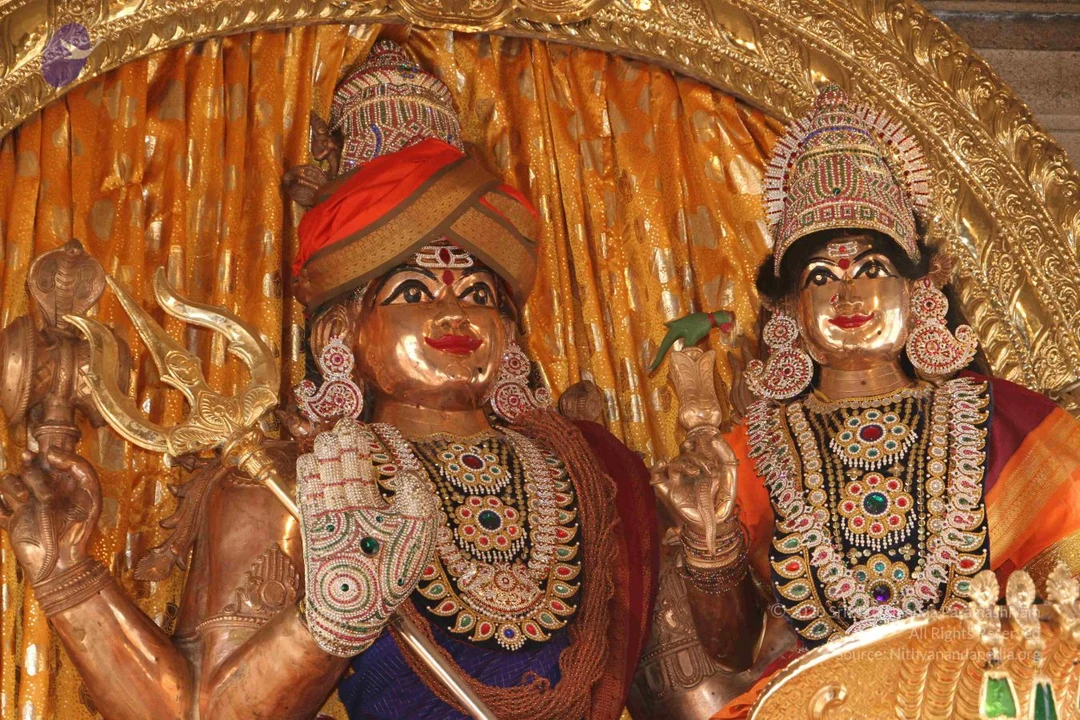
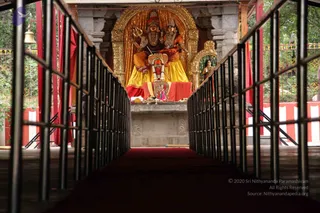
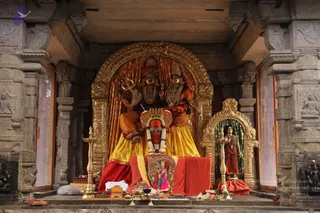
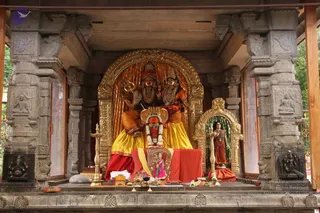
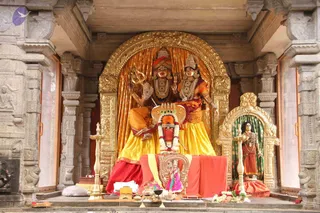
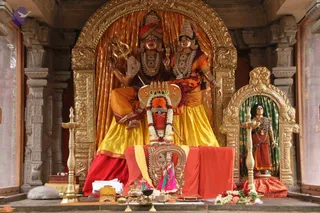
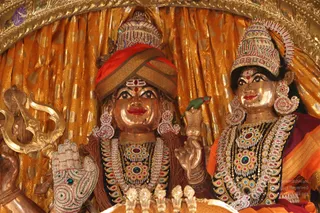
A photograph looking down a long red-carpeted aisle lined by metal railings toward a shrine. Two painted or sculpted deity murtis stand in an ornate gold-framed niche draped with gold and red fabric, one holding a trident and the other wearing a crown; both are dressed in saffron and yellow garments with garlands and ornaments. In front of them sits a stone platform with a small red and gold seat, a shivalinga-like object, flowers, a brass lamp and offerings. A hanging bell is visible at the left edge, with red and white striped barriers and greenery around the enclosure. No living people are visible.Photo inside a carved stone temple shrine showing large golden-painted deity murti of a male and female divine pair, the male figure holding a trident and the female with a crown and ornaments, both wearing yellow and orange garments and rudraksha-style necklaces. Before them sits a shivalingam-like form draped in a flower garland, with a red cloth and brass oil lamps (lamps) on the stone platform, plus brass pots, a plate of offerings and marigold and rose flowers arranged at the base. A smaller carved shrine with a standing female murti stands to the right. No living people are visible.A stone-pillared temple shrine houses a pair of painted deity murti seated on a raised platform, a male figure with a red-and-orange headdress and a female figure with a crown, both in yellow and orange garments with large necklaces, set before a gilded arch with gold drapes. In front are brass oil lamps, a kalasha-like vessel, bowls of offerings, a garland of white flowers and marigolds draped over a central linga-like form, and flower arrangements on the stone floor. No physical people are visible.A photograph of a temple sanctum shrine with carved grey stone pillars and a gilded arched frame. Two large seated deity murtis dominate the centre: one male figure with a red and white turban and a trident, and a female figure in an orange and gold sari with a crown, both wearing heavy necklaces. Between them sits a lingam-shaped form draped with a garland of white flowers, placed on a red cloth-covered dais. Brass oil lamps stand on either side, with brass vessels, flower offerings and a small plate in front. To the right, a smaller standing figure in red and orange garments and a beaded necklace stands in a green-curtained niche. The scene reflects a puja setting; no physical people are present.A photograph of a temple shrine with a large golden arch framing two painted deity murtis, one wearing a red and gold turban and holding a trident, the other wearing a tall crown and ornate necklaces, both in yellow and orange garments. In front, a silver-and-gold peetha holds a small lingam decorated with a white flower garland, with a golden kalasha and brass lamps on either side. Brass oil lamps, a brass pot, a bowl, and a tray of flowers and offerings sit on the platform. To the right, a smaller shrine holds a standing figure in orange and red robes with a rudraksha-style necklace. No physical people are visible.Close-up photograph of two metal deity murtis seated before a golden shimmering drape. The figure on the left wears a red and gold turban, a red tilak, large jewelled earrings, a heavy multicoloured gem-studded necklace and a jewelled hand raised in blessing, with a trident beside him. The figure on the right wears a jewelled crown, a red-and-gold dress, a jewelled necklace and holds a green parrot on a stand. Ornate gold ornamentation frames the scene, with a small figure visible at the bottom. No physical people are shown.

SacredArts-Construction
9 photosSource gallery
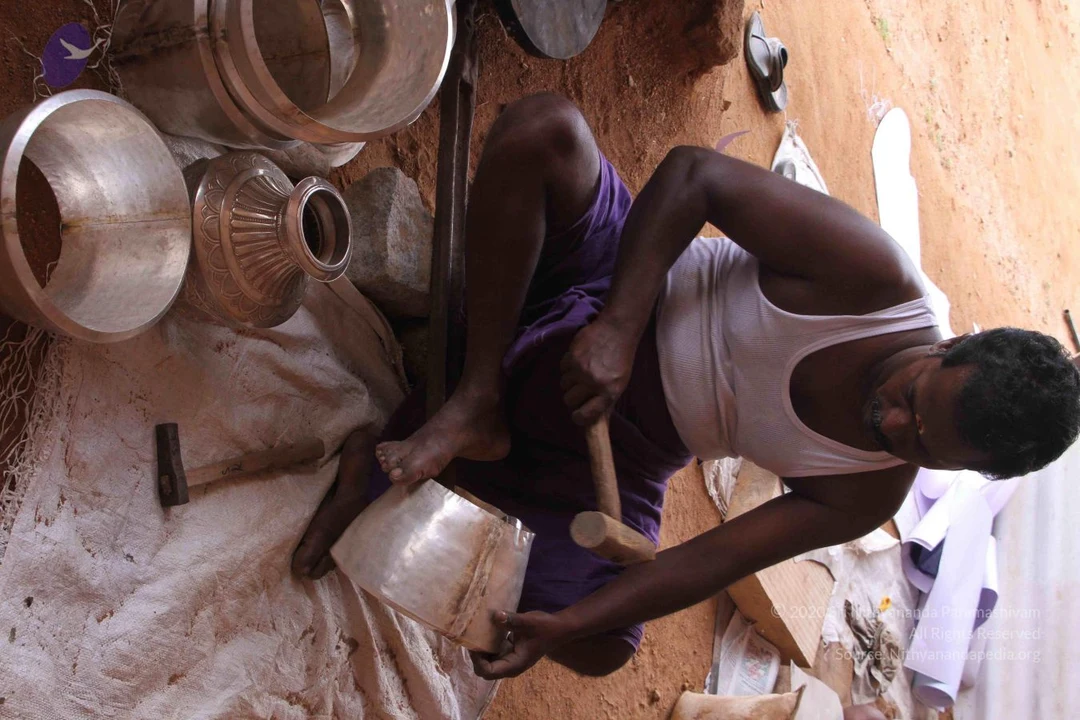
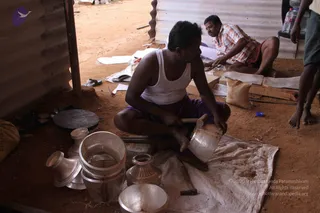
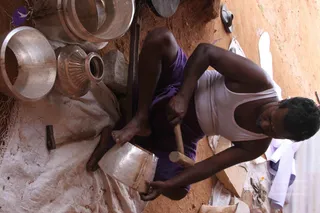
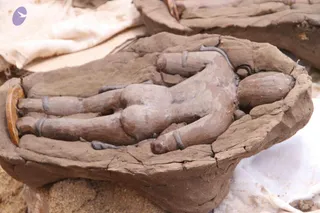
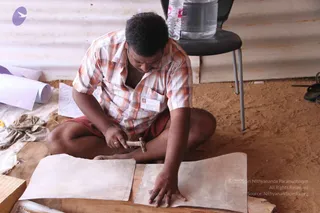
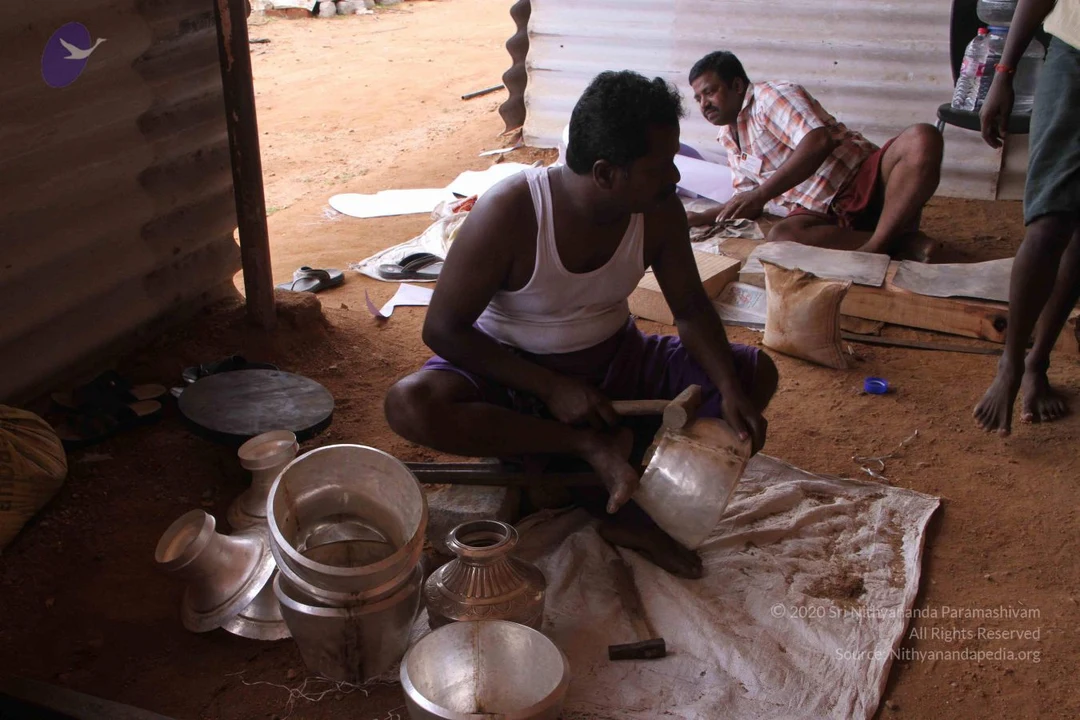
A photograph of two men working on the ground under a corrugated metal shelter with a dusty red earth floor. In the foreground a man in a white sleeveless vest and purple shorts sits cross-legged, hammering a silver-toned metal vessel placed on a small anvil. Around him lie several polished silver pots, bowls and a rounded pedestal-like piece on a white cloth. Behind him a man in a pink-and-white checked shirt and red shorts sits and works on a wooden plank. A bottle of water and a small tool rest nearby, and a stool stands at the edge of the frame.A man in a white sleeveless vest and purple cloth wrapped around his waist sits on the ground hammering a metal vessel. He holds the cup-shaped metal piece on his lap with one hand and a wooden mallet in the other. Behind him stand large polished copper or brass bowls and a decorated pot, with a white cloth and a small hammer on the dusty earthen floor. Hung cloth is visible at the right edge. The scene shows metal vessel-making or repair work.Close photograph of a partly formed clay figure lying in a shallow clay mould or bed on sand. The figure is an unpainted, unfinished sculpture of a seated or reclining human form with limbs fused to the mould, shown in muddy brown and grey tones. A white cloth lies at the lower right and another clay mould sits at the top edge. No people are visible, and the image appears to document sacred-arts construction work at a temple site.A photograph of several wet clay moulds laid out on a blue and white checked cloth on bare ground. Each mould holds a sculpted figure in relief, with limbs and bodies pressed into soft brown clay. A taller clay form with a hollow cylindrical top sits at the upper right, and a larger lump of clay lies at the upper left. Sand, gravel and a white cloth surround the arrangement. No people are visible, and no event or ritual is shown beyond the sculpting work.A photograph of clay moulds laid out on a blue and white checked cloth and white cloths over sand at an outdoor construction site. Several shallow clay moulds hold partially formed, reddish-brown clay figures of seated or reclining forms with limbs extended. A taller clay mould with a hollow central opening sits at the top, and a rolled piece of clay lies at the left. A printed magazine lies at the upper right, and red earth surrounds the scene. No people or a person are visible.A man sits cross-legged on the ground in a corrugated-metal workshop, working on a flat sheet of pale material with a small hand hammer and chisel. He wears a short-sleeved plaid shirt in orange, white and brown with a red-brown lower garment and a name badge clipped to his shirt. Beside him on a wooden board lies a second sheet with a pencilled outline, and paper rolls and cloth sit to his left. A plastic water bottle and a black chair are behind him on sandy ground. The scene shows hand carving or metalwork preparation at a temple construction site.

RUDRA-ABHISHEKAM

21 photosSource gallery
Outdoor procession climbing red brick steps under an overcast sky. Several devotees in orange and saffron robes, some with white forehead markings, carry ceremonial items. A man in a brown dhoti and orange shawl holds up a gilt-framed portrait of a bare-chested, orange-robed figure seated in meditation with a white garland, in front of a large tree. A young woman in orange holds a silver pot with greenery. Ornate yellow-and-red fringed ceremonial banners on poles are held aloft, and two men play long brass horns. A leopard-print cushion sits at the lower right.Outdoor procession on a red-brick stepped platform at dusk. A bald man in a rust-brown dhoti holds up a gilded framed portrait of a seated figure in orange robes with a white beaded mala, set against a tree backdrop. Around him, young men in saffron-orange robes with maroon borders carry ornate orange-and-gold ceremonial banners on poles. Players in orange blow long brass horns and a drummer beats a hand drum. A small framed placard sits on the steps and an orange-and-gold cushioned seat is at right. The portrait is a depiction on a printed frame, not a person present.Four shaved-headed men in rust-red sannyasi-style cloth stand in a row on a white metal railing platform against a pale sky, palms pressed together in anjali mudra. Each wears rudraksha malas, gold pendant necklaces and beaded bracelets, with white horizontal tilak and white arm markings. Their pose suggests reverent worship during a ritual.A large black stone Shiva lingam with a silver-plated yoni-pattha base stands on a raised platform in water, decorated with flower petals at its base. Around it, saffron-robed monks stand on metal staircases and railings and sit in rows on the red-tiered steps of a basin, many holding offerings. Behind them is a red multi-storey building with grey construction scaffolding above. A purple logo appears at the upper left. The scene reflects a Rudra abhishekam ritual at a temple basin.A photograph of a Rudra-Abhishekam ritual at a temple with red-painted steps and rows of grey Shiva lingams. Several people in white ritual clothes sit in a line holding long gold-coloured horns and pouring offerings over the lingams. In the foreground a man with bare upper body and white dhoti-style cloth with gold borders, wearing a rudraksha mala and white tilak on his forehead, holds a gold horn and a small brass vessel. Beside him a woman in white sari with a tilak and gold bangles holds a horn, and other women in white sit behind. A brass pot stands on the step, and a small offering plate sits behind the lingams. Several other people in white are partly visible at the left edge.A photograph of a Rudra abhishekam at a temple with rows of black stone lingams on a platform with red-painted steps behind. Several devotees in white clothing pour water through long golden funnel-shaped vessels onto the lingams. A bare-chested man in the foreground wears a rudraksha mala, white garment with gold border, and white tripundra on his forehead. Beside him a small child in red pours from a golden funnel, and a brass pot sits nearby.

PADUKA-PUJA
32 photosSource gallery
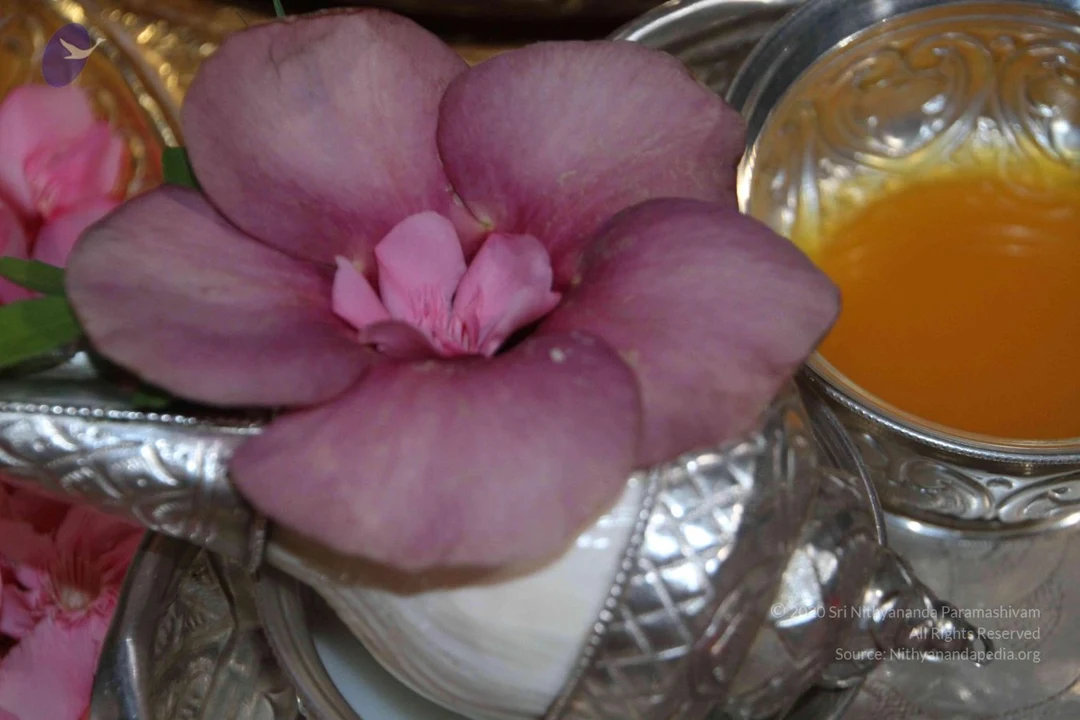
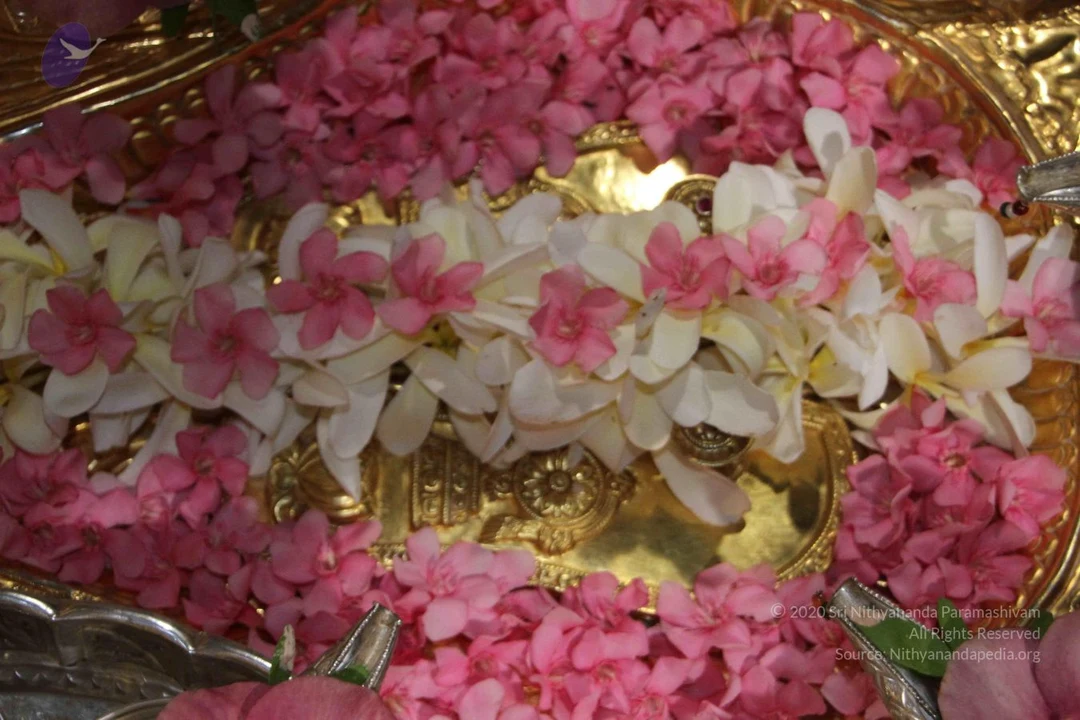
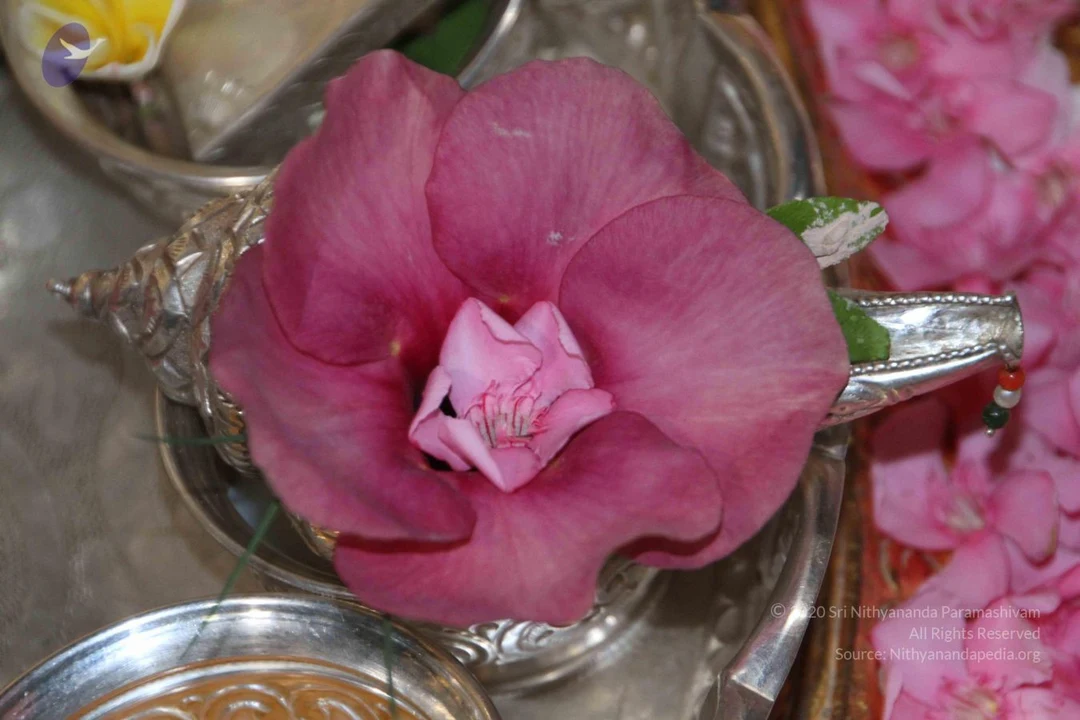
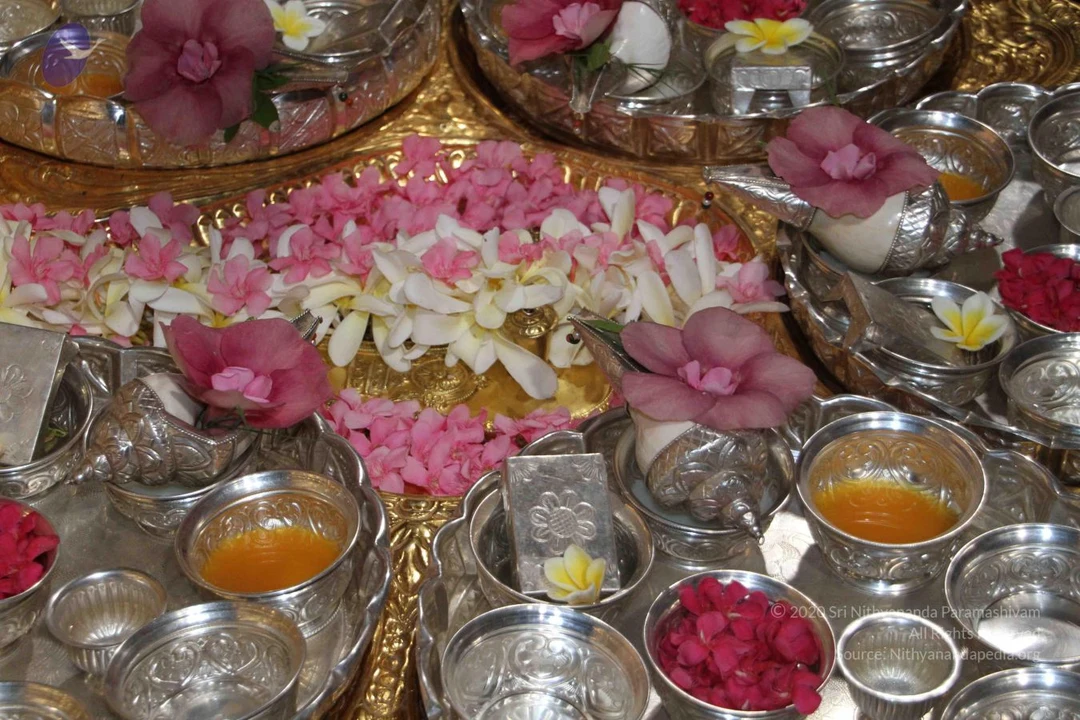
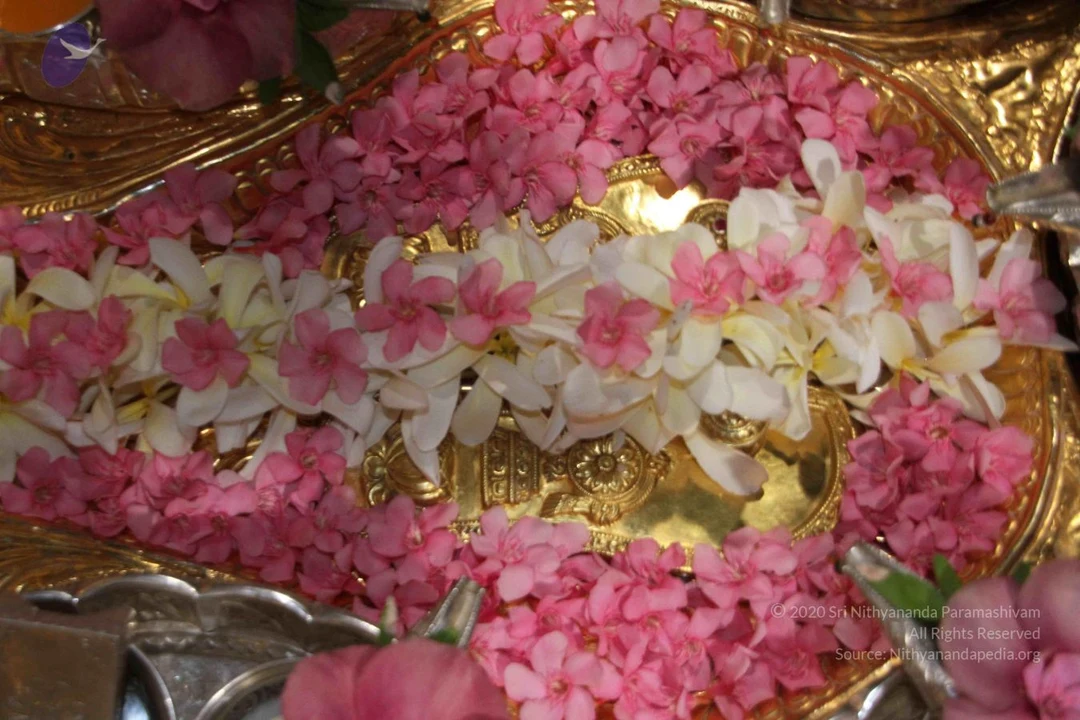
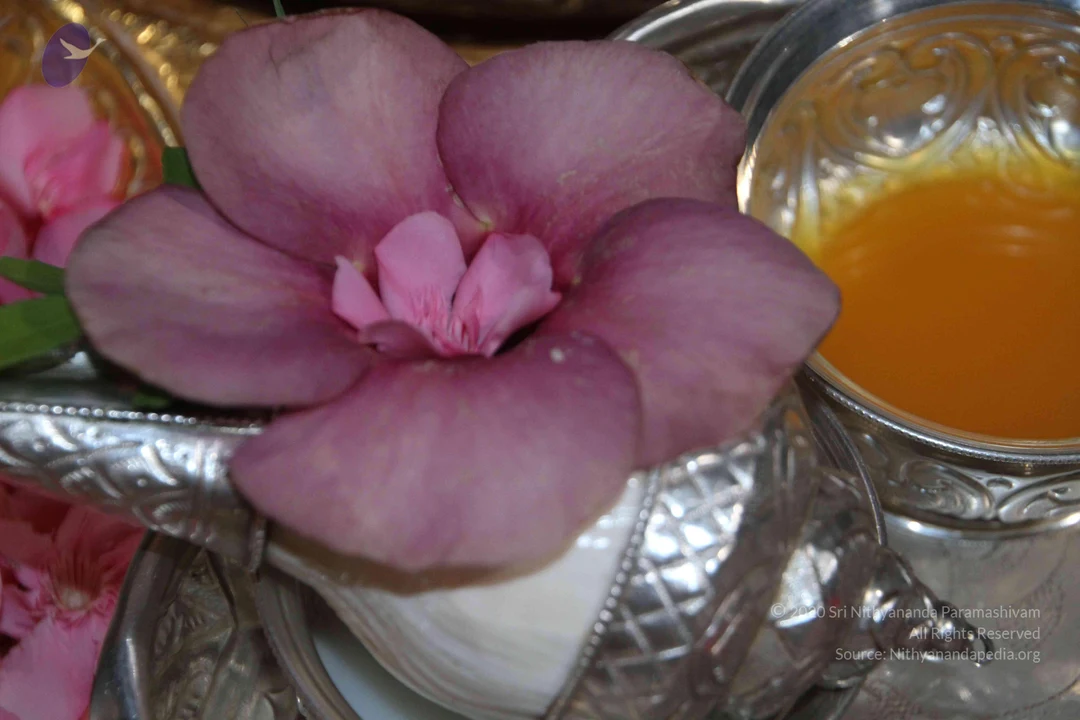
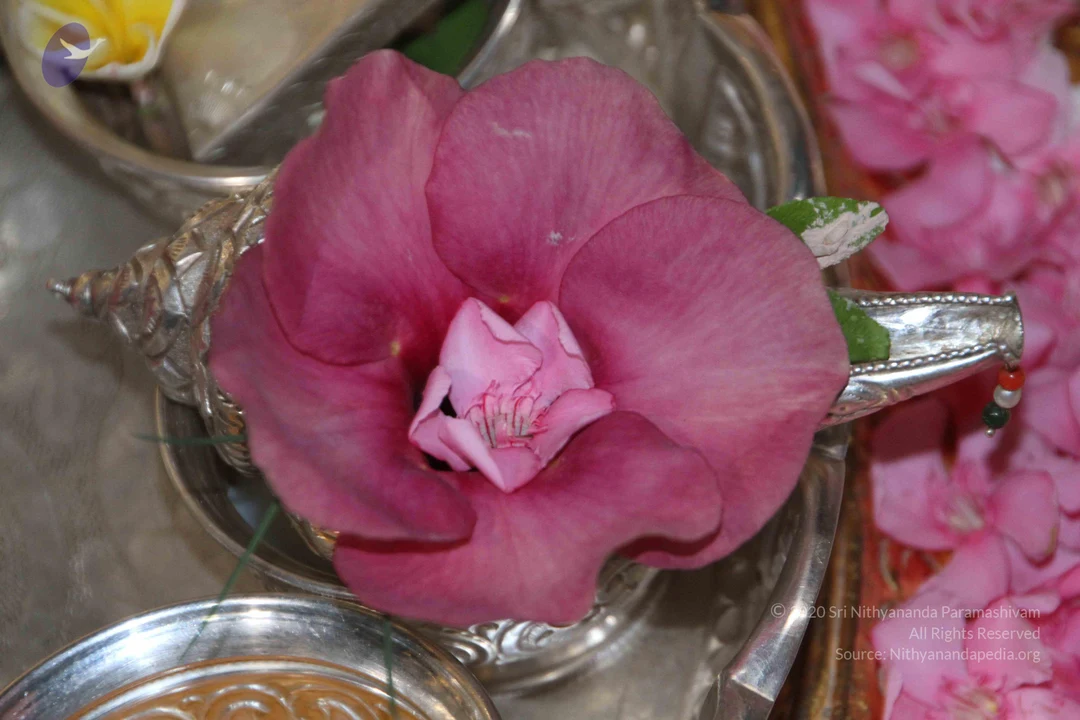
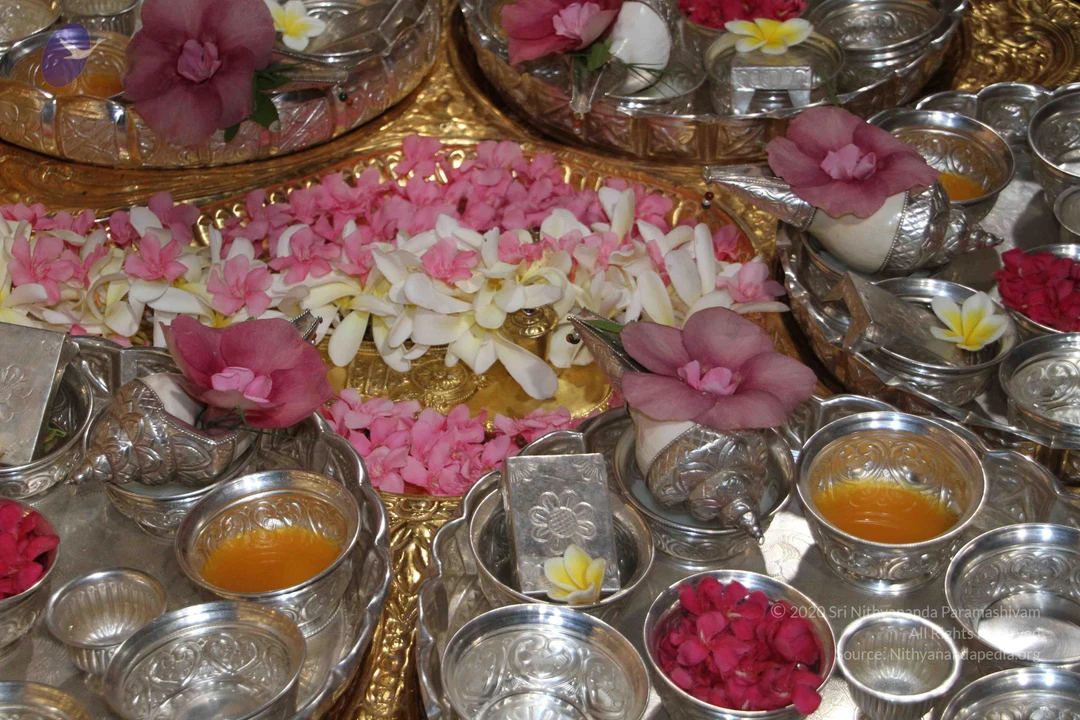
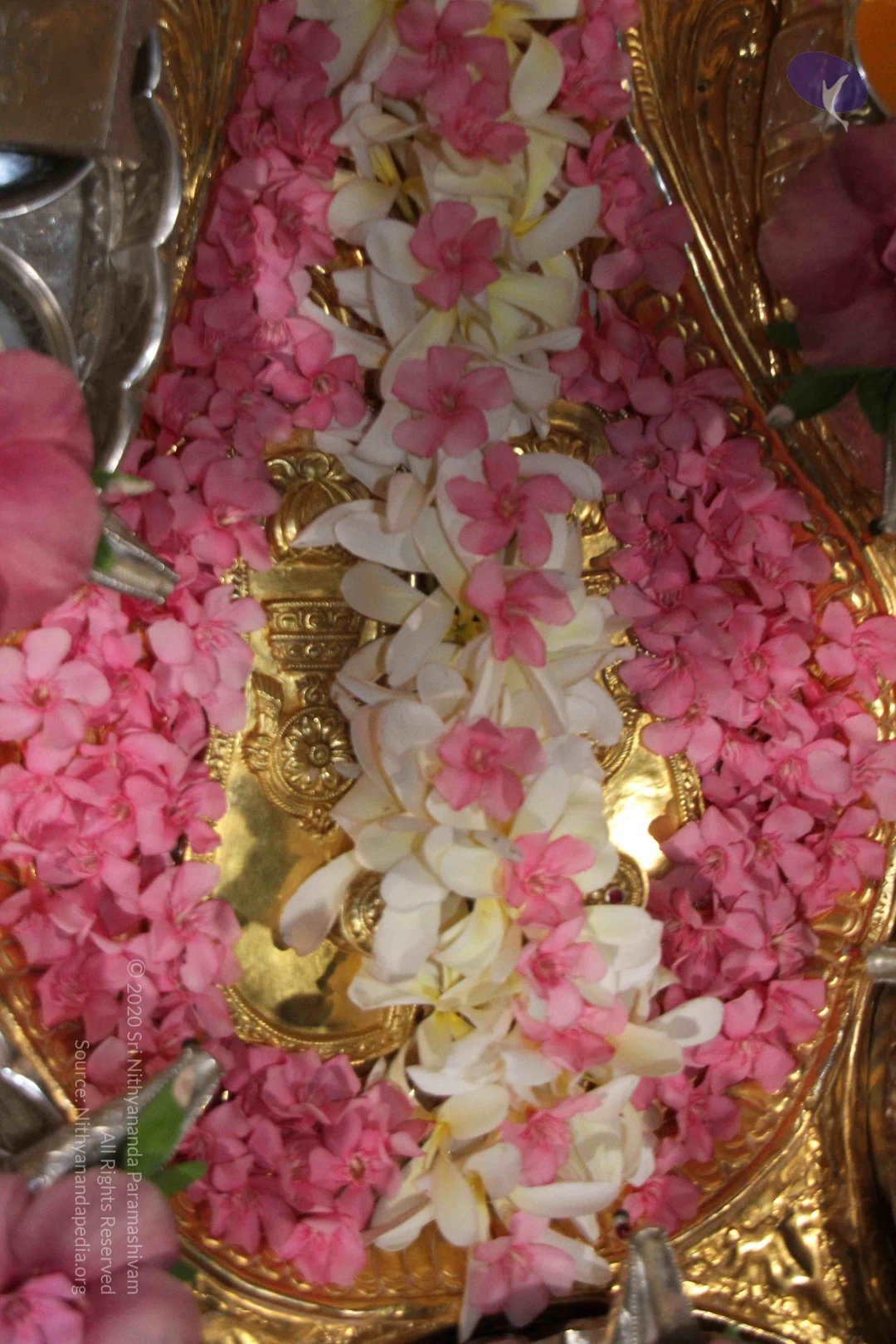
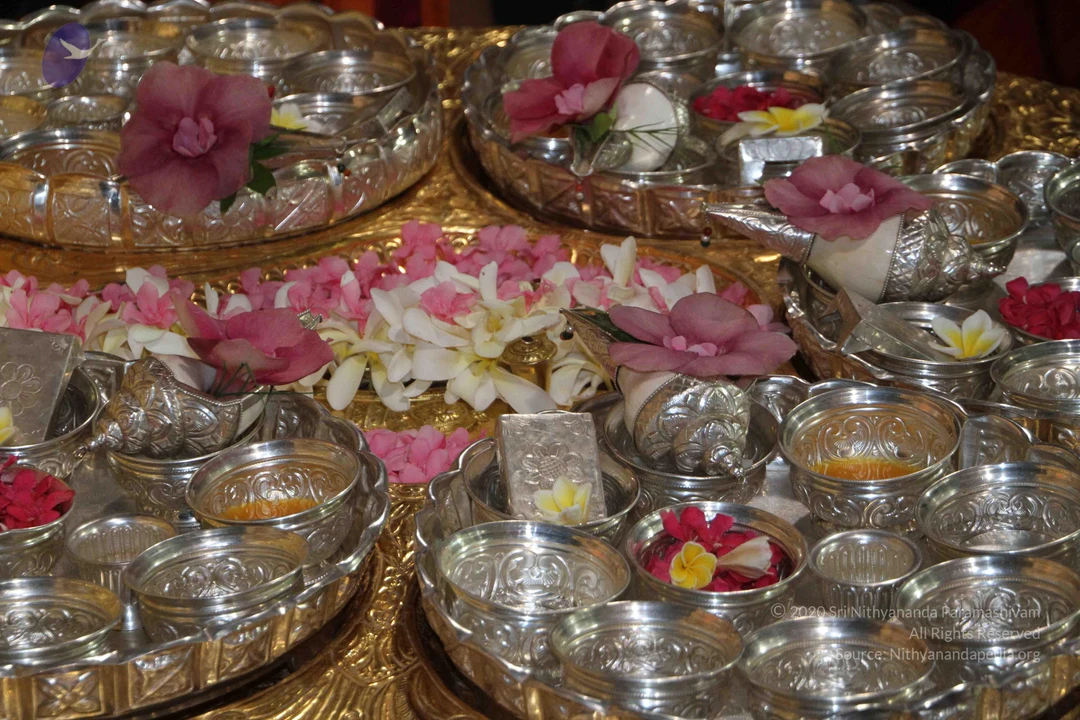
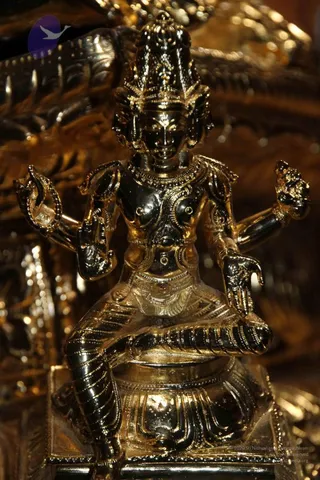
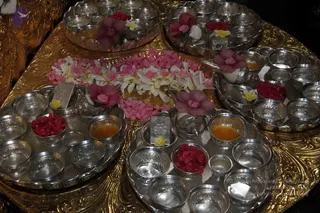
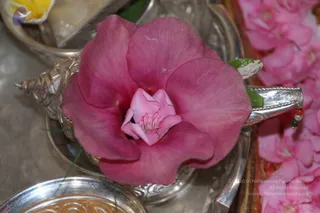
Overhead view of ritual puja offerings arranged on an ornate gold-embossed tray. Multiple silver bowls and silver plates hold red and pink rose petals, a yellow liquid in small bowls, and white and pink flower garlands placed in the centre. Purple orchids sit among the bowls, with a small silver-toned object and a silver puja implement nearby. No people are visible; this appears to be an arrangement of abhishekam and puja materials.Overhead photograph of a ritual offering arrangement on a gold-embossed tray. Multiple ornate silver bowls and small silver cups hold honey-coloured liquid, red rose petals, and clear water. Pink and white flower garlands are laid in the centre, with pink orchid-like blooms and white plumeria flowers scattered among the bowls. No people are visible; the scene shows only the offering setup for an abhishekam and padapuja style worship.Close-up photograph of ritual offerings on a polished silver tray. A large mauve-pink flower with pale pink centre rests on a white conch-shaped vessel, and a bowl of golden yellow liquid sits beside it. Smaller pink flowers and green leaves appear at the left edge. No people are visible; the focus is on the flower and offering vessels used in temple worship.Close-up photo of a golden ritual tray filled with fresh flowers. Pink oleander-type blossoms cover much of the tray, mixed with white plumeria petals arranged in a strand-like cluster at the centre. The gold-toned tray has ornate embossed edges and a decorative rim, with small silver ritual vessels visible at the edges. No people are visible in the frame.Close overhead photo of a silver conch-shaped vessel holding a large pink flower with a pink-red centre, placed on a polished silver tray beside other silver bowls and pink flower petals. A green leaf sticks out from the vessel's rim and a string of small beads hangs from its end. Pink blossoms are scattered at the right edge. No people are visible.Overhead photograph of a ritual offering tray for abhishekam. A large round silver plate sits on an ornate gold-toned tray and holds several small silver bowls with engraved floral borders, including bowls of yellow liquid, a small silver cup and a heap of red rose petals. A silver puja vessel with a pink flower and a white plumeria blossom rests among the bowls, and more silver plates with flowers and bowls are visible at the edges. No people are visible.

TEMPLE

18 photosSource gallery
A photograph looking down a long red-carpeted aisle lined by metal railings toward a shrine. Two painted or sculpted deity murtis stand in an ornate gold-framed niche draped with gold and red fabric, one holding a trident and the other wearing a crown; both are dressed in saffron and yellow garments with garlands and ornaments. In front of them sits a stone platform with a small red and gold seat, a shivalinga-like object, flowers, a brass lamp and offerings. A hanging bell is visible at the left edge, with red and white striped barriers and greenery around the enclosure. No living people are visible.Photo inside a carved stone temple shrine showing large golden-painted deity murti of a male and female divine pair, the male figure holding a trident and the female with a crown and ornaments, both wearing yellow and orange garments and rudraksha-style necklaces. Before them sits a shivalingam-like form draped in a flower garland, with a red cloth and brass oil lamps (lamps) on the stone platform, plus brass pots, a plate of offerings and marigold and rose flowers arranged at the base. A smaller carved shrine with a standing female murti stands to the right. No living people are visible.A stone-pillared temple shrine houses a pair of painted deity murti seated on a raised platform, a male figure with a red-and-orange headdress and a female figure with a crown, both in yellow and orange garments with large necklaces, set before a gilded arch with gold drapes. In front are brass oil lamps, a kalasha-like vessel, bowls of offerings, a garland of white flowers and marigolds draped over a central linga-like form, and flower arrangements on the stone floor. No physical people are visible.A photograph of a temple sanctum shrine with carved grey stone pillars and a gilded arched frame. Two large seated deity murtis dominate the centre: one male figure with a red and white turban and a trident, and a female figure in an orange and gold sari with a crown, both wearing heavy necklaces. Between them sits a lingam-shaped form draped with a garland of white flowers, placed on a red cloth-covered dais. Brass oil lamps stand on either side, with brass vessels, flower offerings and a small plate in front. To the right, a smaller standing figure in red and orange garments and a beaded necklace stands in a green-curtained niche. The scene reflects a puja setting; no physical people are present.A photograph of a temple shrine with a large golden arch framing two painted deity murtis, one wearing a red and gold turban and holding a trident, the other wearing a tall crown and ornate necklaces, both in yellow and orange garments. In front, a silver-and-gold peetha holds a small lingam decorated with a white flower garland, with a golden kalasha and brass lamps on either side. Brass oil lamps, a brass pot, a bowl, and a tray of flowers and offerings sit on the platform. To the right, a smaller shrine holds a standing figure in orange and red robes with a rudraksha-style necklace. No physical people are visible.Close-up photograph of two metal deity murtis seated before a golden shimmering drape. The figure on the left wears a red and gold turban, a red tilak, large jewelled earrings, a heavy multicoloured gem-studded necklace and a jewelled hand raised in blessing, with a trident beside him. The figure on the right wears a jewelled crown, a red-and-gold dress, a jewelled necklace and holds a green parrot on a stand. Ornate gold ornamentation frames the scene, with a small figure visible at the bottom. No physical people are shown.

SACRED-ARTS

5 photosSource gallery
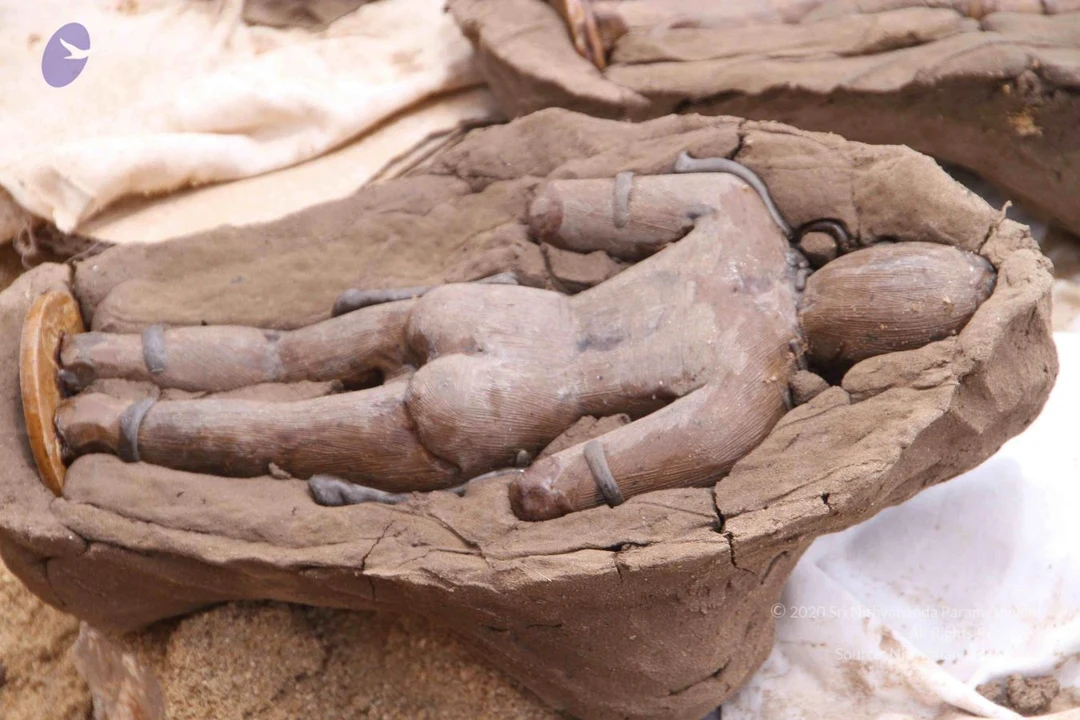
Close photograph of a partly formed clay figure lying in a shallow clay mould or bed on sand. The figure is an unpainted, unfinished sculpture of a seated or reclining human form with limbs fused to the mould, shown in muddy brown and grey tones. A white cloth lies at the lower right and another clay mould sits at the top edge. No people are visible, and the image appears to document sacred-arts construction work at a temple site.A photograph of several wet clay moulds laid out on a blue and white checked cloth on bare ground. Each mould holds a sculpted figure in relief, with limbs and bodies pressed into soft brown clay. A taller clay form with a hollow cylindrical top sits at the upper right, and a larger lump of clay lies at the upper left. Sand, gravel and a white cloth surround the arrangement. No people are visible, and no event or ritual is shown beyond the sculpting work.A photograph of clay moulds laid out on a blue and white checked cloth and white cloths over sand at an outdoor construction site. Several shallow clay moulds hold partially formed, reddish-brown clay figures of seated or reclining forms with limbs extended. A taller clay mould with a hollow central opening sits at the top, and a rolled piece of clay lies at the left. A printed magazine lies at the upper right, and red earth surrounds the scene. No people or a person are visible.A photograph of two men working on the ground under a corrugated metal shelter with a dusty red earth floor. In the foreground a man in a white sleeveless vest and purple shorts sits cross-legged, hammering a silver-toned metal vessel placed on a small anvil. Around him lie several polished silver pots, bowls and a rounded pedestal-like piece on a white cloth. Behind him a man in a pink-and-white checked shirt and red shorts sits and works on a wooden plank. A bottle of water and a small tool rest nearby, and a stool stands at the edge of the frame.A man sits cross-legged on the ground in a corrugated-metal workshop, working on a flat sheet of pale material with a small hand hammer and chisel. He wears a short-sleeved plaid shirt in orange, white and brown with a red-brown lower garment and a name badge clipped to his shirt. Beside him on a wooden board lies a second sheet with a pencilled outline, and paper rolls and cloth sit to his left. A plastic water bottle and a black chair are behind him on sandy ground. The scene shows hand carving or metalwork preparation at a temple construction site.

01-ADIKAILASA-TEMPLE
19 photosSource gallery
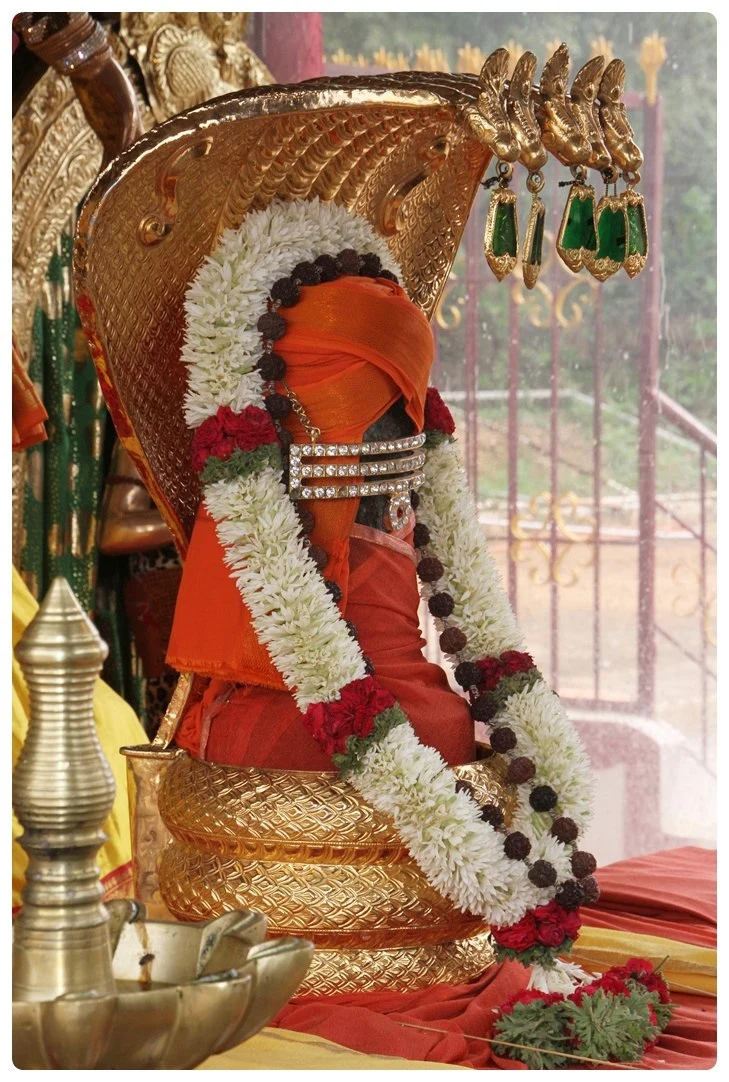
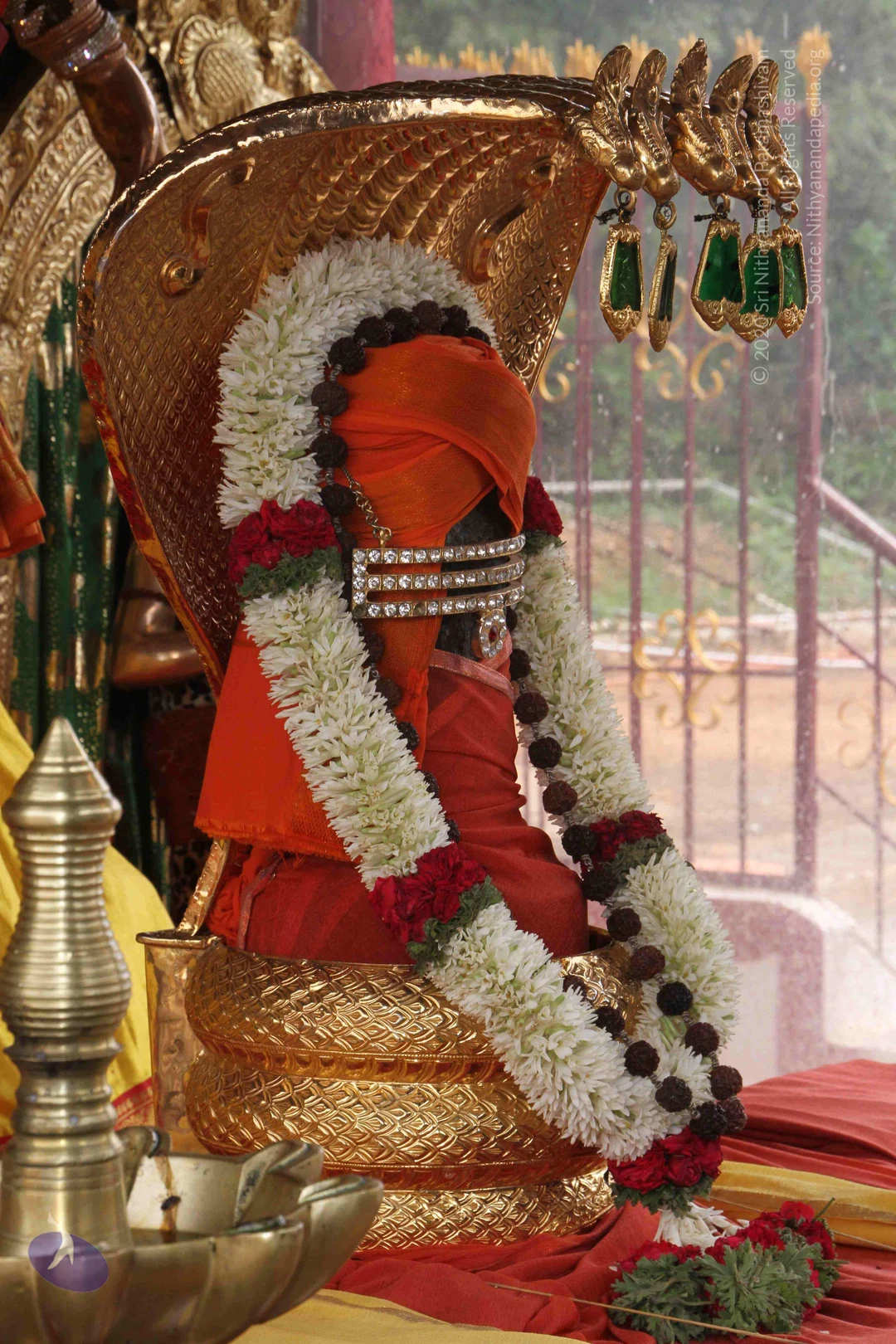
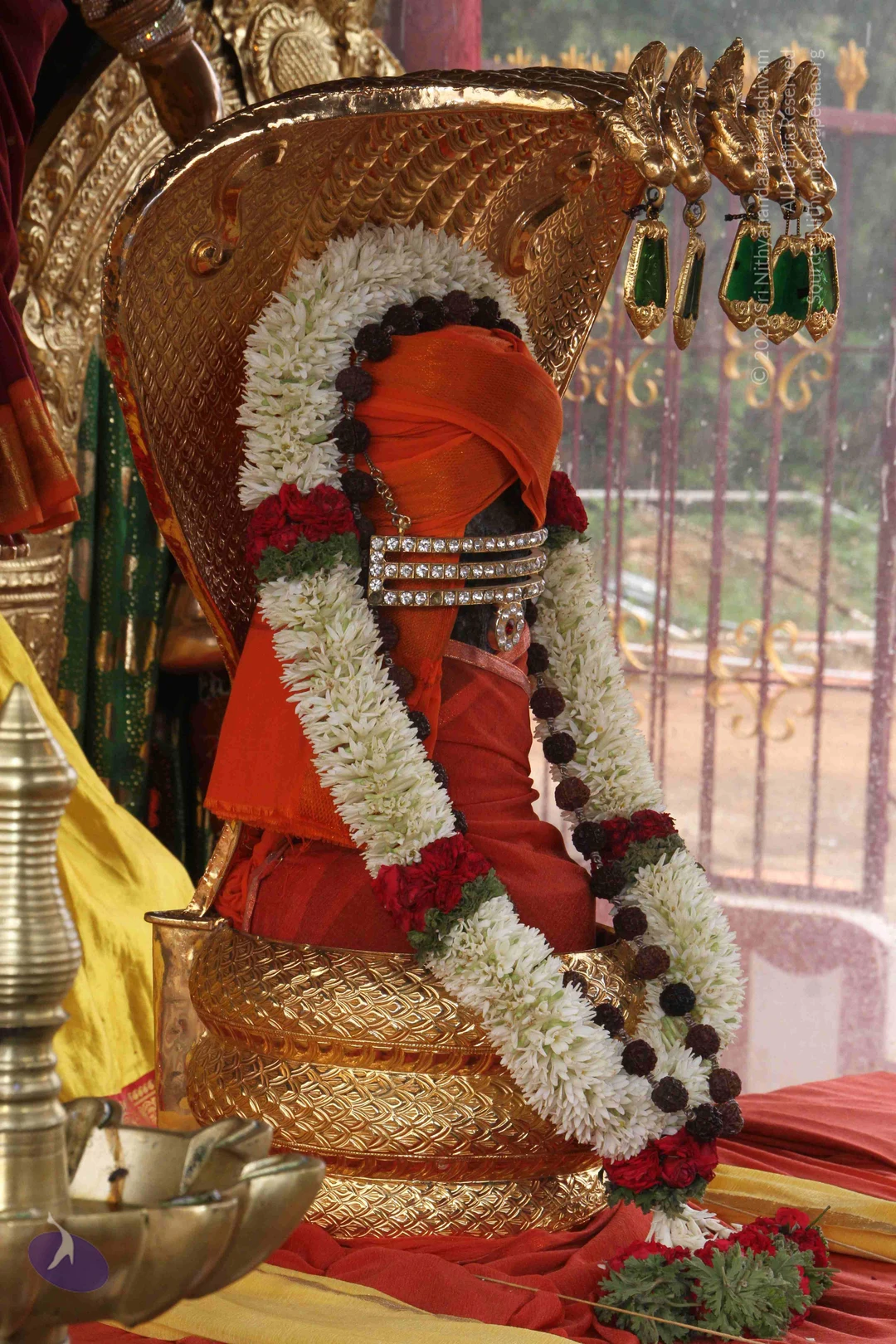
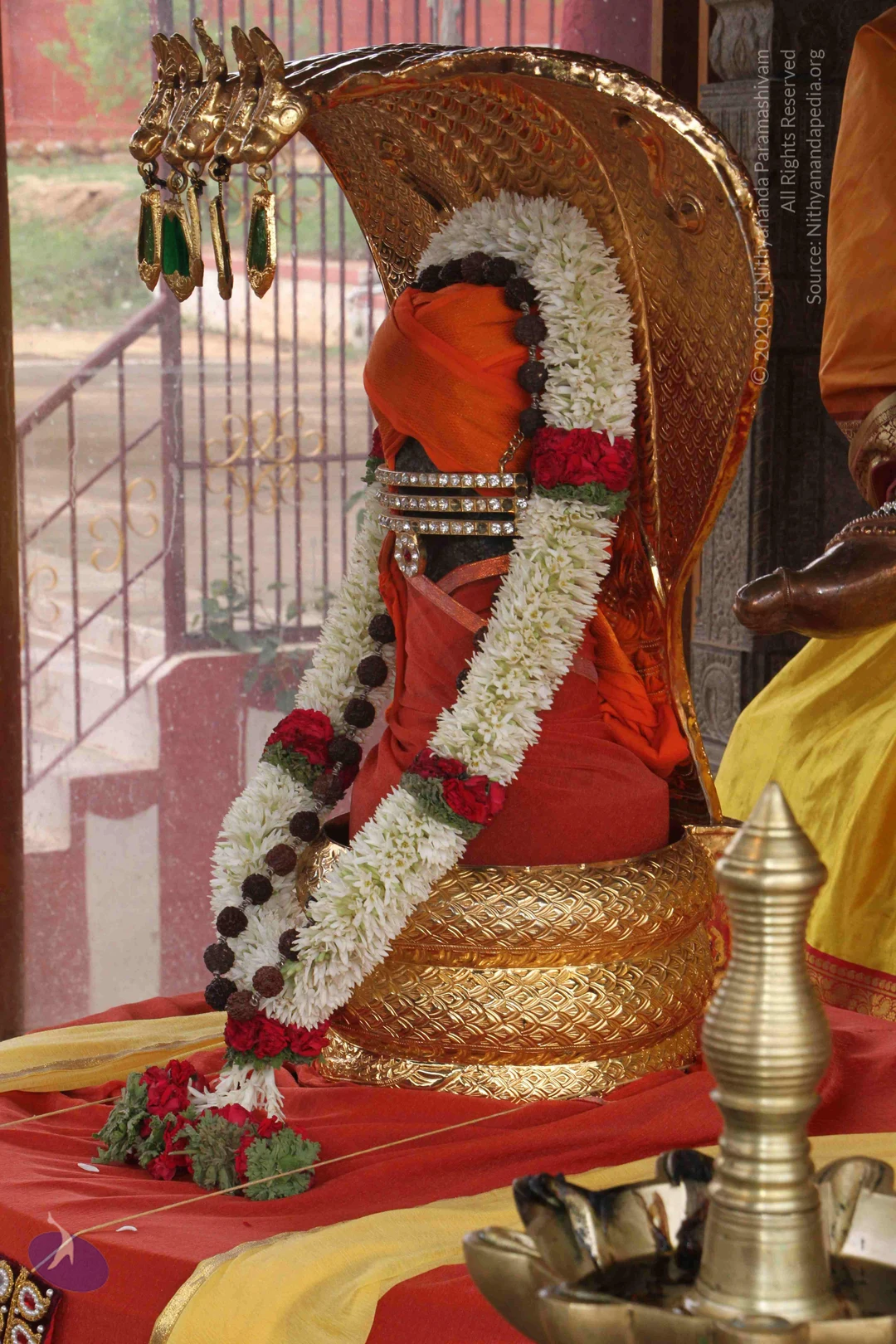
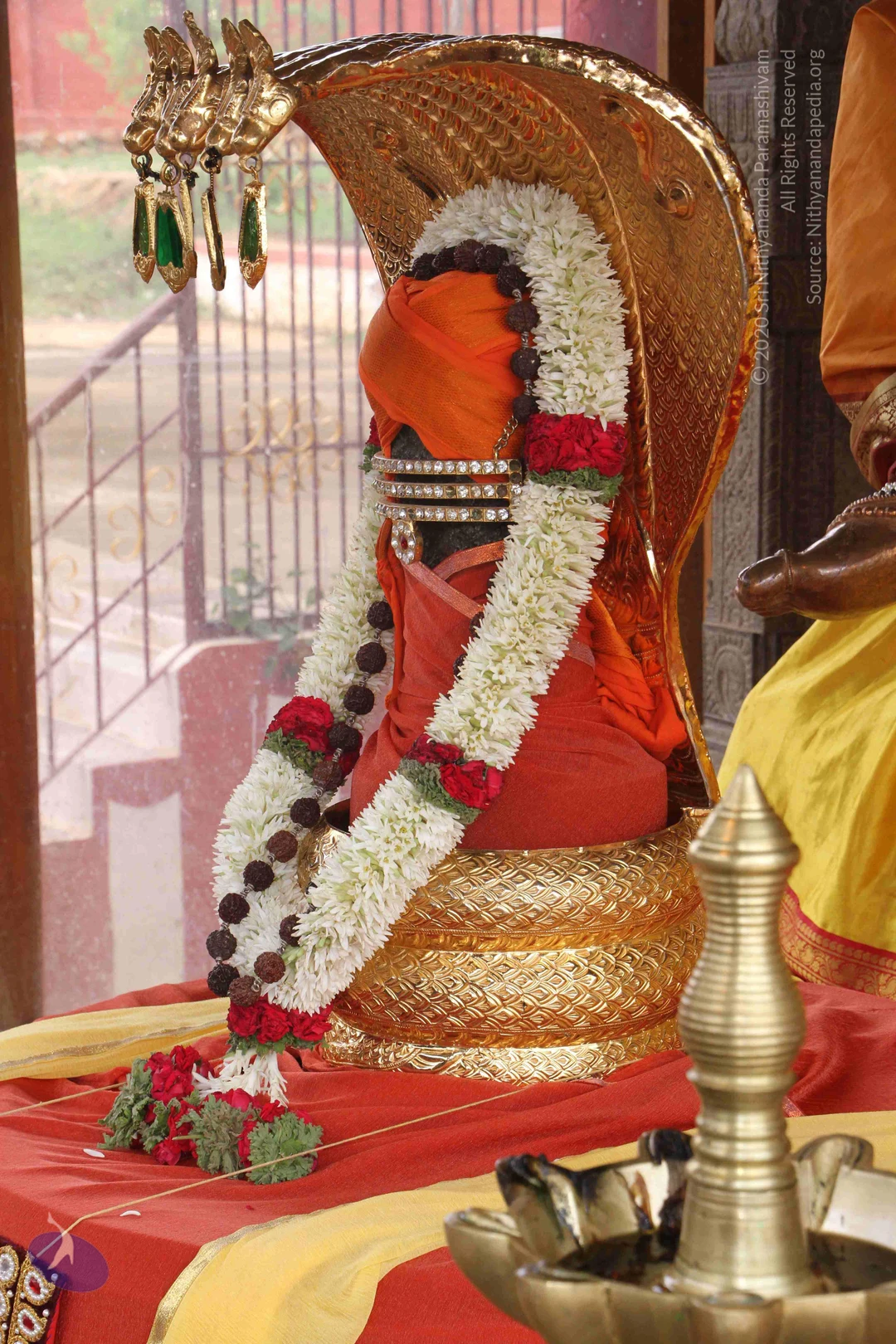
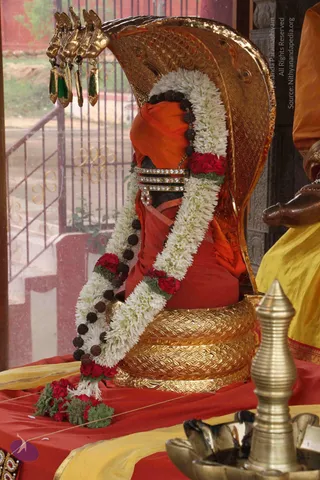
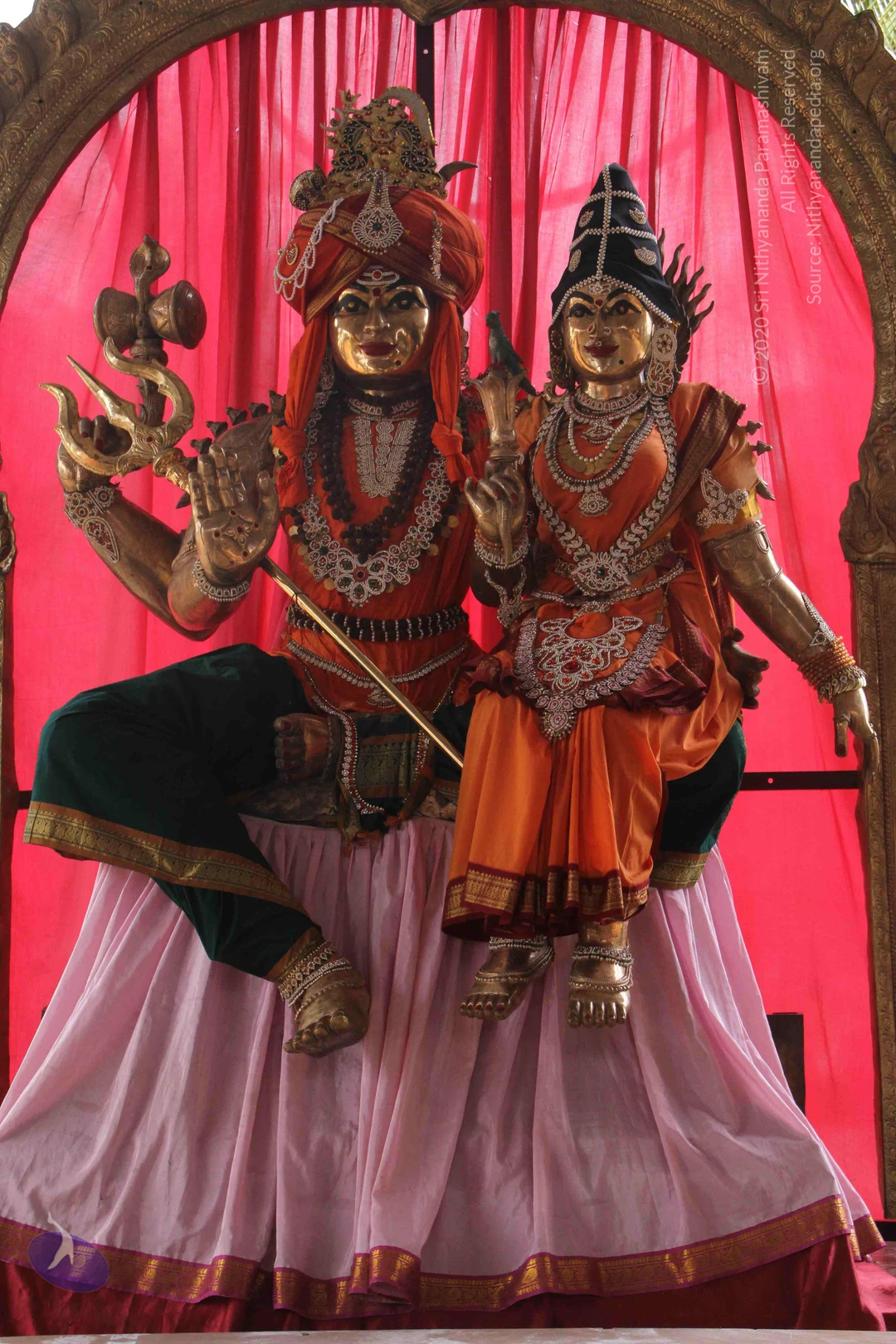
A golden deity murti stands within an ornate golden arch-shaped throne frame carved with peacocks and scrollwork, set against a red backdrop with a jeweled gold-and-gem embellished panel. The statue wears a pink and green draped garment with gold border and layered beaded necklaces in green, pink and white with pendants, a red tilak on the forehead, and raises one hand in a blessing gesture. No physical people are visible; the figure is a statue.A golden metal murti of a deity stands on an ornate bronze throne with a carved arched back and lion-like side supports. The figure wears a hot pink and green sari with a gold zari border, layered strands of green, white and pink beaded necklaces, and a round pendant on a chain. A red tilak marks the forehead and the raised right hand holds a small object. Behind the throne hang red and gold jewelled embellishments and a yellow cloth. No people are visible; the figure is a statue.A golden deity murti stands in front of an ornate gilded shrine arch with a red backdrop and jewelled rosette decorations. The figure wears a tall crown and red tilak, and is draped in a magenta and green sari with gold border. Layered green, white and amber beaded malas, a gold pendant and jewelled ornaments adorn the neck and chest. One hand is raised in blessing. The setting suggests a temple altar decorated for worship.A photograph of a ceremonial murti seated on a golden cobra-hood throne, draped in an orange-red cloth wrapped around the head and body. It wears layers of white jasmine garlands with red flower accents, a long rudraksha mala with dark beads, and a jewelled gold and diamond-set ornament across the forehead. Gold cobra-hood decorations with hanging green gemstone pendants frame the top. A brass oil lamp sits in the lower left foreground, and a bundle of red flowers and greenery lies at the base. Behind is a metal railing and a view of greenery through an open window. No living people are visible.A photograph of a sacred padukas or murti-like seated figure draped in an orange-red cloth and wrapped head covering, adorned with long white jasmine garlands with red rose accents, rudraksha malas, and a jewelled ornament across the chest. Behind it rises an ornate gold hooded canopy with carved scales and green stone pendants hanging from hooded serpent-like finials. A brass oil lamp stands at left and a bundle of red flowers lies at the lower right on a red and yellow cloth. No physical people are visible.A photograph of a Shiva lingam-form deity murti, dressed in an orange-red cloth and draped with a long white jasmine garland threaded with dark rudraksha beads and red roses. Behind it a golden hooded serpent canopy rises, with a row of diamond-studded bands across the top and green stone pendants hanging from the hood. The lingam sits on a golden coiled base over a red and yellow cloth, with loose red flowers and green leaves scattered at its foot. In the foreground a brass kalasha-style oil lamp stands on a tray, and a figure in yellow silk is partly visible at the right edge. No people are clearly visible in the scene apart from the edge figure.

02-RUDRA-ABISHEGAM
2 photosSource gallery
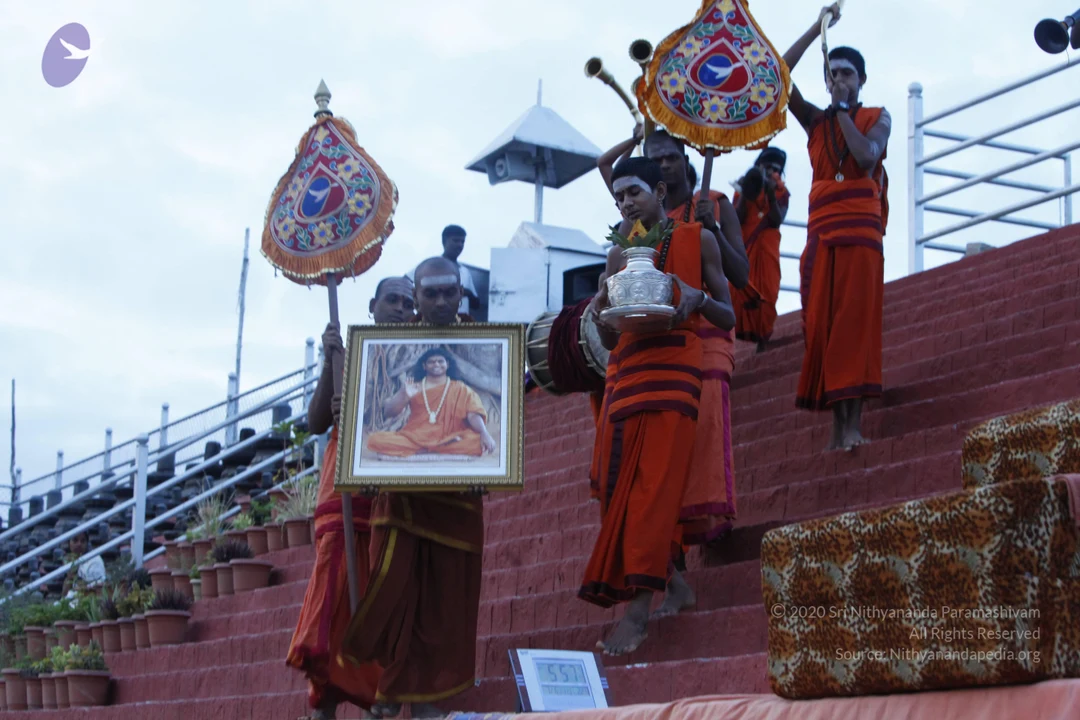
A procession of saffron-robed men descends a red brick staircase outdoors. At left, a man in orange holds a long pole topped by an orange and gold embroidered parasol-style banner, and behind him others blow long curved brass horns. A drummer in orange beats a drum at left edge. Center, a bald man with tilak on his forehead carries a framed picture under his arm, wearing orange and yellow cloth. Beside him a man in orange with rudraksha malas holds another pole banner. At right, a young man in orange with rudraksha beads carries a silver kalasha-style vessel decorated with green leaves, and a man in white dhoti stands at the edge. Metal railing and pale sky in background.Outdoor photograph of a large black stone Shivling standing on a grey yoni-pitha base in a water tank, with a garland of red, orange and white flowers at its base. Several saffron-robed priests stand on a white railed platform at left and upper left, and others raise arms at the back. Behind them are red multi-storey buildings and rows of potted plants on red steps with seated figures on the right.

03-PADA-PUJA

9 photosSource gallery
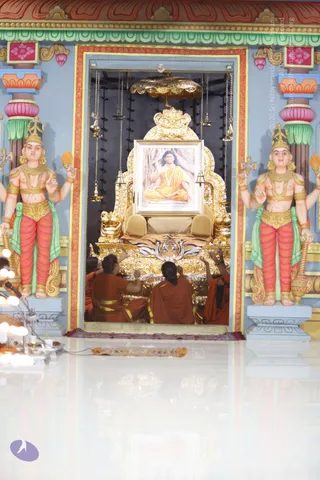
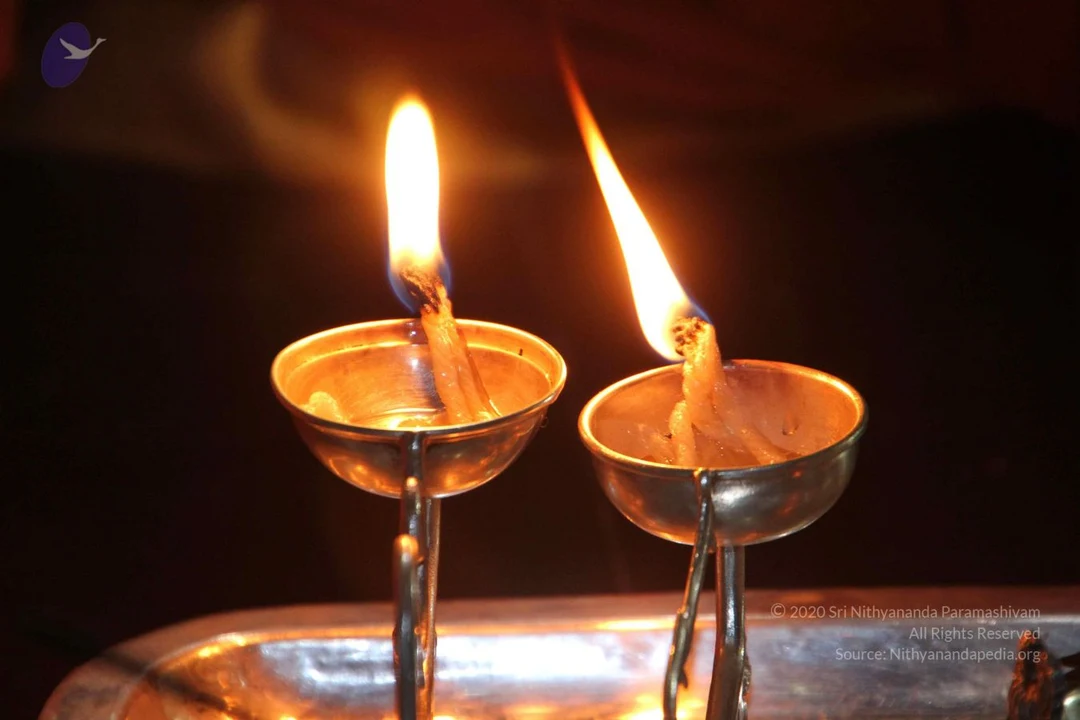
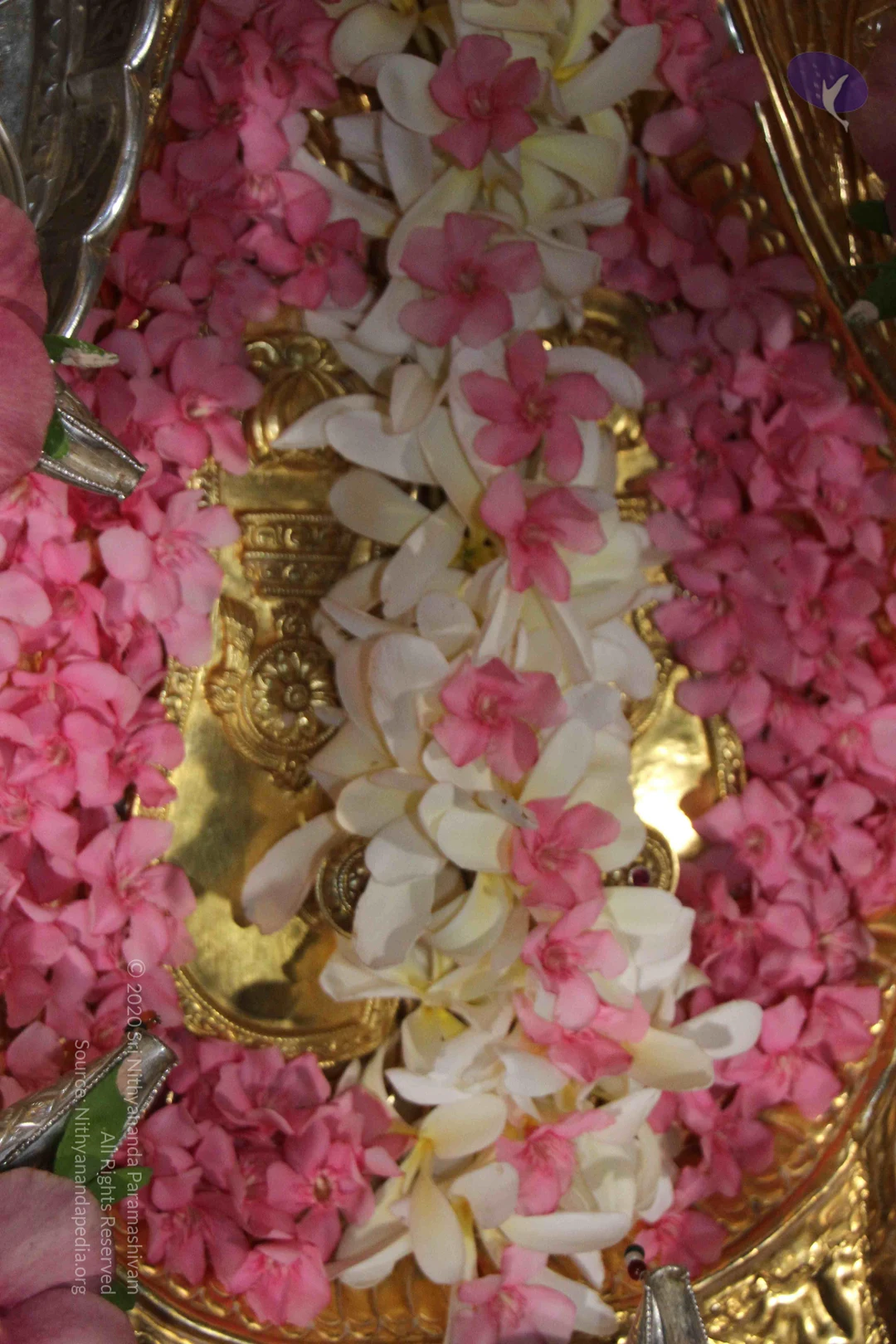
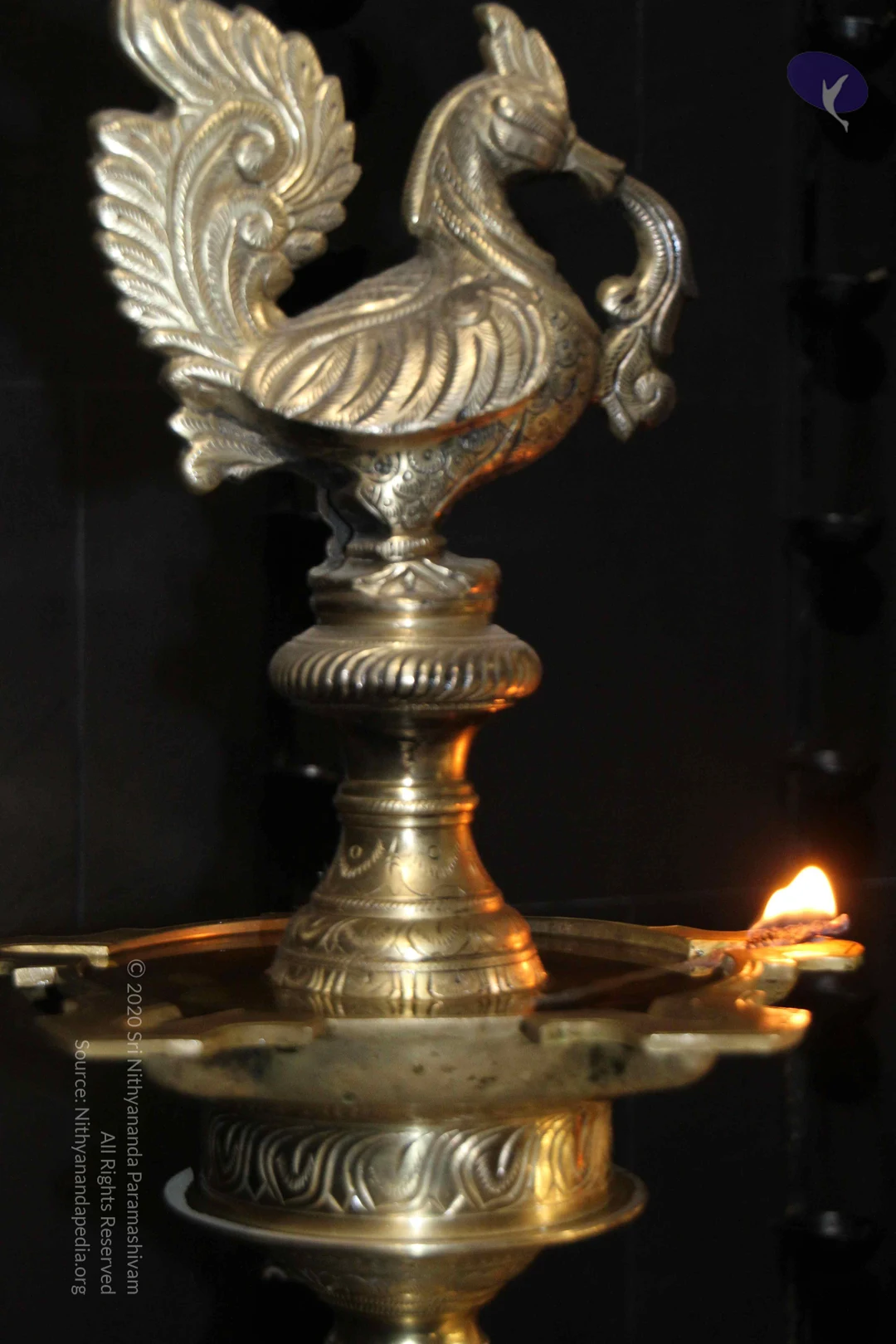
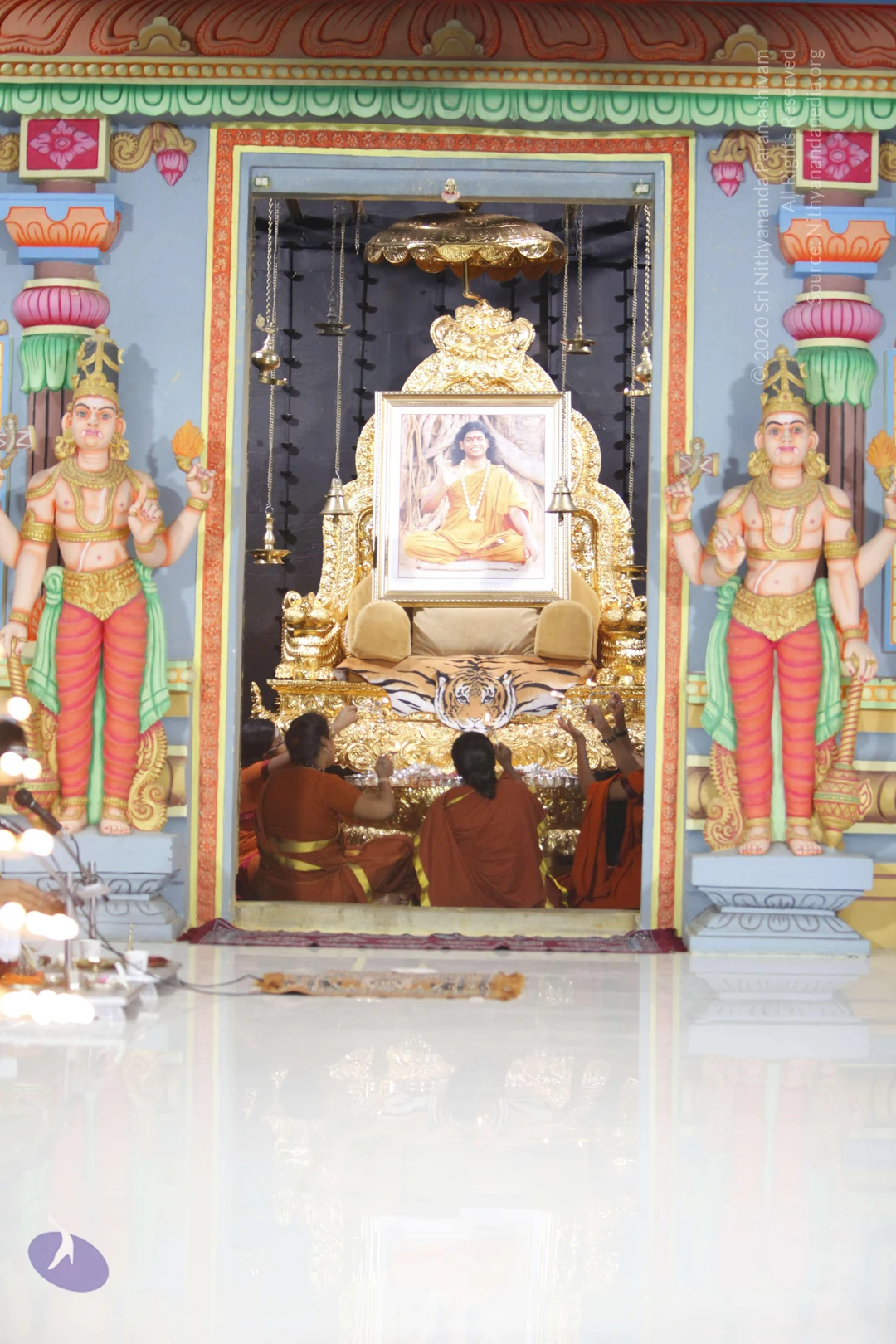
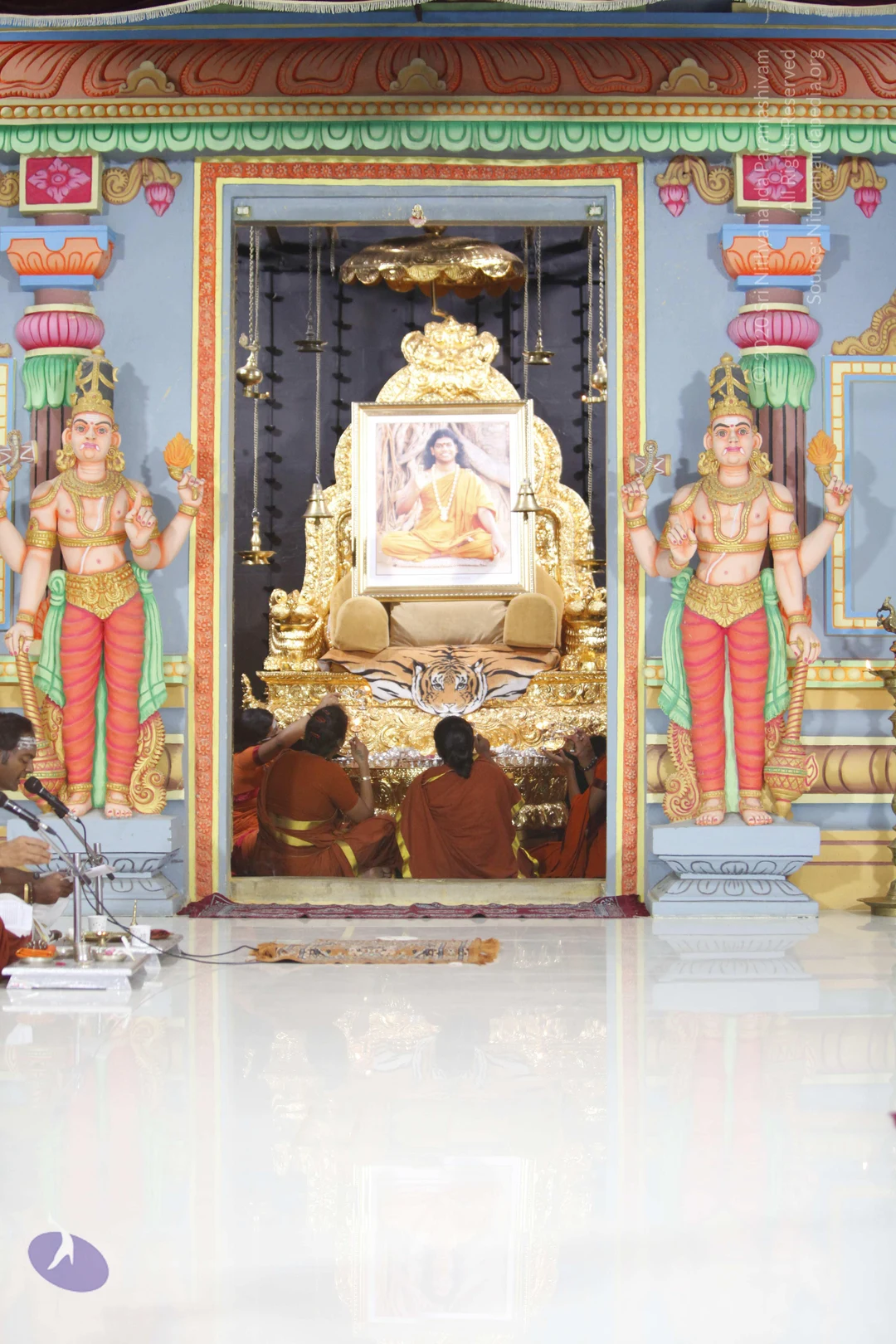
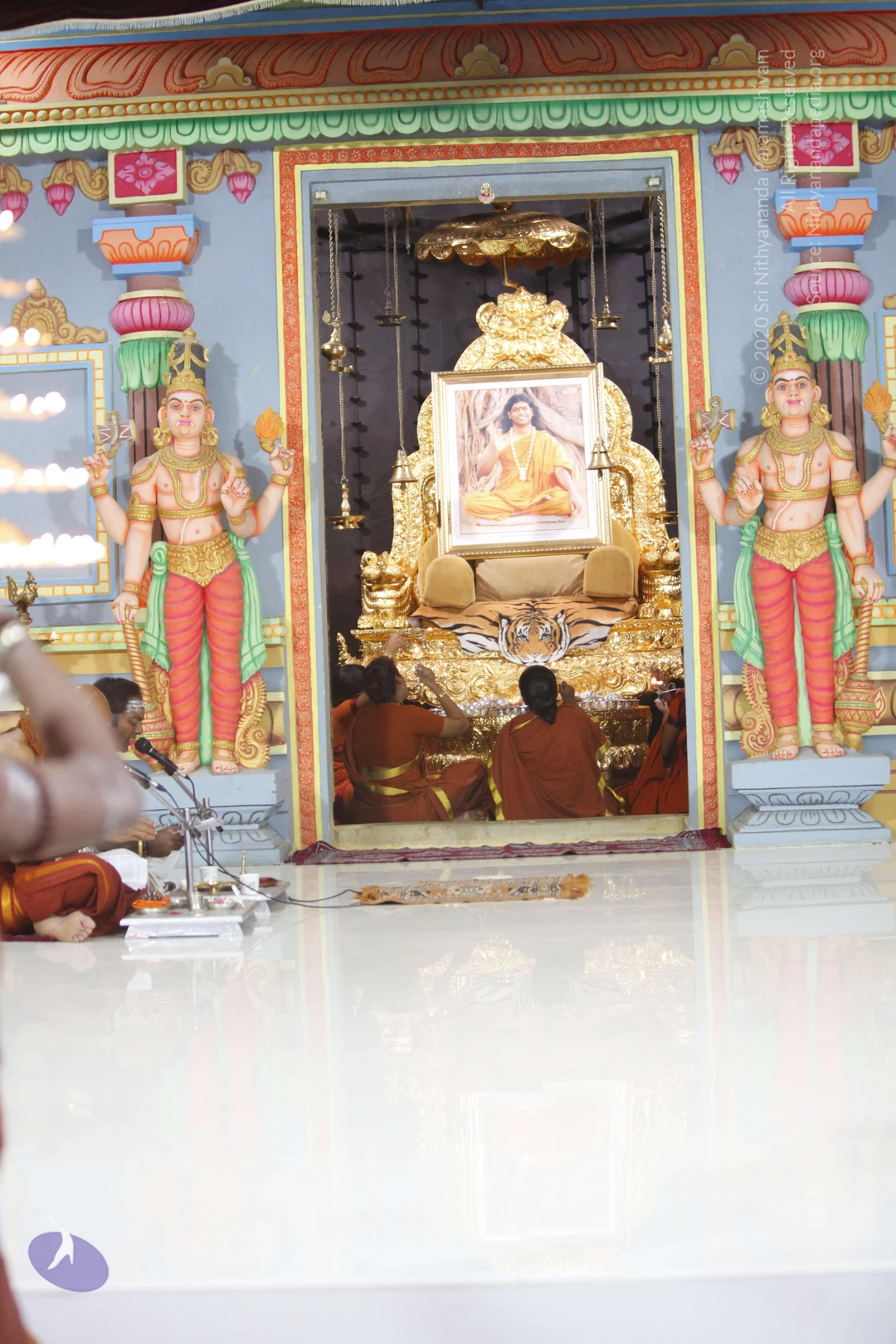
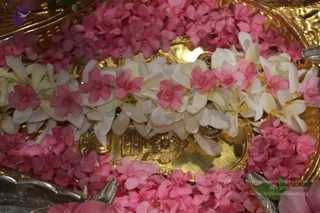
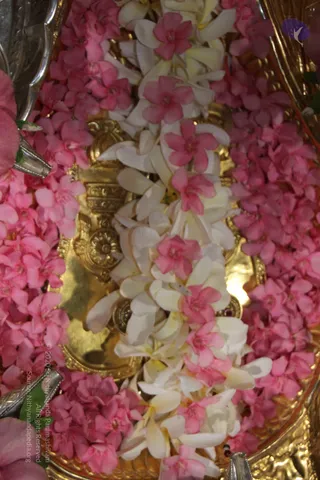
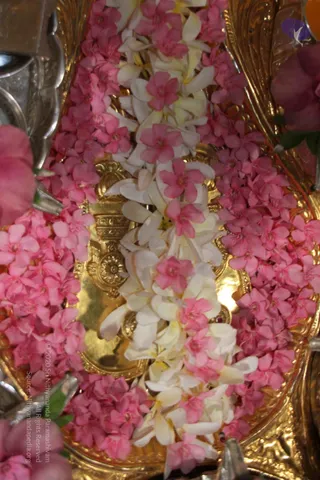
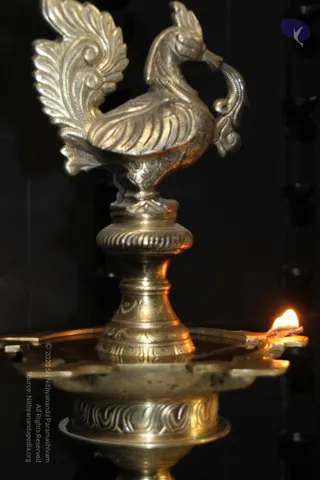
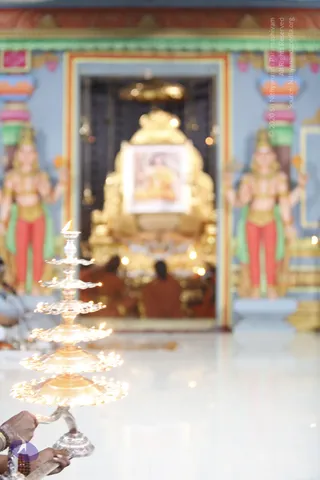
Close-up photograph of a ritual offering: a long garland of white plumeria (frangipani) blossoms interspersed with pink oleander-style flowers lies across a golden ceremonial vessel and gilded tray. Pink flower petals are scattered densely around the garland. Parts of silver and gold ritual implements are visible at the edges, with a small red stone visible near the lower right. No people are visible in the frame.Close-up photograph of a gold-coloured ornate ritual vessel or tray heavily decorated with pink oleander flowers and a long white frangipani garland running down its centre. Golden embossed floral and scroll patterns frame the arrangement, with a small silver implement visible at the upper left edge. No people are visible; the image shows a floral offering prepared for a puja setting.Close-up photo of an ornate brass oil lamp (deepam) with a peacock-shaped top, its tail feathers fanned upward and head curving toward a lit wick. The lamp has a multi-tiered base with engraved floral and leaf bands, and a single flame burns on the shallow dish at right against a dark background. No people are visible.Inside a colourful temple shrine, a golden throne with a tiger-skin seat stands under a golden canopy with hanging bells and chains. A framed portrait on the throne shows a seated figure in saffron robes and a rudraksha-style necklace before a banyan tree. Three women in orange-brown robes with yellow borders kneel at the base of the throne, offering lamps and flowers, while two painted dvarapala guardian figures with crowns and multiple arms stand on either side of the doorway. The white polished floor reflects the scene, with brass oil lamps and a small ritual tray at left.A gilded ornate throne sits in a shrine doorway flanked by painted dvarapala-style guardian figures with raised arms and red-green dhotis. Above the throne hangs a gold canopy and bells on chains. On the throne is a tiger-skin cloth and a framed photograph of a man in saffron robes and rudraksha mala, seated before a banyan tree. Three women in orange-red saris kneel before the throne, holding lamps or offering plates during puja, with a red carpet at the threshold and a glossy white floor.A blurred temple sanctum view with a multi-tiered silver oil lamp (aarti lamp) in the foreground, its flames lit, held by hands at the lower left. Behind it stand painted guardian figures in red and green dhoti-like cloth flanking a doorway. Inside, a golden throne/peetha with a framed portrait sits in the sanctum, and two seated figures in orange and red robes face it. The floor is pale marble. The scene suggests aarti or puja offering at a temple shrine.

June 07 2013

1 photoView all
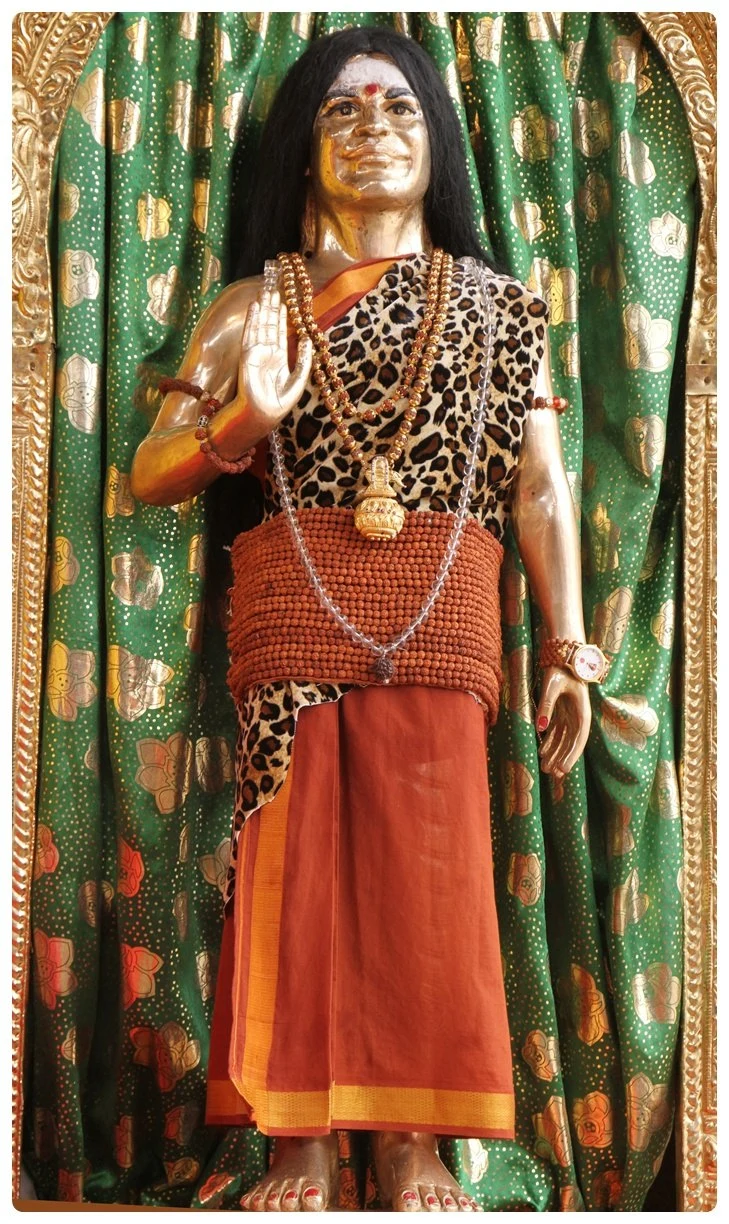
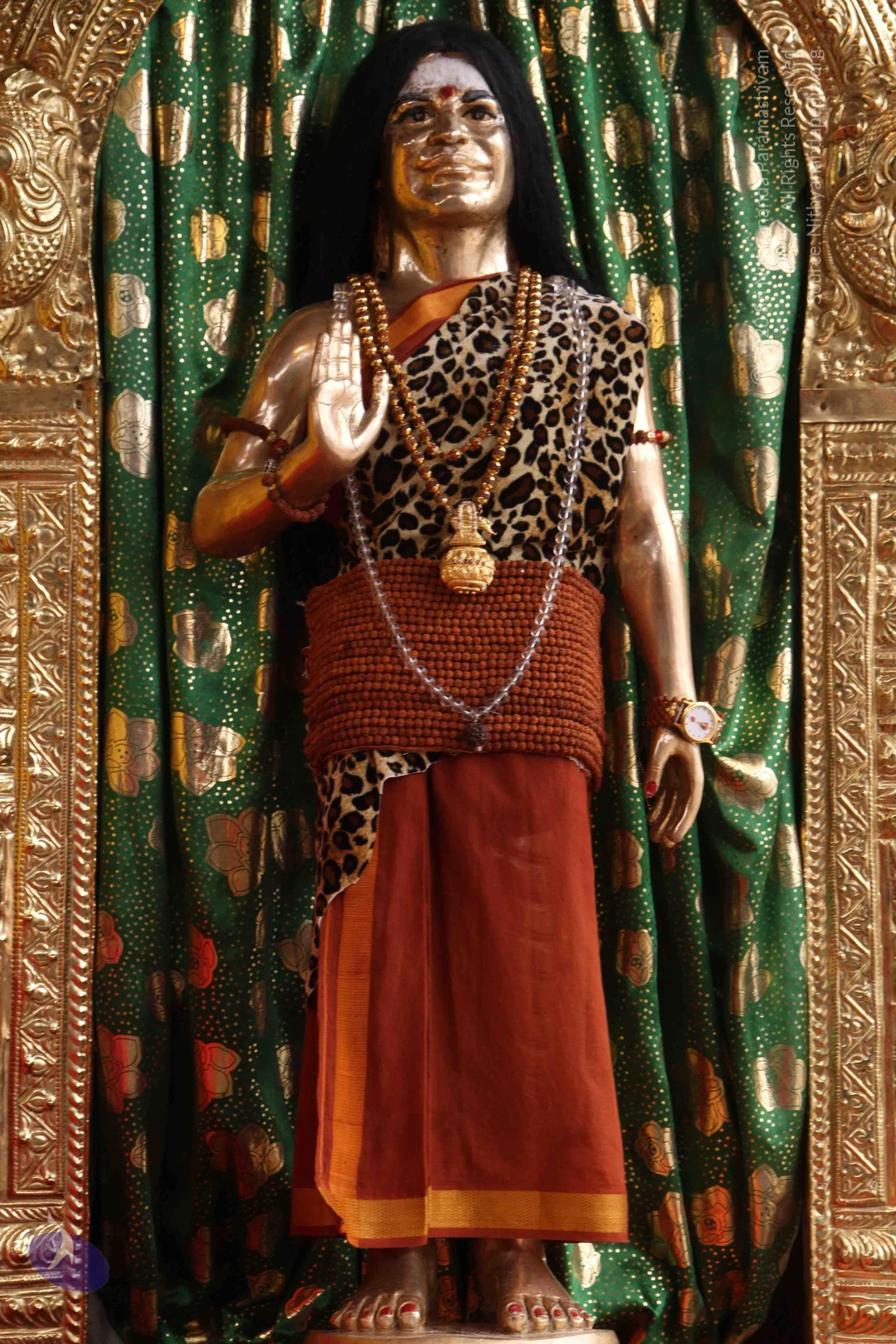
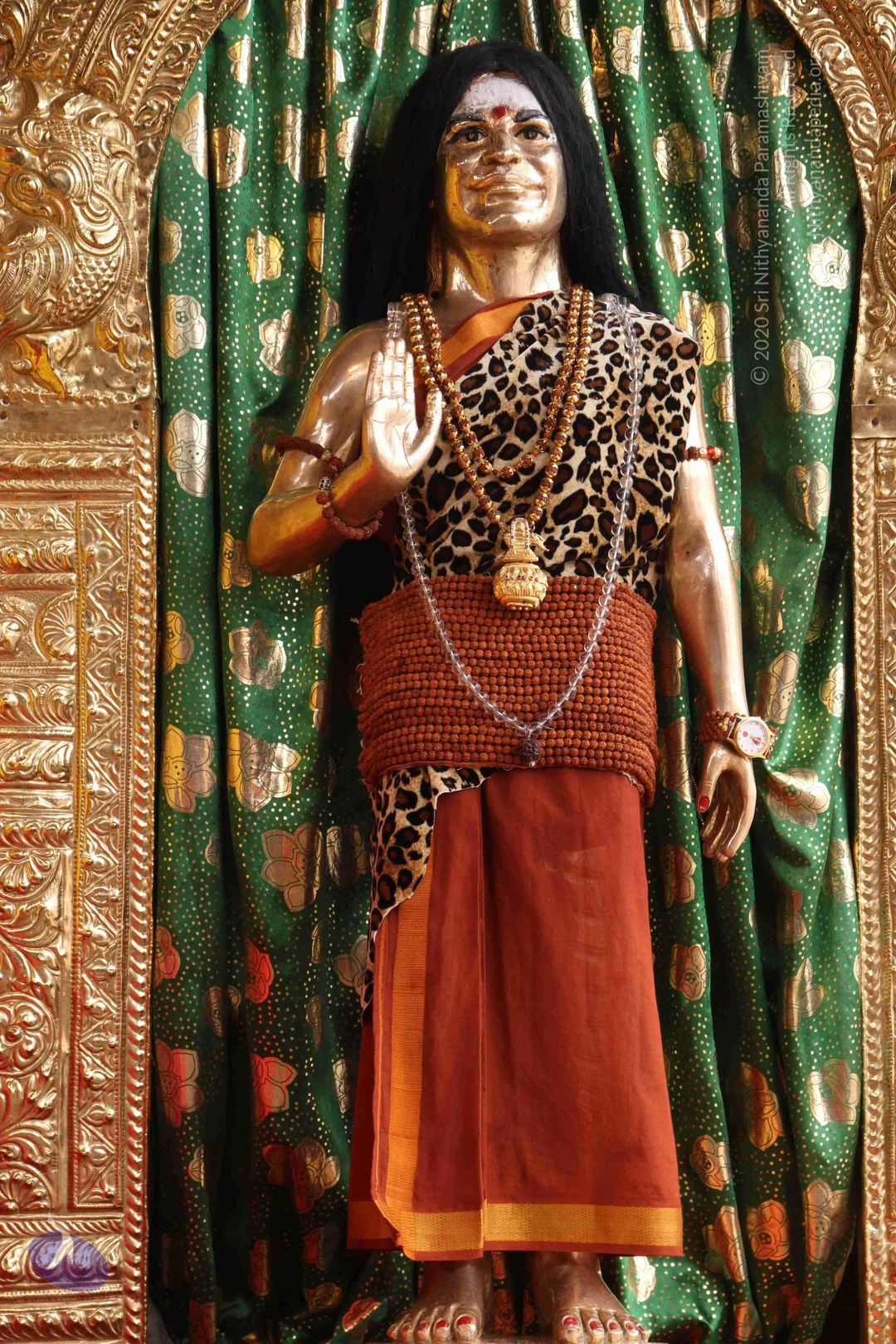
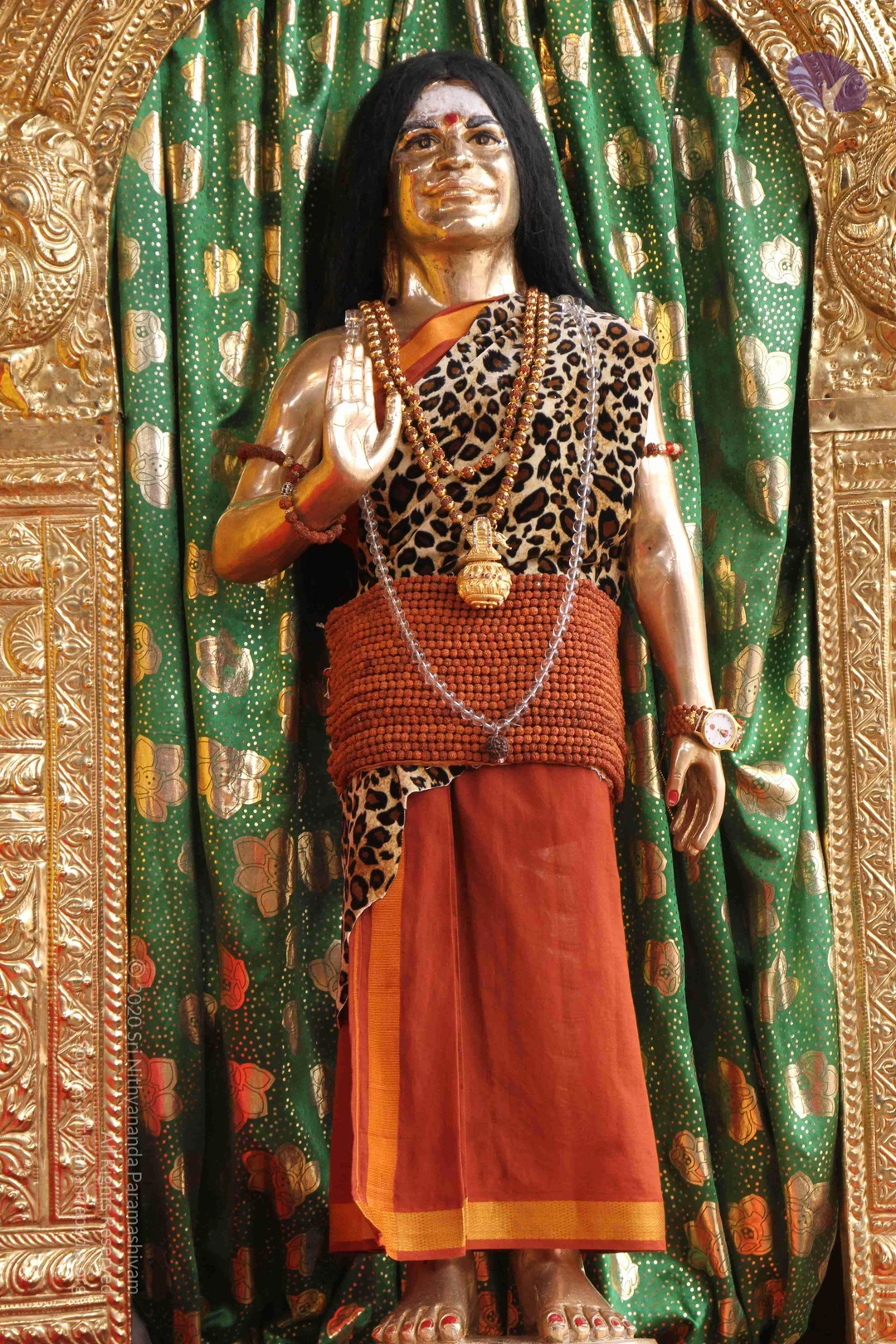
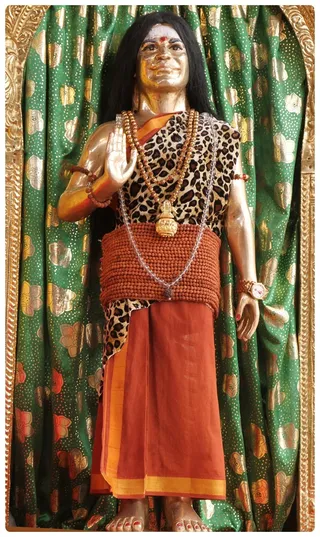
A gilded life-size statue of a long-haired male figure stands before a green curtain printed with gold flowers and an ornate gold frame. The statue has a red bindi and a mark on the forehead, raises its right hand in a blessing gesture, and wears a leopard-print cloth over the chest, a thick rudraksha waist belt, a rudraksha mala, a crystal-style necklace with a gold pendant, a bead bracelet and a wristwatch, with an orange-red dhoti and gold-tipped border below. The statue is an image, not a physical person, and no candidate can be confirmed from appearance, so this is a depiction of a statue.