Skip to content
Wednesday

26 October 2011

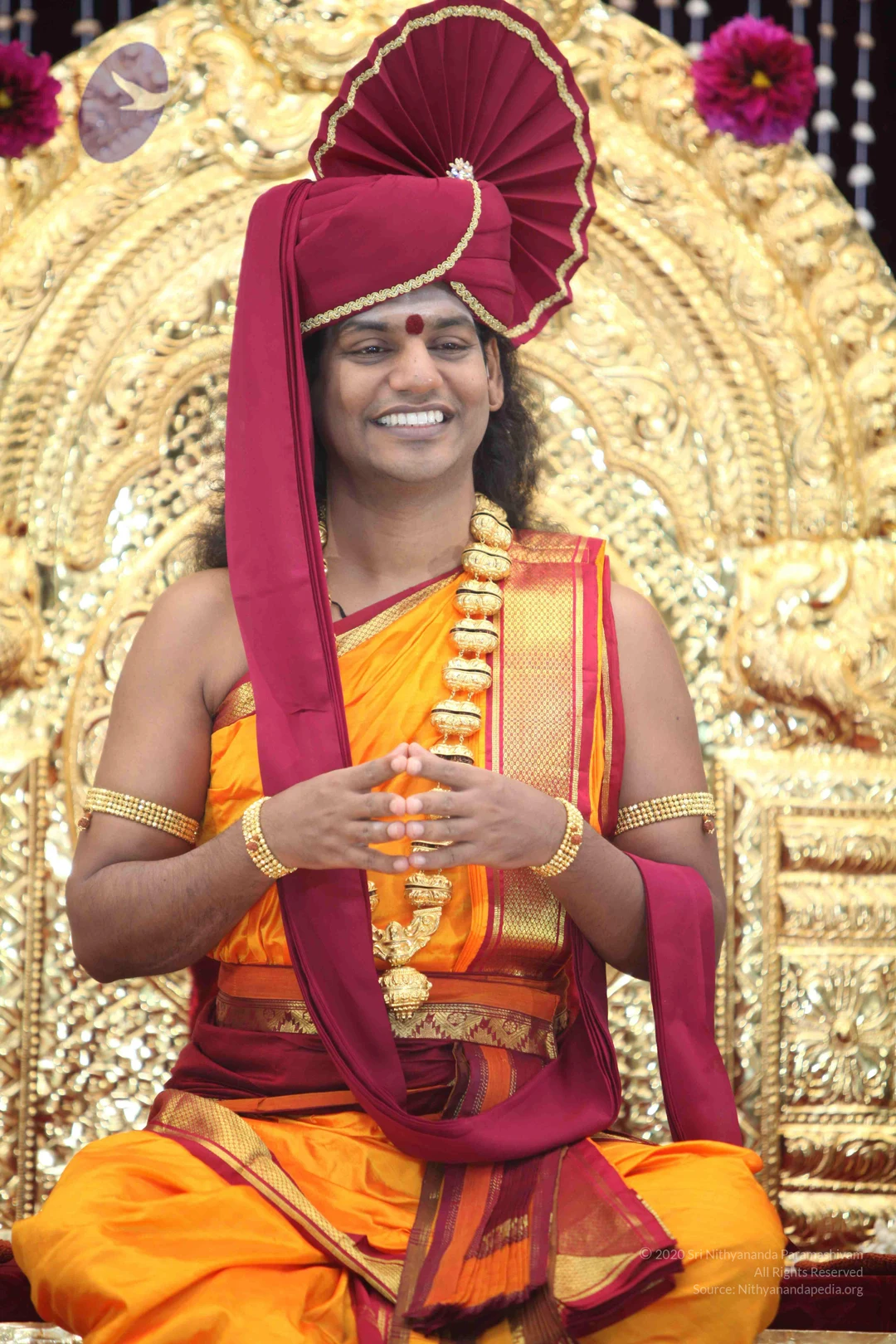
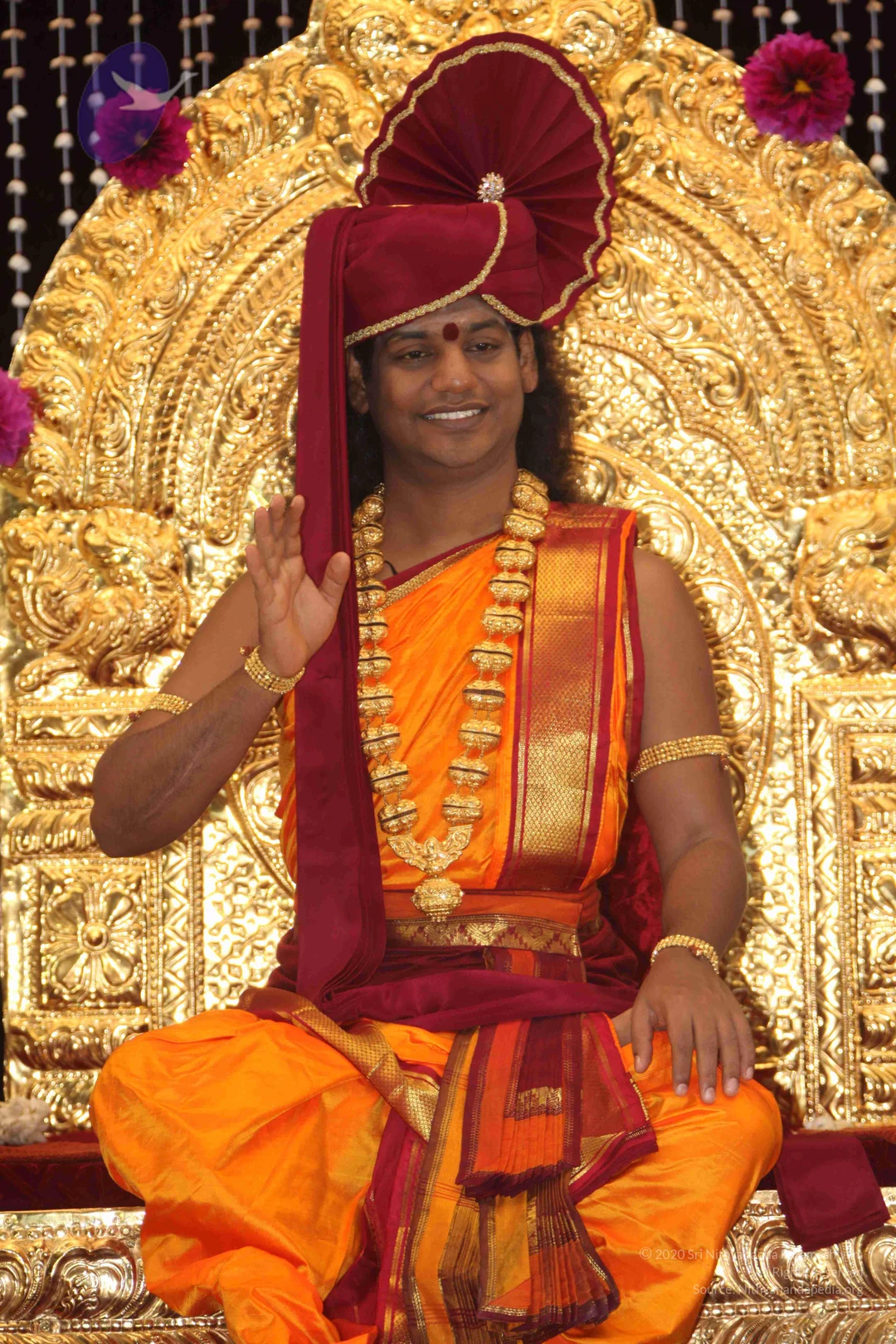
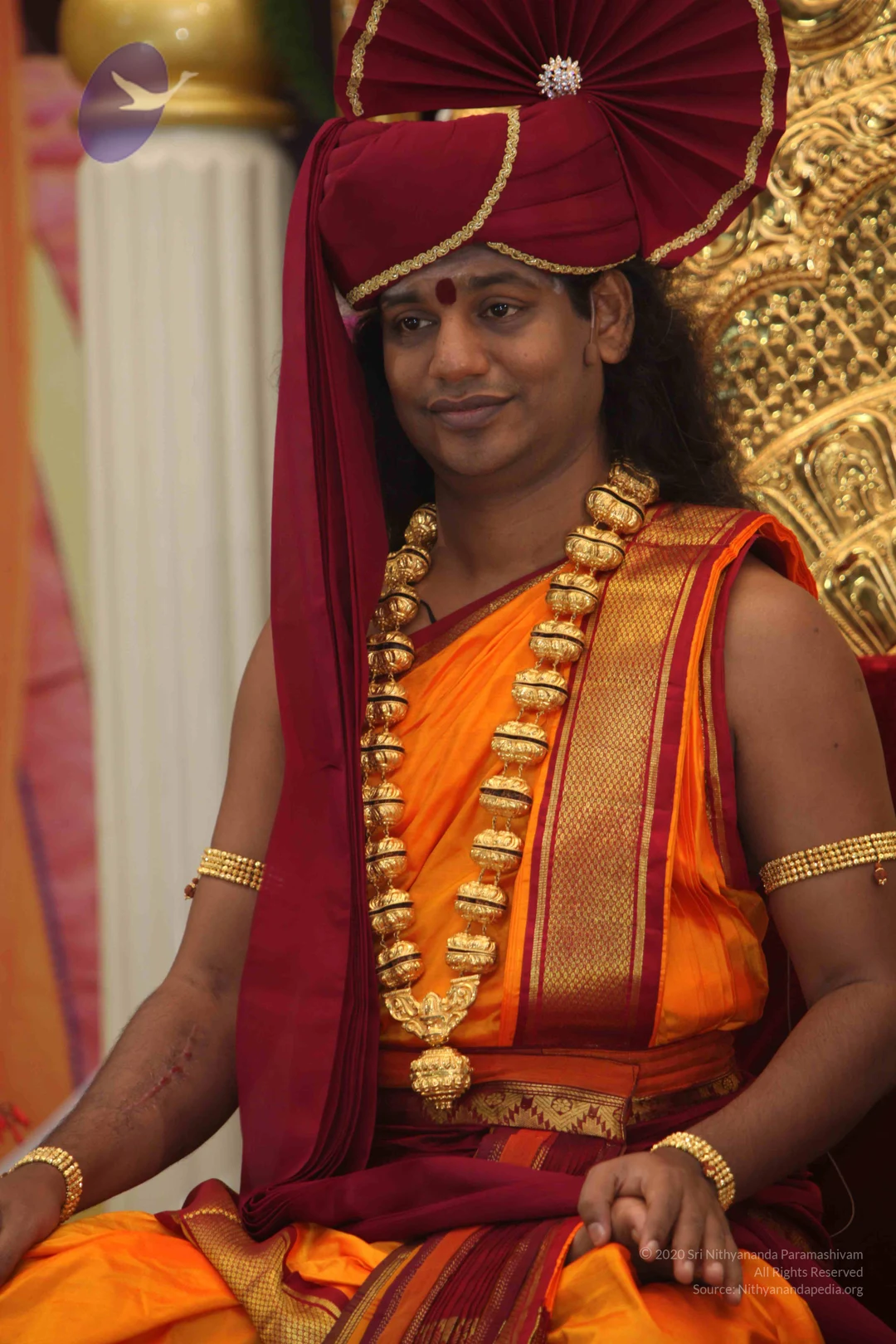
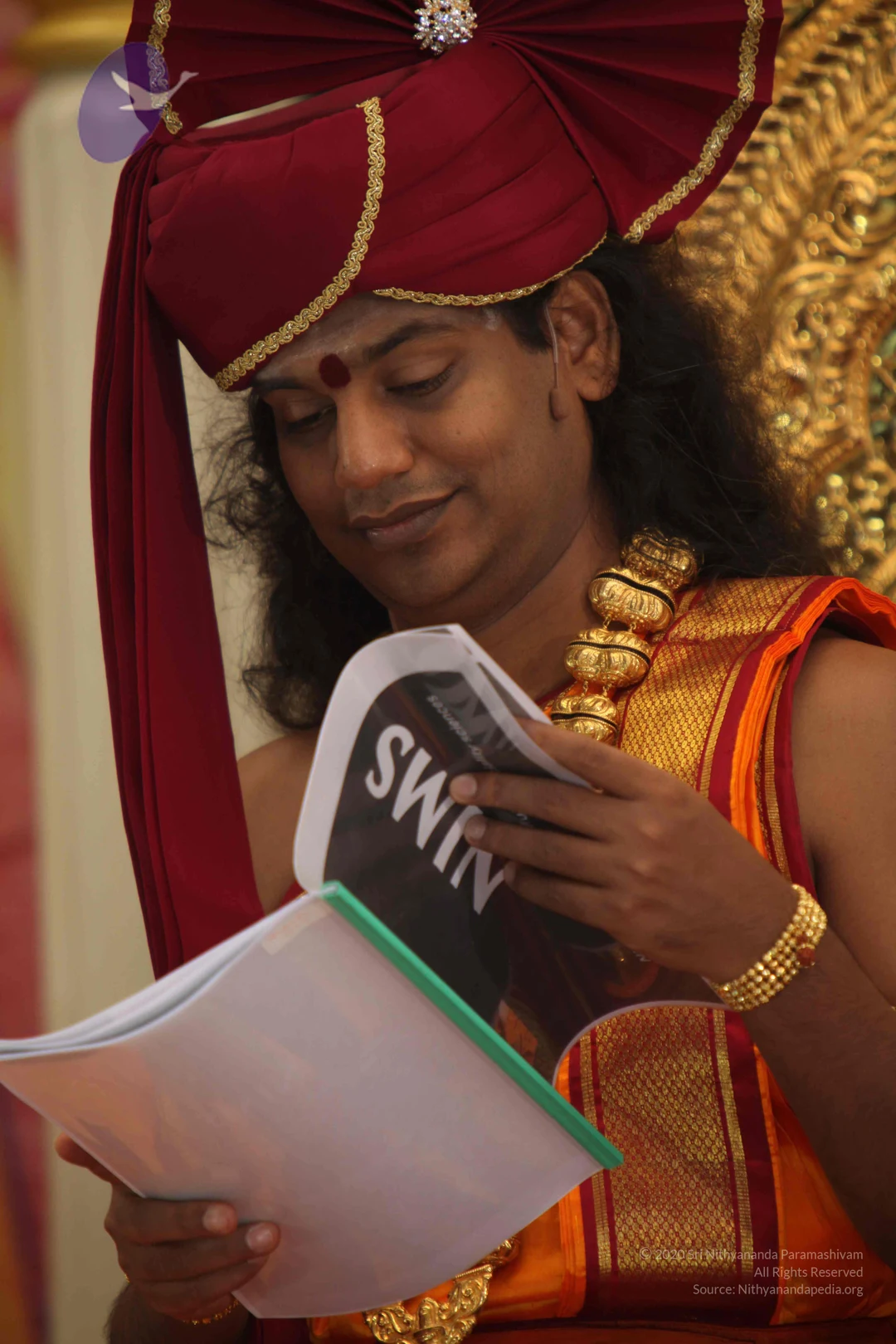
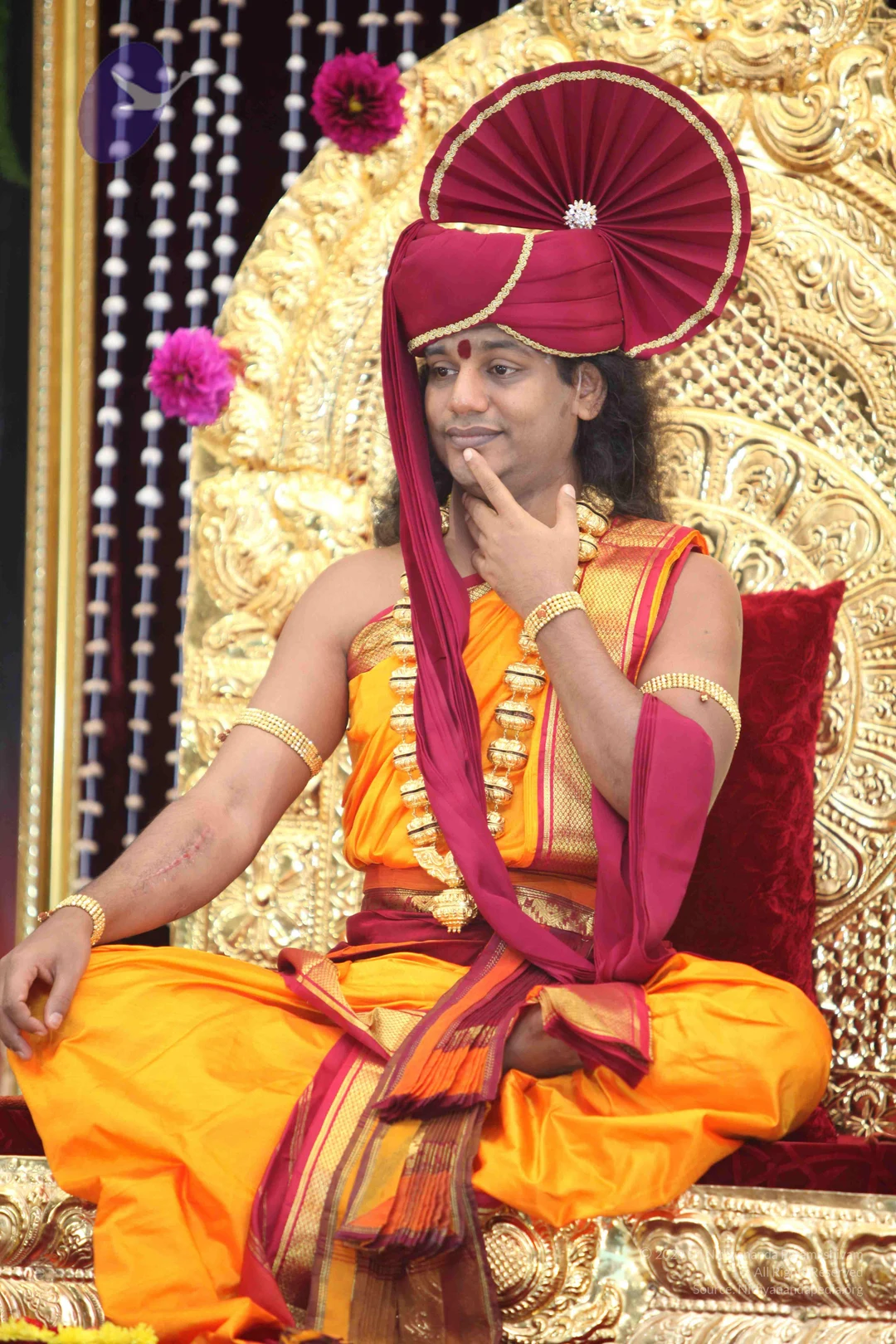
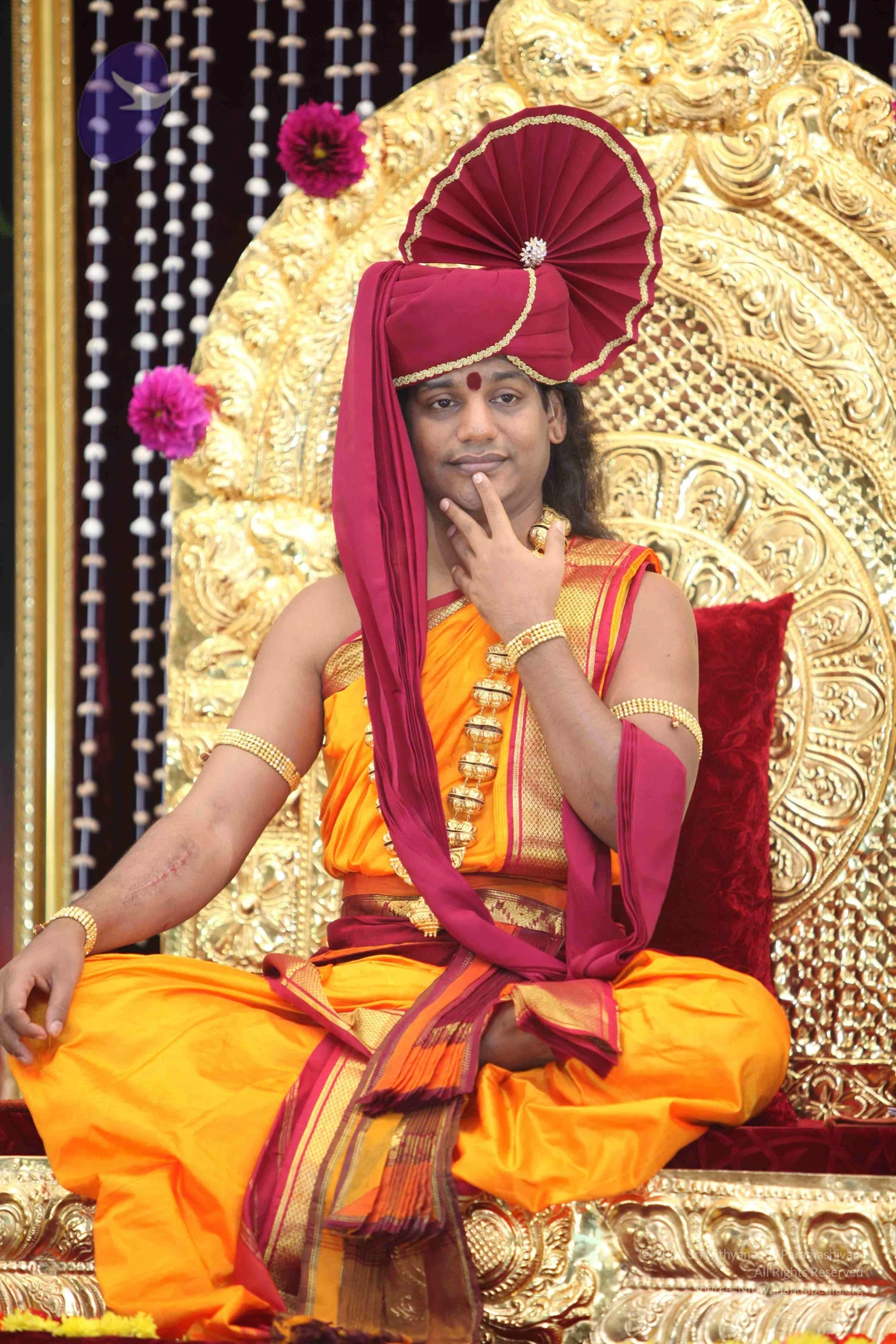
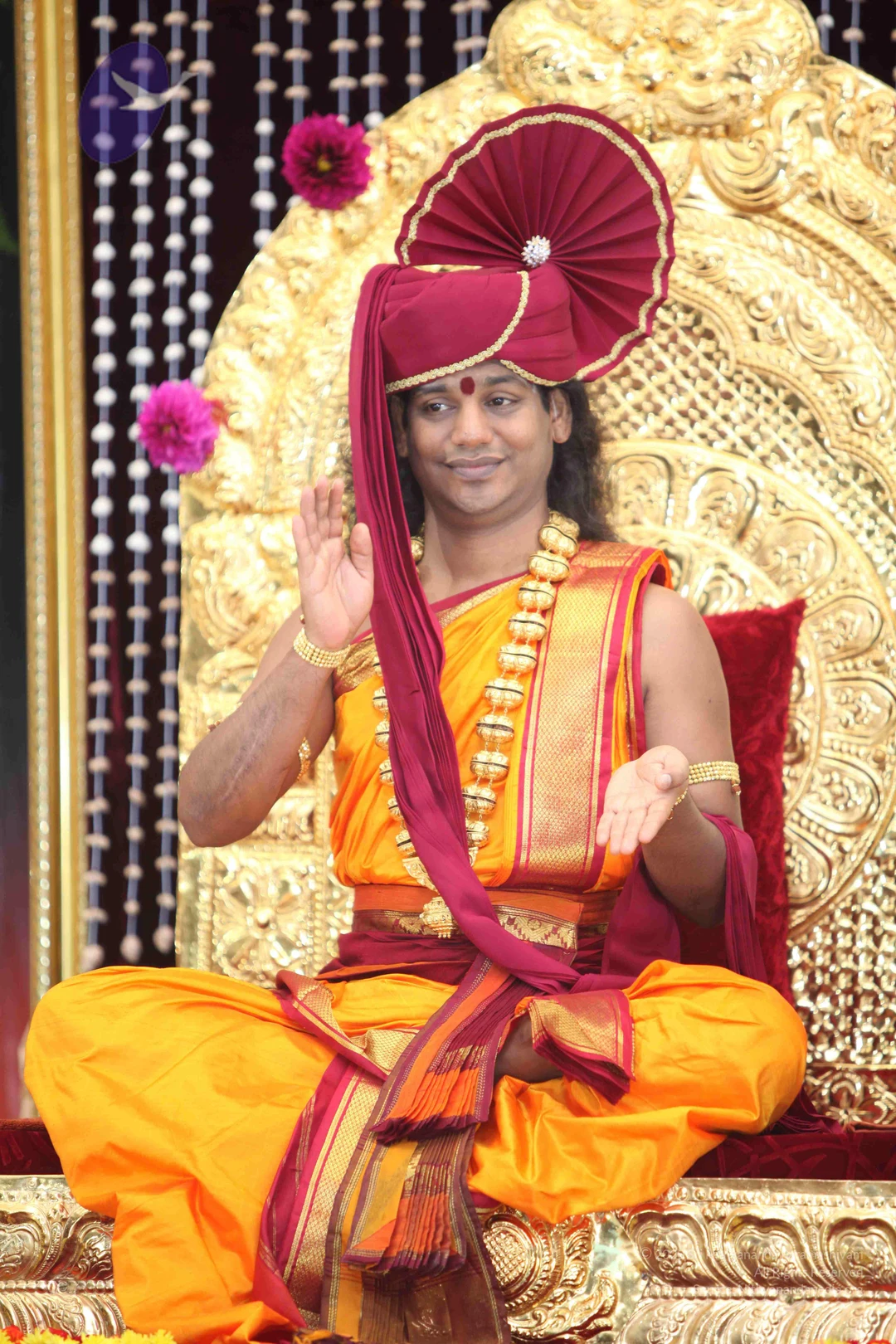
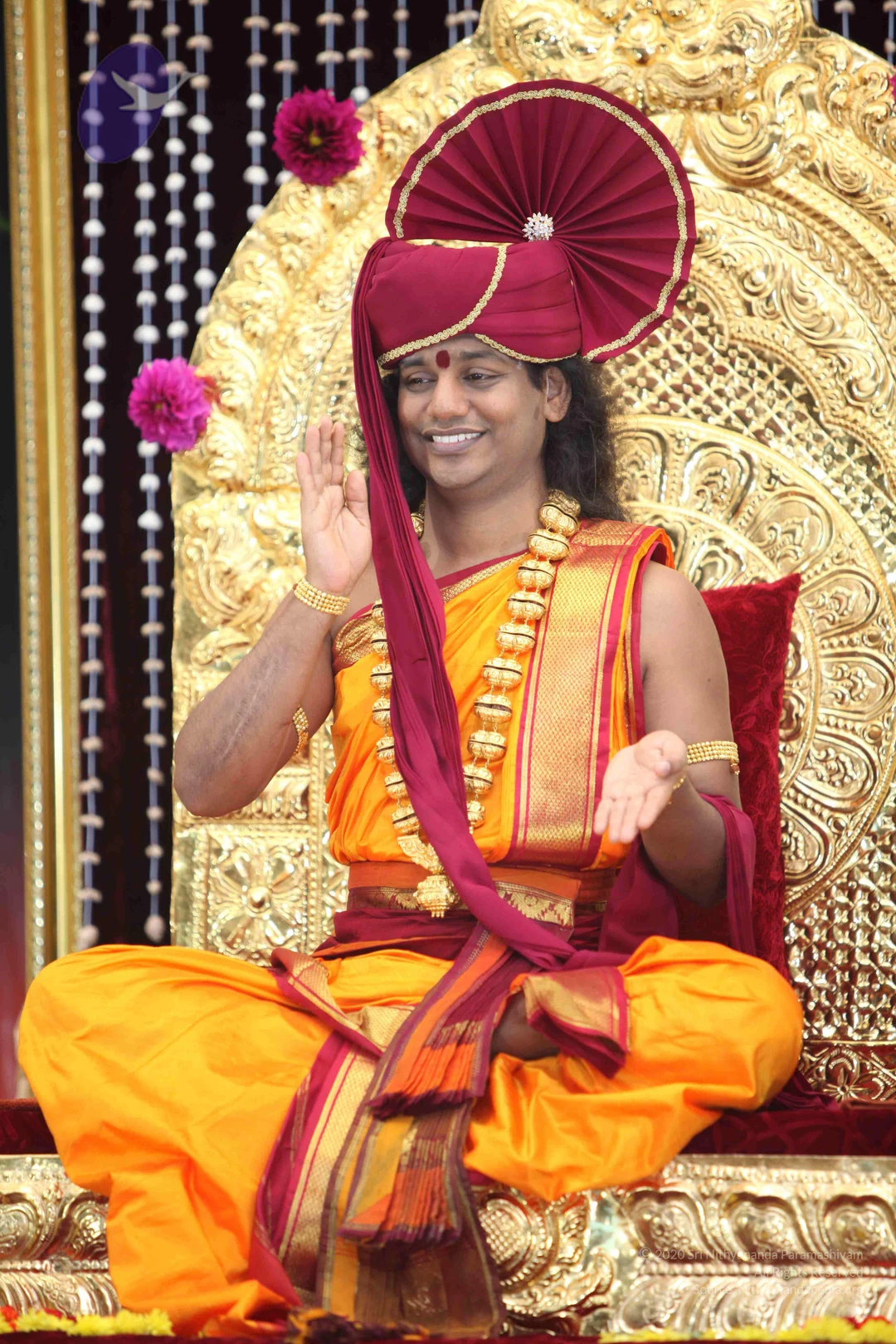
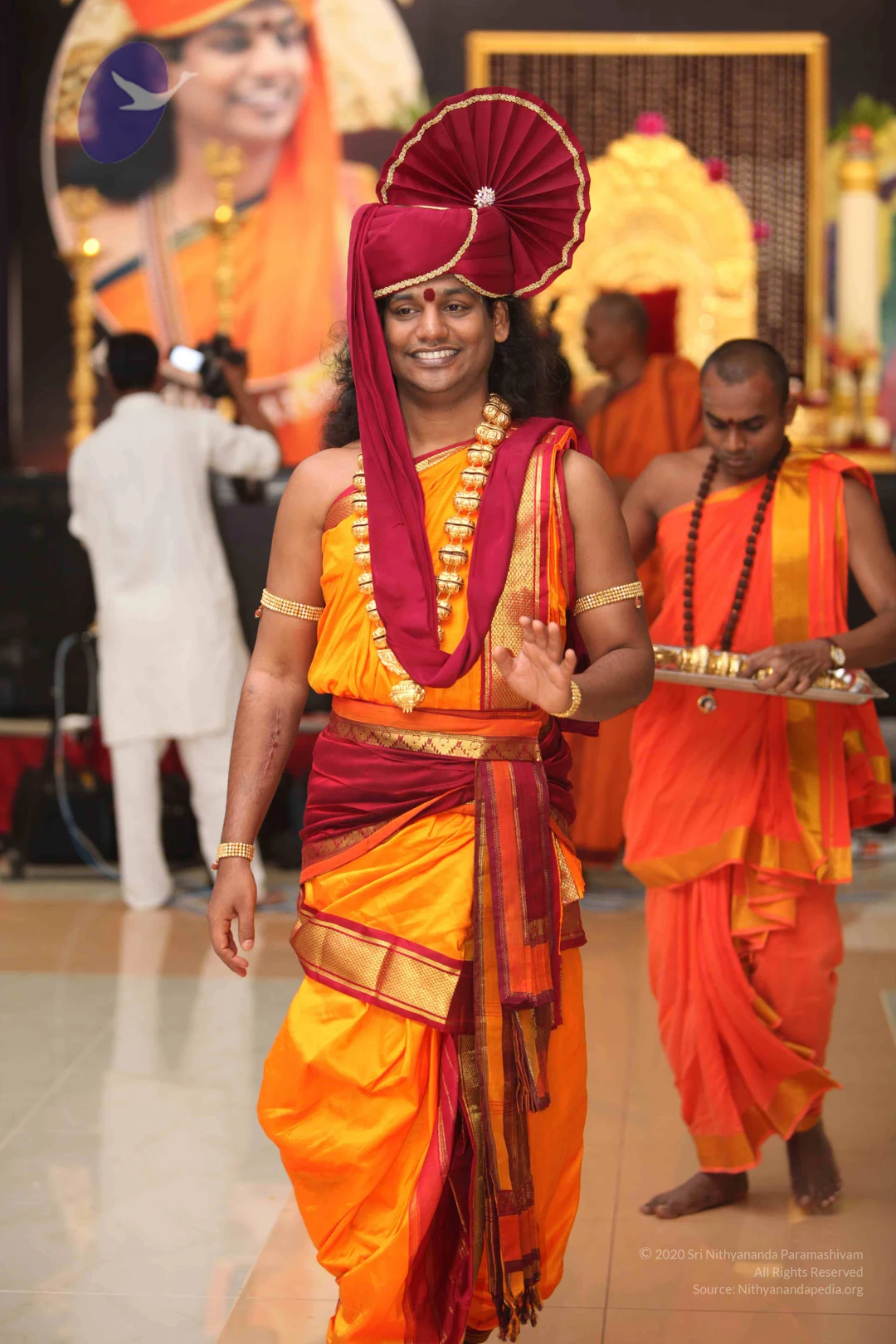
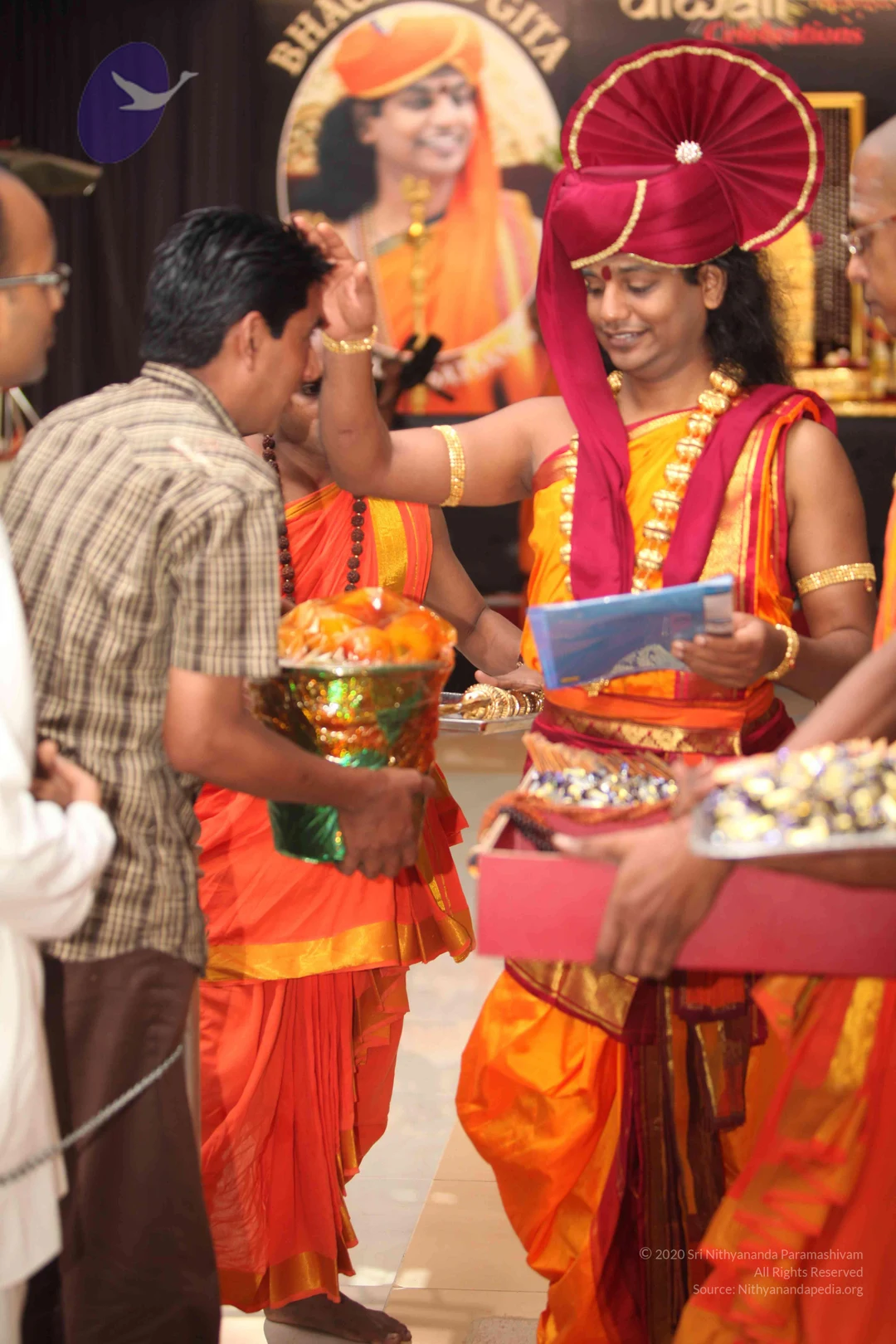
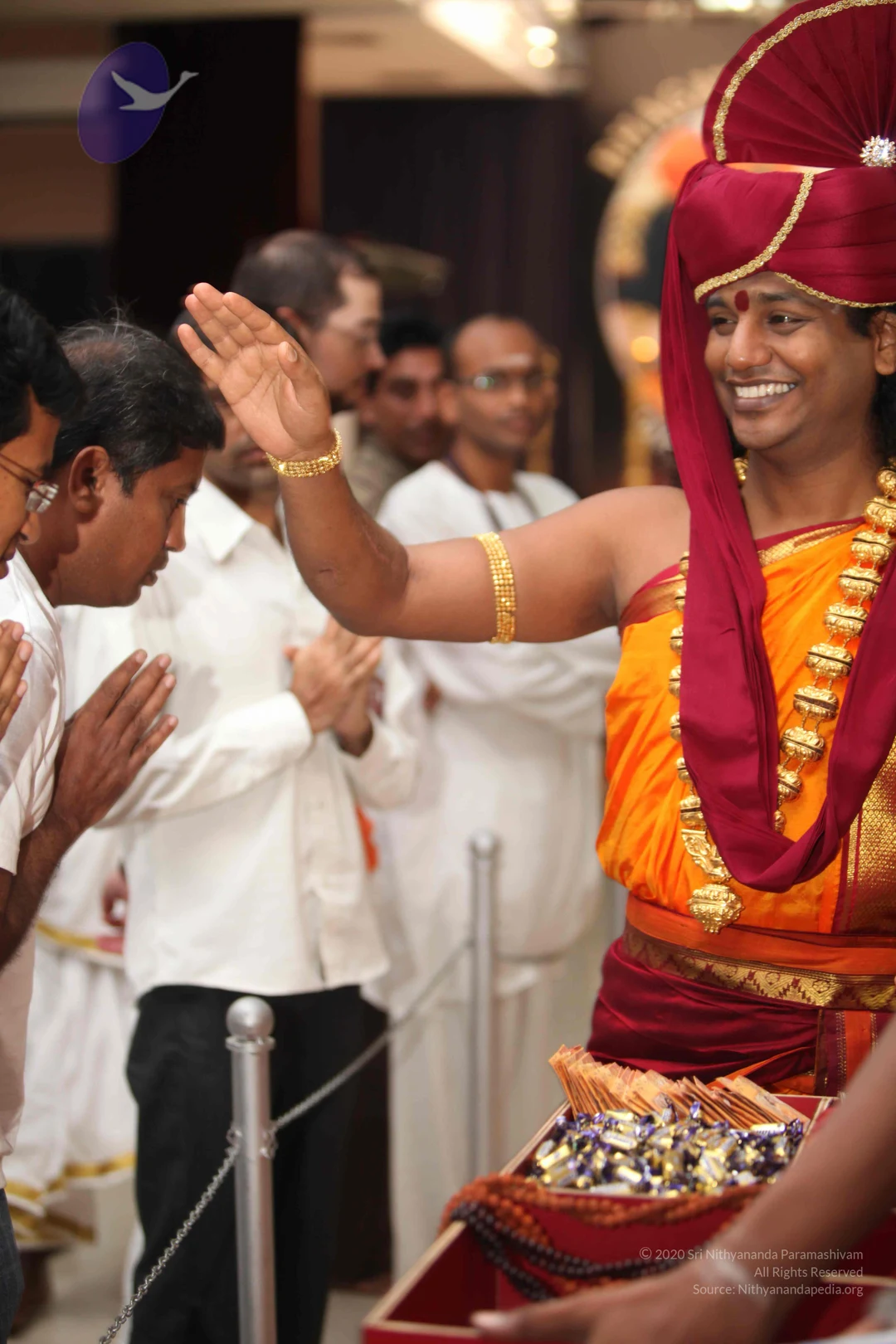
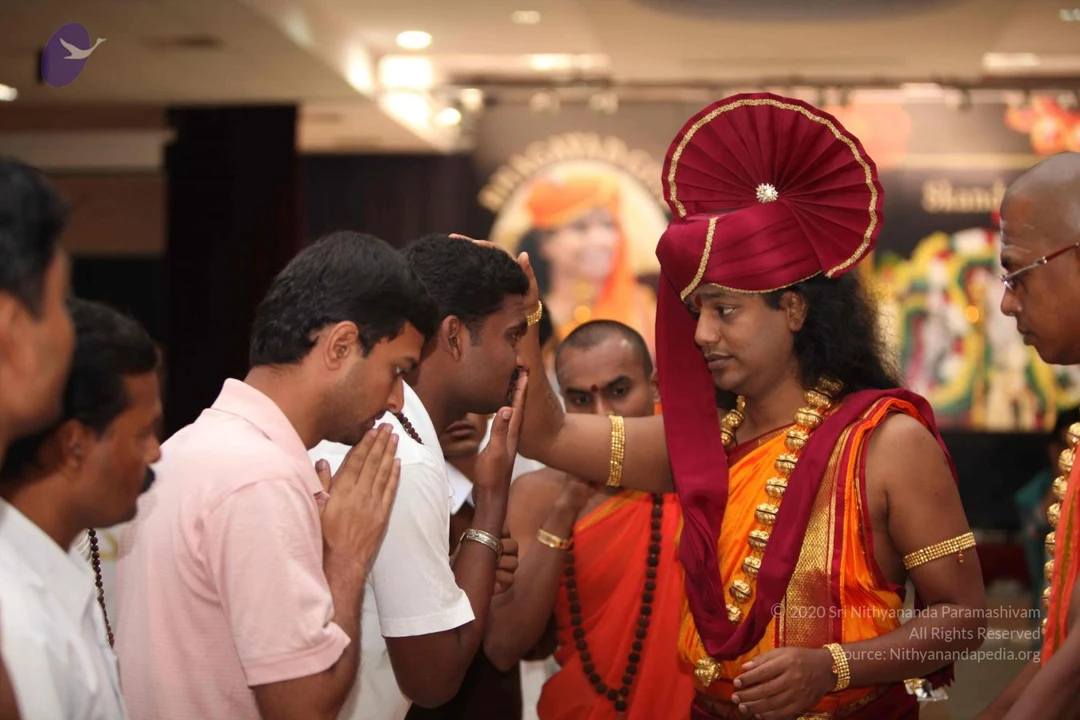
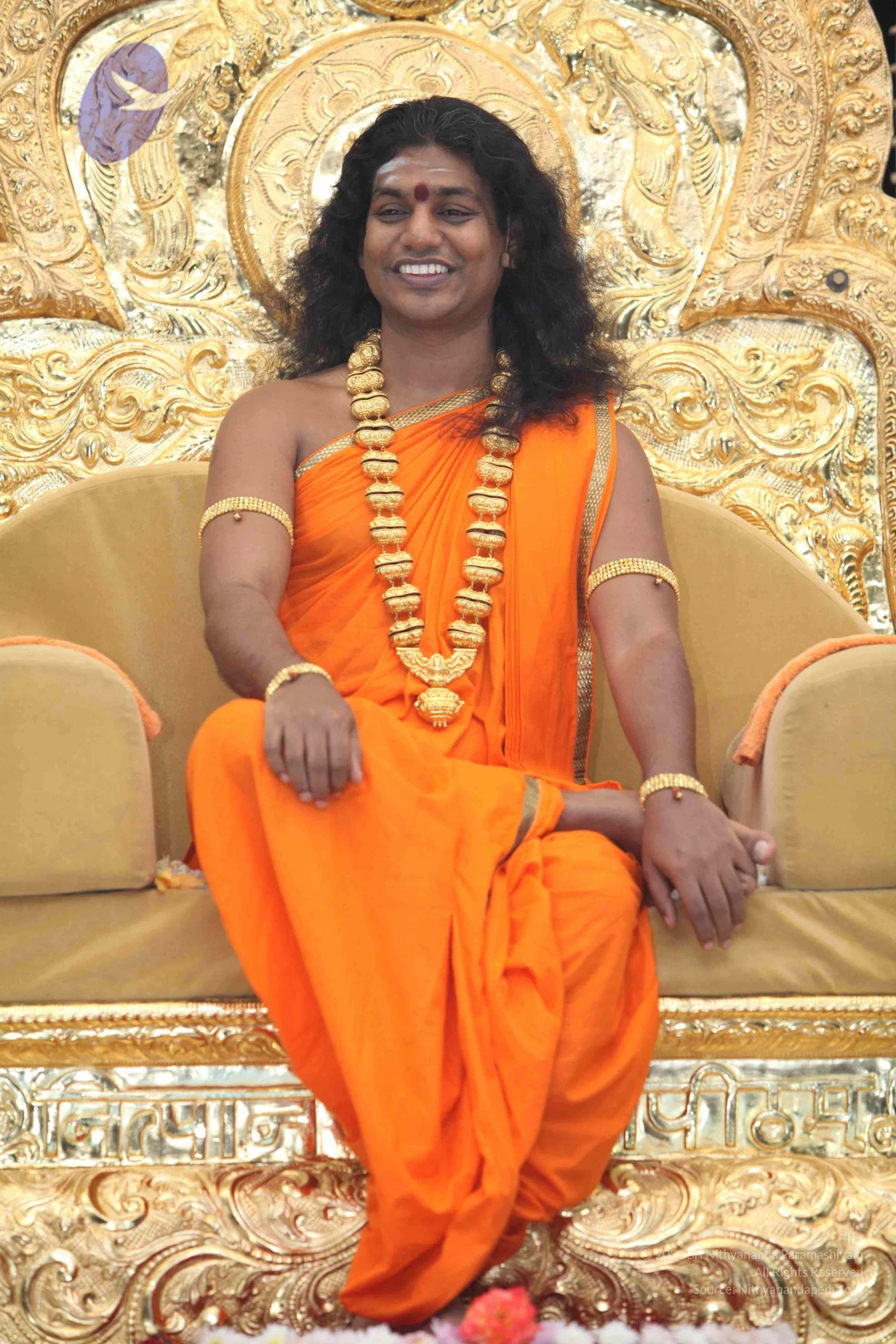
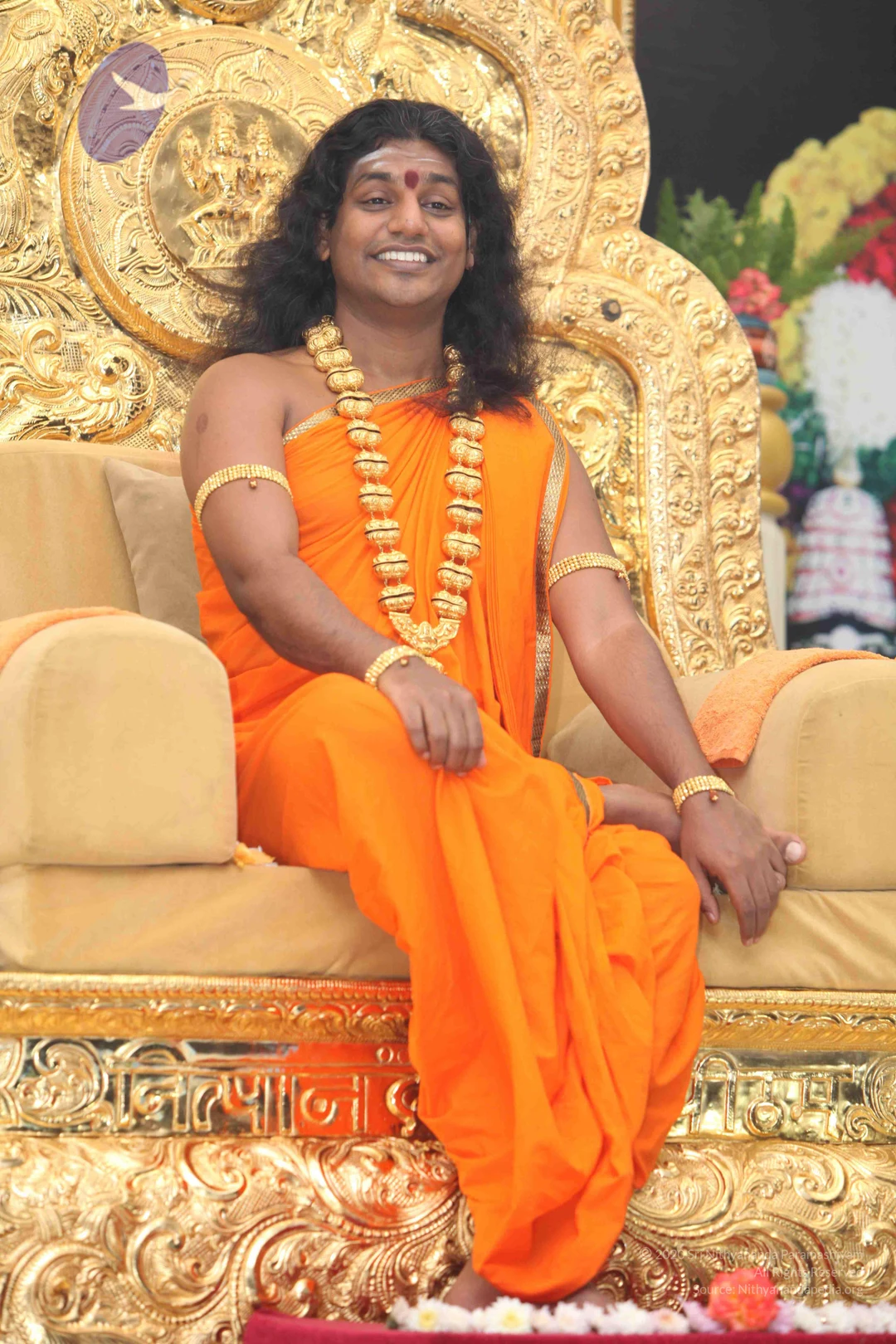
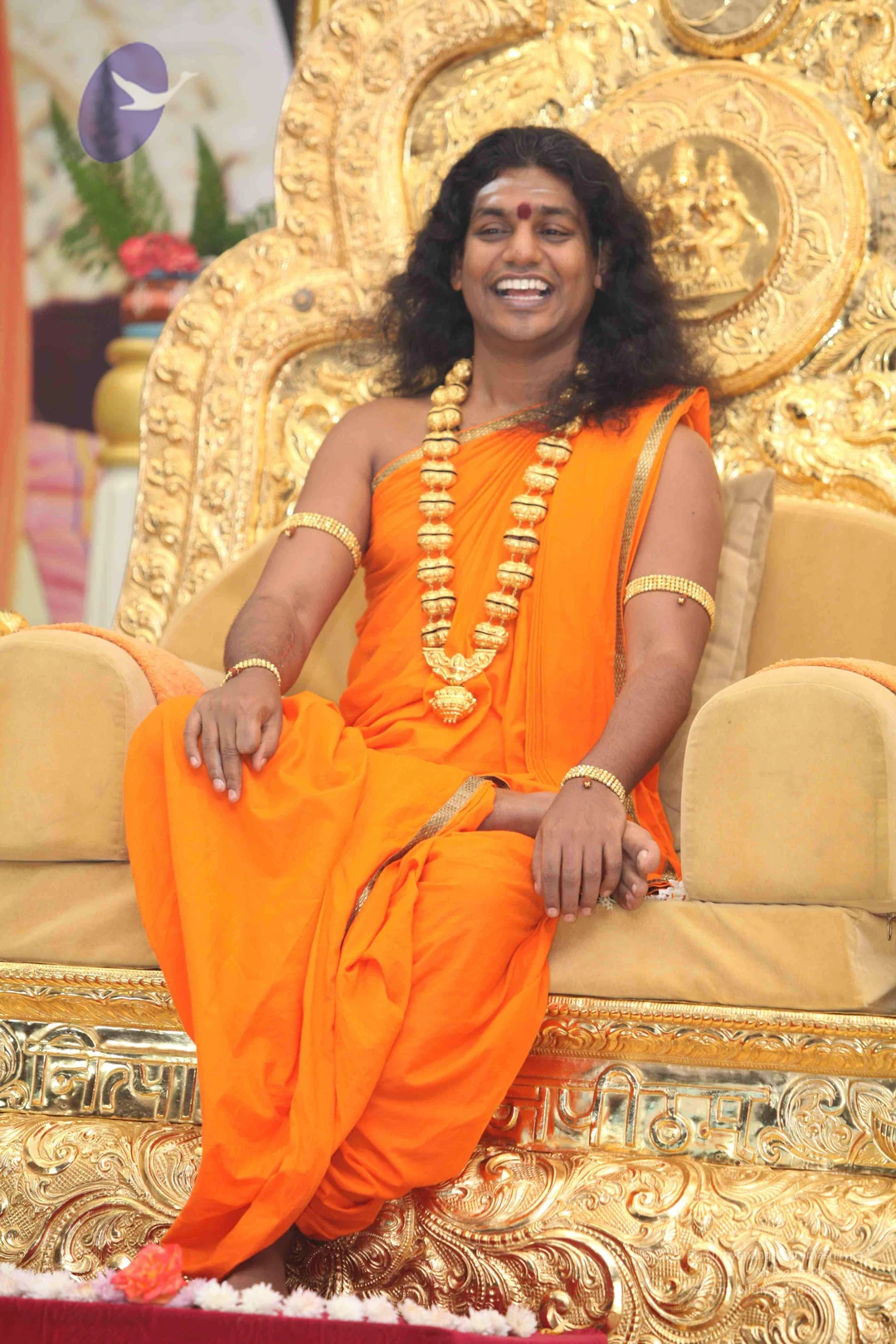
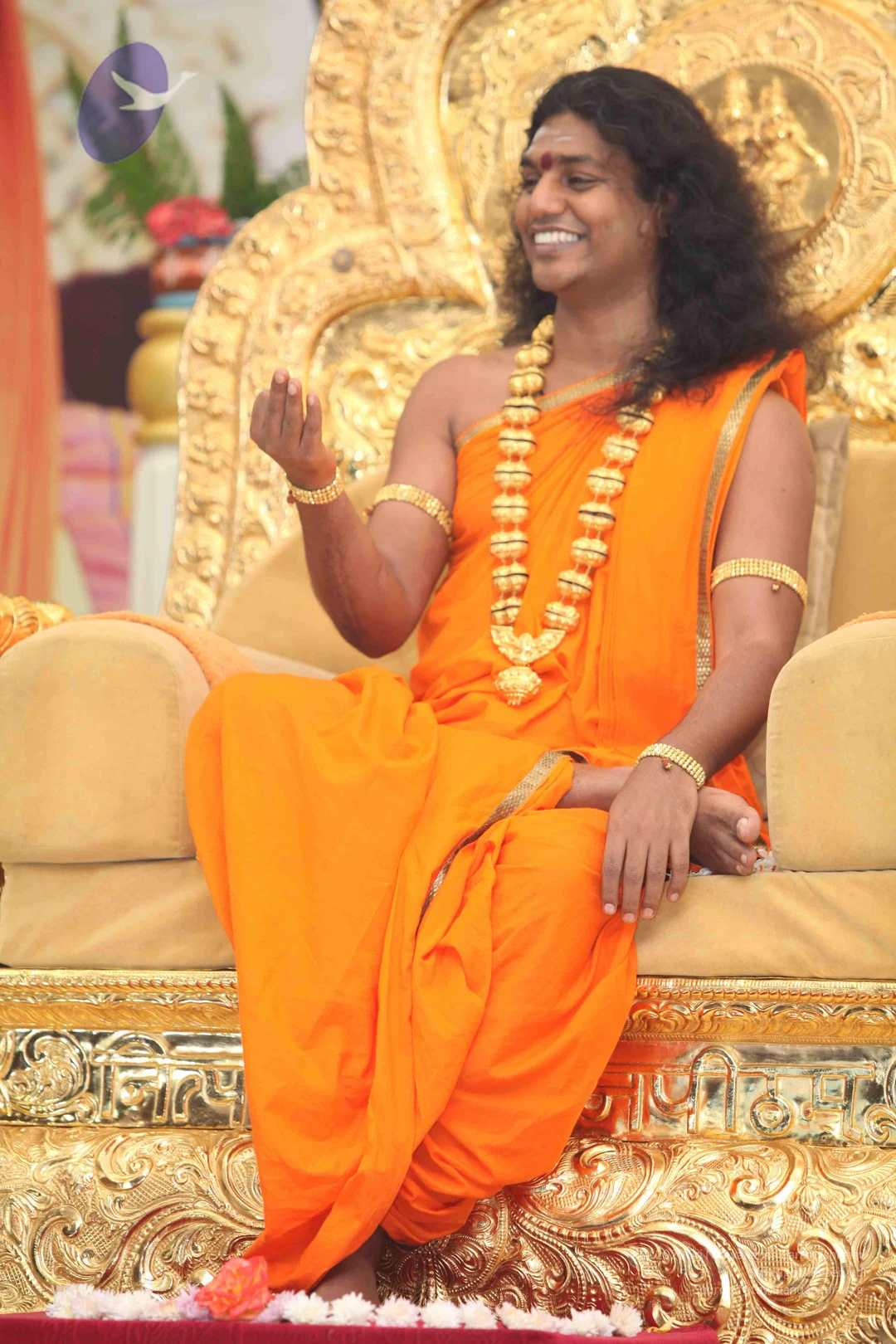
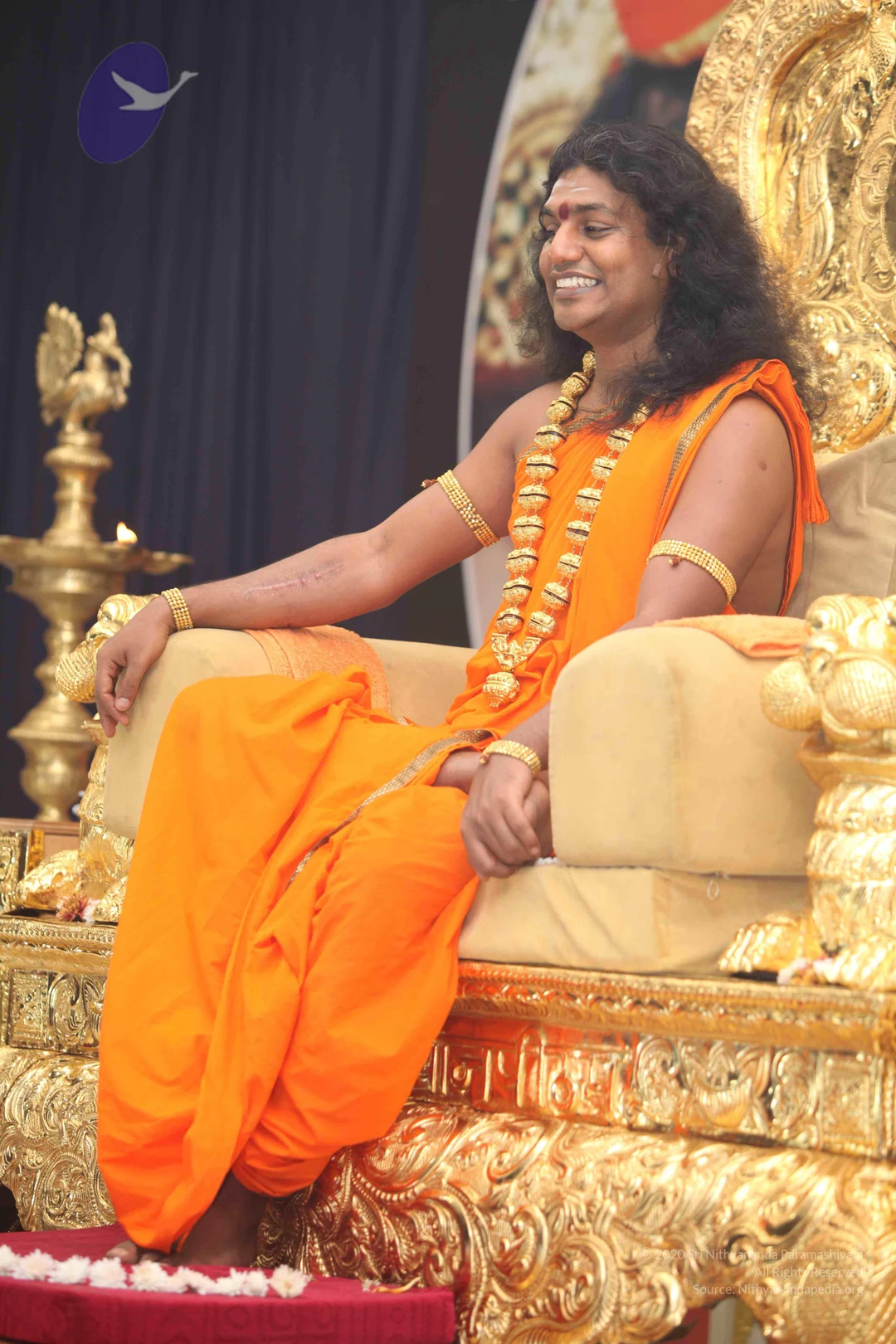
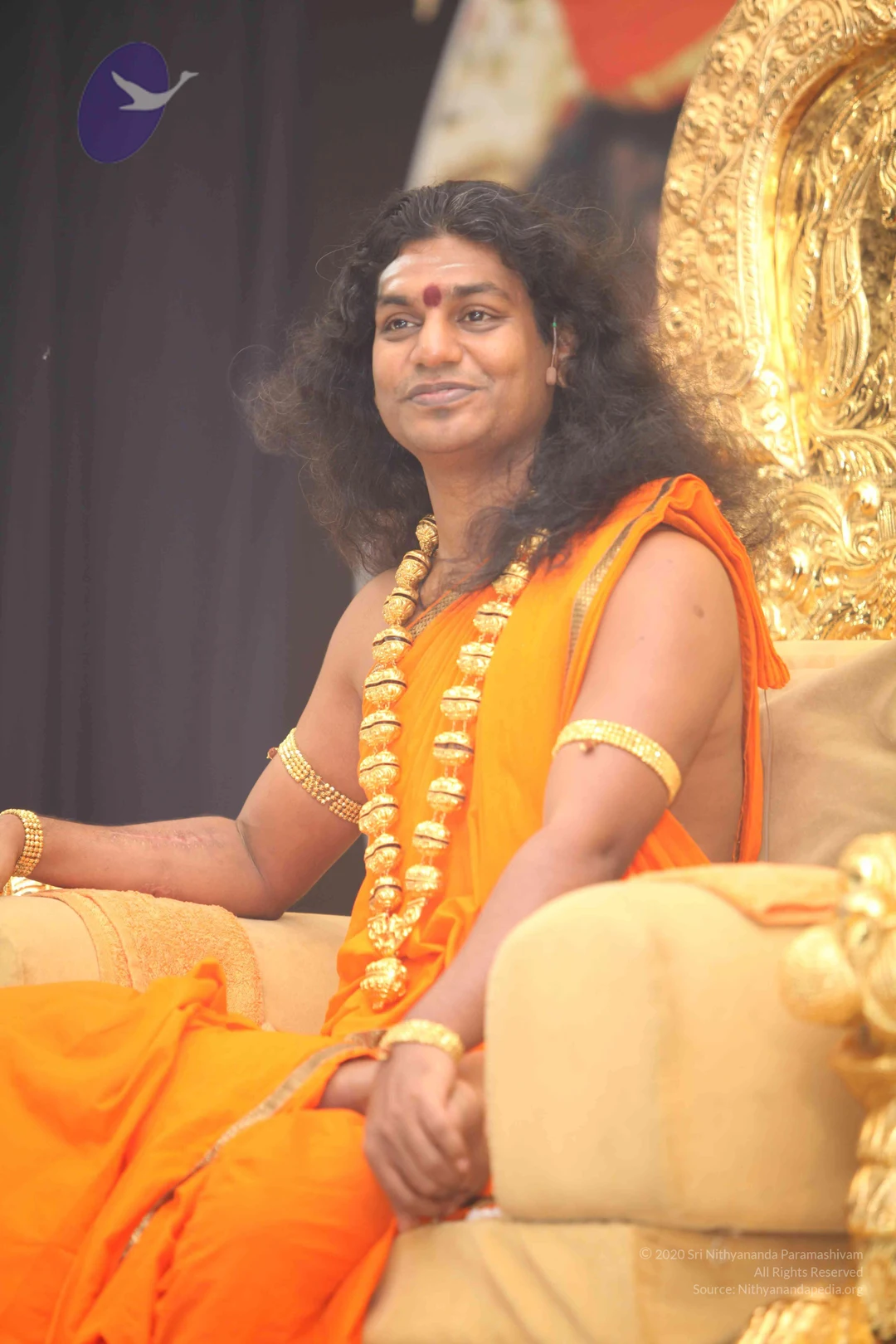
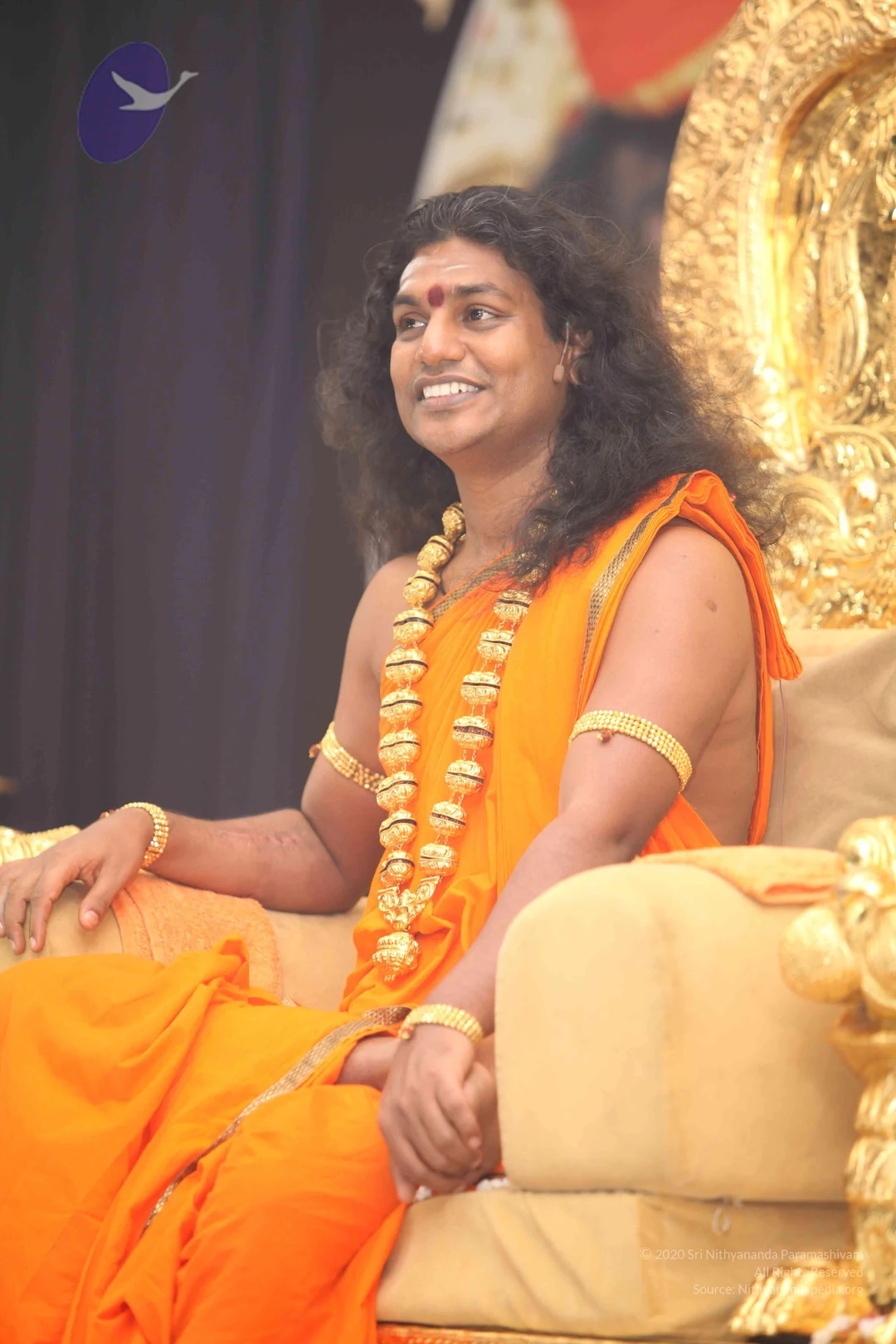
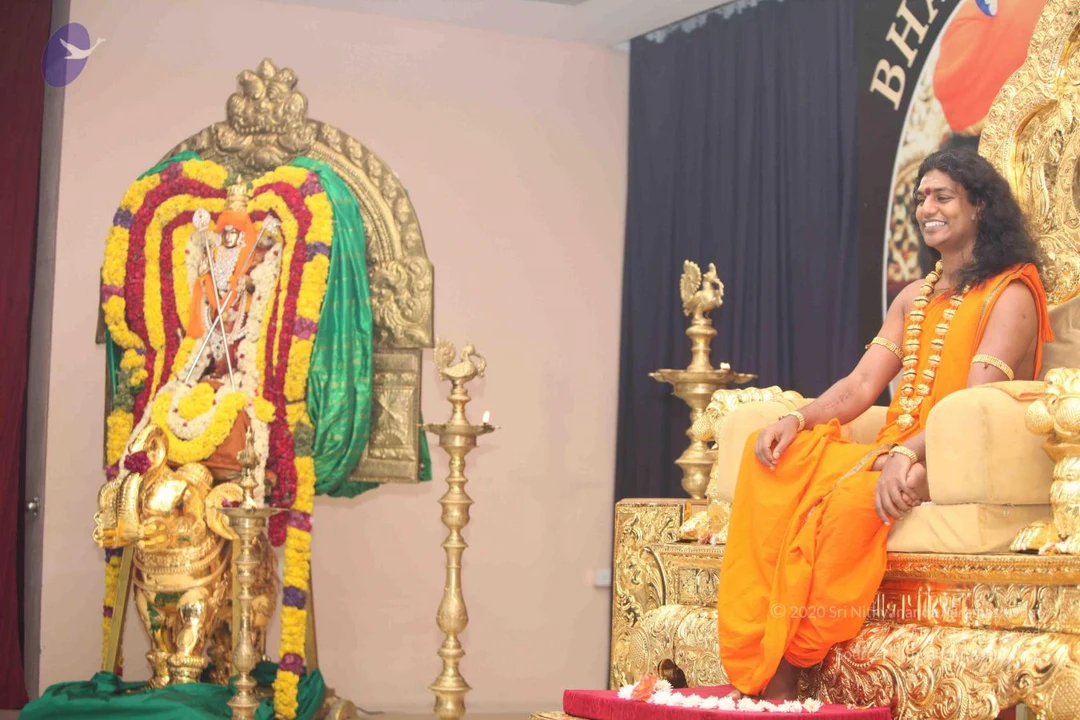
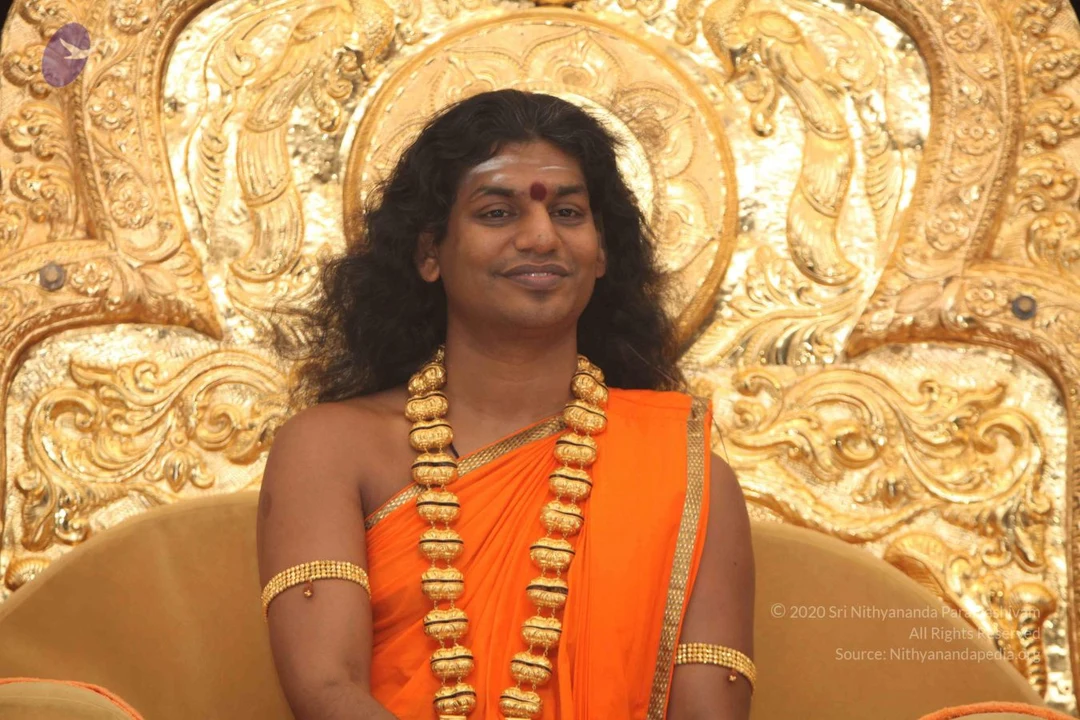
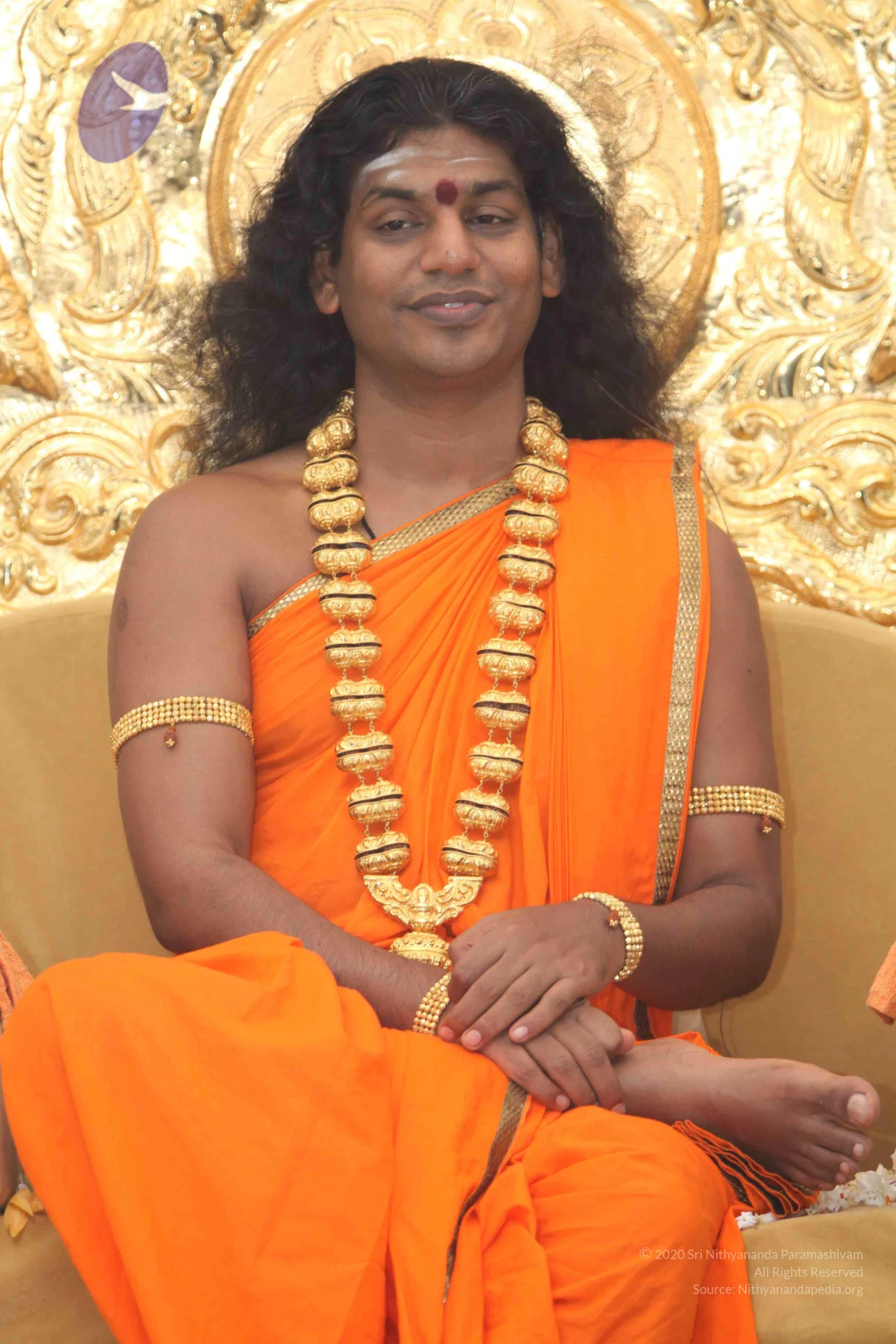
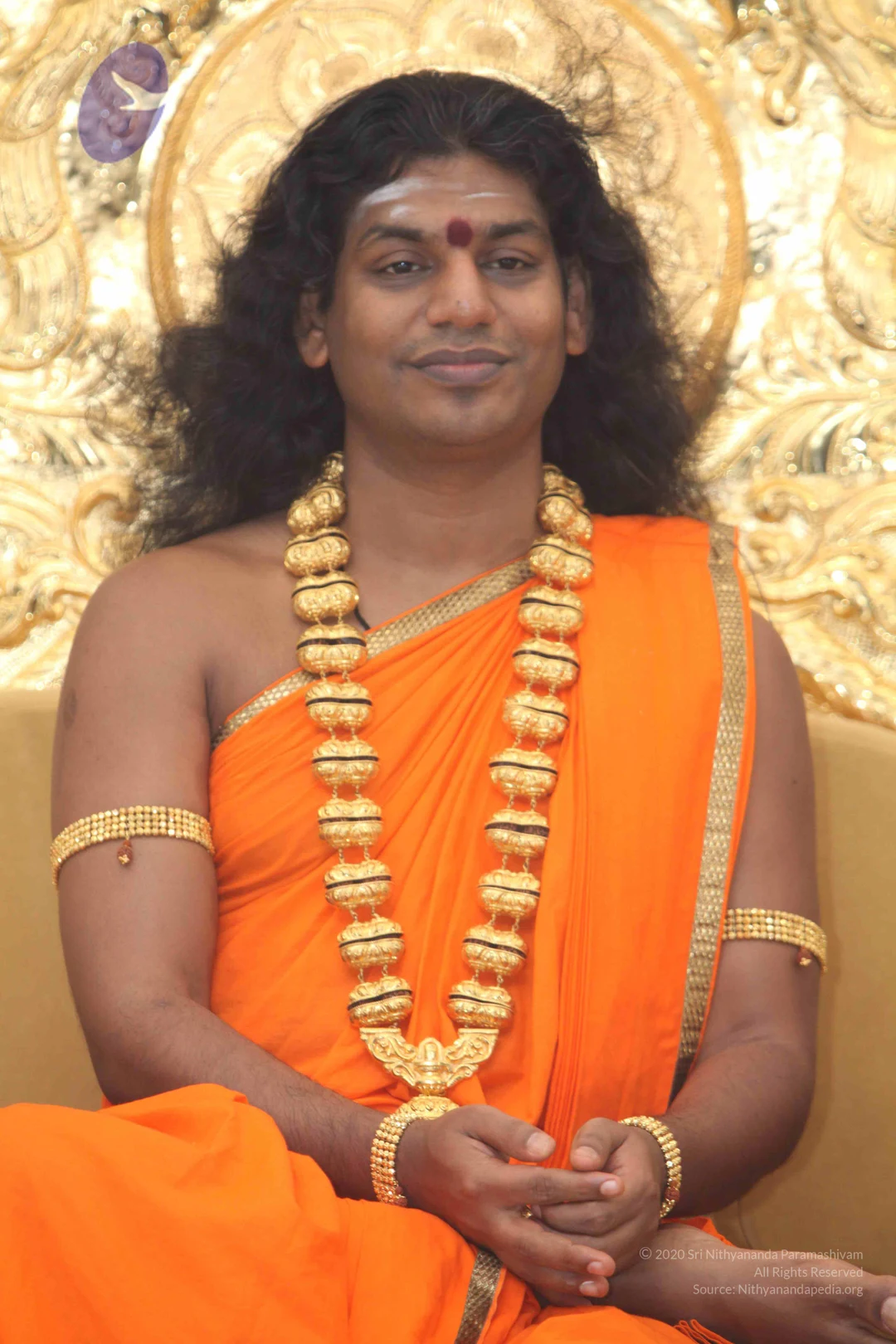
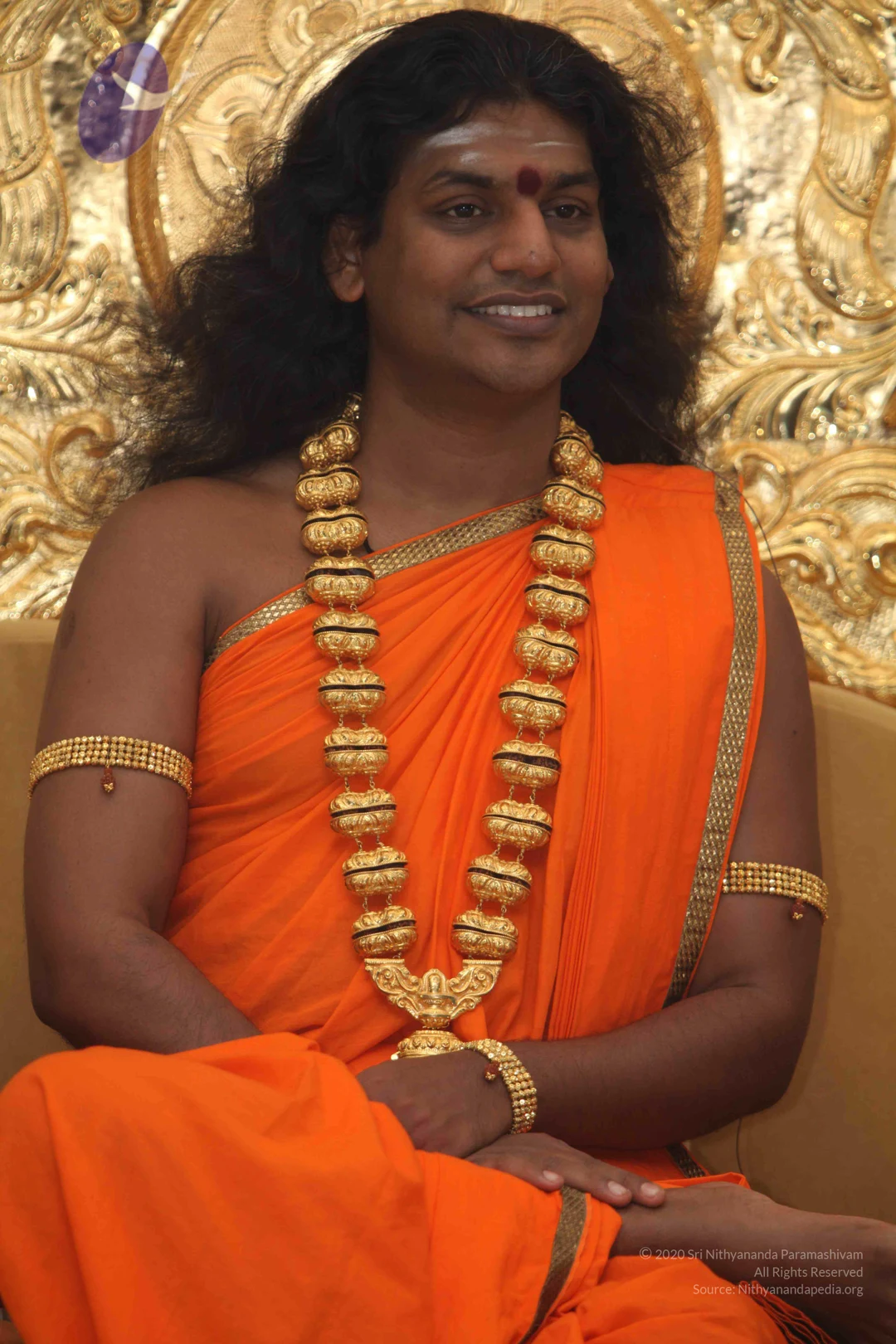
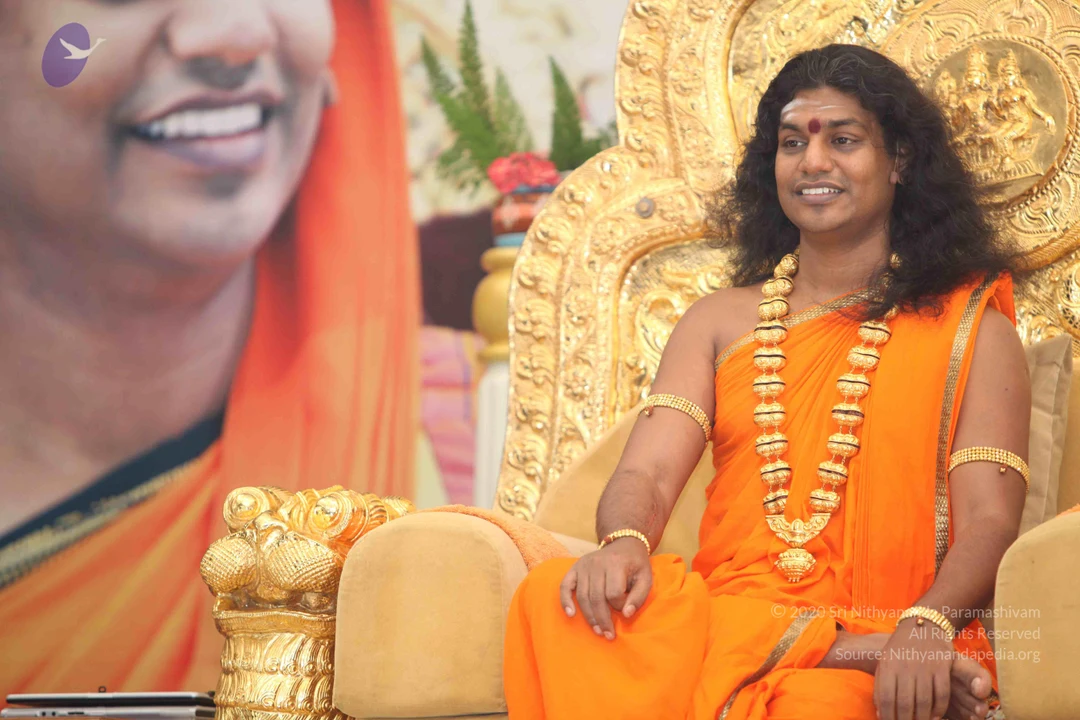
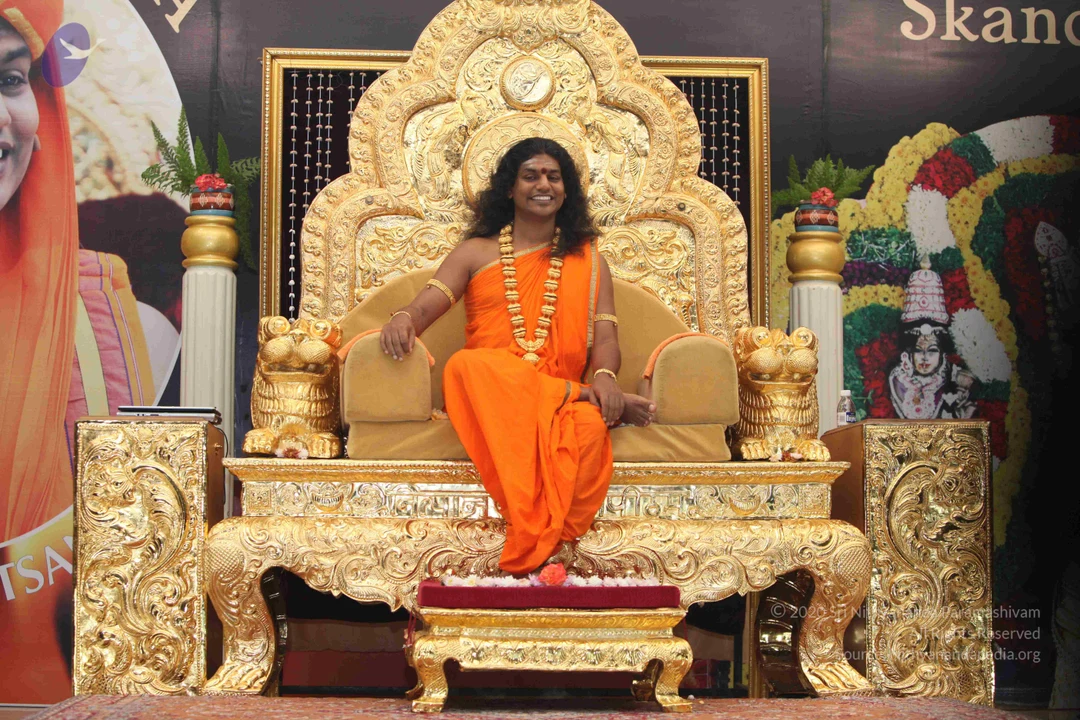
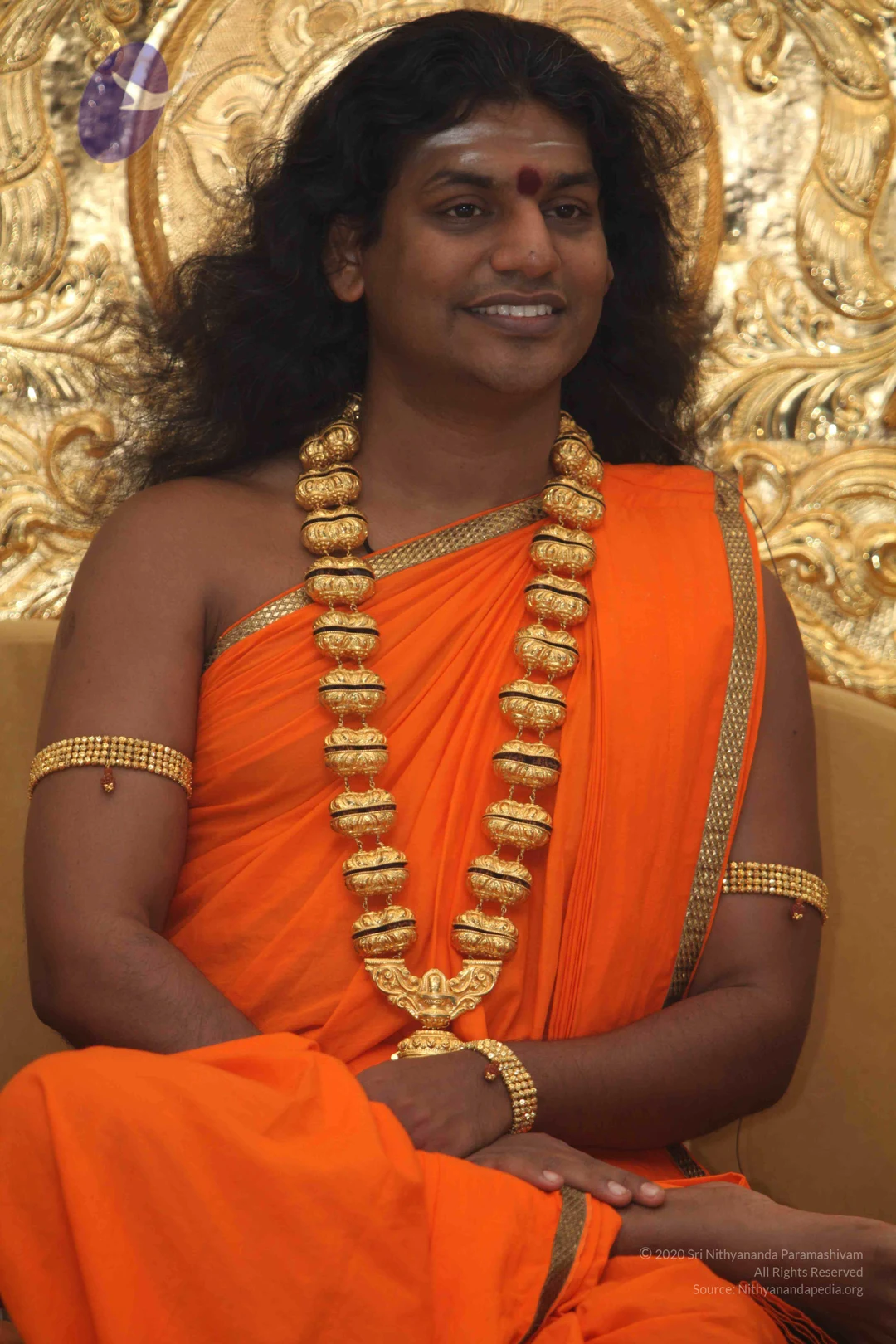
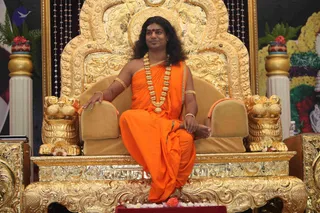
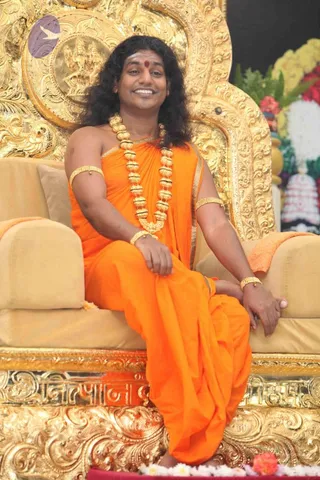
THE SUPREME PONTIFF OF HINDUISM HDH BHAGAVAN SRI NITHYANANDA PARAMASHIVAM

Dated photos
592
Source pages
1
Media
3
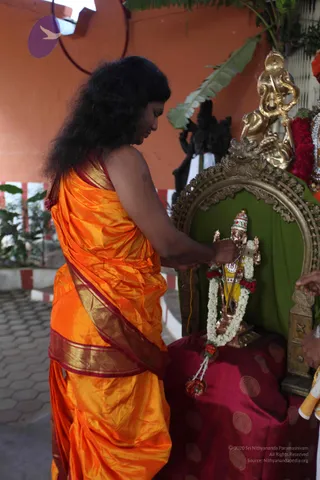
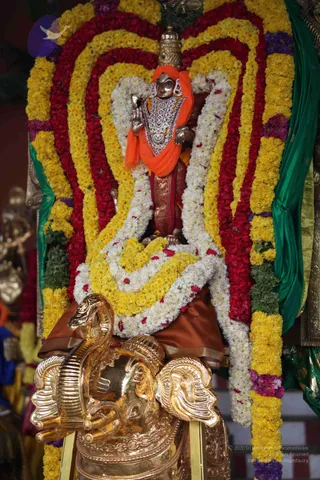
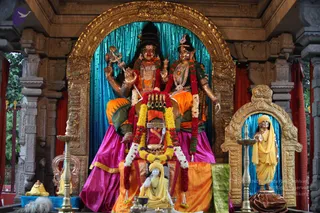
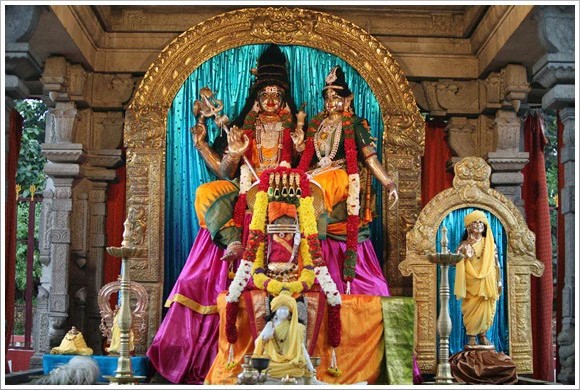
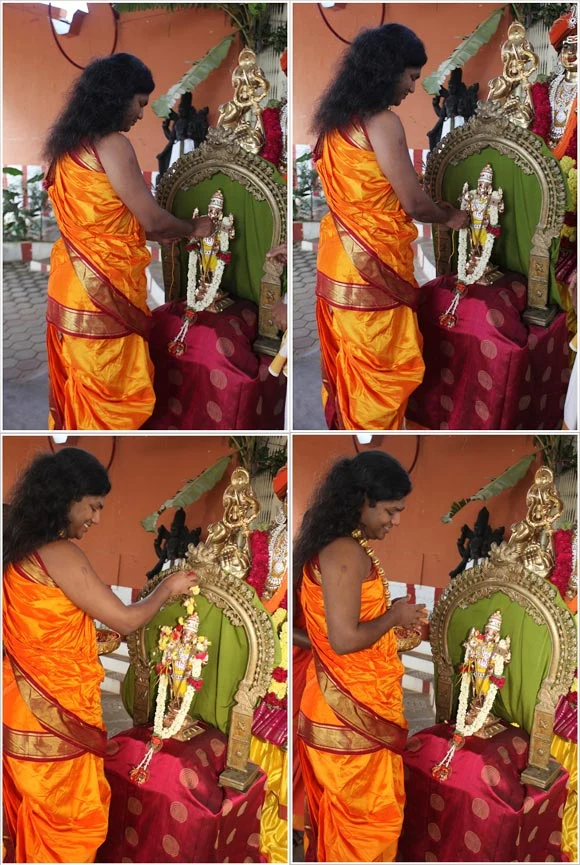
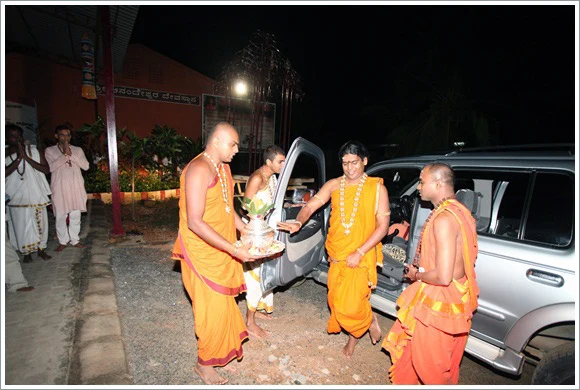
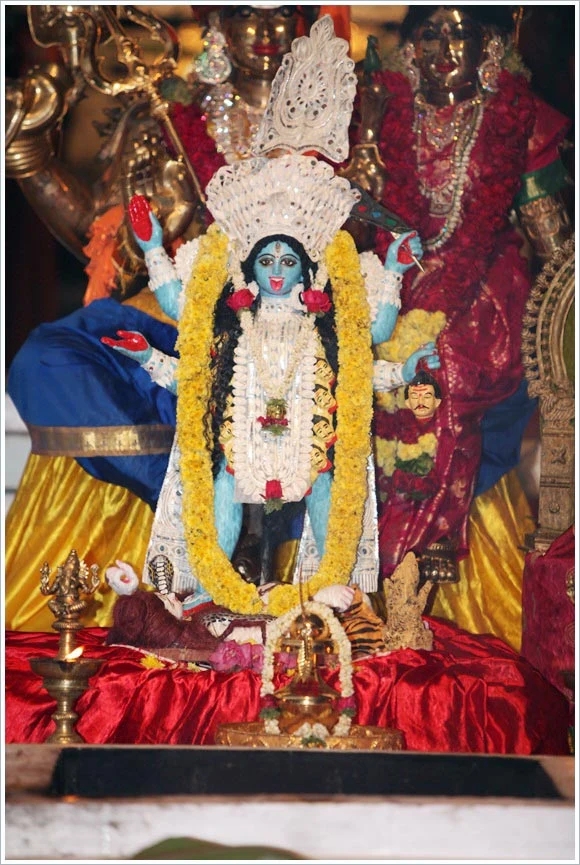
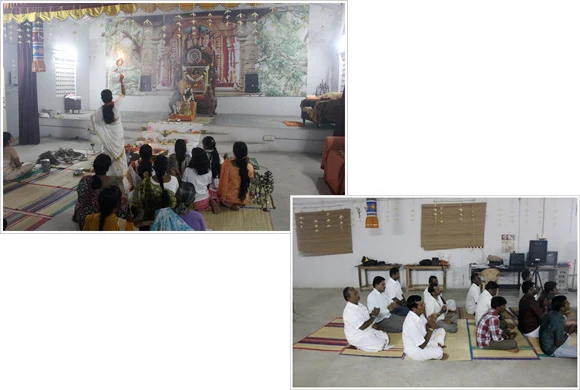
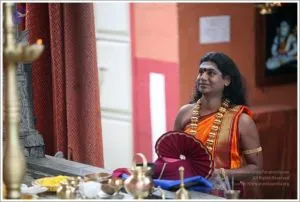
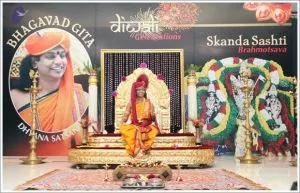
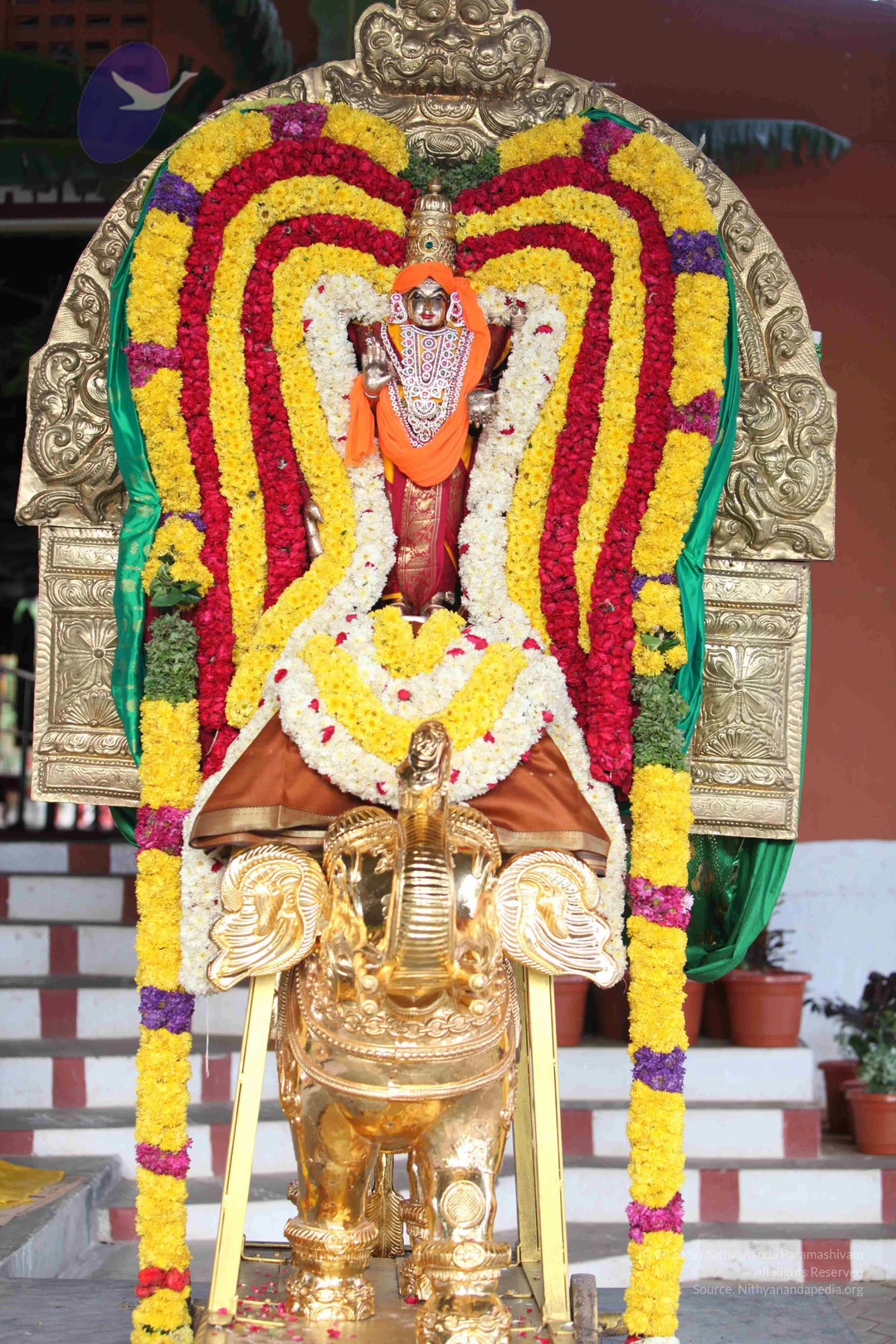
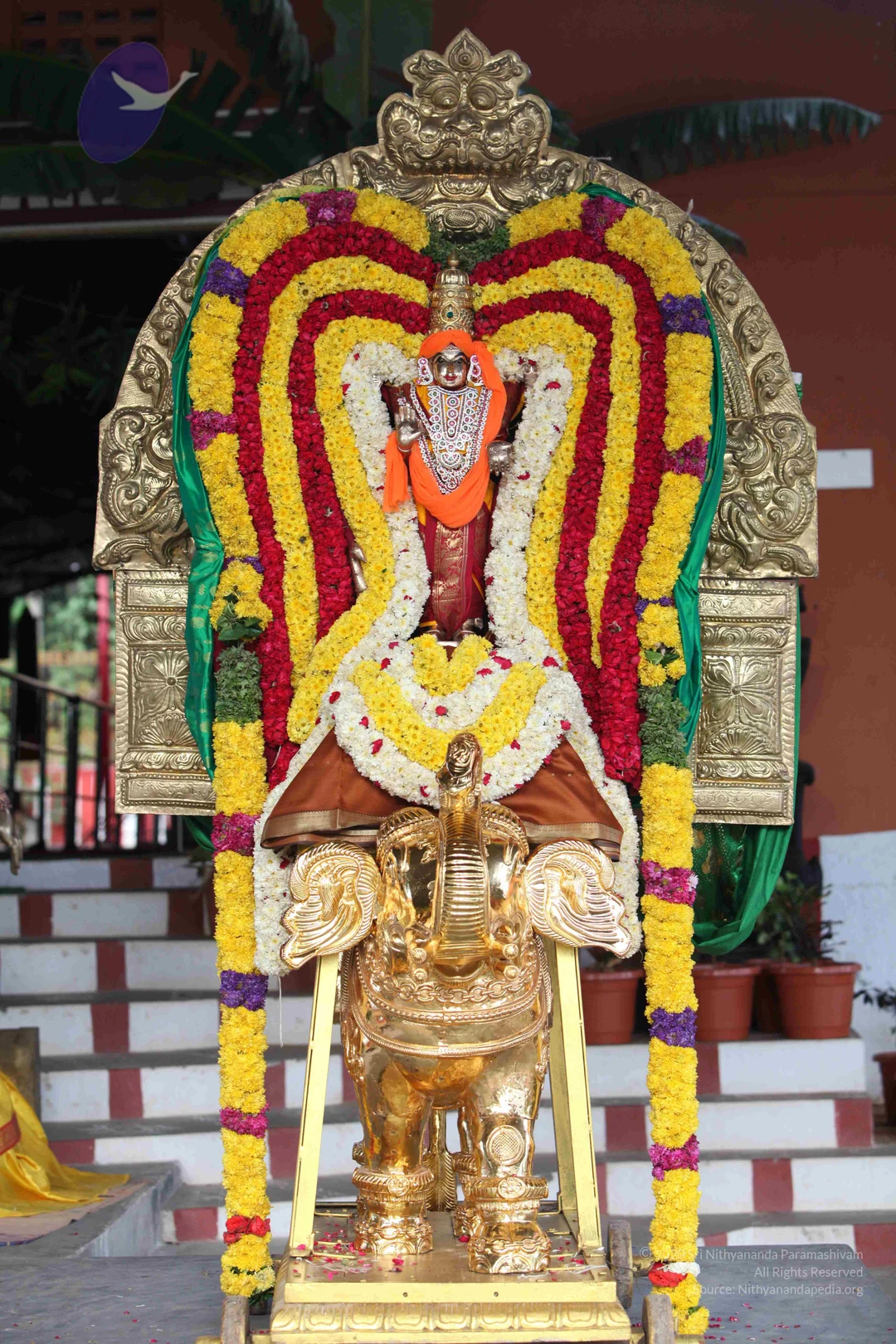
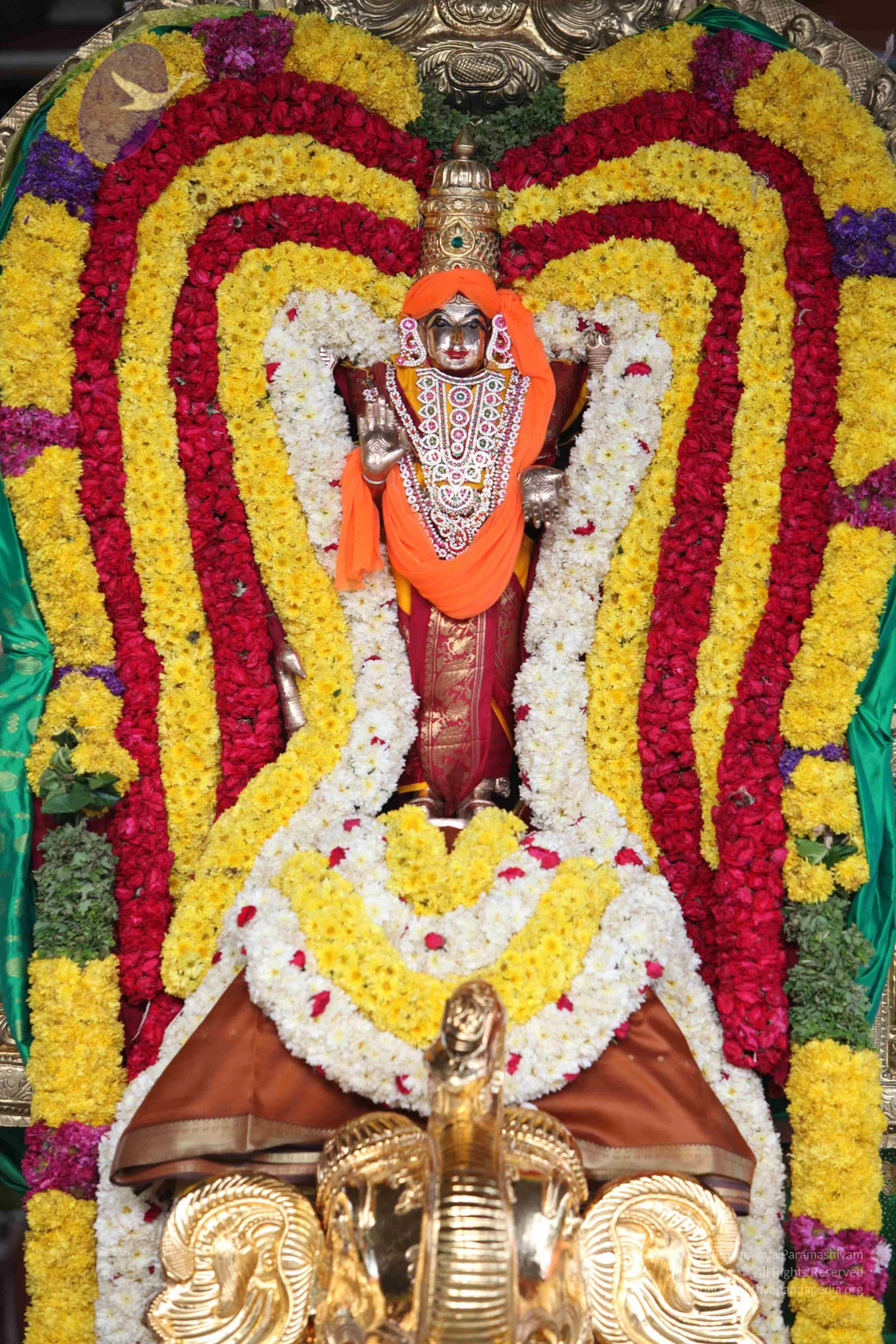
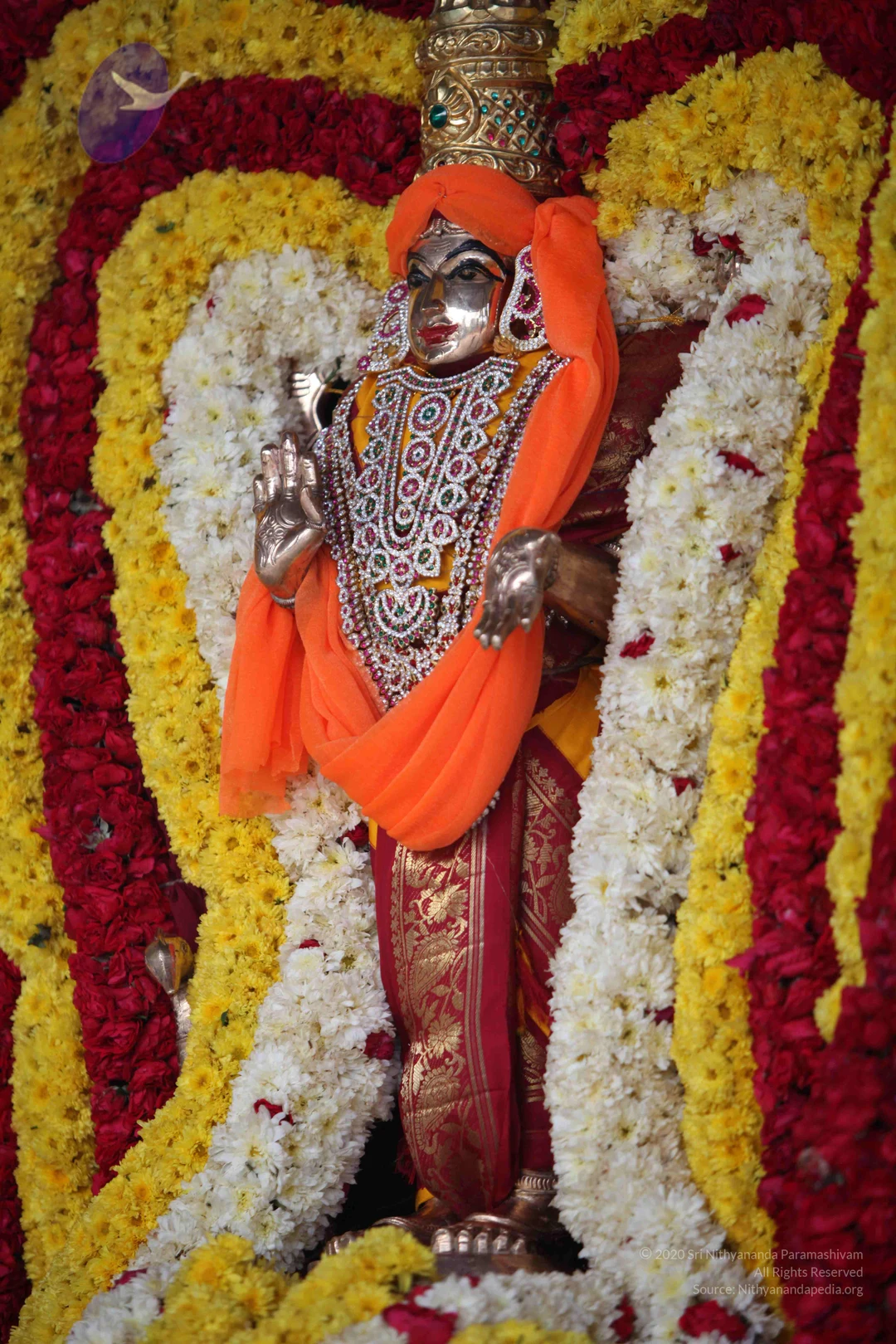
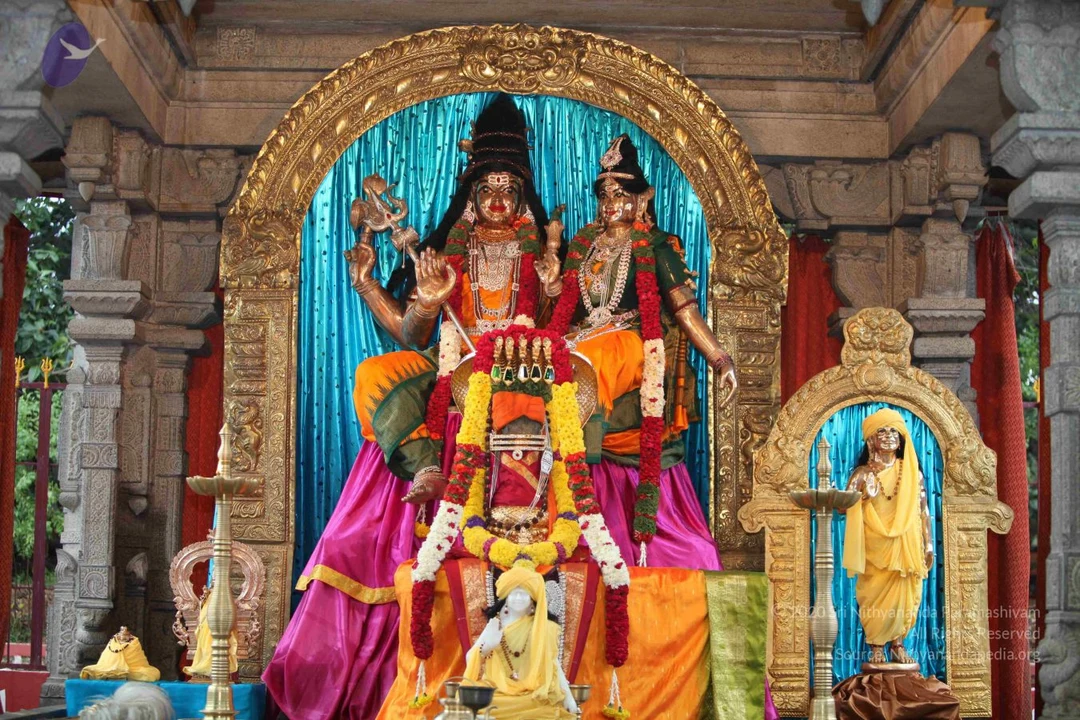
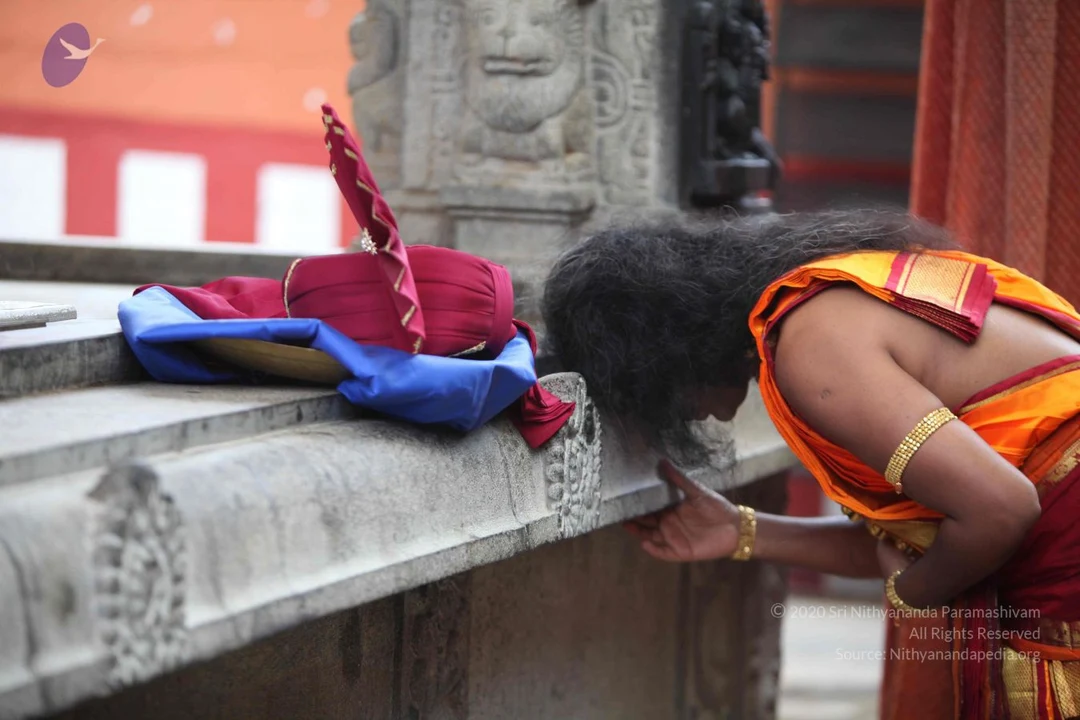
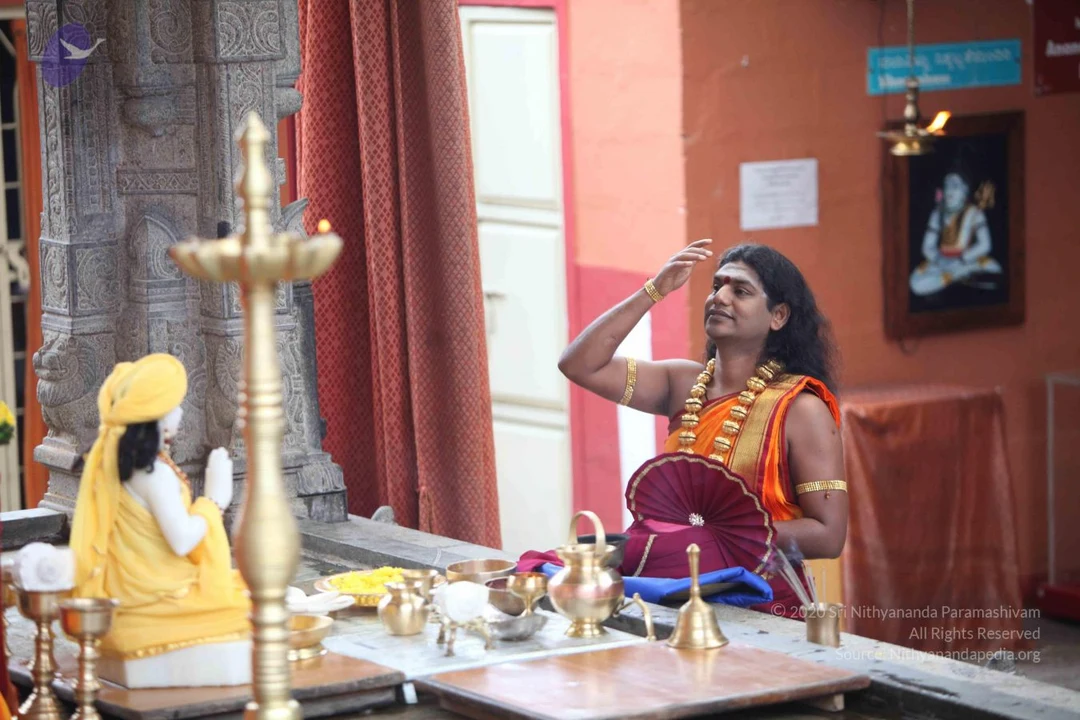
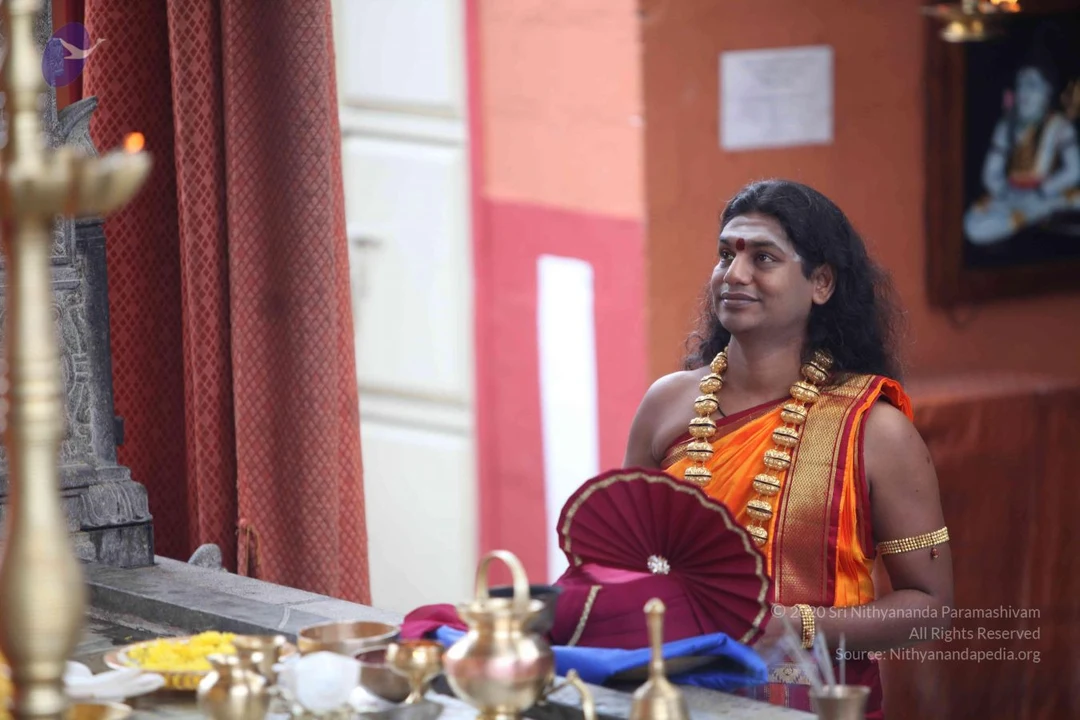
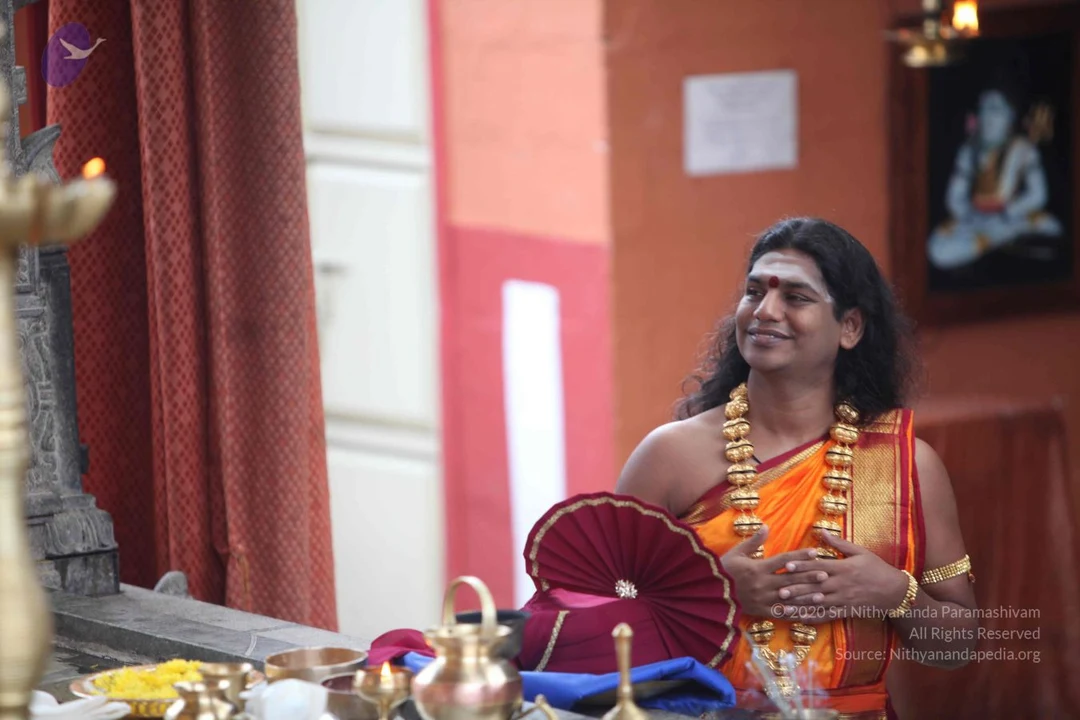
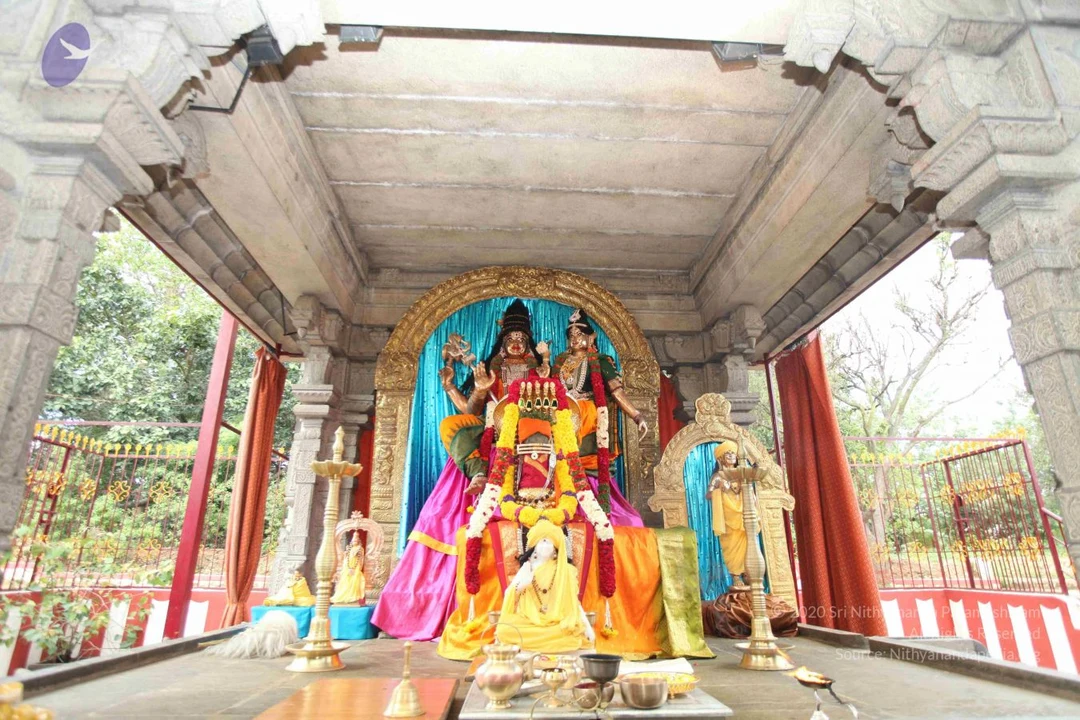
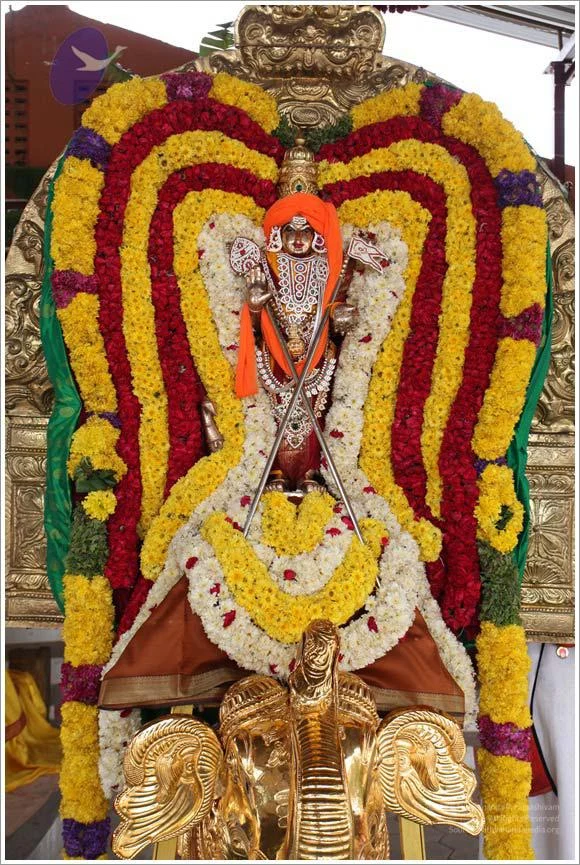
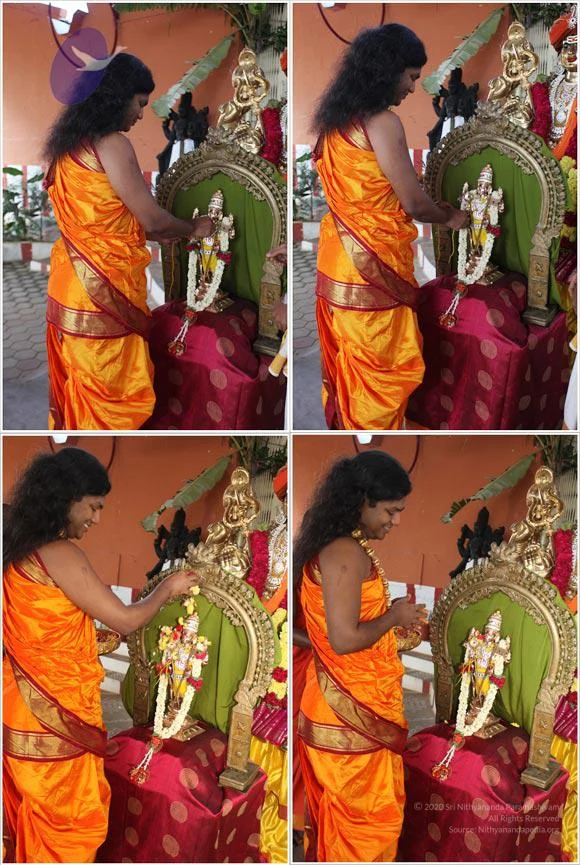
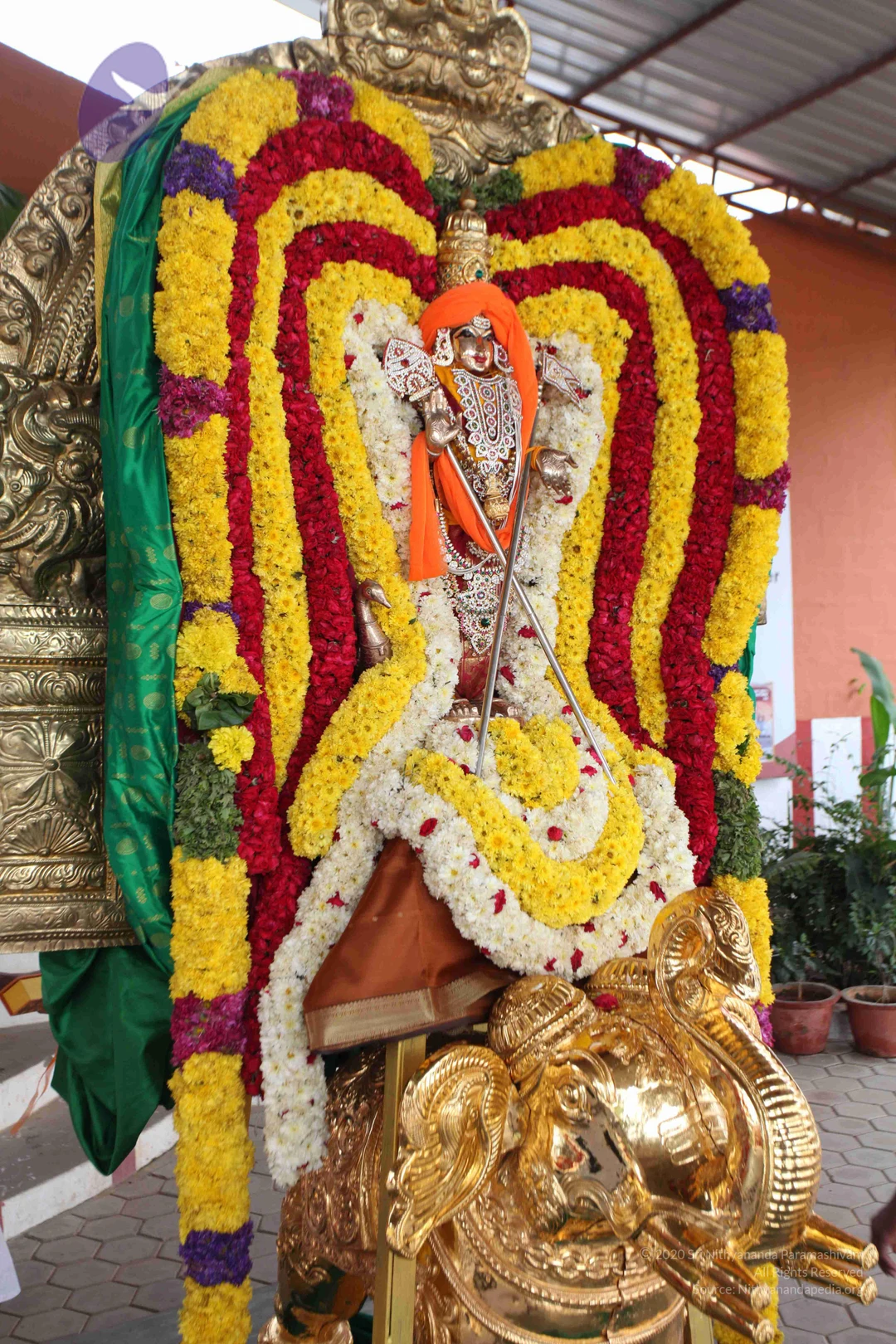
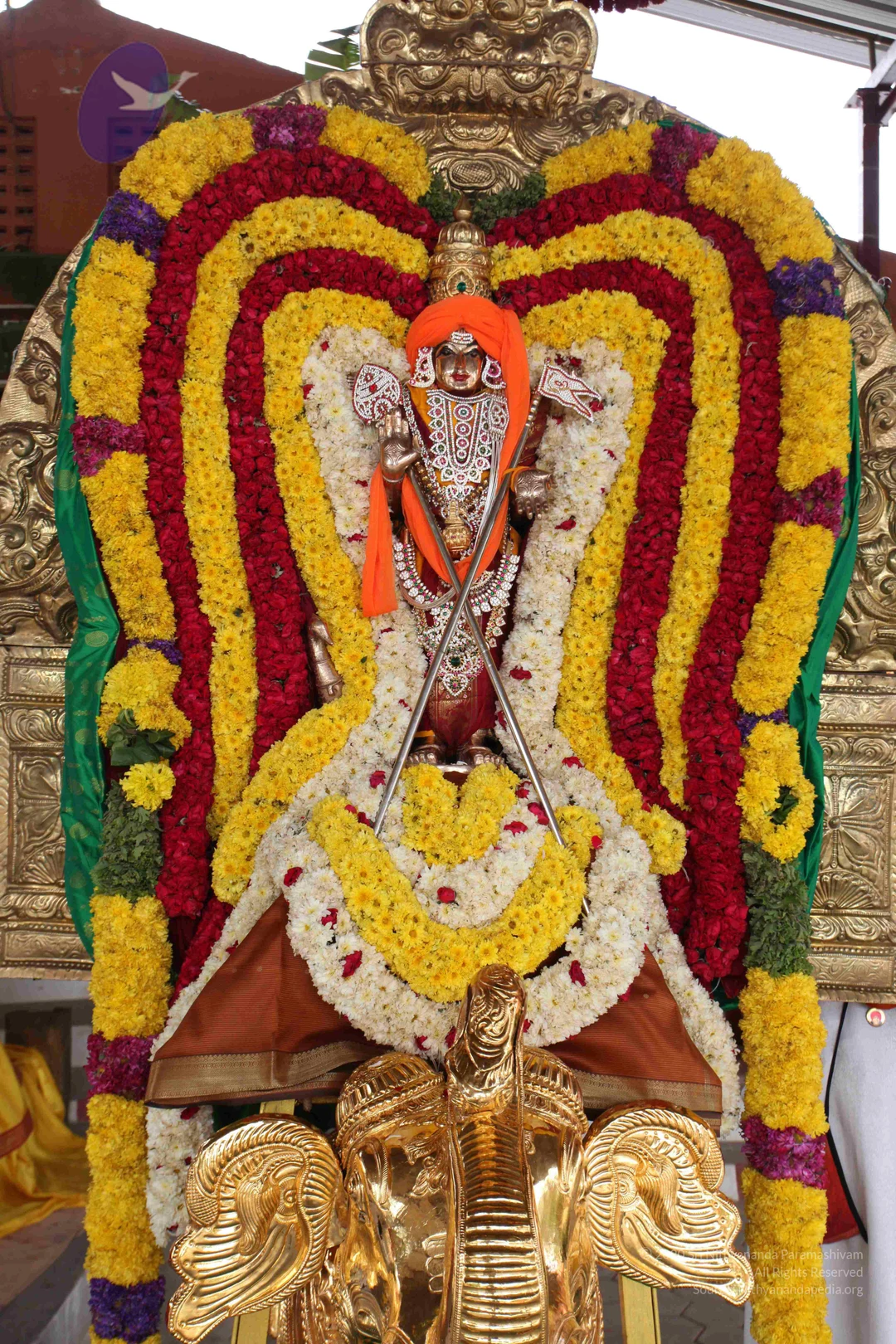
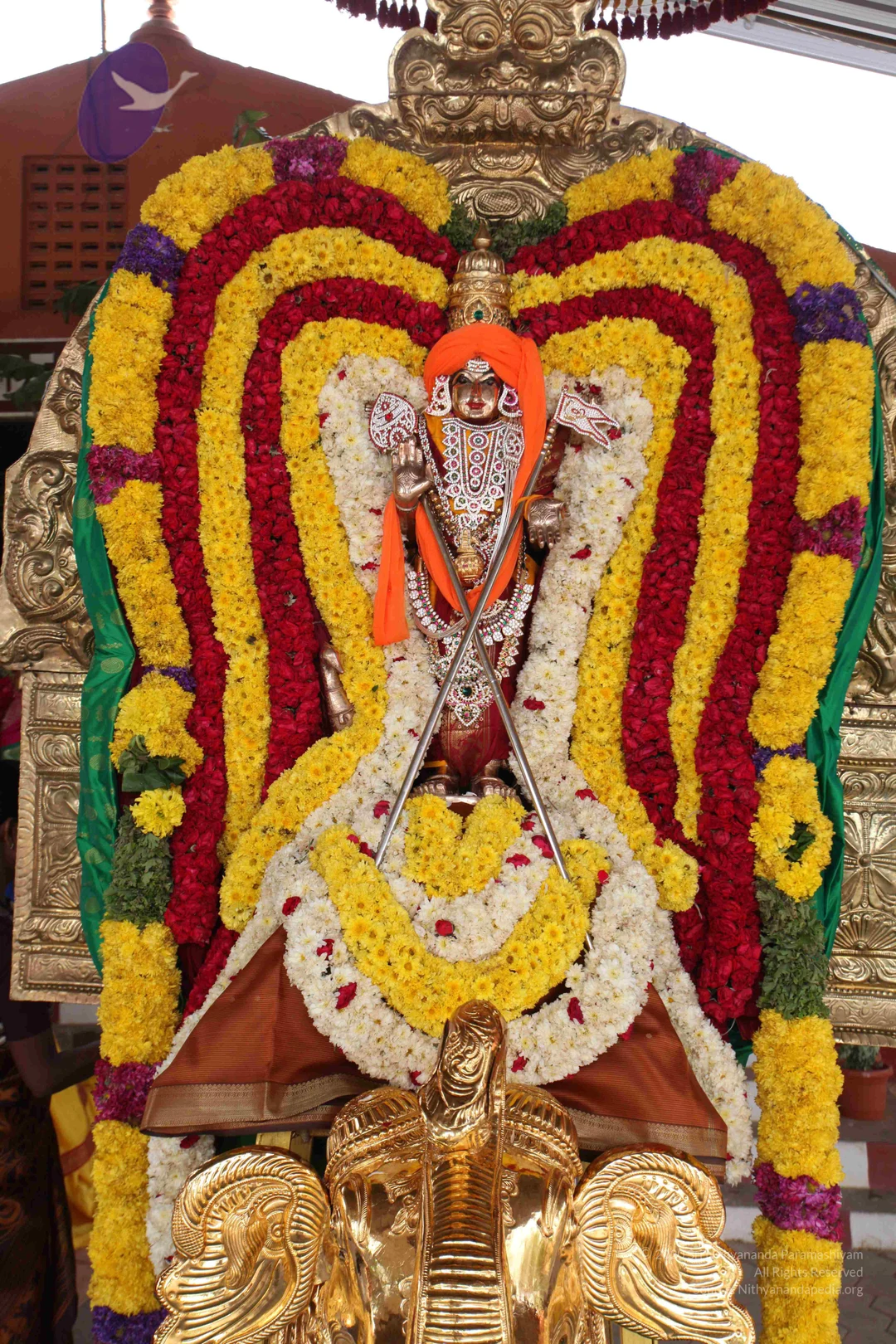
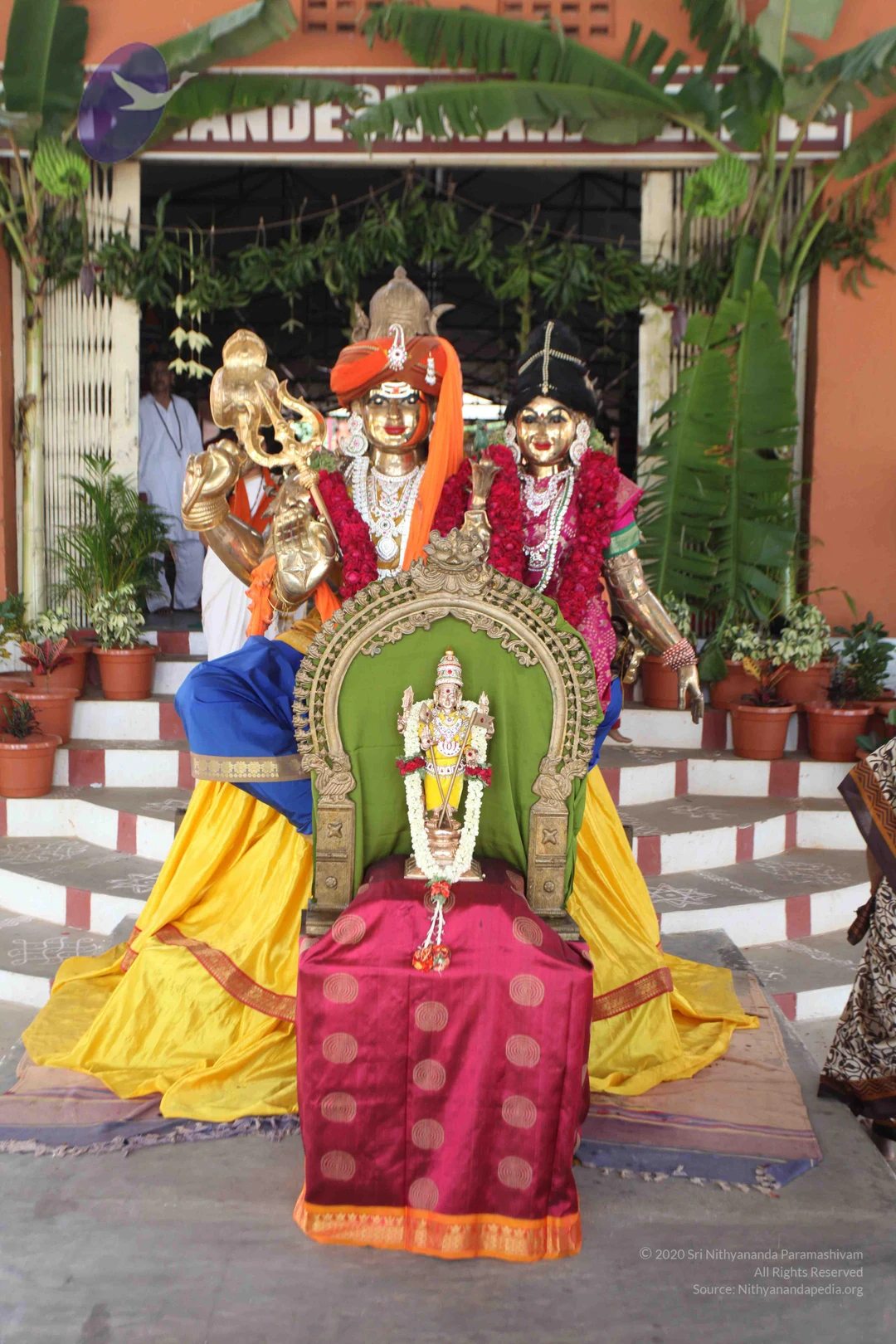
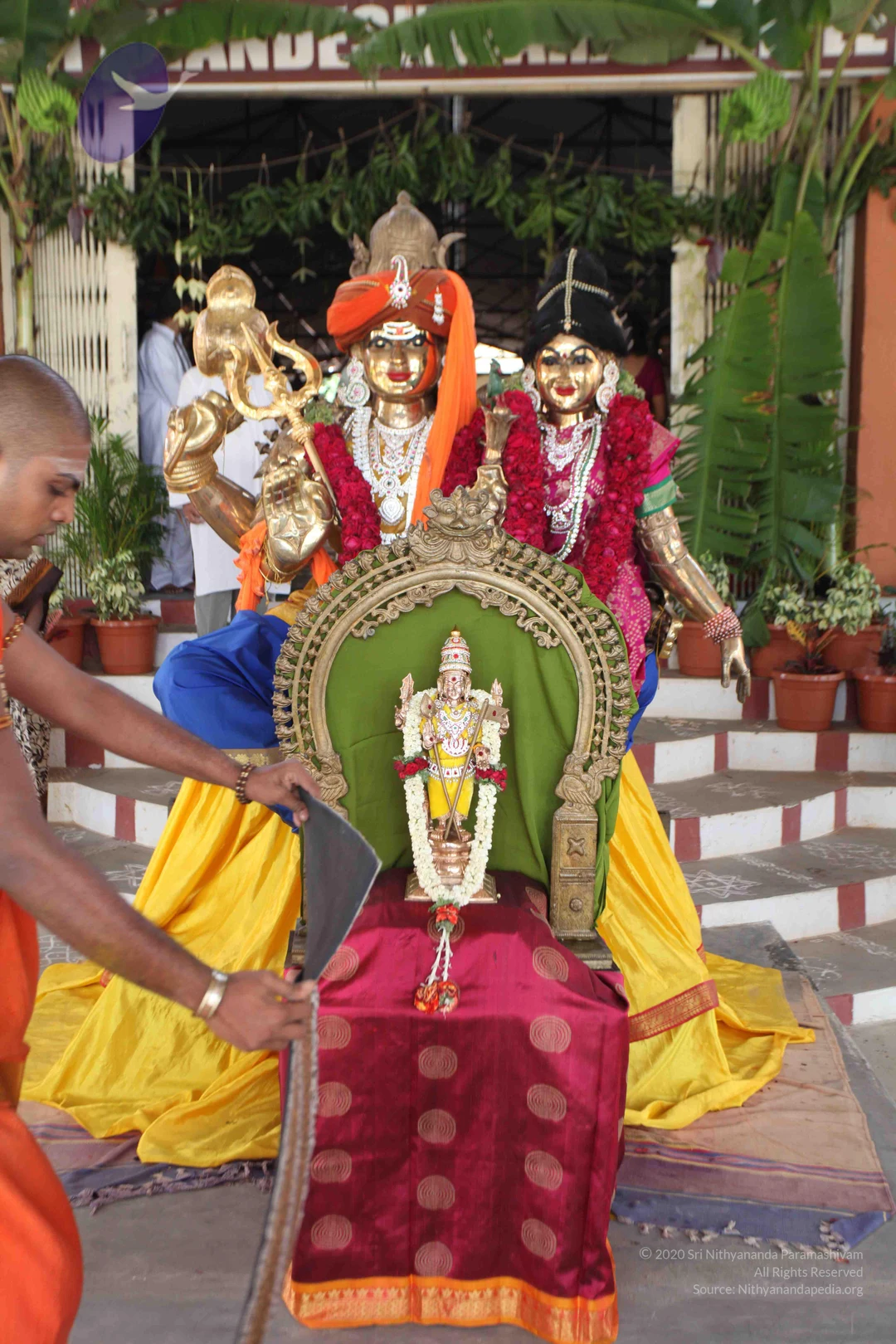
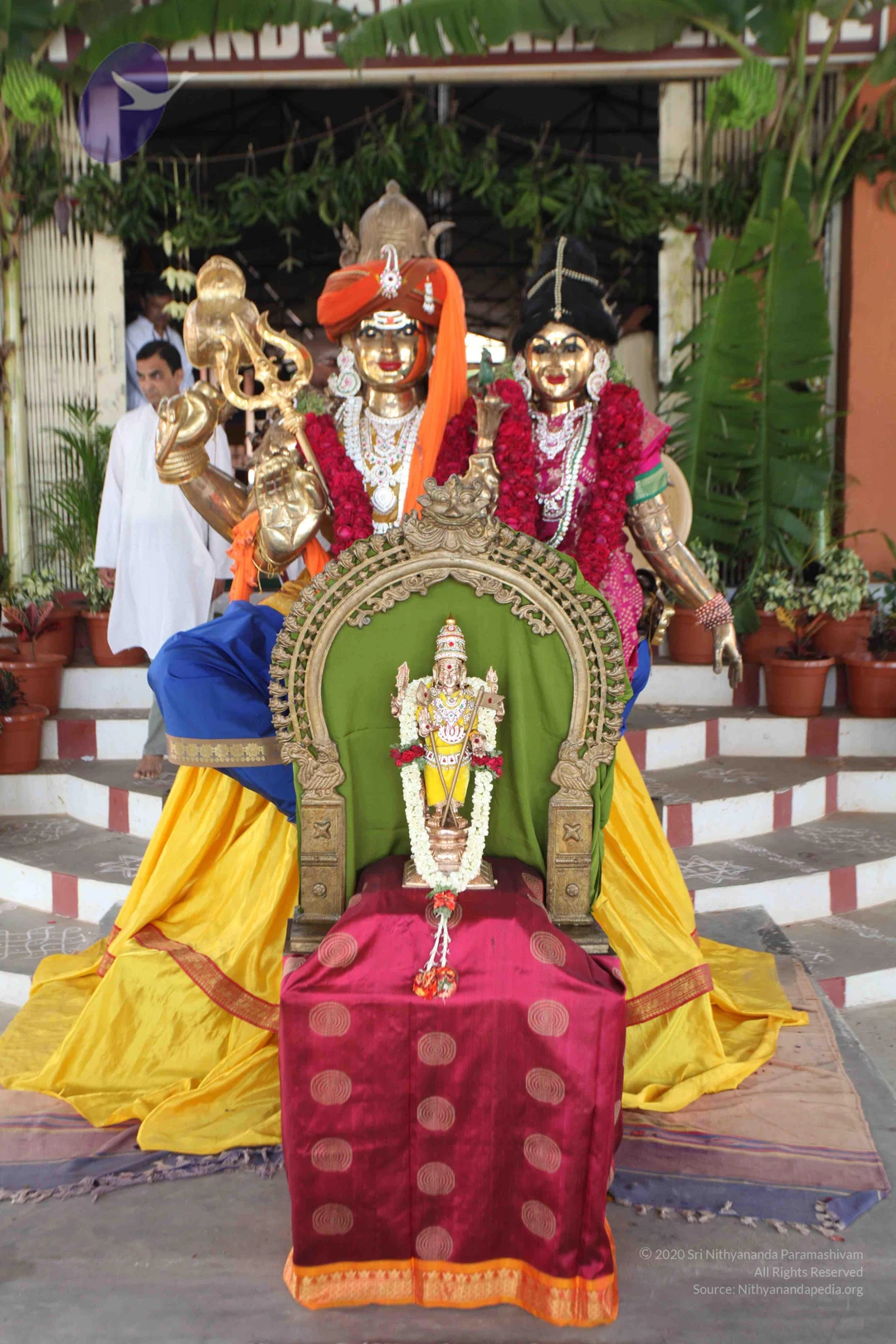
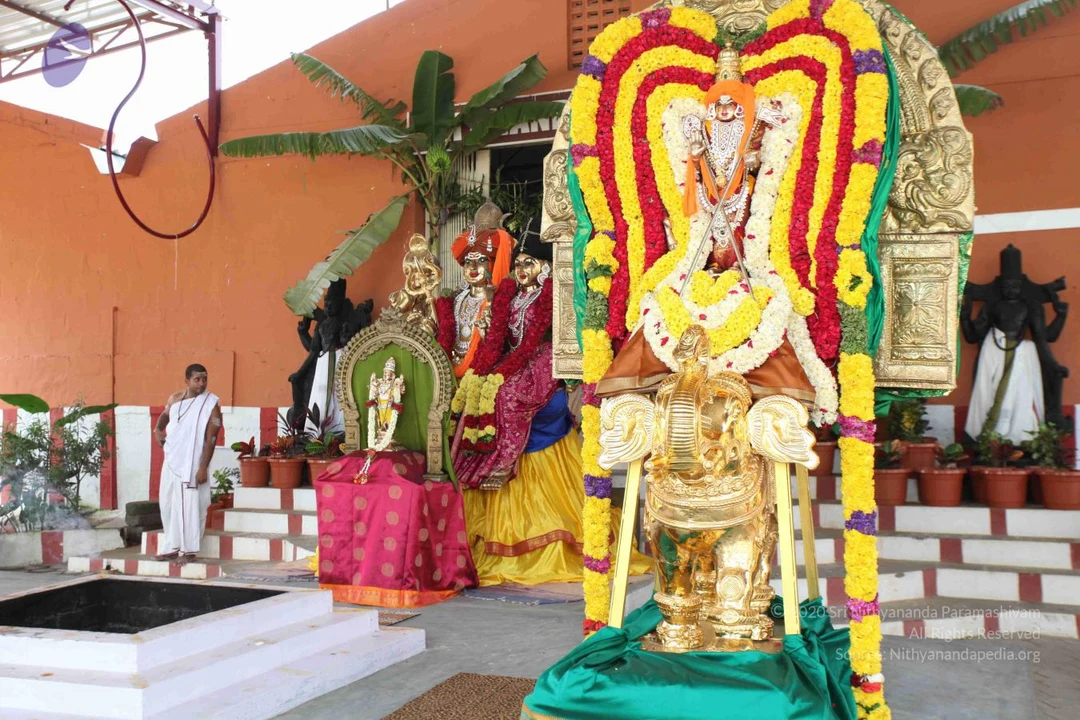
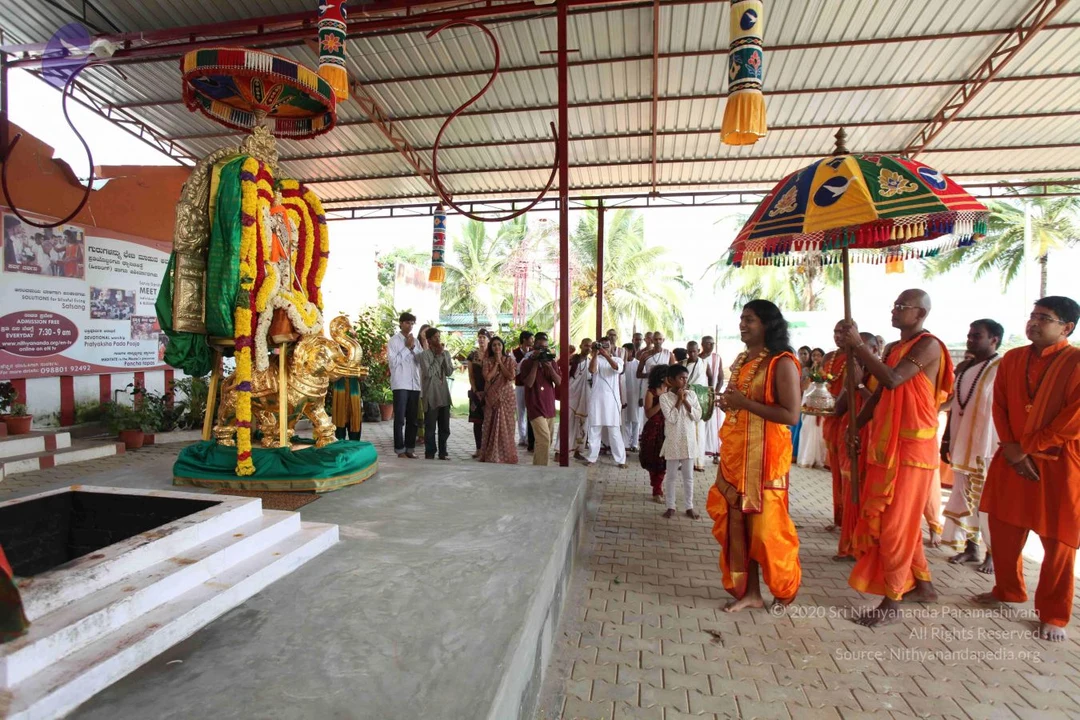
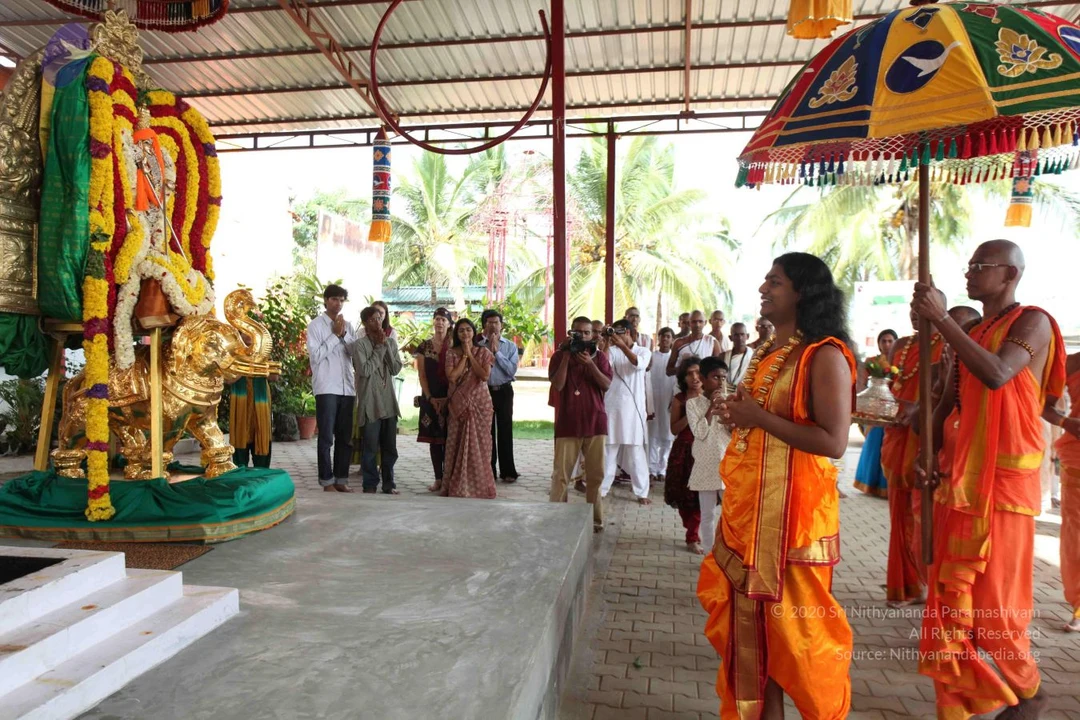
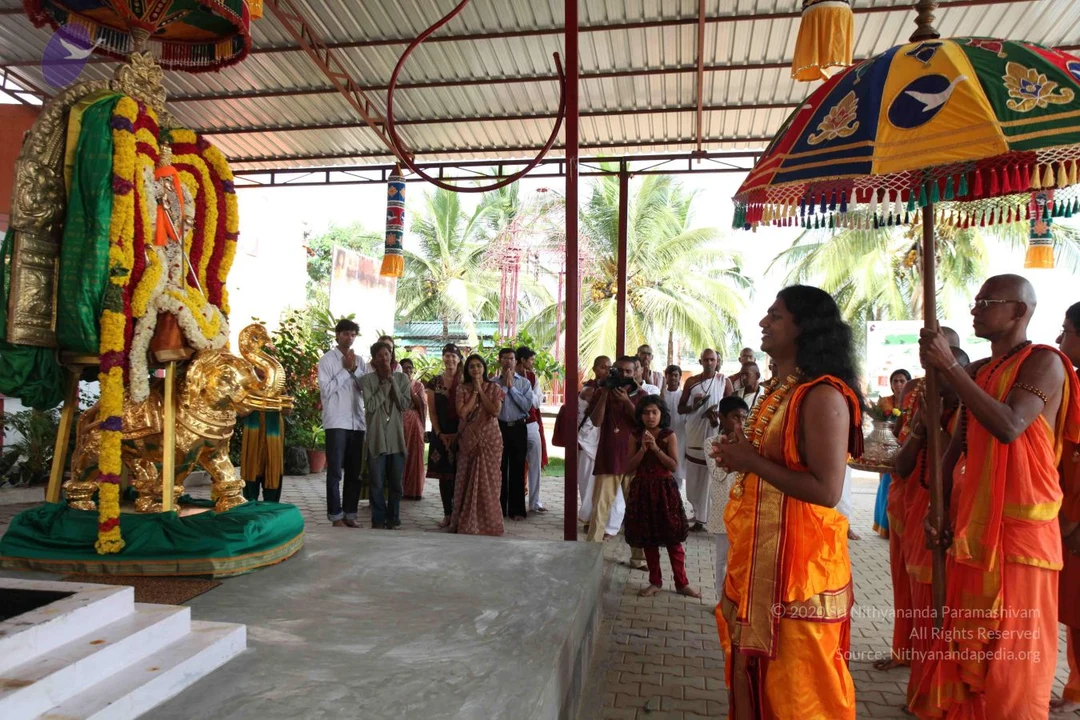
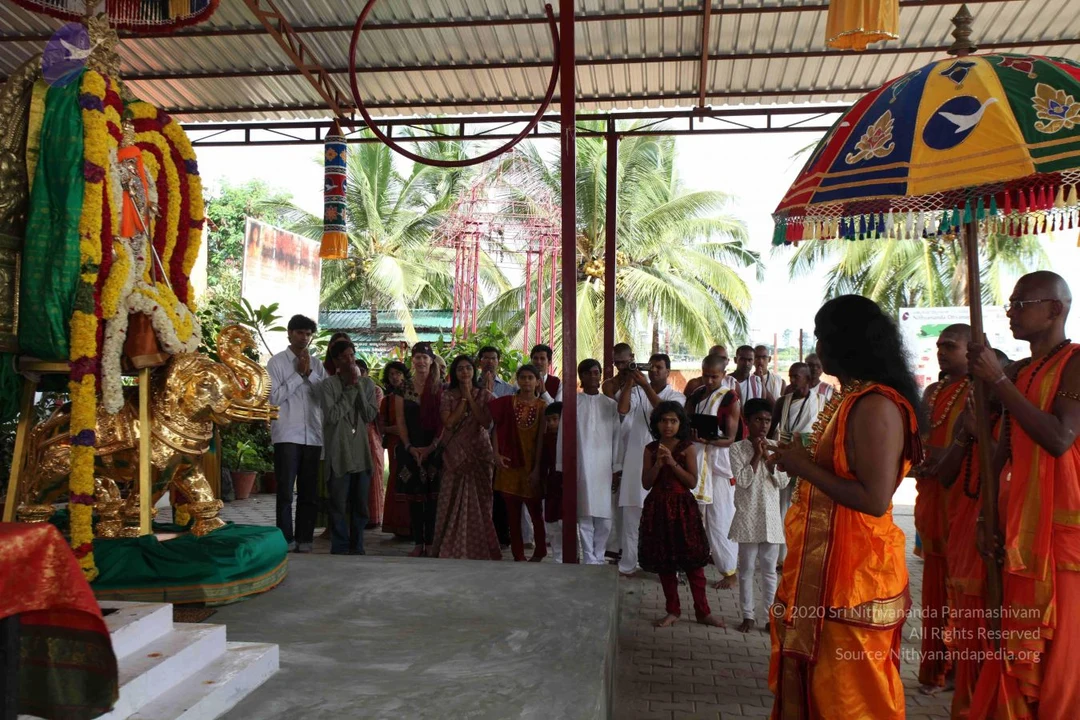
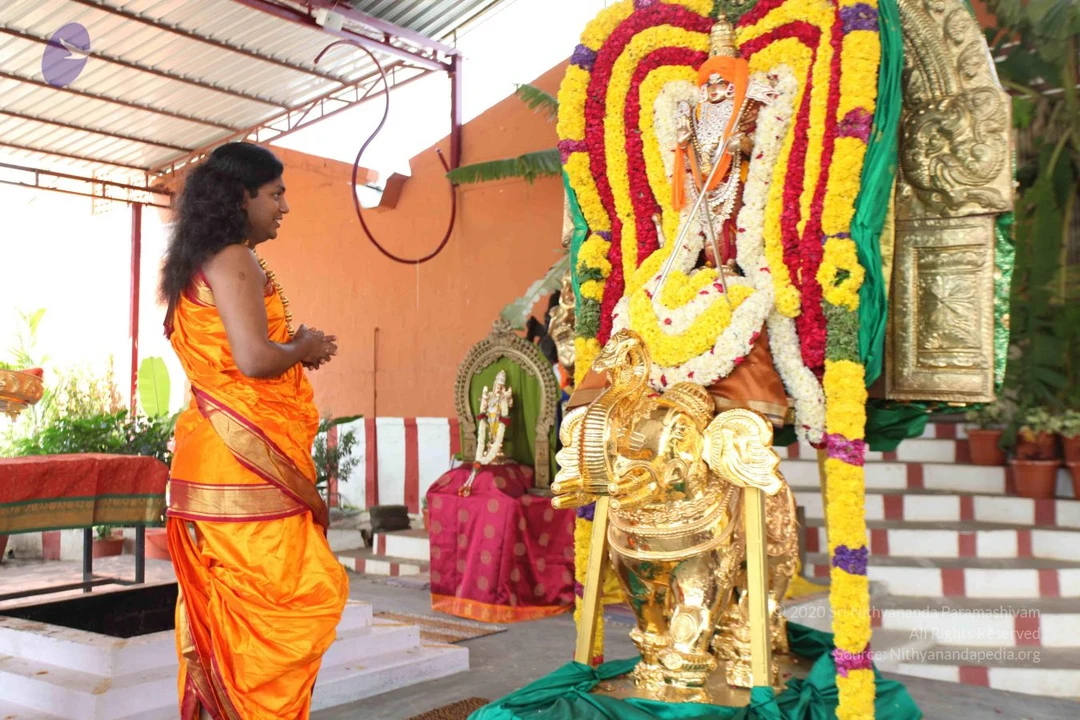
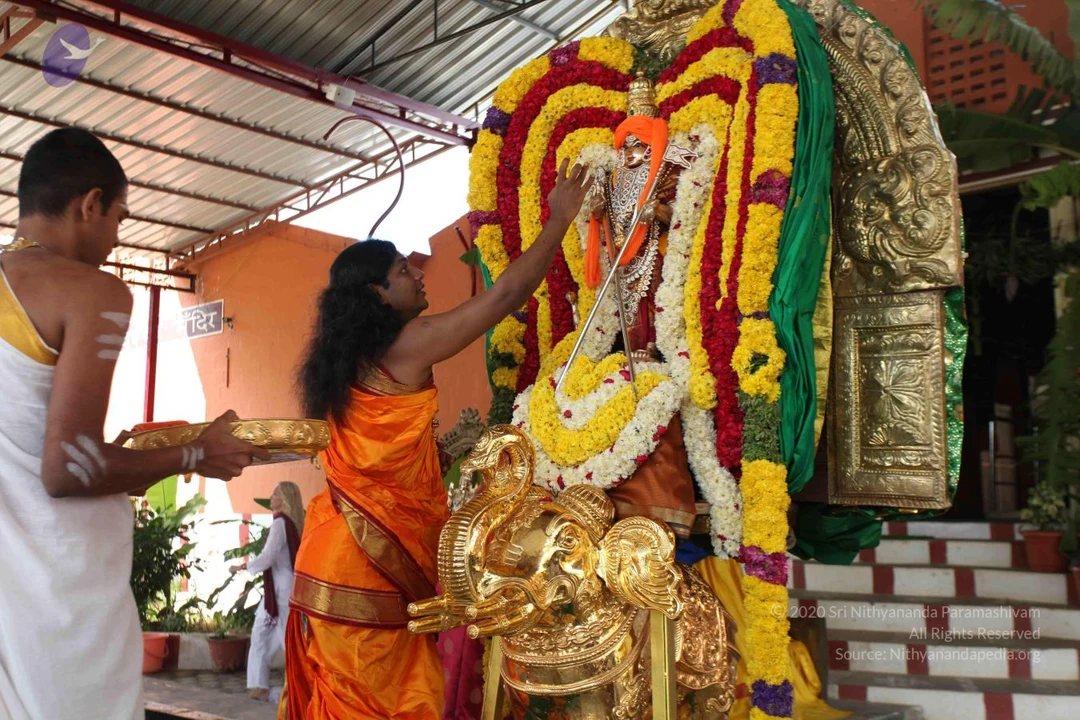
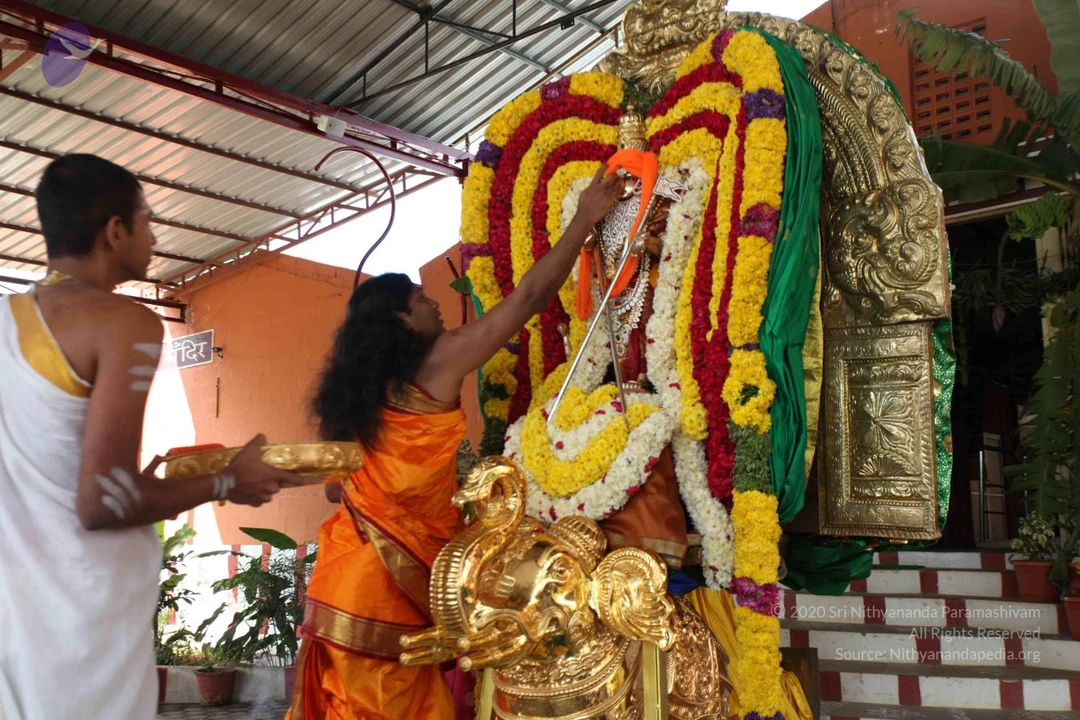
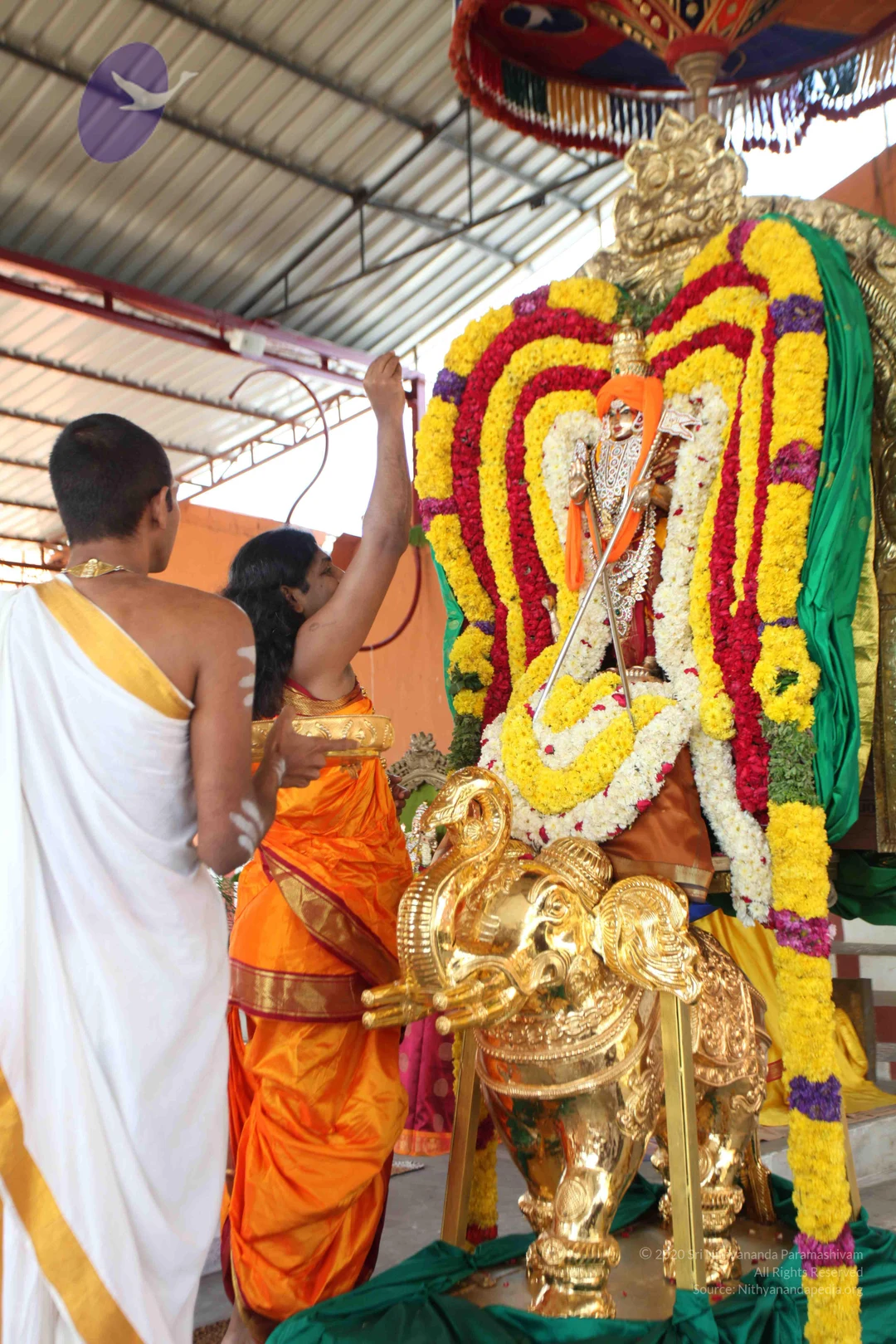
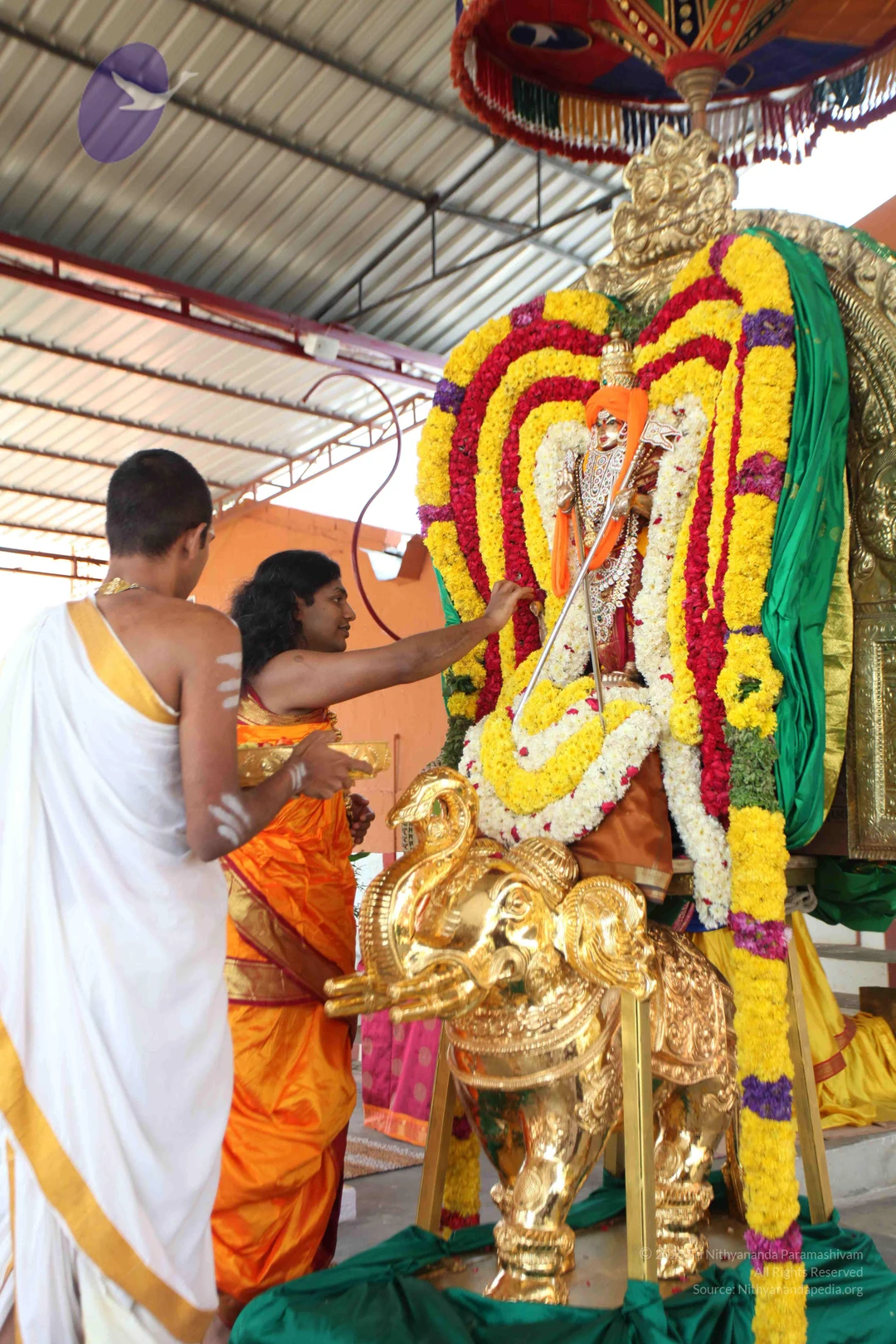
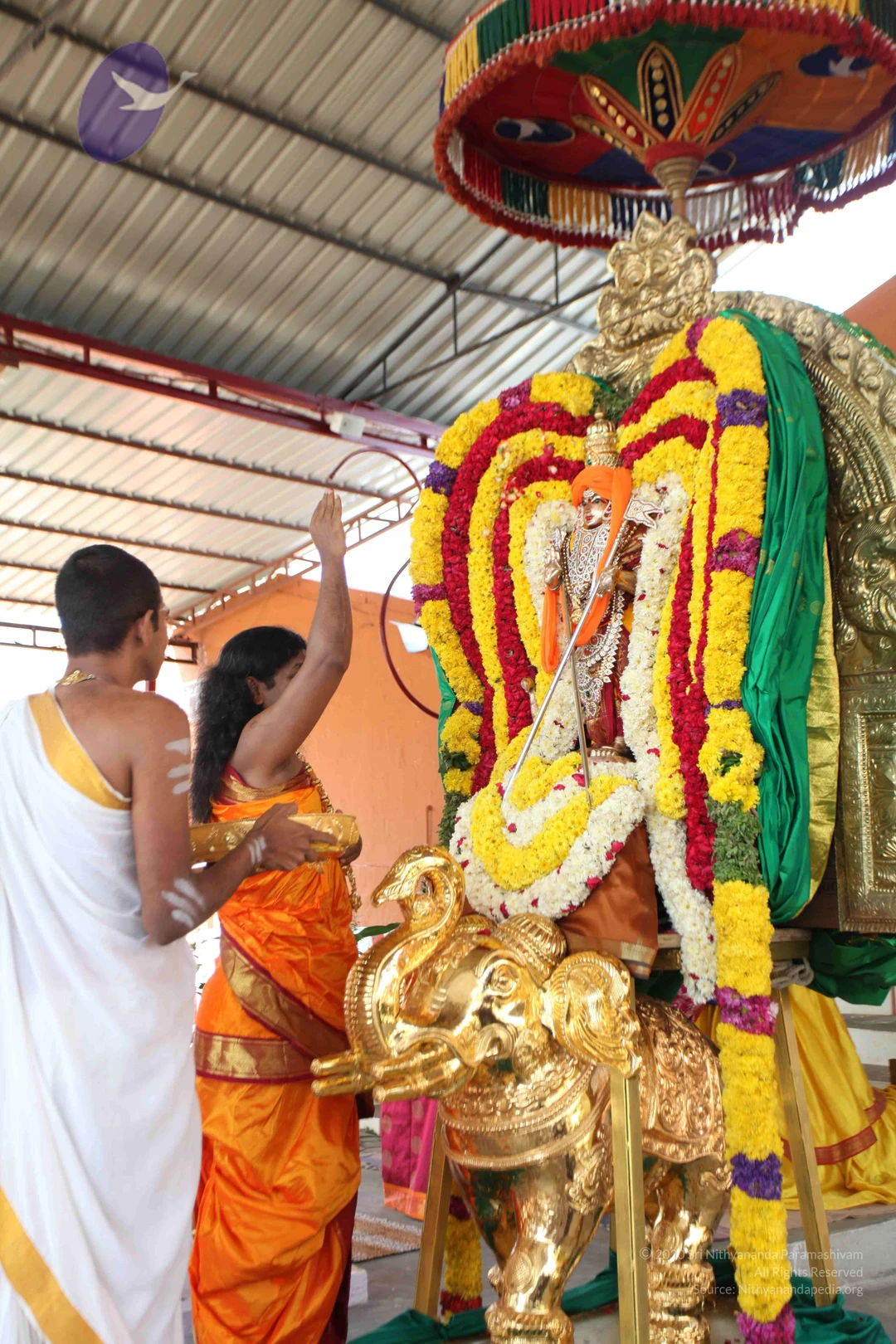
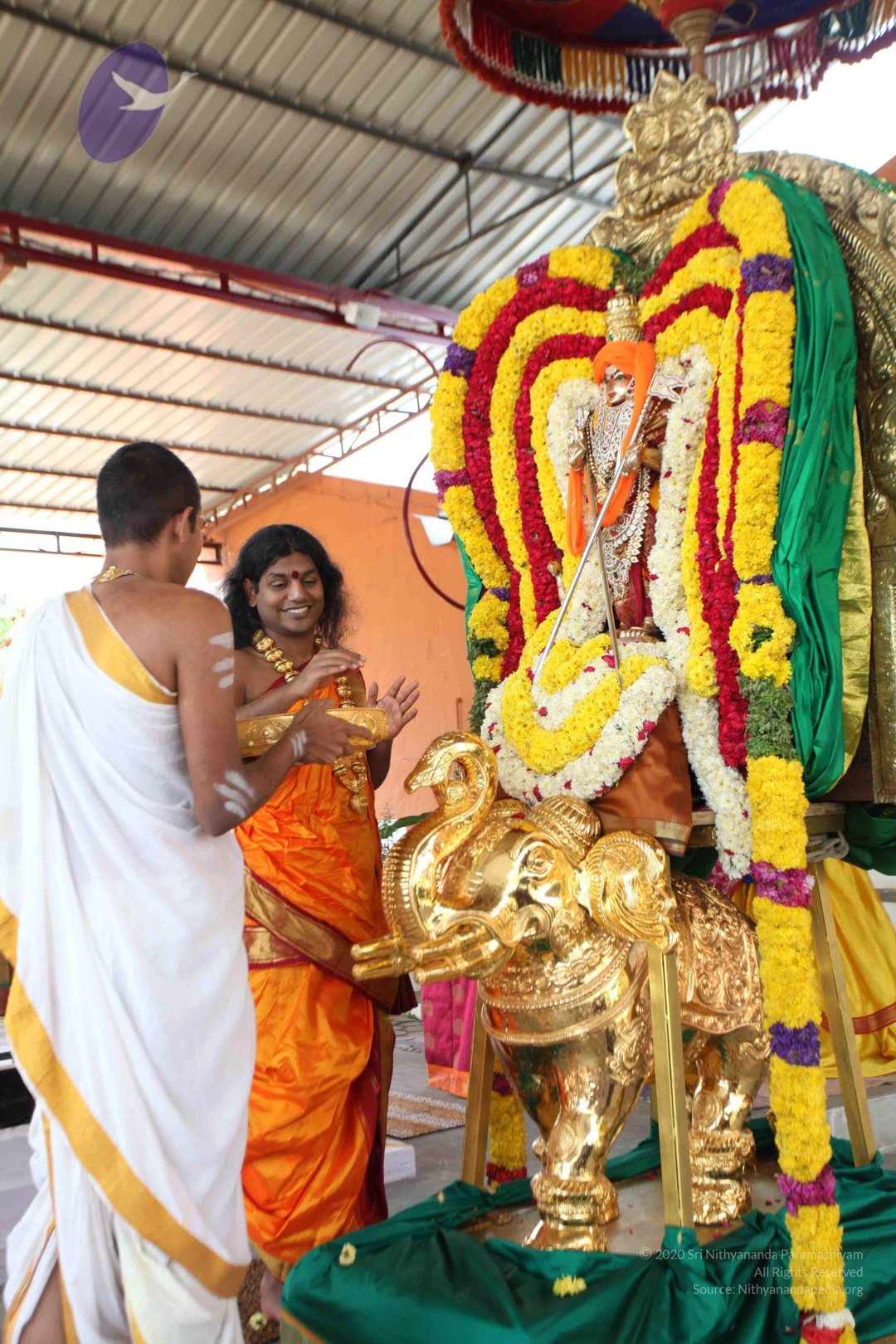
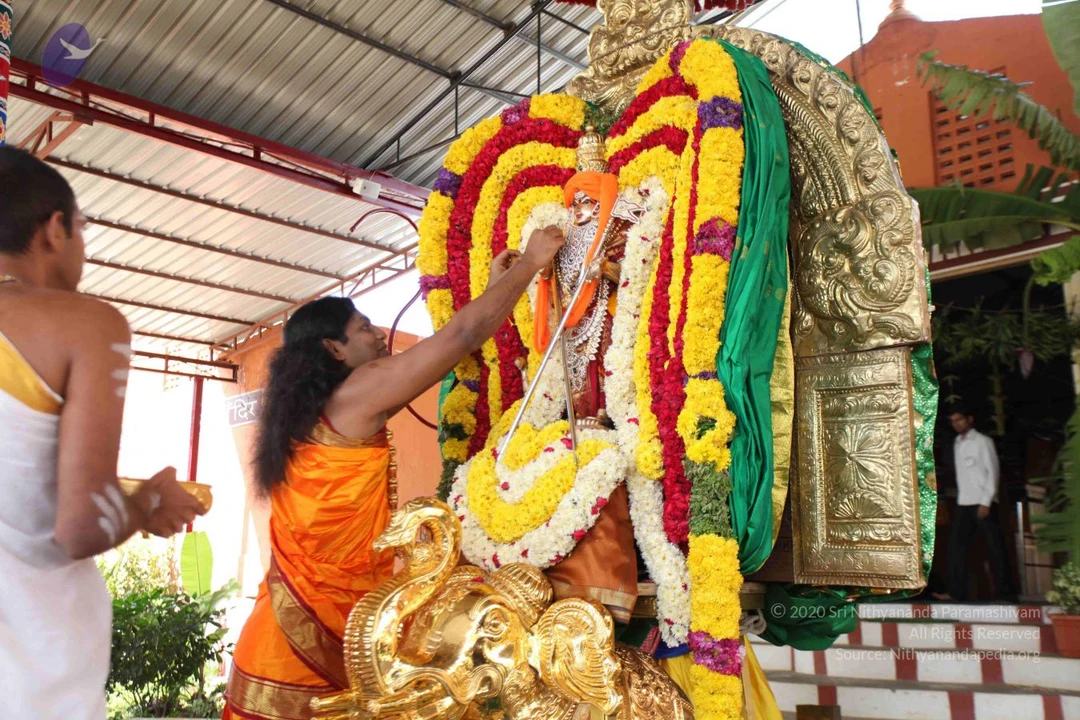
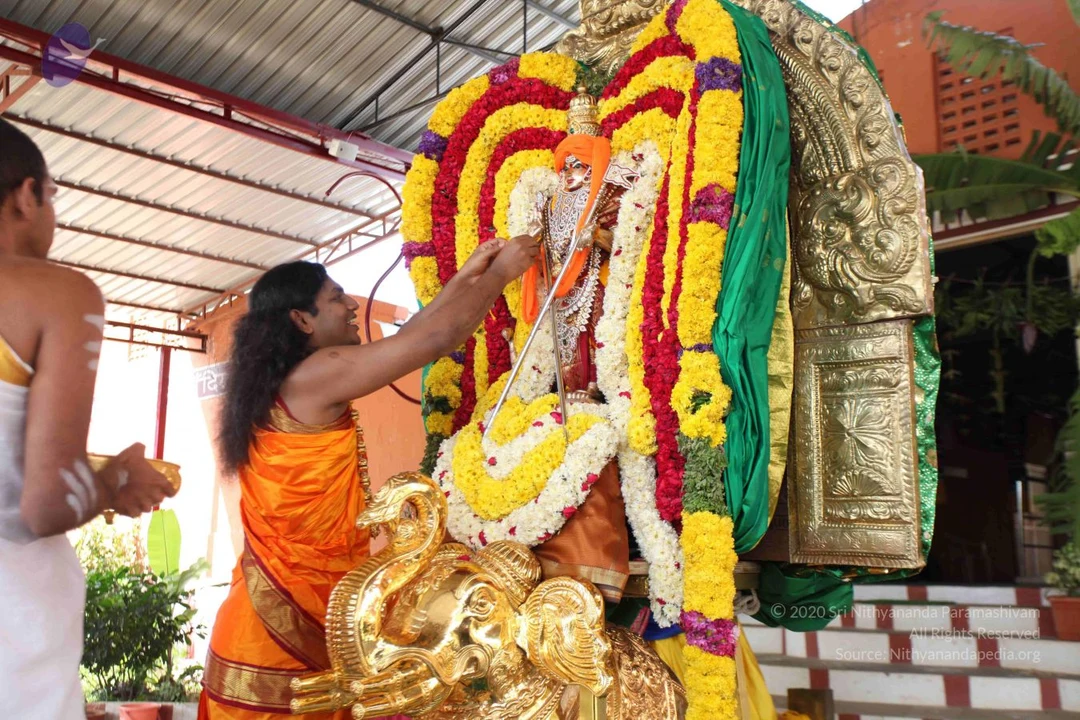
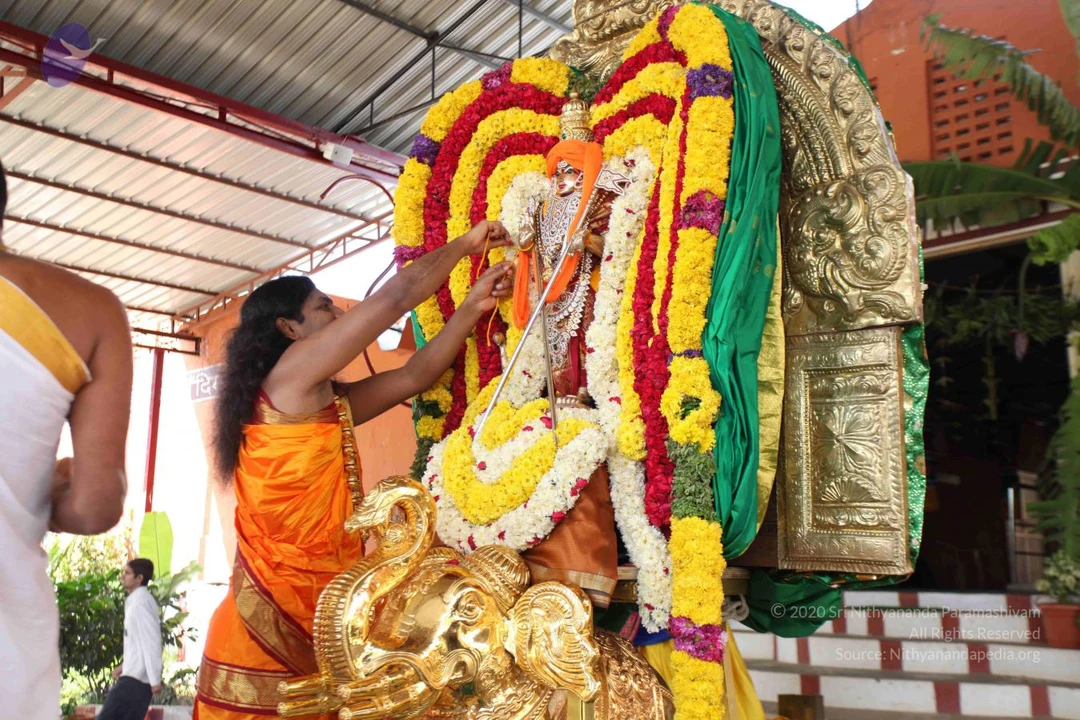
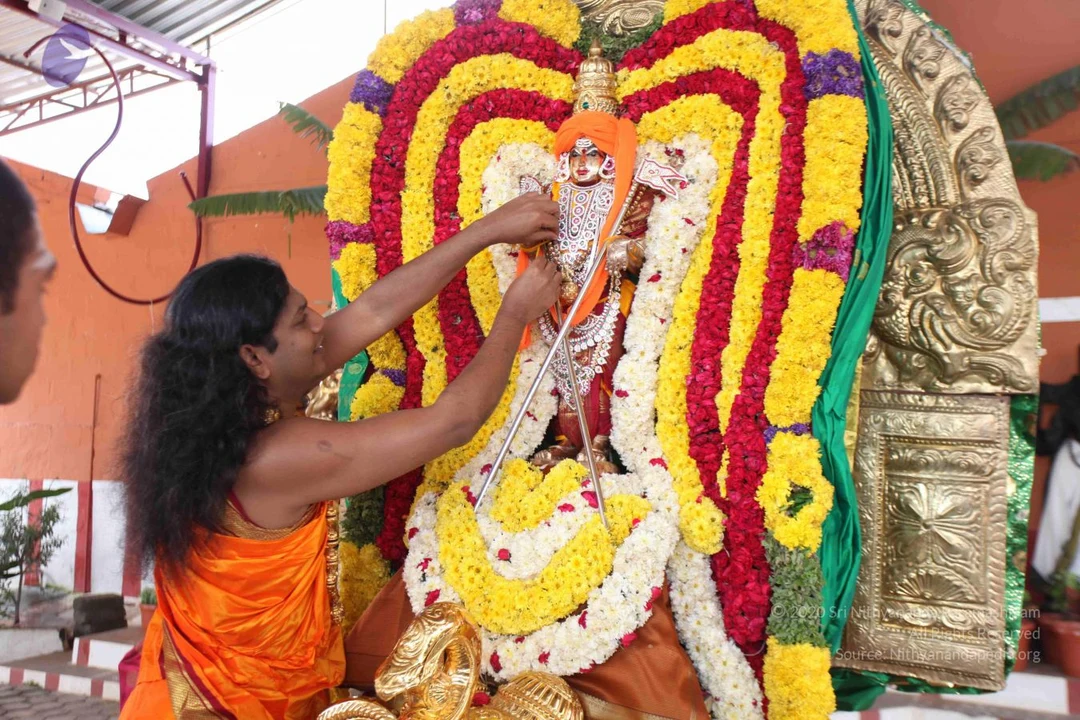
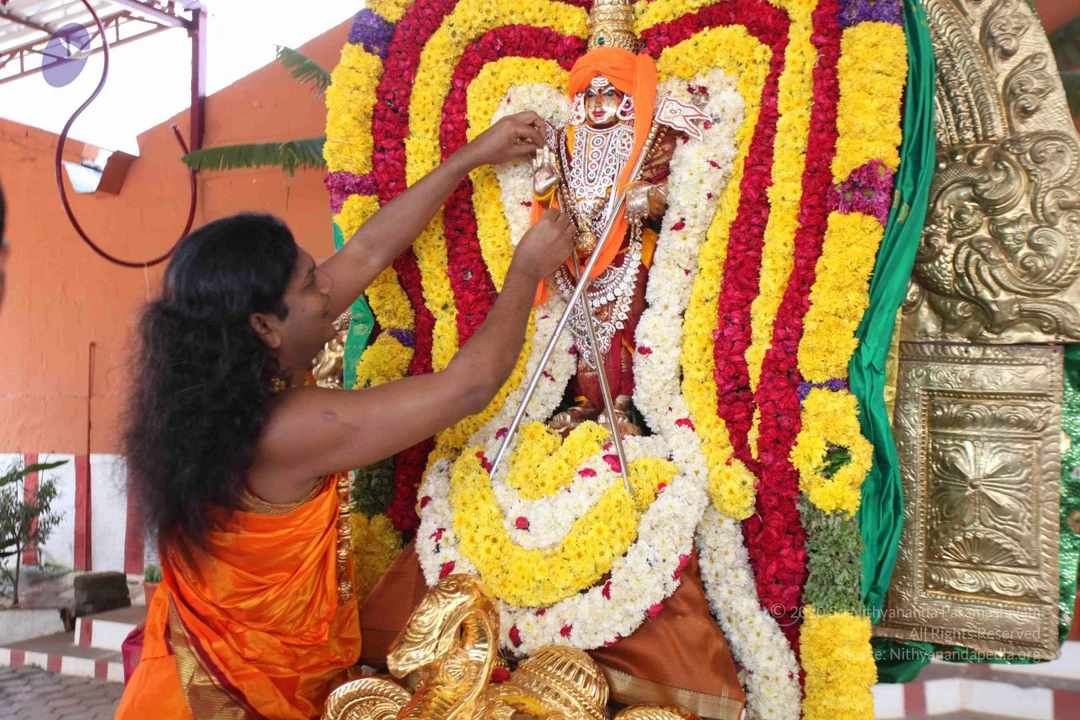
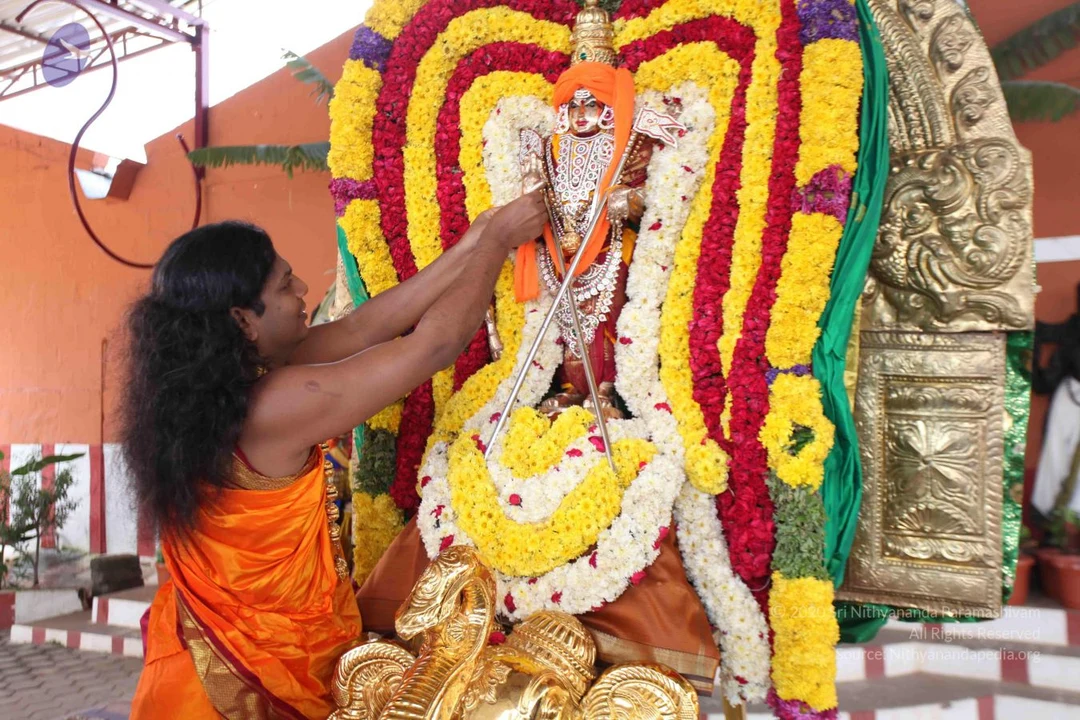
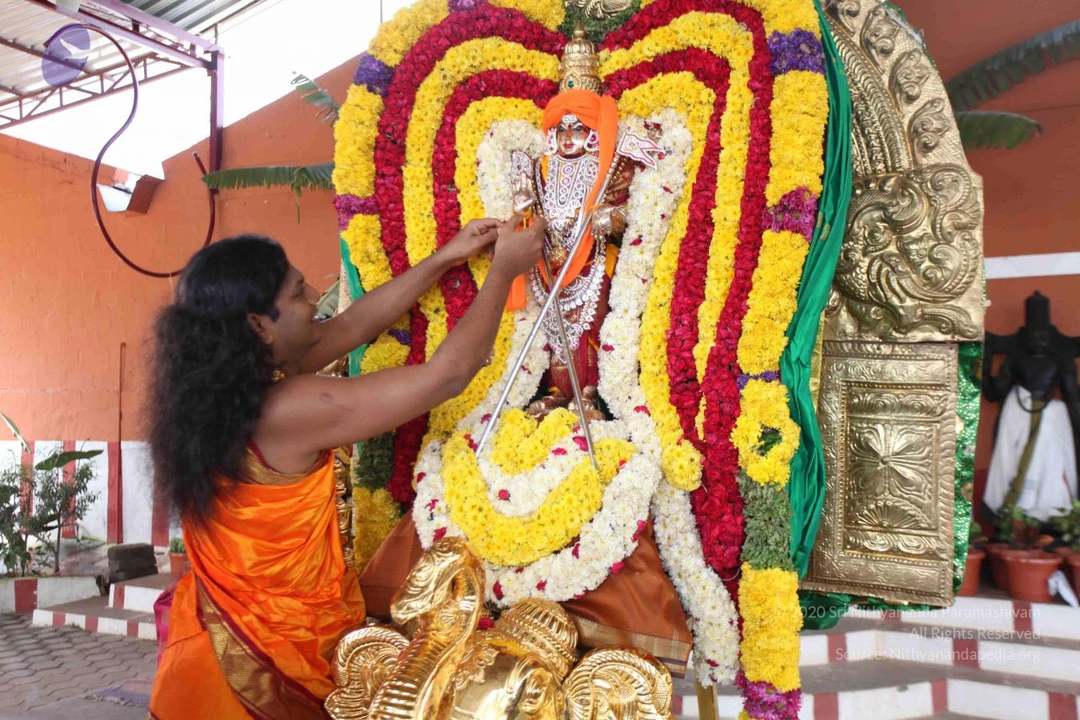
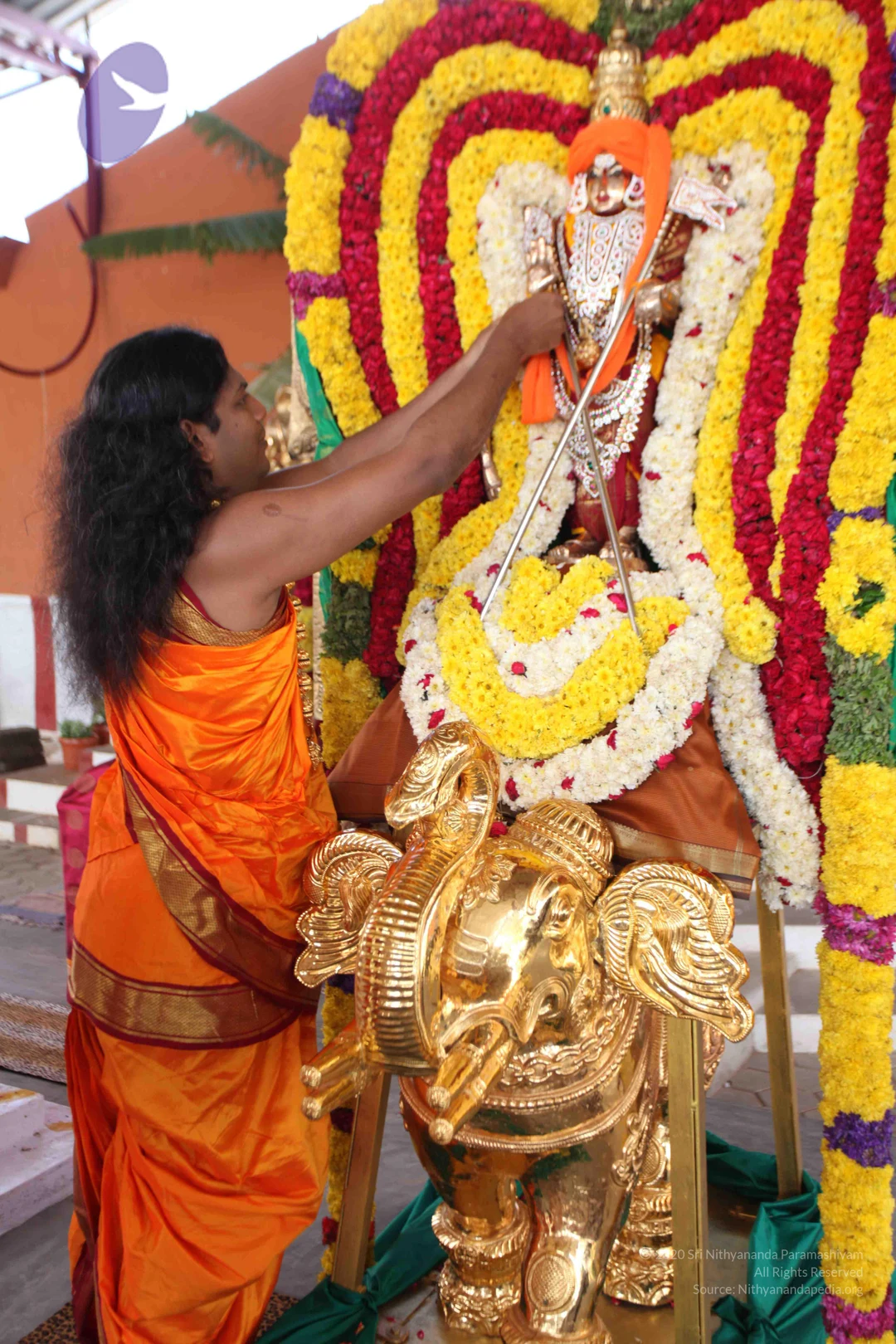
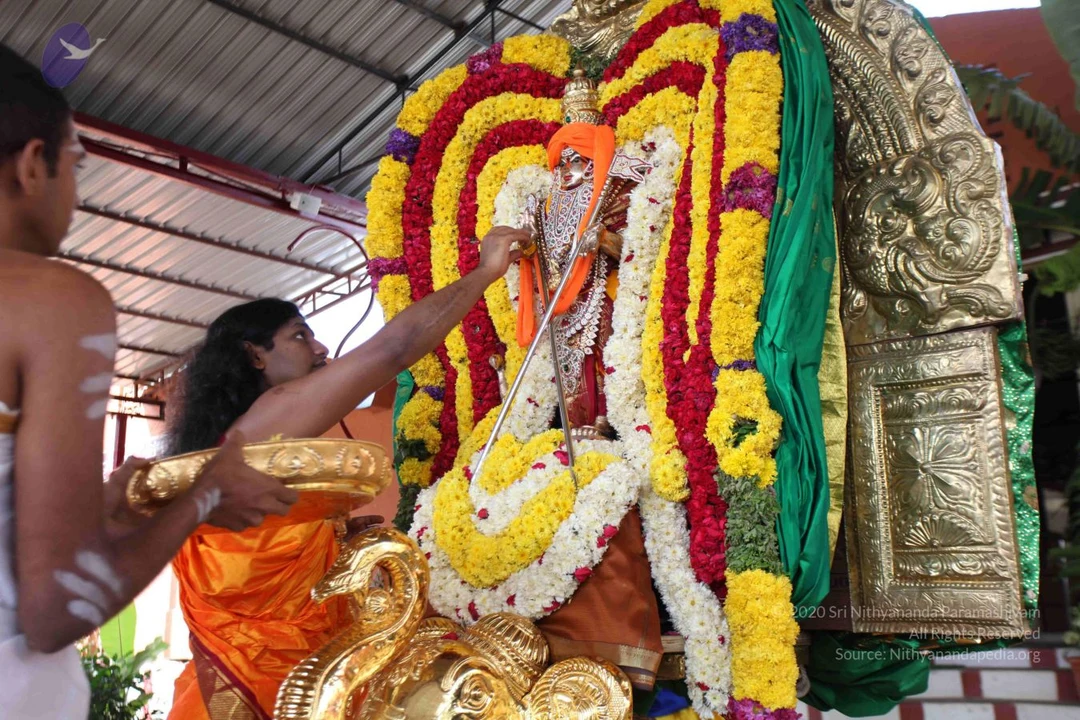
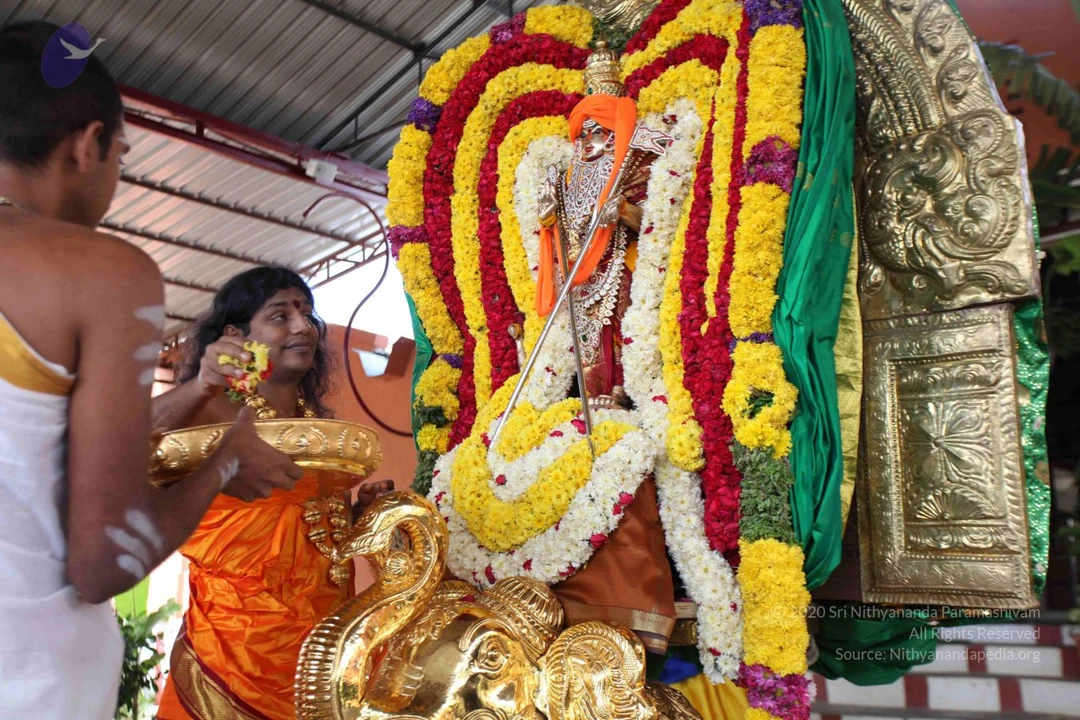
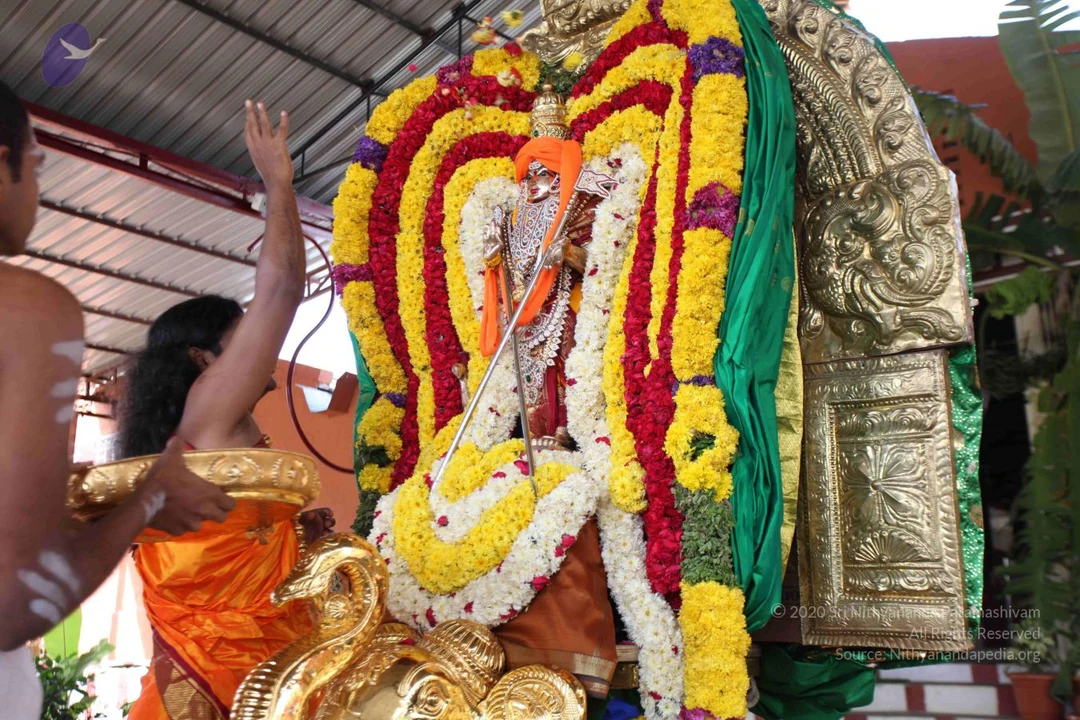
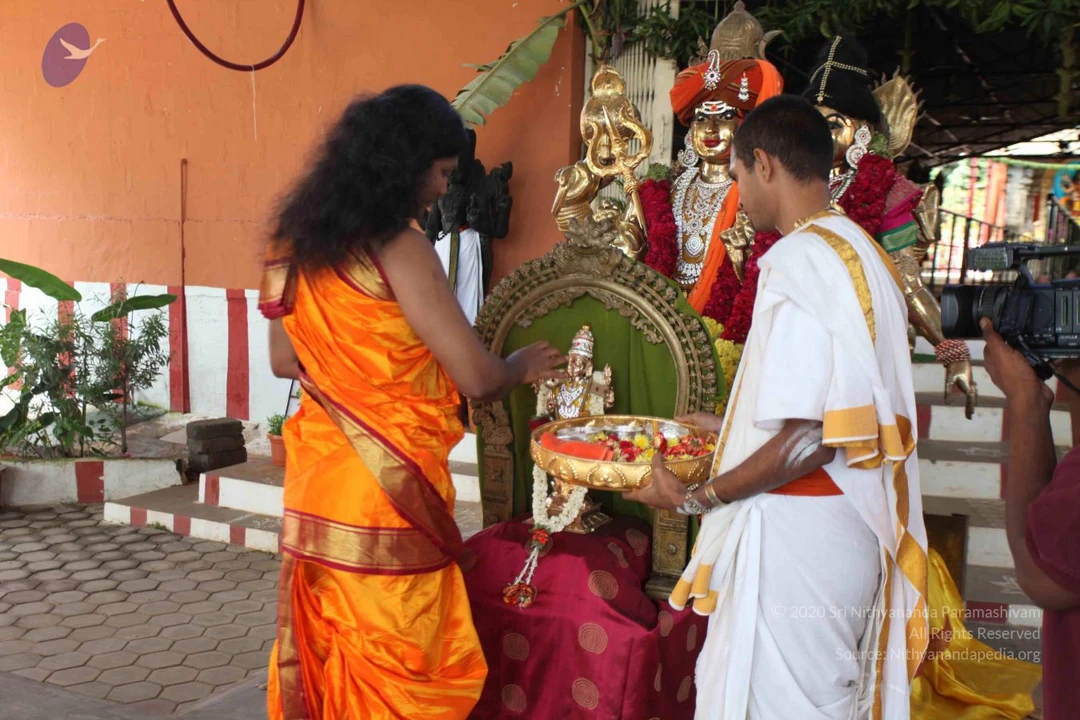
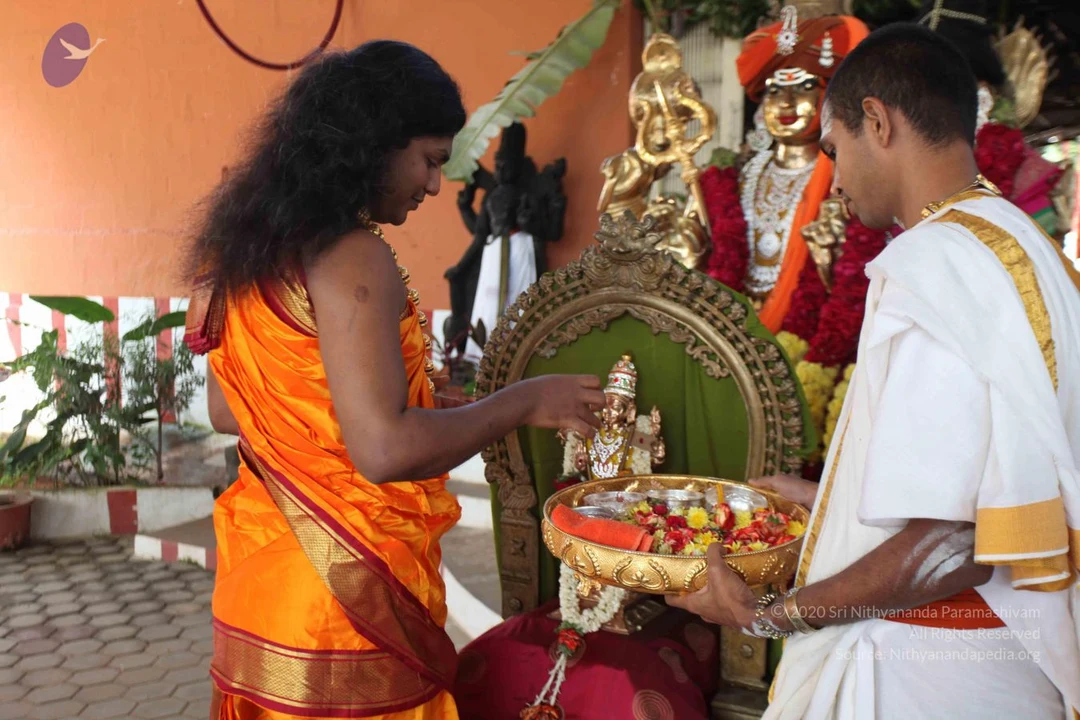
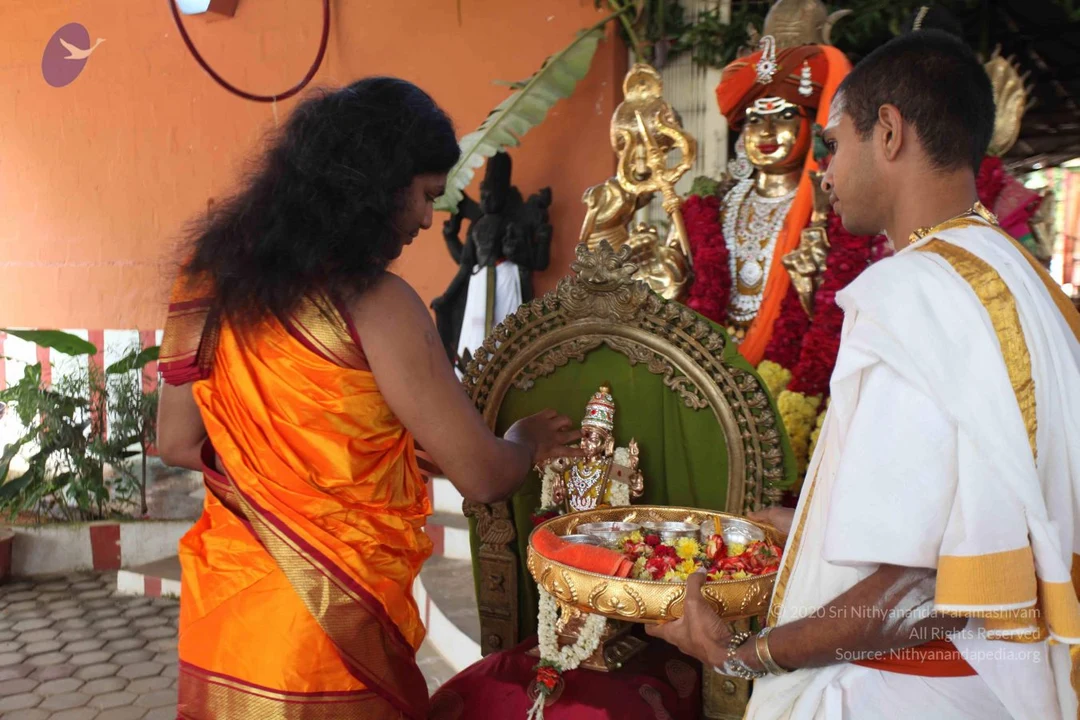
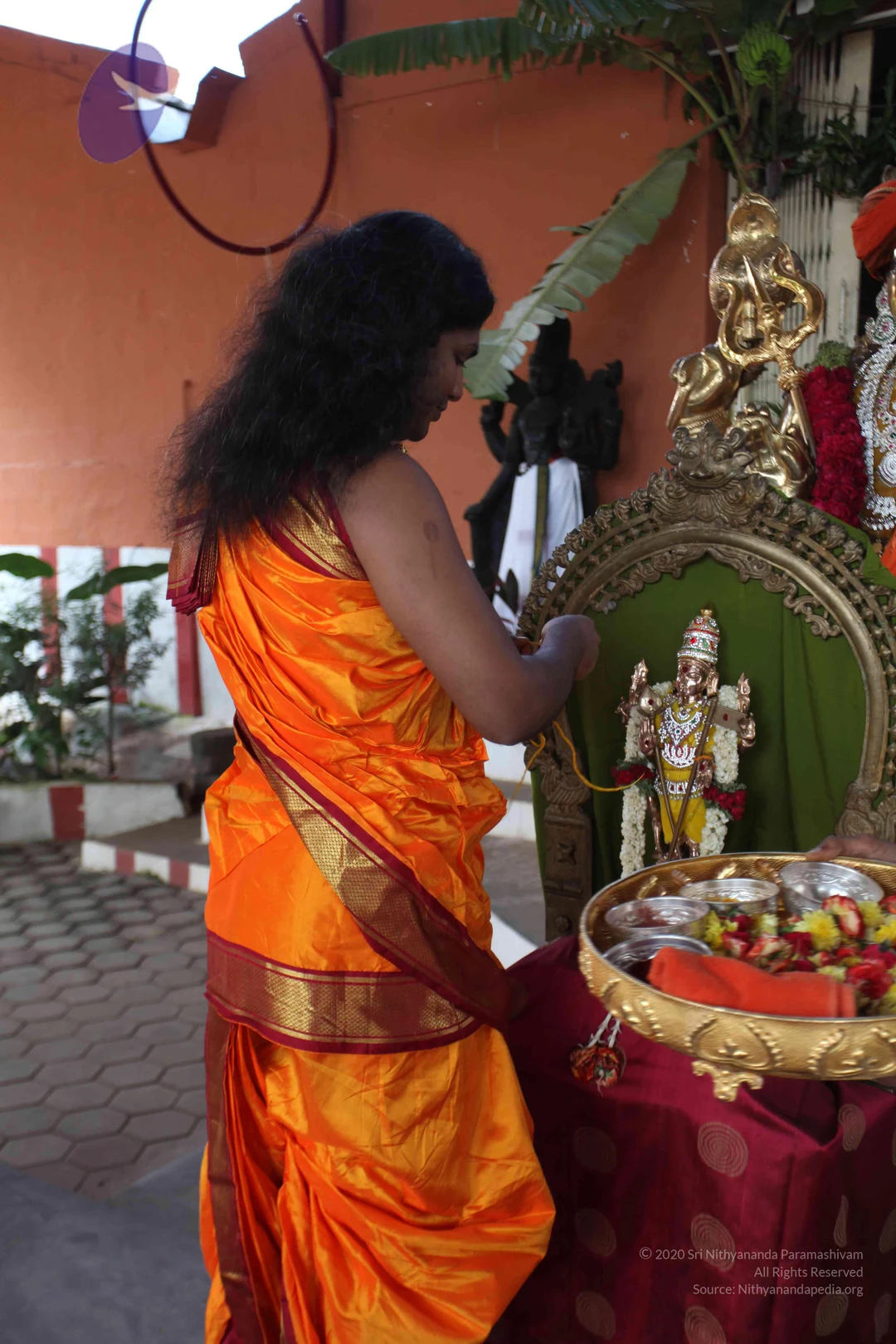
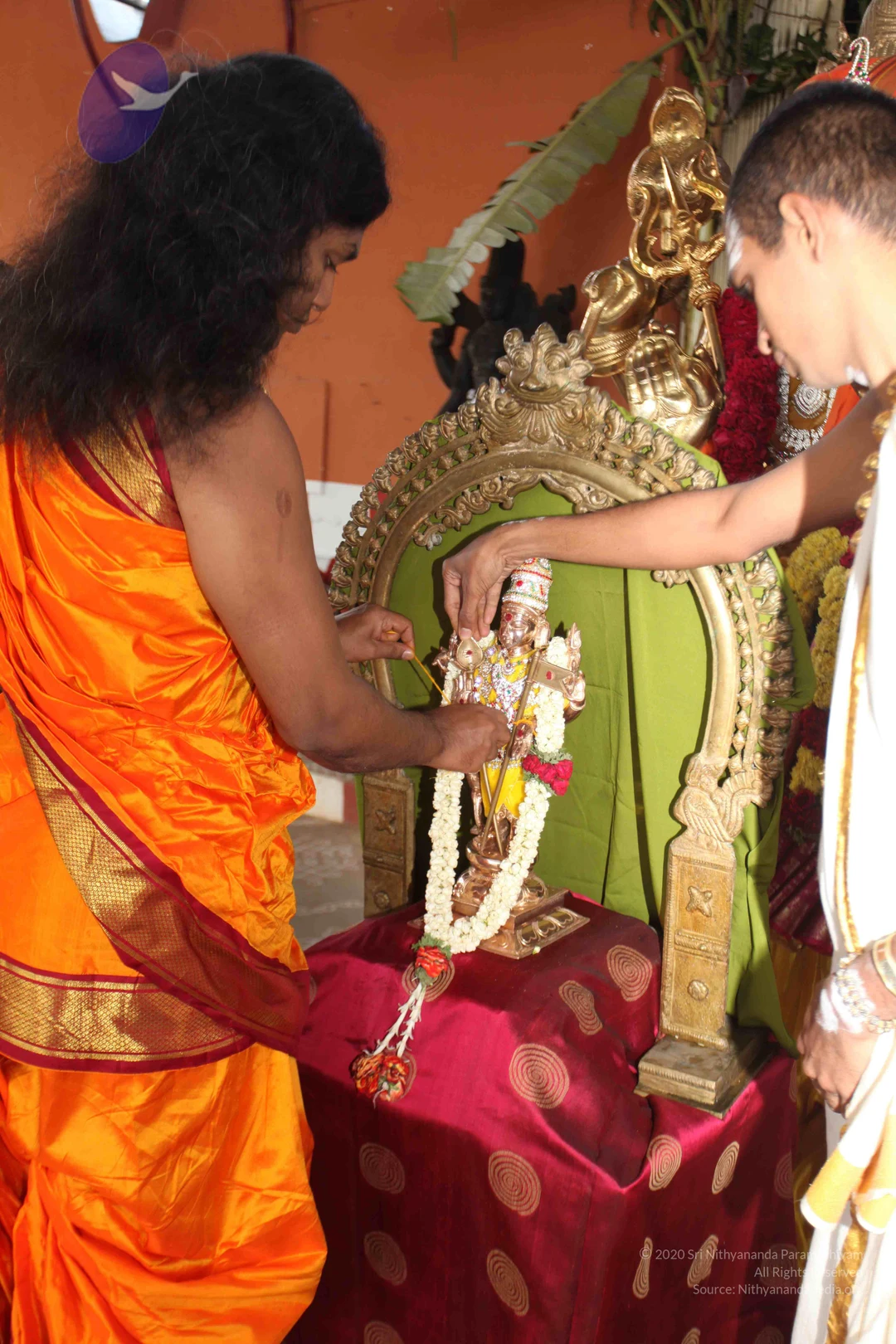
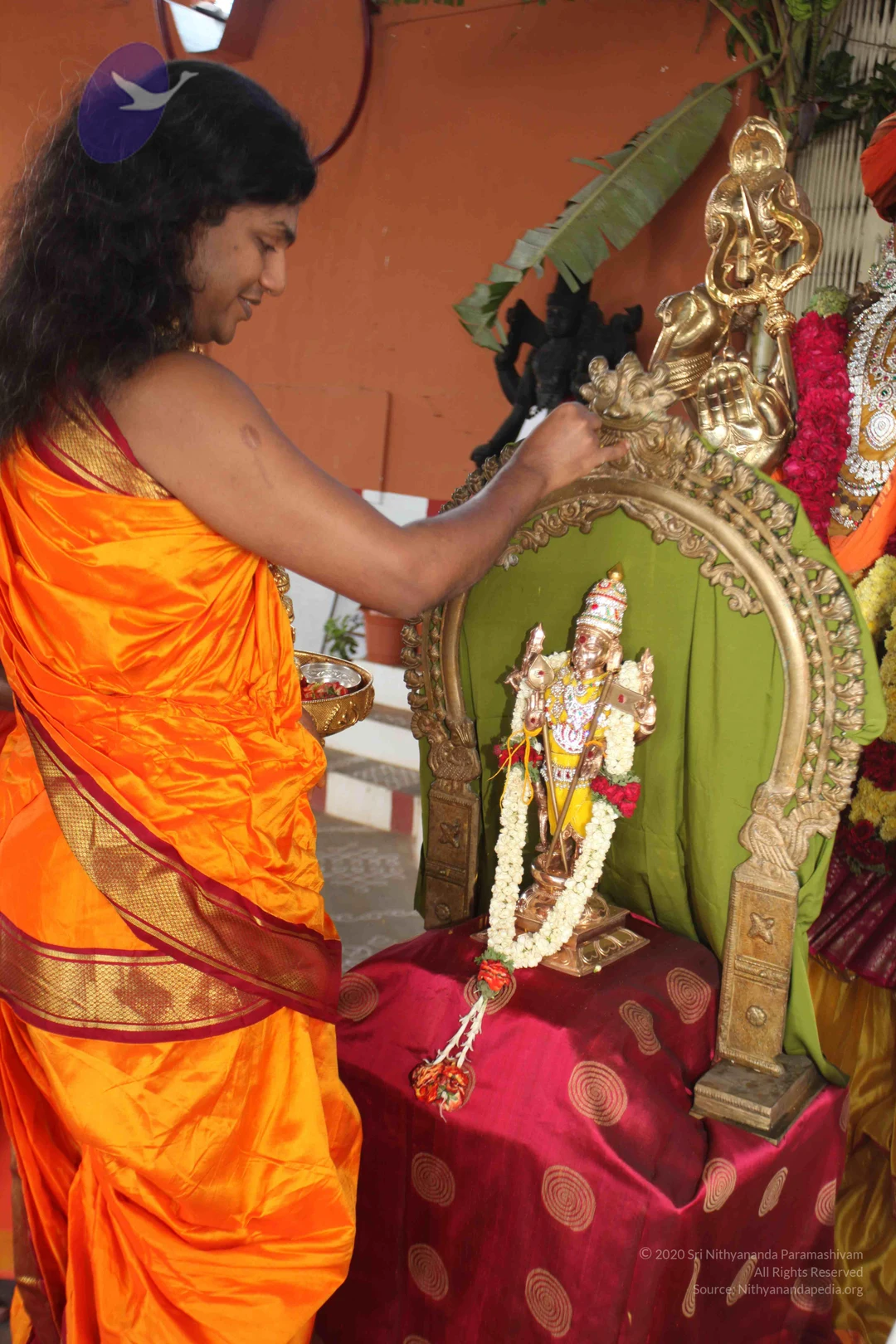
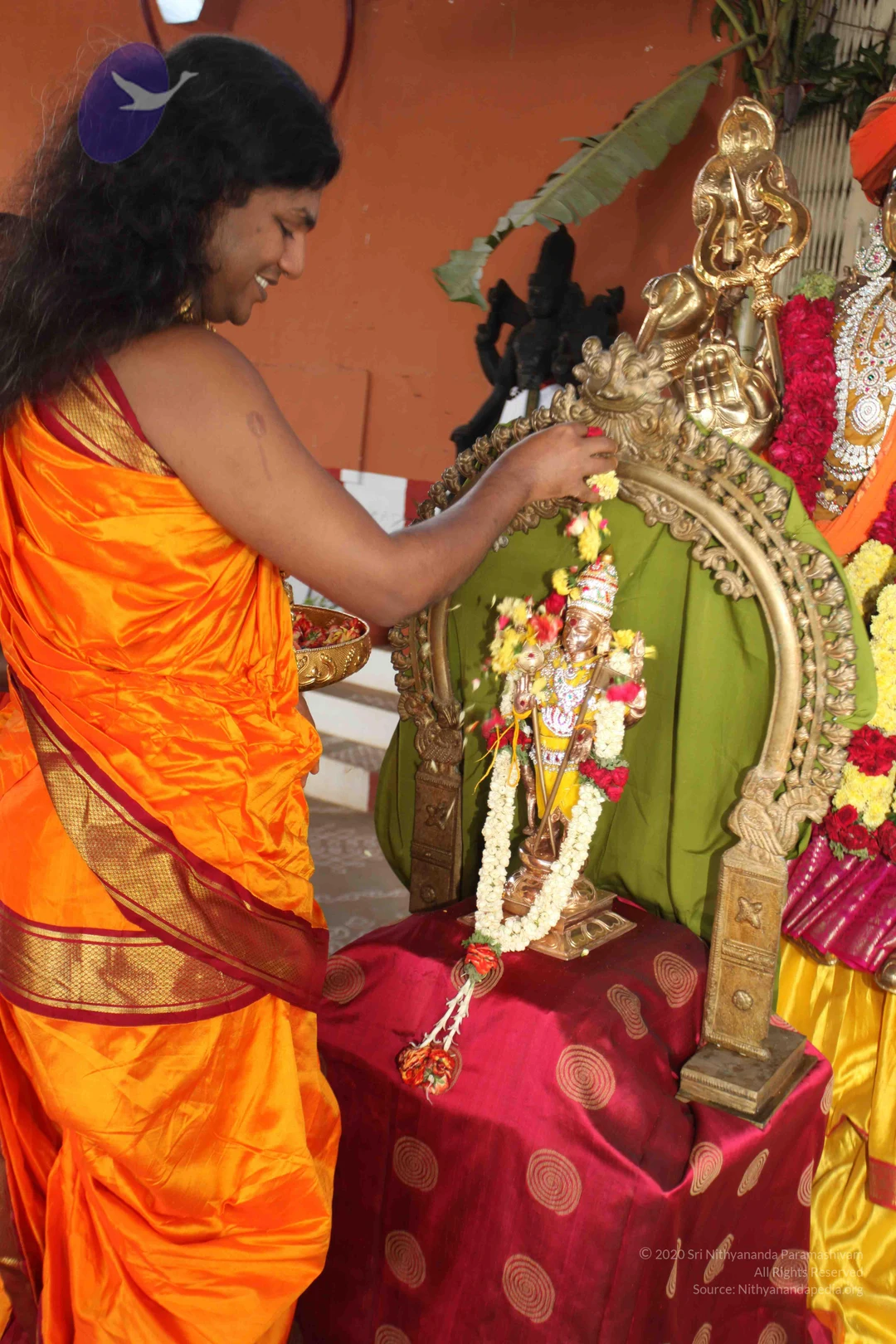
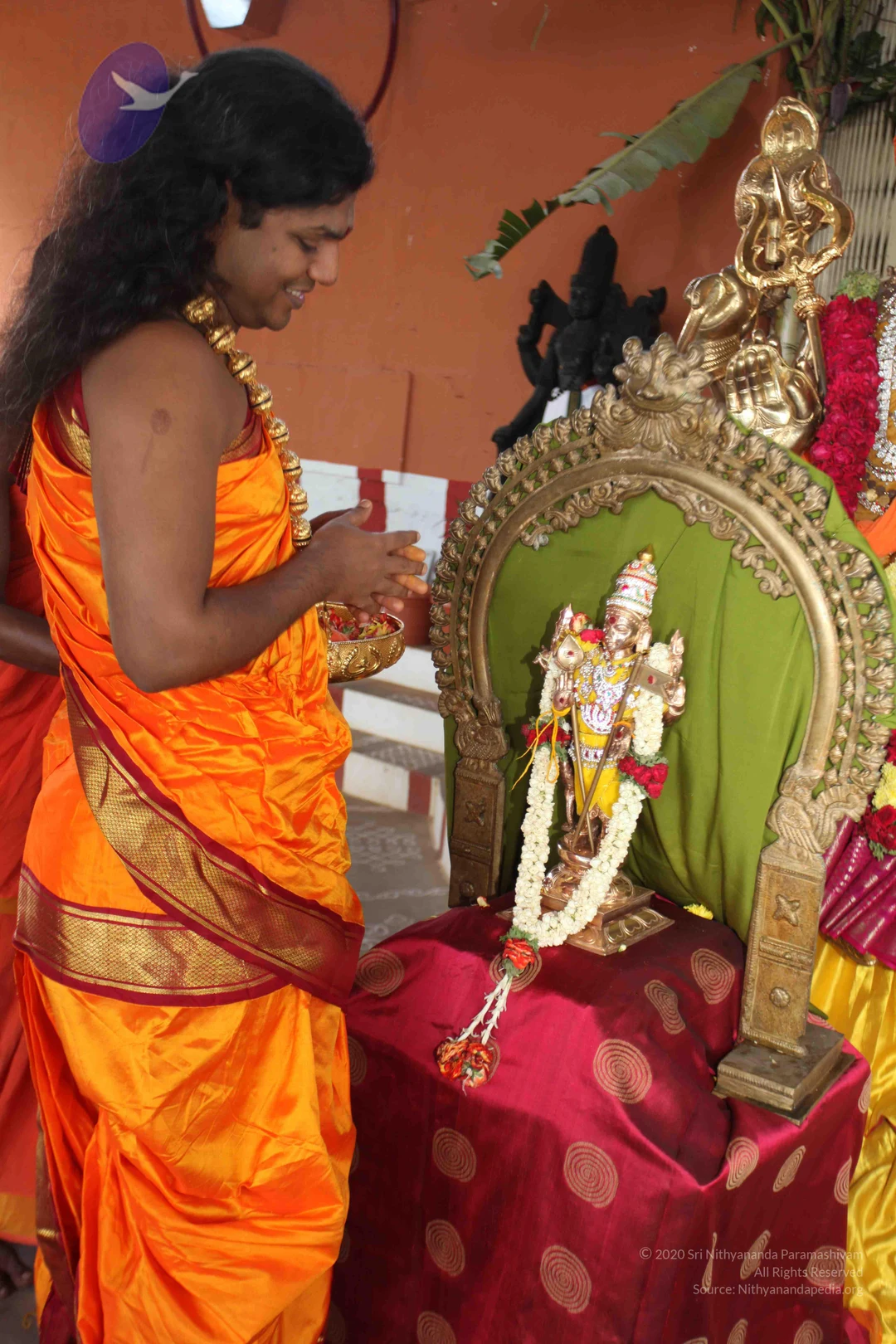
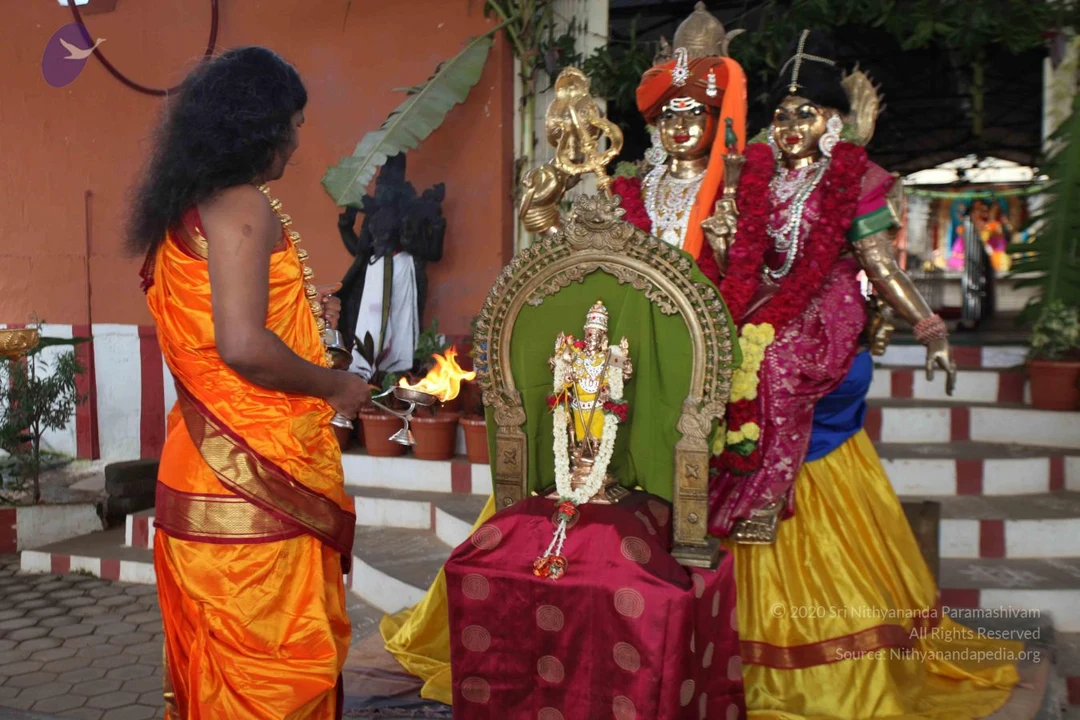
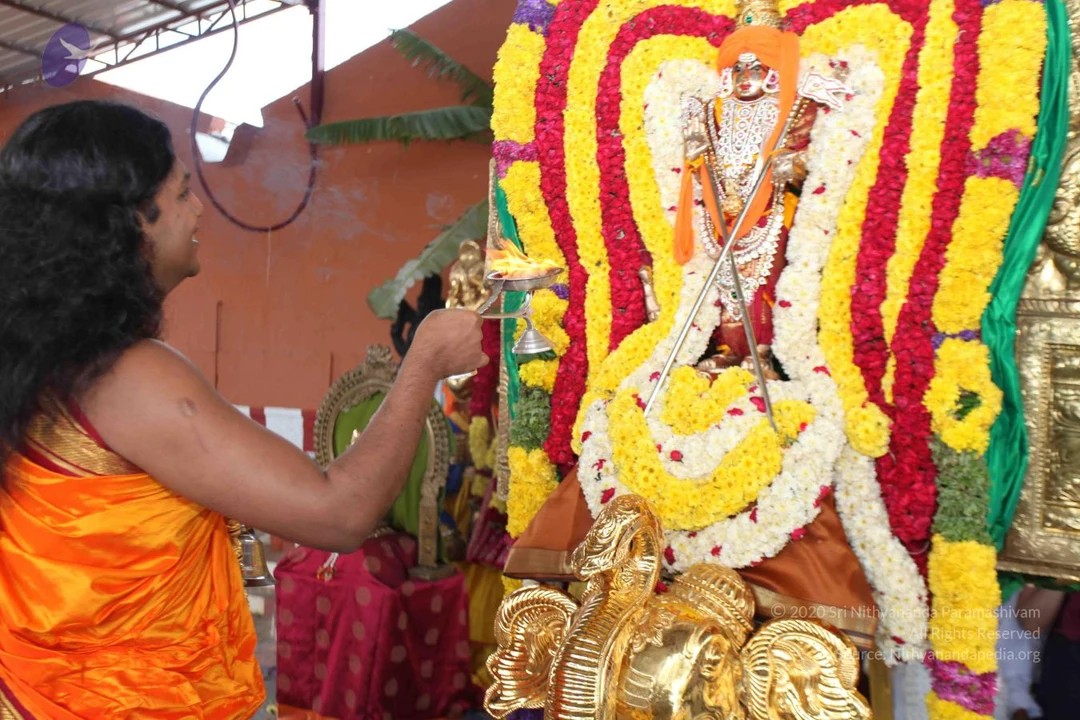
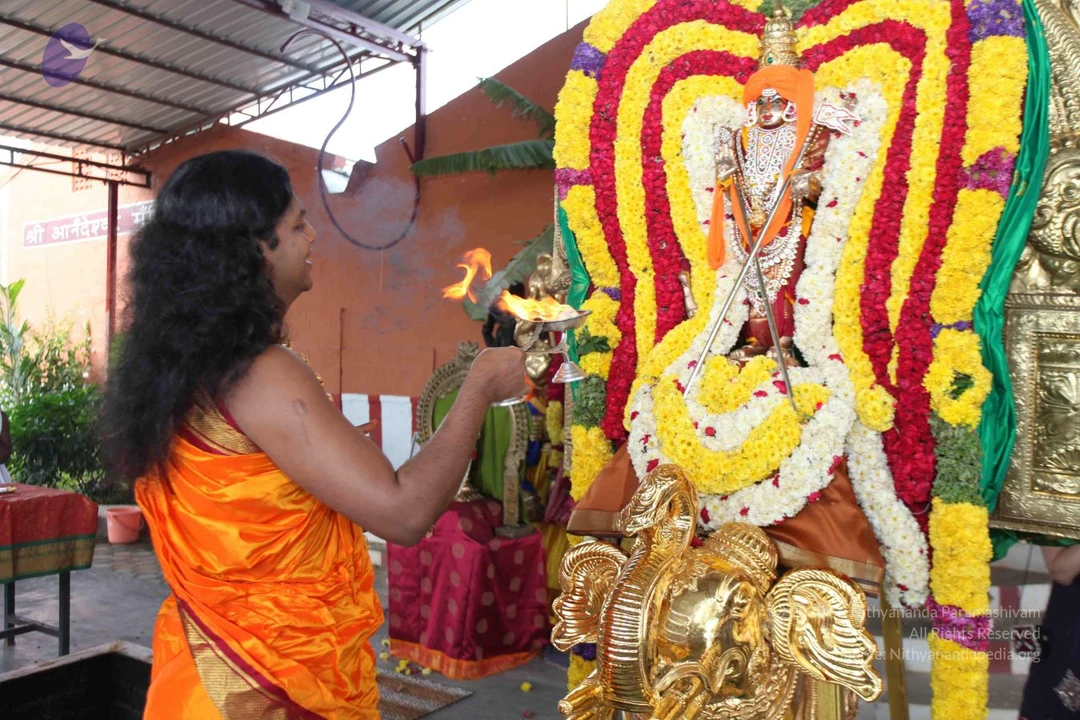
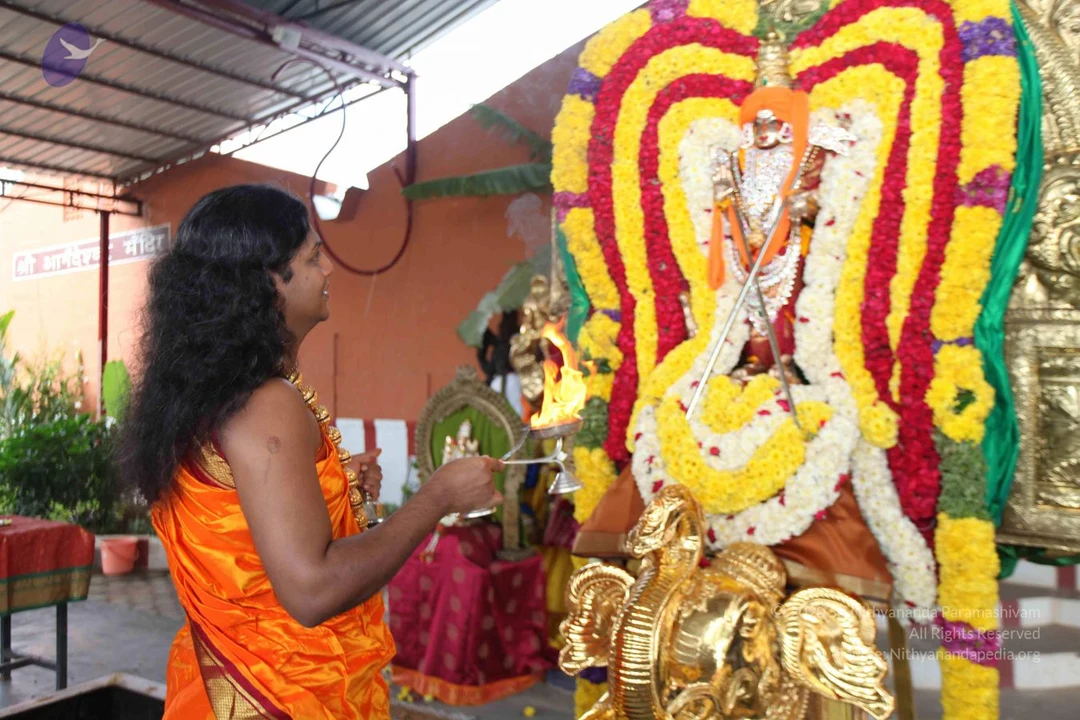
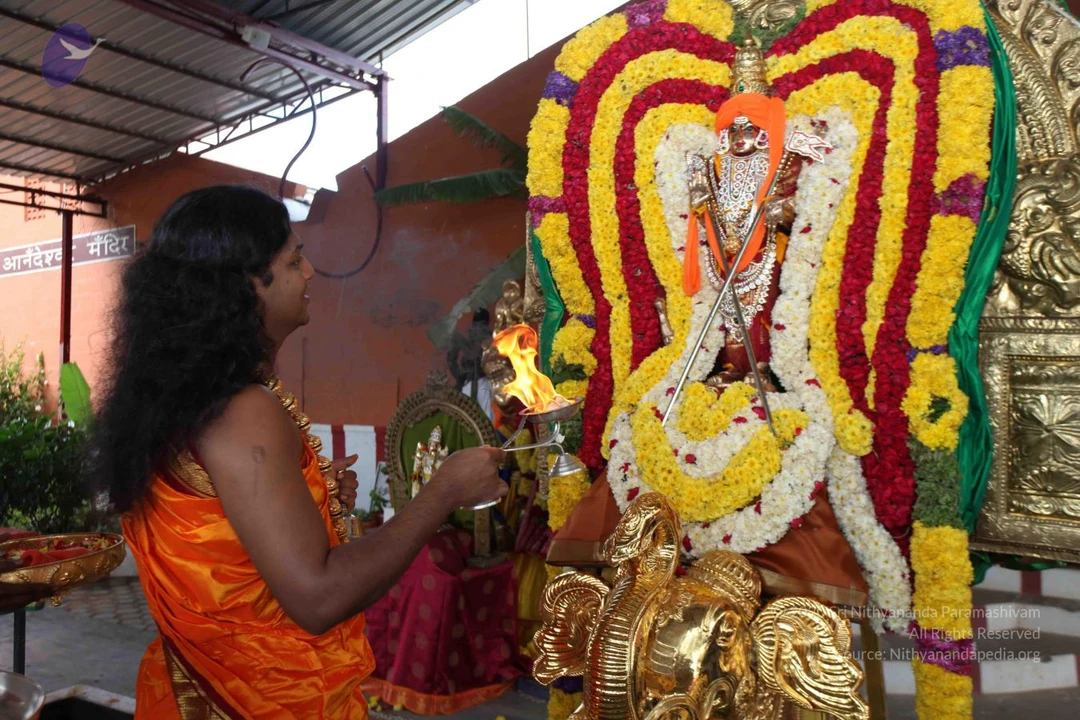
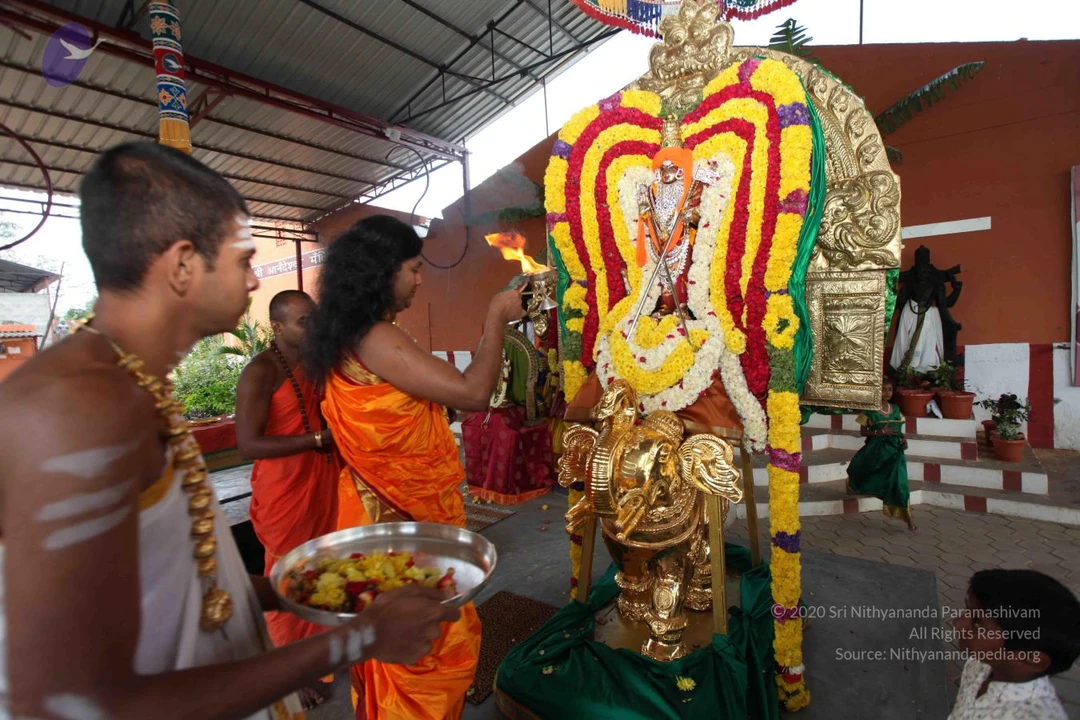
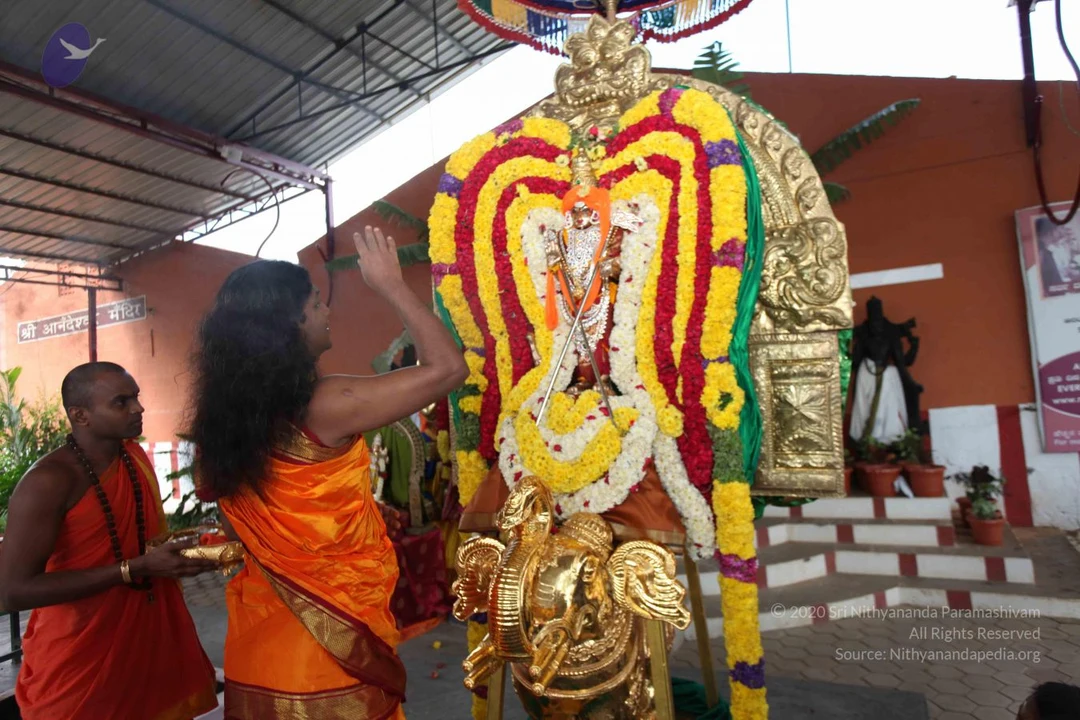
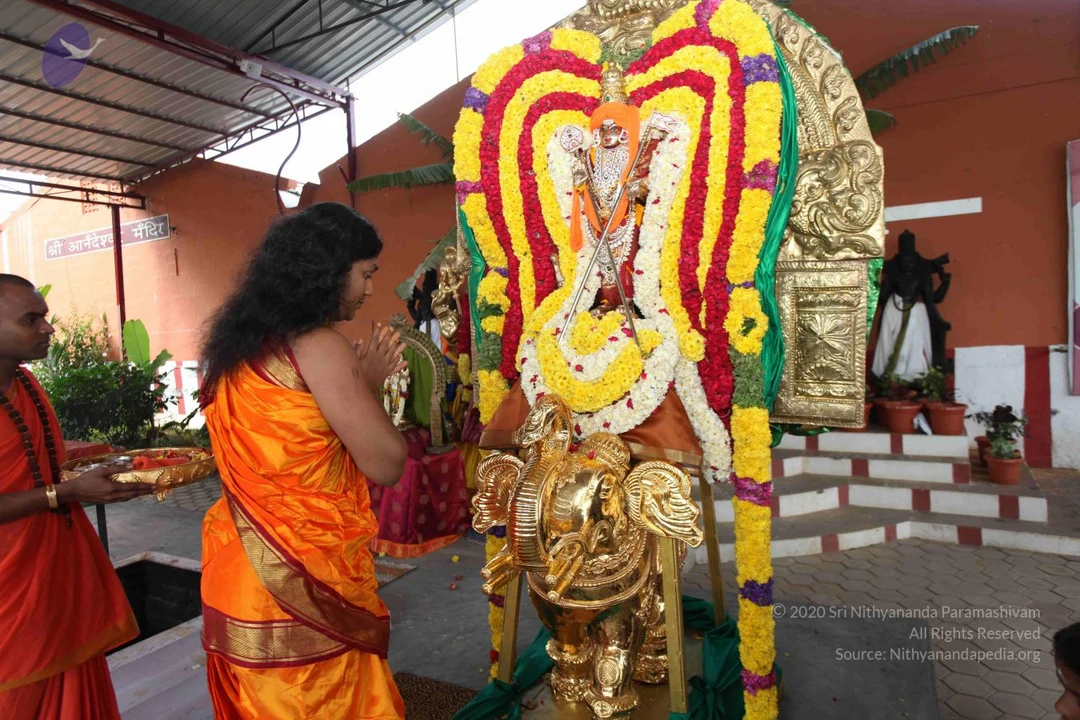
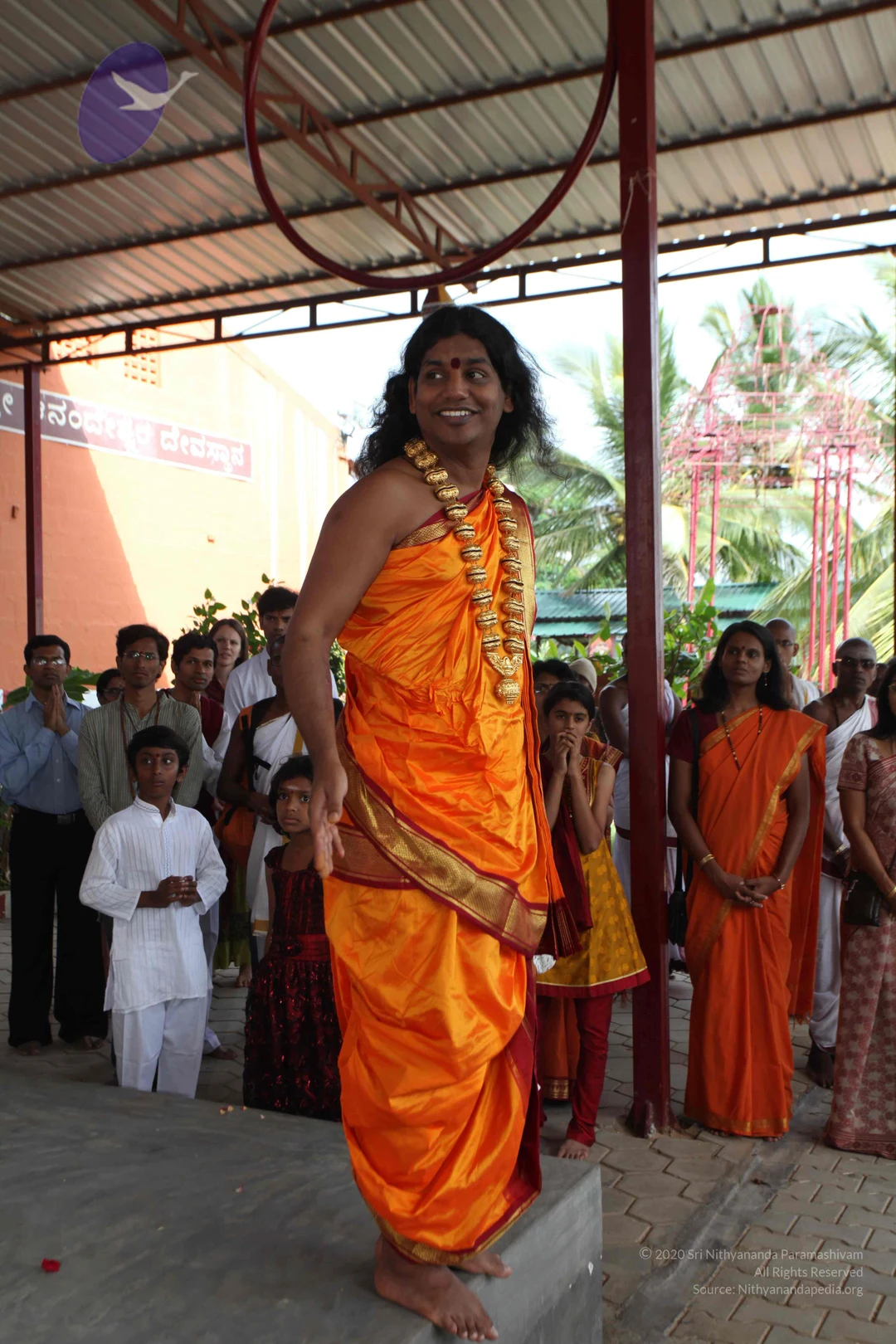
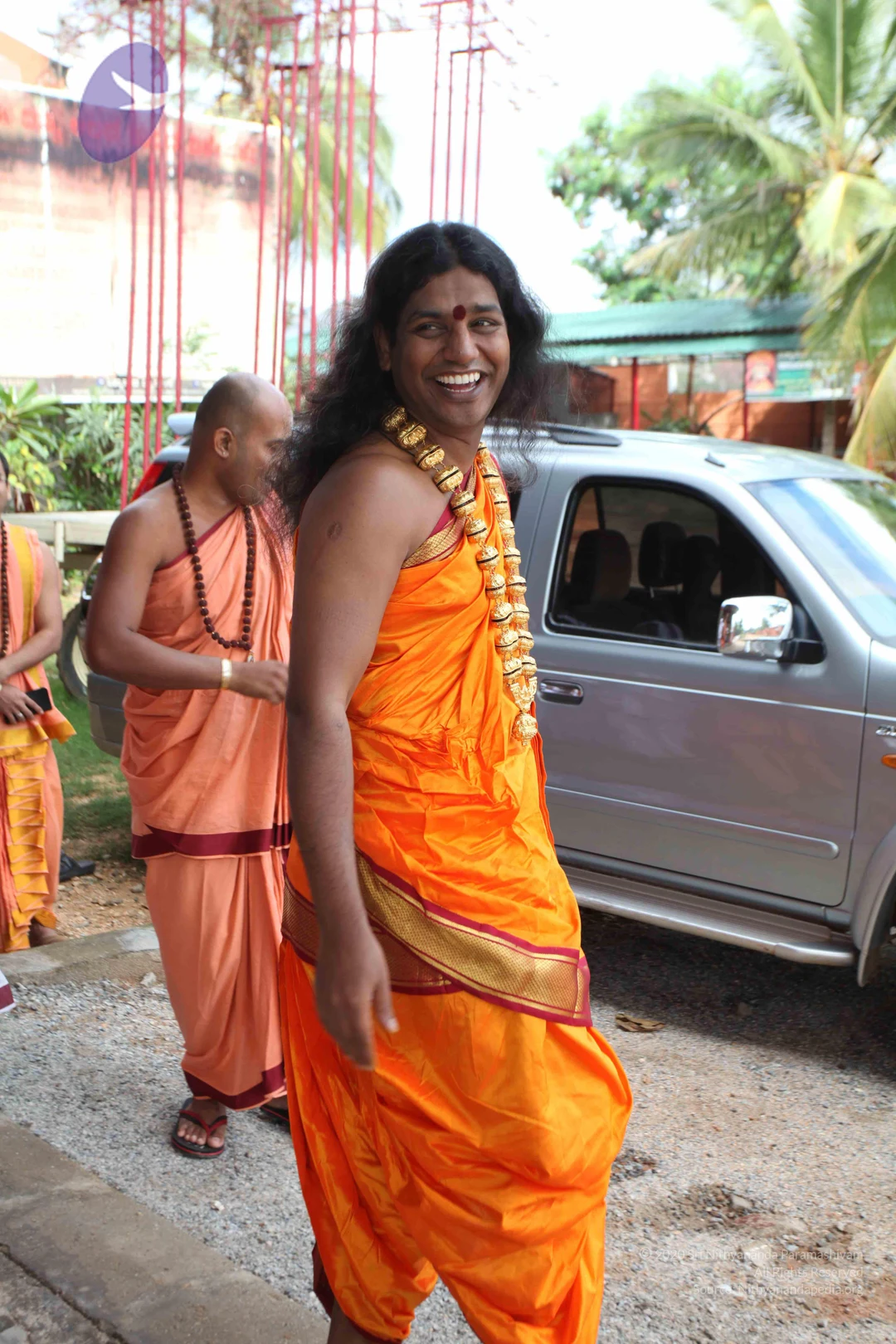
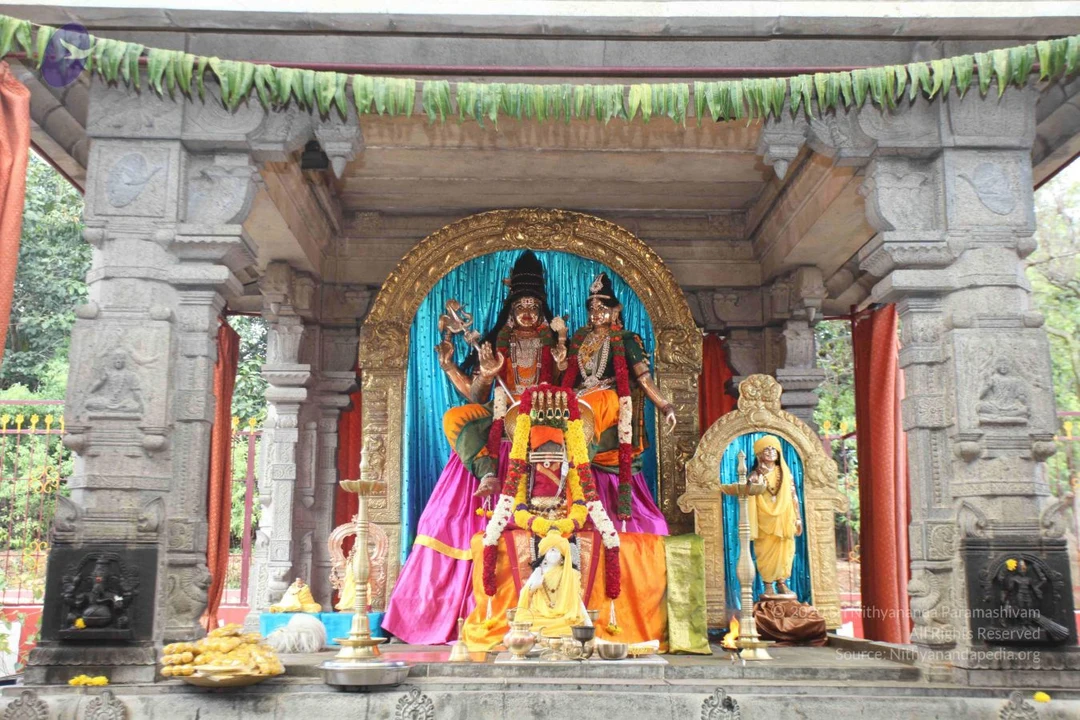
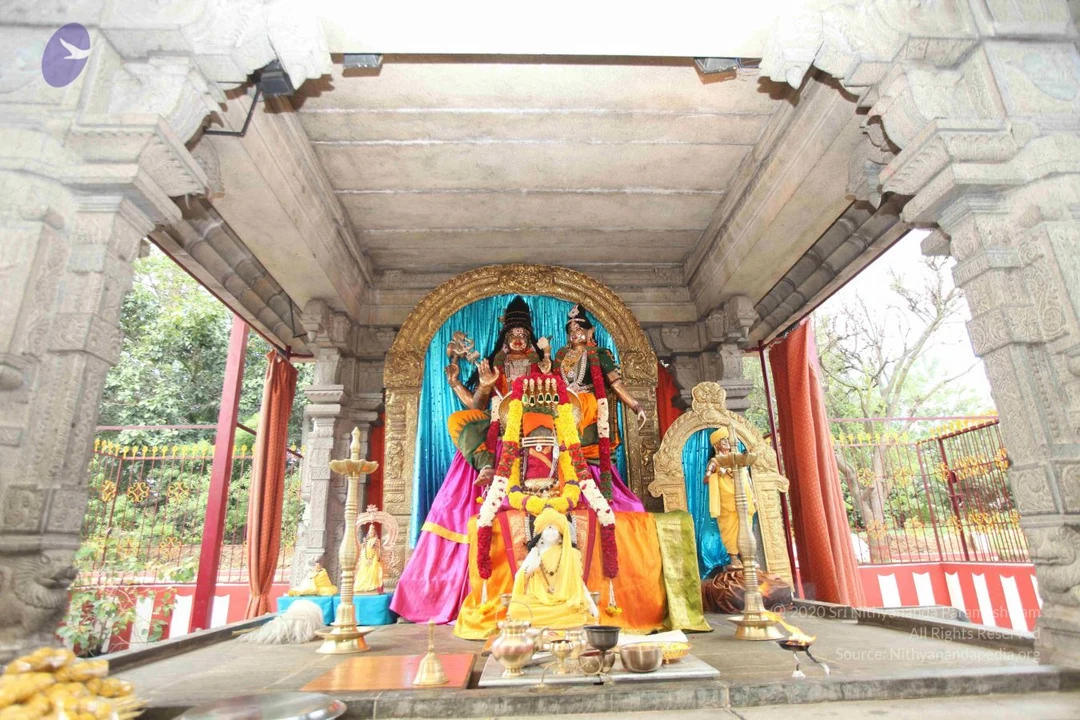
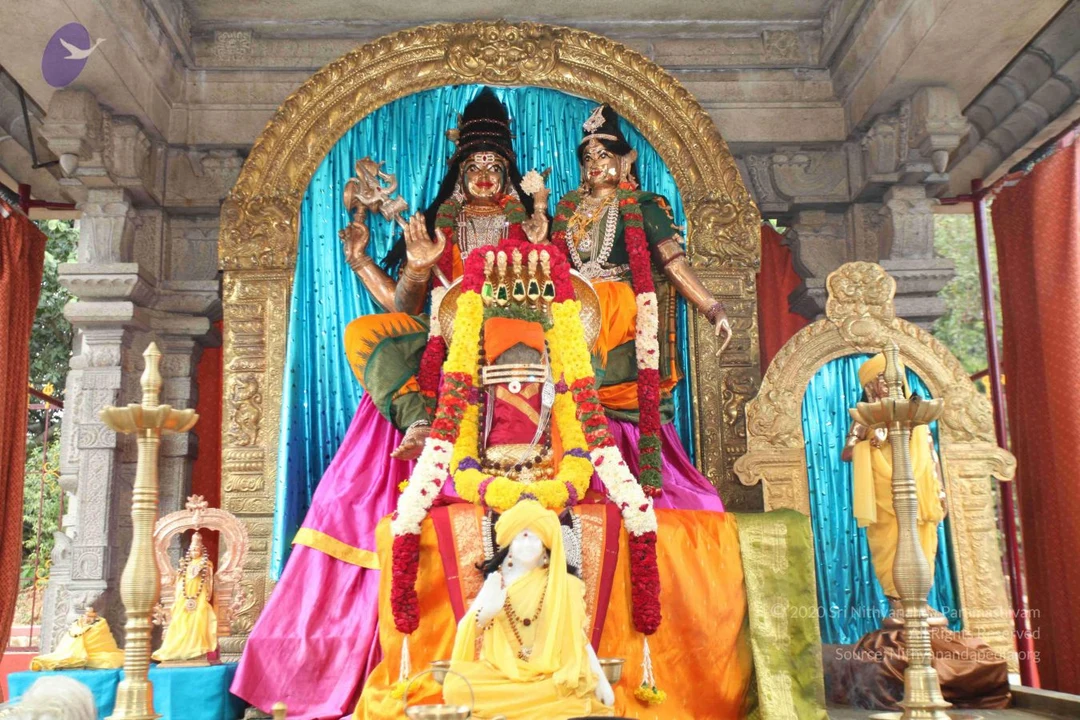
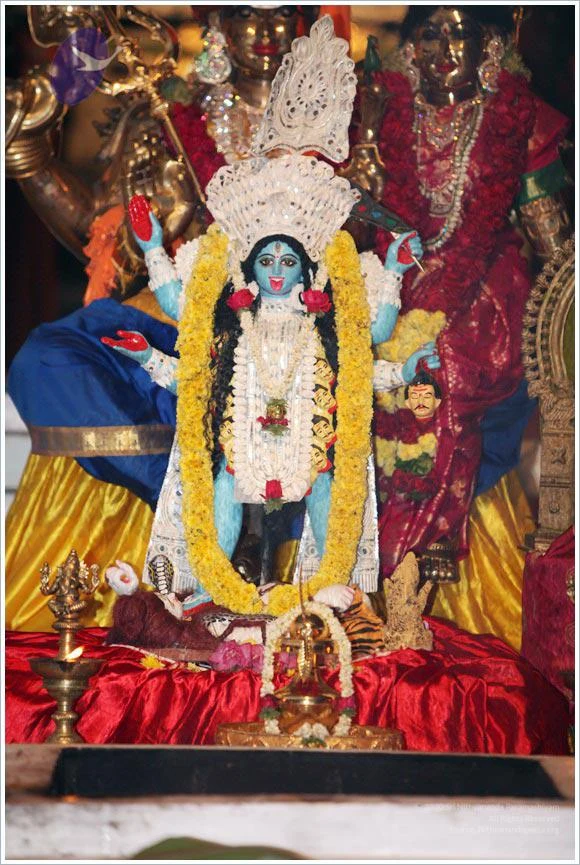
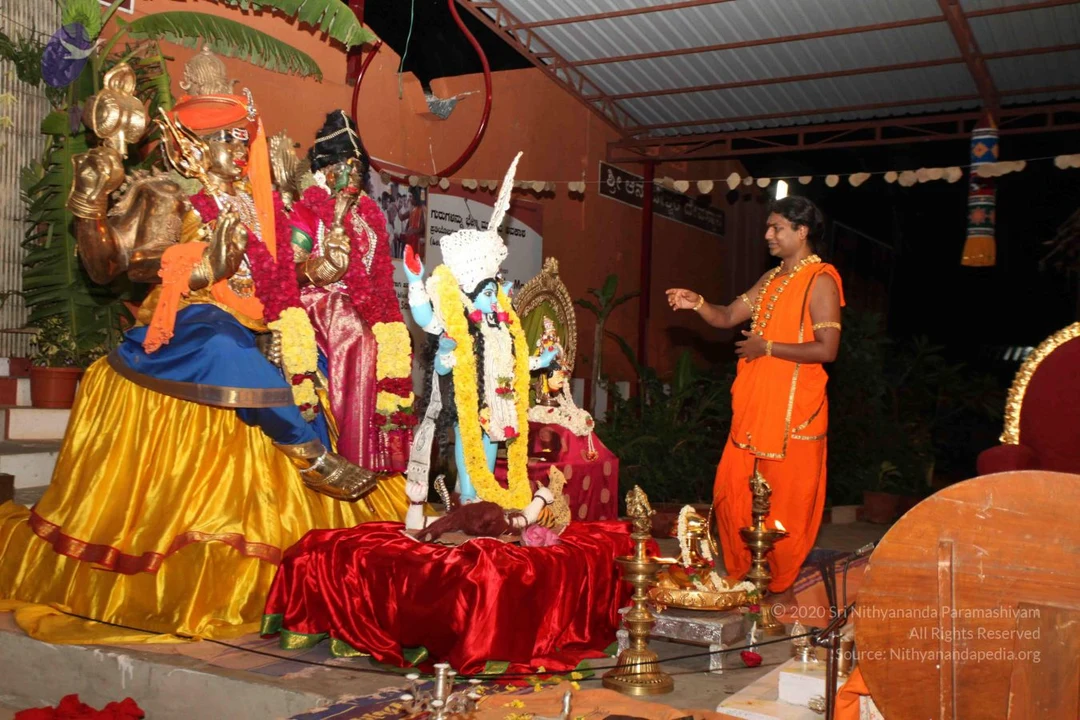
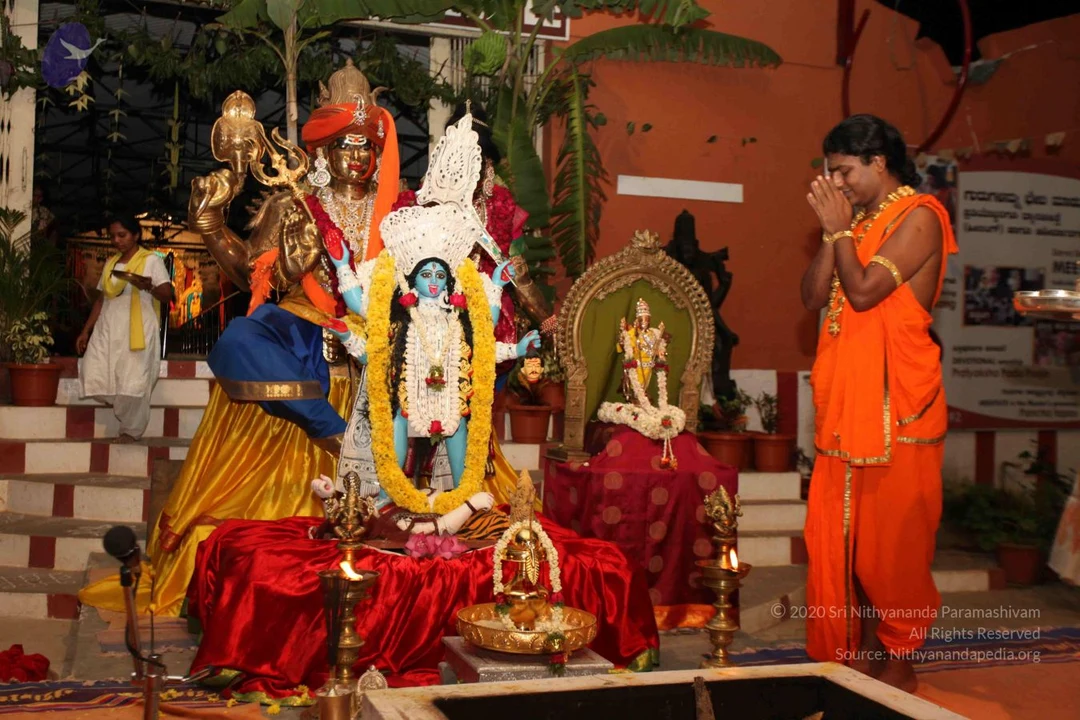
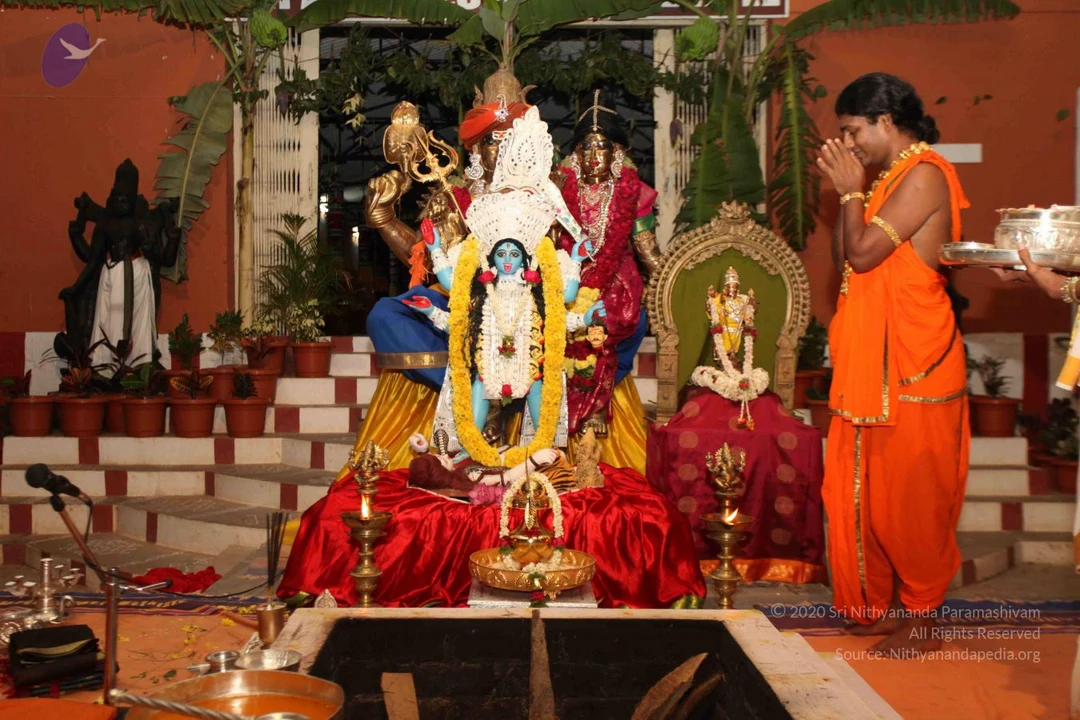
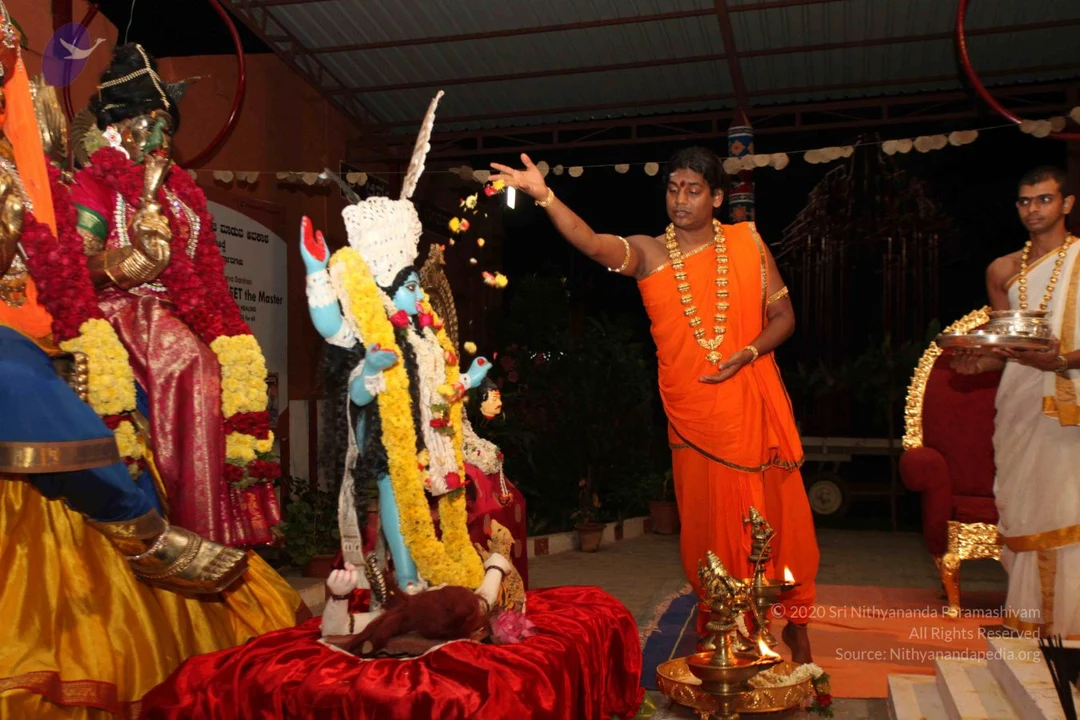
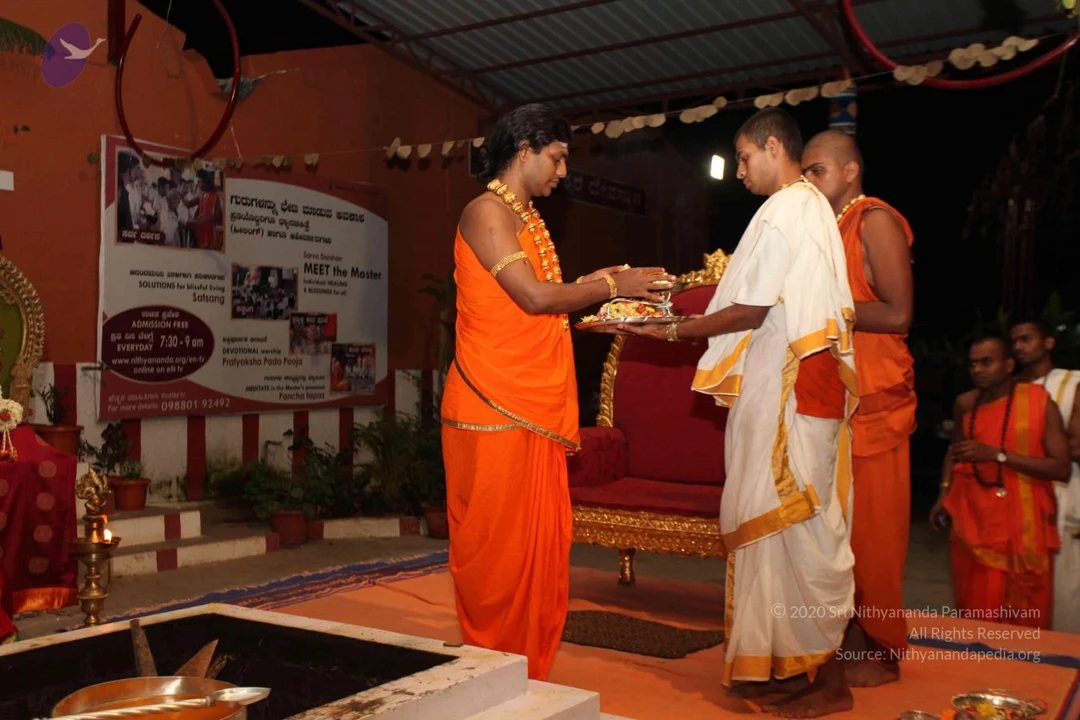
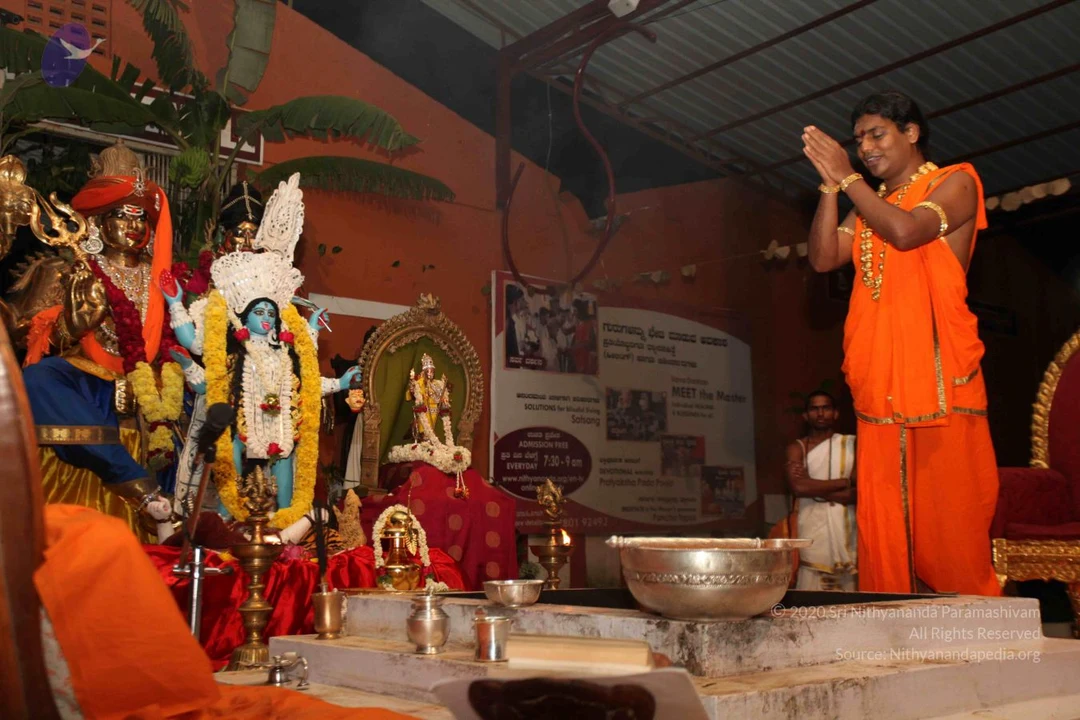
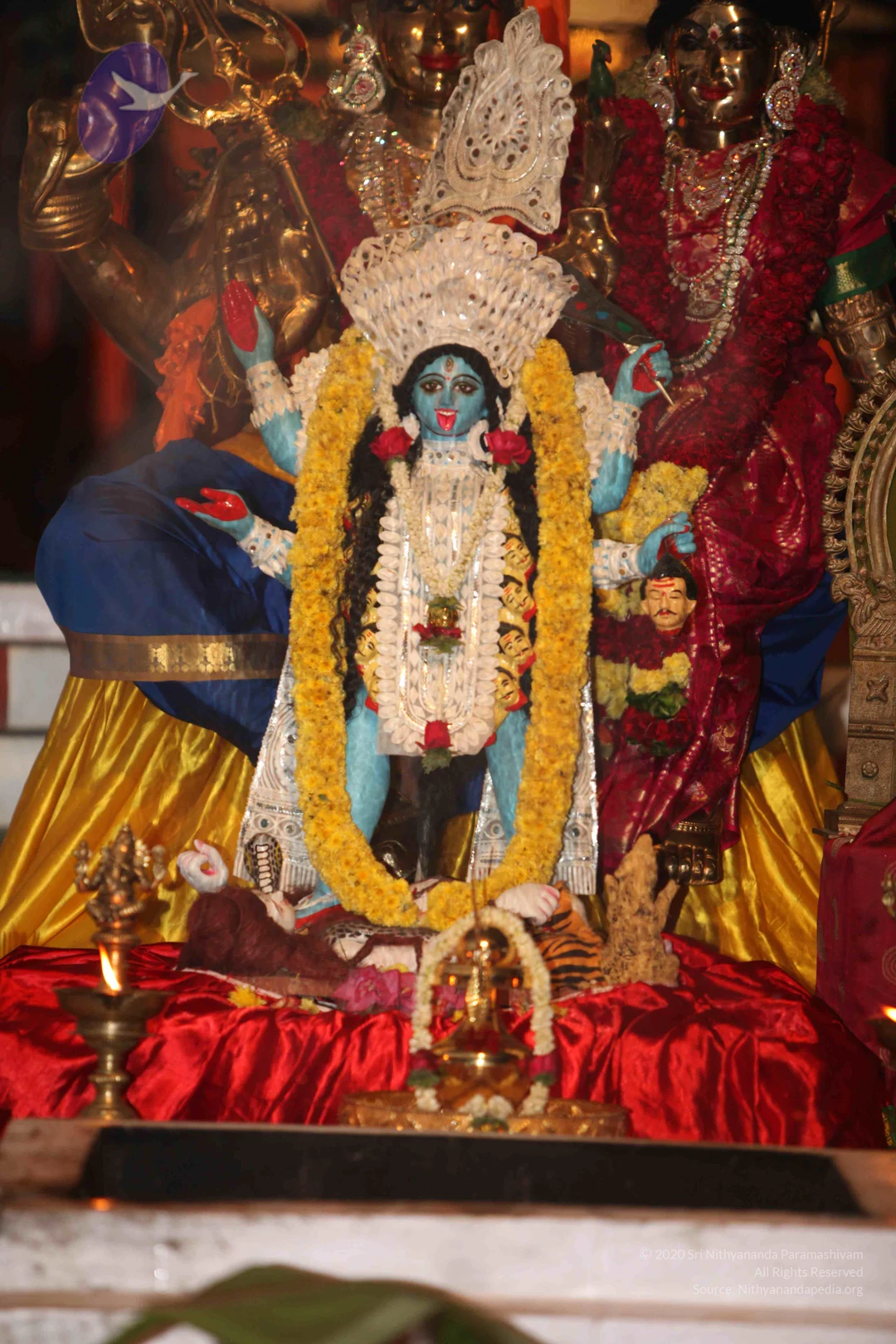
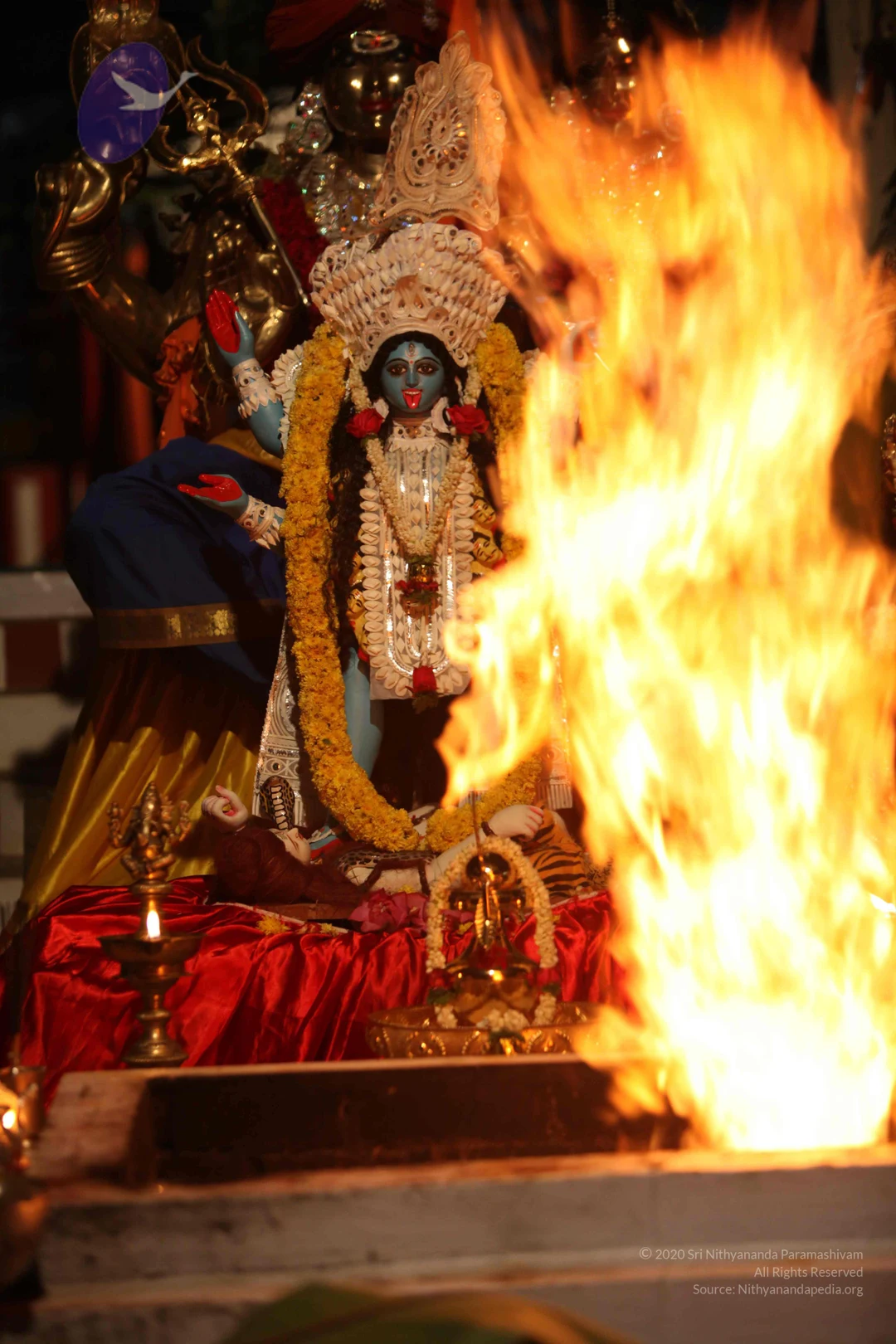
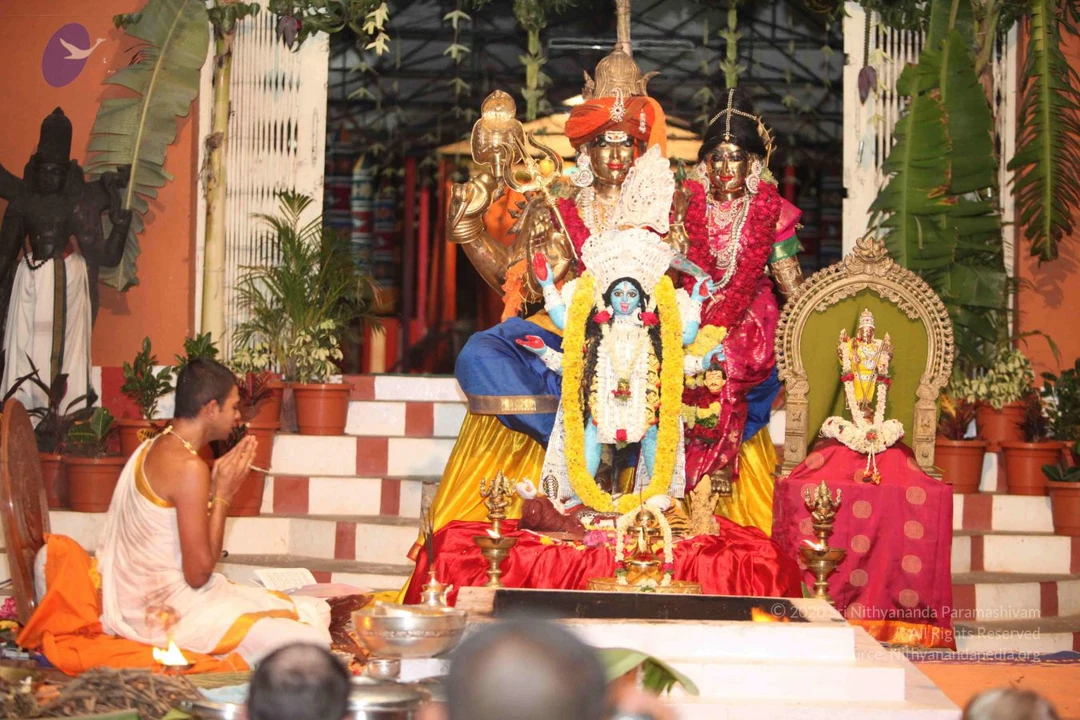
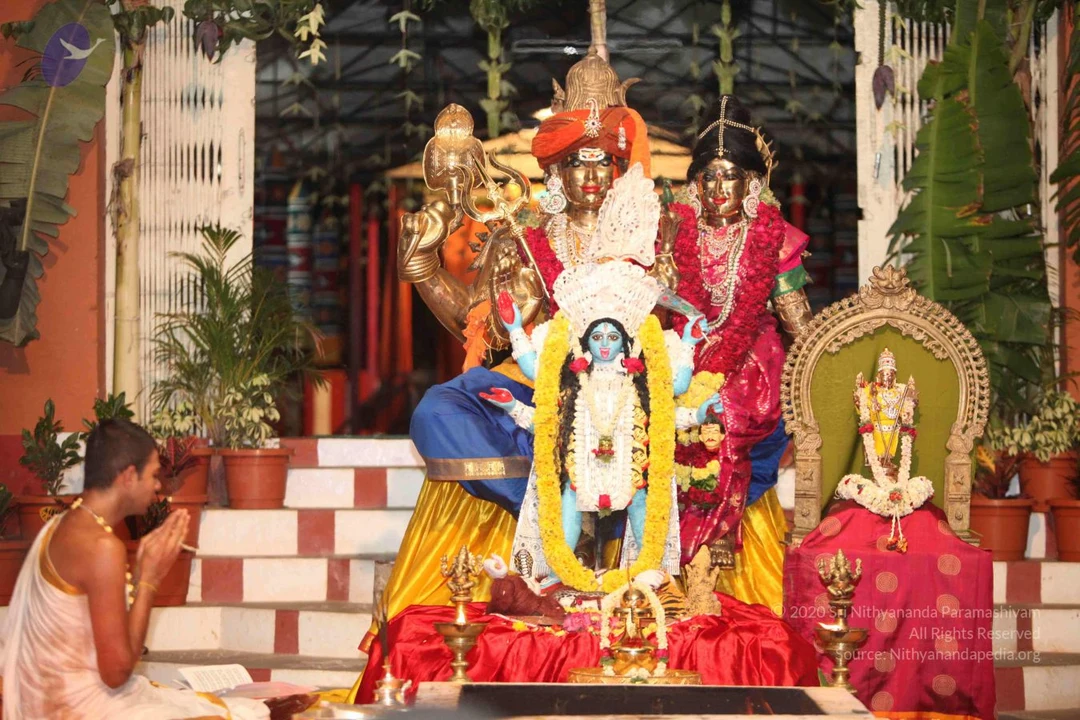
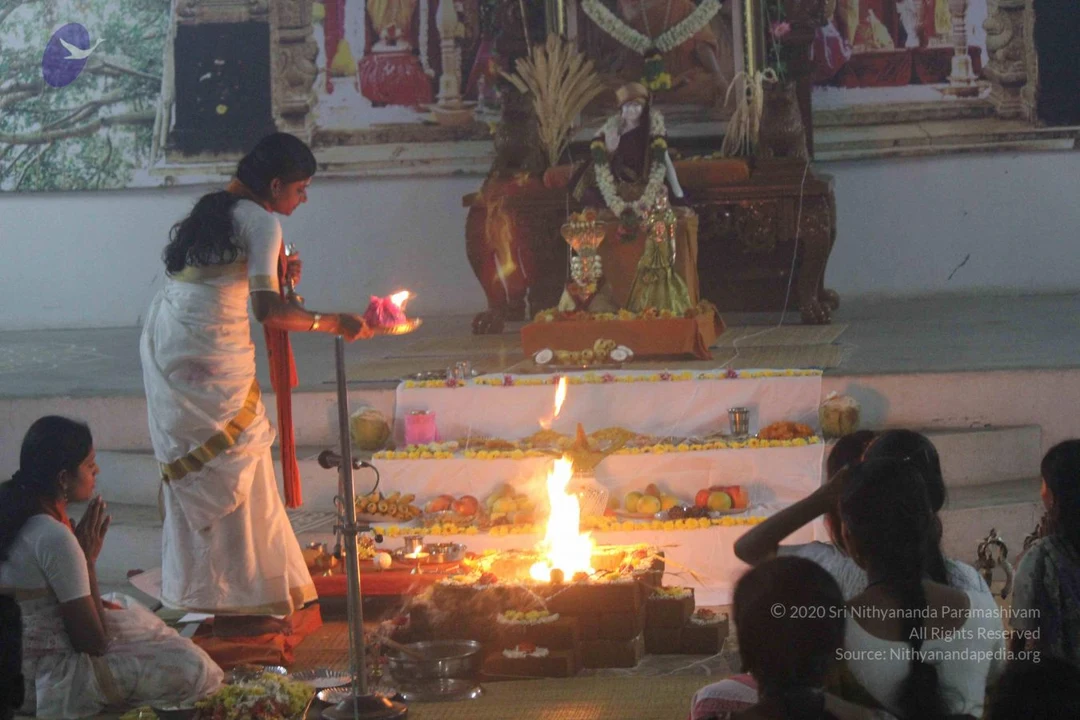
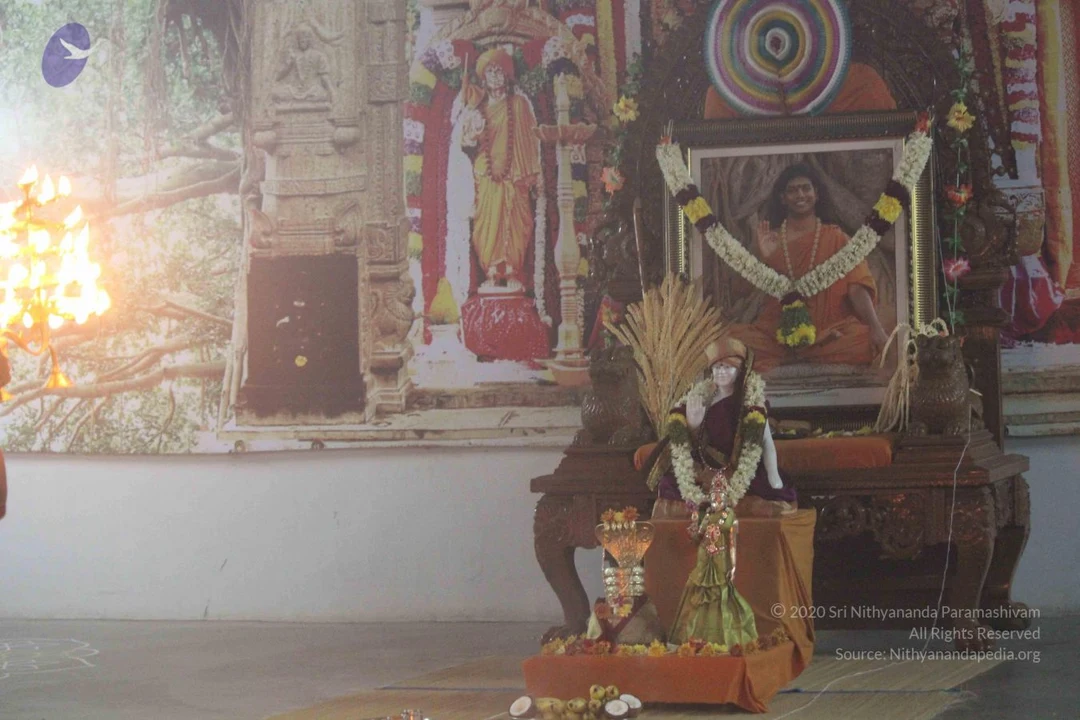
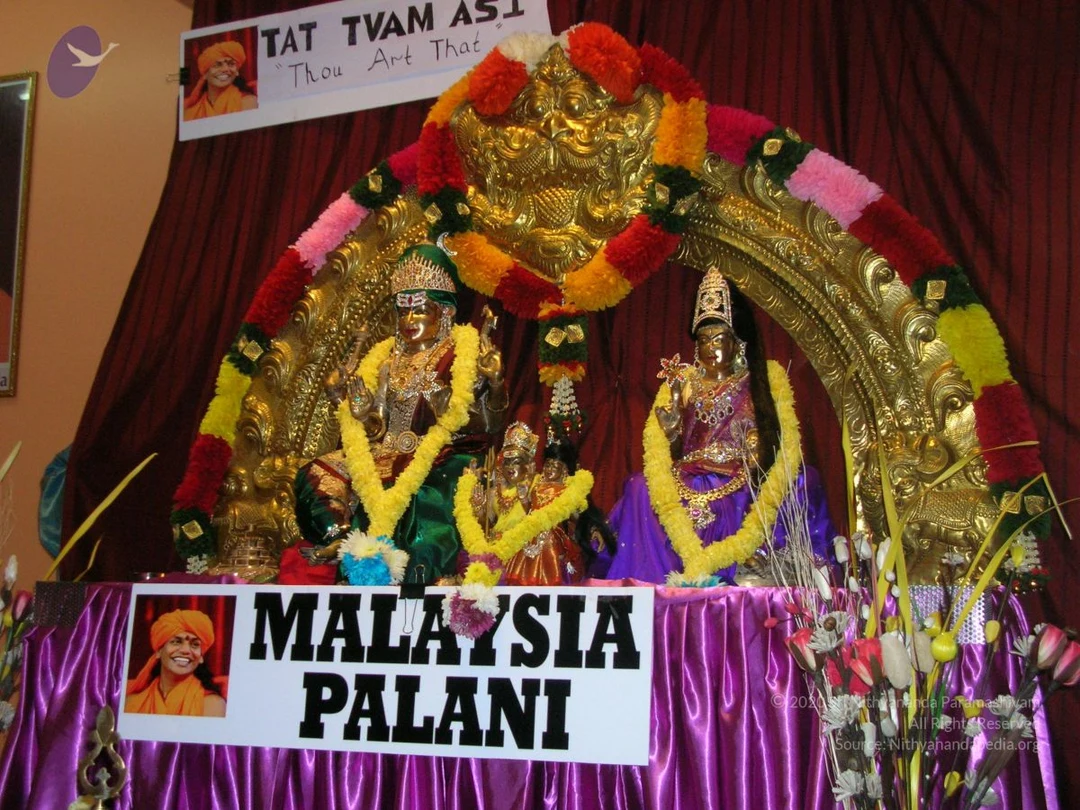
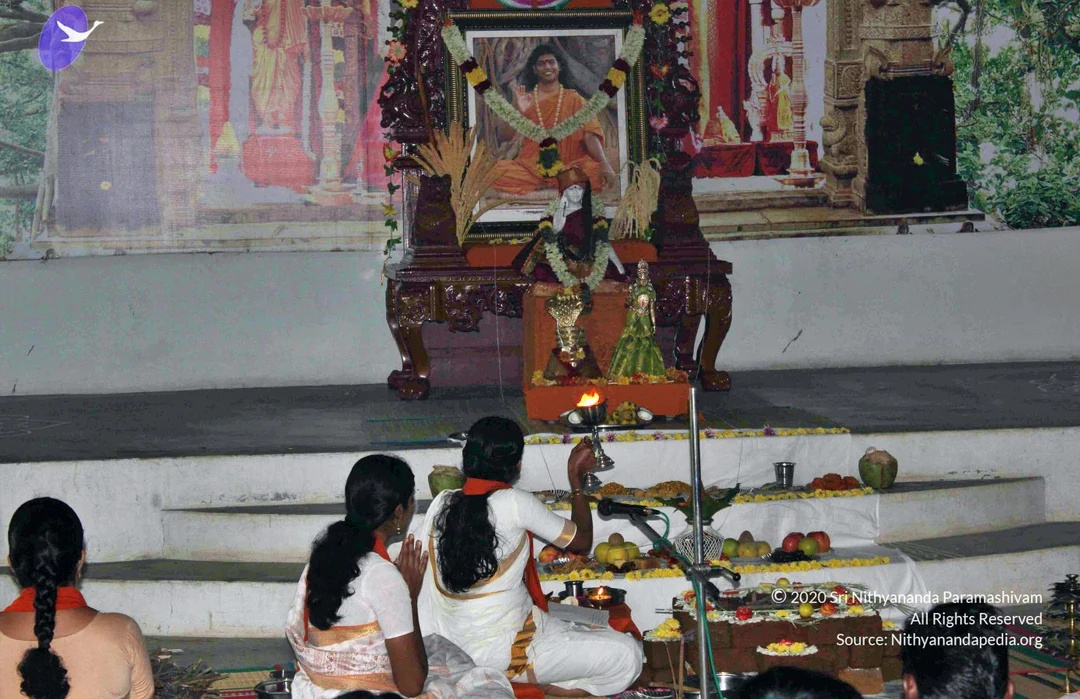
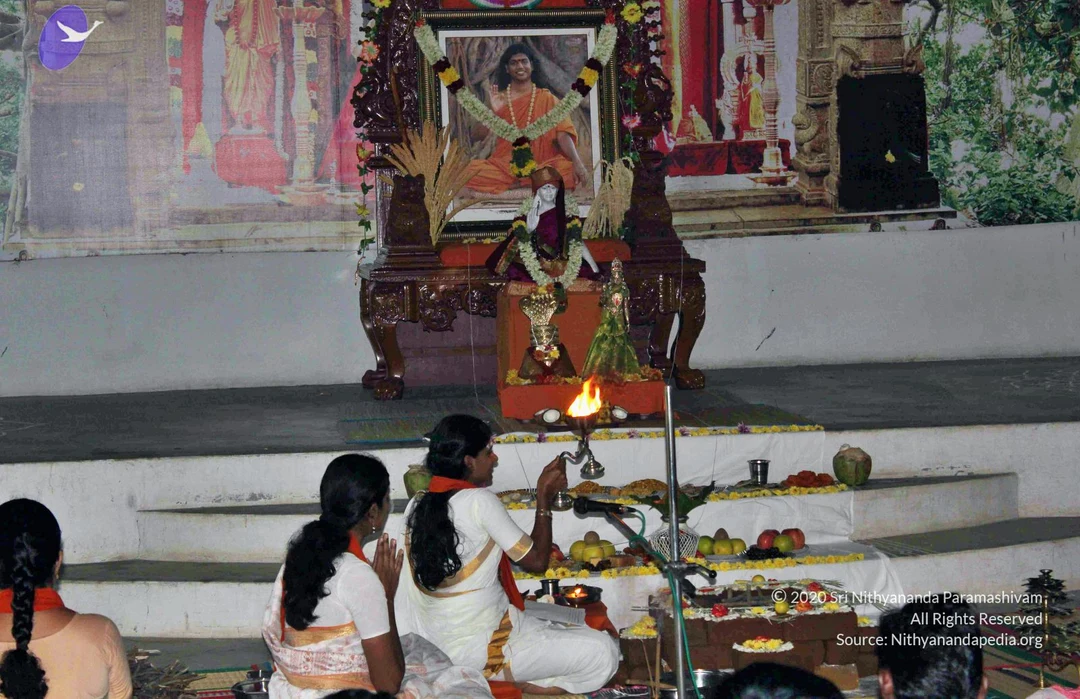
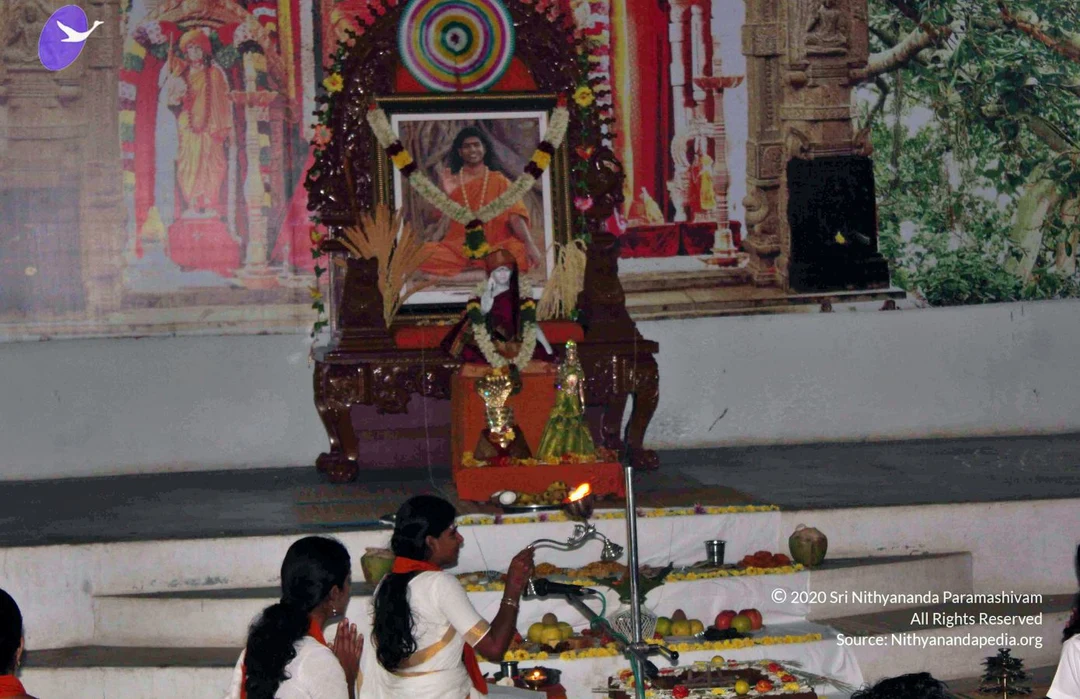
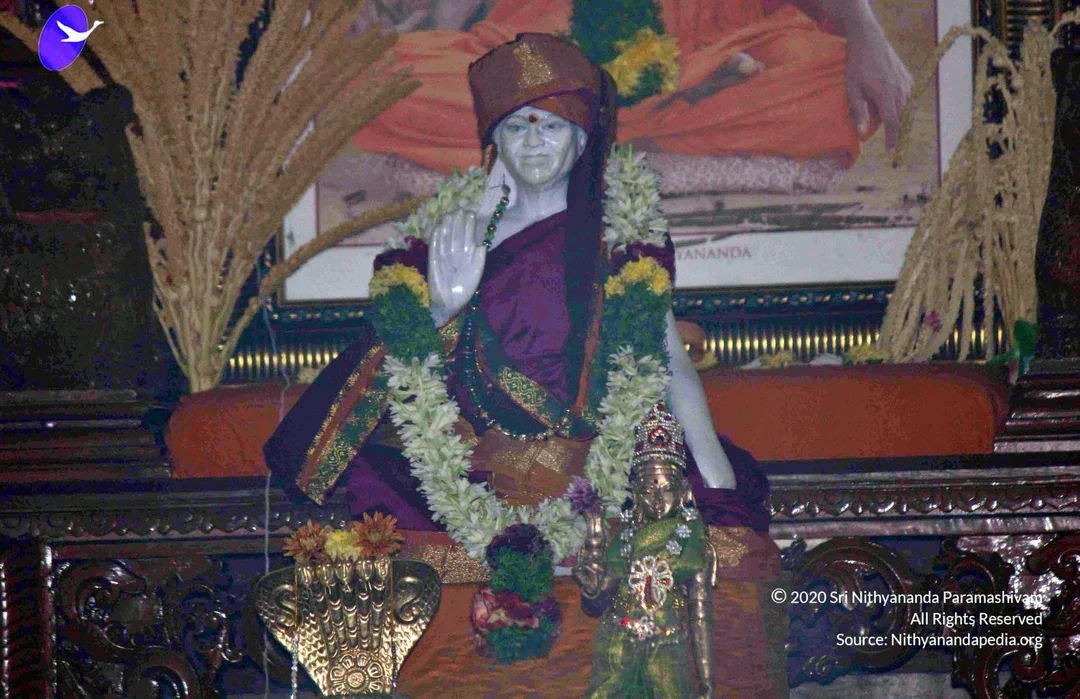
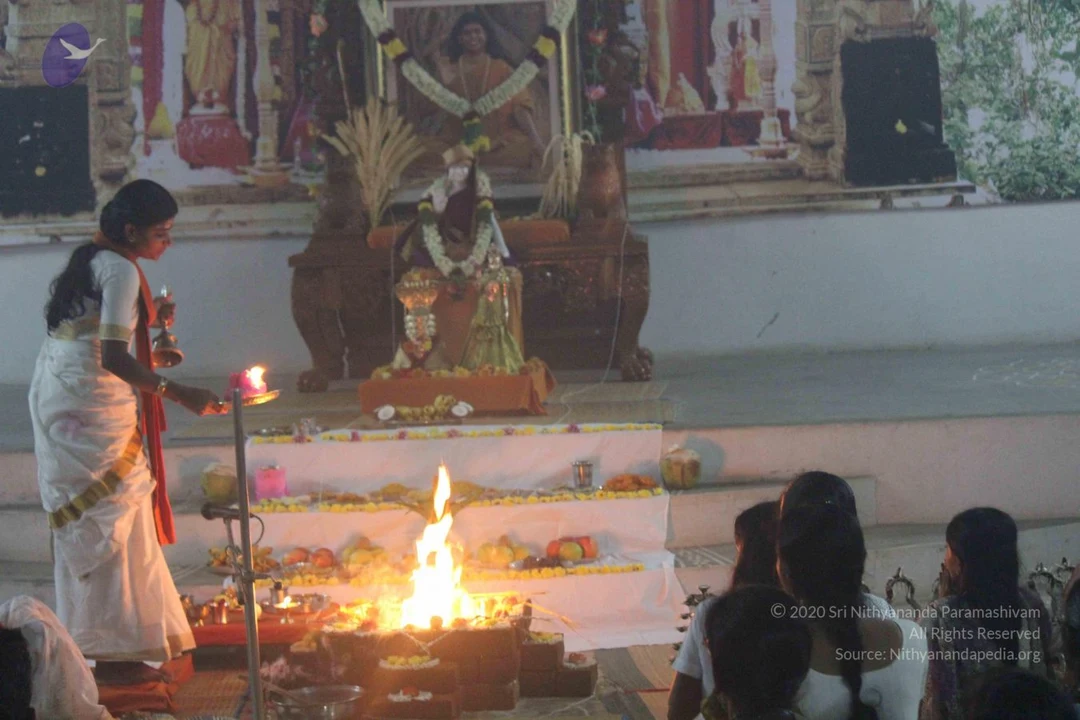
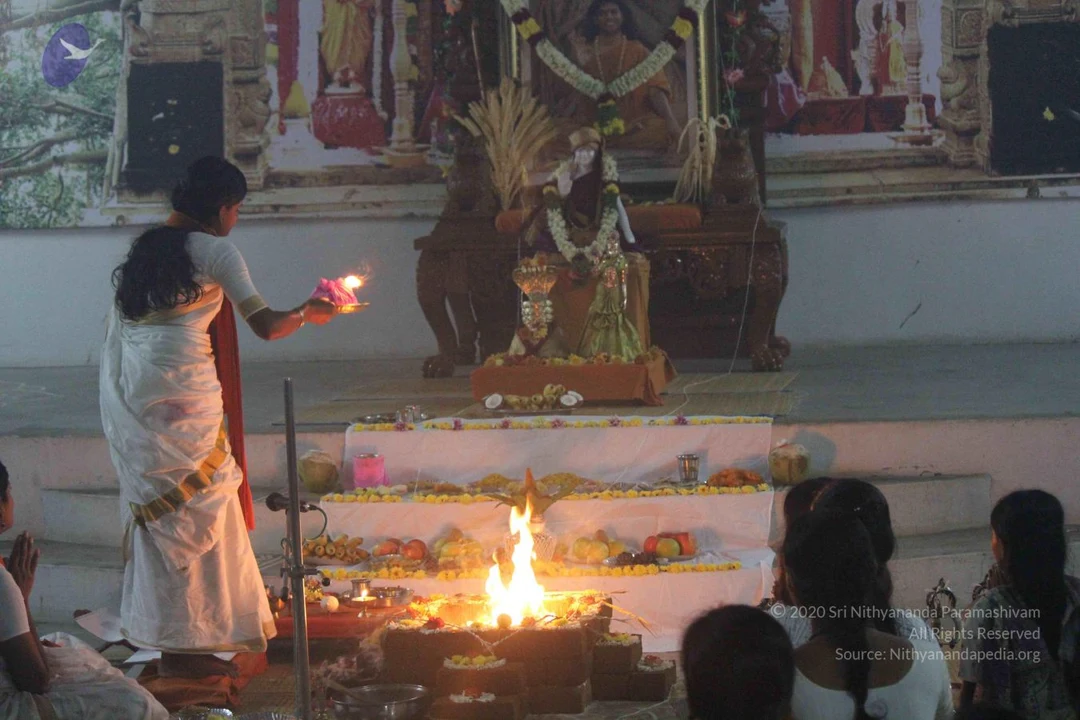
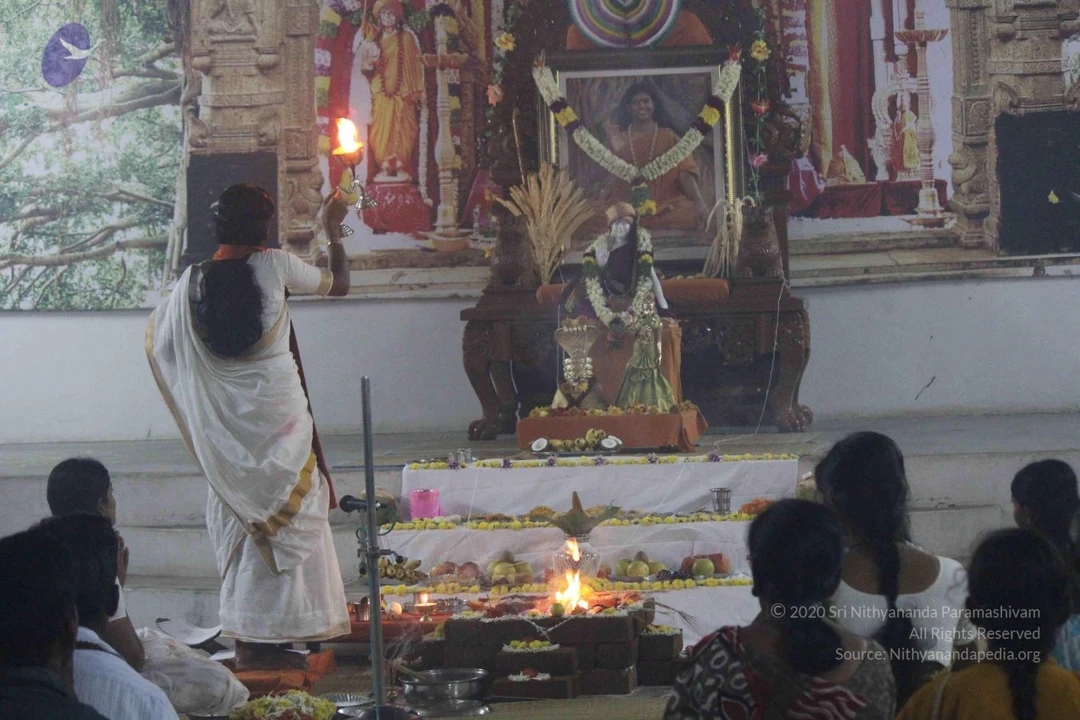
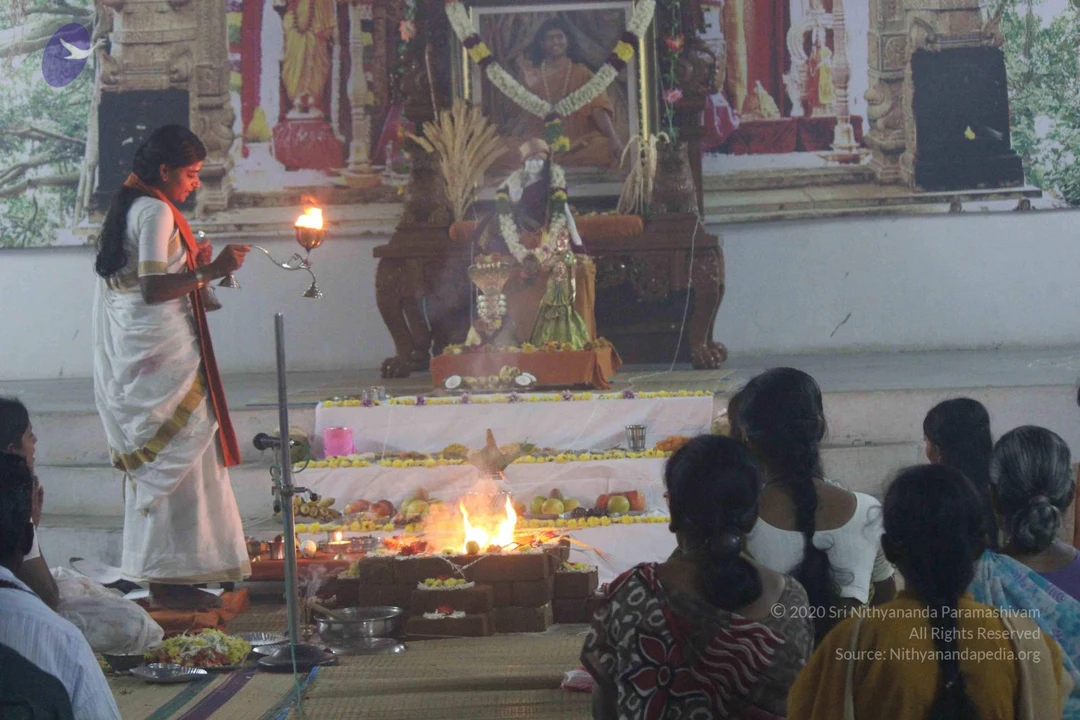
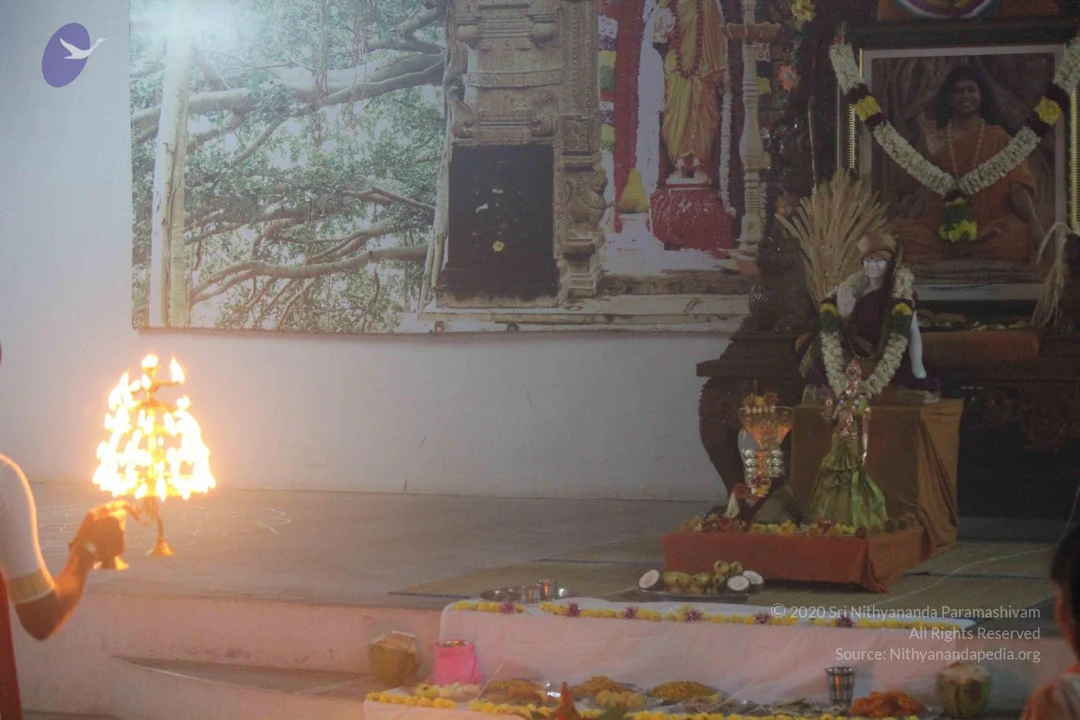
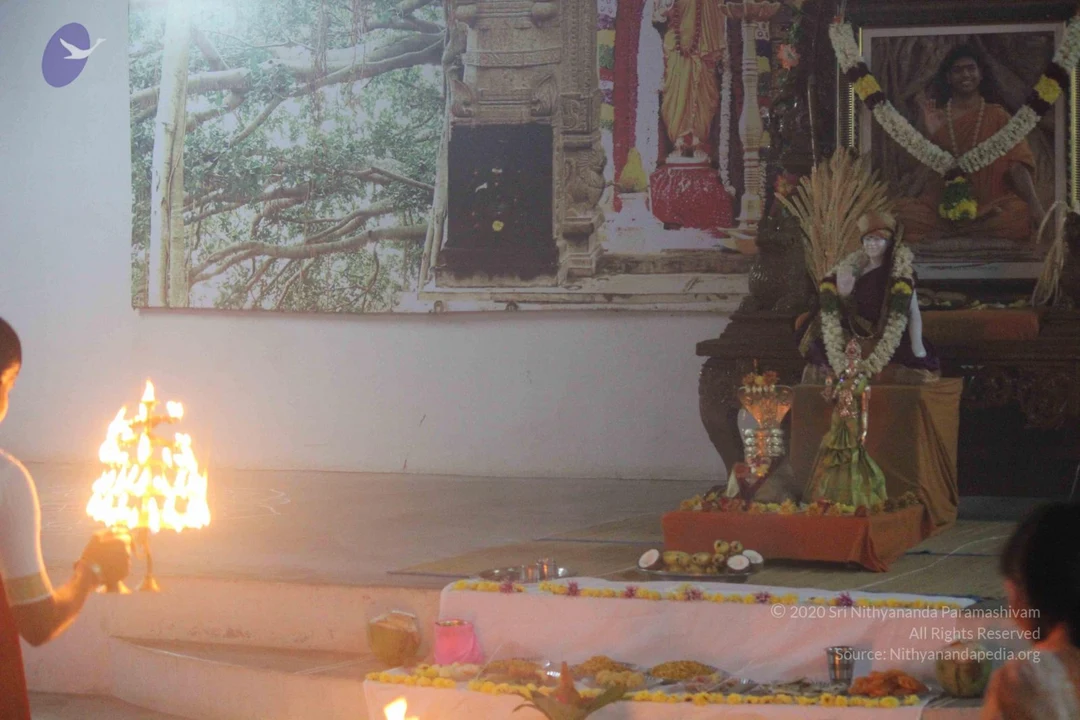
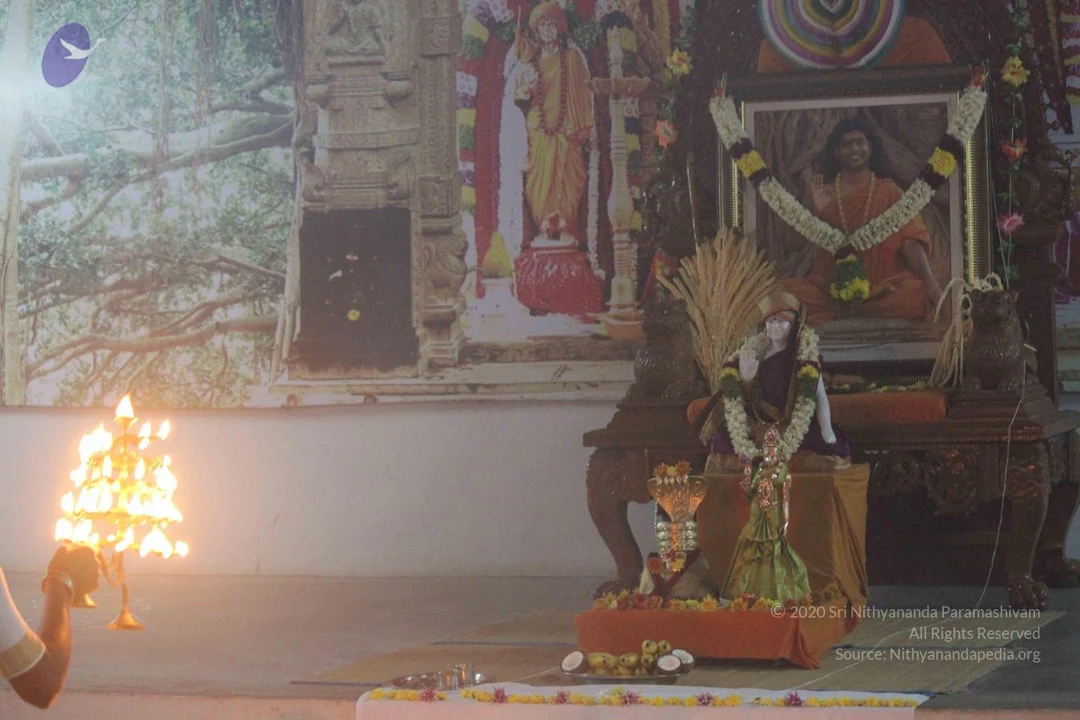
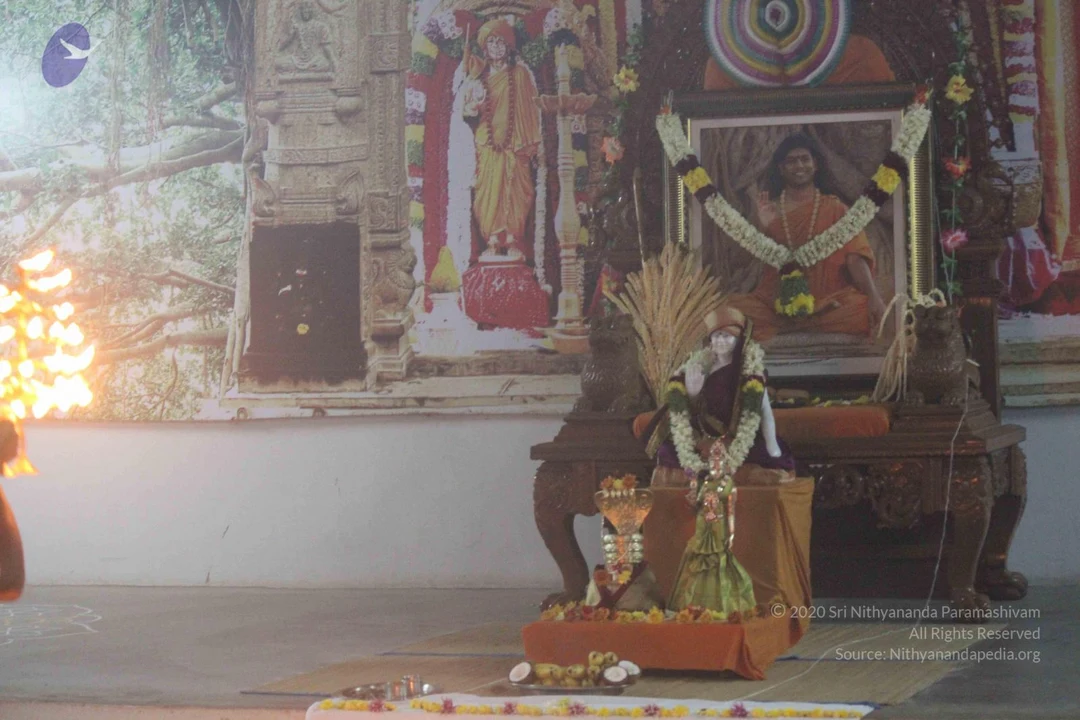
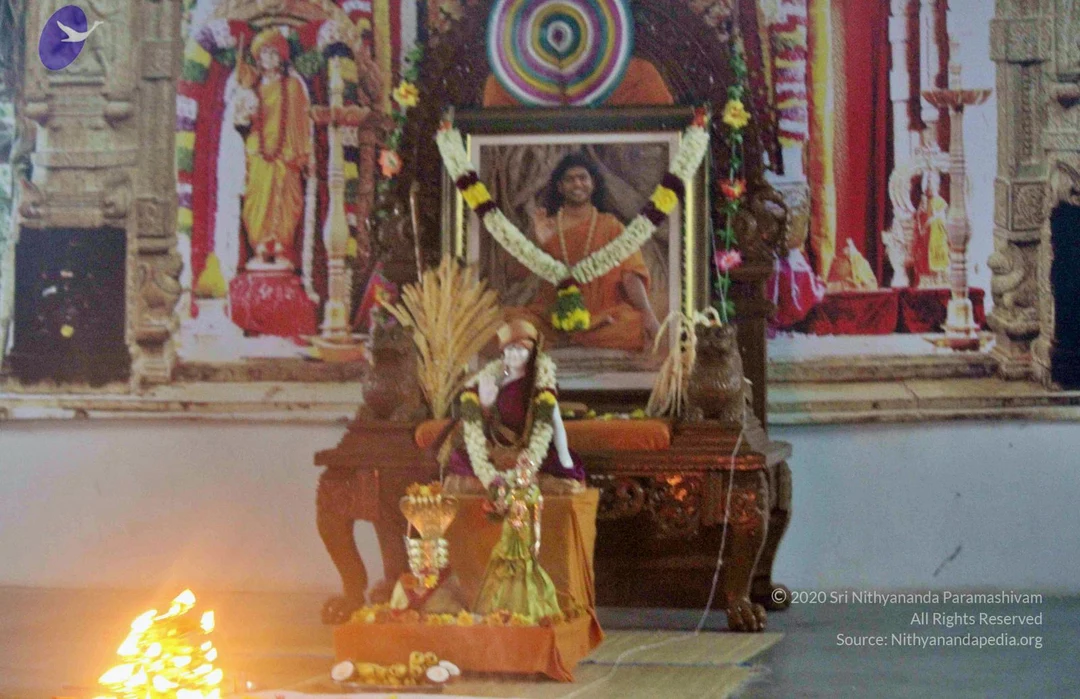
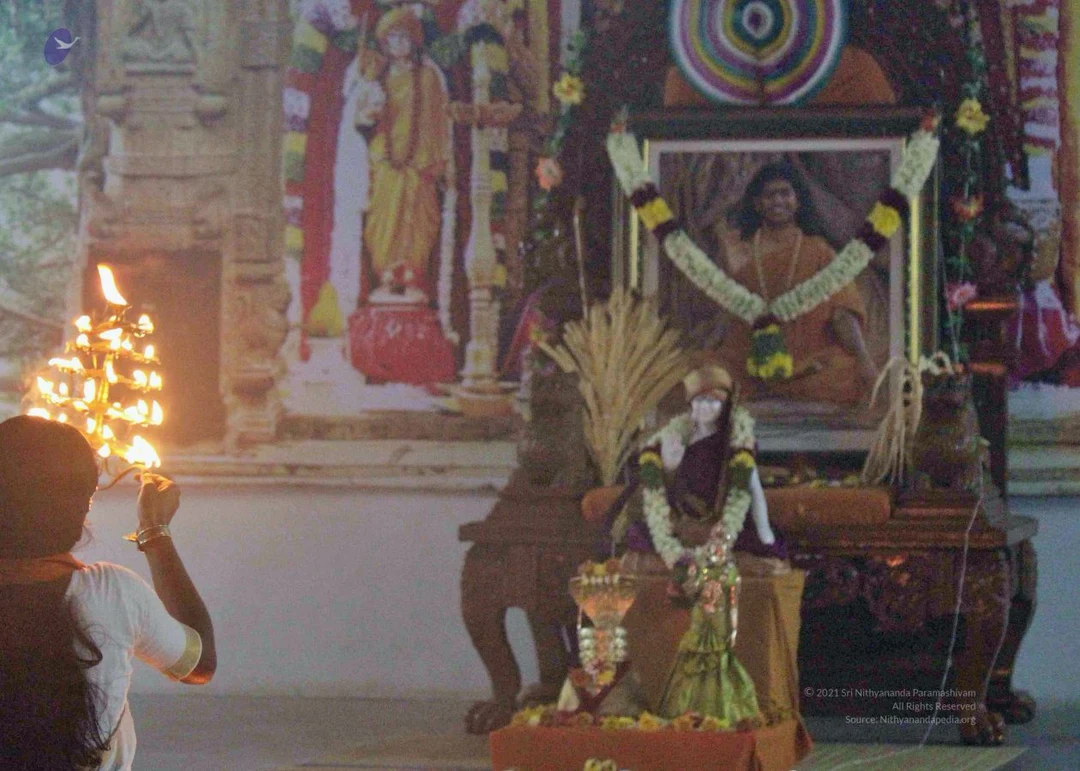
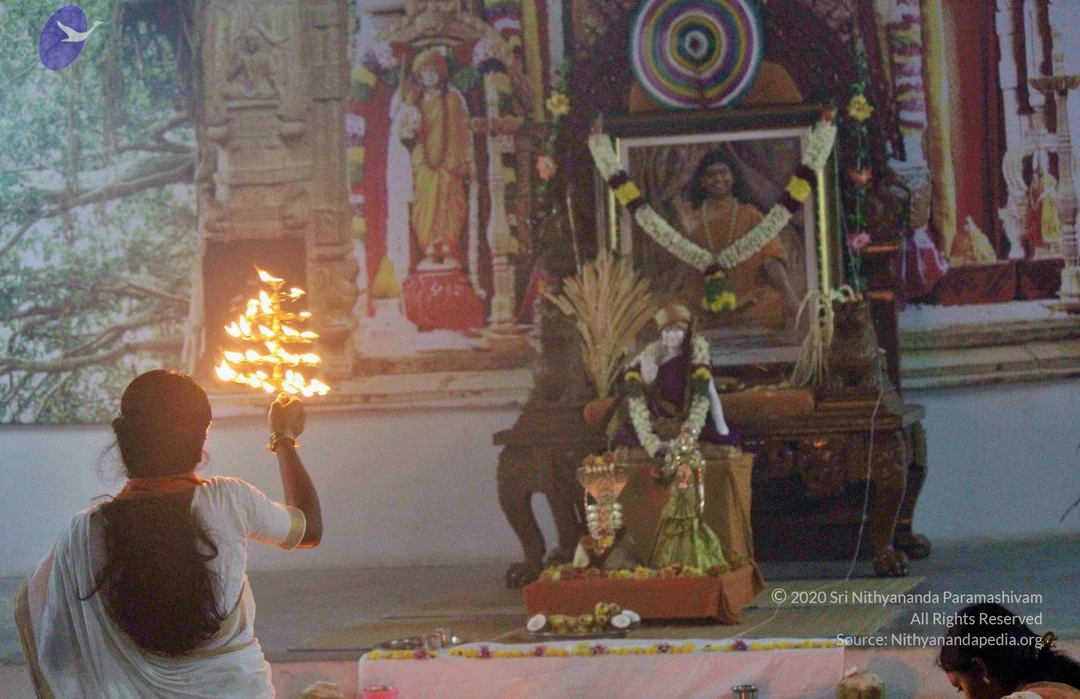
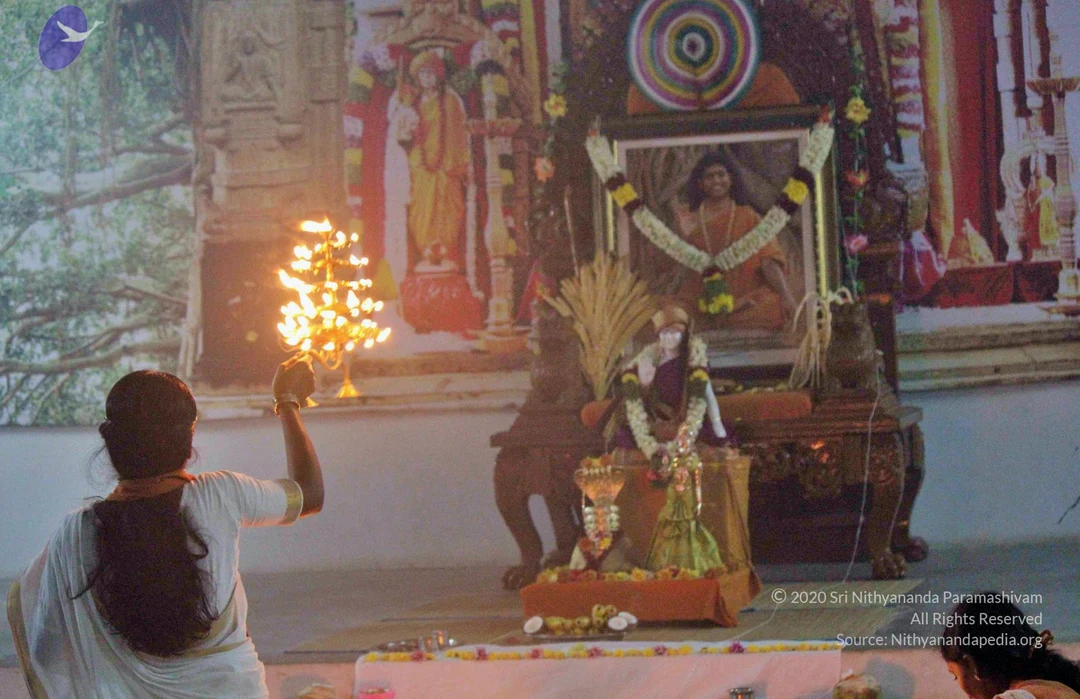
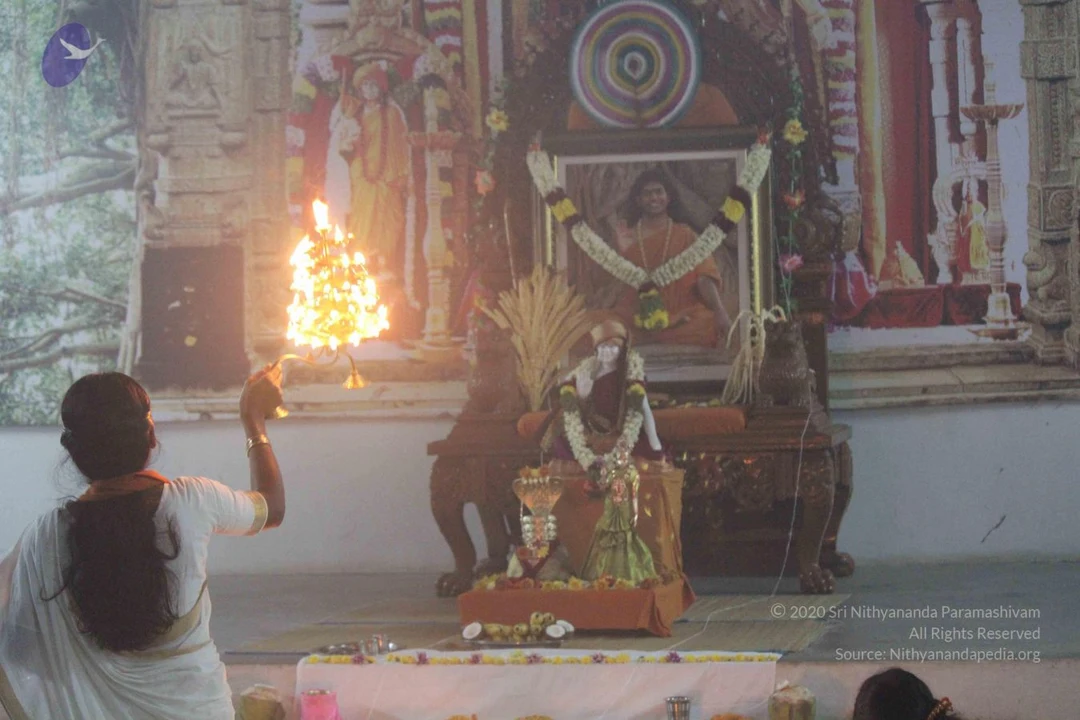
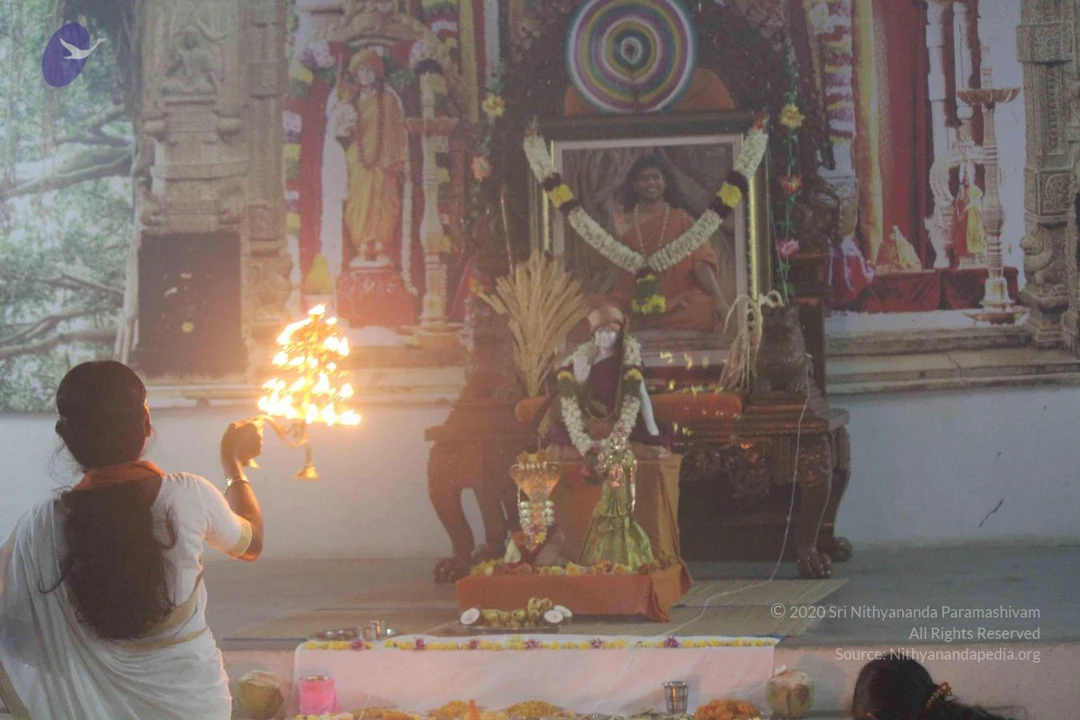
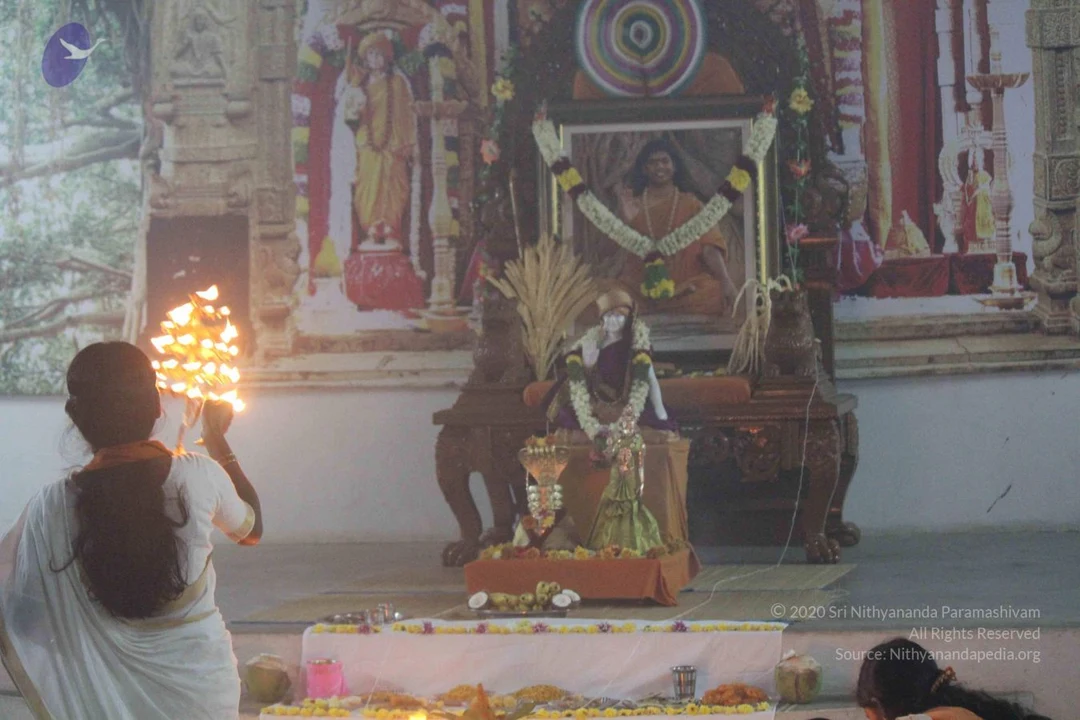
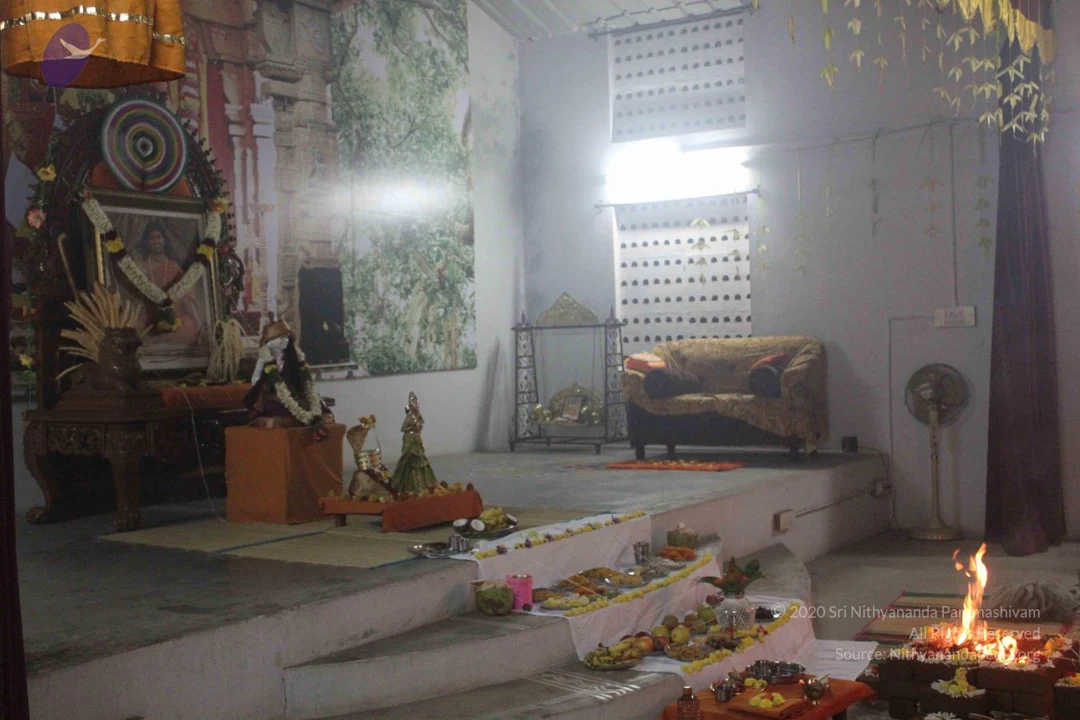
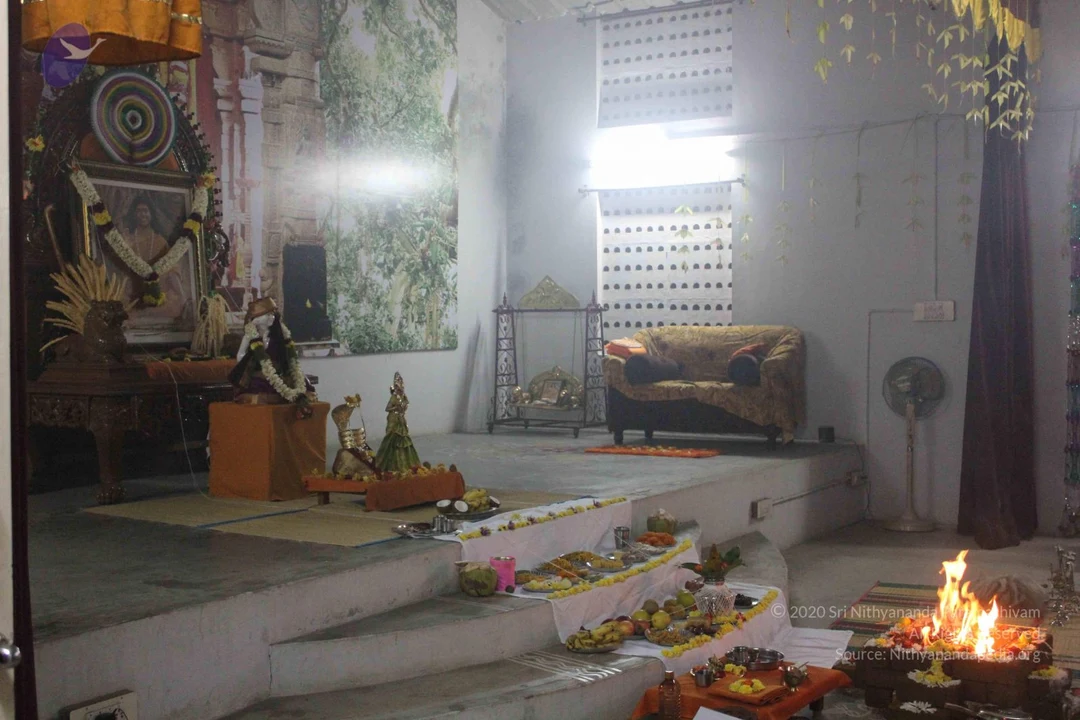
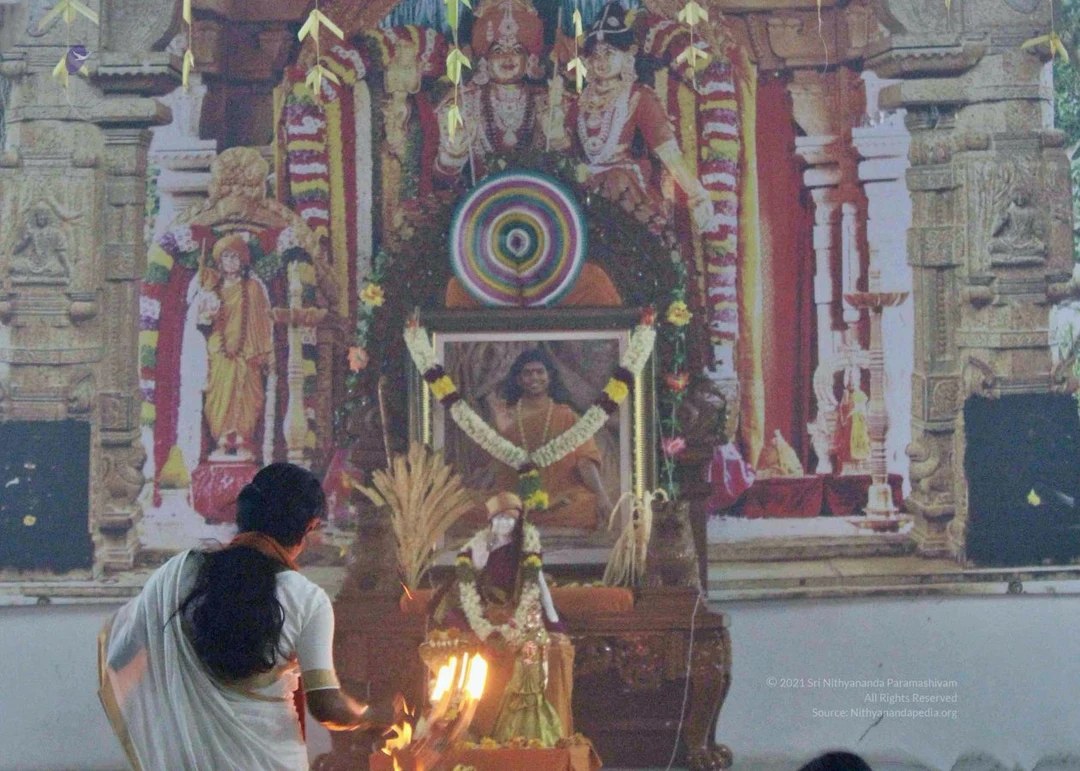
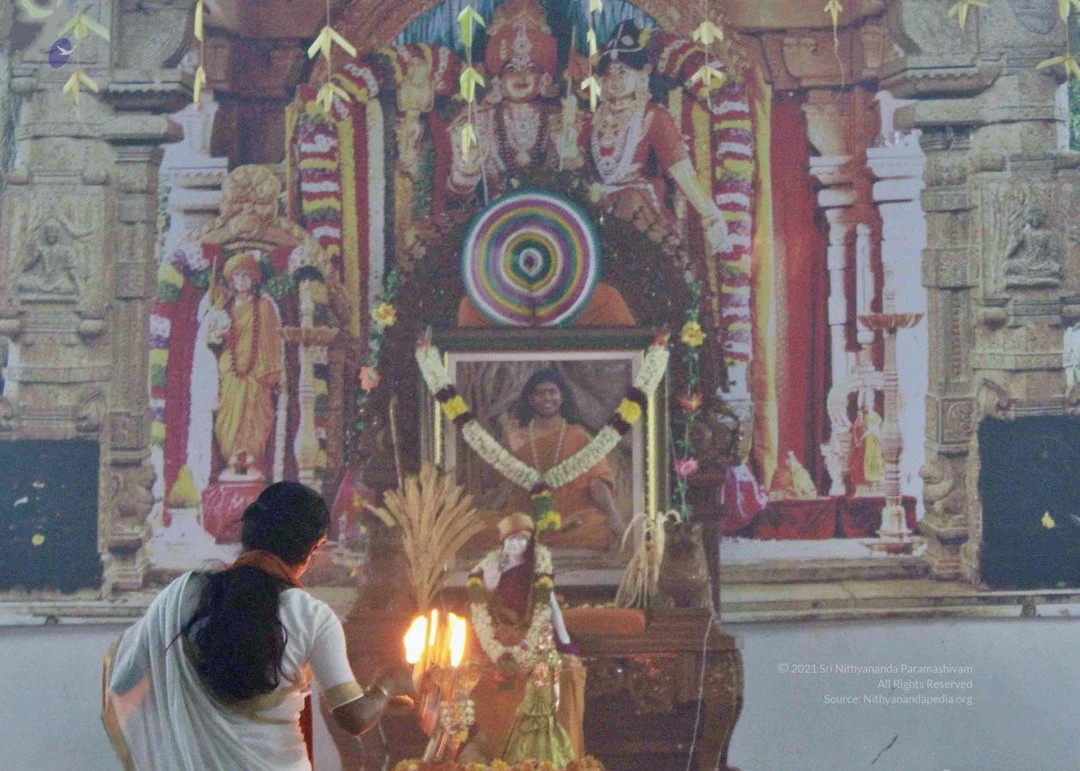
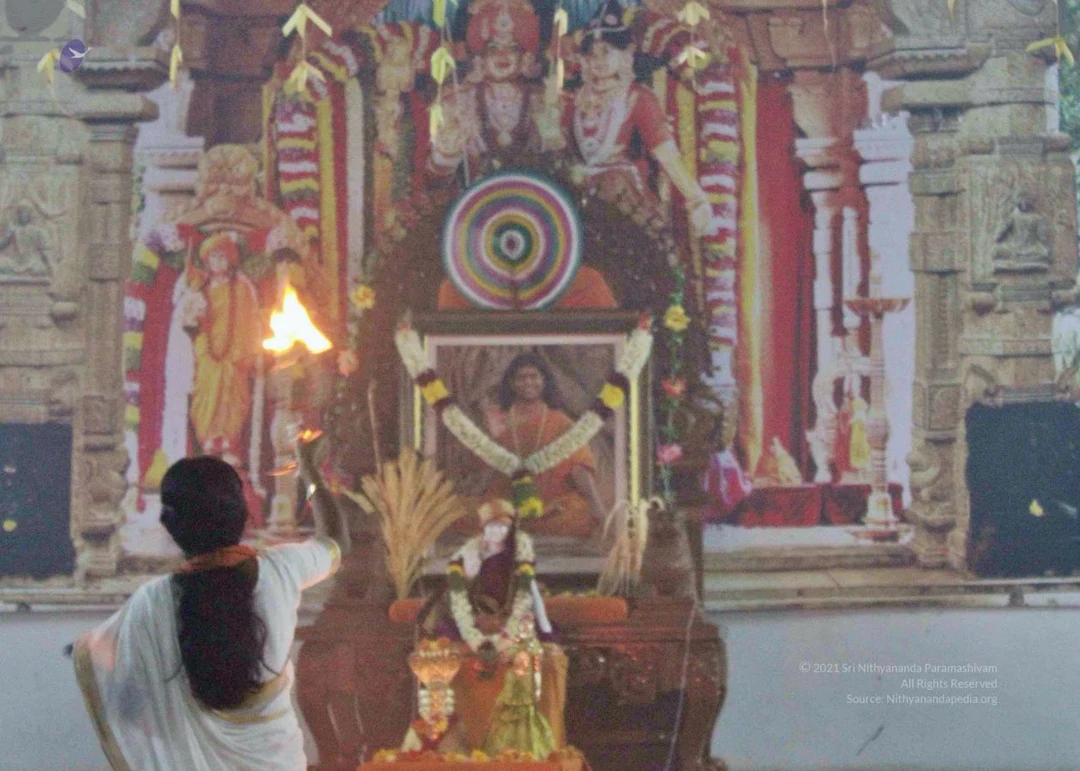
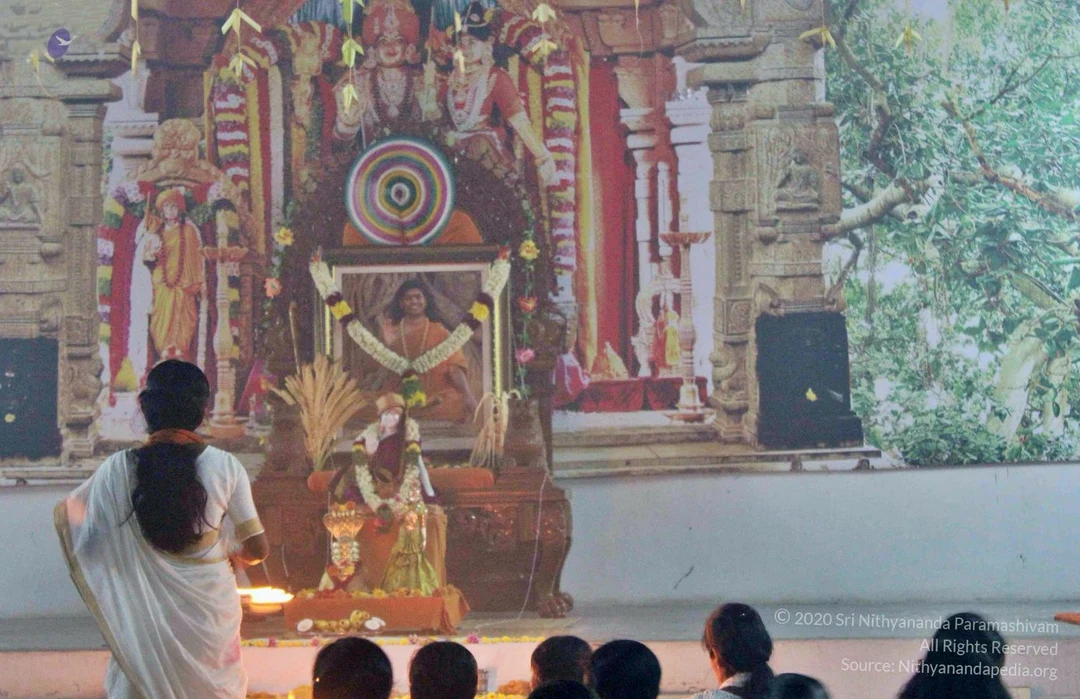
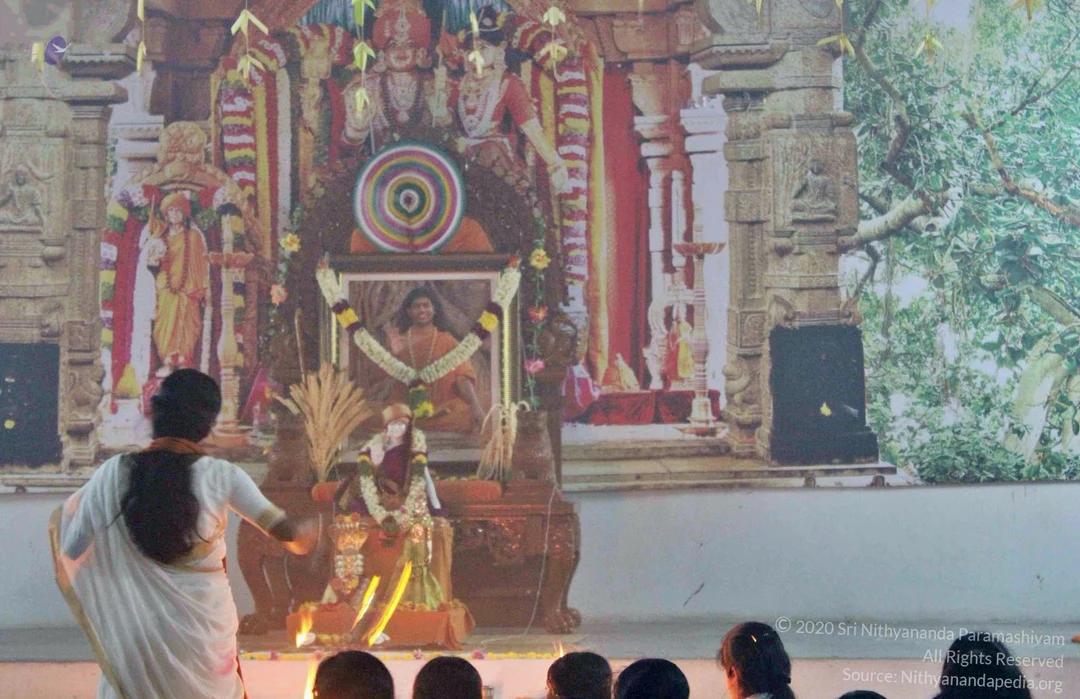
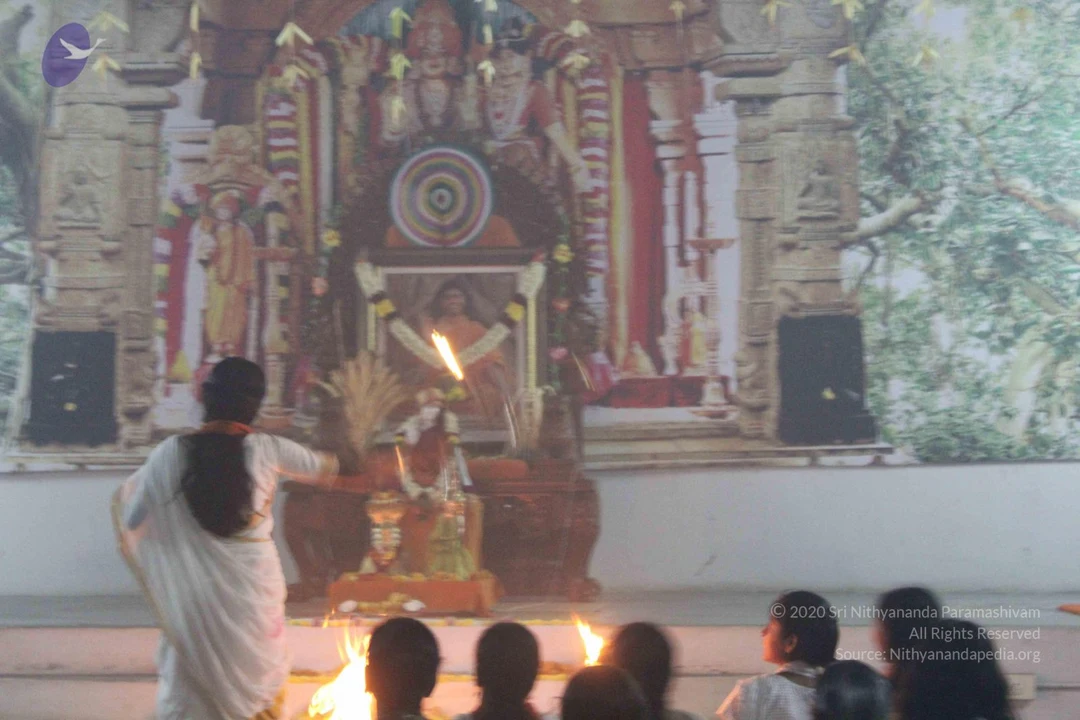
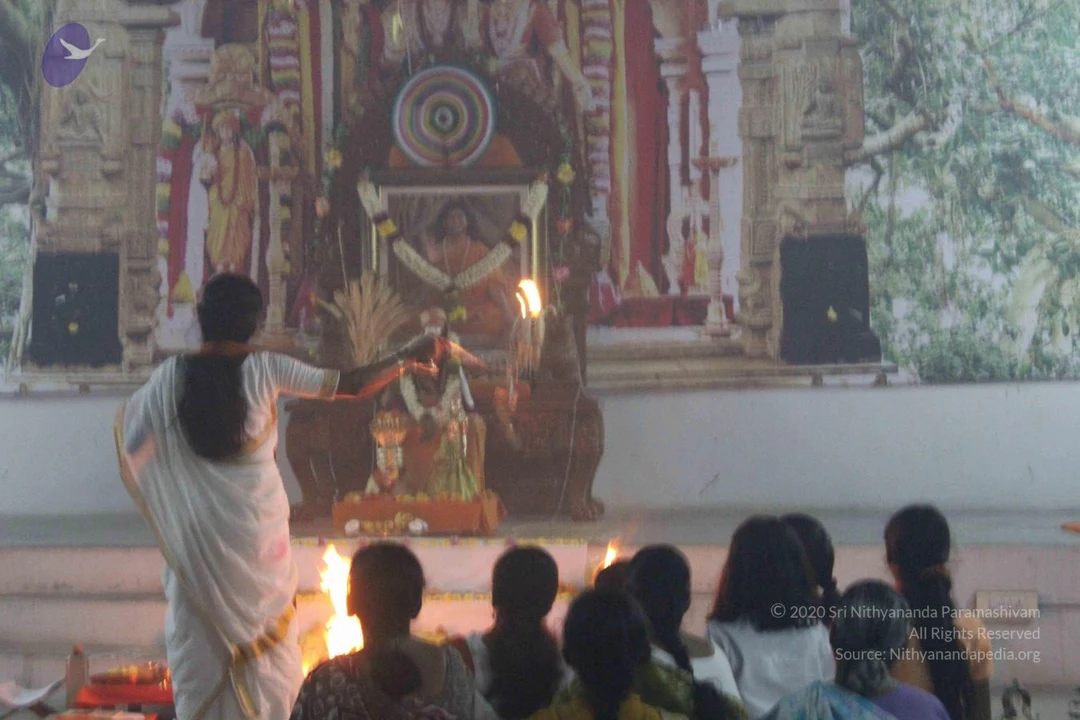
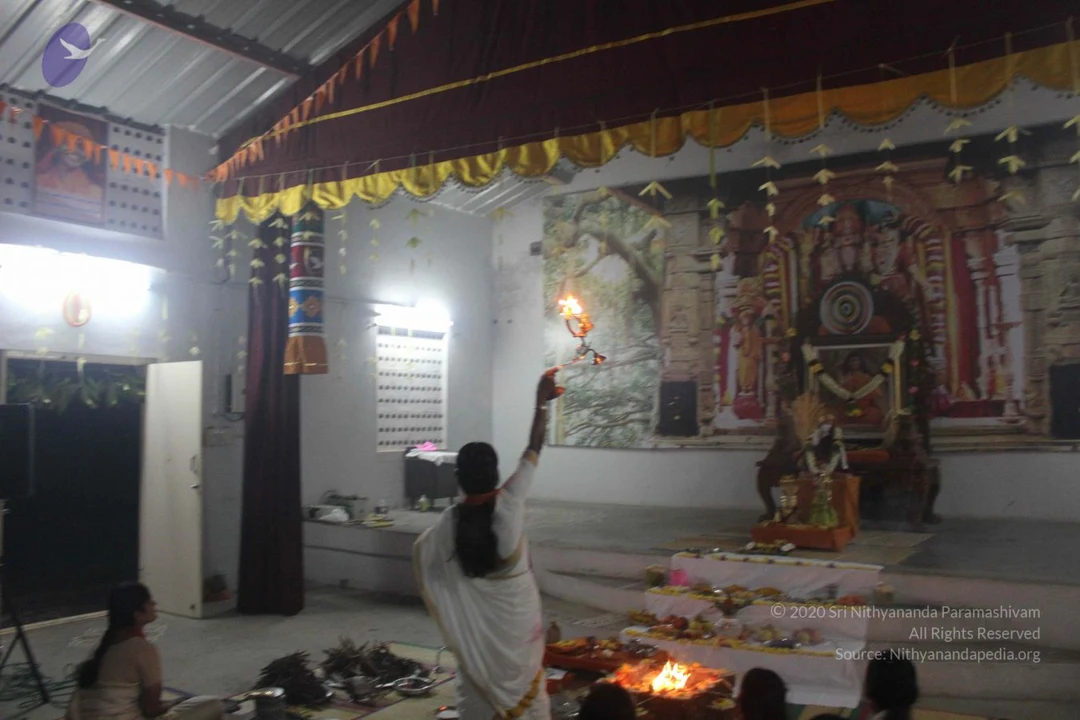
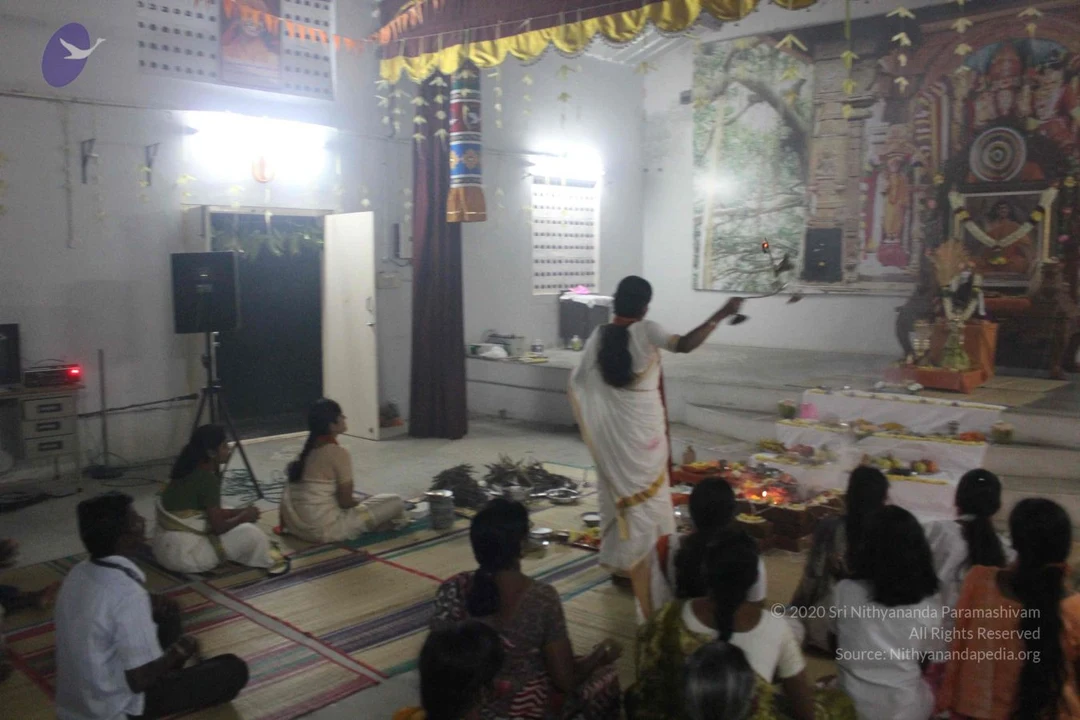
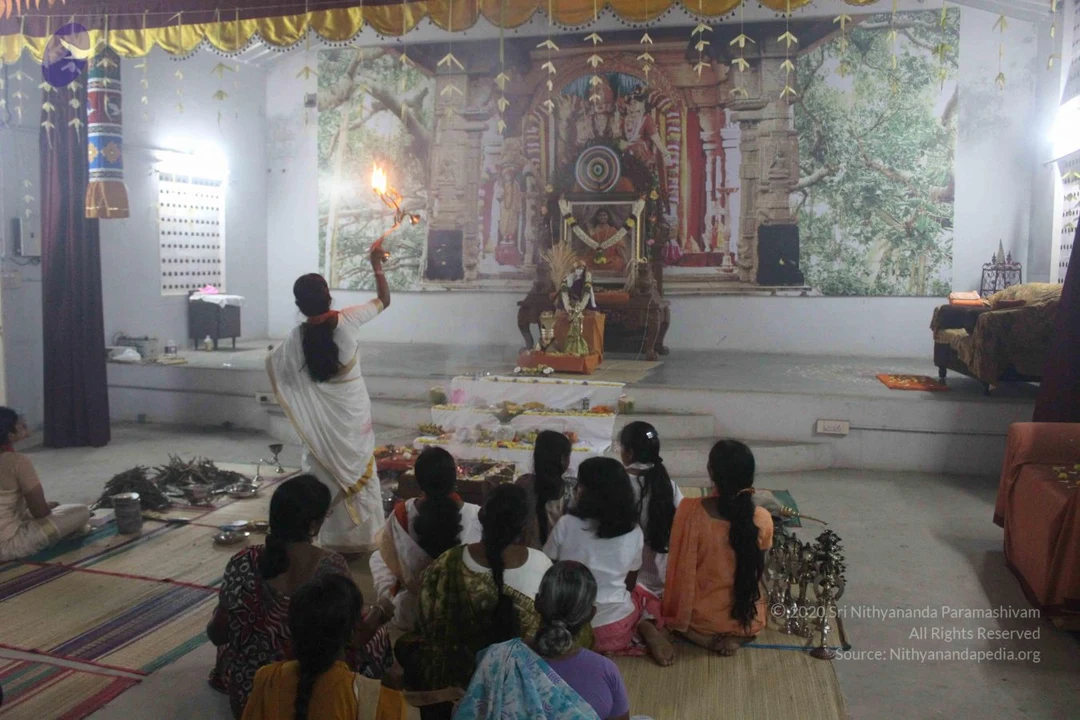
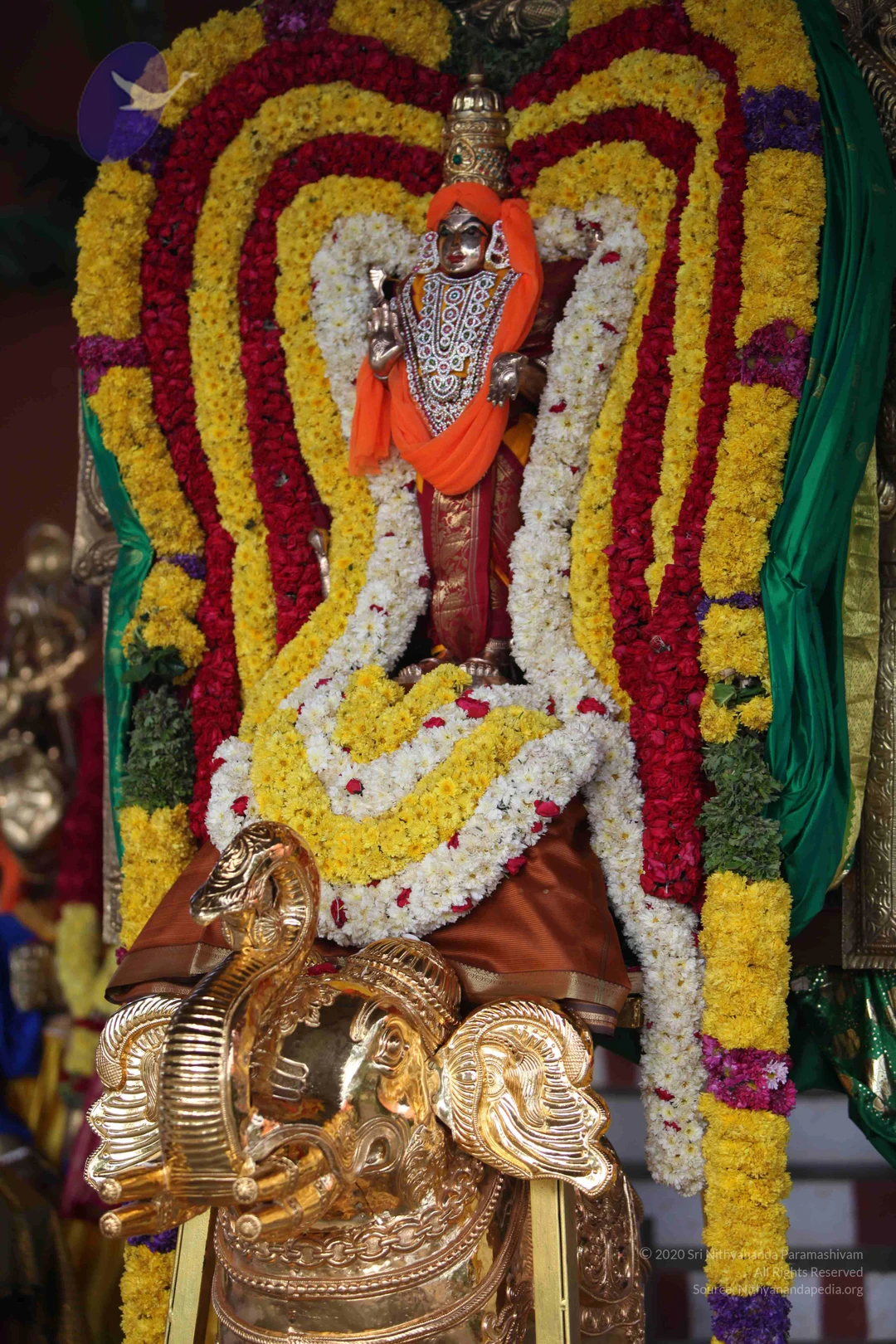
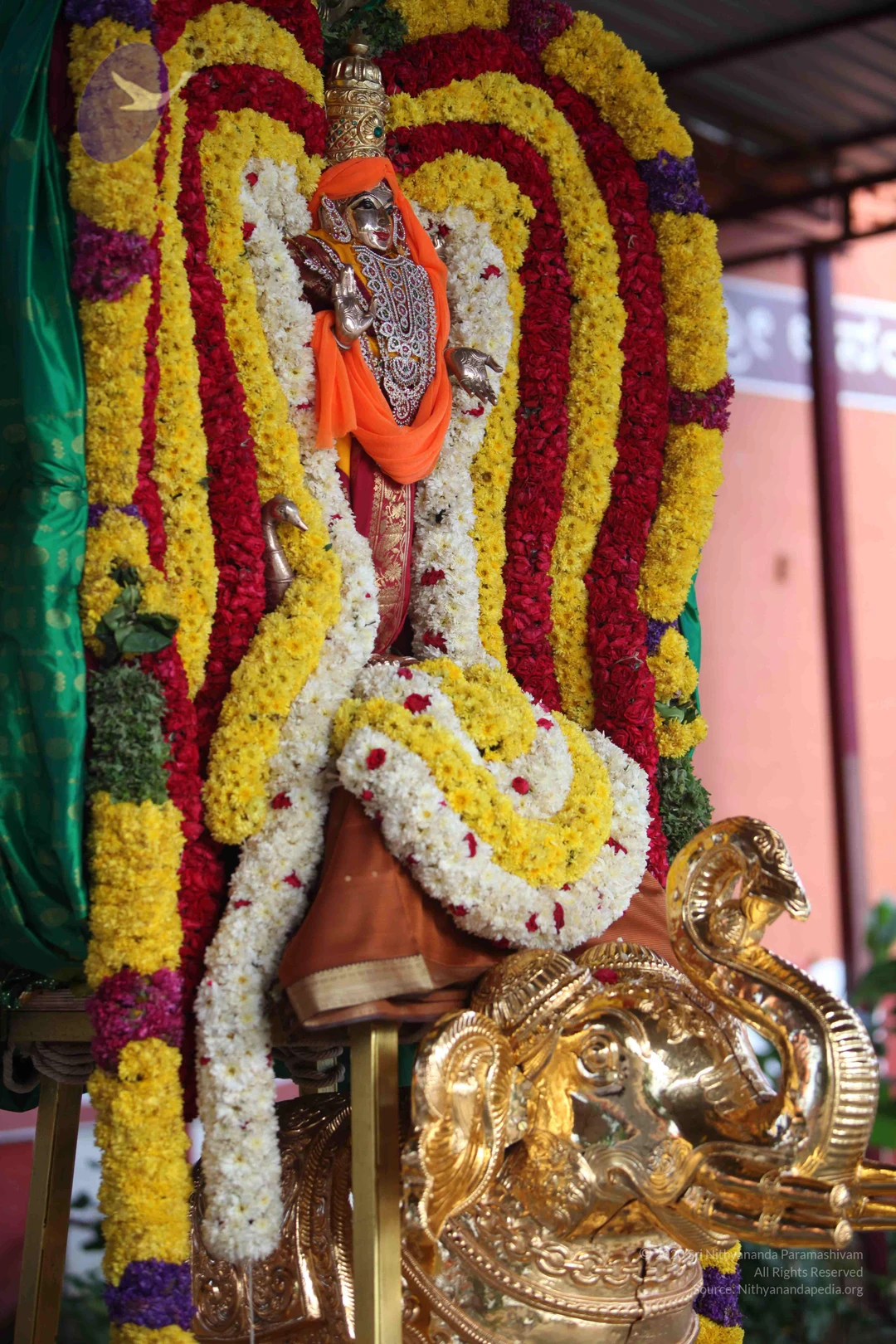
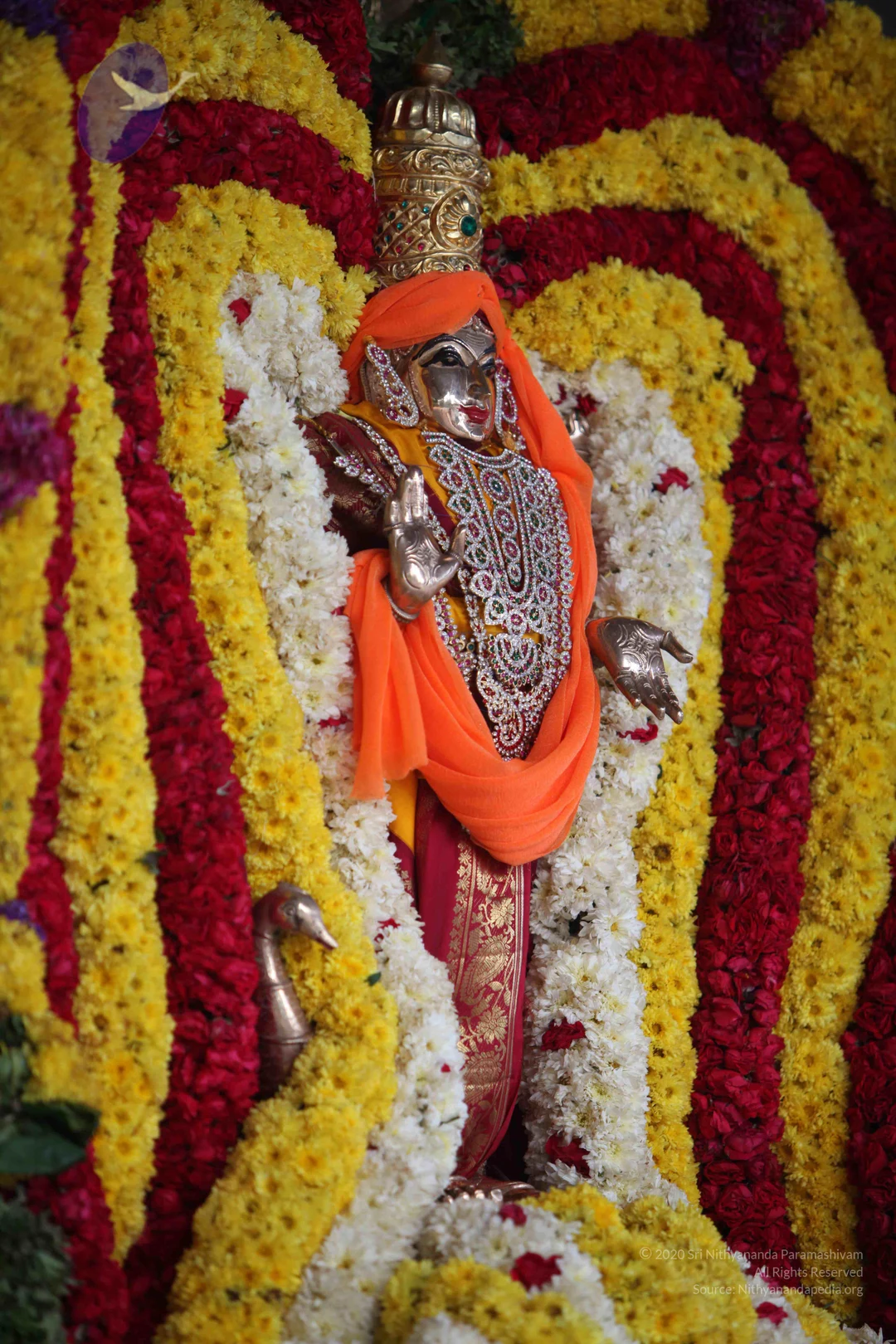
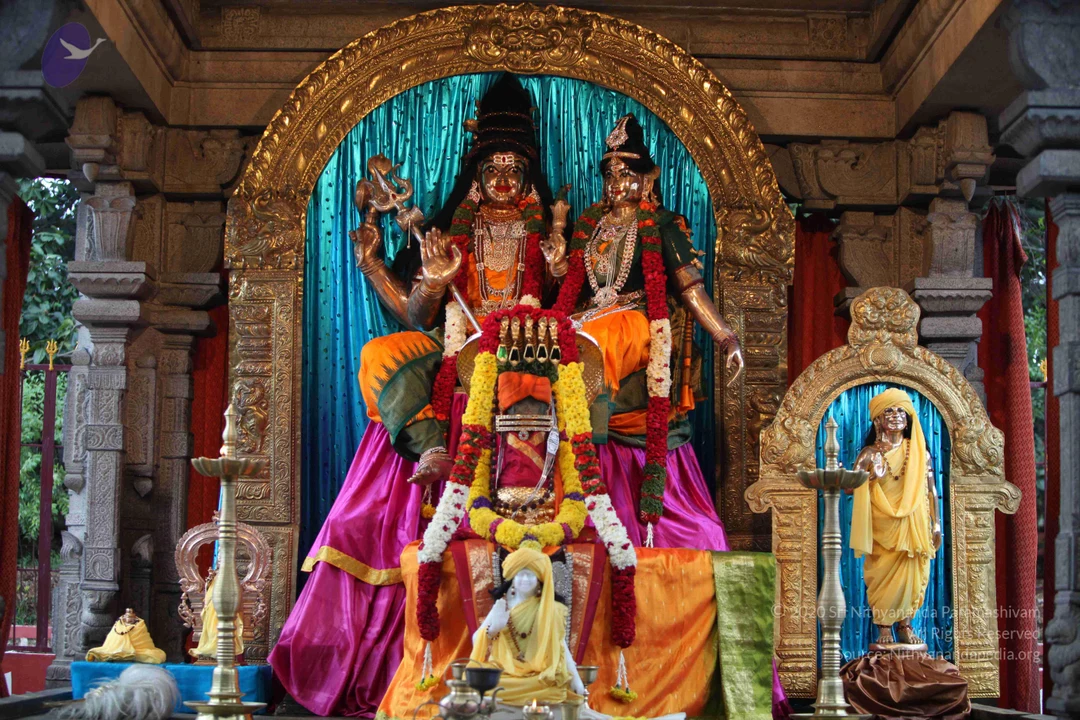
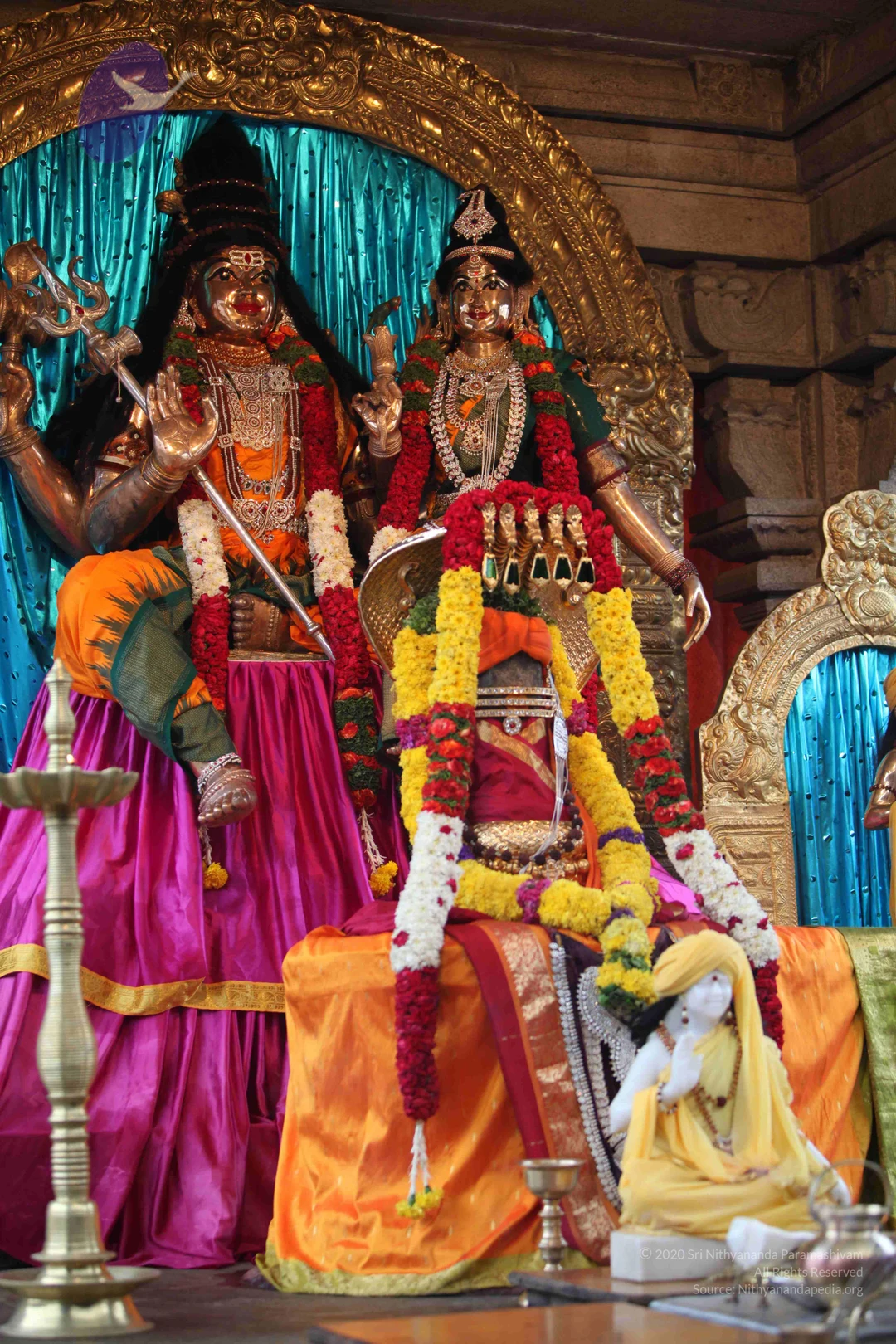
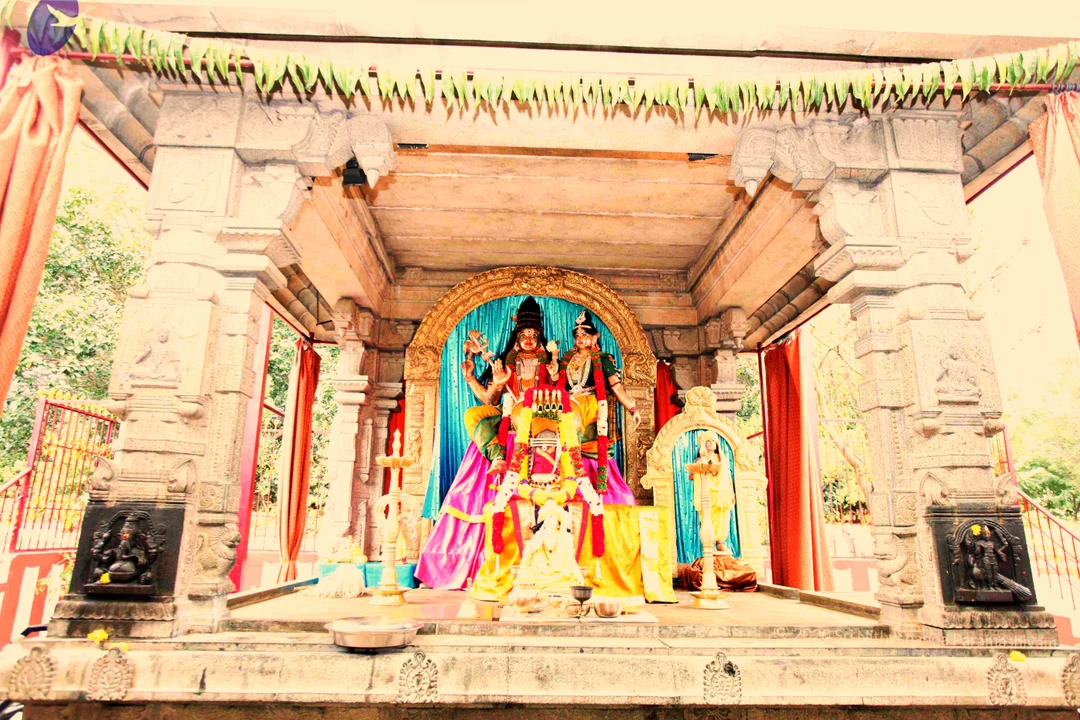
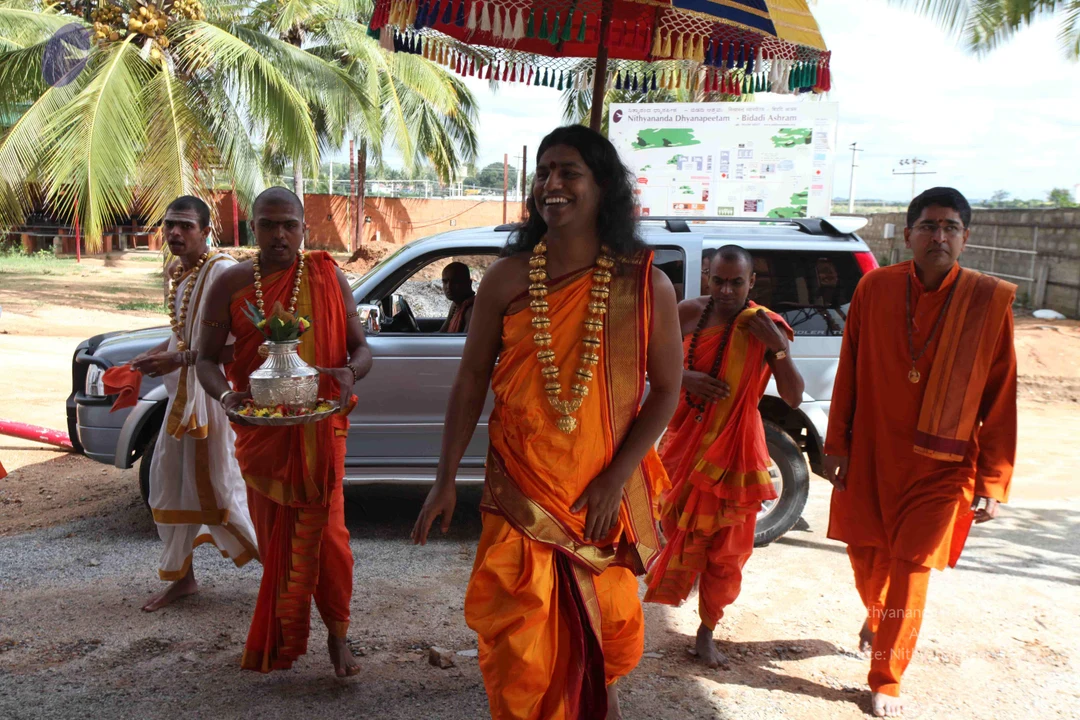
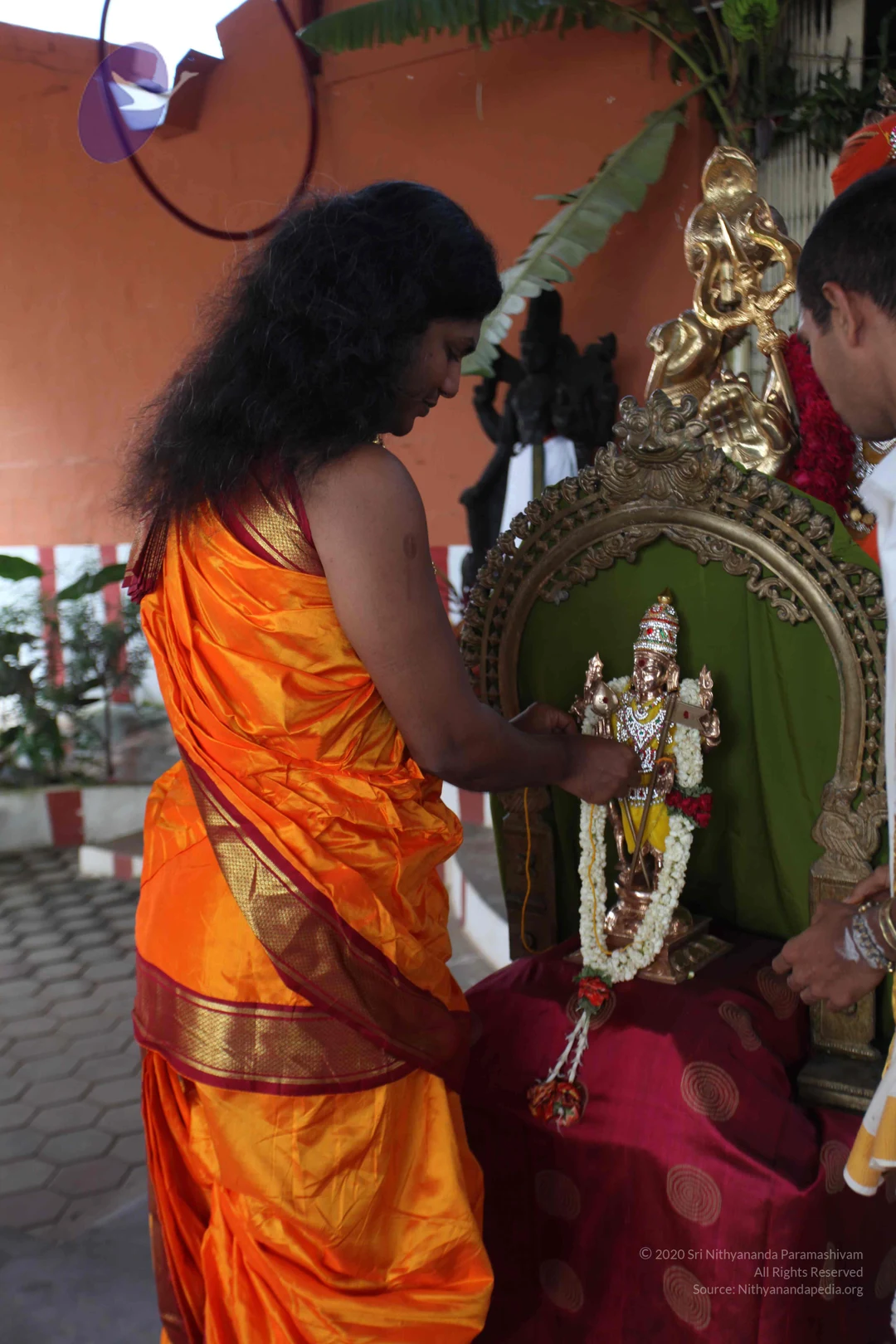
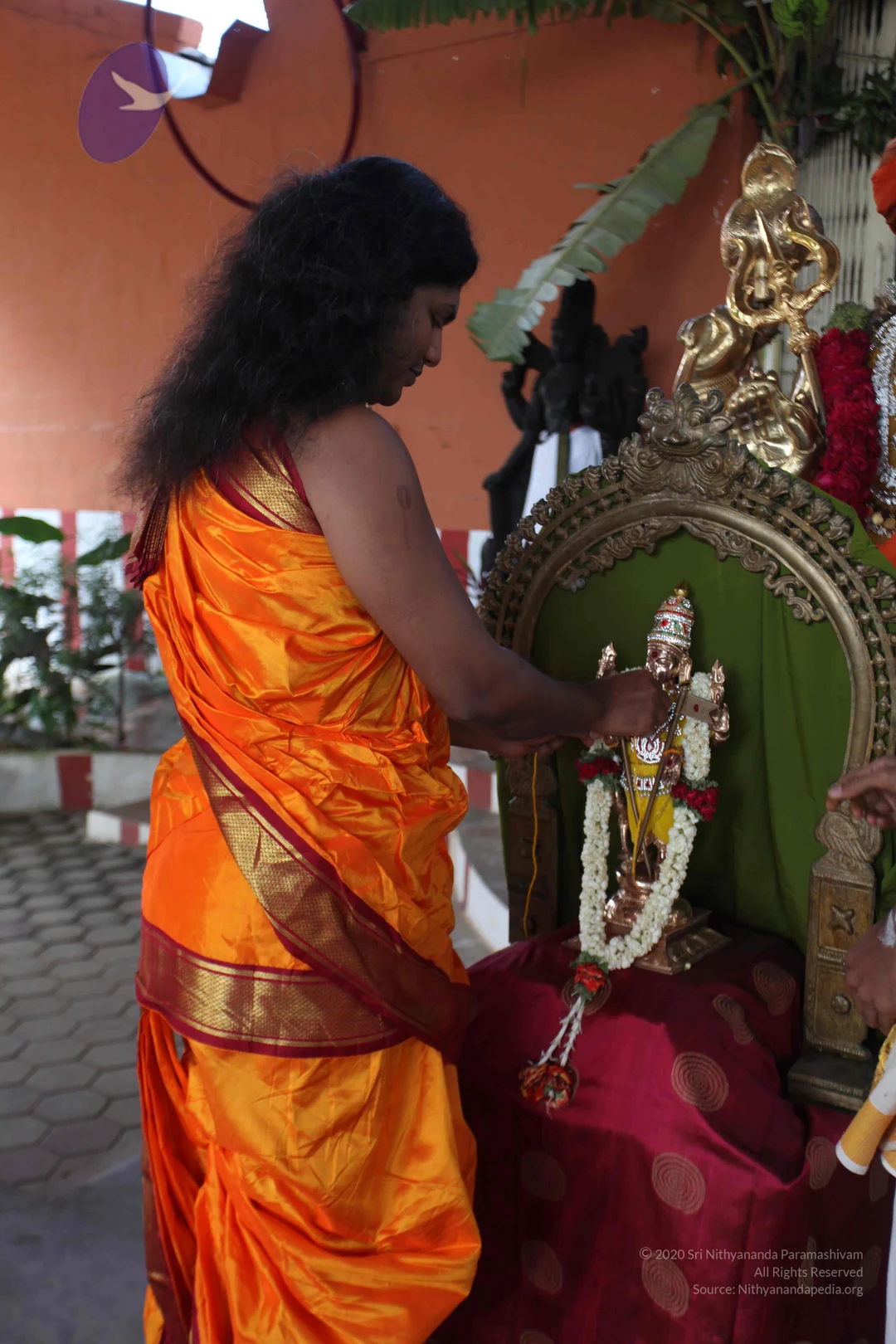
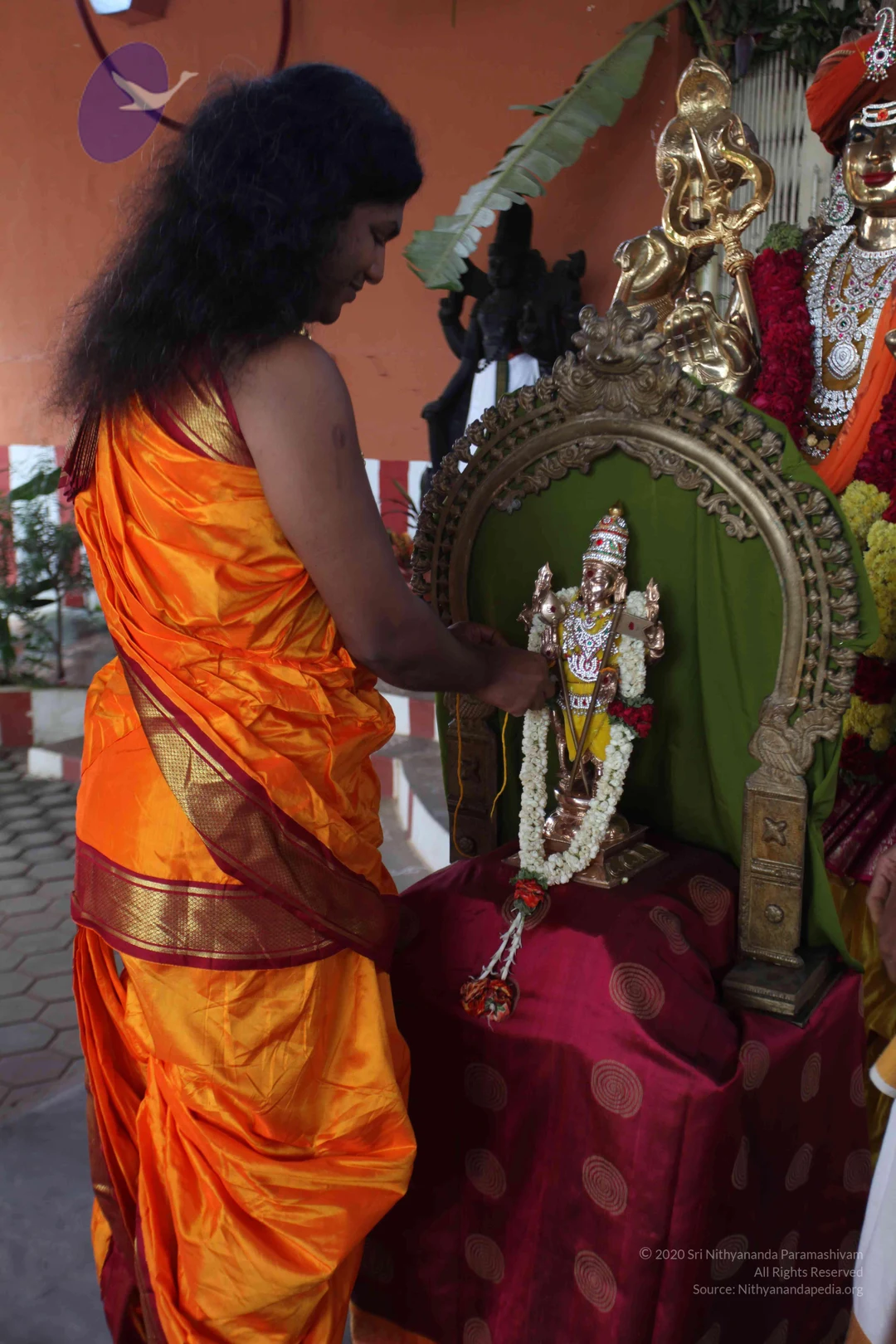
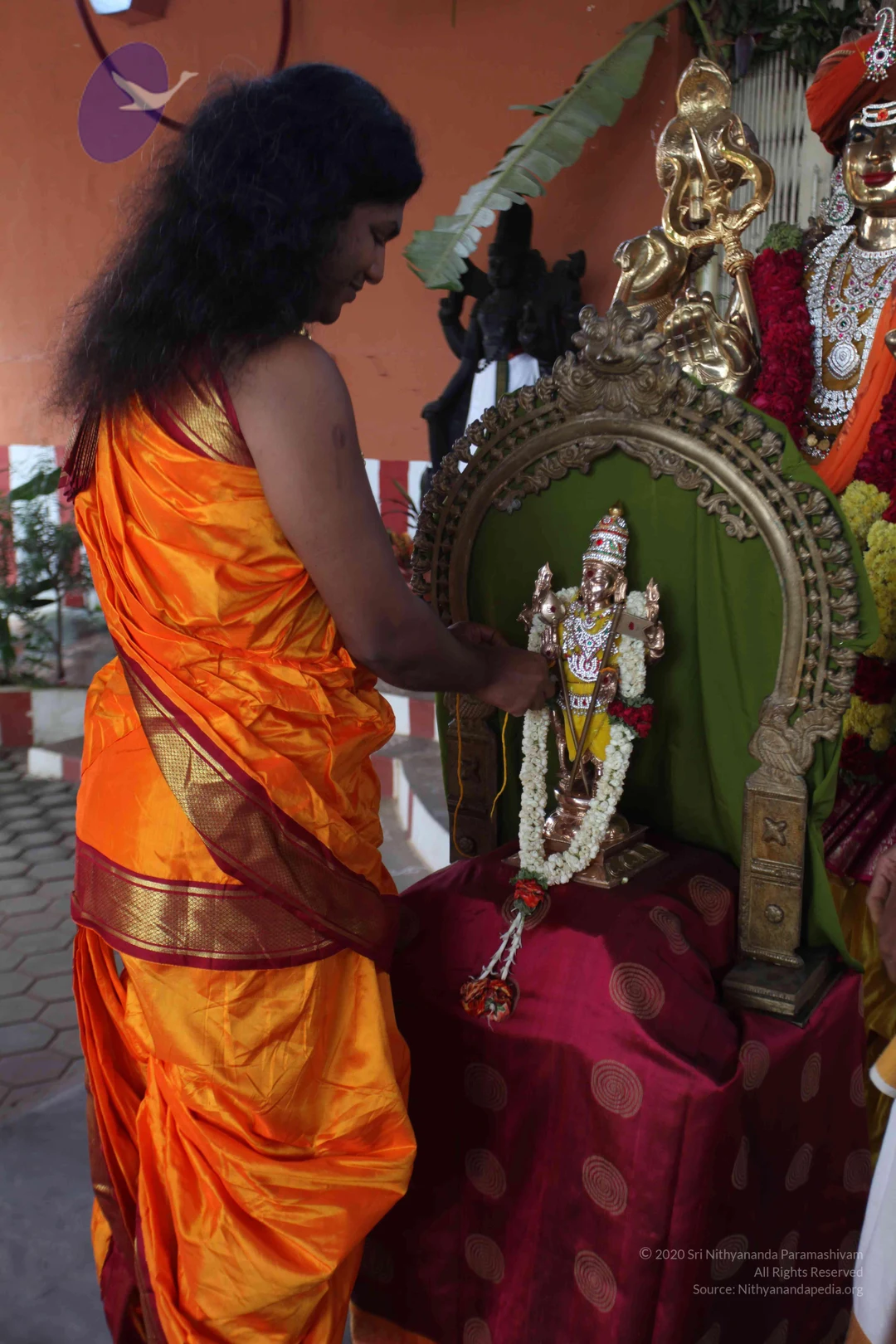
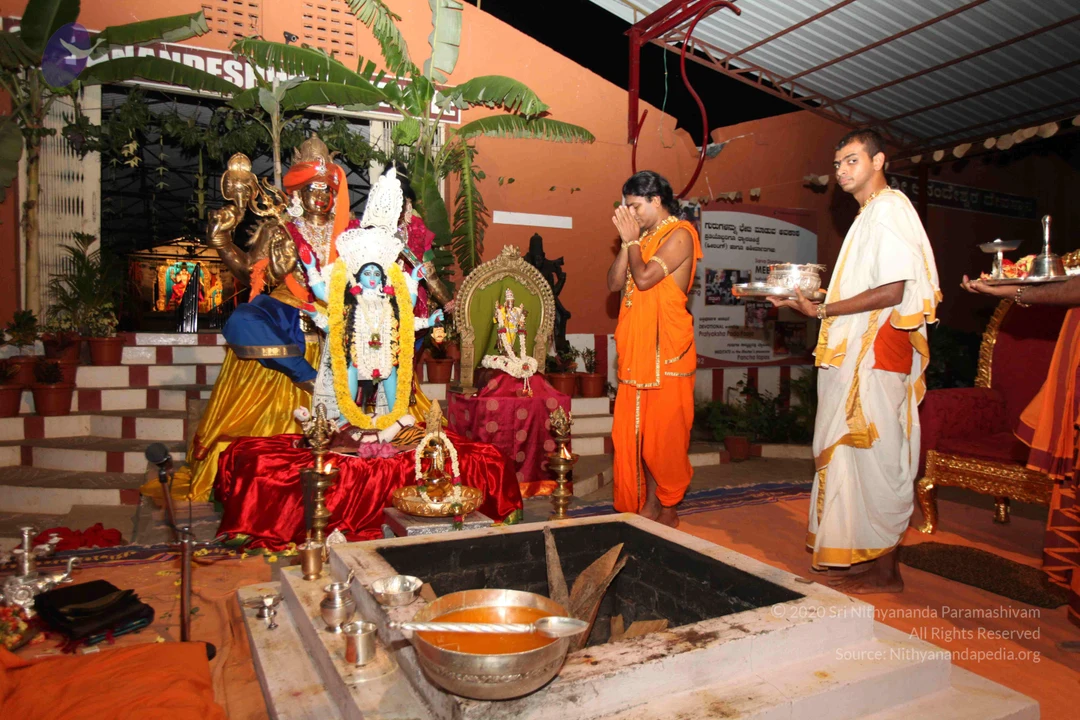
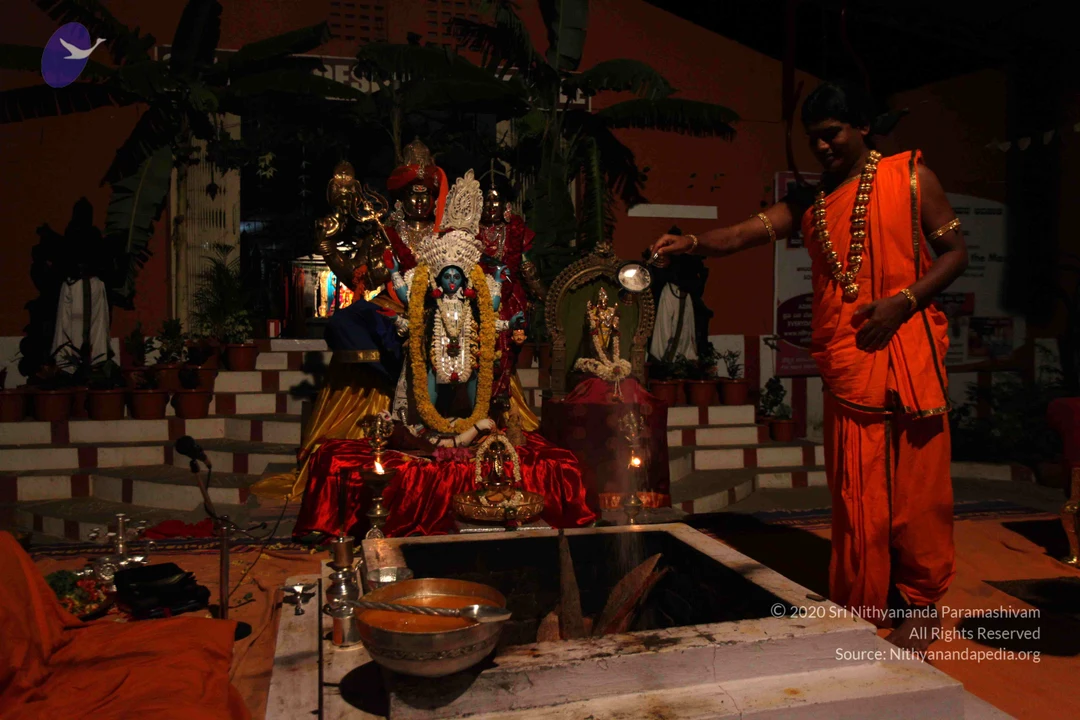
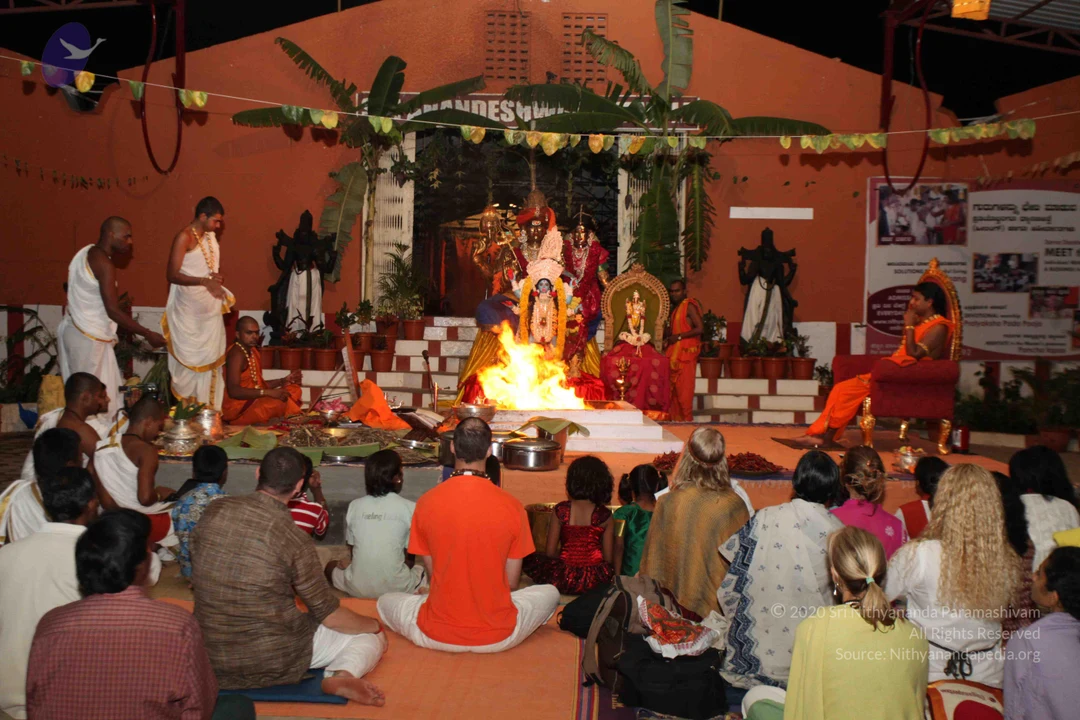
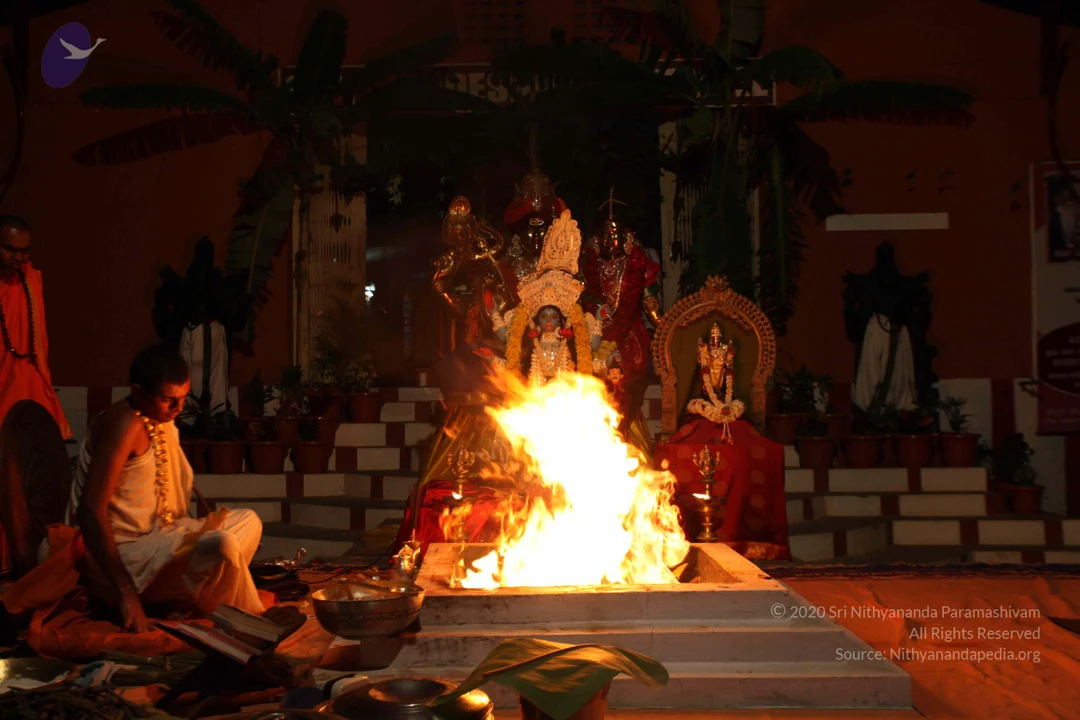
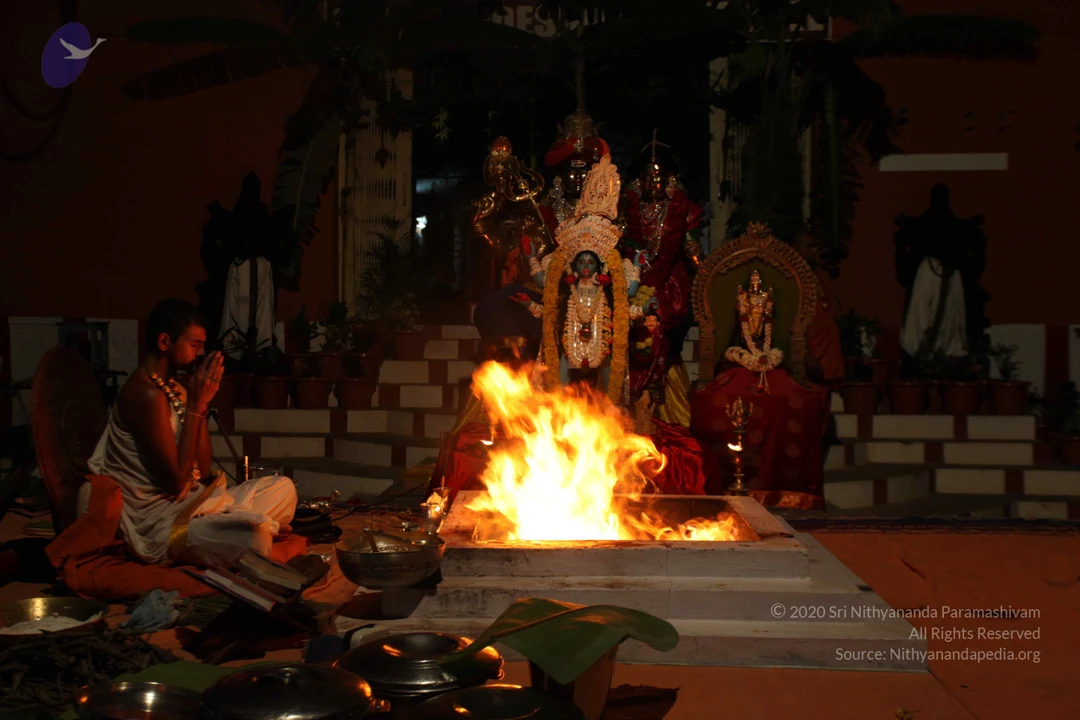
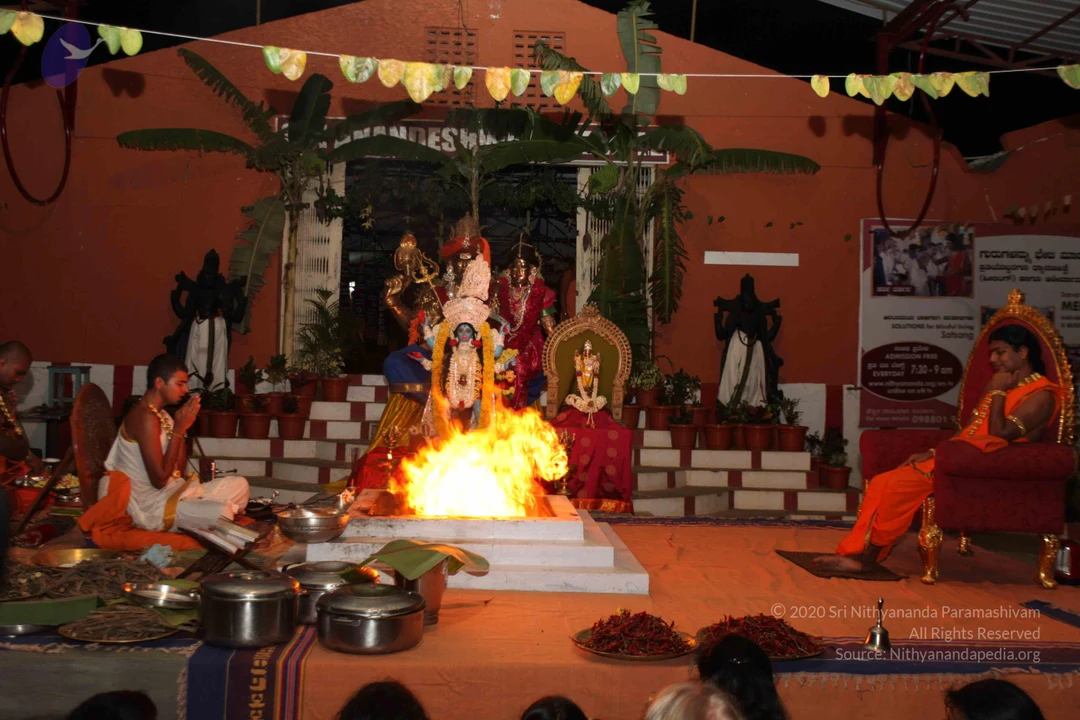
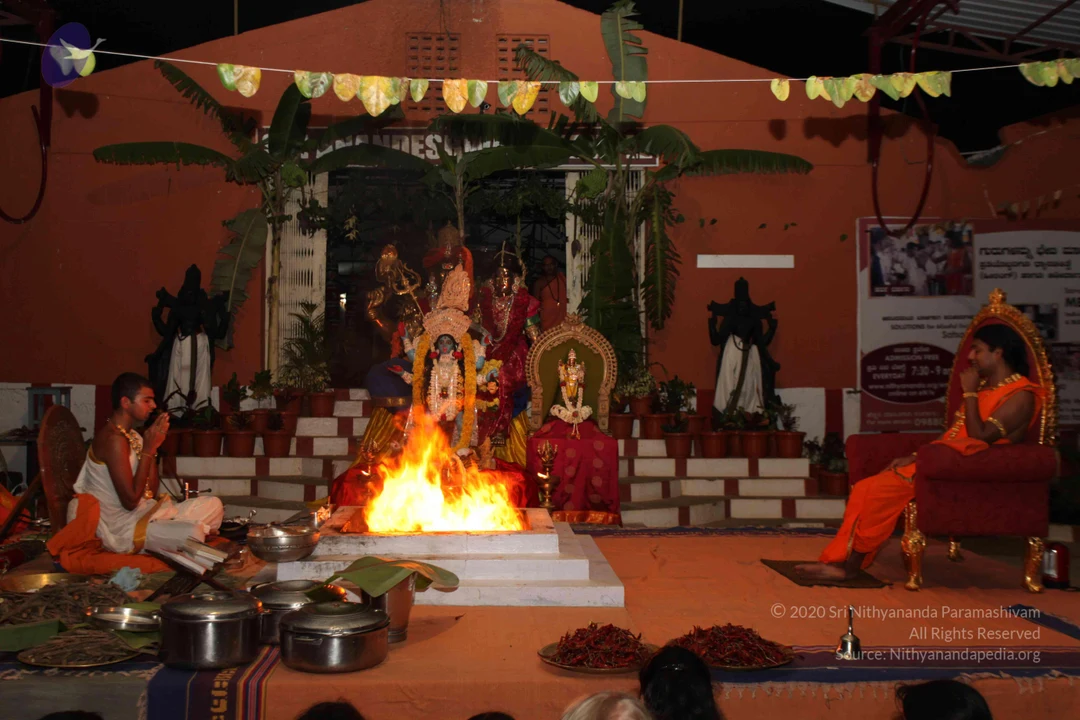
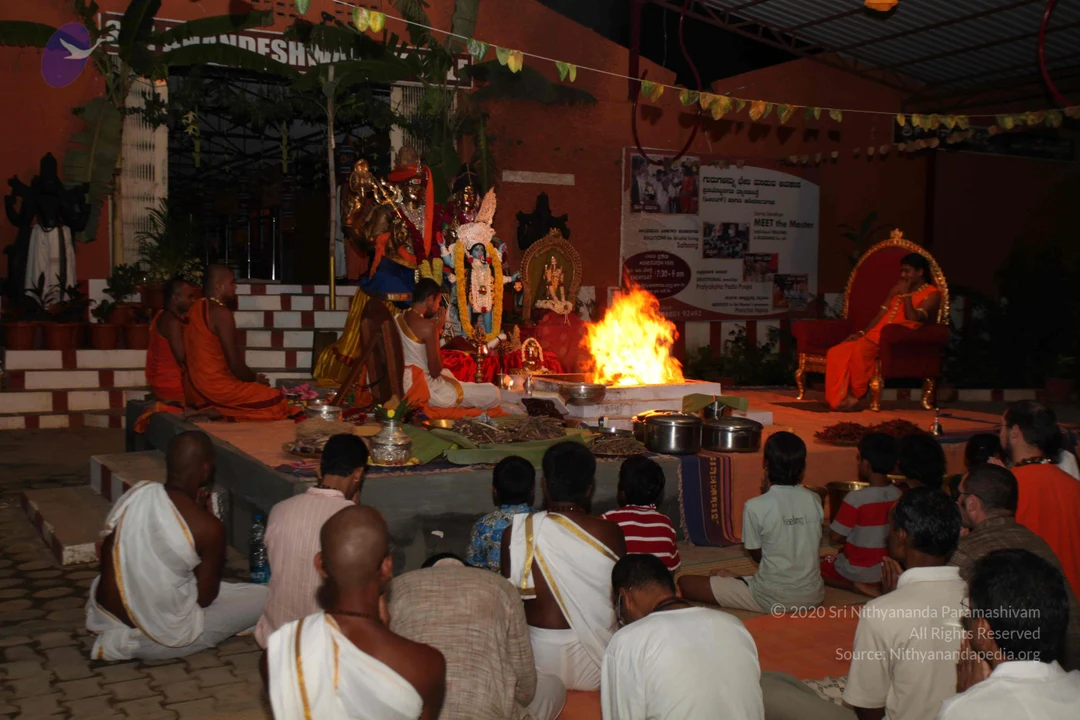
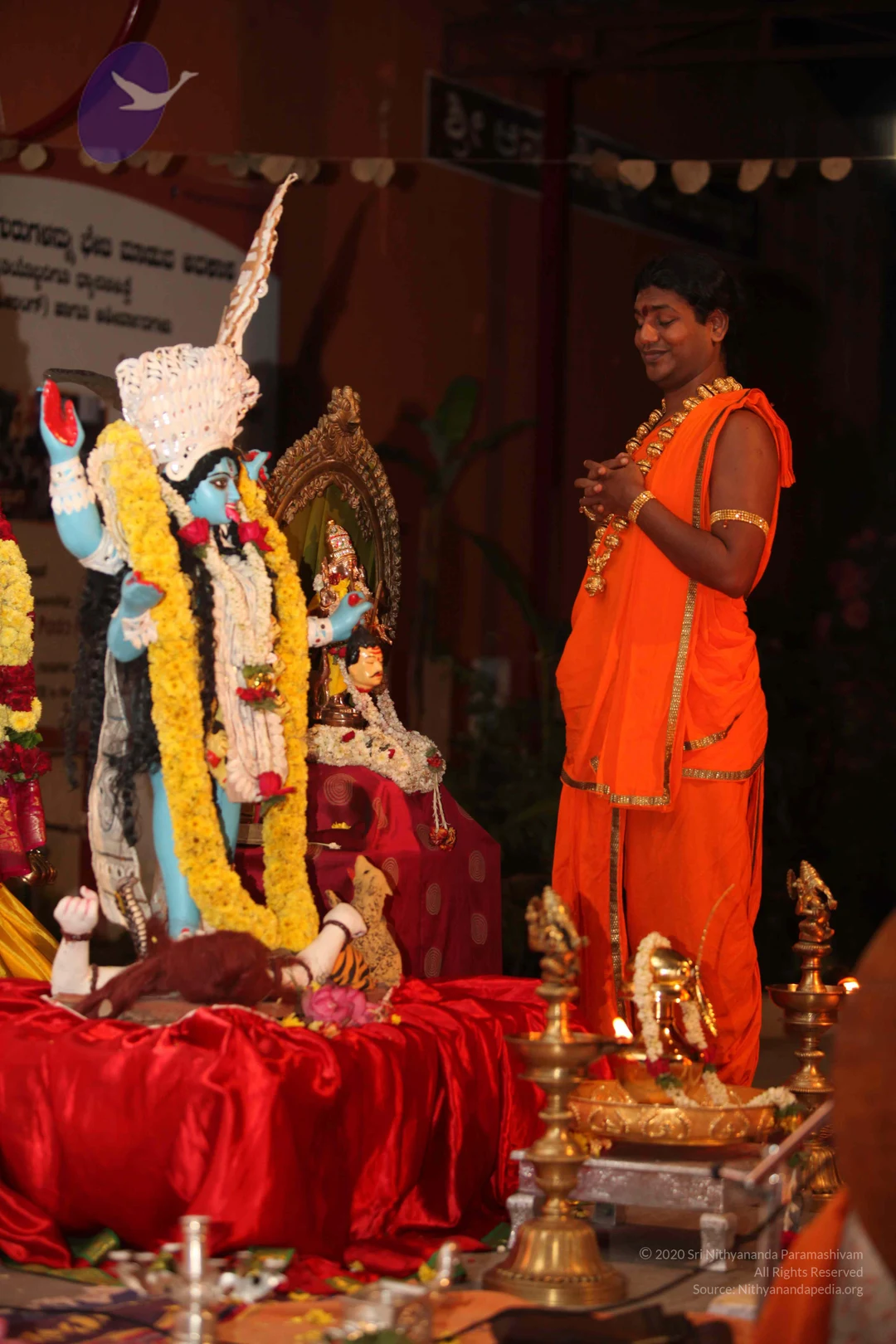
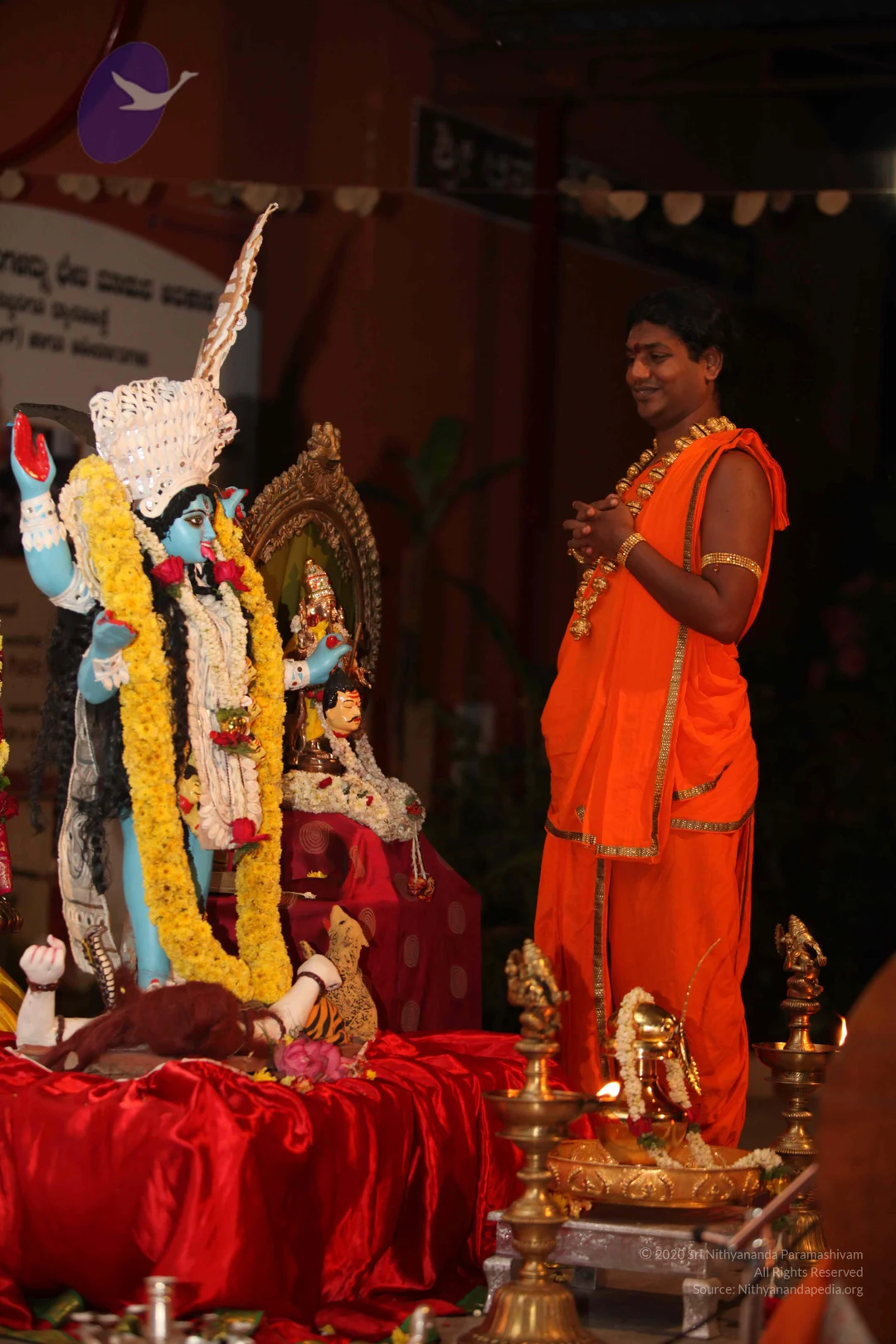
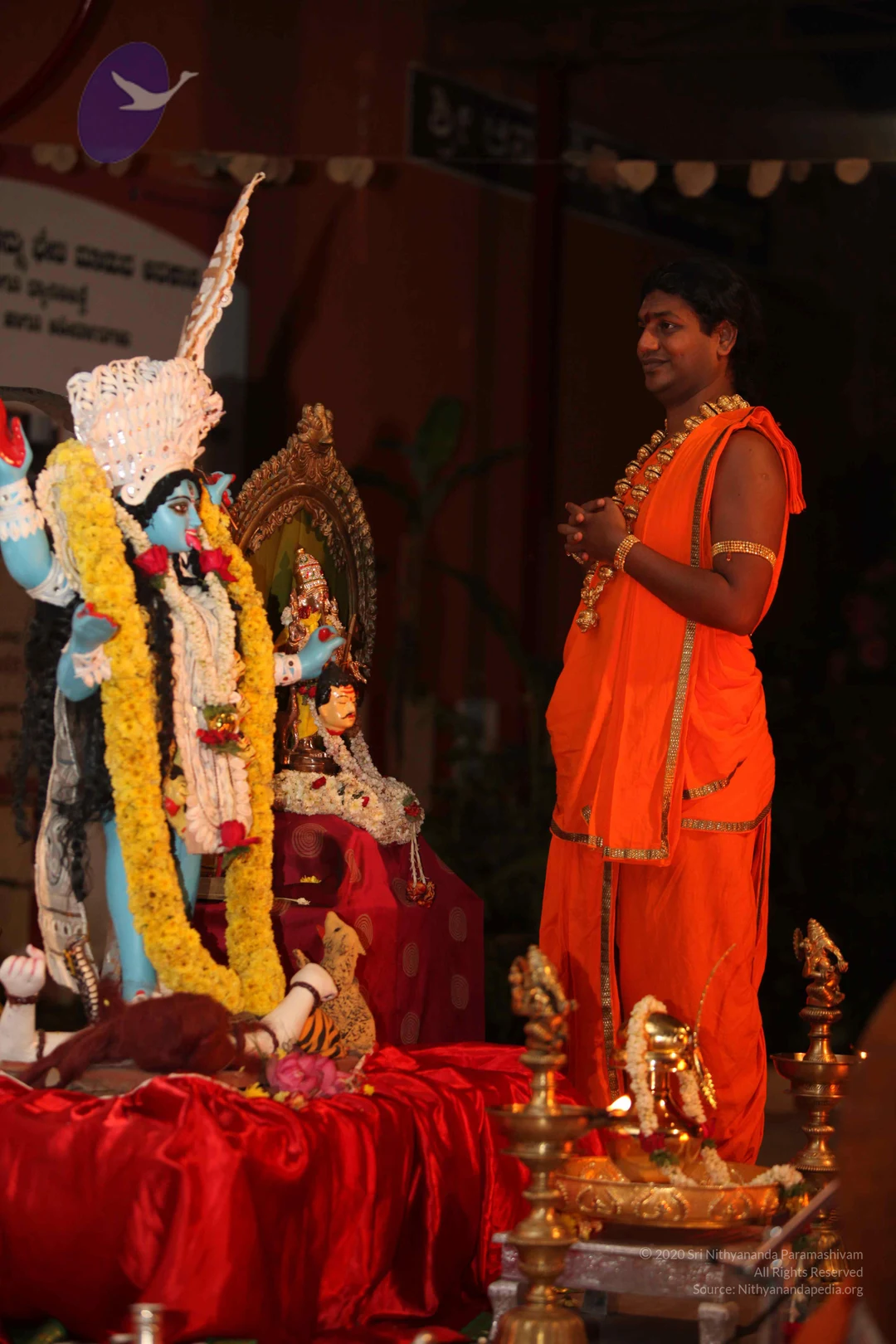
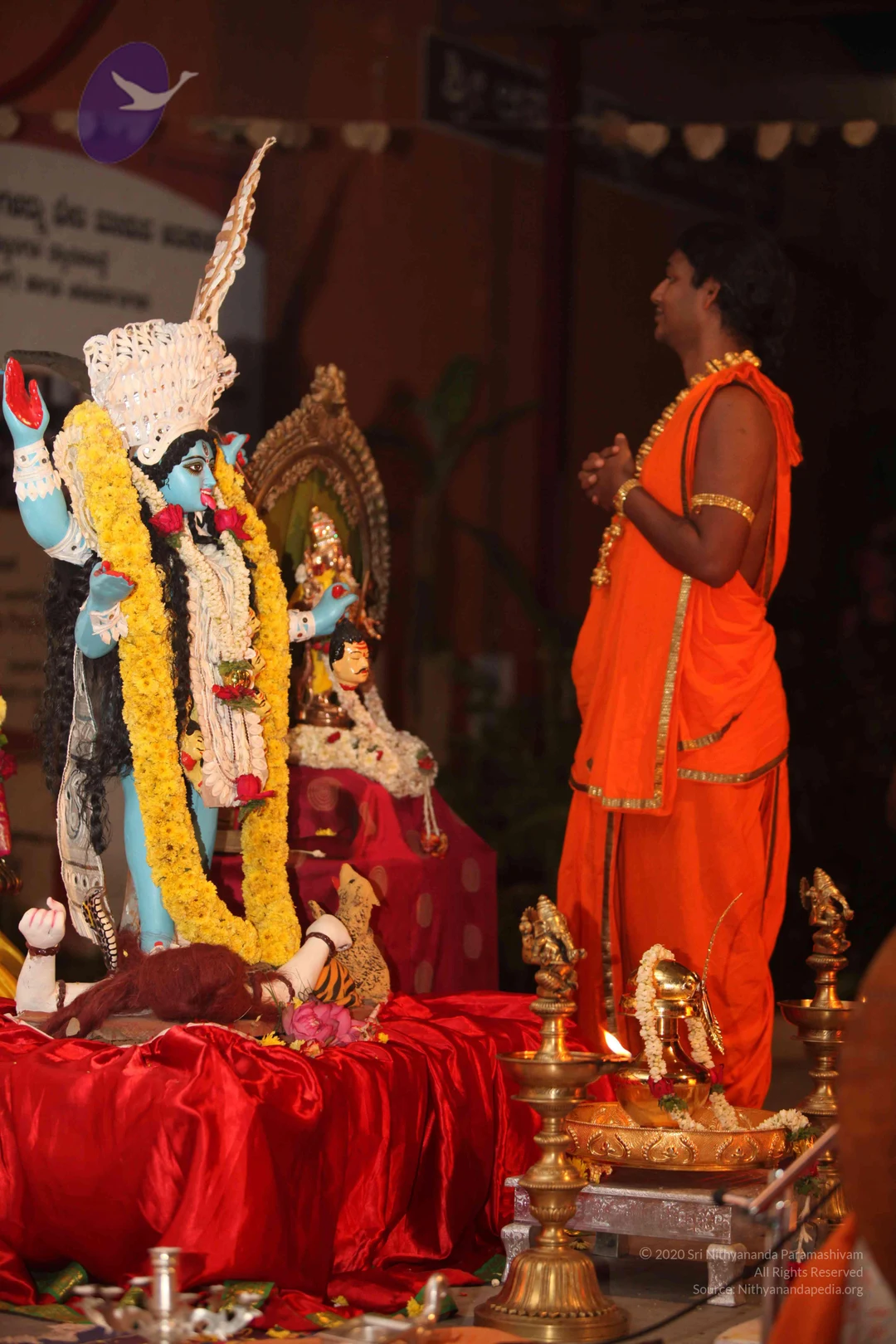
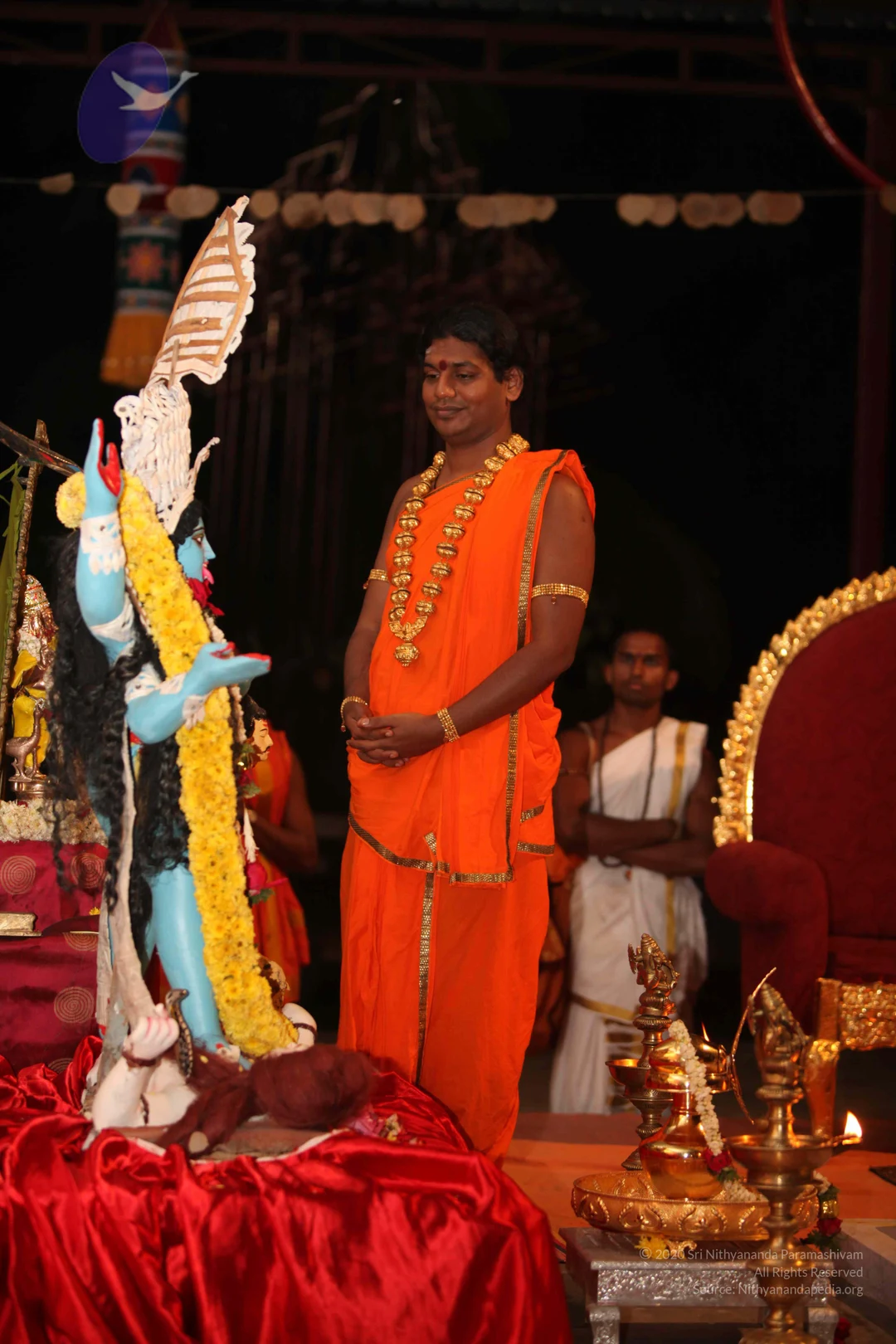
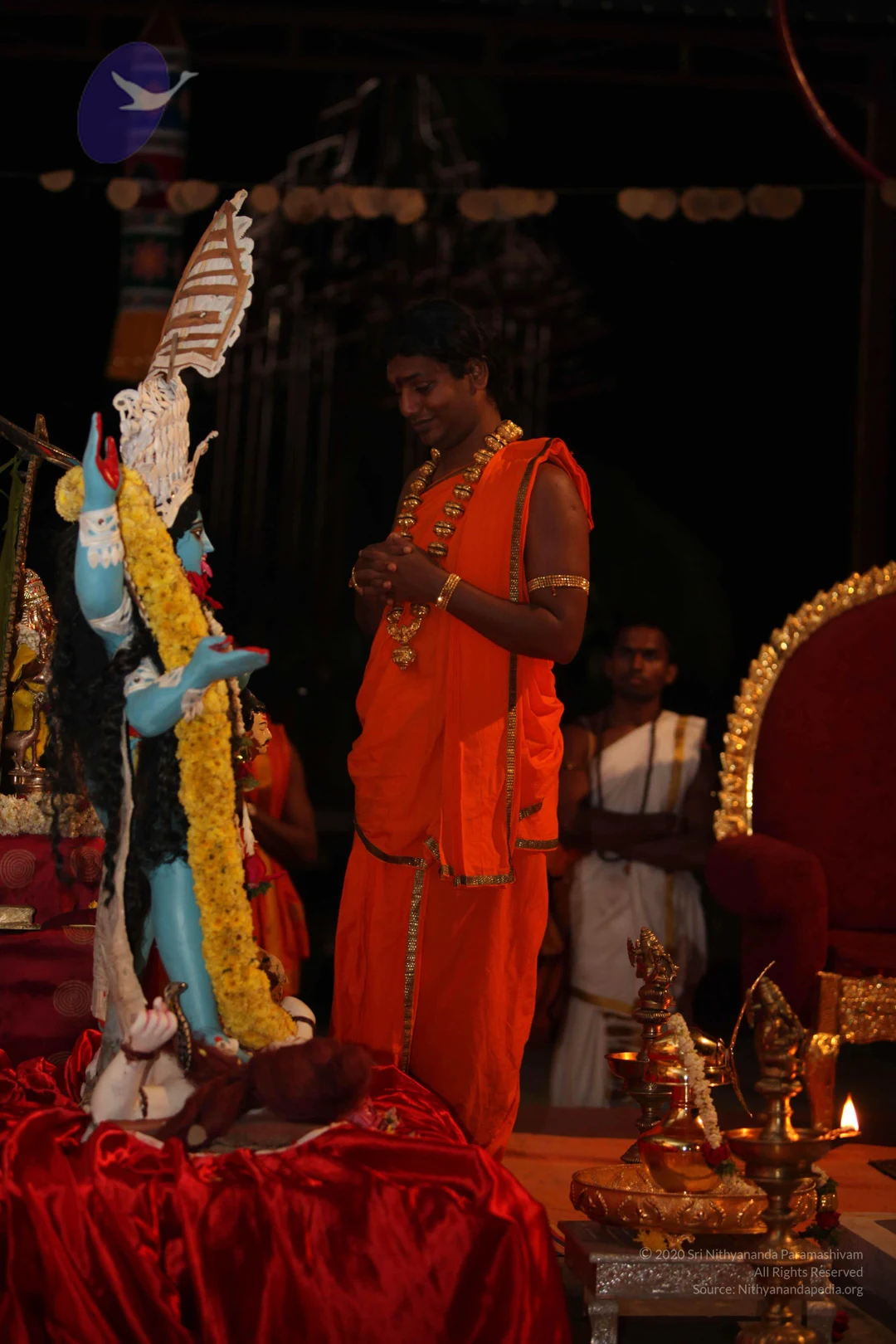
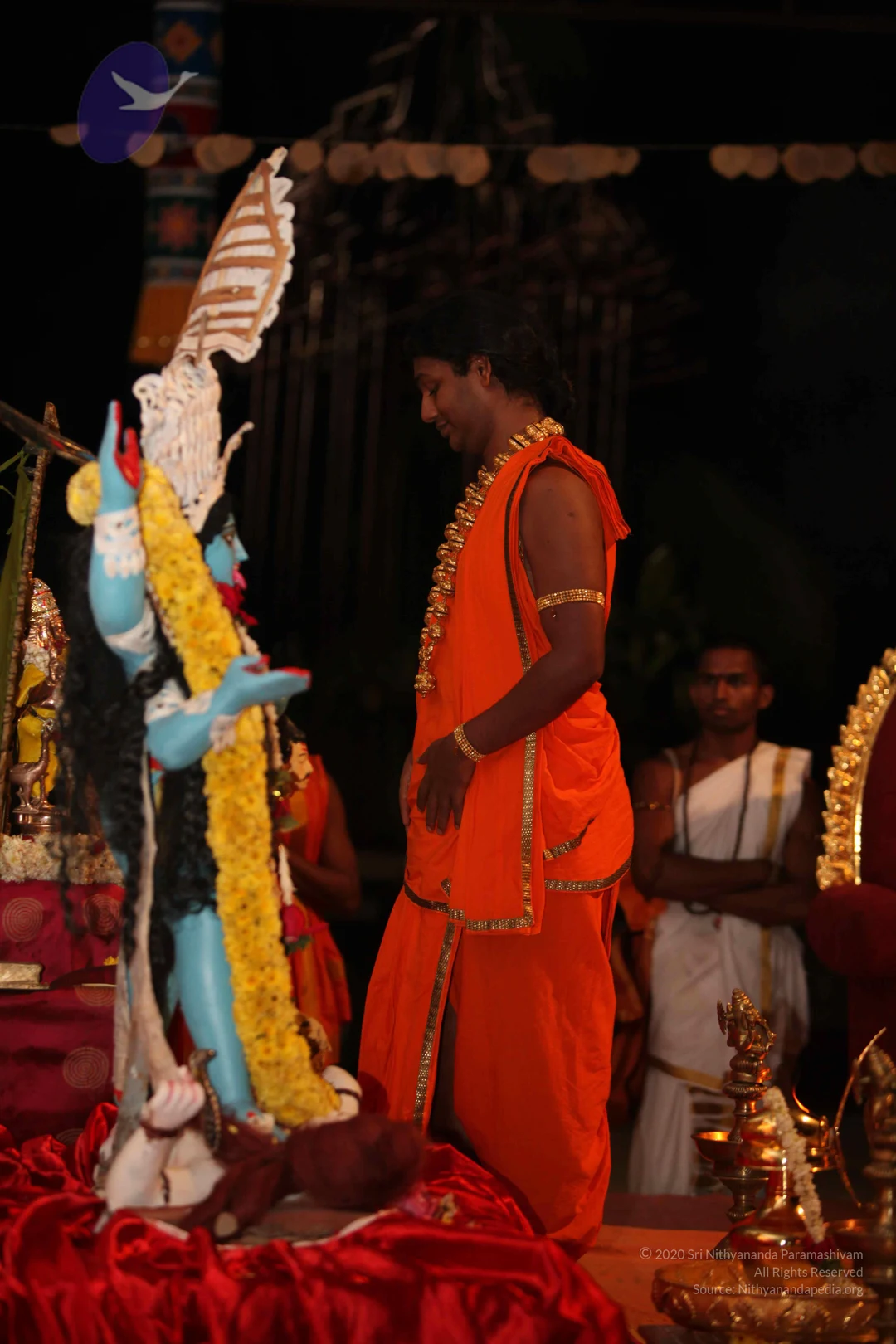
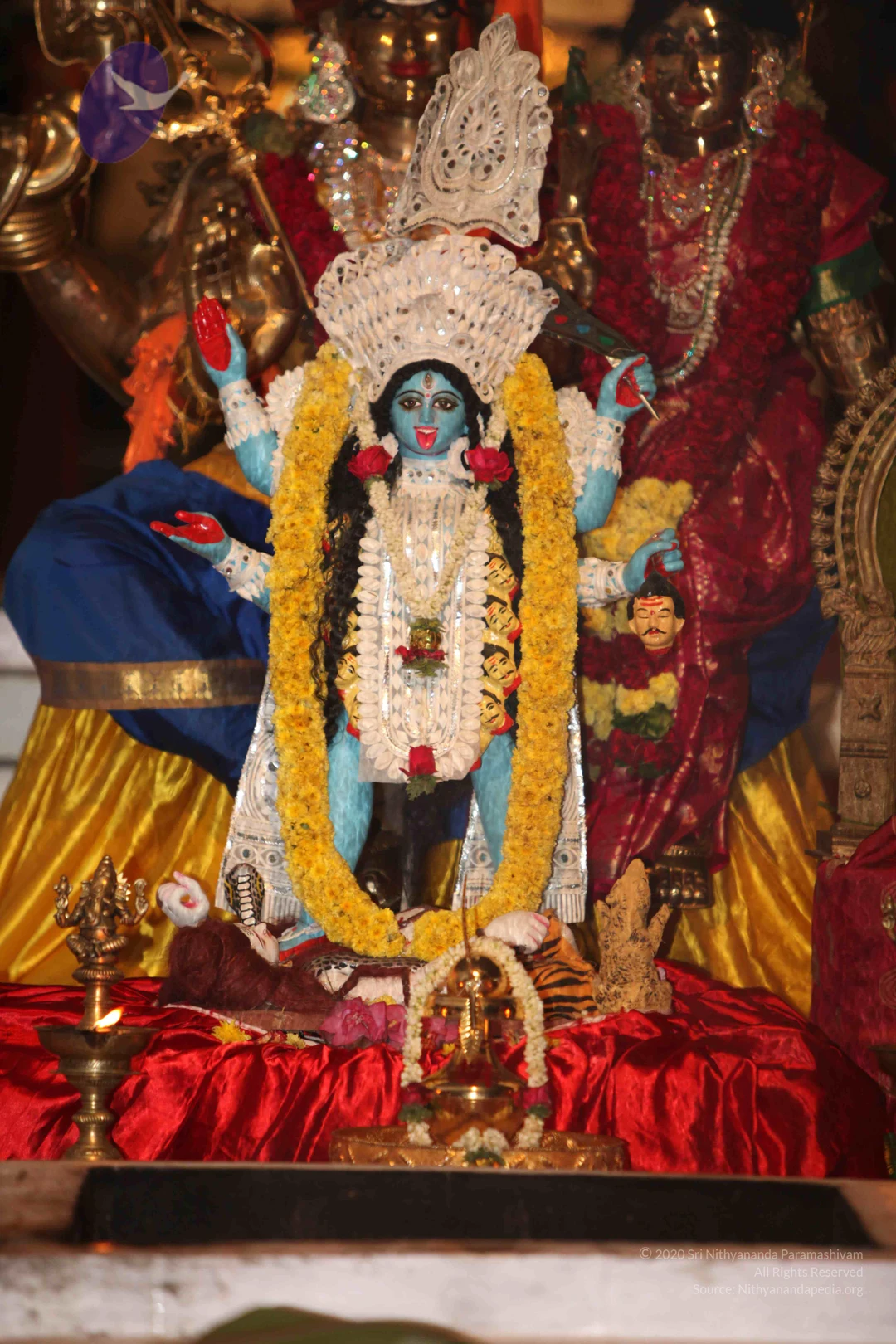
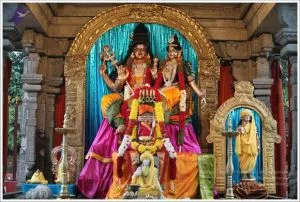
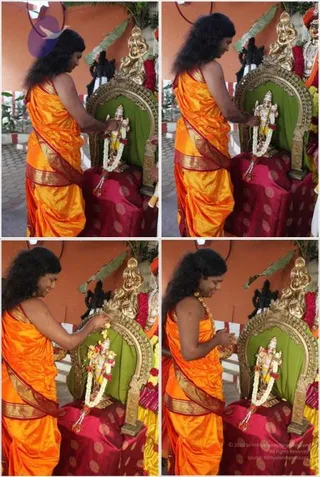
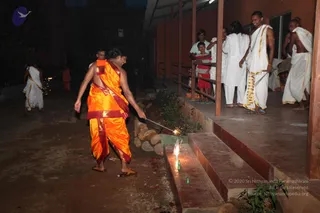
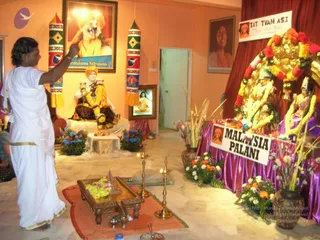
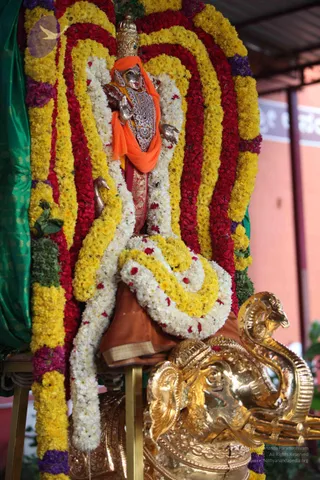
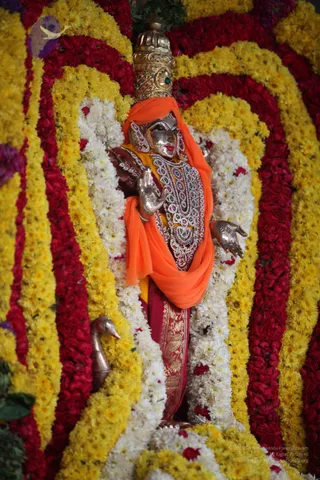
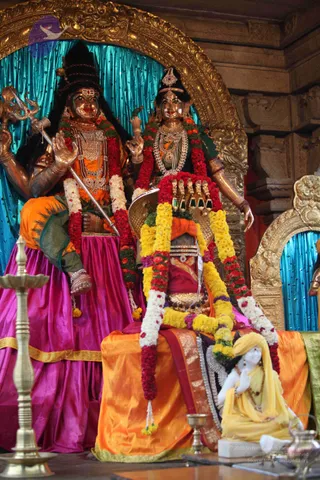
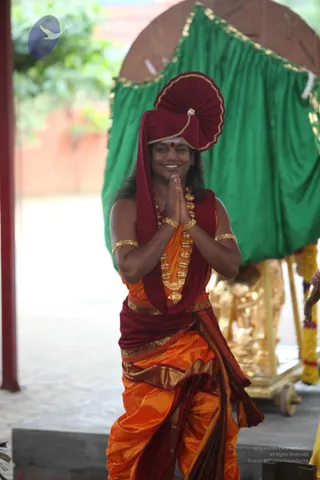
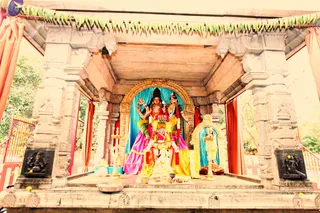
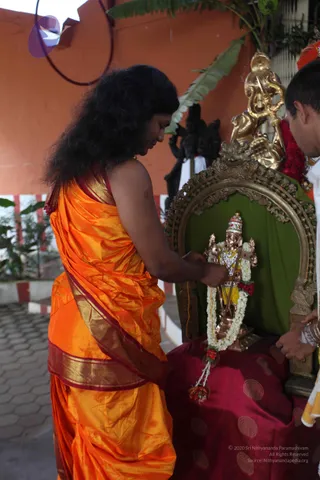
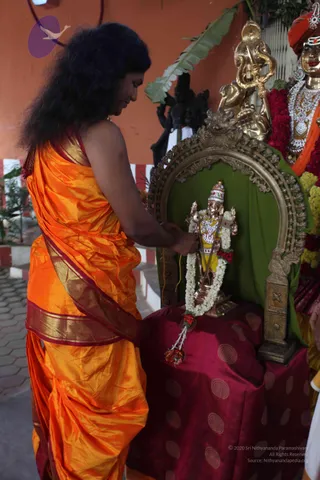
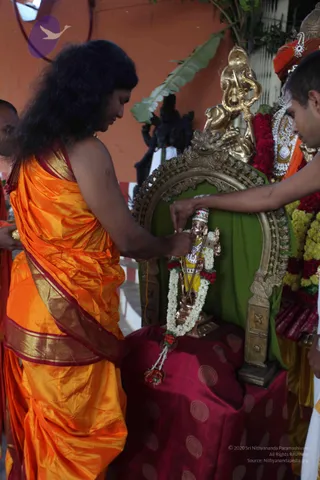
A person with long, loose dark hair, wearing an orange silk sari with a gold zari border, stands with back partly turned and hands placed on a small gilded murti of a deity adorned with white jasmine garlands and red flower strands. The murti sits on a green cushioned gold-framed seat draped in a maroon cloth with circular motifs. Behind are a gold trident-like ornament, a dark statue, banana leaves and an orange wall. A second person in orange is visible at the right edge. Setting suggests a temple shrine puja.A photograph of a deity murti standing on a gilded golden base with a carved serpent hood at its front. The figure wears an orange shawl over a jewelled silver-and-white bodice with multicoloured stone ornaments, a crown on its head, and a red-and-gold dhoti. It is densely garlanded with bands of yellow marigold, red rose petals and white jasmine-like flowers, with green leaves and a green silk cloth behind. The setting suggests a temple or festival decoration. No people are visible.A temple shrine in an ornate golden arch framed by a teal curtain. Two large painted deity murti stand side by side, the left with four arms holding a trident and a drum-like object, both wearing crowns and garlands of red and white flowers and gold necklaces, draped in orange and magenta cloth. Below them a seated figure, partly covered by a heavy garland of yellow and red flowers, sits on an orange cloth. Brass oil lamps stand on either side, and a small statue of a yellow-robed figure stands in a niche on the right. No living people are visible.

October 26 2011

Original wiki page
Contents

Title:

THE SUPREME PONTIFF OF HINDUISM HDH BHAGAVAN SRI NITHYANANDA PARAMASHIVAM

Description

Bhagavad Gita (Song of God) is a timeless treatise on the essence of living enlightenment. The Gita was imparted by the enlightened Hindu incarnation Sri Krishna to the warrior-prince Arjuna over 5000 years ago. Amazingly, the spiritual wisdom and life solutions offered in the Gita are so universal and current that it is even today used as a personal transformation guide

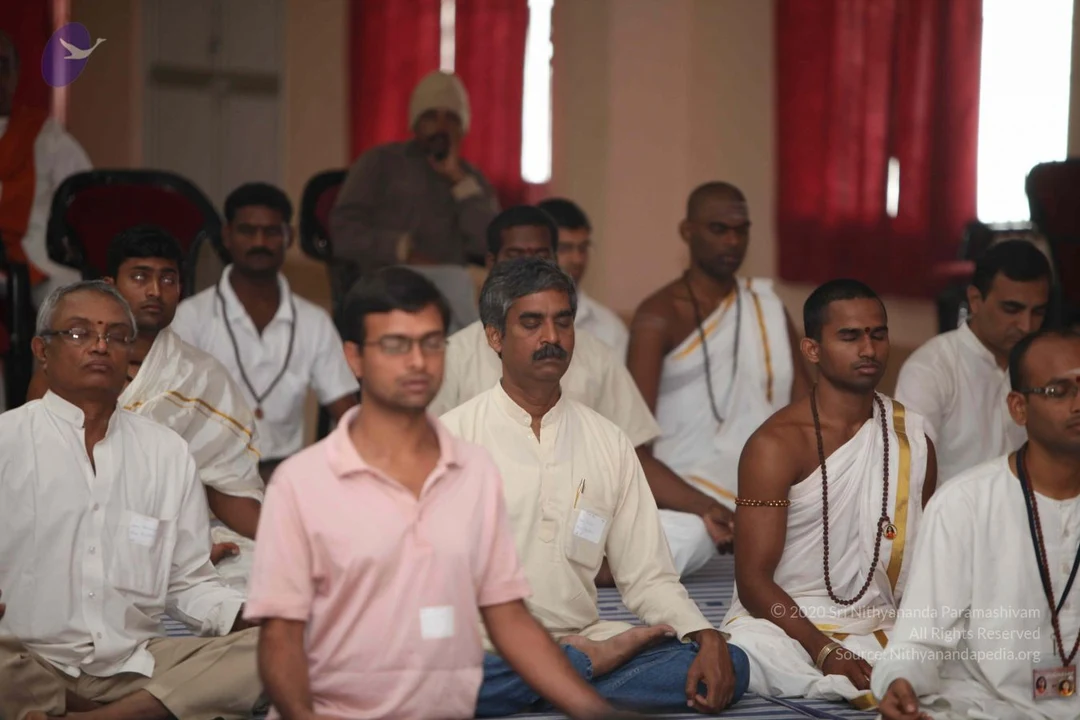
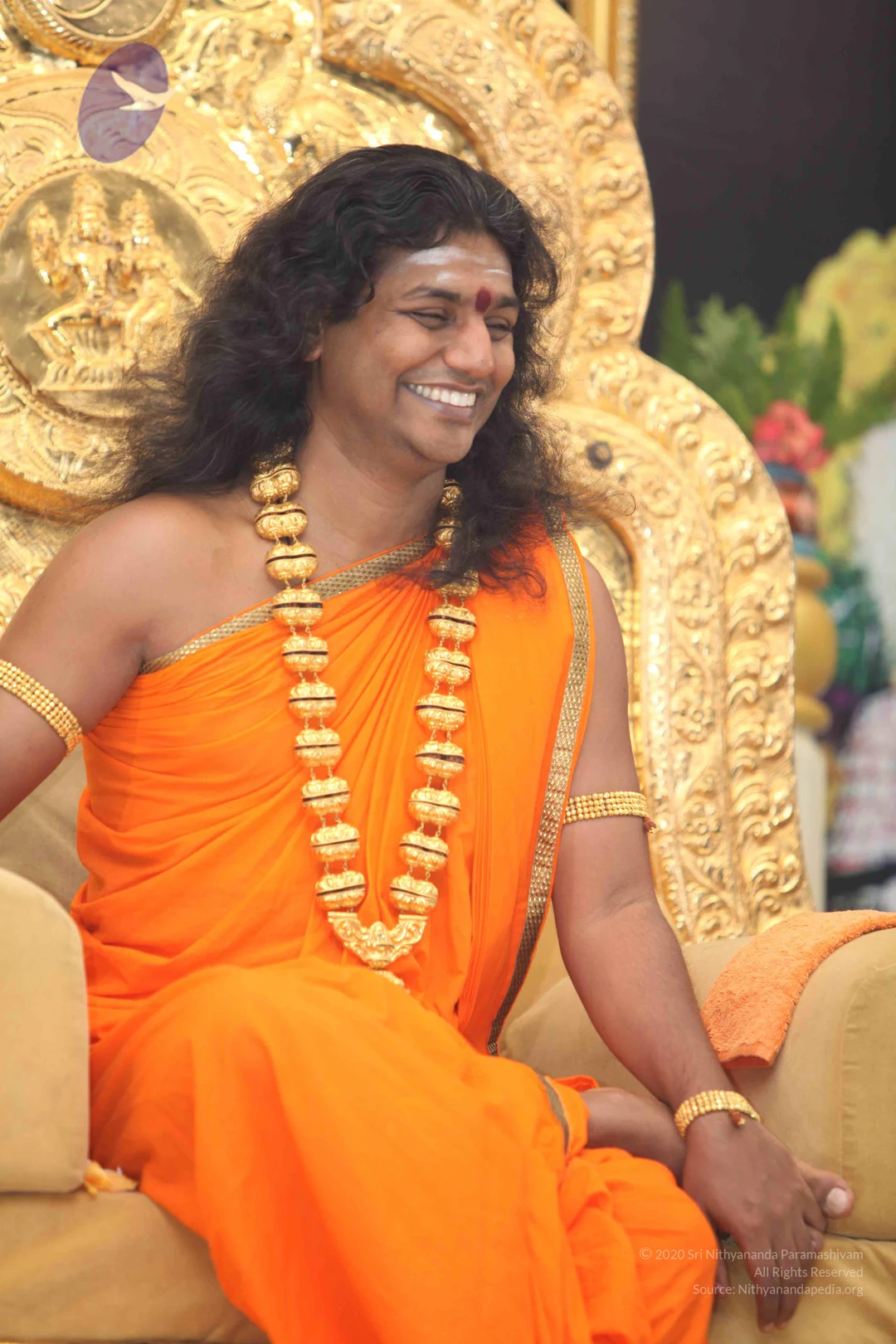
In today's talk on Bhagavad Gita, Chap 2, Verses 53 & 54, Paramahamsa Nithyananda identifies what he terms the "last problem between guru and disciple". Arjuna has spent his entire life close to Krishna. Because of this he has lost the understanding that Krishna is an enlightened being. When disciples live close to their guru, their daily experience of well-being has potential to blind their spiritual clarity. They may lose their awareness of the dimensions beyond mortality that their guru embodies. With compassion Krishna prepares his reply, aiming to transform Arjuna's perspective. Krishna represents the evolution of human possibility, the divine in human form.

Link to Video:

VideoAudio

Photos
Sakshi Pramana:

Sharing from Program/Yatra

Photos Of The Day:
Temple

Bhagavad Gita Satsang

Kanganam-Temple

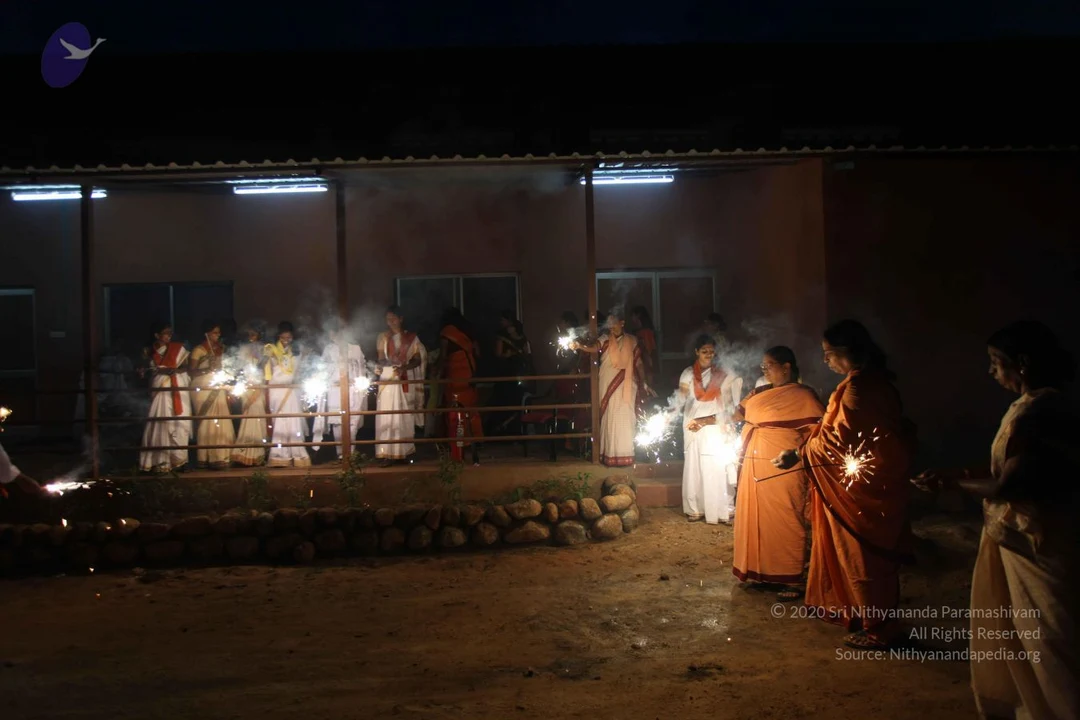
Diwali-Celebrations

BGSatsang-Tamil

Chandi-Homa

Salem-DiwaliCelebration

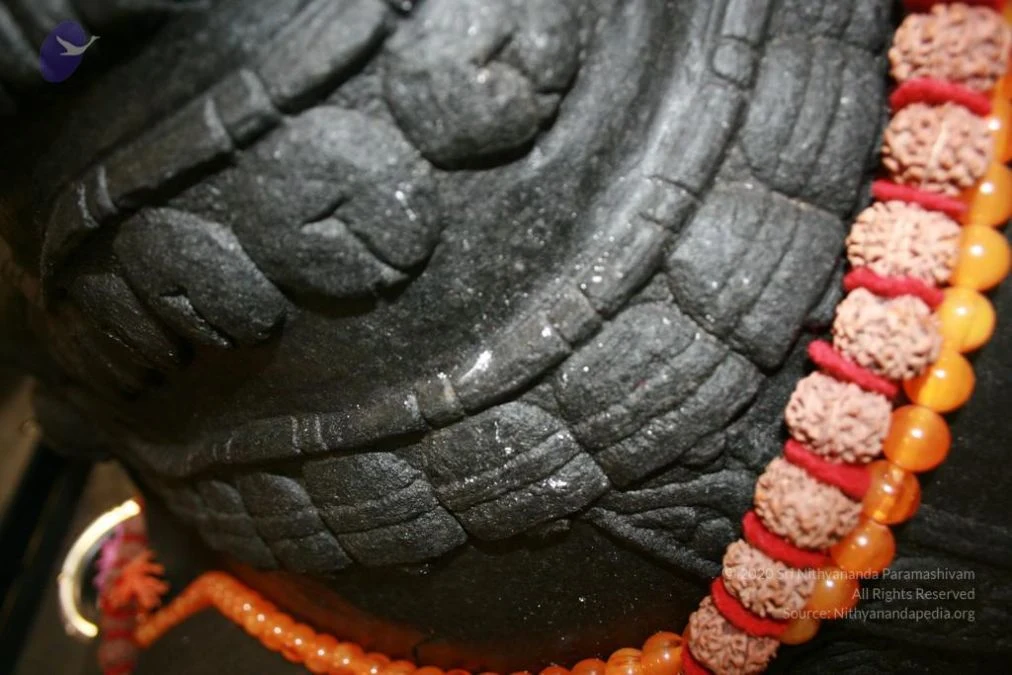
Vibhuti-Nandi-Toronto

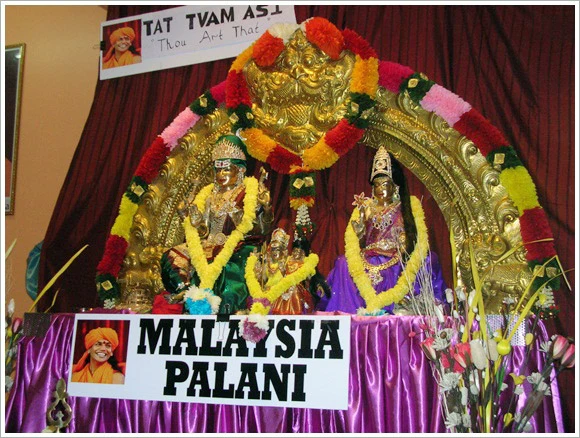
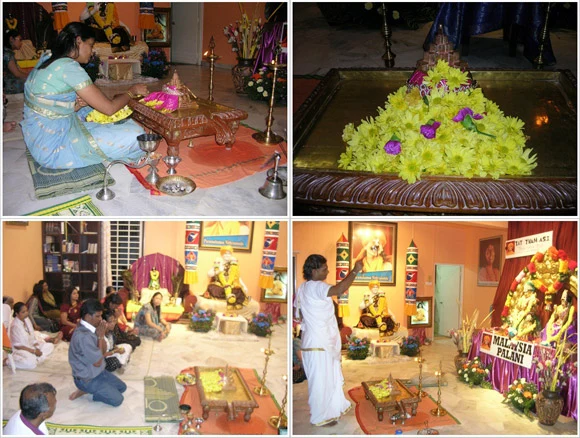
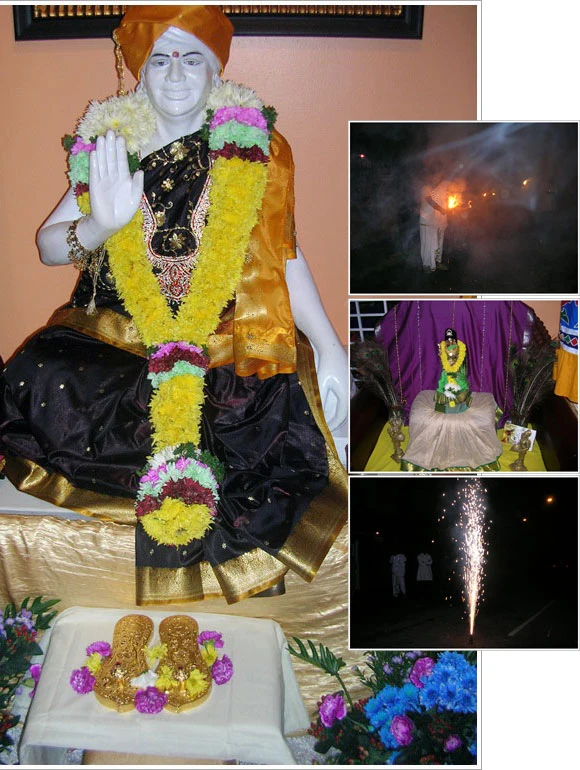
Deepavali-Malaysia

Photos Of The Day:
Deepavali-Salem-Aadheenam-Homa

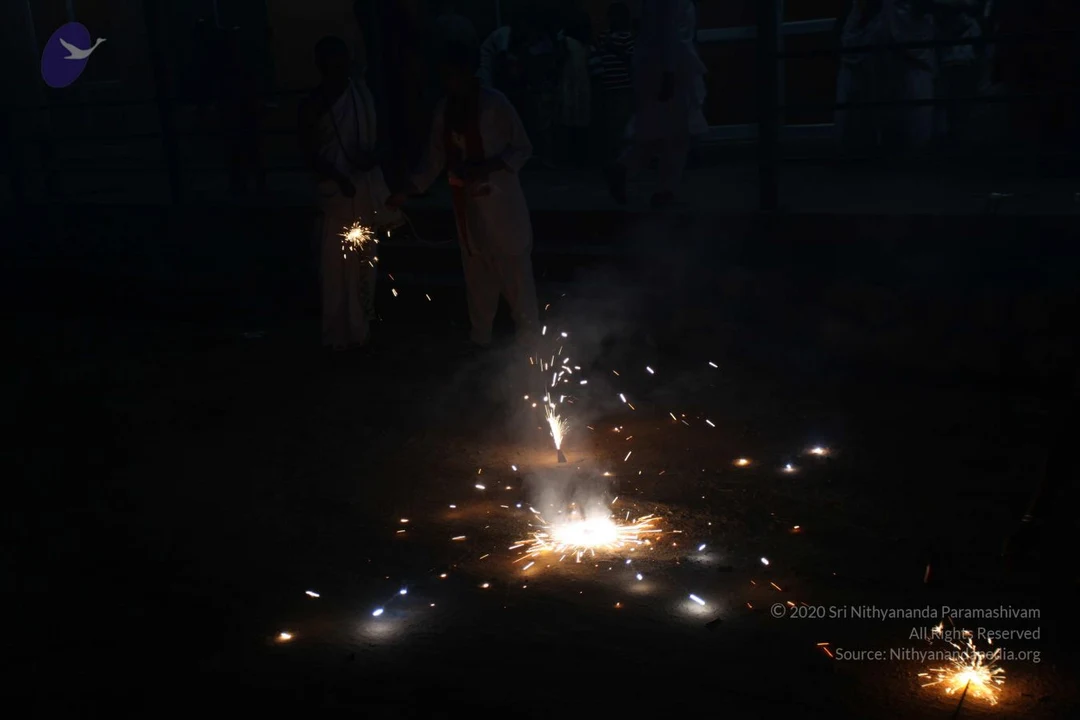
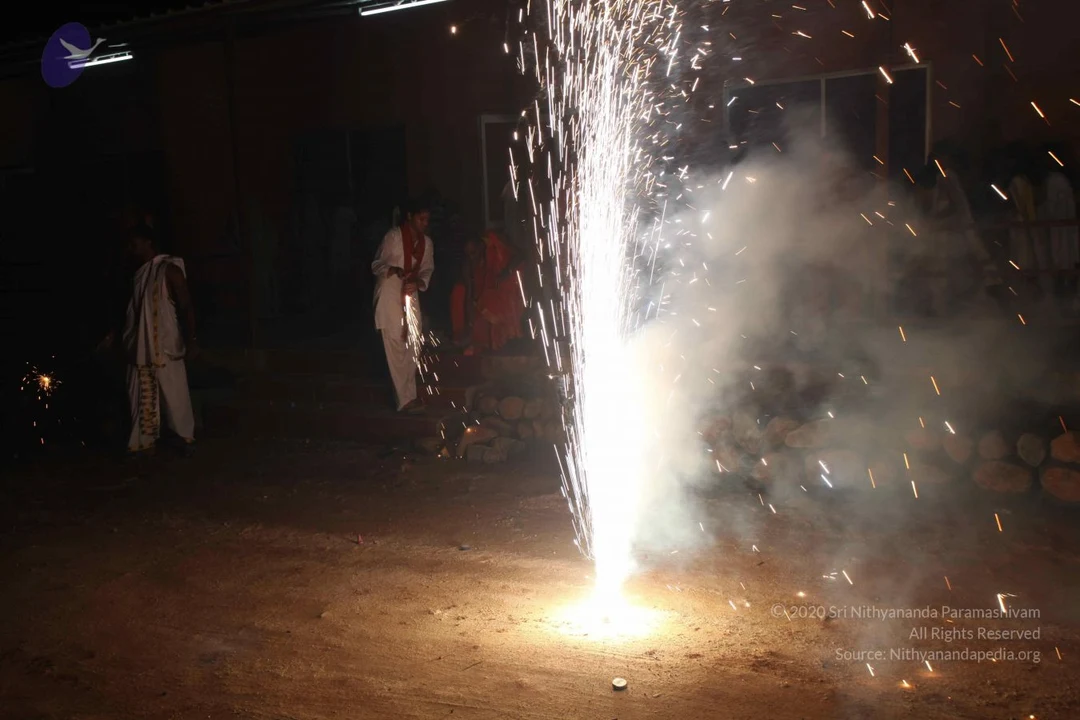
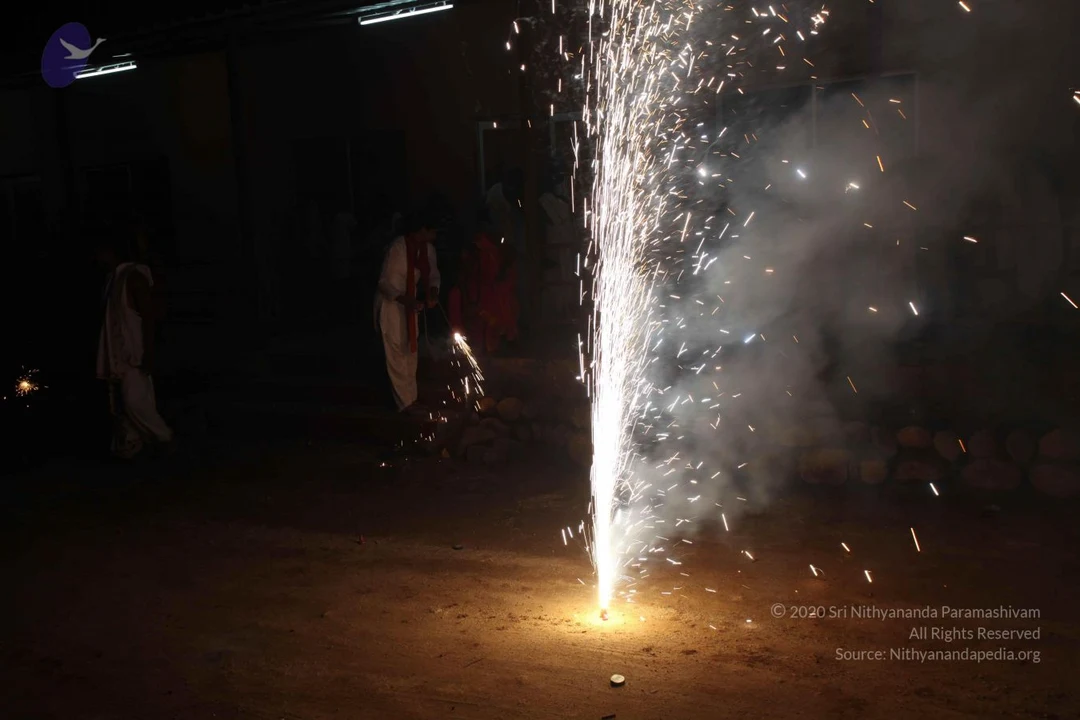
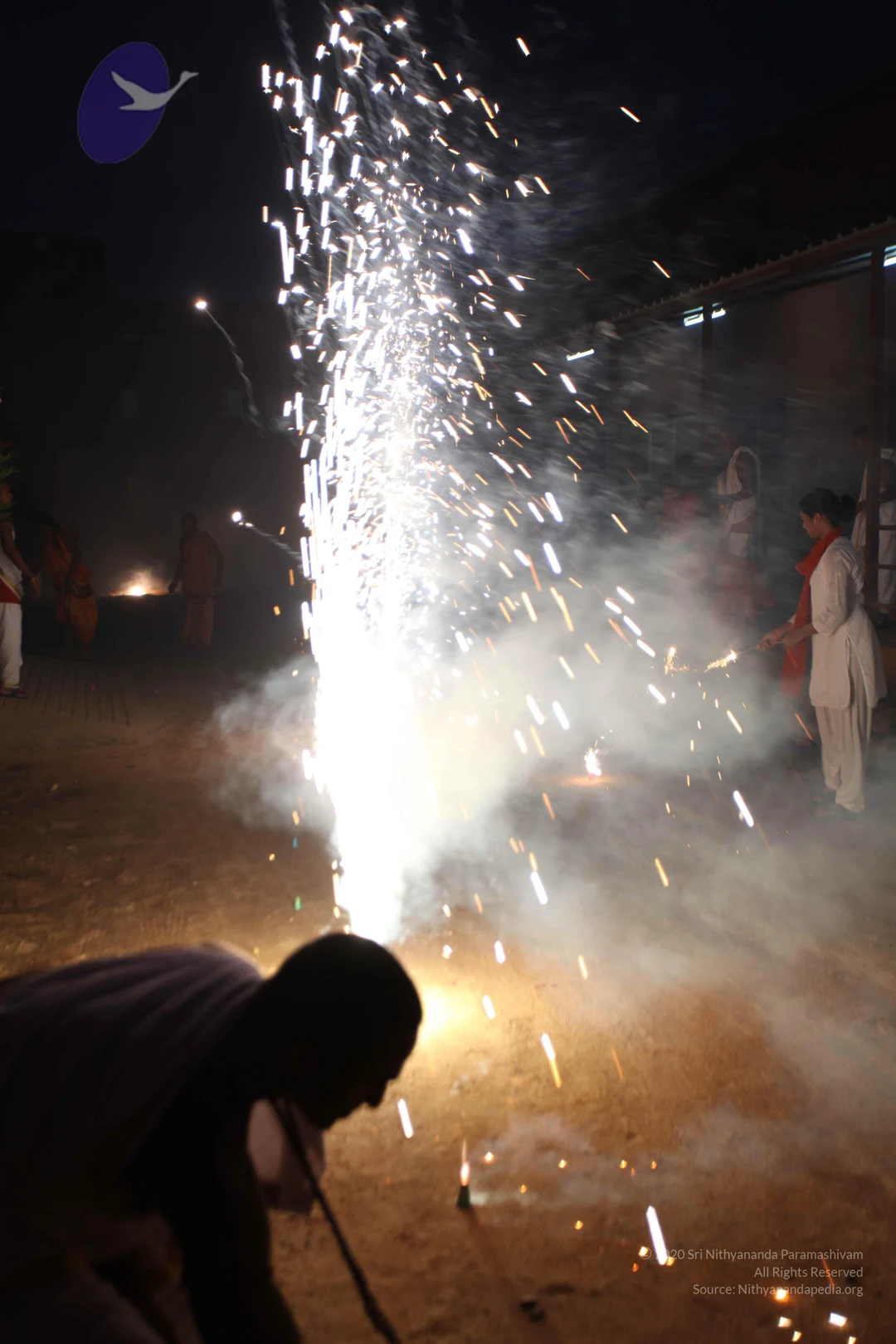
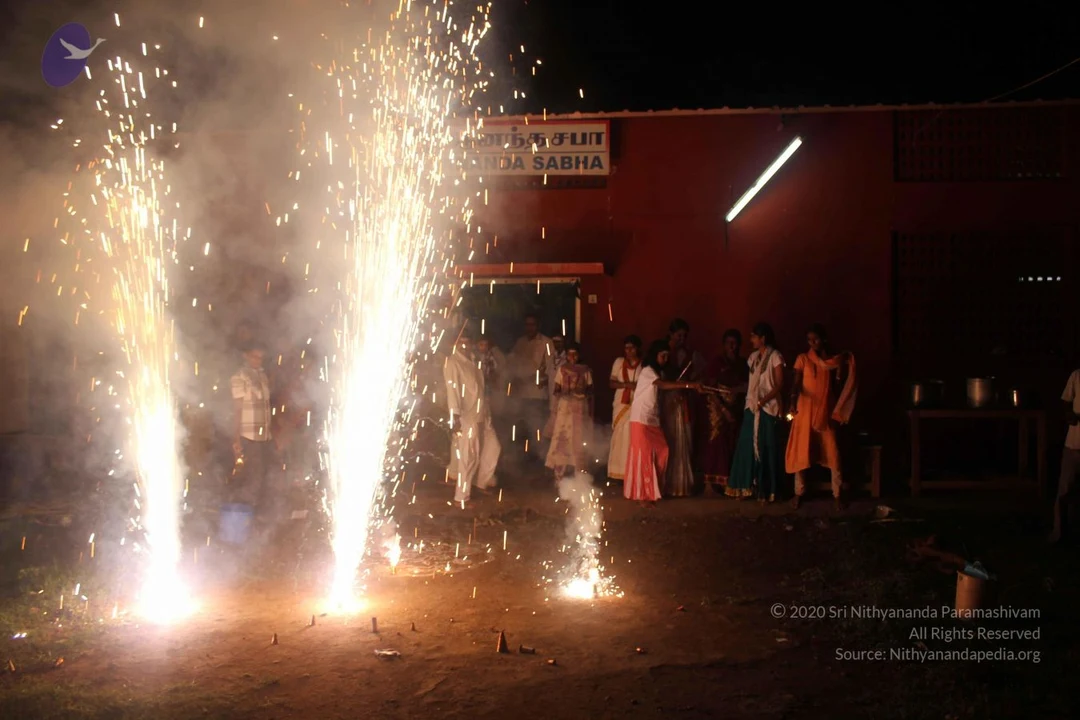
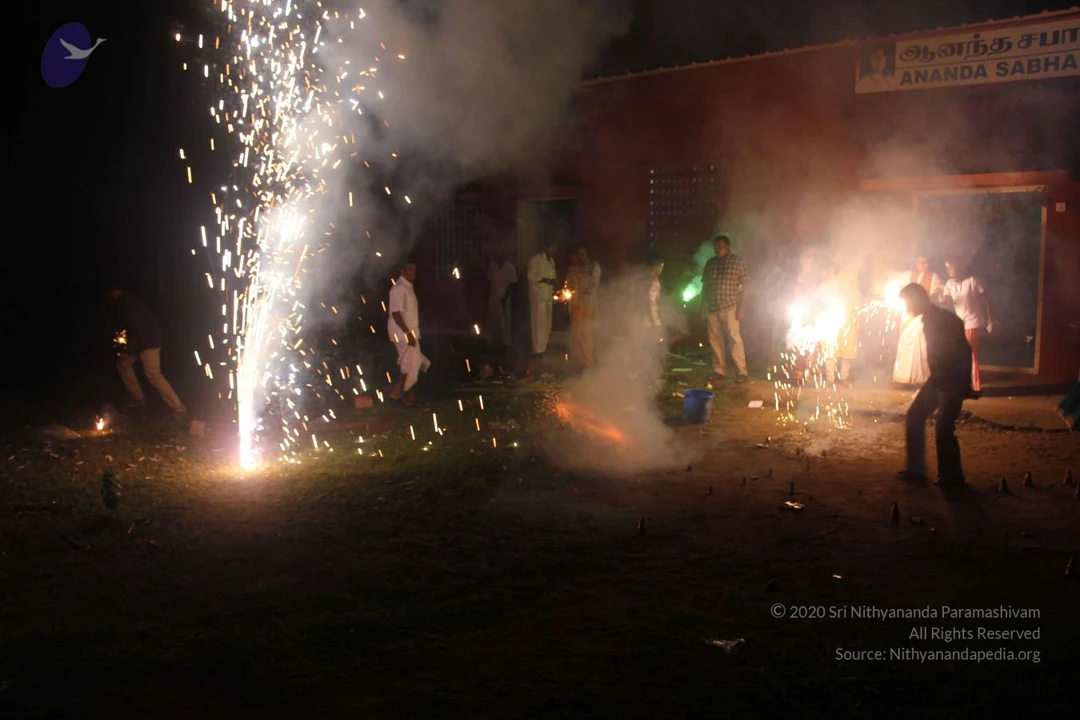
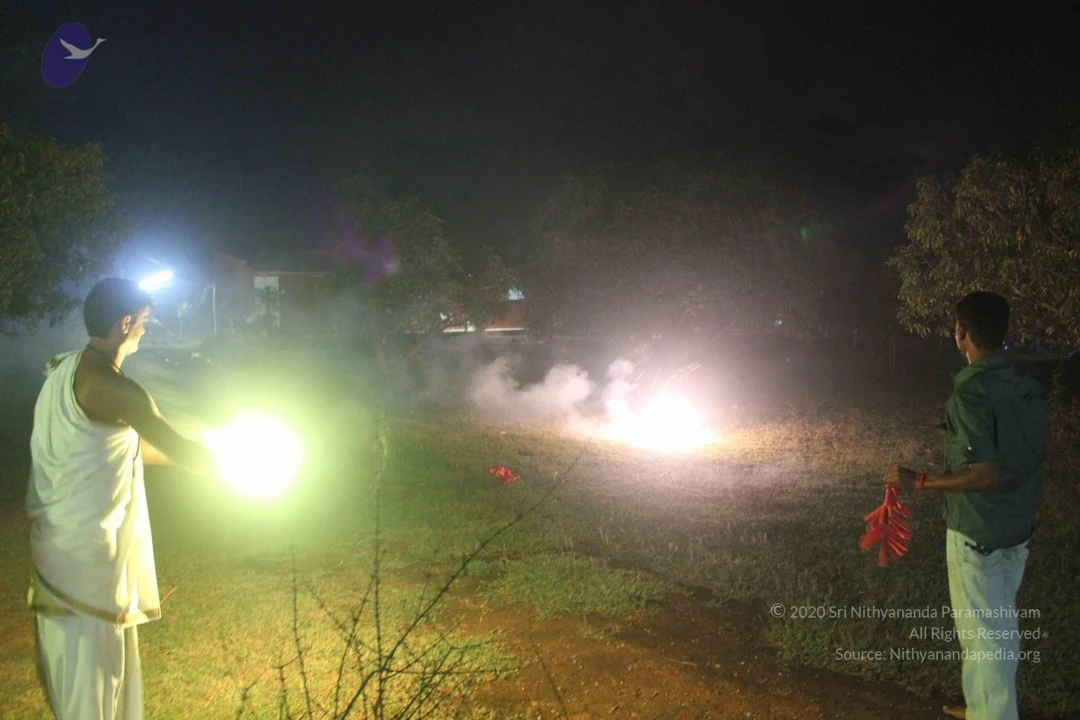
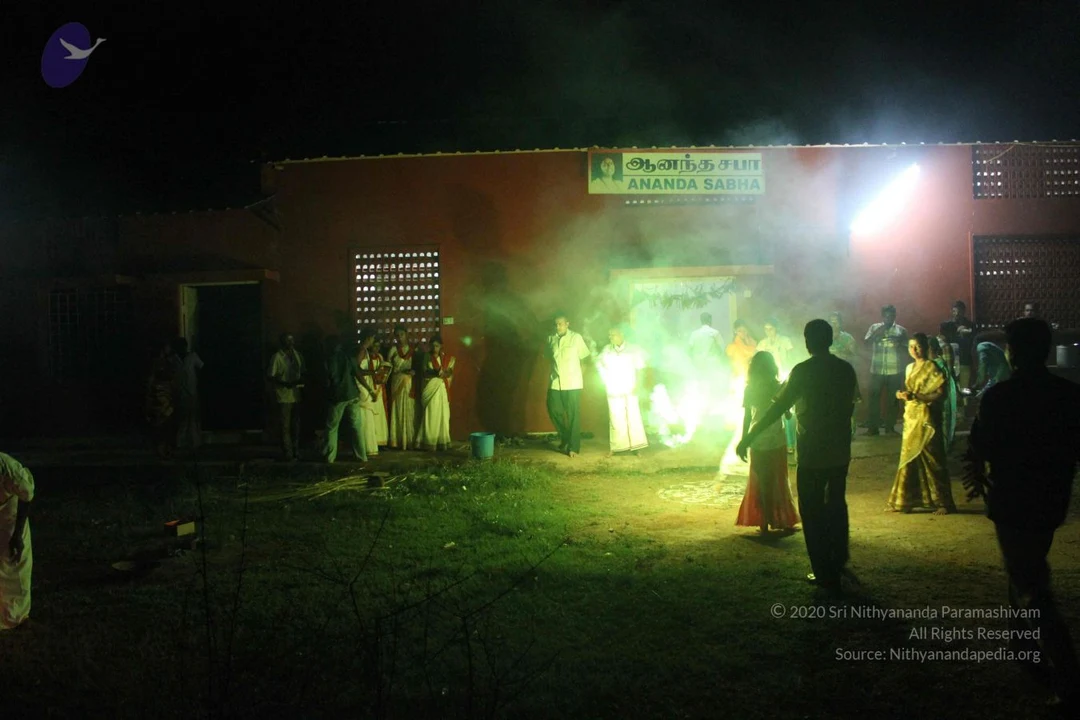
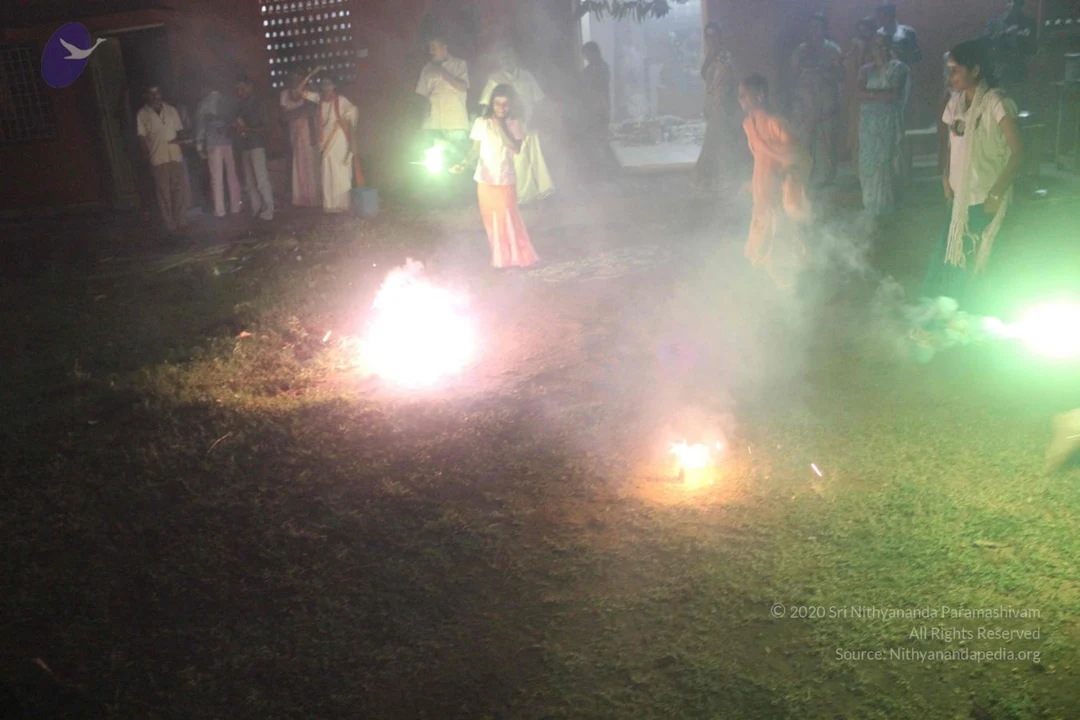
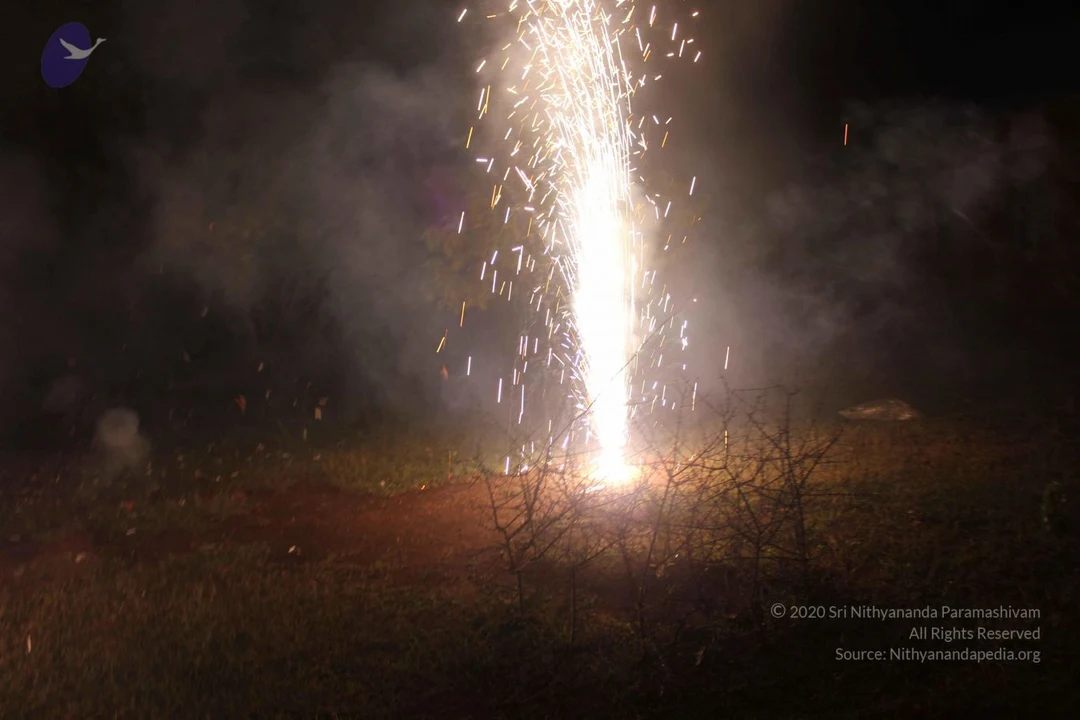
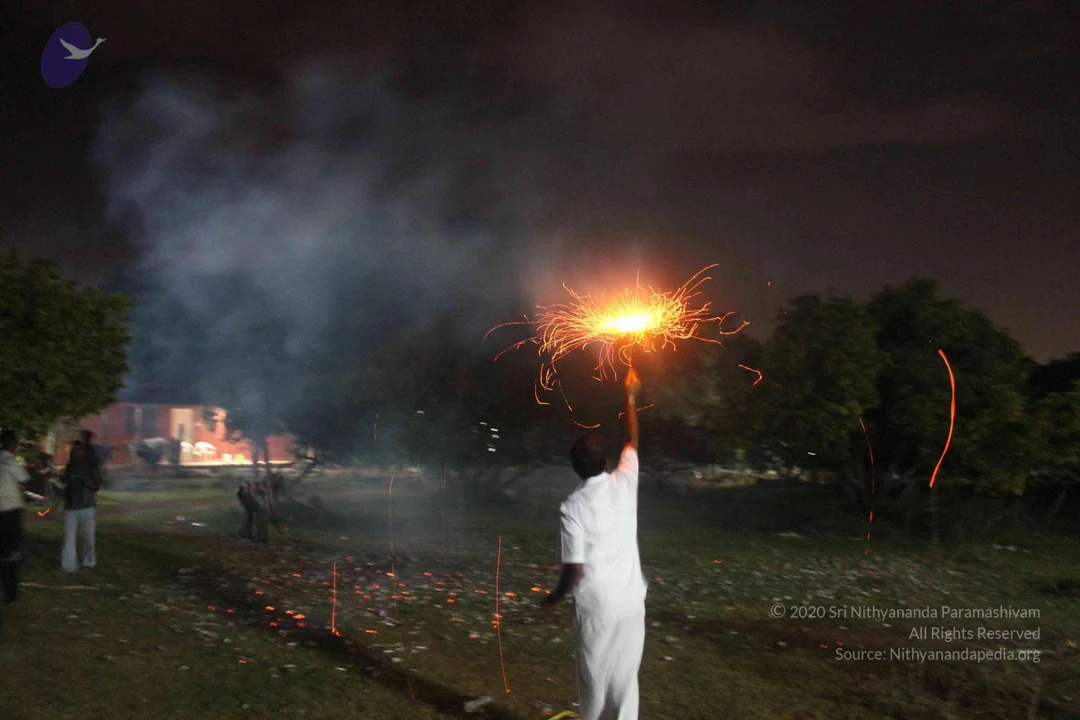
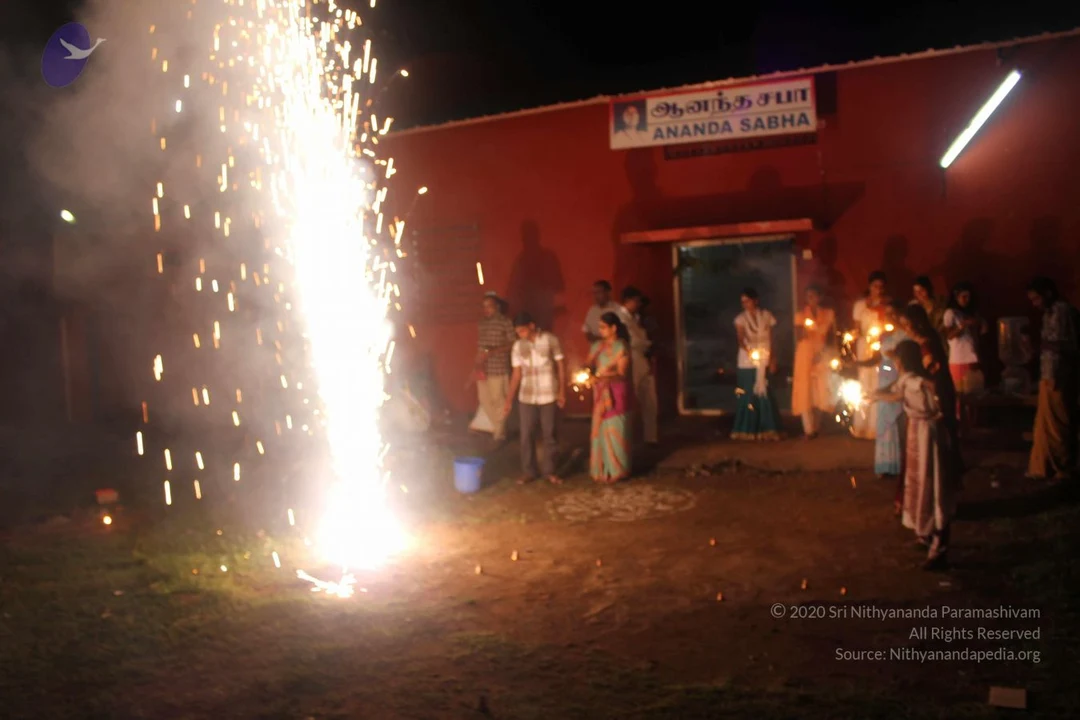
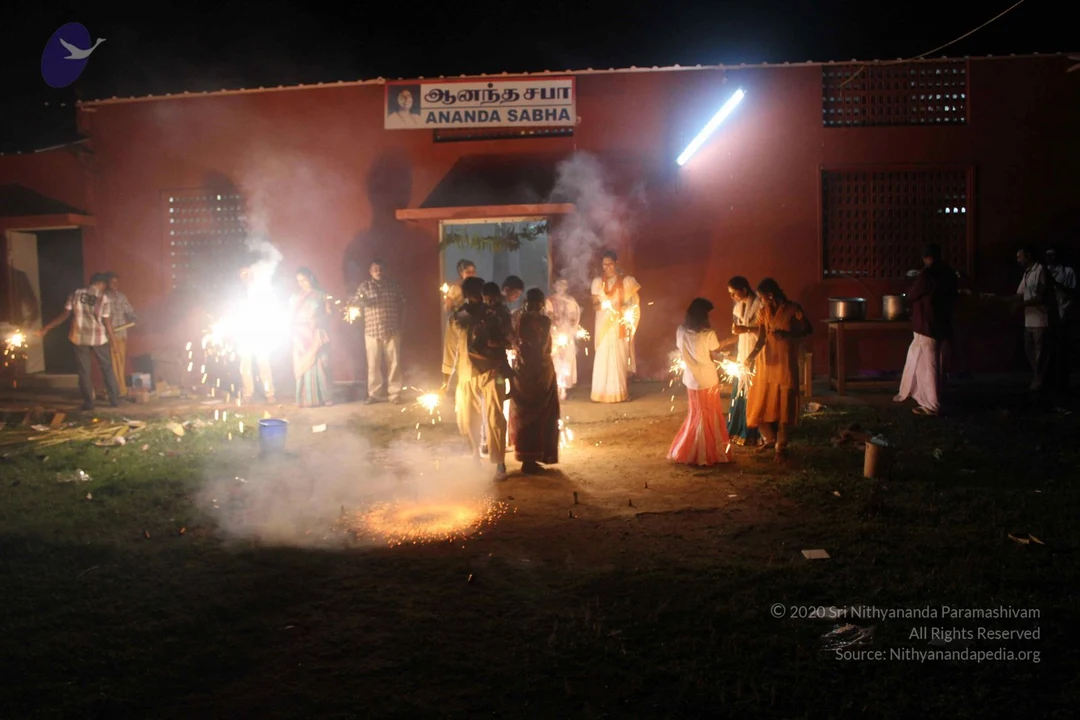
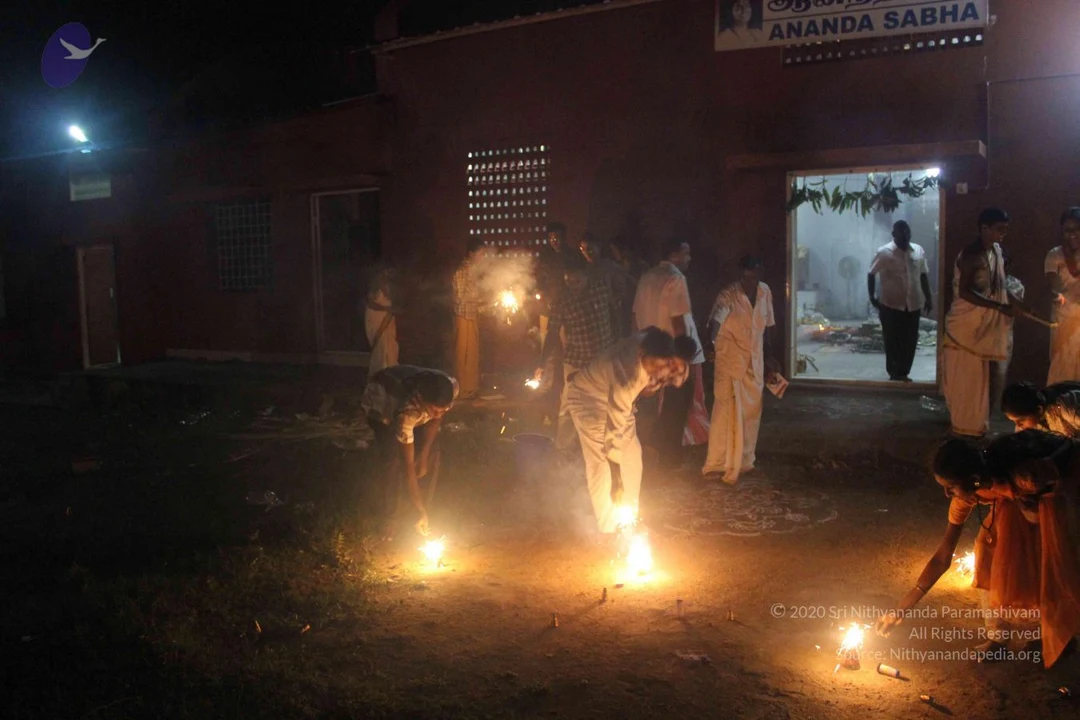
Deepavali-Salem-Aadheenam-Fireworks

1-Temple

2-BGSatsang

3-Kanganam-Temple

4-Dewali-Celebrations

5-BGSatsang-Tamil

6-Chandi-Homa

7-Salem-DiwaliCelebration

9-Deepavali-Malaysia

Photos from this day
View all 592 photos

Temple
26 photosSource gallery
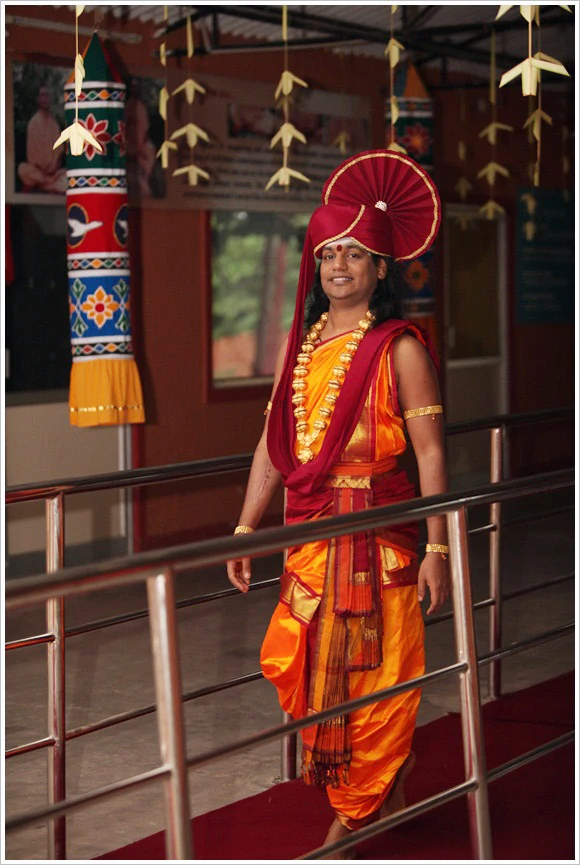
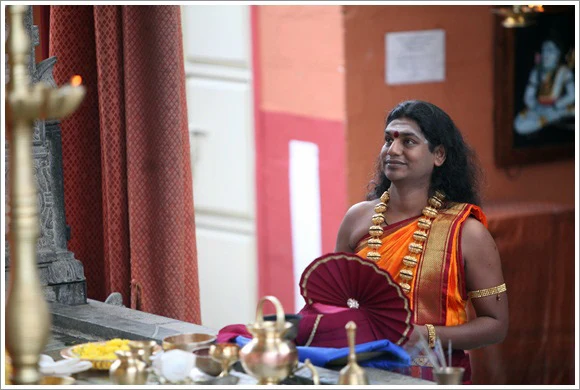
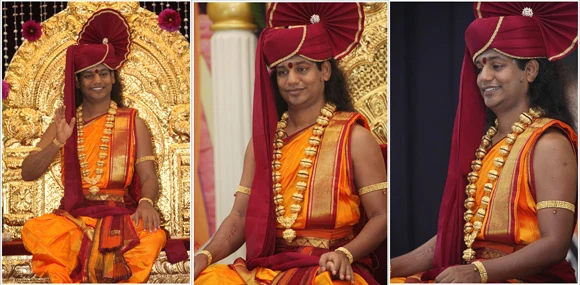
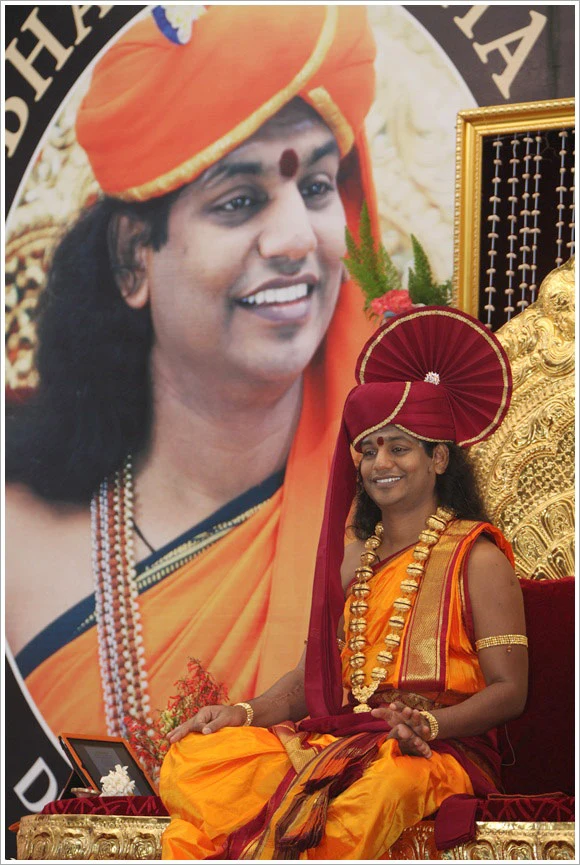
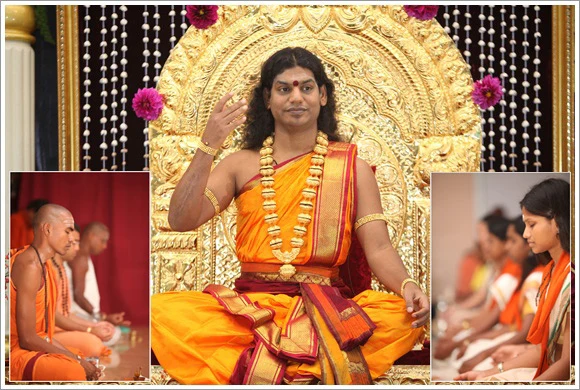
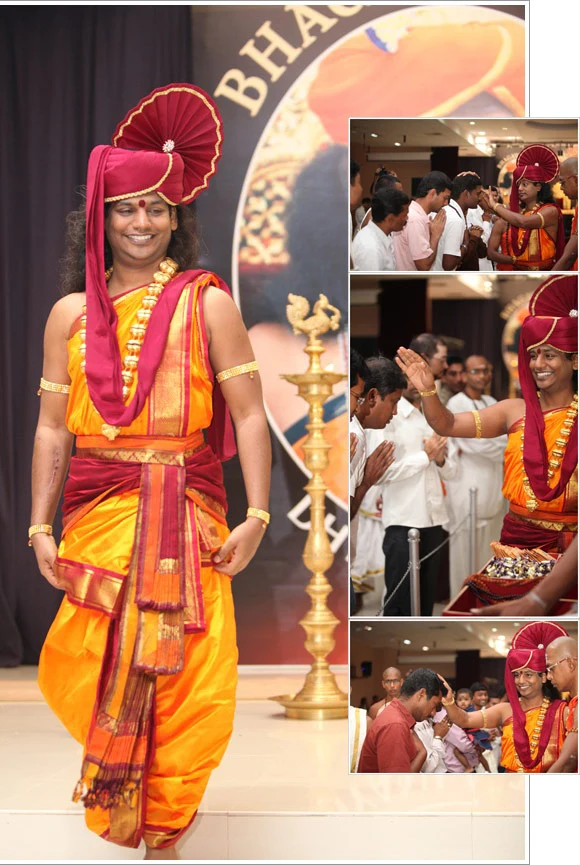
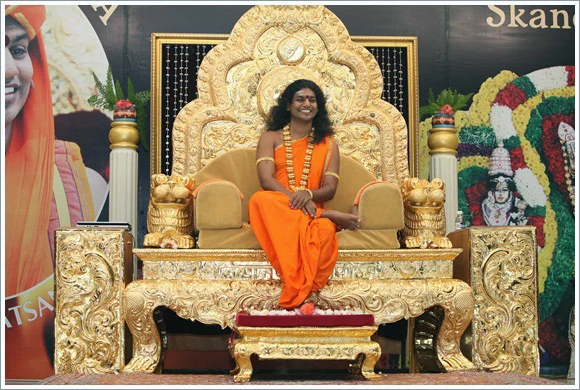
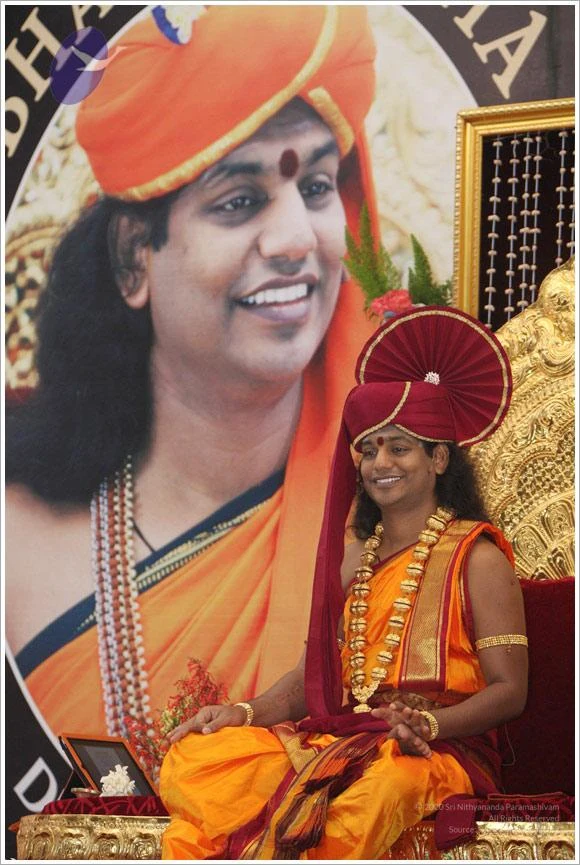
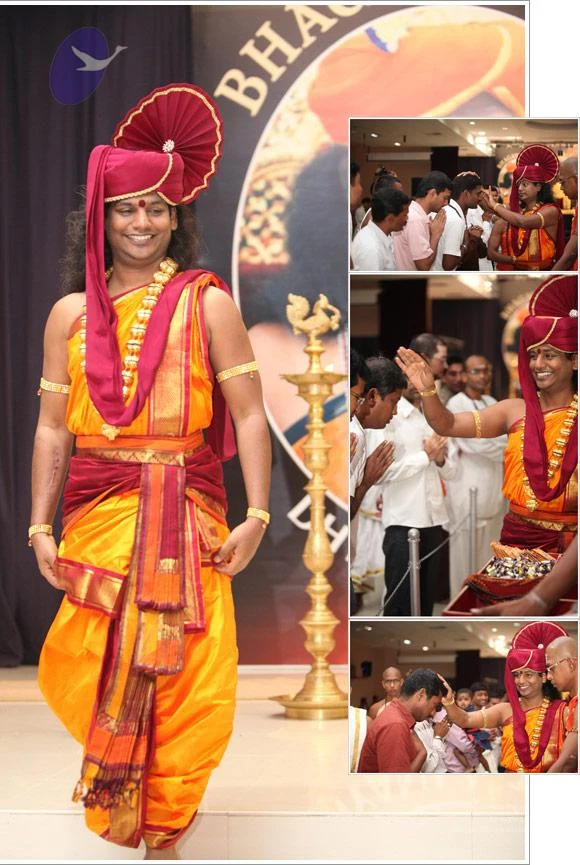
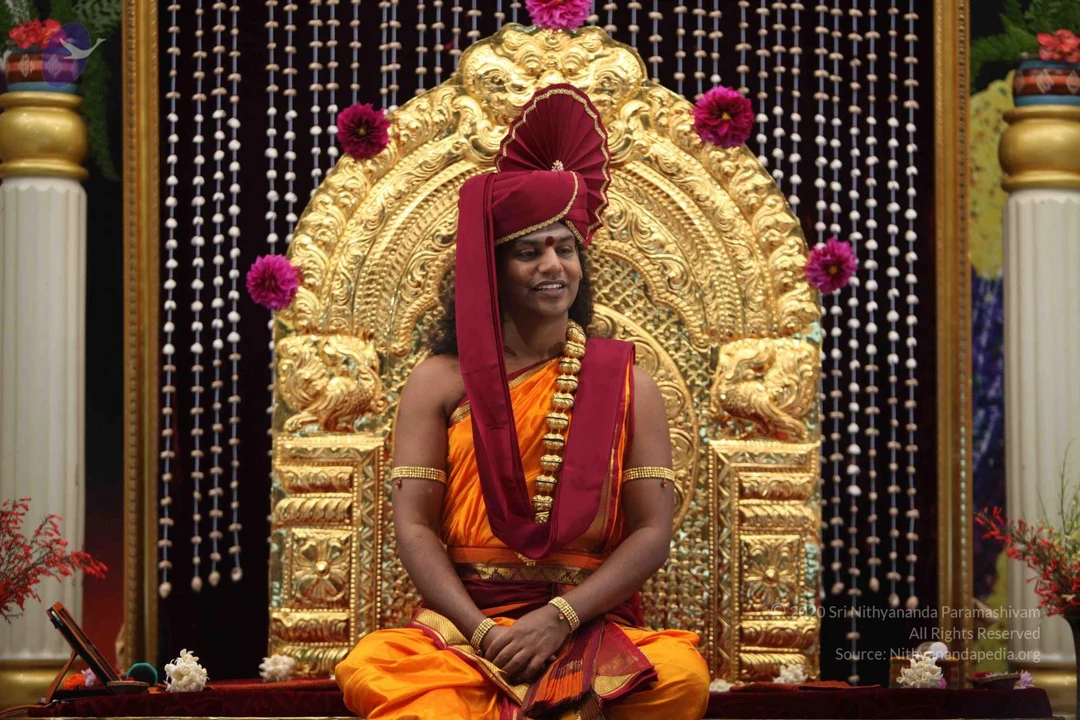
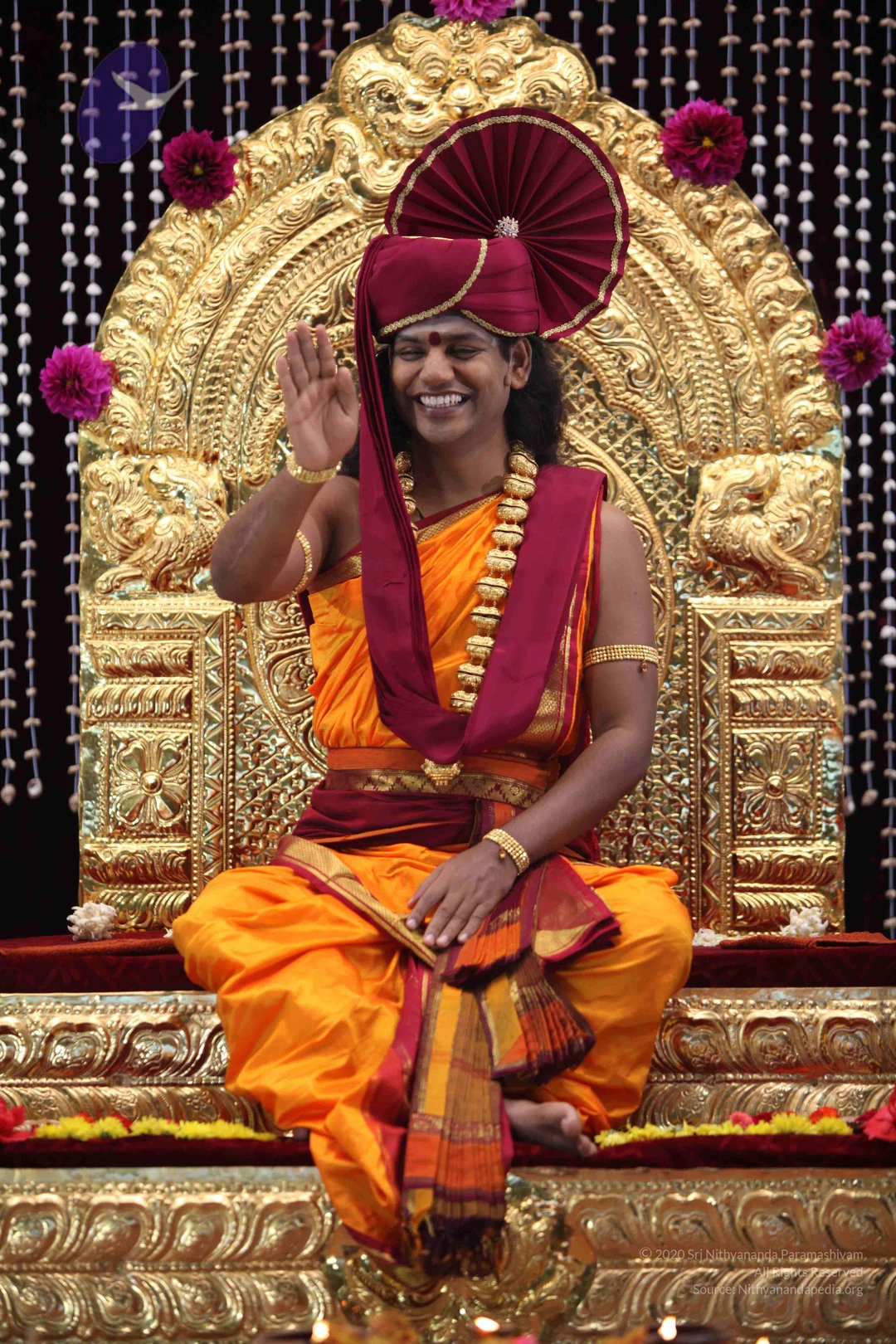
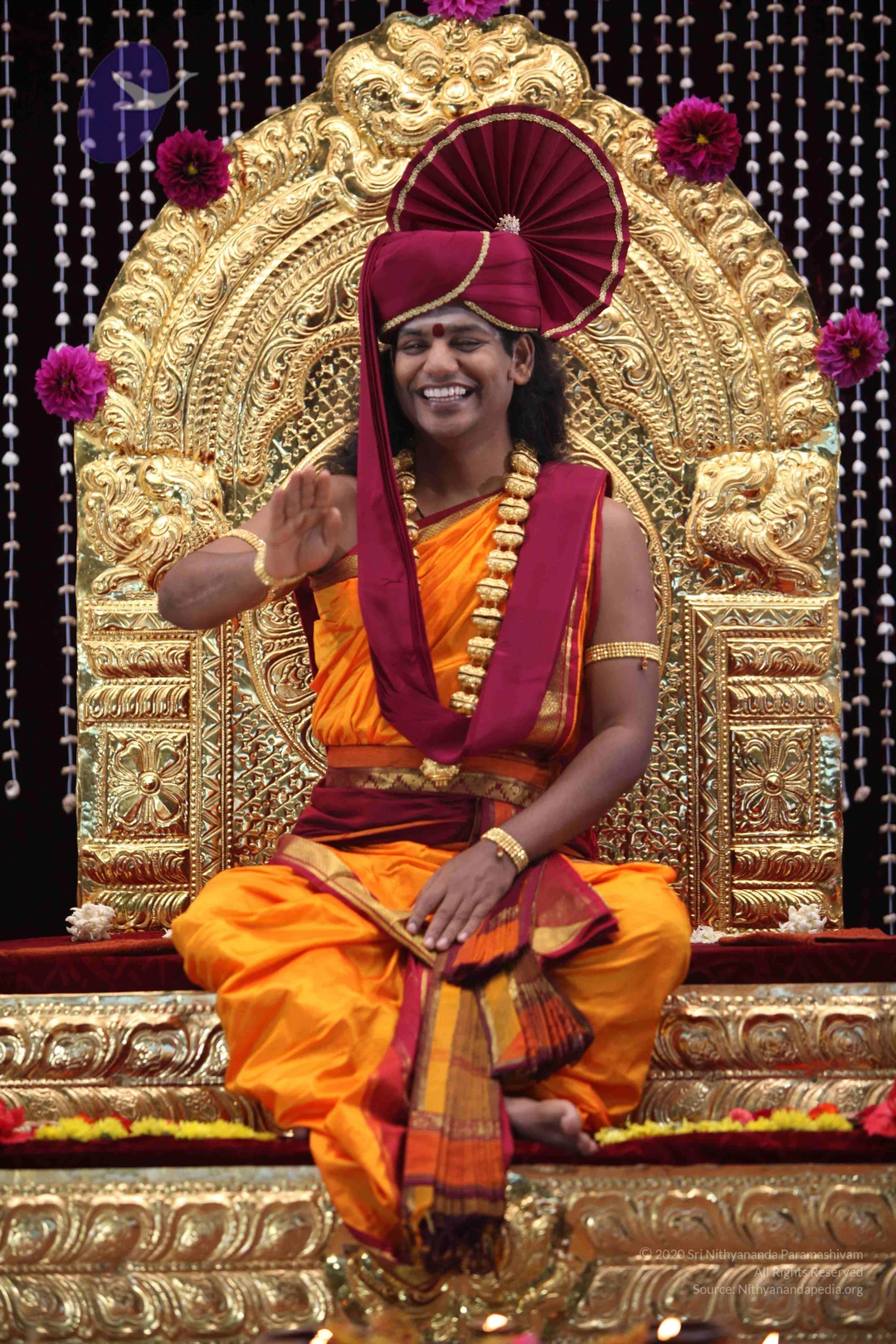
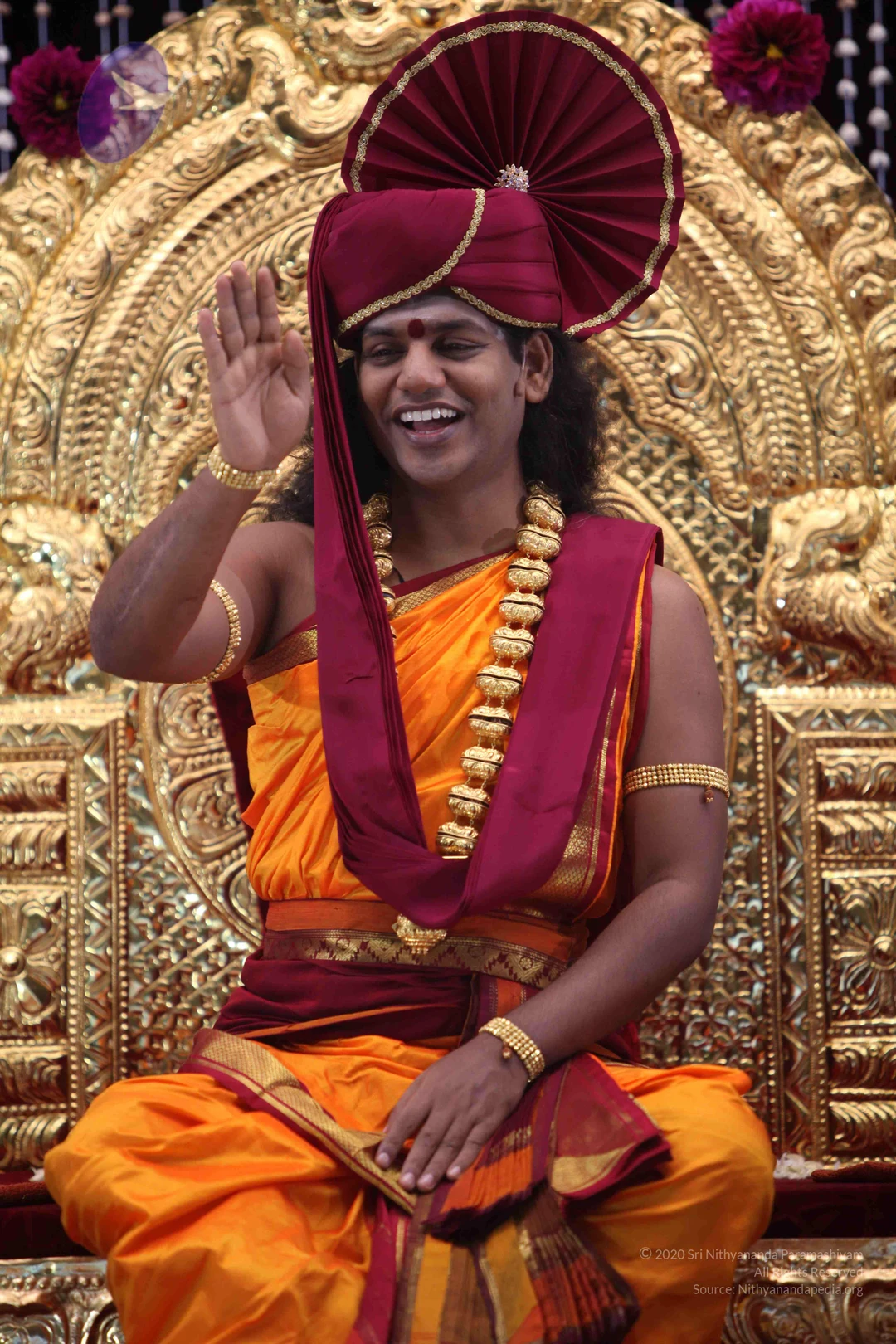
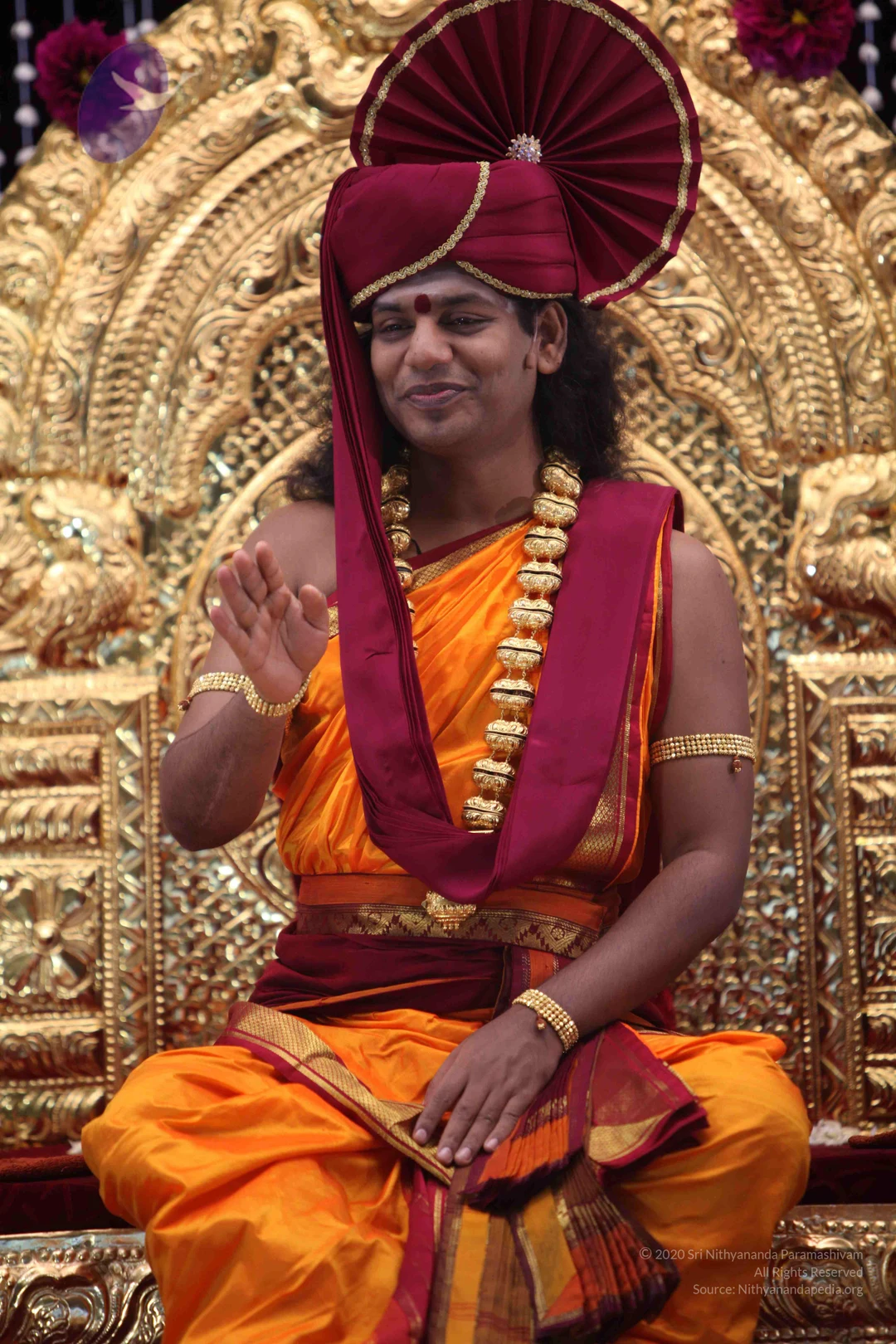
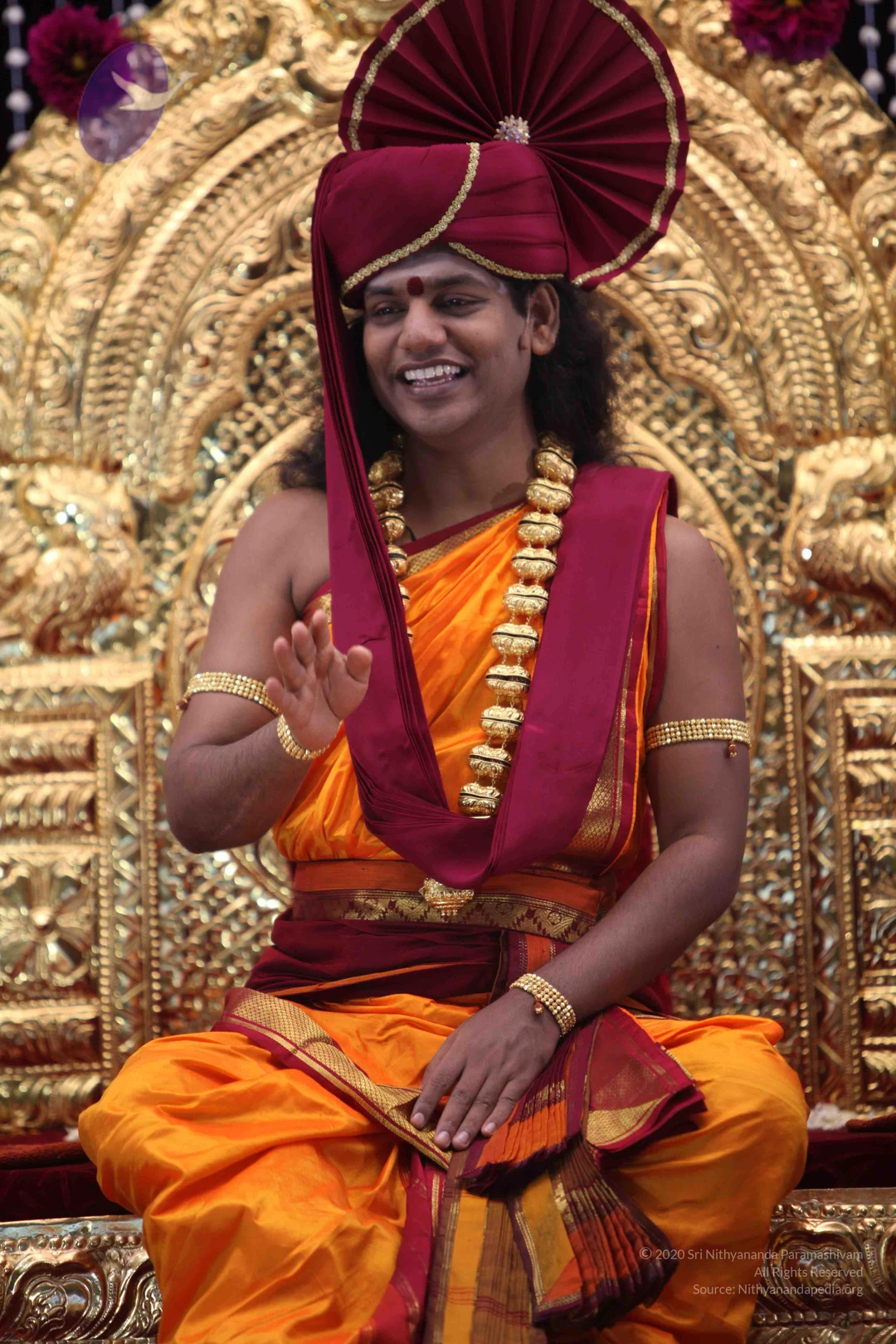
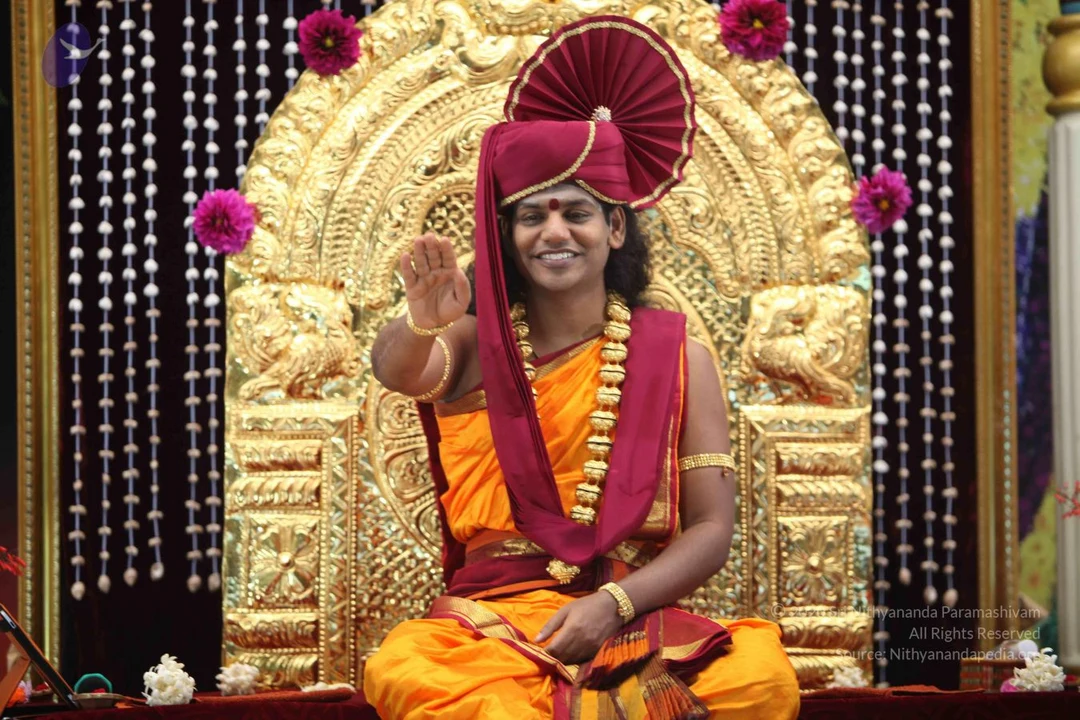
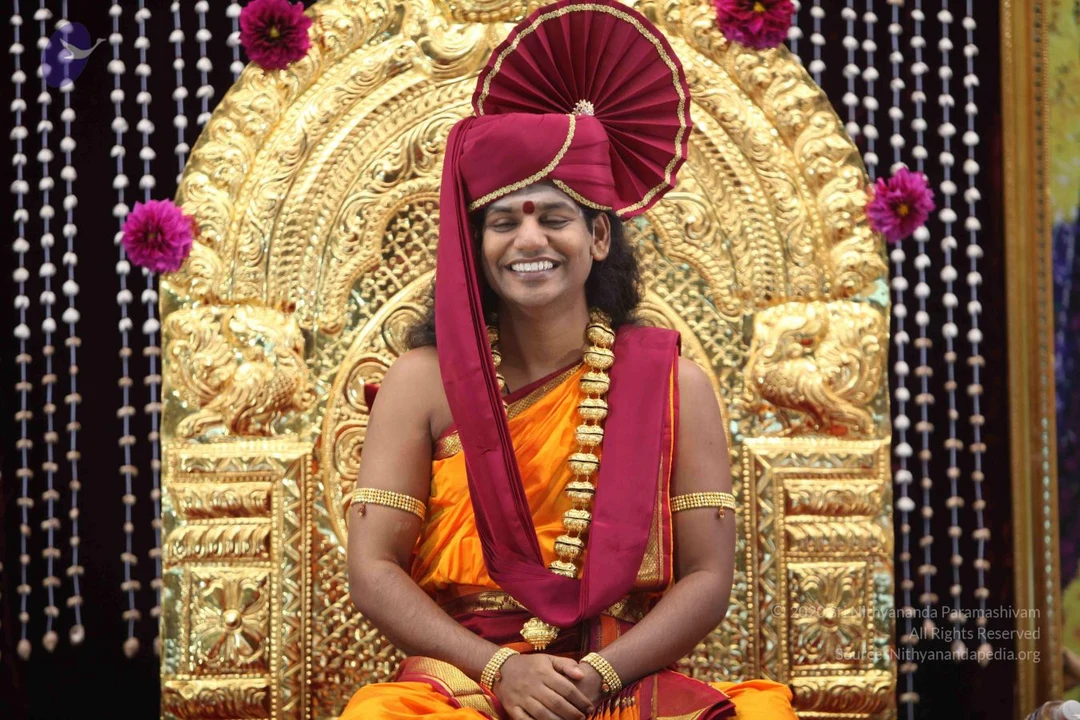
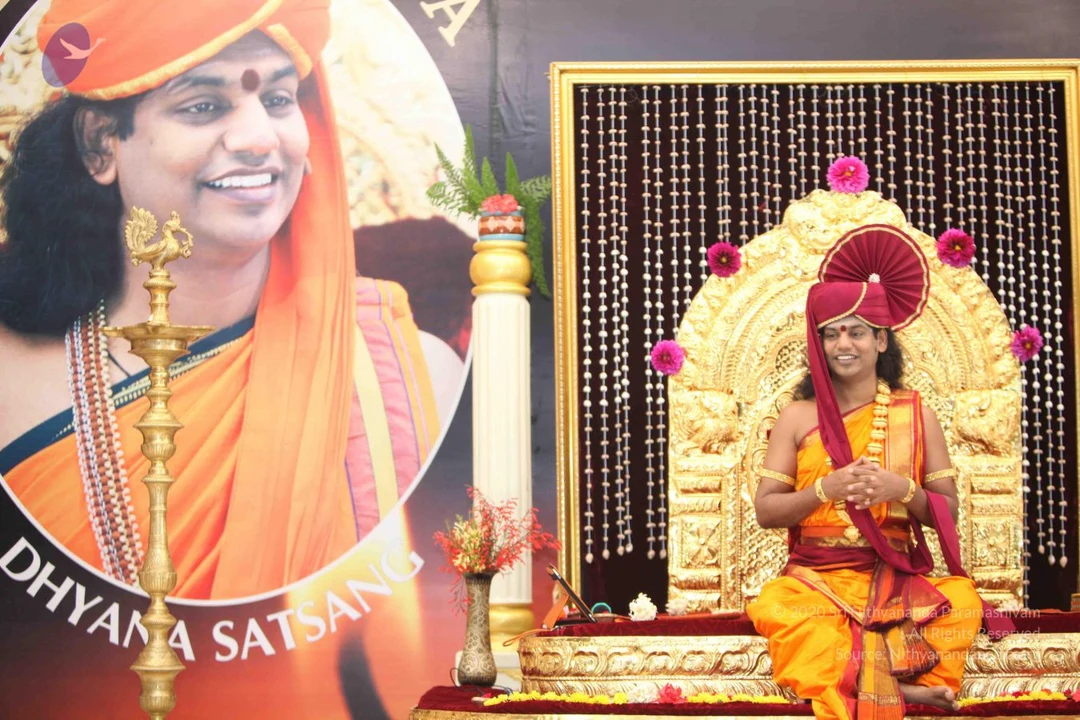
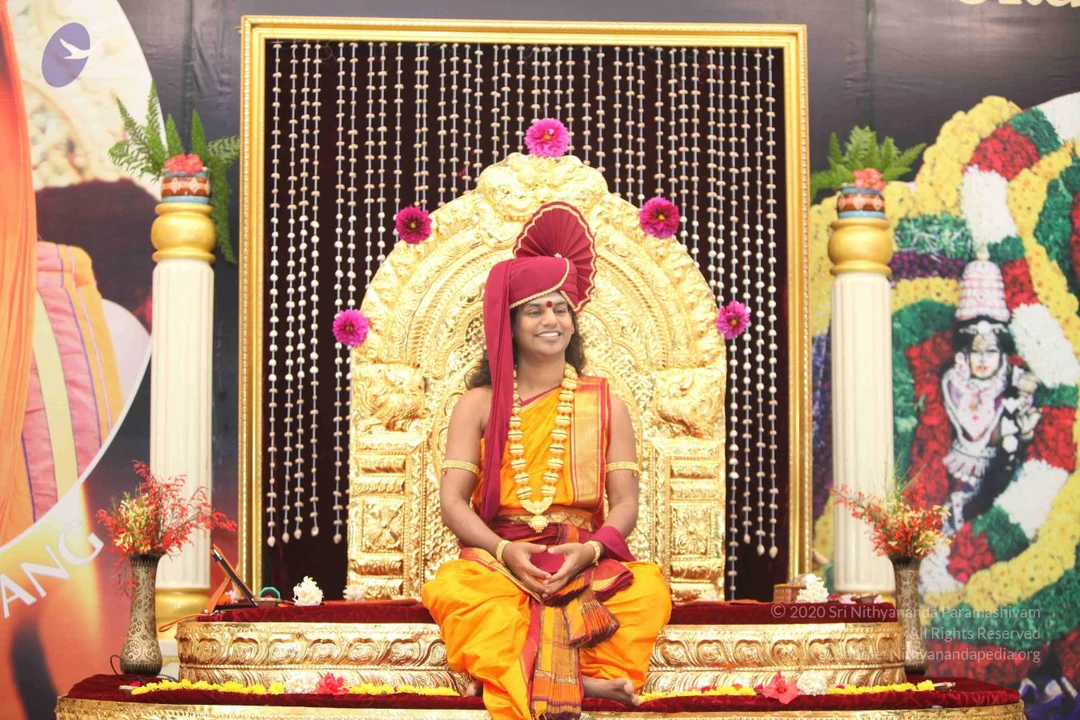
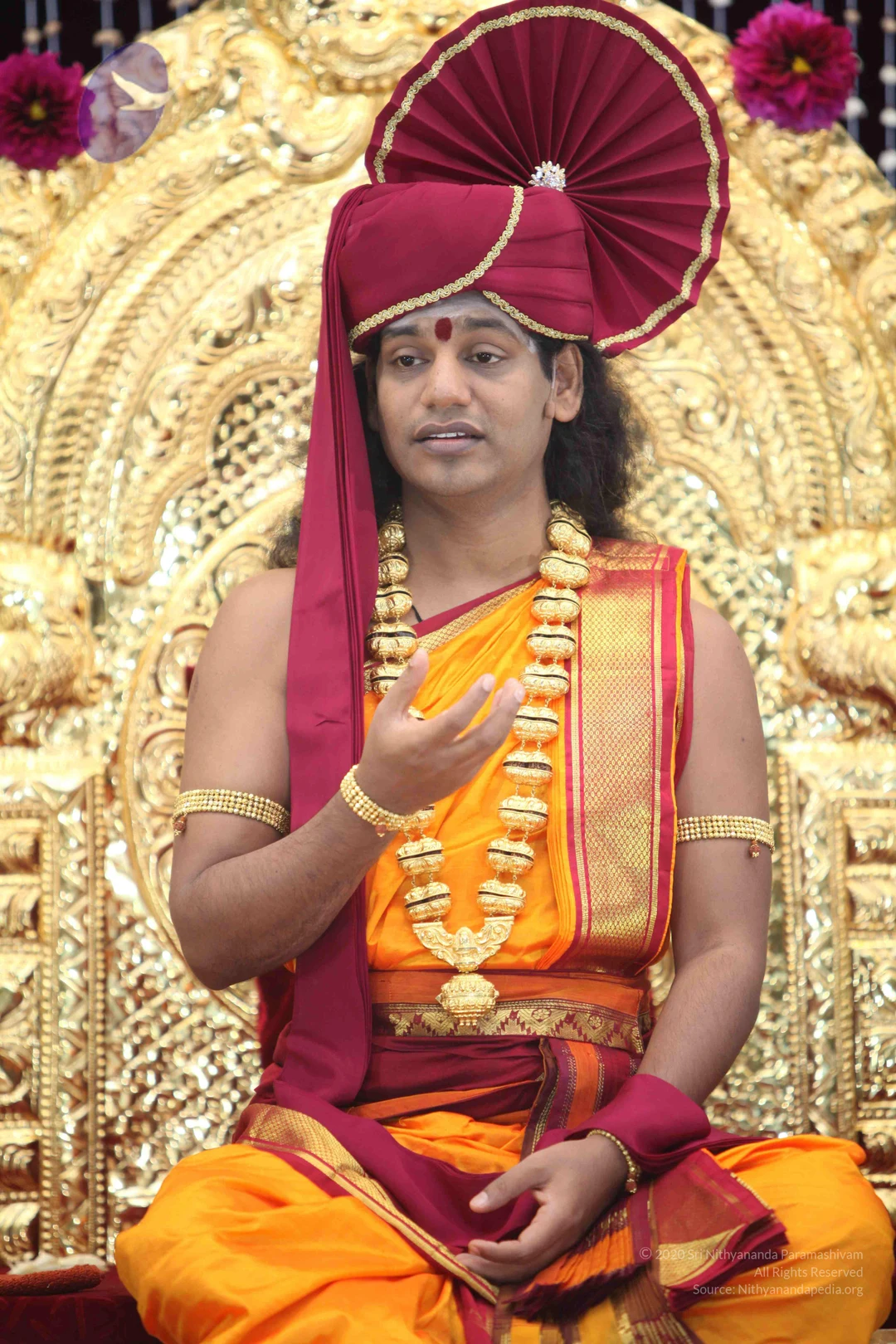
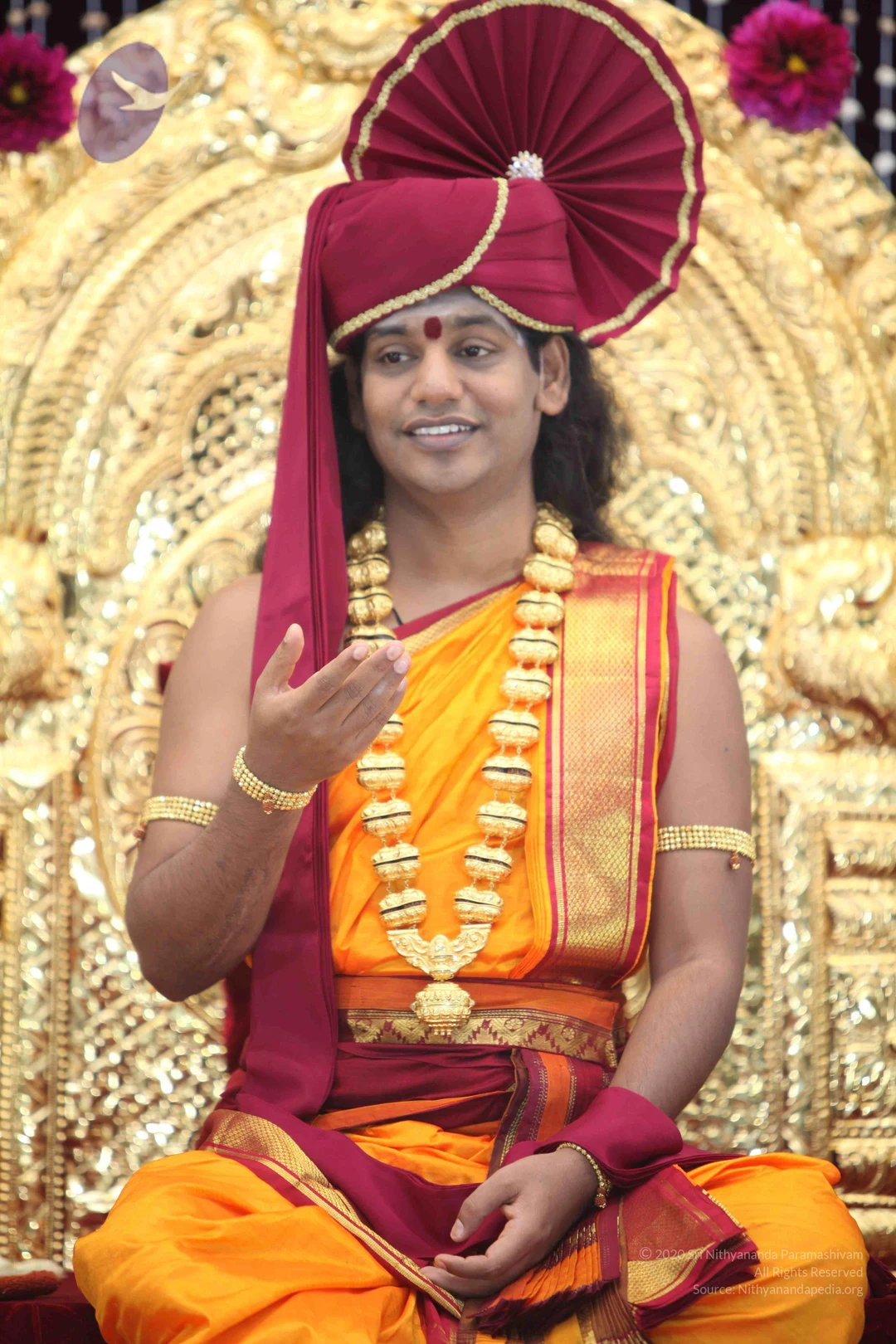
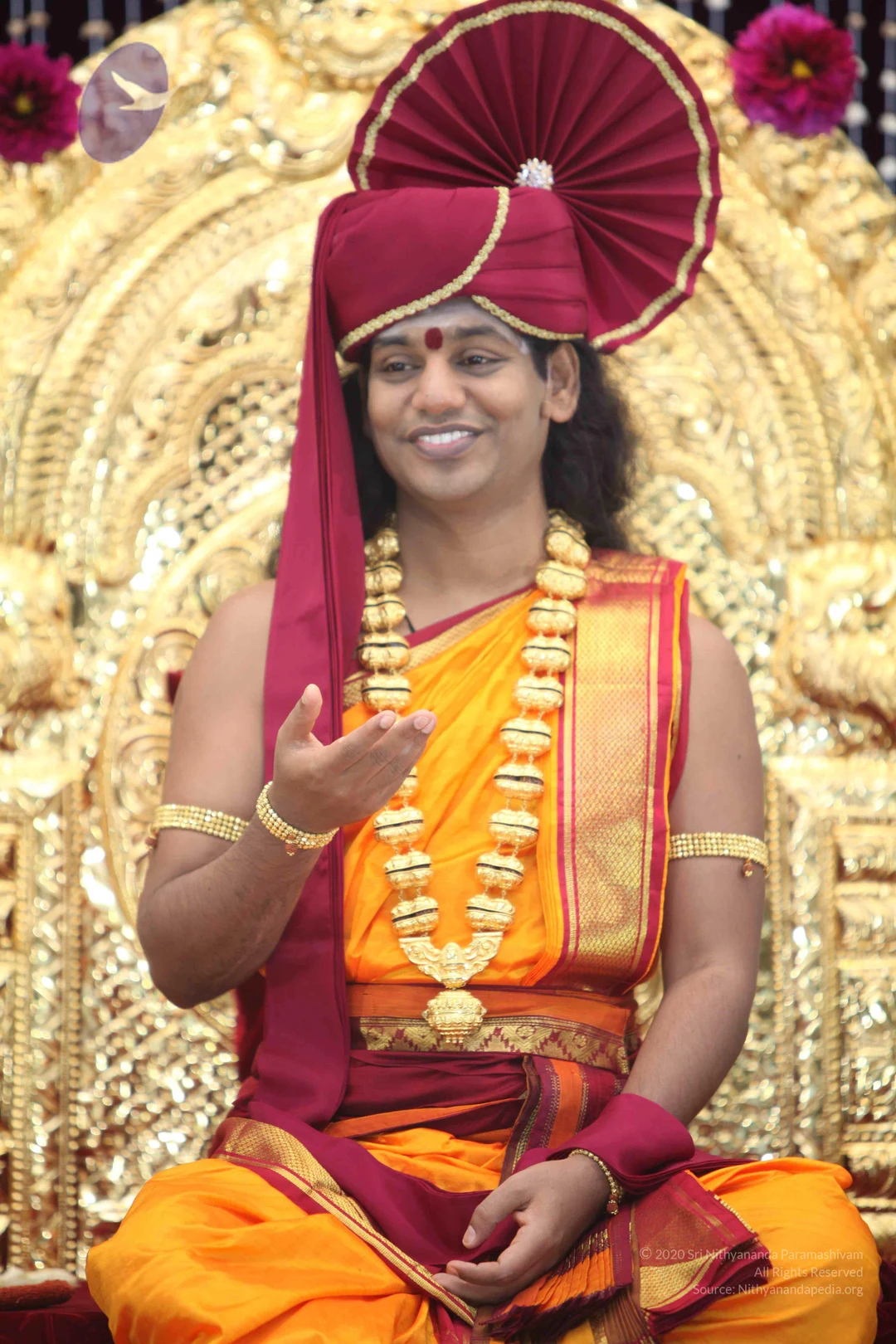
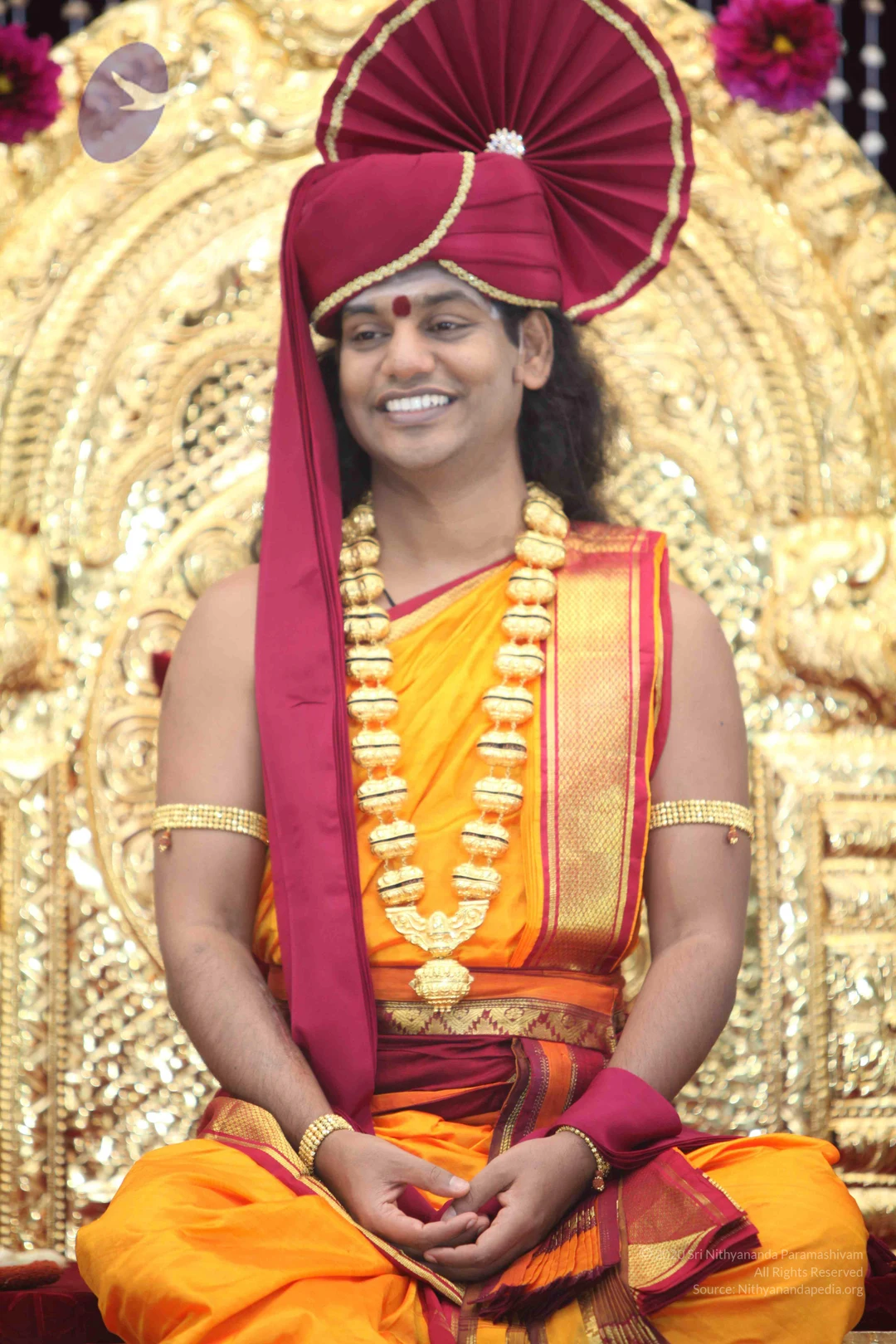
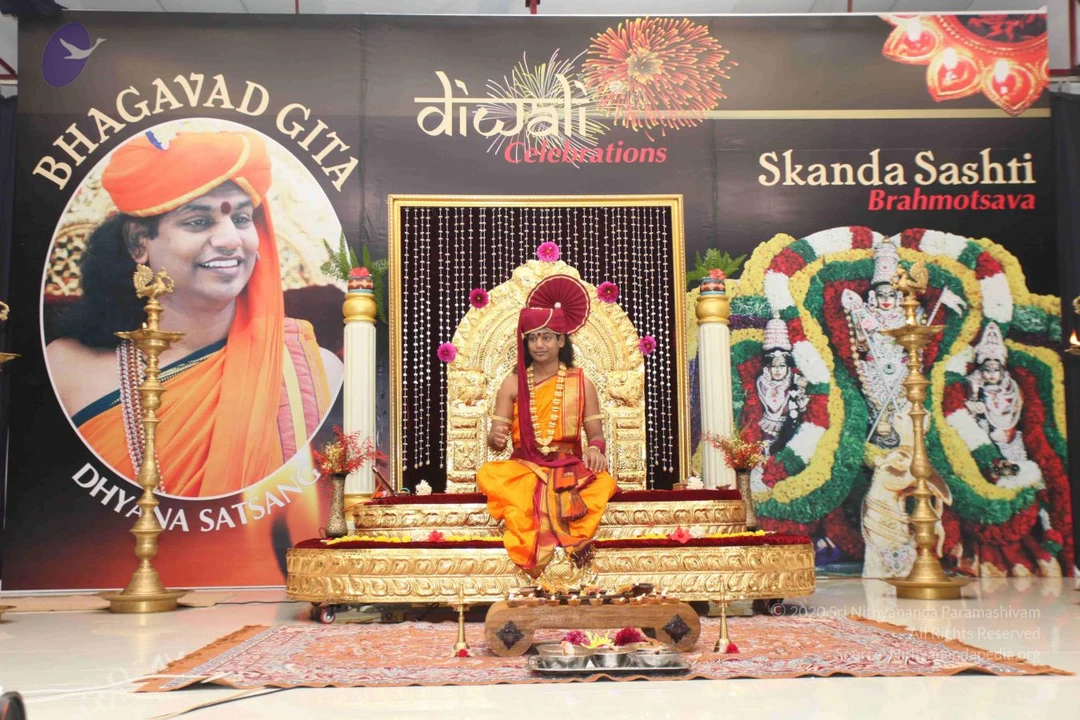
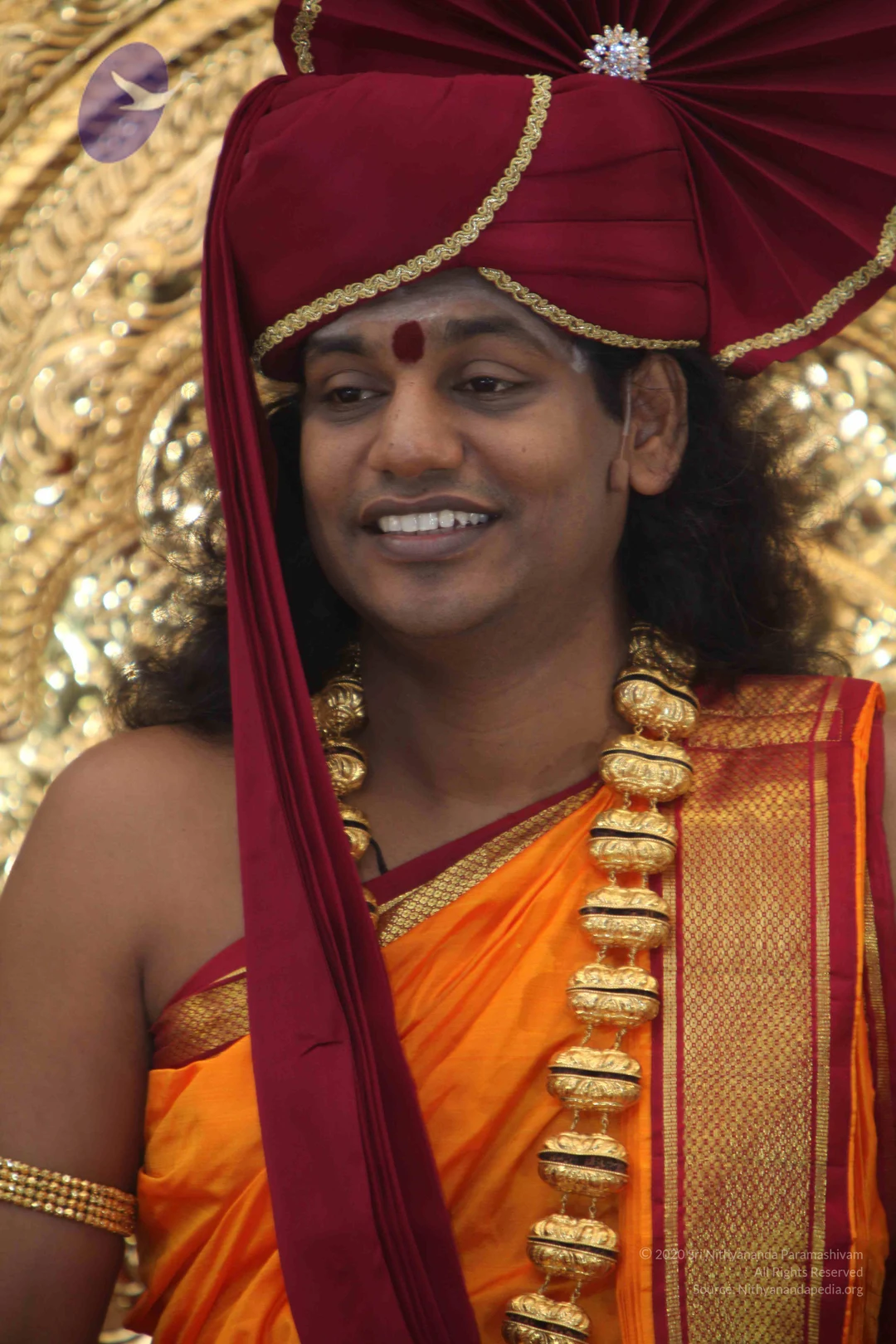
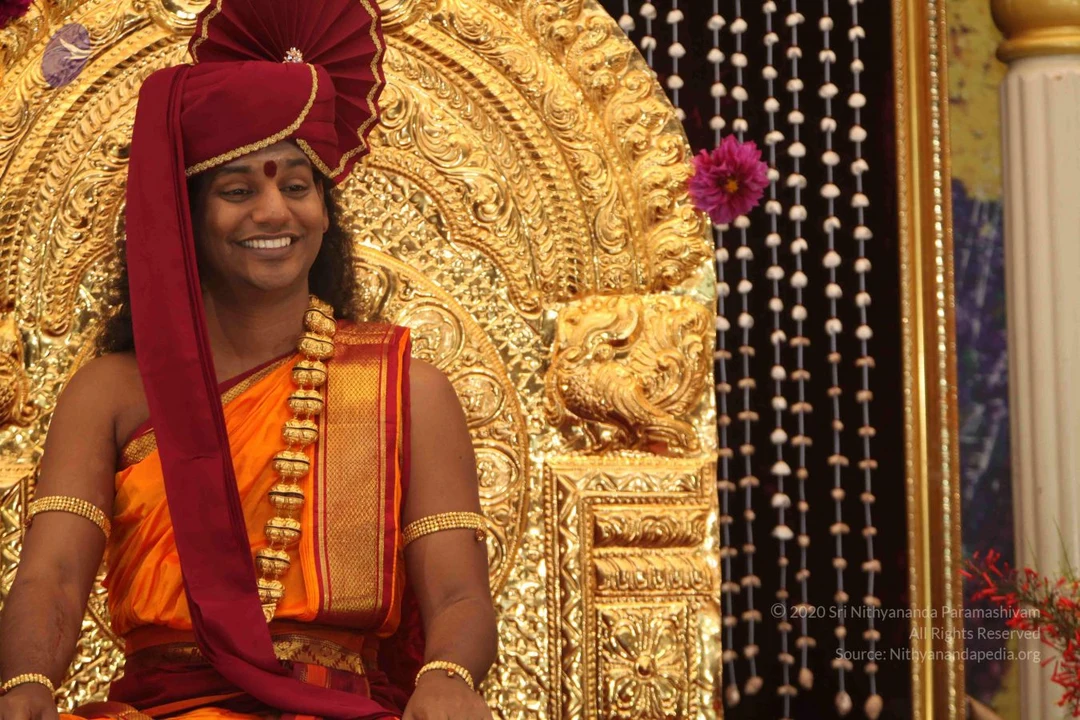
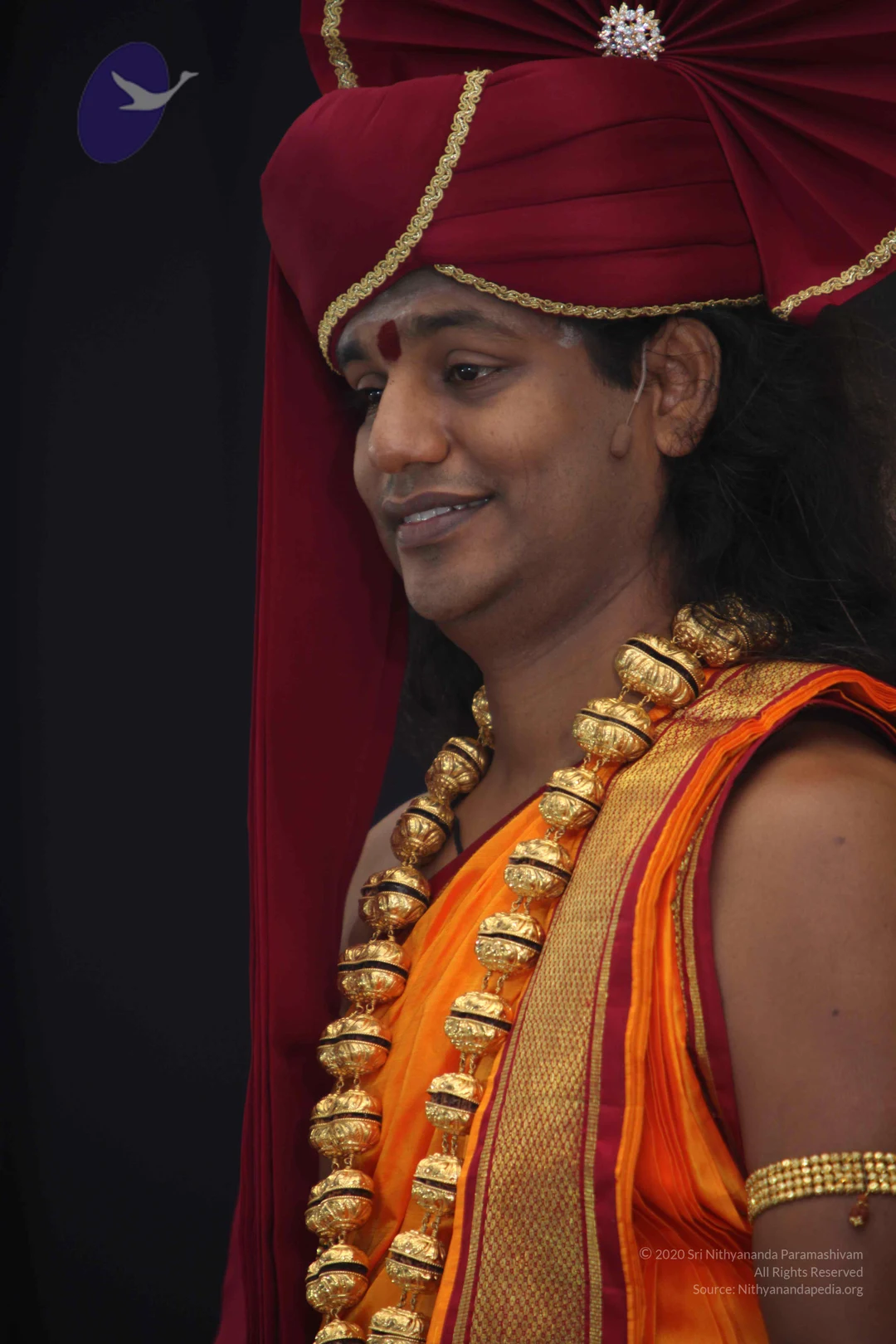
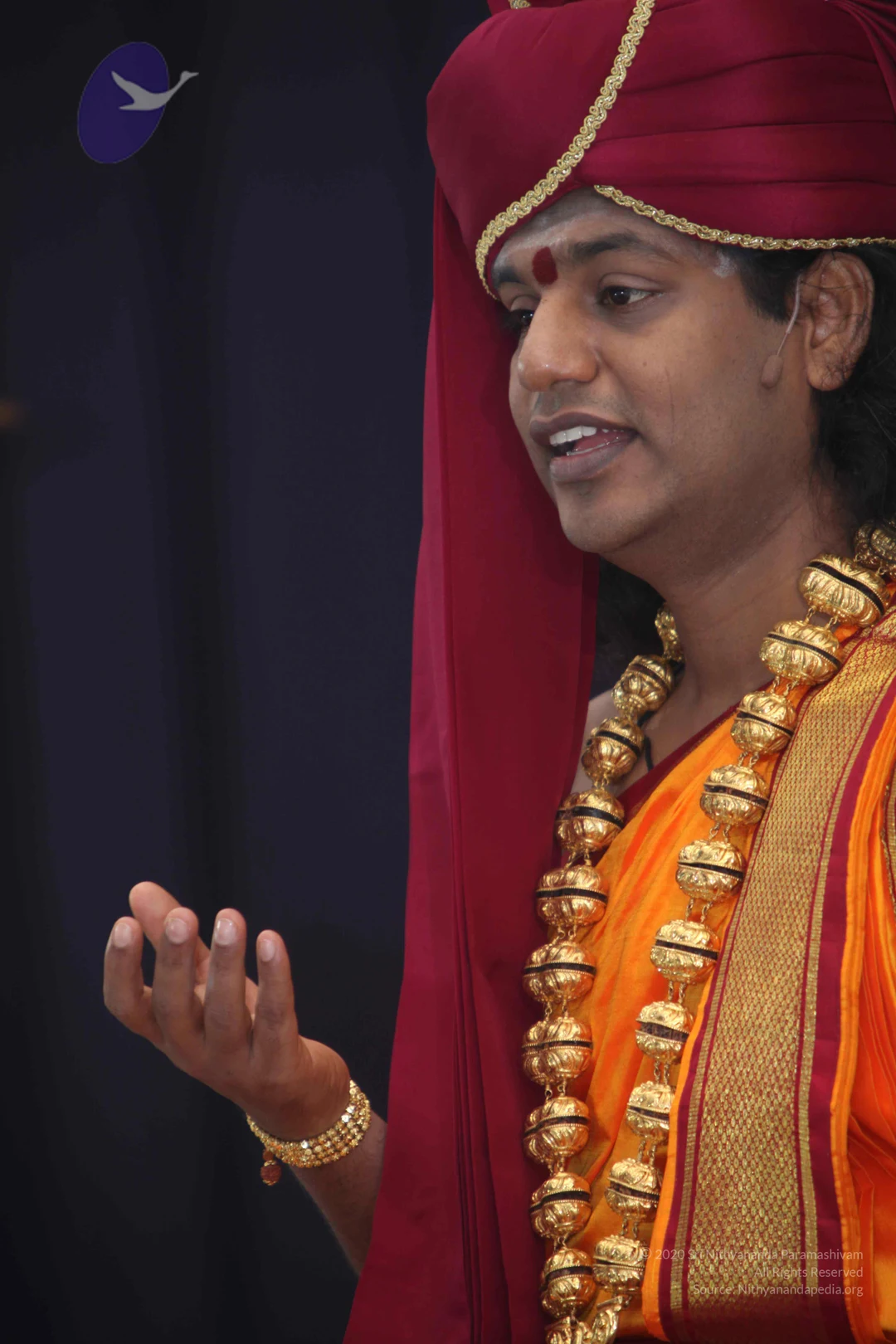
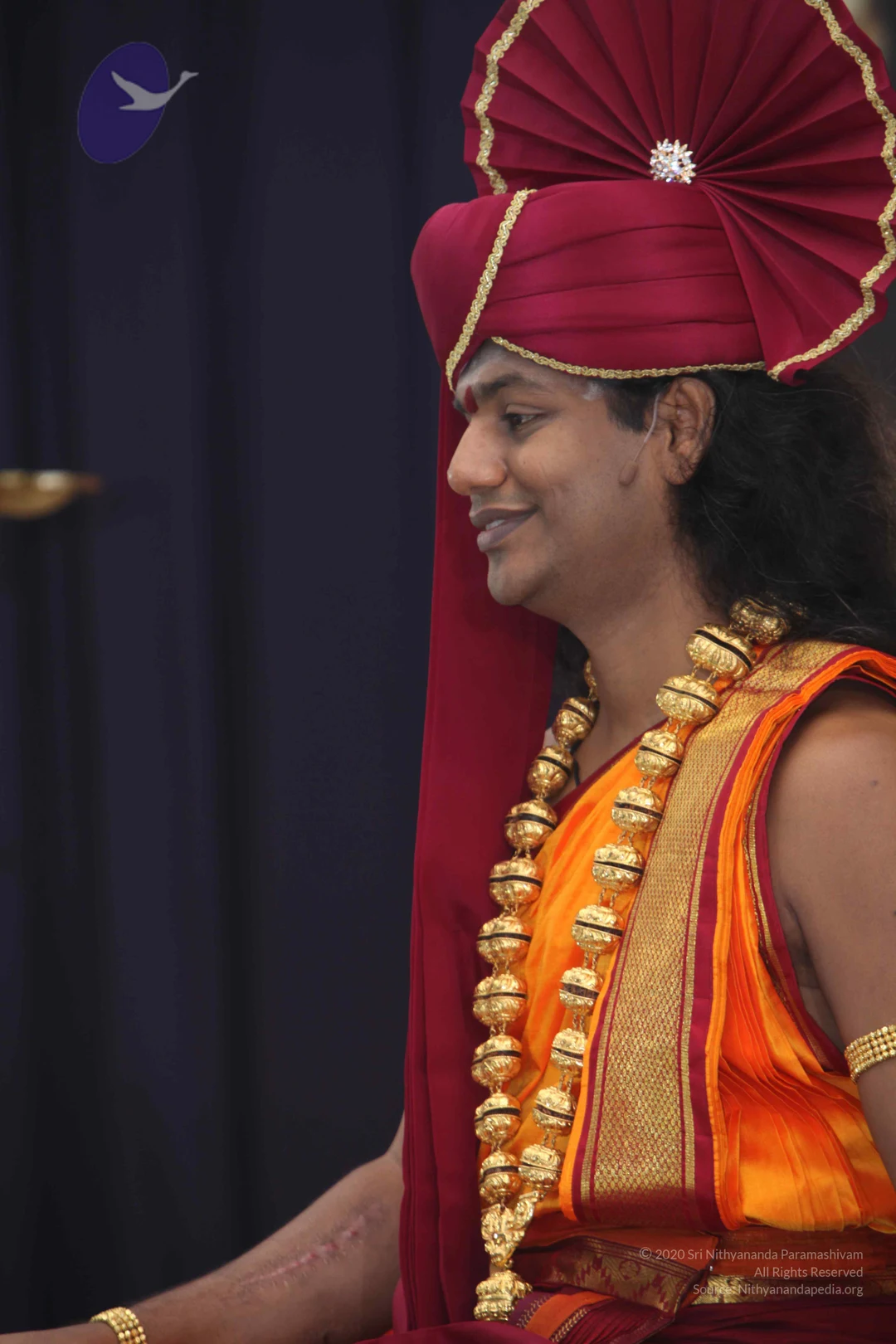
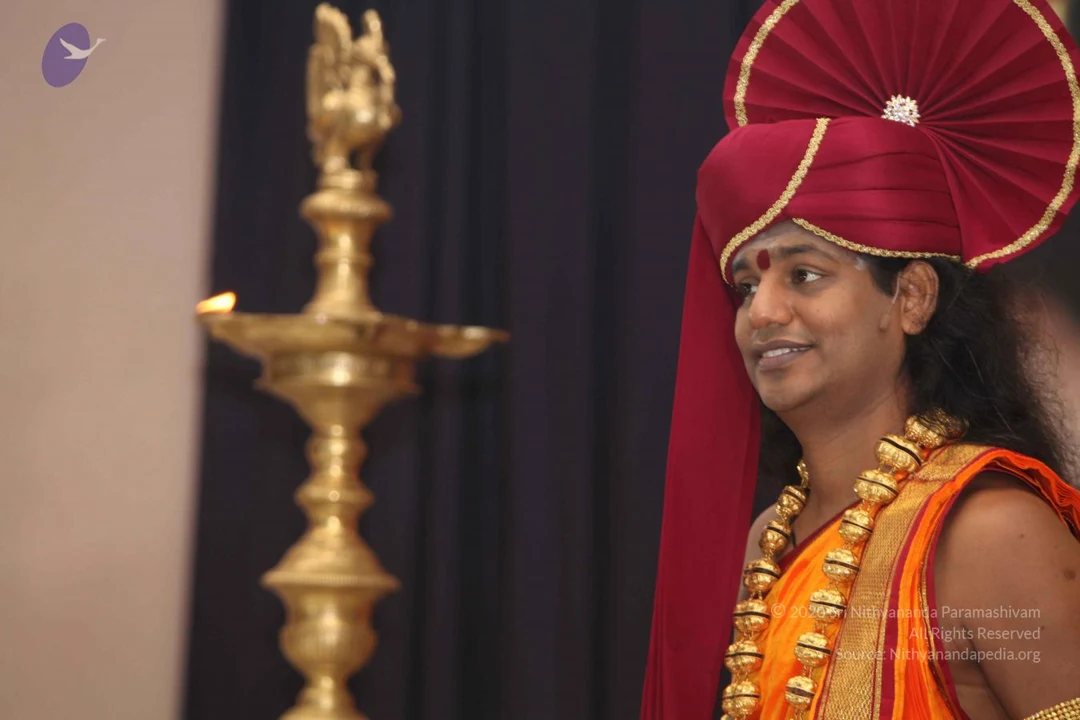
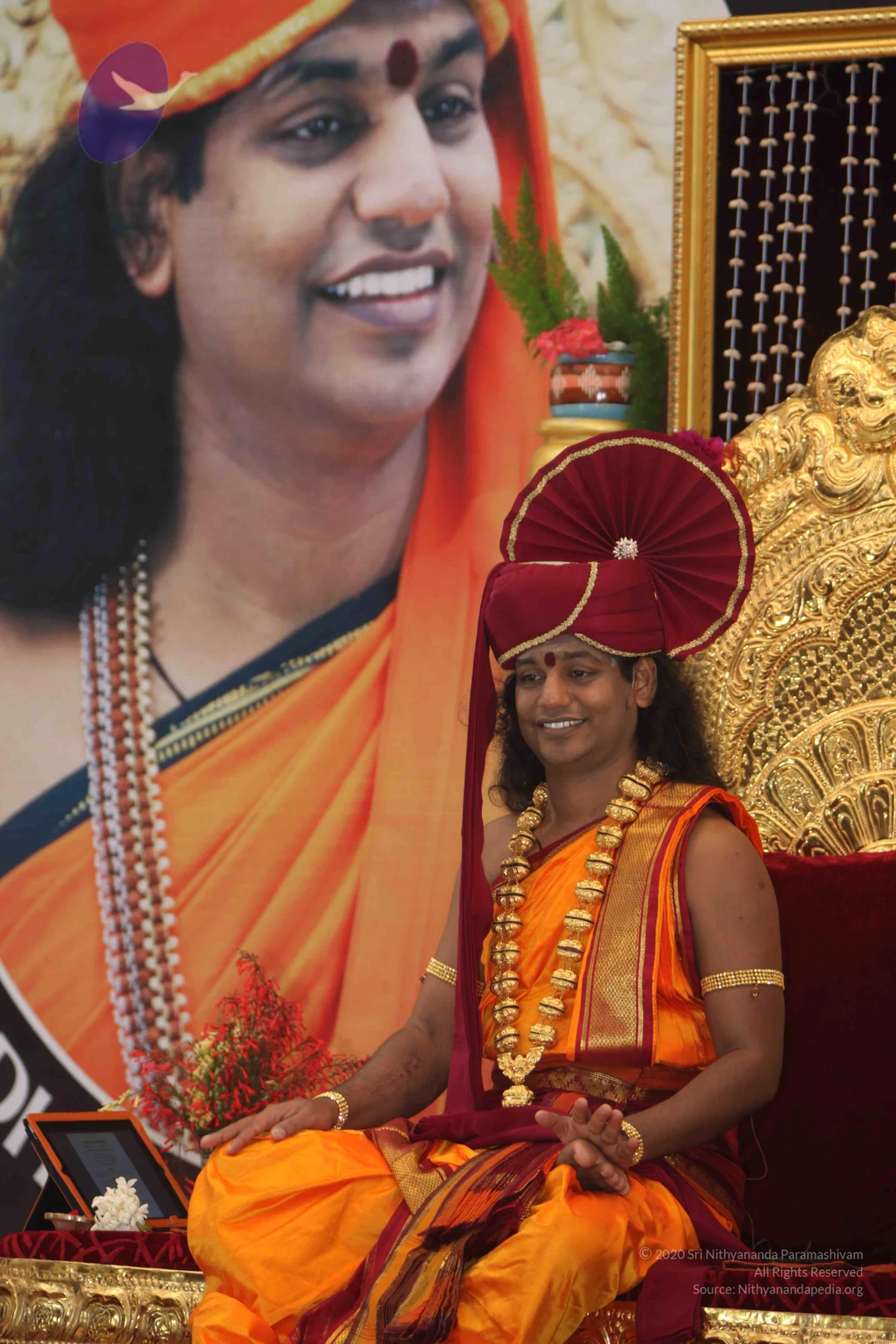
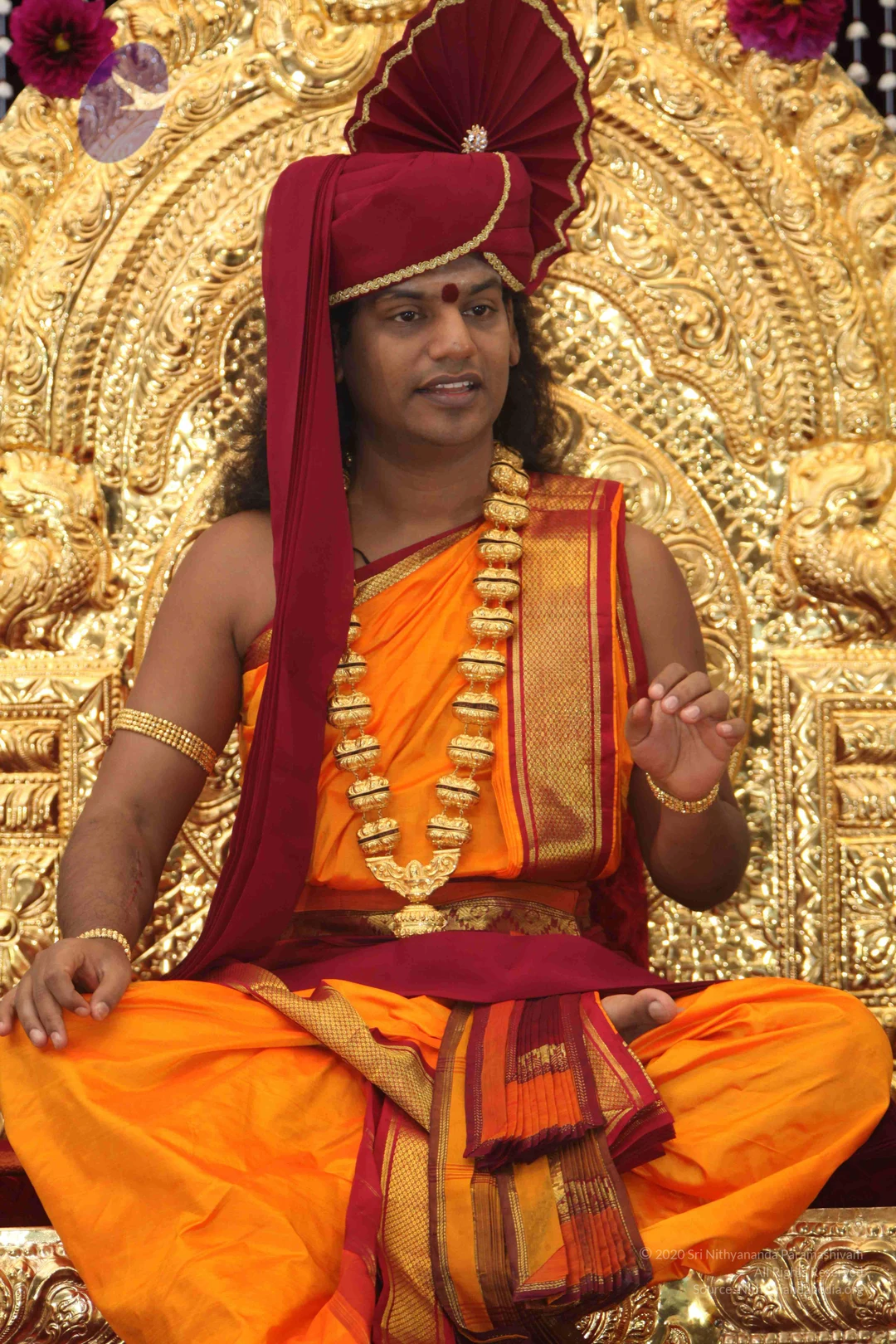
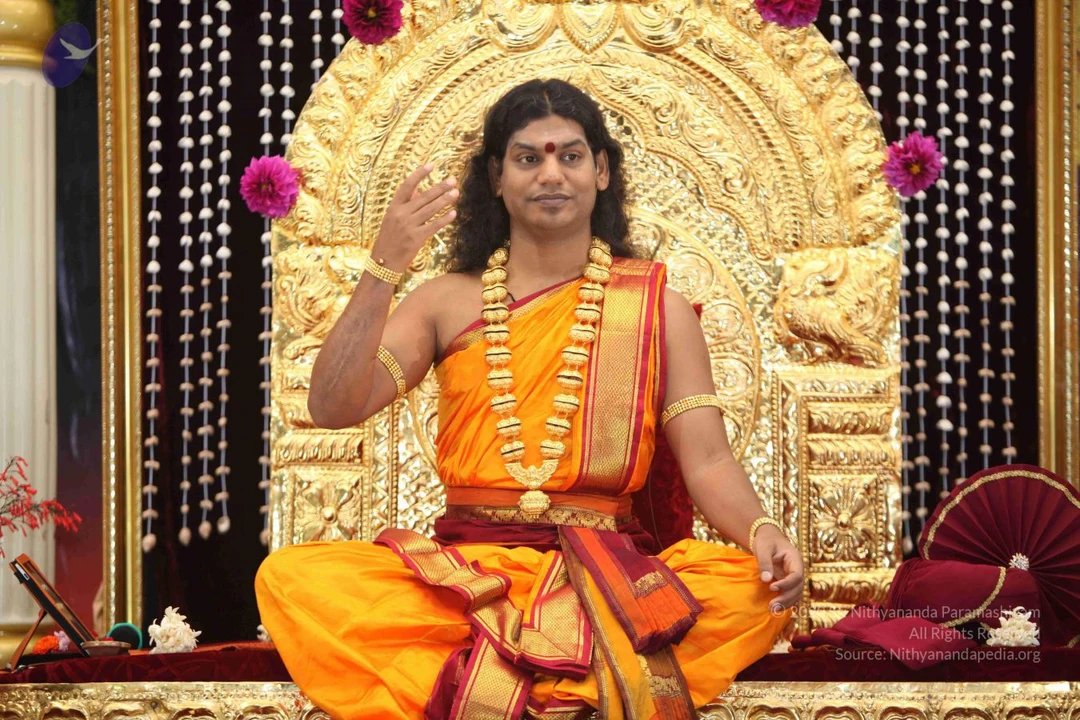
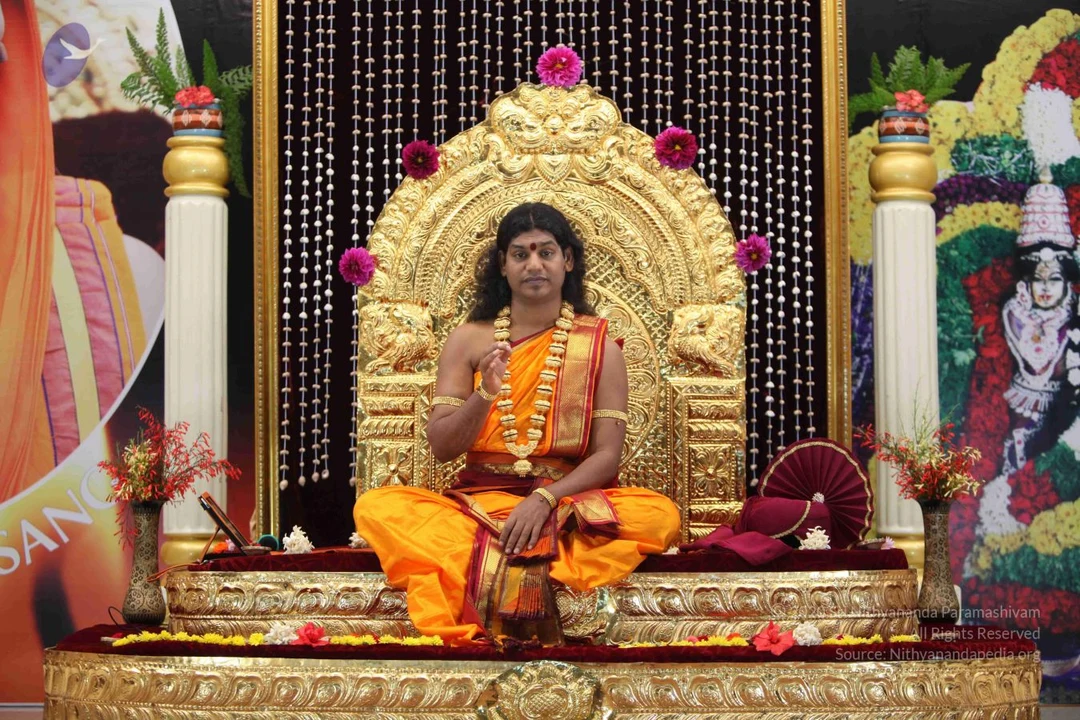
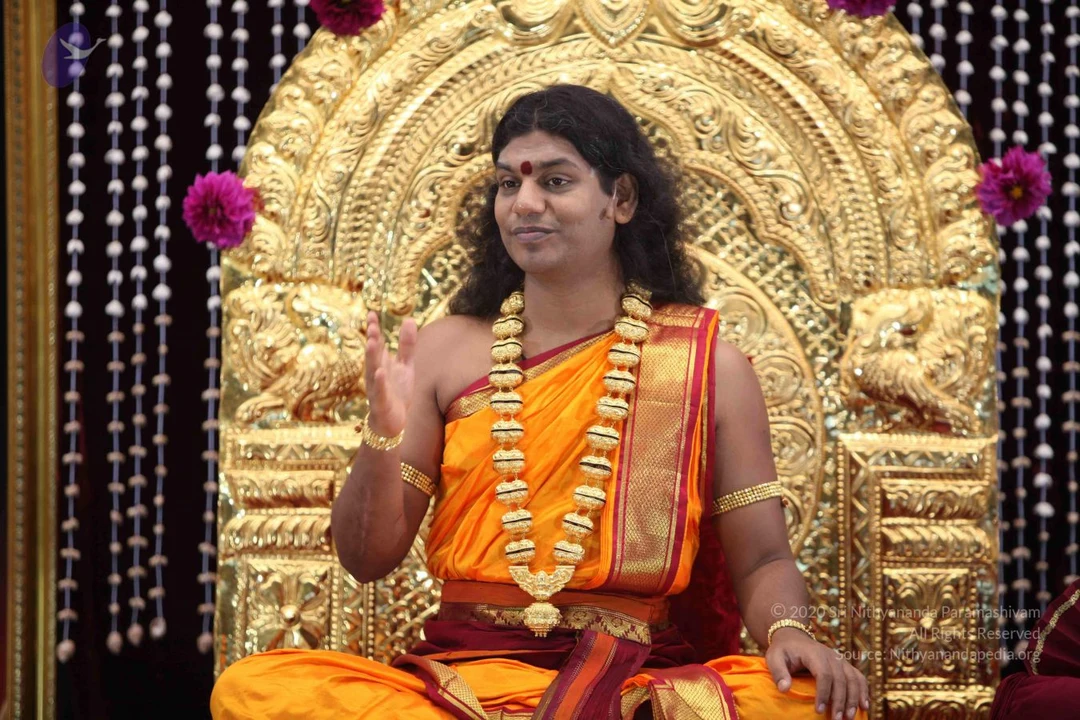
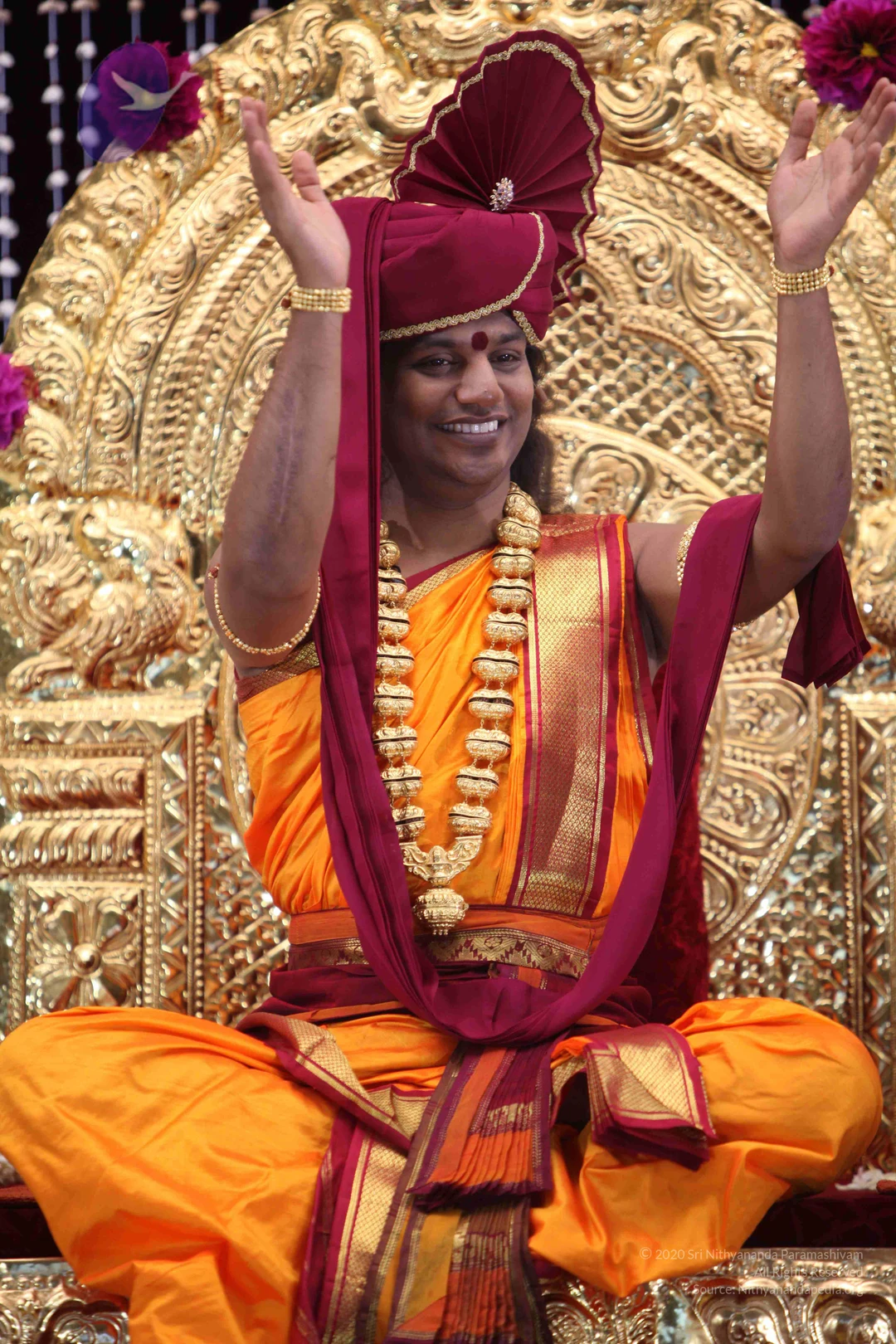
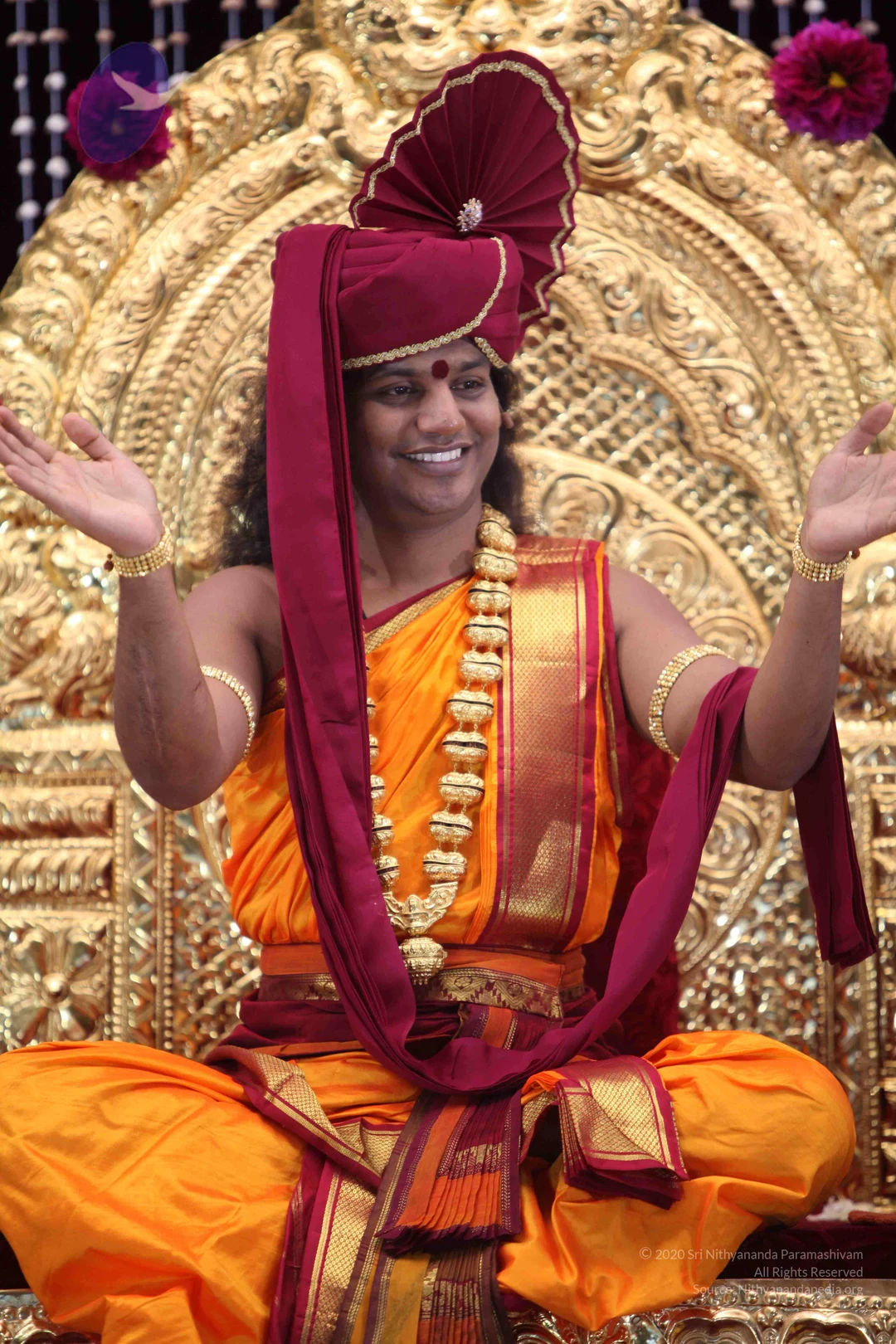
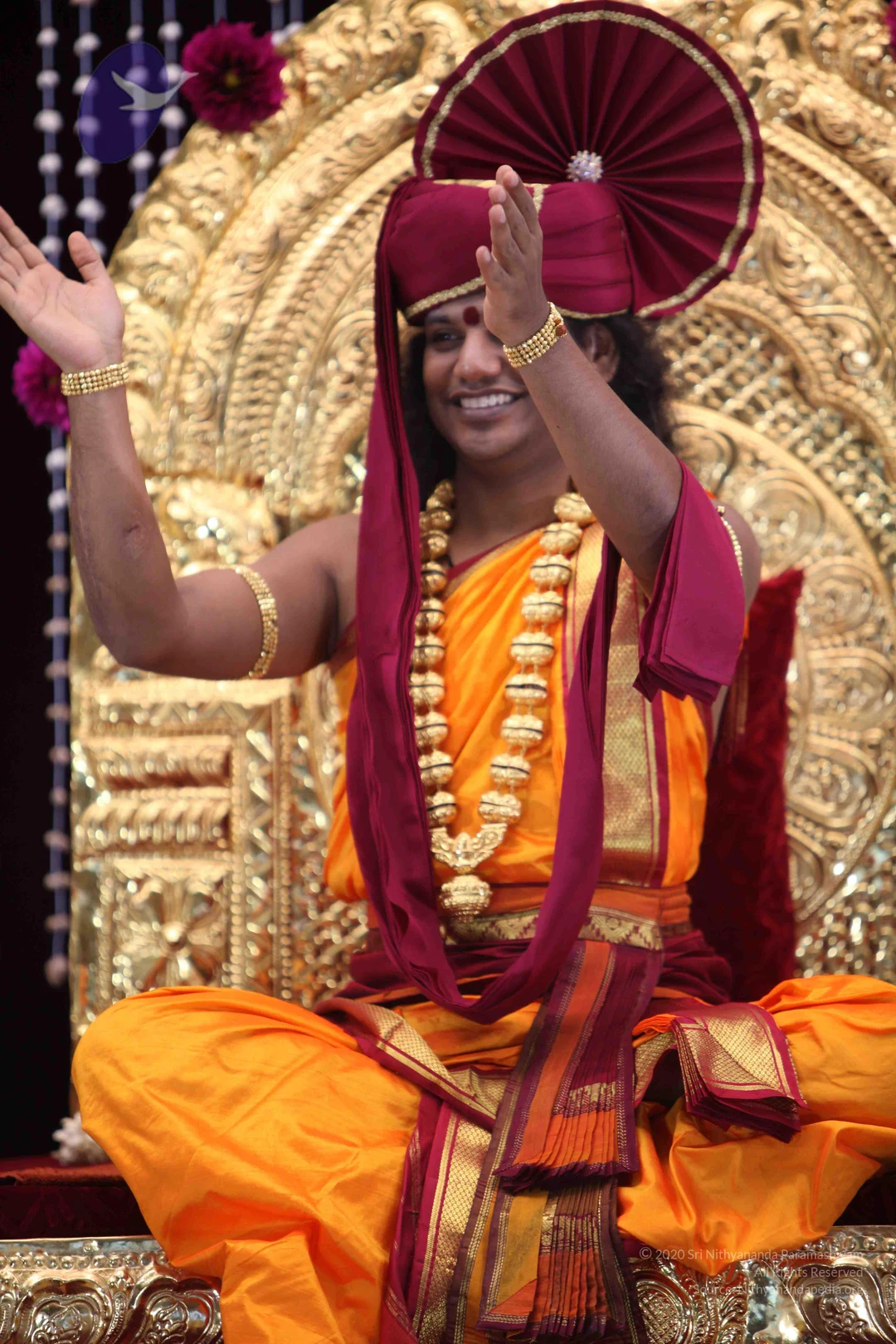
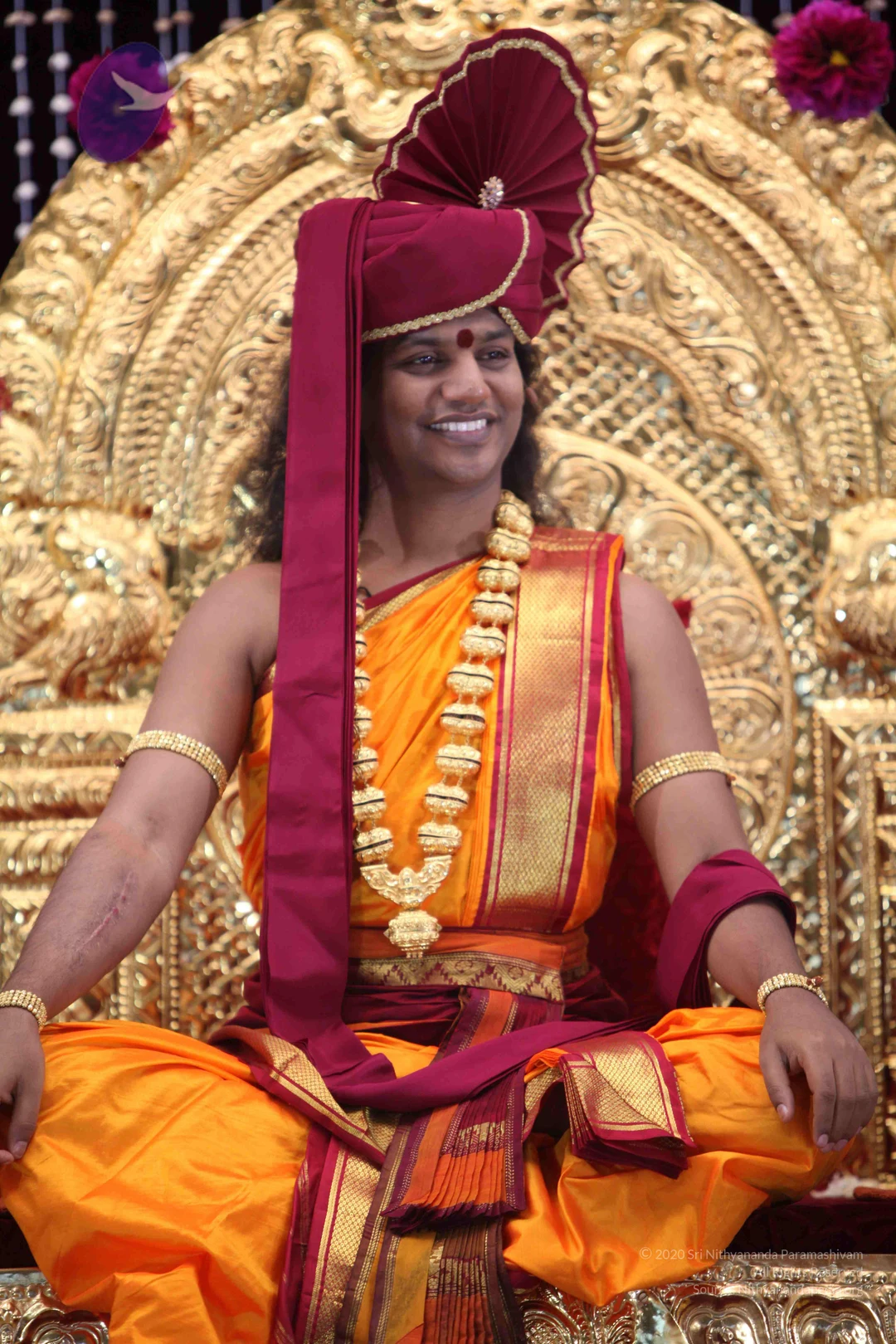
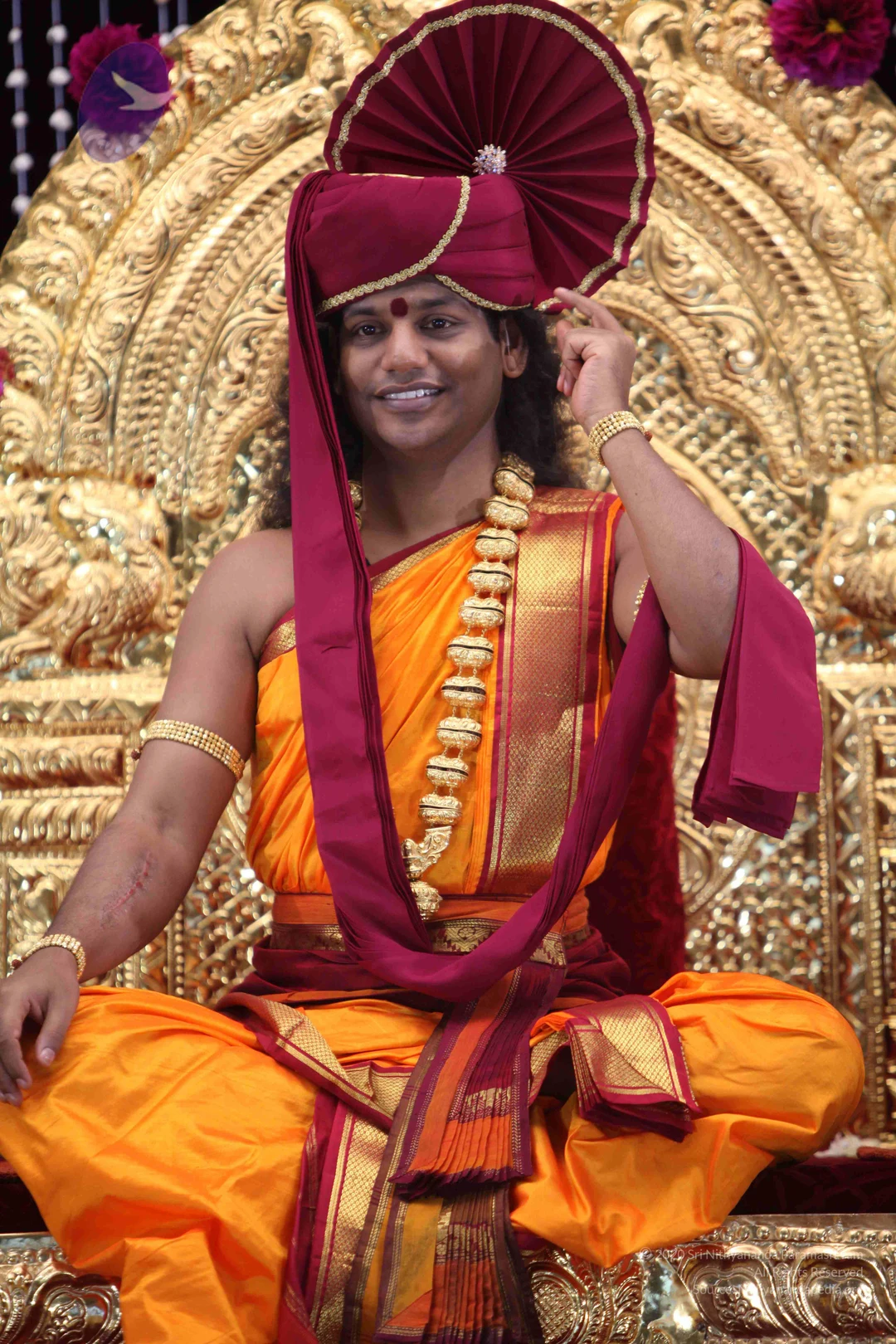
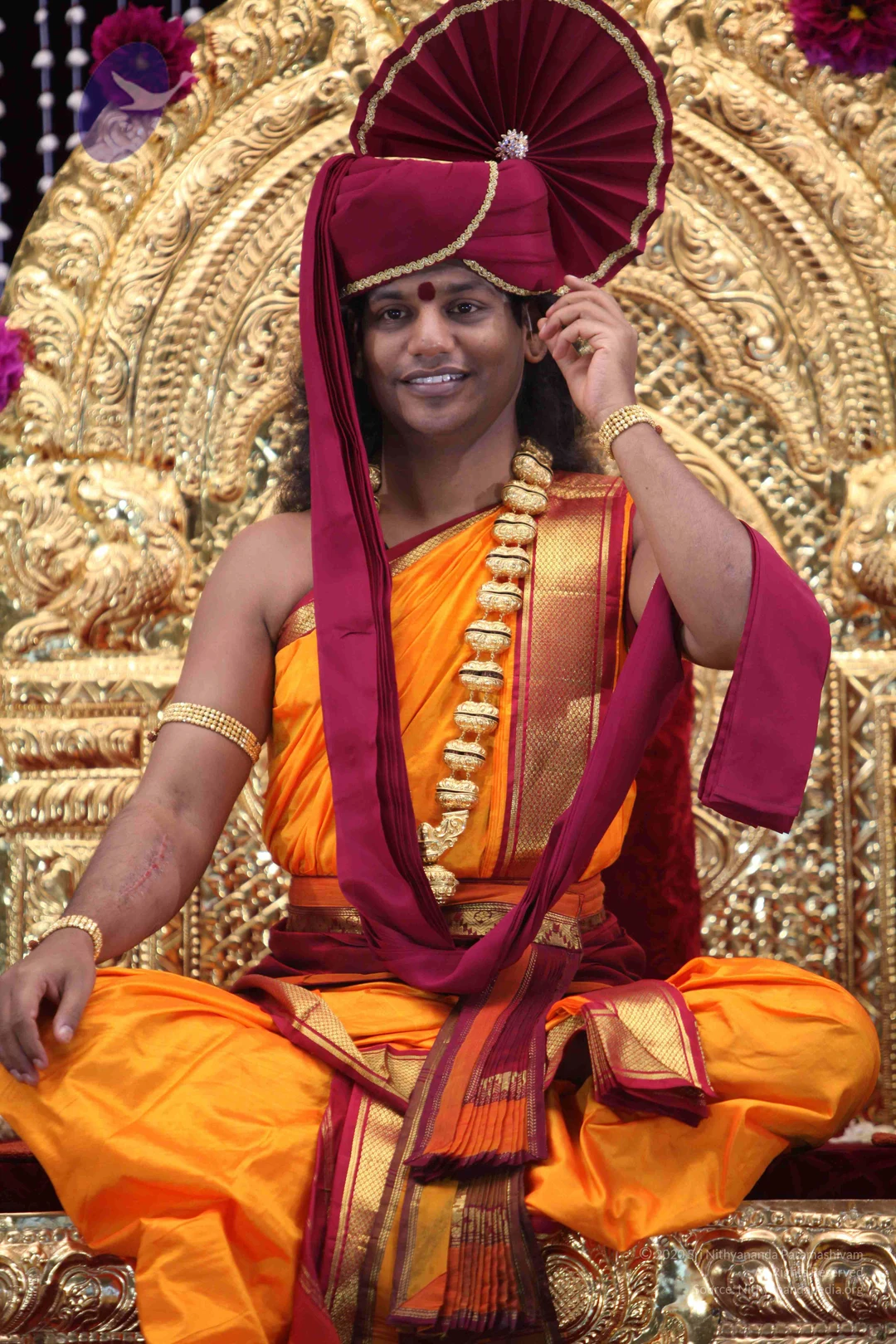
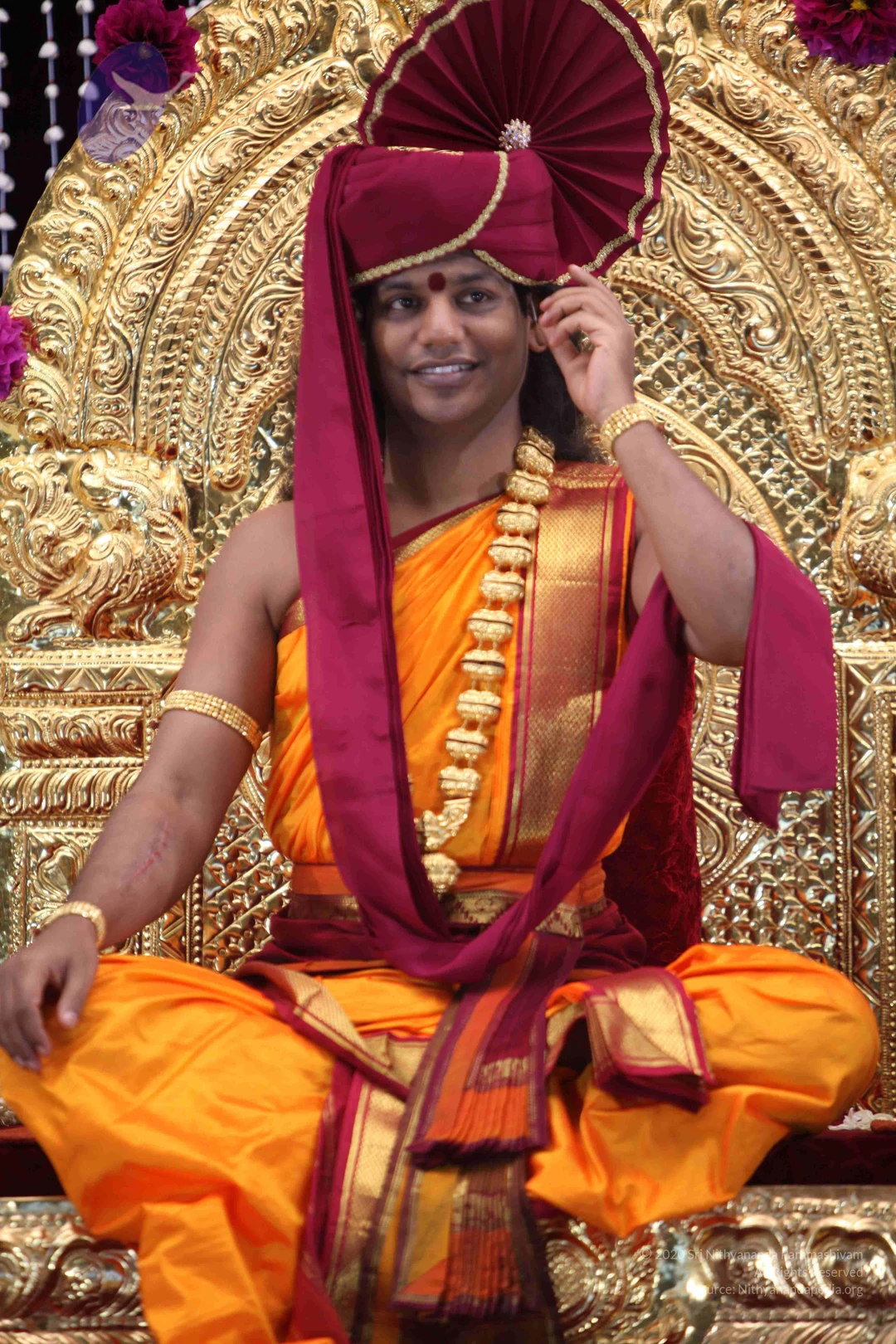
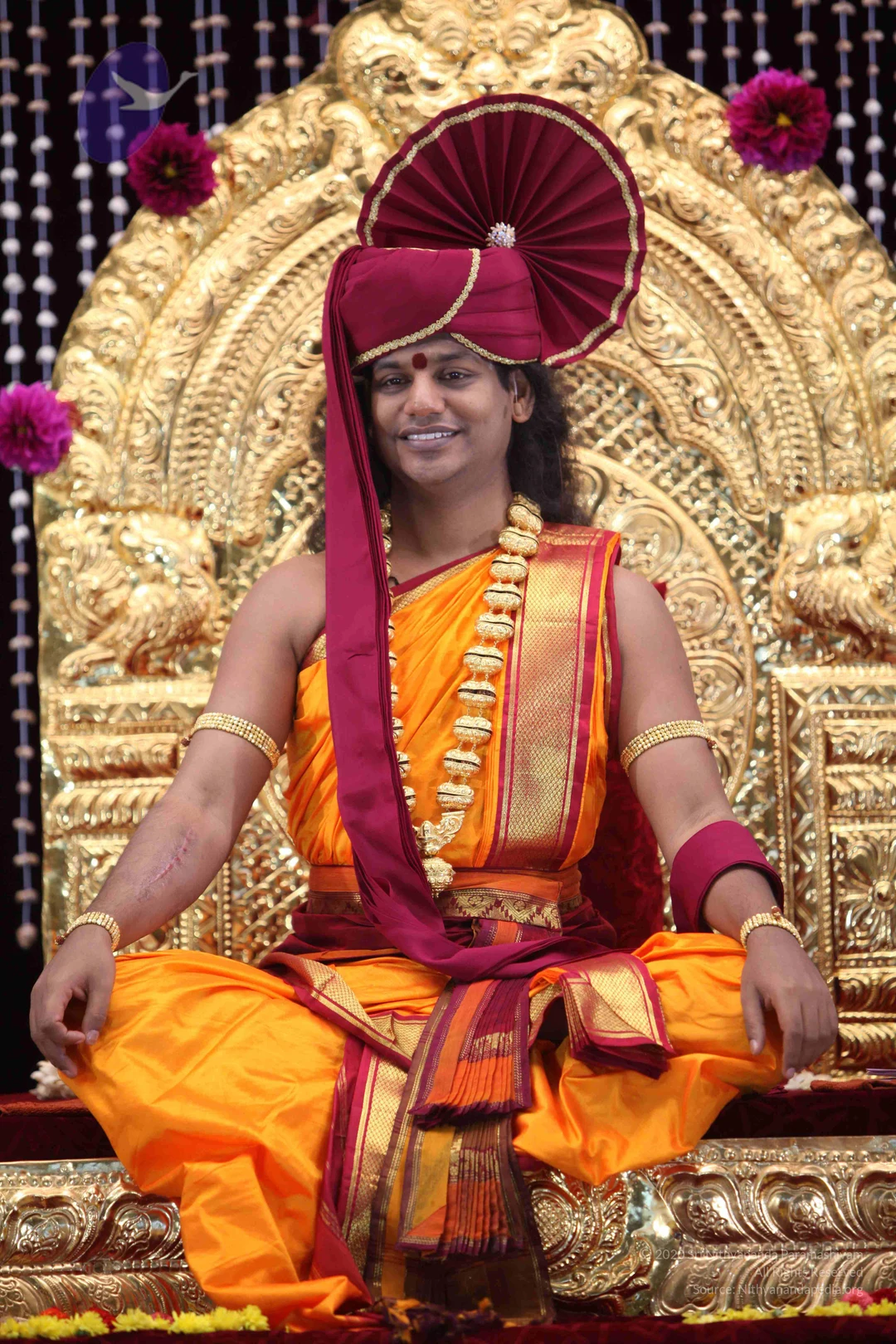
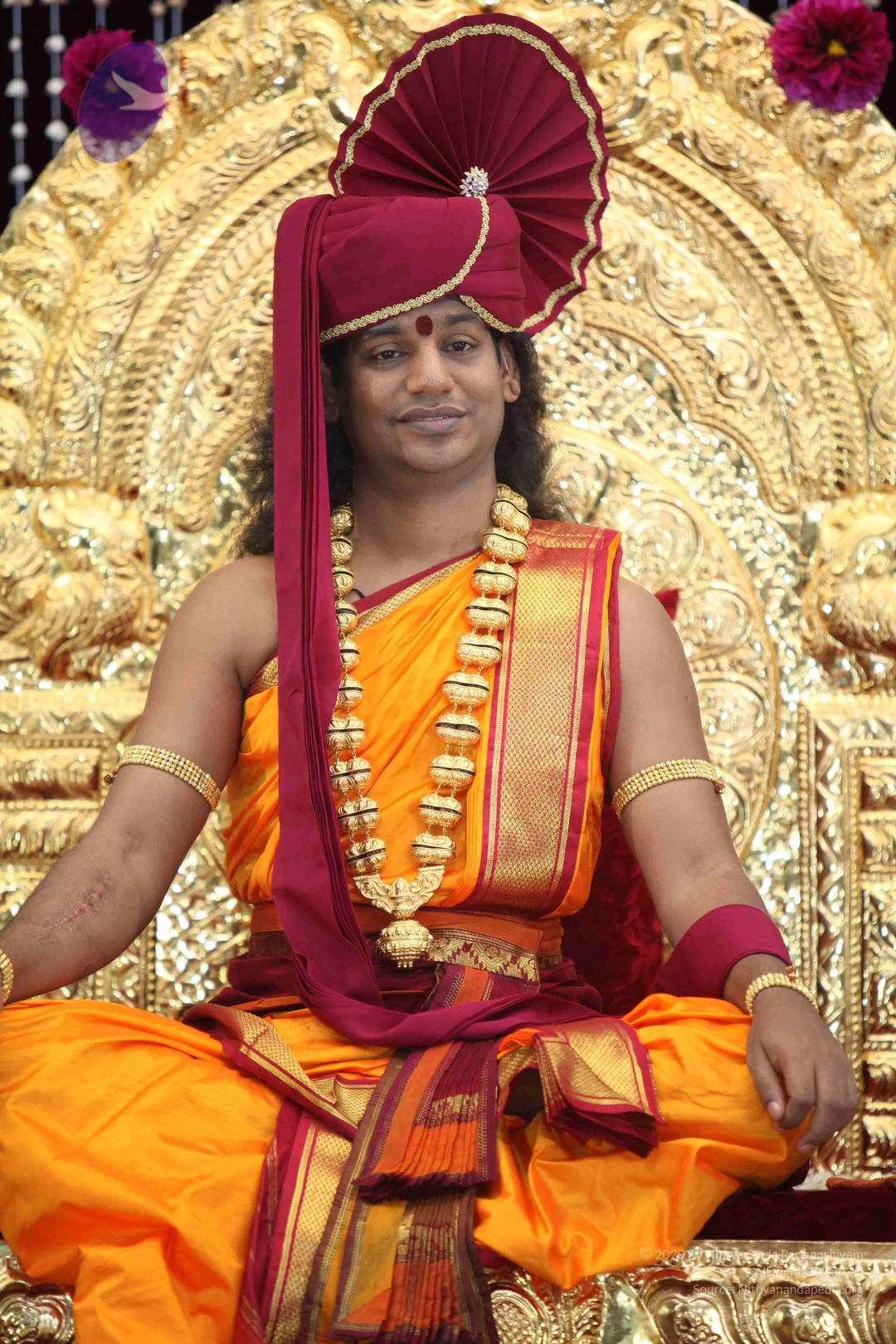
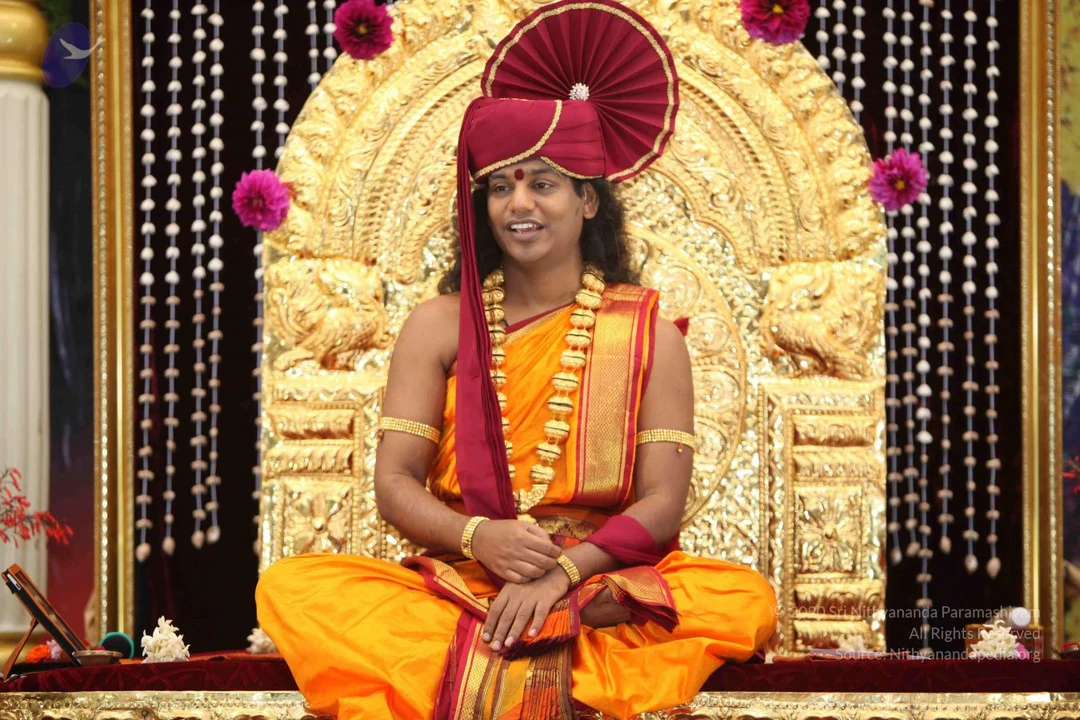
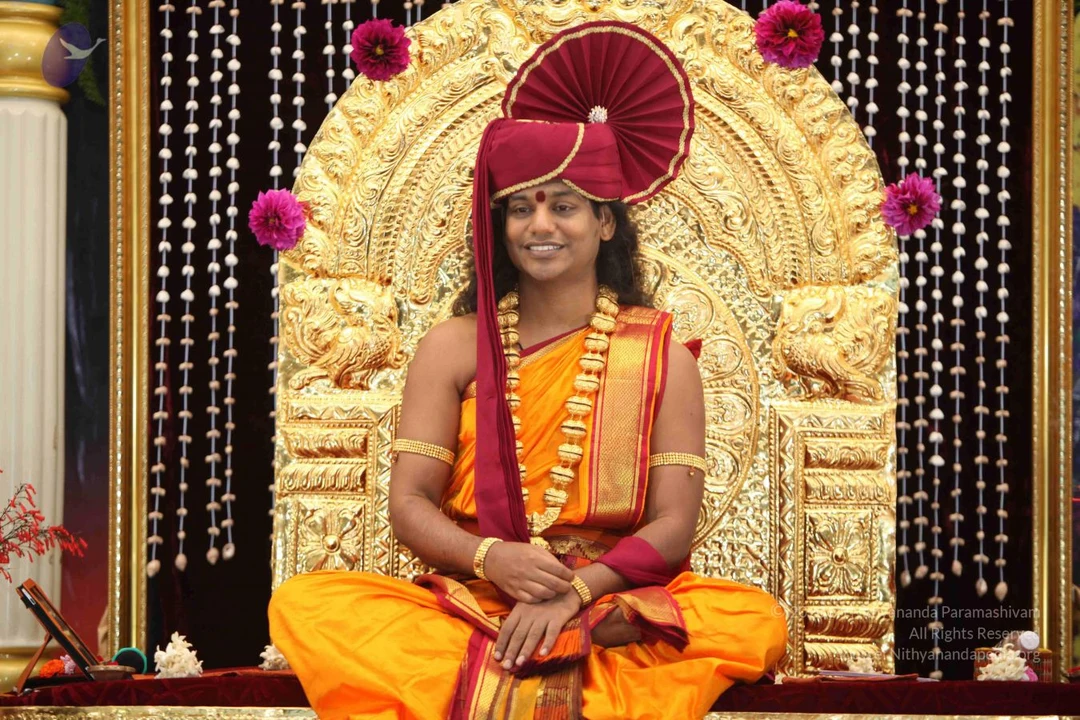
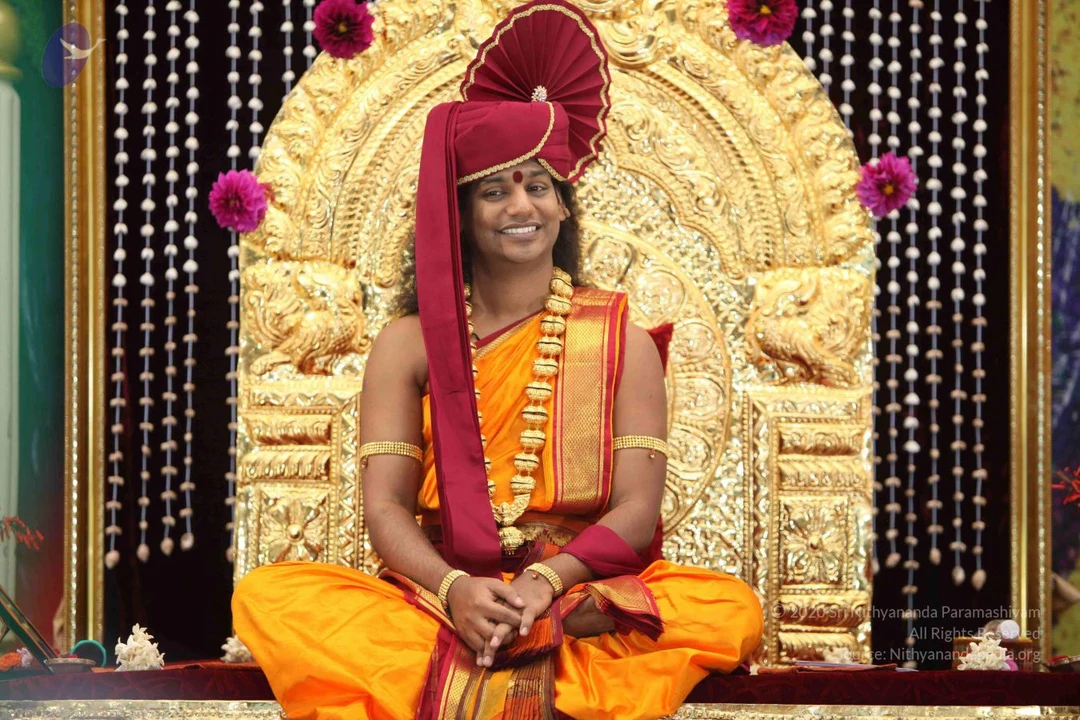
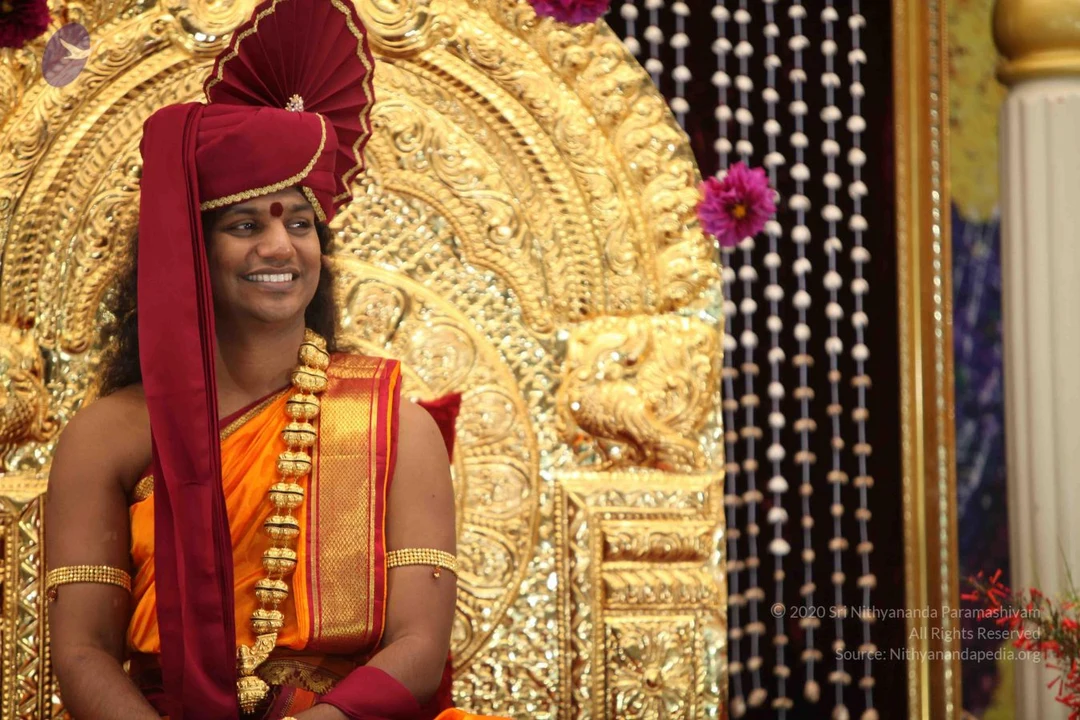
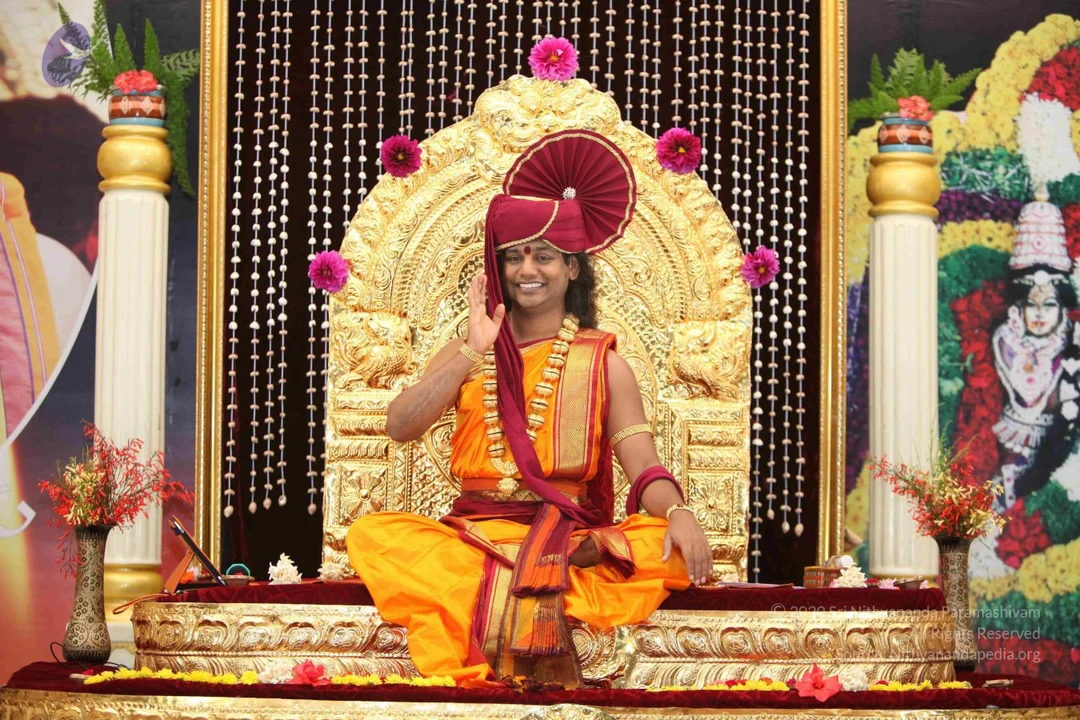
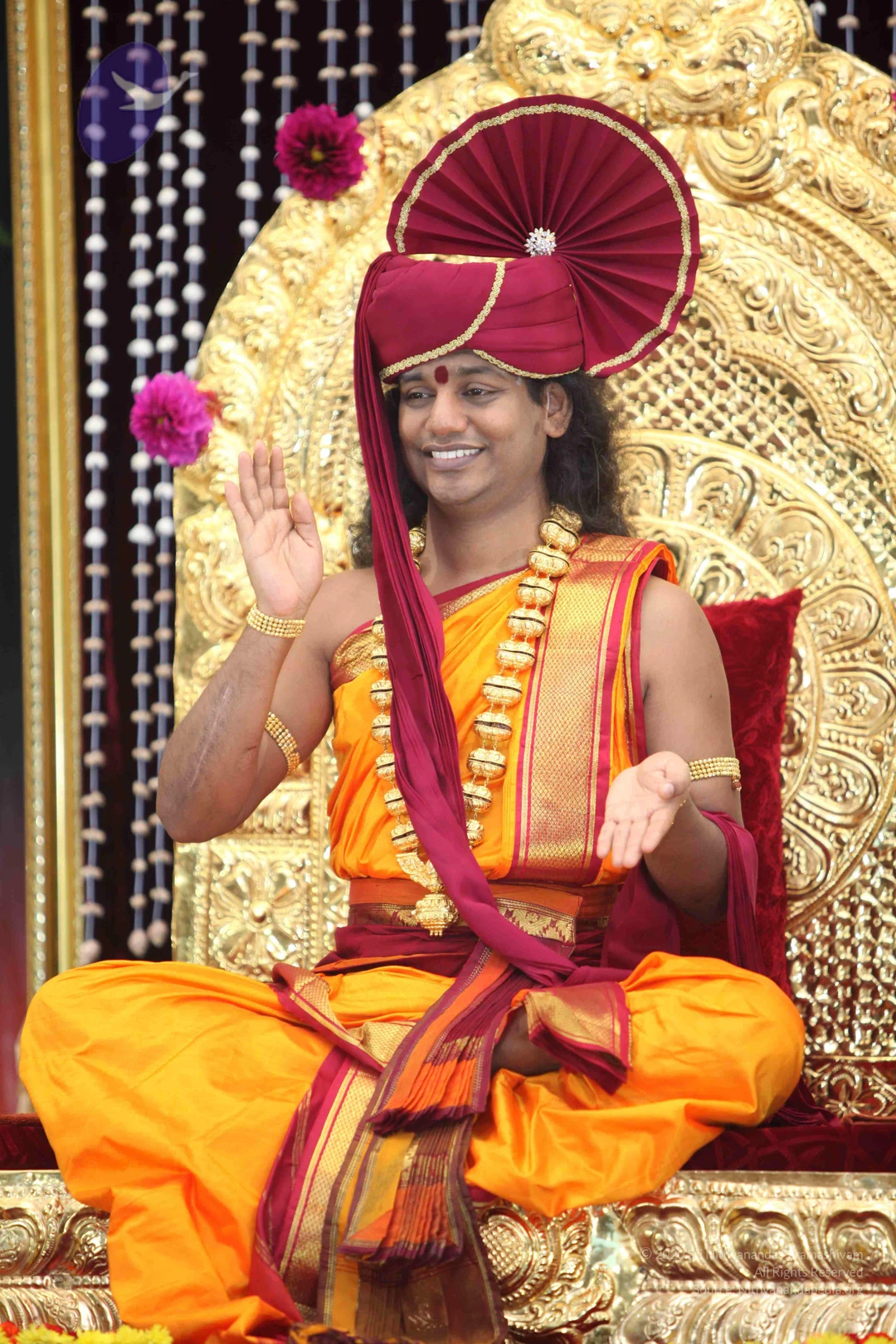
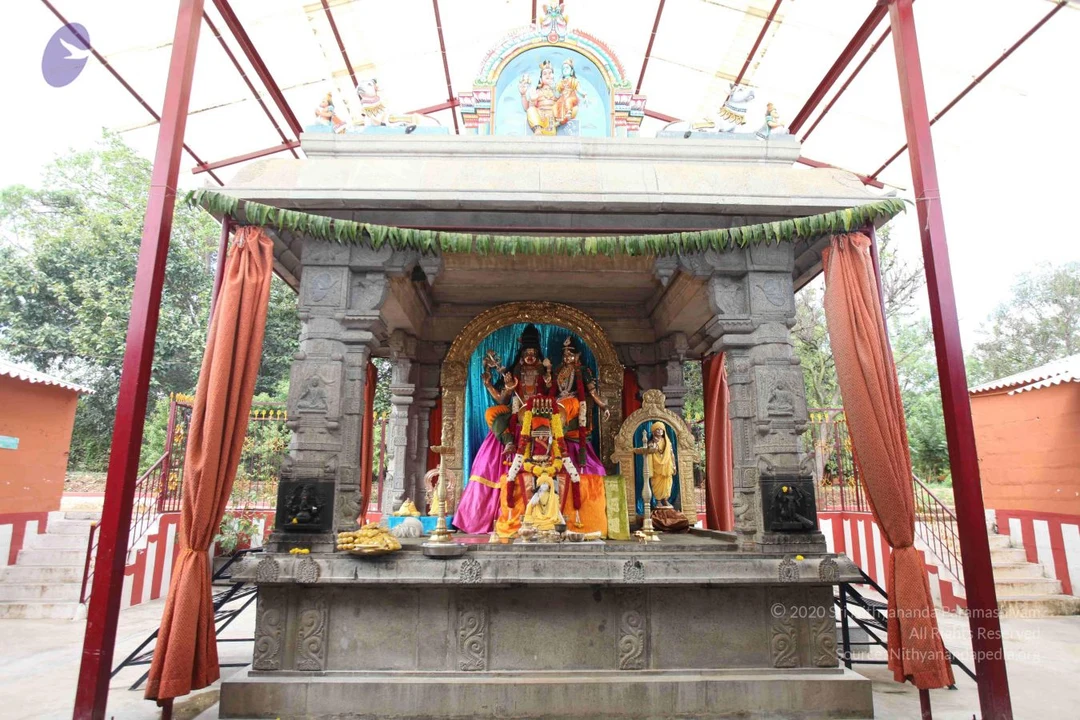
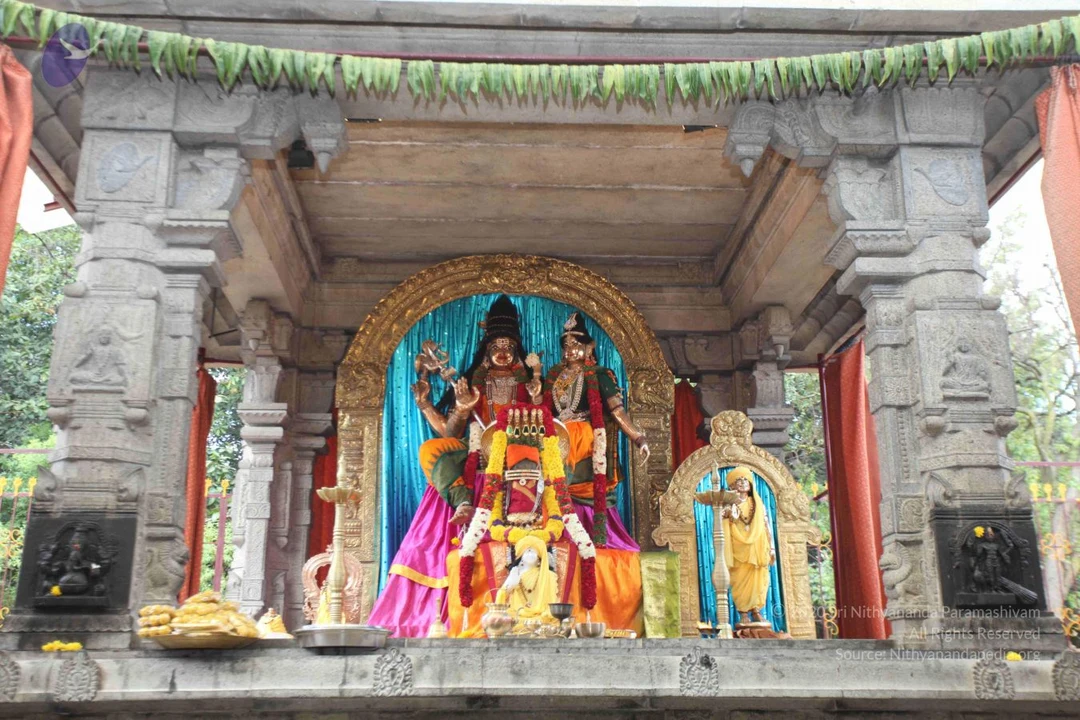
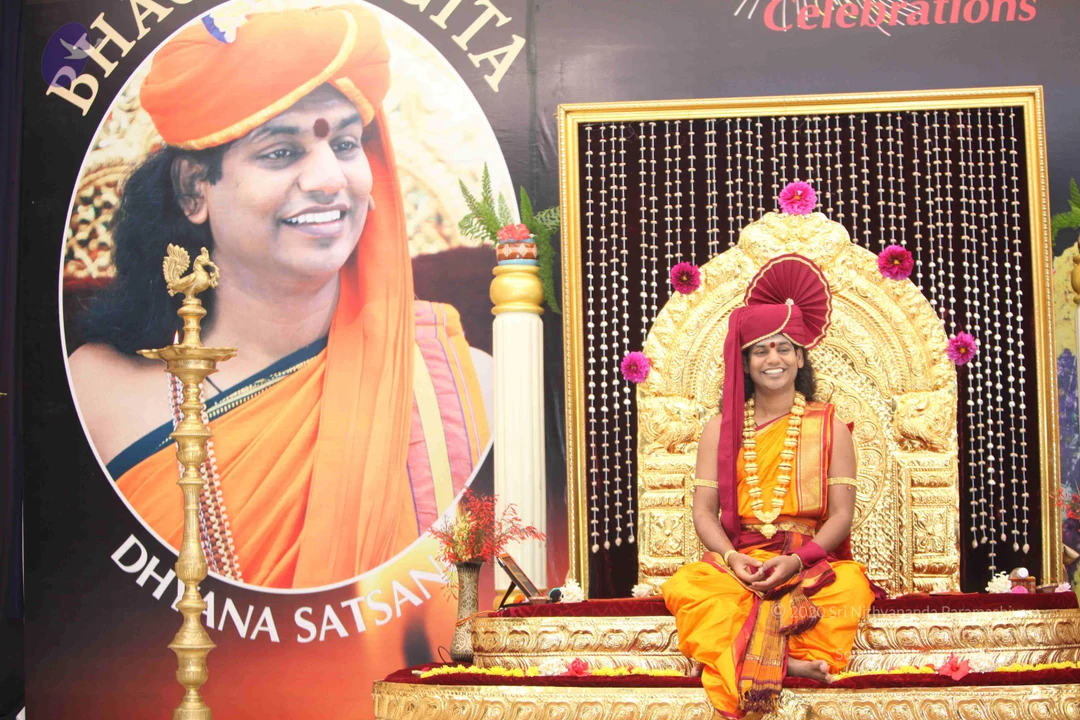
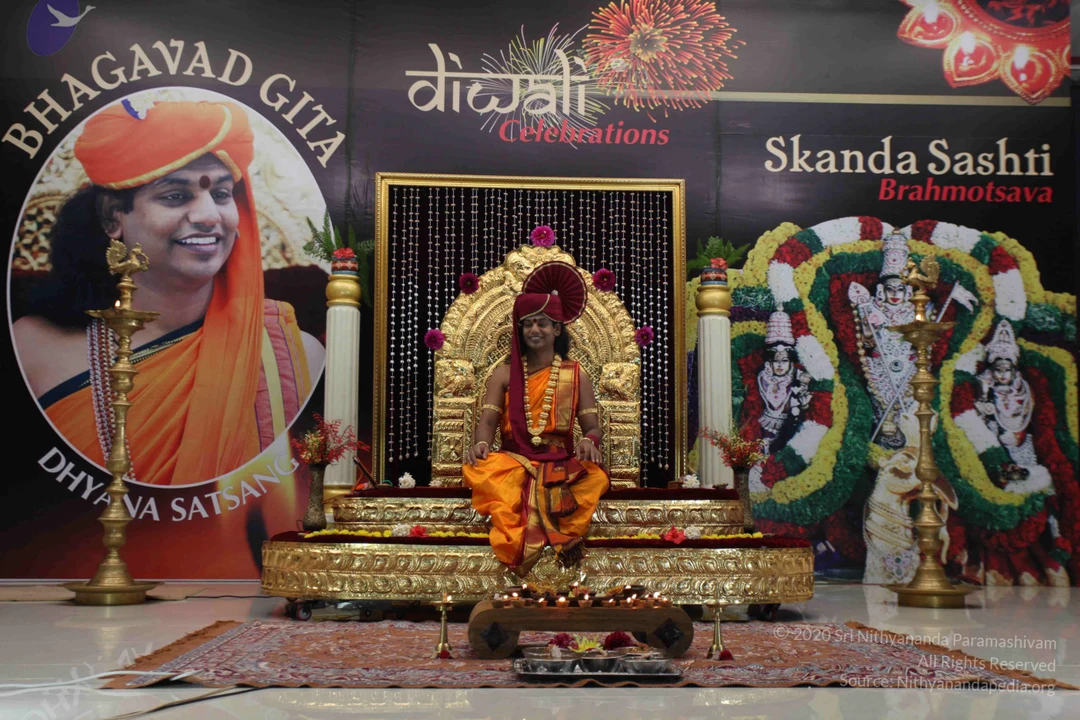
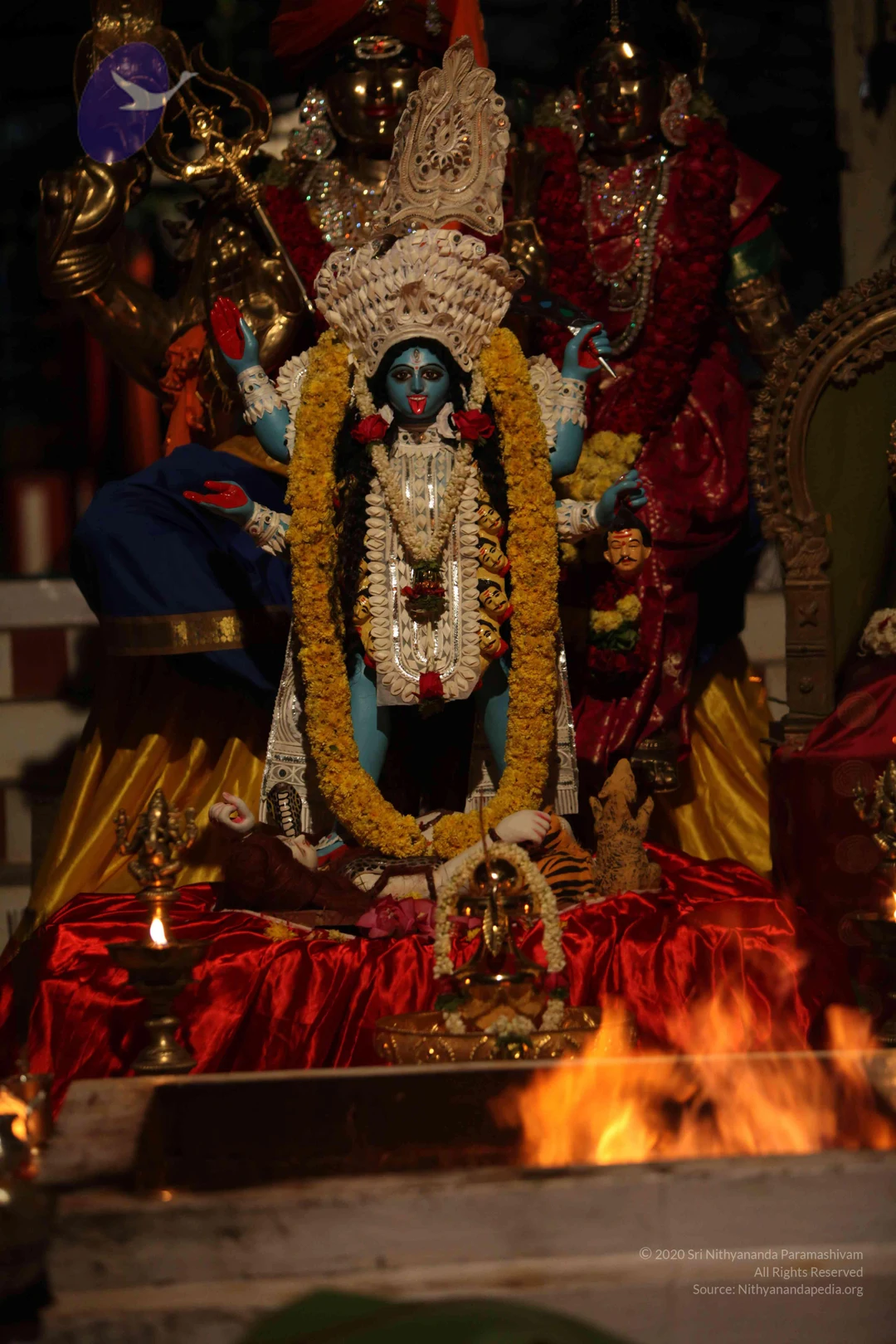
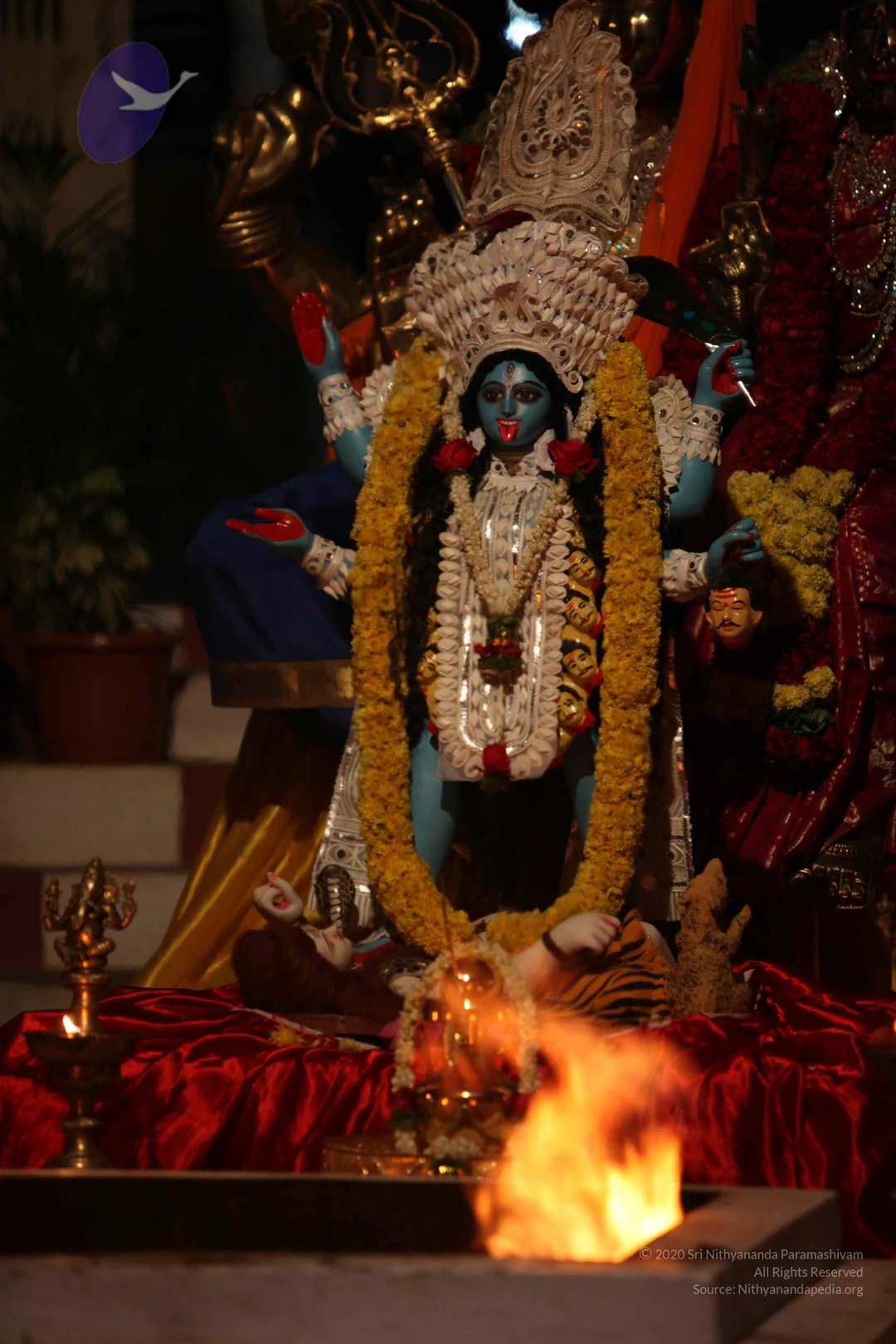
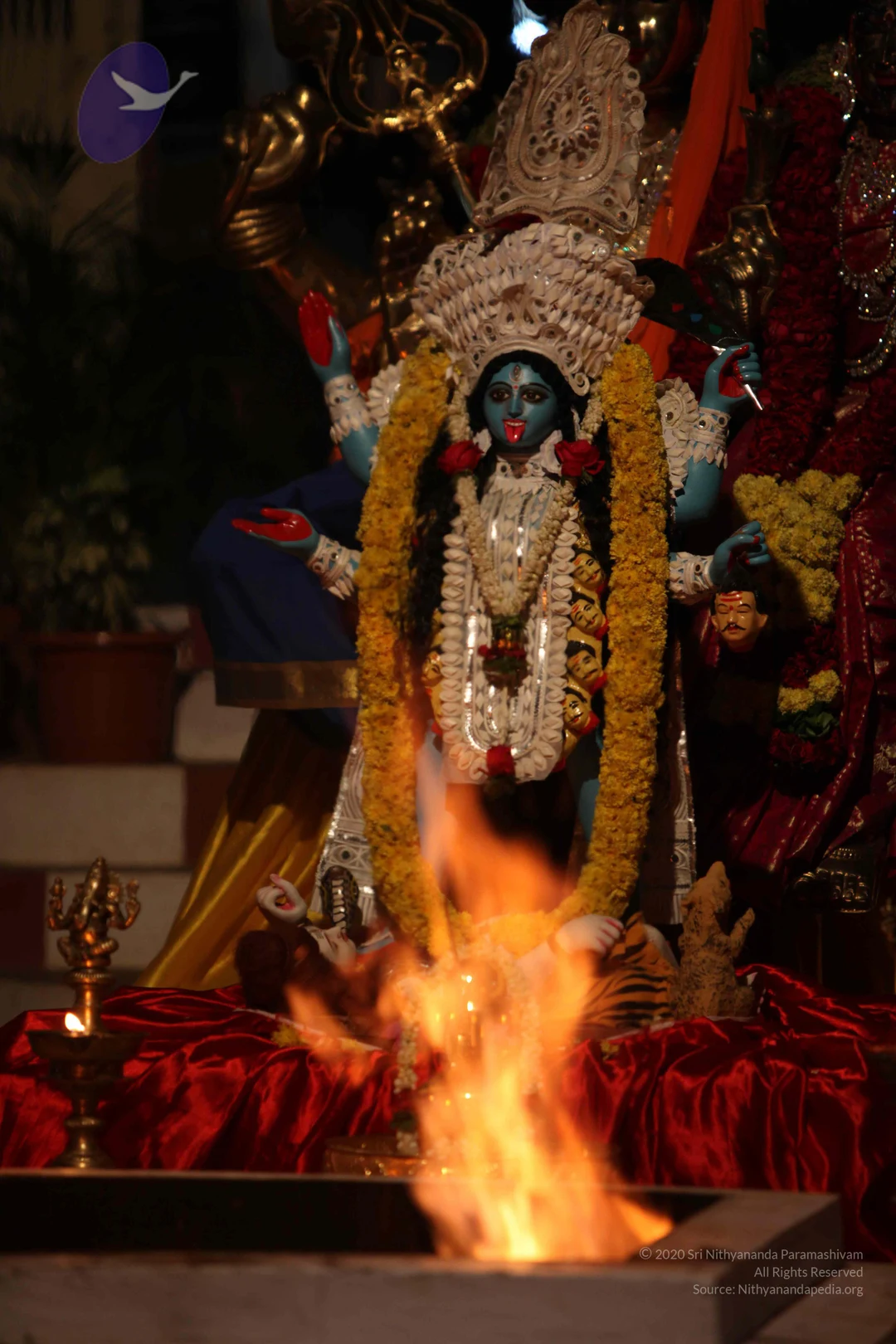
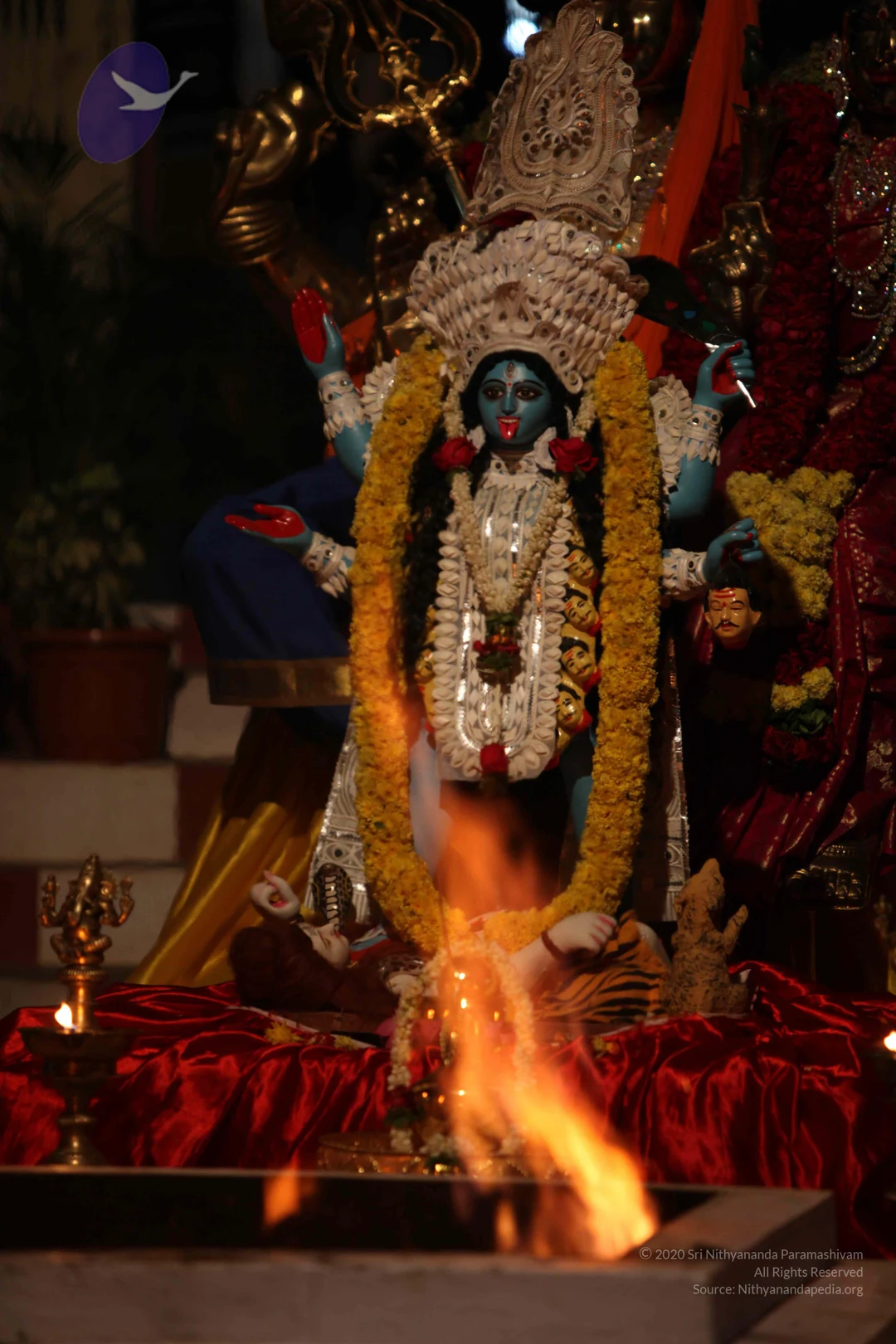
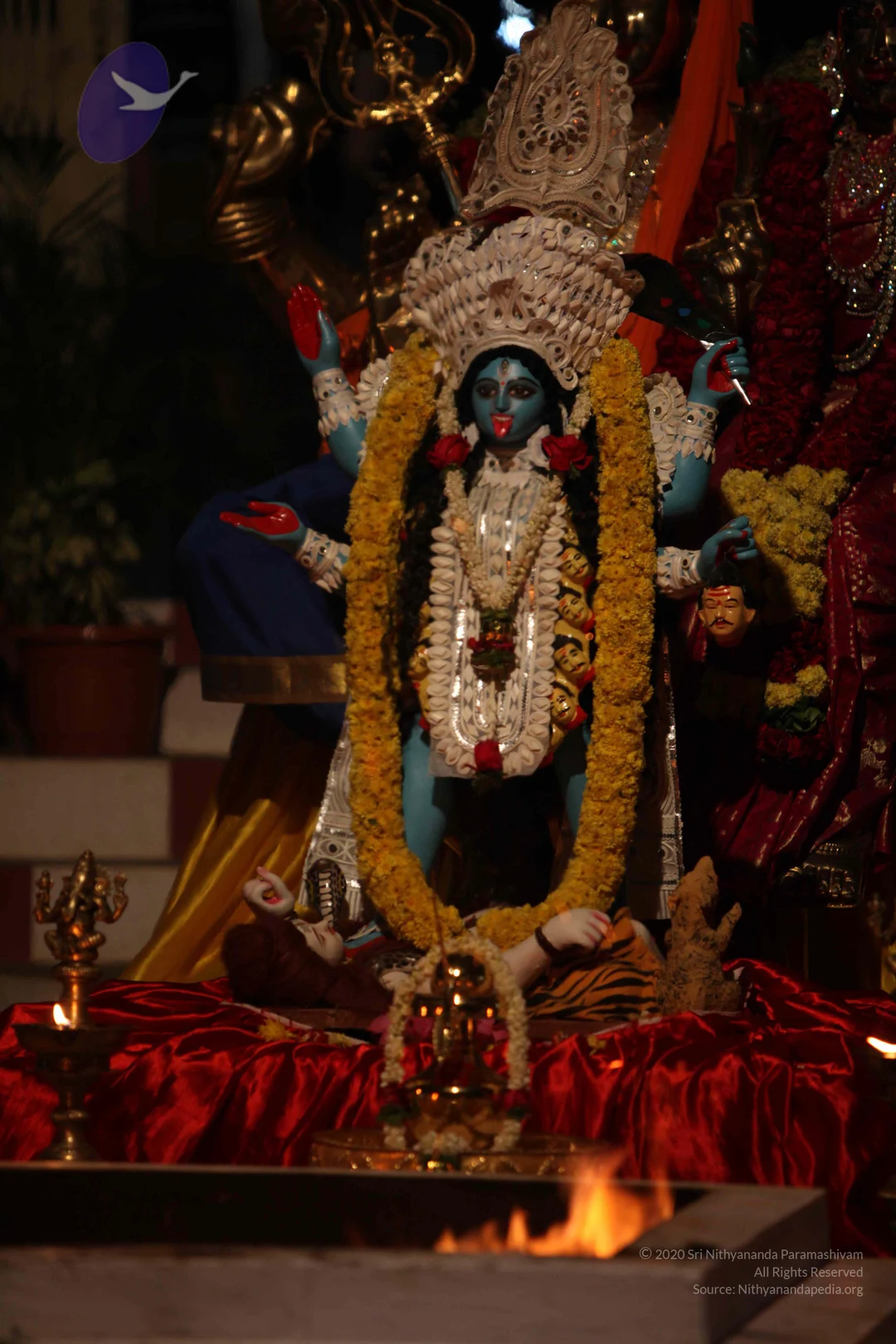
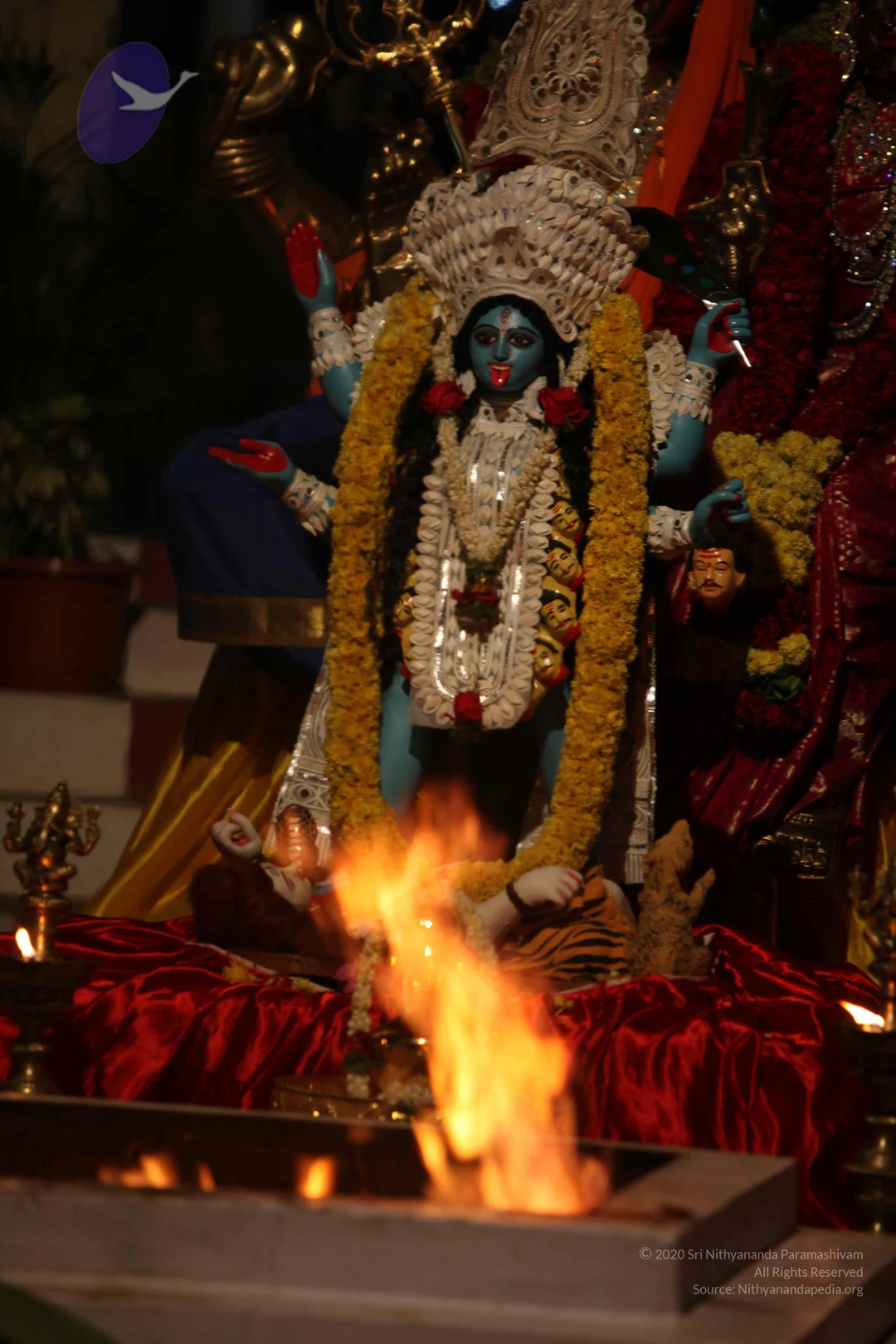
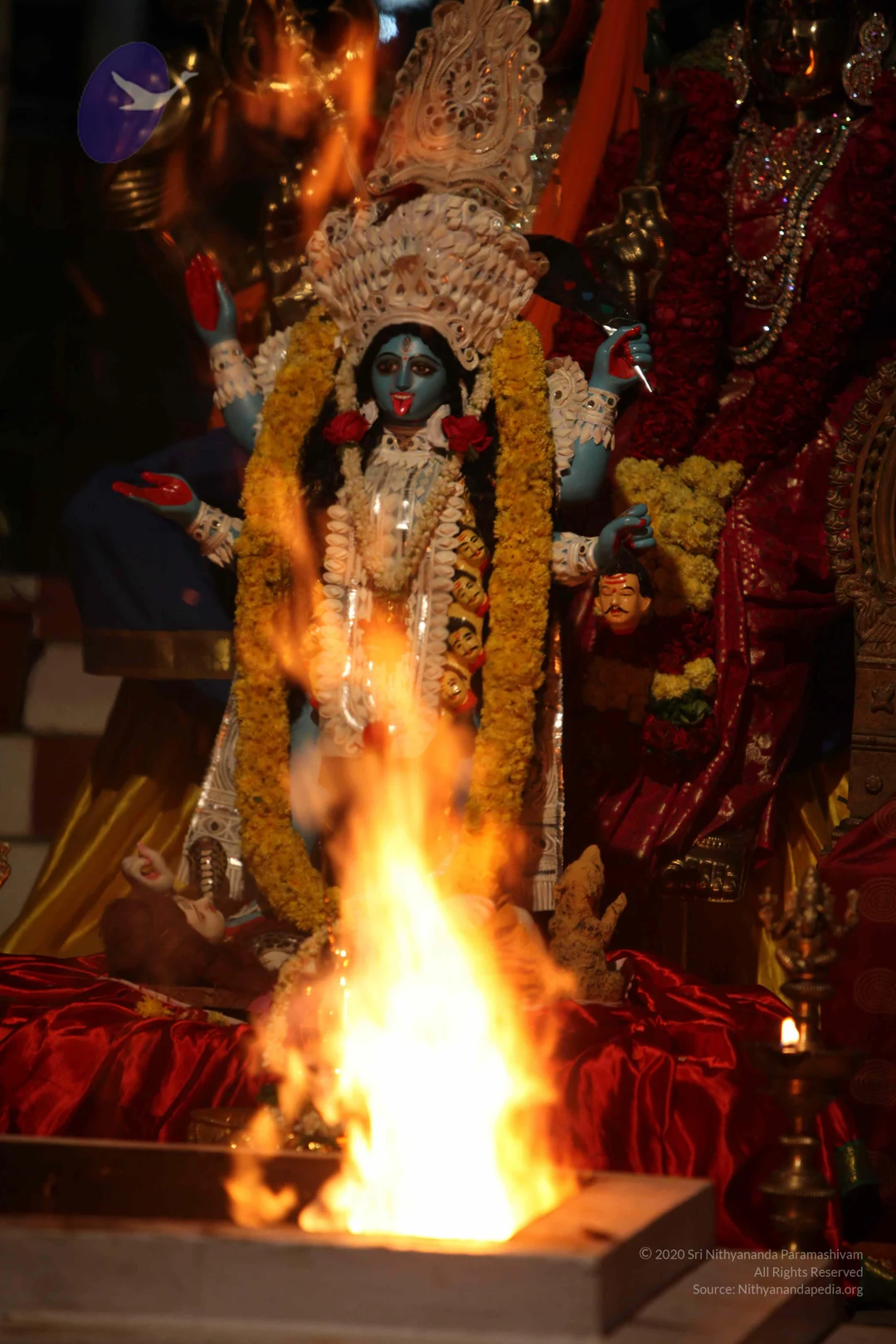
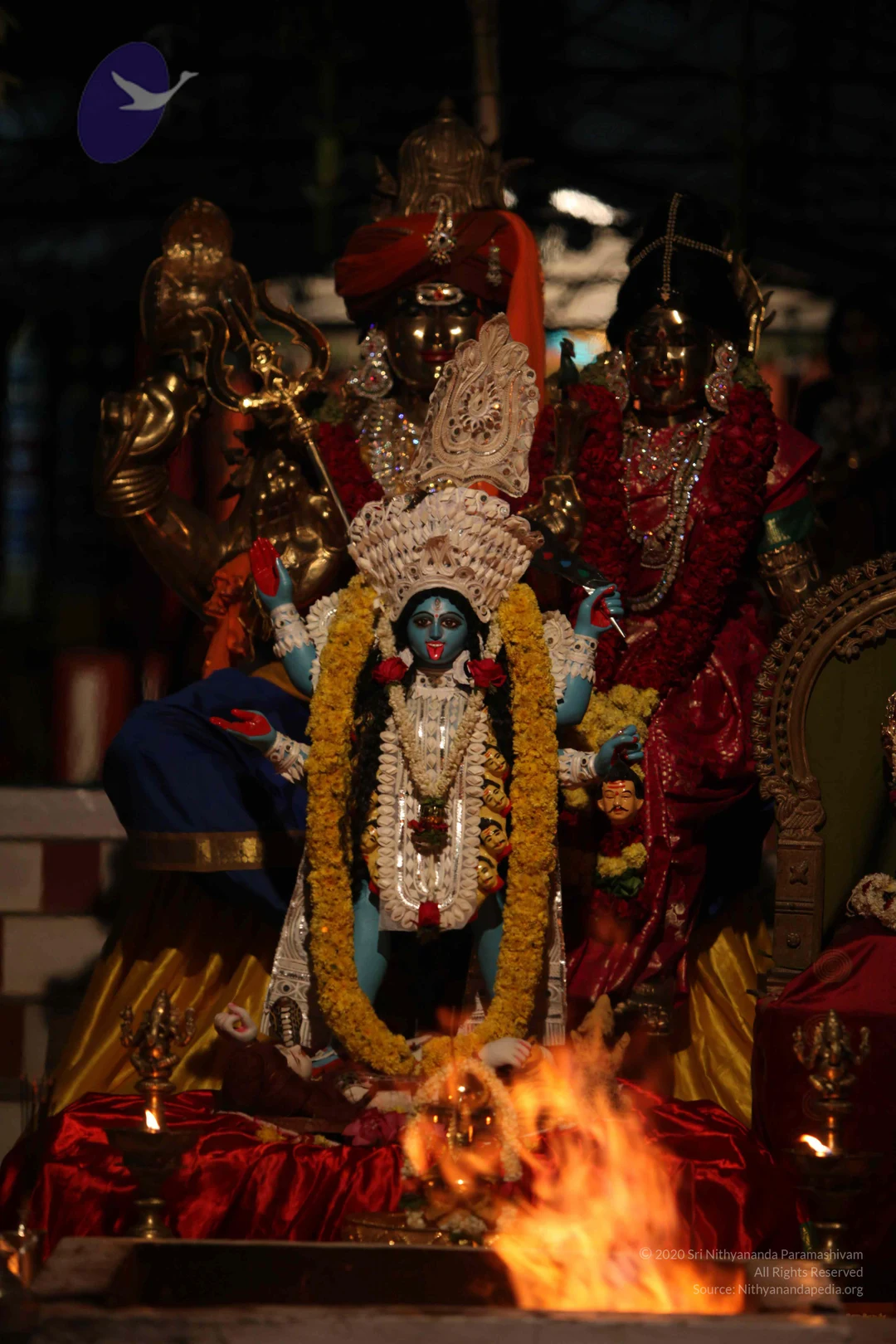
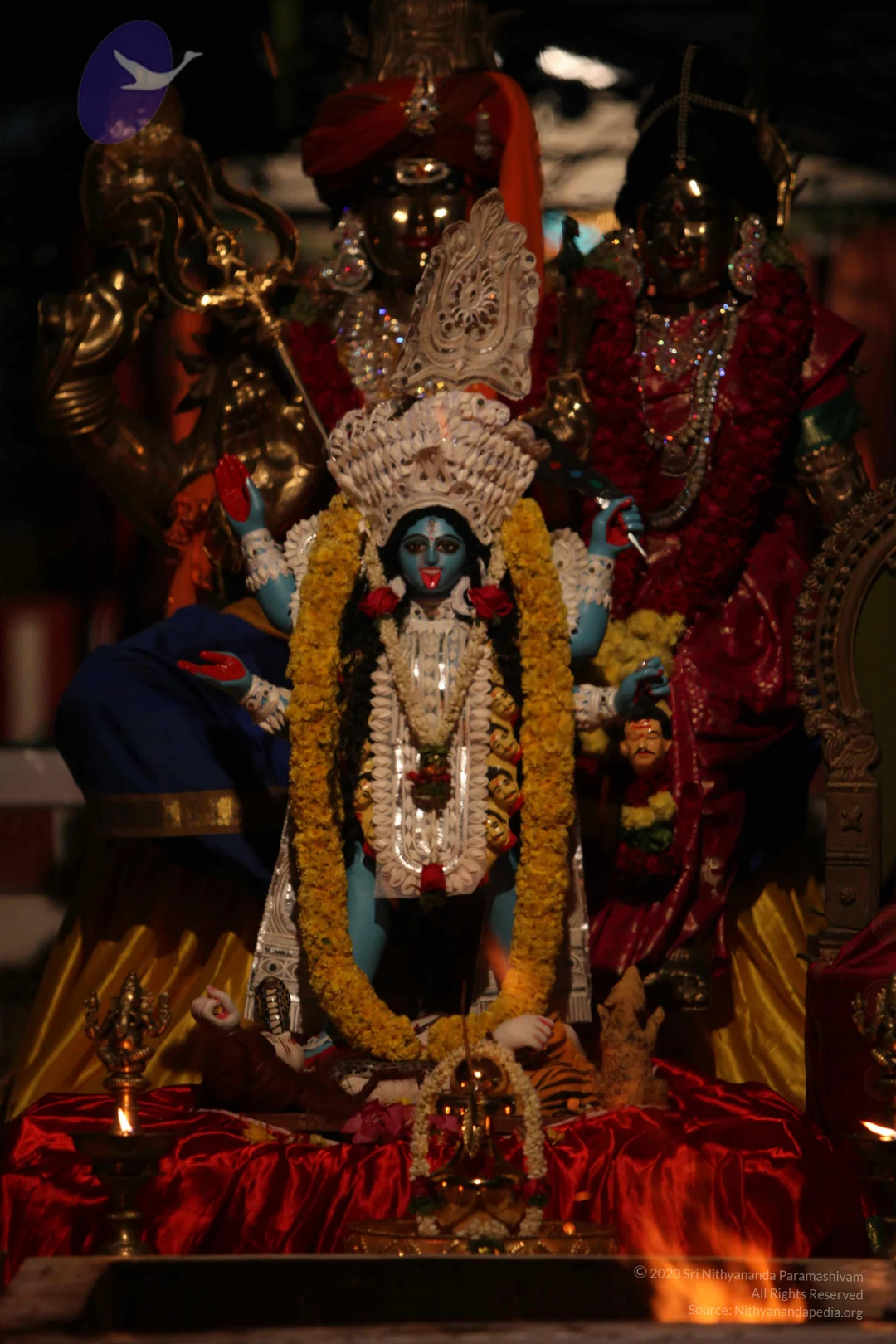
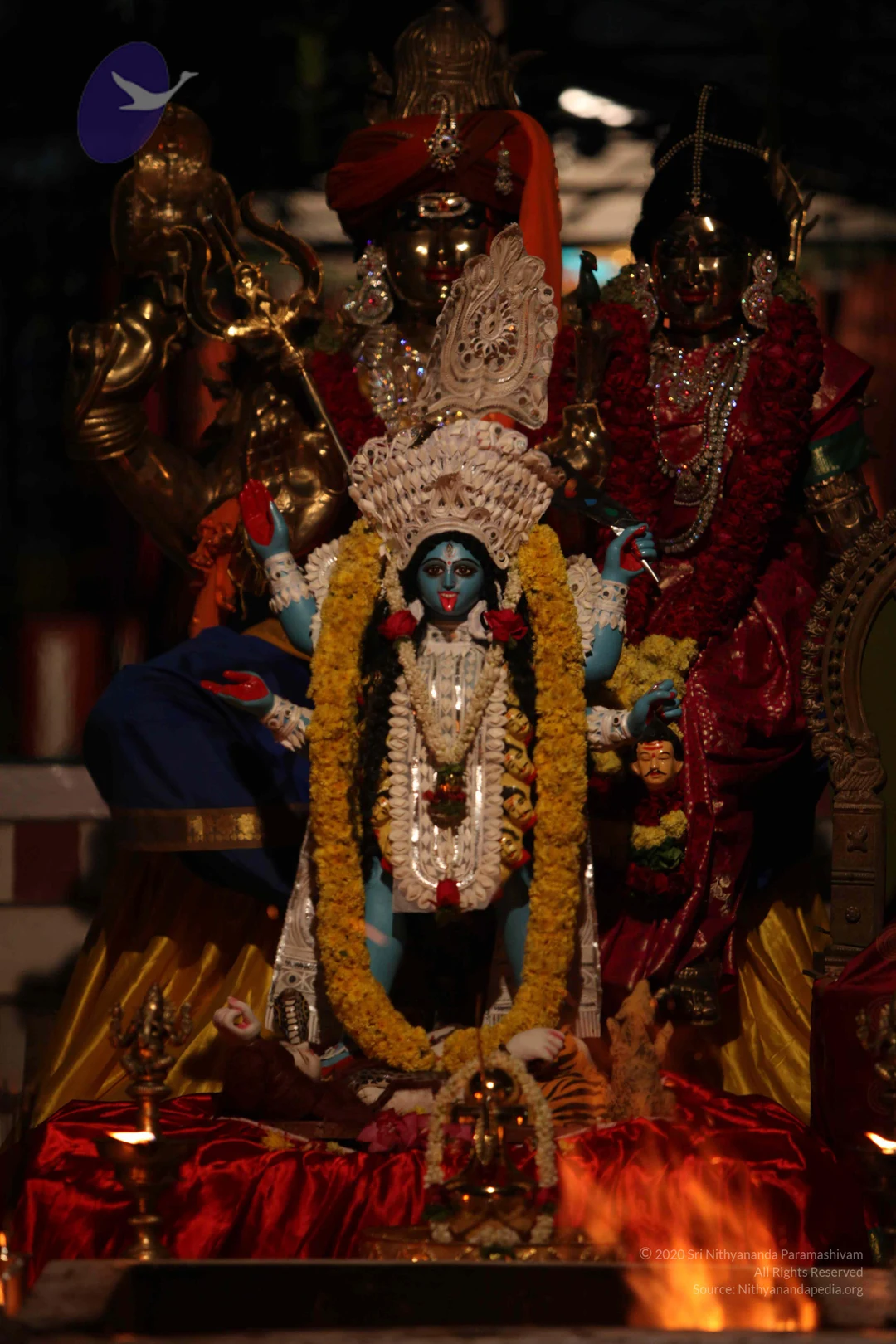
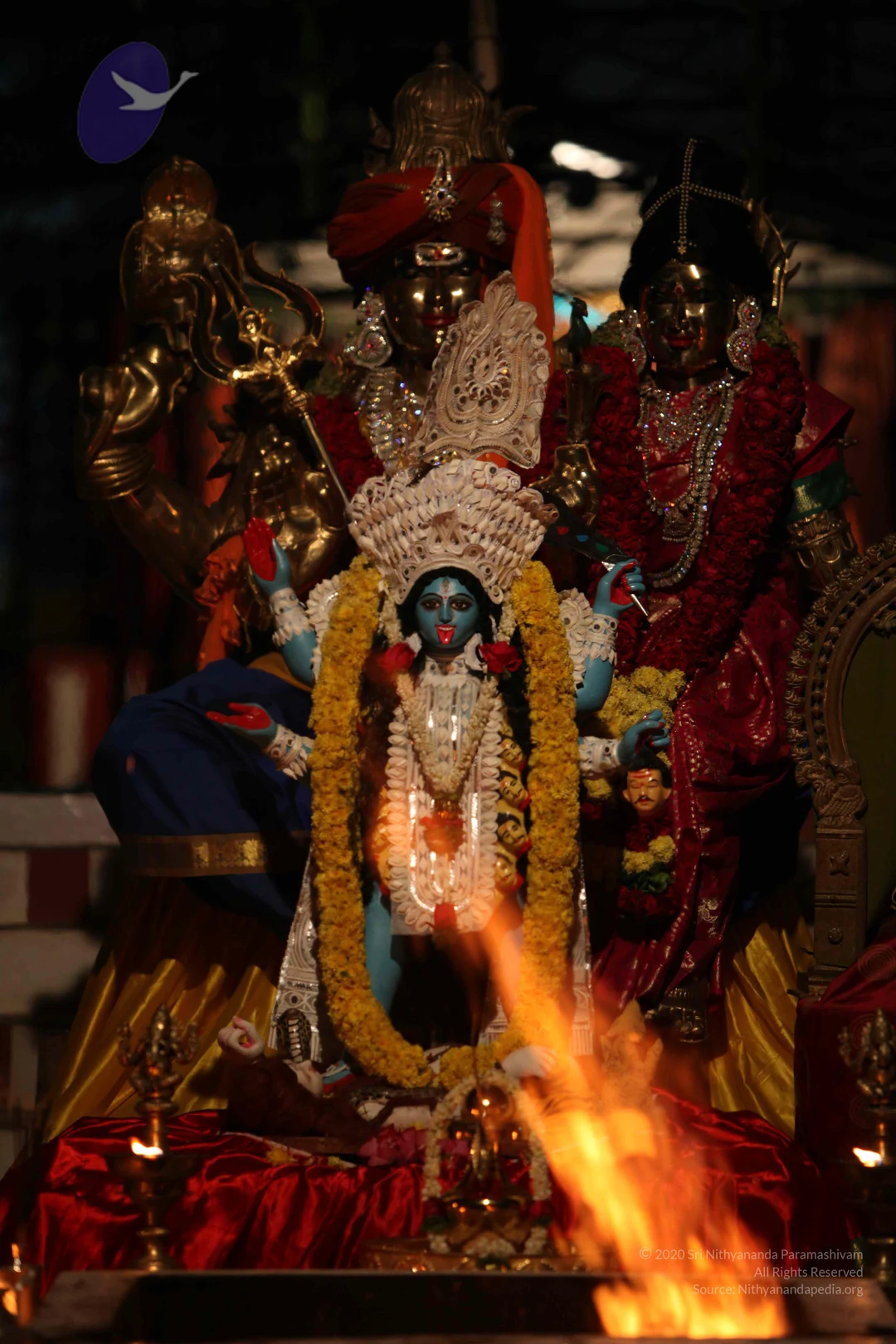
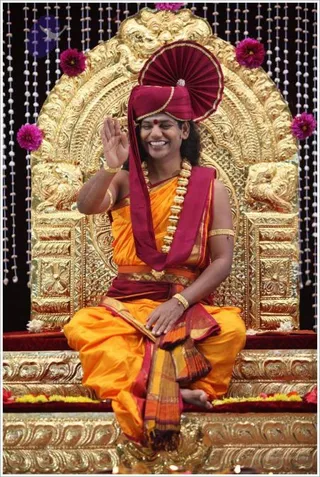
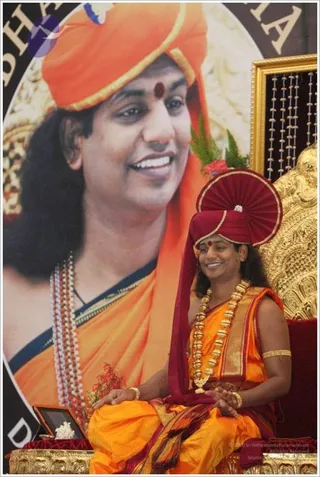
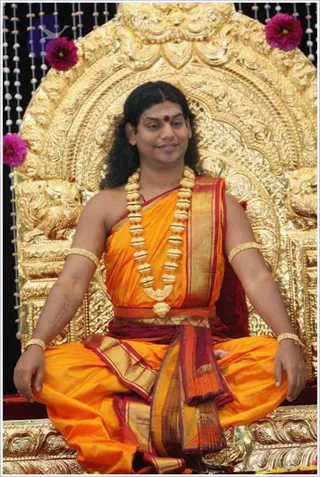
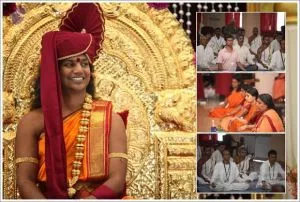
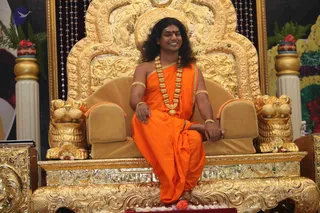
A shrine in an open stone-pillared pavilion holds a large deity murti of a standing figure with multiple arms, dressed in red, pink and gold garments and draped with garlands. The murti stands on a decorated pedestal before a golden arch, with brass lamps and offerings placed in front. Red and white painted railings and a green leafy background frame the shrine, with a small table of puja items at the lower edge.A temple shrine photograph showing deity murtis in an ornate golden arched niche with a turquoise cloth backdrop. Two large deity figures stand at the centre, one adorned with a crown and wearing a red and gold garment, the other in pink and green draped clothing, both decorated with garlands. A smaller figure stands in the lower right within a side niche, and a seated figure in an orange robe appears at the lower centre near floral offerings and flower garlands. No physical people are clearly visible; the figures are statues and murtis.A seated figure on an elaborate gilded throne with carved lion-head armrests and ornate floral relief panels. The person wears a crimson pleated turban with a central jewel, a saffron-orange dhoti and matching shawl edged in maroon, a thick gold necklace, gold armbands and bangles. He raises one hand in a blessing gesture while smiling broadly. Strings of beads and magenta flowers hang behind the throne, and marigold garlands lie on the platform. One physical person is visible.A side-by-side pair of near-identical images shows a seated figure on an ornate golden throne against a dark background. The figure wears a tall red and gold crown or headdress, a saffron-orange robe, and multiple beaded necklaces. The hands are raised in a blessing or mudra gesture. The two panels are duplicates of the same photograph.Three-panel collage of the same scene in a temple or hall. Each panel shows a figure in saffron-orange ceremonial garments with a red-and-gold garland, seated or standing before a decorated backdrop with ornate golden elements. The left panel shows a figure with long dark hair and a crown-like head ornament; the middle and right panels show closer views of the figure with a hand raised and bright red-orange drapery.A seated figure in saffron and orange ceremonial clothing and a maroon fan-shaped turban with a jewel sits on a gilded throne in front of a large banner portrait, labelled with partial text, of a smiling man with long hair, a red tilak and an orange turban and robe with a rudraksha mala. The seated figure wears a multi-strand gold necklace, gold bangles and a red-bordered orange shawl, hands folded in the lap, with a small framed picture and white flowers on a red cloth at the lower left. Swamiji (probable): the seated figure has long swept-back hair, a jewelled turban, ceremonial gold necklaces and saffron-orange robes, and is seated on the throne; the portrait behind is a printed depiction.

Bhagavad Gita Satsang

107 photosSource gallery
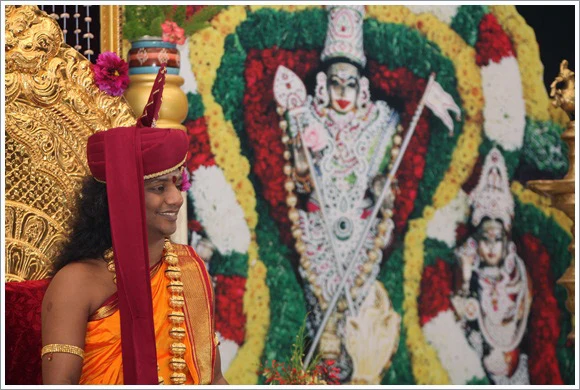
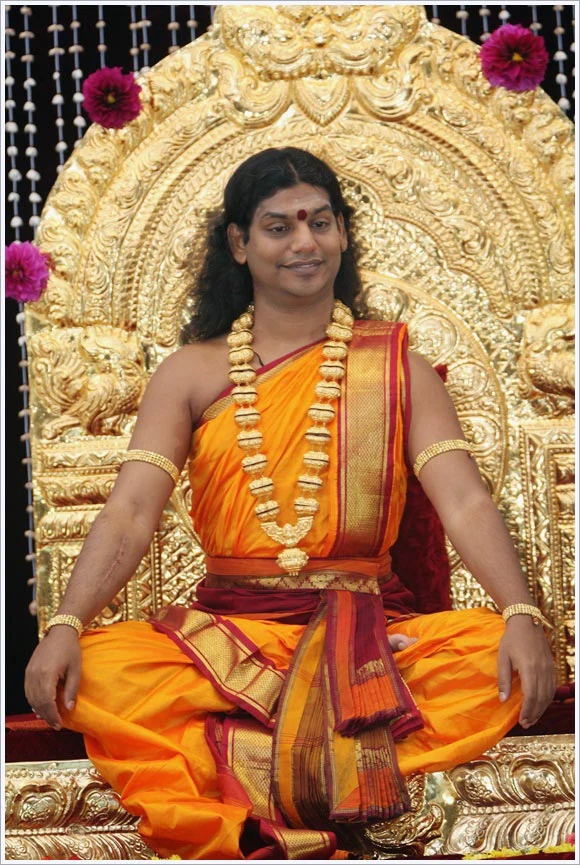
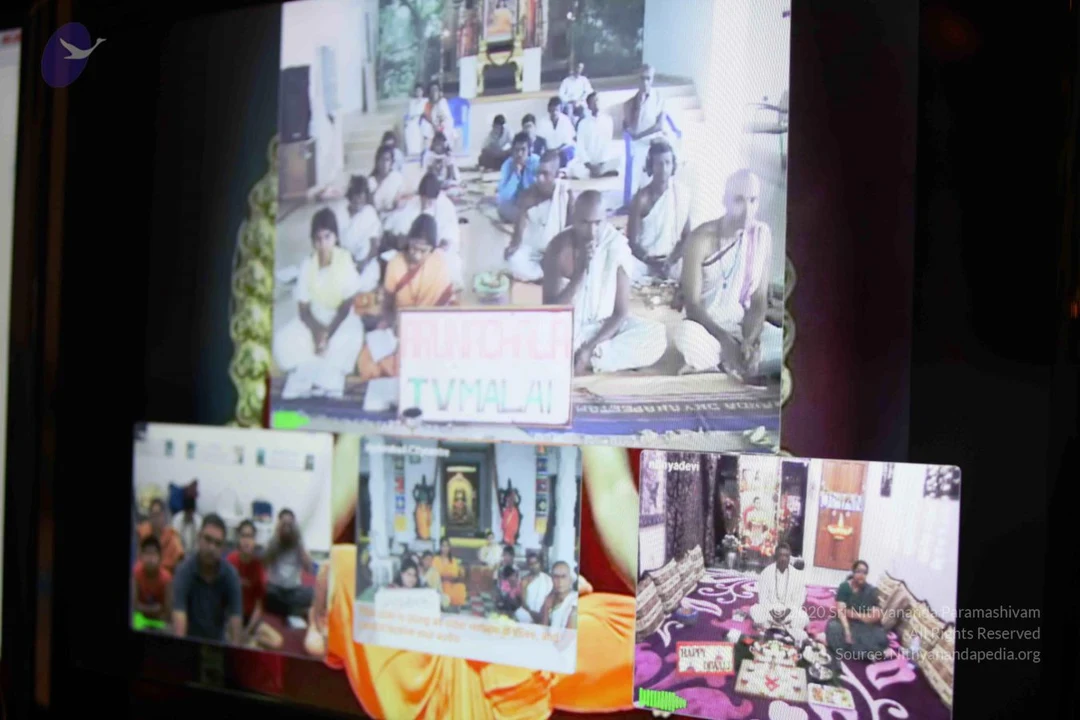
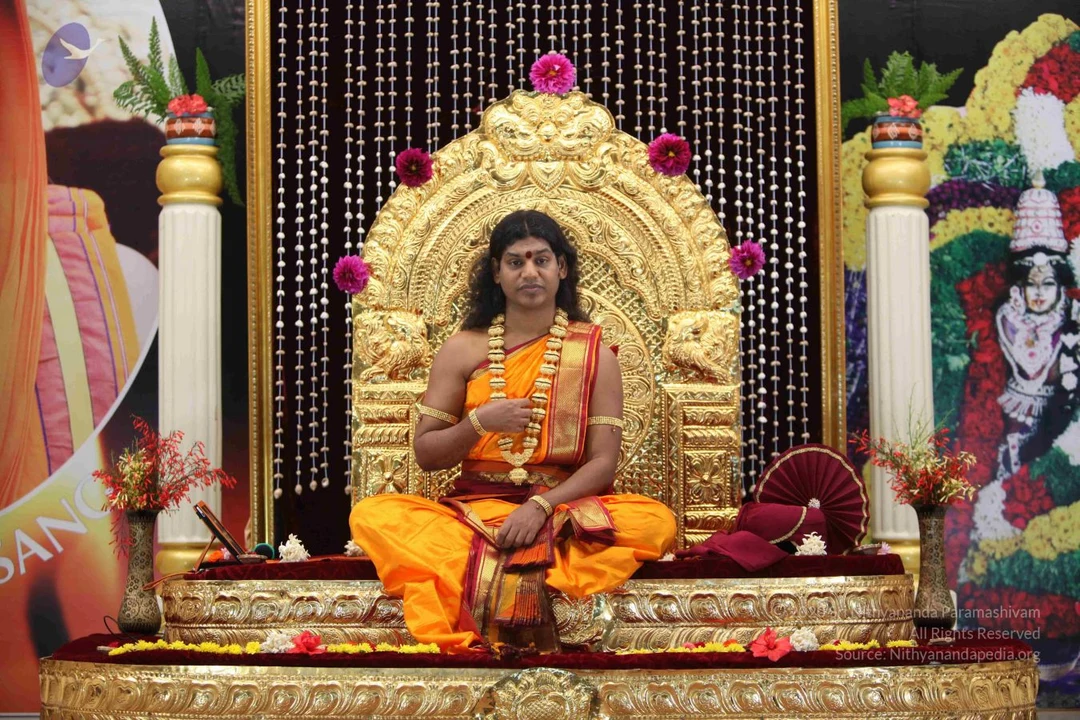
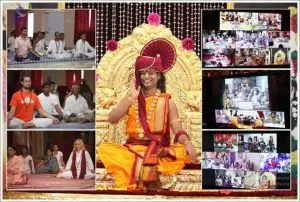
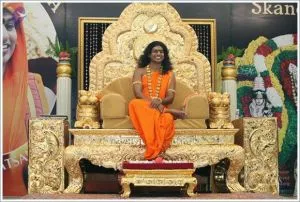
A seated figure in a red turban and saffron-orange garment sits at left beside an ornate gold throne, smiling toward the right. Behind him, a large deity murti decorated with white and red flowers and green garlands stands with a trident-like weapon in hand. Beside it, a smaller decorated figure is also garlanded, set against a backdrop of floral arrangements in a temple-style setting.A seated man sits cross-legged on an ornate gilded throne with carved lion figures and a large arched back. He has long dark hair, a red bindi, and wears a saffron-orange silk dhoti and shawl with gold zari borders. A heavy gold necklace of bead-like links hangs on his chest, with gold armlets and bangles on his arms. Pink flowers and a beaded curtain frame the throne. Swamiji (probable): long swept-back hair, saffron-orange ornate clothing, gold ceremonial necklace and bangles, seated on a throne. He is the sole person in the scene.A collage of three panels from a discourse event. The large central panel shows a man with long dark hair and a gold necklace, wearing orange robes, seated on an ornate golden throne with a gold-patterned backdrop, raising one hand in blessing and holding a rudraksha mala. Flowers are at the top corners. A smaller inset at lower left shows a shaved-headed monk in orange robes seated with a red backdrop. A smaller inset at right shows several women in orange saris seated in rows. The panels are arranged as a graphic collage of event photographs.A collage of four panels. The large left panel shows a man with a red turban, orange saffron-coloured robe with a shawl, rudraksha-style beaded necklaces and gold bangles, seated on an ornate gold throne with carved gold backdrop. Three smaller right panels show seated groups of people in white clothes and orange-saffron garments at a satsang or discourse gathering, with a few figures in saffron. The left figure is an appearance-based probable Swamiji in a seated pose on a throne, with a red turban and rudraksha malas, and the right panels show seated devotees.A multi-panel graphic collage of a satsang-style event. The central panel shows a seated figure in saffron-orange robes and a tall red-and-gold headpiece, holding one hand raised in a gesture of teaching, seated on a gold-decorated throne-like seat against a backdrop of gold tassels. Surrounding panels show a group of people in white clothing seated on the floor, a figure in an orange shawl, a row of seated attendees, and a grid of video-conference screens displaying participants. Several panels show people in white and pale clothes seated in rows. The collage has no readable printed text.A person sits on an ornate gold throne with carved arms and a high back, wearing an orange-saffron robe and a long orange-beaded rudraksha mala around the neck. The figure has long dark hair falling loose and is seated centrally in front of a banner with partial text and a decorative backdrop showing a deity image and floral arrangements. a person, seated on a peetha throne, identified by long swept hair, saffron clothing and rudraksha mala cues. Background includes a red and orange banner edge and garlands.

Kanganam-Temple
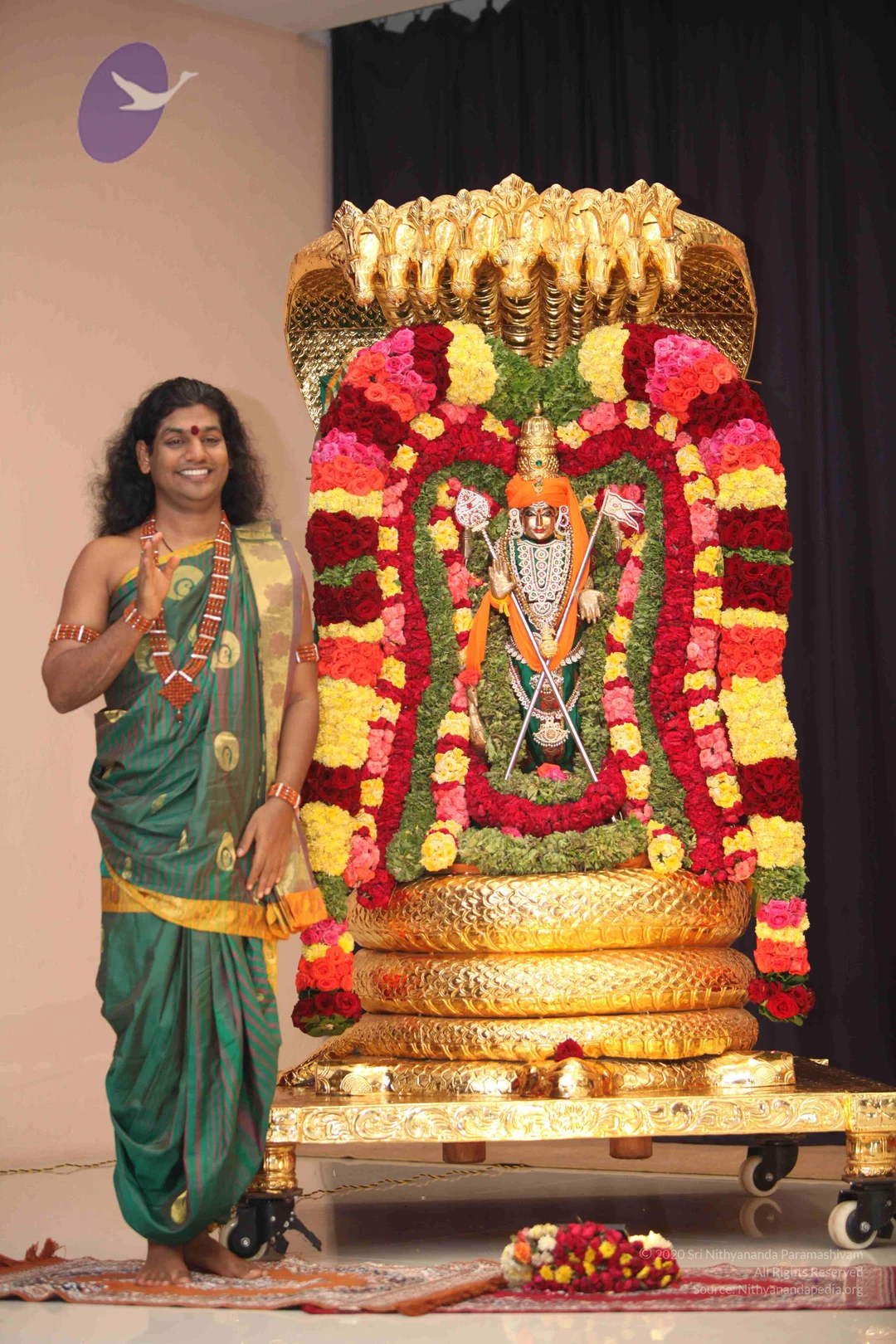
65 photosSource gallery
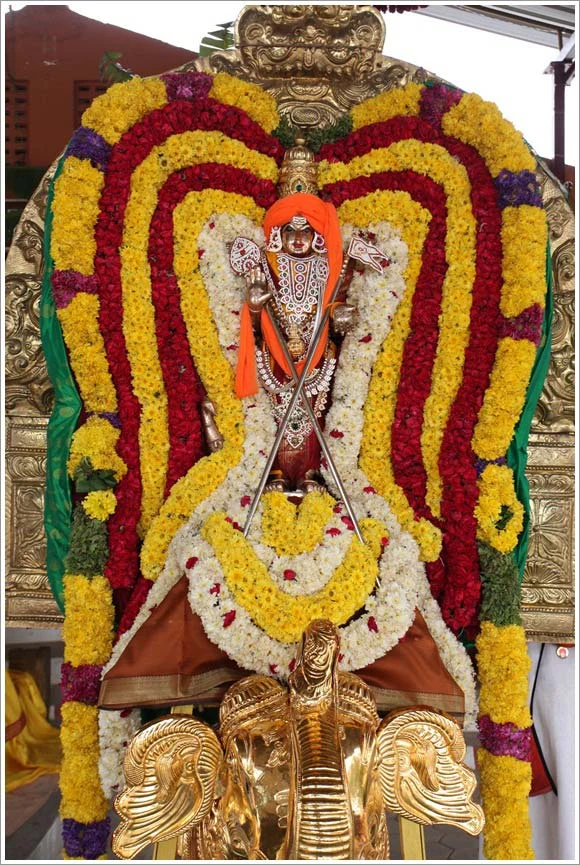
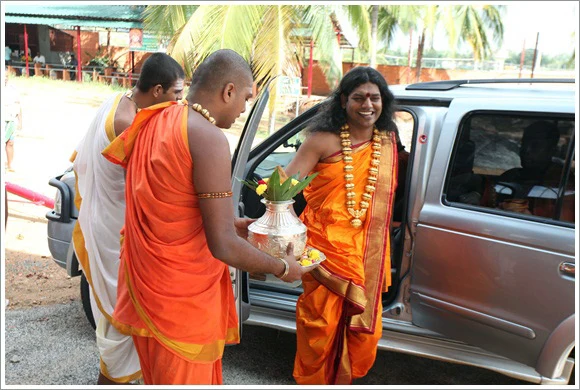
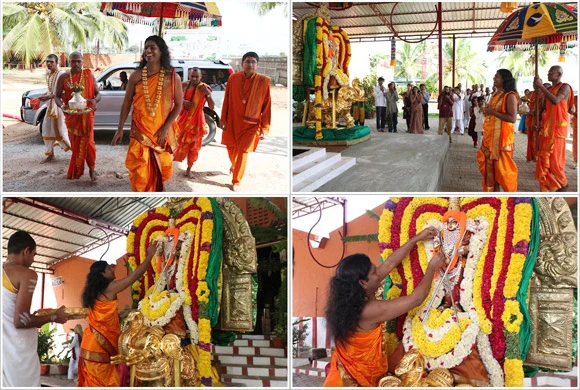
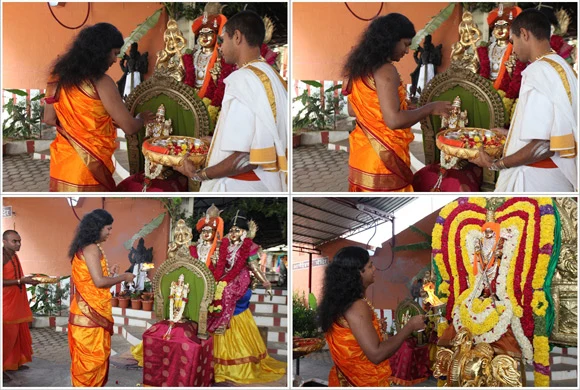
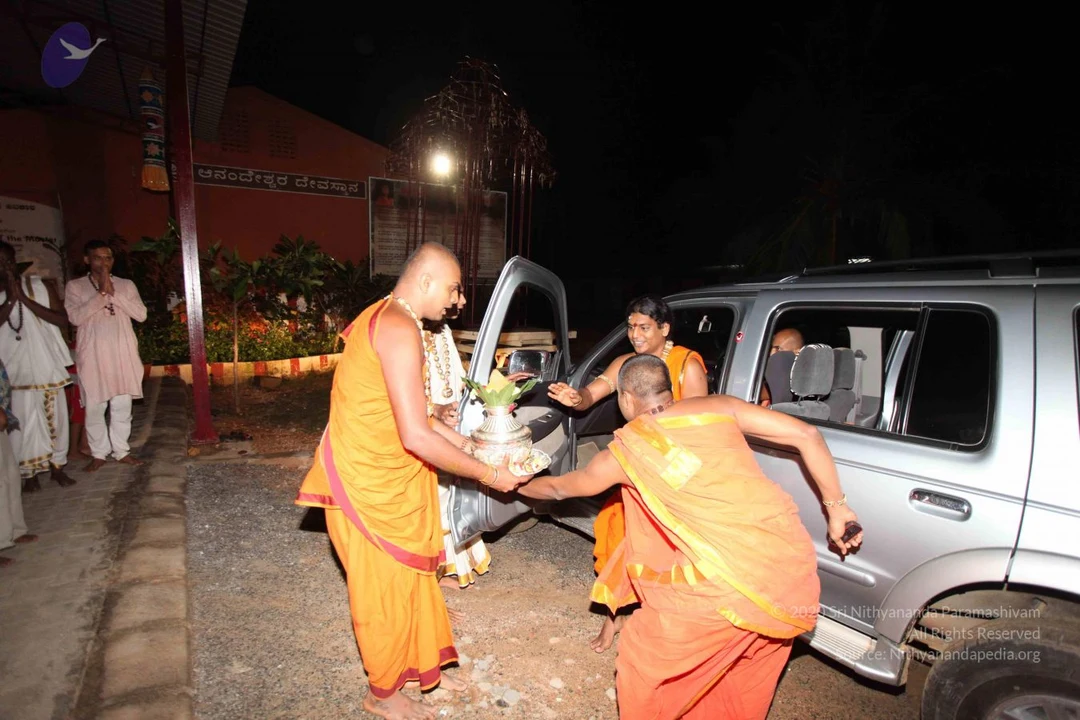
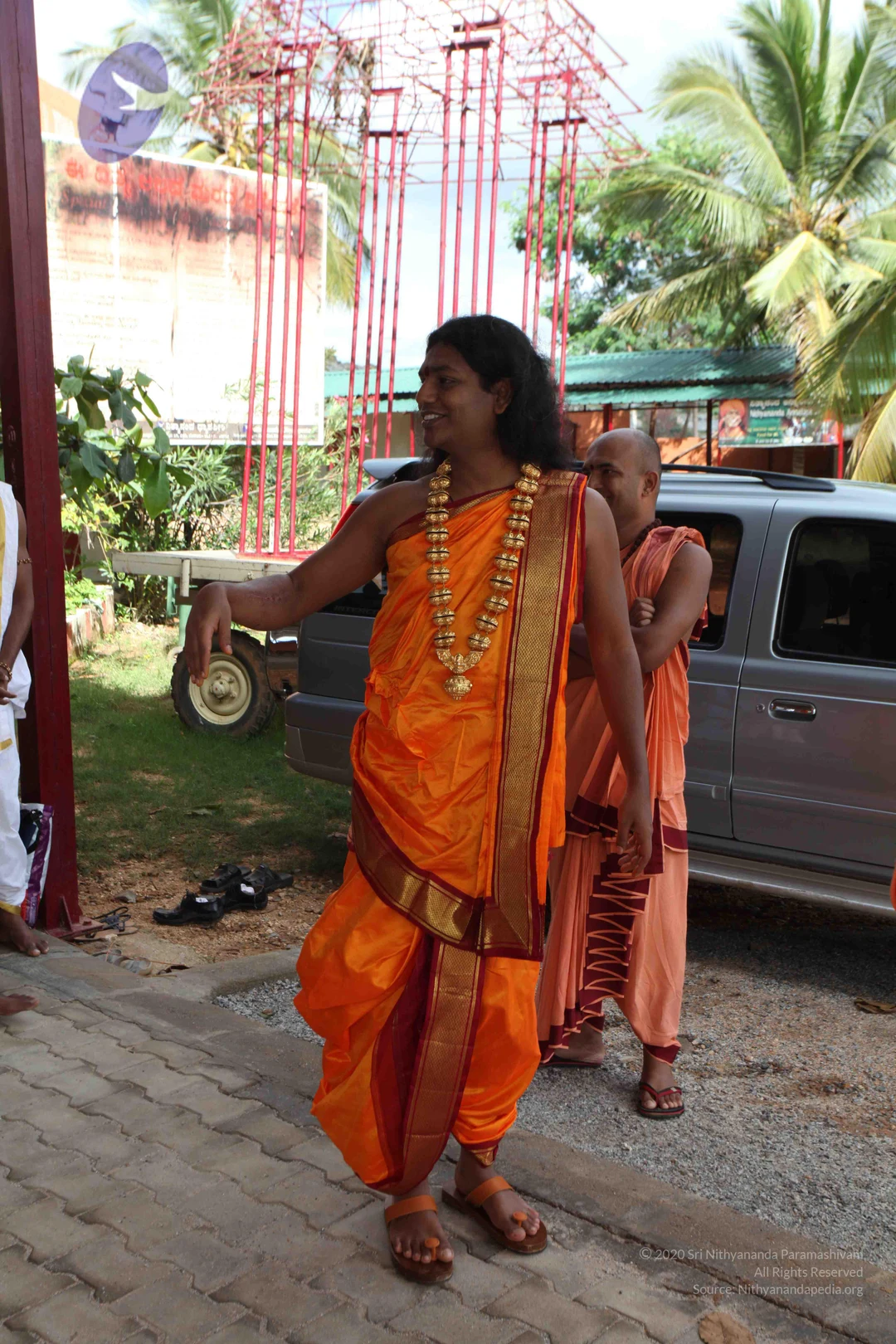
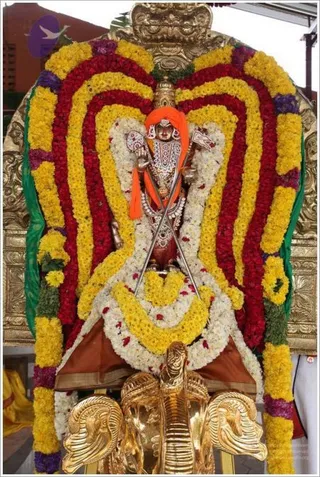
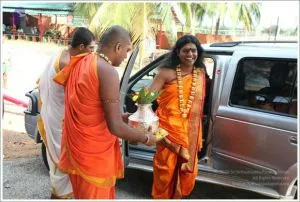
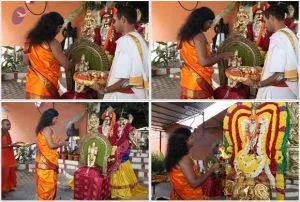
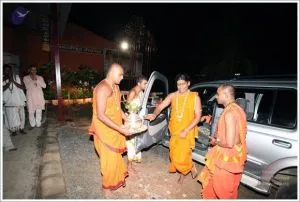
A metal deity murti stands in a shrine decorated with a dense arch of garlands in yellow, red, white and purple flowers. The figure wears an orange turban-like headdress, ornate silver-and-gold jewellery and a brown dhoti, and holds two spears or tridents, one in each hand. It stands on a golden base carved with a serpent-like hood. Behind it is an ornate gold-toned backdrop. No physical people are visible.A photograph of an outdoor arrival scene beside a silver grey SUV with its rear door open. A shaved-headed priest in an orange-saffron dhoti stands at left holding a brass puja plate with a lit lamp and flowers, facing a person in orange-saffron robes with long dark swept-back hair and a rudraksha mala who stands at the open car door. Behind them a second man in white clothes stands near palm trees and a tiled building. The scene suggests a ceremonial welcome with an arati plate. The person at the car has long hair and saffron clothing, a visible cue, but the image does not establish identity.A four-panel collage of photographs from a temple-style event. Top-left panel shows several people in saffron and orange robes seated or standing near a decorated altar area with a garlanded deity murti. Top-right panel shows a robed figure in orange near a vertical banner or hanging. Bottom-left panel shows a saffron-clad figure at a podium-like setting. Bottom-right panel shows a group of orange-robed devotees in an interior hall with ornate pillars. The collage is a graphic layout of multiple small photographs.A four-panel photo collage of a temple ritual. In the top-left and top-right panels, a woman in an orange sari stands beside a man in white dhoti and shawl, both facing an ornate green-and-gold peetha on which a deity murti is adorned; the woman holds a brass plate of offerings. Bottom-left shows the same woman in orange offering before colourful decorated deity figures in red and pink garments. Bottom-right shows a deity murti dressed in white and red with a large red and gold floral garland and mandapam decorations. Two physical people are visible.A four-panel collage of photographs showing a person in an orange-saffron silk sari with a maroon-and-gold border and long dark hair, performing puja at a green-and-gold ornate chair-style seat draped in a maroon cloth. In each panel the person places or adjusts a garland of white flowers and red blossoms on a small standing deity murti; a gold ceremonial figure and a dark statue stand in the background, with green leaves and a red-and-white painted wall behind. In the lower panels the person holds a small brass plate or offering dish. The collage is a graphic composed of photographs, showing ritual garland offering and worship.Night-time arrival scene outside a building with a red and yellow decorated entrance. Several saffron-robed monks in orange clothing stand beside a silver SUV with its rear door open. The monk on the left, shaved-headed, holds a bundle of flowers or garlands in both hands. Another saffron-robed monk stands near the car door, and a monk in the foreground at right, also in orange, faces the vehicle. Behind them, a few men in white dhotis and kurtas stand near a red-and-white barrier. Lights illuminate the path and the scene.

Diwali-Celebrations

25 photosSource gallery
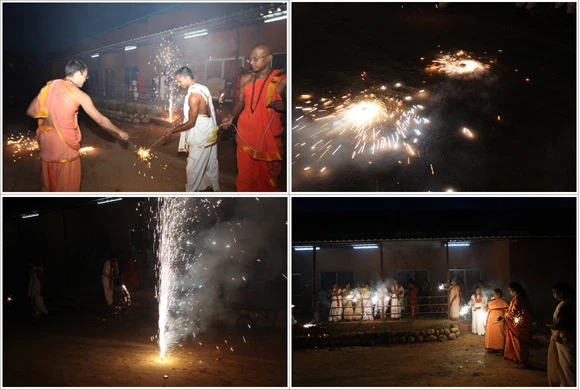
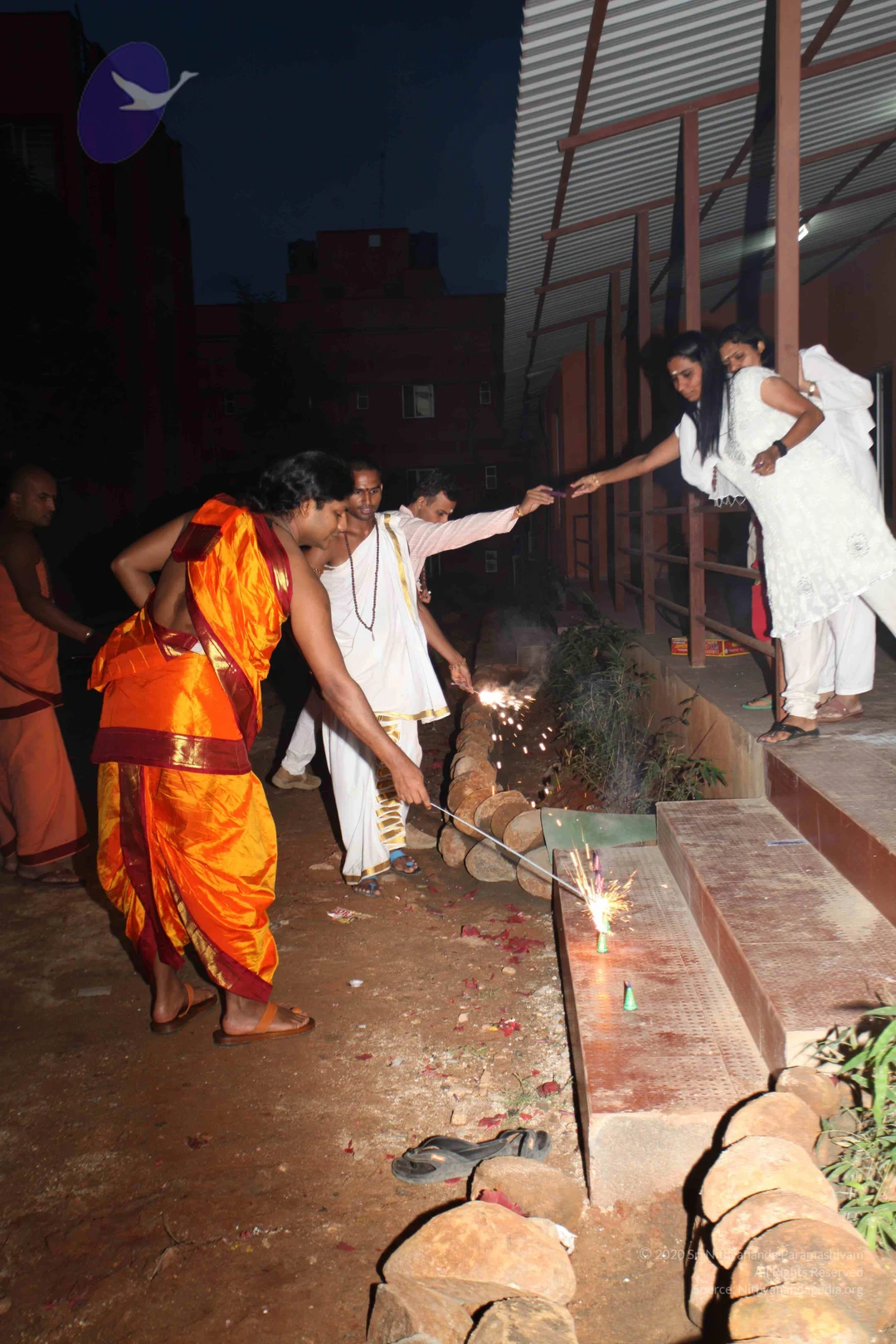
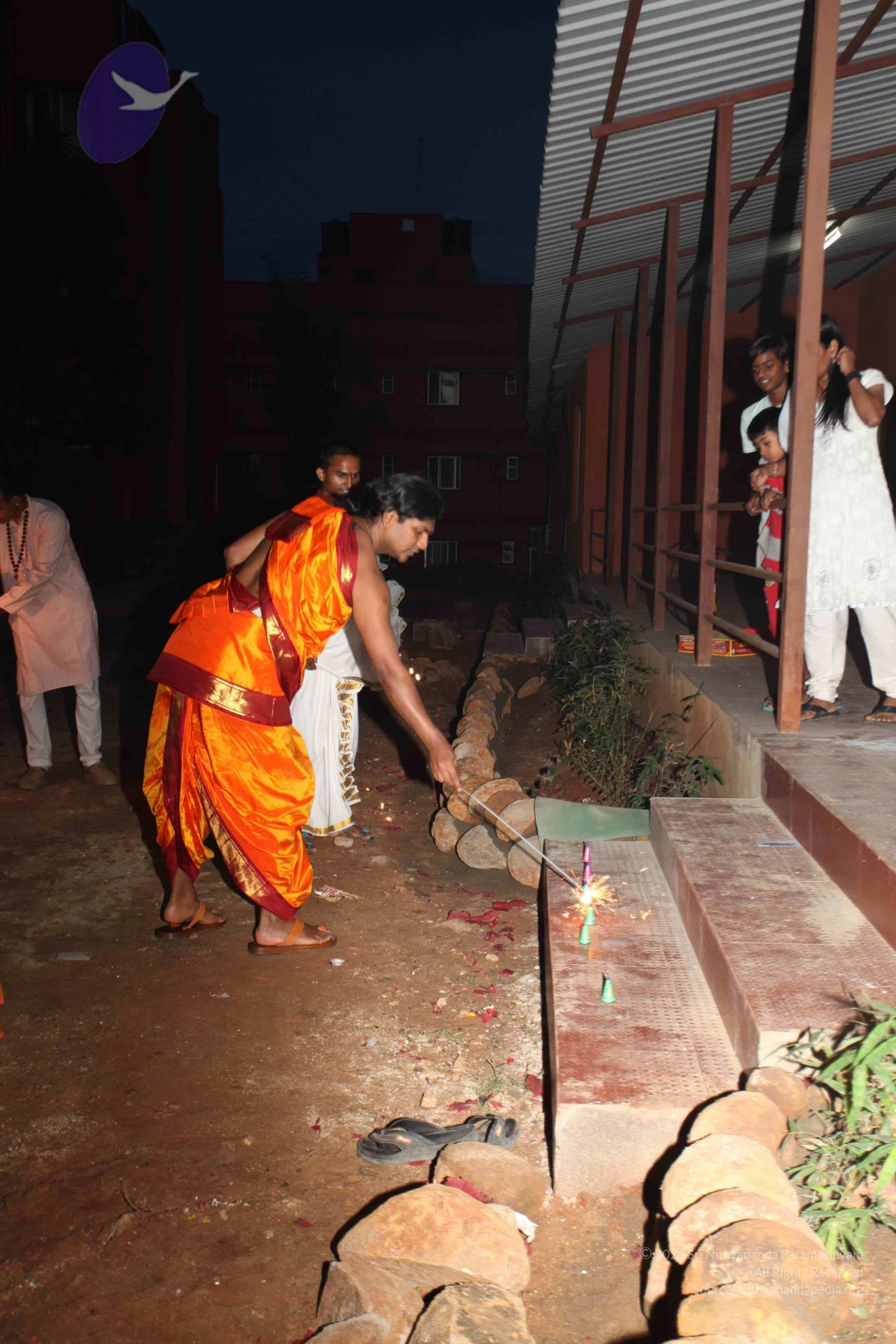
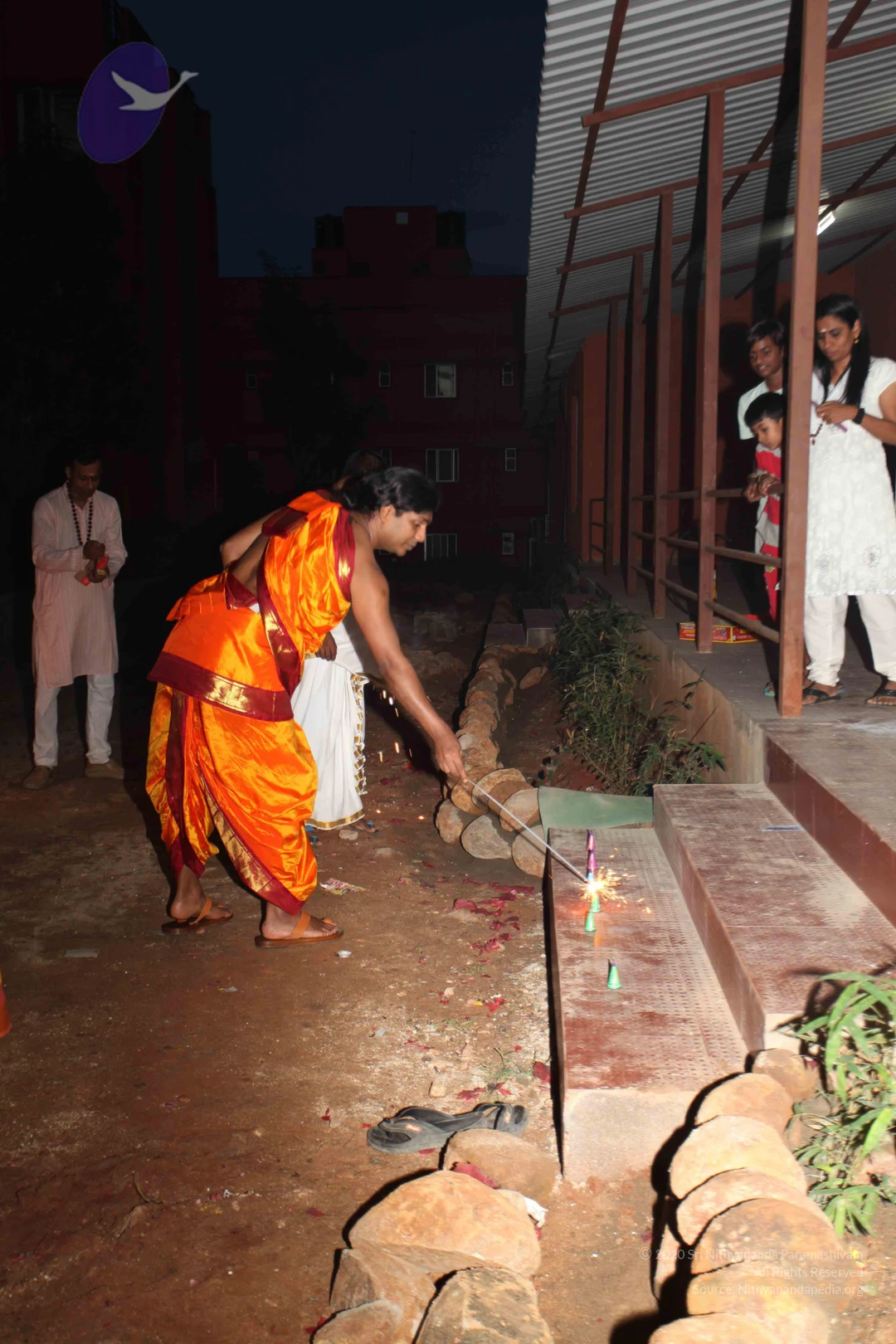
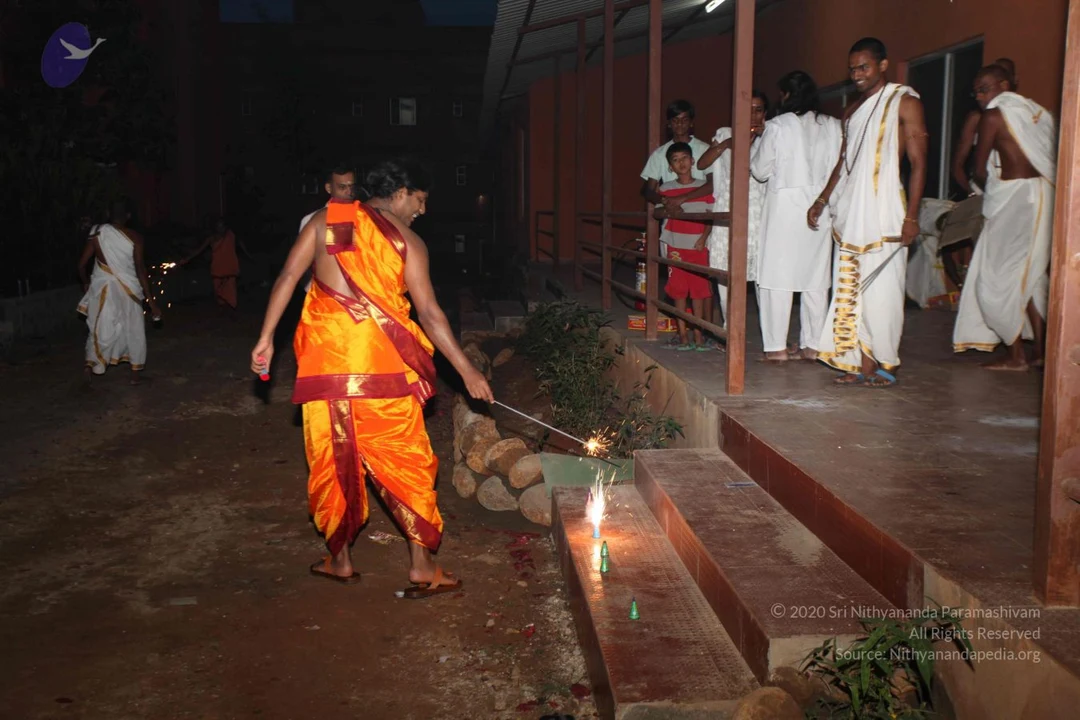
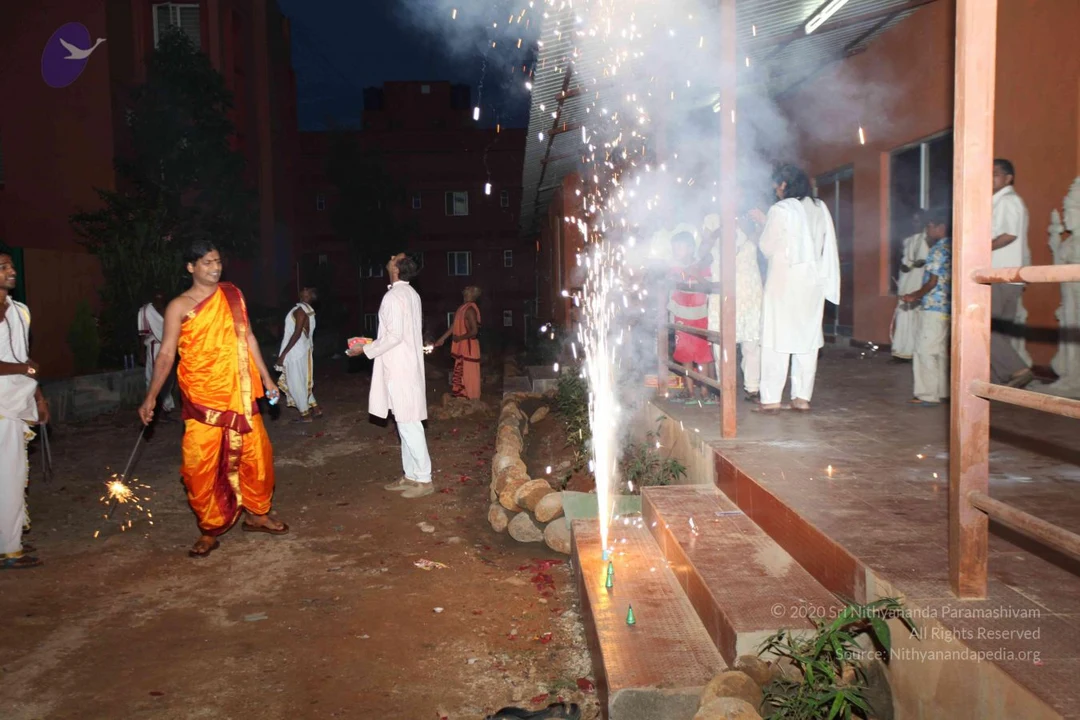
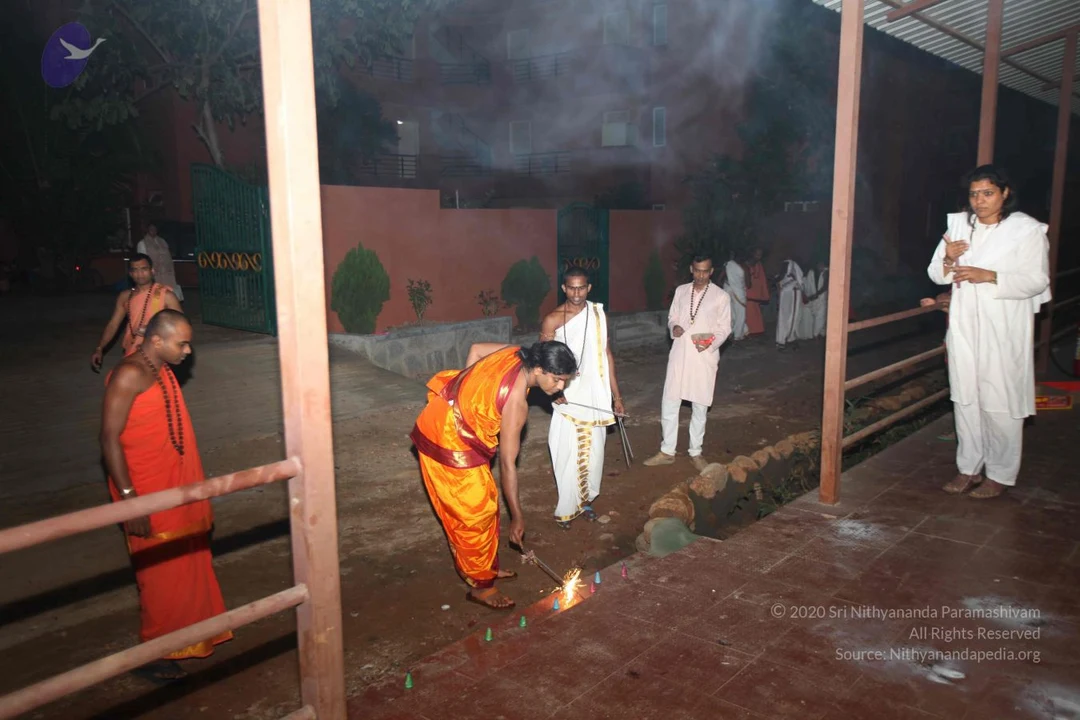
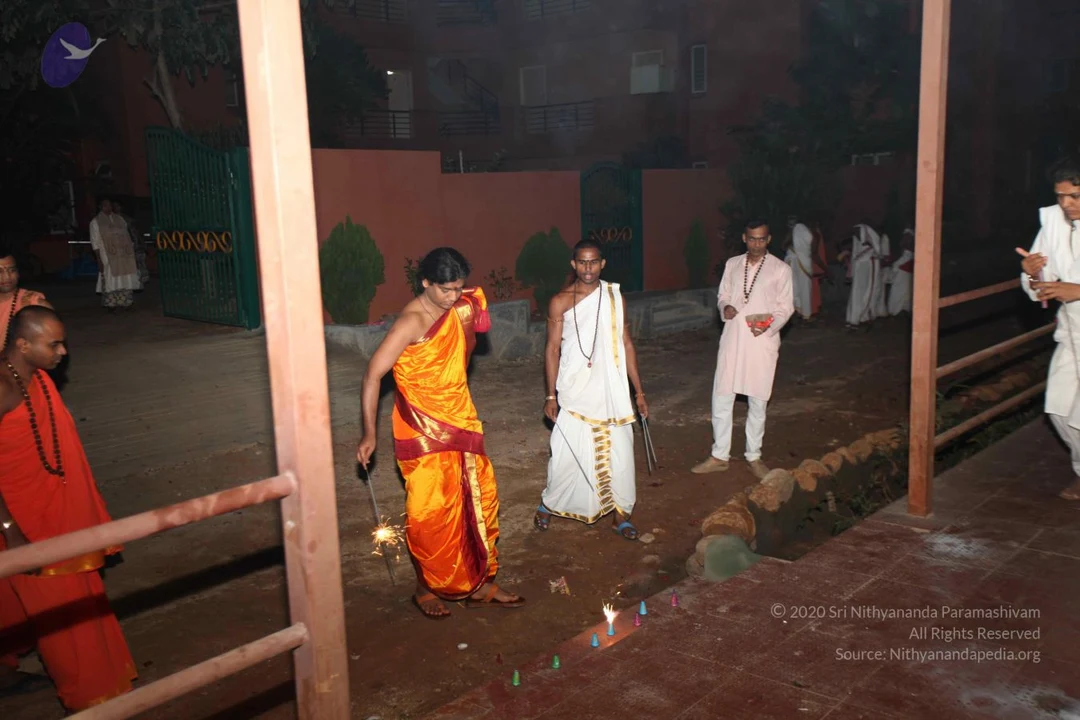
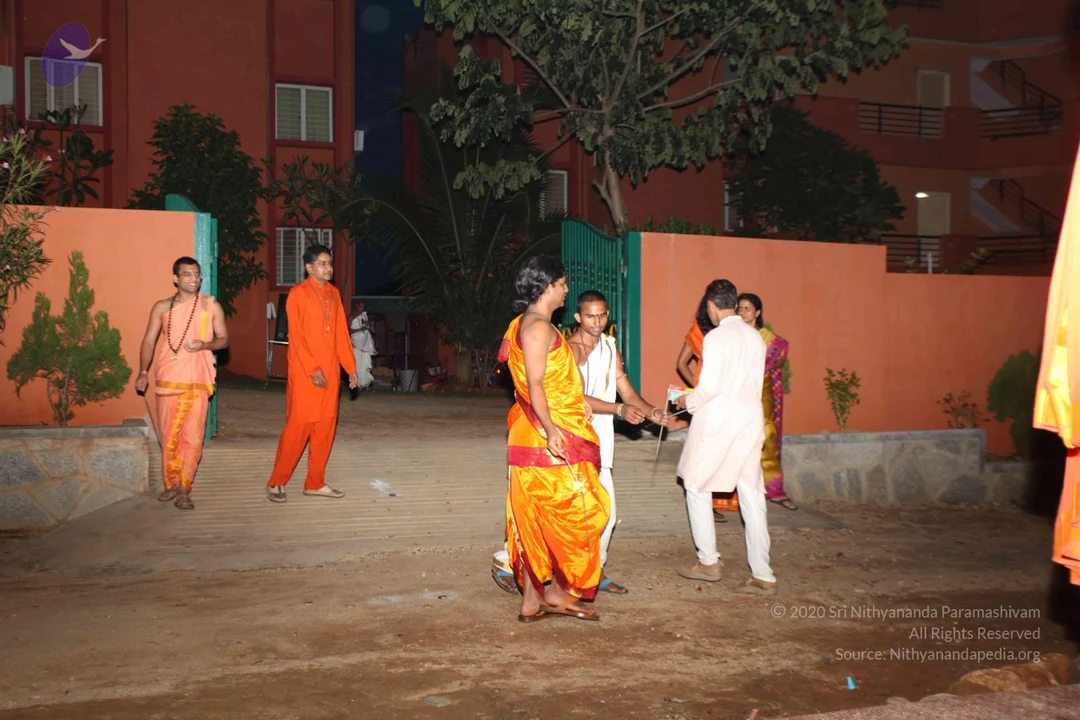
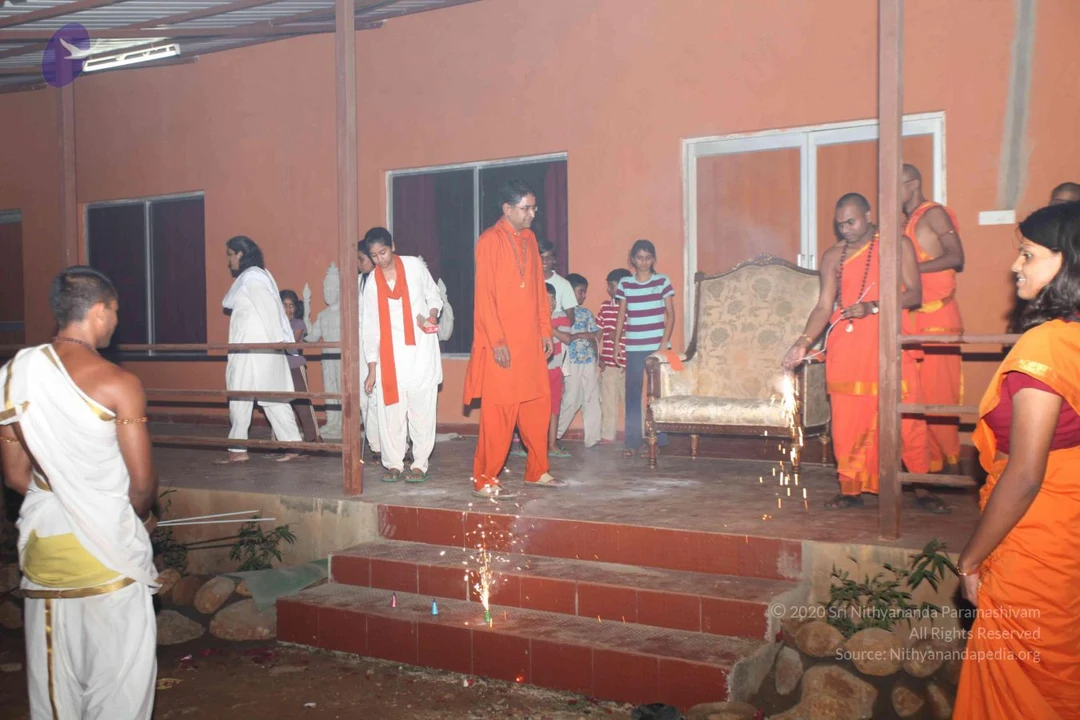
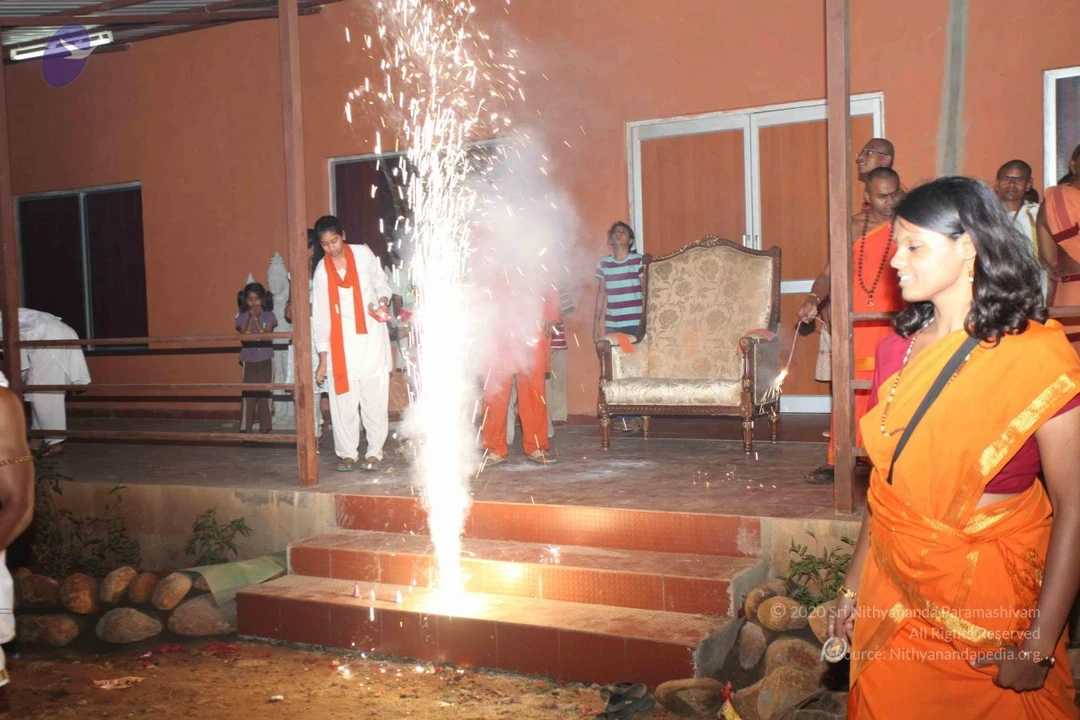
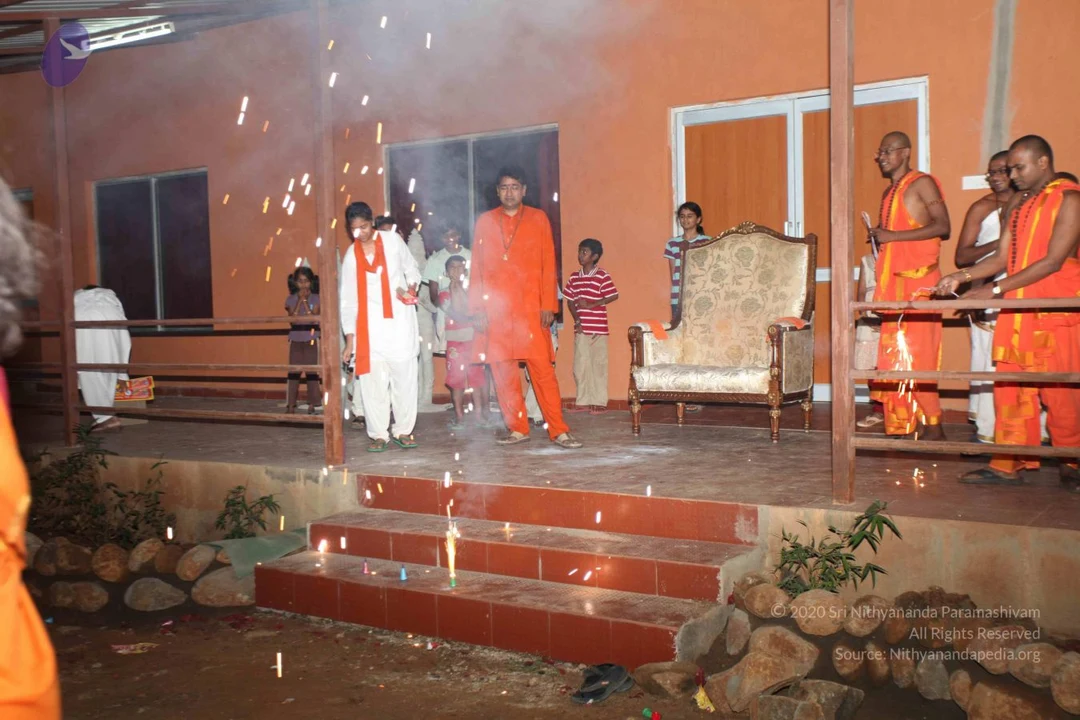
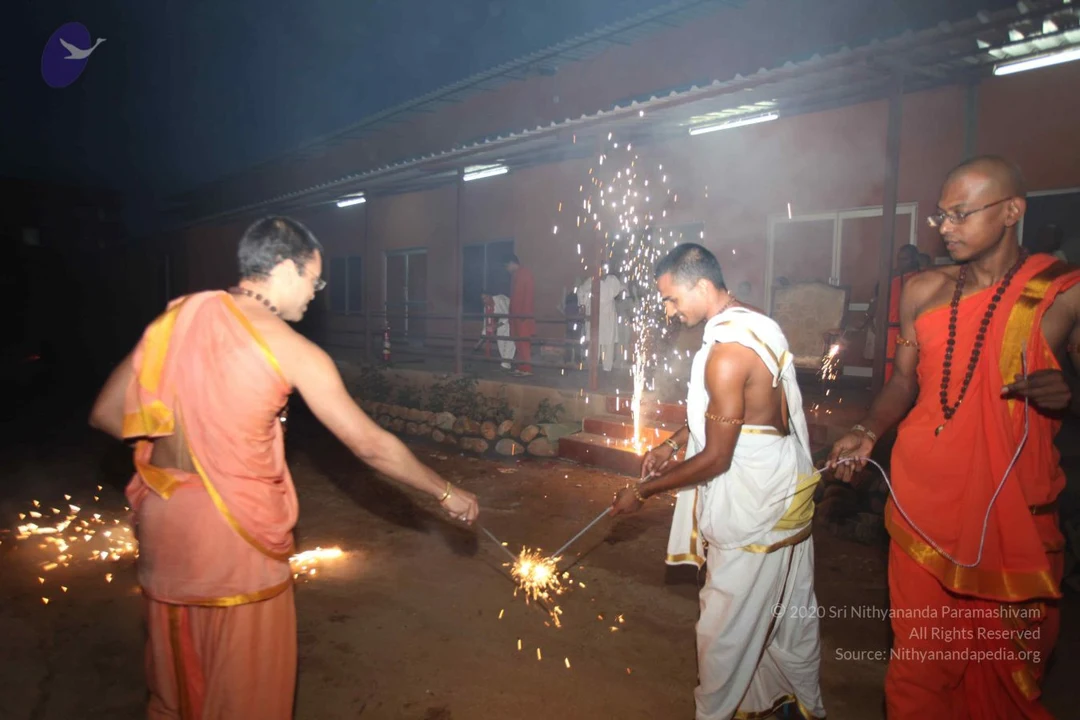
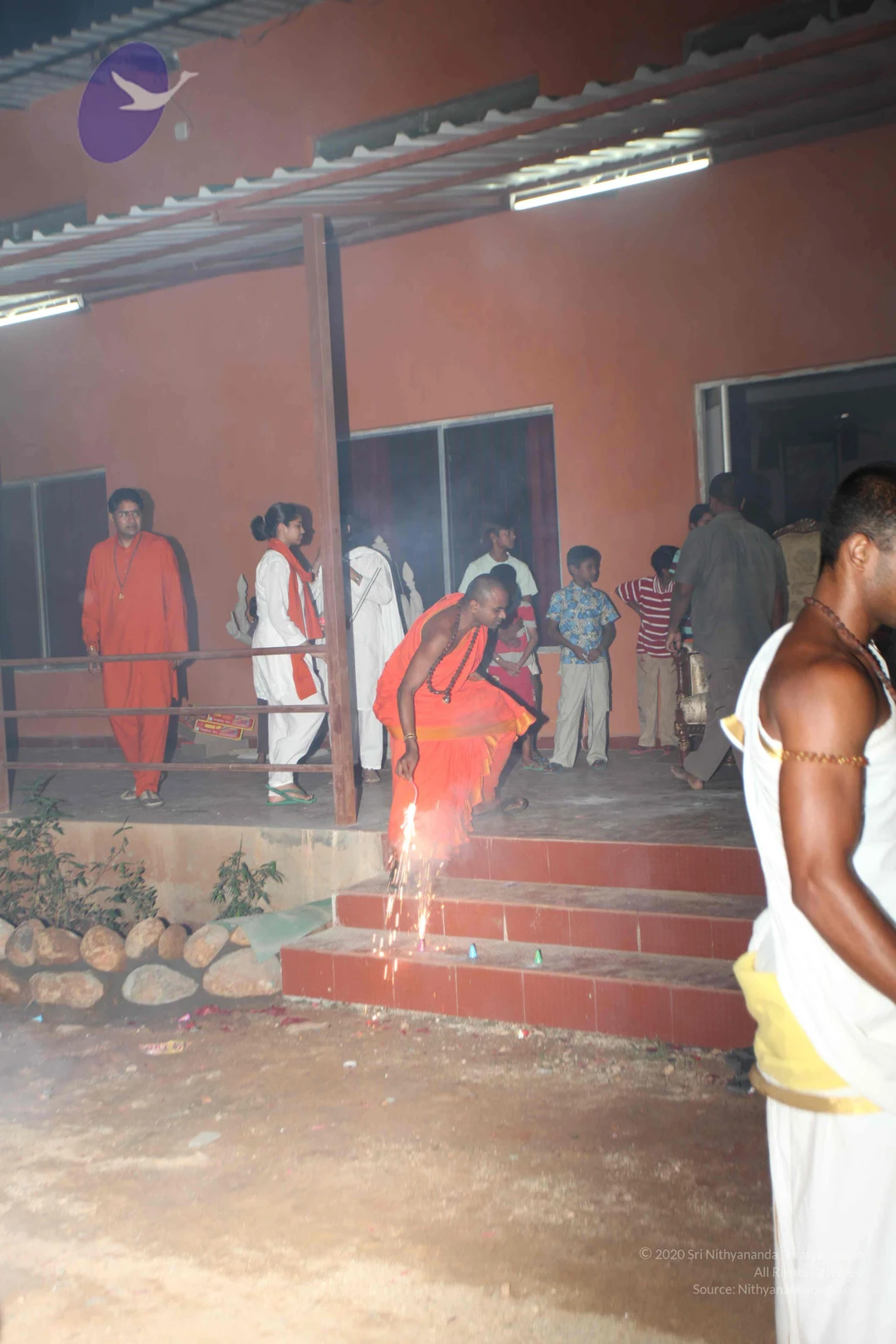
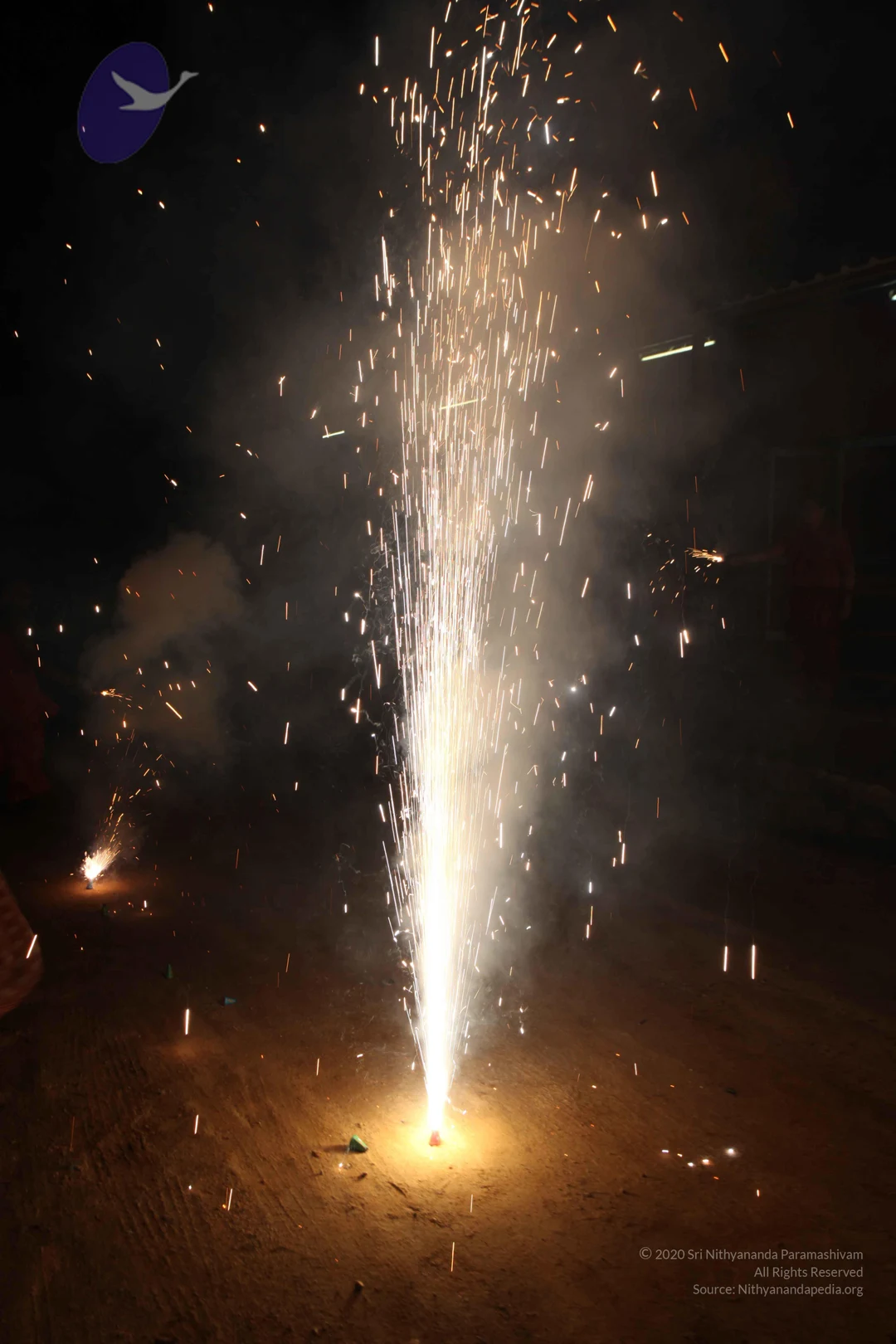
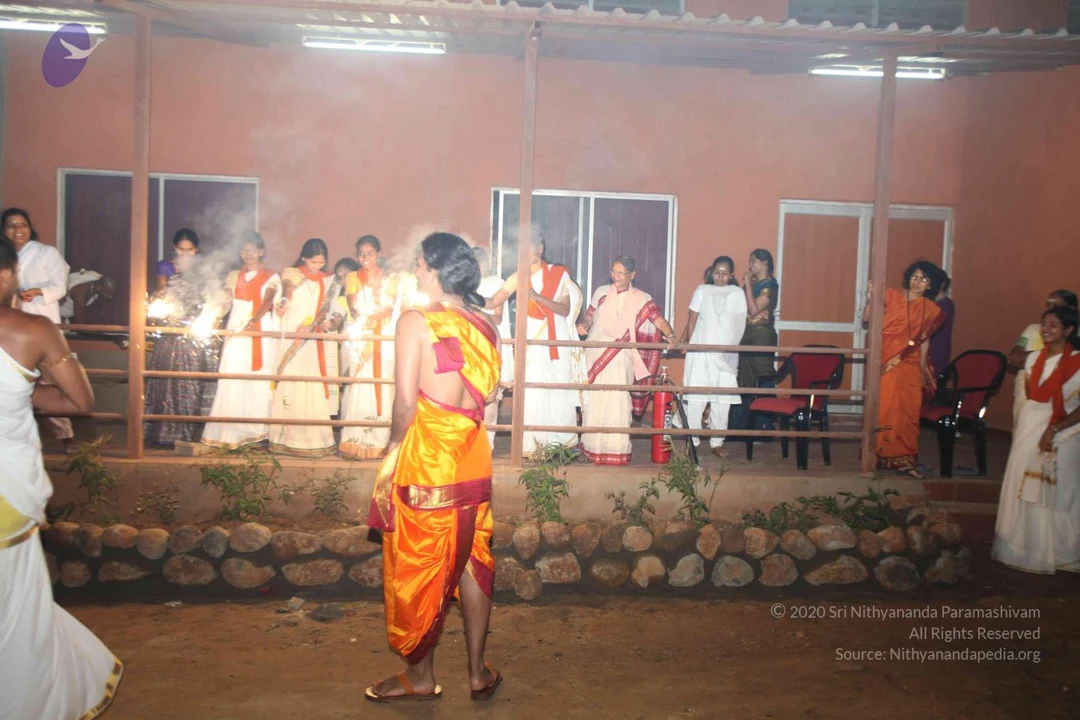
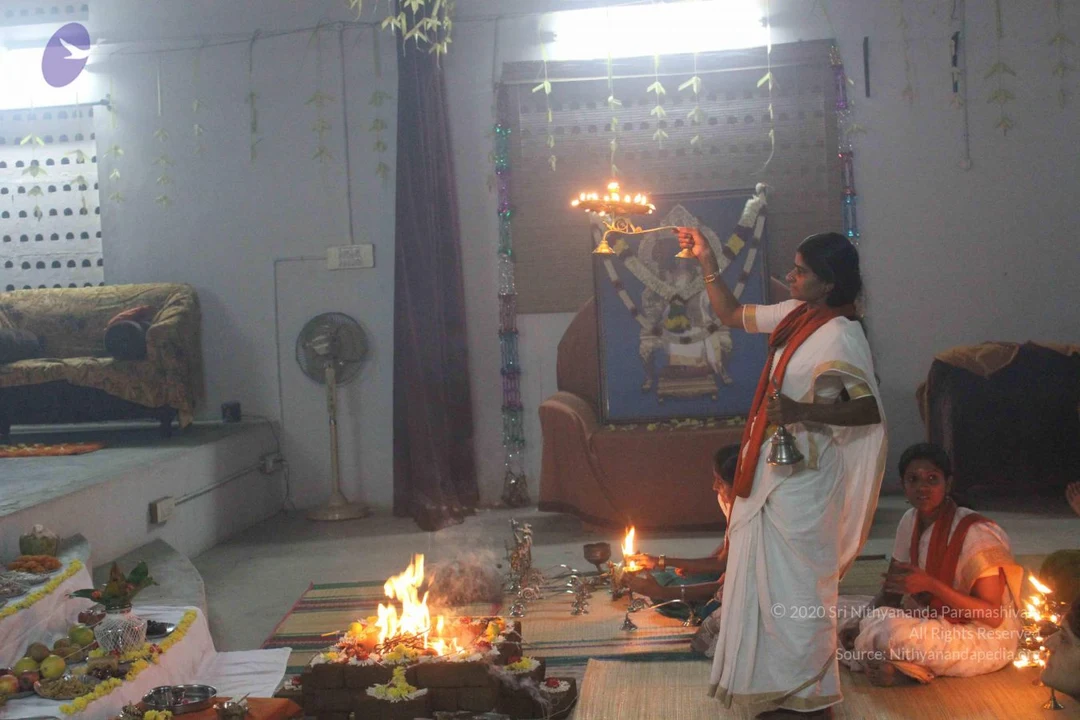
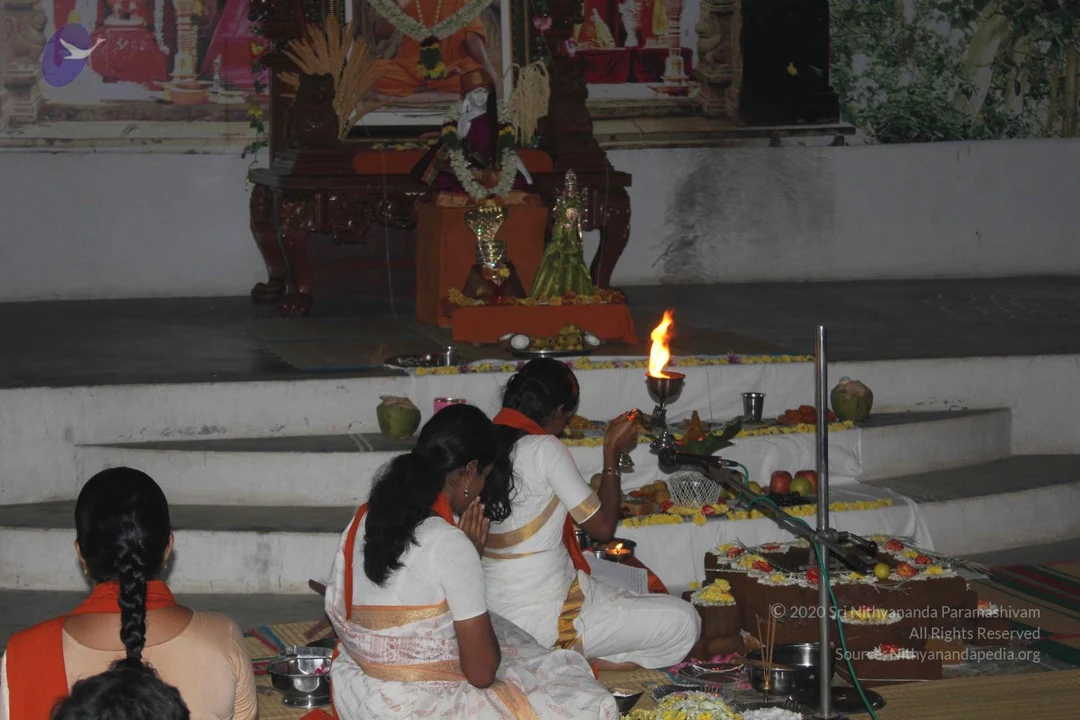
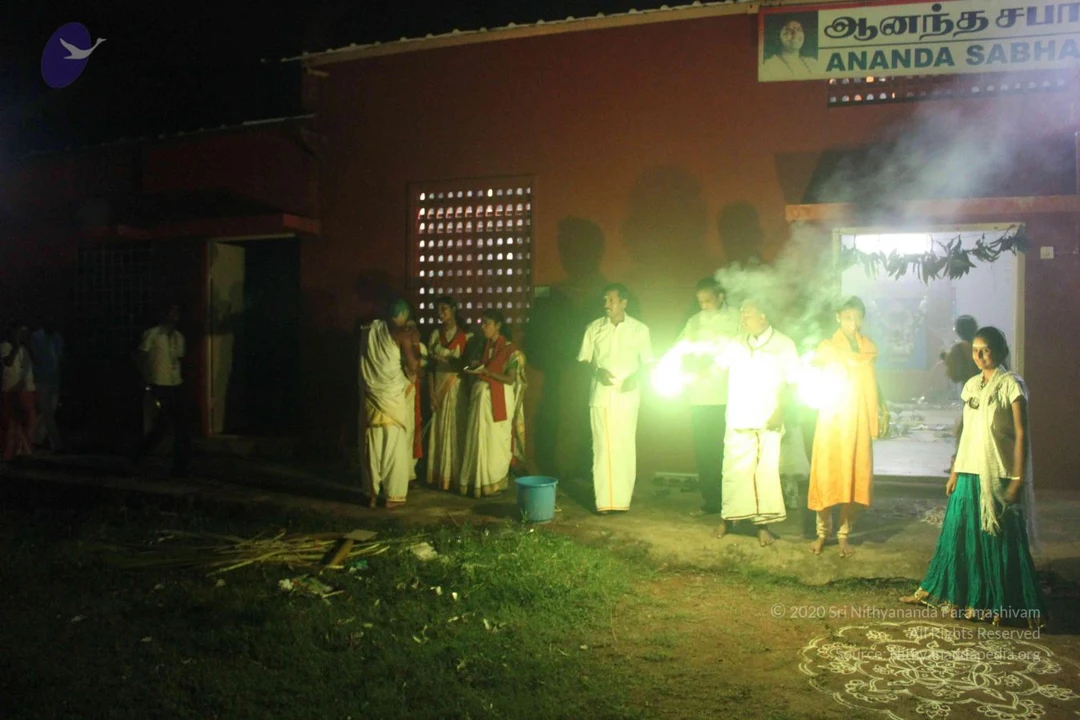
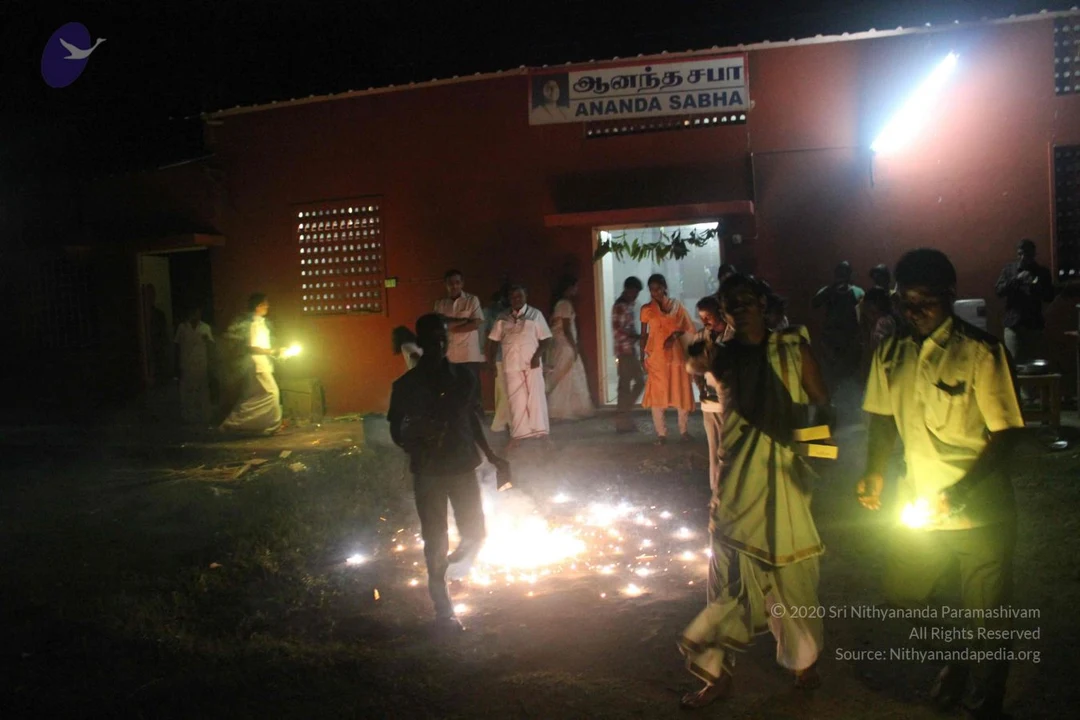
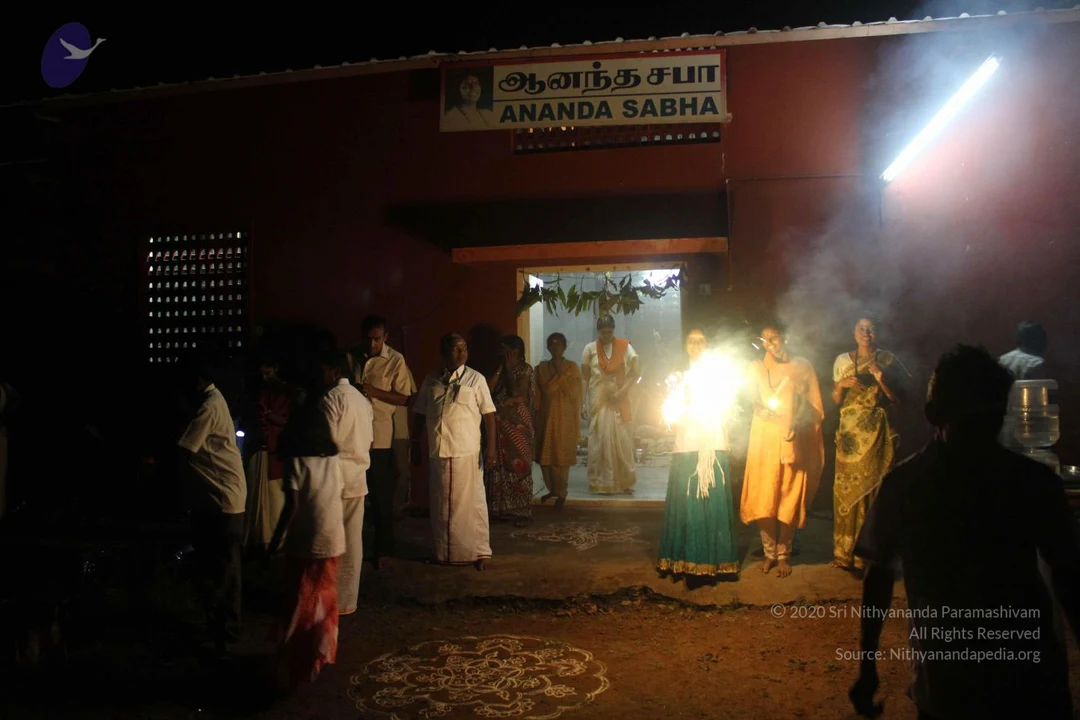
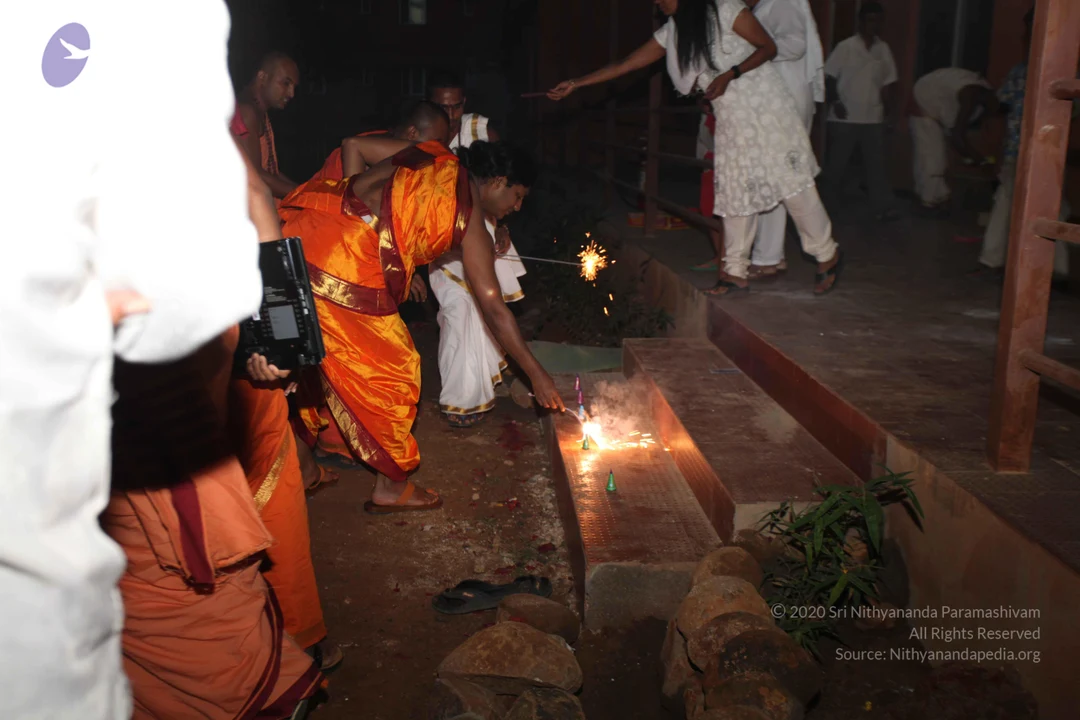
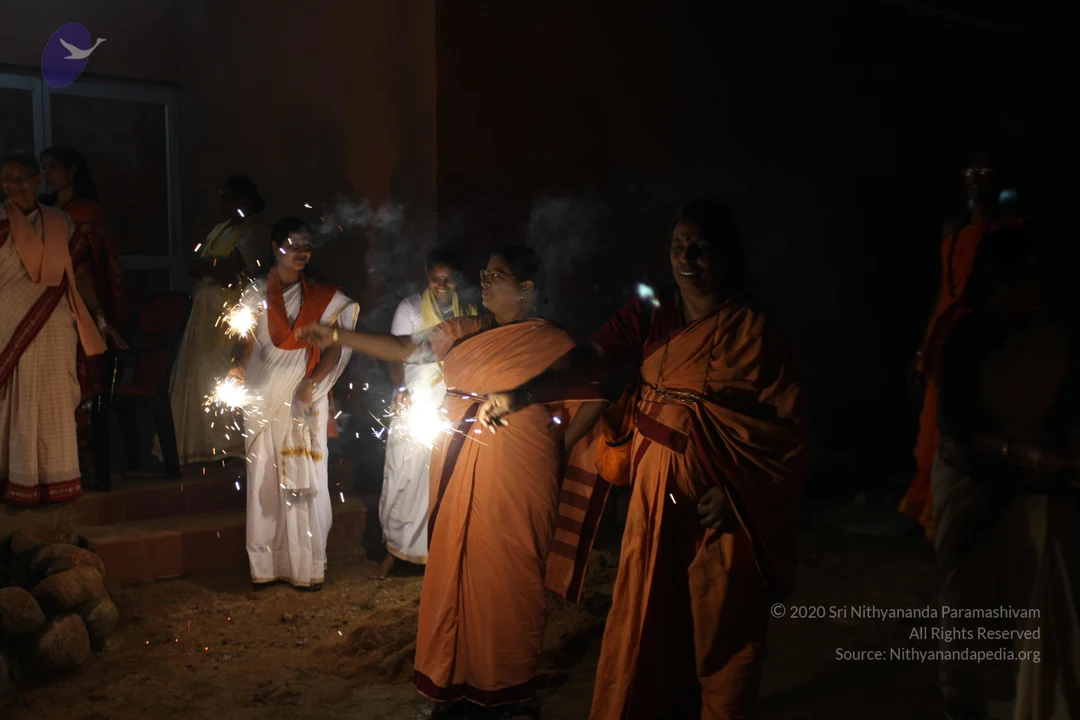
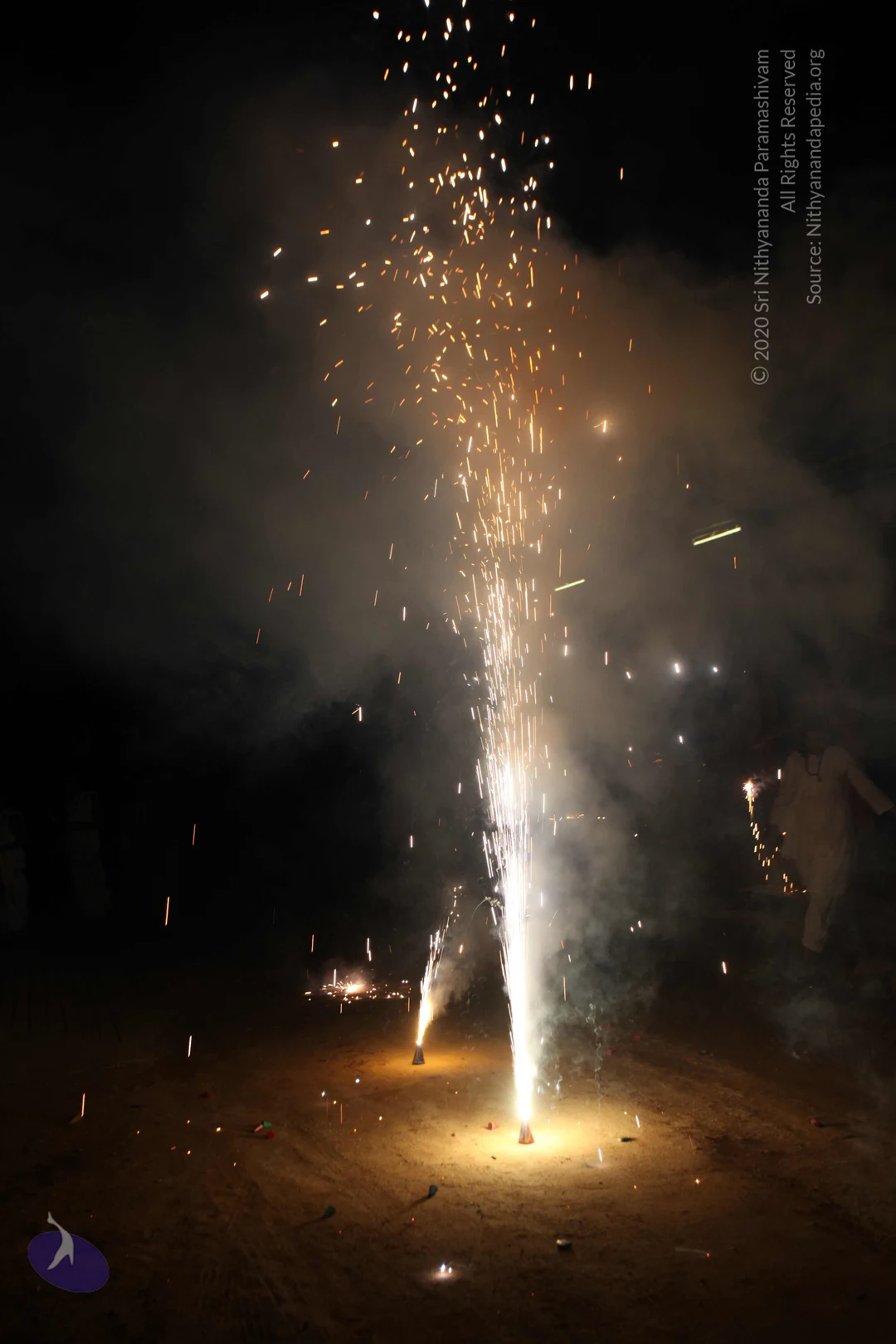
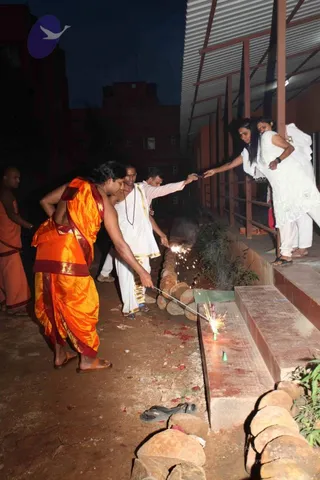
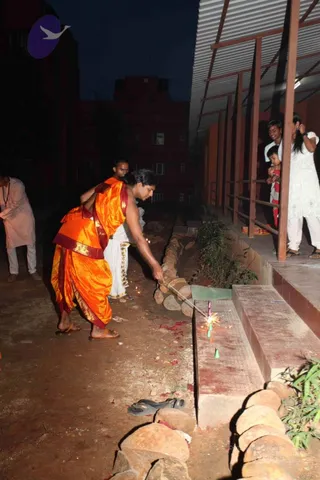
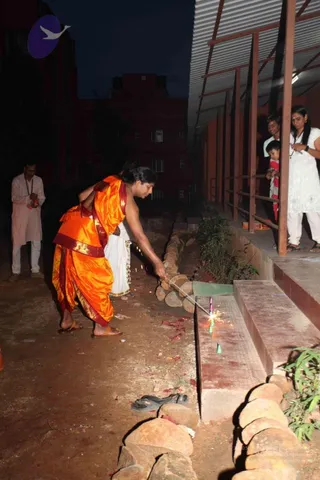
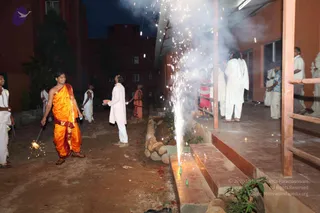
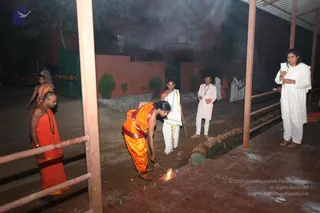
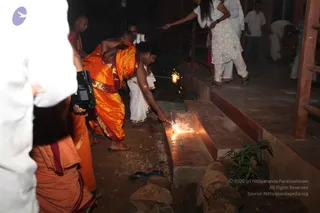
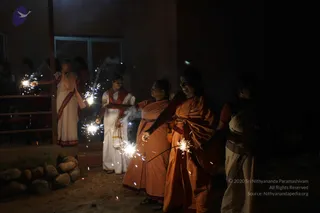
Night-time photo outdoors beside a covered walkway of an ashram-style building. A man in a saffron-orange silk dhoti and matching upper cloth, wearing a red-bordered sash, leans forward holding a long lit firework or sparkler stick toward a row of sparks and small fireworks set on a raised concrete ledge. Beside him, a man in white dhoti with gold border and a rudraksha mala lights a cracker with a taper. Another man in white shirt reaches forward. On the right, two women in white salwar-kameez watch from the veranda, one reaching out. A man in orange robes stands at the far left. Stones line the path and scattered red petals and flower bits lie on the ground. The scene shows a celebratory firecracker lighting, with no ritual fire pit or deity visible.Night photograph of an outdoor courtyard beside a building with a metal-roofed corridor. A man in an orange silk dhoti and matching shawl with red borders, sandals on, bends over a row of stacked stones and lights a fuse with a long stick, sparks rising from firecrackers set on a concrete step. Other men in white dhotis stand nearby, and a woman in a white kurta and a child watch from the covered walkway on the right. A man in a pale kurta with a rudraksha mala stands at the left edge. Scattered red petals and a discarded flip-flop lie on the dirt.Night photo of an outdoor courtyard beside a covered walkway with corrugated roof and red-brown wooden posts. A man in an orange silk dhoti and orange shawl with maroon-gold border bends forward, using a long stick to light a small firework cracker on a red stone ledge, sparks flying. Stone edging lines the ground and scattered petals lie on the earth. Behind him a man in white kurta and white dhoti with a rudraksha mala stands on the left, and on the right a woman in a white salwar outfit and a boy in red and white stand under the roof watching. Beside the veranda a red-brown multi-storey building is silhouetted at night. Five people are visible in total.Night-time photo of a courtyard at a temple-style ashram. In the foreground a man in saffron-orange dhoti and shawl with red borders, bare-chested and wearing sandals, lights a row of small firecrackers or sparklers placed on a stone step with a stick torch. Several men in white dhotis and shawls with gold borders stand on a raised veranda, one holding a cloth, and a boy in a red shirt watches beside a wooden railing. Other figures in white walk in the dim background, and potted plants and stones border the walkway.Night scene in an ashram courtyard with fireworks. A young man in an orange-saffron dhoti and shawl with red border walks forward holding a lit sparkler in his right hand, smiling. Beside a stone-edged planter, a fountain-style firework throws bright sparks upward. Other people in white dhotis and white kurtas stand around, some on a raised red-brick platform with wooden railings, and a woman in white and a woman in red stand nearby. Red-brick buildings with lit windows and a tiled roof frame the background.Outdoor evening scene at an ashram courtyard with a red wall, green gate and trees behind. A man in an orange dhoti and orange shawl bends low to light small oil lamps or lit wicks set in a red-brown earthen ground, with smoke rising. Beside him a man in a white dhoti with a bare upper body and a garland of rudraksha stands holding a stick. To the left, a shaven-headed man in orange robes and rudraksha mala walks past. At the right, a woman in white sari holds her hands together in prayer. Behind them, several men in white and light robes stand near the covered walkway, one wearing a red-and-white rudraksha mala. The setting suggests a puja or lamp-lighting ritual.

BGSatsang-Tamil

24 photosSource gallery
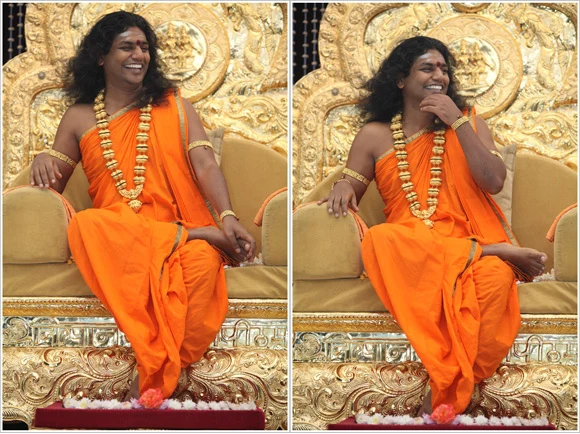
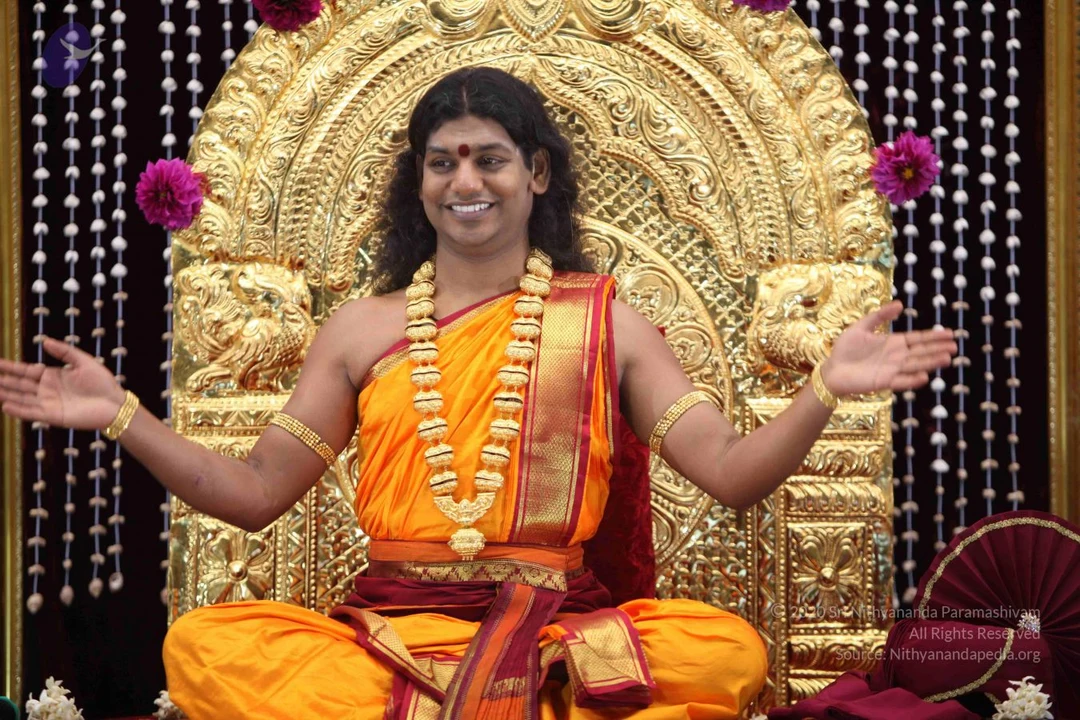
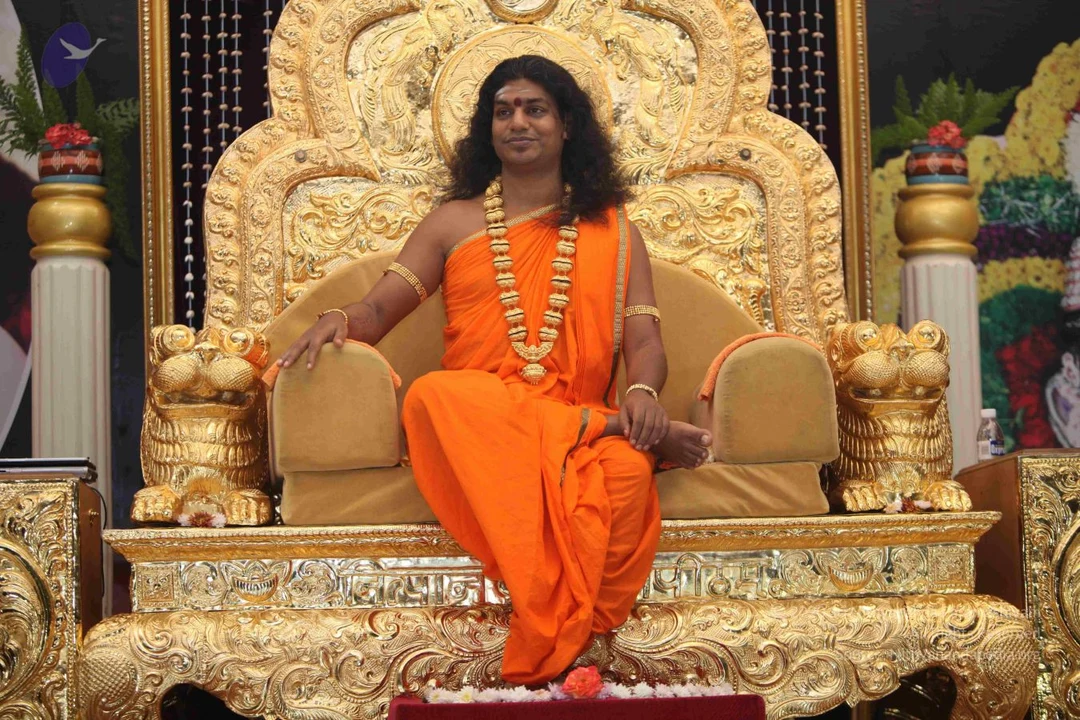
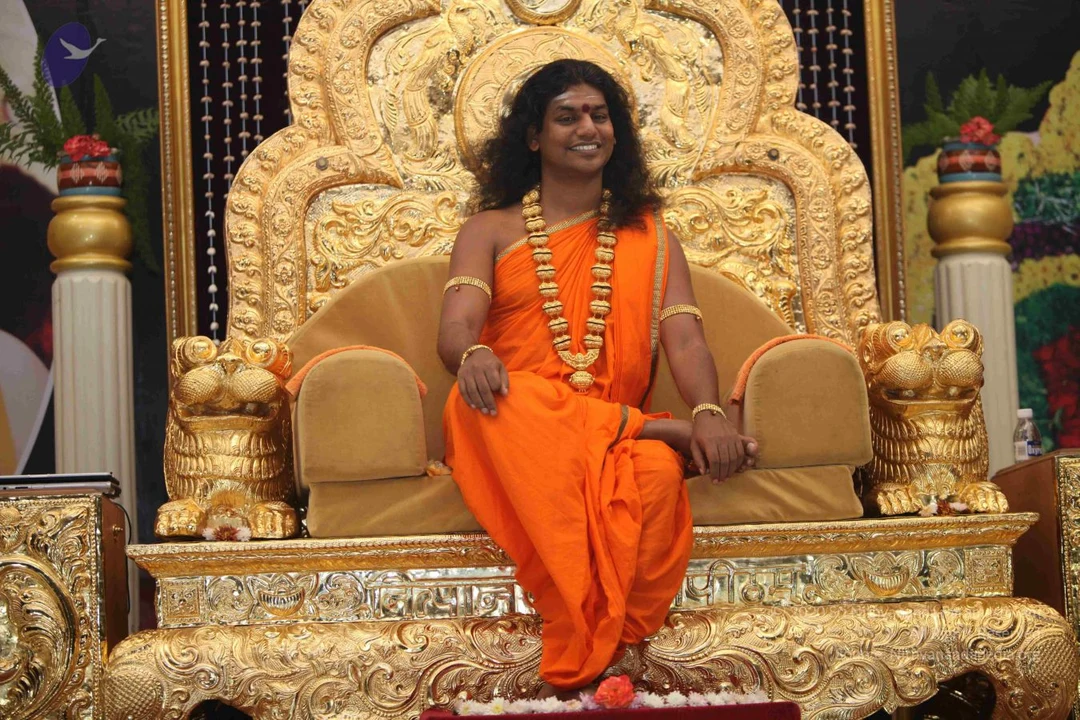
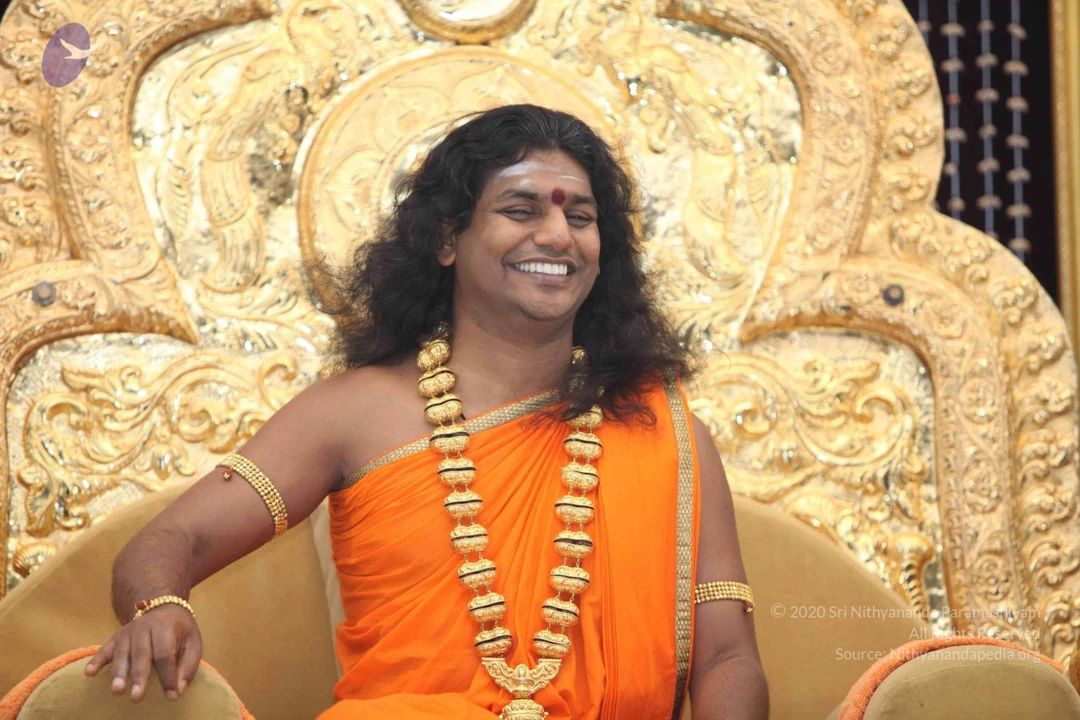
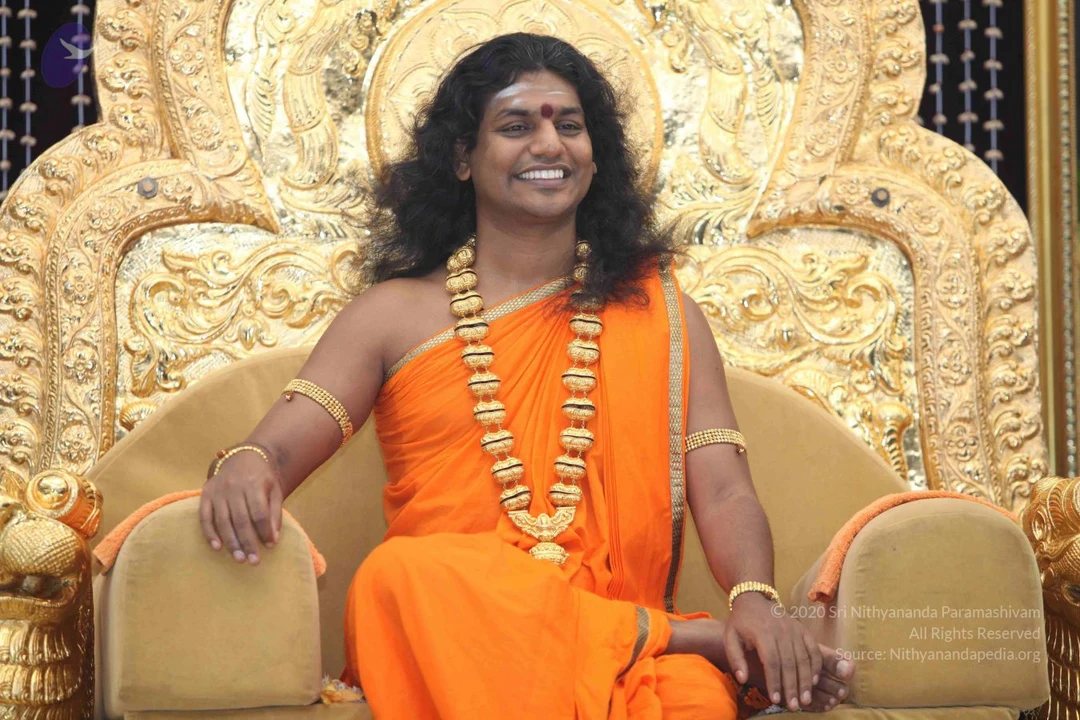
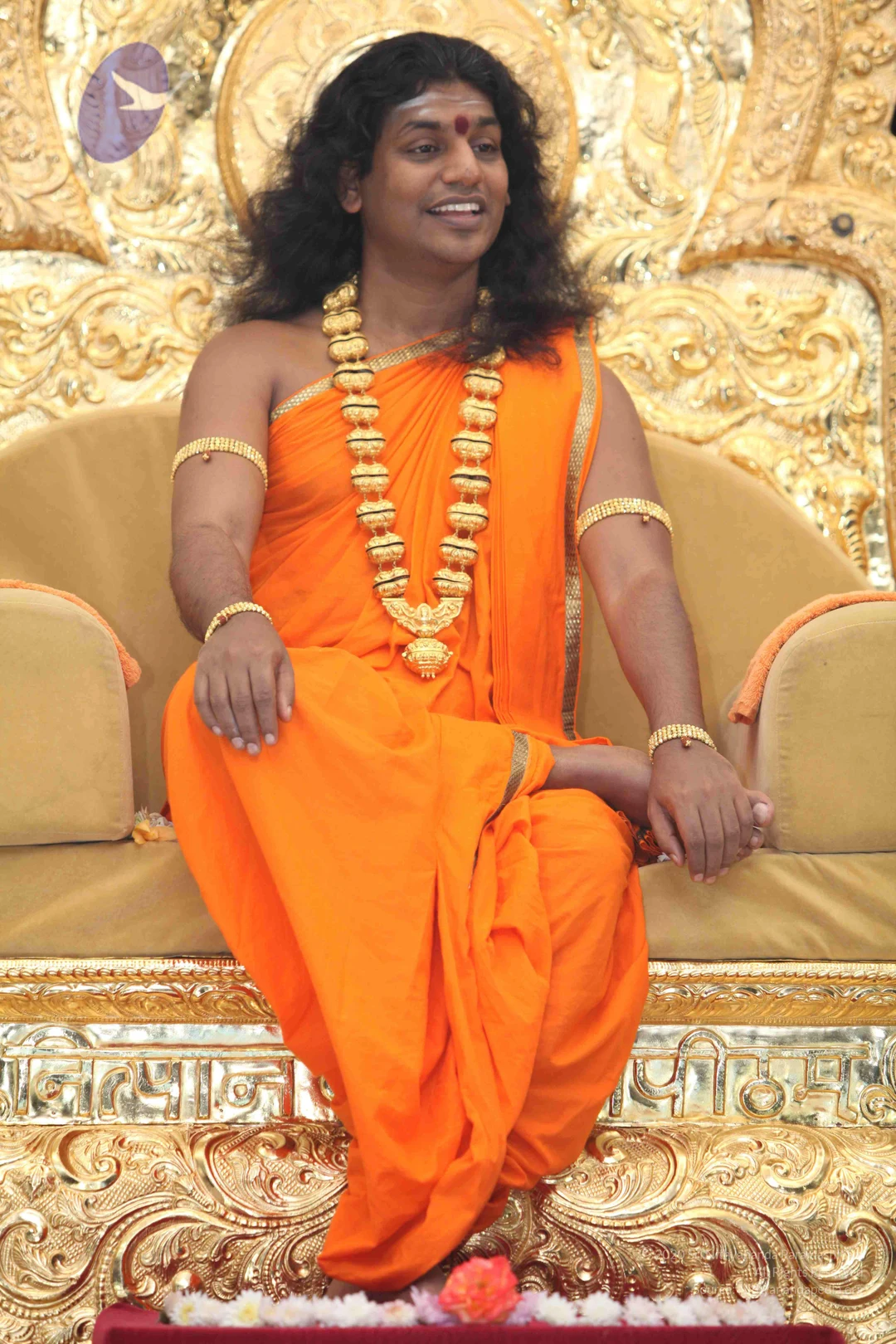
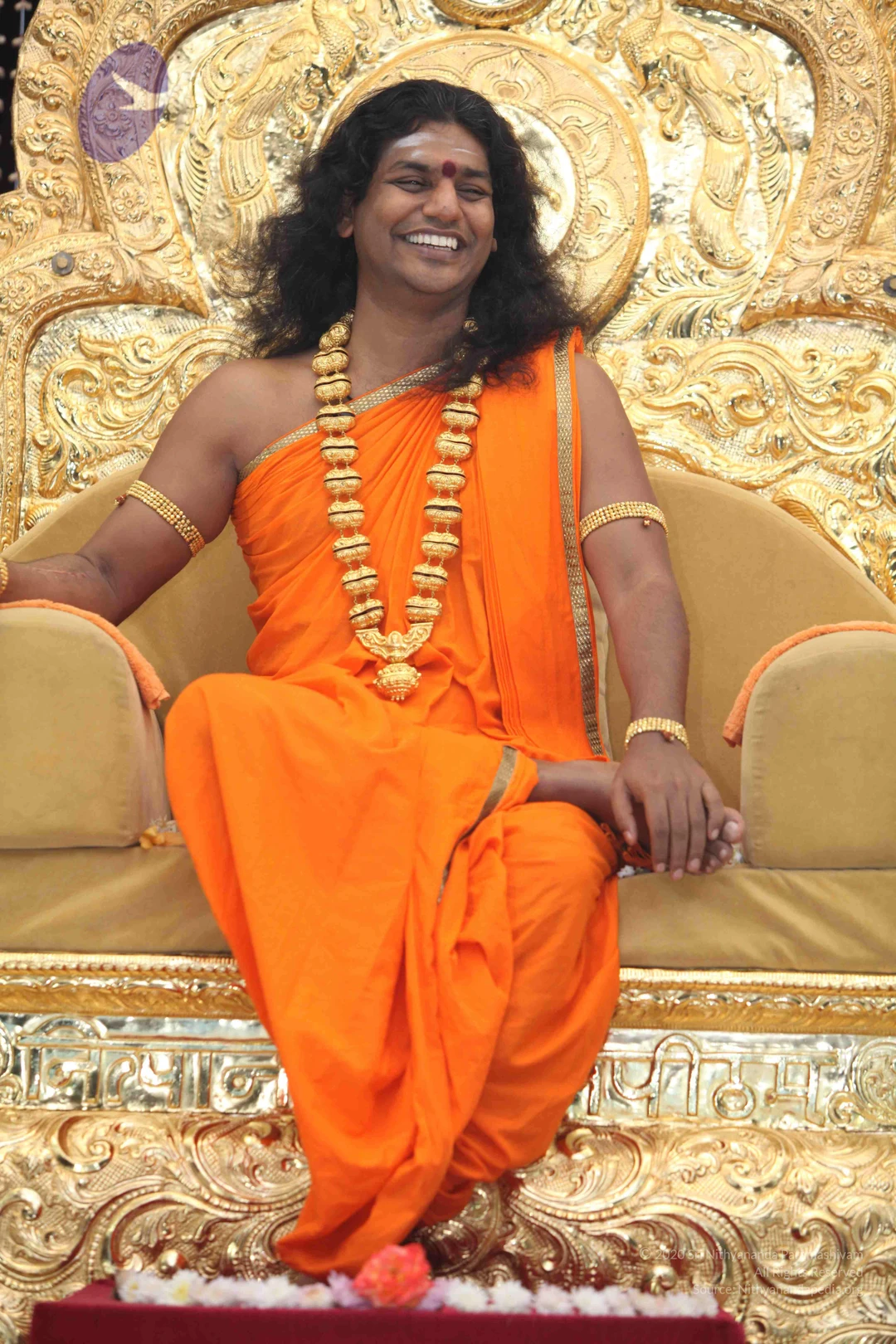
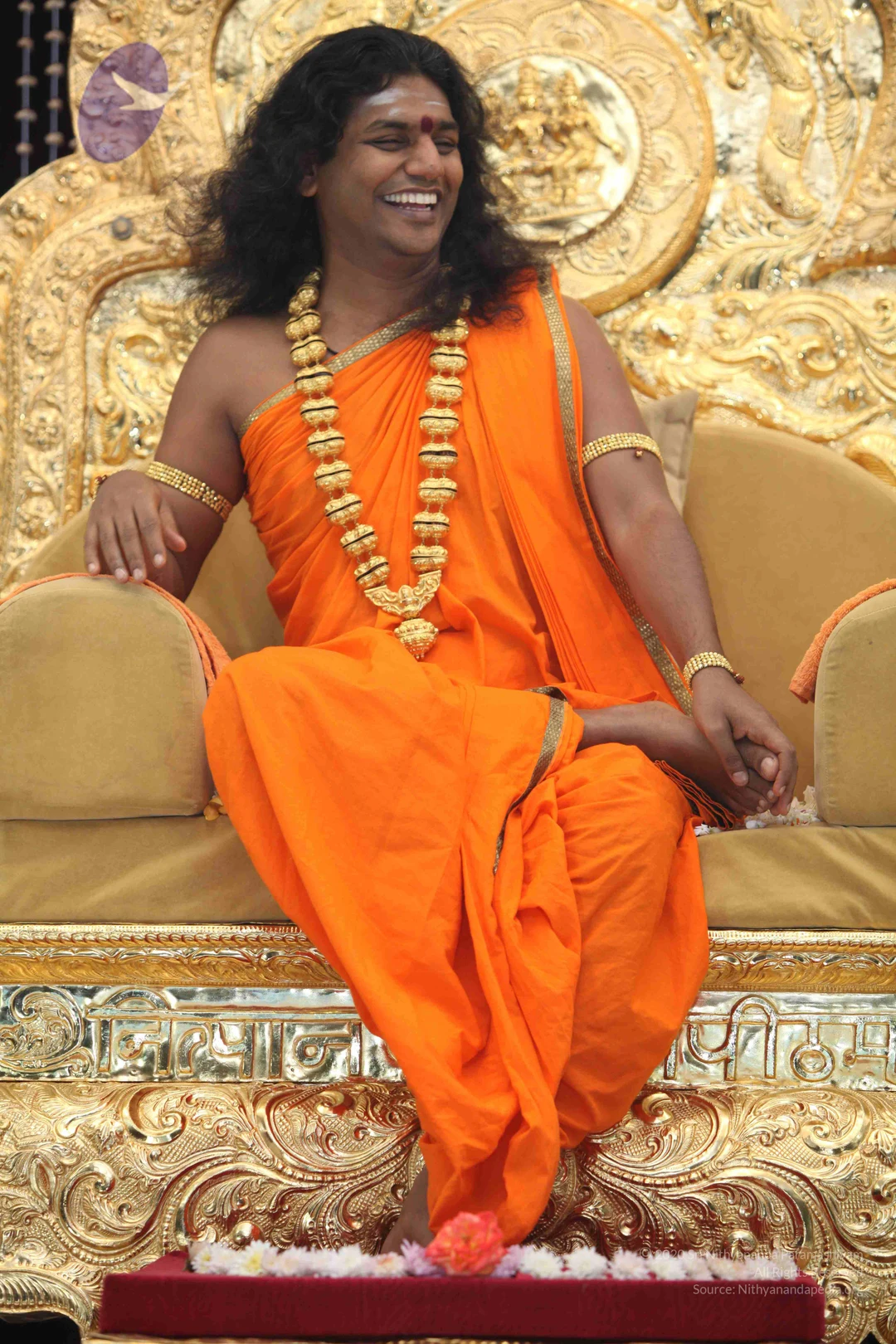
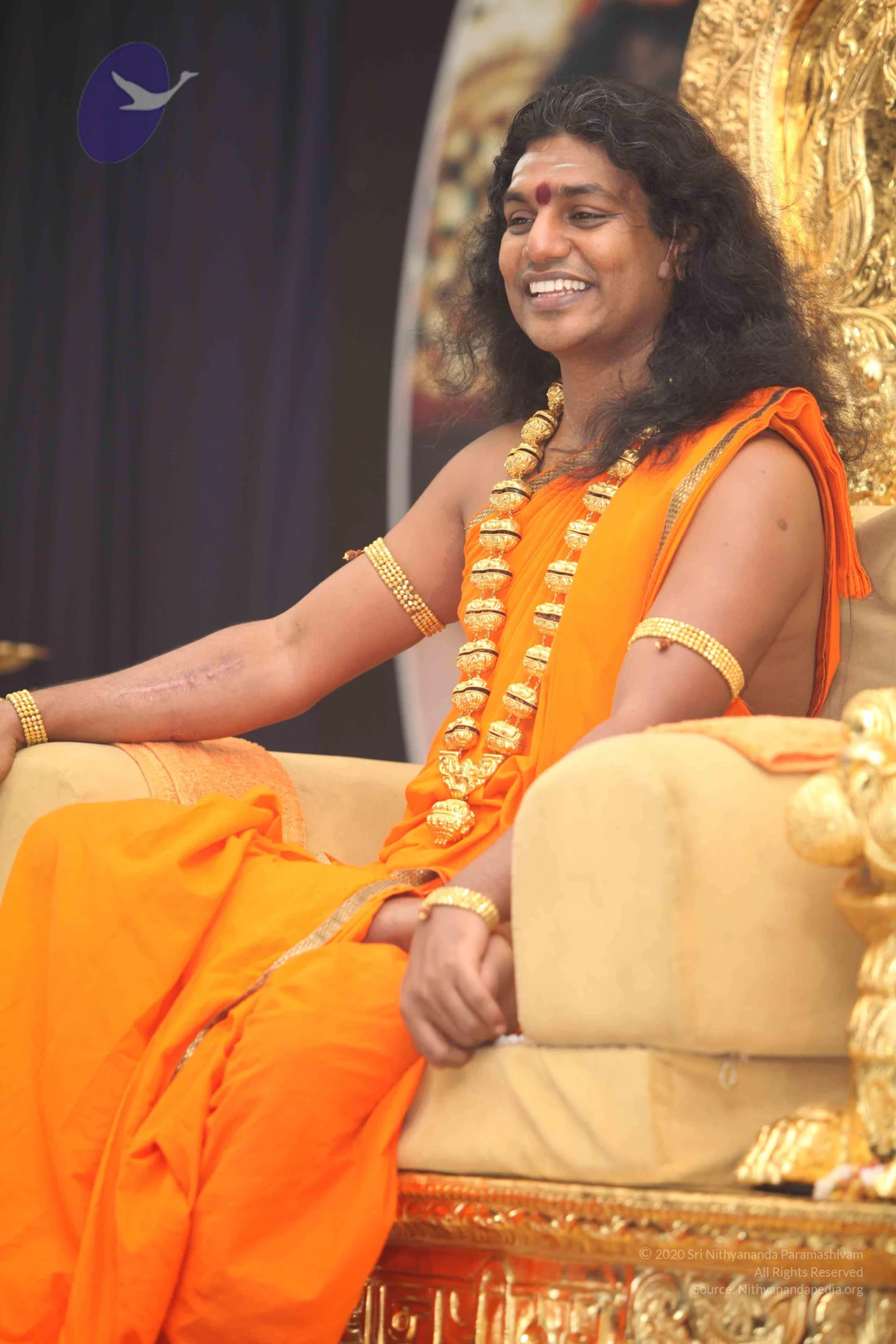
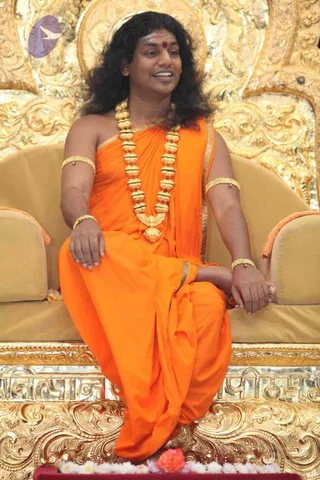
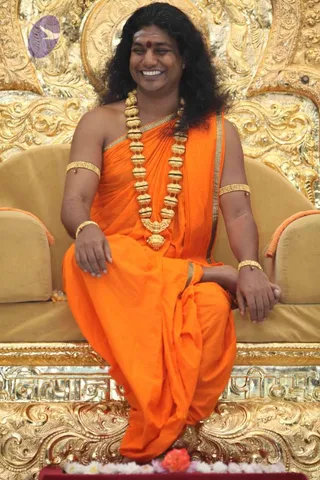
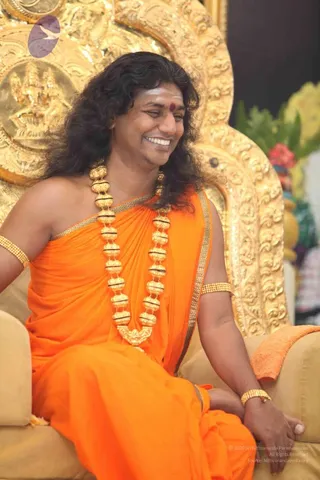
A man with long dark hair and a red bindi sits on an ornate gold throne carved with lion-head armrests and floral scrollwork. He wears a saffron-orange dhoti and shawl draped over one shoulder, a heavy gold-coloured garland of beads around his neck, and gold bangles on his wrists. His bare feet rest on a small red platform decorated with flowers. Behind him are yellow and red floral arrangements, kalasha pots with red flowers, and a dark backdrop.A smiling man with long dark hair sits on an ornate gold throne with carved lion-head armrests, wearing an orange saffron wrap, a long multi-strand gold necklace with a pendant, gold armlets and bangles, and a small red mark on his forehead. His hands rest on the armrest and his feet are placed on a floral-covered step. Behind him are a gold-carved backrest and fresh floral arrangements with red flowers in urns. Only one person is visible.A seated man in saffron-orange robes sits on an ornate gold-embossed throne with a gold-cushioned seat. He wears a heavy gold necklace with large bead segments and a central pendant, gold armlets and bangles, and a red bindi with a tilak on his forehead. His long dark hair falls past his shoulders and he smiles while looking to his side. In front of the throne lie white flowers and a pink blossom. Carved Devanagari lettering appears on the gold base panel. The a person cues are the long swept hair, saffron robes, ornate gold necklace and throne setting, so this is a seated teacher figure presiding over a satsang or discourse.A smiling man with long, dark, wavy hair and a red bindi sits on a gold-upholstered throne against an ornately carved gold backdrop. He wears an orange saffron wrap, a heavy gold multi-bead necklace with a central pendant, gold armlets and gold bangles. Pale orange cushions and a fresh flower rest near him, and white and pink flowers lie at the base of the throne. a person: the long swept hair, saffron wrap and ornate gold necklace and armlets fit the page's description of the a person archive, though the appearance is only a candidate match.A smiling man with long, swept-back dark hair sits on a cream upholstered chair in front of an ornate gold-leafed carved throne with floral scrollwork. He wears an orange saffron wrap with gold border, a heavy gold multi-bead necklace with dark beads, gold bangles on the upper arm and wrist, and a red tilak on his forehead. He rests one hand on his knee; an orange towel lies over the armrest. A flowering arrangement and greenery sit at the right. a person is seated in the centre as the subject, shown in an ornate saffron and gold setting.A smiling man with long dark swept-back hair sits on an ornate gold throne with carved golden scrollwork and a relief of a deity above. He wears a saffron-orange draped garment with gold border, a heavy gold bead necklace, gold armlets and bangles, and a red bindi with vertical white tilak. Orange cloth lies over the armrest, and white flowers sit at the bottom edge. Probable Swamiji seated in person, distinguished by long hair, gold ornaments and saffron clothing. Gold text on the throne base is partly visible. Behind the throne, garlands of yellow and red flowers and a white decorated structure are visible.

Chandi-Homa

31 photosSource gallery
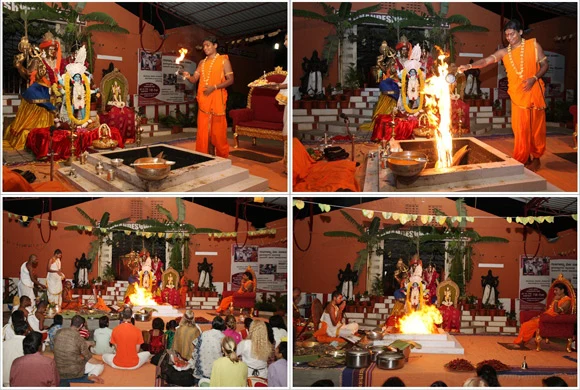
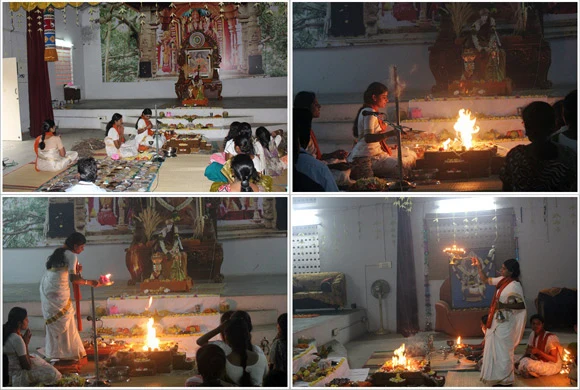
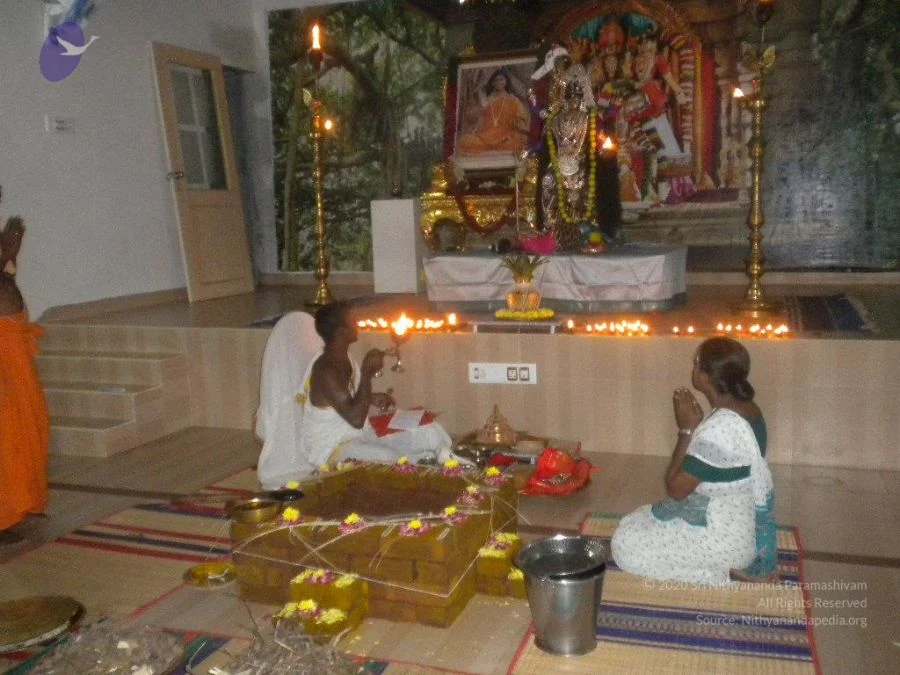
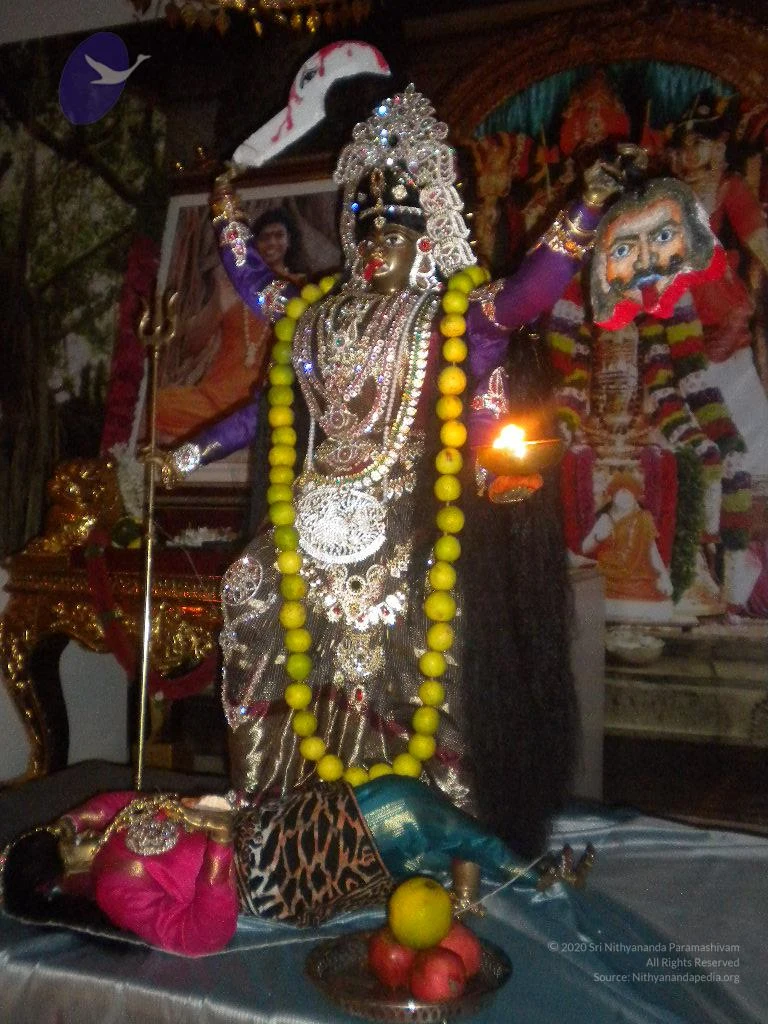
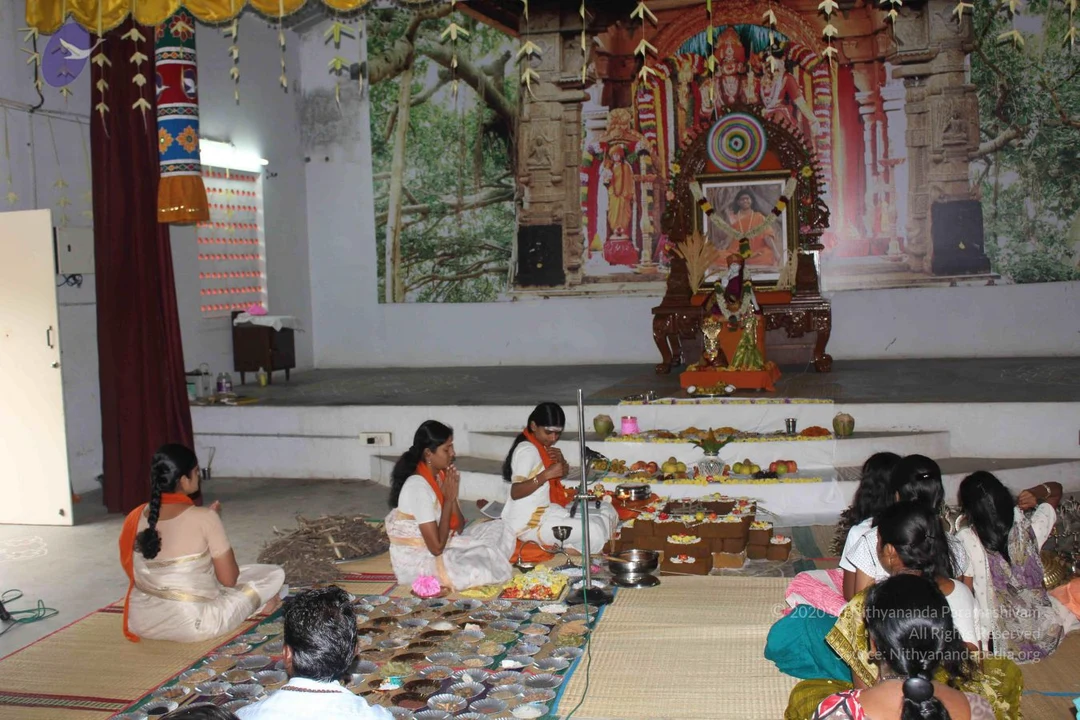
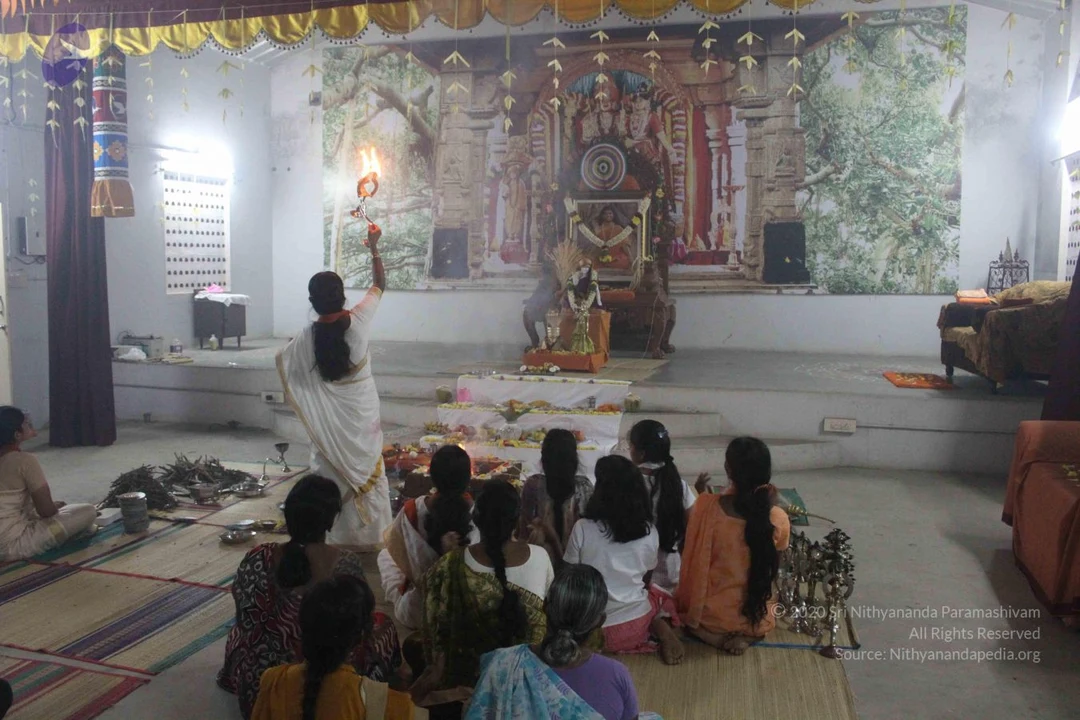
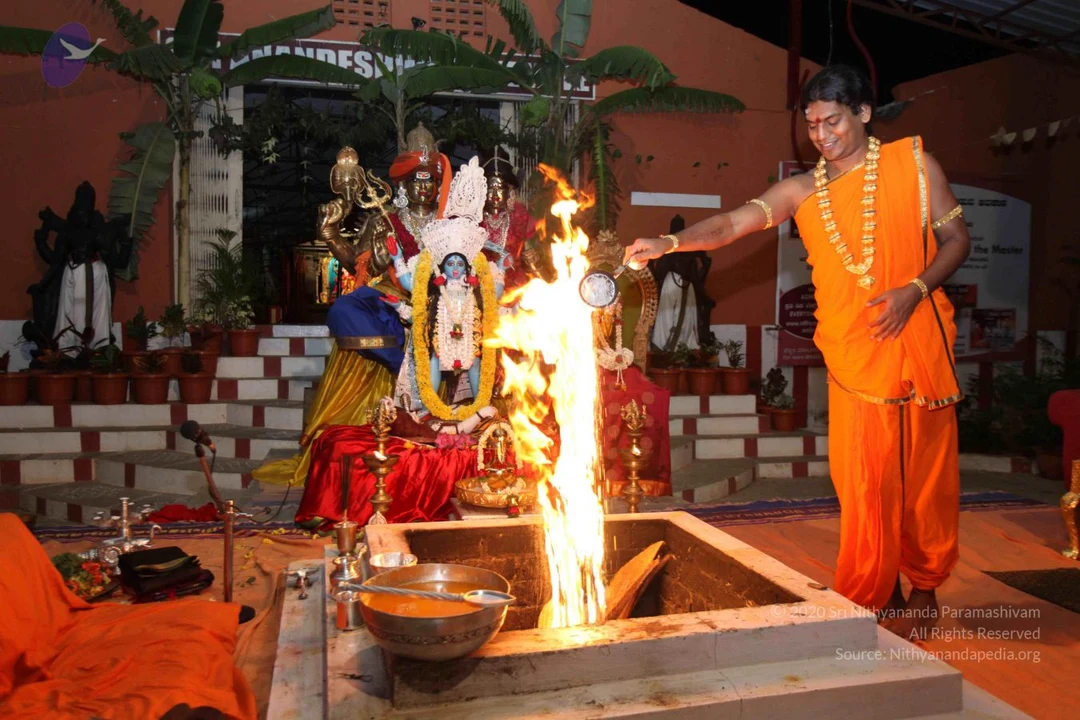
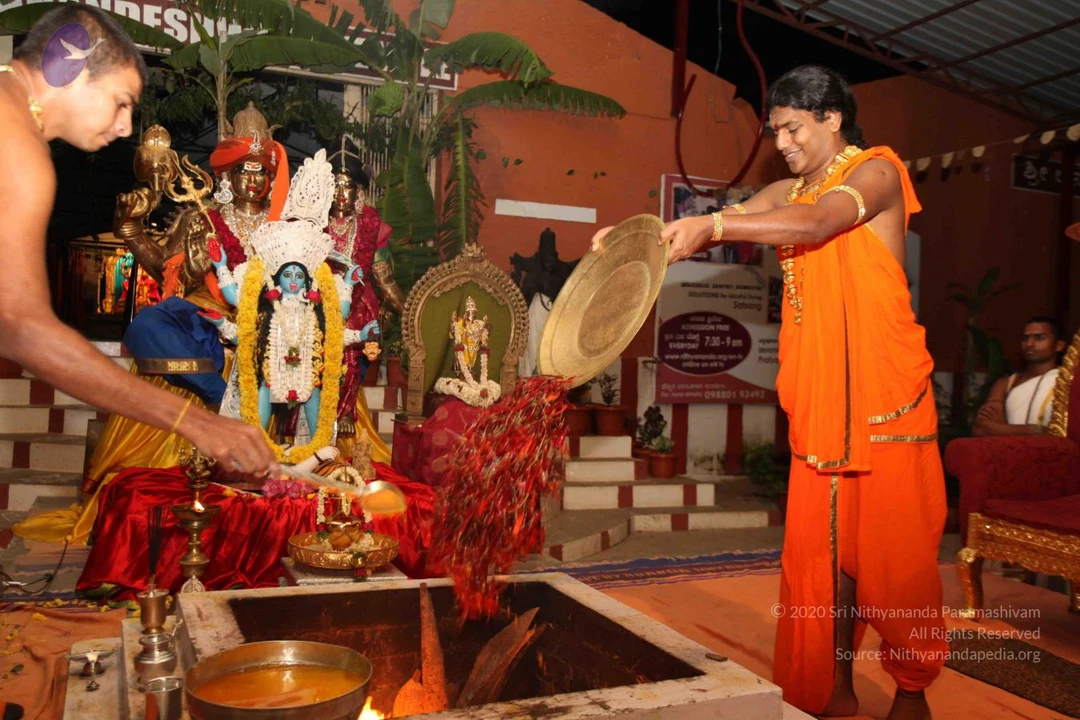
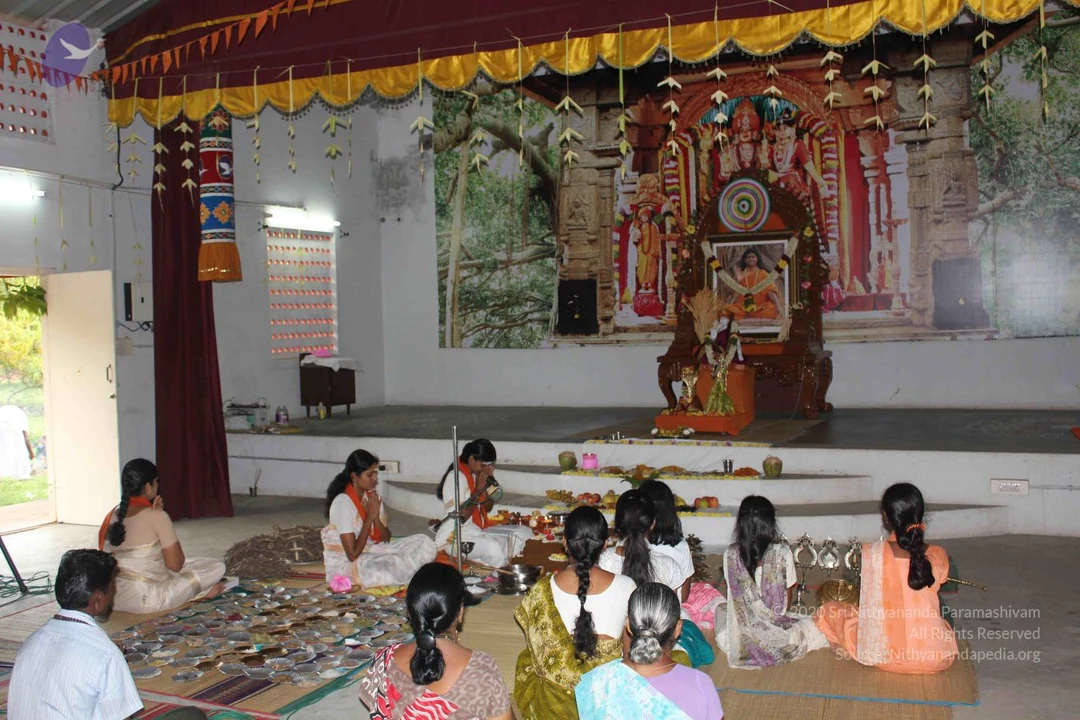
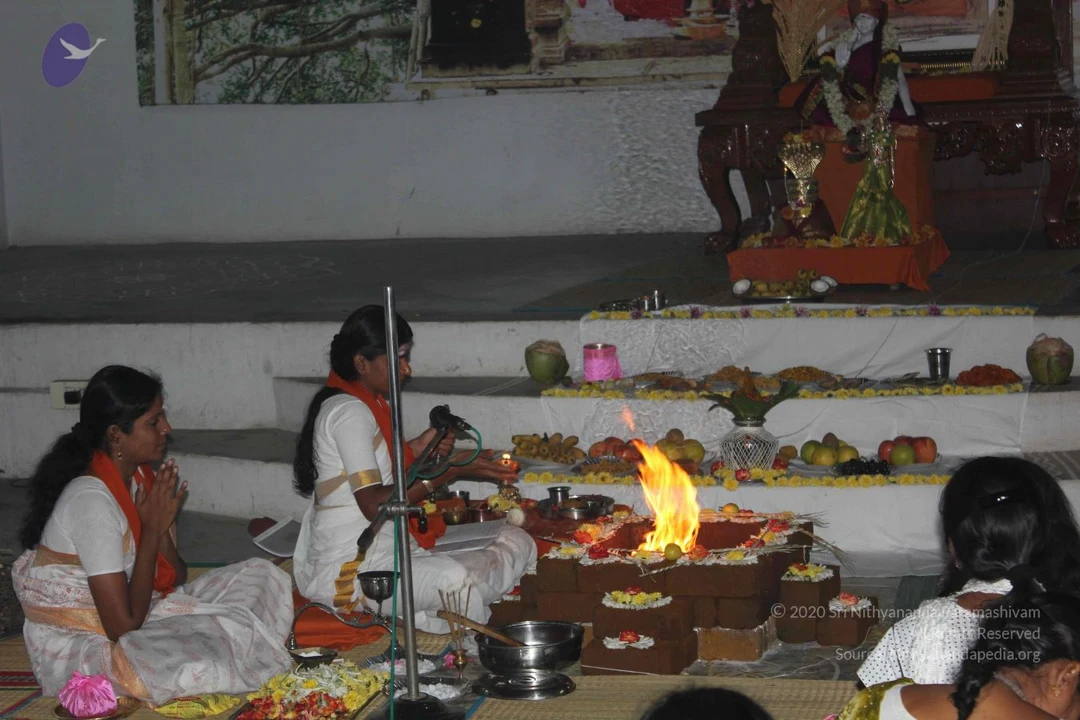
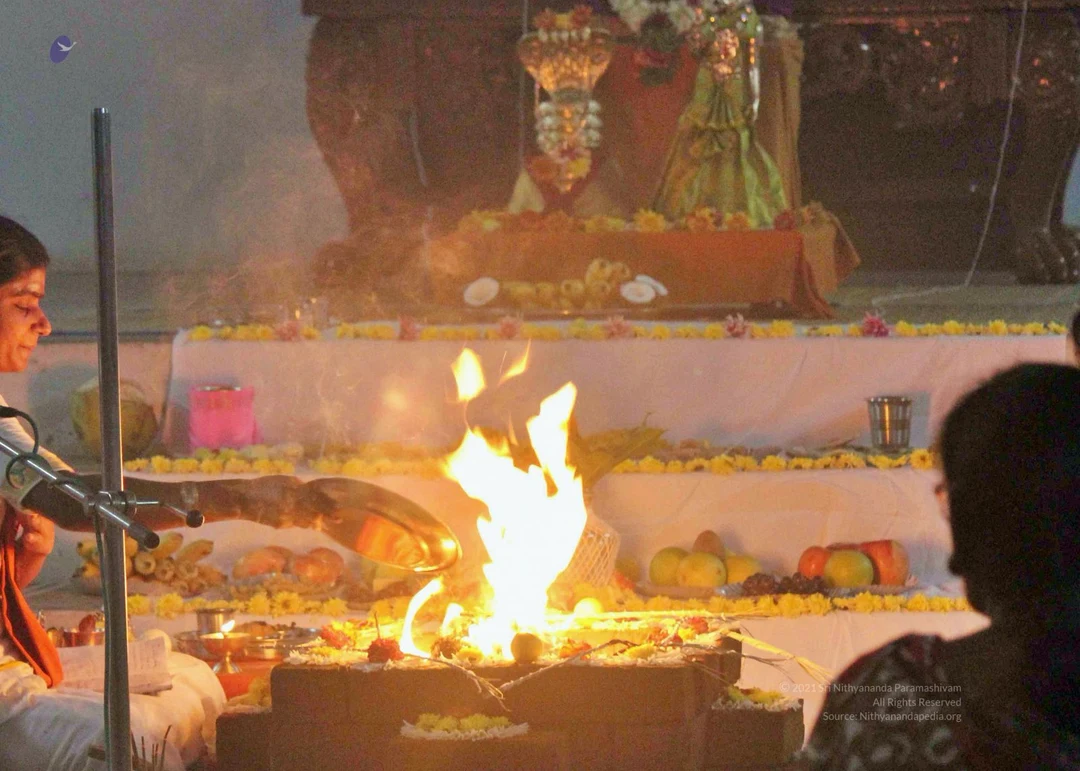
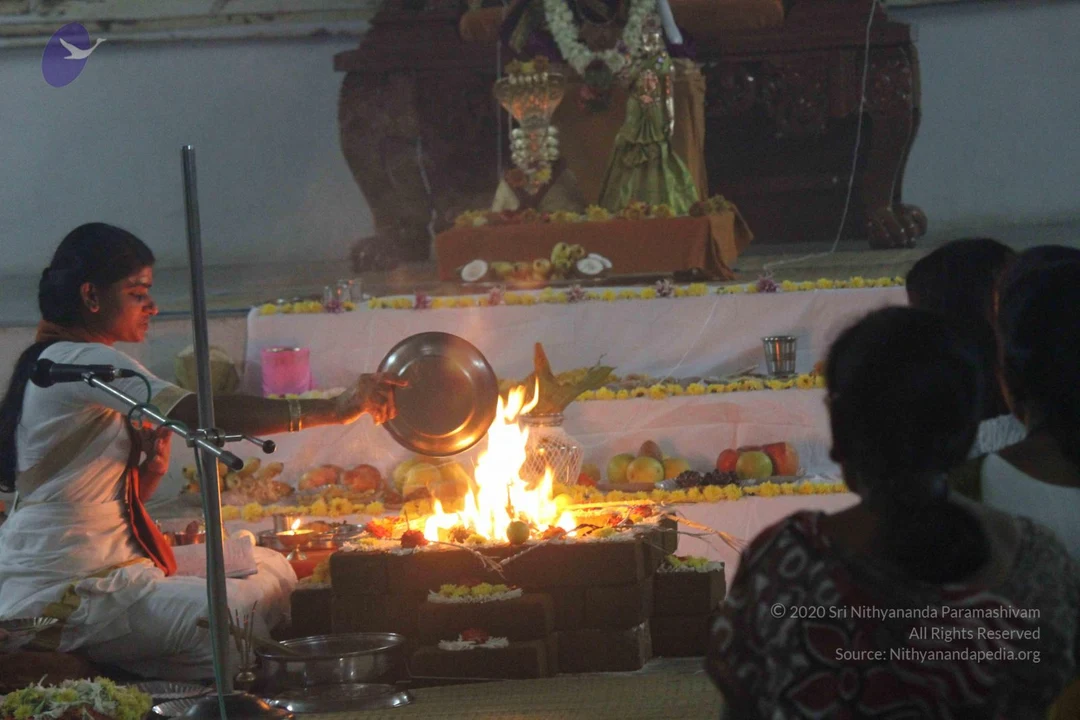
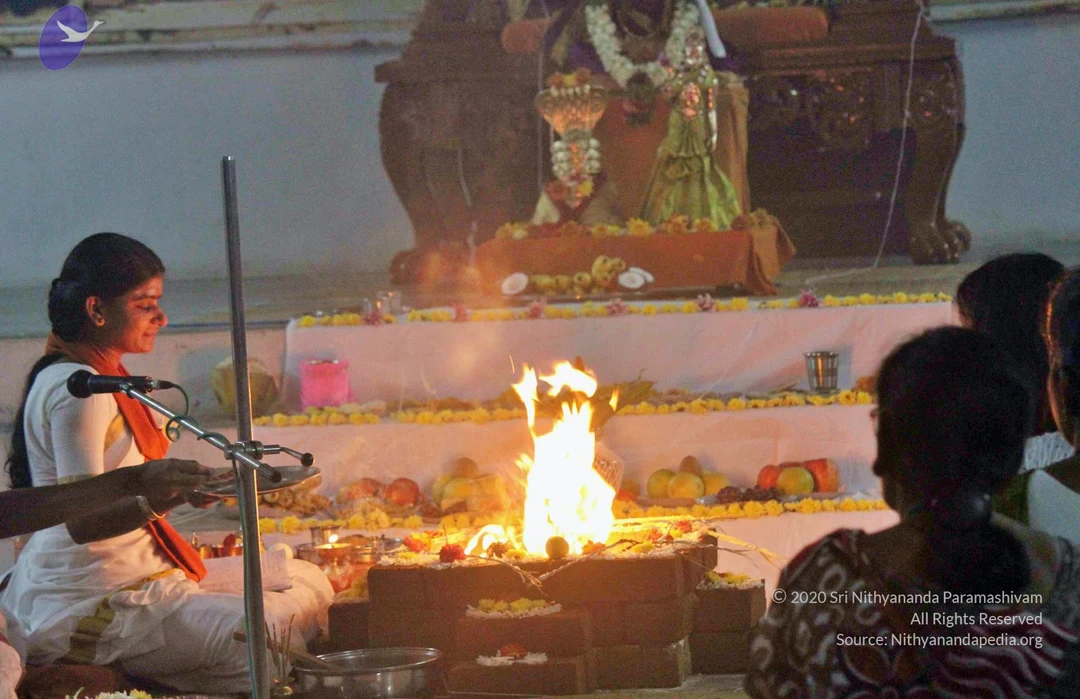
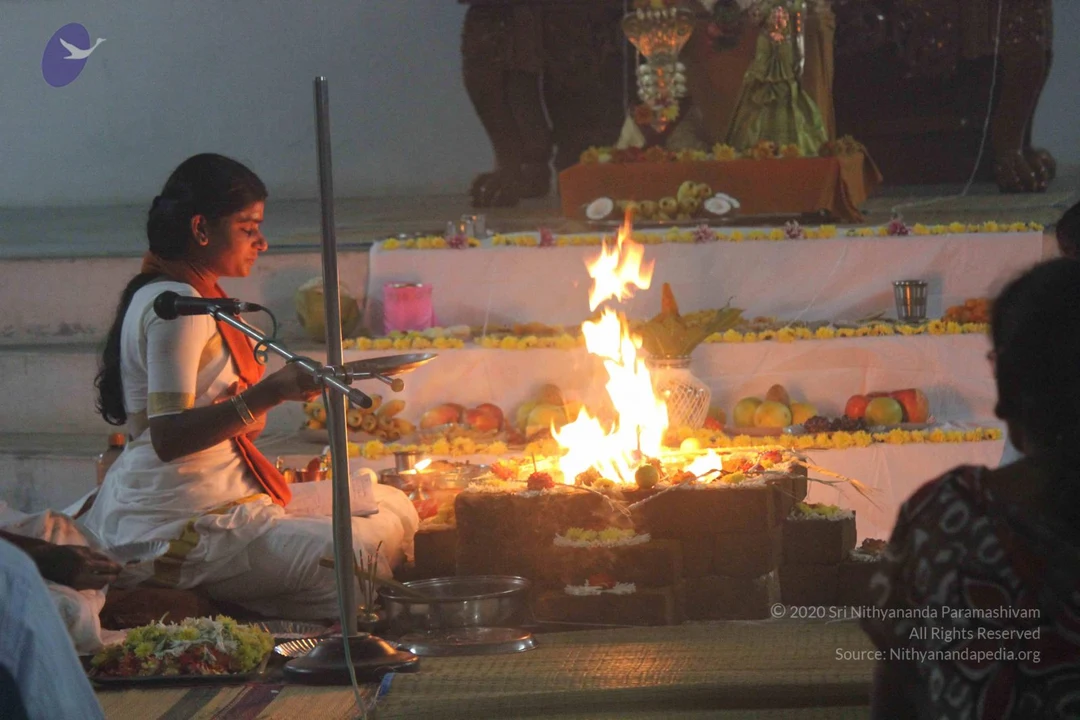
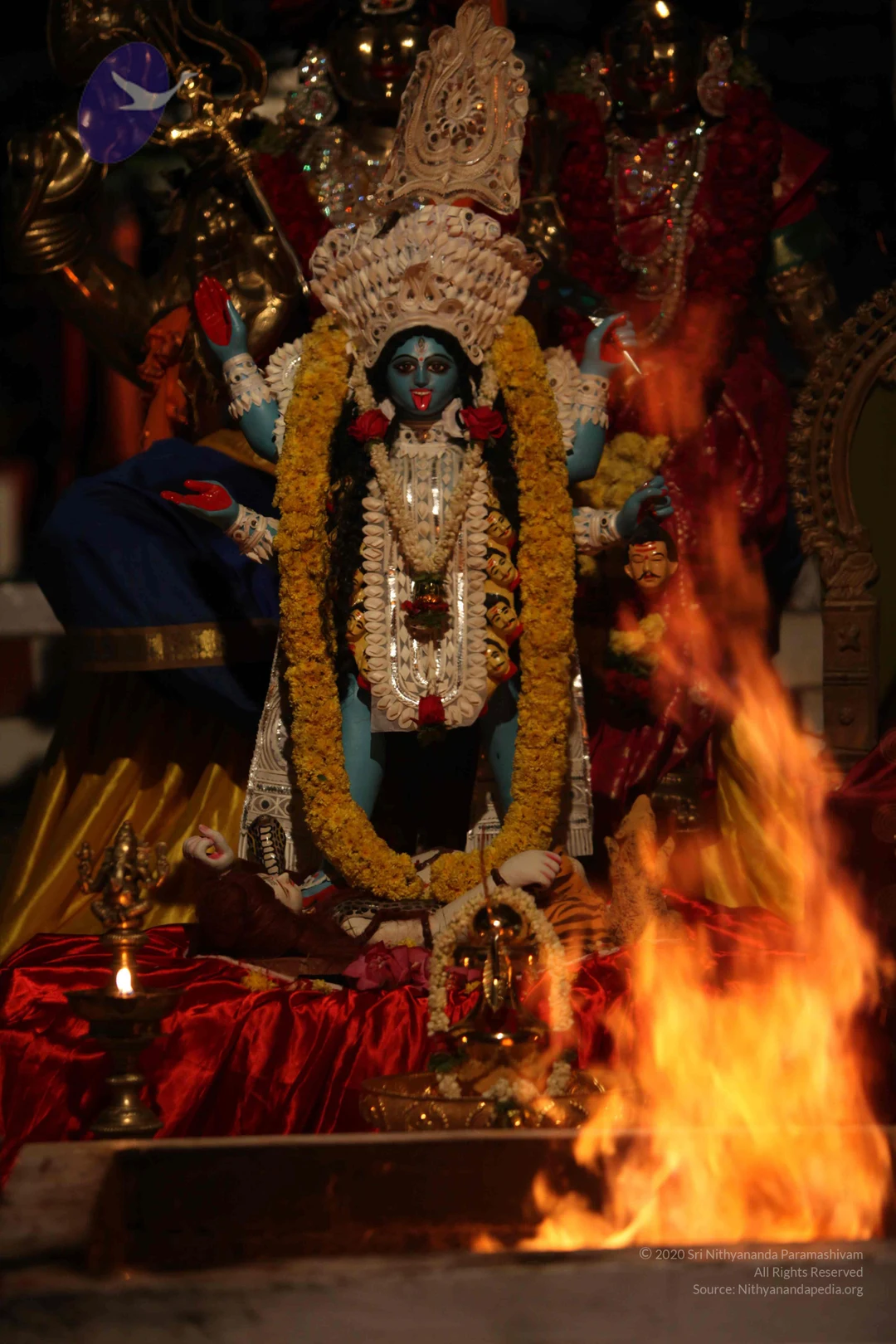
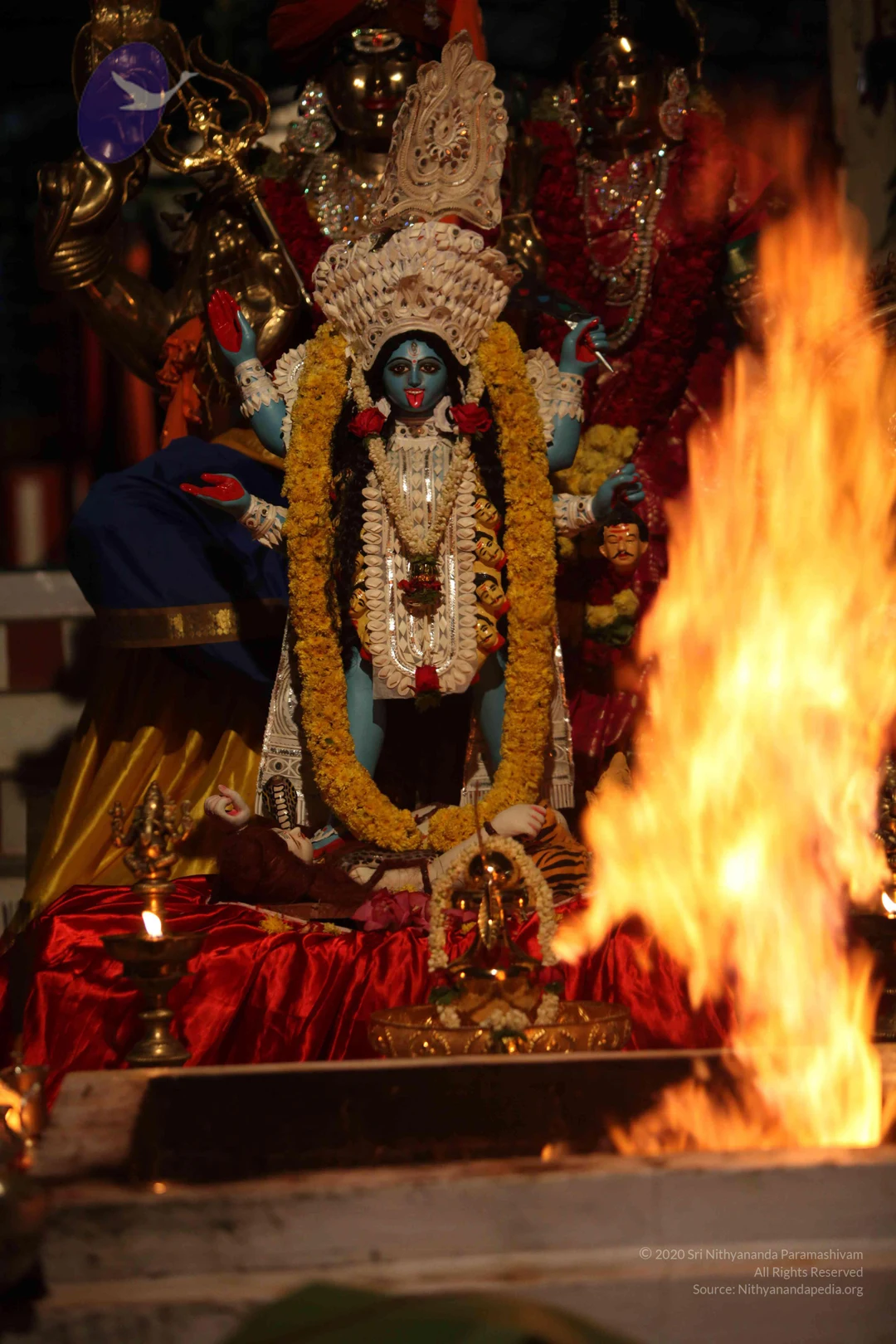
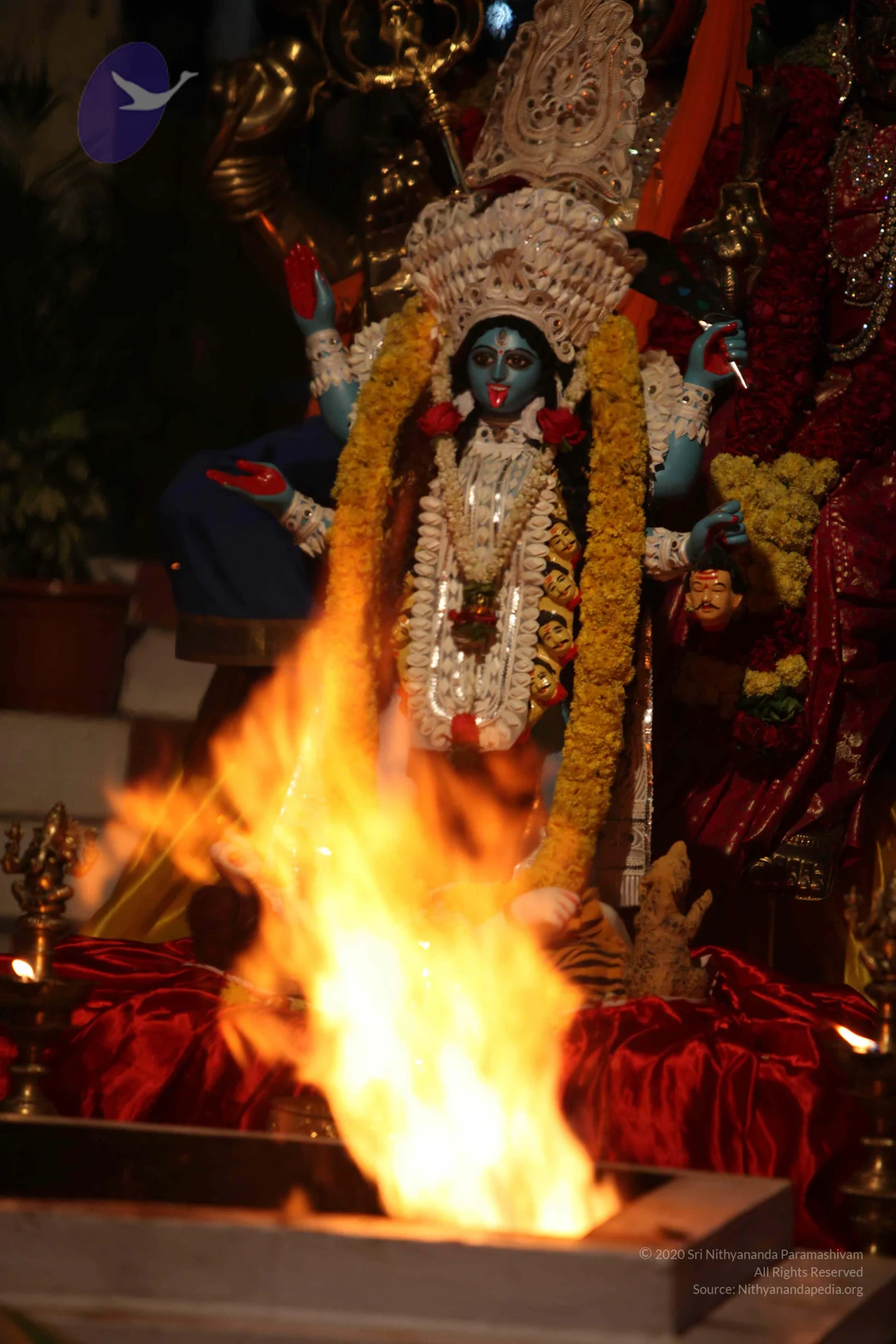
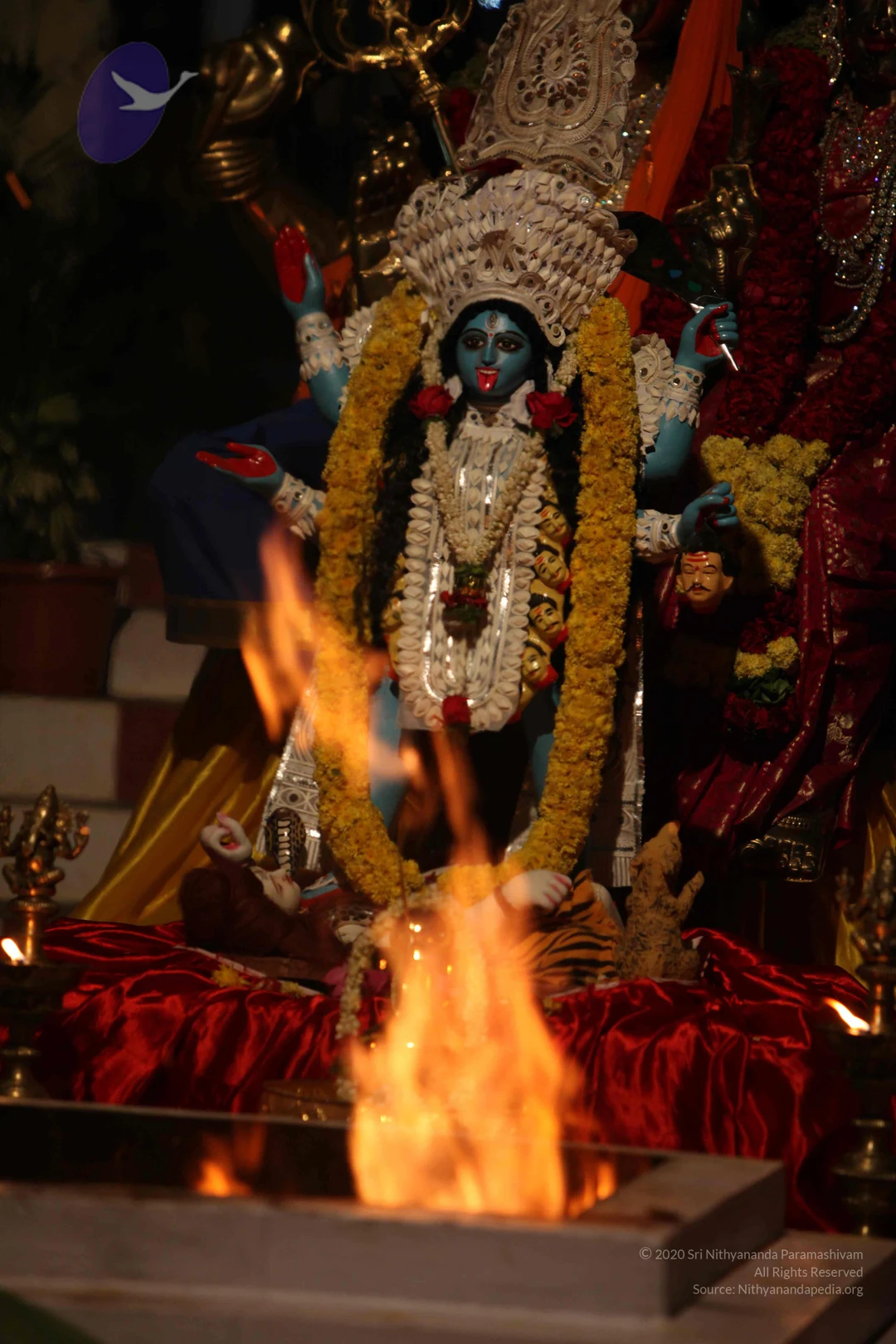
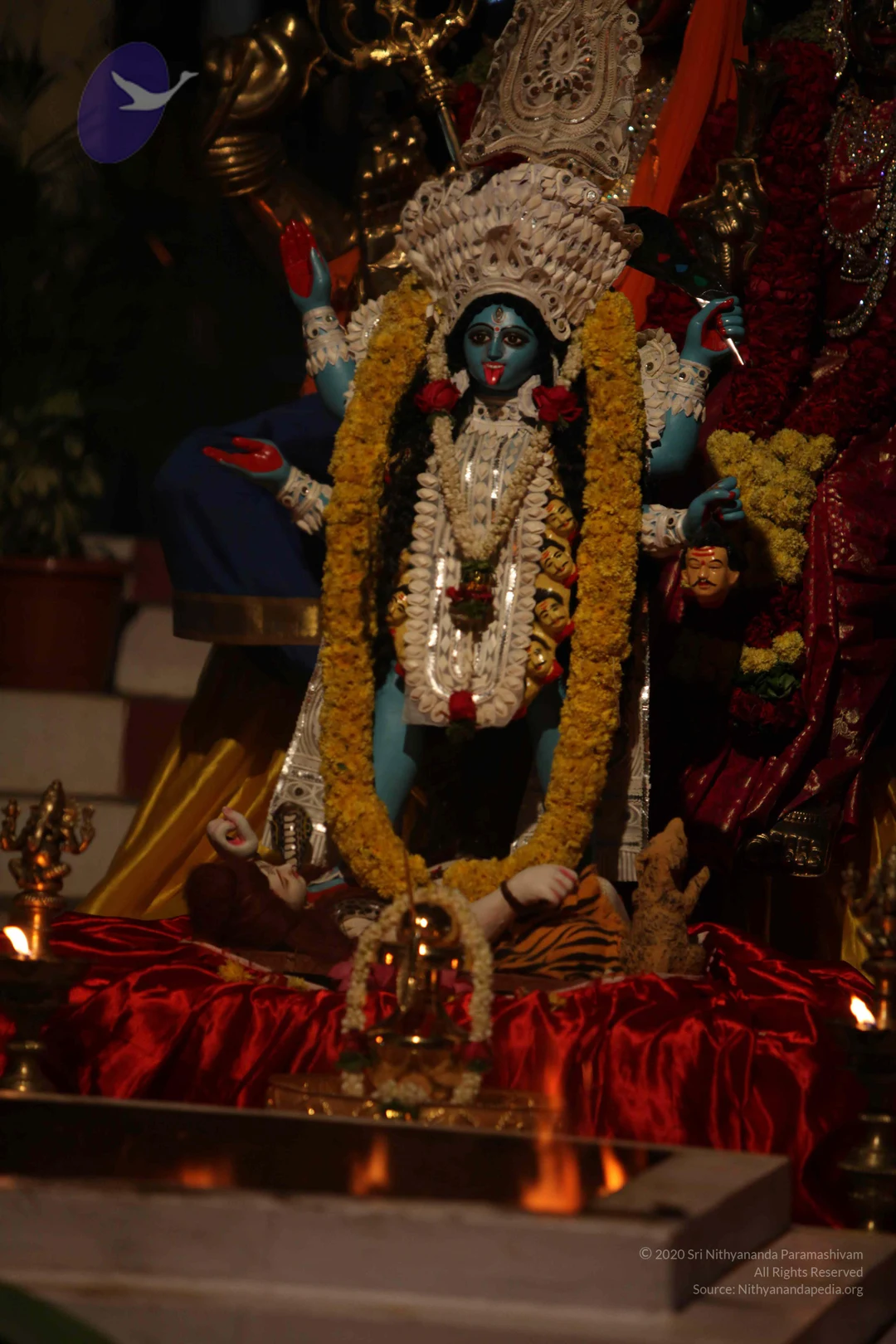
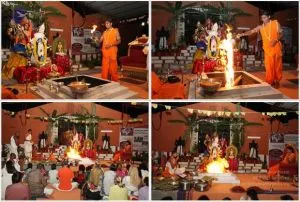
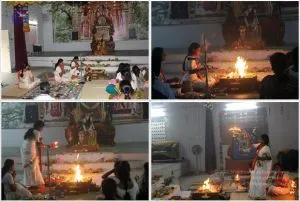
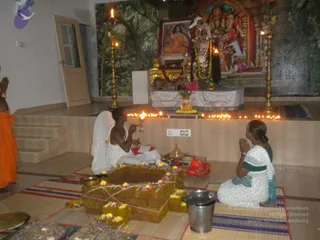
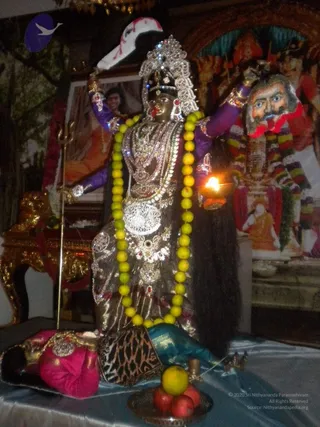
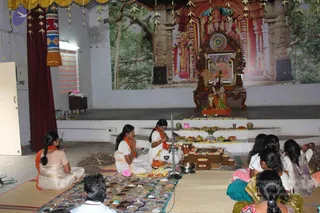
A four-panel collage of a ritual fire ceremony in a temple hall. Top left: a priest in orange robes stands beside a decorated deity murti and a flower-decorated altar with kalasha and lamps. Top right: the same orange-robed priest performs a fire offering over a square fire pit, flames rising. Bottom left: a seated audience of devotees watches as a priest tends the fire pit before a decorated altar. Bottom right: a large fire burns in the pit while devotees sit in rows and an altar with a garlanded image stands behind. Offerings and oil lamps surround the altar. Collage of photographs with no readable text except printed panel elements.Four-panel collage of a temple or shrine room showing women in white saris performing homa or puja rituals. Top-left: several women sit on a white floor cloth before a decorated altar with a deity murti and small lamps. Top-right: a woman in a white sari sits before a fire pit with bright flames while other devotees sit behind her. Bottom-left: a woman in white holds a lamp near a flame with an altar behind. Bottom-right: a woman in white sits at a lit fire offering beside a painted deity image and a kalasha. Warm lighting, pink and yellow decorations on the altar.A two-panel collage of photographs from an indoor satsang hall. The upper-left panel shows a seated group of devotees on a white floor facing a raised dais with a light-coloured seat and a decorated backdrop. The lower-right panel shows a close, cluttered group of seated people in white and light clothing, several with their heads bowed. Visible people are seated devotees; no clear saffron-robed teacher is identifiable from appearance in either panel.Indoor photo of a homa ritual in a shrine room with a backdrop of a forest scene and a large framed painting of a deity. A priest in white dhoti and shawl sits cross-legged before a square brick fire pit decorated with yellow and pink flowers, holding a ladle and offering. A woman in a white sari with teal blouse kneels nearby with hands folded in prayer. Behind them, a deity murti stands garlanded with marigolds on a raised platform, surrounded by rows of oil lamps, with brass lamp stands on either side. A figure in orange robes stands at the left edge, partially visible.A photograph of a deity murti standing on a blue cloth in front of a shrine backdrop. The figure has a jeweled silver crown, a long dark hair, a silver embellished garment, and a large necklace of yellow beads. Its raised hands hold a trident, and a lit oil lamp sits in one hand. At the base lie a pink-draped reclining figure, a leopard-print cloth, a yellow citron and red fruits on a silver tray. Behind, a framed portrait and a painted picture of a bearded figure with a colourful garland are visible. No physical people are present.Indoor ritual hall with a large backdrop photograph of an ornate temple gateway flanked by banyan-like trees. On a raised dais, a small deity murti and framed picture are decorated with garlands, fruit and offerings. Several women in white saris with orange shawls sit in front of a fire pit, one performing a homa-style offering while others sit with hands folded. Many small clay oil lamps are arranged on a mat in the foreground, with coconuts, bananas and trays of offerings. A man in white sits at the left edge and women in colourful saris sit at the right. A white banner-style decoration with orange fringe hangs above a red curtain.

Salem-DiwaliCelebration

18 photosSource gallery
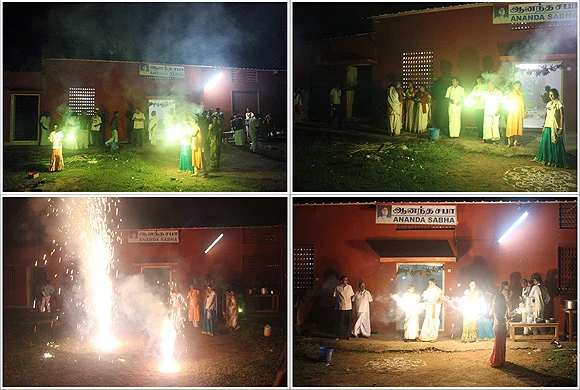
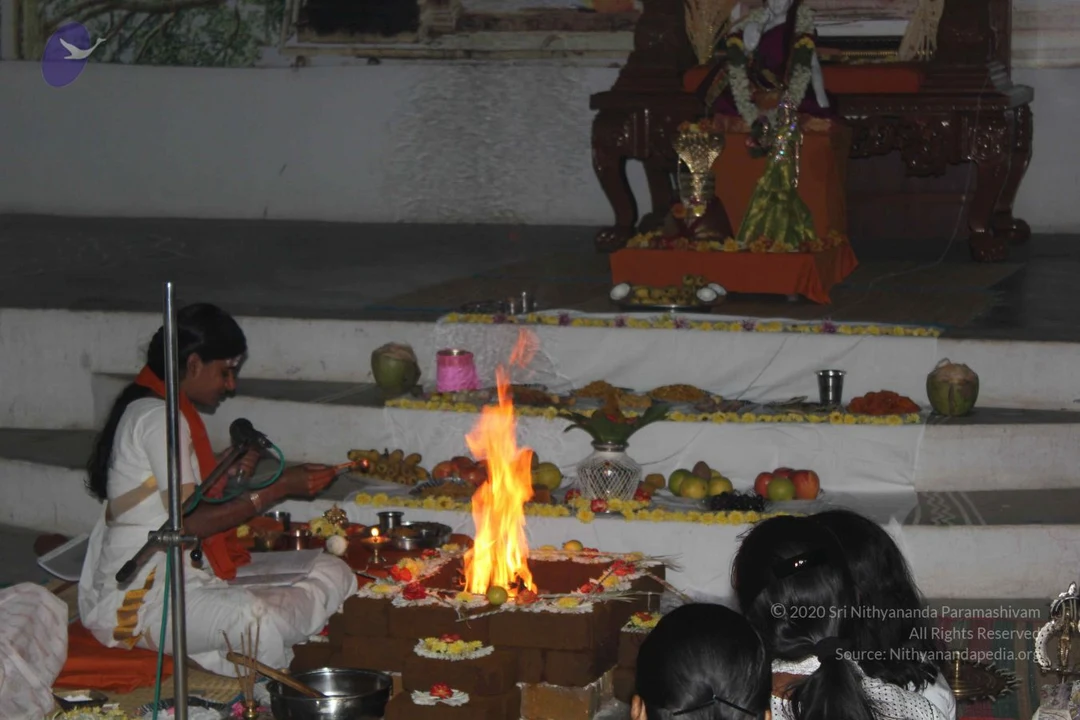
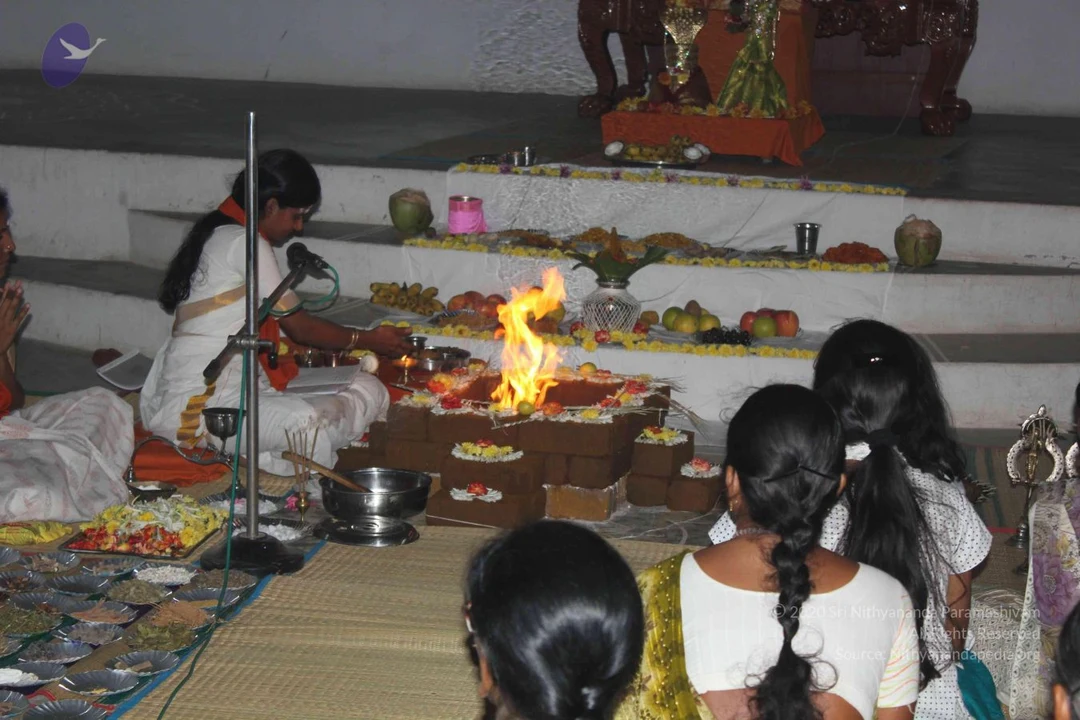
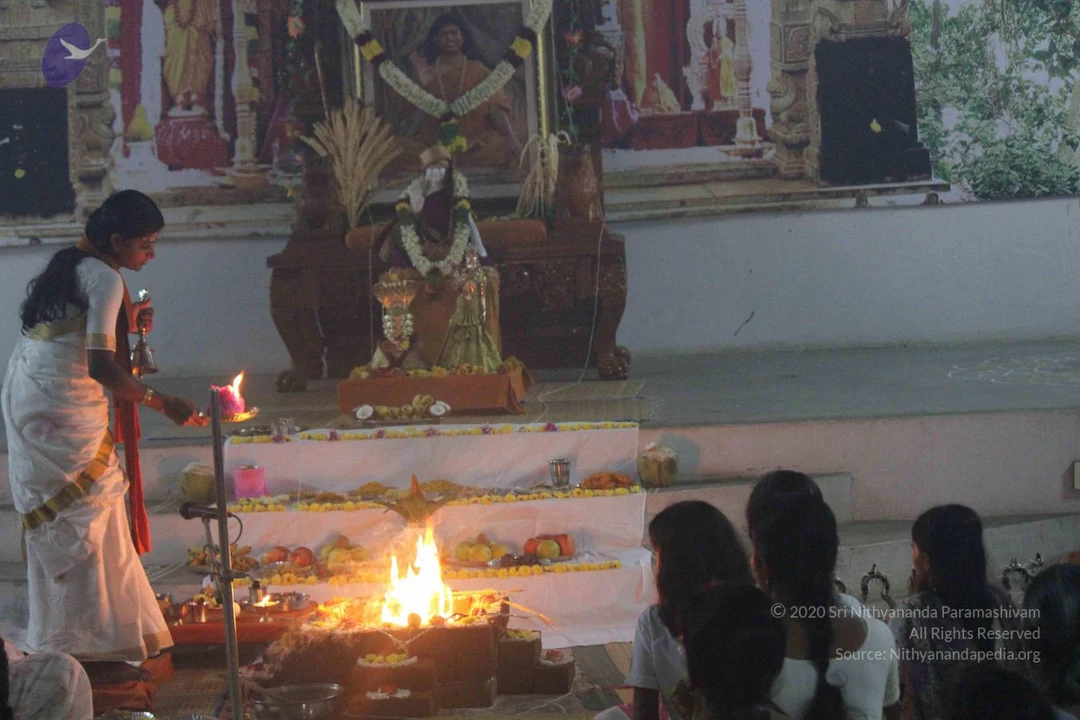
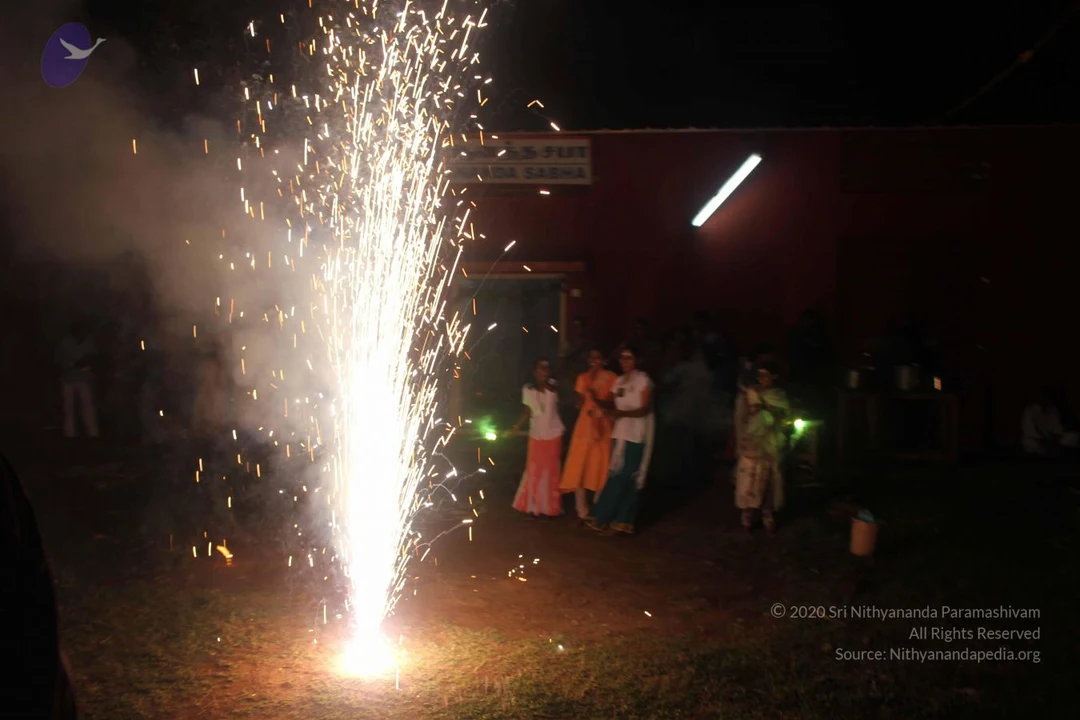
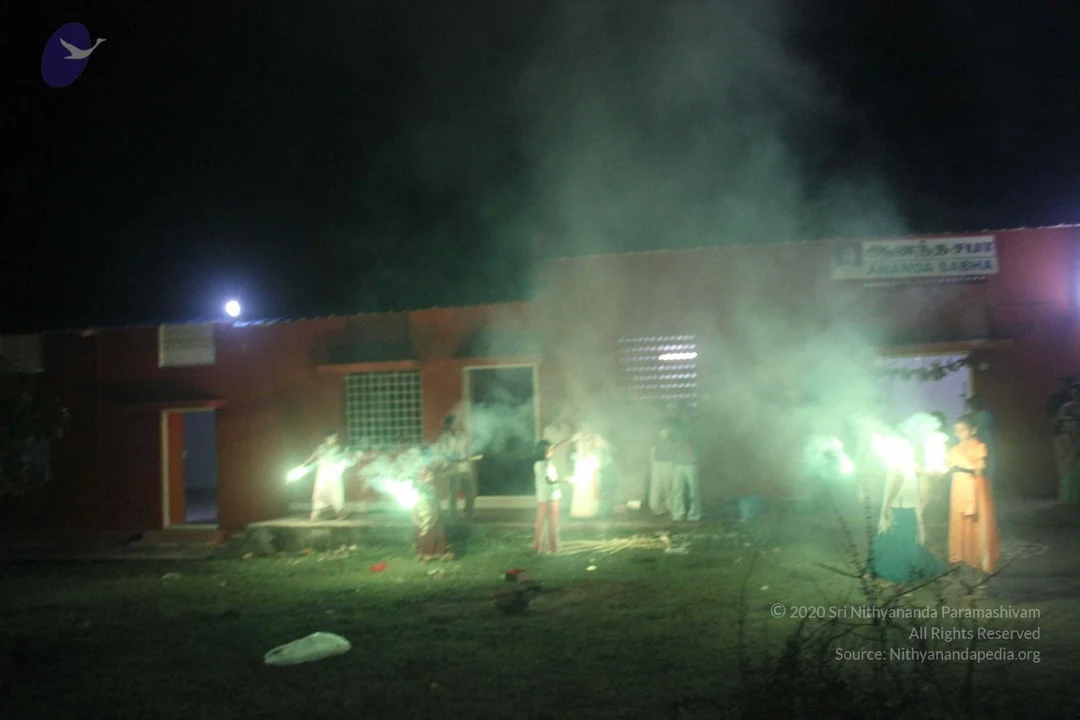
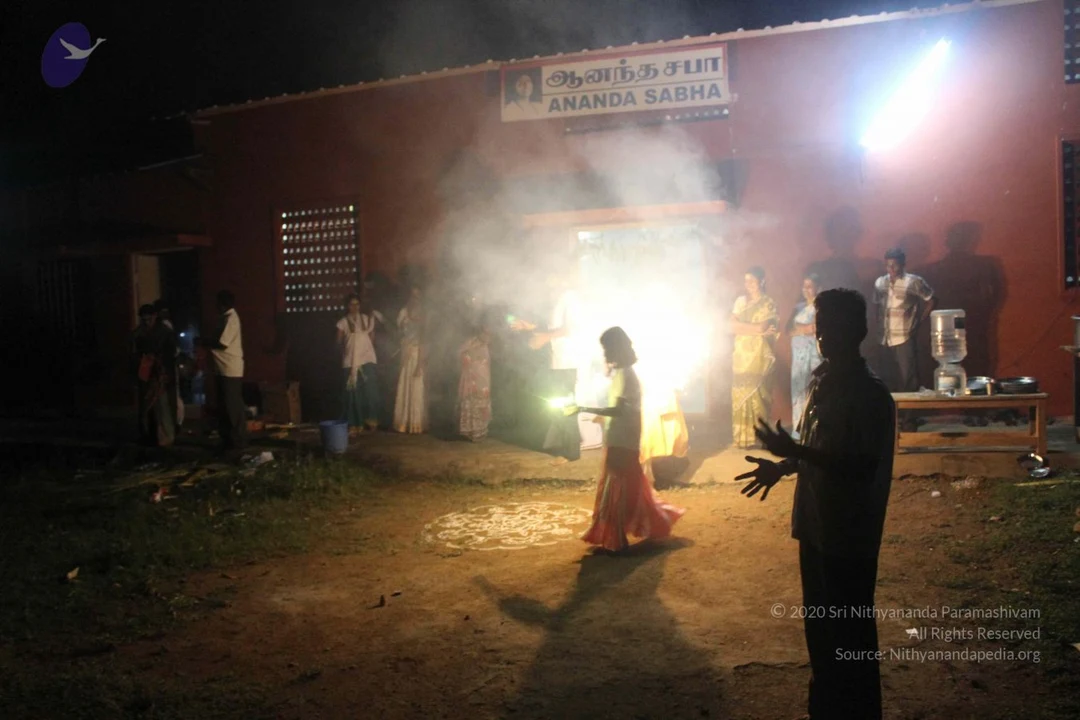
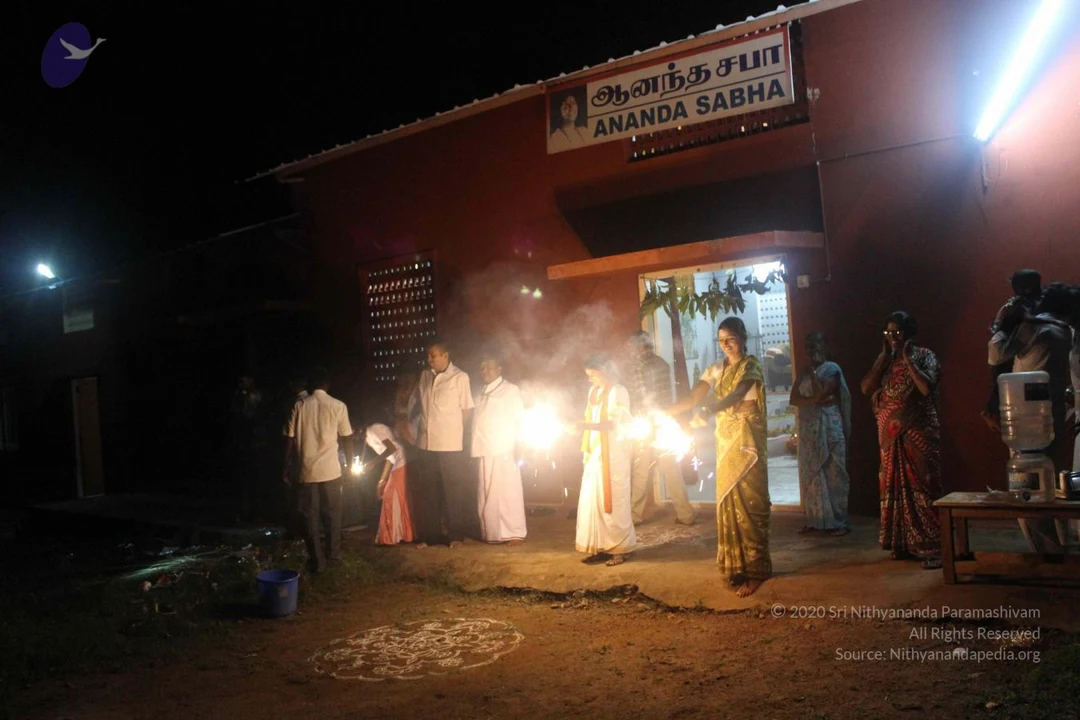
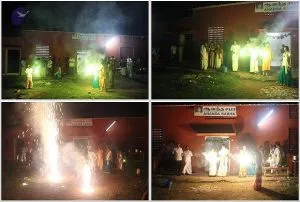
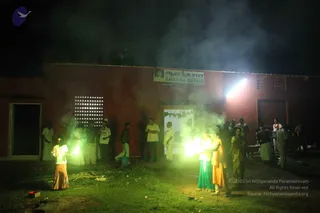
A four-panel collage of night photographs showing a celebration outside a red-walled building. In the top-left panel, several people in light clothing stand in a yard lit by a bright green-white glow. In the top-right, a group in white and saffron-toned clothes stands near the building. In the bottom-left, a bright sparkler or firework sprays sparks while people stand in the background. In the bottom-right, a line of people in white robes stands under a signboard on the building facade, with a light beam overhead. The building has a sign with readable lettering above the entrance.Indoor ritual hall with a large backdrop photograph of an ornate temple gateway flanked by banyan-like trees. On a raised dais, a small deity murti and framed picture are decorated with garlands, fruit and offerings. Several women in white saris with orange shawls sit in front of a fire pit, one performing a homa-style offering while others sit with hands folded. Many small clay oil lamps are arranged on a mat in the foreground, with coconuts, bananas and trays of offerings. A man in white sits at the left edge and women in colourful saris sit at the right. A white banner-style decoration with orange fringe hangs above a red curtain.Devotional ritual in an indoor hall with a raised altar at the back. Three women sit on a mat in the foreground: one in a white sari with an orange border, hands pressed together in prayer; a woman in a white sari holding a lit oil lamp (aarti) over offerings; and a partially visible woman with a long braid and orange shawl at the left edge. A brass lamp with a flame stands on a white-cloth covered platform of fruit, coconuts, marigold petals and bowls. On the altar behind, a deity murti in orange and green garments and a garland sits on an orange cloth, with a large framed painting above. Brass vessels and flower-decorated trays are placed around the puja area.A homa fire burns on a brick fire pit in the foreground, surrounded by flower-decorated offerings including coconuts, bananas, apples, mangoes and bowls of kumkum. A priest in white dhoti and an orange-red shawl sits on the left, tending the fire with a ladle, beside a microphone stand. Two young girls with dark hair sit at the right, watching. Behind, a wooden altar holds a garlanded deity murti and a kalasha on an orange-draped platform.A homa fire ceremony in an ashram hall. A woman in a white sari with an orange border sits cross-legged on a mat, feeding a brick fire altar built in tiers with a bright flame rising from it, while holding a ladle over a steel bowl. Her long hair is in a braid. Behind her, steps are arranged with fruit, coconuts, marigold garlands and flower-decorated offerings, and a deity murti stands under a canopy with an orange cloth. Two women in white and yellow blouses with long braids sit in the foreground, and a man in white sits at left with hands folded. Plates of grains and pulses surround the mat. No a person candidate is visible.A homa fire burns on a flower-decorated altar in an indoor hall. A woman in a white sari with a gold border and a red shawl stands at left, holding a lit oil lamp and a small brass vessel. Behind the altar, a seated figure in a dark robe with a garland of white flowers sits on a carved wooden throne before a deity murti draped in green cloth. Fruit, coconuts, marigold garlands and brass bowls surround the fire. Several women with long dark hair sit on the floor at right, watching the ritual. Painted temple scenes decorate the walls behind.

Vibhuti-Nandi-Toronto

3 photosSource gallery
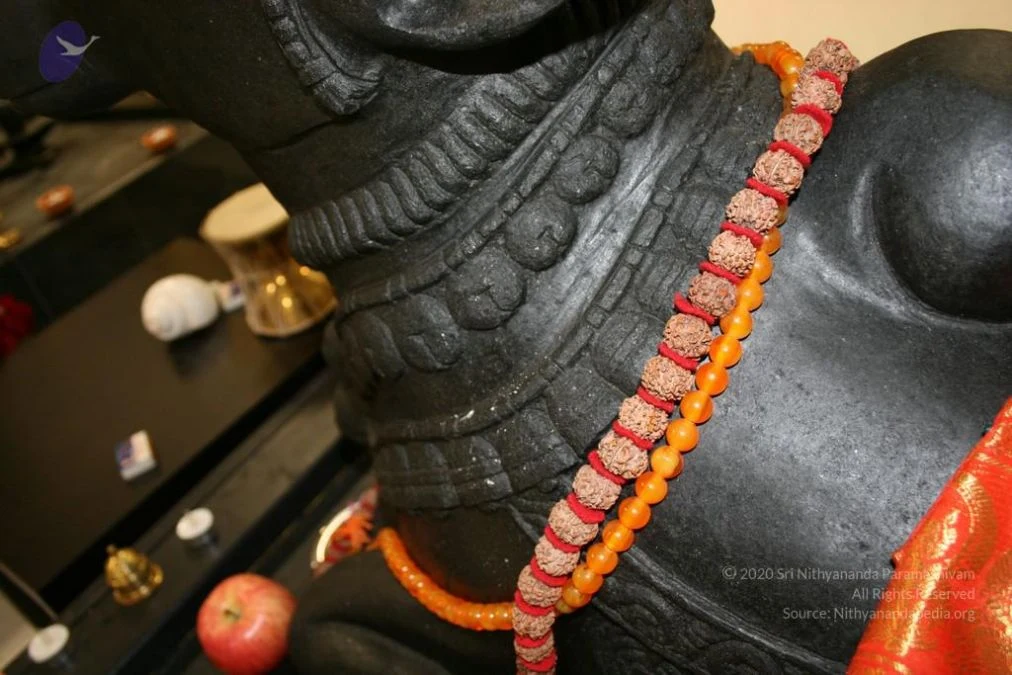
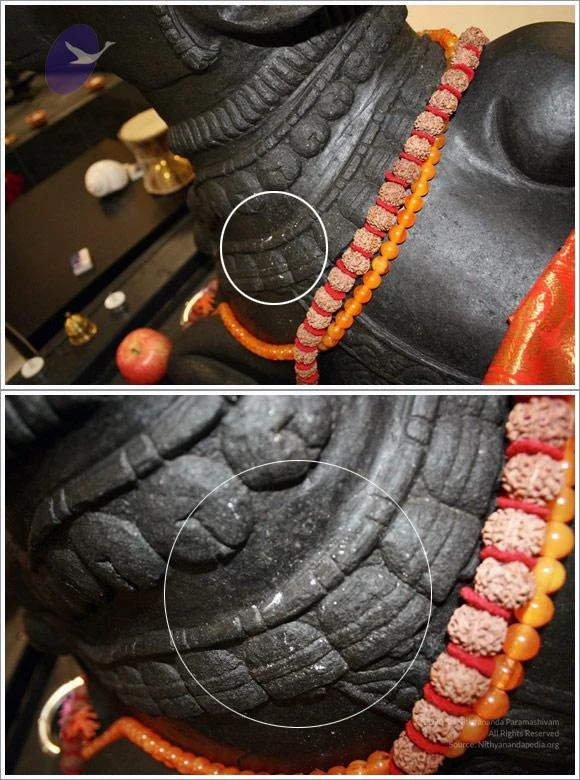
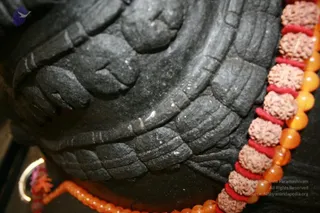
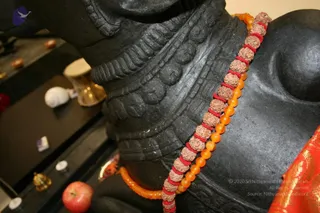
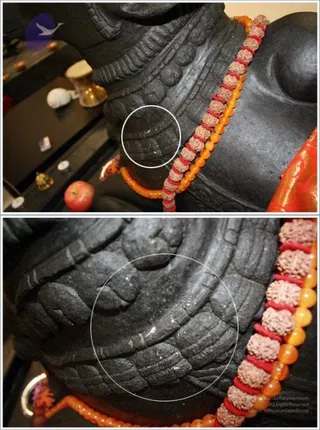
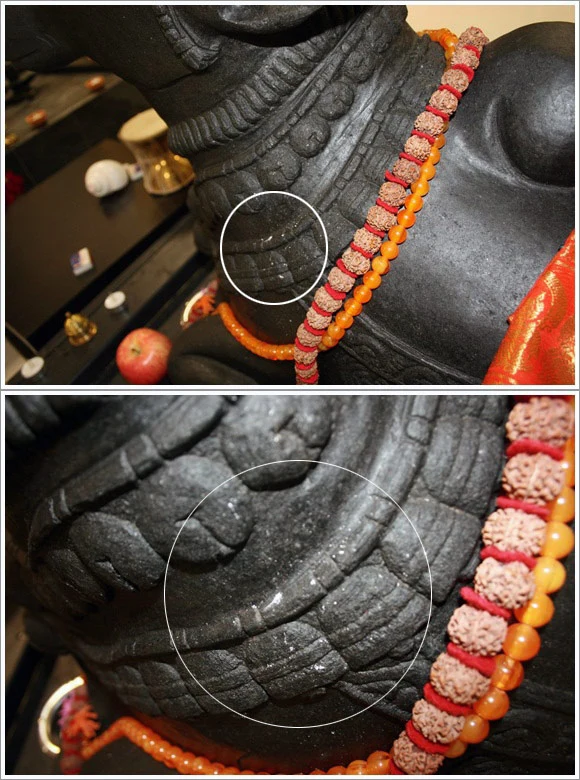
Close-up photograph of a large dark stone deity murti with smooth, weathered carved grooves and ridges across its surface. Around its base or neck runs a strand of rudraksha beads alternating with amber-orange beads and red thread, and a small orange-and-pink cord hangs at lower left. Watermarked archive image with copyright text in the lower right corner. No people are visible.Close-up photograph of a dark black stone deity murti with carved neck ridges and a broad chest. Draped across its shoulder and chest are strands of rudraksha beads alternating with amber-orange beads, with red cord spacers. A red-and-gold silk cloth appears at the right edge, and an orange bead necklace hangs at the neck. In the blurred background sit a white conch shell, a brass oil lamp, a small brass bell, a red apple, and a small brass item on a dark ledge. No people are visible.Two close-up photographs of a dark black stone statue. The top panel shows the statue's neck and chest with a circled area of carved folds, a strand of rudraksha beads alternating with orange beads draped across it, and an orange silk cloth at the lower right. Small ritual objects, a red apple, and a brass bell are visible in the blurred background. The bottom panel is a tighter zoom on the carved neck folds with a circled area and the rudraksha and orange bead mala at the right. No physical people are visible.

Deepavali-Malaysia

9 photosSource gallery
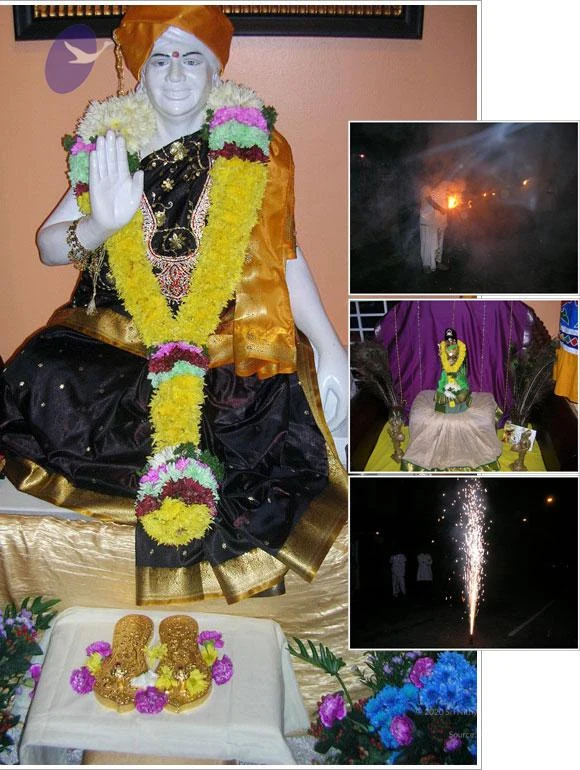
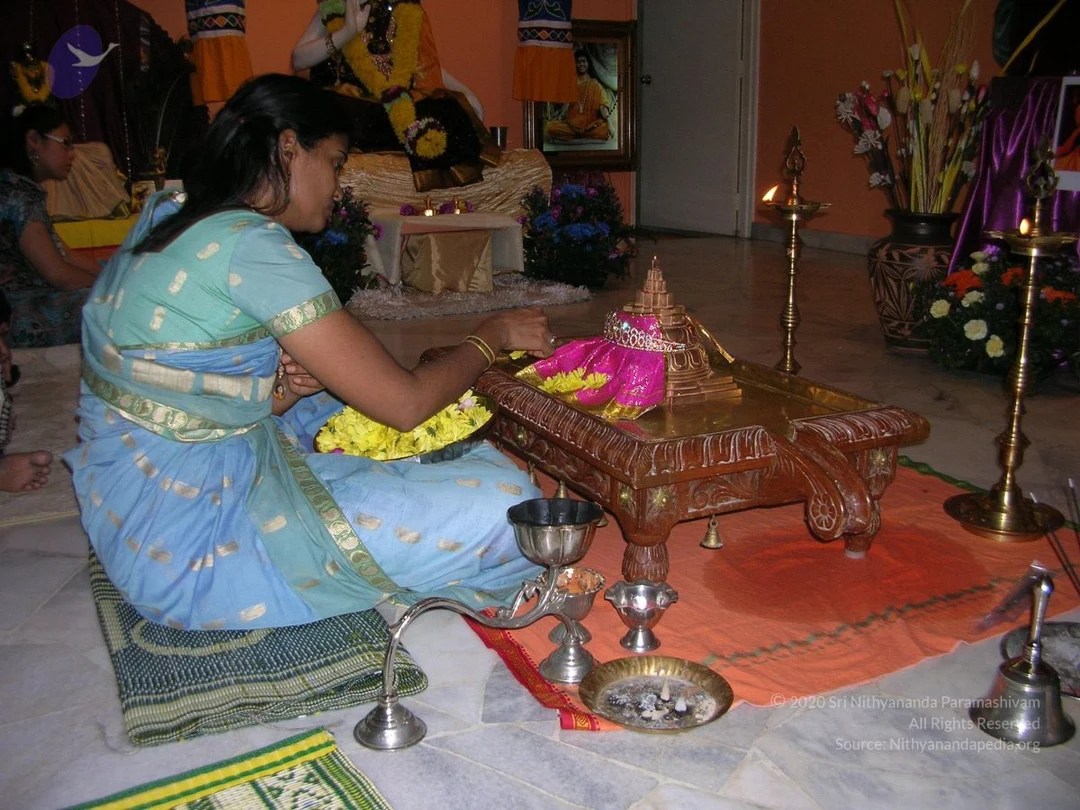
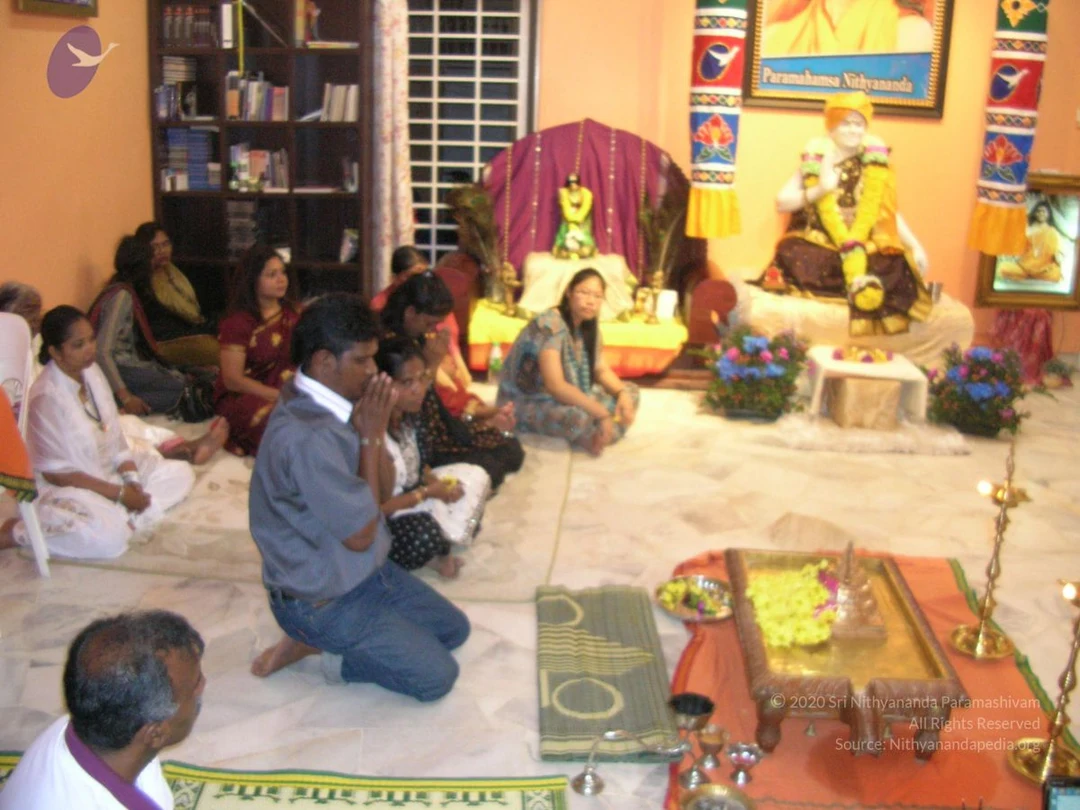
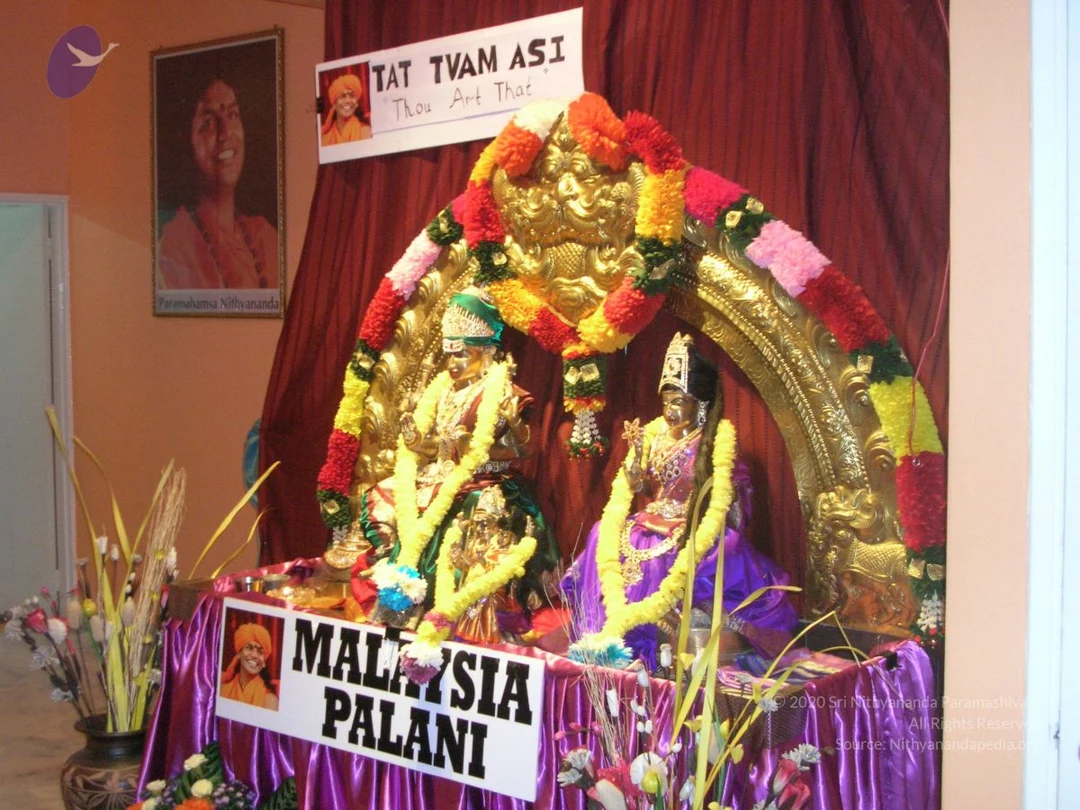
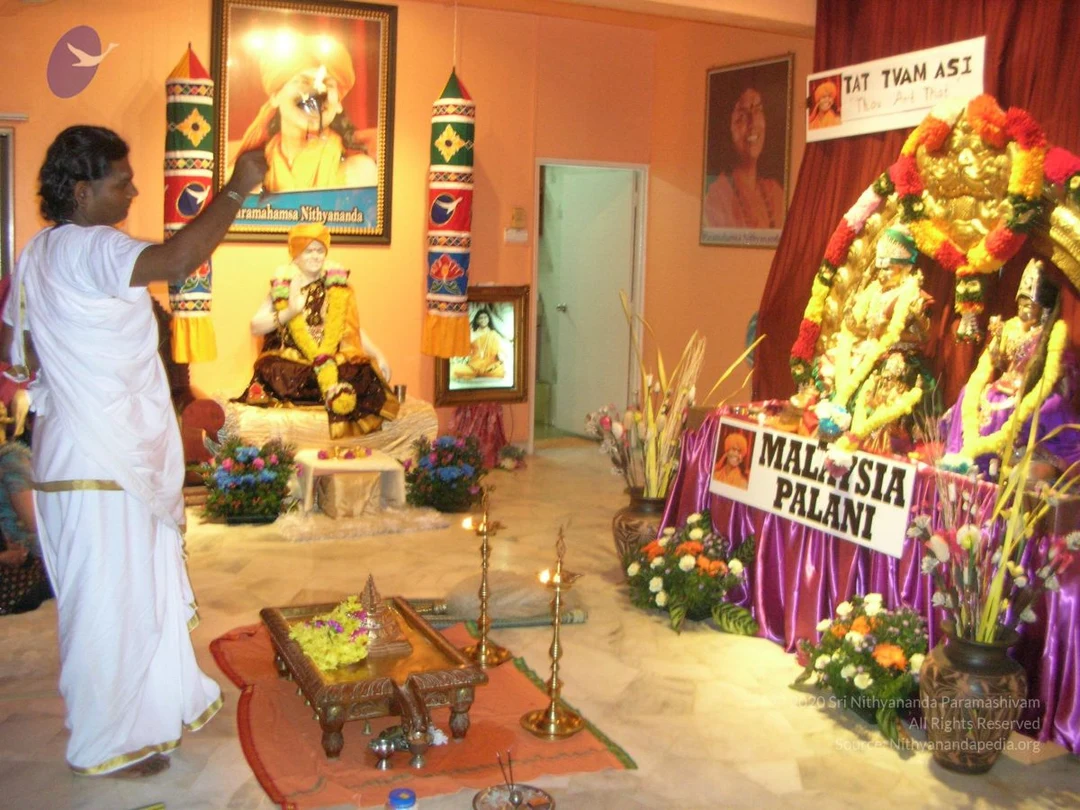
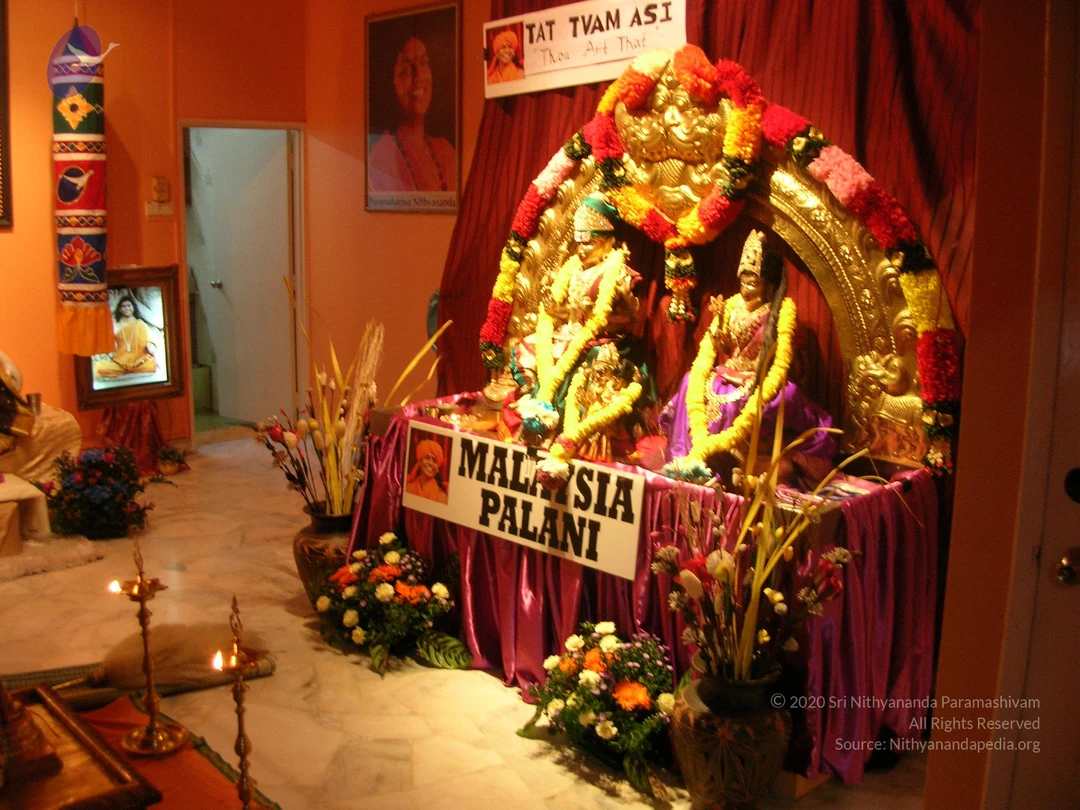
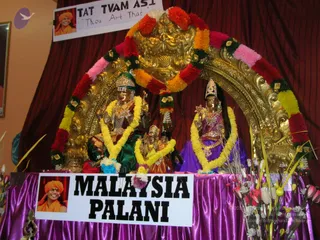
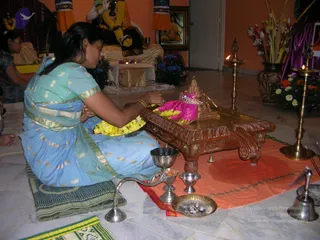
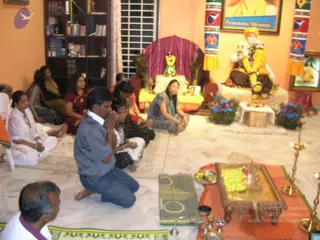
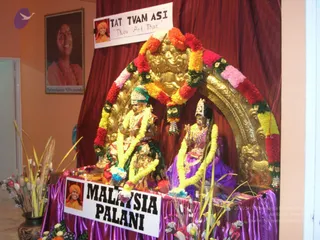
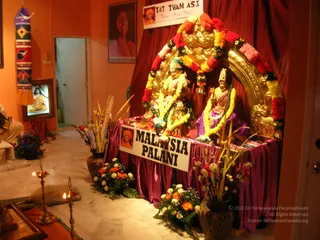
A small photograph of a decorated deity murti on a festive stage with a pink-and-red draped backdrop. The central figure is a golden-bronze murti of a deity standing amid a large floral garland and ornate ceremonial decorations. A framed portrait stands at the upper left, and a banner reads MALAYSIA PALANI in the lower right. No people are visible in the frame.A photograph of a decorated altar display with two gold-finished murti figures seated beneath an ornate gilded arch draped with red, orange, yellow and pink flower garlands. The seated figure on the left wears a green garment, a gold crown and ornaments, and holds a staff; the figure on the right wears a purple sari and a tall gold crown. Smaller figures stand between them. Purple satin covers the table, with white and pink flowers at the sides. Above, a banner shows a photo of a smiling man in an orange turban and the words TAT TVAM ASI, Thou Art That. A sign on the table shows a small photo of the same man and reads MALAYSIA PALANI. These are printed portraits and figures, not physical people.A woman in a light blue and green sari with gold border sits cross-legged on a woven mat, arranging yellow flower garlands on a carved wooden stand. On the stand sits a small brass shrine with a pink cloth and a crown-like ornament. Brass oil lamps with lit wicks stand nearby, a bell rests on the floor, and a brass plate holds small offerings. Behind her, a flower-decked deity murti and a framed photo of a seated man in orange clothing are visible on an orange-walled room. Vases of flowers complete the puja setting.Devotees seated on a marble floor inside a room with orange walls and a bookshelf, performing worship before a seated statue. A large seated statue on the right wears a yellow flower garland and a dark embroidered garment; a smaller figure sits on a maroon-draped throne behind an offering table. A man in a grey shirt and jeans kneels with palms pressed together at the front, a woman in white sits nearby, and other women in saris sit in rows. A brass tray with yellow flowers, a kalasha, brass oil lamps and bowls lie on an orange cloth in the foreground. A framed portrait labelled "Paramahamsa Nithyananda" hangs at the top, with blue flower arrangements below it.A decorated altar set against a deep red curtain shows two gilded murti figures seated under an ornate gold arch draped with red, orange, yellow and pink flower garlands. The left figure wears a green-and-gold crown and yellow garland, the right wears an elaborate crown with a purple cloth and yellow garland, and a small golden figure sits between them. A purple satin cloth covers the altar, with plants and flowers in front. A framed portrait on the left wall shows a smiling person in orange robes and a beaded mala, captioned Paramahamsa Nithyananda. A banner above reads Tat Tvam Asi, Thou Art That, beside a small portrait, and a sign on the altar reads Malaysia Palani.A photograph of a temple-style room with orange walls. A man in a white dhoti and white shirt, seen from behind on the left, raises his hand toward a framed portrait labelled "Paramahamsa Nithyananda", which shows a figure in orange robes and a turban. Beside it hangs a framed photo of a smiling woman, and a banner reads "Tat Tvam Asi - Thou Art That". On the right, a decorated altar with a golden deity murti garlanded with marigolds and red flowers stands on purple satin, with a small banner reading "Malaysia Palani". A seated figure in orange and gold clothing with a turban and flower garlands sits on a white-draped seat at the centre back. Brass oil lamps, flower vases, a wooden puja stand with a small kalasha and flower offerings occupy the floor in front.

Deepavali-Salem-Aadheenam-Homa

79 photosSource gallery
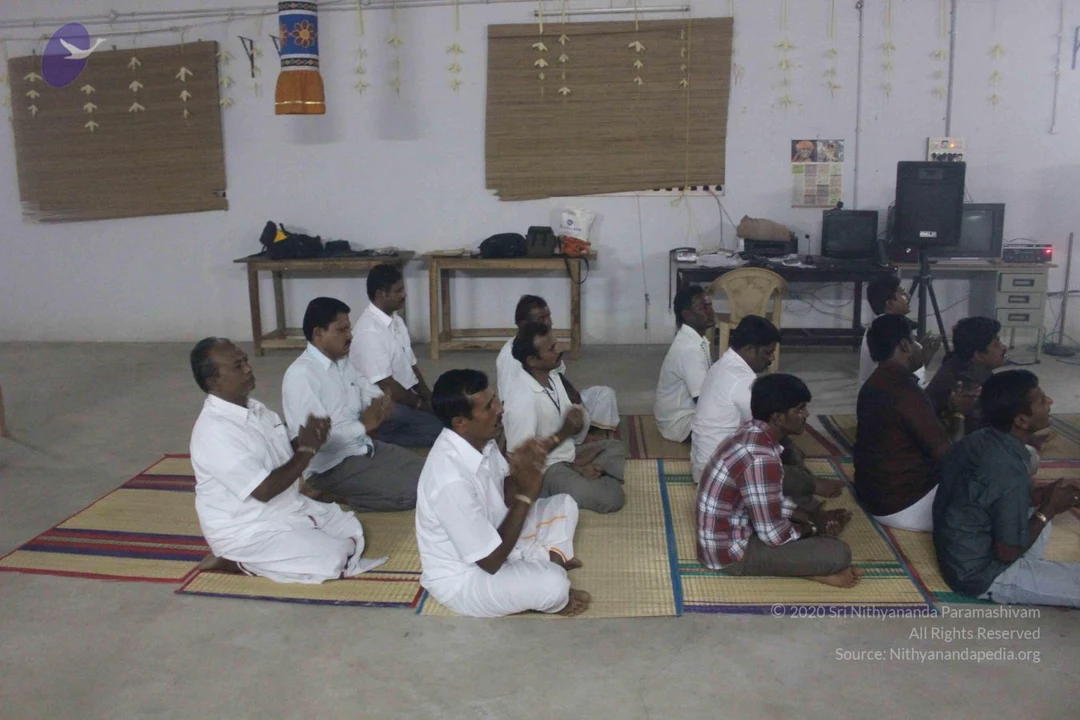
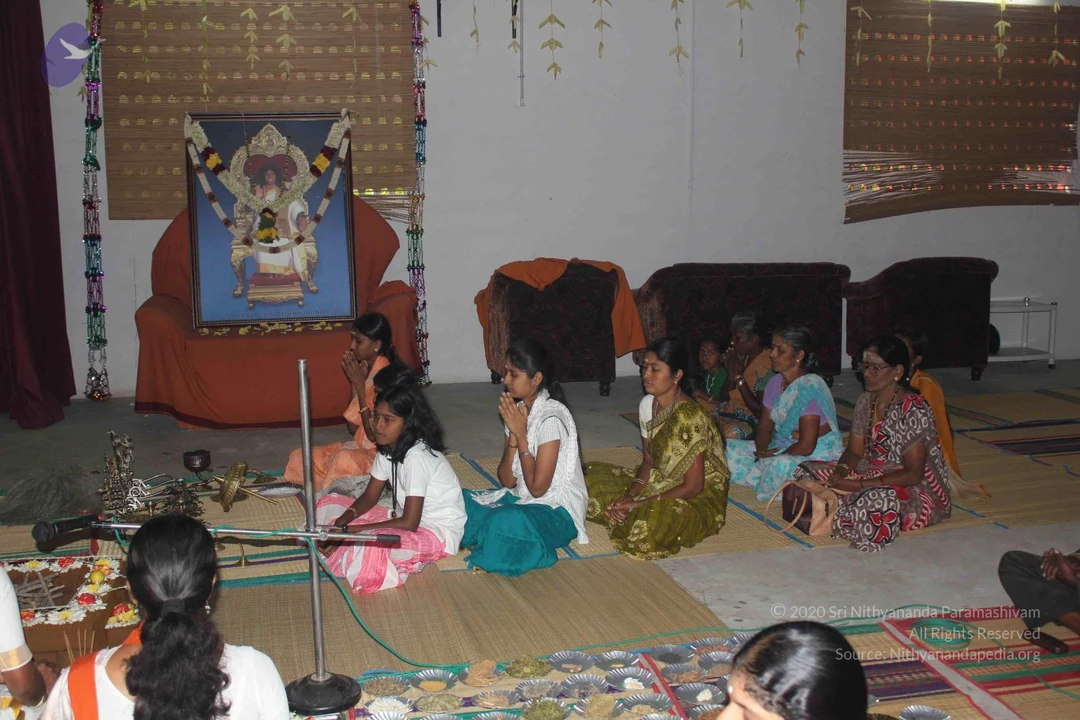
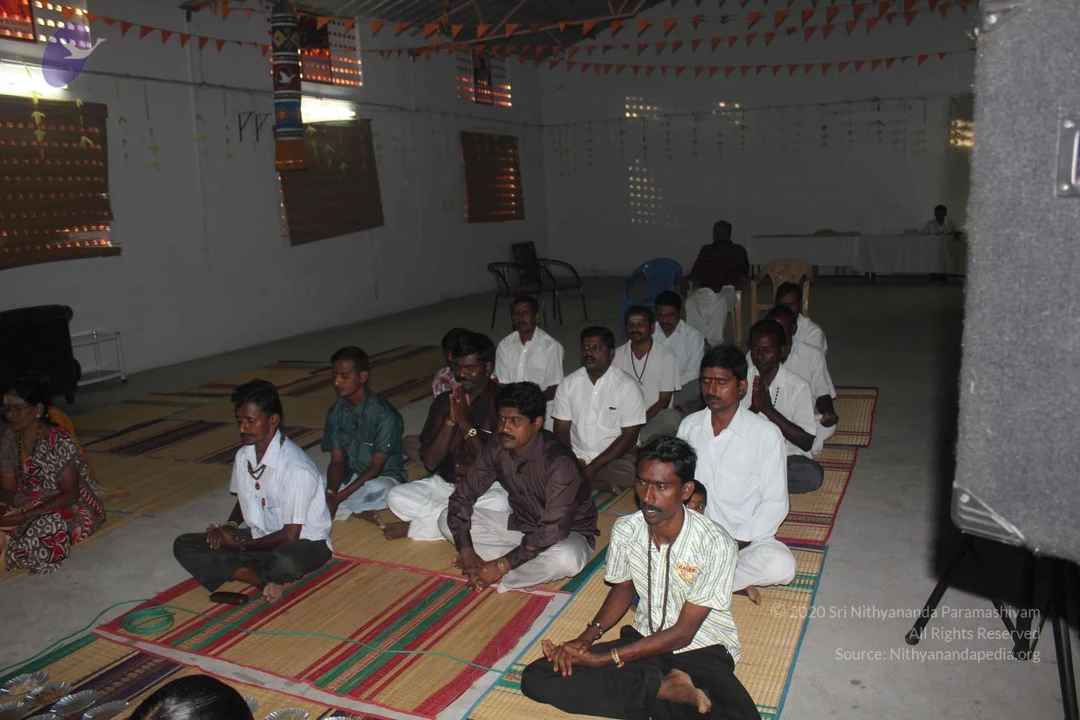
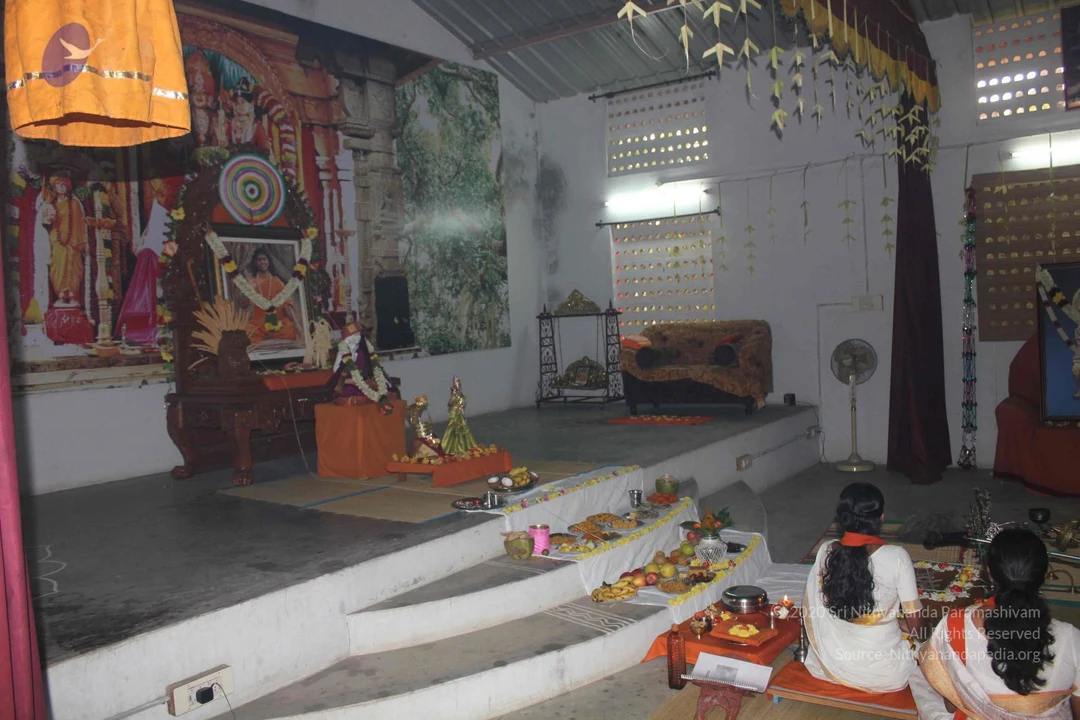
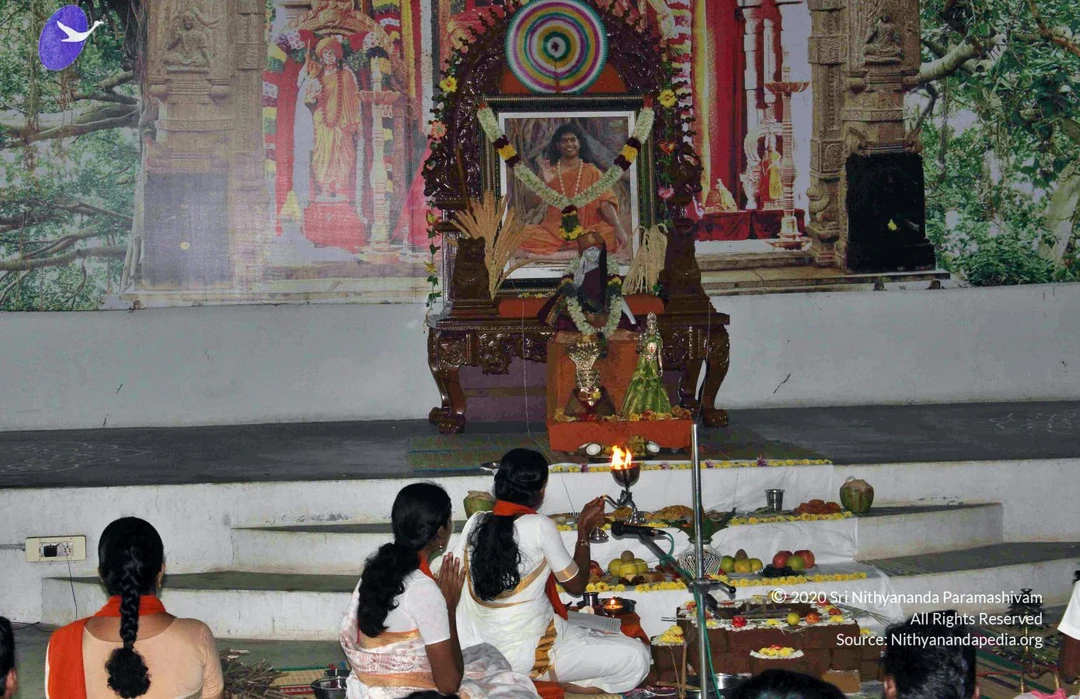
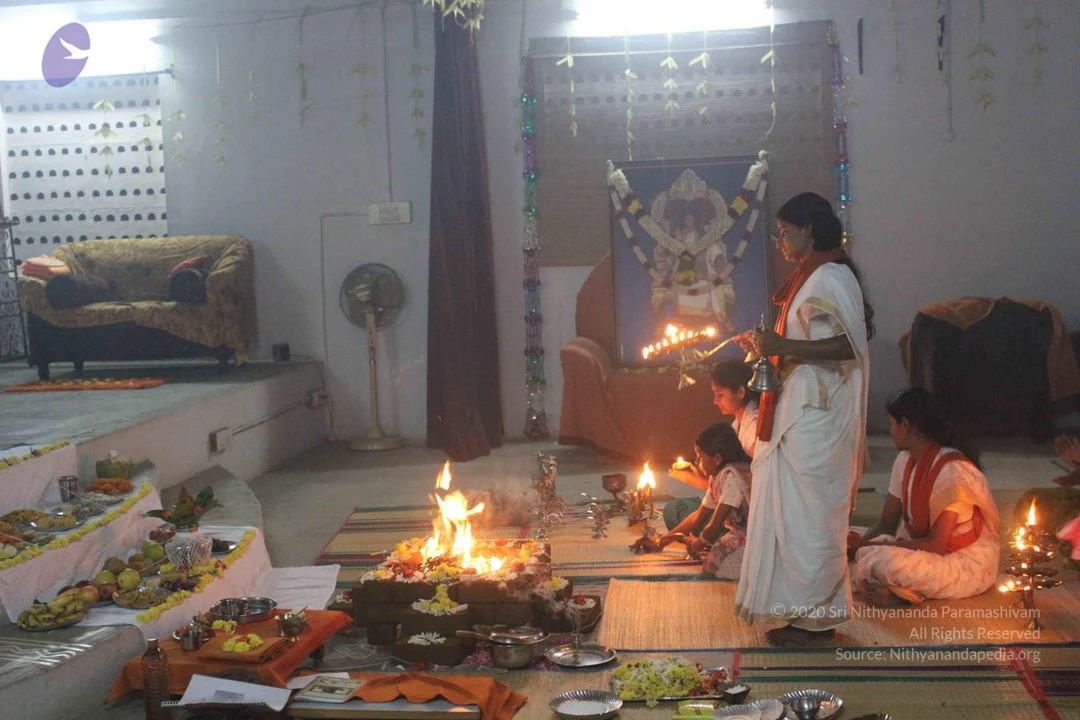
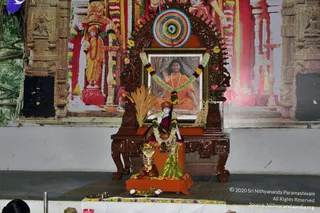
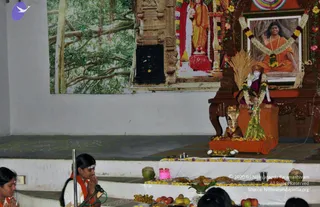
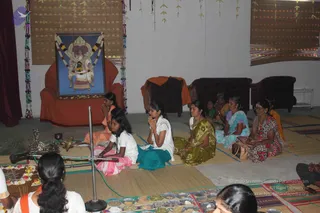
A decorated stage shrine with a framed photograph on a carved wooden stand, garlanded with marigold and multicolour flower strands. The framed portrait shows a figure in orange robes with rudraksha beads, seated before a tree. Below it, a small deity murti in a maroon and gold outfit sits on an orange-draped platform with flowers, a brass vessel, fruit and a sheaf of grain. Behind the shrine, large printed temple-column backdrops show carved pillars, a standing figure holding a staff, and a circular rainbow-coloured emblem above. In the lower foreground, a few partial figures and oil lamps are visible. No live persons are clearly in the frame except partially visible people at the bottom edge.Indoor ritual hall with a large backdrop photograph of an ornate temple gateway flanked by banyan-like trees. On a raised dais, a small deity murti and framed picture are decorated with garlands, fruit and offerings. Several women in white saris with orange shawls sit in front of a fire pit, one performing a homa-style offering while others sit with hands folded. Many small clay oil lamps are arranged on a mat in the foreground, with coconuts, bananas and trays of offerings. A man in white sits at the left edge and women in colourful saris sit at the right. A white banner-style decoration with orange fringe hangs above a red curtain.A woman seated at the lower left of a stage, with palms pressed together in namaste, wears a white sari with an orange-red shawl and a vertical tilak on her forehead, speaking into a microphone on a stand. Beside her a second woman with folded hands sits at the edge of the frame. Before them stands a puja arrangement: a white-draped table covered with flower garlands, plates of fruit, sweets, coconuts, brass vessels and a pink lamp. Behind, a large photograph of a banyan tree and a carved stone temple gate is displayed. On the right, a framed portrait of a seated man in saffron robes with rudraksha beads and a flower garland is placed on a wooden altar, with a deity murti dressed in green and maroon and garlanded below it, flanked by wheat stalks and a kalasha. A saffron-draped stand holds the murti. Audience heads are visible at the bottom edge.A photograph of devotees seated cross-legged on woven mats in a hall, with palms pressed together in prayer. A framed painting on an orange-draped throne-like chair shows a seated figure adorned with garlands, flanked by hanging beaded decorations. Several women in saris and salwar kameez, including a woman in green and another in red-and-white, sit in rows facing the shrine. Small clay oil lamps are arranged on the mat in the foreground beside brass ritual items and flower offerings. Two people at the left edge in white clothing are partly visible.A photograph of a dimly lit hall where devotees sit cross-legged on woven mats during an evening satsang. Most men wear white shirts and white dhotis, while some wear dark brown or green shirts with dhotis. Several hold their hands together in anjali mudra or rest them on their knees. Strings of small paper flags in orange and white hang across the ceiling, and a projector screen stands at the right edge. At the far end, a seated figure in a dark shirt sits near a white-draped table, and a woman in a red and black sari sits at the left. The meeting appears to be a talk or discourse being given to the assembled group.A worship scene in a temple-style hall with a painted backdrop of ornate pillars, a deity figure and banyan-tree foliage. On a raised platform, a framed portrait of a man with long hair in orange robes and a rudraksha-style necklace sits within a garland of marigolds and a decorative floral arch; the portrait is printed artwork, not a physical person. Below it are a deity murti, brass lamps, a kalasha-style vessel, fruit offerings, coconuts and flower-decorated trays. Three women in white saris with red-orange borders kneel and perform aarti, one holding a lit oil lamp, while a fourth visible devotee in an orange shawl sits at the left edge. Four physical people are visible.

Deepavali-Salem-Aadheenam-Fireworks

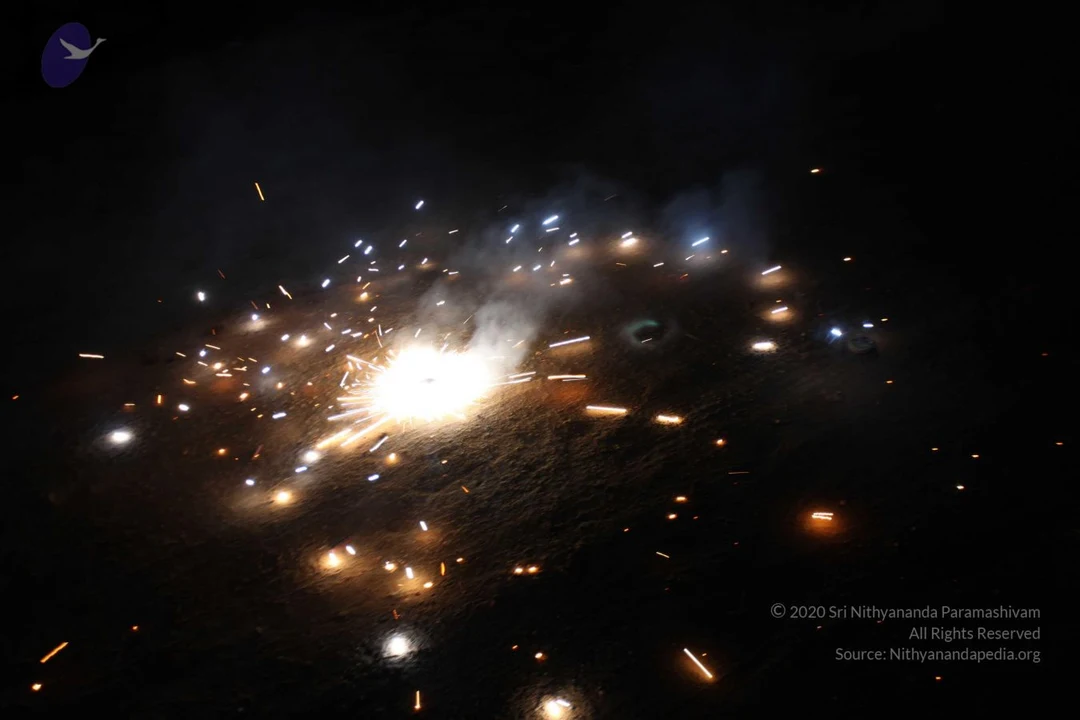
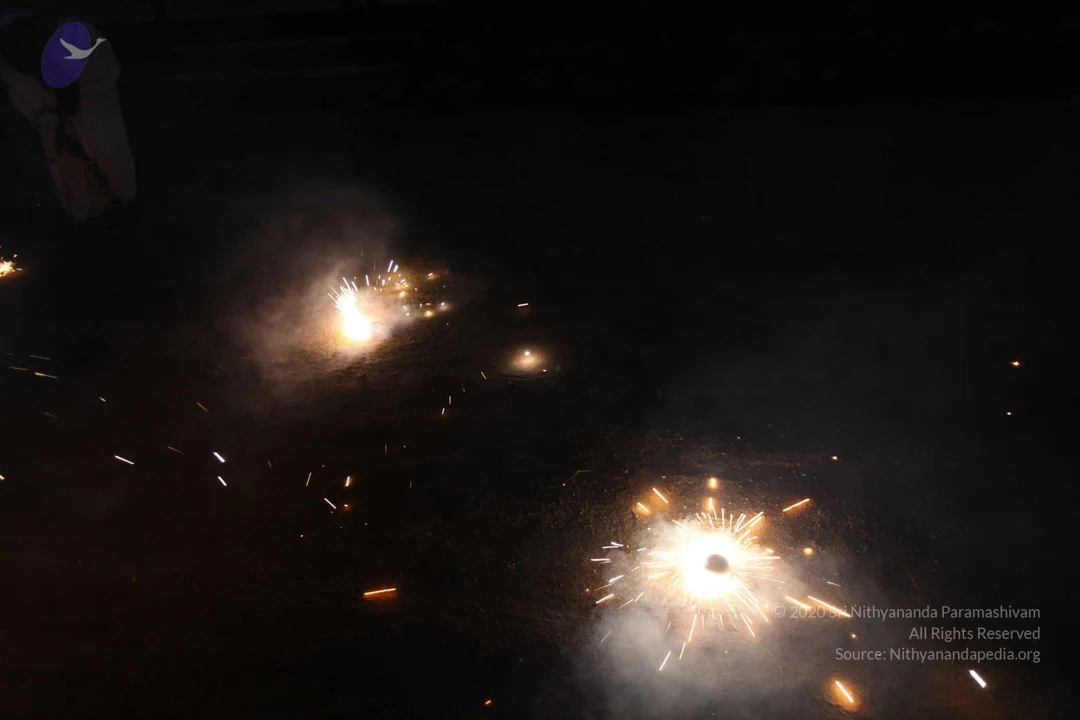
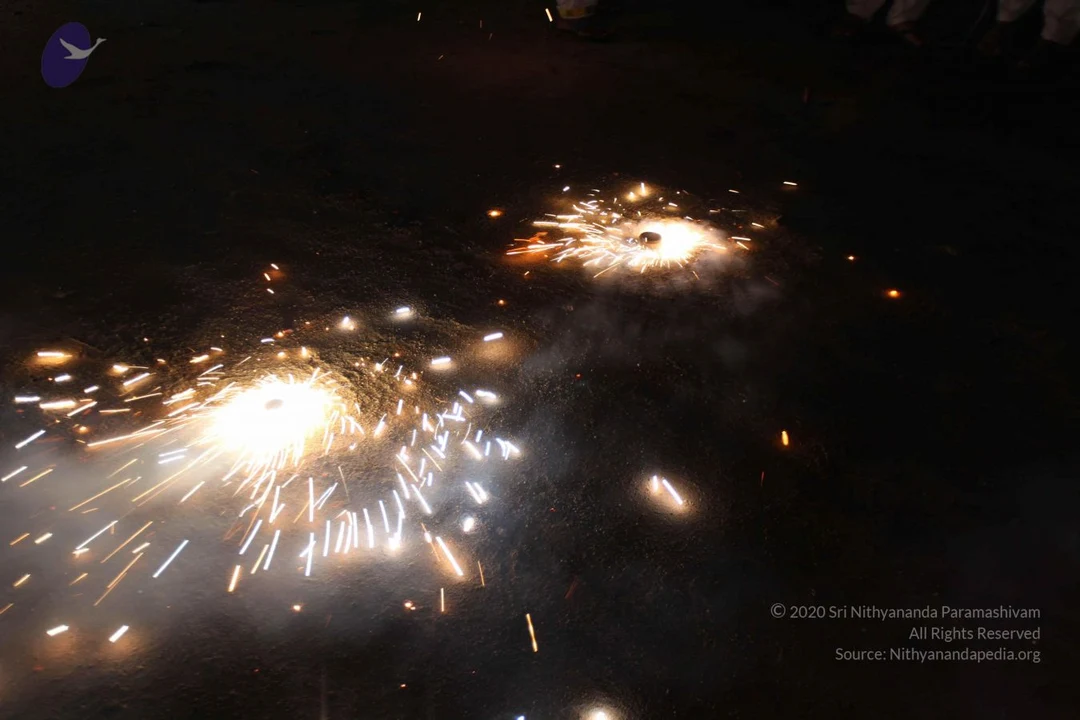
31 photosSource gallery
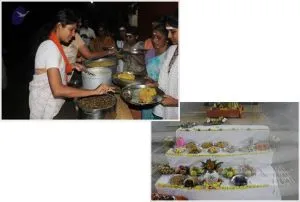
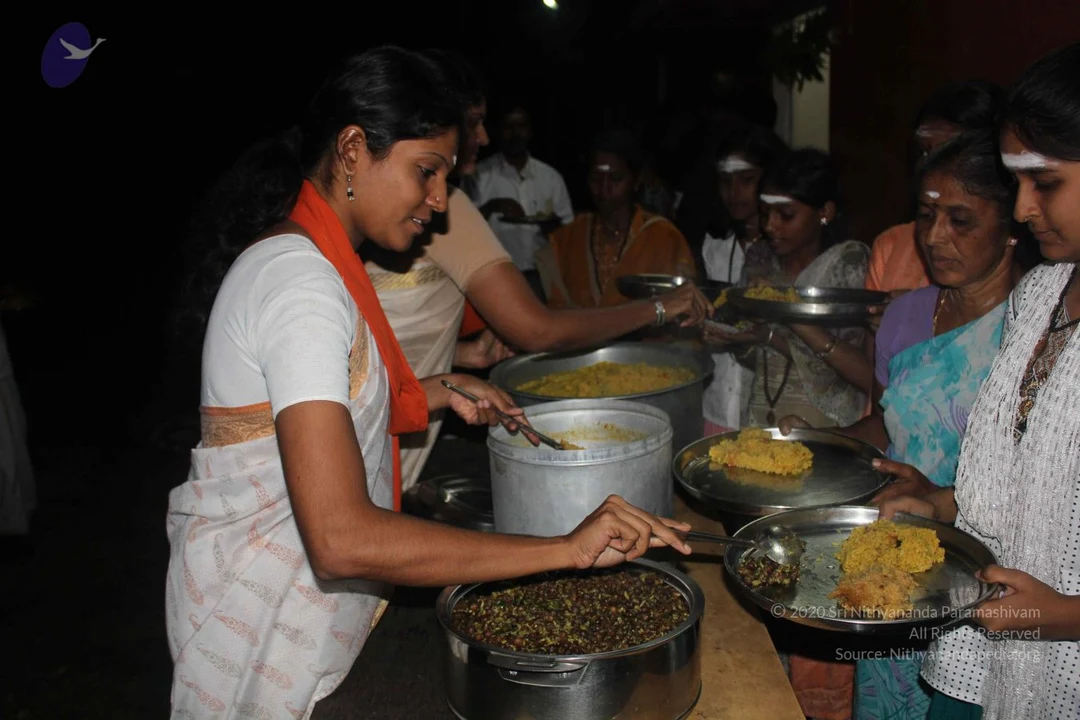
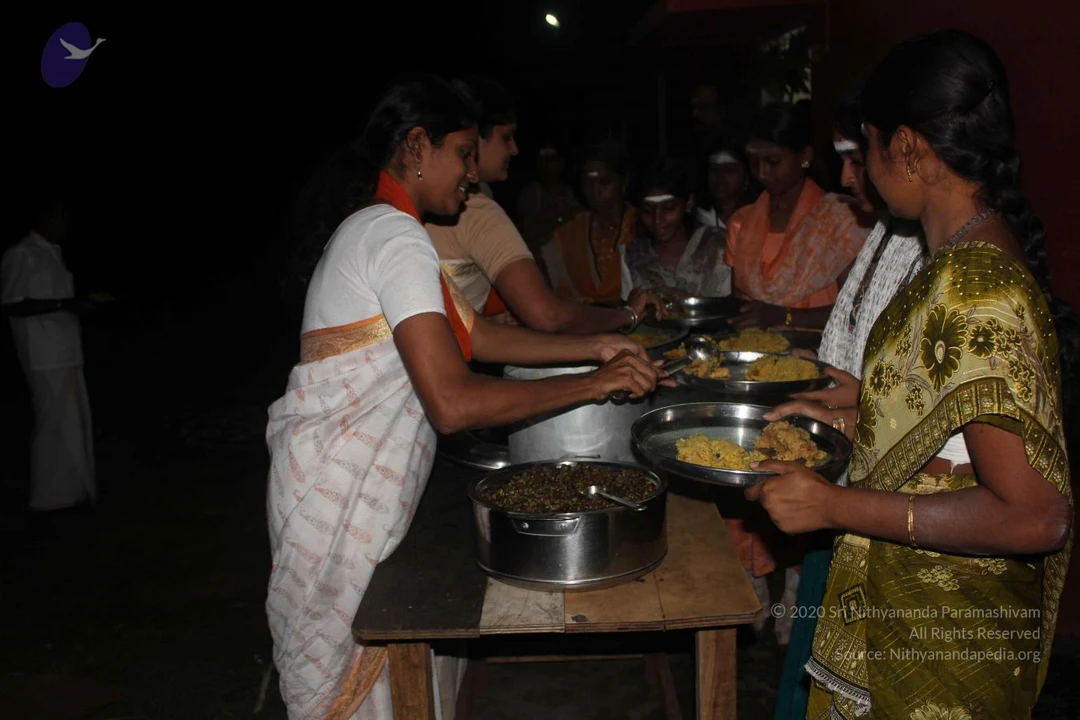
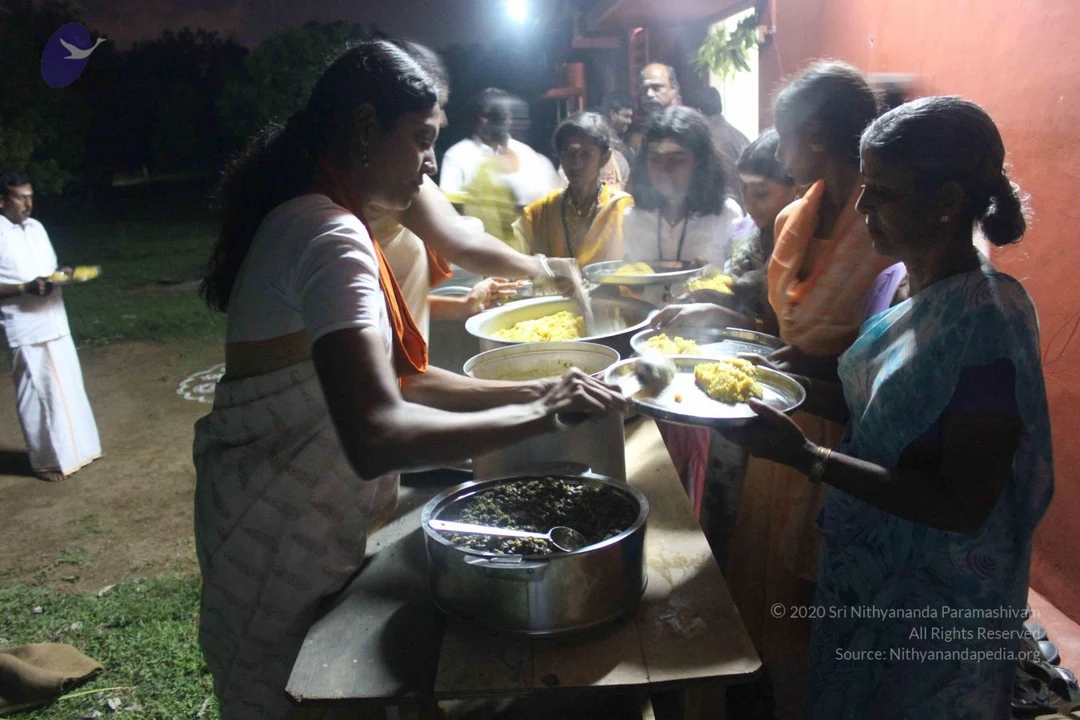
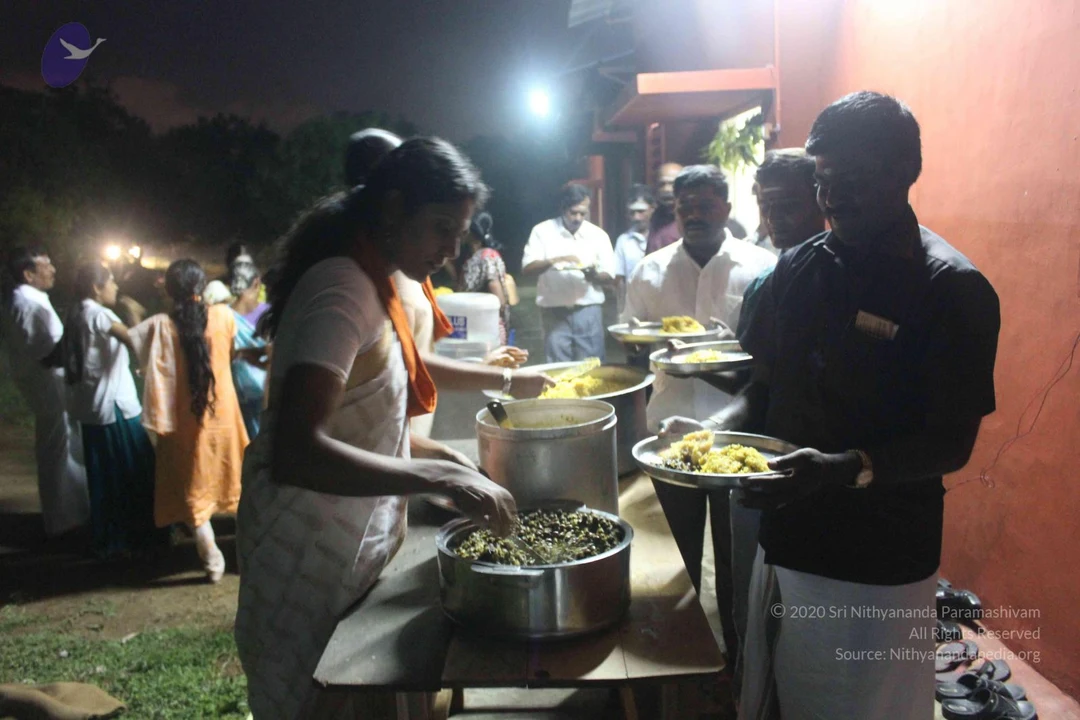
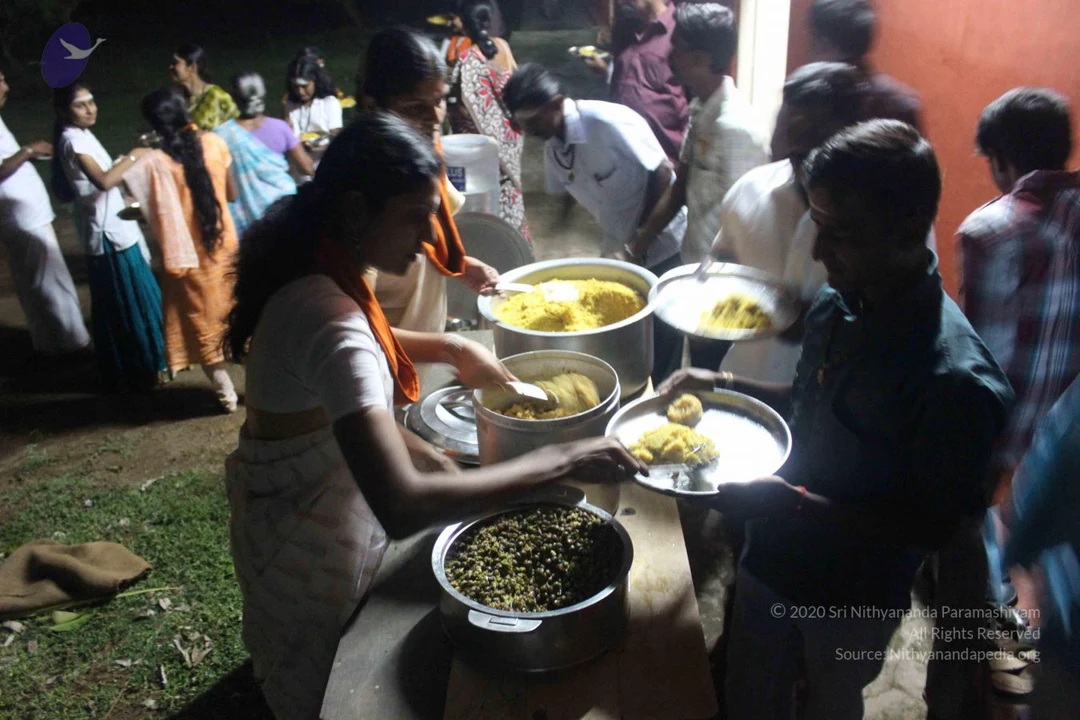
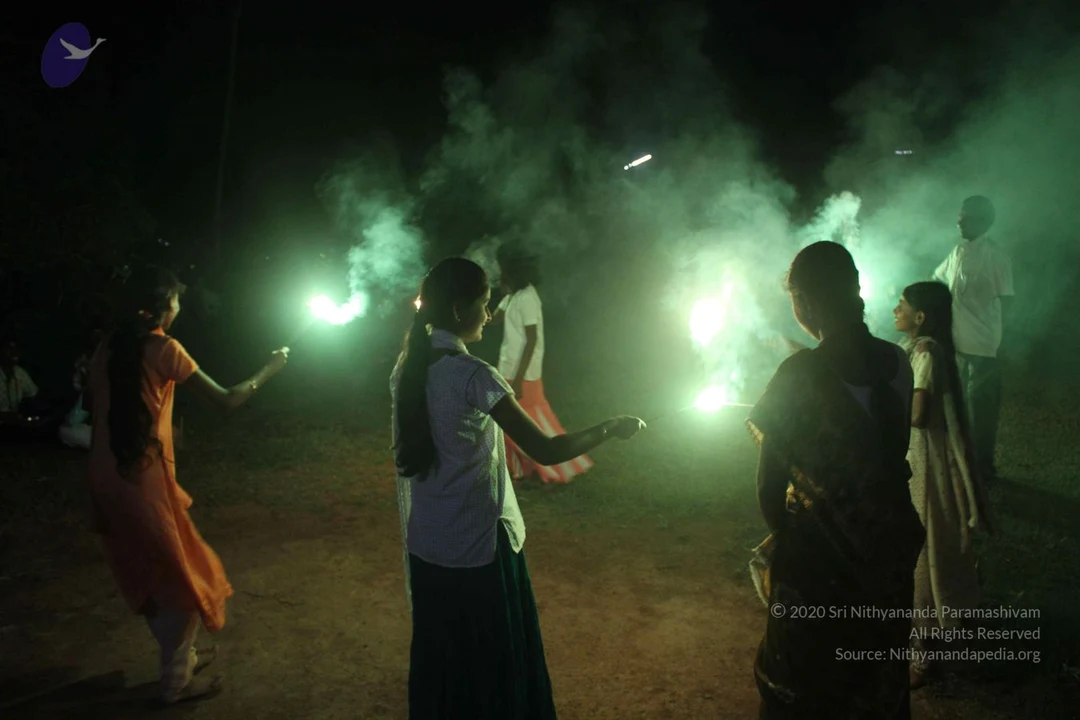
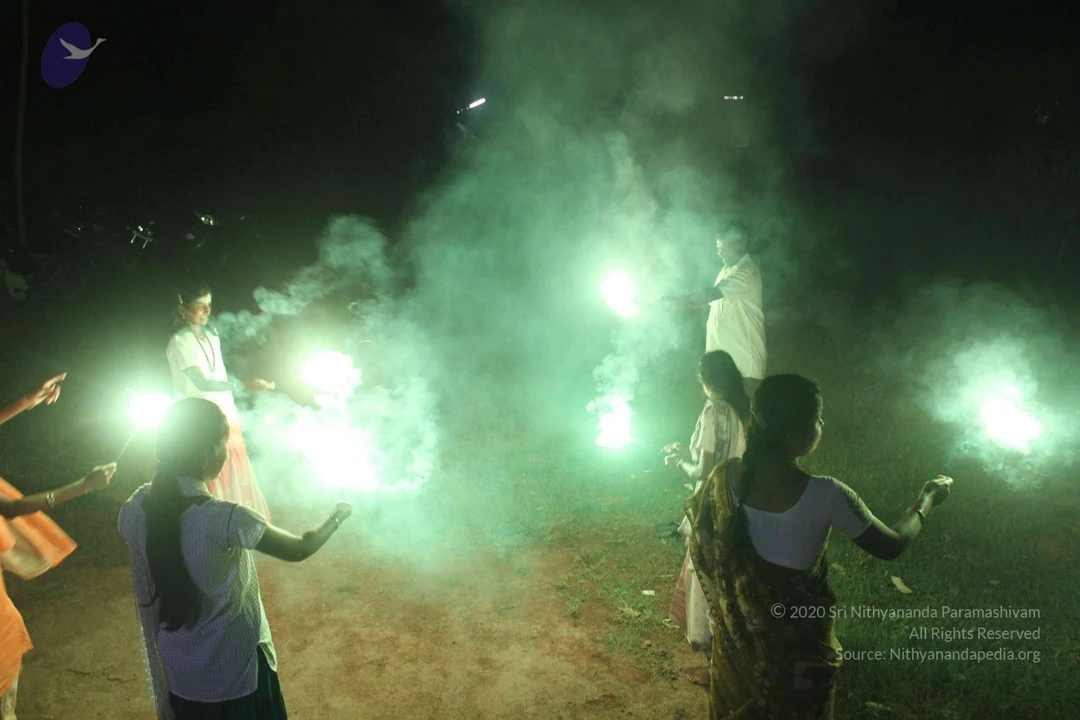
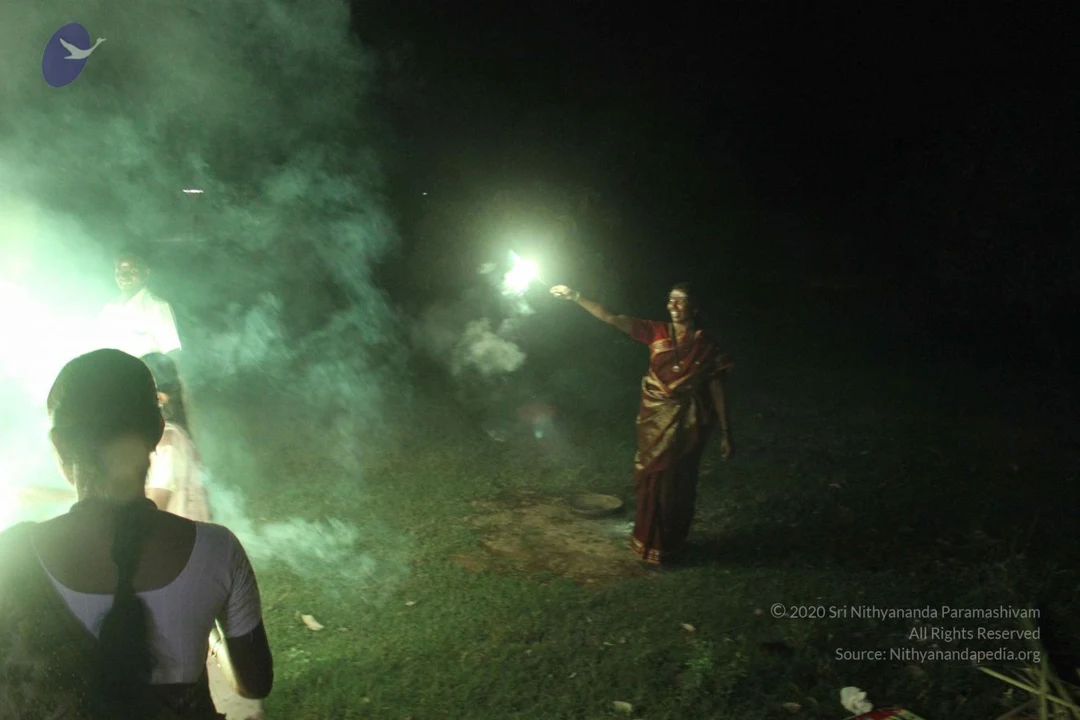
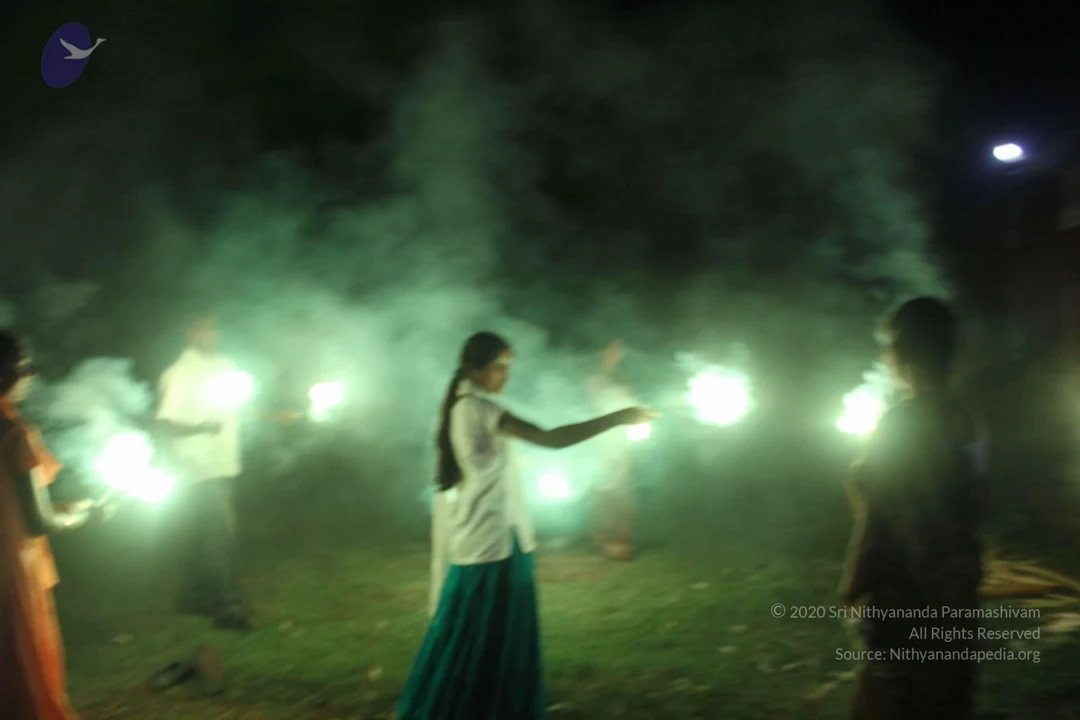
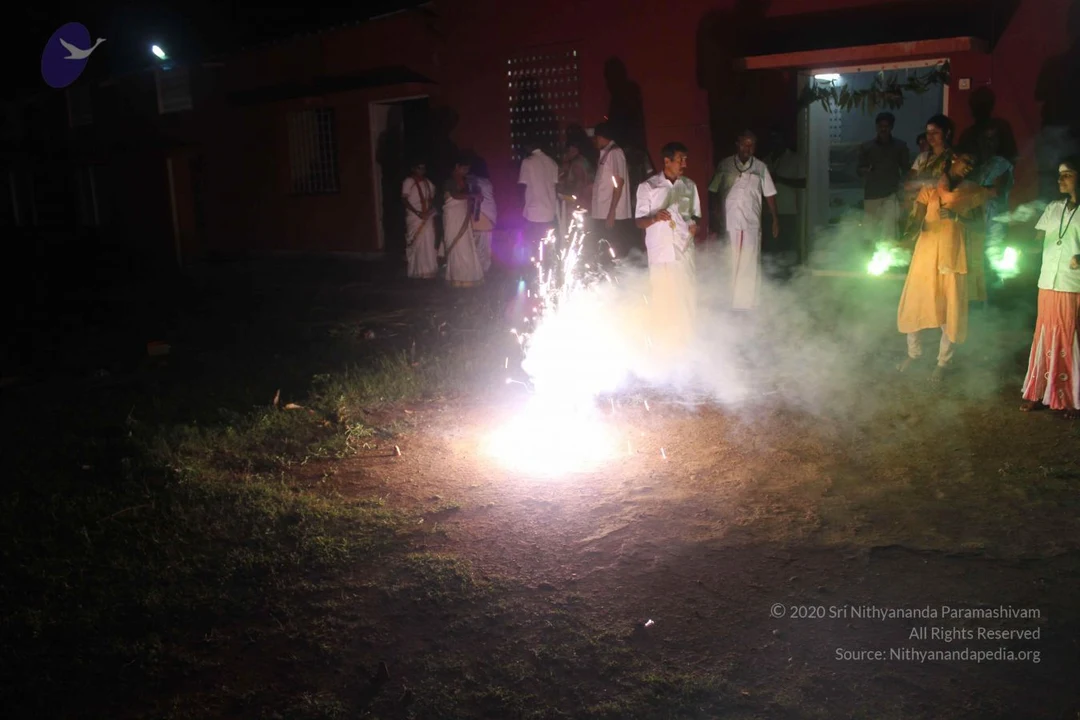
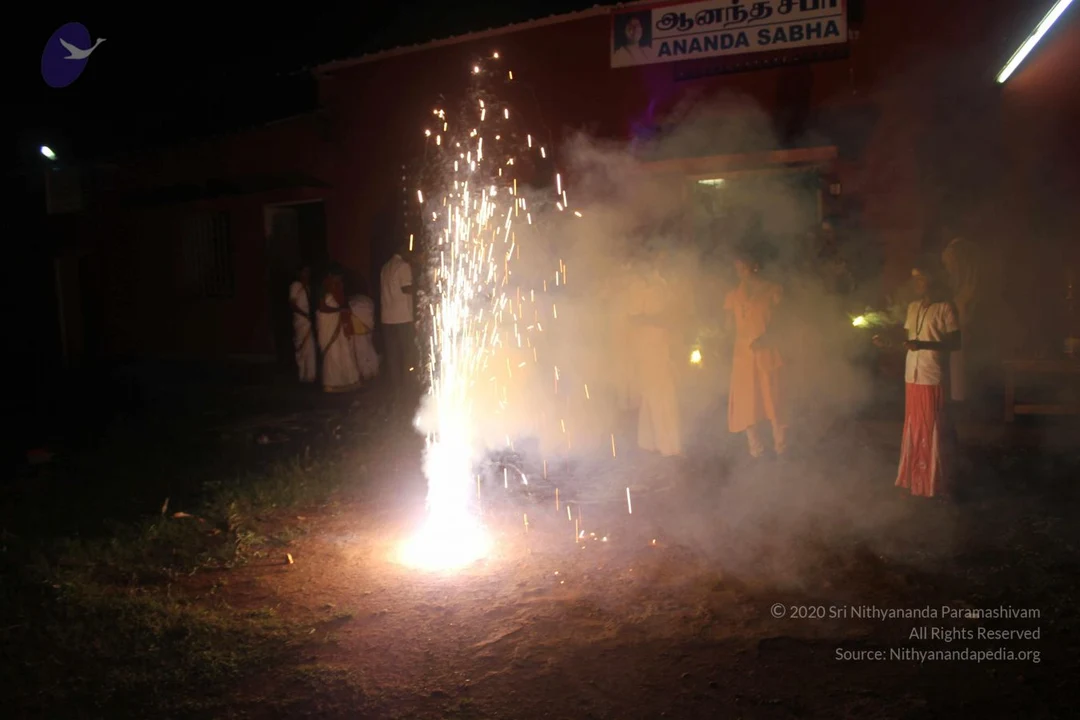
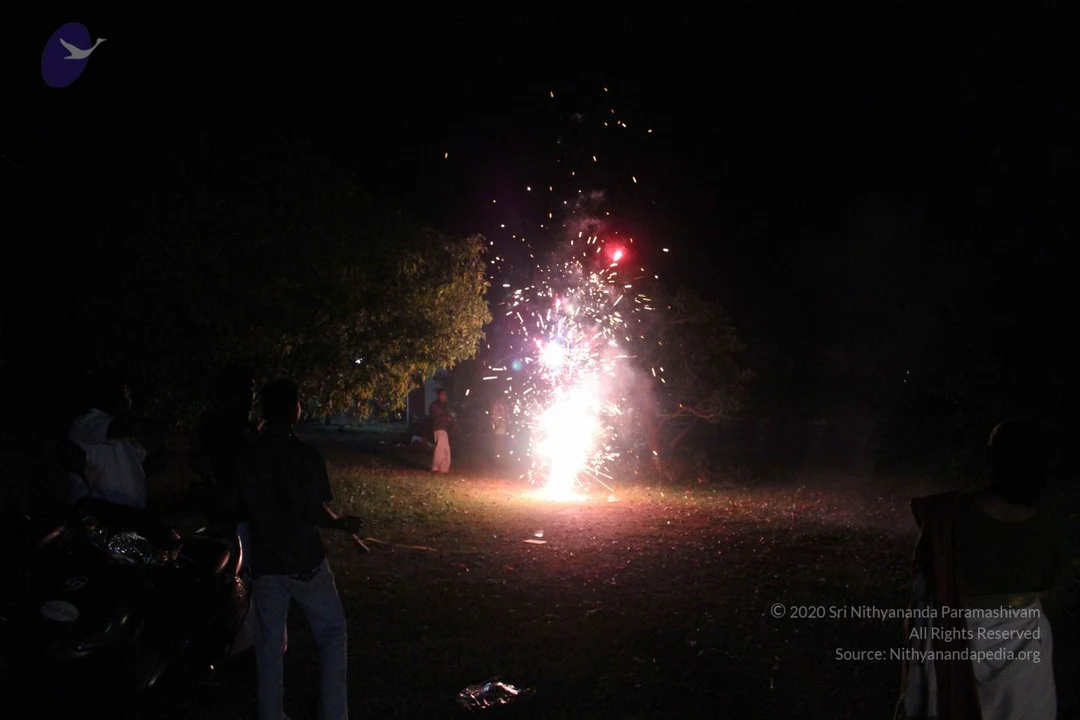
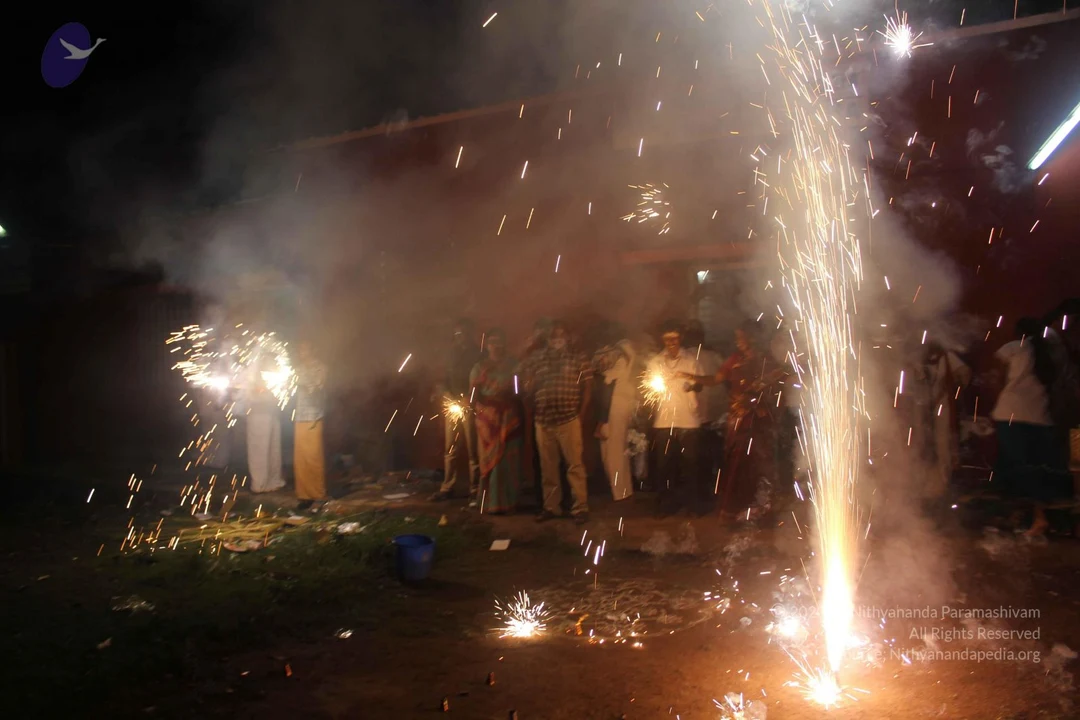
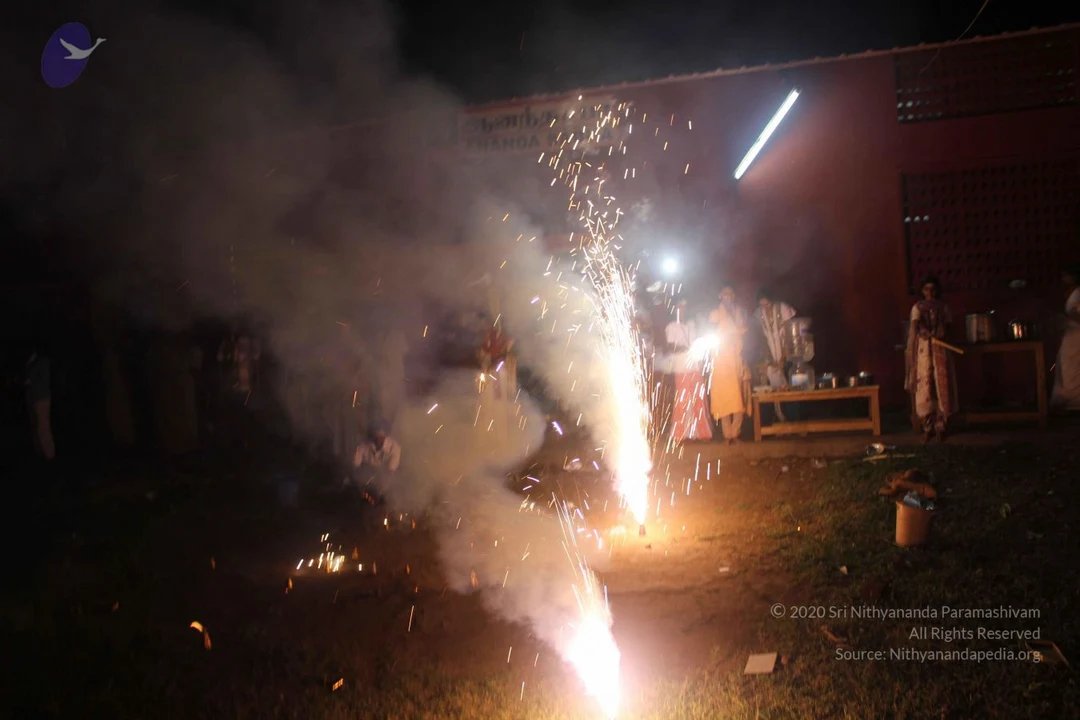
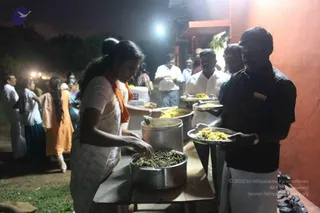
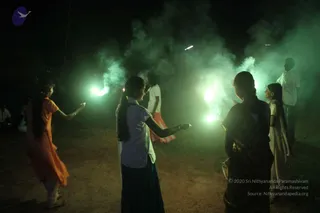
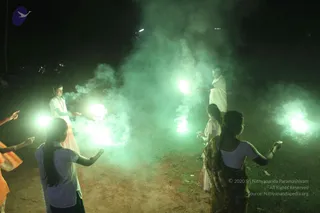
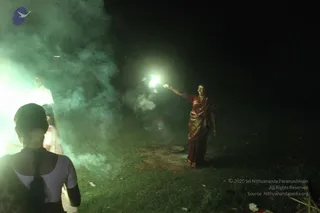
Night-time food service at an open-air ashram setting. A woman in a white sari with an orange border and orange shawl stands at a wooden table ladling food from a steel pot into a steel plate. Beside her, a woman in beige and orange serves from another pot, and young women in orange, white and green saris stand in a line holding steel plates of yellow rice and fried items. A man in white dhoti and shirt stands at the left edge. Steel pots of cooked vegetables sit on the table. The background is dark.Night-time food service outdoors beside a red-painted wall. In the foreground a woman in a white top with an orange shawl serves yellow rice from a large steel pot onto plates, with a steel bowl of dark greens and a serving spoon on the table. To the right, several women in saris and orange shawls hold steel plates out to receive the food. Behind them a man in a white shirt and white dhoti stands near a light, and a few other people are blurred in the background. A lit lamp hangs above, and grass and trees lie beyond the serving table.Night-time outdoor food service at an ashram-style courtyard beside a red-painted wall. A woman in a white sari with an orange shawl, hair in a long plait, serves from a steel pot onto a table, while a man in a black shirt and white dhoti holds a steel plate of rice. Several other people in white dhotis and white shirts stand nearby, some holding plates, with a bright floodlight and dark trees behind. Shoes are piled at the right edge.Night photo of several young people on a dirt ground holding green-glowing handheld flares that trail smoke. A girl in an orange salwar kameez stands at left, a girl in a white-collared blue-and-white checked shirt and long dark skirt holds a flare at centre, a woman in a dark sari with a braid faces right, and a younger girl in a light dress stands beside her. A man in a white shirt stands at far right and another figure in white is behind the group. No a person candidate is visibly present.Night scene on a grassy open ground where several people hold glowing green flares that release thick green smoke. A young woman in a white top and orange-pink skirt stands at left, and a person in white clothing stands at centre-right holding a flare. Two women in the foreground, one in a dark sari with a blue blouse and one in a checked blue shirt with a long braid, face the flares with arms raised. Dirt path and dark trees fill the background.Night photograph on a grassy lawn where a woman in a red and gold silk sari with a bindi holds a bright sparkler aloft in her outstretched right arm. Green-tinted smoke drifts across the left of the frame from fireworks or flares. In the foreground a person with hair pulled back in a dark top is seen from behind, and a second figure in pale clothing stands partly obscured in the smoke at left. Small debris and a few scattered items lie on the grass near the bottom right.

1-Temple

13 photosSource gallery
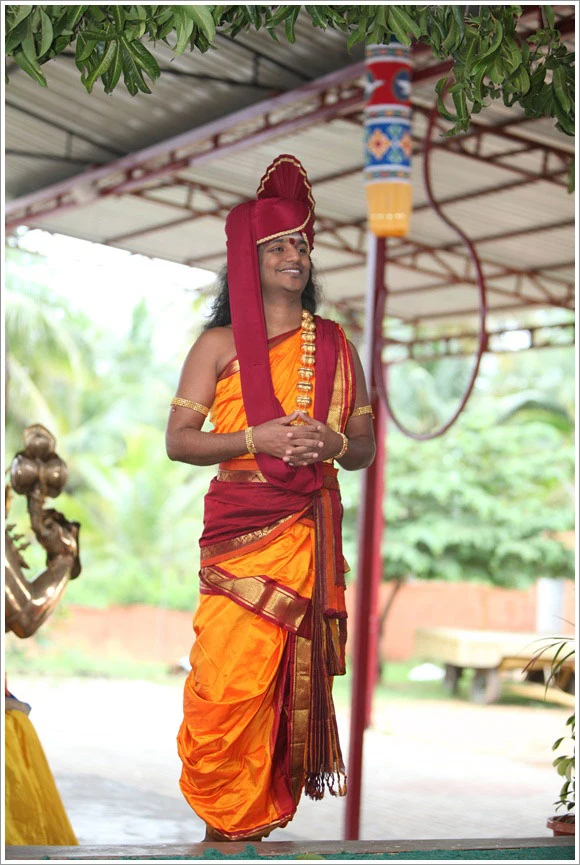
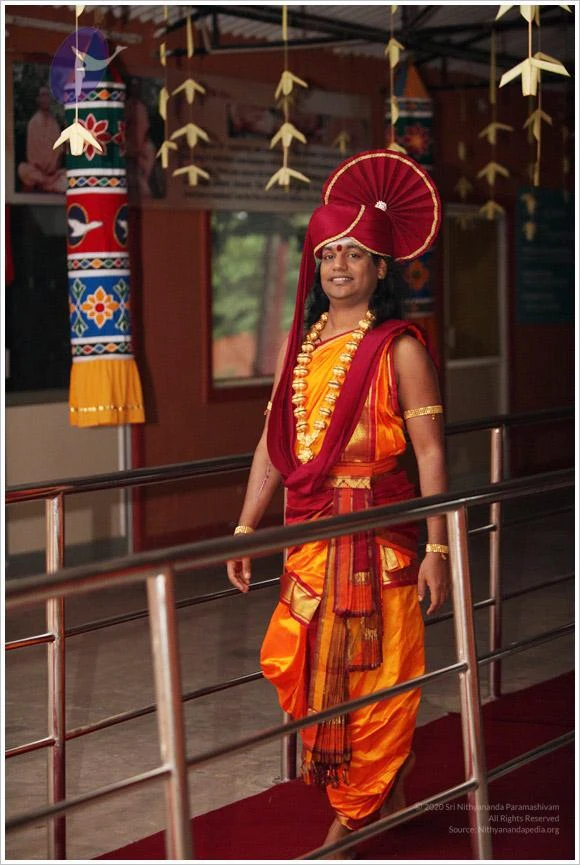
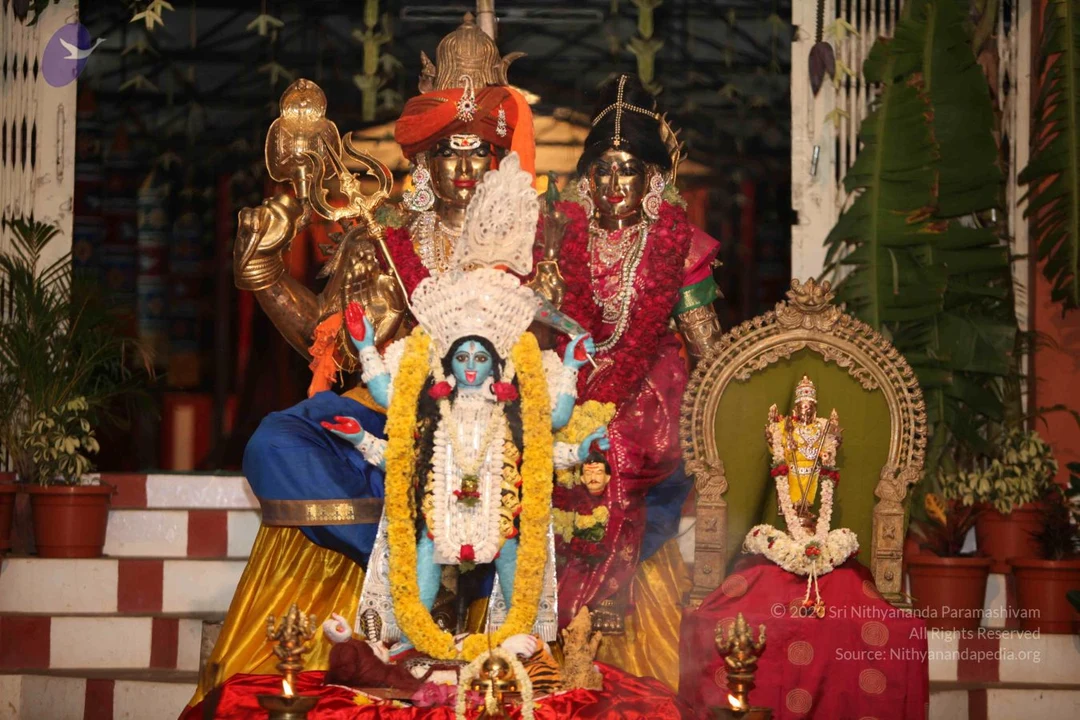
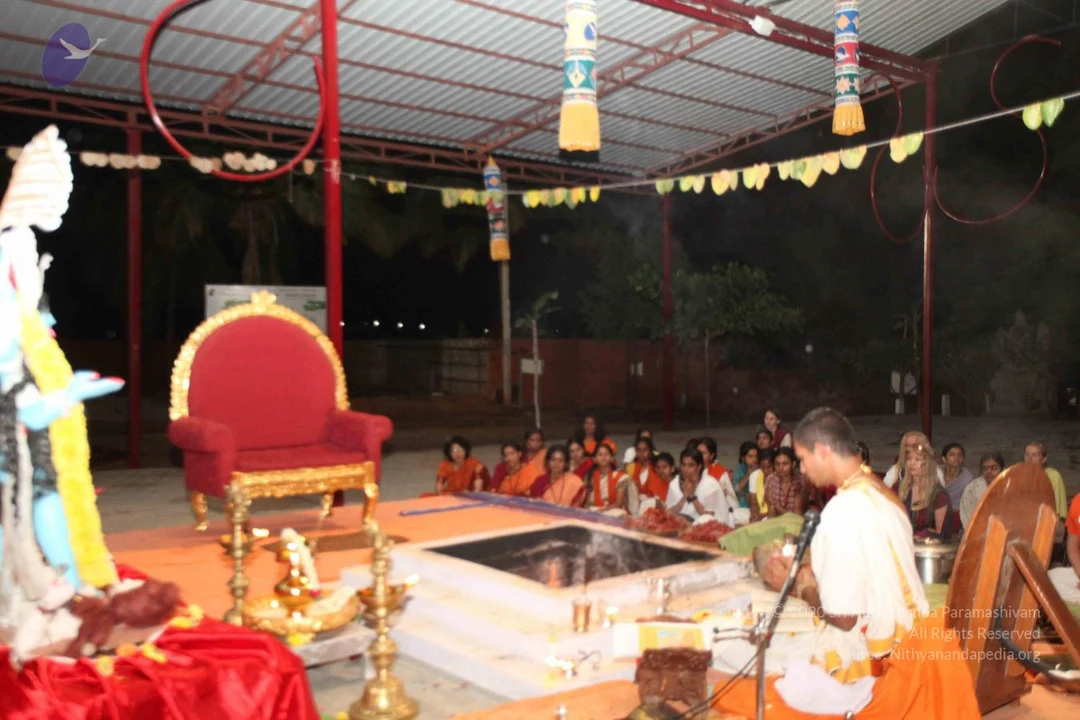
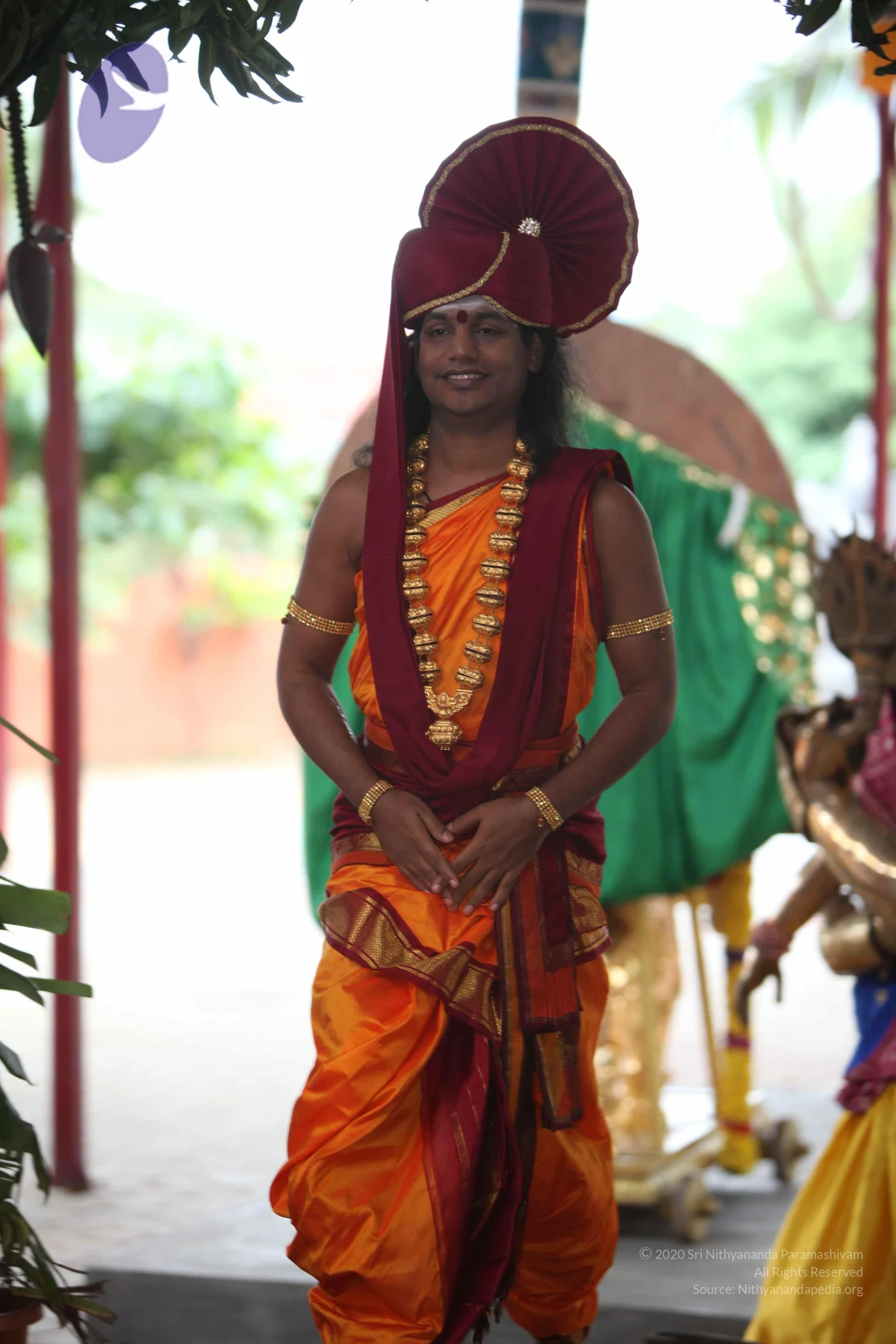
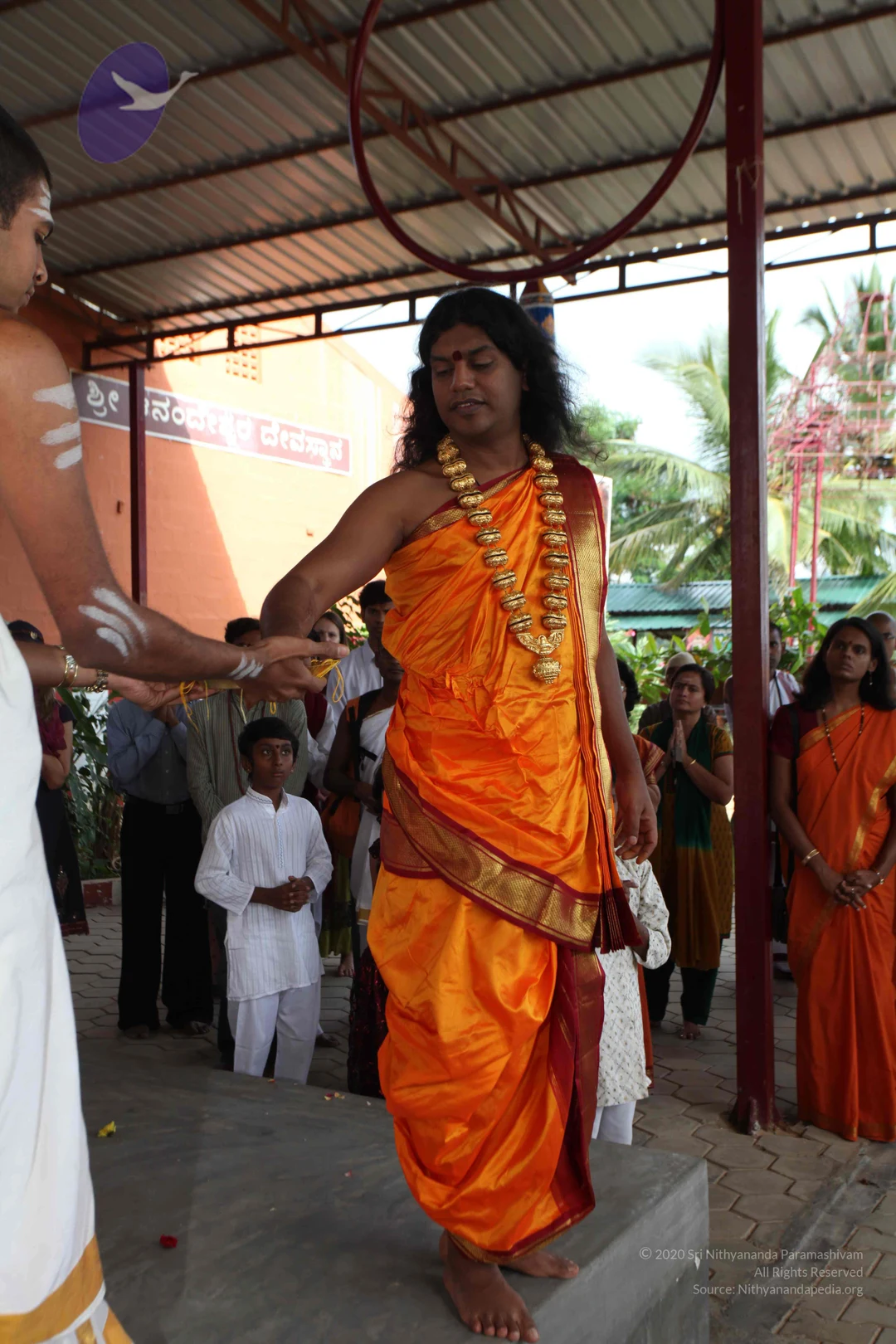
A photograph of a deity murti standing on a gilded golden base with a carved serpent hood at its front. The figure wears an orange shawl over a jewelled silver-and-white bodice with multicoloured stone ornaments, a crown on its head, and a red-and-gold dhoti. It is densely garlanded with bands of yellow marigold, red rose petals and white jasmine-like flowers, with green leaves and a green silk cloth behind. The setting suggests a temple or festival decoration. No people are visible.A metal deity murti stands within a dense arch of marigold and rose garlands in yellow, white, red and purple. The figure wears an orange silk shawl over a red and gold patterned garment, with an ornate jewelled necklace and a tall gold crown. Its hands are raised in a blessing pose. Beside it rests a gold peacock-shaped and serpent-shaped ornamental vessel. A green silk drape hangs behind the arch and a pink wall with a partial signboard stands in the background. No living people are visible.A metal deity murti of a female form stands within a dense arrangement of garlands, with bands of yellow marigold, red rose petals and white jasmine-like flowers curving around it. The figure wears an ornate gold crown with green and red stones, an orange shawl draped over the shoulders, a red and gold patterned sari, and a heavily jewelled necklace with earrings. Its hands are raised in a gesture of blessing and offering, and a small metal bird figure sits at the left side among the flowers. Petals are scattered at its feet. This is a decorated deity display rather than a person.A temple shrine in an ornate golden arch framed by a teal curtain. Two large painted deity murti stand side by side, the left with four arms holding a trident and a drum-like object, both wearing crowns and garlands of red and white flowers and gold necklaces, draped in orange and magenta cloth. Below them a seated figure, partly covered by a heavy garland of yellow and red flowers, sits on an orange cloth. Brass oil lamps stand on either side, and a small statue of a yellow-robed figure stands in a niche on the right. No living people are visible.Photograph of a temple sanctum with two large metallic deity murtis seated on a raised dais before teal satin drapes and a gold-framed arch. The left figure holds a trident and wears a tall crown, rudraksha-like jewellery, and a magenta and orange skirt; the right figure wears a green blouse and layered gold necklaces. Both are garlanded with red, white and yellow flower strands. In front, a smaller seated white marble figure in a yellow turban and yellow robe with a rudraksha mala sits beside an offering arrangement of a kalasha-like object draped in orange cloth and a red and gold cloth. Brass oil lamps stand in the foreground. No living people are visible.A smiling man in a red and gold turban with a central jewel stands with palms pressed together in anjali mudra. He wears an orange silk garment with a maroon sash draped over his shoulder, layered gold necklaces, gold armlets and bangles. A green draped canopy with gold trim and a gold-painted ratha/chariot structure with garlands stand behind him under a shaded colonnade.

2-BGSatsang

15 photosSource gallery
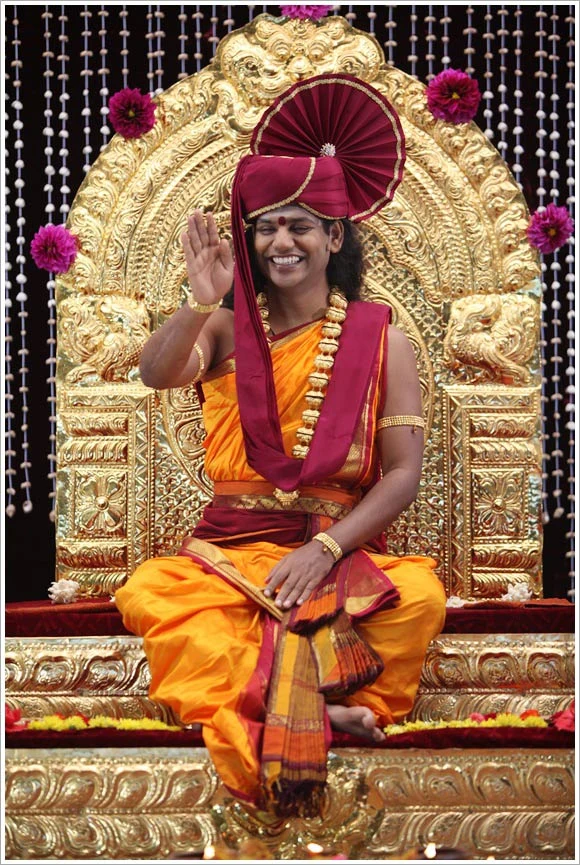
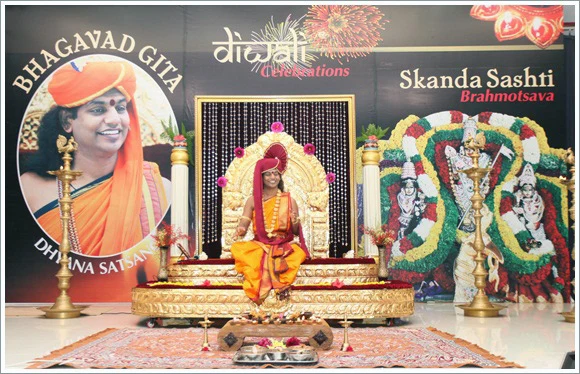
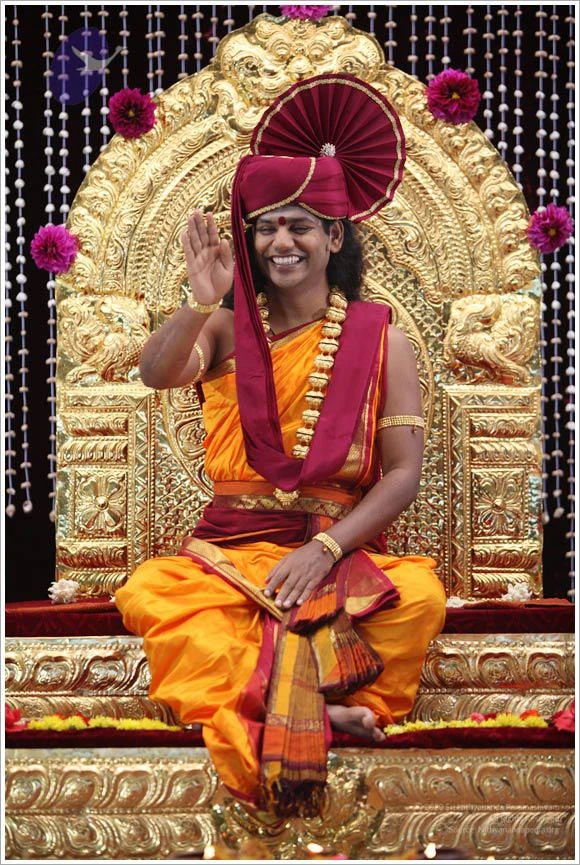
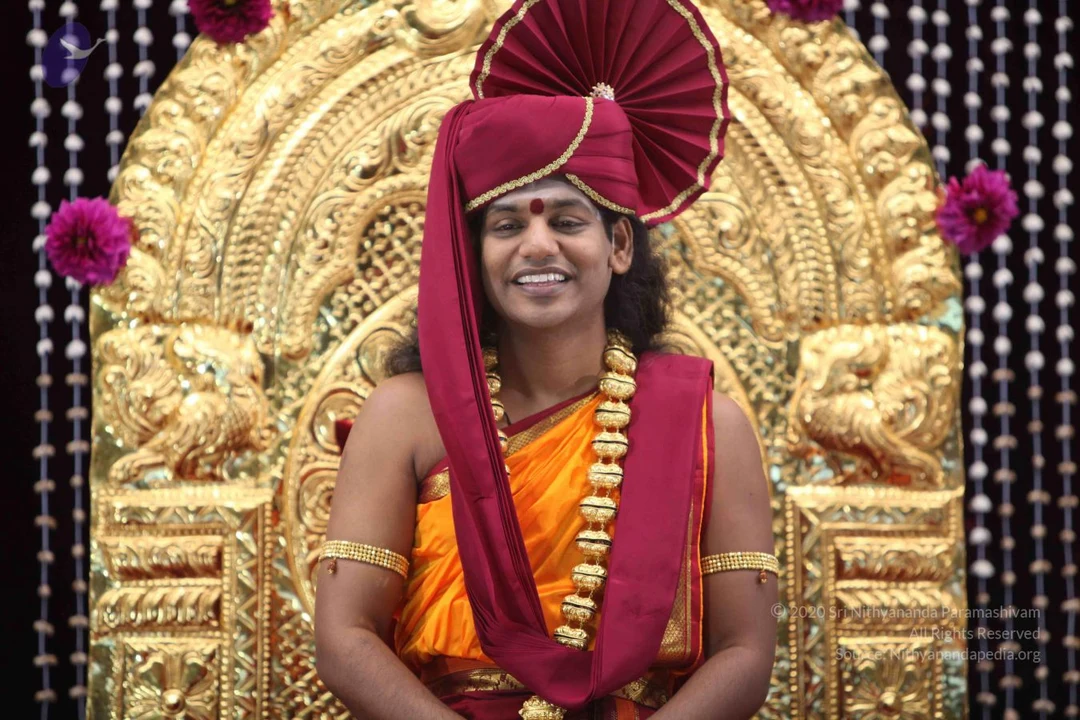
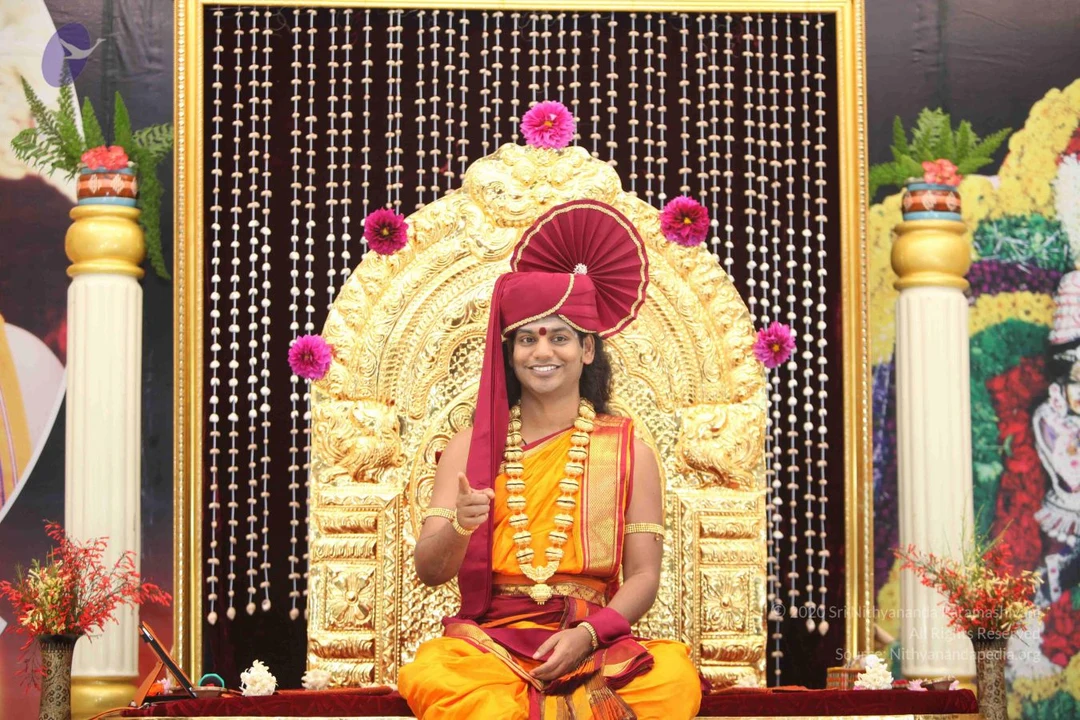
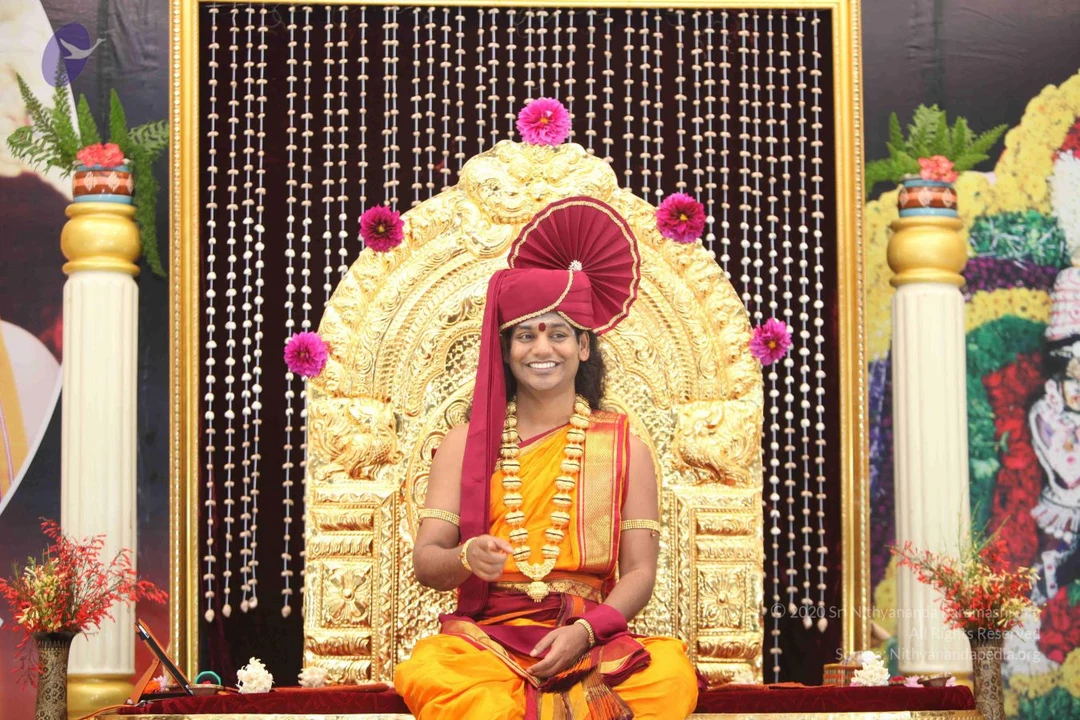
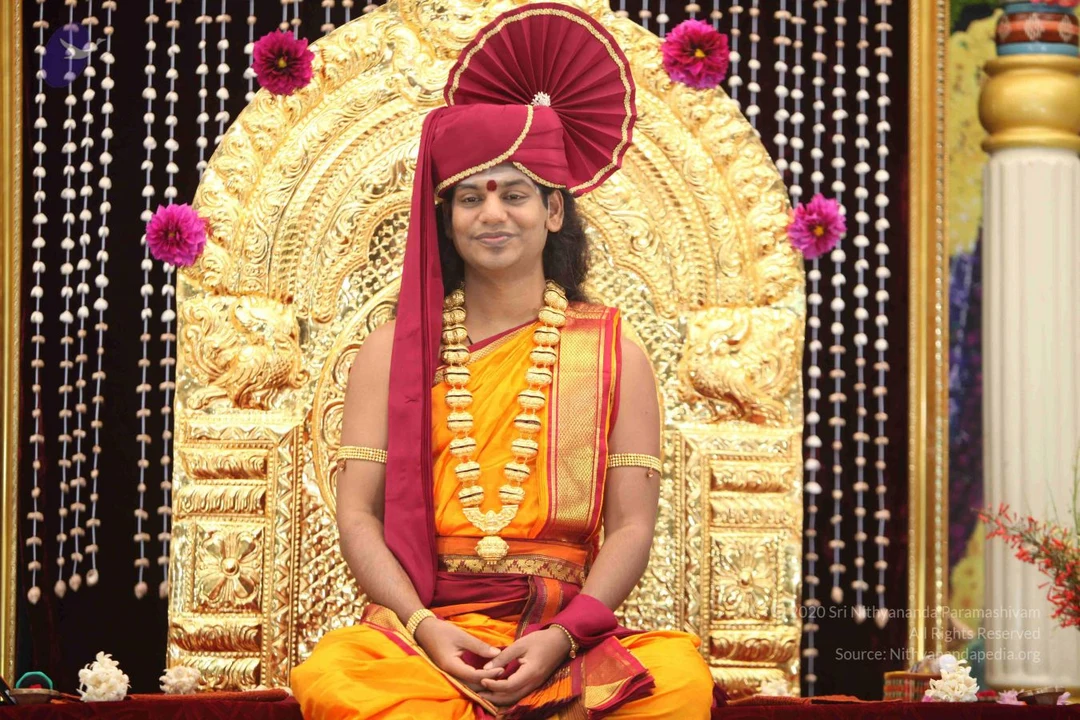
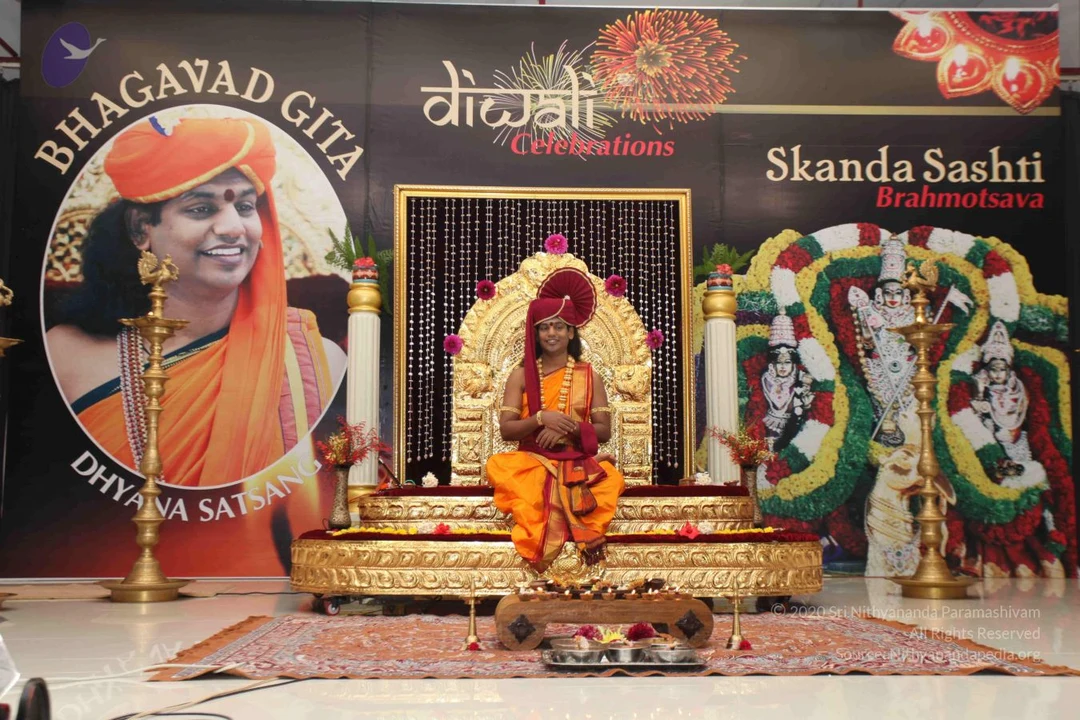
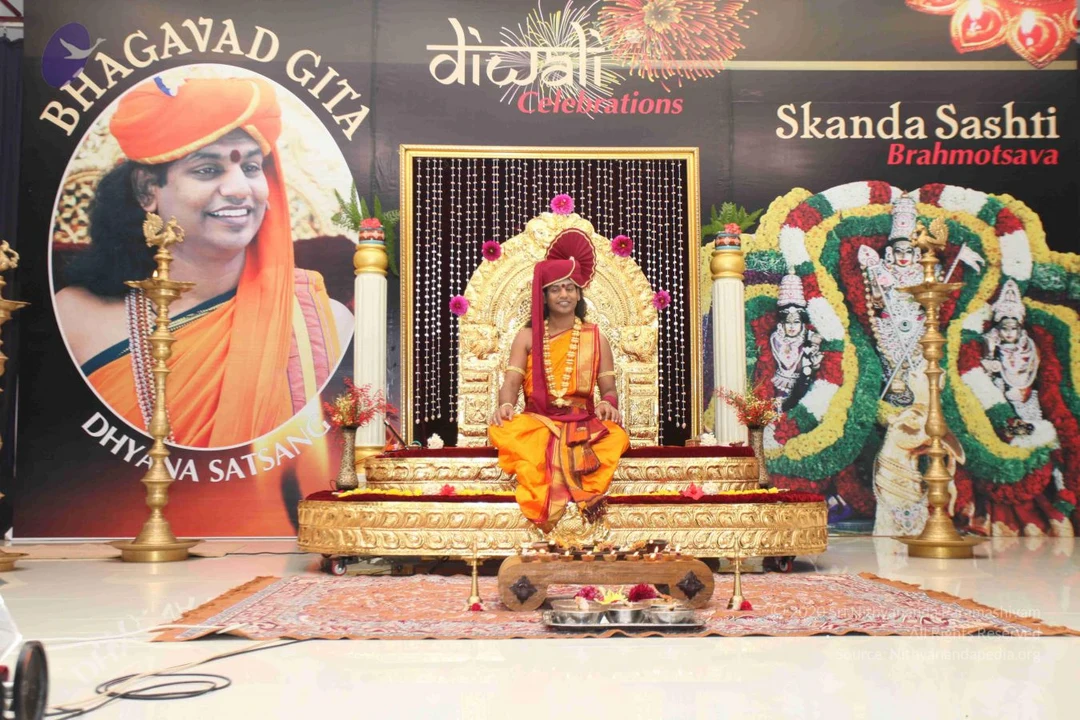
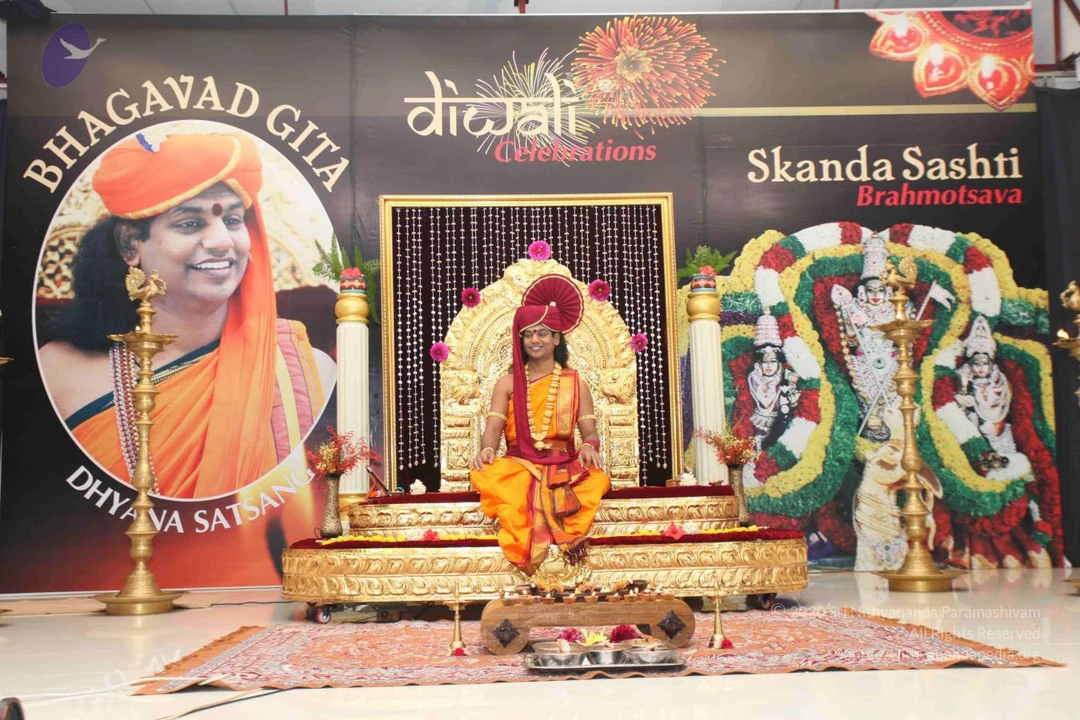
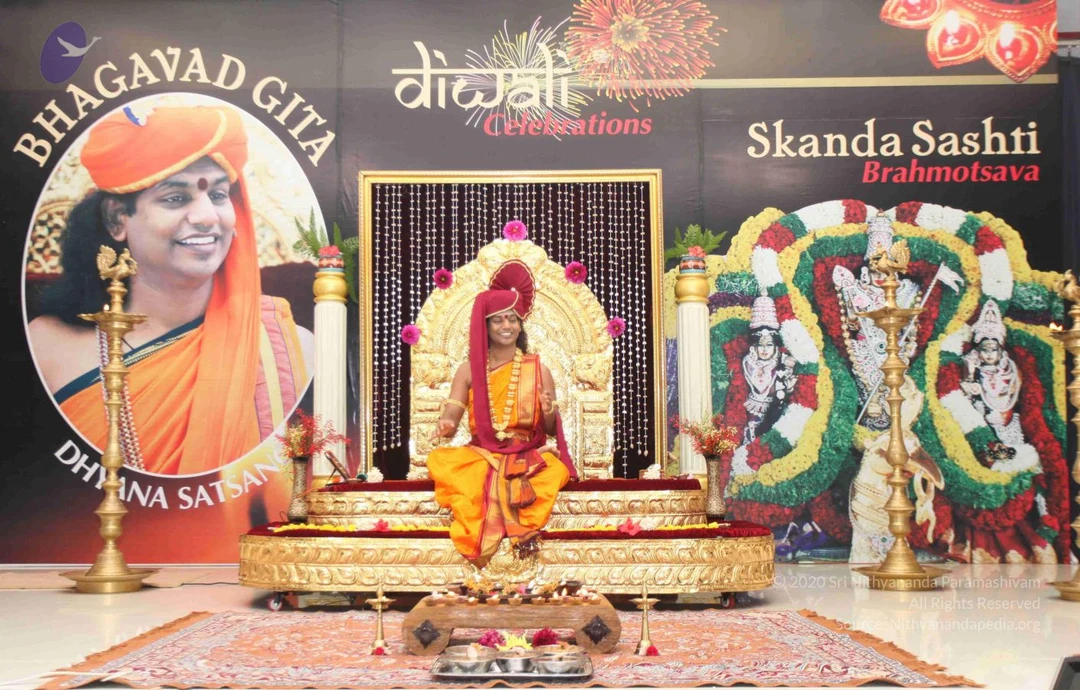
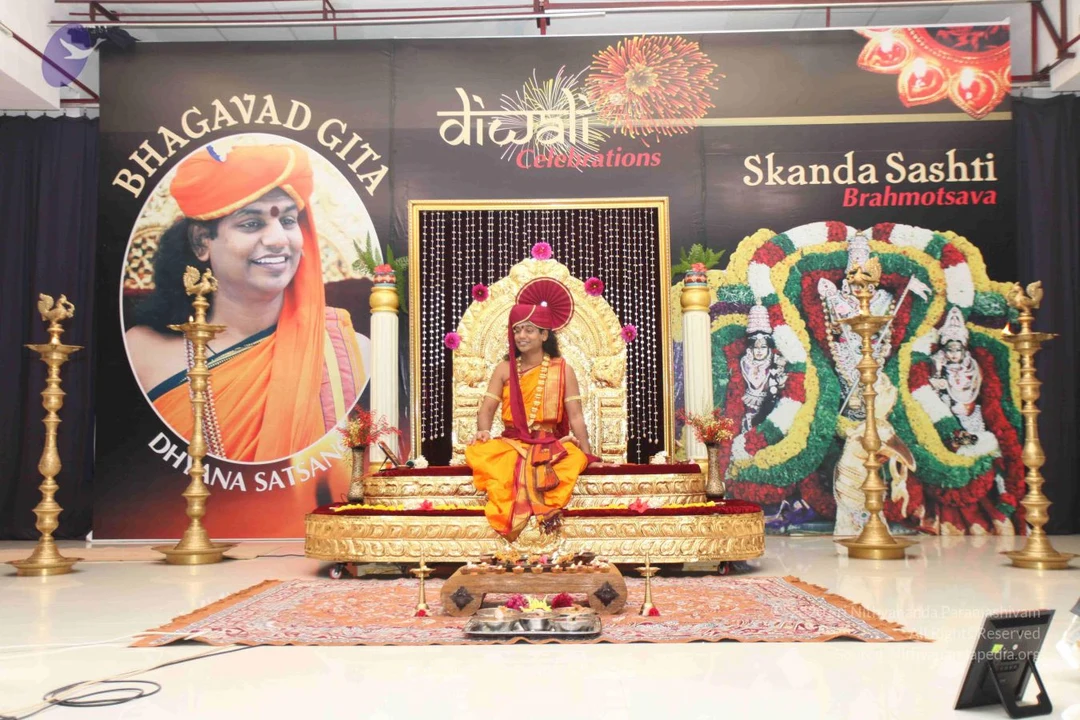
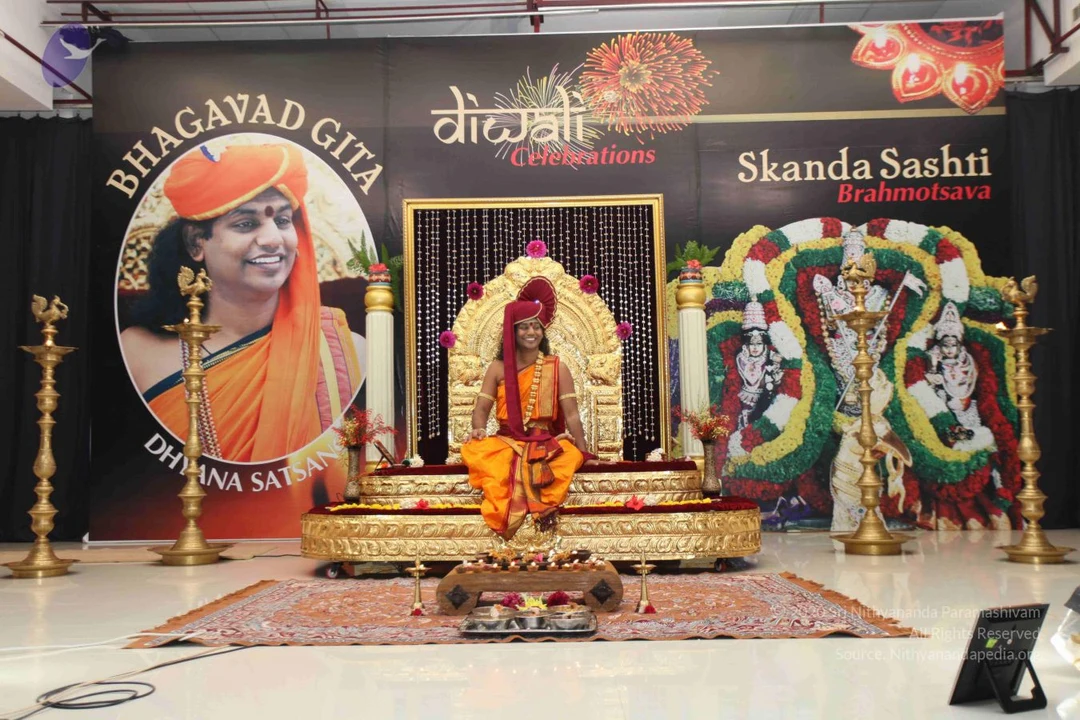
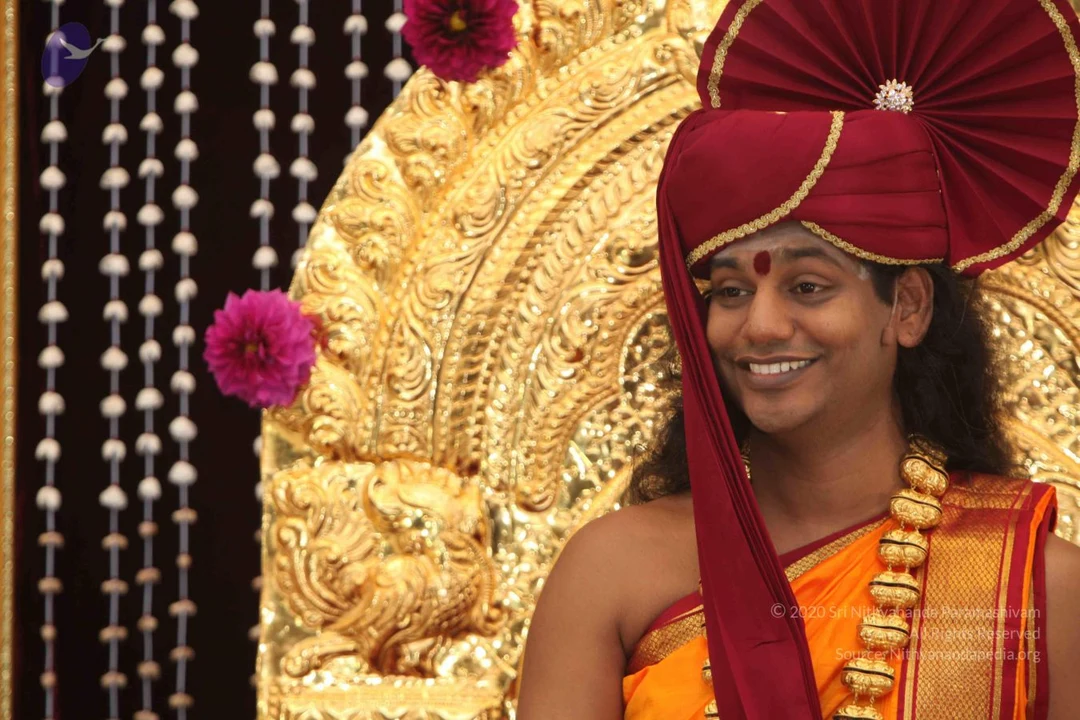
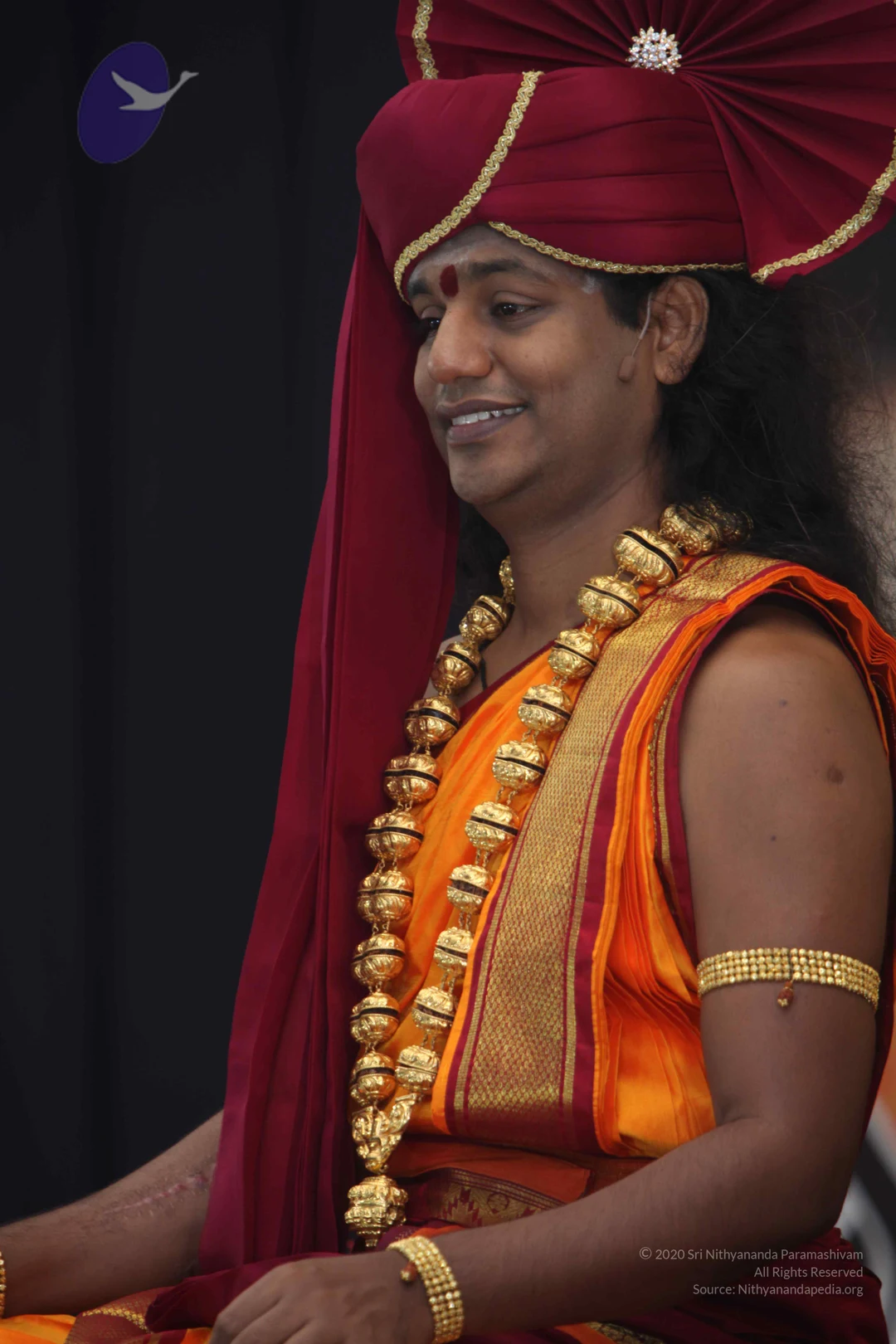
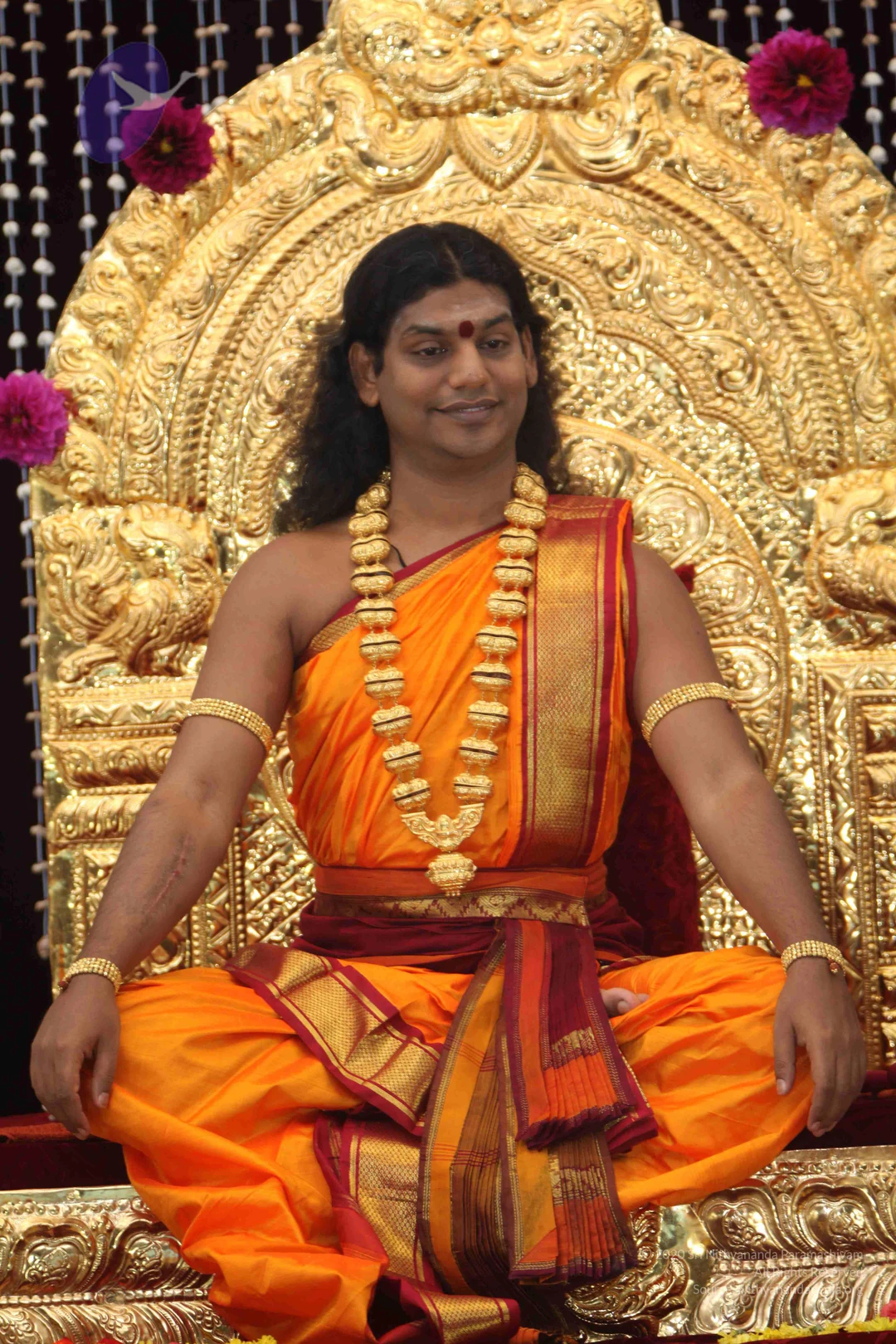
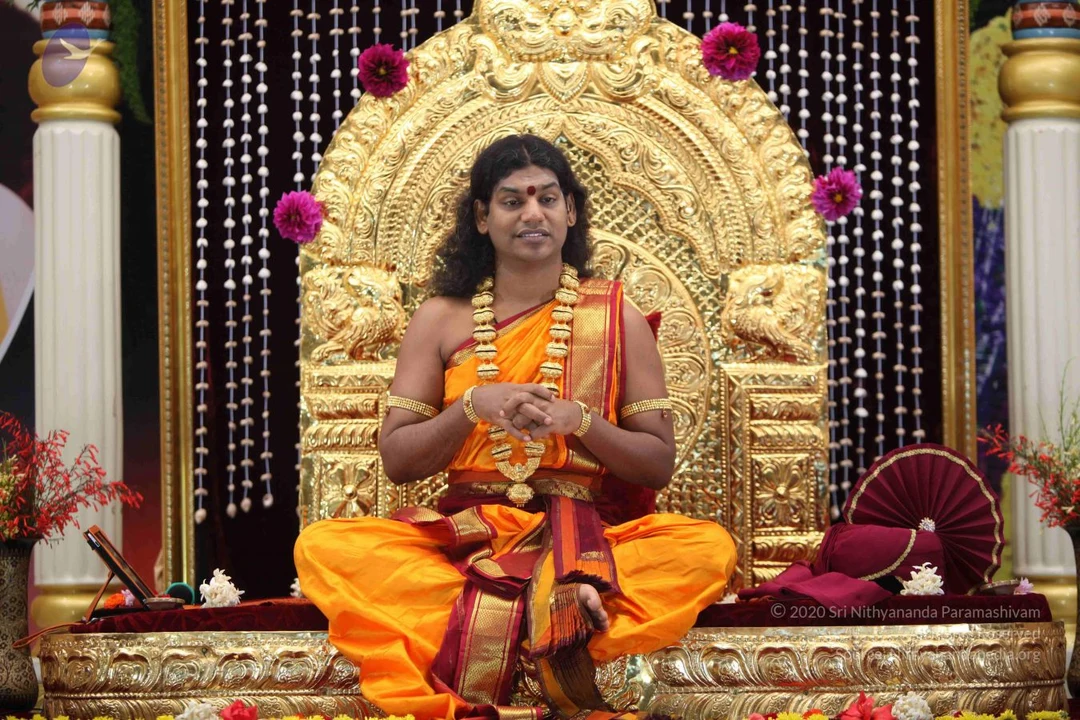
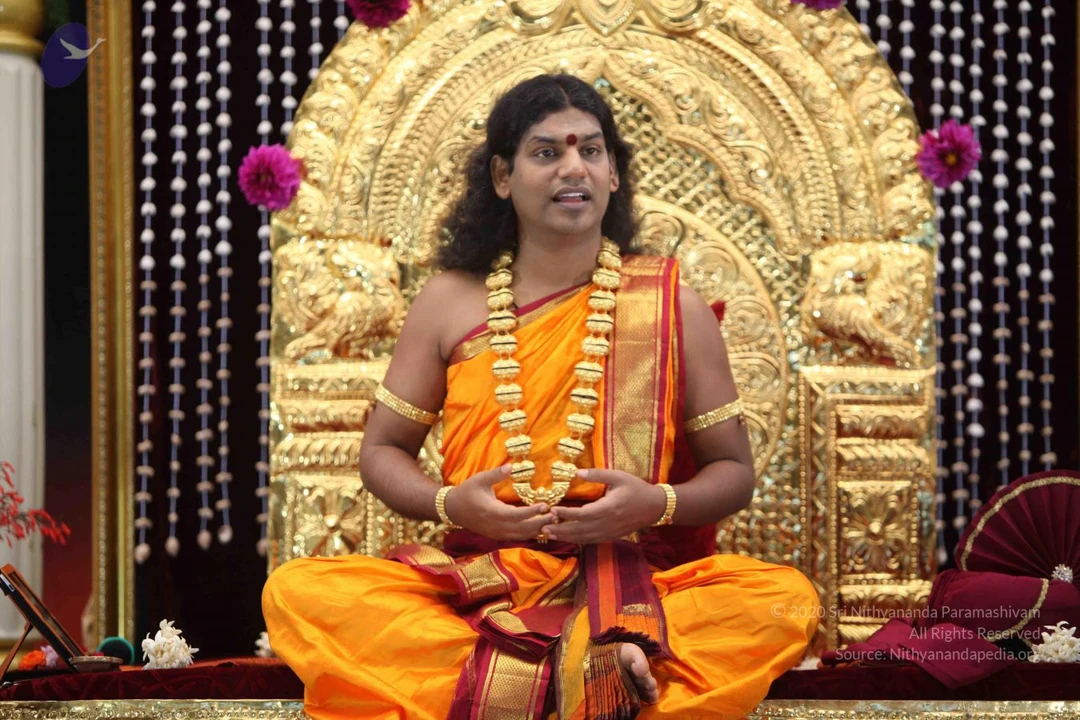
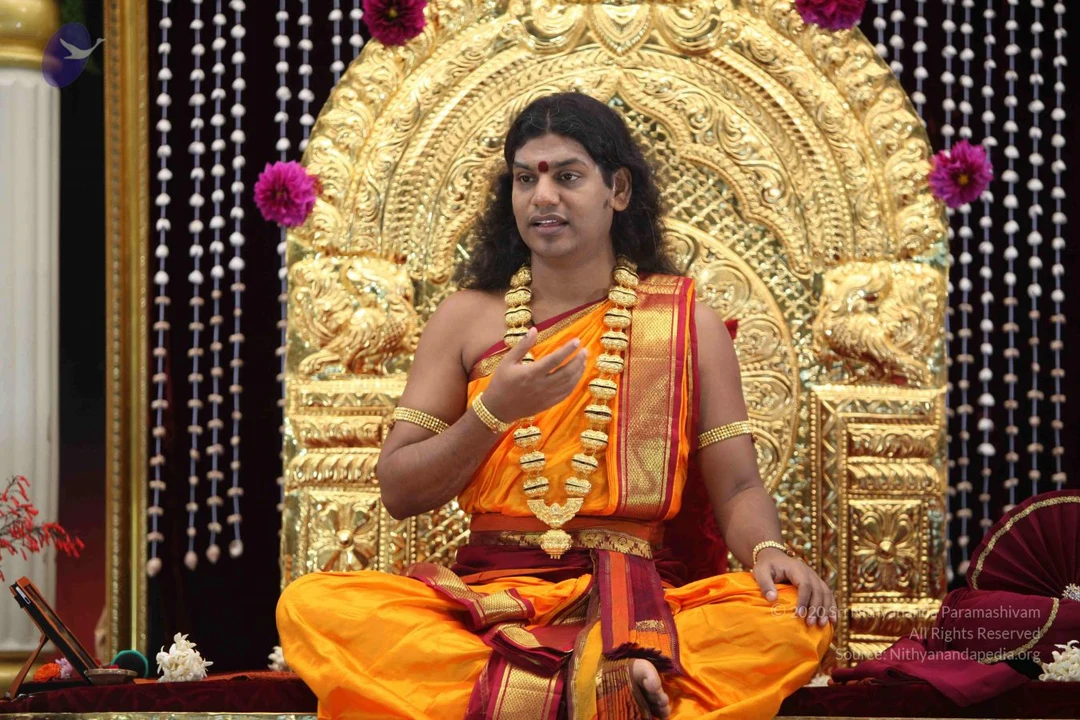
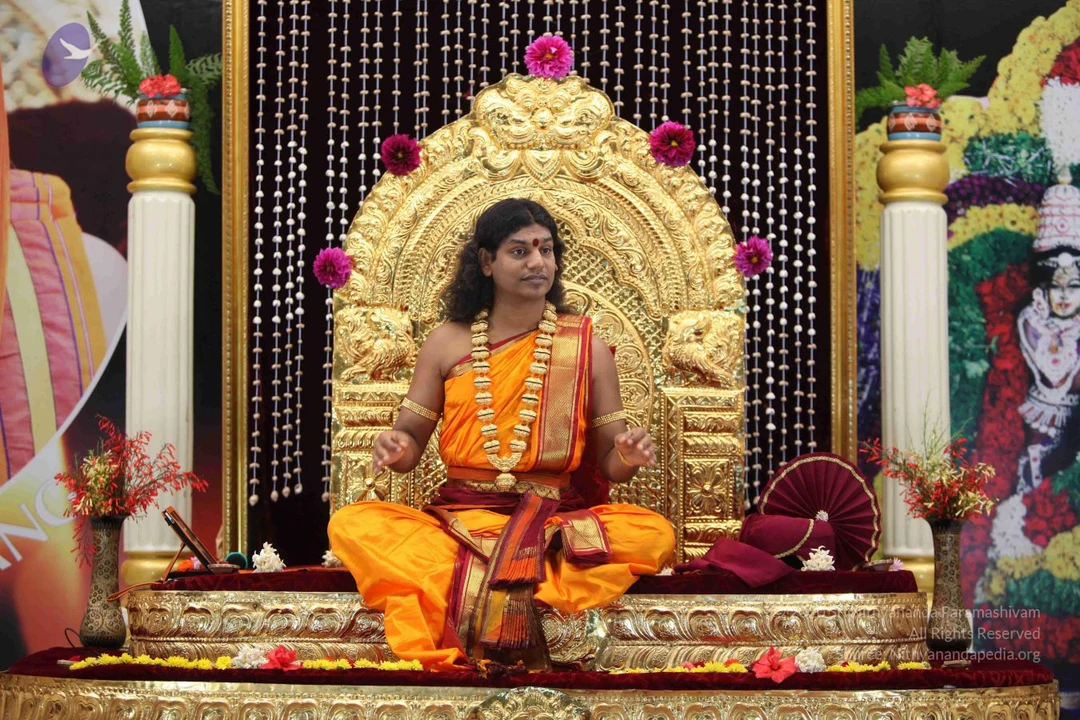
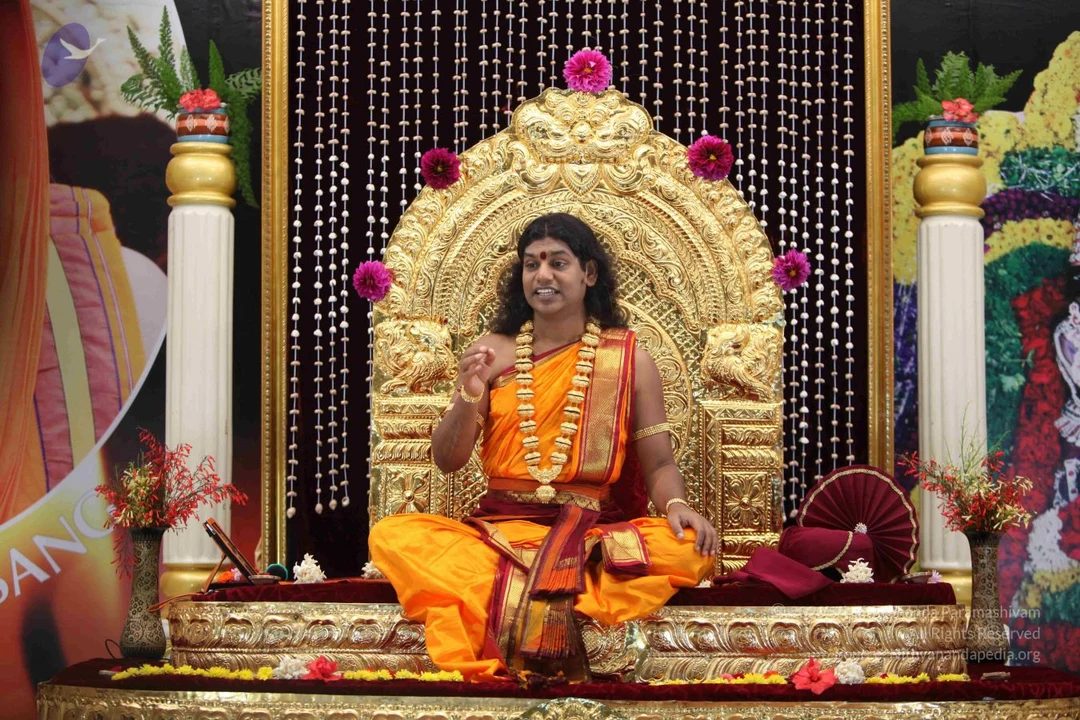
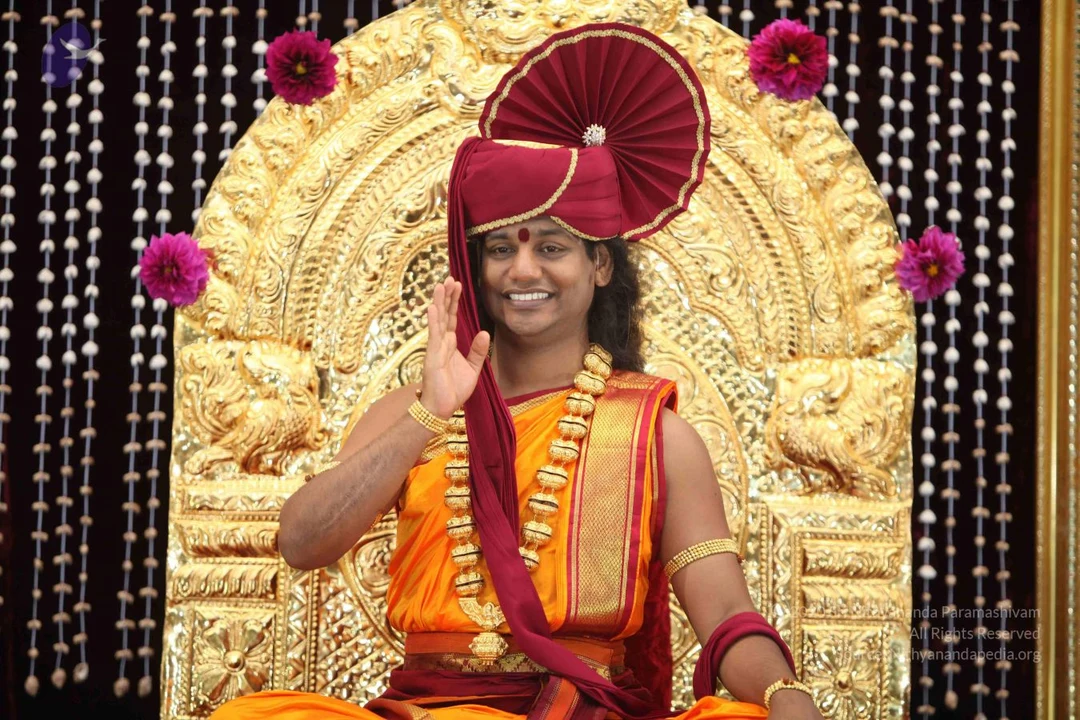
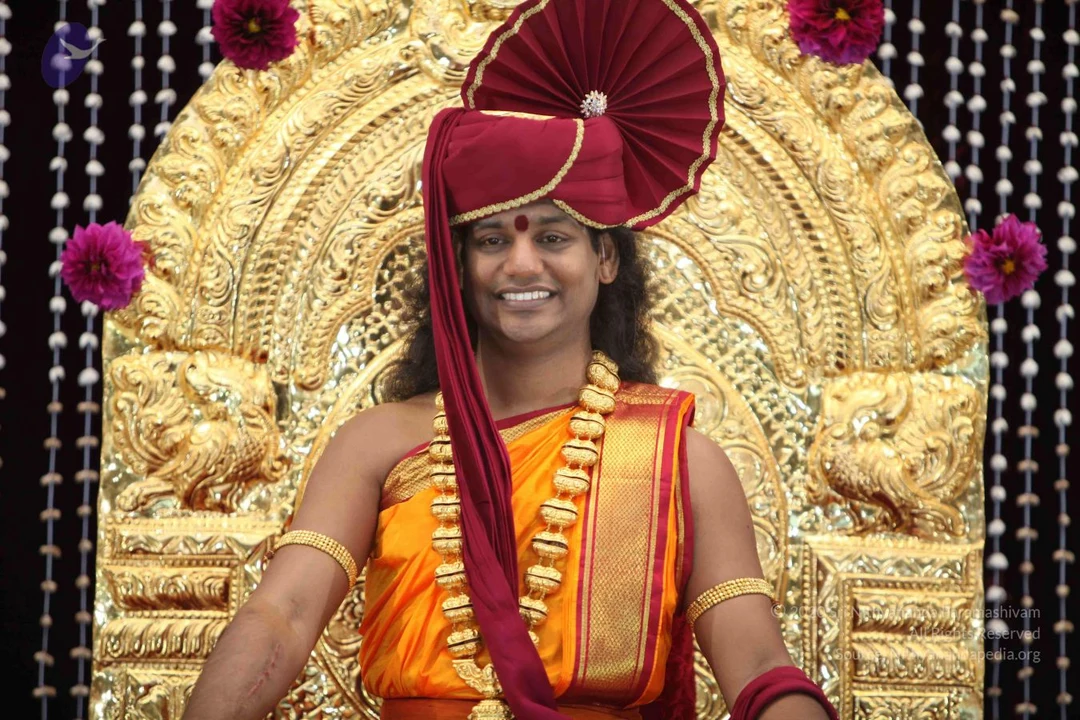
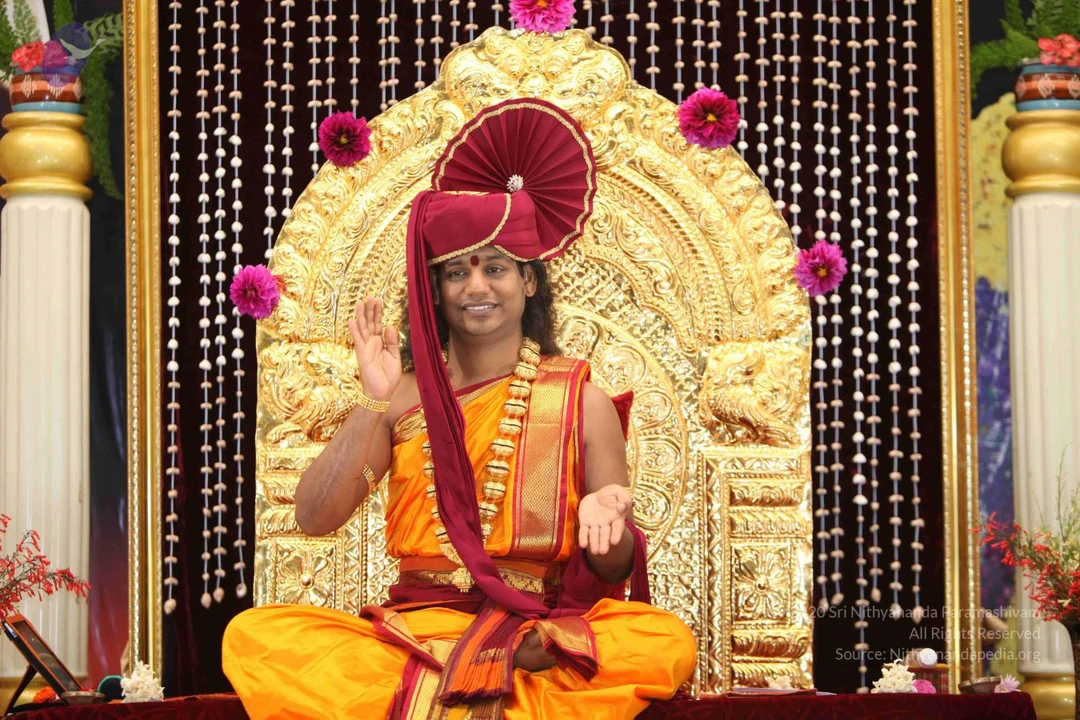
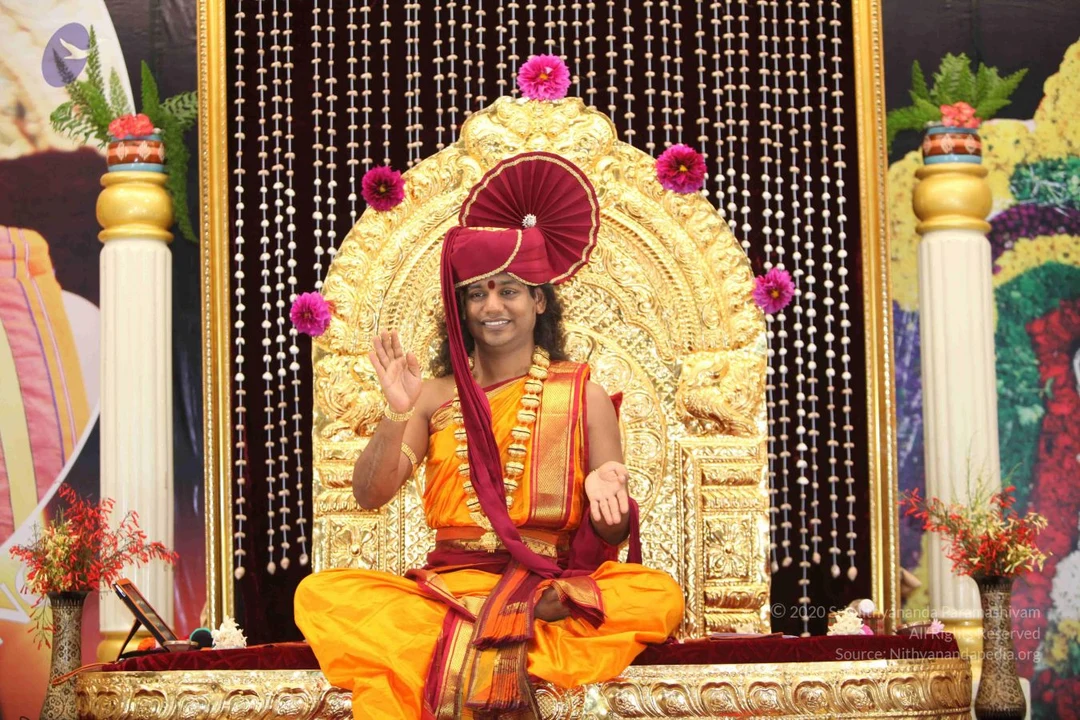
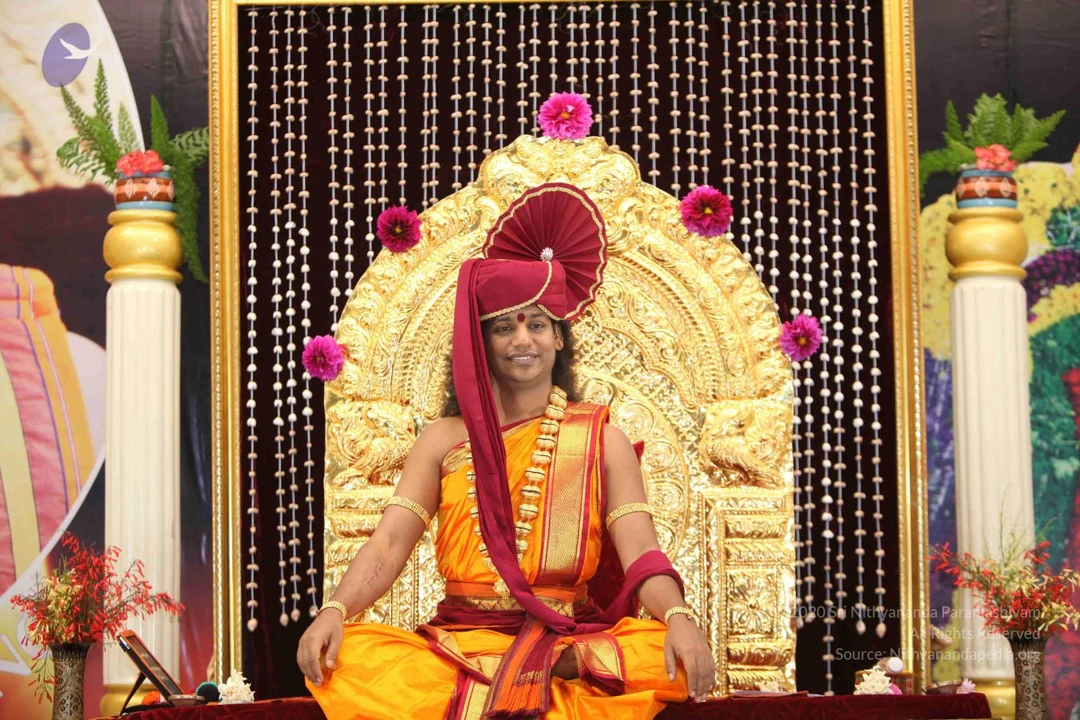
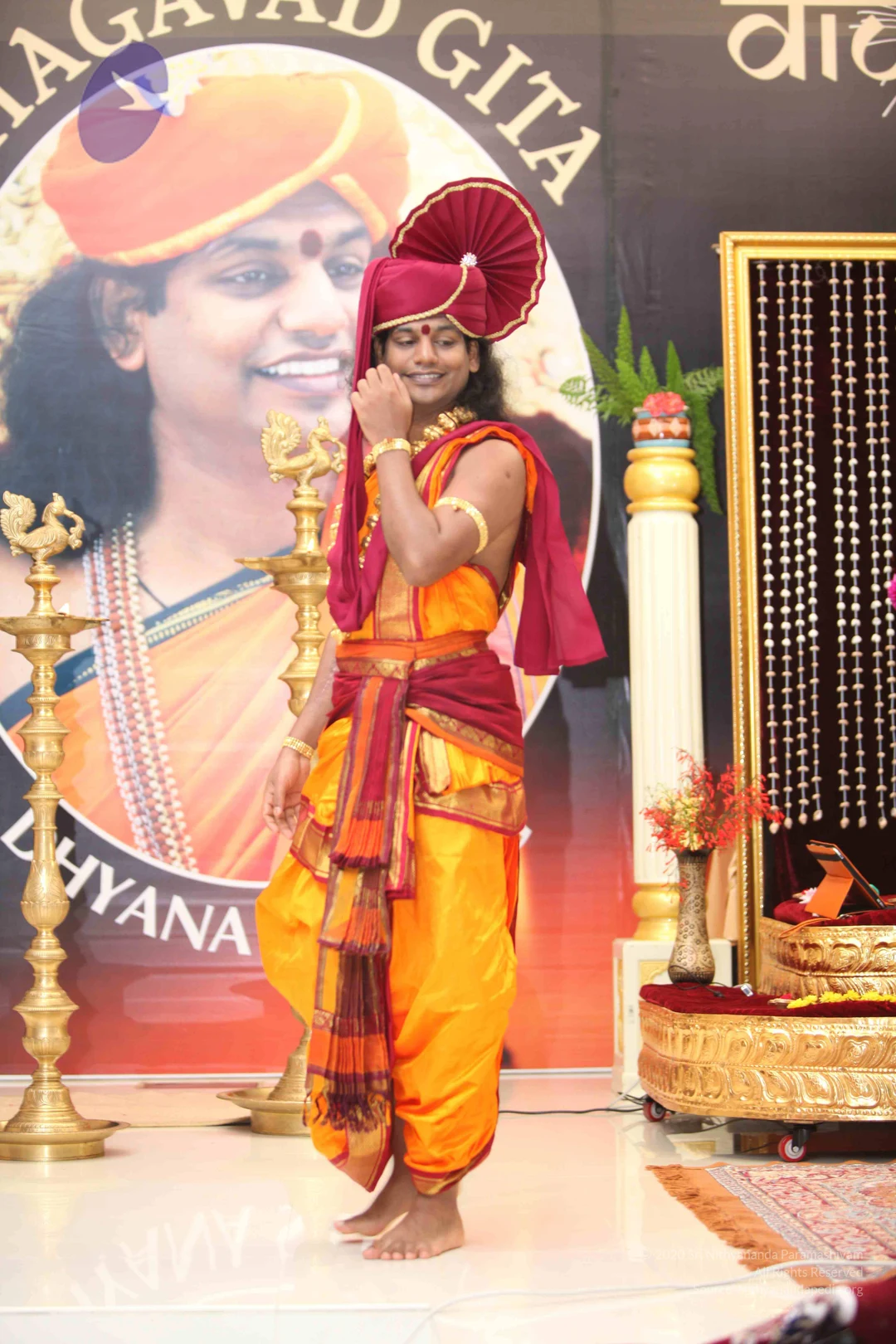
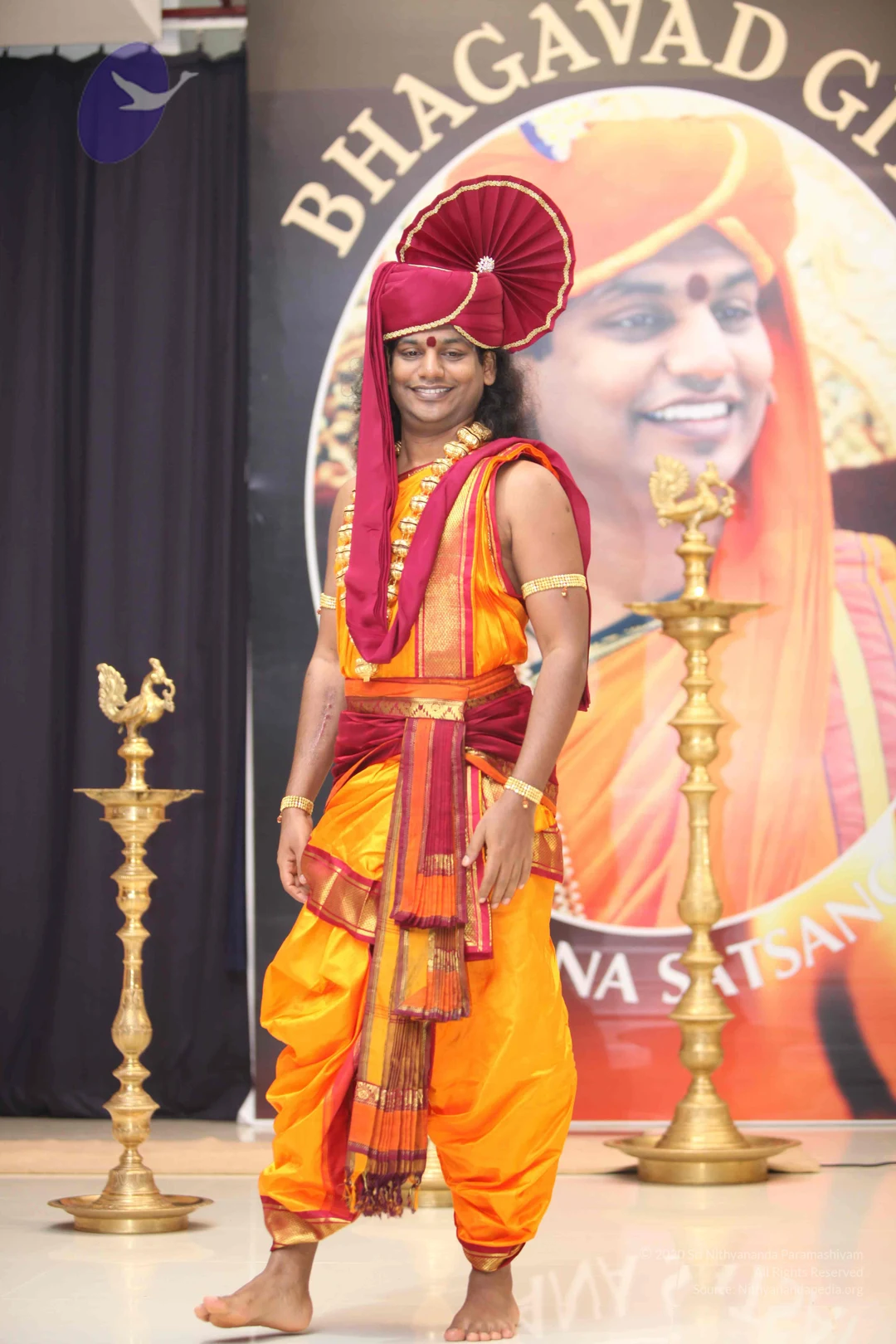
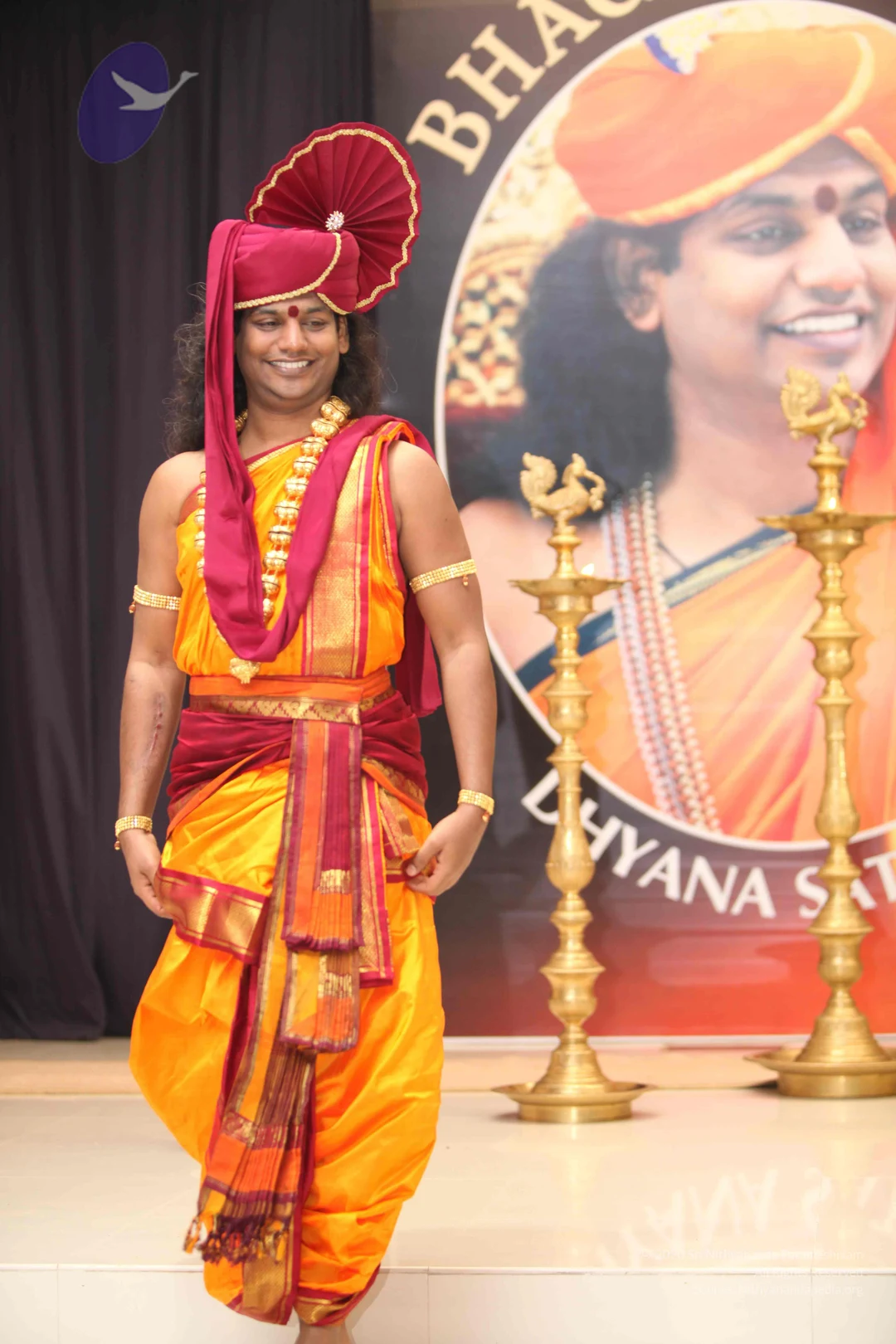
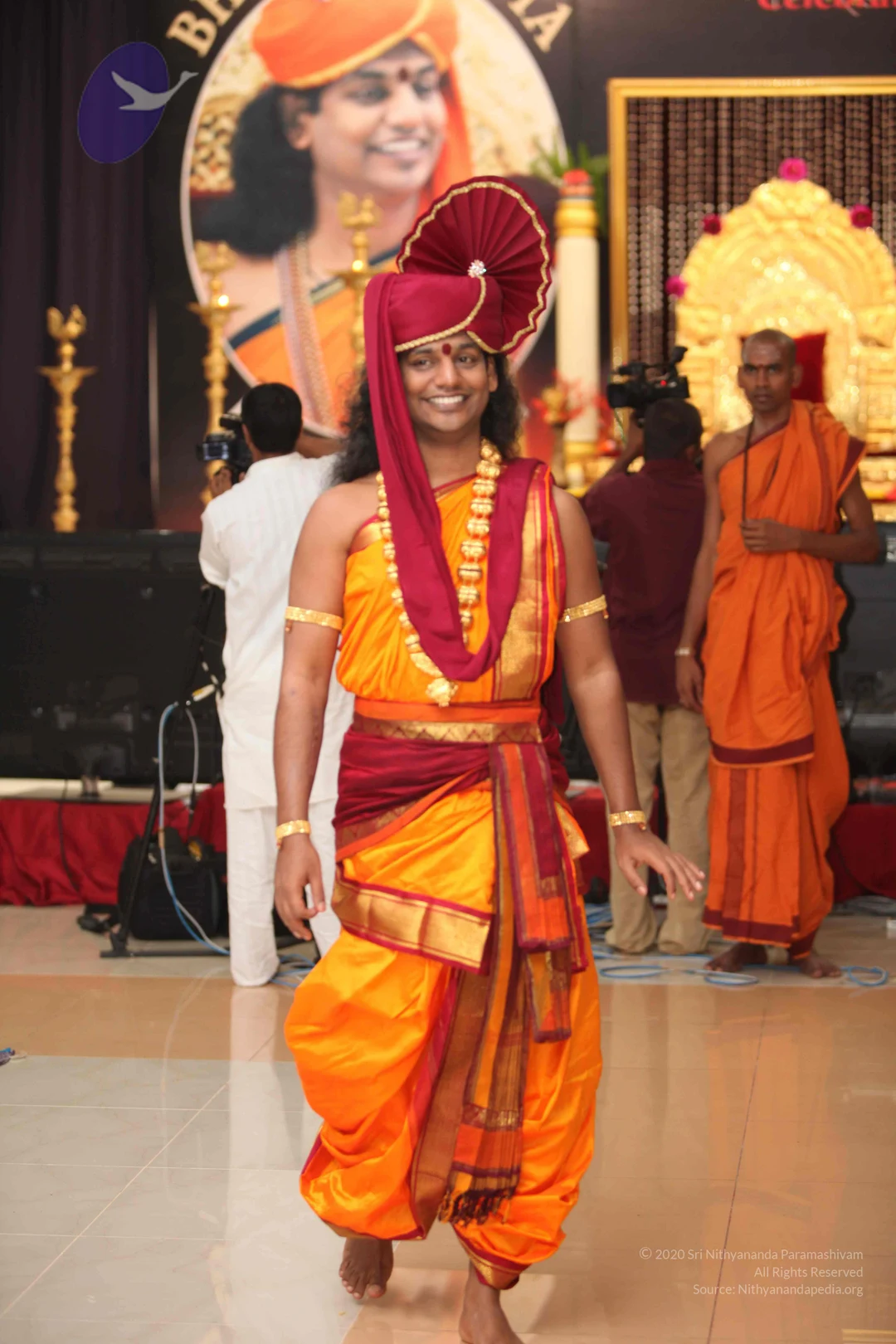
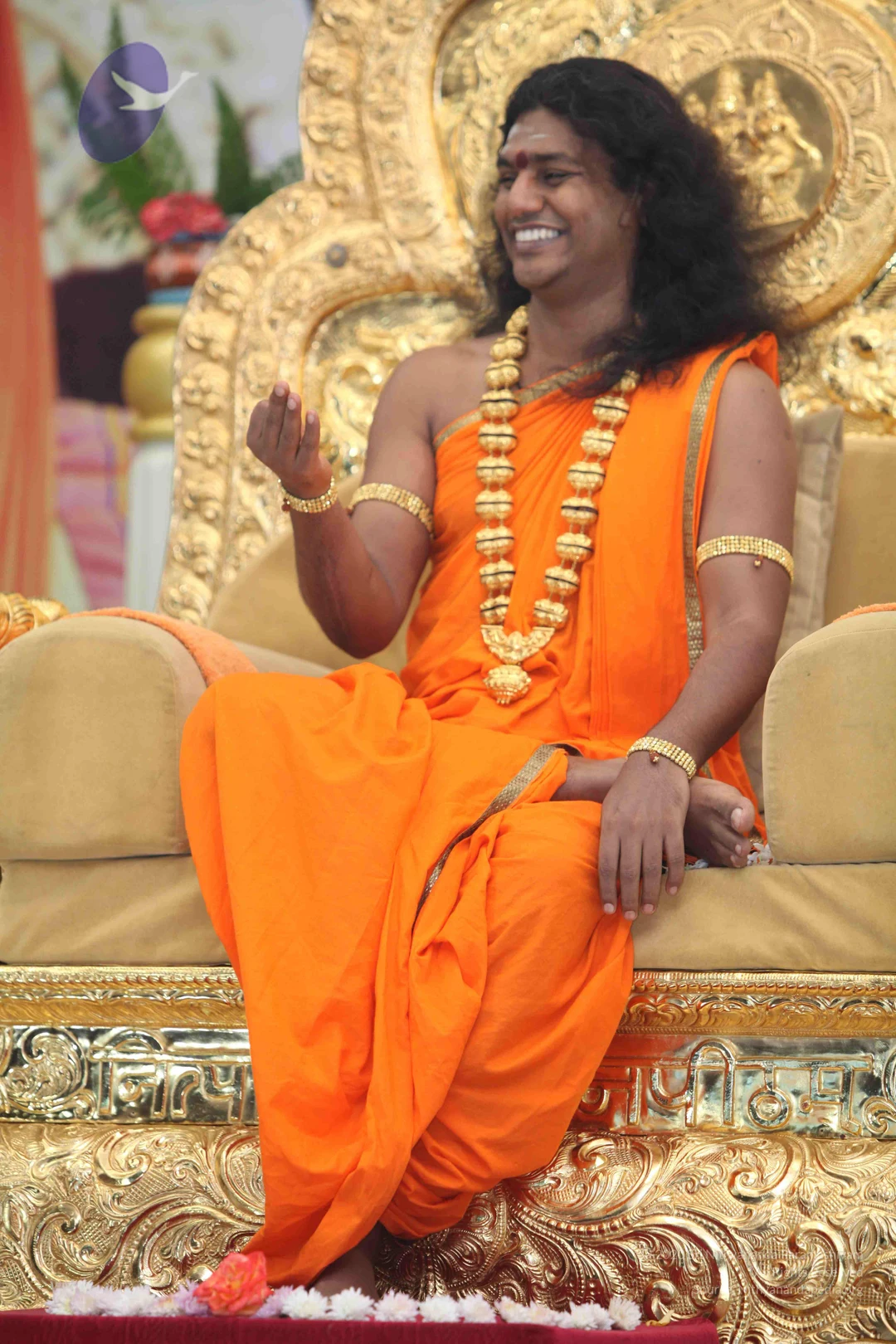
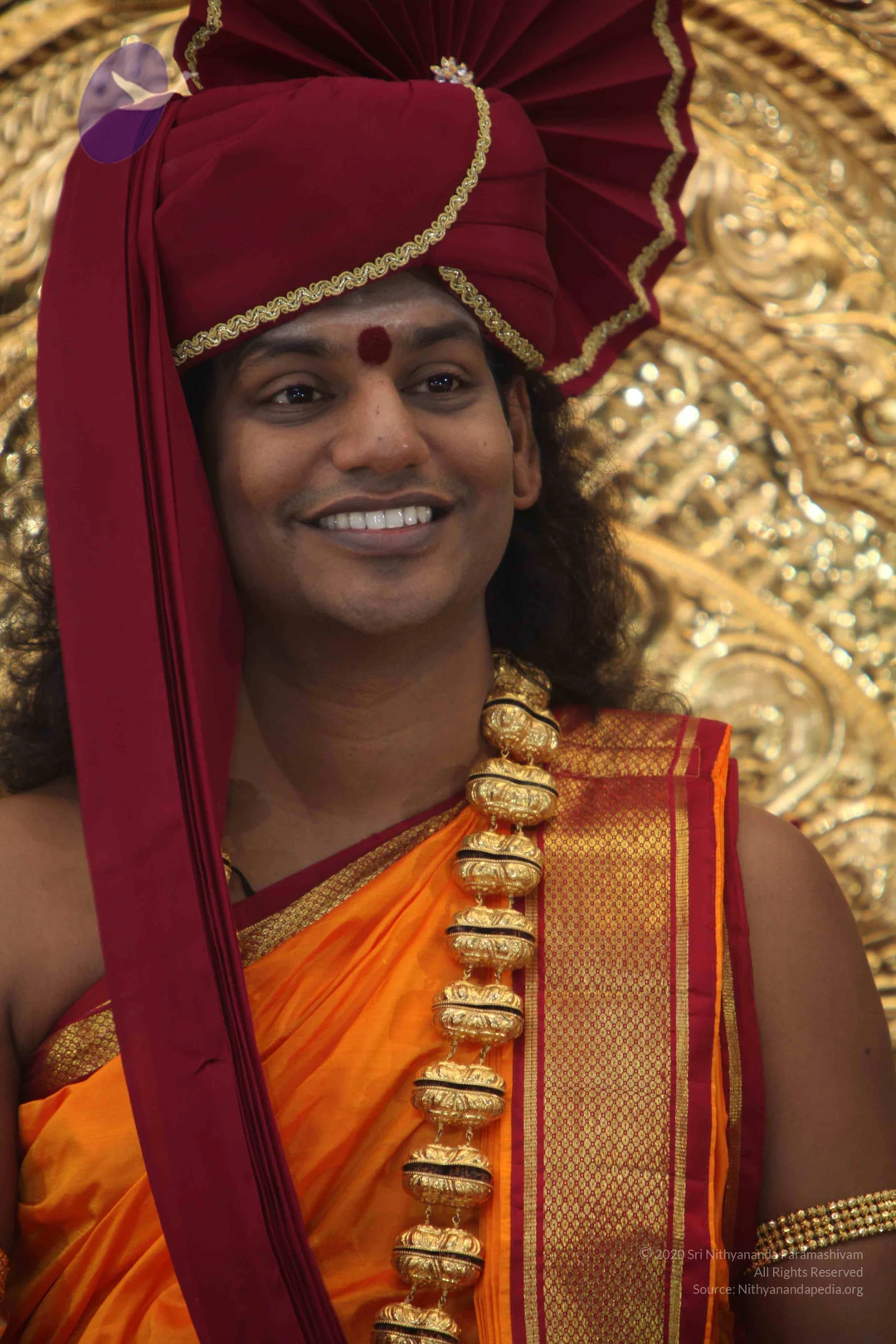
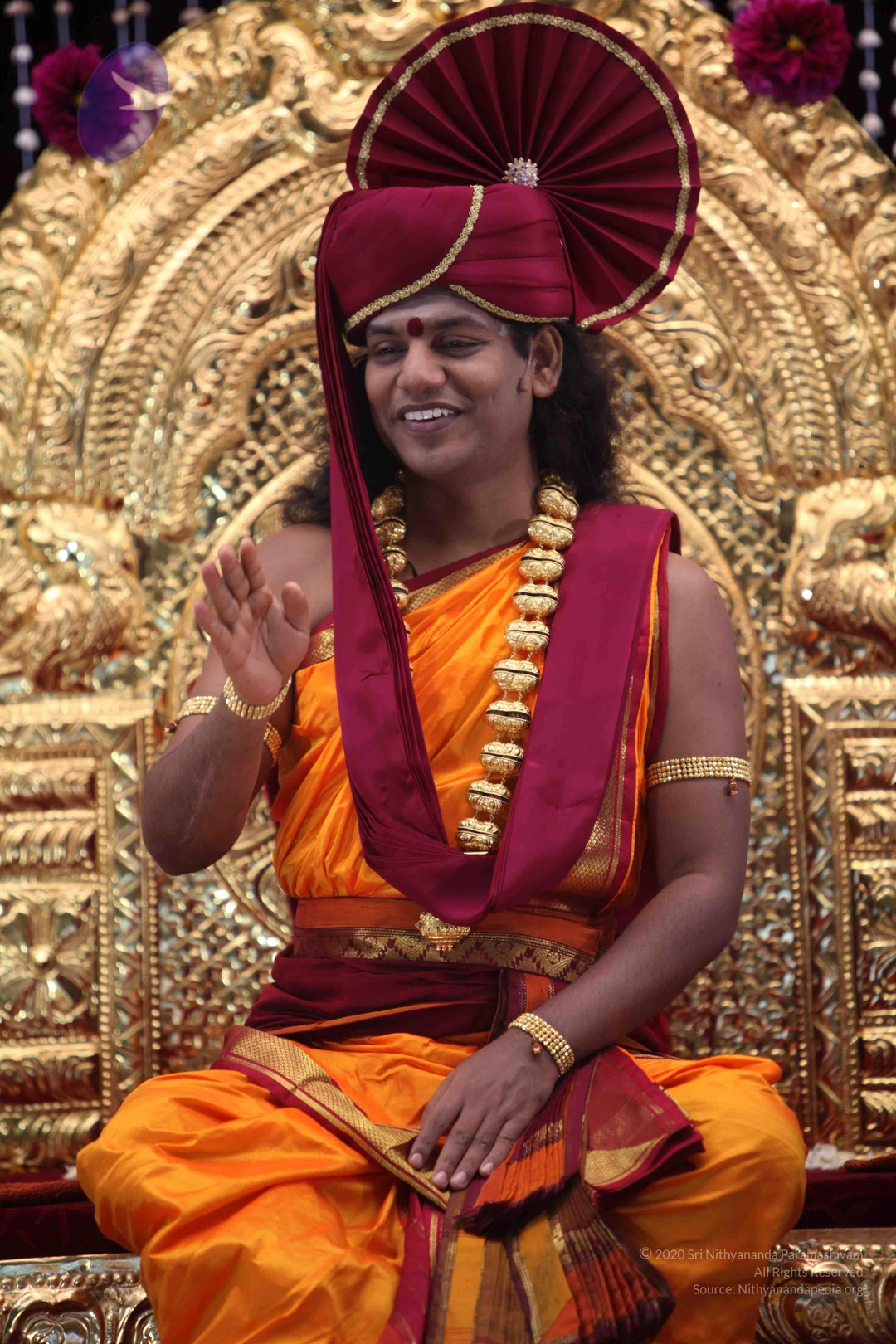
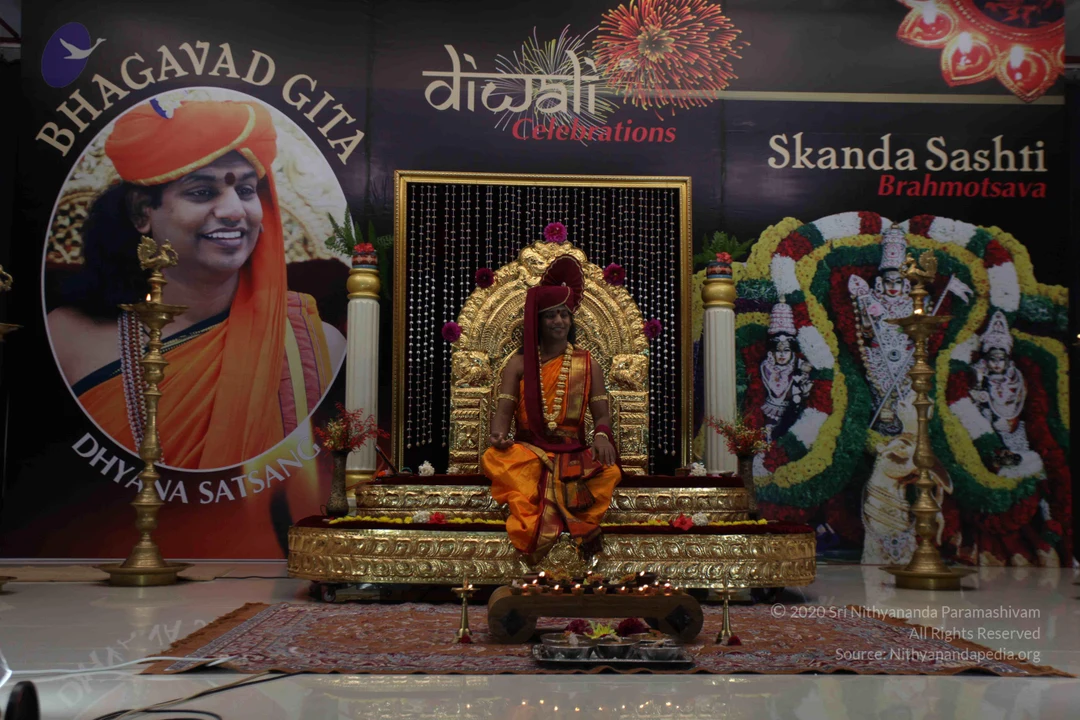
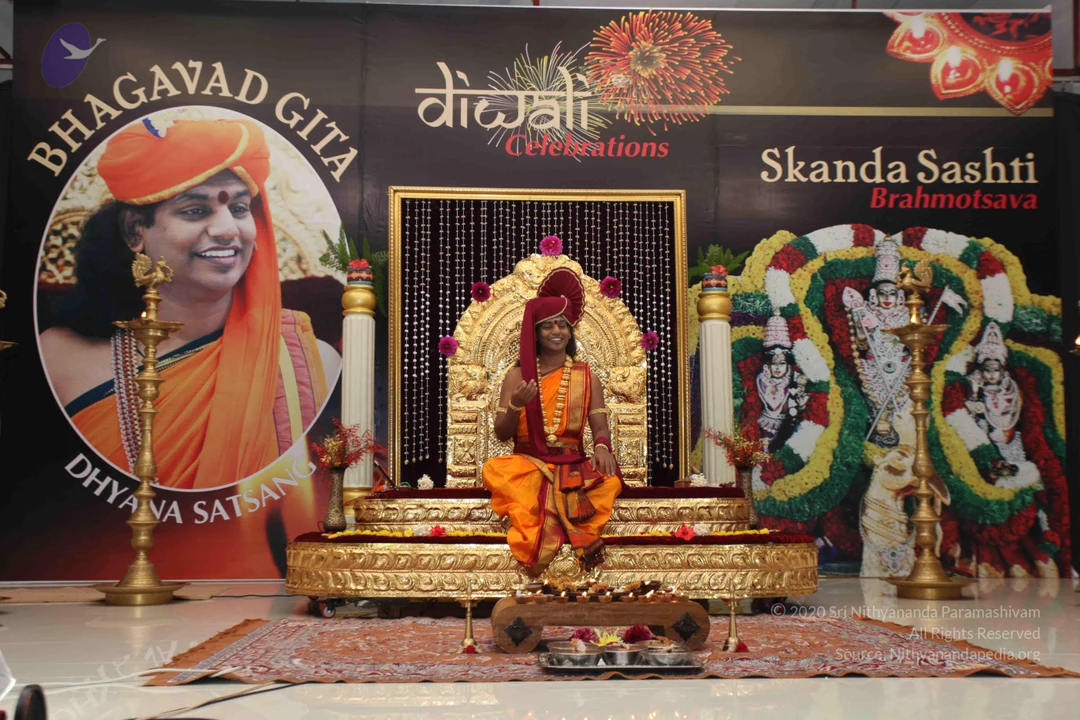
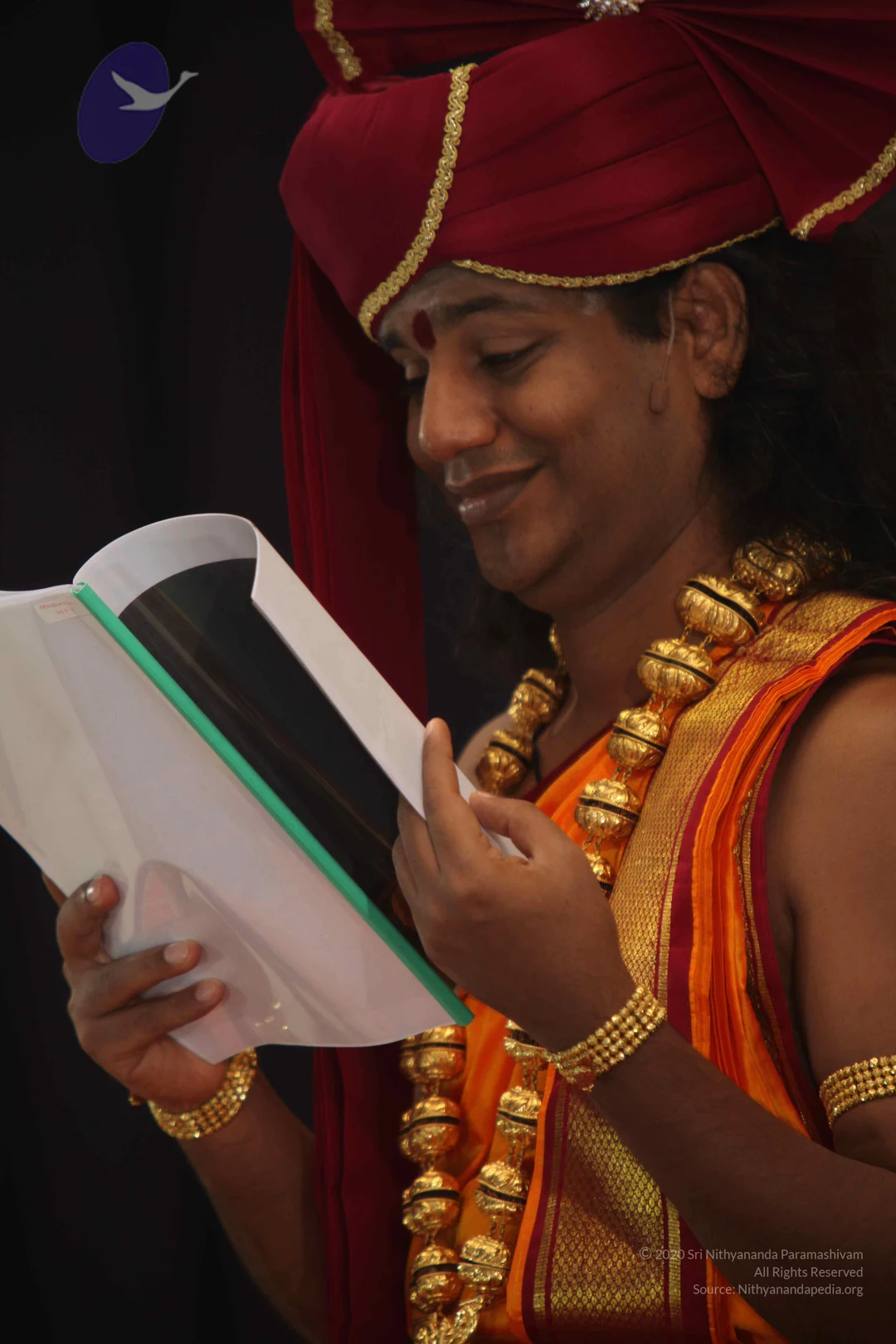
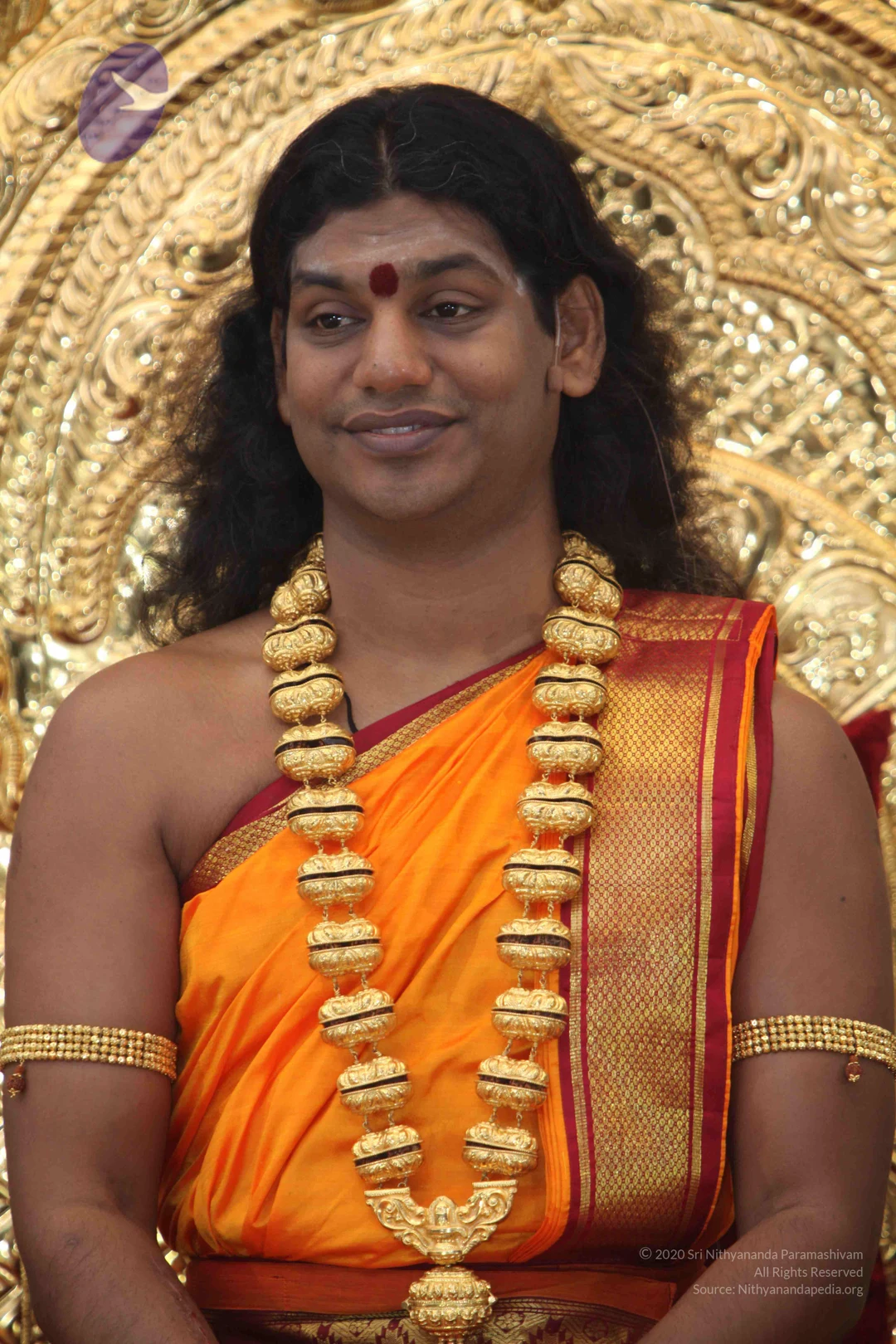
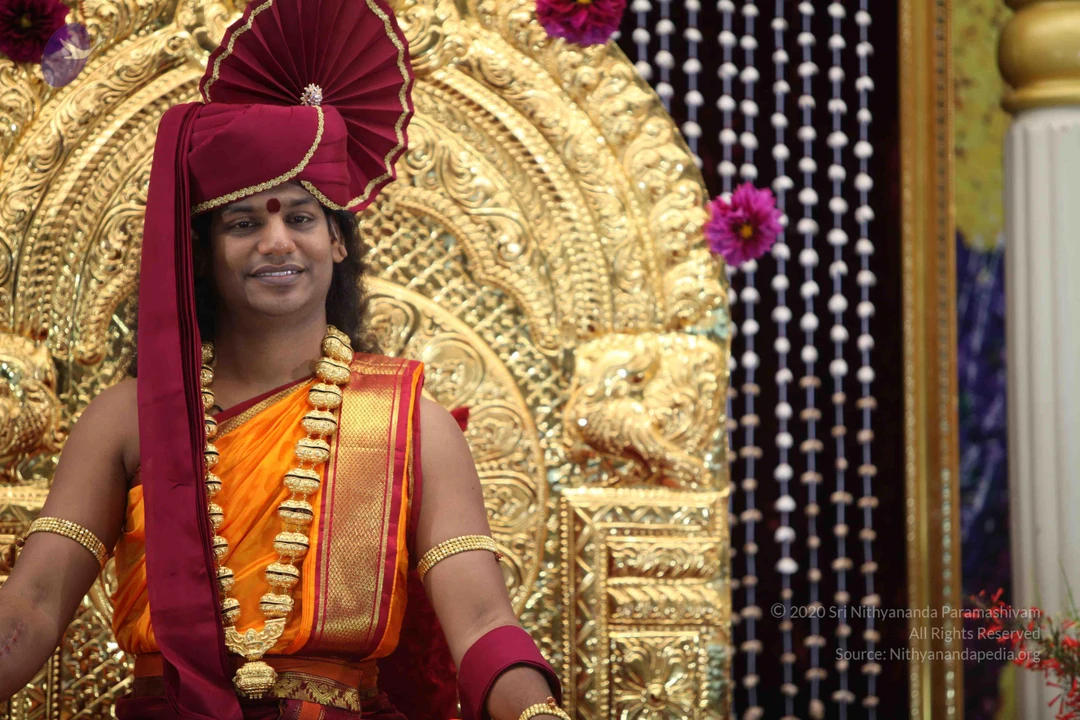
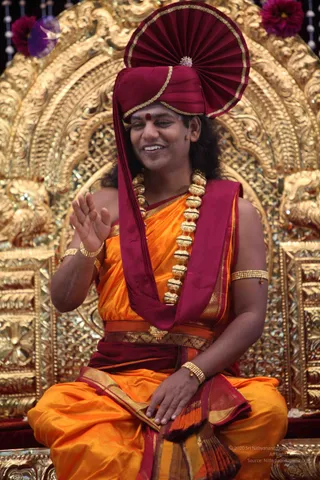
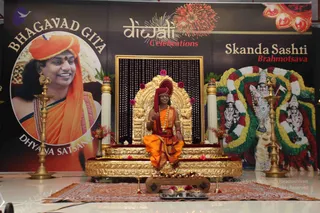
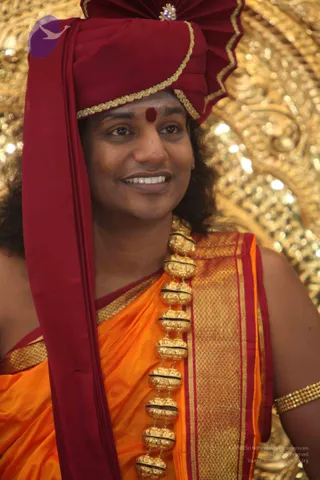
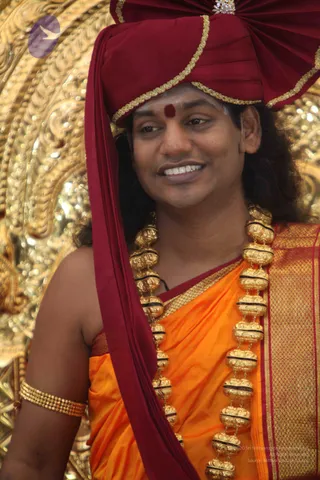
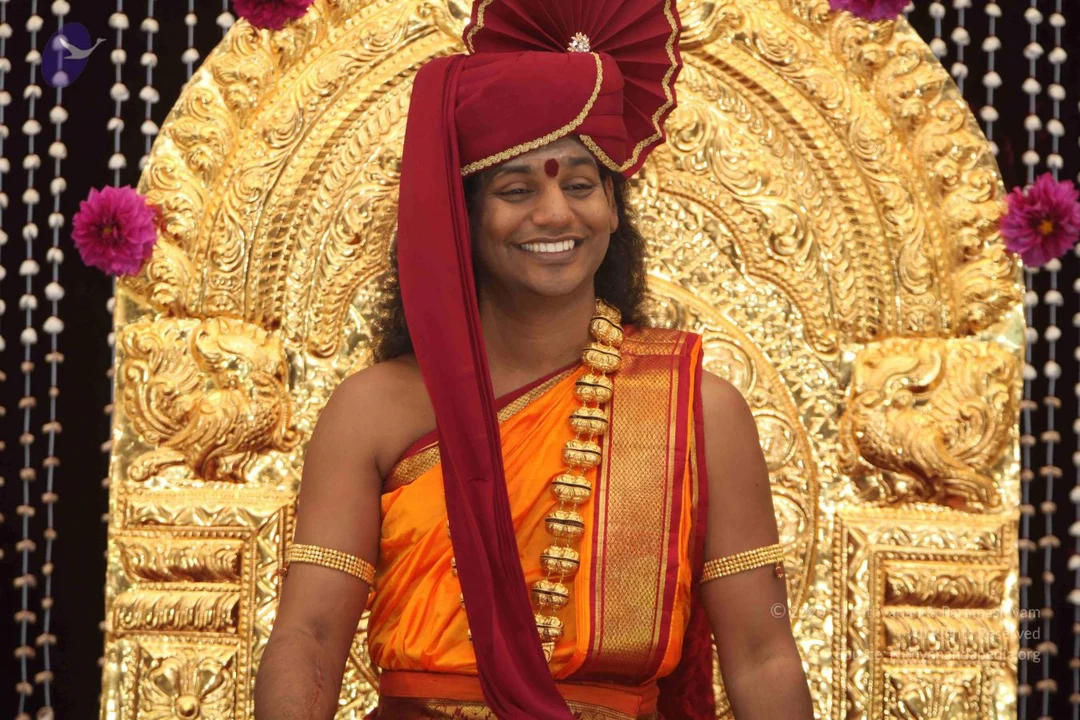
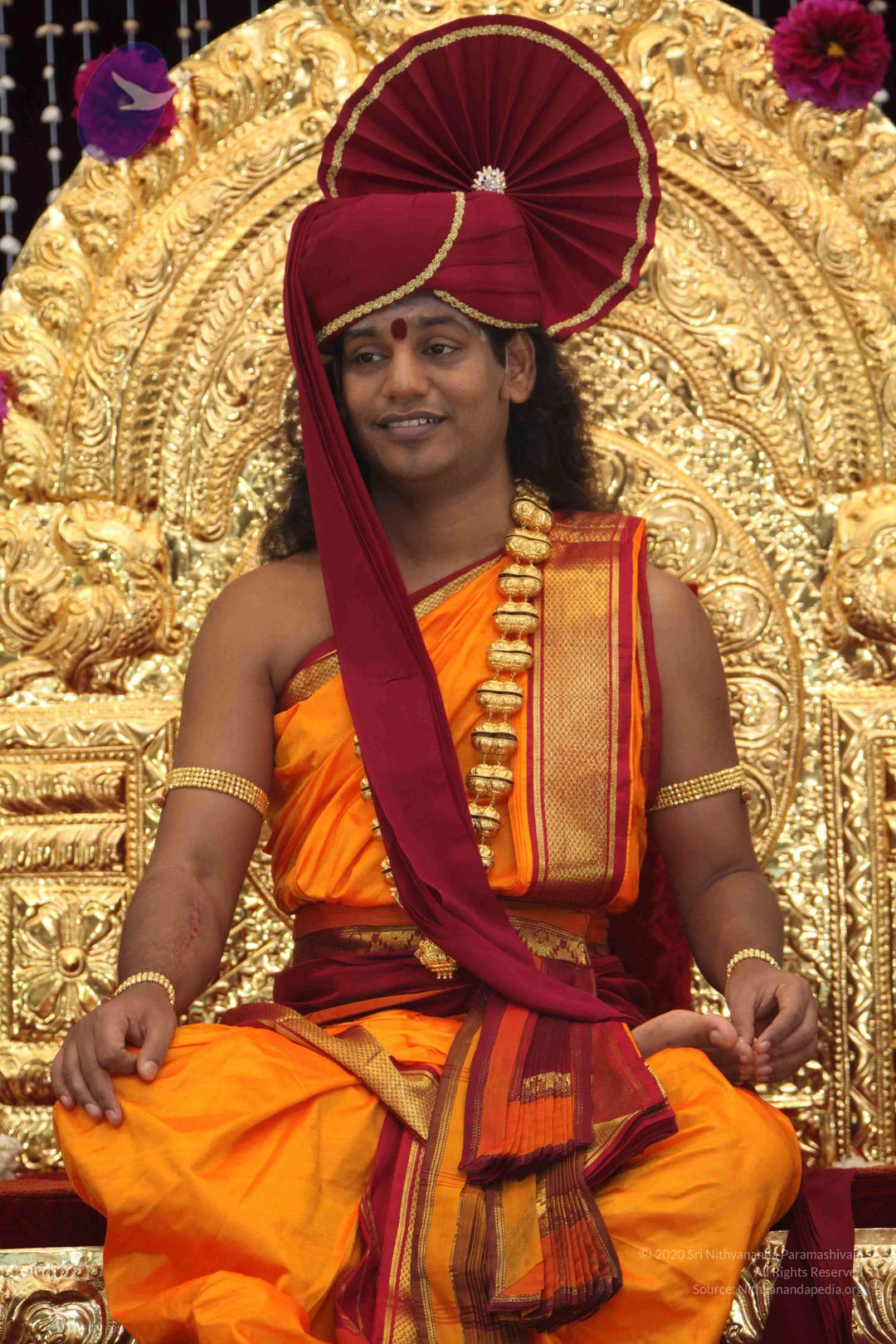
A man seated on an ornate gilded throne with elaborately carved golden arches and lion-like carvings behind him, smiling and raising one hand in a gesture while speaking. He wears a deep maroon fan-pleated turban with gold border trim and a small white stone ornament, an orange silk garment with gold border, a maroon shawl draped over the shoulder, a thick gold necklace of segmented beads, gold bangles and an armlet, and a red bindi on his forehead. Purple flowers hang at the top corners of the frame. The scene appears to be a discourse or satsang.A seated figure in saffron-orange robes and a red-orange turban sits on an ornate gold throne with a beaded curtain behind it, on a stage before a banner. A small gold lamp and oil lamps are lit on a low wooden stand in front, and trays of flowers and offerings sit on the floor. Beside the throne, a large circular portrait shows a smiling man in an orange turban and orange robe with a rudraksha mala, and a backdrop panel displays garlanded deity images. The seated figure wears an orange dhoti-style garment, a gold necklace and red bangles, with the hands resting in front. The scene reads as a satsang stage set for a Bhagavad Gita discourse during a Diwali celebration, with the seated figure appearing to be Swamiji (probable) given the saffron robe, orange turban, rudraksha mala and ceremonial gold necklace, though the appearance is not fully certain.A photograph of a seated figure on an ornate golden throne (peetha) on a stage at a Bhagavad Gita satsang event. The figure wears an orange and saffron robe, an orange turban with a red crest, a gold-and-beaded necklace, and red armbands, and gestures with one raised hand. A gold-framed backdrop with hanging beads, pink flowers, and a kalasha-like pillar frames the throne, and a brass oil lamp (deepa) stands at each side of the stage. A round offering tray with flowers and a small wooden platform sit in front. On the left, a large framed portrait of a smiling man in an orange turban and saffron robe with a rudraksha mala is labelled as a Dhyana Satsang banner. On the right, a floral-garlanded backdrop shows a deity murti pair. Swamiji (probable): the seated figure's orange-and-saffron robes, turban and gold necklace match the portrait, but the appearance is only partly visible.A seated man on a gold ornate throne with a crimson backrest is the central figure in a stage set up for a satsang. He wears an orange and maroon garment, an orange turban with a red fan-shaped top, a long orange-and-white garland and gold bangles, and is smiling with hands resting on his lap. Two brass oil lamps stand on either side, and in the foreground a small wooden table holds lit oil lamps and flower offerings on a tray over a patterned red rug. Behind him a large framed panel reads Diwali Celebrations with fireworks, and another panel reads Skanda Sashti Brahmotsava beside a floral arrangement of deity images. A left-side circular portrait is labelled Dhyana Satsang and Bhagavad Gita, showing a smiling man in an orange turban and saffron wrap with rudraksha mala. Swamiji (probable): the seated man wears an orange turban, saffron-and-maroon wrap, garland and gold bangles, consistent with the throne-seated figure being the presiding teacher.Close photograph of a smiling man wearing a deep red turban with gold braided edging and a small jewelled ornament at the front, with a red tilak on his forehead. He wears an orange silk garment with red and gold brocade borders and a long gold bead necklace strung with ornate gold beads. A gold bangle is visible on his arm. Behind him is an ornate gold-toned carved backdrop.A smiling man wearing a deep red turban with a gold-edged fan-shaped fold and a small crystal ornament on top. He wears an orange silk garment with a red border and a gold-bordered red shawl draped over one shoulder, a heavy multi-strand gold bead necklace, and a multi-row gold bangle on his upper arm. A red dot marks his forehead. Behind him is an ornate gold relief background.
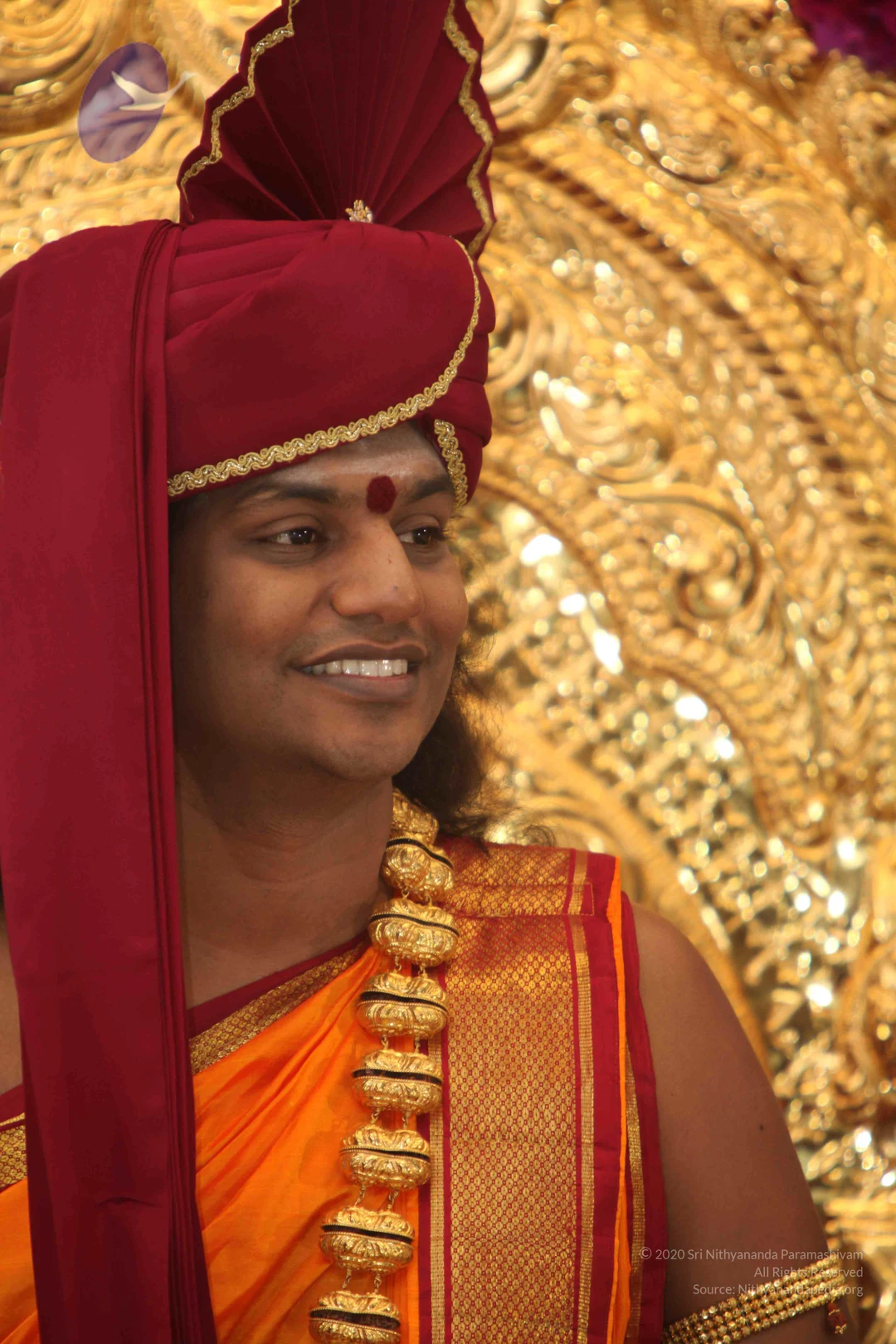
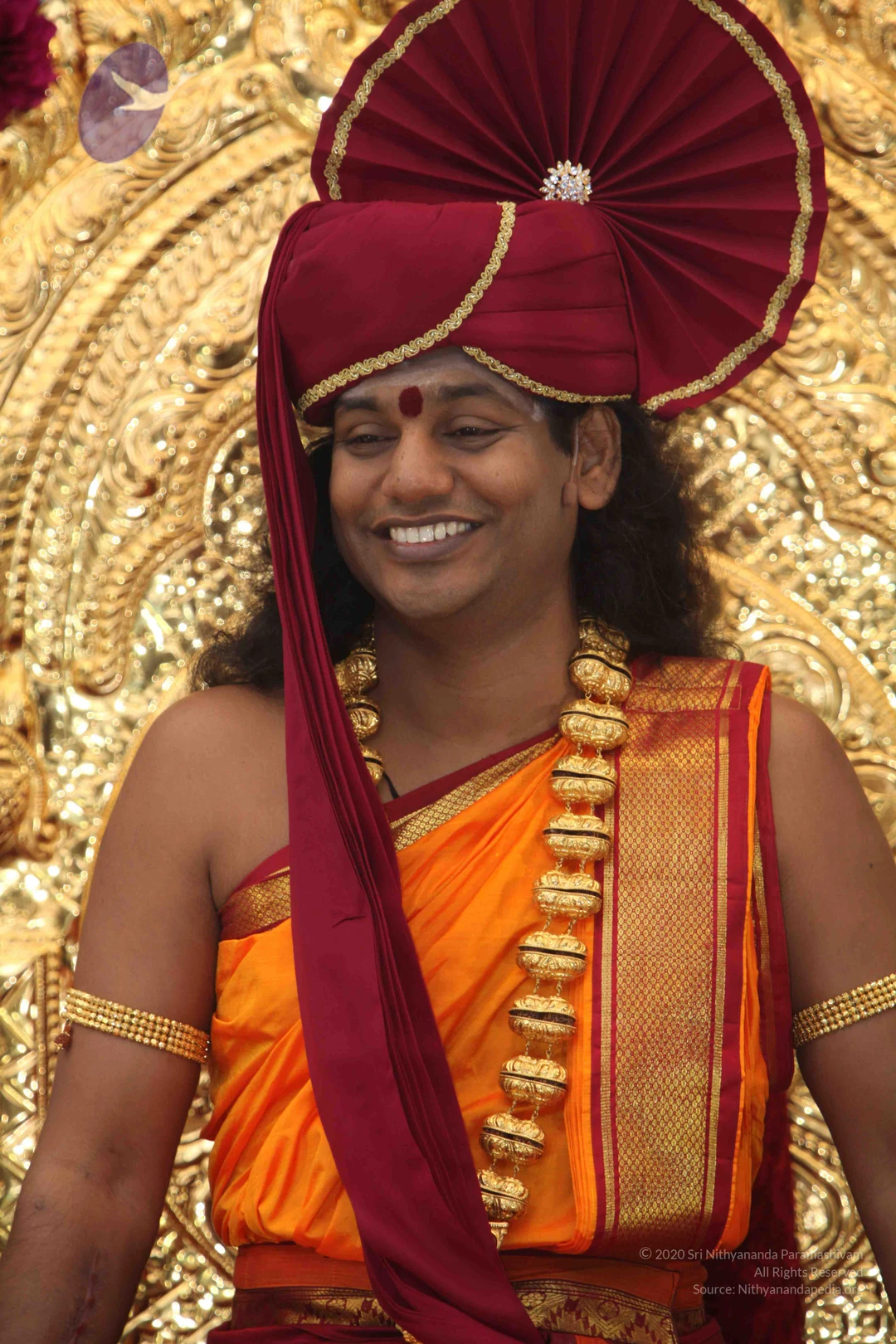
3-Kanganam-Temple

10 photosSource gallery
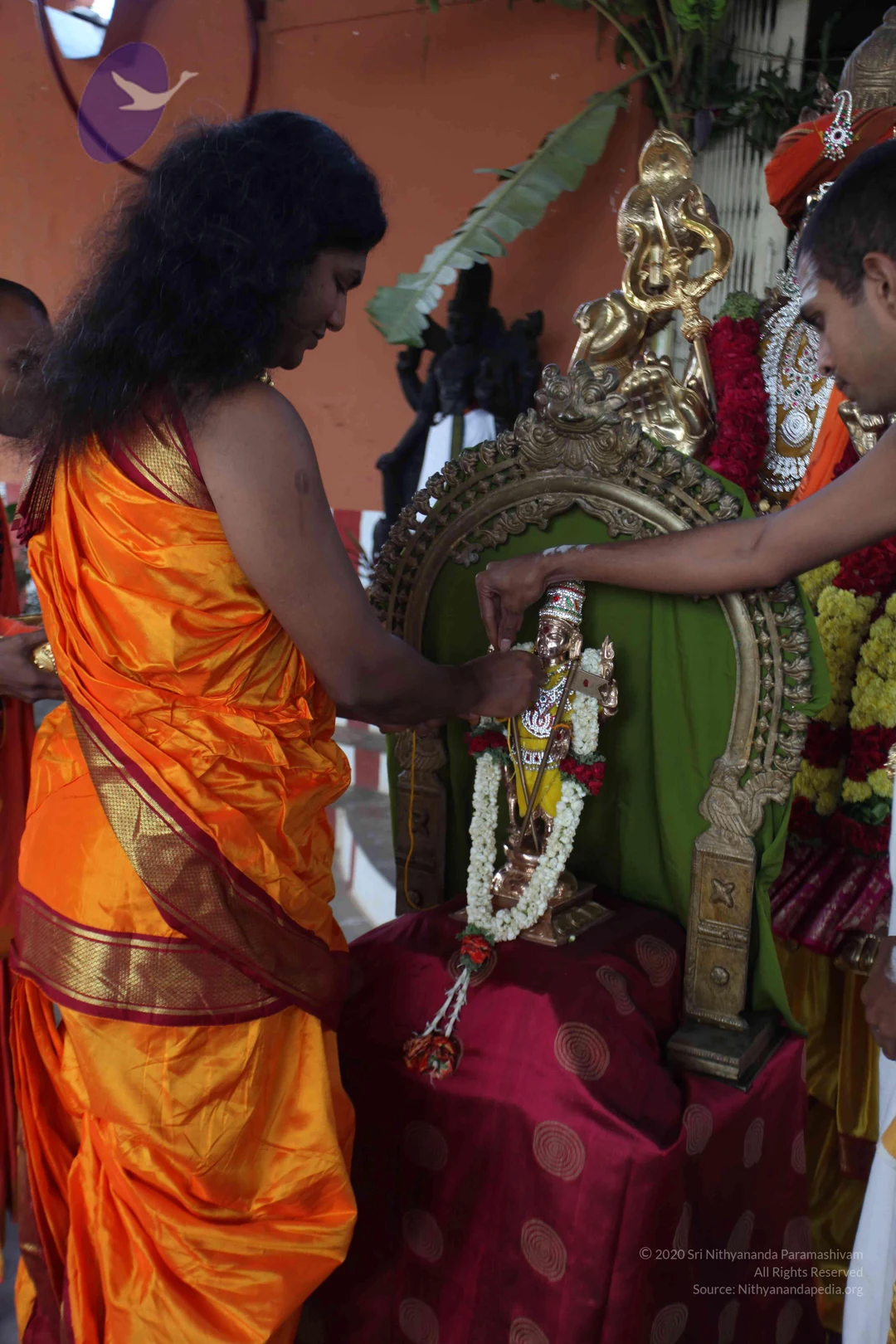
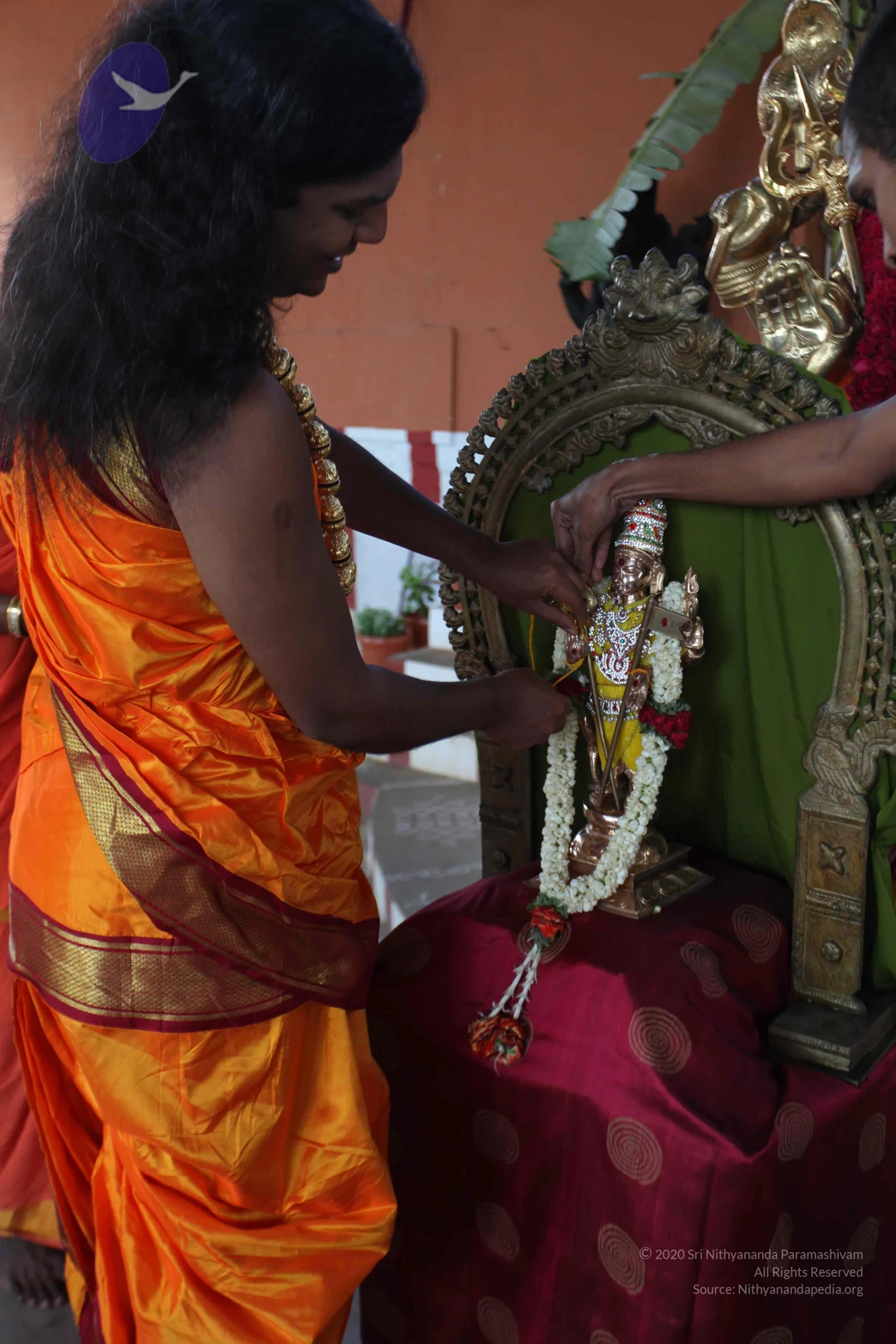
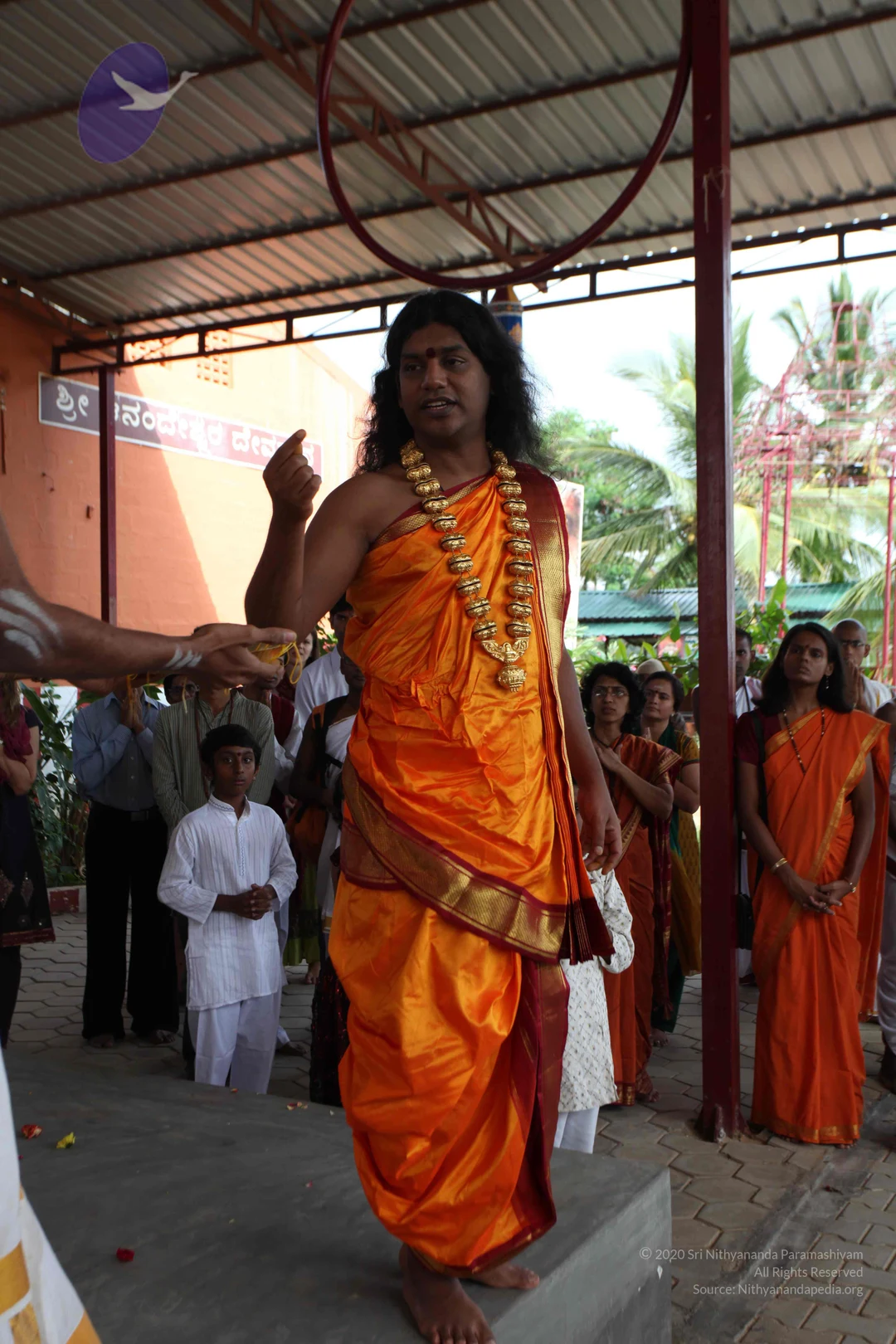
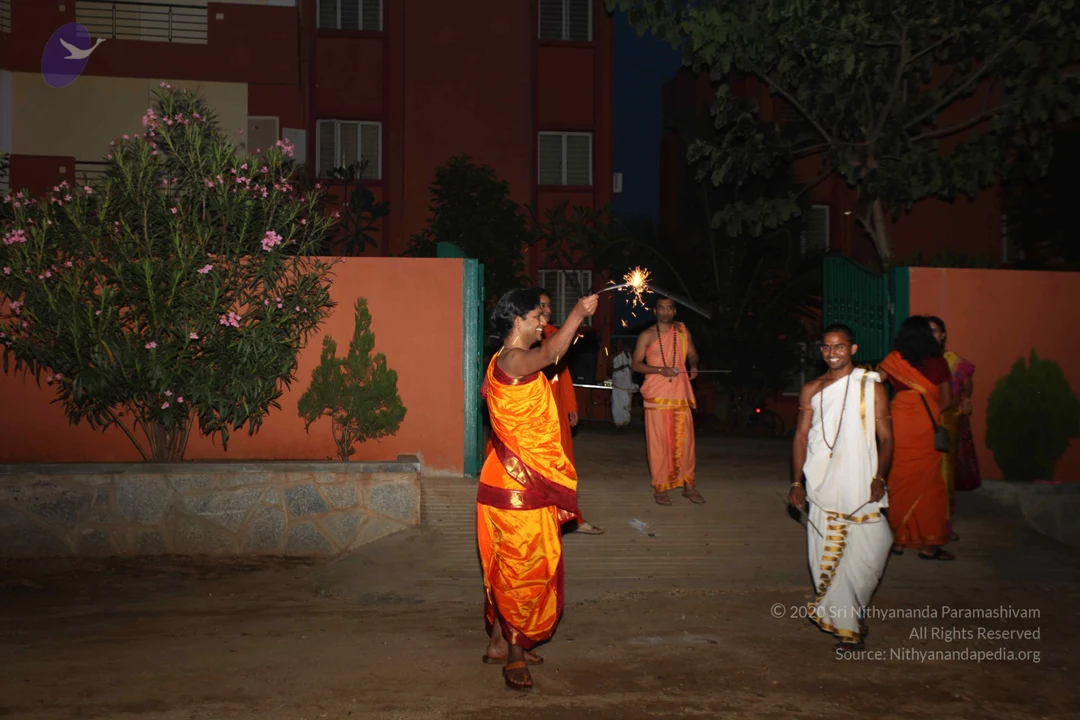
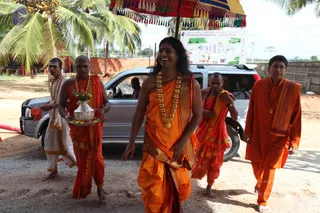
A photograph of an open stone shrine pavilion with carved pillars and a flat roof hung with a strip of green mango or banana leaves. Inside, on a raised stone platform, stands a deity murti group with multiple arms, dressed in pink and magenta cloth, a yellow drape, and red and white garlands; a second figure wears a crown and green garment. A golden arched prabhavali frame stands behind them against blue drapes, with brass lamps and oil lamps set on the platform. Red and orange cloth panels frame the open sides, and trees are visible beyond. No people are present.A photograph of a procession on a dirt path at an ashram, with a silver vessel and offerings carried by attendants. In the centre, a smiling man with long dark hair wears an orange saffron dhoti and shawl, a heavy gold-and-beaded garland, and a red bindi on his forehead. Flanking him, shaved-headed attendants in orange robes and garlands carry a silver pot with flowers and a tray of offerings, while another attendant on the left wears white ritual clothing. Behind them is a silver SUV, a palm tree, and a red-and-yellow canopy with tassels above a signboard reading Nithyananda Dhyanapeetam and Bidadi Ashram. A man on the far right in orange robes and a sacred thread is walking barefoot.A woman with long dark hair, wearing an orange silk sari with a gold-bordered maroon edge, stands with her back partly turned and adjusts a white jasmine garland with red flowers on a small metal deity murti of Murugan holding a spear. The murti stands on a maroon cushion in front of an ornate gilt-framed throne back with green fabric. Behind her, a man in white clothing and a dark-skinned man at right are present, with a gold deity figure and palm leaves in the background against an orange wall.A person with long, loose dark hair, wearing an orange silk sari with a gold zari border, stands with back partly turned and hands placed on a small gilded murti of a deity adorned with white jasmine garlands and red flower strands. The murti sits on a green cushioned gold-framed seat draped in a maroon cloth with circular motifs. Behind are a gold trident-like ornament, a dark statue, banana leaves and an orange wall. A second person in orange is visible at the right edge. Setting suggests a temple shrine puja.A woman with long dark hair, wearing an orange silk sari with a gold-bordered maroon edge, stands with her back partly to the camera and garlands a small bronze murugan-style deity murti with a white jasmine garland. The murti stands on a green-draped arched frame on a maroon cloth-covered platform. Behind it, a larger gold-toned deity figure wears a crown, a red and silver necklace and a red-orange garland, and a golden trident is visible at the upper right. The setting is an orange-walled shrine with a potted plant and a red-and-white painted base.A long-haired figure in a saffron-orange silk garment with a gold-bordered wrap stands at a green-draped golden throne-like seat, reaching toward a small golden deity murti with a trident and a white jasmine garland with red flower accents. Behind them a second person in orange and a golden-clad figure with a red-and-gold turban and ornate necklaces stand near the seat, a red-and-gold cloth covers the base, and a banana leaf and orange wall form the backdrop. The scene appears to be a temple puja or abhishekam-style offering to a deity murti. The figure in orange has long hair and distinctive orange clothing, with a crown-like turban and garland visible nearby; identity is uncertain, so this is noted only as a candidate.

4-Dewali-Celebrations

10 photosSource gallery
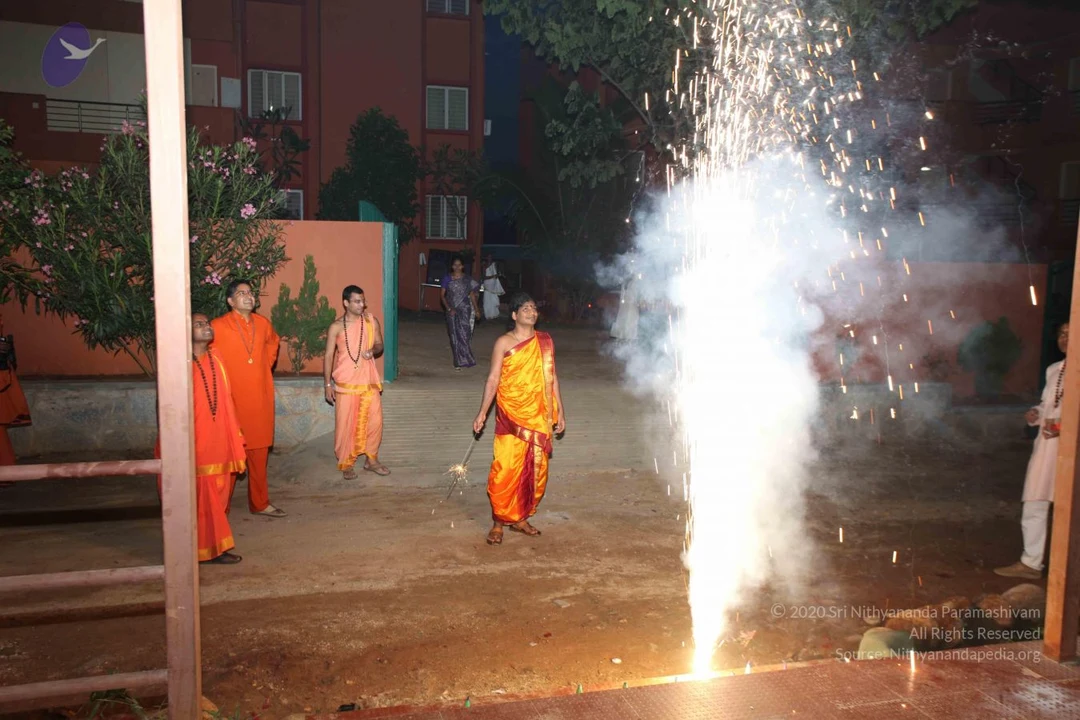
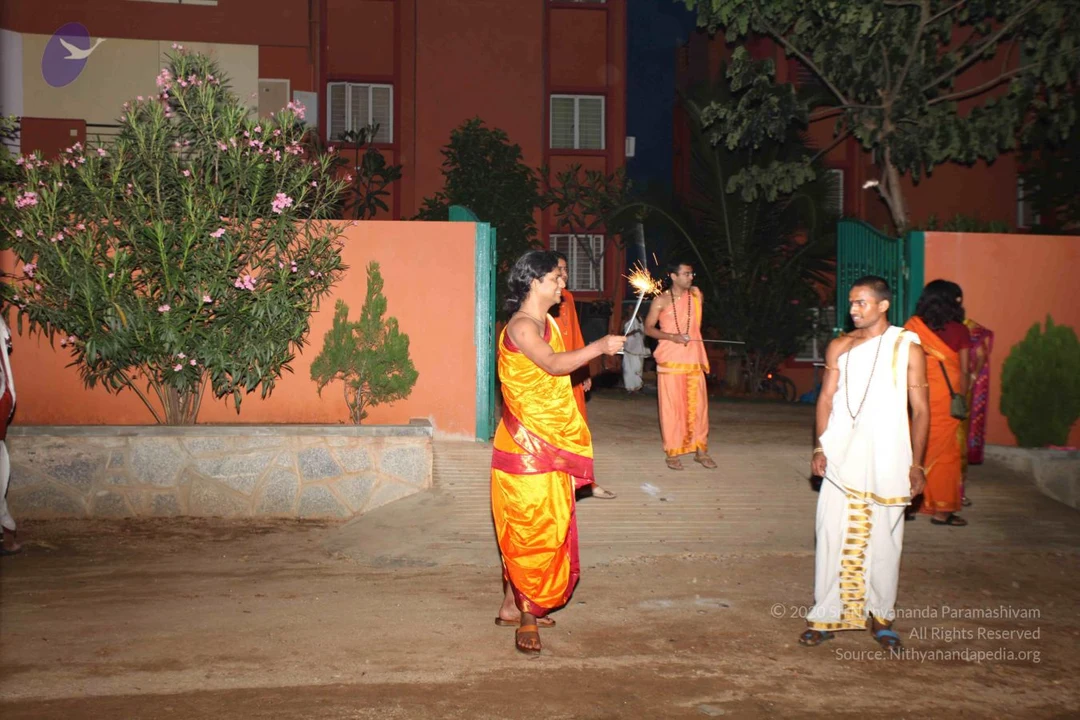
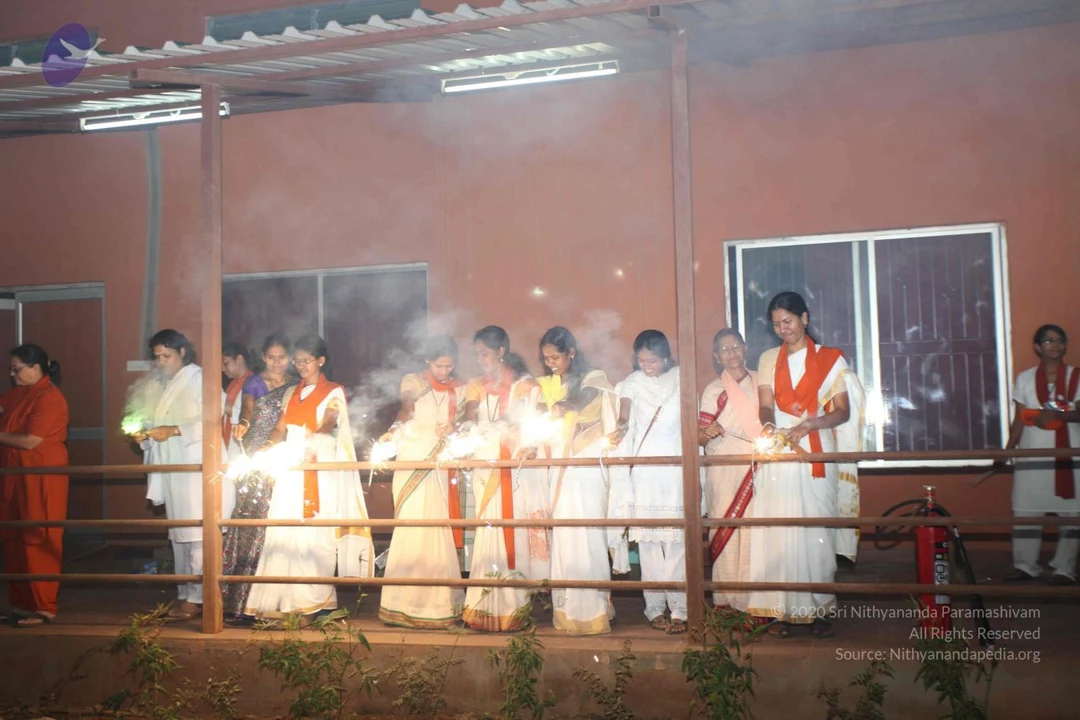
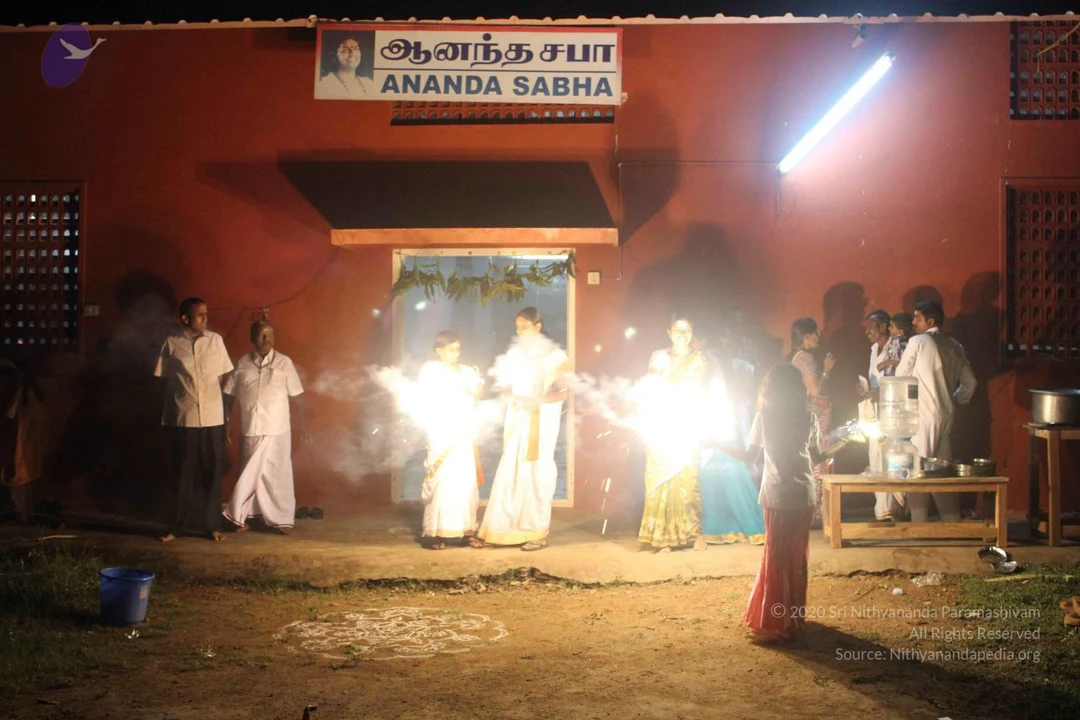
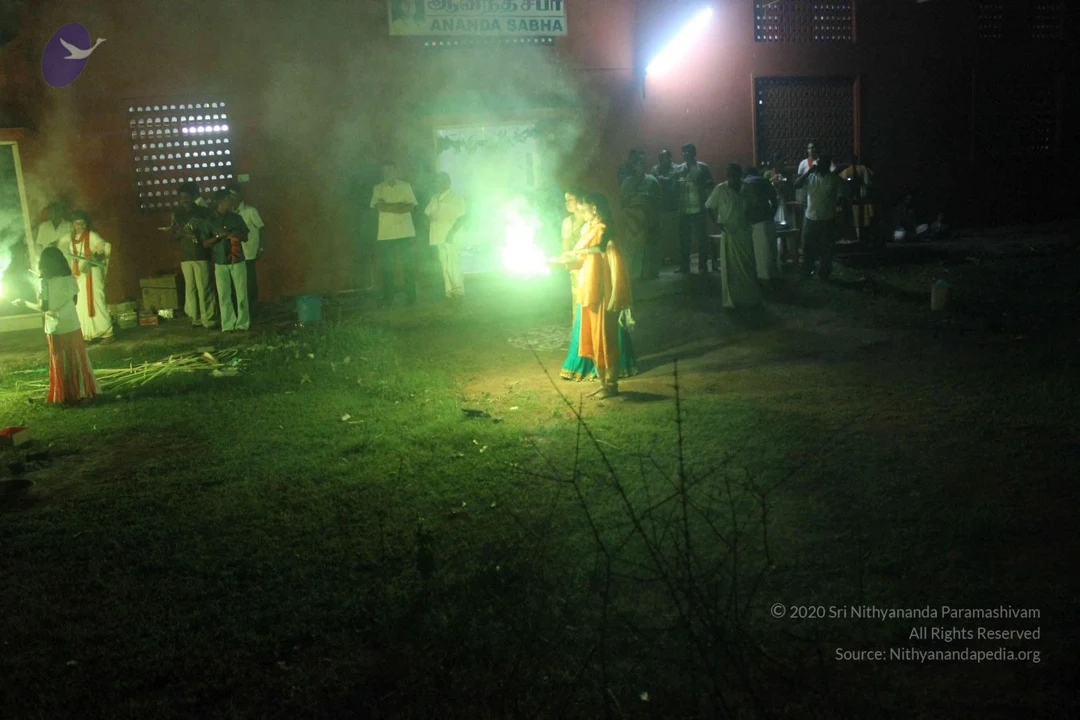
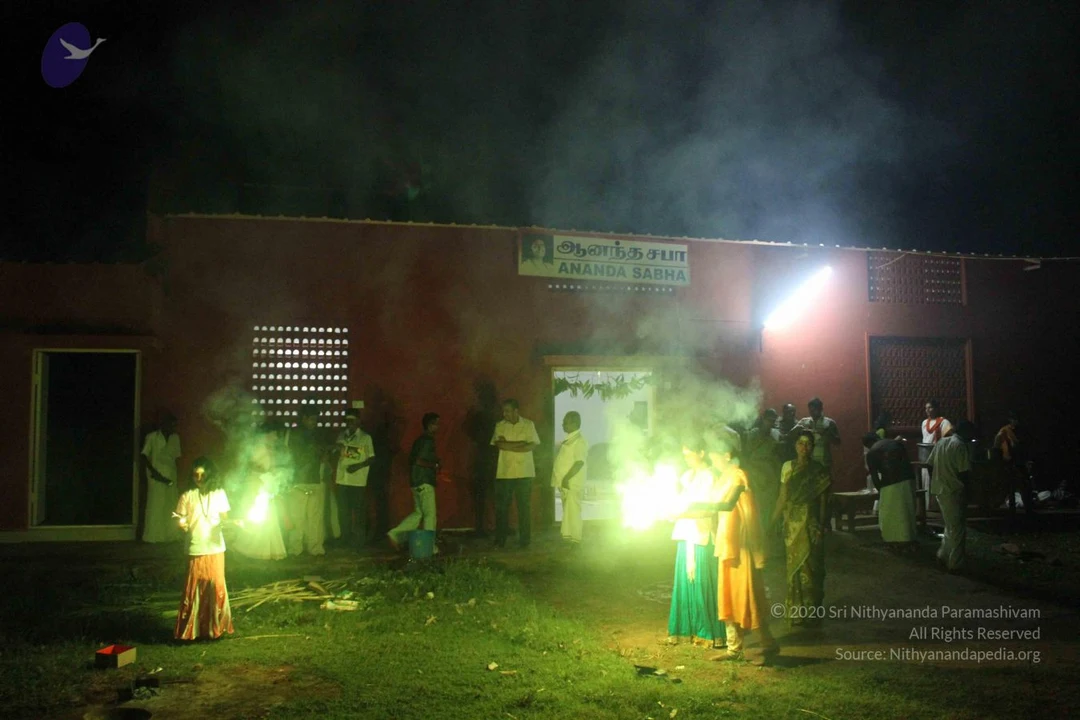
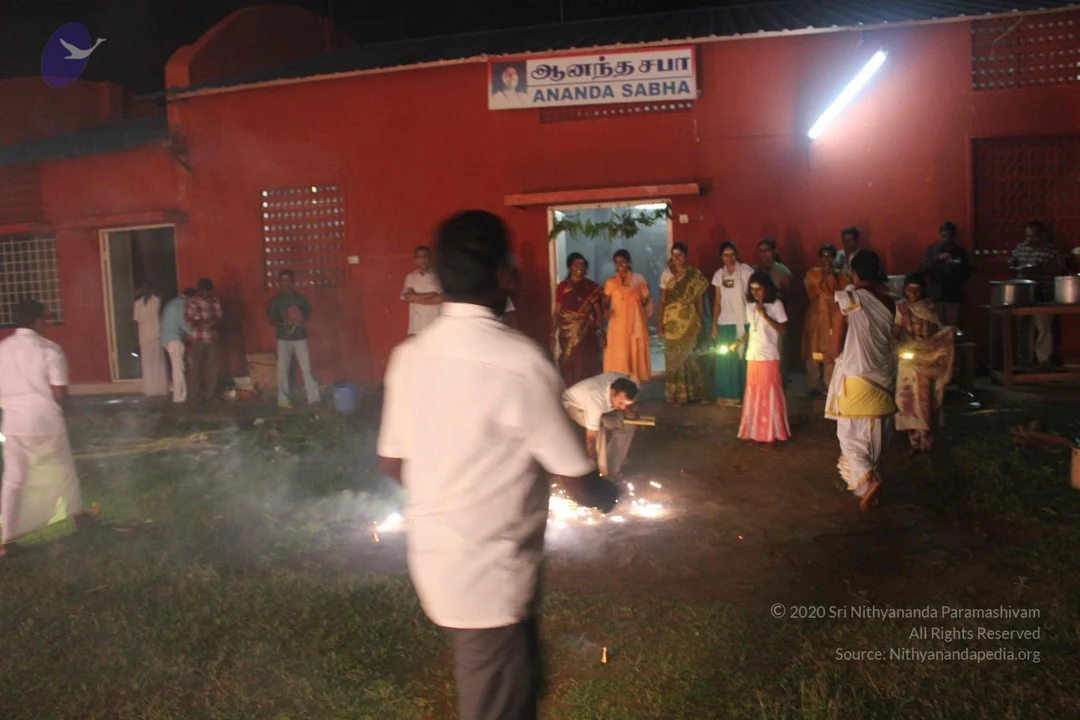
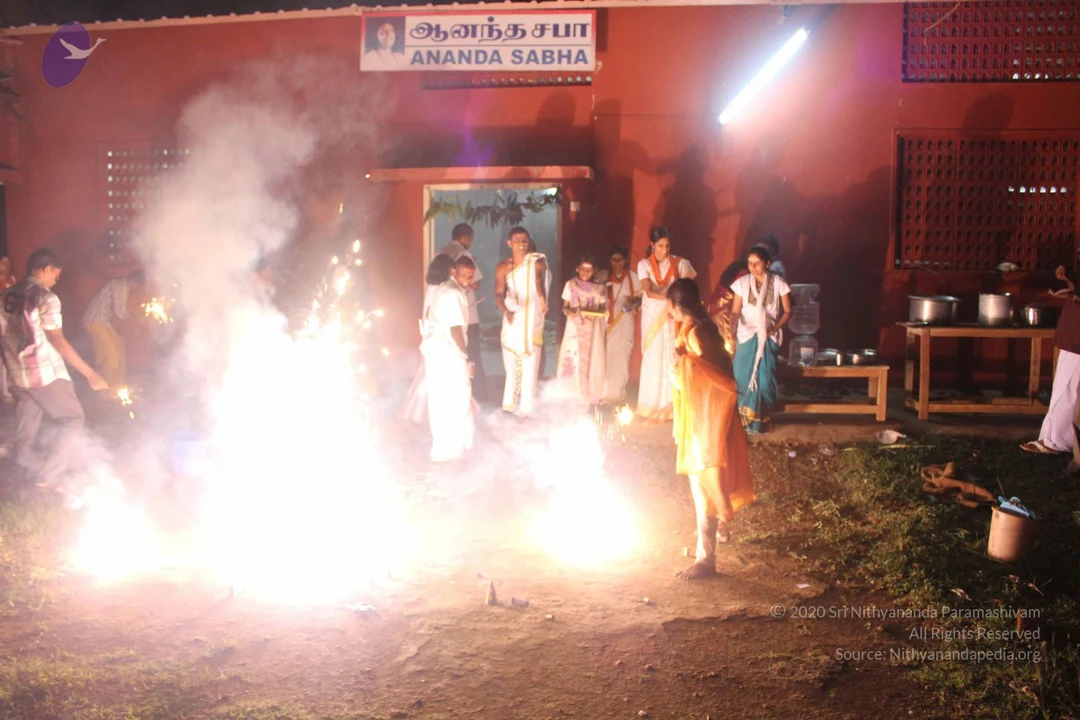
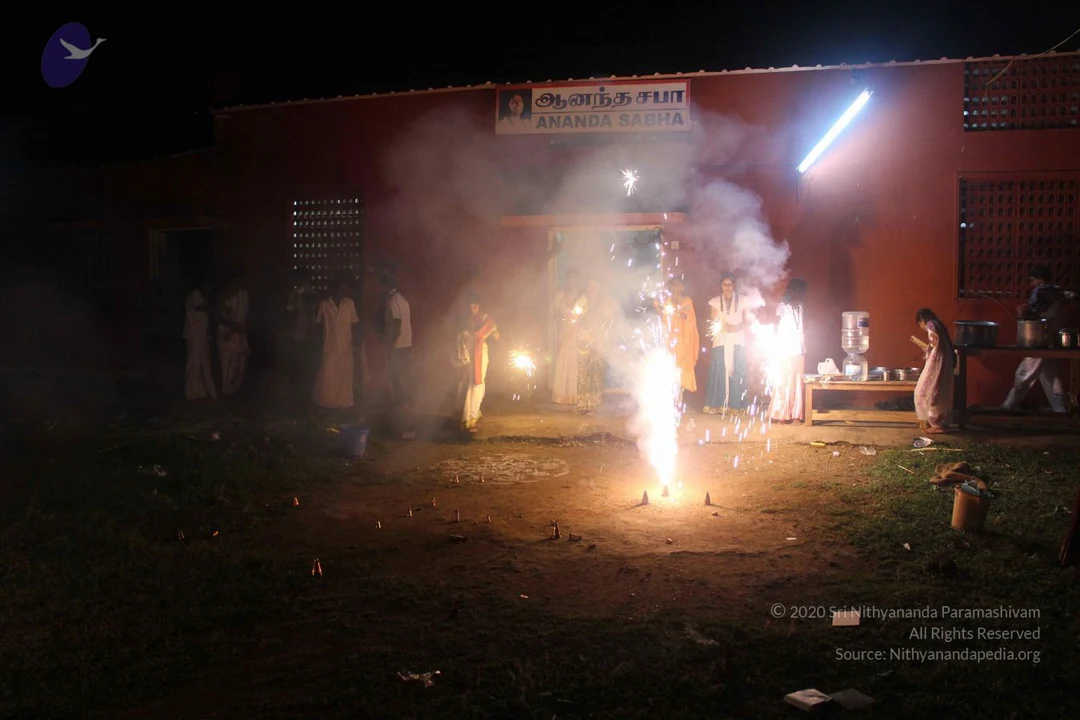
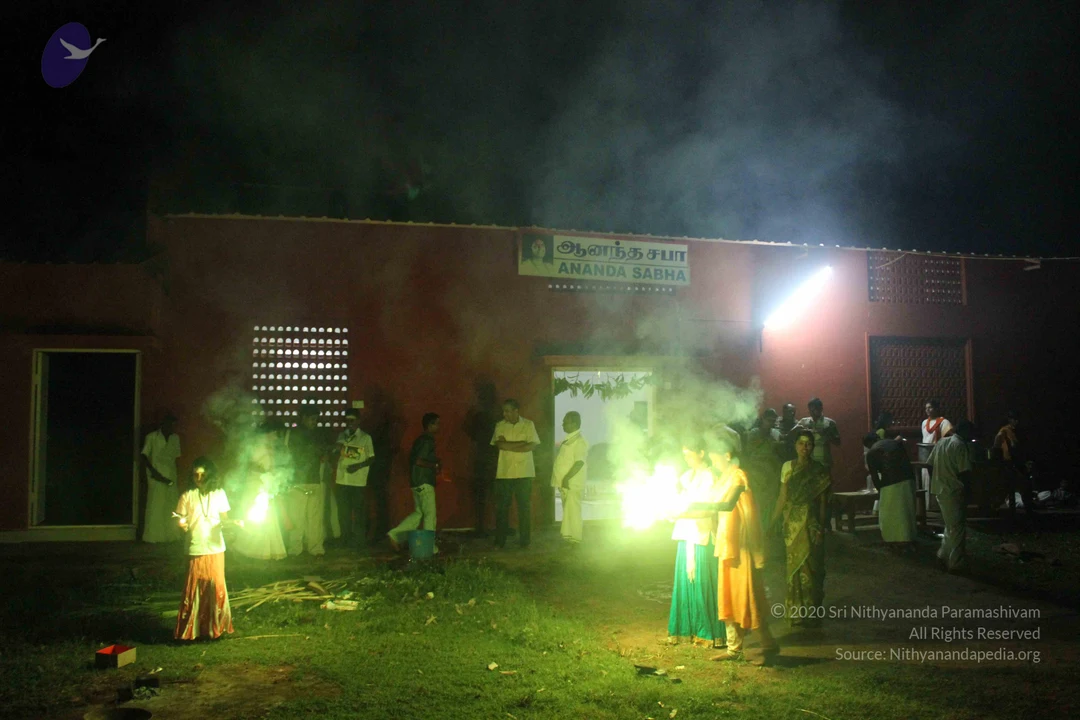
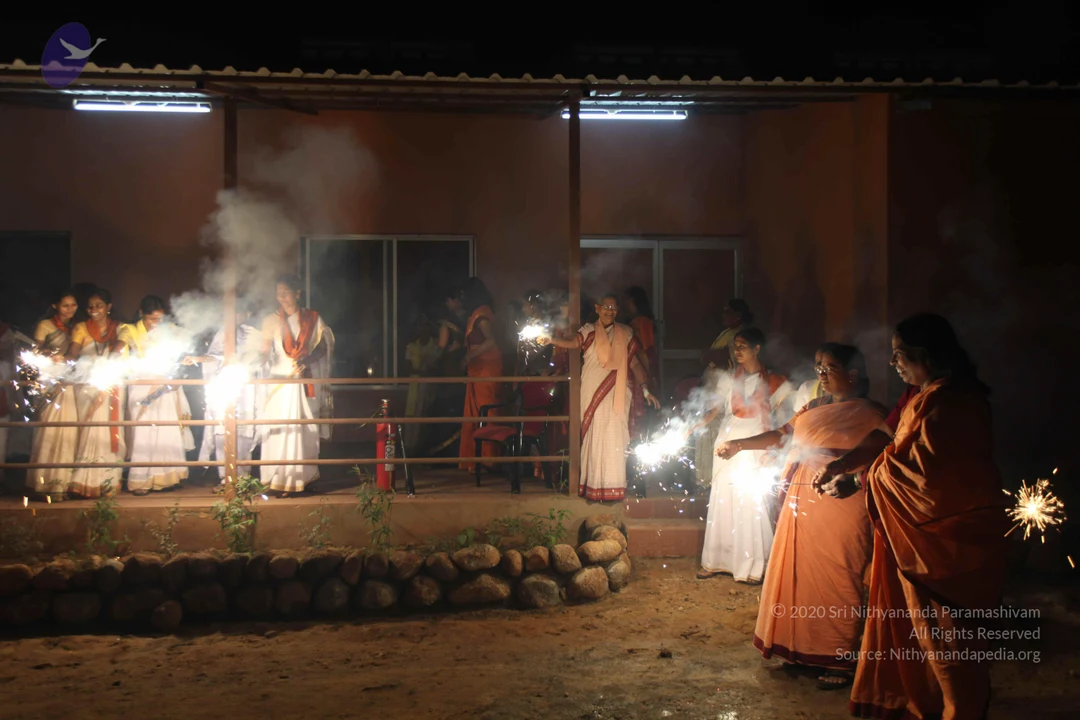
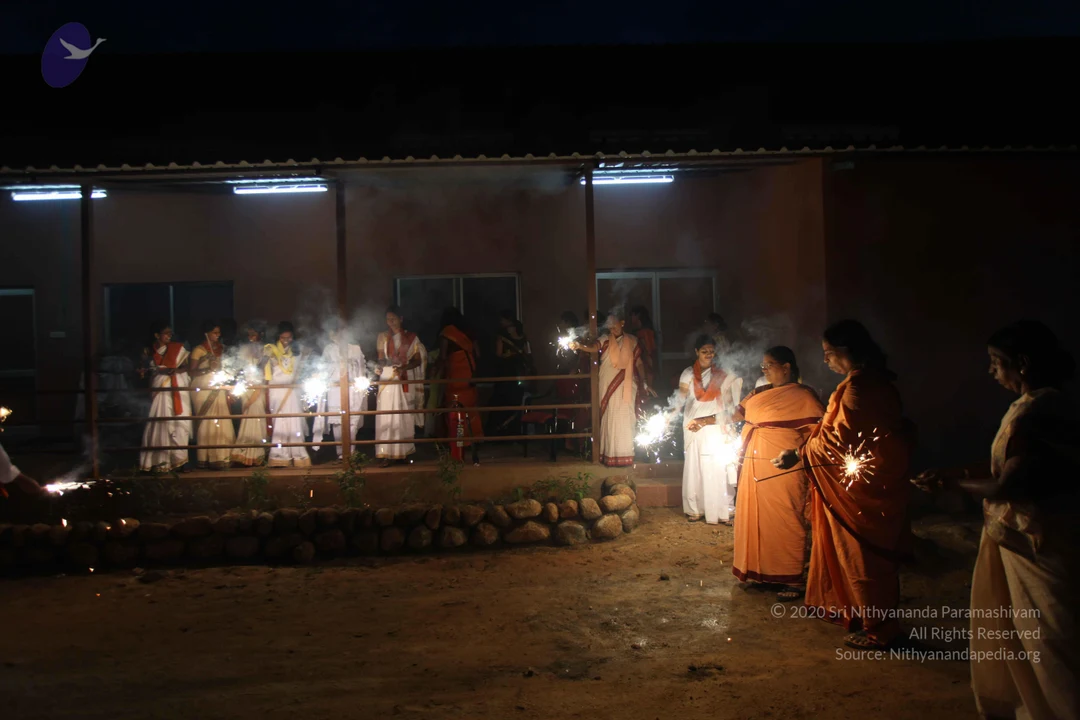
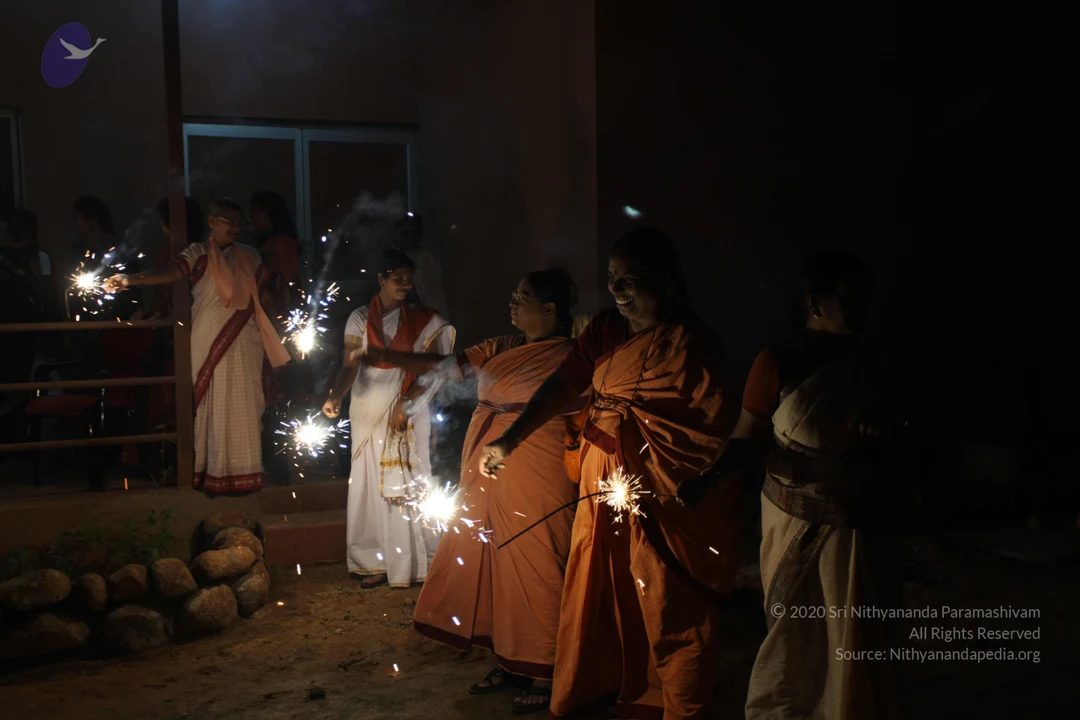
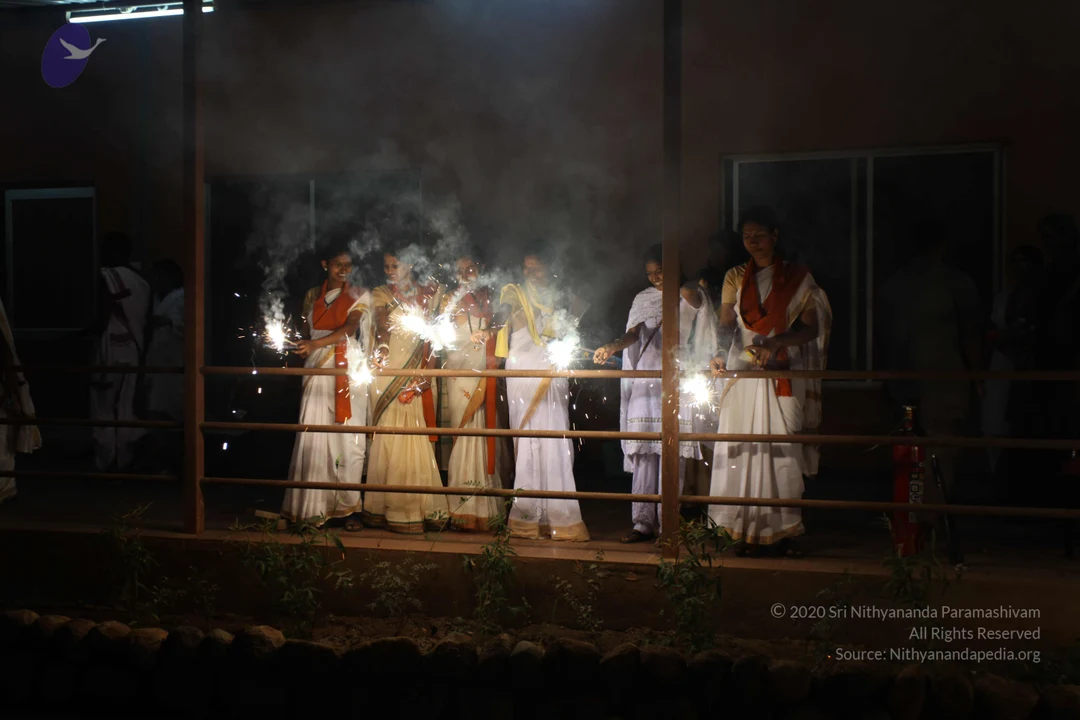
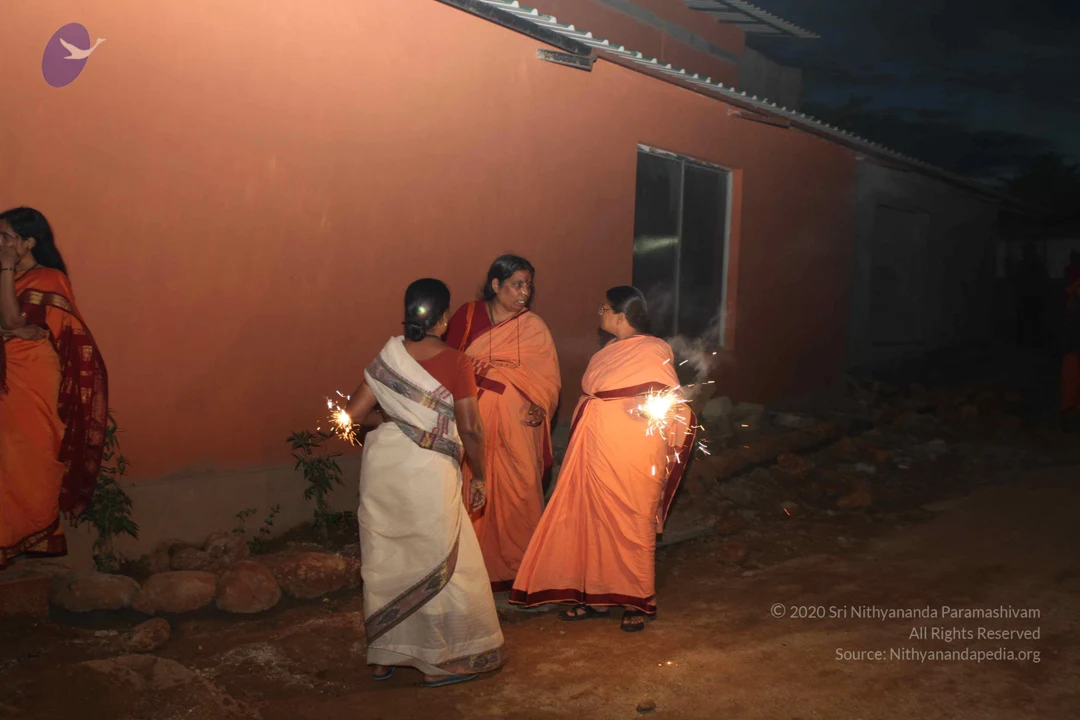
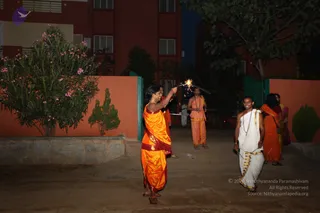
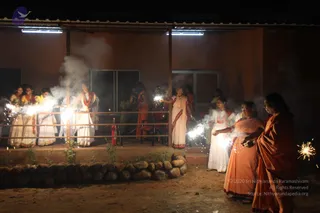
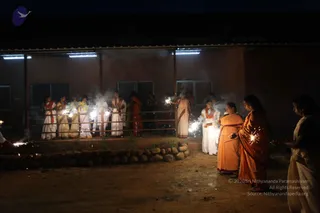
Night photograph outside a red-walled building with a signboard reading Ananda Sabha above the door. Several women in long skirts and saris hold bright green-white fireworks, sparklers releasing smoke and glow, while a row of men in white dhotis and shirts stand along the wall watching. A bright floodlight mounts on the wall and grass lies in the foreground with scattered debris and a small red box. The scene suggests a Diwali celebration with fireworks, though no one is clearly identifiable as a person.Night photograph of a Diwali-style celebration at an ashram courtyard. In the centre, a man in a saffron-orange dhoti and shawl with red-gold border crouches and lights a firecracker on a concrete ledge, sparks and smoke rising. Beside him, a man in white dhoti and shirt leans in and holds a lit sparkler, while a shaved-headed monk in orange robes stands at the left edge. A woman in a white embroidered salwar kameez stands at the upper right, reaching toward the scene, and other people in white clothes are visible in the background. Small green and red candles or lamps sit on the ledge, with stones and green leaves in the foreground.Night photo of a courtyard beside red-orange buildings and an oleander bush with pink flowers. In the foreground a woman in an orange silk sari holds a lit sparkler aloft with her right arm, smiling. Behind her a man in an orange dhoti and rudraksha mala holds a sparkler, and another man in white dhoti and shawl with a bead necklace smiles at the right. Several other people in orange and saffron saris stand in the background near a green gate, celebrating Diwali with sparklers.Night photo of a group of women and girls lighting sparklers on the veranda and yard of a plain terracotta-coloured building under strip lights, with smoke drifting through the air. Several women in white and cream saris with red borders stand on the porch holding bright sparklers, and a woman in a red-bordered white sari near the centre holds a lit sparkler. On the right, two women in orange saris stand on the dirt ground, one holding sparklers. A stone-edged planter runs along the front. The setting suggests a Diwali sparkler celebration, though no explicit festival label is visible in the frame.Night photo of a group of devotees holding lit sparklers outdoors in front of a low building with a corrugated roof and fluorescent lights, smoke drifting in the air. On the left, a row of women in white and cream saris with red borders stand along a railing. In the centre, a woman in white with a red shawl holds a sparkler, and to the right two women in orange saris hold sparklers near a stone border. A woman in a white sari stands at the far right edge. Ground is dirt with a low stone wall; this appears to be a Diwali celebration with fireworks.Night scene outdoors at an ashram-style building with a dark wall and glass doors behind. Several women hold lit sparklers that throw bright sparks. The woman at centre right wears an orange sari and smiles while holding a sparkler toward the others. Beside her, another woman in an orange sari also holds a sparkler. To the left, a woman in a white sari with red border holds a sparkler, and another in white with a red shawl stands nearby. A woman at far right wears a white and dark sari. Stones line a low border in the foreground, with a metal railing at left.

5-BGSatsang-Tamil

4 photosSource gallery
A man with long dark hair sits on an ornate gold throne-style chair, smiling, wearing an orange saffron robe with gold trim, a red bindi on his forehead, a long multi-bead gold necklace, and gold armbands on both upper arms. Behind him, a large printed portrait of a smiling figure in orange robes is partially visible at the left edge, and a golden deity relief is carved into the throne back. A golden lion-head armrest is in the foreground.A man with long dark hair sits on an ornate gilded throne with carved lion-like armrests and a tall cushioned back, on a raised golden platform. He wears an orange-saffron robe and a long garland of beads around his neck, with gold bangles on his wrists, and rests one hand on the armrest. The throne sits in front of a dark backdrop with a large colourful flower-garland display on the right showing a deity figure, and gold pillars with red-topped vessels on either side. Partial banners on the left carry a saffron-robed figure and text fragments. Swamiji (probable): long swept-back hair, saffron robe and bead garland, seated on a throne in a teaching setting.A smiling man with long, swept-back dark hair sits on an ornate gold throne with carved lion-head armrests and a gold-framed backrest. He wears saffron-orange robes, a long rudraksha-style garland of gold-coloured beads, and gold armbands, with a red mark on his forehead. His feet rest on a red-cushioned gold footstool decorated with flowers. Behind him stand a banner with a smiling portrait in an orange shawl, a floral backdrop with a deity murti decorated with red and white flowers, and a gold-trimmed pillar with a red-topped vessel. The setting looks like a satsang hall. Visible text includes partial words on the banners.A silver kalasha pot topped with a coconut and green mango leaves stands at the centre of a ritual setup, with yellow and red flowers arranged on a silver tray at its base. To the left, fruits including limes and apples sit on a brass plate beside folded red cloth on a purple runner. In the blurred background at night, several seated devotees on orange mats and one standing figure in white and orange clothing face the altar. Their faces are not clear enough to describe.
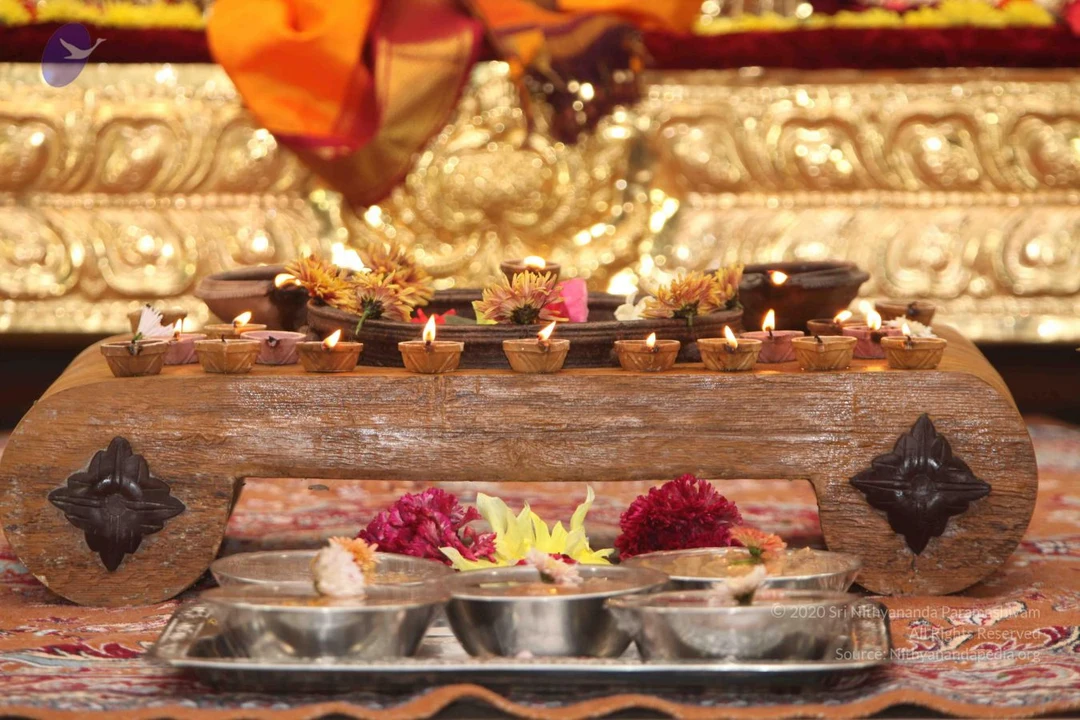
6-Chandi-Homa

47 photosSource gallery
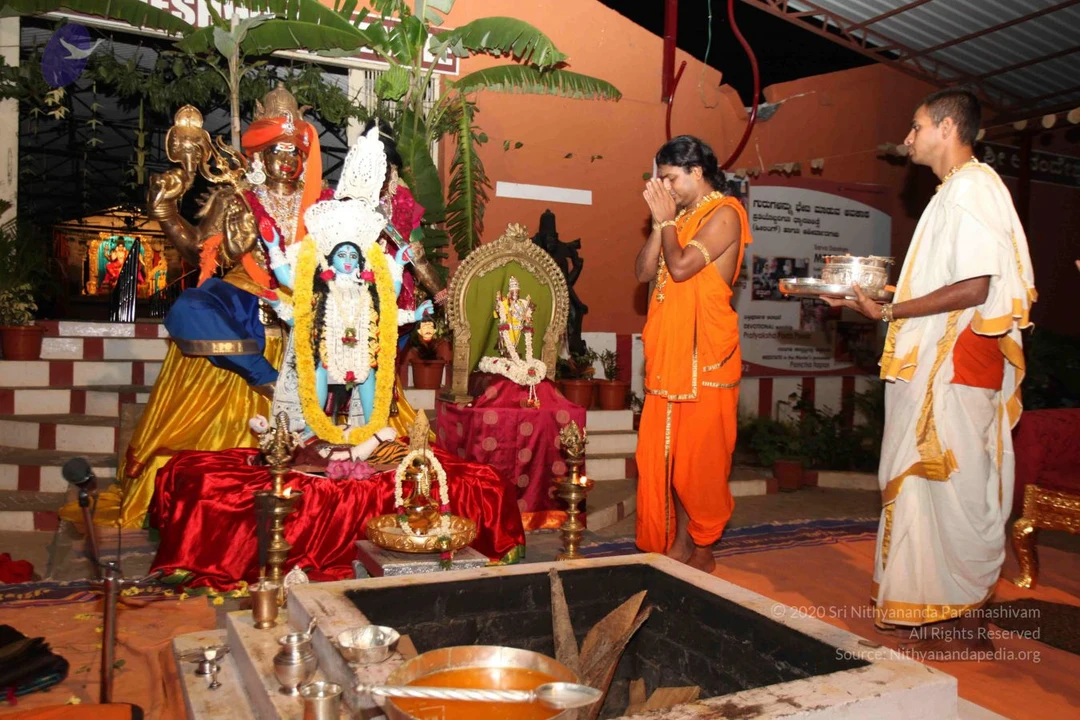
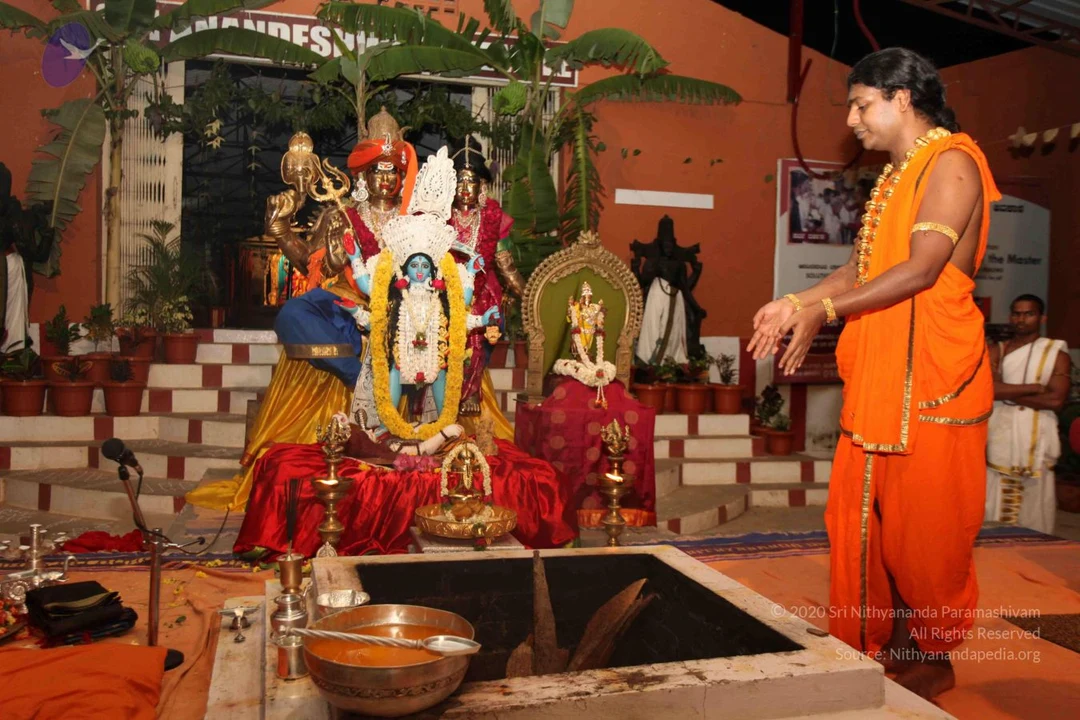
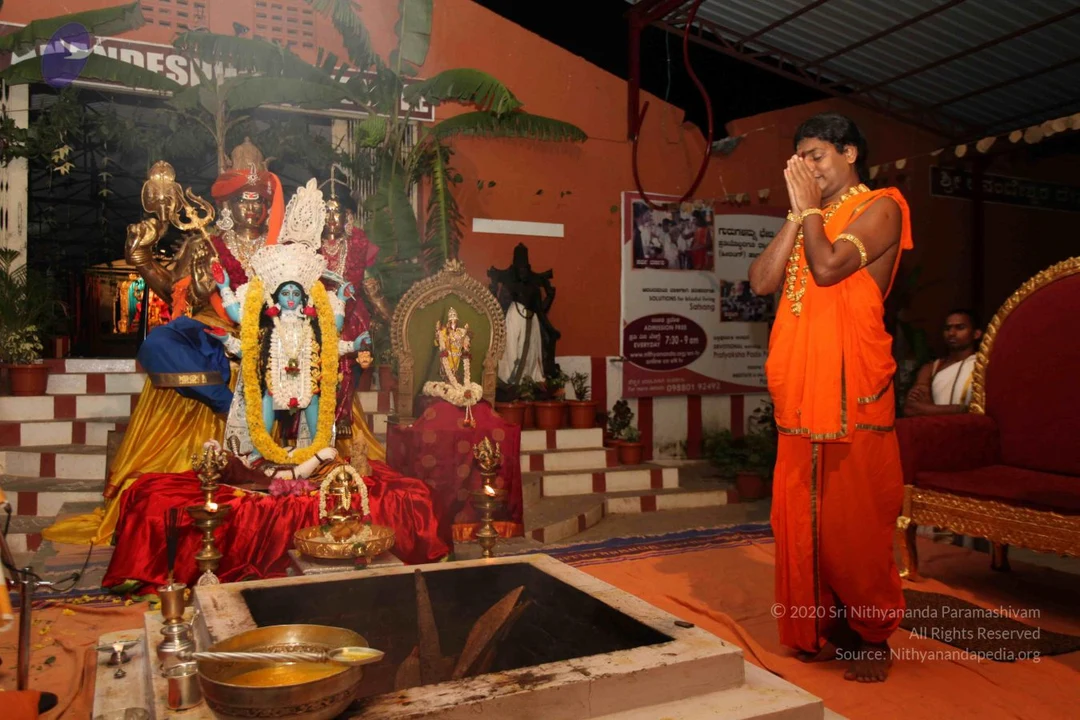
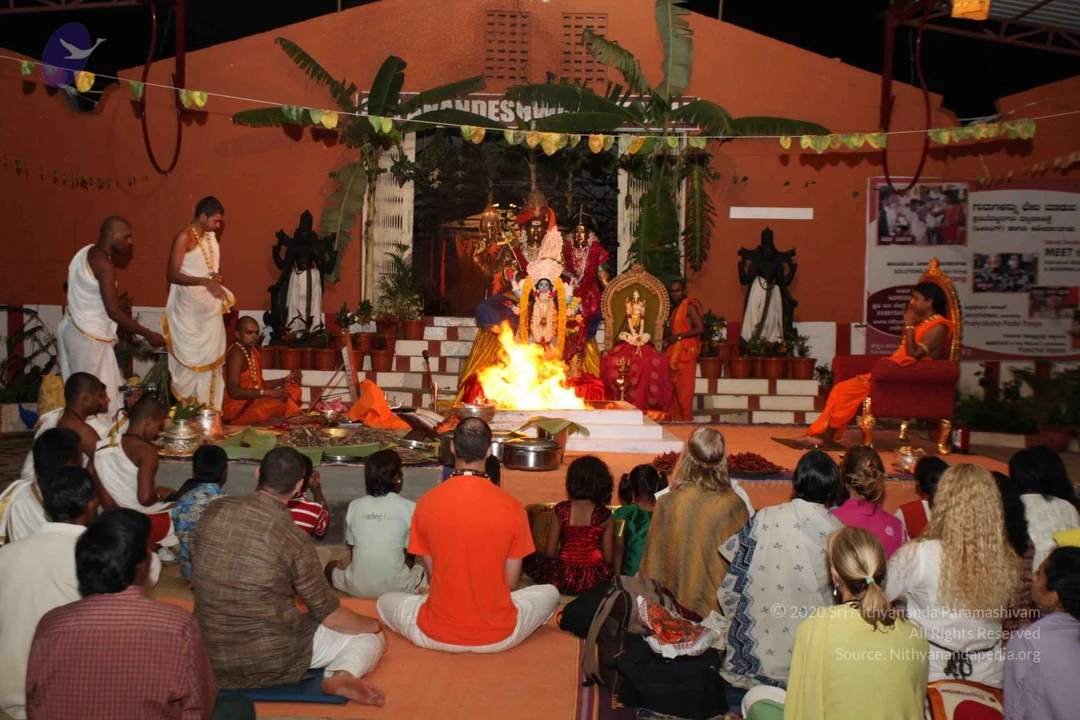
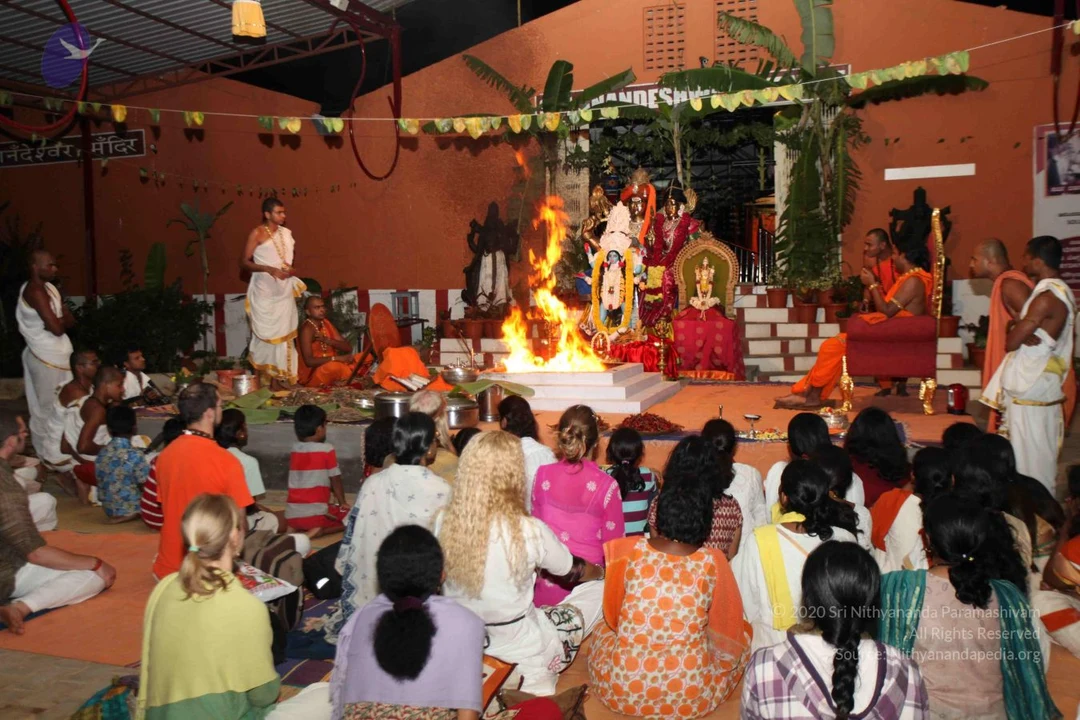
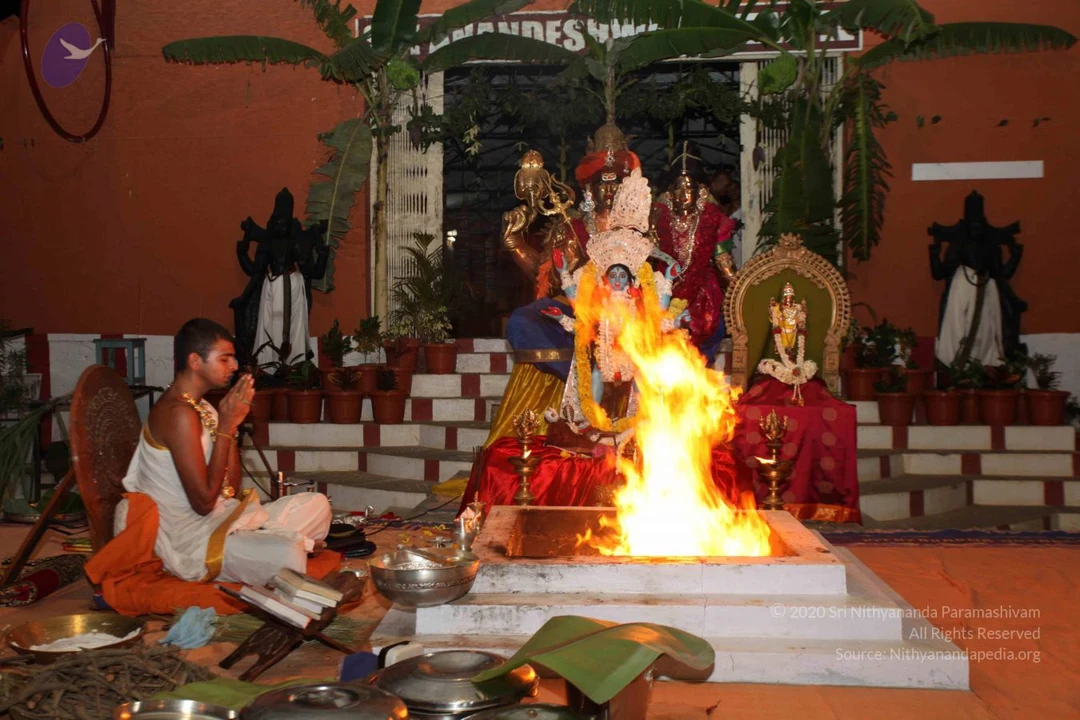
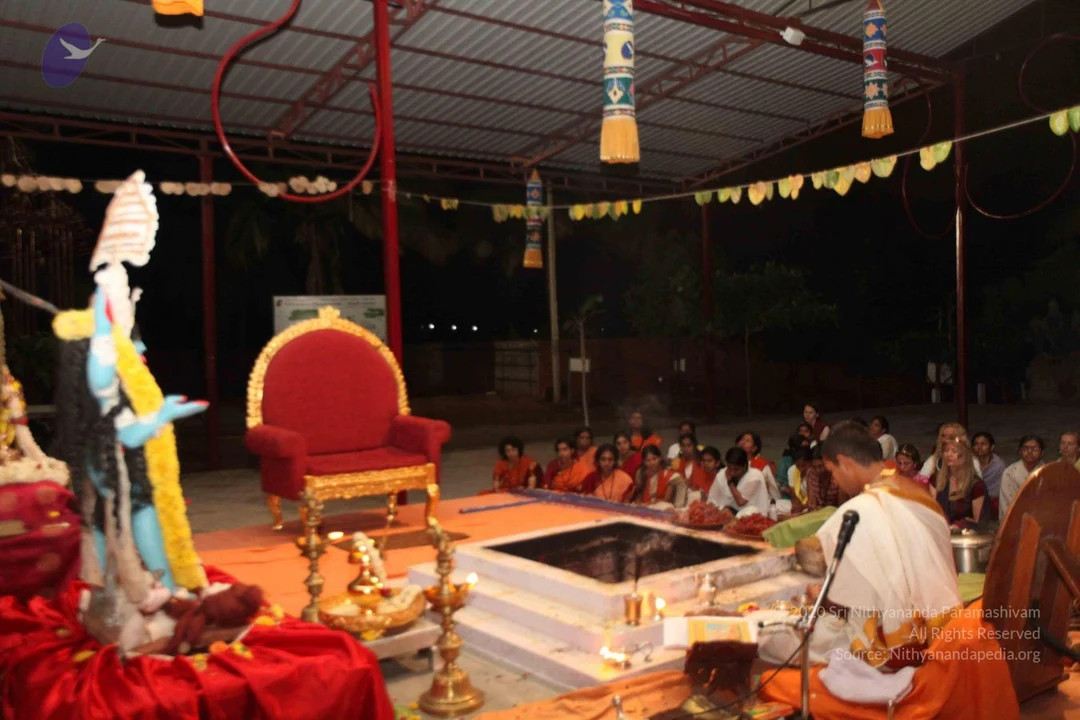
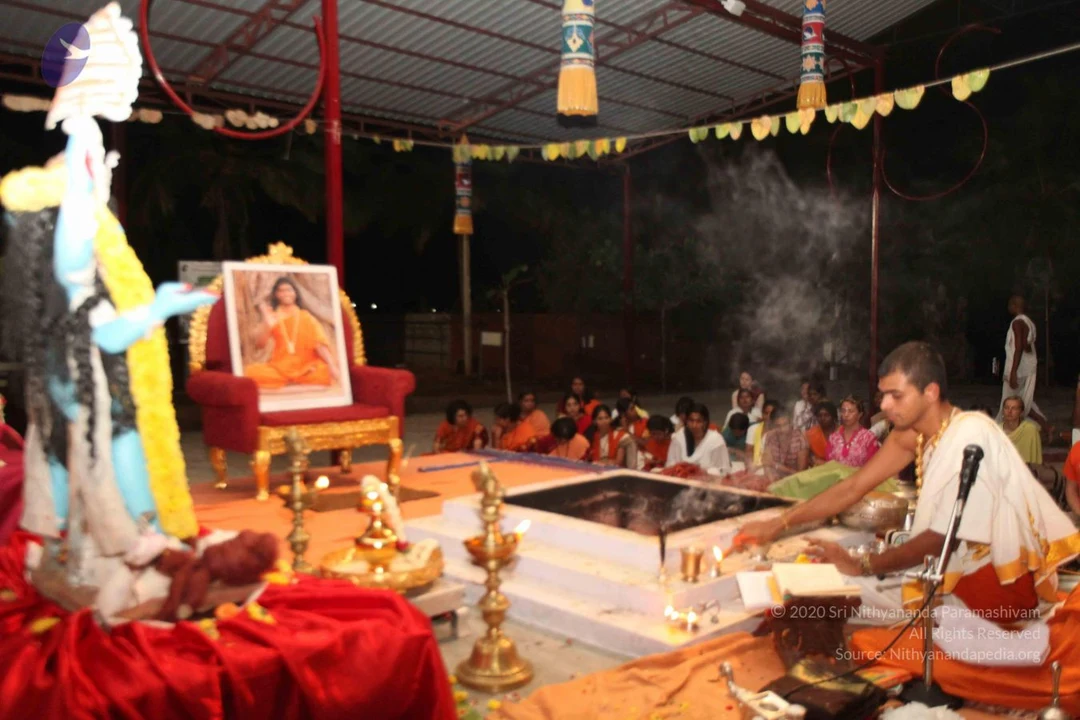
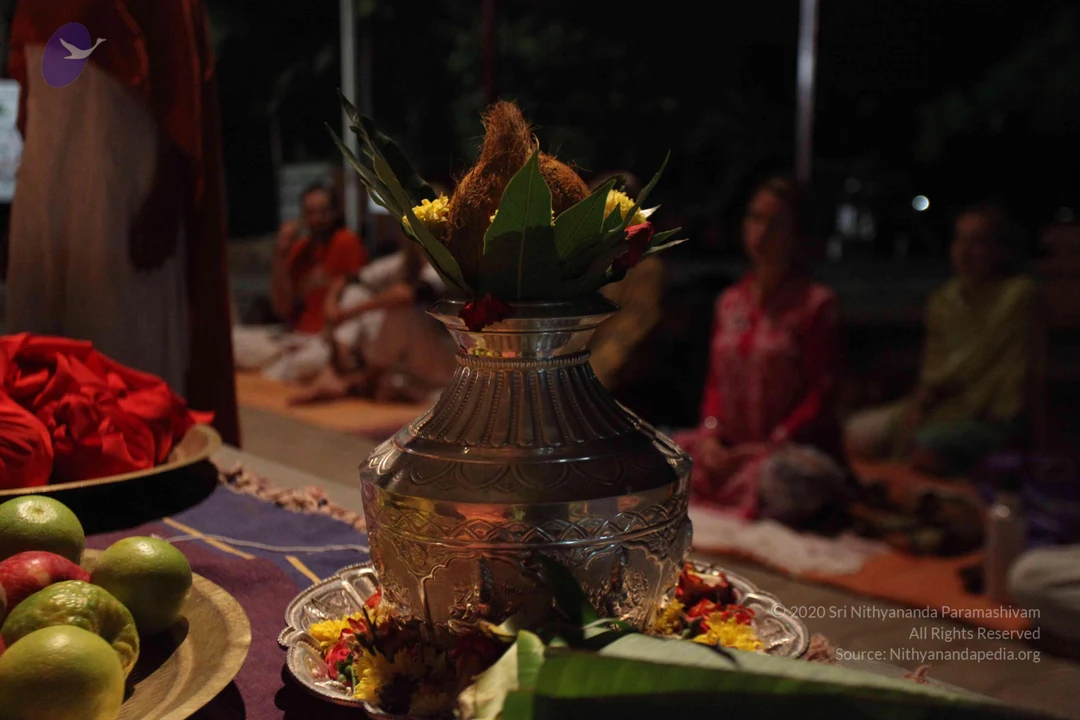
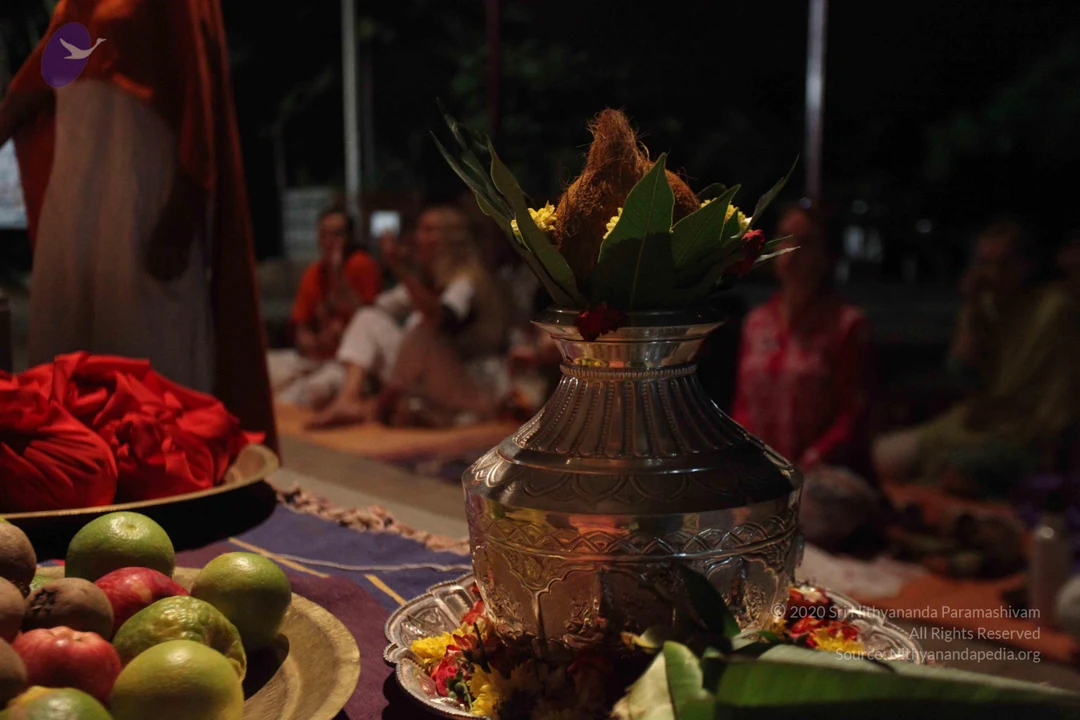
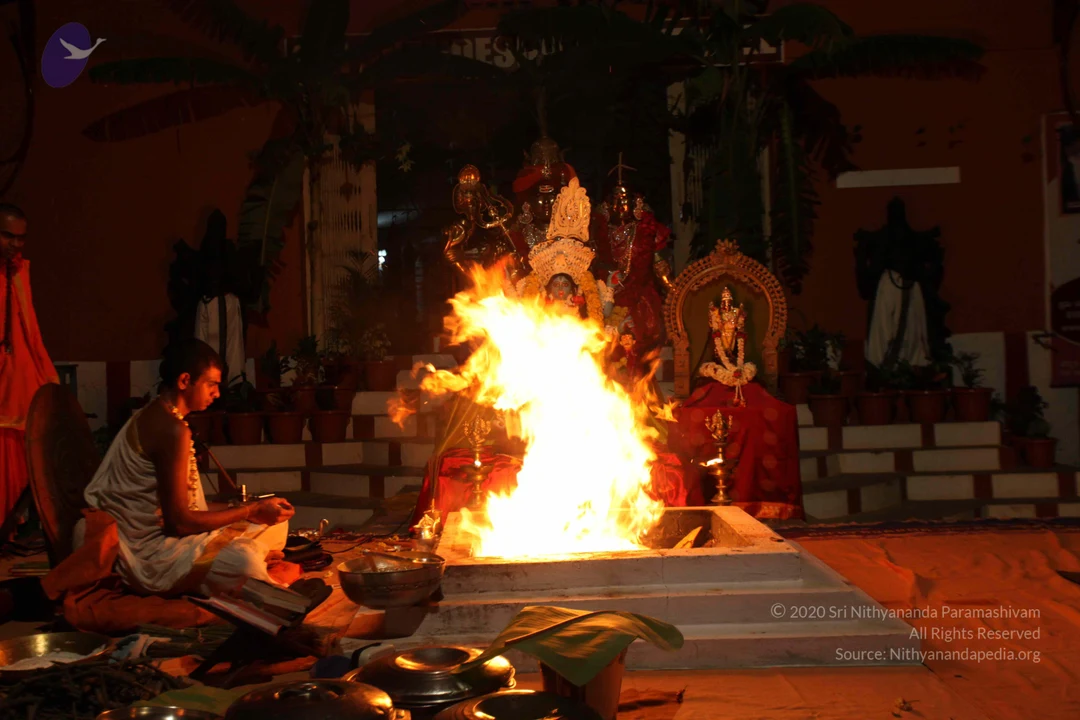
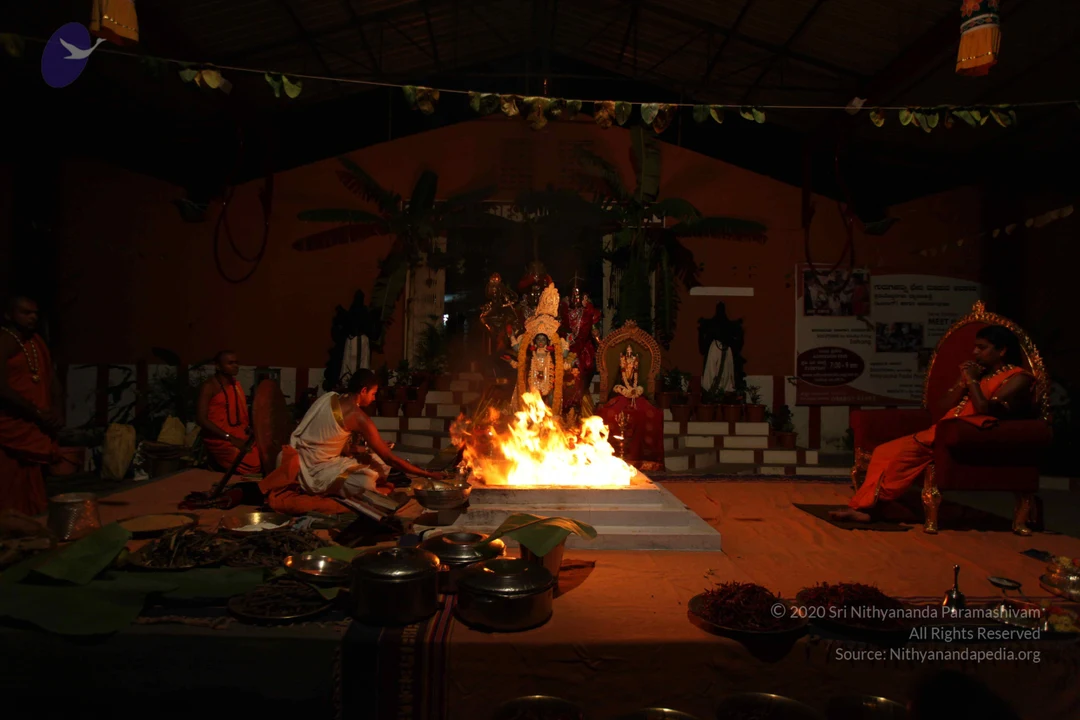
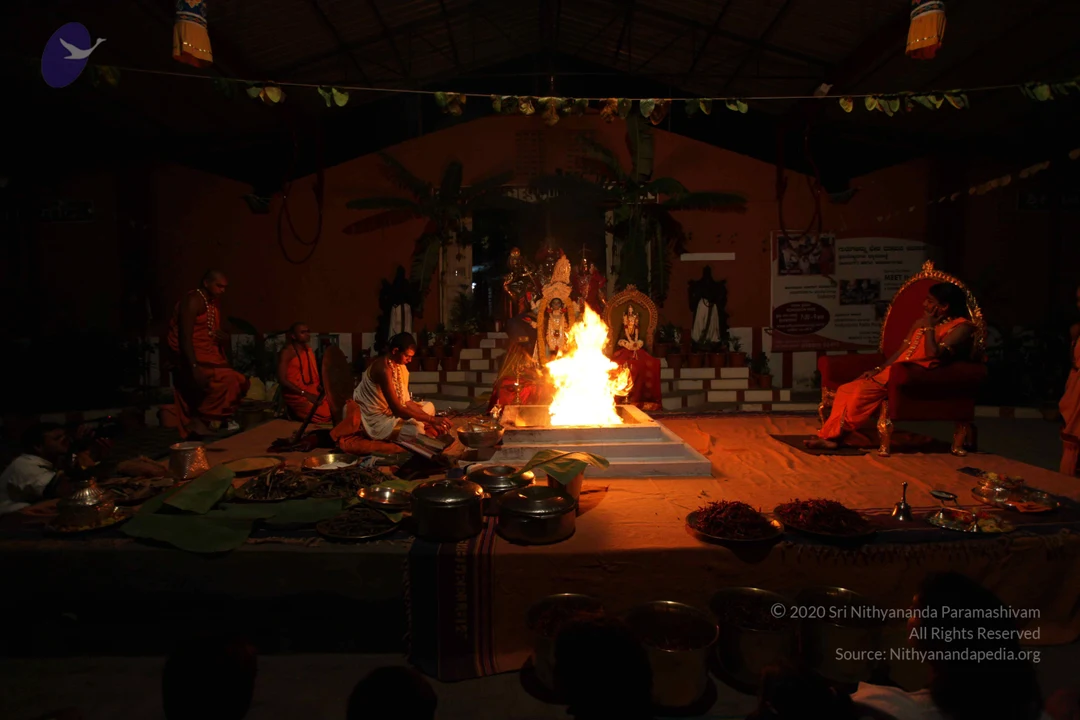
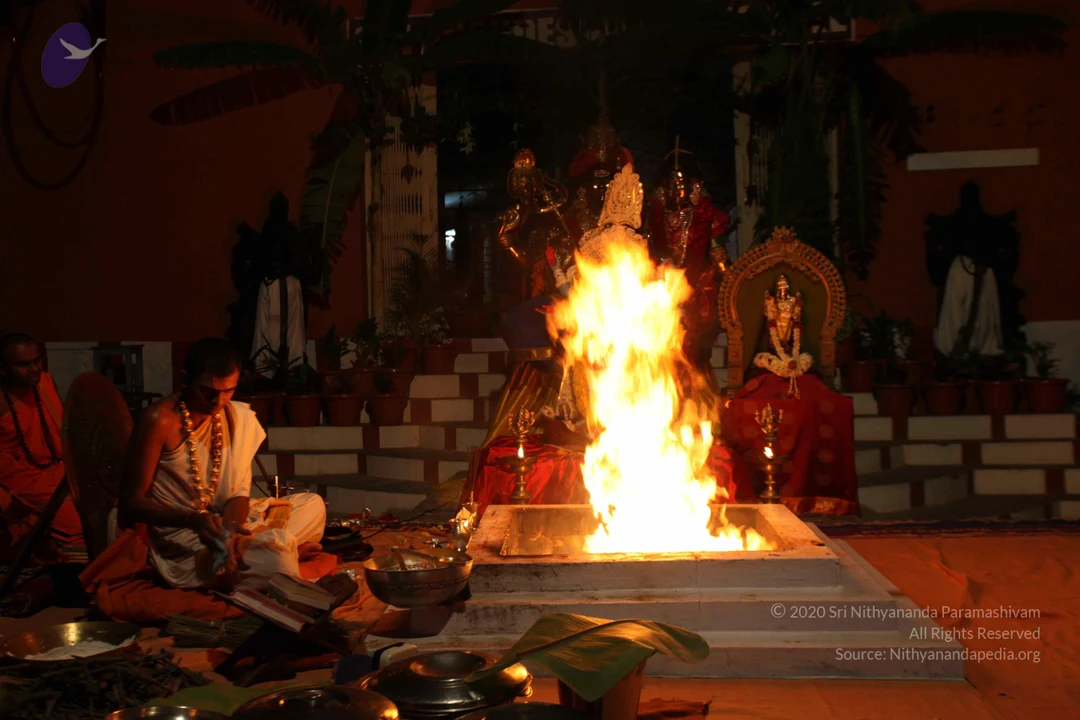
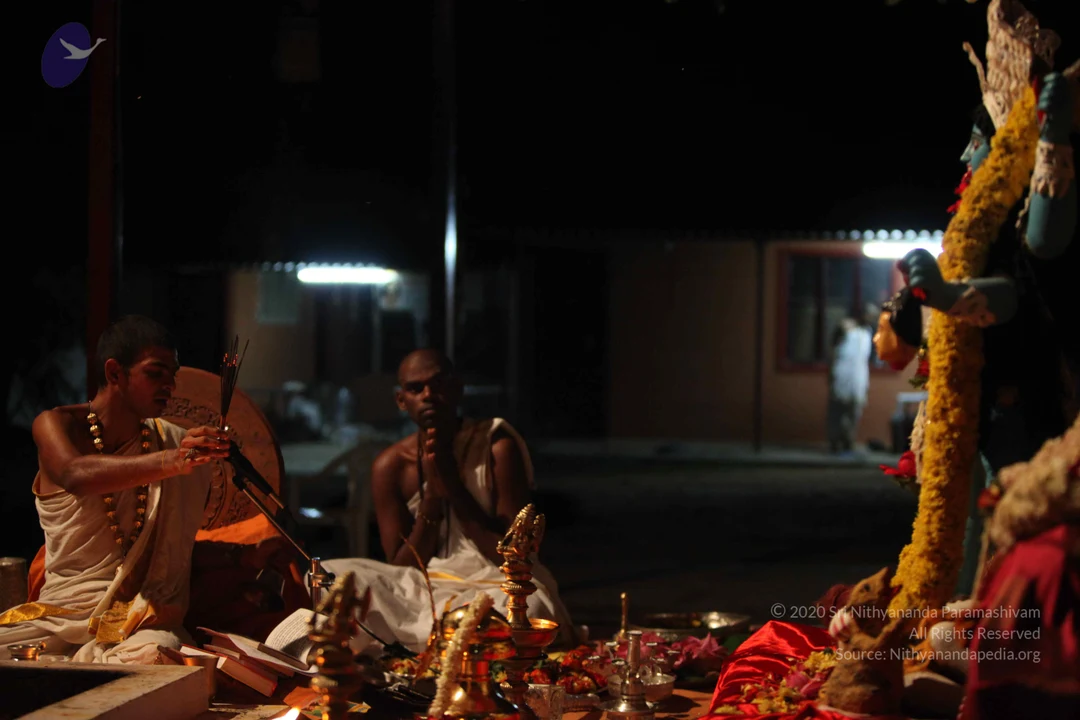
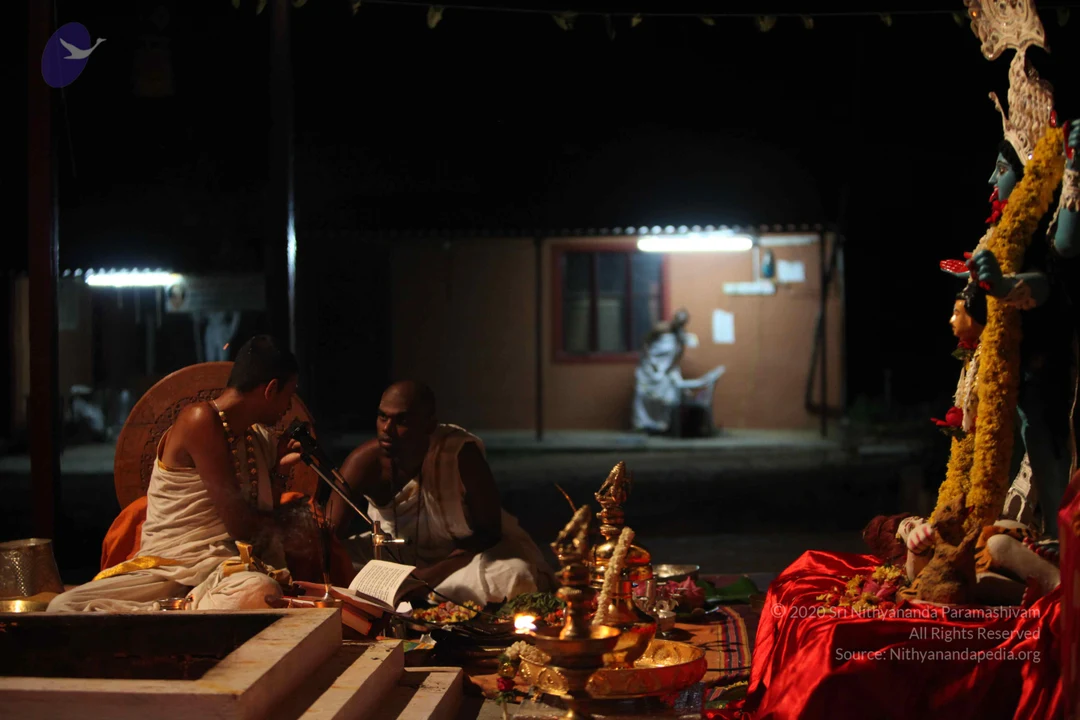
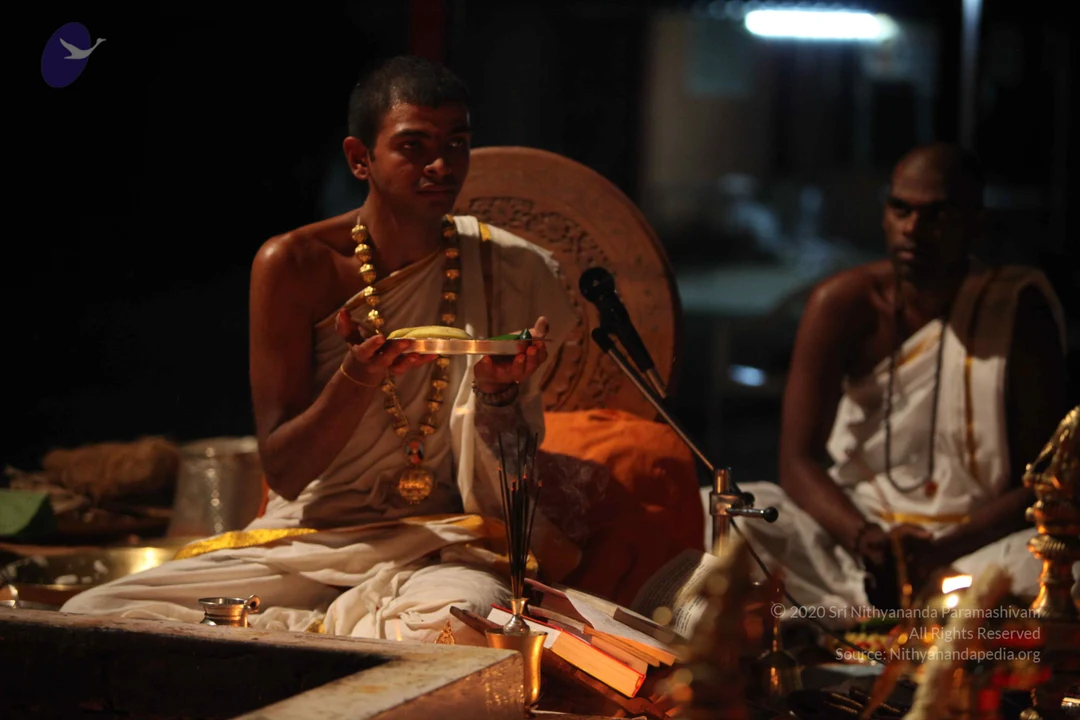
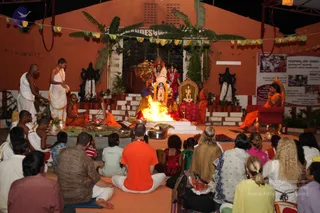
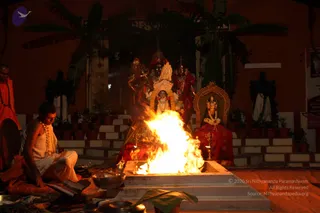
A photograph of a ceremonial silver kalasha pot topped with a coconut, mango leaves and yellow and red flowers, set on a silver plate with marigold garlands at night. Beside it sit fresh fruits including limes, apples and small brown fruit on a tray, and a plate of folded red cloths. In the blurred background, several seated devotees in orange, red and white clothing sit on mats, one standing figure in an orange garment at the left edge.A dark night scene on a dirt road beside a low red-brown building with a bright floodlight on a tall metal frame. A flat wooden cart or trolley sits at left. Palm trees stand at right, and a roadside information board shows a green map with a Nithyananda Dhyanapeetam sign. No people are visible.A temple shrine scene at a homa fire pit set before a large deity murti with blue skin, a crown and a red-orange garland. A man in saffron-orange robes stands at the right with hands pressed together in namaste, a rudraksha-style mala and gold necklace visible. Beside him a man in white dhoti and shawl with an orange border holds a silver tray of offerings. A square fire pit with a copper bowl of orange liquid and ladles sits in front. Oil lamps, brass vessels, a garlanded smaller murti and a yellow-and-blue decorated figure stand on a red cloth. Orange walls, banana plants and a corrugated roof frame the scene.A photograph of a night homa ritual at a temple-like setting with orange walls and potted plants. On the left, a deity murti adorned with a yellow marigold garland, white flower garland and a large crown sits on a red-draped platform beside a golden figure and an oil lamp. On the right, a man in saffron-orange dhoti and shawl, wearing a long beaded garland and gold armbands, pours liquid from a small ladle over a square fire pit. A copper vessel of liquid and brass oil lamps sit near the pit, and a microphone stands at left. A plain man in orange clothing, a single participant, performs the offering.Night-time outdoor homa at an ashram courtyard with a large sacred fire burning on a white raised platform in front of a decorated deity murti. Two priests in white dhotis stand at left, one tending the fire with offerings; a seated priest in saffron clothing sits beside the fire. Behind the fire, a tall figure in saffron and red adorned as a deity is flanked by a large murti. At right, a figure in saffron sits on a red cushioned throne-like seat, with brass vessels and oil lamps placed nearby. Foreground devotees sit on orange mats: a man in an orange t-shirt and white trousers, a man in a brown shirt, a child in red, and women in pastel and yellow clothing. Banana plants, leaf garlands and marigold-yellow bunting decorate the orange walls.A night-time homa at a temple with a large fire blazing in a raised stone fire pit in the foreground. Behind it stands a deity murti decorated with a crown, garlands and gold ornaments, flanked by potted plants and a smaller murti on a throne-like seat on the right. A seated man with a shaved head, wearing a white dhoti and a marigold garland, reads from an open book near brass vessels. On the left edge a standing priest in orange robes and a rudraksha mala is partially visible. Oil lamps and a palm-frond-covered offering are on the floor.

7-Salem-DiwaliCelebration

7 photosSource gallery
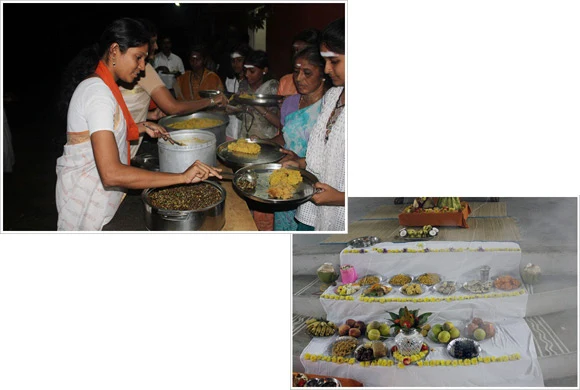
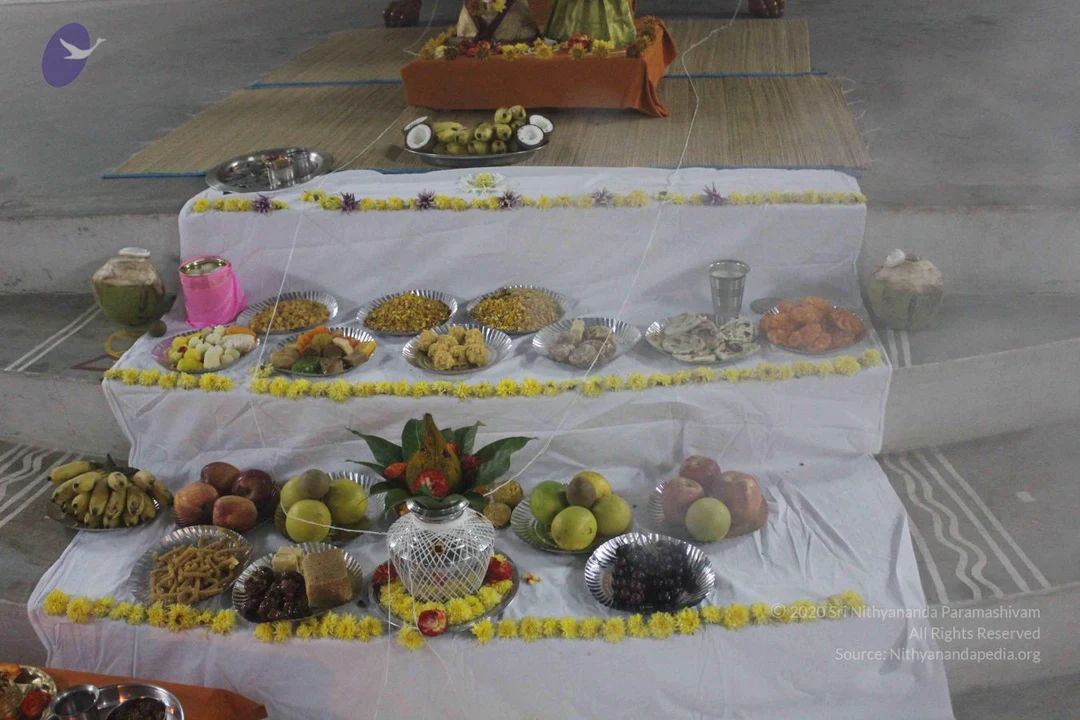
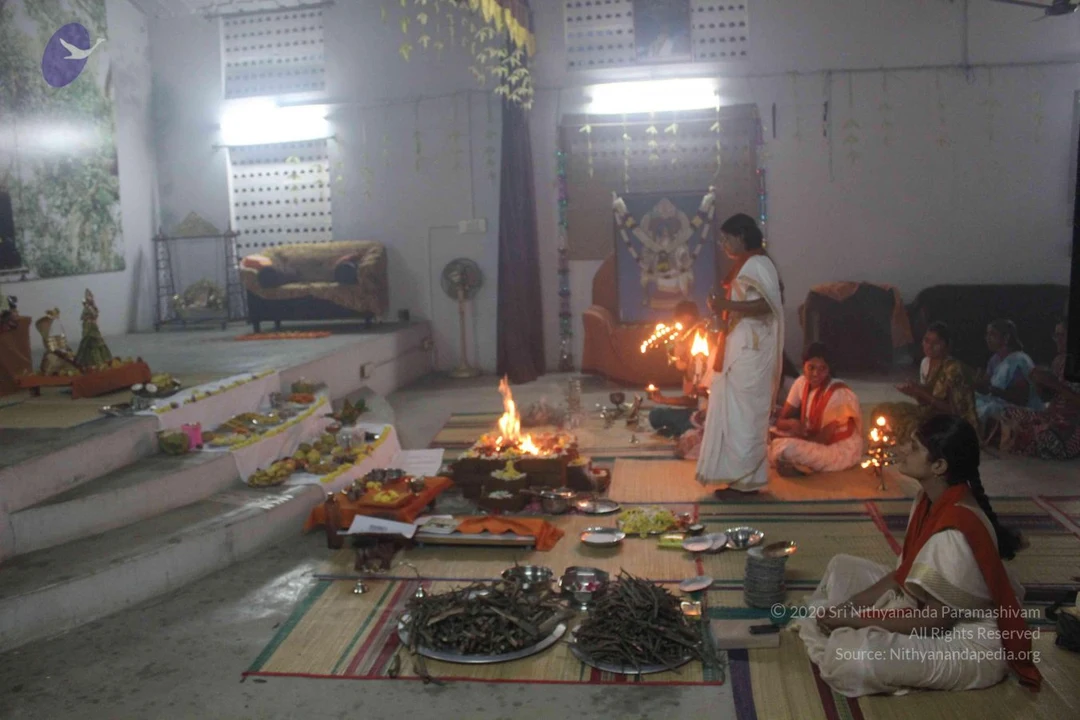
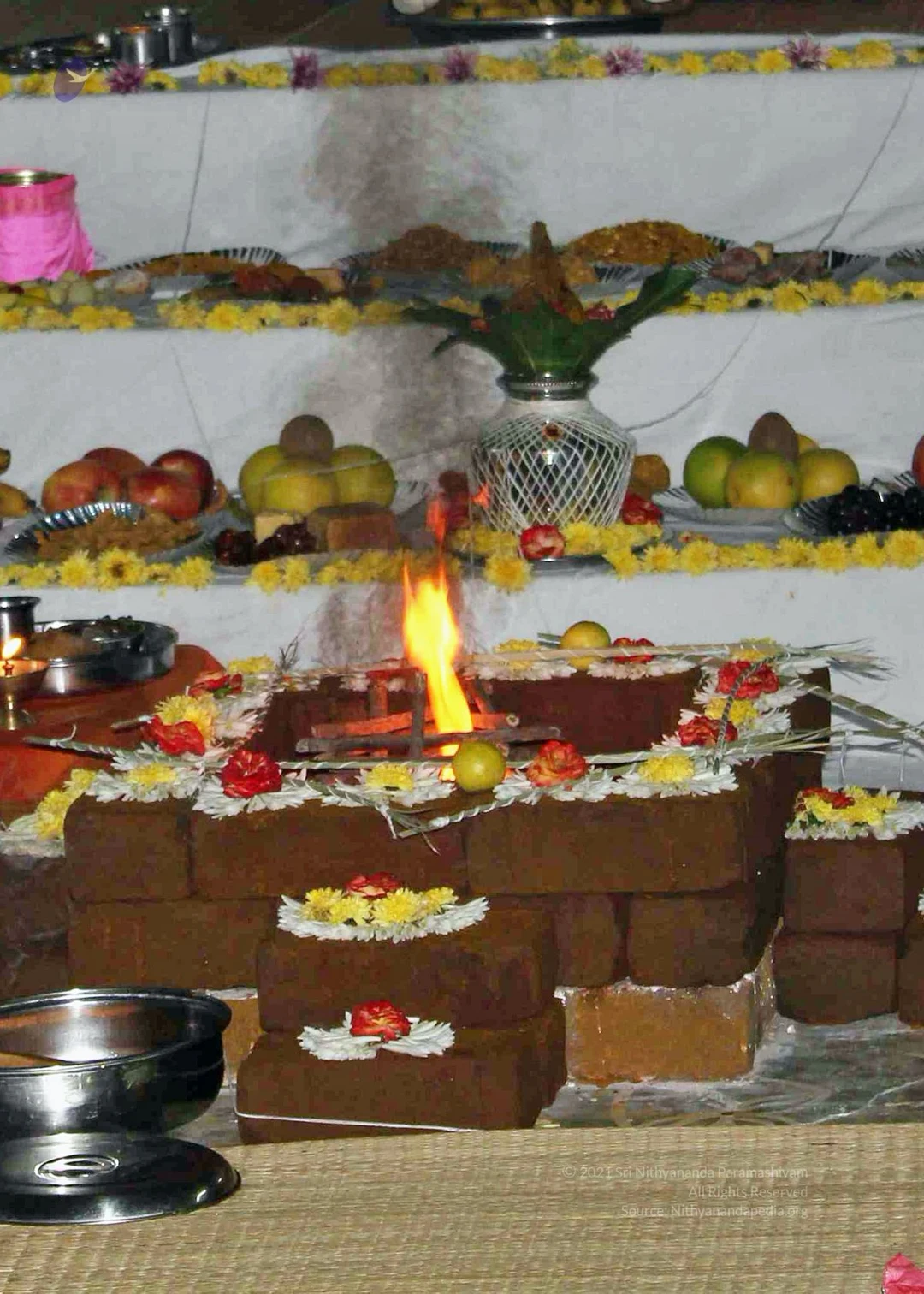
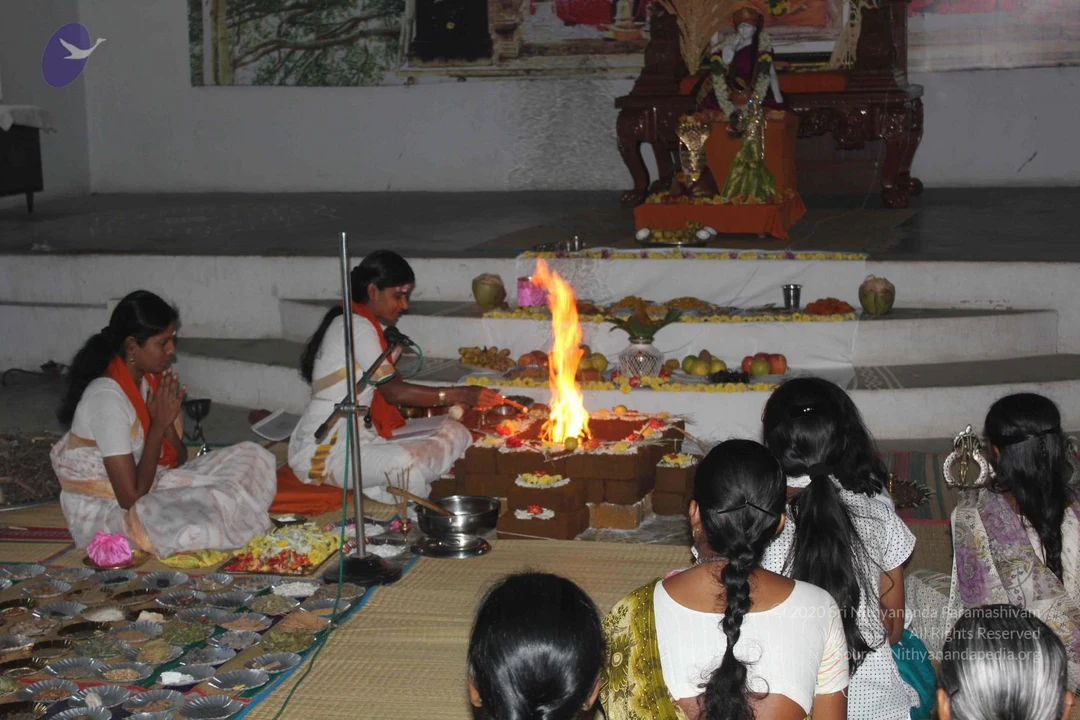
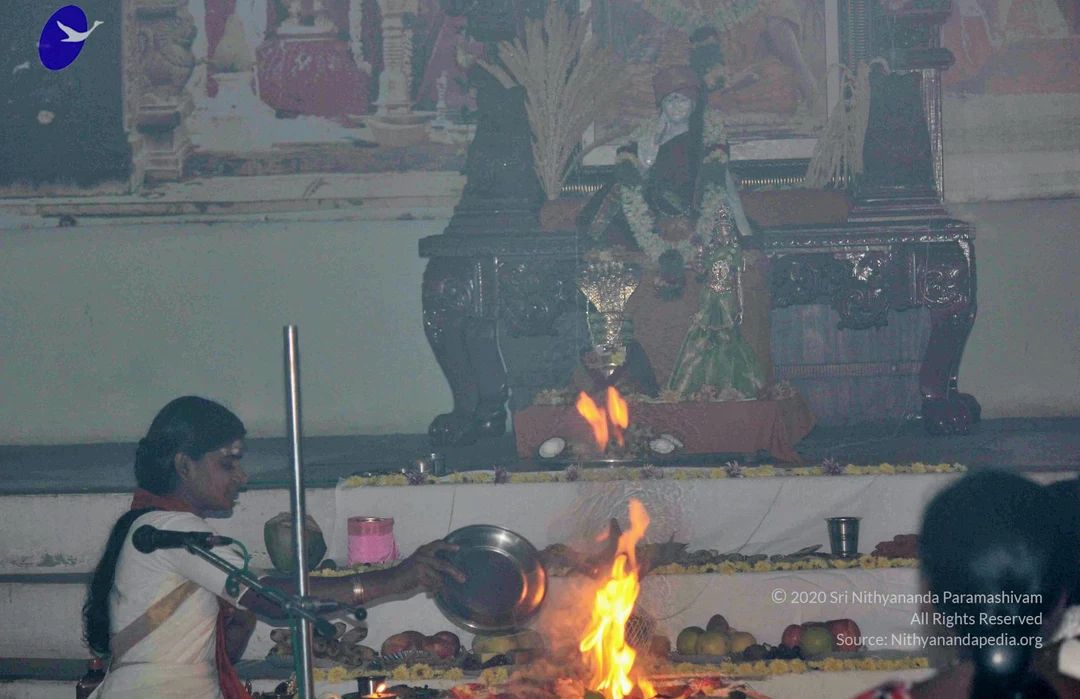
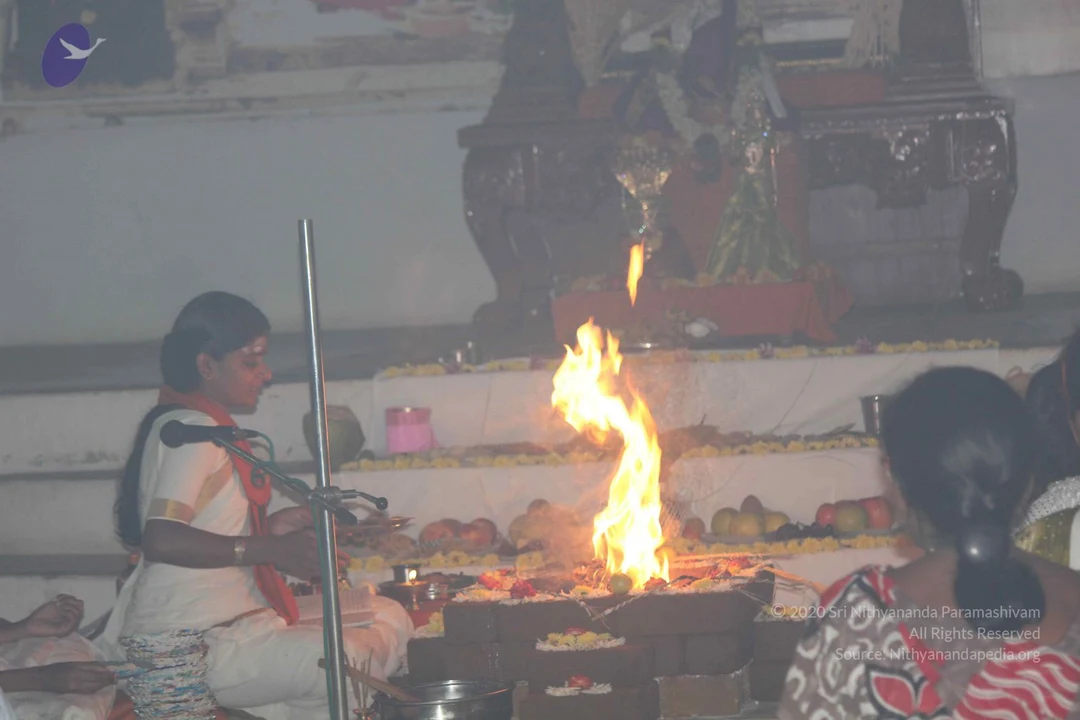
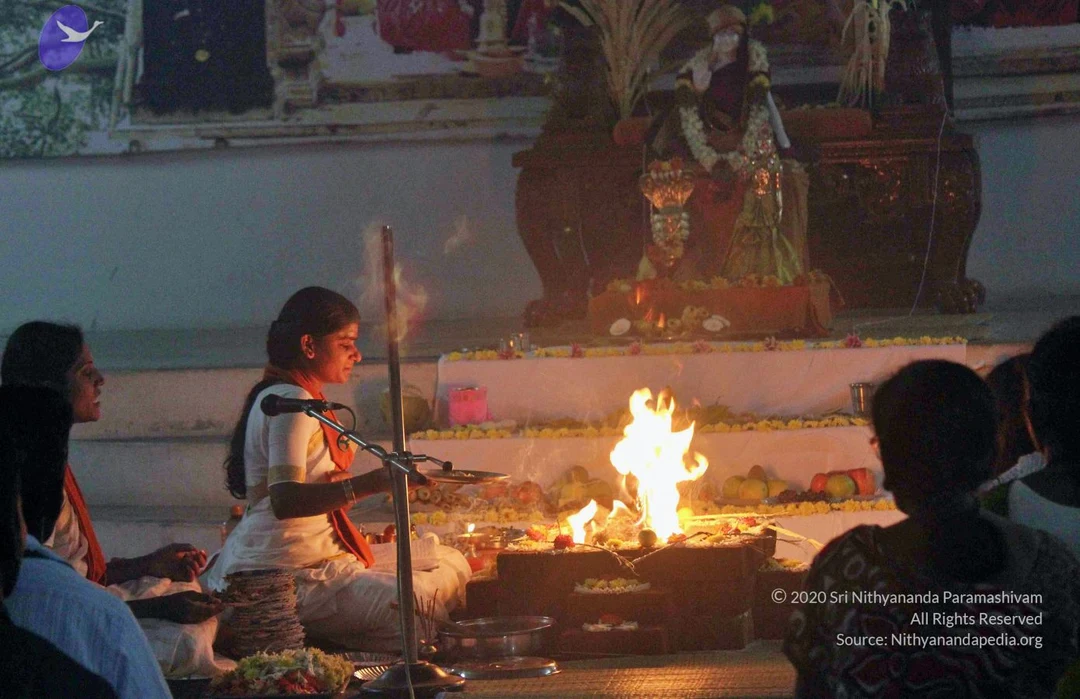
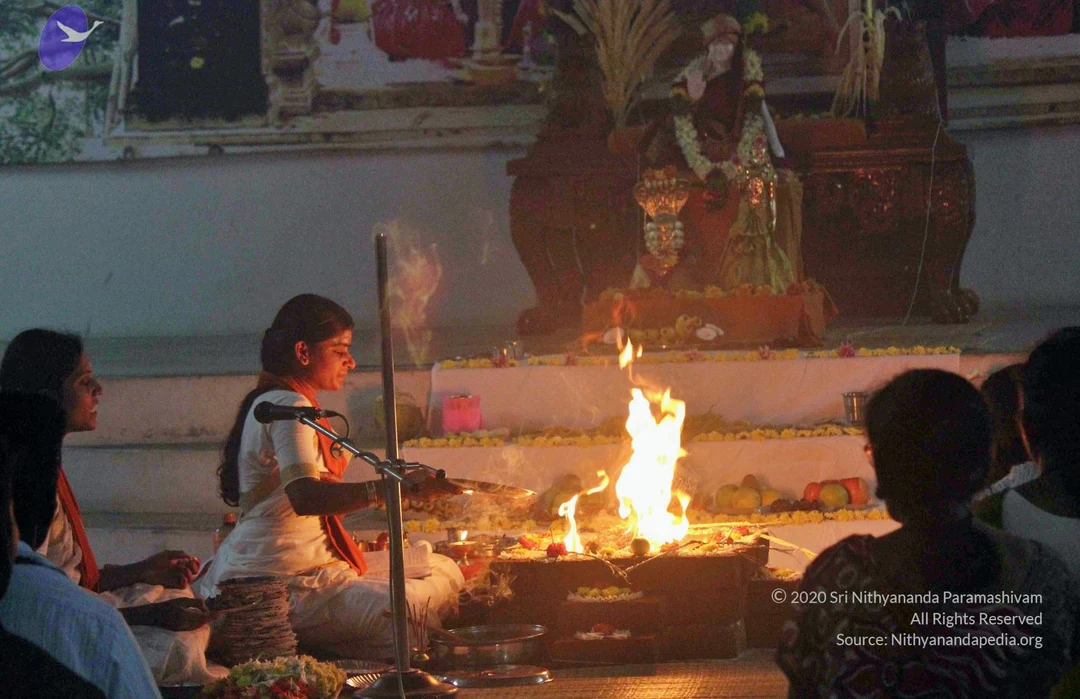
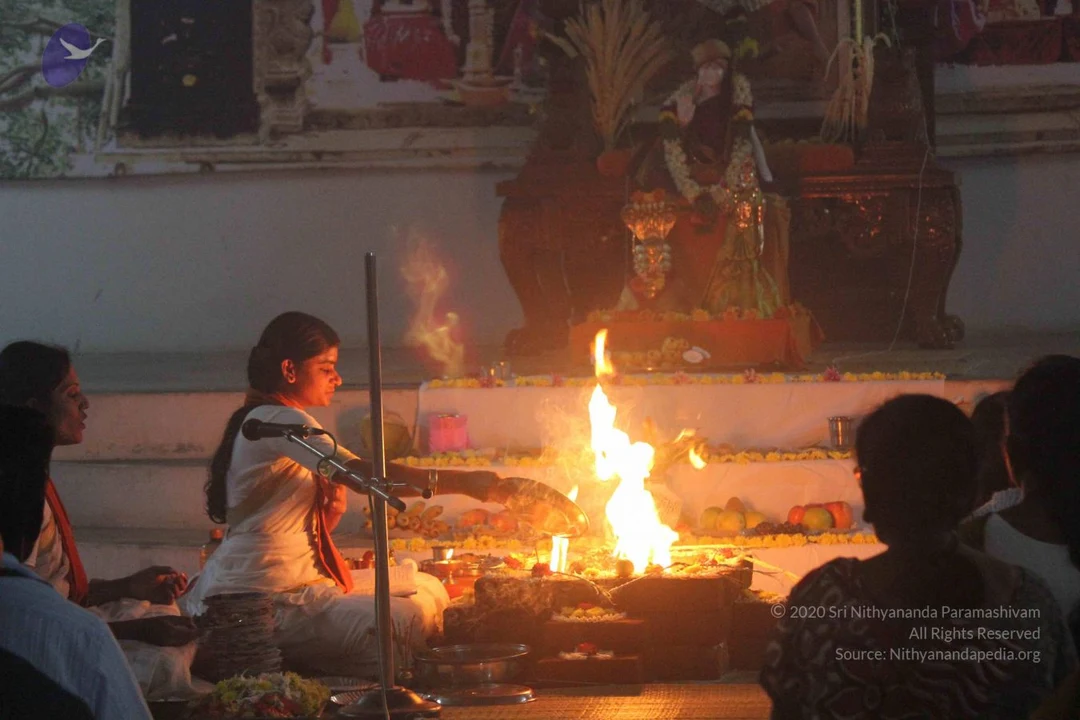
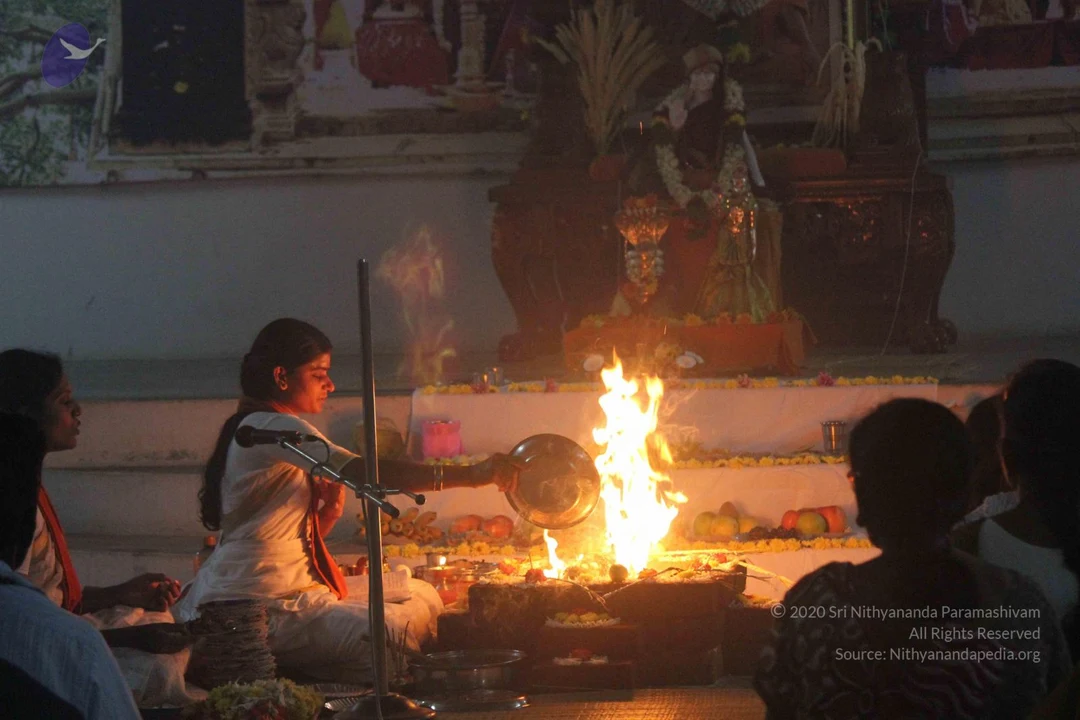
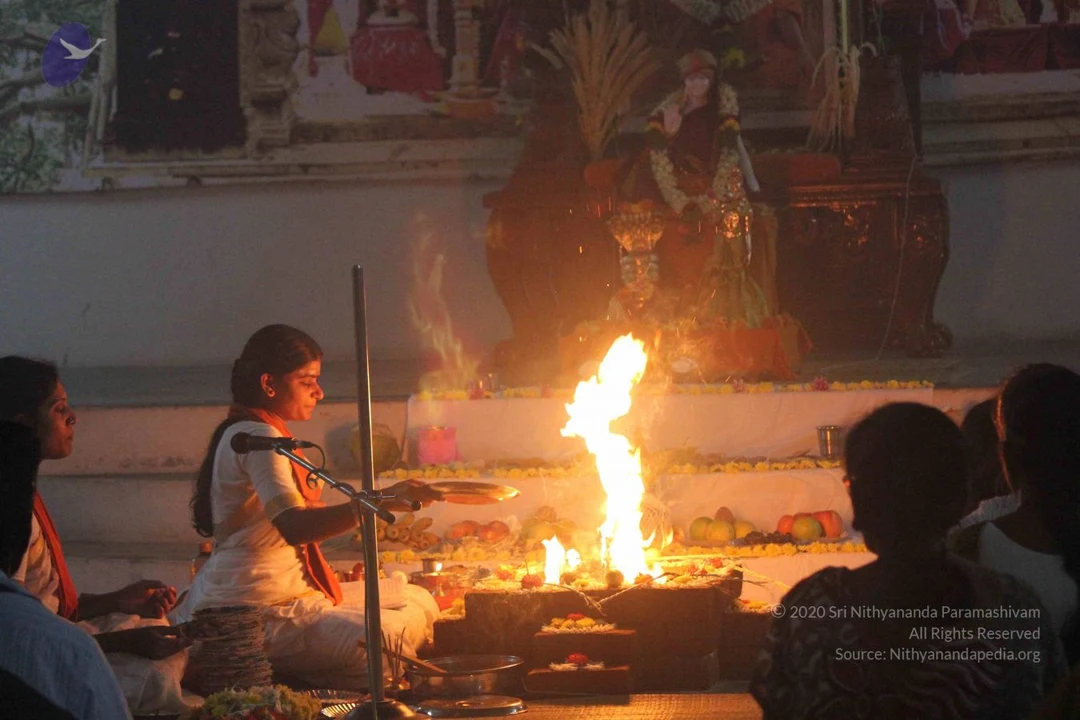
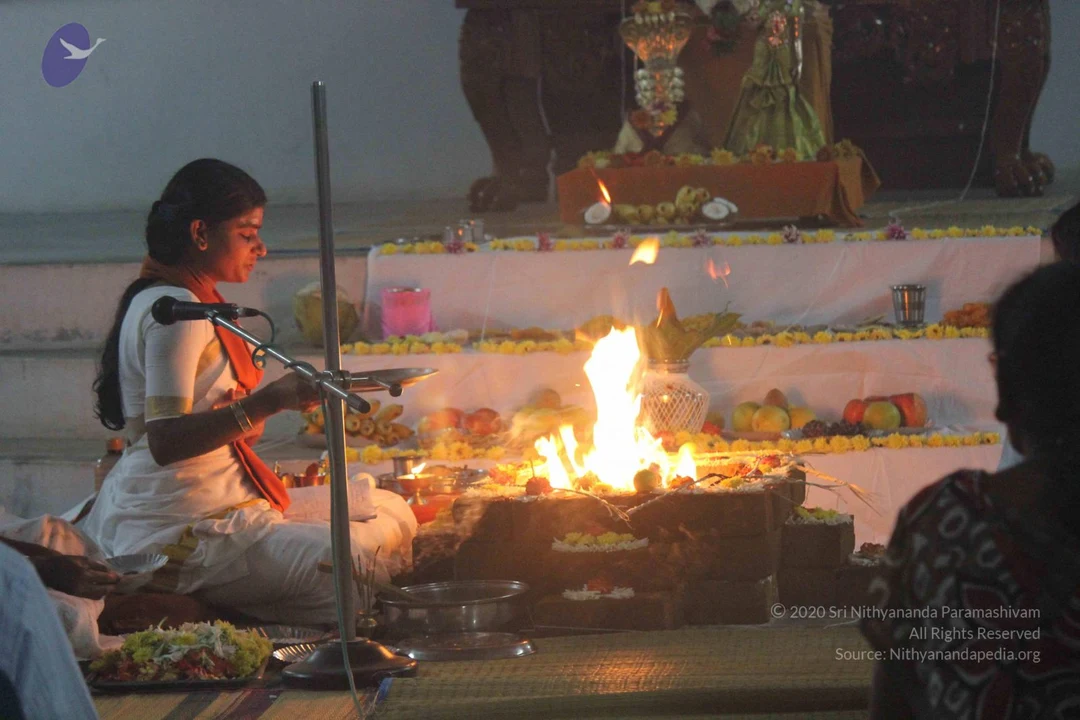
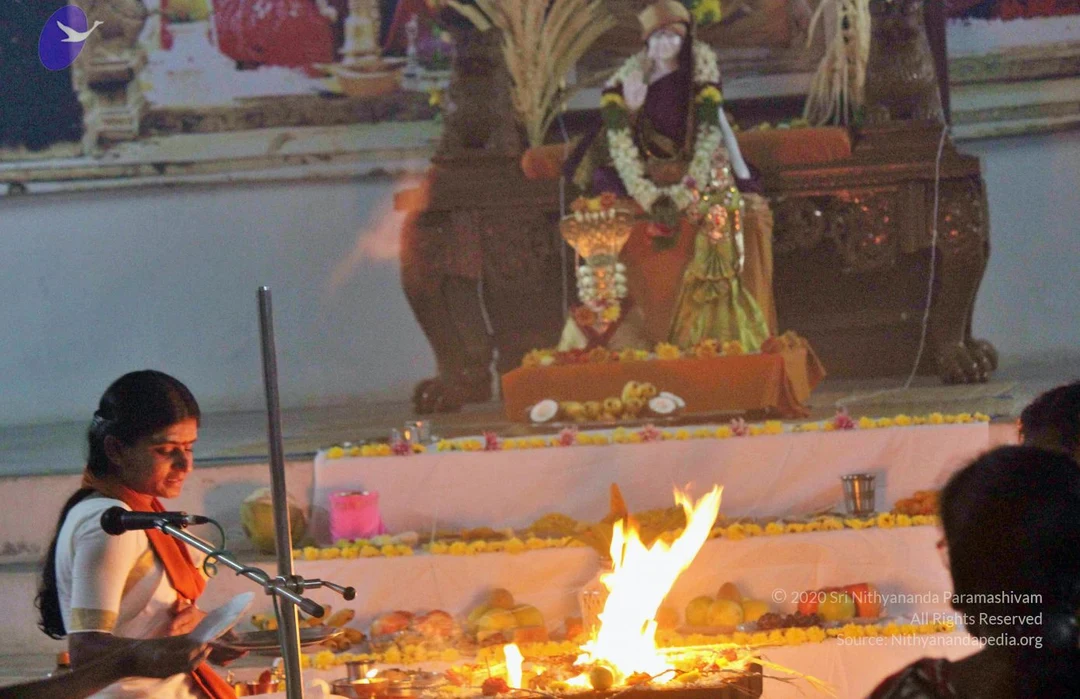
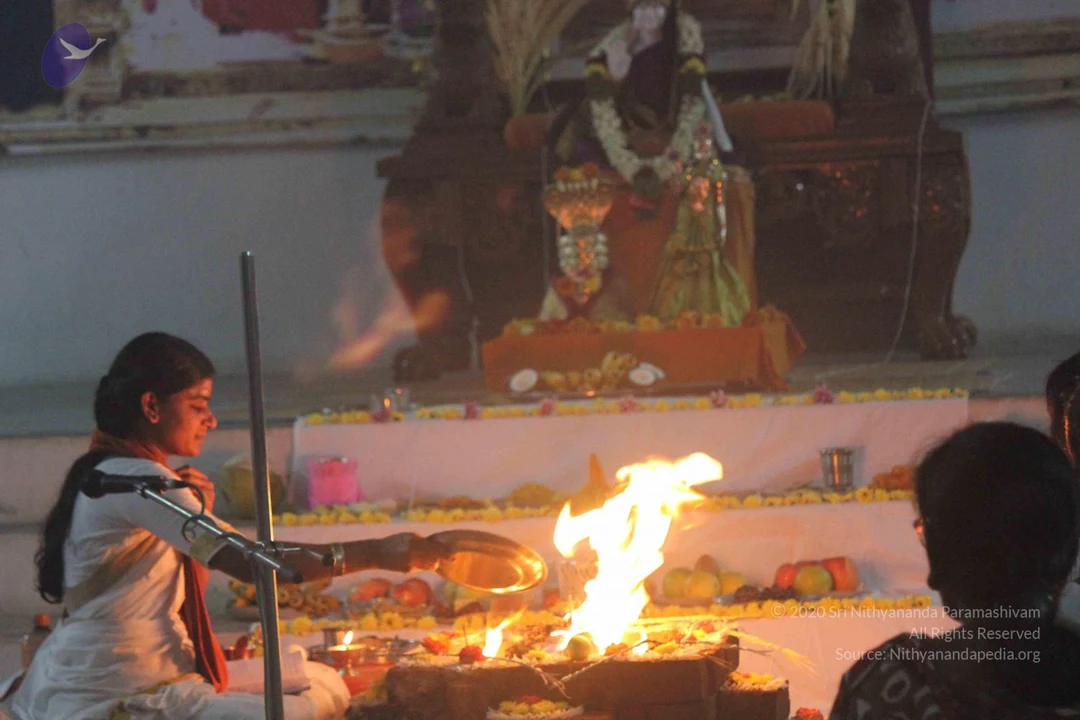
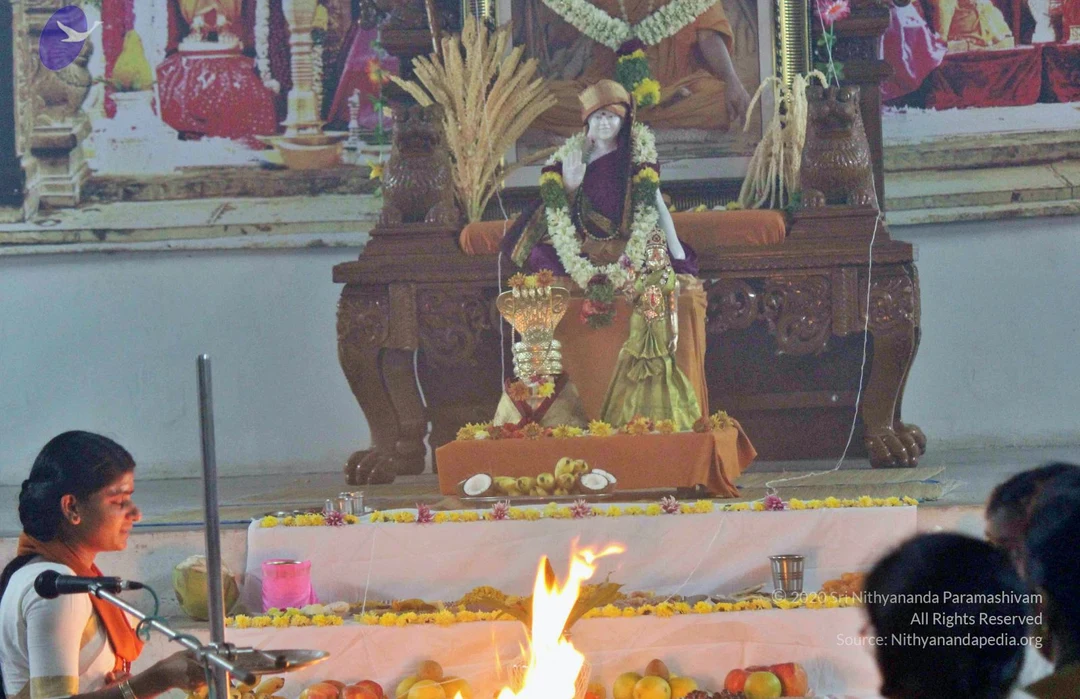
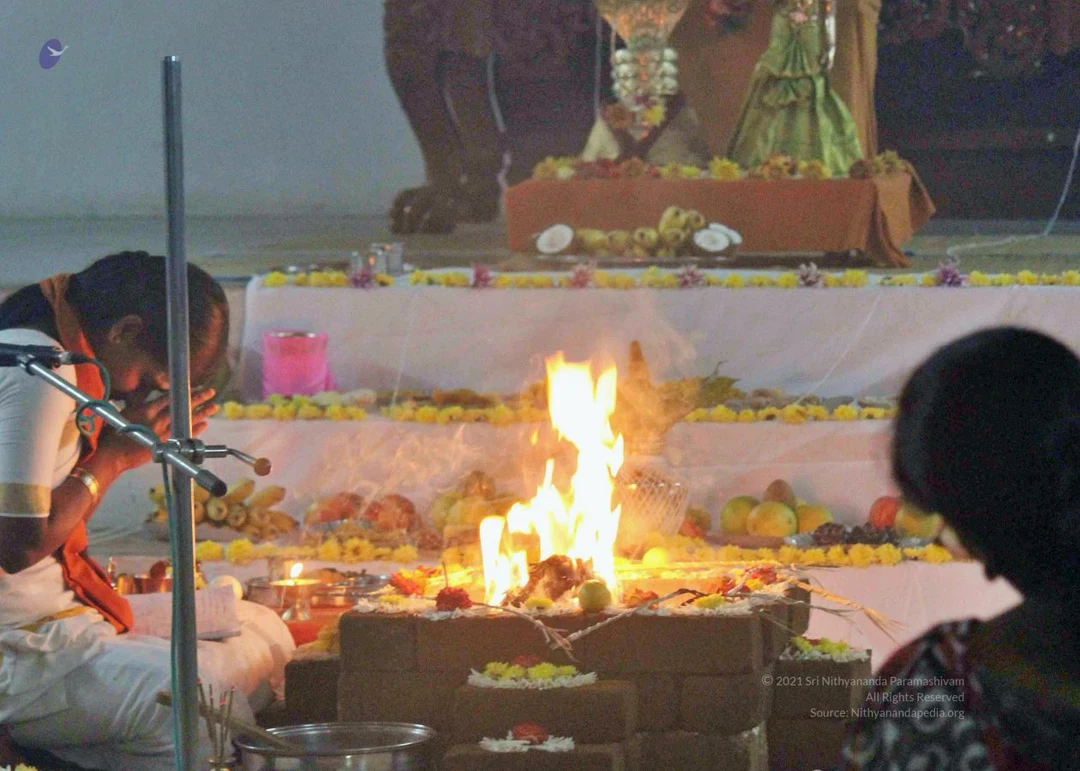
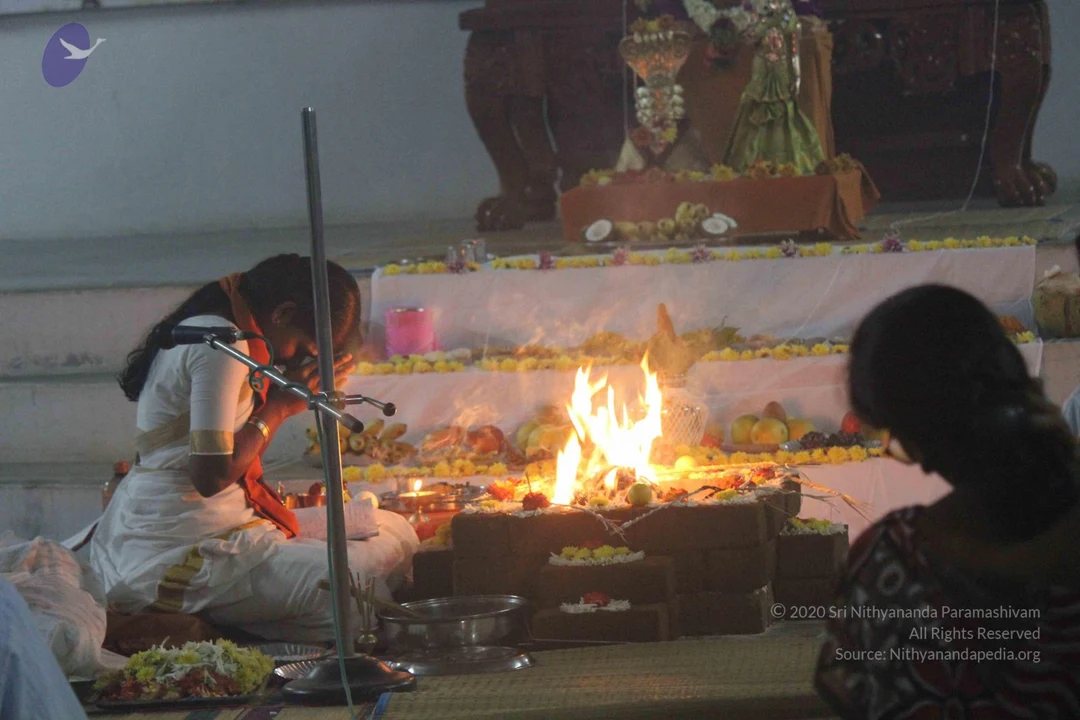
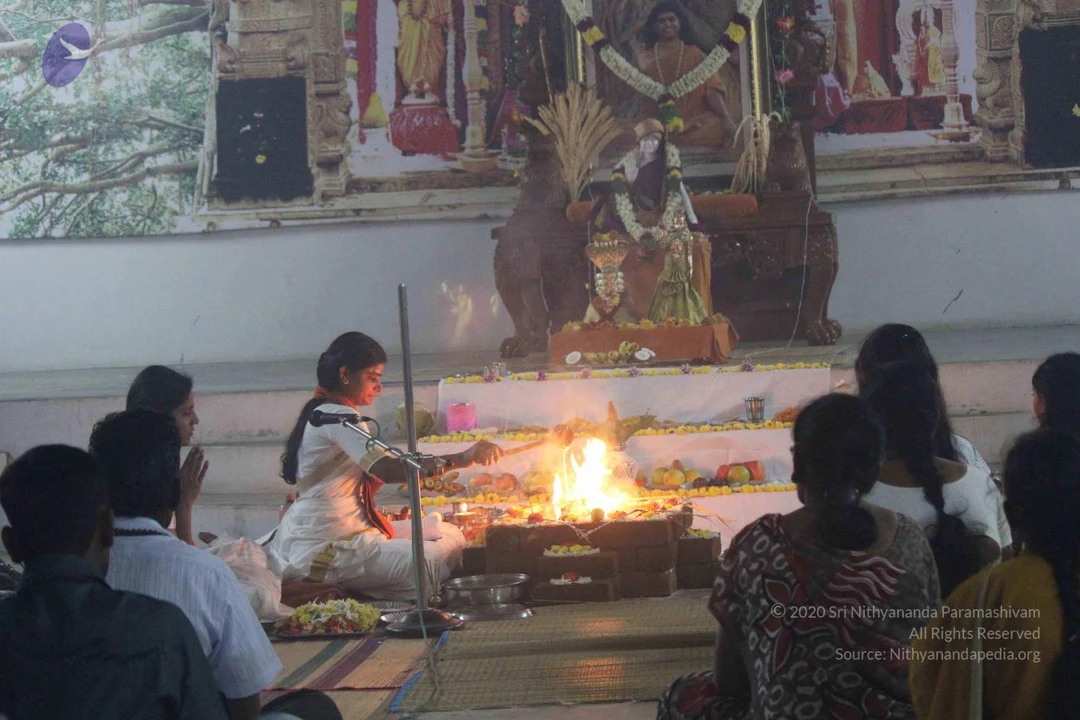
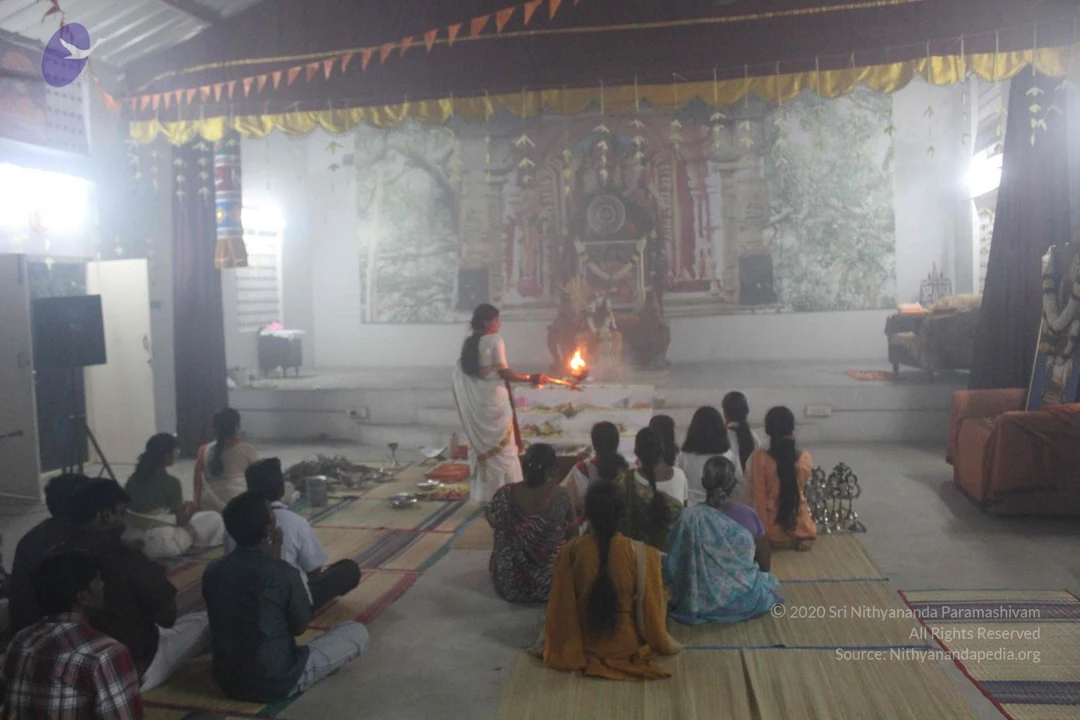
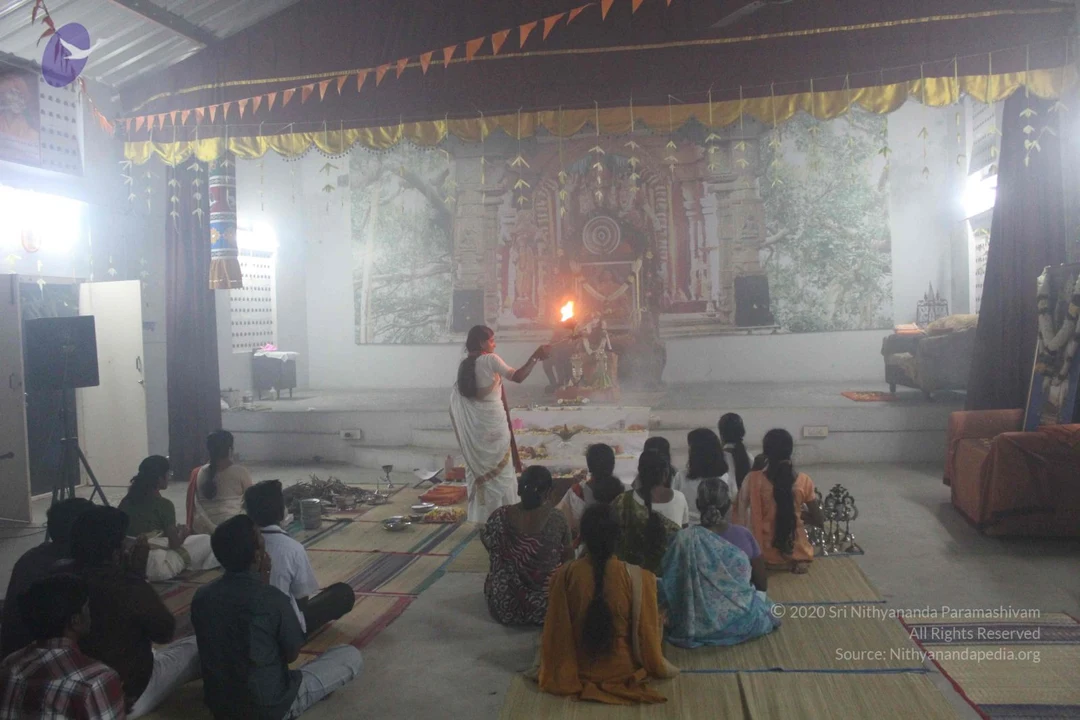
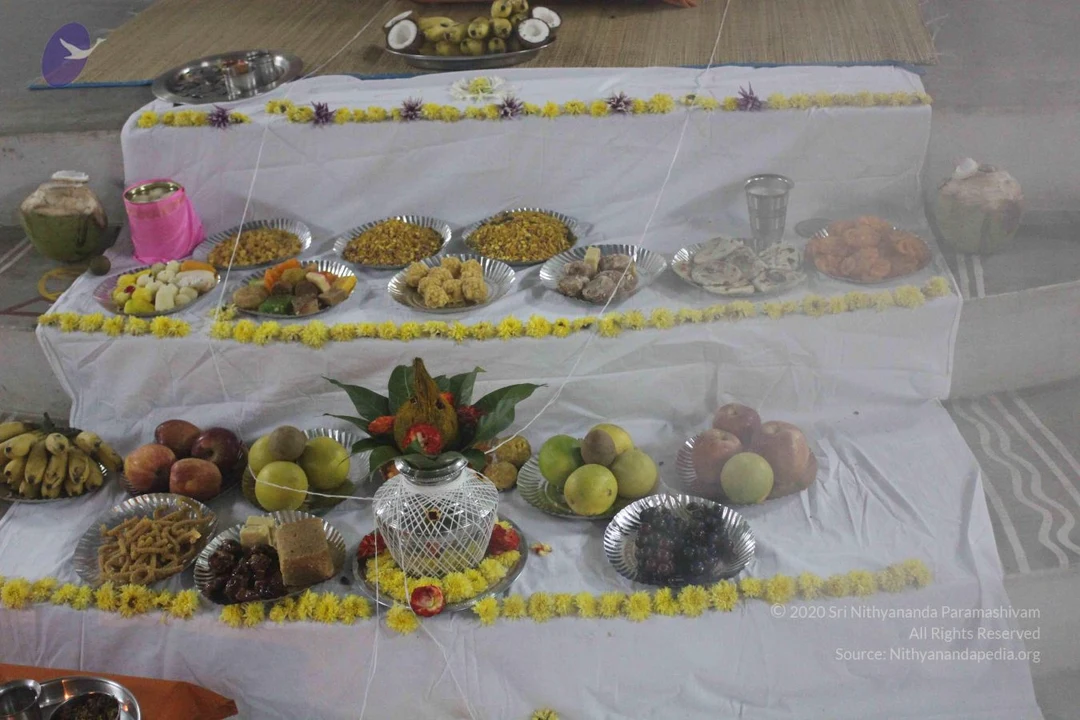
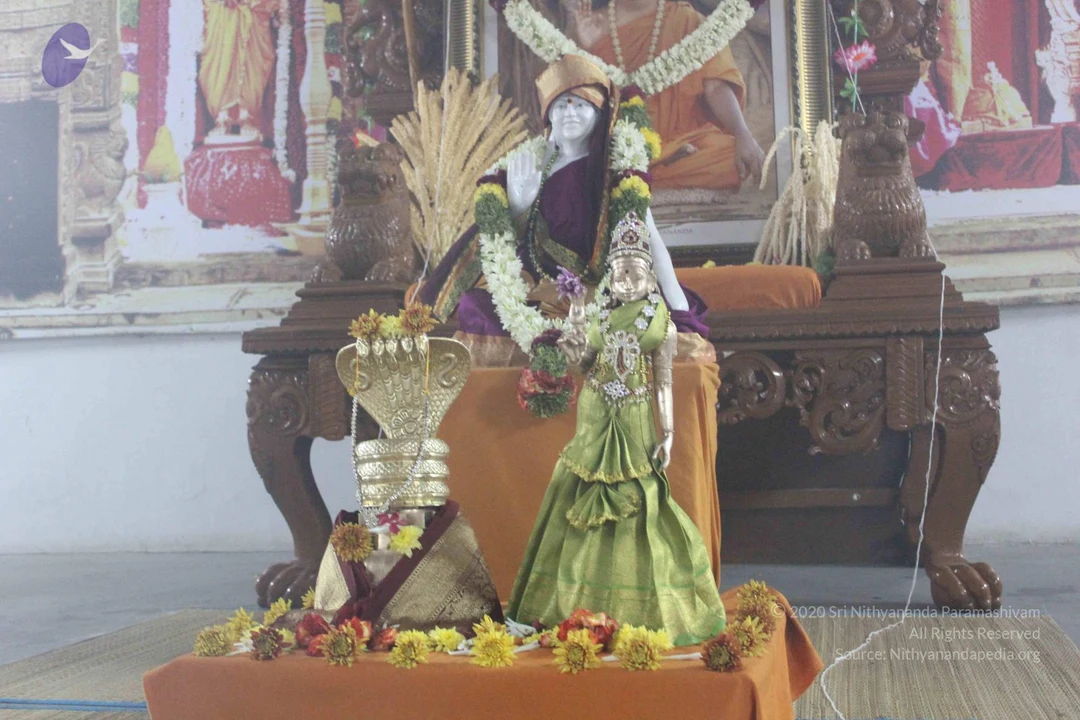
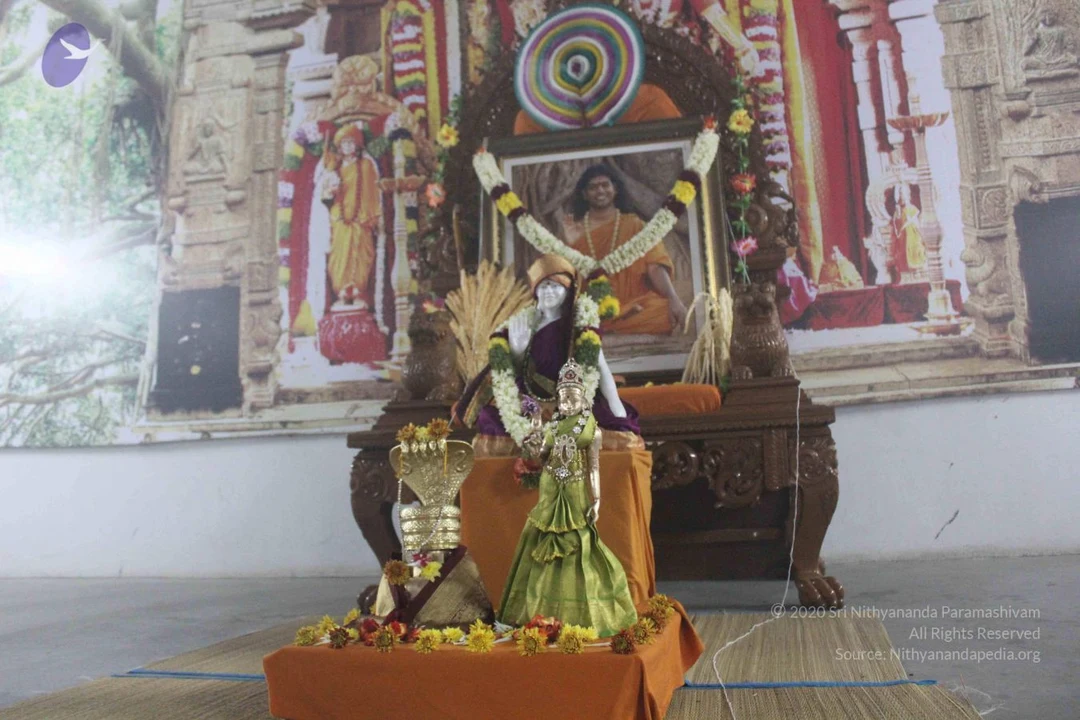
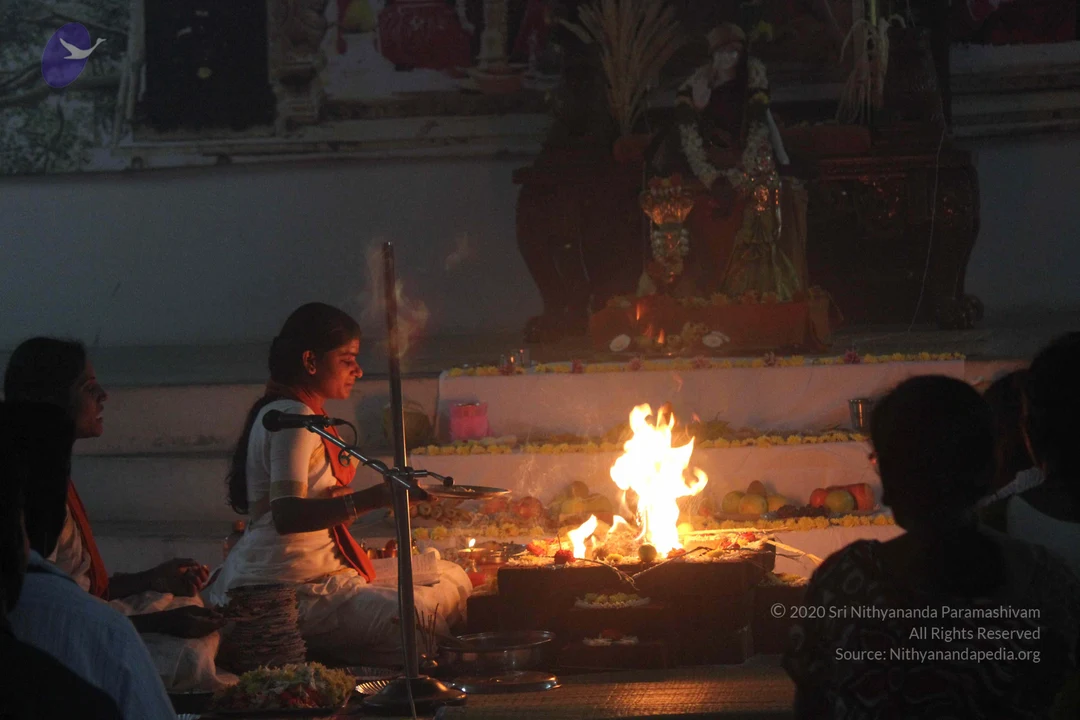
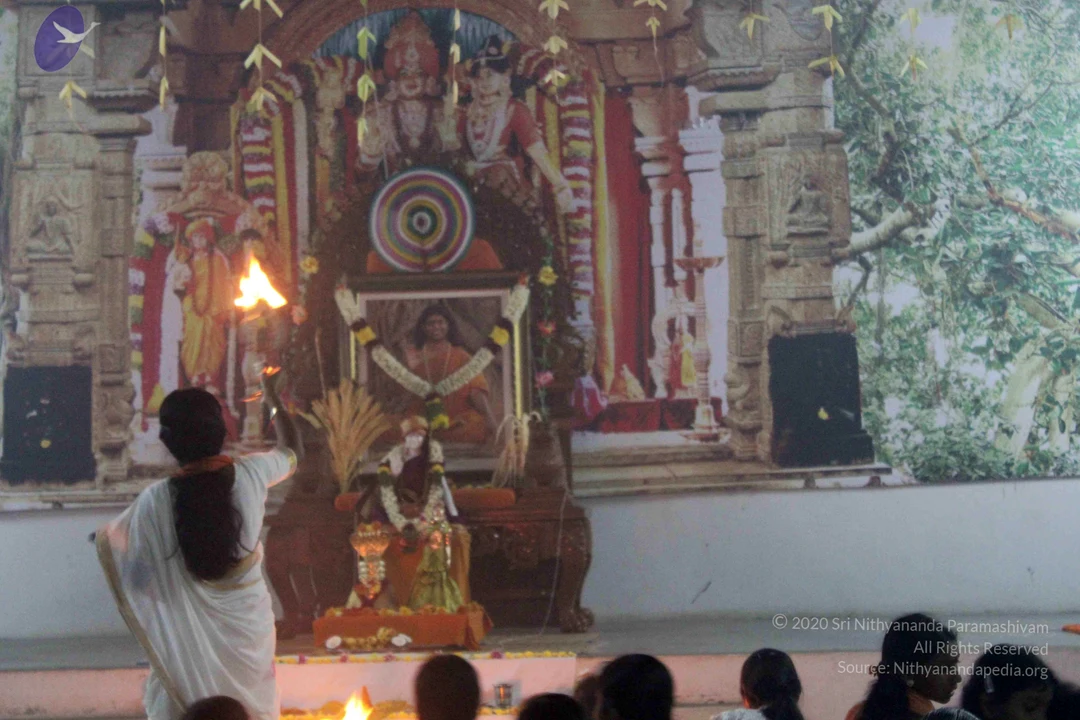
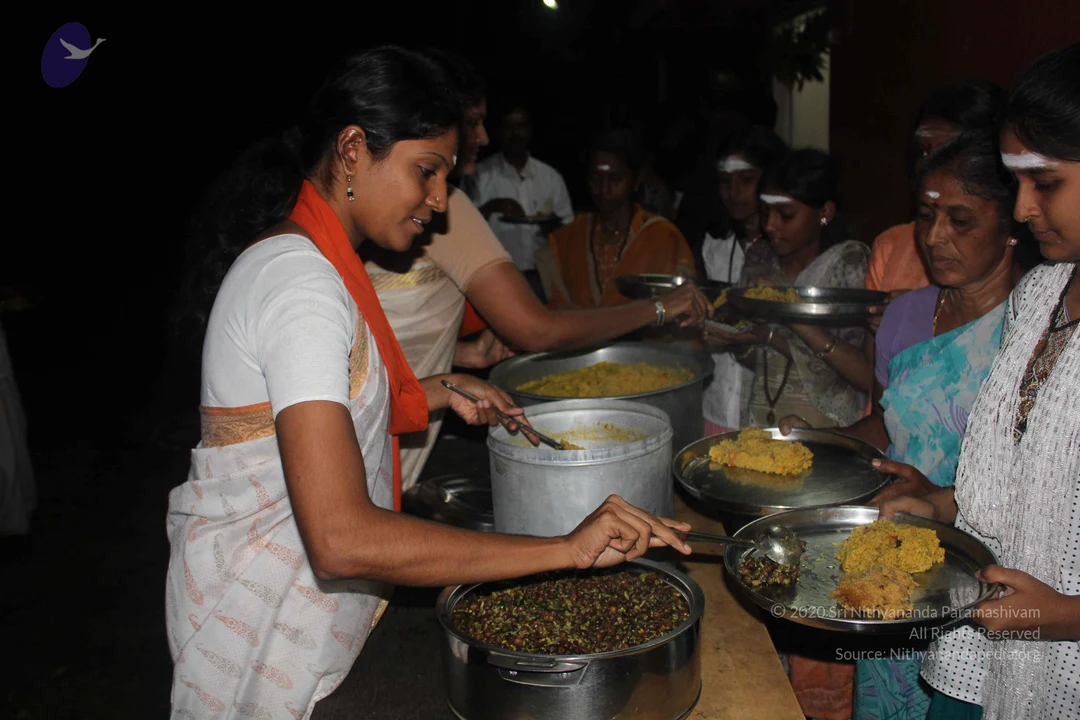
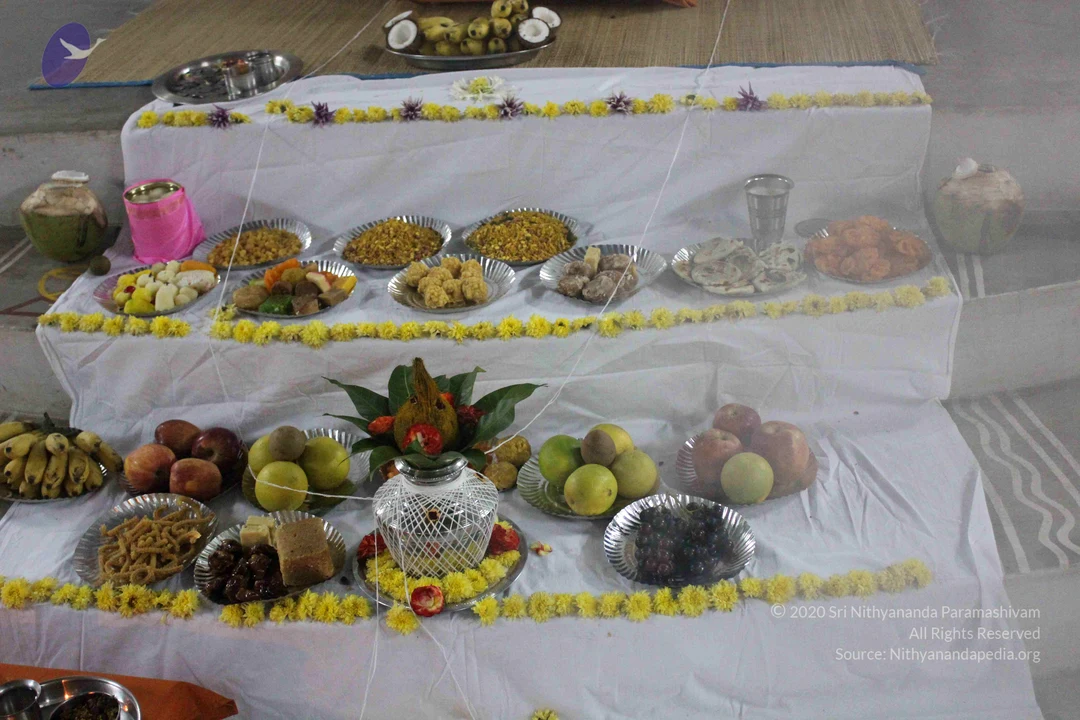
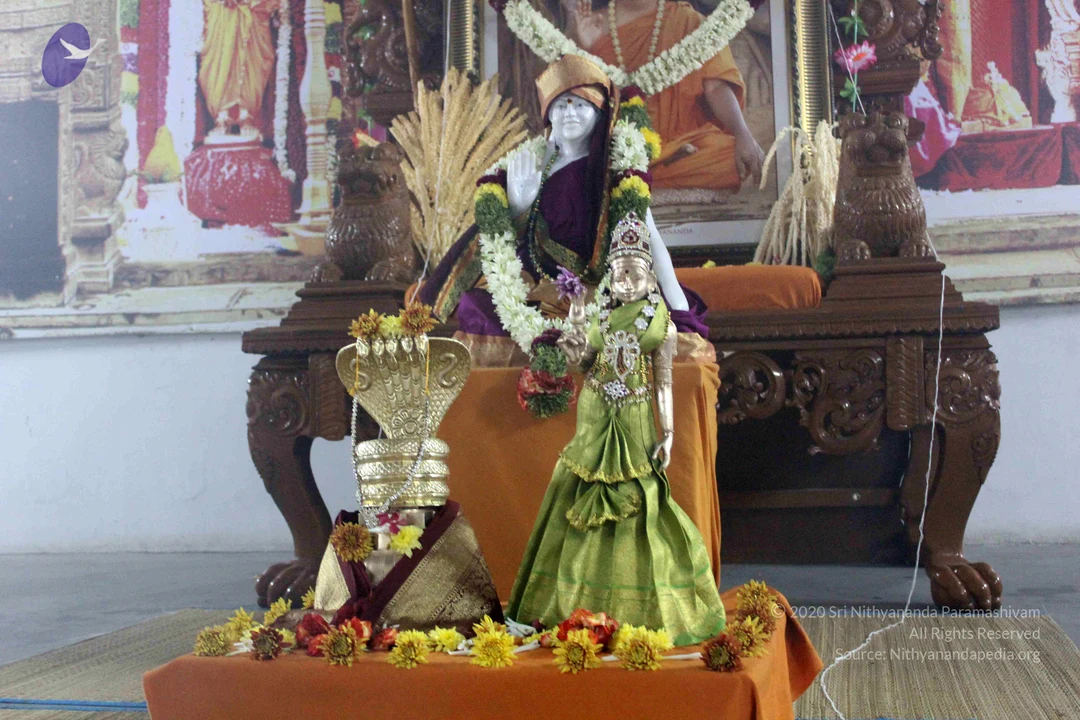
A photograph of a fire ritual inside a temple hall at night. A woman in a white sari with an orange-red shawl sits cross-legged before a blazing fire pit, holding a ritual vessel toward the flames, with a microphone stand beside her. Behind the fire, a tiered altar is decorated with yellow marigold garlands and piled with fruit, and a deity murti dressed in red and garlanded stands above it. Several seated people are visible at the edges of the frame, including a woman on the left and figures in the right foreground, all facing the fire. Lit oil lamps and offerings surround the homa area.A woman in a white sari with a long dark braid stands at left, back to the camera, holding a lit flame aloft toward an ornate temple-style backdrop. The large printed backdrop shows carved stone pillars, a rainbow-coloured circular motif, and a tree at right. In front of it, a framed portrait of a figure in orange garments is garlanded with white and yellow flowers, and a deity murti sits on a pedestal decorated with marigolds and a palm-leaf fan. Seated devotees fill the lower foreground, and an oil lamp burns in front of the stage.A night-time food service line where a woman in a white and beige sari with an orange-red shawl serves yellow rice from a steel pot with a ladle, while another server in white stands beside her. Stainless steel pots hold yellow rice and a dark vegetable dish. Women and girls with white forehead markings and ornaments line up holding steel plates, one in a turquoise sari and one in a white polka-dot top. A woman in an orange sari and a man in white stand in the background. The scene suggests communal food distribution.A tiered offering display draped in white cloth and edged with yellow marigold garlands and purple flowers. Steel plates hold sweets, fried snacks, puffed grains, fruits such as bananas, apples, oranges, pears and grapes, plus coconuts, a brass pot and a glass of water. A central plate holds a decorated pumpkin-like gourd with green leaves, red fruits and a white wire-mesh cover. No people are visible; the setting appears to be an indoor hall with a grey floor and a woven mat above.A tiered offering display on a white-draped platform stands in front of a raised dais with an orange-draped seat and a deity murti partly visible above. Steel plates hold bananas, apples, oranges, pears, coconuts, sweets, fried snacks, fruit, dried fruit and nuts, and a glass vase with a kalasha-like pot and red flowers sits at the centre. Yellow and orange marigold garlands edge each tier, and a glass of water sits on the upper tier. Fresh coconuts flank the platform. No people are visible, so this is a food offering arrangement.A photograph of a decorated altar with statues rather than living people. In the centre stands a white statue in a maroon and gold garment with a golden crown, garlanded with white jasmine and yellow-orange flowers, its hands raised in blessing. Beside it stands a golden-skinned figure in a green silk sari with gold border, adorned with jewellery and a jewelled headpiece, also garlanded. At left a golden hooded serpent canopy sits on an orange cloth draped with marigolds and red flowers. Golden wheat sheaves hang behind, flanked by brown lion sculptures on a carved wooden stand. Behind is a large framed picture of a robed figure in orange holding a mala. The altar sits on a reed mat with orange cloth in the foreground.
9-Deepavali-Malaysia

3 photosSource gallery
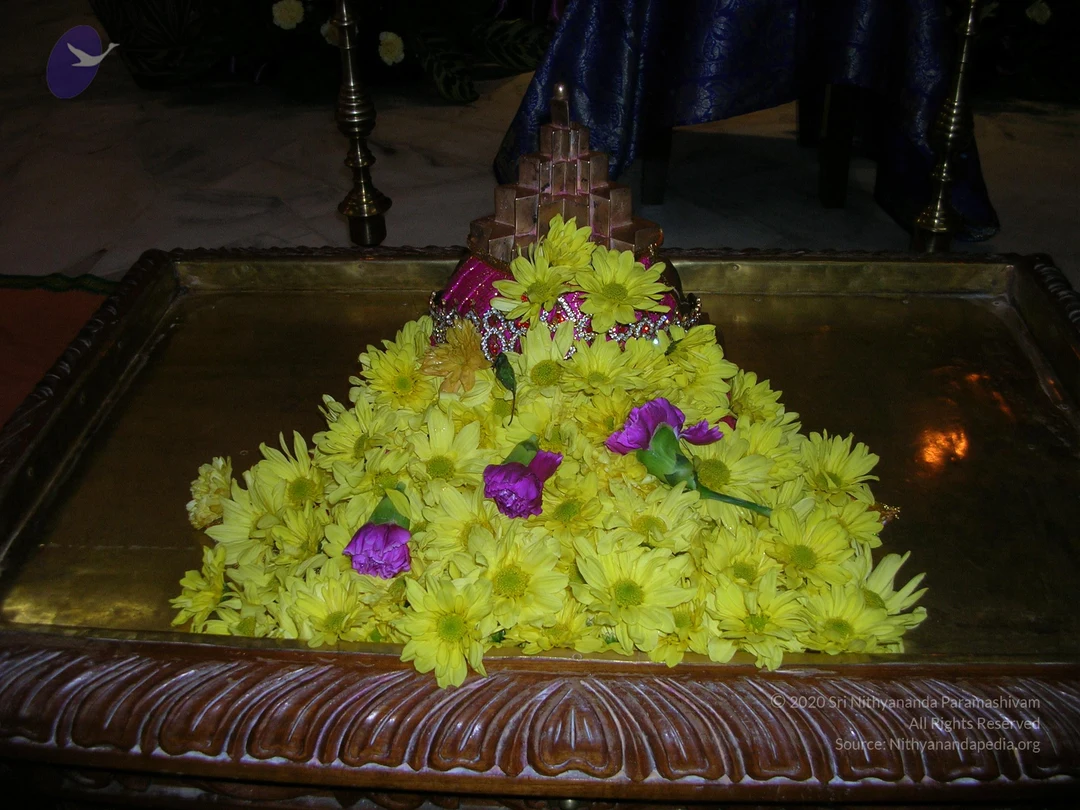
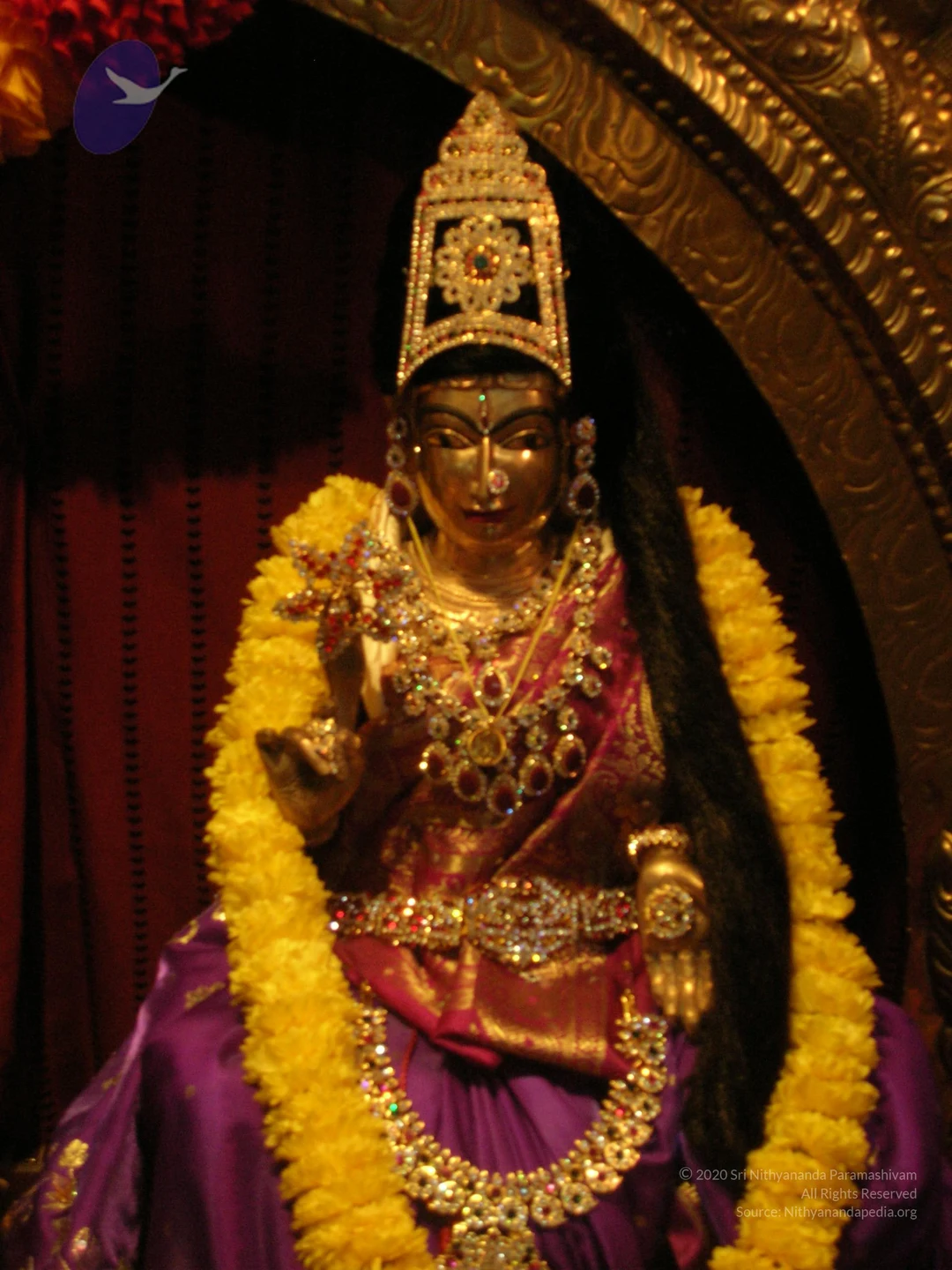
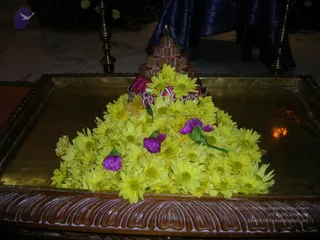
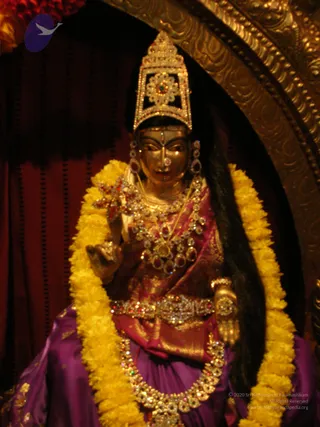
Interior of a temple-style room with orange walls and white marble floor, where a gold arched shrine framed by garlands of red, orange, yellow and pink flowers holds two deity murtis with crowns, shown beside a pink satin draped table with a sign reading MALAYSIA PALANI. Brass oil lamps burn on the floor in front, with vases of flowers and dried grasses. A banner reading TAT TVAM ASI and a framed portrait of a smiling woman in pink hang on the wall, and a small framed screen shows a seated figure in orange robes. No physical people are visible.A photograph of a brass tray piled with yellow chrysanthemums and a few purple carnations, arranged around a small pink-and-gold tiered object resembling a shrine or yantra-like form draped with a pink cloth and jewelled trim. The tray rests on a carved wooden base. Behind it, brass lamp stands and the lower legs of a figure in a dark blue silk garment are partly visible. No face is shown, and no person is clearly identifiable as a person in the frame.A gilded deity murti. It wears an ornate jeweled crown, a jeweled necklace set with red stones, a gold nose ring, and a magenta silk sari with gold border. A yellow marigold garland hangs over both shoulders, and one raised hand holds a jeweled ornament. No physical people are visible.