Skip to content
Wednesday

28 September 2011

THE SUPREME PONTIFF OF HINDUISM HDH BHAGAVAN SRI NITHYANANDA PARAMASHIVAM

Dated photos
287
Source pages
1
Media
2
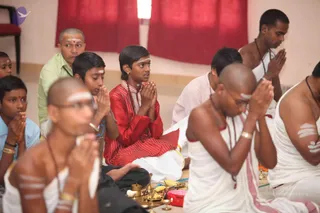
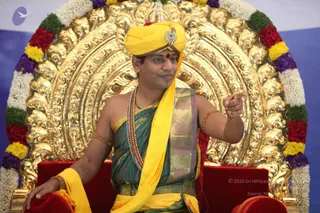
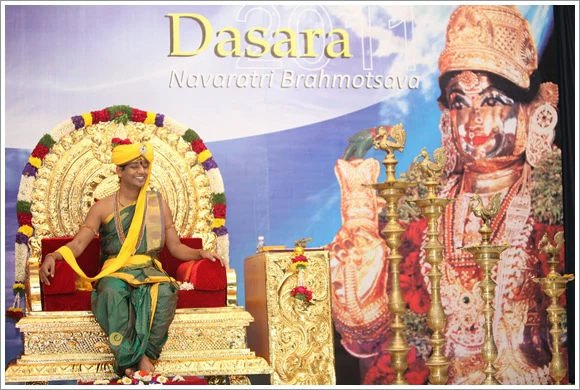
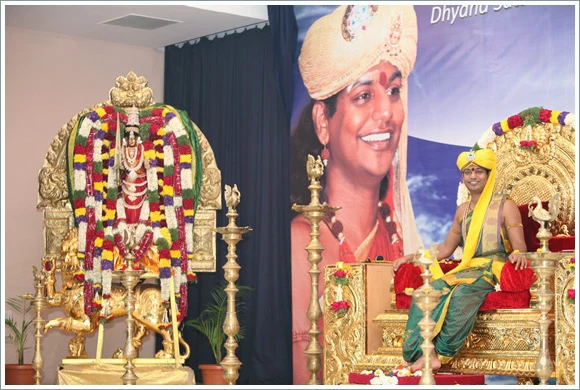
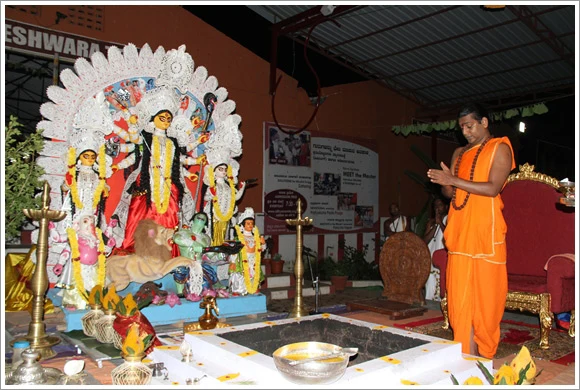
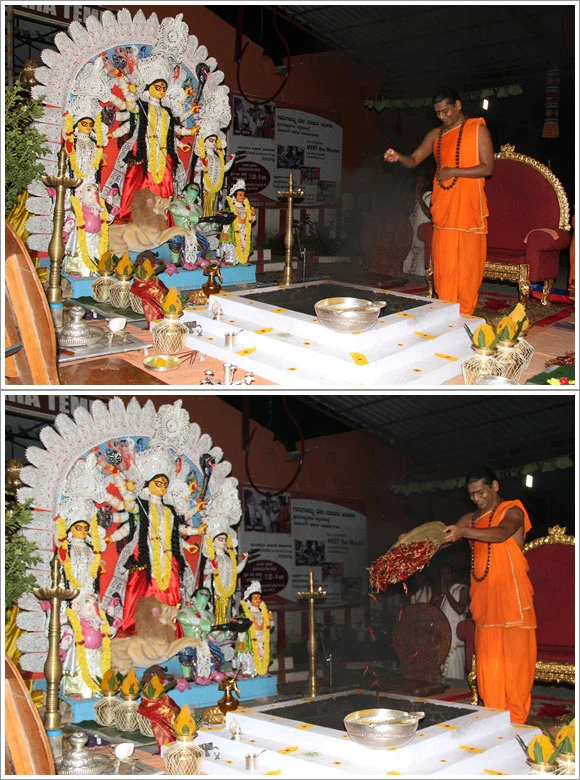
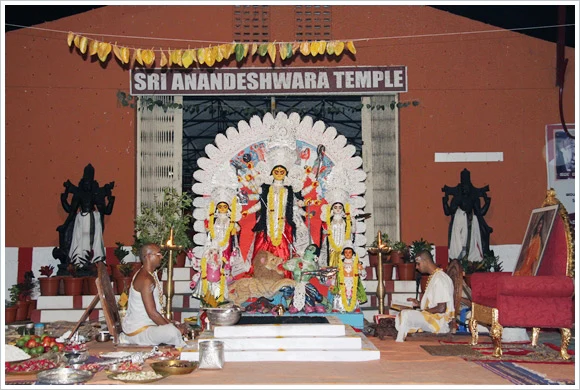
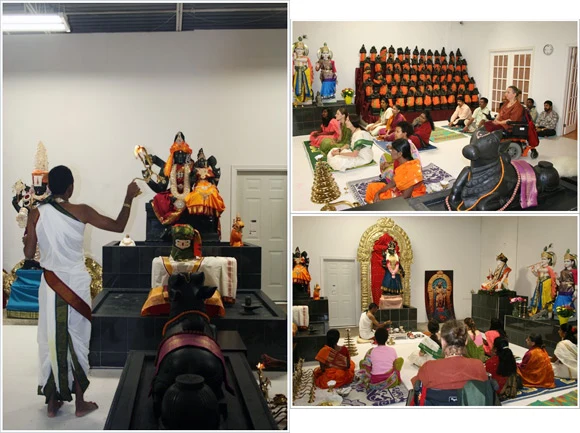
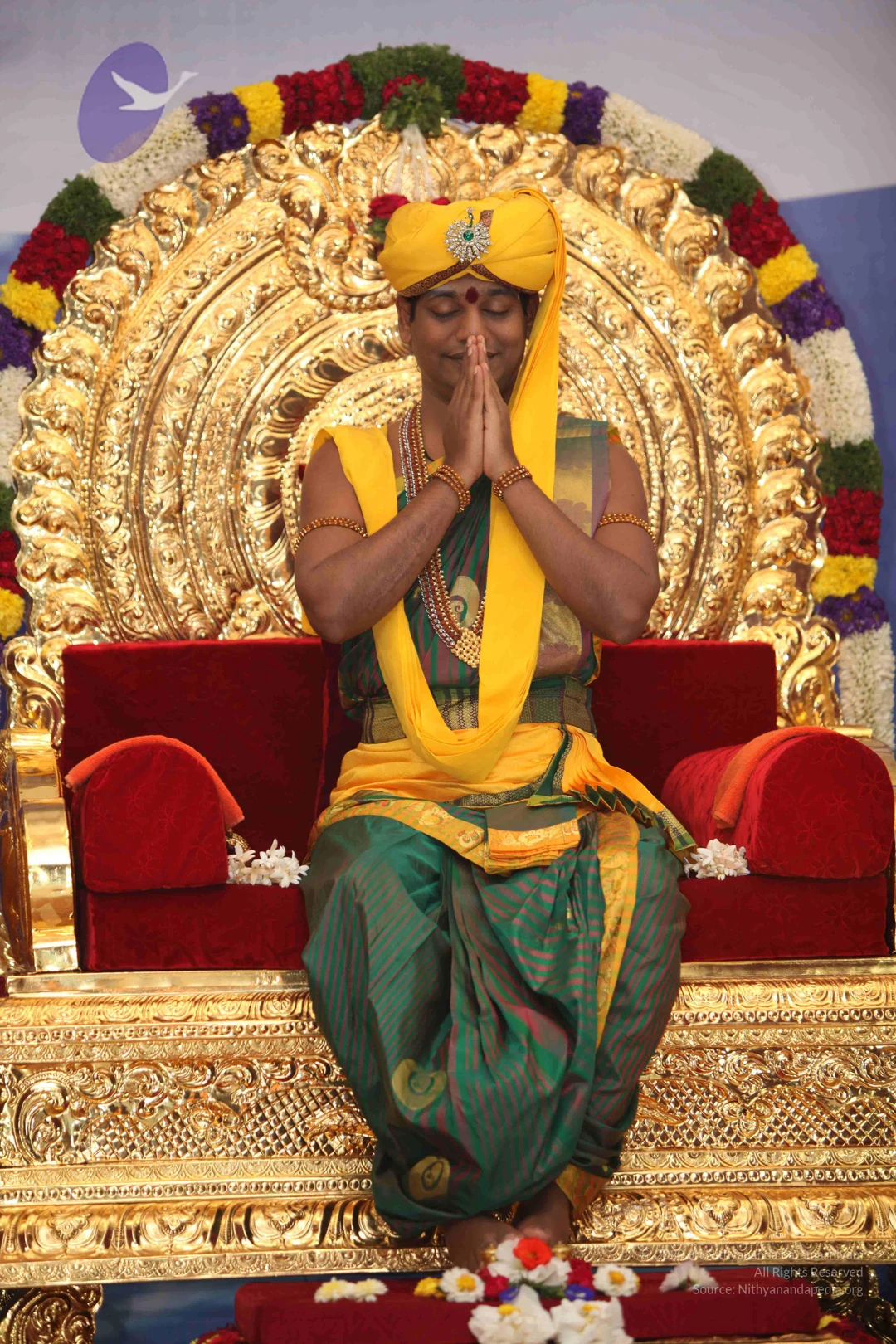
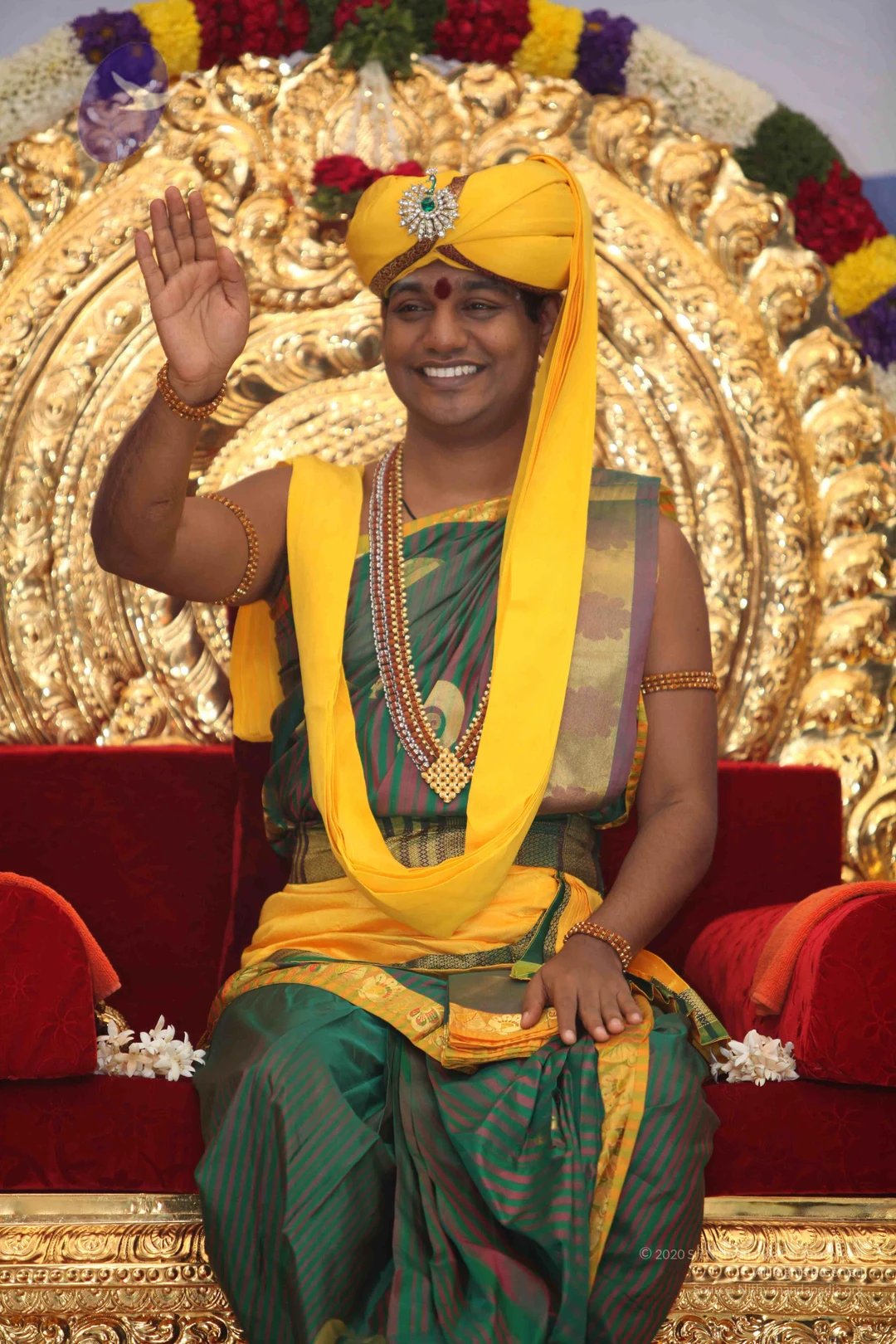
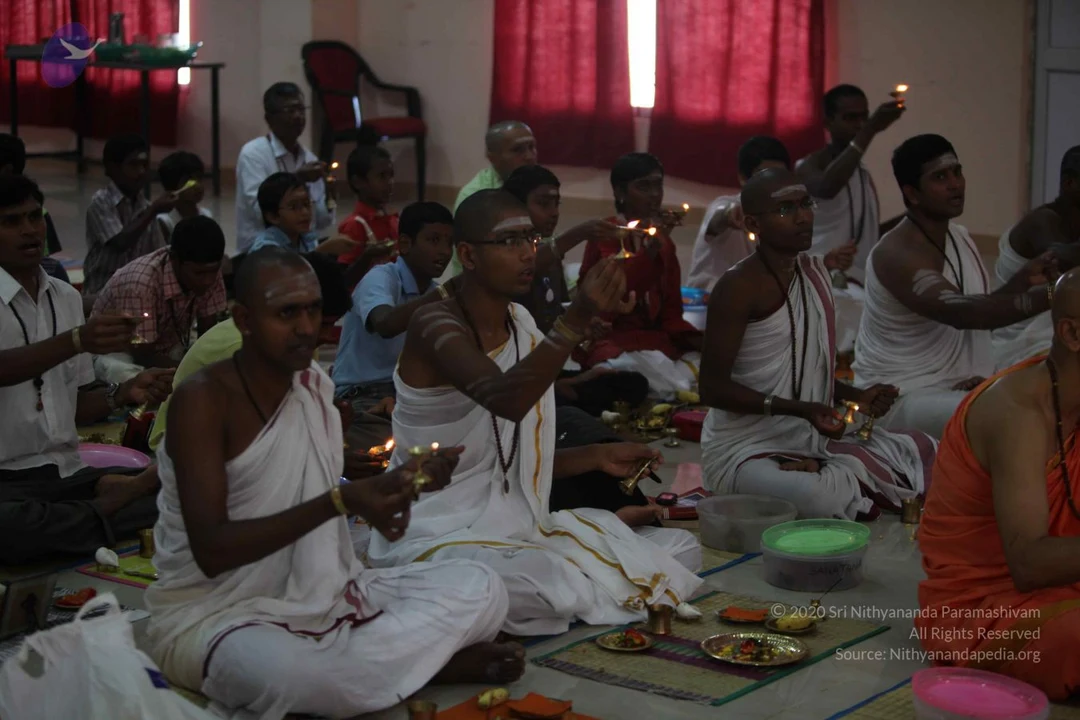
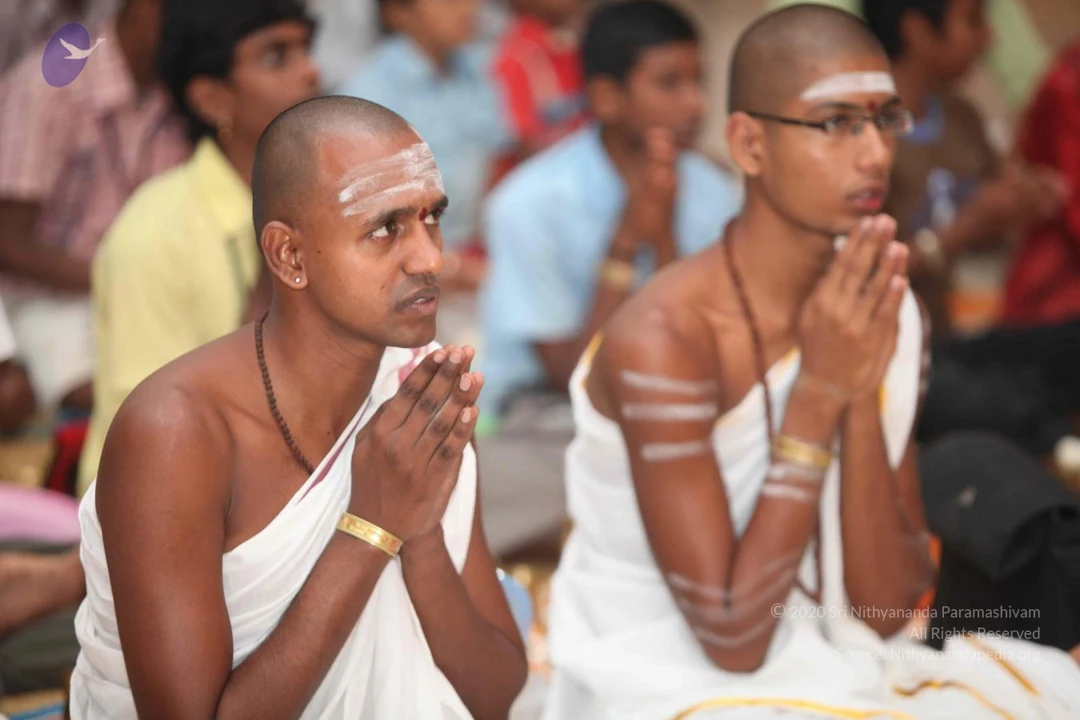
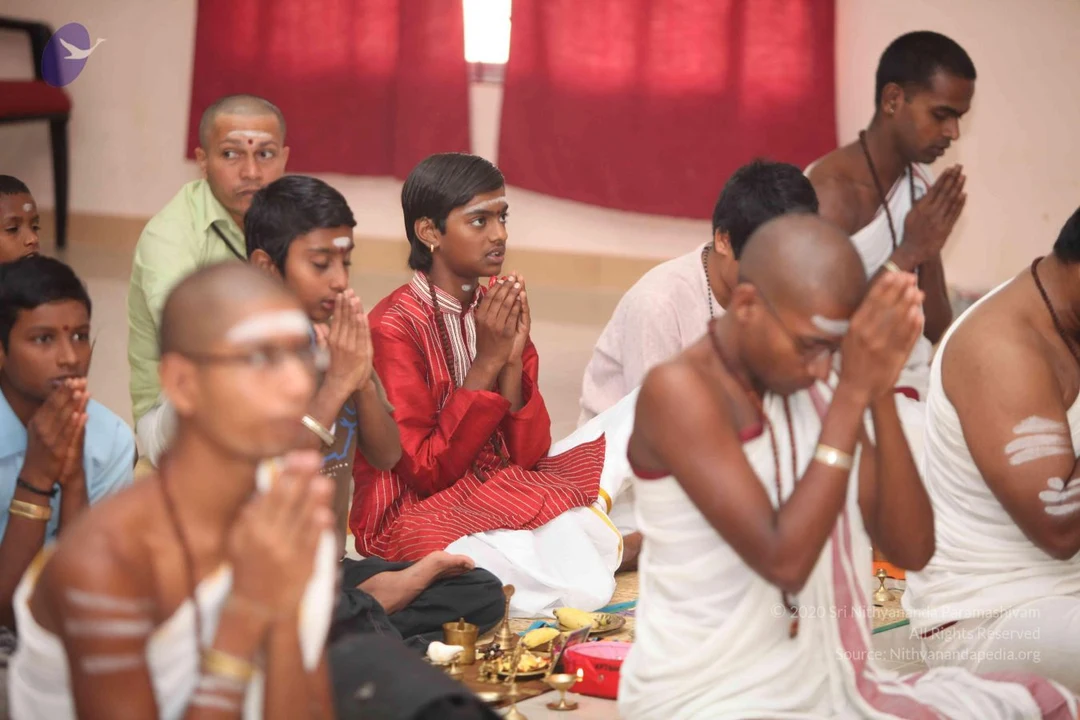
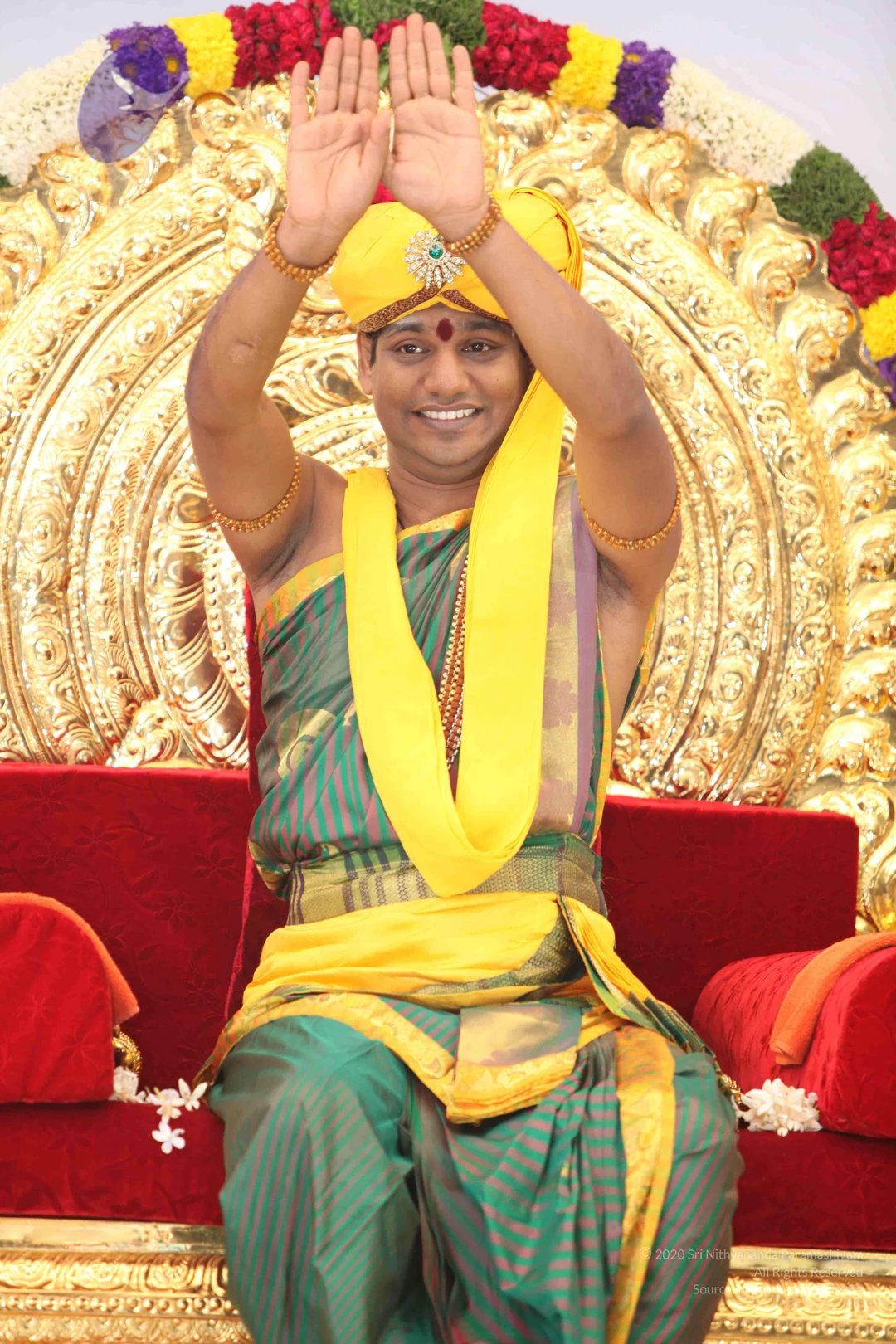
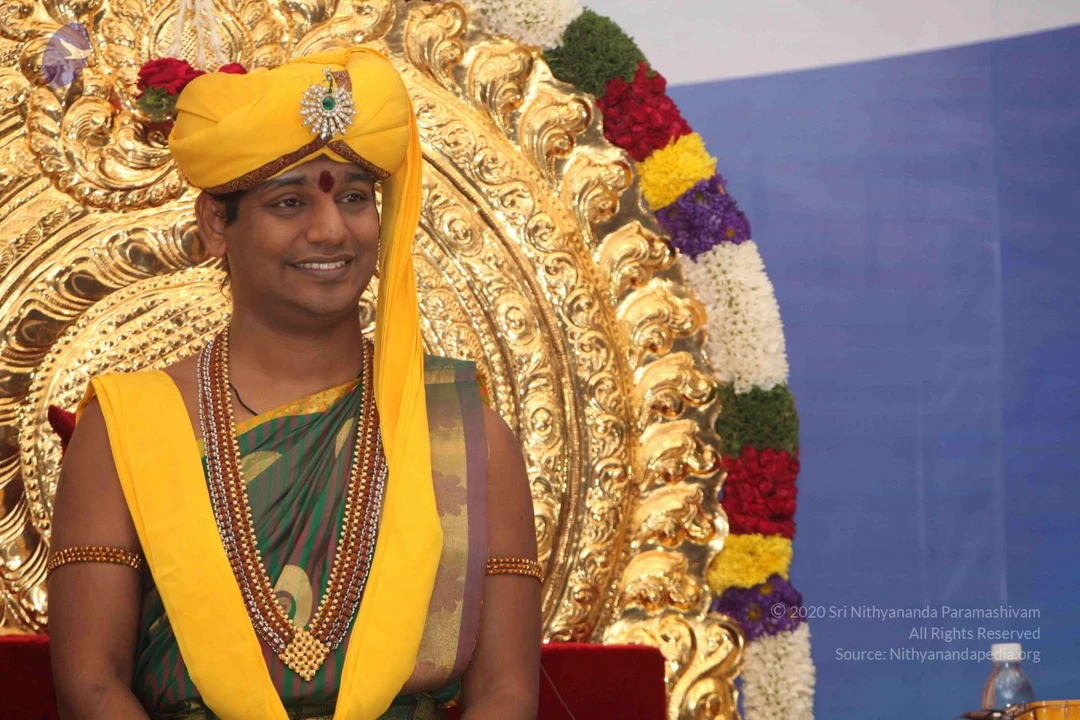
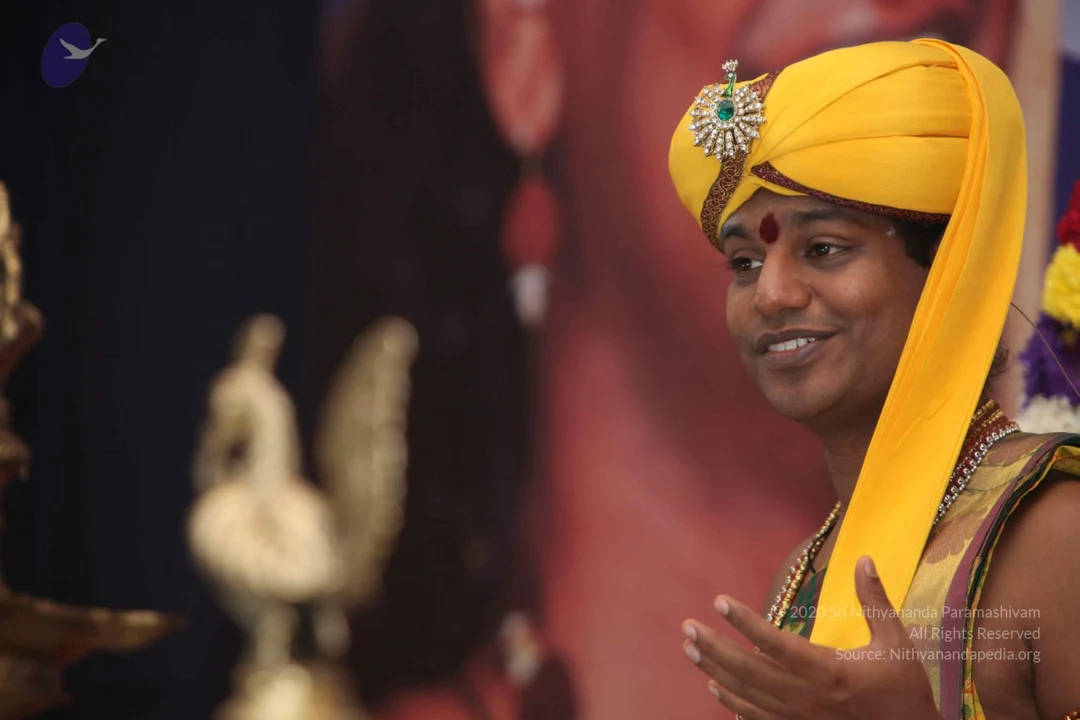
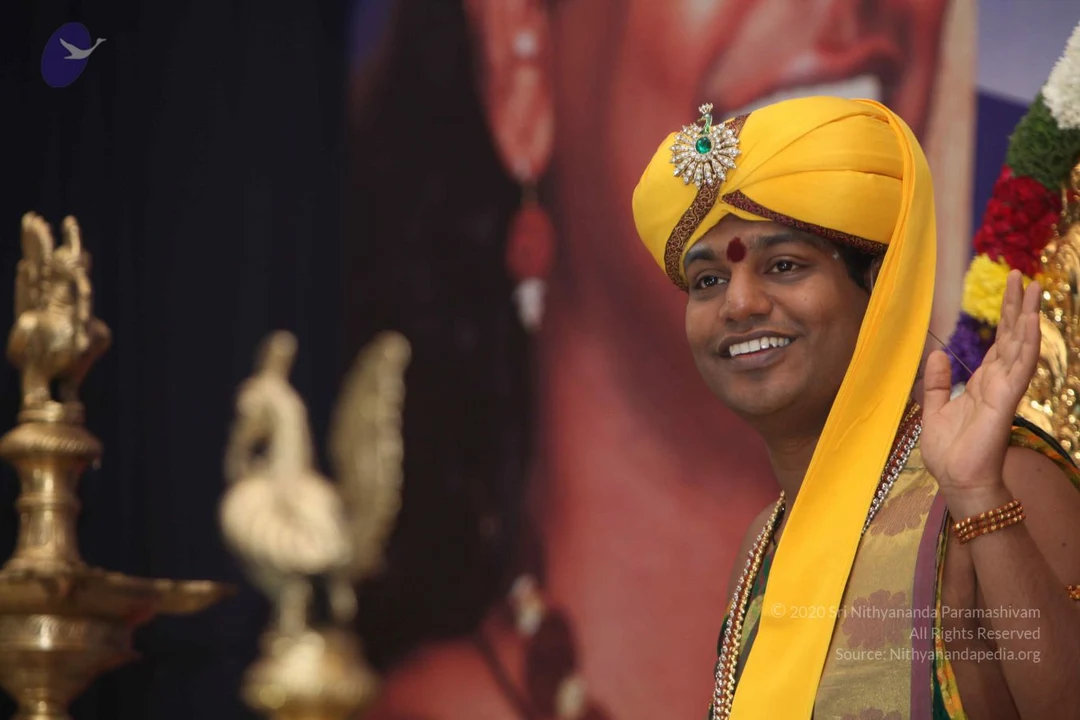
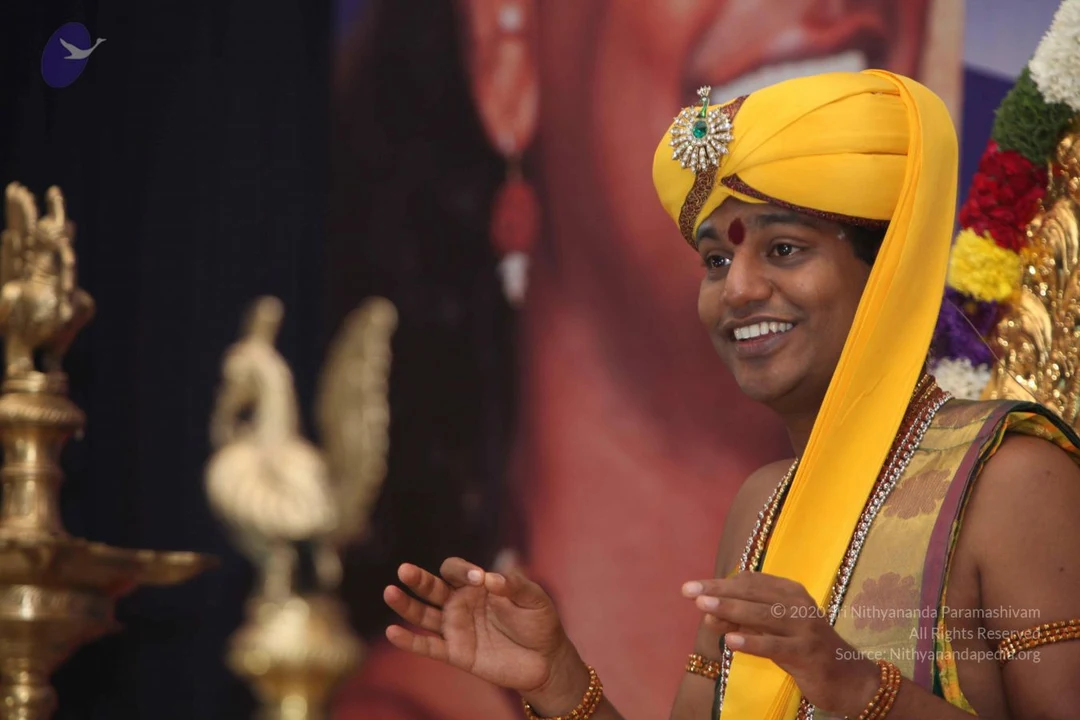
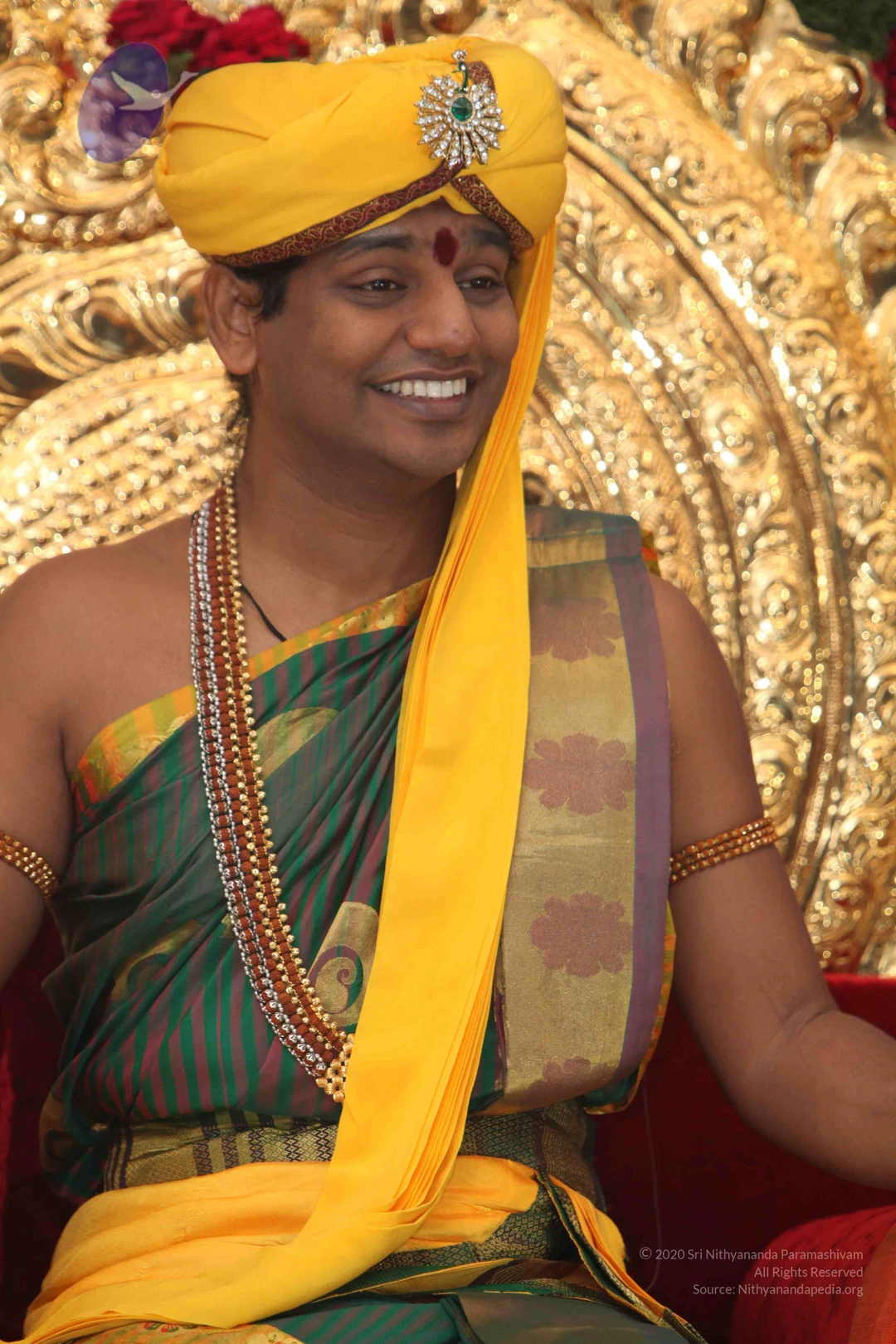
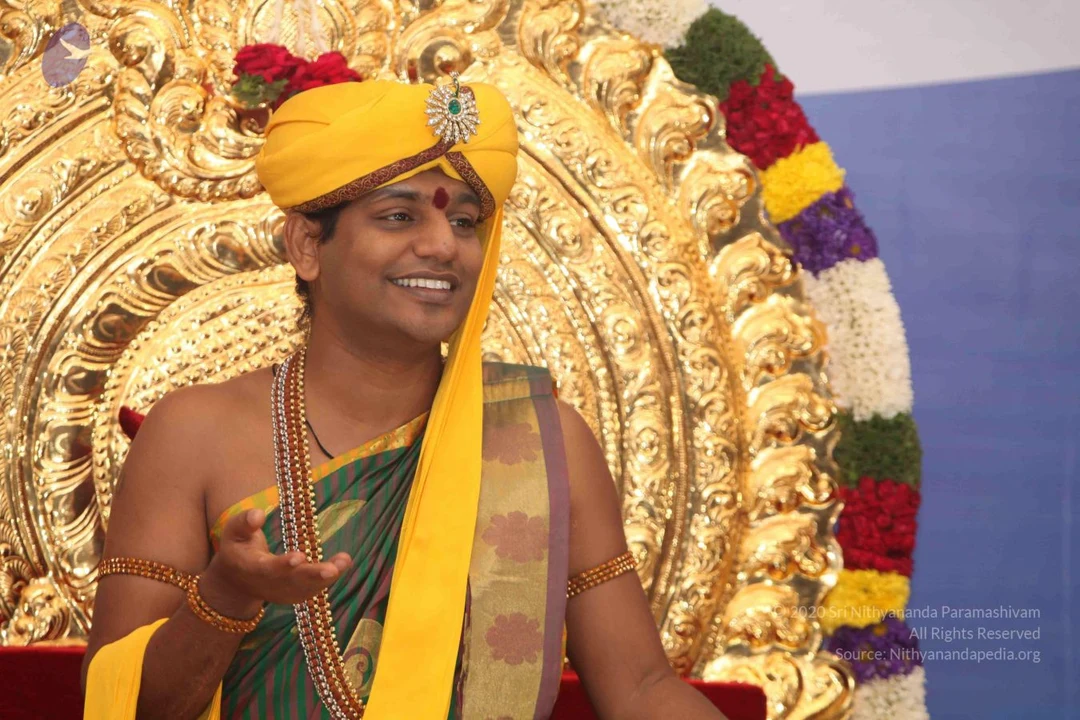
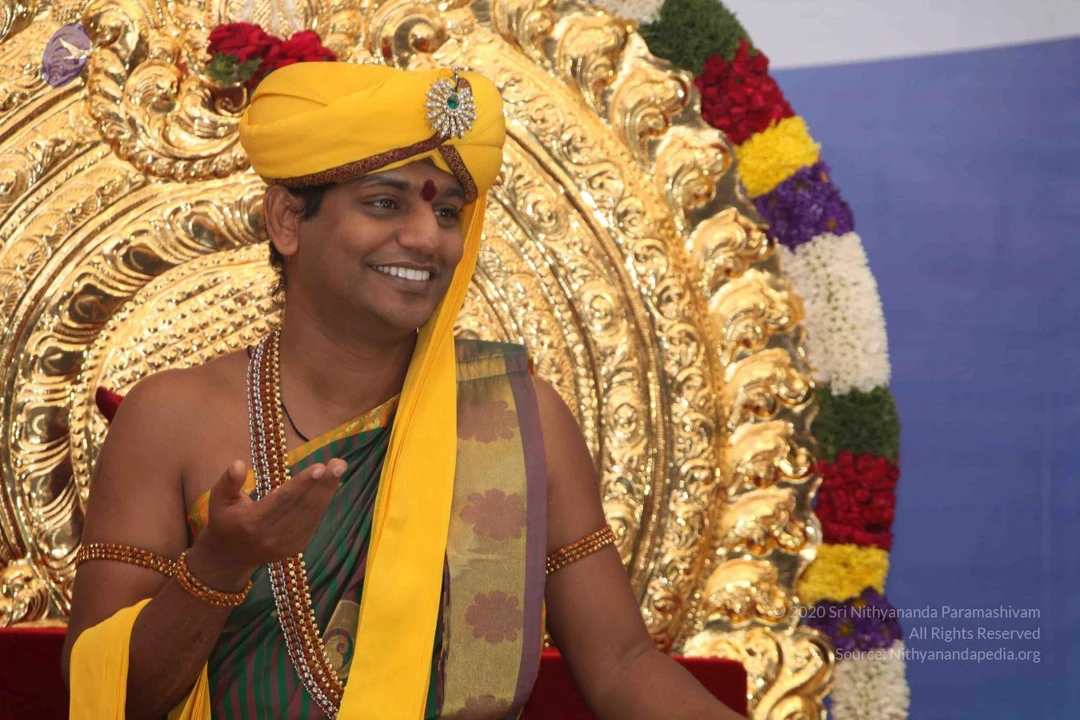
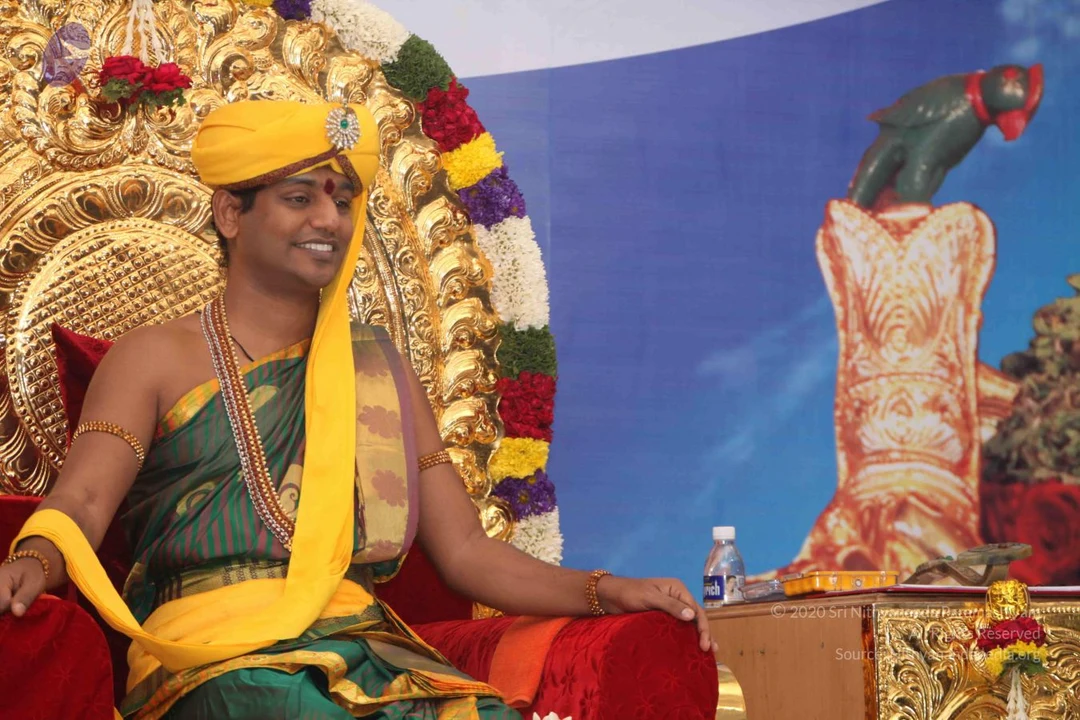
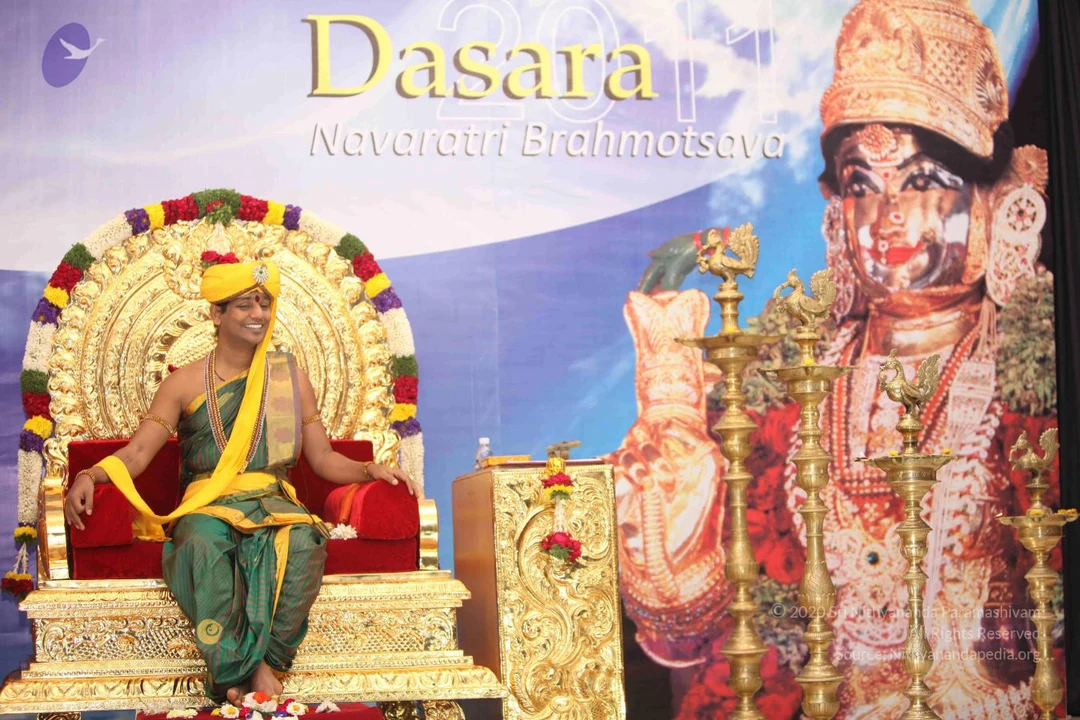
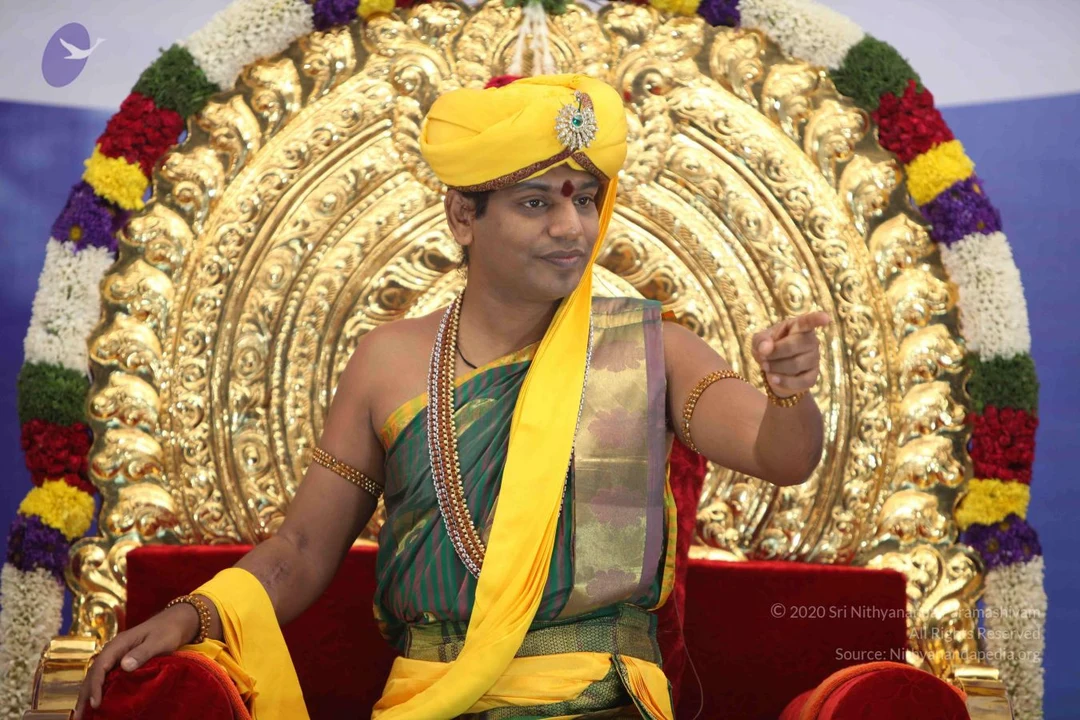
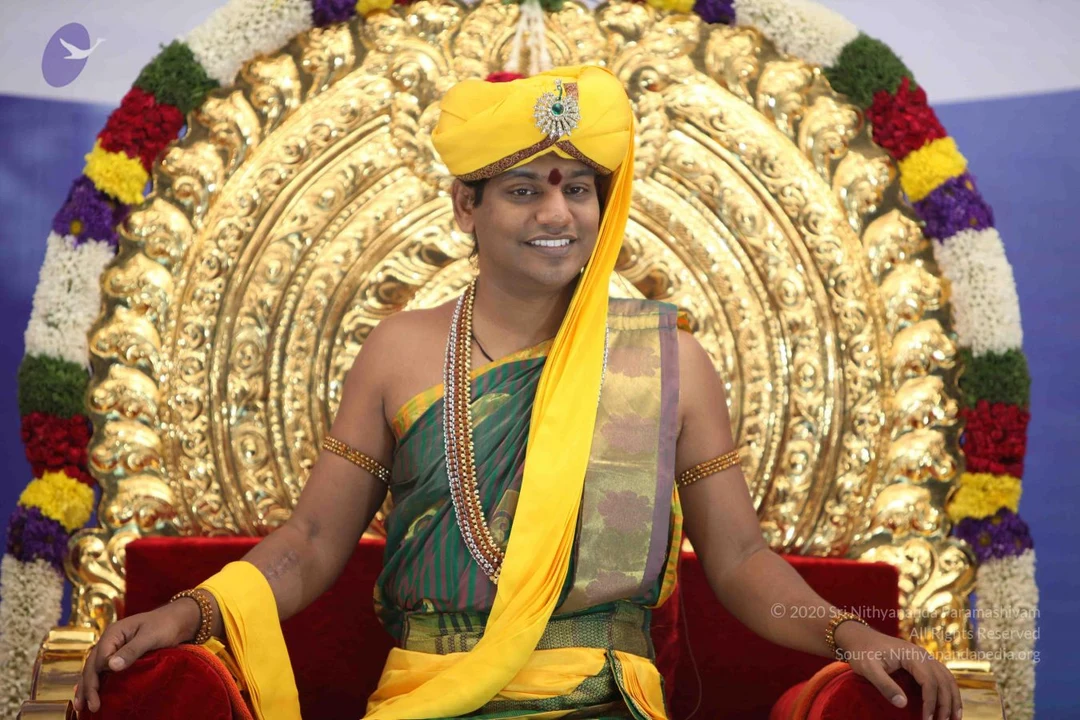
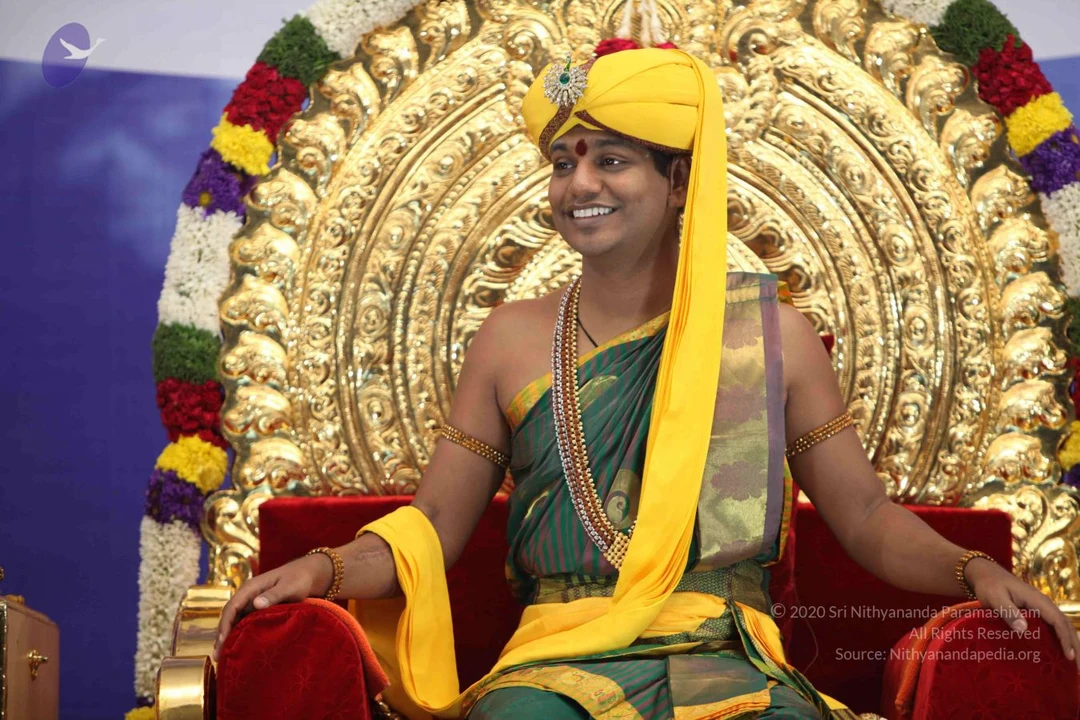
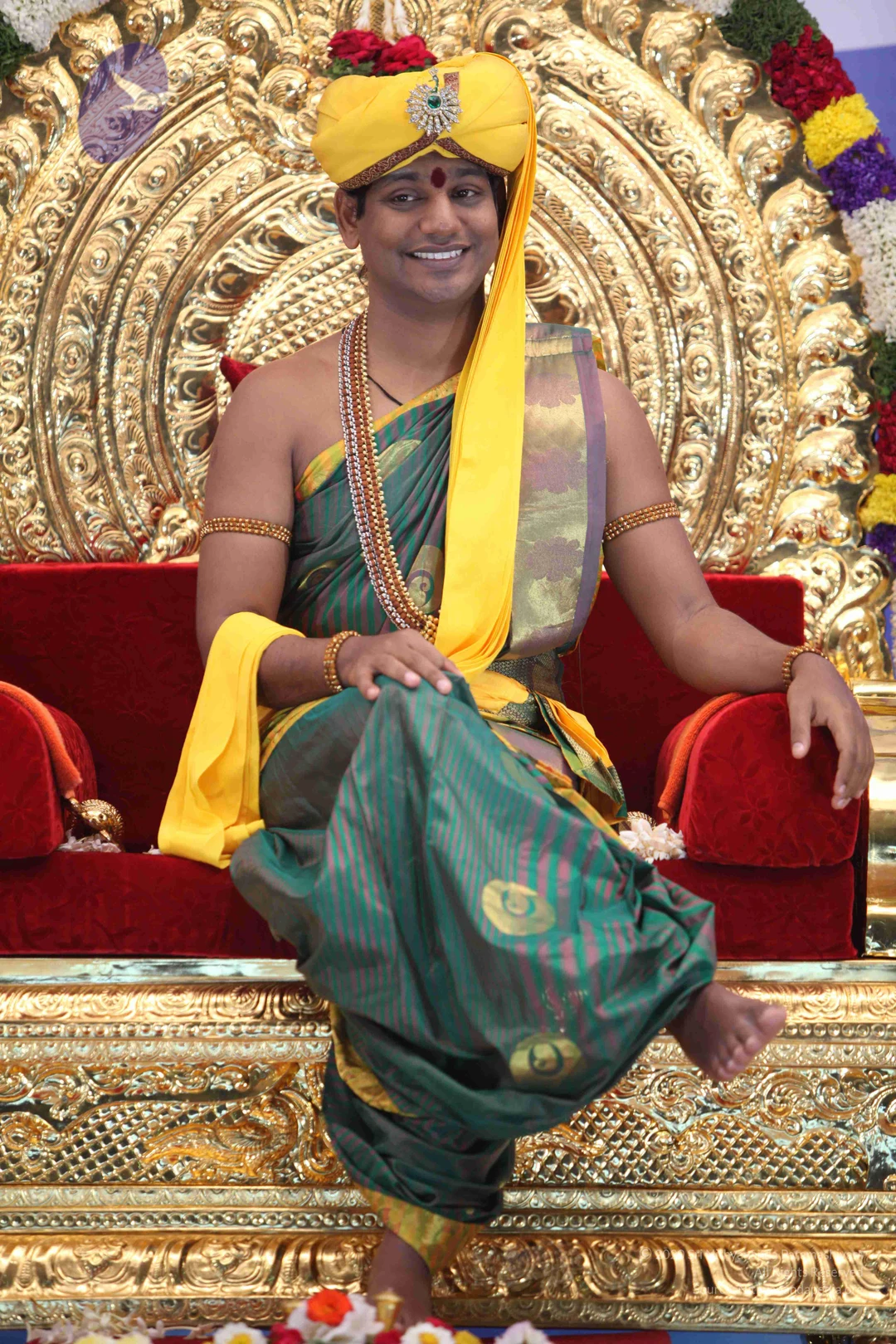
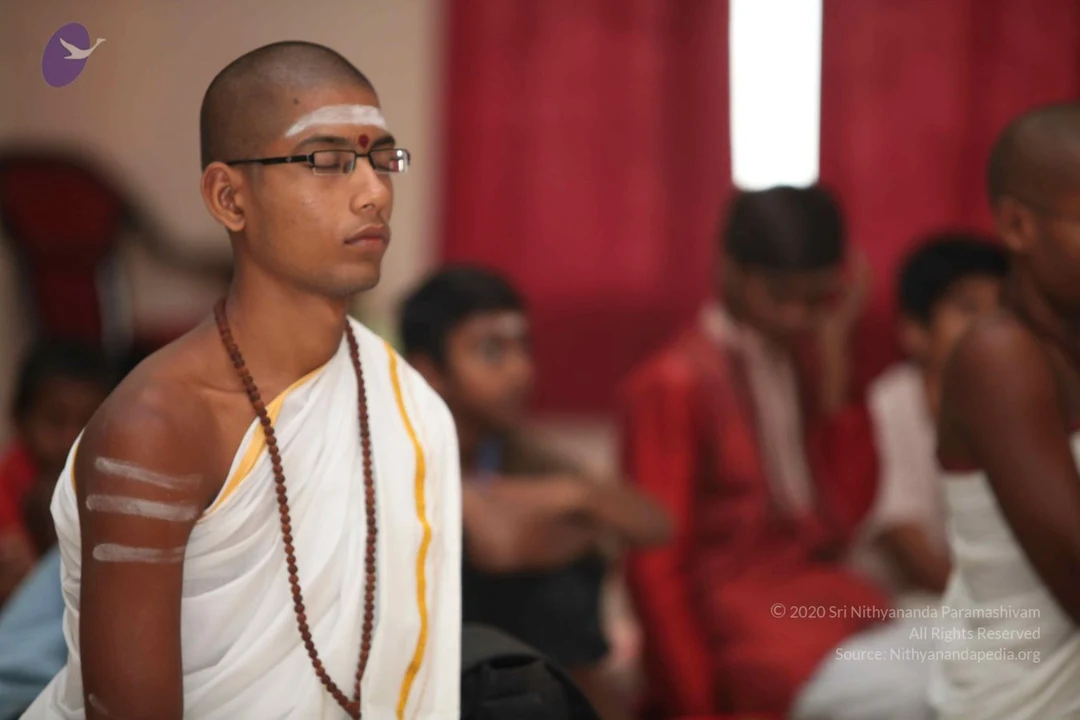
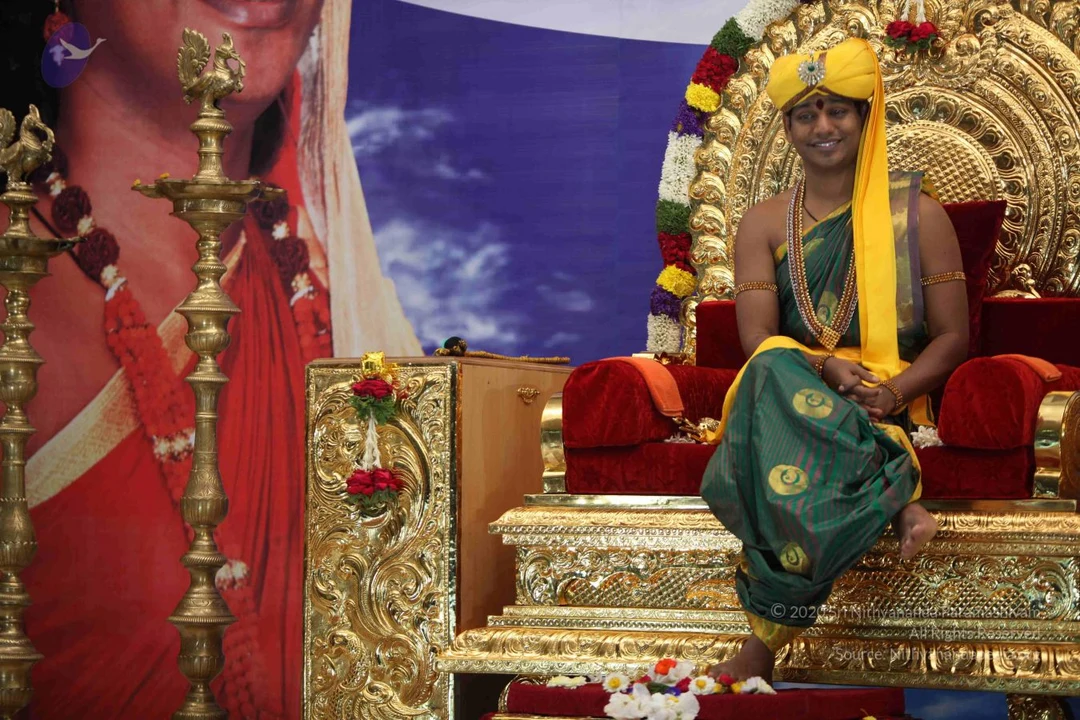
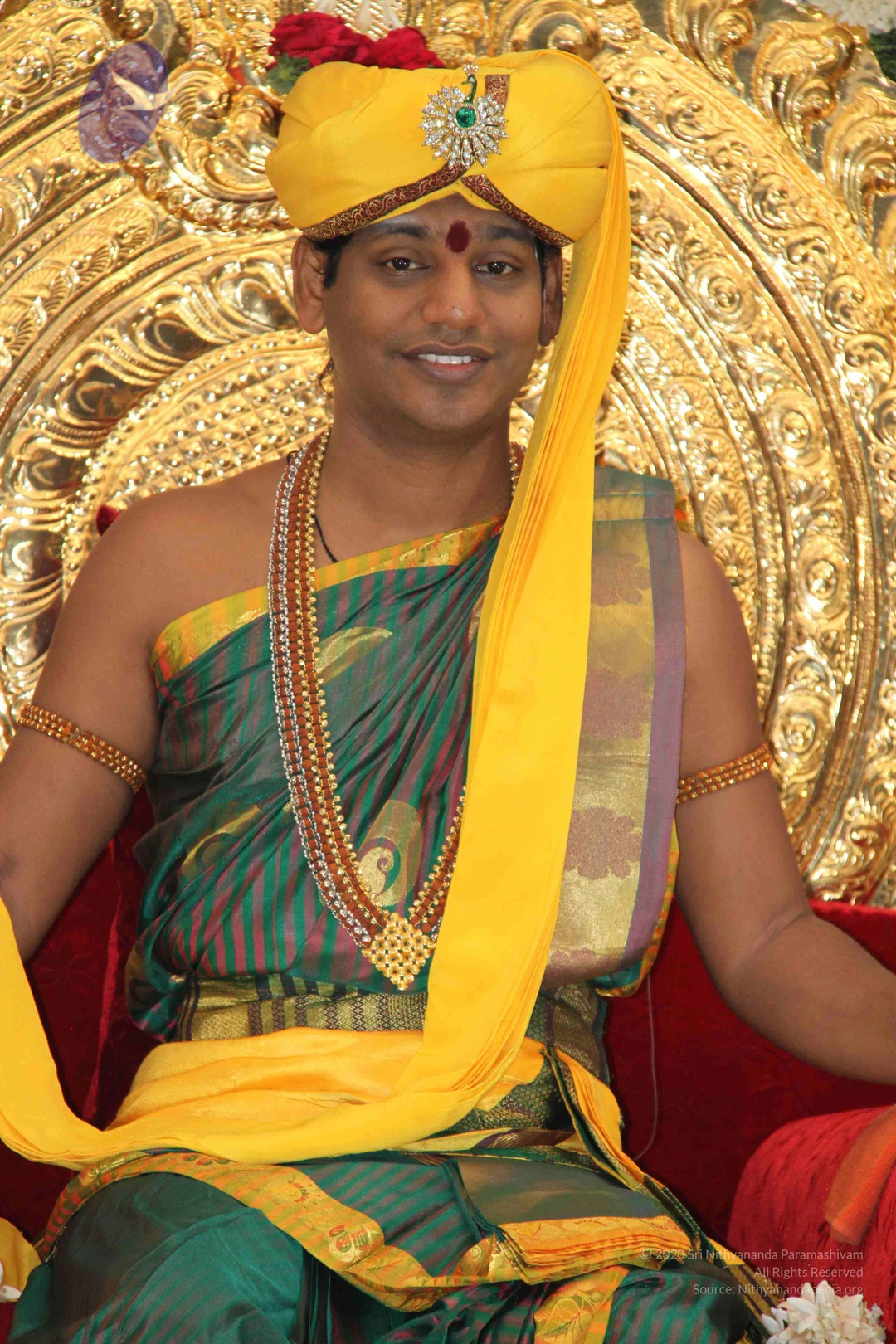
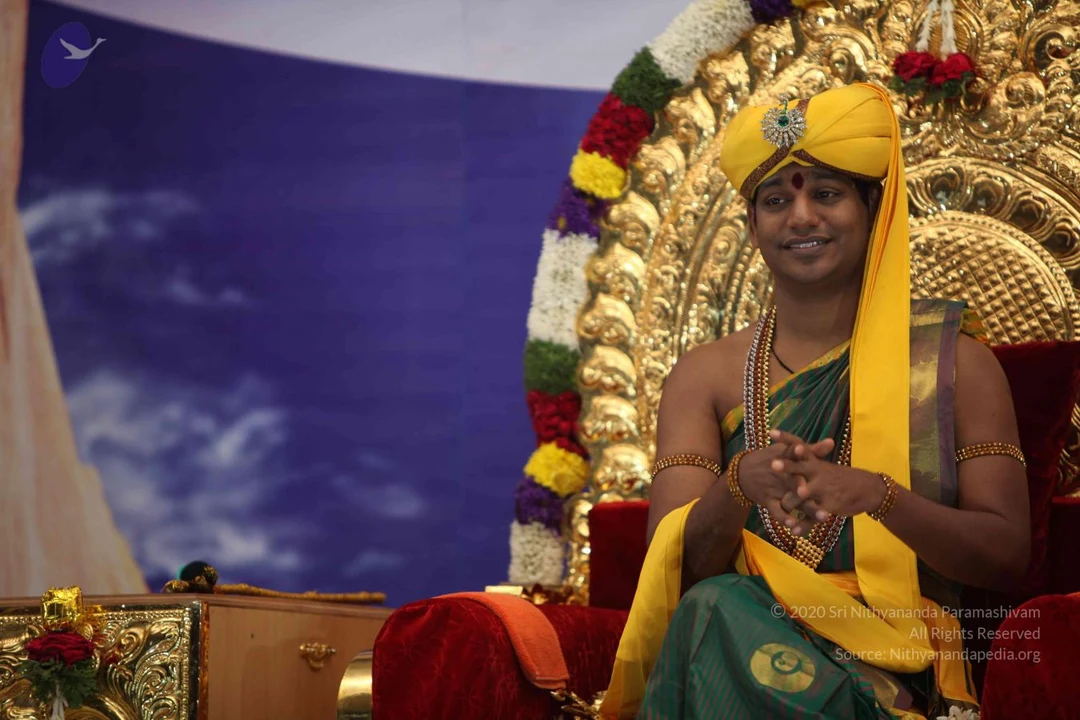
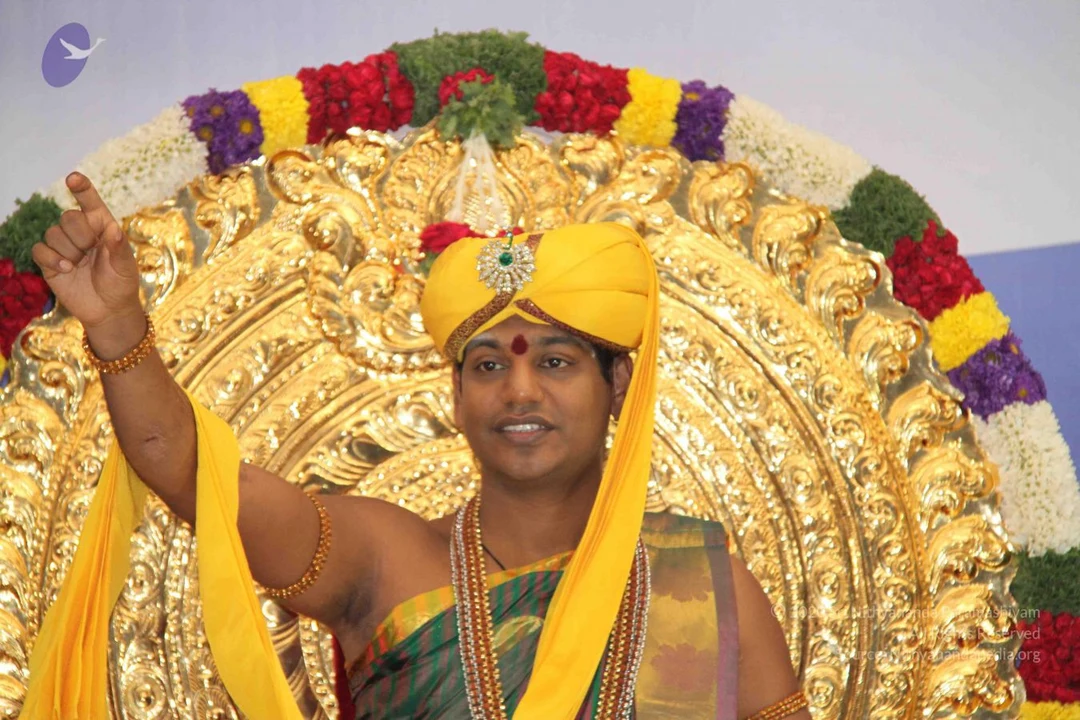
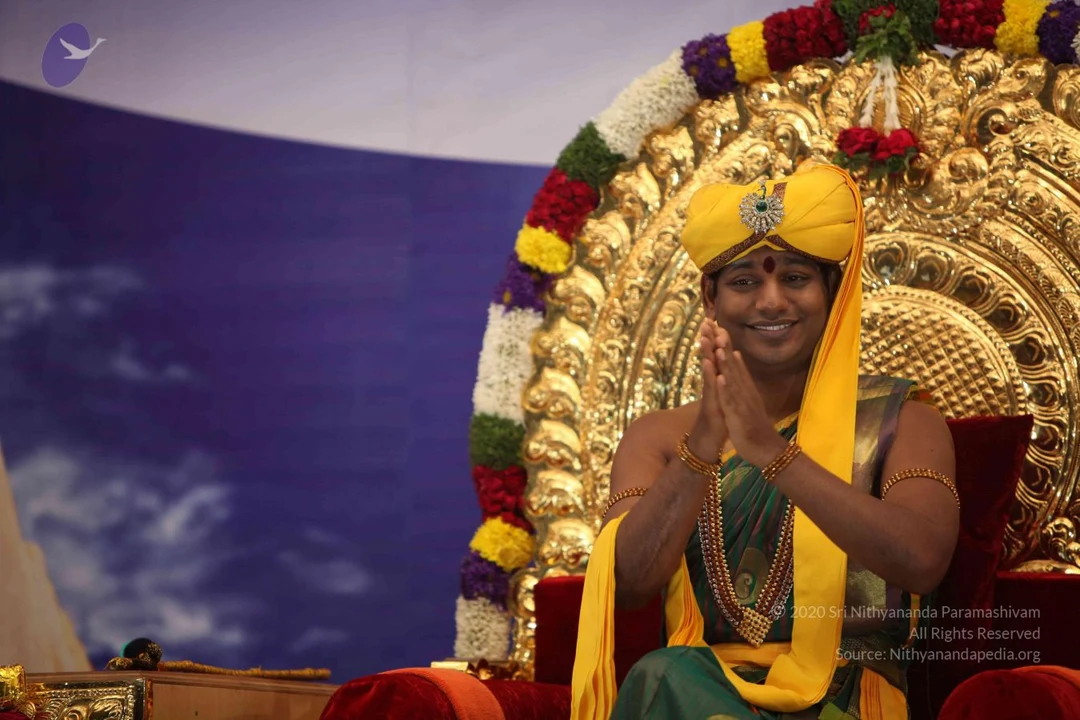
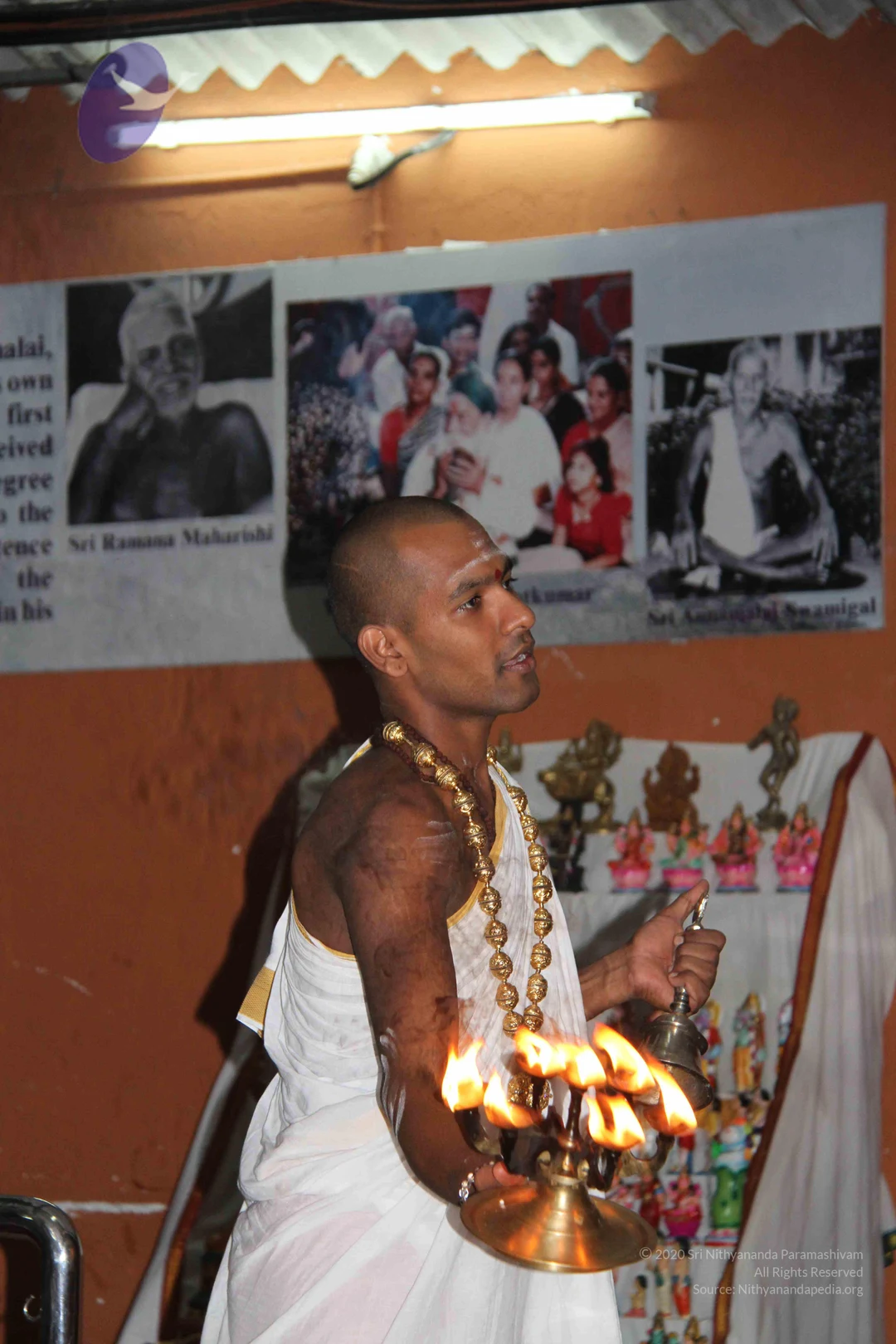
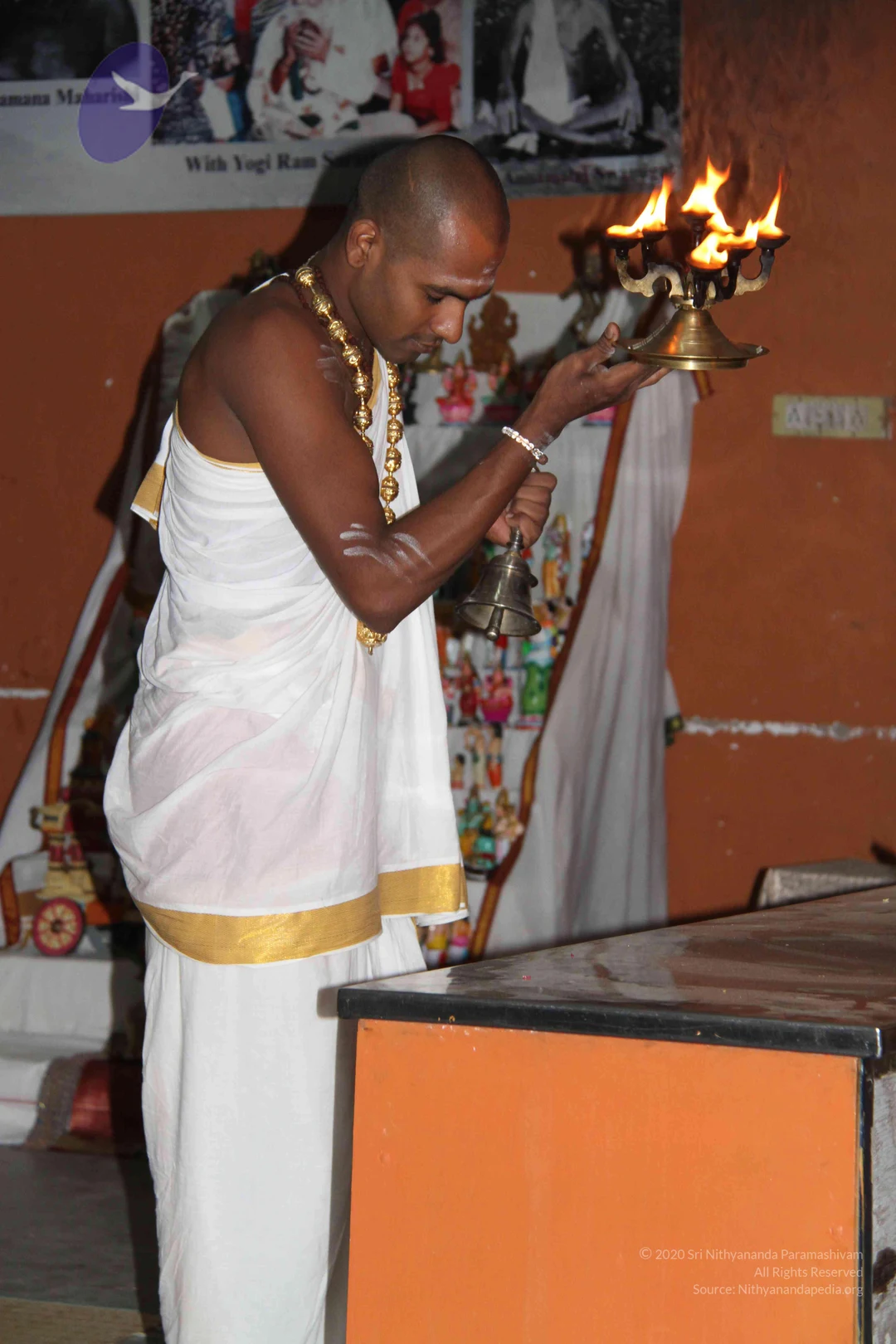
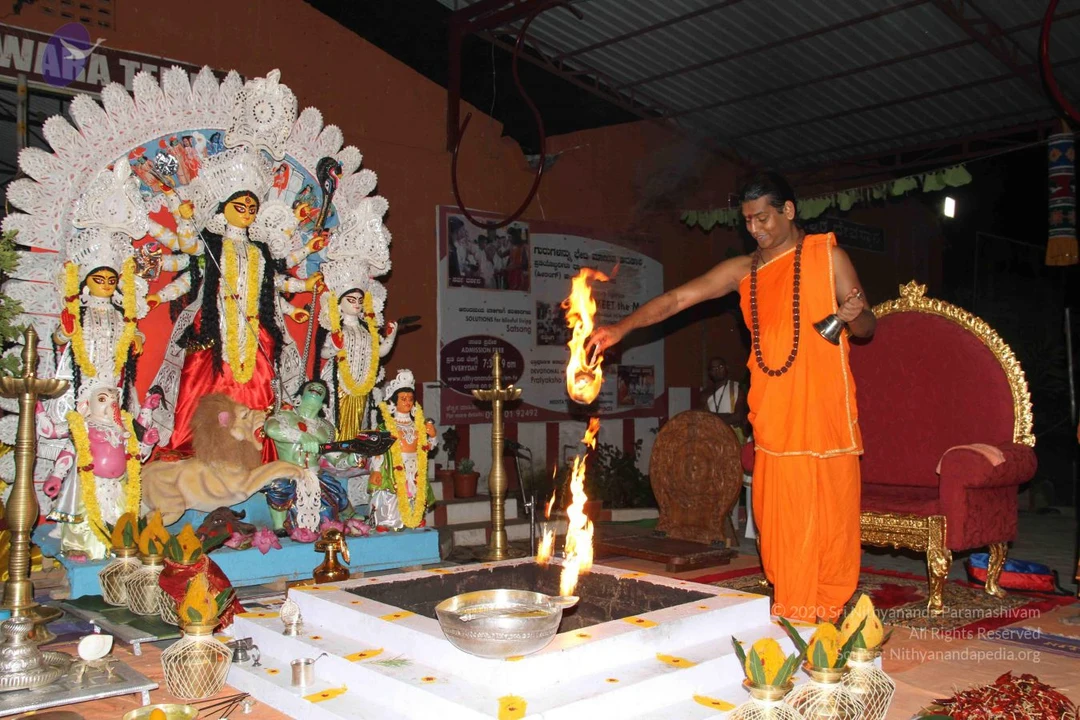
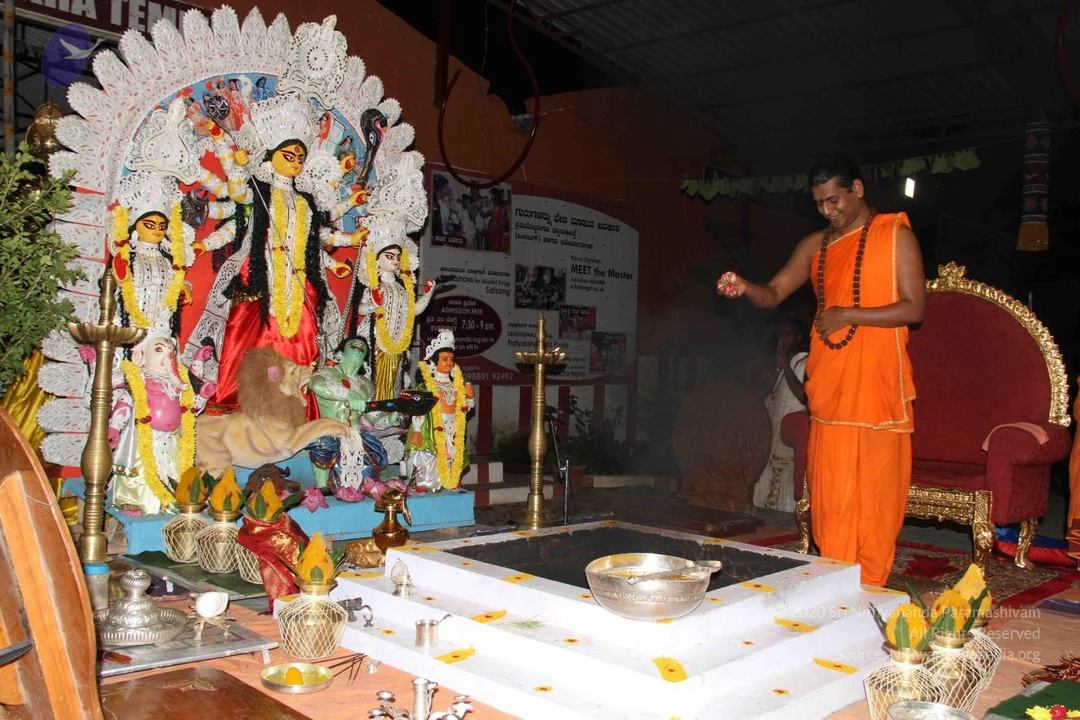
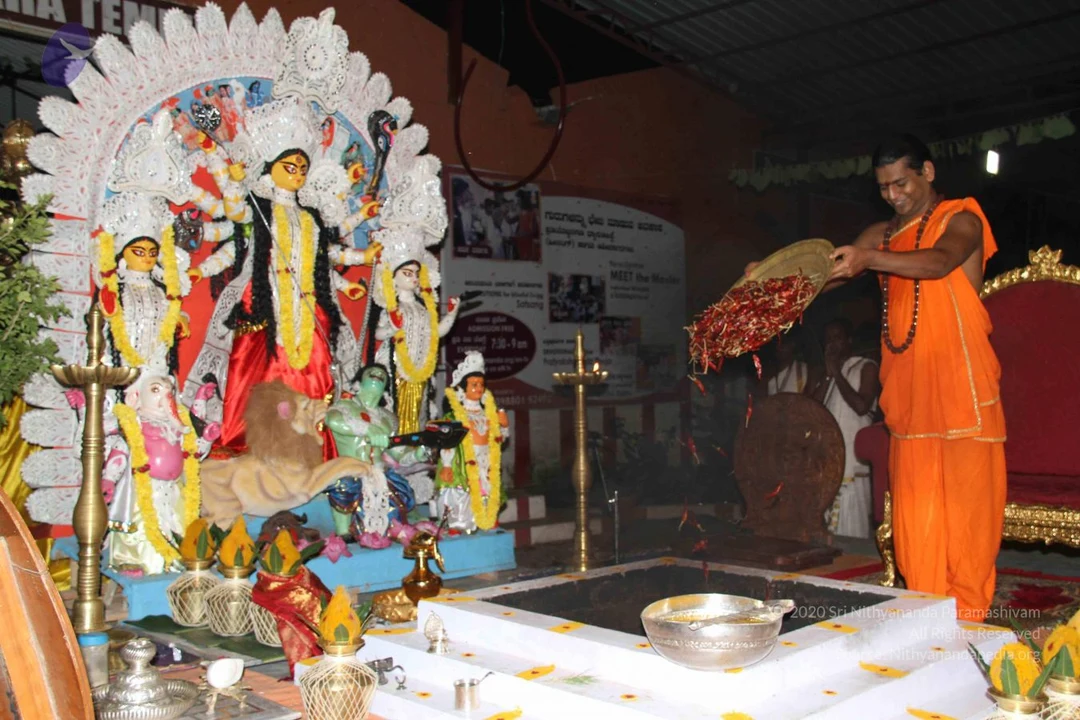
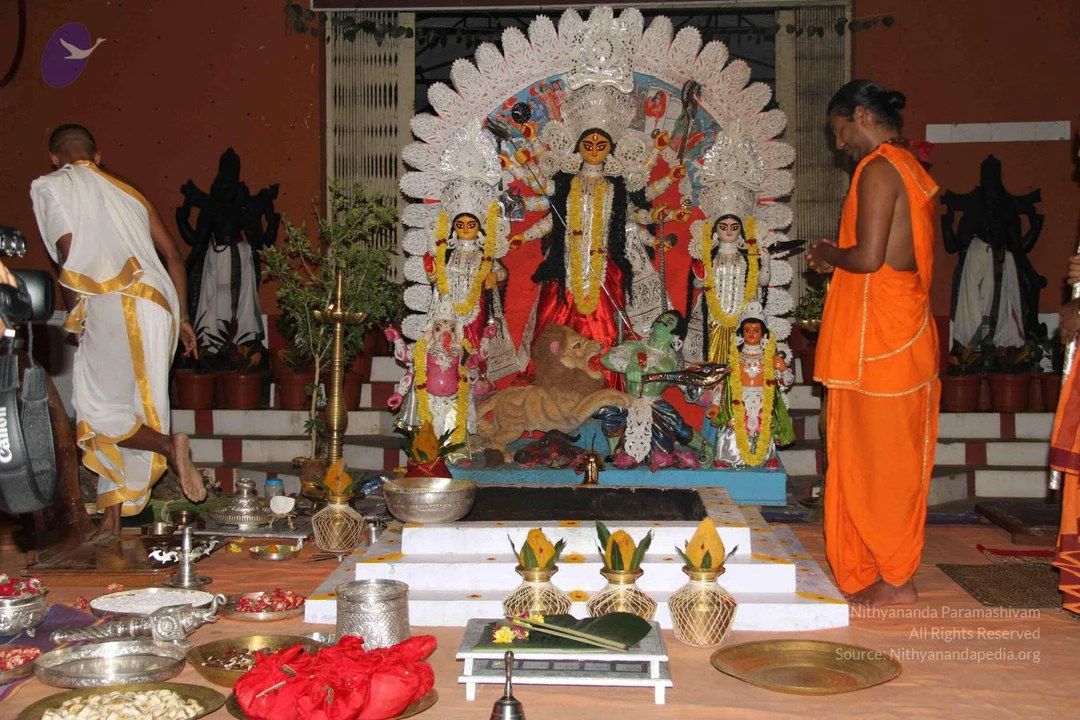
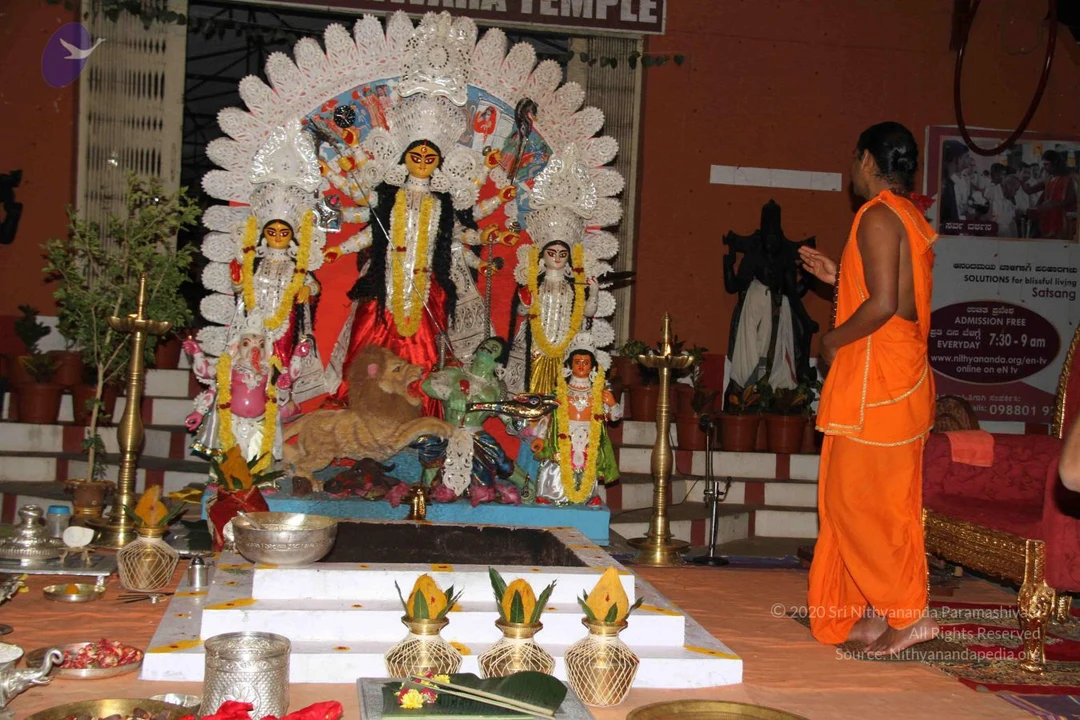
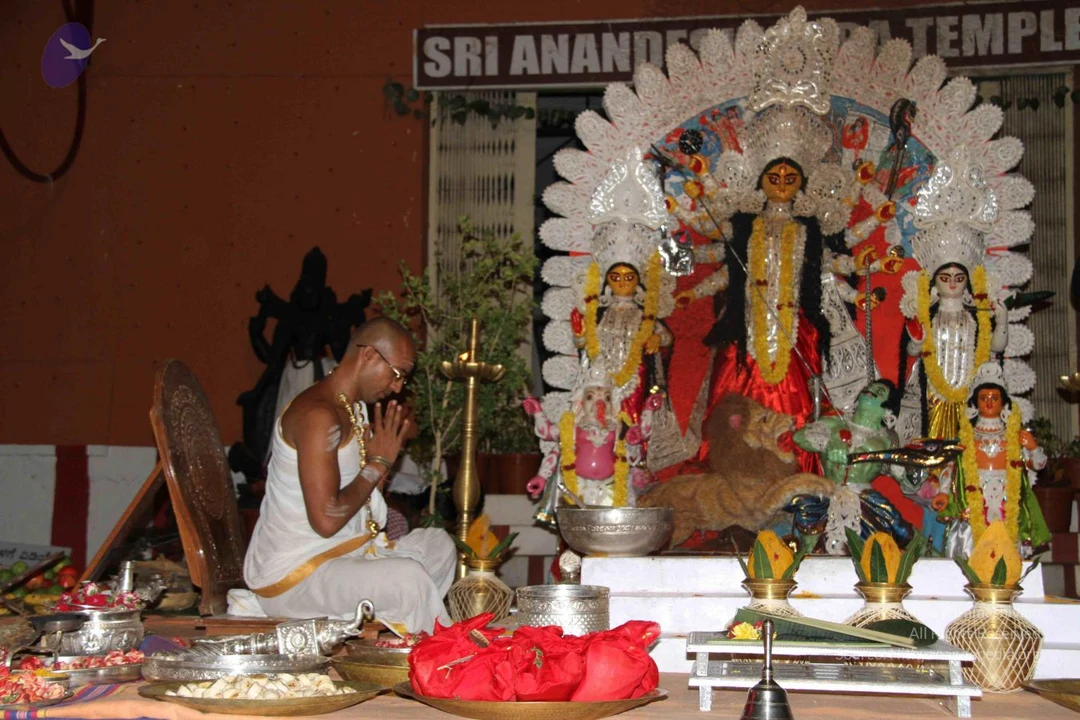
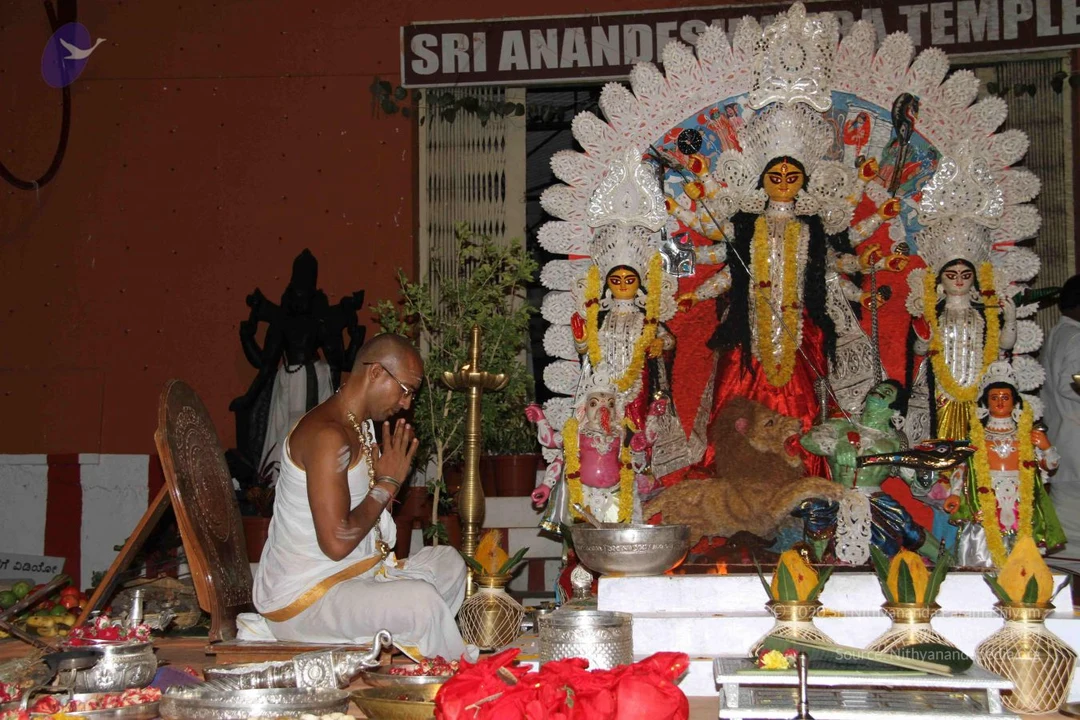
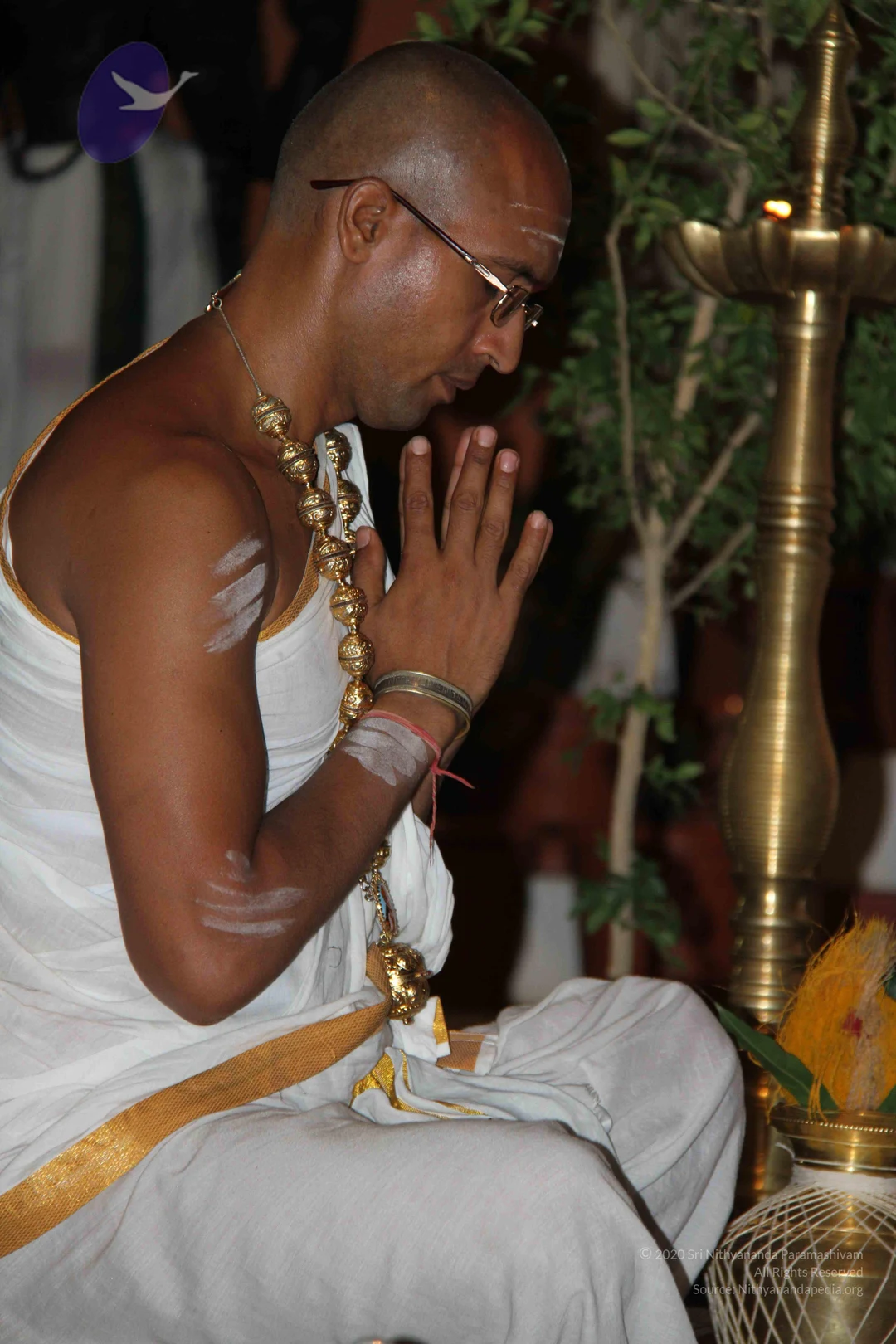
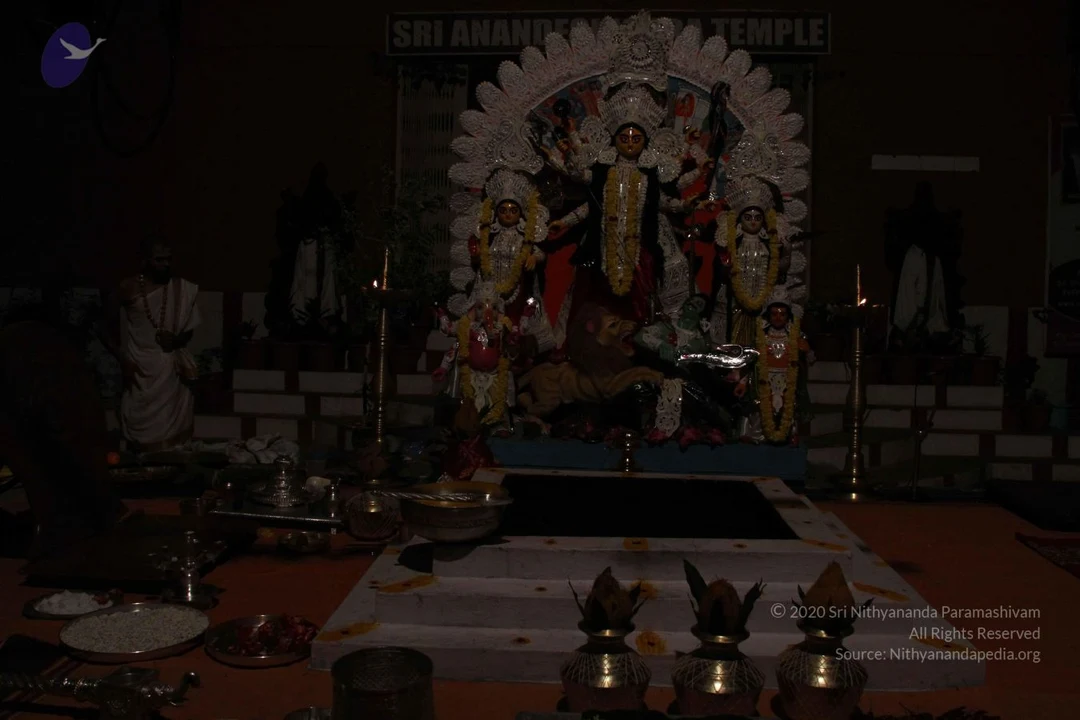
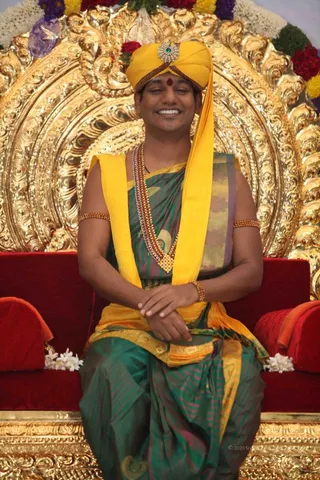
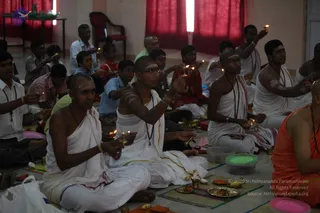
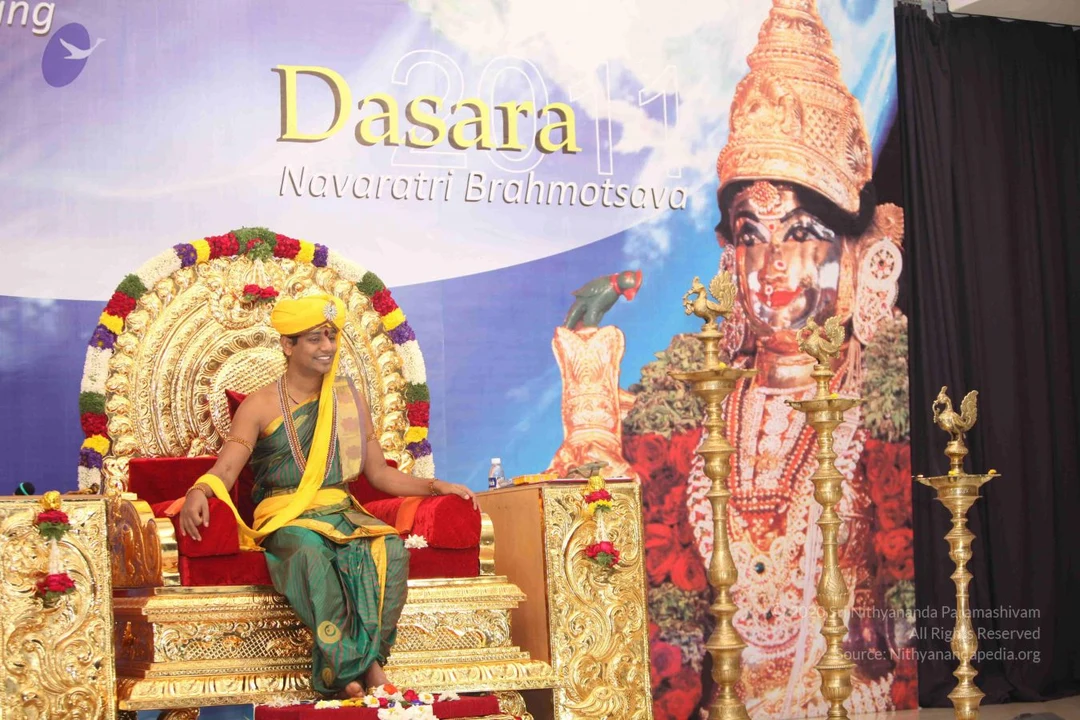
Seated devotees in a bright room with red curtains perform namaste with palms pressed together. In the foreground a shaved-headed man in white dhoti and shawl has white vibhuti stripes on his arms and forehead and wears a rudraksha mala. Beside him a boy in a red striped kurta and white dhoti sits cross-legged with hands folded. Other participants in white and a young man in a light blue shirt are also seated. Brass puja vessels, a small oil lamp, bananas and flower offerings sit on a cloth on the floor. No one clearly matching a person's appearance is visible.A seated man on an ornate gilded throne backed by a golden arch decorated with floral garlands in white, yellow, red, green and purple. He wears a yellow turban with a jewelled brooch, a red bindi, a green and gold striped garment draped over bare shoulders, a yellow shawl across his lap and chest, multiple strands of beads and a necklace, and gold armlets and bangles. He leans forward on a red cushioned seat, one hand resting on the armrest and the other pointing outward while he appears to speak. The setting suggests a discourse.A photograph of a shaved-headed man in a plain white dhoti and a white upper cloth with a gold-coloured border, standing before an altar at night. He wears a long gold bead necklace, has white horizontal vibhuti lines on his forehead and a red mark at the centre, and white stripes marked across his upper arm and shoulder. He bends forward and looks down toward an offering. Behind him, a large ornate deity murti with a sunburst-style halo, multiple arms and bright garlands is lit by an oil lamp. The setting is a dim, open-sided temple hall with a corrugated roof.

September 28 2011

Original wiki page
Contents

Title:

THE SUPREME PONTIFF OF HINDUISM HDH BHAGAVAN SRI NITHYANANDA PARAMASHIVAM

Link to Video:

VideoAudio

Transcript:

Bhagavad Gita

Are you afraid of Change?

DATE: Day 35: Sep 28th 2011

Life is for internalizing the newer and newer and greater and greater truths. Krishna says even if you are not able to internalize the great truths like soul is eternal, it is indestructible and all these things, come on, even if you believe that birth and death are inevitable for this being, what you think as you, even then you don’t need to worry, because it is going to happen whether you worry it or not.

You don’t worry for day and night. You don’t sit and cry ‘ohhhh now it is going to become night, what will I do’. You don’t sit and cry ‘ohhh it is going to become day time, what will I do’. No. Once you know something is inevitable and moves like a cycle and eternal you just learn to live with it, learn to handle it. Same way ‘when you know life and death are inevitable, oh Arjuna, foremost among men’; he is using the beautiful word for Arjuna mahabaaho - the mighty armed one. ‘It is not worthy of being mourned for this manner’. You don’t need to worry about it. He is using a very powerful name for Arjuna ‘mighty armed one’.

Means…. You see the arms; the hands are directly related to giving. That is why when they describe Karna and Sri Ramachandra Prabhu they describe their hands first. Even Sri Rama, supposed to be a great giver...Ramakrishna used to do…. whenever somebody comes to him and asks for sannyas he will hold their hand and see. Hand is supposed to look big weigh light. That is the scale. It should not look small and weigh heavy. He will say that only by holding the hand and weighing it, if it looks big and weighs light then this guy will become sadhu; means he has less engram and he has capacity to give away everything.

Here Krishna is describing Arjuna as mahabaaho - means mighty armed. Surely Arjuna must have had the quality - big hand but light weight; means the capacity to give everything; capacity to give away. He is reminding Arjuna ‘ehhh you are capable of giving away your body, giving away everything. So don’t worry. You are a great giver. I tell you, the joy of giving; the habit of giving will bring its result in you when you leave the body. When you leave the body, person who is always giving, giving, who is habituated to depart from something which he feels as part of his life, if you are habituated for that, the leaving the body will be very easy.

For example you are having a house. For ten years you lived in it. You felt it’s almost your life. Suddenly one day morning you give it away. Now you are habituated to give away things which you feel as your life. Same way money; sometimes you hold money as your life. Suddenly one day you give away. Same way sometime you hold your comforts, luxury, pleasures as part of your life. Suddenly one day you give it away. Now you are habituated, you are trained for giving away what you feel as your life. So when you leave the body also because of that habit you will not have suffering. You are already habituated to give away. You can easily give away life also, body also.

I tell you the highest capacity you need to develop in the human life is capacity to give away, capacity to go on giving; giving your energy, giving your time, giving your love, giving your money, giving your…… whatever you call it as yours…..talent, capacity to give away

atha caiman nitya-jatam nityam va manyase mrtam | Tathapi tvam maha-baho

Every time when Krishna describes certain truths he reminds Arjuna exactly that truth related name. He says mahabaaho - mighty armed one who gave away everything; who is habitual giver.

Nobody can give like Krishna but he himself calls Arjuna as mahabaaho just to remind Arjuna he is a habitual giver. You are habituated for giving away. Don’t worry, don’t be bothered; be a giver. For a giver, life and death is not a big thing. He says even if you believe that birth and death are inevitable for this being, even then it is not worthy of being mourned for in this manner. He says even if you believe birth and death are inevitable so why are you worried? It’s a routine; relax.

Photos:
Photos Of The Day:

temple
bhagavat-gita-satsang

chandi-homa

malayasi-palani-day-1

Toronto-Kailash-Navratri-Baala-Tripura-Sundari

Photos Of The Day:

Chandi-Homa

Bhagavat-Gita

Photos from this day

View all 287 photos

Photos:

27 photosSource gallery
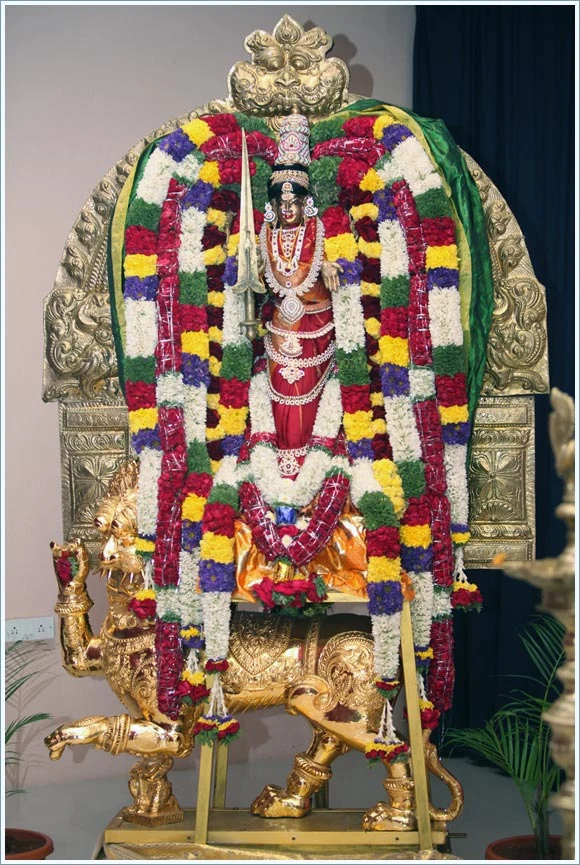
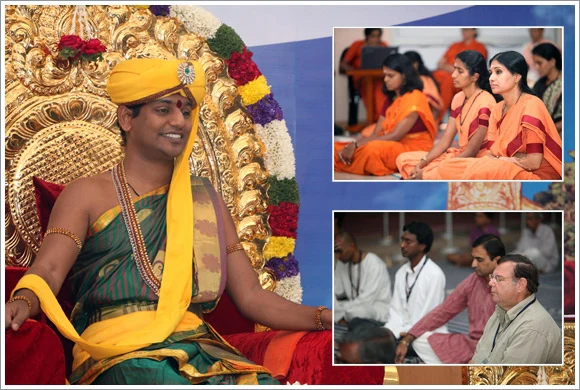
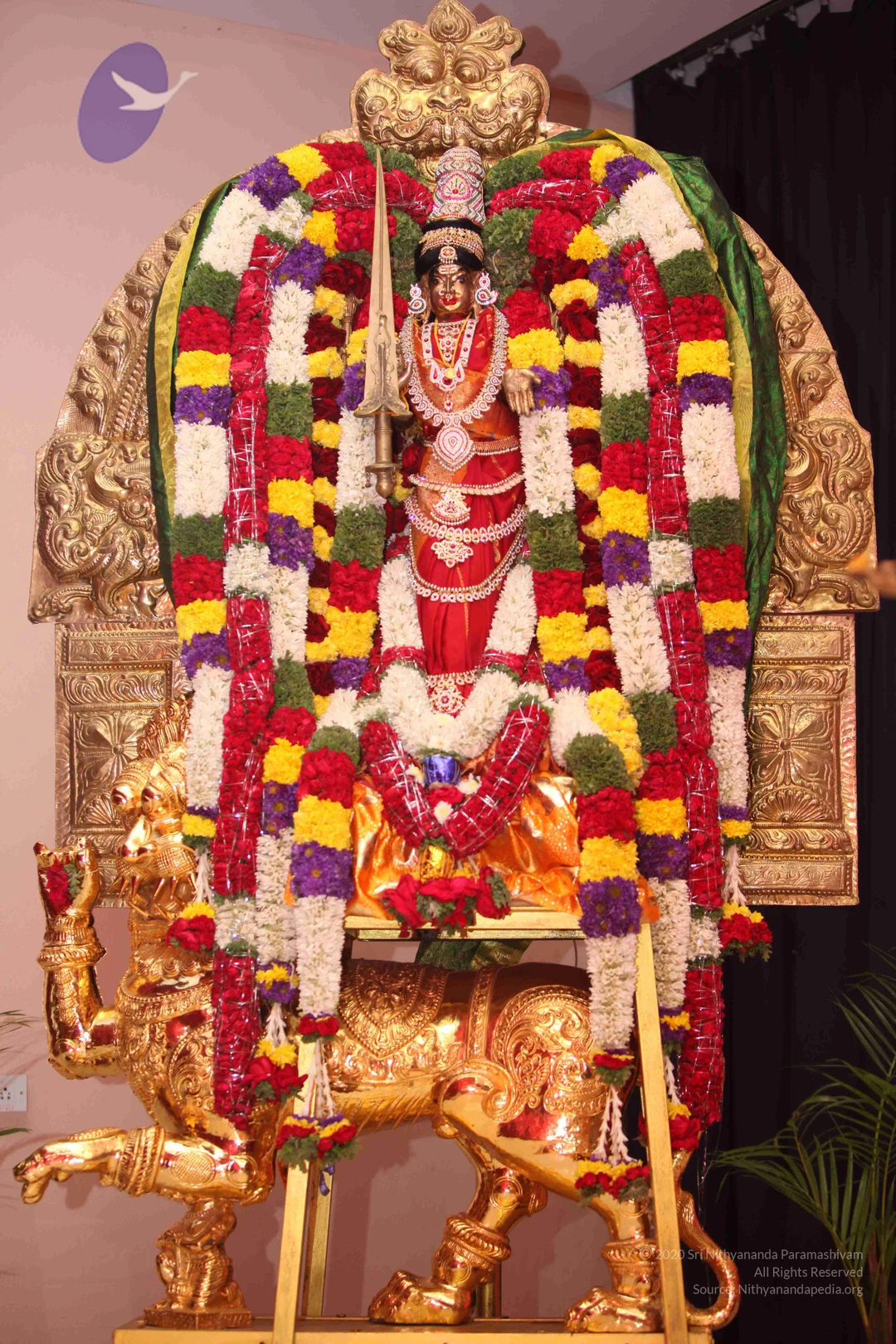
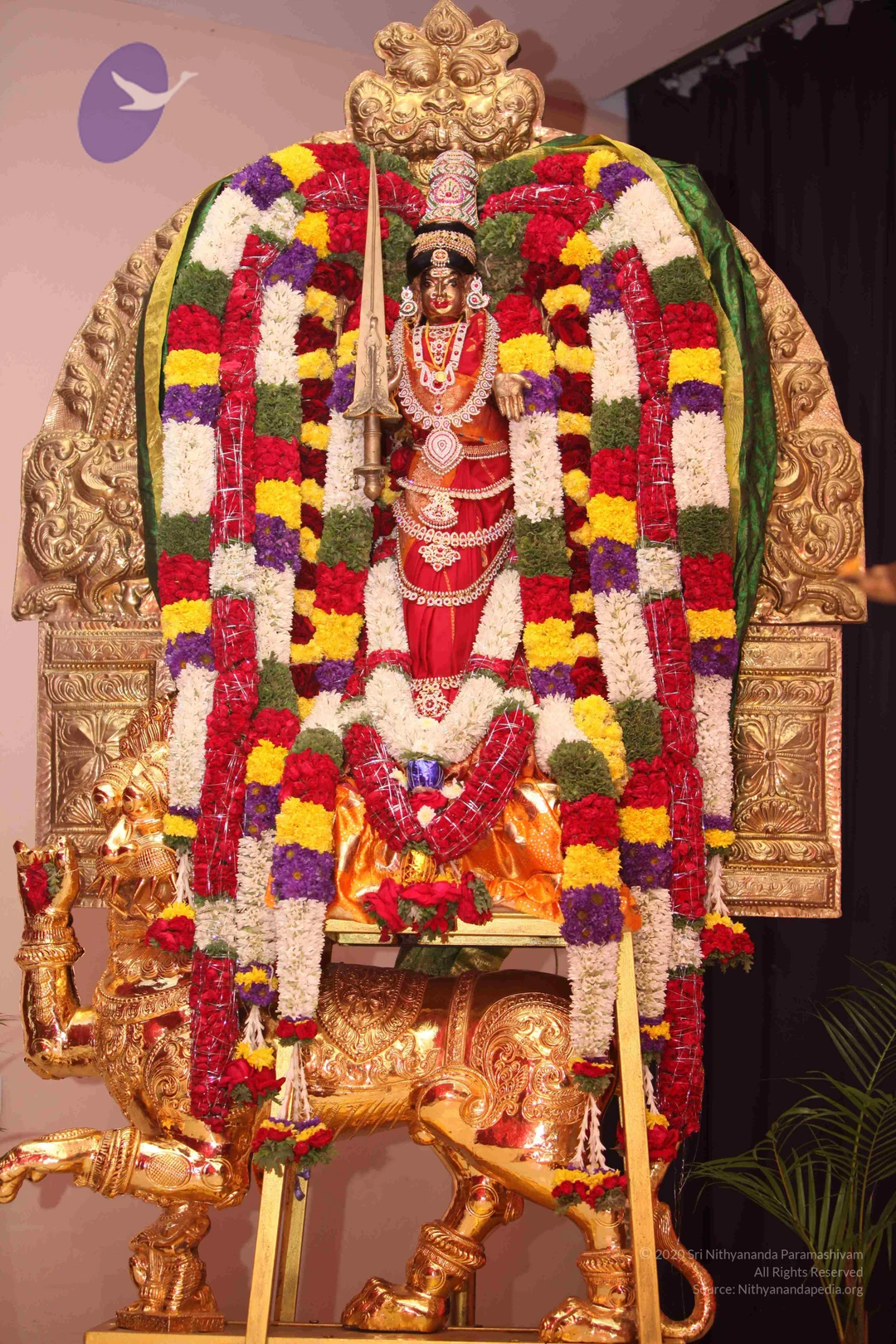
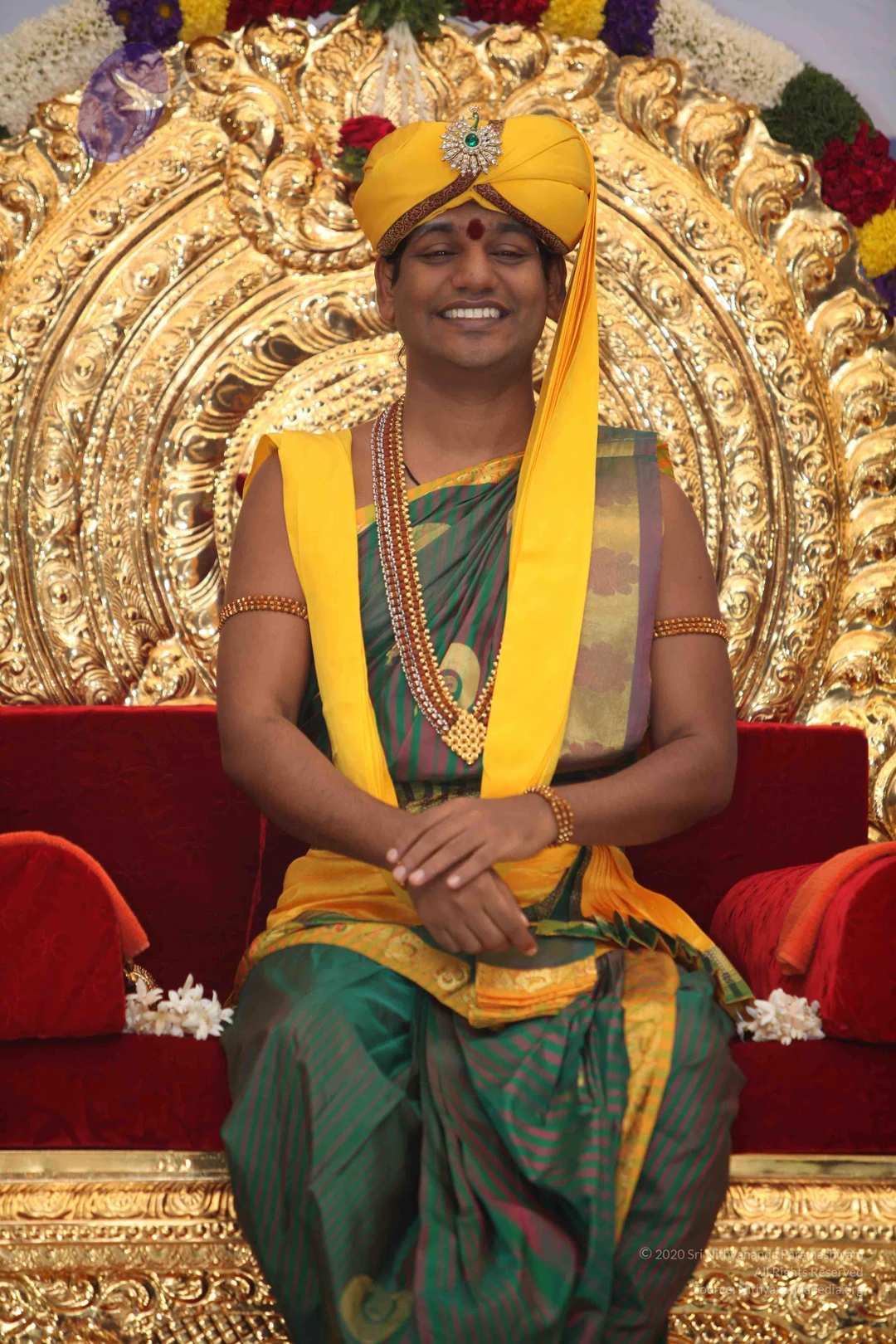
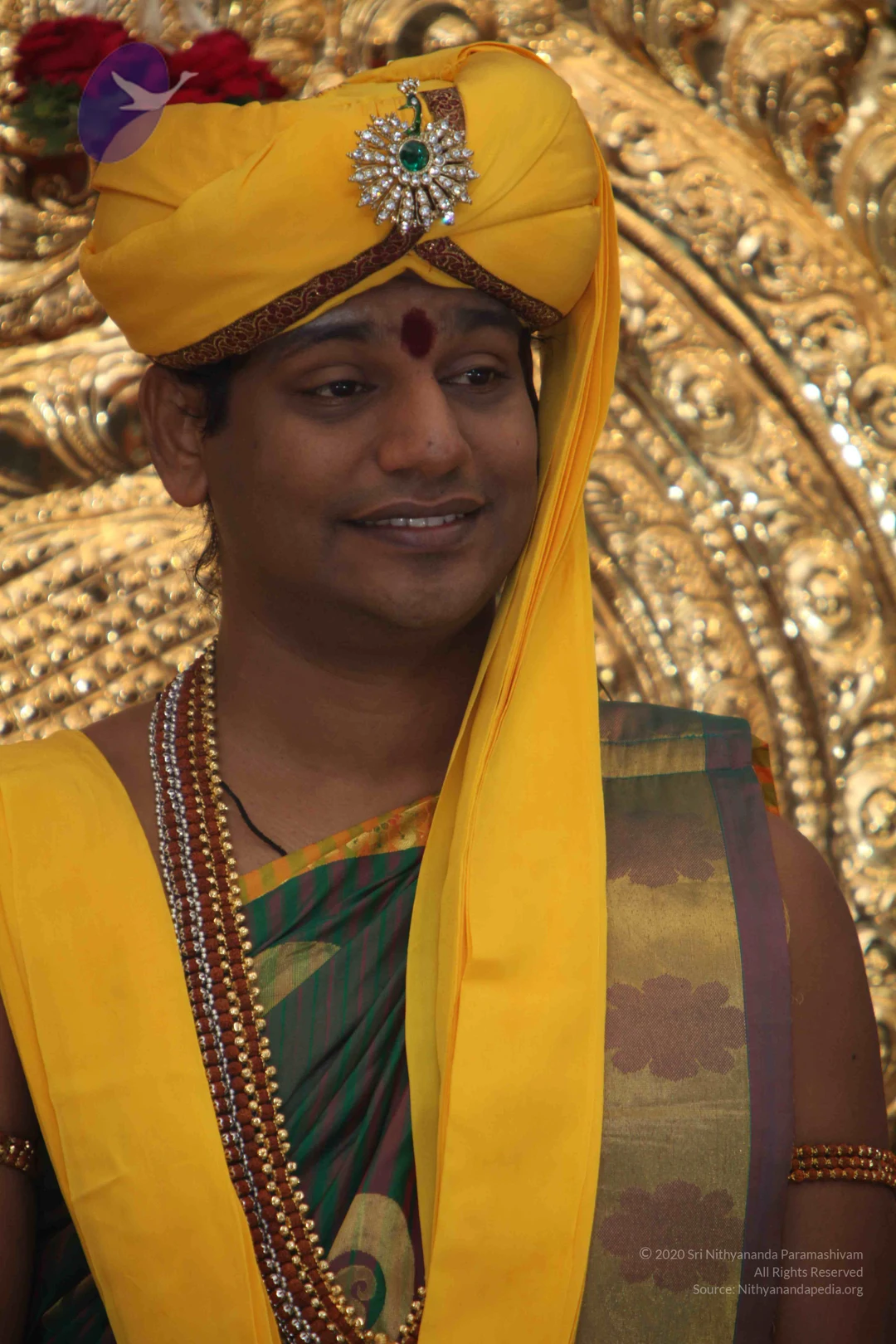
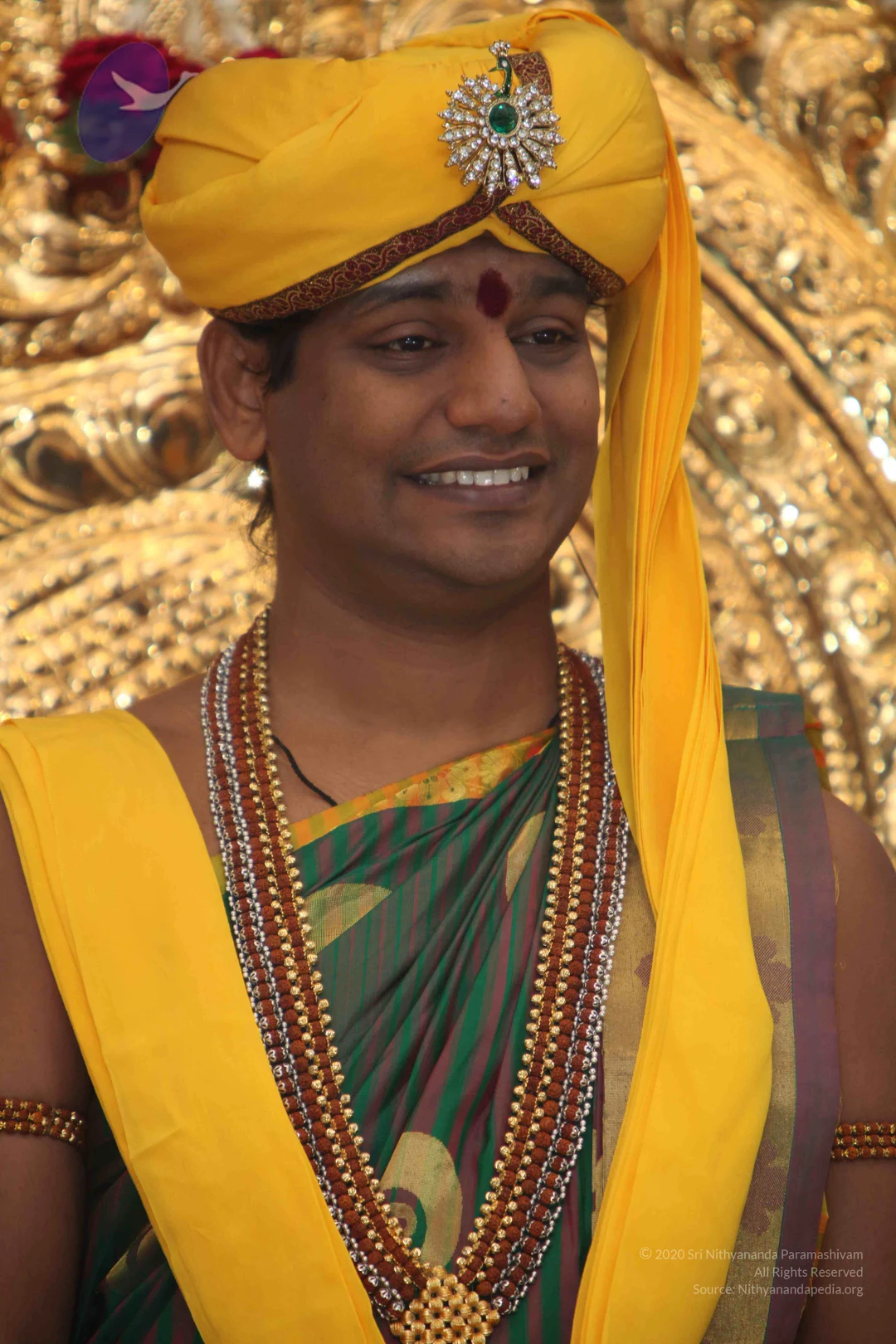
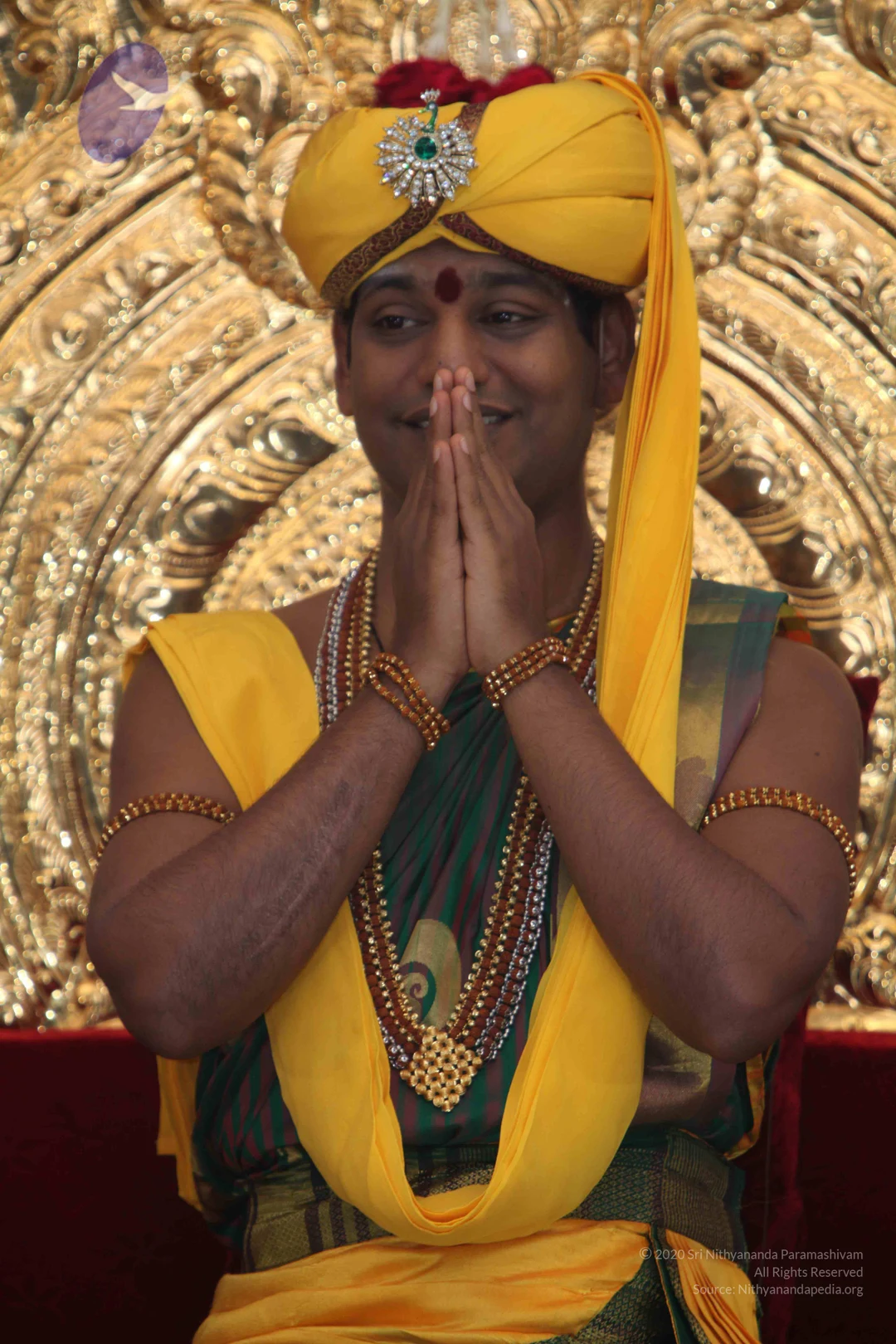
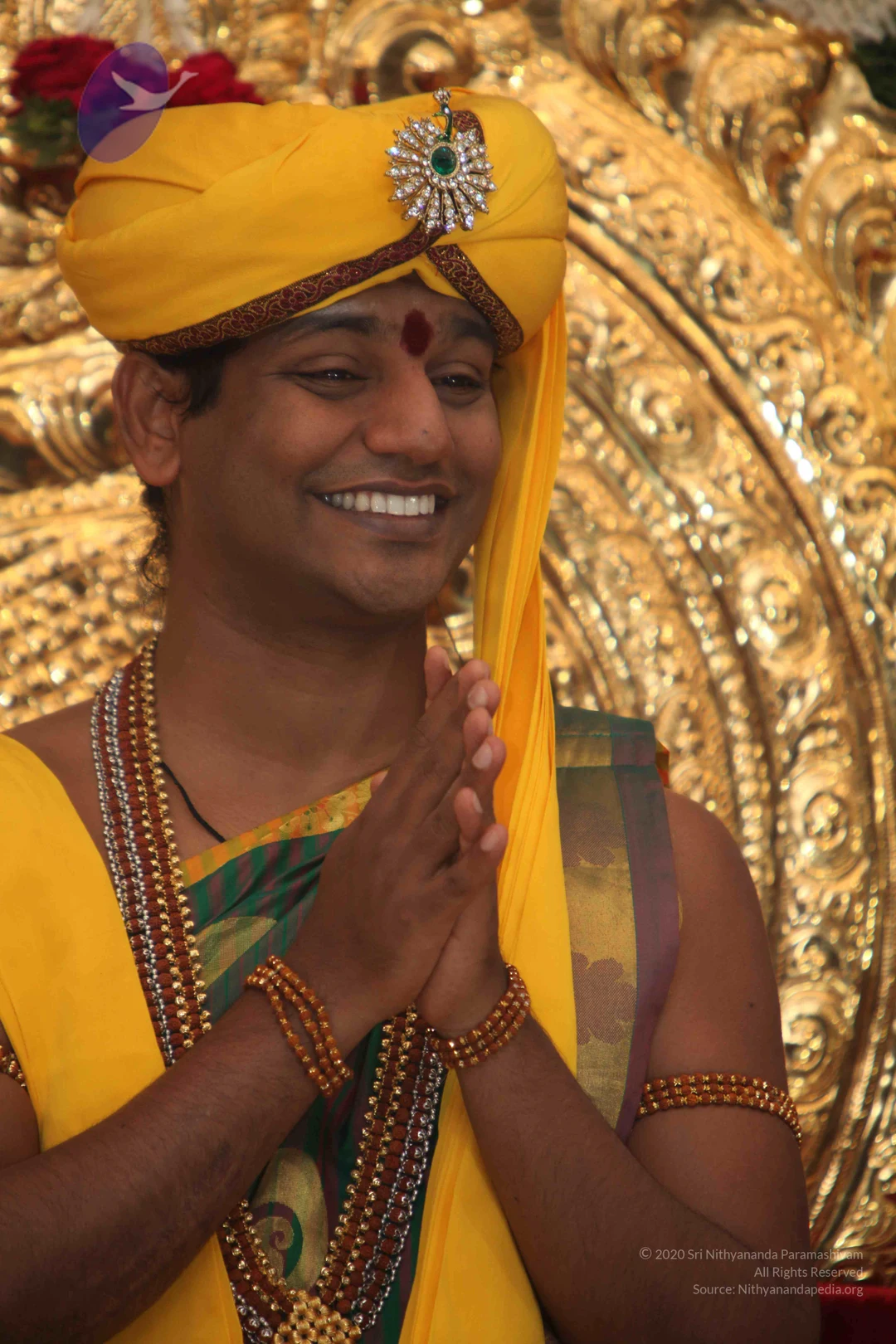
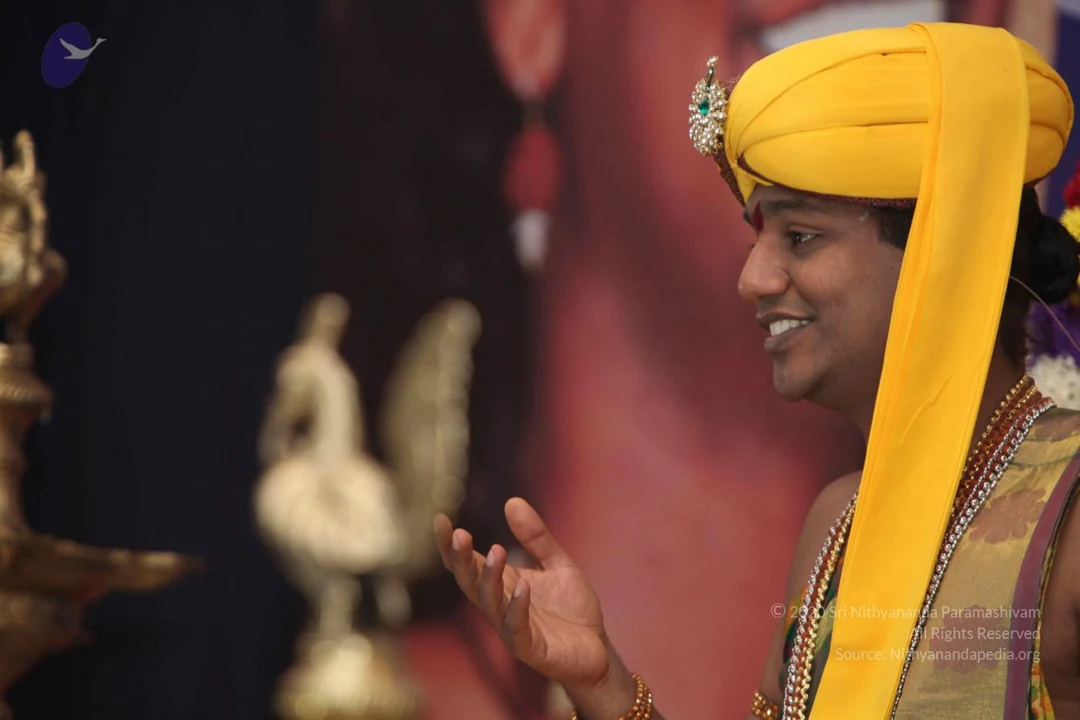
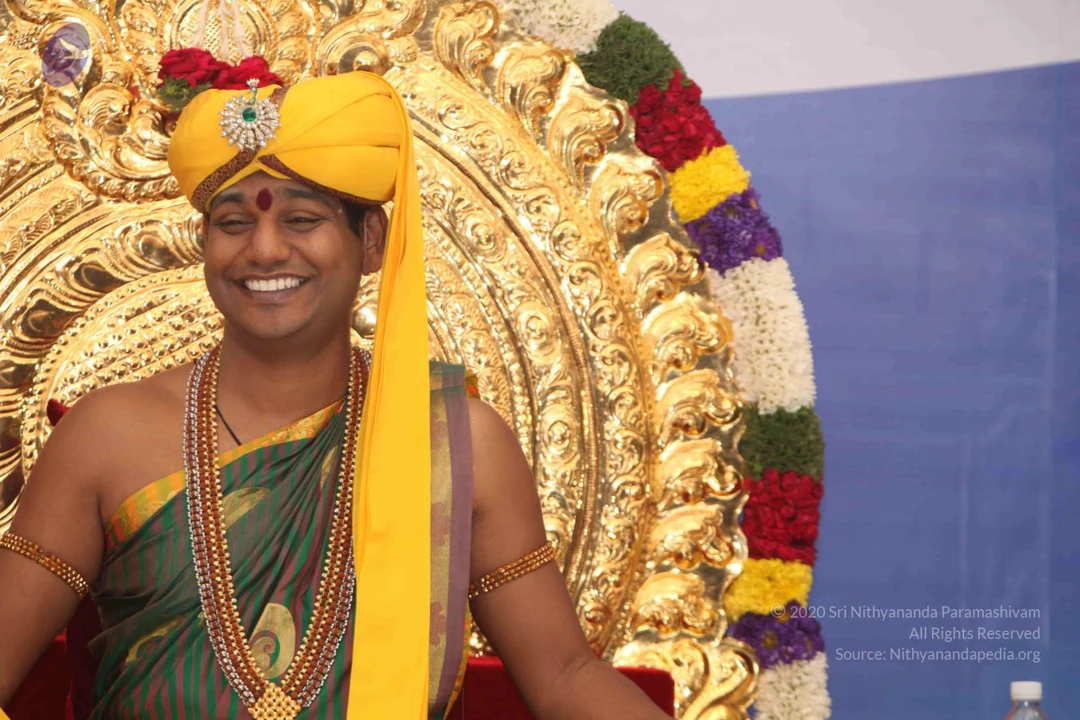
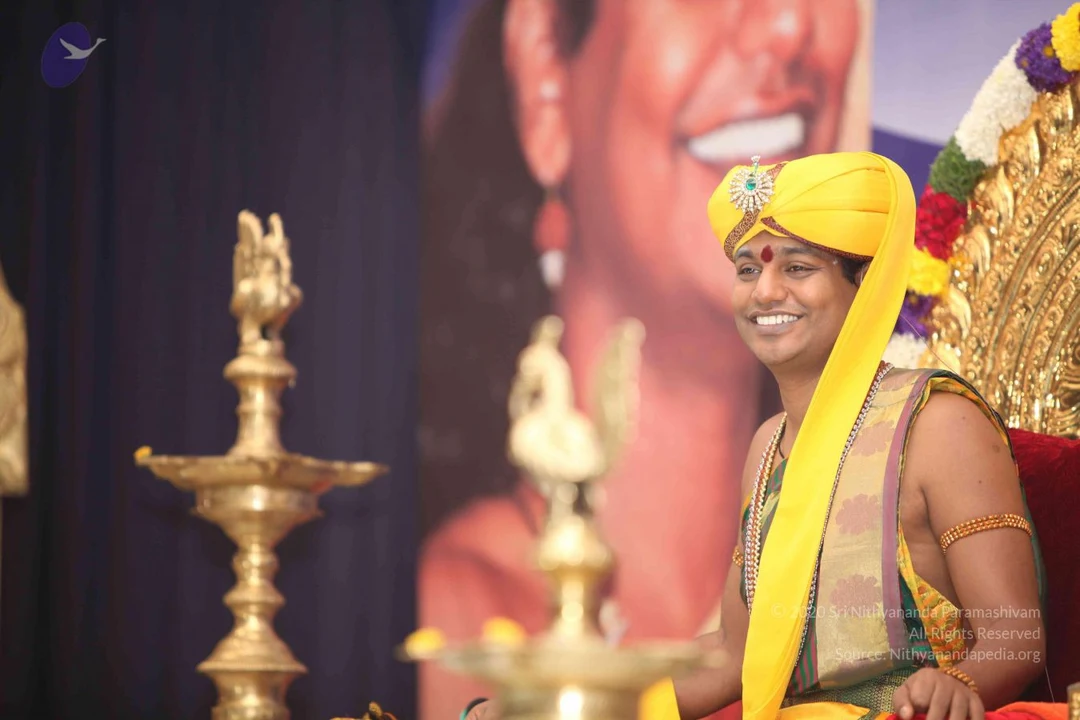
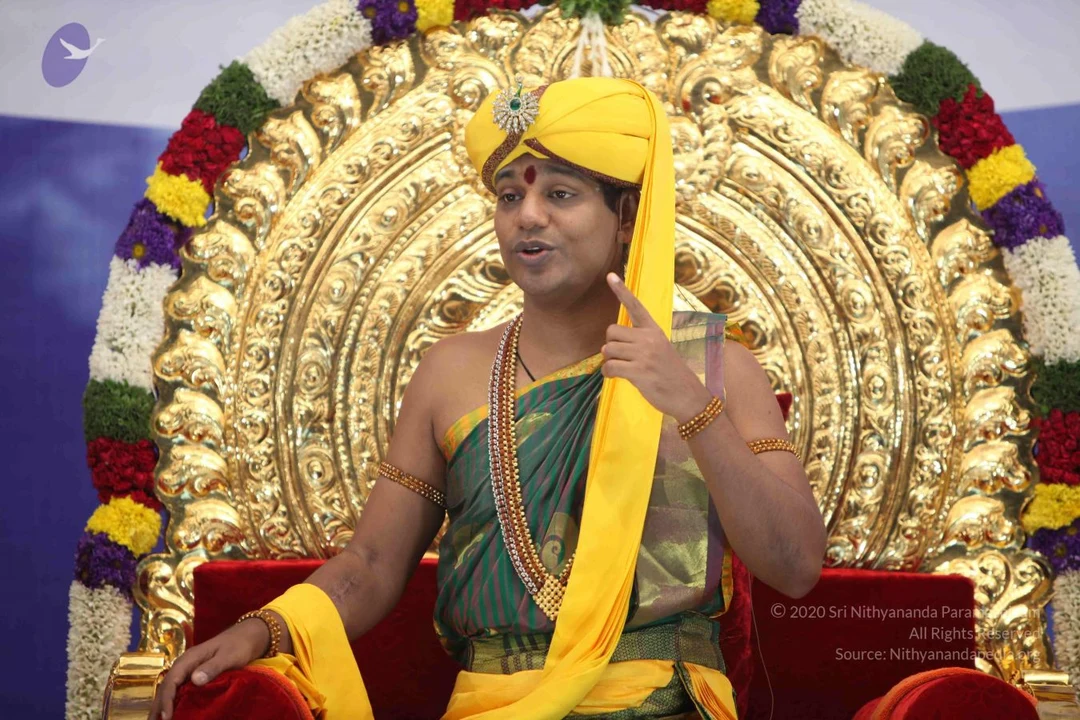
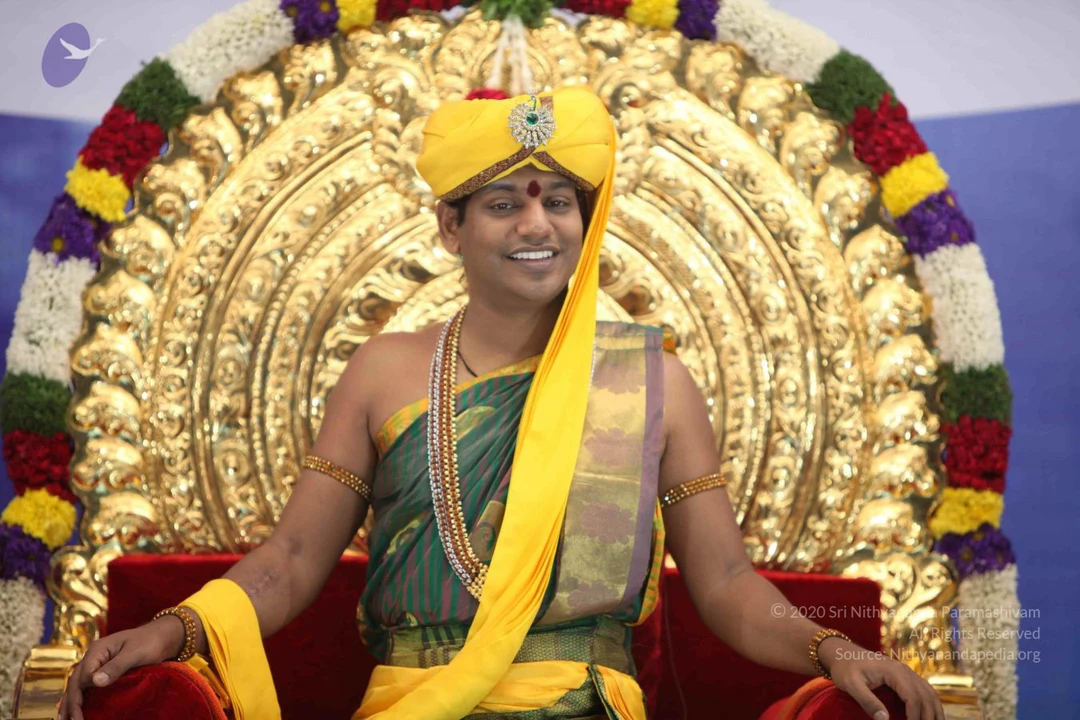
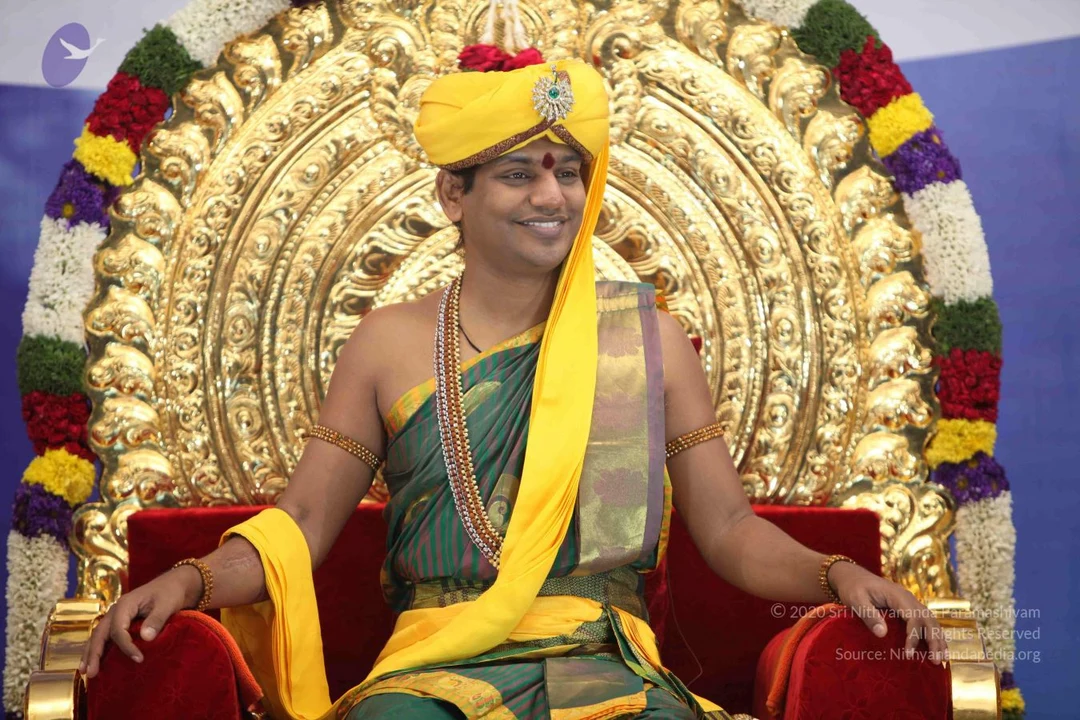
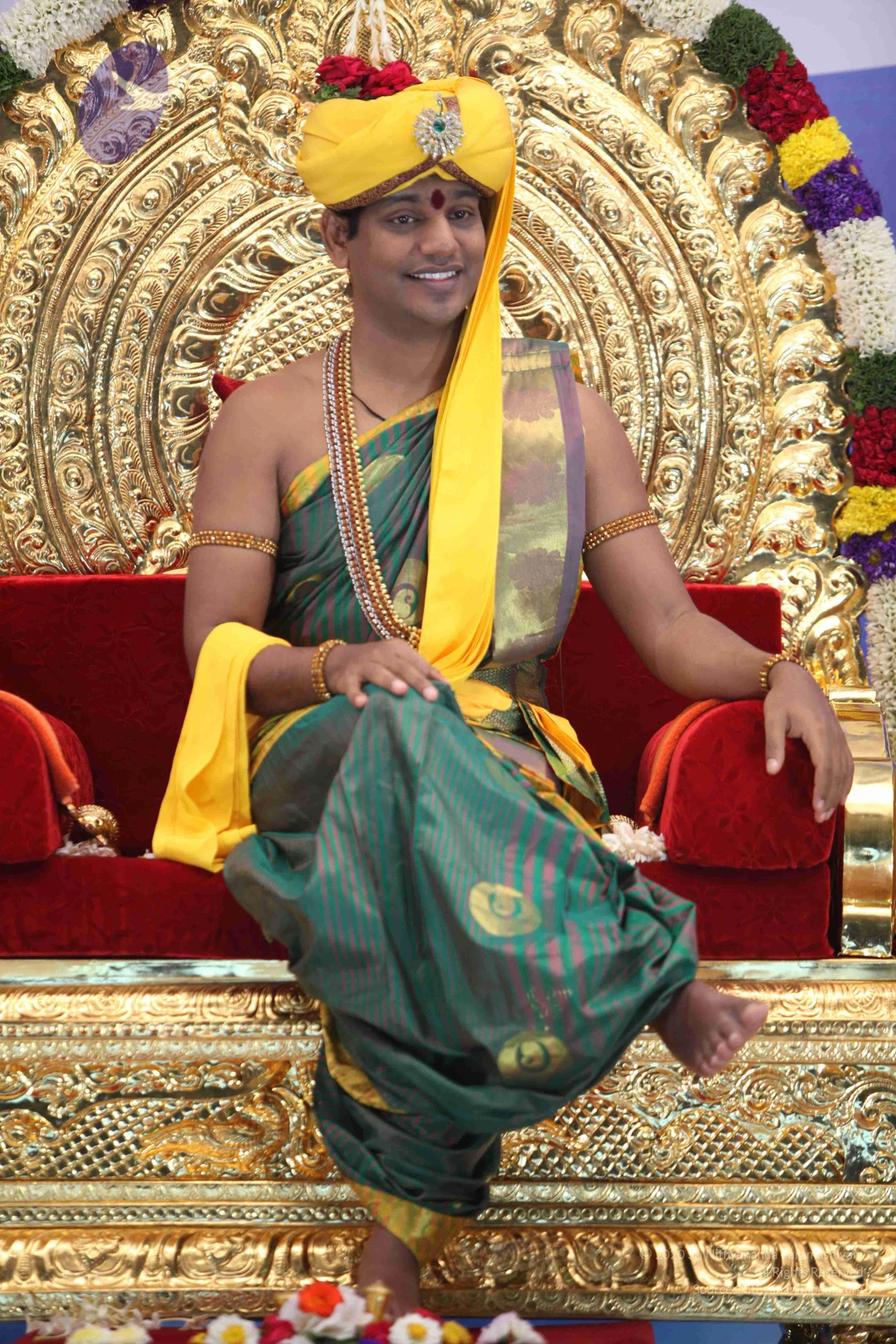
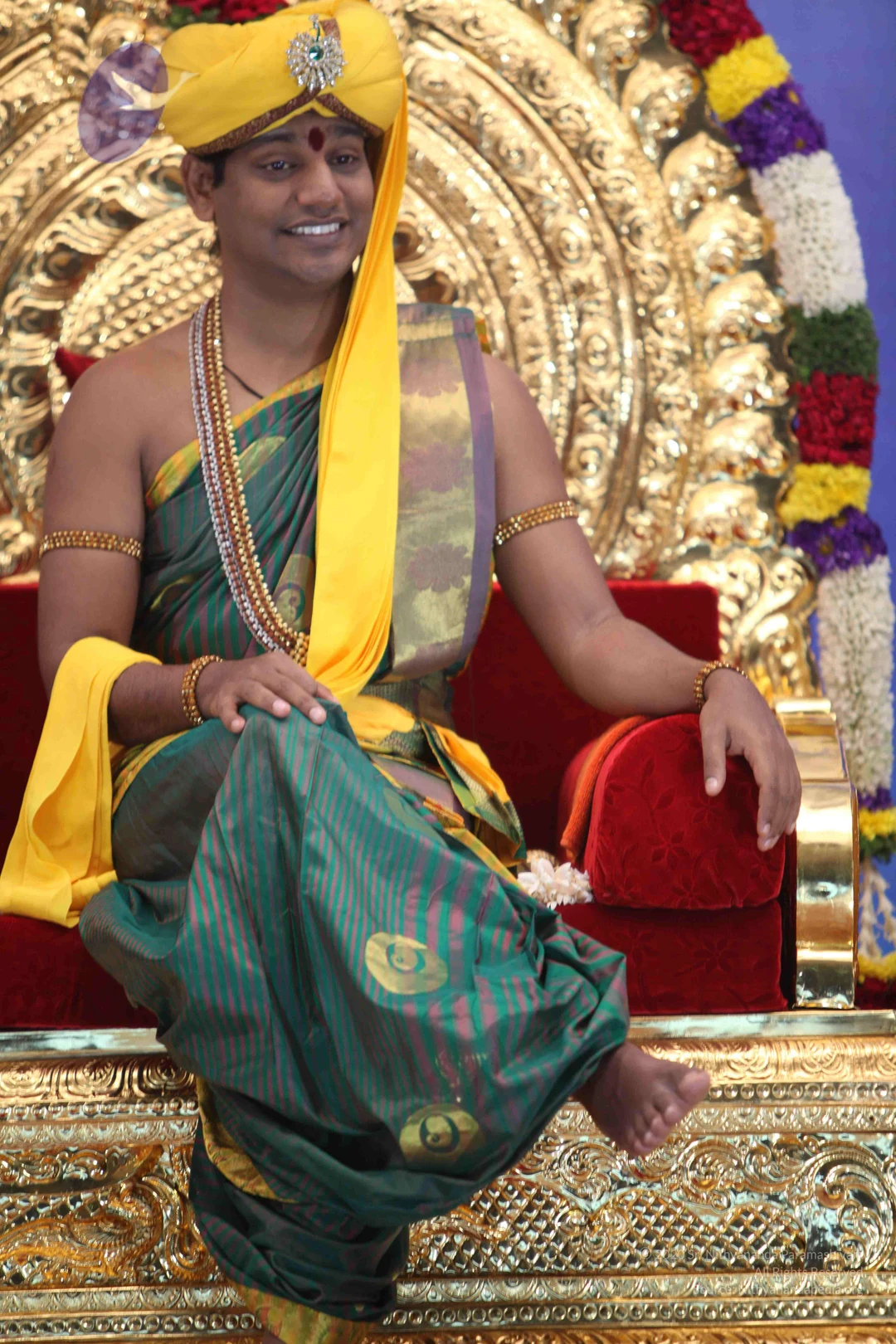
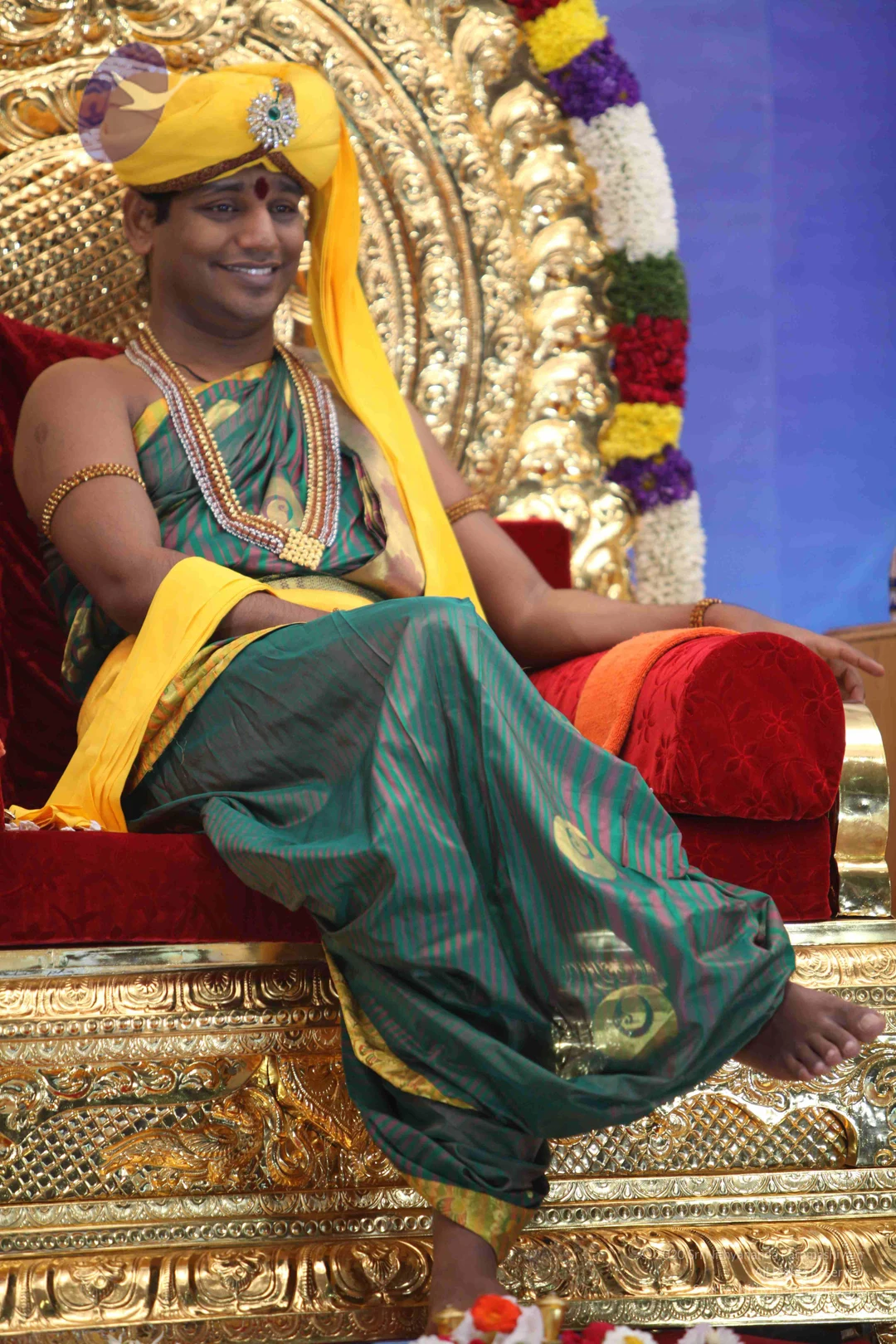
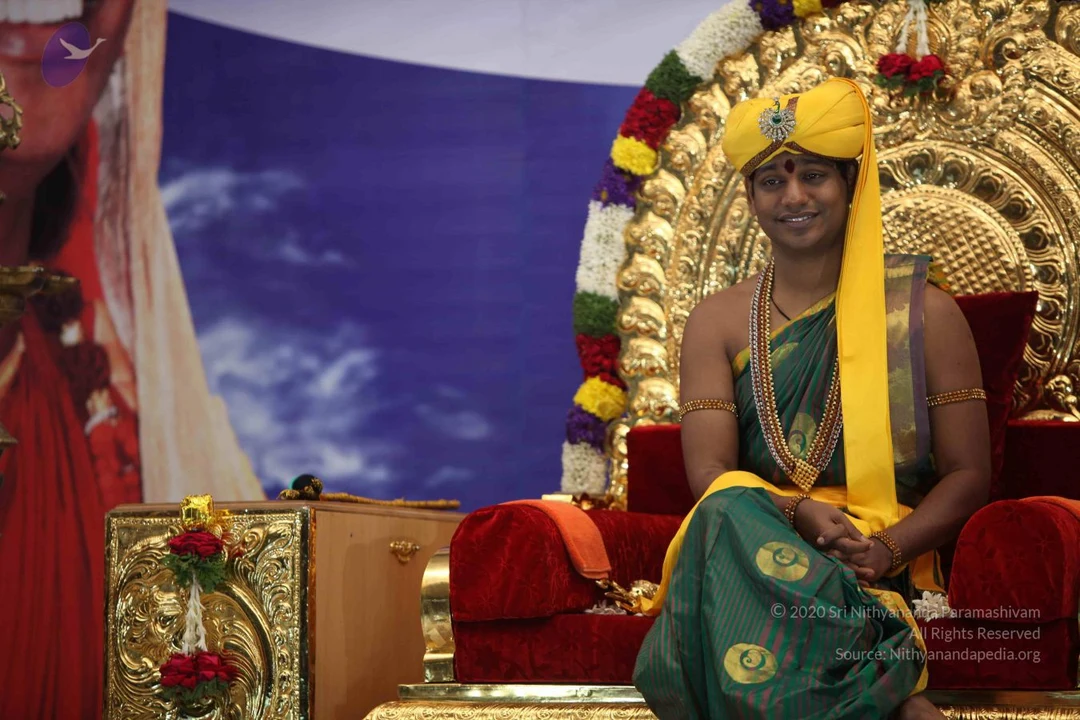
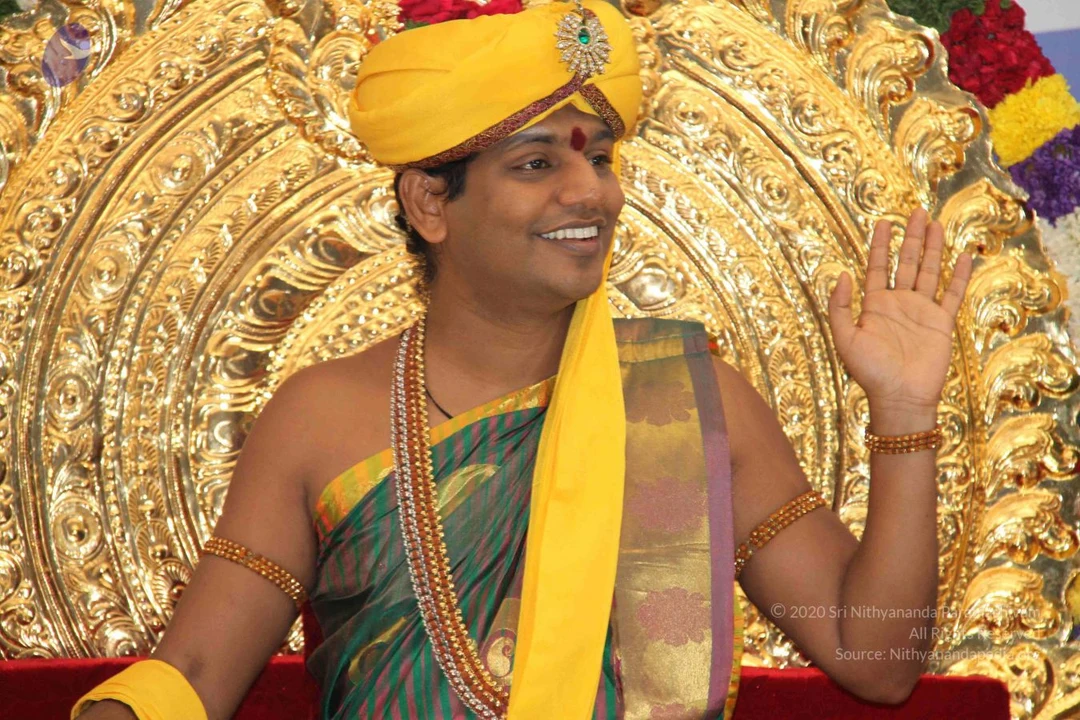
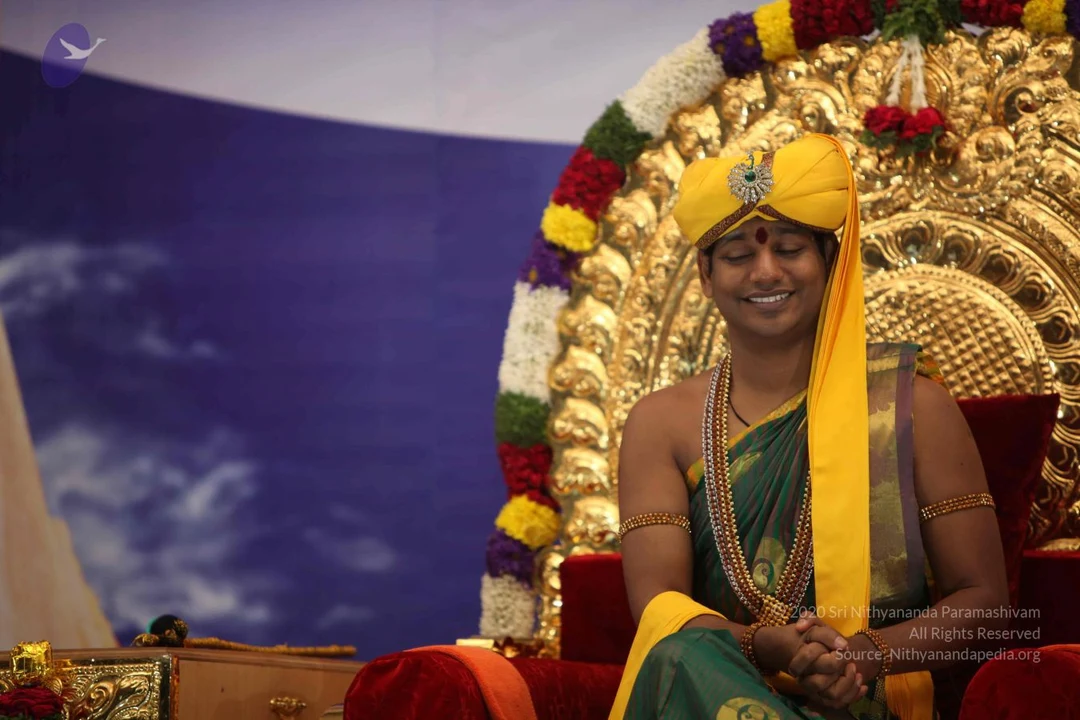
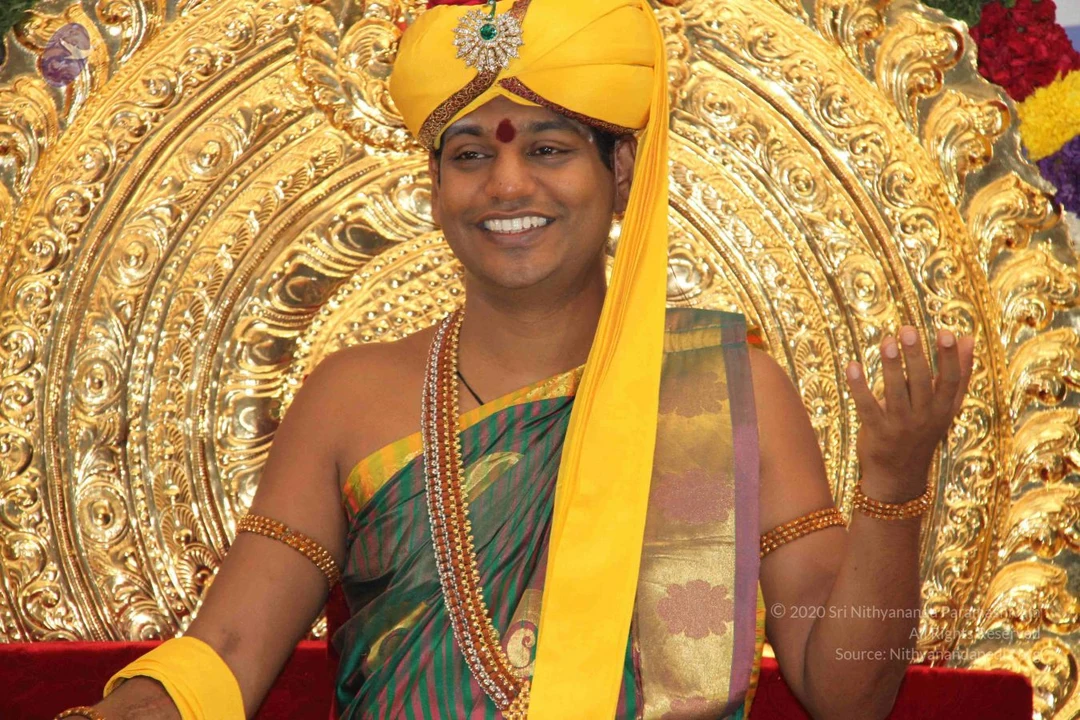
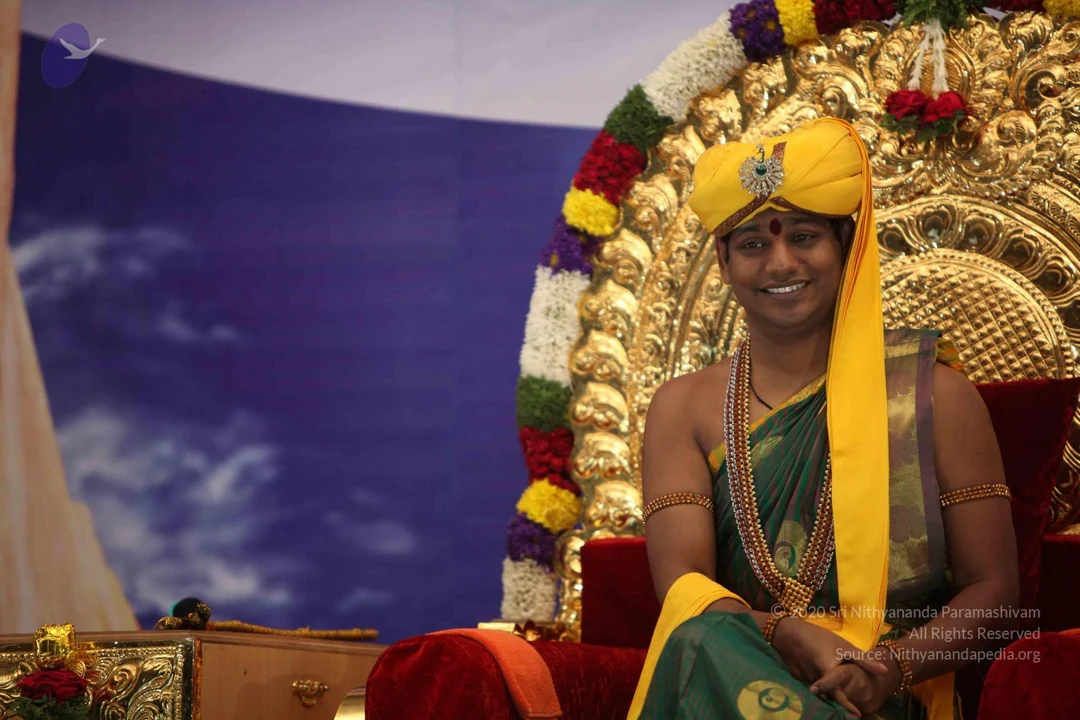
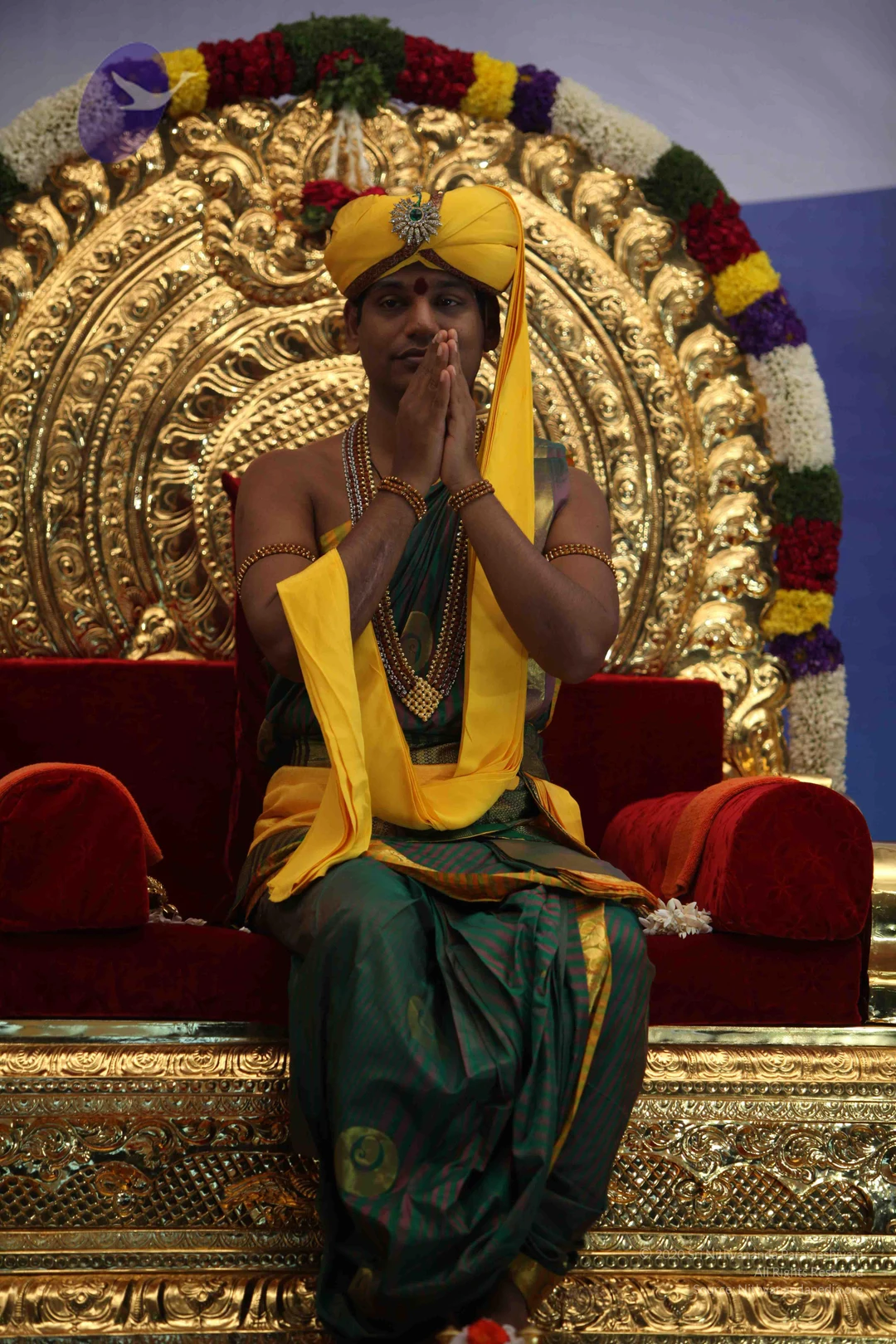
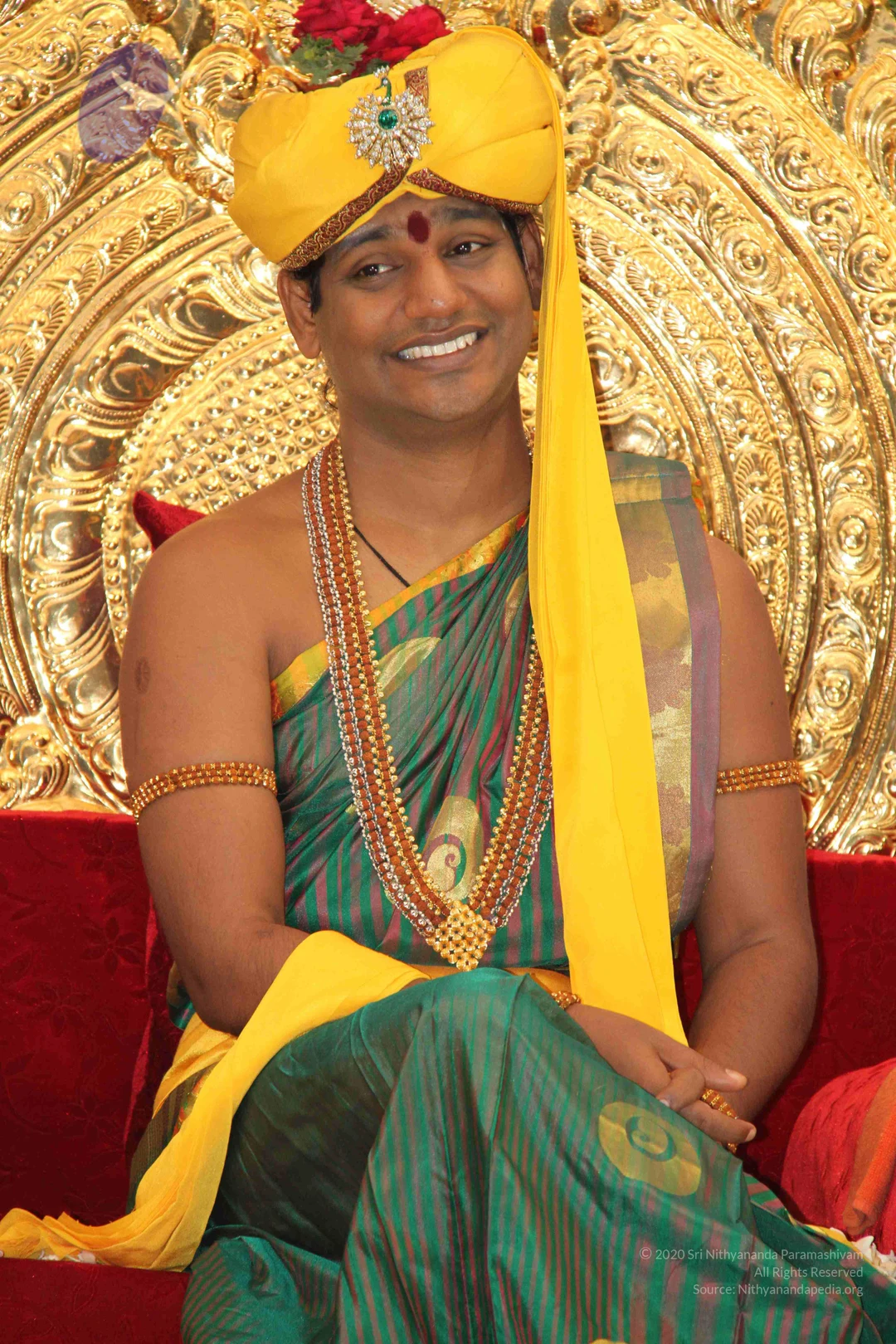
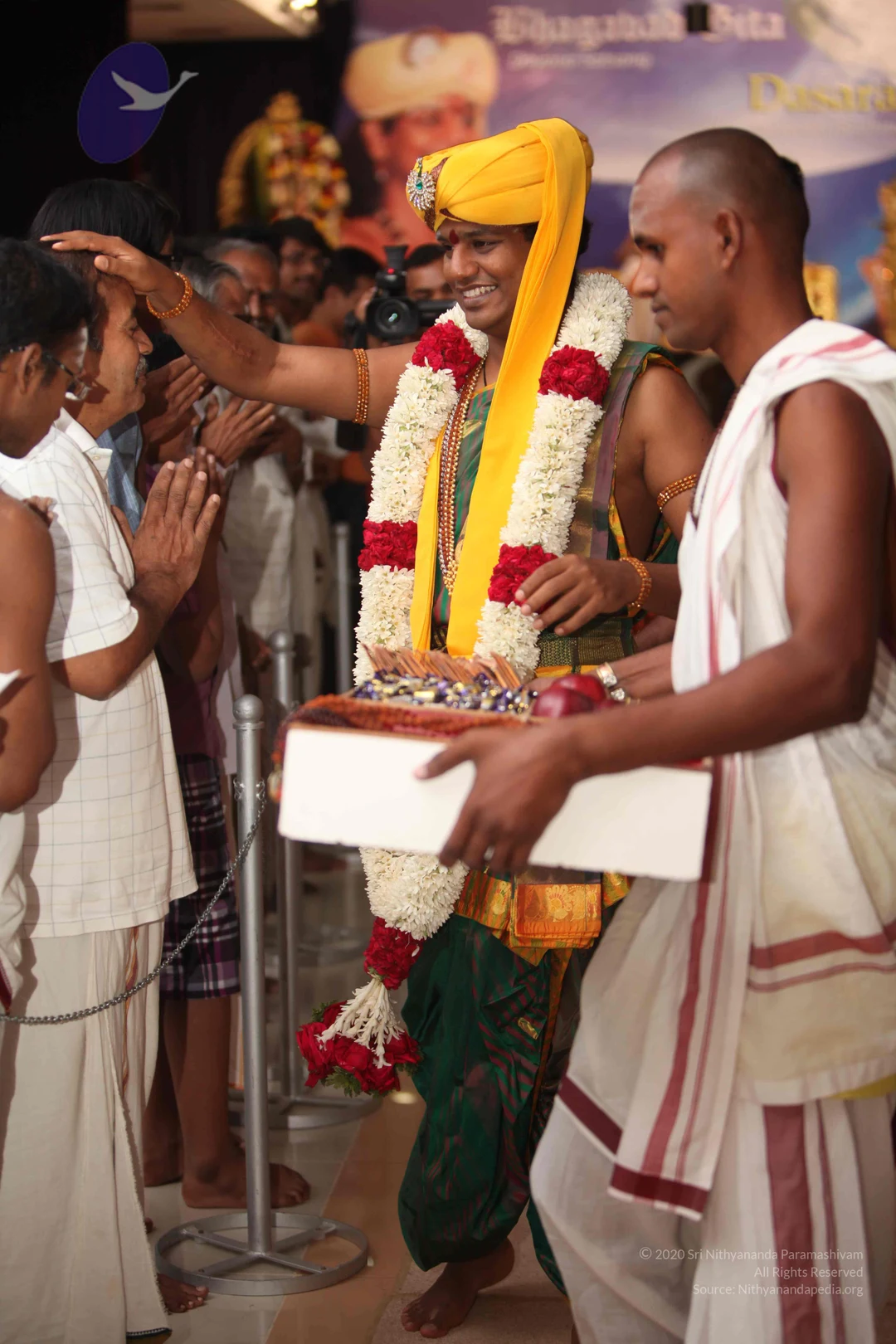
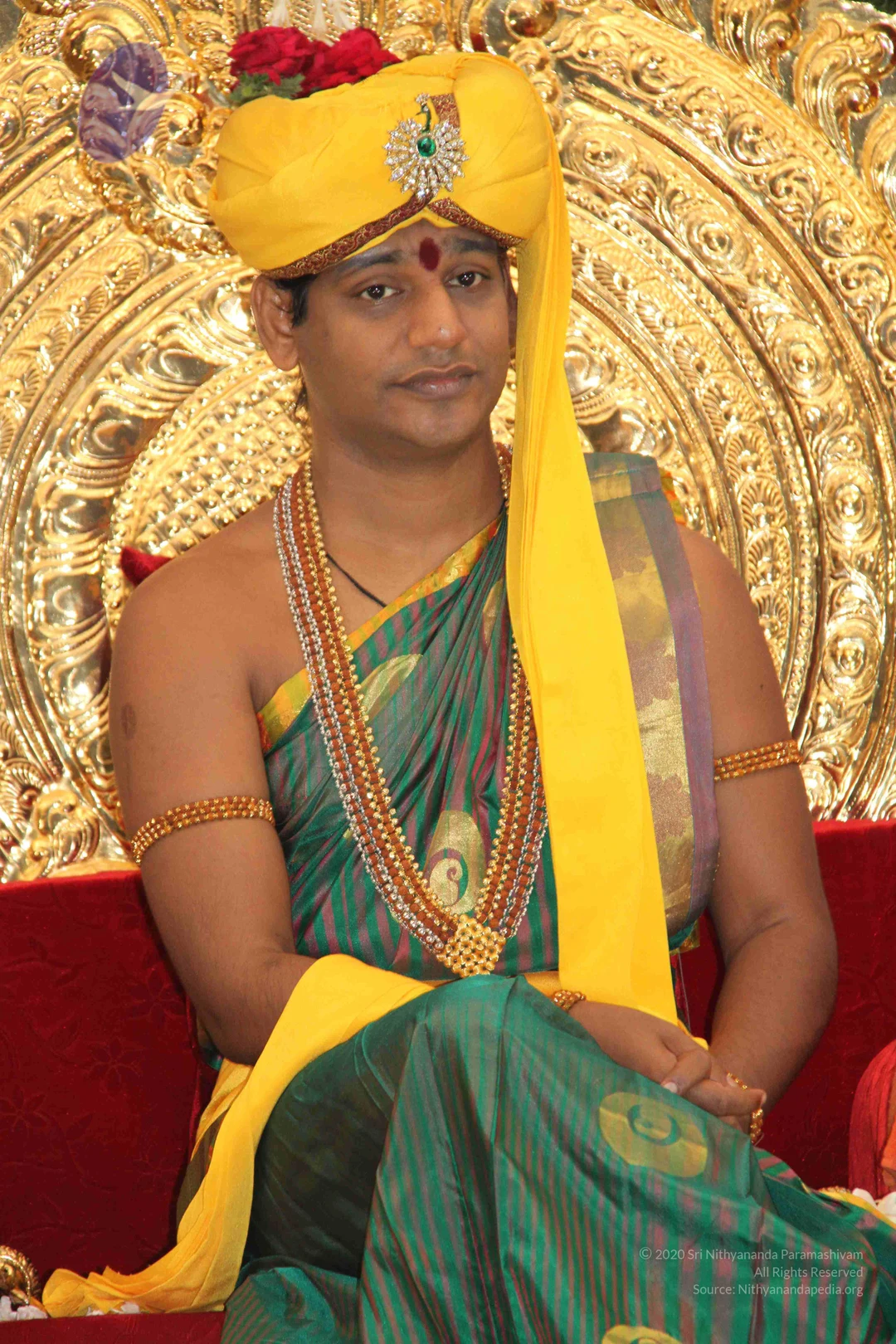
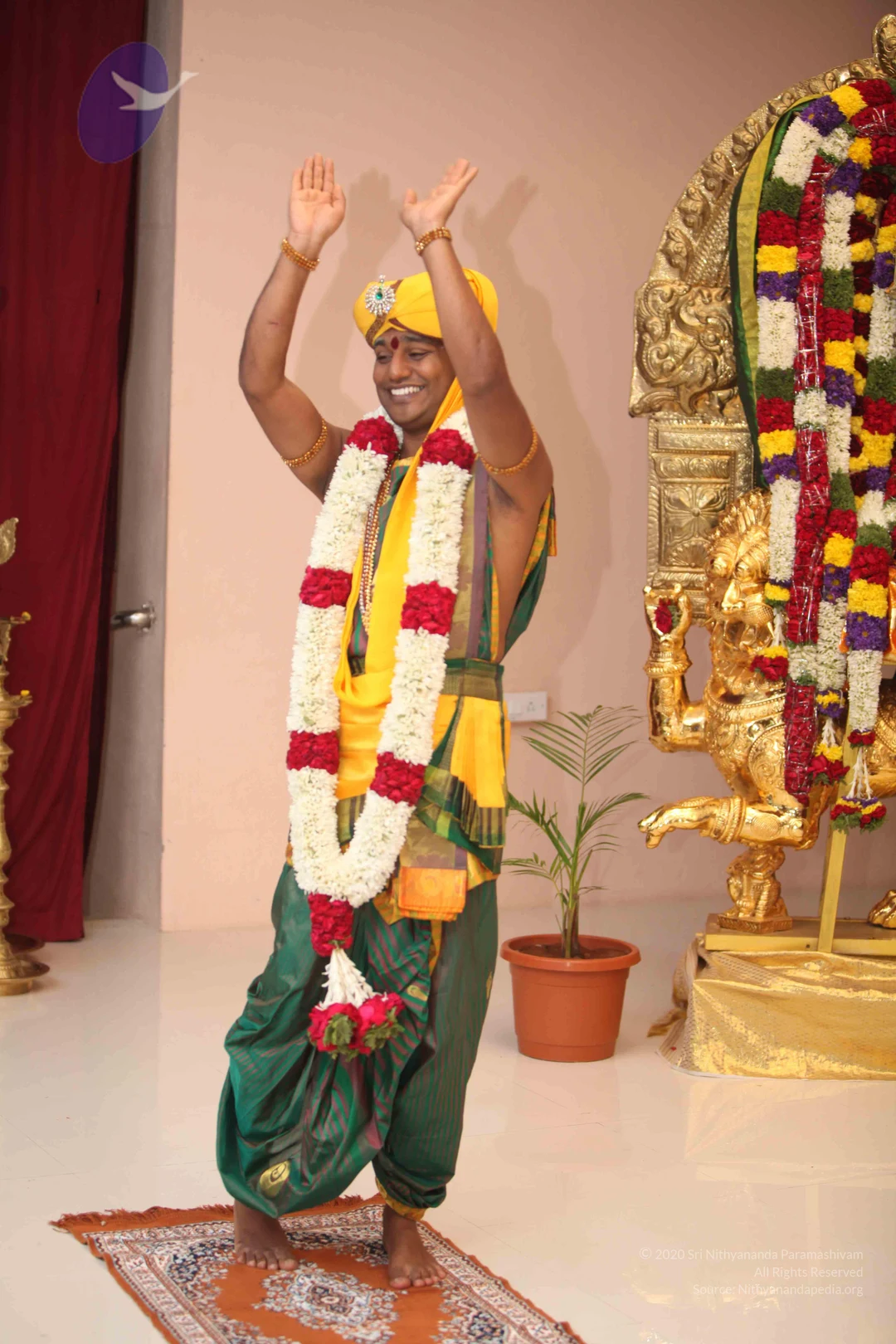
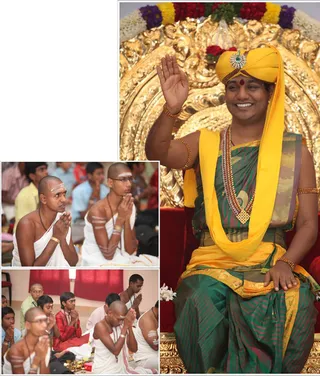
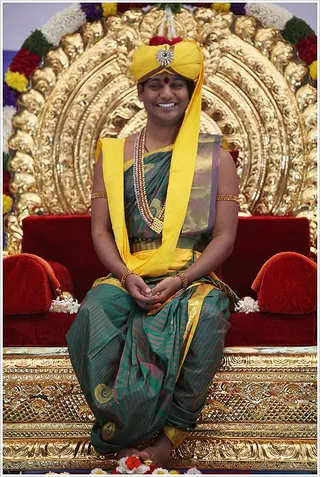
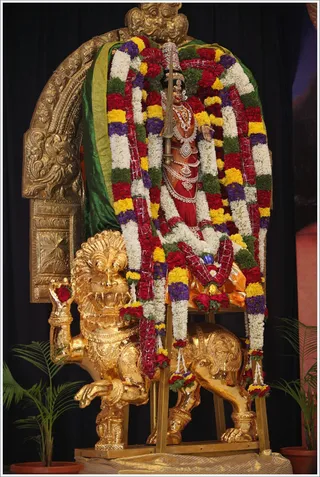
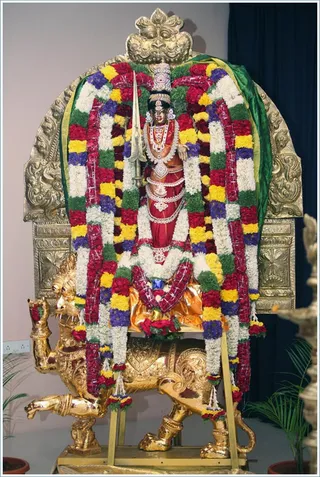
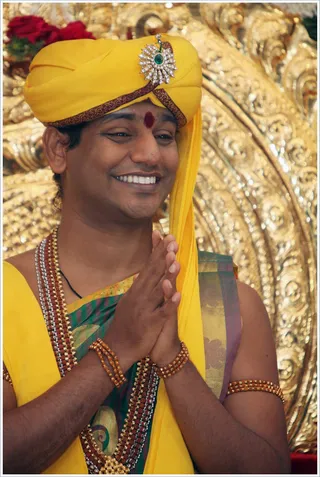
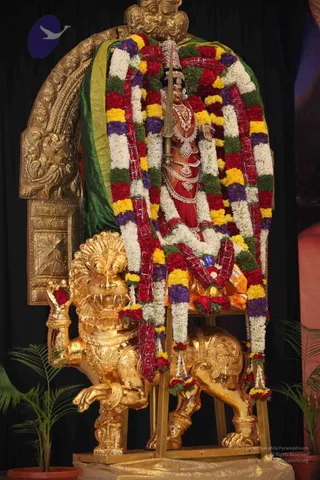
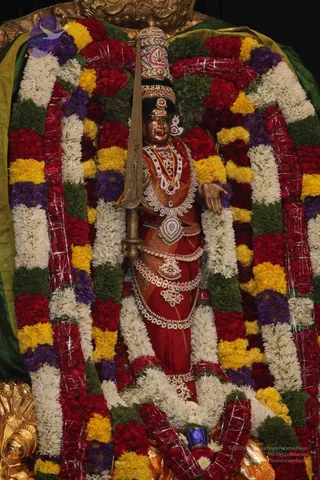
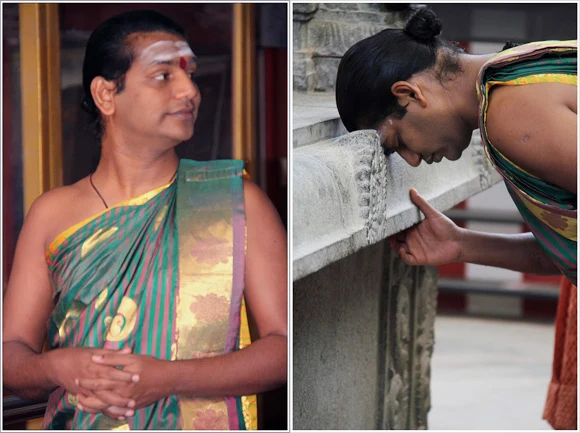
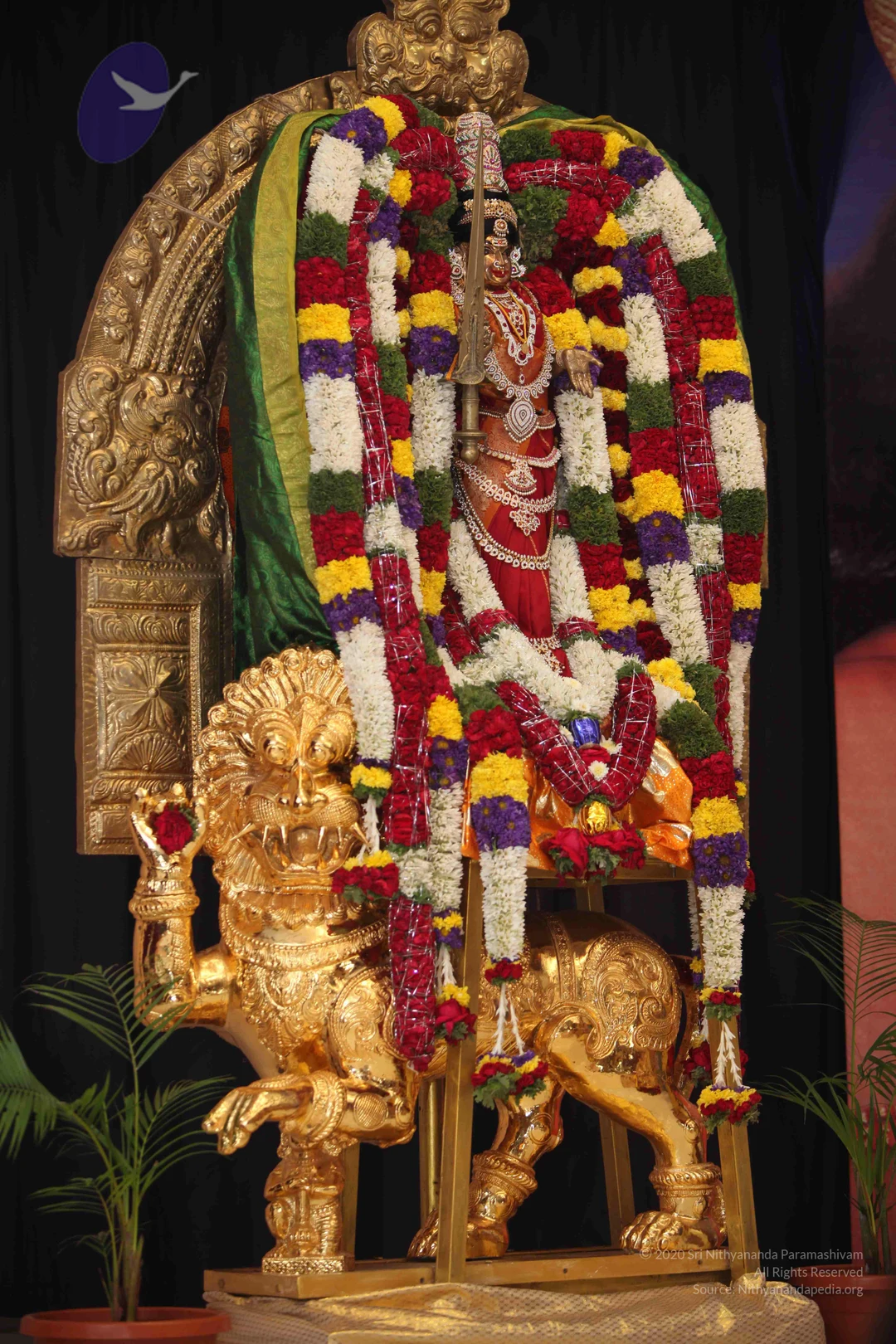
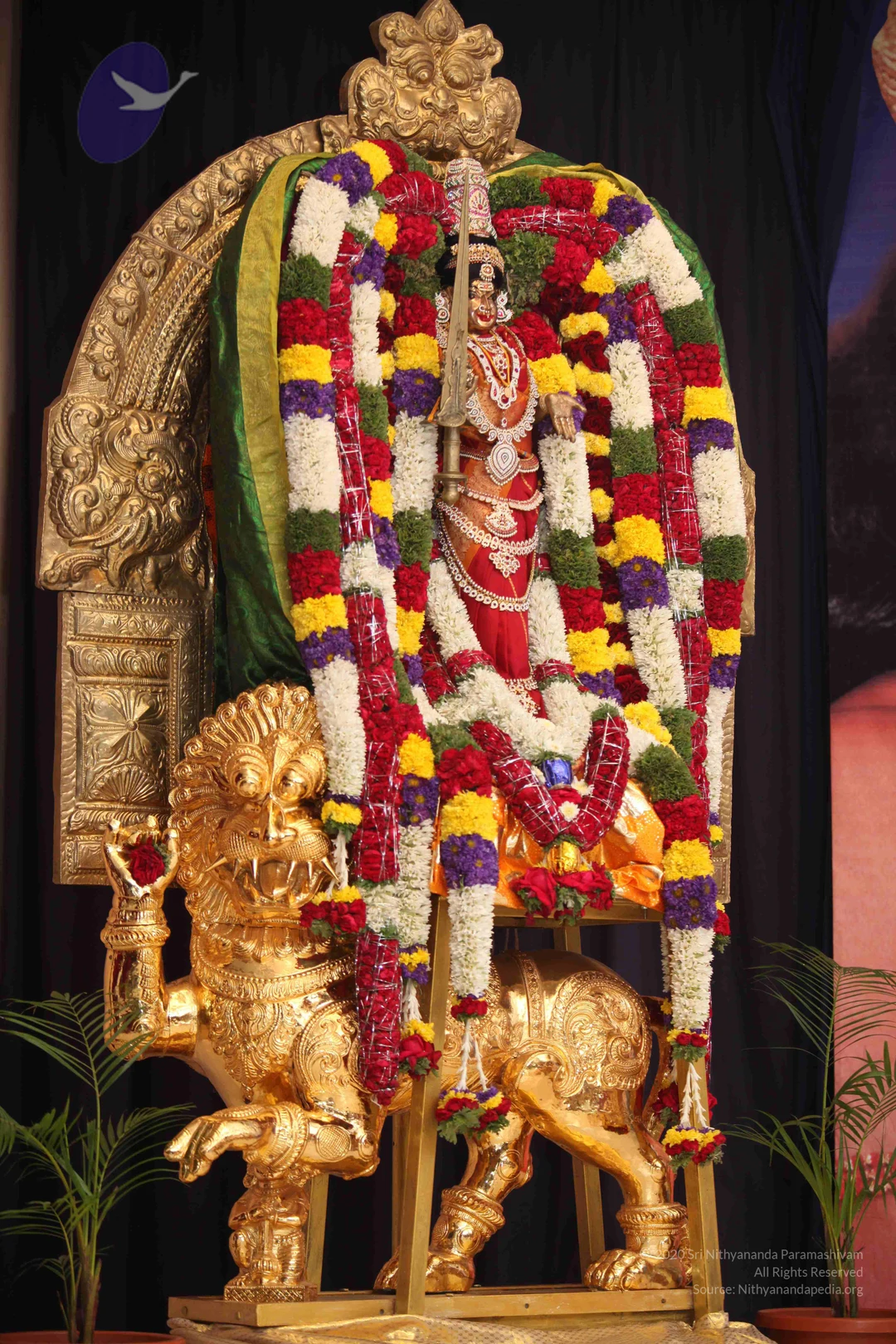
Two-panel collage of photographs. Left panel: a shaved-headed man with a red bindi and white tripundra marks stands with hands folded at his waist, wearing a green-and-gold striped silk wrap over bare shoulders and a dark rudraksha-style cord at his neck; he gazes to the side in an interior with a gold-framed doorway. Right panel: a man with hair in a topknot, bare-backed in a green and yellow patterned garment, bends forward and touches his forehead to a carved stone ledge while his hand rests on the stone. Both panels are photographs, so the collage counts as graphic with no physical people.Multi-panel collage of photographs from a Nithyananda Dhyanapeetam gathering. The large right panel shows a smiling person seated on an ornate gold throne with red flowers and garlands, wearing a yellow turban, green and gold striped silk garment, yellow shawl, multi-strand rudraksha-style beads, gold necklace with a green gem pendant, and raising one hand in blessing. The left panels show shaven-headed devotees in white dhoti cloths with white tripundra markings on their foreheads, hands folded in anjali, seated before puja items and brass vessels, some wearing red or saffron cloth and gold bangles, with a red curtain behind them. Figures pictured here are physical people in the photographs.A seated man smiles at the camera on an ornate gilded throne with a large gold carved backrest and red velvet cushions, decorated with marigold and jasmine garlands. He wears a yellow turban with a jewelled ornament and a red bindi, a yellow shawl draped over his shoulder, a green and magenta striped silk garment with gold border, a multi-strand rudraksha-style bead necklace, and gold bangles, with his hands folded in his lap. One physical person is visible.A photograph of a deity murti standing on a golden lion pedestal in front of a dark backdrop and an ornate gilded arch. The figure wears a red and gold garment with silver ornaments and a crown, and holds a sword. It is draped in a long garland of red, white, yellow and purple flowers with green leaves, and a green cloth hangs behind it. Two potted green plants stand at the base. No physical people are visible.A deity murti of a goddess stands on a golden lion vahana mounted on a wooden platform, draped in a thick garland of red, yellow, blue, green and white flowers that cover most of the figure. She wears a red sari, a crown, layered gold and white necklaces, and holds a trident-like weapon at her side. Behind her is an ornate embossed brass arch with a green silk cloth, and potted plants stand at the sides. No people are visible; the figure is a statue.Close portrait photo of a smiling man with palms pressed together in anjali mudra greeting. He wears a bright yellow turban with a jeweled brooch and red bindi, a yellow shawl draped over his shoulders, and layered beaded necklaces and rudraksha-style malas with gold and red beads, plus gold-beaded armlets and bangles. Behind him is an ornate gold carved backdrop with red flowers at the upper left.

temple
51 photosSource gallery
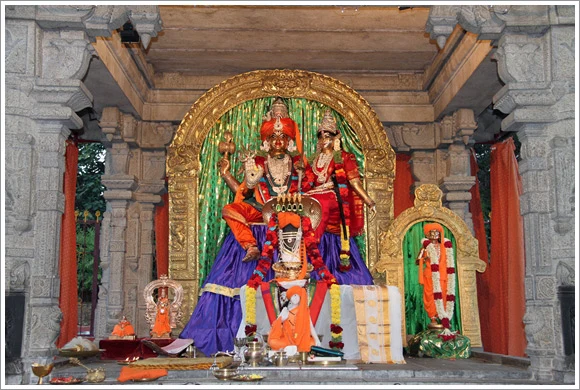
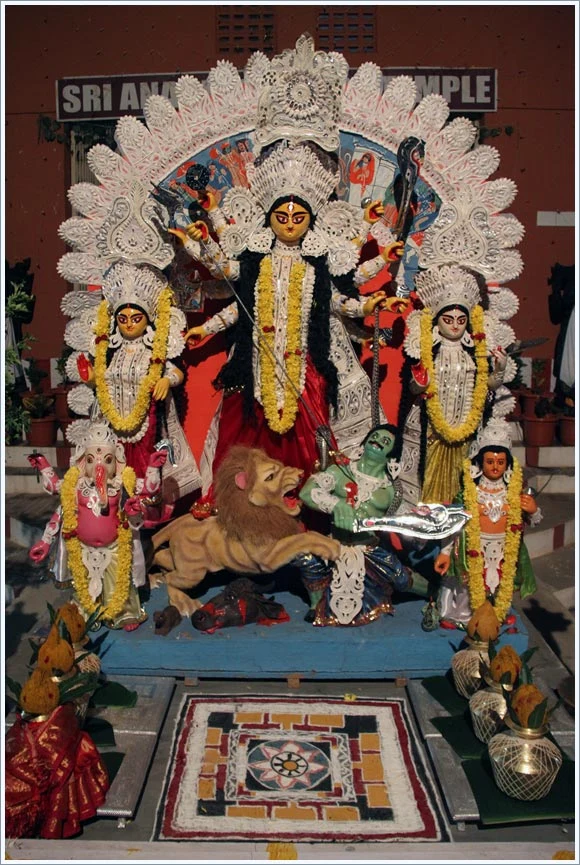
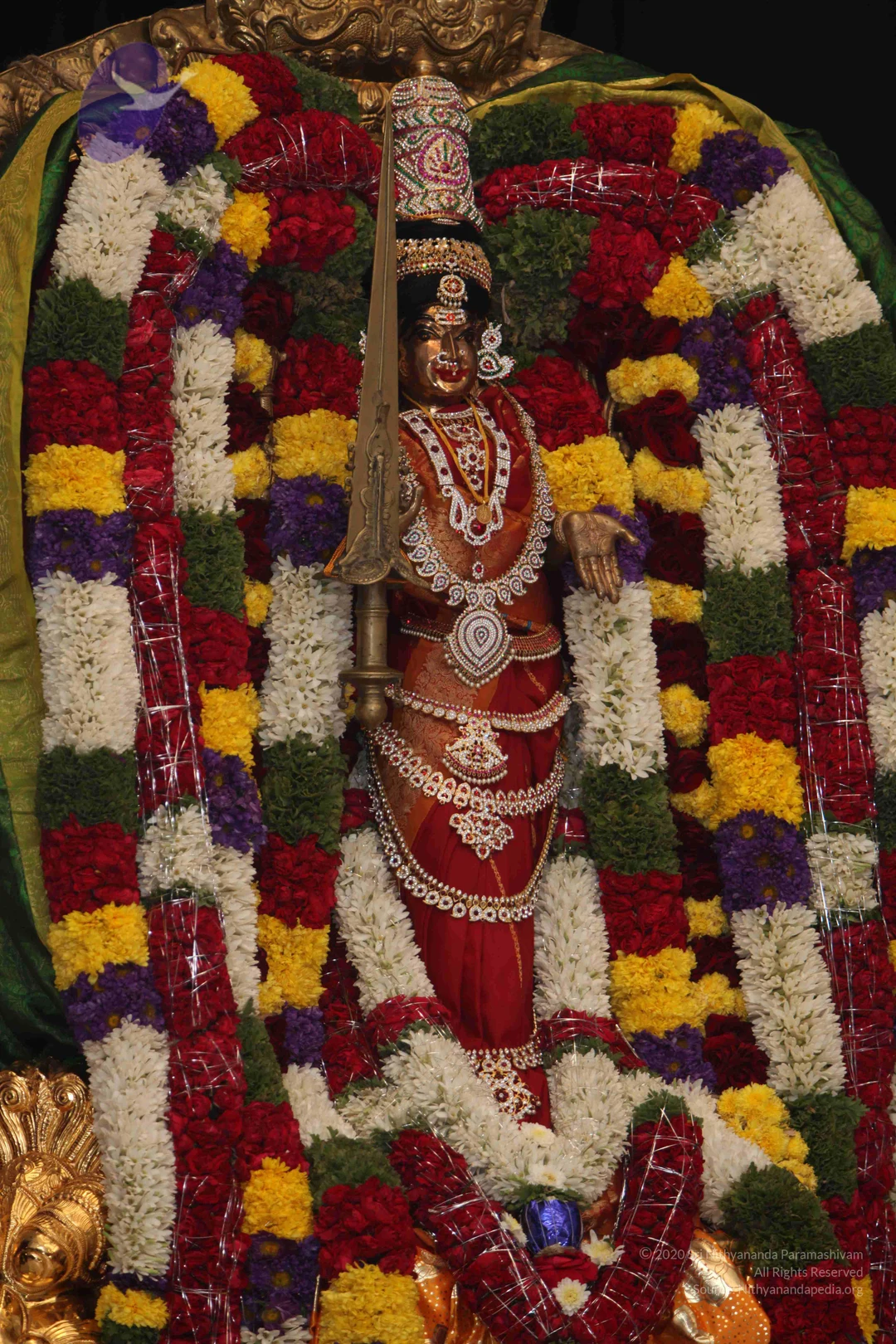
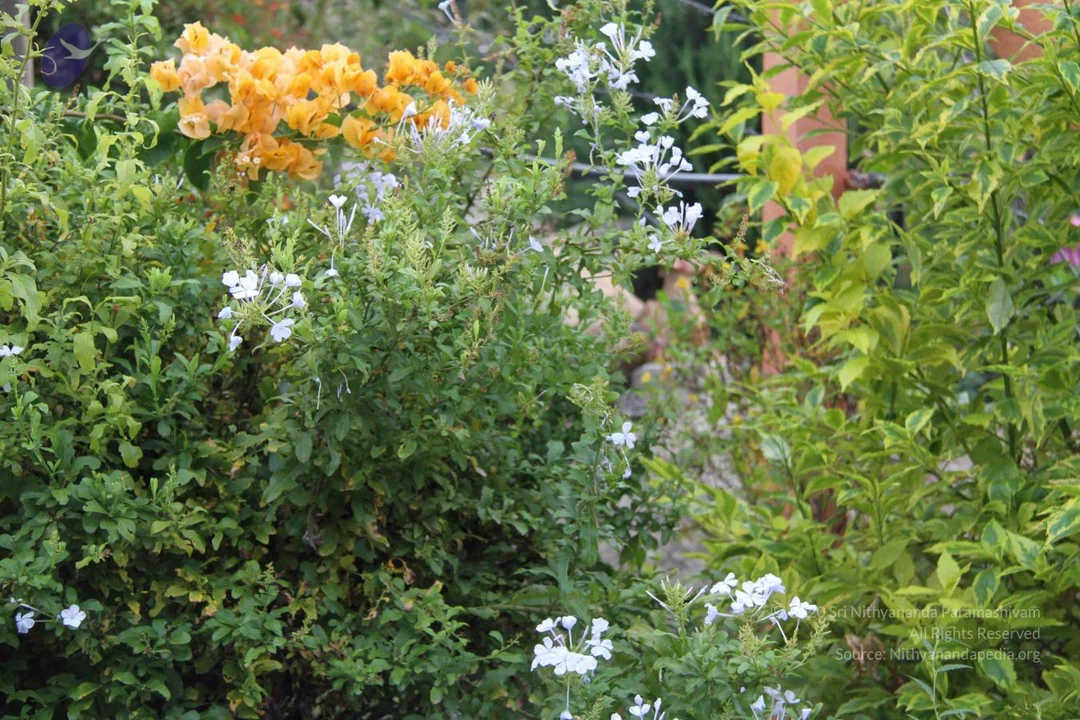
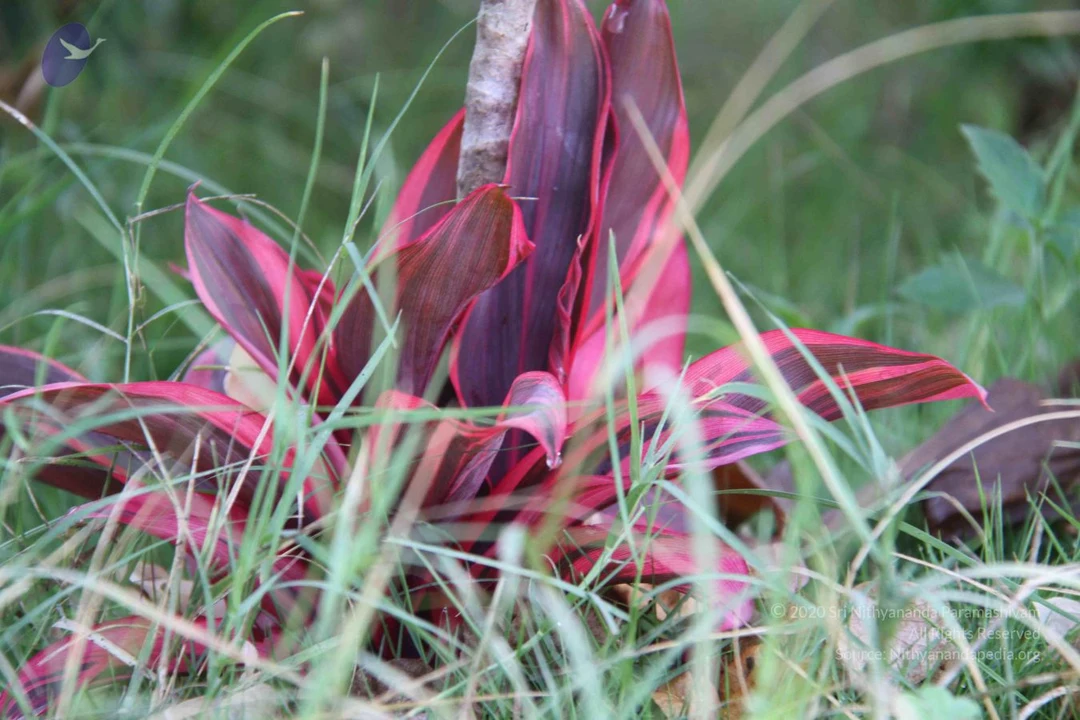
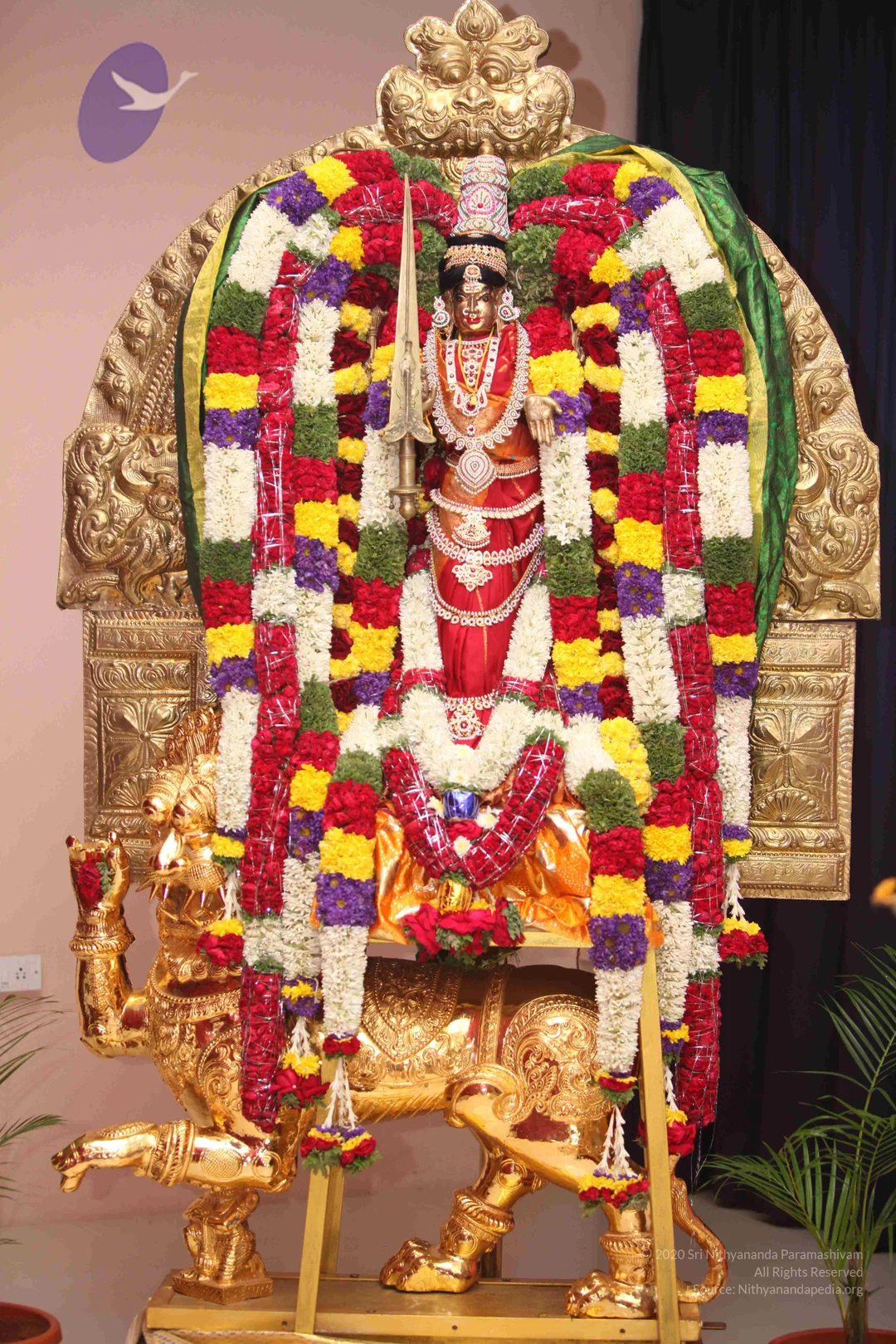
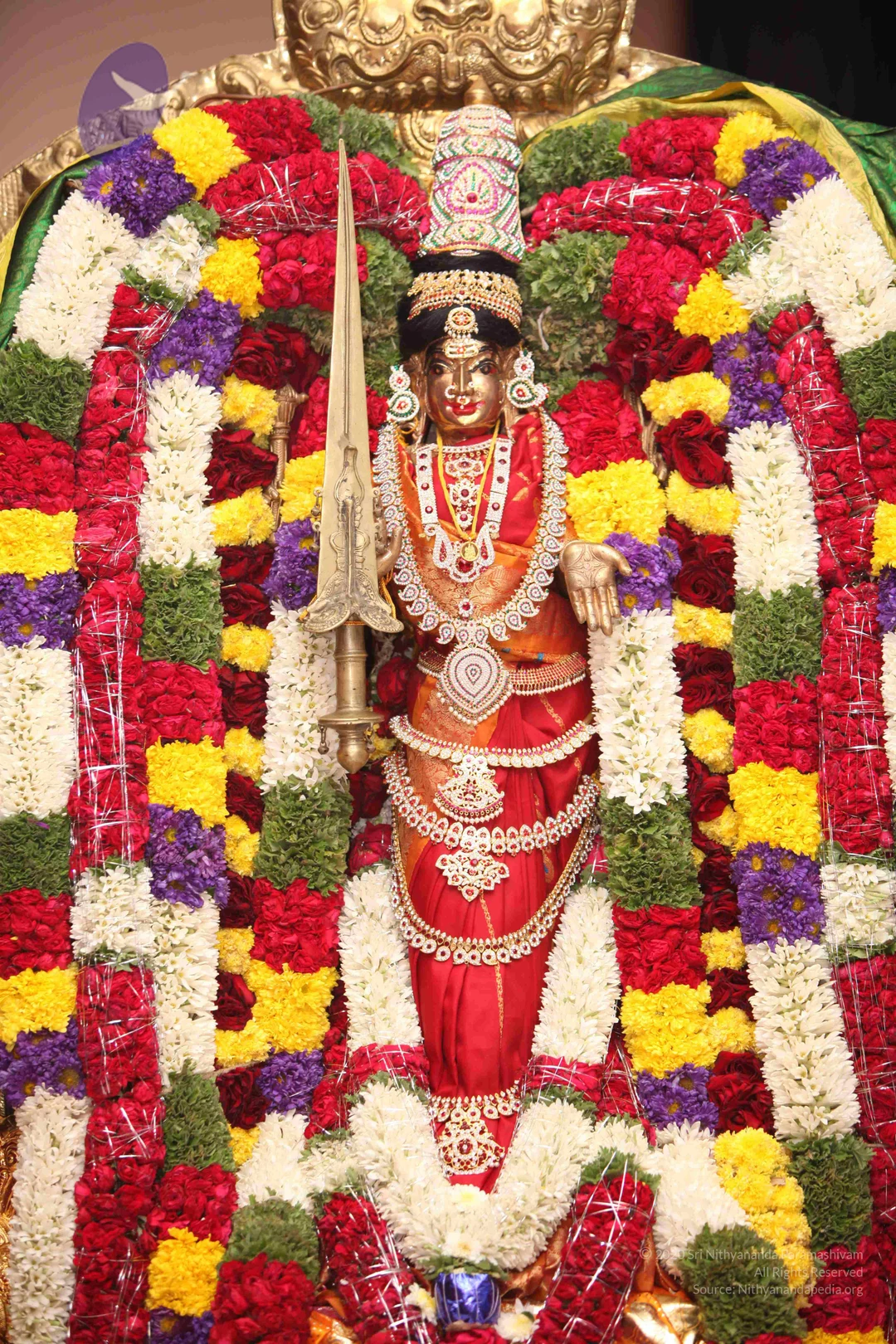
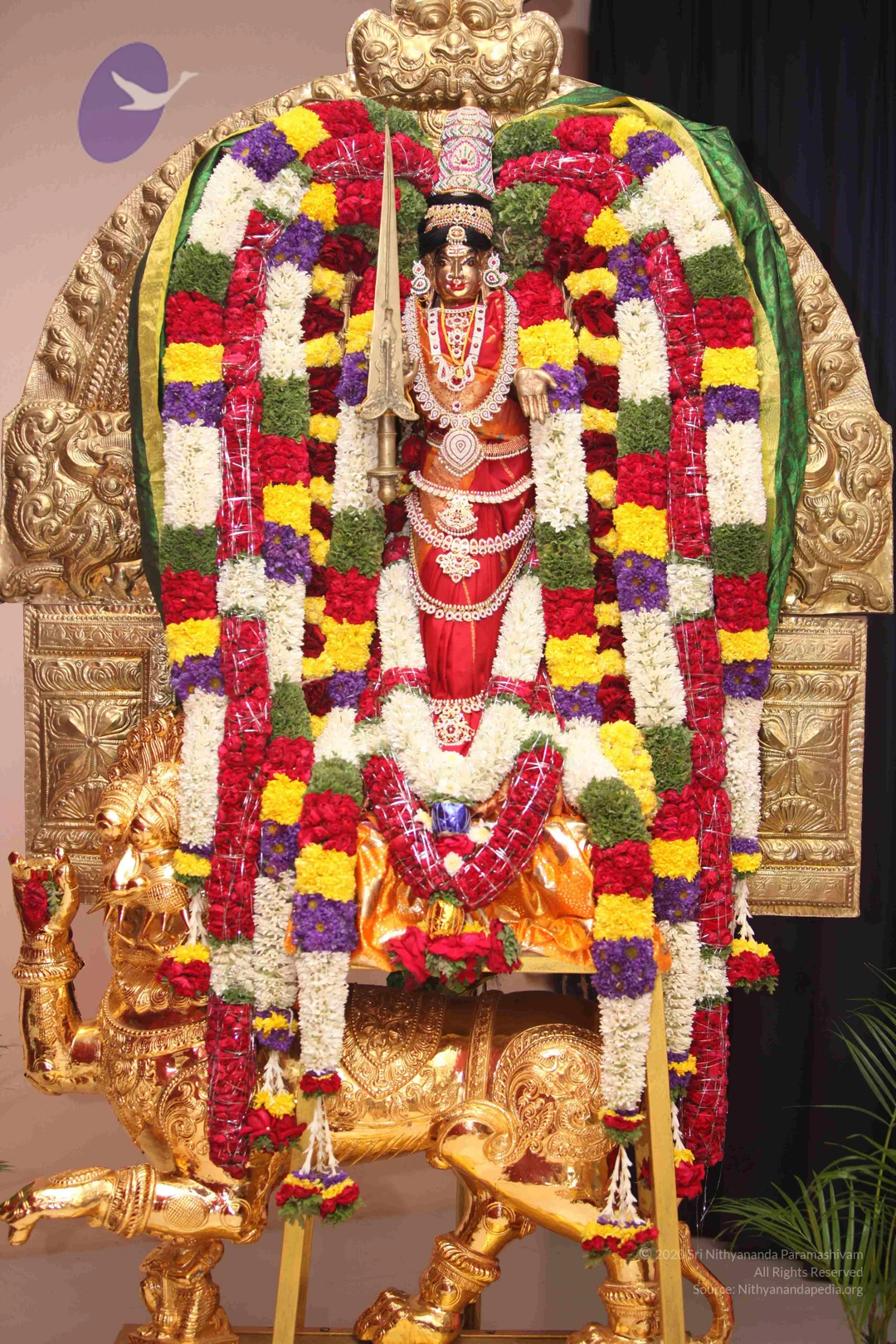
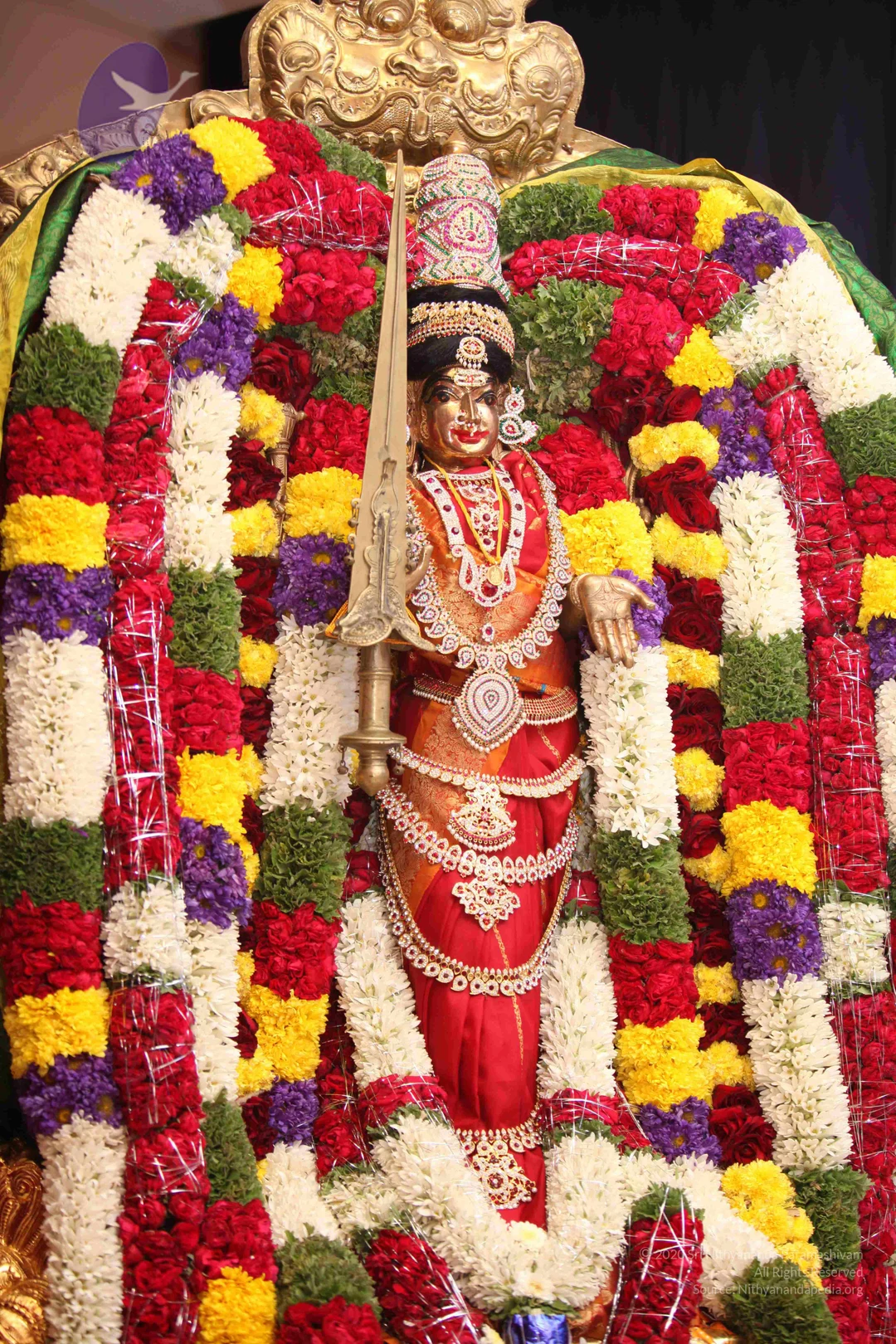
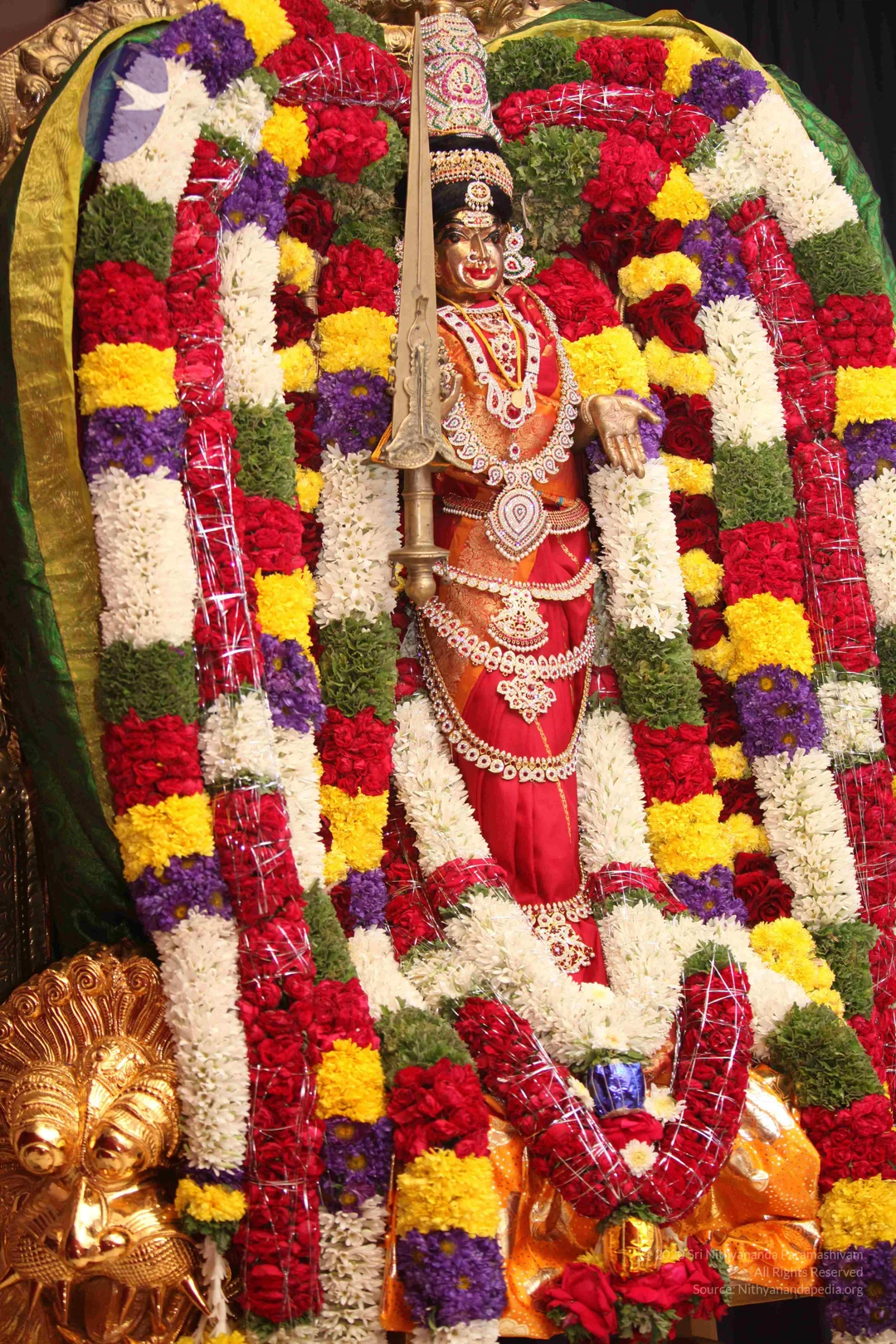
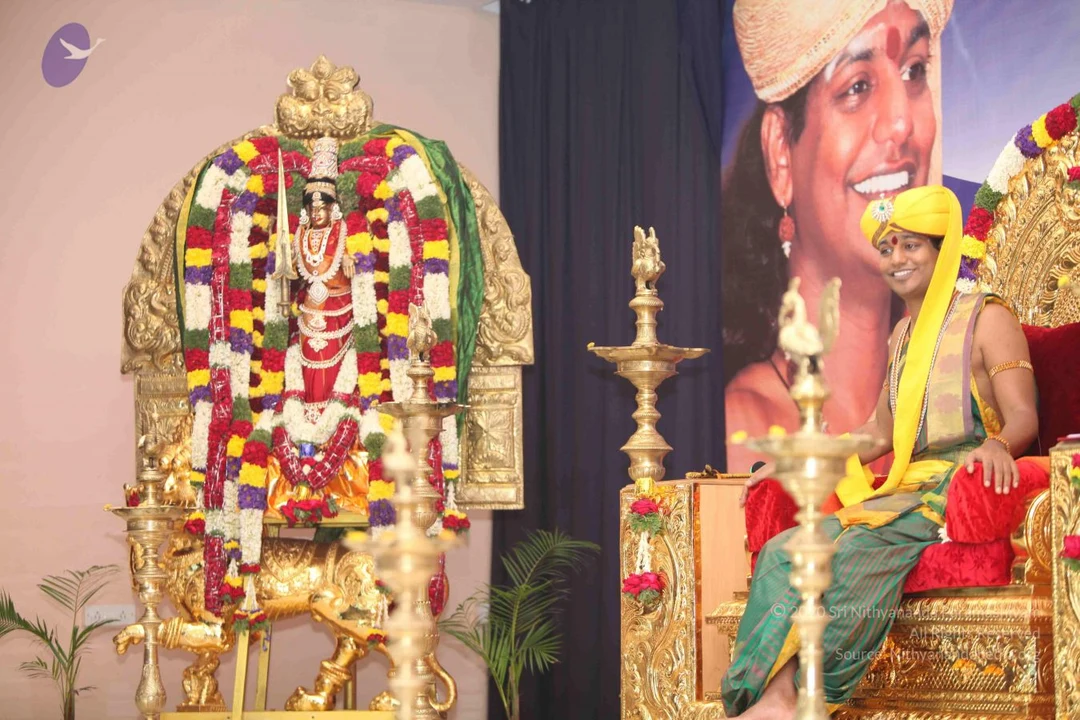
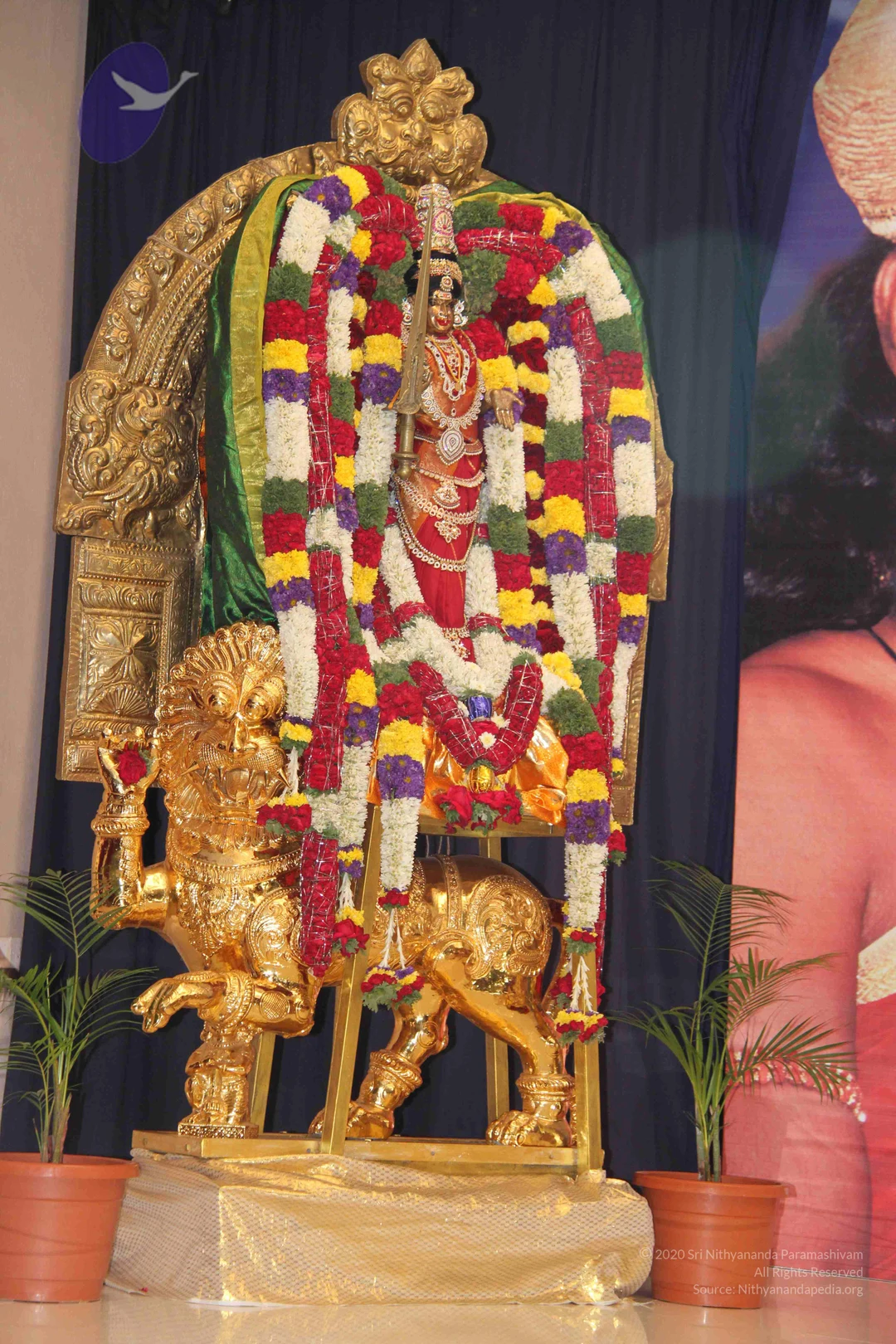
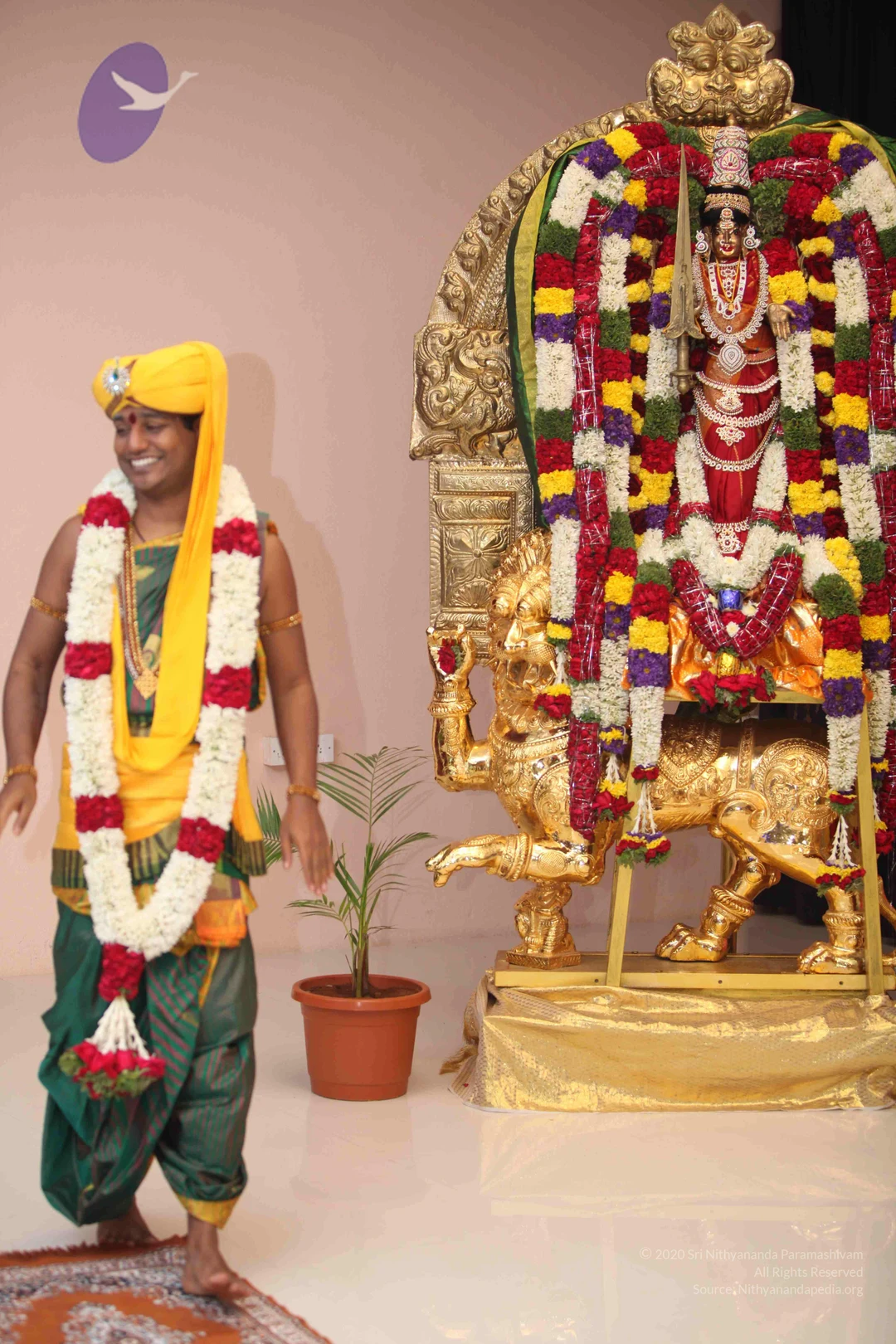
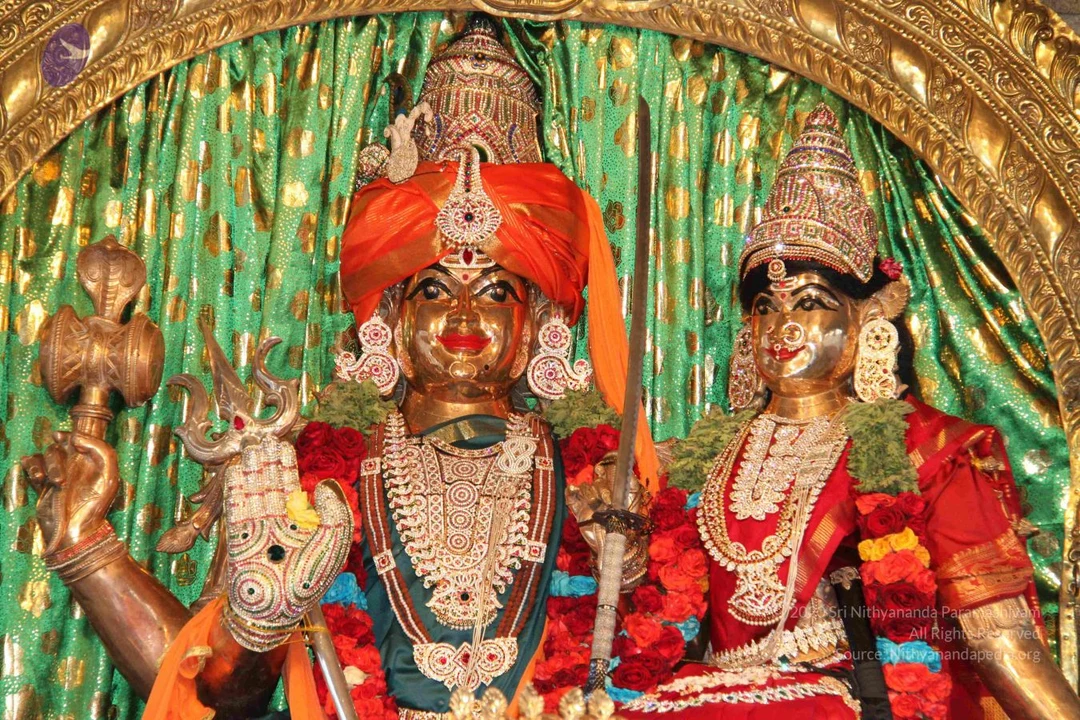
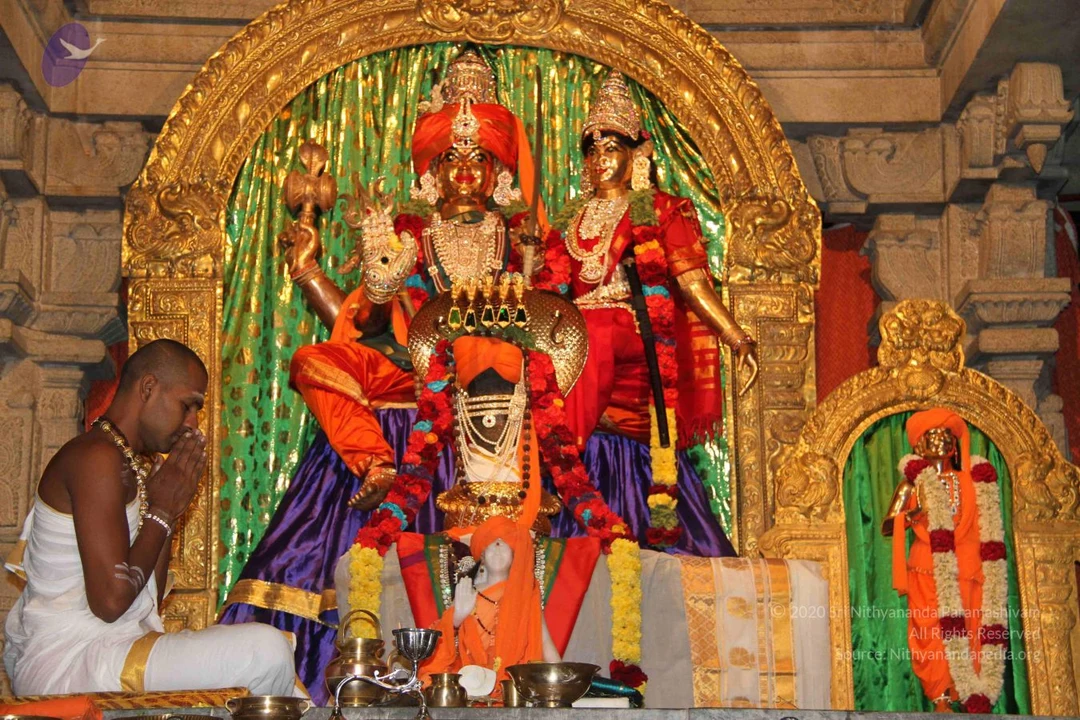
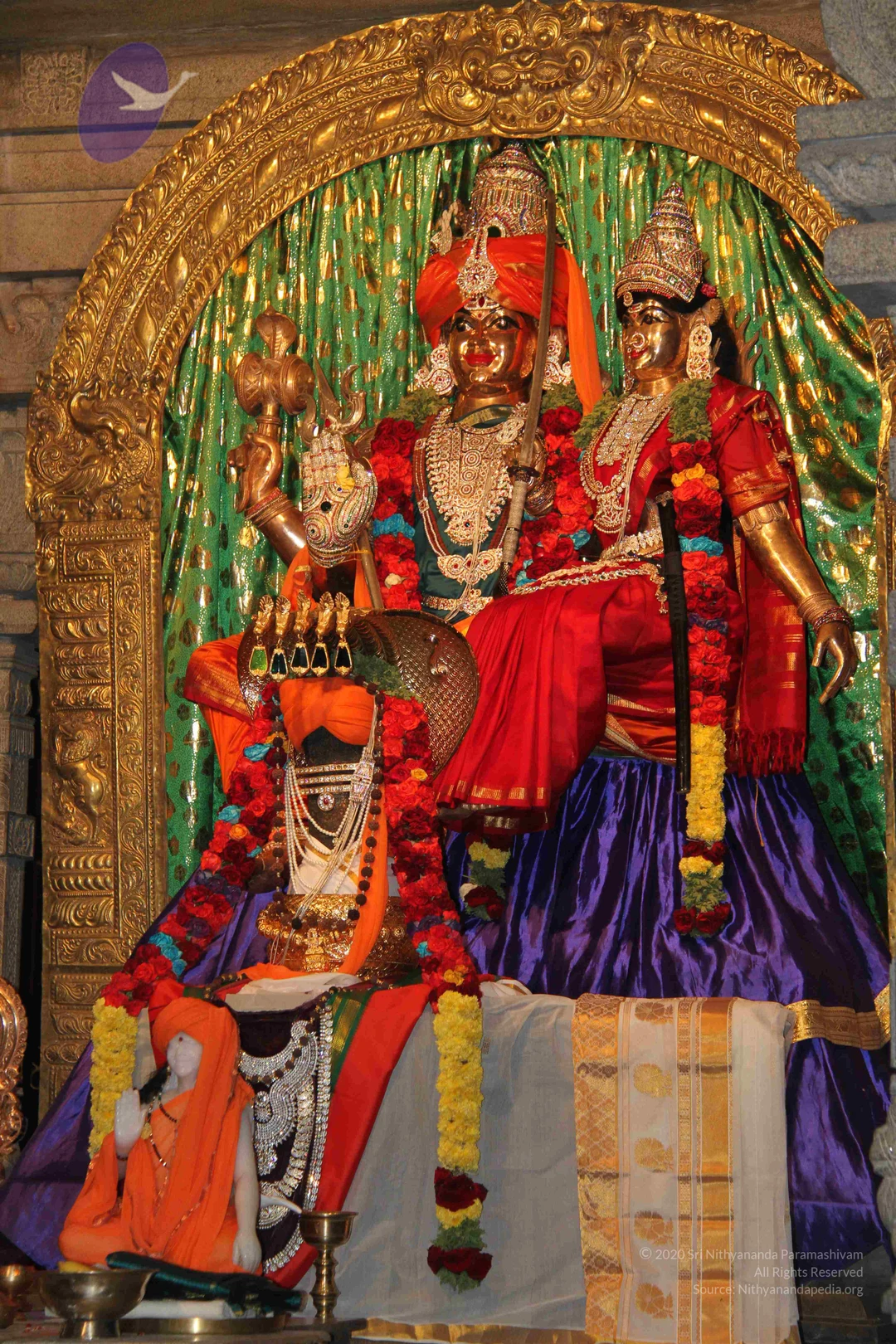
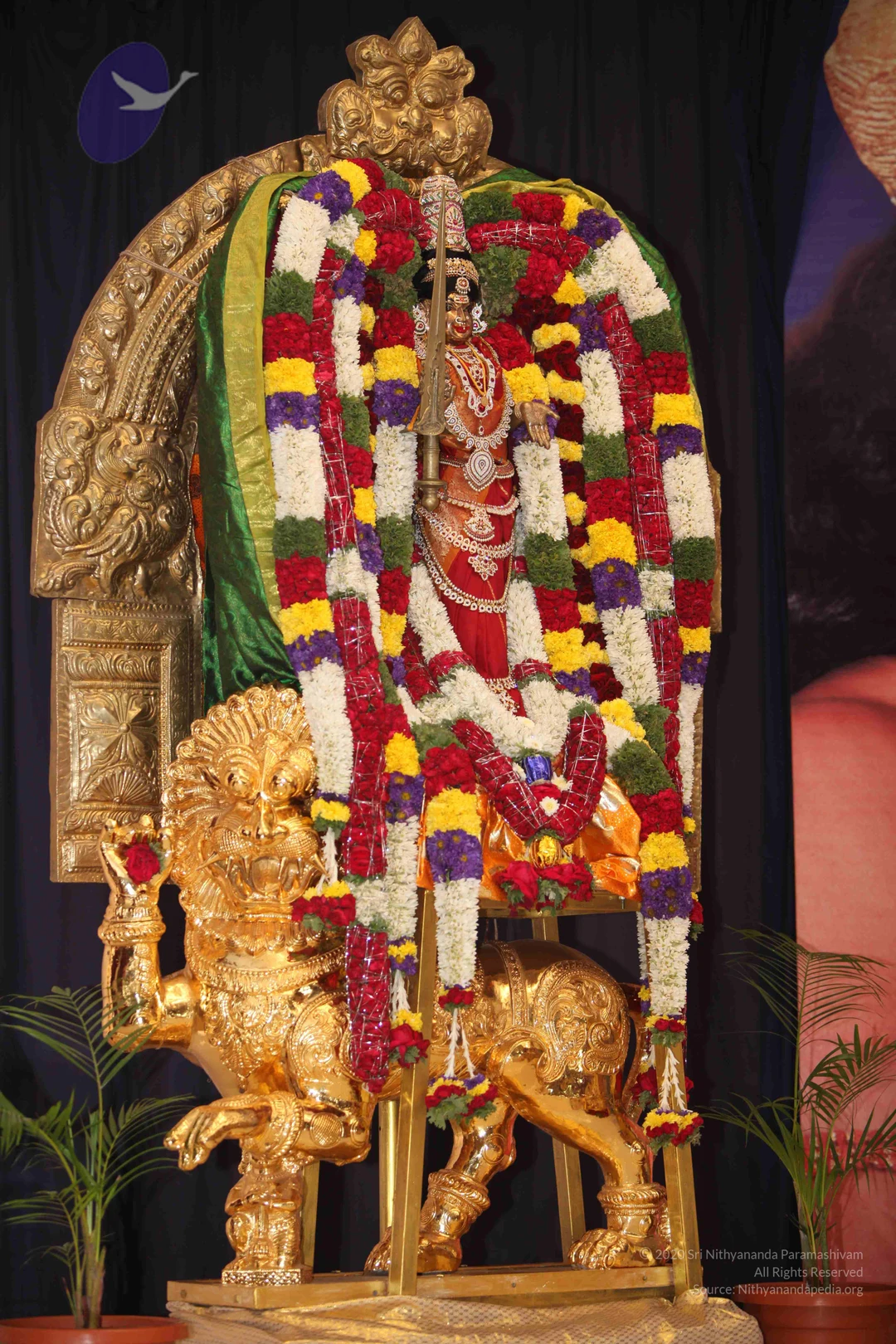
A deity murti stands on a gilded lion-shaped pedestal before a gold carved arch with a green silk backdrop. The murti wears a red and gold garment, layered silver-toned jewellery and a tall crown, and holds a long spear or vel upright. Thick garlands in red, yellow, white, purple and green drape from the arch over the figure.A deity murti stands centrally, dressed in a red silk sari with an ornate gold-and-stone kiritam crown, heavy diamond-like jewellery and a sword held in one hand, framed by dense garlands of red roses, white jasmine, yellow marigolds and purple flowers. The garlands are wrapped in clear plastic bands. A gilded throne backdrop with a green cloth is visible at the top and bottom edges. No people are visible.A photograph of a dense garden with flowering shrubs. Bright yellow and orange bougainvillea blooms hang in clusters on the right, with magenta bougainvillea behind them. Small pink flowers grow among the foliage, and a red-leafed cordyline plant with dark maroon leaves stands in the middle-left. Yellow cosmos flowers and green grass fill the foreground, and lush green trees frame the upper left. No people are visible.A dense garden thicket photographed outdoors in daylight. Pale orange and yellow bougainvillea blooms hang from the left and right, with clusters of pink and magenta flowers on a shrub. A tall reddish-purple leafed plant with broad maroon leaves stands in the centre, and small yellow cosmos-like flowers grow in the foreground. Green foliage and a pale sky show through the gaps, with a glimpse of a pinkish wall behind. No people, deities, rituals or ashram figures are visible.A garden corner dense with greenery. Clusters of small white flowers with pale blue tints. Above them, orange-yellow bougainvillea blossoms hang from a leafy bush at upper left. At right, a tall shrub with variegated yellow-green leaves fills the frame, and a terracotta-coloured wall or pillar stands behind the foliage. No people or ritual activity are visible.A close photograph of a clump of red and magenta striped cordyline-like plant leaves growing upright from grass on the ground. Long pointed leaves in deep maroon and bright pink fan outward around a pale stem. Green grass blades and dry brown leaves surround the plant in soft focus. No people or ritual objects are visible.

bhagavat-gita-satsang

89 photosSource gallery
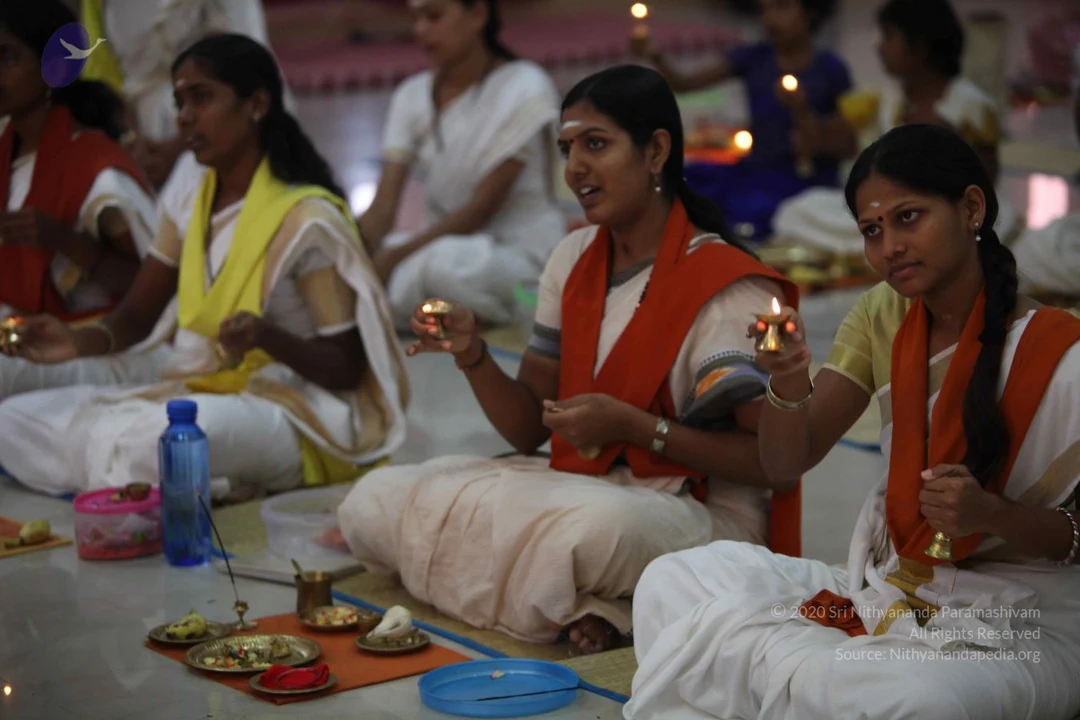
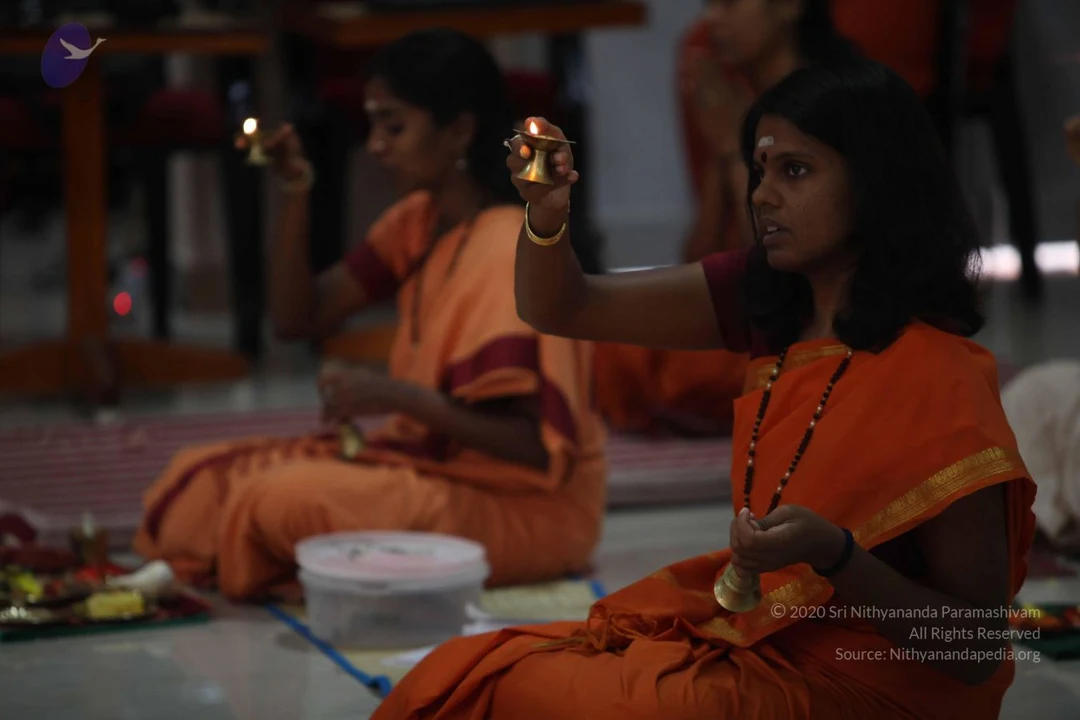
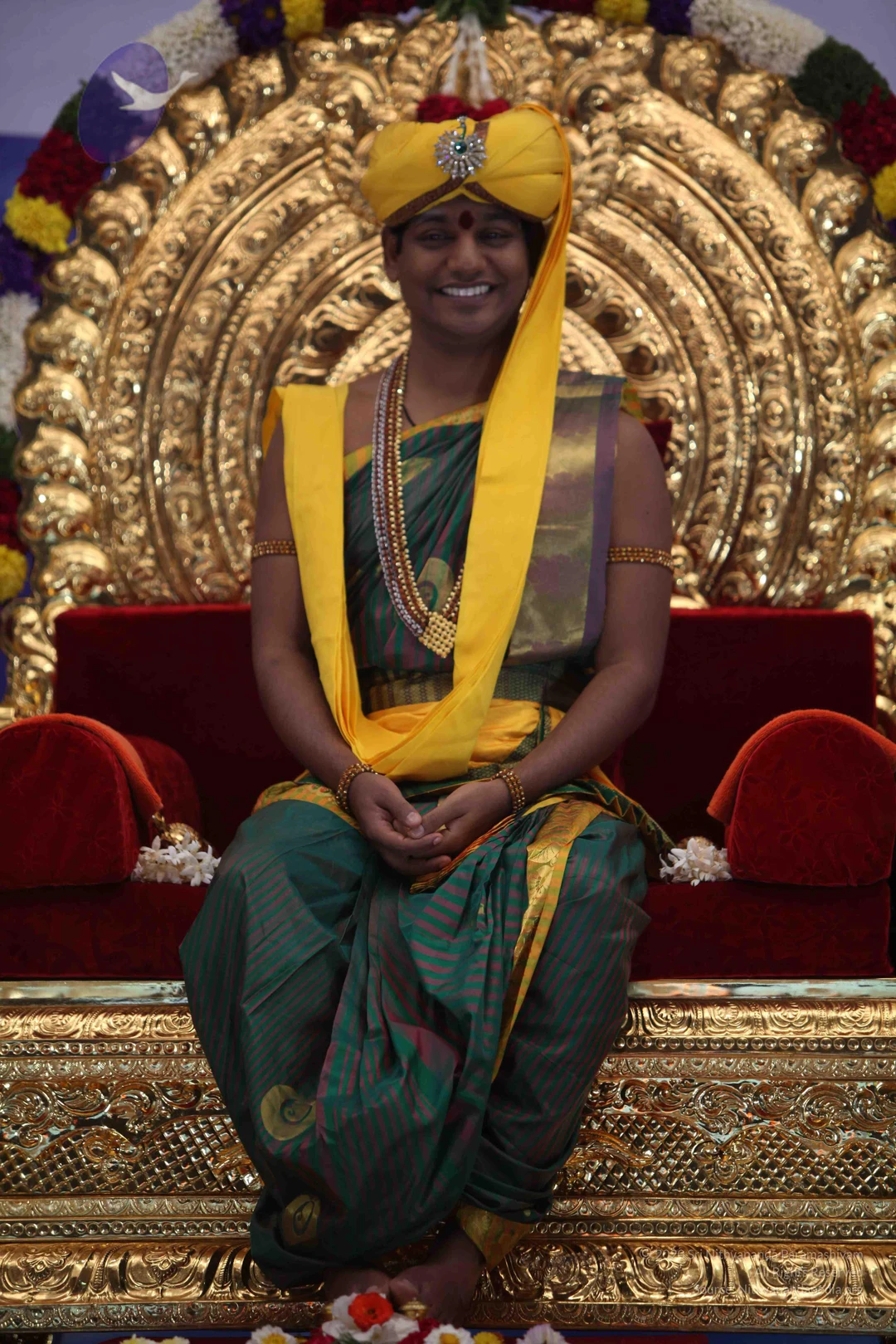
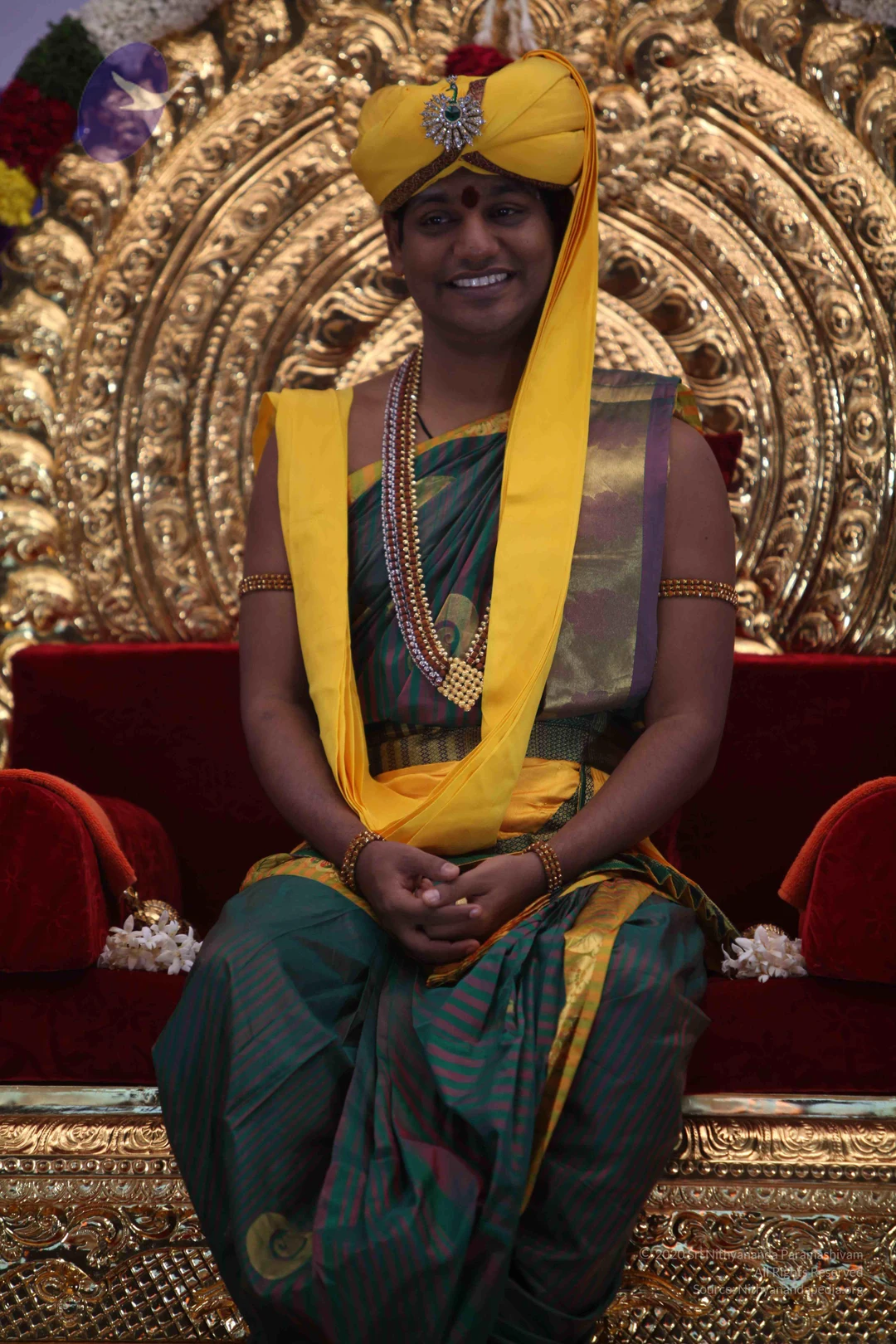
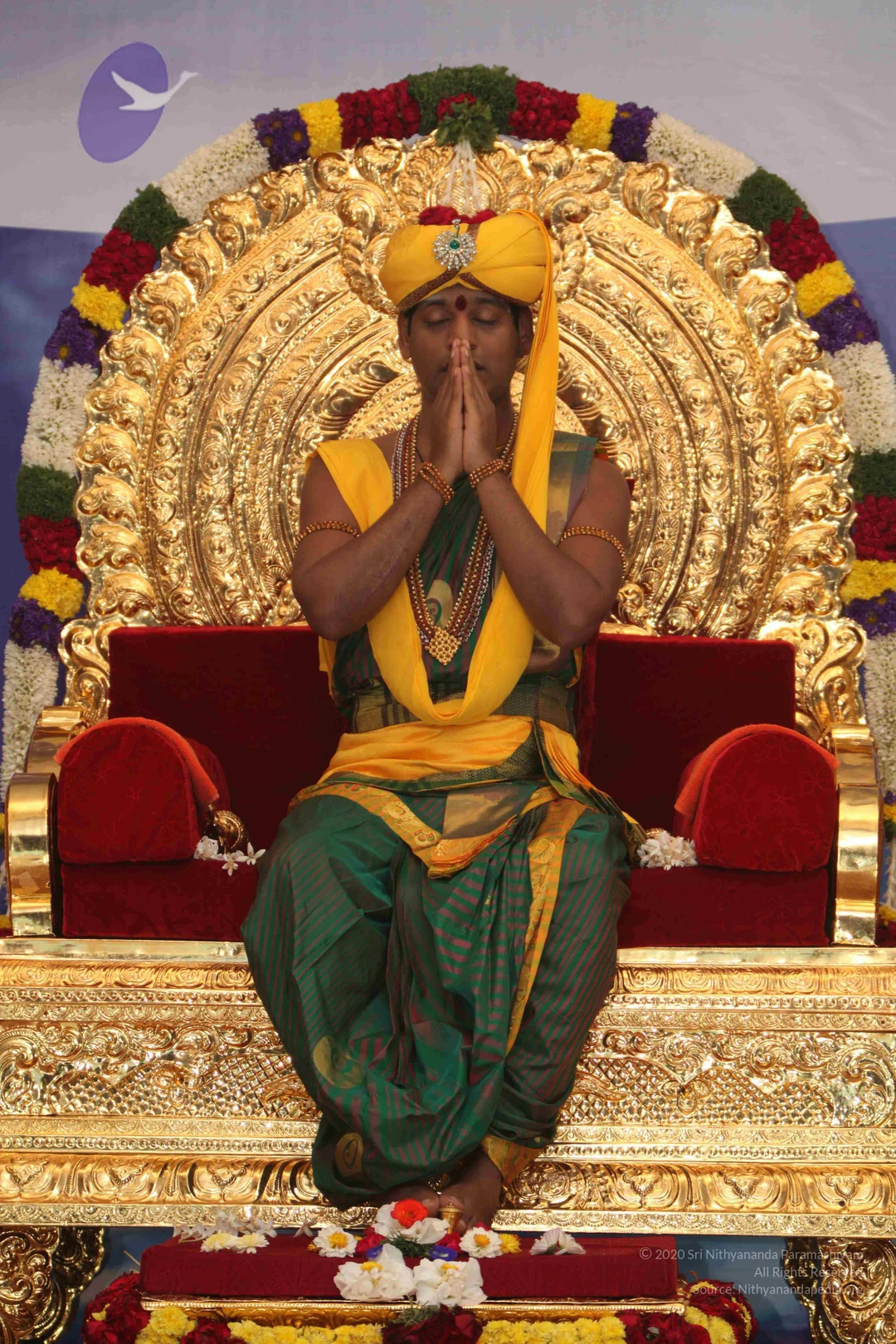
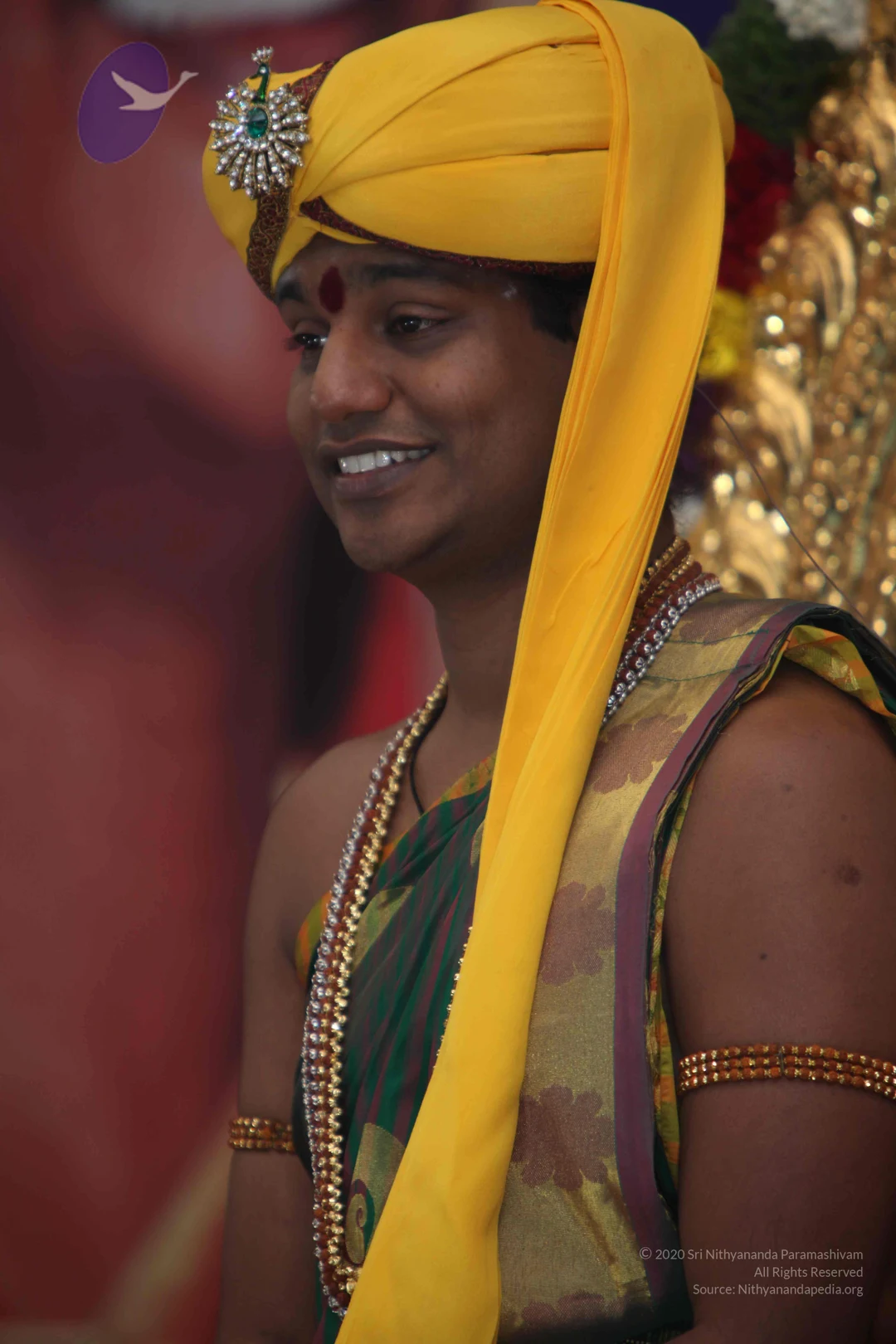
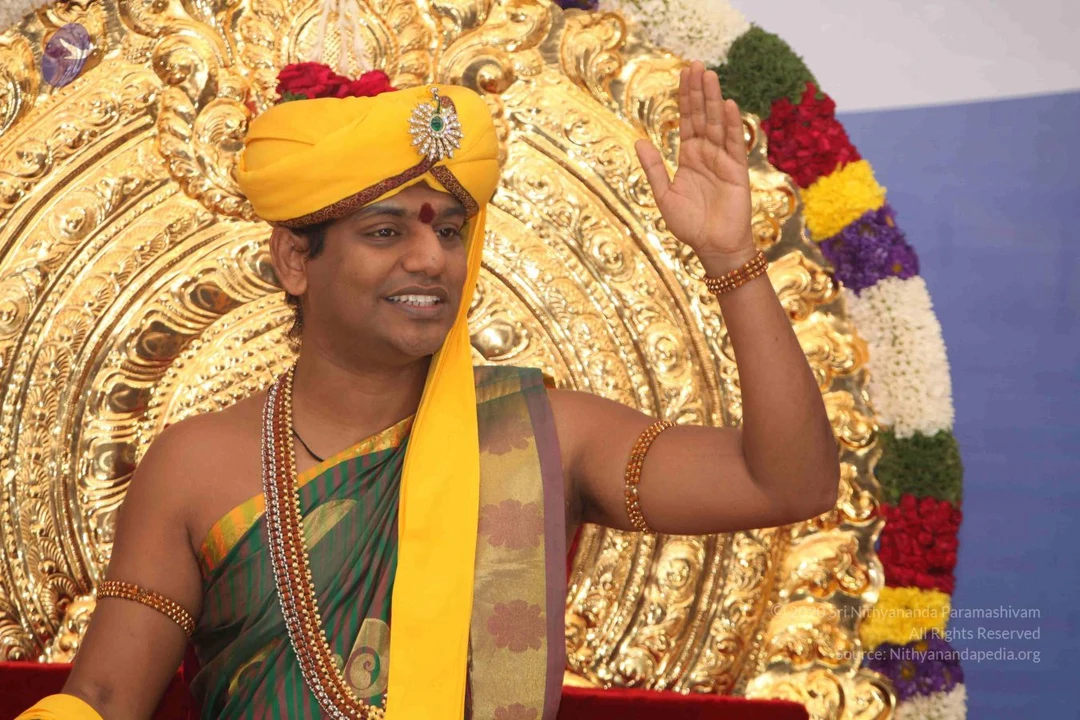
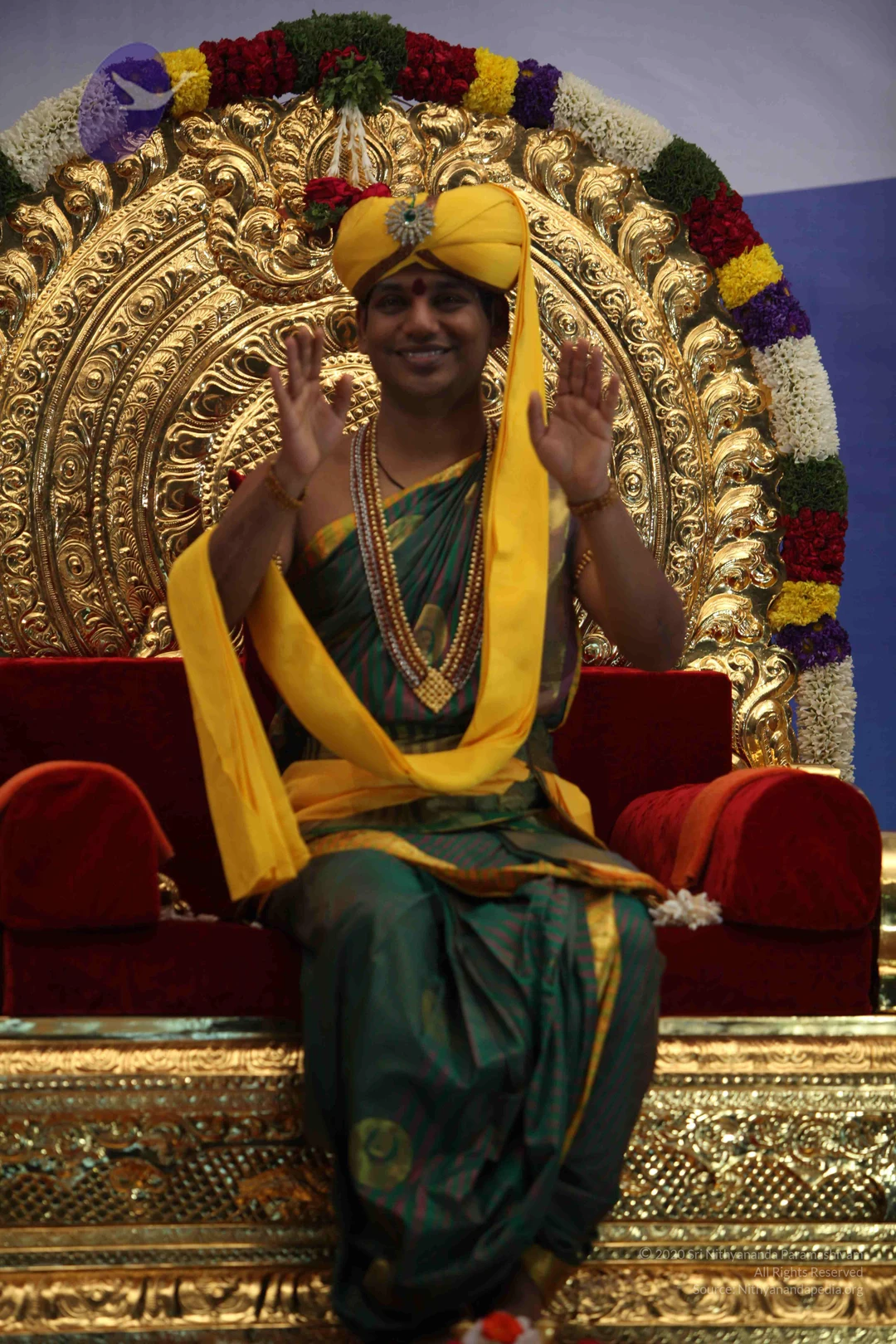
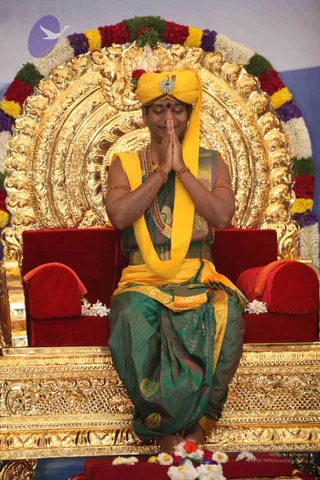
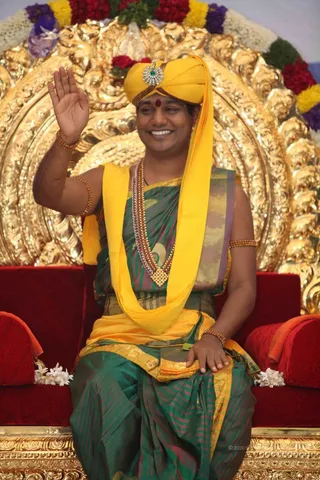
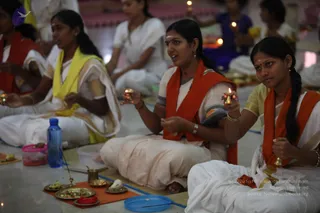
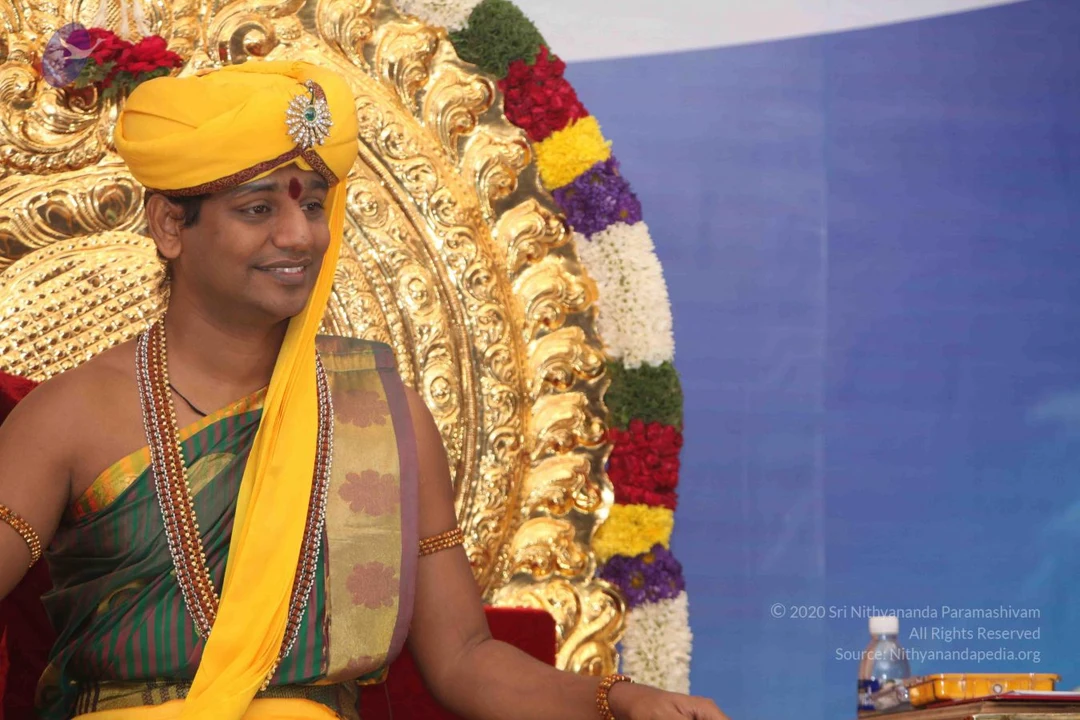
A seated man with eyes closed and palms pressed together in namaste sits on an ornate gold throne with red velvet cushions. He wears a yellow turban with a jeweled brooch and a red bindi, a yellow shawl draped over the shoulders, a green and maroon striped silk garment, layered beaded necklaces, and bangles. The throne's back is a large gold repoussé halo framed by garlands of red, yellow, purple and white flowers. White flowers lie on the cushions and a floral arrangement sits at his feet. The lone person has the distinctive presentation of a turban, shawl, ornate clothing and beaded jewelry on a throne, but the appearance cues alone do not establish identity, so the presence of a candidate is uncertain.A man seated on an ornate gilded throne with red cushions, smiling and raising his right hand in a greeting or blessing. He wears a bright yellow turban with a jewelled brooch, a yellow shawl draped over his shoulder, a green and maroon striped silk garment, and a tiered rudraksha-style mala with gold ornaments. Red and white flower garlands decorate the throne backdrop, and jasmine flowers lie on the red seat. Appearance-based, a person is seated and presenting himself as the central figure; the image is a photo of one person.A smiling man sits on an ornate gilded throne with red velvet cushions, decorated with white and coloured flower garlands above. He wears a bright yellow turban with a jewelled brooch and a red bindi, a yellow shawl draped over his shoulders, and a green and maroon striped silk garment. He has a layered gold and beaded necklace, gold armlets and bangles, and his hands rest folded in his lap. One person is visible; the throne and garlands are the setting. Appearance is consistent with the page's Swamiji reference, a probable match based on turban, shawl, jewelled ornaments and throne seating.A photograph of a seated ritual gathering in a plain hall with red curtains and a fluorescent tube light. In the foreground, several men in white dhotis and white shawls sit on a mat, with horizontal sacred ash marks on their foreheads and arms, holding small oil lamps and offering trays of fruit and flowers. Behind them, a row of seated devotees, some in white and some in shirts, raise lit lamps. A man in an orange-saffron robe with a rudraksha mala sits at the right edge. Brass plates, a green bowl and plastic containers sit on the floor. The scene shows a group puja with lamp offerings.Women seated on the floor in a temple hall perform an oil lamp ritual. Several women in white and cream dhoti-style cloth wear orange or yellow shawls. The foreground woman in the centre holds a small brass lamp with a lit flame, and the woman on the right holds a lit brass lamp with an orange shawl and a plait. Brass plates with fruit, sweets and a small brass cup sit on an orange cloth before them, along with a blue water bottle and a small blue plate. Other women behind hold lamps, and a girl in purple lights a candle at the back. Visible people number roughly six or more, all seated.A photograph of several women in orange saris seated on the floor during a ritual. In the foreground, a woman with a short white tilak on her forehead and a rudraksha mala around her neck raises a small brass lamp with a lit flame in her right hand, while holding a brass bell in her left. Beside her, another woman in orange holds a second lit lamp, and others sit behind them. A white plastic container and brass puja items lie on the floor, indicating a puja or aarti gathering in an indoor hall.
chandi-homa

89 photosSource gallery
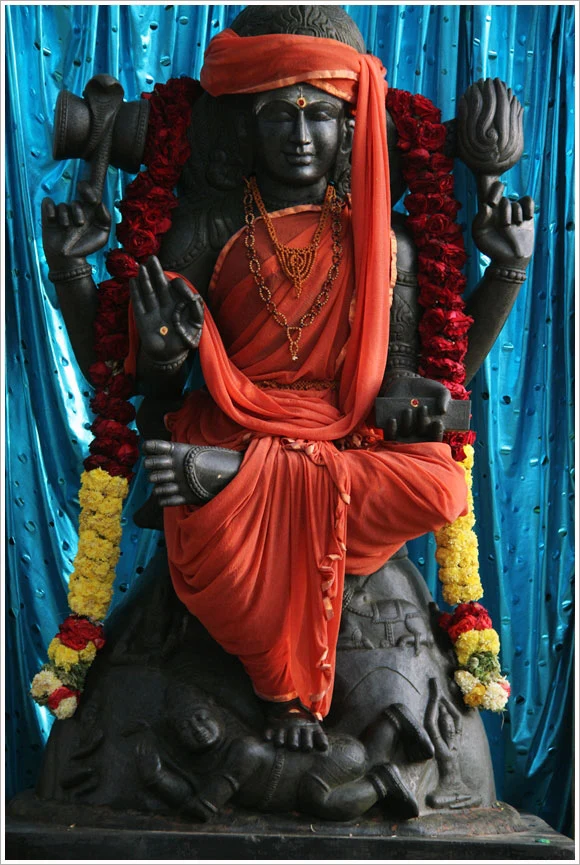
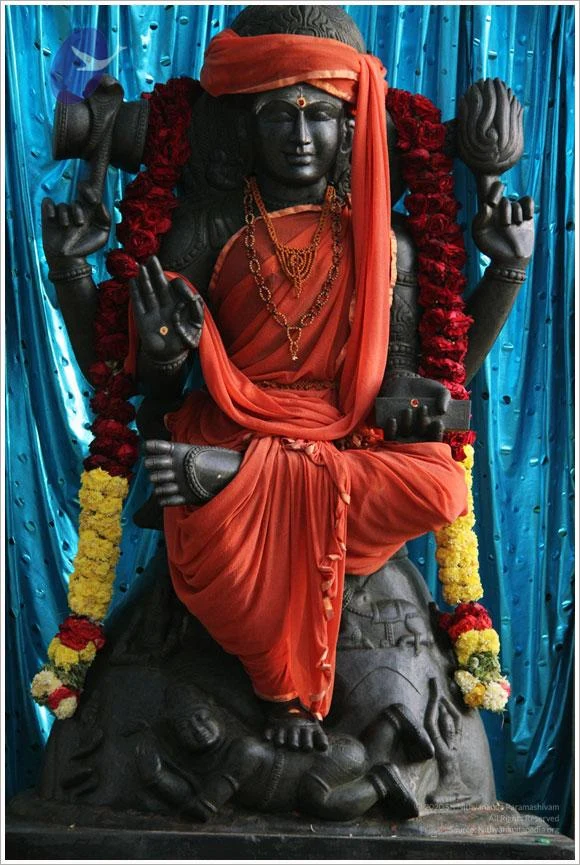
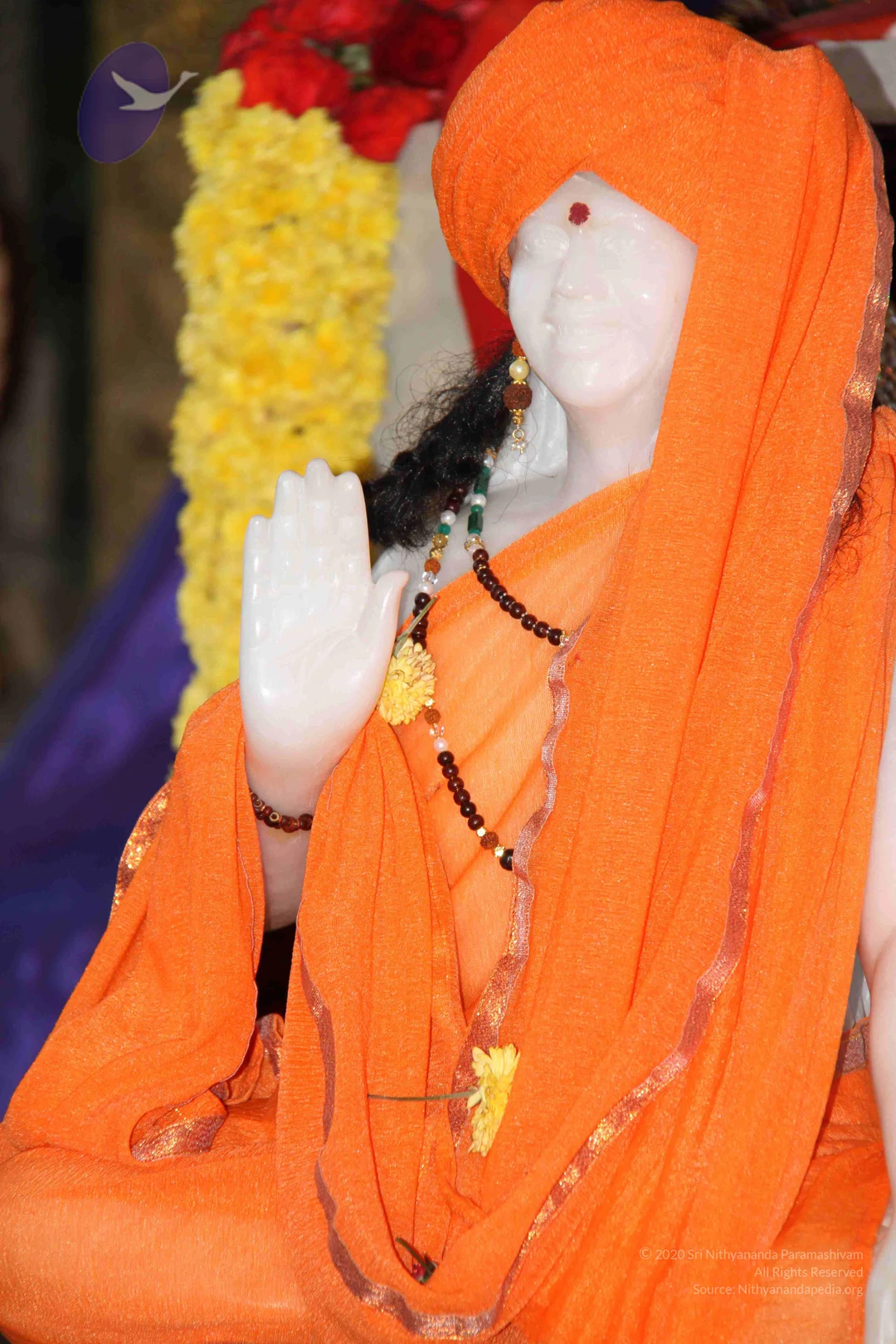
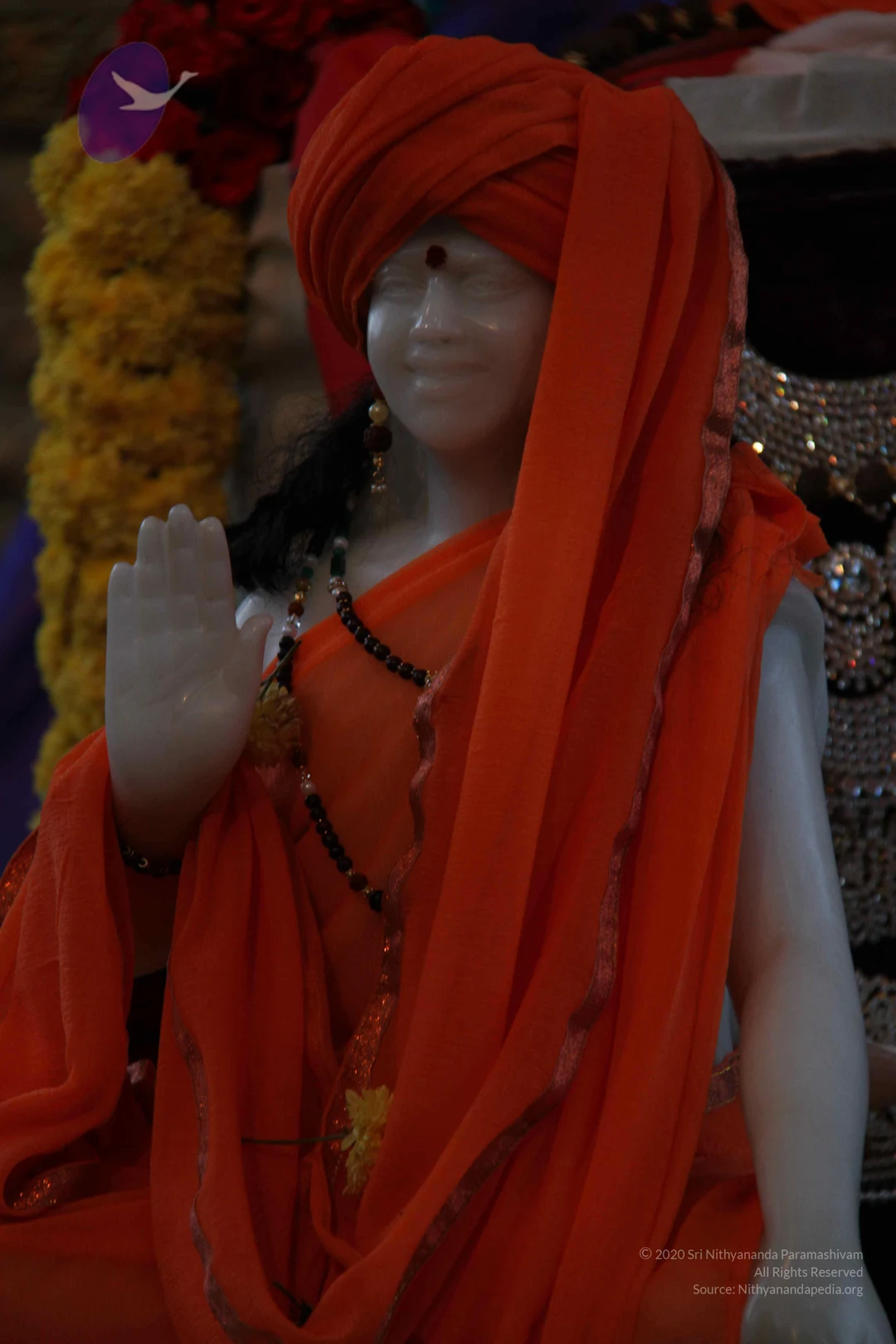
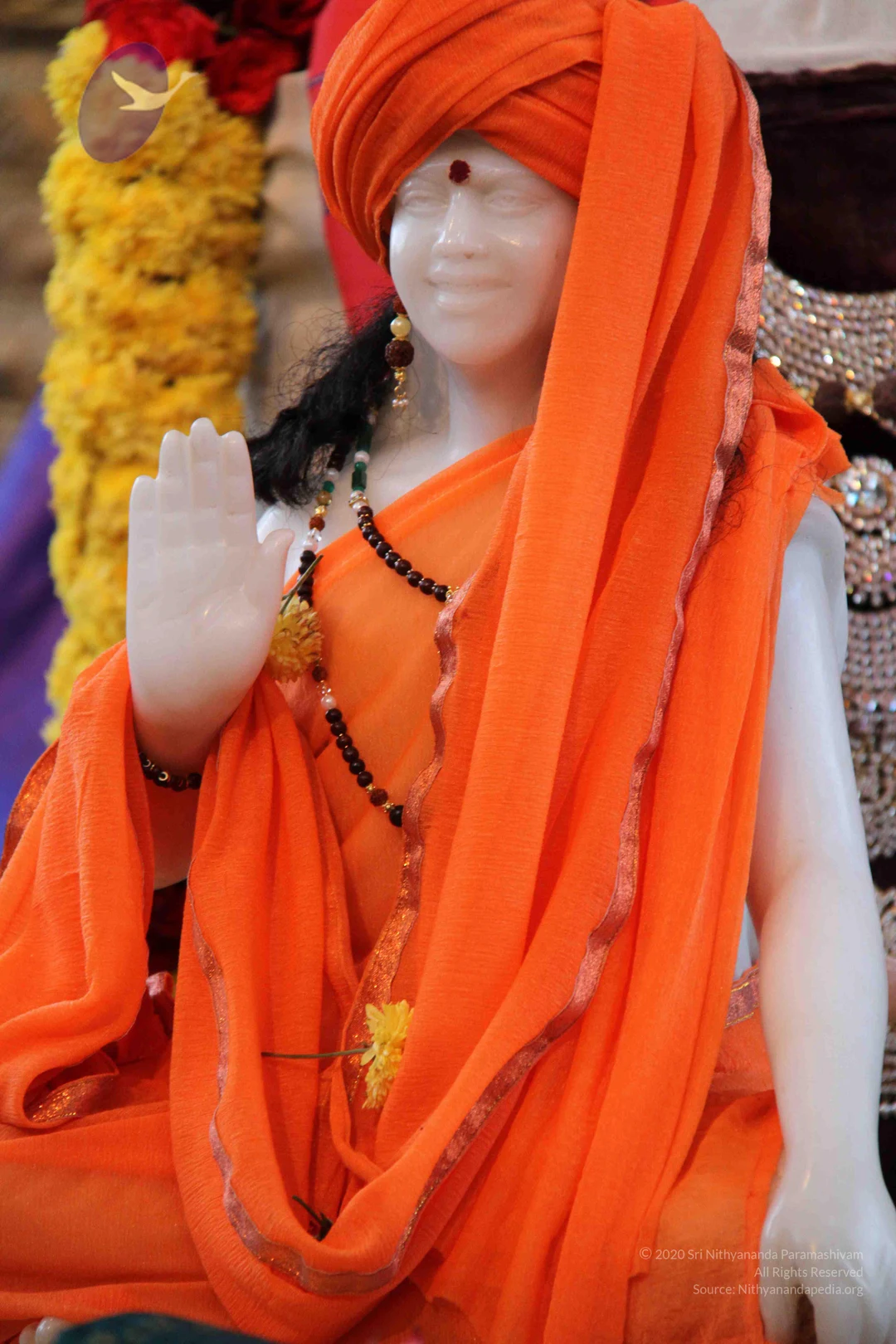
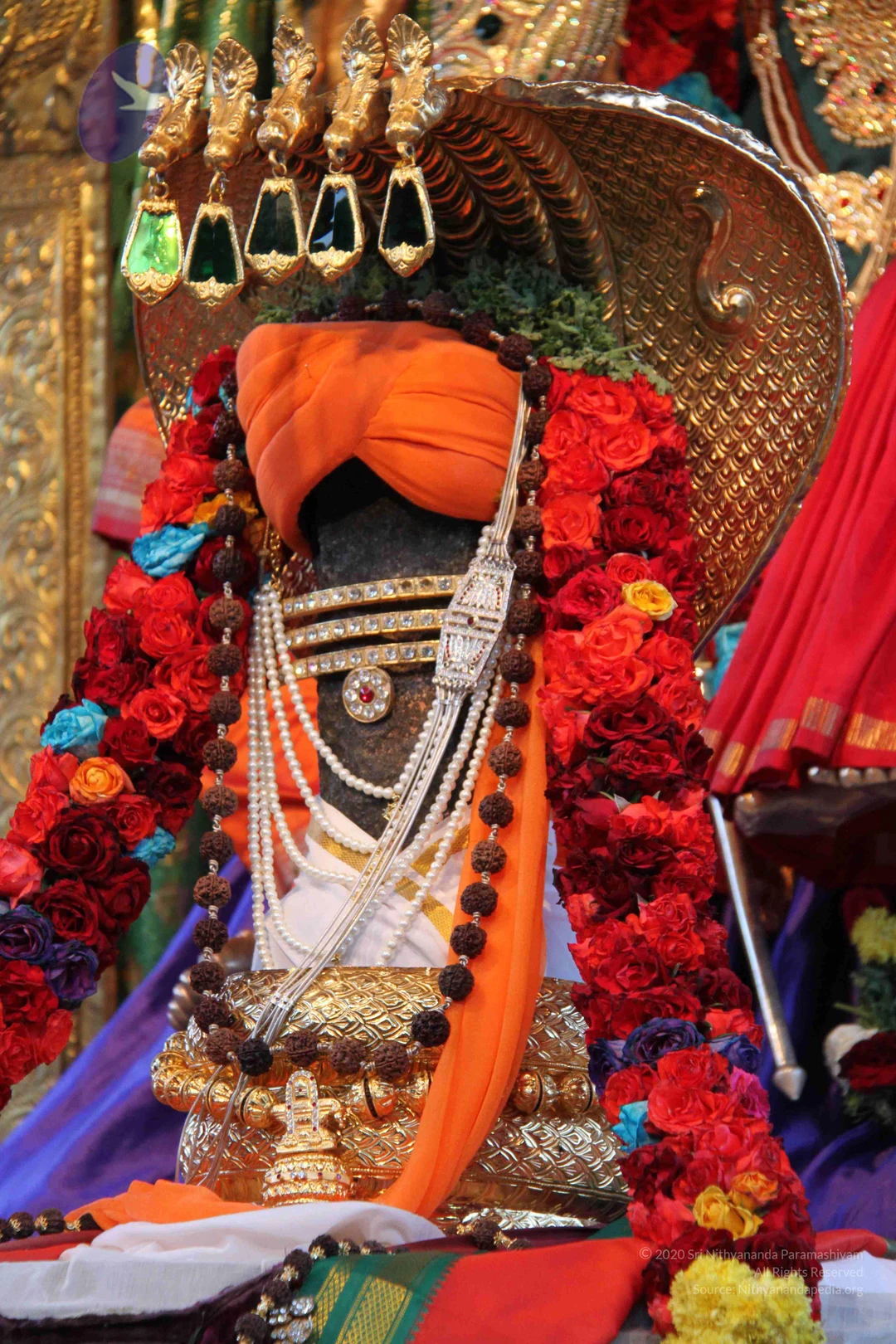
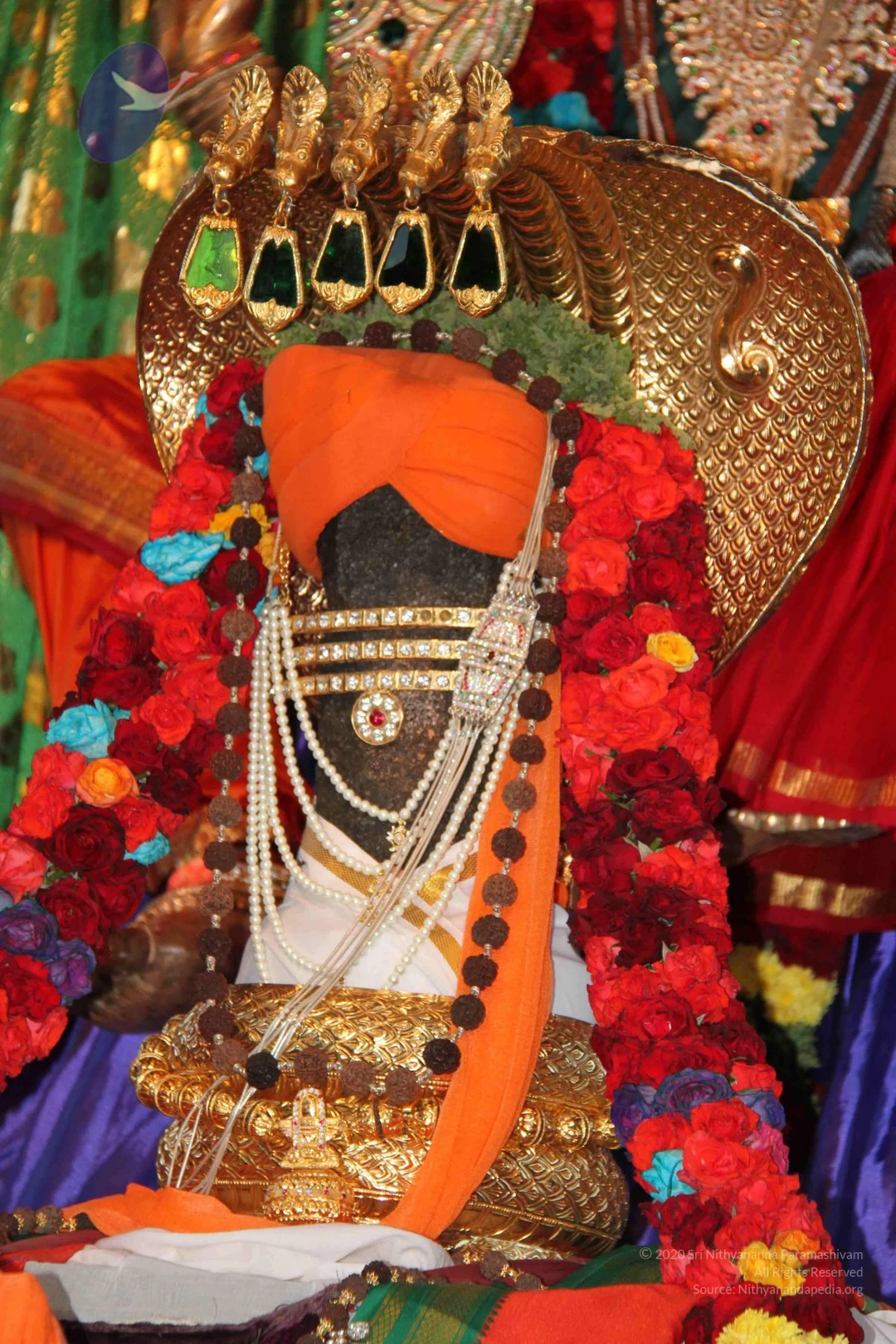
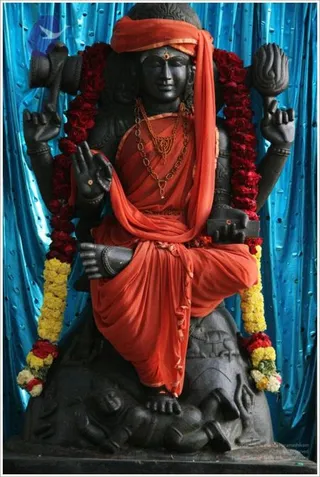
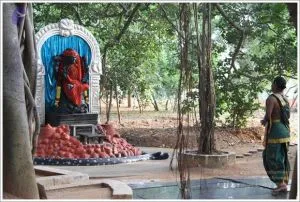
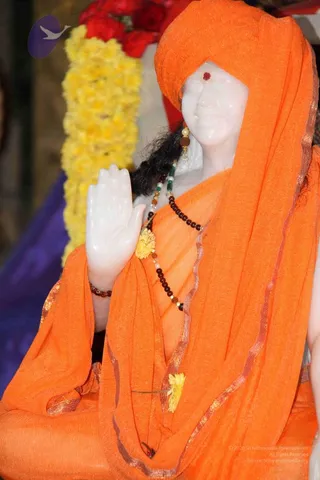
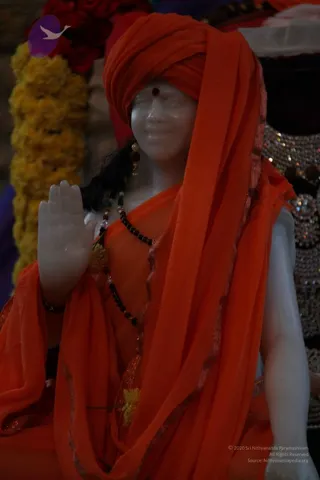
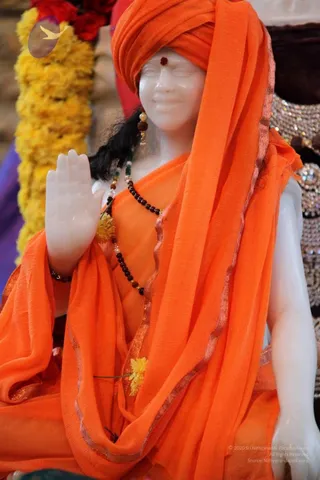
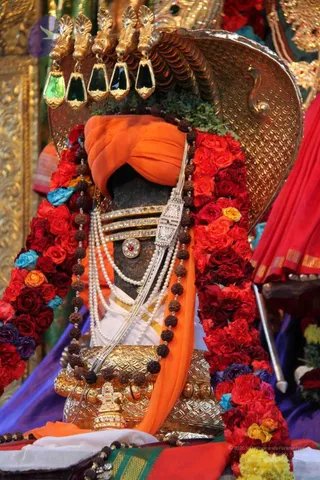
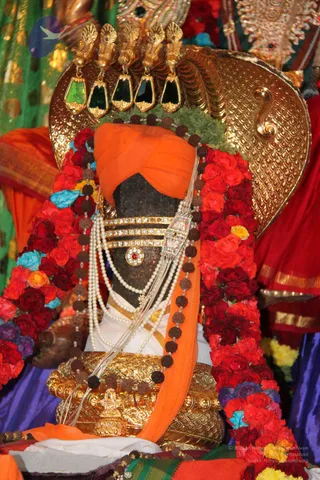
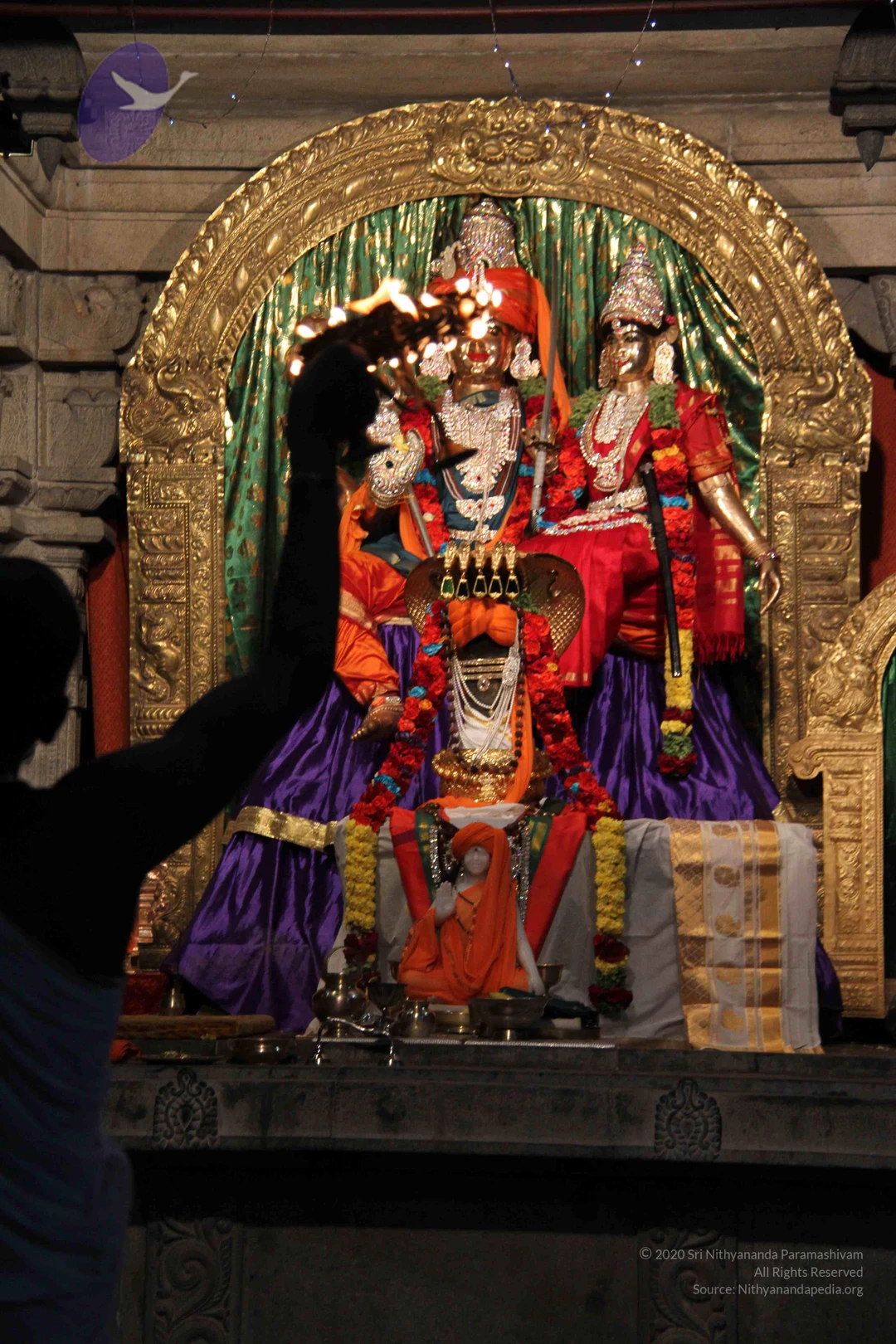
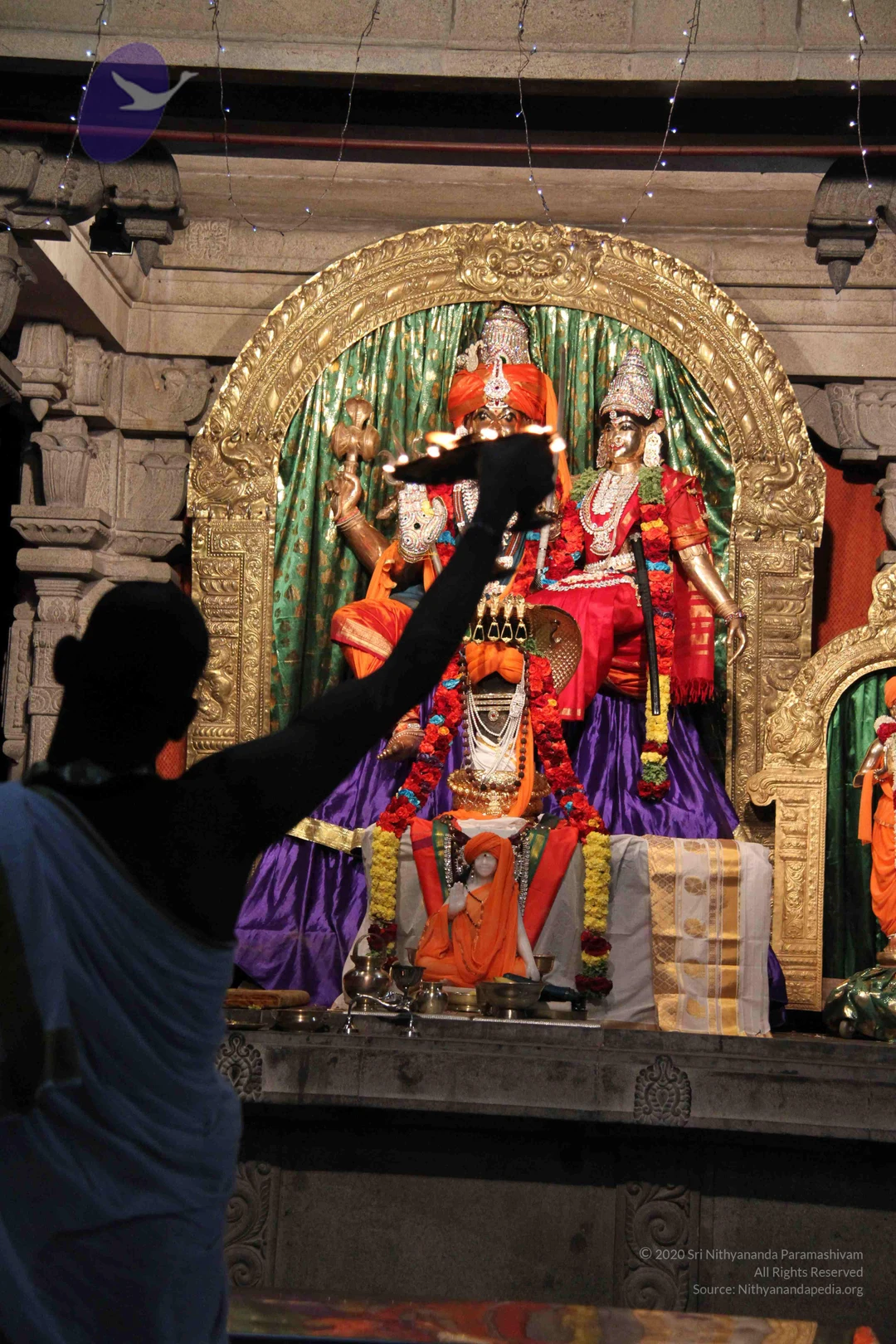
A black stone statue of a multi-armed deity murti seated on a rock base, wearing an orange-red shawl over the body and draped around the waist, with a red headcloth, a gold necklace and a red bindi. Red and yellow flower garlands hang from its shoulders, and a small figure of a reclining devotee rests at the base. Behind the statue hangs a bright blue curtain with droplet pattern.A photograph of an outdoor shrine set among tall trees with dangling aerial roots. A small blue-framed niche holds a red-clad deity murti, adorned with garlands and orange-red vermilion, seated before a heap of fresh red fruits or tomatoes arranged on a stone platform. In the right foreground a woman in a green saree with a yellow border stands barefoot beside a shallow water basin, facing the shrine. Dirt ground and dense foliage surround the scene.A white marble statue of a seated sannyasi, dressed in saffron-orange robes with a copper-gold edged shawl draped over the head and shoulders. The statue has a red bindi on its forehead, wears a rudraksha and bead mala on the chest, a beaded bracelet, and a pearl-tipped earring. Its right hand is raised in a blessing gesture (abhaya mudra). A yellow flower garland and loose yellow marigolds lie around it, with red flowers and a blurred purple cloth in the background. No physical people are present.A white marble statue of a robed figure in an orange-saffron turban and matching orange shawl with a gold-edged border, raising its right hand in an abhaya-style blessing gesture. A rudraksha mala with dark beads hangs across the chest, and a red tilak mark sits on the forehead. Behind it are marigold garlands in yellow and red and a glittering embellished backdrop. Because this is a statue, it is a depiction rather than a physical person, and the appearance is a sculpted figure without a clear identity.A white marble statue of a seated sage in an orange turban and orange draped shawl with a copper-coloured border, a red bindi on the forehead, and a rudraksha mala with beads. The right hand is raised in abhaya mudra, blessing gesture. Yellow marigold garlands and a sparkling jewelled backdrop surround the figure. Being a statue, it is a depiction; the appearance matches the page's described presence, so the candidate is a statue depicting a saffron-clad sannyasi with rudraksha and turban cues.A dark stone deity murti dressed for worship, wrapped in an orange turban-like cloth and draped with a dense garland of red roses with some orange, yellow and blue flowers. A gold cobra hood with green stone earrings and gold rosette adornments sits above, with rudraksha malas and strands of white pearls across the chest, a diamond-studded gold band and a gold base below. Red silk fabric and gold metalwork frame the scene, with greenery tucked behind the head. No people are visible.

malayasi-palani-day-1

5 photosSource gallery
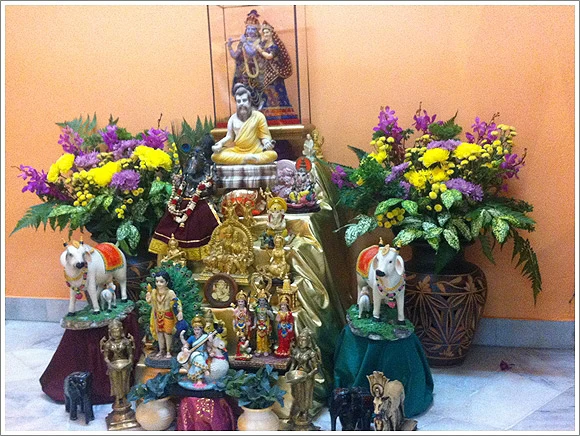
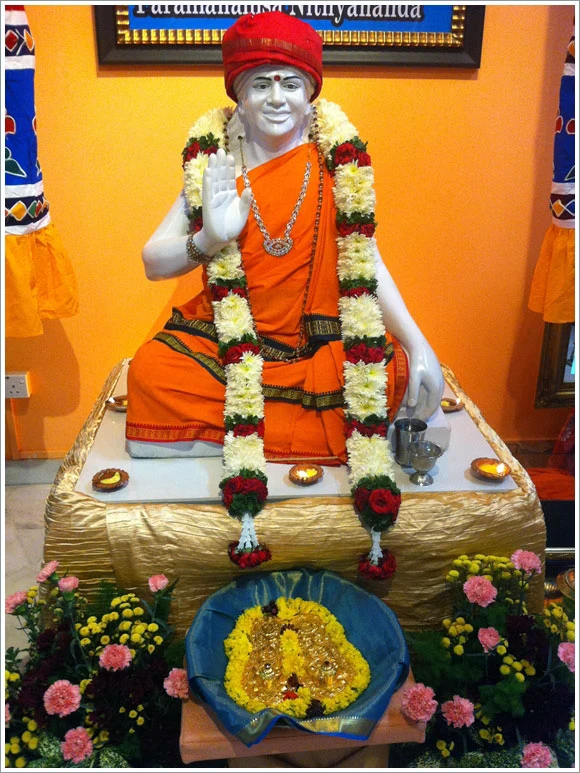
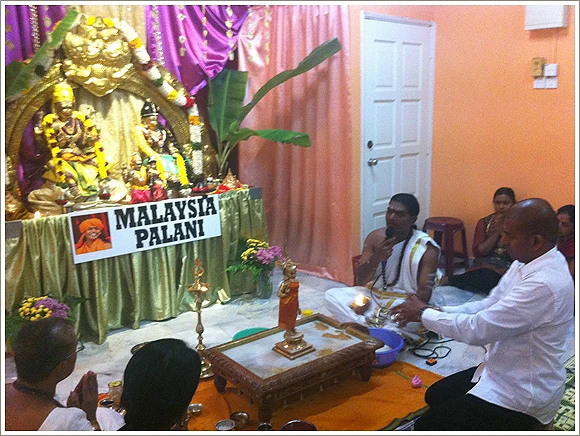
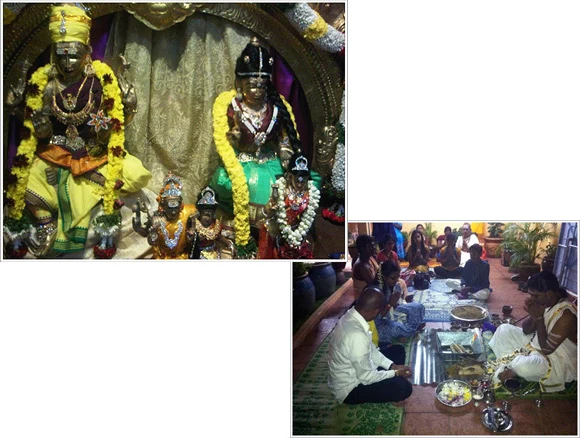
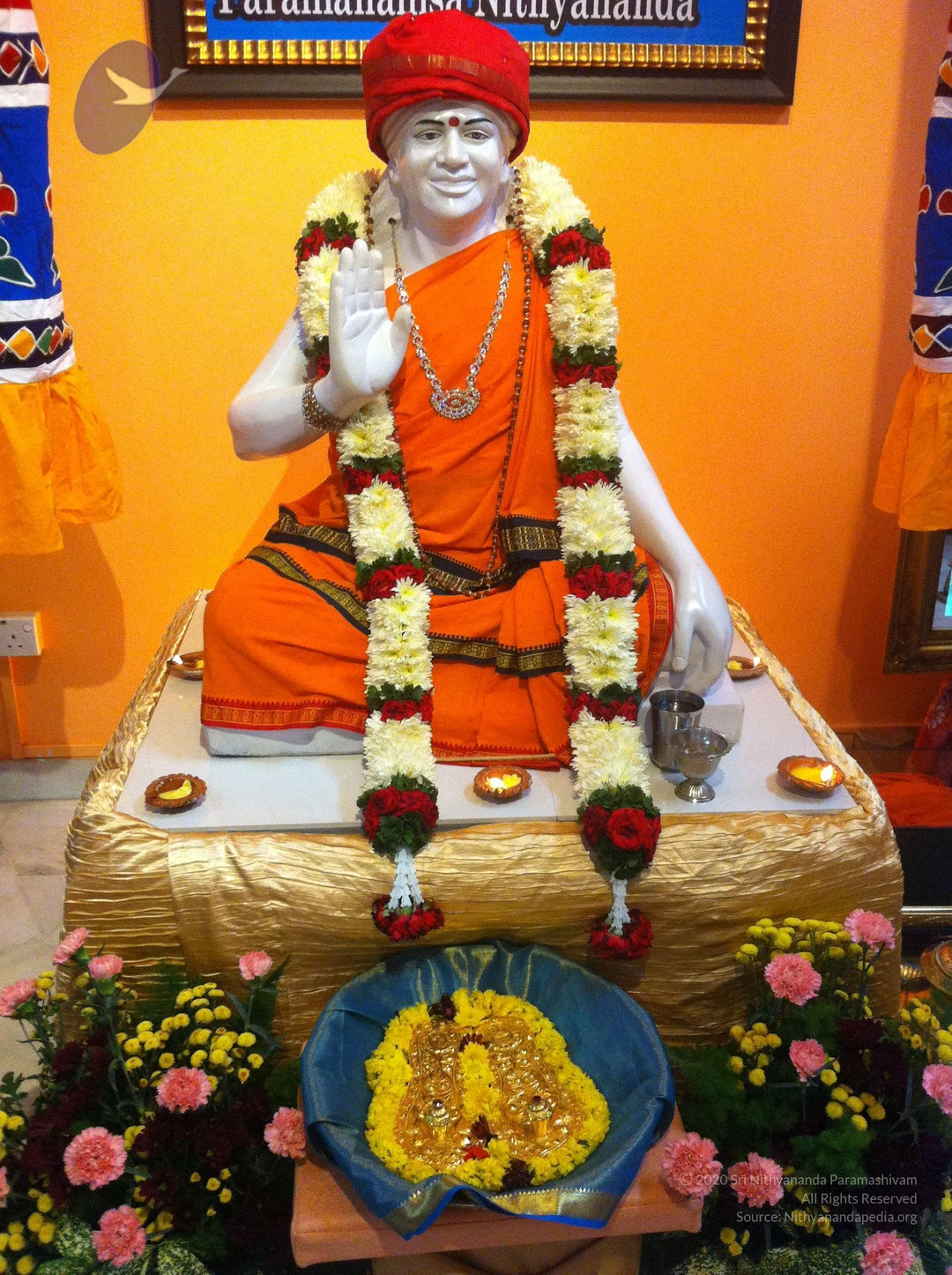
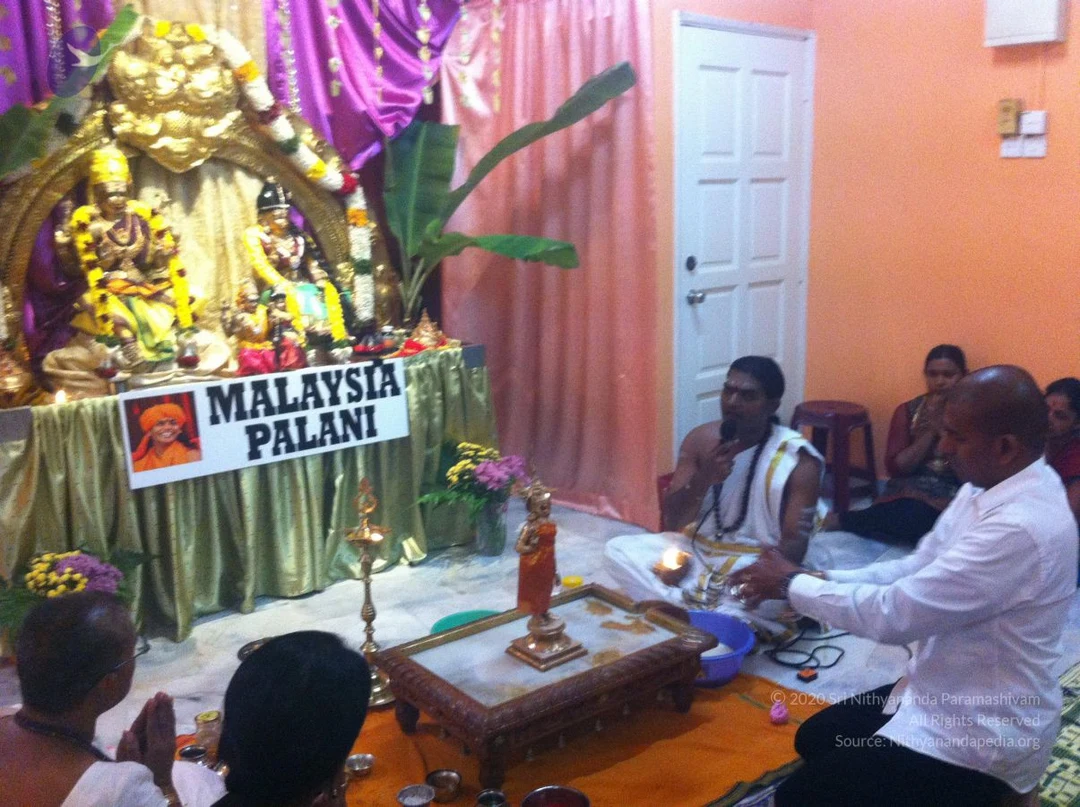
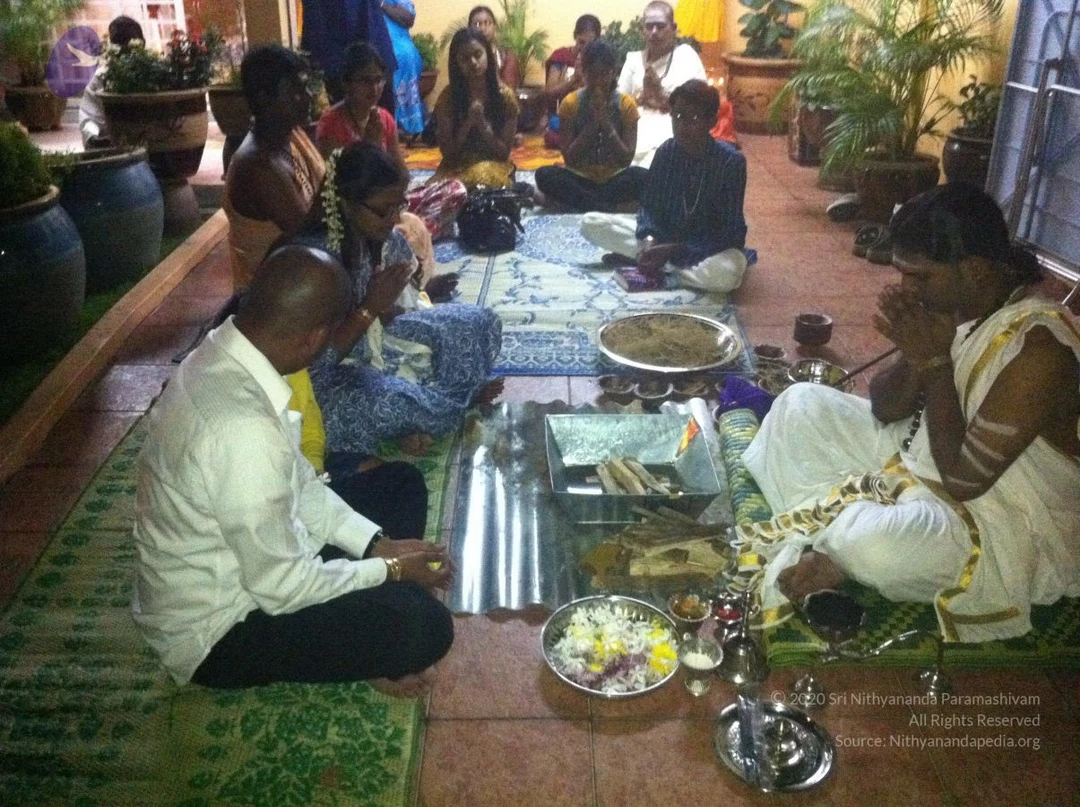
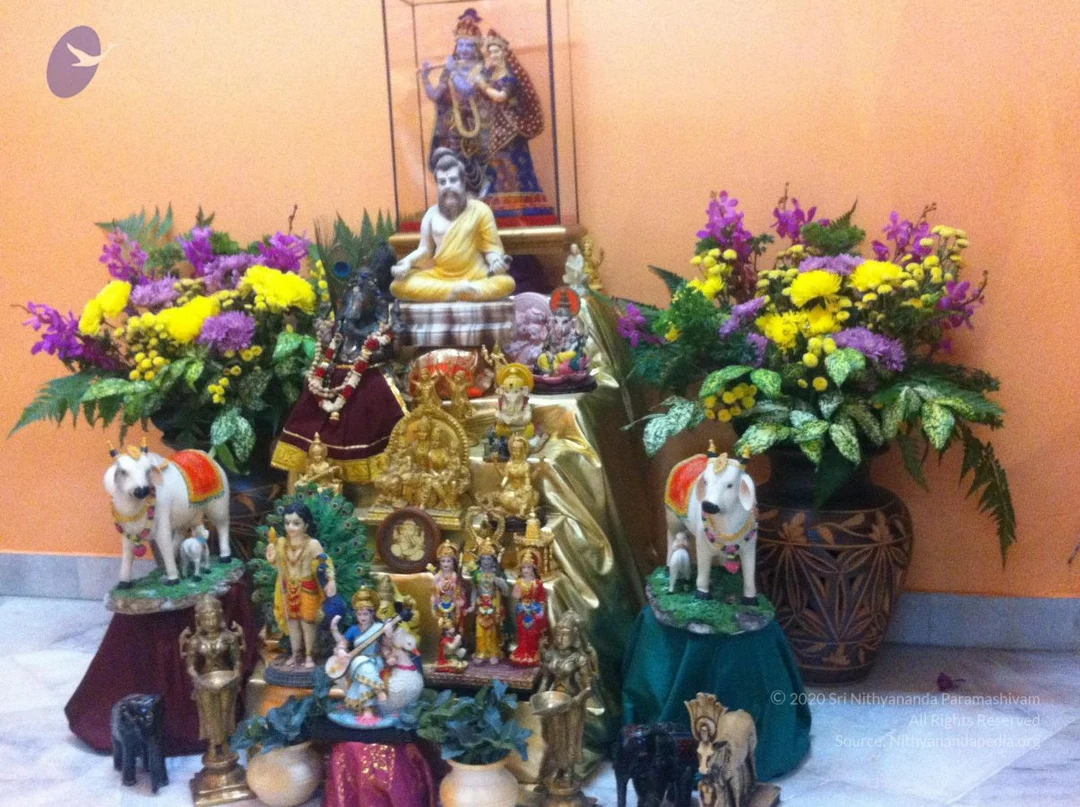
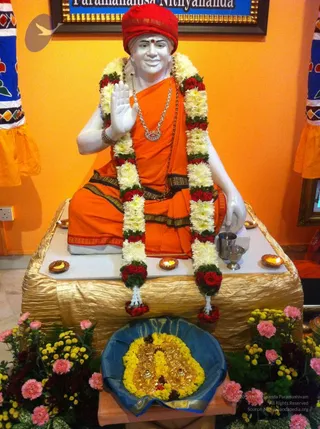
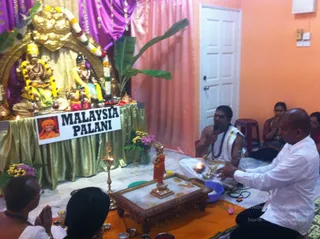
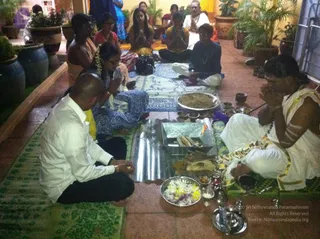
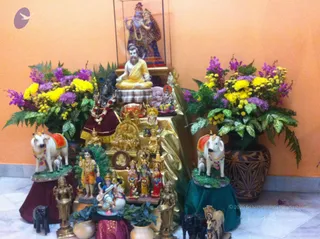
A photograph of a temple shrine containing metal murtis, not living people. On the left, a seated deity figure in yellow dhoti and yellow-and-green cloth, wearing a yellow turban, long necklaces, and a yellow marigold garland. On the right, a seated female deity in a green blouse and maroon sari, with a long braid, a black crown, and a white jasmine and yellow garland. Two smaller figures in front, one in orange with blue beads and one in red with a crown, stand before a gold and silver brocade curtain with purple drapes and gilded arch decoration. Red flower offerings sit at the base.A white marble statue of a seated sannyasi in saffron-orange robes with a red turban and a red bindi, raising one hand in blessing, is garlanded with white and red flower necklaces. A silver necklace and rudraksha-style beads hang at the chest. The statue sits on a gold-draped pedestal lit by small oil lamps, with metal cups beside it. A blue-bordered tray with a gold ornament and yellow marigold garland lies below, surrounded by pink carnations and yellow flowers against an orange wall. A framed nameplate above reads Paramahamsa Nithyananda.A photograph of a home-style shrine room with orange walls and a white door. A gilded deity display draped in purple cloth and garlanded with yellow and orange flowers stands at left, with a printed sign reading MALAYSIA PALANI beside a small portrait of a saffron-robed figure. A seated priest in a white dhoti and mala holds a microphone and speaks, while a man in a white shirt sits on the right with a hand near a brass lamp and a small saffron-clad figurine on a marble-topped wooden stand. Two people sit at the far right and two more with folded hands at lower left. A lit oil lamp, flowers and brass vessels sit before the shrine.A seated group of devotees gathers on the tiled floor of a courtyard lined with potted plants and large ceramic pots during an evening puja. In the foreground a bald man in a white shirt and dark trousers sits cross-legged with hands folded, beside a woman in a blue patterned top and eyeglasses with a flower garland. At right a person in a white dhoti with gold border and rudraksha mala sits with palms pressed together before a brass tray holding flowers, a plate of rice, small oil lamps, a steel vessel and a kalasha. Several other women in saffron, yellow and blue clothing sit in prayer in the background, and a bald man in white stands among them. A plain blue-and-white floor mat and green mat are spread out. Watermarked copyright text appears at lower right.A photograph of a devotional shrine set against an orange wall, with no people visible. At the centre sits a seated figure in yellow robes with a grey beard and a dark cloth beneath, a statue of a sage or saint rather than a living person. Above, a framed image shows Krishna playing a flute beside Radha in blue and red. Two white cows with red-and-gold blankets, a peacock, a Krishna figure in yellow, a seated figure playing a veena, and gold deity figurines surround the centre. Large arrangements of yellow and purple flowers flank the shrine, and a green cloth covers a stand at the lower right.
Toronto-Kailash-Navratri-Baala-Tripura-Sundari

9 photosSource gallery
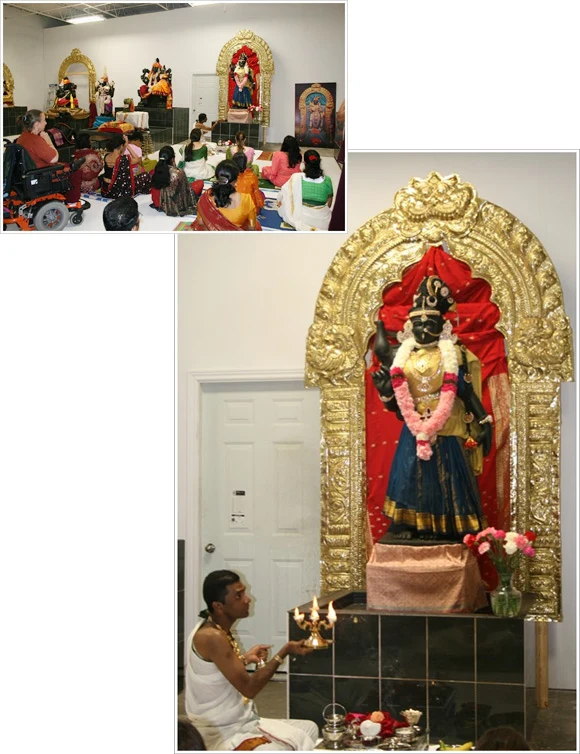
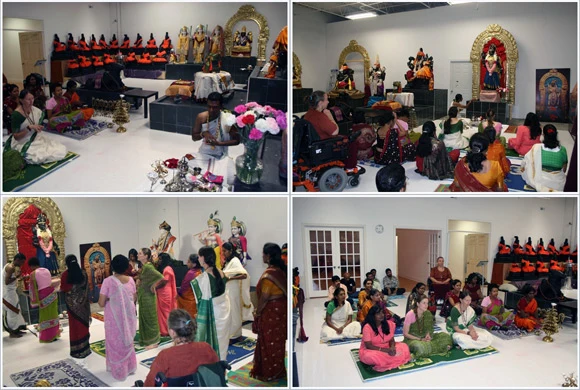
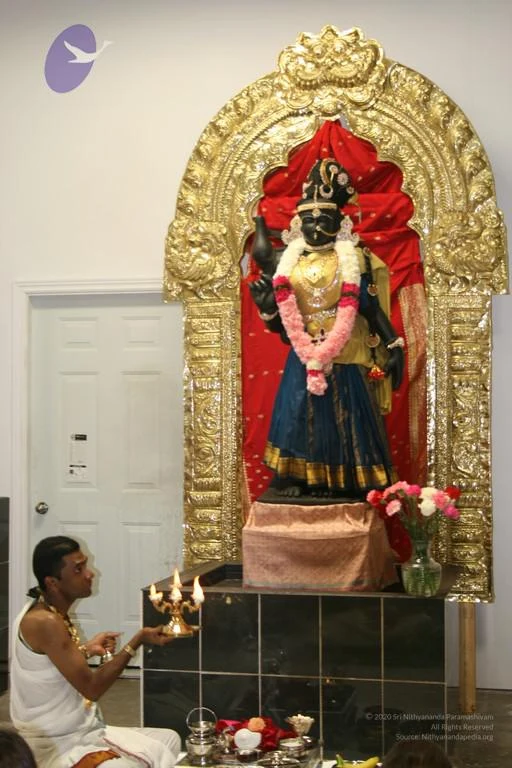
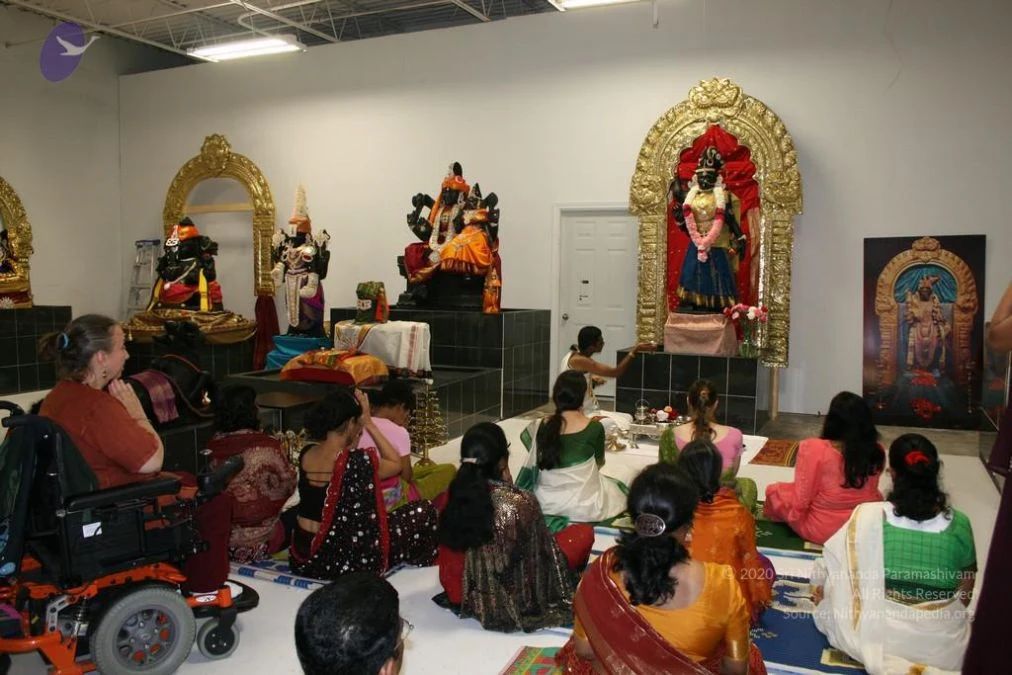
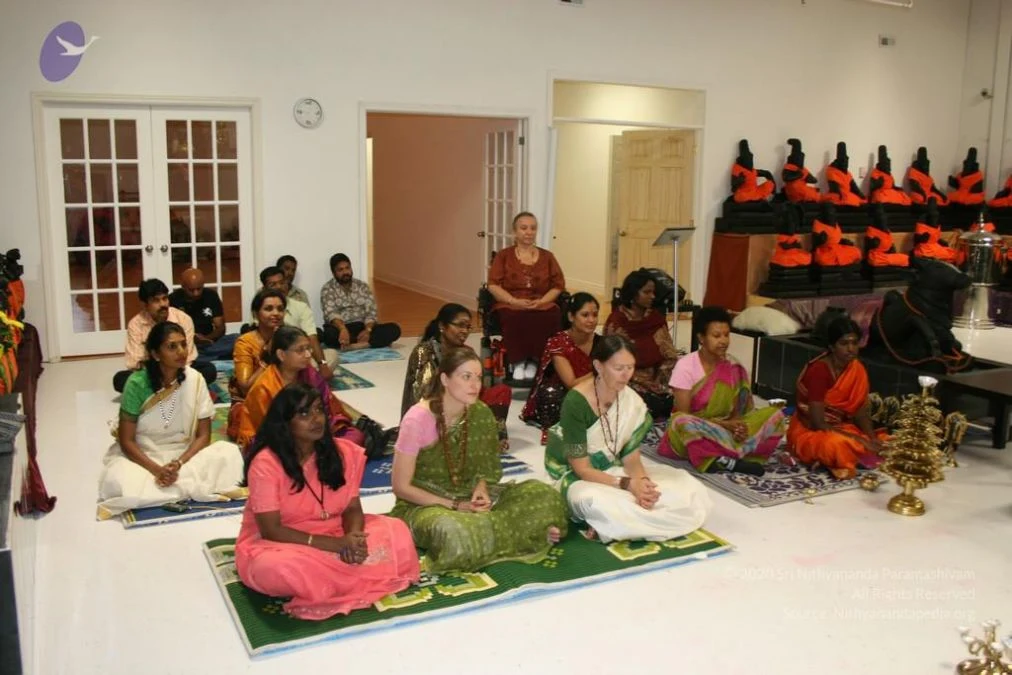
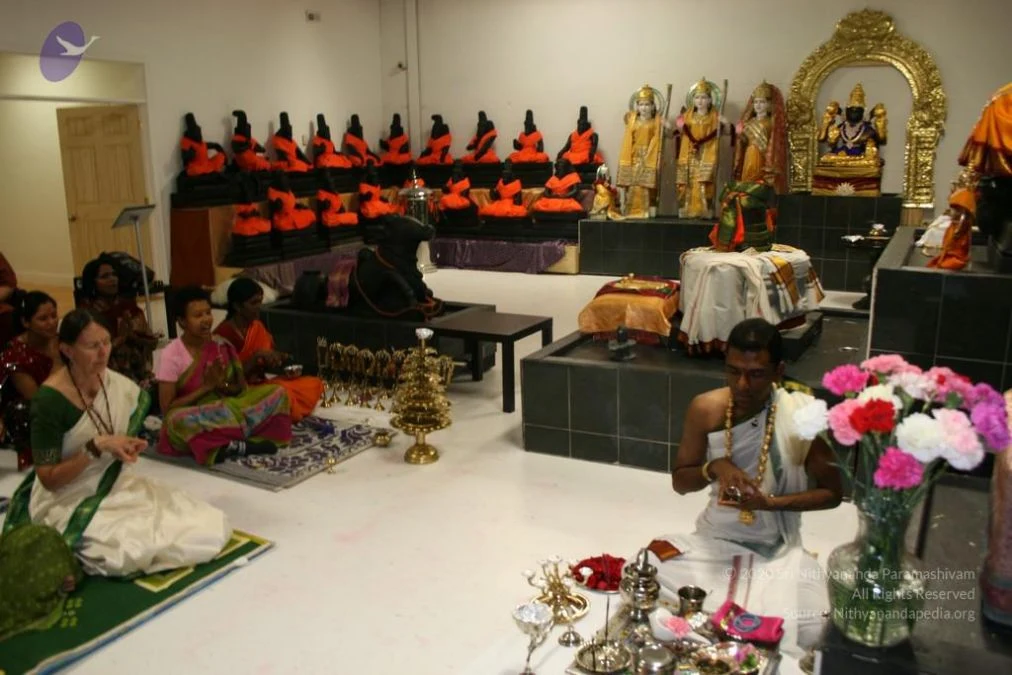
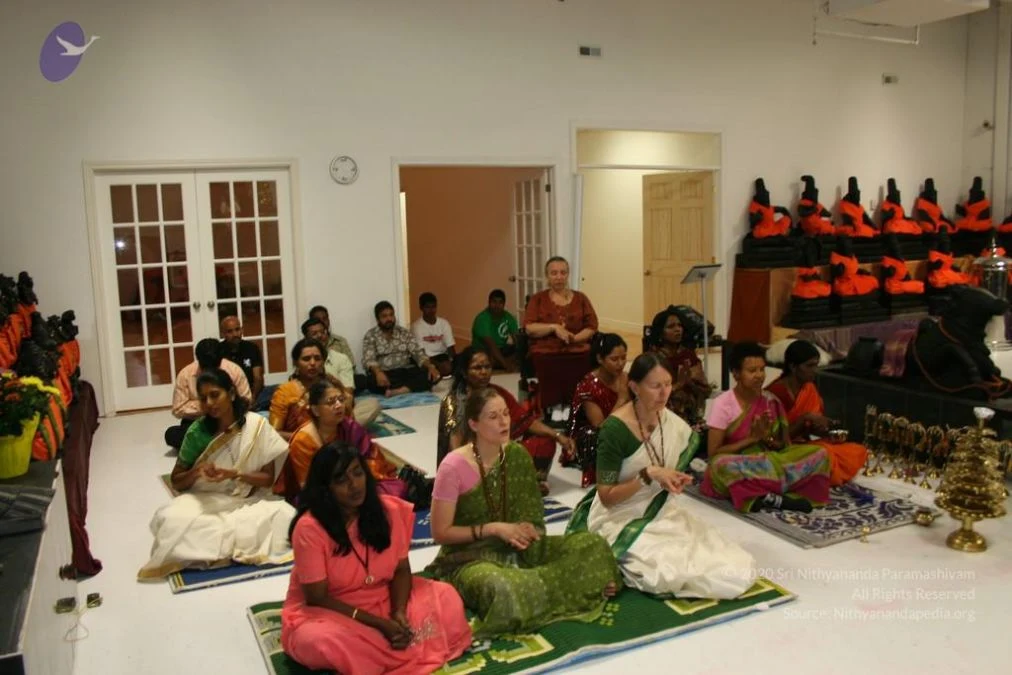
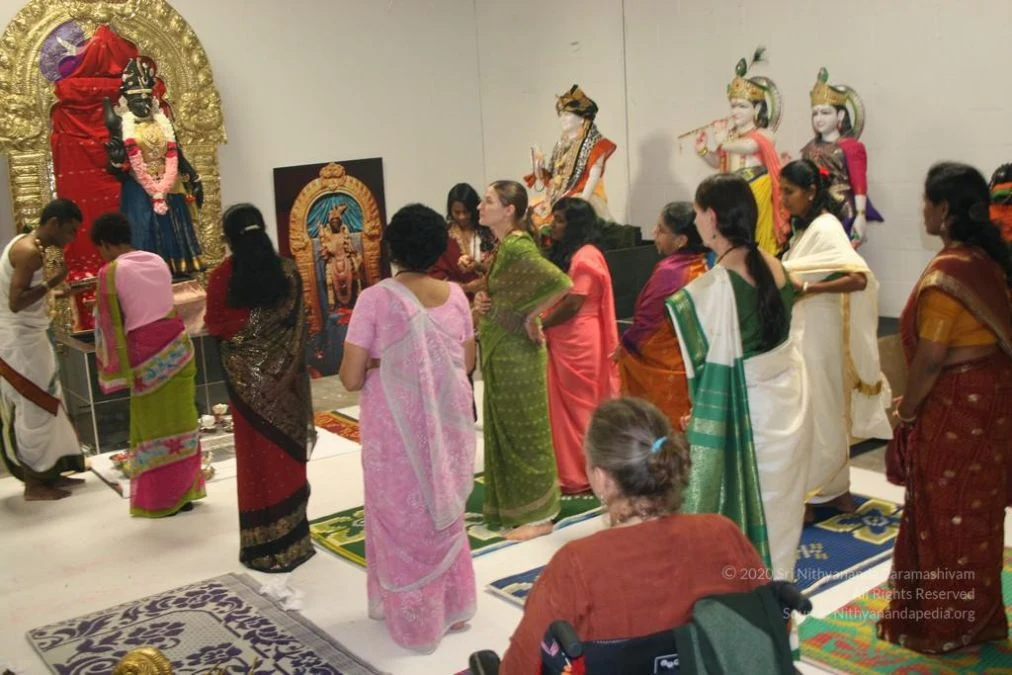
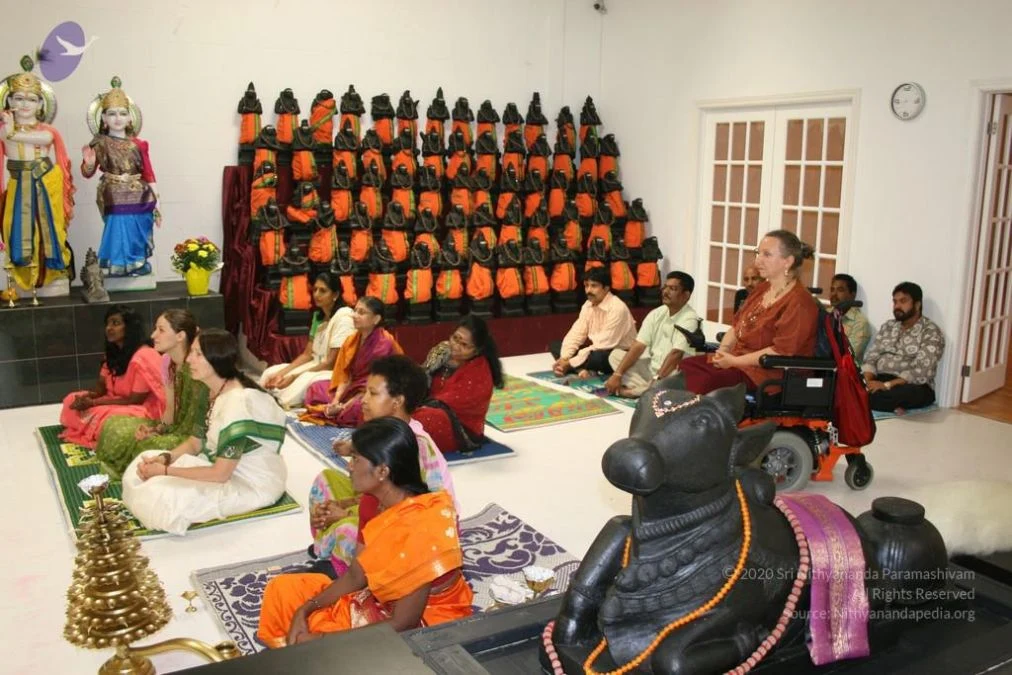
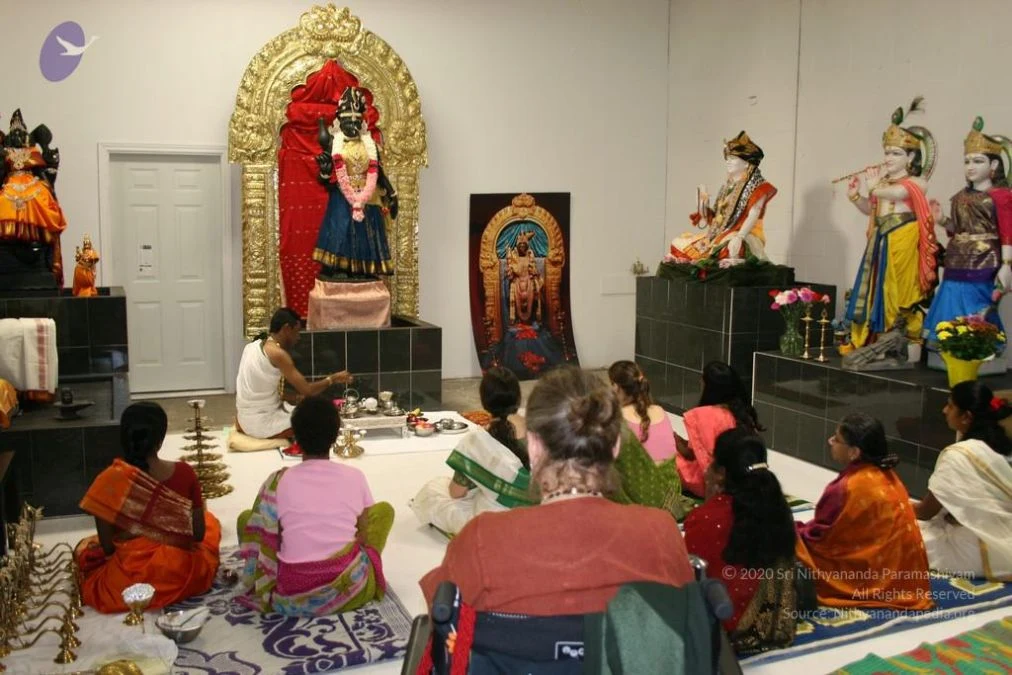
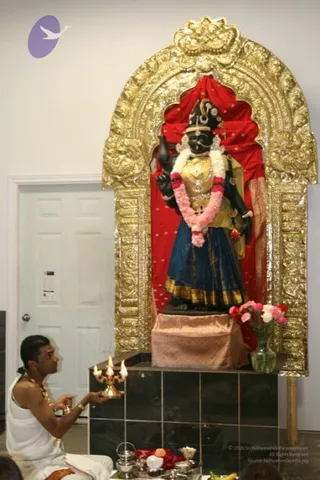
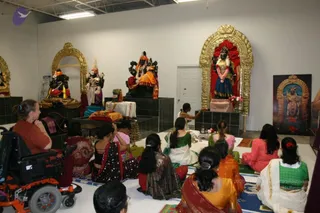
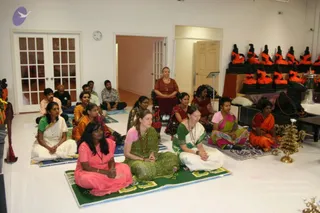
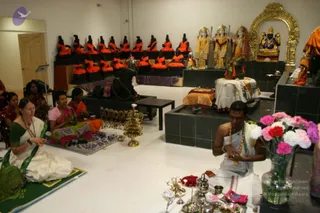
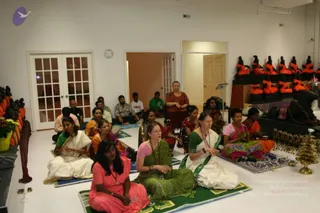
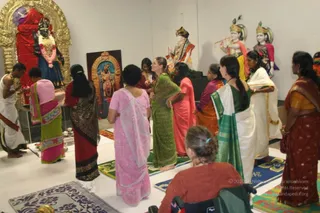
A priest in white dhoti sits cross-legged at the lower left, holding a brass lamp with two flames and making a gesture toward a black deity murti. The murti stands in a golden arched shrine framed by ornate gold carving, draped in a red cloth backdrop, with a garland of pink and white flowers, gold necklaces and a blue-black skirt with gold border. A flower vase with pink and red blooms stands at the right, and brass puja vessels and offerings sit on a black-tiled platform in front. The priest is performing aarti.Photo of a temple hall with a white wall and dark tiled altar platforms holding several ornate deity murti. On the right, a golden arched shrine holds a dark deity murti in a blue and gold garment, garlanded with pink flowers, with a red cloth behind. A woman in a white and green sari stands at the shrine offering a plate, and a row of about ten seated devotees in saris, salwar and a wheelchair user watch from the floor on blue mats. Statues in orange and white clothing stand on the left. A framed poster of a golden-arched deity hangs on the right wall.A photo of a bright white room where about twenty people sit cross-legged on mats in a meditative satsang setting. In the foreground a woman in a pink salwar kameez sits with hands folded, next to a woman in a green sari and another in white with a red-bordered dupatta and a beaded necklace. Others in saffron, pink, green and maroon saris sit behind them, and a seated woman in a maroon top rests on a chair near a doorway. A row of saffron-draped ceremonial seats stands along the right wall beside a brass kalasha and a brass lamp. No a person figure is visible in the scene.Indoor puja in a temple room with white walls and dark tiled altar platforms. A priest in white dhoti and shawl, wearing gold necklaces and bangles, sits at the lower right tending brass ritual items and a small flame before a vase of pink and white carnations. To the left, several women sit on mats; one in a green and white sari sits with hands together, others in pink and orange saris. Behind them rows of seated orange-clad figures are displayed on shelves. The altar holds gold-clad deity murtis including a standing pair, a seated figure beneath a gold arch, and a draped white cloth on a platform. Brass lamps, kalasha-style vessels and a kumkum tray sit on the floor.A group of devotees sits cross-legged on mats in a bright white room during a seated meditation or satsang. In the foreground, a woman in pink salwar and a woman in green sari with a white border sit with hands folded, eyes closed. A woman in a white sari with green border sits beside them. Behind them, rows of seated participants include a man in a white shirt and a woman in red. A row of orange-and-black ritual seats or chairs with saffron cloth stands along the right wall beside a brass kalasha-style lamp and a brass stand. A white-framed French door and a wall clock are visible. No clear a person candidate is present.A group of women in colourful saris stand on patterned mats in a bright white hall before a row of deity murtis. At left, a man in white dhoti and bare chest stands near a black-faced deity with a red-and-white garland and red cloth, beside a gilded arch. Centre background shows a crowned figure in orange and gold, and at right a flute-playing Krishna murti in yellow and a crowned female murti in pink. A framed painting of a deity hangs behind the women. Several women wear pink, green, orange and white saris; one in the foreground sits in a wheelchair in red top. Dress, mats and standing devotees suggest puja or darshan.
Chandi-Homa
16 photosSource gallery
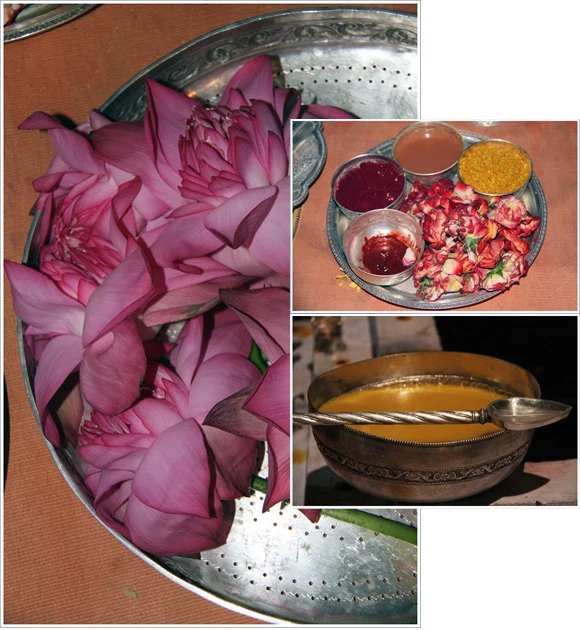
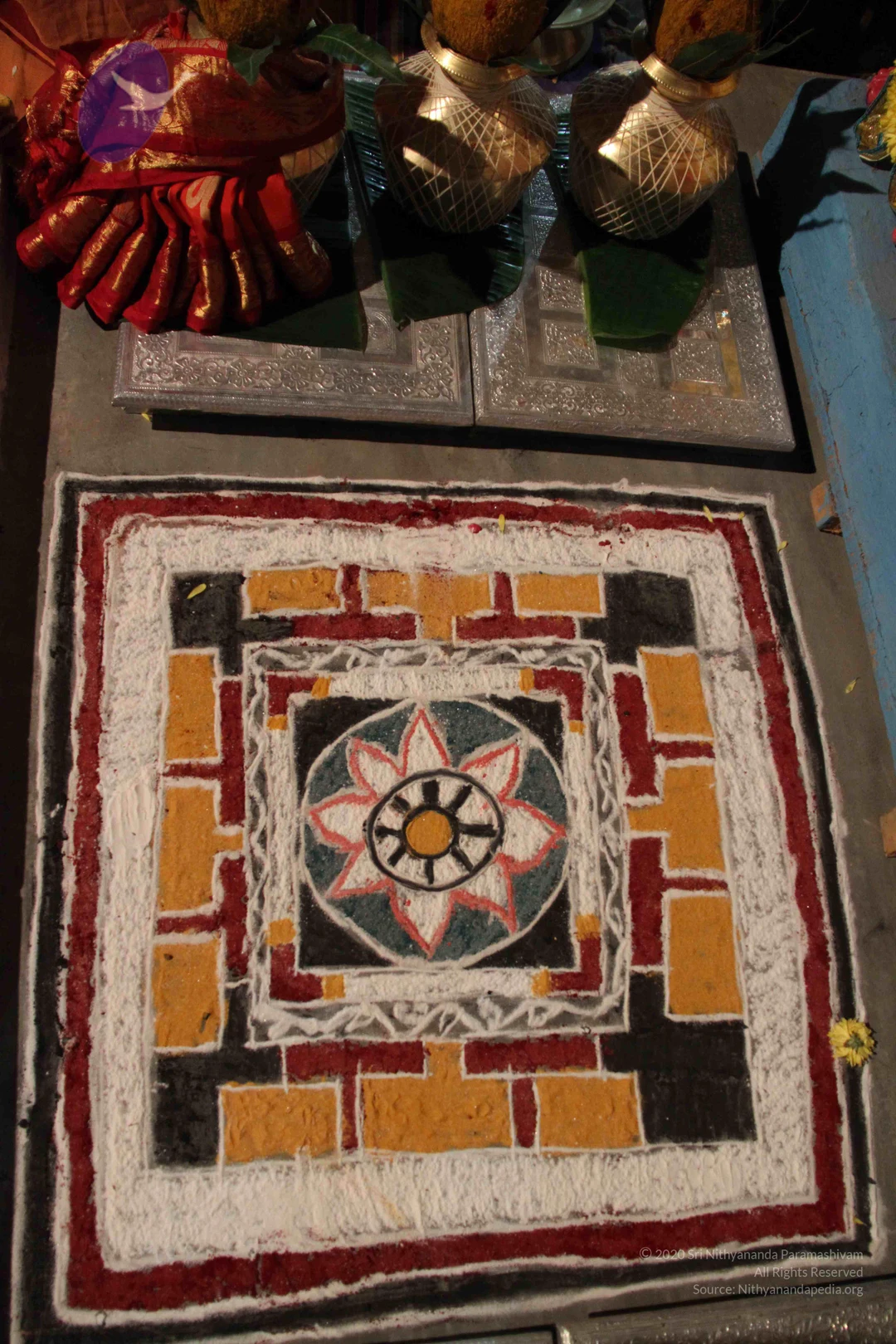
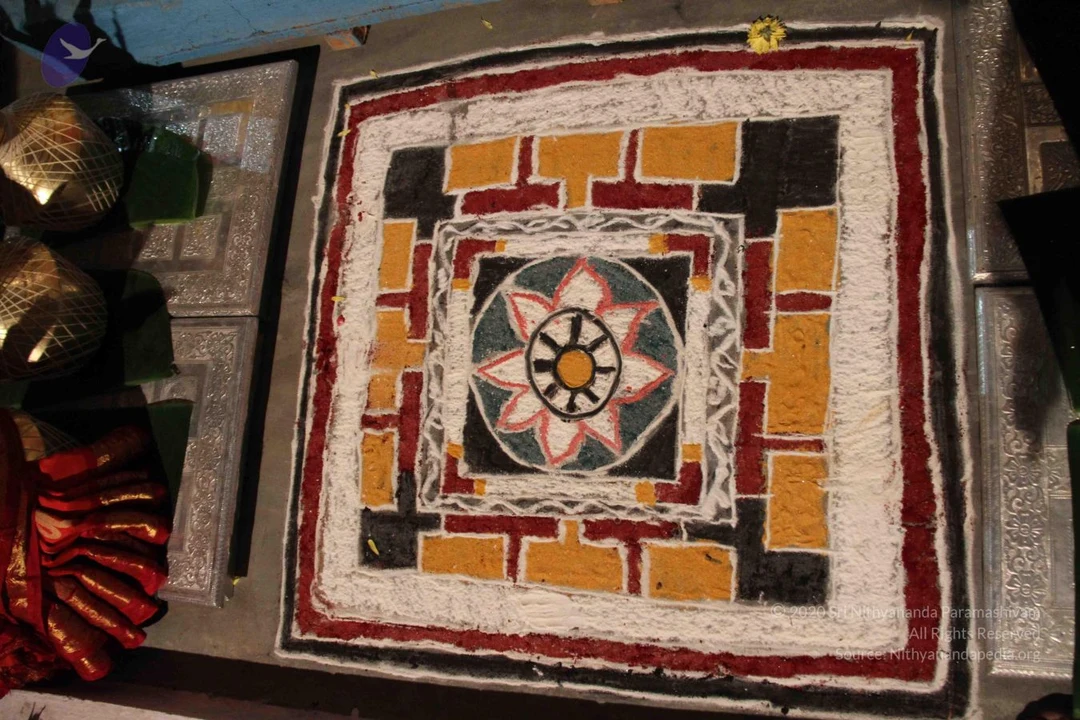
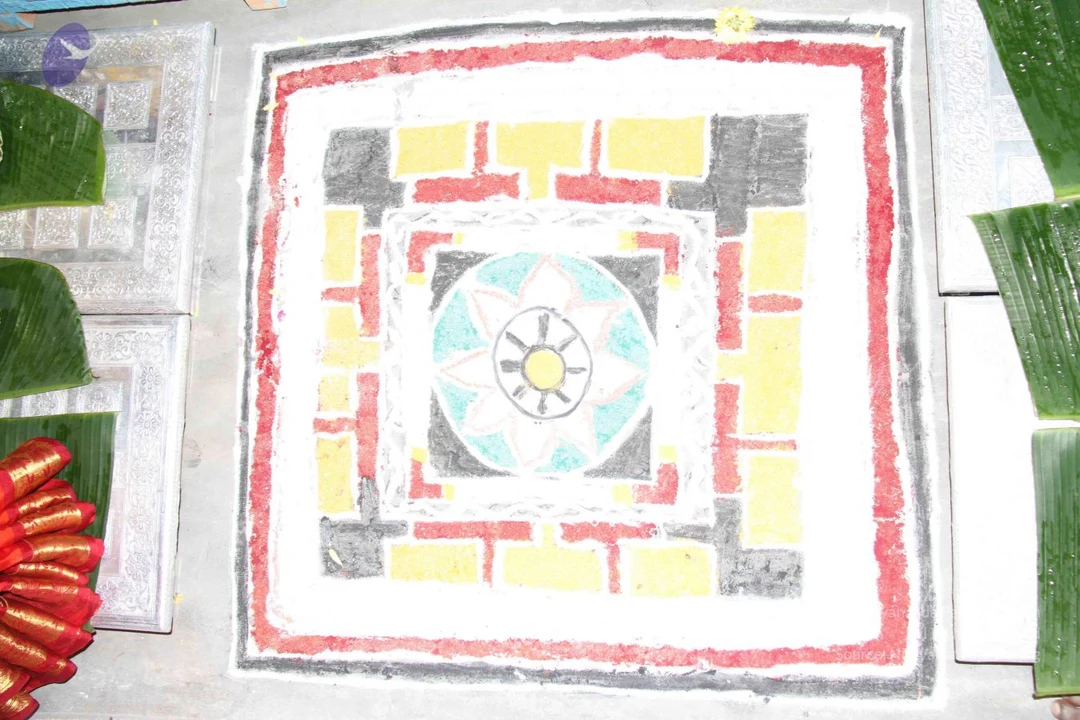
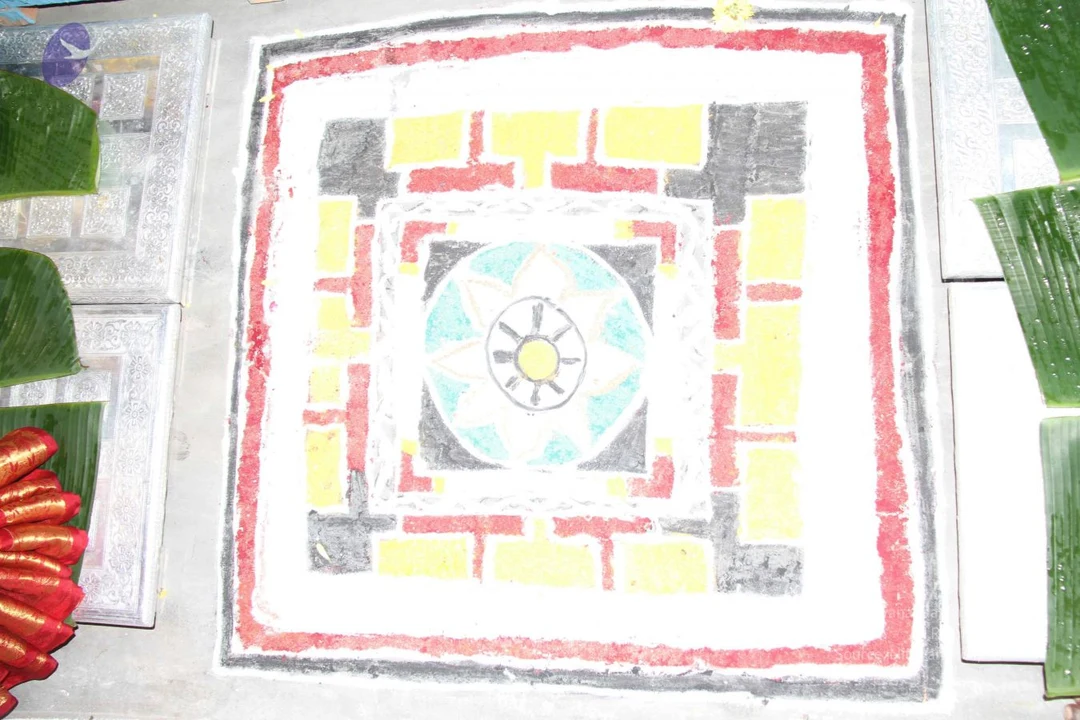
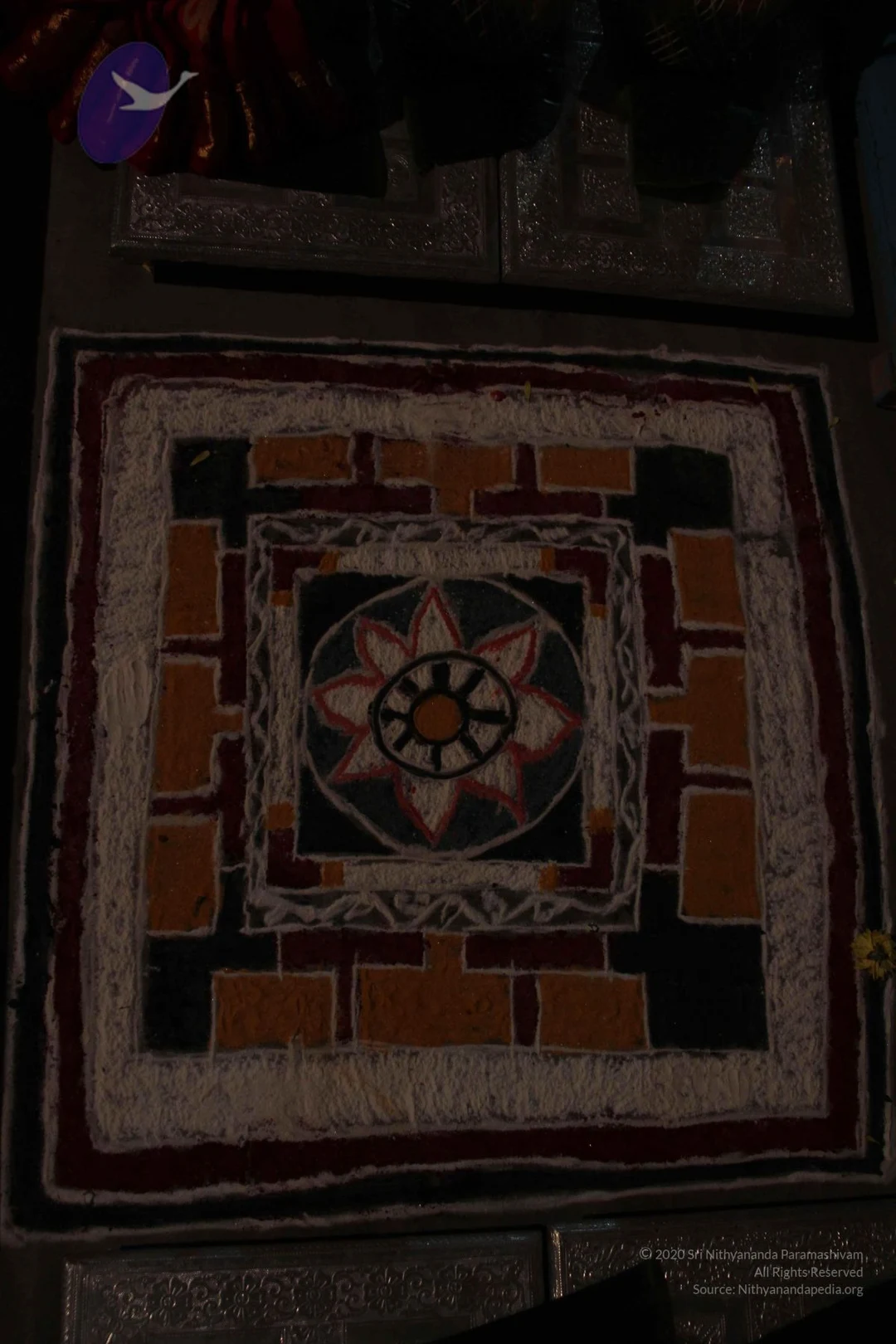
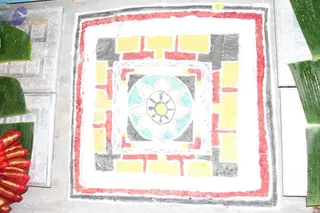
A dark stone Shiva lingam dressed as a deity, wearing an orange cloth wrap draped over its top, a gold and diamond-set band with a red stone pendant, multiple strands of white pearls and rudraksha beads, and a large garland of red, orange and blue flowers. Behind it rises a golden five-hooded serpent hood with green stone drops hanging from the heads. A gilded kalasha-like base and a red and gold cloth surround it. No physical people are visible; this is a deity murti dressed for worship.A photograph taken from above of a floor mandala drawn with coloured powders in a square design. White, red, yellow, black and teal fill nested square bands, with a central lotus-petal circle enclosing a yellow centre and a wheel-like motif. Banana leaves frame the top corners and right edge, a red and gold garland lies at the lower left, and silver-patterned trays or plates sit on either side.A top-down view of a large square floor mandala drawn in coloured powders on a grey floor. A white field is framed by bands of red and black, with yellow and red rectangular blocks arranged in a grid around a central medallion. The medallion has a turquoise and white lotus-petal design enclosing a black-outlined wheel with a yellow centre and spokes. Banana leaves lie at the left and right edges, with a stack of red and gold cloth at lower left and carved silver-coloured panels at the corners. No people are visible.A photograph from above of a large square sand or powder mandala drawn on a dark floor. Concentric bands of white, maroon, black and orange form a geometric frame of rectangular blocks. At the centre sits a white eight-petalled lotst outlined in red, enclosing a black wheel with spokes and an orange hub. Silver-embossed metal panels border the top and bottom of the frame, and a red cloth is visible at the upper left. No people are visible.A very dark night photograph with mostly black frame. On the right edge, a partially lit figure's shadowed profile and face is faintly visible, with a small warm glow of light on the cheek or chin area. Faint streaks of distant city or street lights run horizontally across the upper portion, blurred. The lower frame is entirely black. A small blue-and-white bird logo sits in the upper-left corner, and a copyright notice is printed in the lower right.Close-up photograph of large pink lotus blossoms with layered, velvety petals in deep rose and magenta tones, arranged on a metal tray with ornate engraved rim visible at the top. Shadowy warm background. No people or a person candidate visible; the image shows only flowers.
Bhagavat-Gita

1 photoSource gallery
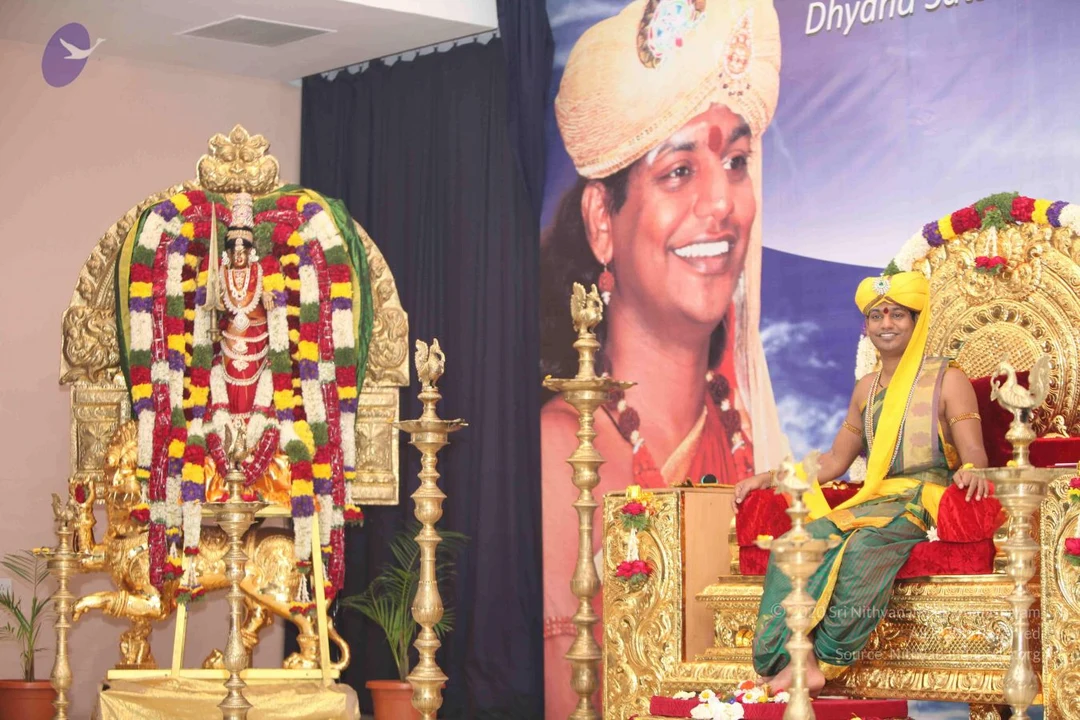
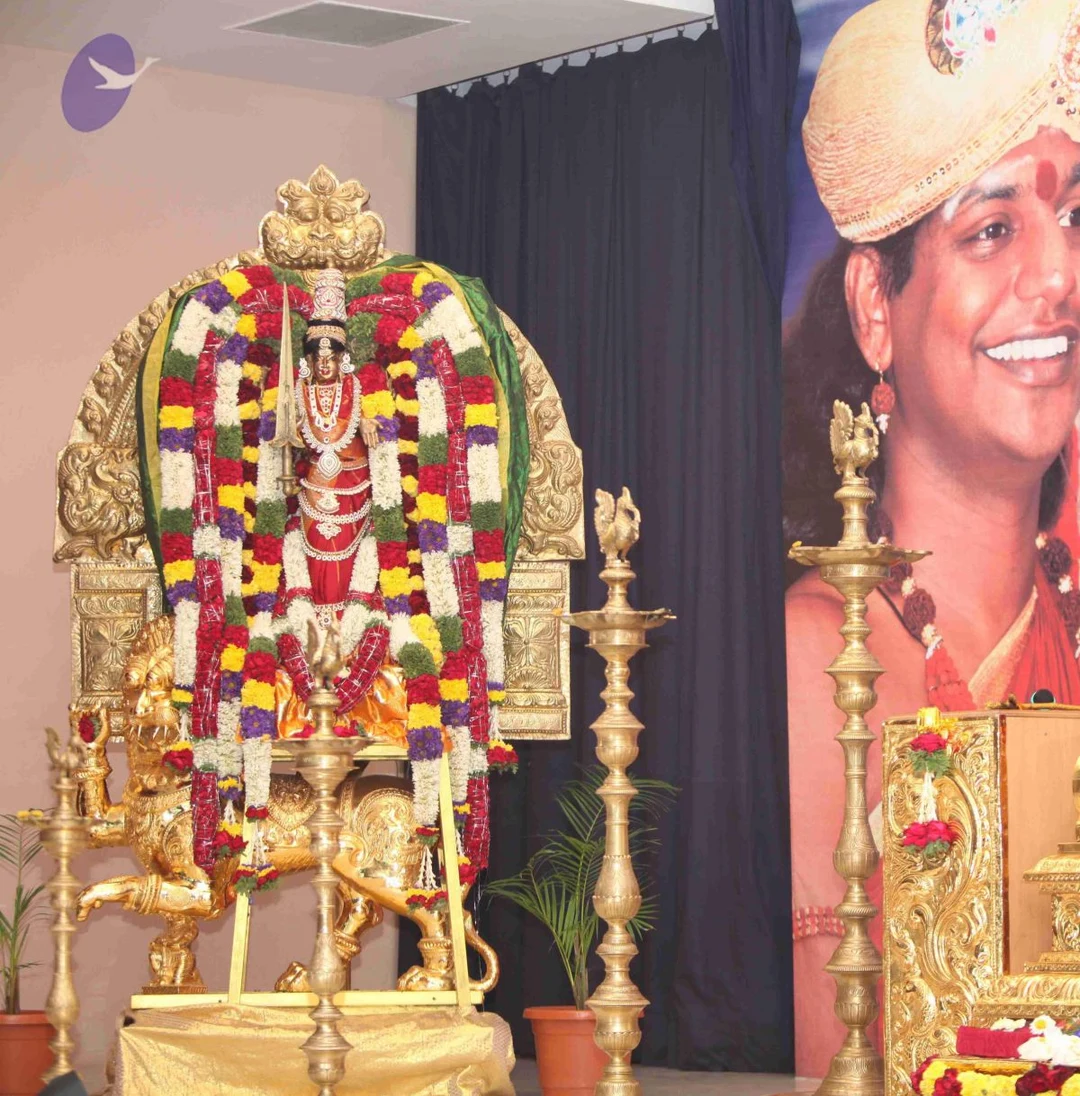
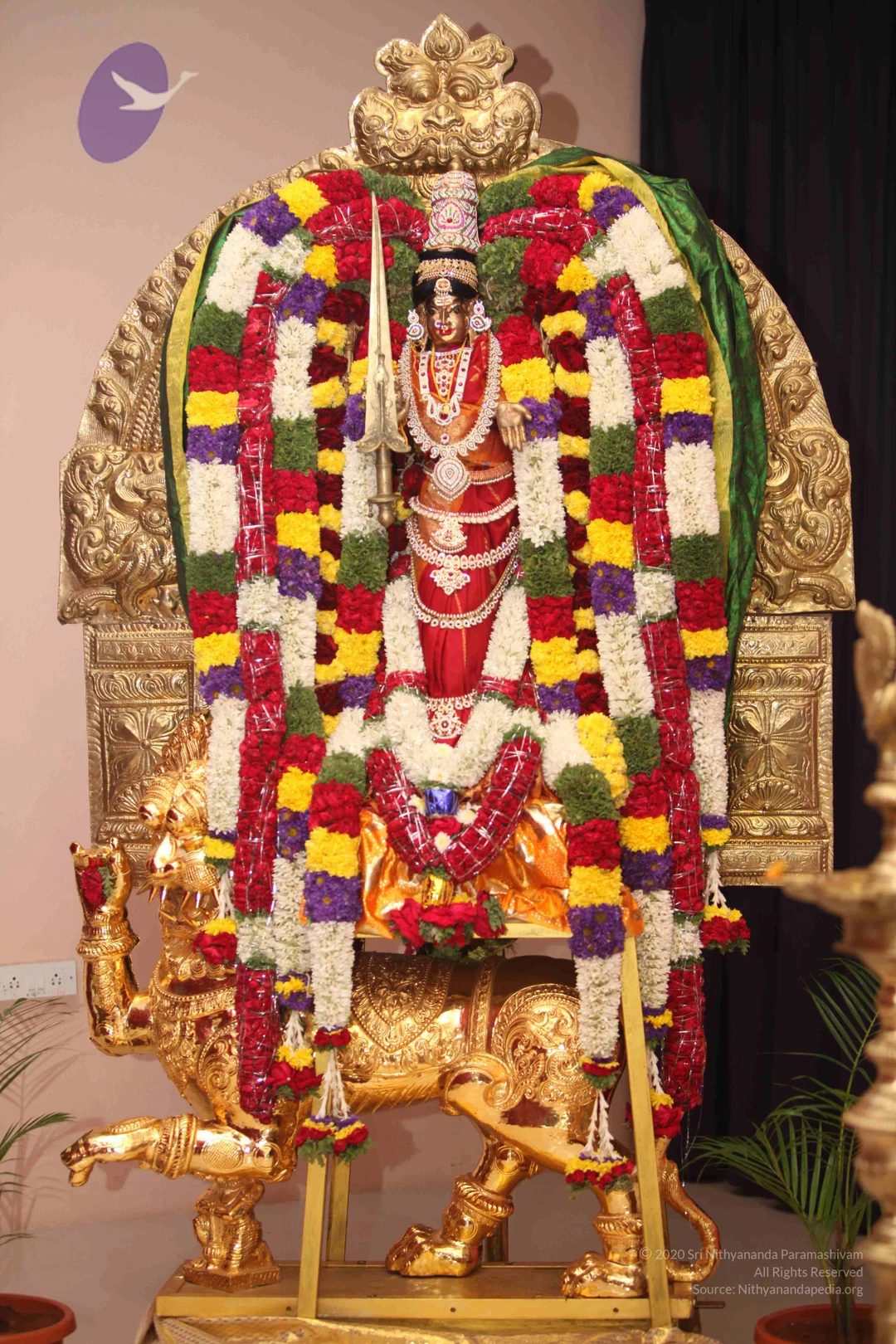
A photograph of a decorated deity murti standing on a gold-toned pedestal beneath an ornate gilded arch. The murti wears a red and gold garment, a crown, a large silver necklace and a long spear, and is draped in a dense garland of white, red, yellow, purple and green flowers. Golden lion-shaped supports flank the murti. Tall brass oil lamps with bird-finial tops stand in front, with potted plants nearby. To the right, a large printed portrait shows a smiling man in a cream turban with a red tilak, wearing a red garment and a flower garland, beside a gilded lectern decorated with red flowers. The printed portrait is a depiction on a banner, not a physical person in the scene.