Skip to content
Thursday

29 September 2011

THE SUPREME PONTIFF OF HINDUISM HDH BHAGAVAN SRI NITHYANANDA PARAMASHIVAM

Dated photos
39
Source pages
1
Media
2
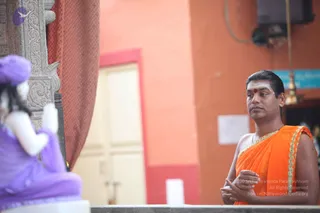
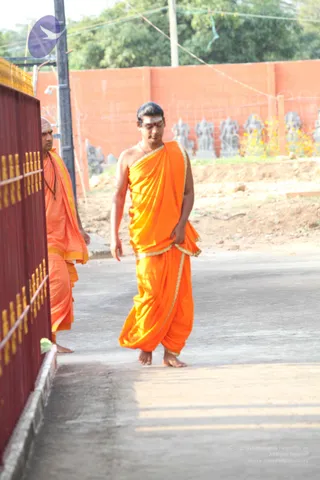
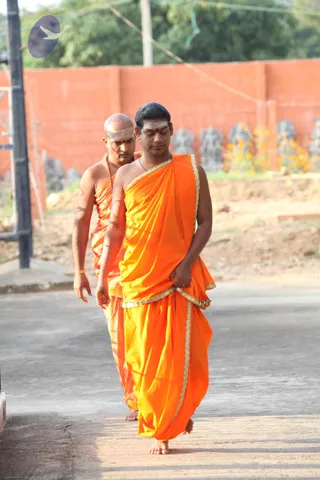
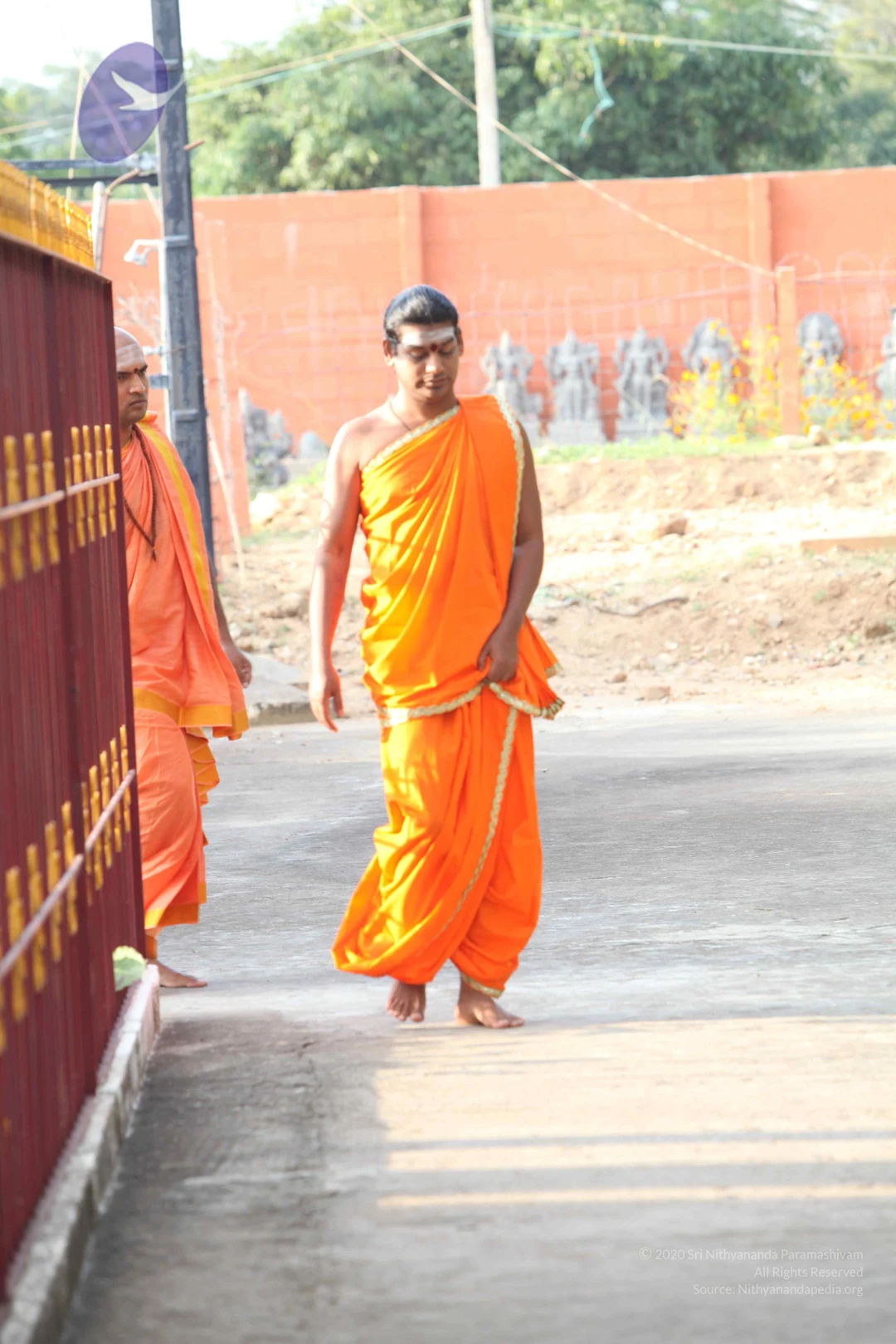
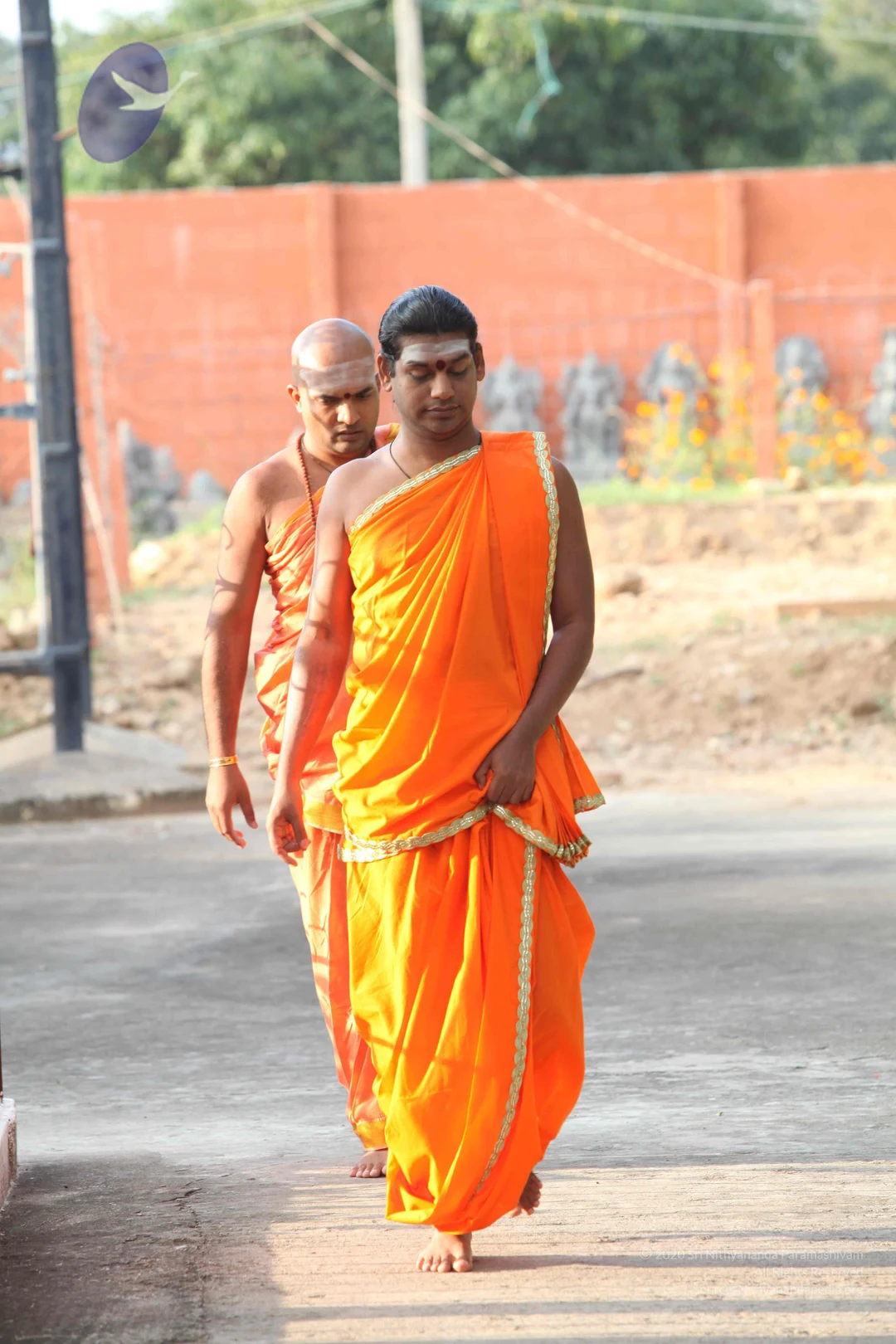
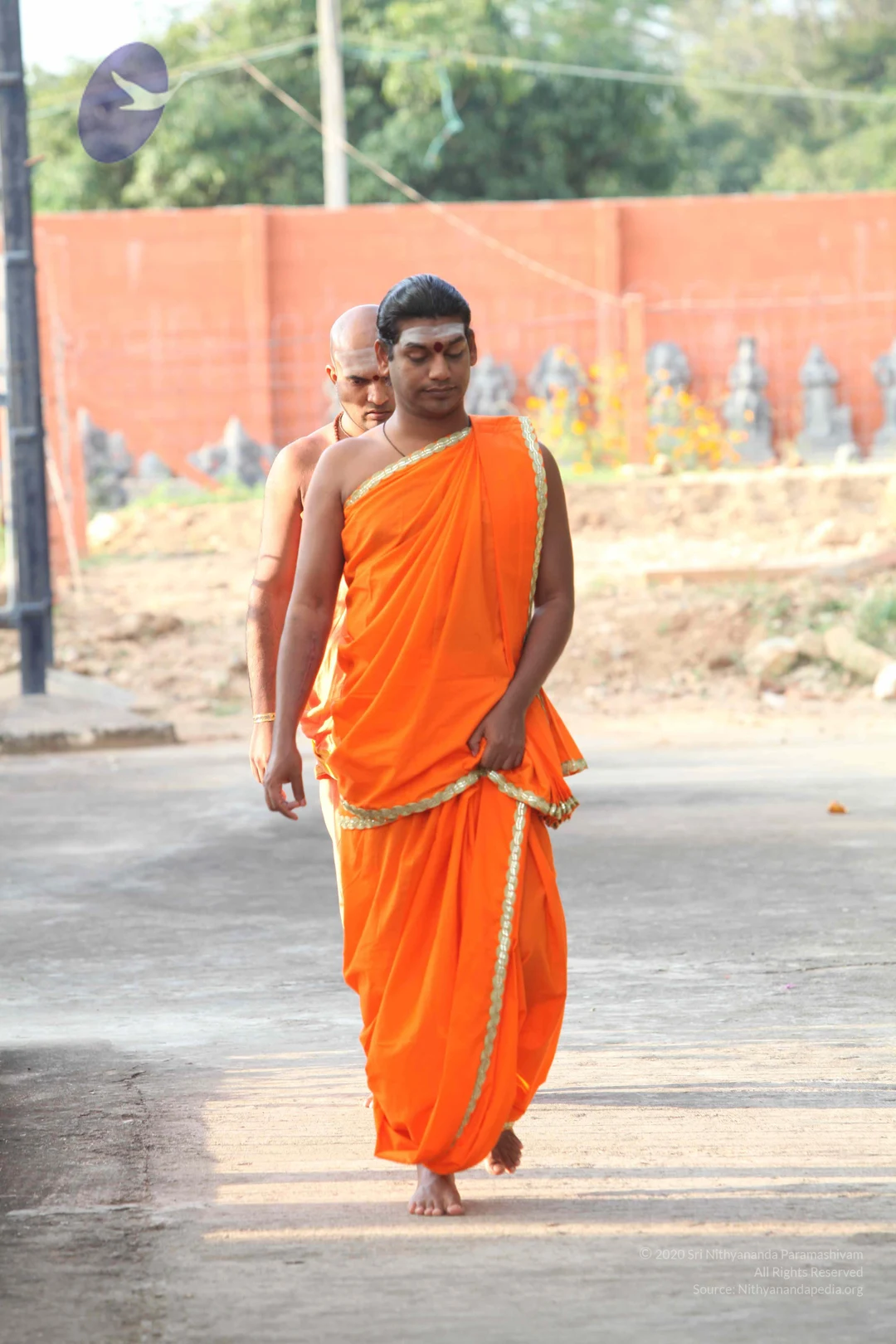
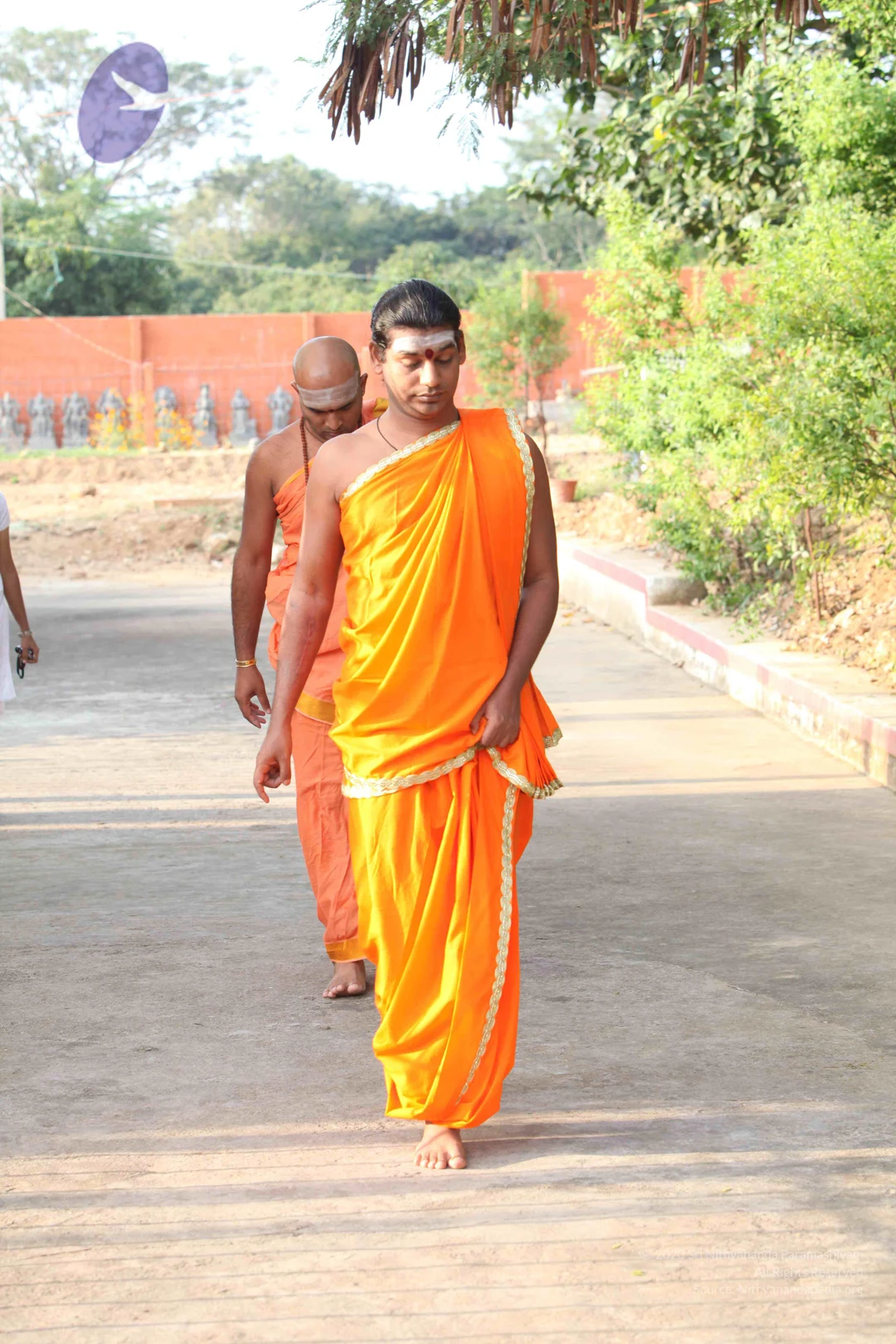
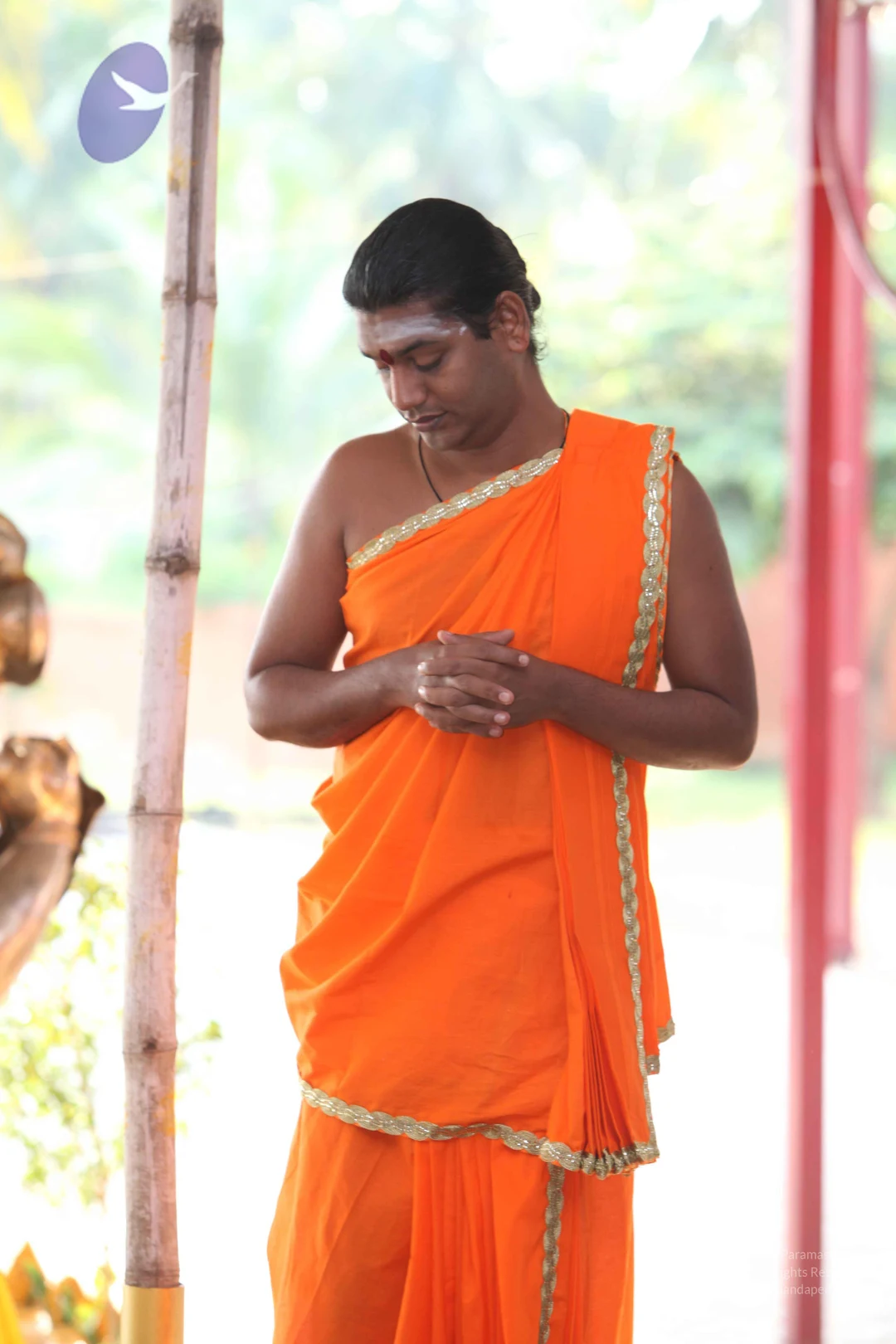
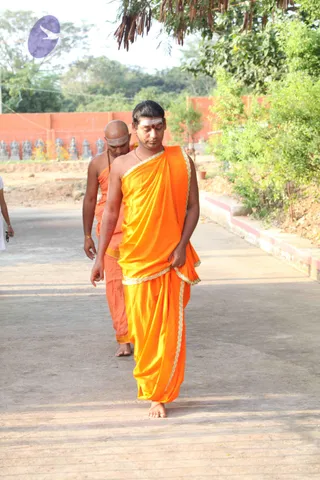
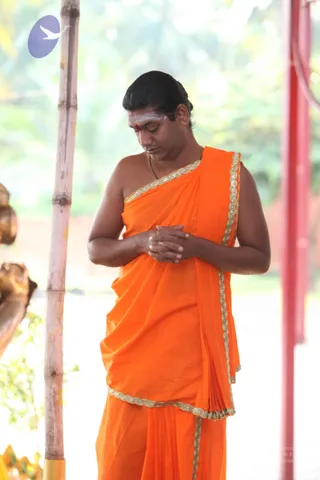
A photograph of a standing man in an orange saffron garment with gold-bordered edges, bare-shouldered, with a red bindi and white vertical tilak on his forehead and short dark hair. His hands are joined together at chest level in front of him as he looks to his right. In the left foreground, a white statue of a seated deity wears a purple cloth and has its palms pressed together. Behind him are orange-painted walls, a cream door, a red-curtained panel, a hanging lamp and a small framed notice. The man is a devotee in ritual dress, and his appearance does not clearly match the page's claim, so his identity is uncertain.Outdoor photograph on a paved path beside a red metal gate. A young man in saffron-orange draped robes with gold border walks barefoot, with a white and red tilak on his forehead and a thin necklace visible. Behind him, a second man in orange robes and a shaved head stands near the gate. An orange brick wall with carved stone deity figures and yellow flowers lies beyond, with trees in the background.Photograph of two barefoot men in saffron-orange robes walking along a paved road in front of an orange brick wall with stone sculptures and yellow flowers behind it. The man in front, wearing an orange dhoti and shawl with gold-edged borders, has long swept-back hair, a white vertical tilak with a red bindi, and a small necklace; he looks downward and holds the fold of his garment. The man behind, bald with a white tilak, wears a matching orange wrap and a red-brown rudraksha-style mala, and walks a step behind him. A utility pole and trees appear in the background.

September 29 2011

Original wiki page
Contents

Title:

THE SUPREME PONTIFF OF HINDUISM HDH BHAGAVAN SRI NITHYANANDA PARAMASHIVAM

Link to Video:

VideoAudio

Transcript:

Bhagavad Gita

Don’t Believe, Just Experience!

DATE: Day 36: Sep 29th 2011

What is your belief? Belief is nothing but the words and ideas and truths put inside you. Whom you believe will not harm you. When some ideas, beliefs have been put inside you by your parents or friends or relatives whom you trust will not think bad for you, will do only good for you, those ideas are only becoming belief in you. That is why friendliness plays such a major component in teaching. But unfortunately after certain level friendliness cannot help in teaching. Please understand to make you comfortable in the same spectrum you are living is different, raising you completely to the different spectrum is different.

When you need to be risen, when you need to be raised completely to the different spectrum, the ideas which got into your system which was given to you by the deep friendliness by your friends or relatives or family will not be sufficient. Understand because they themselves, they may not think bad for you but what they think as a good itself has its own limitations. They cannot think even in the line of good, auspiciousness, right, beyond certain level.

If a beggar thinks all good should happen to you, what he will imagine? You should have enough food and a house to rest, nobody should ask you work. For a beggar this is ultimate, over! He is not going to think let you become enlightened. You go to a temple, you come out and on the way there is a beggar, you give him some 100 Rupees and suddenly he shocked by 100 Rupee because nobody gives him more than 1 Rupee and he sees 100 Rupee and this guy immediately want to give his gratitude to you. He blesses, let you have all good things. So what do you think he will be visualizing in the mind? Plates and plates of food and a comfortable house, freedom so that nobody will ask you to work; that’s all he can think. Understand he cannot visualize enlightenment and tell you “let you have enlightenment”, no. That is not going to happen. So the very thinking….. you see it is not that beggar wants any bad for you. He wants only good, even that he can imagine or think only to a certain level.

All your beliefs, ideas are nothing but people who think good for you but who are good for nothing. They think good for you but they them self are good for nothing. They are good for only to the level an ordinary logic can function. If he is little intelligent man he will say ‘all right not only food and the house, let him have health also, let him have little bank balance also, let him have good wife’. That much he can think. Not further. The beliefs, ideas you think good for you put by the people who are good for nothing is only now fighting when the Master tries to teach you something.

It is the remains of your parents and family and society and school which is sitting in you, is fighting with the reminder by existence. Master is a reminder to you by Existence. Come back home. For a long time you are out. Get back. He is a reminder to you from the Existence. Unfortunately remains of the society in you, fights the reminder. Here reminder comes down to the level of the remains of the society in you. Bhagawan is not even saying I wanted to impose something newly on you; let me come down what you feel as a good, what you feel as a right, what you believe, what has got into your system by the people whom you don’t suspect.

When your friend says ‘aey study well, get a job’, naturally he is not thinking, bad for you. But the fool can think only that much. Many time the ideas put inside your head by the people who don’t think bad for you does not mean always those ideas are good for you. Bhagawan says, all right whatever is said and done, all those ideas from the friends, family society has gone into your system and became a bio-memory, like a calculus, it has settled in your system. Now it may be difficult for you to clear that. Let me come down to your level. Whatever ideas you already believe which is put inside you by society, let me work with those ideas and liberate you, give you the truth.

Oh Bharatha! All life forms are un-manifest initially. Very beautifully Bhagawan is using the word ‘life forms’. He is not using life, ‘life forms’. All life forms are un-manifest initially. Then in the middle they become manifest and finally become imperceivable once again. Then what lamenting can be there regarding this? Understand all of you have assumed your body with certain purpose. Nobody can destroy that purpose. Even if they try to destroy this body, the purpose is so powerful, it will assume one more body and do the job. All you need to do is stop grieving. There is nothing to lament.

Photos Of The Day:

1--Temple
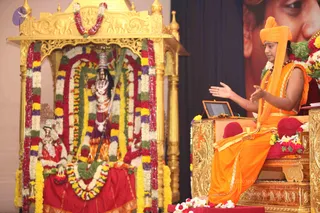
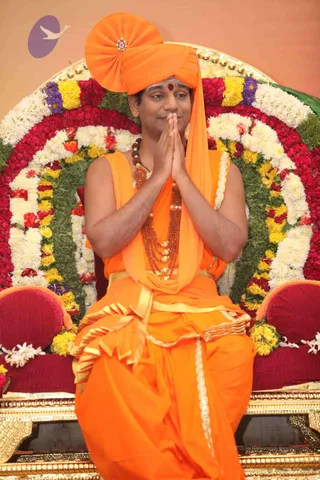
2--BG-Satsang
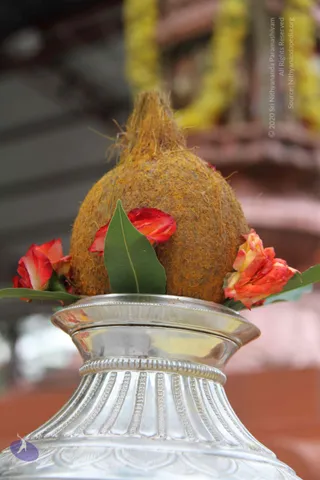
3-Dawajohana

Photos from this day

View all 39 photos

1--Temple

6 photosSource gallery
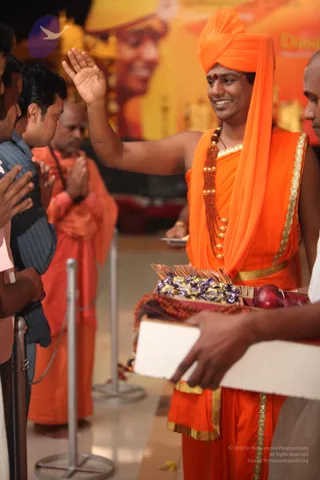
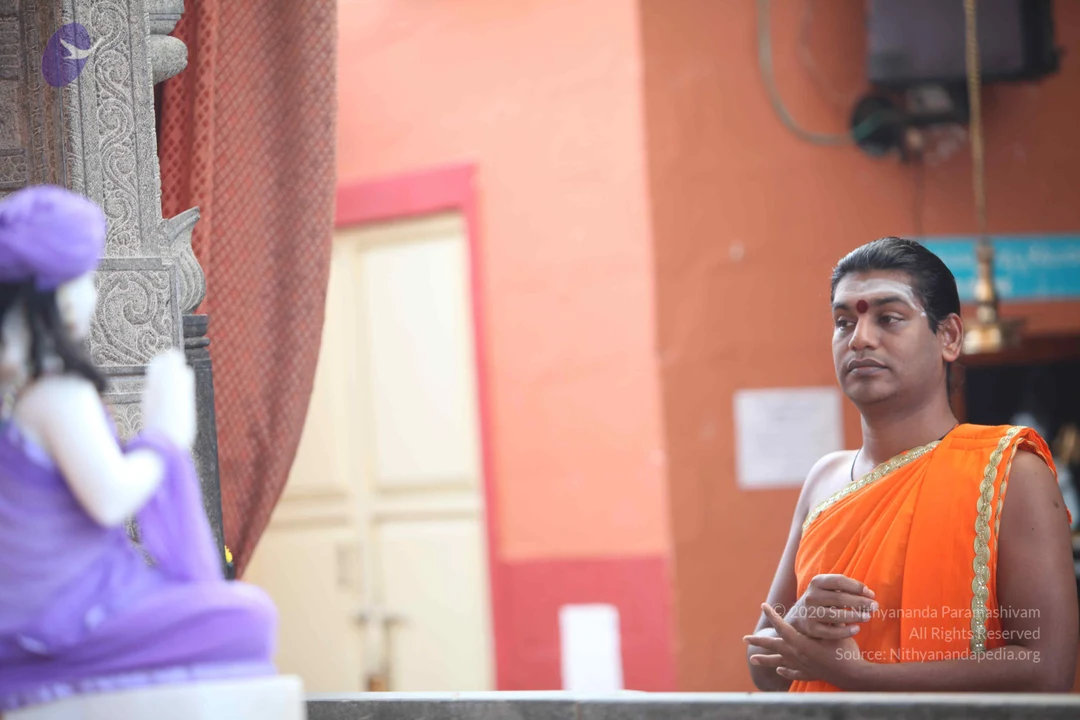
A photograph of a standing man in an orange saffron garment with gold-bordered edges, bare-shouldered, with a red bindi and white vertical tilak on his forehead and short dark hair. His hands are joined together at chest level in front of him as he looks to his right. In the left foreground, a white statue of a seated deity wears a purple cloth and has its palms pressed together. Behind him are orange-painted walls, a cream door, a red-curtained panel, a hanging lamp and a small framed notice. The man is a devotee in ritual dress, and his appearance does not clearly match the page's claim, so his identity is uncertain.Outdoor photograph on a paved path beside a red metal gate. A young man in saffron-orange draped robes with gold border walks barefoot, with a white and red tilak on his forehead and a thin necklace visible. Behind him, a second man in orange robes and a shaved head stands near the gate. An orange brick wall with carved stone deity figures and yellow flowers lies beyond, with trees in the background.Photograph of two barefoot men in saffron-orange robes walking along a paved road in front of an orange brick wall with stone sculptures and yellow flowers behind it. The man in front, wearing an orange dhoti and shawl with gold-edged borders, has long swept-back hair, a white vertical tilak with a red bindi, and a small necklace; he looks downward and holds the fold of his garment. The man behind, bald with a white tilak, wears a matching orange wrap and a red-brown rudraksha-style mala, and walks a step behind him. A utility pole and trees appear in the background.A photograph of a young man in an orange saffron dhoti and shawl with gold border walking barefoot on a concrete road in front of an orange brick wall with stone carvings and yellow flowers. He has swept-back dark hair, a white vertical tilak with a red dot on his forehead, and his eyes are lowered; his left hand holds the edge of his dhoti. Behind him, a shaved-headed, bare-chested man in a white dhoti with a red forehead mark follows. Trees and a utility pole are in the background.Outdoor photograph of a man in saffron-orange silk garment with gold border draped as a sannyasi's robe, walking barefoot along a concrete path. He has swept-back dark hair, white sandalwood tilak with a red bindi on his forehead, and a thin black cord around his neck, eyes lowered. Behind him, a shaved-headed attendant in orange cloth with a rudraksha mala and white forehead marks follows. Background shows an orange brick wall with stone carvings, green shrubs and trees.A standing man in an orange saffron garment with gold-bordered trim, wrapped over one shoulder, stands with his palms pressed together at his chest and his eyes lowered in devotion. He wears a white vertical forehead mark with a red dot and a black thread necklace. Behind him are a wooden bamboo pole, red pillars and a blurred green outdoor setting with a golden ritual object at the left edge.

2--BG-Satsang

11 photosSource gallery
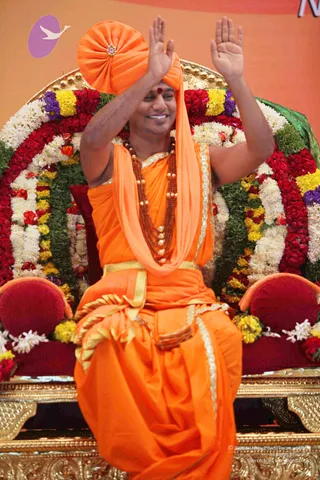
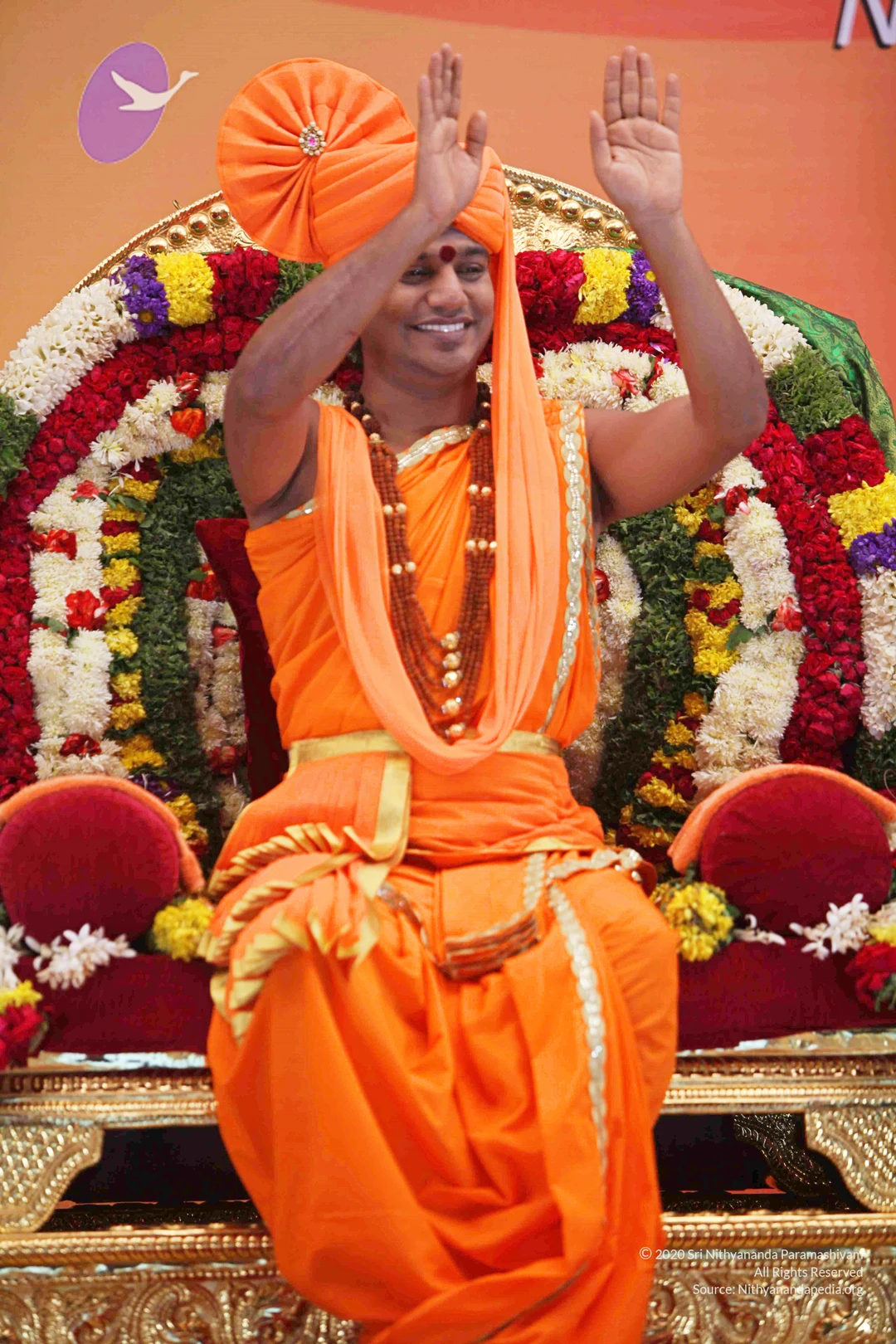
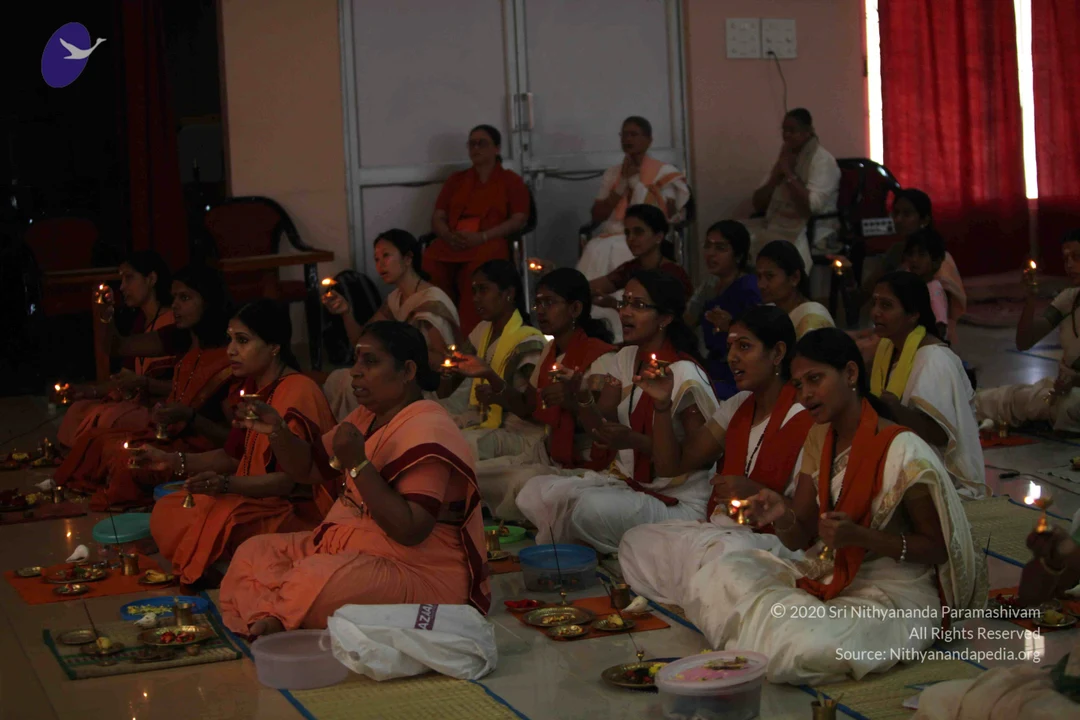
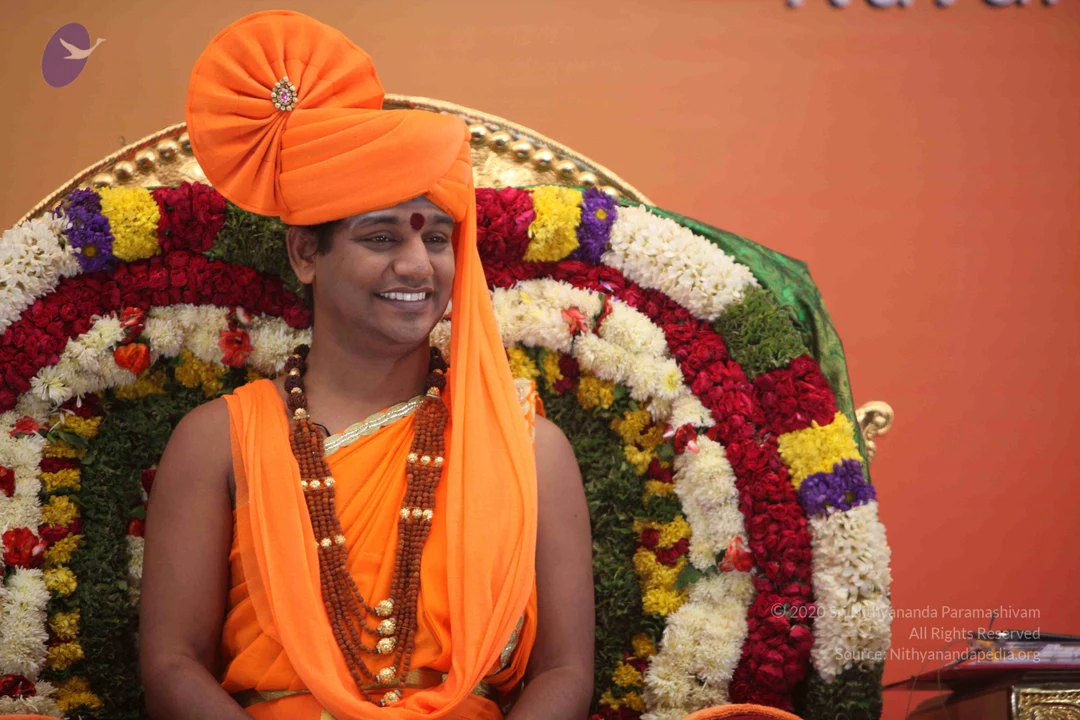
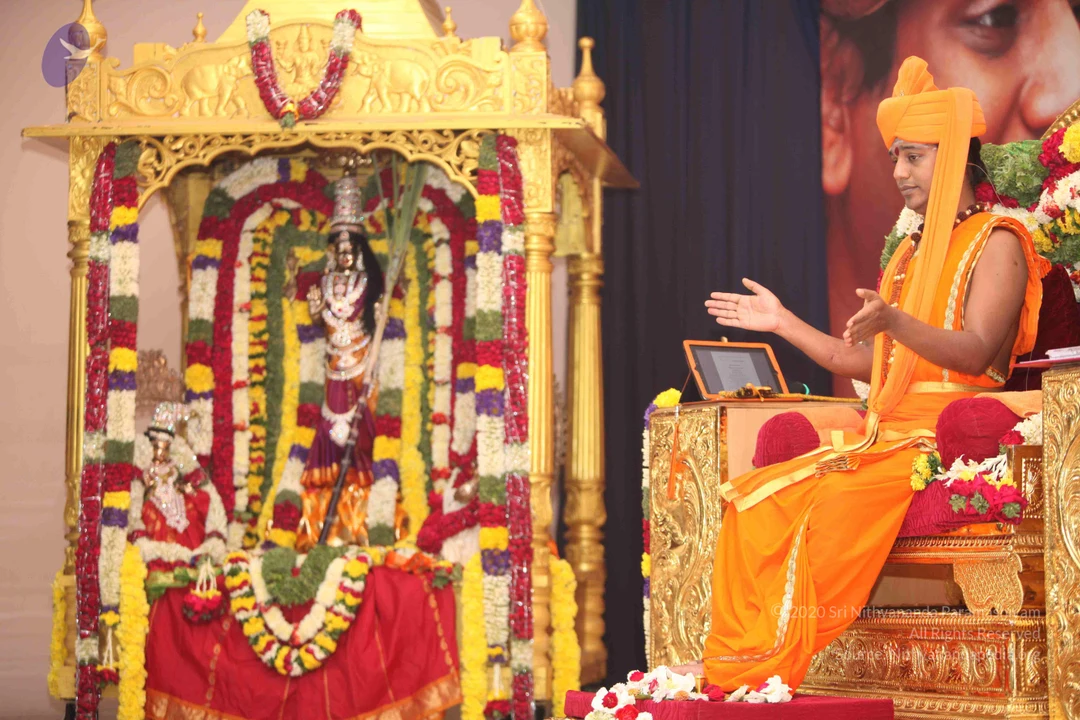
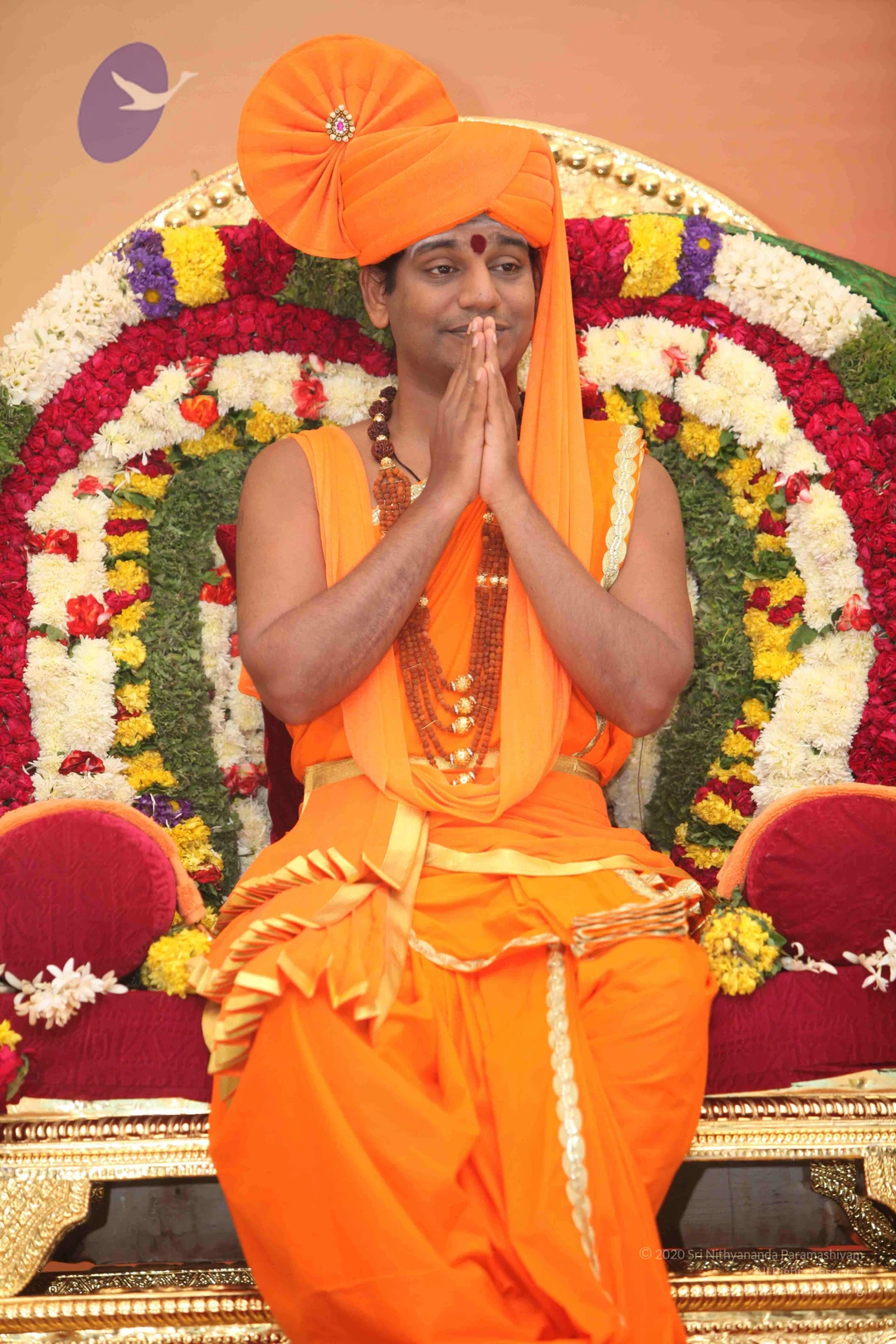
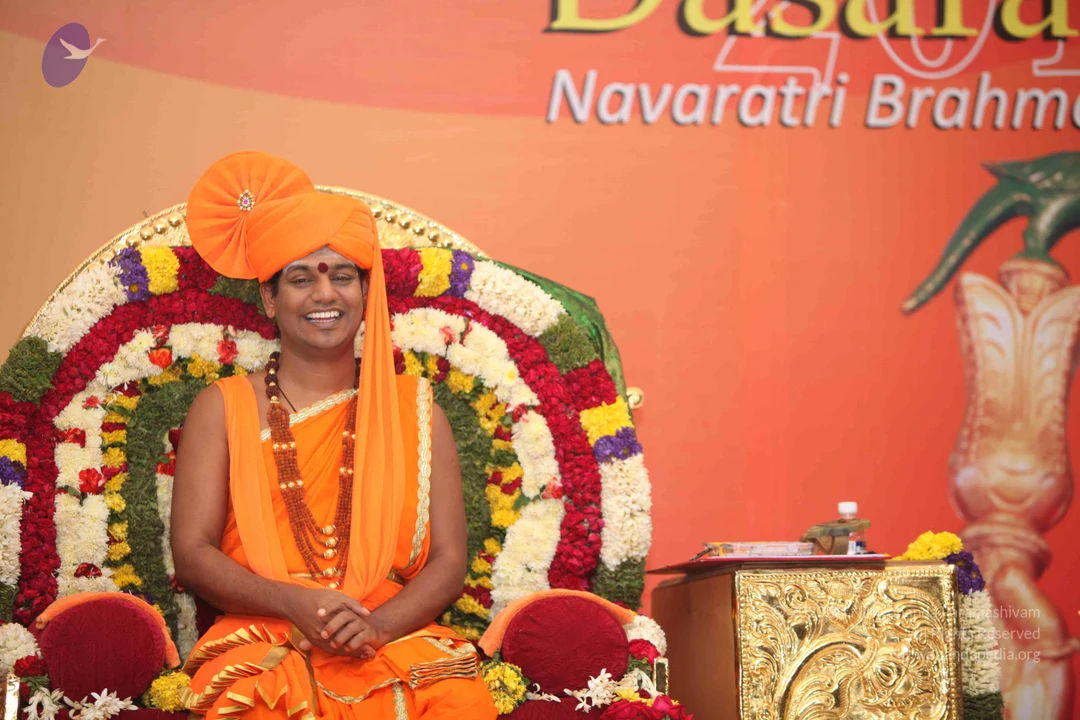
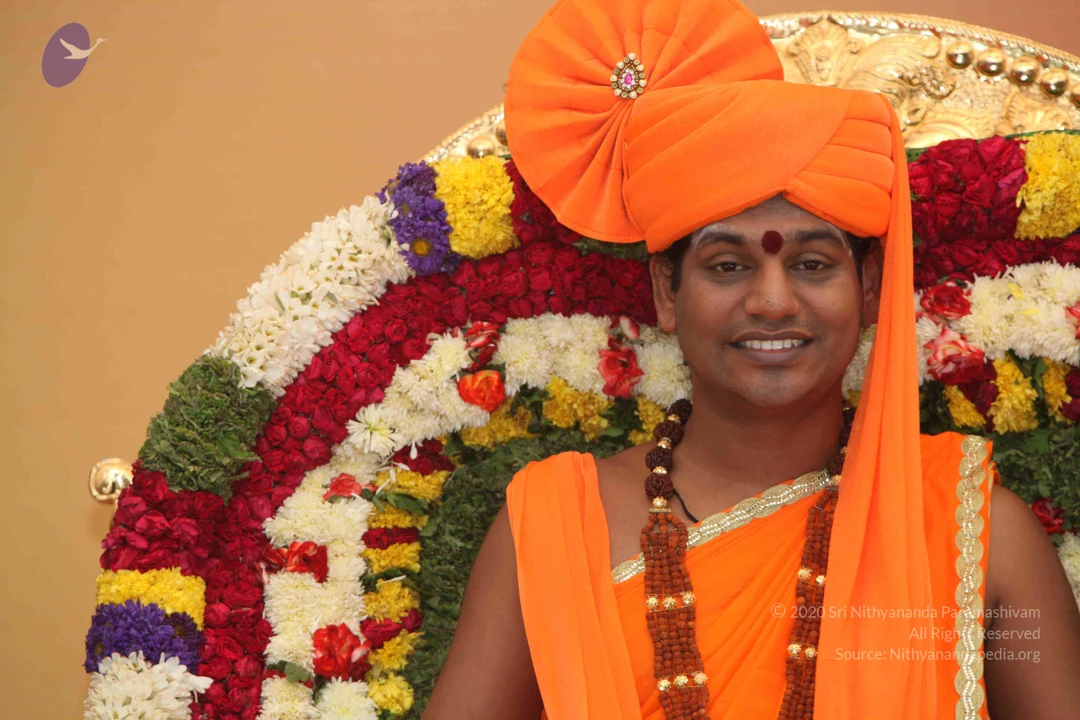
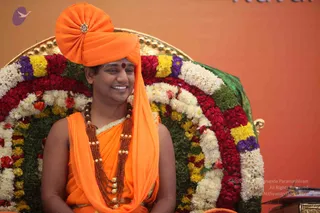
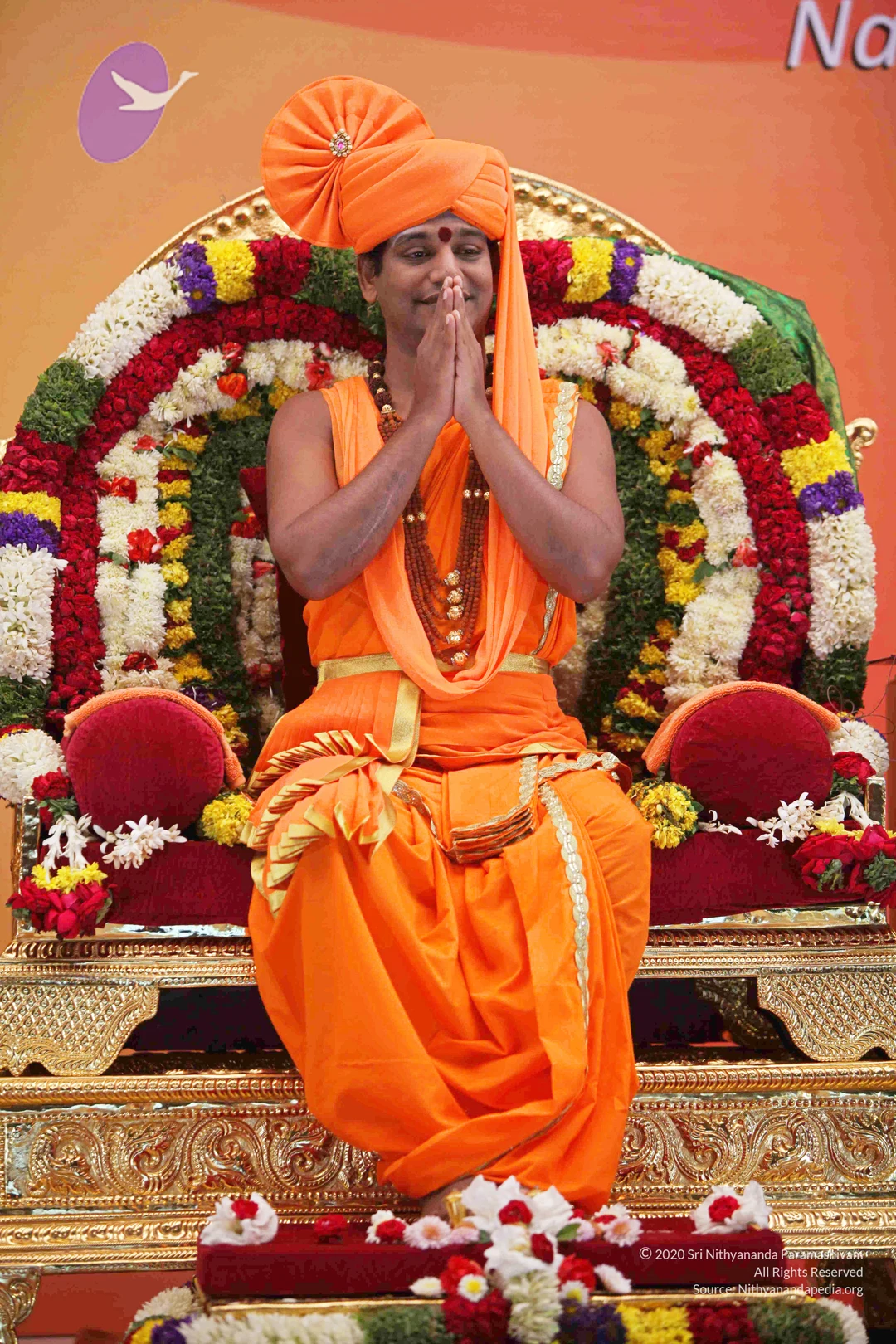
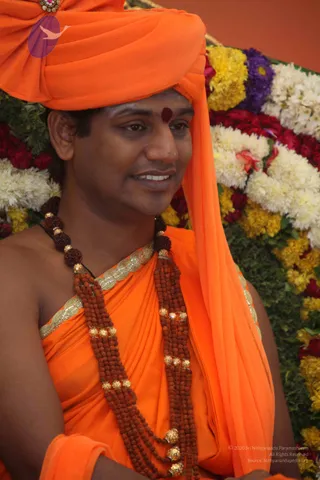
A photograph of a man seated on an ornate gold throne with a red velvet cushion, decorated with a horseshoe-shaped arch of red, white, yellow and purple flower garlands. He wears an orange turban with a jewelled brooch, an orange sleeveless robe with gold border and gold waist sash, and a long orange shawl draped over his shoulder. He has a red bindi on his forehead and wears layered rudraksha malas with gold beads. His palms are pressed together in namaste and he smiles with eyes lowered. Flowers rest on the throne's footrest and an orange backdrop with a purple bird logo and partial lettering stands behind him. Appearance-based label: a person, seated in person.A seated man in orange robes and an orange turban with a jeweled brooch raises both palms in a blessing gesture while smiling. He wears a red tilak on his forehead, layered rudraksha malas, and a gold-edged orange shawl over his shoulder. He sits on a gold-trimmed throne with red cushions, framed by a dense arch of red roses, white jasmine and yellow marigold garlands.A photograph of a seated group of women performing an aarti or lamp offering in an indoor hall. In the foreground, women in orange and saffron saris and in white and red sarees hold small oil lamps with lit flames, with brass plates, bowls and offering trays spread on mats before them. Behind them, a few women sit in chairs in front of white doors and red curtains, some in orange robes and some in white, with hands folded in prayer. Plain pastel walls and a gap in the mats suggest a satsang gathering.A smiling man seated on an ornate gold throne decorated with a large arch of red roses, white jasmine, yellow marigolds, purple flowers and green leaves. He wears an orange turban fastened with a jewelled brooch, an orange shawl over a saffron garment with gold trim, and long rudraksha mala necklaces, with a red bindi on his forehead. The background is orange. A probable Swamiji is seated in a ceremonial setting, with cues of an orange turban, saffron robes and rudraksha malas.A seated figure in an orange saffron robe and orange turban gestures with both open hands while speaking at a satsang discourse. He sits on an ornate gold-carved throne-style seat with red cushions, with a small open tablet on the seat beside him, and flower petals scattered at the base. Behind him a large portrait backdrop shows a close-up of a face. To the left, a golden canopied shrine is decorated with multicoloured garlands of red, yellow, green and white flowers, housing a deity murti with a trident-like staff and crown, flanked by a smaller figure in red garments. Ornate golden pillars frame the shrine.A man seated on a red-cushioned golden throne decorated with a large arch of white, yellow and red flower garlands. He wears an orange turban with a jeweled brooch and a red bindi, an orange sleeveless top with gold trim, an orange dhoti-style lower garment with gold borders, and multiple strands of rudraksha beads and gold-beaded malas. His hands are pressed together in anjali mudra and he smiles softly. Swamiji (probable): the orange turban, saffron clothing, rudraksha malas and ceremonial gold necklaces on a figure on a flower-decked throne fit the appearance cues.

3-Dawajohana

17 photosSource gallery
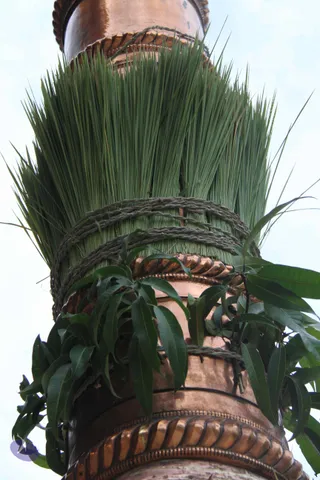
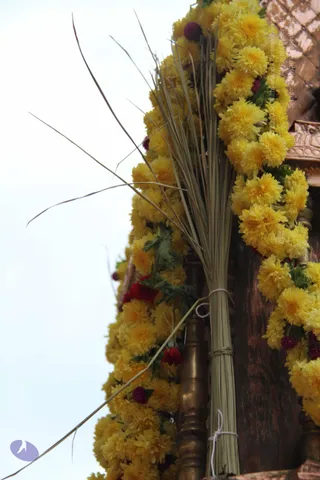
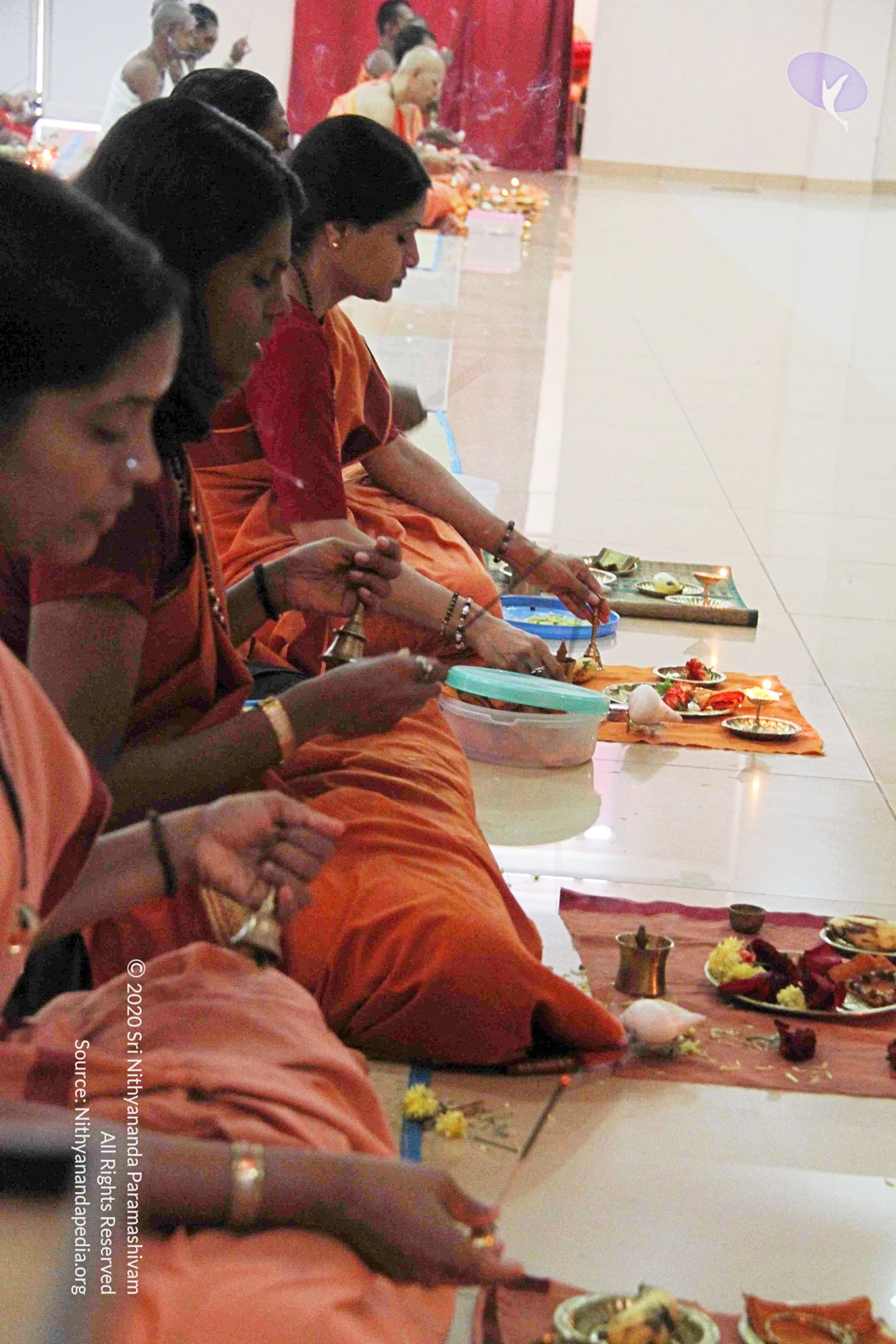
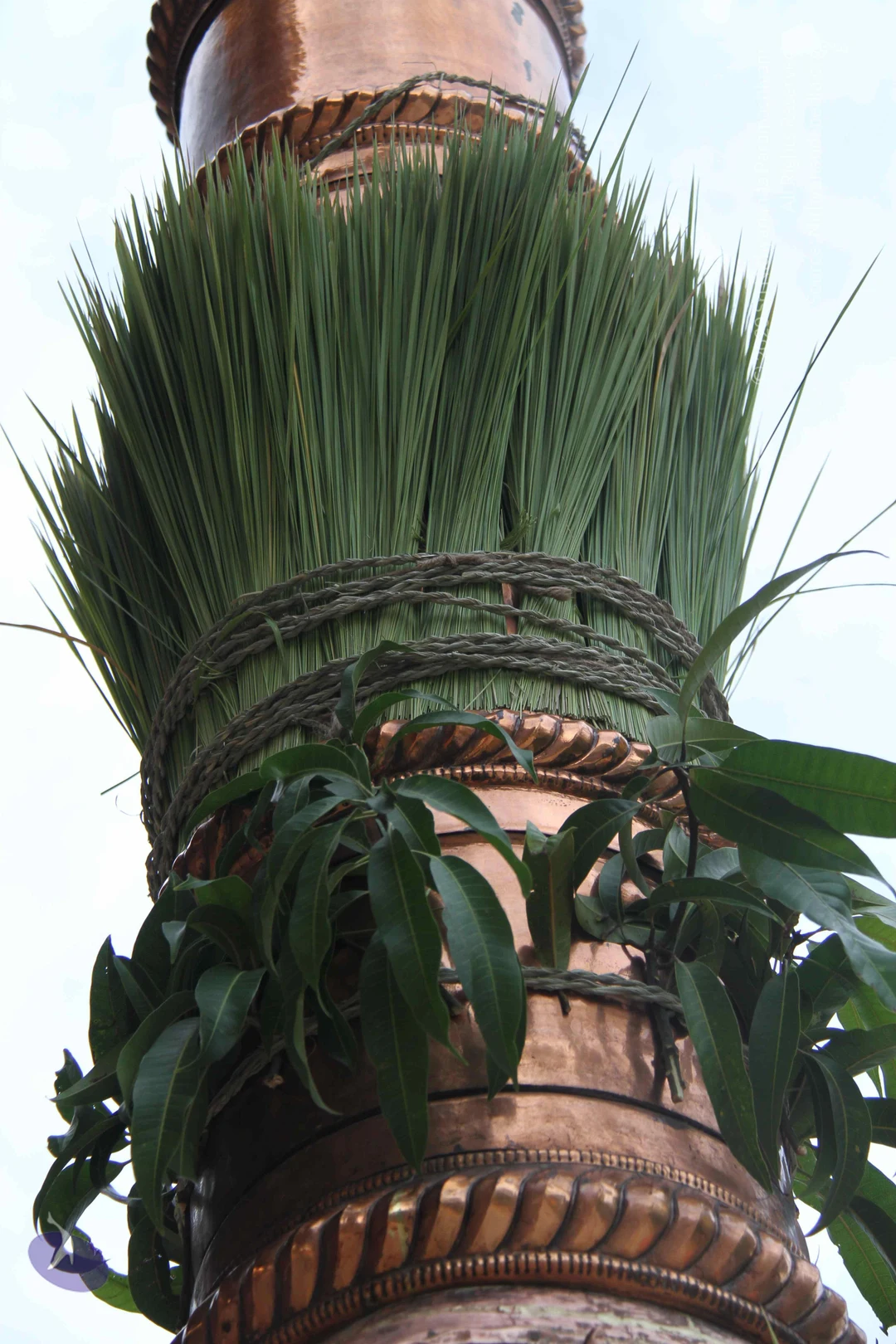
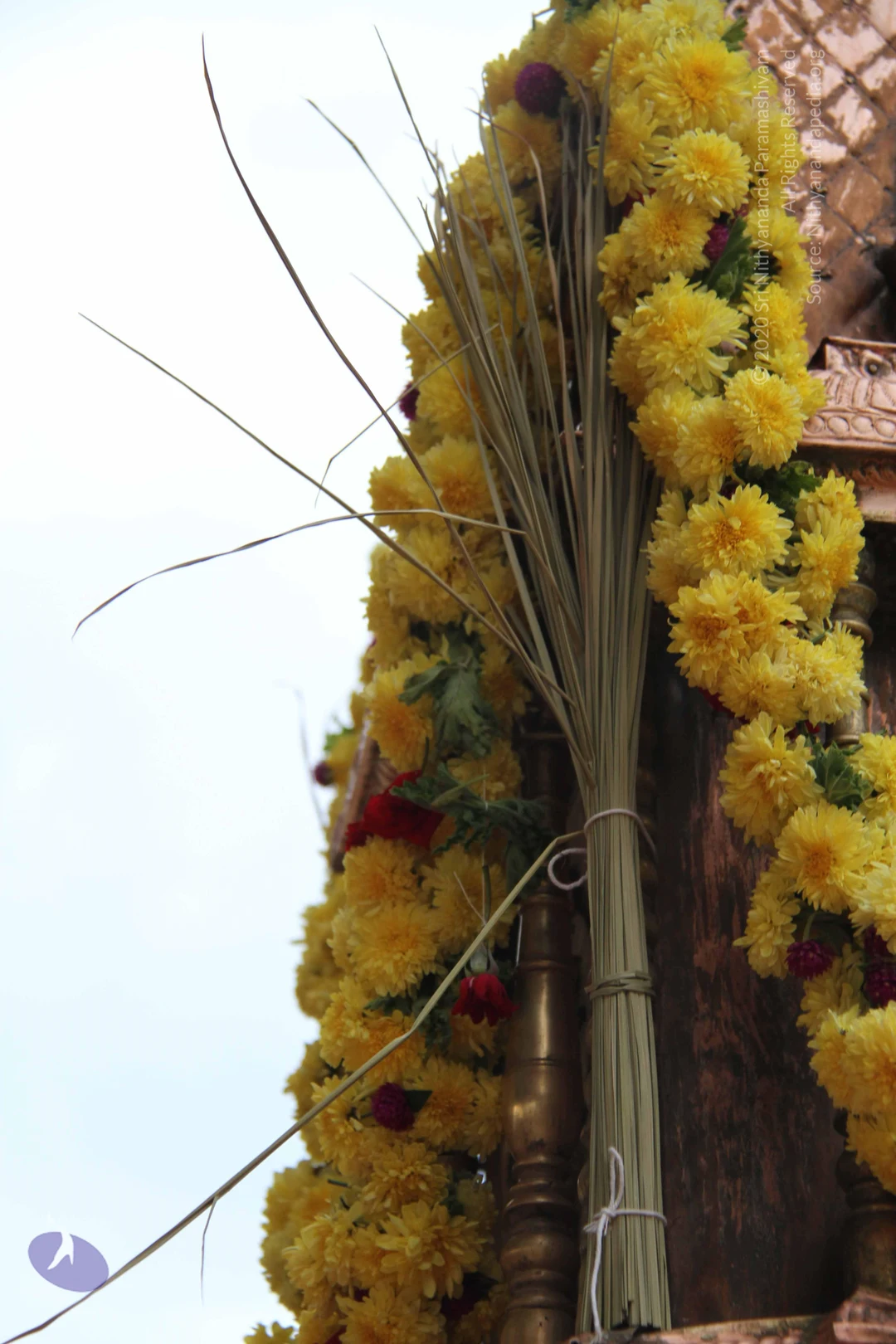
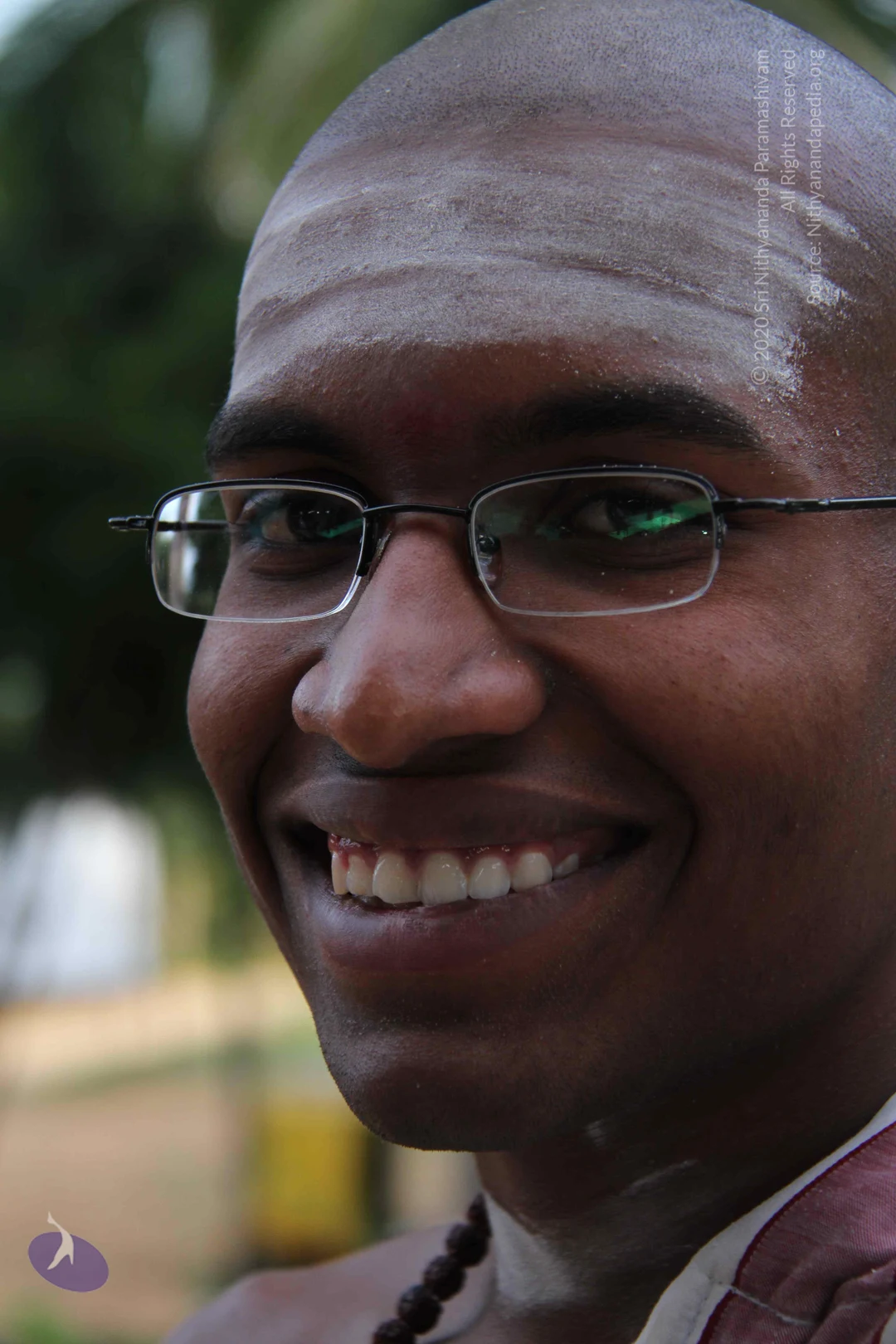
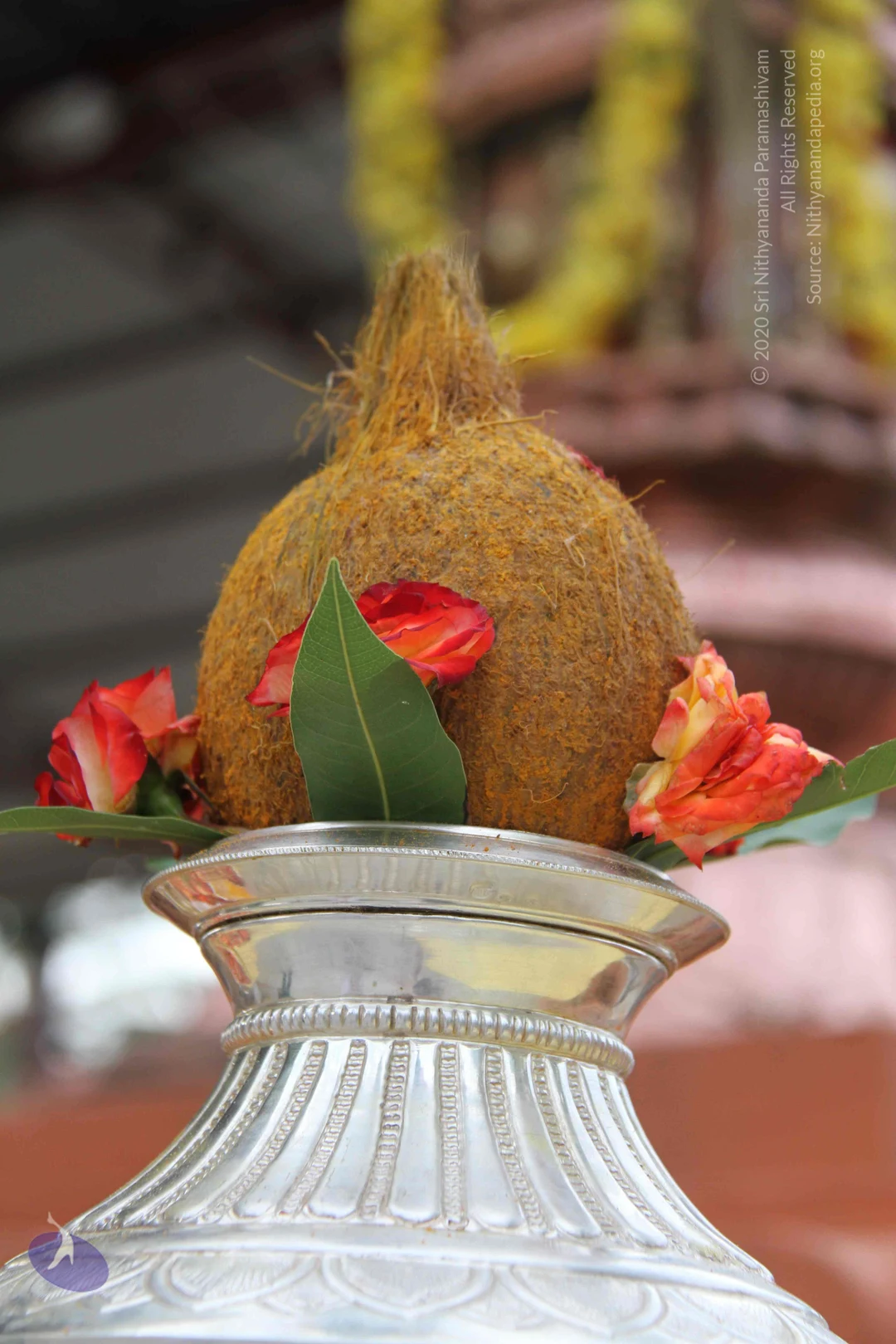
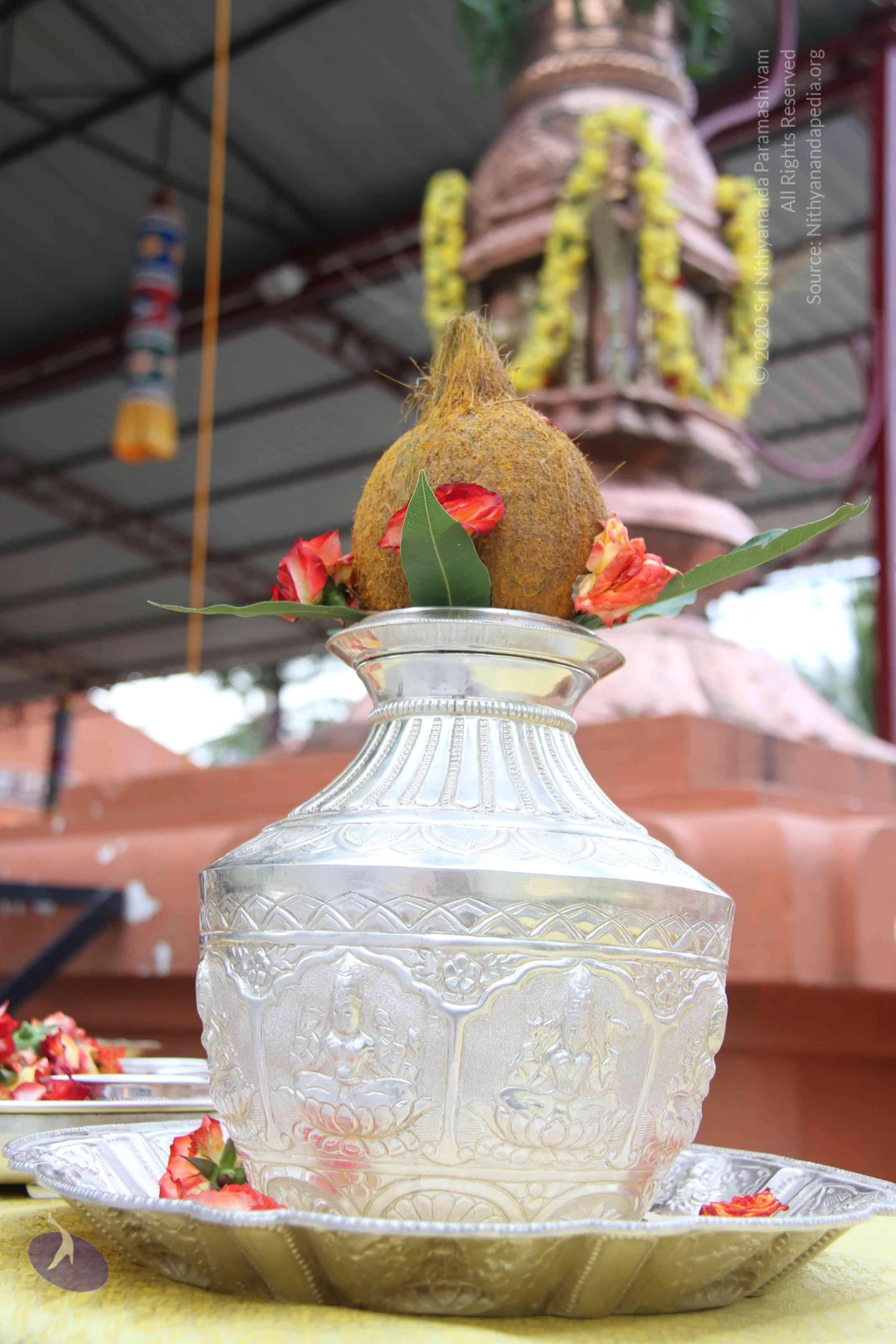
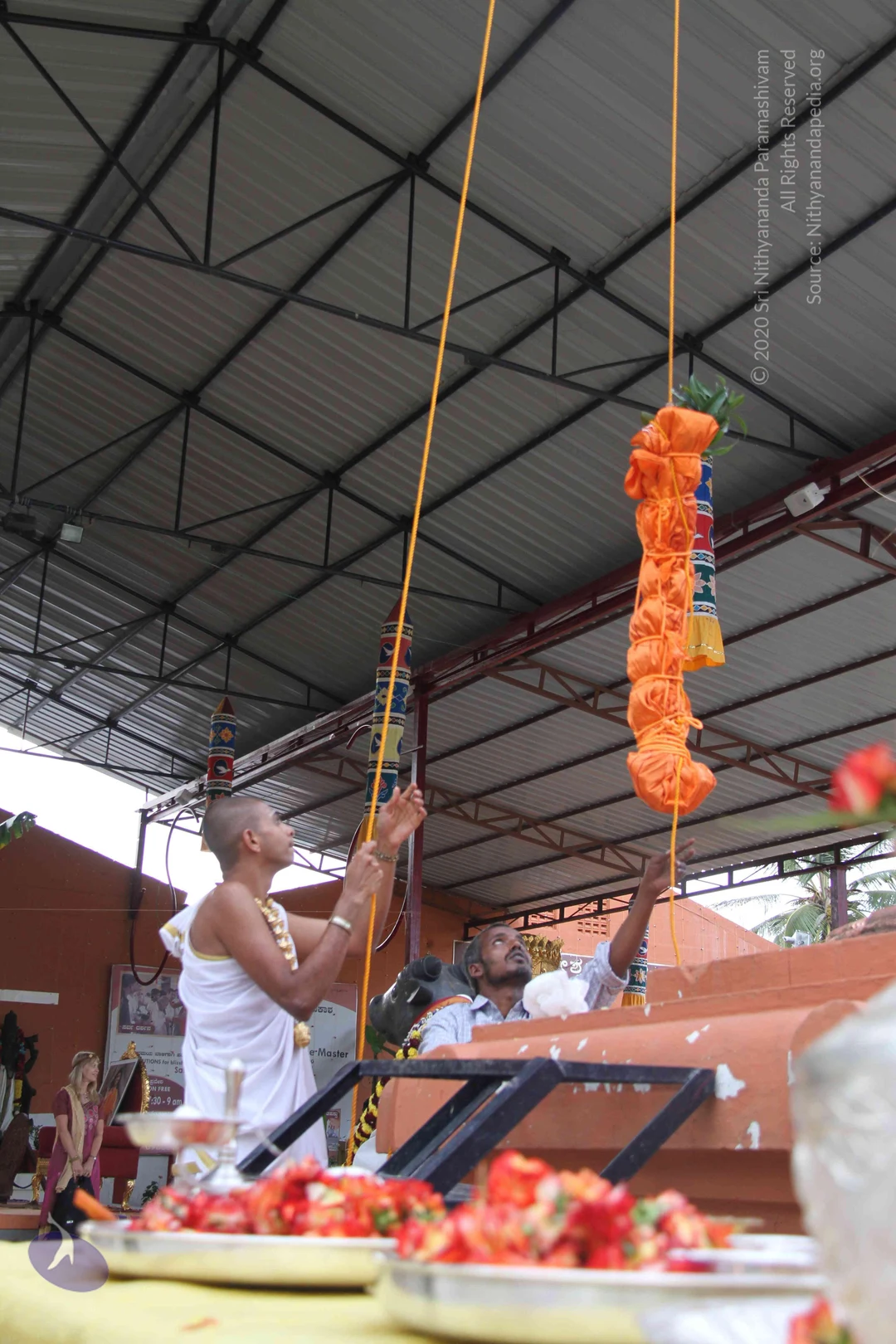
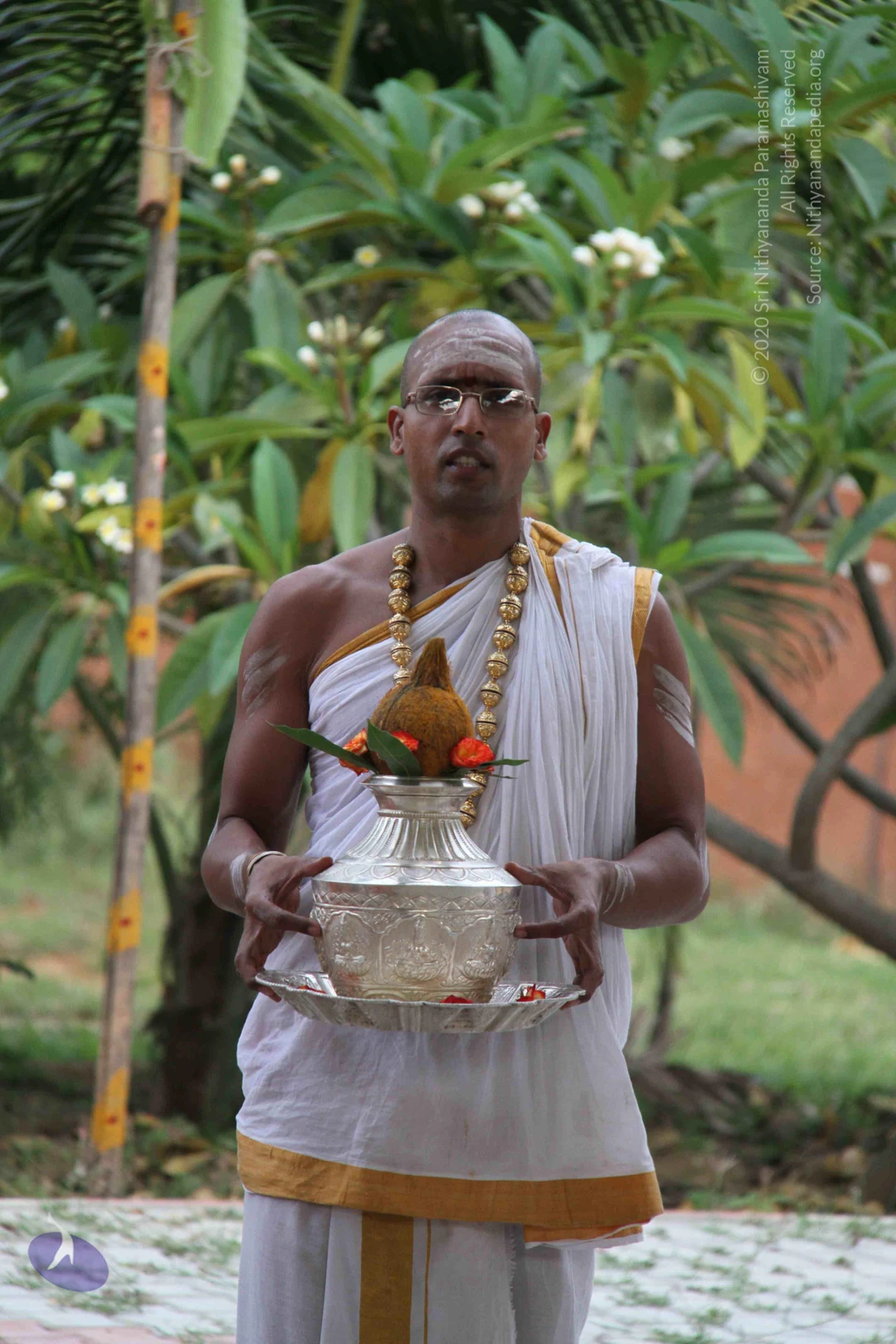
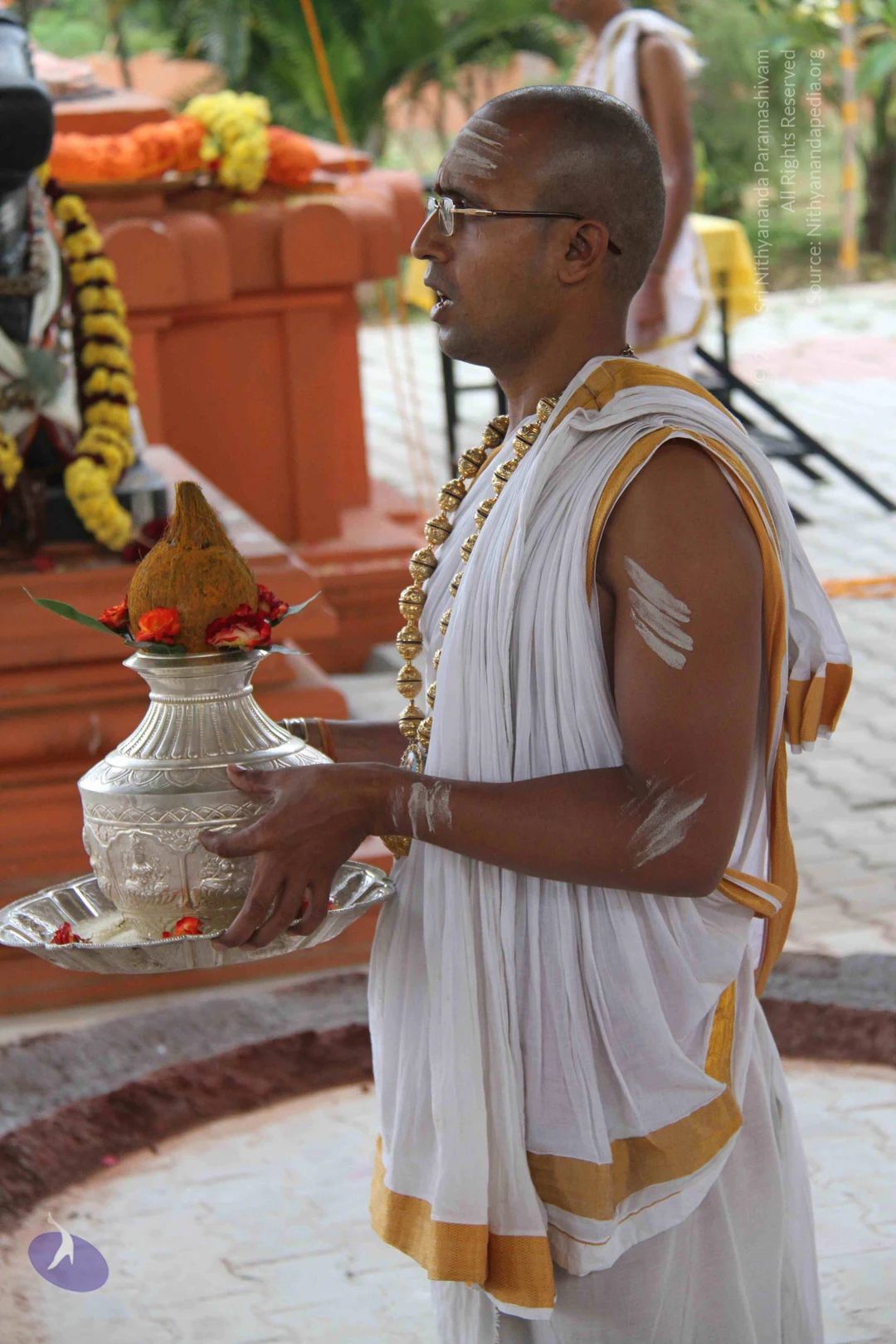
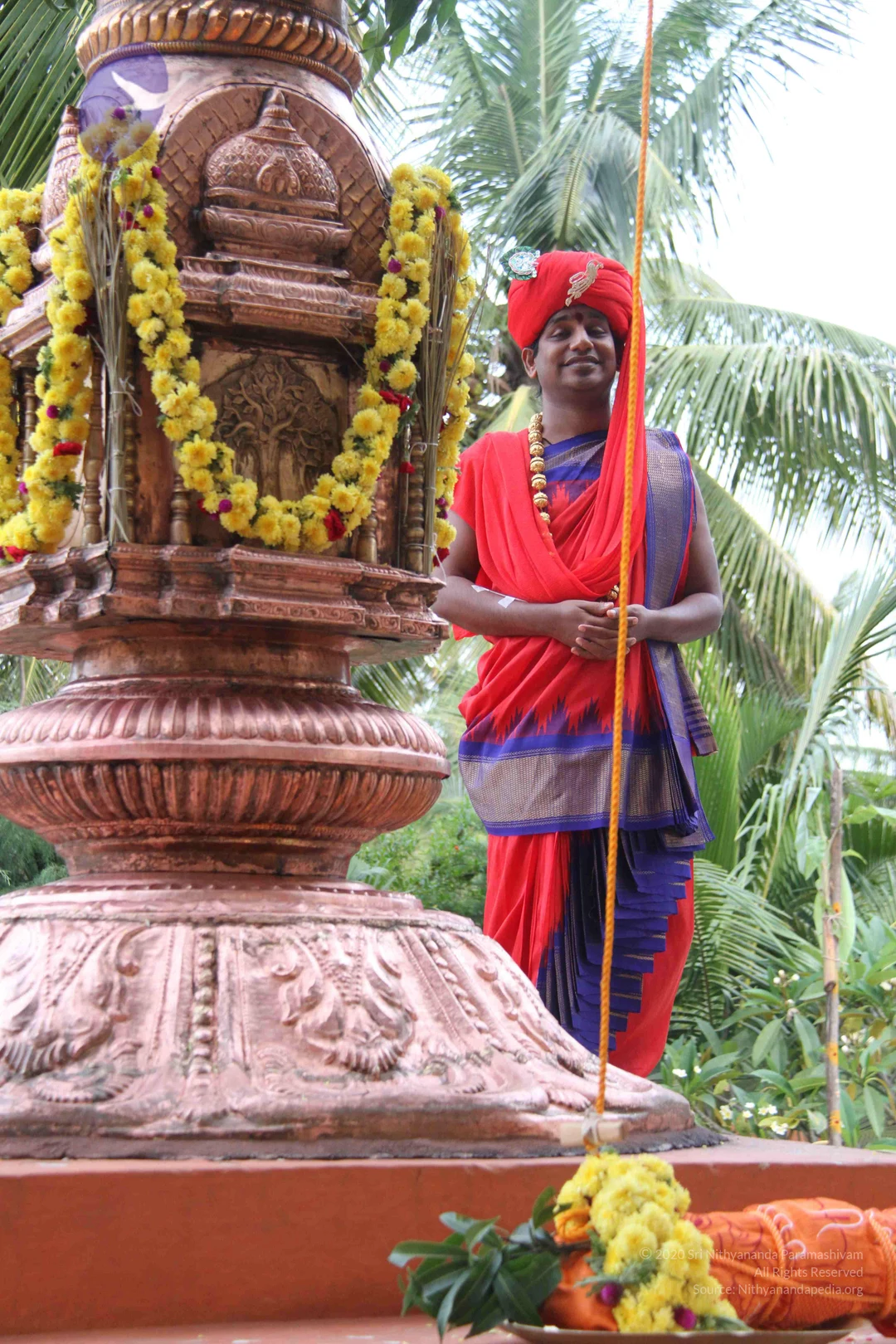
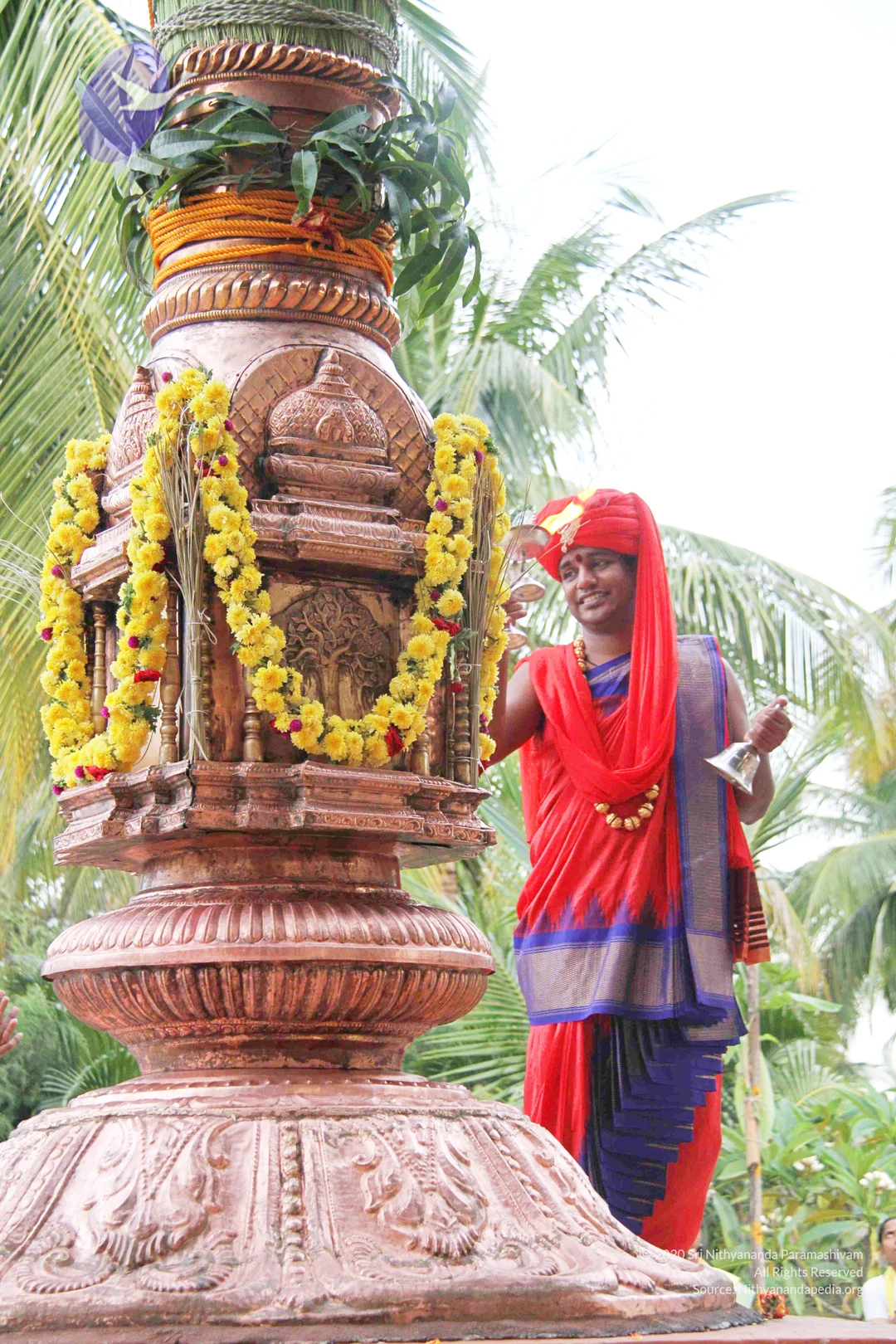
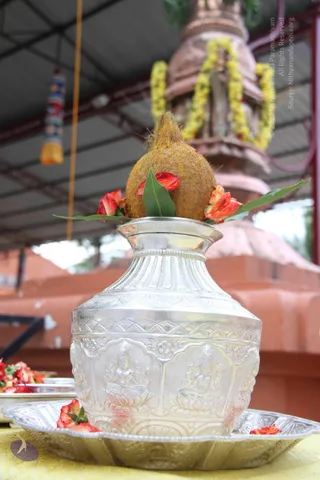
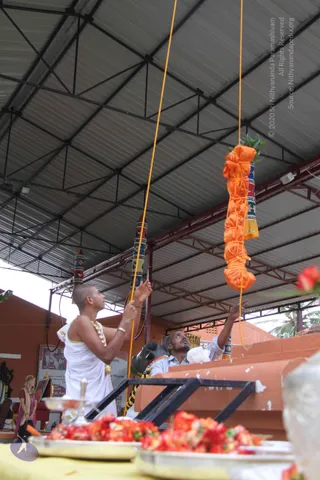
Low-angle photograph of a tall copper pillar or kalasha-like post wrapped in bundles of fresh green grass blades tied with twisted rope bands, with mango leaves tucked around its lower section. The copper has embossed rope-twist moulding and a polished sheen, rising against a pale sky. No people or a person are visible in the frame.Close-up photograph of a decorated wooden structure with a long garland of yellow chrysanthemum flowers interspersed with small red and magenta blooms and green leaves, draped along its side. A bundle of dried palm or grass fronds is tied vertically in the centre with white string. Behind it, the weathered reddish-brown wood and a carved ornamental edge are visible against a pale sky. No people are visible.Close-up photograph of a smiling shaven-headed man wearing thin rectangular metal-framed glasses, with pale white horizontal sectarian markings across his forehead. A dark rudraksha-style bead mala is visible at the lower left and a pinkish-maroon garment with a white edge at the lower right. The background is a soft blur of green foliage.Close-up photo of a sacred coconut set atop an ornate silver kalasha pot. The coconut has a brown fibrous husk dusted with turmeric or kumkum, and it is decorated with red and orange roses and a green mango leaf. Yellow flower garlands hang in the blurred background. No people are visible.A photograph of a ceremonial kalasha: an embossed silver pot topped with a husked coconut, decorated with red and orange roses and mango leaves, standing on a silver tray scattered with rose petals on a yellow cloth. Behind it, a blurred pink-and-red temple structure hung with yellow flower garlands holds a deity murti in its shrine. Hanging ribbons and a corrugated roof frame the outdoor setting. Two silver embossed figures, seated on lotuses, decorate the pot's body. No people are visible.Photograph of an outdoor ritual under a corrugated metal roof with steel trusses. A shaved-headed man in a white dhoti-style garment with a gold-beaded necklace raises both hands to pull an orange cloth bundle suspended on an orange rope, decorated with a pineapple-like top and colourful painted poles. A second man in a light blue shirt looks up and reaches toward the same rope beside a dark stone figure draped with flower garlands. In the foreground, trays of red and orange flowers and a silver vessel sit on a yellow cloth. In the background a woman in maroon clothing stands near a red wall with a banner. The white-clad priest and the man in the blue shirt are the two physical people visible; the banner and figures on it are not counted.

September 29 2011

5 photosView all
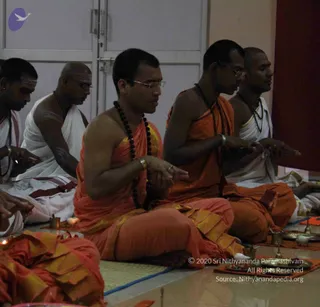
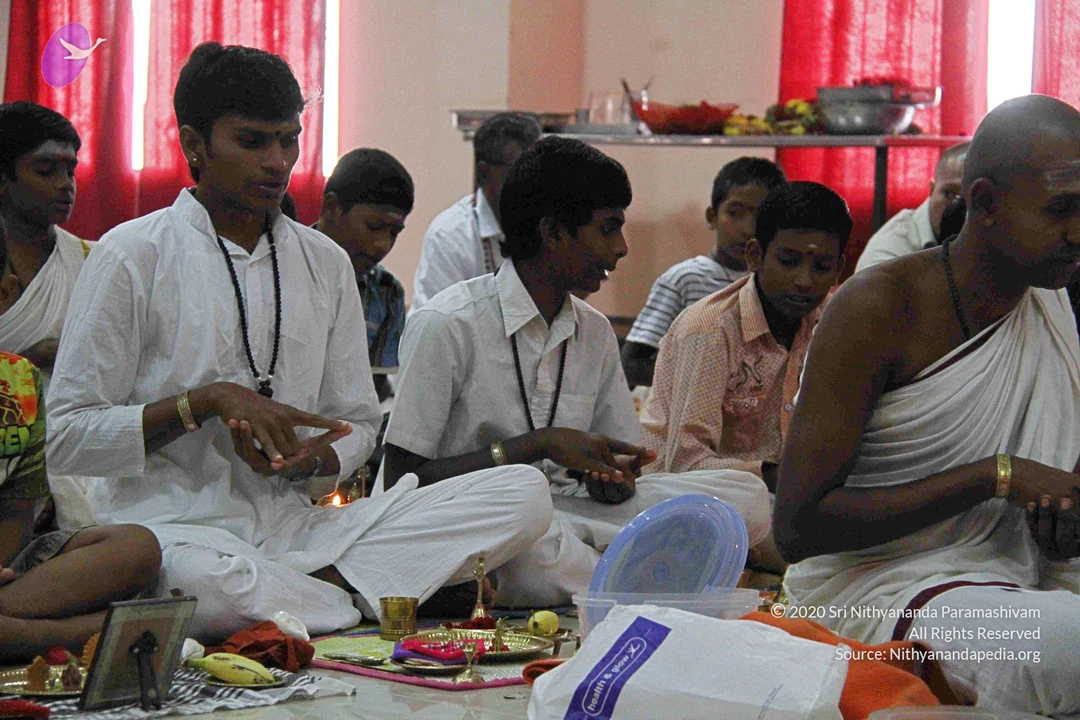
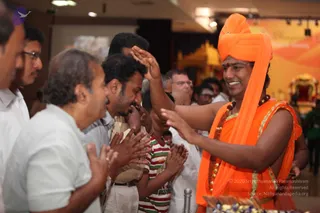
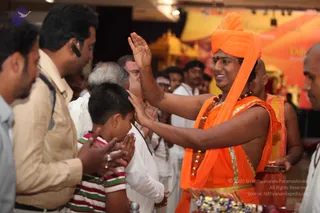
A photograph of a group of men seated on the floor in a ritual setting, performing a puja. Several men in front wear orange saffron robes with golden borders and rudraksha malas around their necks, and some wear gold bangles. Behind them, men in white dhotis and white upper cloths sit with hands raised in mudra gestures. Brass and silver ritual vessels, small oil lamps and offerings rest on orange cloth mats in front of them. The men appear absorbed in prayer with eyes closed or lowered. A white door and wall are visible in the background.Close photograph of a smiling man in an orange turban and orange saffron robe edged with gold trim, wearing multiple strands of rudraksha beads with gold spacers and gold bead ornaments. A red tilak mark is on his forehead. Behind him is a backdrop of white, yellow, red and purple flower garlands. The figure appears to be Swamiji (probable), identified by the orange turban, saffron robe and layered rudraksha malas with gold ornaments, seated in a ceremonial setting.A photograph of a satsang-style gathering in an indoor hall. A figure on the right wears a bright orange turban, orange draped robe, rudraksha beads and gold necklace, with a red tilak on the forehead; he raises a hand in blessing toward a line of people with hands pressed together in namaste. Several men in white shirts and a boy in a red-and-white striped shirt stand with palms joined, one man bowing his head. A small ornate golden shrine or throne and an orange-and-yellow backdrop appear behind, with brass items and flower garlands on a table in the lower right.A photograph of a devotional blessing line indoors. A man in a saffron-orange turban, saffron-orange dhoti-style wrap and layered rudraksha malas raises one hand and places the other on the head of a young boy in a striped red-and-white shirt who bows with palms pressed together. Behind them, people in white and cream clothes queue and watch, a man in a beige shirt with a headset stands at left with hands folded, and a man in an orange garment with a metal tray stands at right. Brass items and a tray of offerings sit at the lower edge, with an orange banner and decorative backdrop behind.A photograph of a standing man in a saffron-orange turban and matching orange robe with gold trim, wearing a red-brown rudraksha mala with gold beads and a red bindi. He raises one hand in blessing while smiling, and holds a tray with wrapped sweets and red fruit. Beside him, a man in a blue-striped shirt and another in pale orange robes stand with palms pressed together in greeting, behind a silver stanchion barrier. A large orange banner with a smiling portrait is in the background.