Skip to content
Tuesday

26 October 2010

Rewiring Your Brain: Nithyananda Morning Message (26 Oct 2010)

Dated photos
526
Source pages
1
Media
2
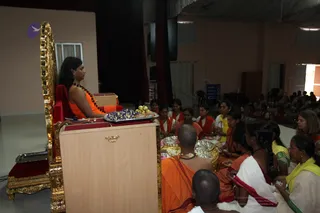
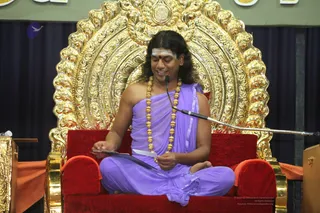
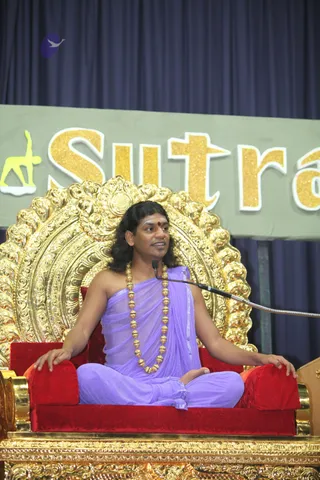
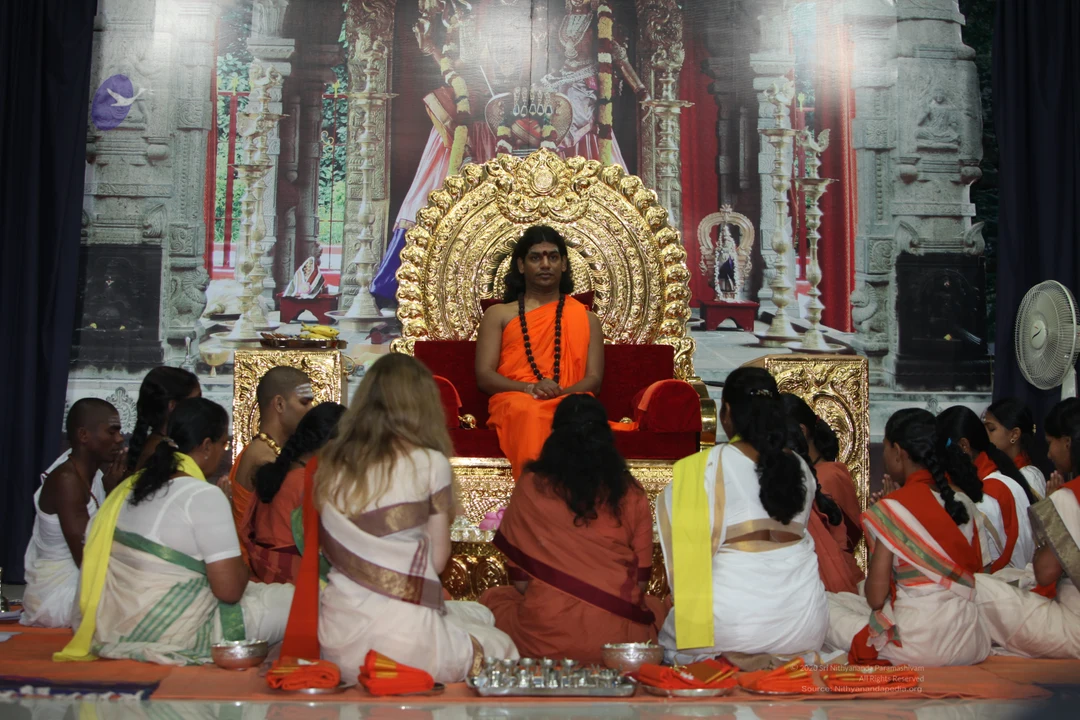
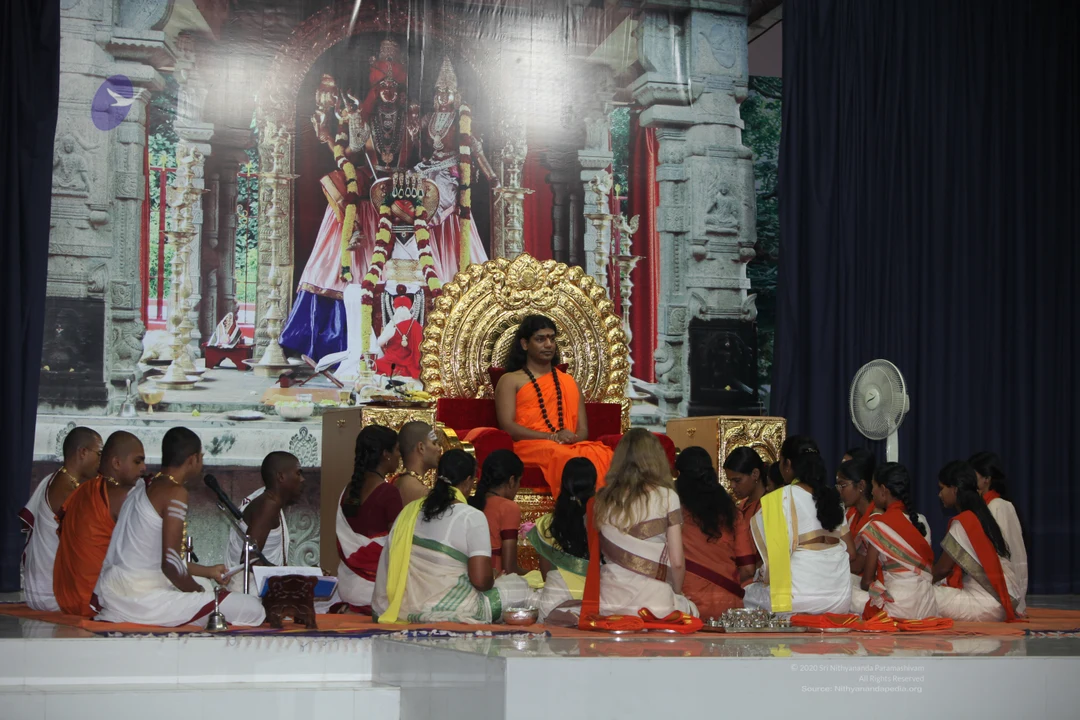
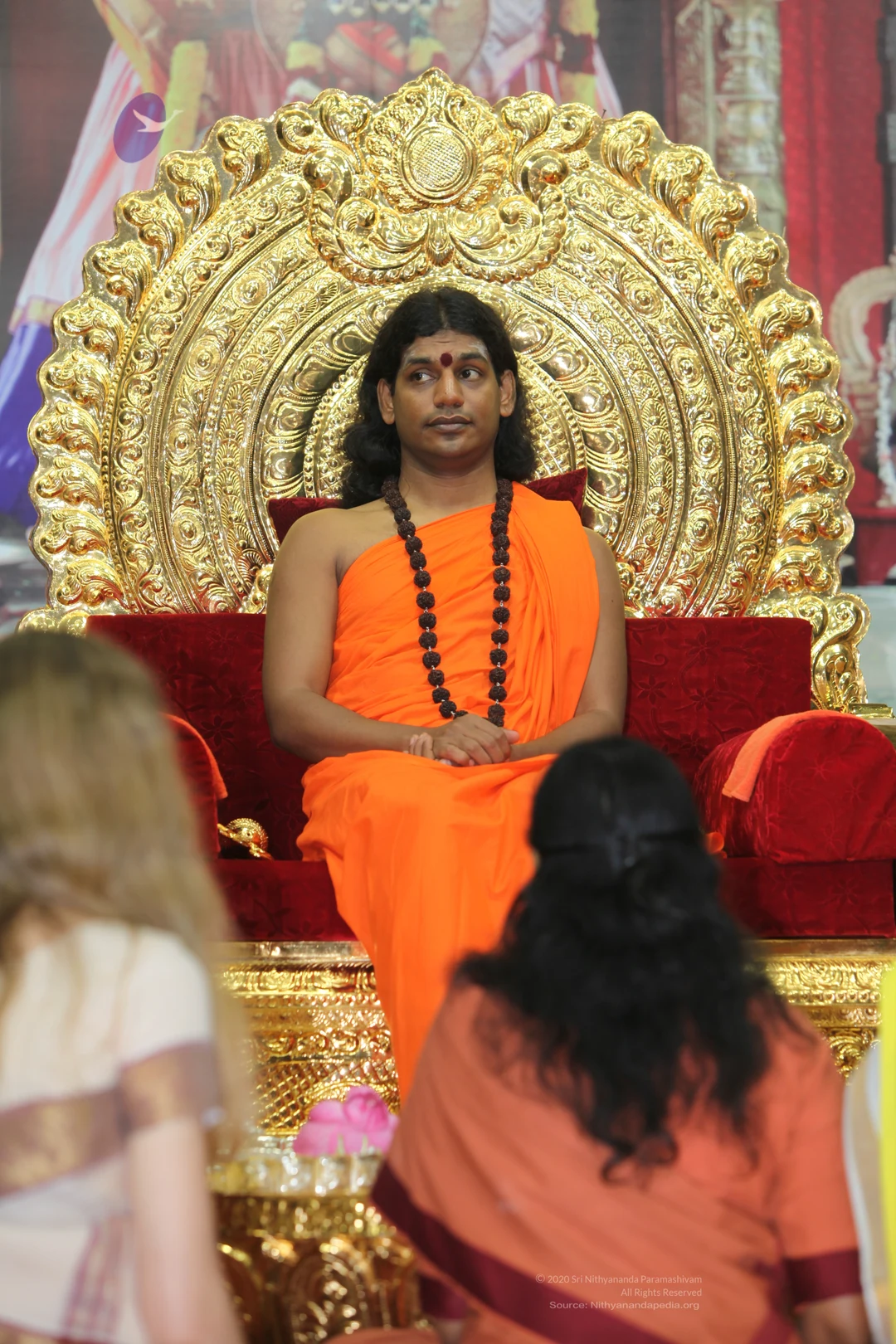
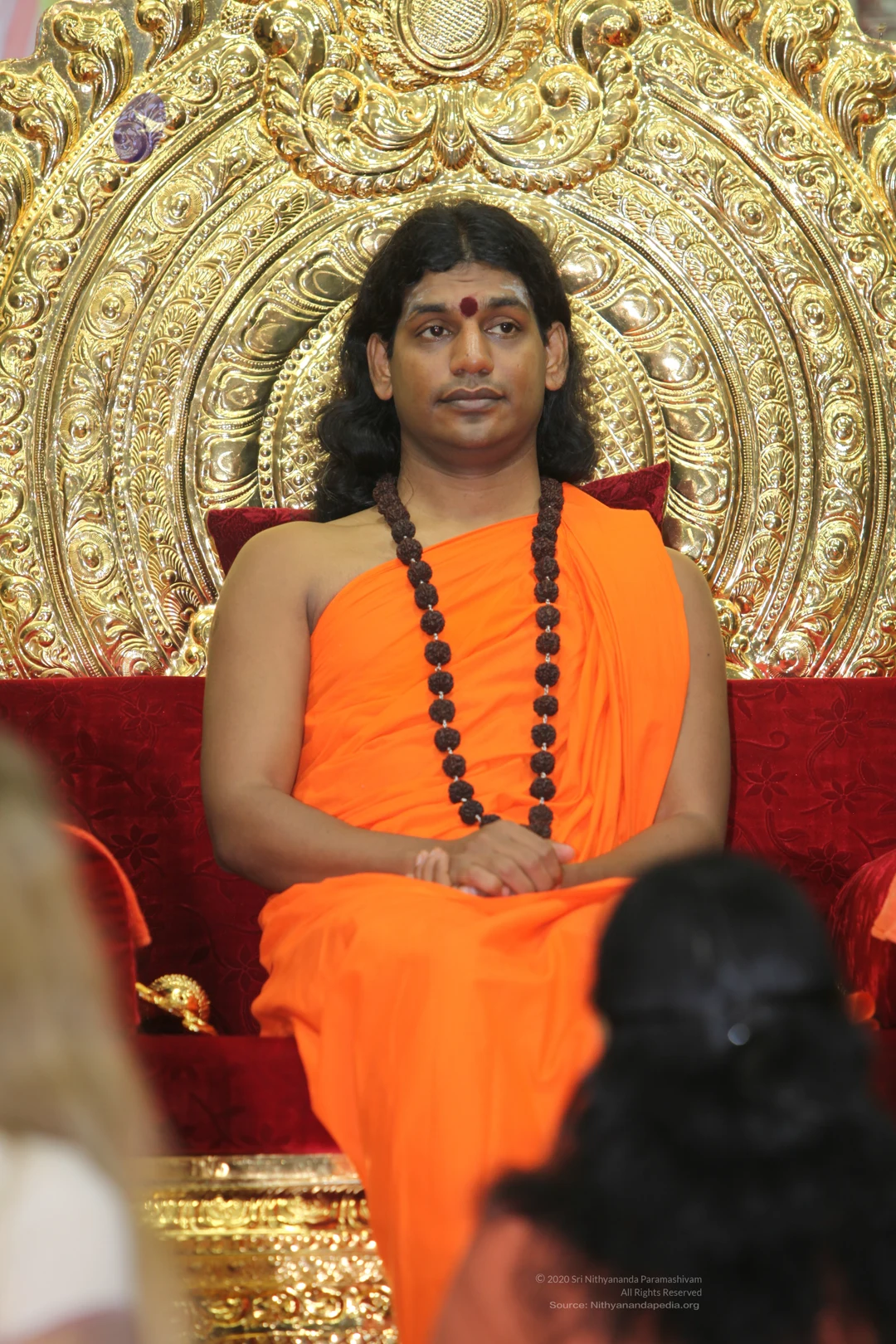
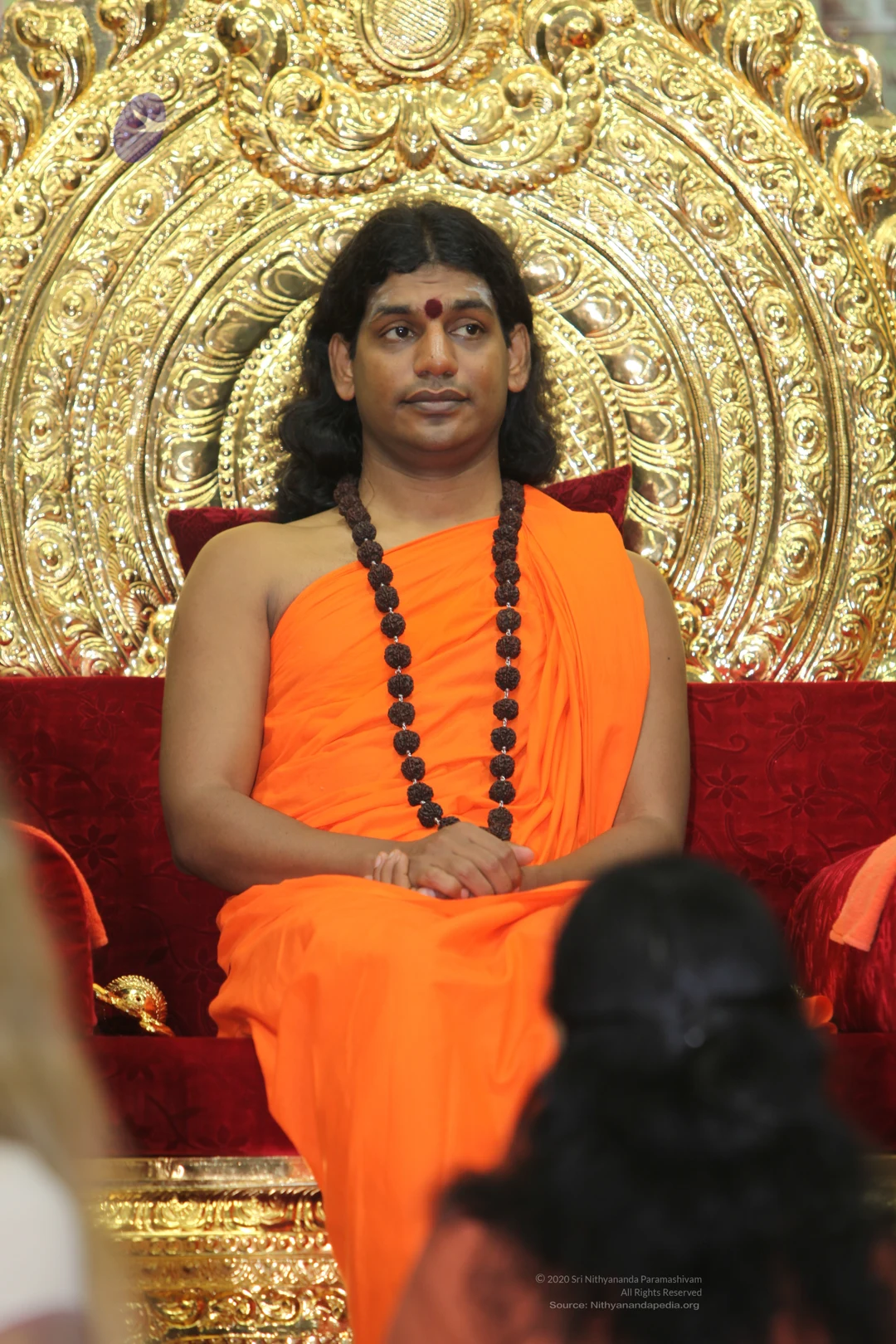
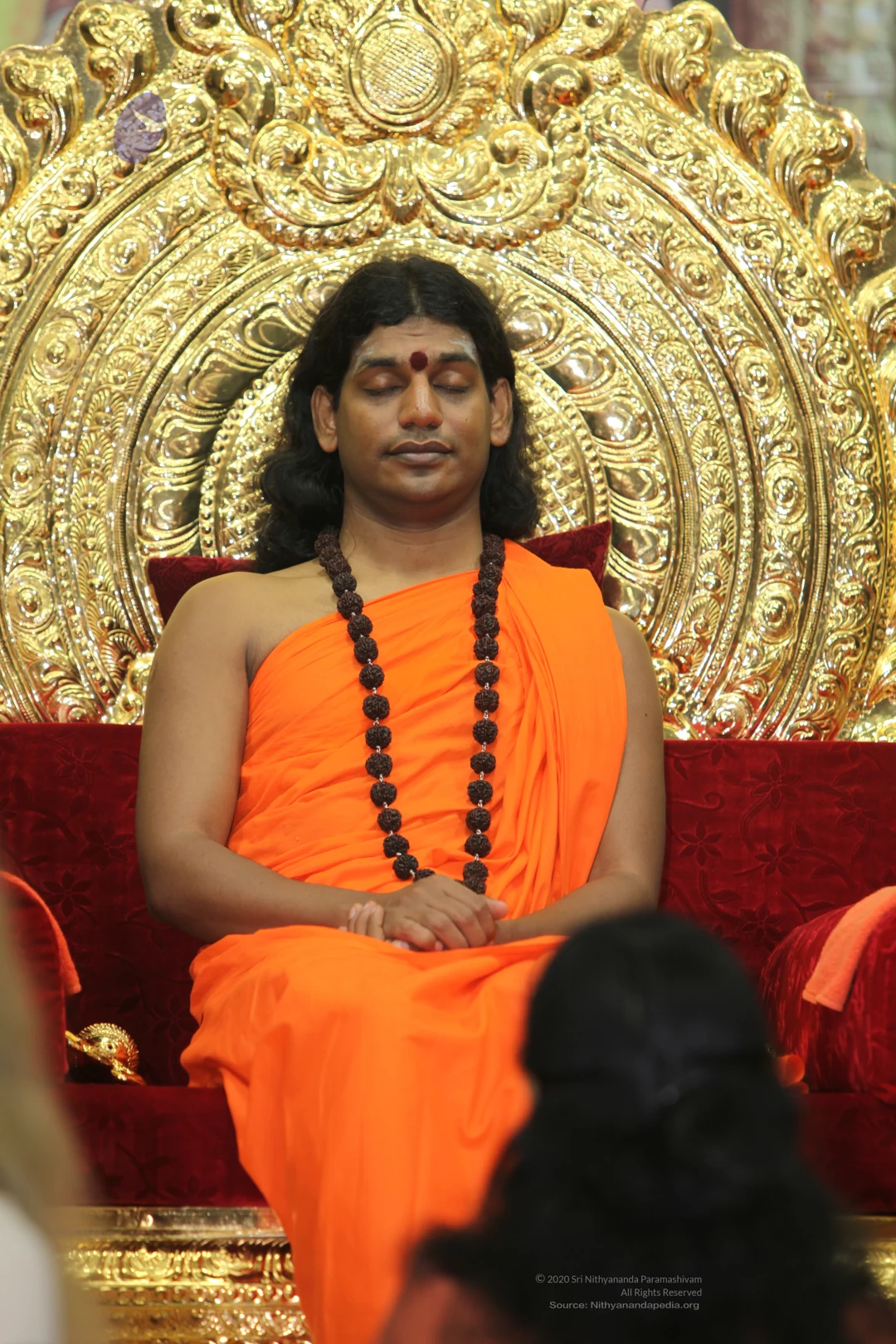
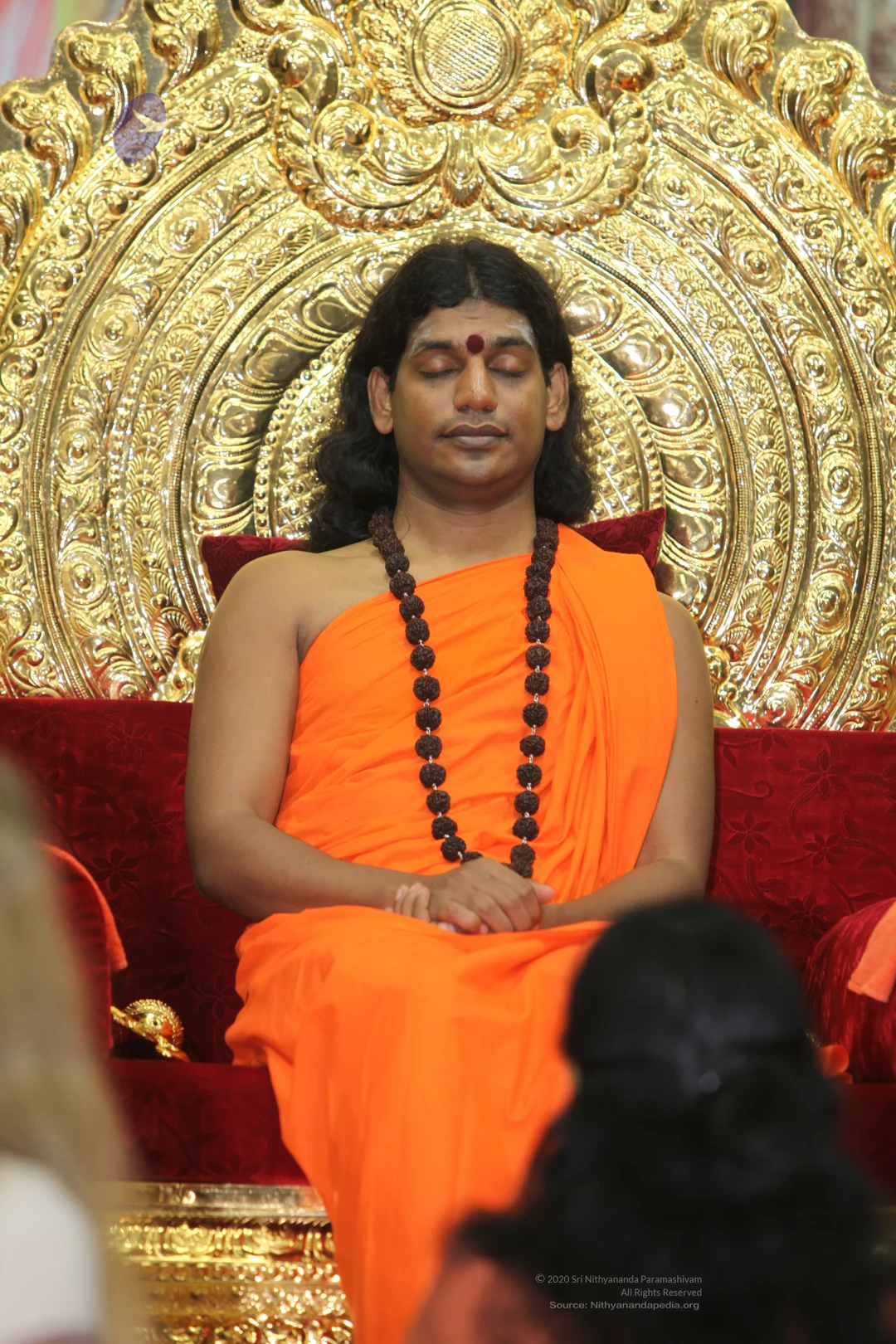
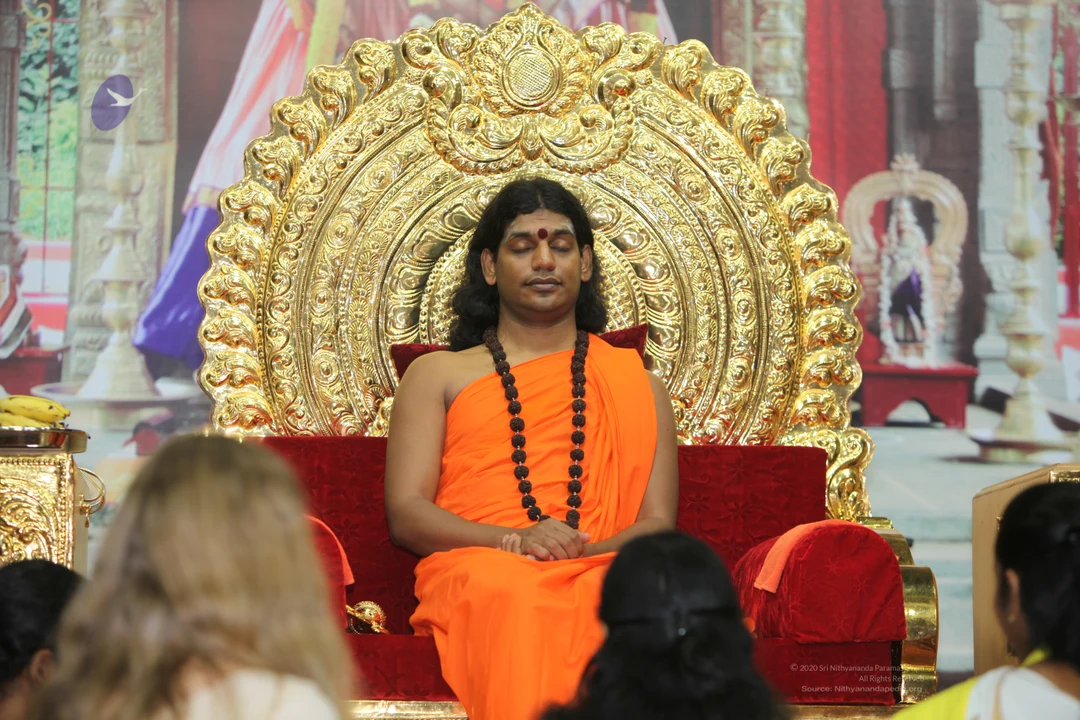
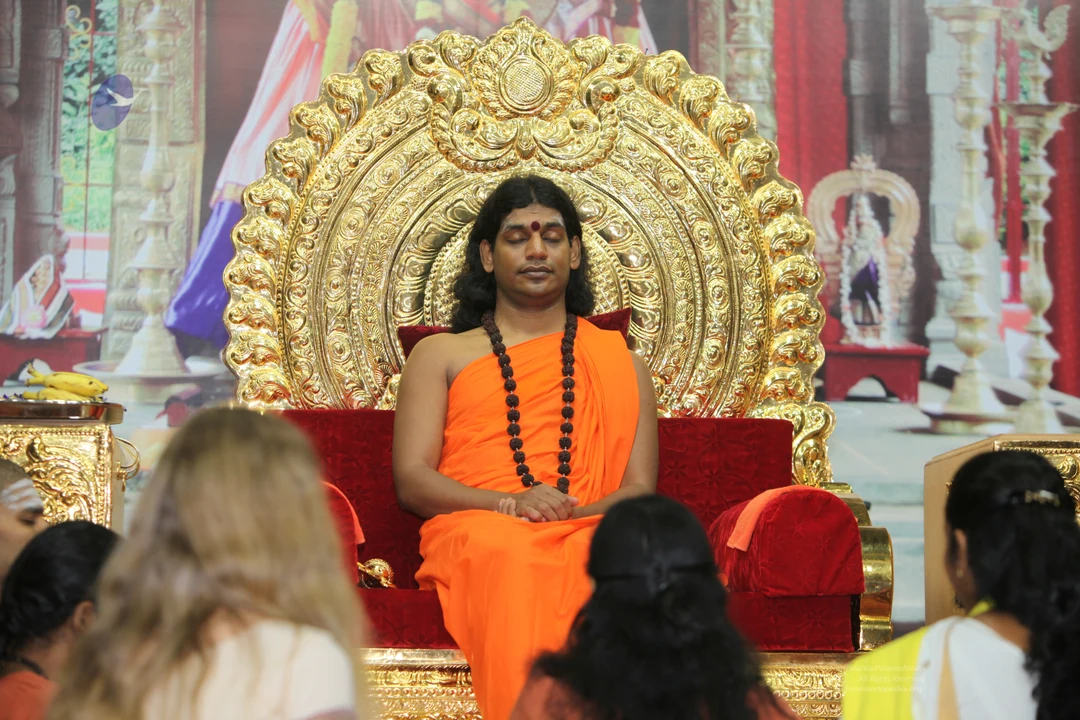
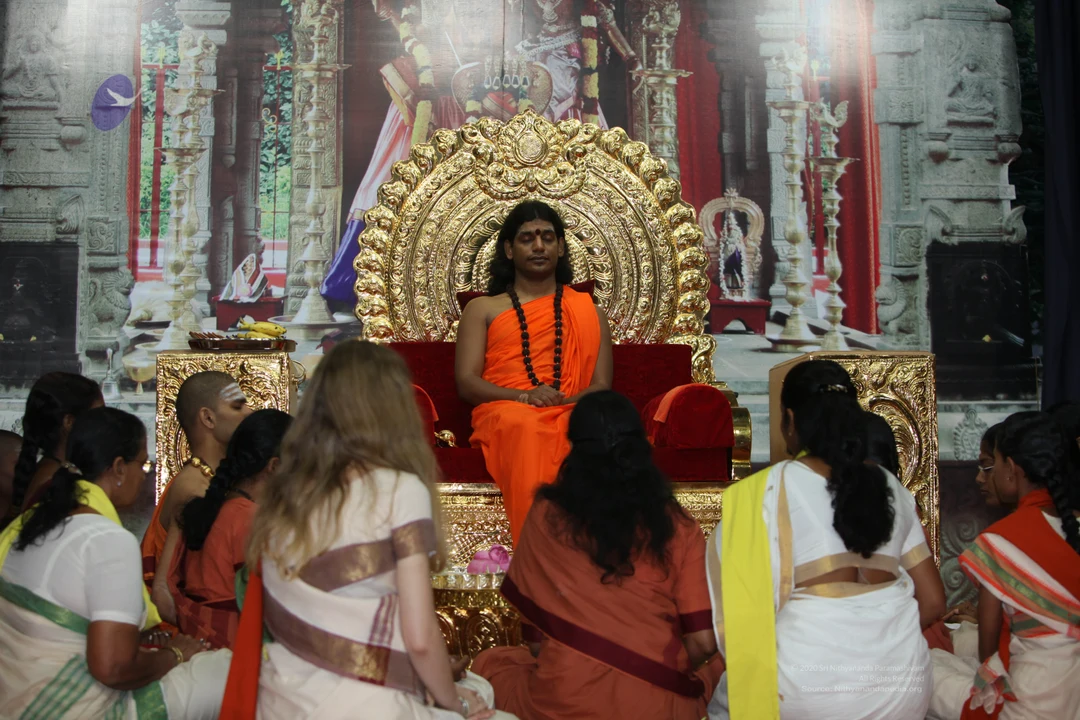
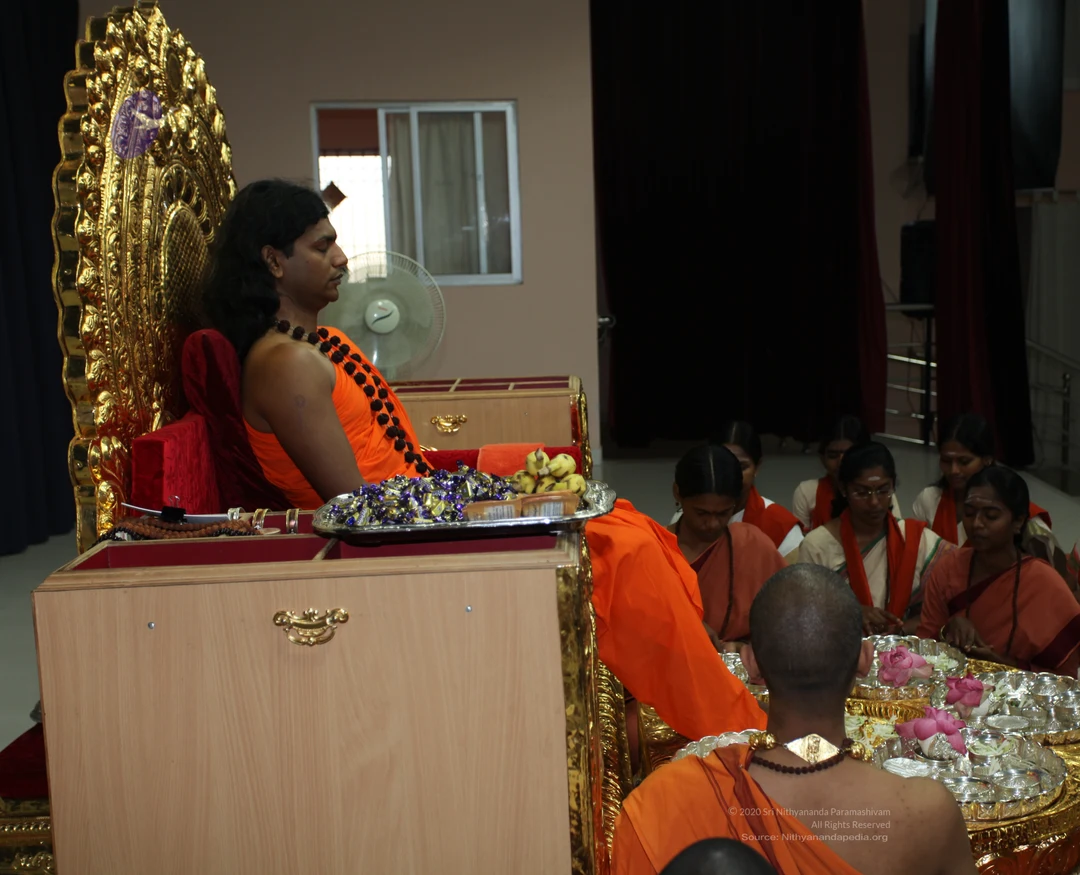
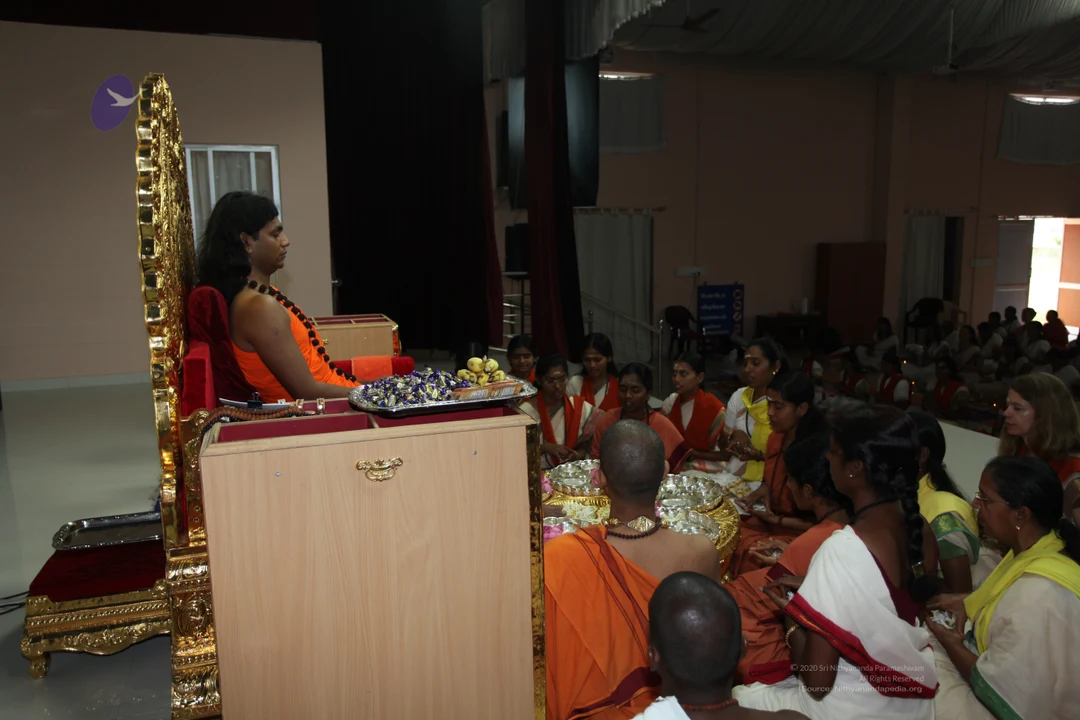
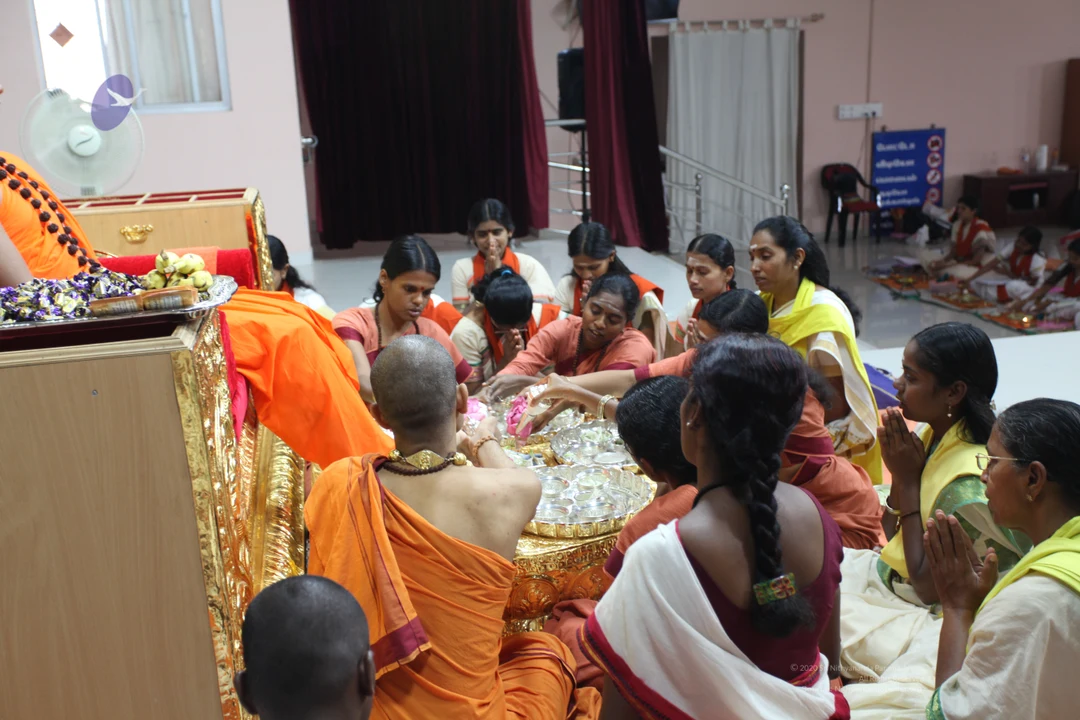
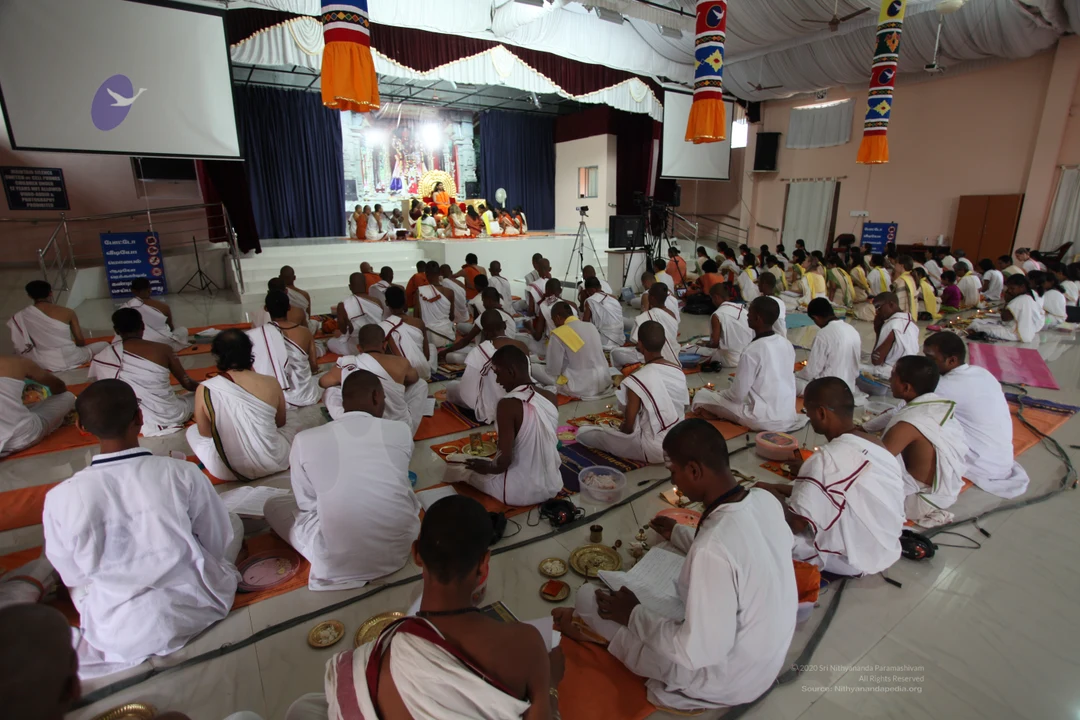
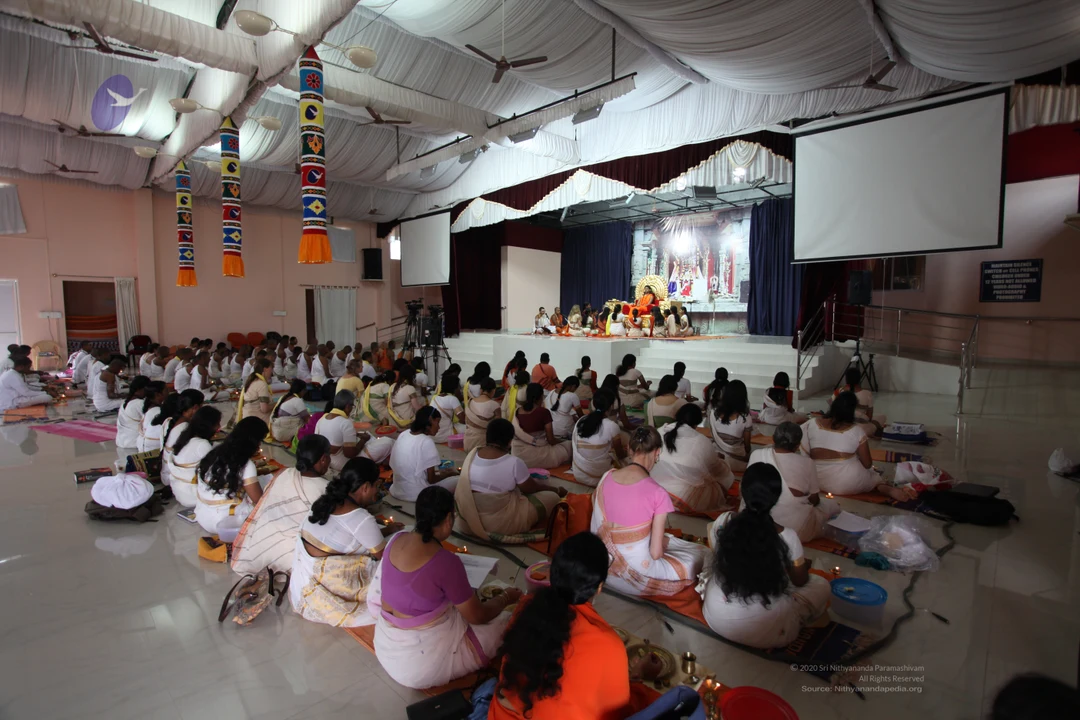
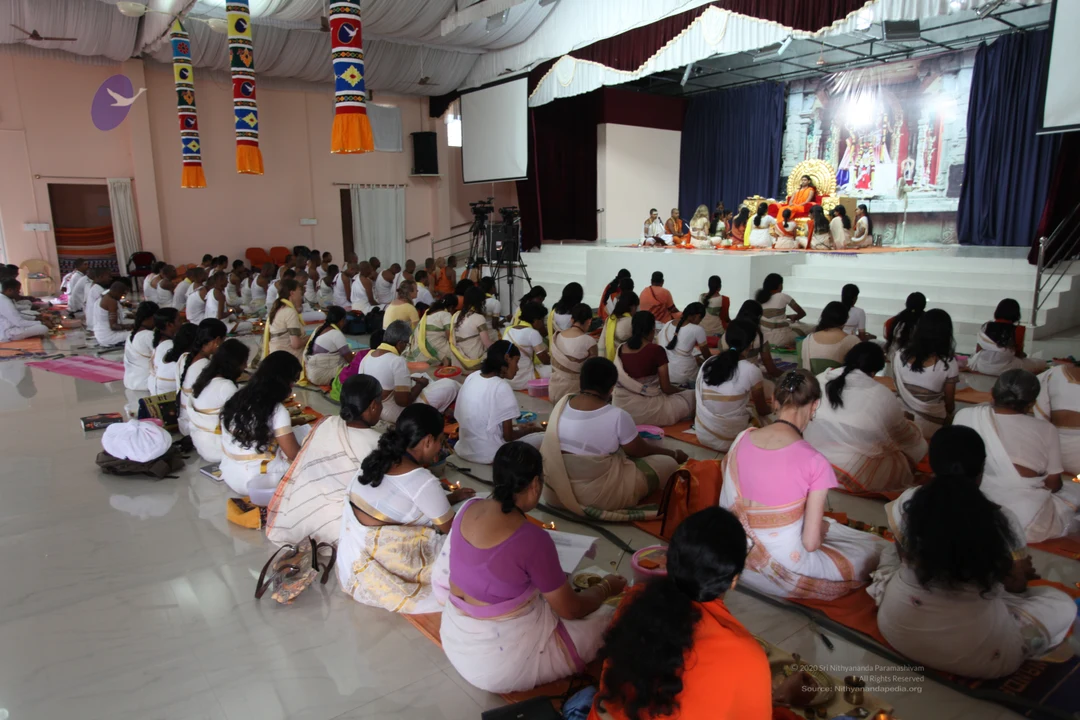
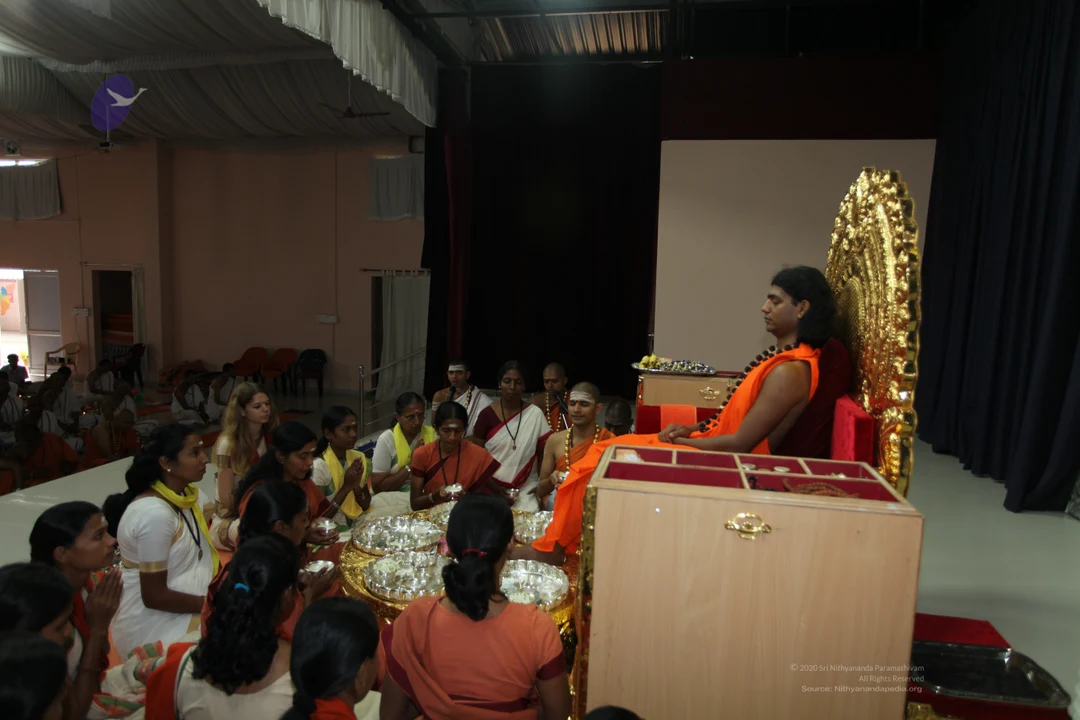
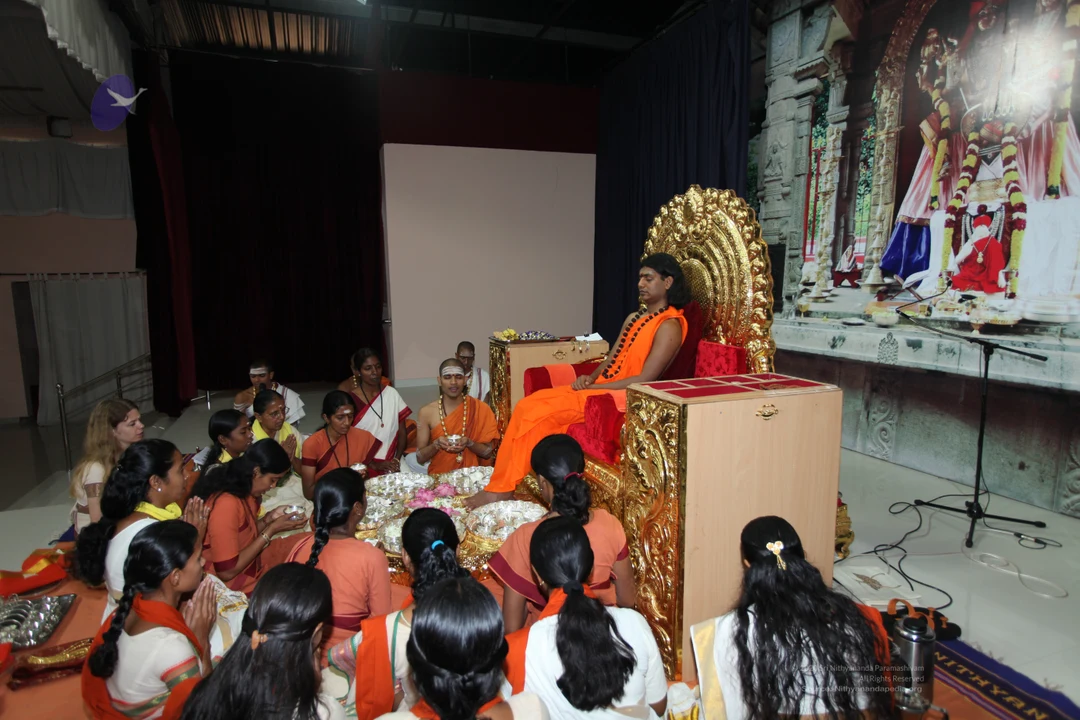
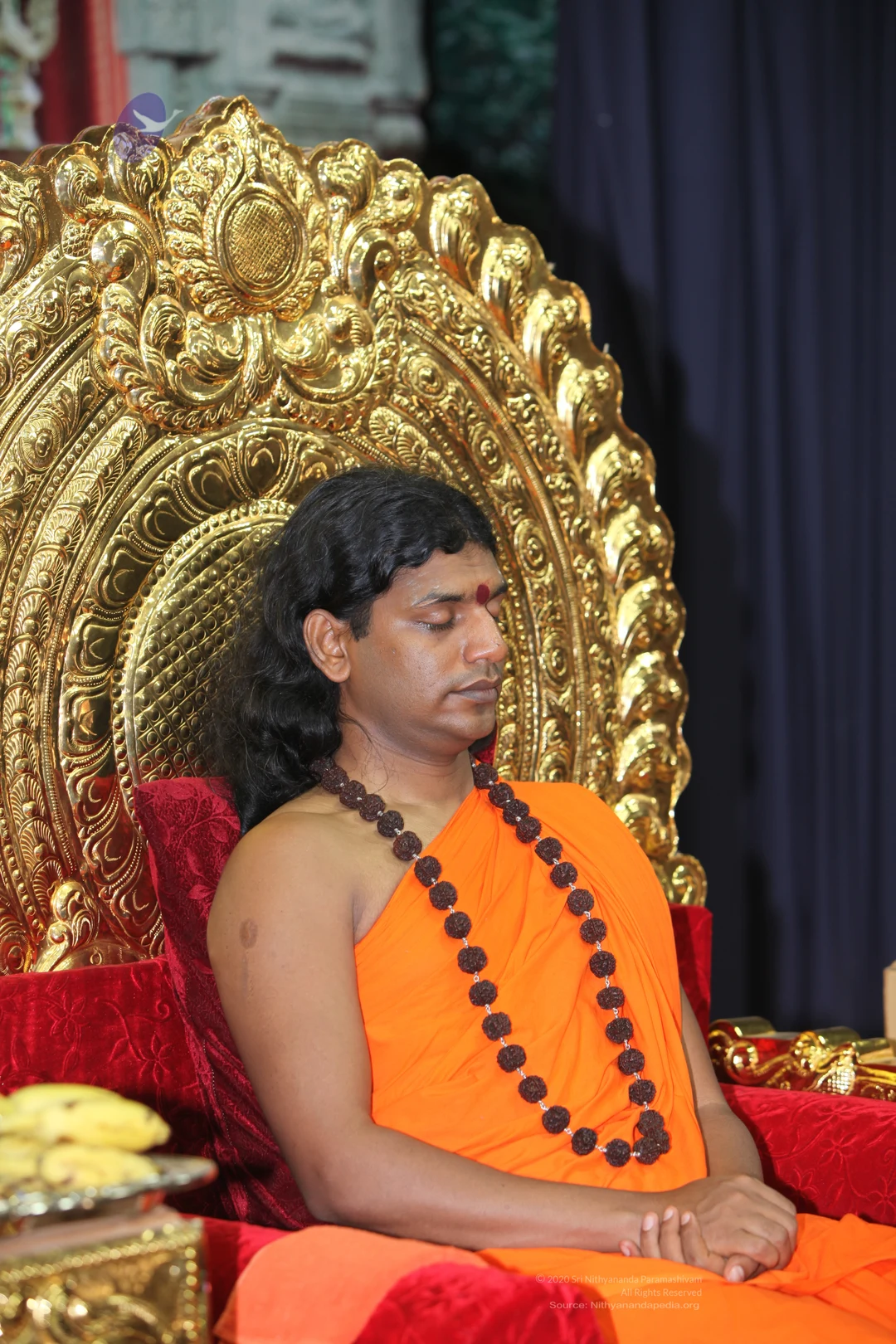
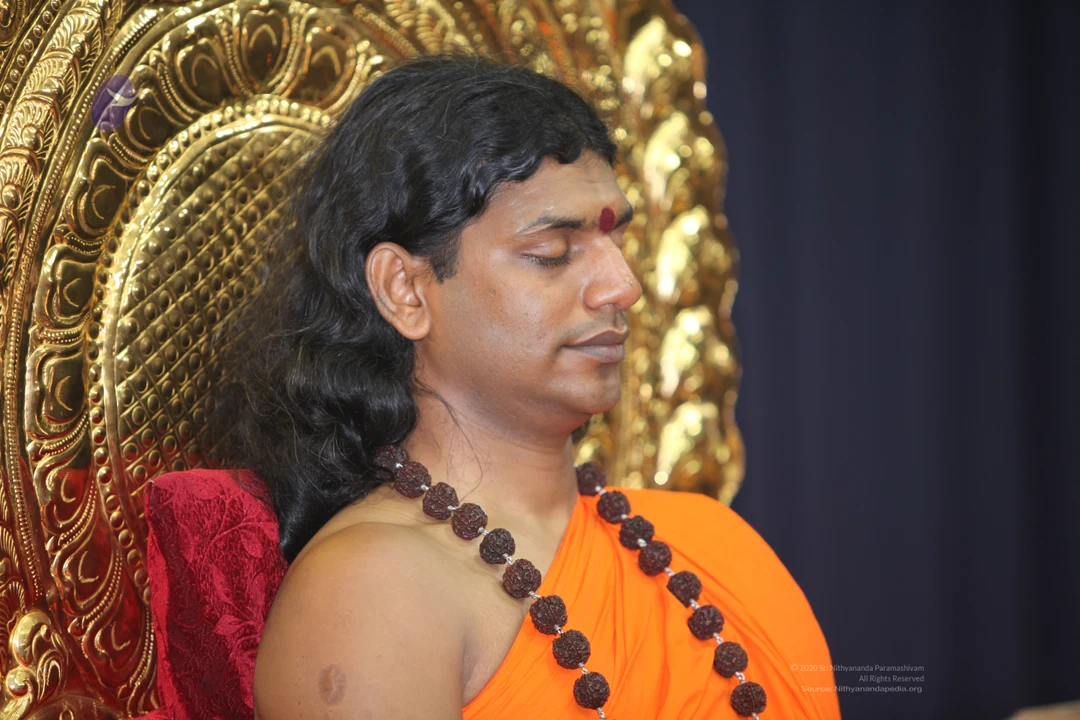
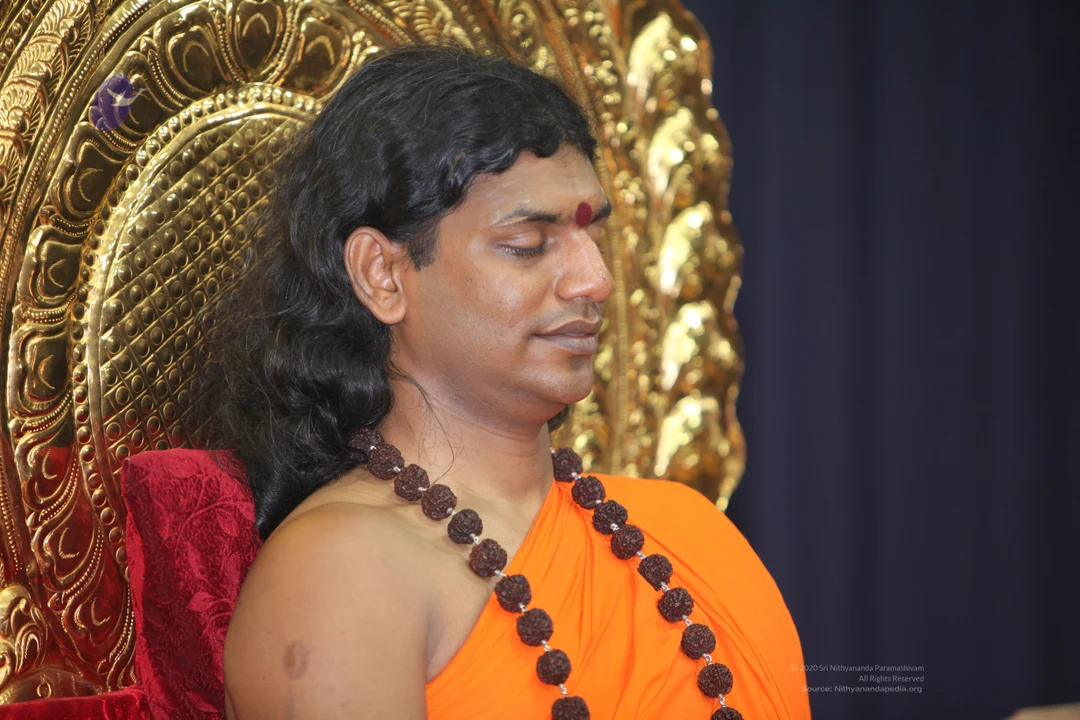
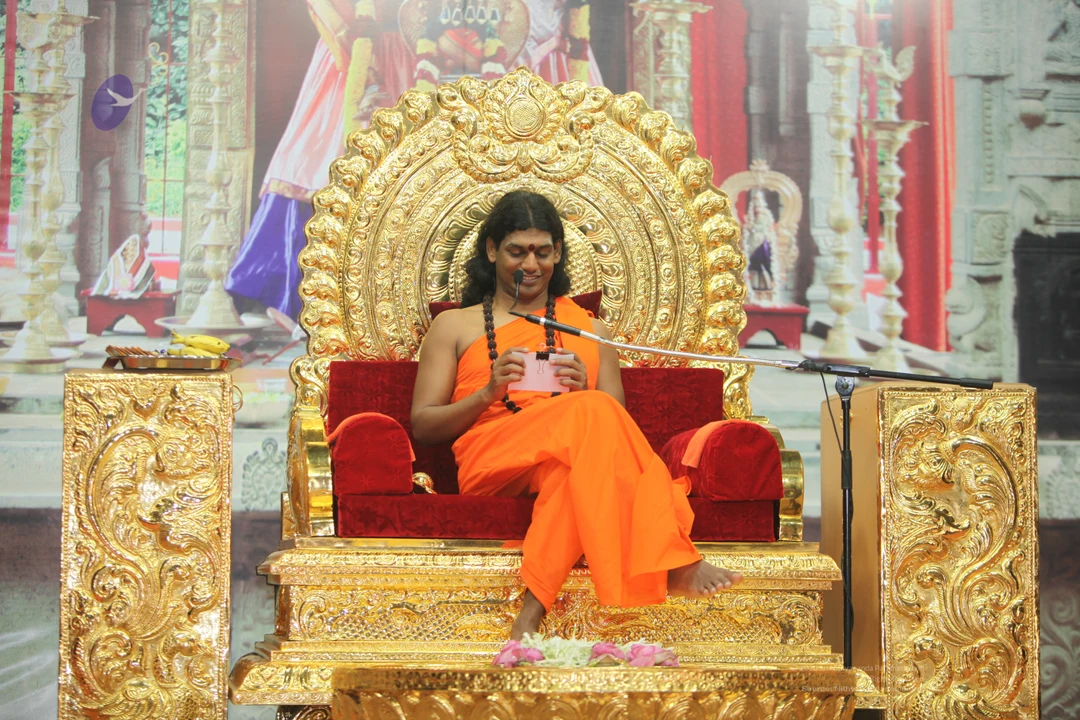
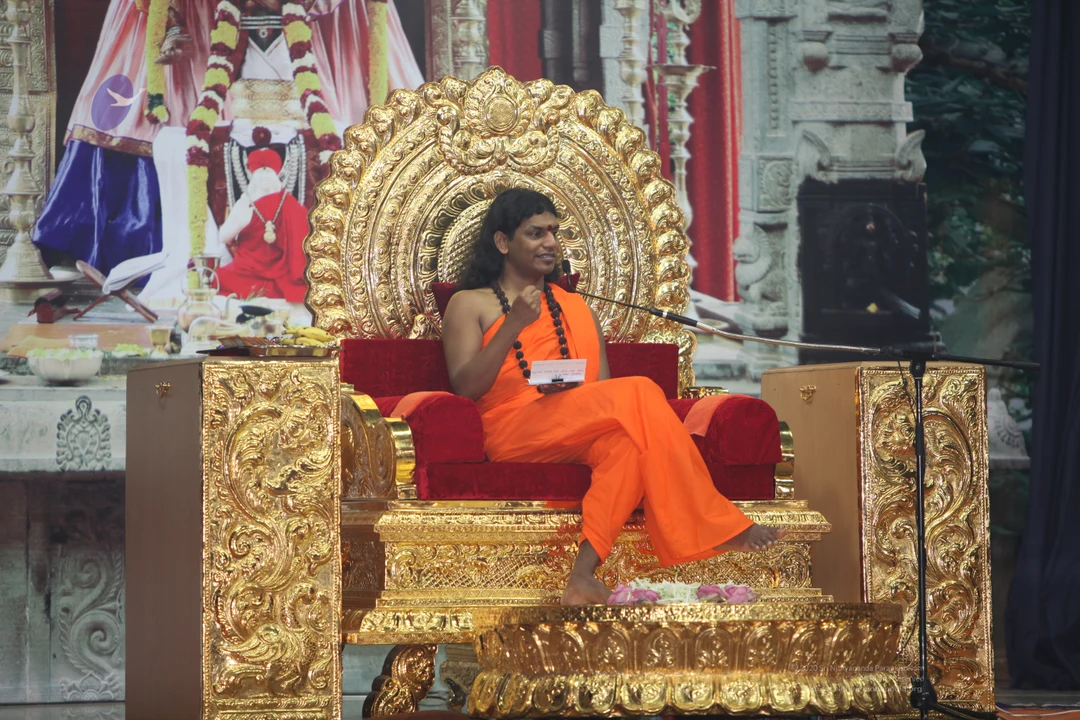
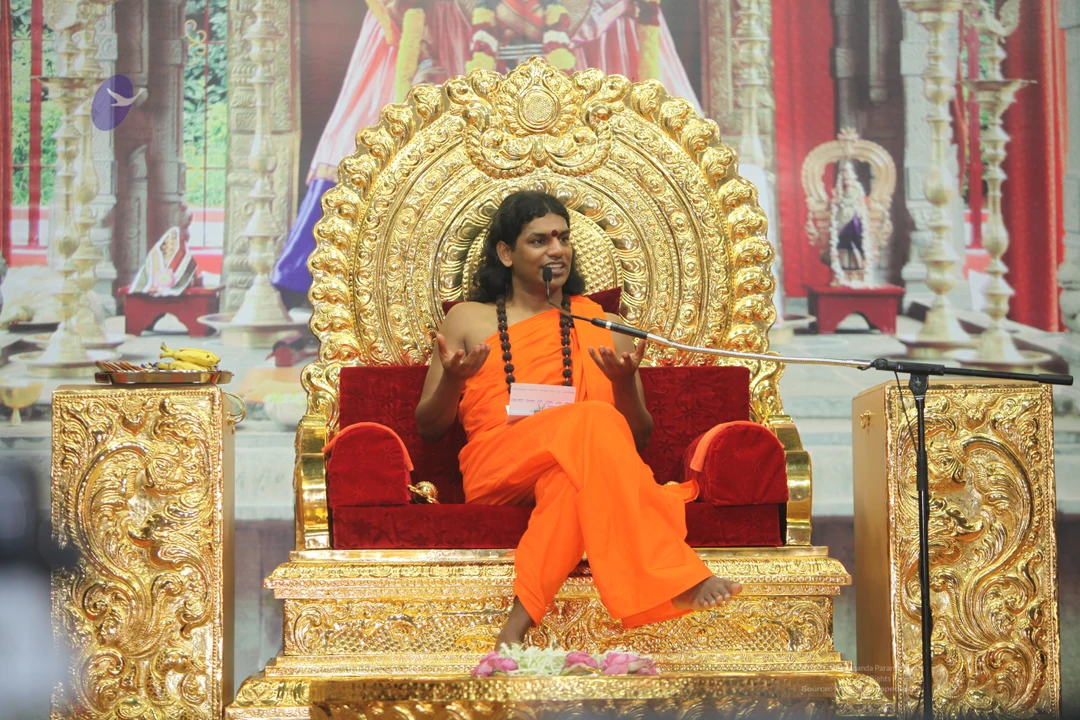
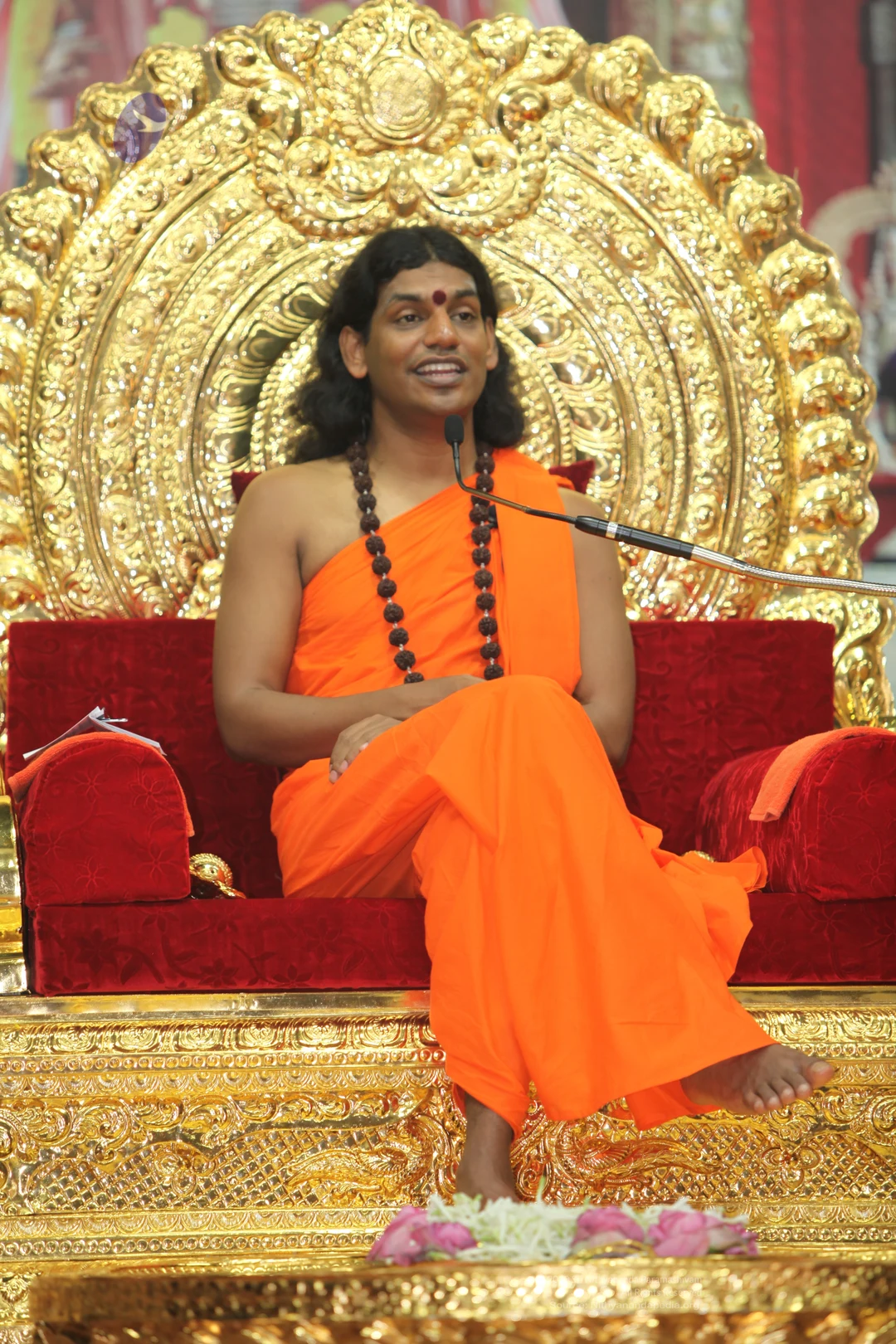
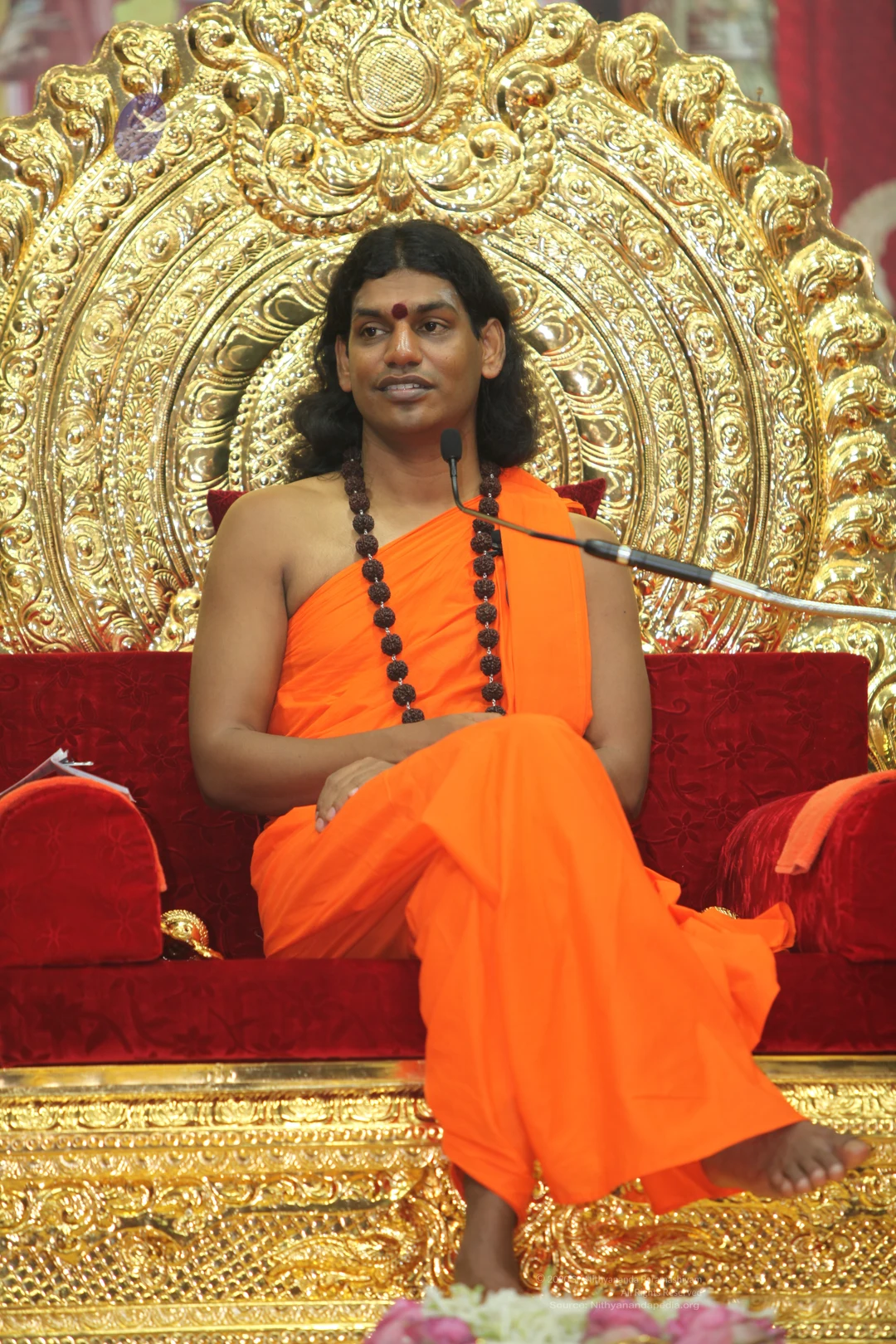
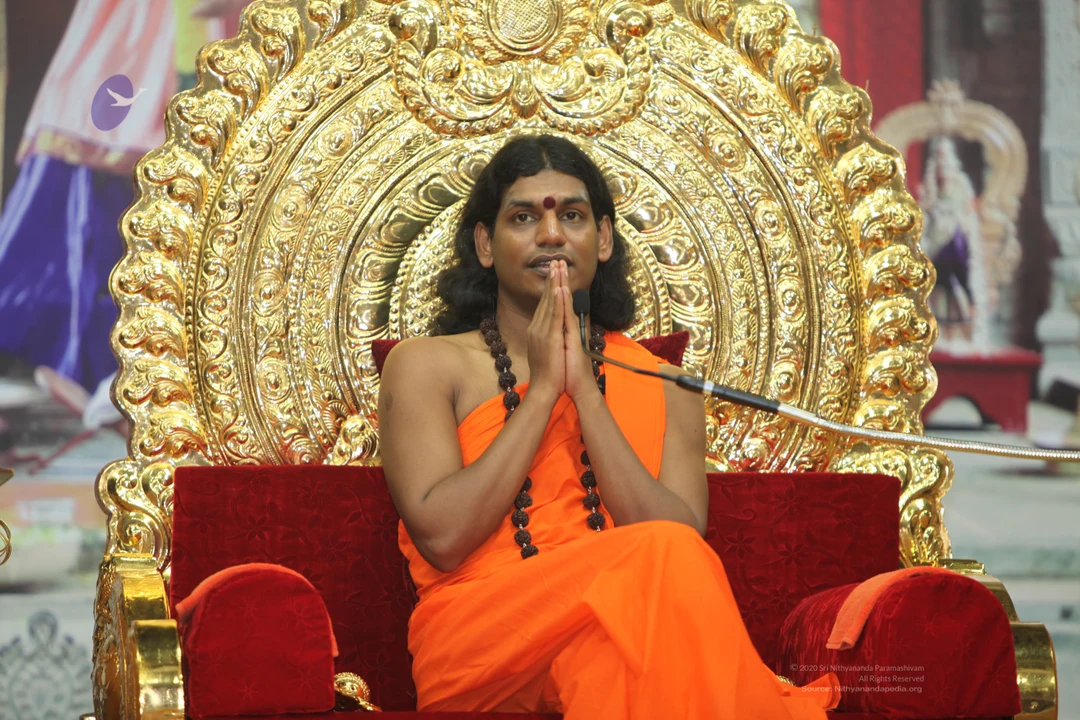
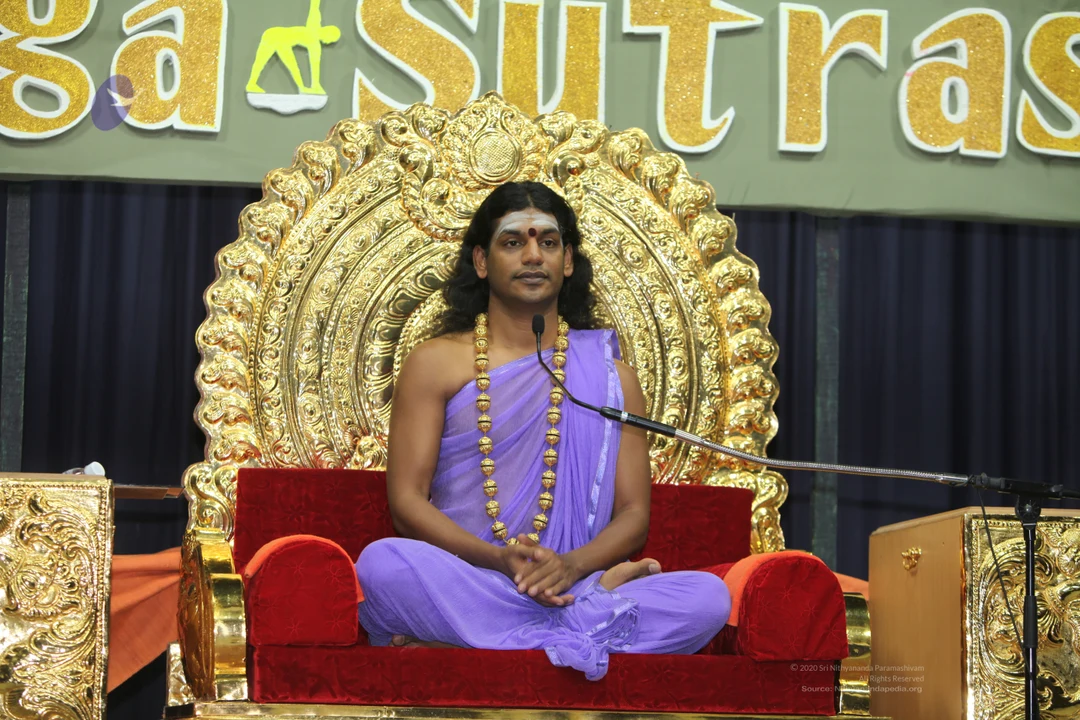
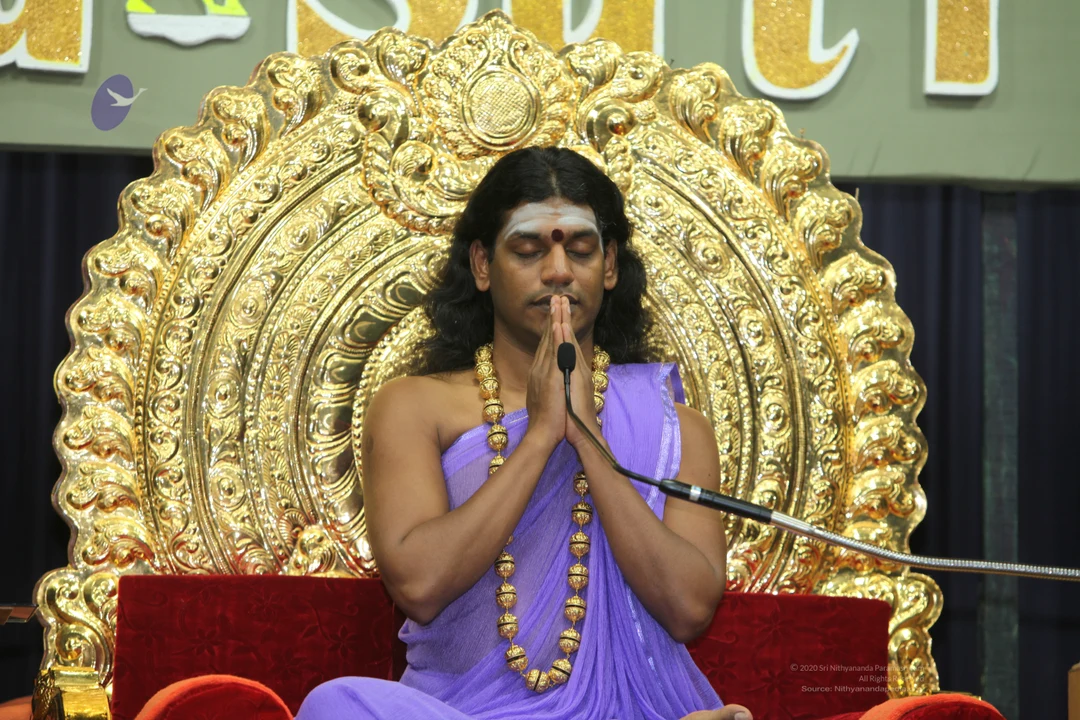
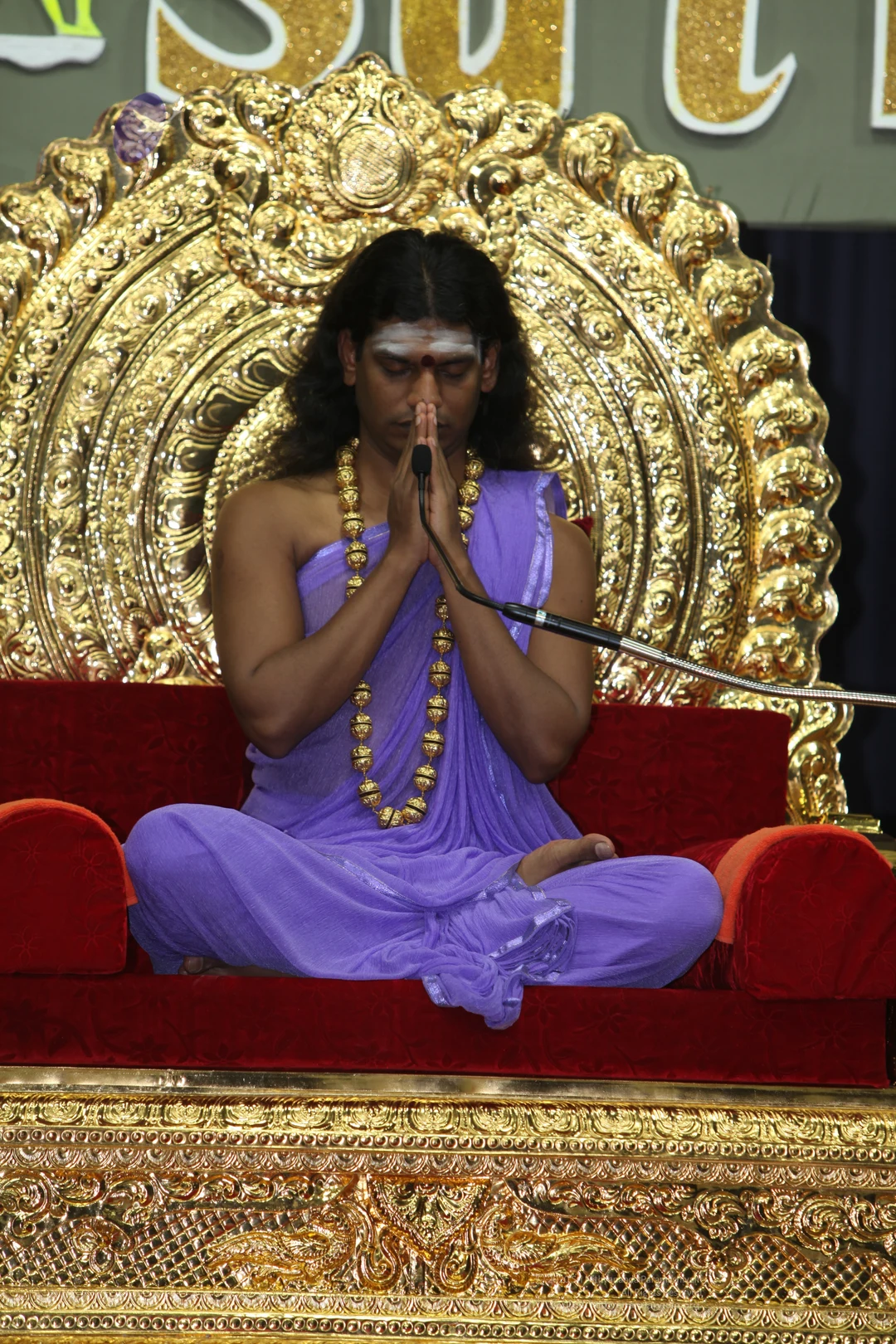
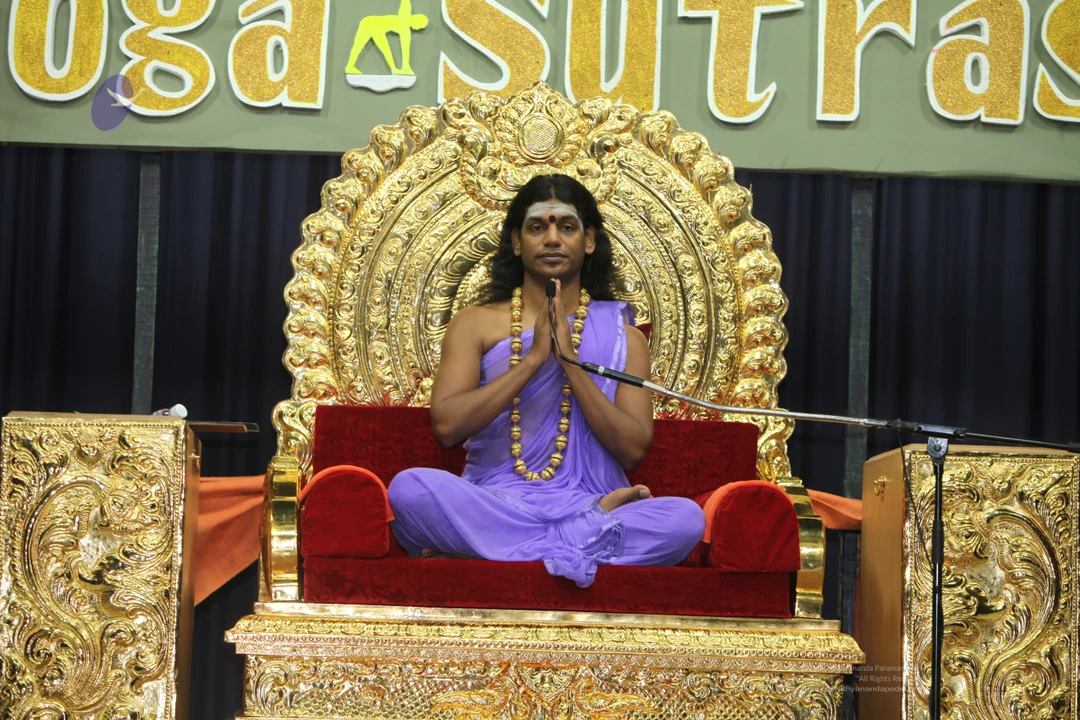
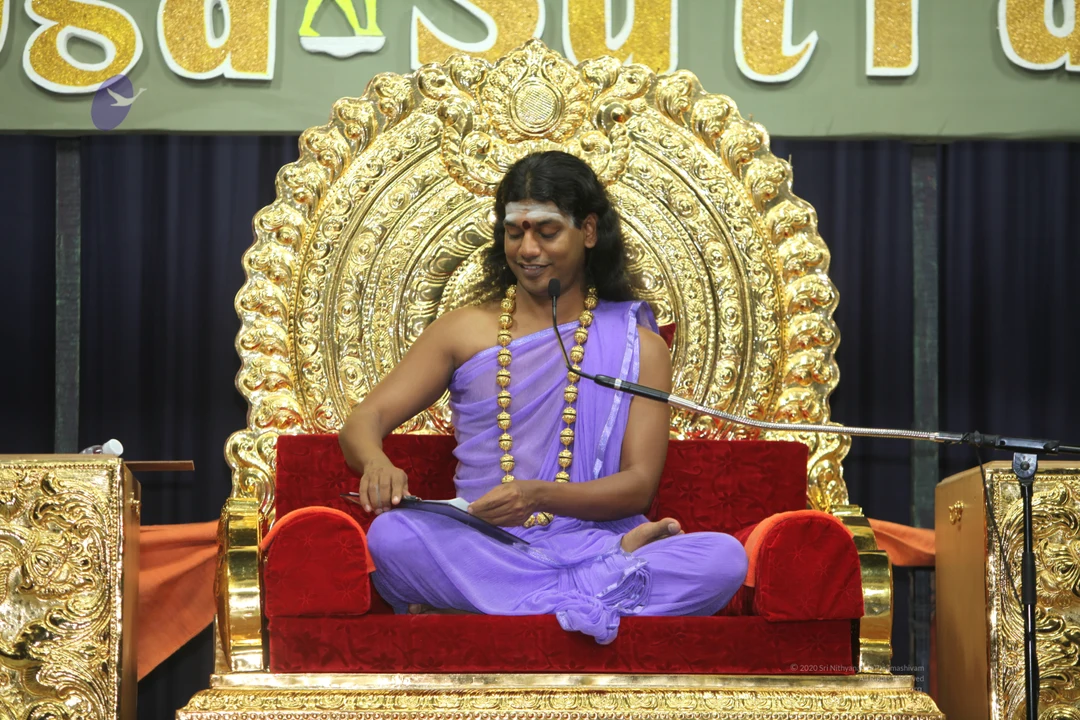
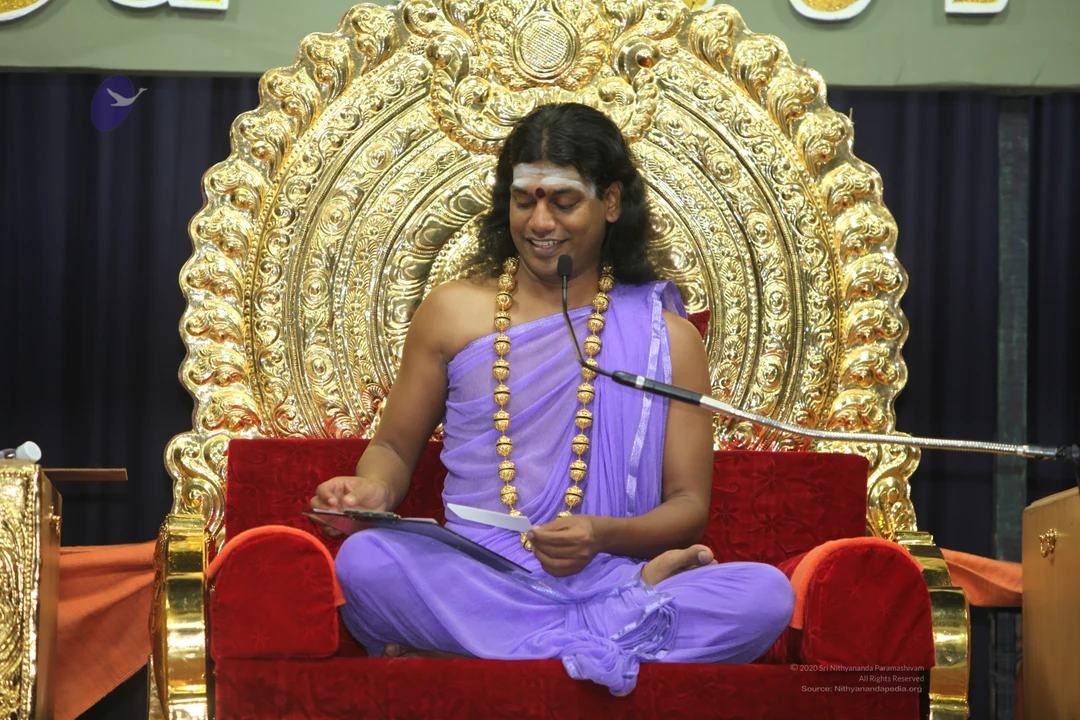
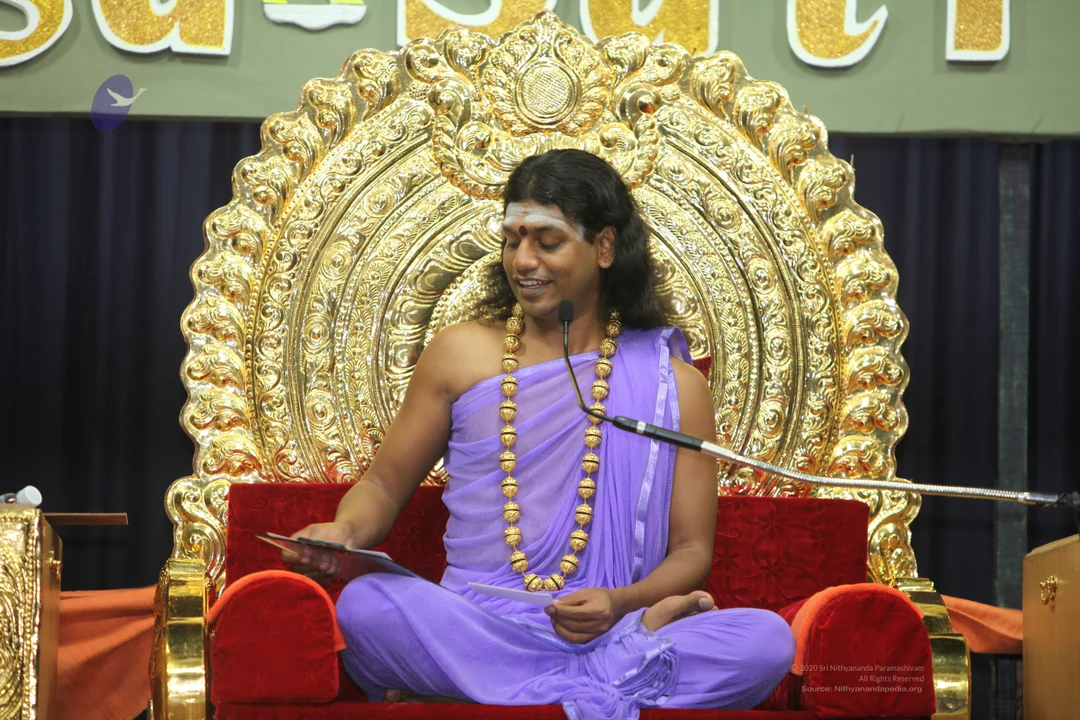
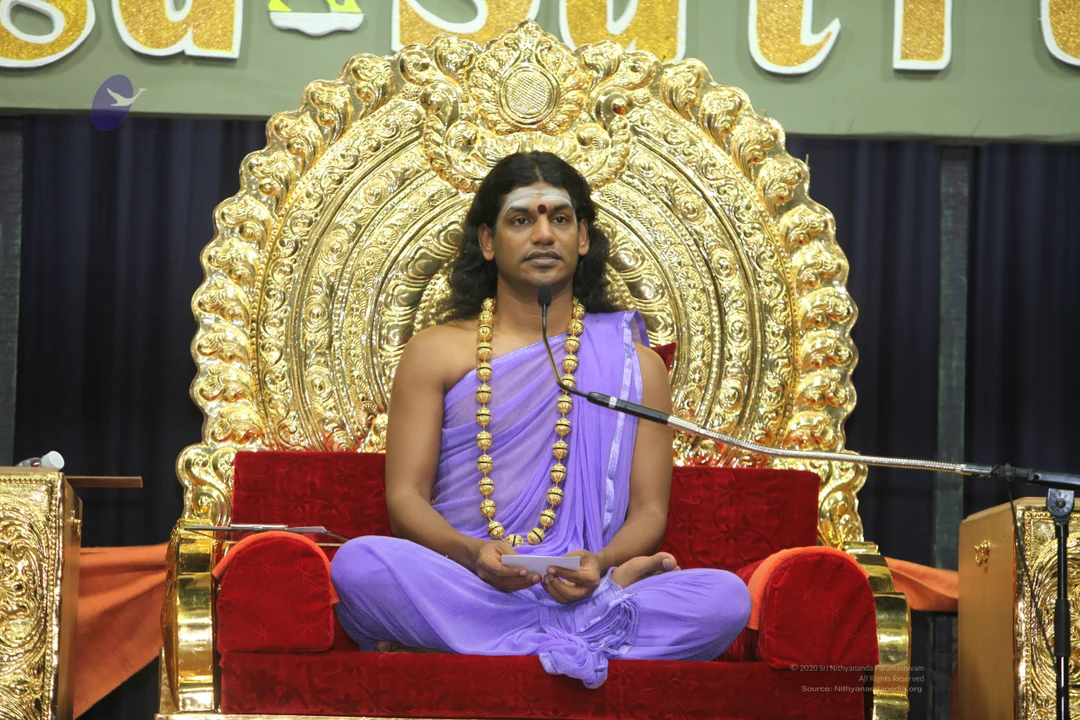
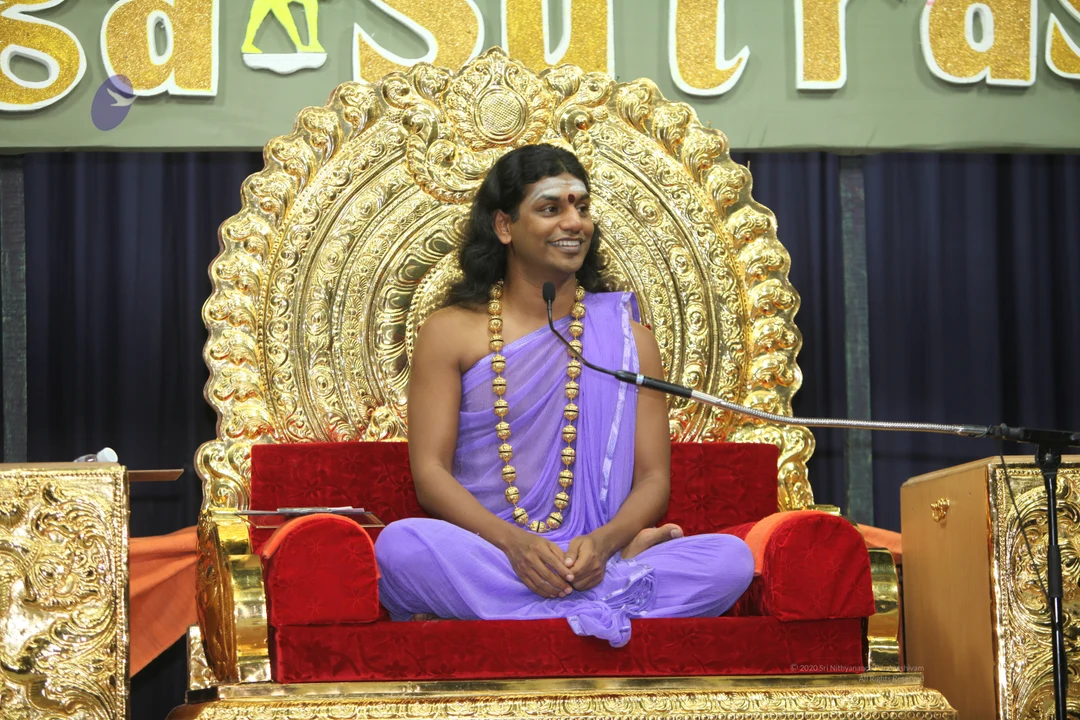
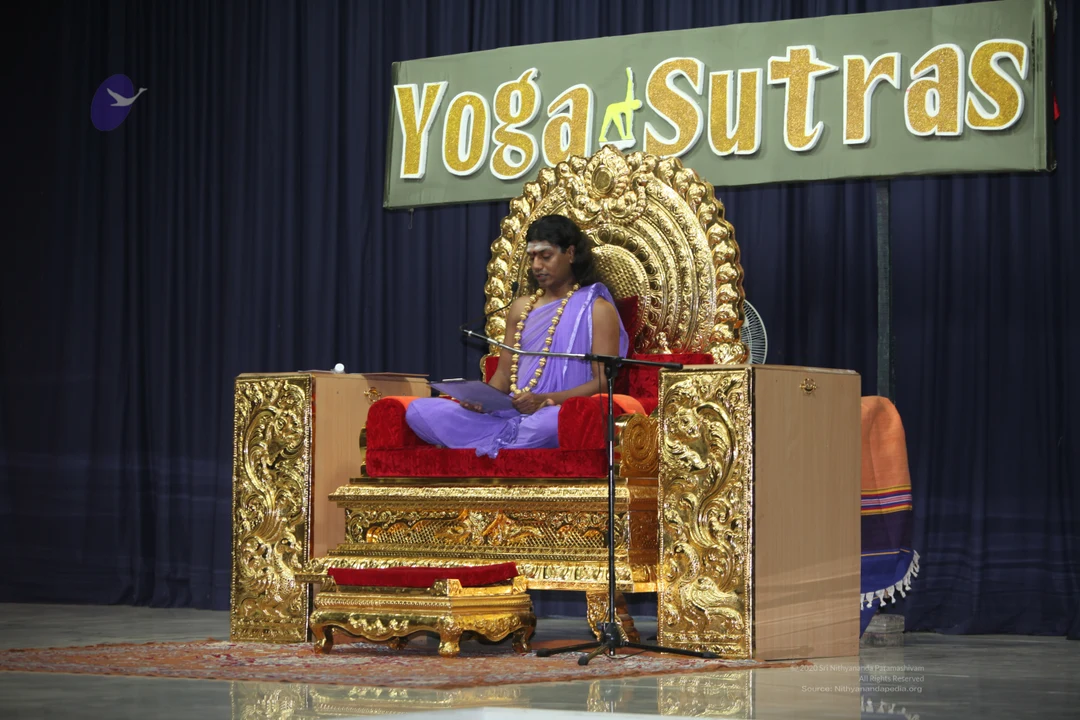
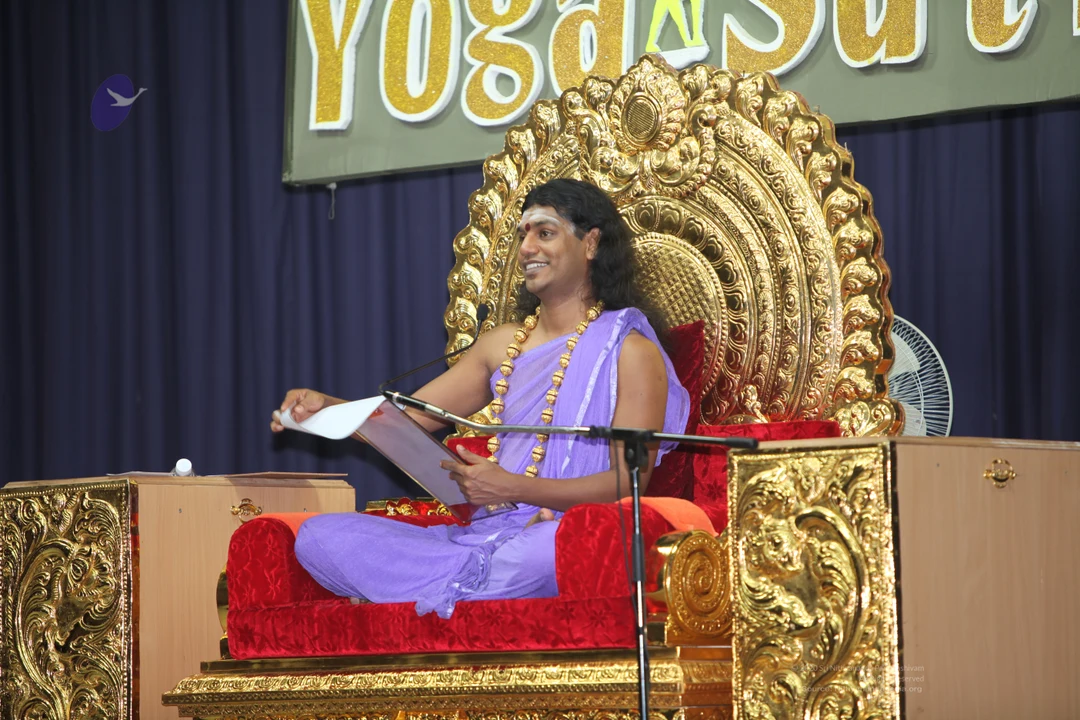
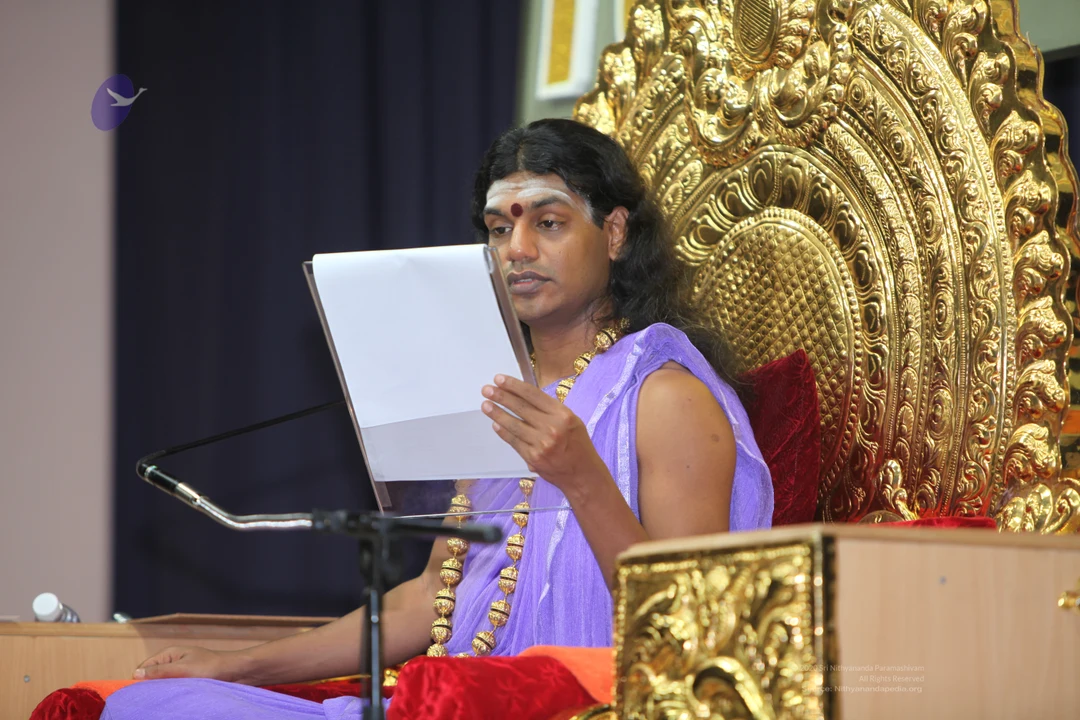
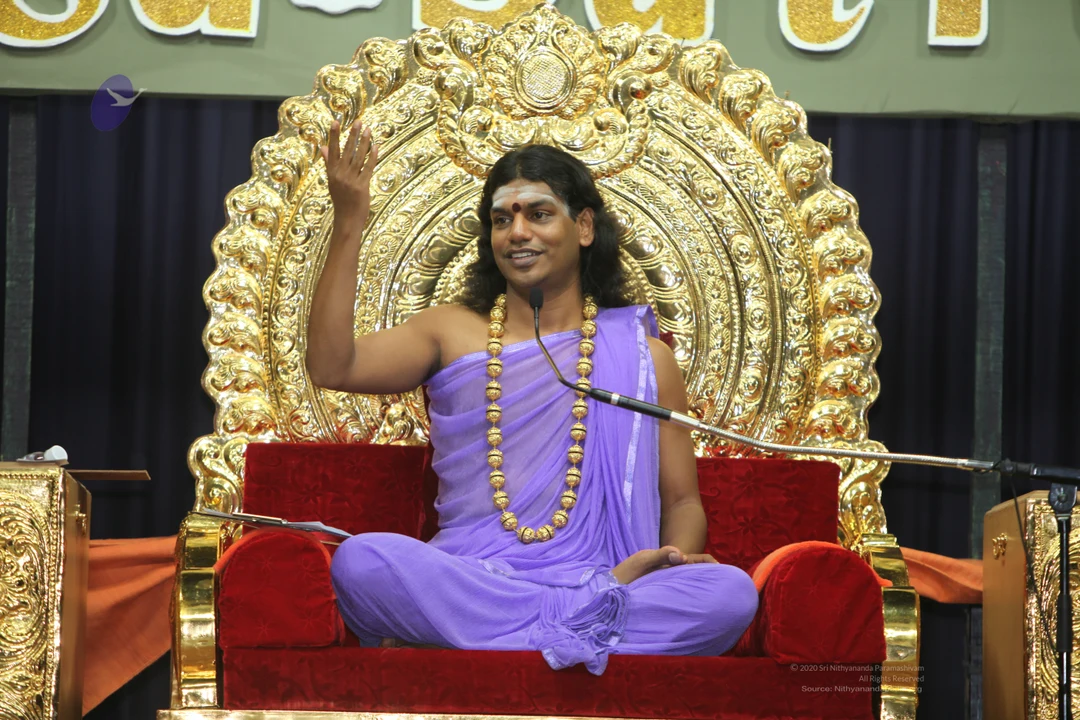
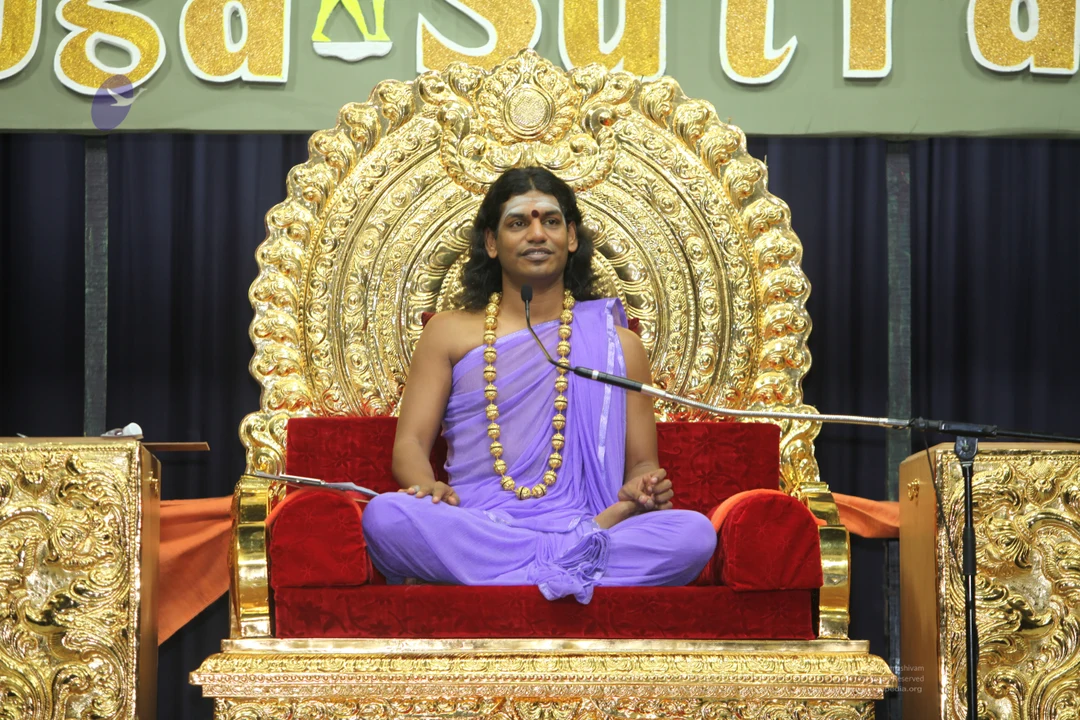
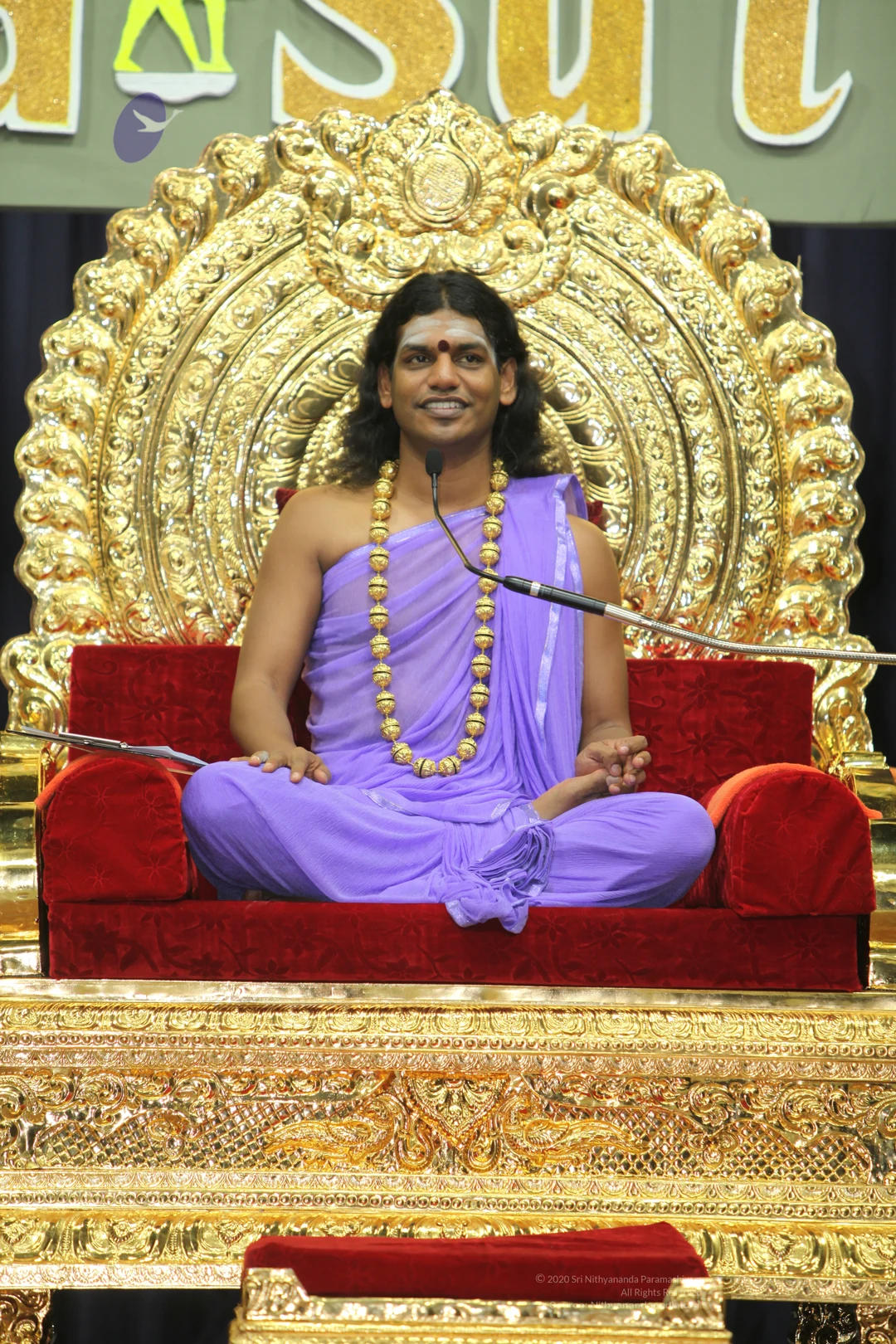
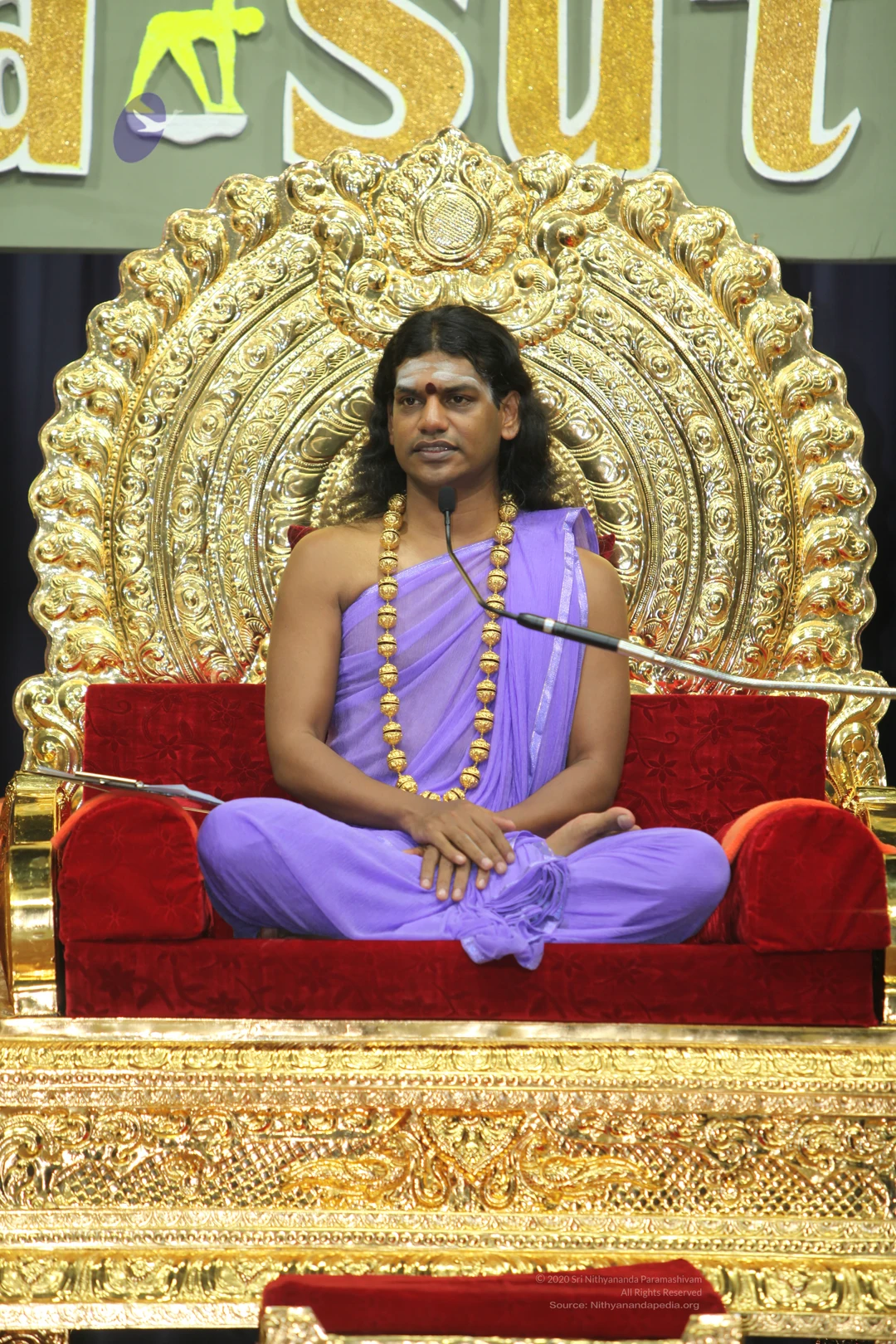
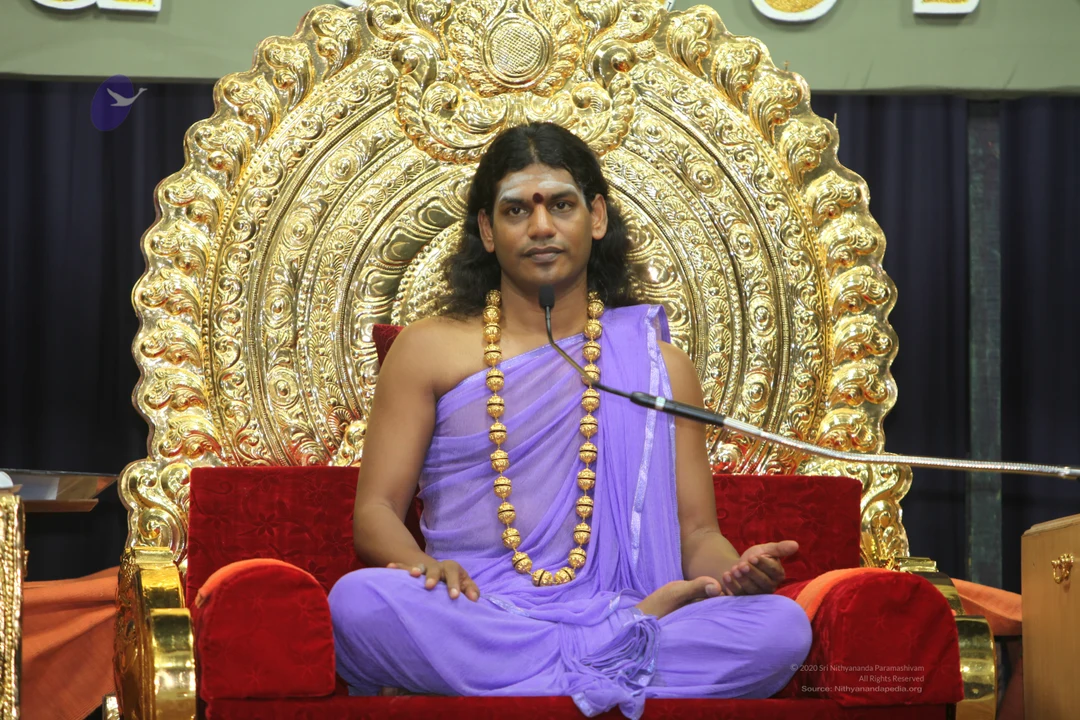
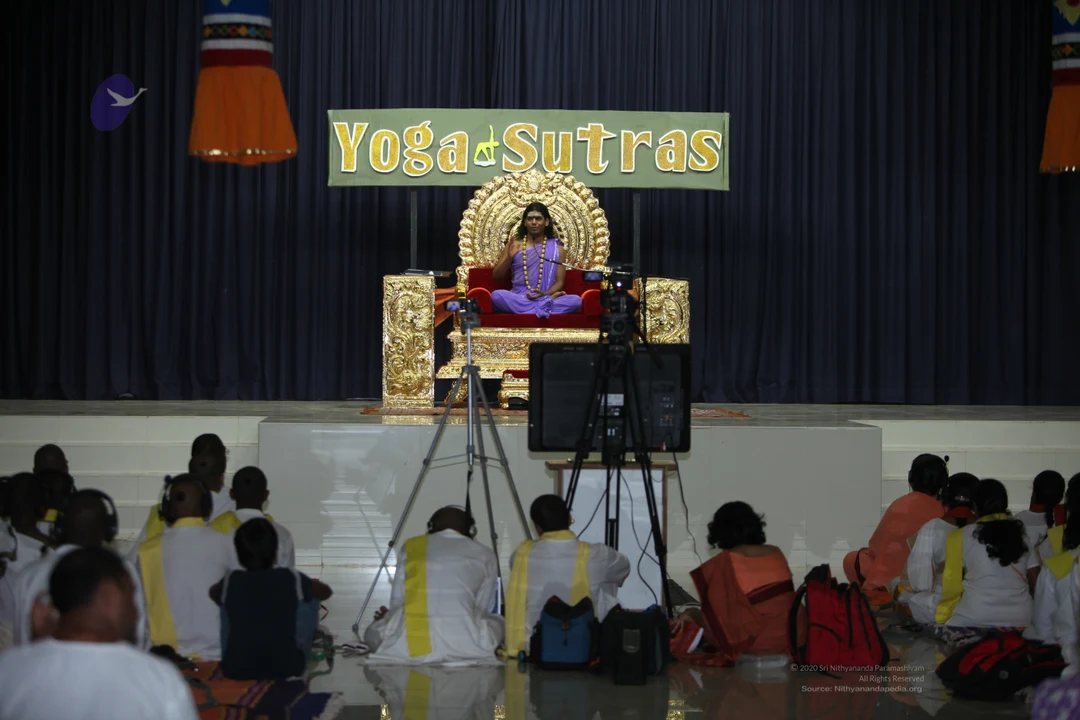
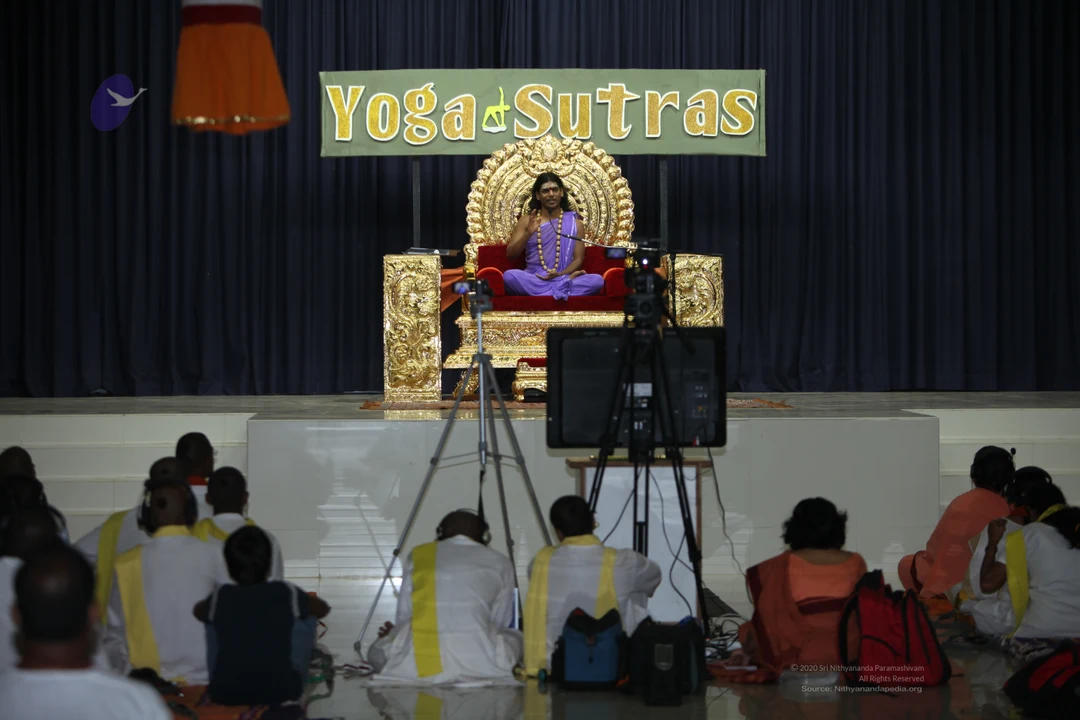
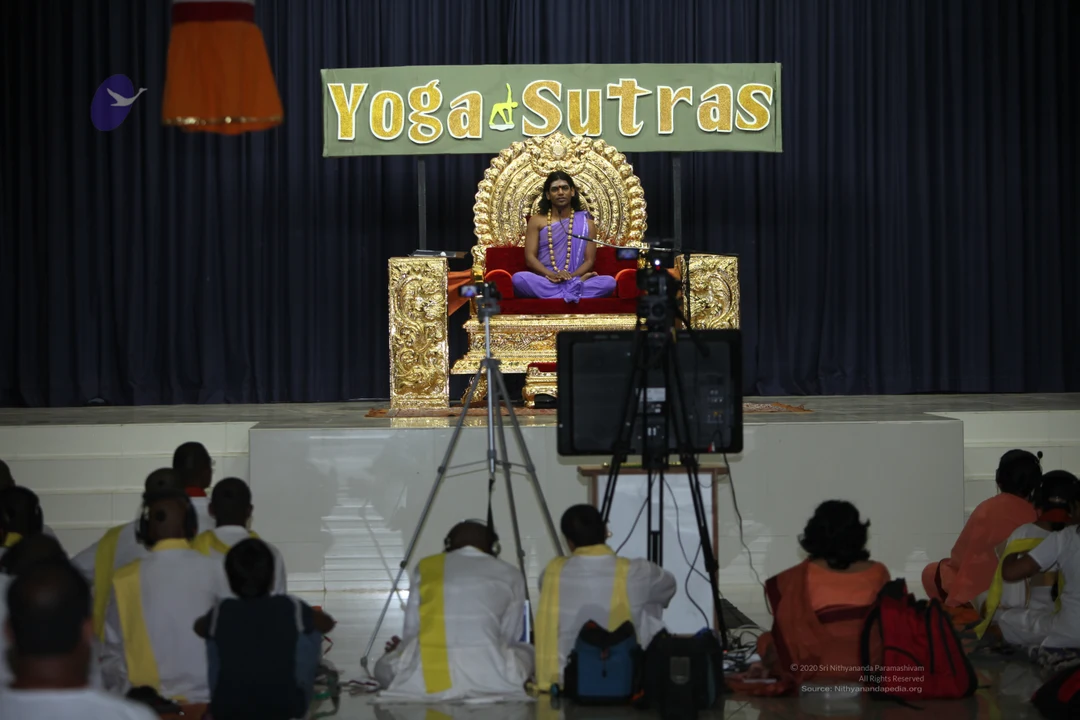
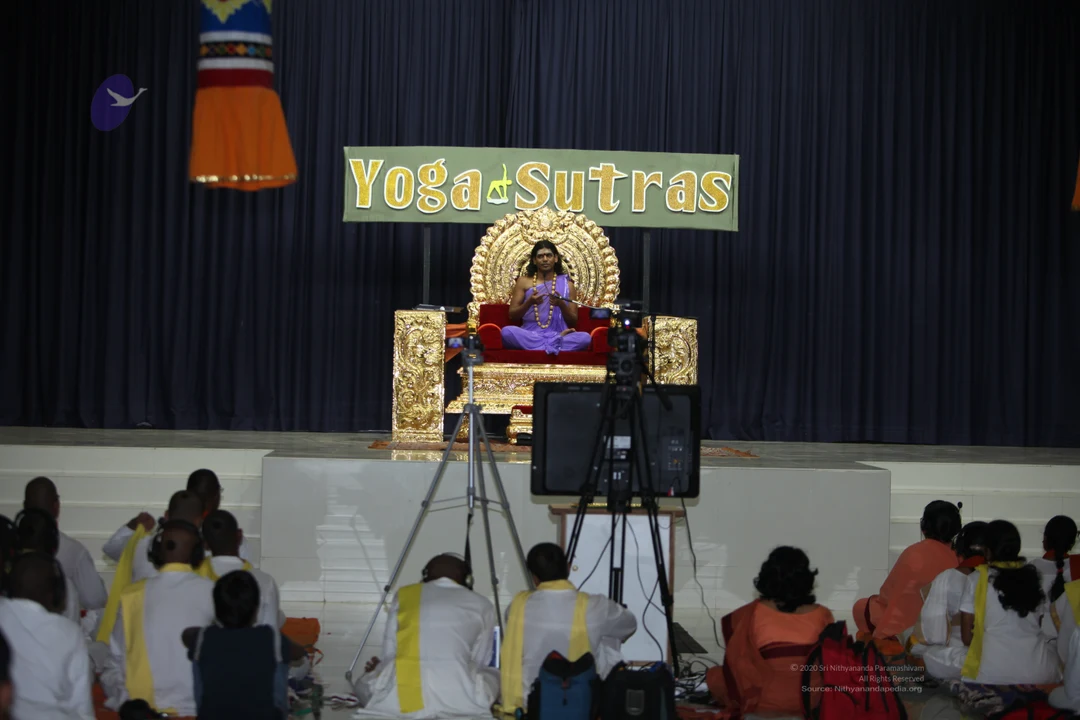
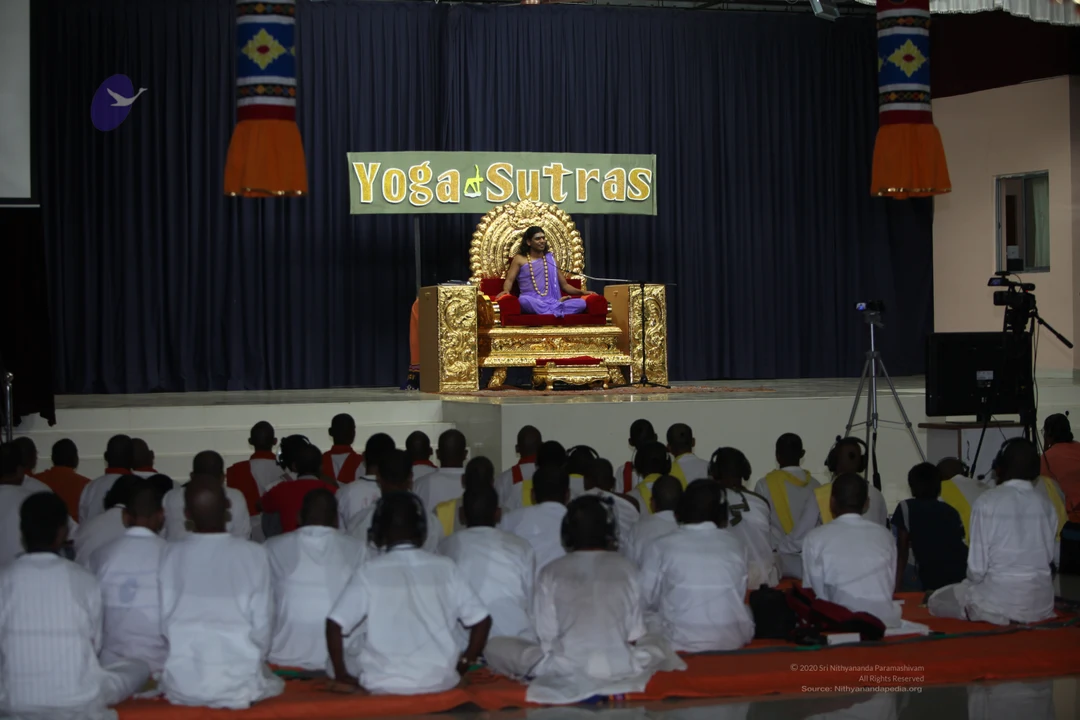
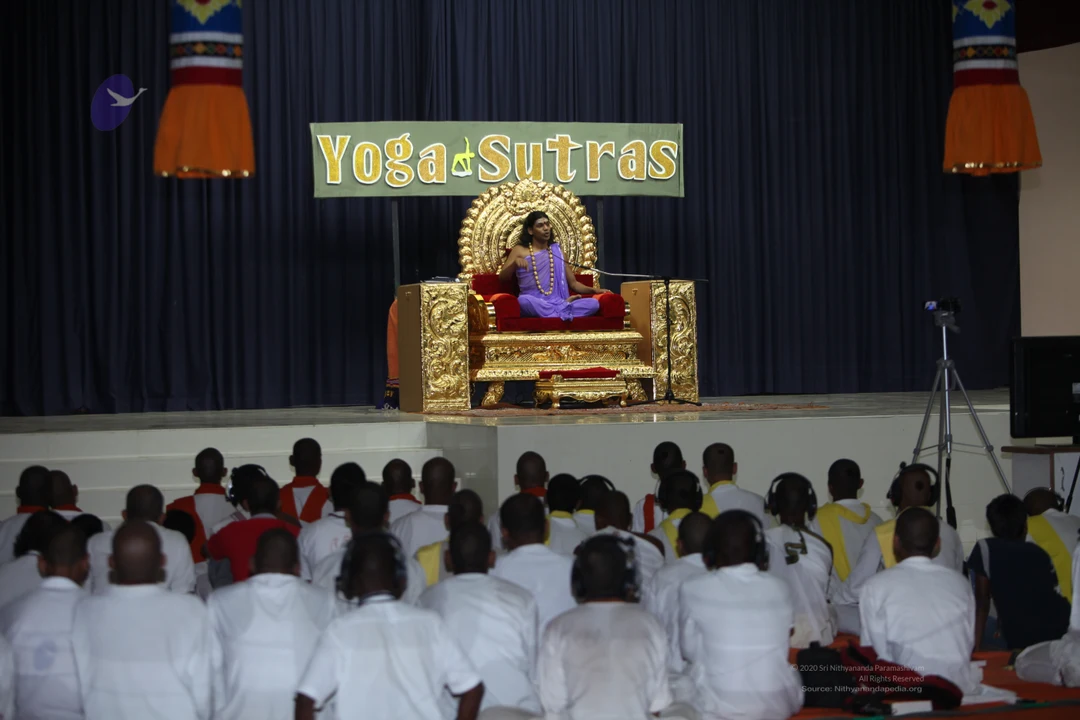
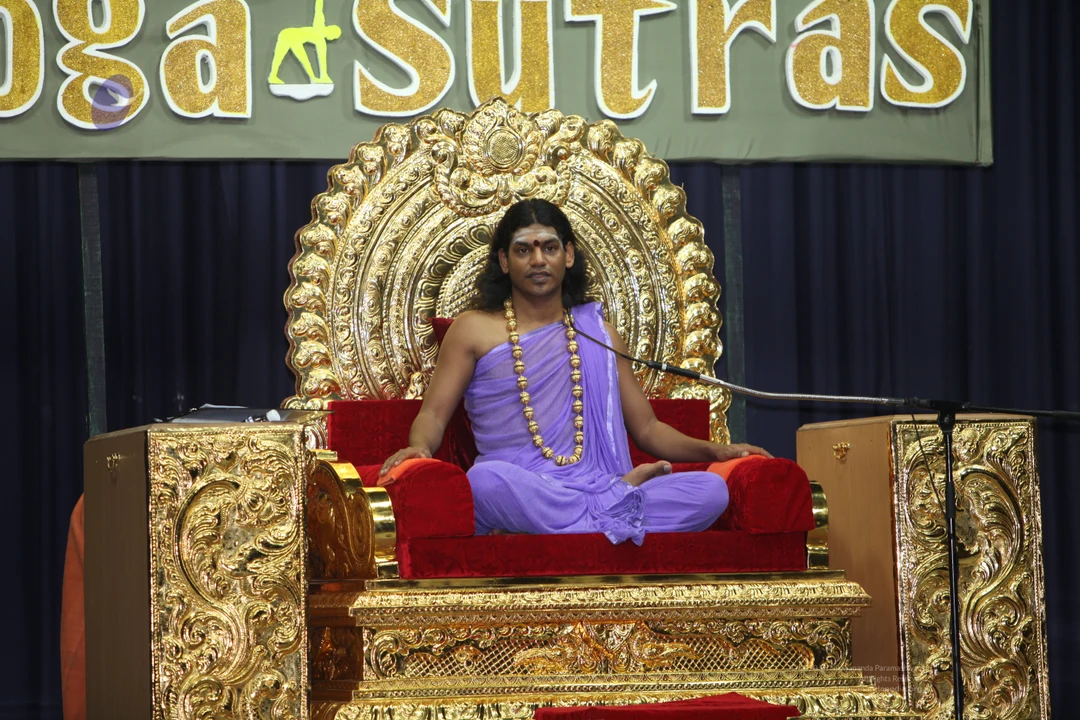
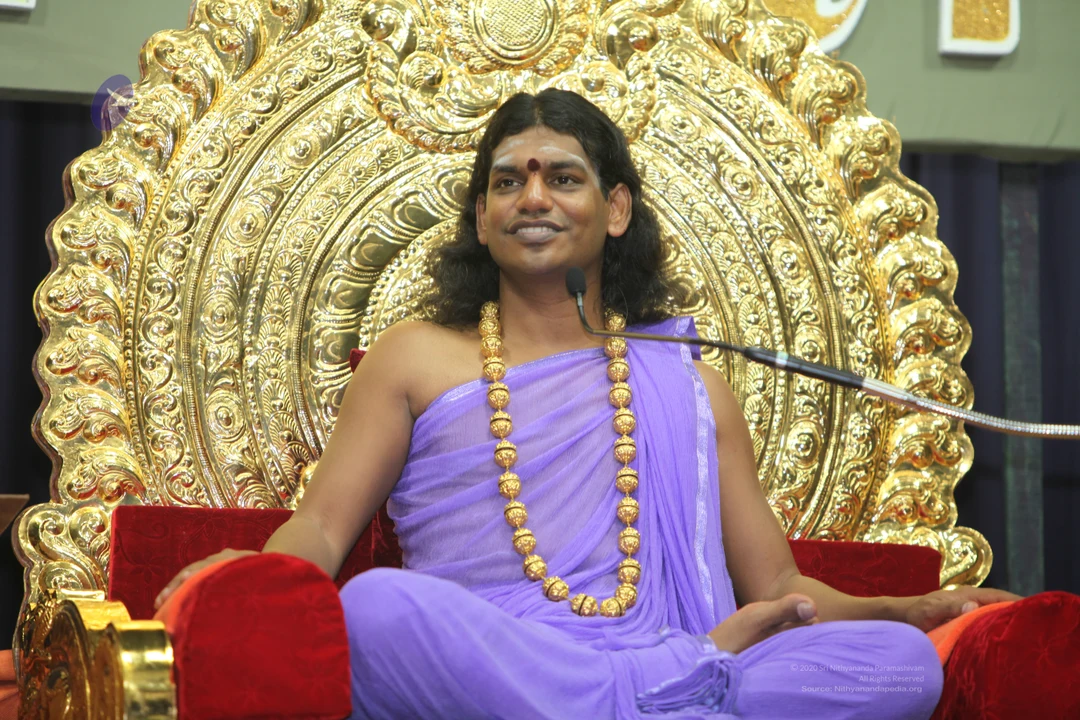
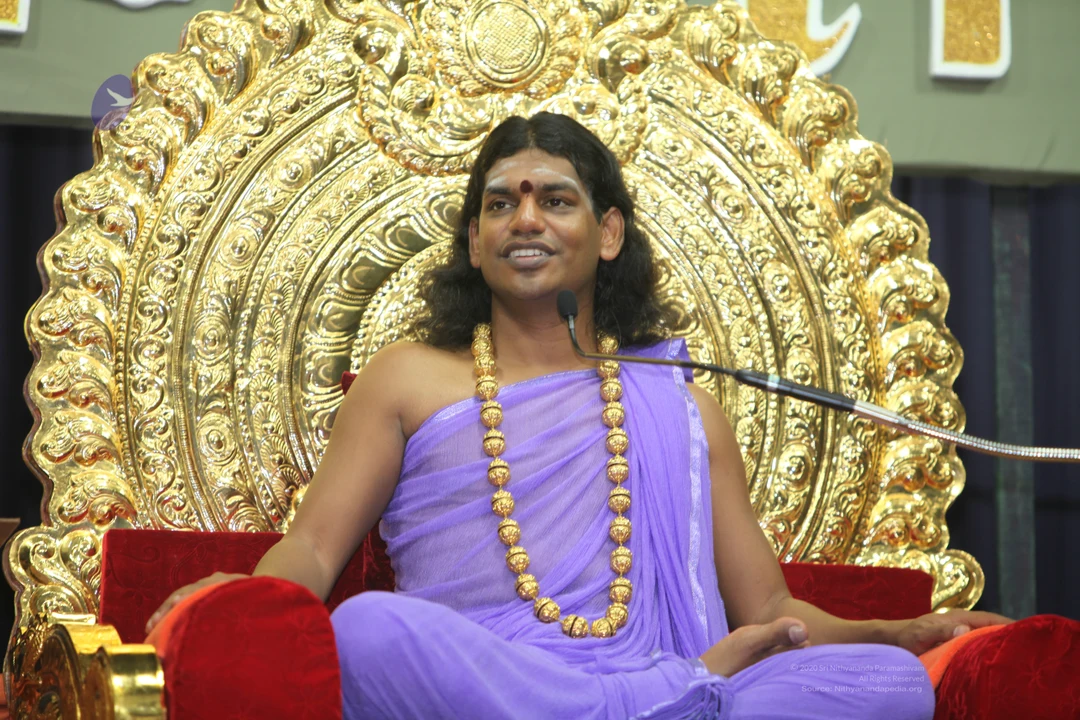
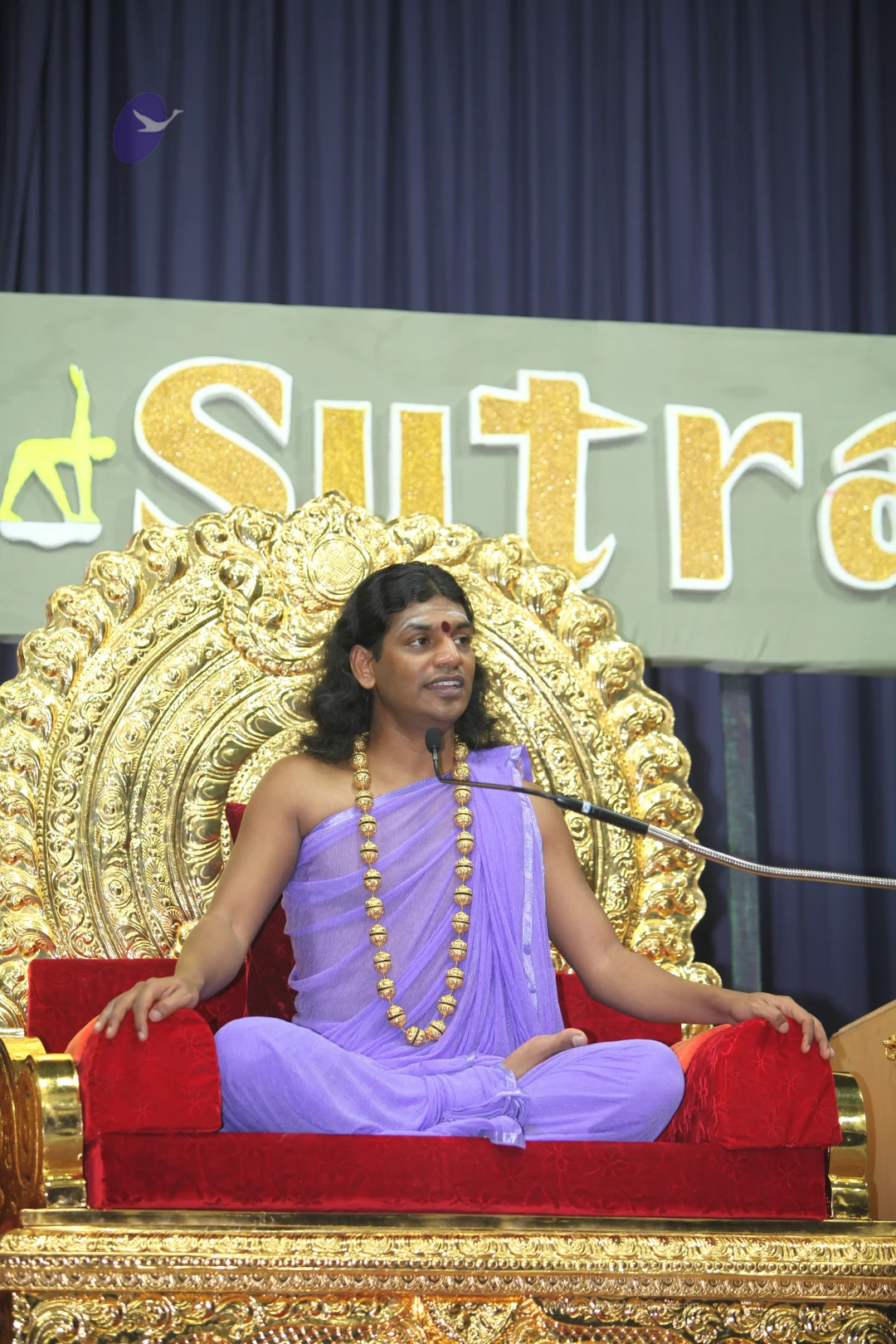
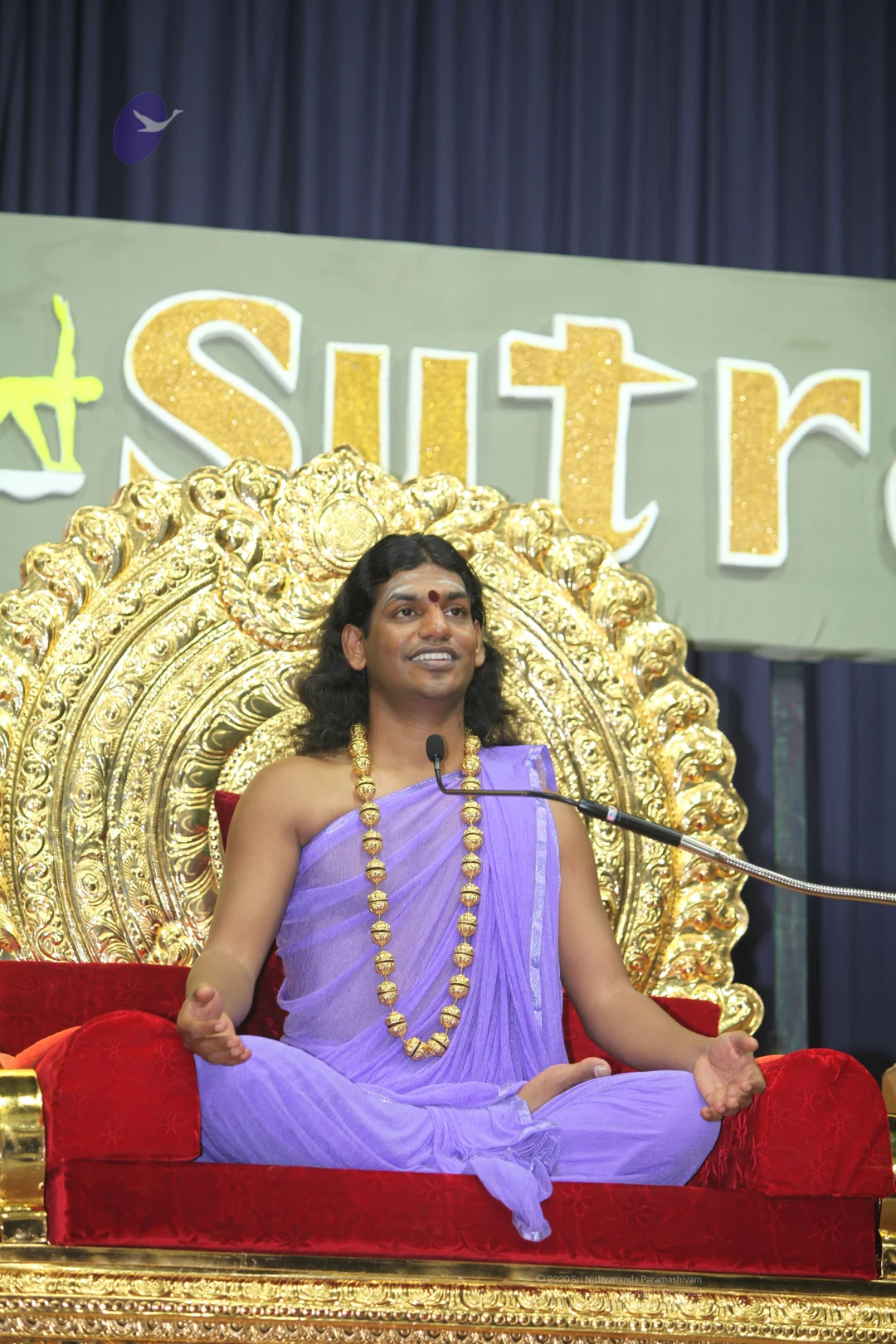
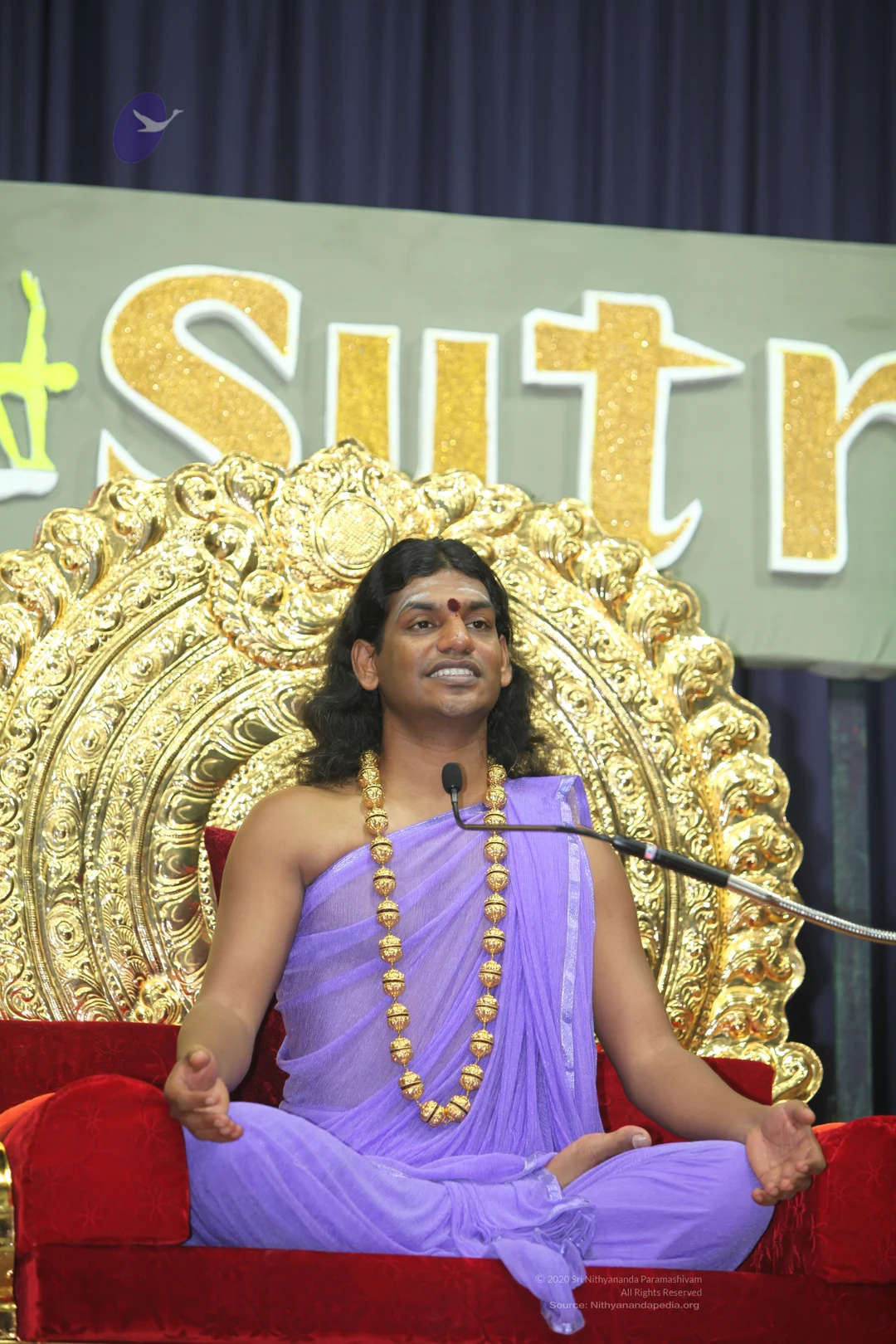
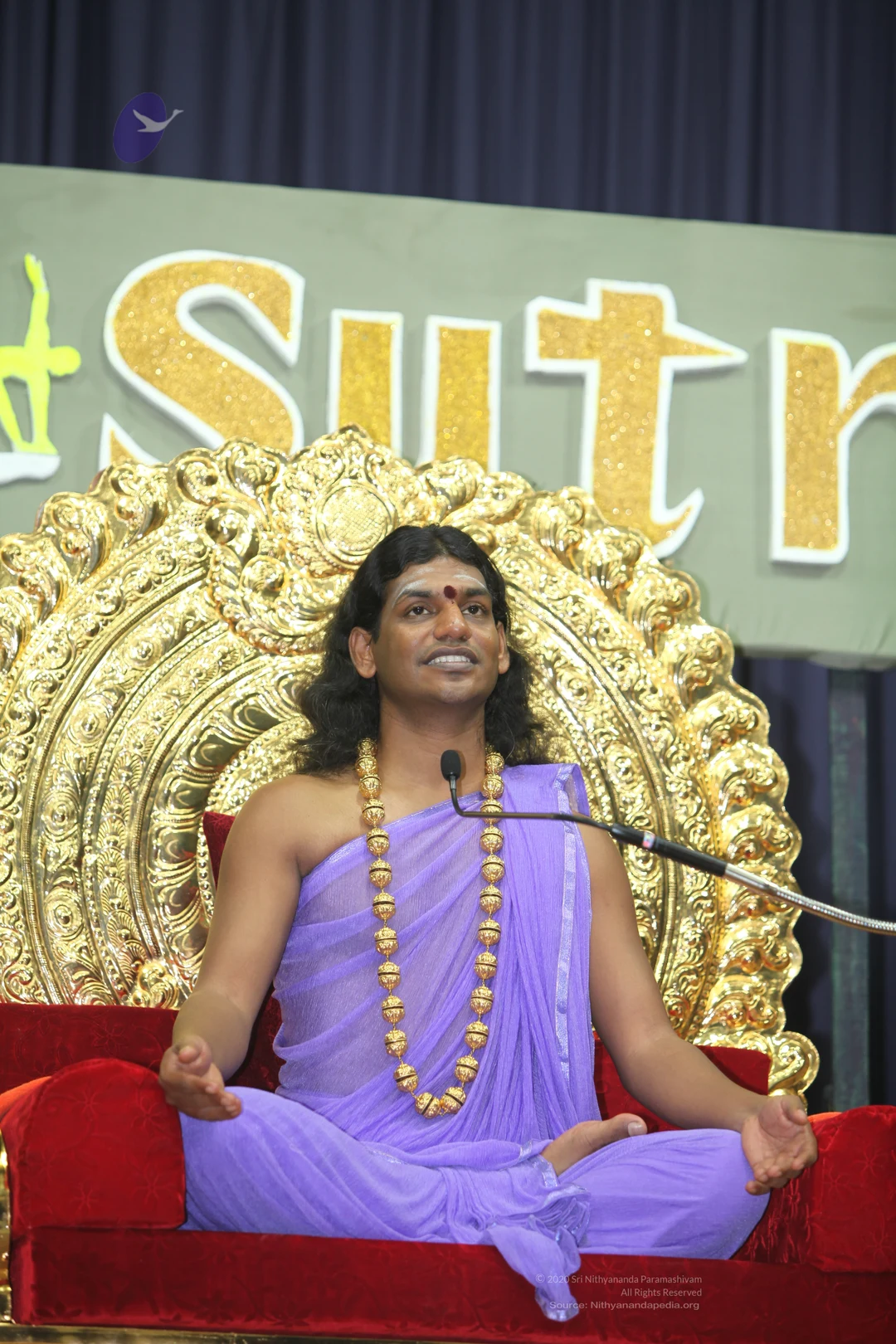
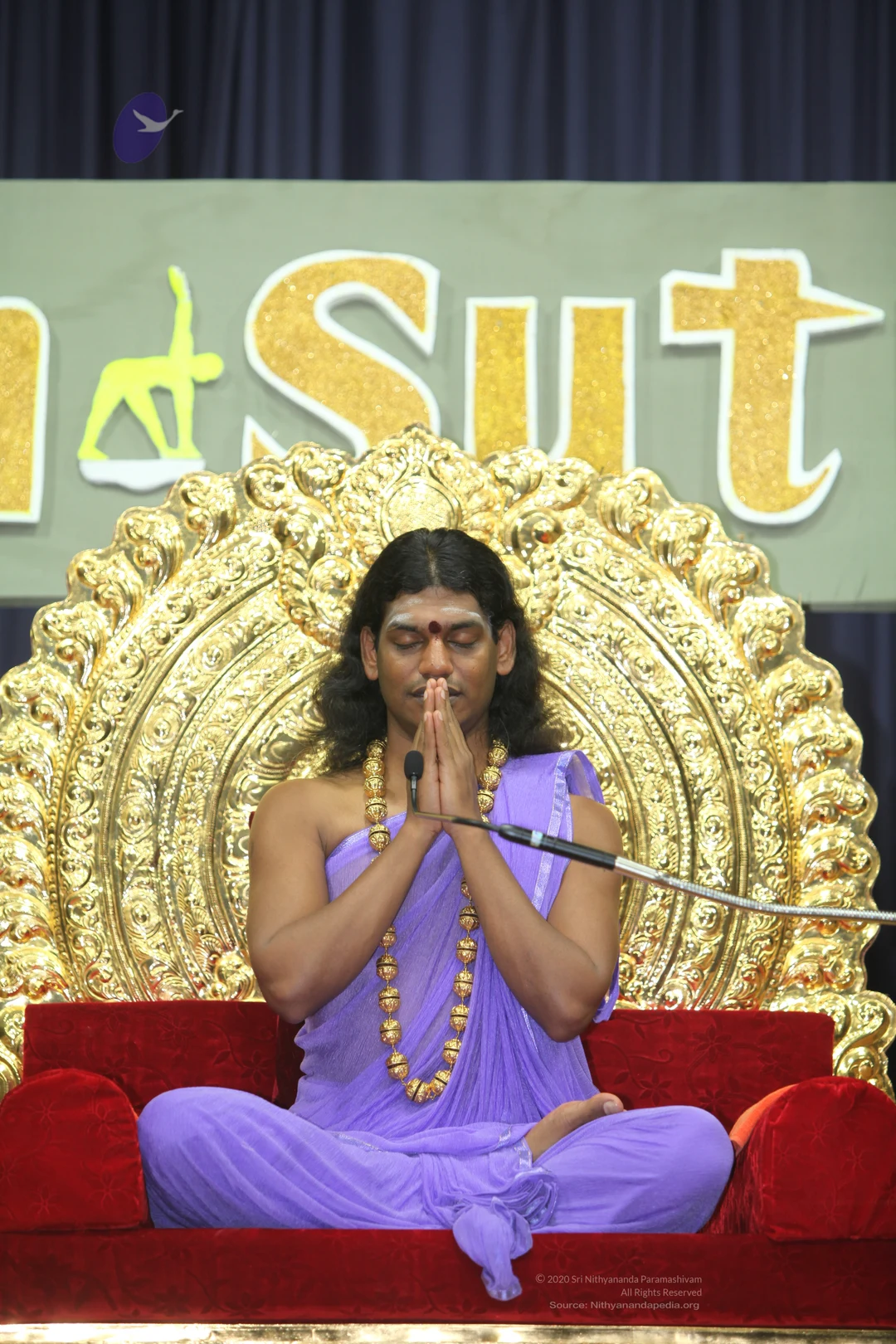
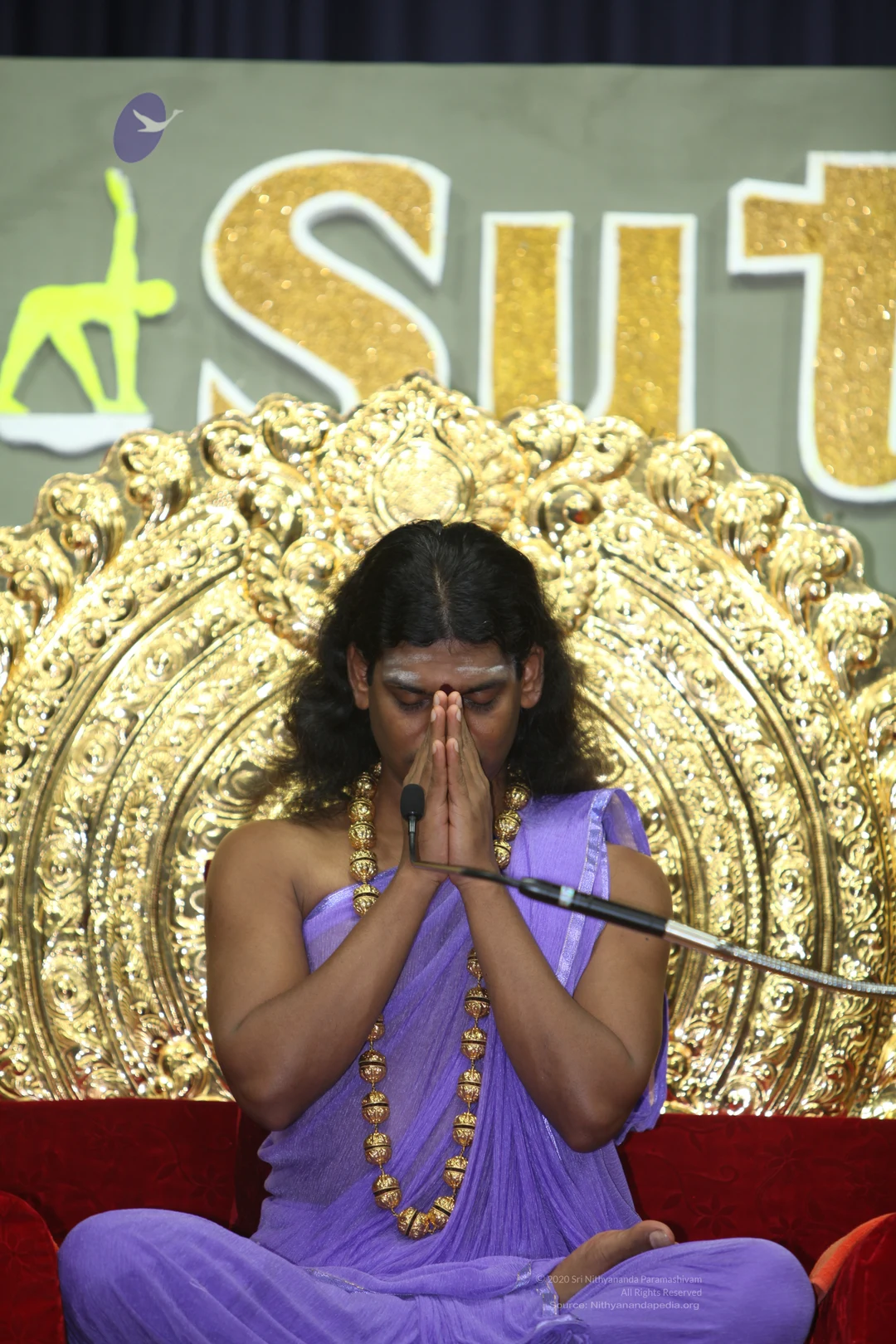
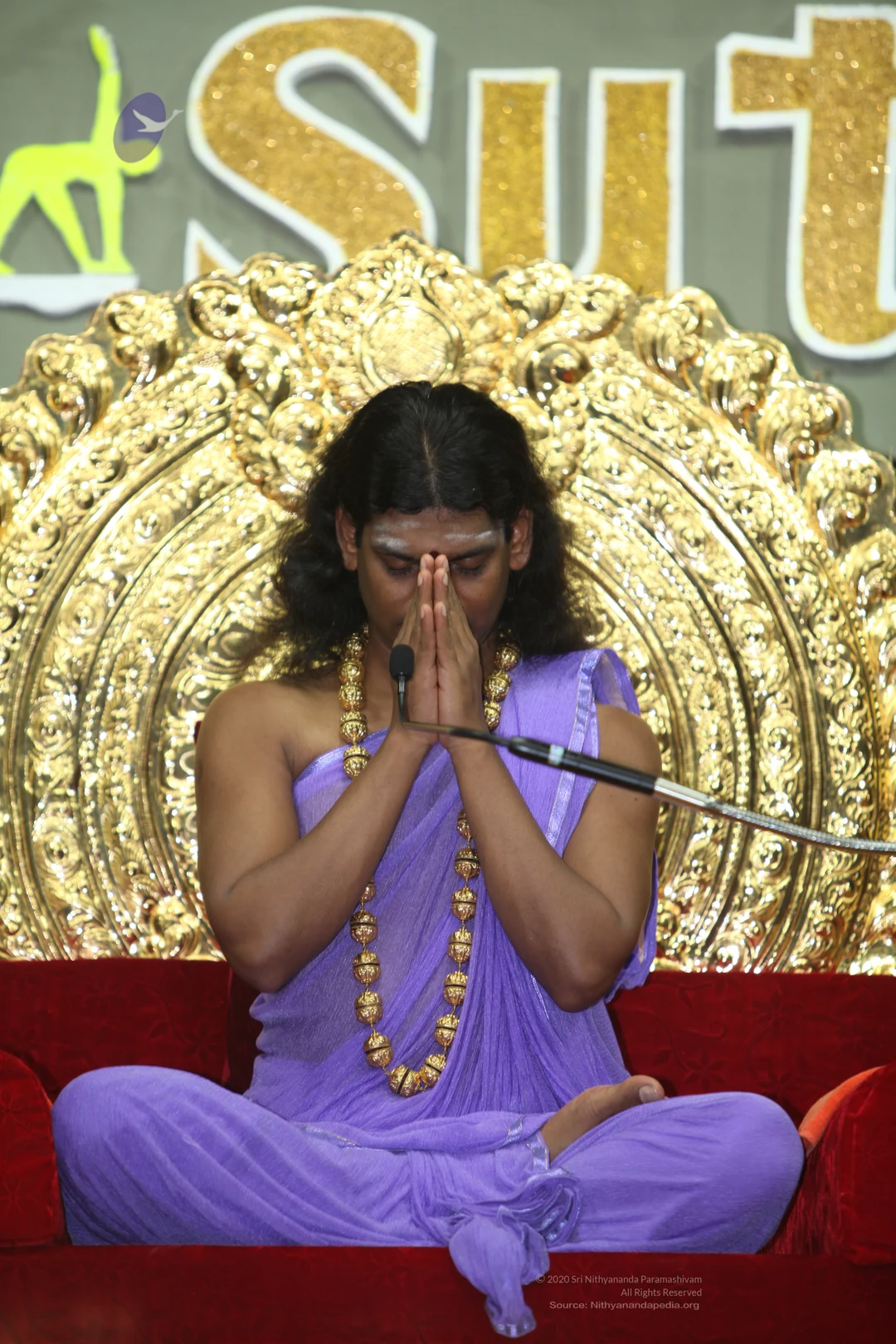
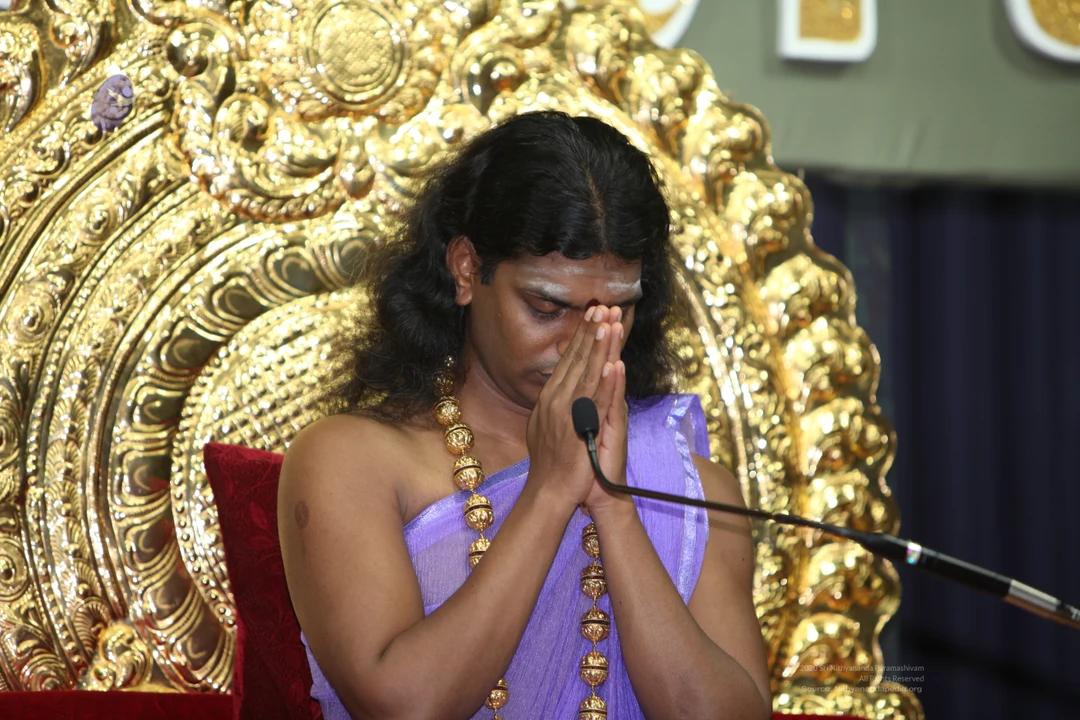
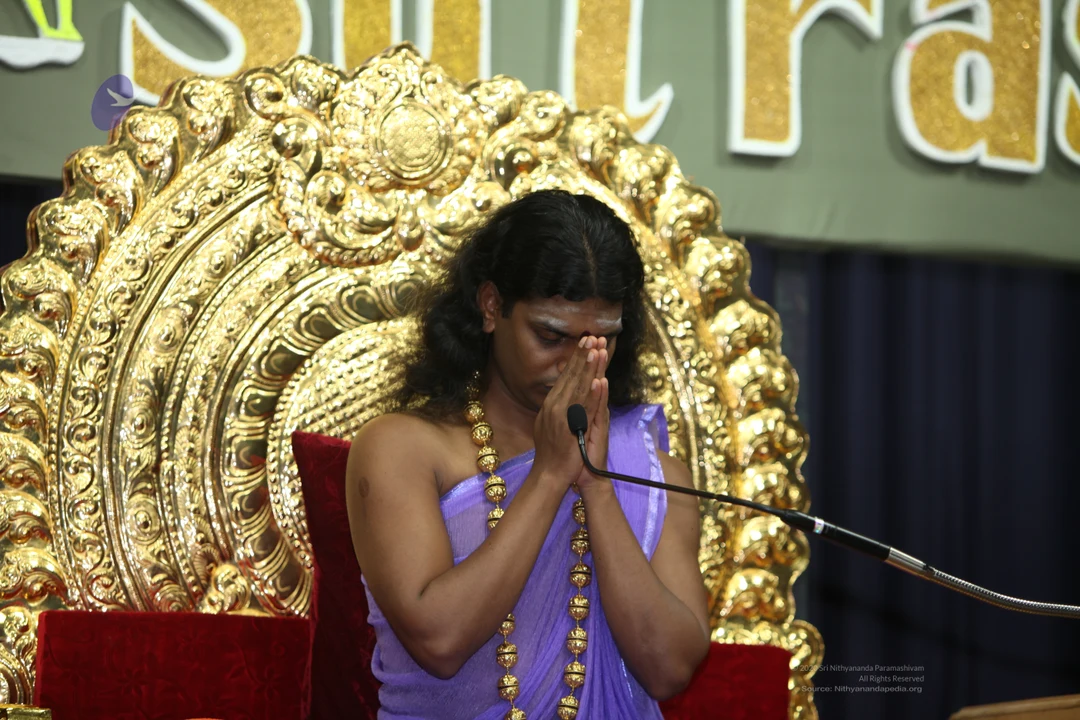
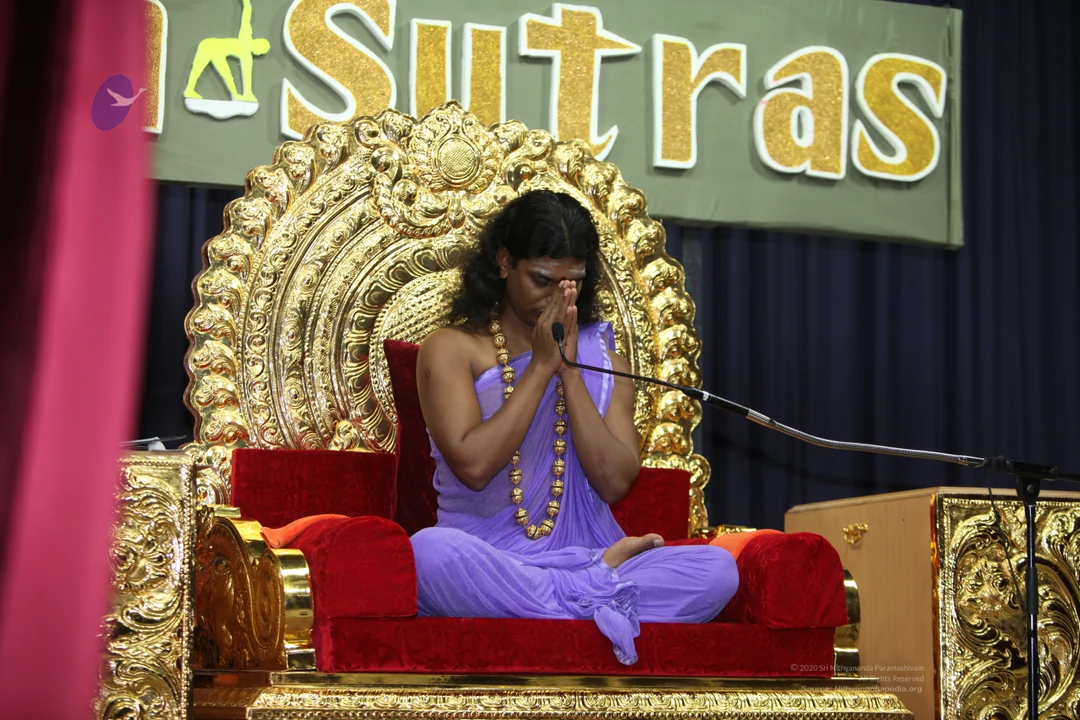
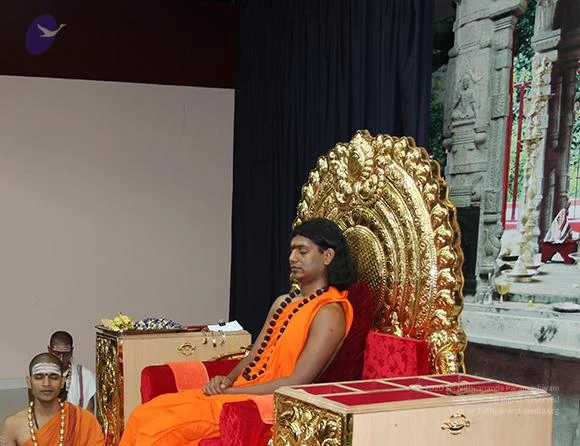
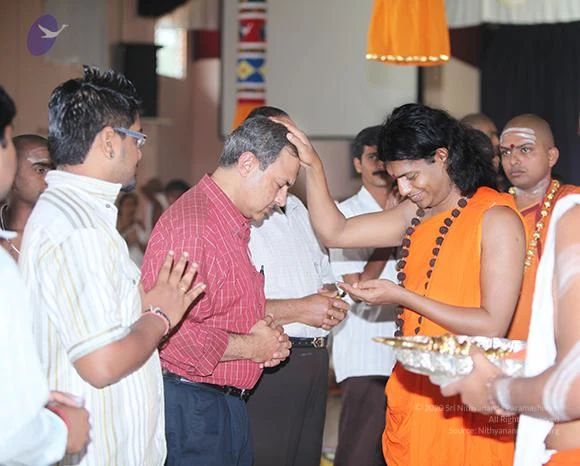
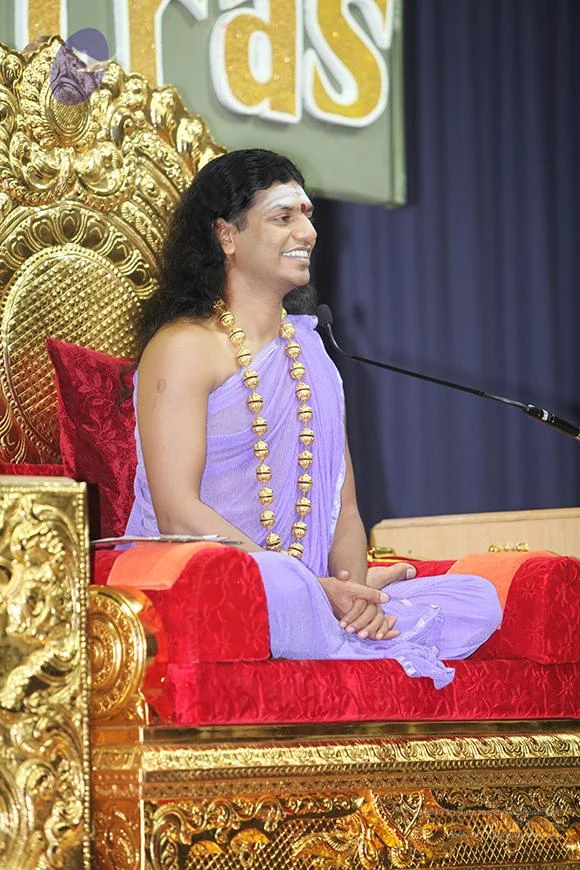
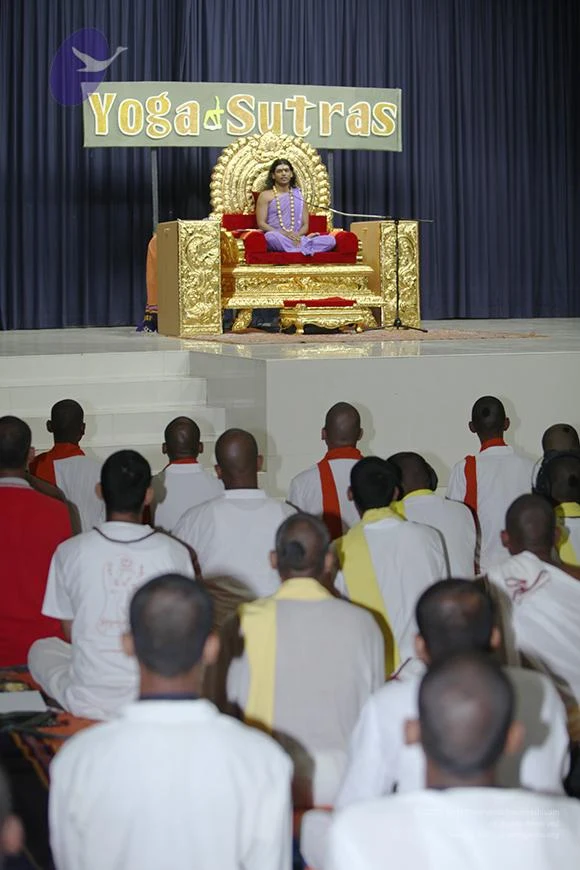
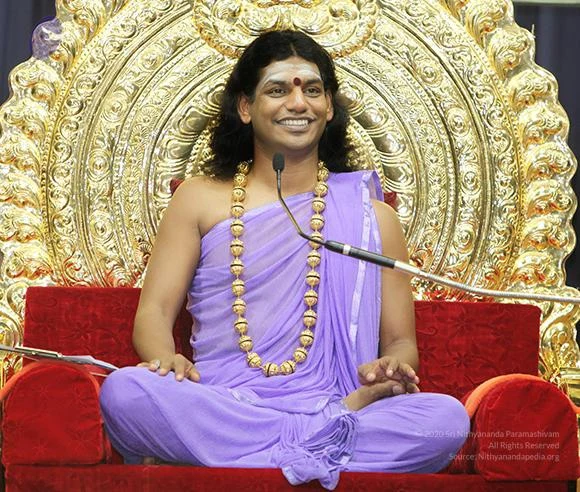
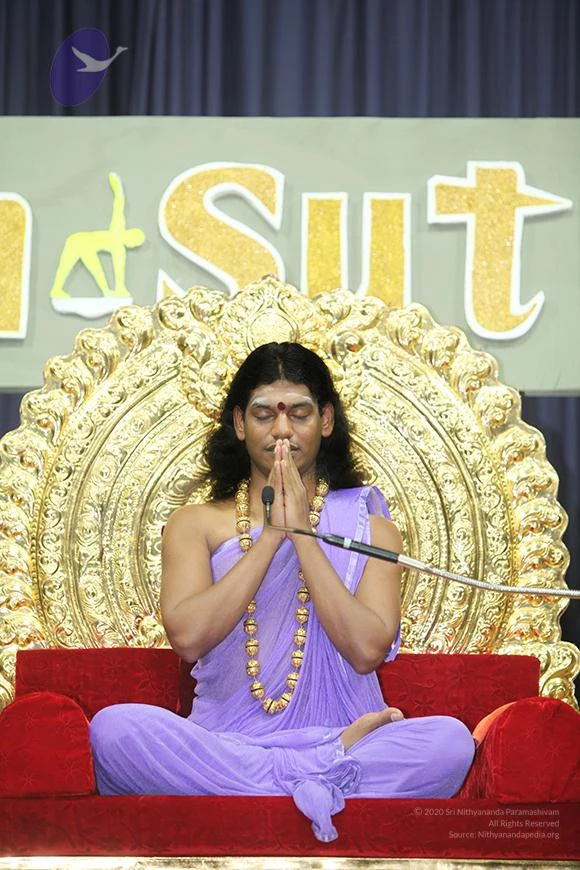
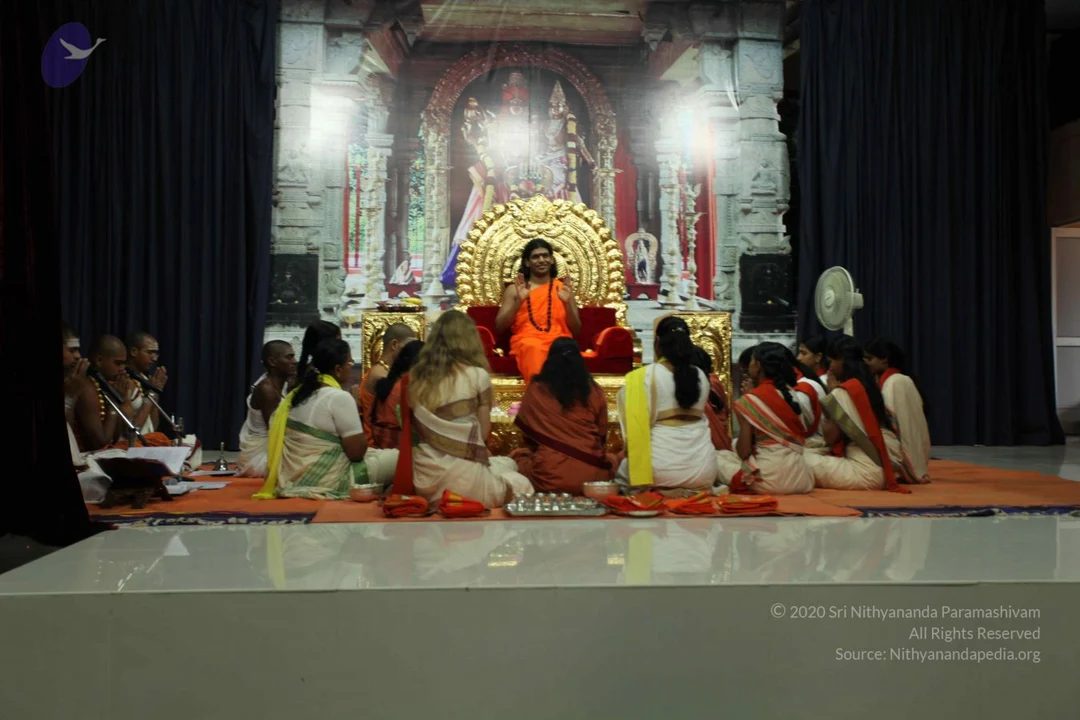
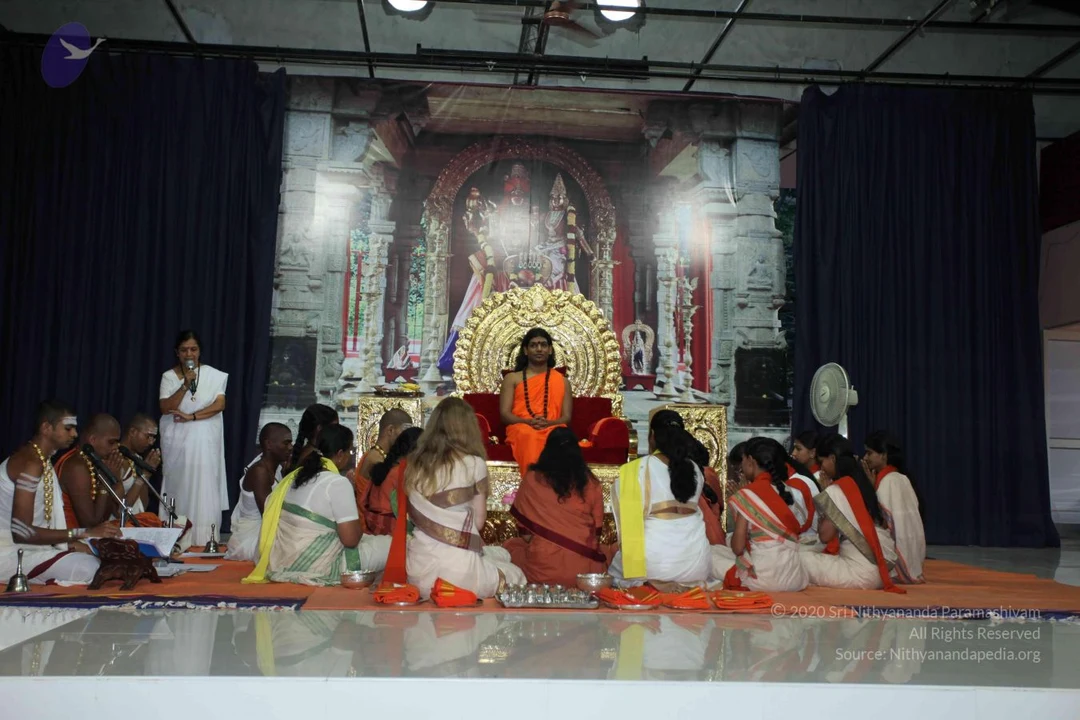
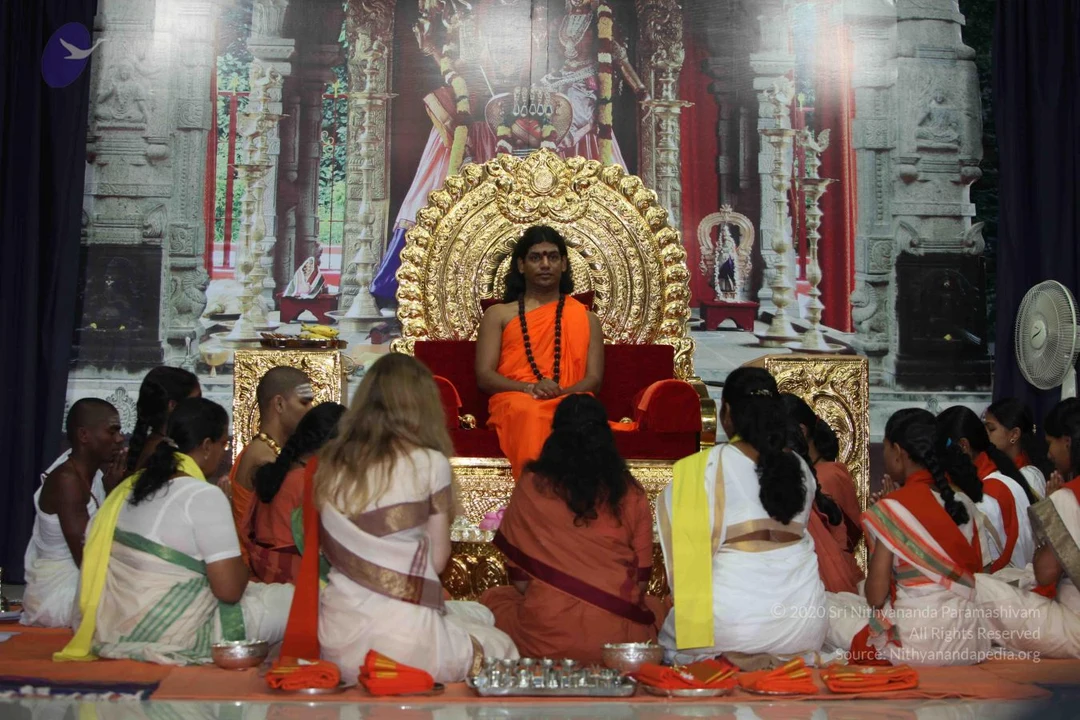
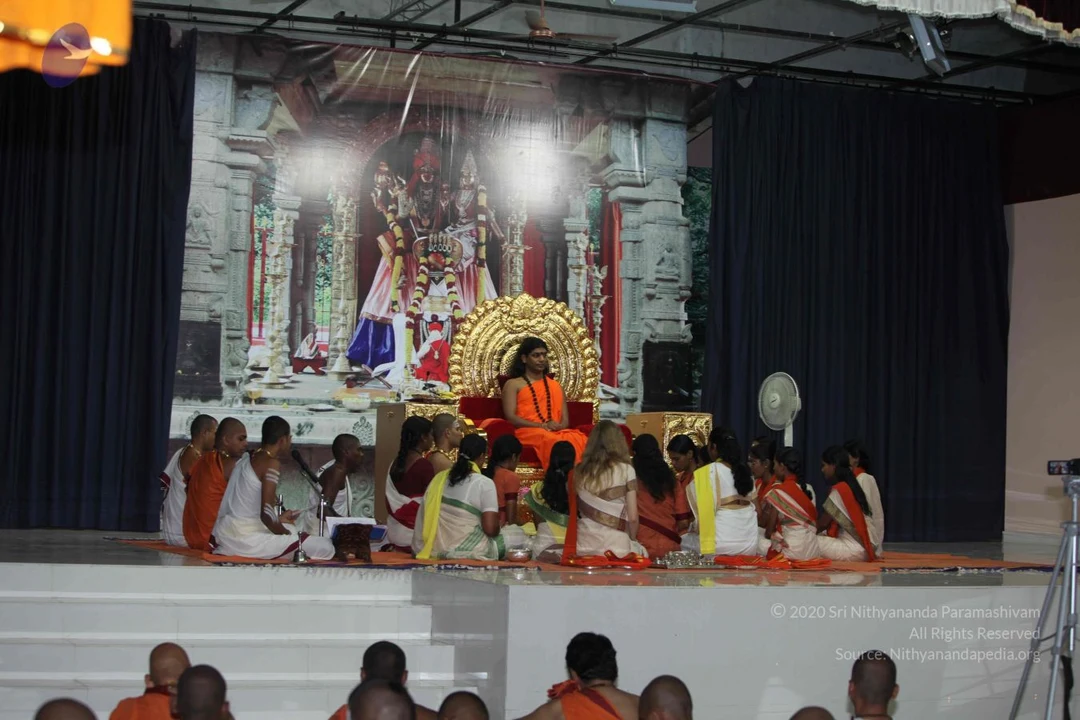
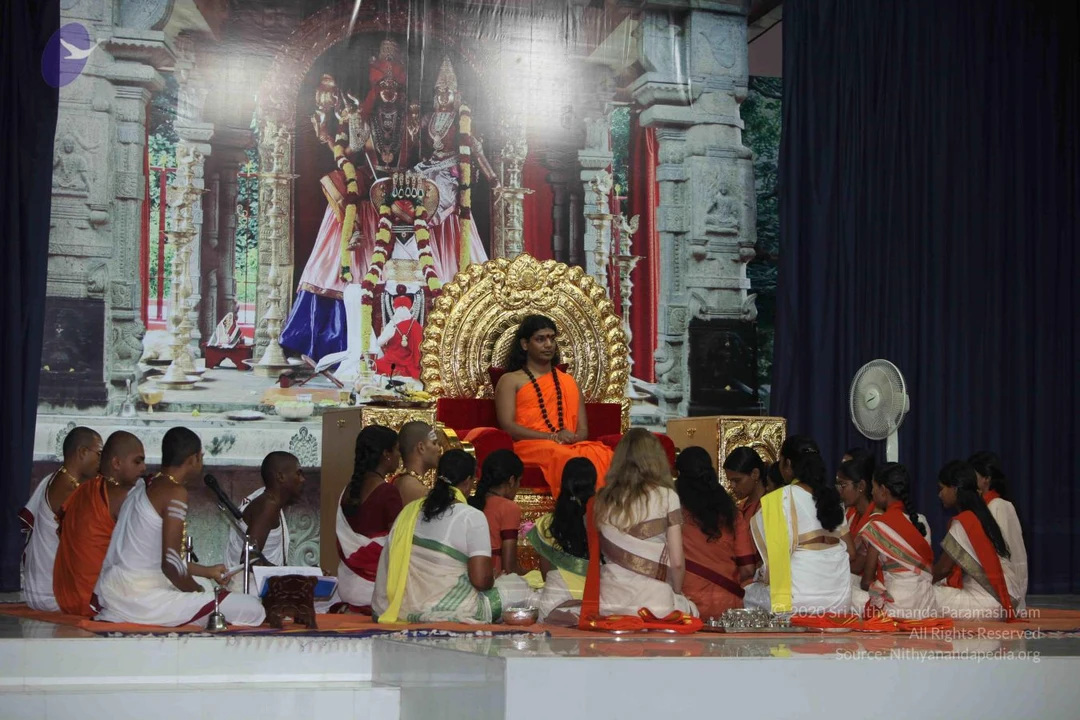
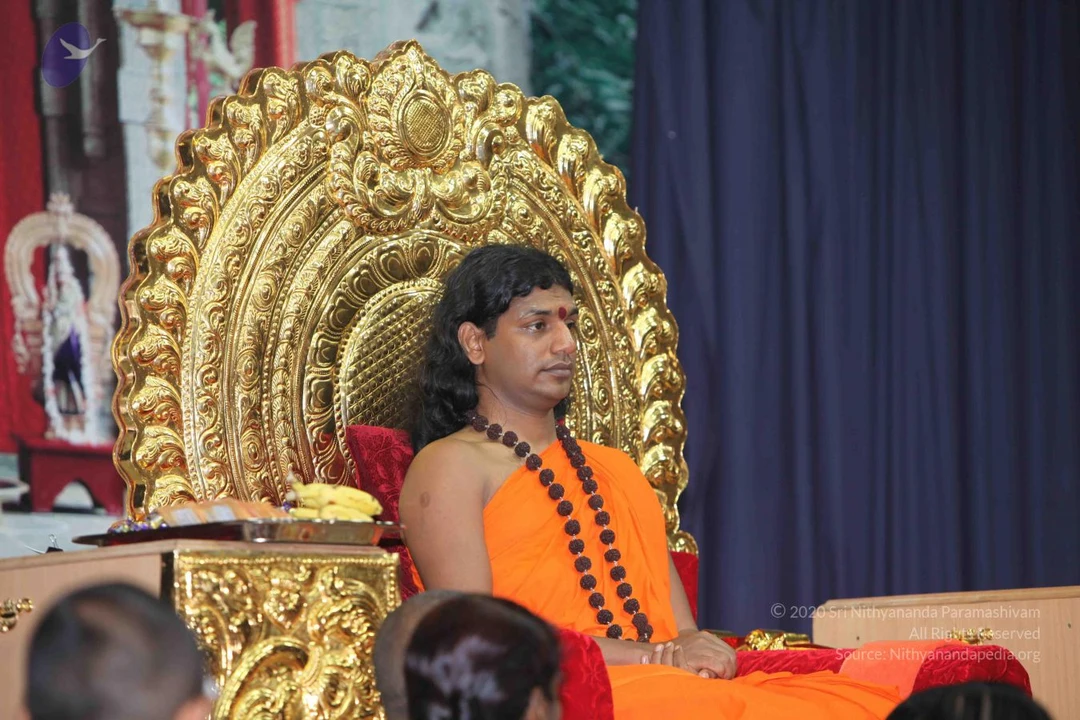
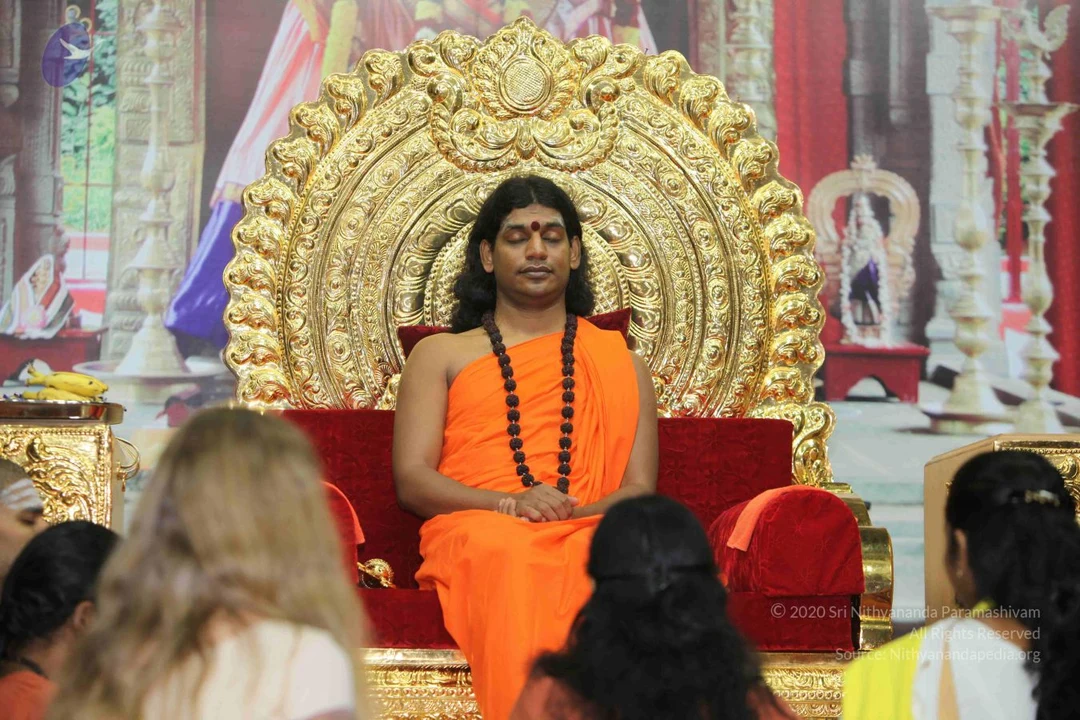
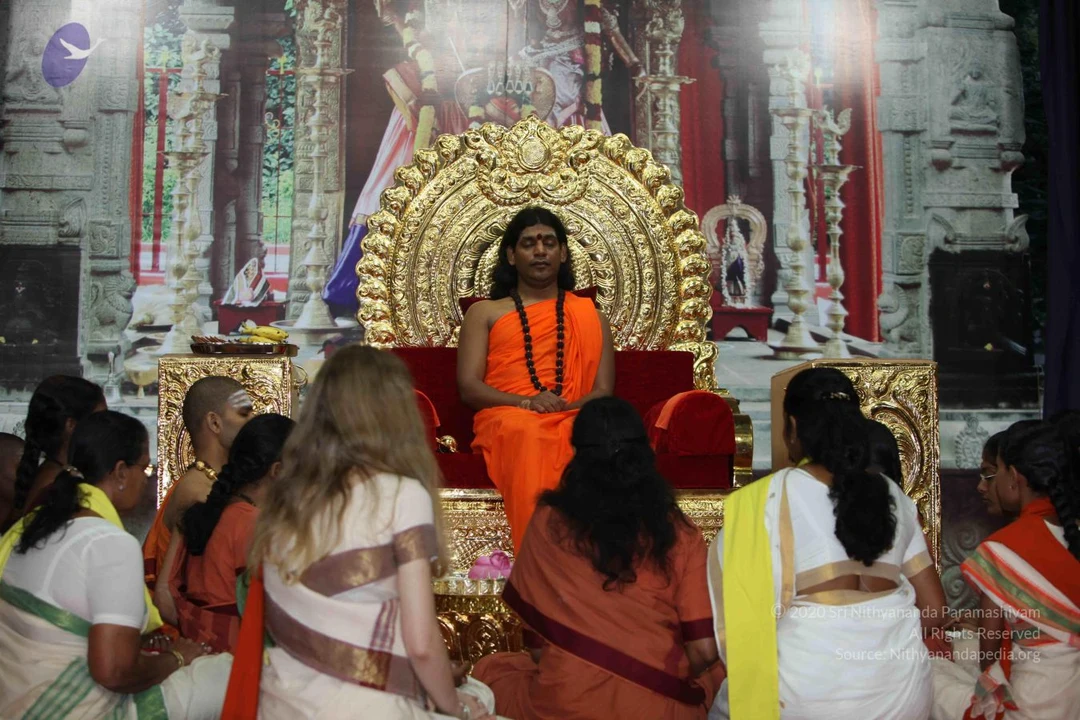
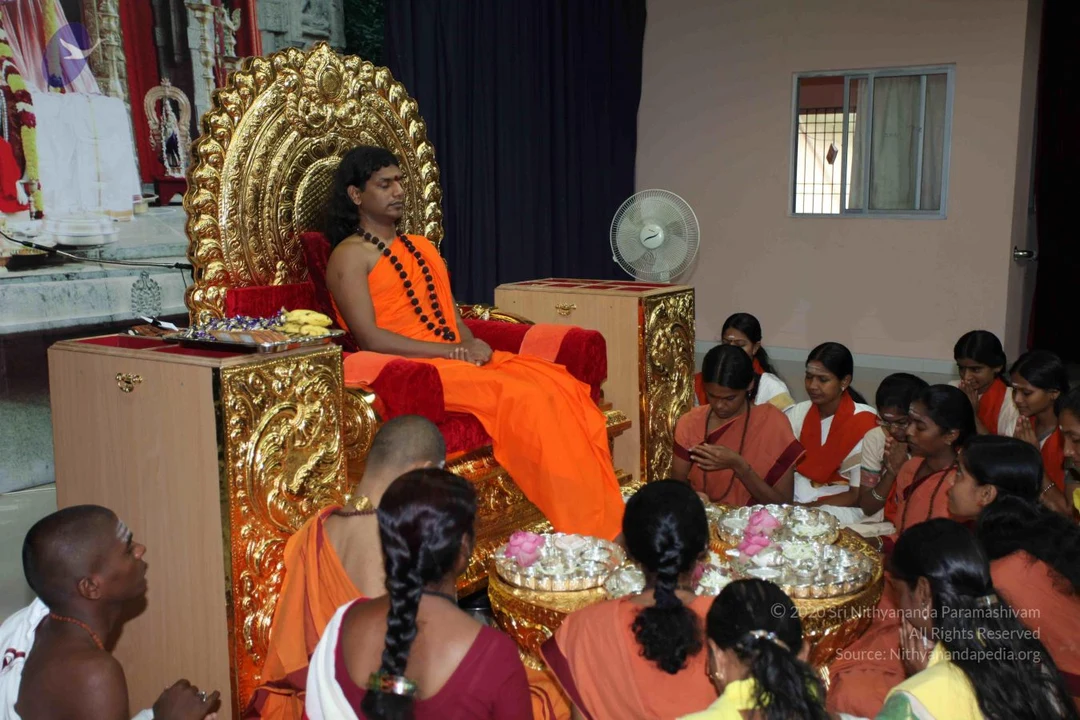
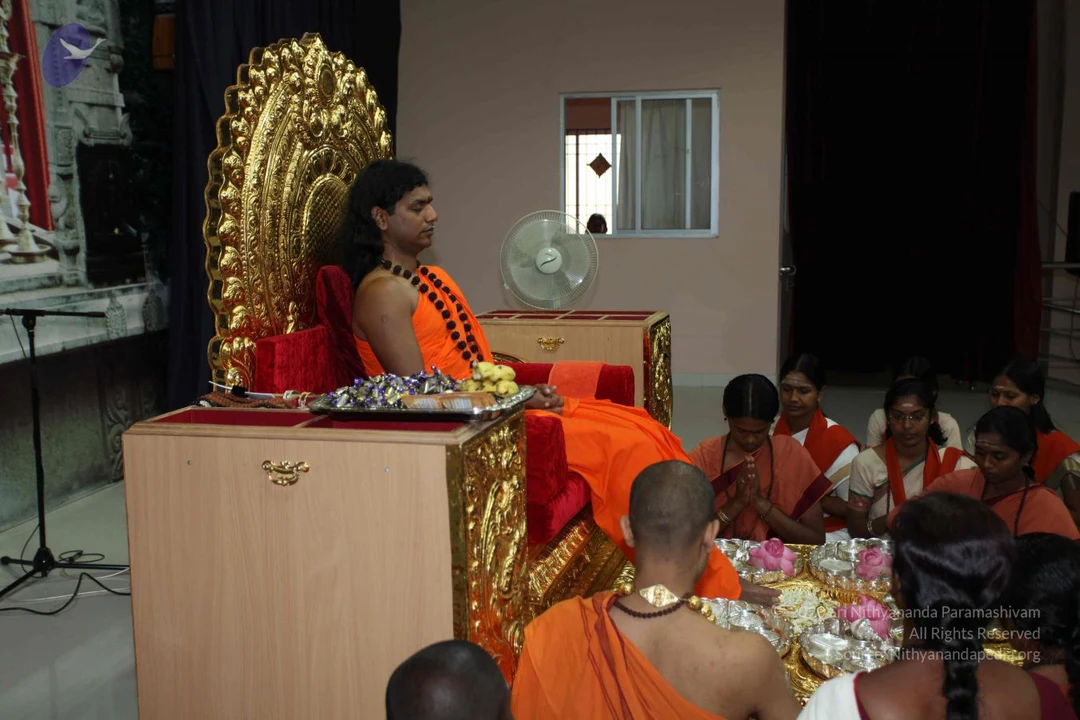
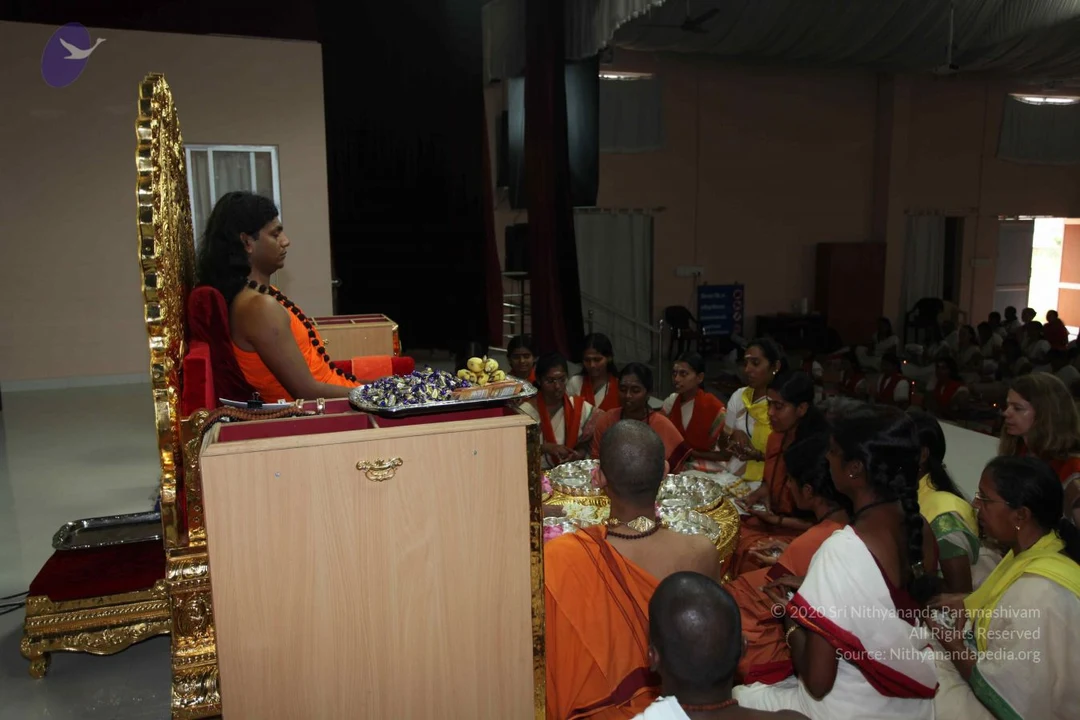
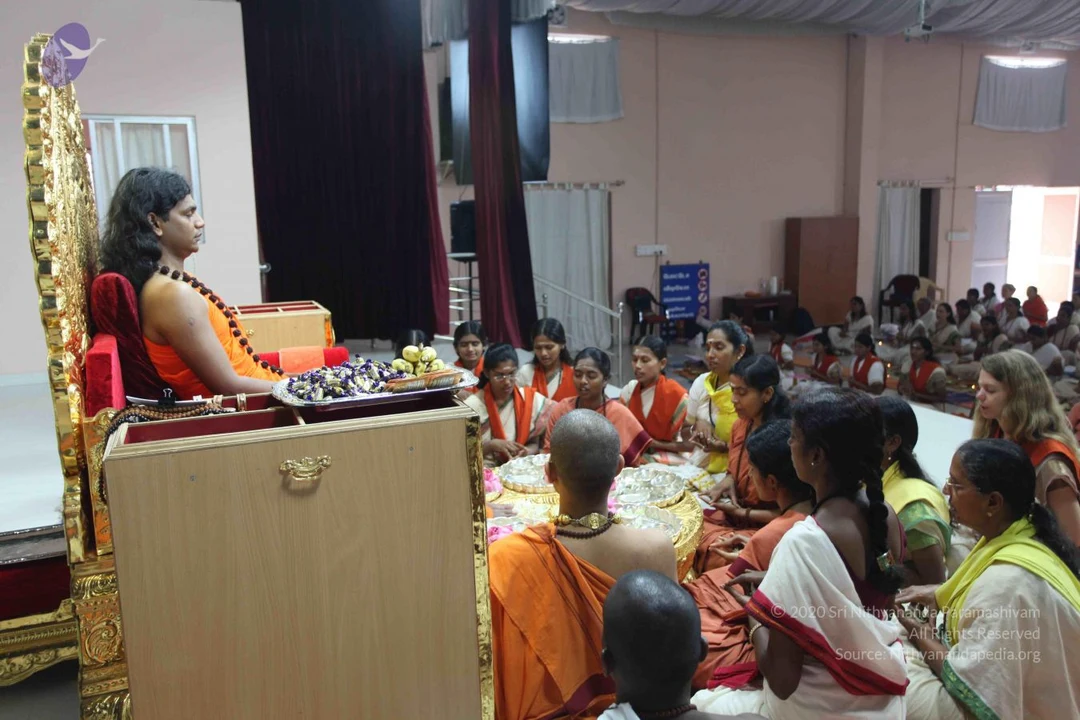
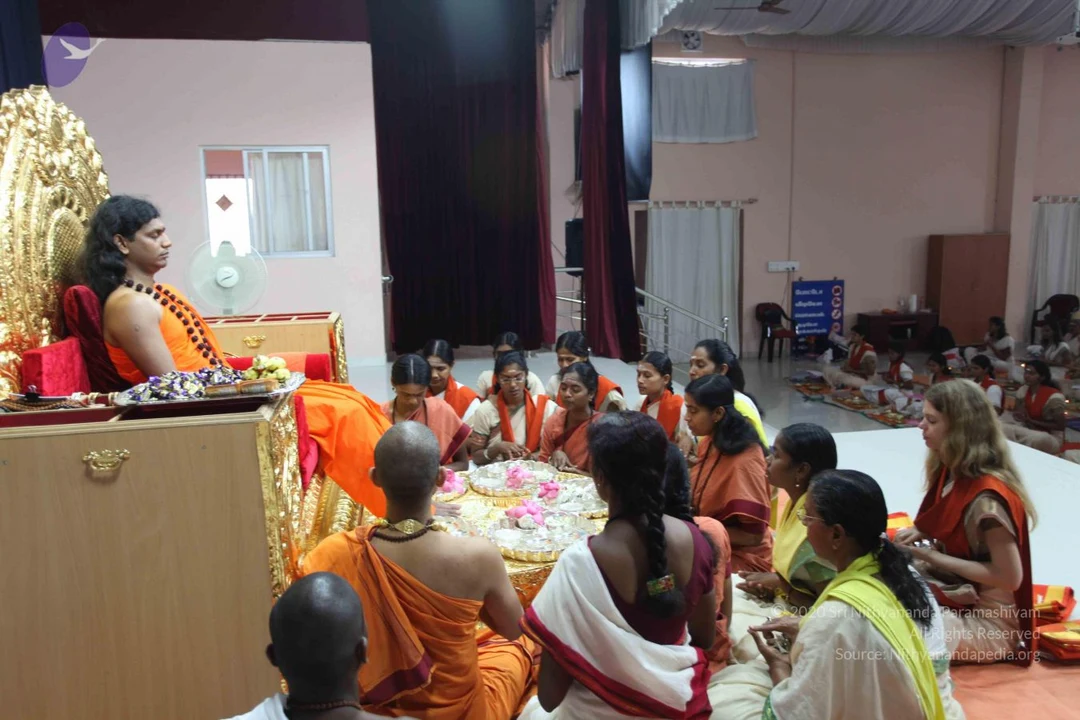
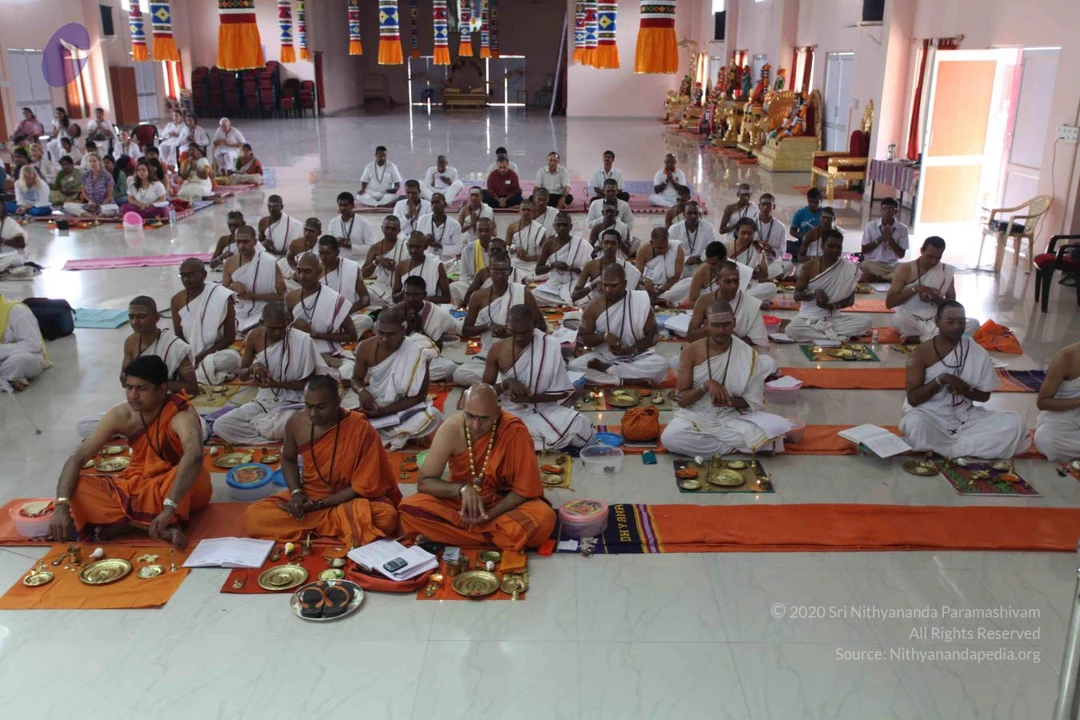
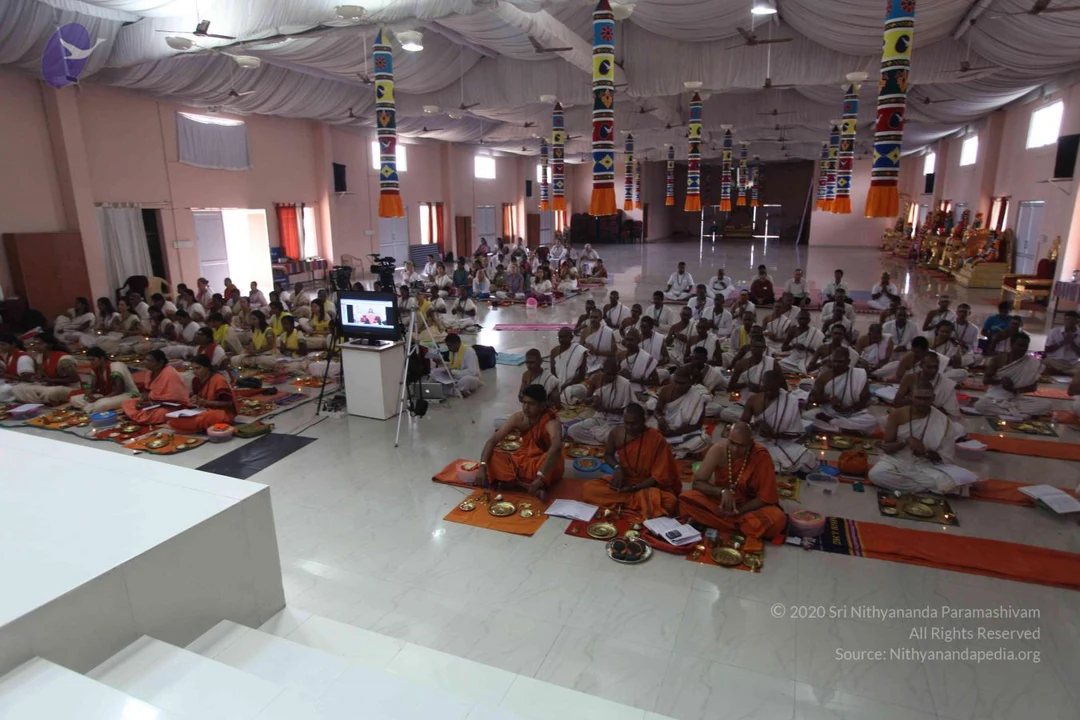
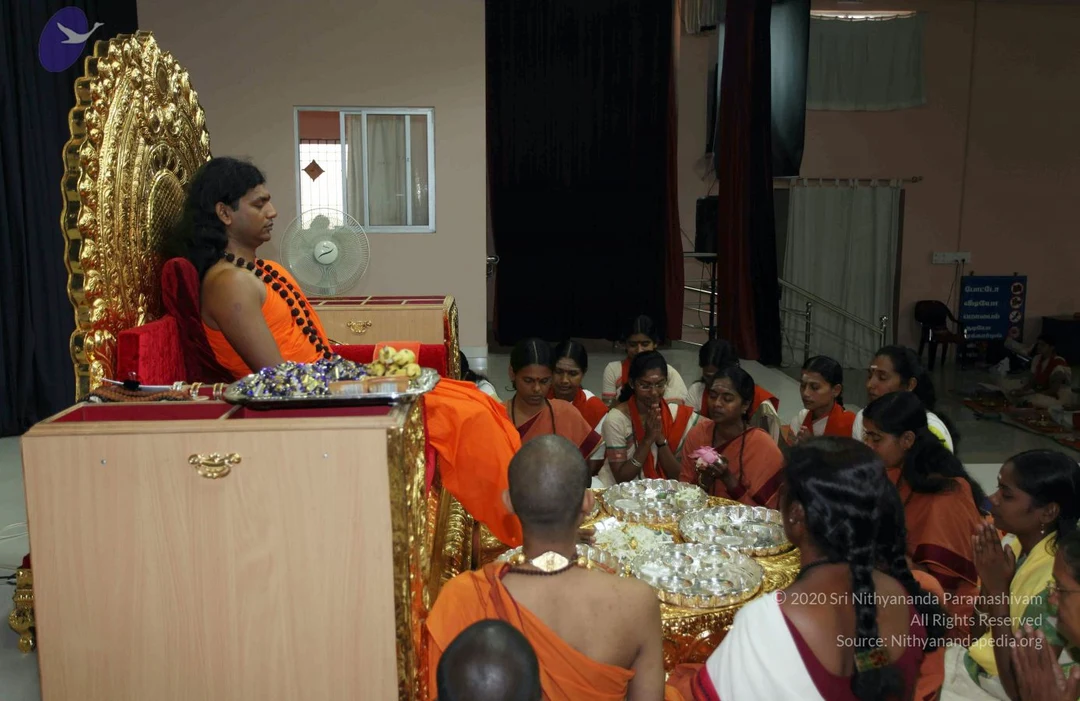
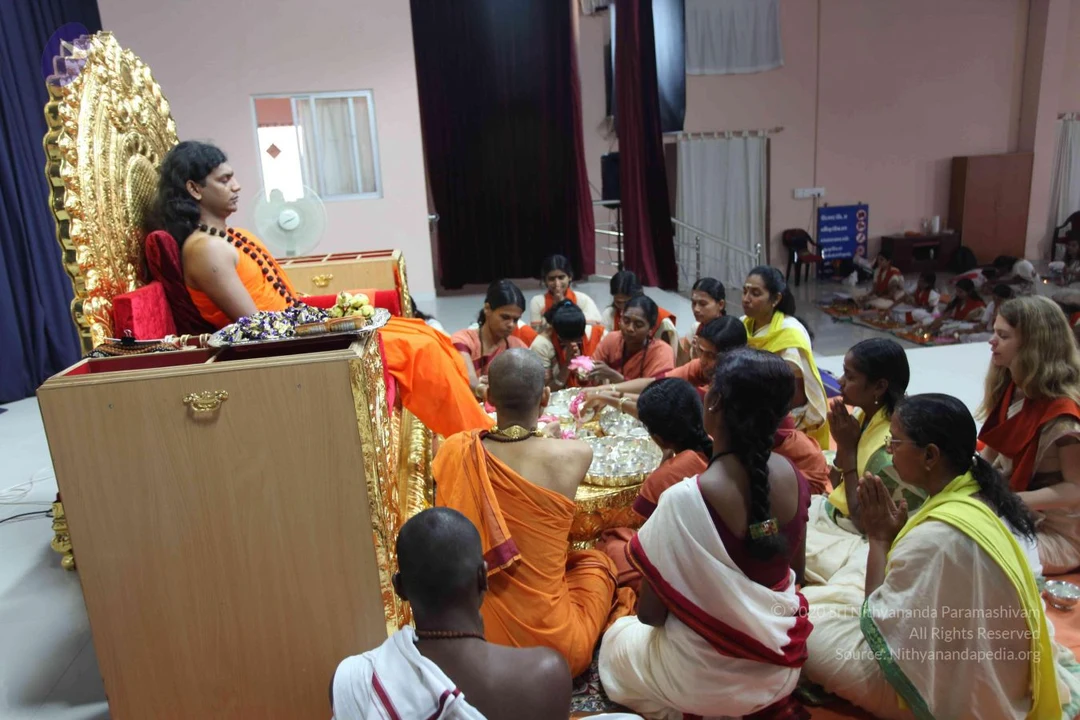
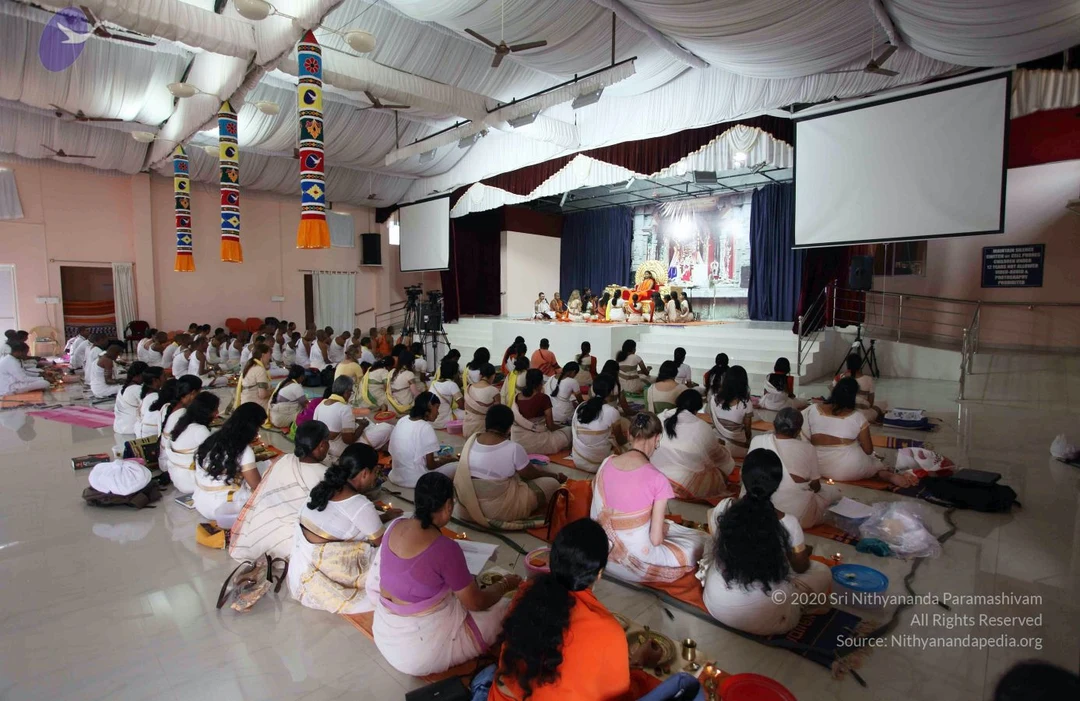
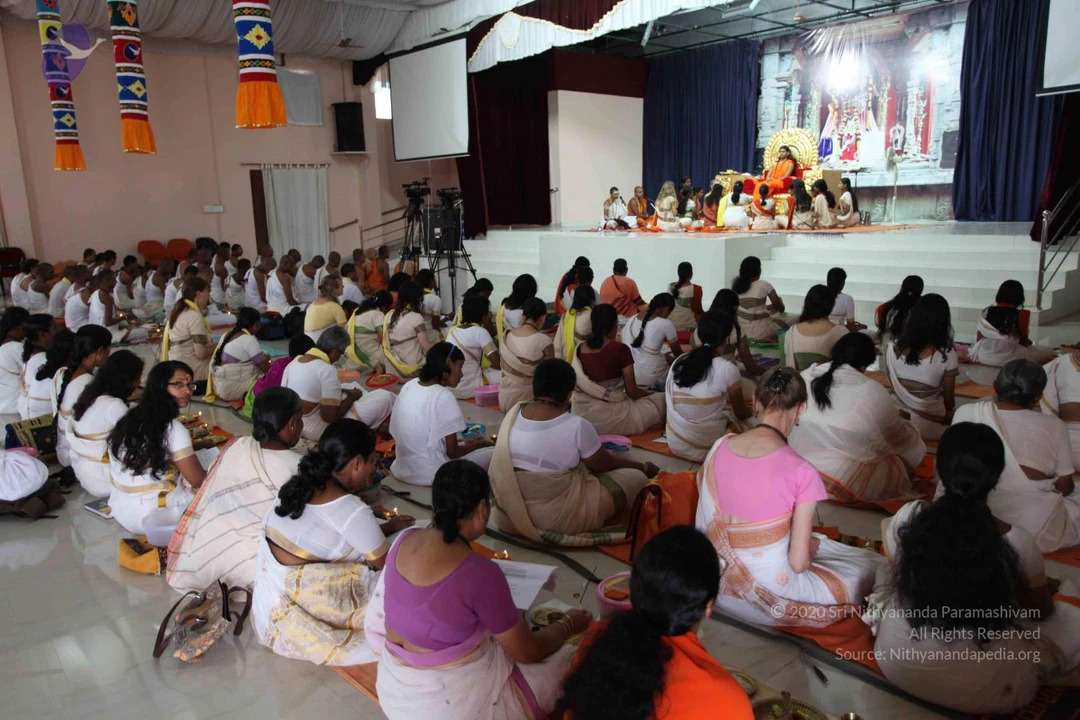
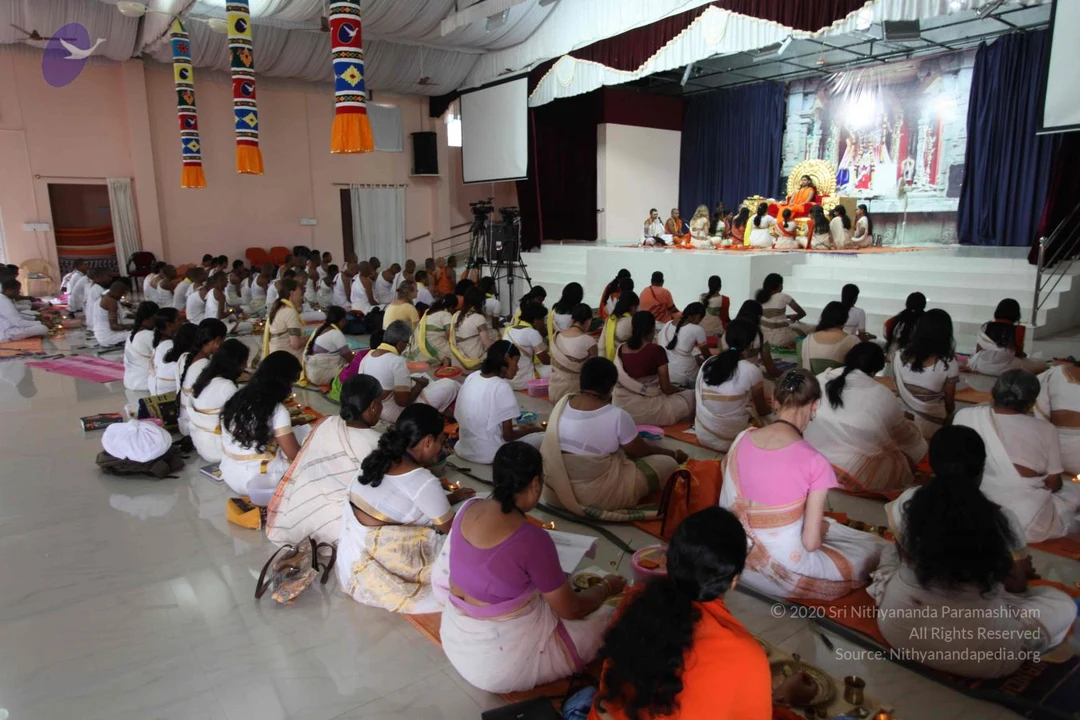
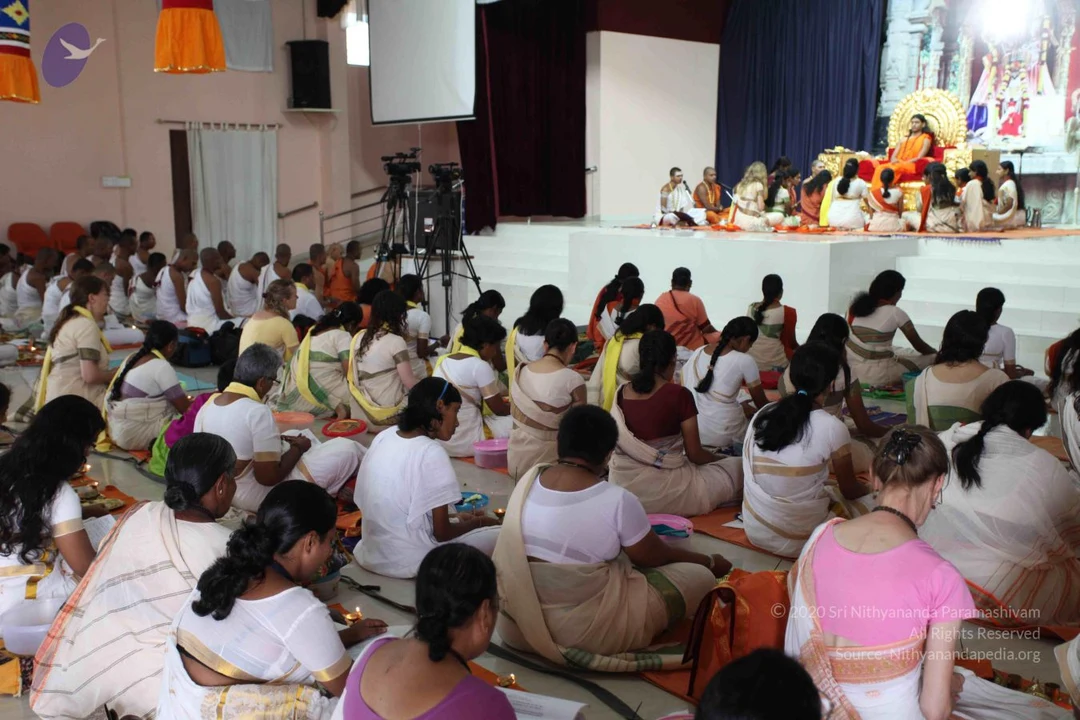
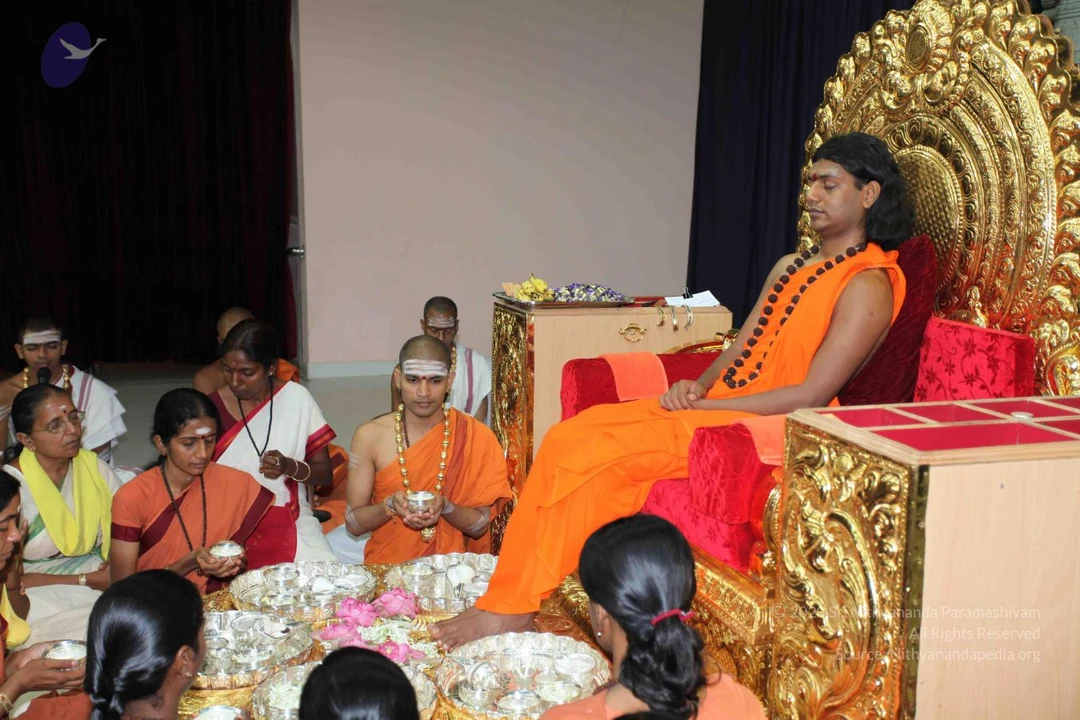
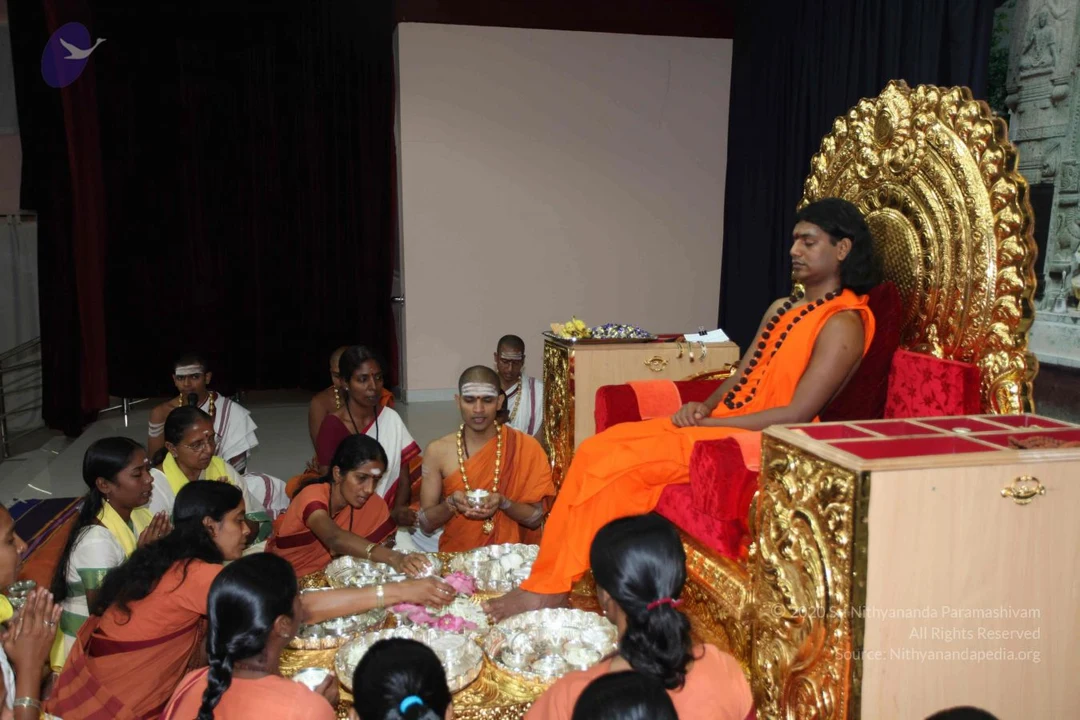
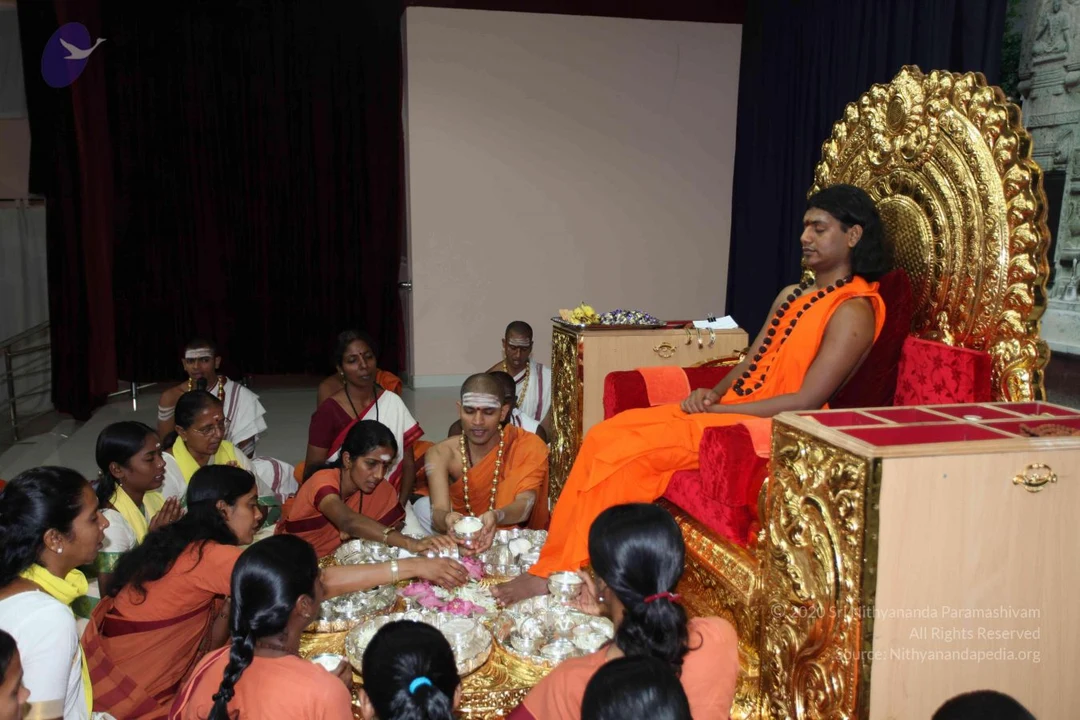
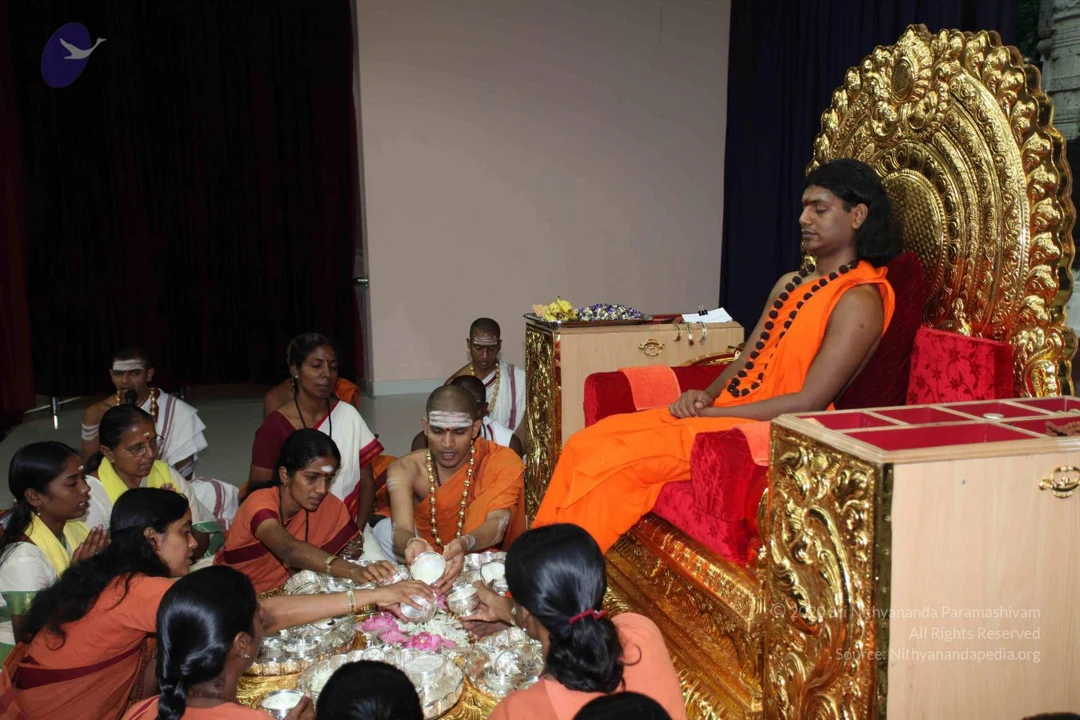
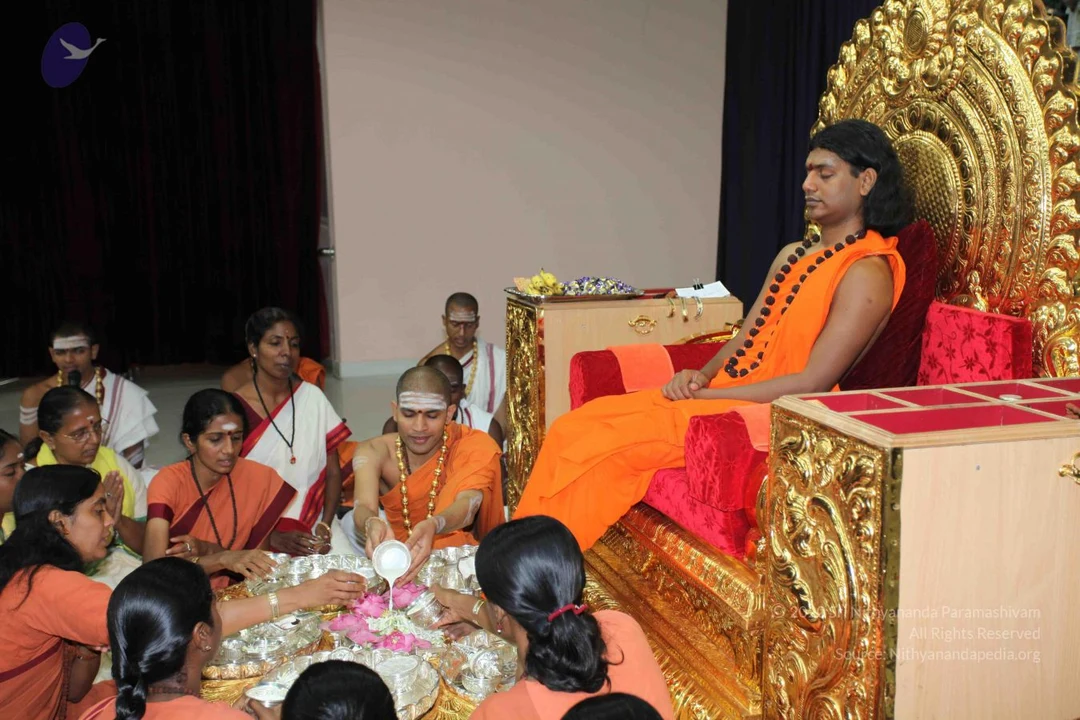
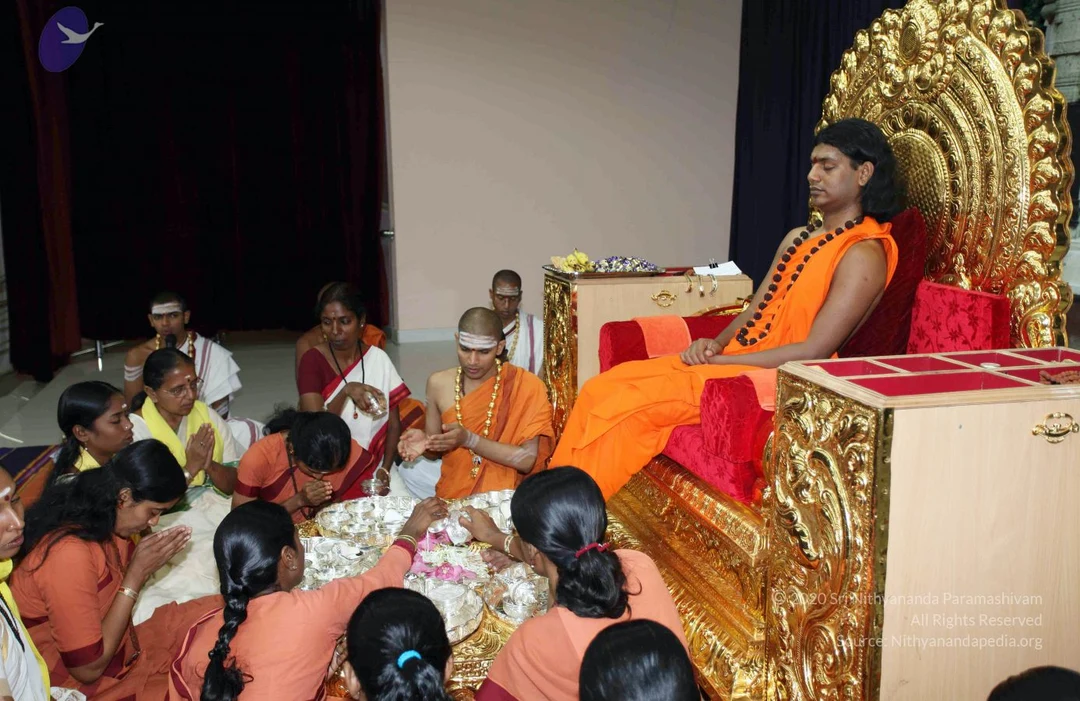
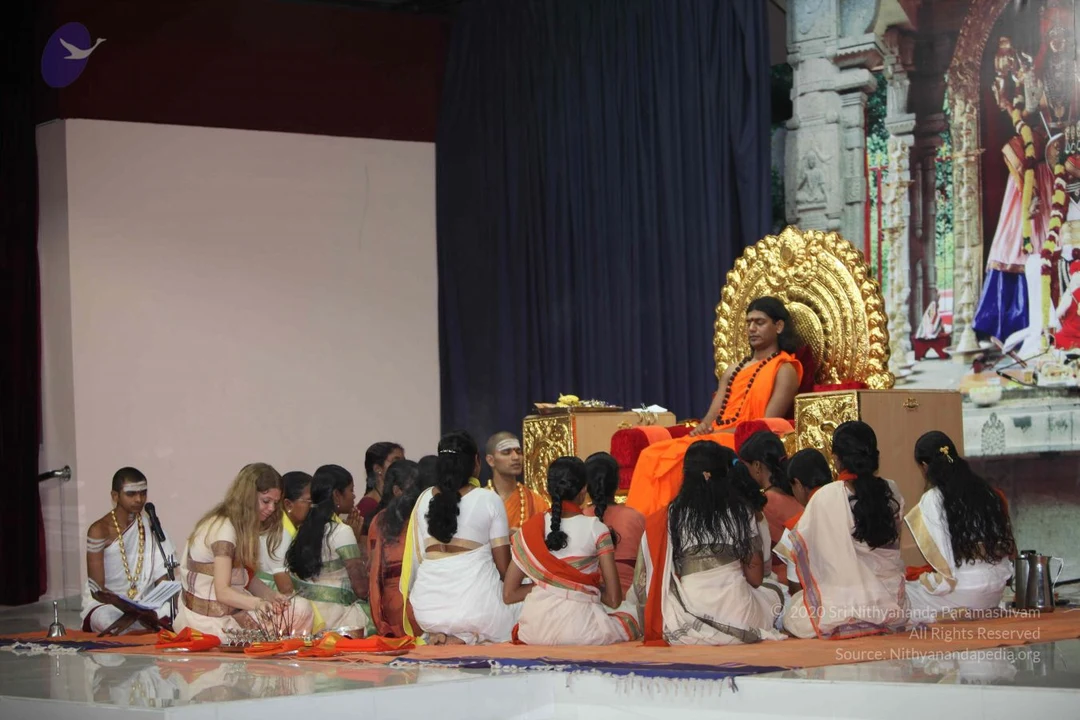
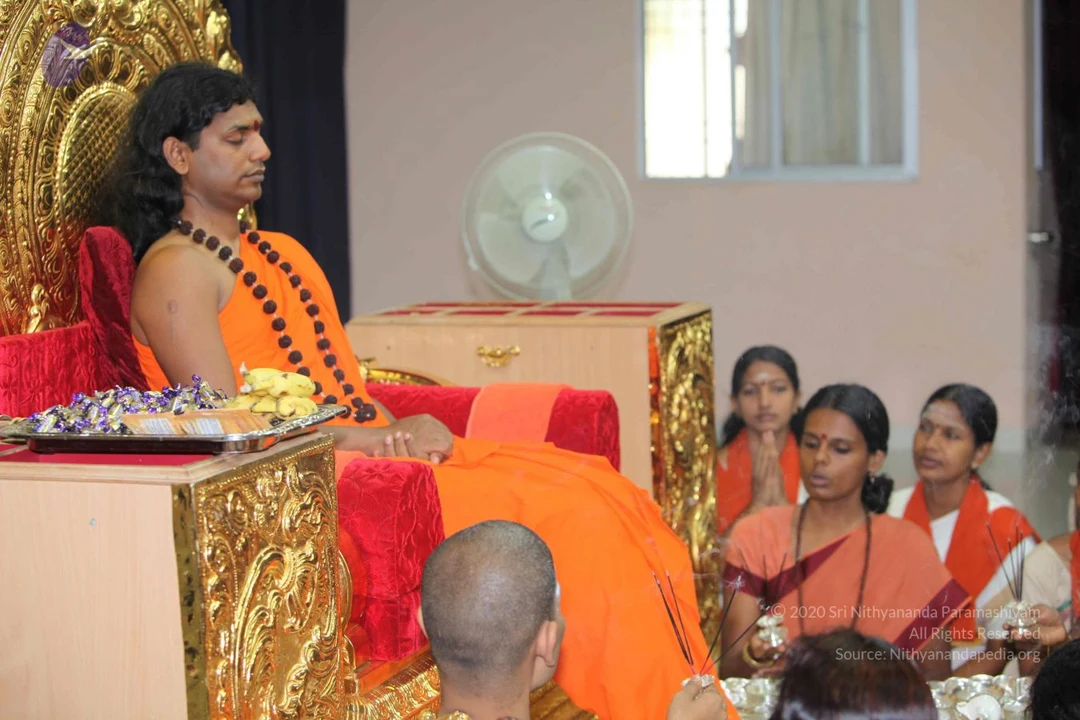
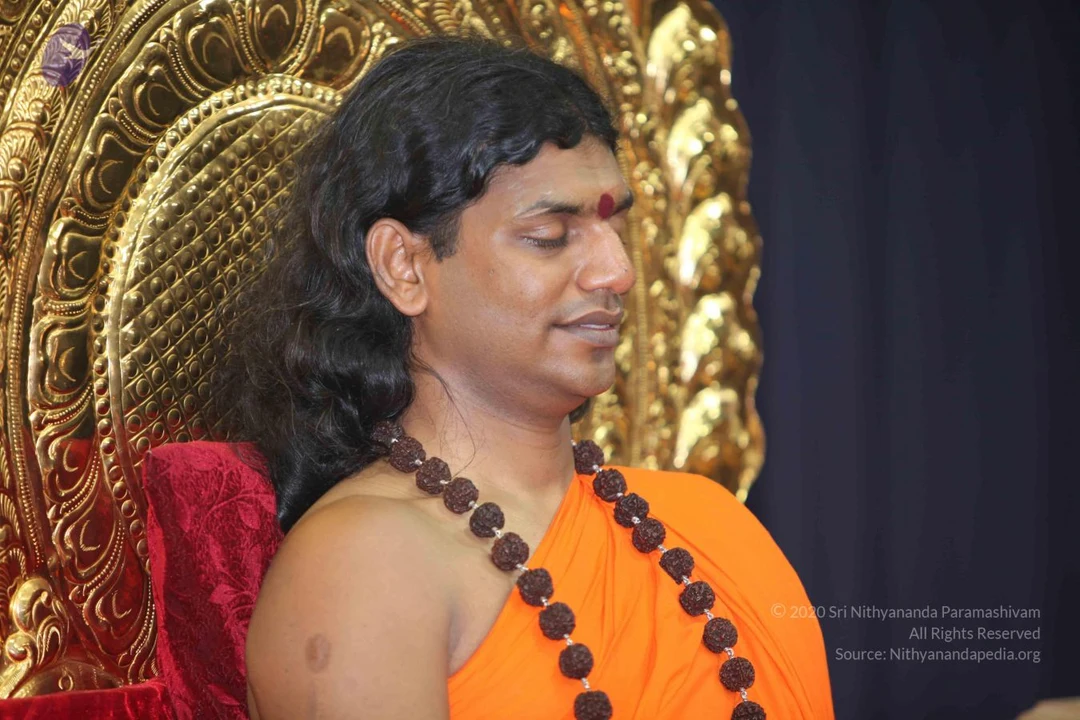
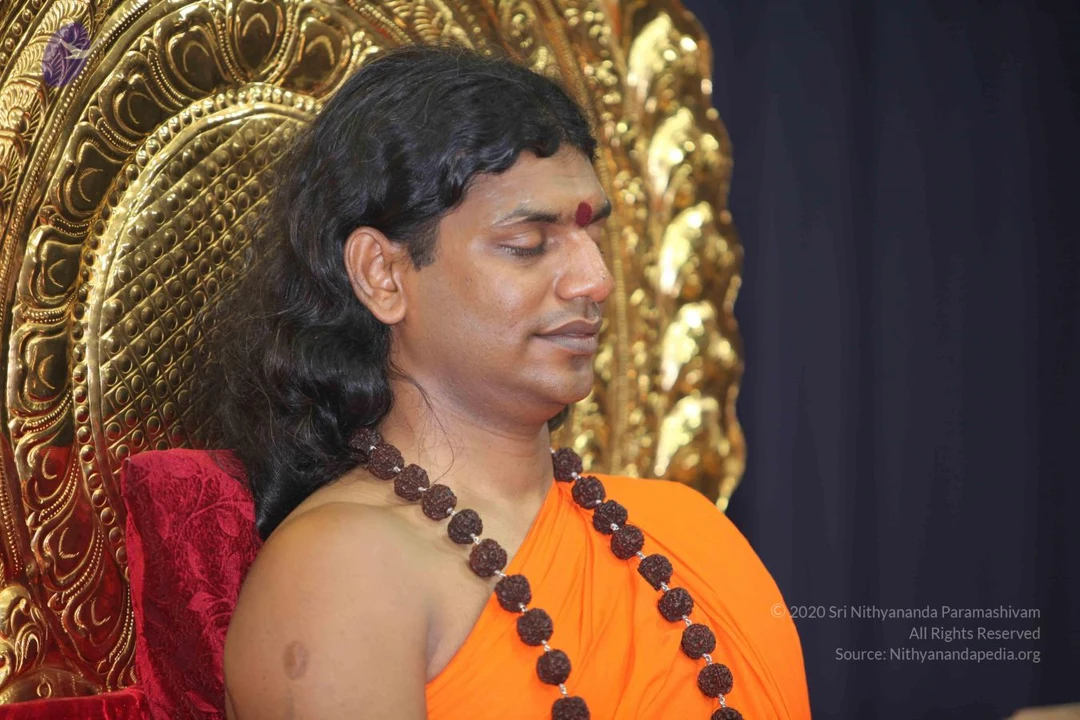
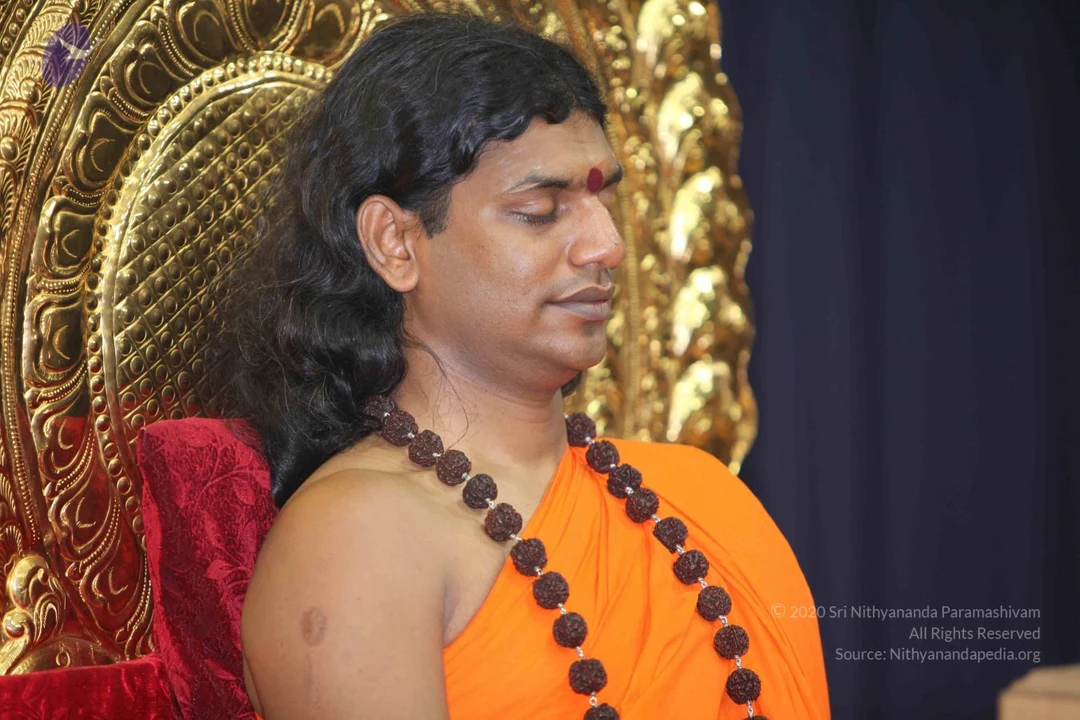
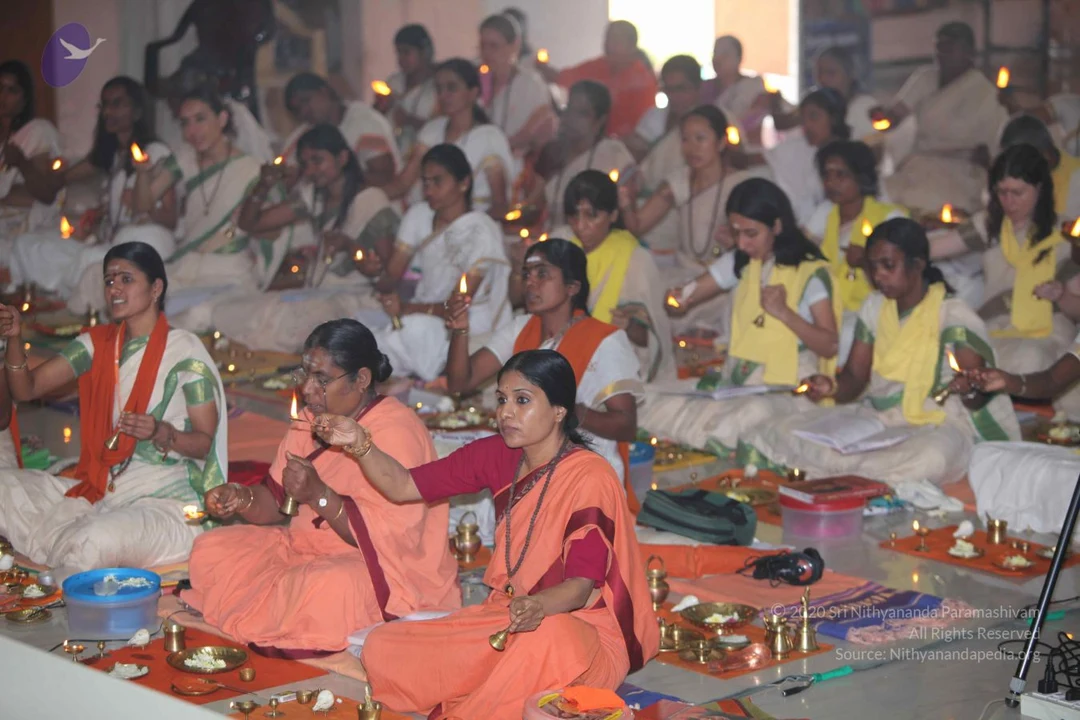
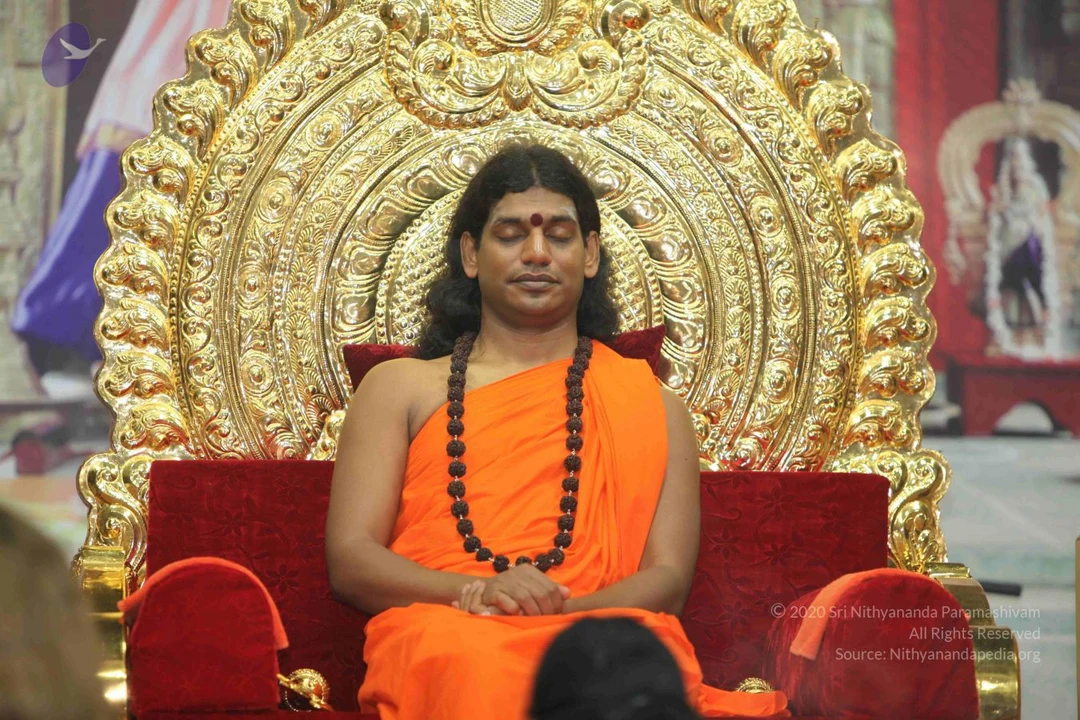
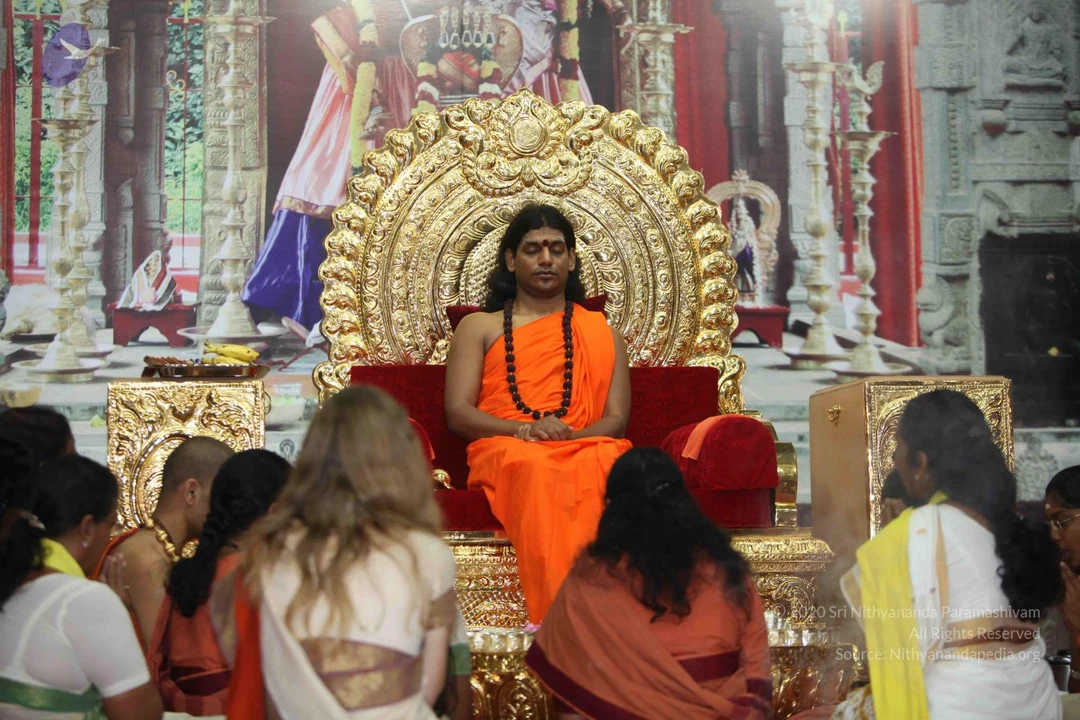
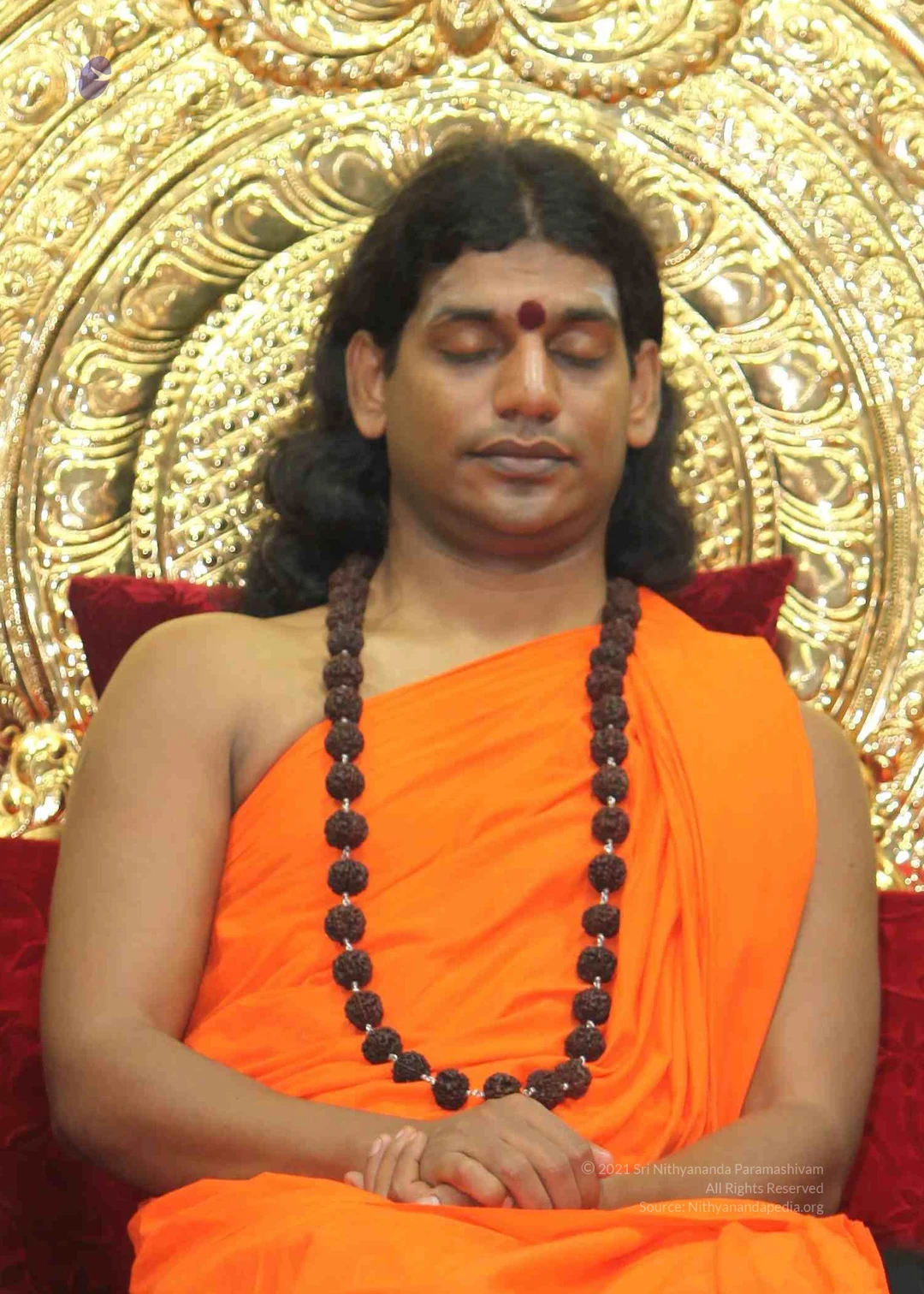
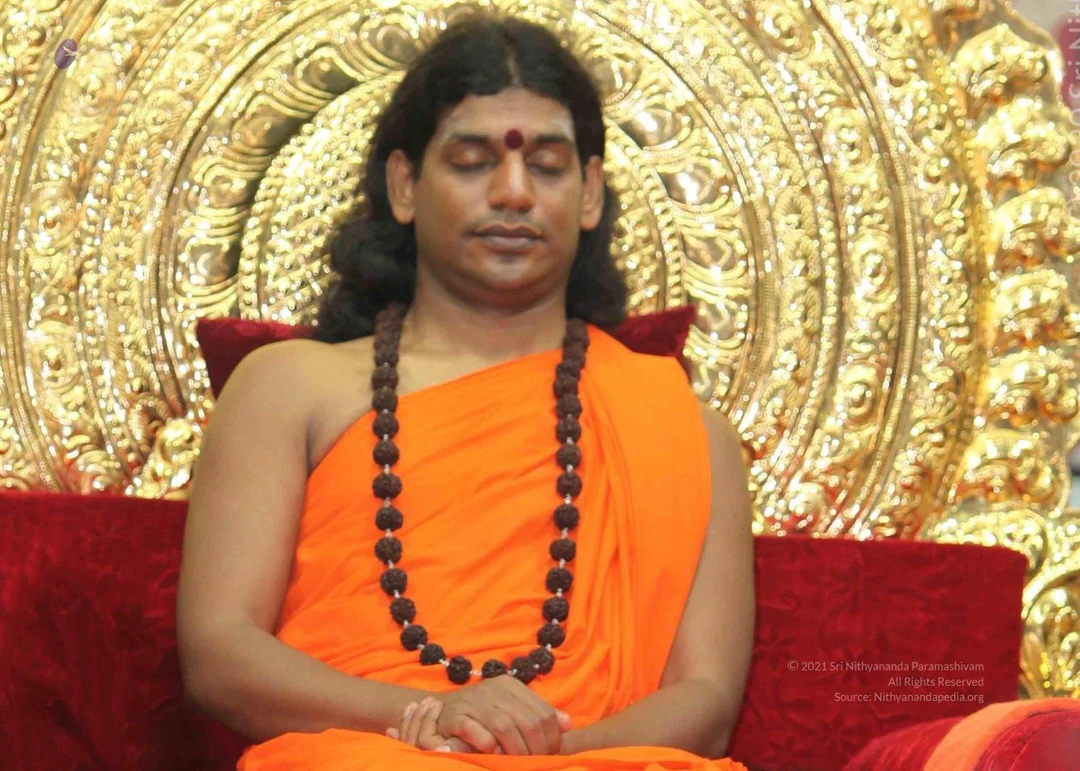
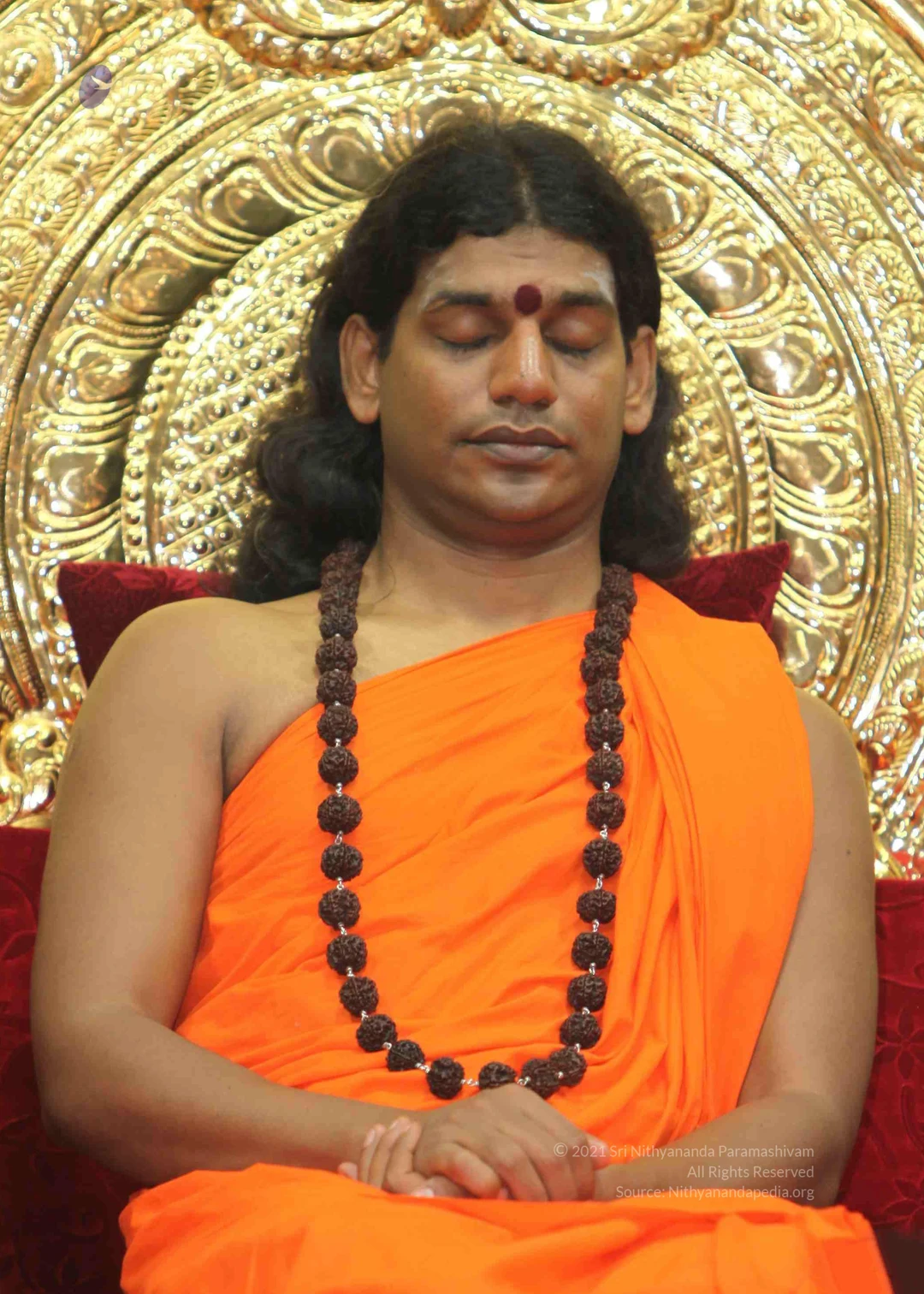
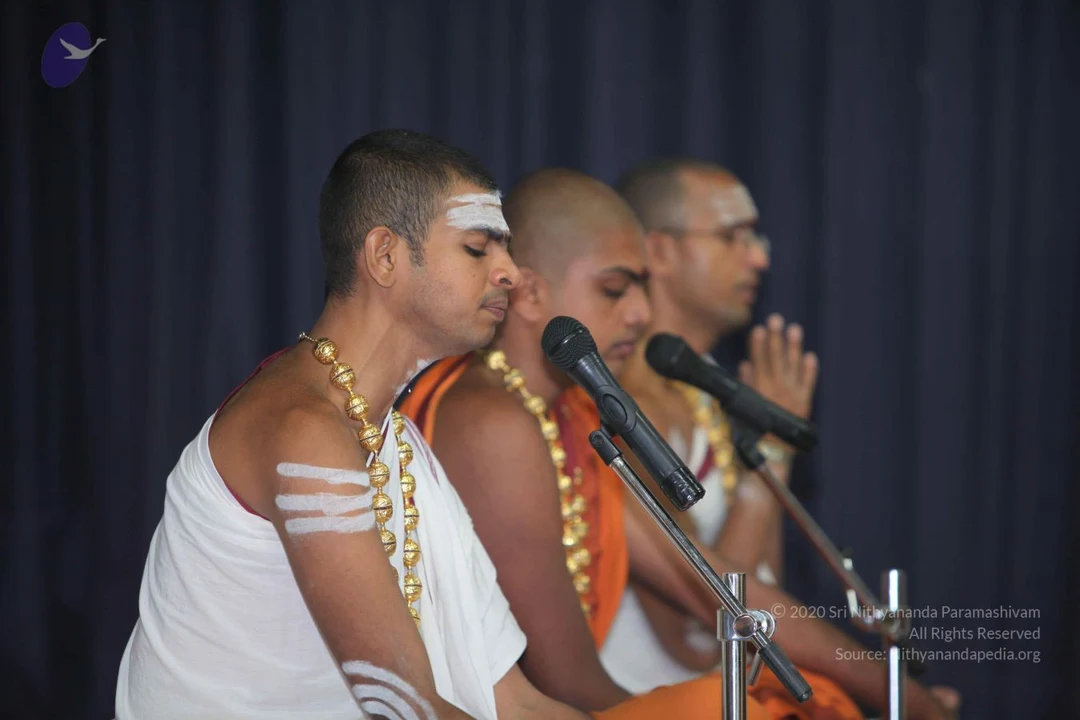
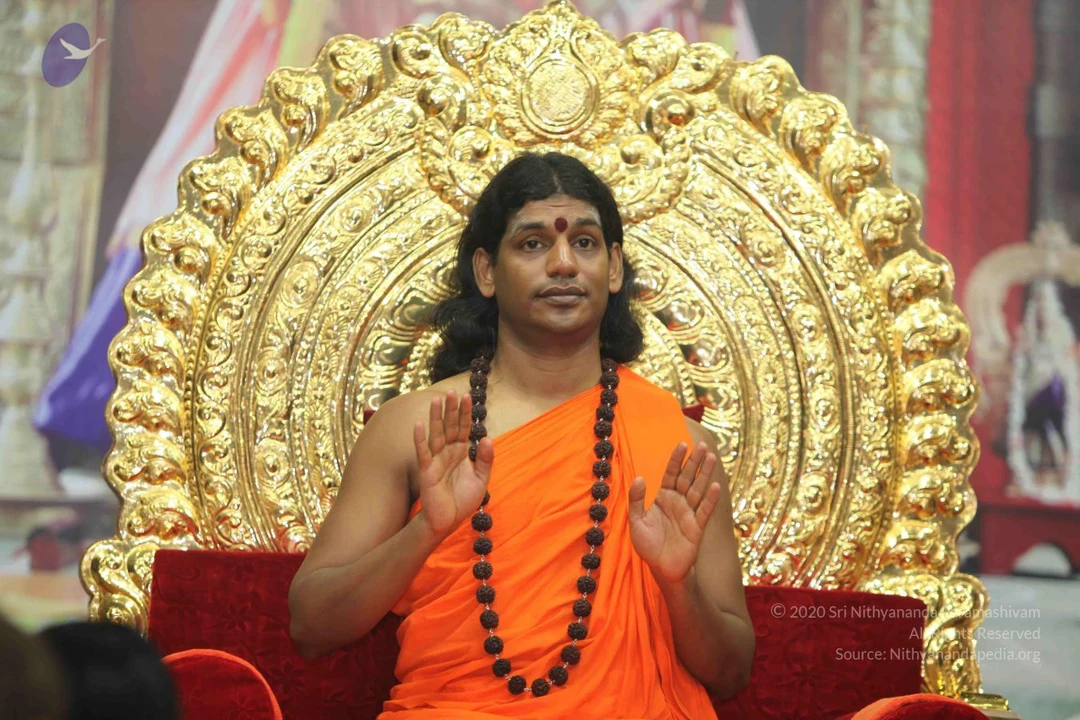
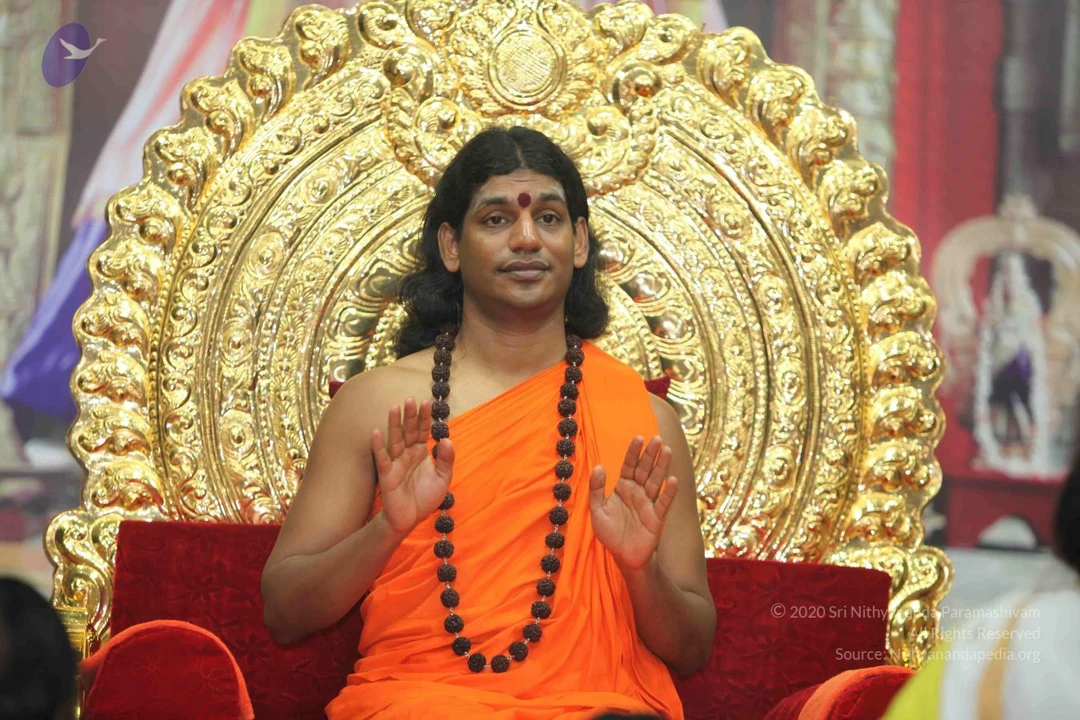
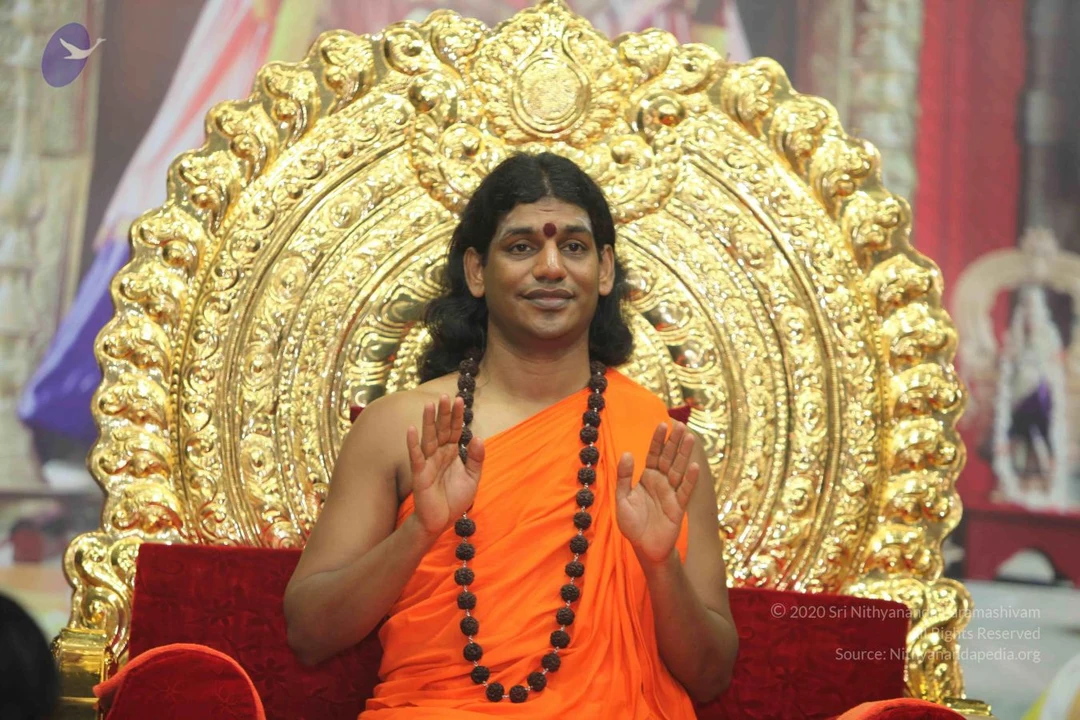
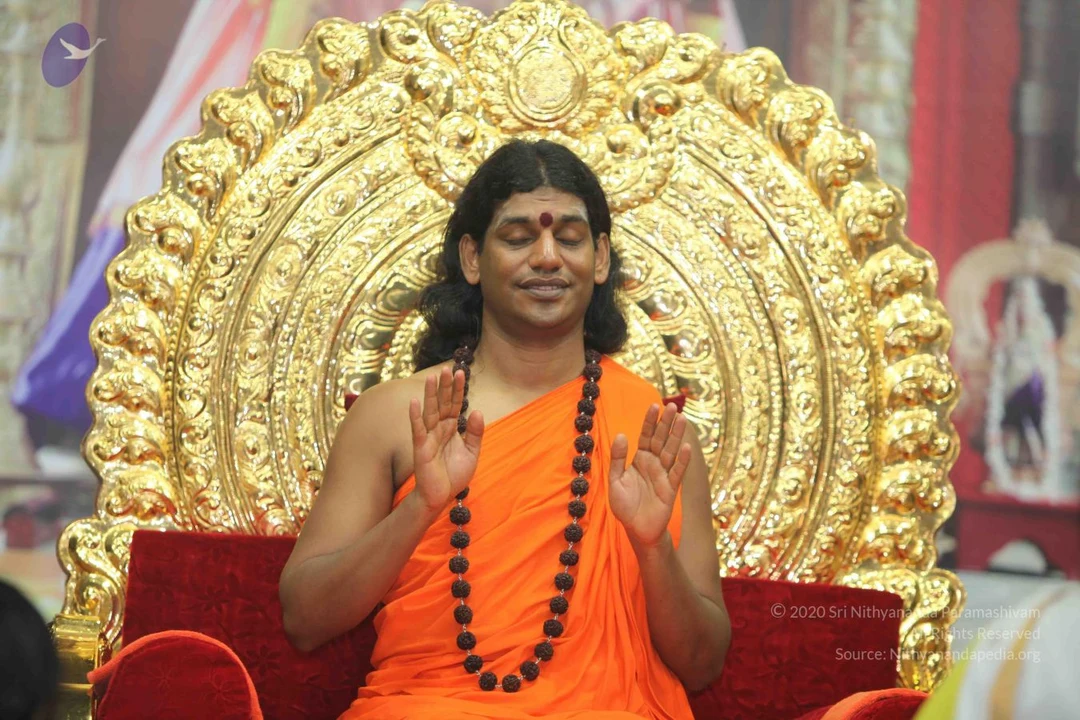
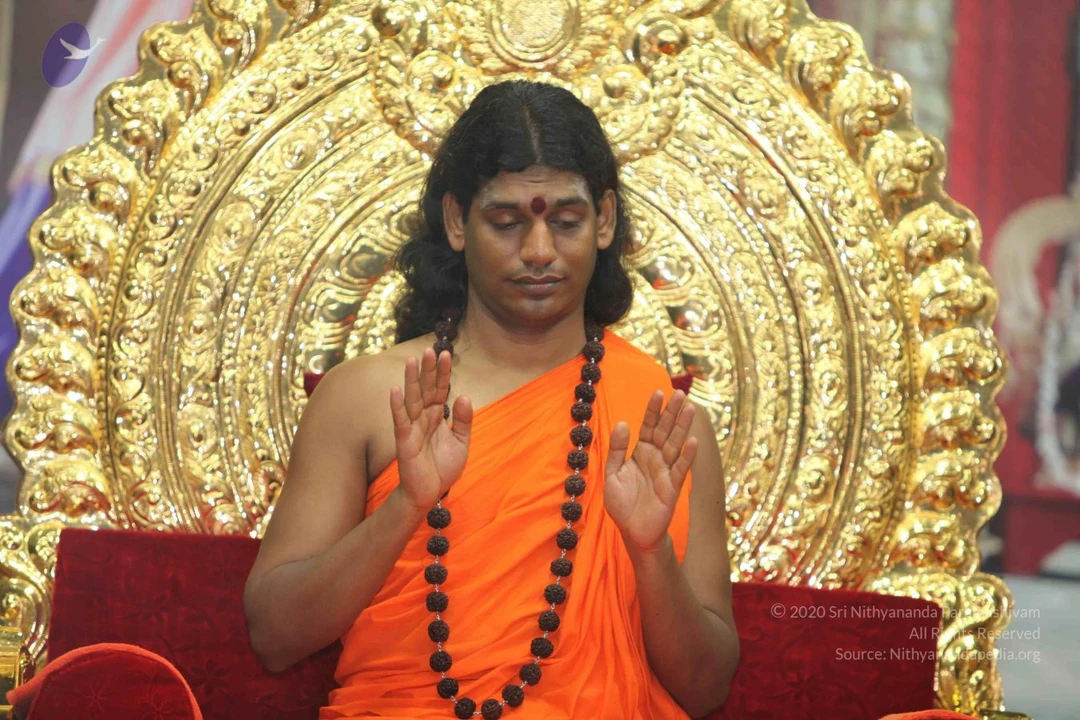
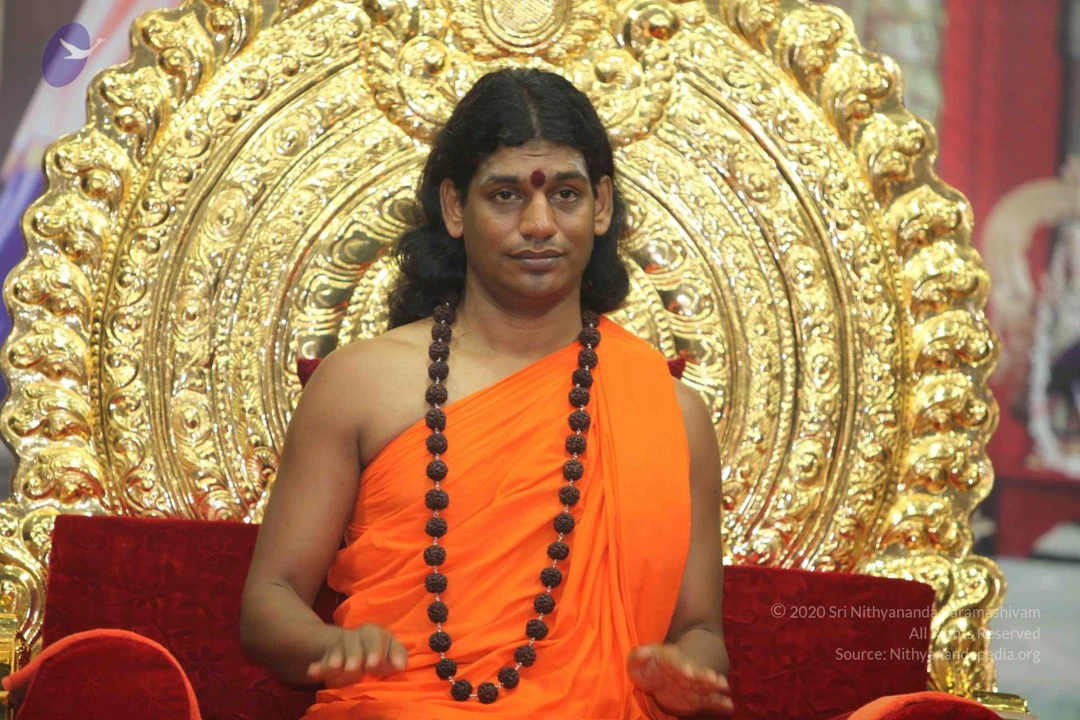
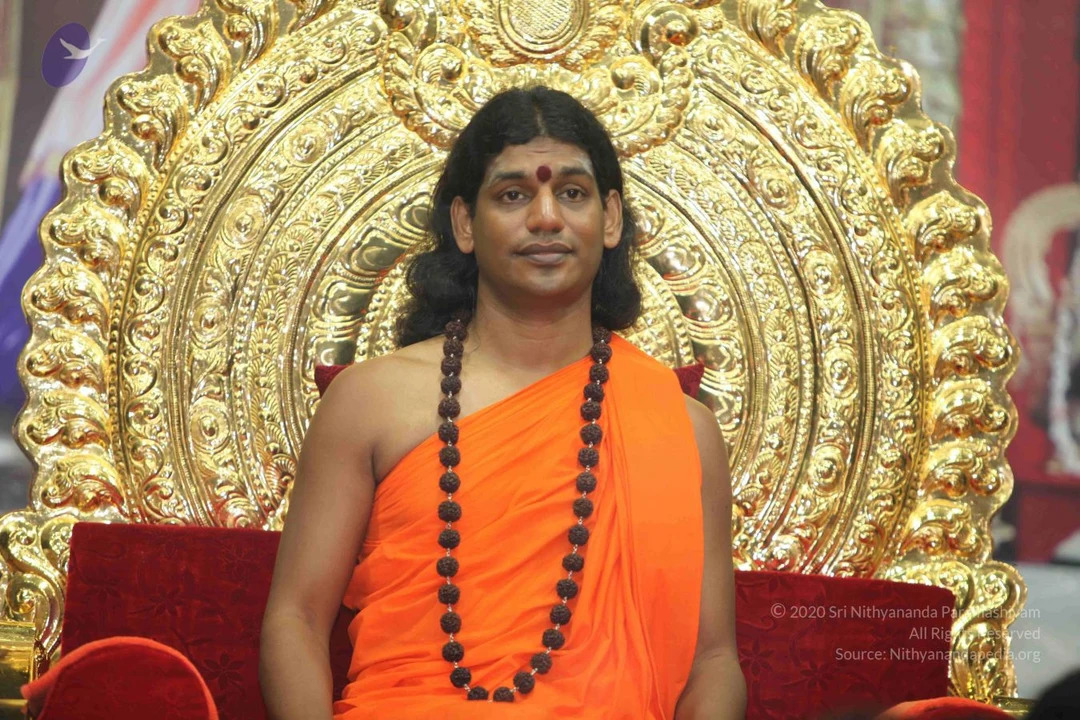
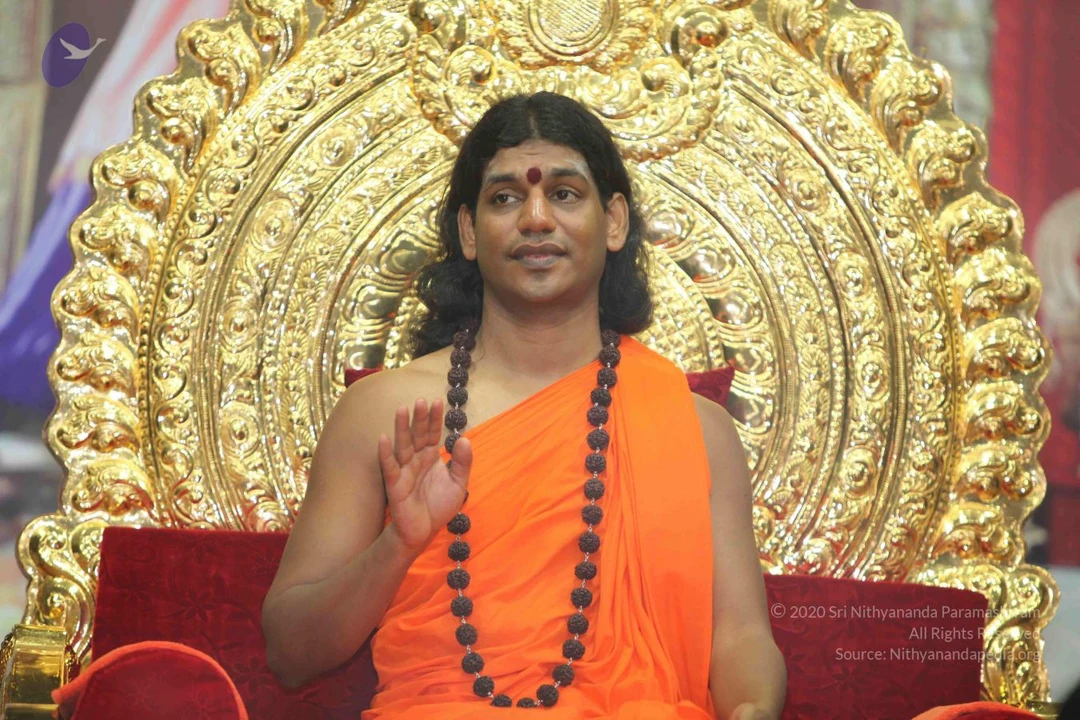
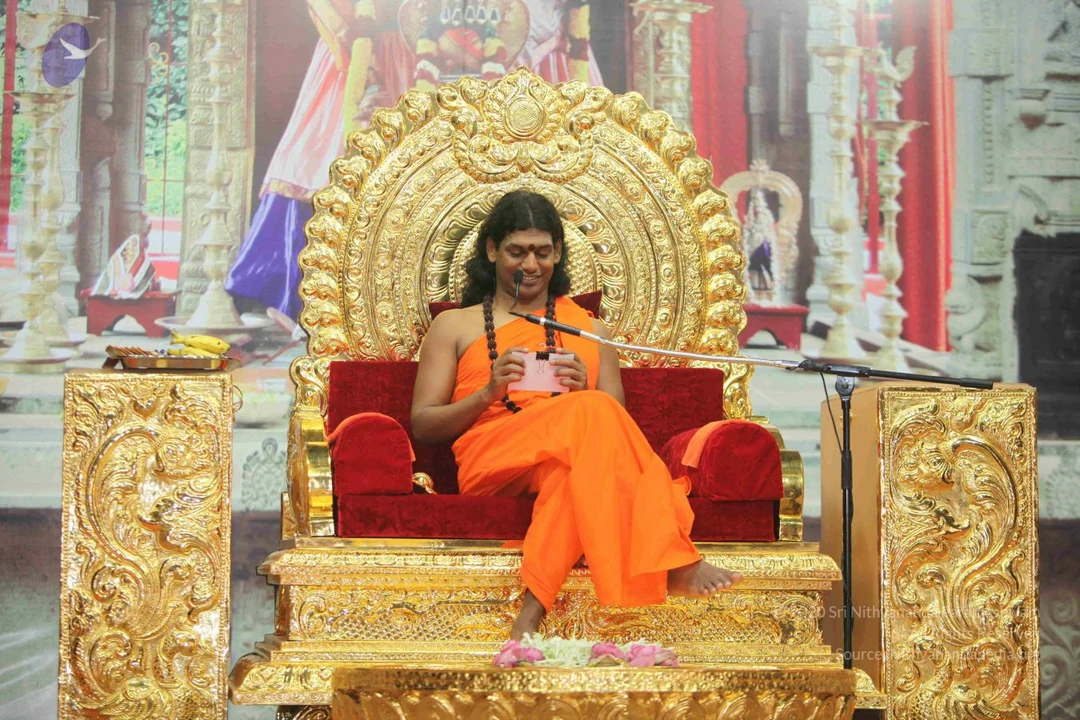
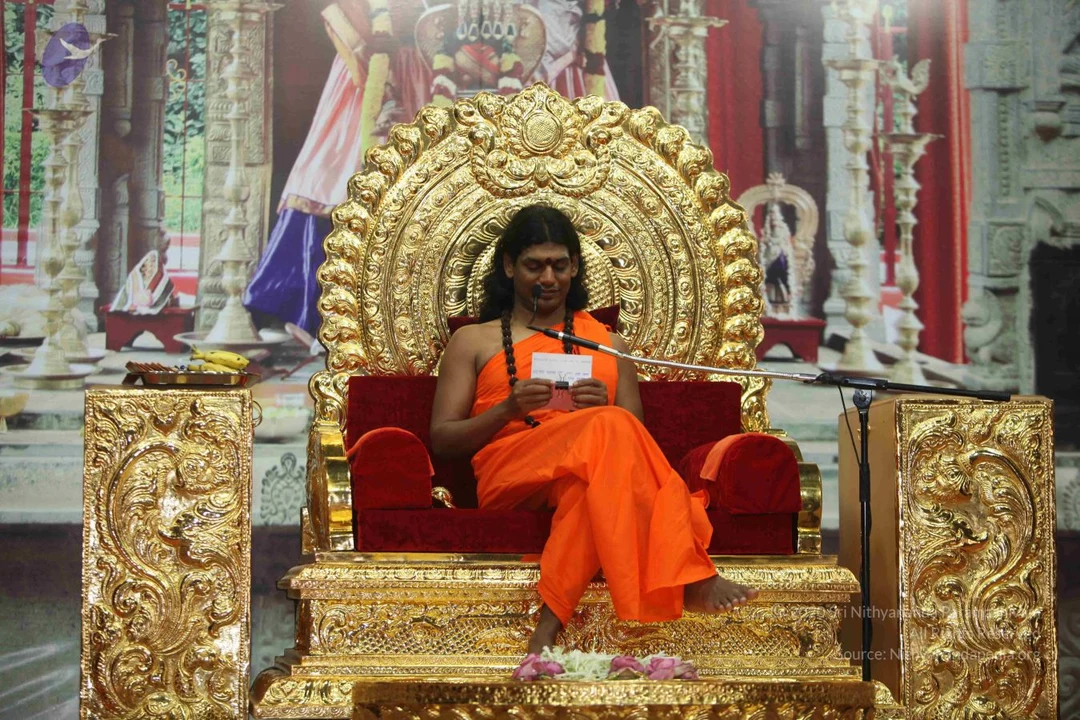
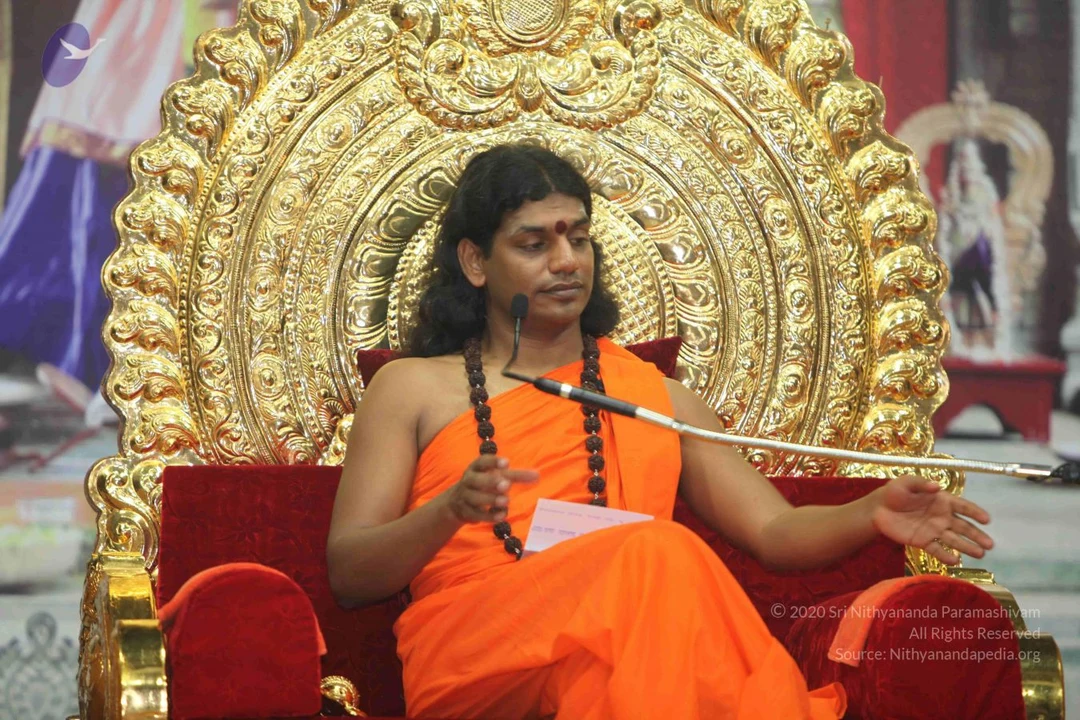
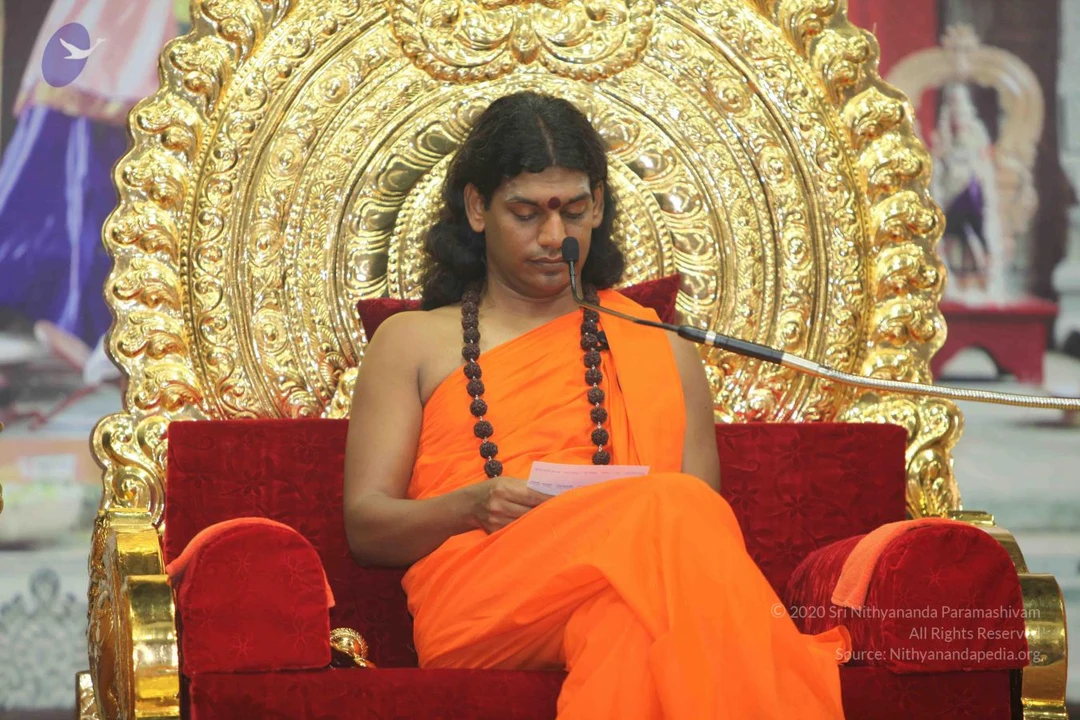
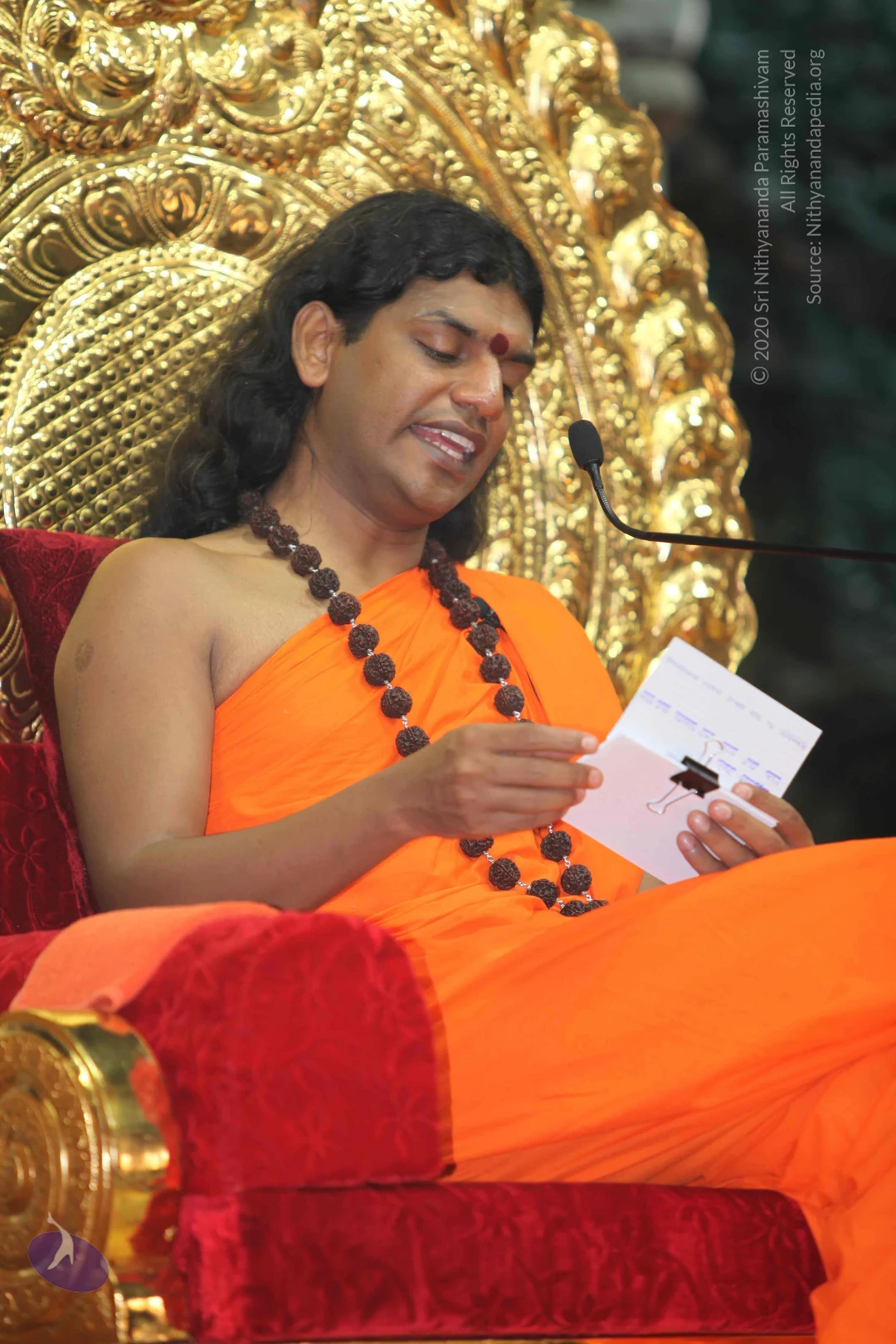
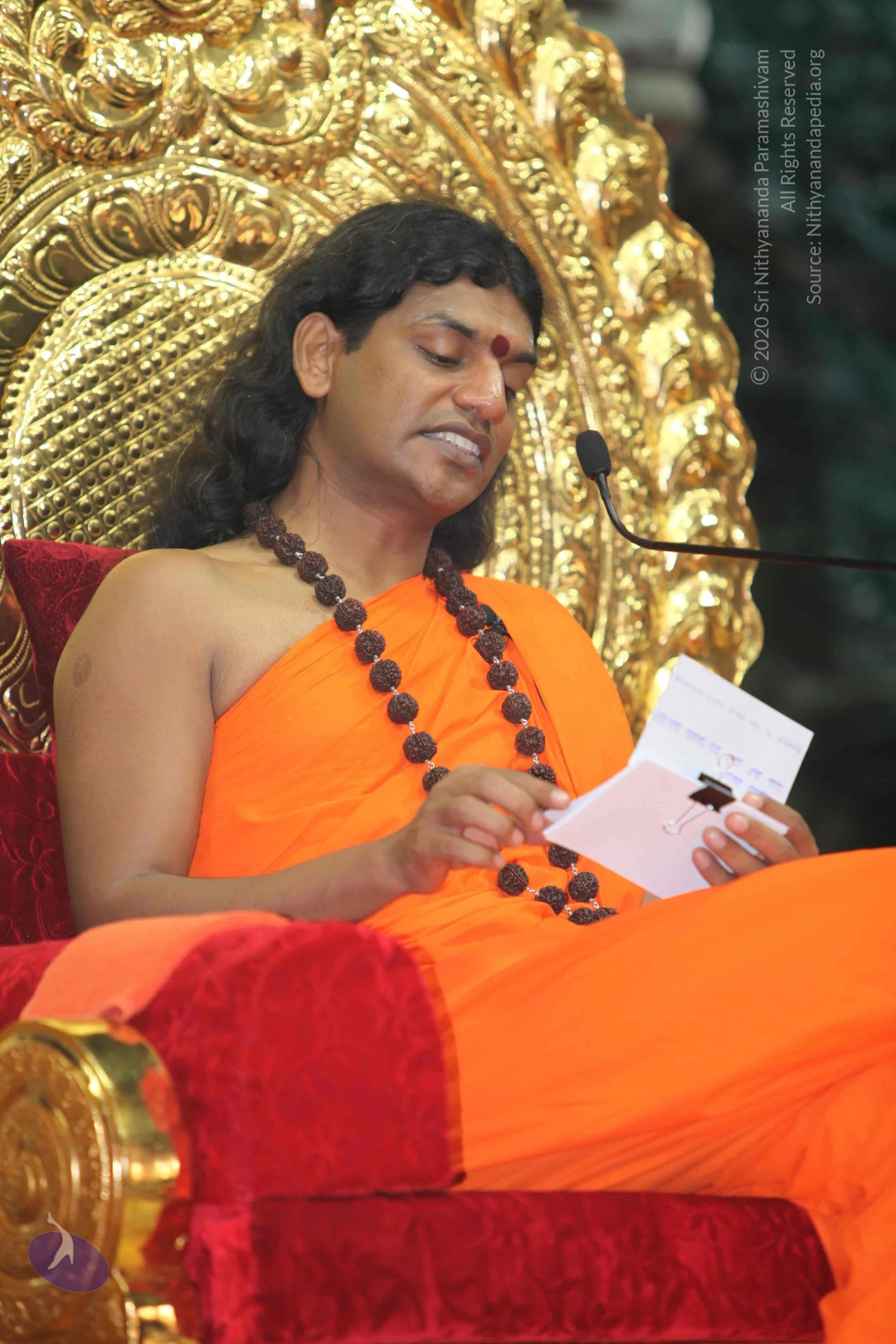
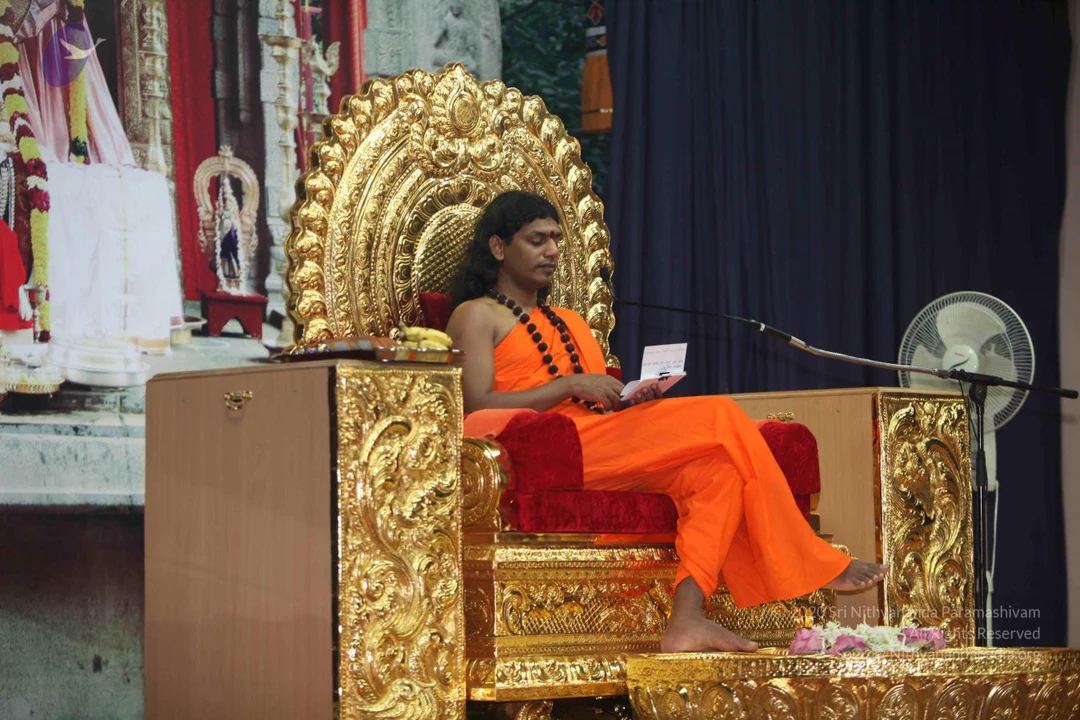
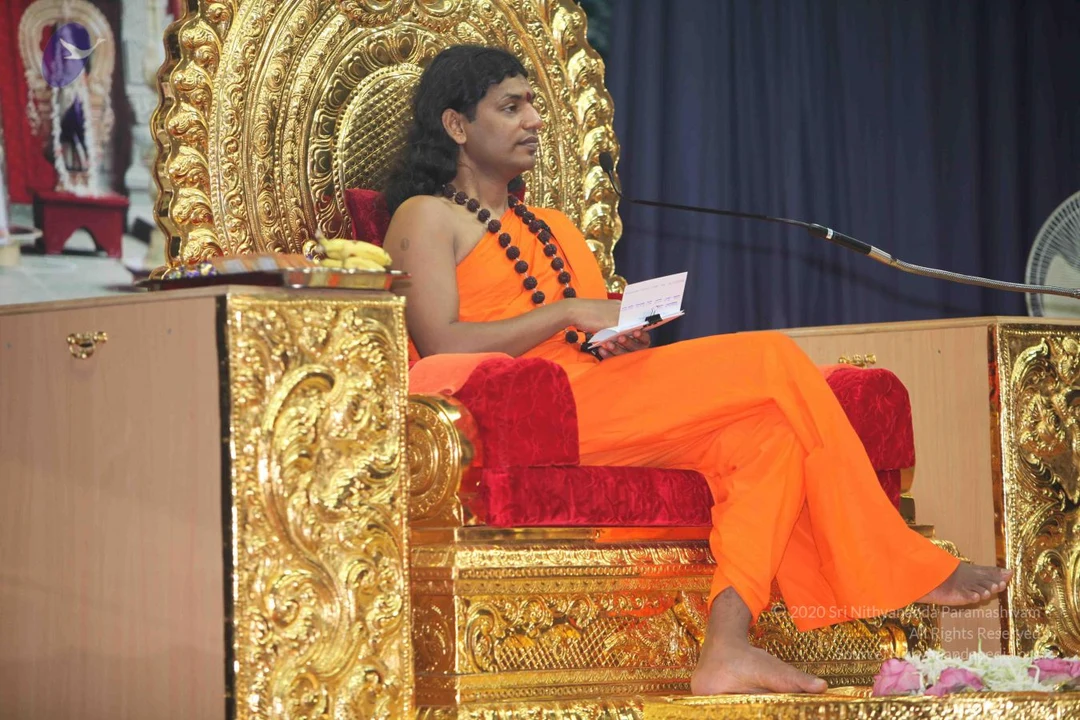
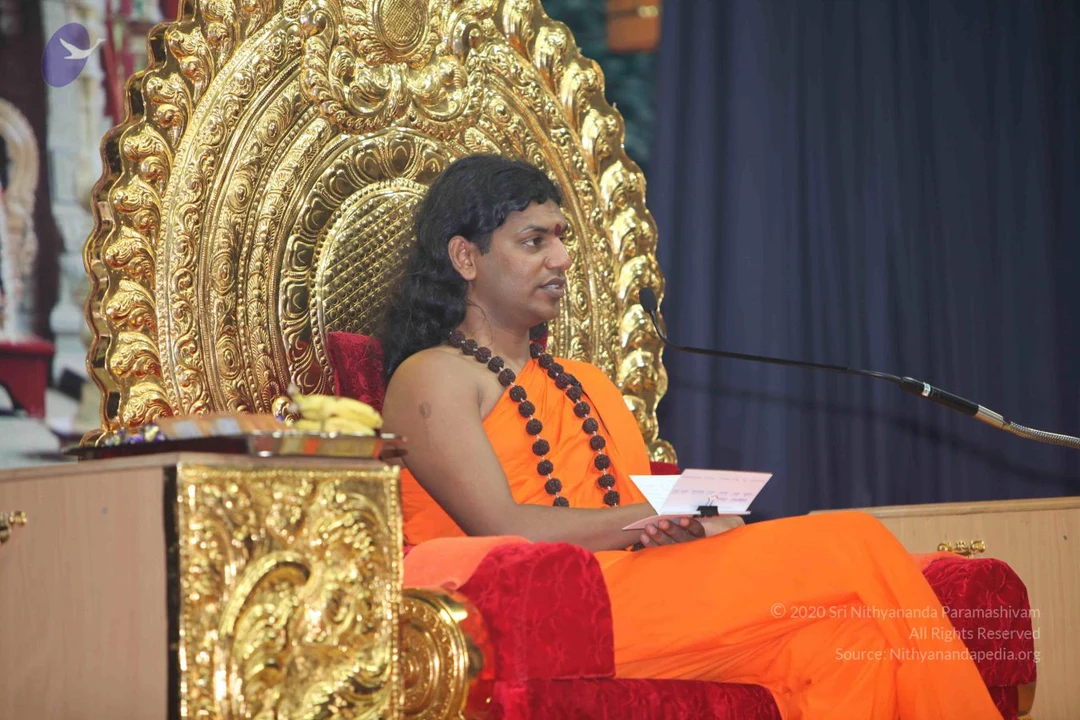
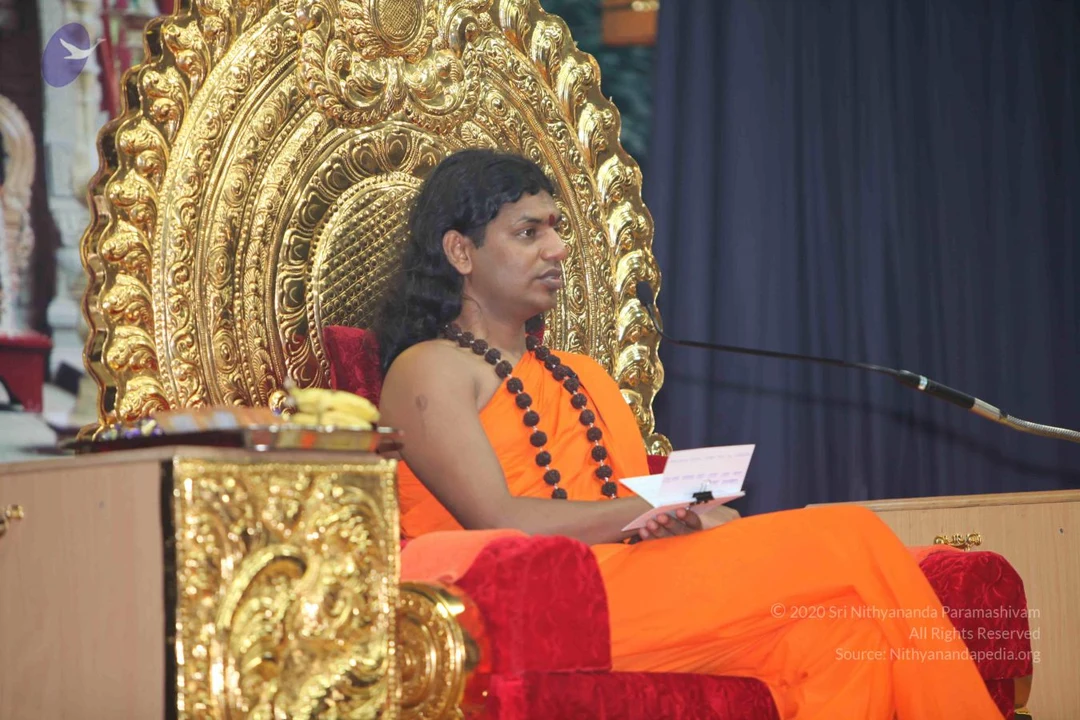
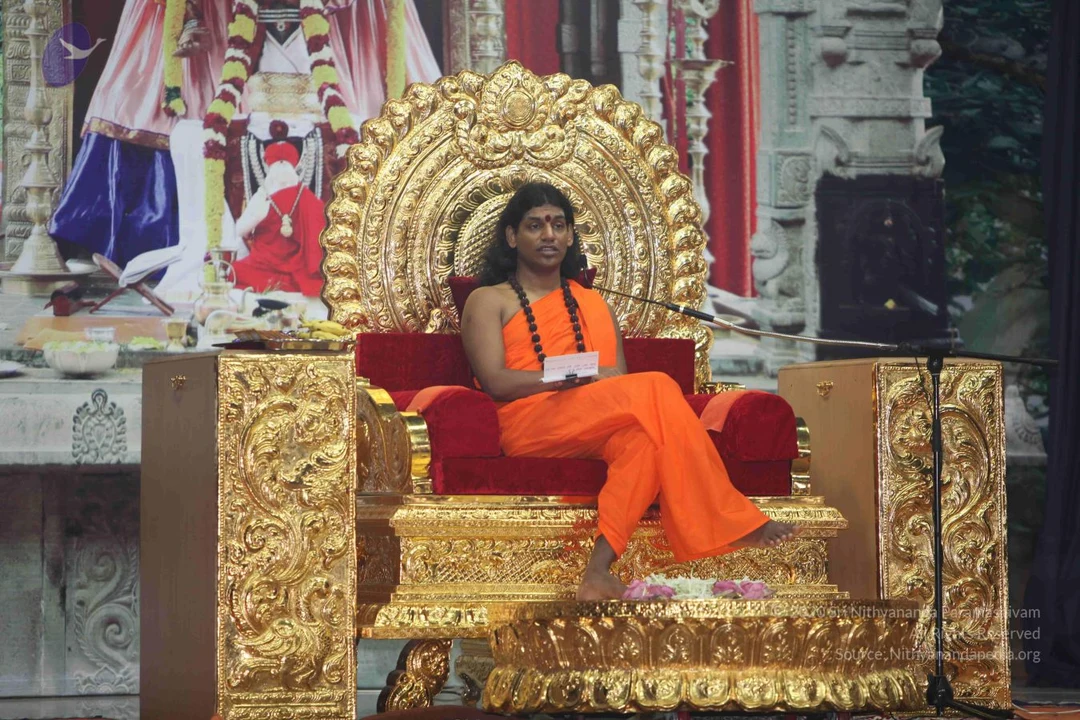
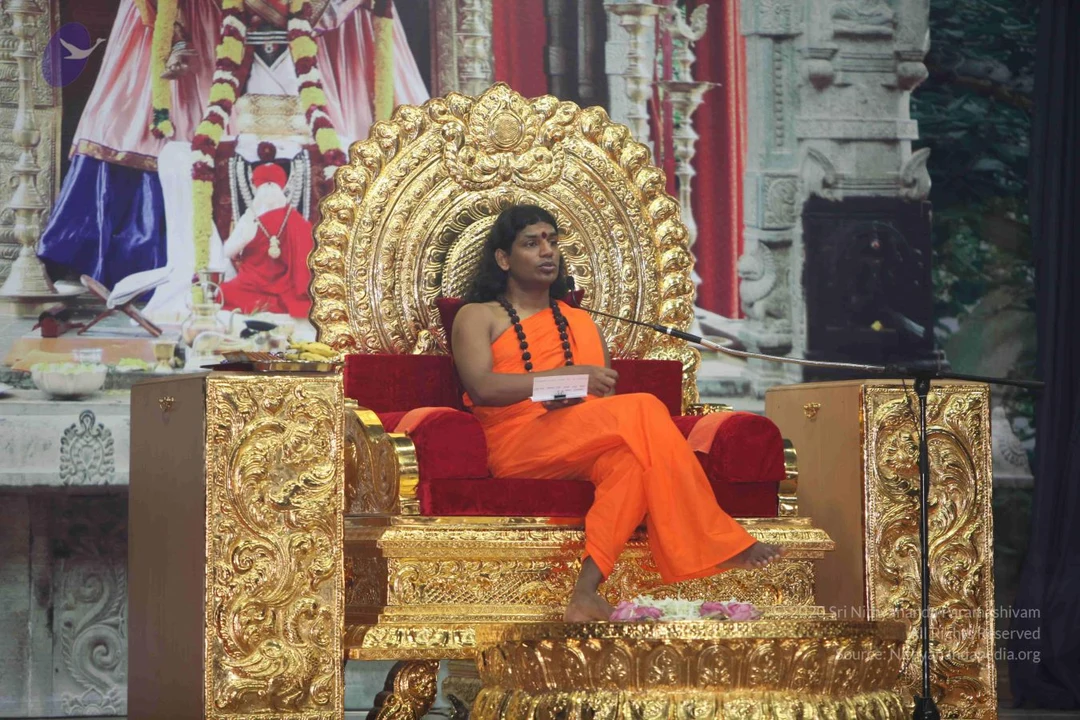
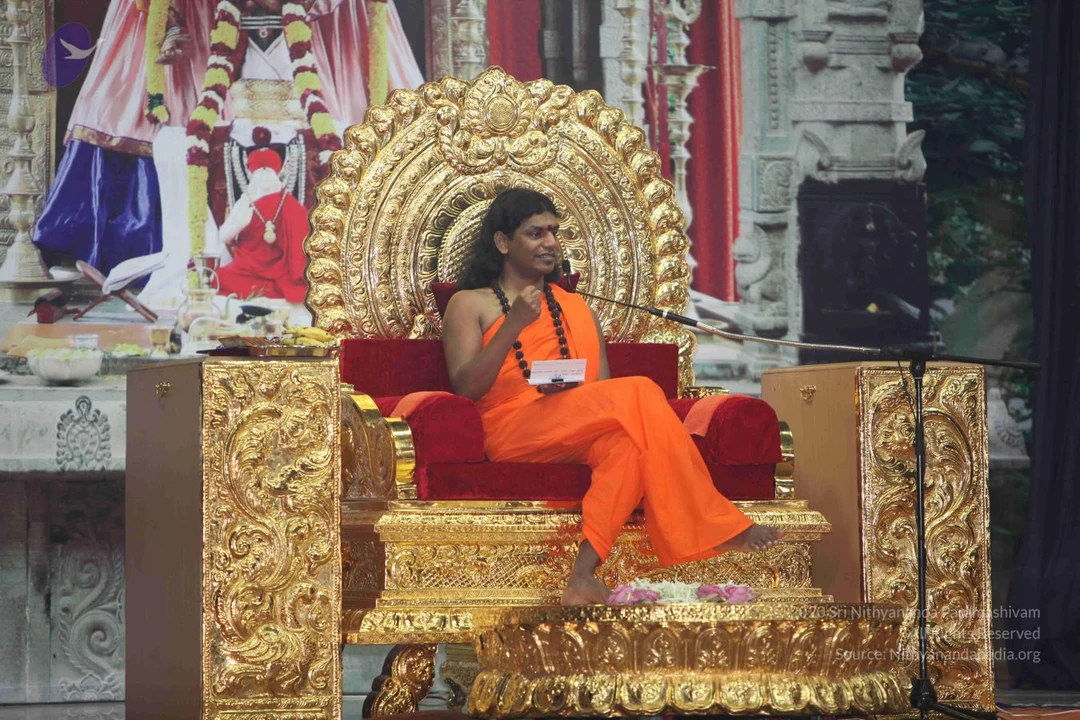
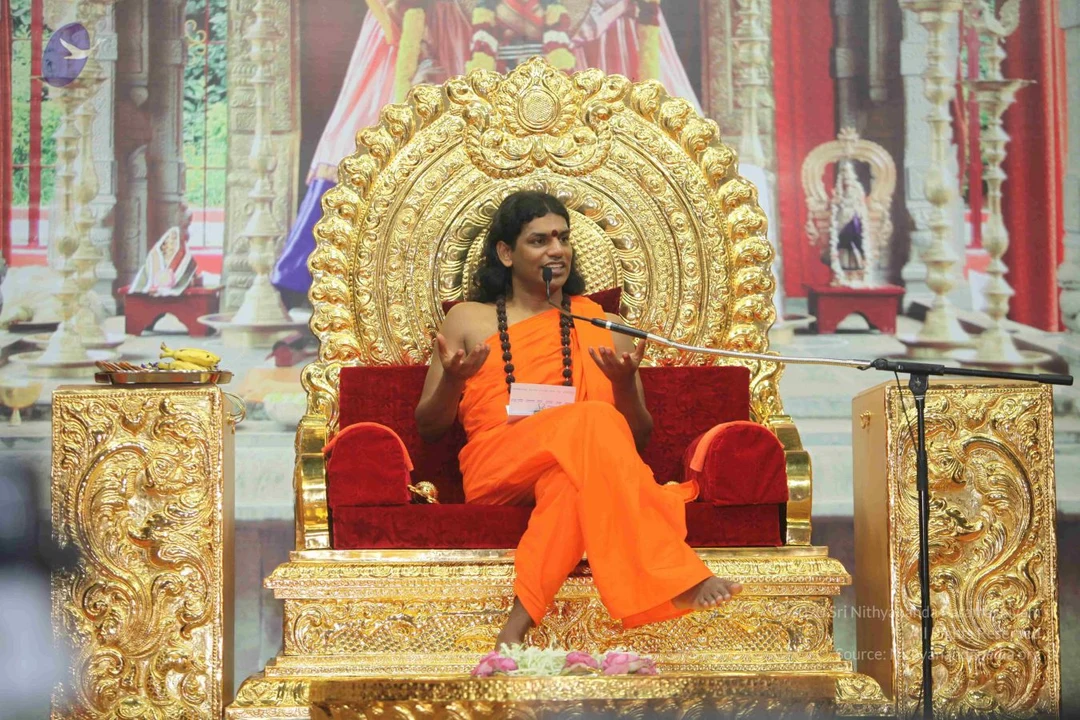
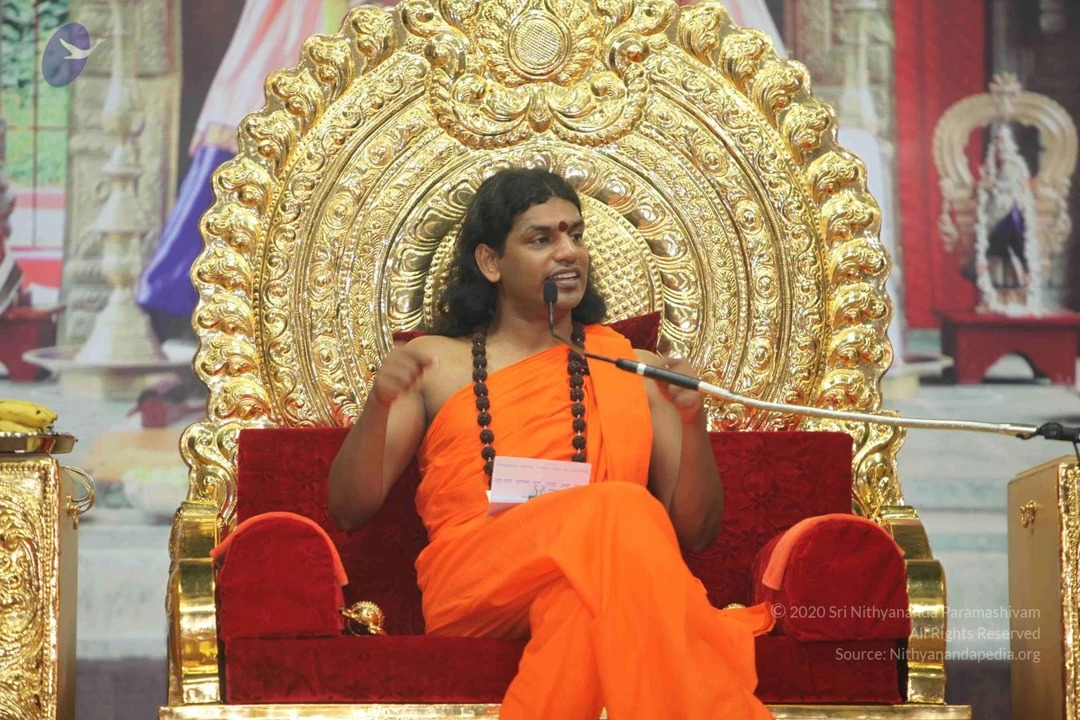
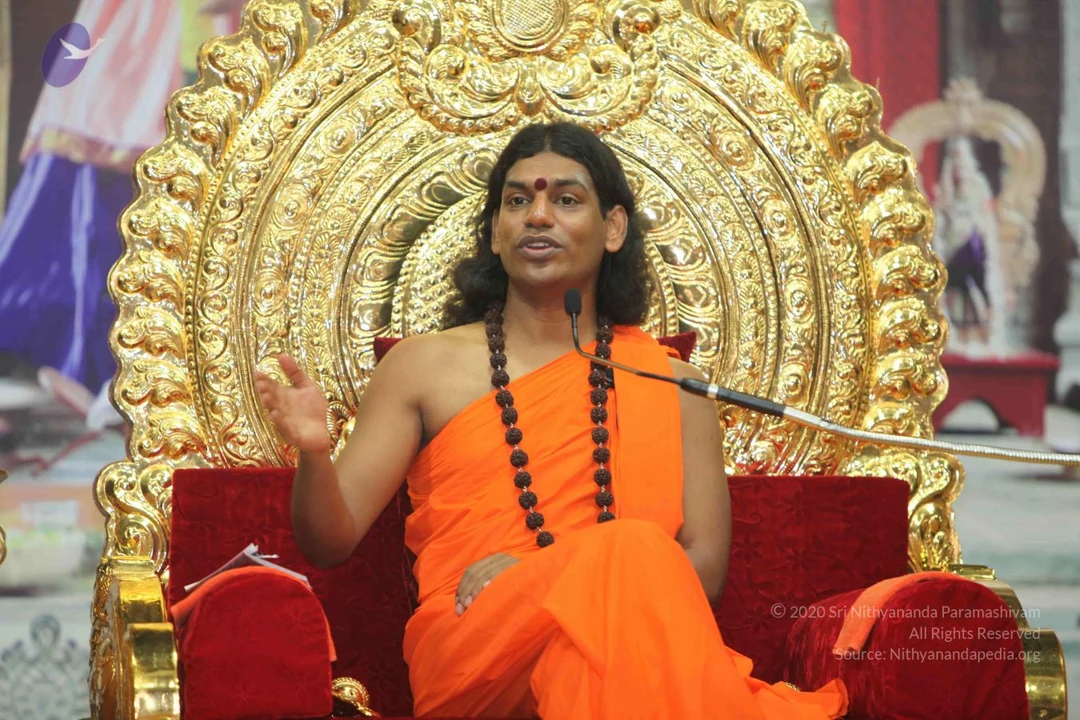
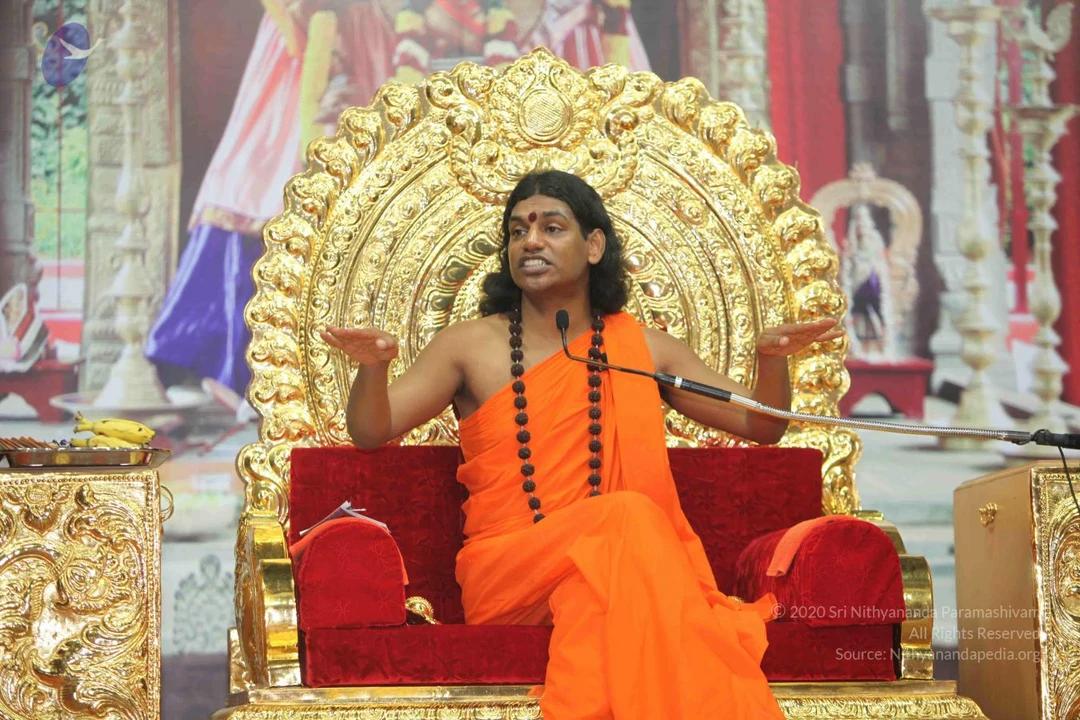
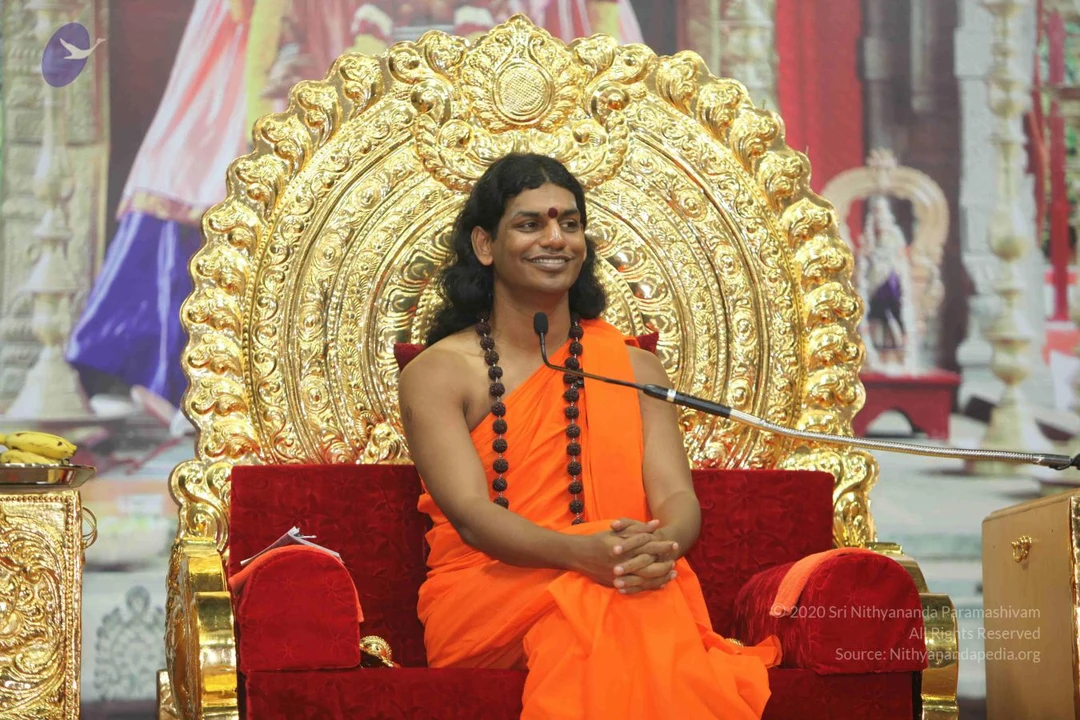
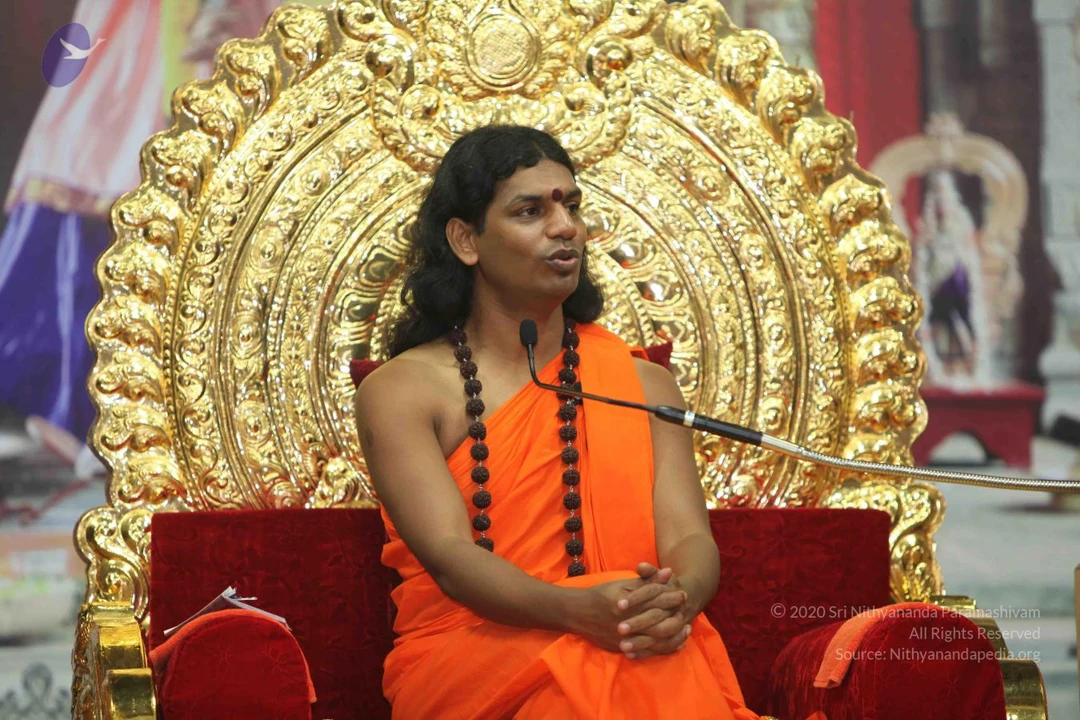
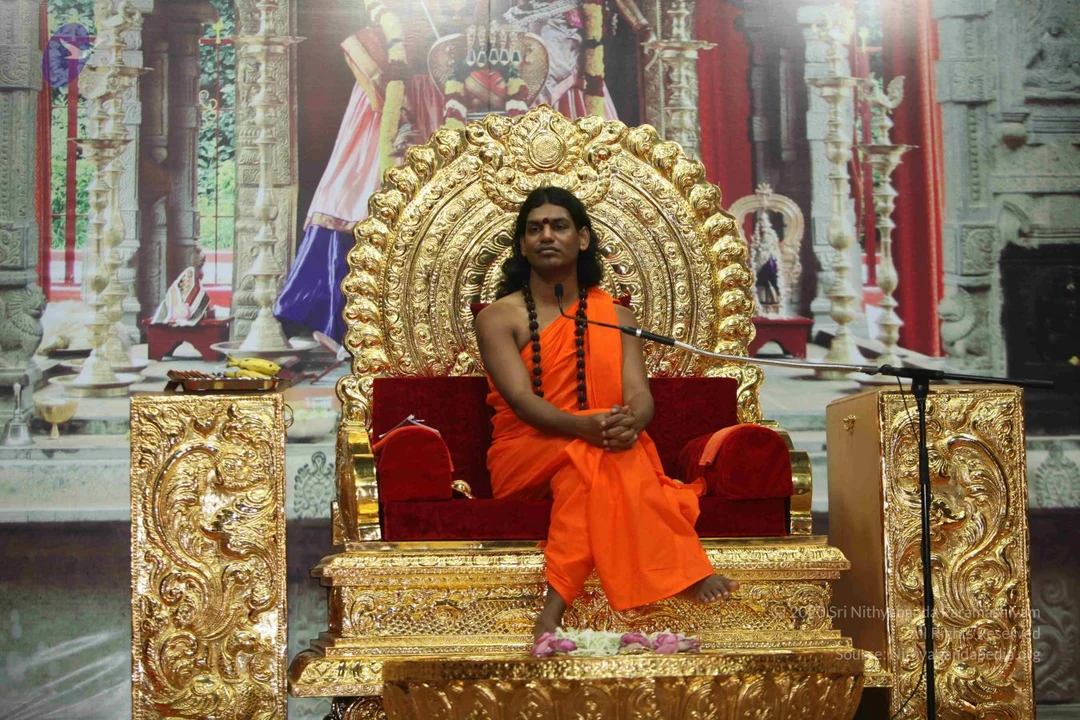
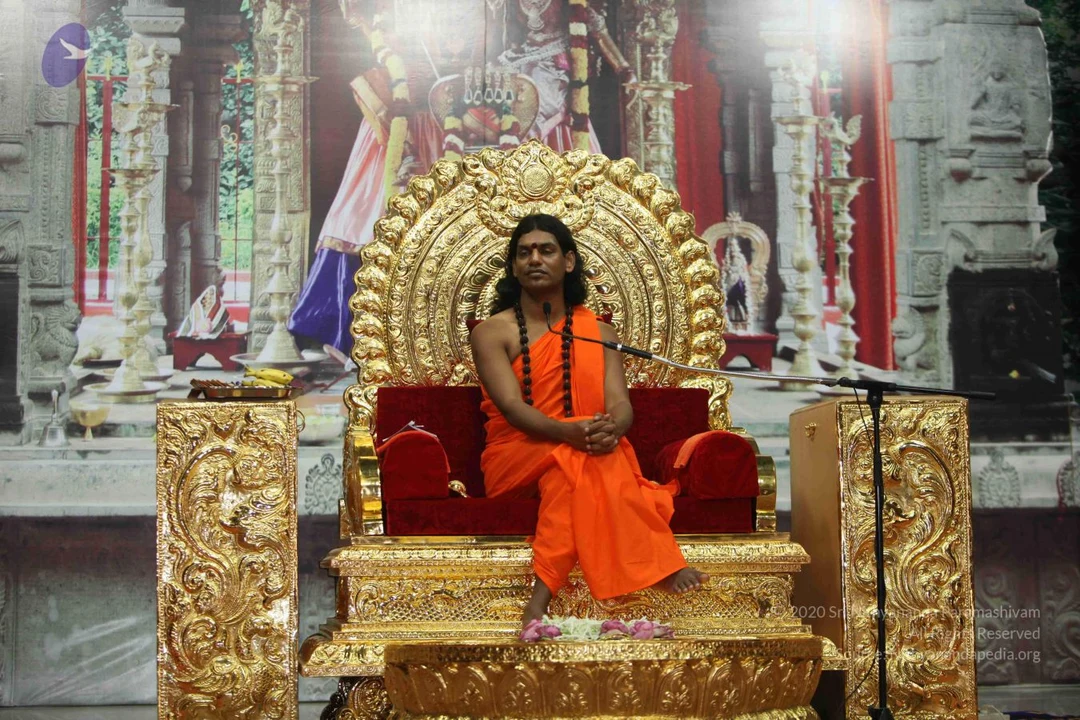
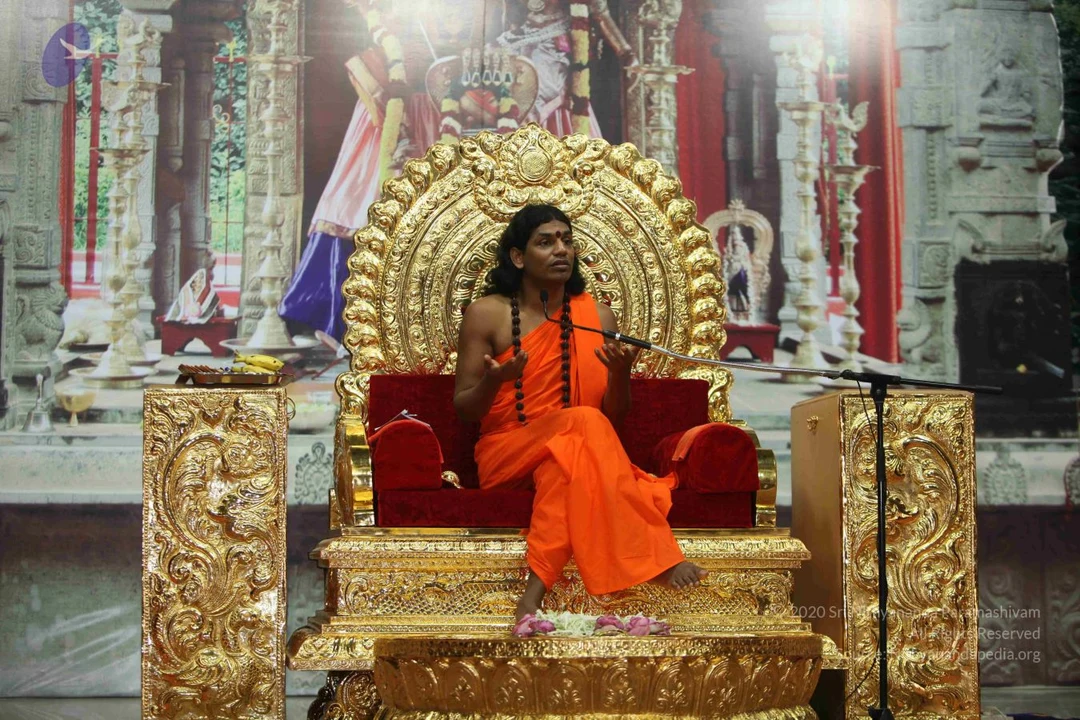
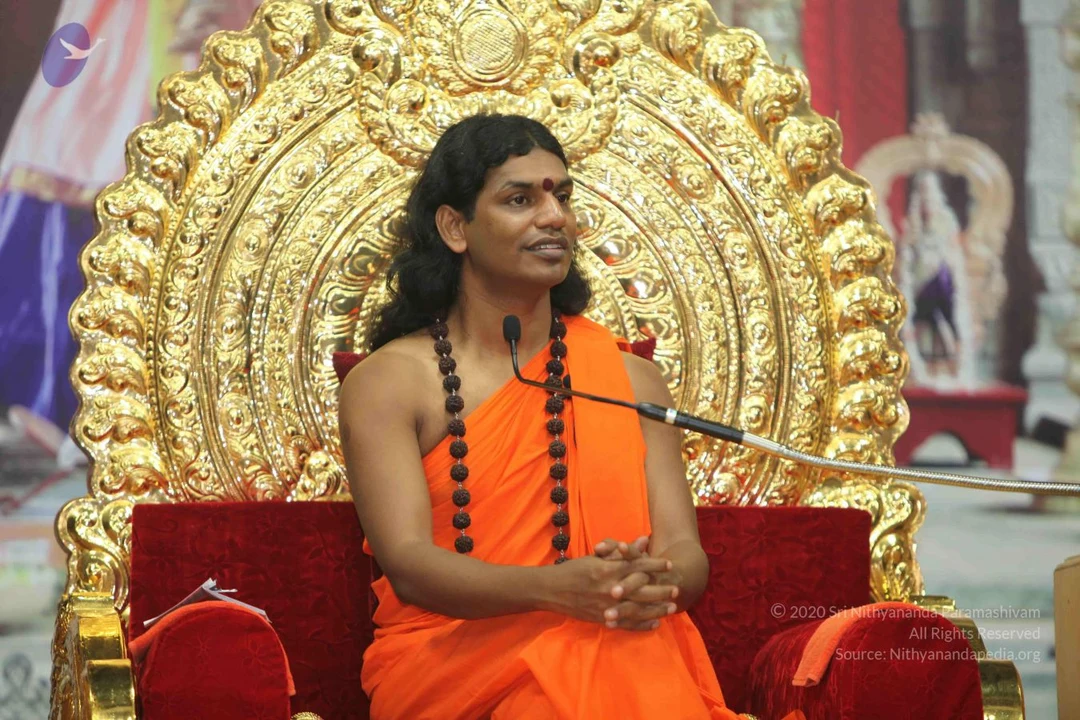
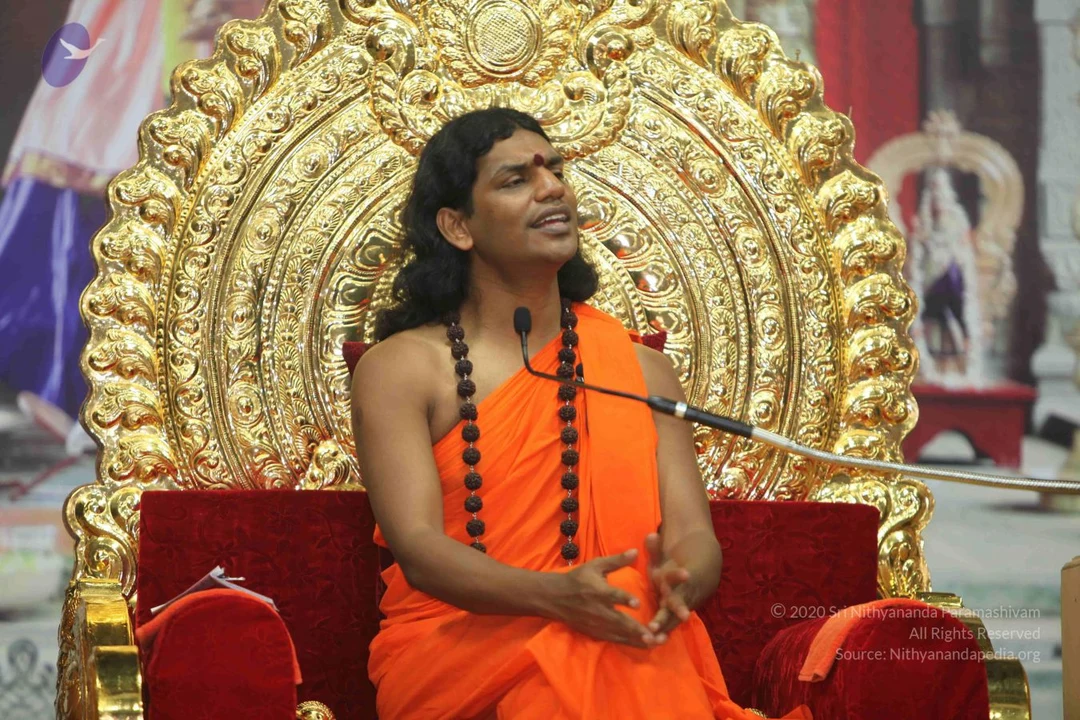
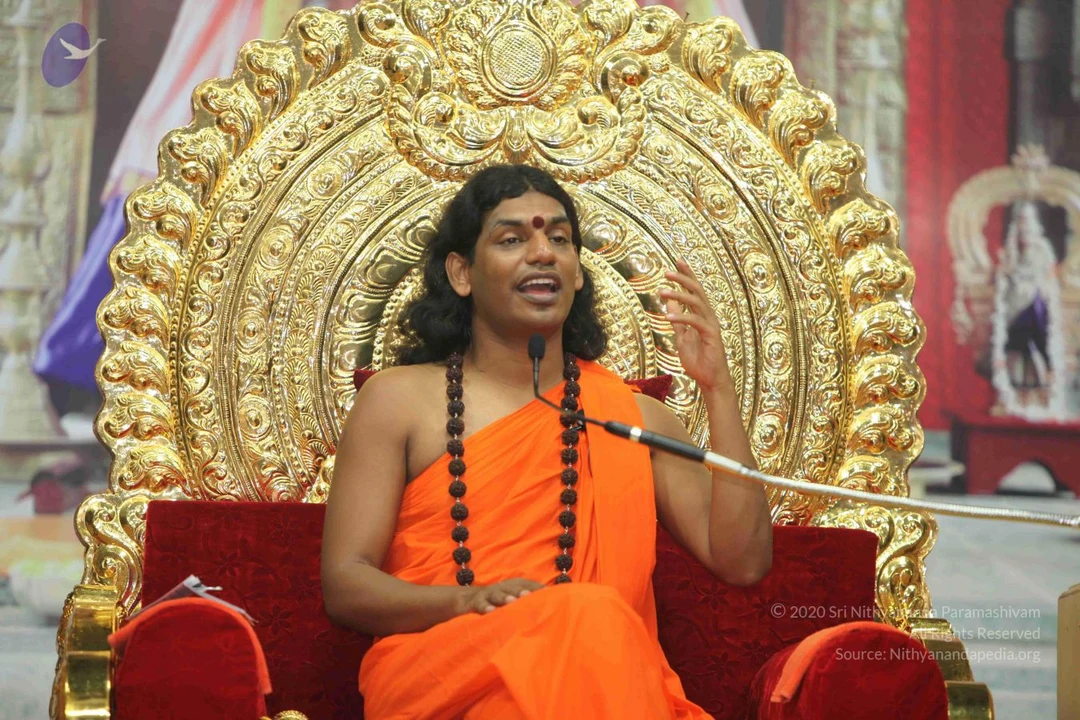
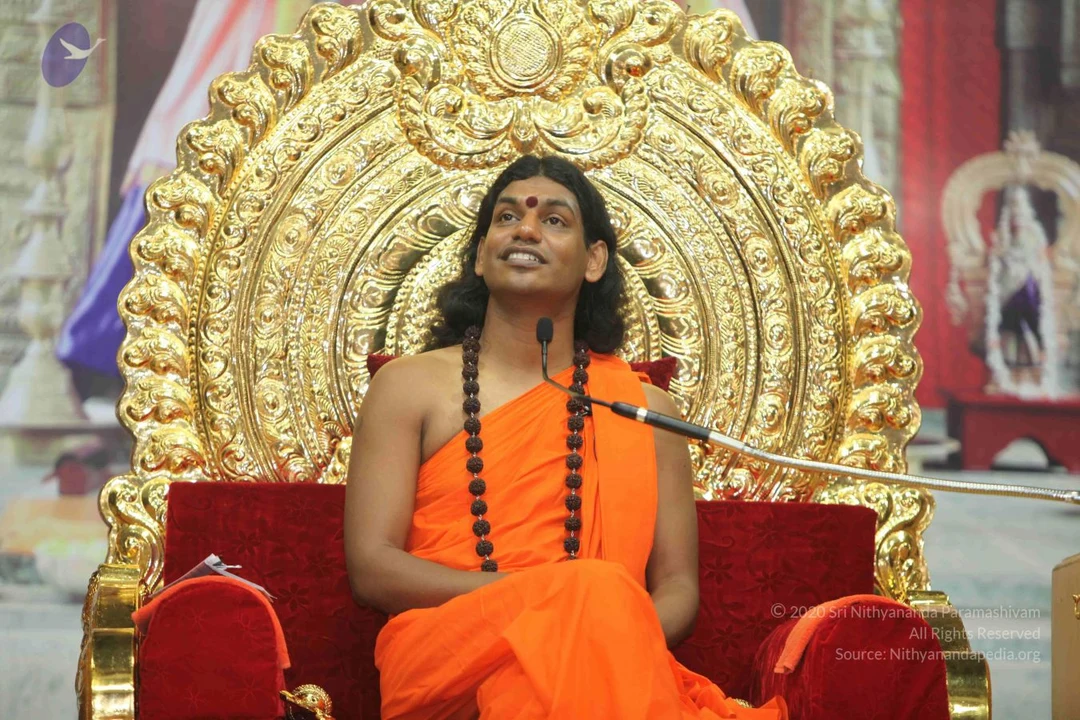
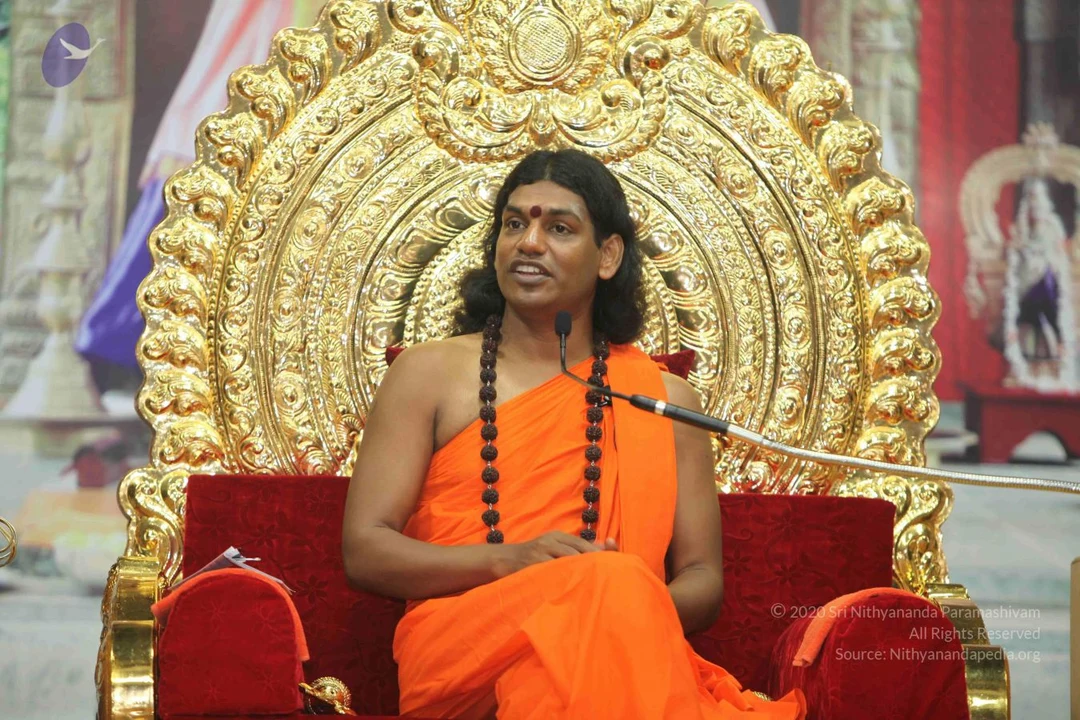
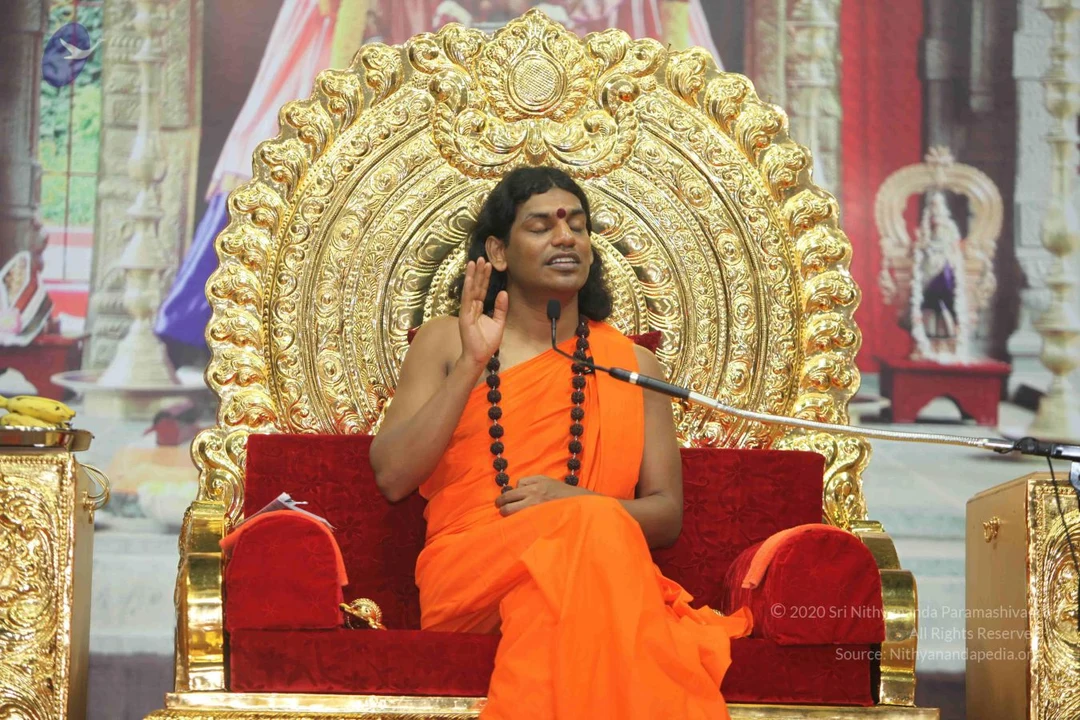
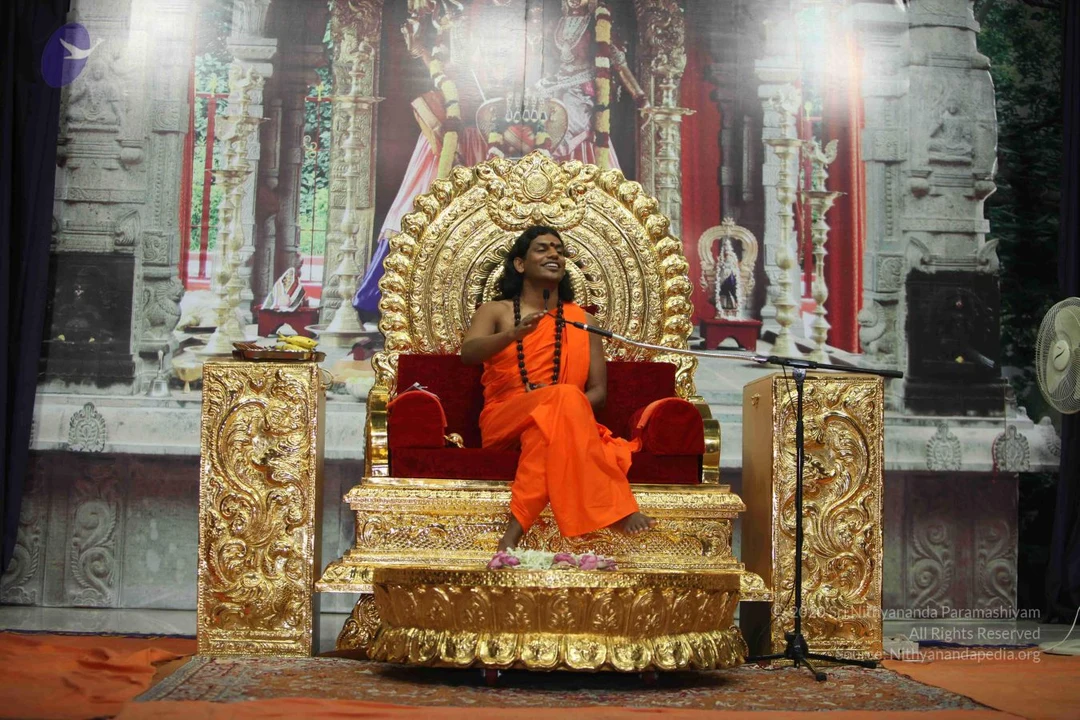
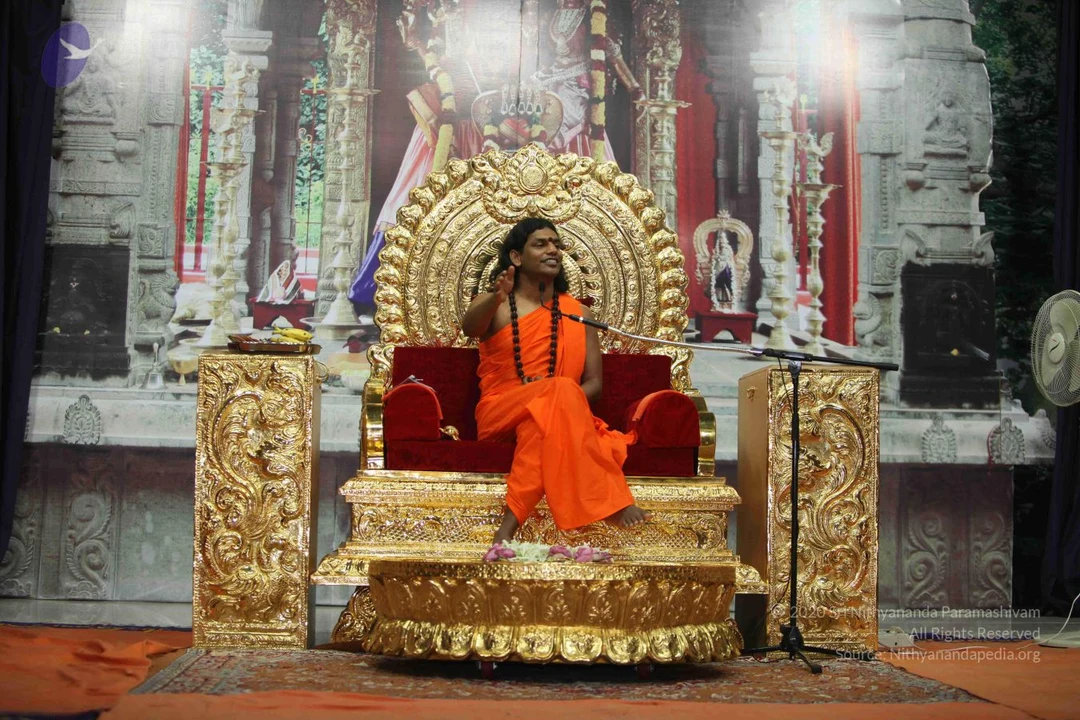
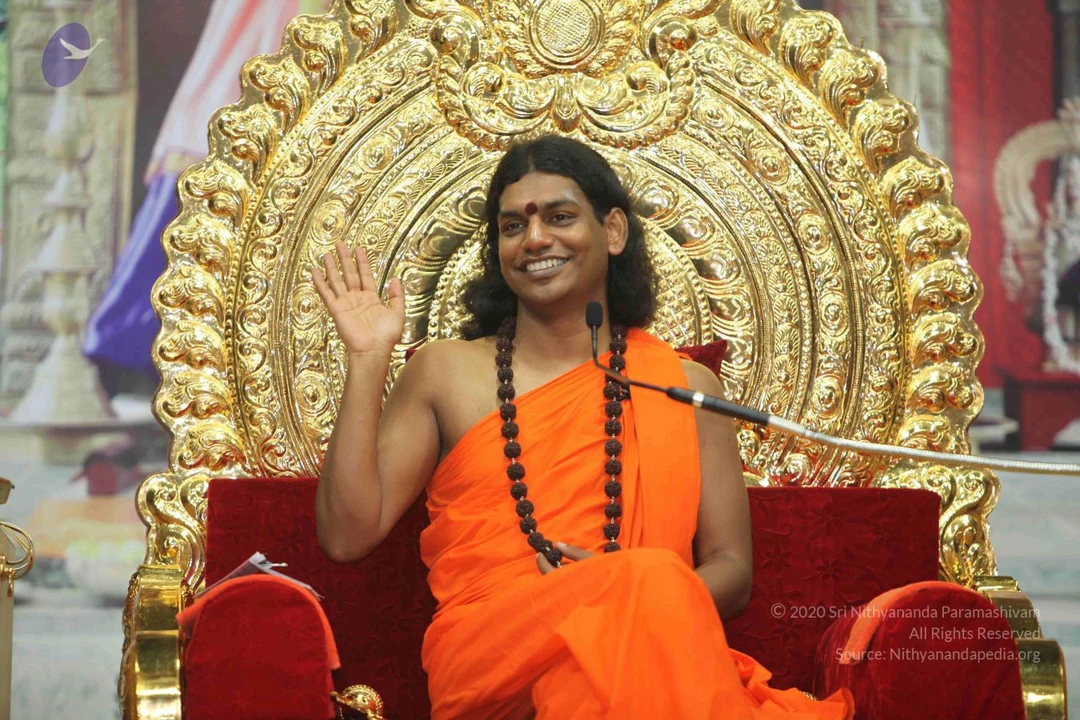
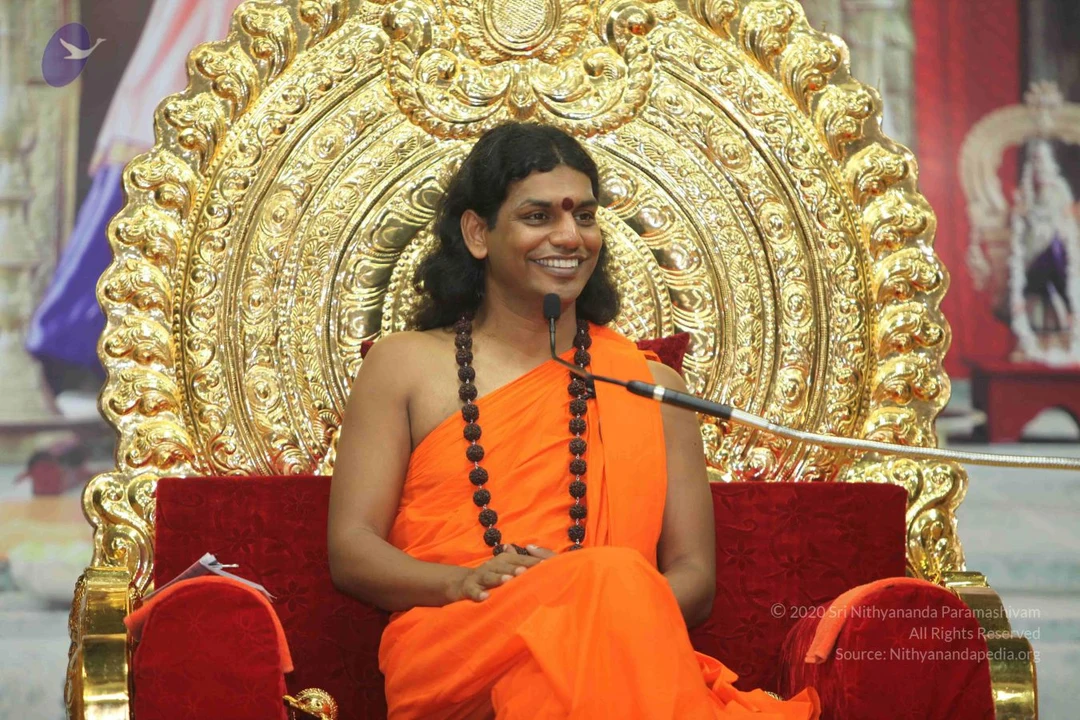
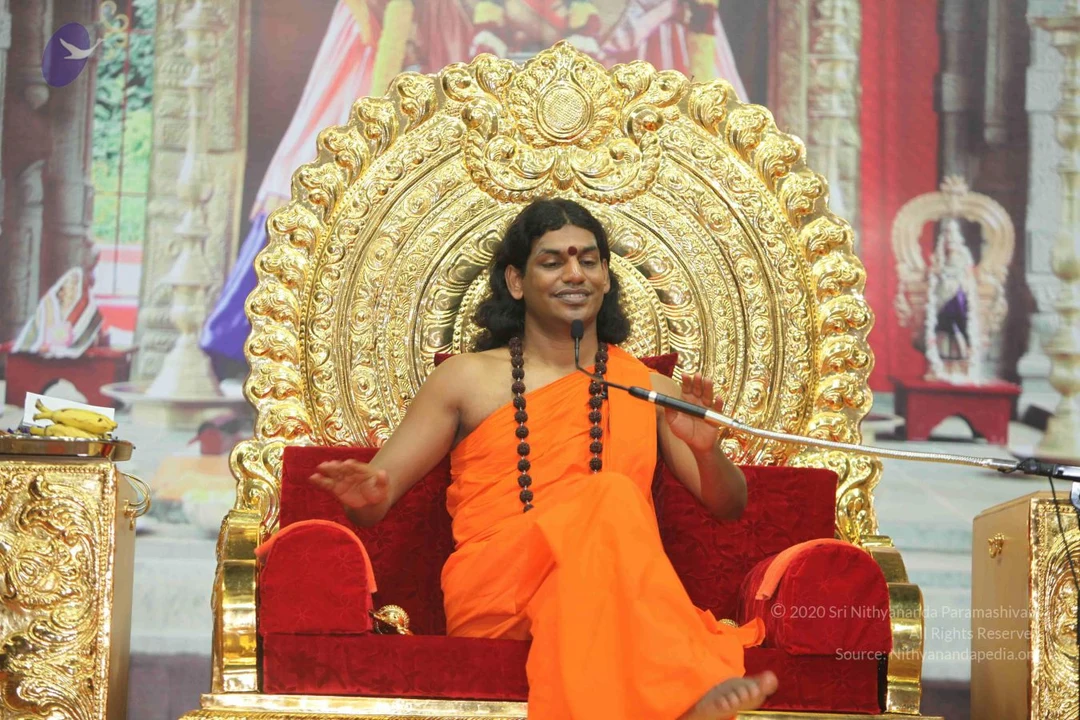
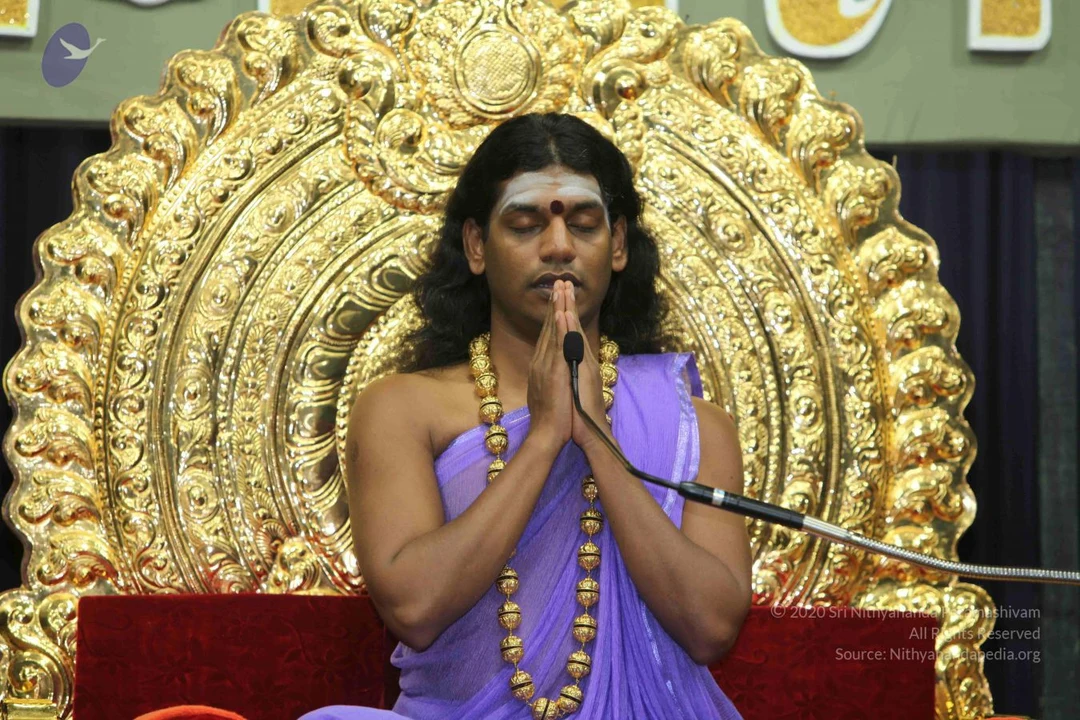
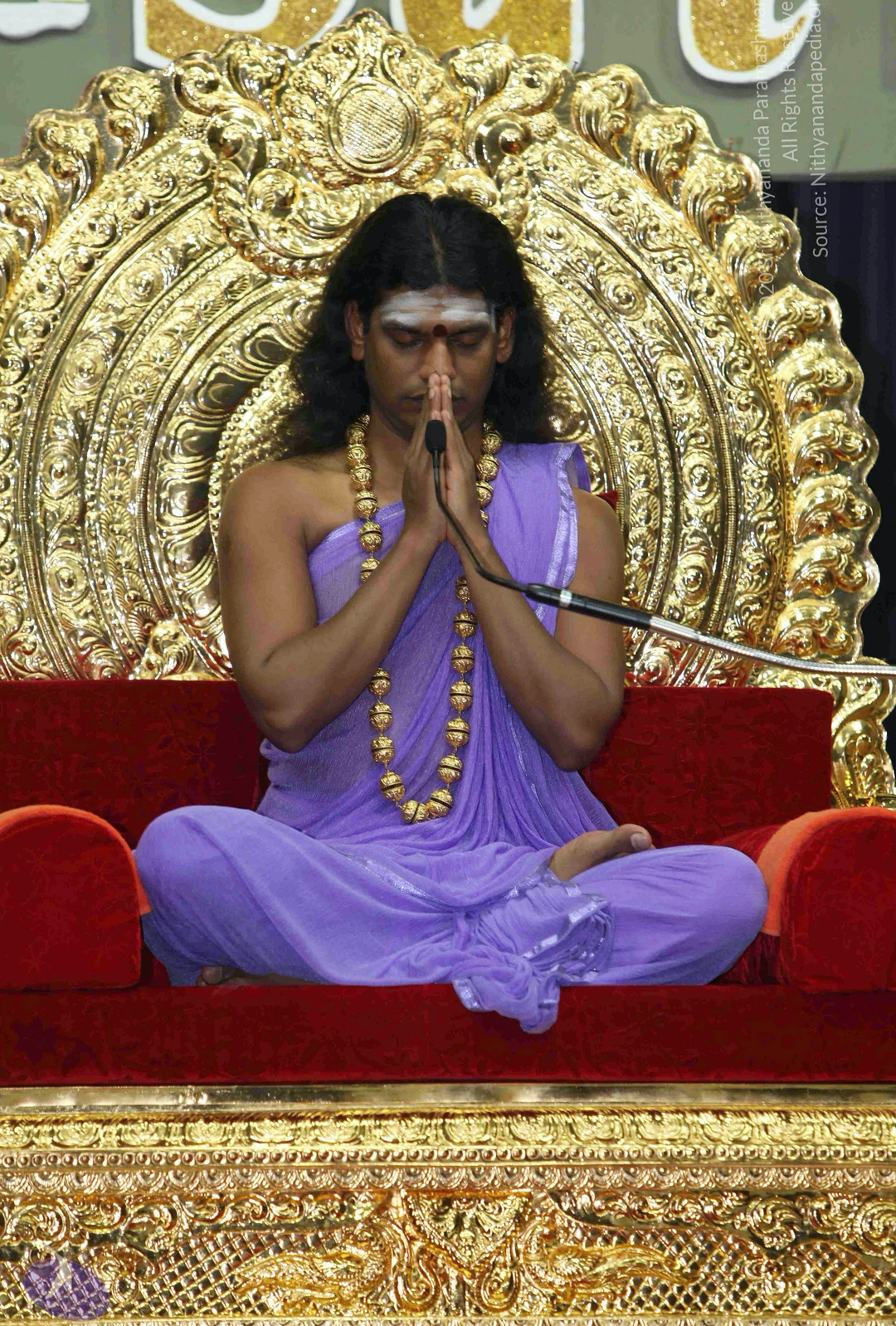
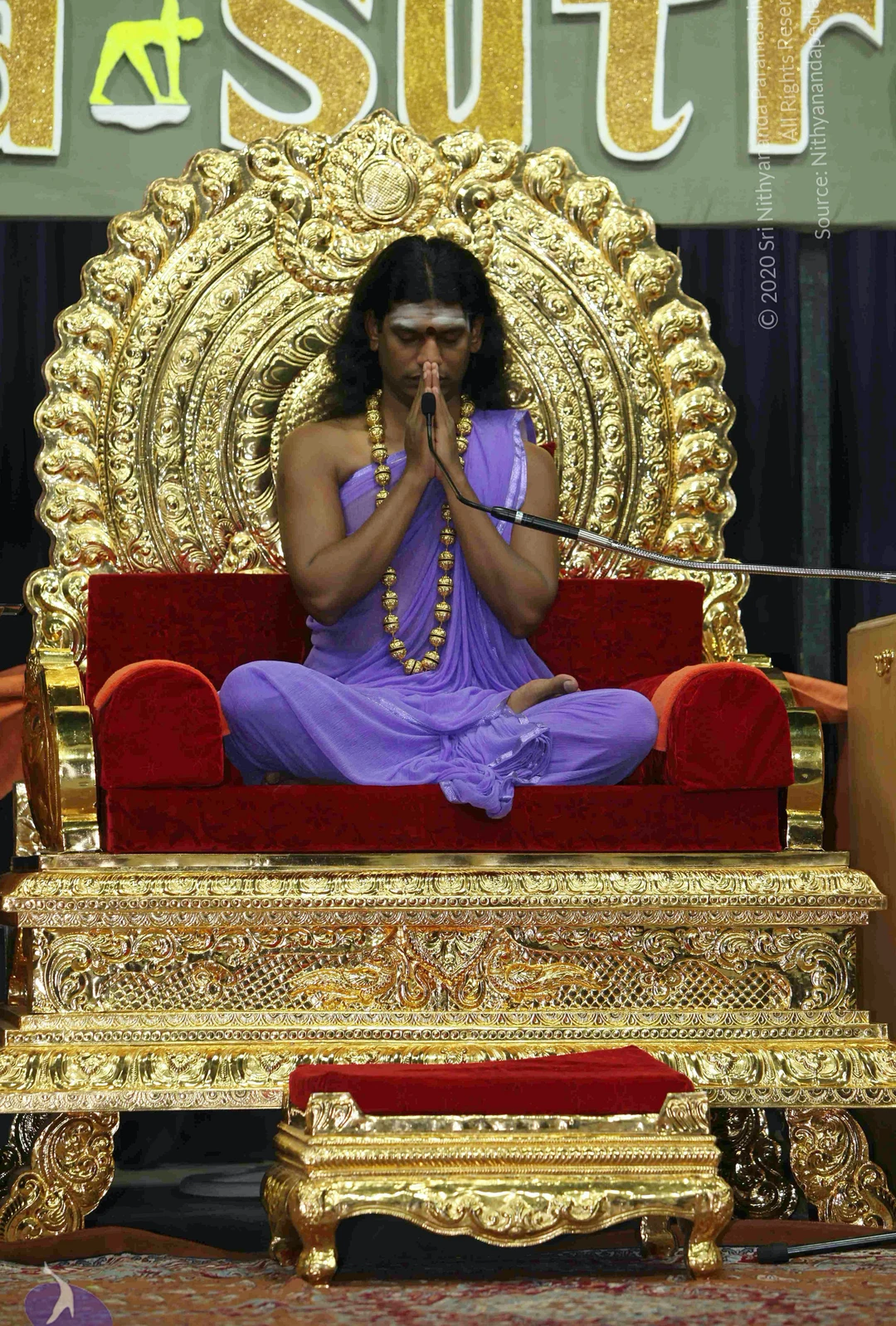
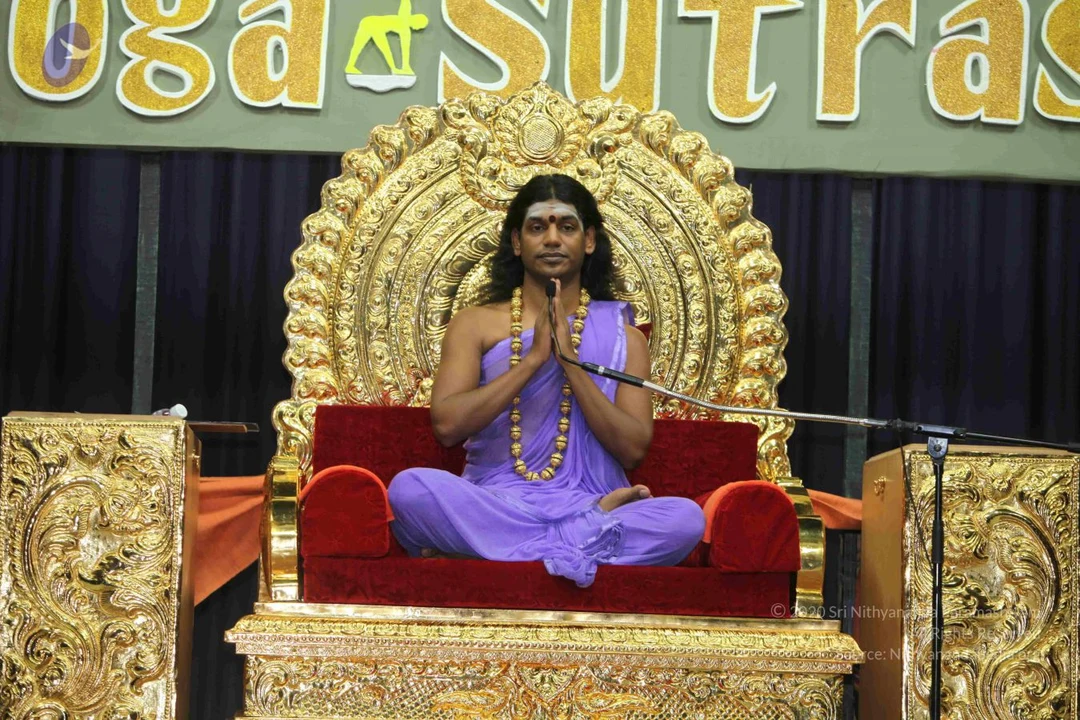
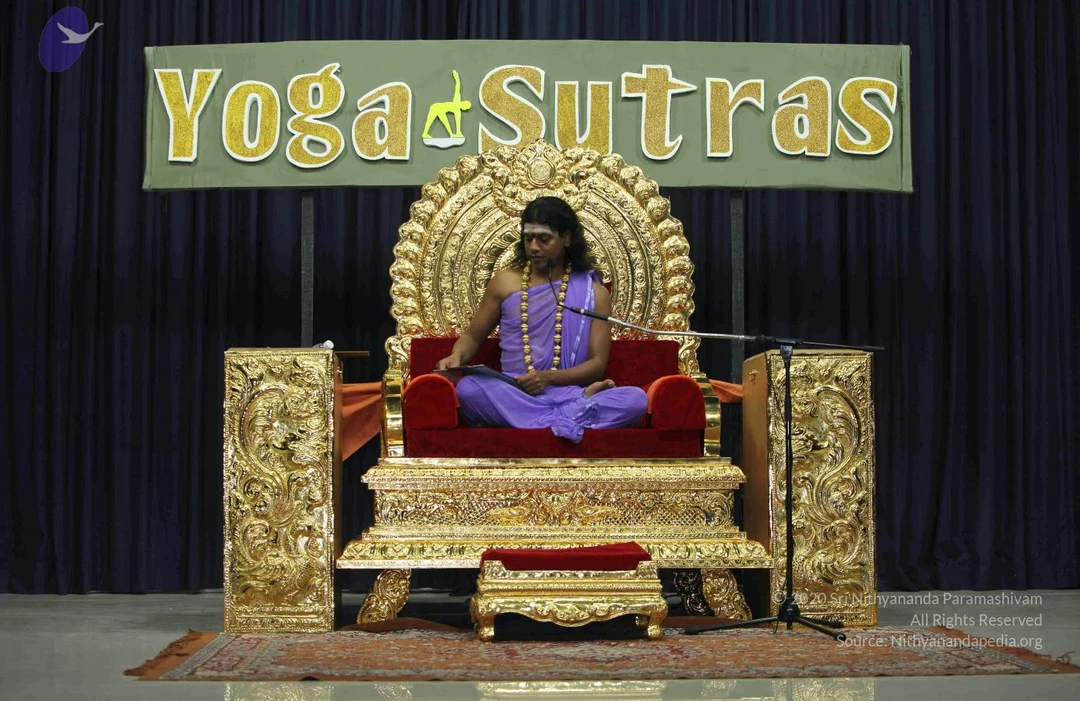
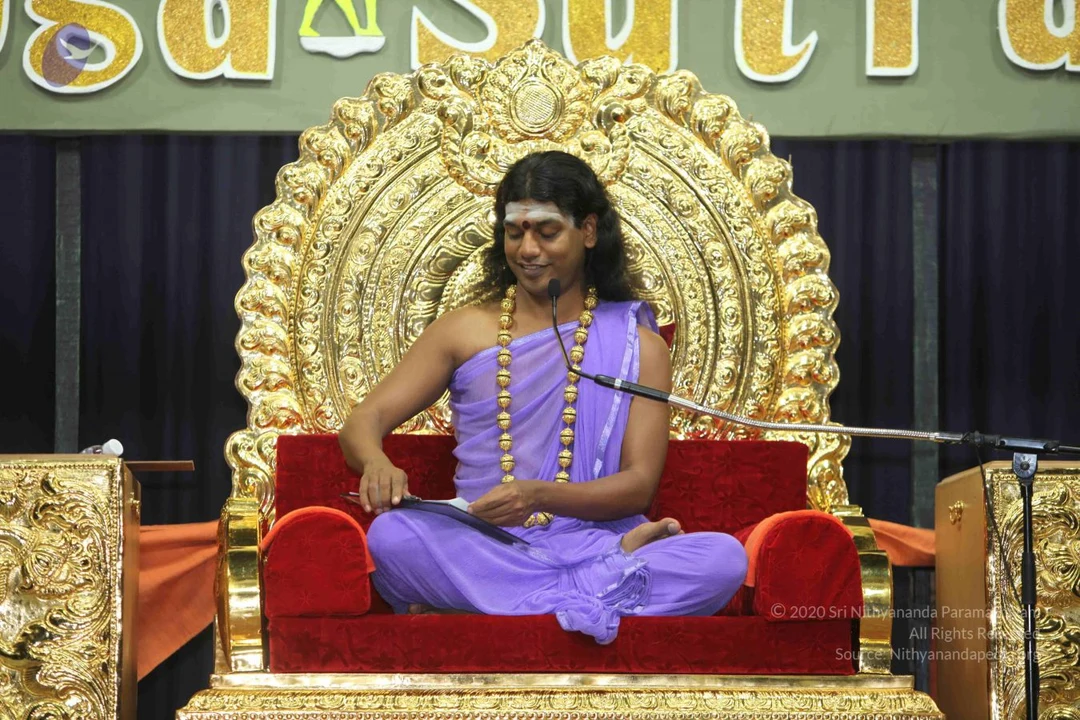
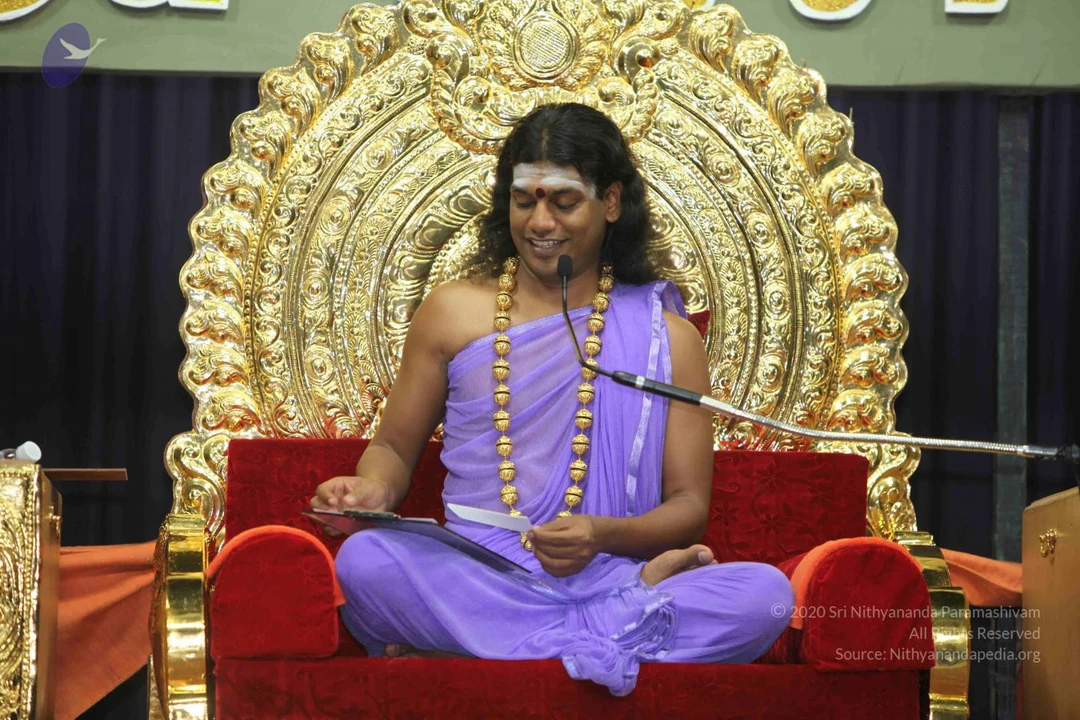
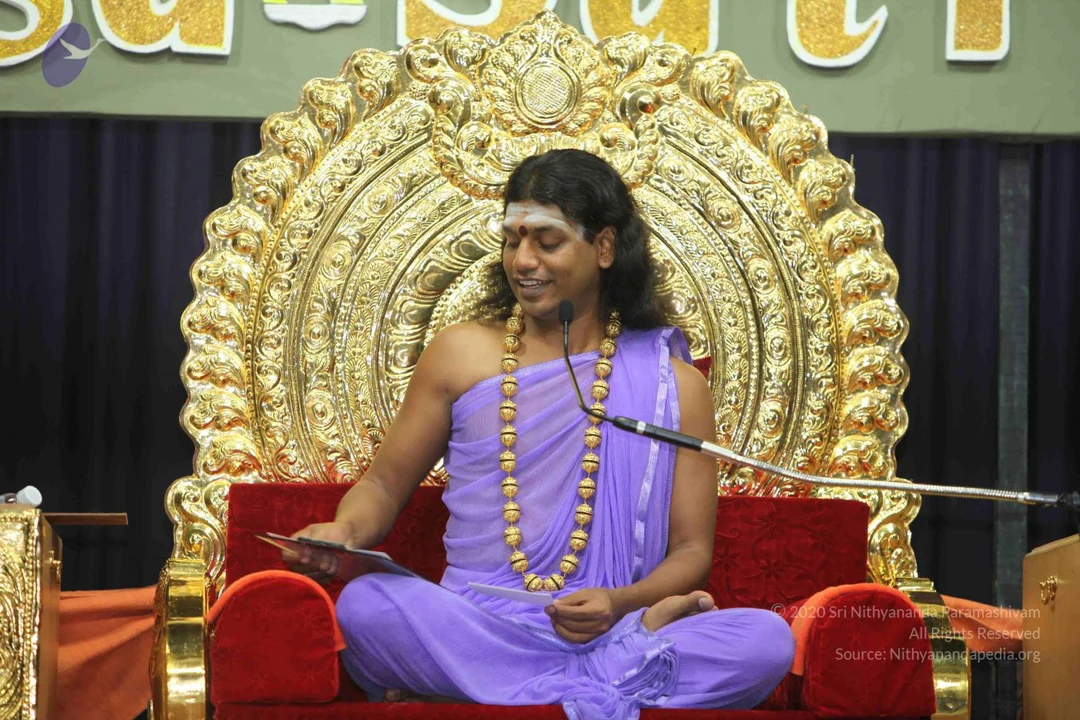
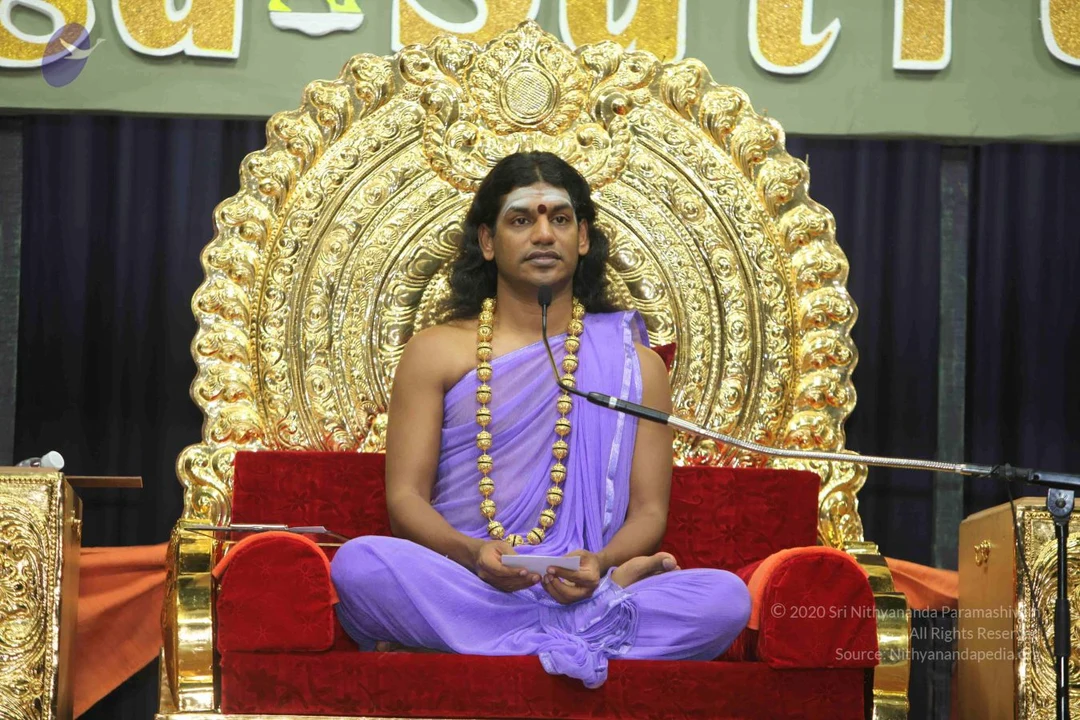
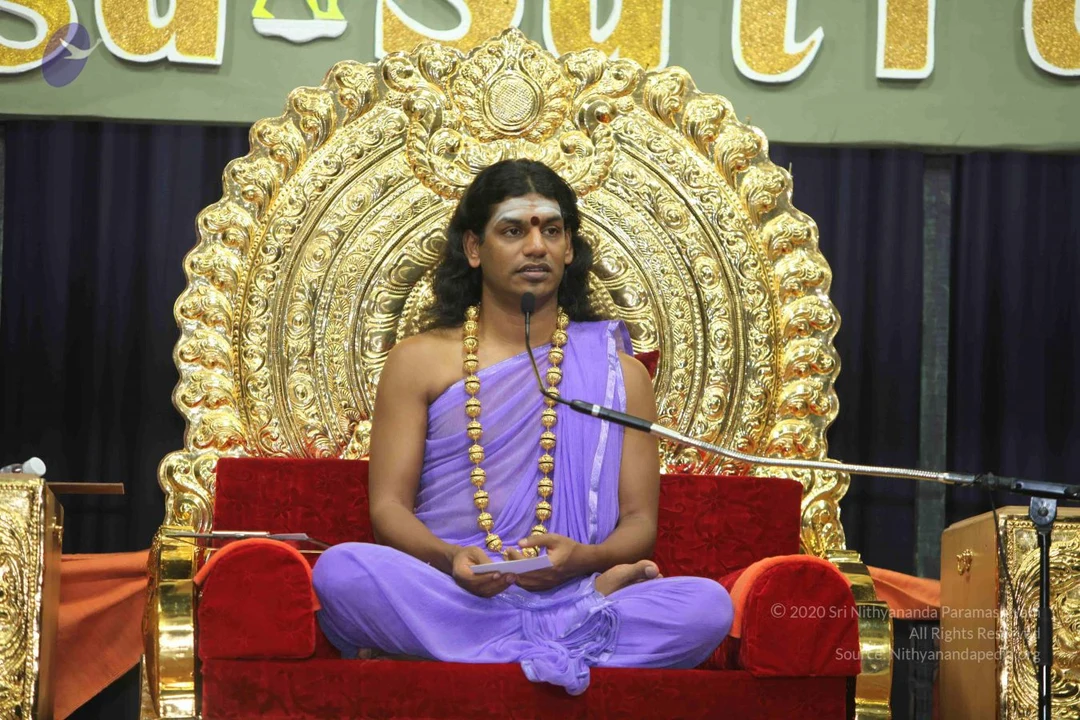
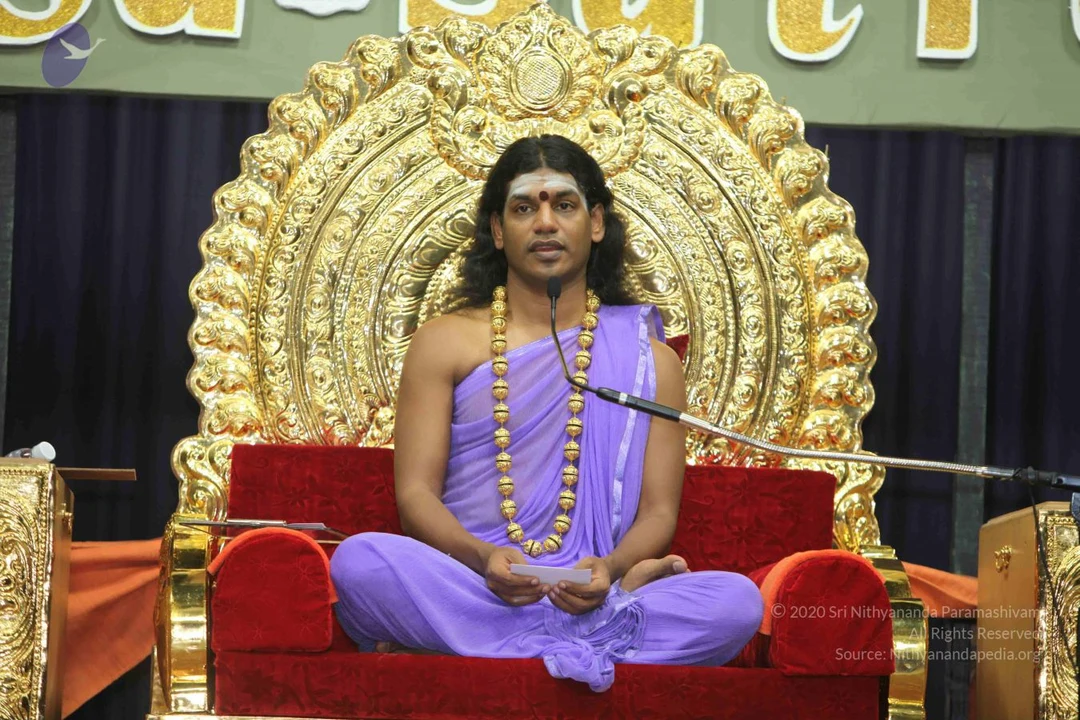
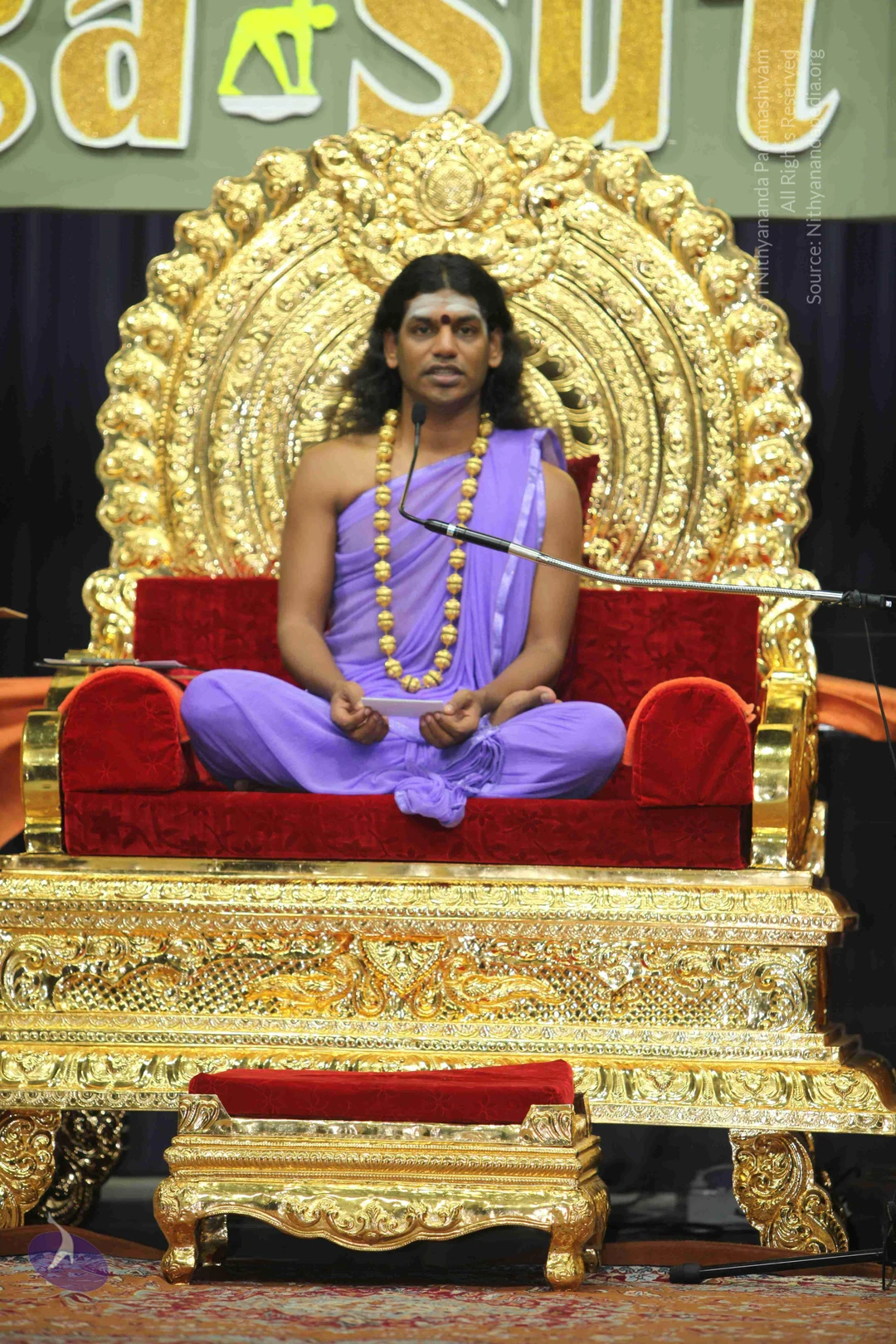
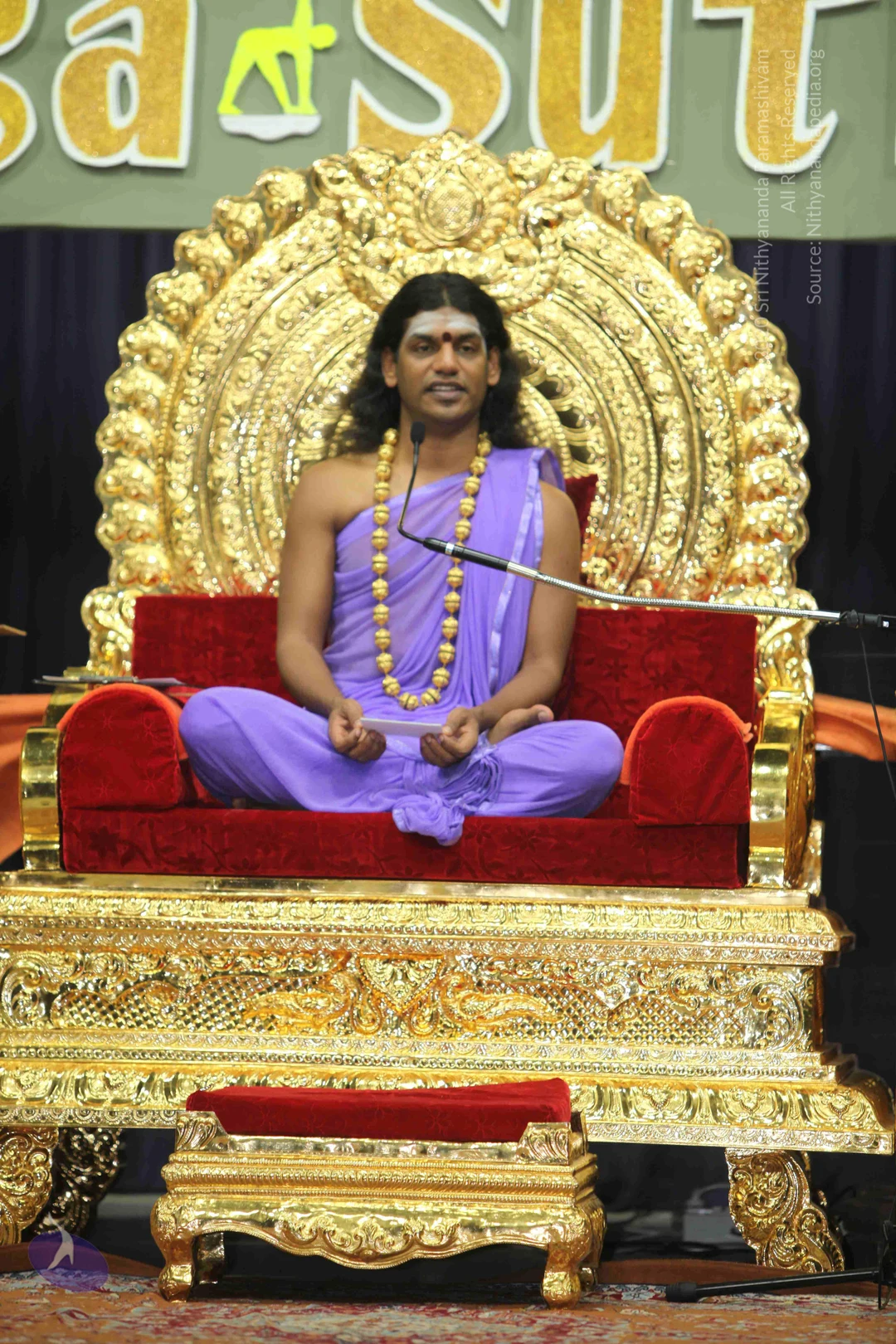
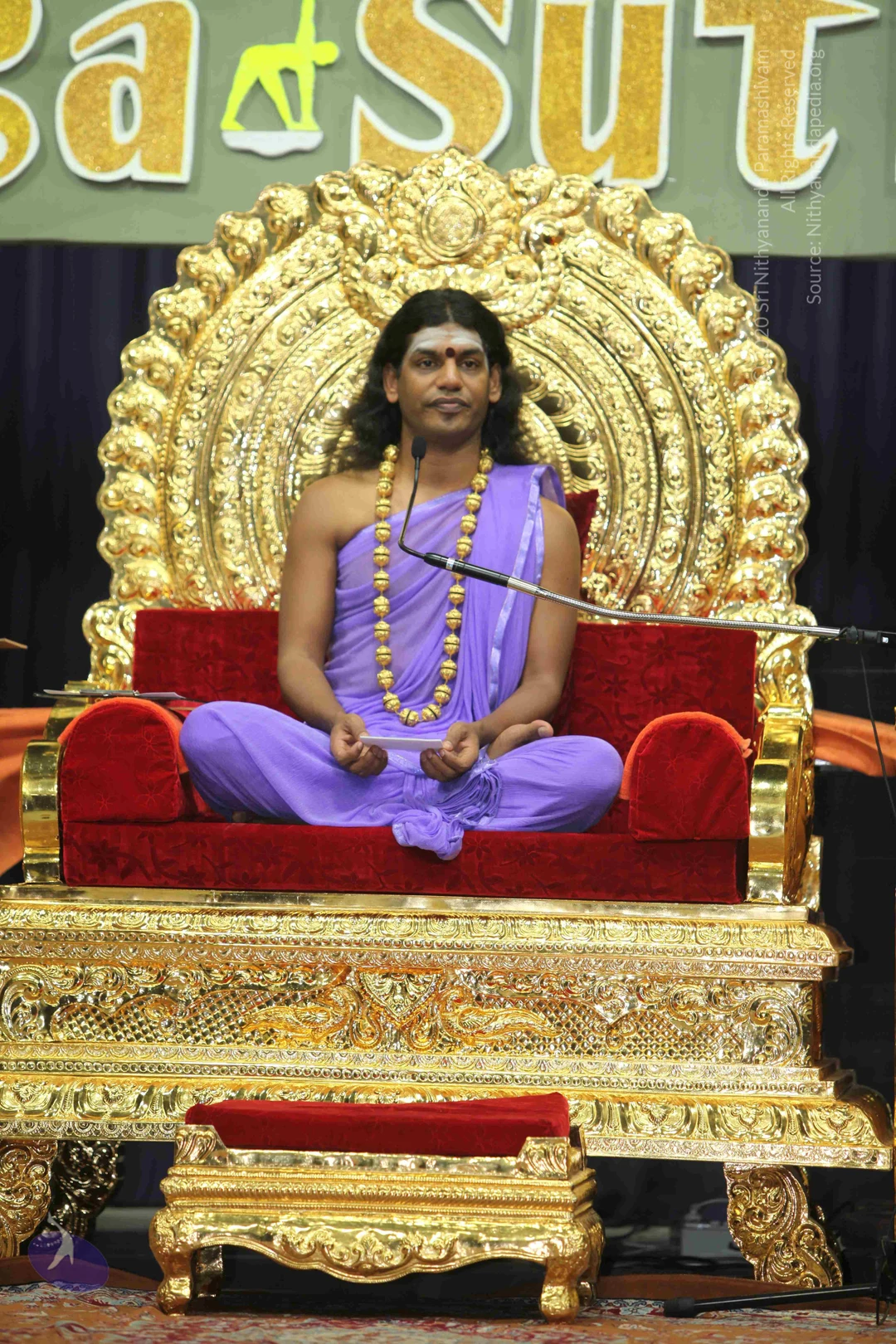
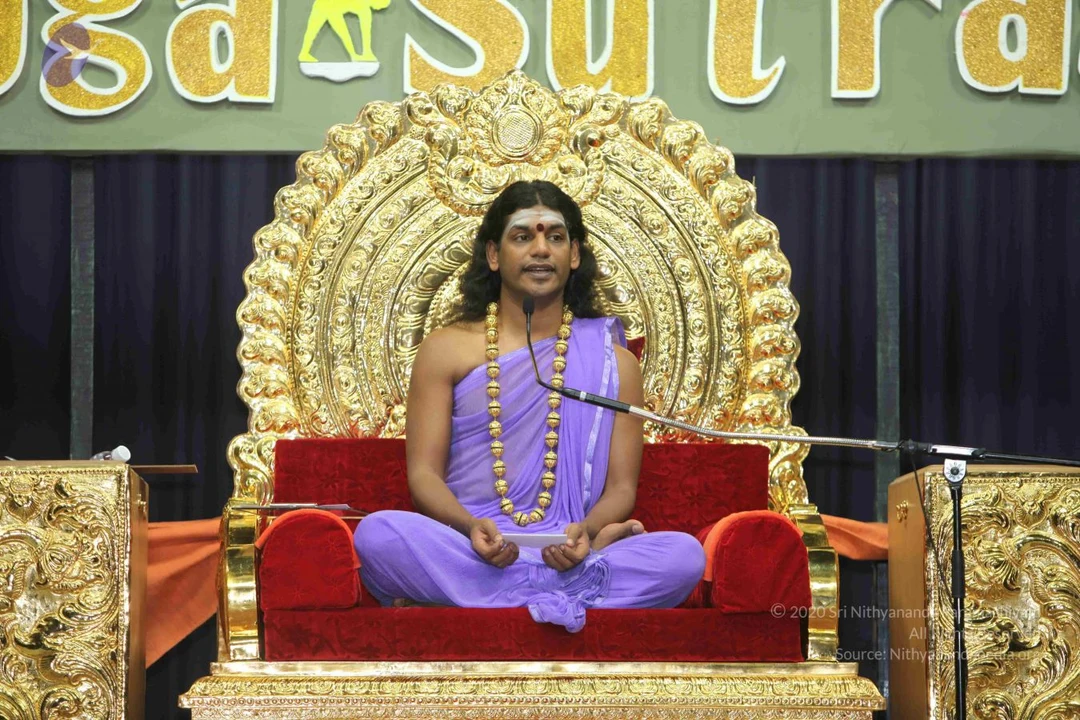
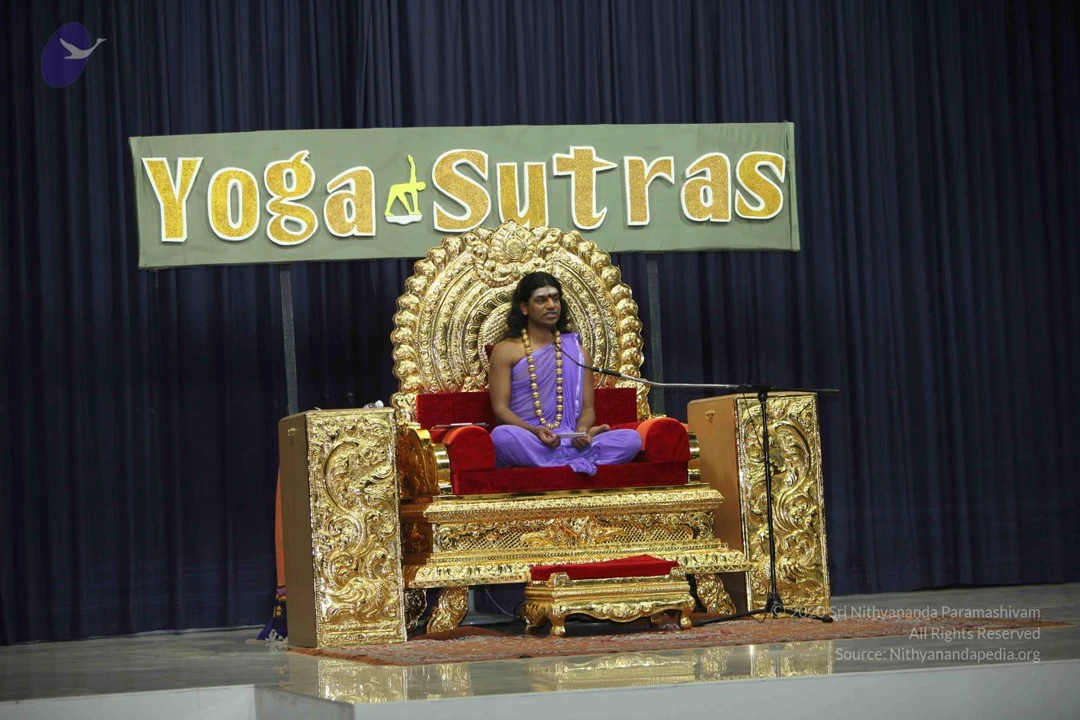
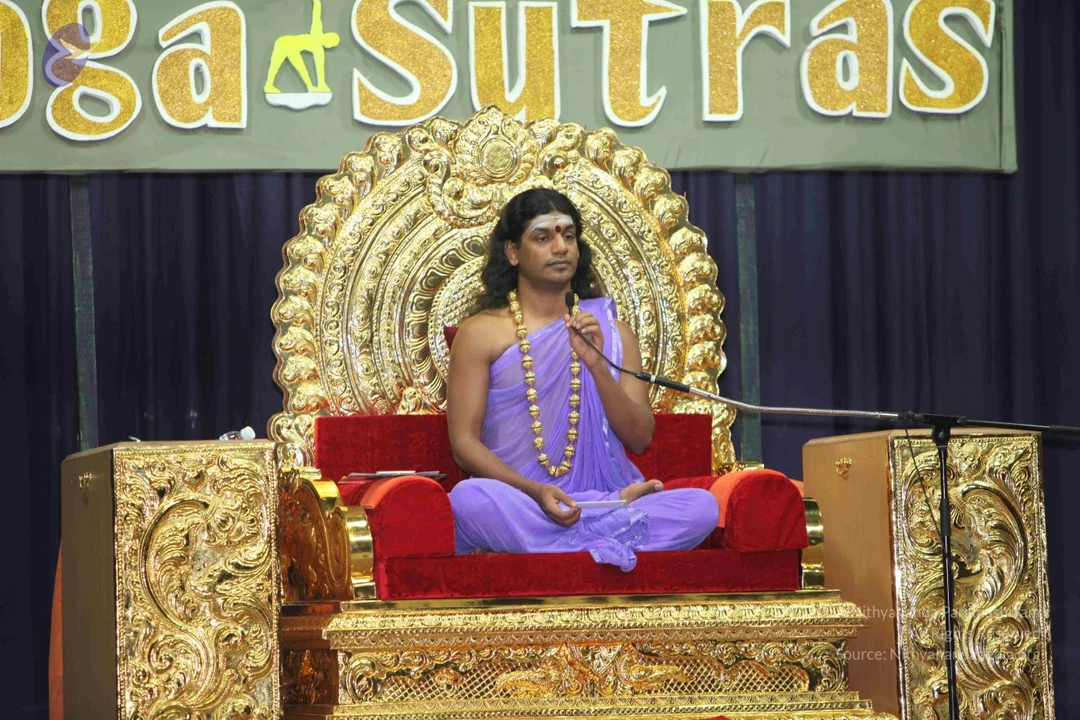
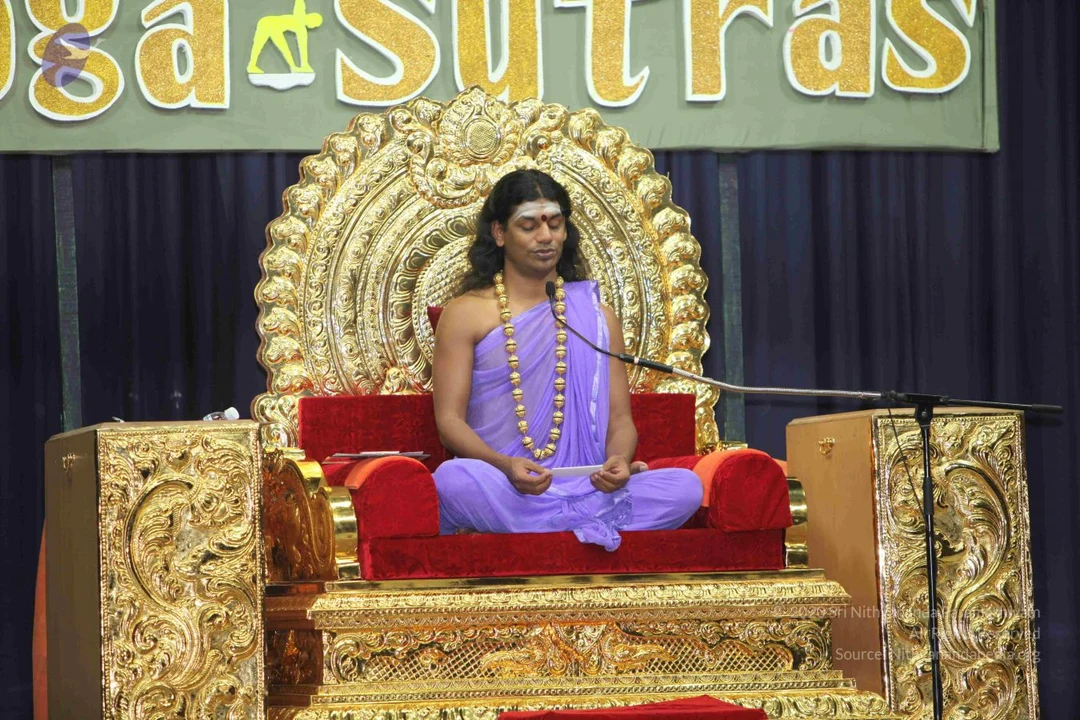
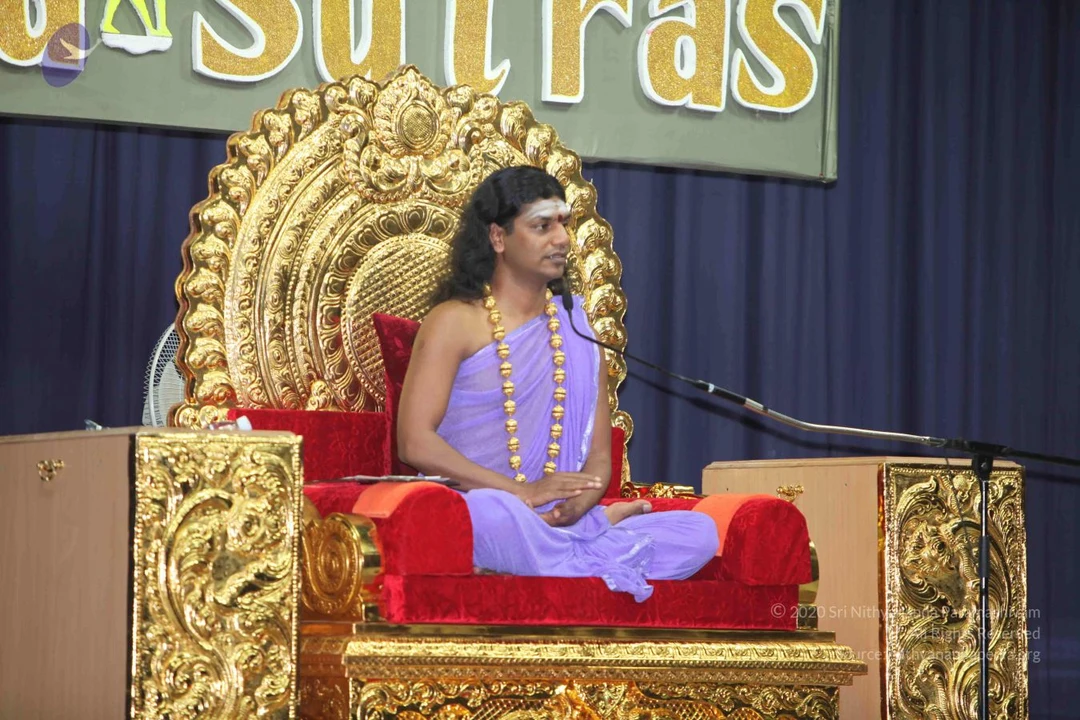
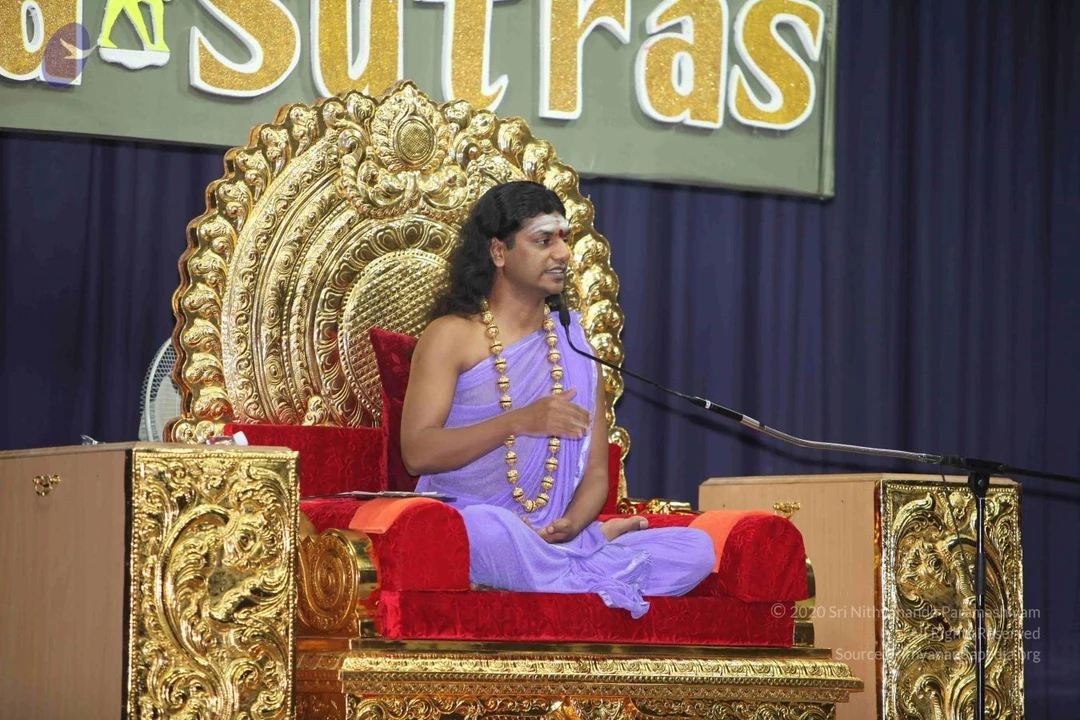
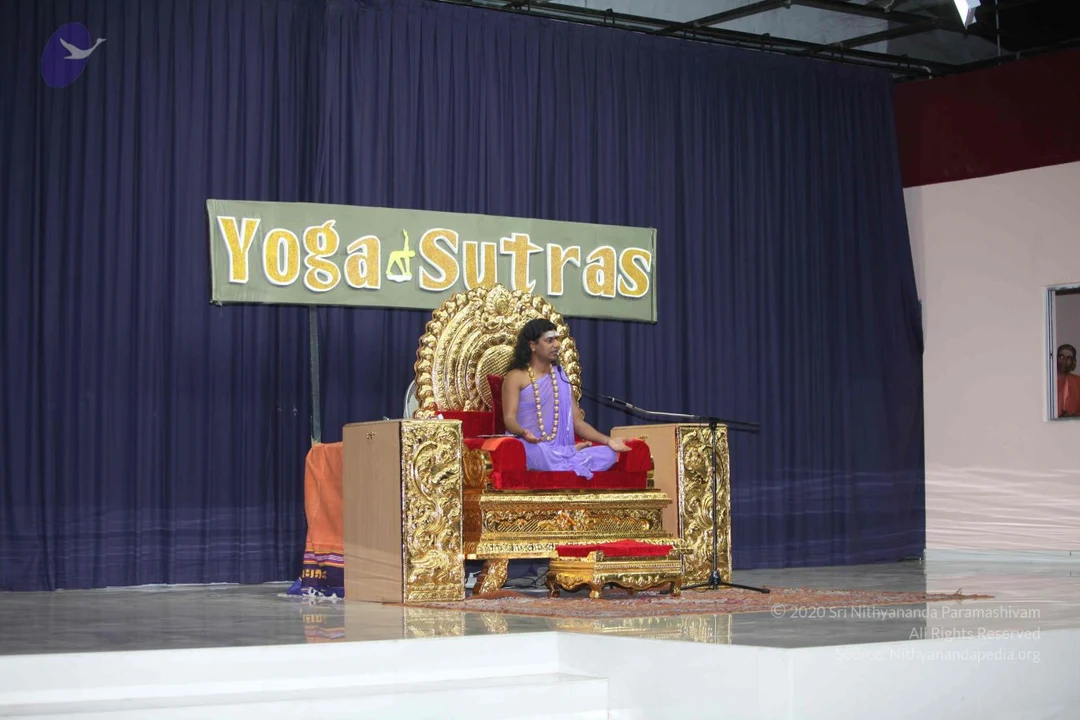
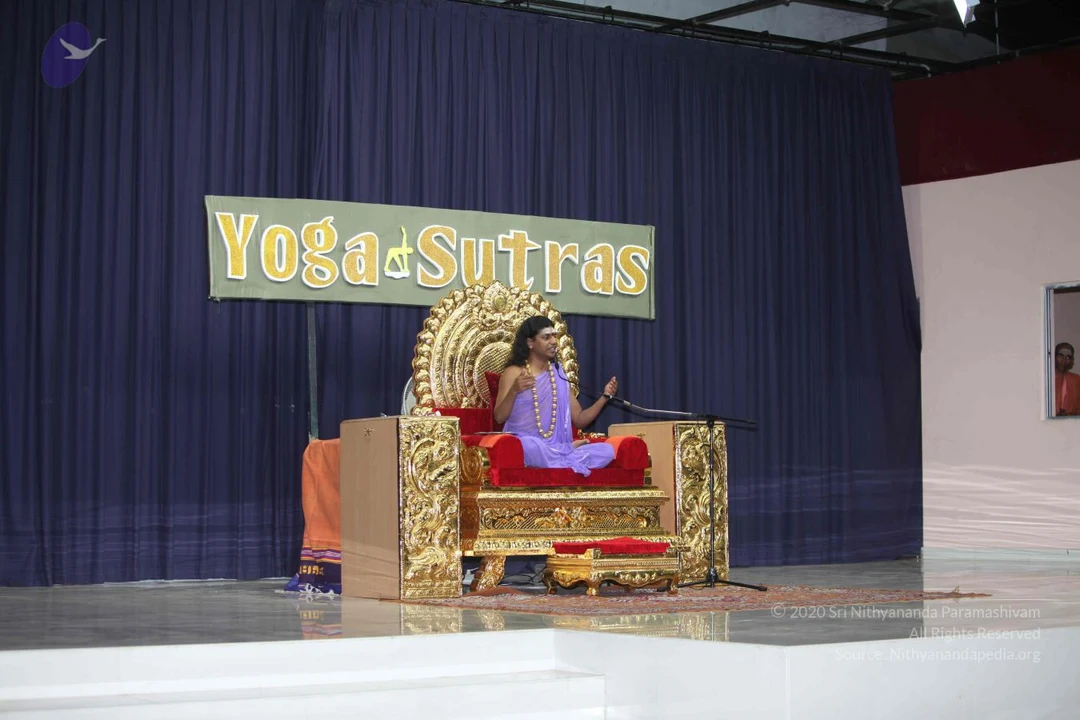
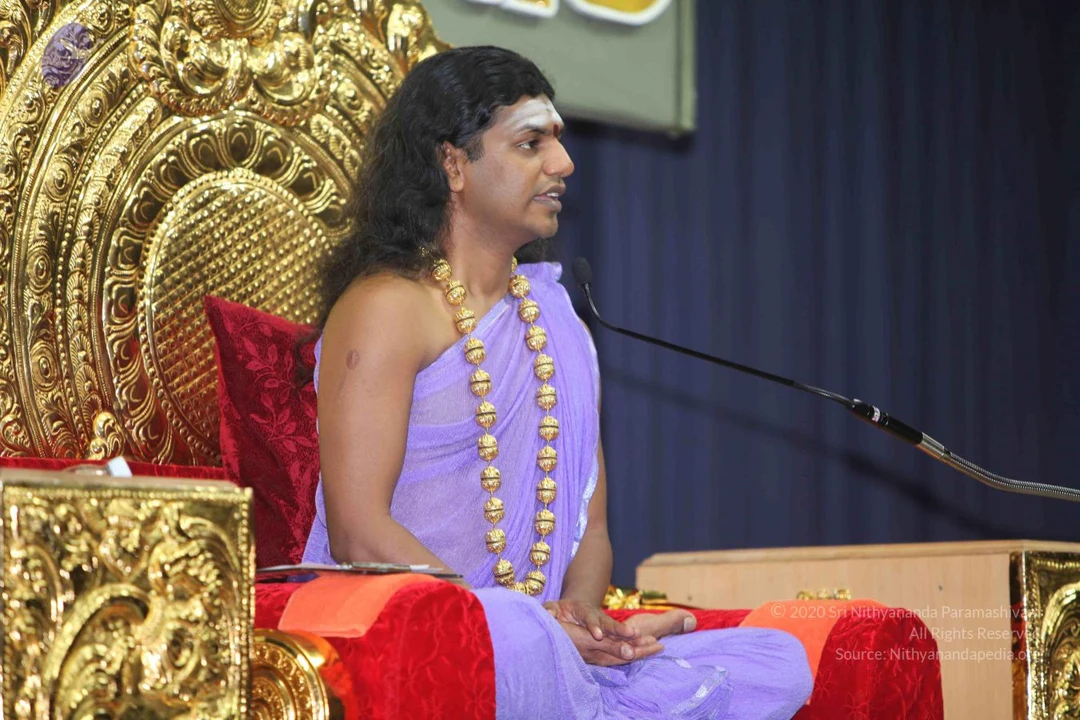
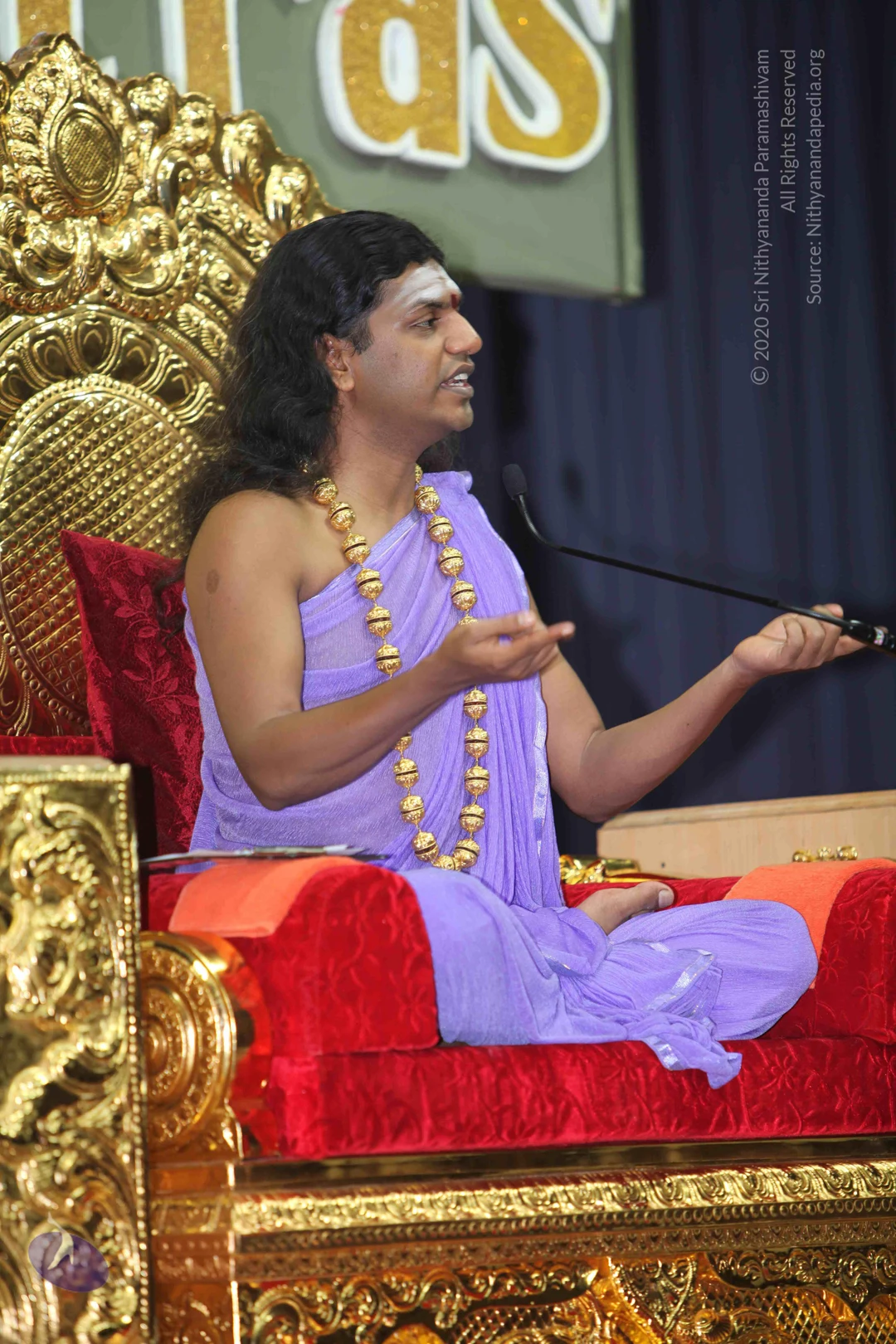
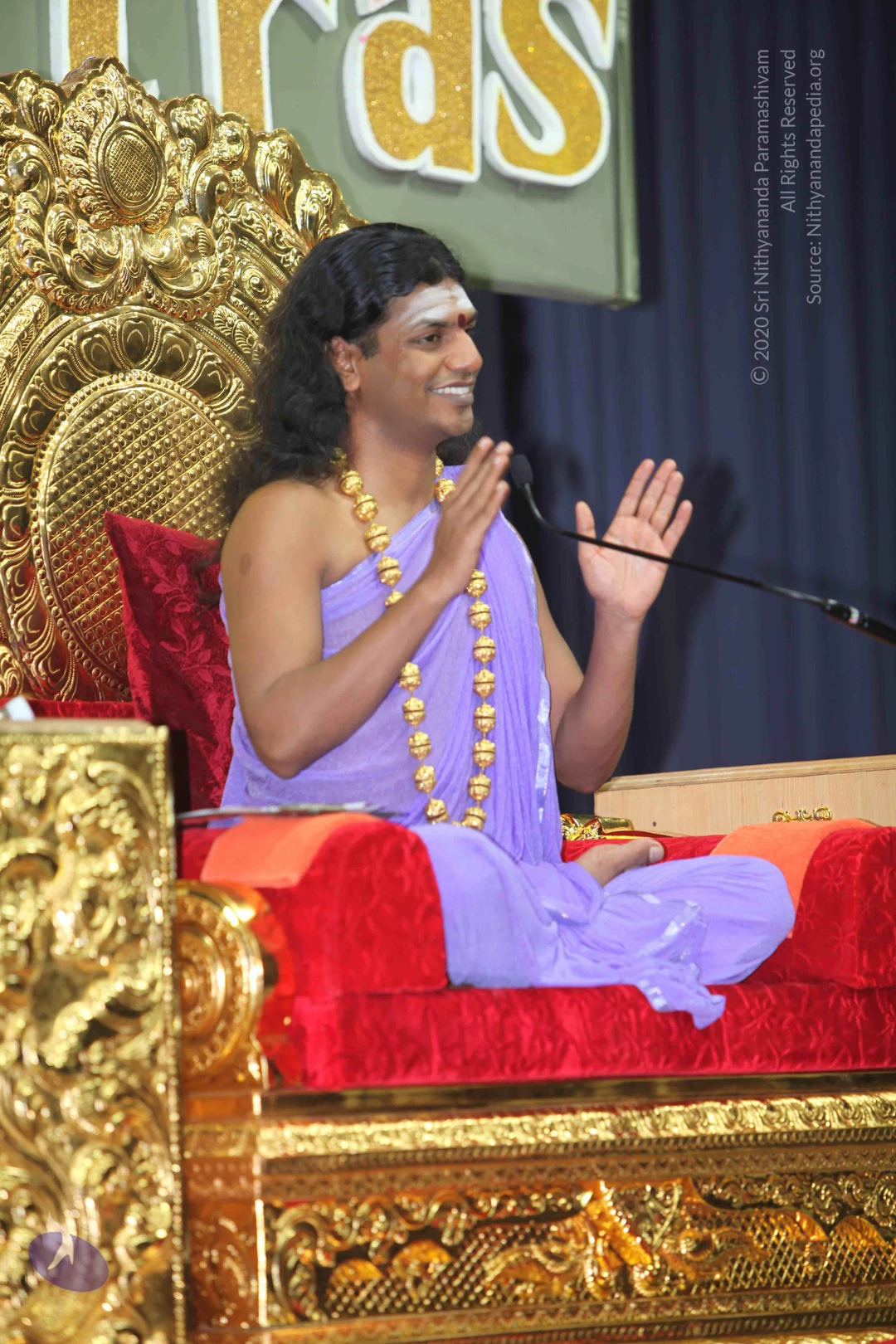
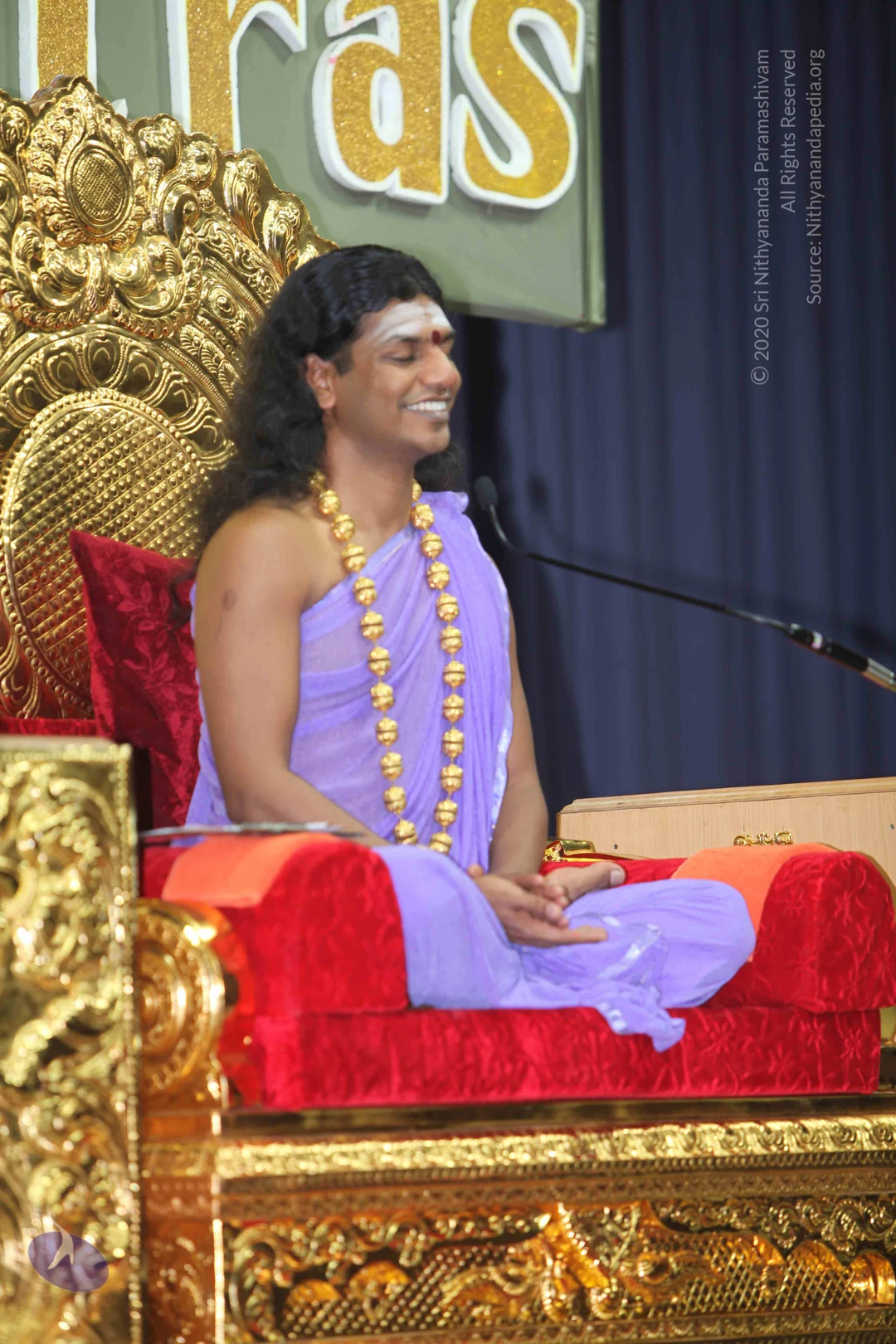
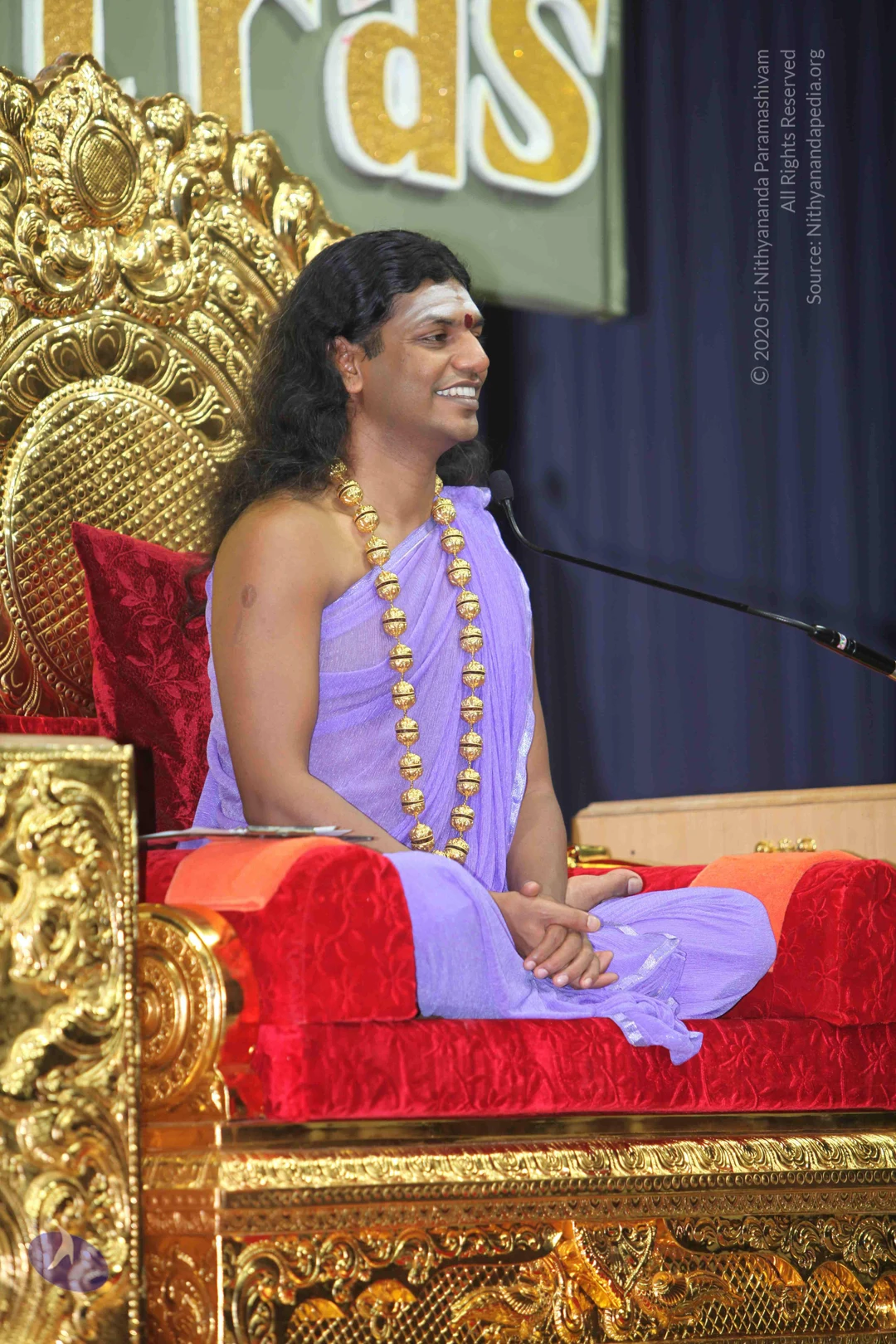
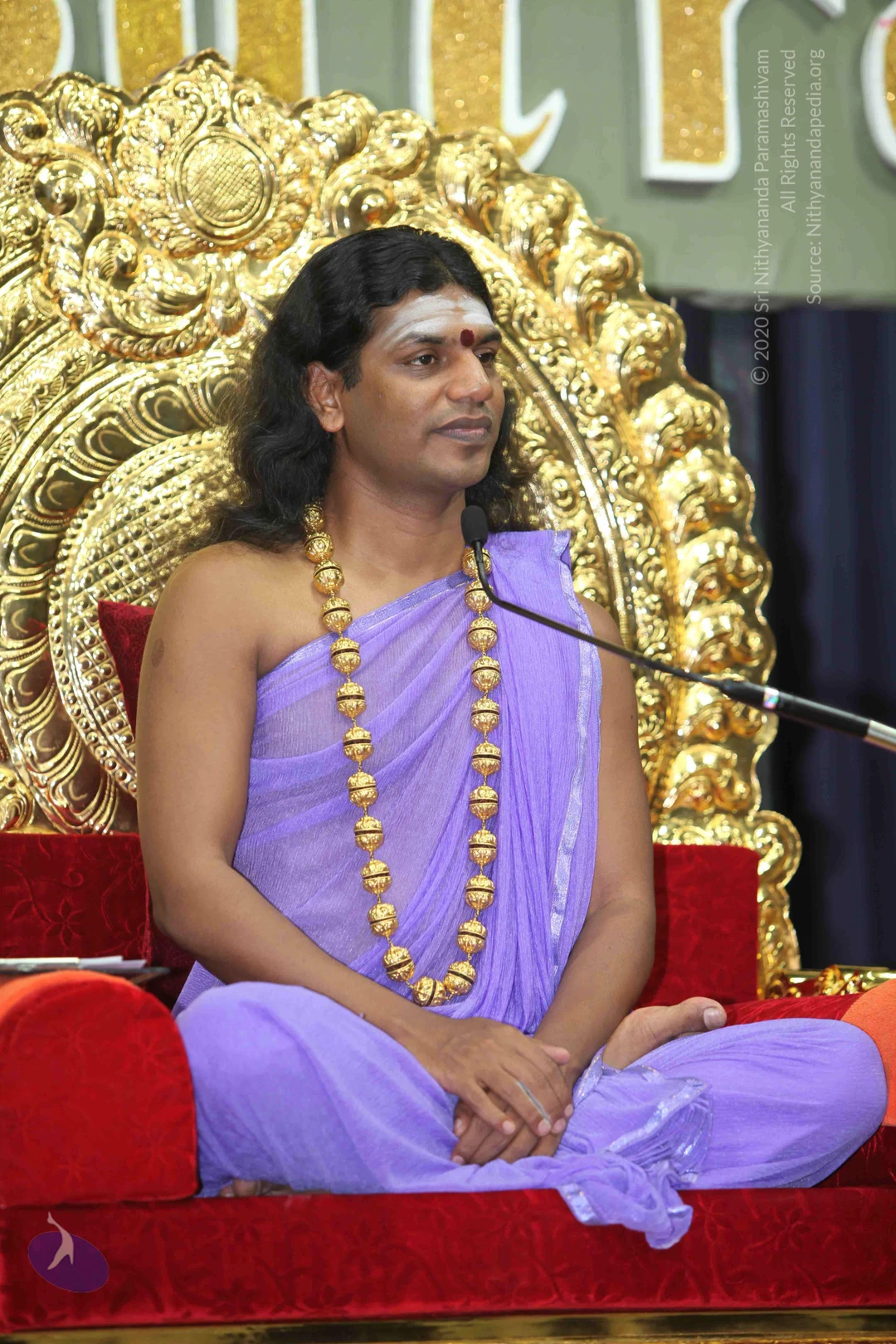
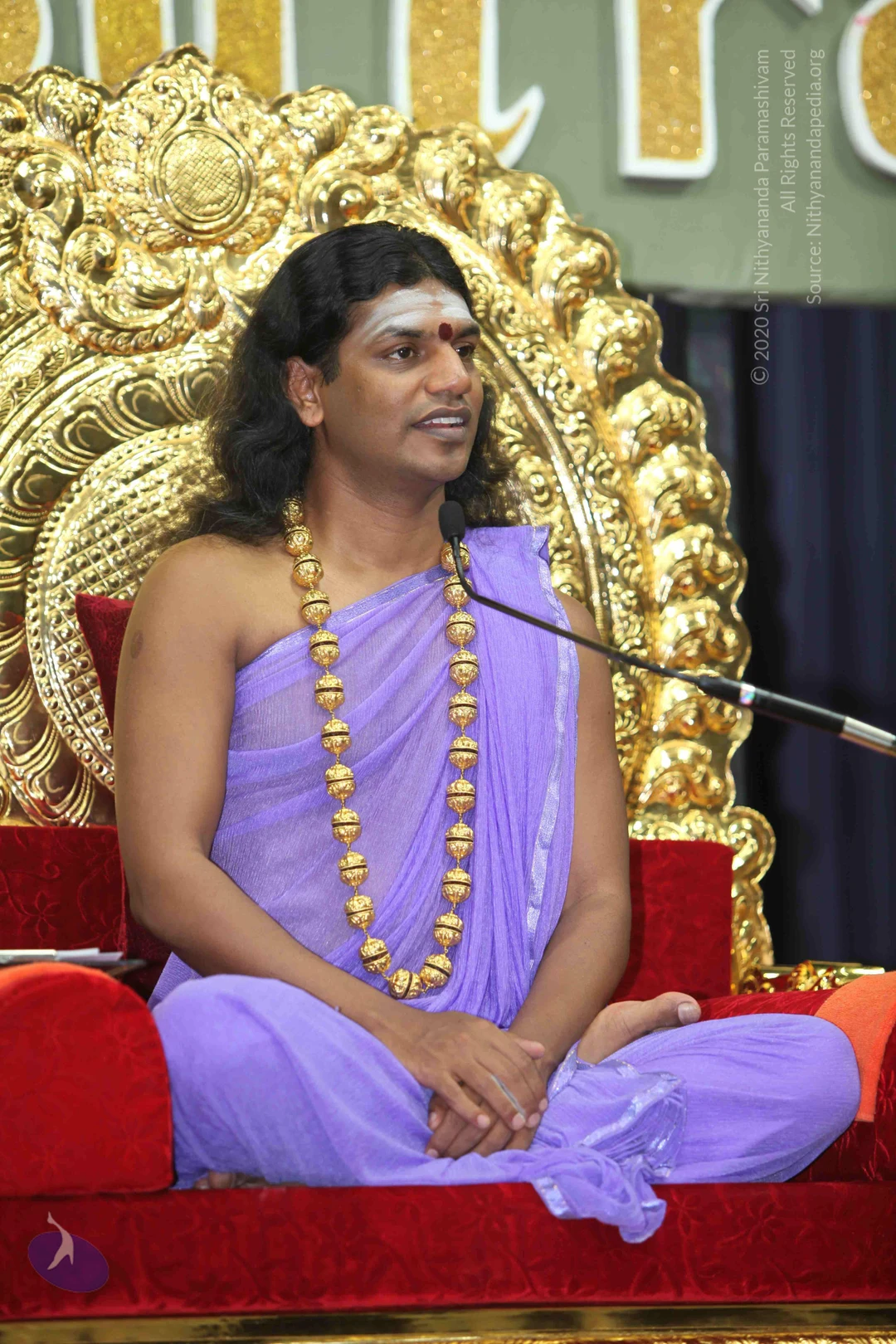
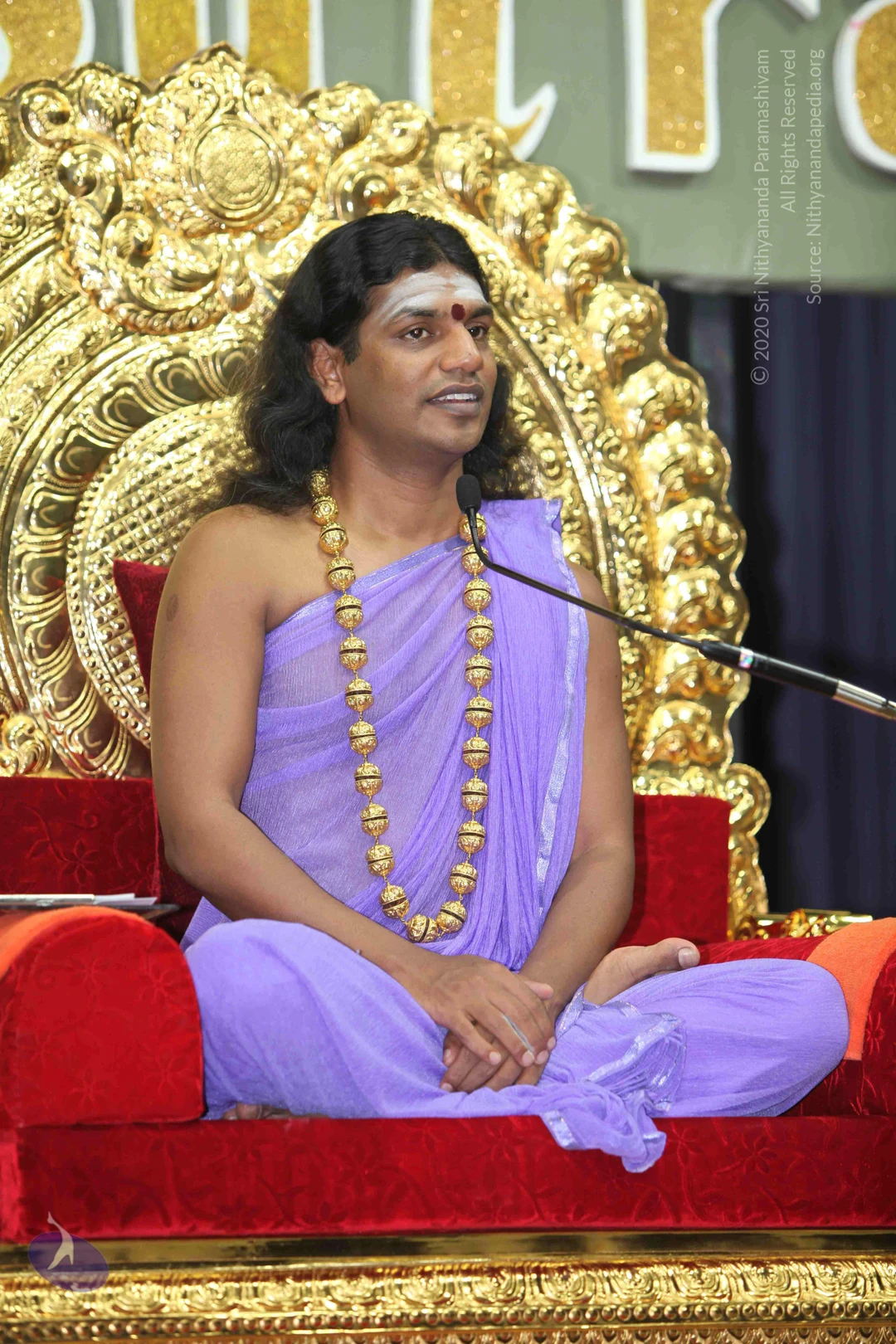
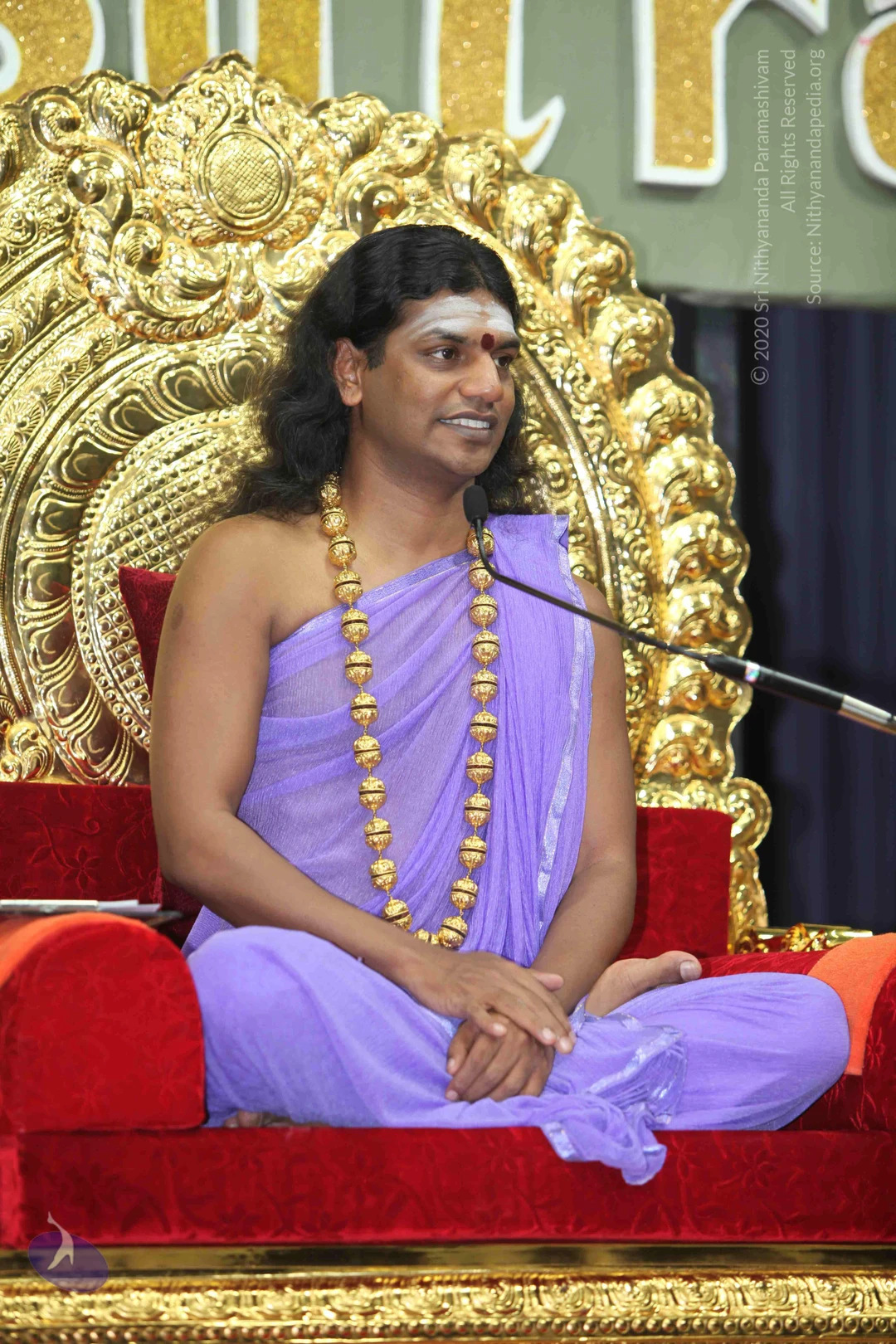
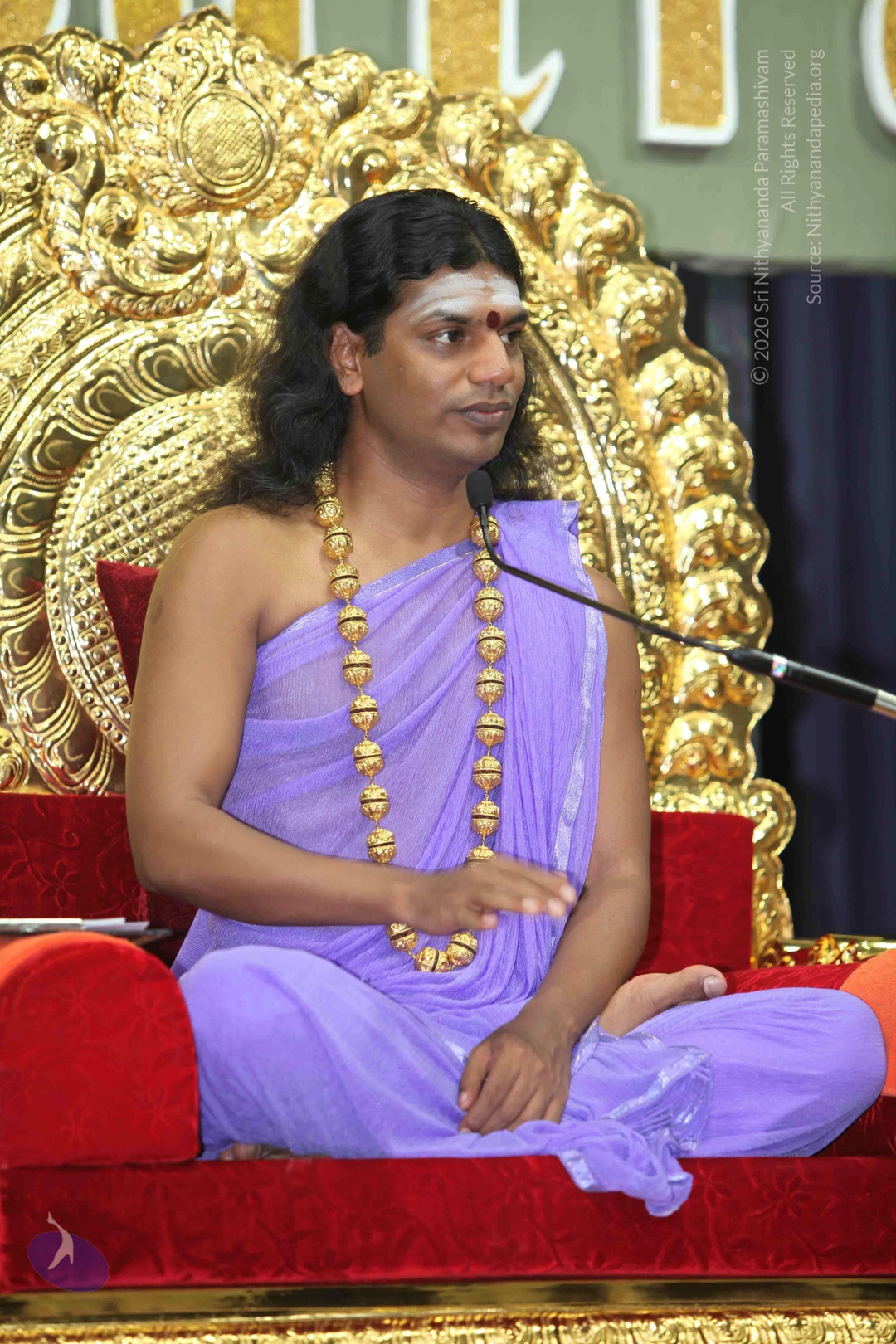
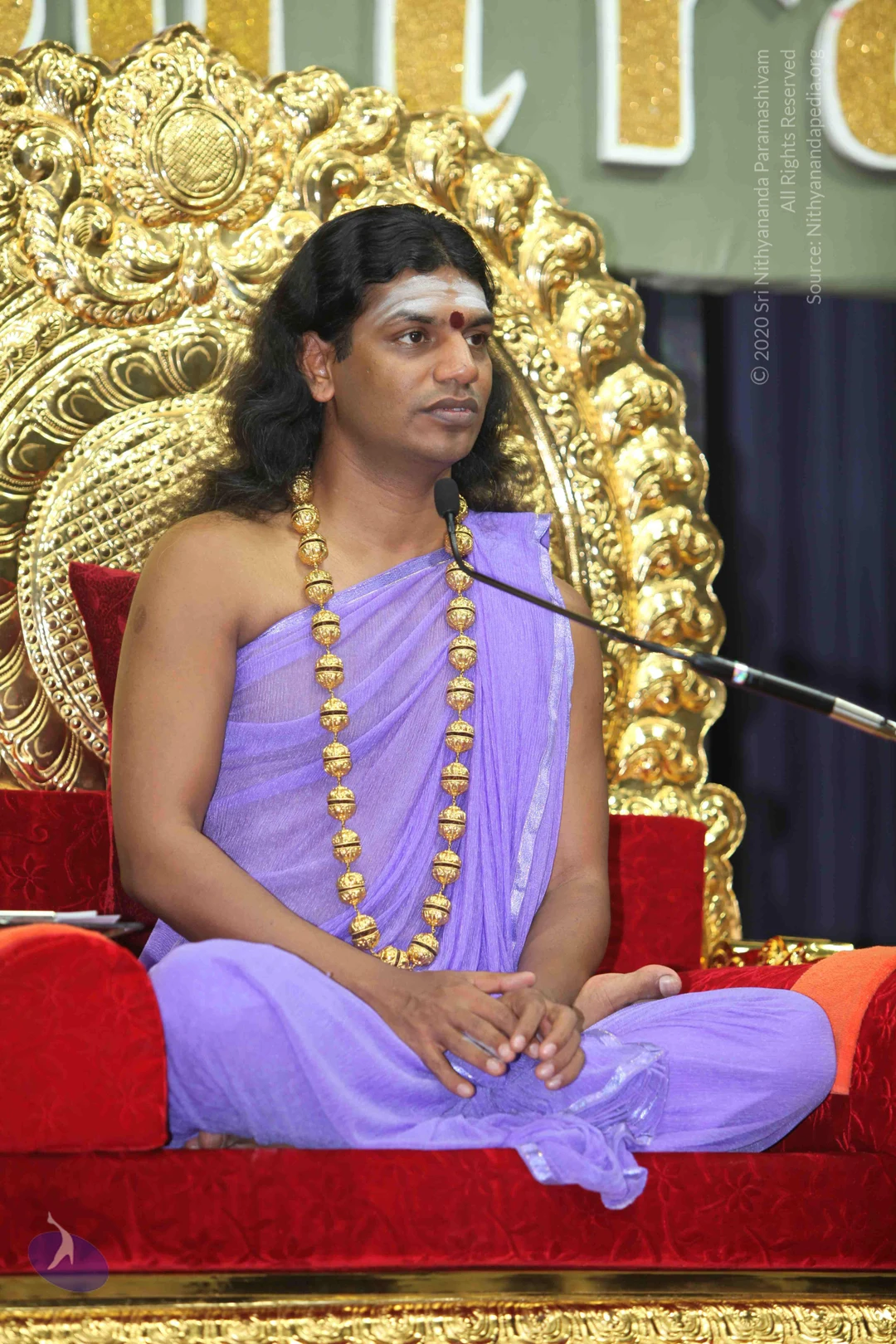
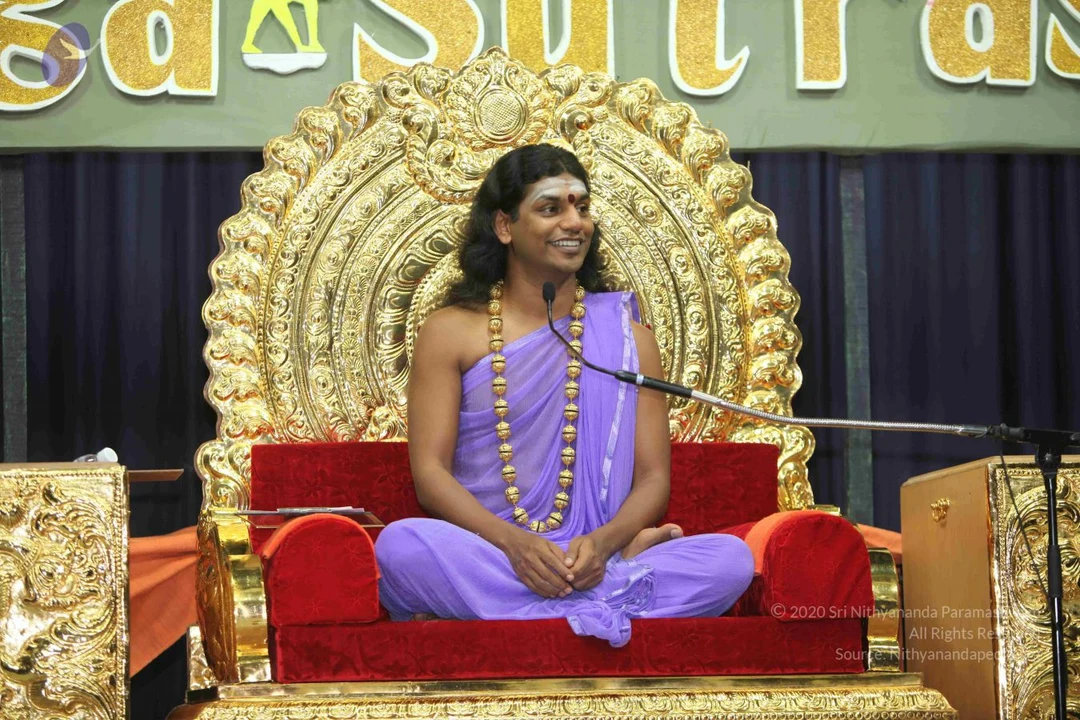
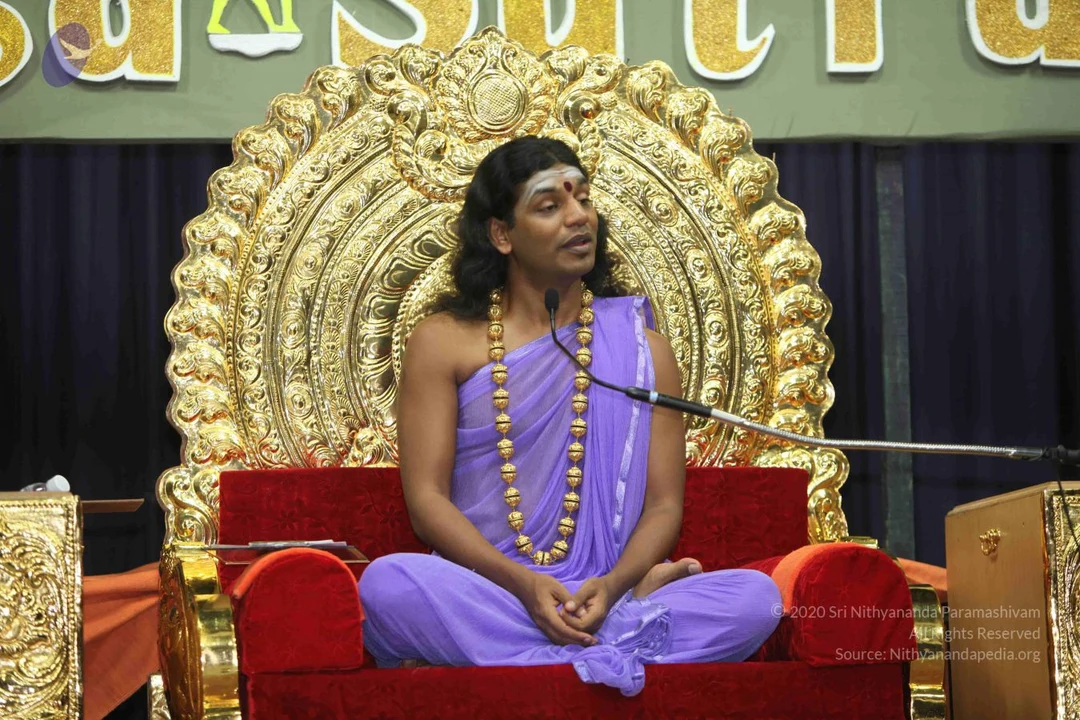
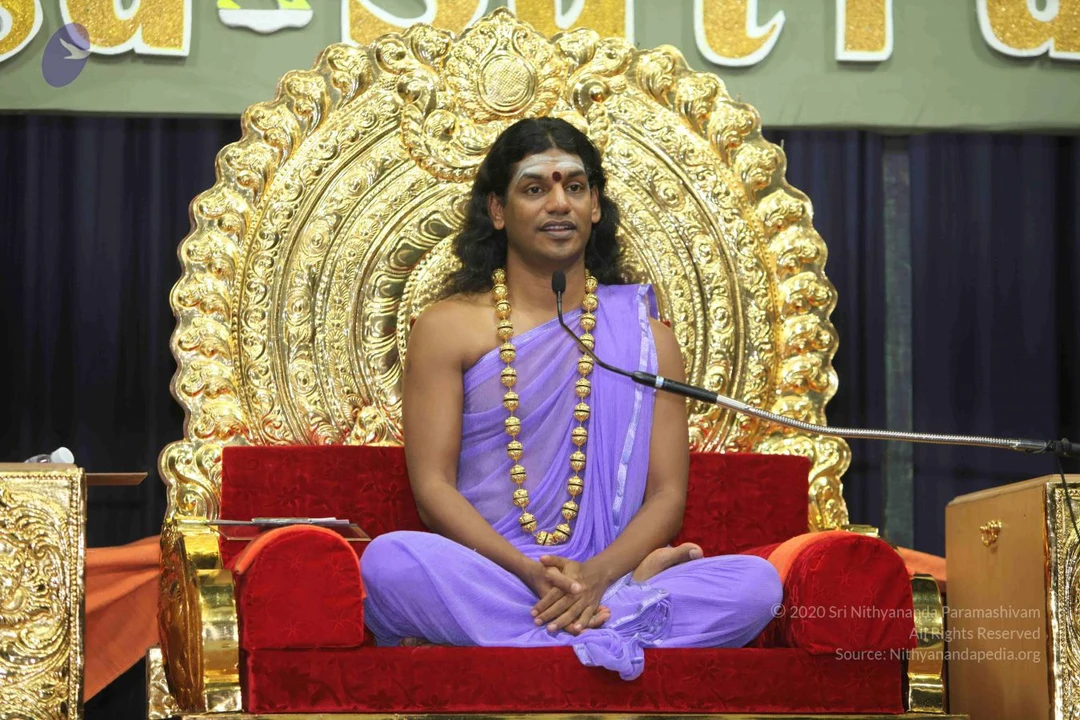
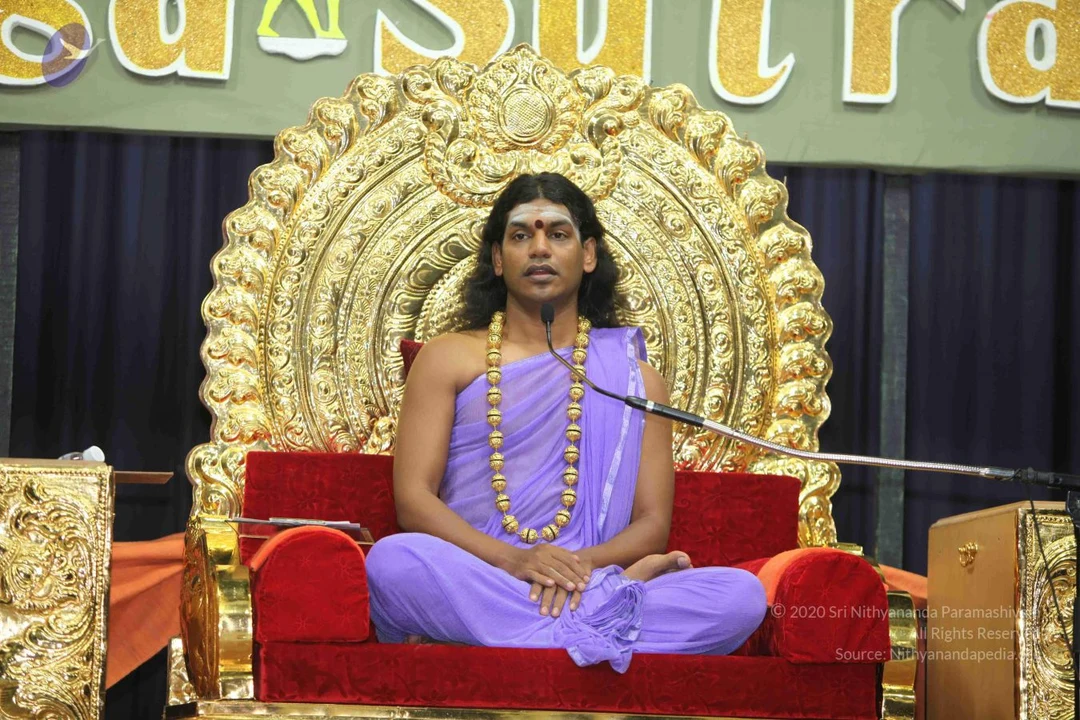
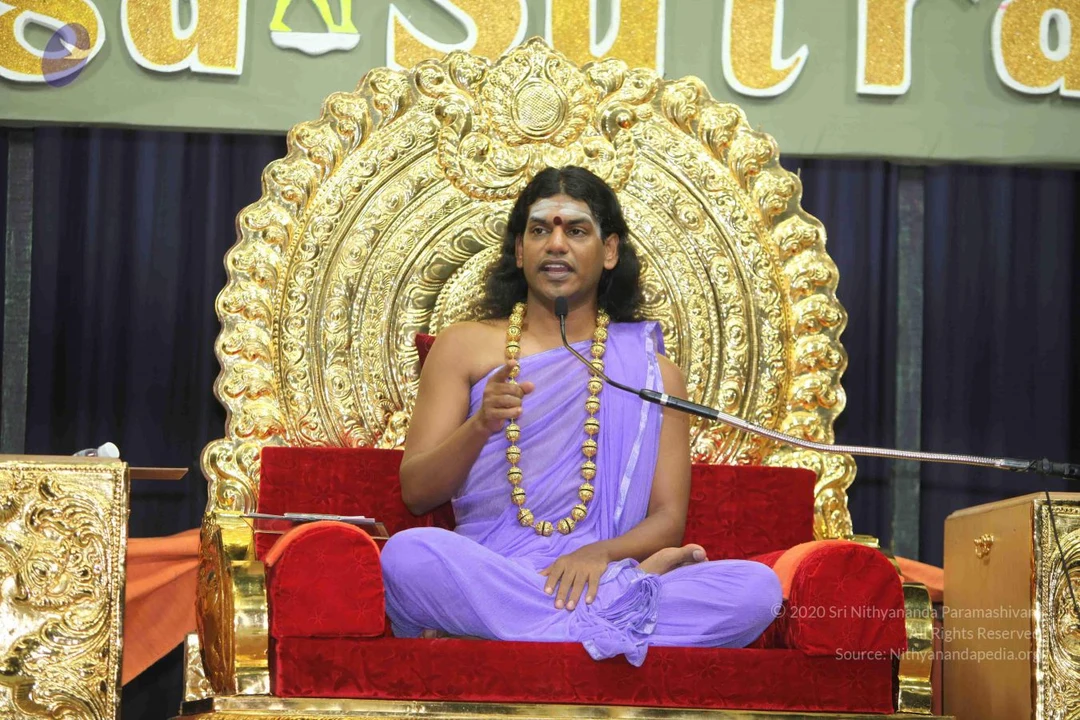
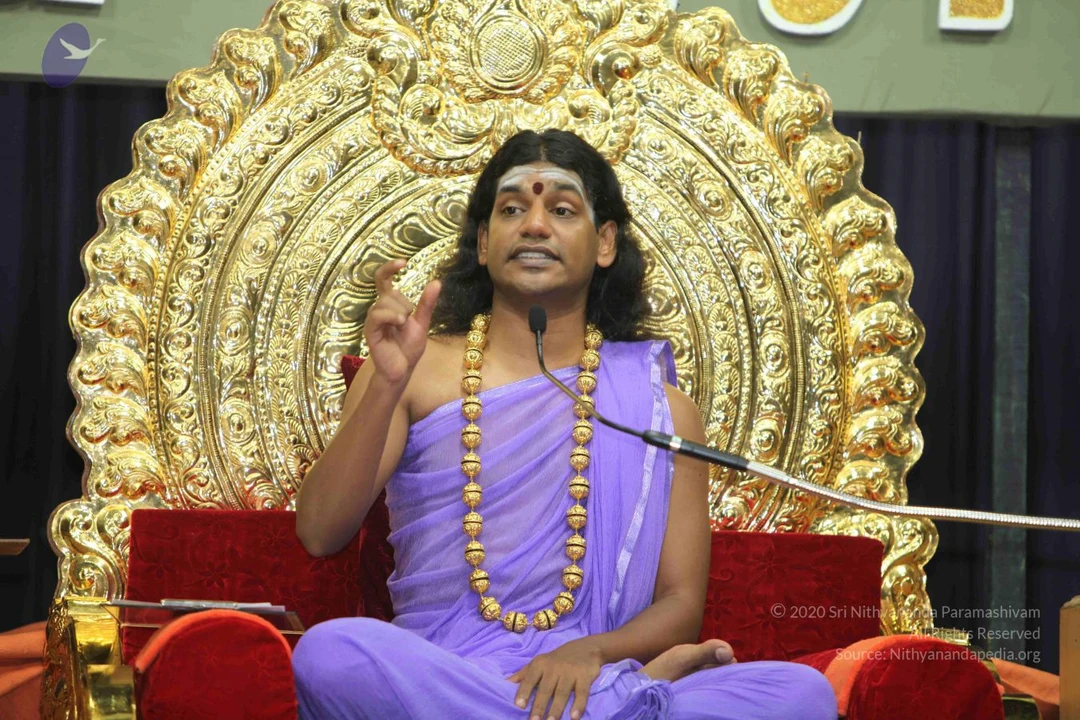
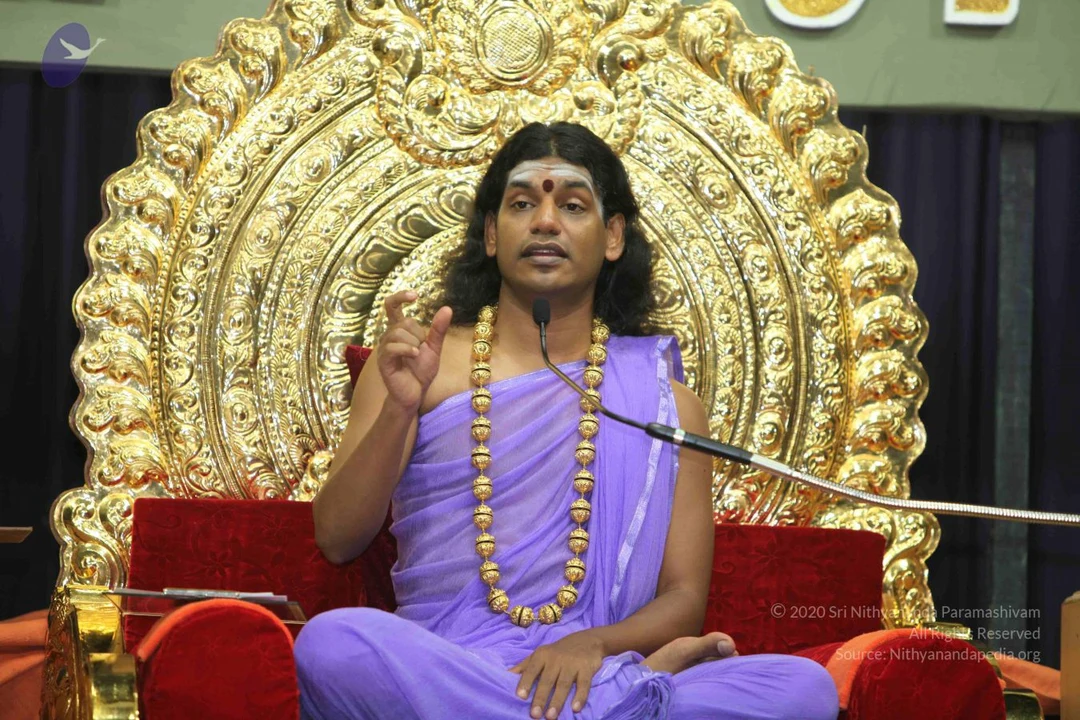
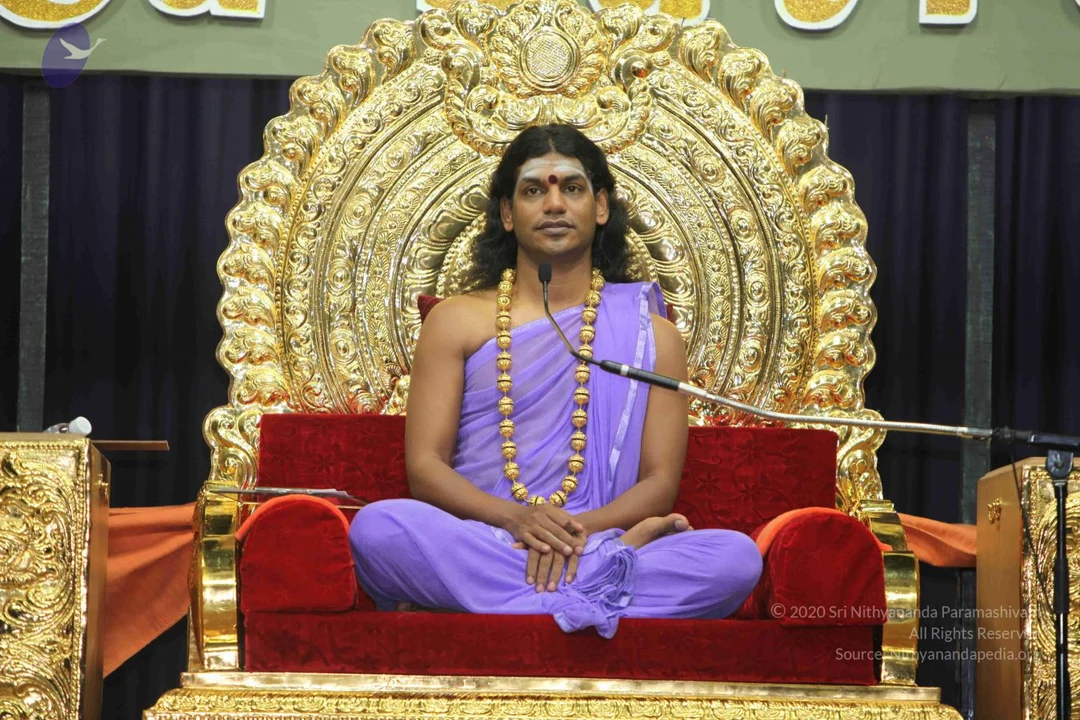
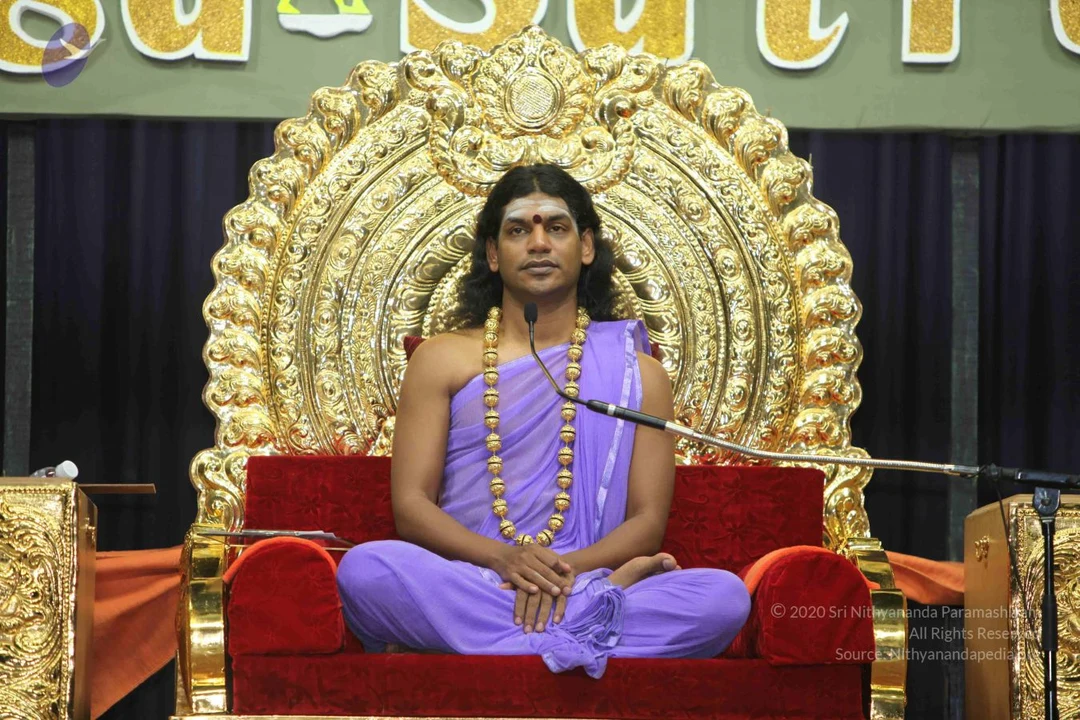
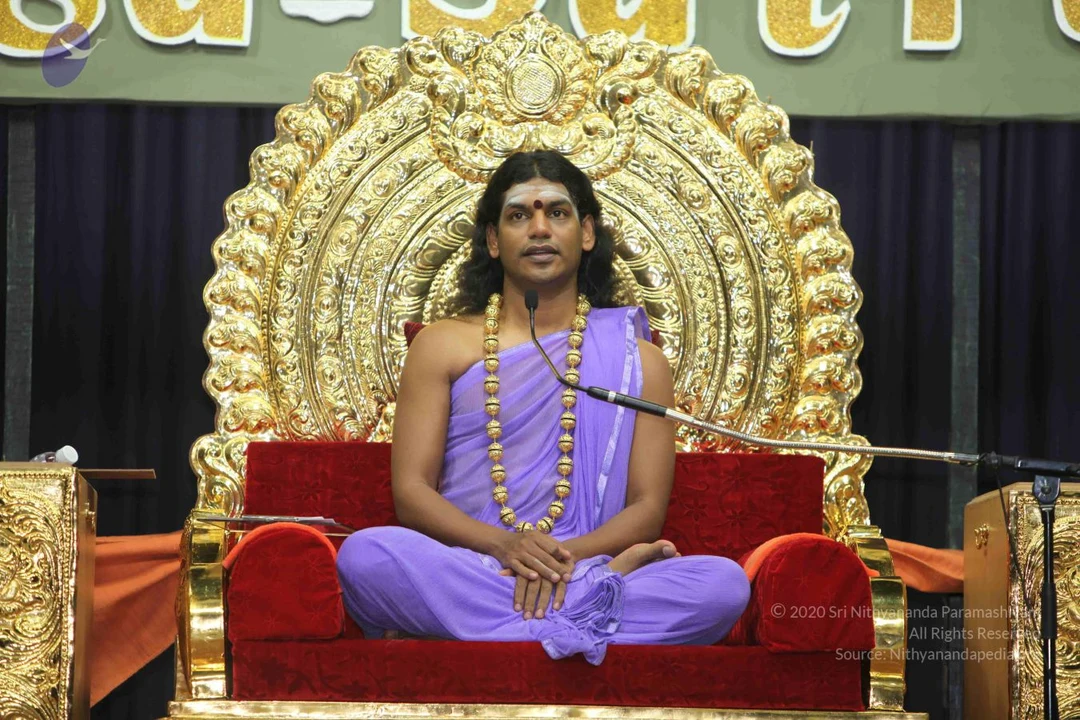
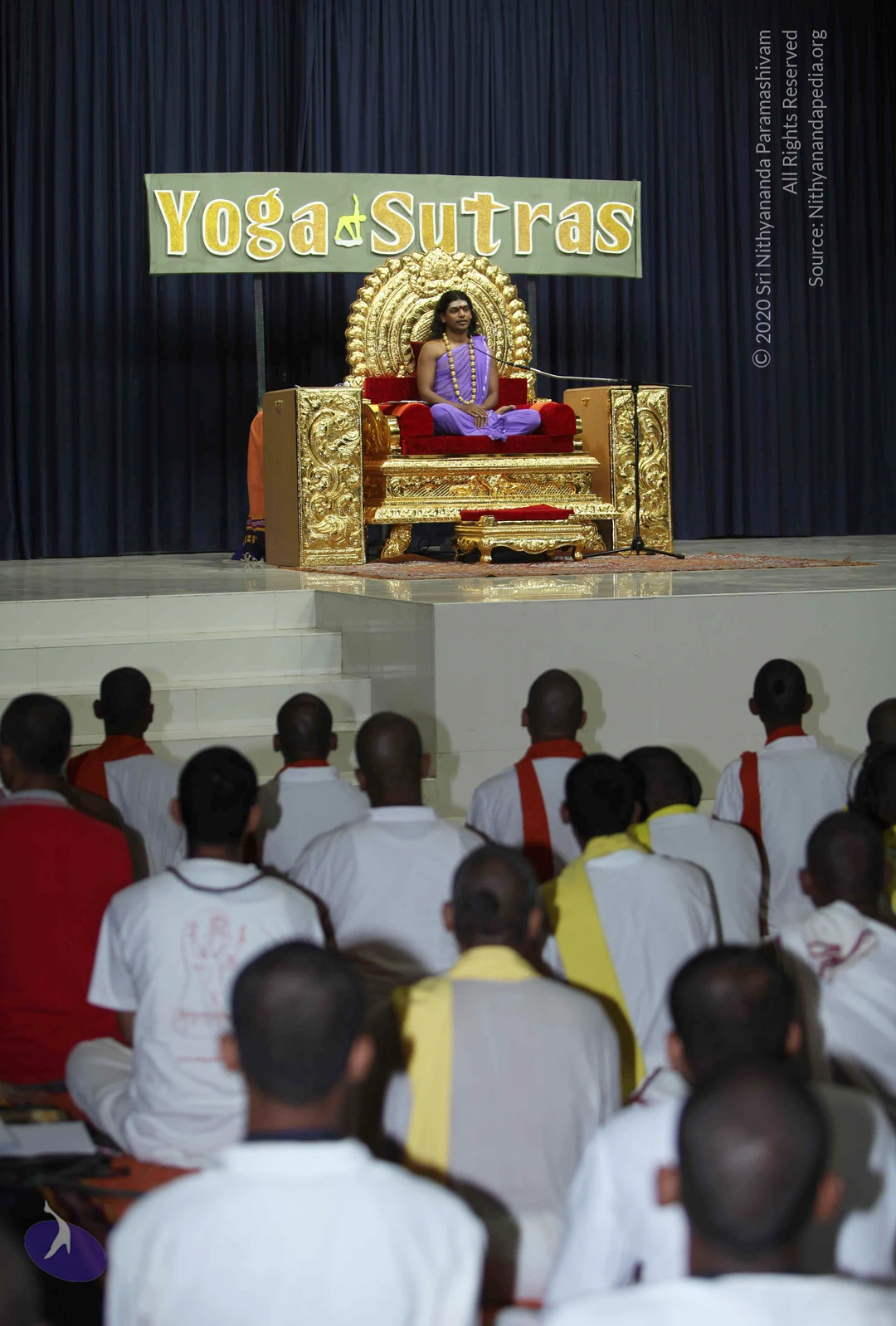
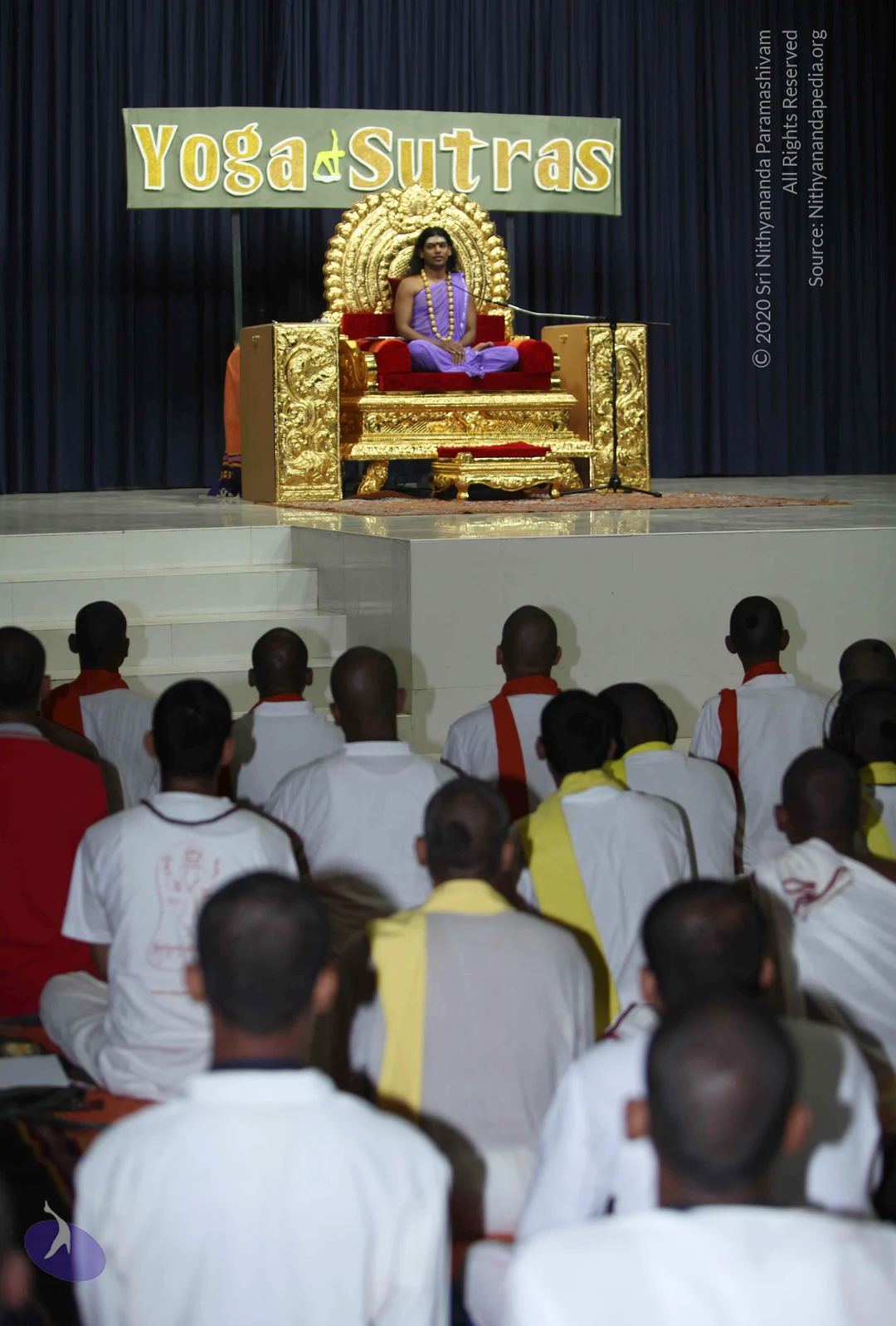
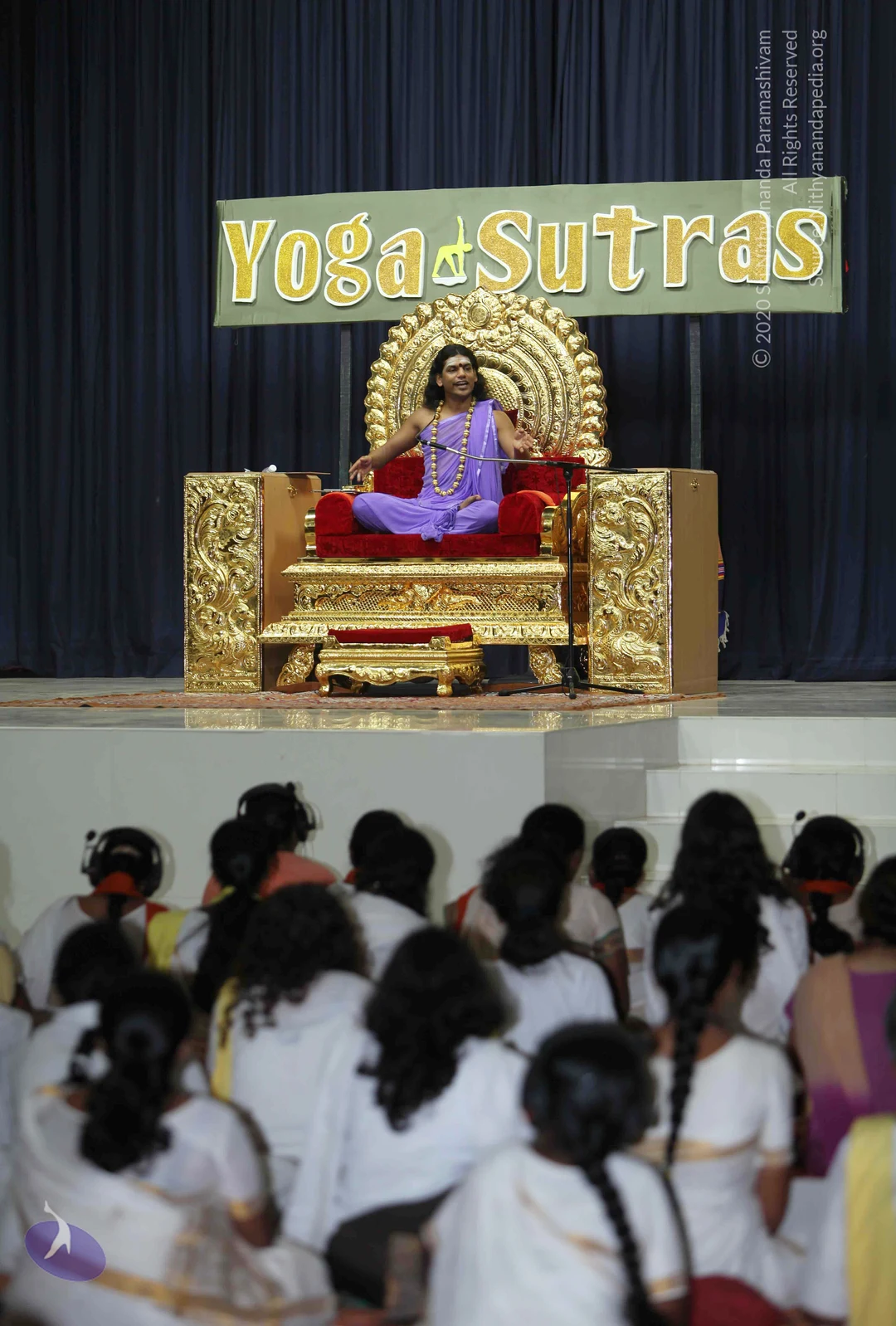
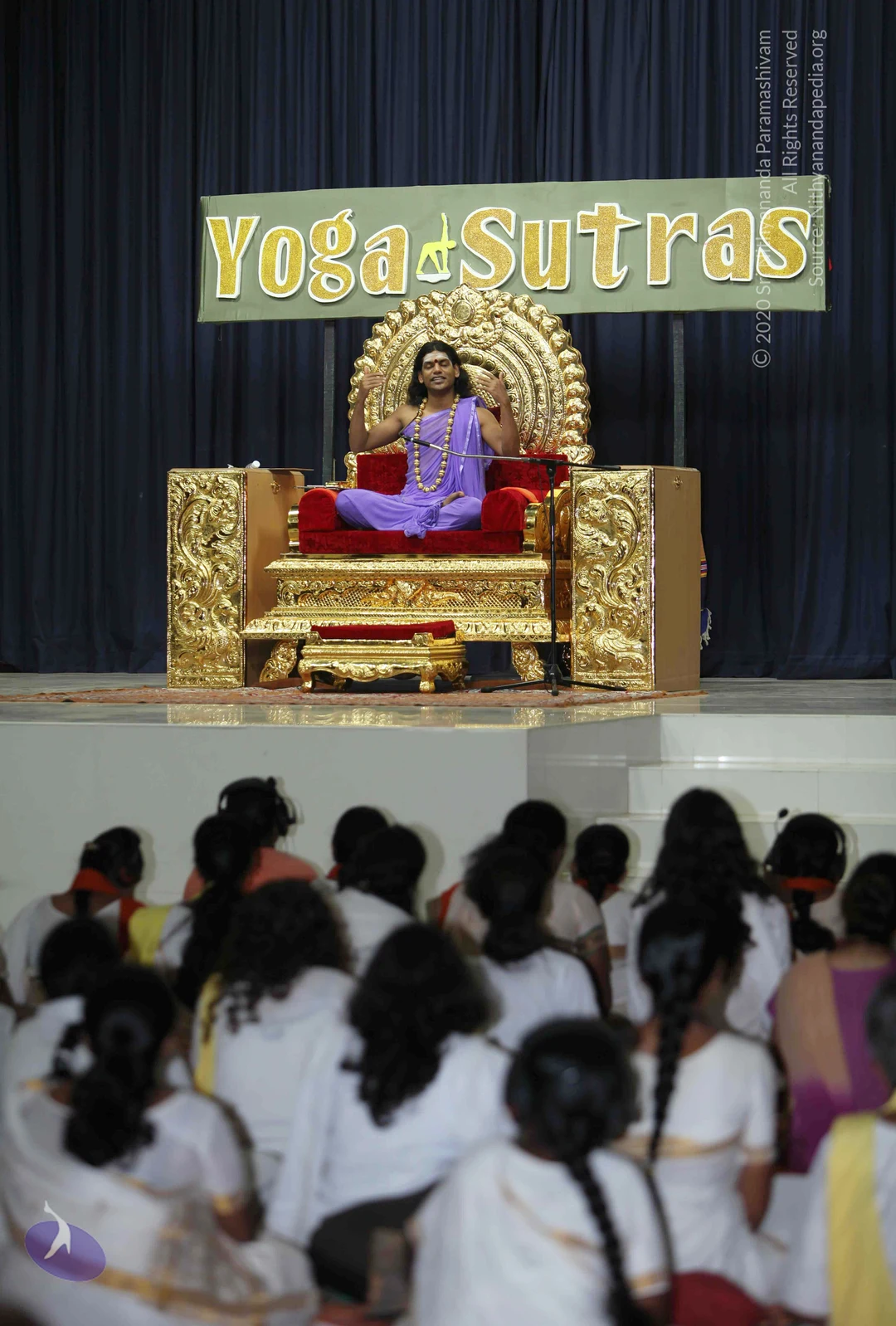
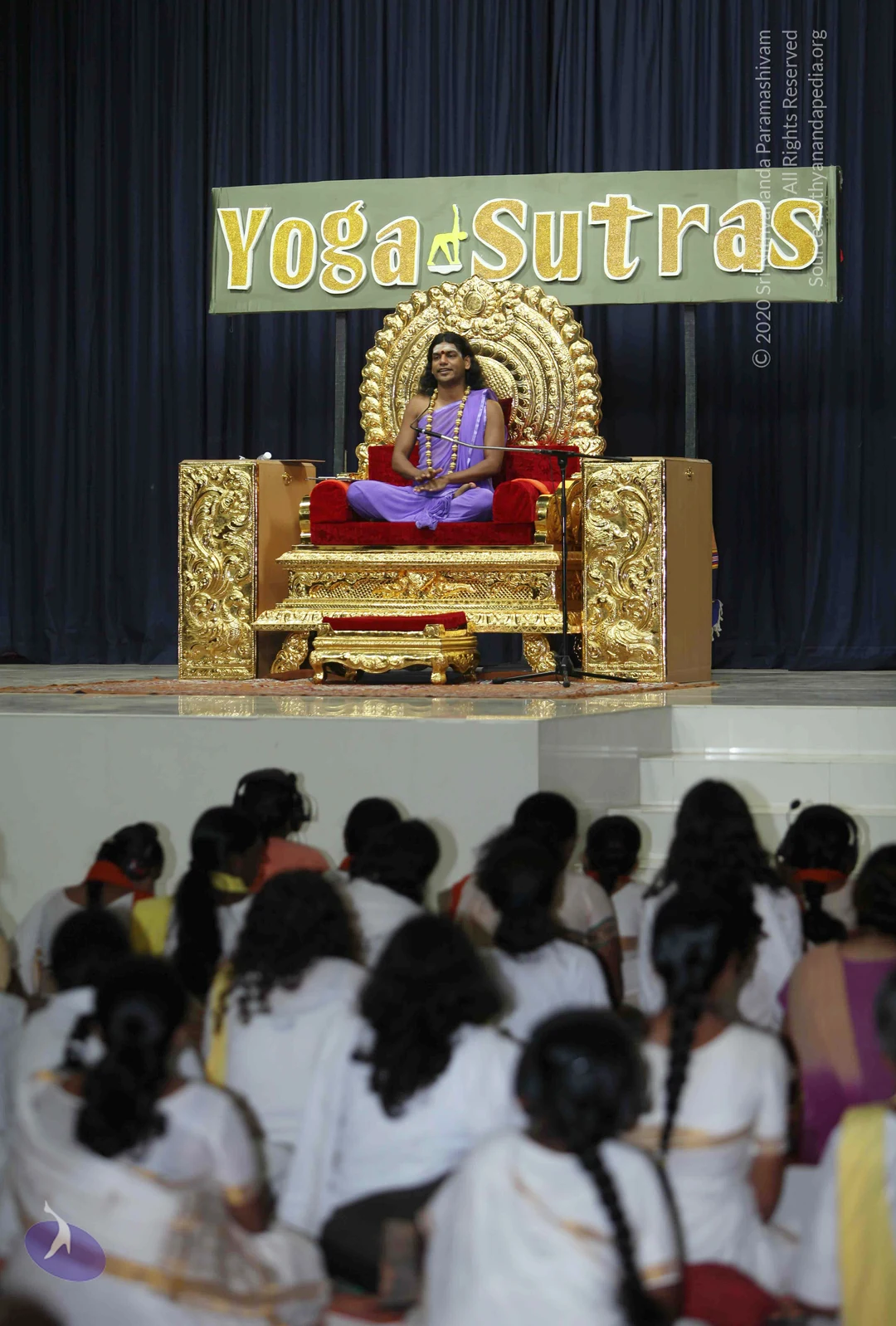
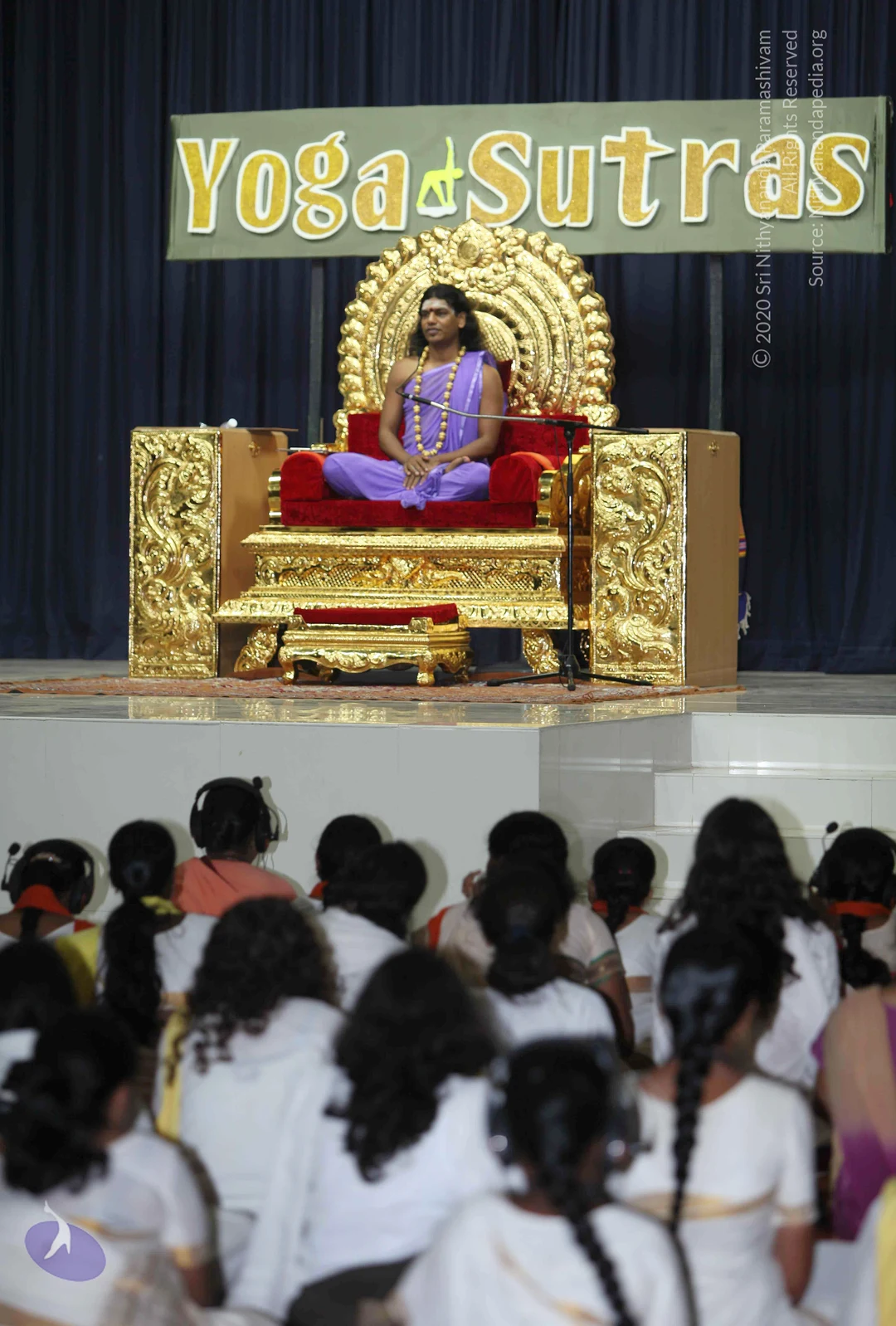
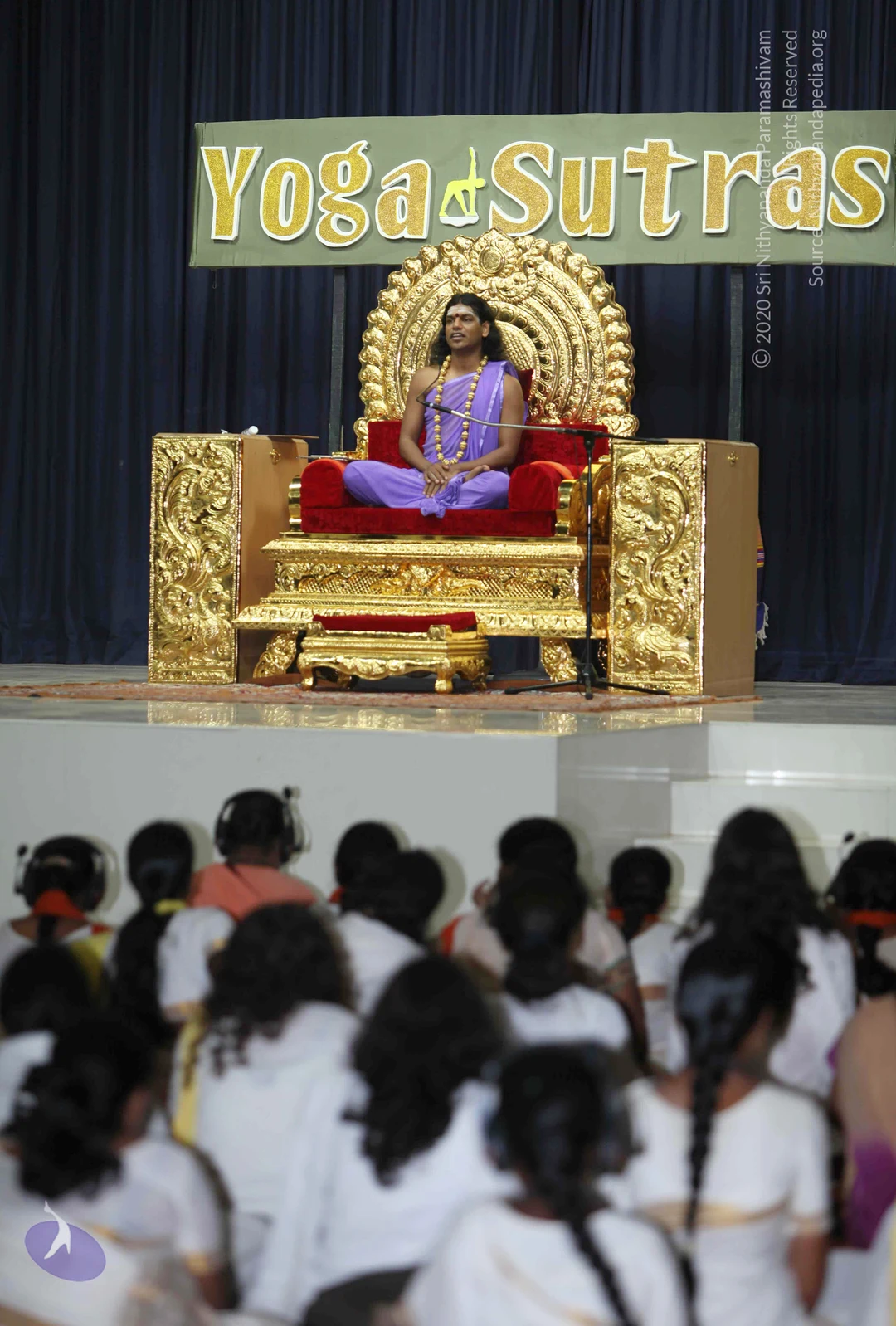
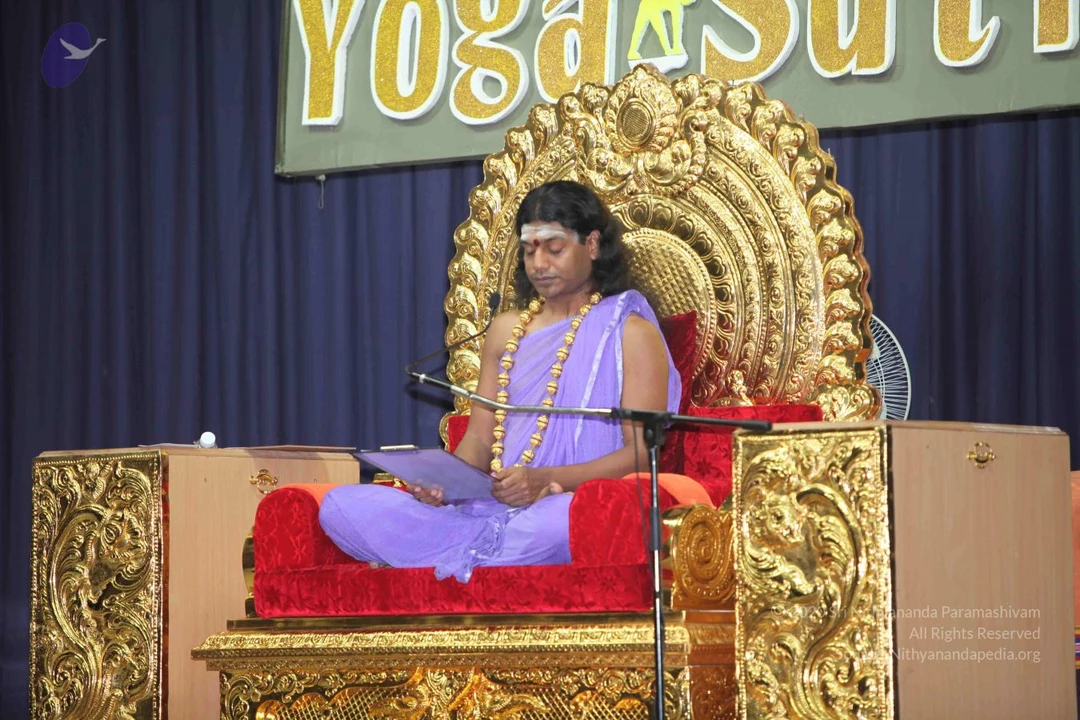
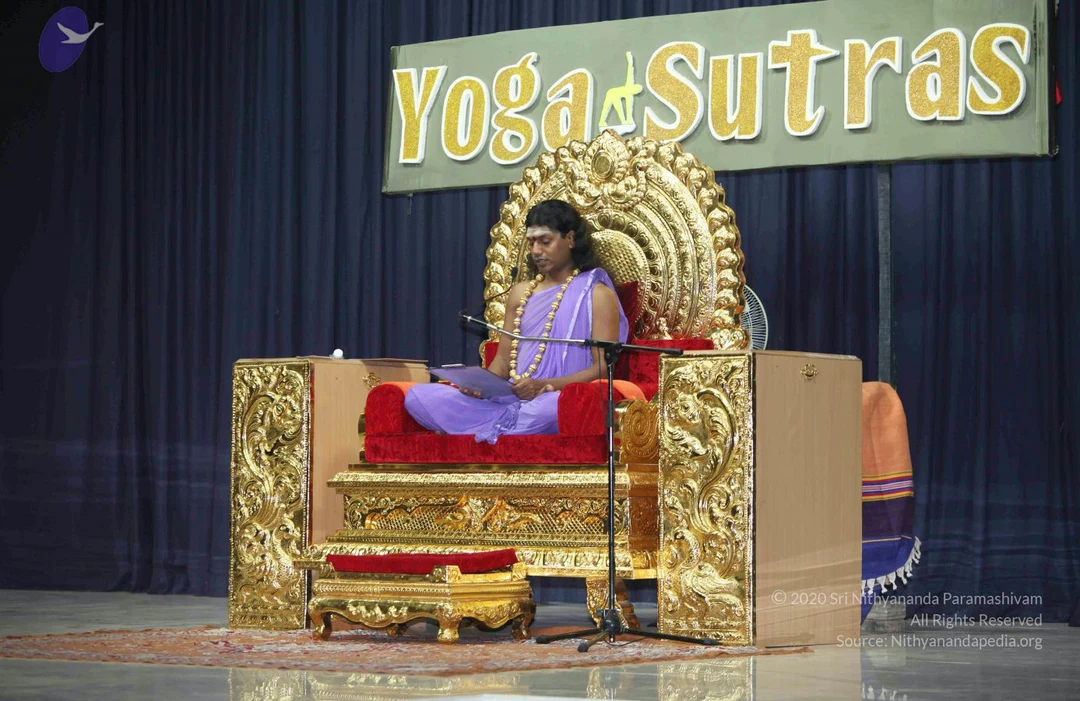
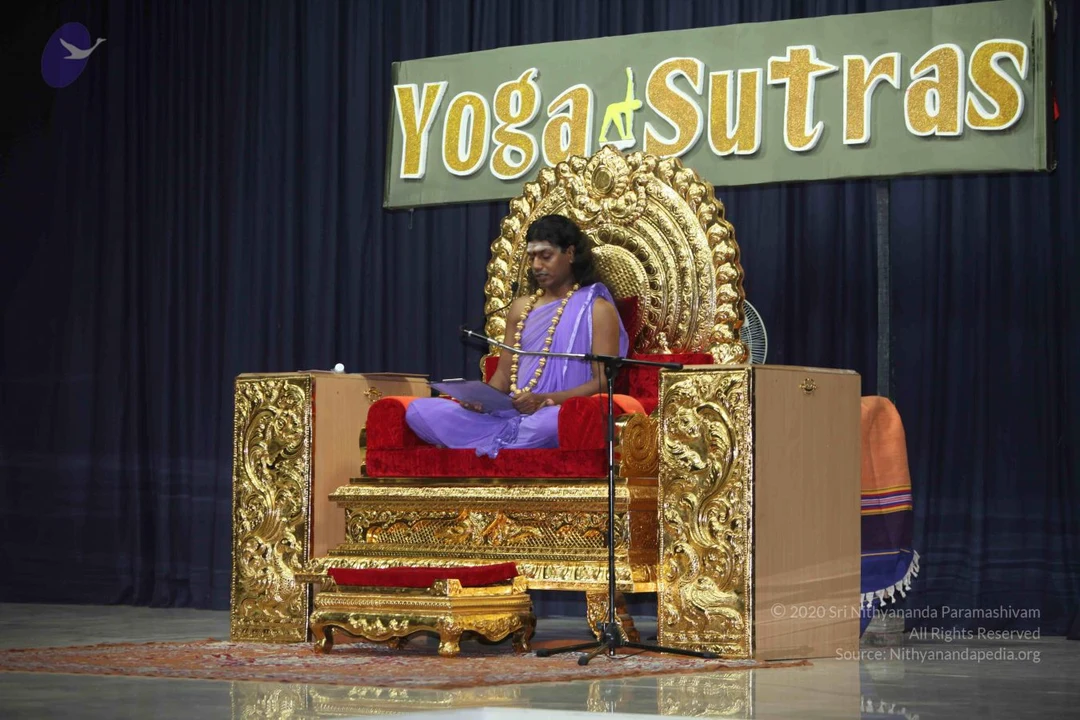
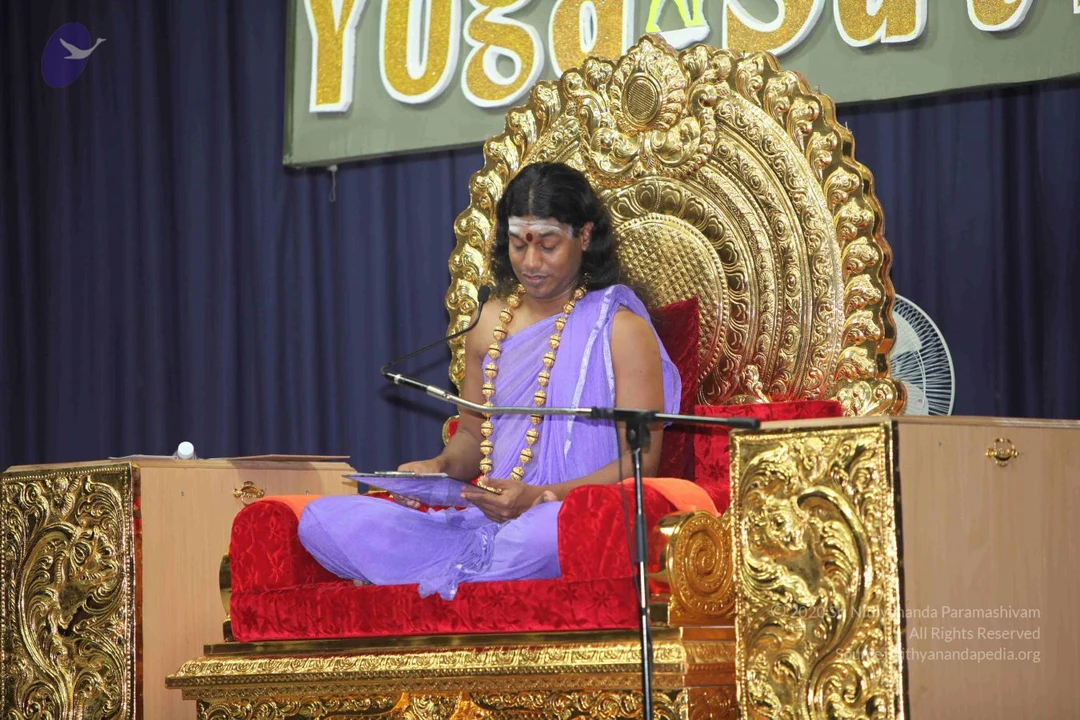
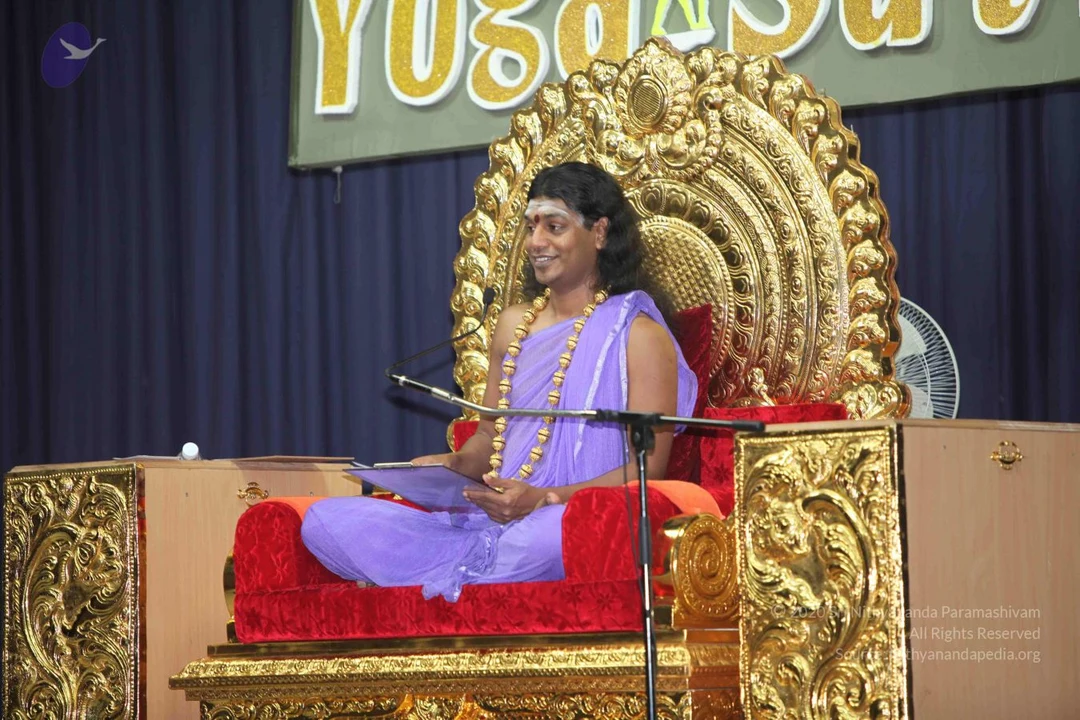
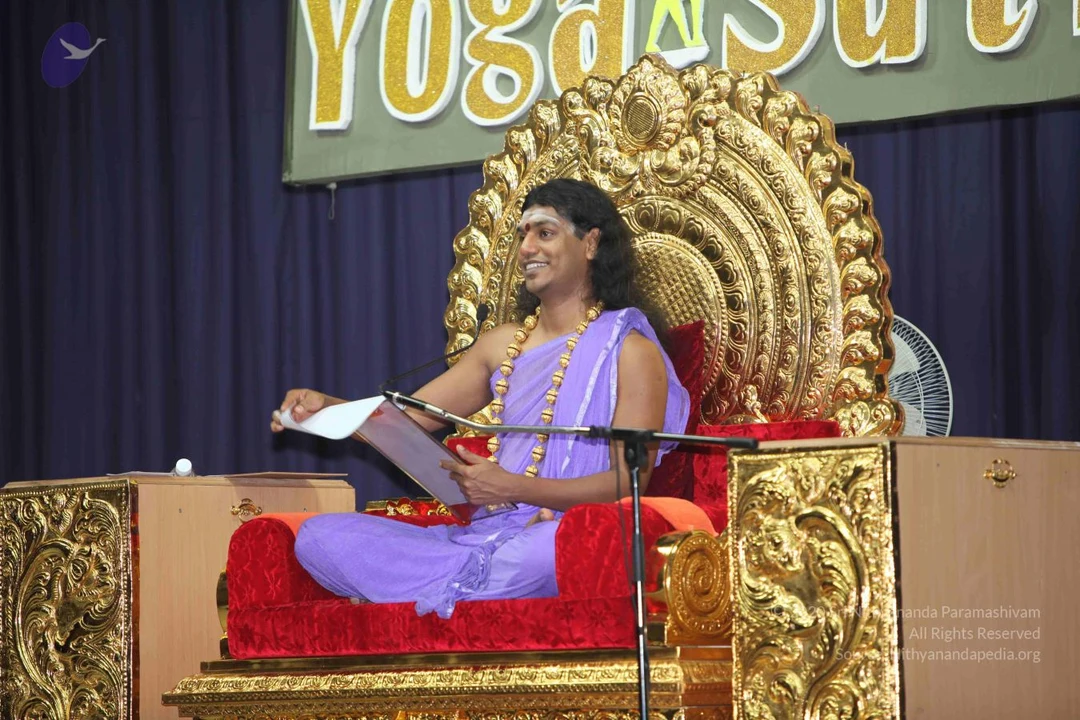
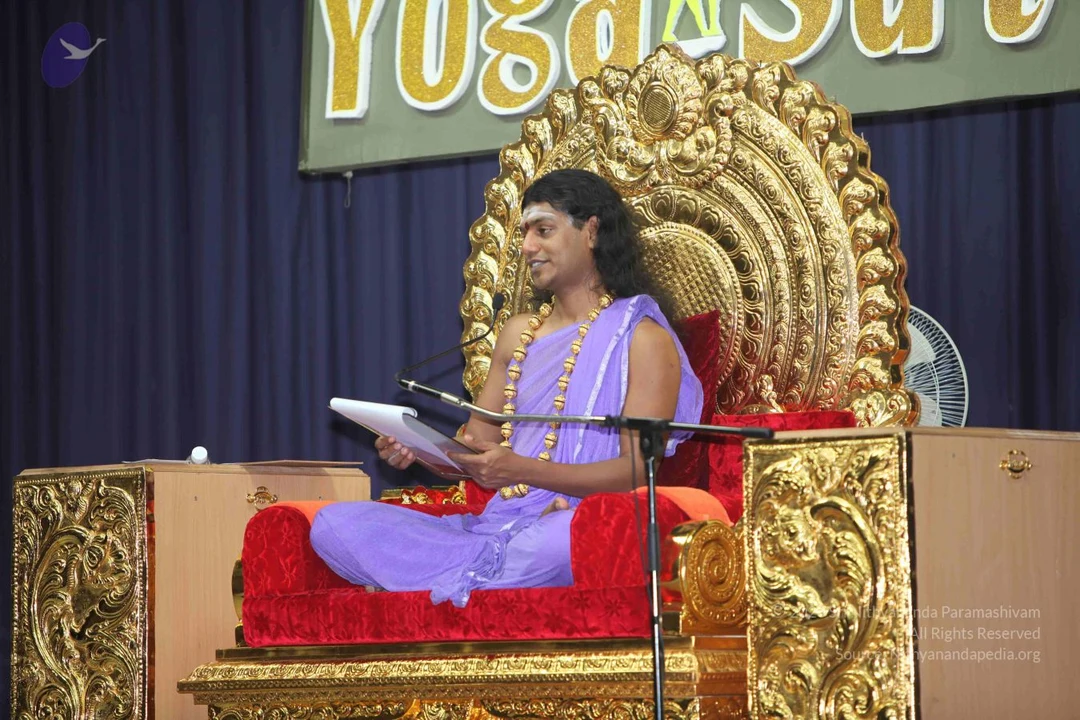
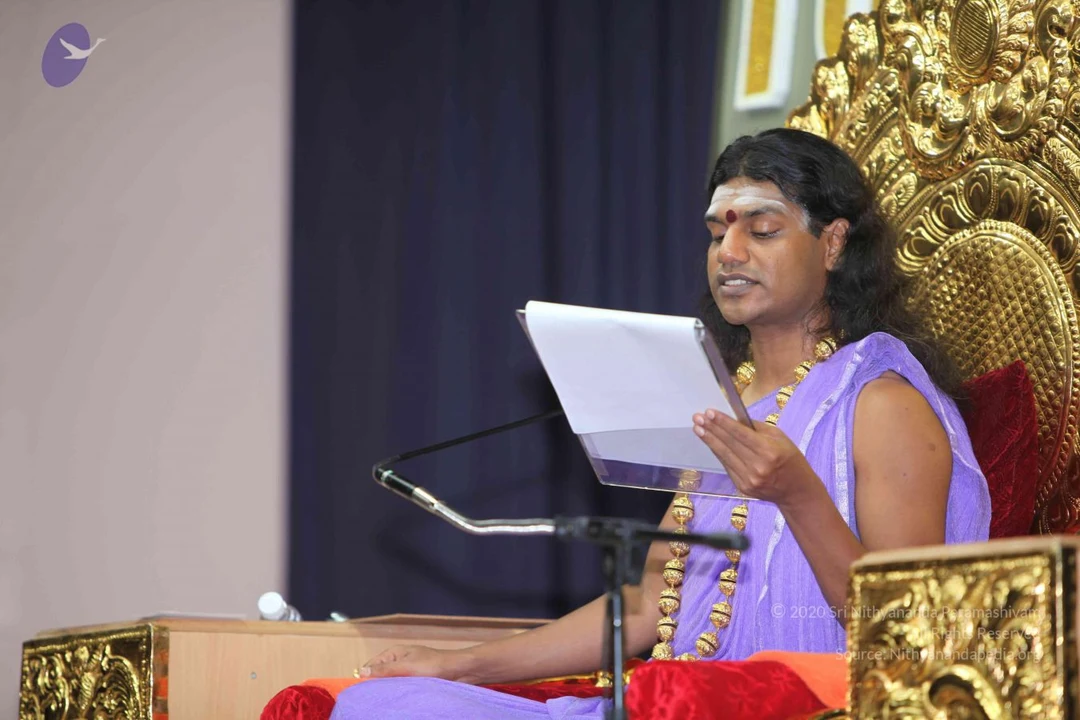
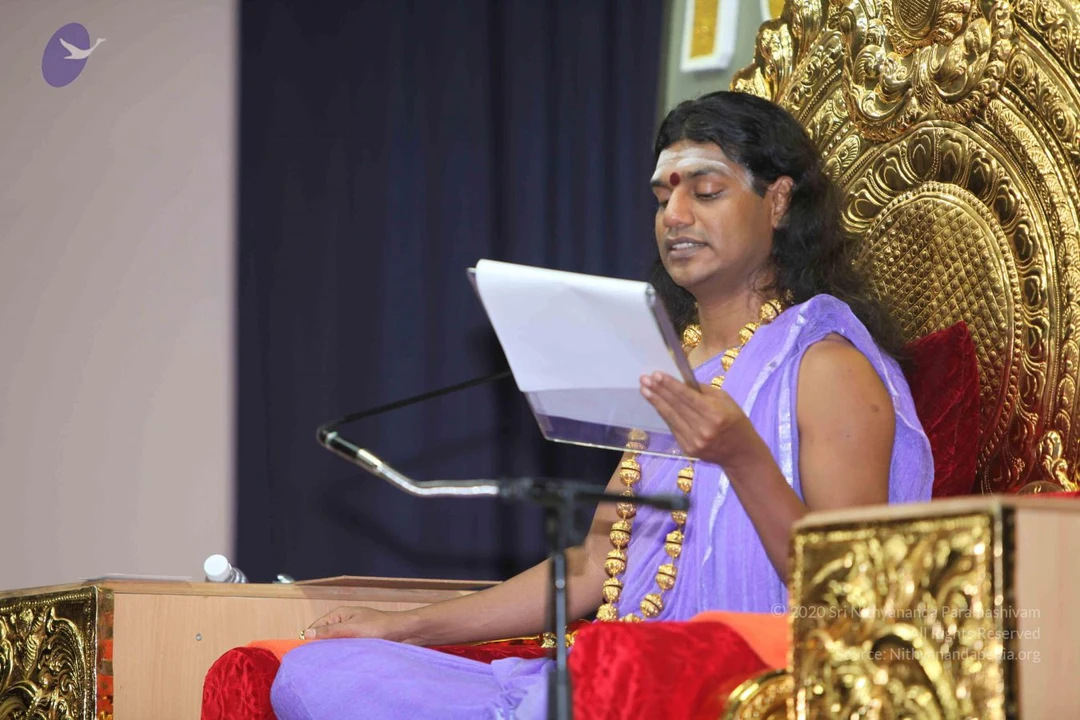
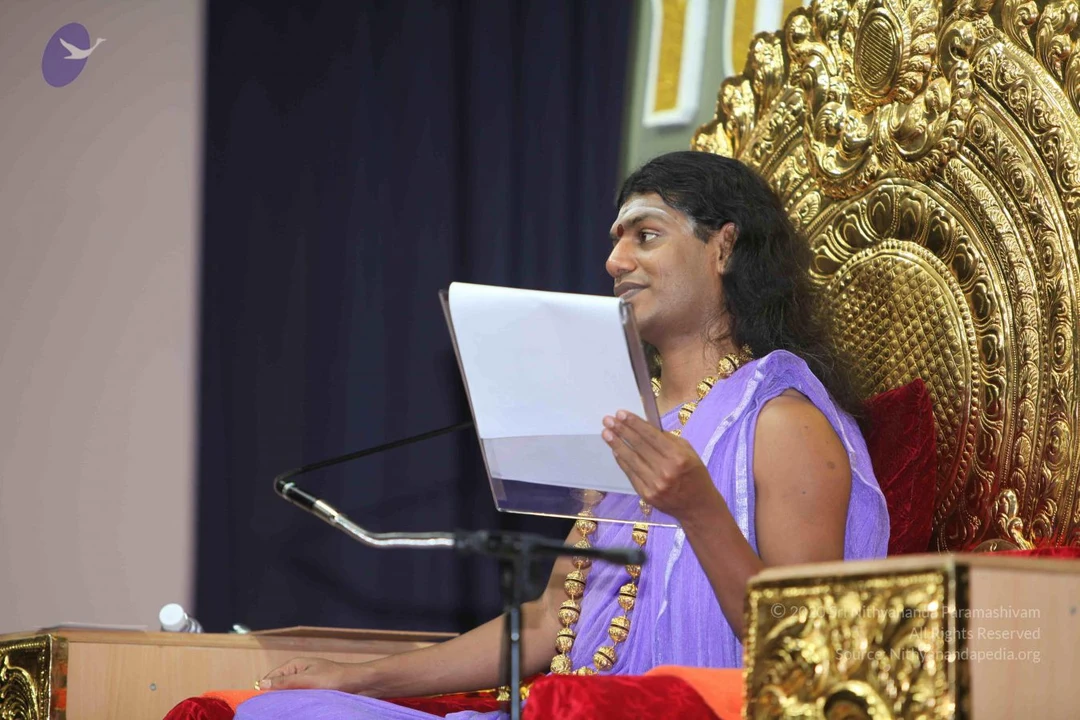
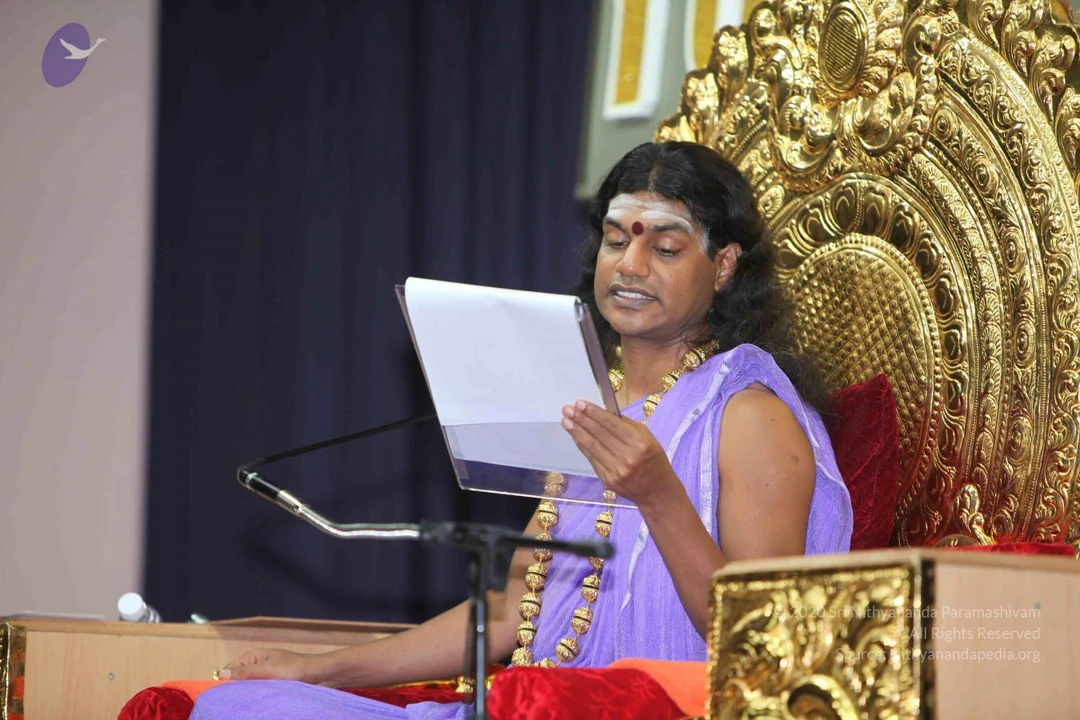
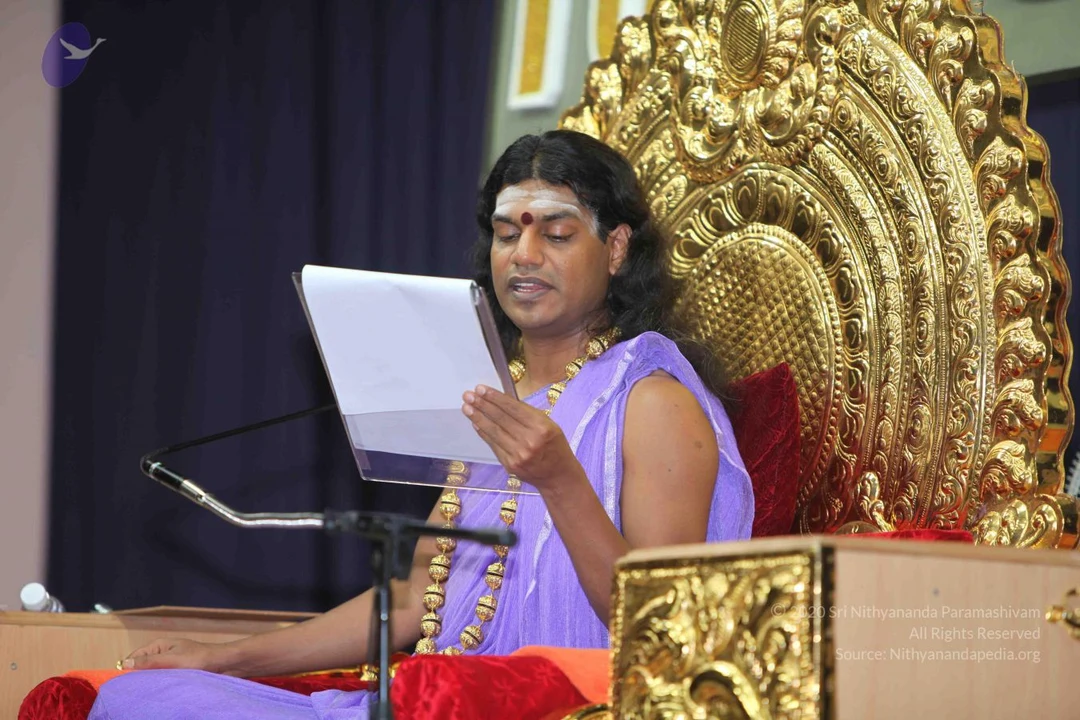
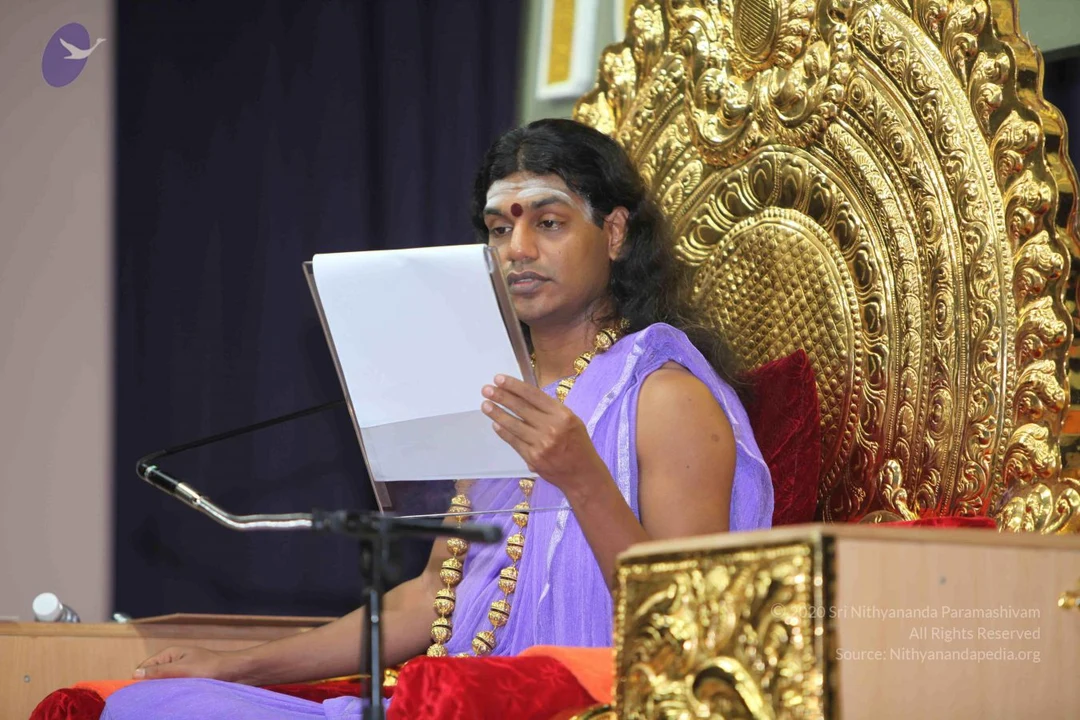
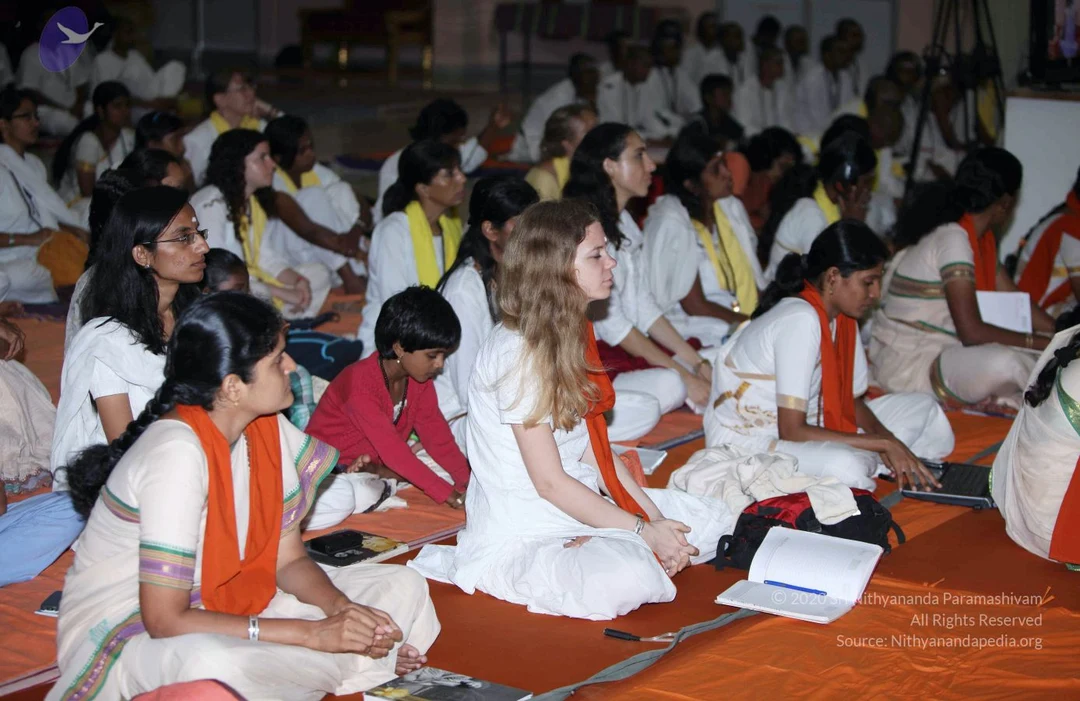
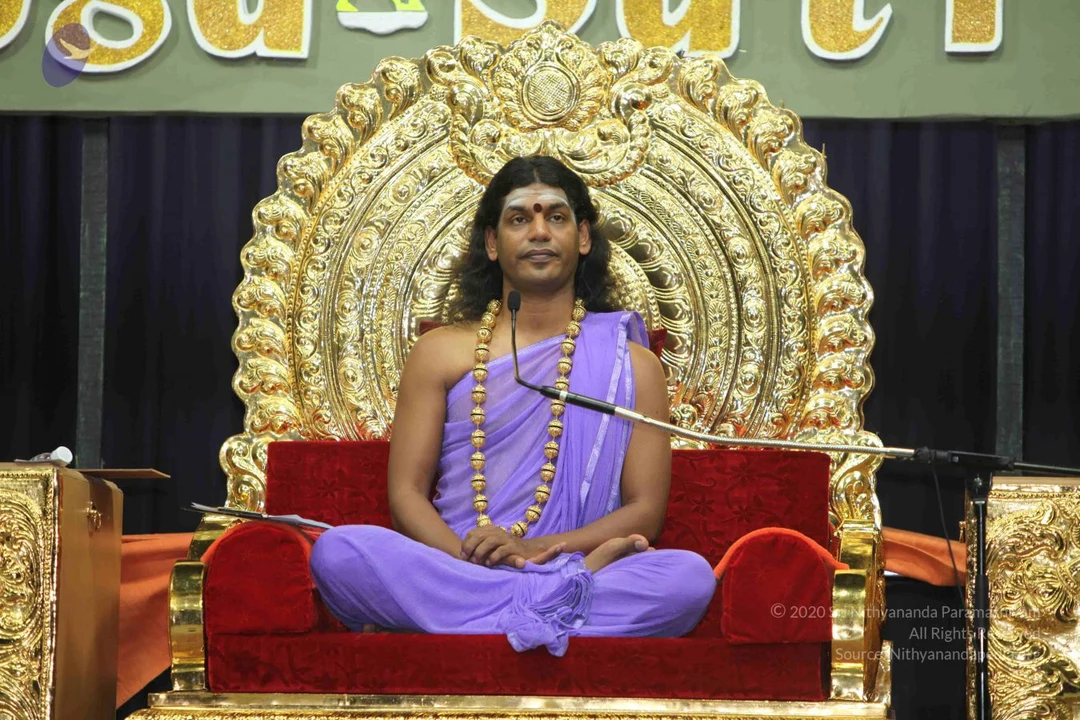
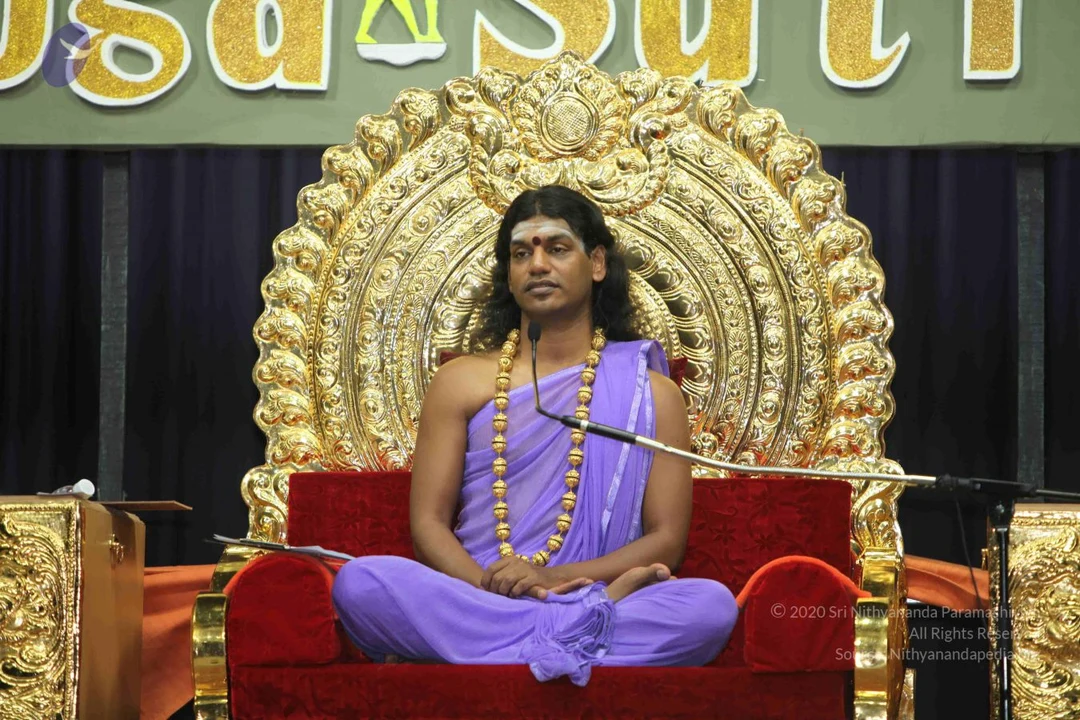
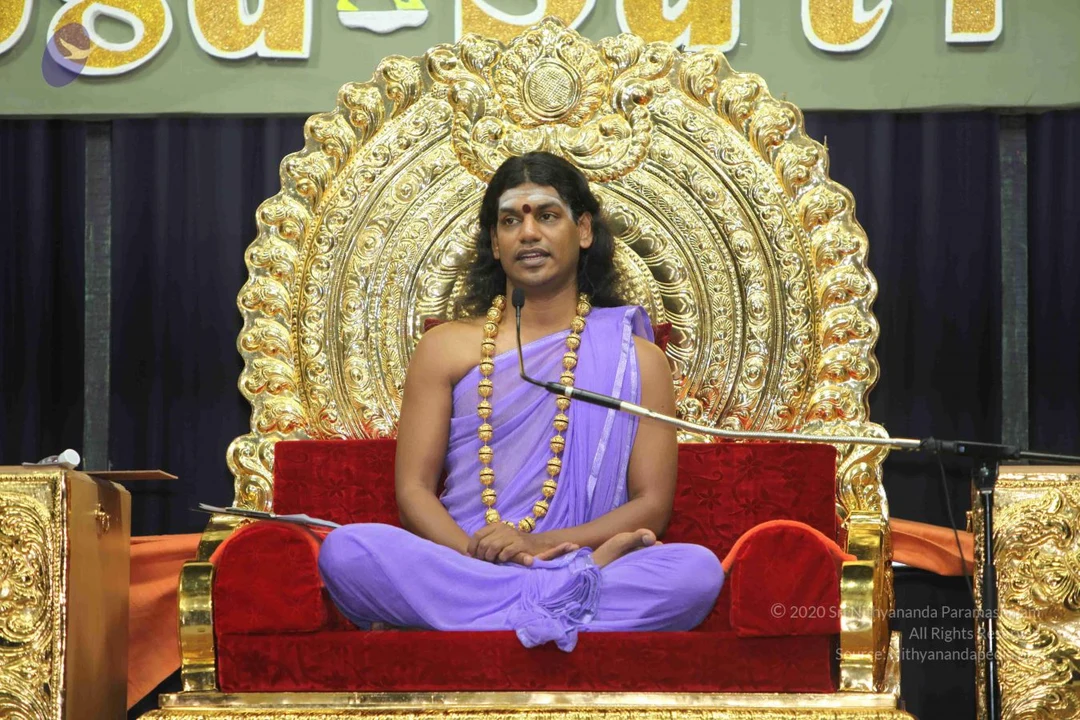
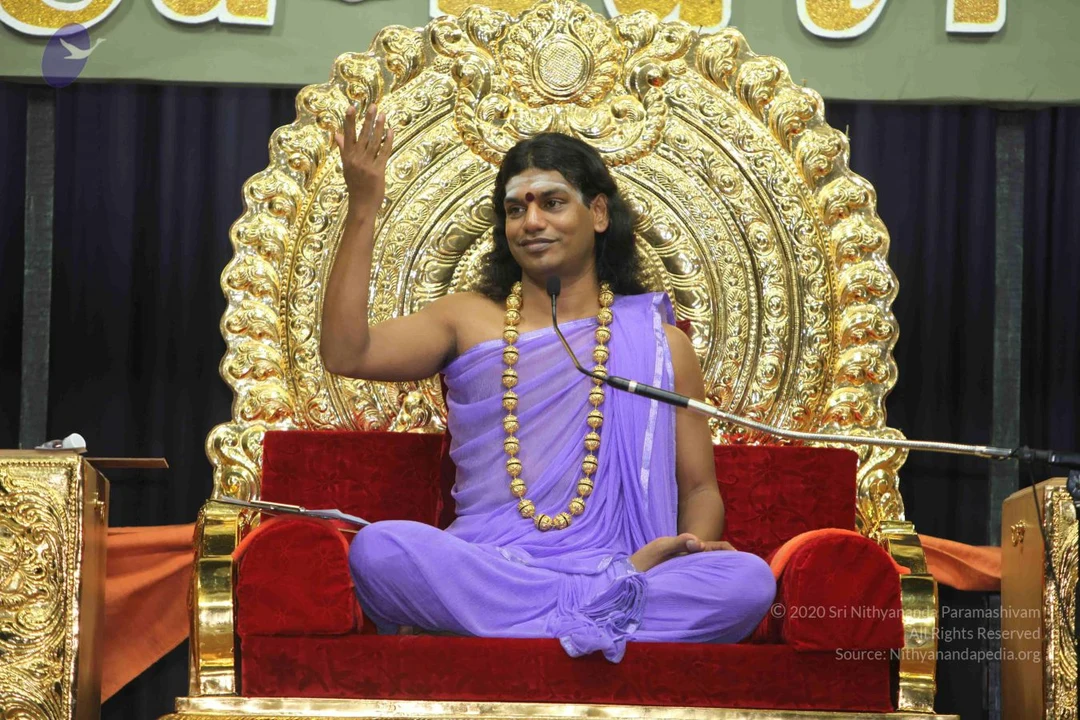
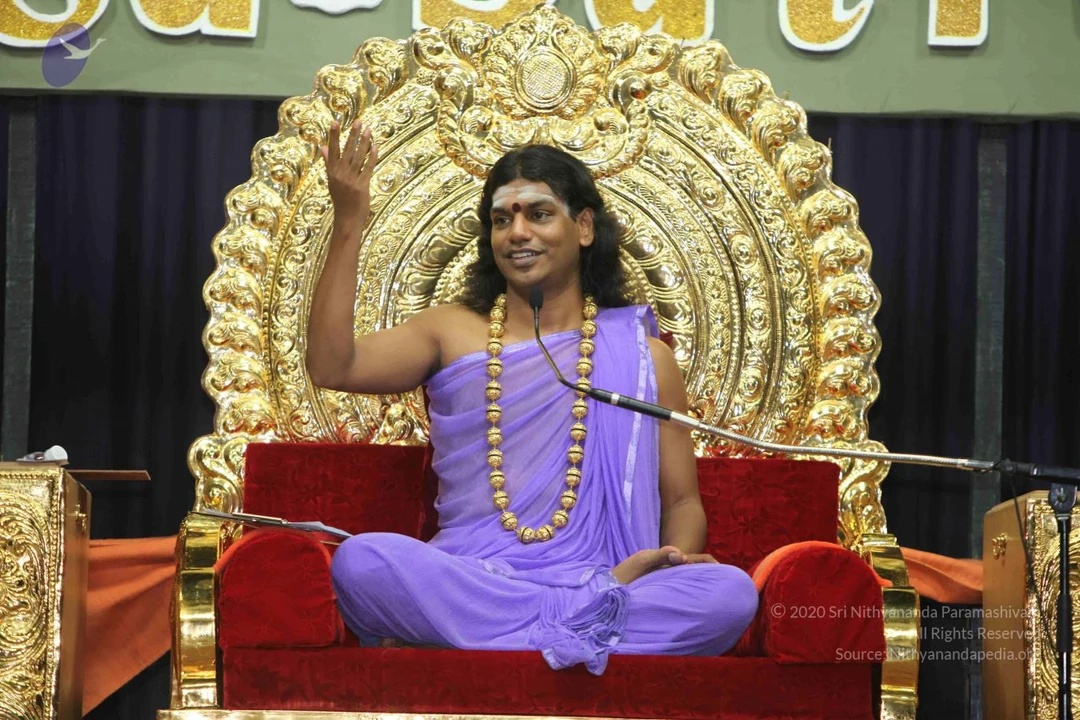
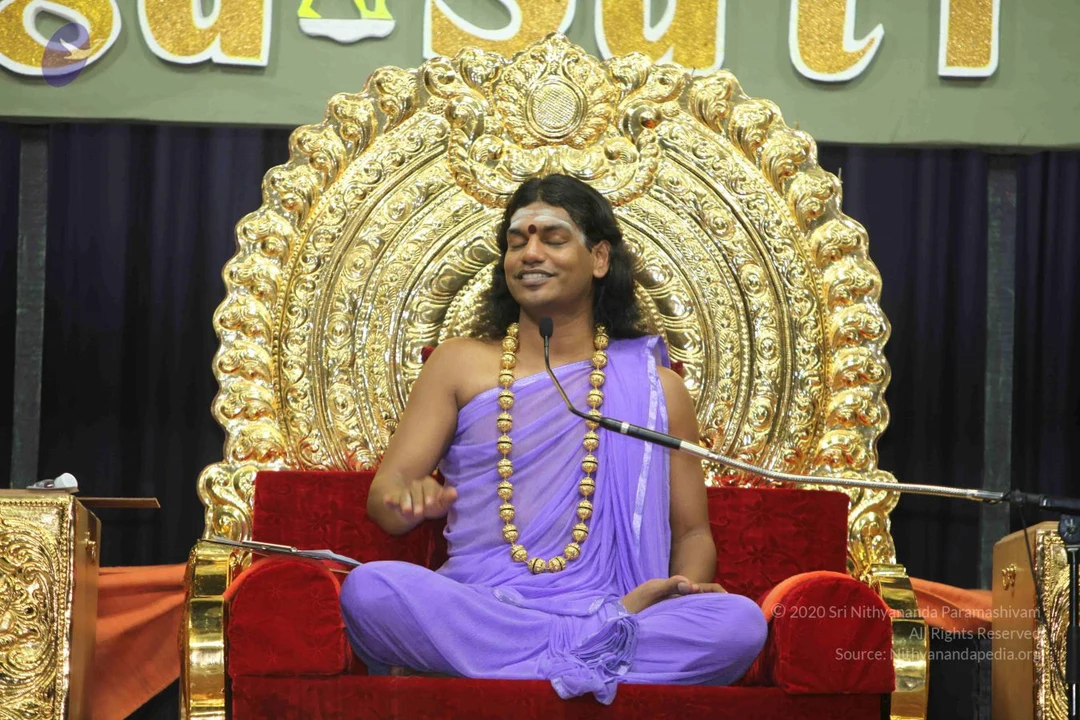
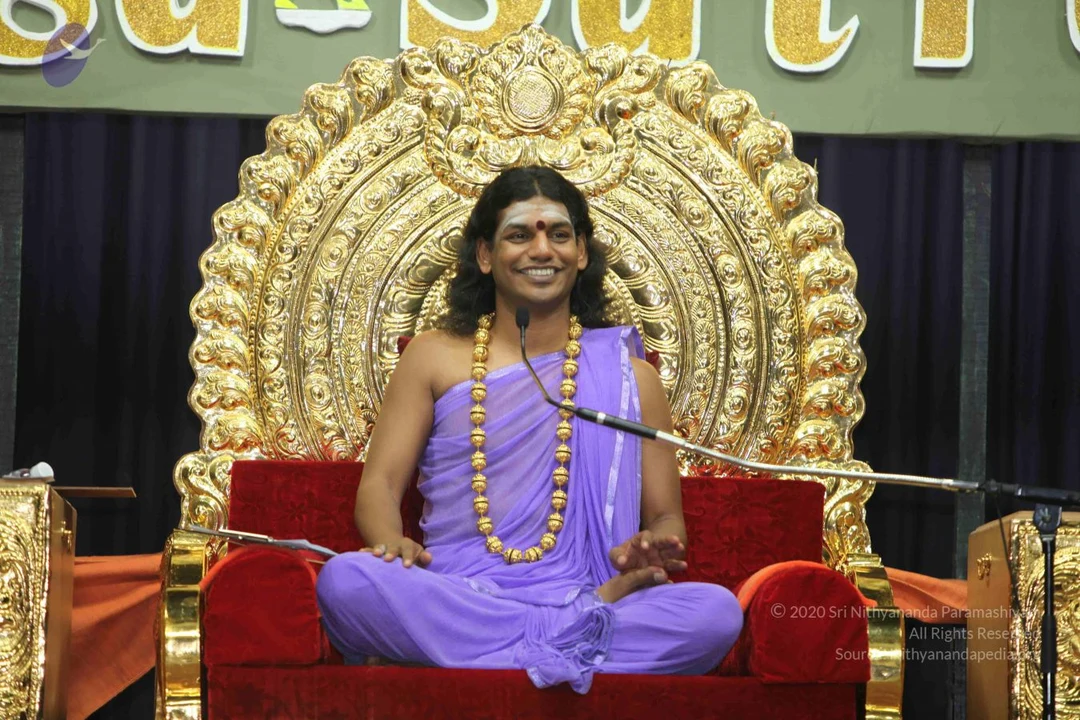
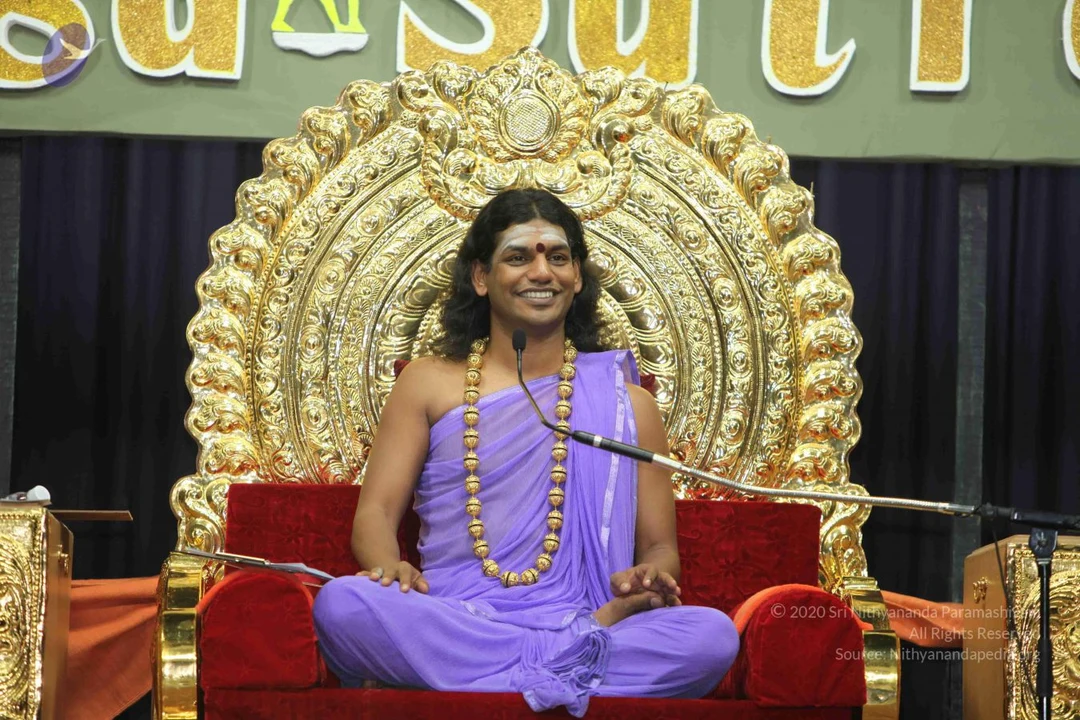
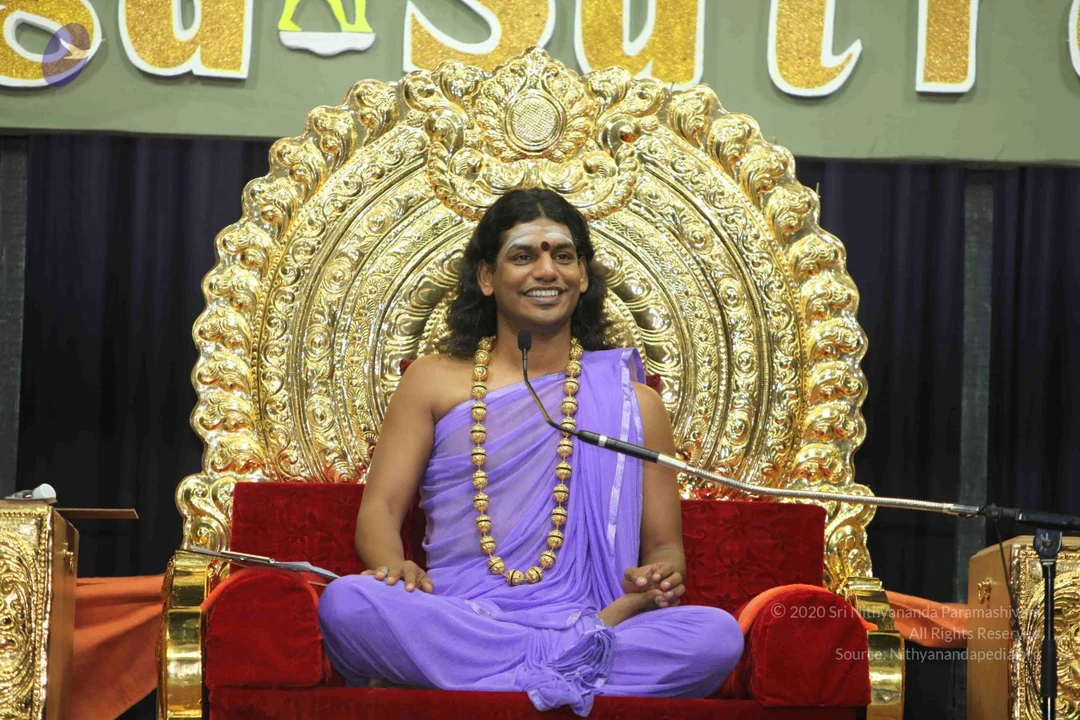
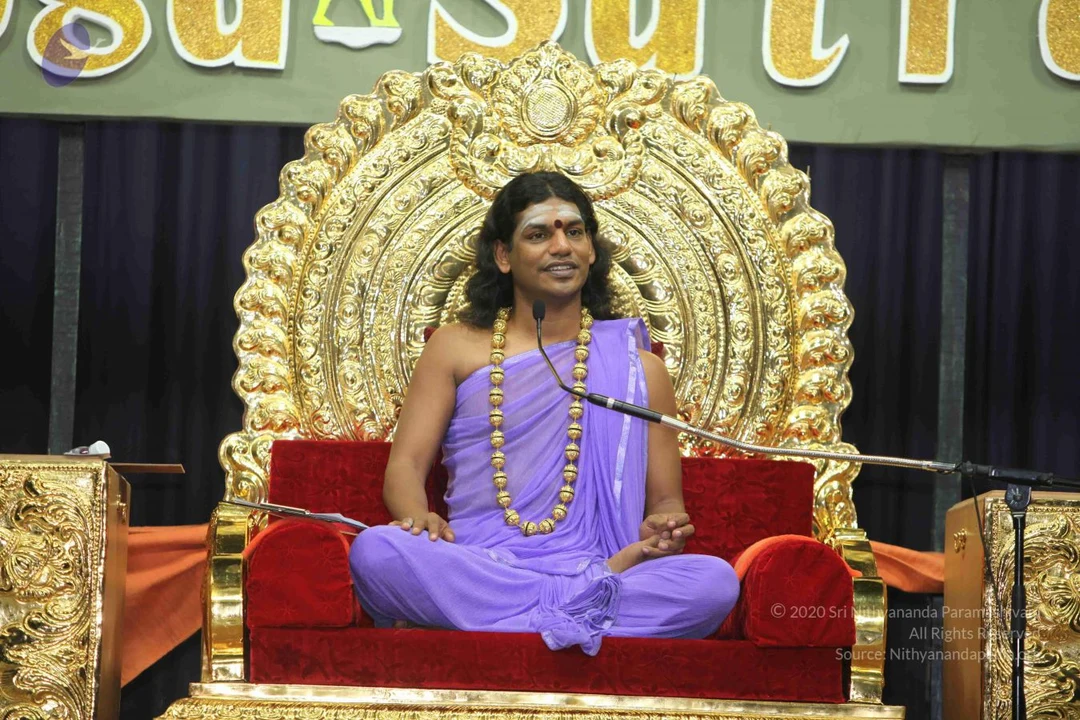
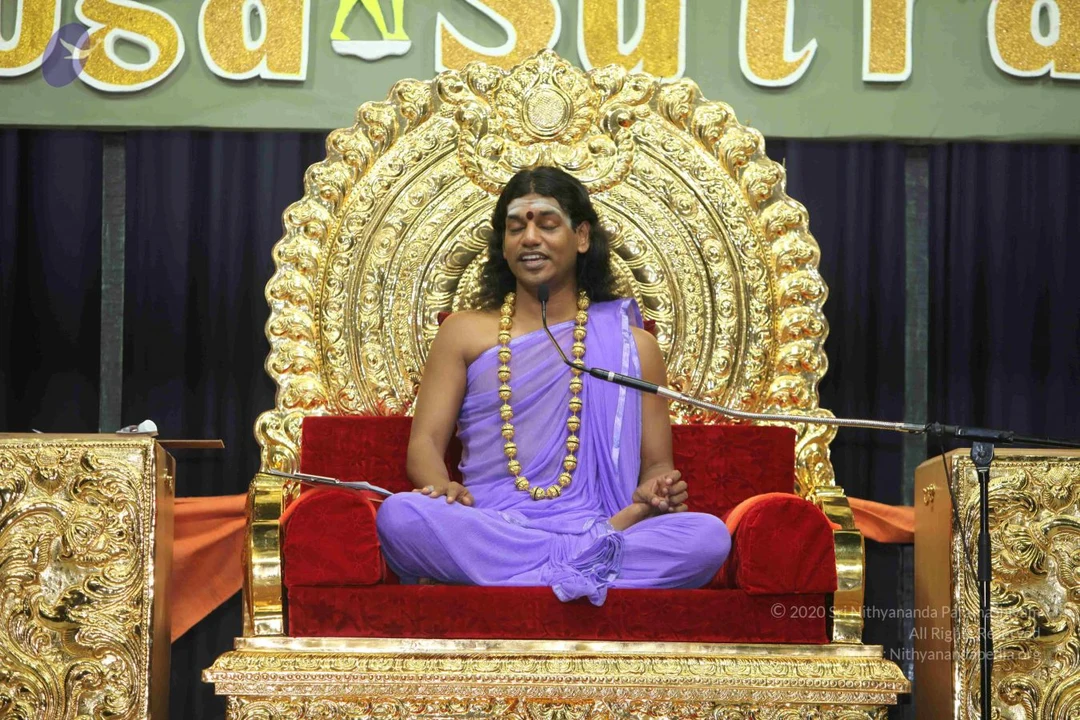
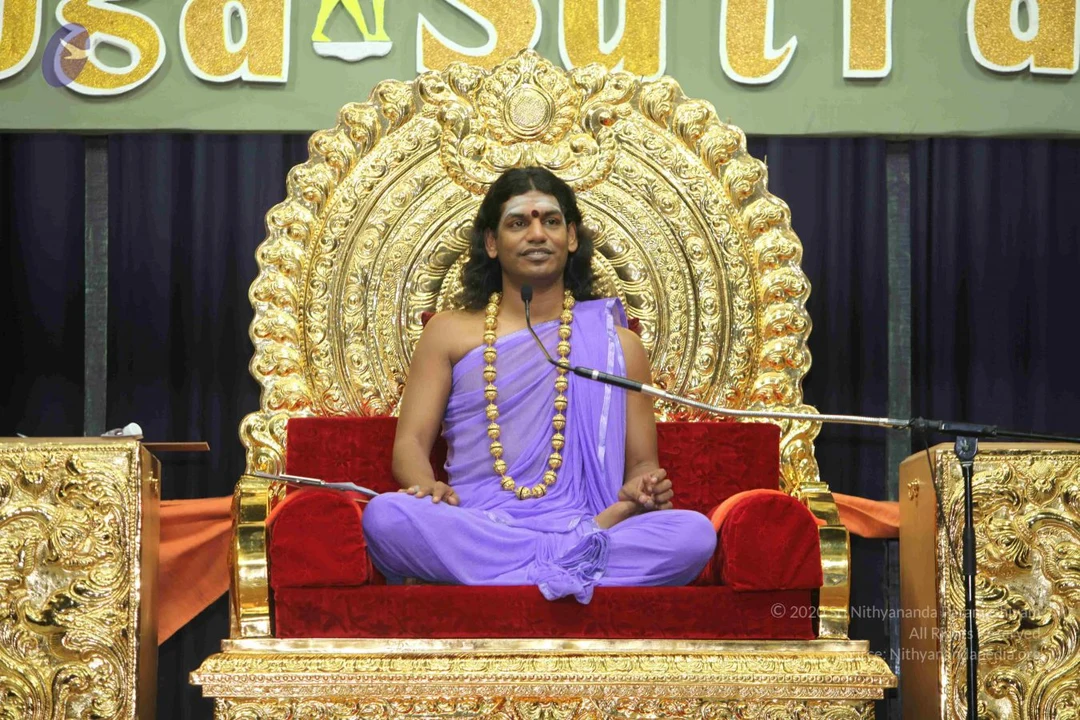
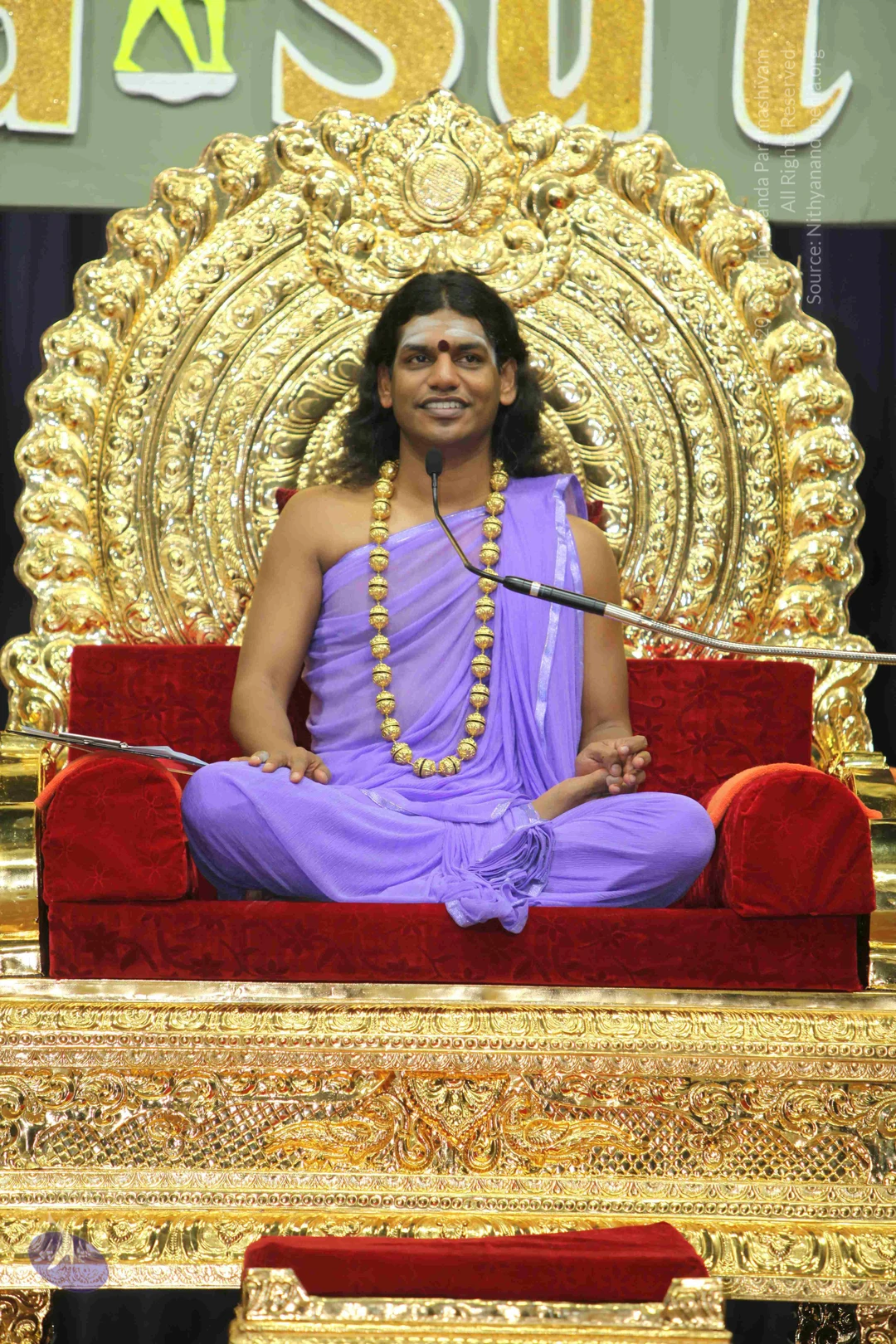
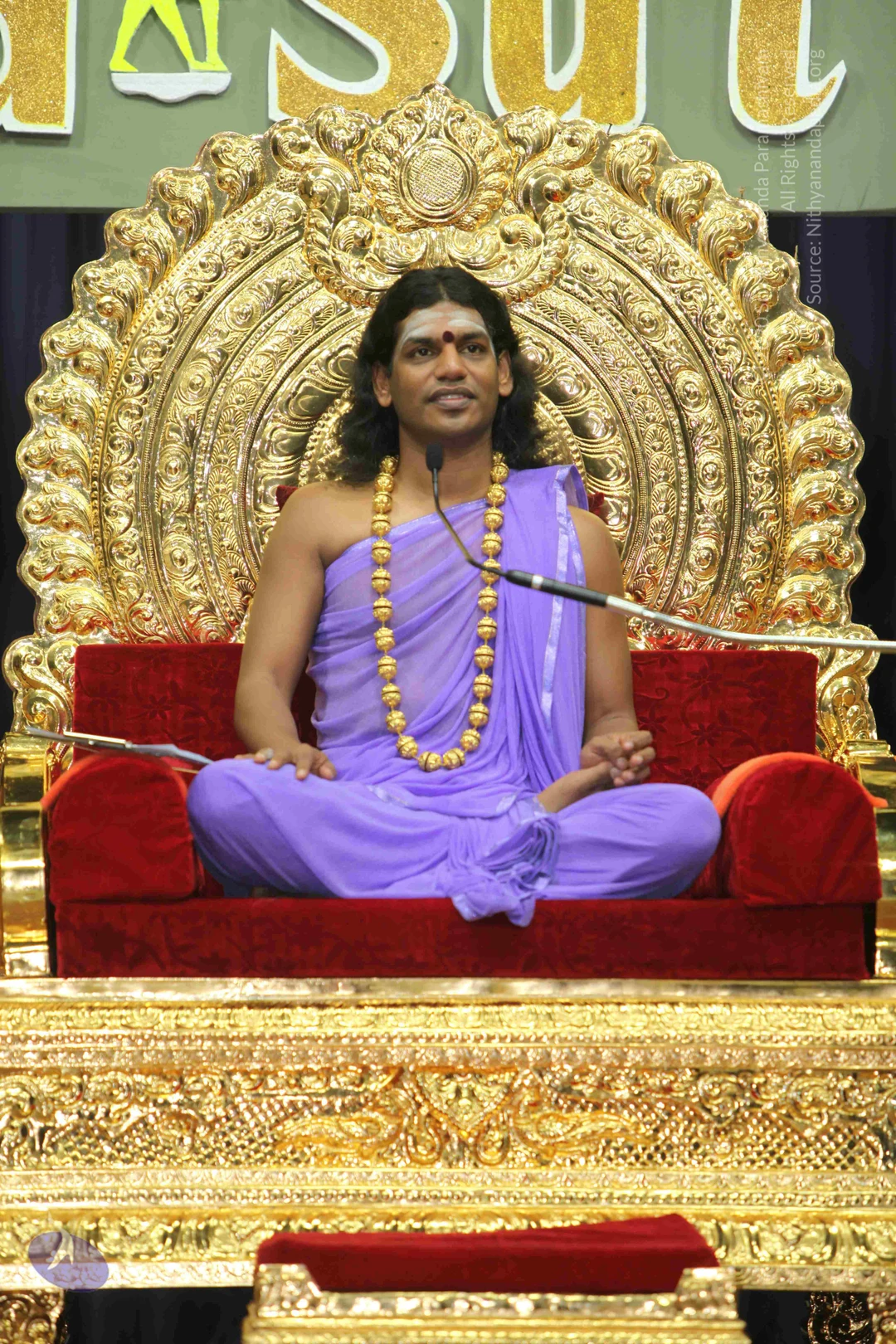
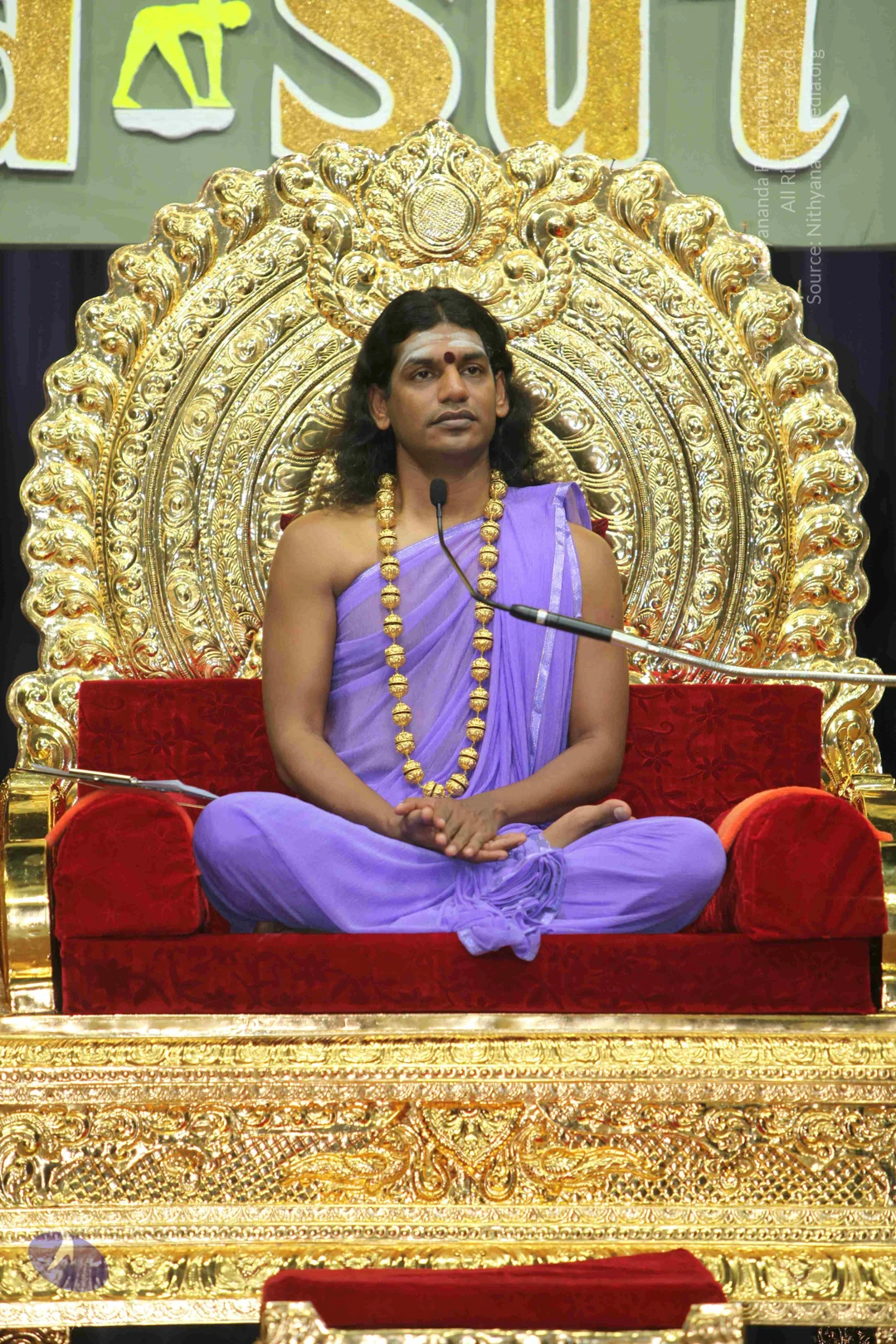
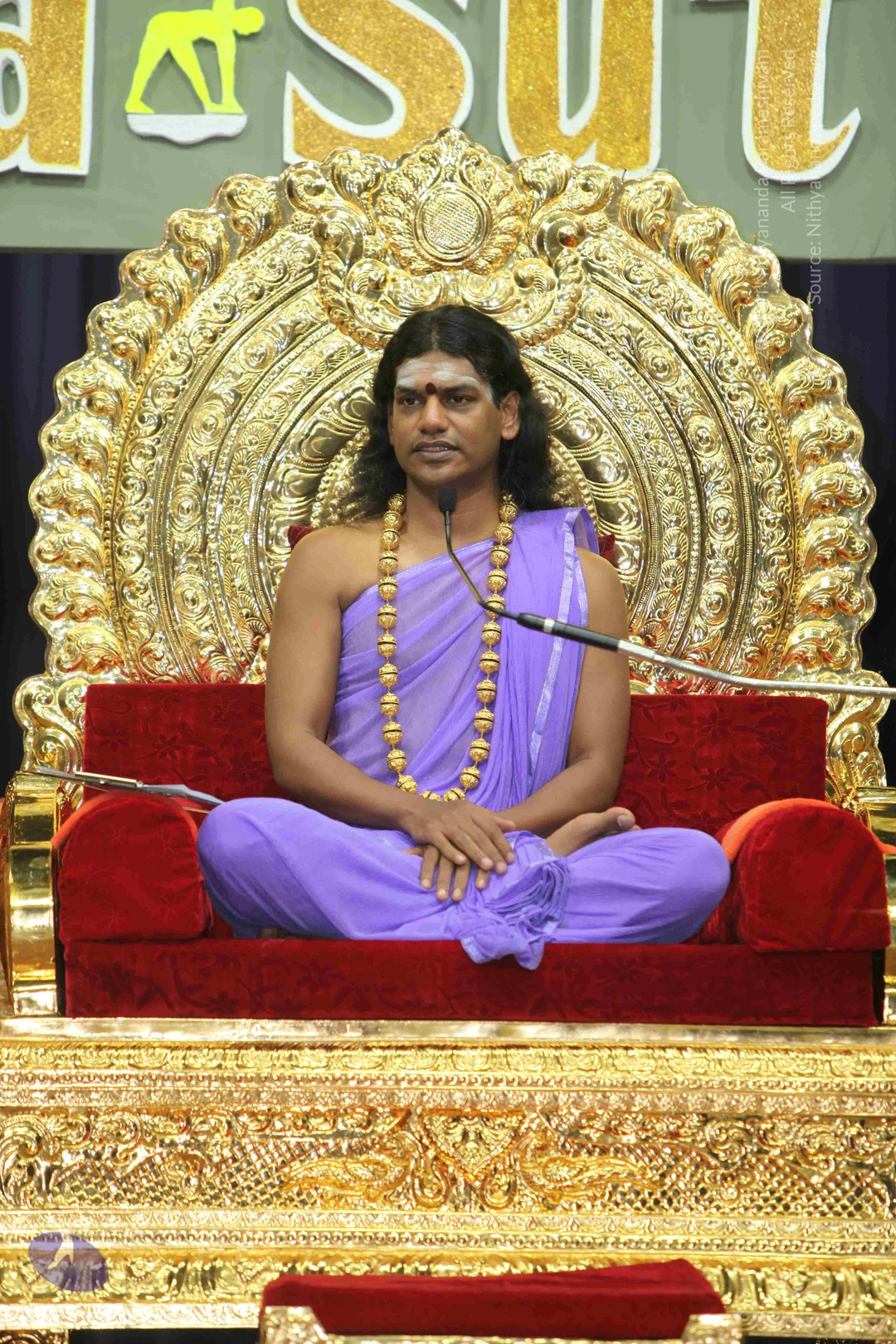
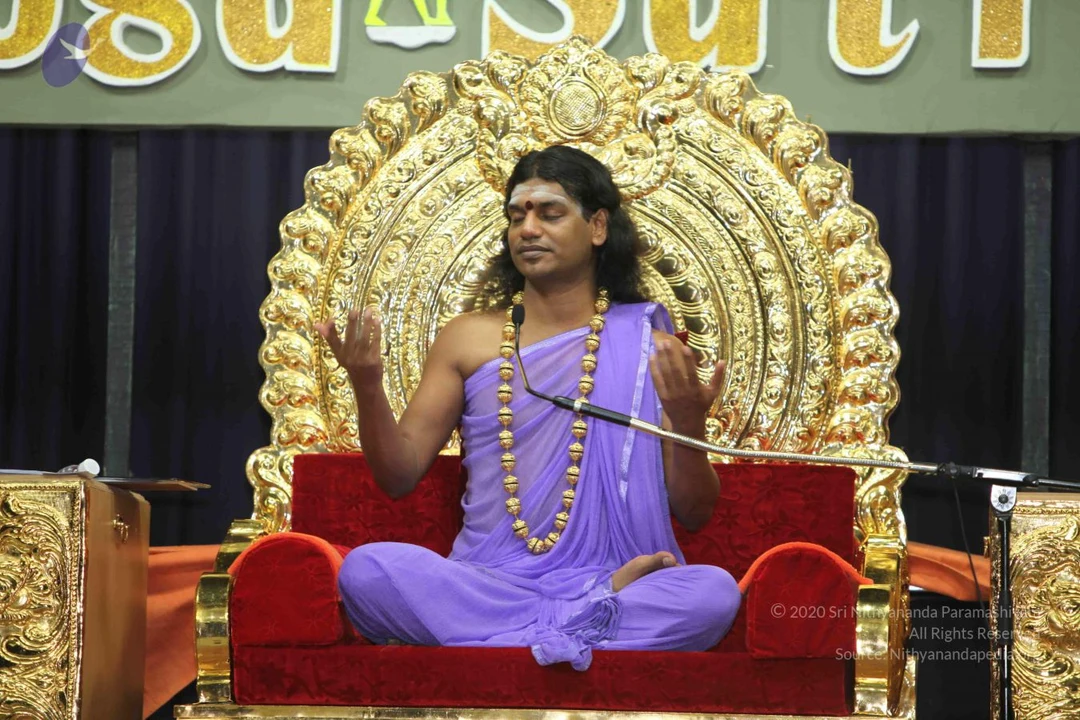
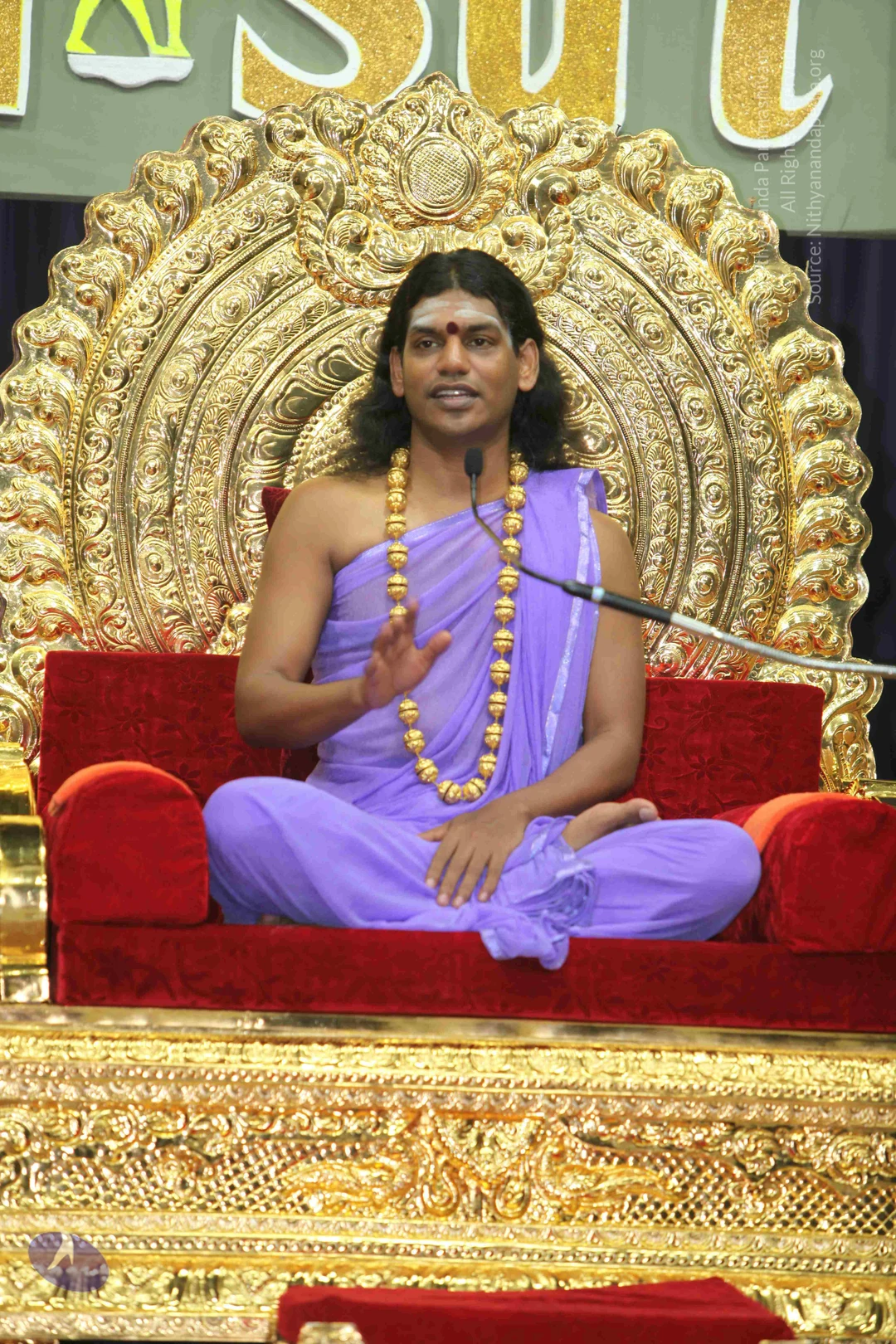
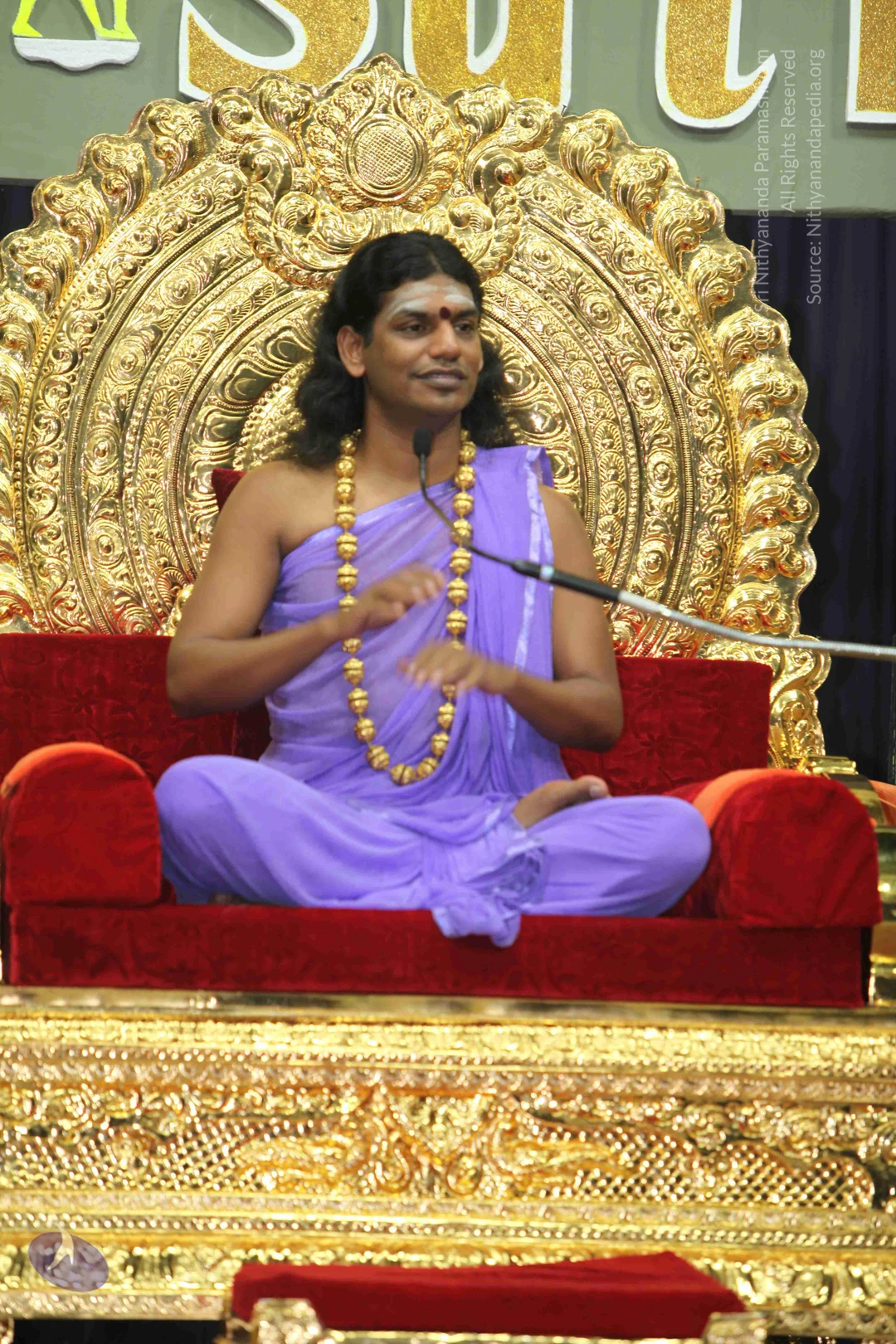
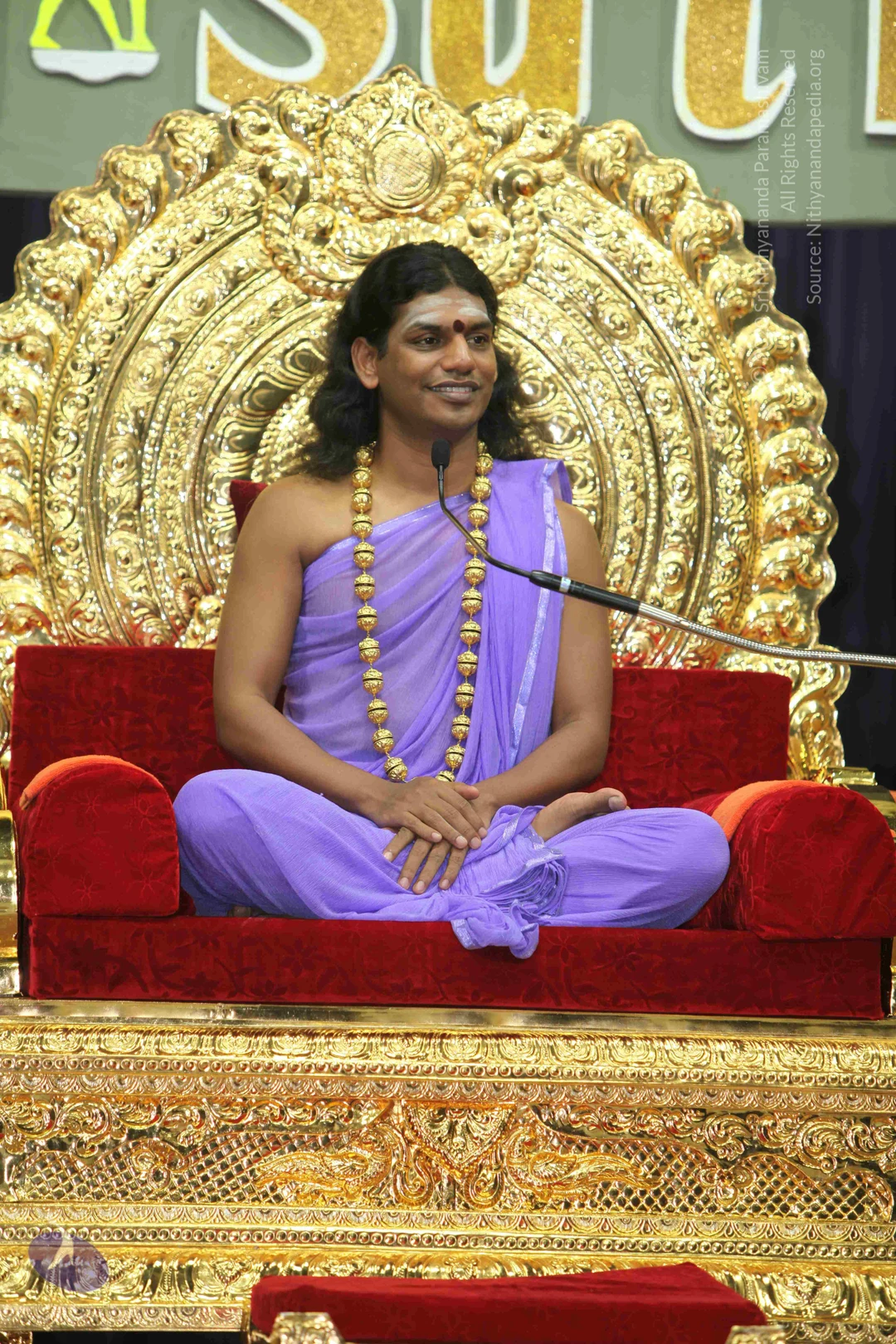
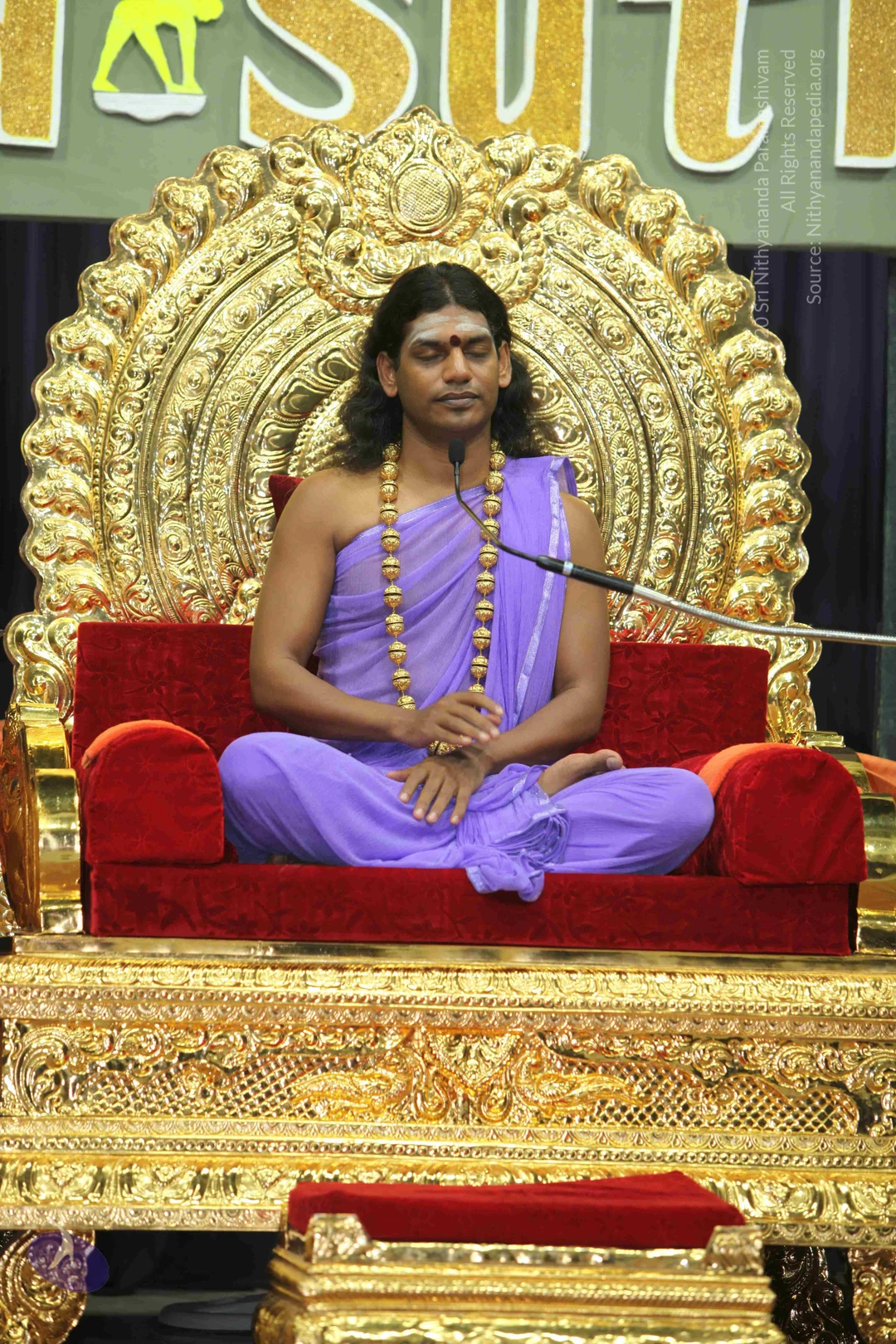
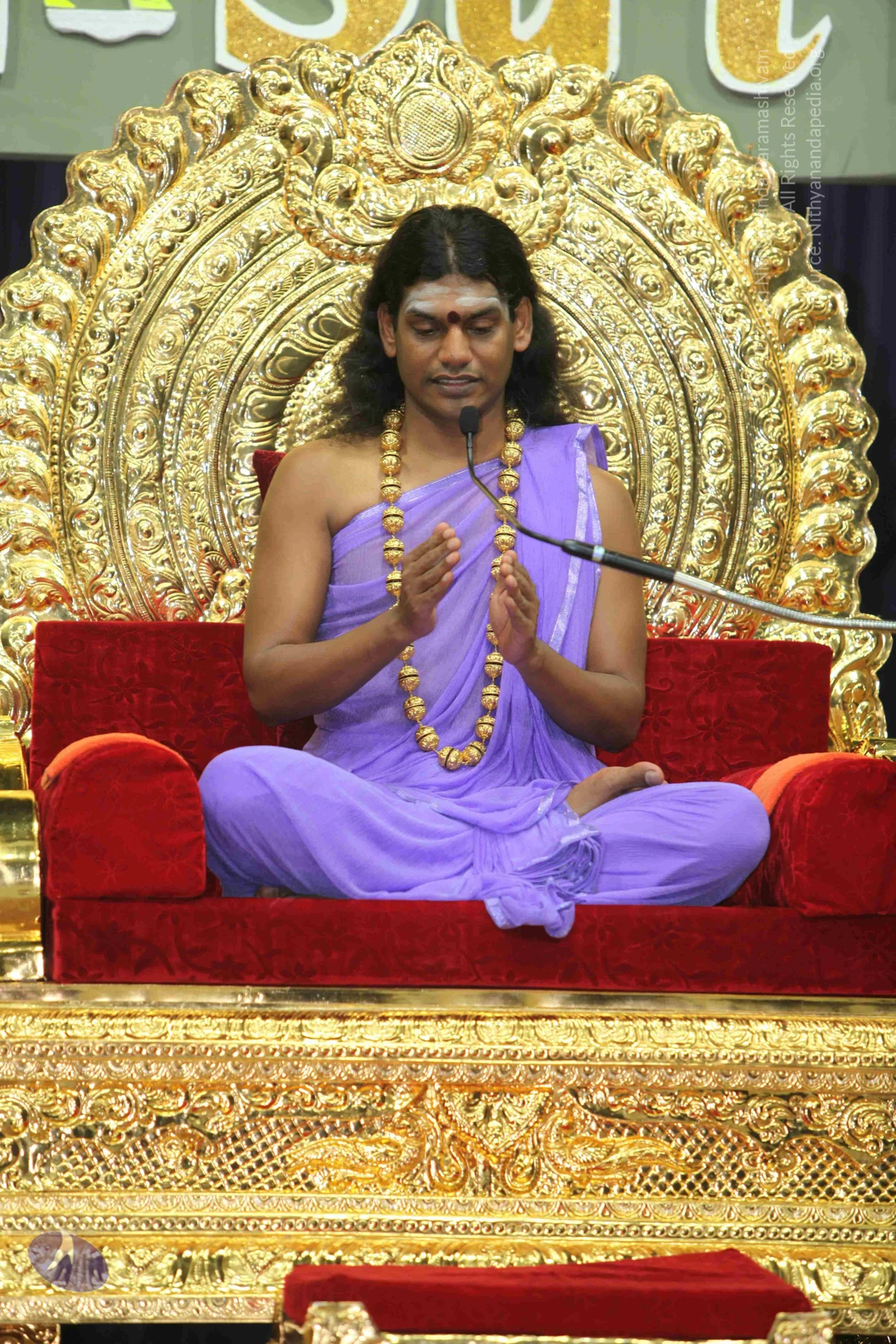
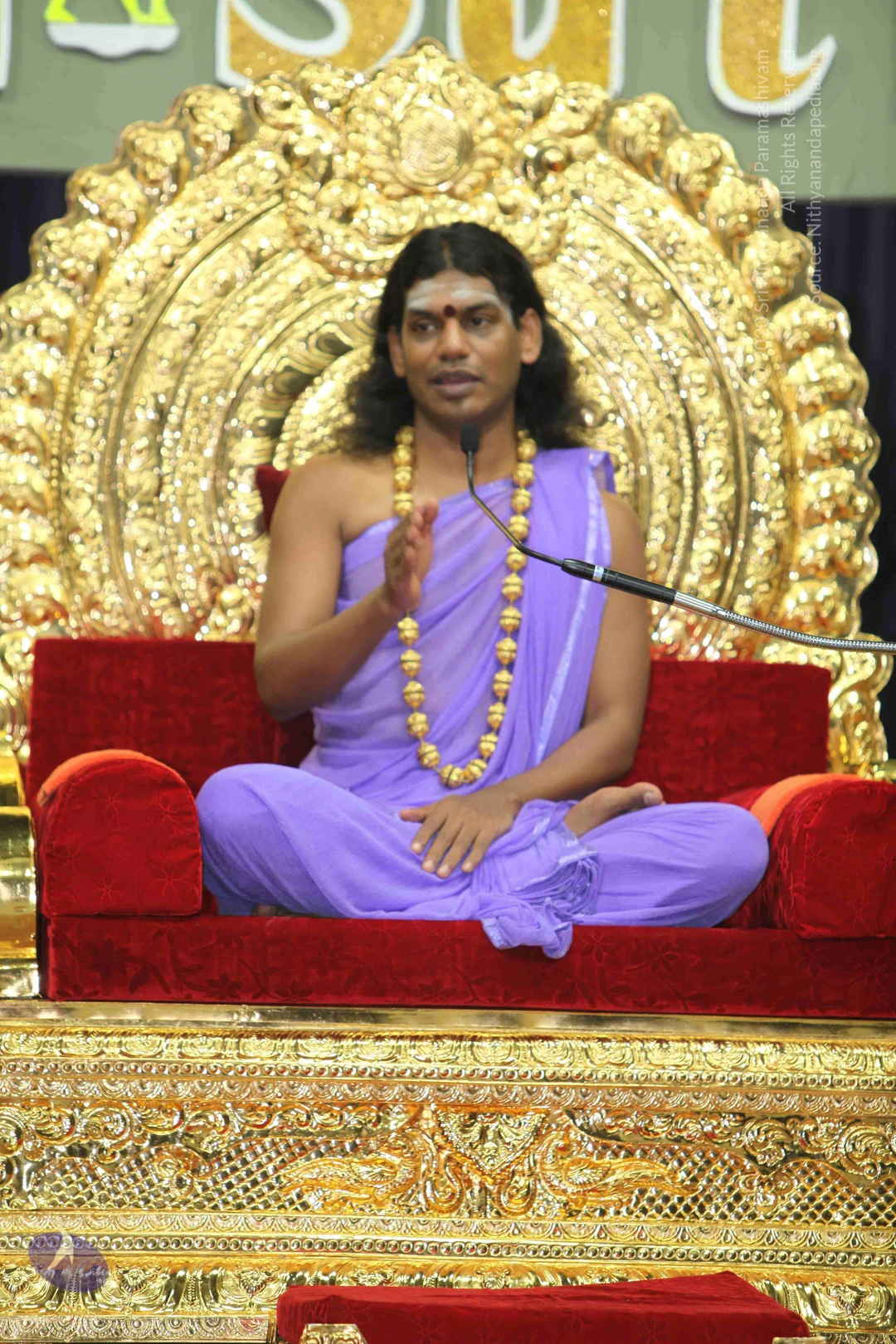
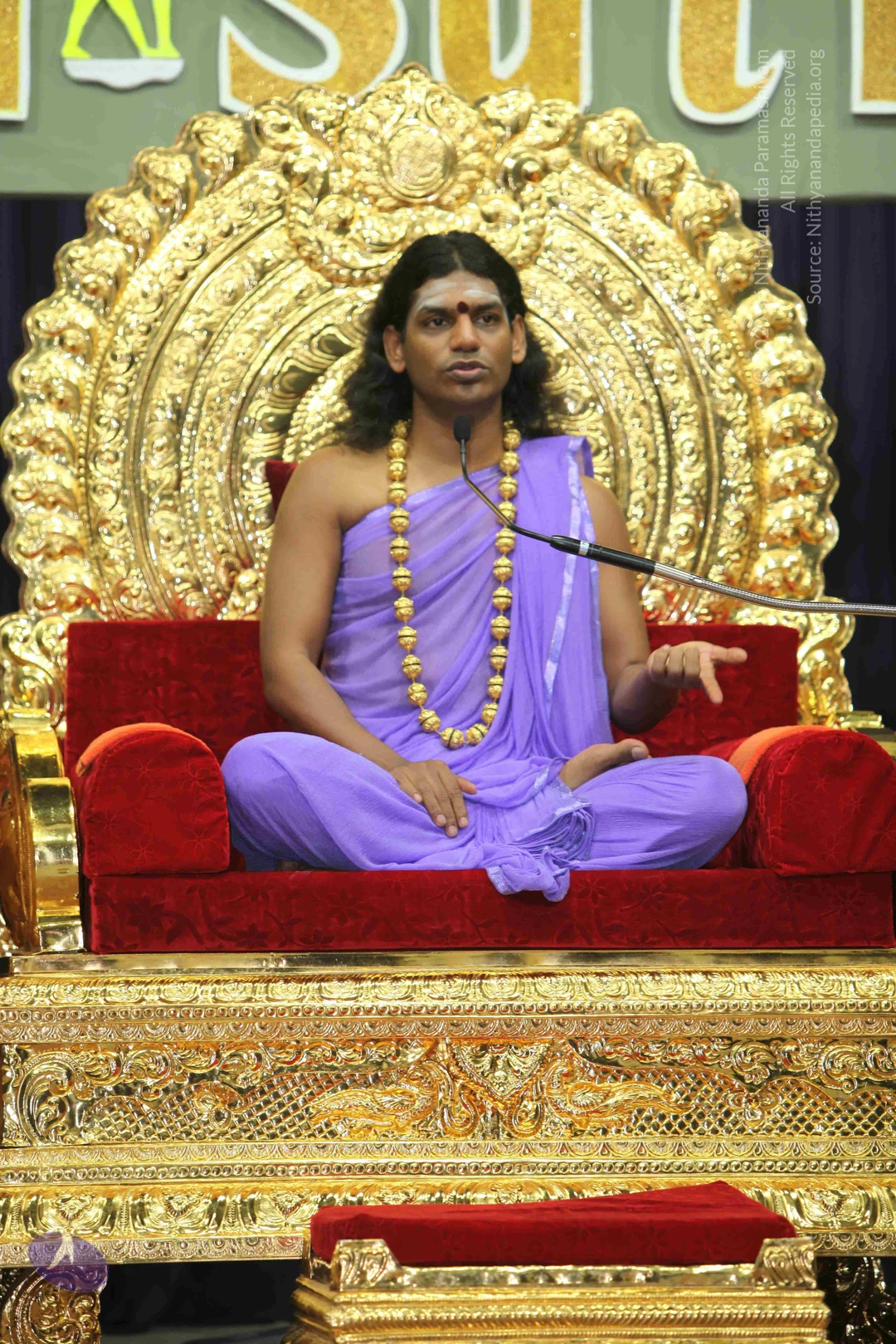
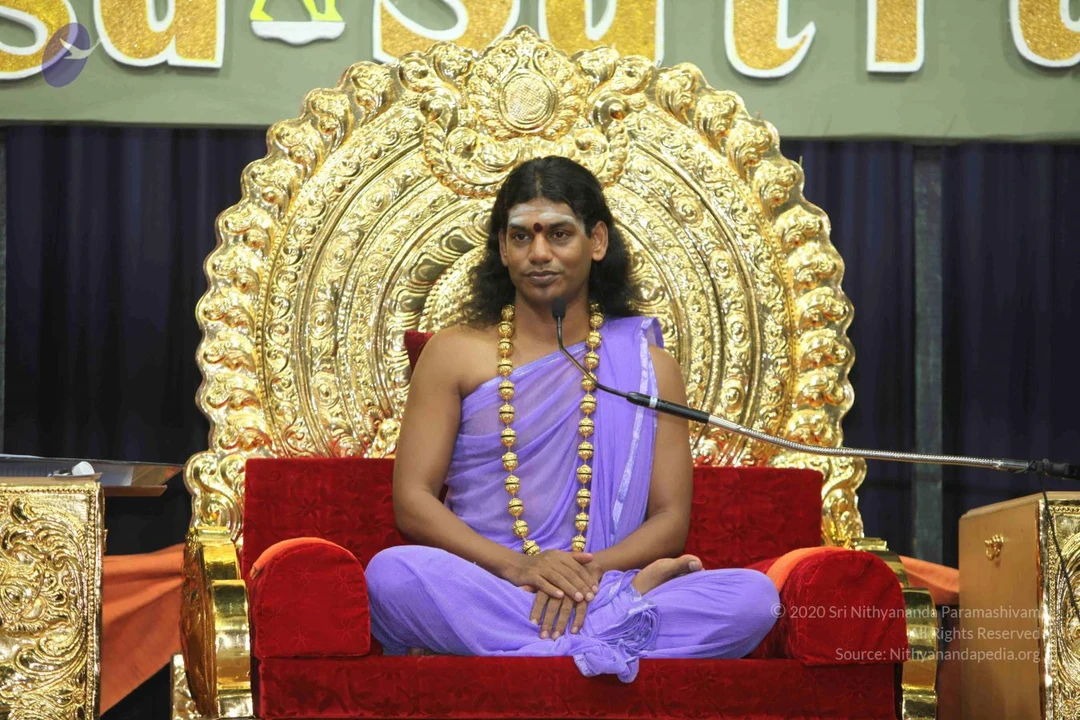
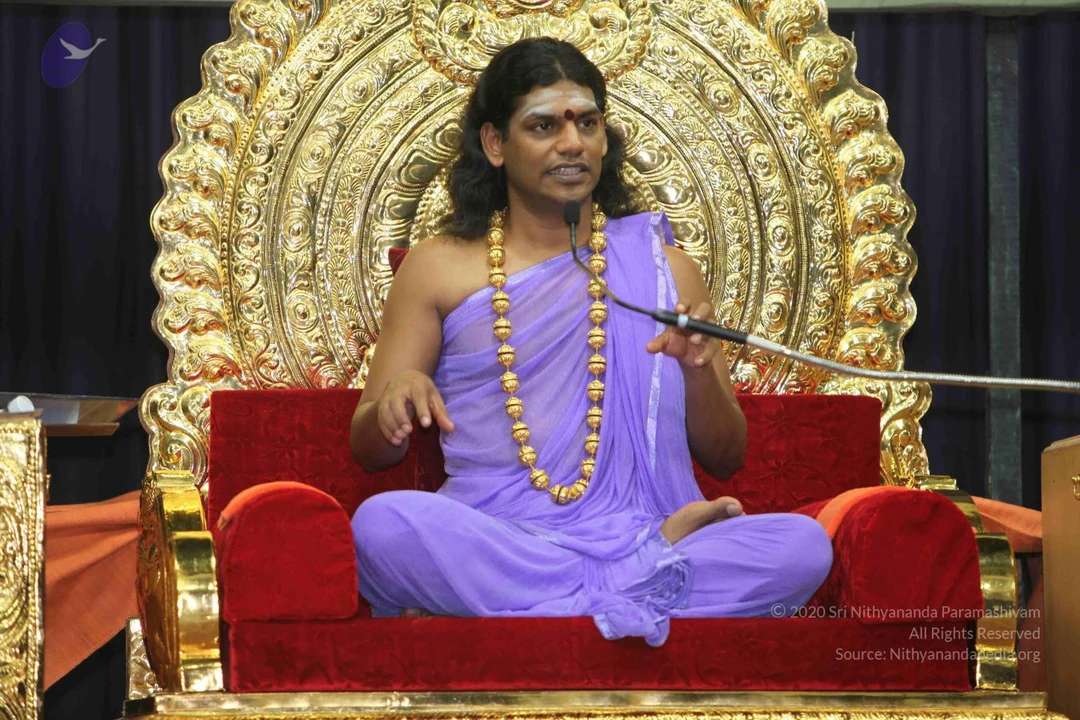
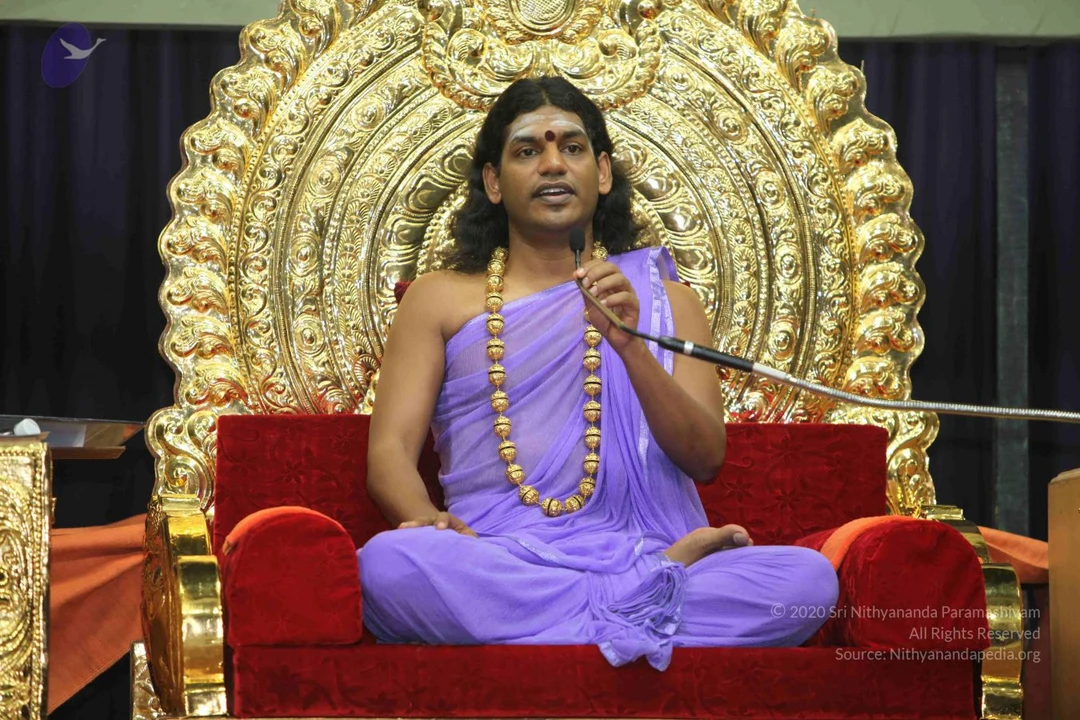
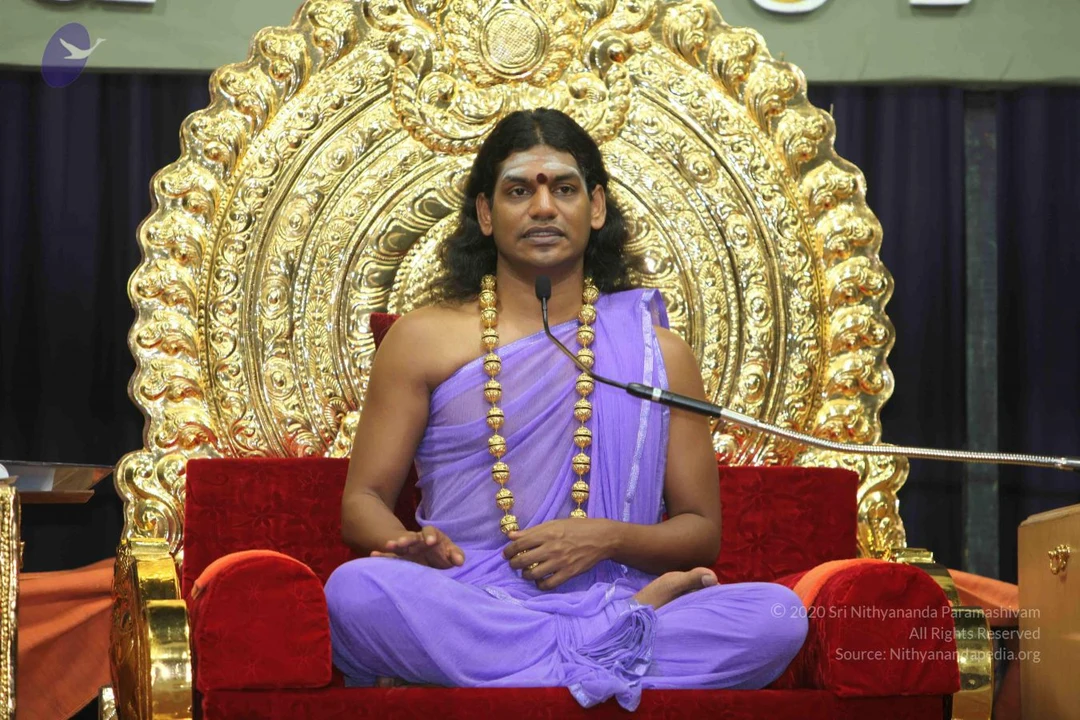
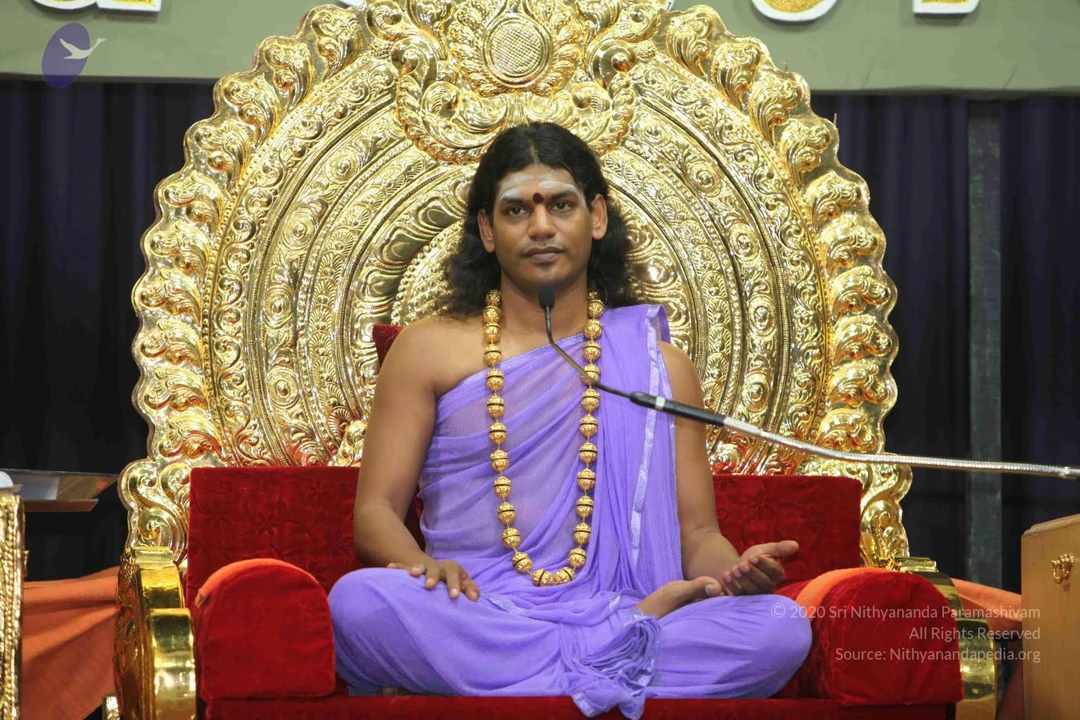
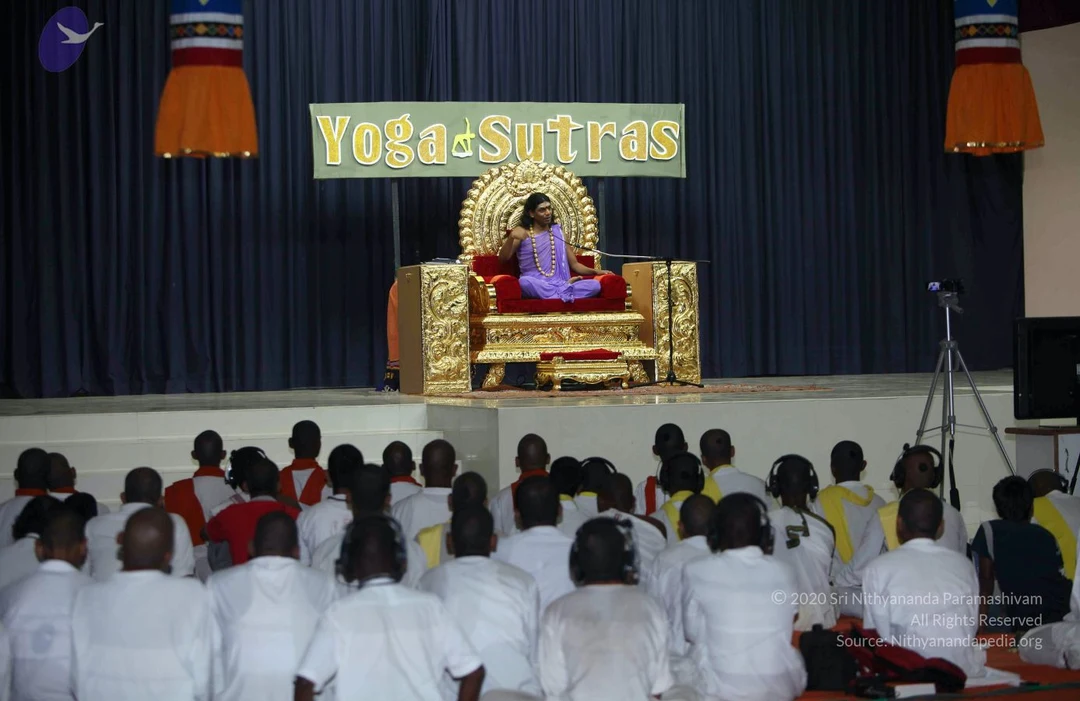
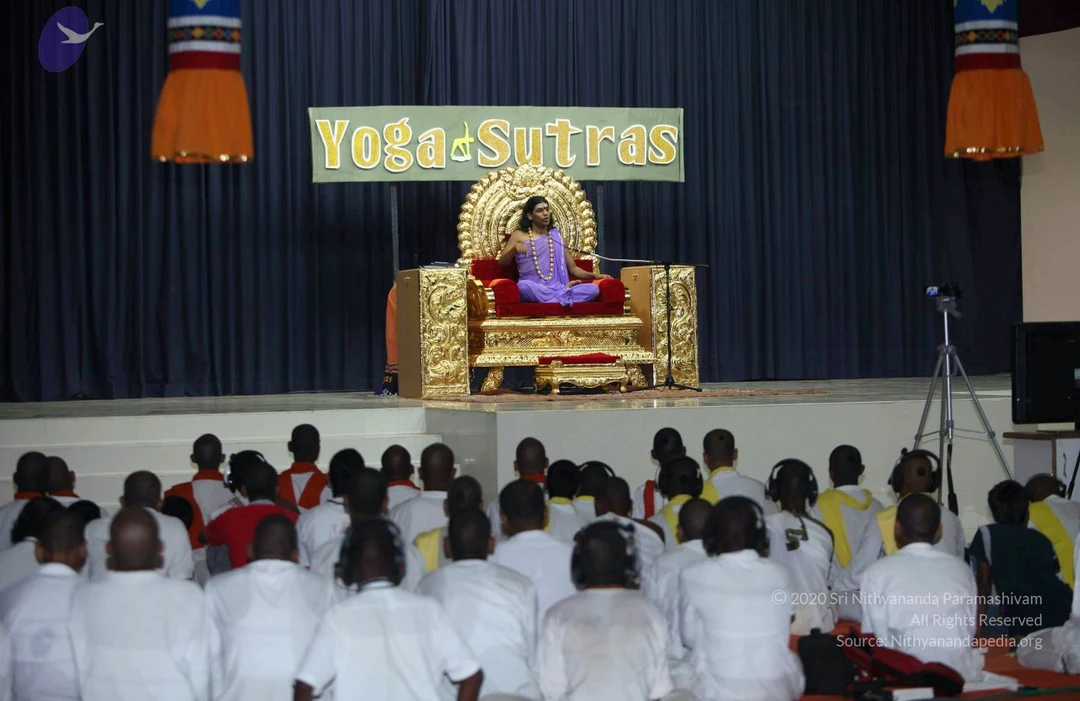
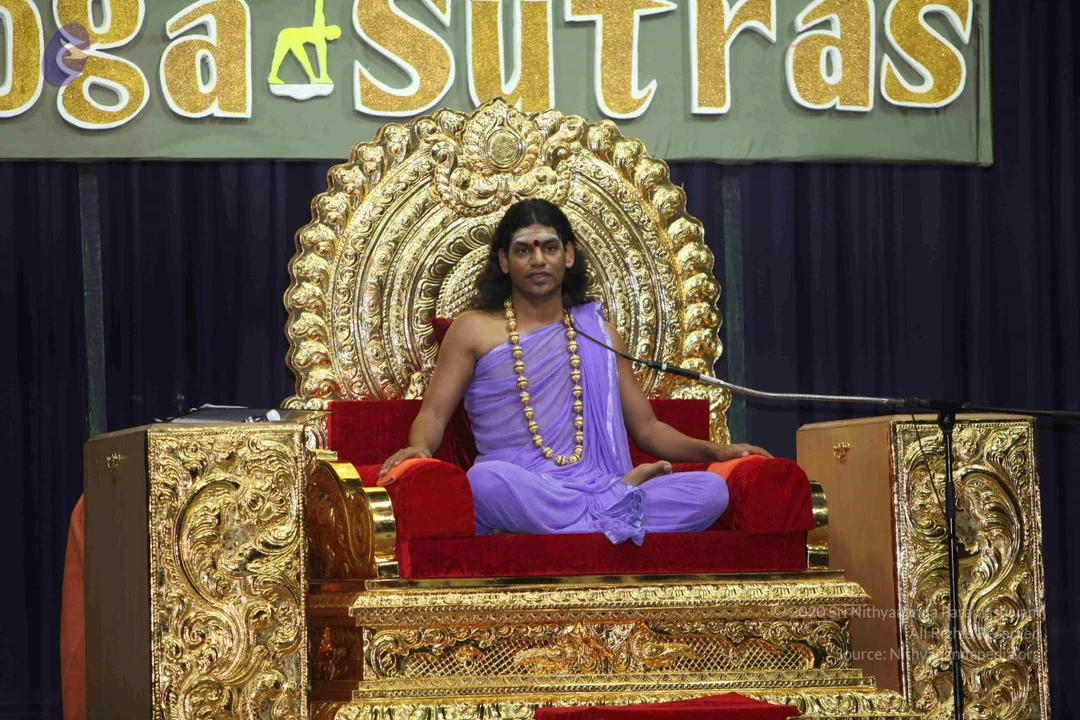
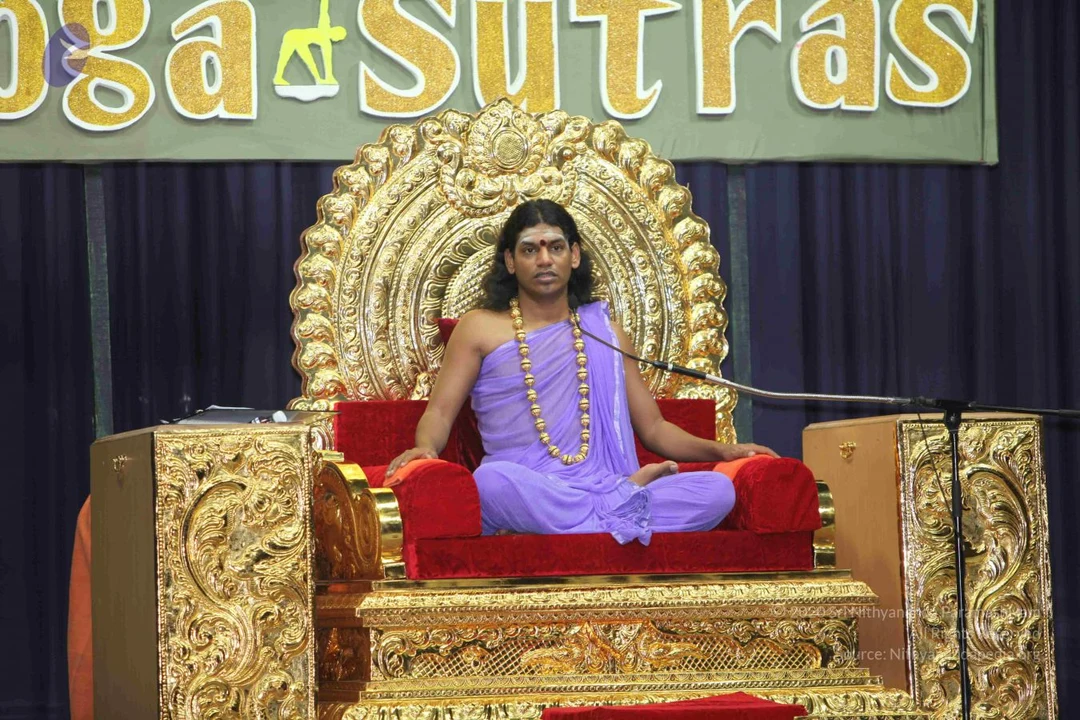
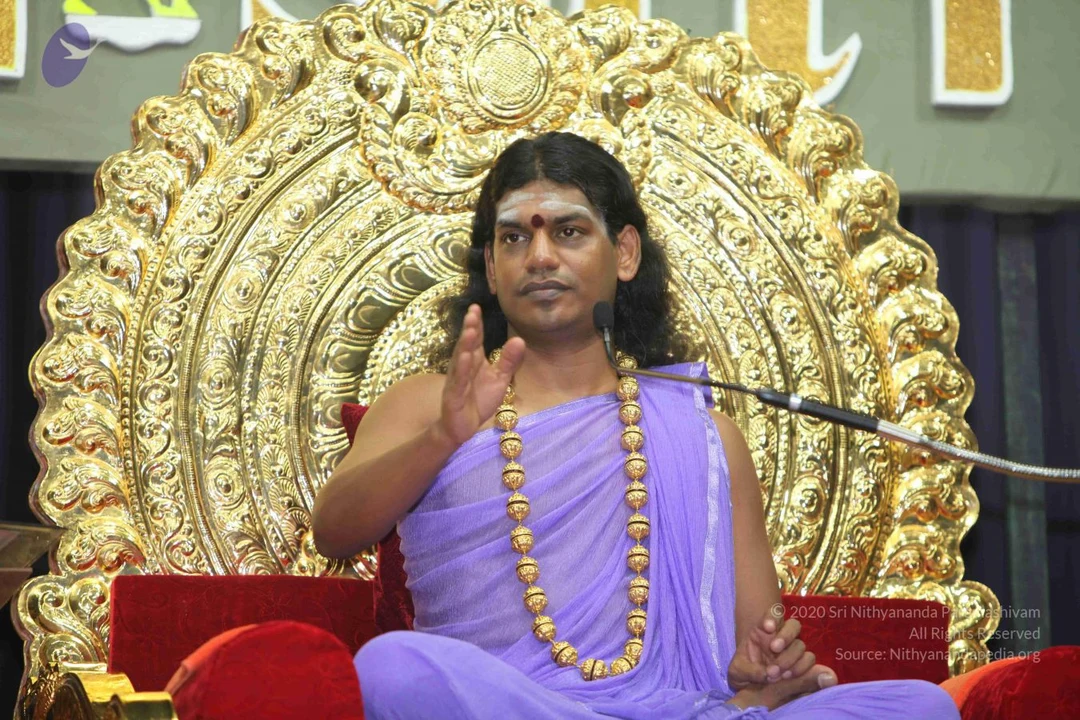
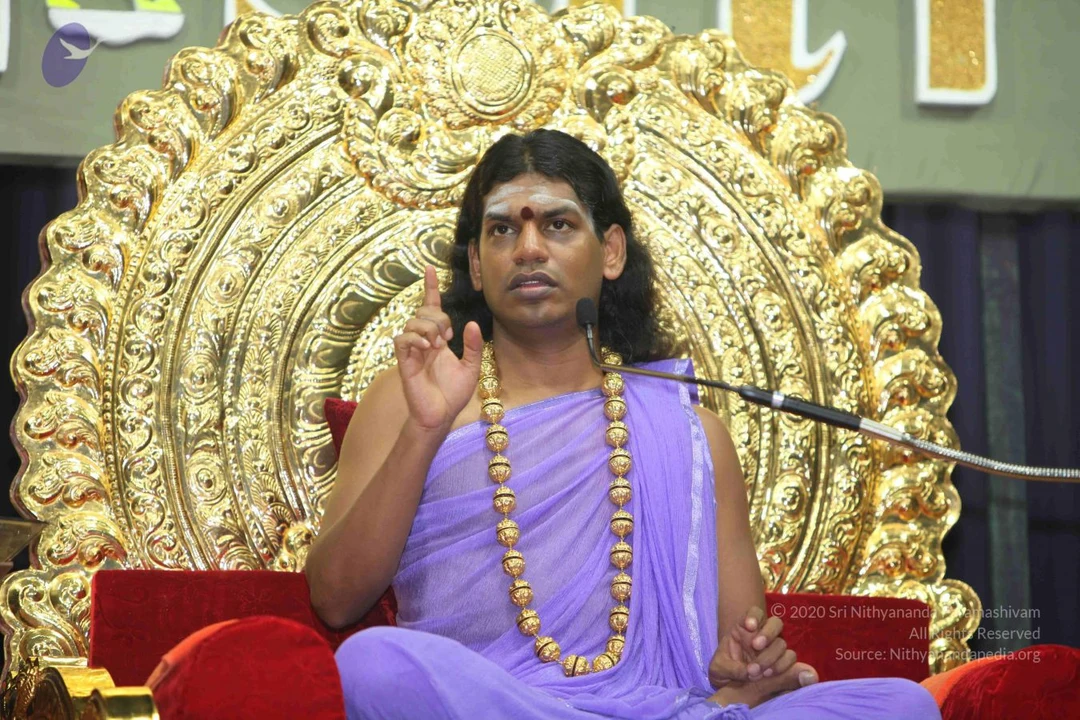
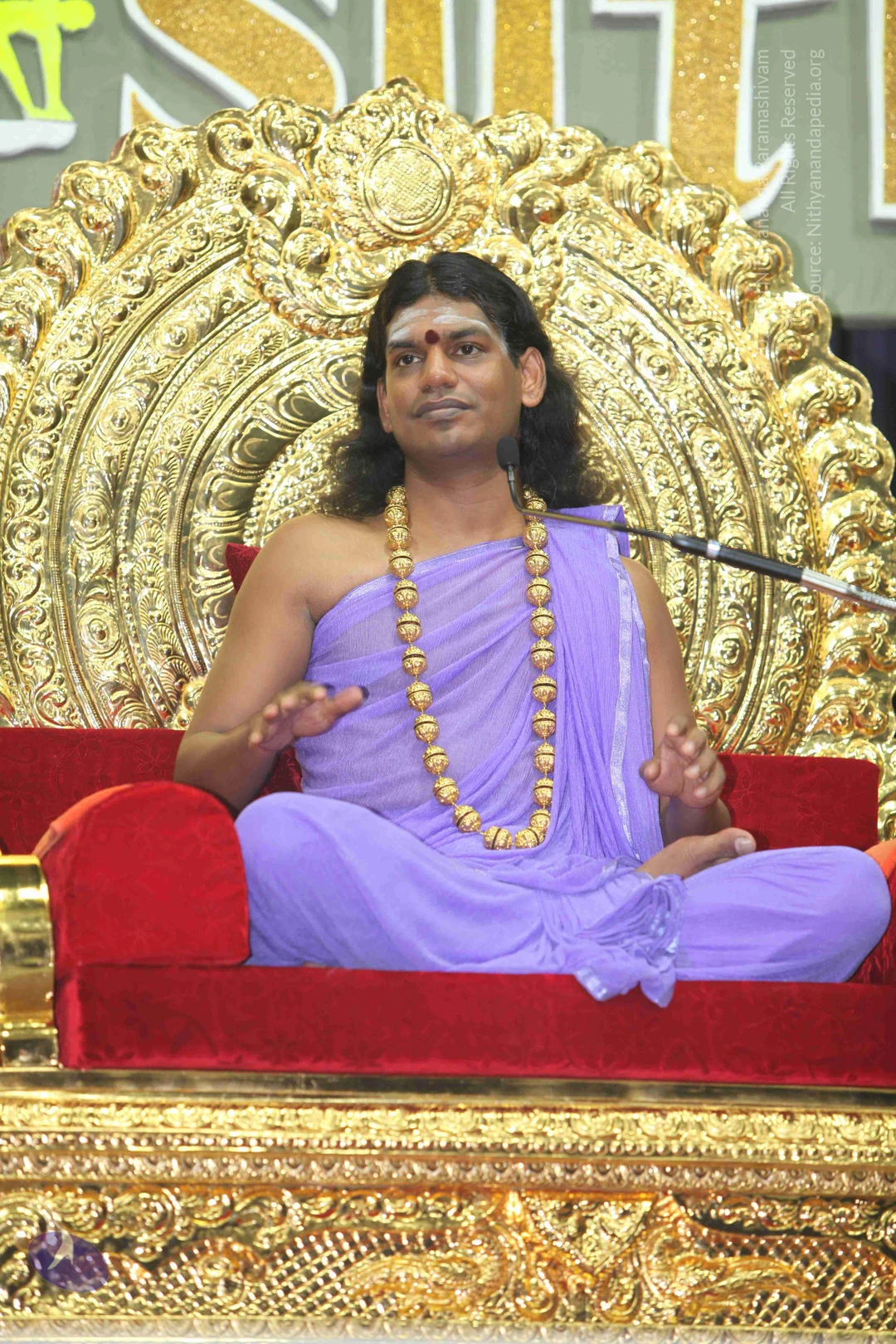
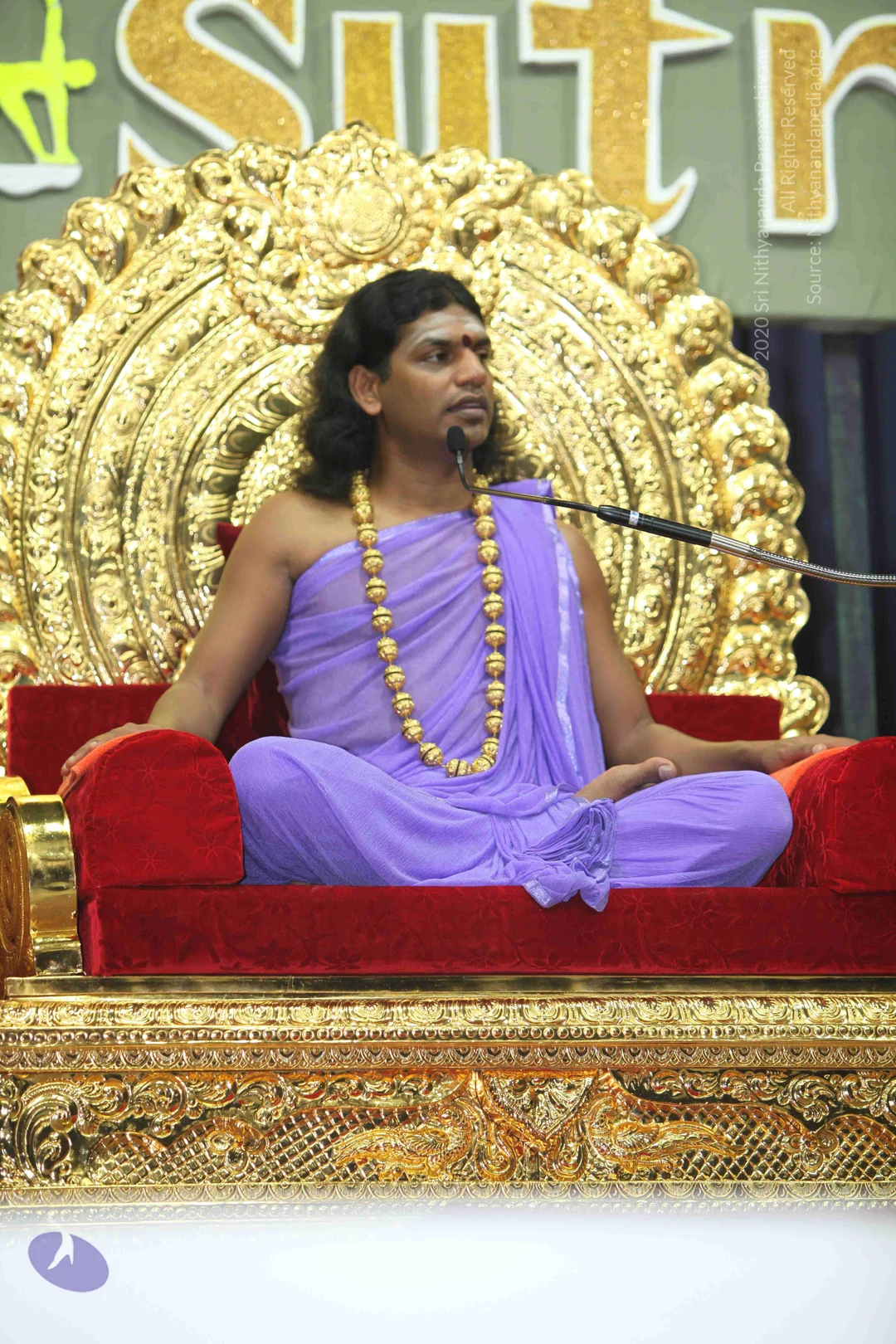
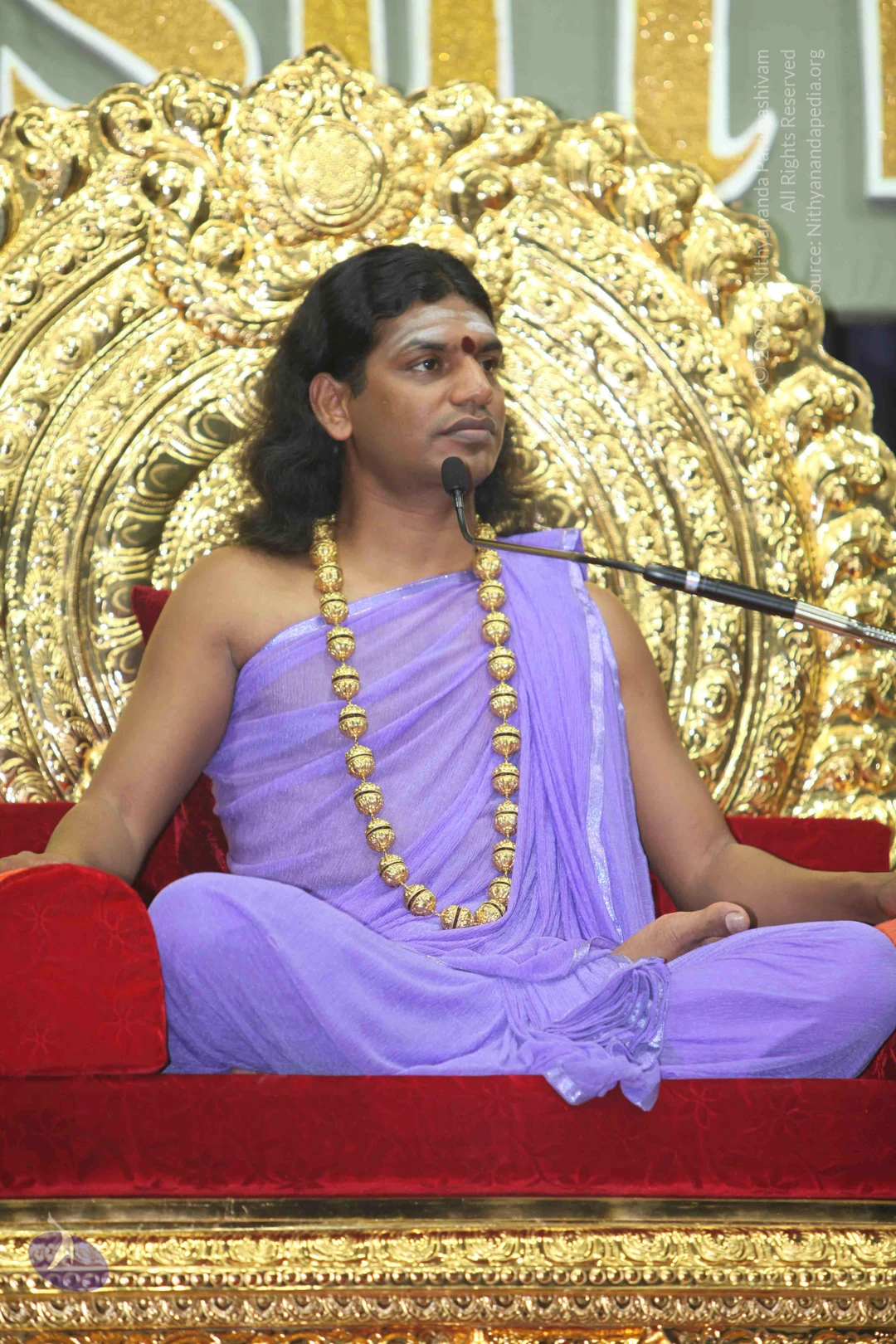
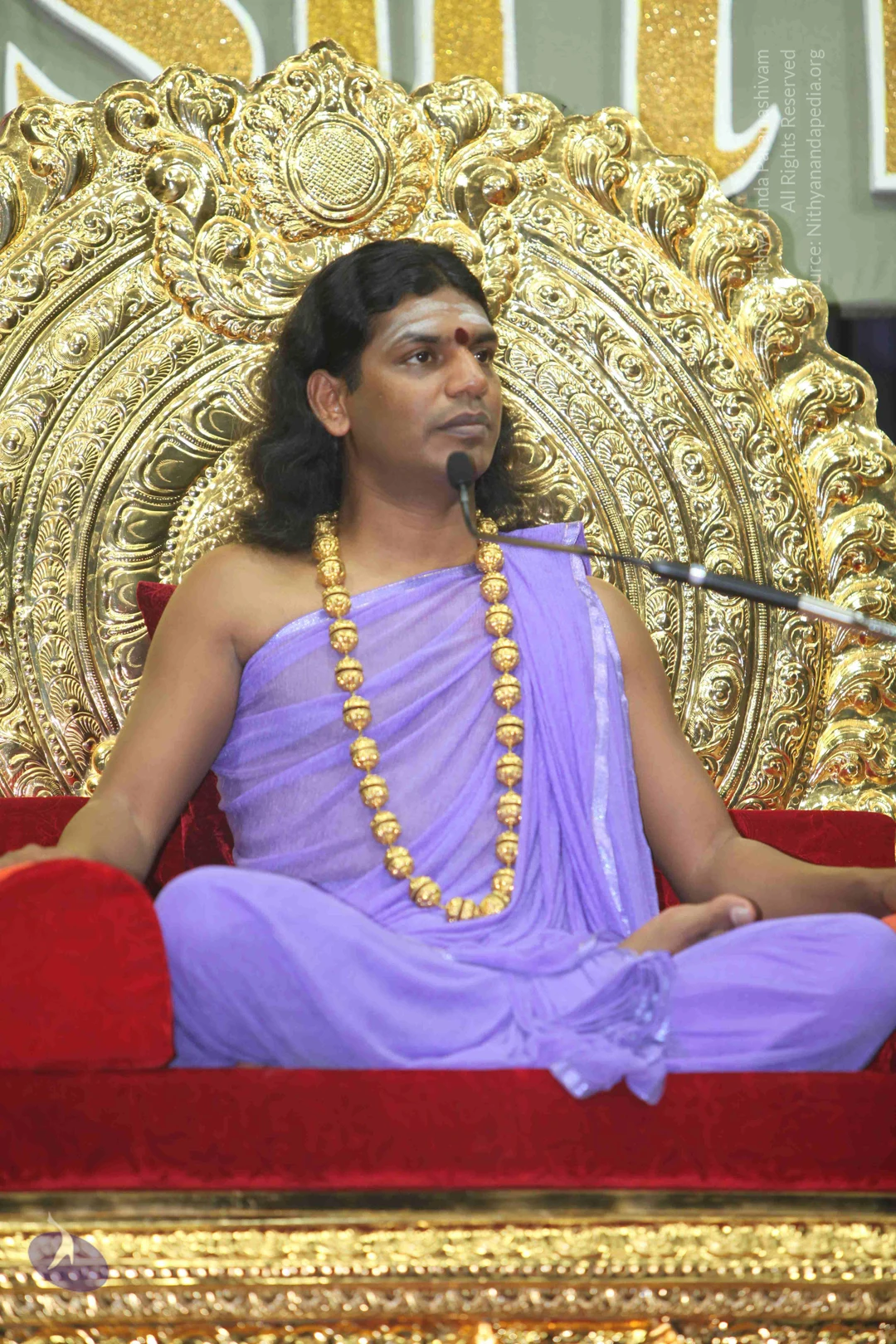
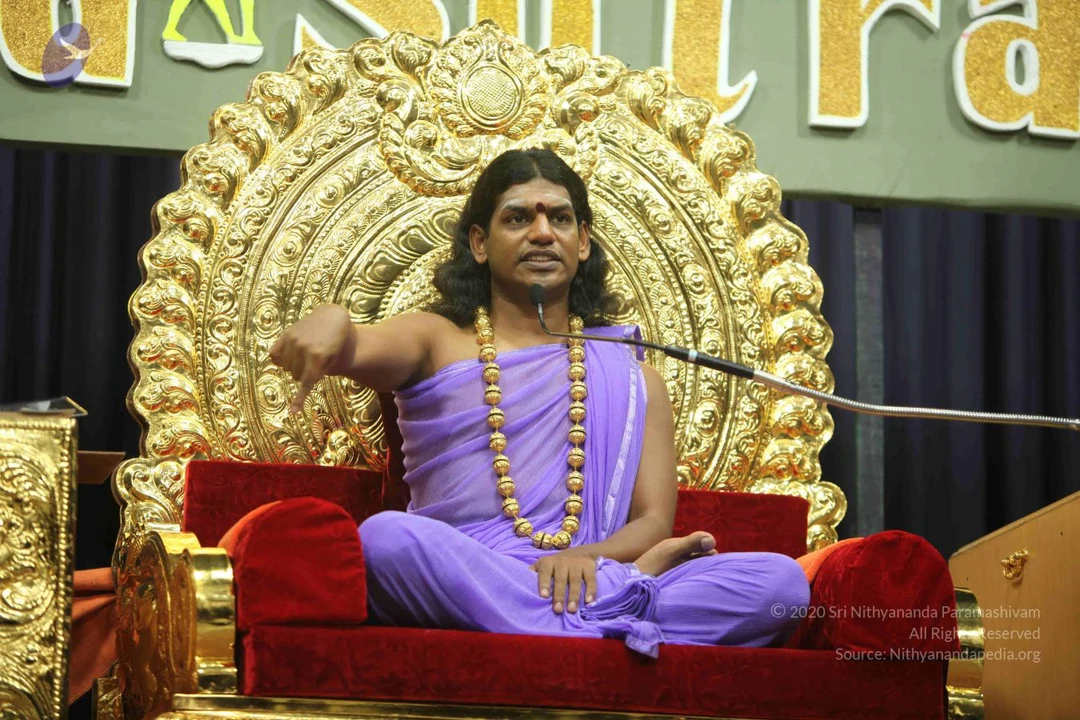
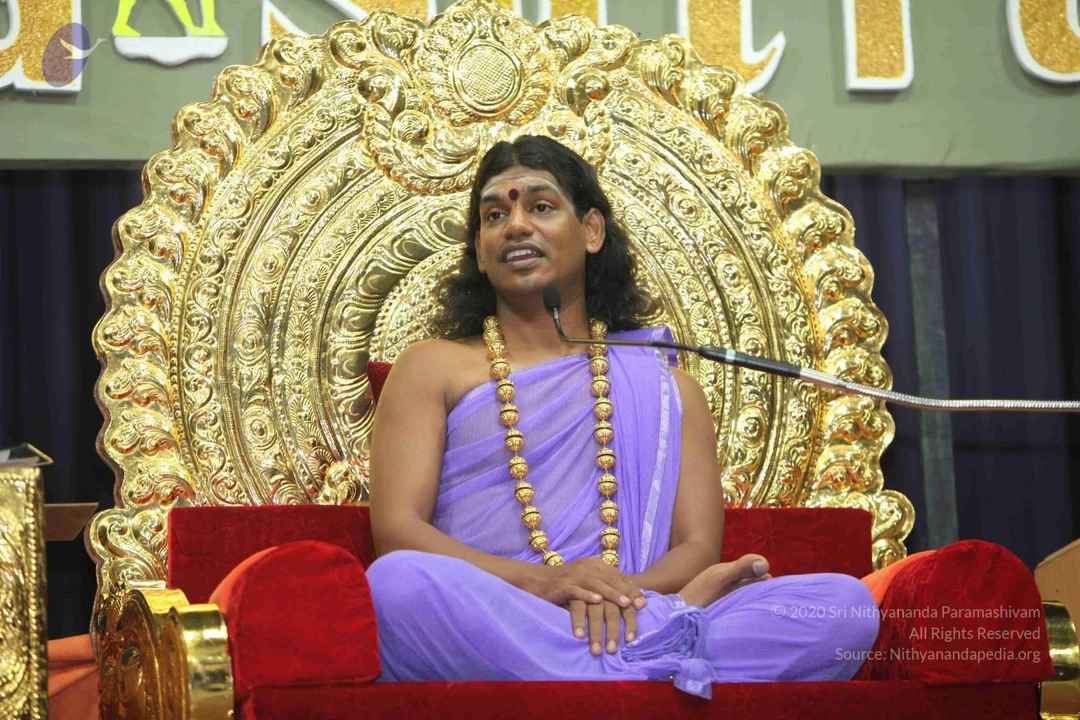
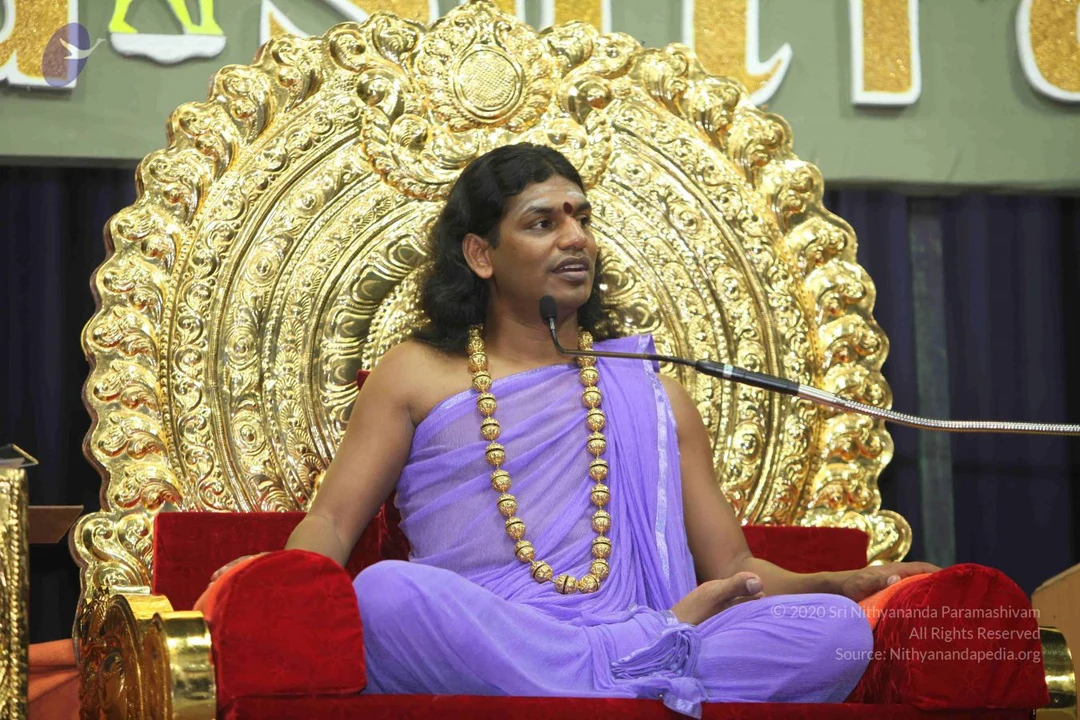
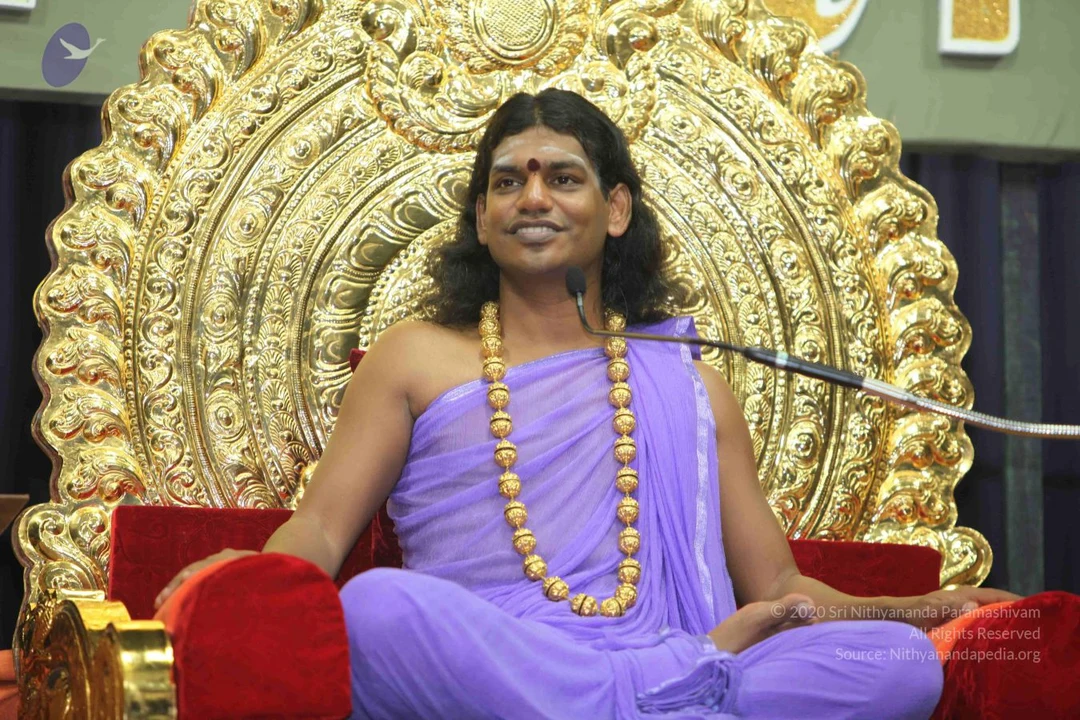
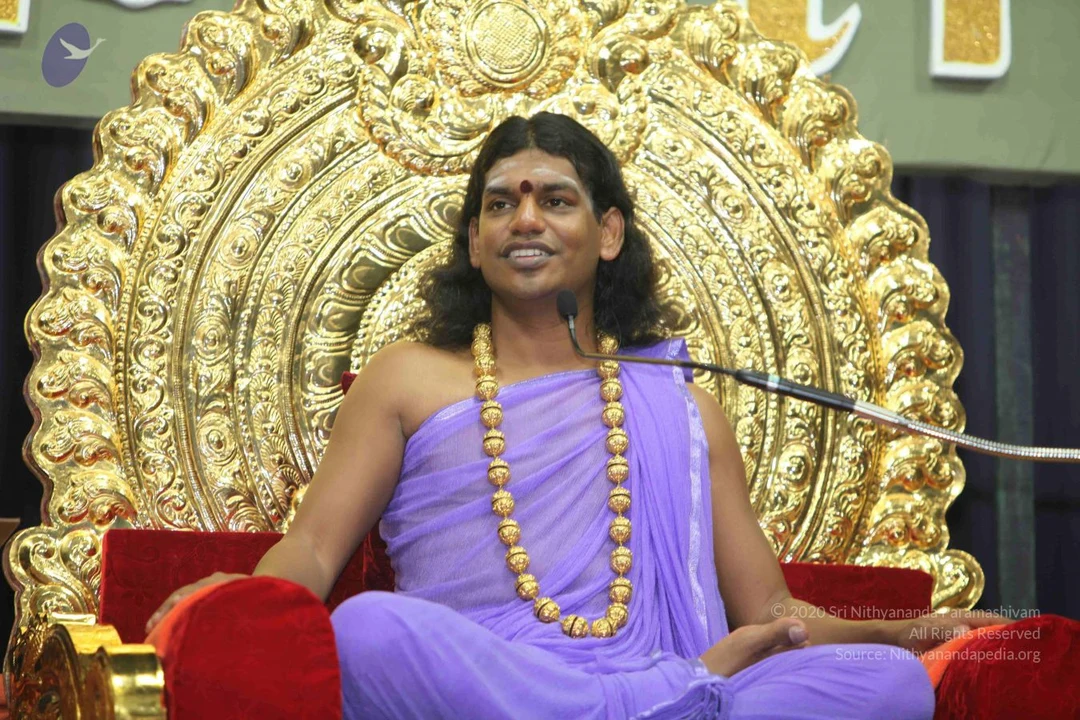
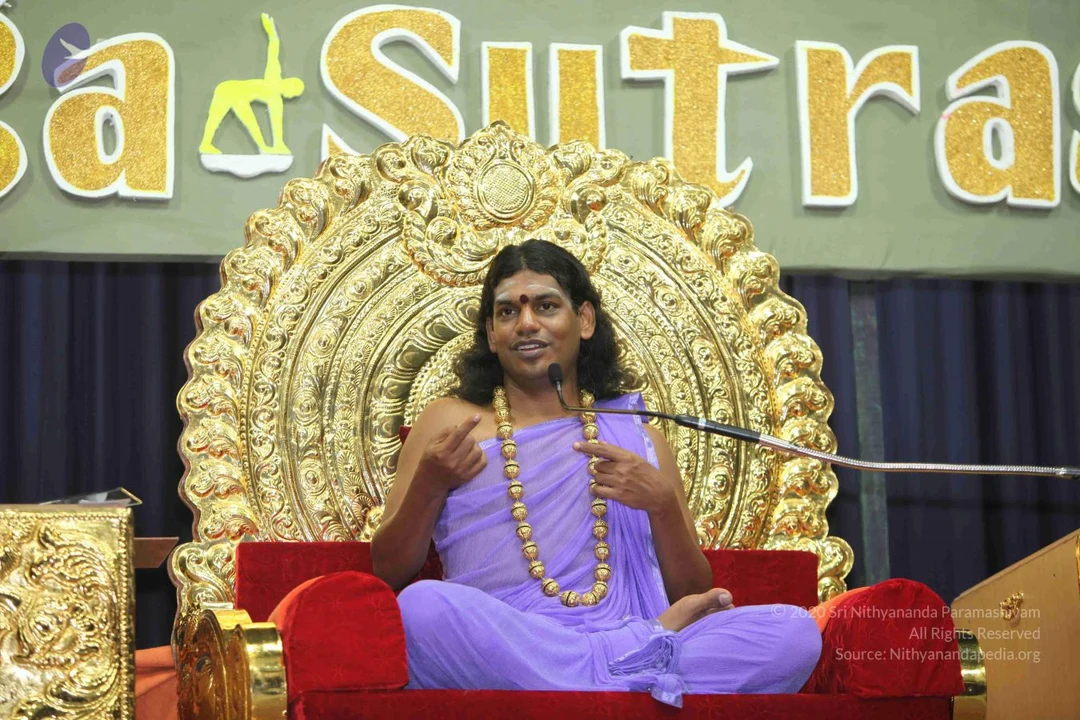
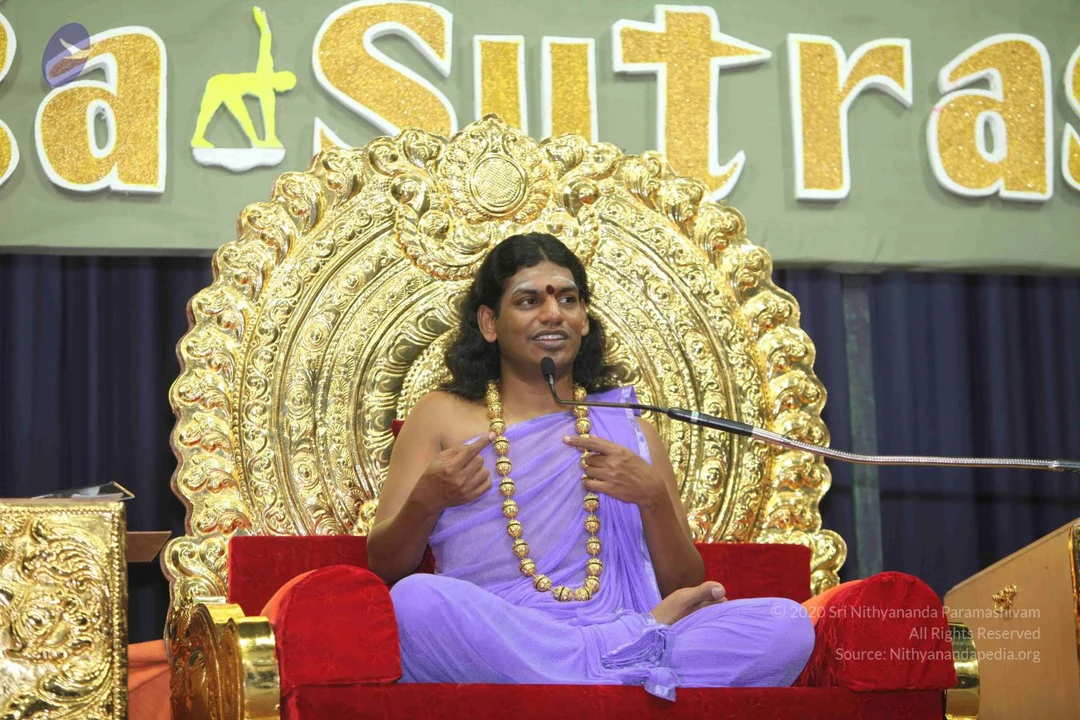
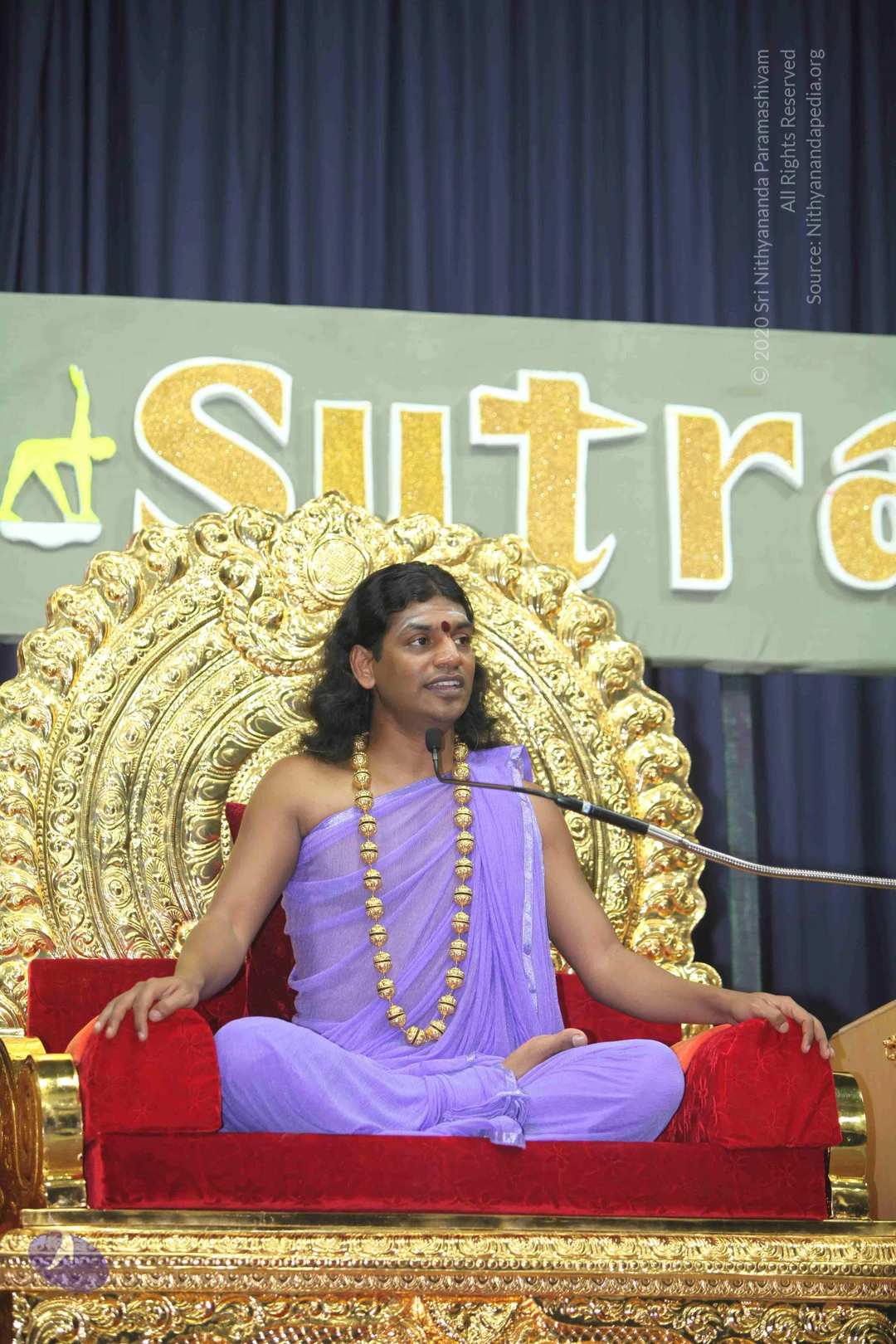
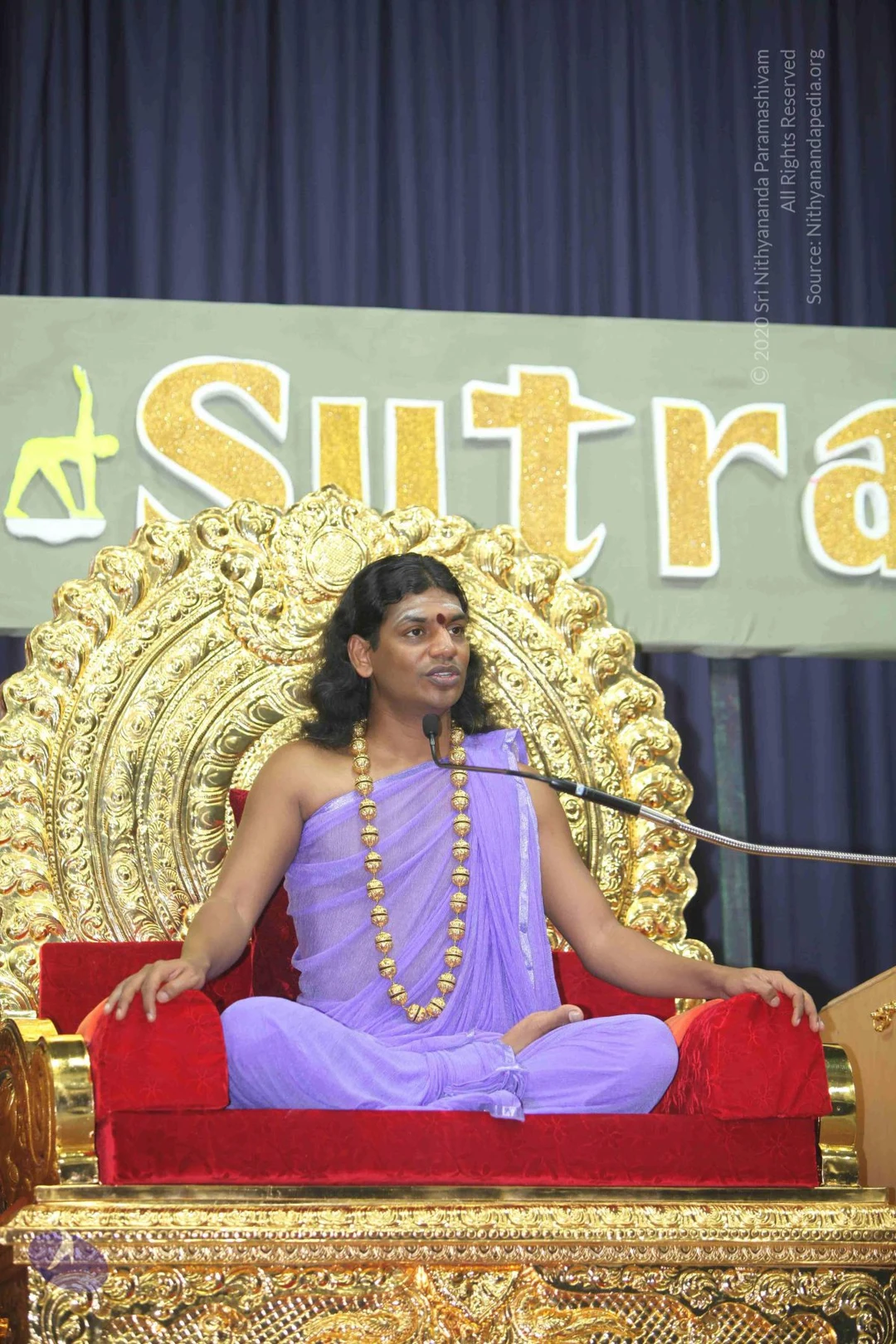
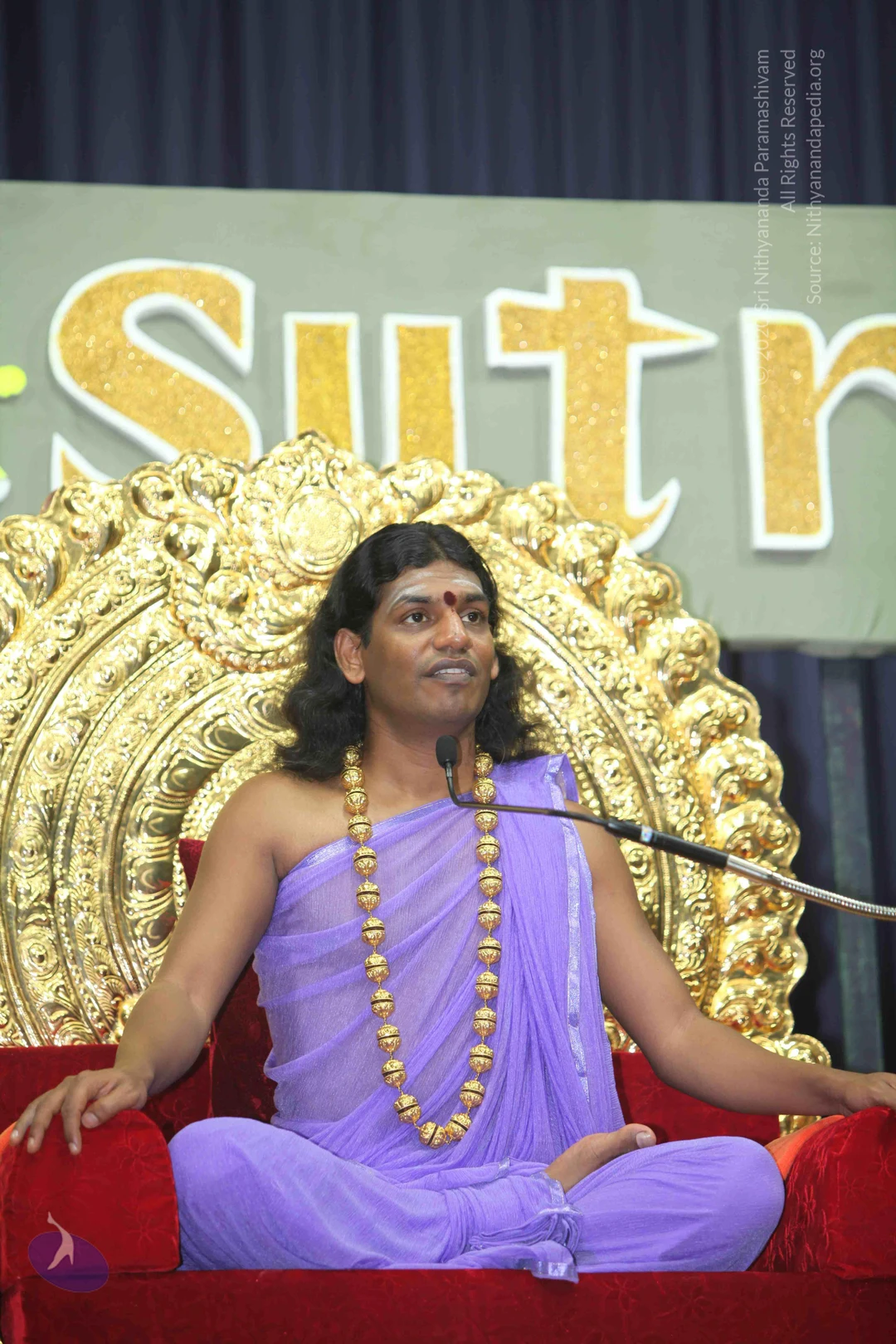
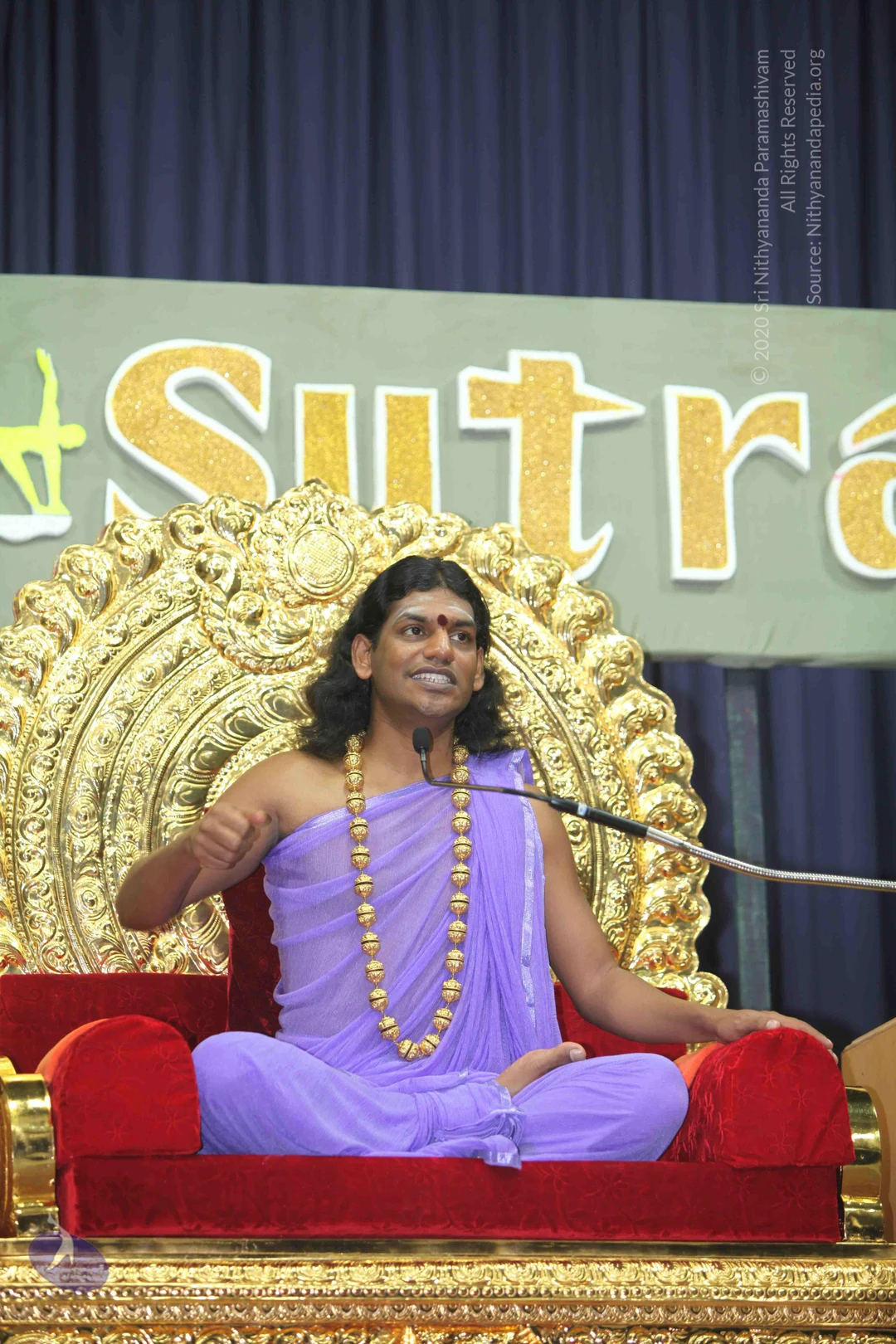
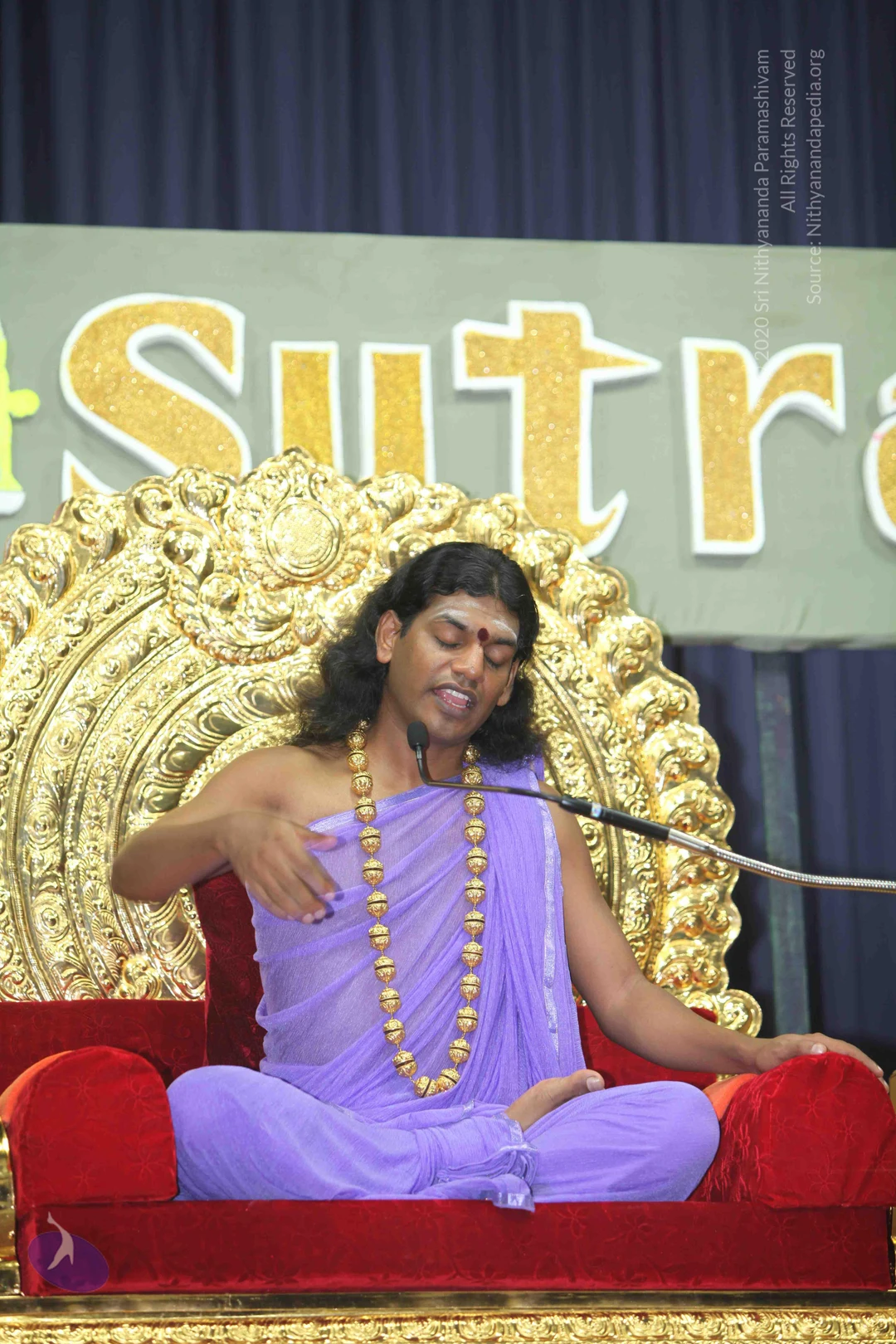
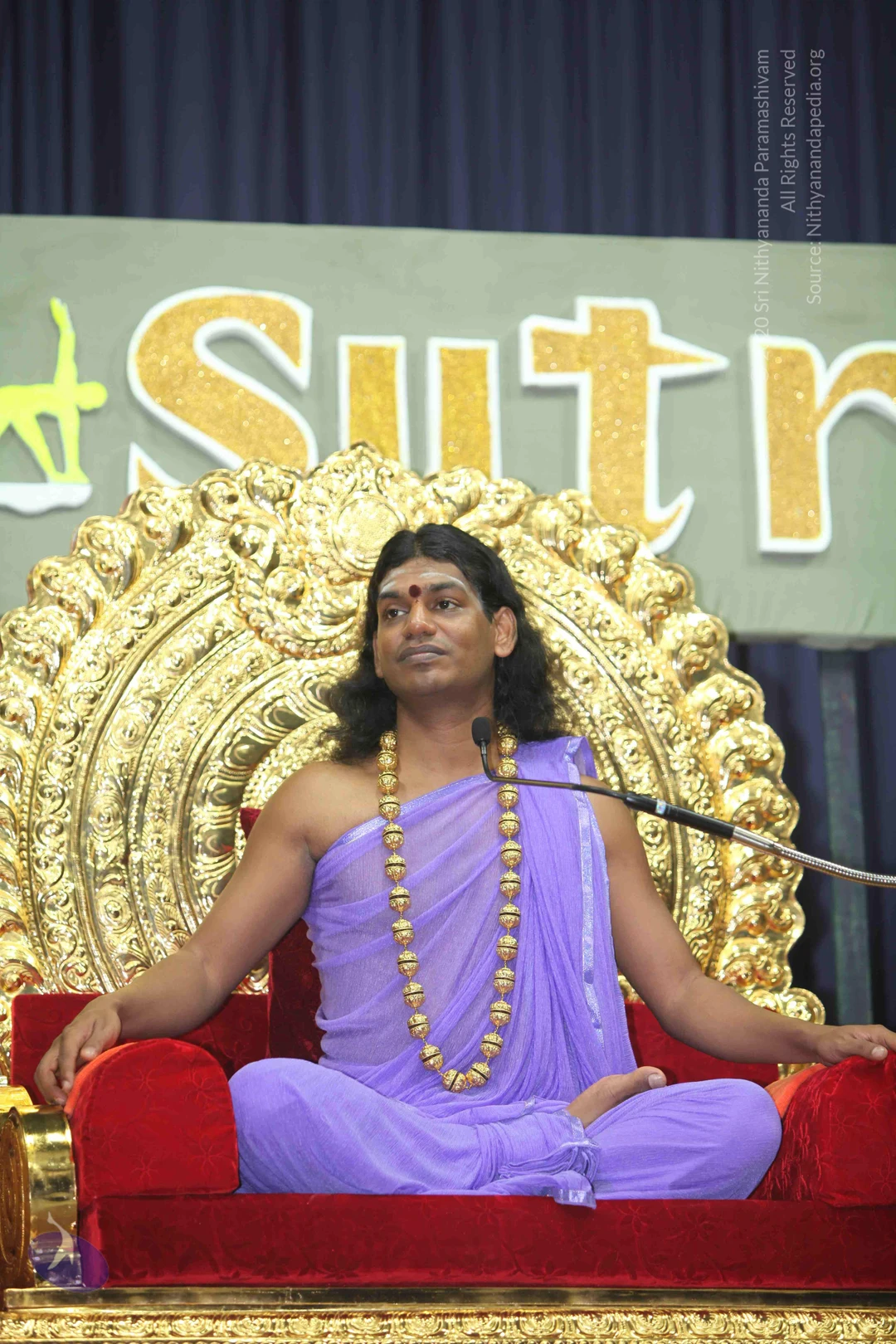
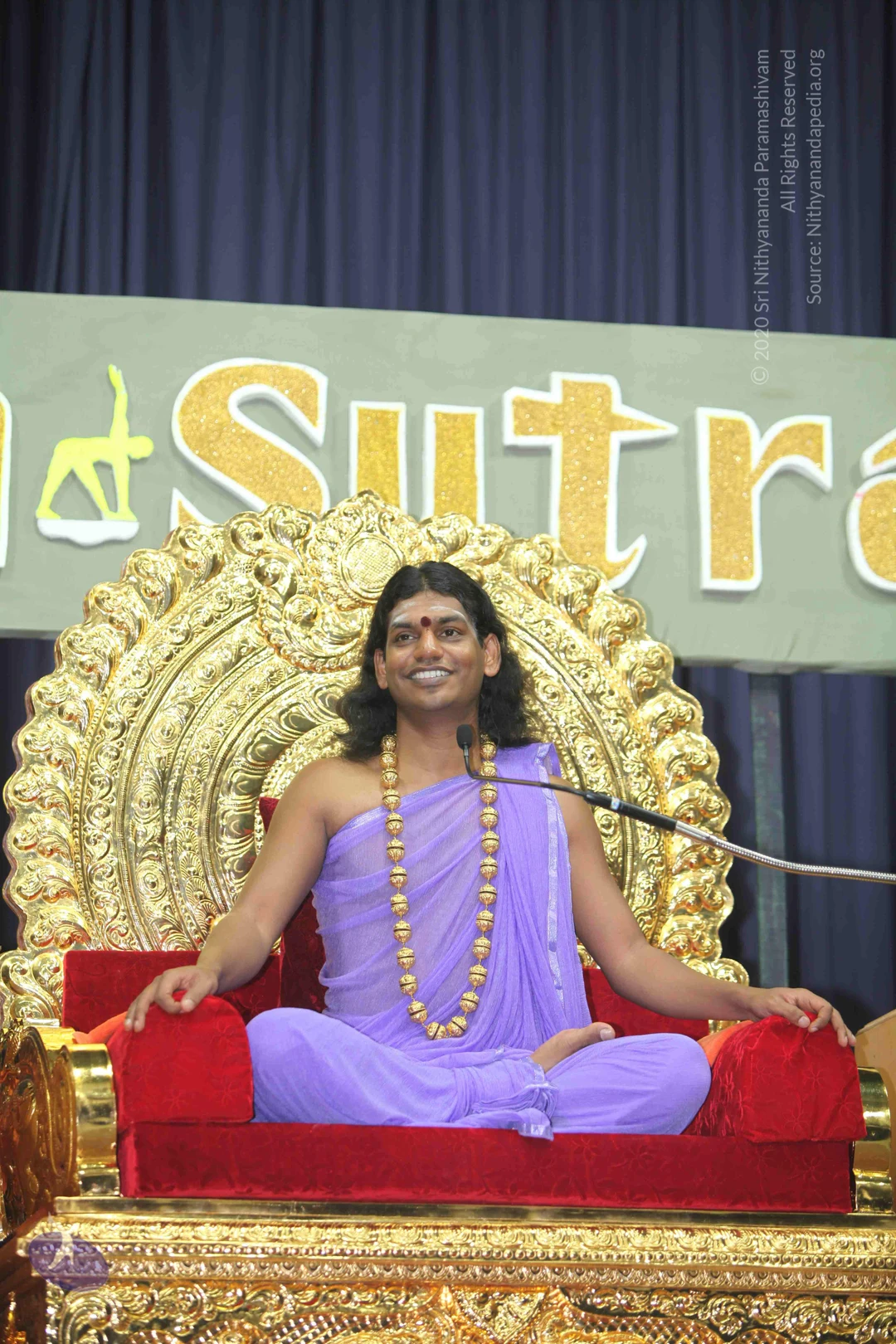
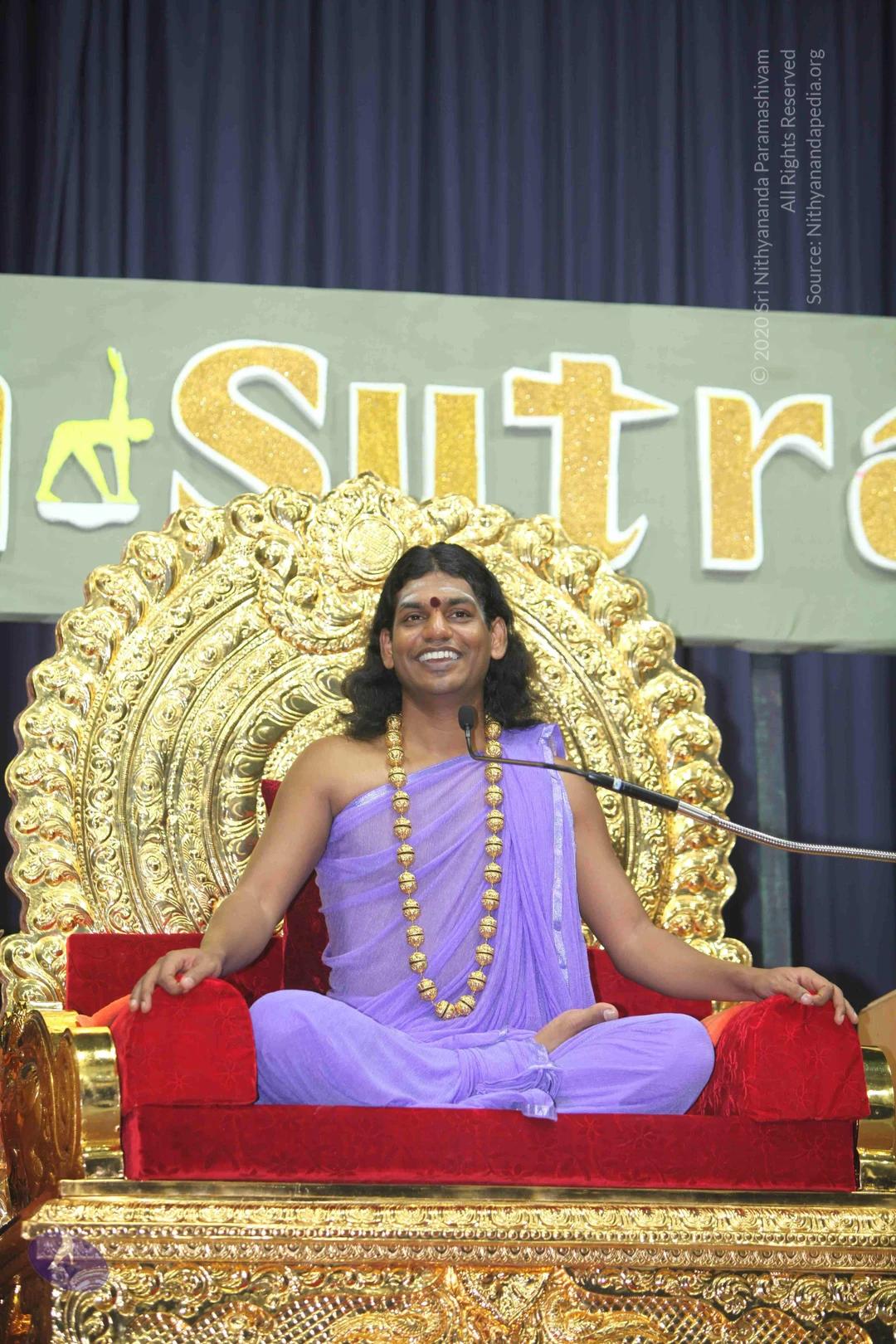
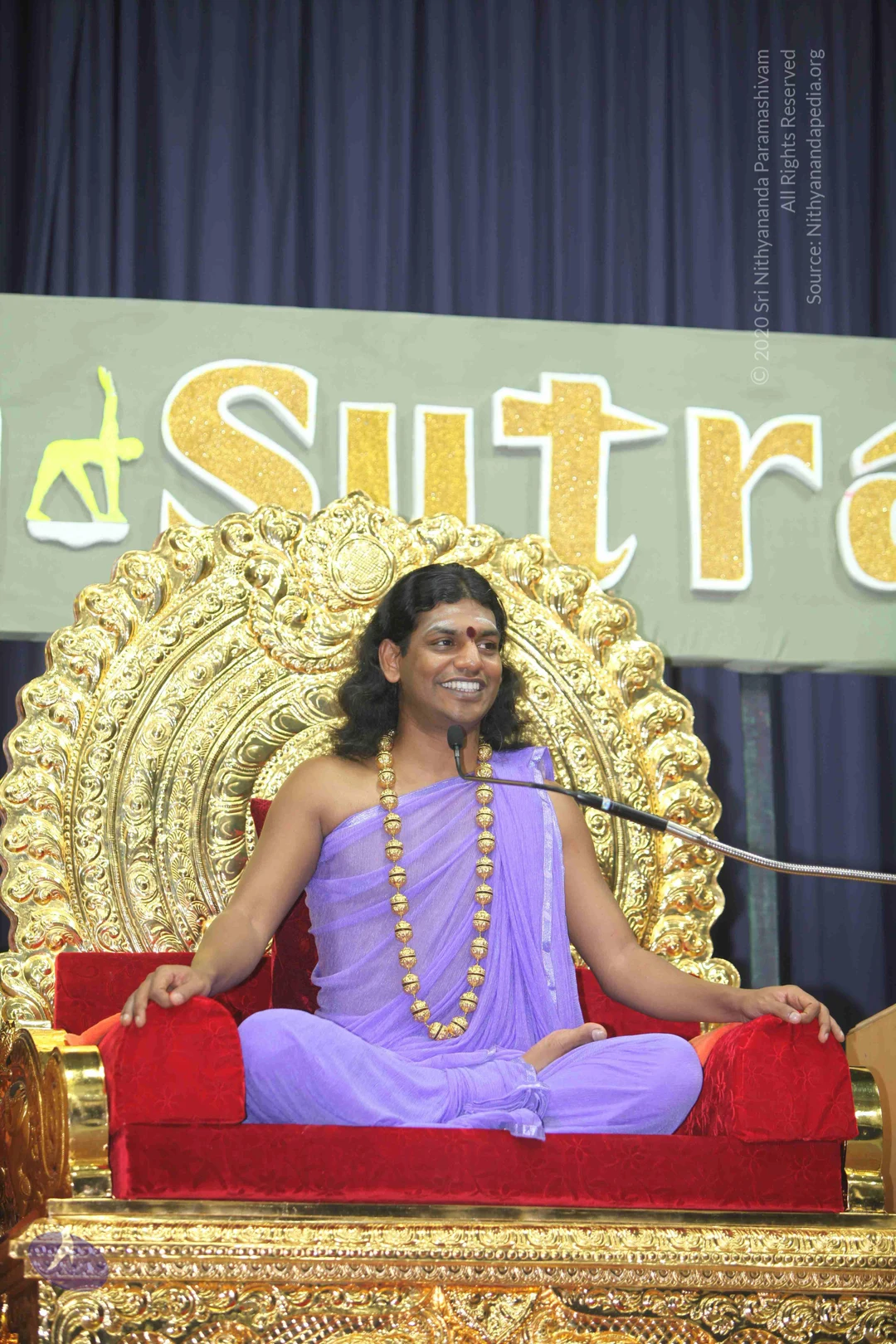
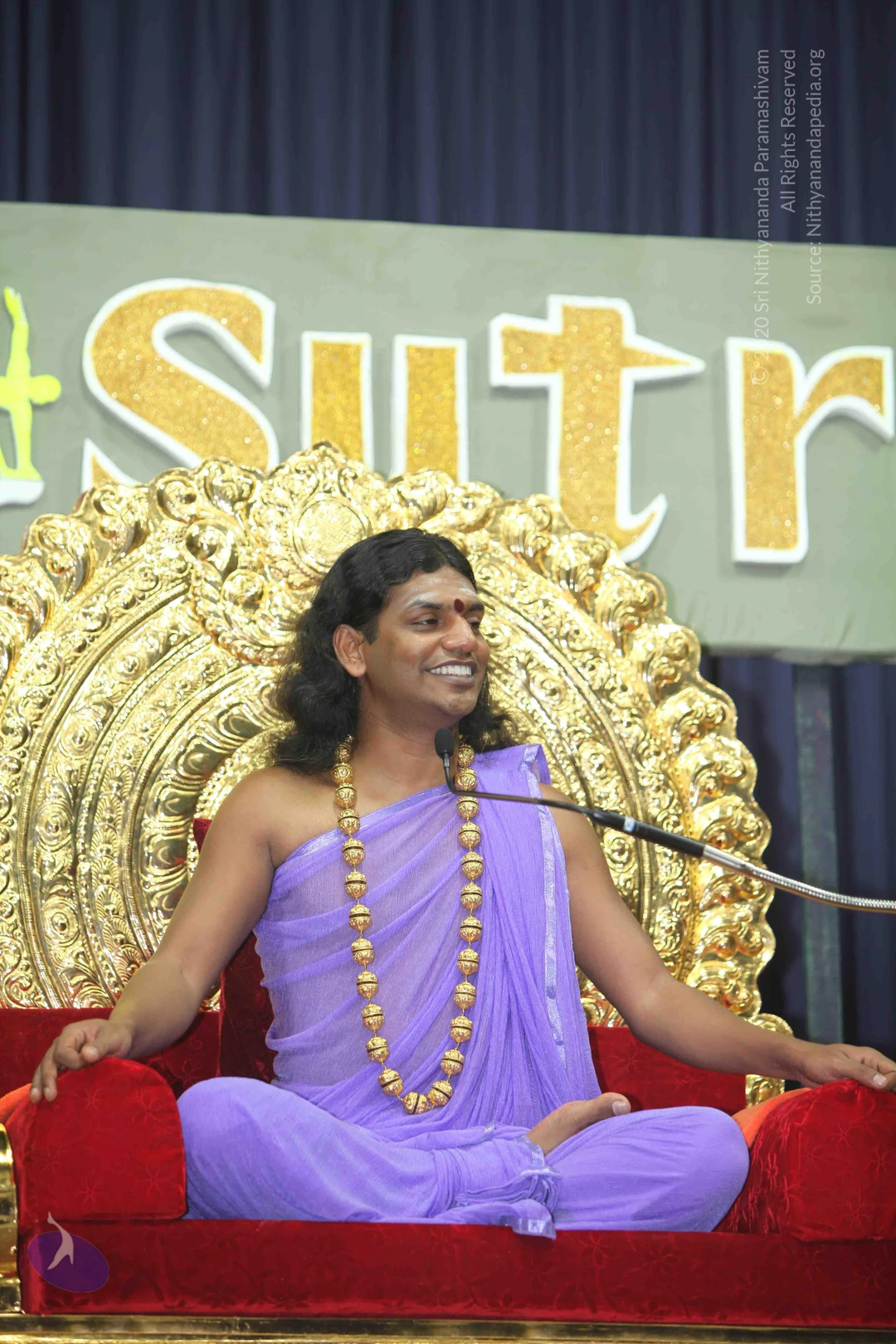
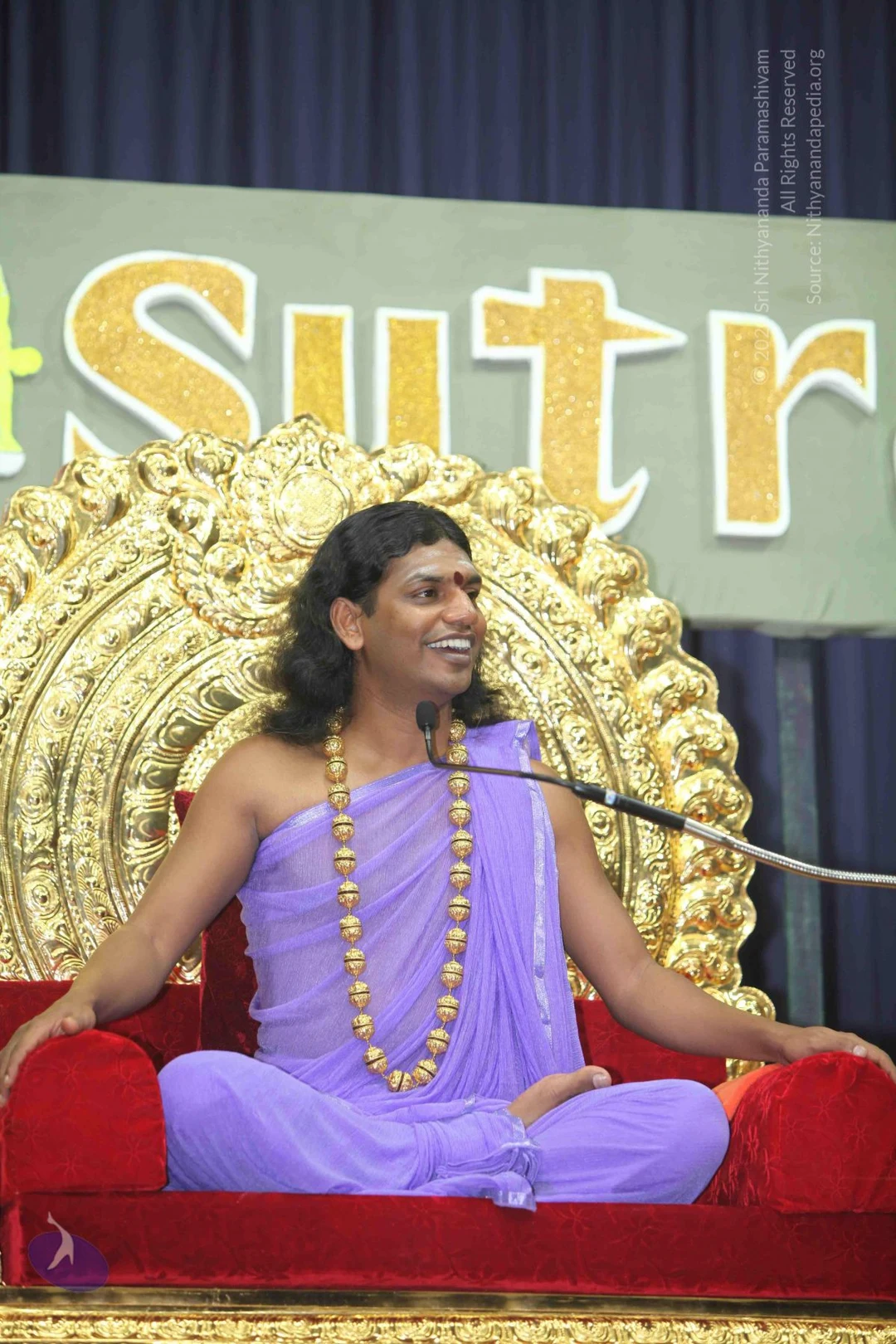
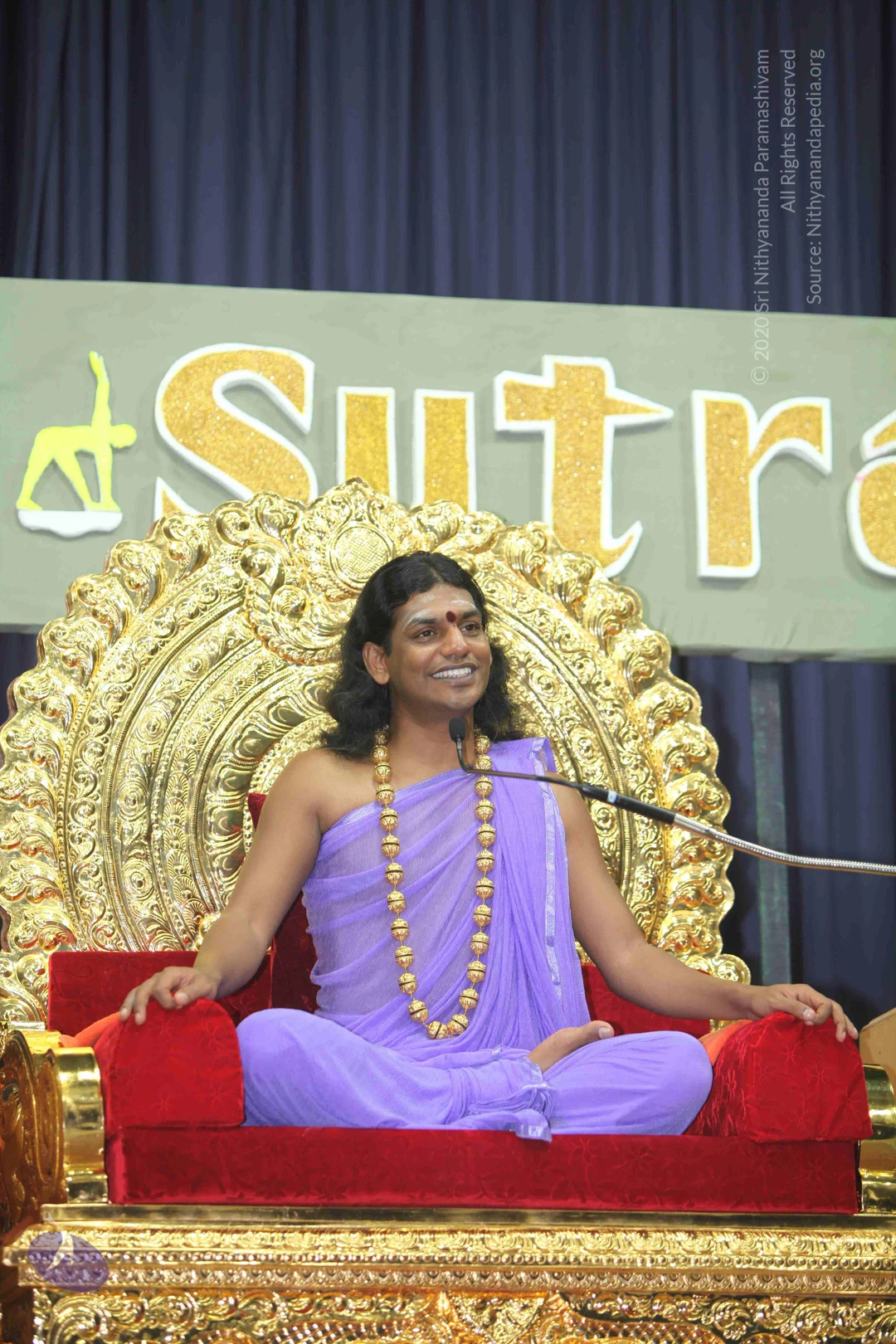
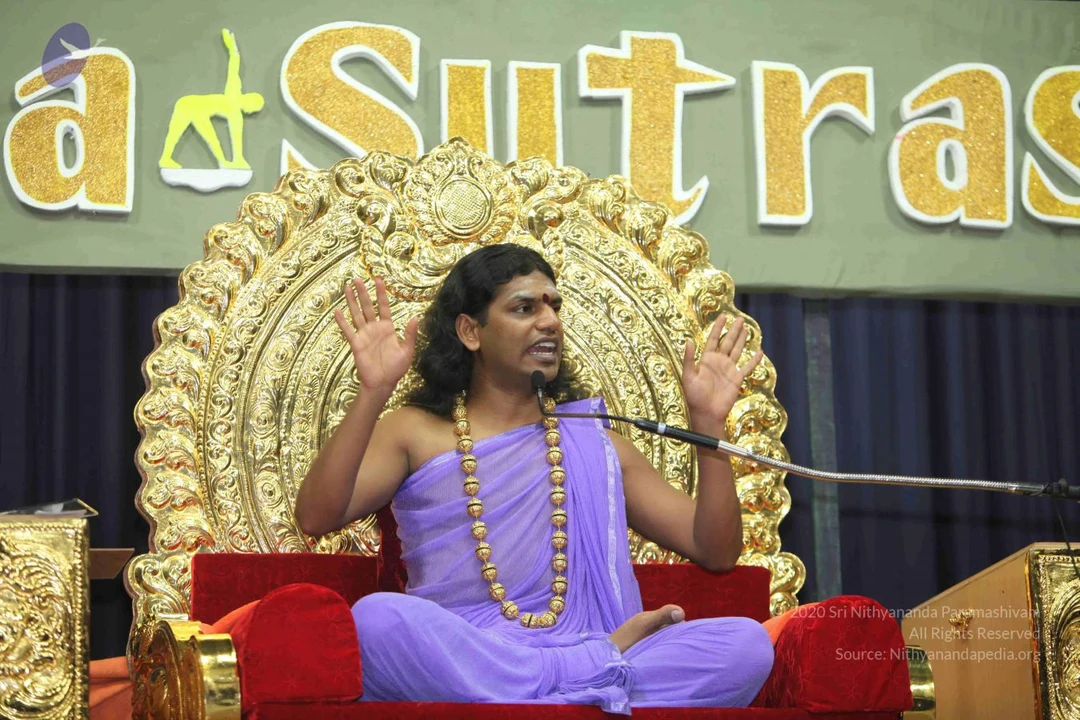
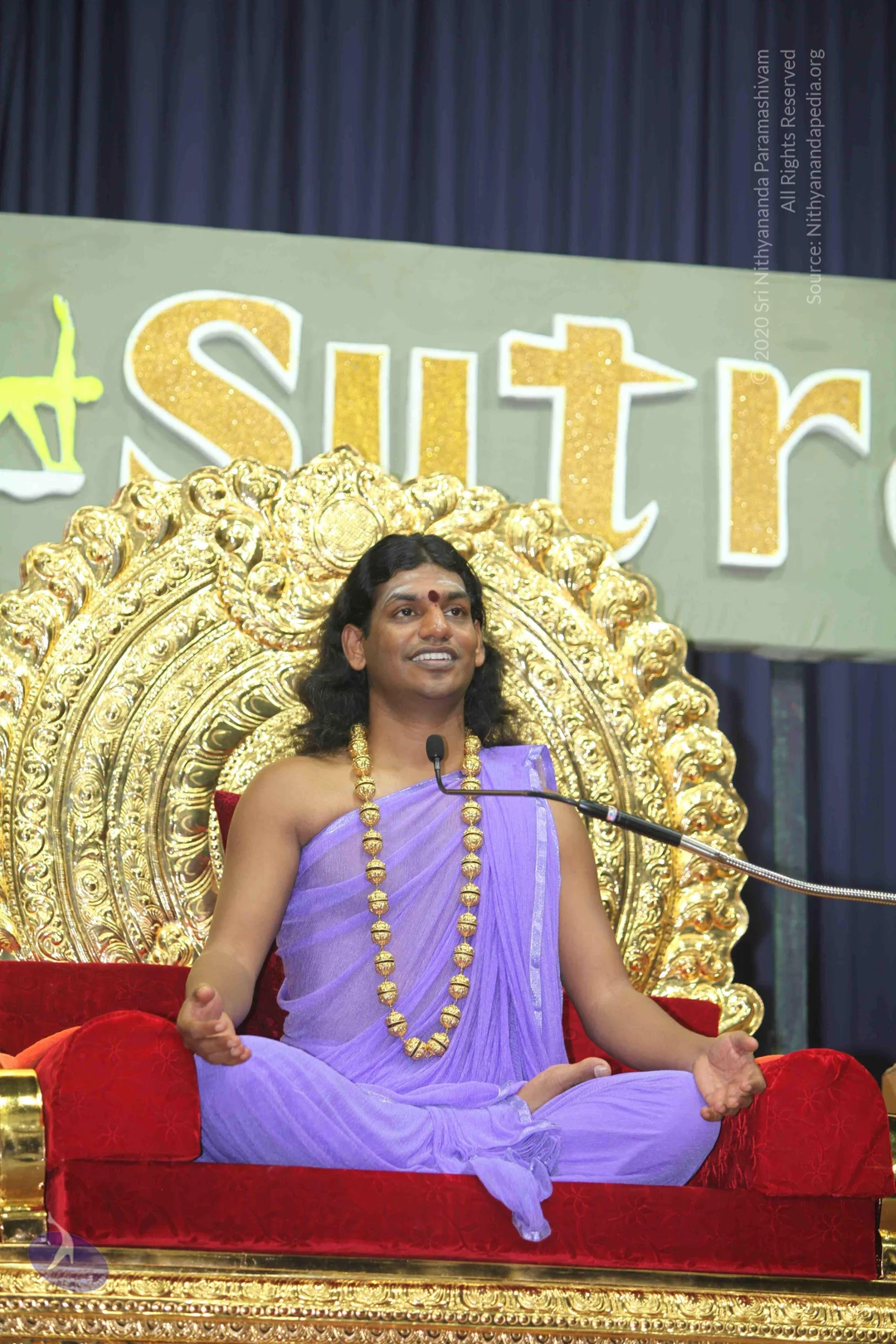
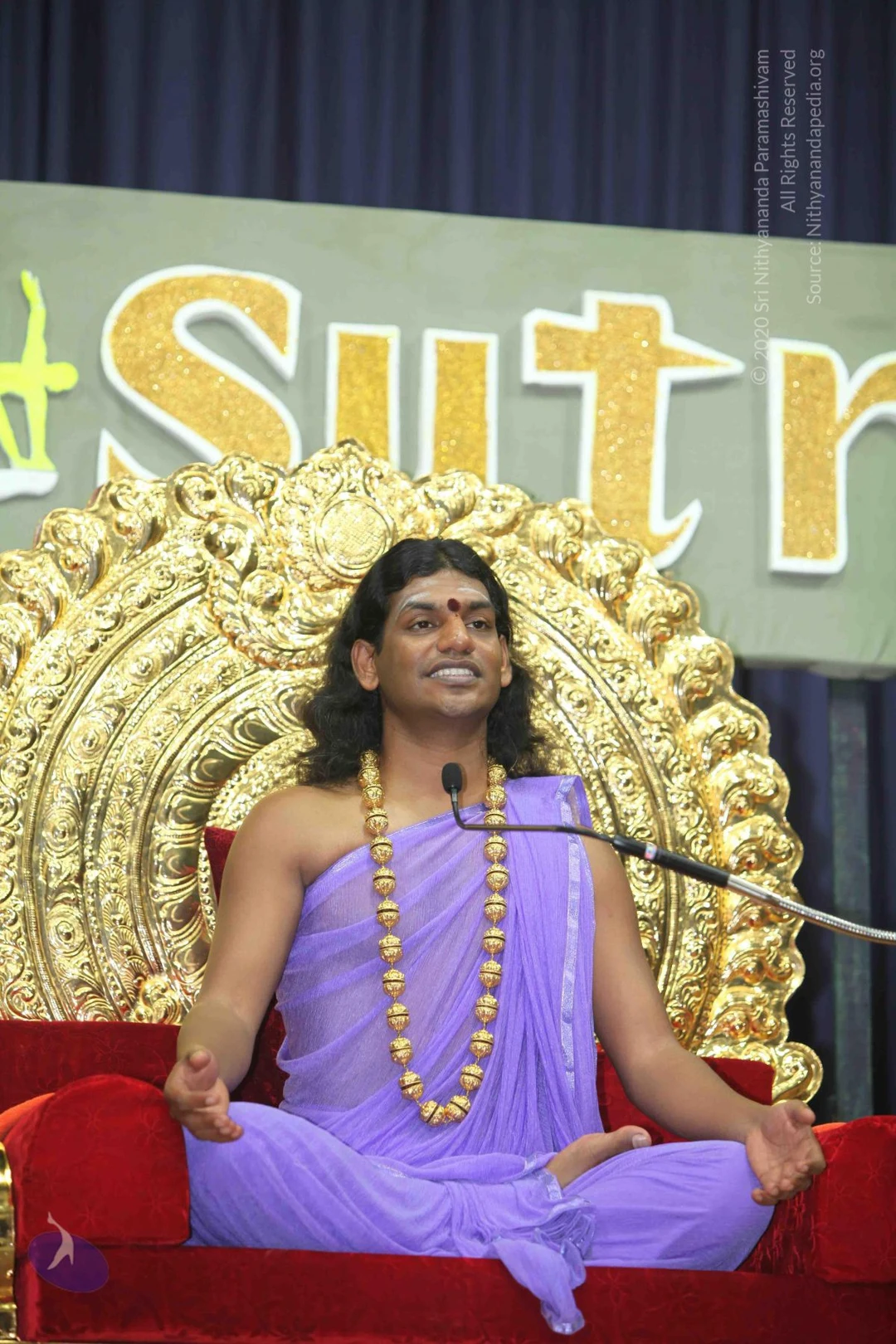
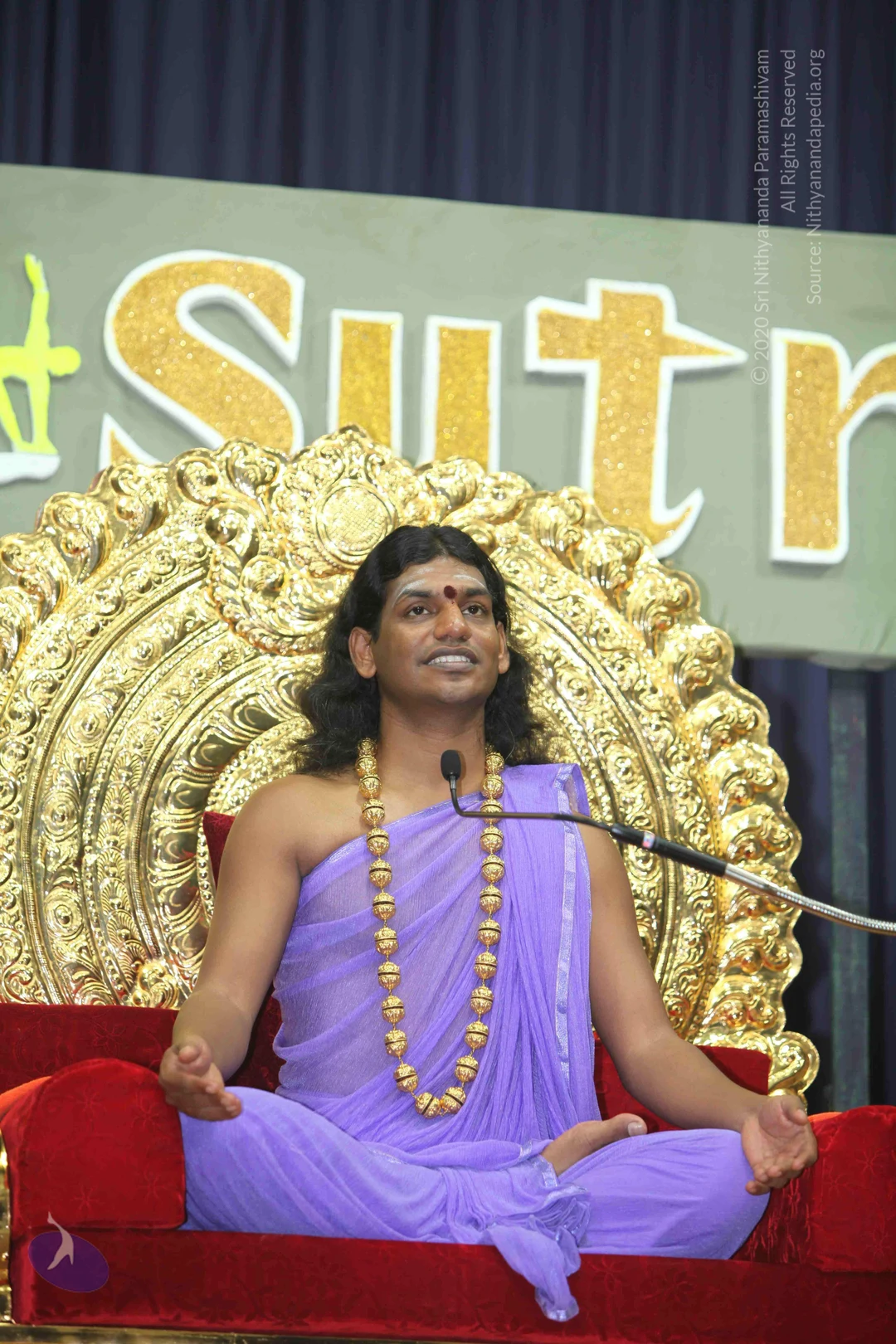
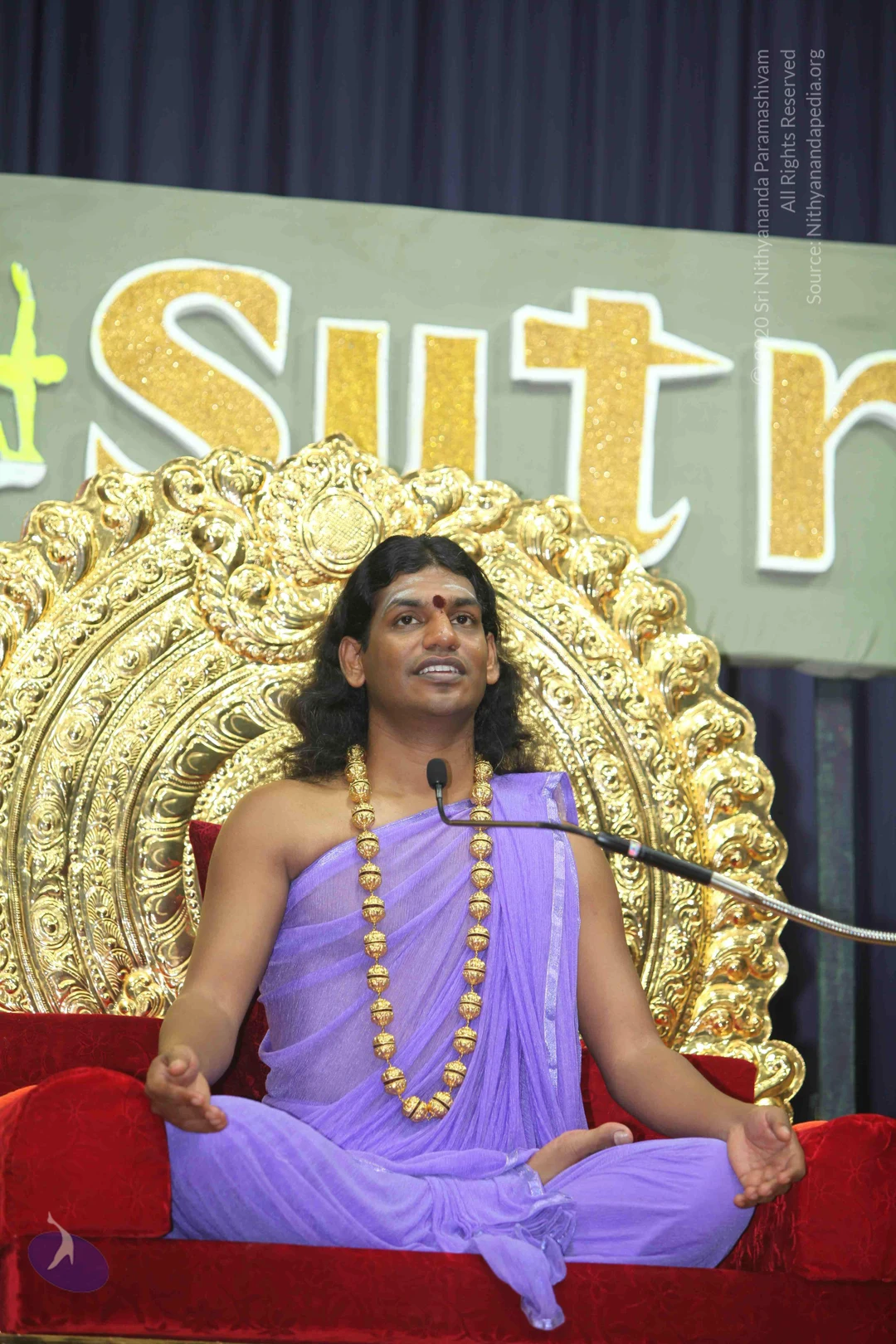
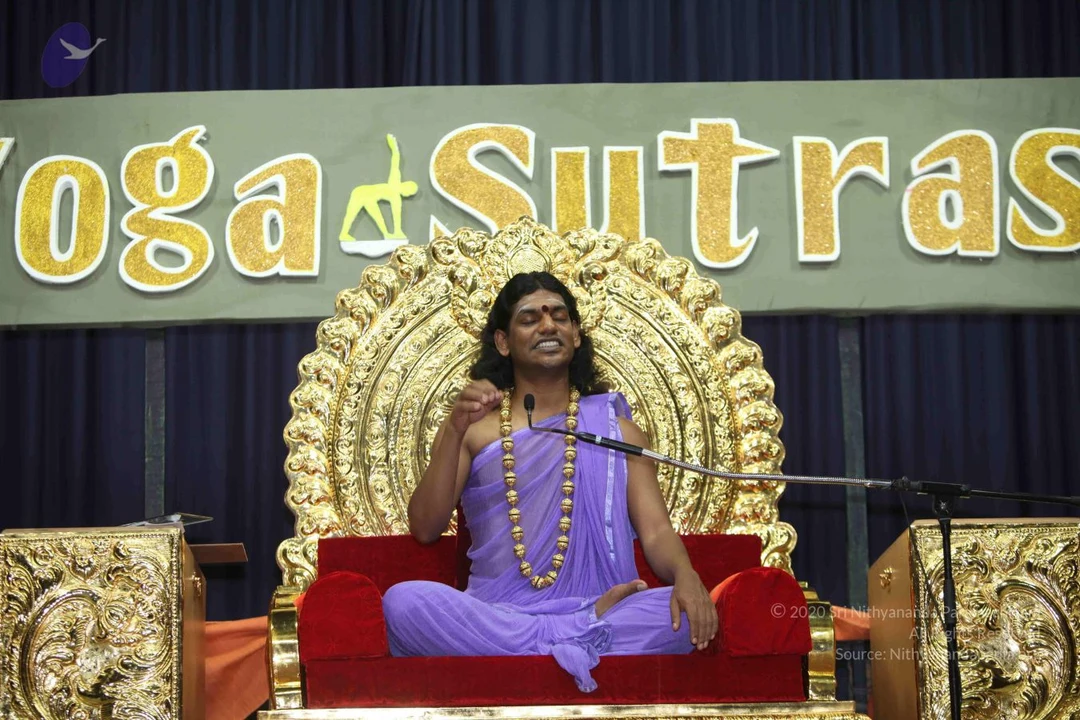
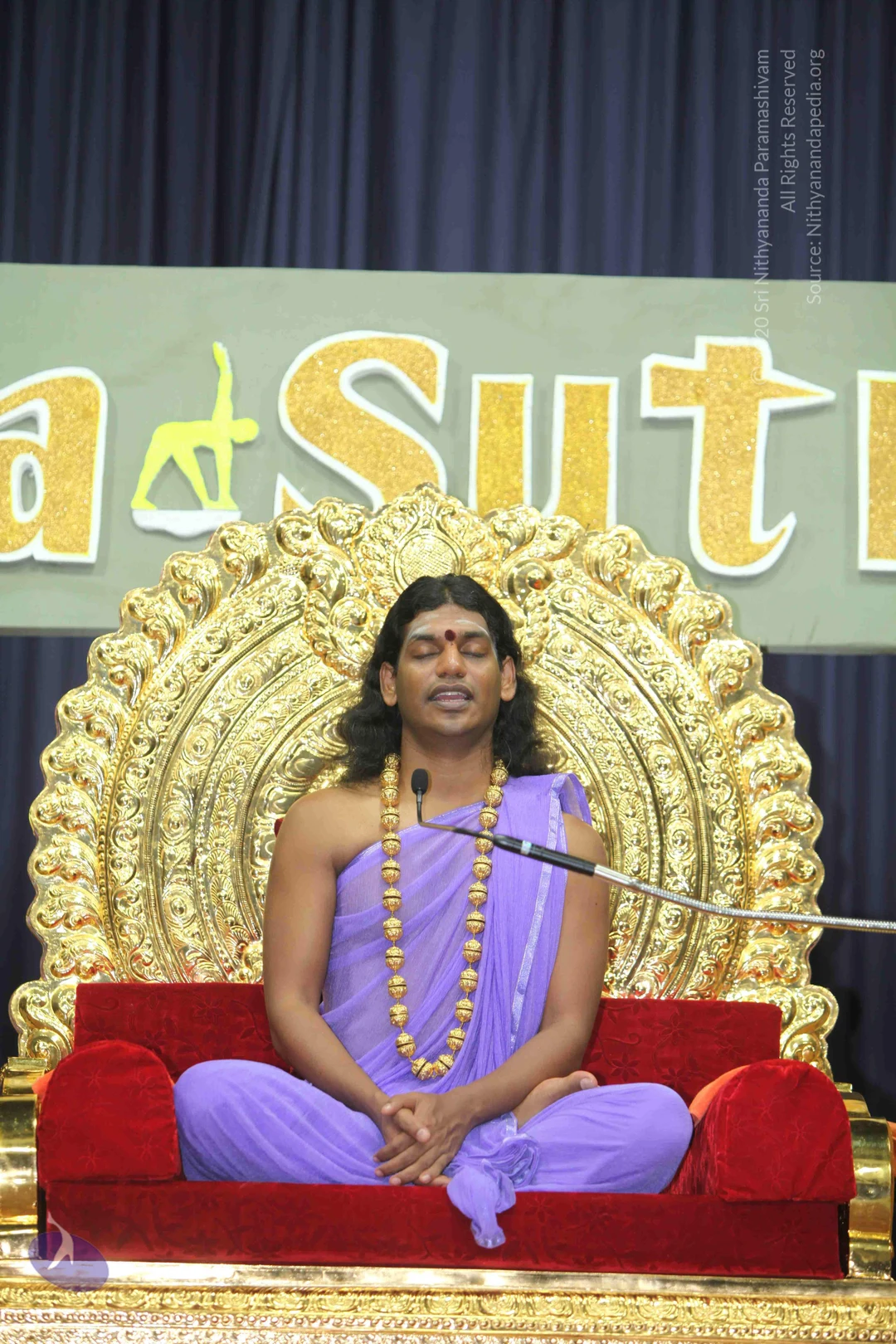
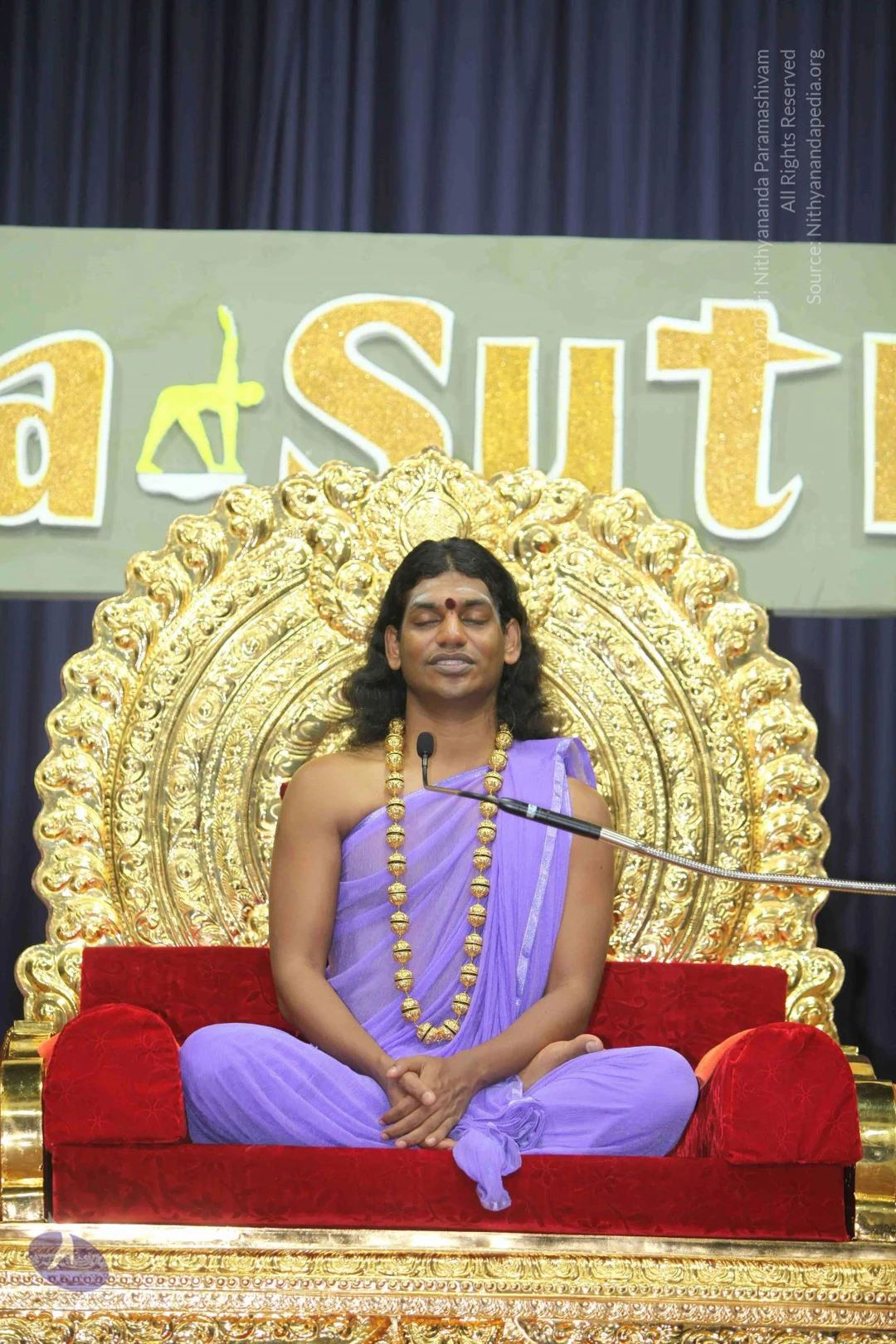
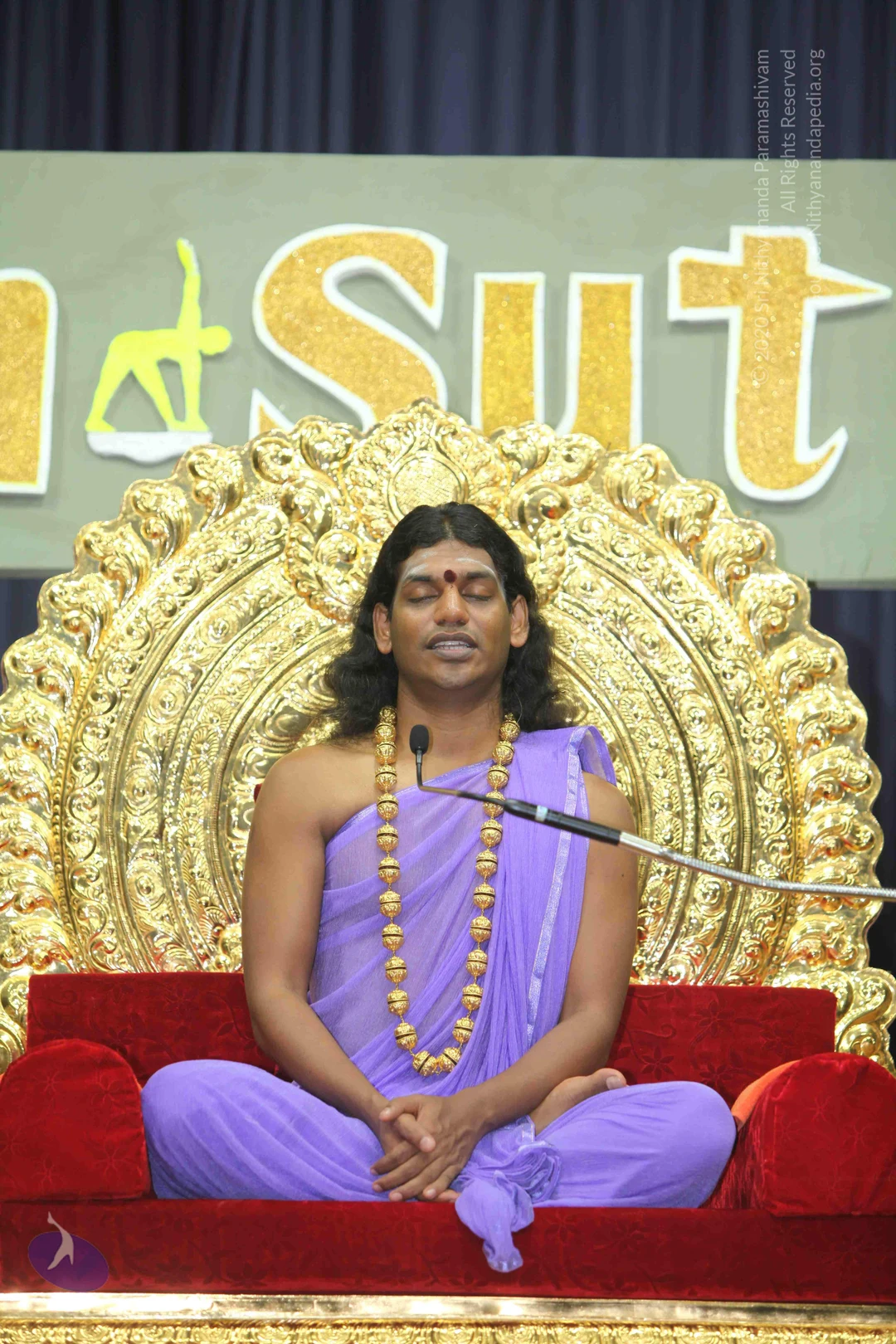
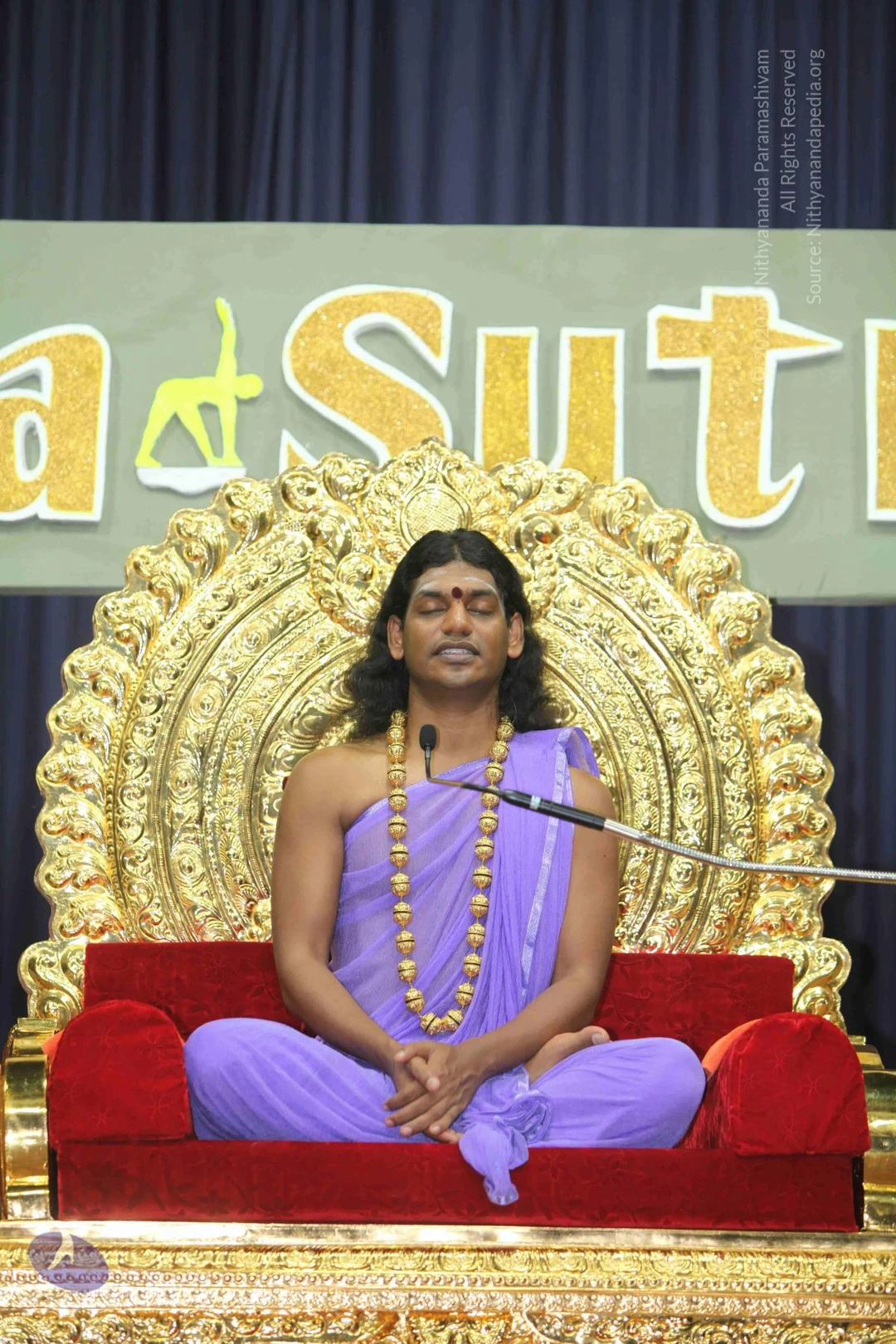
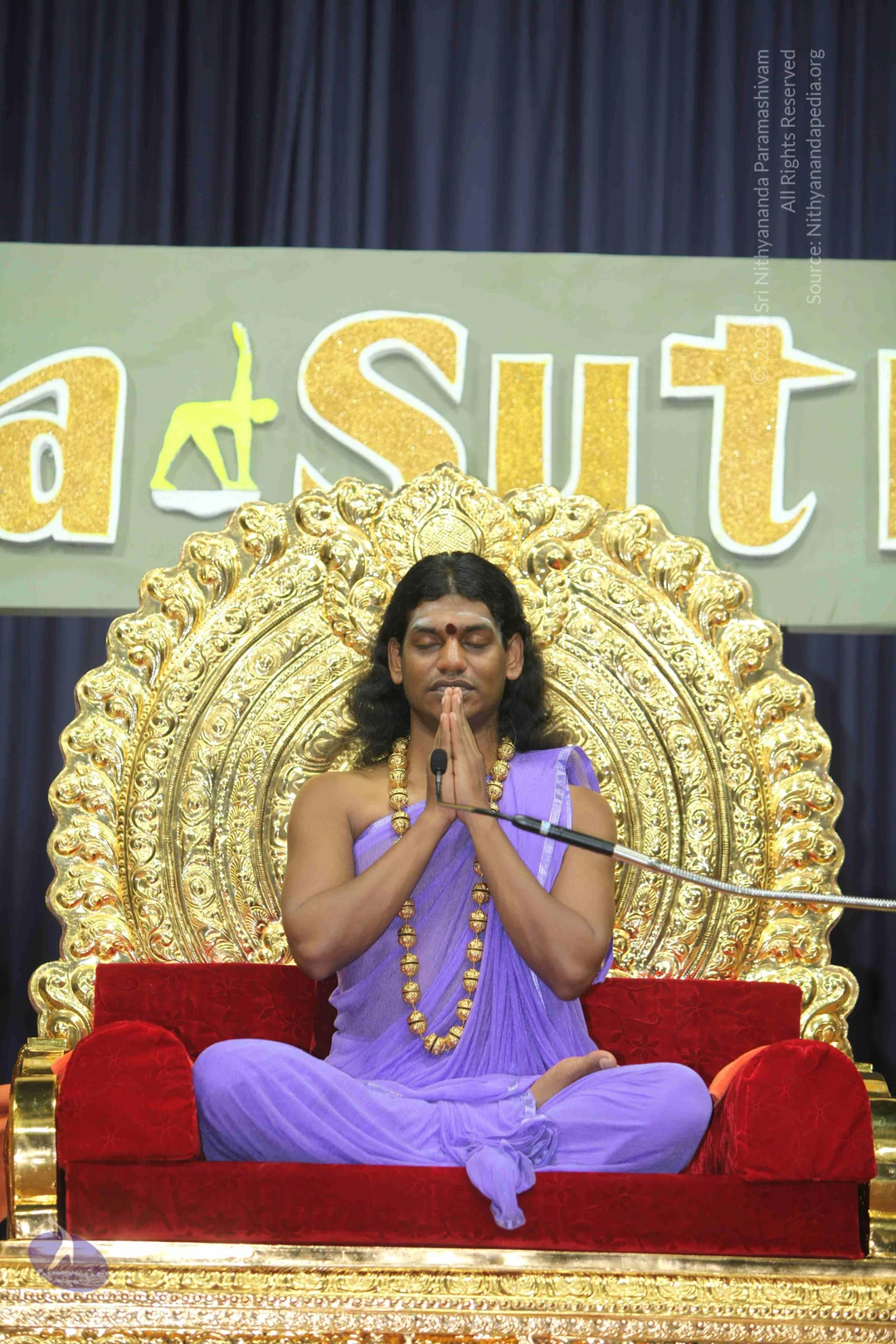
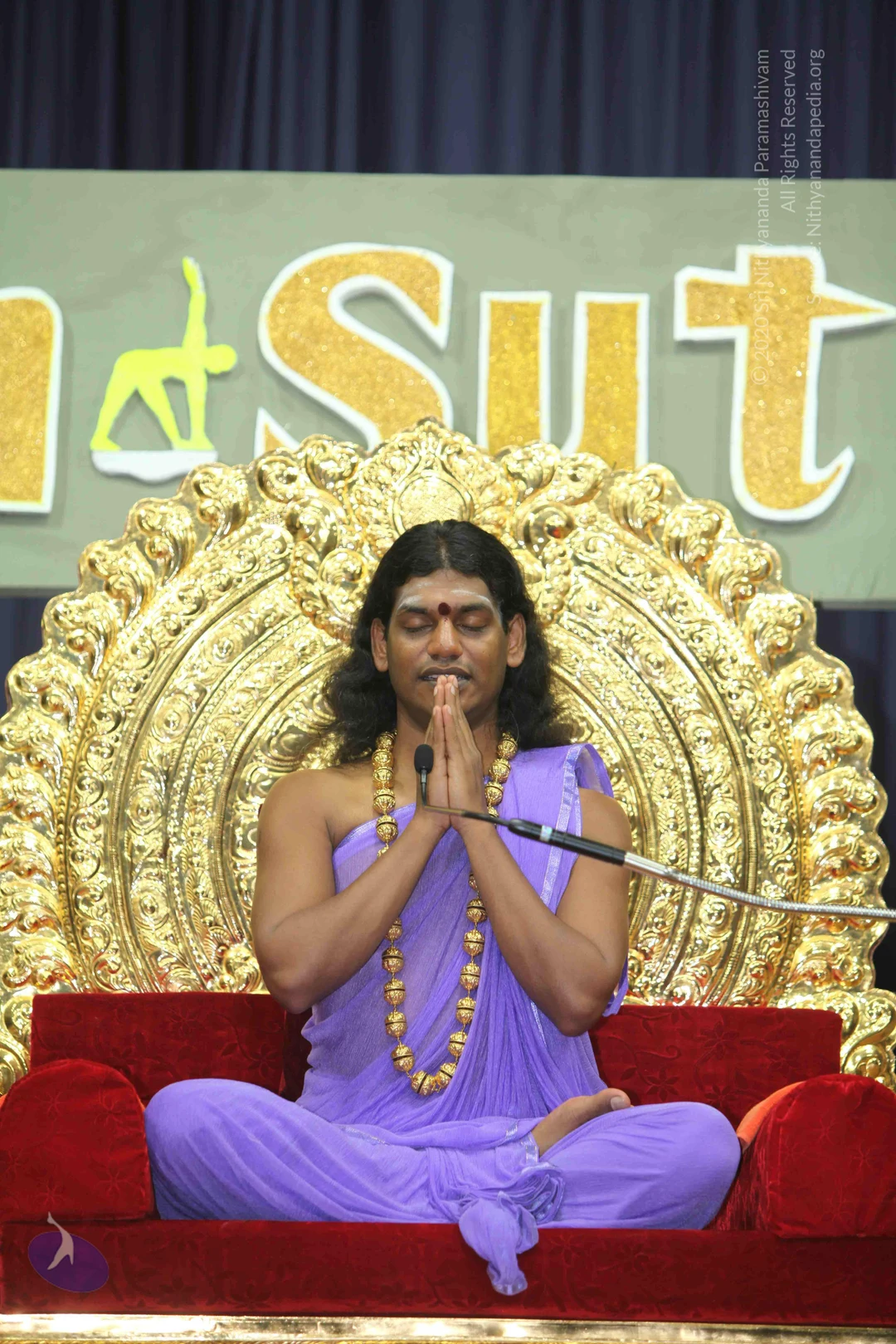
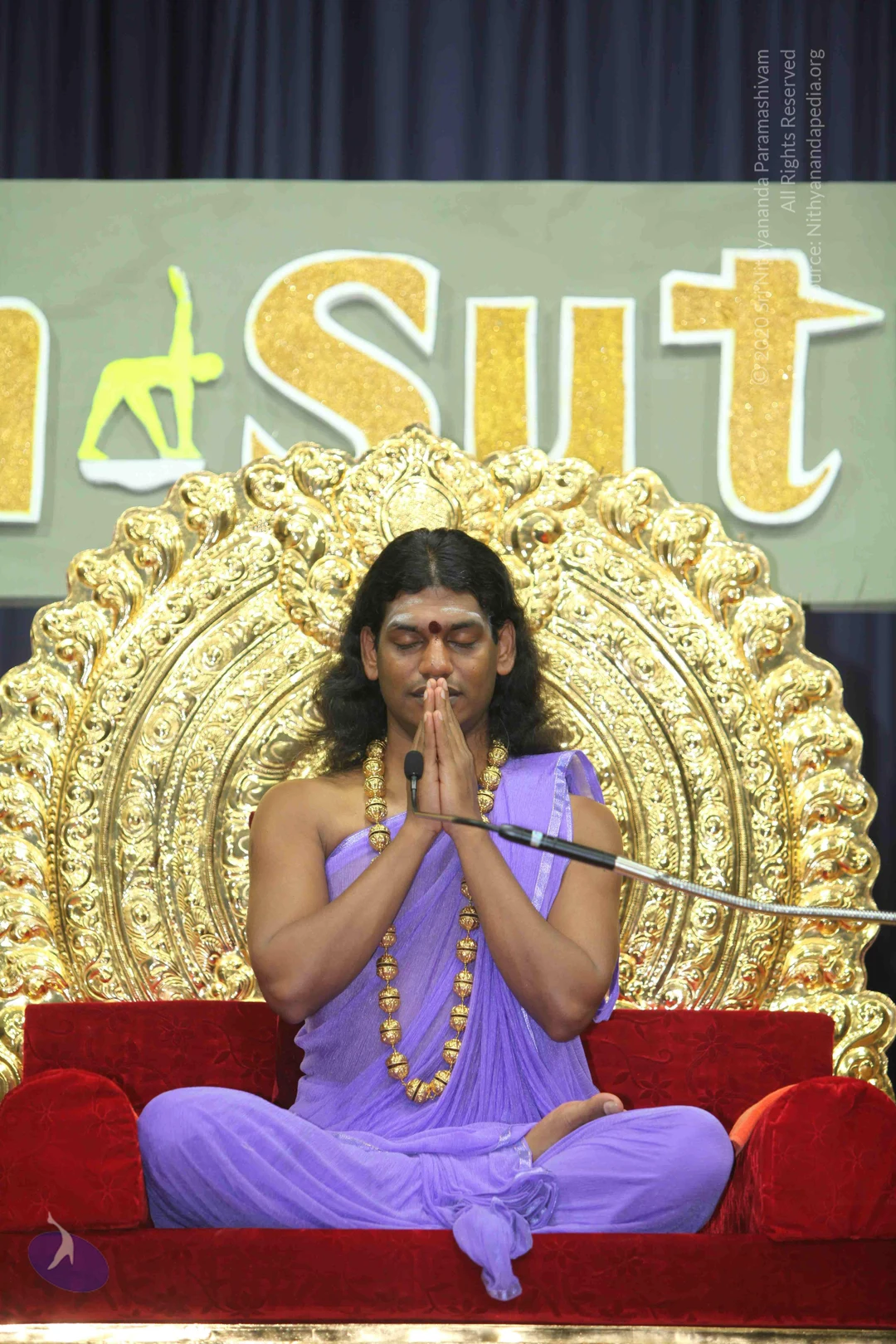
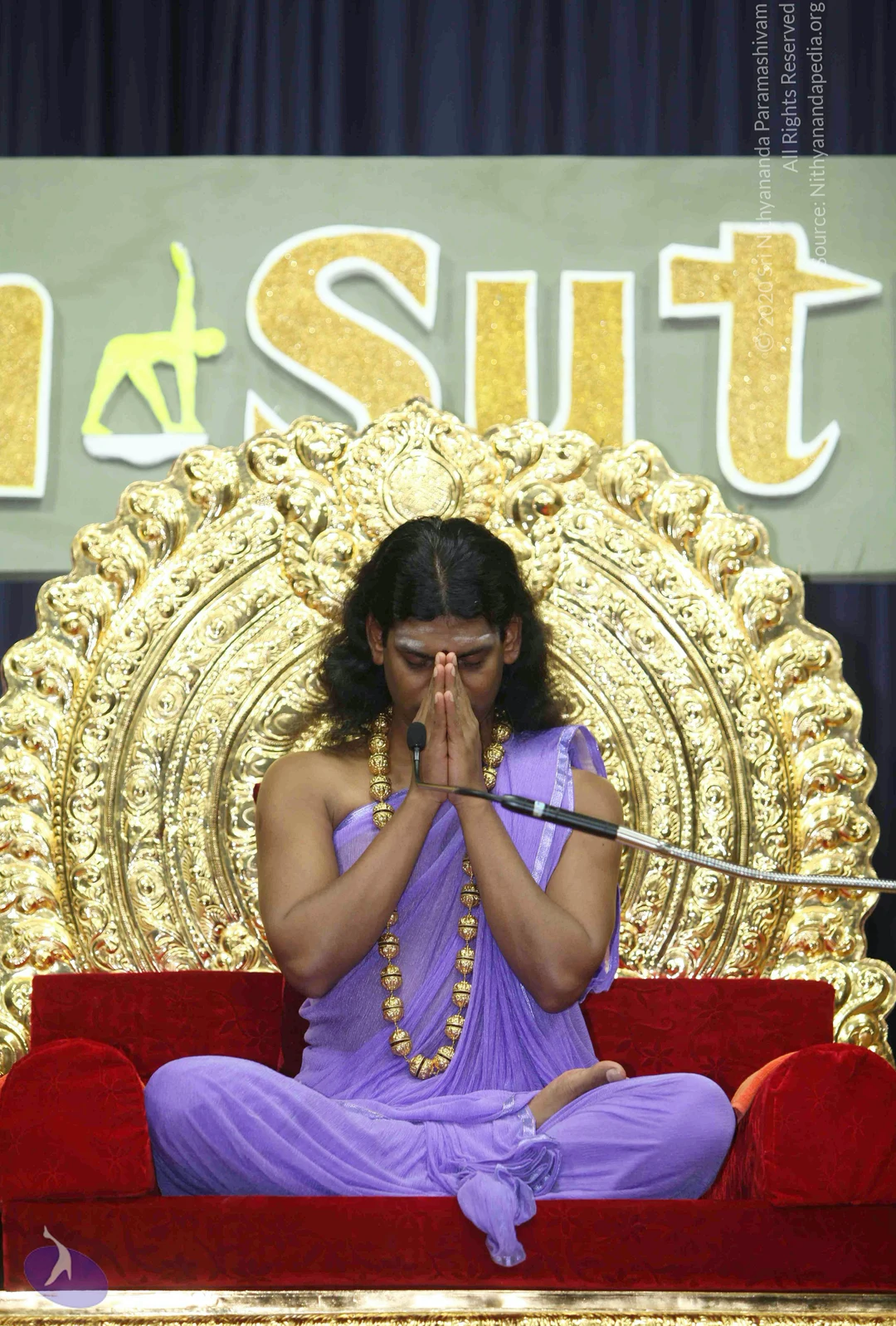
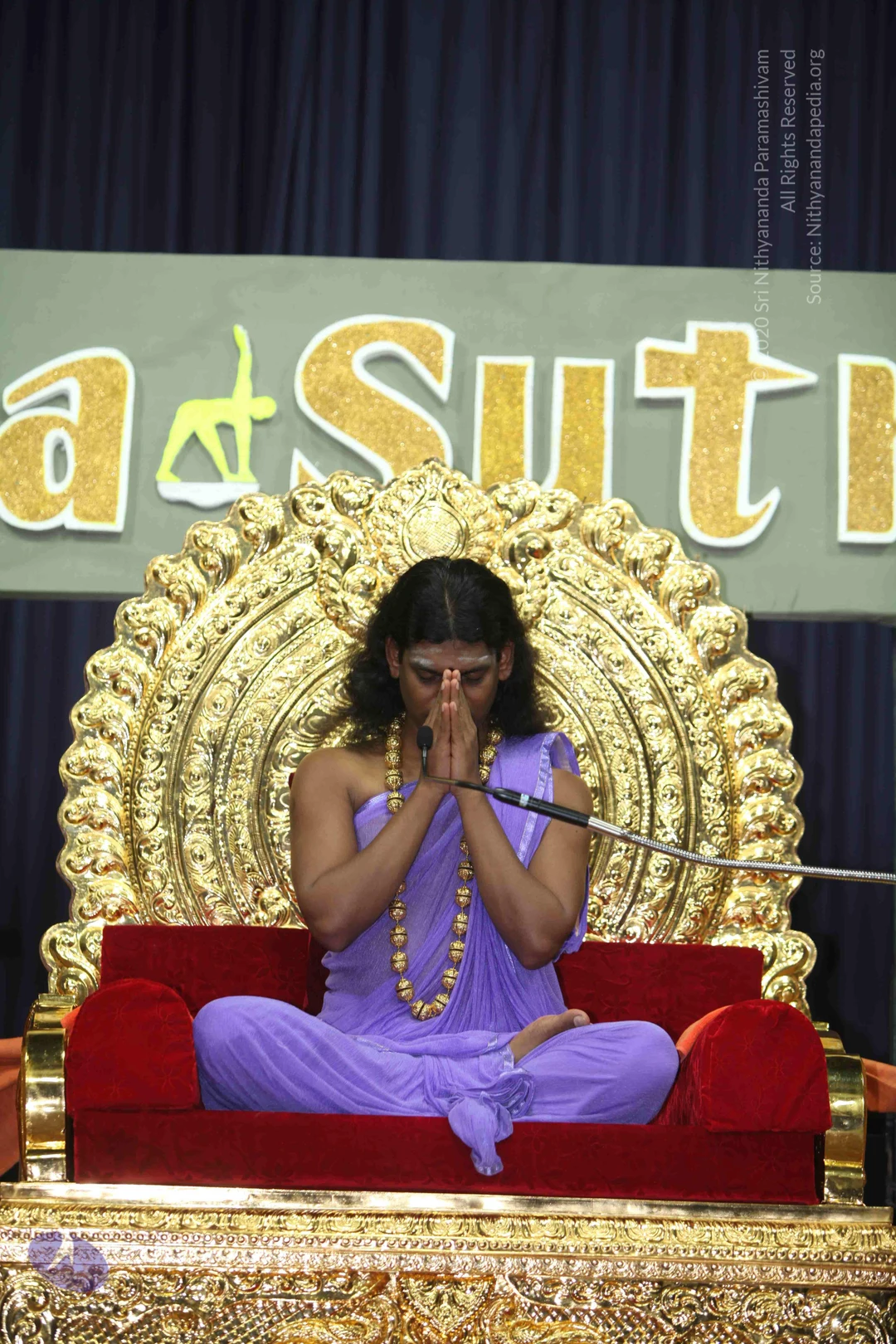
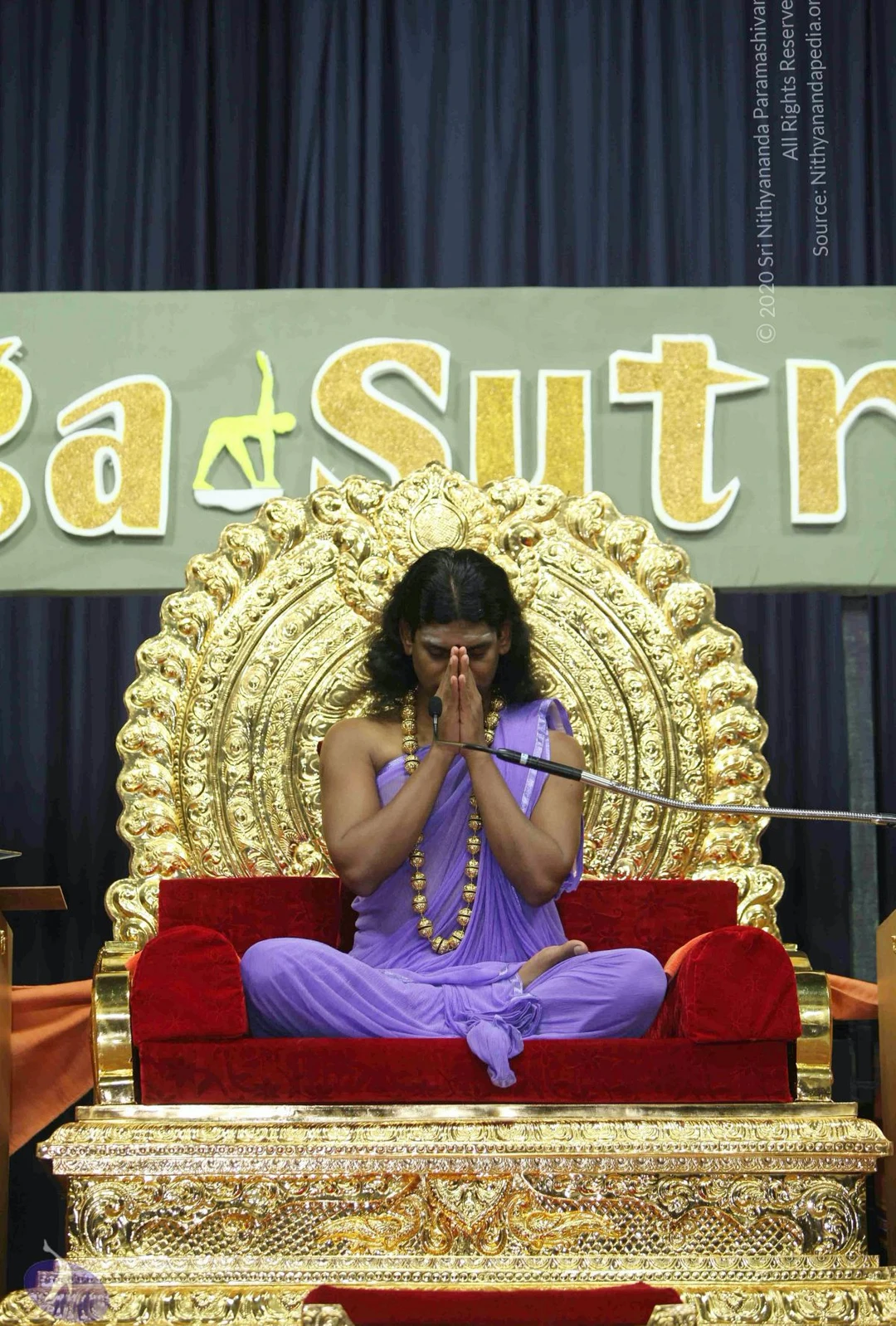
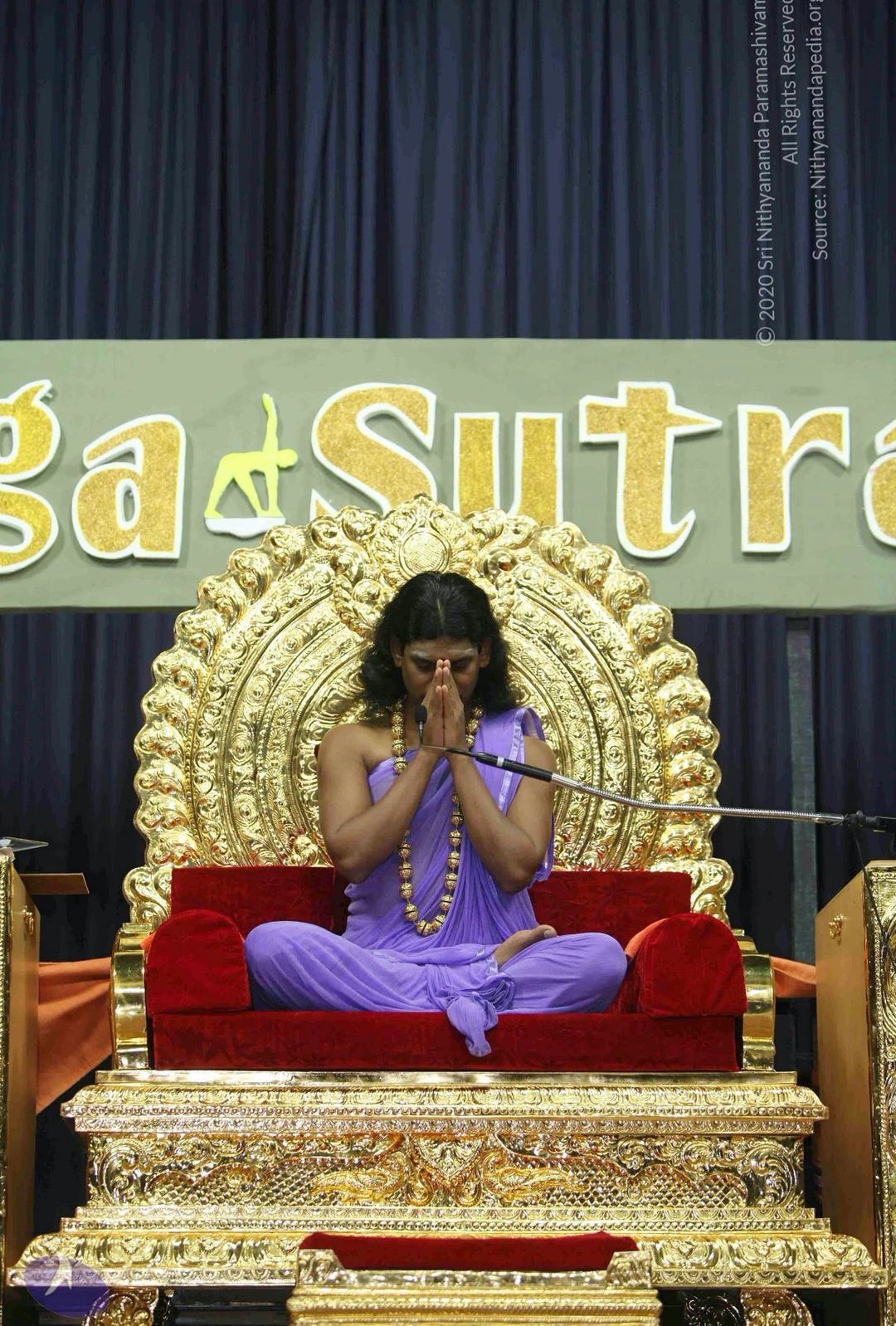
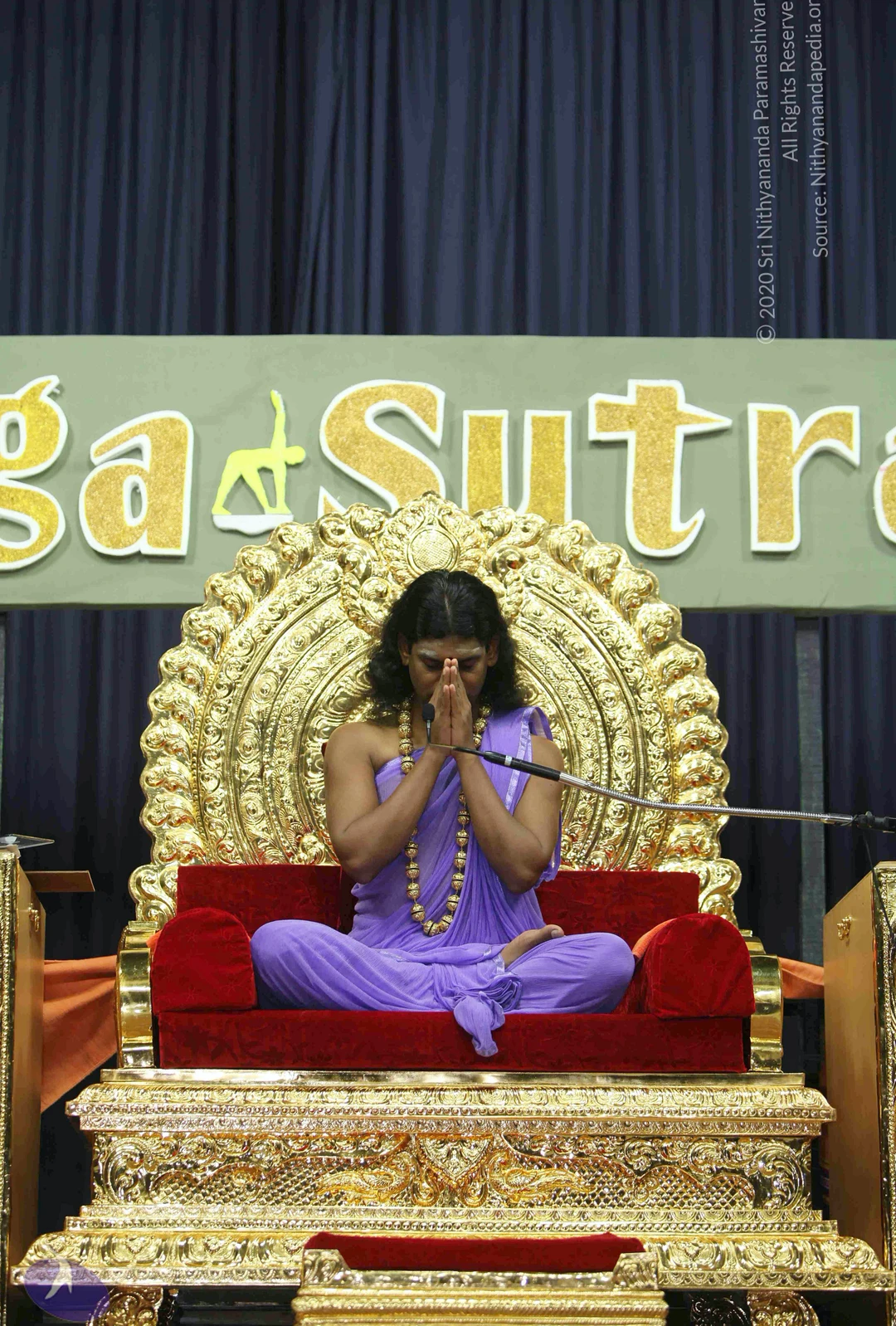
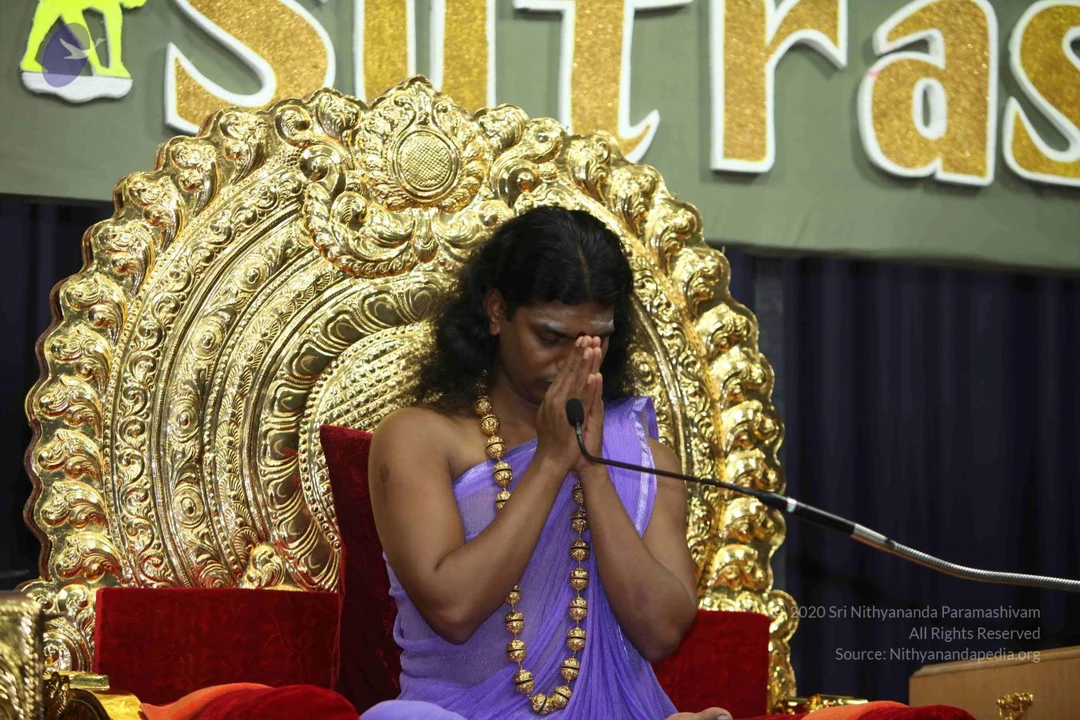
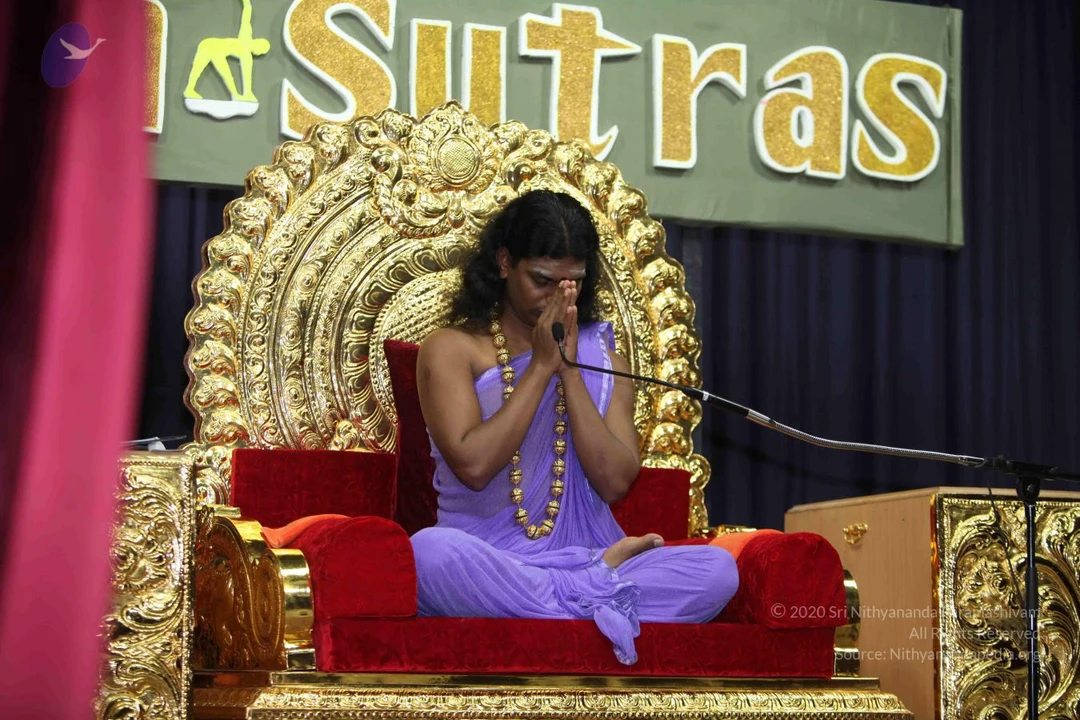
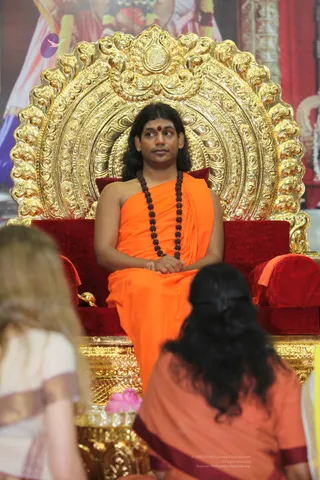
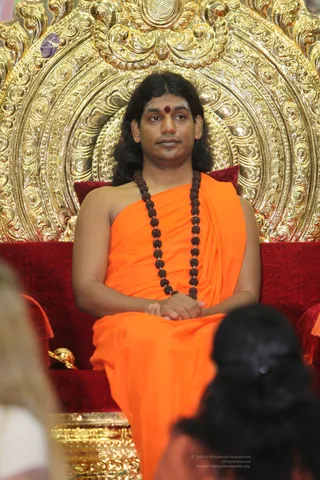
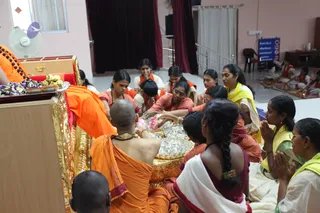
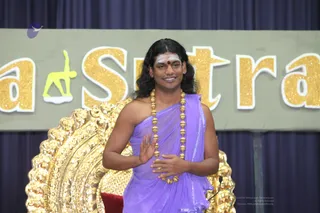
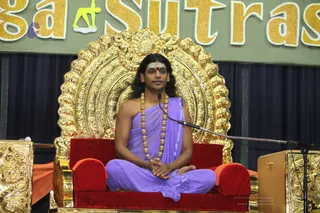
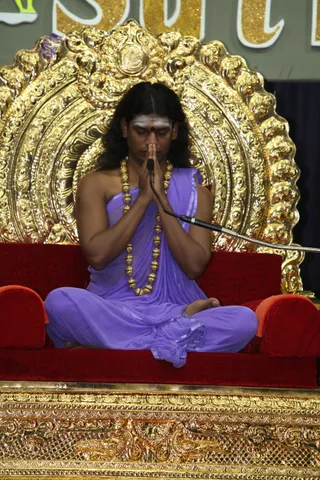
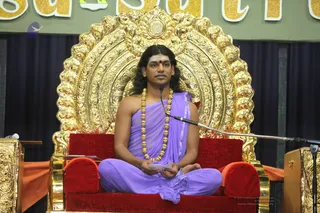
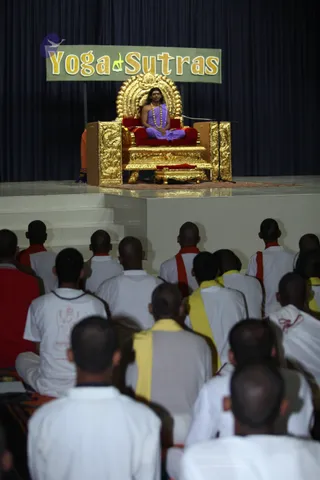
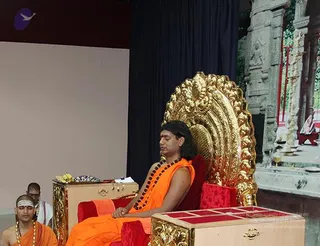
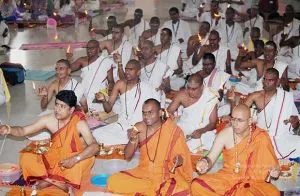
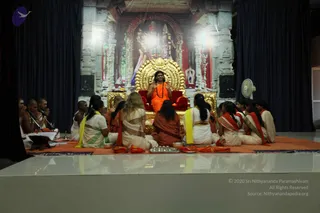
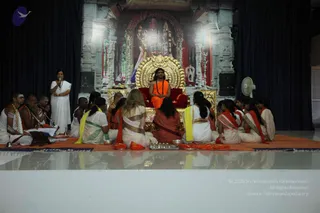
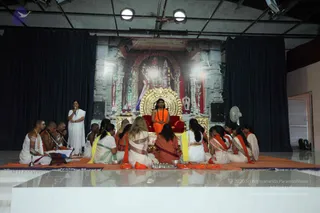
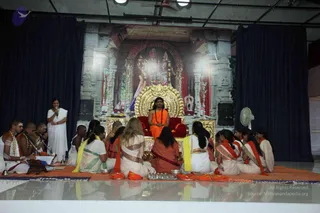
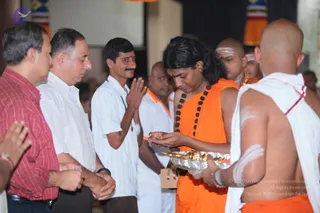
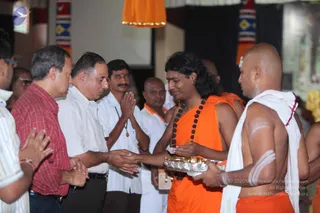
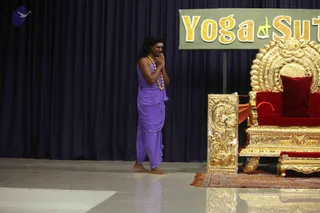
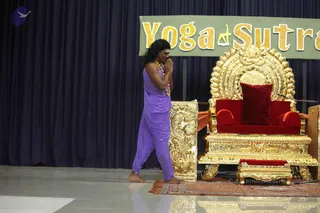
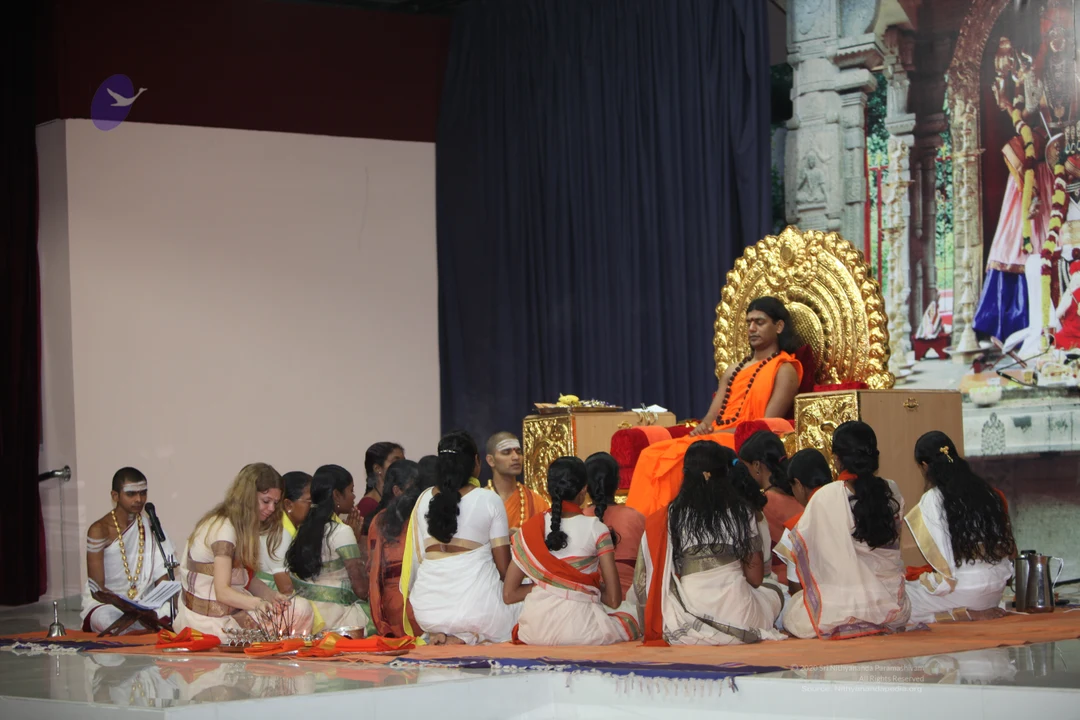
A photograph of a public satsang hall with a seated teacher on an ornate gold-carved throne at left, wearing a saffron-orange robe and a dark rudraksha mala with long, swept-back hair, facing right toward the audience. In front of him is a wooden lectern-like stand, and a silver tray with blue flowers and yellow fruit sits beside him. Seated devotees fill the floor: monastics in saffron-orange robes, including a shaved-headed figure in the foreground, and women in white, orange and yellow saris, some with folded hands or holding small brass plates of offerings. A curtained stage and wall fixtures are visible in the background.A long-haired man in a lavender-purple dhoti-style wrap and shawl sits cross-legged on a red velvet throne with ornate gold carved backrest. He wears a long gold-beaded necklace, a white vertical forehead mark with a red dot, and holds papers in both hands while smiling and reading, with a microphone on a stand before him. Orange cloth draped over the side and a gold-carved podium edge are visible, with a dark blue curtain behind. Swamiji (probable): the long swept-back hair, ceremonial gold necklace and ornate throne cues are present, though the appearance match is not certain.A seated man in lavender draped clothing and a long gold bead necklace sits cross-legged on an ornate gold and red throne in front of a banner with large gold lettering reading 'Sutra' and a yellow yoga figure. A microphone on a gooseneck stand is in front of him, and a red bindi marks his forehead. Navy curtains hang behind the stage.

October 26 2010

Original wiki page
Contents

Title

Rewiring Your Brain: Nithyananda Morning Message (26 Oct 2010)

Narration

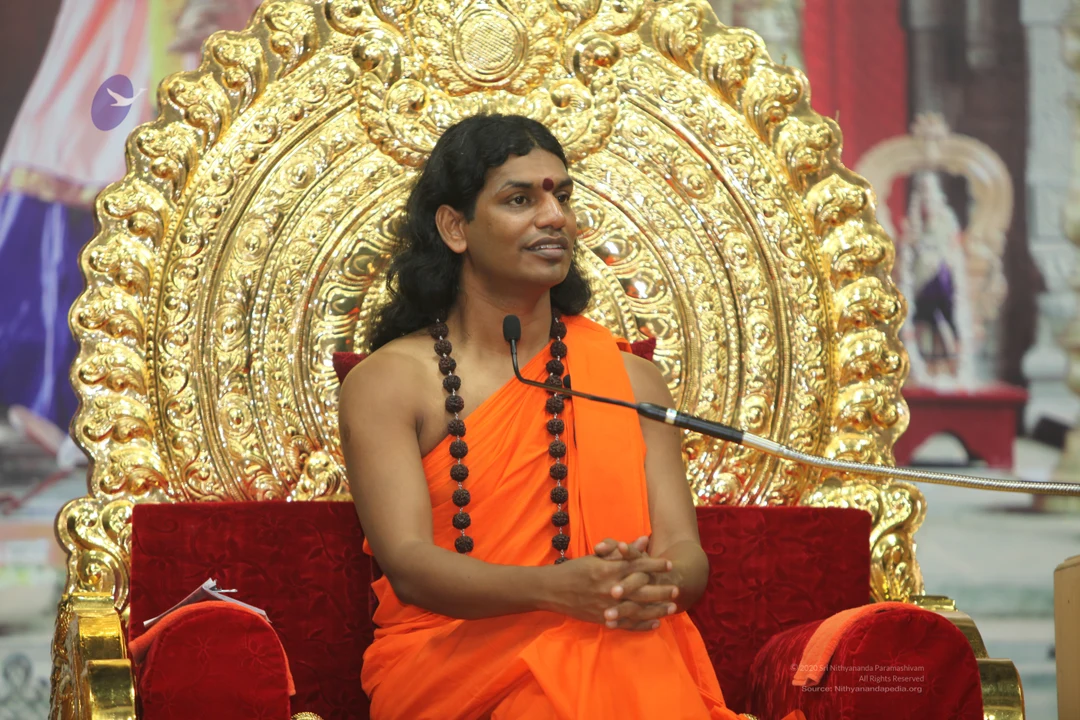
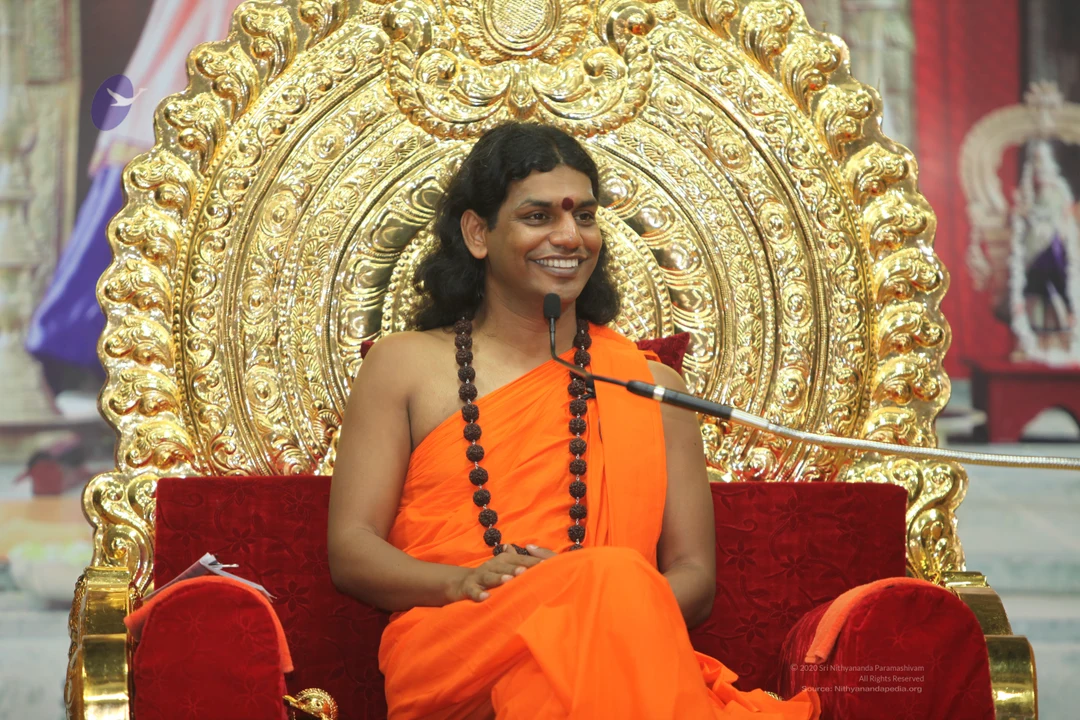
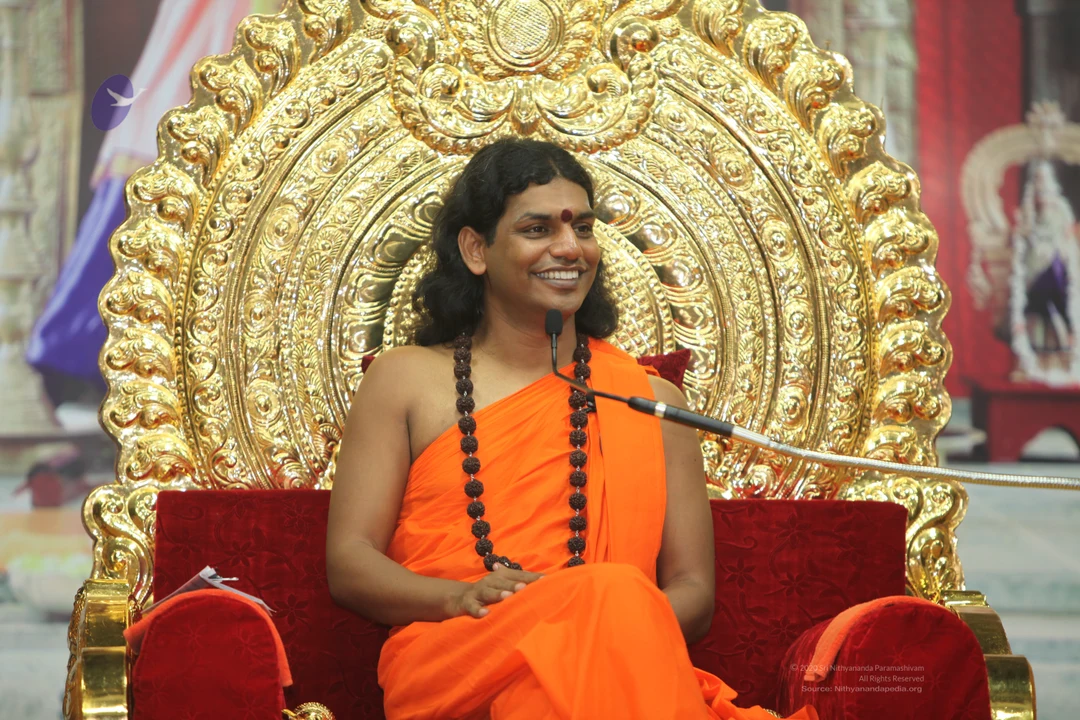
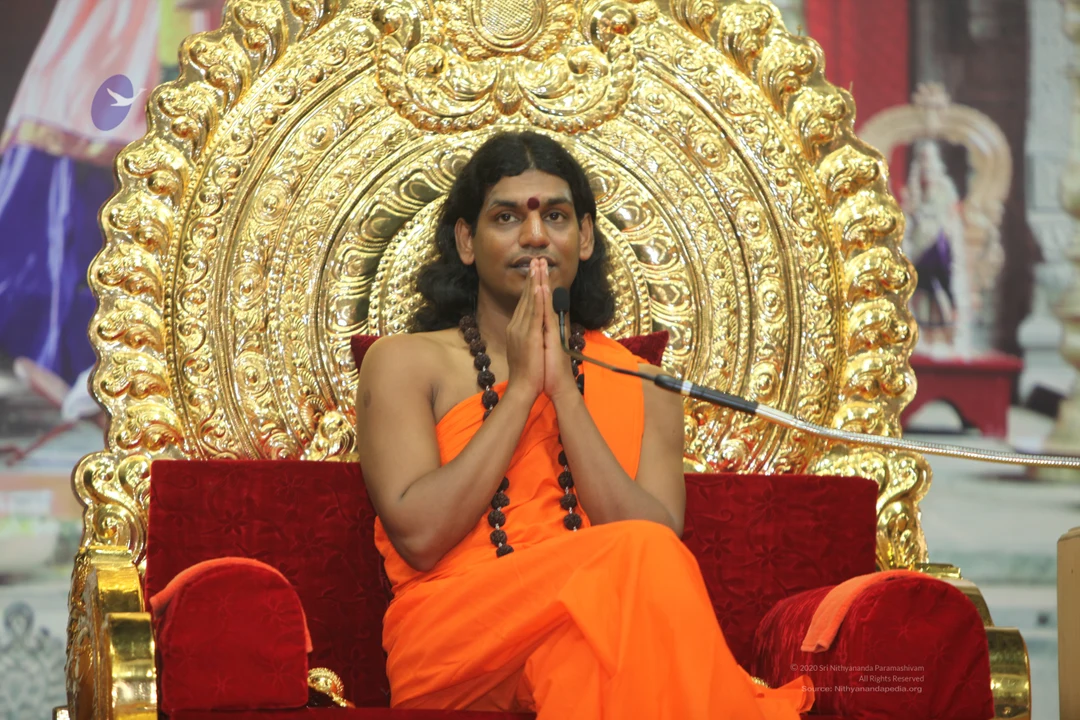
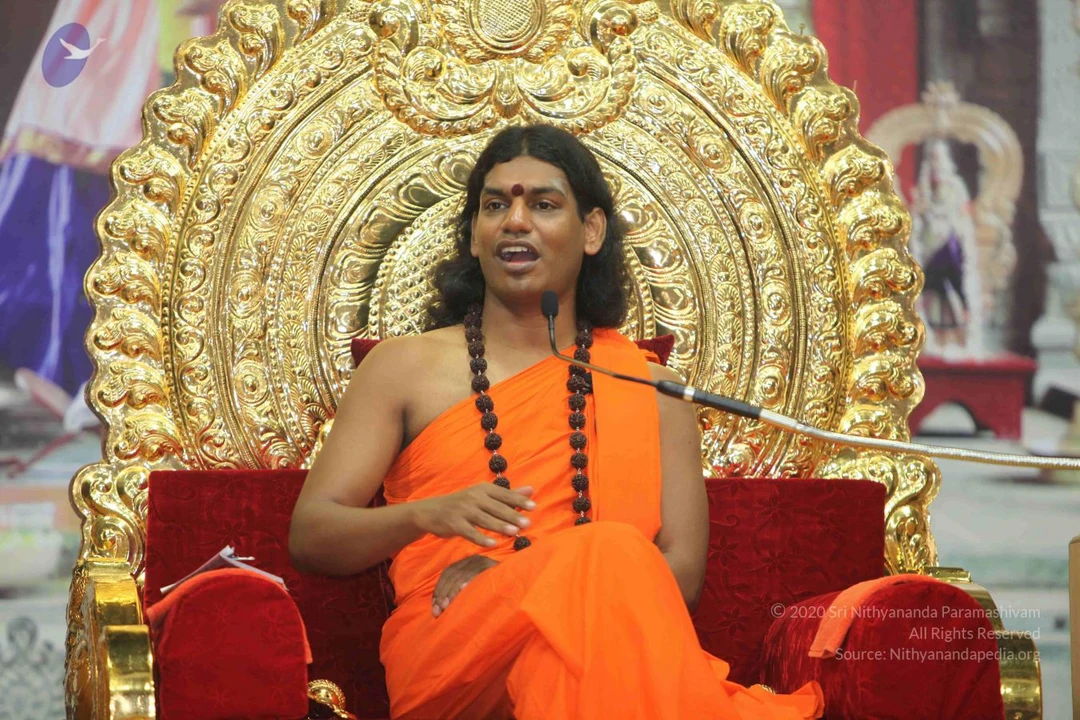
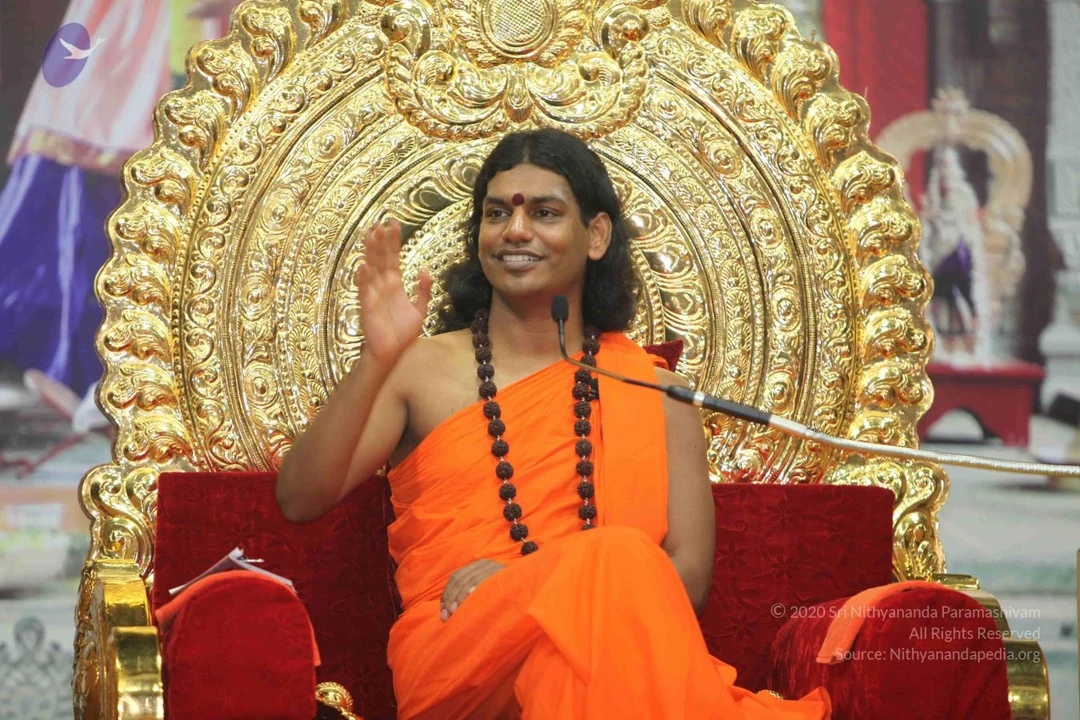
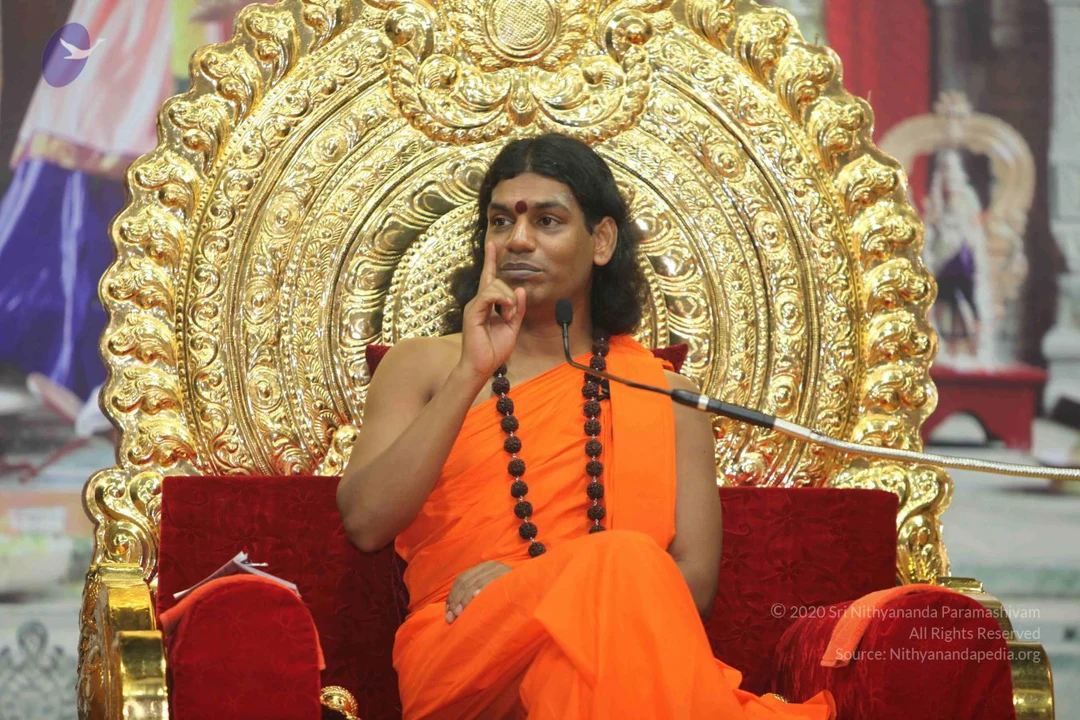
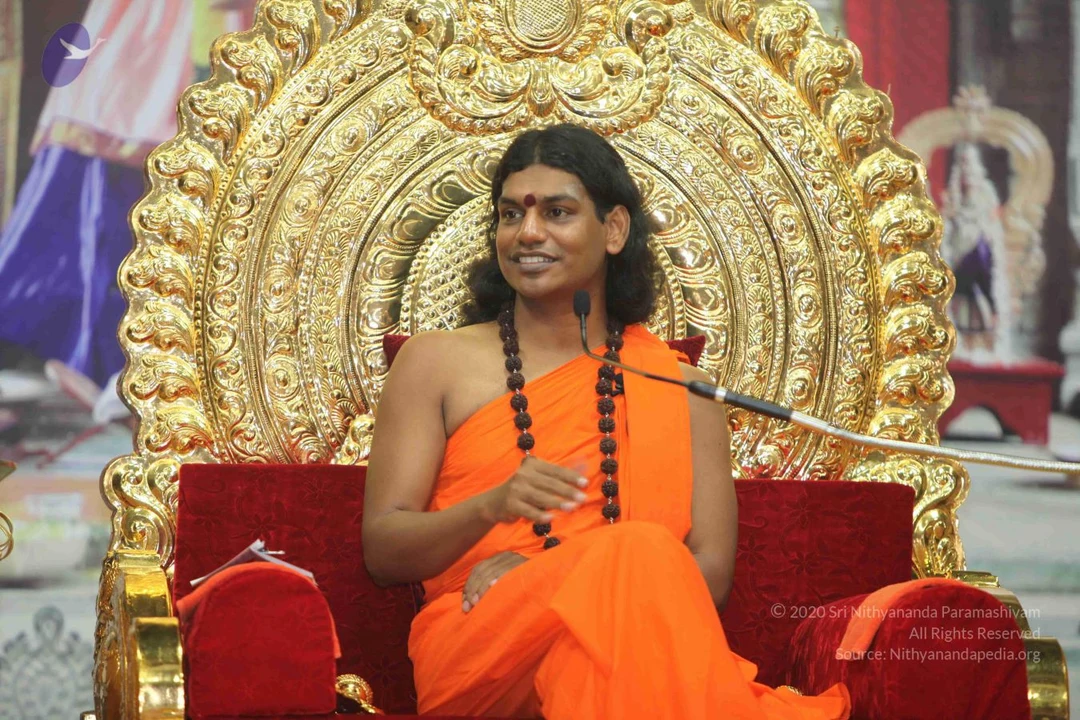
The Supreme Pontiff of Hinduism, Jagatguru Mahasannidhanam, His Divine Holiness, Bhagavan Nithyananda Paramashivam, expounded on the Cosmic Principles of Samskaras during the everyday live public talk - Nithyananda Satsang. In this talk entitled Rewiring Your Brain: Nithyananda Morning Message (26 Oct 2010), His Divine Holiness (HDH) cited research from the field of neurophysiology which said that Samskaras or Engrams create mental grooves in the brain like rivulets in sand that make water run in a certain pattern. The studies said that each time we react in a certain way, we strengthen the power of the pathway. His Divine Holiness advised delegates to meet emotions like stress, fear and anger with intense physical activity. By doing weight lifting, Yoga, cathartic Kriyas from various traditions, or intense chanting, we will create new rivulets and new engrams. The stress, fear or anger gets converted to useful energy. He expounded that when Rajas is experienced with awareness in this way, it can be directly useful. He further expounded rivers that create calamity by flooding need to be dammed - this is the practice of Sadana. When rivulets come in the form of laziness, Maya, they become an enemy to awakening the non-mechanical parts of the brain. His Divine Holiness advised all to be ruthless with laziness and straight away work on the body. He concluded by advising delegates to break the body and mind with intensity and they will see a real rewiring of the brain happening.

Video and Audio

Rewiring Your Brain

VideoAudio

Transcript

(00:19)

Sadāshiva samārambām shankarācharya madhyamām Asmadācharya paryanthām vande guru paramparām.

Today’s subject is ‘Rewiring your Brain’. Some of the shastra pramanas, some truths from the field of neurophysiology; it’s from a website yogachannel.com. Samskaras or engrams create mental grooves in the brain like a river-lands in sand that let water run in certain patterns. They say each time we react in a certain way, for example getting angry, we strengthen the power of the pathway. It’s a one truth. It’s a very important truth. The more and more you react in the same way the more and more you strengthen that engram. If you are habituated to fall sick due to any stress or fear you encourage, you strengthen that engram of falling sick due to stress and fear. I tell you if you are really feeling stressed or fear or anxiety, do something very active. Either cathartic meditation or kind of an intense weight lifting; activating body. I tell you, you will create a new engram. So whenever fear or stress happens in you that whole thing gets converted as energy, useful energy instead of that staying in you and making you weak and diseased; that same thing can be used as energy.

(03:50)

You see rajas; rajas when it is added with awareness can just become part of your life, can be directly useful. If you are stressed, if you have the anger towards somebody, fear, just take it out on weighing machine, weight lifting machine. Just take it out on the gym or do some intense catharsis process. I have given so many catharsis process from different traditions. Manipuraka shuddhi kriya, so many kriyas; the cathartic kriyas are there. Pranayams like bhastrika, kapalbhati; there are so many cathartic kriyas, talking in tongues. In Christian tradition they call it Glasalolia. In Hindu tradition we call it Manipuraka shuddhi kriya or loud chanting of Upanishads, Vedic mantras. Take out your anger in these ways, release your stress in these ways, release your fear in these ways. You will see you will be creating new river-lands. You will not be strengthening that old pattern. You will not be strengthening that ugly mental setup of suffering and torturing yourself.

(05:25)

It’s almost like a, see when you have the anger or fear of stress you are victim, but when you carry that inside you, you are punished for being a victim; case in Me. So don’t be punished for being a victim; if you are a victim, release it intensely. Don’t keep it inside, have this cathartic kriyas; Manipuraka shuddhi kriya or intense samana balancing techniques. You can do 108 Surya namaskar or intense weight lifting; working out. This samana balancing immediately will convert that stress into energy. Rajas will become energy. Only first few days you need to create this new river-land then every time this new river-land will become strengthened; that will become strength.

(06:49)

As neurophysiologist say: each time you react in certain way you strengthen the power of the pathway. So each time when the river runs in that same river-land, the river-land becomes more deeper. So the river running in the same direction becomes more stronger more permanent. Same way in your brain also you have so many rivers Ganga, Kaveri, Yamuna, Saraswati, Godavari, Narmada, Sindhu; so many rivers. Some are wild rivers, forest rivers. The rivers which really creates calamity by the forest flood or sudden floods you need to make a dam and divert it in different direction. Making dam and diverting it in different direction is what I call sadhana. Sadhana means making dam and diverting it to different direction. But unfortunately we have another one biggest river-land, engraved memory, engram, samskara; laziness, eternal laziness!

(08:22)

One of the biggest engram biggest enemy for awakening non mechanical parts of your brain or sadhana or for Enlightenment or for achievement is laziness. See, once the laziness enters into your system nothing can be done; any big idea..."Tomorrow. Good idea, great, but you see tomorrow is a good day to start. Always our elders say you should find out the right day, right time. See, today if I start tomorrow I am not going to be there, I am busy. Dvandva vighna dvitiya vighna should not be there." Our tradition there is a tradition the second day nothing should be broken; dvandva vighna. "Oh! Second day it should not be broken dvitiya vighna. So I will start maybe day after tomorrow."

(09:47)

Laziness is Maya nothing else. So understand no sympathy towards laziness. He is a demon; so no question of allowing laziness. The first lesson in Zen they teach is the awakening your whole system, breaking the laziness pattern; because the whole Zen is based on silent sitting. You can very easily slip into laziness in the name of silent sitting. The very word Zen means dhyan; zezen means sitting. You can very easily slip into laziness in the name of silent sitting. See, you can very easily slip into that laziness in the name of Samadhi. No. Zen first breaks that lazy mental setup. You need to break the lazy mental setup to work on these engrams and create the new awakened lifestyle.

(11:20)

Zen monasteries they have a tradition, even the Master who is the head of the monastery will not have food if he does not work for that particular hours. They have the system of eight hours of working. Even I created that system from the Zen only. The eight hours physically you need to work, eight hours mentally you need to work, means sadhana or some other teaching, learning. See a teacher works eight hours mentally when he teaches. Disciples work eight hours mentally when they learn. So eight hours of physical work, eight hours of mental work, naturally the eight hours you will rest in Consciousness. There will not be any unexhausted engrams; so the sleep will be deep sleep. Only when you don’t work eight hours physically, eight hours mentally you will have a stressed sleep; disturbed sleep, disturbed memory; disturbed mental setup. You will not feel really as you slept.

(12:38)

So I tell you laziness is one of the worst engram. It is not even engram it’s almost like a breathing. That’s why just yesterday I decided anybody who leaves the ashram due to laziness engram, I have decided I will not accept them any more back; no question of coming back. If they leave because of any other engram, maybe lust, they can go and get married and suffer in few years and come back; no problem. They will understand the lesson; it’s too costly. They can come back. If they have the anger then they can leave; because in the society when you express your anger you will be getting nicely beaten. That mental setup will be broken. They can come back. Or if you have greed then you can go and learn the lessons of the greed engram. What you need to do and you need not do if you want to come back come back. But if there is a lazy engram, laziness engram, and if they leave, nothing can be done, nothing can be done, no entry for them; because the laziness is the non return zone of spirituality. Enlightenment, Videha Samadhi and laziness both are non return zone. If you are caught in laziness you can never be lifted. If you are relaxing in Videha Samadhi you will never come back. But this laziness, God! The first thing you need to break is laziness.

(14:43)

Especially that early morning Brahma muhurta, so you wake up before sunrise and work out in nirvani akhada either 108 surya namaskar or doing the samana yoga or pranayama and take bath in the cold water, in the sacred water body and come for Guru puja, your day is set. You will break all samskaras. You will make a beautiful dam; sadhana. Once you break one or two strong samskaras, you just know, simply you know you simply know how to break; the science of breaking the samskara is learnt. The science of handling your body and mind is learnt. So you will create new river-lands.

(15:54)

Another one truth: neuroplastic science says your brain has the ability to create new grooves and pathways and the existing ones will heal up and disappear if left on their own; This is yogaflavouredlife.com, website source. Understand it’s very important thing; your brain can create new grooves and pathways means the possibility for new life exists, possibility for becoming a new man exists, possibility for becoming new Consciousness exists. That is what we call initiation and the existing ones will heal up and disappear if left on their own. They will just disappear if left on their own, nothing else is required; nothing else is required. You don’t need to do something special to fill the existing river. No. Just make a dam divert the water, the existing pattern will dry up automatically. Then they will get closed automatically.

(17:23)

Scientist Debbie Whitmore says: the science of neuroplasticity focuses on how the brain can rewire itself to forge new connections and break cycles of negative thinking and acting. Patanjali very beautifully says if you are suffering with particular engram just create the anti-engram anti-emotion. For example if you are suffering with violence, create compassion. If you are suffering with anger, create peace and feel that it is spreading all over your body. Release that into the Cosmos through your every pore. You will see, you will just create new mental set up, new brain pattern as you want; exactly what Patanjali is saying. Of course, He said it 5000 years before; at least 5000 years before. Now the neuro-plasticists scientists are proving it. Debbie Whitmore is proving it.

(18:59)

Again one more report, study done on yoga; the regular practice of yoga is a perfect formula for creating a new, deep, behavioral grooves in the brain, that take advantage of neuroplasticity. Just as I was telling now, working on the body, straight away working on the body uncompromising way, breaking the laziness system; I tell you this pada yatra which I took up in my young age, this parivrajaka yatra, it has done so much in my system, so much. Because once you start walking in the morning till evening even if you are tired you can’t stop because you have to find the next village. Unless you find the next village, no food, no stay, no sleep. And it is a very powerful system I can tell you very powerful system. Same way, the morning sadhana should be a pada yatra for you; nothing can be done.

(20:25)

I am just waiting for the place to be ready. Actually, the once I make this as a habit, see now I made this morning pada puja and message as a habit. Neither I can miss nor you can miss. Both of us are caught. Neither I can miss nor you can miss. I have to come and stretch my leg and you have to be here to do the puja and I have to be here to give the morning message. You have to be here to listen. Same way I am going to make the morning routine also. Morning five I will be there in akhada. Nothing can be done; because I have to be there you have to be there. I think this is what our Upanishad means. Sahana bhavatu sahanau gunatu. Let both of us grow together, let both of us work together, let both of us not have enmity so that we break the pattern of growing together. Before, see before sunrise to the complete sunrise means 5 to 9 and before sunset to the complete sunset 6 to 7:30, both time; both sandhyas I will be with you guys so that we constantly work on creating new man.

(22:03)

Understand, you are not reality you are potentiality. You are not reality you are potentiality. We need to work, work, work, constantly everyday adding yogic body and Vedic mind untiringly. One day missed is a miss; lost. See, one of the biggest crime in spiritual practice or in the line of, in the field of awakening, is this laziness. This comes and catches us in such a way you don’t even know you are not doing anything. When you are possessed by ghost you don’t even know you are caught by ghost. I tell you Guru droha and laziness is one and the same. It should be punished in a equal way. Guru droha and laziness both should be punished equally. Laziness is nothing less than Guru droha, because you will not even know that you are not doing; just hanging around. See there is enough of way to hang around, especially big campus like this you can just go and stand near Kalabhairava and watching and you can just go and hang around this bamboo grove and watching and you can just go around hanging around that banyan tree and watching. See, when you are meditating and really spending the time of that conscious space that is perfect; but that we never do. Then that is again you are growing; that is perfect. We don’t do that. It is like easy drifting and non doing; just there, what for? And there. Laziness is the one of the worst crime.

(24:38)

Here I have another one beautiful research. It’s actually experience. As I said yesterday we will be working next few days on this past life memory. Breaking the laziness is one of the important step you need to do to go against the flow and open your past life memories, release and heal it. Laziness can be classified in different ways; laziness out of escaping mentality, laziness out of fear, laziness just for laziness. See laziness out of escaping mentality can be healed by greed. Laziness out of fear can be healed again by making you fearless. But this laziness just for laziness is the most dangerous laziness. Most of us suffer with that laziness only; even in simple things.

(26:19)

If I tell you tomorrow onwards we will have this traditional dress yoga vastra, just for ten days you will not bother because till the next reminder comes you will not bother to go the house keeping and take that cloth and make it, keep it ready for the next day to wear. Laziness for laziness, you see there is no fear in this, there is no greed in this. If you are not wearing yoga vastra it is not that you are going to be sent out of the ashram. So there is no fear. If you are not wearing the yoga vastra it is not that there is some greed. There is neither greed nor fear; laziness just for laziness. That’s a most difficult crime or the most cunning crime. Laziness for laziness; very dangerous; very, very, very, dangerous; do not allow that laziness for laziness. Break the body and mind with intensity. You will see the real rewiring of your brain happens. The only enemy the only reason why we don’t rewire our brain is laziness. It is just laziness.

(27:51)

I have some more researches and some more truths which I will share tomorrow, of course not because of laziness. They are more relevant for the tomorrow’s subject. Tomorrow I am going to talk deeply on this cleansing the past lives. Today the first thing, the brain grooves of the past life; means understand the first layer past life, from your birth to this moment is first layer. From the moment you started assuming the first body to this moment is second layer of past. From the moment Cosmos happened to this moment is third layer past. Understand, first layer past is from the moment you took birth, your date of birth to this moment; first layer past. First this one week I want to work on the first layer; first layer past.

(28:27)

So today, My message: break the laziness to rewire your brain is the technique to cleanse and release the engrams of the first layer past. I can give three names. The first layer past: from your date of birth to this moment can be called as past living. The second layer past: first moment you took first body to this moment, it can be called as past lives. The third past: the moment Big Bang happened to this moment past happenings; past living, past lives, past happenings. First this week we will work on past living then we will work on past lives then we will work on past happenings. So by January I will give a special ten day workshop on past life regression; an experiential workshop on past life regression so that millions of people can be helped. See, this truth of past life is the unique contribution to the world from the Vedic tradition. It is one of the unique contribution. So we will work on the past life regression and the truths of karma; everything.

(30:52)

So let you all break the laziness, pattern of laziness and experience the rewiring of brain. Achieve and radiate Enlightenment. Achieve, live, express, experience, radiate, the eternal bliss, Nithyananda. Thank you.

(31:20)

Photos

Panchatapas
Paadapooja
Morning-Satsang

Sarvadarshan

Yoga-Sutras

Photos Of The Day:

nithyananda-bidadi

Photos Of The Day:

Temple

Pada-Puja

Morning-Satsang

Sarva-Darshan

Yoga-Sutras-Evening-Session

Photos from this day

View all 526 photos

Panchatapas

5 photosSource gallery
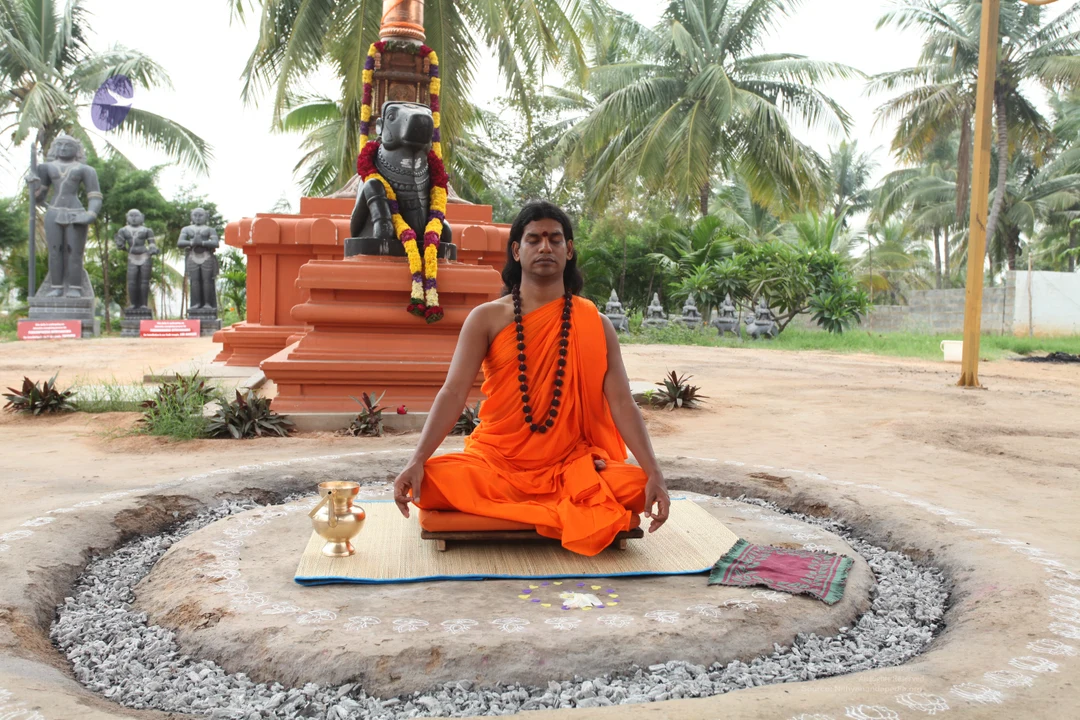
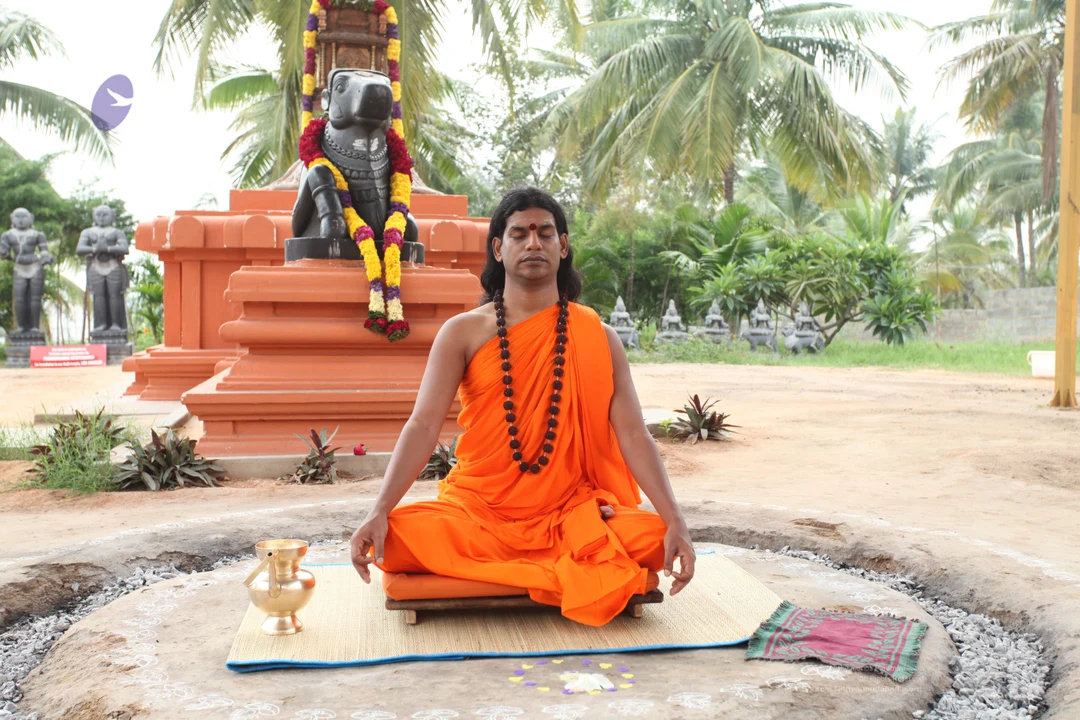
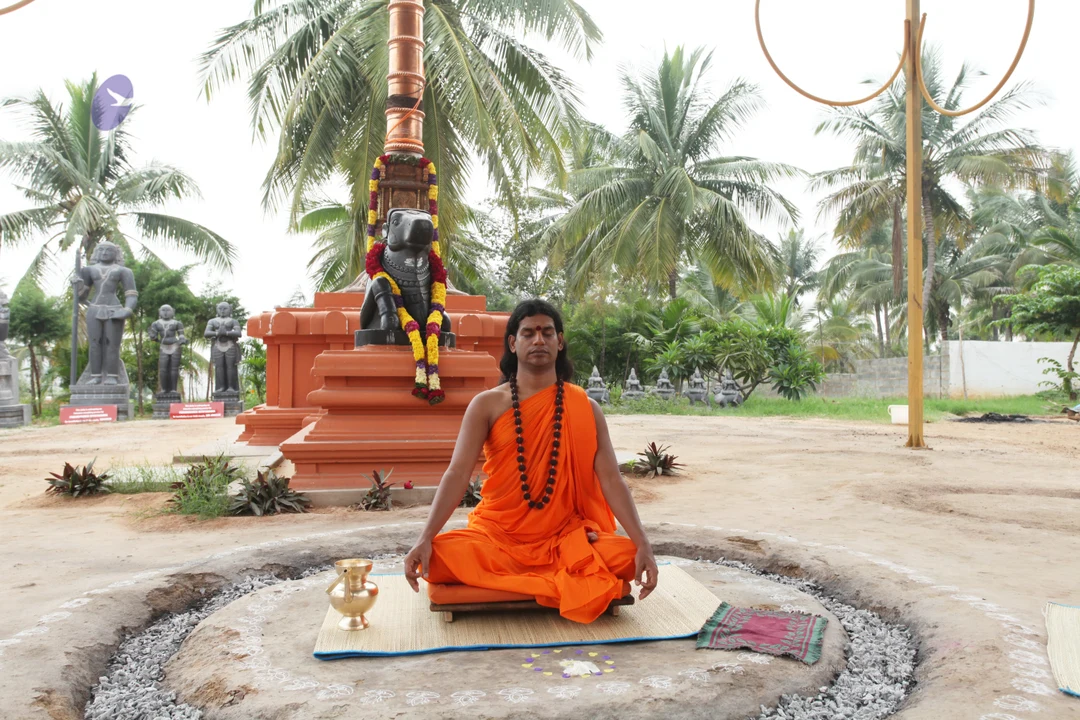
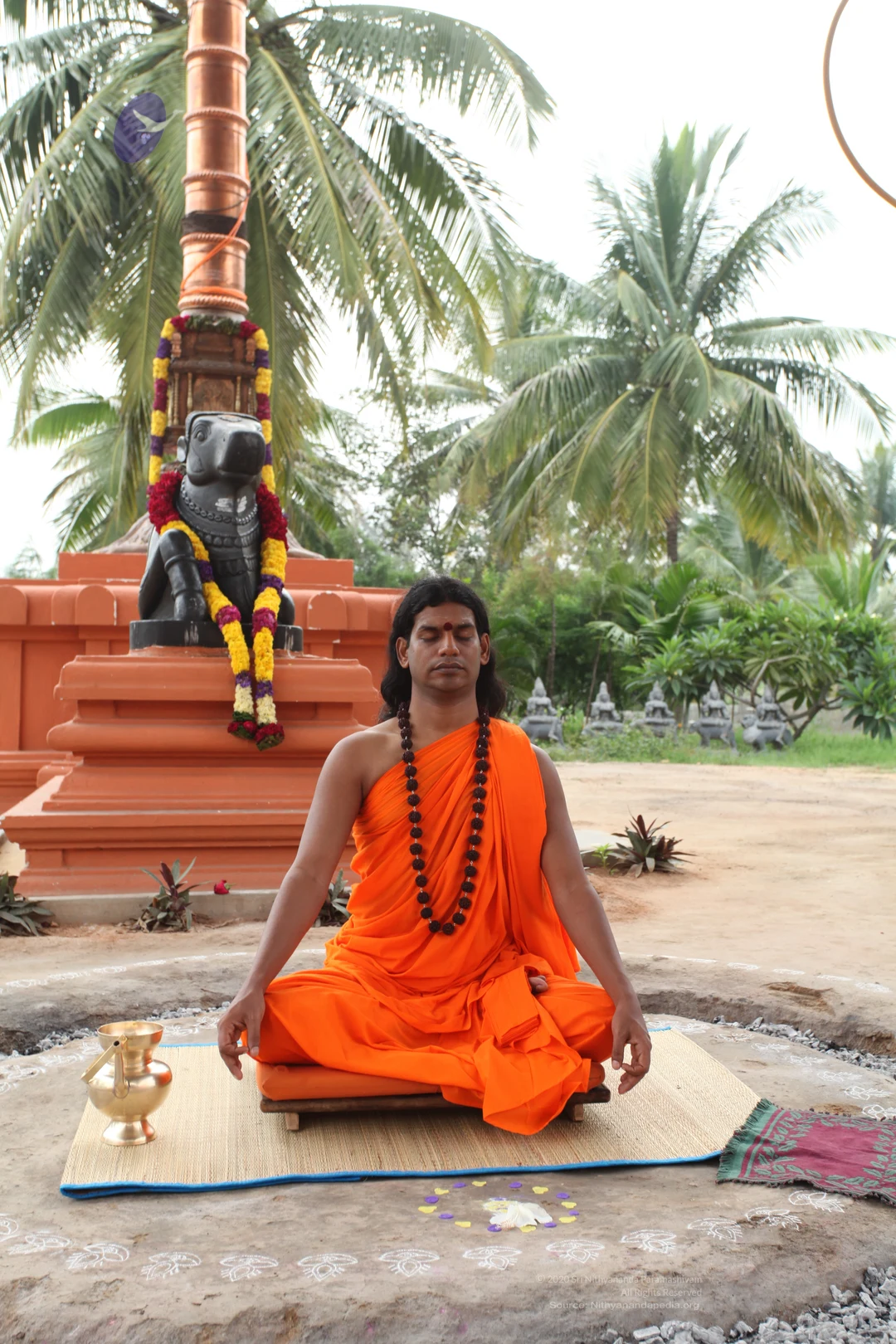
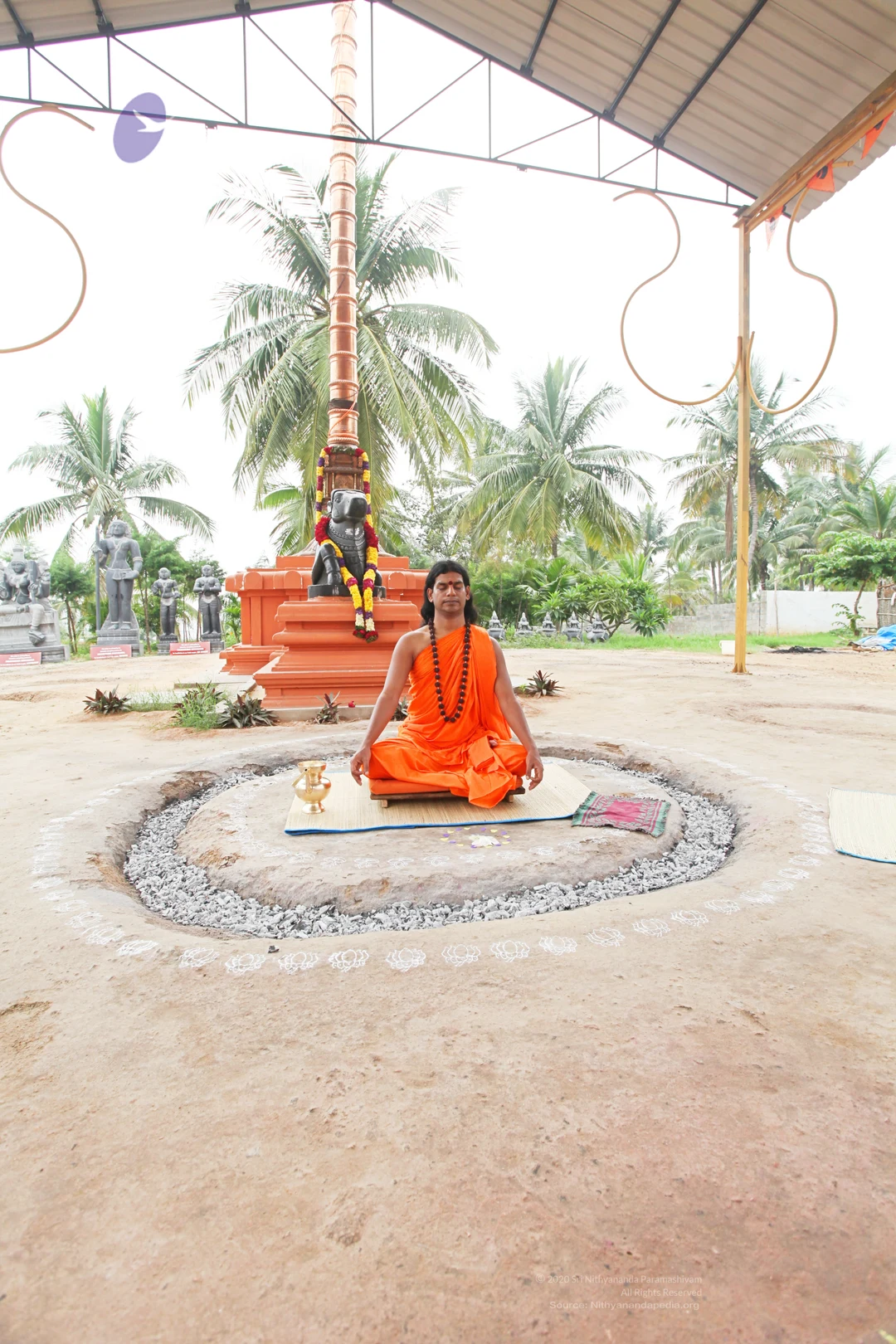
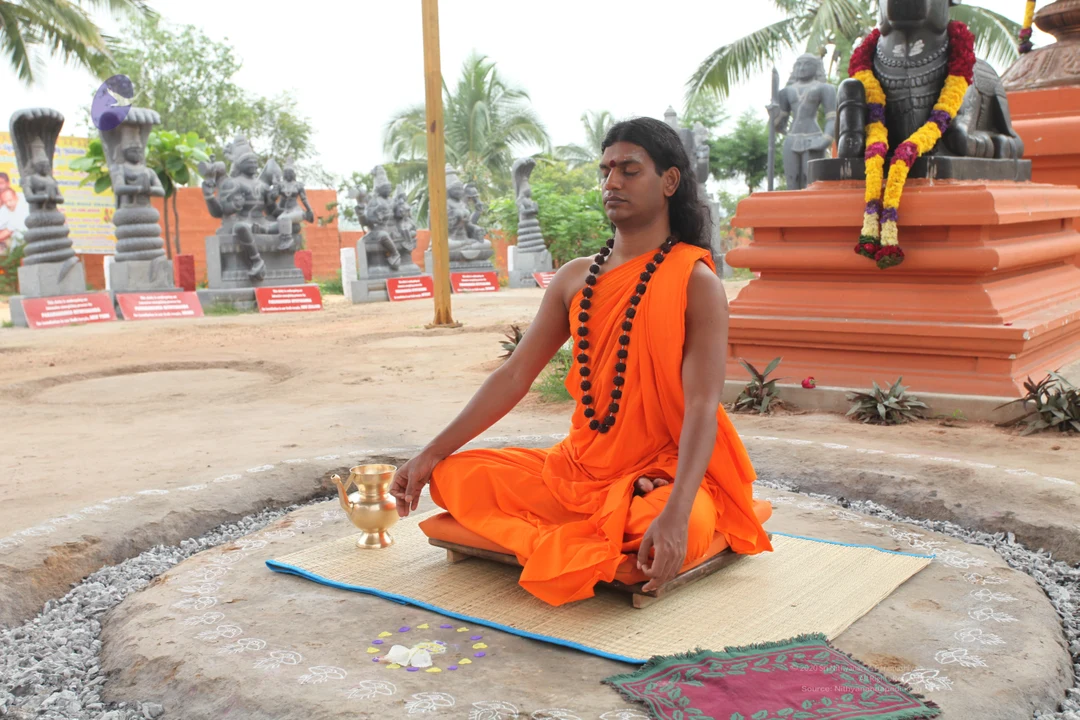
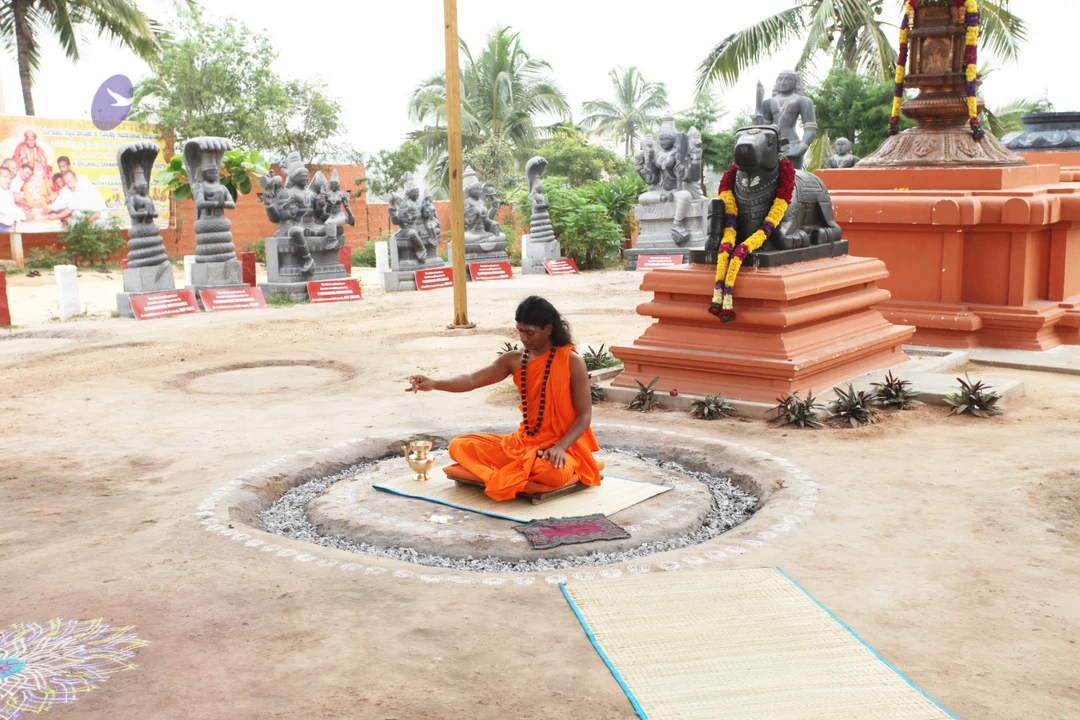
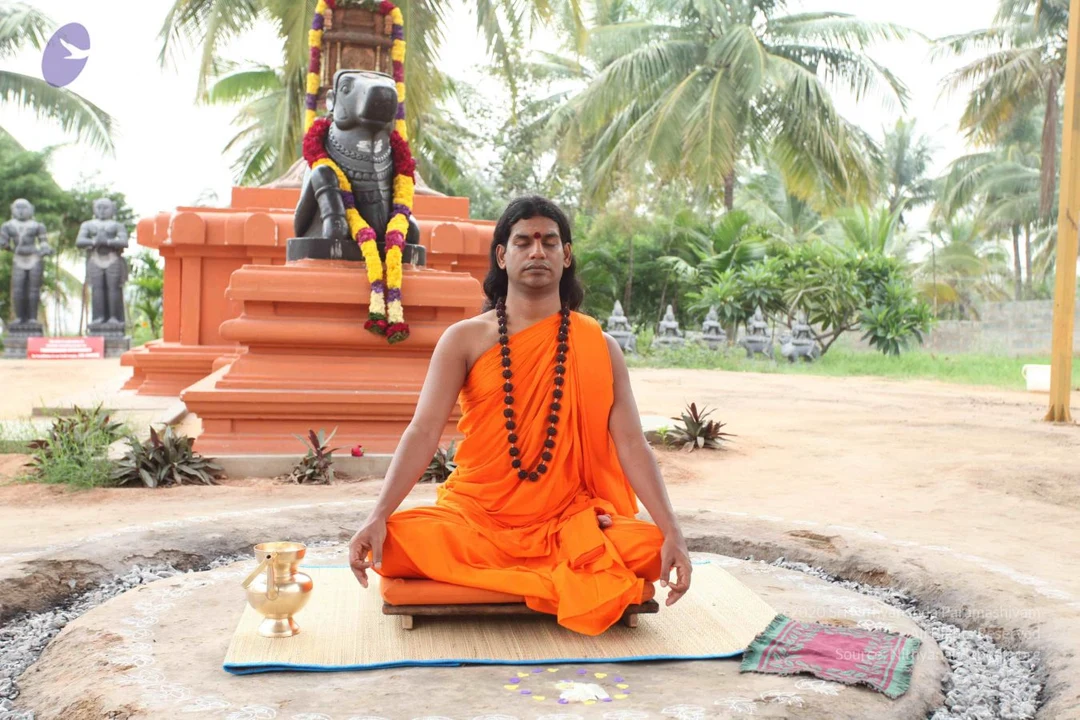
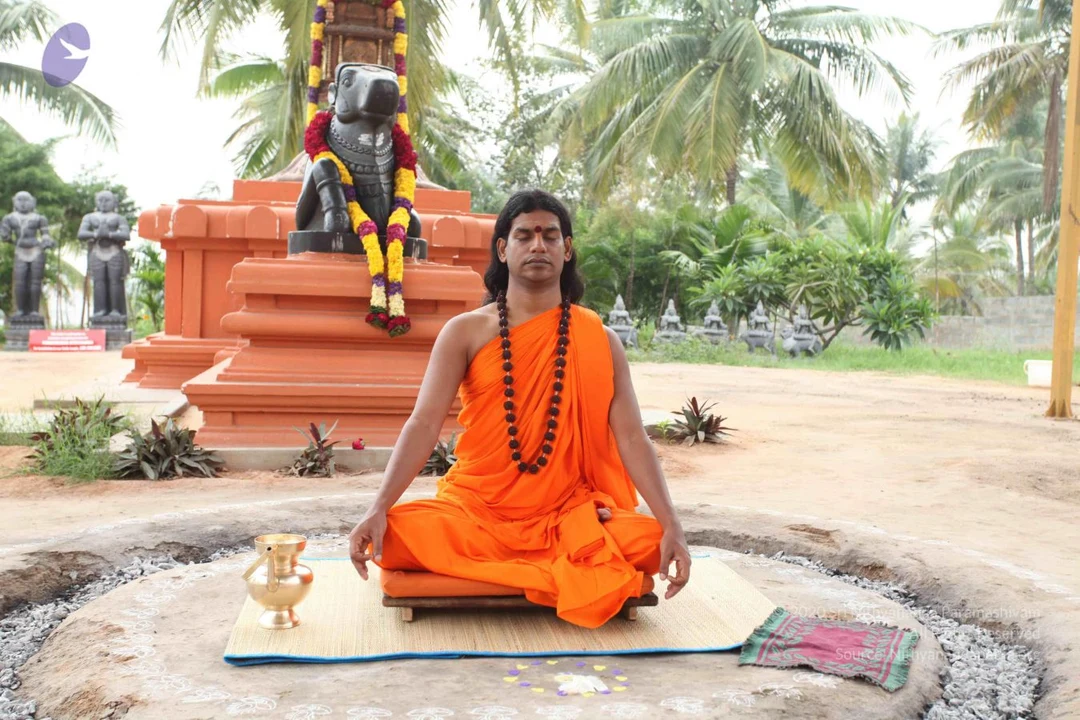
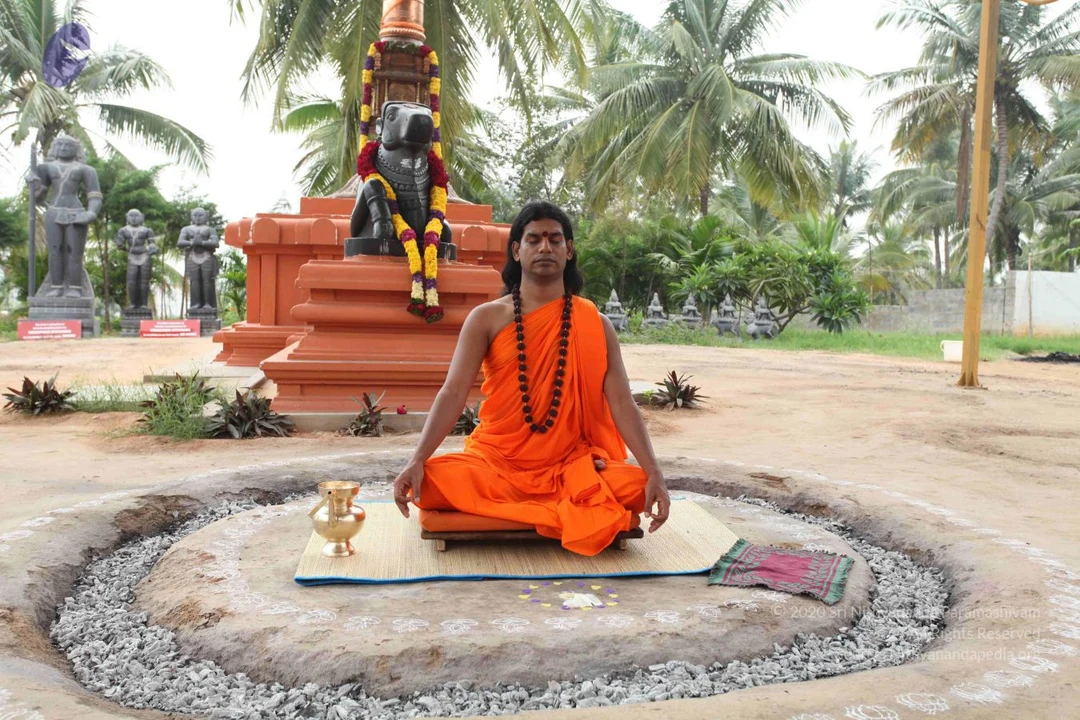
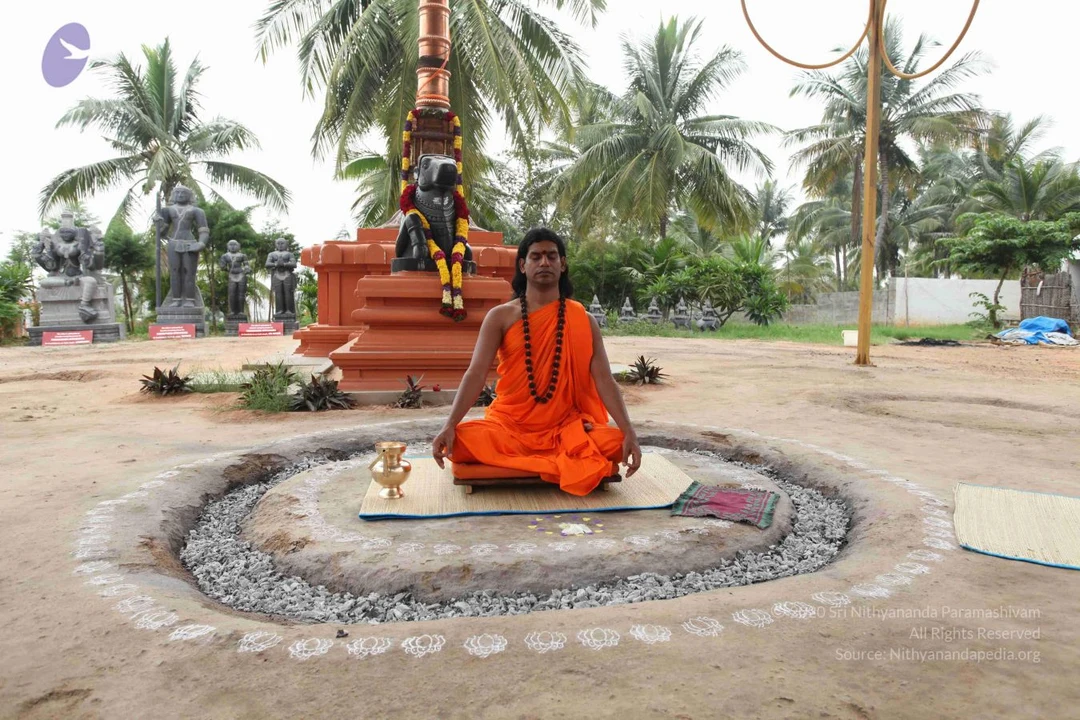
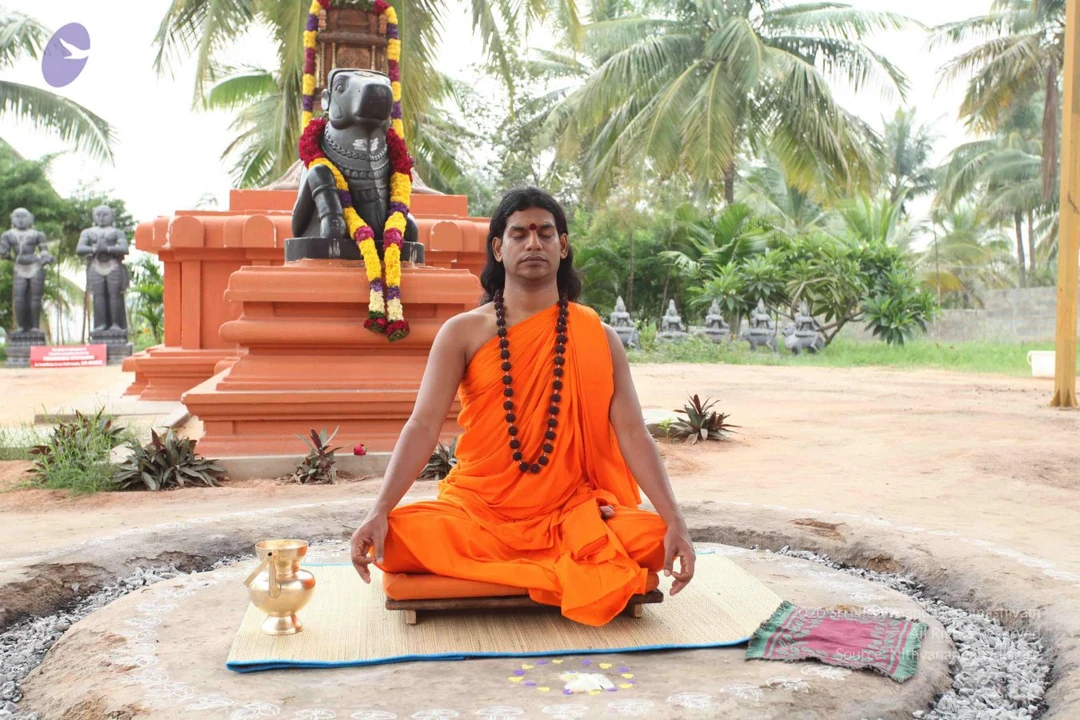
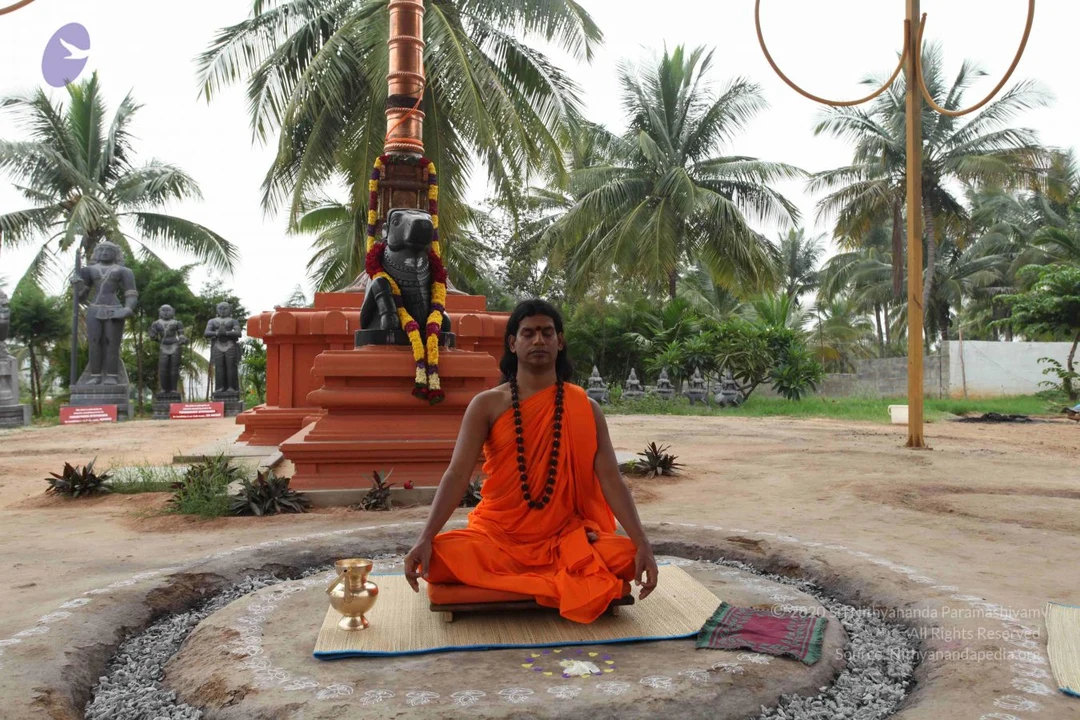
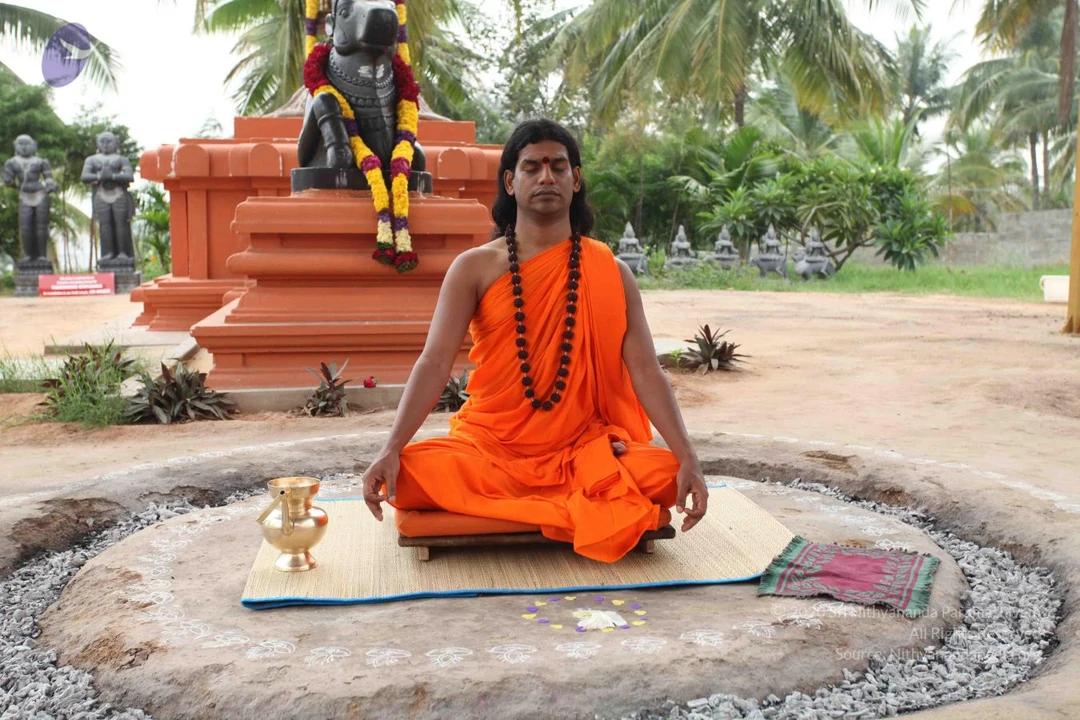
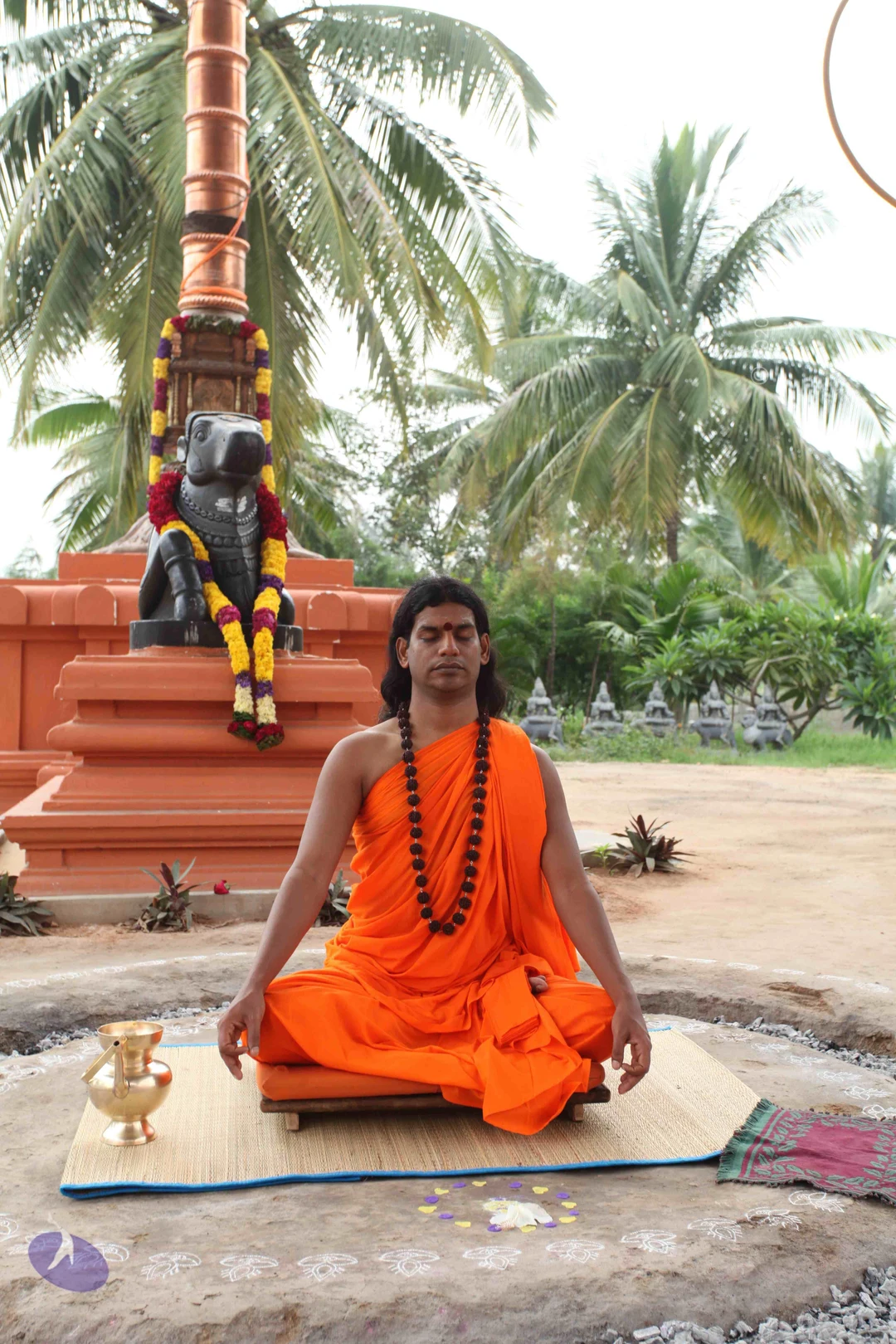
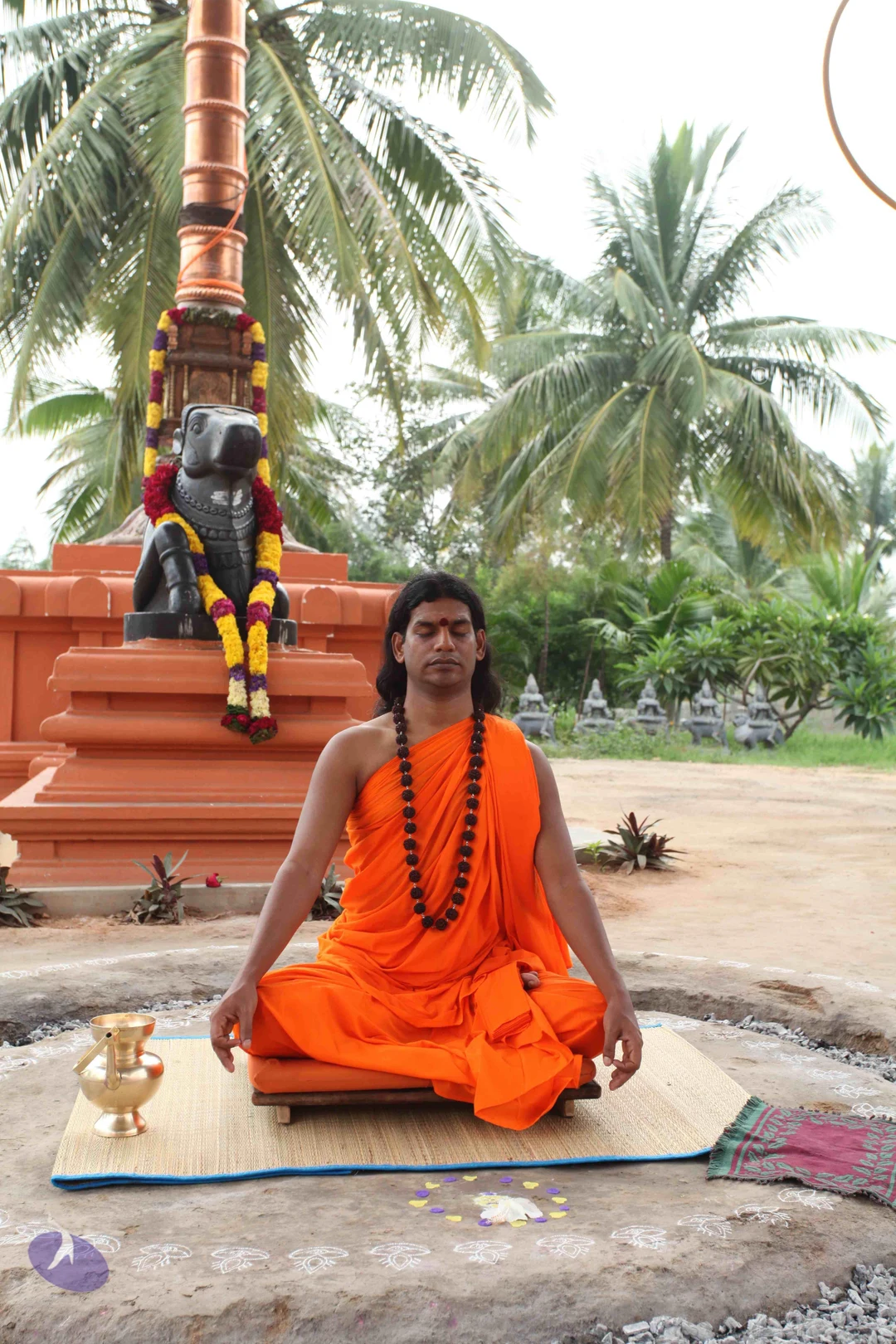
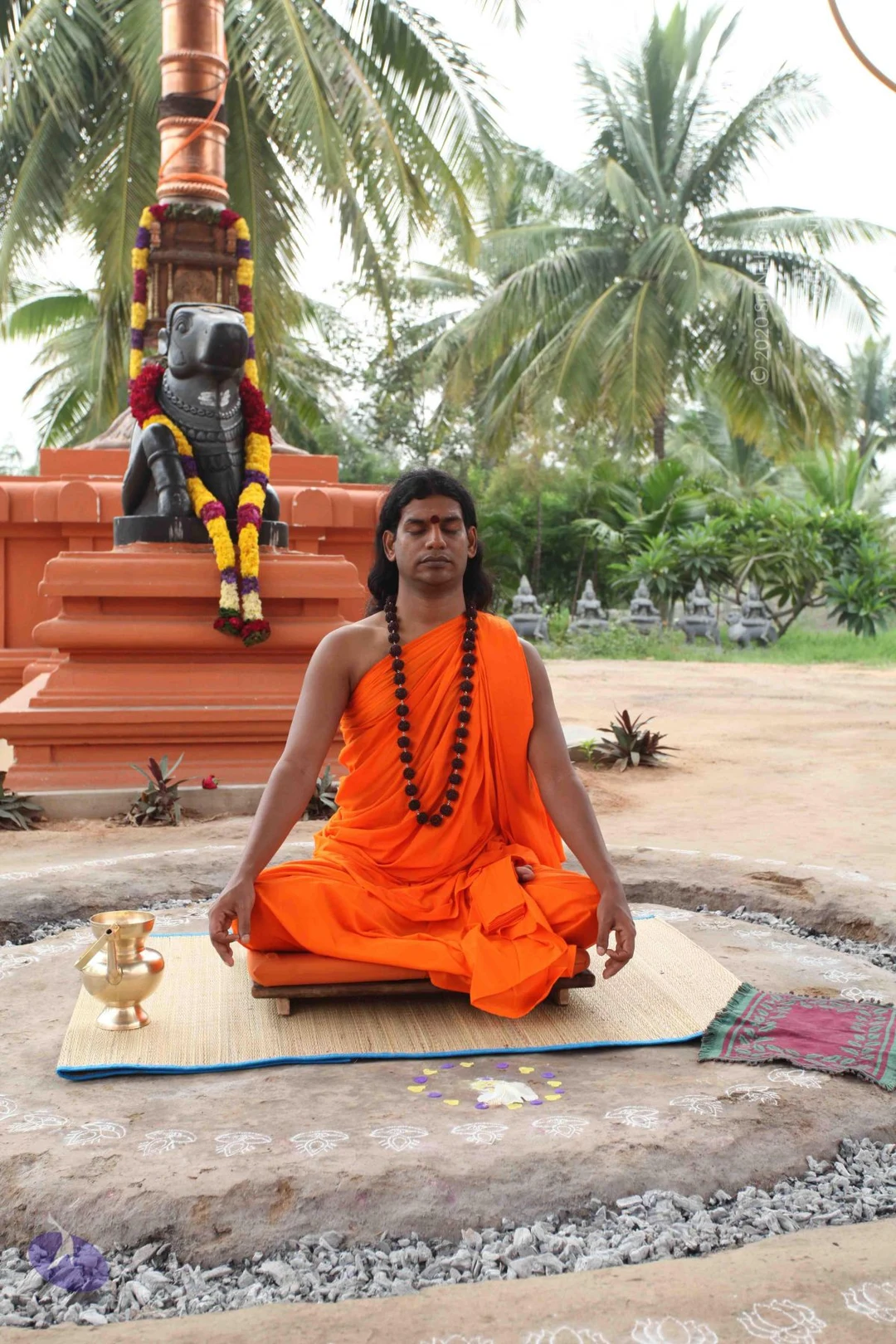
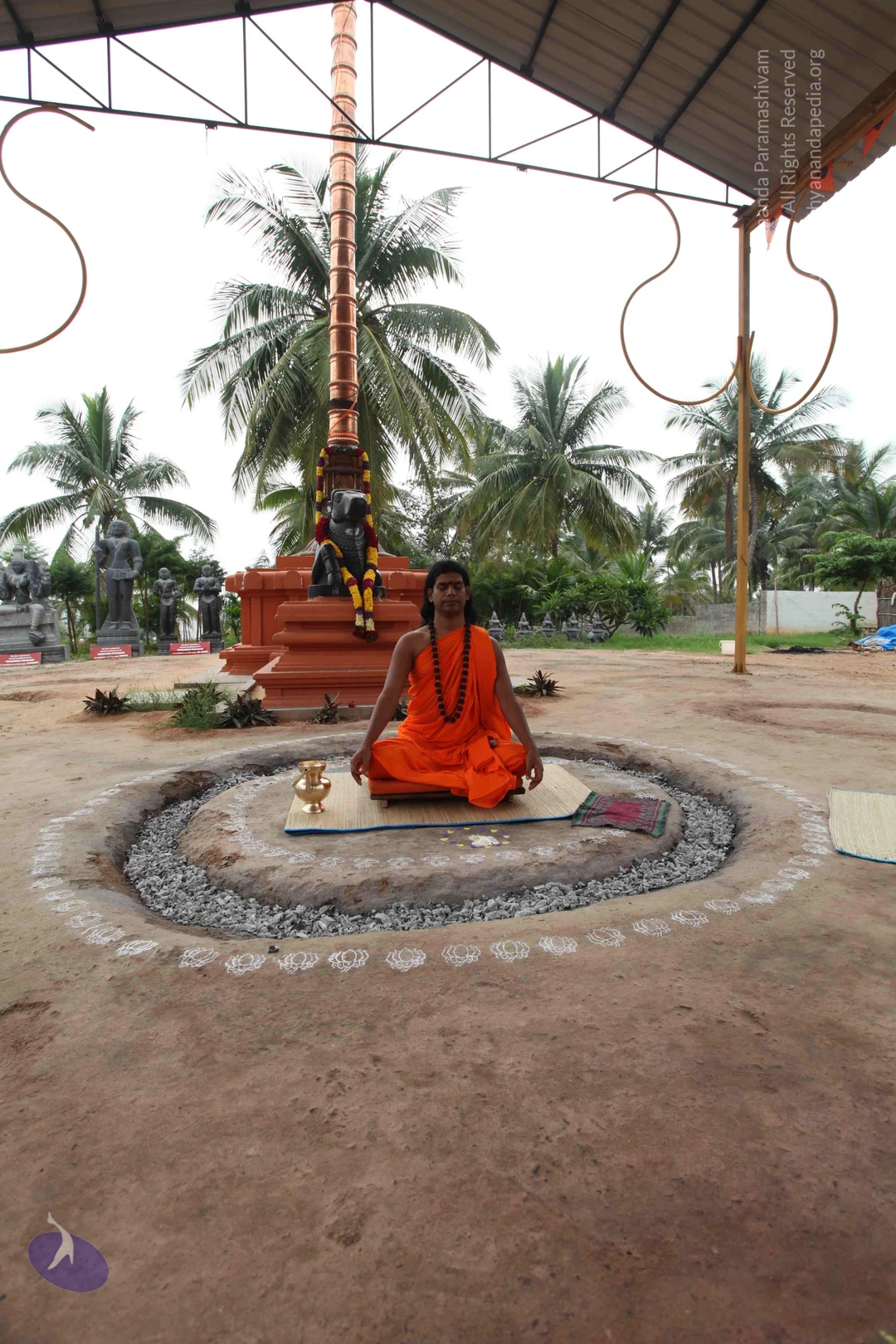
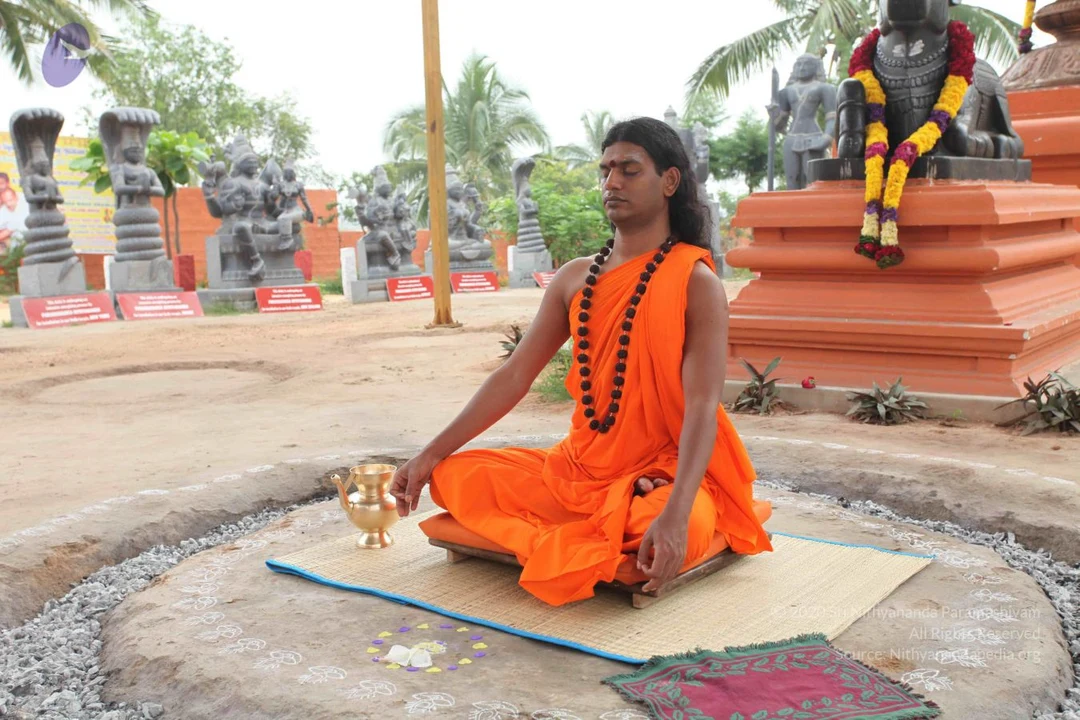
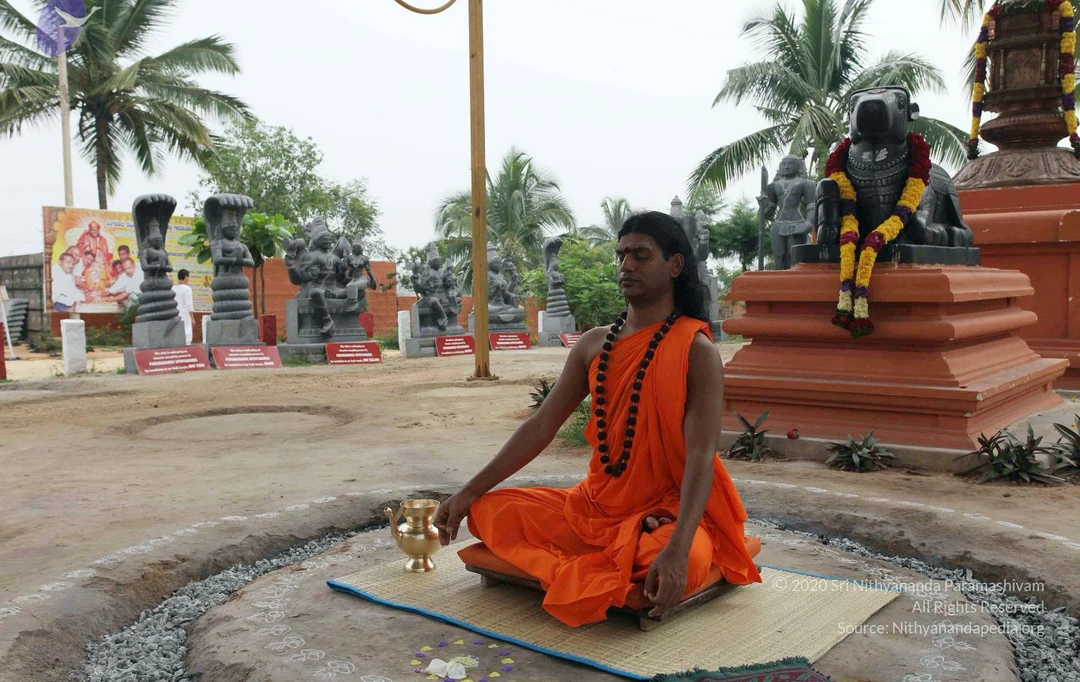
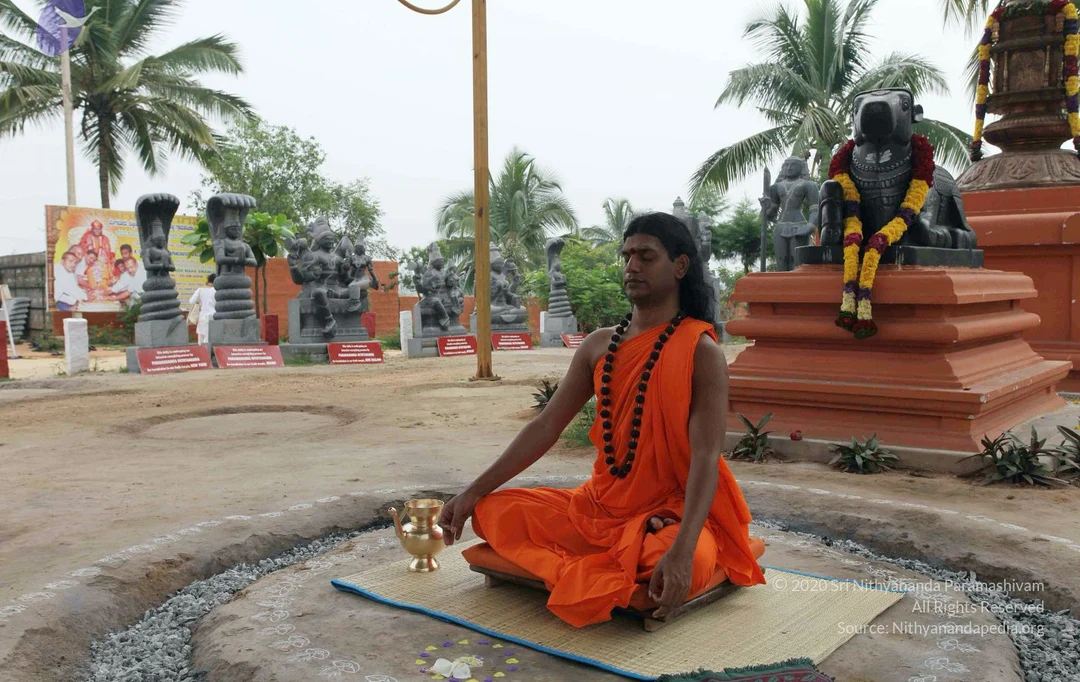
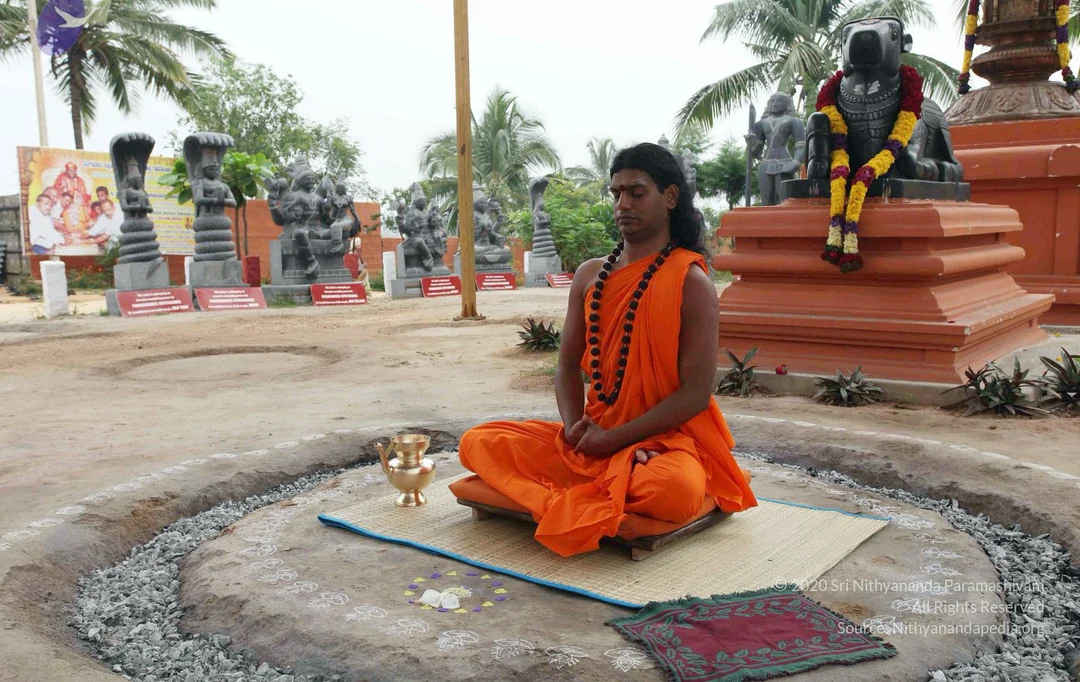
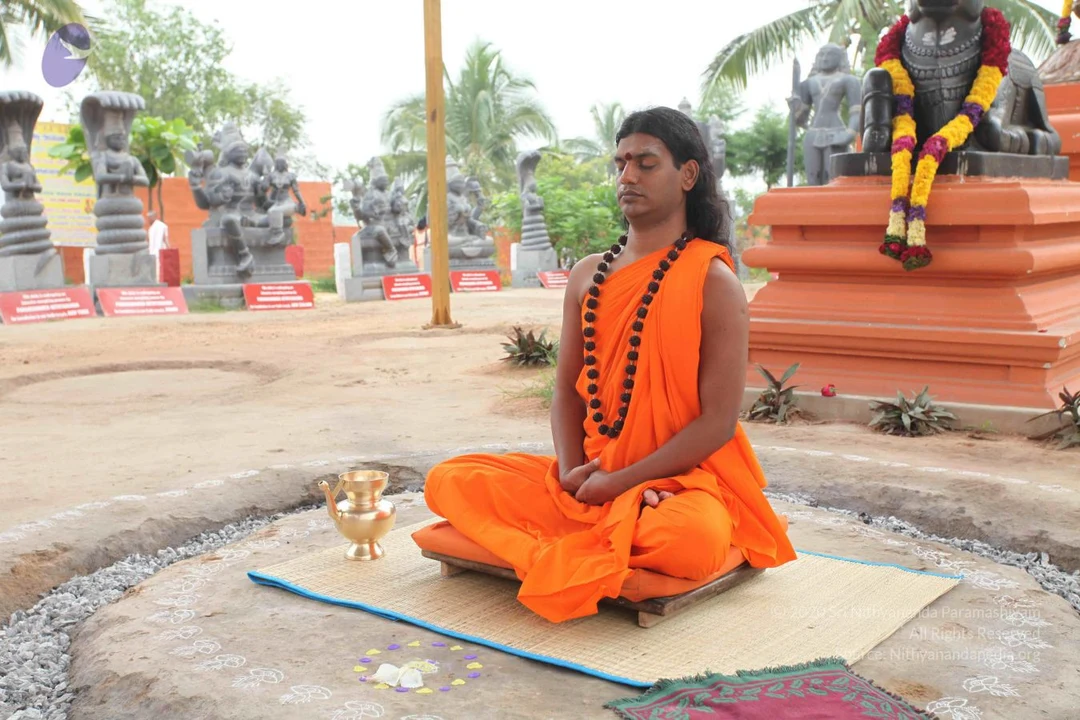
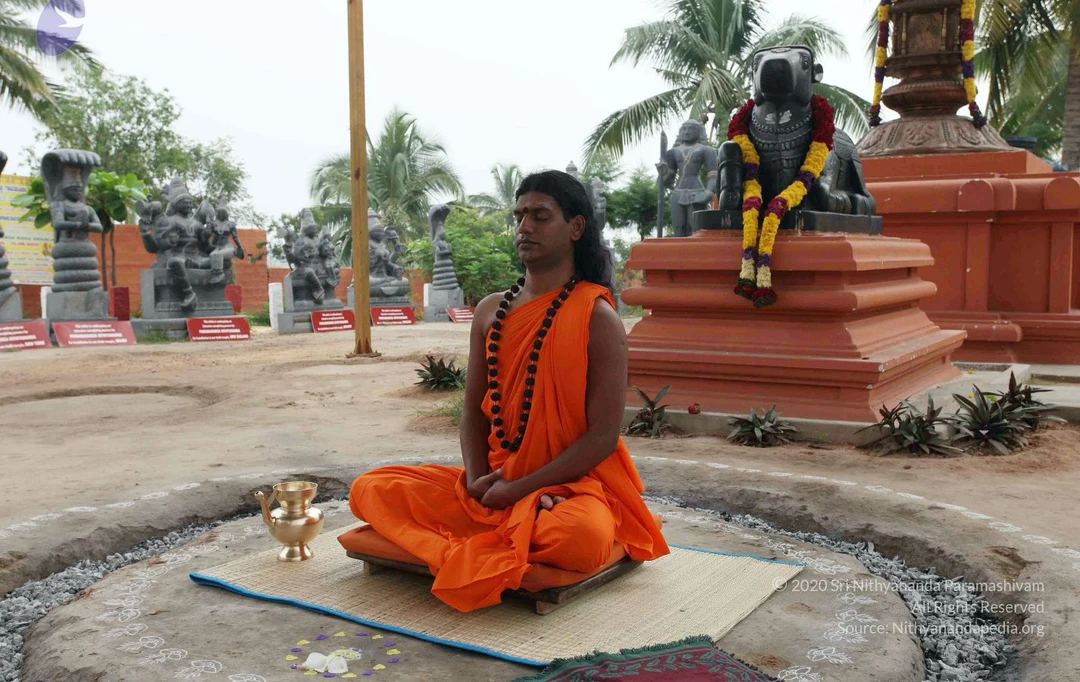
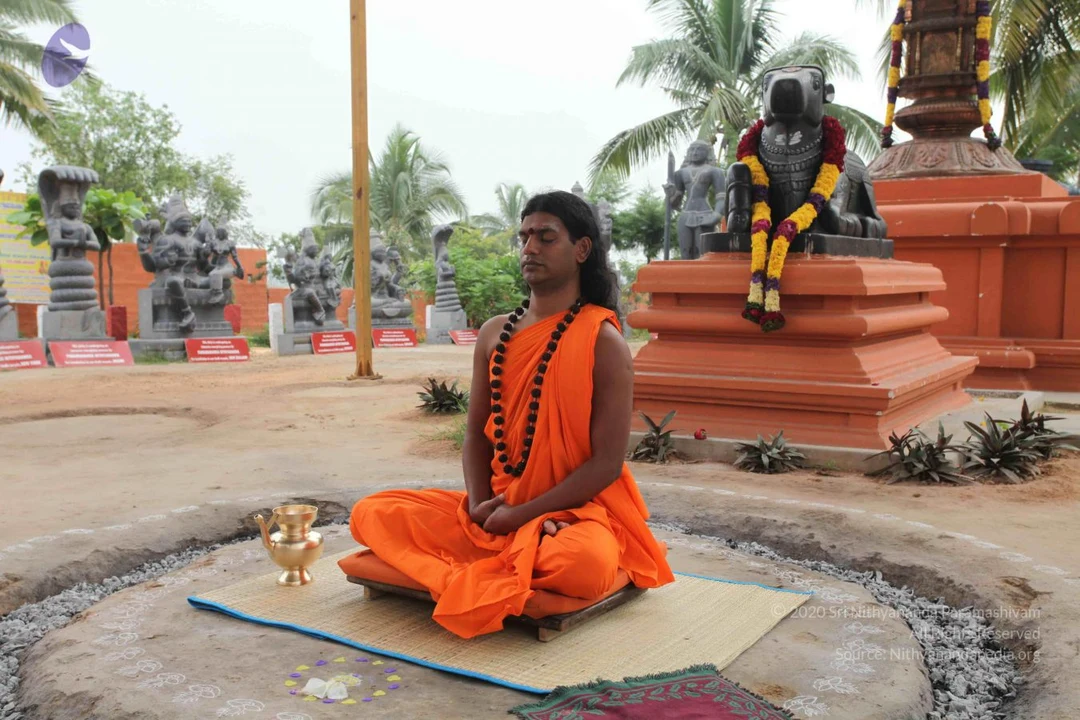
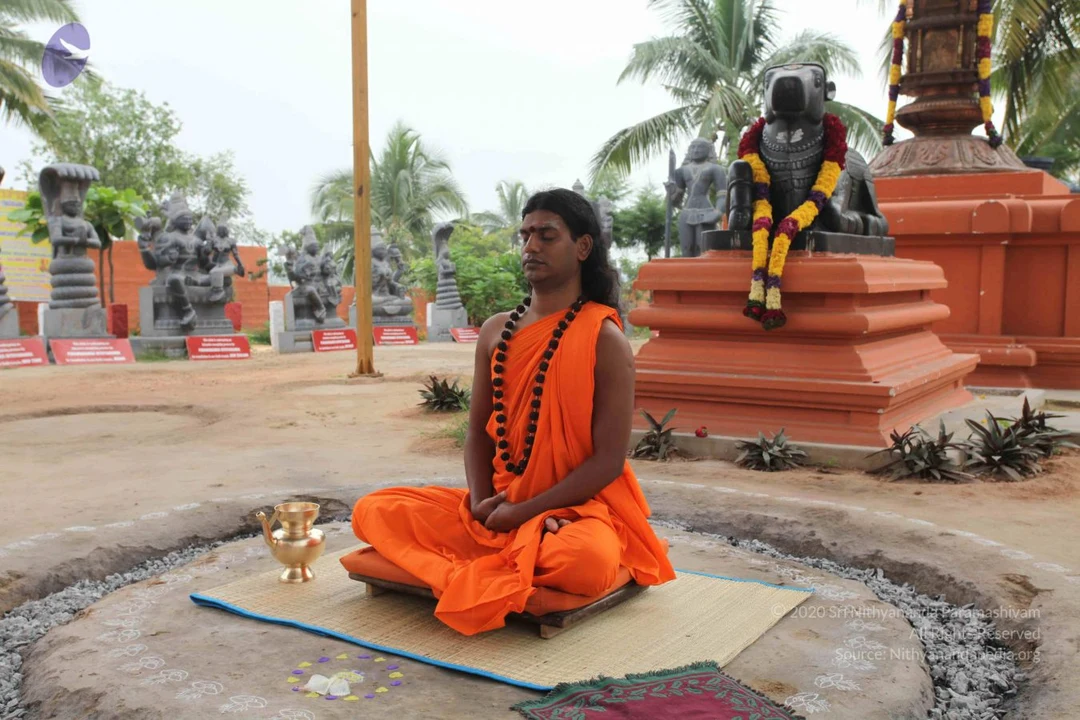
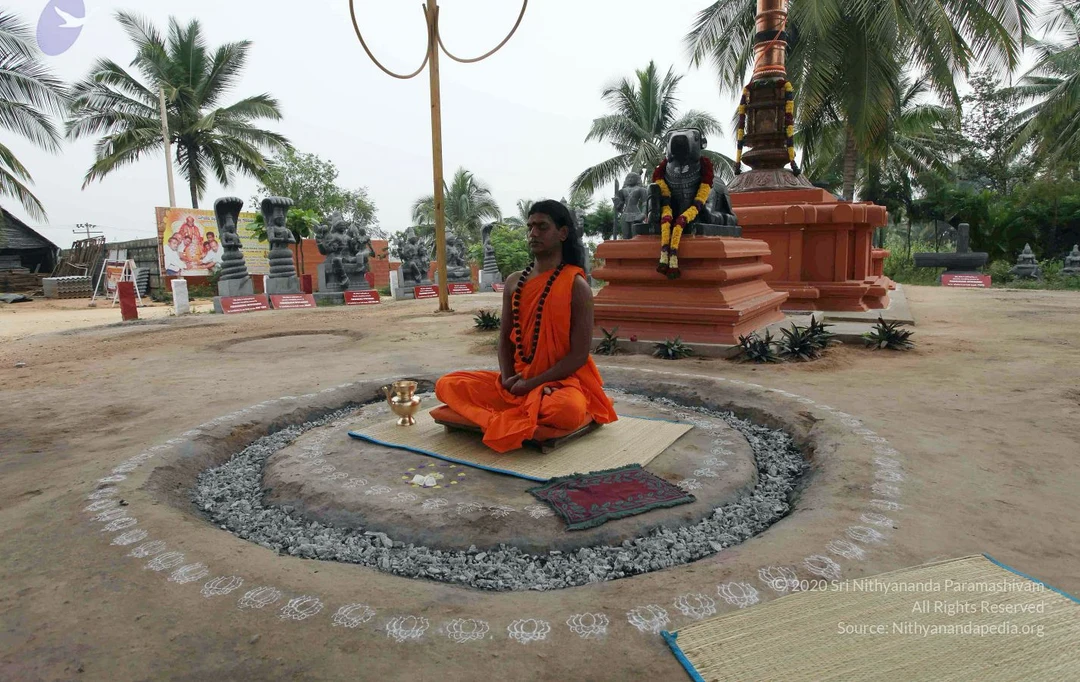
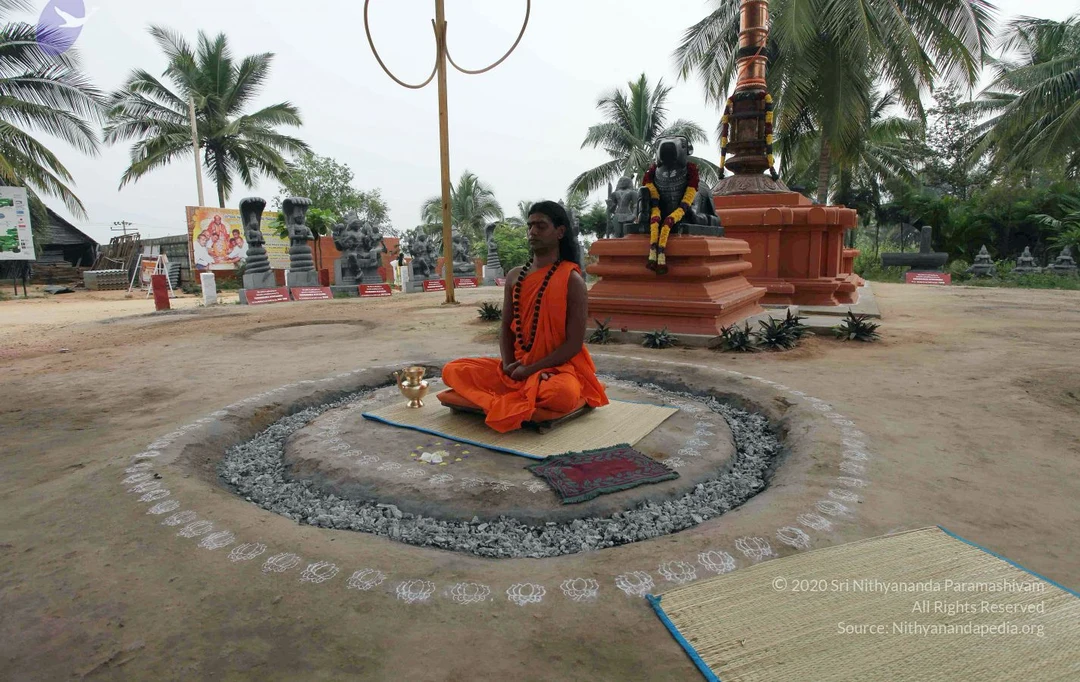
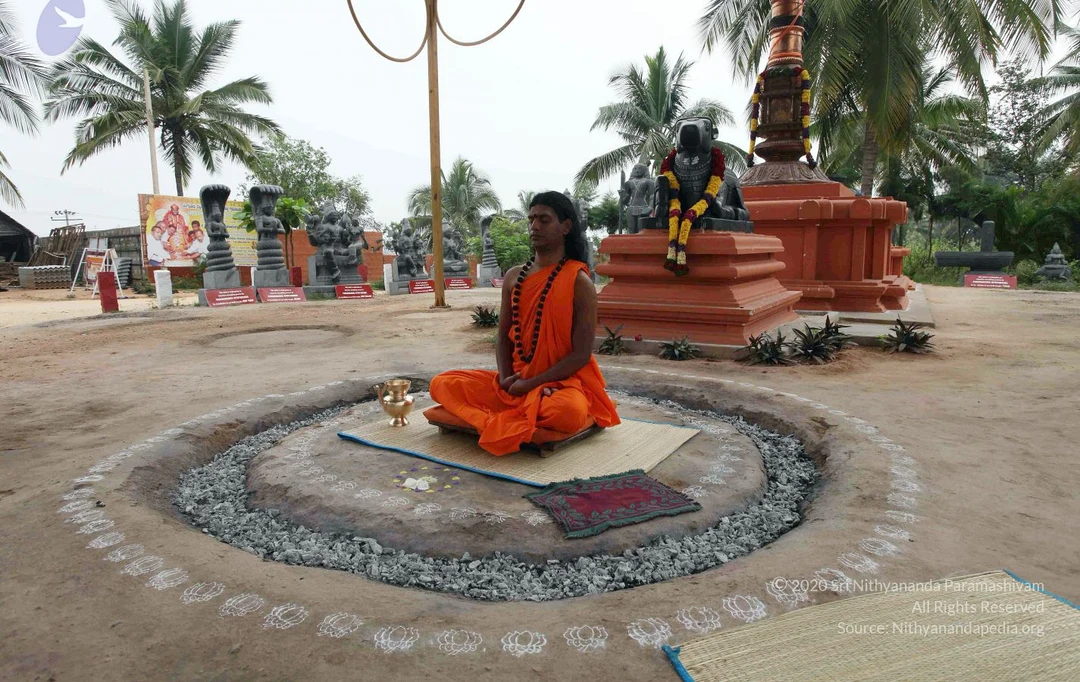
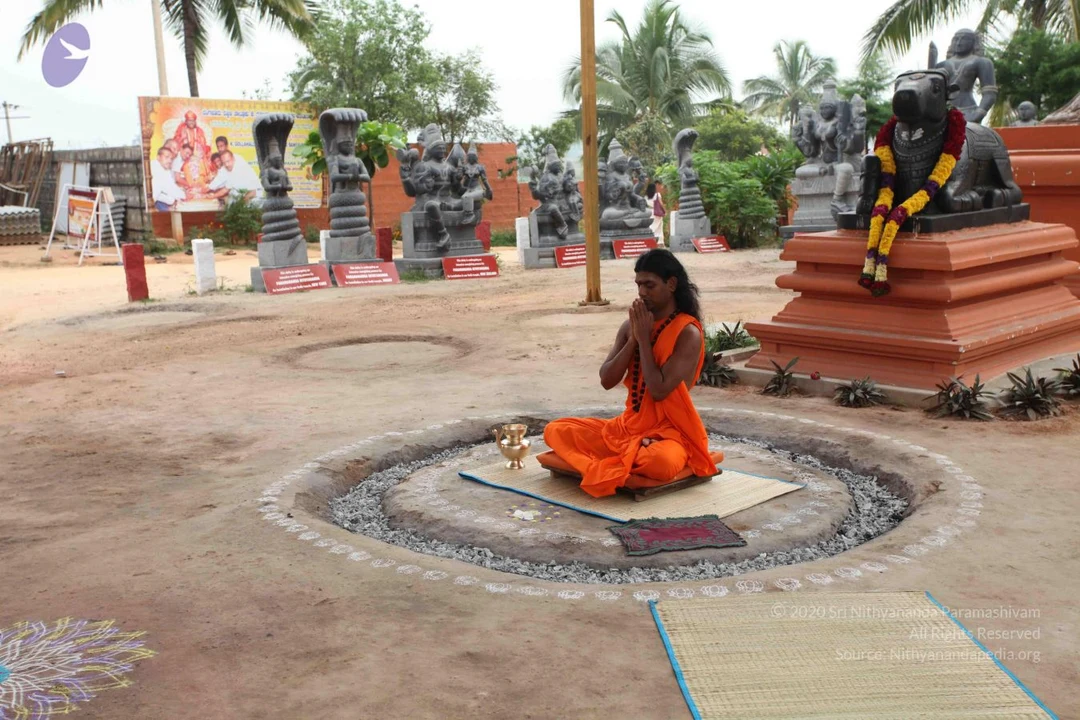
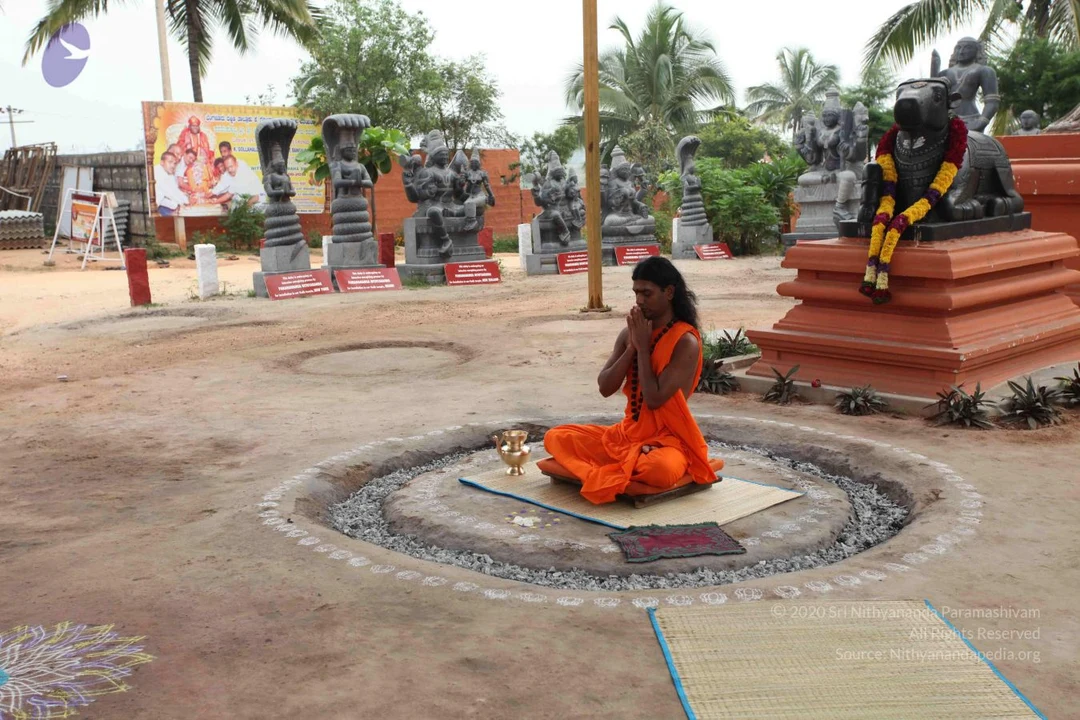
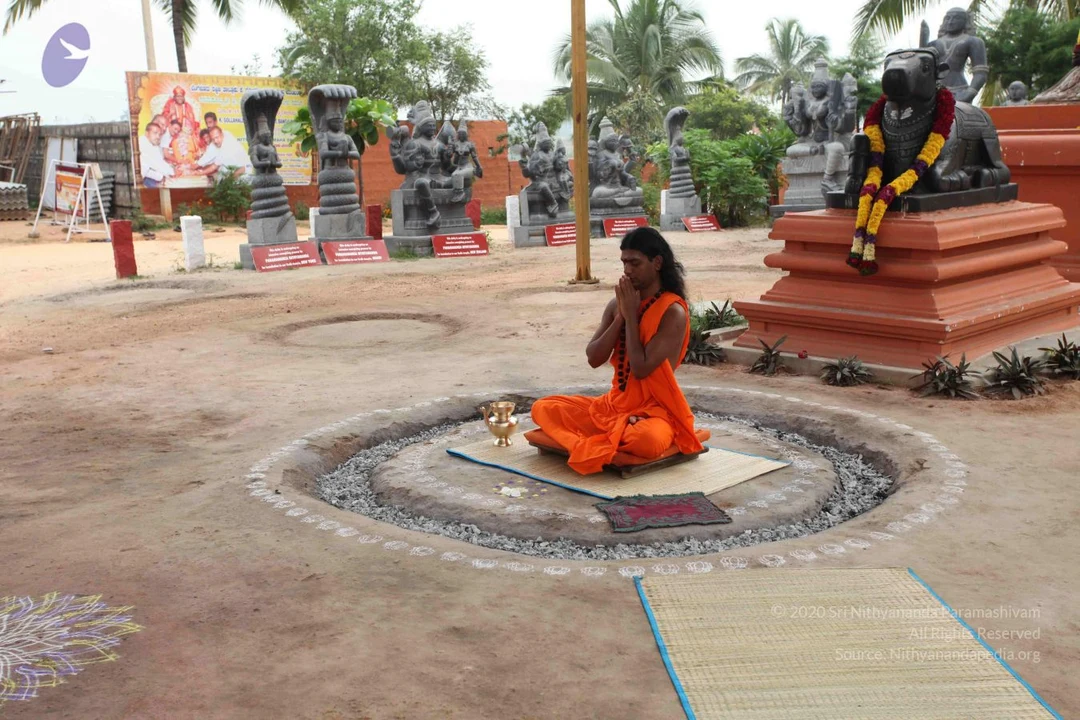
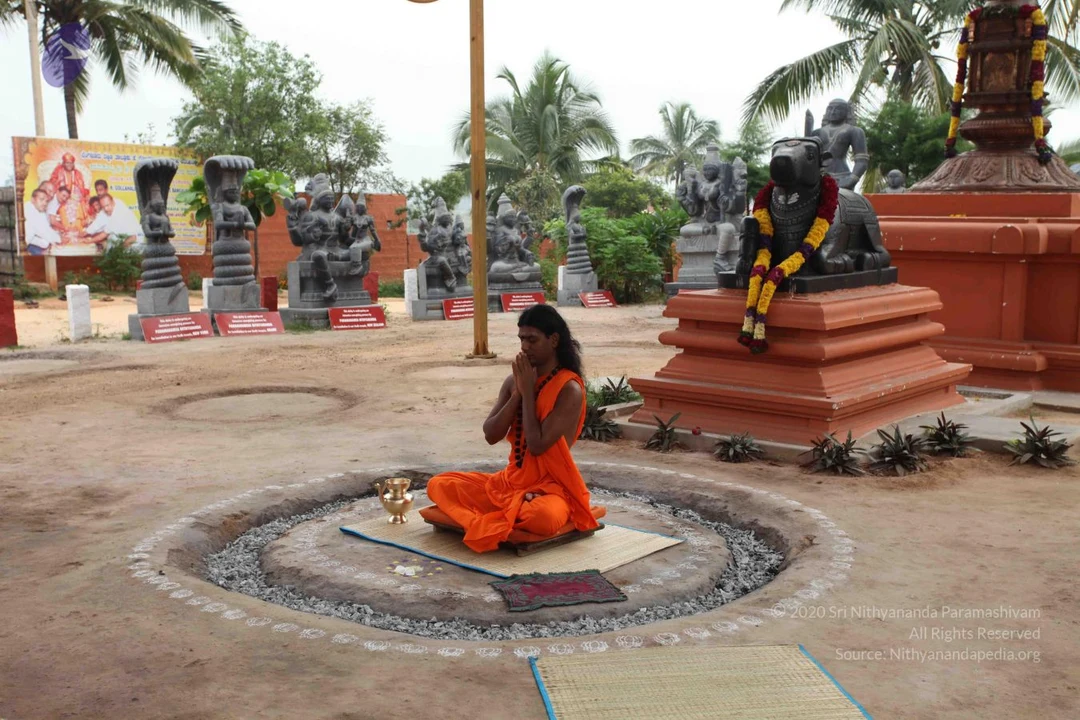
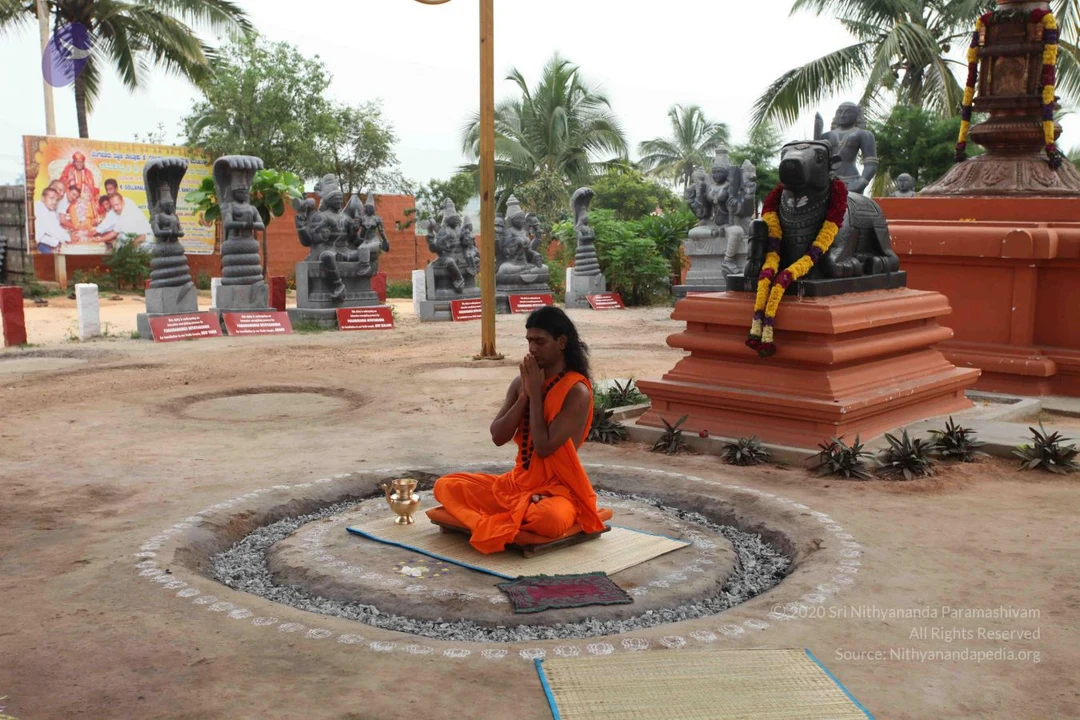
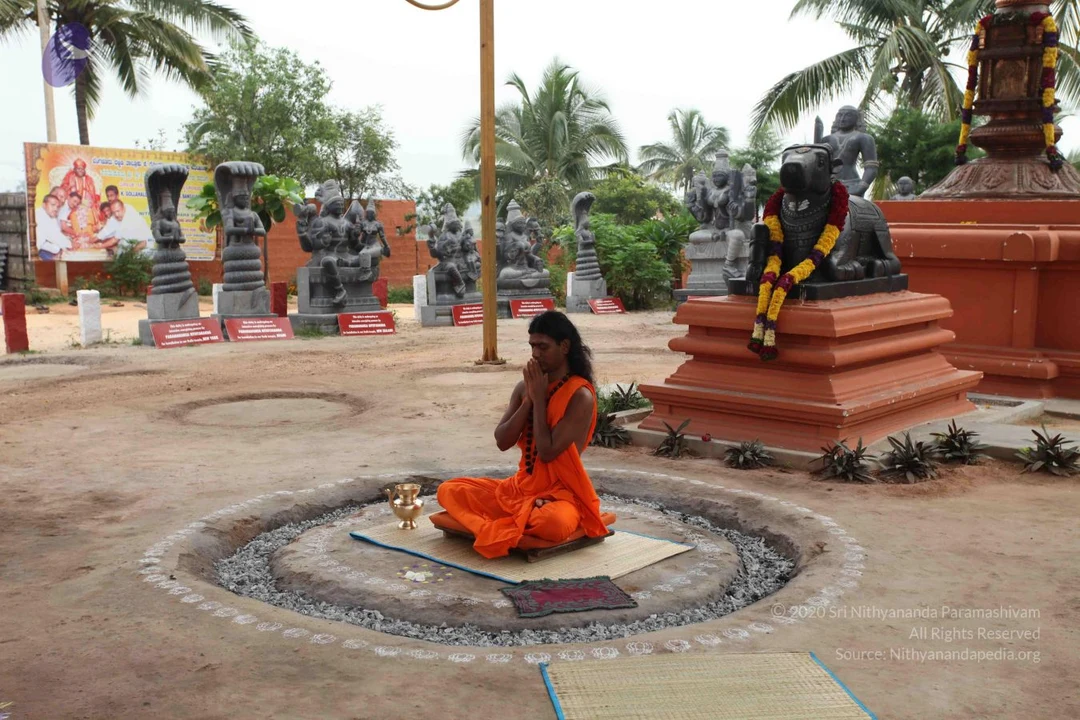
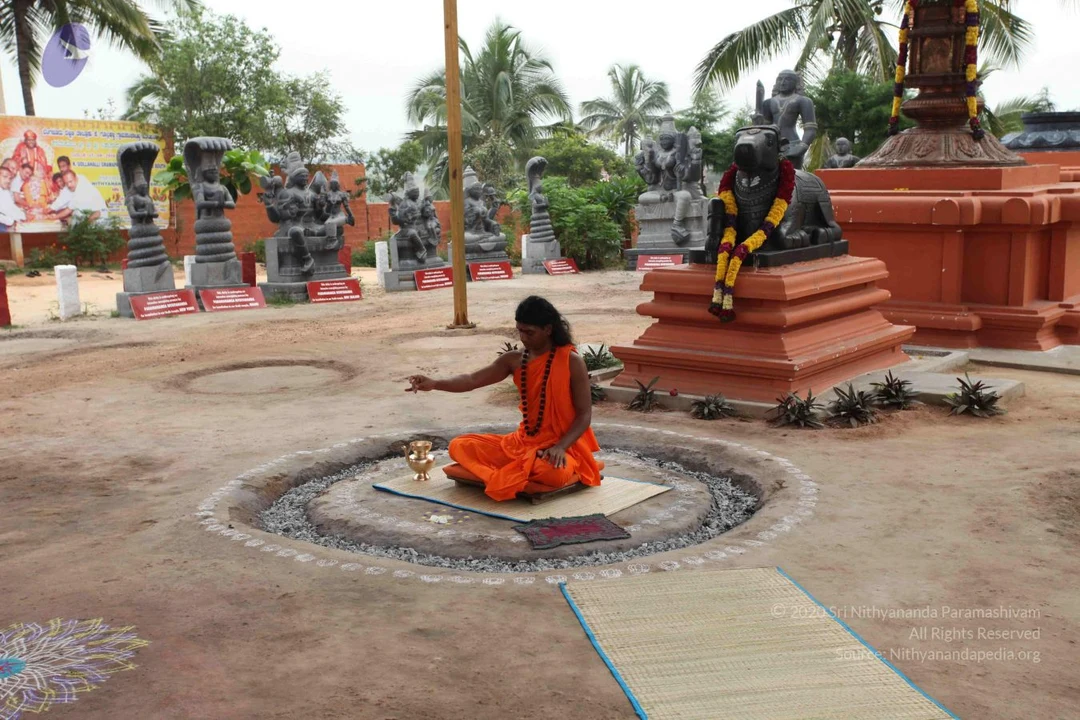
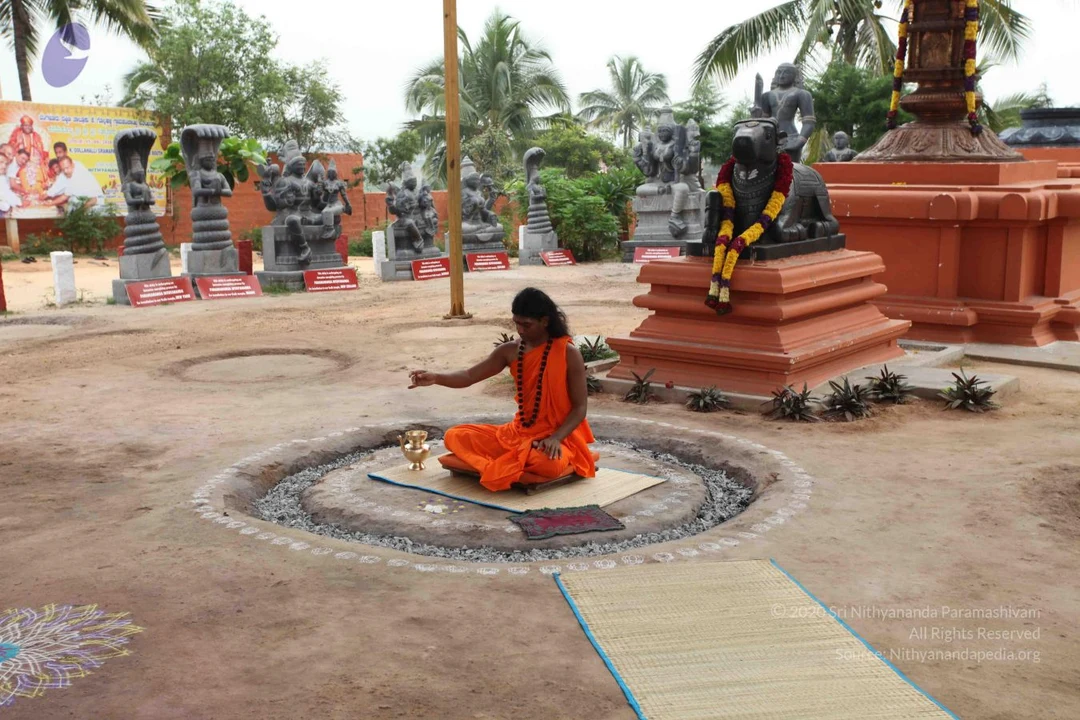
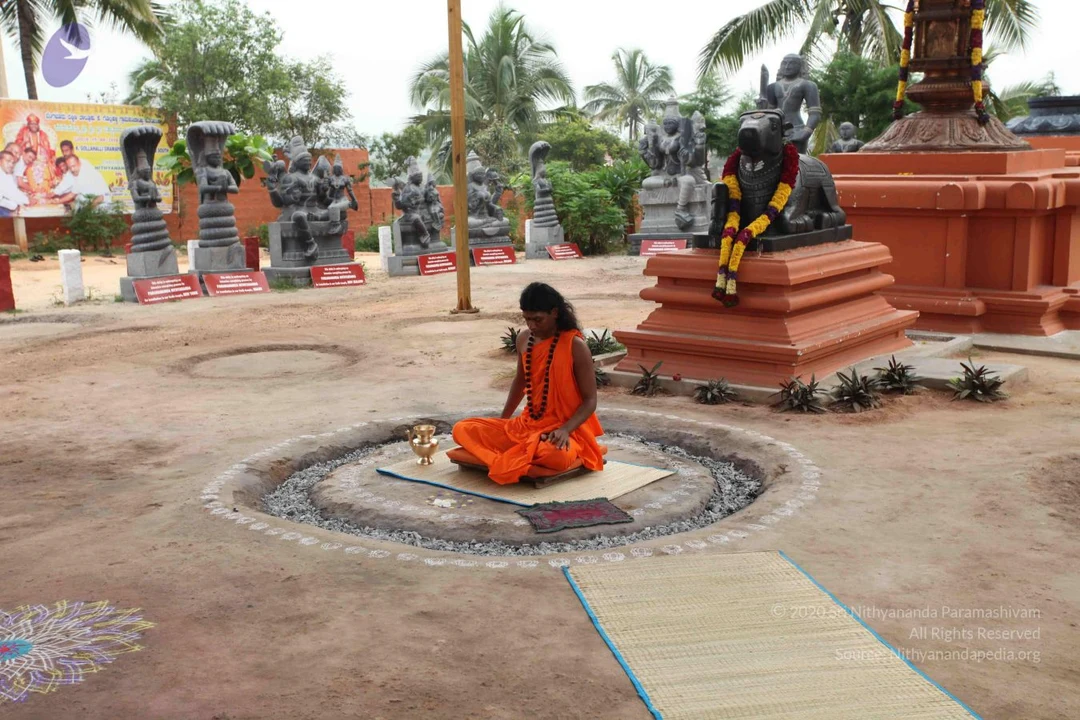
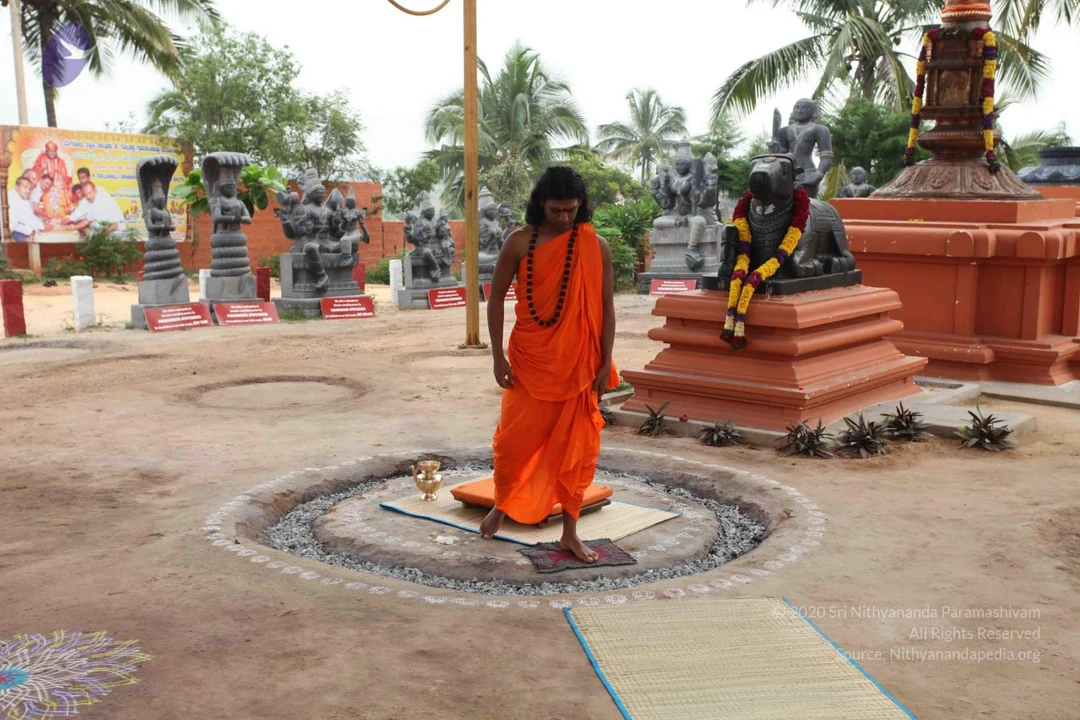
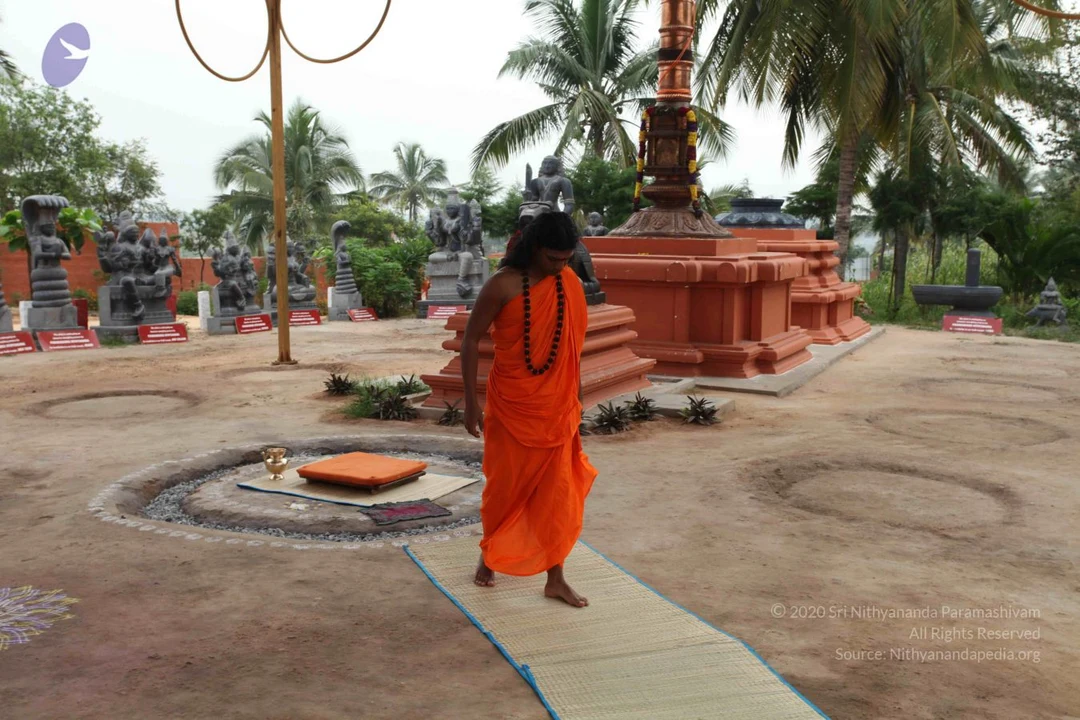
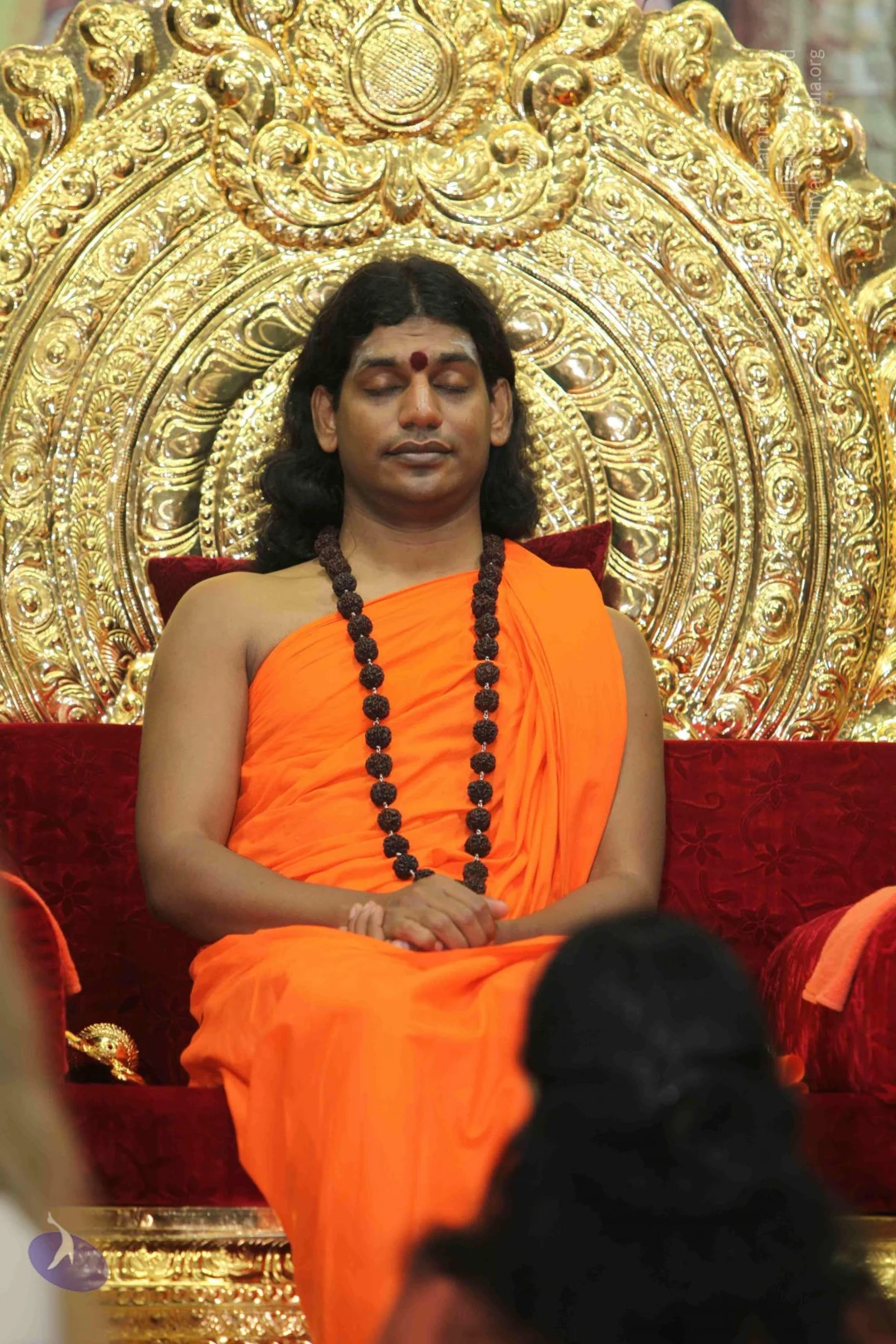
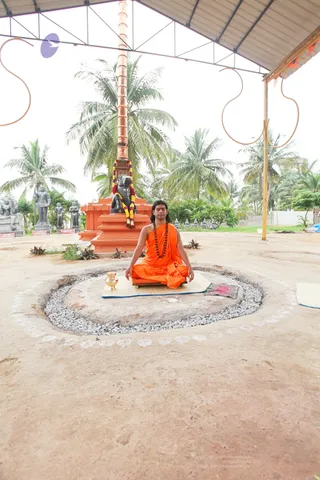
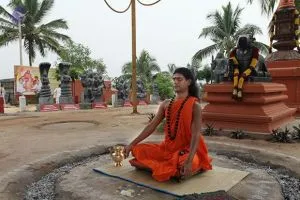
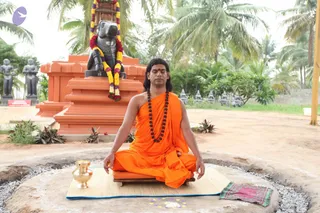
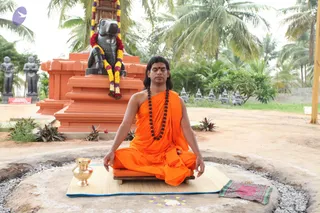
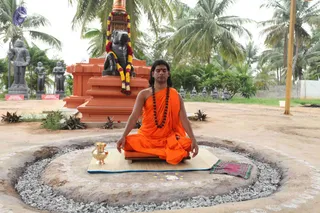
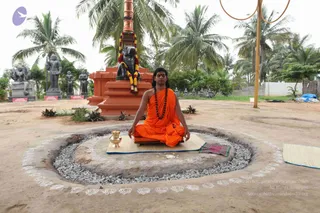
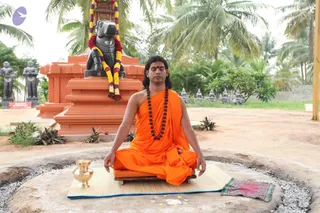
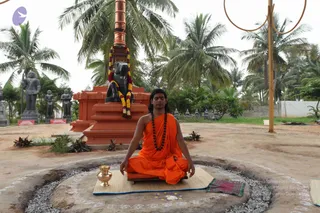
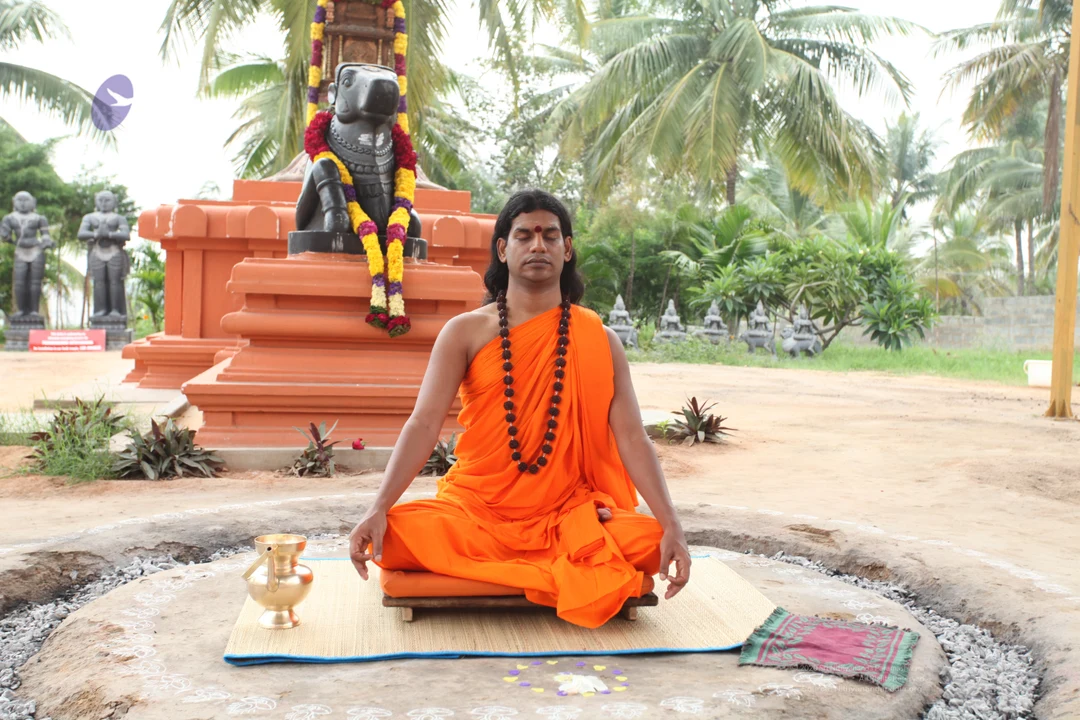
A man with long dark hair sits cross-legged in meditation on a woven mat over a wooden seat, eyes closed, in a raised circular stone-and-gravel platform outdoors. He wears an orange-saffron robe and a long dark rudraksha mala with a red tilak on his forehead. Behind him stands a black stone Nandi bull draped in a garland of yellow, red and white flowers on an orange plinth. Two small grey stone figures stand at left, palms, palm trees and a tiered stone shrine in the background. A brass kalasha-style pot sits on the mat at left and a folded pink cloth lies at right, with scattered petals on the ground.A man sits cross-legged in meditation on a woven mat over a low wooden seat, in a circular bed of white stones and small flowers outdoors. He wears an orange saffron robe, a long rudraksha mala, and a red tilak on his forehead, with eyes closed and hands resting on his knees. Behind him is a black stone Nandi bull draped in a garland of orange, yellow, purple and red flowers, set on an orange stepped plinth. Brass kalasha-style vessel sits beside him, a folded pink-and-green cloth lies at right, and small grey stone figures stand among palm trees. a person, a bare-shouldered figure with long swept hair and a rudraksha mala, is meditating in the scene.A seated man in an orange-saffron robe and a rudraksha mala meditates cross-legged on a woven mat inside a circular gravel-lined pit in an open sandy compound. Behind him stands a large black stone Nandi bull with a garland of yellow, red and white flowers, set on an orange stepped pedestal beneath a tall copper-topped pillar. Grey stone statues stand along the left, palm trees surround the area, and a gold kalasha-style vessel sits beside him on the ground. A small red-bordered sign is visible at the left edge. The man has long dark hair and a red tilak on his forehead, with his eyes closed and hands resting on his knees.A man with long swept-back dark hair sits cross-legged in meditation on a mat at the centre of a circular pit ringed with grey gravel and white floral kolam designs, in an open-air outdoor courtyard. He wears an orange-saffron robe and a long rudraksha mala, with a vertical marking on his forehead, eyes closed. Behind him stands an orange brick plinth topped with a black bull statue (Nandi) garlanded with marigold and multicoloured flower strings, and a tall copper pillar rises above it. A brass kalasha pot sits beside him on the mat. Grey stone sculptures stand to the left and coconut palms fill the background; tall curved metal loops hang from the roof frame at the sides.Outdoor photo of a seated figure in saffron-orange robes and a rudraksha mala sitting cross-legged on a mat within a circular gravel-filled pit in a sandy courtyard. The figure extends one hand over a small brass vessel placed in the centre. Behind them stands a row of grey stone sculptures including cobra-hooded figures and multi-armed deities, each with a red placard. On the right is a seated black Nandi bull statue draped with garlands in yellow, purple and white, beside an orange-red pedestal and a tall ornate orange-red shrine pillar. Palm trees and a yellow banner with a framed photo appear in the background. A woven mat lies in the foreground.

Paadapooja
19 photosSource gallery
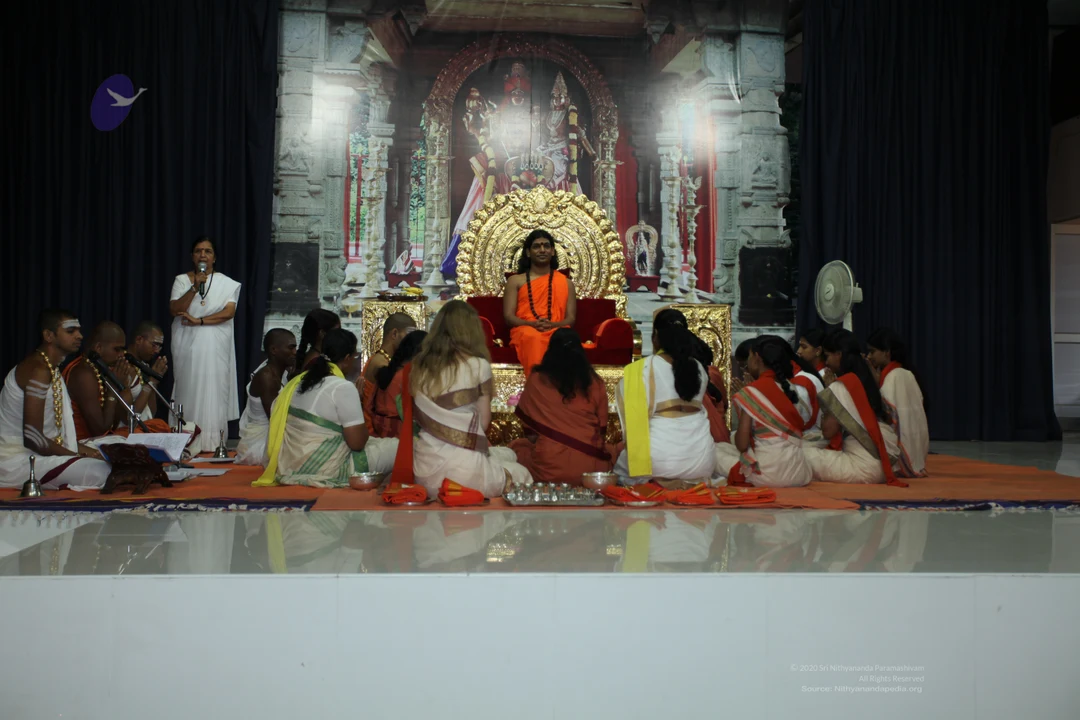
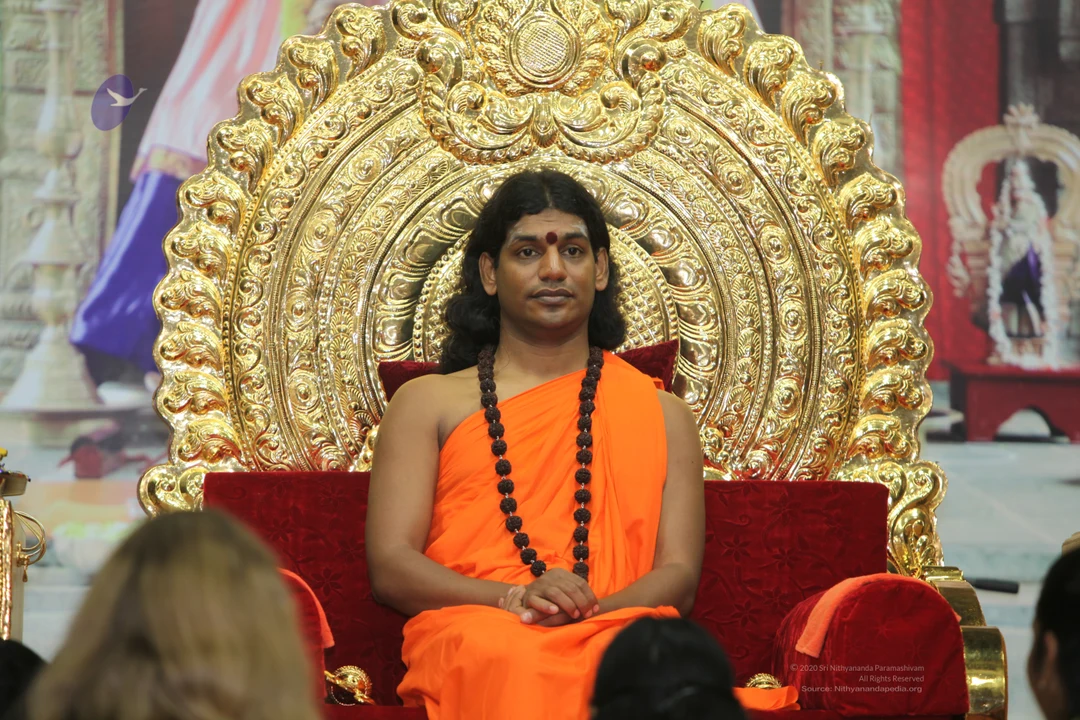
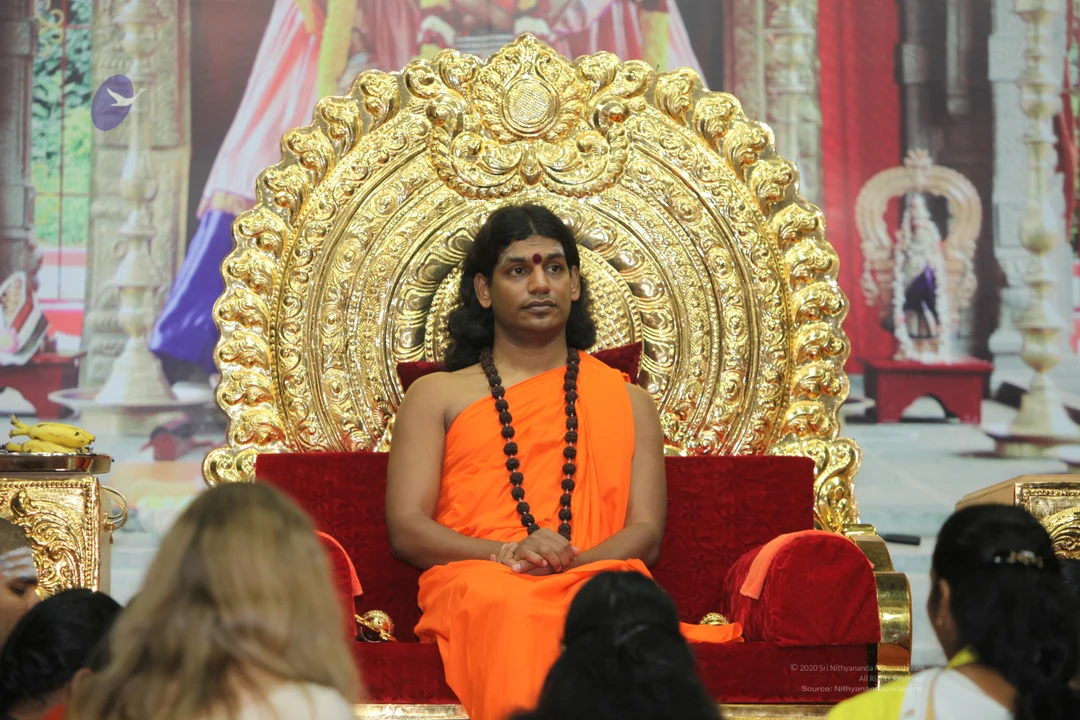
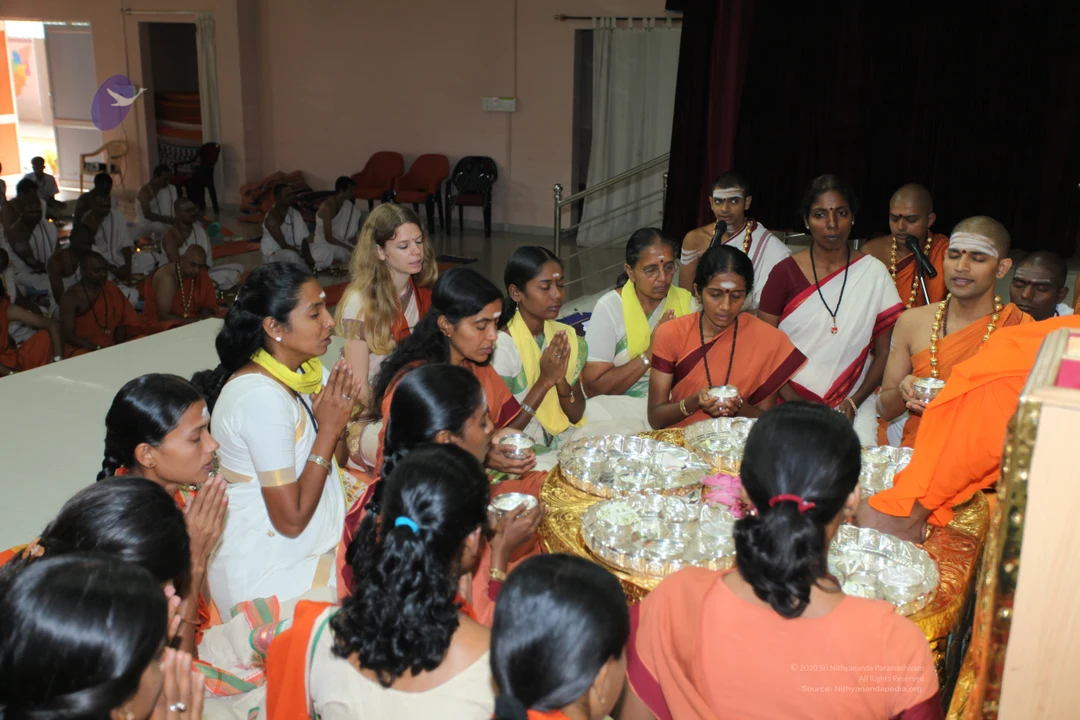
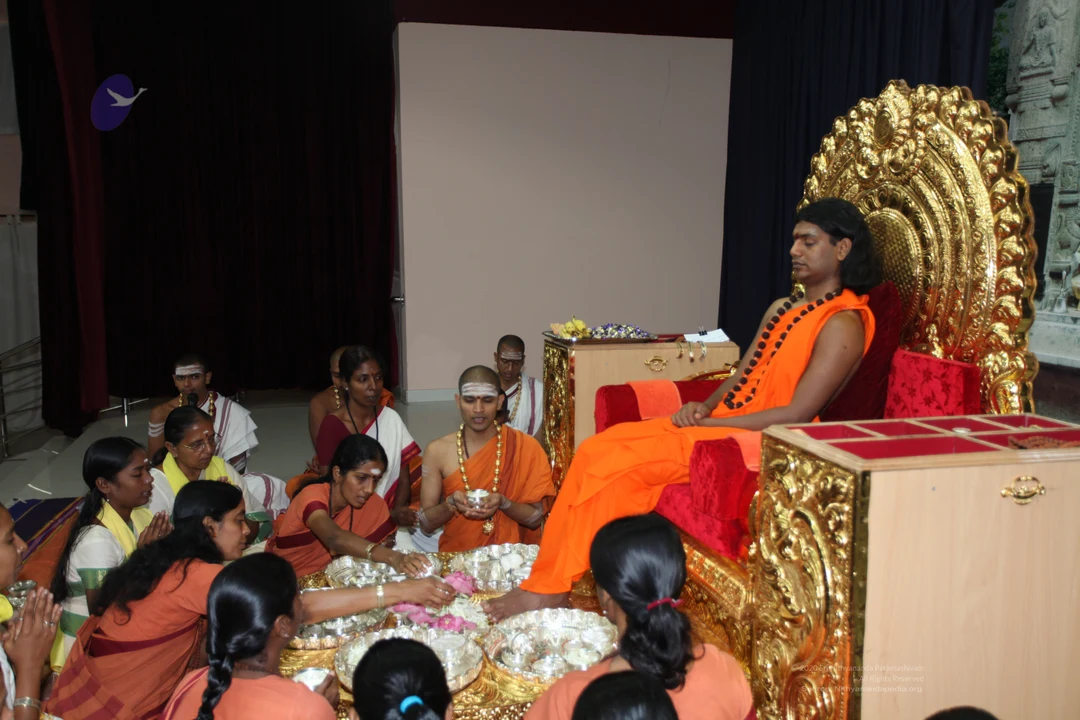
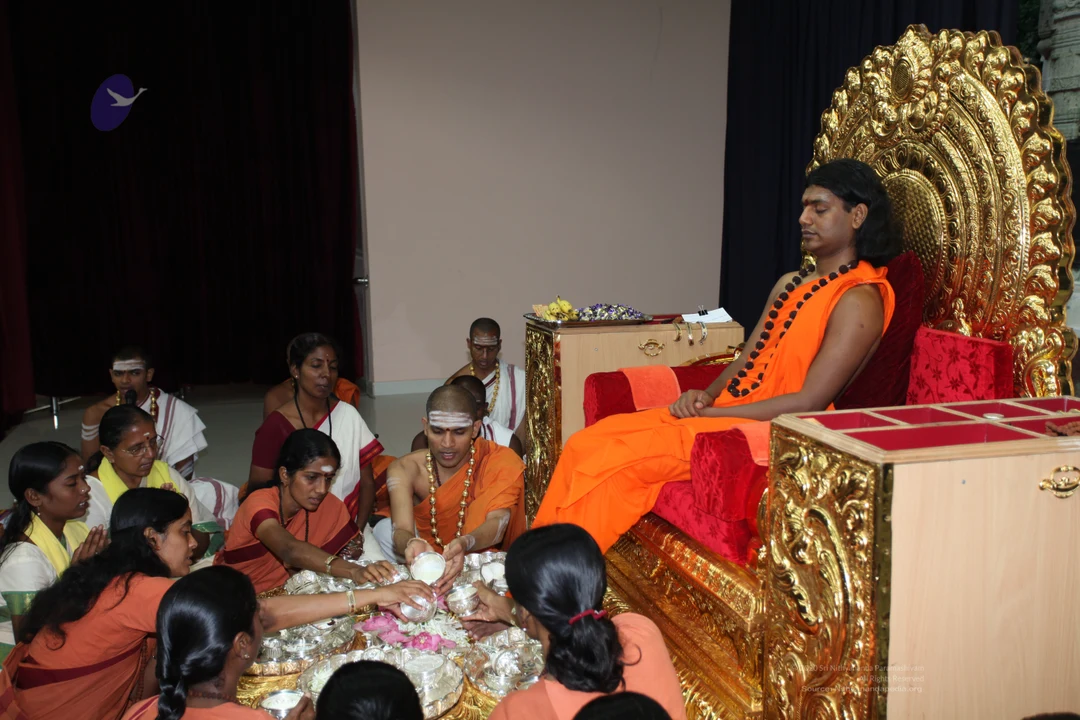
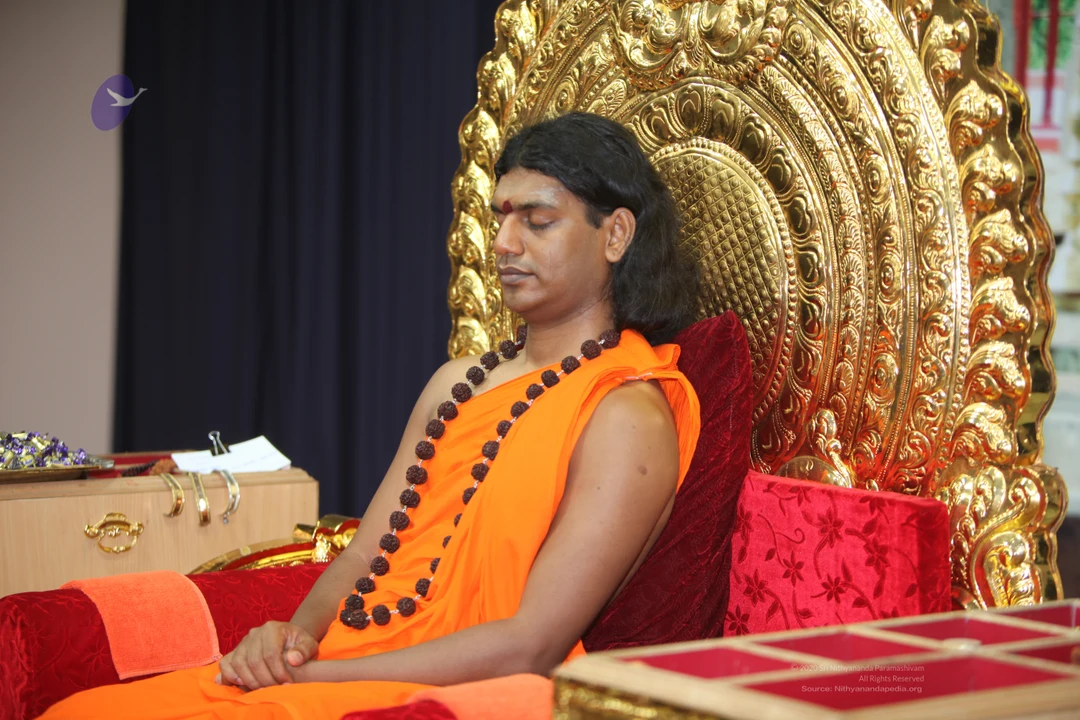
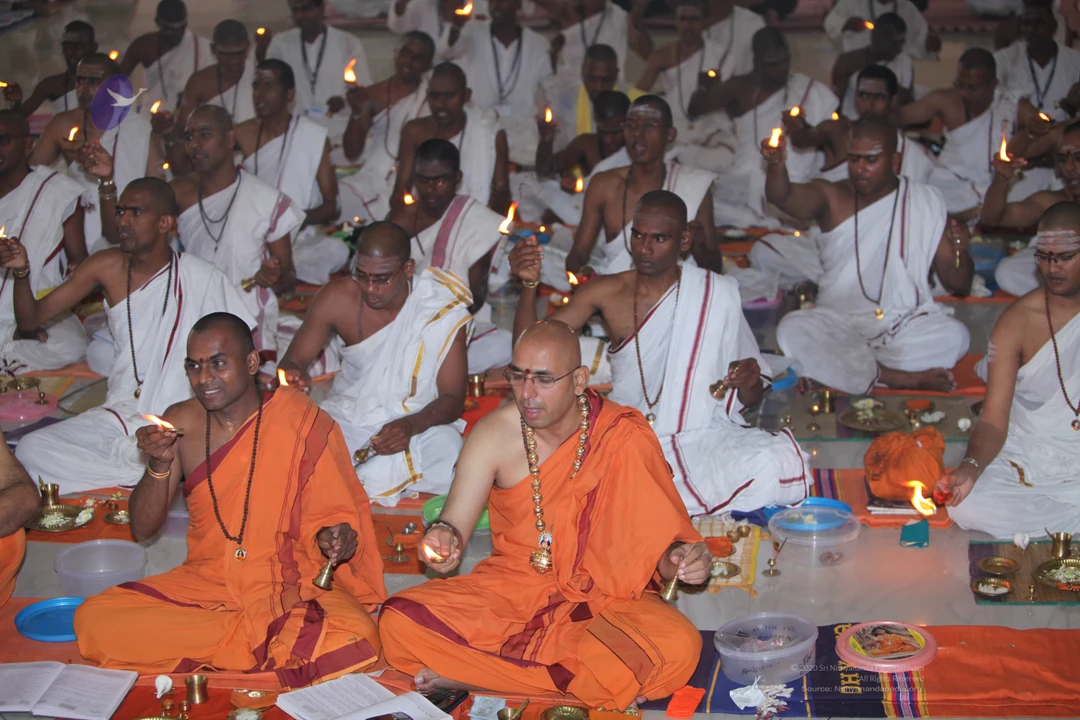
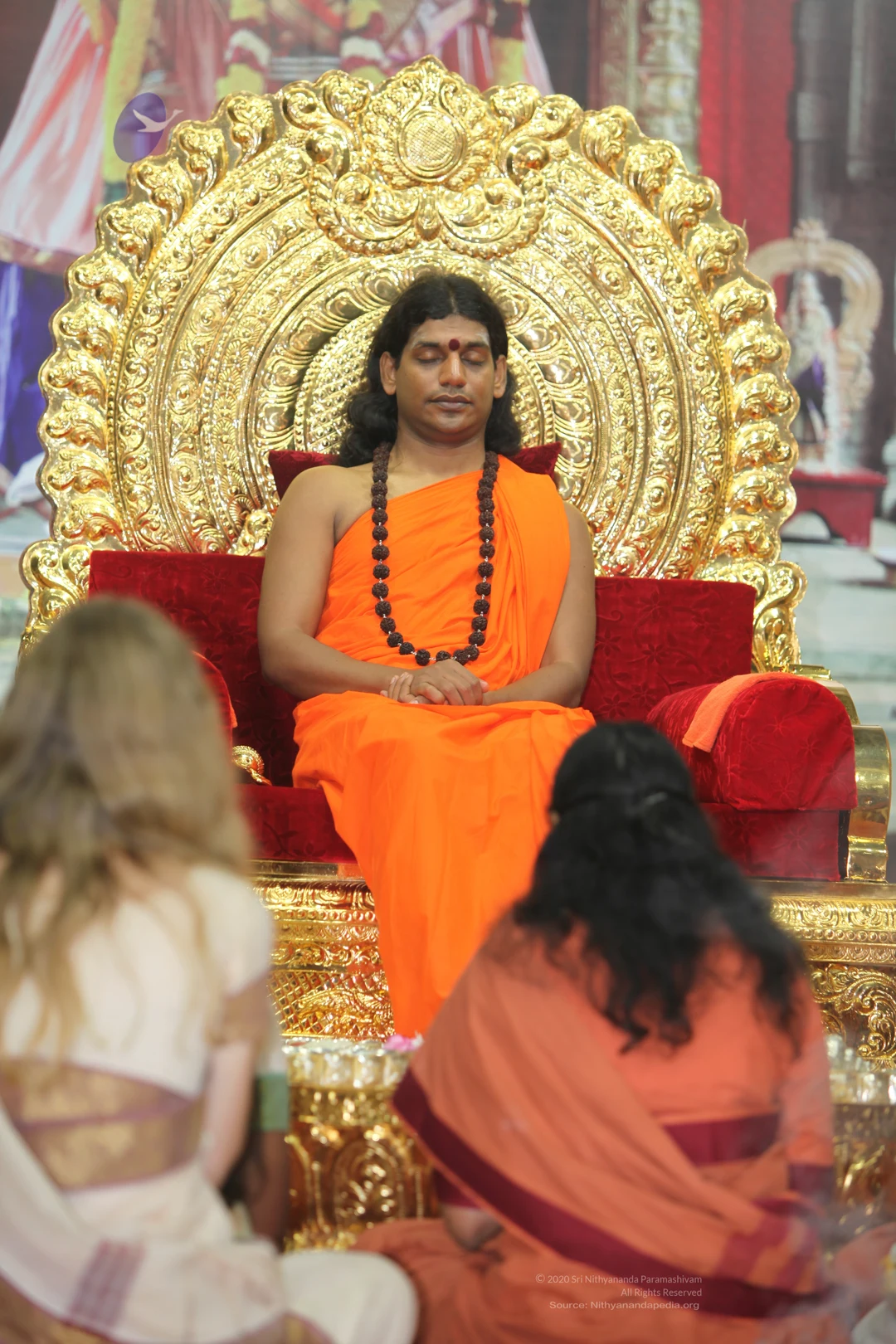
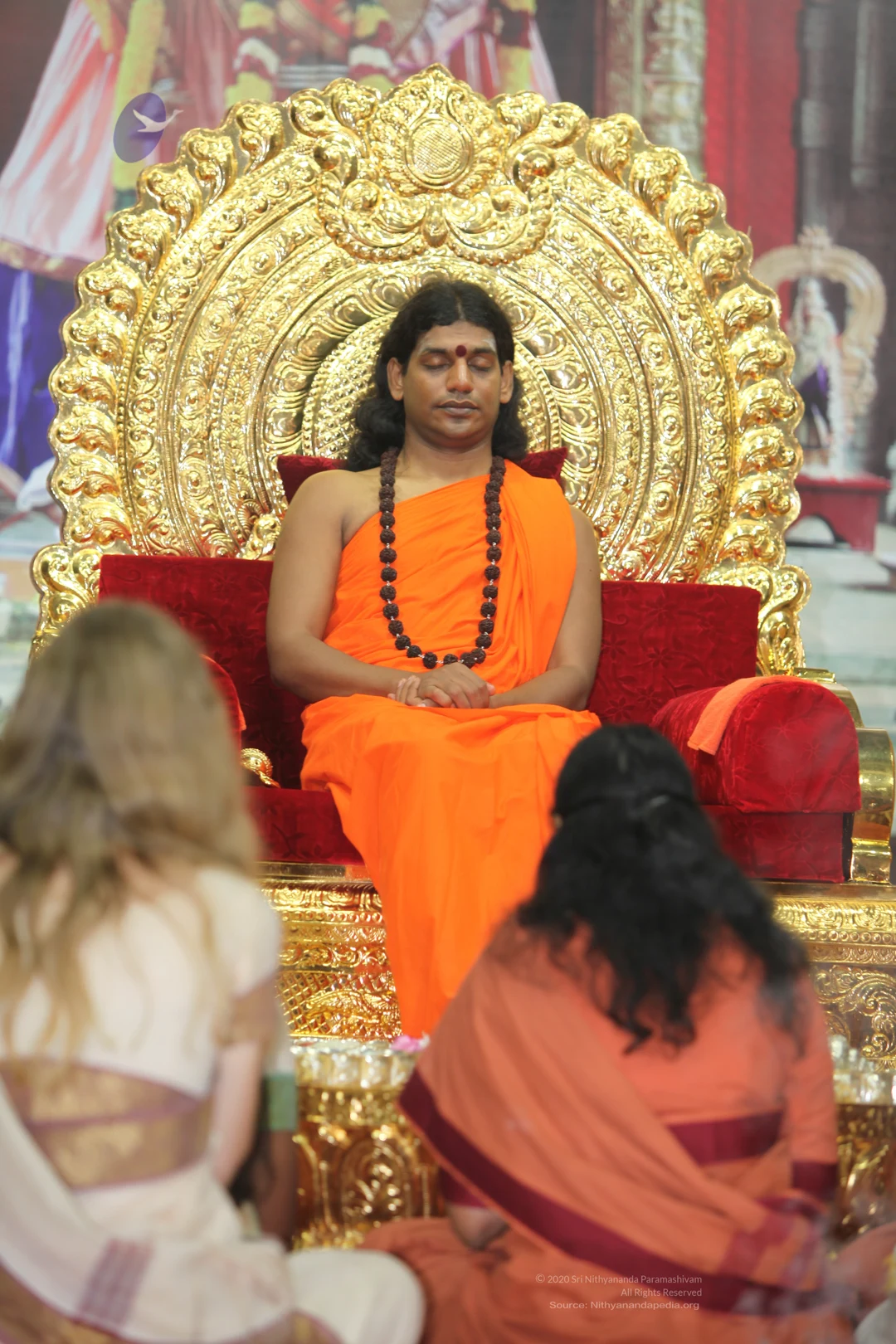
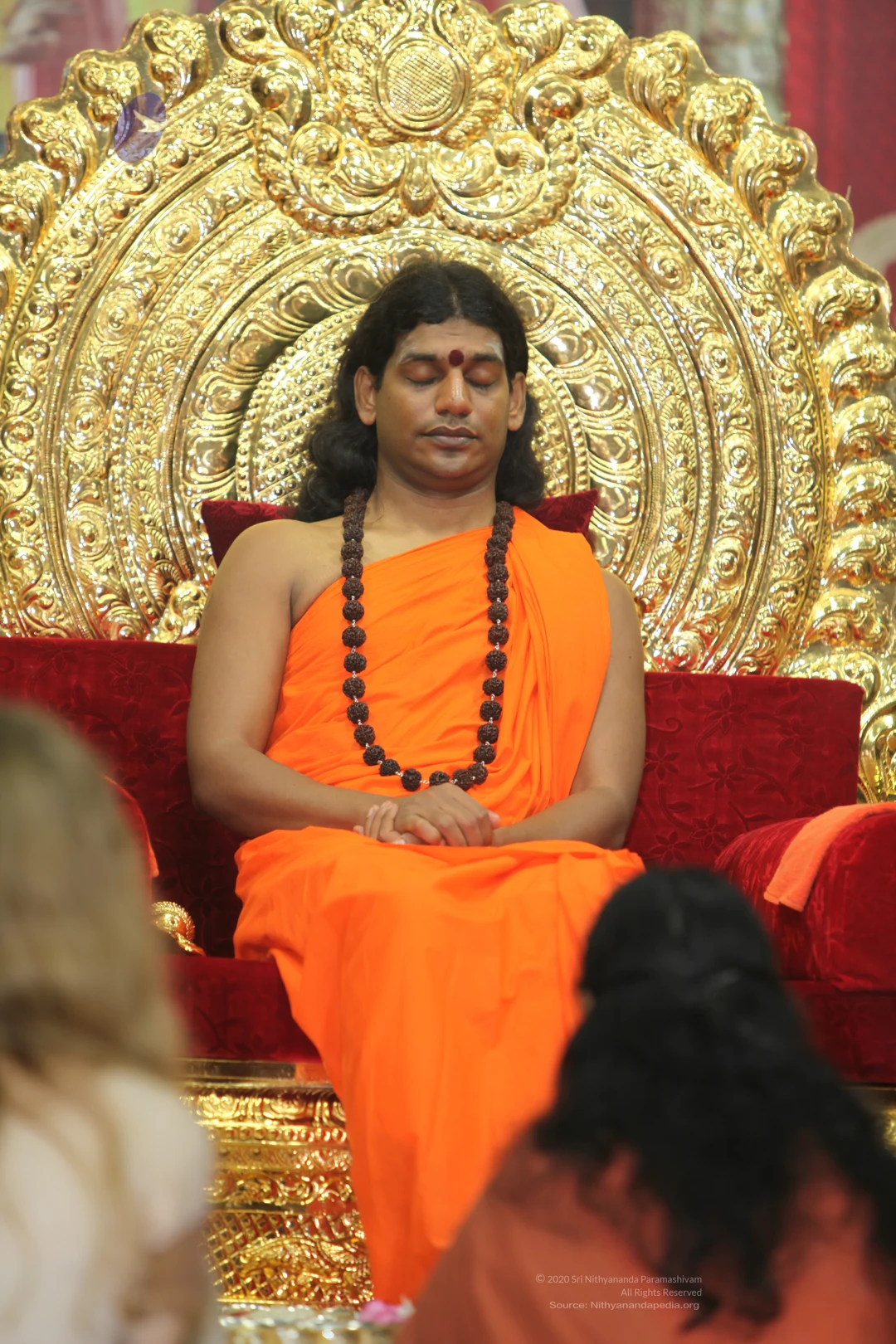
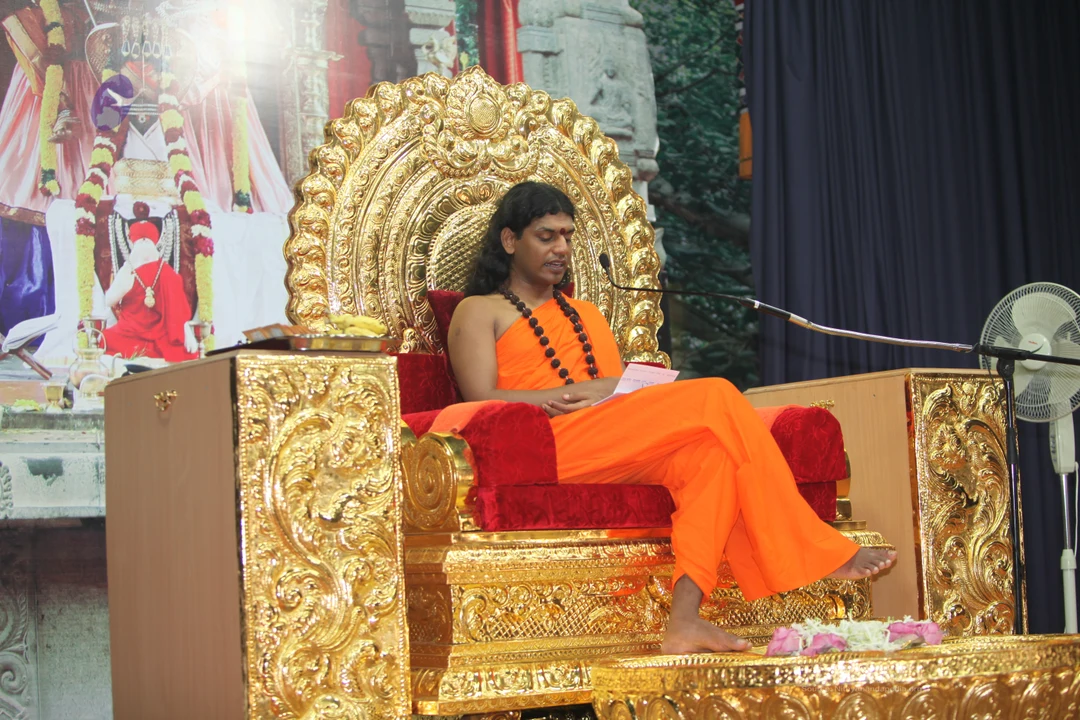
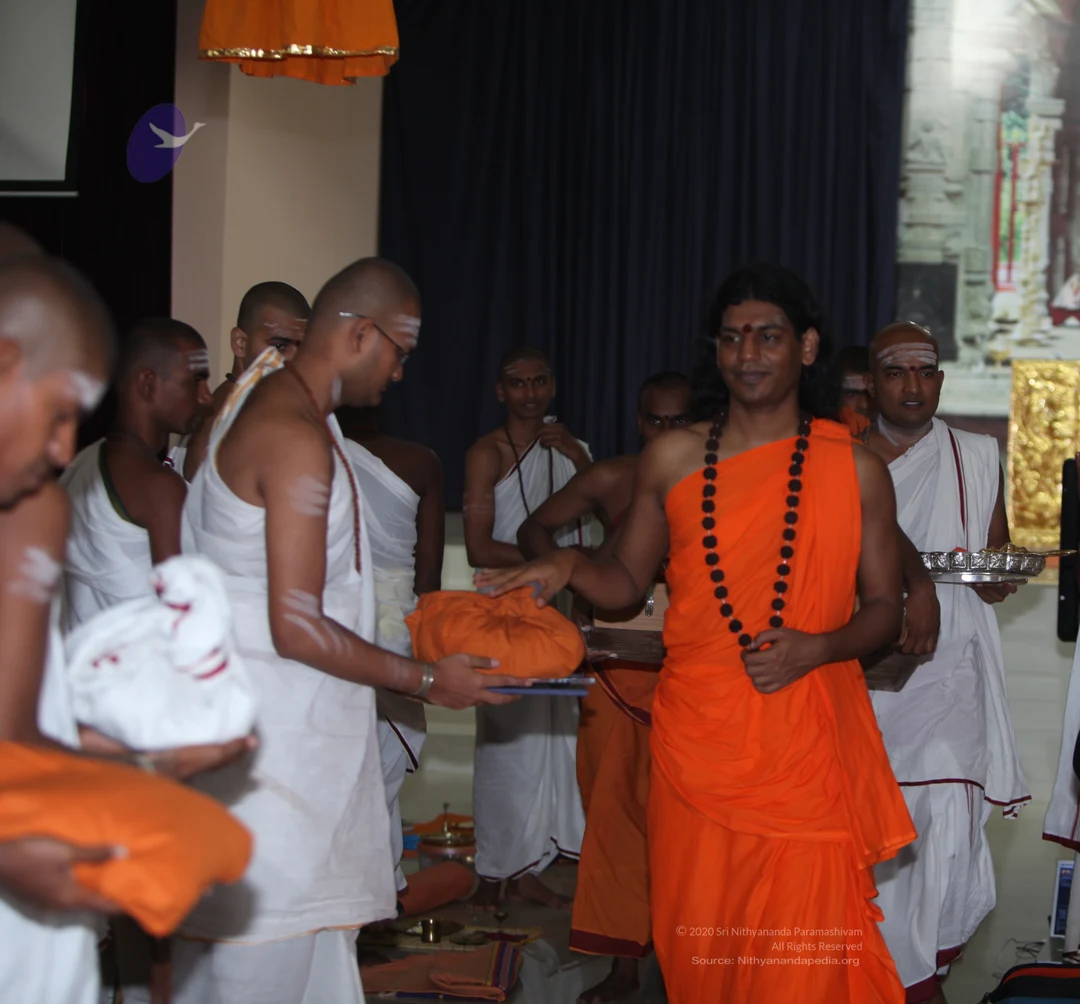
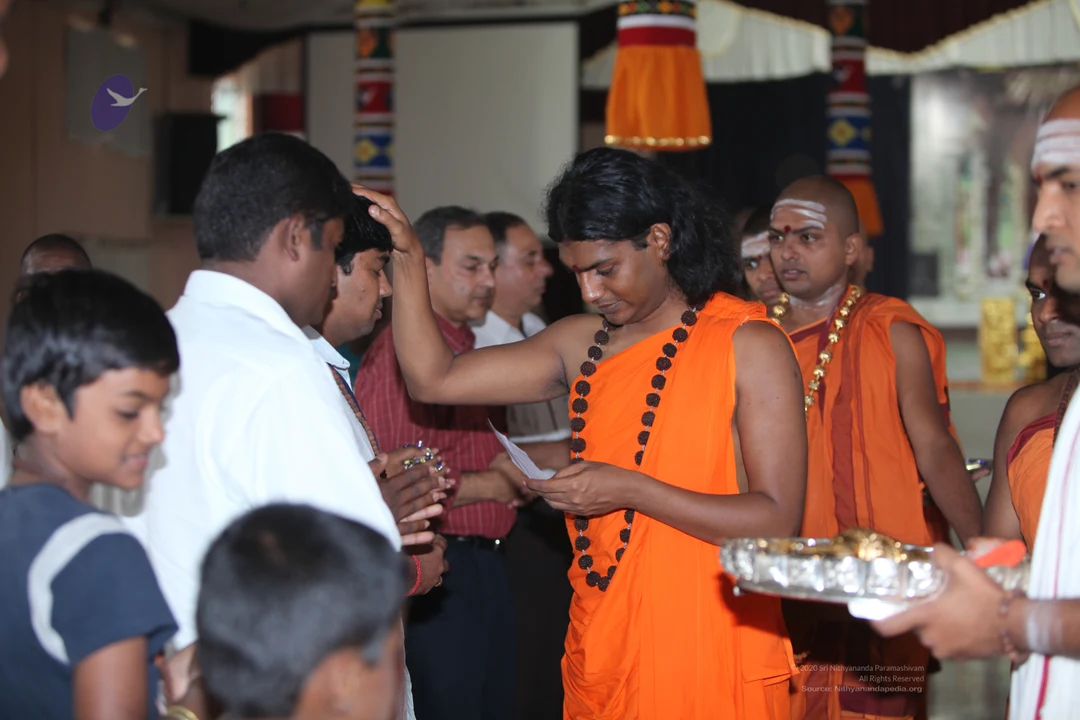
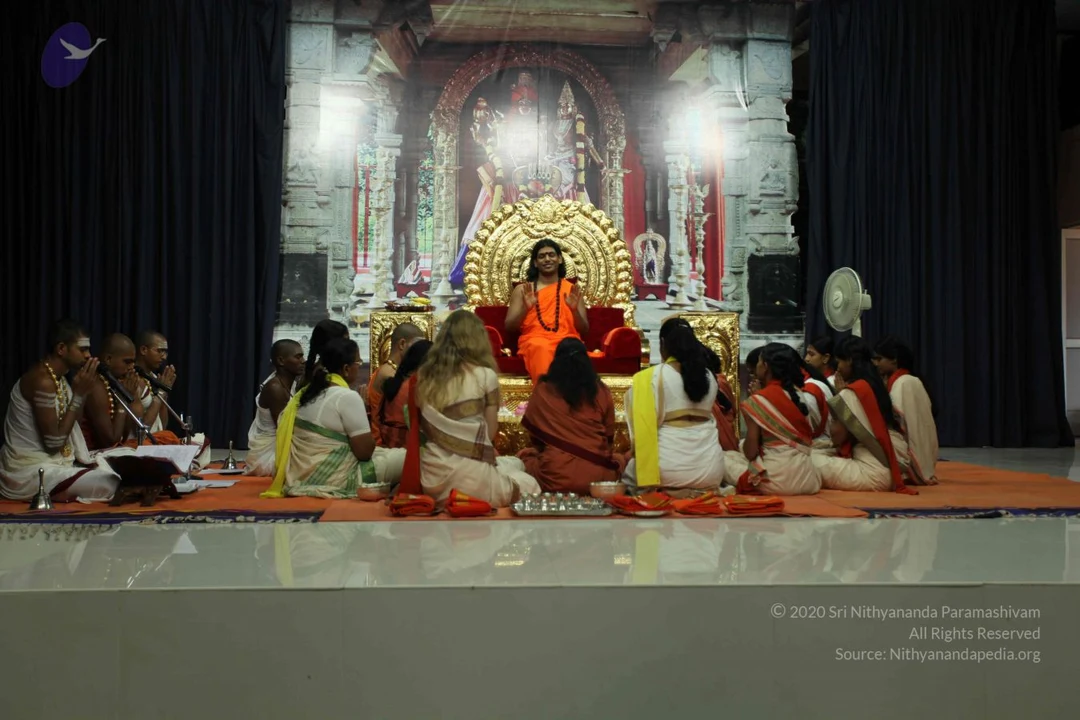
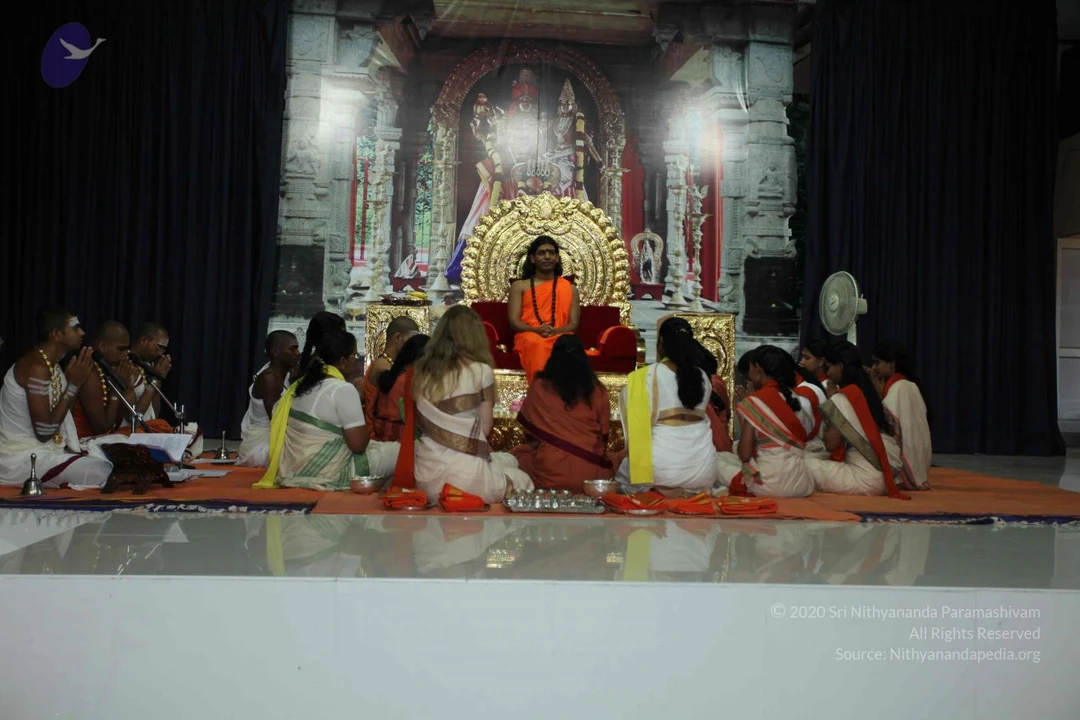
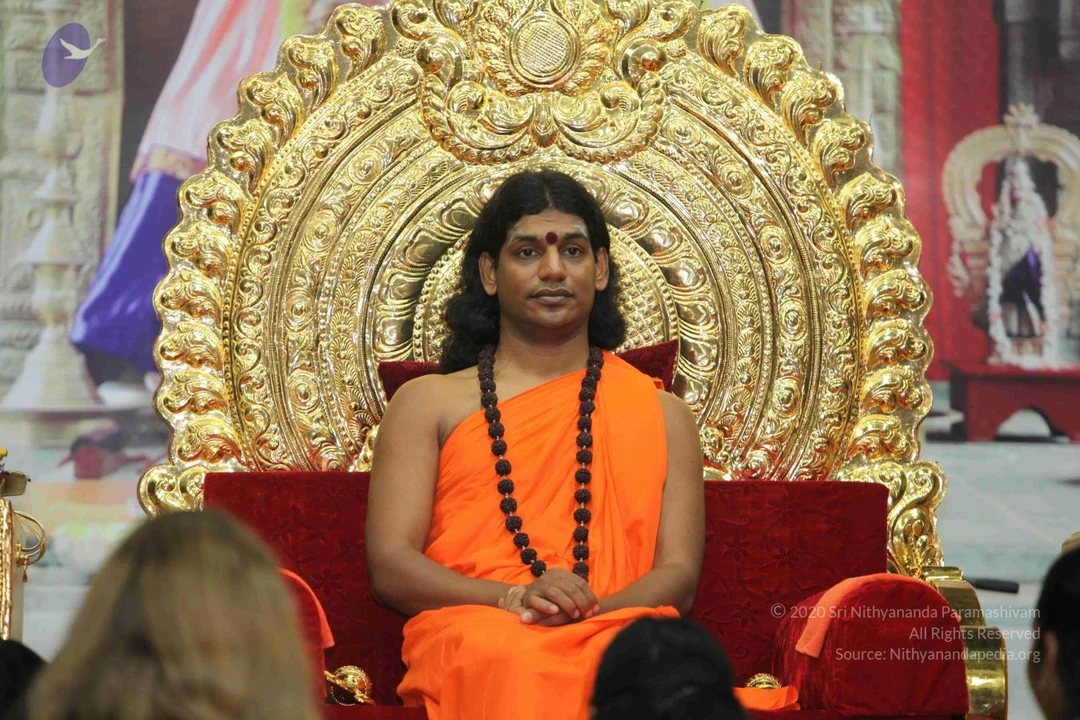
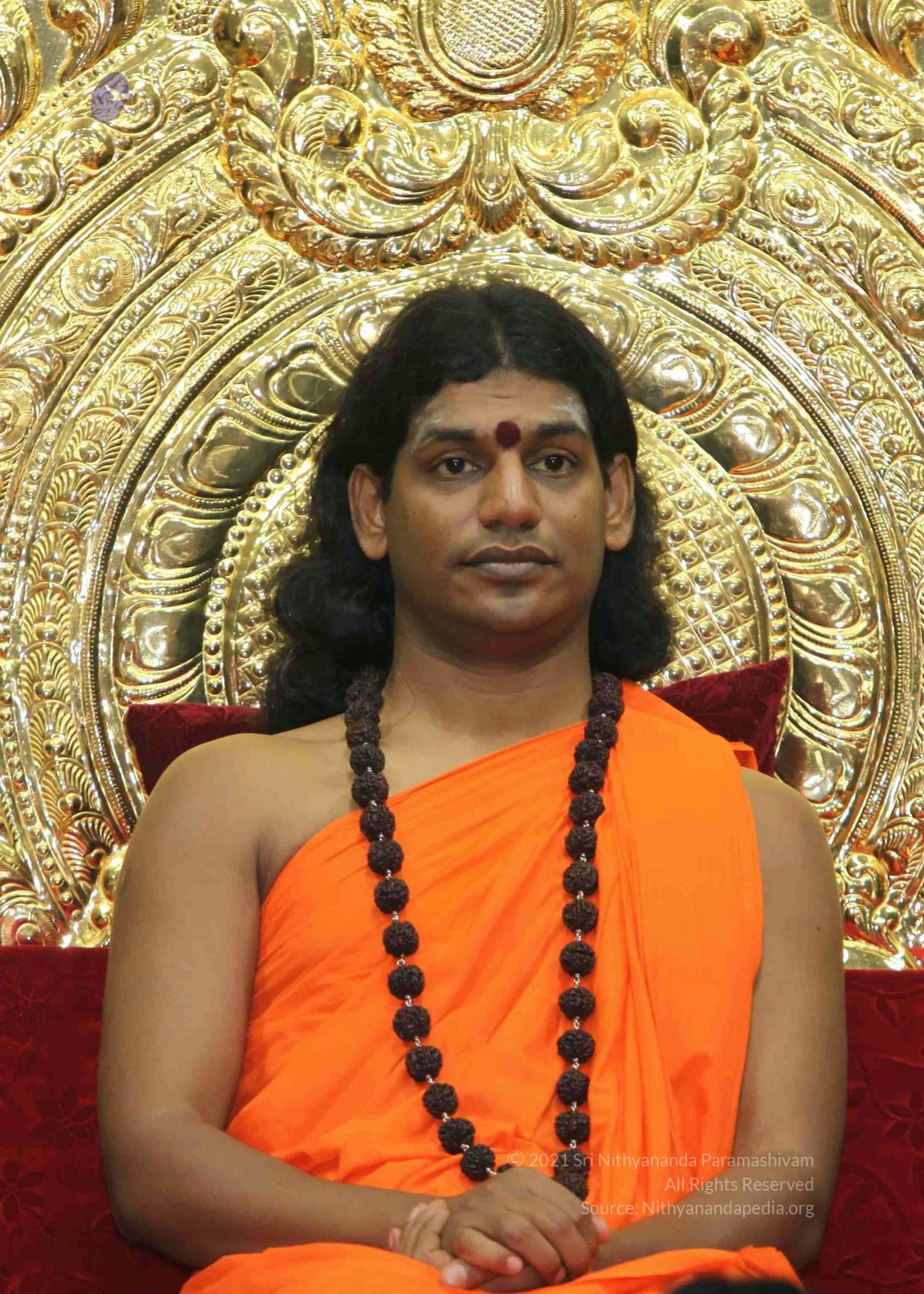
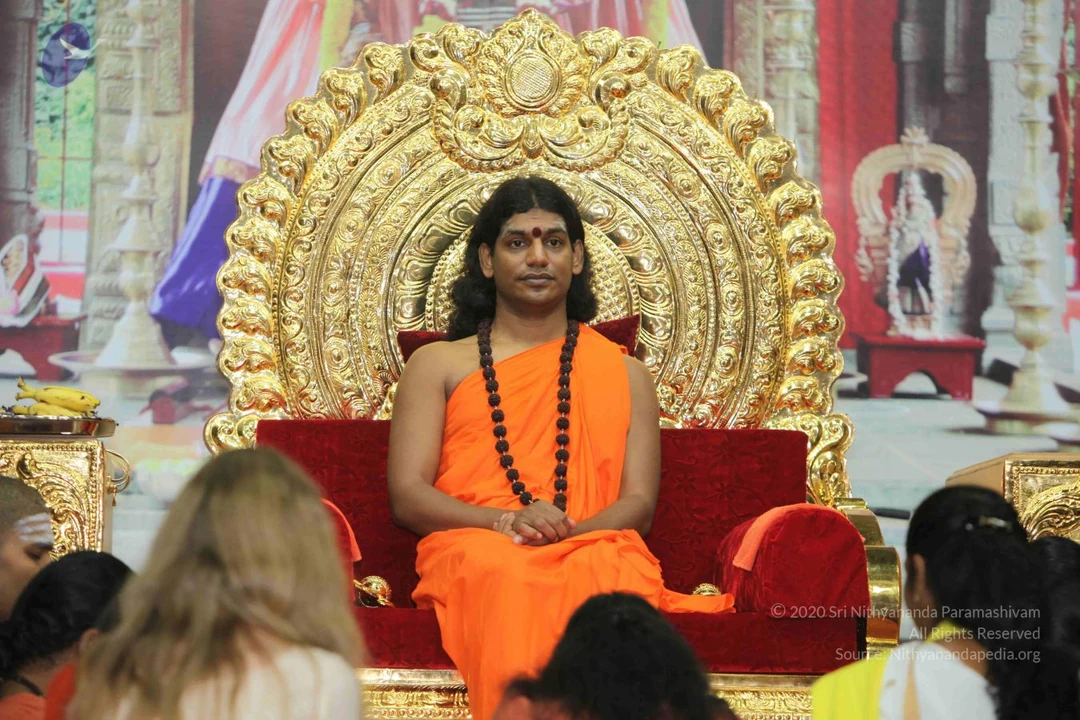
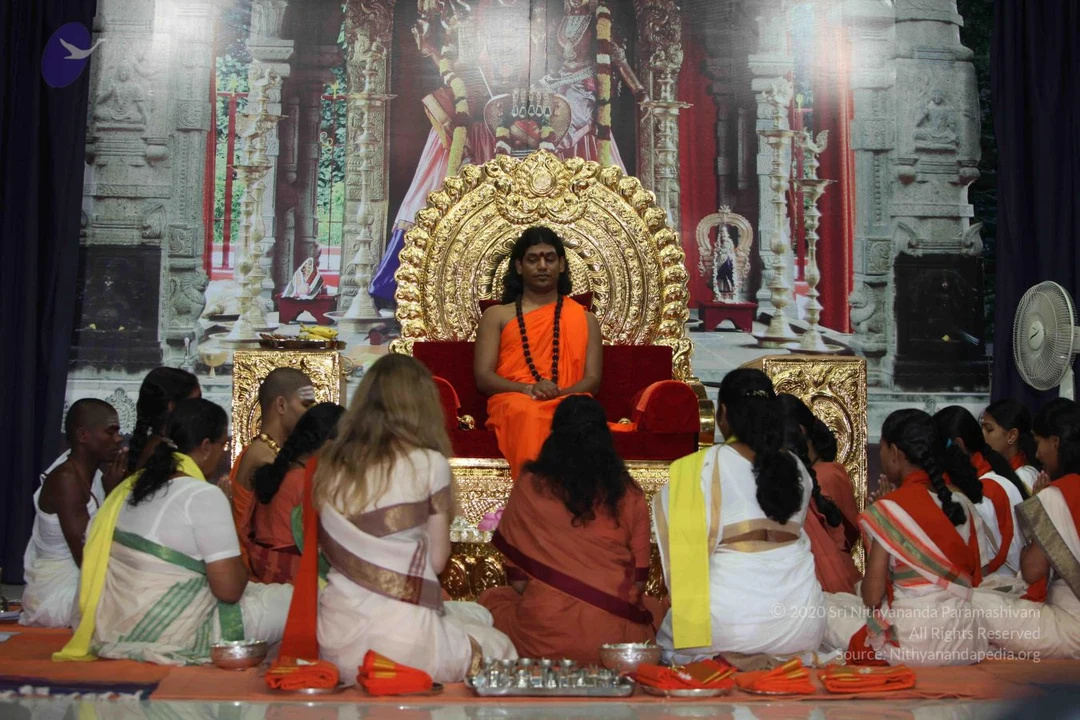
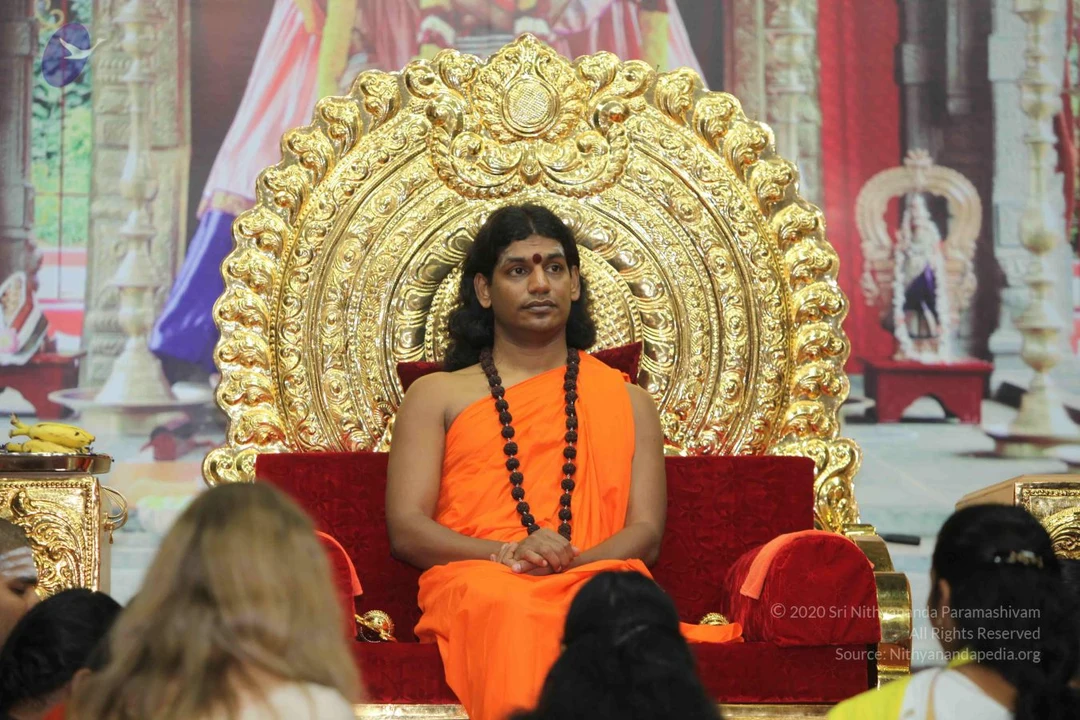
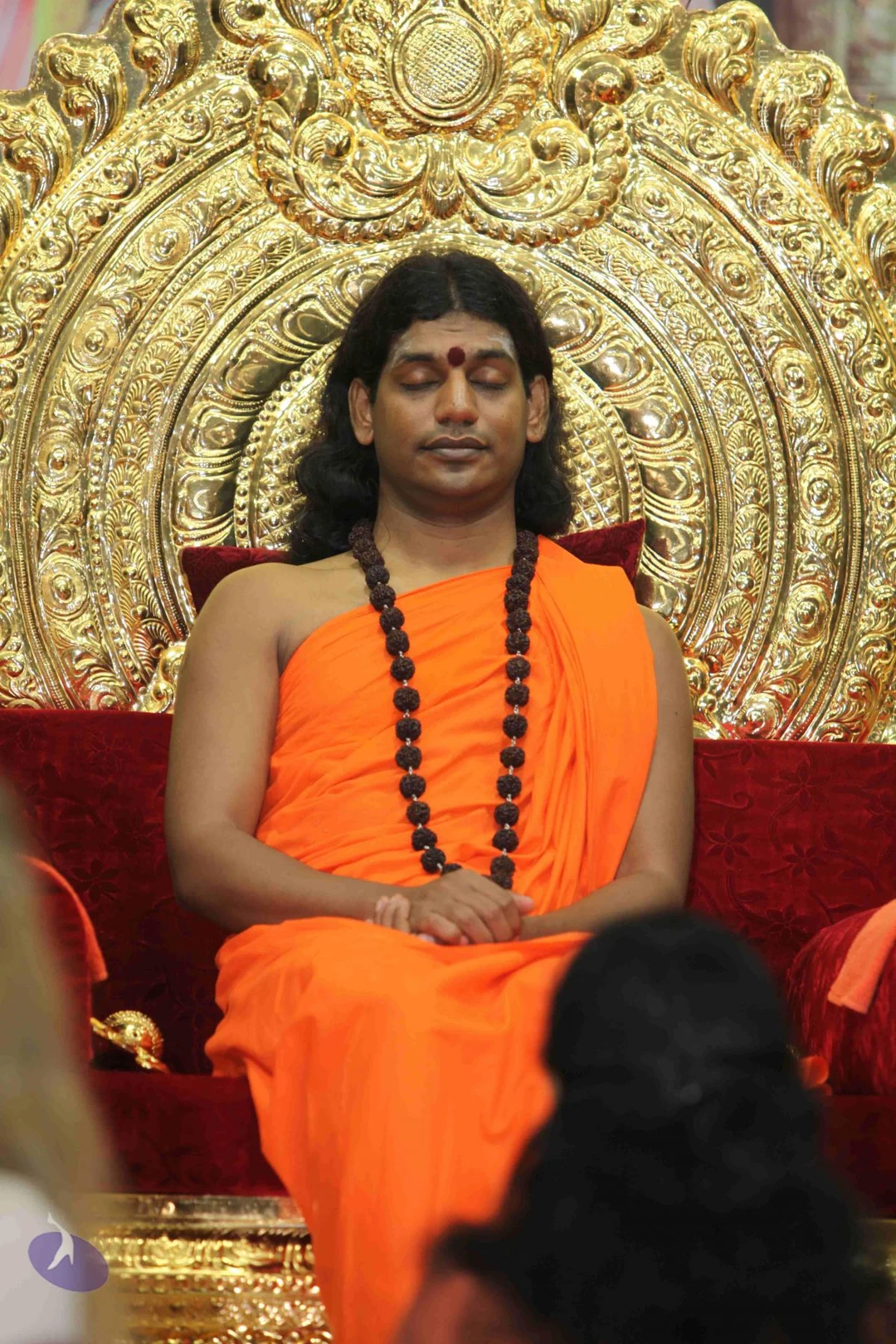
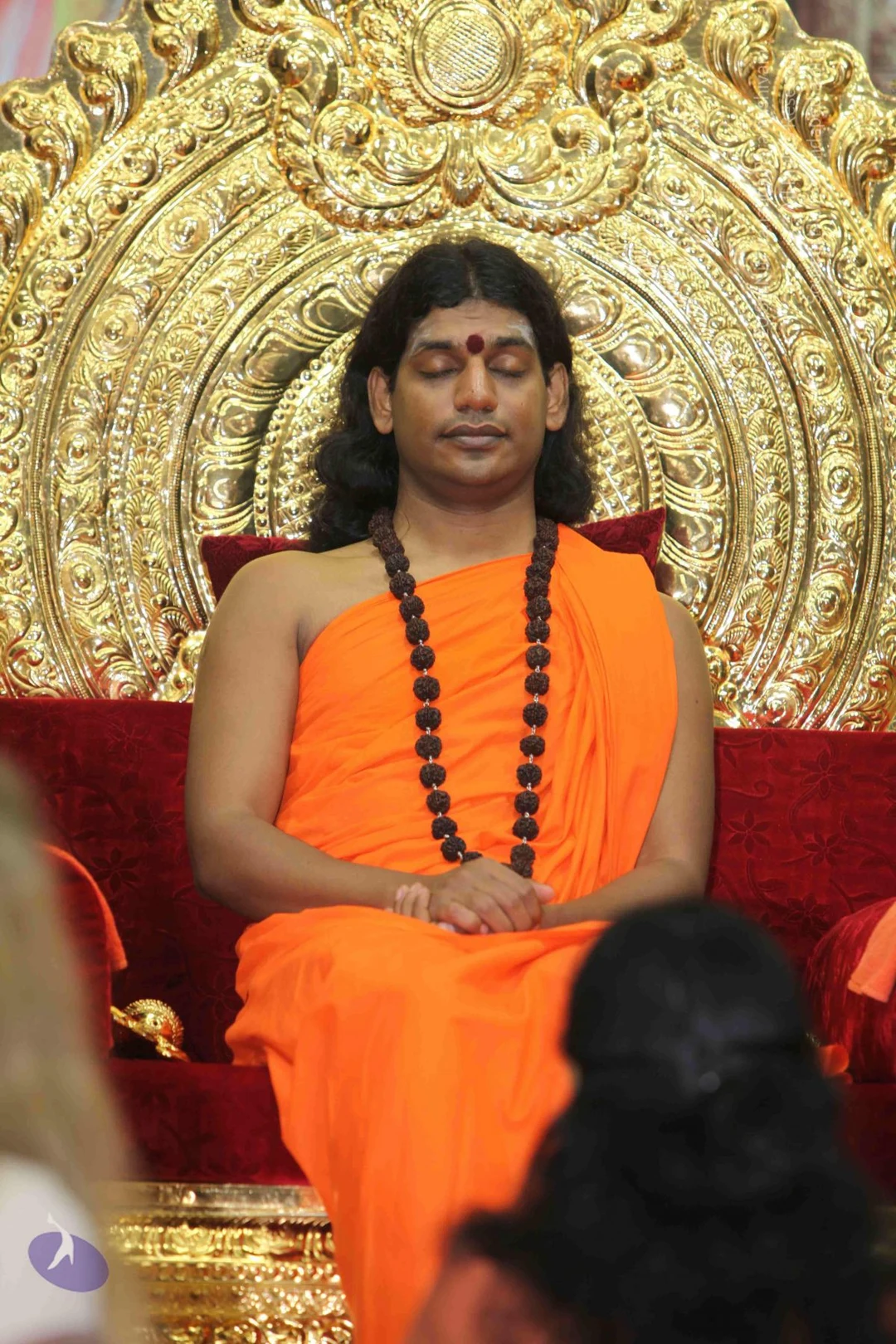
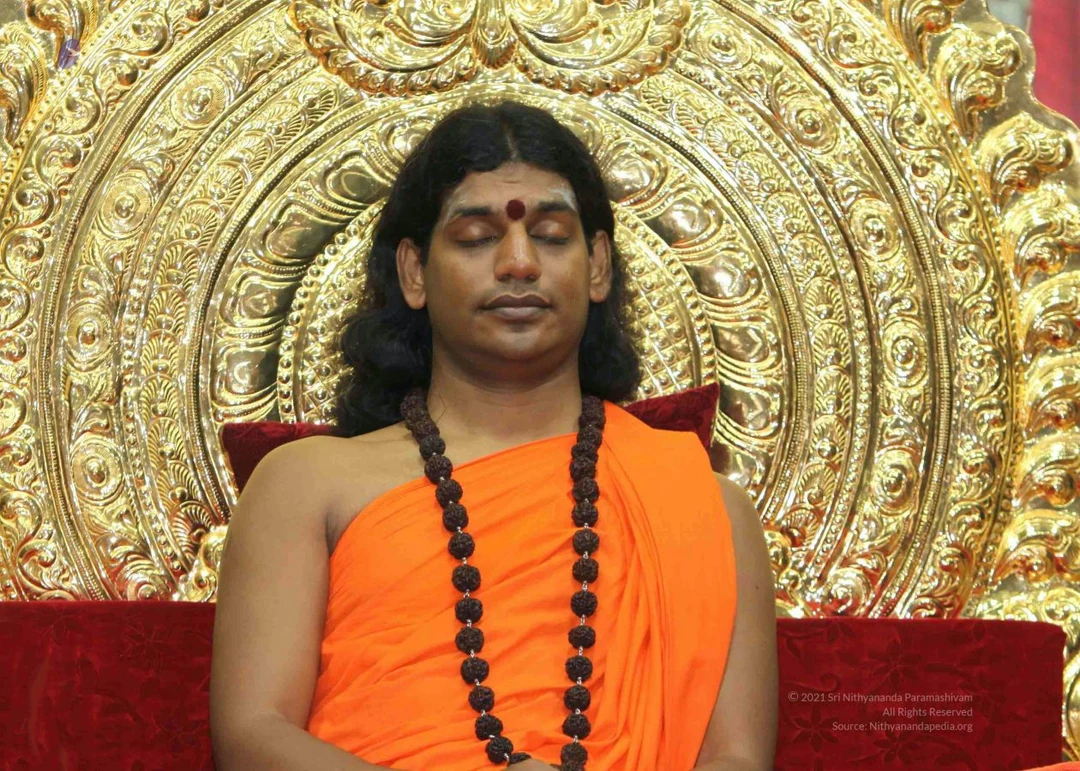
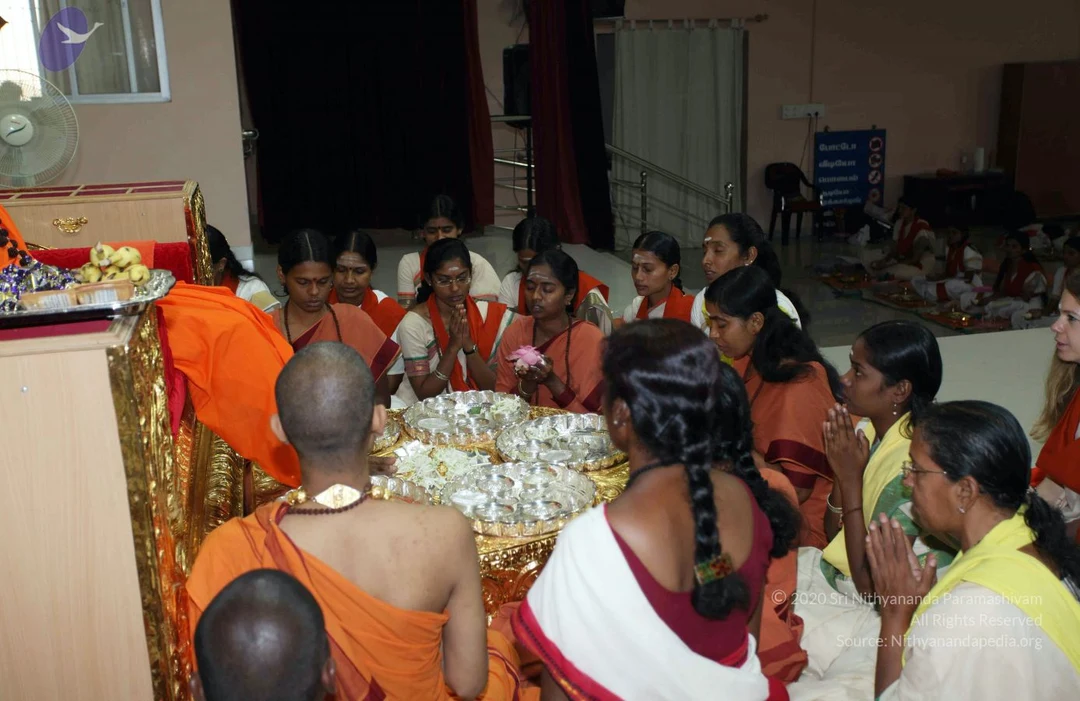
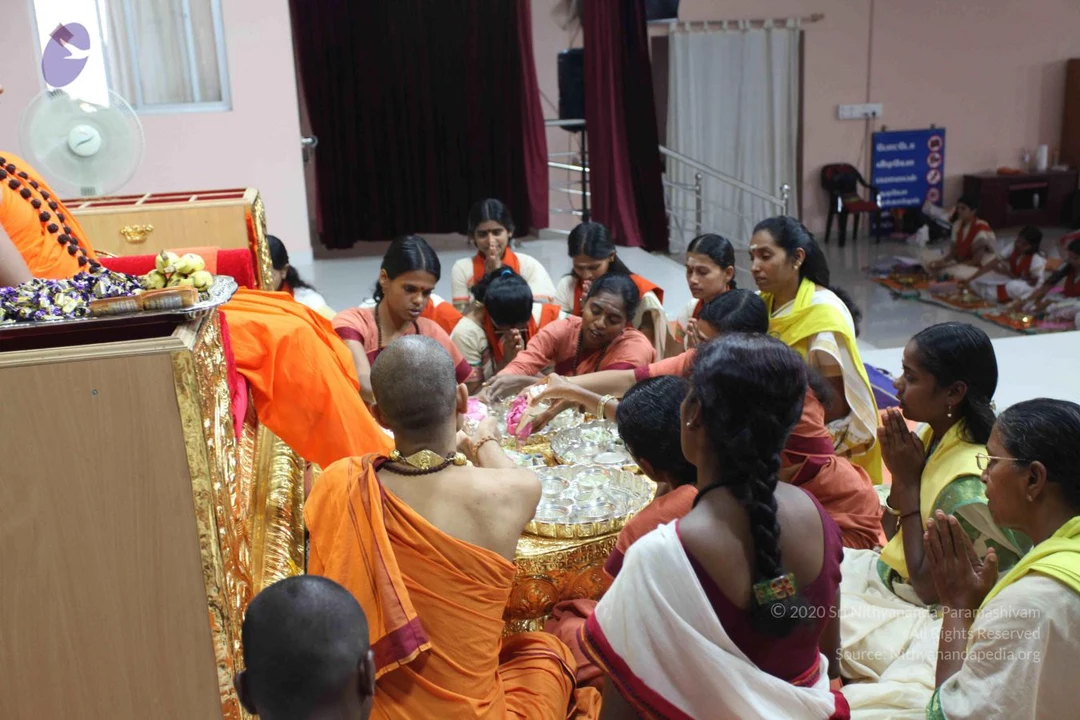
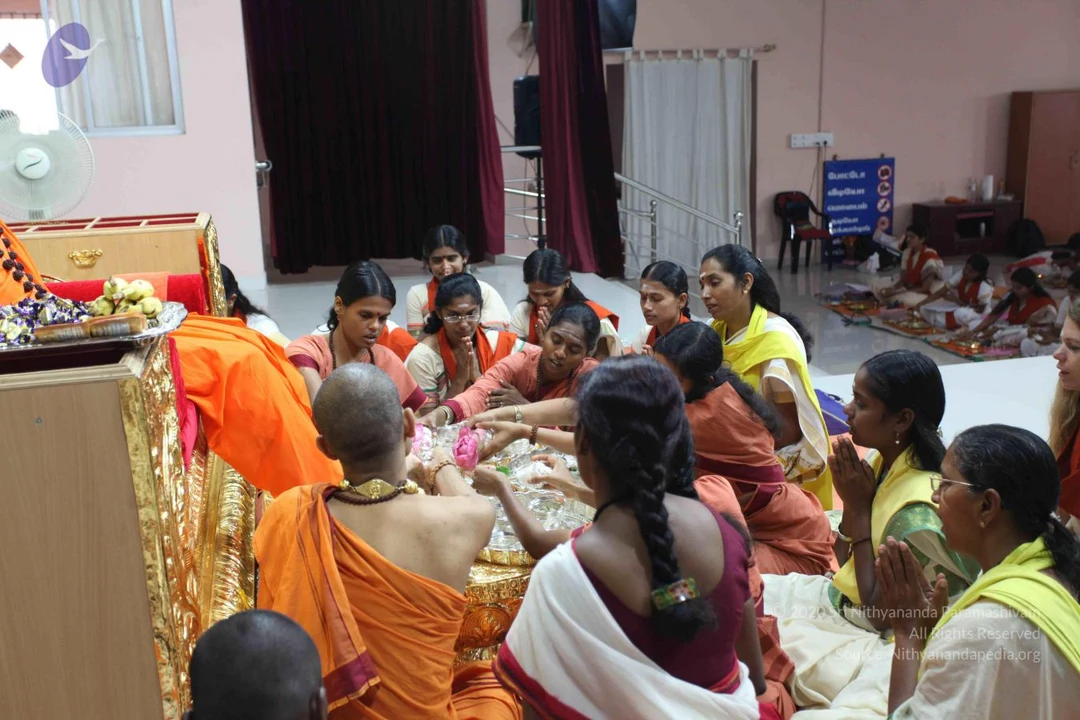
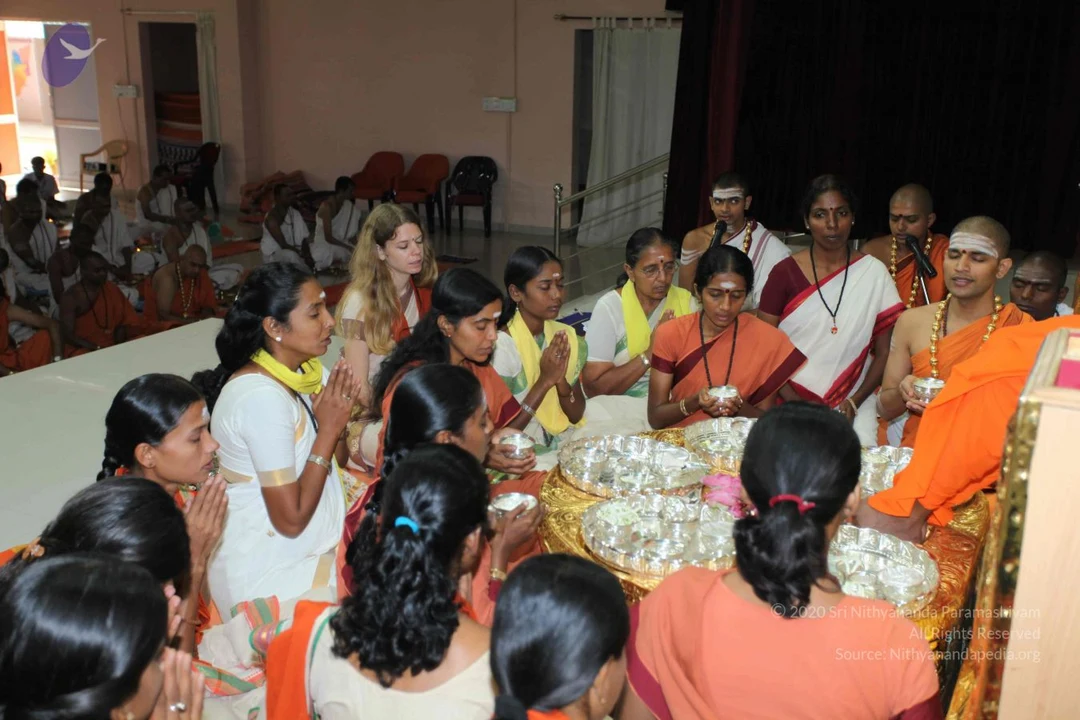
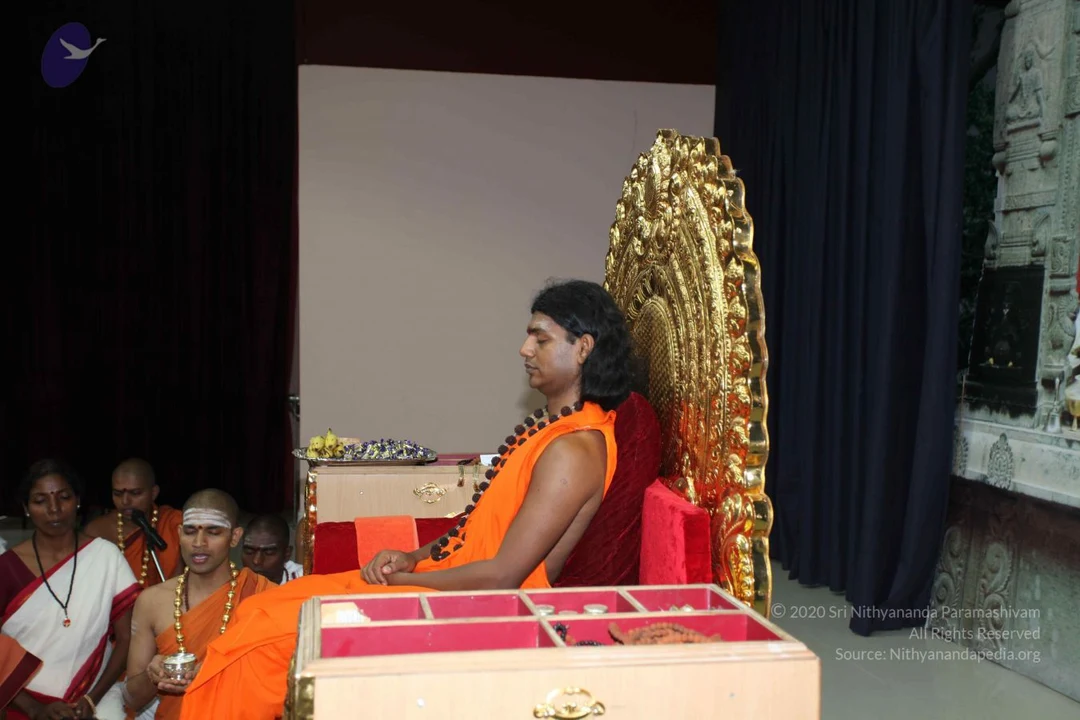
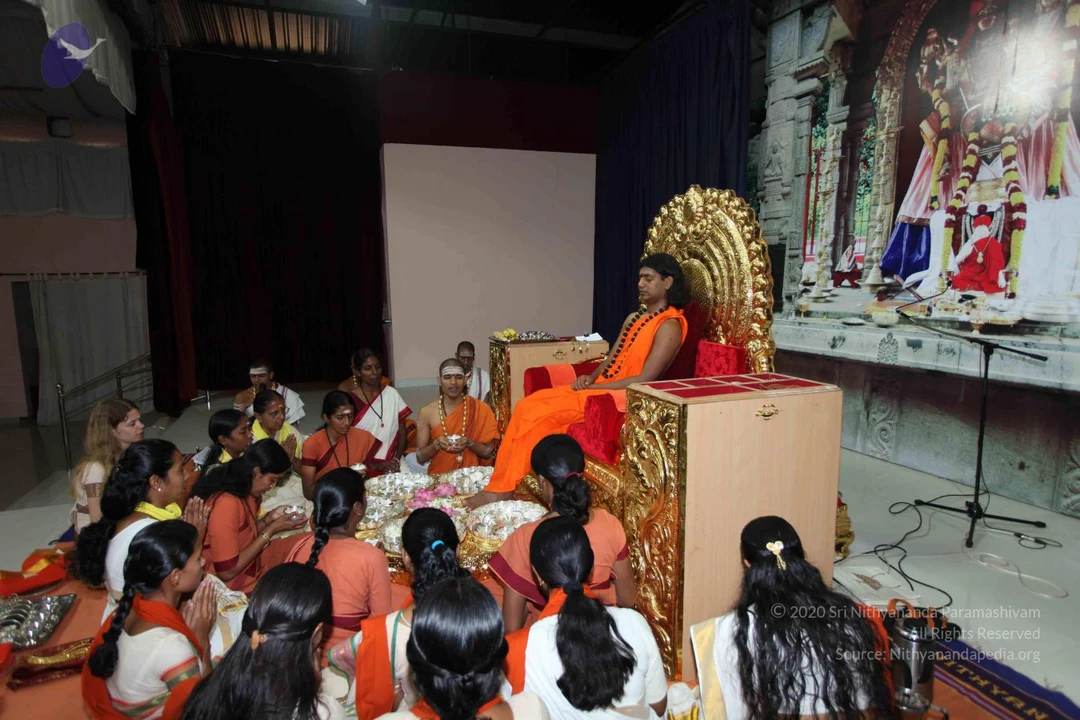
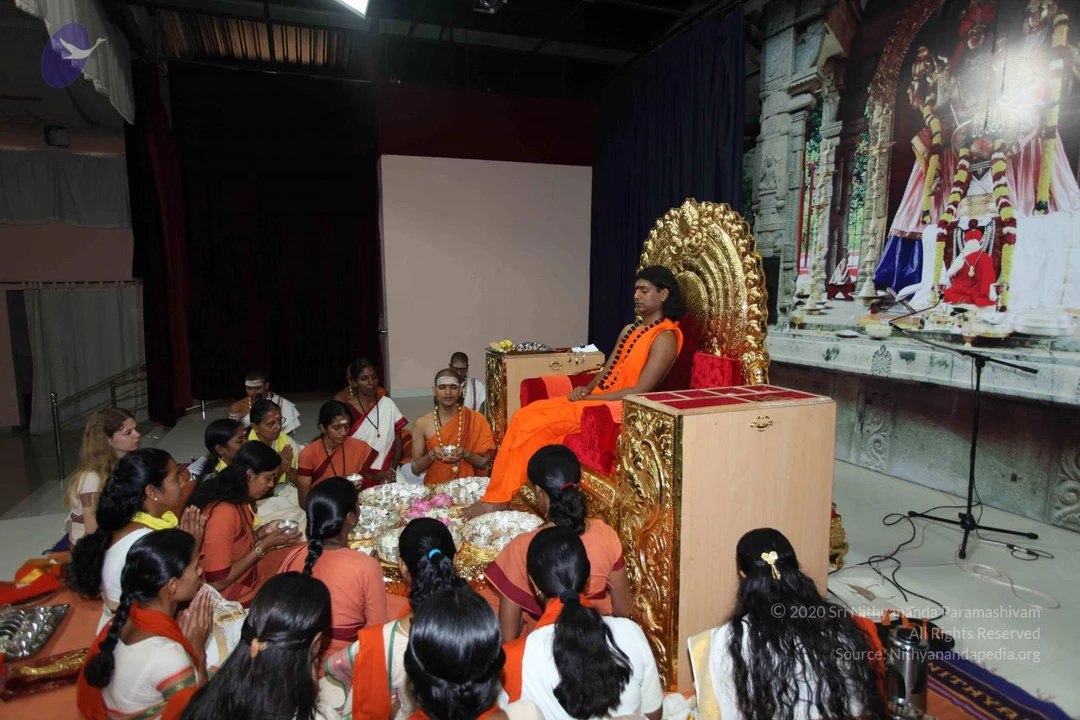
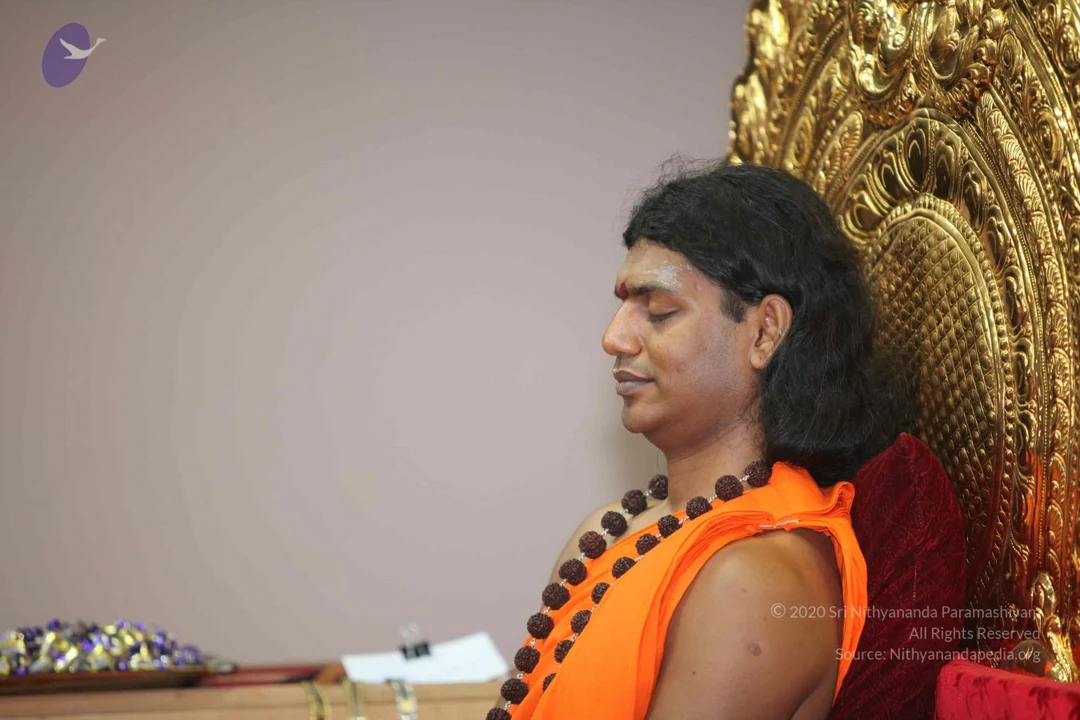
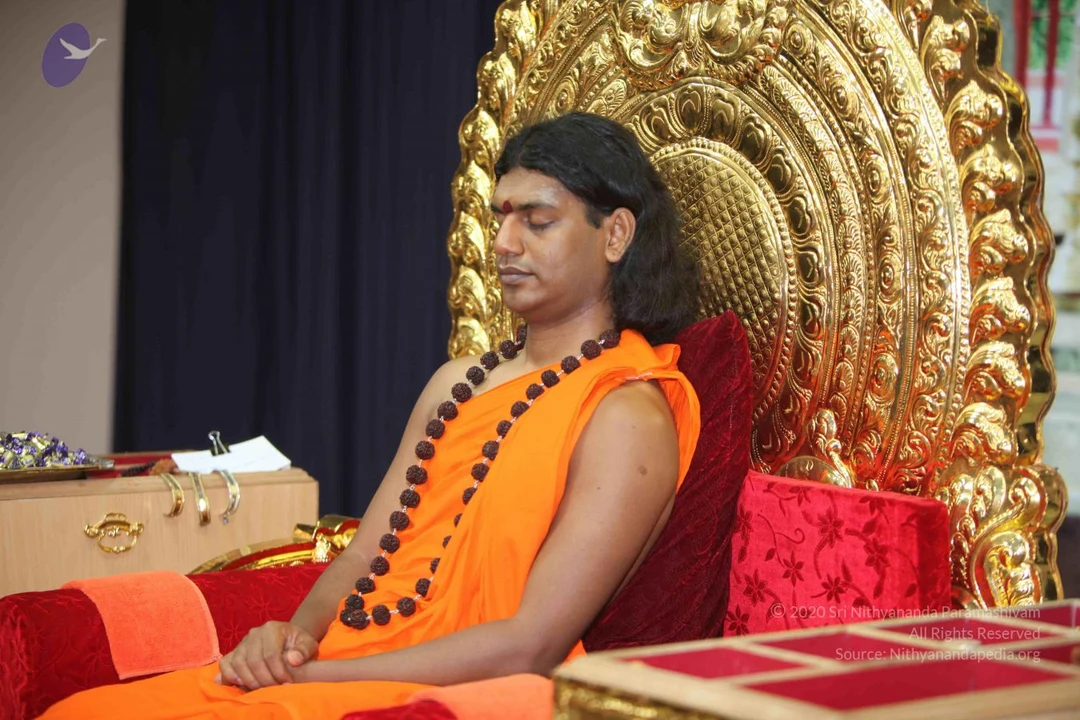
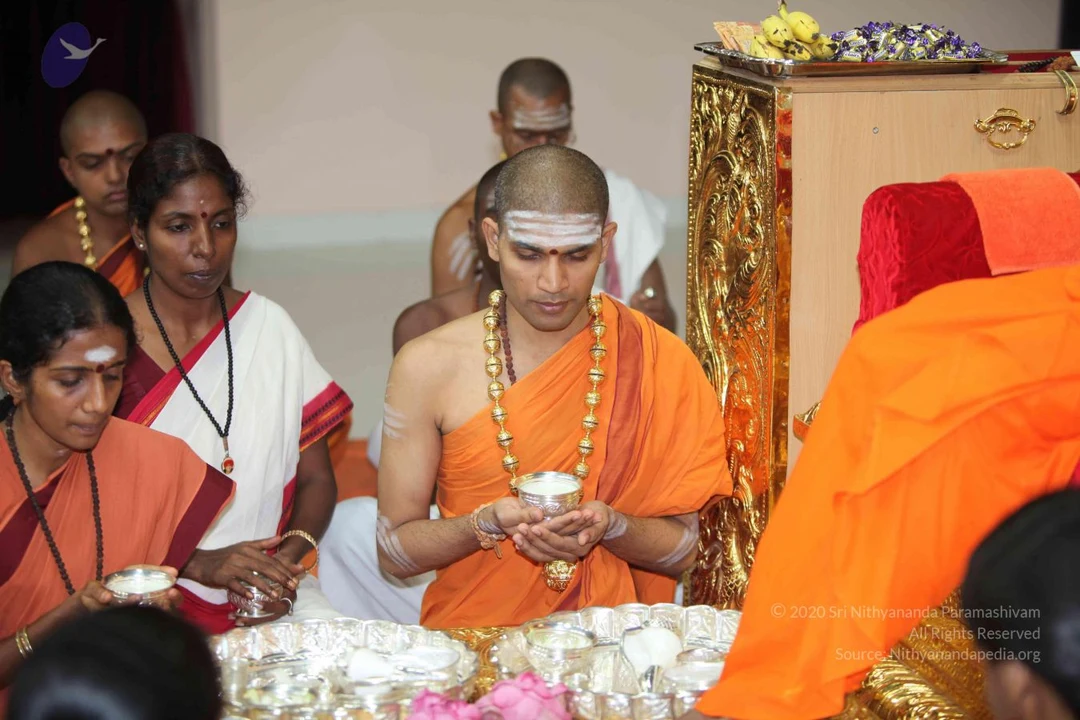
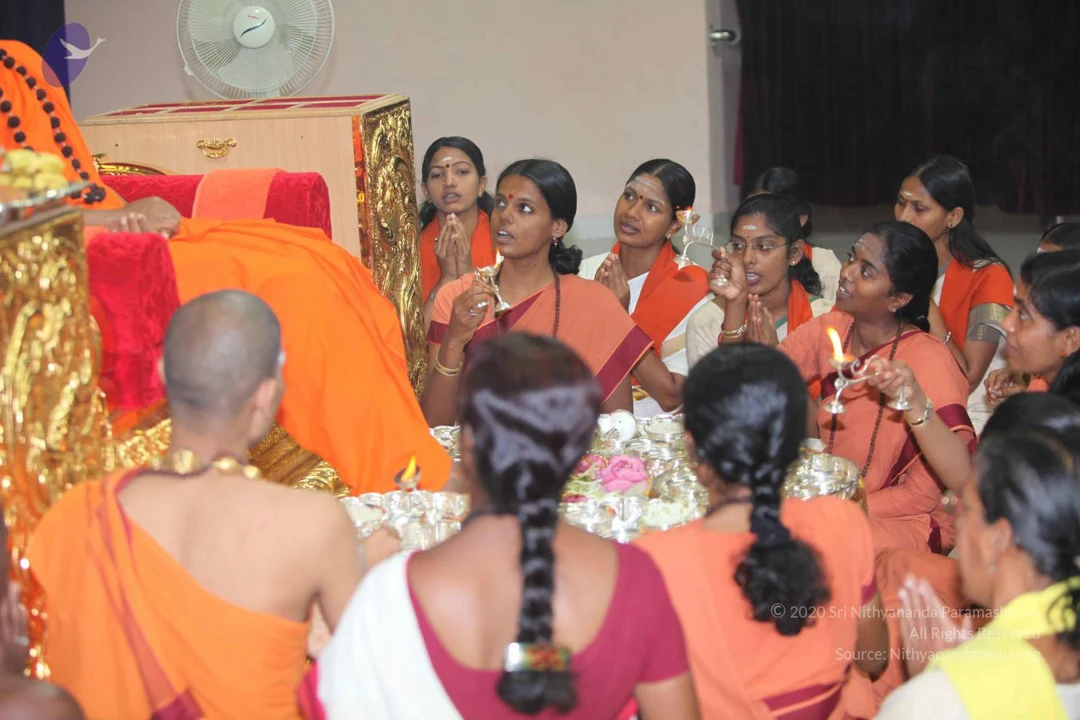
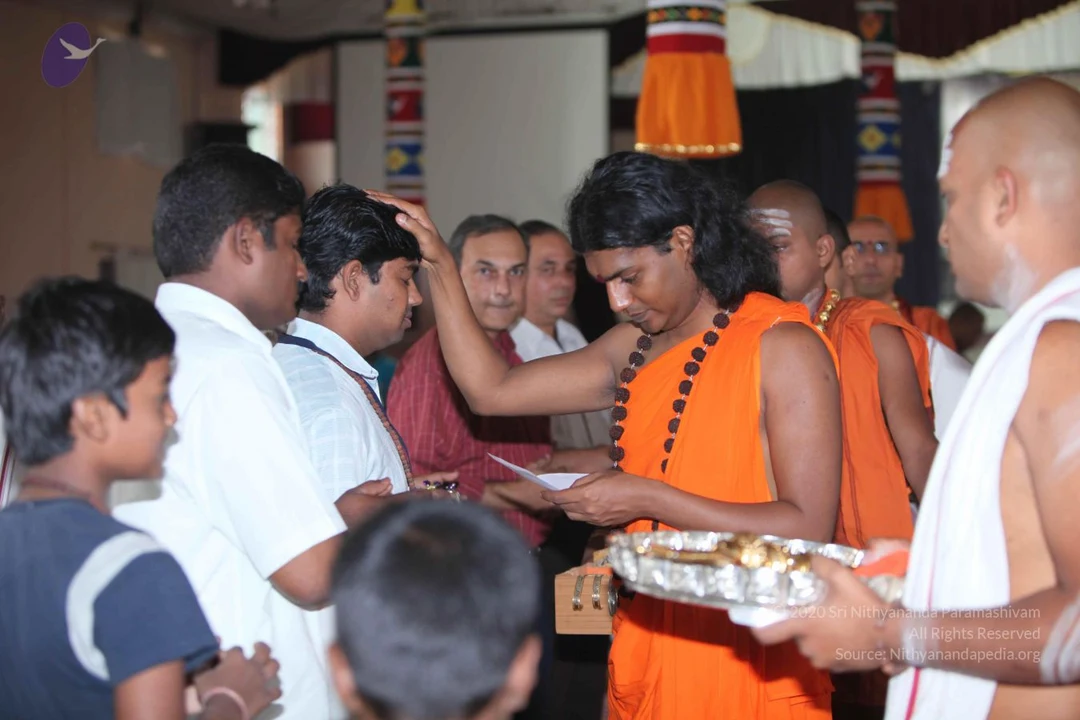
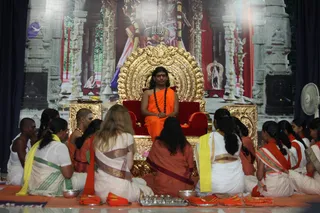
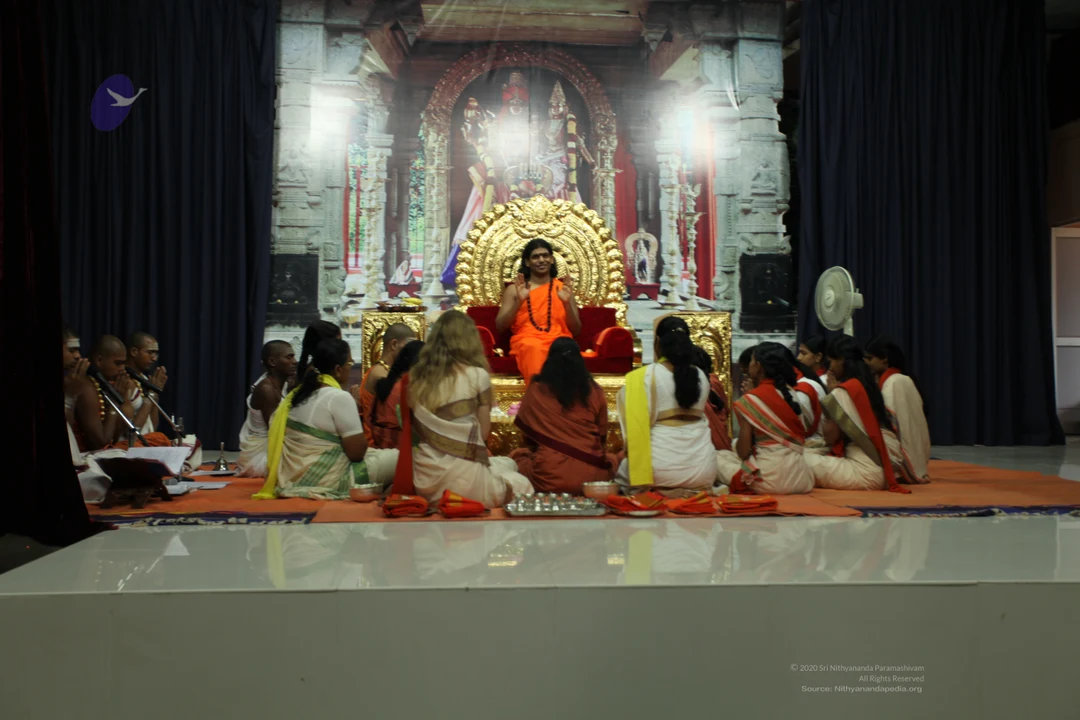
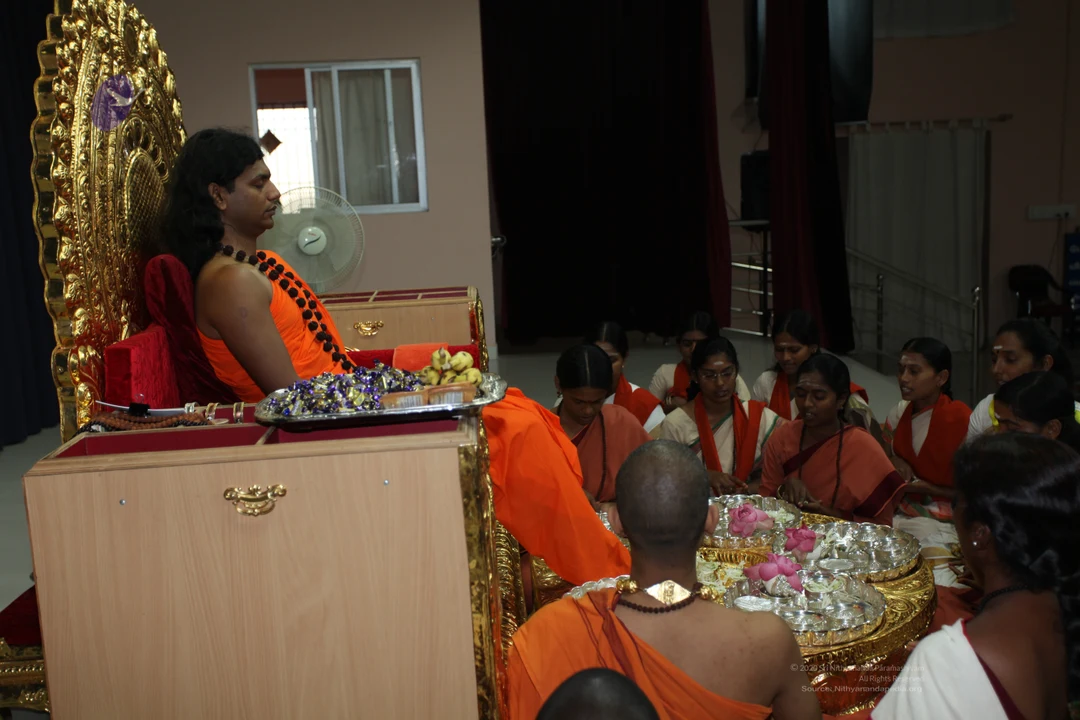
A photograph of a satsang in a hall with a large printed temple backdrop showing ornate stone pillars, a red-curtained shrine and a deity murti. A central figure seated on an ornate gold-and-red throne wears a saffron-orange robe, a long rudraksha mala, and has long dark hair, hands folded in lap, appearing as a probable Swamiji candidate based on the long hair, saffron clothing and rudraksha mala. Around the throne, devotees sit on orange mats: women in white saris with yellow and green borders, a shaved-headed man in white dhoti with vibhuti marks, a woman in a white sari with gold border, and a seated person in orange robes. Brass oil lamps, brass trays with offerings and orange cloths lie on the floor in front. A fan stands at the right edge.A man with long dark hair, a red bindi on his forehead, an orange saffron robe and a dark rudraksha mala sits on an ornate gold throne with red velvet cushions, hands folded in his lap, gazing to the side. In the foreground two people with their backs partly toward the camera are seated: one with long light-brown hair in a cream top, the other with long dark hair in an orange garment. Behind the throne is a large backdrop with a red and pink painted deity figure and a flower arrangement at the base of the dais.A seated man in an ornate golden throne with a large gilded backrest and red velvet cushions, wearing a bright orange saffron garment draped over one shoulder and a long dark rudraksha mala. He has long dark hair, a red bindi on his forehead, and hands clasped in his lap, looking forward calmly. Two blurred audience members, one with dark hair in the lower foreground and another partly visible at the left edge, sit in front of the dais. The appearance matches the a person candidate by saffron clothing, rudraksha mala and throne, though identity is uncertain.A man with long swept-back dark hair sits with eyes closed on an ornate gold throne with a red velvet seat and armrests. He wears a saffron-orange robe draped over his shoulders and a long dark rudraksha mala with a red bindi on his forehead, hands resting folded in his lap. Two or three seated audience members with long hair are visible in the lower foreground. Behind him are golden pillars, a large painted backdrop, and a brass kalasha-style lamp stand on the left. This matches an appearance-based a person figure seated on a peetha throne for a satsang talk, with a fruit tray and brass vessel at the left edge.A photograph of a public satsang hall with a seated teacher on an ornate gold-carved throne at left, wearing a saffron-orange robe and a dark rudraksha mala with long, swept-back hair, facing right toward the audience. In front of him is a wooden lectern-like stand, and a silver tray with blue flowers and yellow fruit sits beside him. Seated devotees fill the floor: monastics in saffron-orange robes, including a shaved-headed figure in the foreground, and women in white, orange and yellow saris, some with folded hands or holding small brass plates of offerings. A curtained stage and wall fixtures are visible in the background.A hall with a golden throne-like seat draped in orange cloth. A shaved-headed man in an orange robe with a rudraksha mala sits on the left, his back to the camera, facing a silver tray of offerings. Several women in orange, maroon and yellow saris kneel around a silver tray filled with small dishes and flowers while one woman pours or arranges items. A woman in a yellow sari with folded hands and a woman with glasses kneel on the right. Purple flowers and fruit sit on a tray at left. In the background, more devotees in orange sit on mats with brass plates, and a blue banner with white lettering hangs on the wall.

Morning-Satsang

3 photosSource gallery
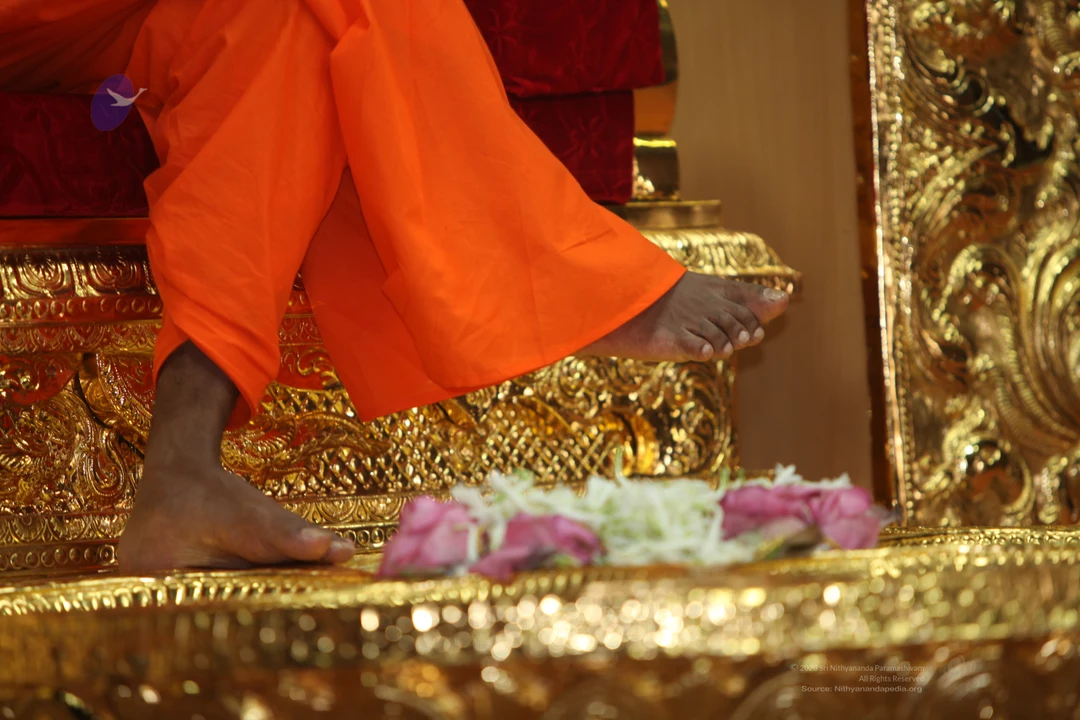
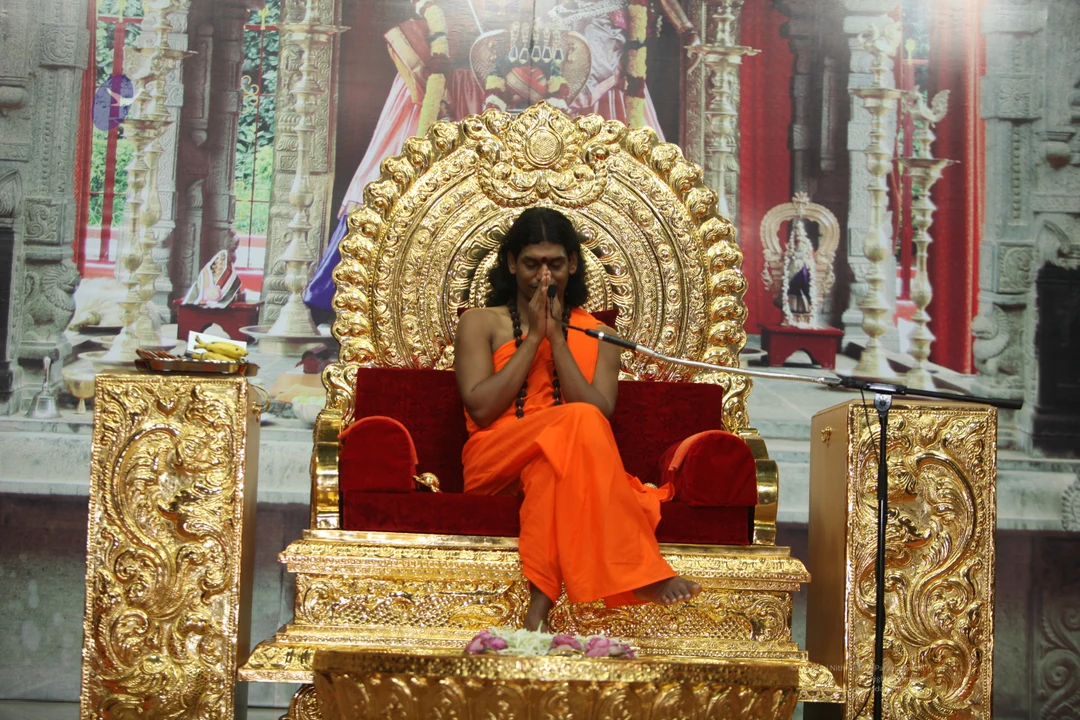
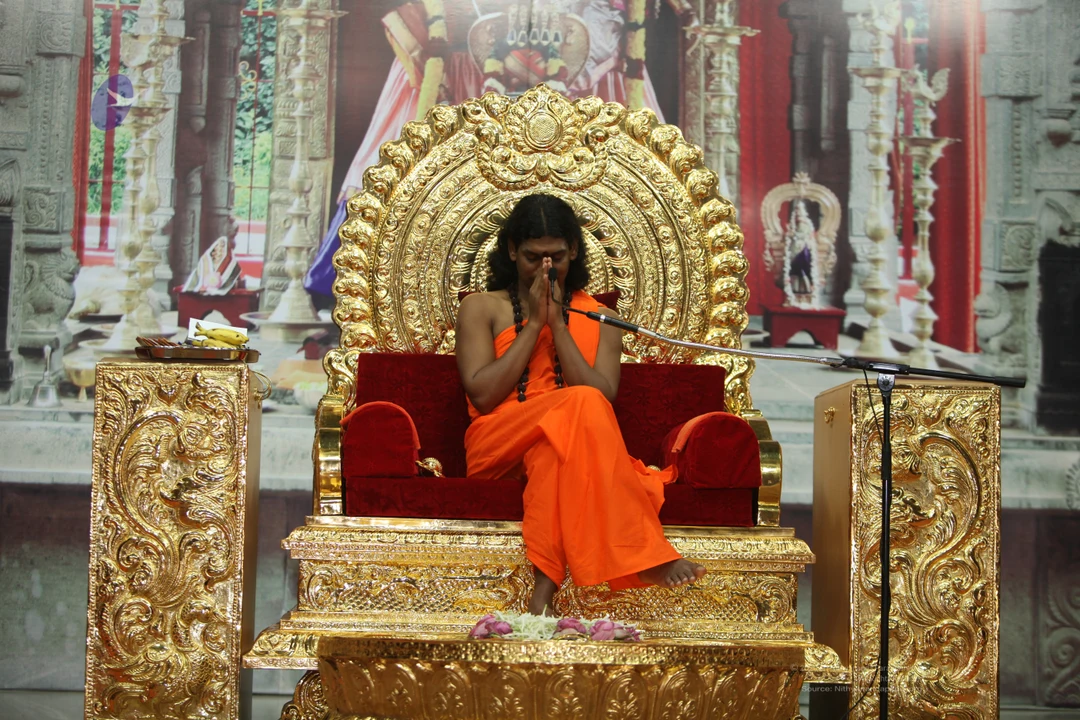
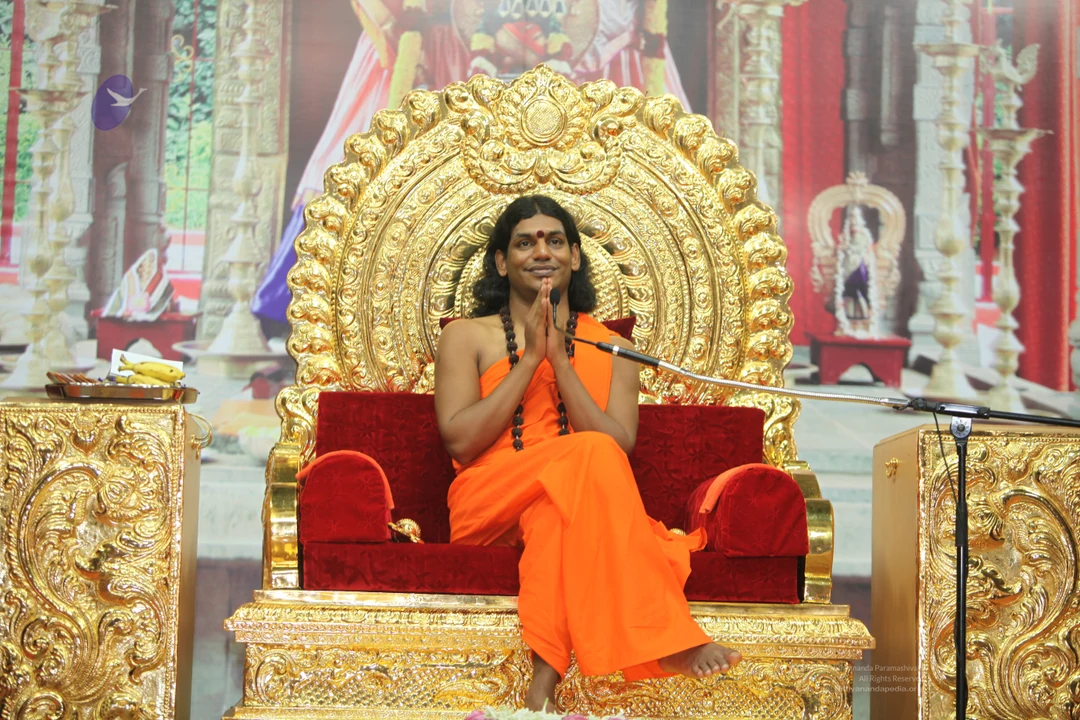
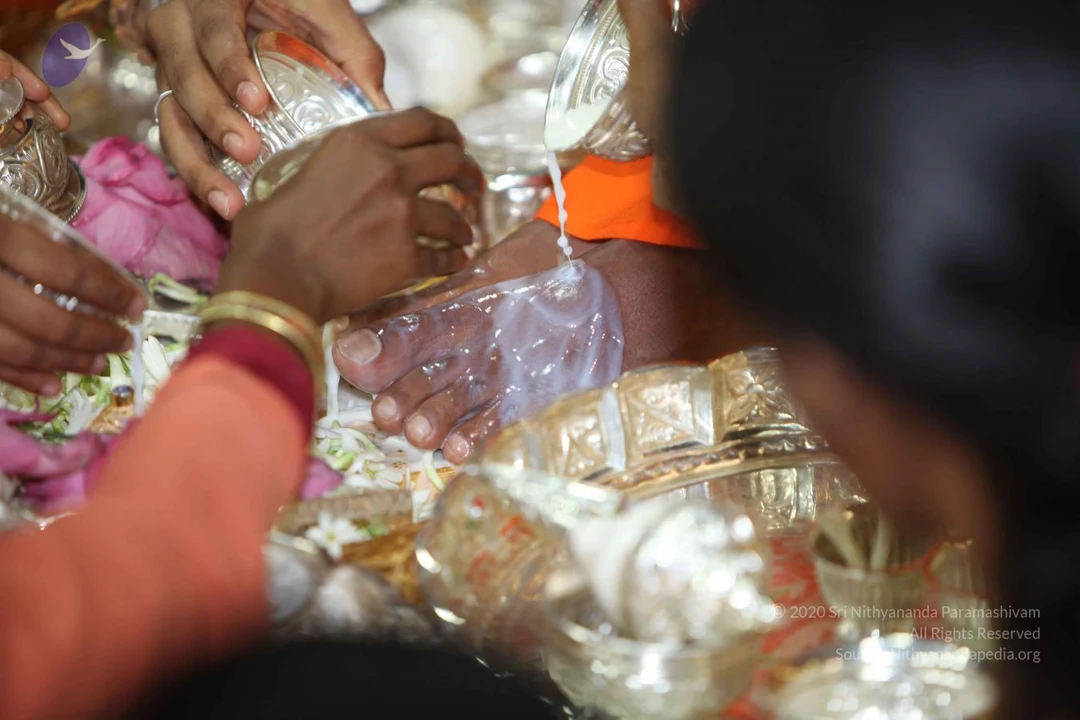
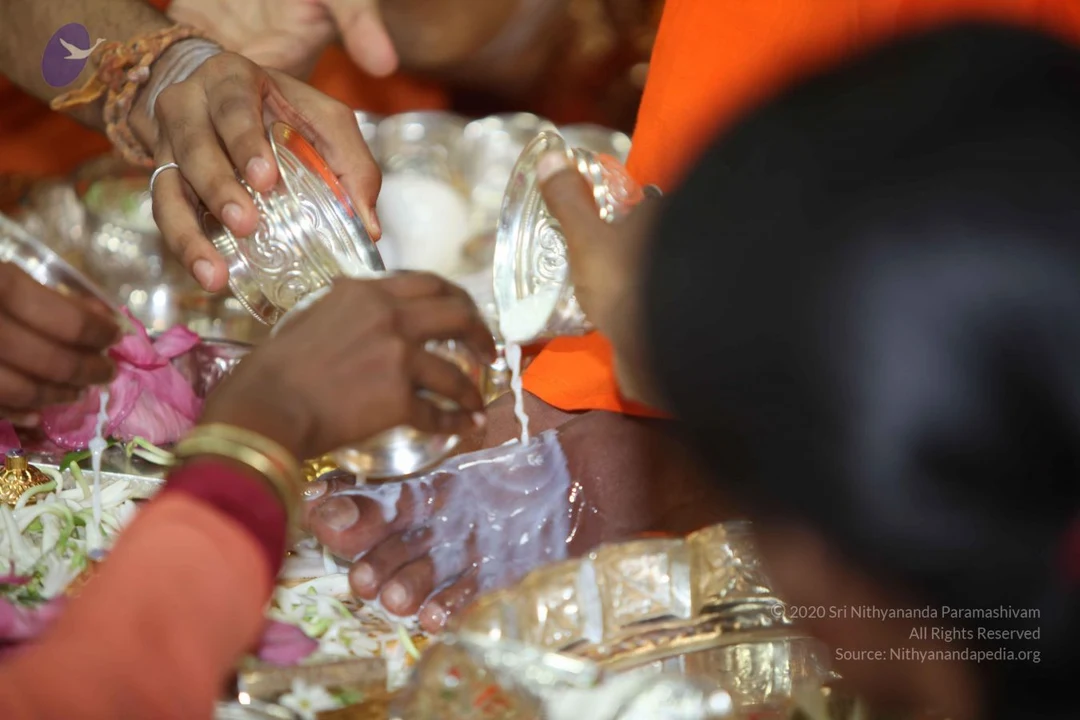
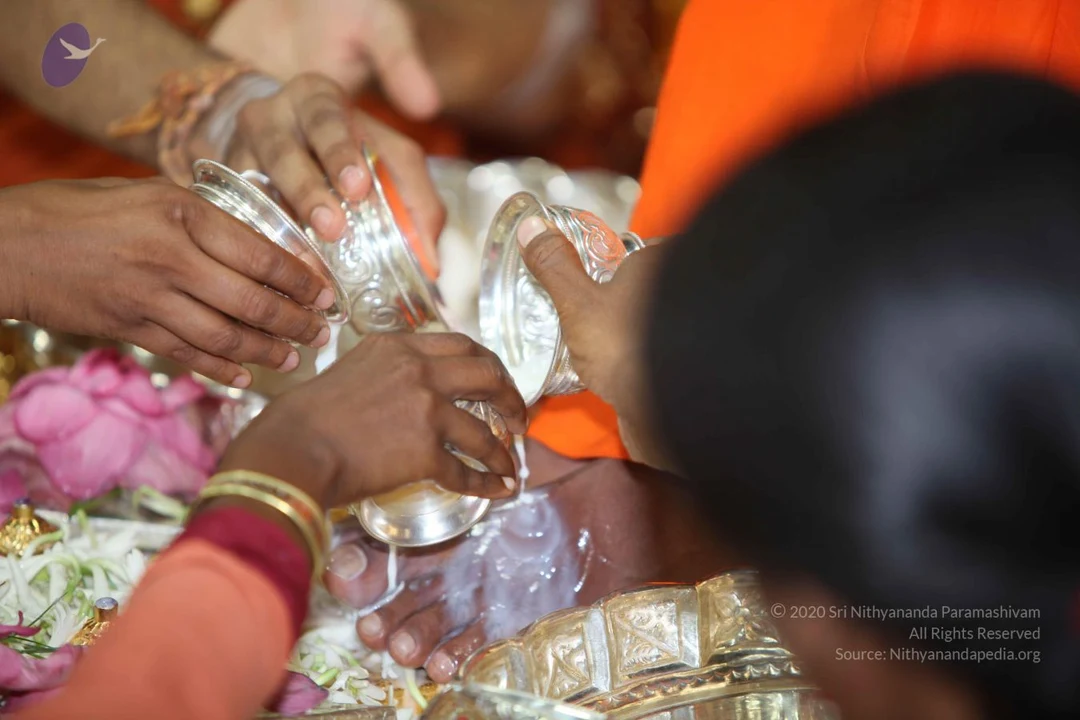
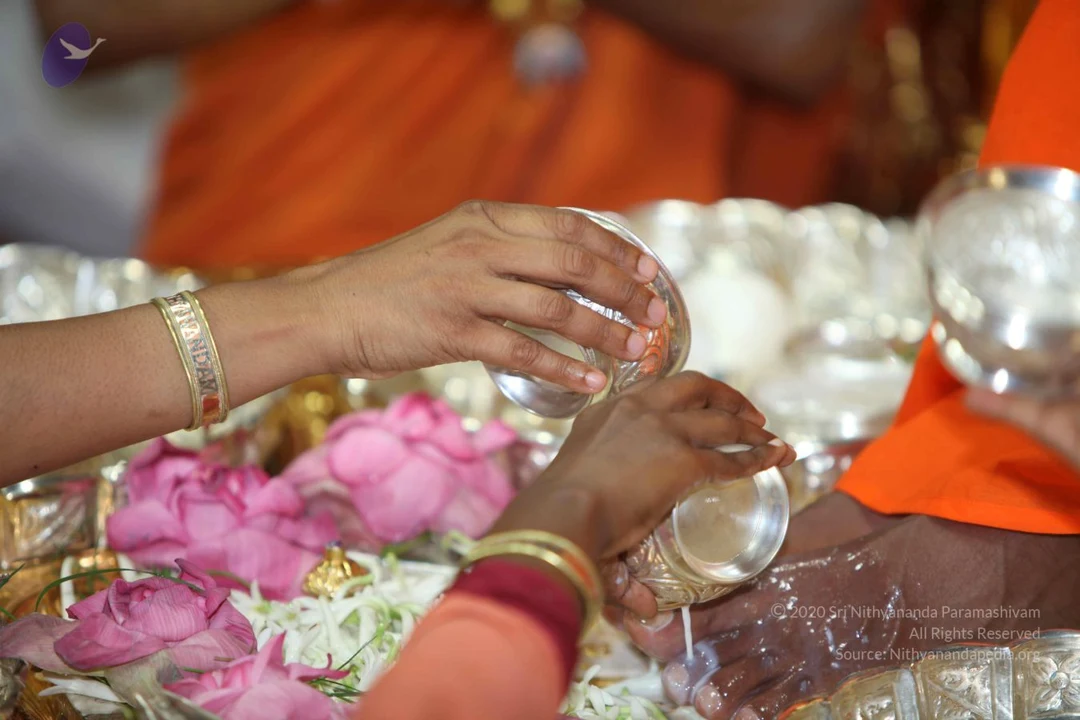
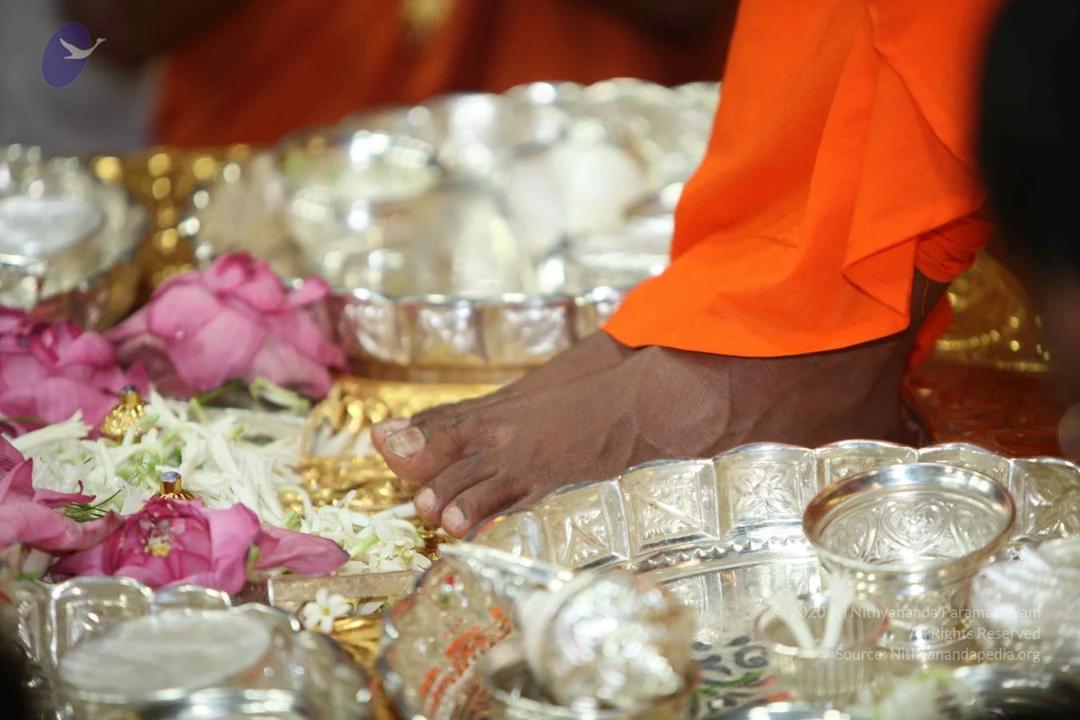
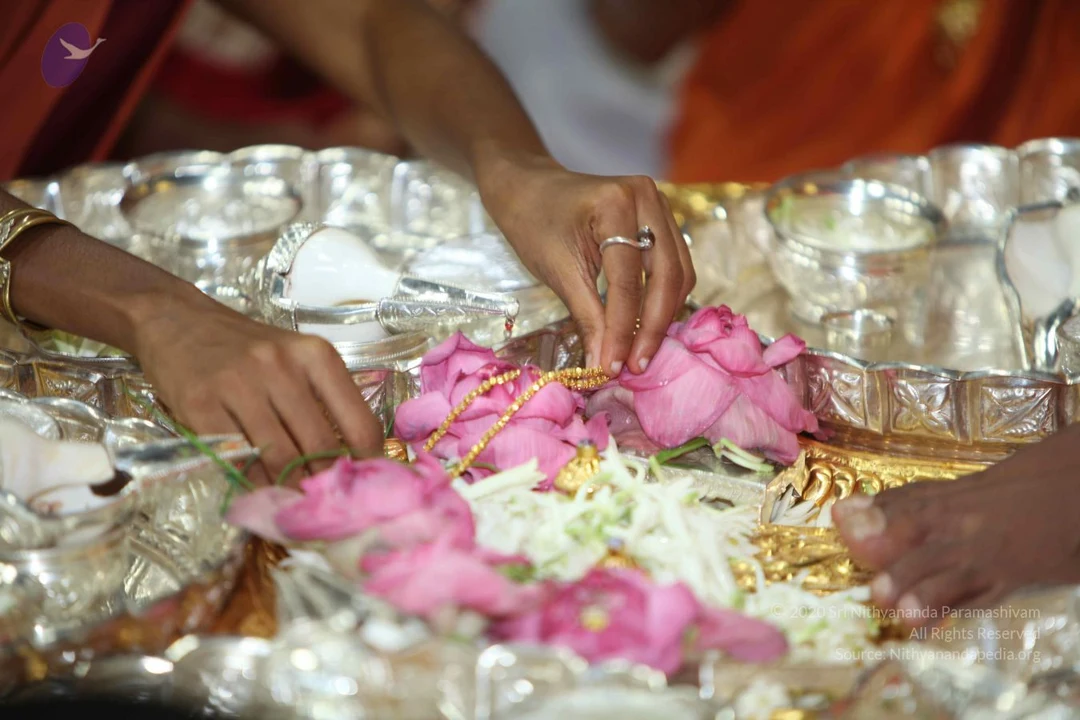
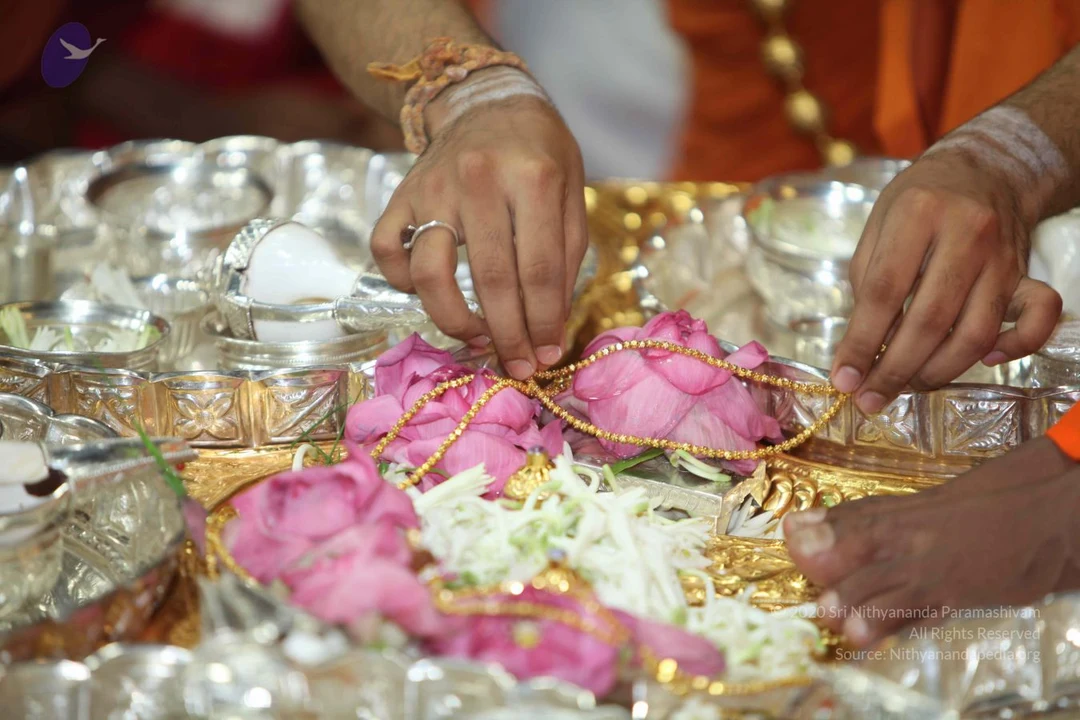
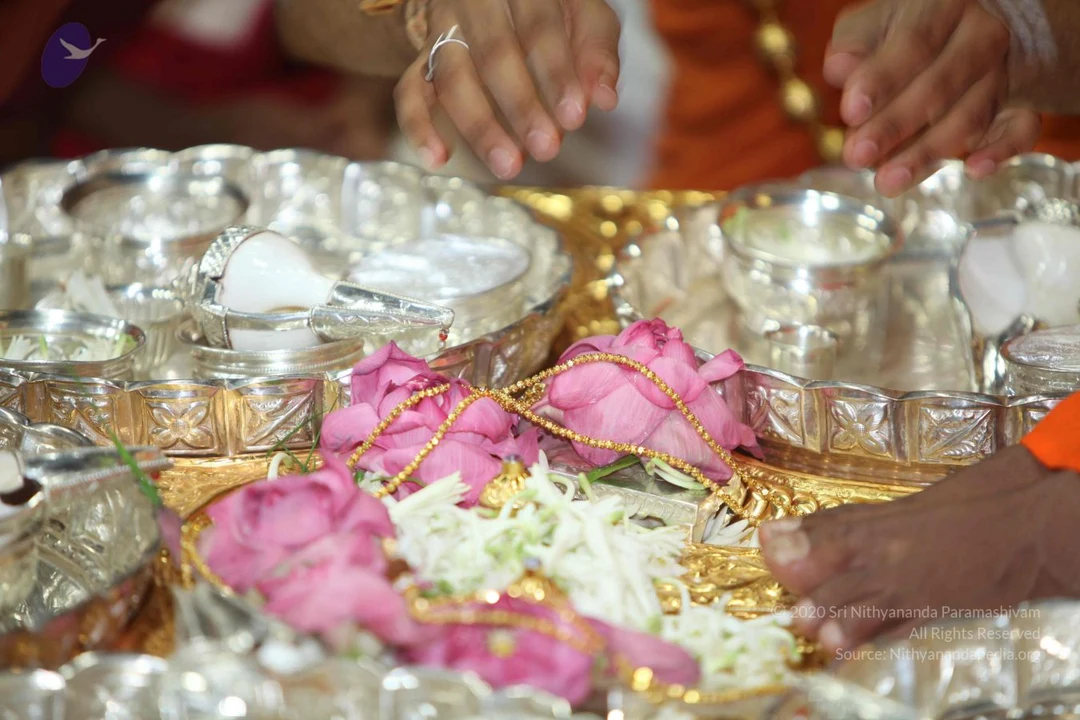
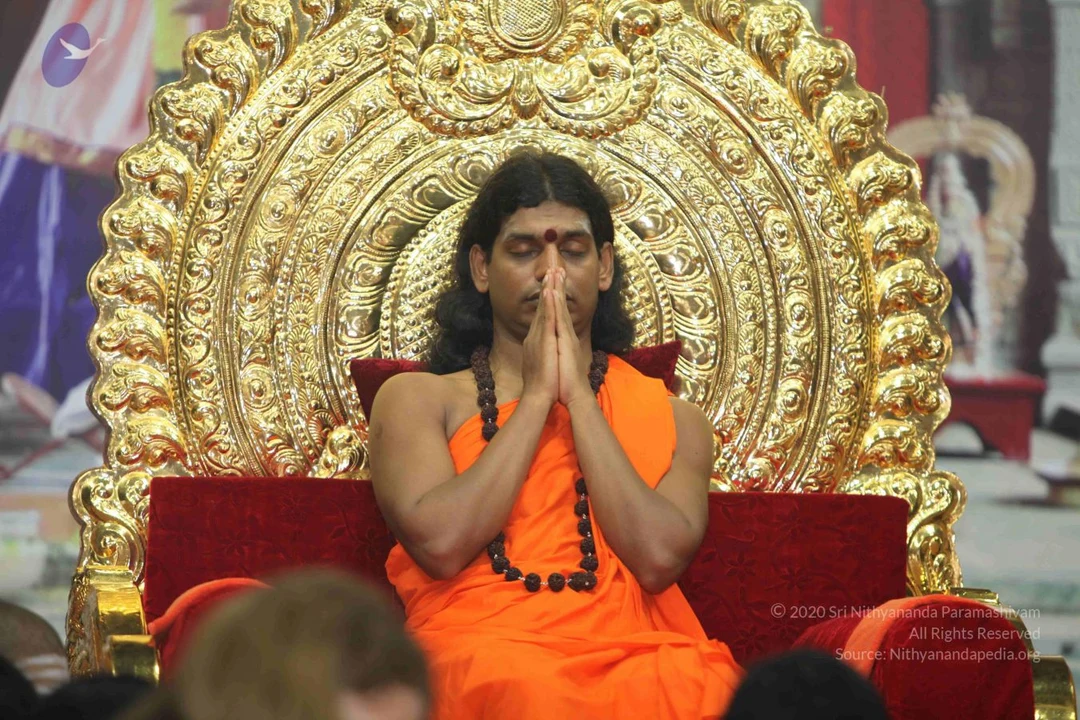
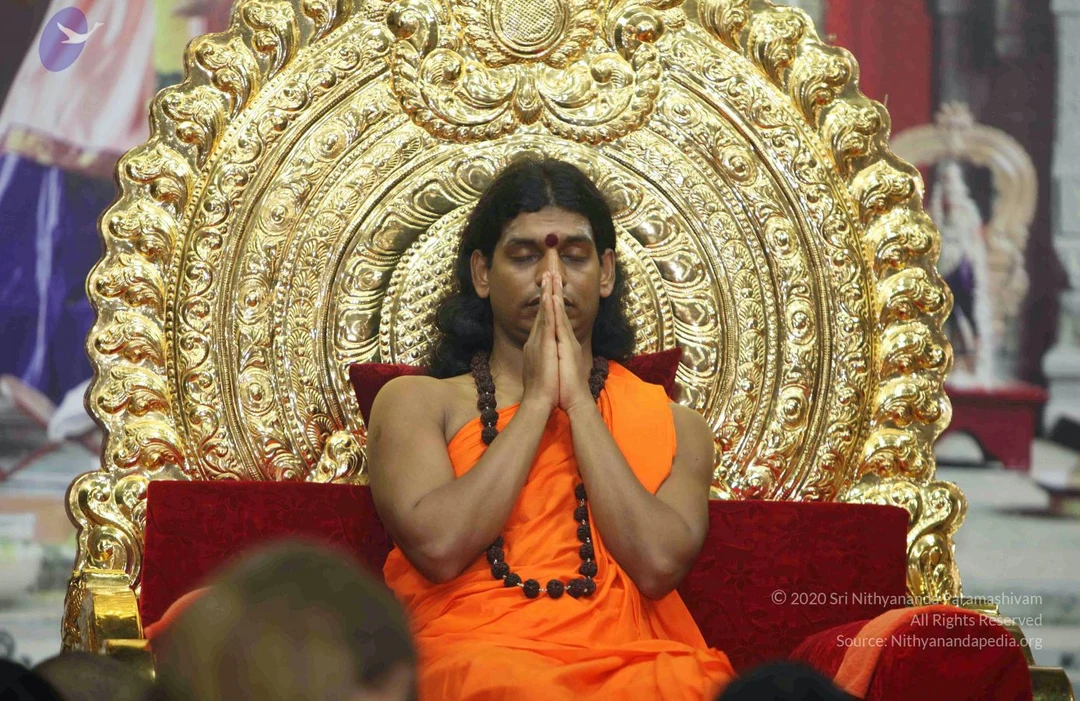
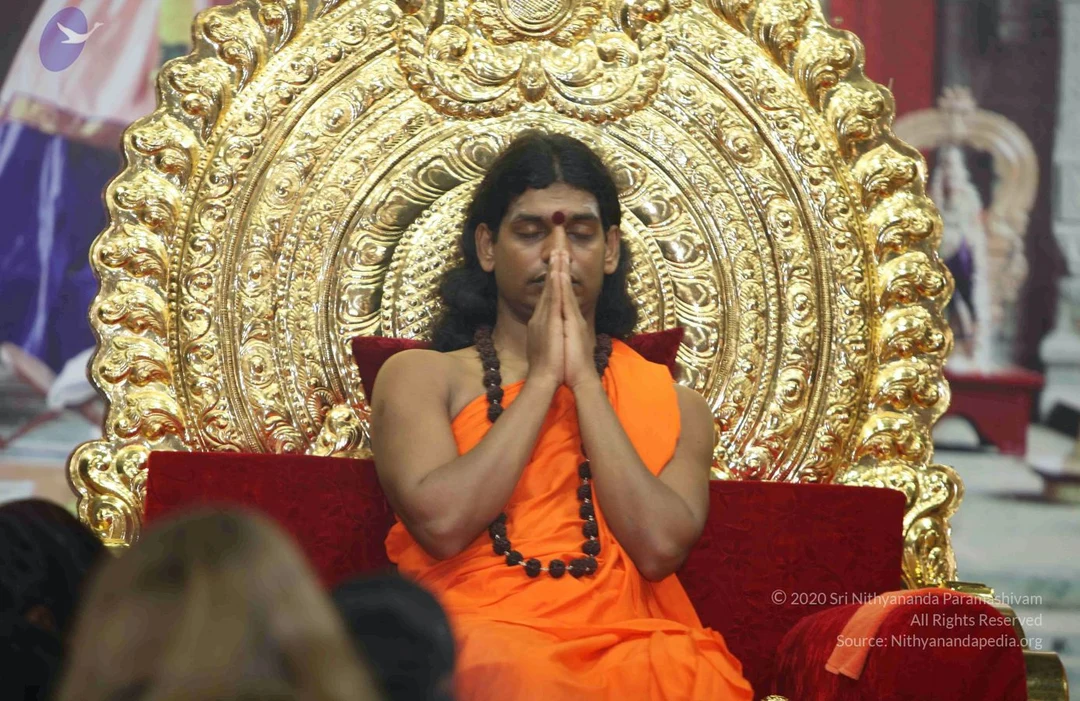
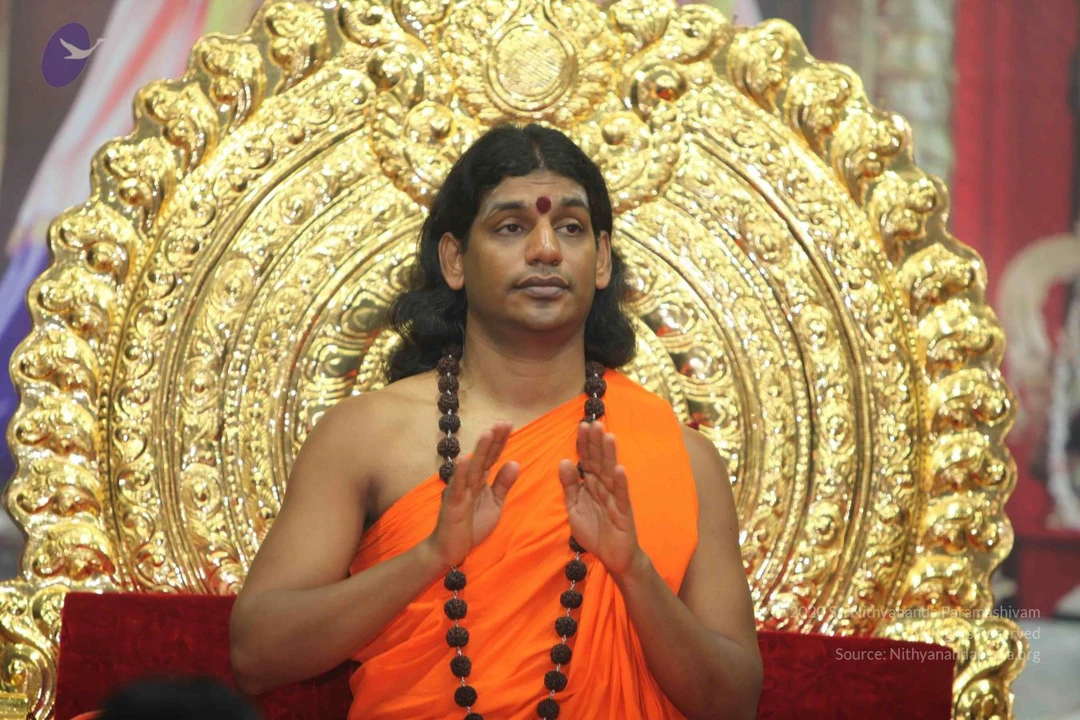
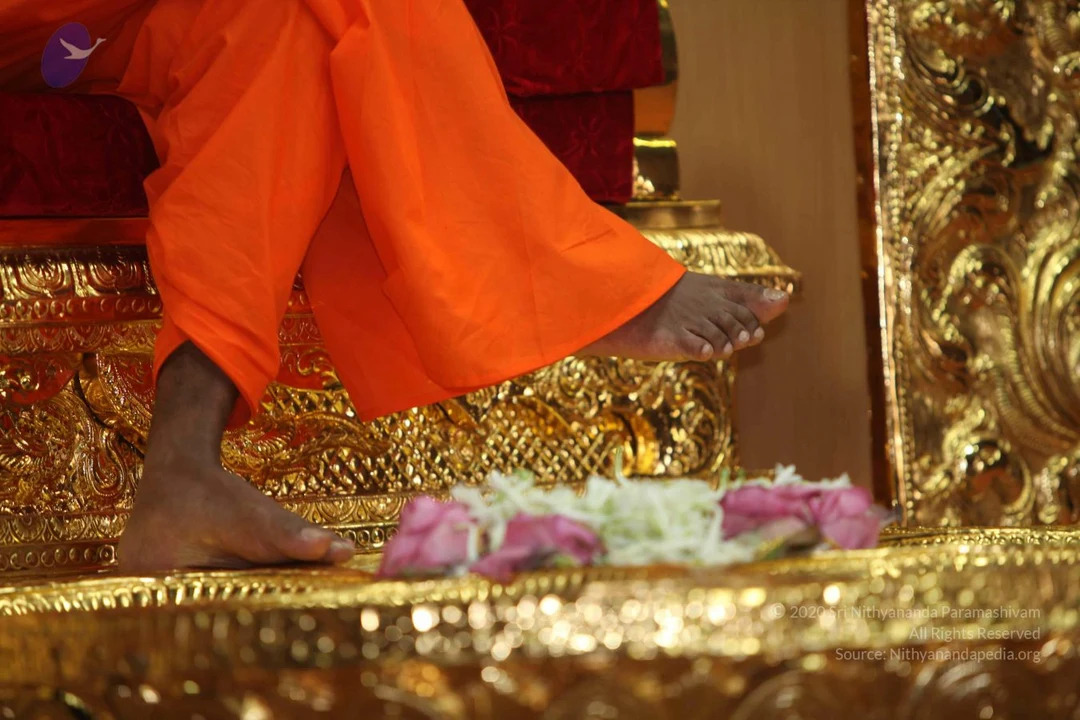
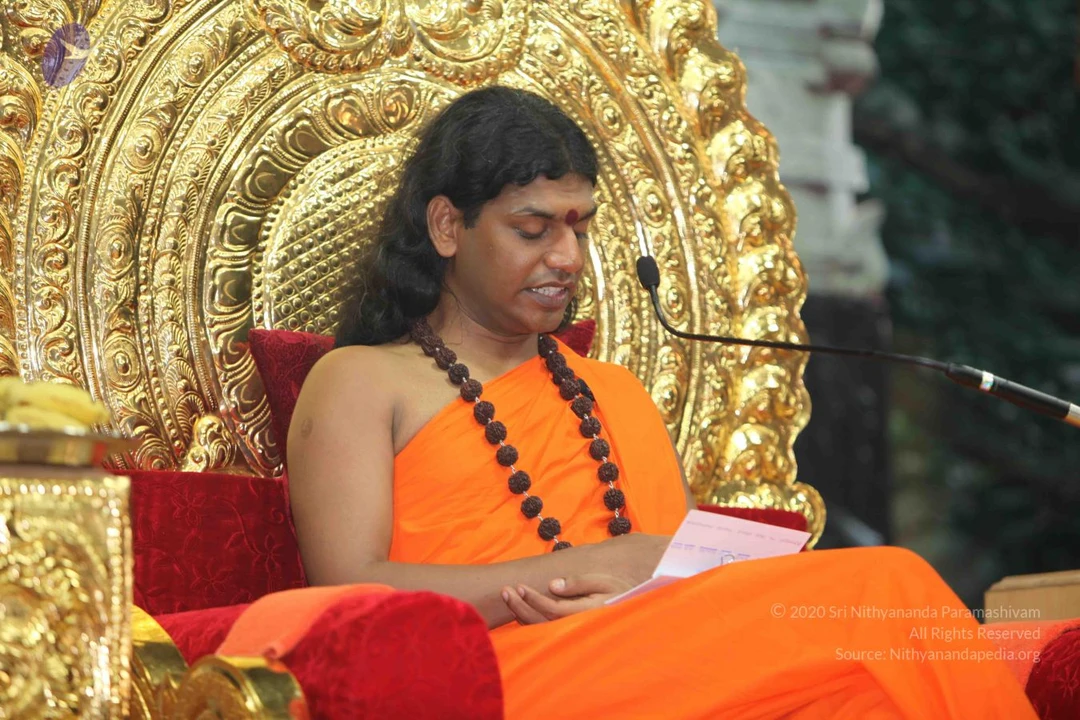
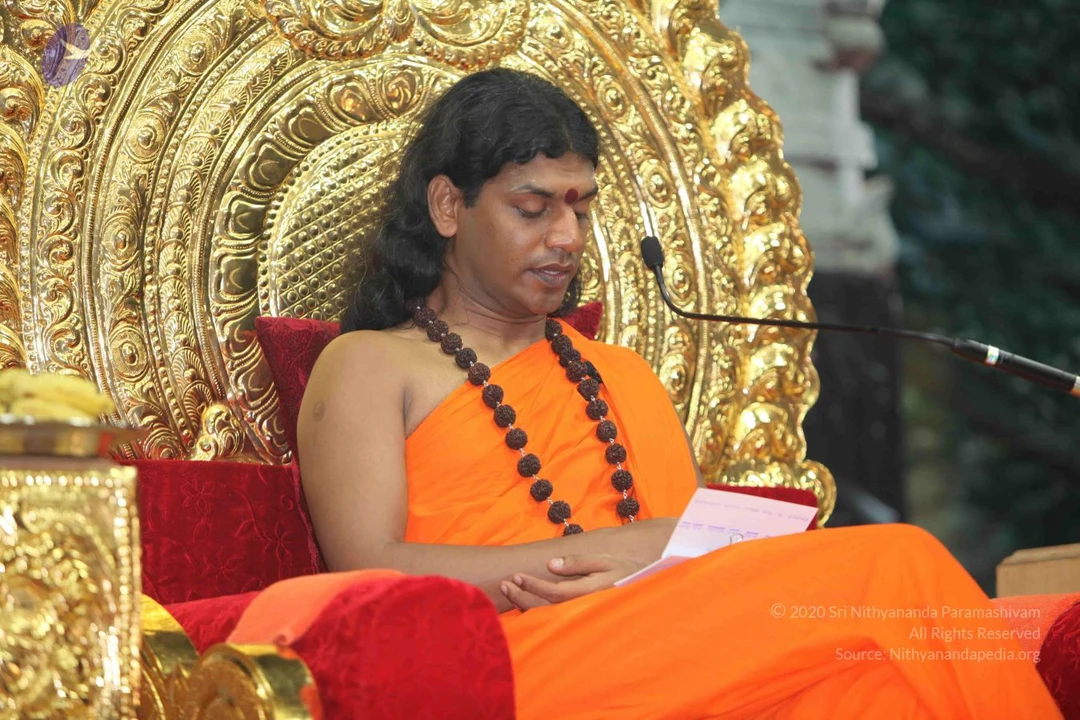
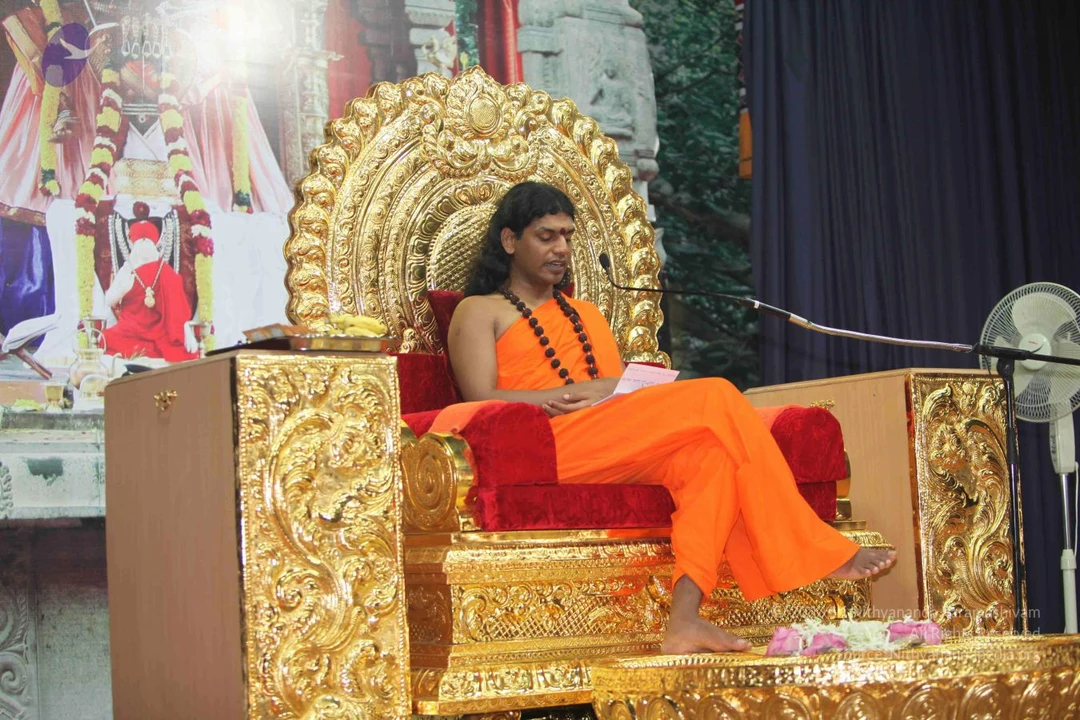
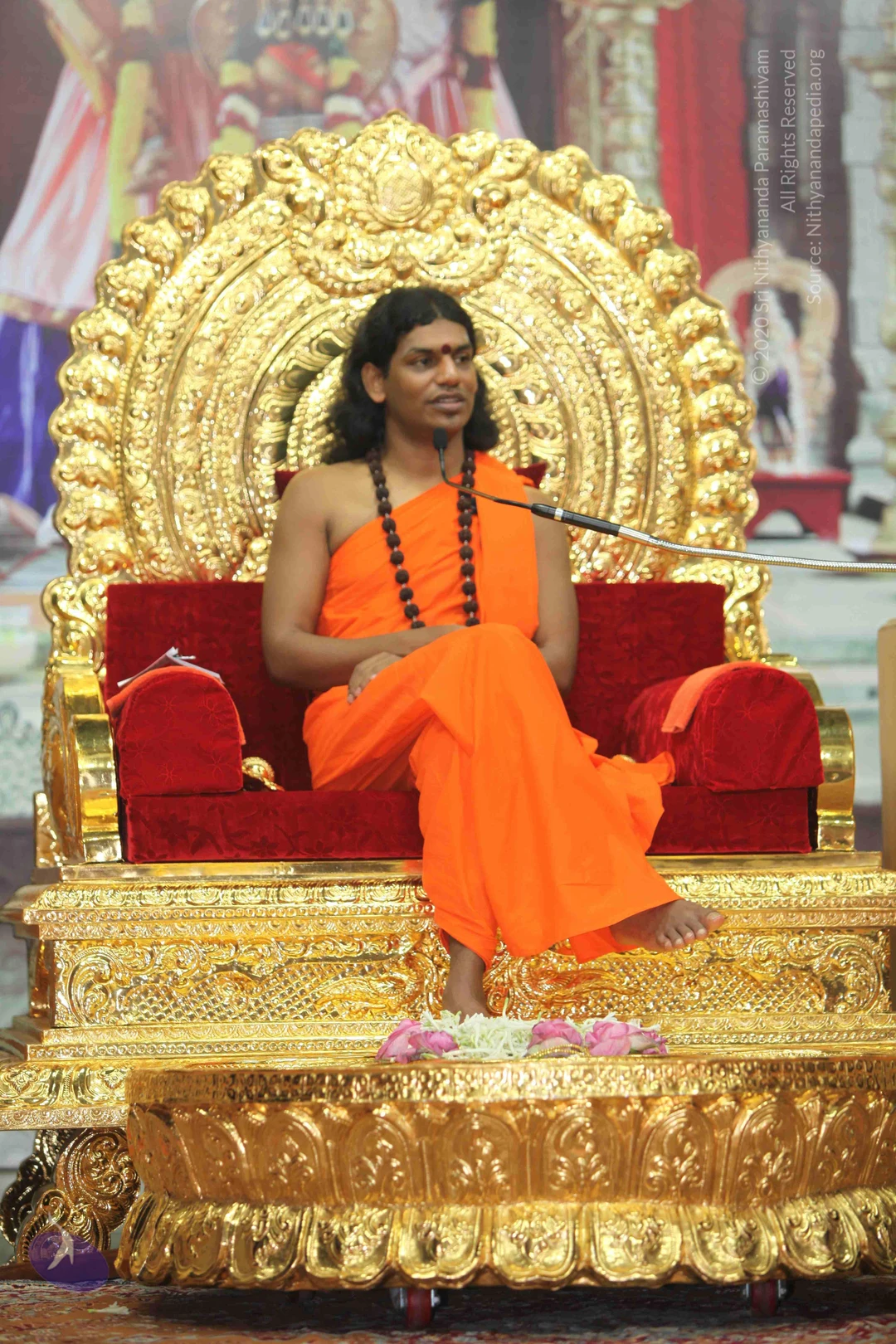
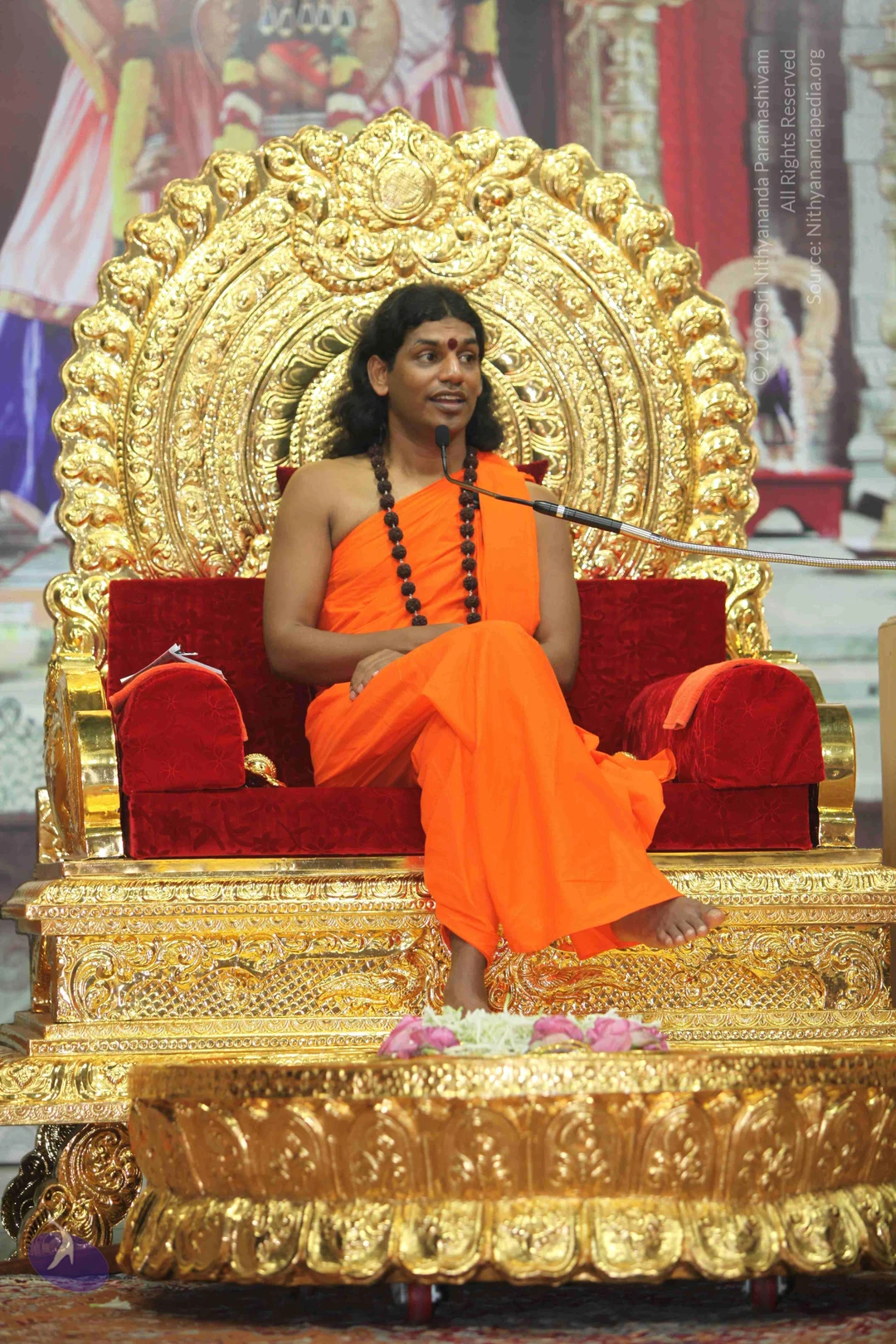
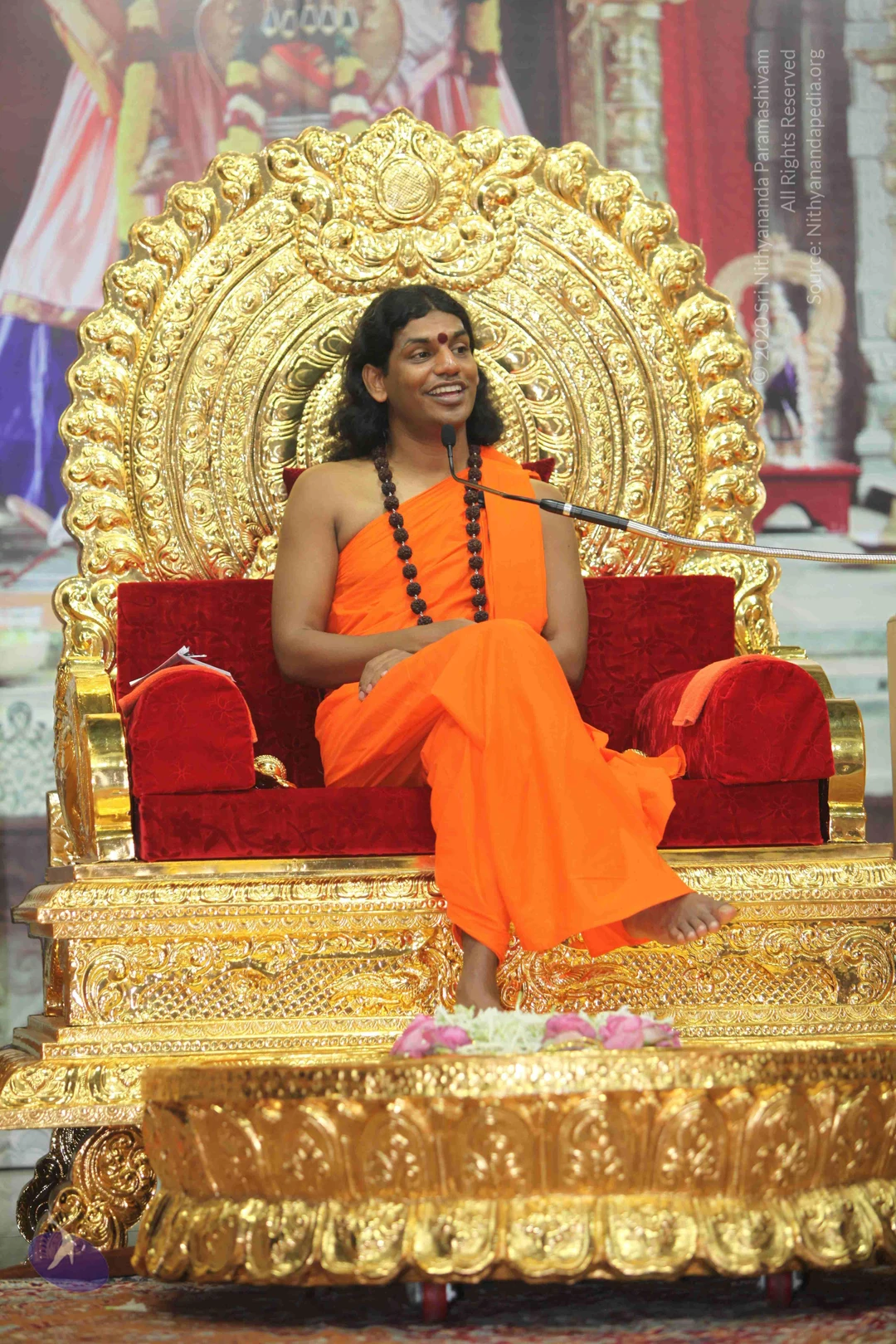
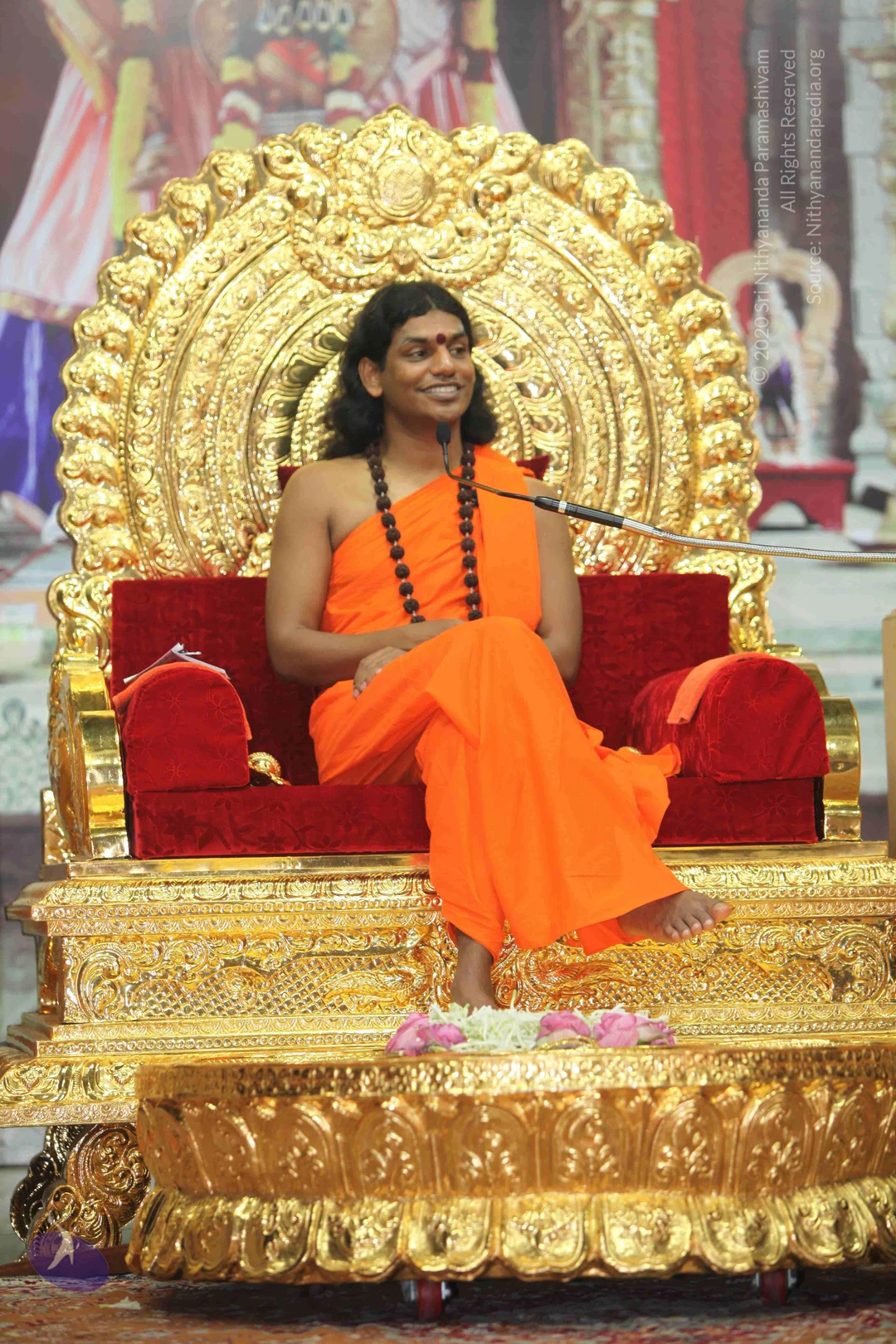
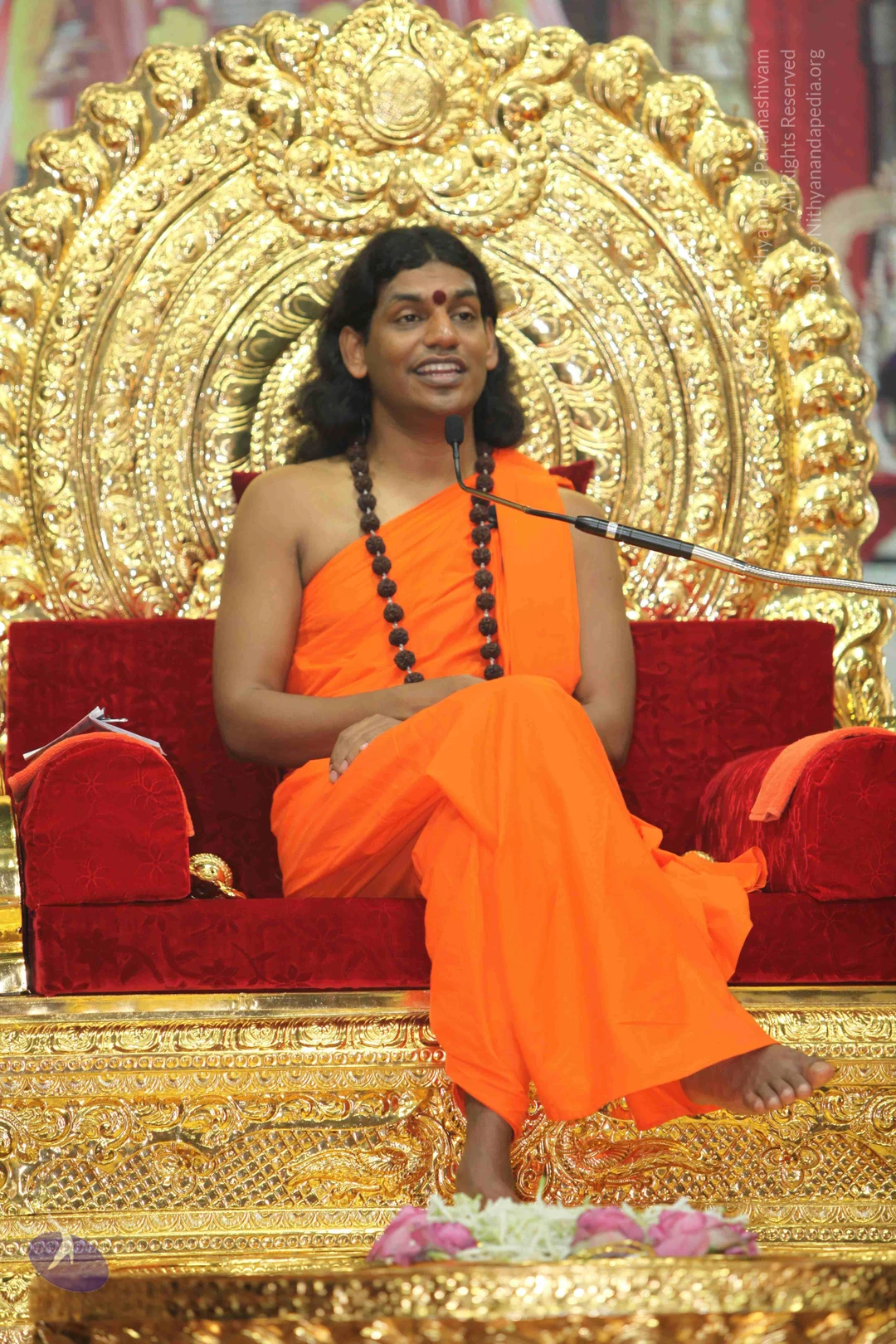
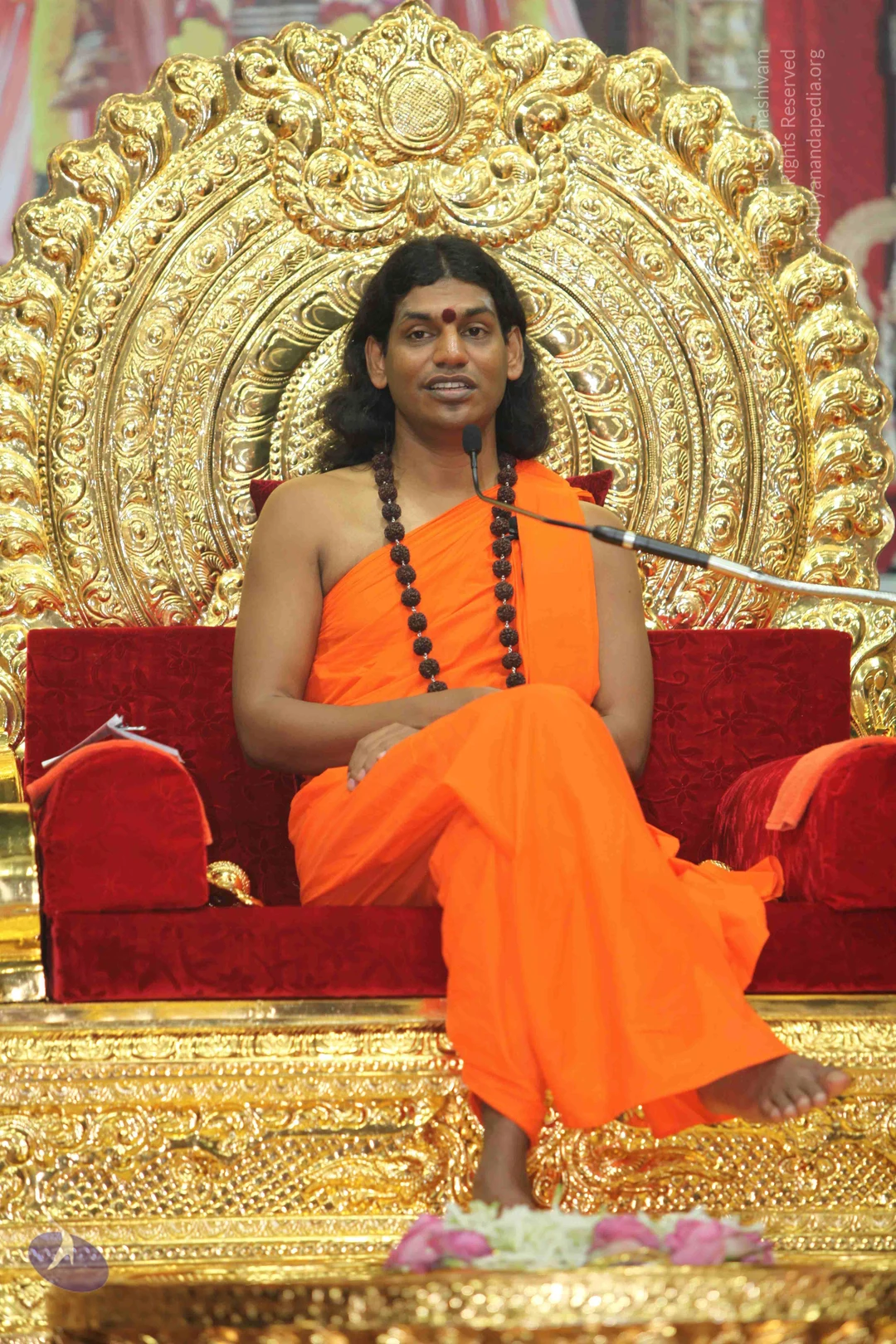
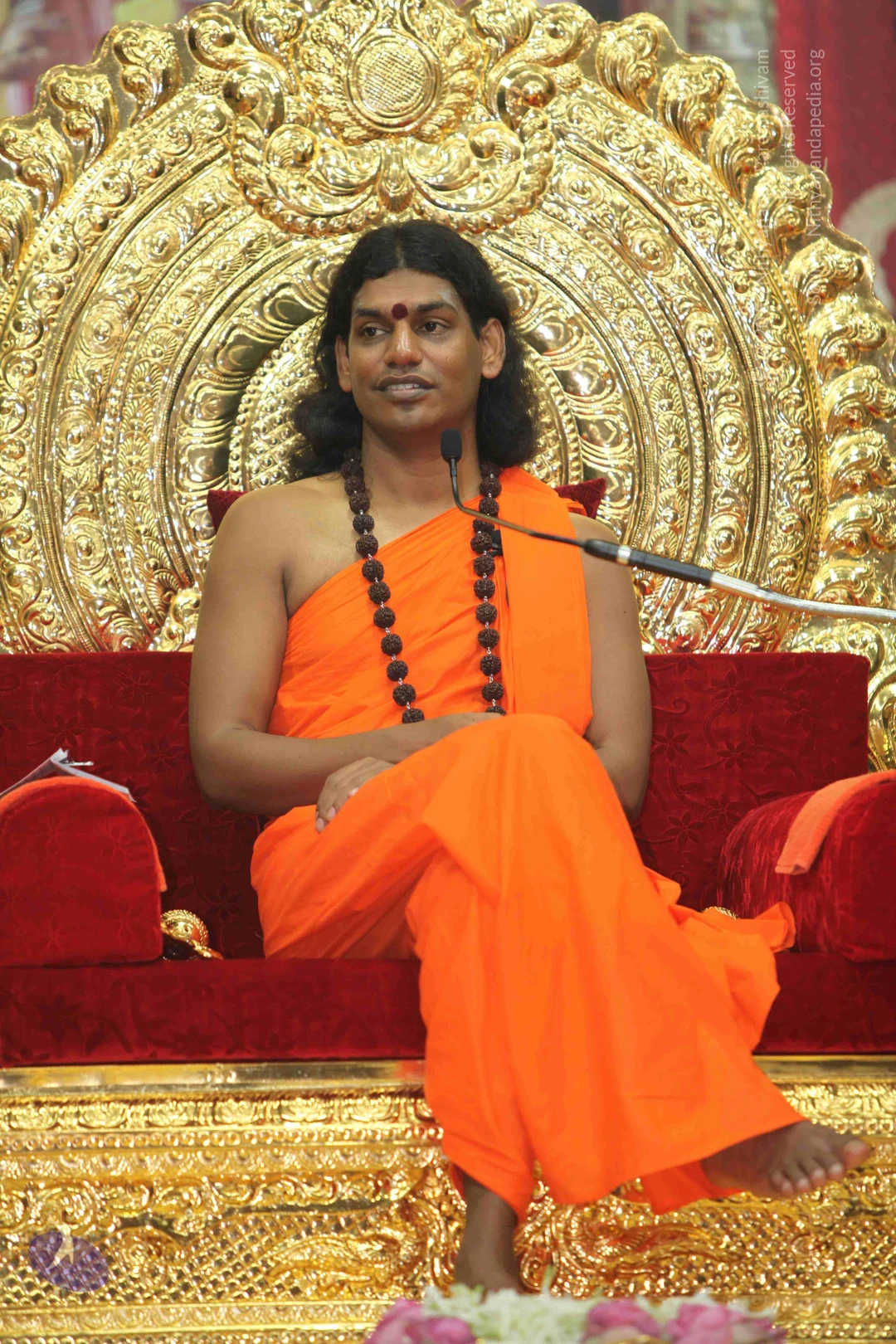
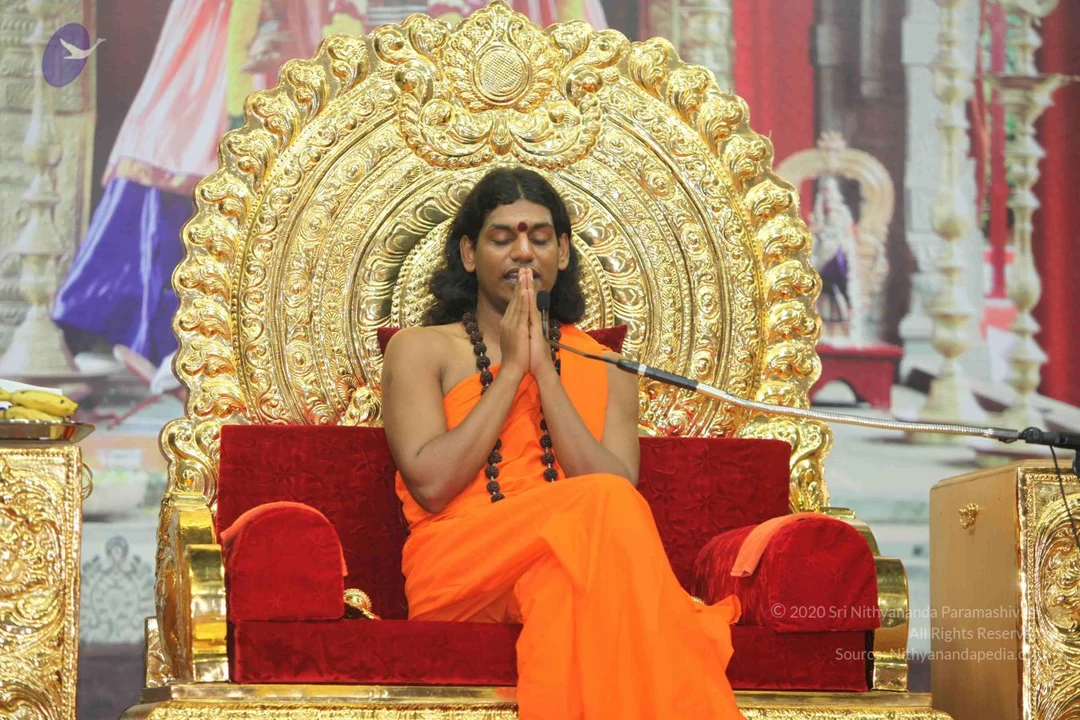
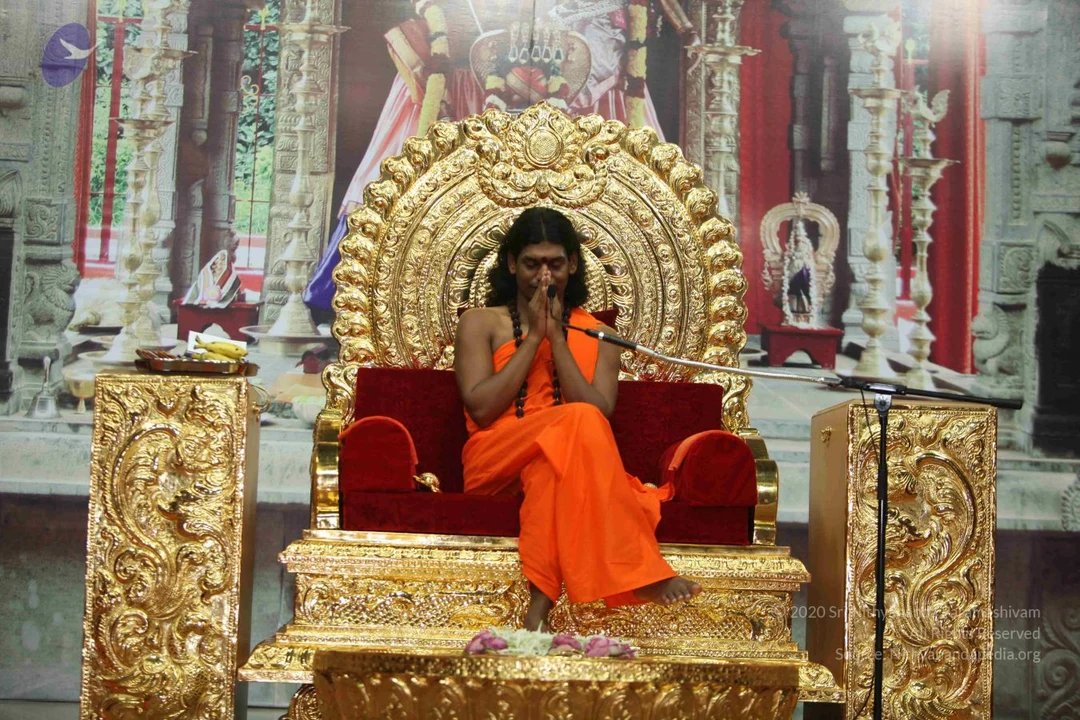
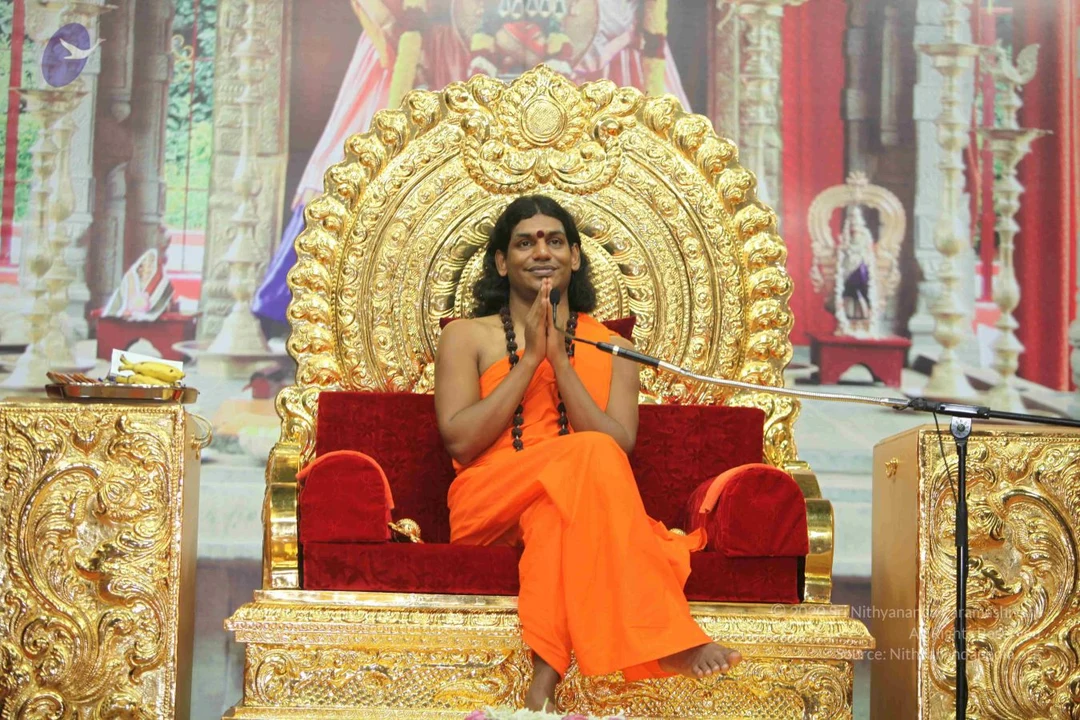
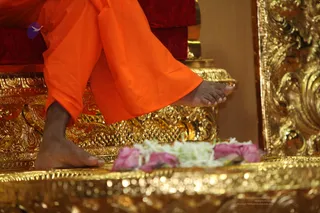
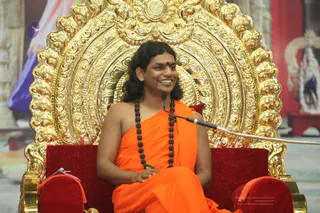
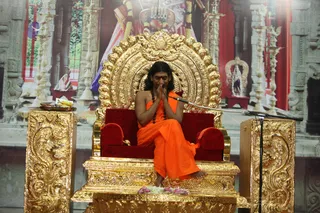
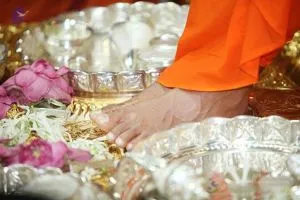
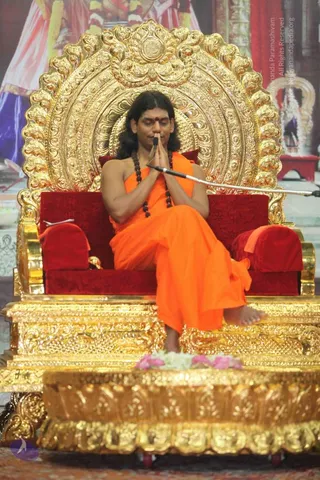
Close-up photograph of a seated figure's bare feet and lower legs wrapped in flowing saffron-orange cloth, resting on an ornate gold-leaf throne base with repoussé floral and scroll carving. Pink rose petals and white flower garlands lie on the gilded platform in front. Behind is a red velvet-upholstered seat and a gilded side panel. Only the feet and legs of one person are visible; no face or upper body appears, so identity cannot be established from appearance and the presence of a candidate is uncertain.A smiling man with long dark hair and a red bindi sits on an ornate gold throne with red velvet cushions. He wears an orange saffron robe draped over his shoulder and a long string of dark rudraksha beads around his neck, with his hands resting in his lap. A microphone on a flexible stand is positioned near his face. Behind him are red and gold drapes and a framed deity image on the right. Appearance-based label: Swamiji (probable), seated in_person on the throne, qualified by long hair, saffron robe and rudraksha mala.A figure in saffron-orange robes sits on an ornate gold throne with red velvet cushions, palms pressed together in namaste before a microphone stand. Long dark hair falls past the shoulders, and rudraksha malas hang across the chest. Gold-framed side pedestals flank the throne, with a small plate of fruit on the left and a bed of pink and white flowers at the base. Behind, a large backdrop shows a painted deity figure in red and white, golden pillars and a gold shrine with a small murti.

Yoga-Sutras

11 photosSource gallery
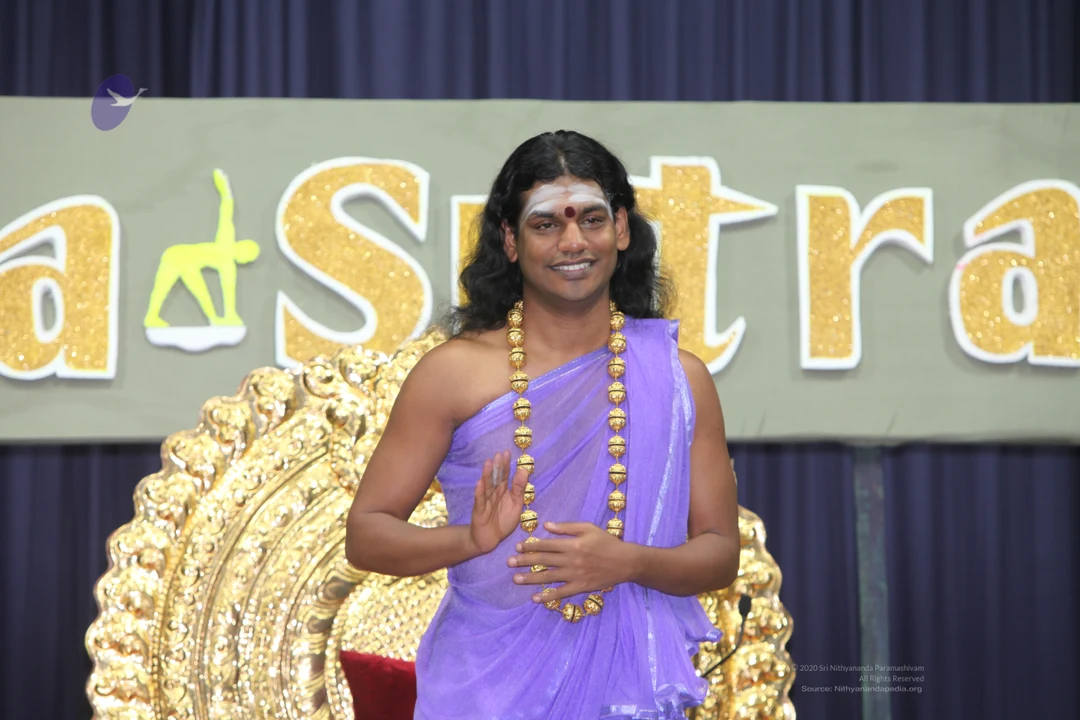
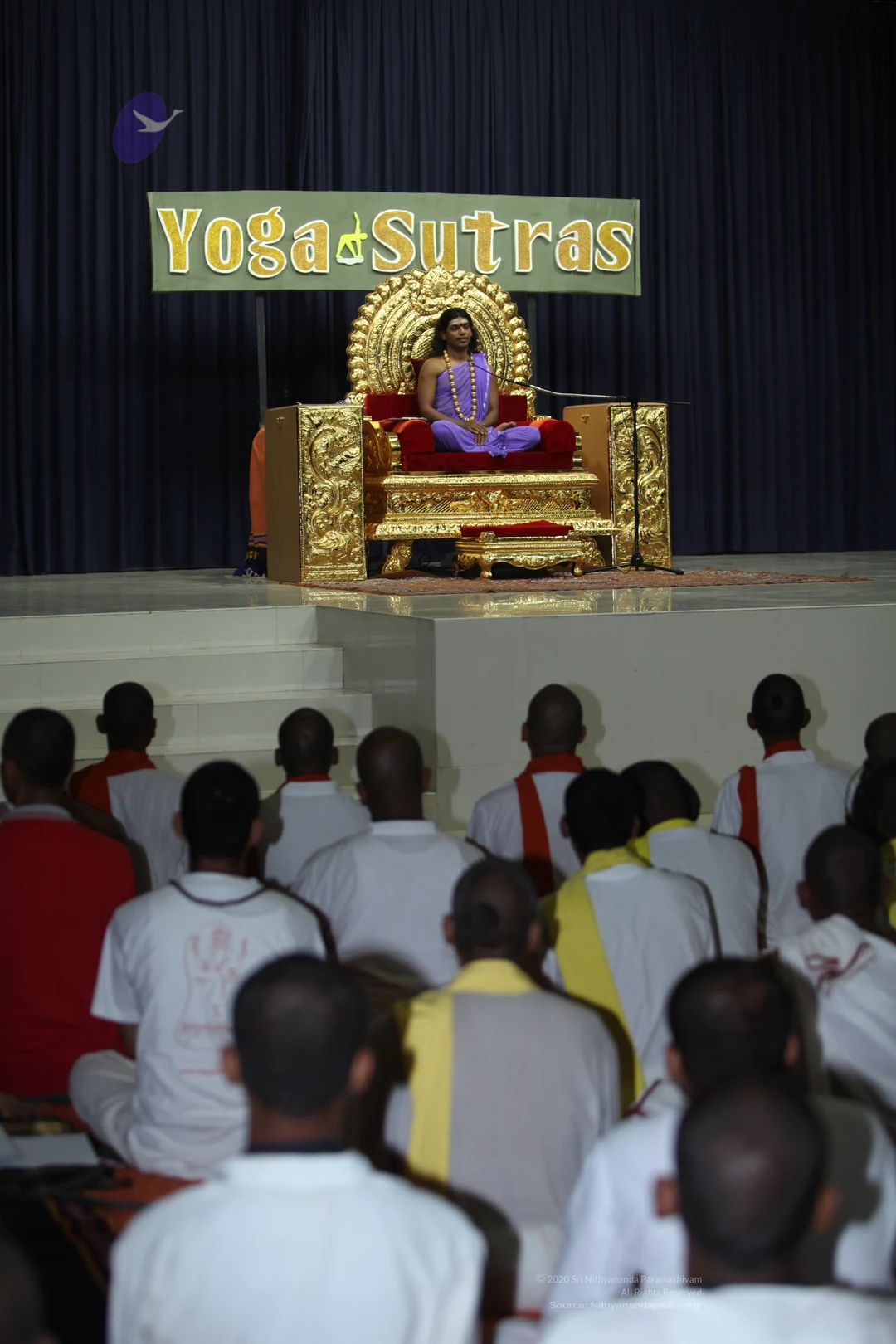
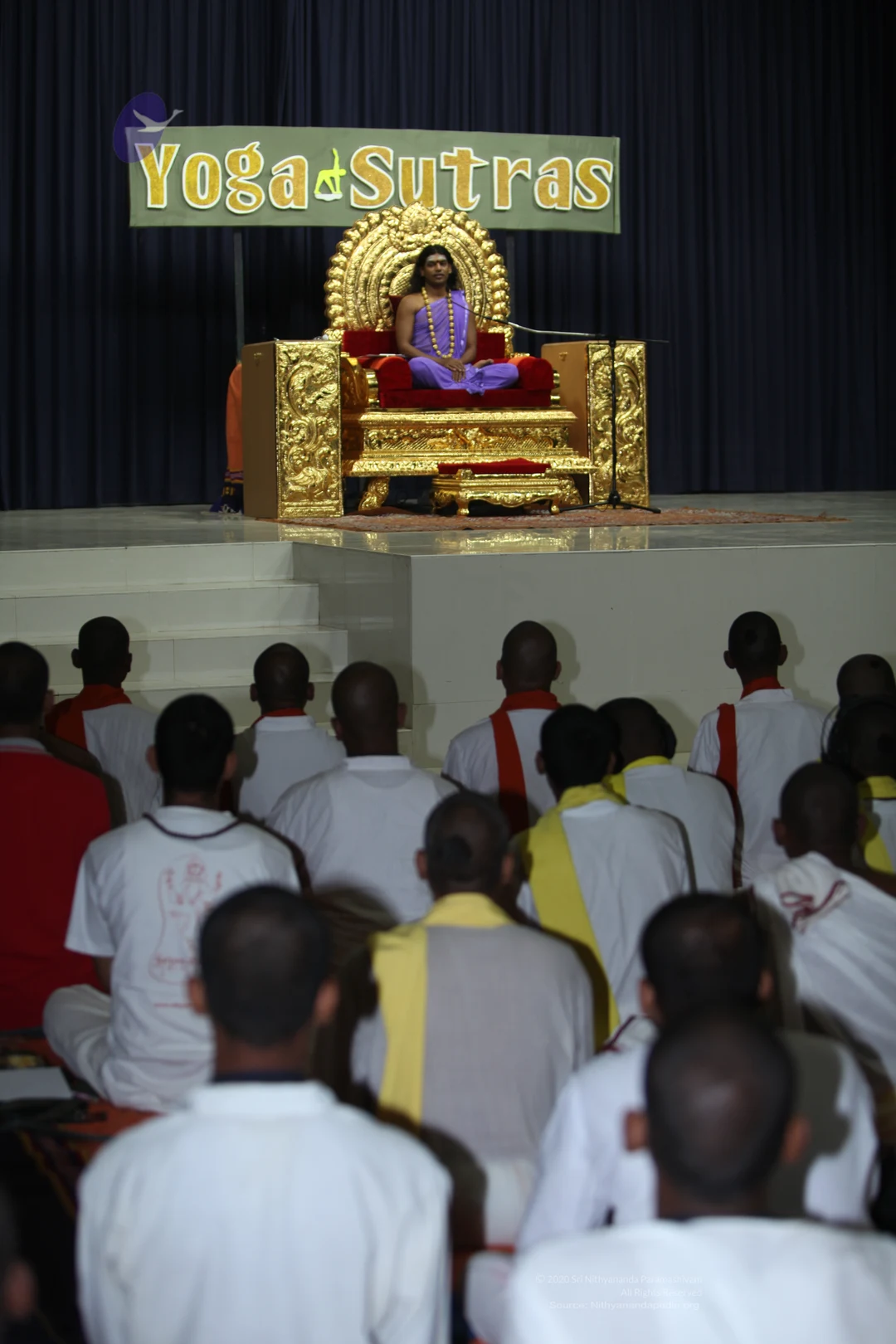
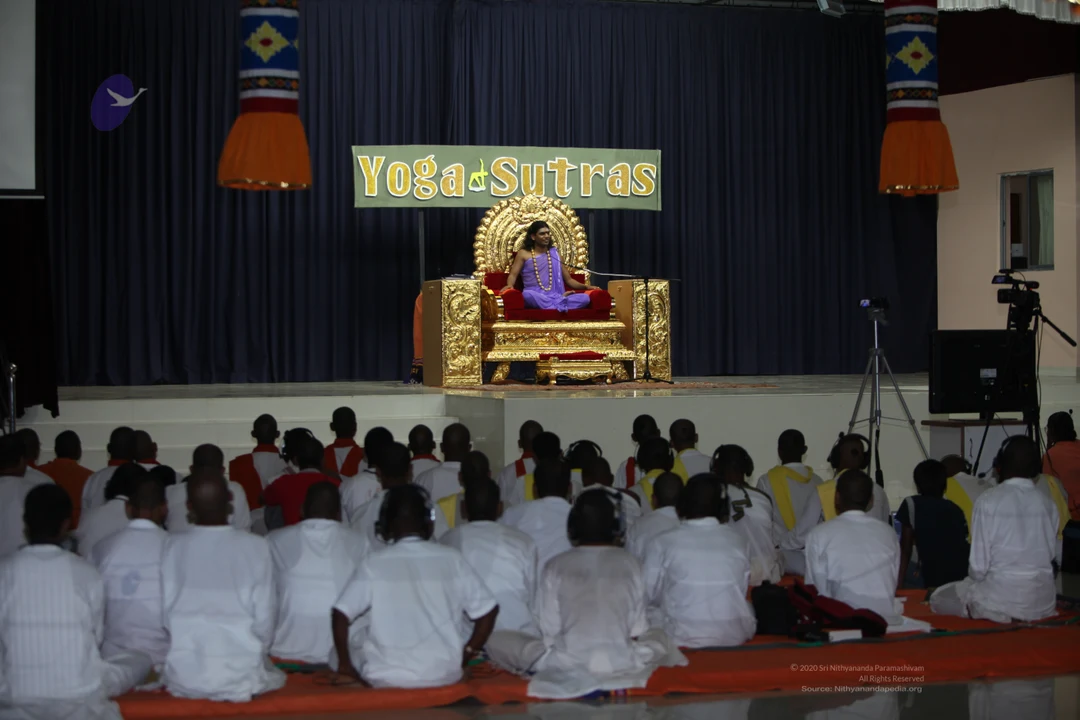
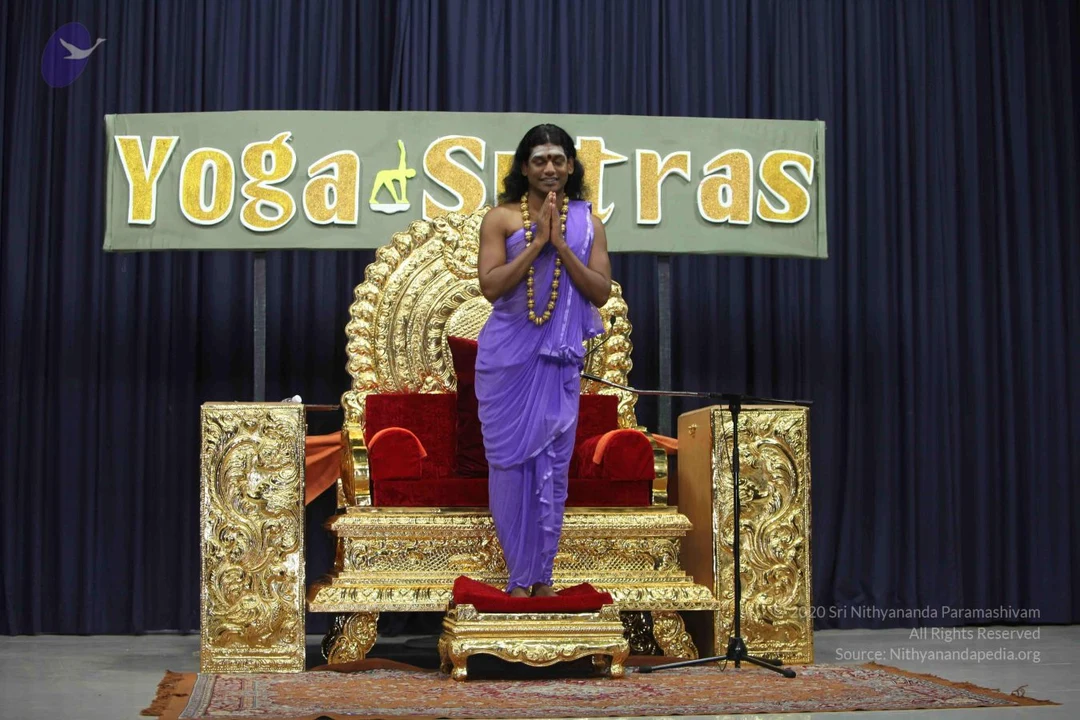
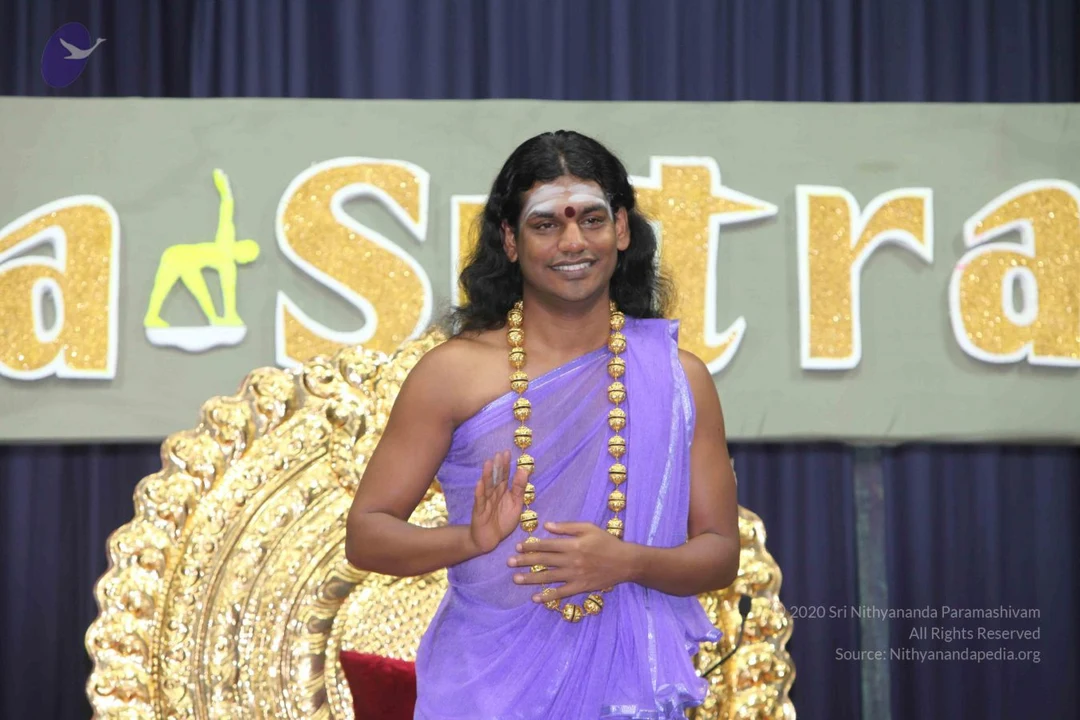
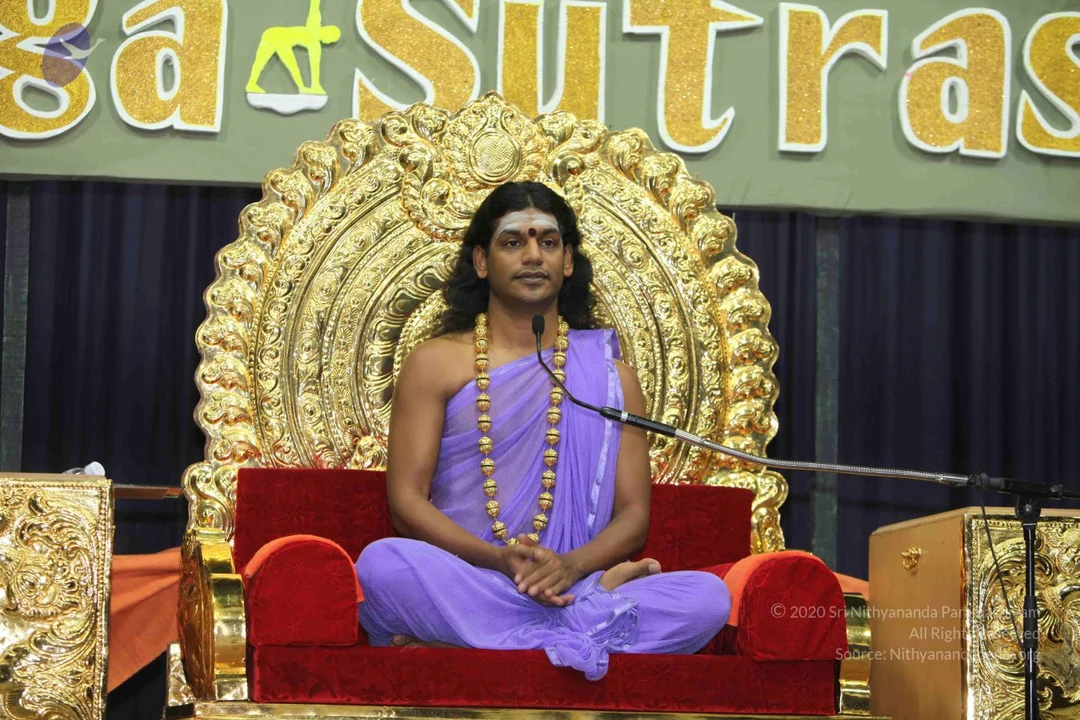
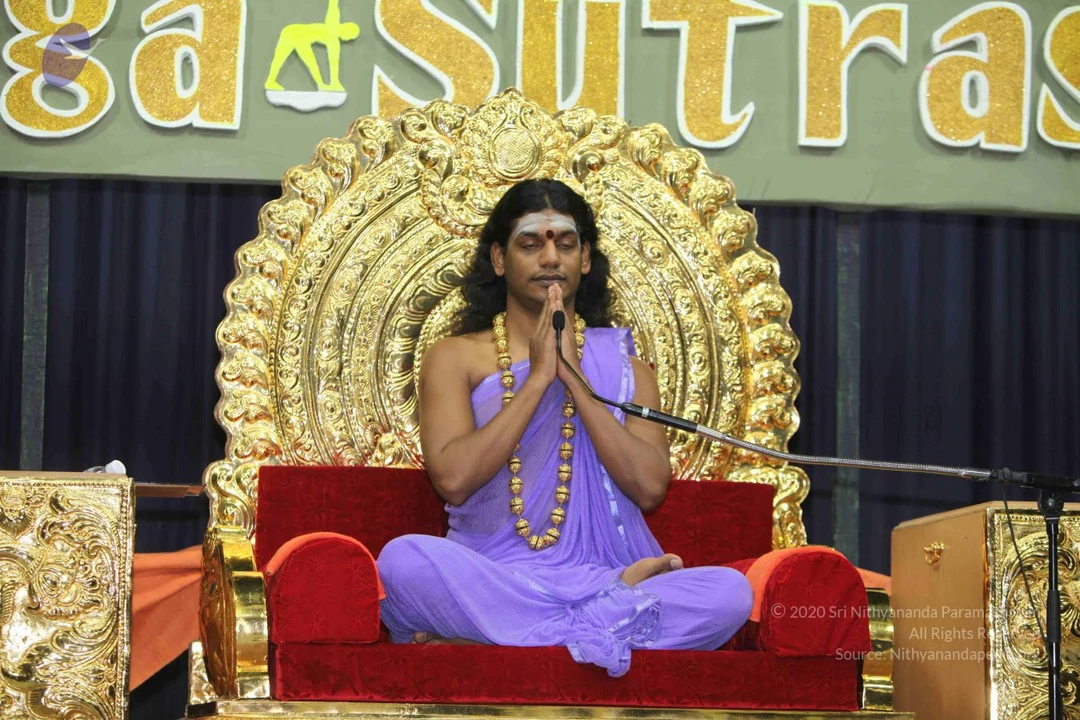
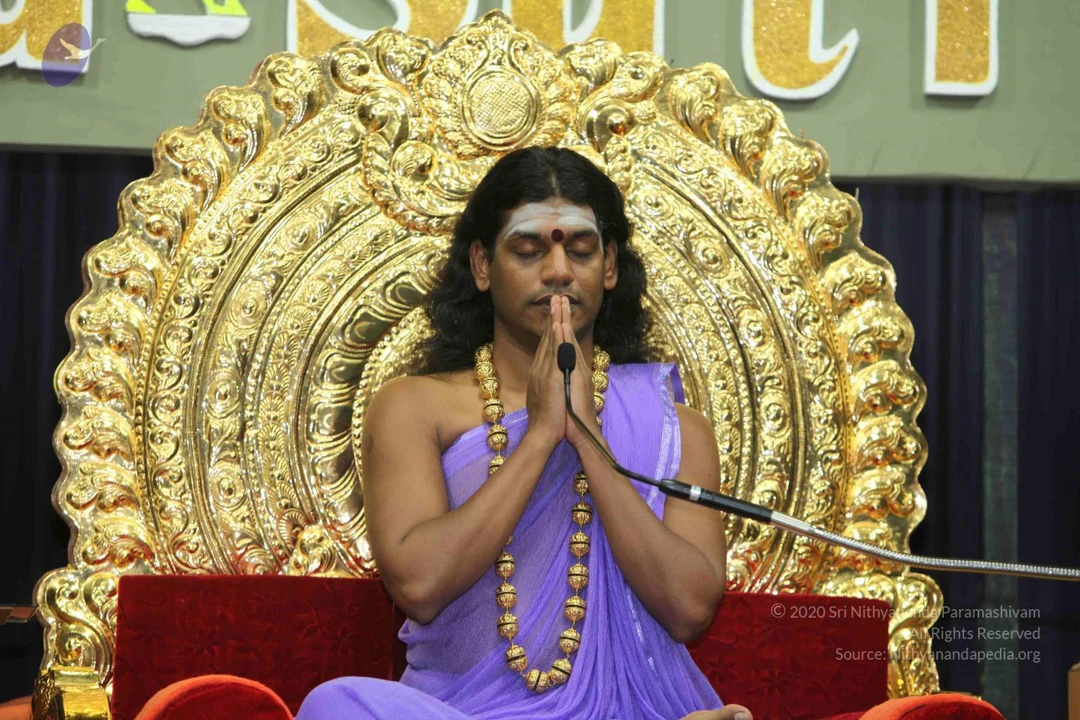
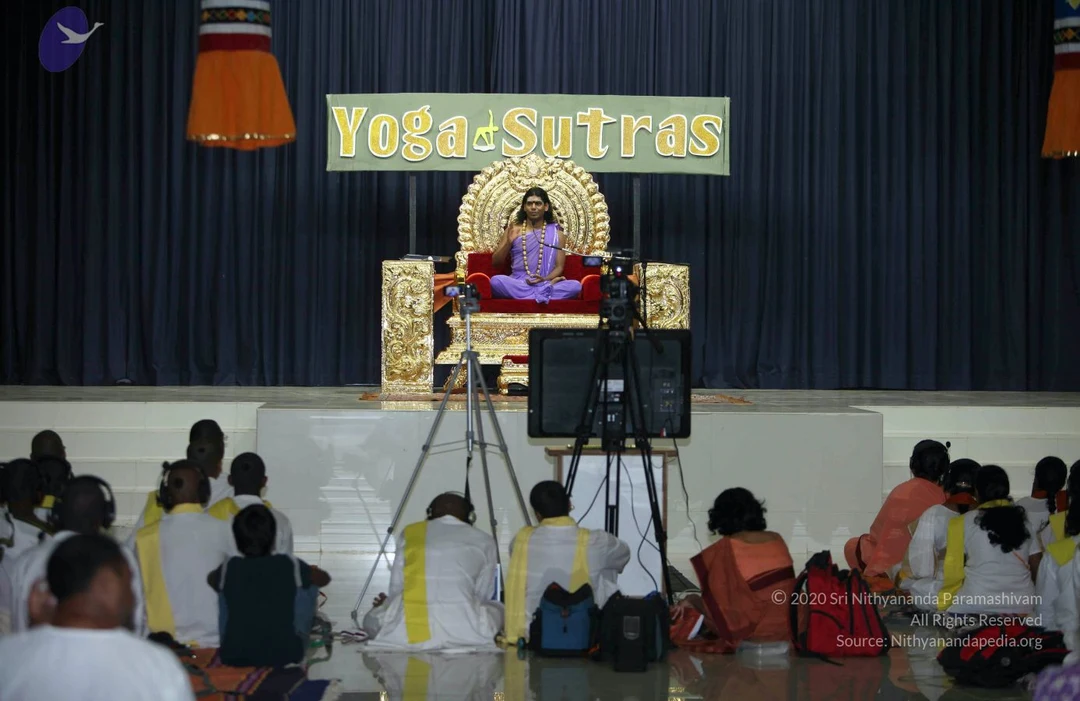
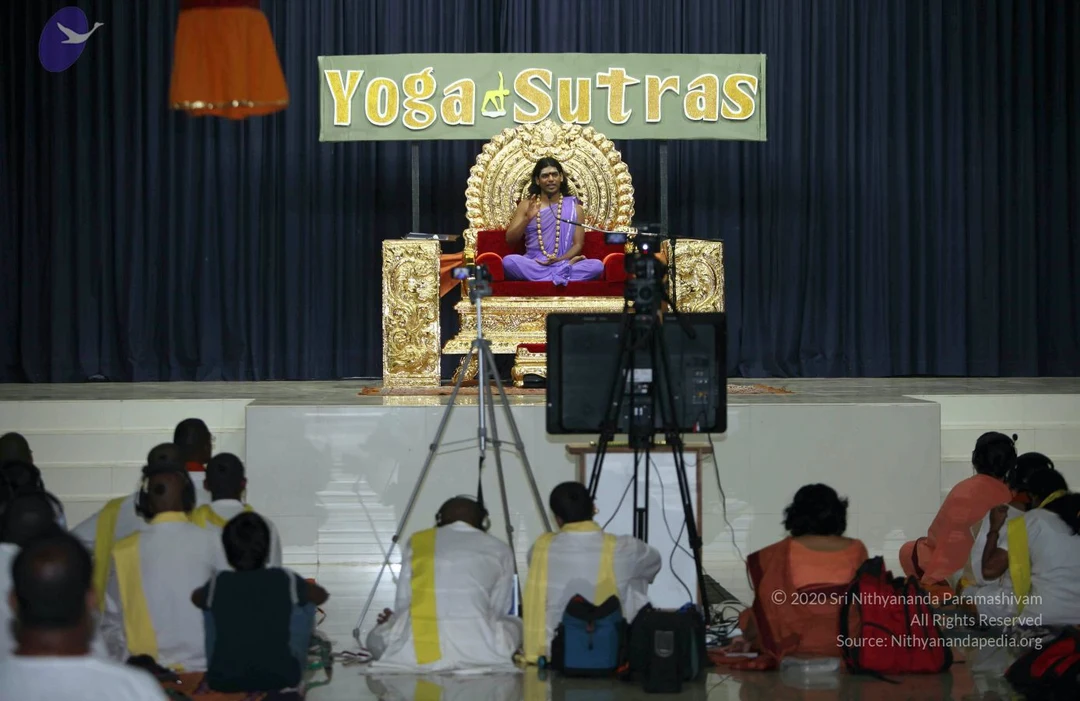
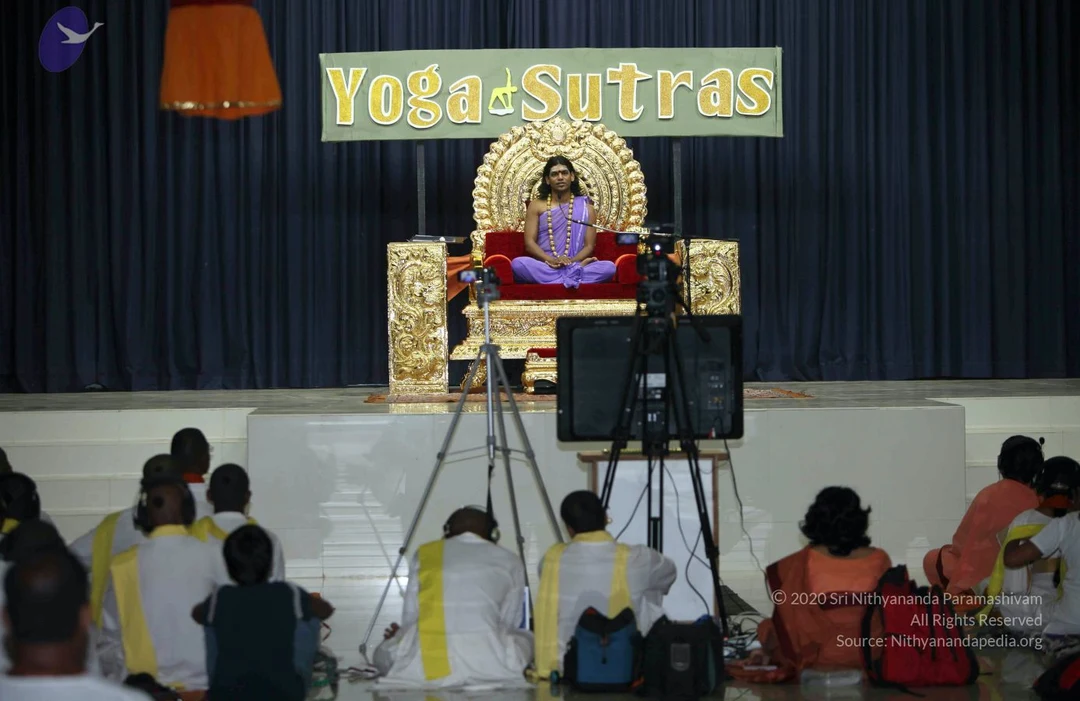
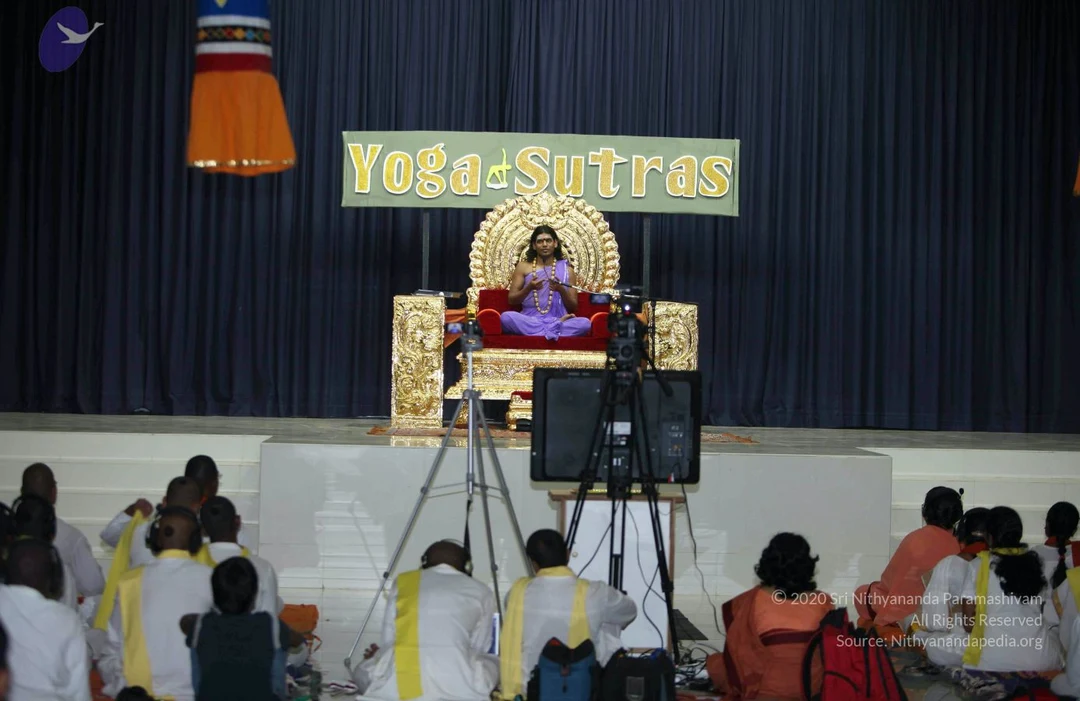
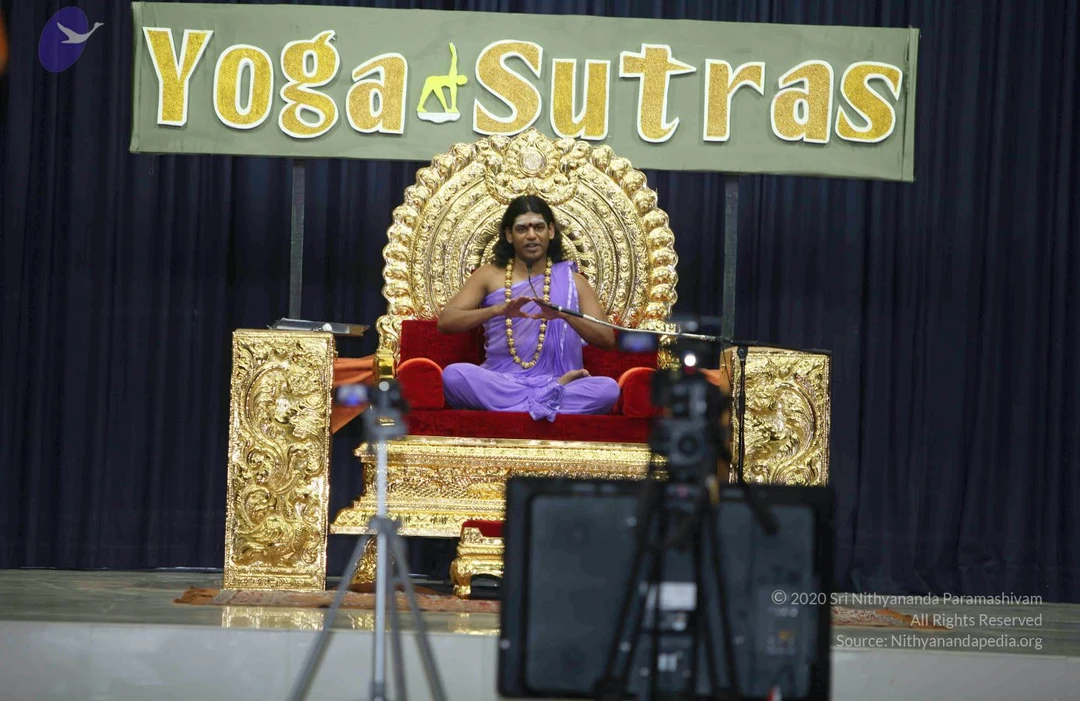
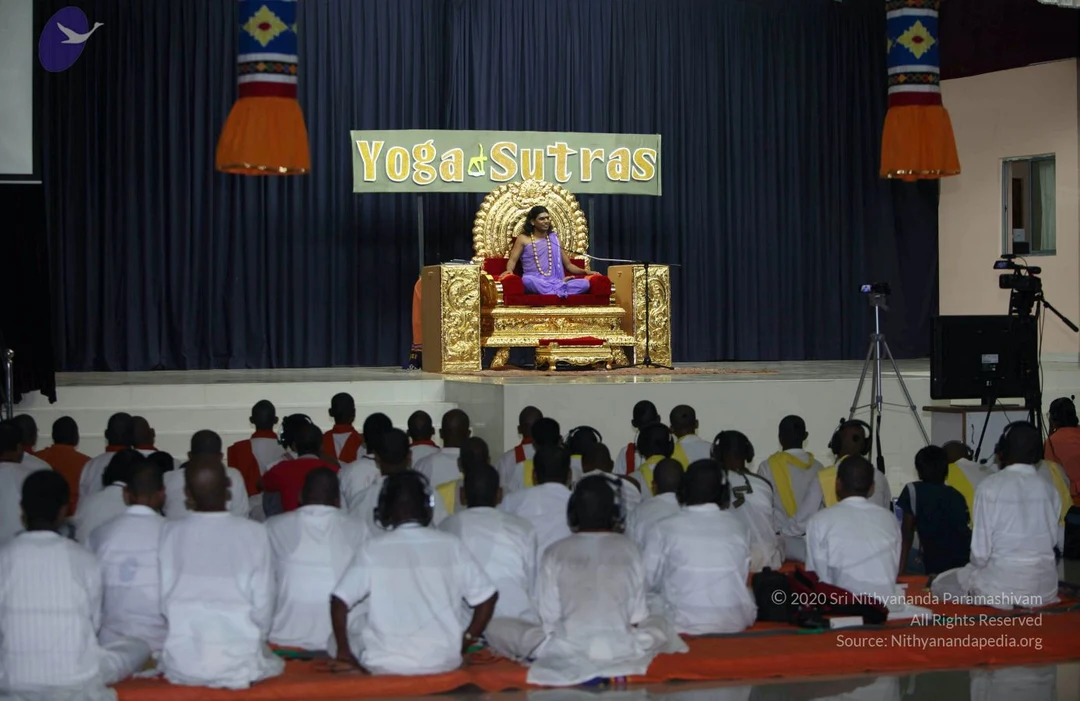
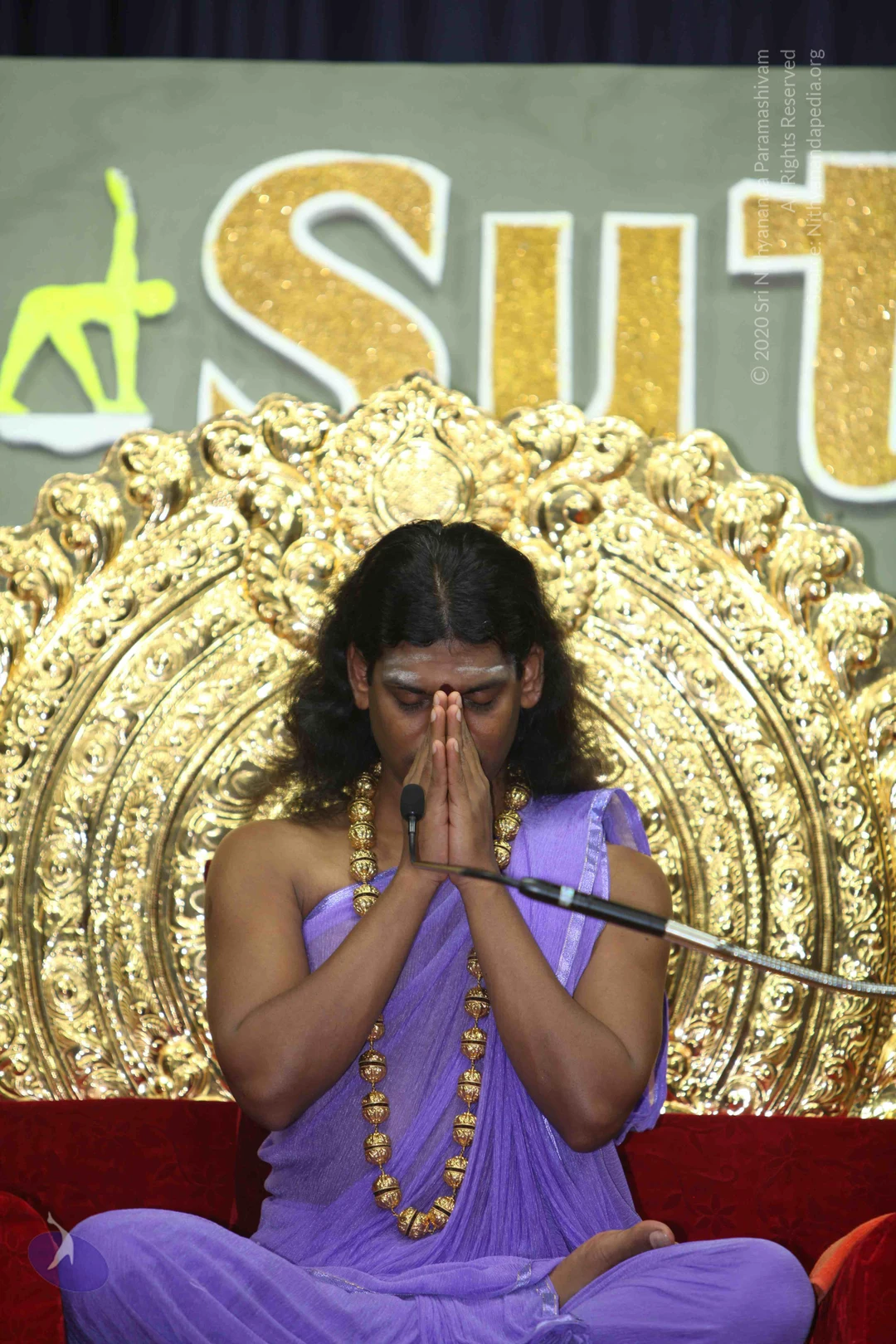
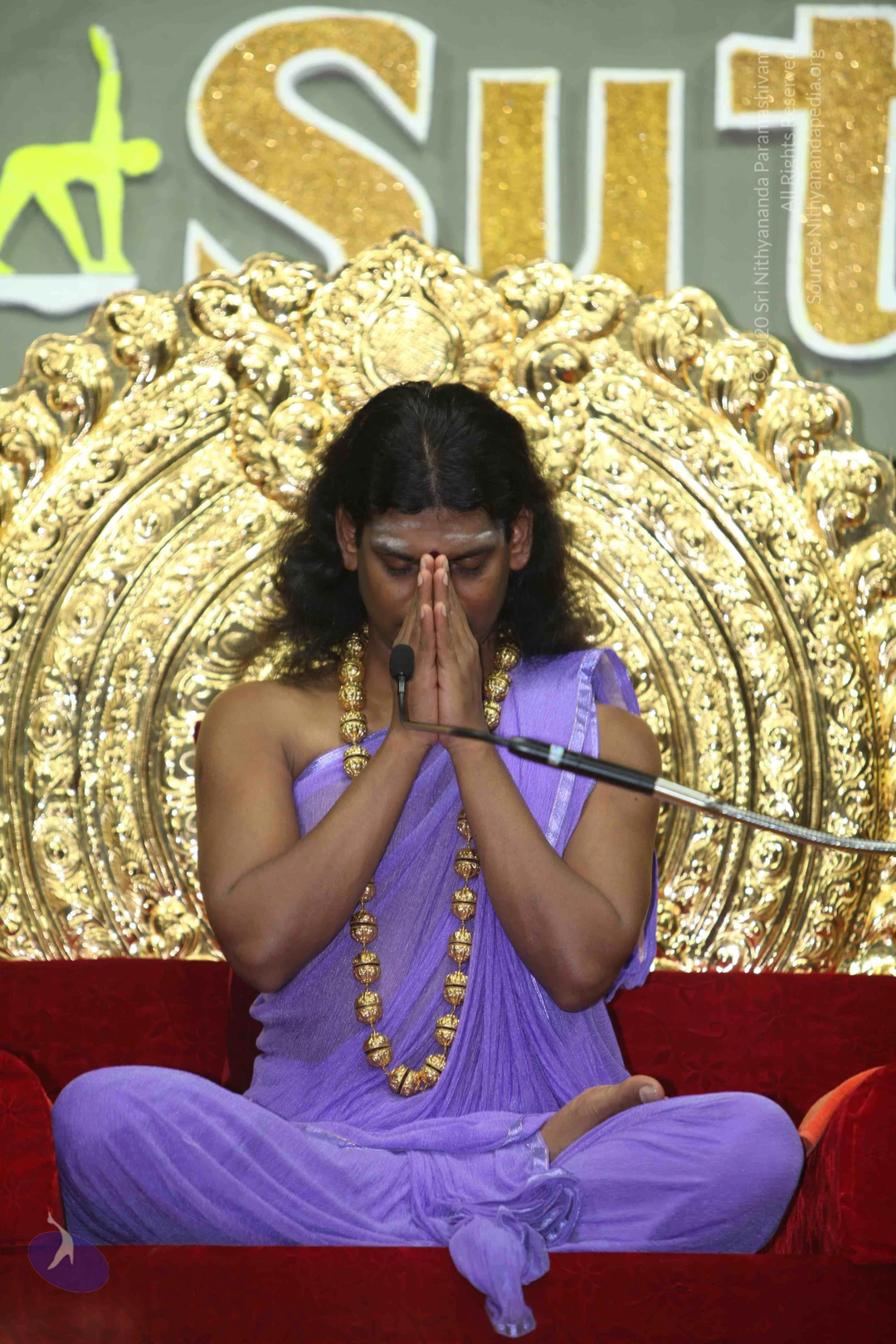
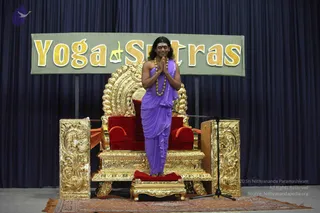
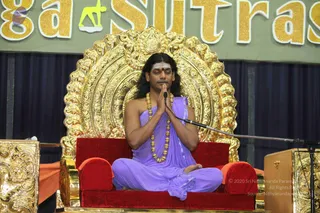
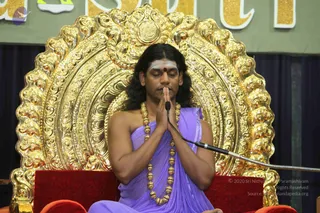
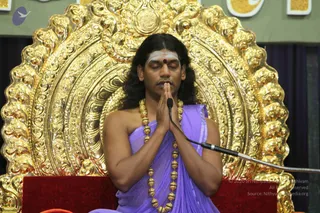
A man stands on a stage before a large gold ornate throne with a red seat cushion, smiling and holding his palms together near his chest in a gesture of greeting. He wears a lilac-purple draped cloth over one shoulder, a long gold bead necklace of multiple strands, and has long swept-back dark hair. A white sacred ash line and a red dot mark his forehead. Behind him hangs a grey-green banner with large gold lettering and a yellow silhouette of a figure in a yoga pose. A microphone stands at the lower right. Blue draped curtains form the backdrop.A seated man in lavender-purple garments sits cross-legged on an ornate gold throne with a red velvet cushion and orange armrests. He wears a long gold-bead necklace, a red bindi, and has long dark hair; his hands rest folded in his lap. A microphone on a flexible stand is angled toward him, and a wooden lectern with gold carvings is at the right. Behind him a green banner reads Yoga Sutras in gold letters with a yellow yoga figure, flanked by dark blue drapes. The page identifies this as a talk, and the figure's appearance and seated throne fit the a person candidate cues, so the identity is probable.A seated man with long dark hair, a white forehead marking and a red bindi sits cross-legged on a red velvet seat in front of an ornate gold throne with a large gold arched backrest. He wears a lavender-violet draped cloth and a long necklace of gold beads, with palms pressed together in namaskar and eyes closed. A microphone on a flexible stand is angled near his hands. The background shows gold lettering on a grey panel. a person: long swept hair, gold ceremonial necklace and ornate gold throne are the qualifying cues; the figure is in a seated devotional posture during a talk setting.A long-haired man in a lavender-purple dhoti-style wrap and shawl sits cross-legged on a red velvet throne with ornate gold carved backrest. He wears a long gold-beaded necklace, a white vertical forehead mark with a red dot, and holds papers in both hands while smiling and reading, with a microphone on a stand before him. Orange cloth draped over the side and a gold-carved podium edge are visible, with a dark blue curtain behind. Swamiji (probable): the long swept-back hair, ceremonial gold necklace and ornate throne cues are present, though the appearance match is not certain.A man with long swept-back dark hair, a red bindi and a tripundra-style forehead mark sits cross-legged on a red-cushioned throne framed by an ornate gold arched backrest. He wears a lavender-purple draped garment over bare shoulders and a long necklace of large gold beads, and holds a small white card in his hands. A microphone on a boom stand is positioned before him, and gold-trimmed side panels and orange drapery flank the dais under a green banner with gold lettering. The long hair, saffron-toned ornamentation and ceremonial throne are visible cues; the appearance is consistent with a person seated in a satsang discourse.A photograph of a satsang hall with a raised stage. On stage, a man with long dark hair sits cross-legged on an ornate gold-and-red throne under a banner reading "Yoga Sutras". He wears a lavender wrap over bare shoulders and a long beaded necklace, and a microphone stands beside the throne. In the foreground, rows of seated devotees face the stage from behind; most wear white clothes with red or yellow shawls, and several have shaved heads. Dark blue drapery covers the back wall.

nithyananda-bidadi

14 photosSource gallery
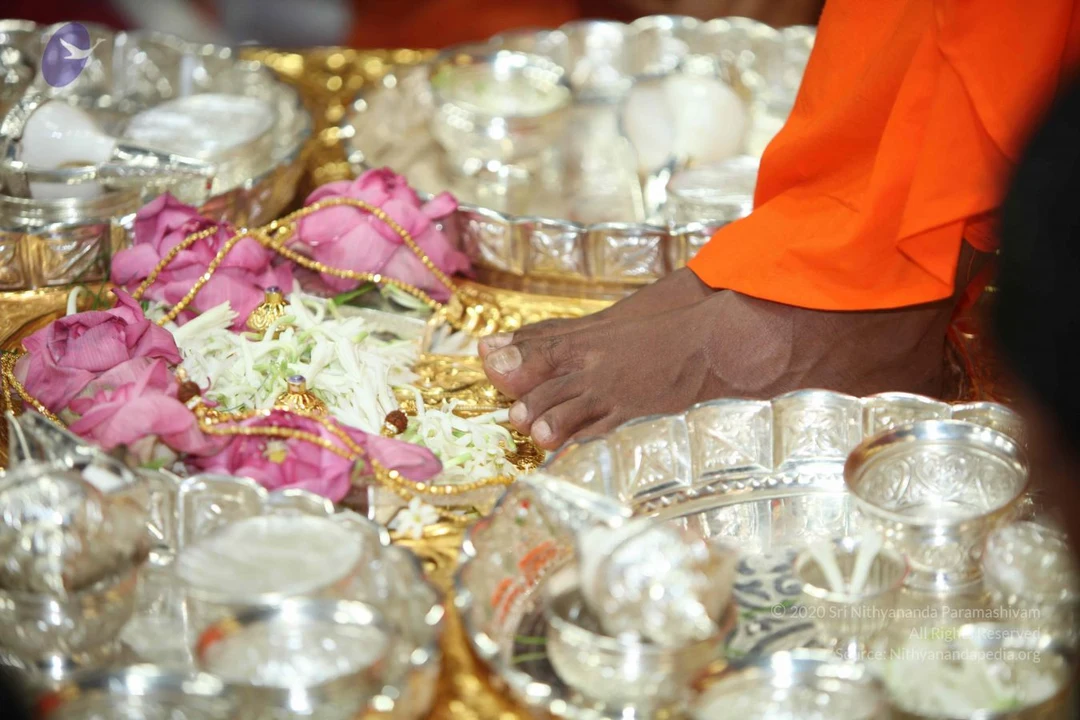
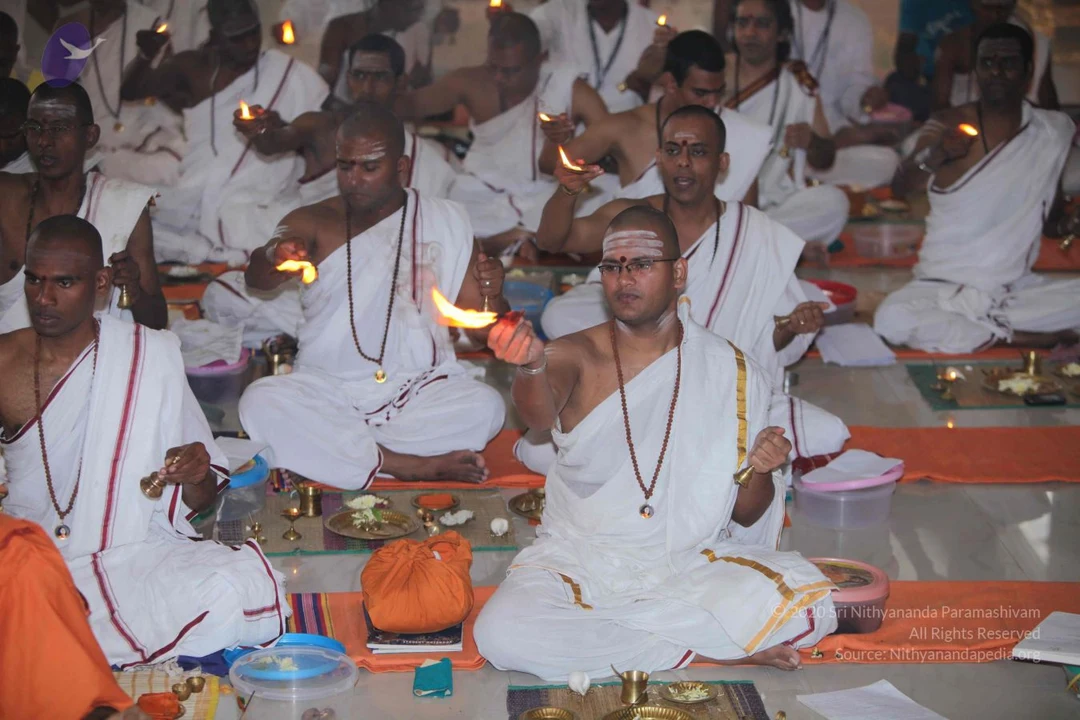
Outdoor photograph of a seated person in saffron-orange robes on a mat within a paved courtyard. The person wears a rudraksha mala and sits cross-legged beside a small brass lamp or kalasha on the ground. Behind them stand a row of carved stone figures and a dark deity murti draped in a yellow-orange garland on a red-brick pedestal, with palm trees and a flagpole against a pale sky. The scene appears to be a temple grounds setting with a meditative or puja posture.A photograph of an outdoor temple courtyard with a woman in an orange sari seated cross-legged beside a circular ground marking, possibly a kolam or ritual diagram, in front of a small shrine and stone pillars. Trees and a low wall frame the scene. Her saffron-orange clothing contrasts with the pale sandy ground. No a person candidate is visibly present, so the scene shows a devotee in ritual setting.A seated man on an ornate gold-and-red throne with a tall golden backrest dominates a stage. He wears an orange saffron robe, dark rudraksha mala beads around his neck, and long dark hair swept back, and he sits with hands resting on his lap. Behind him, a dark curtain and a painted temple-style backdrop show carved stone pillars. To the left, a shaven-headed attendant in white and orange sits beside a small wooden table holding flowers and papers, and another attendant in white stands at the edge. Appearance cues including the saffron robe, rudraksha mala and long hair are consistent with a person on a peetha throne, so this is treated as an in-person candidate with uncertain identity.Close-up photograph of a bare foot with orange-saffron robe fabric above it, resting on a ceremonial arrangement. Silver plates and bowls surround the foot, with pink flowers, white blossoms and a garland scattered on a golden cloth. The scene suggests a foot-worship ritual (padapuja) with offerings. No face is visible; the person is not identifiable from appearance and the a person field remains unsure.A large group of shaved-headed men in white ritual clothes sit in rows on a light floor, holding small oil lamps or flames in their hands during a ritual. In the front left, a figure in saffron-orange robes holds a lamp, and beside him another saffron-robed man in the foreground holds a brass ritual vessel. The setting appears to be a hall with white walls and several people performing synchronized puja. Their hands are raised with lamps, and the mood is one of collective worship.A photograph of a person seated on an ornate red throne with a gold-patterned backrest, wearing saffron-orange robes and a shawl, with long dark hair swept back. The person sits upright with hands resting, in front of a light background, in what looks like a satsang setting. Judging by appearance, this is a person seated in an honoured position, though the image is small and the face and clothing cues are uncertain.
Temple

48 photosSource gallery
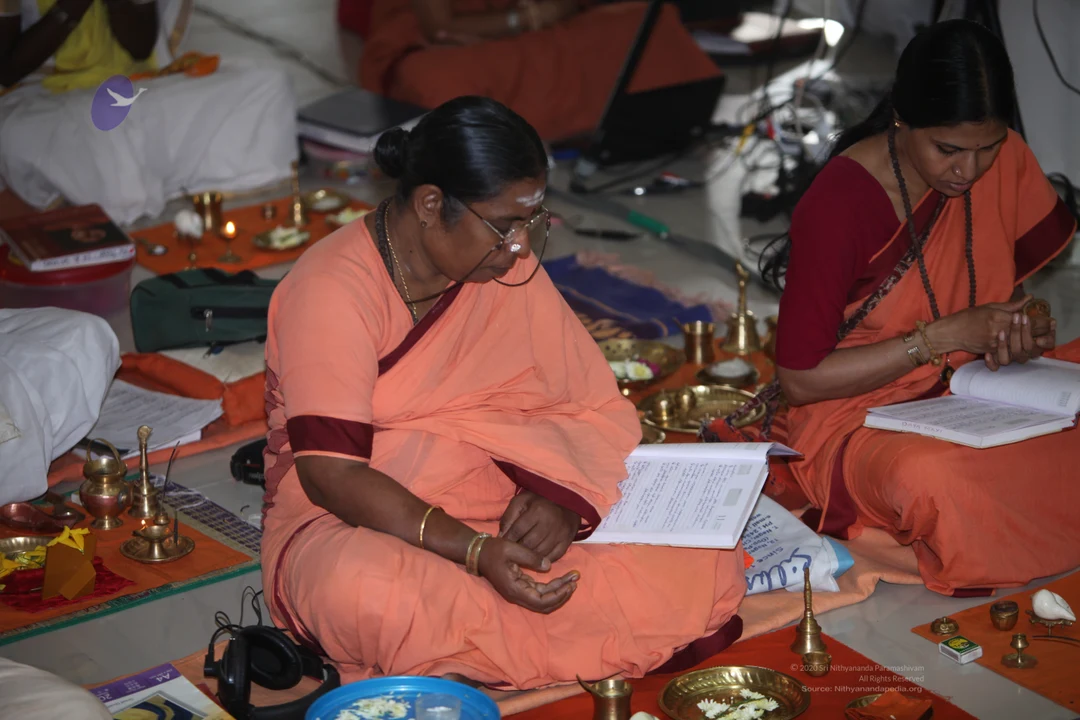
A man with long dark hair sits cross-legged in meditation on a straw mat over a raised stone platform outdoors, eyes closed, in a saffron-orange robe with a dark rudraksha mala around his neck and a red tilak on his forehead. Behind him stands an orange temple base holding a black Nandi bull statue draped with a garland of yellow, orange, and purple flowers, flanked by grey stone figures and palm trees. A brass kalasha sits to his left, and scattered flower petals lie on the ground.A man with long dark hair sits cross-legged in meditation with eyes closed on a woven mat over a small raised wooden seat, in a circular stone-edged platform outdoors. He wears saffron-orange robes, a dark rudraksha mala, and a red tilak on his forehead. Behind him stands a black stone bull statue draped with a garland of yellow, red and purple flowers on an orange pedestal. A brass kalasha-style vessel sits beside him, and a small pink cloth lies on the ground. Palm trees and stone figures surround the courtyard. a person is shown in meditation, wearing saffron robes and rudraksha beads.A photograph of a man seated cross-legged in meditation on a raised circular platform outdoors, surrounded by a ring of grey gravel and white kolam-style patterns. He wears an orange saffron robe draped over one shoulder, a long rudraksha mala around his neck, and a red-orange tilak on his forehead; his long dark hair is swept back. Before him sits a brass kalasha vessel, a folded pink cloth and scattered petals. Behind him stands a dark stone Nandi bull on an orange pedestal, garlanded with red and yellow flowers, with grey stone deity statues, palm trees and flowering shrubs in the background. Appearance-based label: Swamiji (probable), identified by orange robe, rudraksha mala and long swept-back hair.Outdoors in a palm-fringed compound, a man with long dark hair sits cross-legged on a low wooden seat and mat inside a circular gravel bed ringed with white chalk lotus designs. He wears a saffron-orange robe and a dark rudraksha mala, eyes closed in meditation. A brass kalasha sits to his left on the ground. Behind him stands an orange brick base supporting a dark Nandi bull statue draped with a marigold garland, beneath a tall copper-coloured pillar. Grey stone deity statues stand to the left beside small red signboards, and tall coconut palms frame the scene.A man sits cross-legged in meditation on a woven mat and a low wooden seat in an outdoor courtyard, eyes closed and hands resting on his knees. He wears an orange-saffron cloth draped over his shoulders and a dark rudraksha mala around his neck, with a red tilak on his forehead. Behind him stands a dark stone Nandi bull wearing a garland of orange, purple and white flowers, set on an orange-red pedestal beside a stone figure of a devotee. A brass kalasha stands at his left, with scattered flower petals on the ground. Palm trees and lush greenery surround the open-air setting. Swamiji (probable): the orange robes, long hair and rudraksha mala match the page's identification of the speaker, though the face is not used for identity.Outdoor photo of a man seated cross-legged in meditation on a woven mat inside a circular gravel-filled pit, eyes closed, hands resting on his knees. He wears an orange saffron robe draped over the shoulder and a dark rudraksha mala around his neck. A brass pot stands beside him with scattered flower petals nearby. Behind him is a red-orange stepped pedestal topped by a dark stone Nandi bull draped in a red and yellow garland, with a tall copper-coloured pillar rising above. Palm trees, grey stone deity statues with weapons on the left, and a low white wall fill the background under a pale sky.

Pada-Puja

151 photosSource gallery
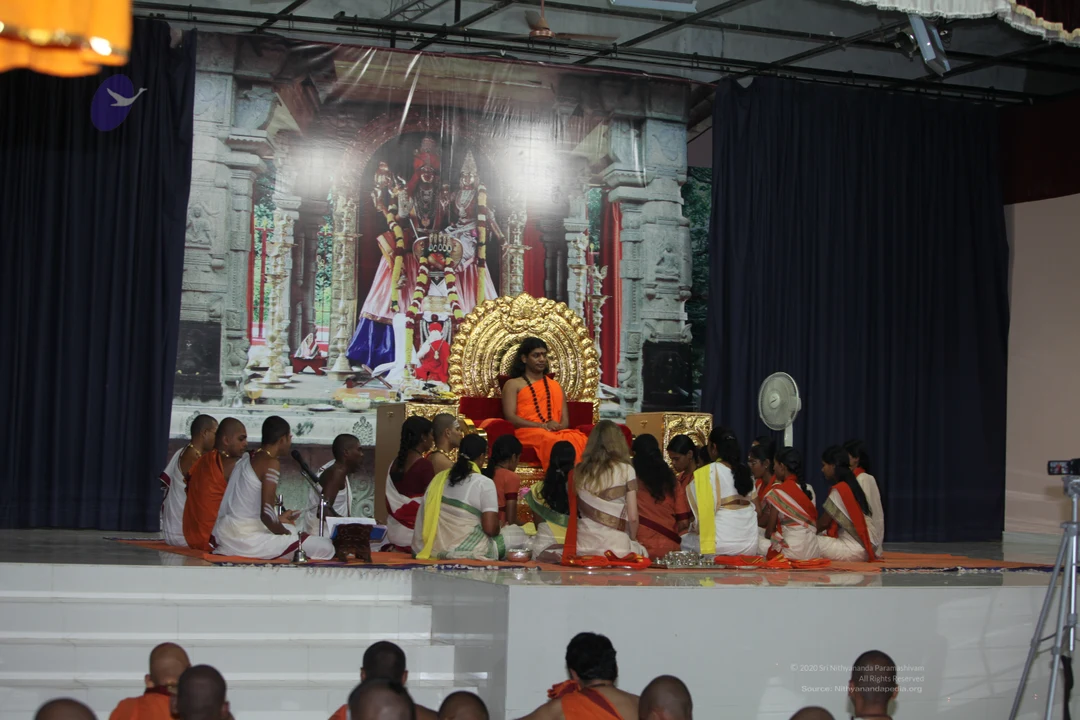
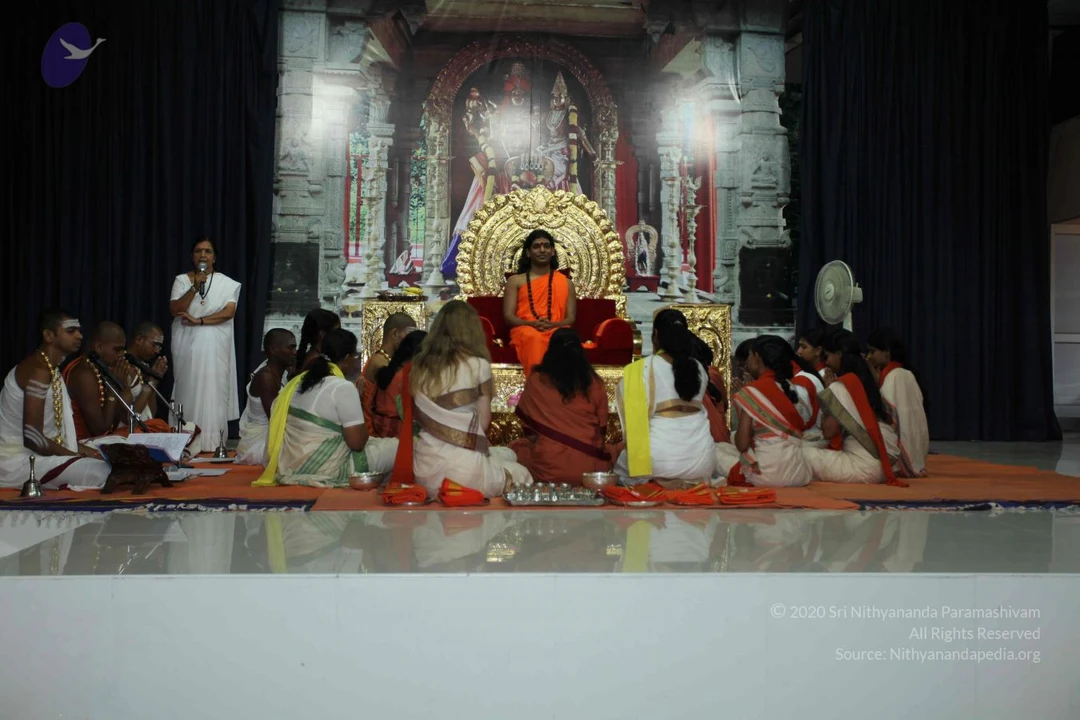
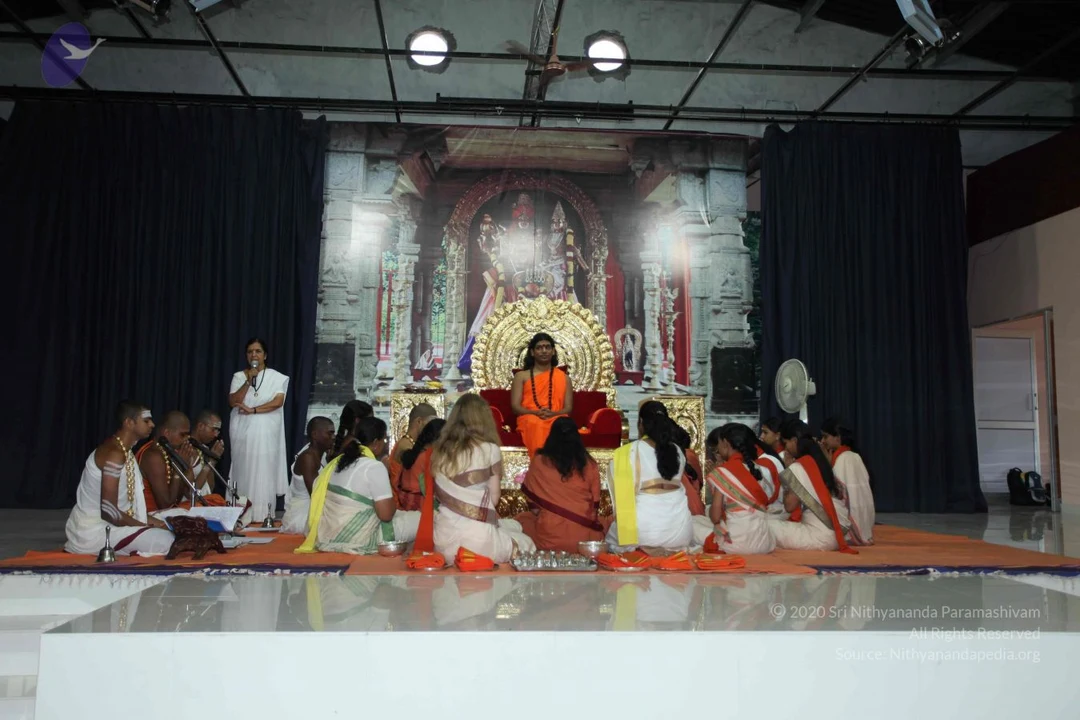
A photograph of a satsang in an ashram hall. A man in saffron-orange robes with a rudraksha mala sits on a red and gold throne at the centre, gesturing with raised hands as he speaks. A large backdrop shows a painted temple gateway with a deity murti in an arched niche. Around him, devotees sit on an orange mat: women in white sarees with yellow and red borders, a woman in a rust-coloured garment at centre front, and a row of men in white and orange on the left playing harmonium-style instruments and chanting into microphones. Brass plates with offerings and small oil lamps sit on the floor in front. A white stage edge and a standing fan complete the scene.A photograph of a satsang on a raised white stage before a backdrop of a temple deity mural with pillars. A figure with long dark hair wears an orange robe and a rudraksha mala and sits on an ornate gold-and-red throne, hands raised in a teaching gesture. Around the throne, devotees sit on orange mats: several in white dhotis and yellow or red-bordered shawls, one woman in white with long blonde hair, and a woman in a rust-coloured robe. To the left, three men in white with bare chests and gold necklaces sit with palms joined and microphones before them, with brass bells and a small tray of offerings nearby. A black-draped wall and a standing fan appear at the right edge.A photograph of a seated satsang on a raised stage before a large backdrop of a temple gopuram with deity murti sculptures. A central figure sits on a red cushioned seat within an ornate gold throne, wearing an orange robe and a rudraksha mala, hands folded in front. Around the throne, several people sit on orange mats in white dhotis and saris with yellow and red borders, some with folded hands in prayer, and a few men with bare chests and sacred marks chant near microphones and a stand with a book. Brass vessels and small offerings sit on a tray in front. A dark curtain and a fan frame the scene. Whether the central figure is a person cannot be established from appearance alone, so the identity is left unsure.Photo of a satsang on a raised stage before a large printed backdrop of a temple gopuram with deity murtis. A central figure in an orange saffron robe and rudraksha mala sits on an ornate golden throne with red cushions, a person, seated as the speaker. A woman in white sari stands at left holding a microphone and speaking. Around the stage, devotees sit on orange cloths: several men in white dhotis with ceremonial gold necklaces and forehead markings at left, and women in white saris with yellow, orange and red borders, some wearing orange shawls. Brass lamps and a silver plate with offerings sit at the front of the stage.A seated figure in an orange saffron robe with a rudraksha mala sits on a gold ornate throne with red cushions on a raised stage, in front of a large backdrop printed with a temple gateway and deity murtis. Seated on orange mats before him are devotees: men in white dhotis with orange shawls and rudraksha malas, and women in white and orange saris, some with yellow shawls. A woman in white stands at left, apparently speaking into a microphone. Brass plates and a kalasha-style vessel sit on the mats. The photo appears to be a satsang-style gathering on stage. Visible people are around 20 in total.A seated figure on an ornate gold-and-red throne sits centred on a stage before a large printed backdrop of a stone temple gopuram with deity figures in an arched niche. The seated figure wears an orange robe, a rudraksha mala and a shaved-looking head, with hands resting in lap. Around the throne, about a dozen devotees sit on an orange cloth: men in white dhotis with gold necklaces and sandalwood-marked foreheads, and women in white saris with orange or yellow borders and orange shawls. A woman in white stands at the left with a microphone, while a brass aarti tray and small steel bowls sit on the floor. A satsang or discourse setting with a dark blue curtain behind the stage.

Morning-Satsang
63 photosSource gallery
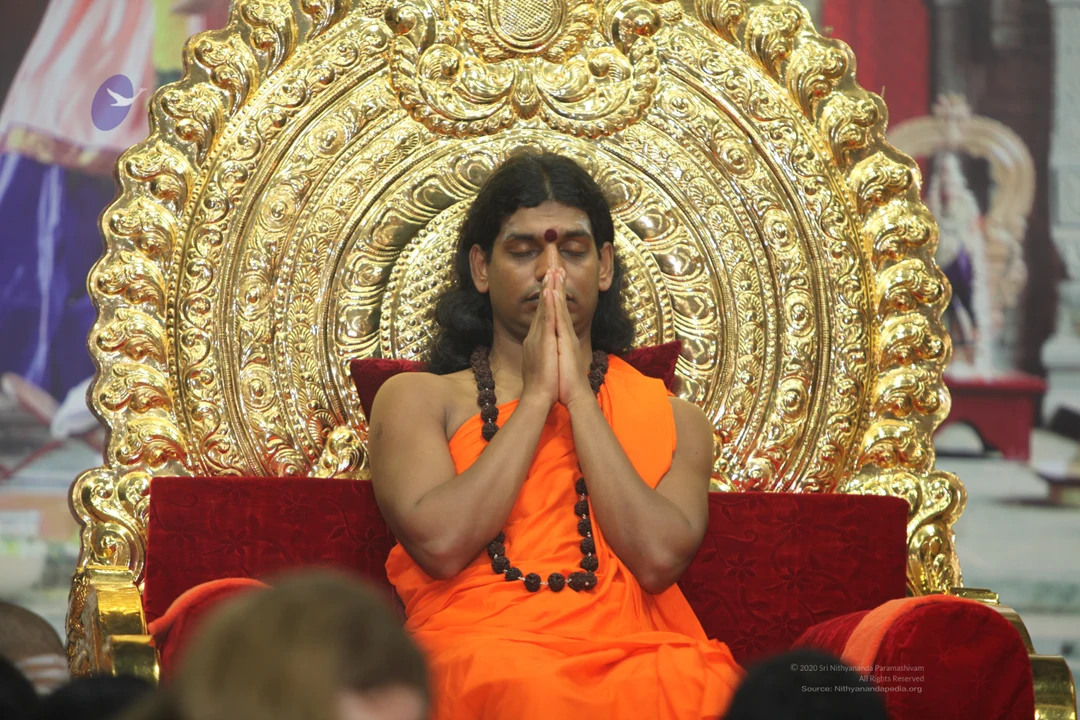
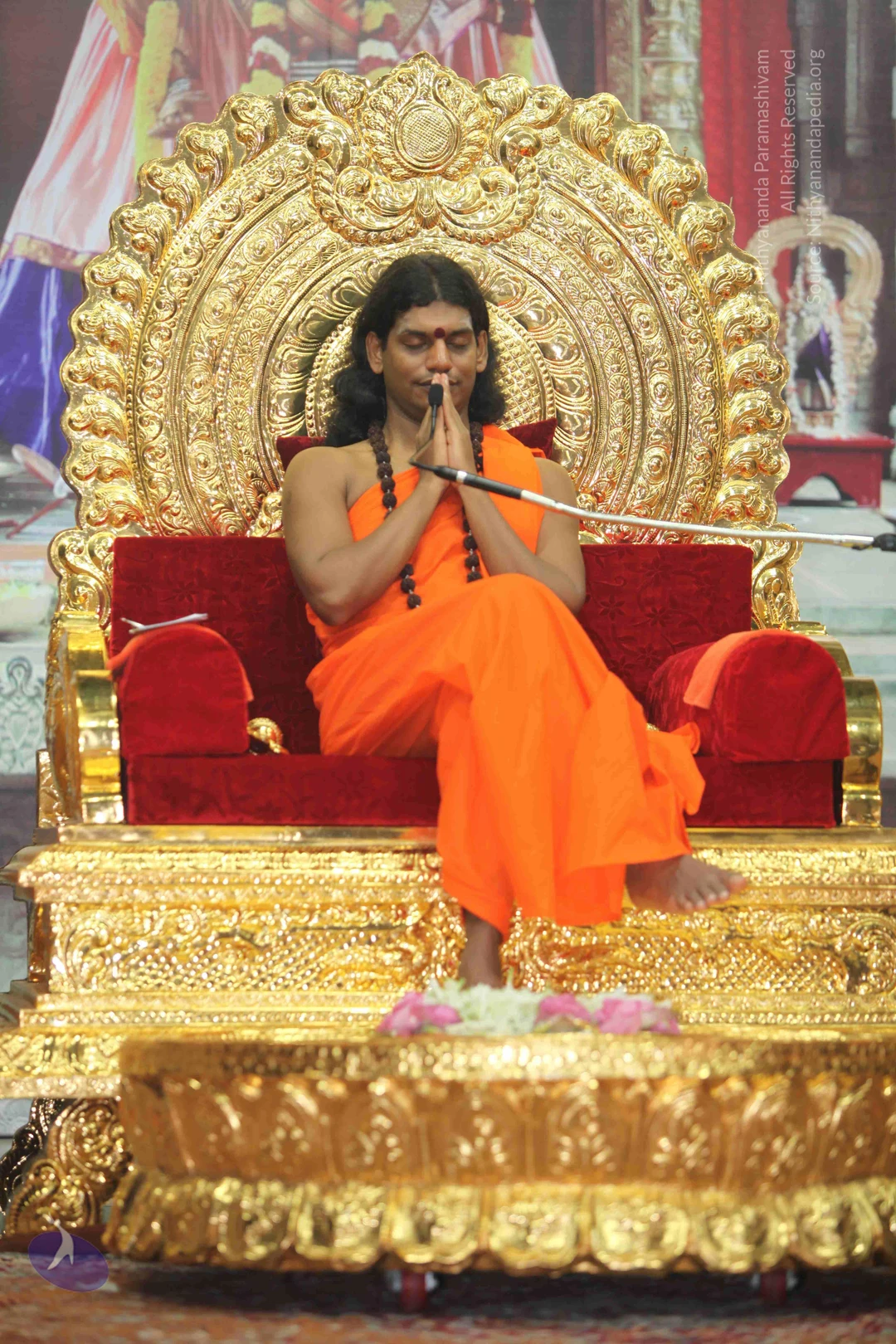
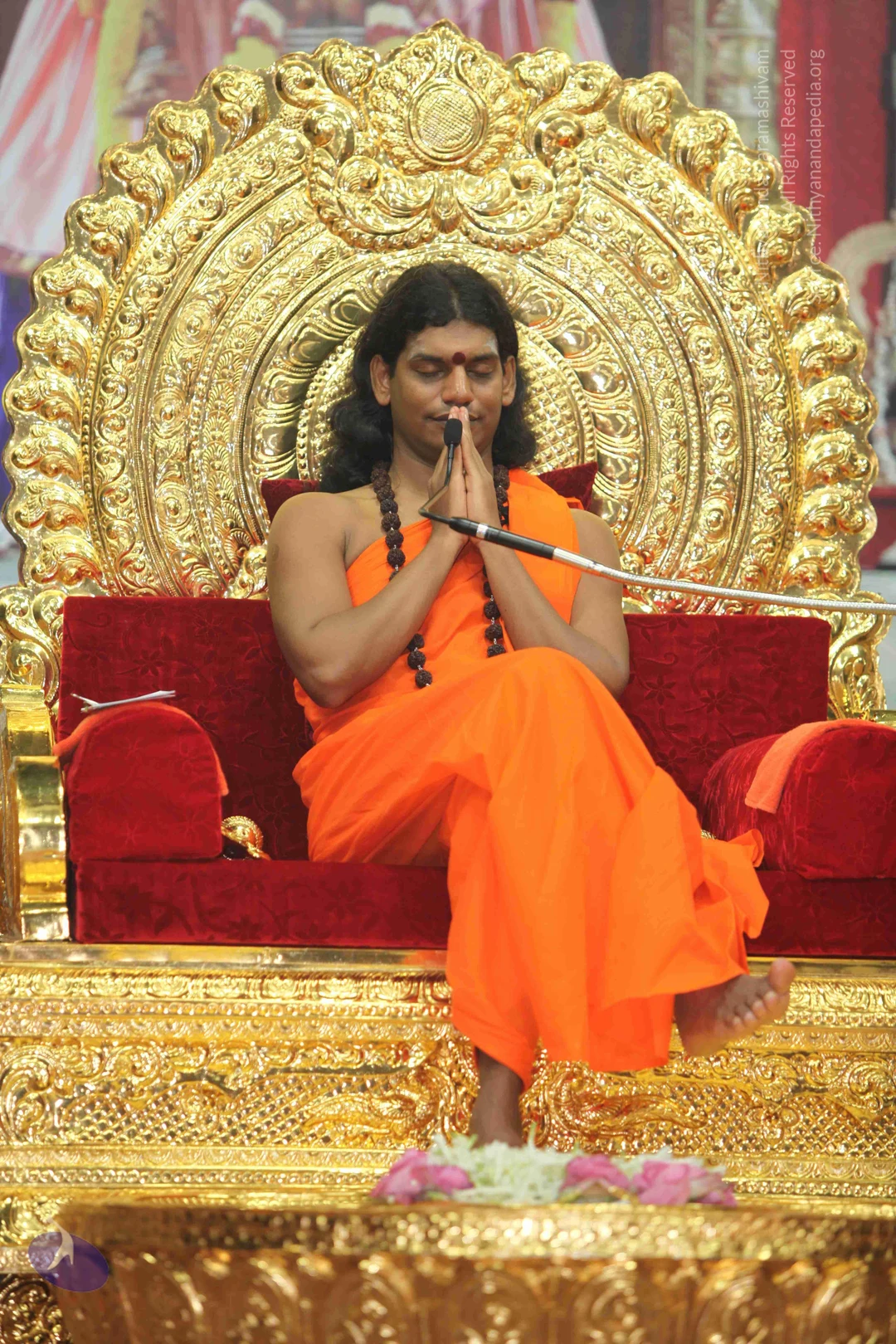
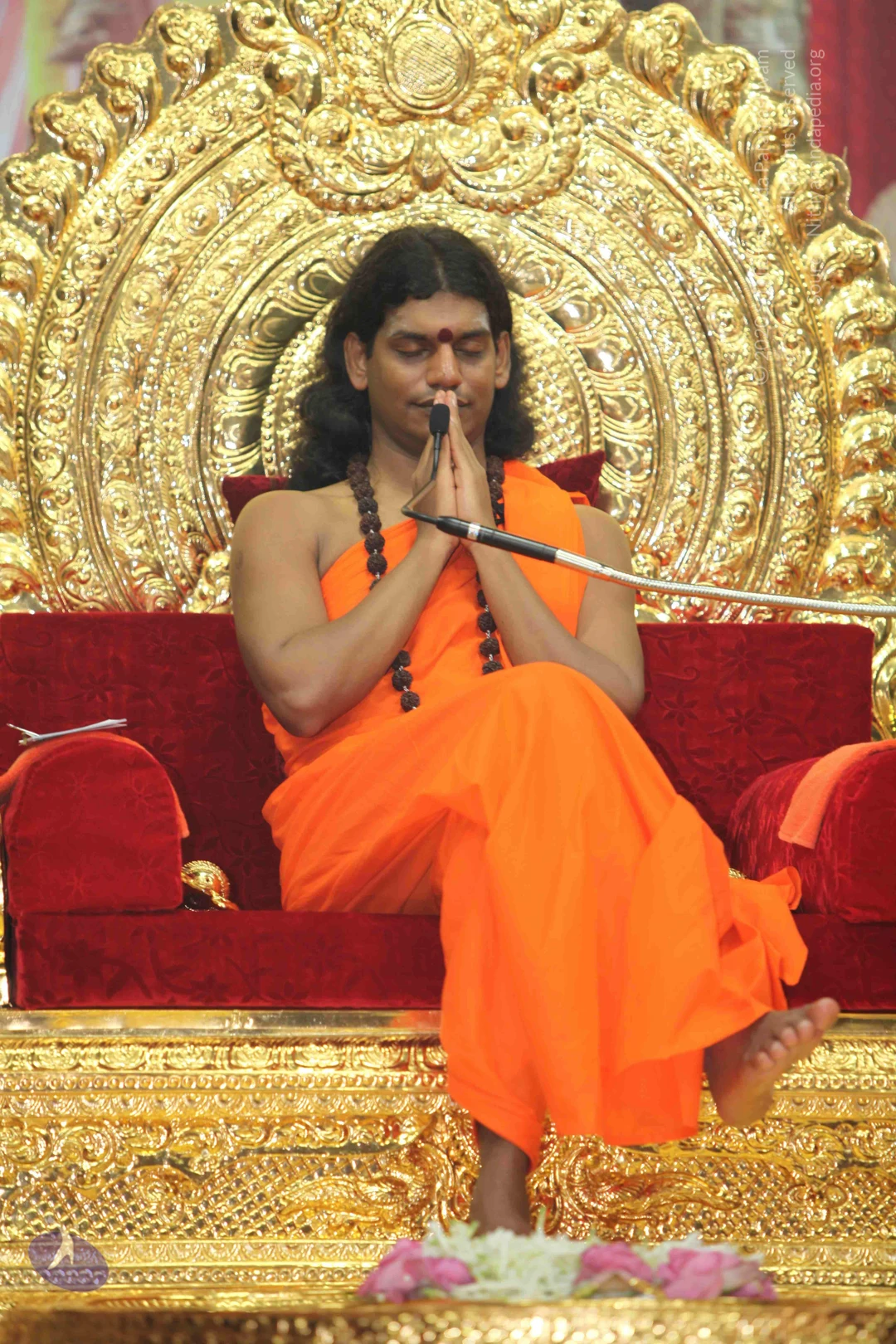
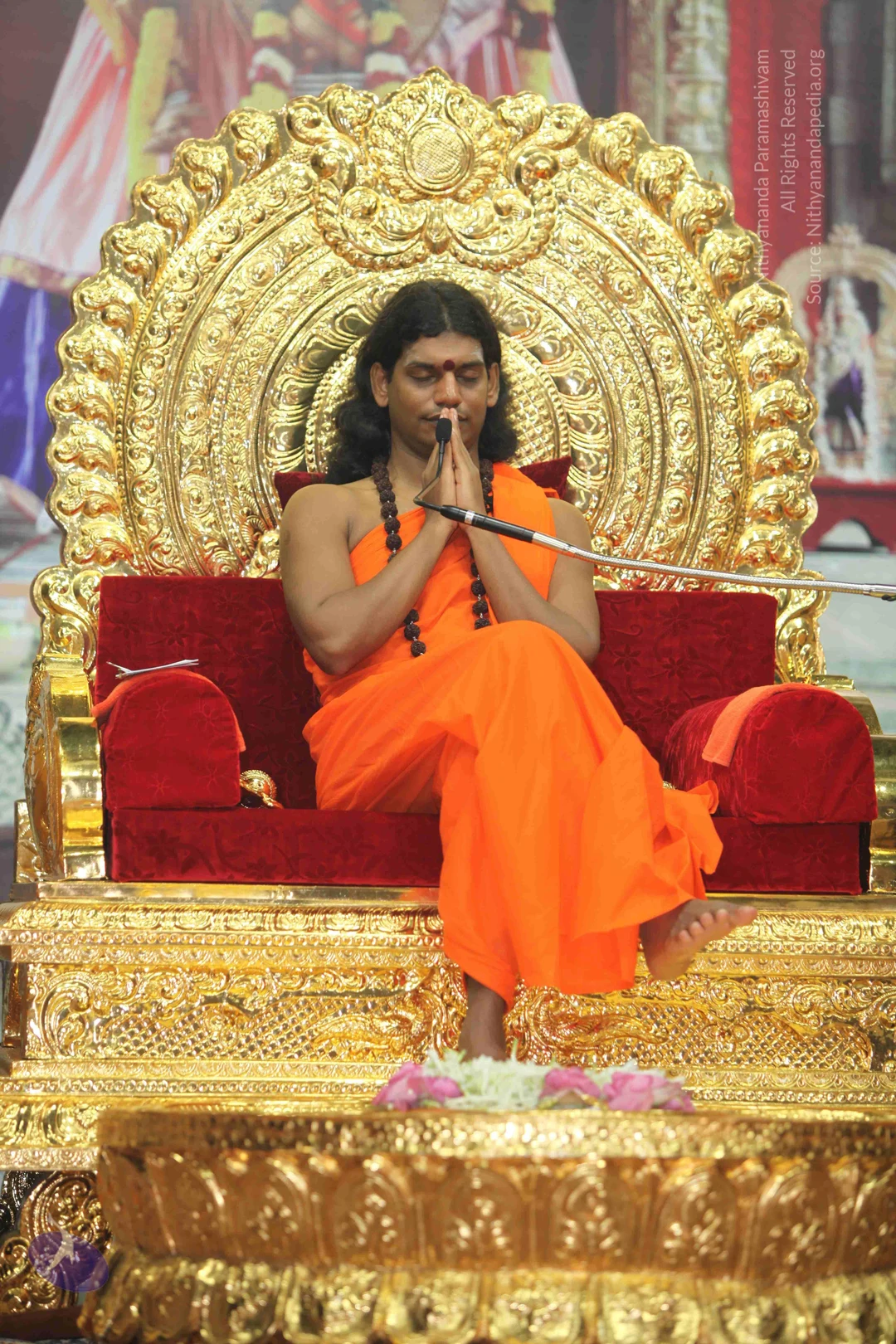
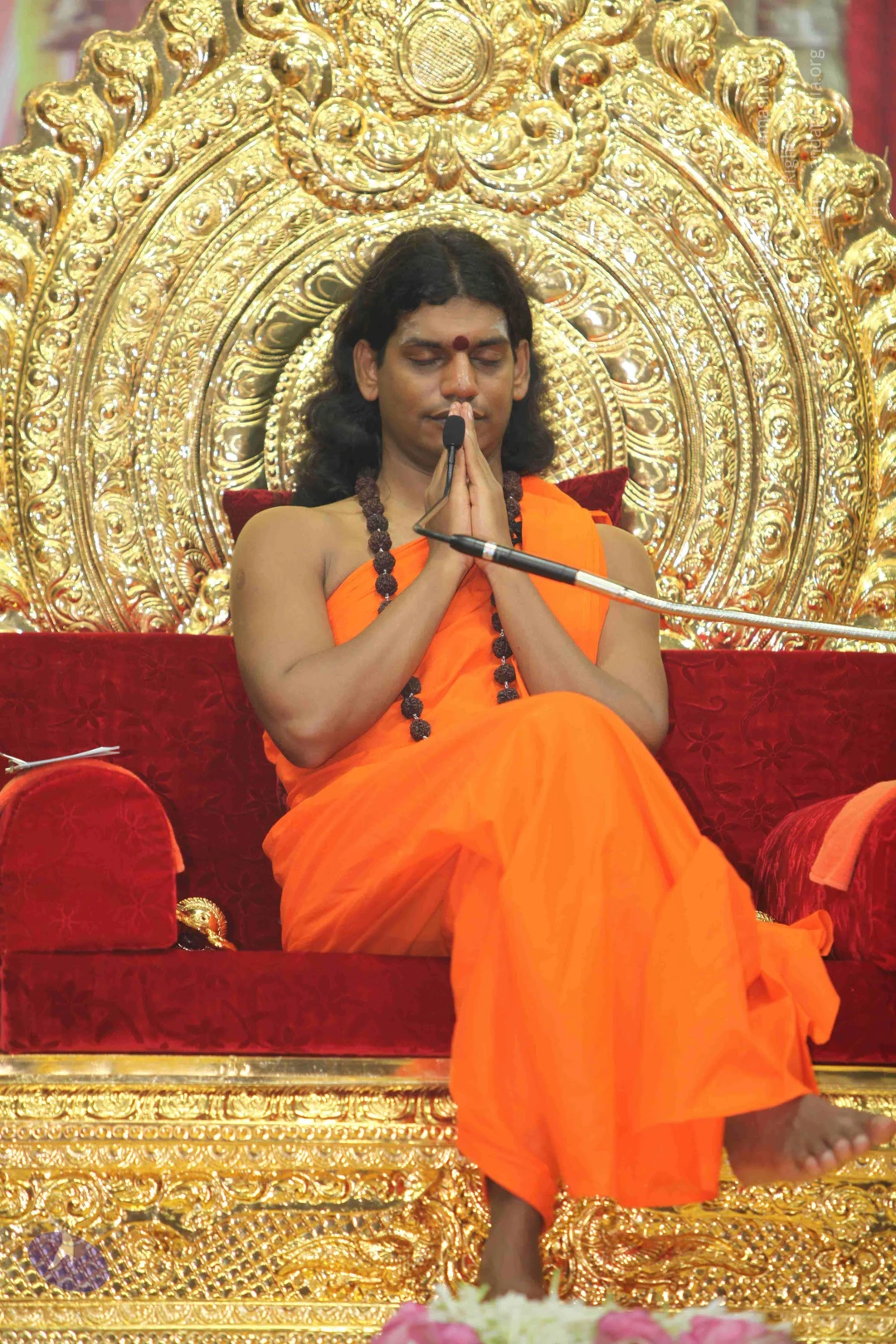
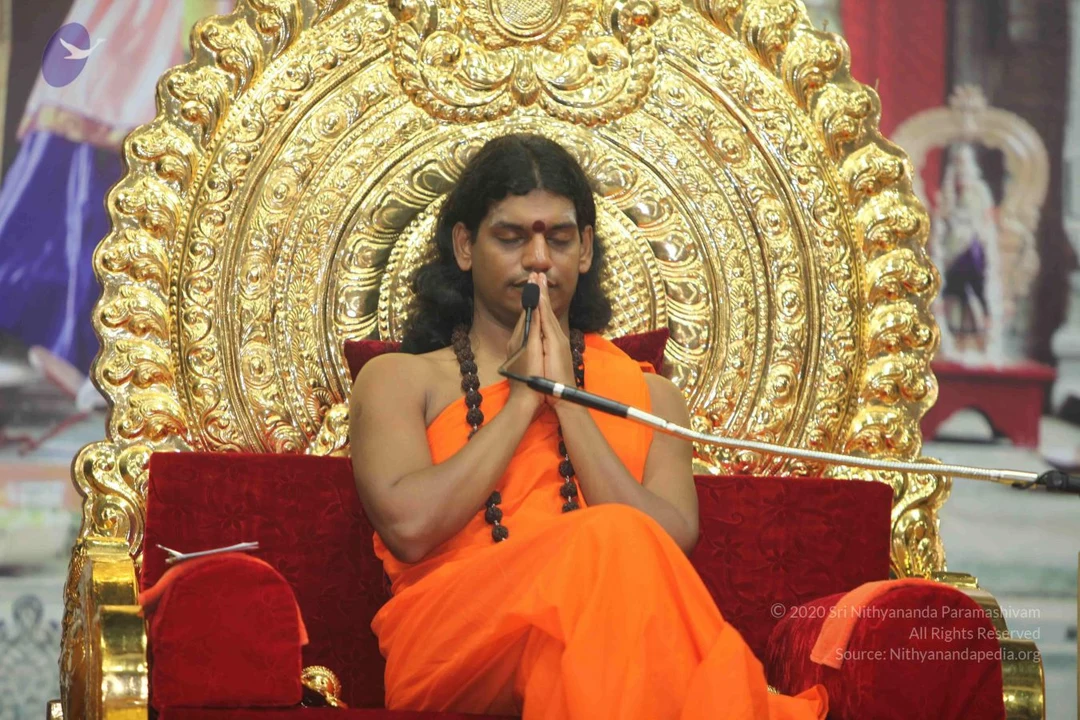
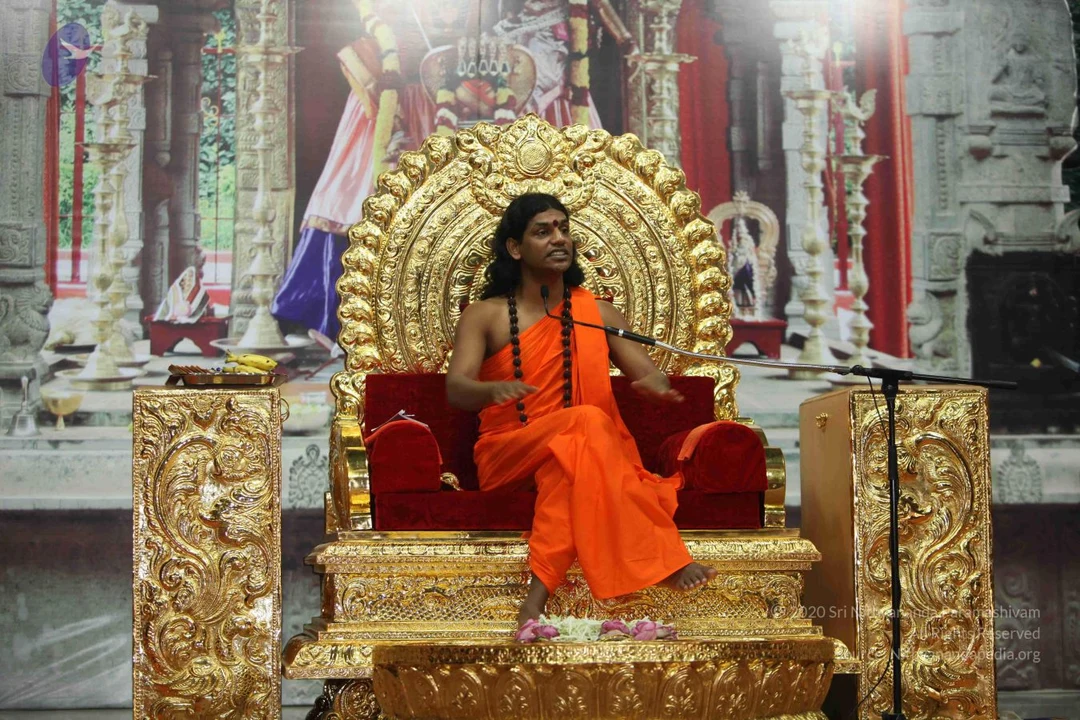
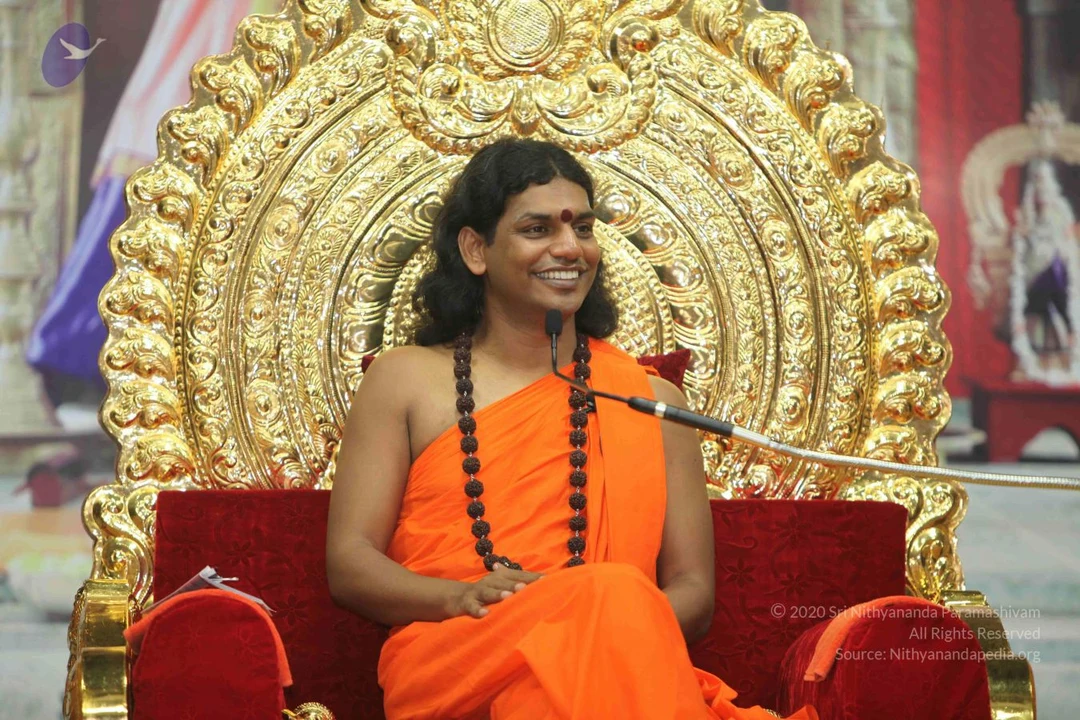
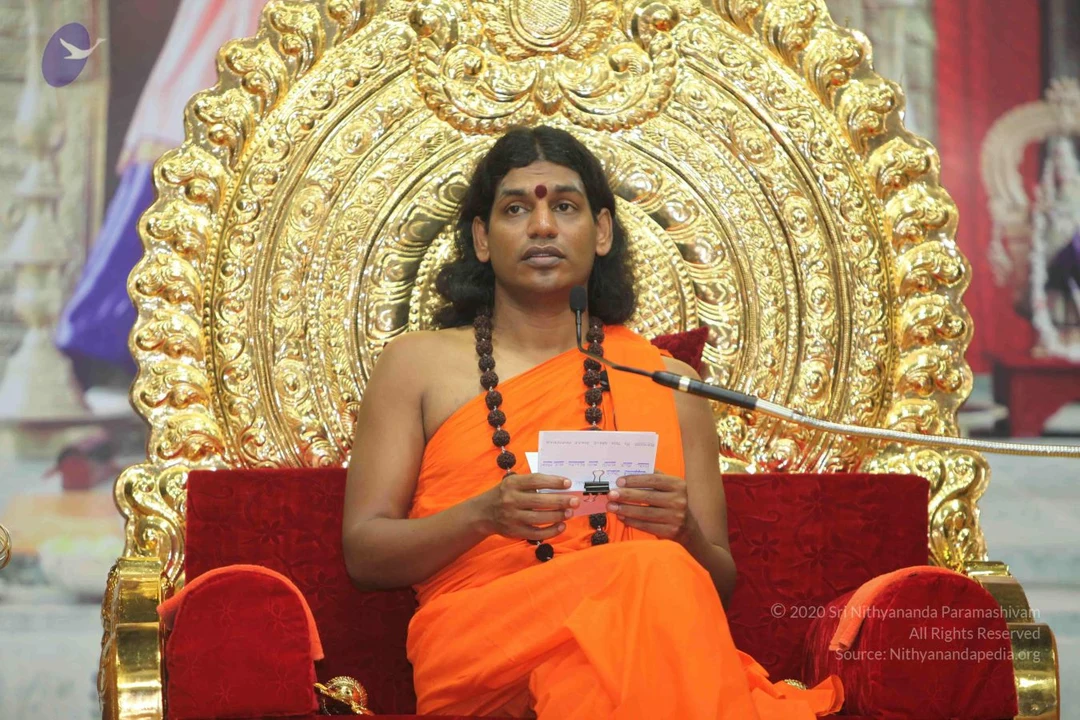
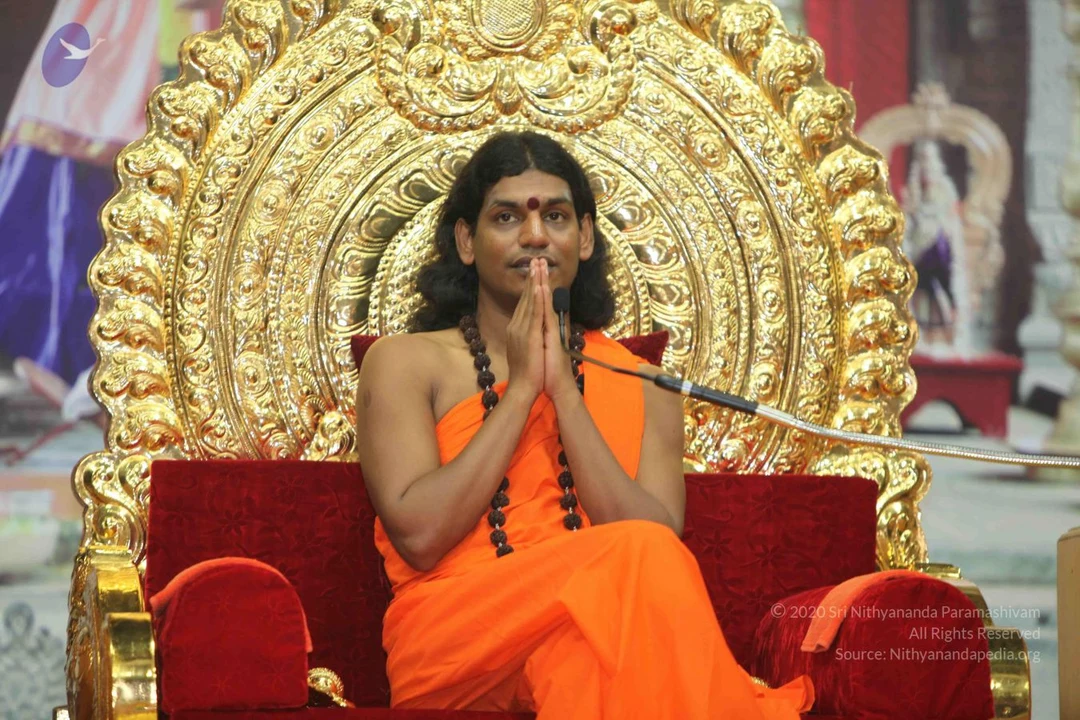
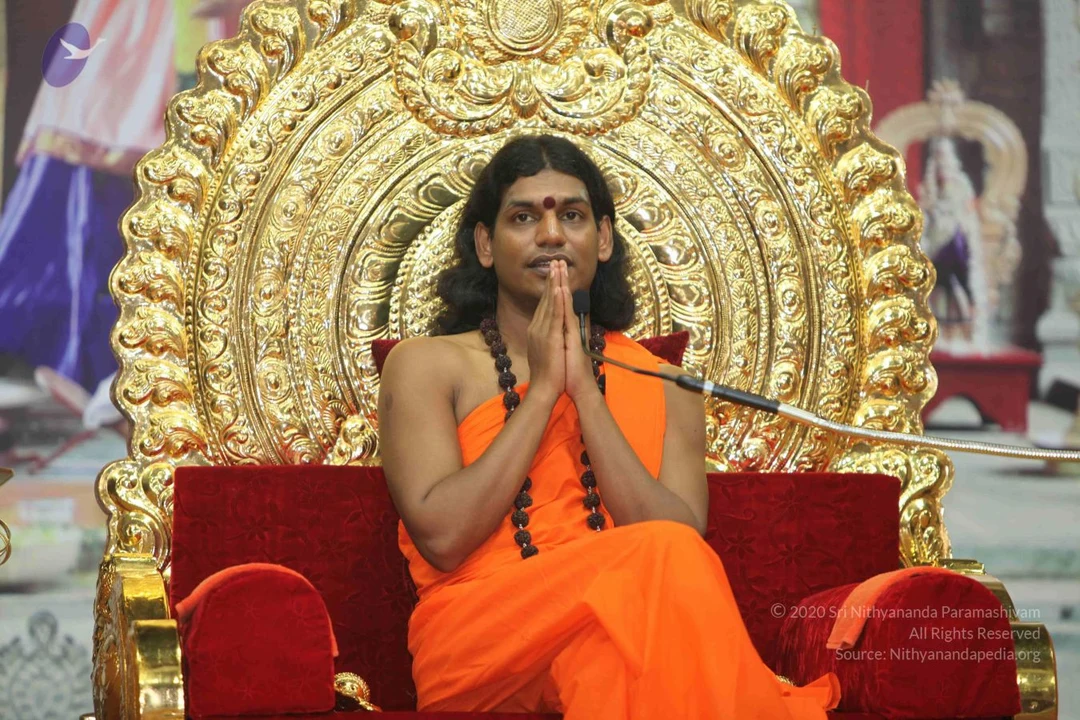
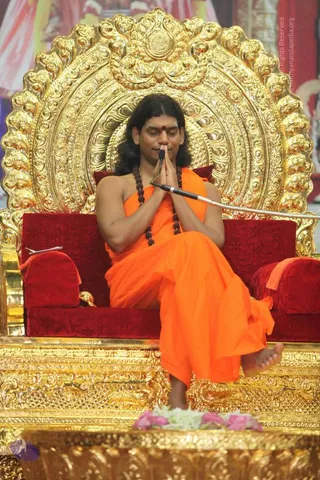
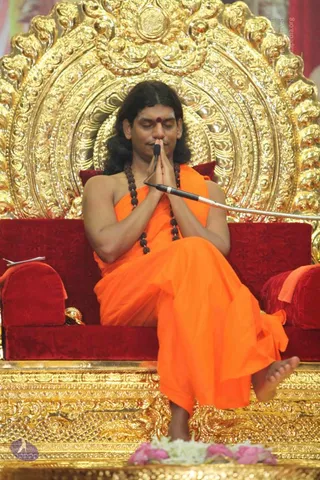
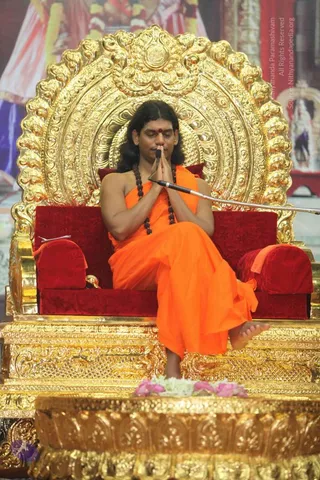
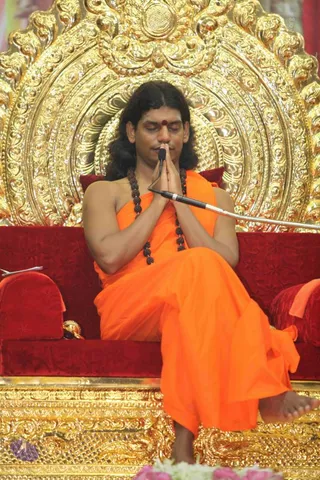
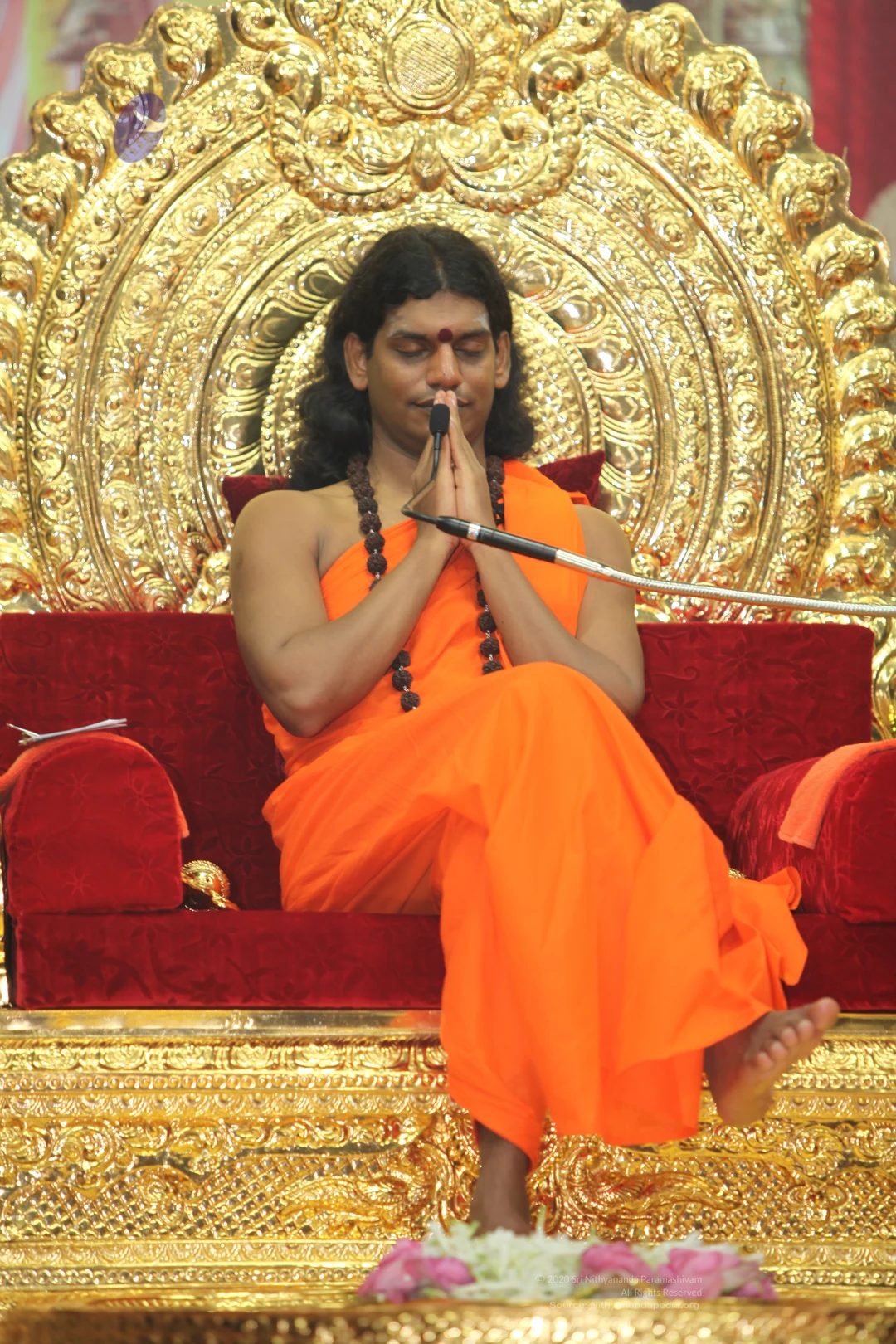
A seated man with long dark hair and a red bindi sits on an ornate gilded throne with red velvet cushions and armrests, hands pressed together in namaste with eyes closed. He wears an orange saffron shawl over the shoulder and a dark rudraksha mala. A microphone stand is placed beside him and pink flower petals lie on the golden platform below. Behind the throne a painted backdrop shows figures in red and white. Appearance-based label: Swamiji (probable), seated on the throne in orange with rudraksha mala and long hair, giving a talk.A man seated on an ornate gold throne with a red velvet cushioned seat and red backrest, wearing an orange saffron garment draped over one shoulder and leaving the other arm bare, with dark rudraksha mala beads around his neck. He sits with eyes closed, palms pressed together in anjali mudra in front of a microphone on a stand, one leg crossed over the other with a bare foot visible, and a red tilak mark on his forehead. Below the throne sits a platform with pink and white flower offerings. The background shows red and pink draped fabric. Swamiji (probable): long dark hair swept back, saffron clothing, rudraksha mala and a throne, identified by the page as the speaker at this satsang.A seated man in an orange-saffron dhoti-style wrap and shawl sits on an ornate gold throne with a red velvet cushioned seat and backrest. He has long dark hair, a red bindi on his forehead, and multiple dark rudraksha mala beads around his neck. His hands are pressed together in anjali namaskar at chest height, eyes closed, with a microphone on a gooseneck stand near his face. His right foot rests bare on the gold platform, with pink and white flower petals scattered at its base. The elaborate gold throne has a large repoussé arch behind him.A man with long dark hair sits on an ornate gold throne with red velvet cushions, eyes closed and palms pressed together in namaste. He wears an orange saffron wrap, a dark rudraksha mala, and a red bindi, and a microphone stand is positioned at his side. Pink and white flowers rest at the base of the throne. Behind him a large backdrop shows painted deity imagery in red and white. Swamiji (probable): the long swept-back hair, saffron wrap, rudraksha mala and gold-and-red throne are the cues here, seated as a speaker during a satsang. One person is physically present.A man with long dark hair sits on an ornate gold throne with a red velvet cushioned seat and red back cushions. He wears an orange saffron robe draped over one shoulder, a rudraksha mala of dark beads around his neck, and a red bindi on his forehead. His eyes are closed and his palms are pressed together in anjali mudra in front of his chest, with a small microphone held near his hands on a gooseneck stand. His bare right foot rests at the bottom of the frame above pink flower petals. The gold backdrop is richly carved with floral scrollwork. Appearance-based label: a person, seated in the role of a speaker giving a satsang on a throne.A man sits on an ornate gold throne with red velvet cushions, palms pressed together in namaste with eyes closed. He wears a flowing saffron-orange garment draped over one shoulder and a dark rudraksha mala with a red bindu on his forehead; a microphone stand is near his face. Behind him a large gilded backdrop and a framed deity image are visible. One physical person is present.

Sarva-Darshan

28 photosSource gallery
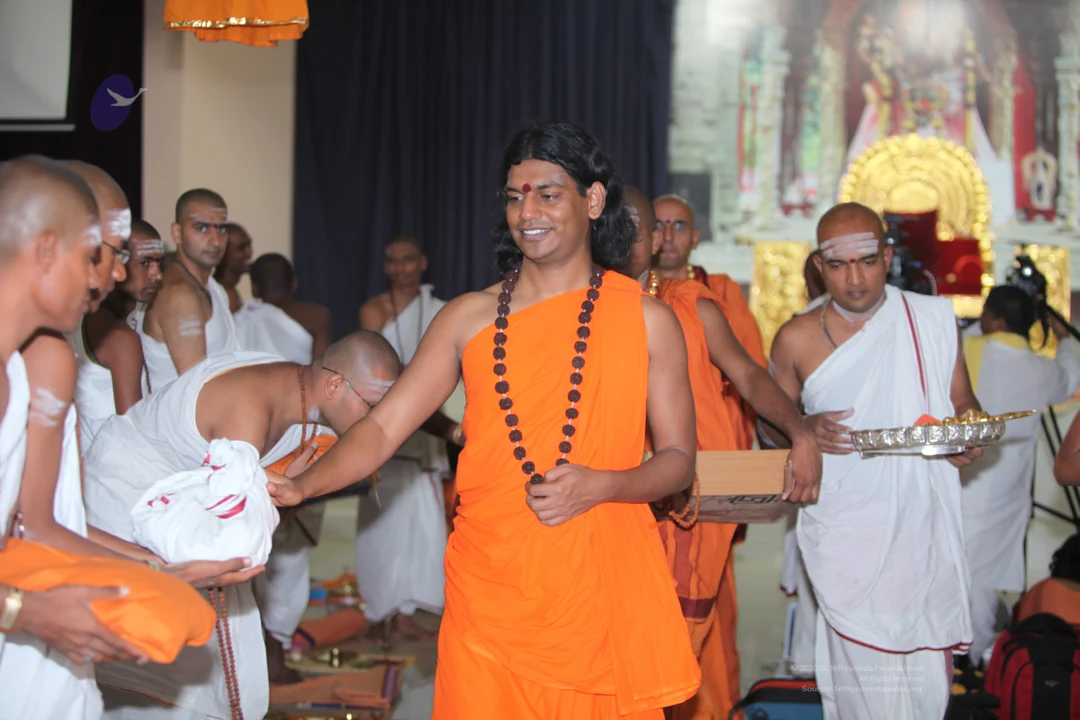
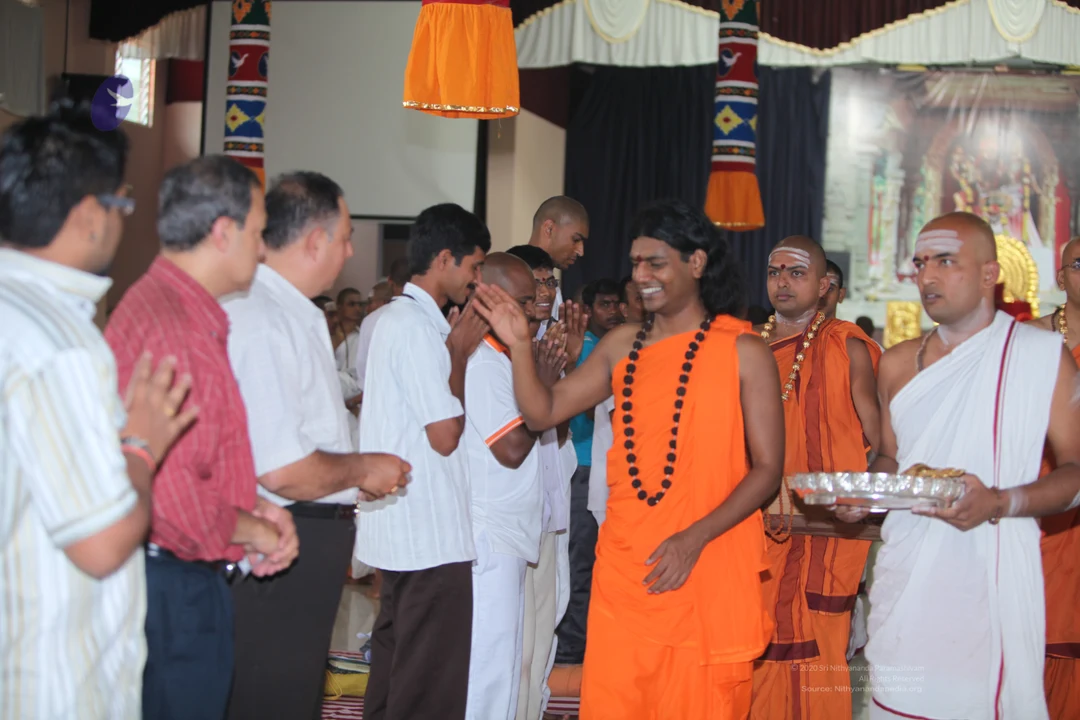
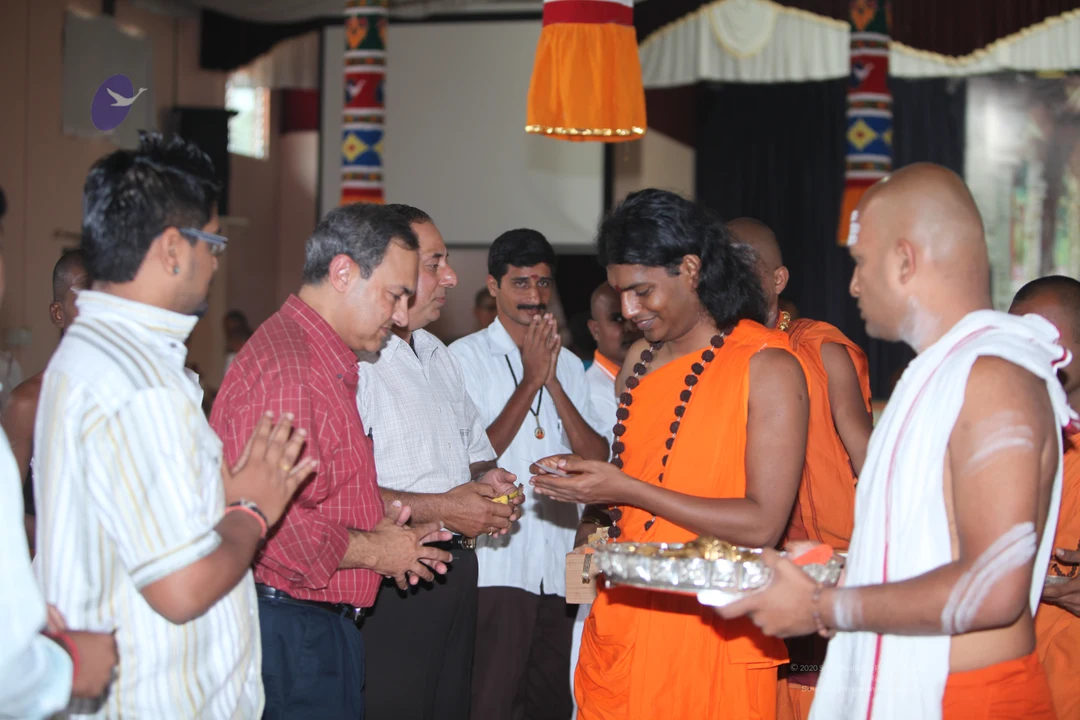
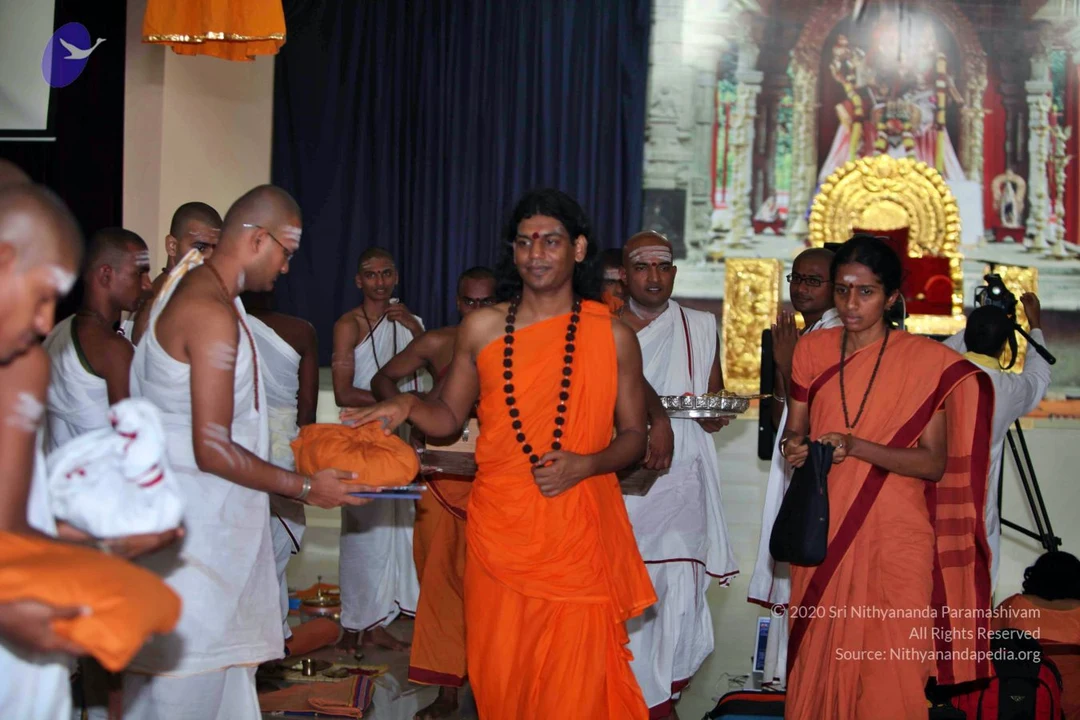
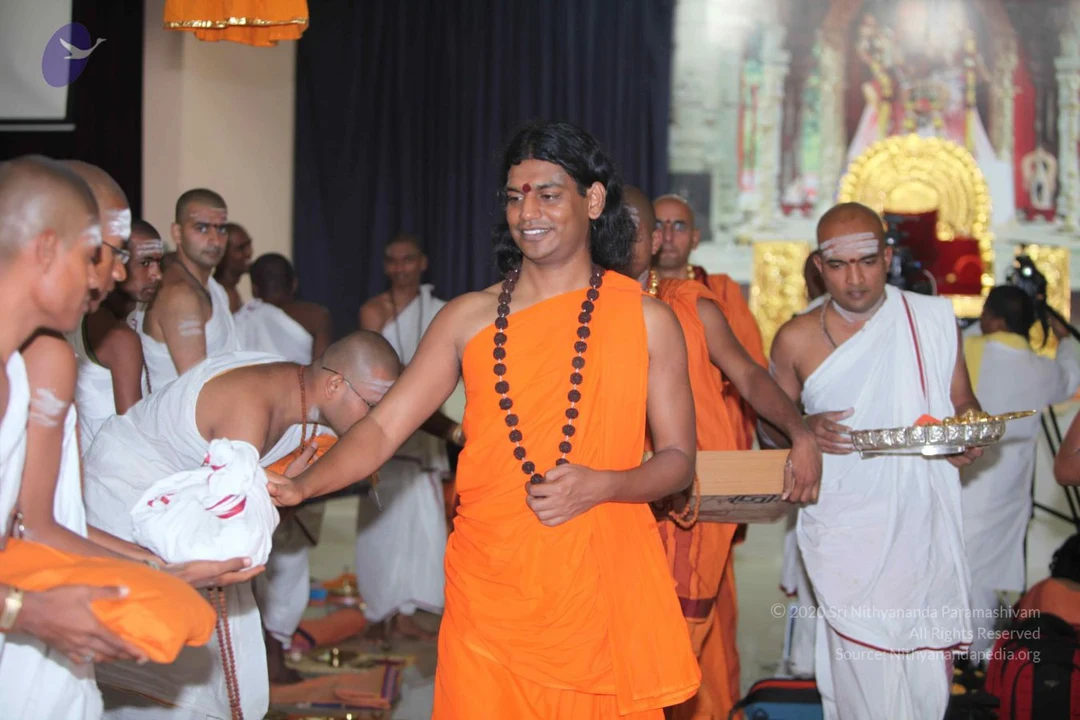
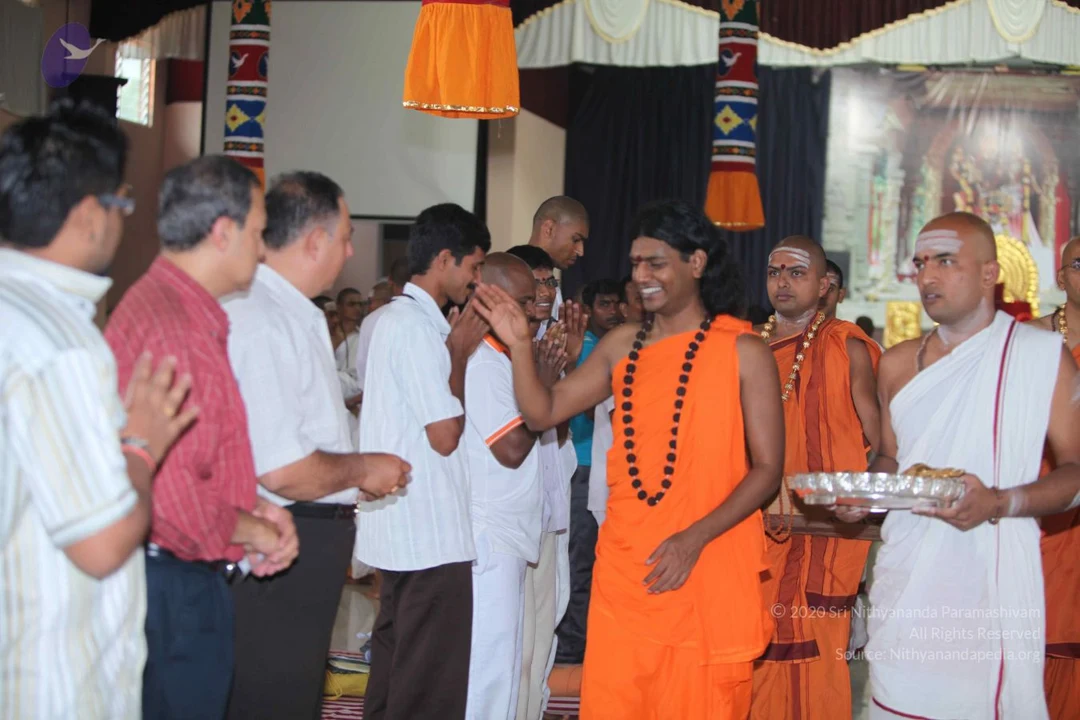
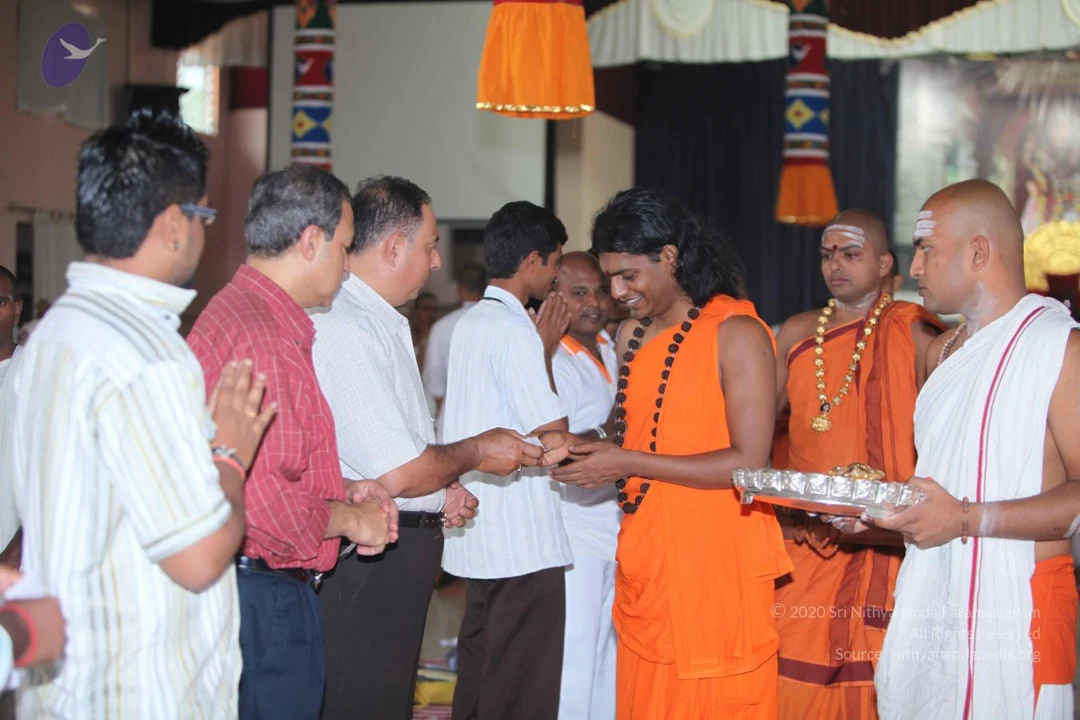
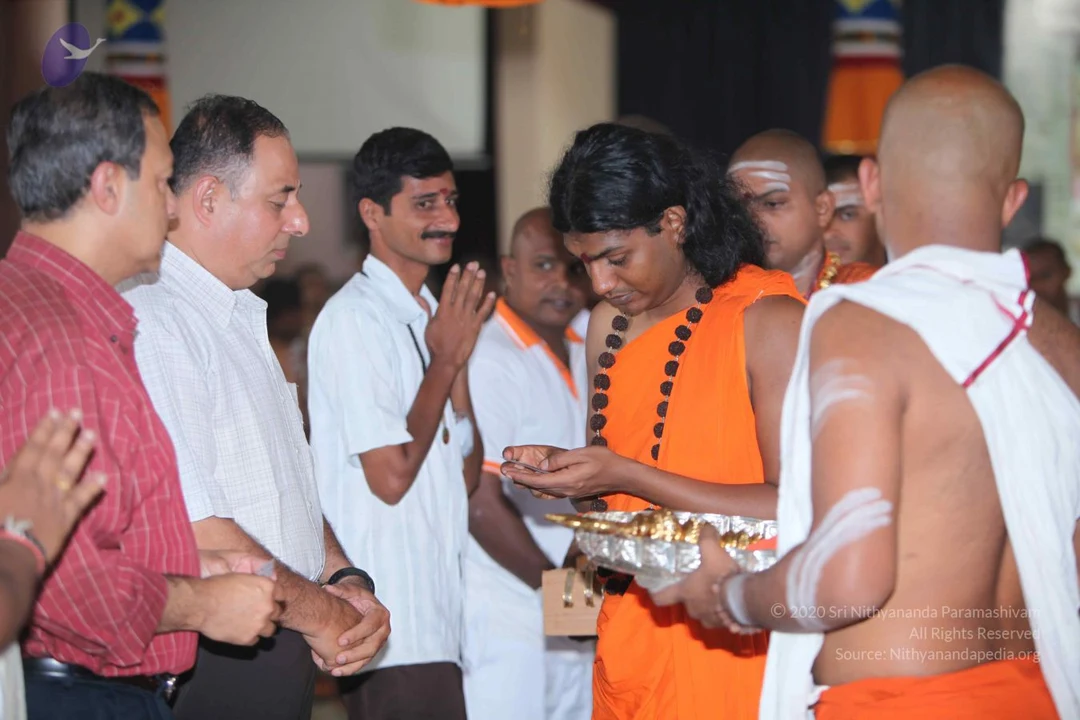
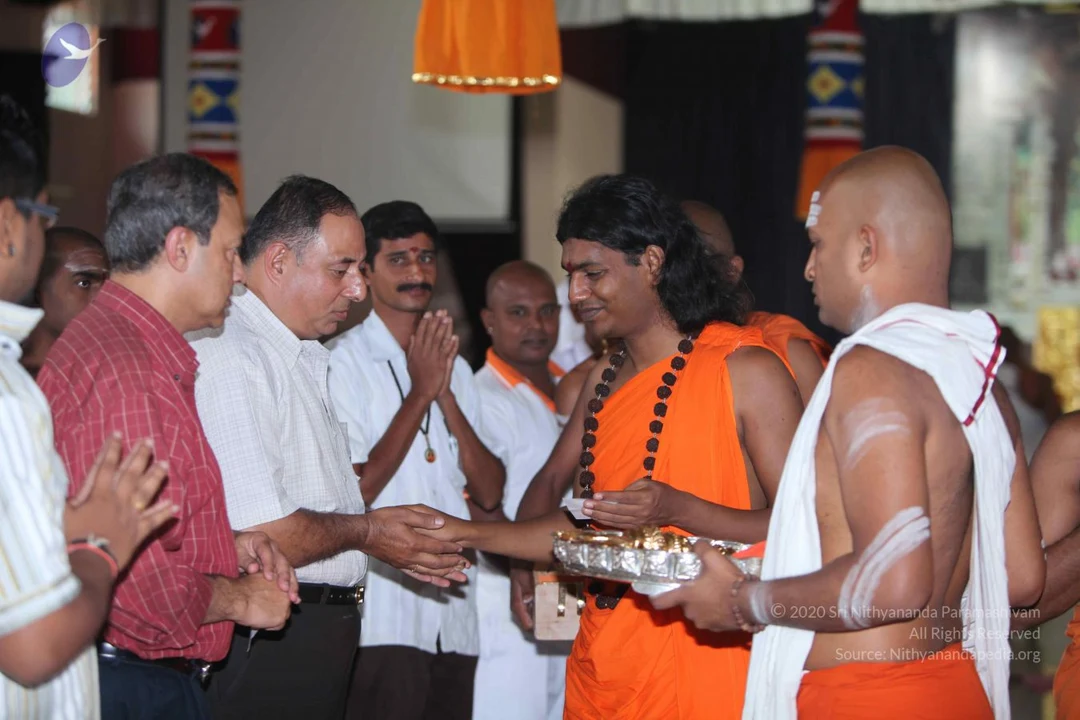
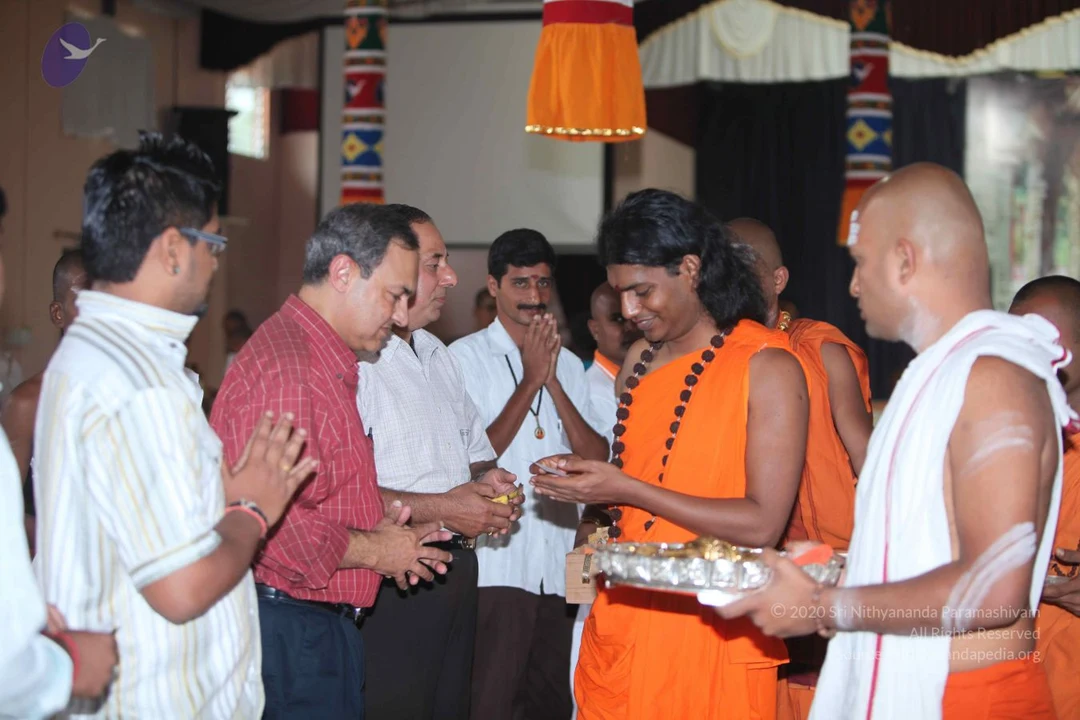
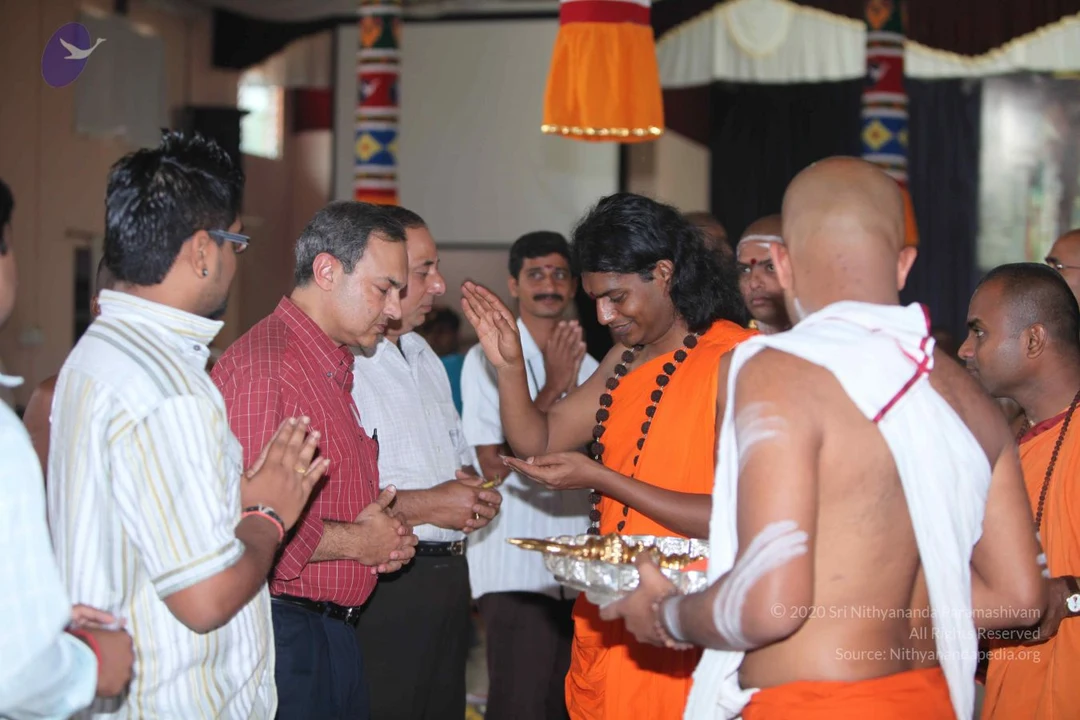
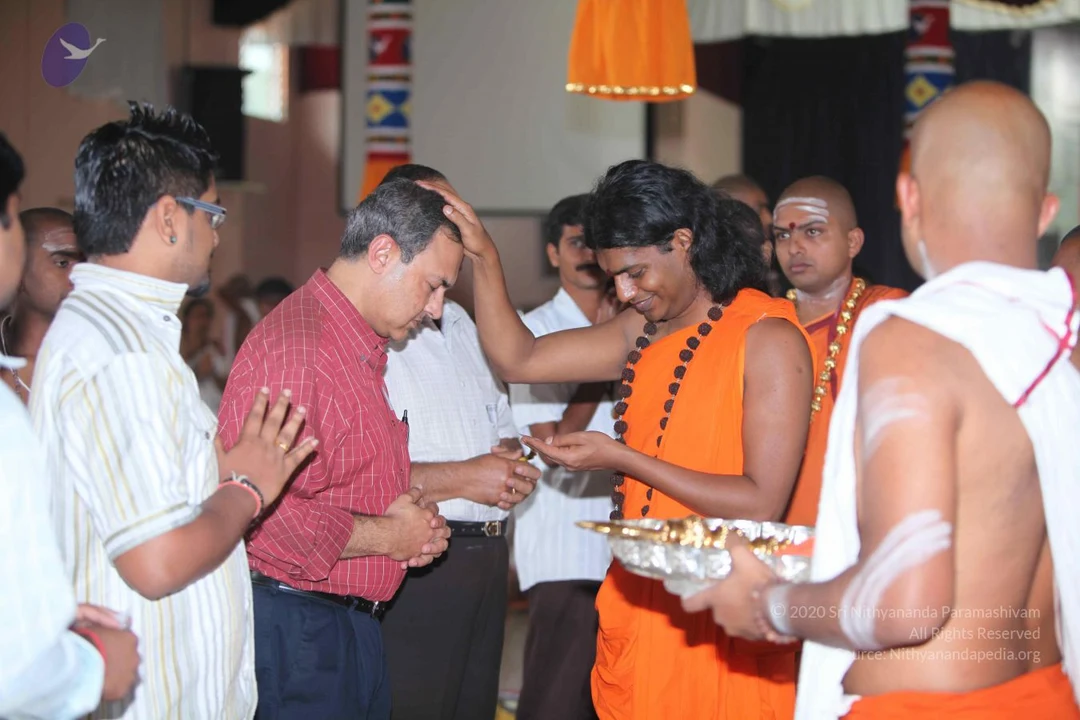
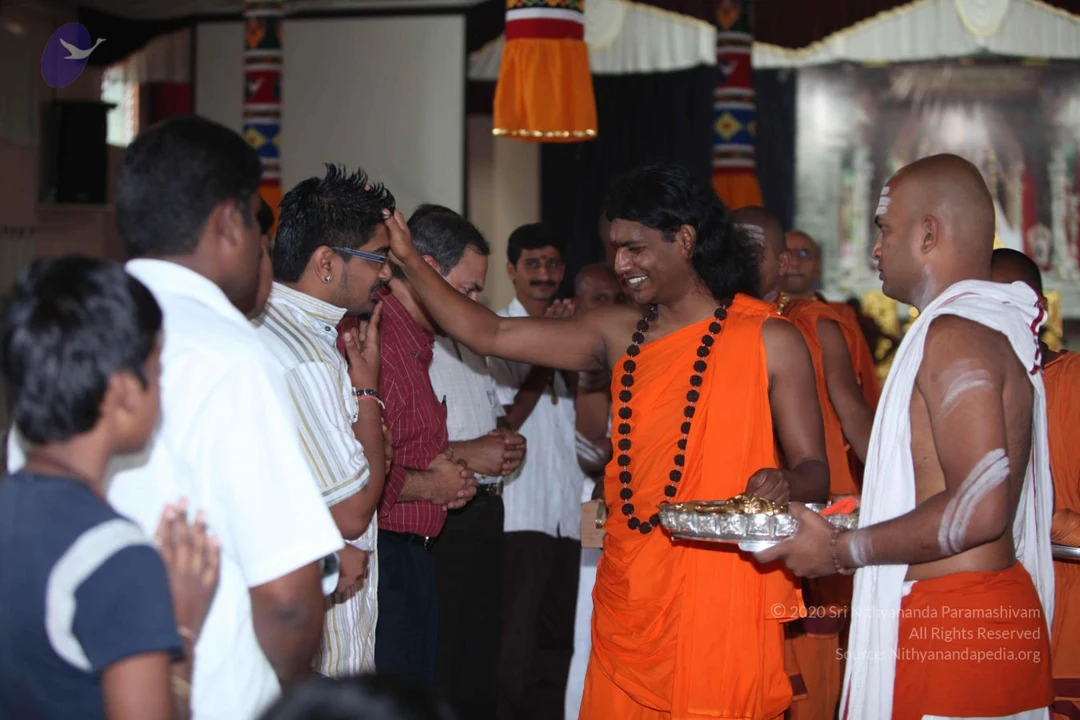
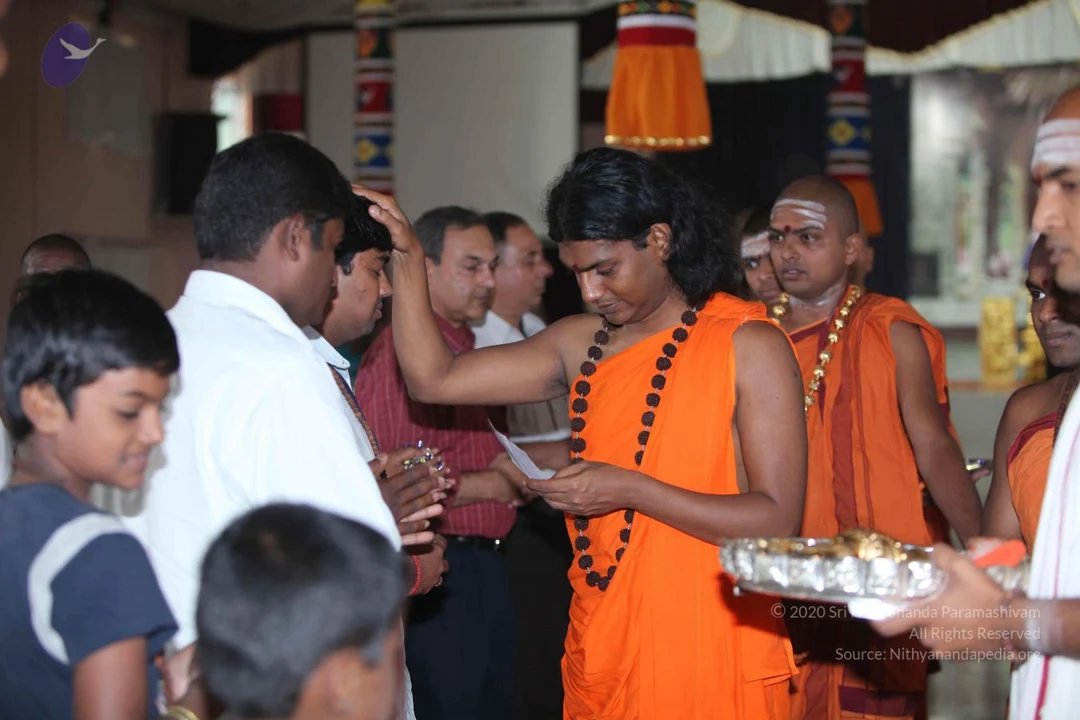
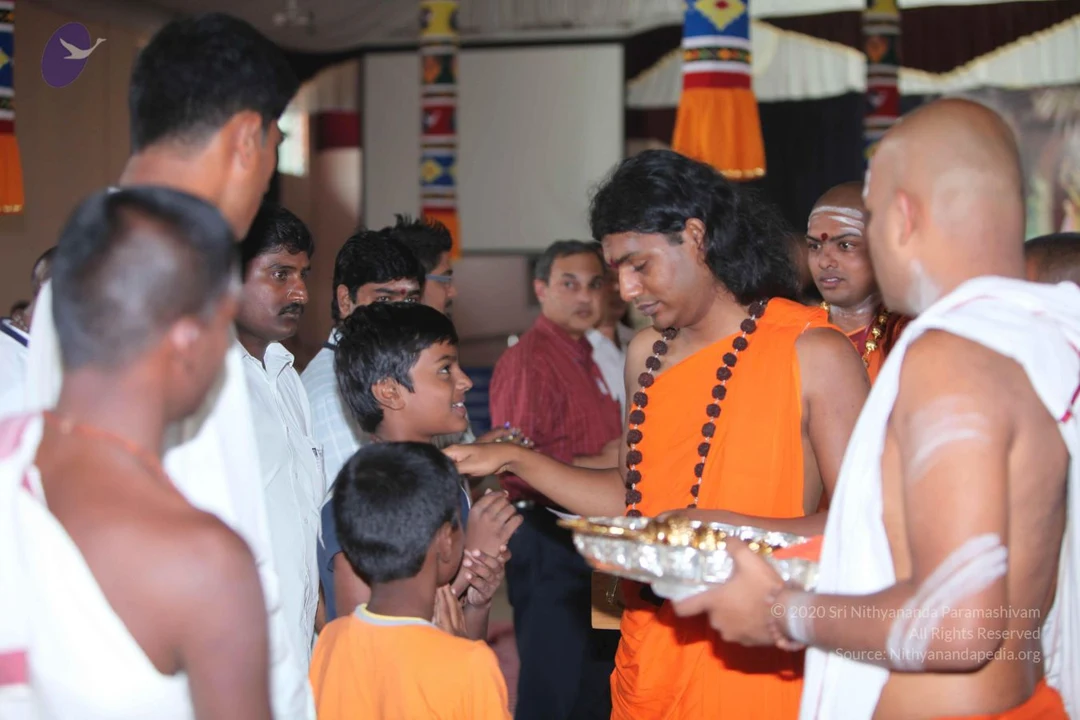
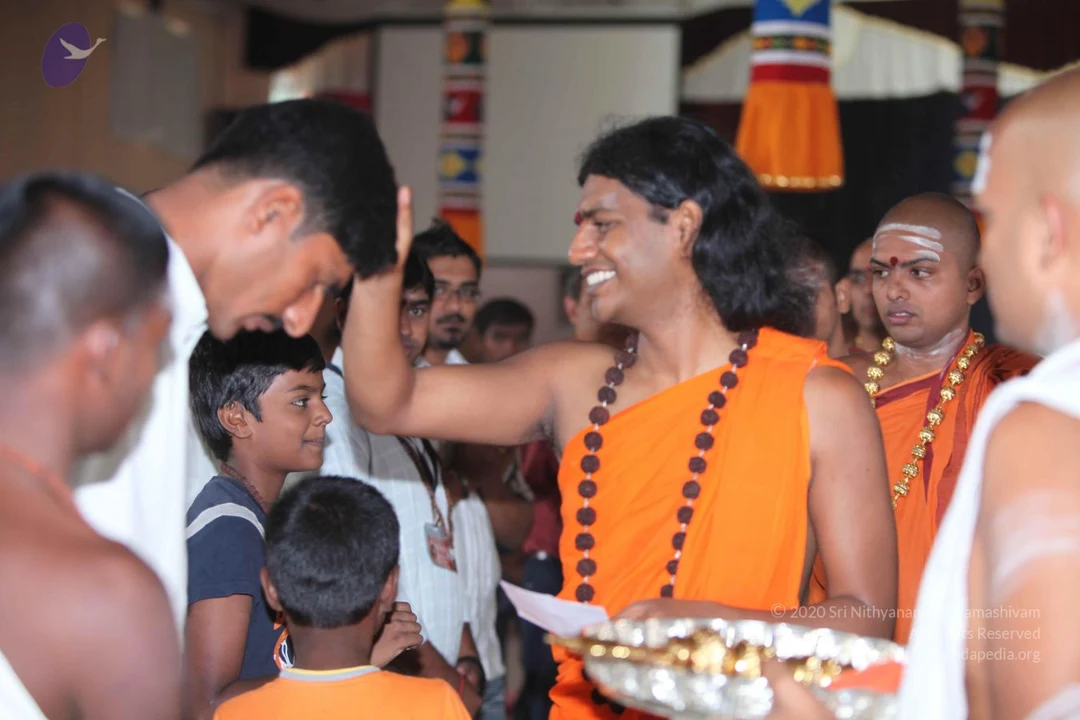
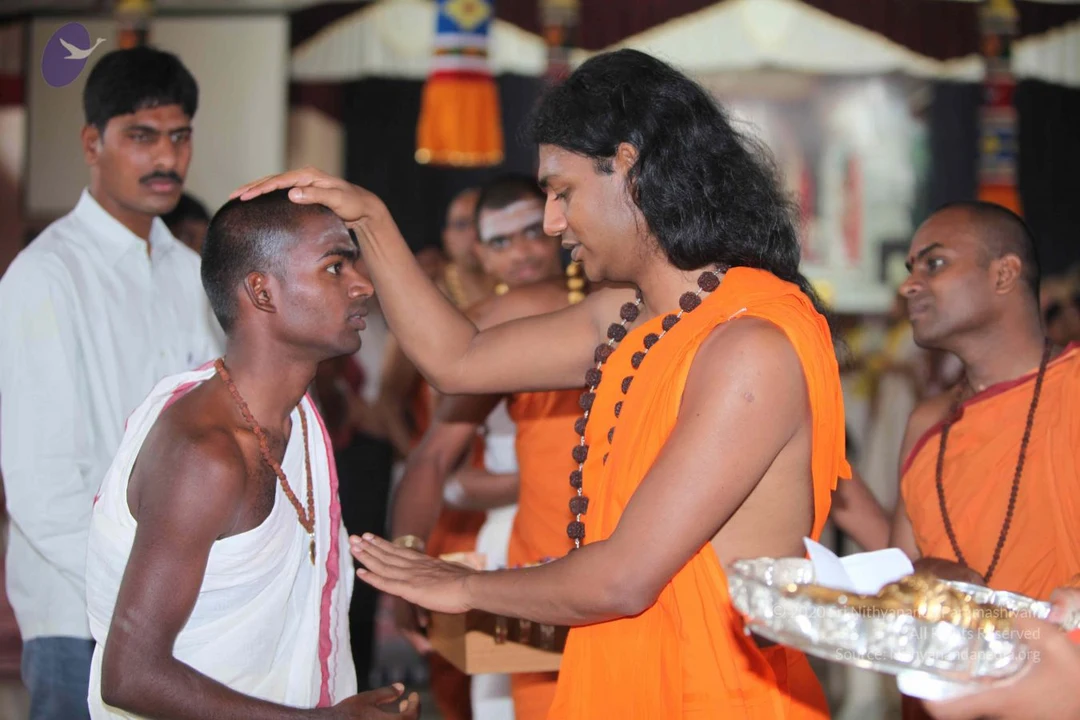
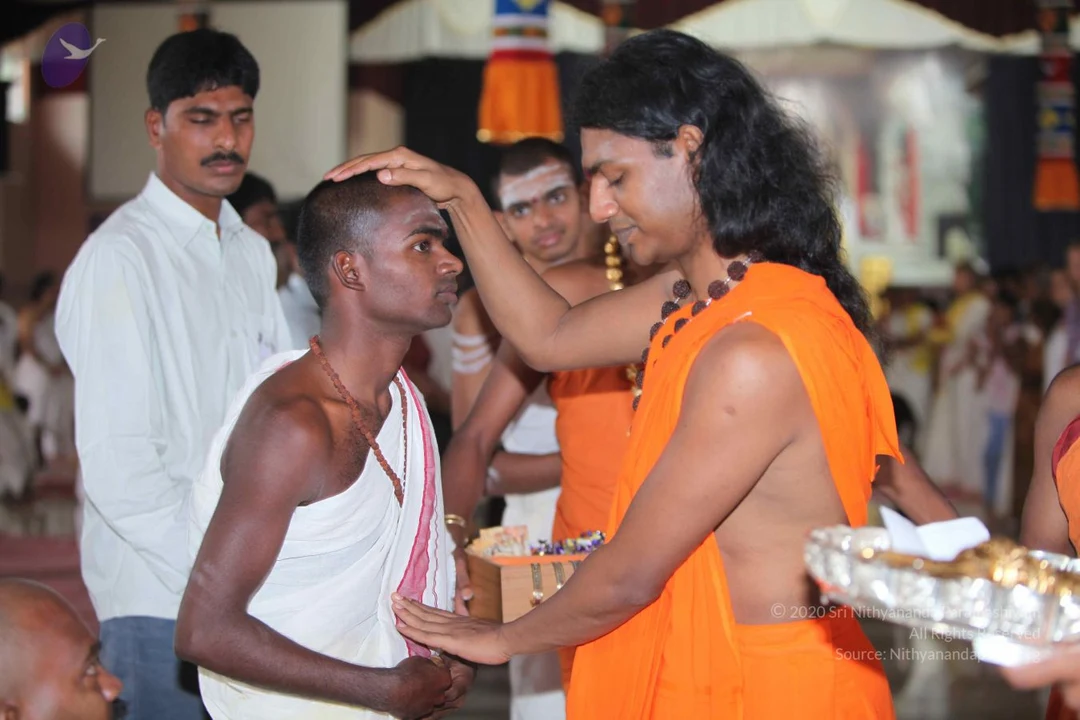
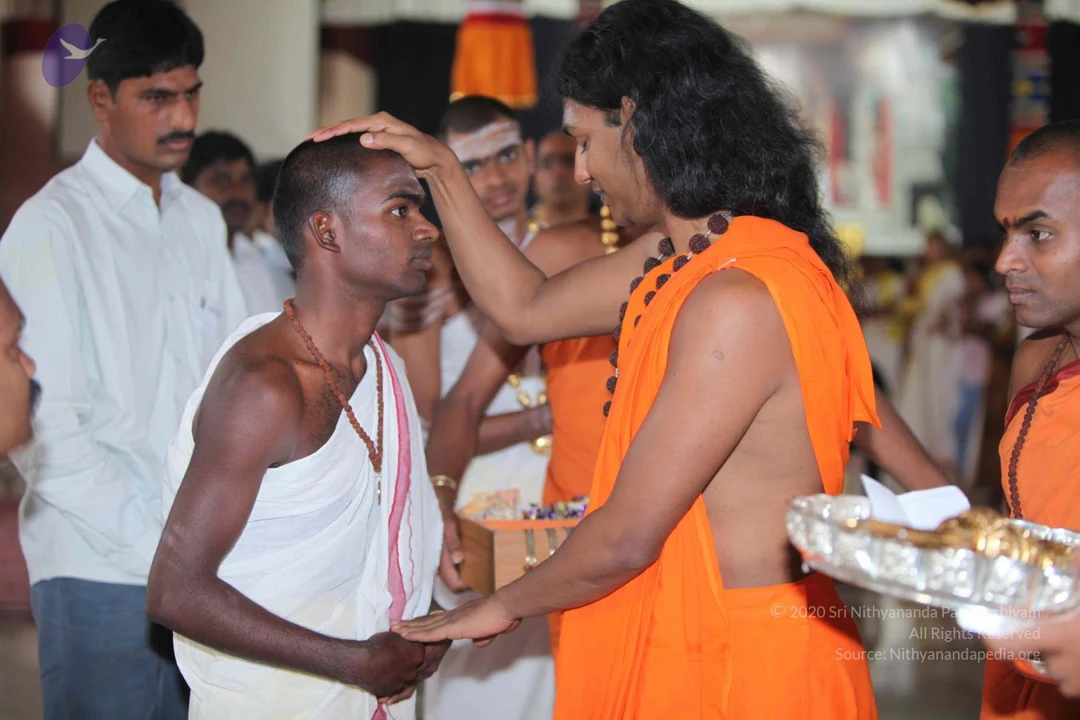
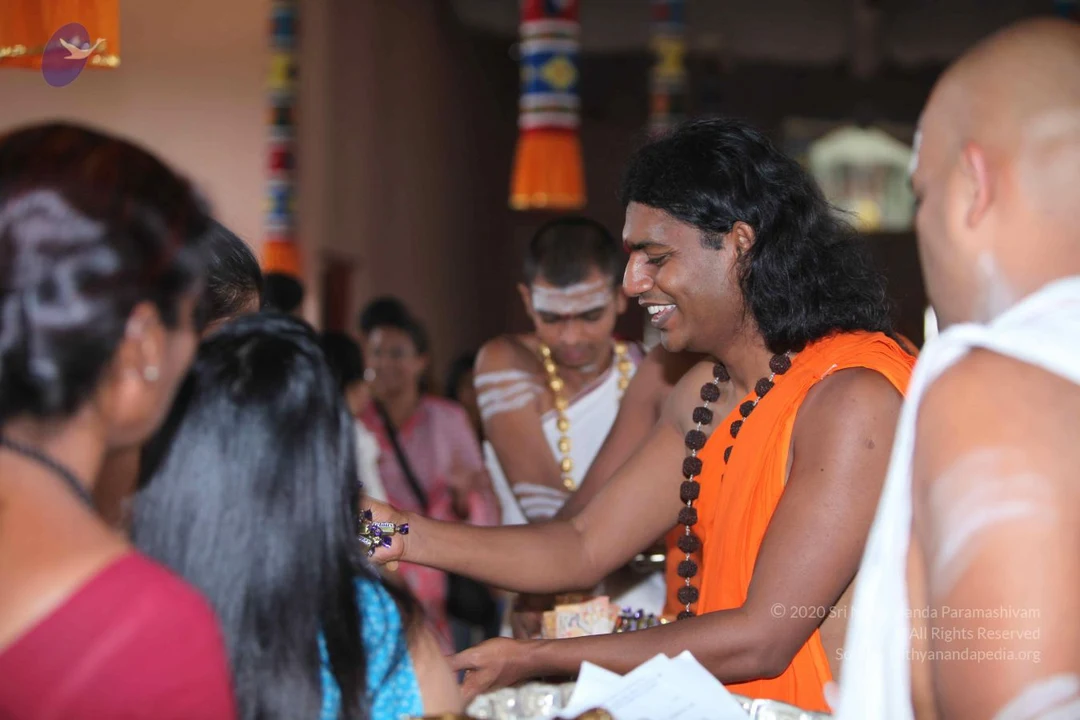
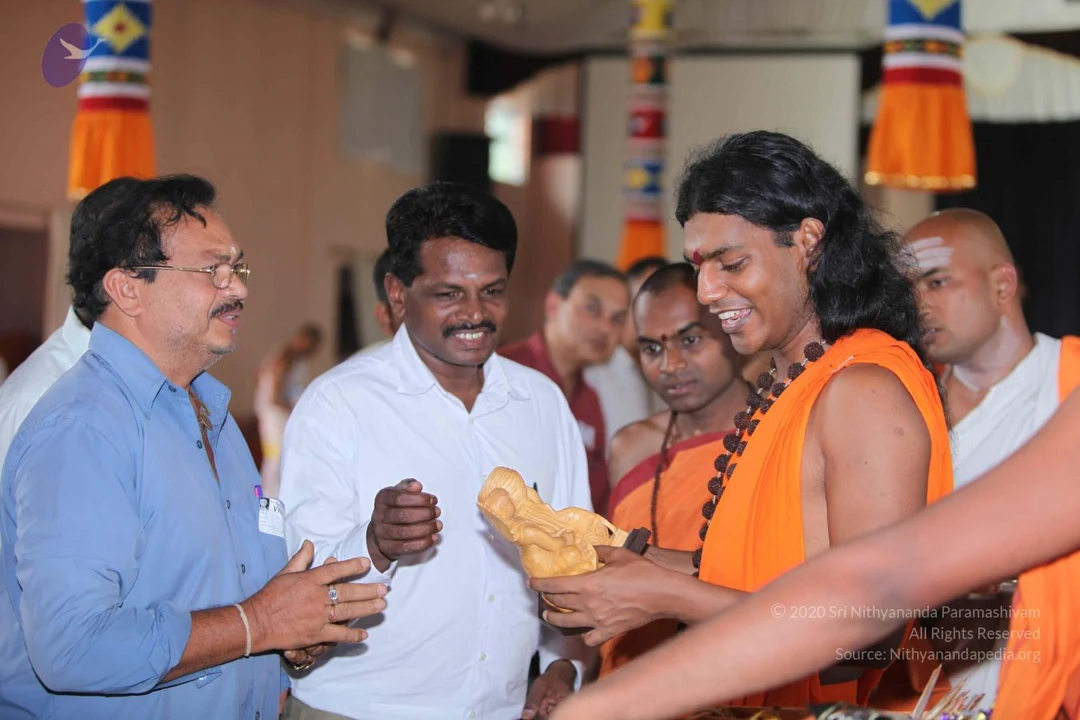
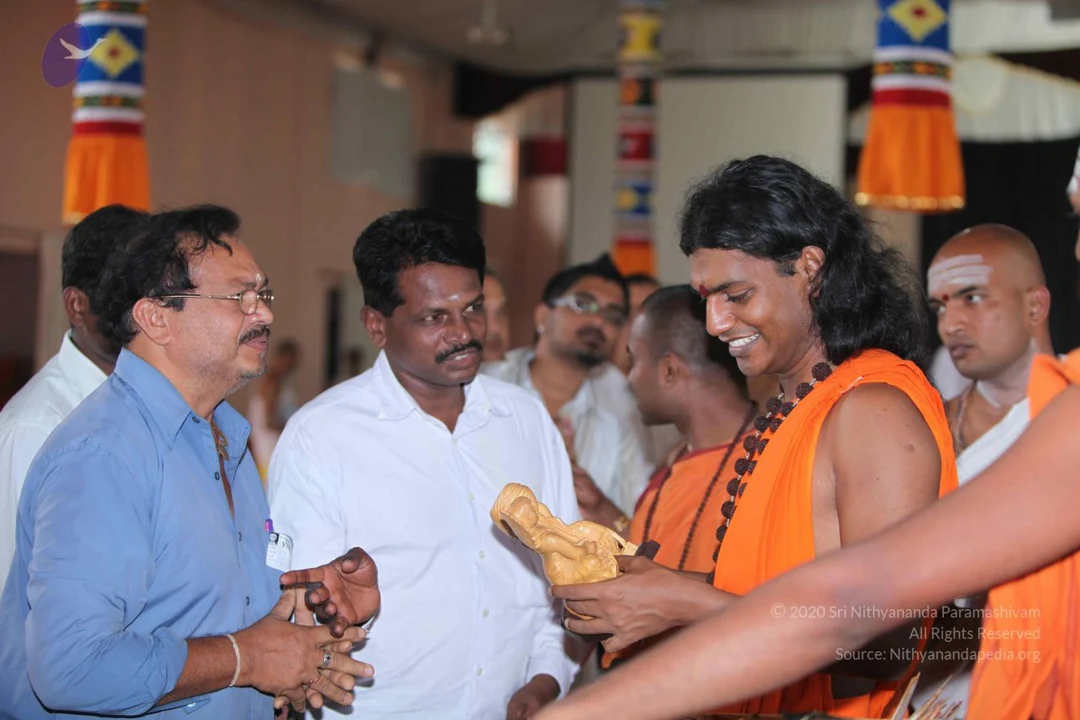
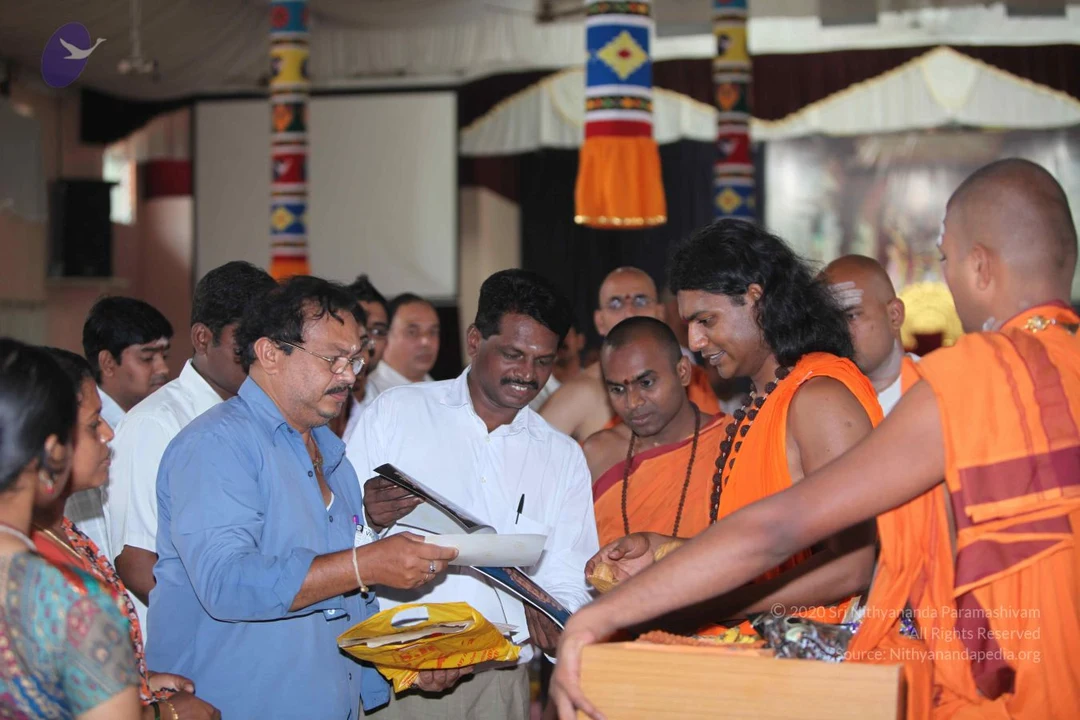
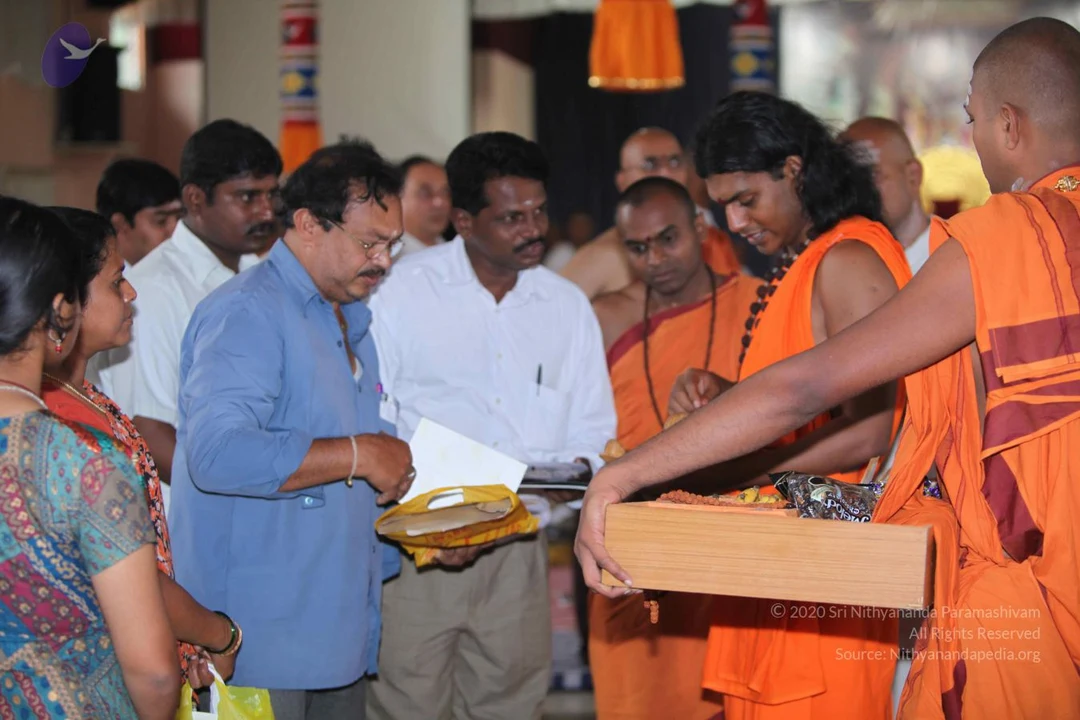
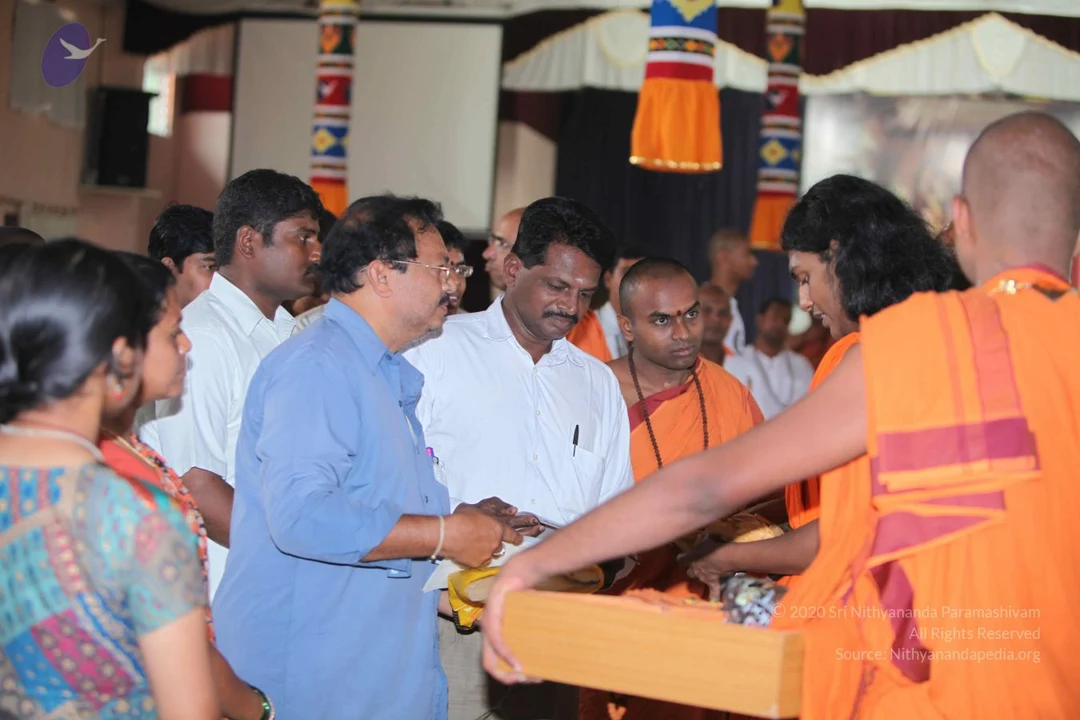
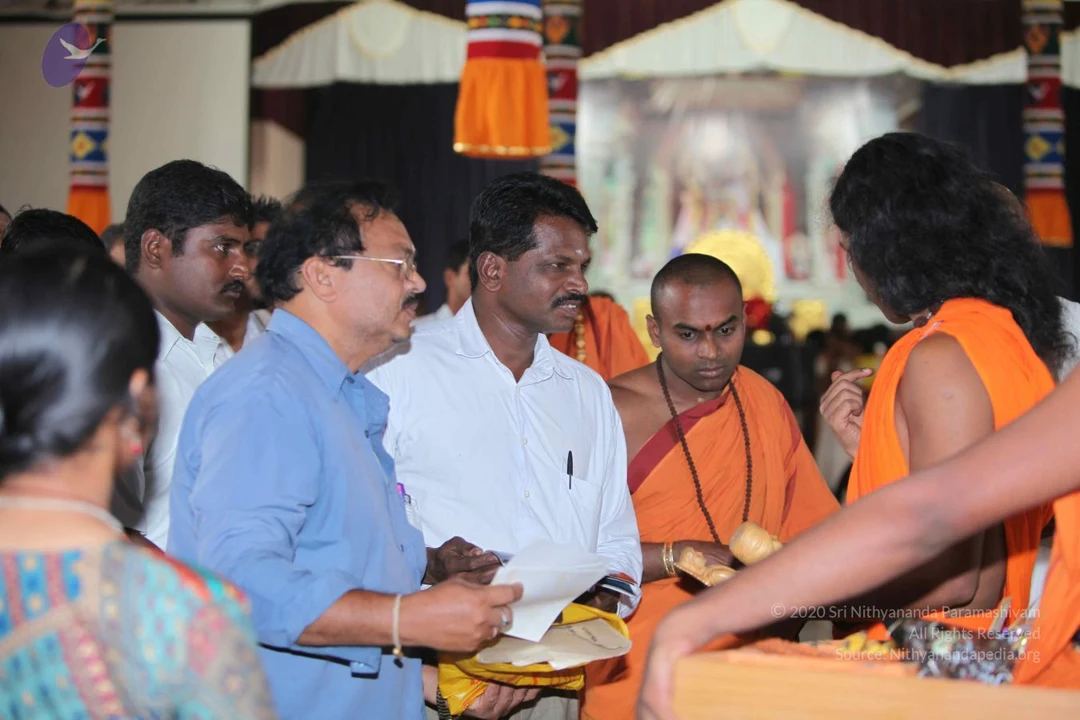
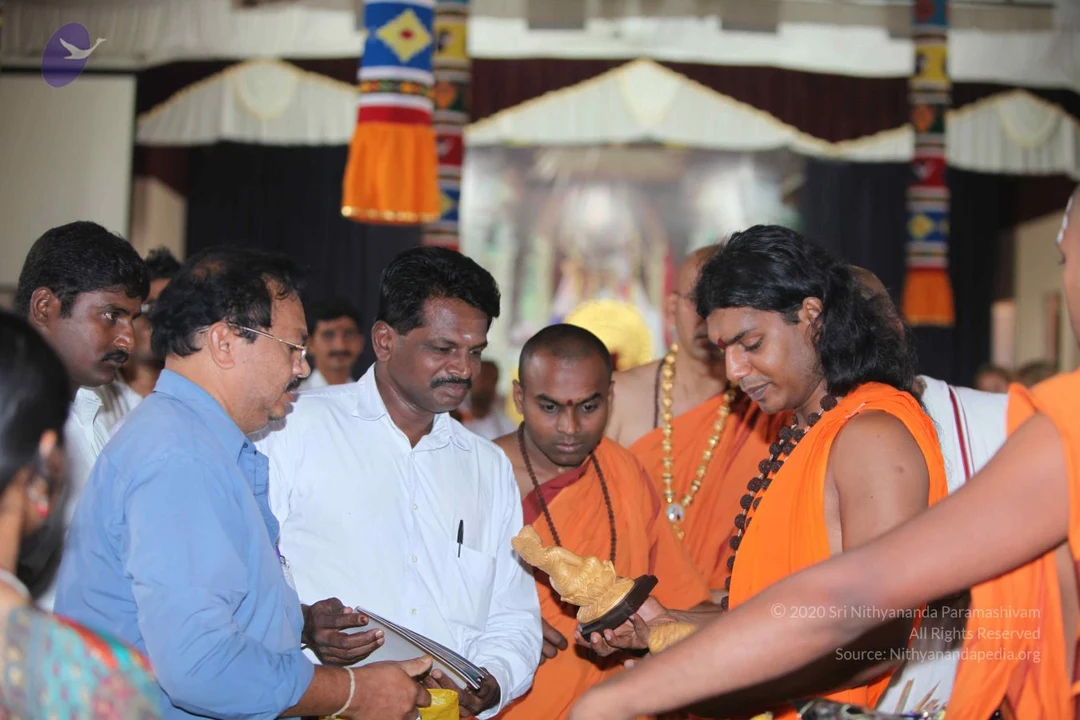
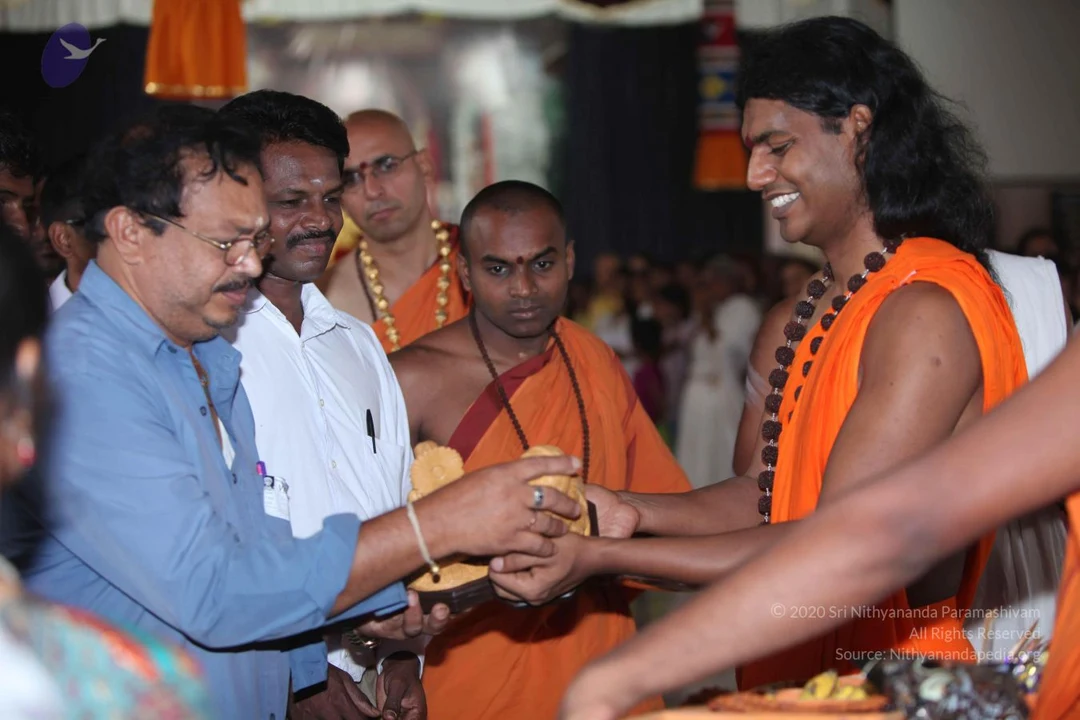
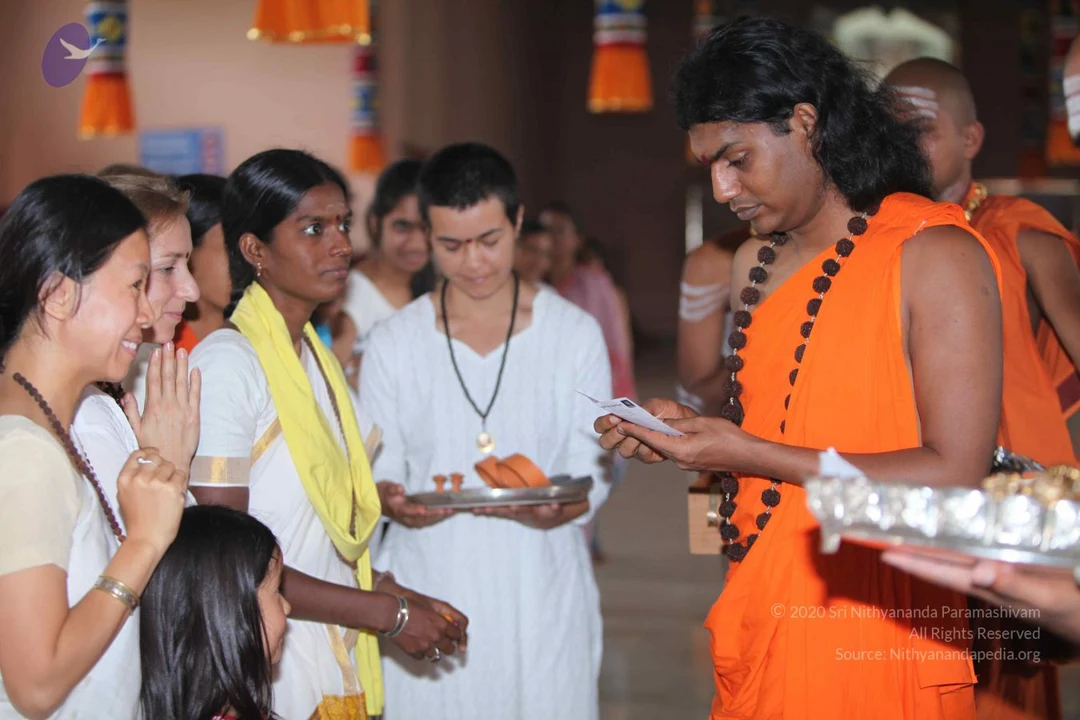
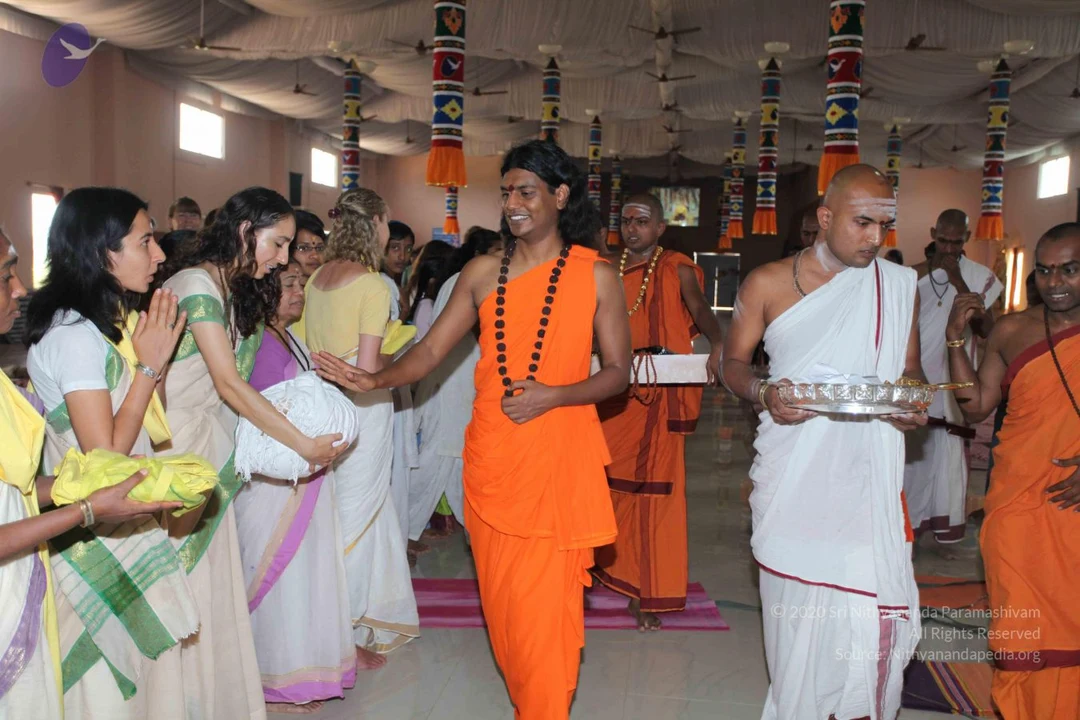
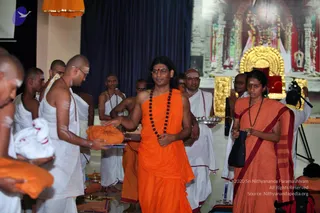
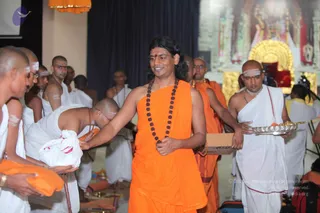
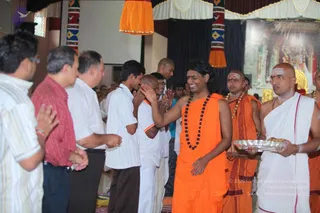
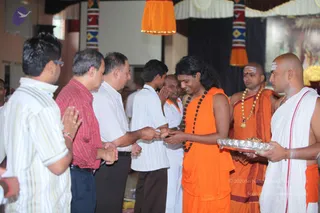
A photograph of a ceremonial gathering indoors. In the centre, a man with long dark swept-back hair wears a saffron-orange dhoti and shawl with a long dark rudraksha mala and a red tilak, holding out a hand toward a silver tray. Around him, several shaved-headed men in white dhotis with white and orange sacred marks on their foreheads and chests stand and hold orange cloth bundles and offering trays. On the right, a woman in an orange sari with a maroon border and a rudraksha mala stands beside a dark handbag. Behind them a large screen shows a gilded throne with a red cushion and a temple-style deity image, and a camera operator appears at the right edge.A photograph of a ritual scene in a temple-style hall. At the centre, a smiling man with long, swept-back dark hair and a red bindi wears a saffron-orange robe and a long rudraksha mala. He stands in front of a richly decorated golden altar with a deity murti. Around him, several men in white dhotis with white ash or tilak marks on their foreheads and arms stand or bend, one holding a folded white cloth with red trim. A man in white holds a silver plate with offerings on the right, and another holds a wooden box. Orange-robed attendants stand behind, and a camera operator is visible at the right edge.Photograph of an indoor ashram gathering in front of a decorated altar with a deity murti and a lit area behind. A man in orange robes with a long dark rudraksha mala and swept-back long hair stands centre, smiling and extending his hand in blessing toward devotees whose palms are pressed together. Beside him, a bald priest in orange robes with a white forehead band and beaded necklaces stands near another priest in white dhoti and shawl with white tilak, who holds a silver tray of offerings. Devotees in white and striped shirts, some in dark trousers, stand with hands folded in namaskar along the left. Orange-and-white embroidered hangings frame the upper background. Several people visible, roughly 6-20.Indoor ashram gathering where a man with long dark hair wearing an orange saffron robe and a dark rudraksha mala stands centre-right, smiling and handing an object to a man in a white shirt. Behind him, two shaved-headed priests in orange and maroon dhotis with white tripundra marks and gold necklaces stand near a silver tray. A priest on the far right wears a white dhoti and holds the silver tray. Several devotees in white and striped shirts stand with palms pressed together in anjali mudra. A cream and orange hanging cloth and a tall backdrop are visible. The appearance-based label is a person, identified by long swept hair, saffron robe and rudraksha mala, with the role of a person giving or receiving an item at the satsang.A photograph of a ritual offering scene indoors. A woman in an orange saffron sari-style garment with a long rudraksha mala around her neck and dark hair loose to her shoulders stands center, hands cupped and receiving items from a silver tray. Beside her a shaved-headed priest, bare-chested with white sacred ash markings on his arms and chest and a white cloth draped over his shoulder, holds the silver tray with brass items on it. To the left, men in red checked and white collared shirts stand with hands folded in respectful namaskar, and a man in a white shirt with a folded-hands gesture stands near. Other priests with white ash markings and orange cloths stand behind, and a white screen and orange drapery form the background.A photograph of an indoor ritual reception. A man with long dark swept-back hair, wearing an orange saffron robe and a long rudraksha mala, stands at centre and extends his hand to a middle-aged man in a white shirt, who shakes it while holding a silver tray. Beside them a bald priest in a white dhoti and shawl, with white ash markings on his arms and forehead, holds a silver plate. Behind them several men in white shirts stand with palms pressed together in anjali. Orange and patterned cloth hangs from the ceiling and a golden shrine-like decoration appears at the right edge.

Yoga-Sutras-Evening-Session

158 photosSource gallery
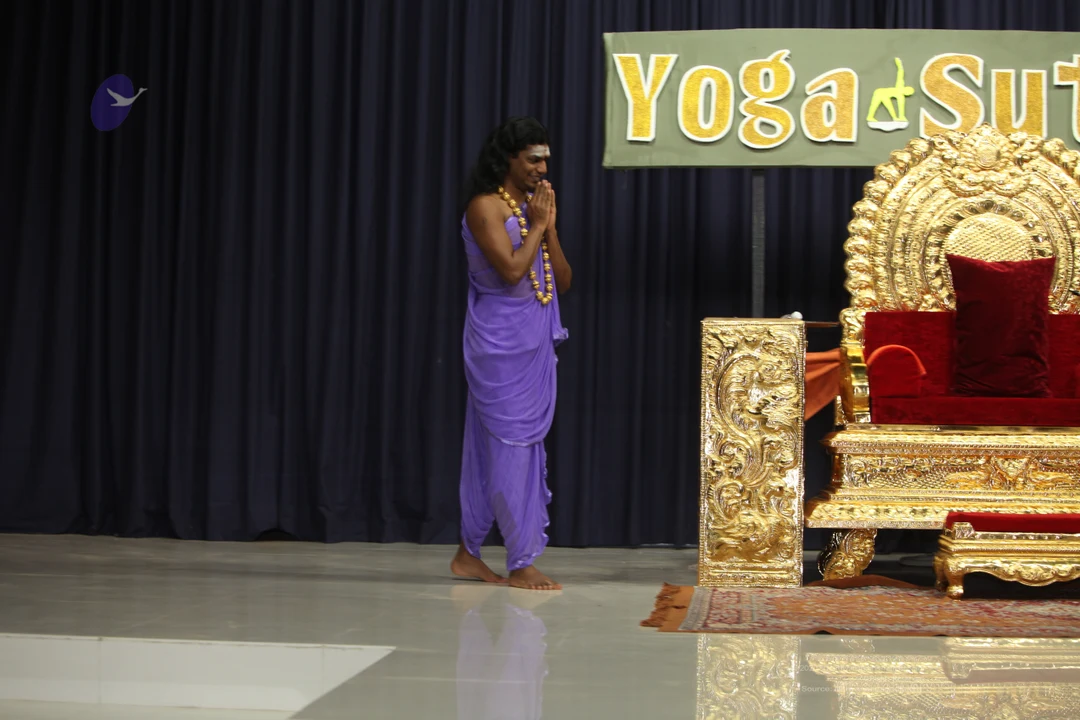
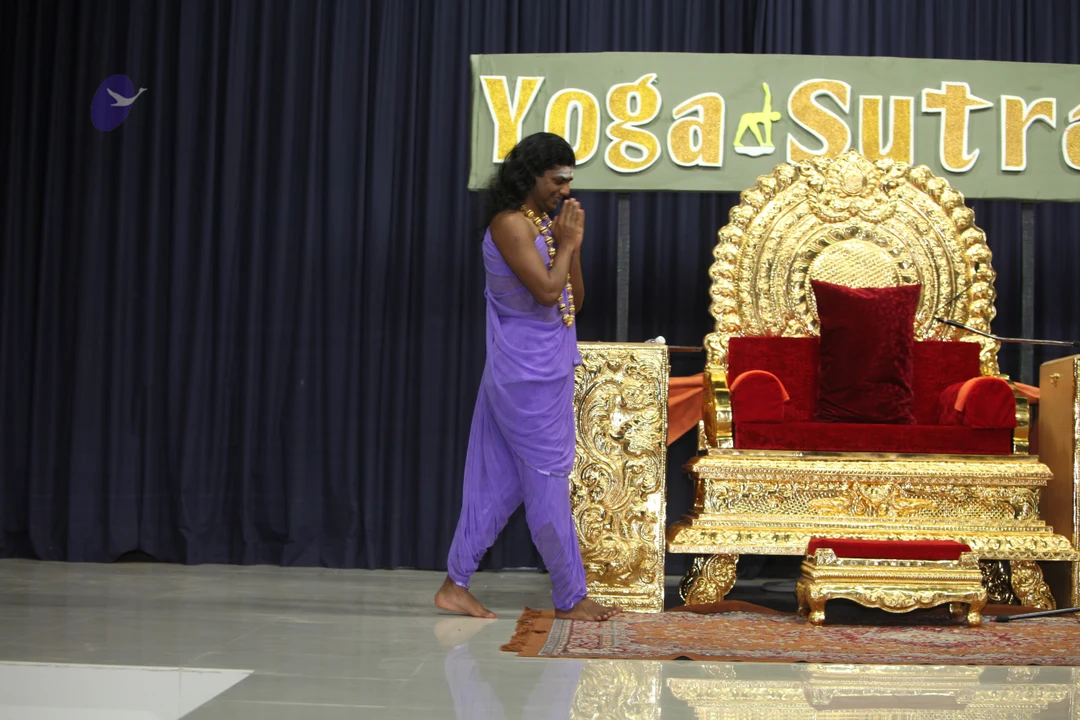
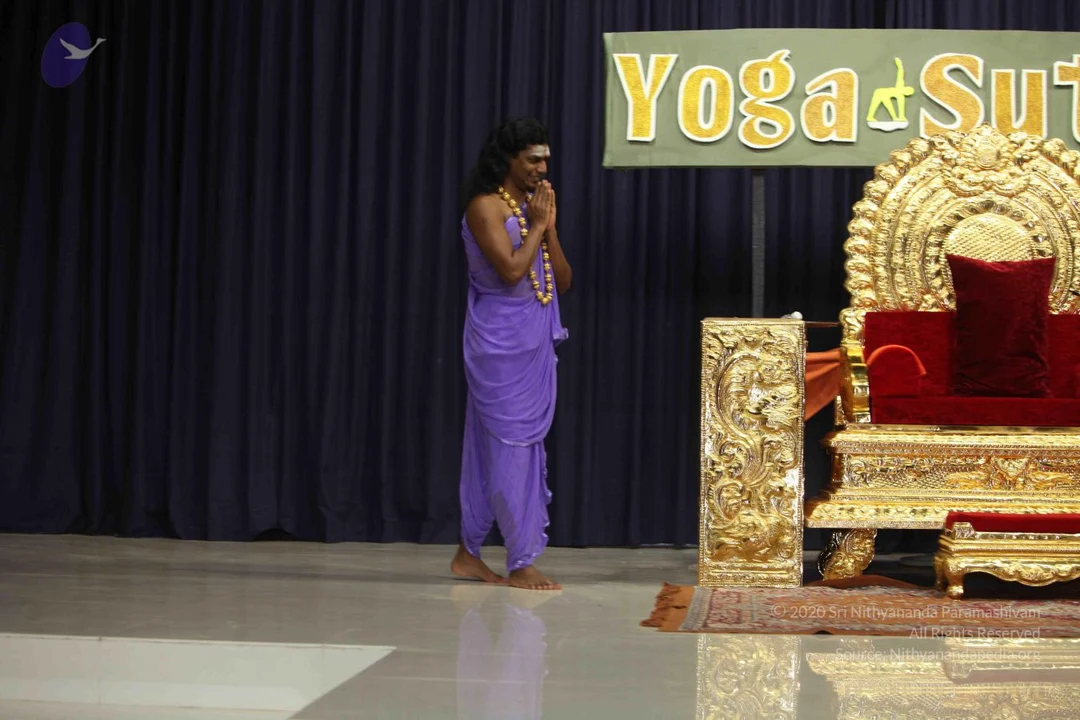
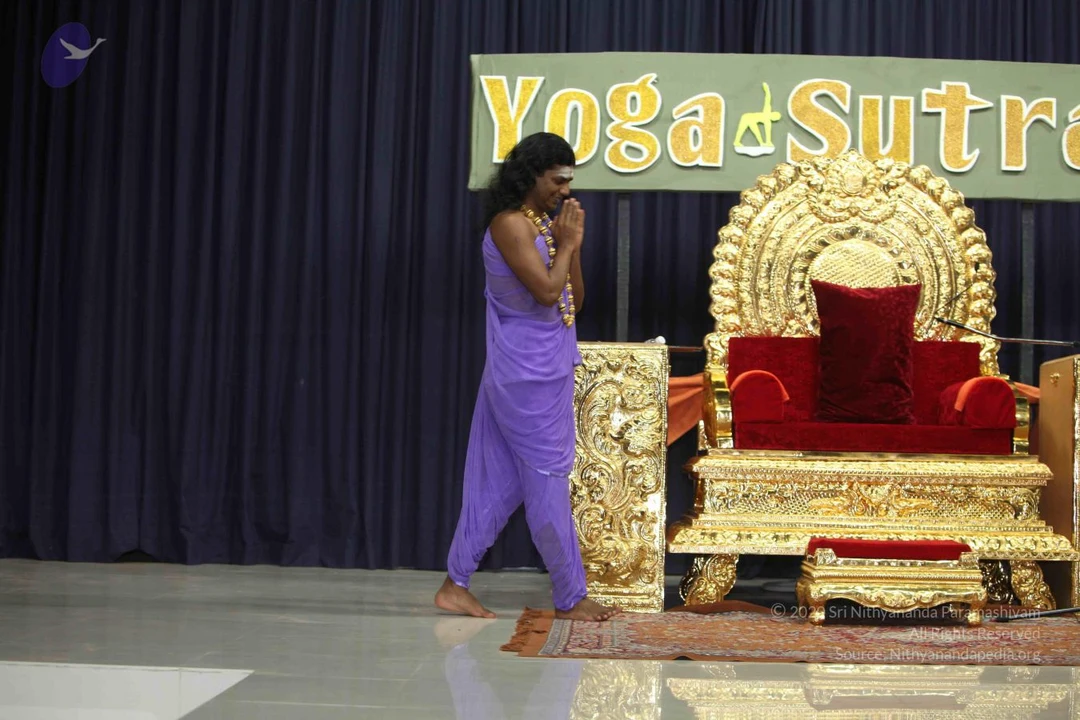
A man with long dark hair and a ceremonial gold bead necklace stands barefoot on a polished stage in front of a dark blue curtain, palms pressed together in namaste. He wears a lavender-purple dhoti-style wrap draped over one shoulder. Beside him sits an ornately carved gold throne with a red velvet cushion and back, and a smaller gold footstool with red upholstery. A green banner reading Yoga Sutra with a yoga figure hangs above the stage.A barefoot man in a lavender-purple wrap and loose pants stands on a polished stage with palms pressed together in anjali mudra, head bowed, approaching an ornate gold throne with a red velvet cushion and red-cushioned seat. A garland of gold and beaded necklaces hangs at his chest and a tilak is marked on his forehead. Behind him a navy curtain and a green banner reading Yoga Sutra with a yoga figure. The man's identity is uncertain from appearance alone, so he is described by role as a devotee approaching the throne.A standing man in a lavender-purple wrap garment stands before an ornate gold throne with red velvet cushions, palms pressed together in namaste. He wears a rudraksha mala and his hair is long and swept back. A gold-carved footstool sits on a patterned rug. A microphone stand stands beside the throne. A green banner behind reads Yoga Sutras above navy drapes. The figure appears to be a presenter at a talk. The man in lavender matches the page's Swamiji cues of long hair and rudraksha mala, so this is a probable Swamiji in person.A seated man with long dark hair and a red tilak on his forehead sits cross-legged on an ornate gold throne with a red cushioned seat and orange armrests, palms pressed together in namaste and eyes closed. He wears a lavender-purple dhoti-style wrap, bare chest and shoulder, and a long tiered necklace of gold-toned beads. A microphone on a flexible stand is beside him, and a wooden lectern with gold carvings is at the right edge. Behind him a gold-framed backdrop bears large gold lettering reading Yoga Sutras, with a small golden yoga figure, above dark blue curtains. Physical people visible: one.A seated man in a lilac-purple dhoti-style wrap and a bare upper body sits with palms pressed together in namaskar and eyes closed, in front of an ornate gold throne with a large carved arched backrest. He wears a long multi-strand gold bead necklace, a white forehead marking with a red bindi, and long dark hair swept back. A microphone on a stand is near his face, and red cushions sit beneath him. Behind him are a green wall with gold lettering and dark blue drapes. Cues matching a person: long swept-back hair, gold ornate necklace and throne seated as speaker.A seated man with eyes closed and palms pressed together in namaste sits before an ornate gold repoussé throne with a large scalloped backrest. He has long dark hair, a red bindi and a white vertical mark on his forehead, and wears a lilac-purple dhoti-style wrap over bare shoulders with a long gold-beaded mala necklace of large beads. A microphone on a flexible stand is near his face. He sits on a red cushioned seat.