Skip to content
Wednesday

27 October 2010

Heal Your Mental Scars To Redesign Your Life: Nithyananda Morning Message

Dated photos
350
Source pages
1
Media
2
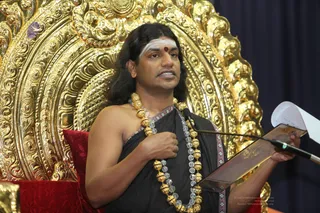
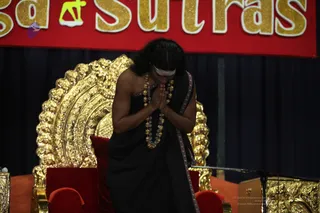
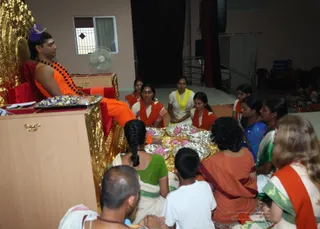
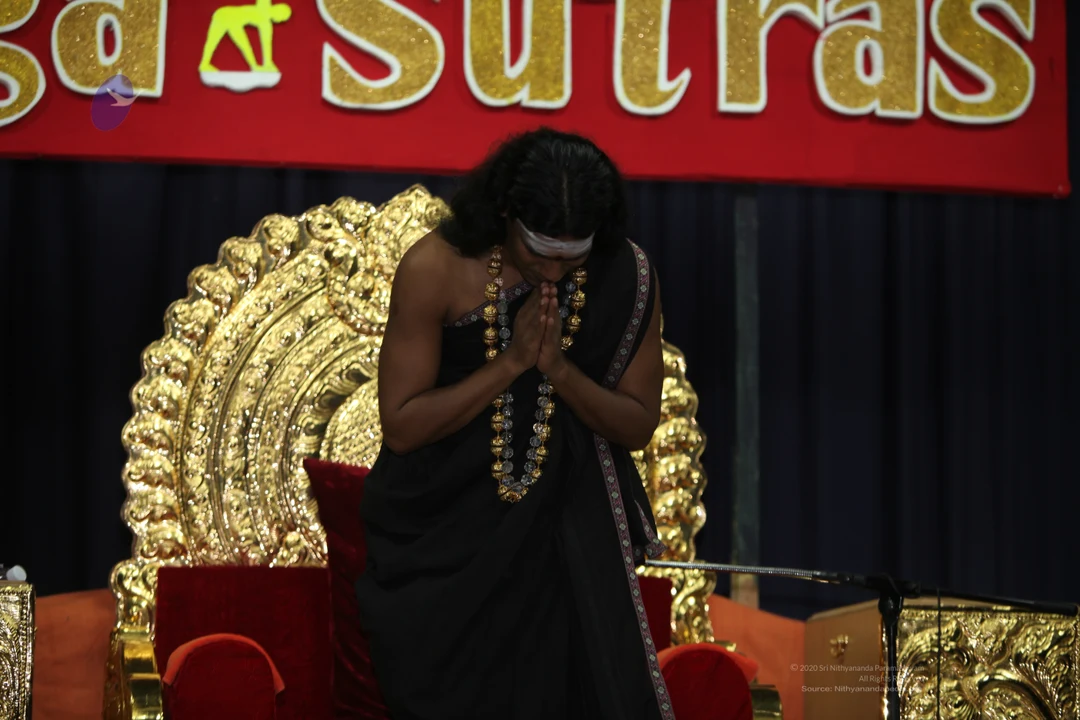
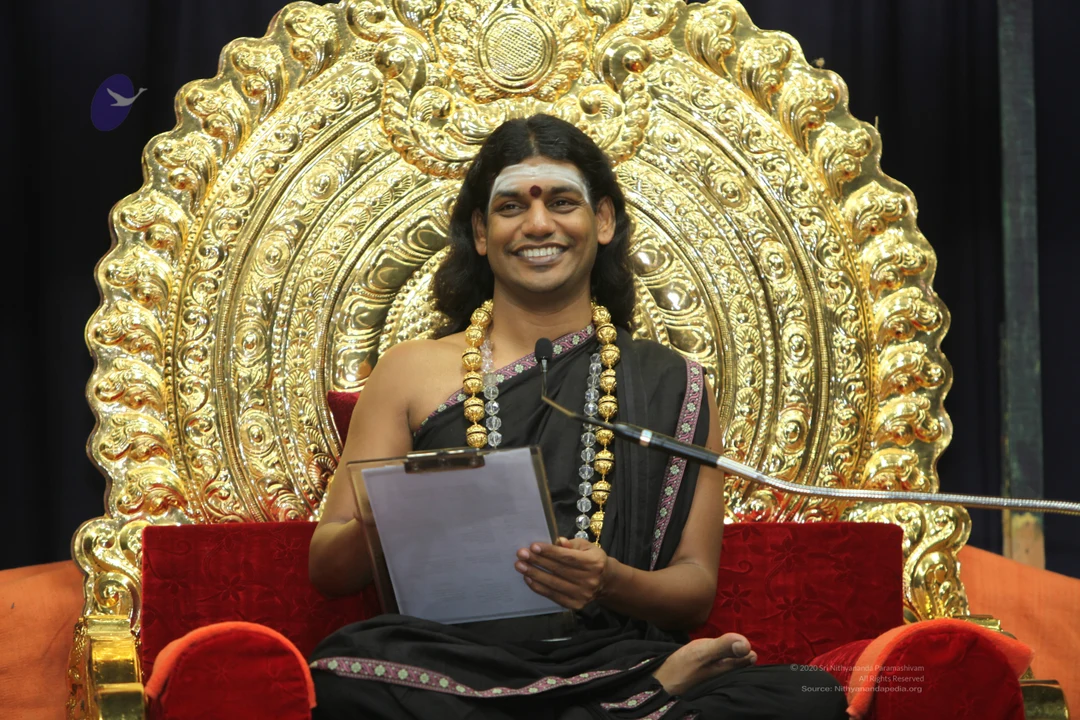
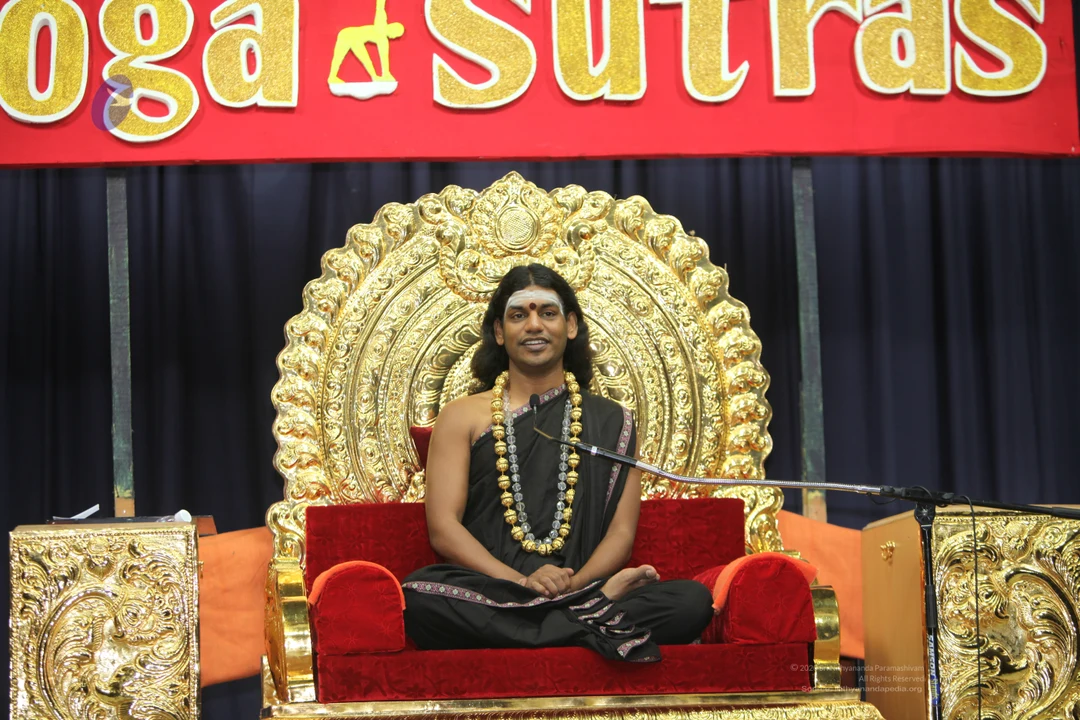
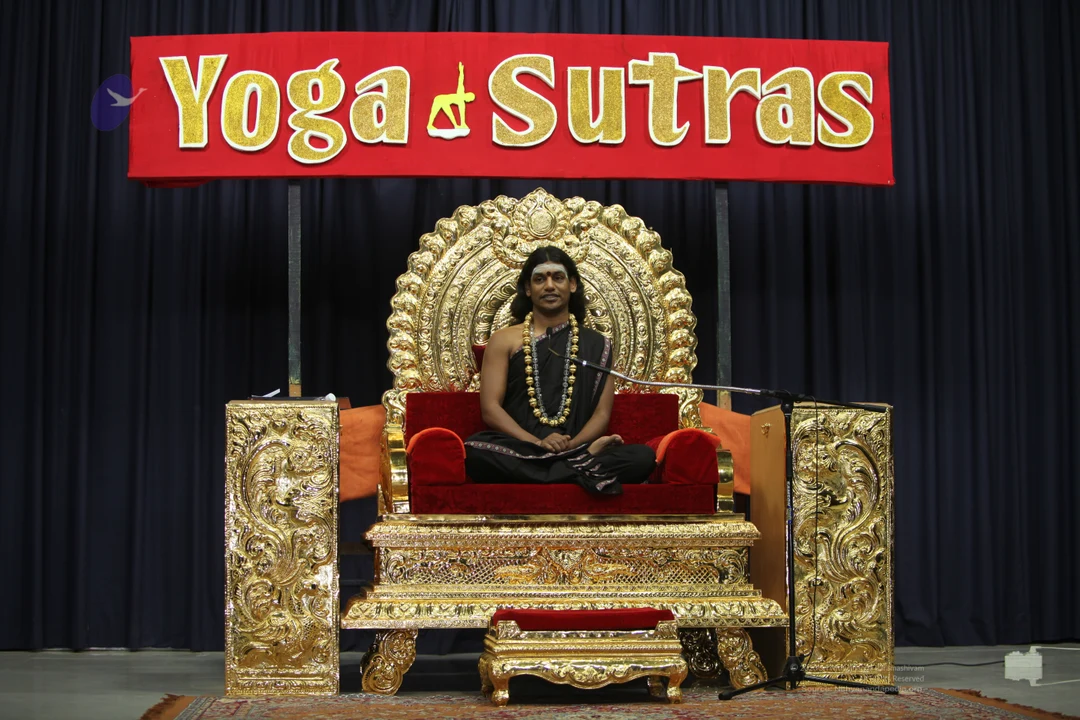
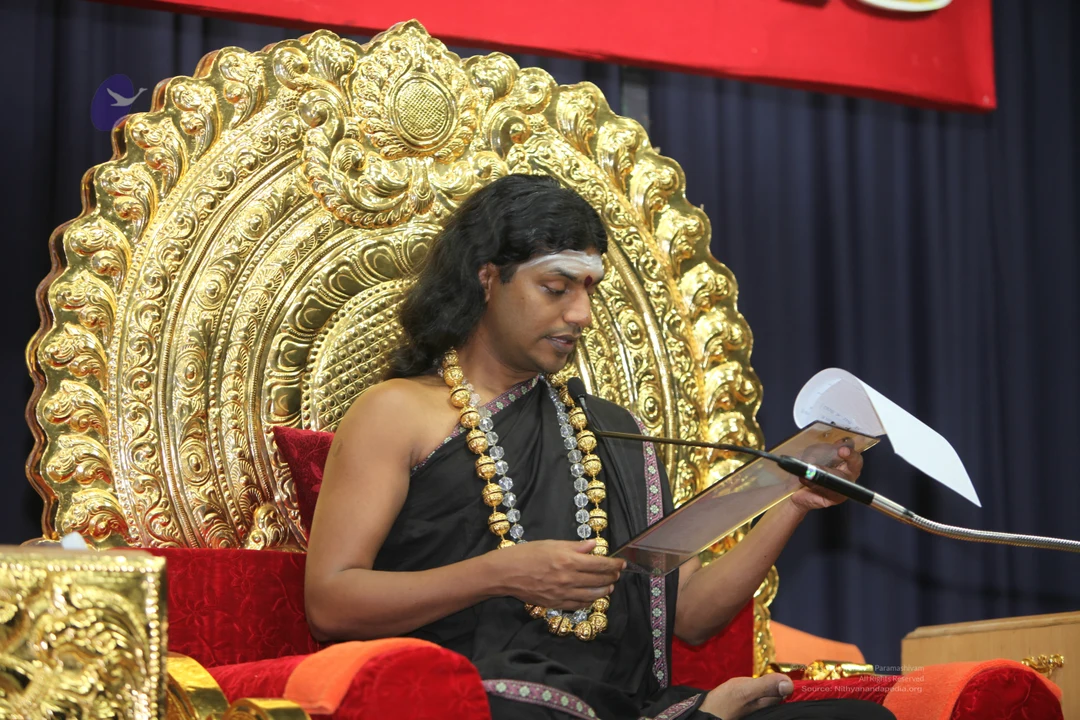
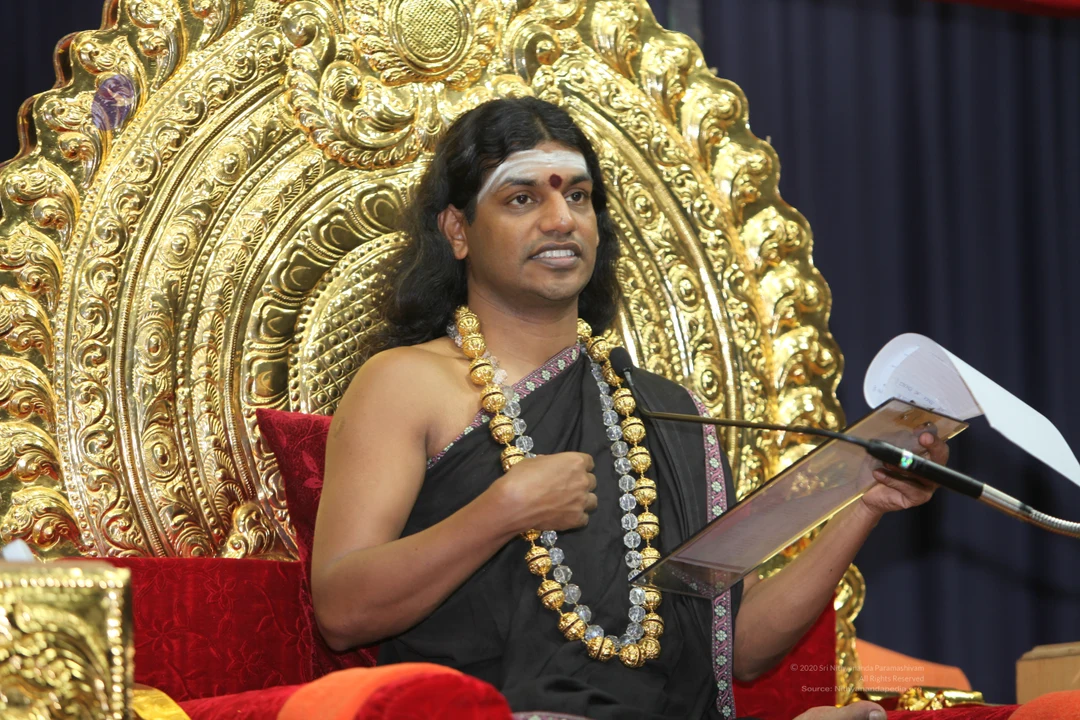
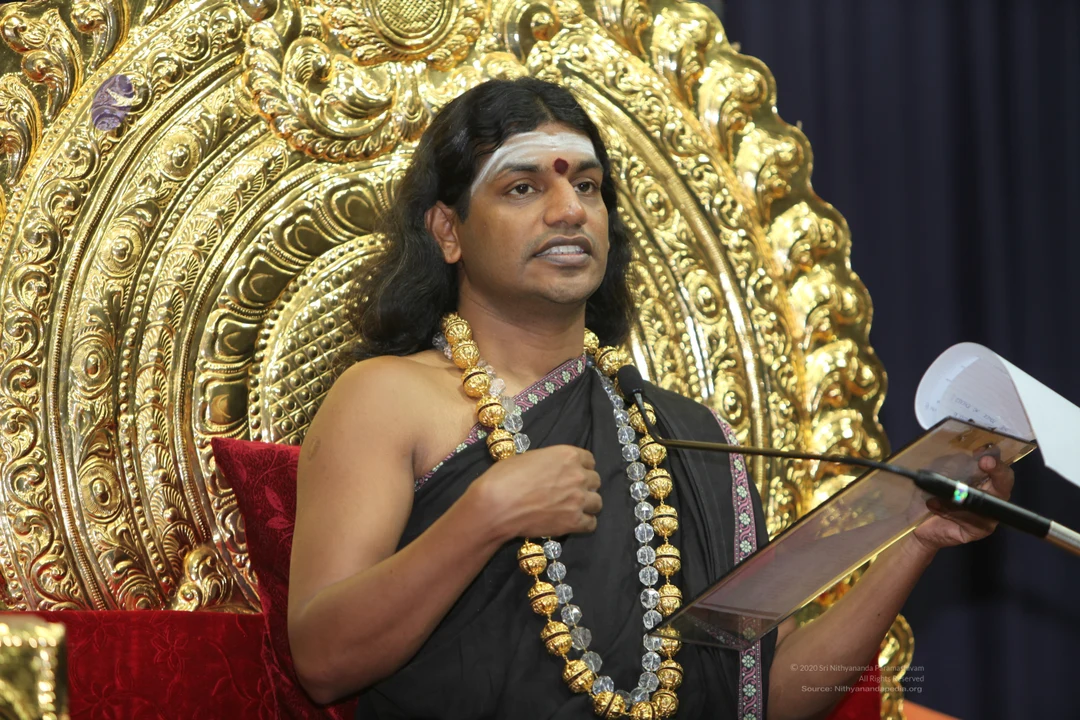
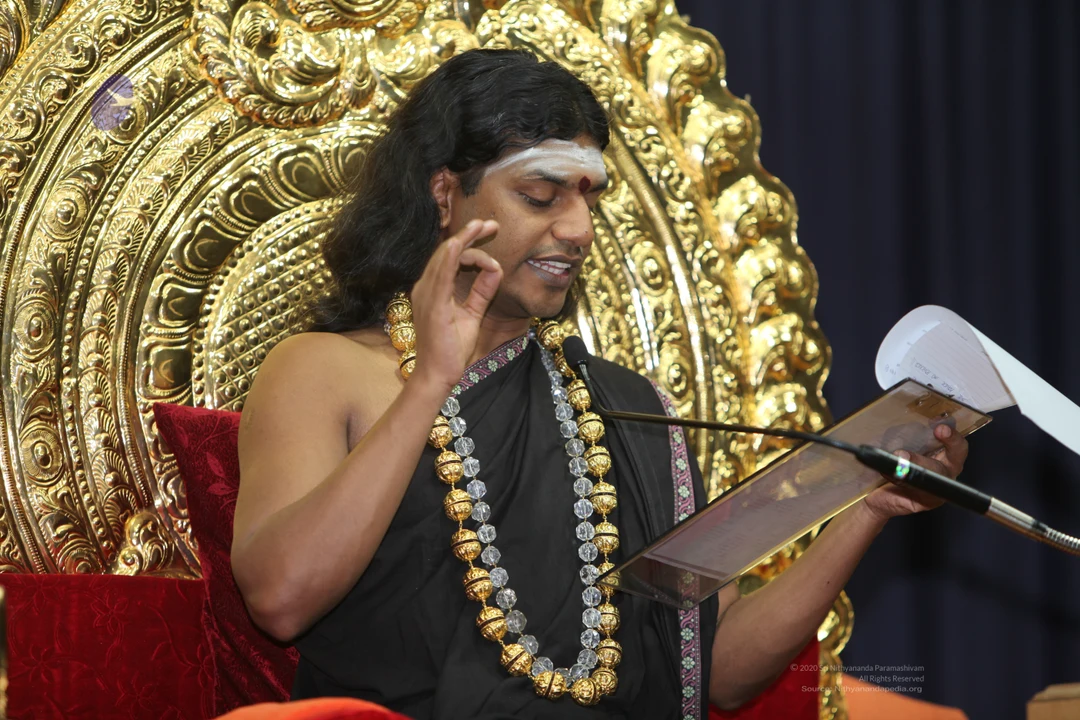
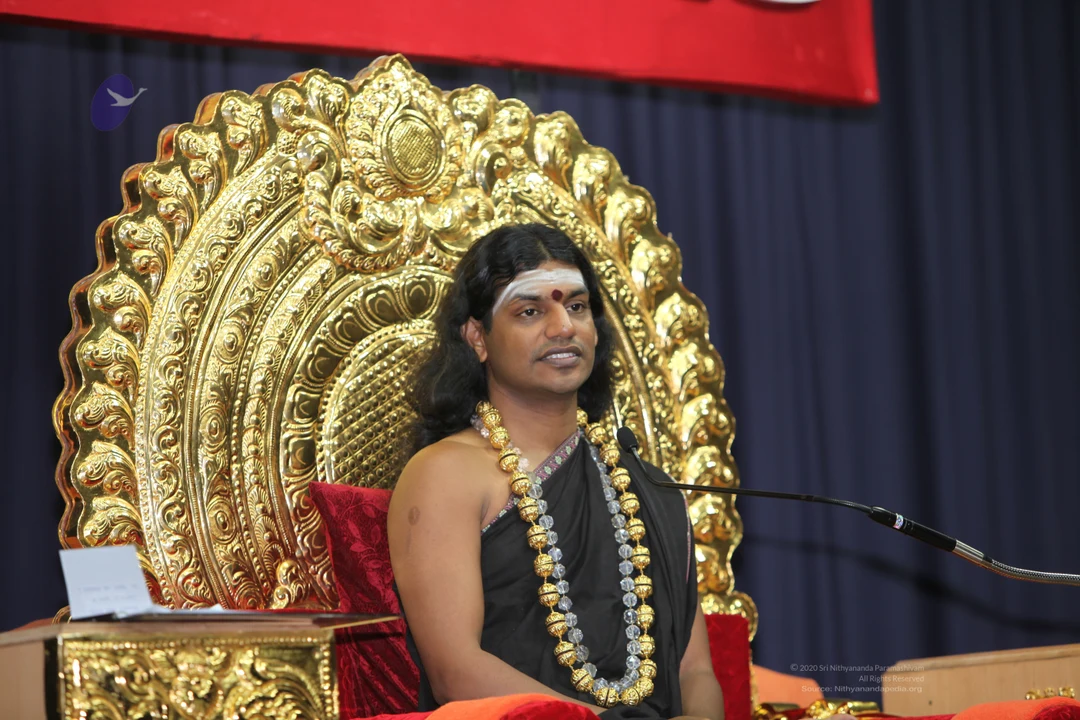
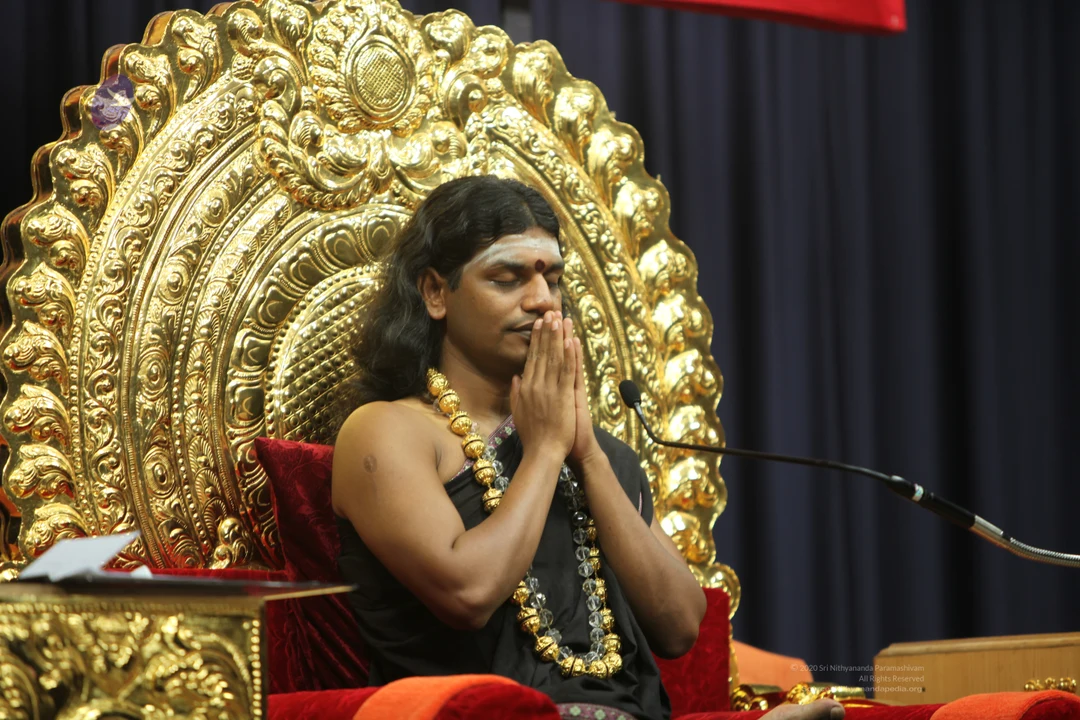
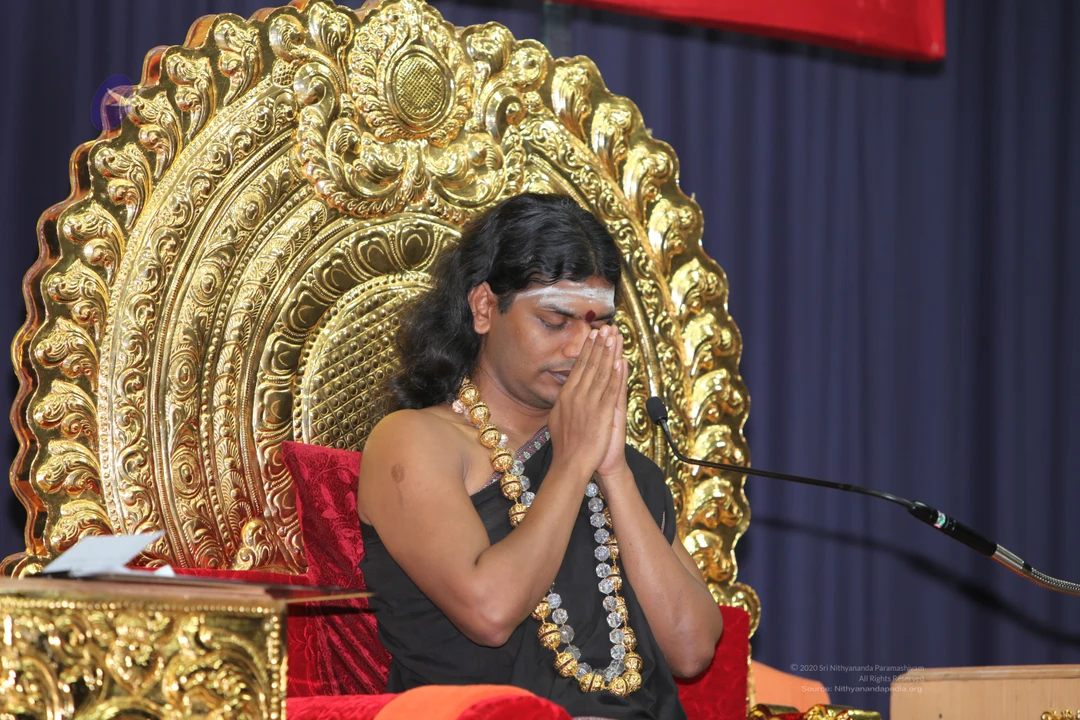
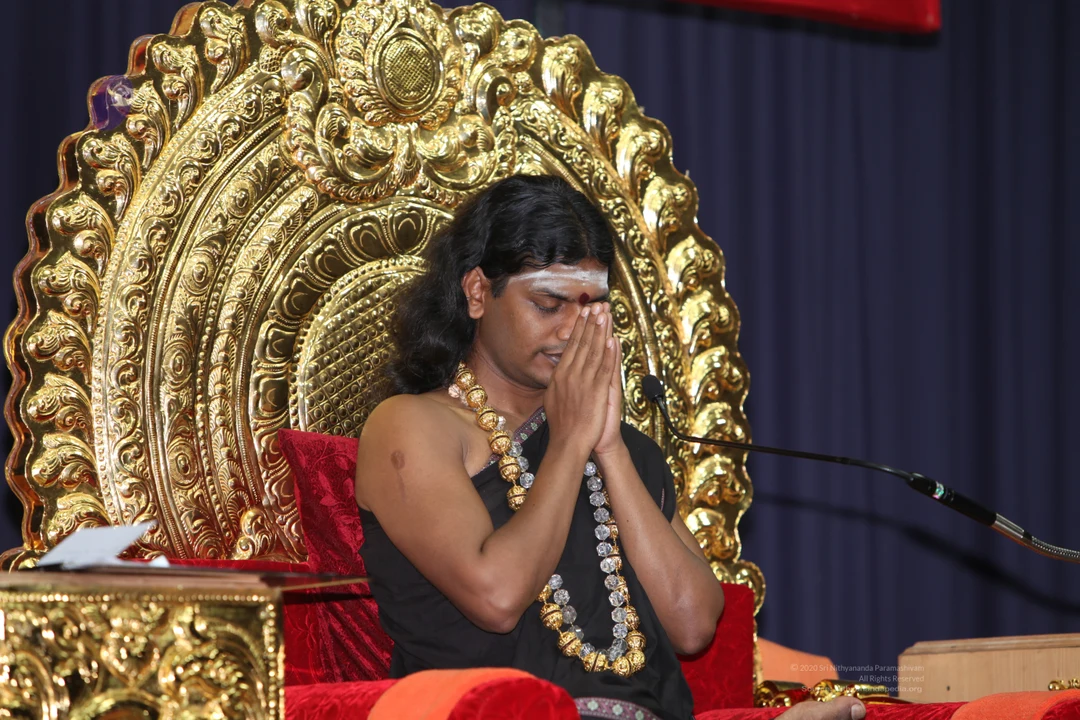
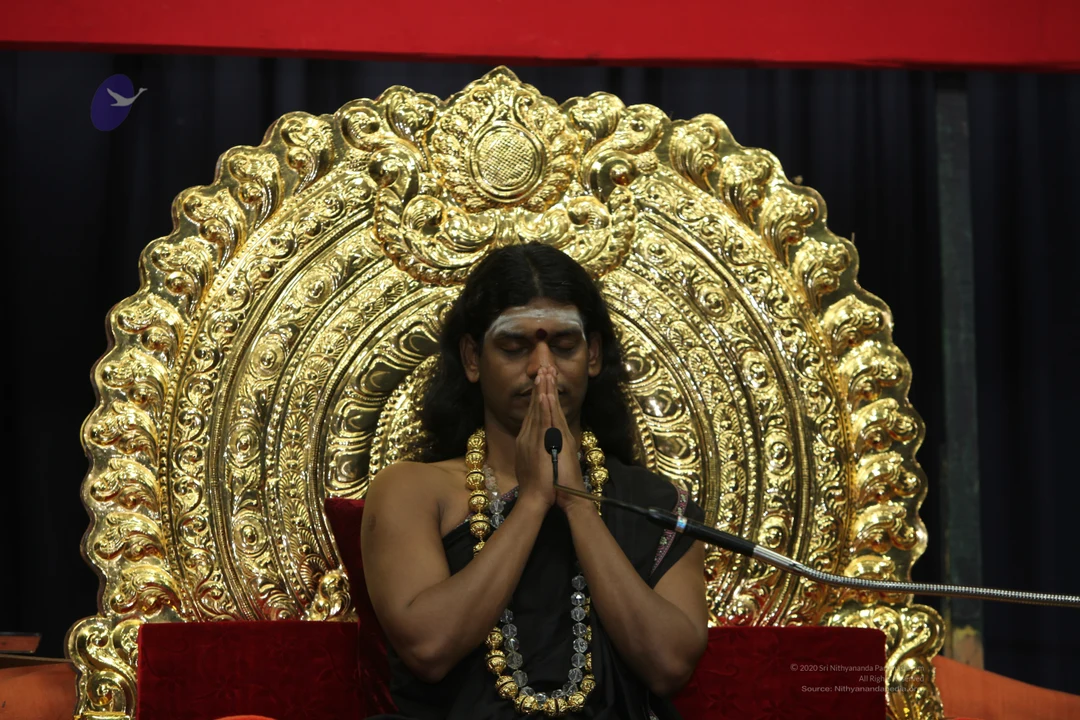
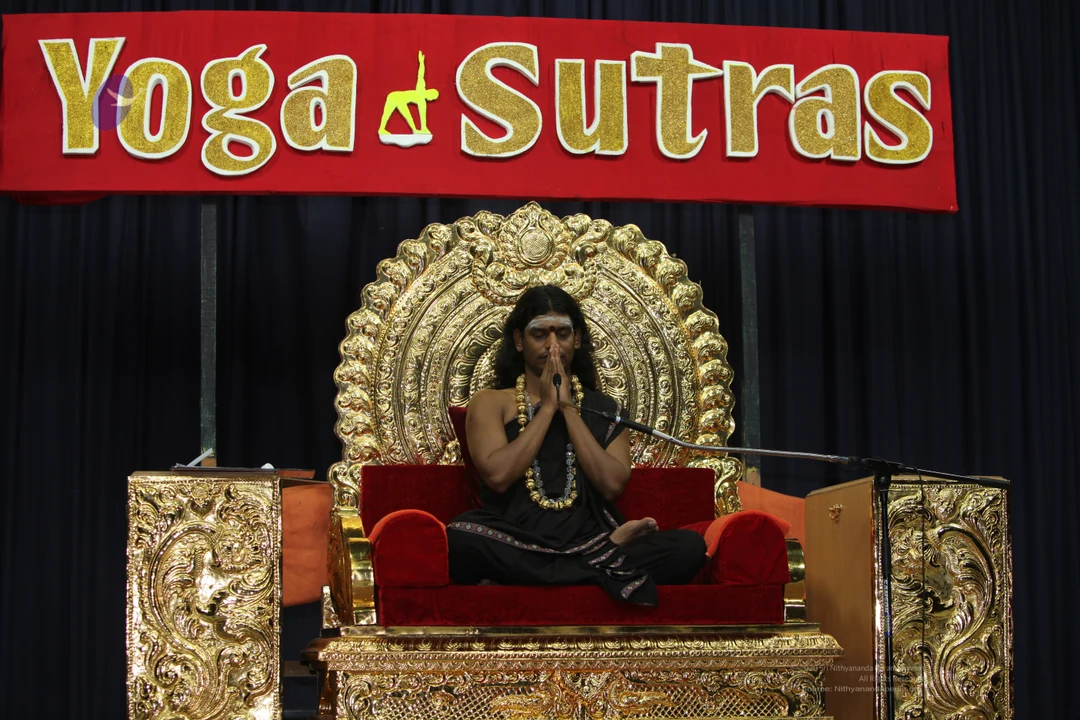
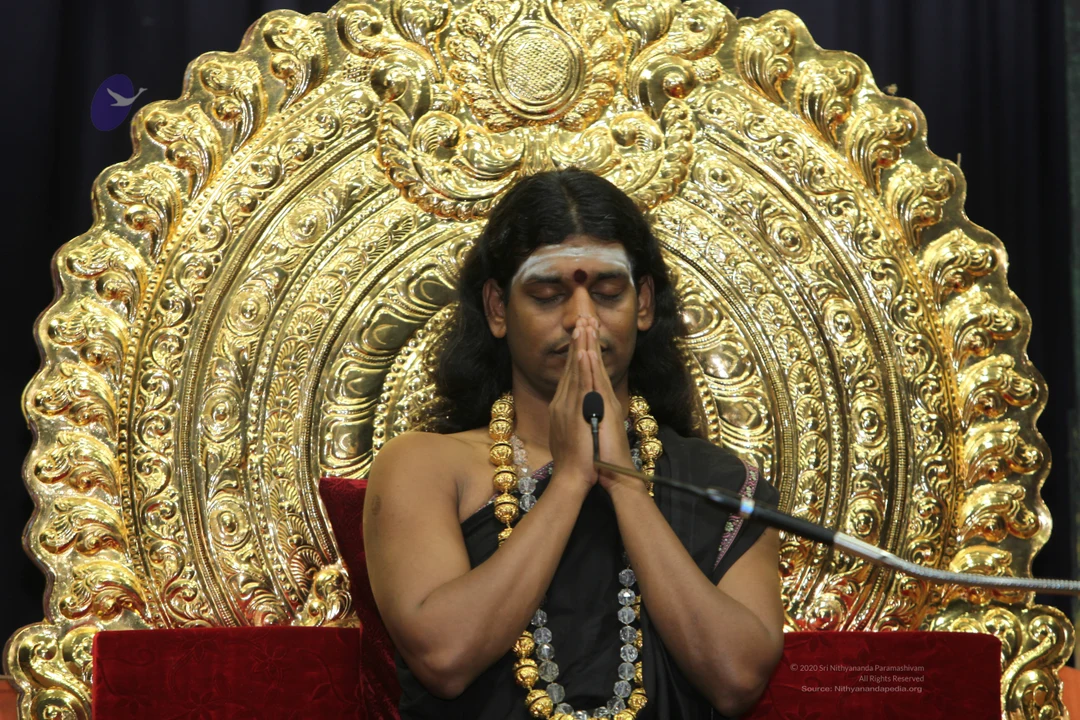
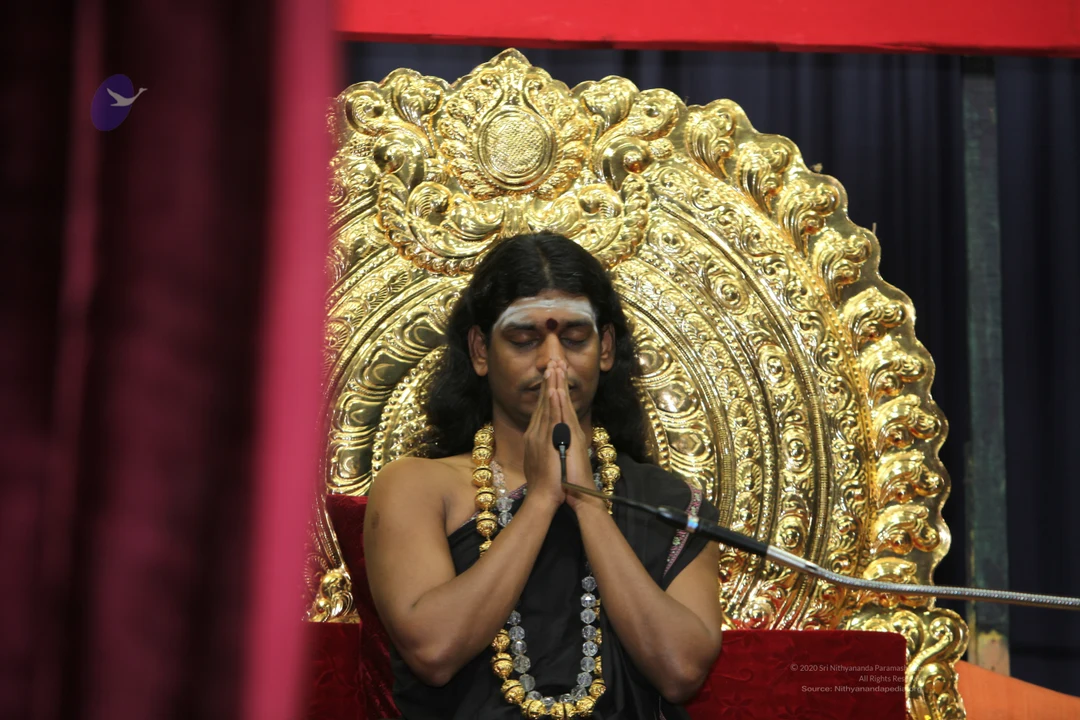
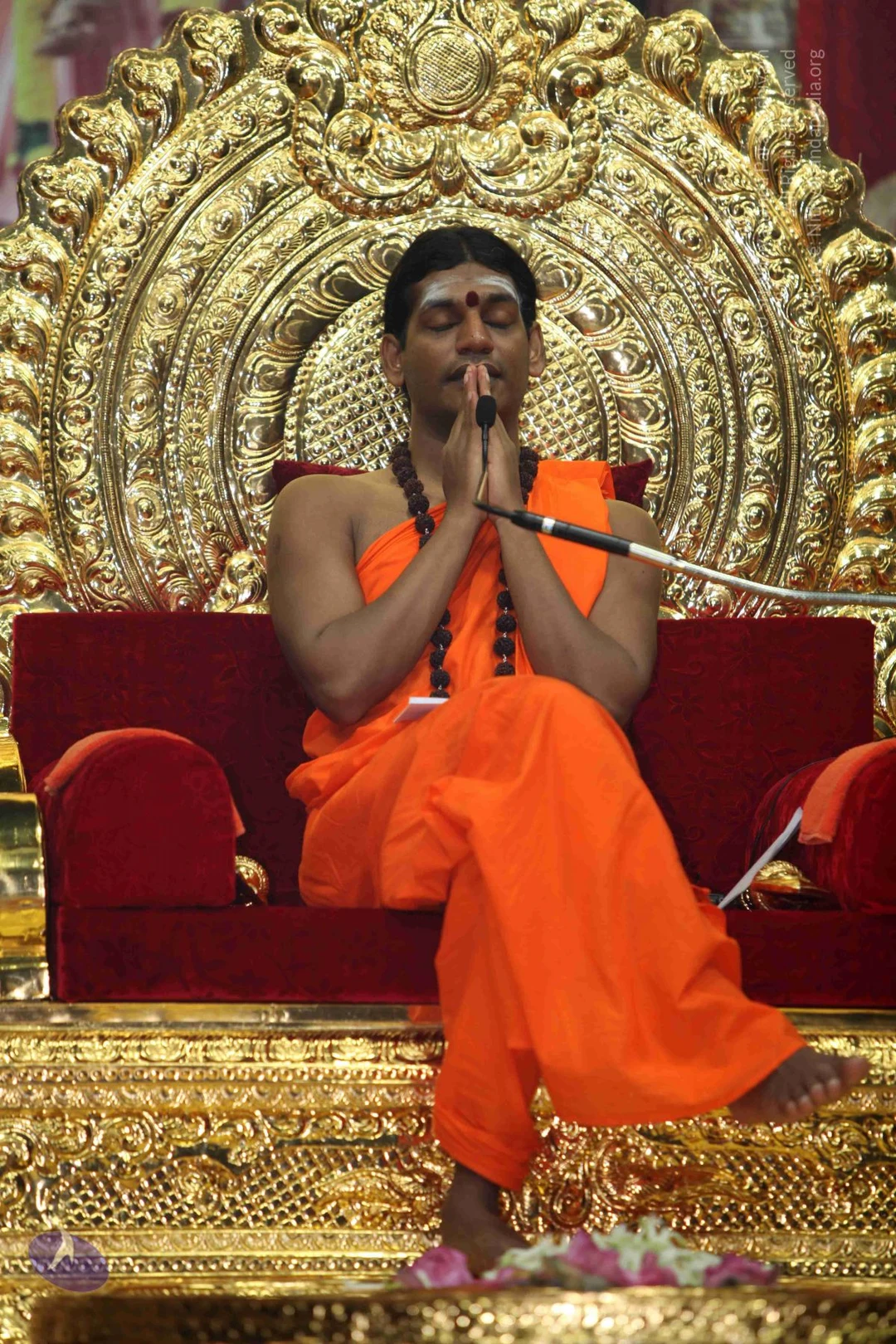
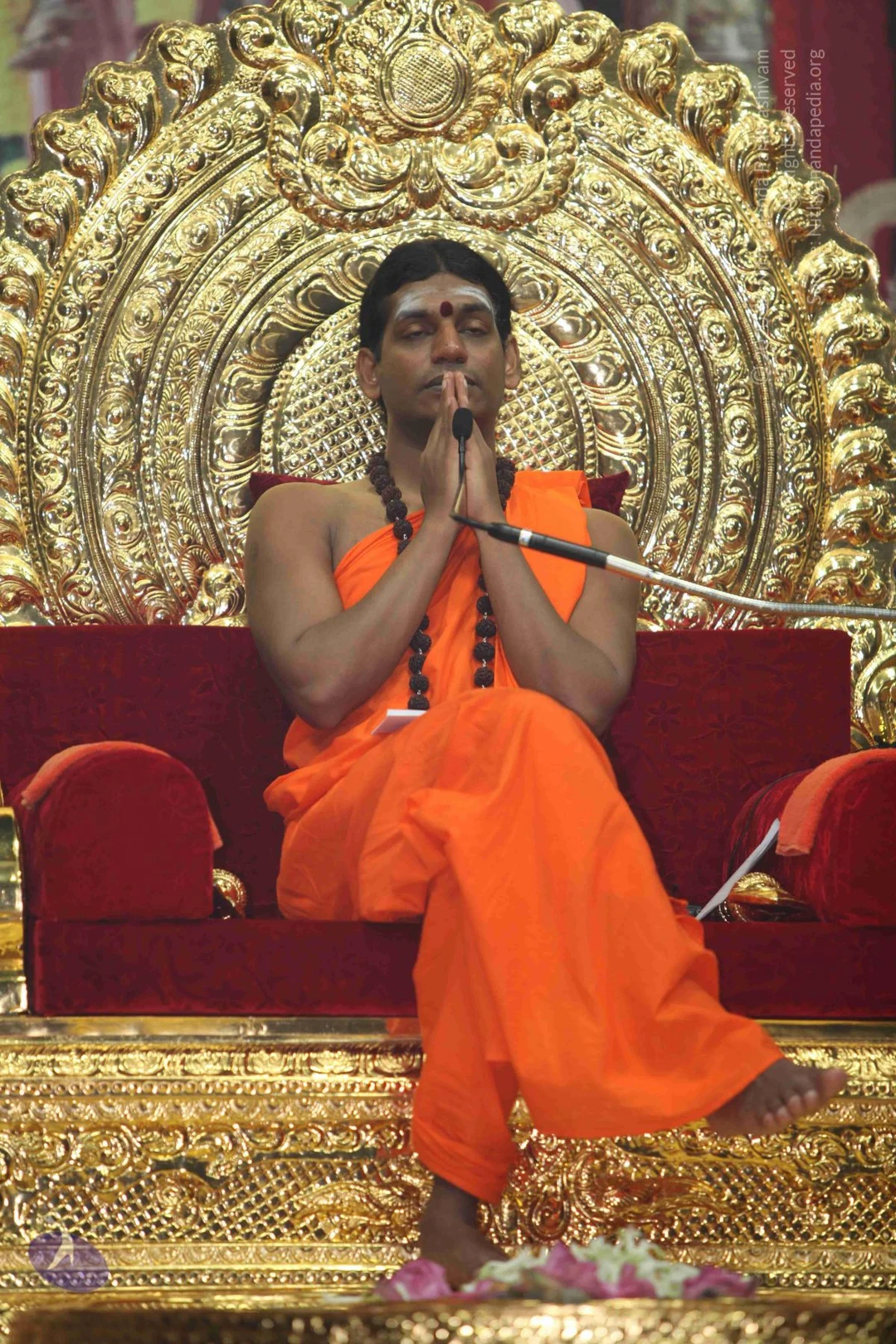
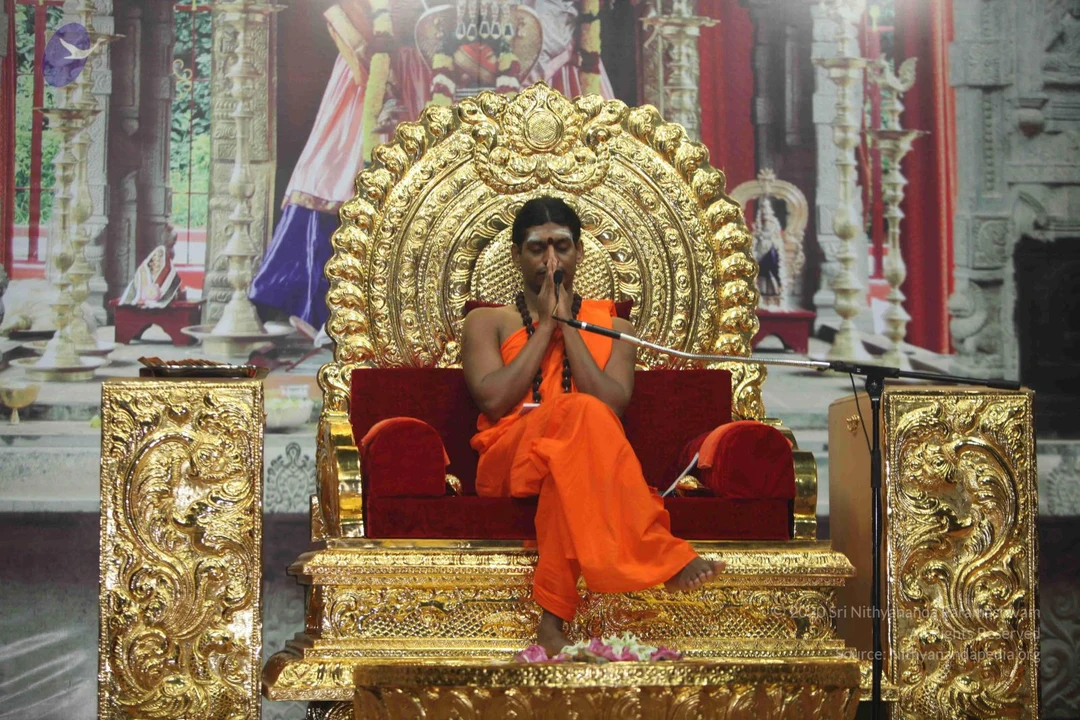
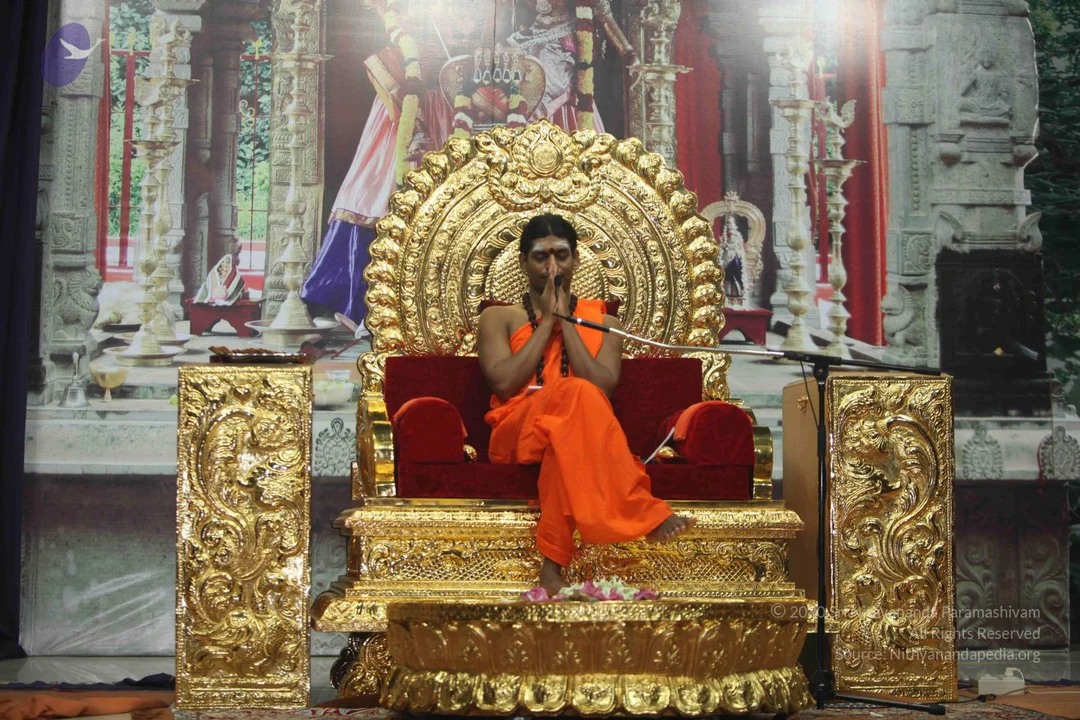
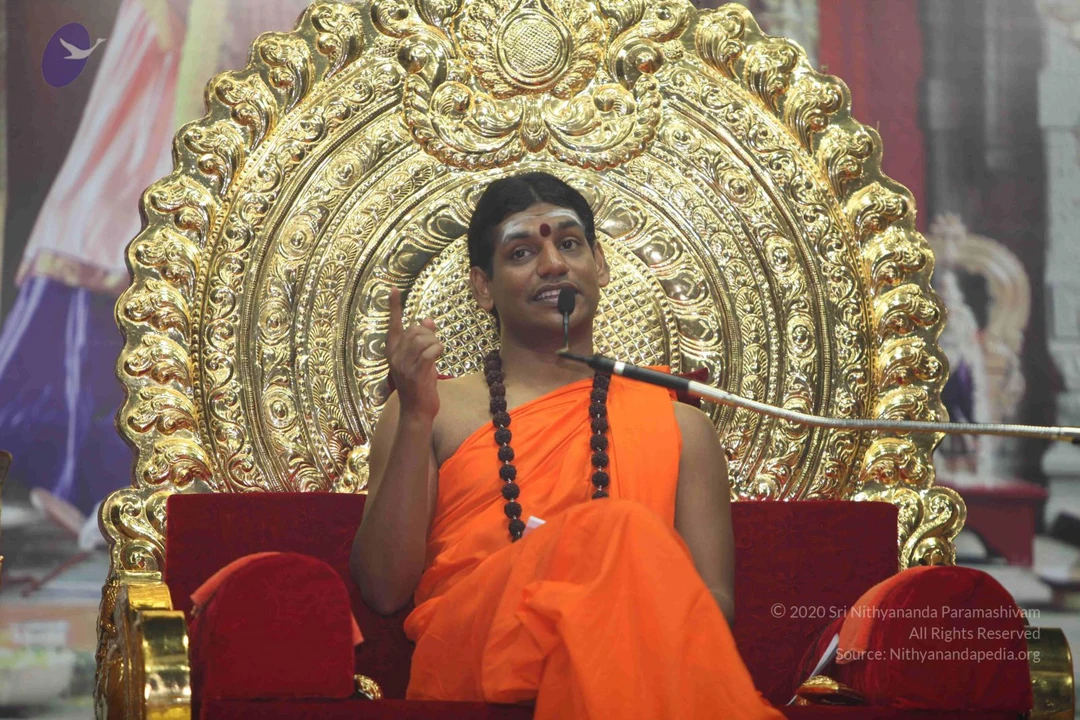
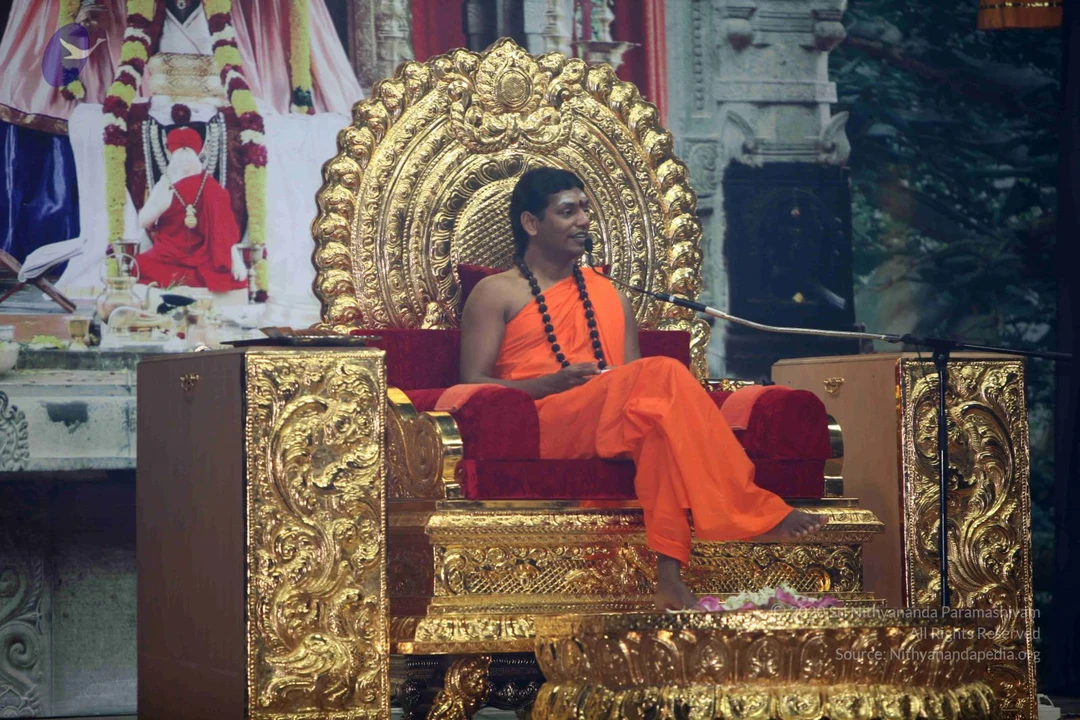
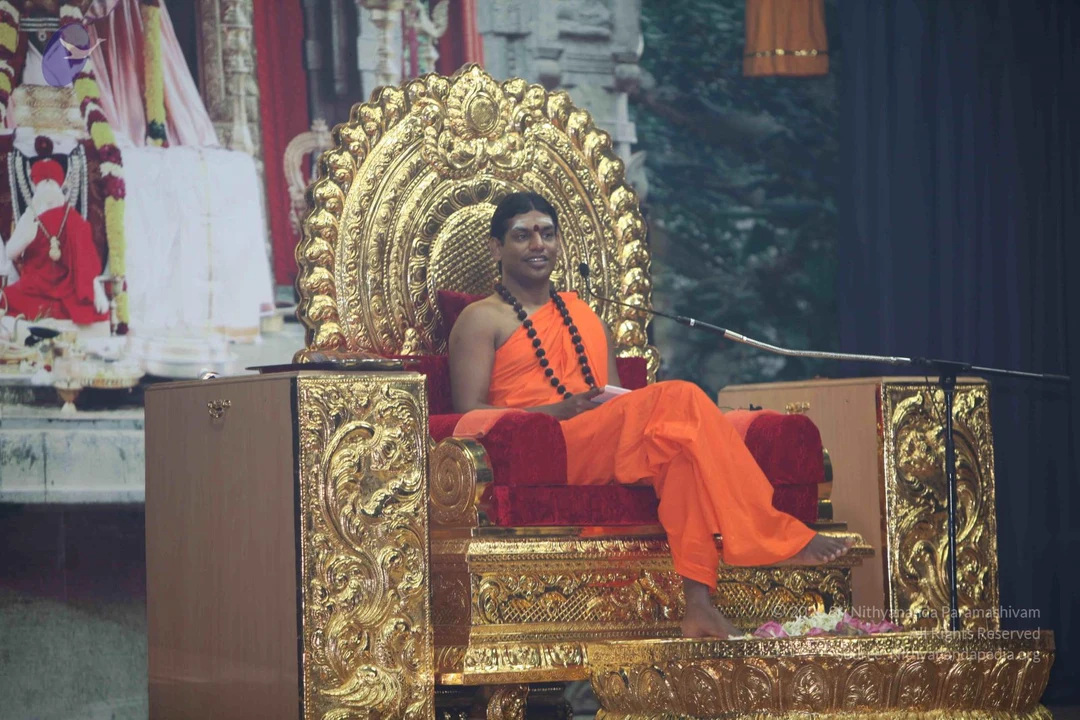
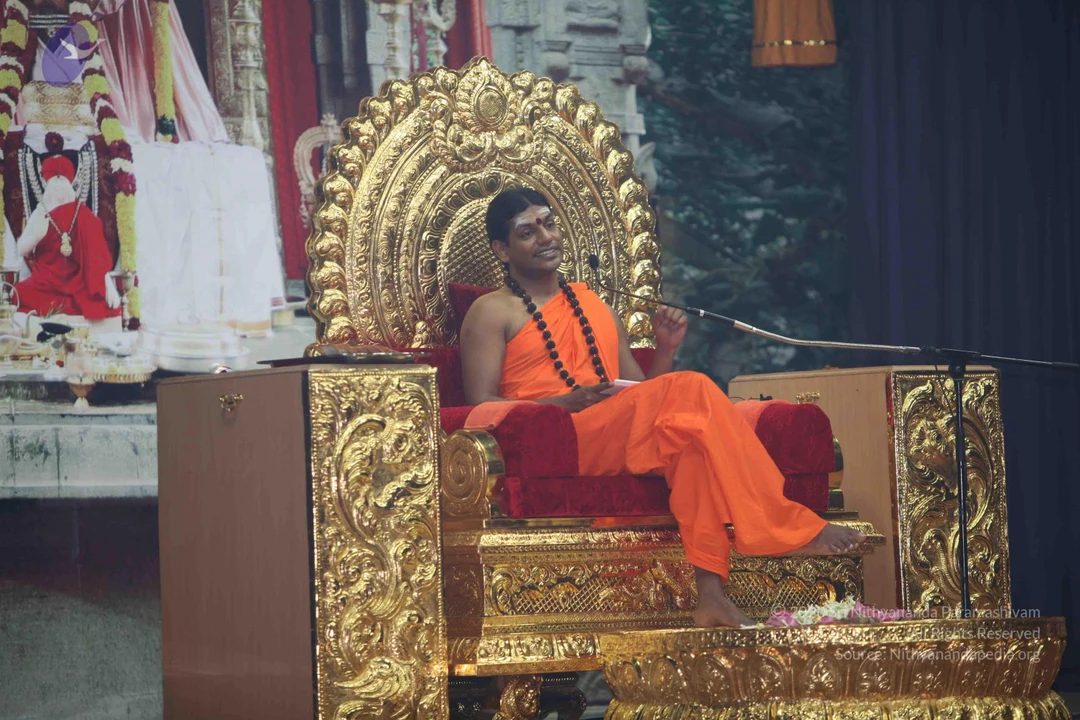
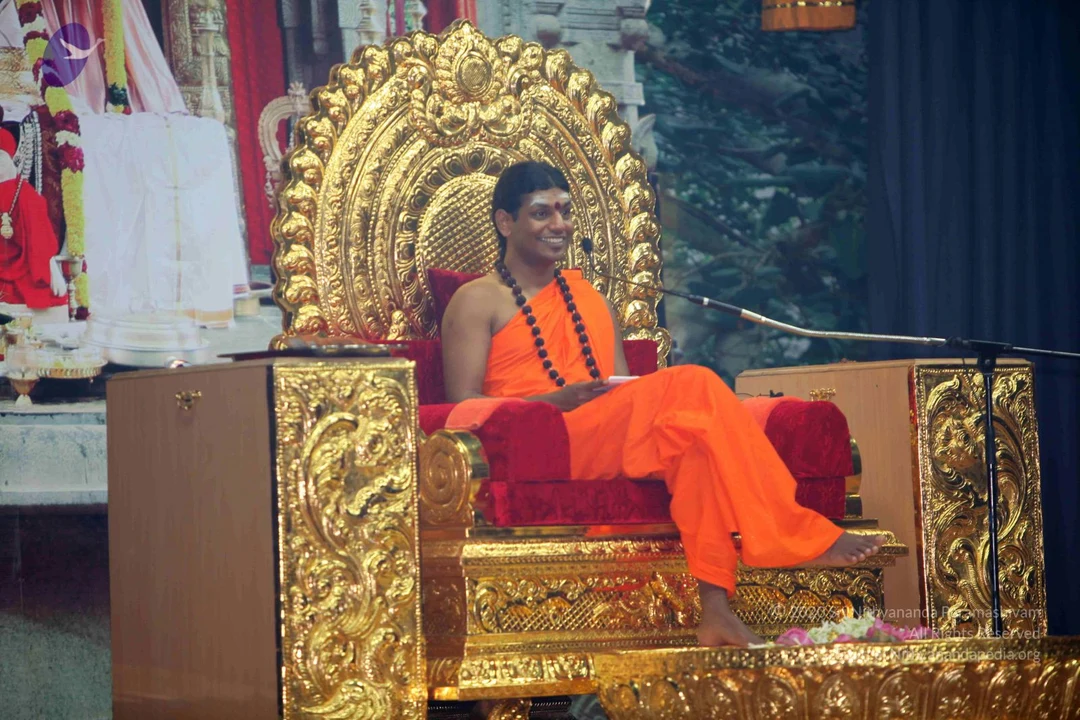
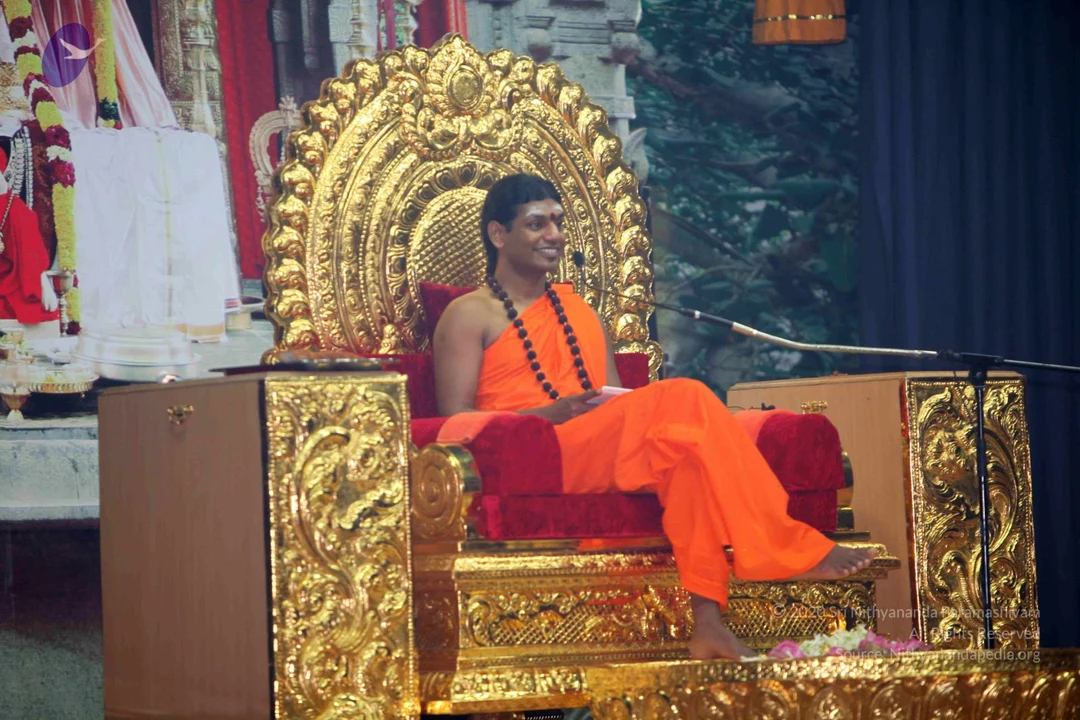
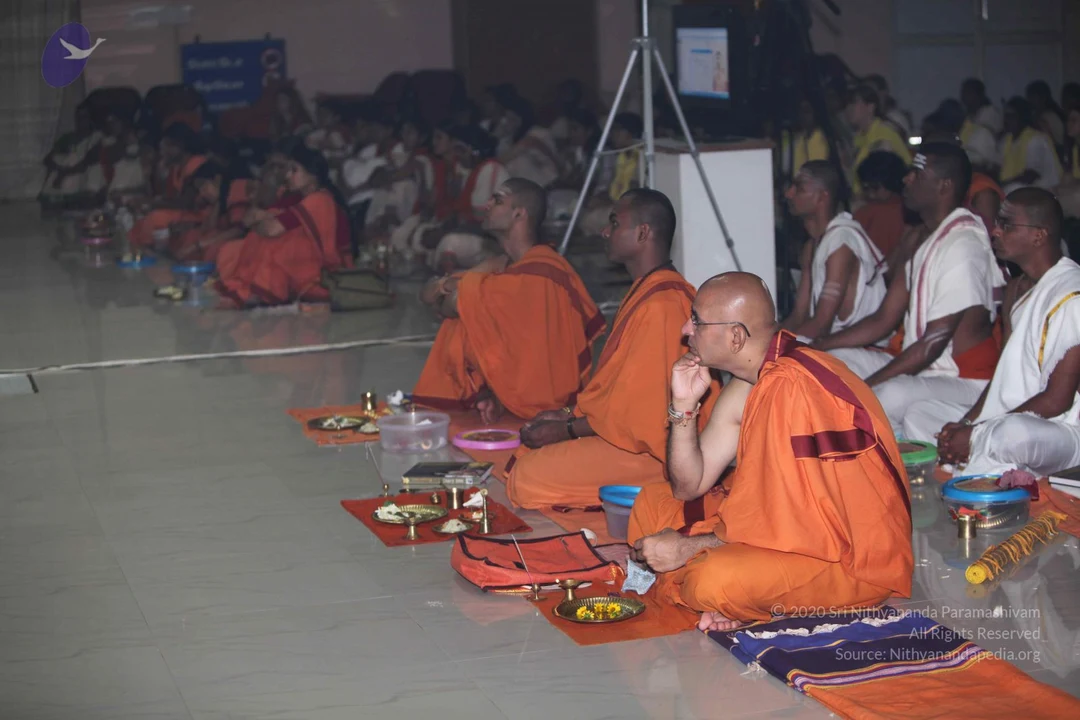
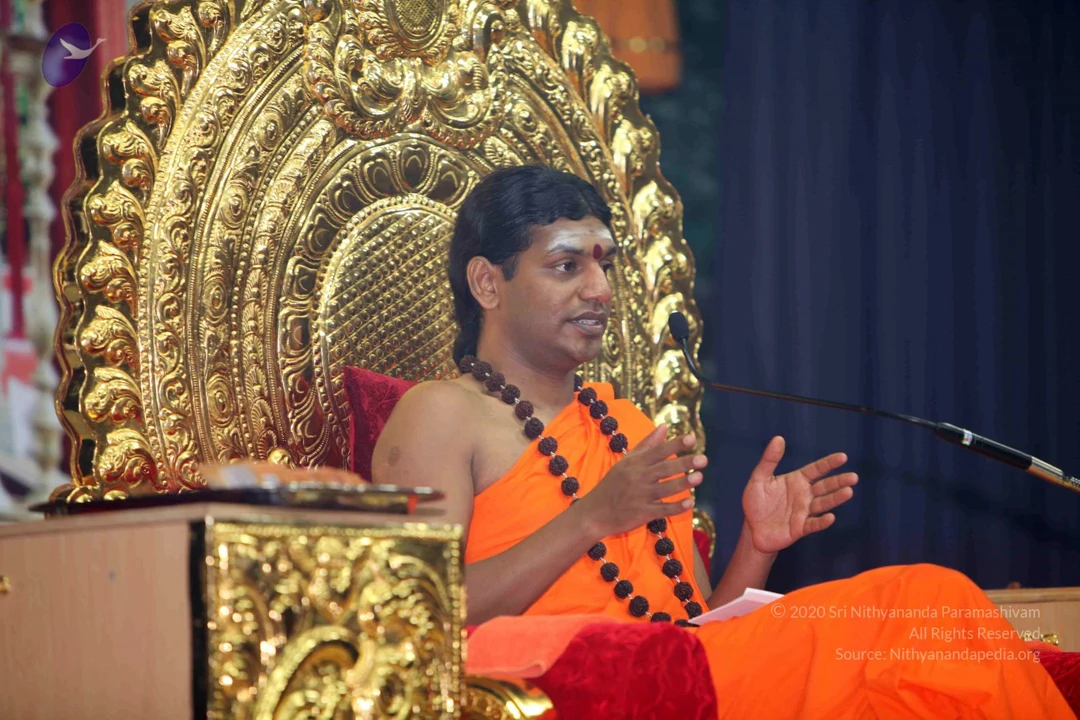
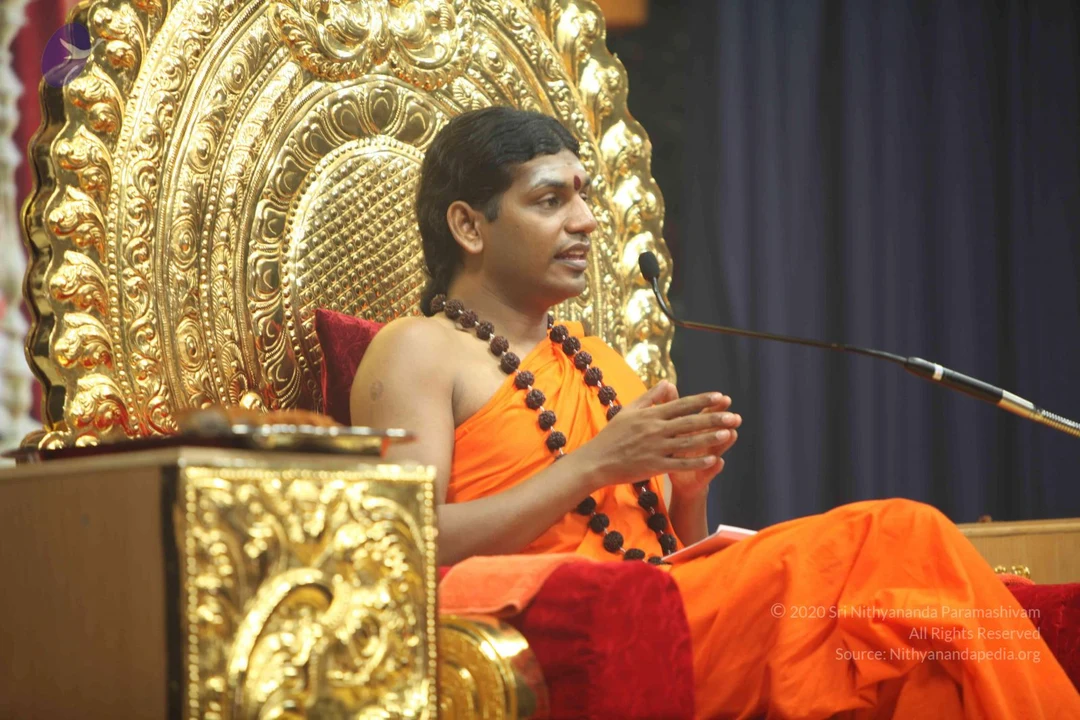
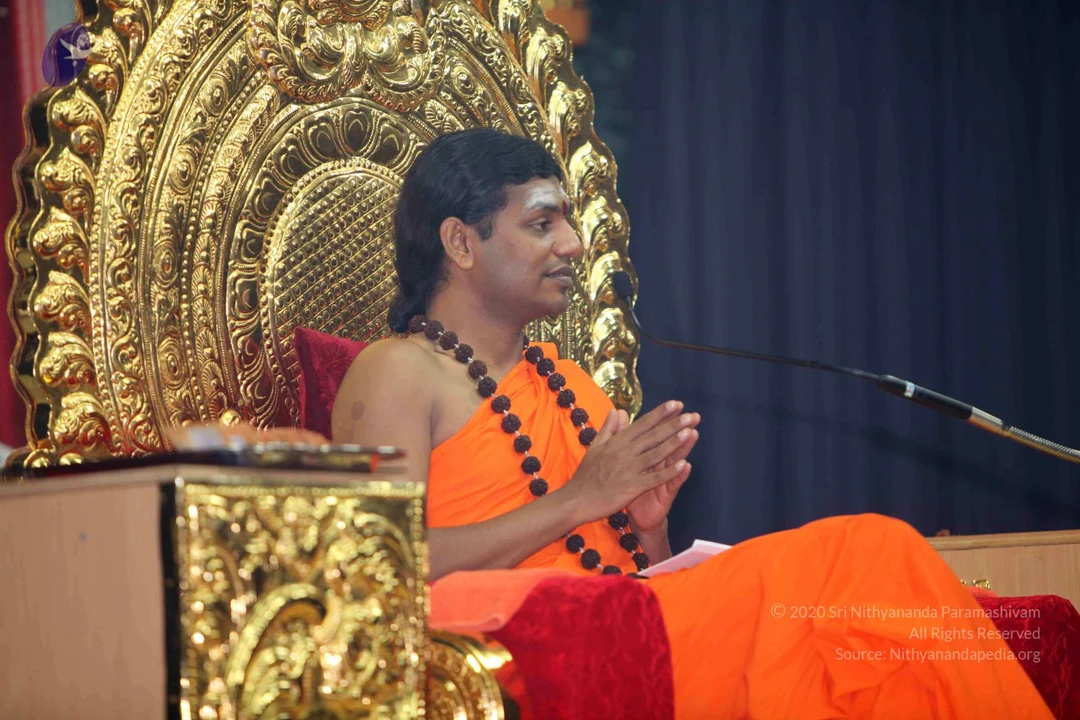
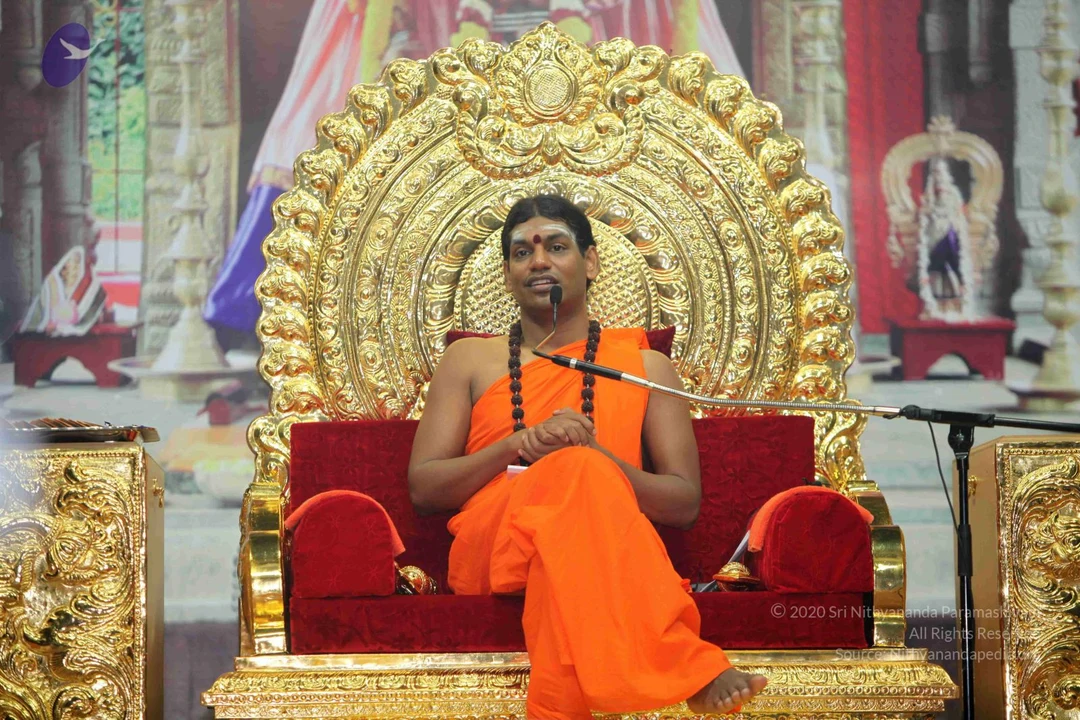
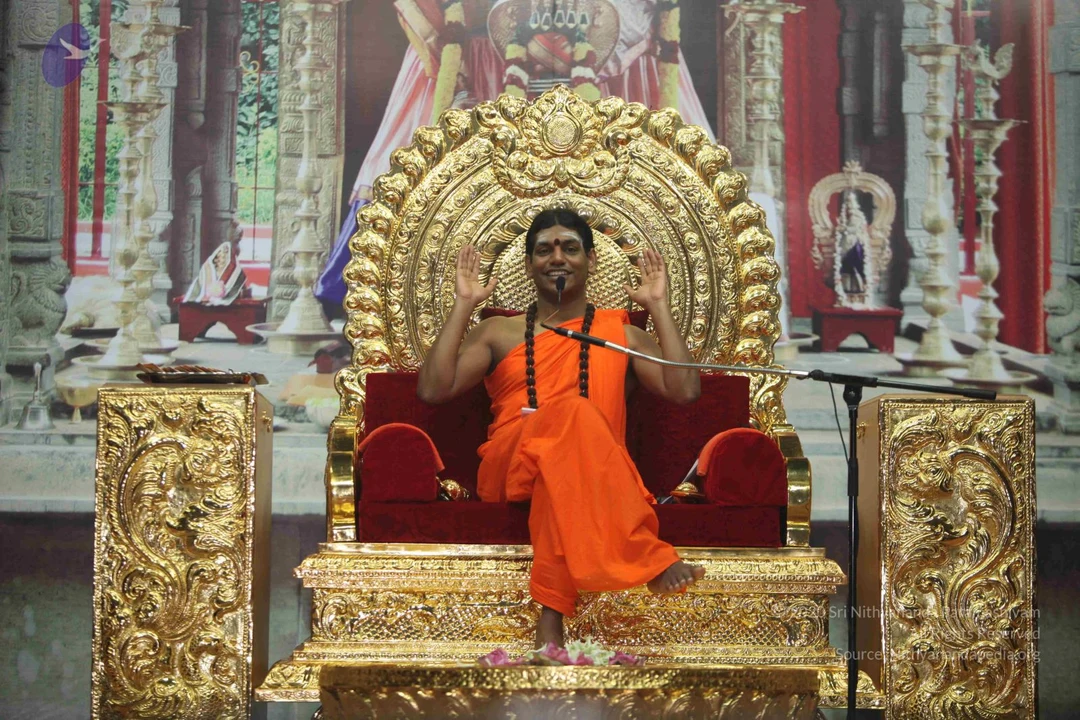
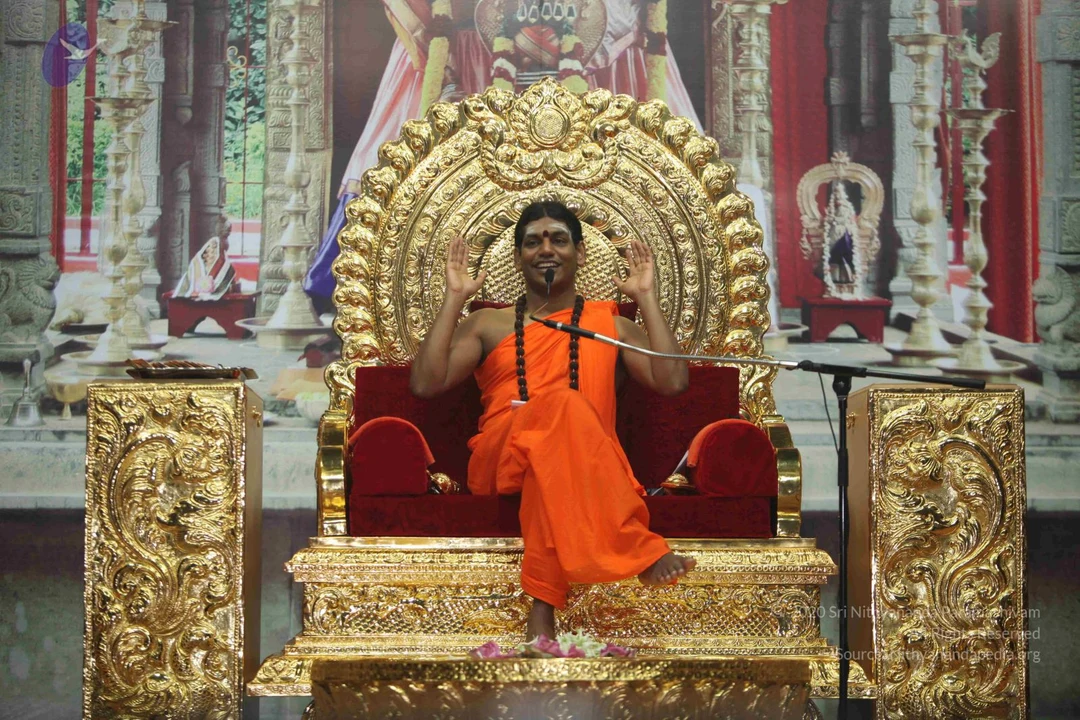
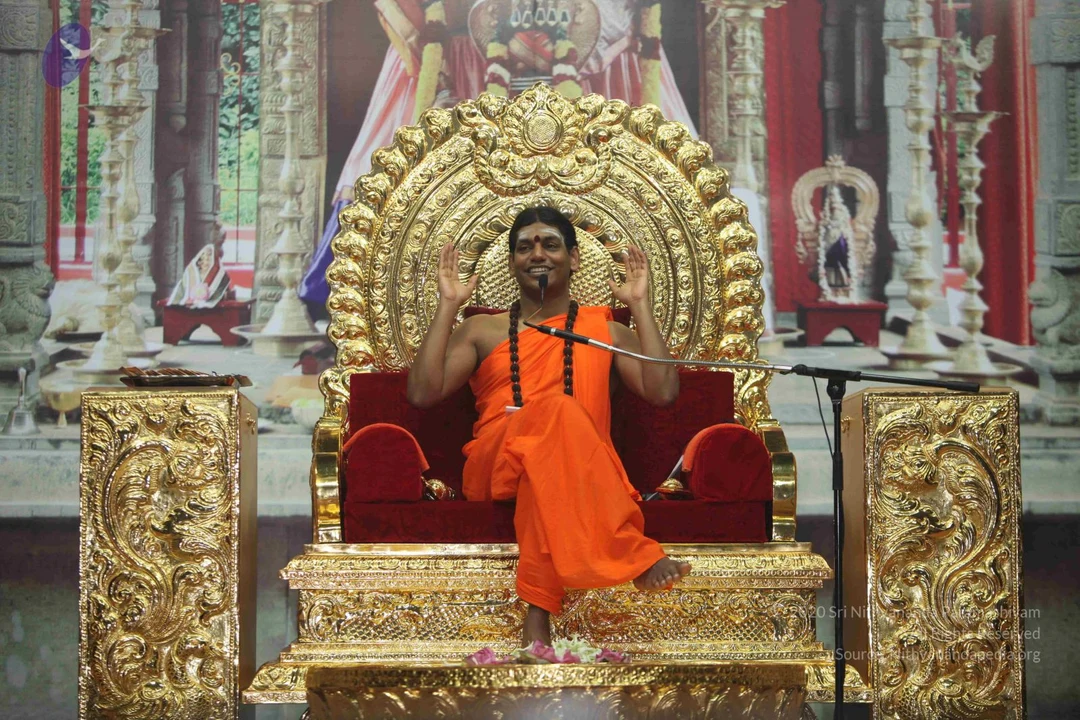
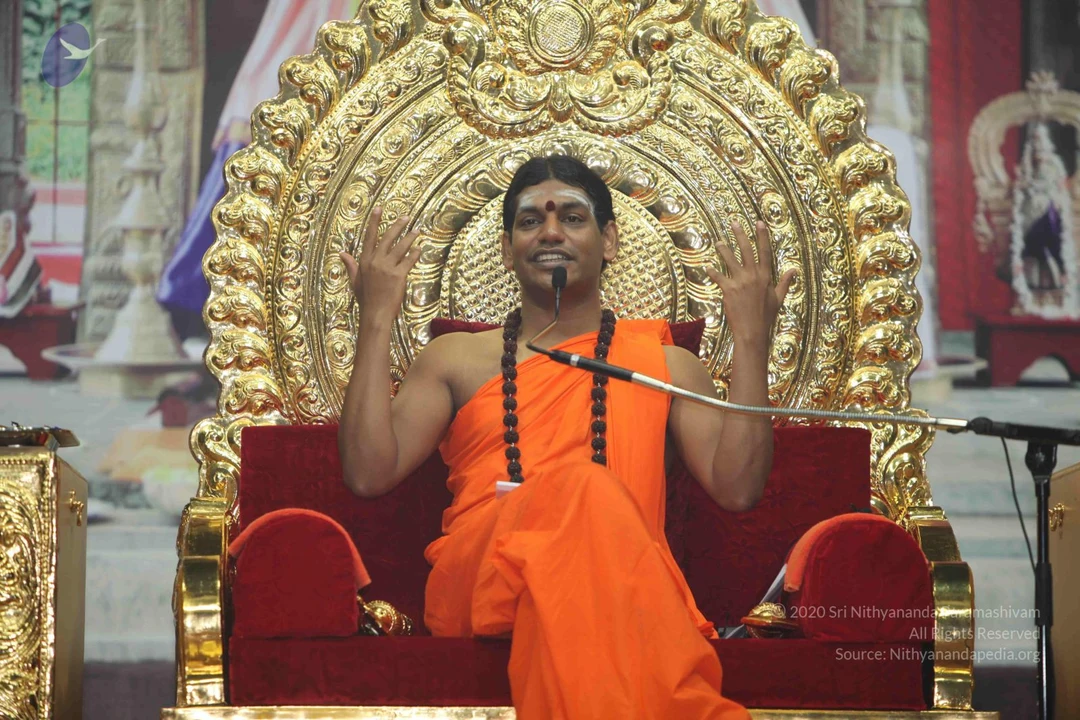
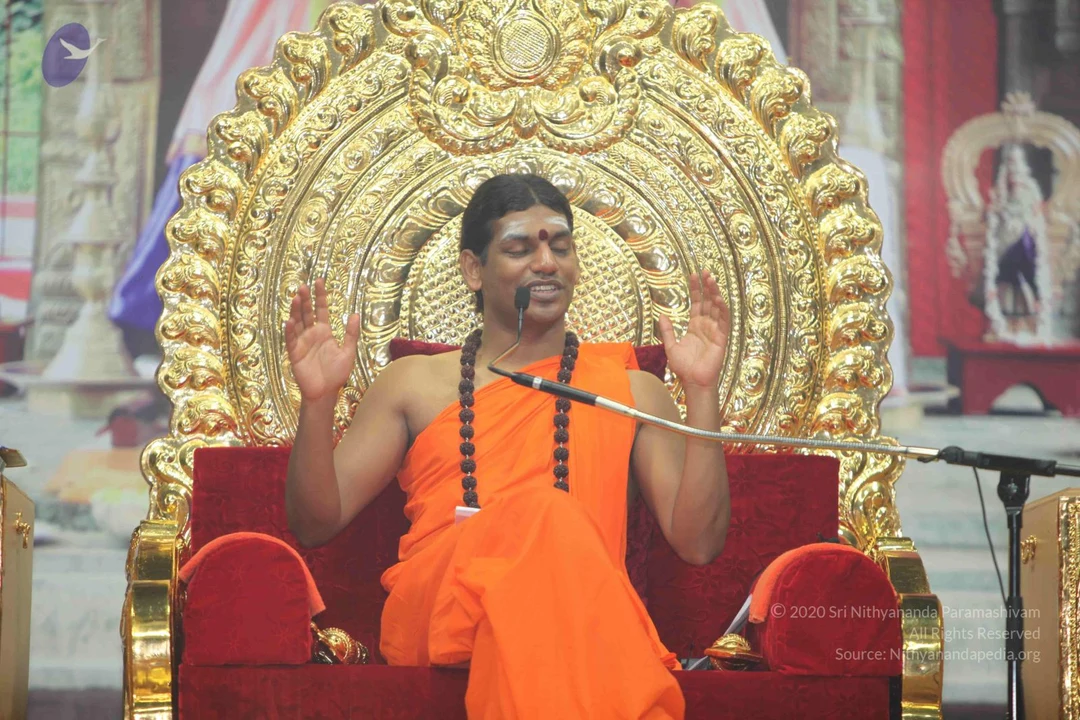
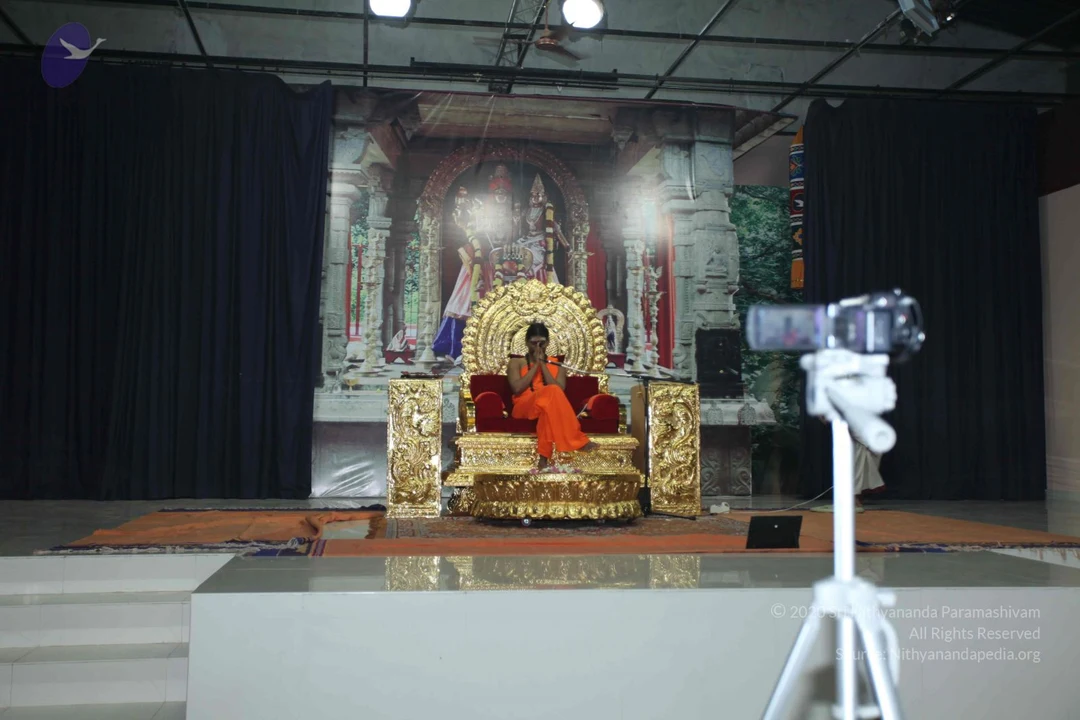
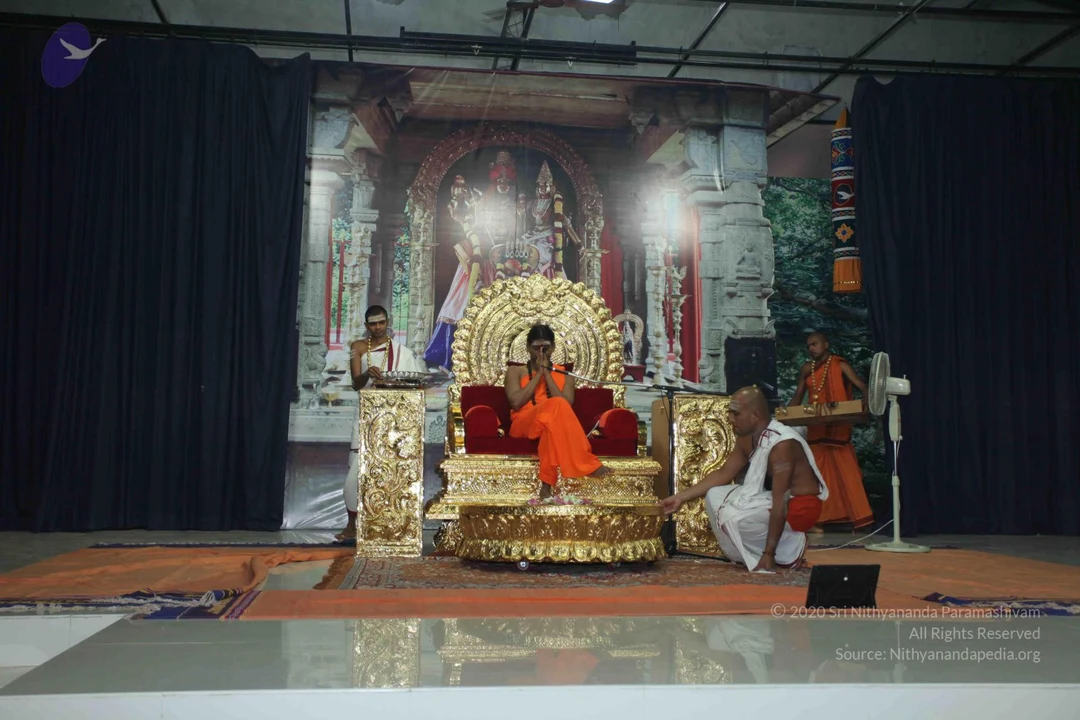
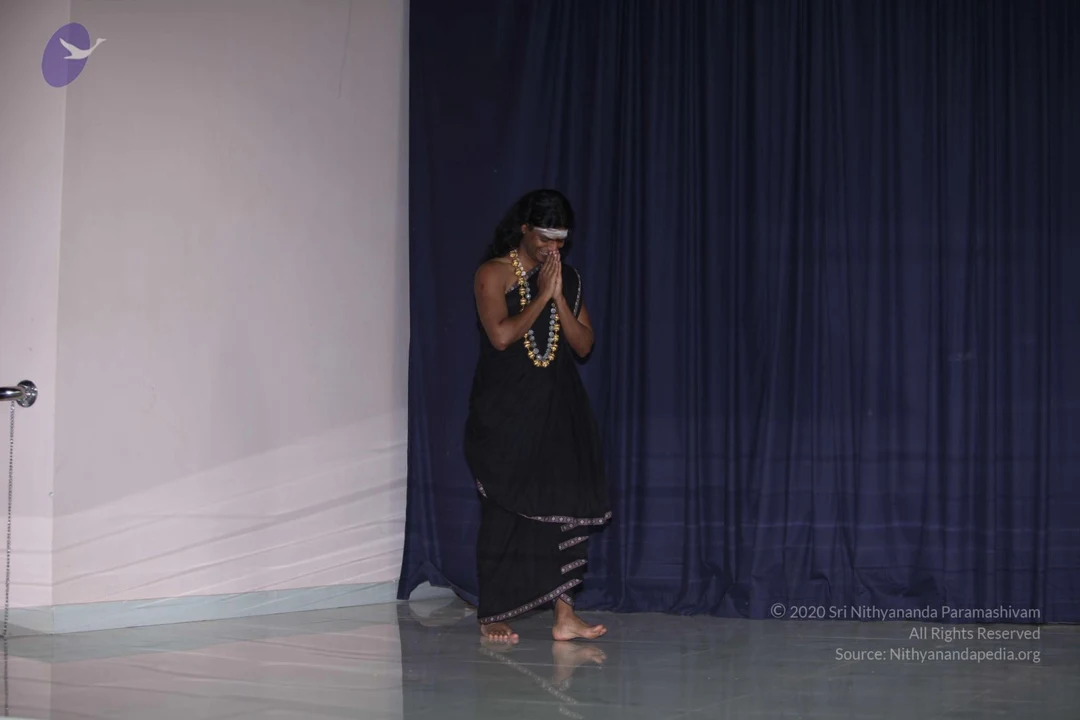
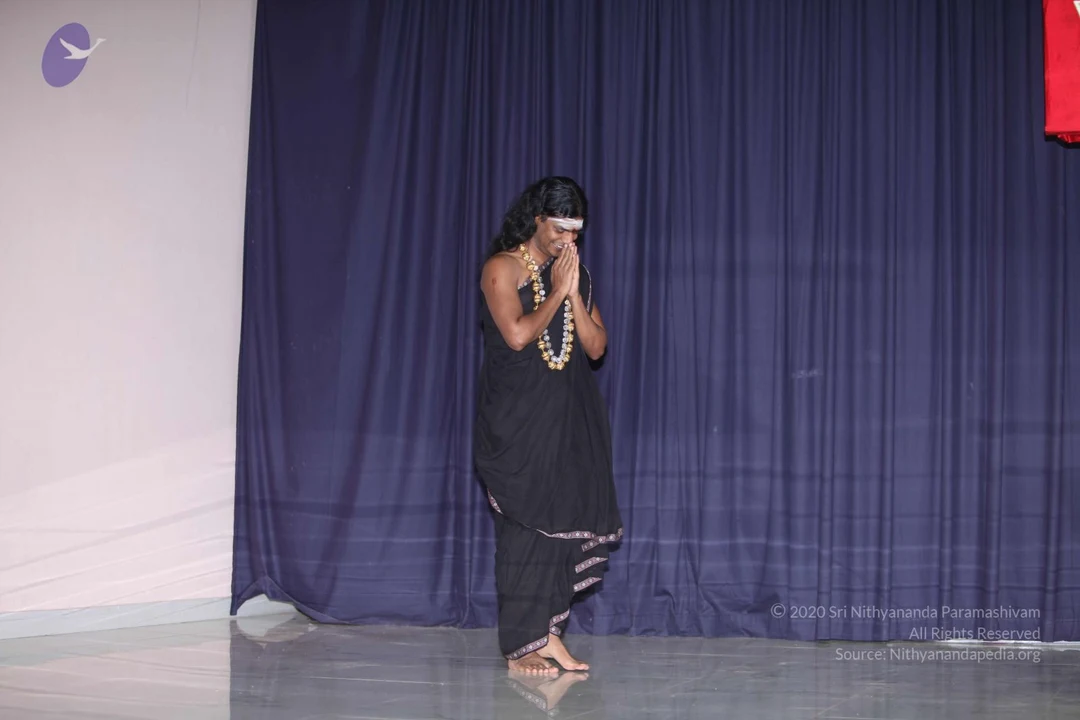
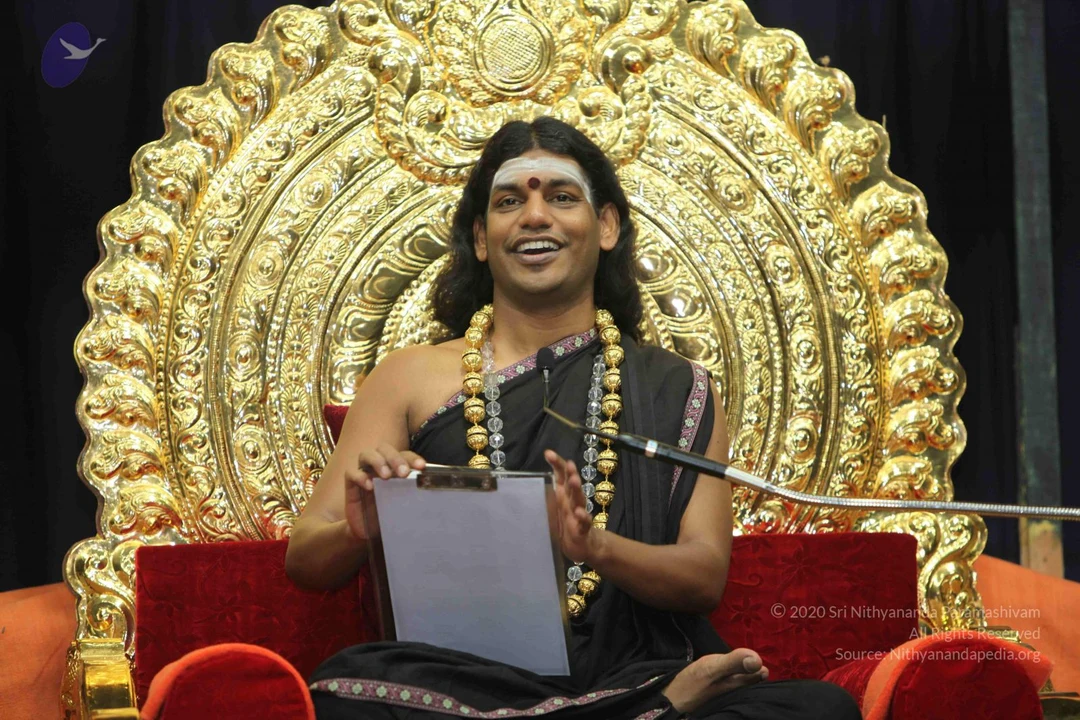
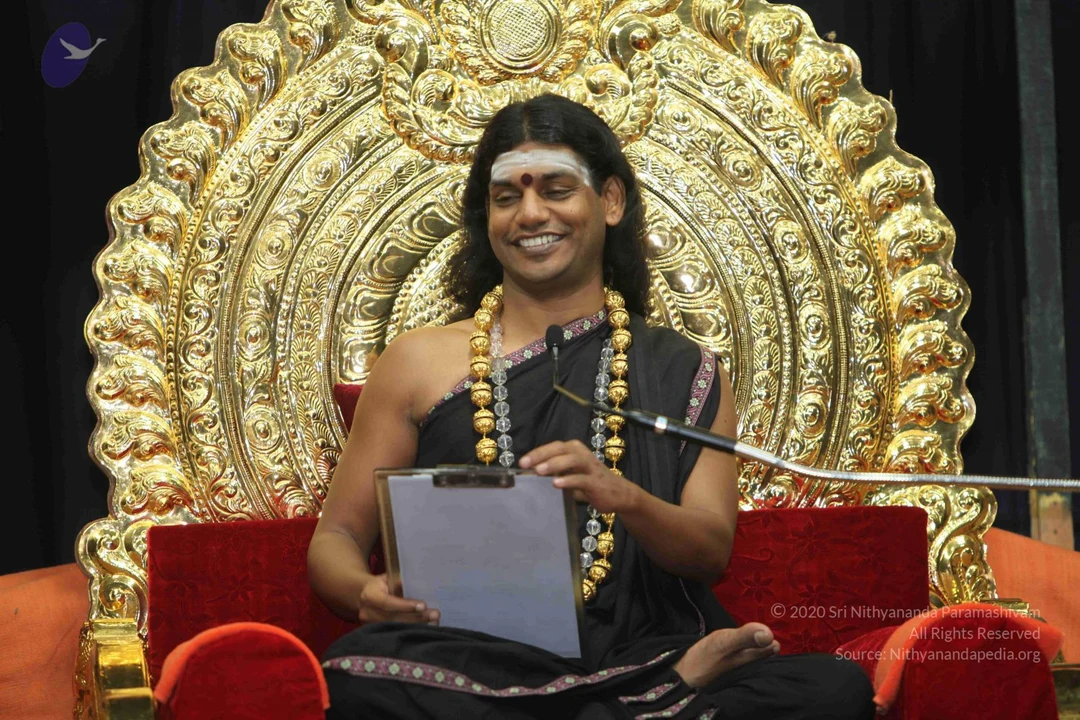
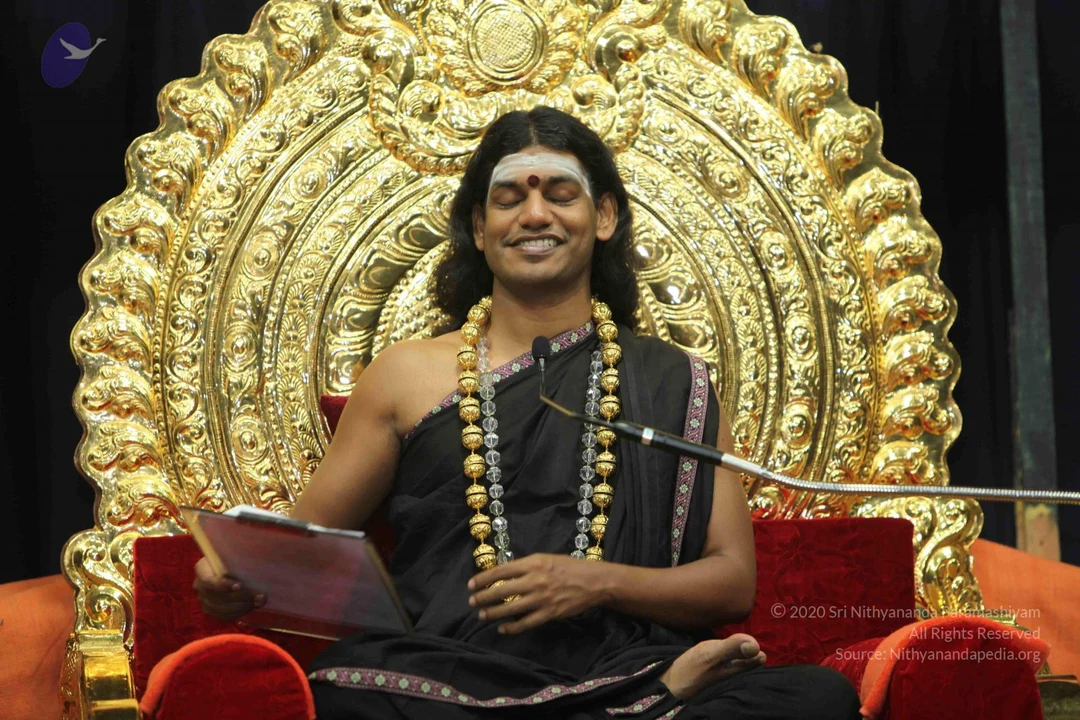
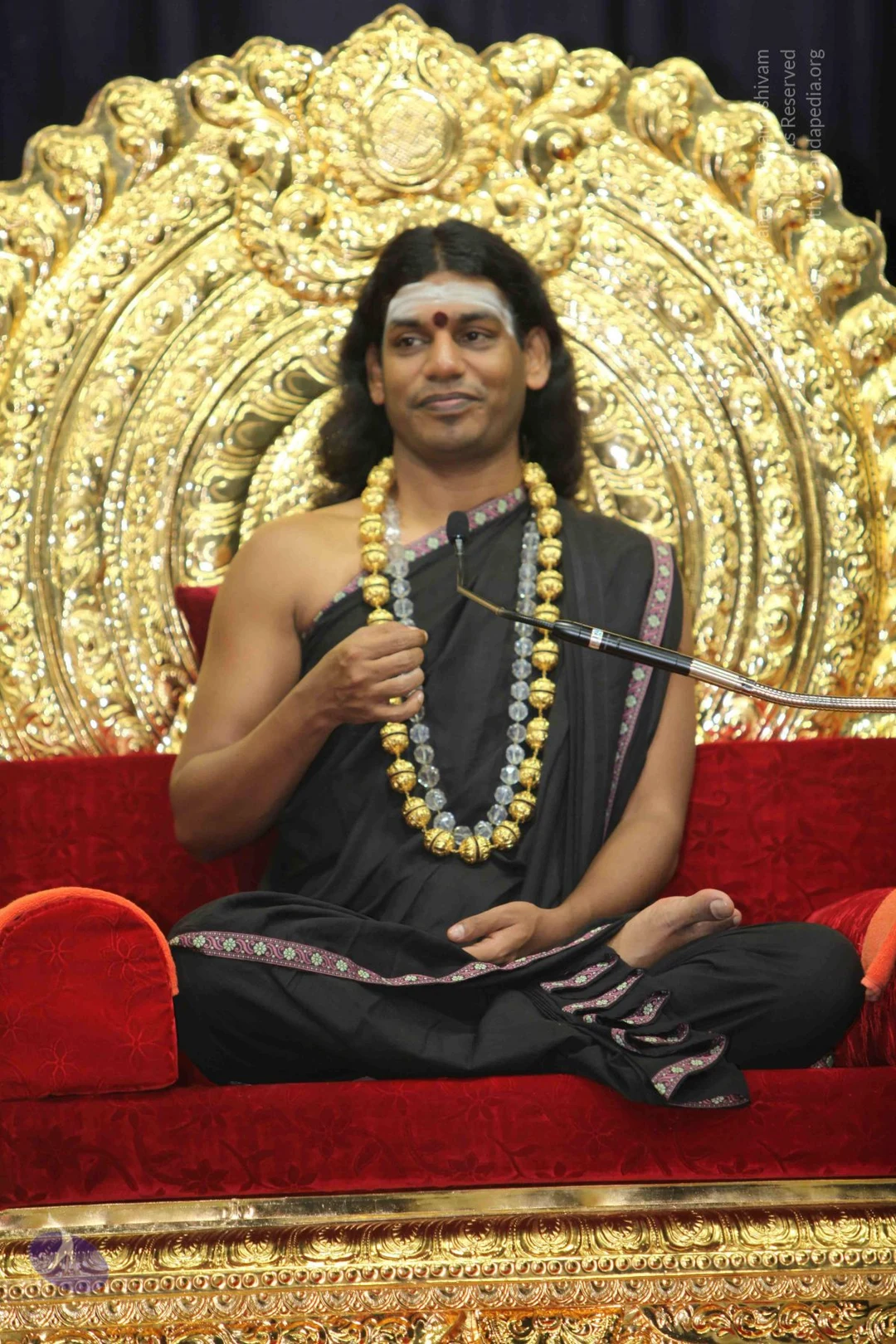
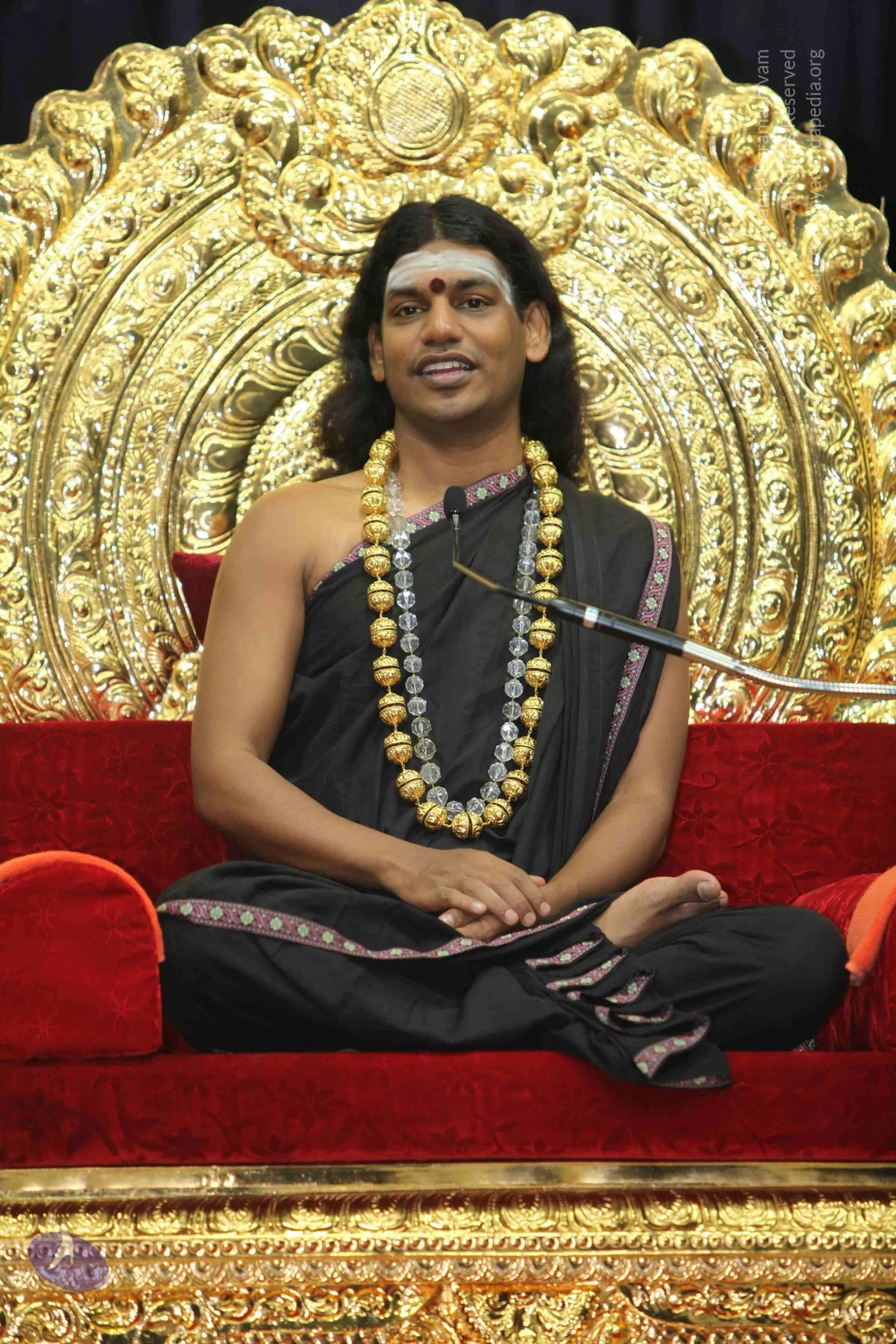
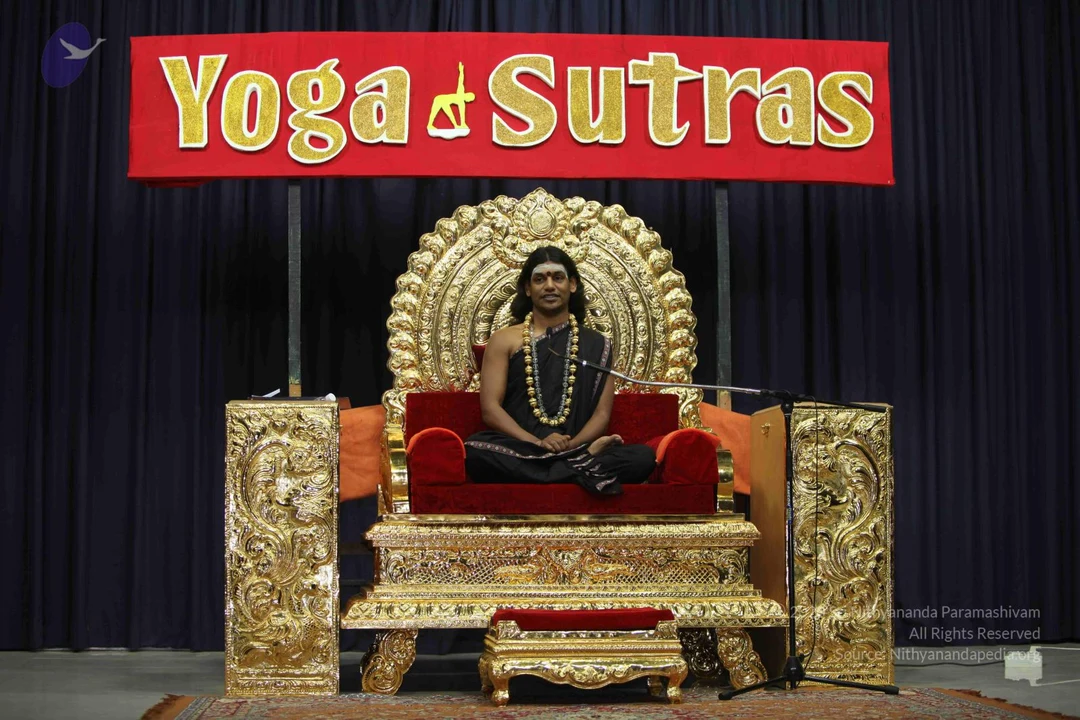
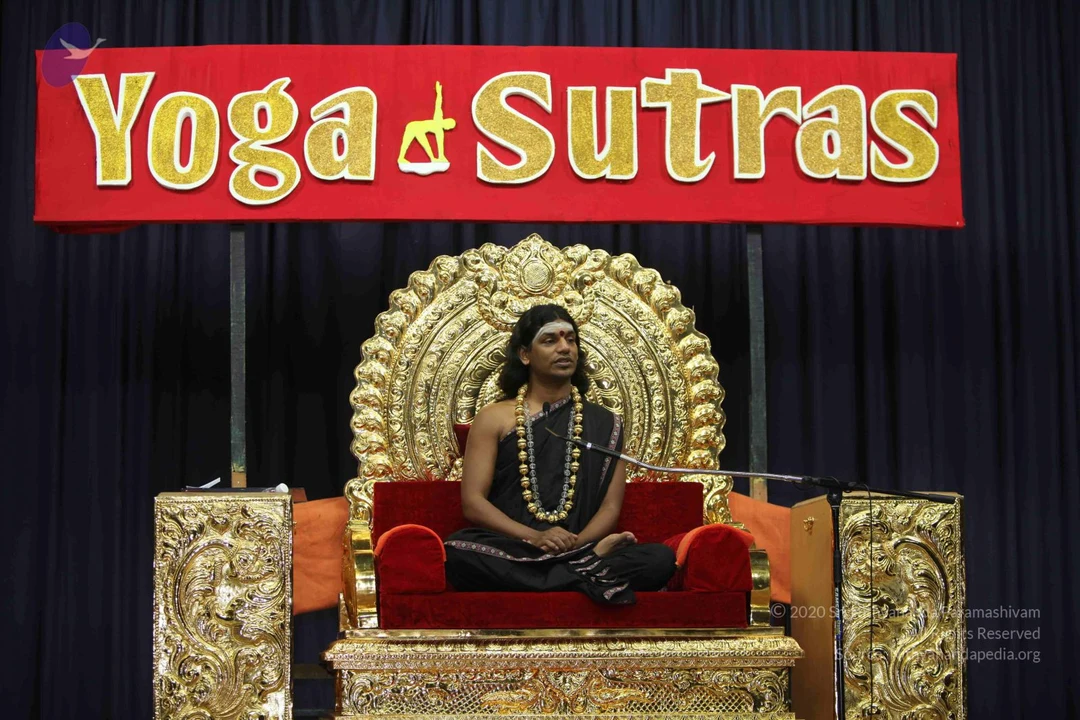
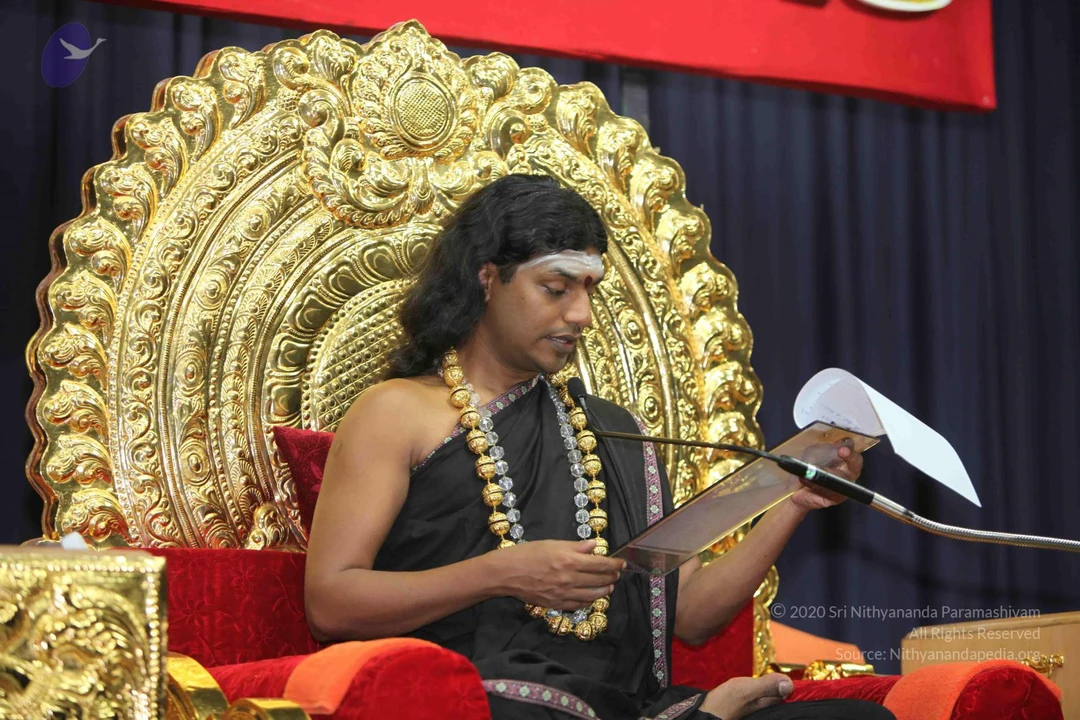
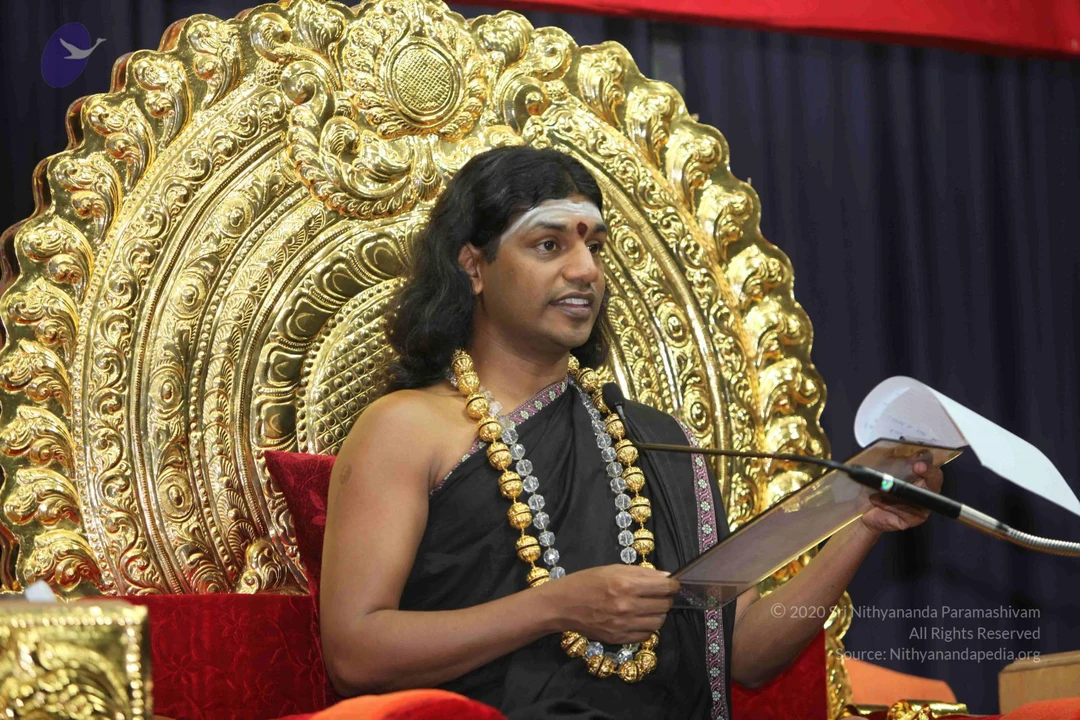
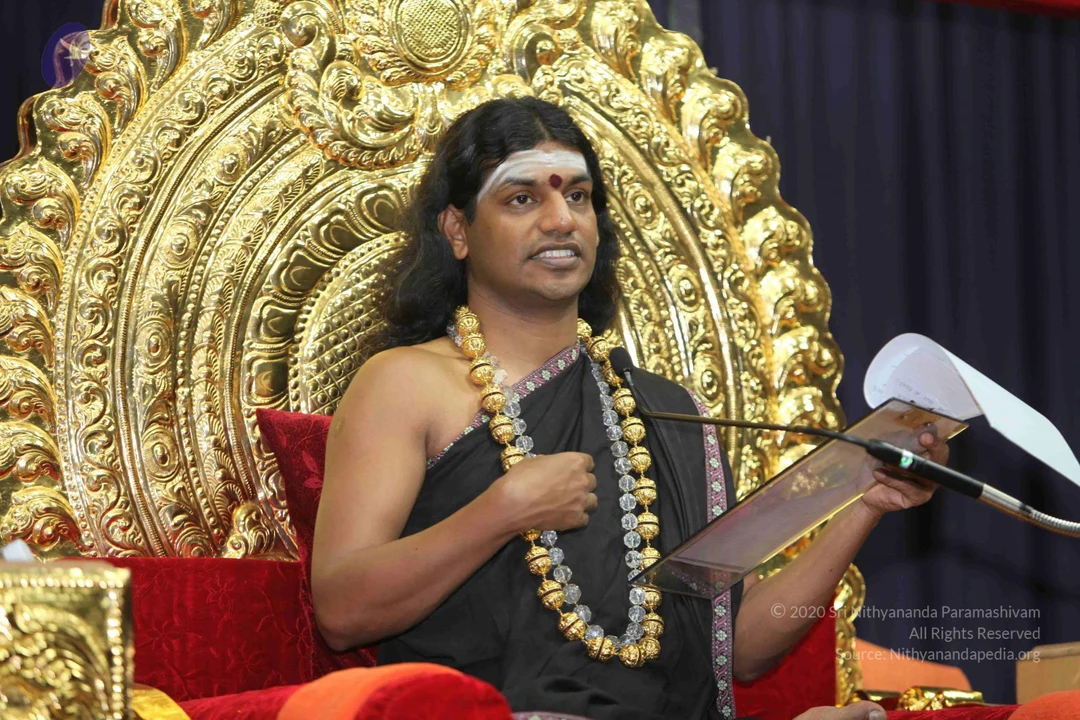
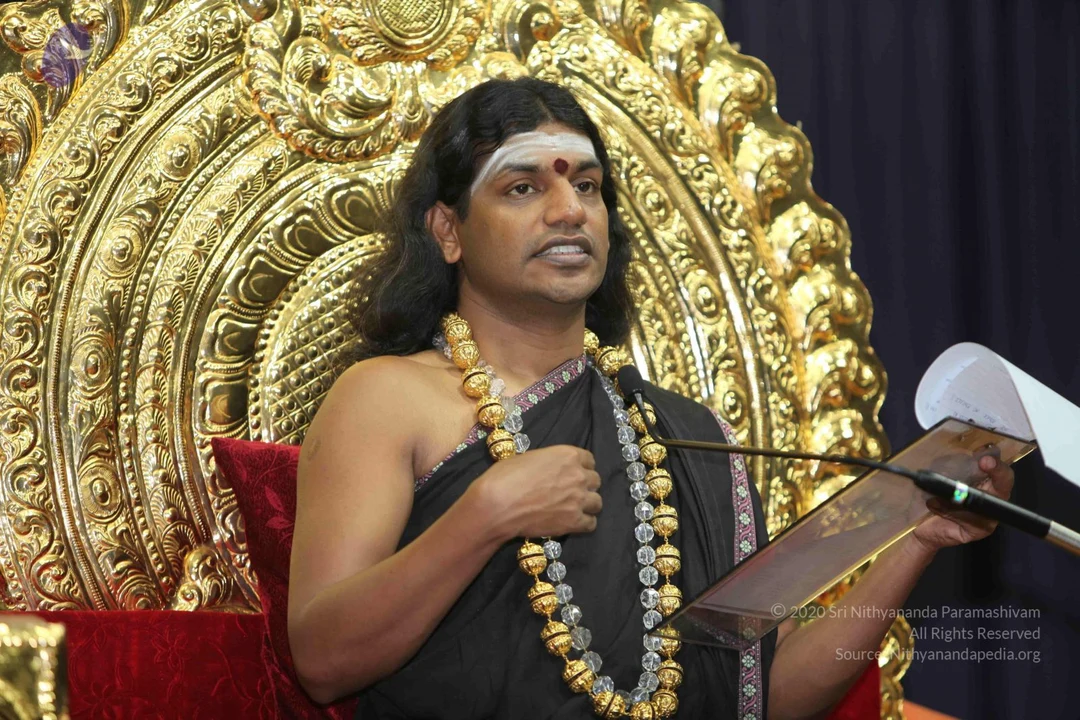
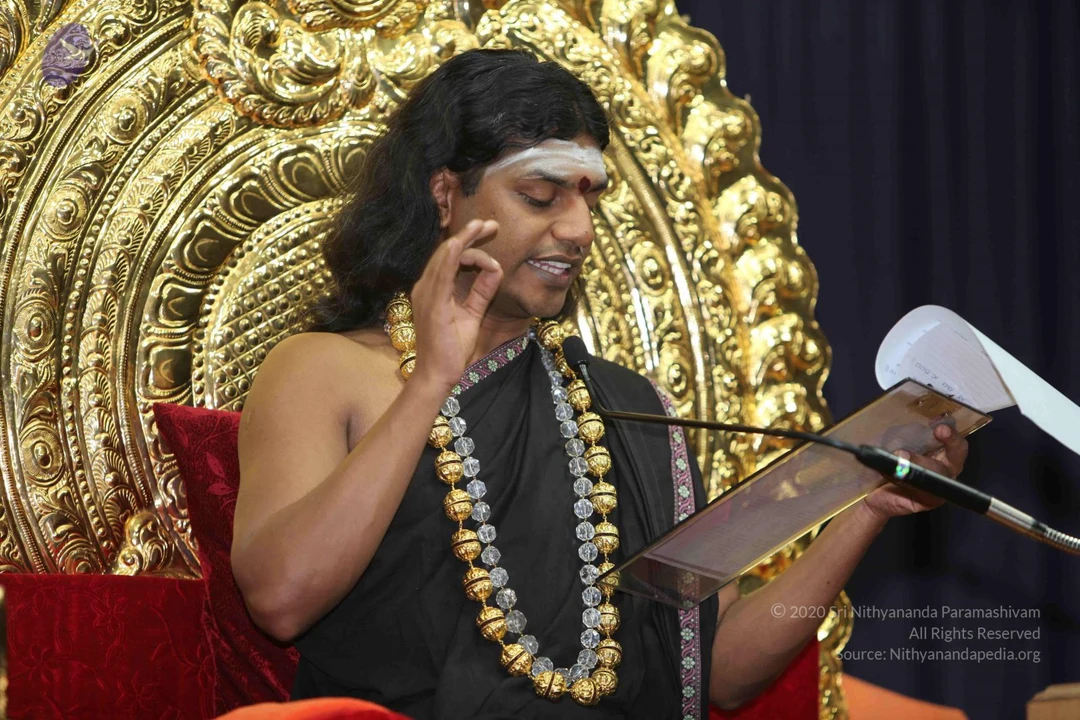
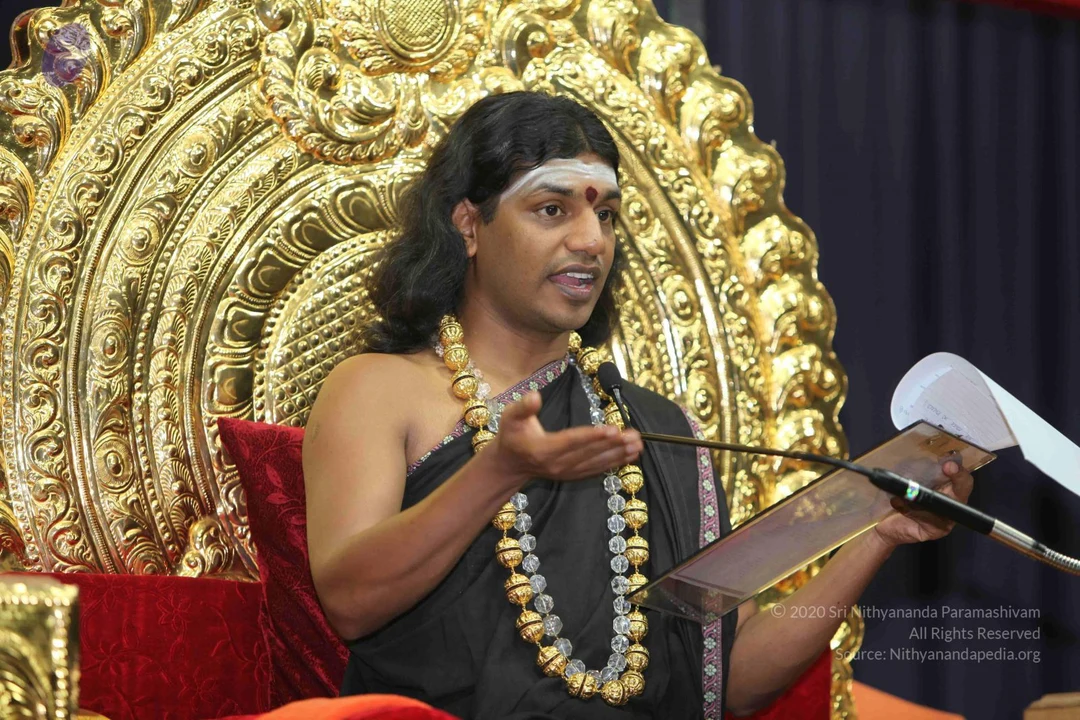
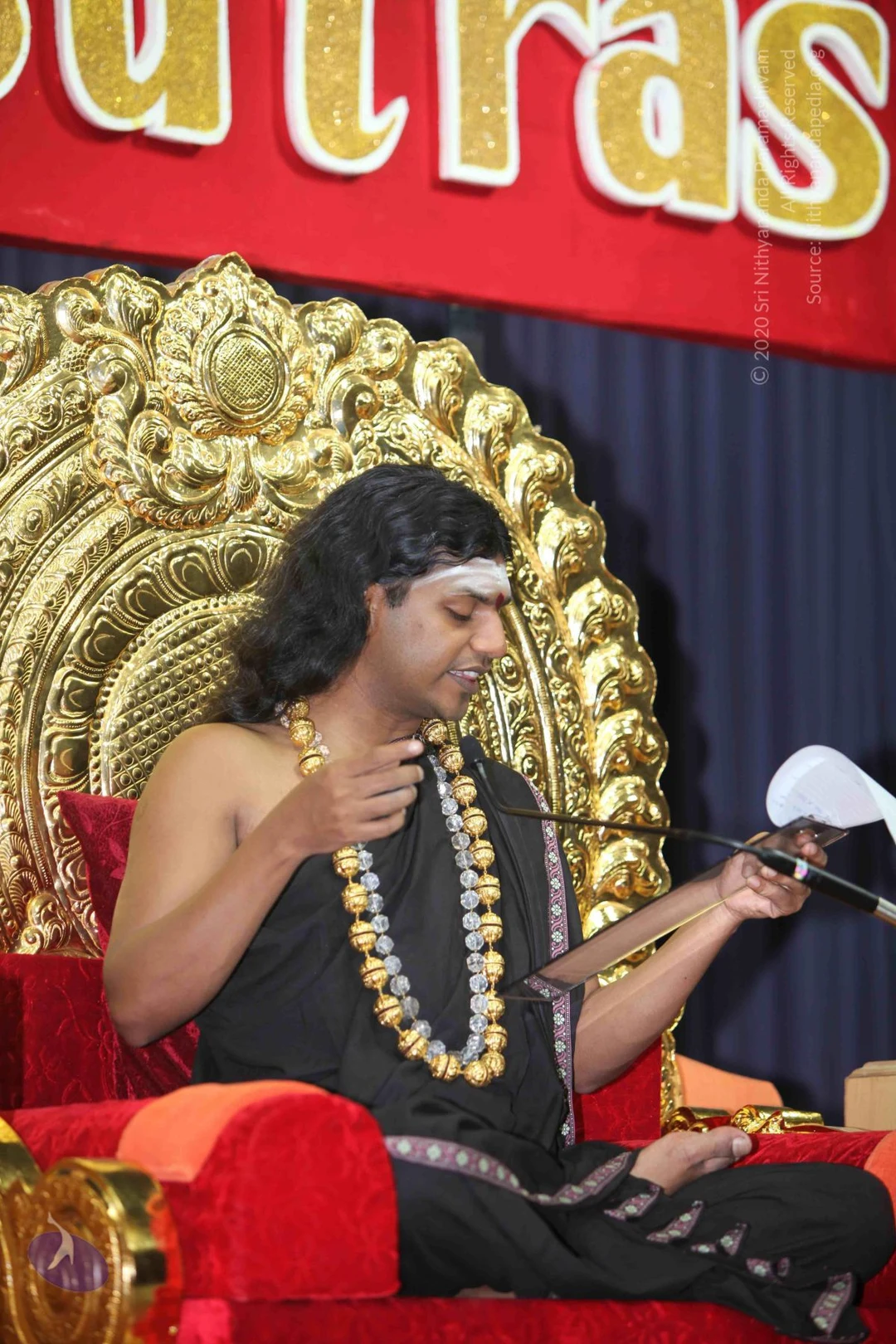
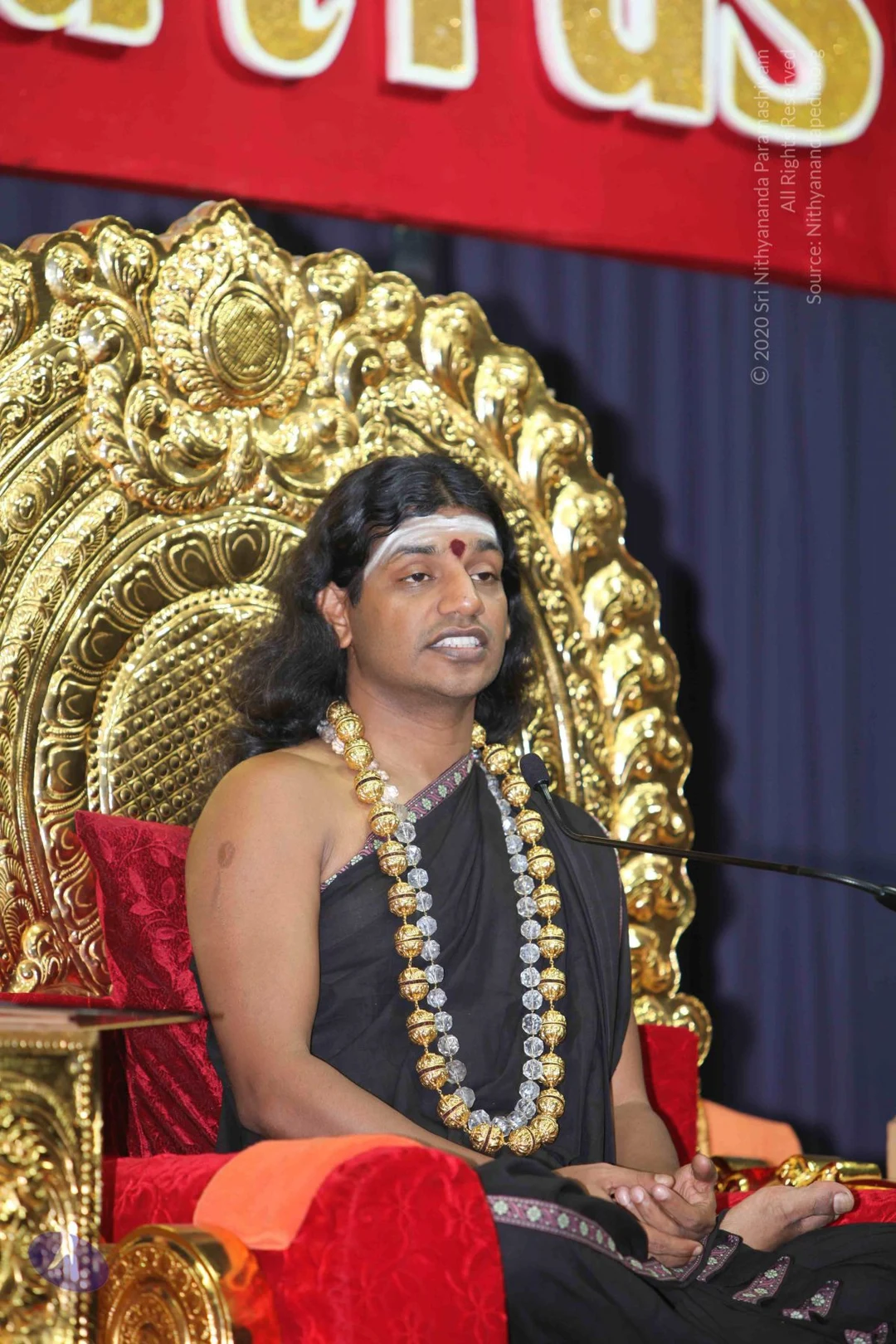
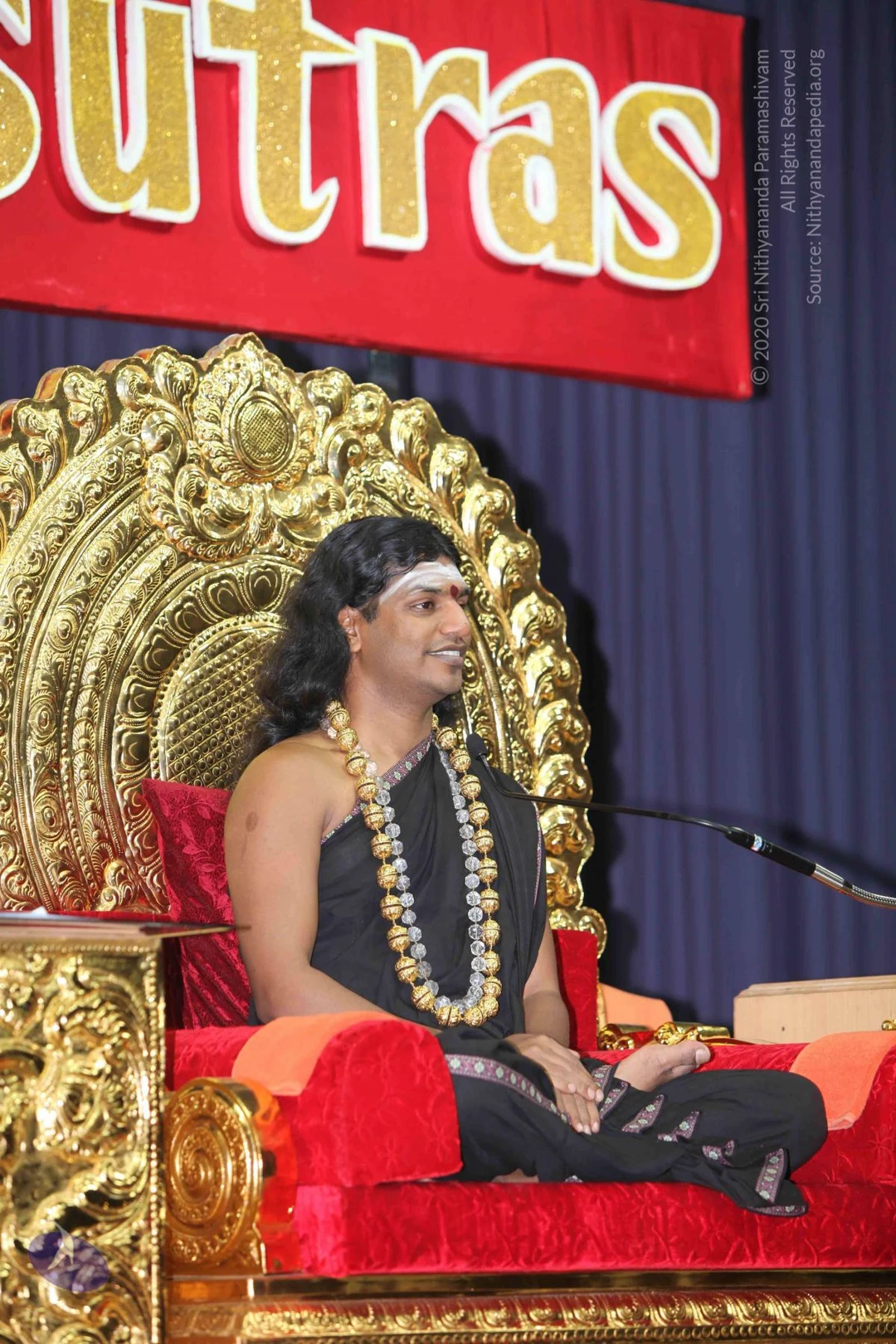
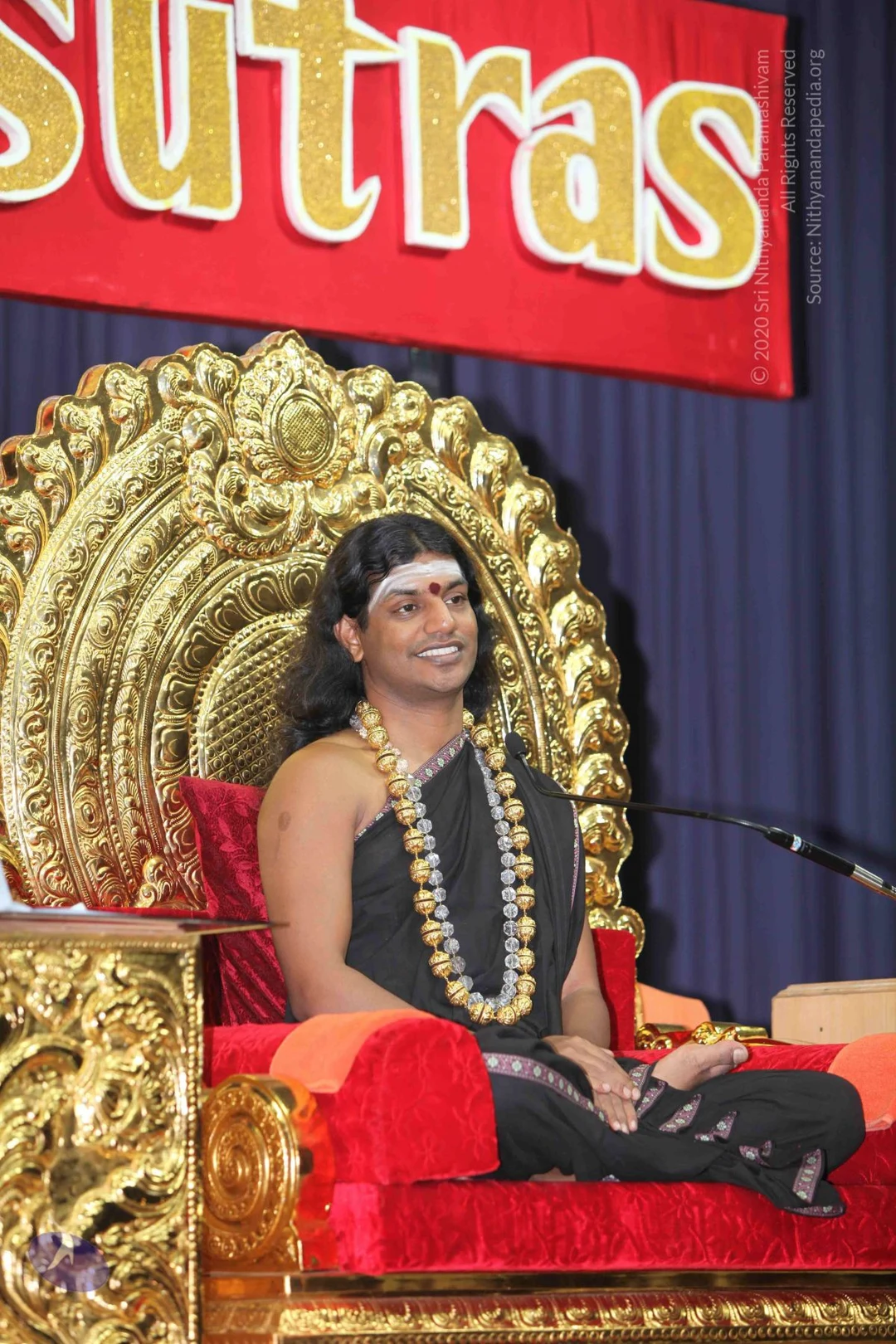
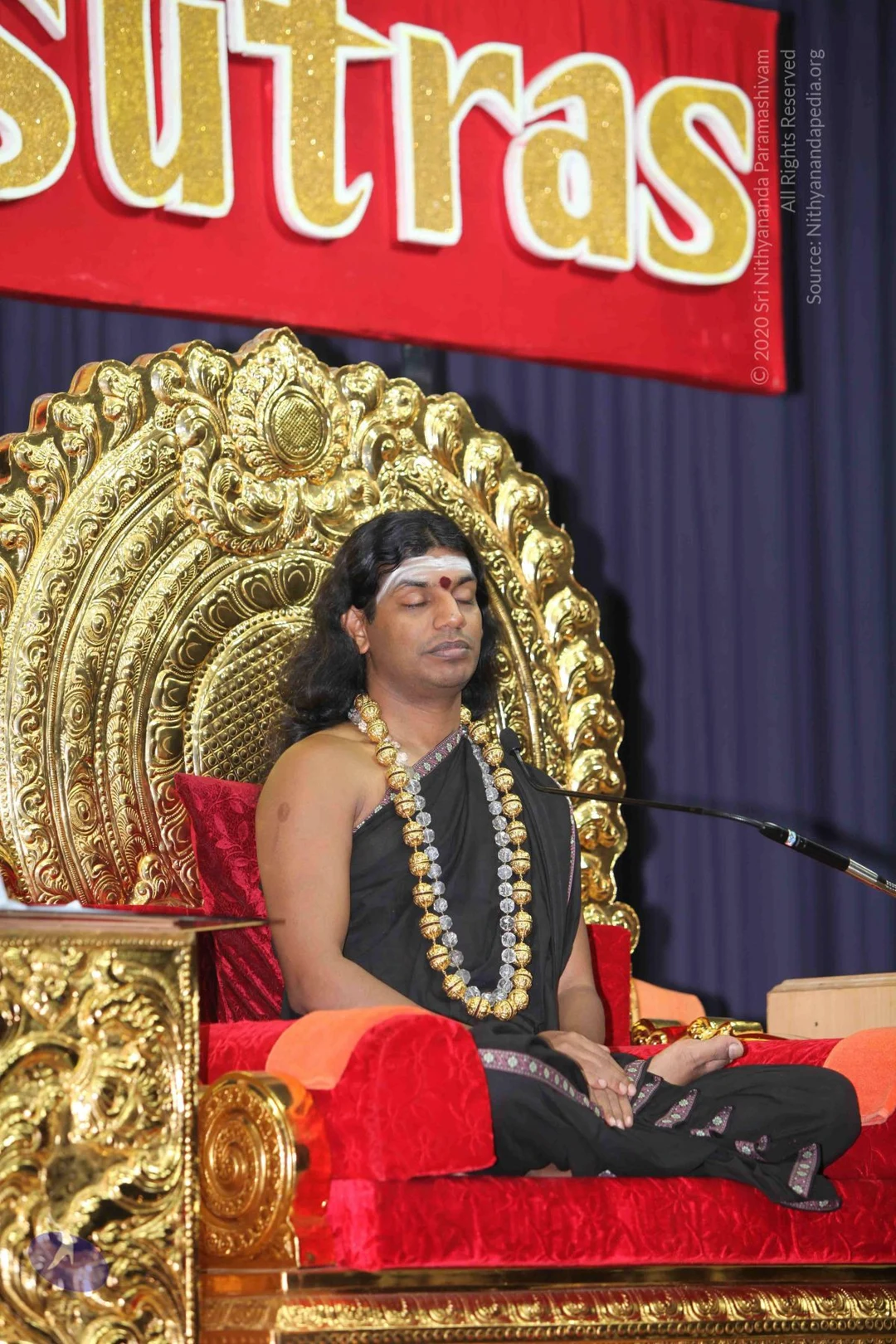
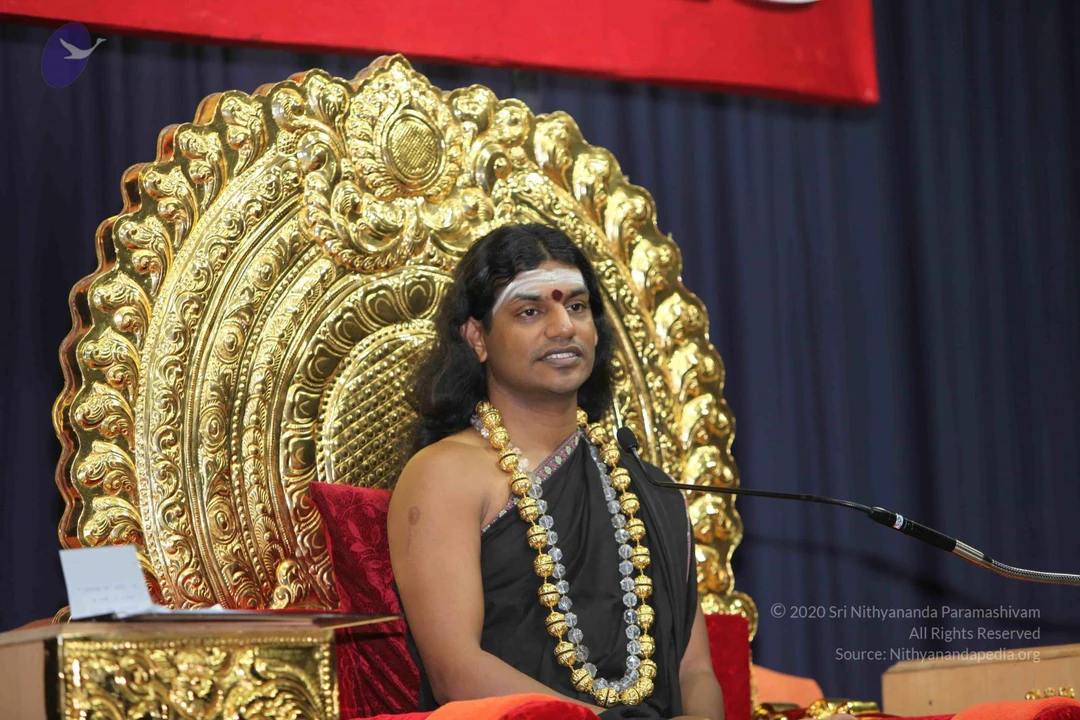
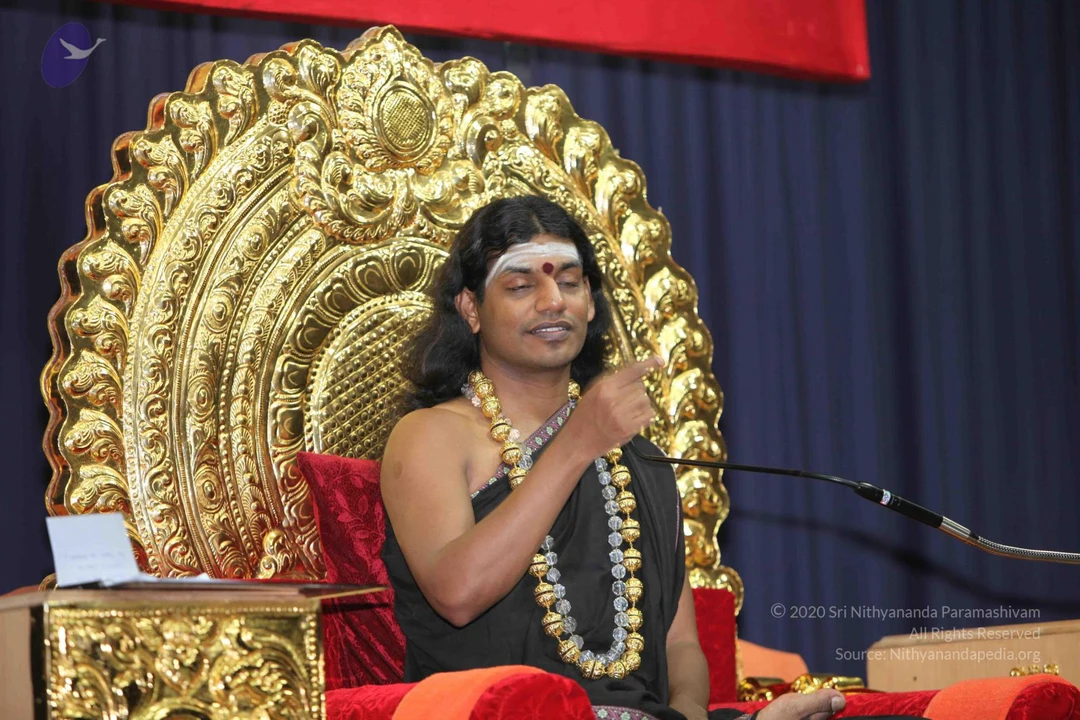
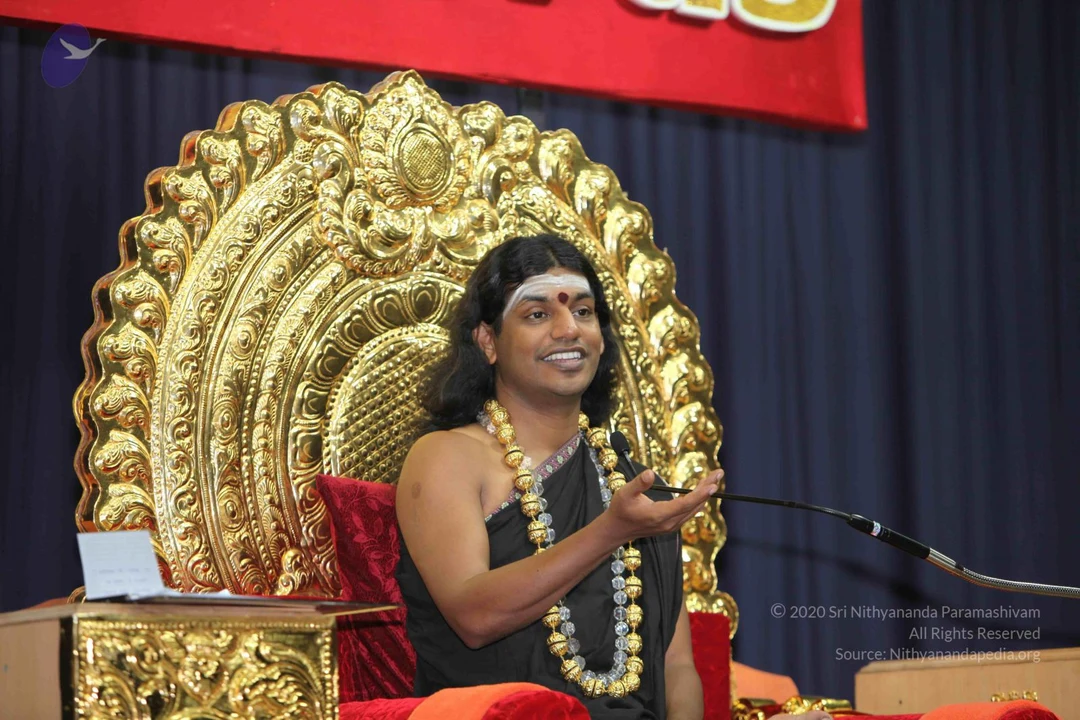
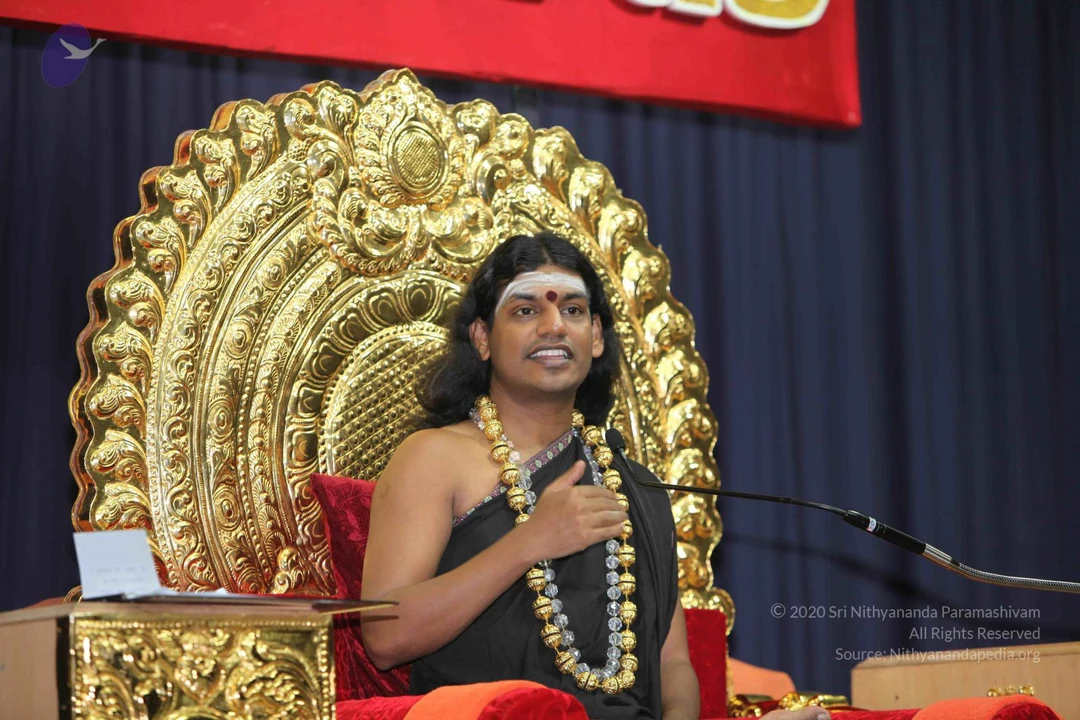
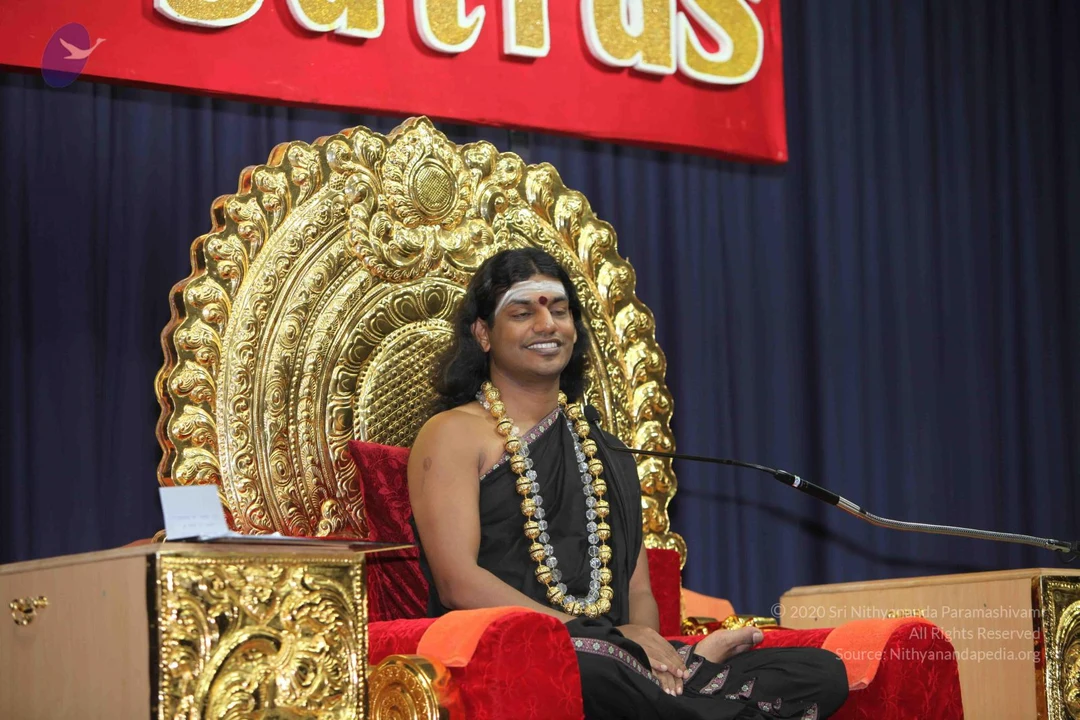
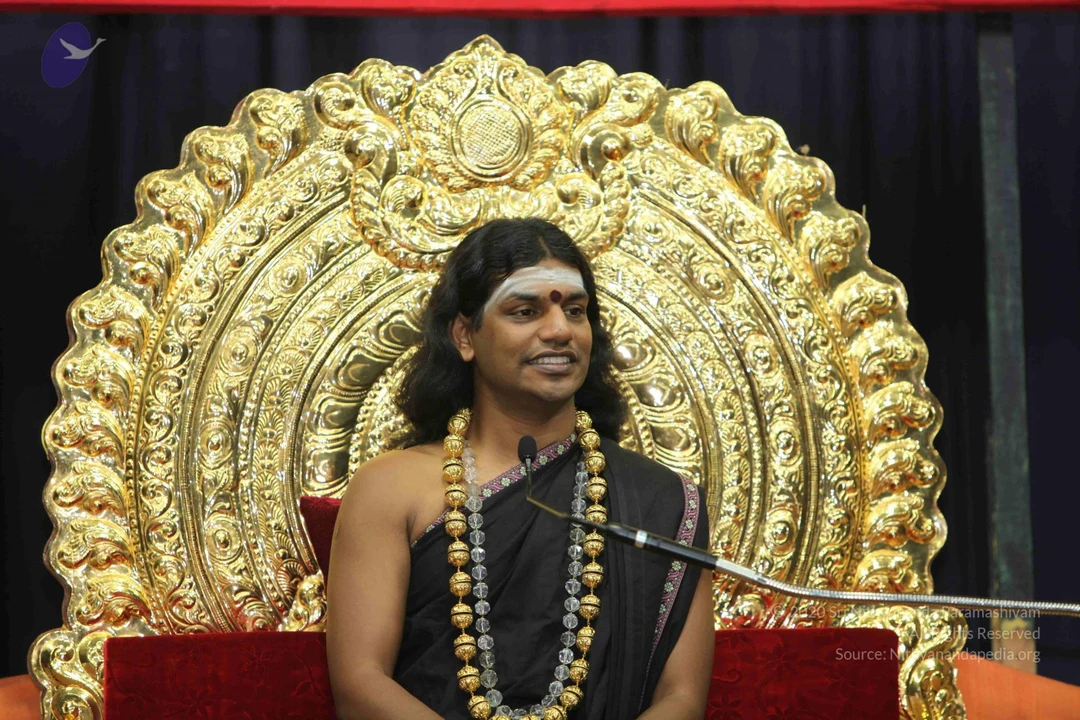
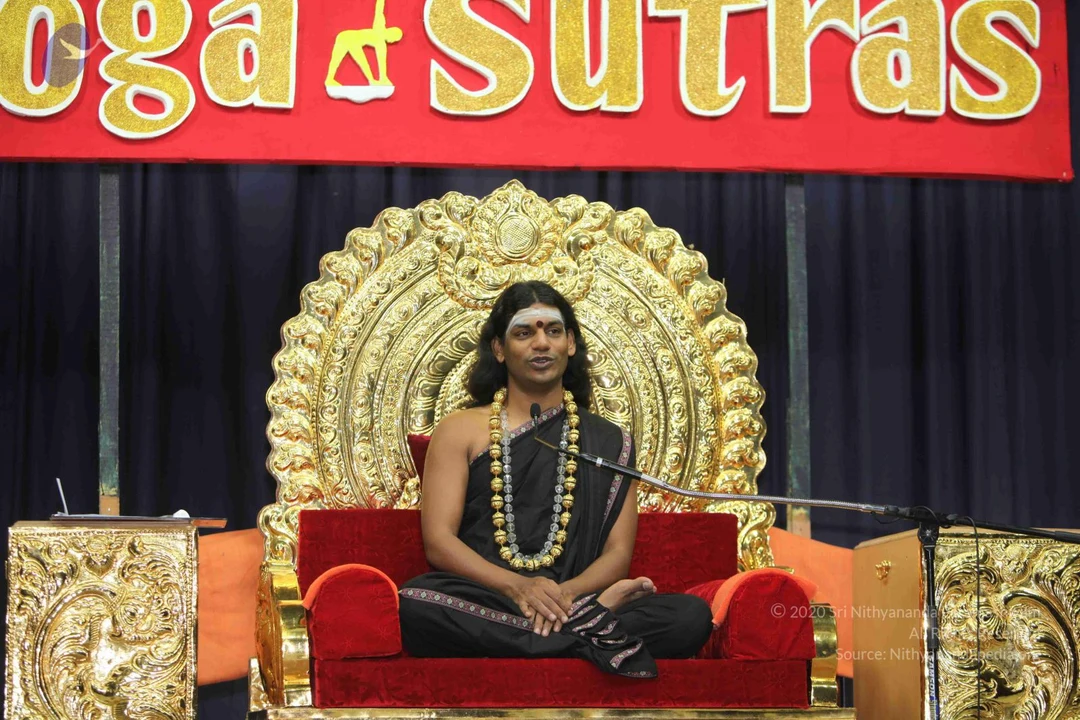
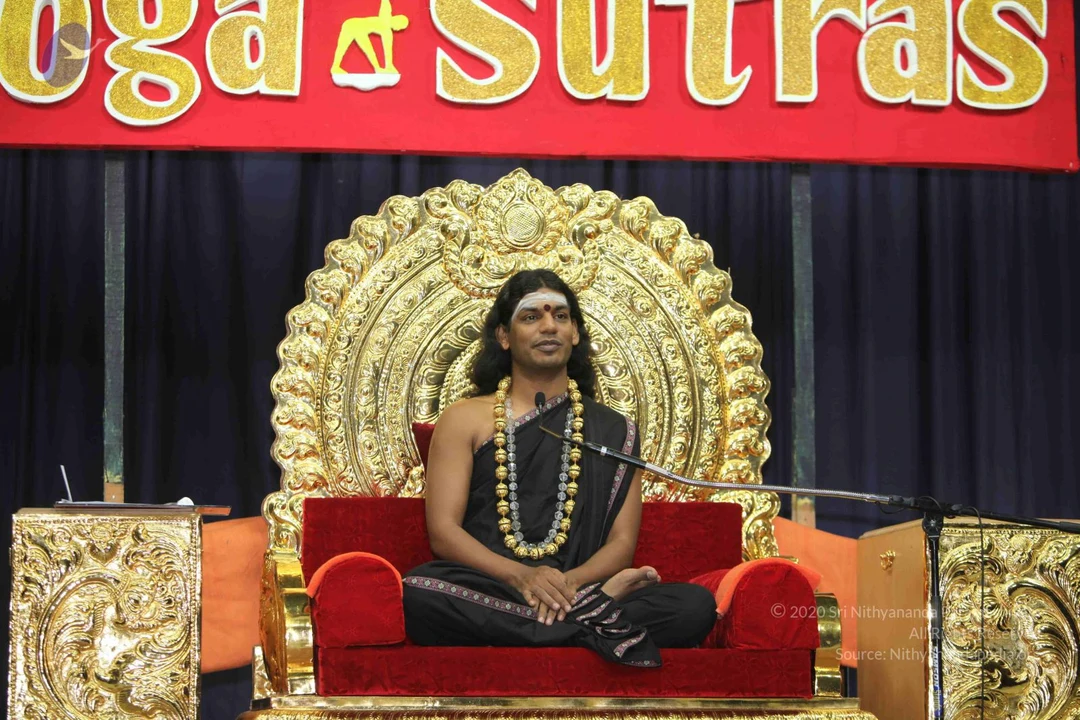
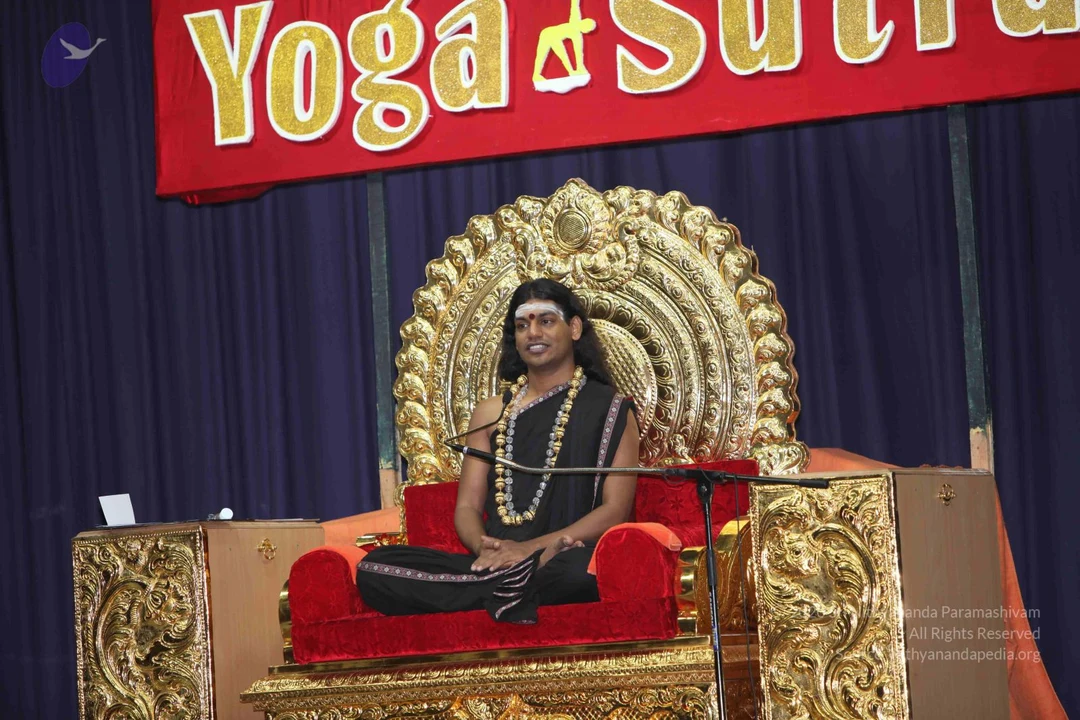
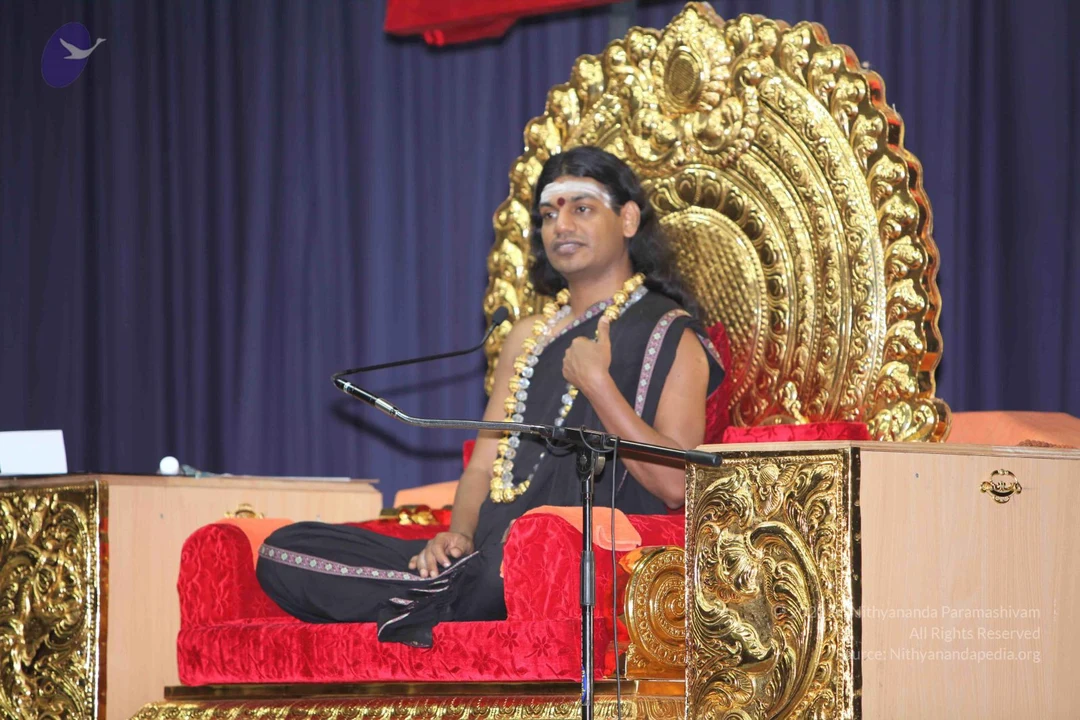
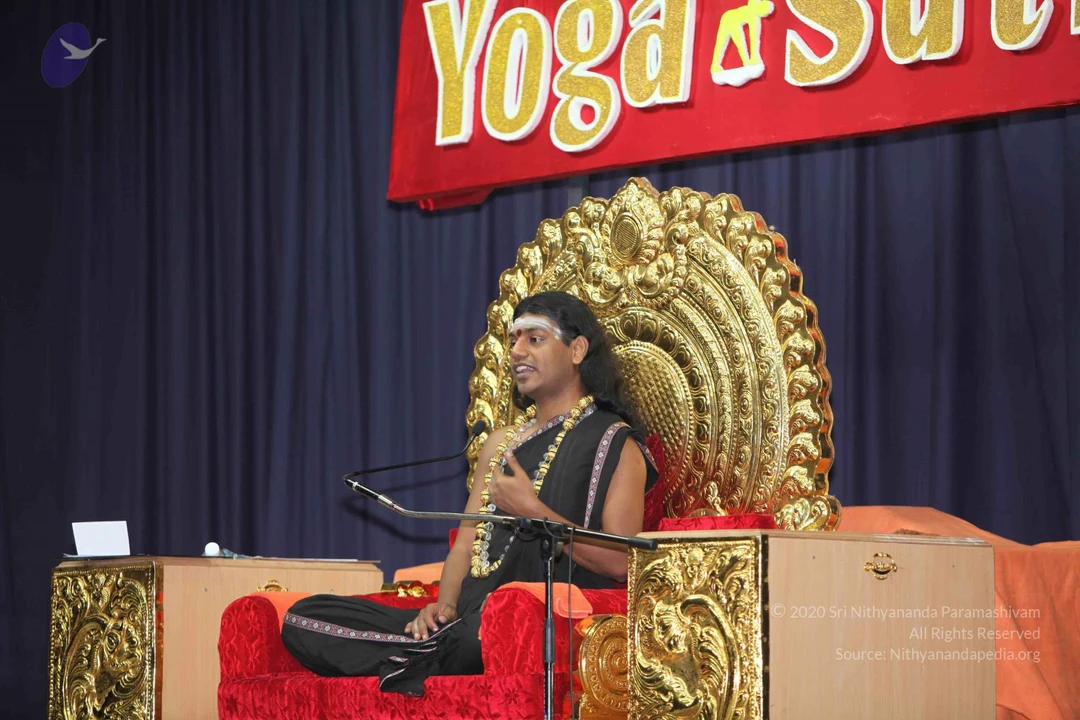
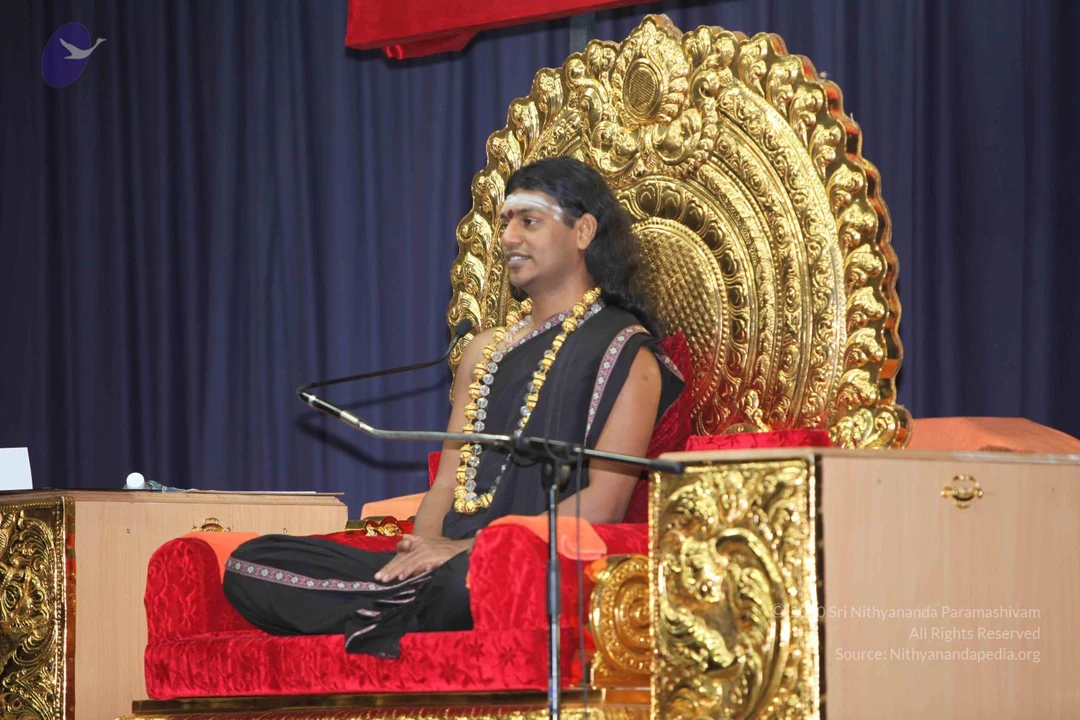
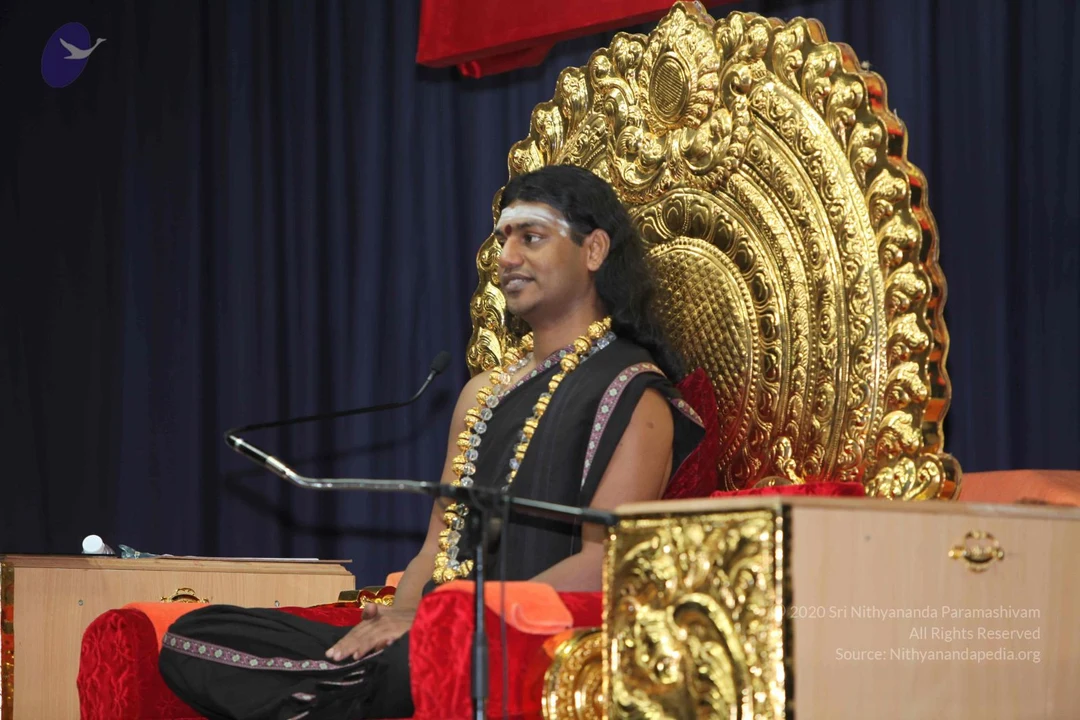
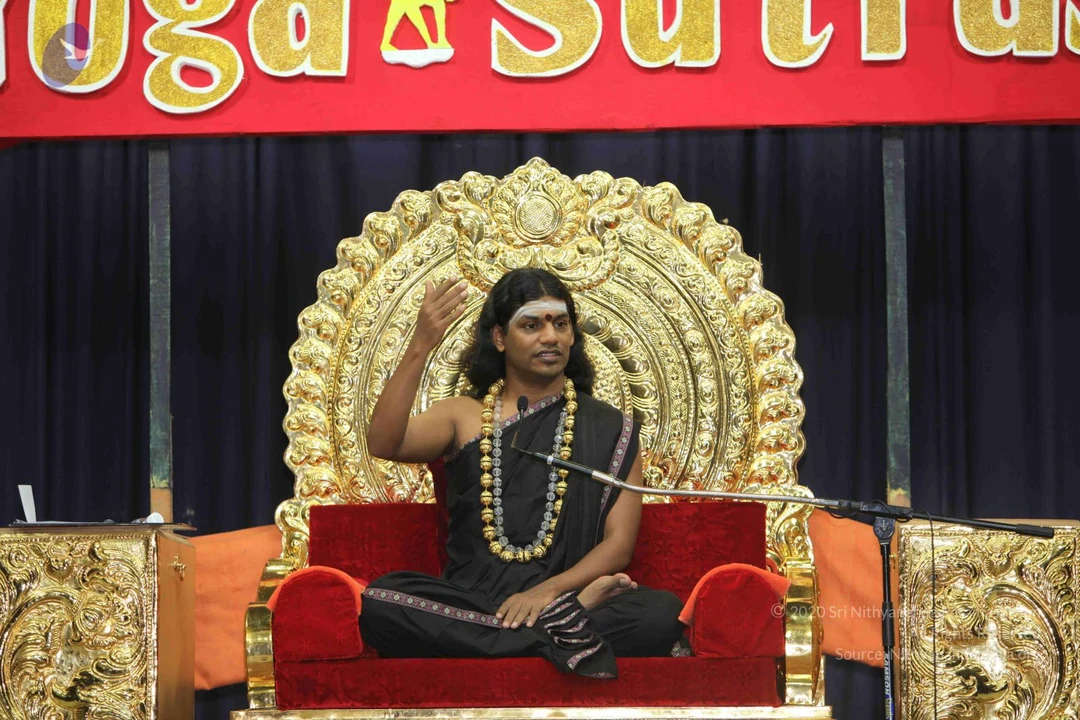
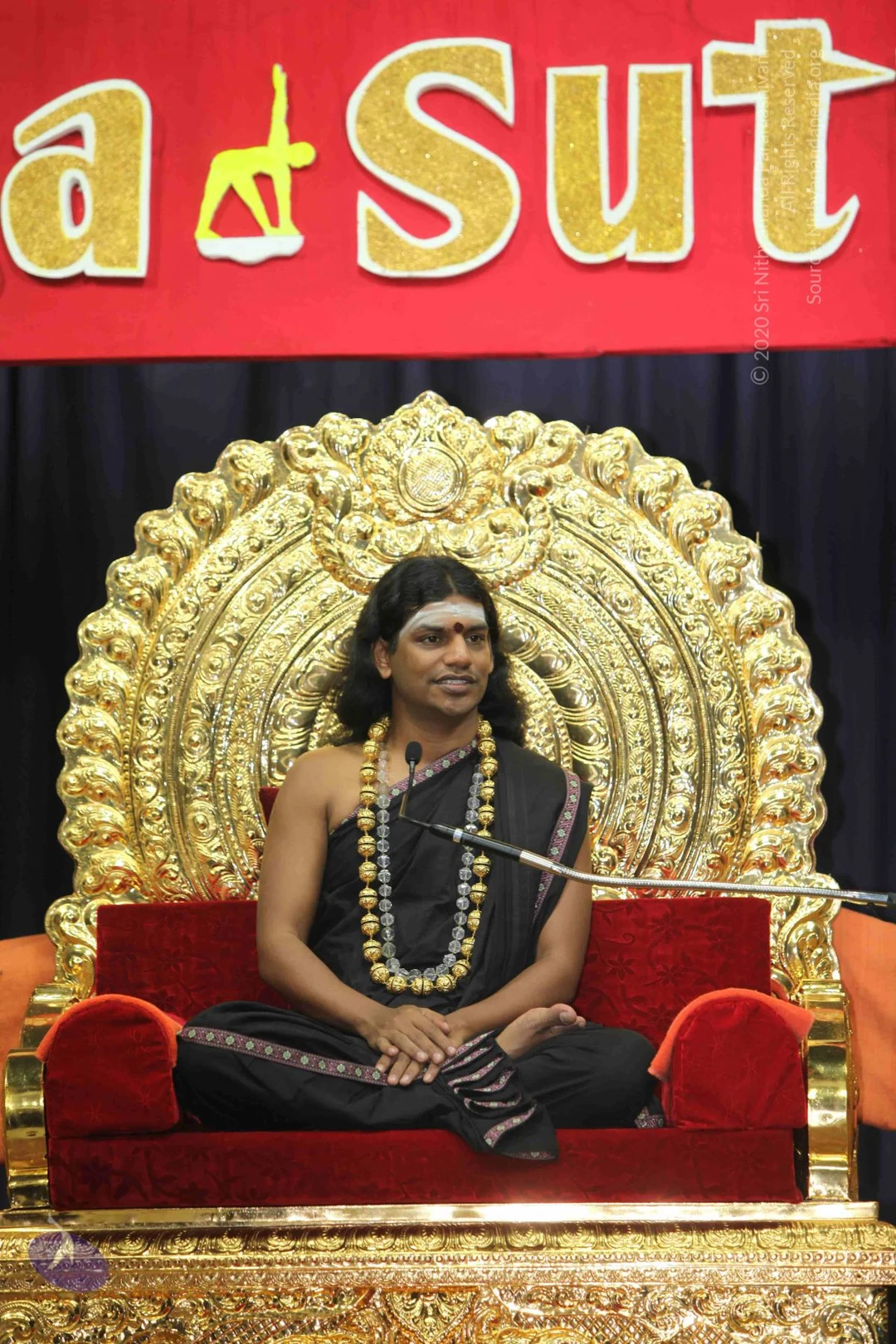
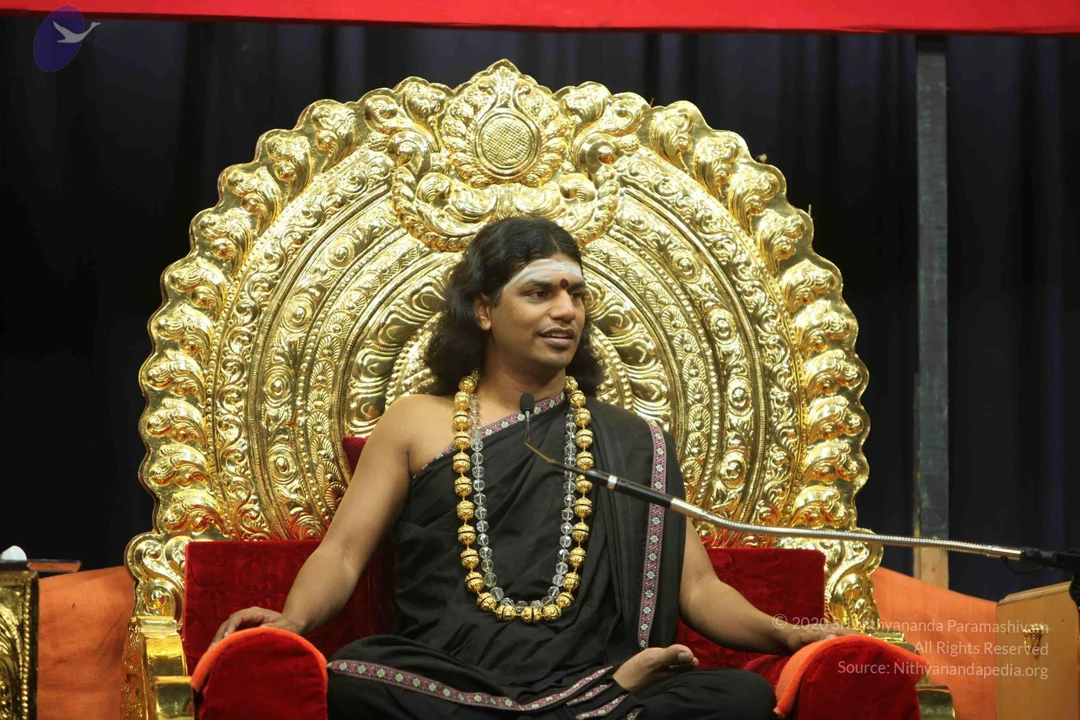
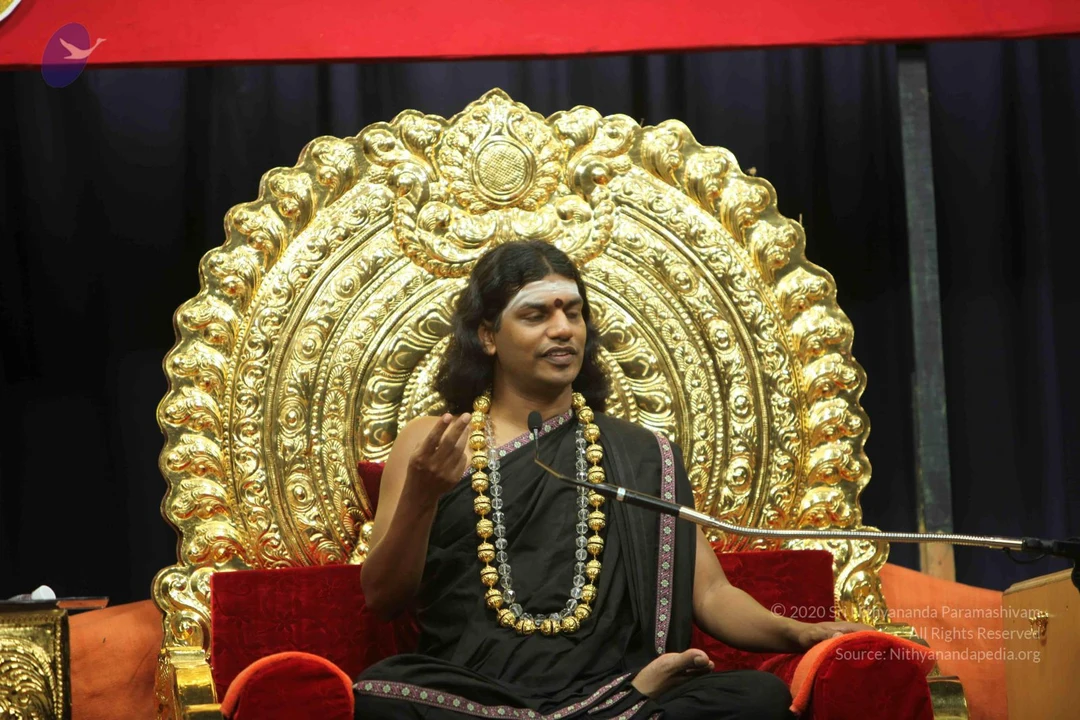
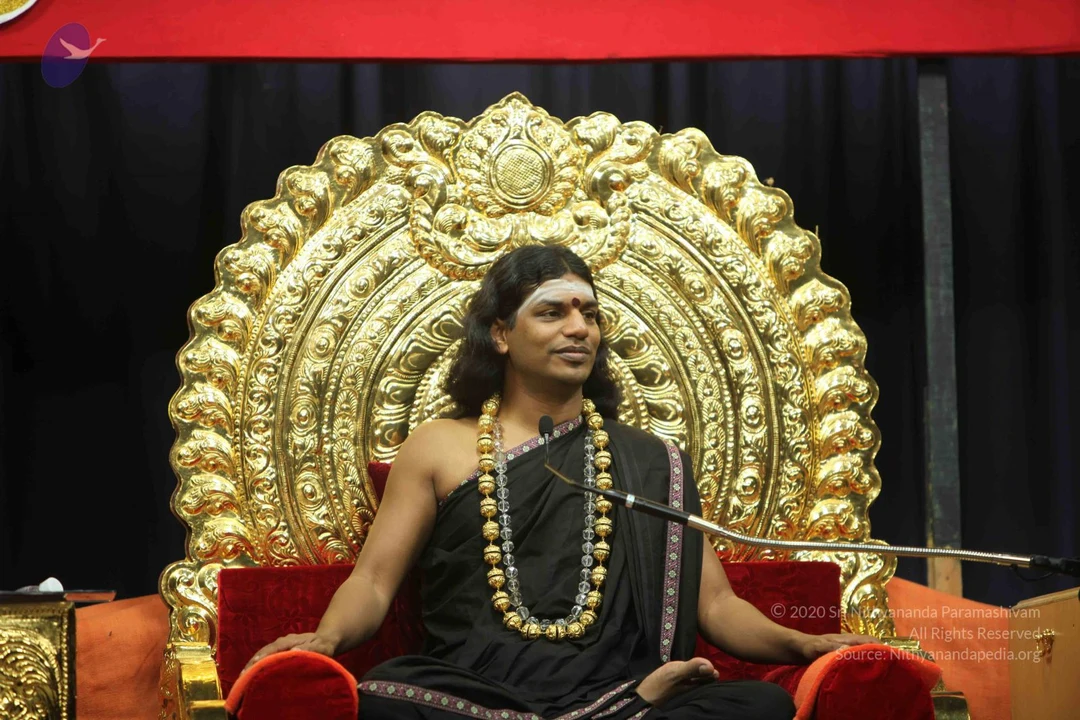
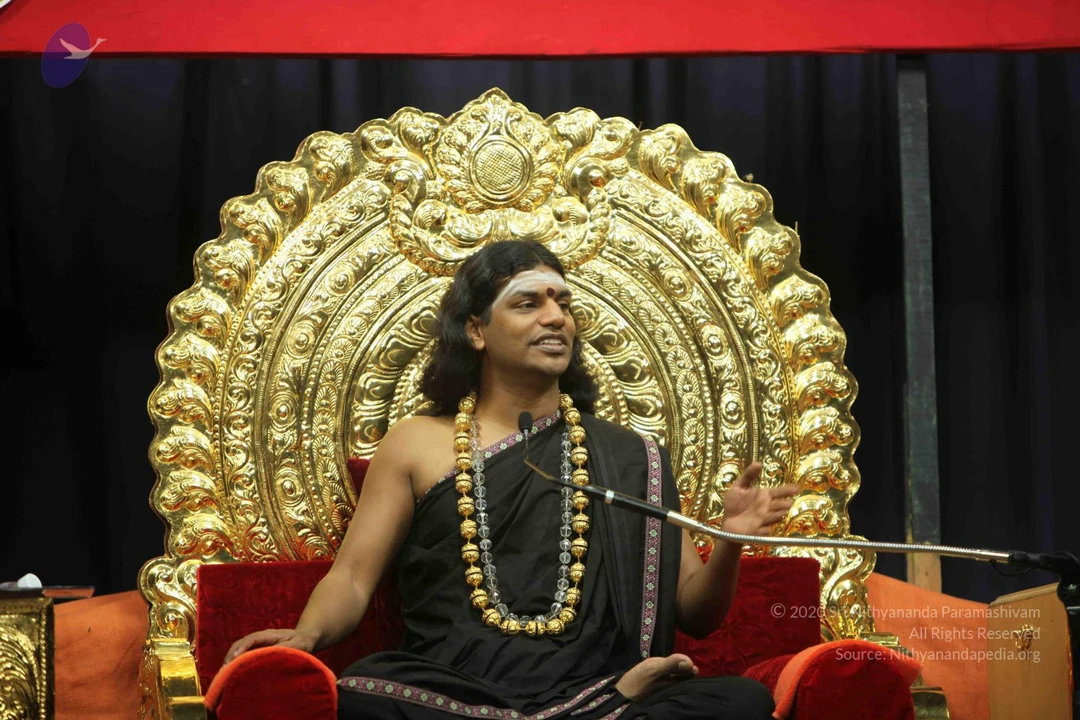
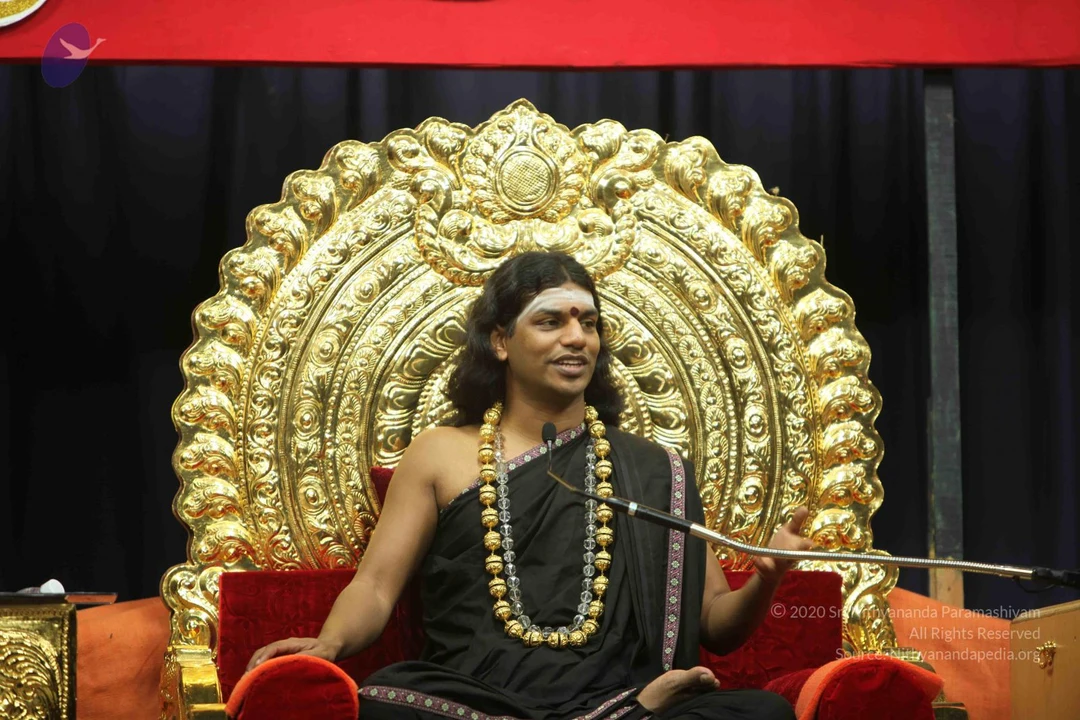
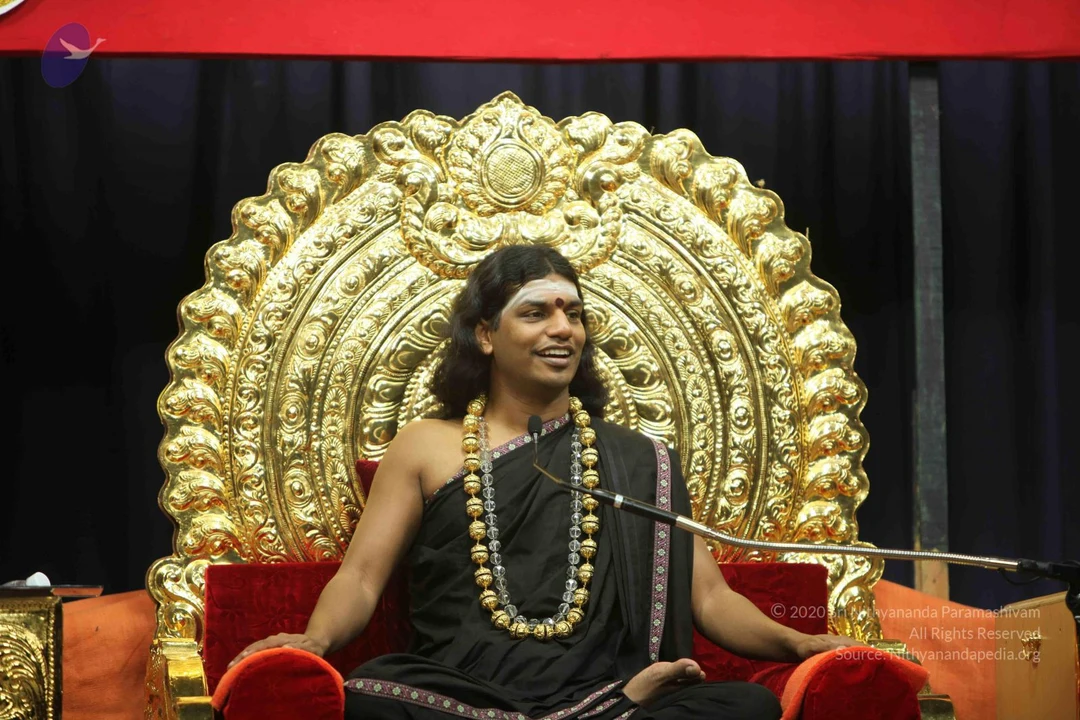
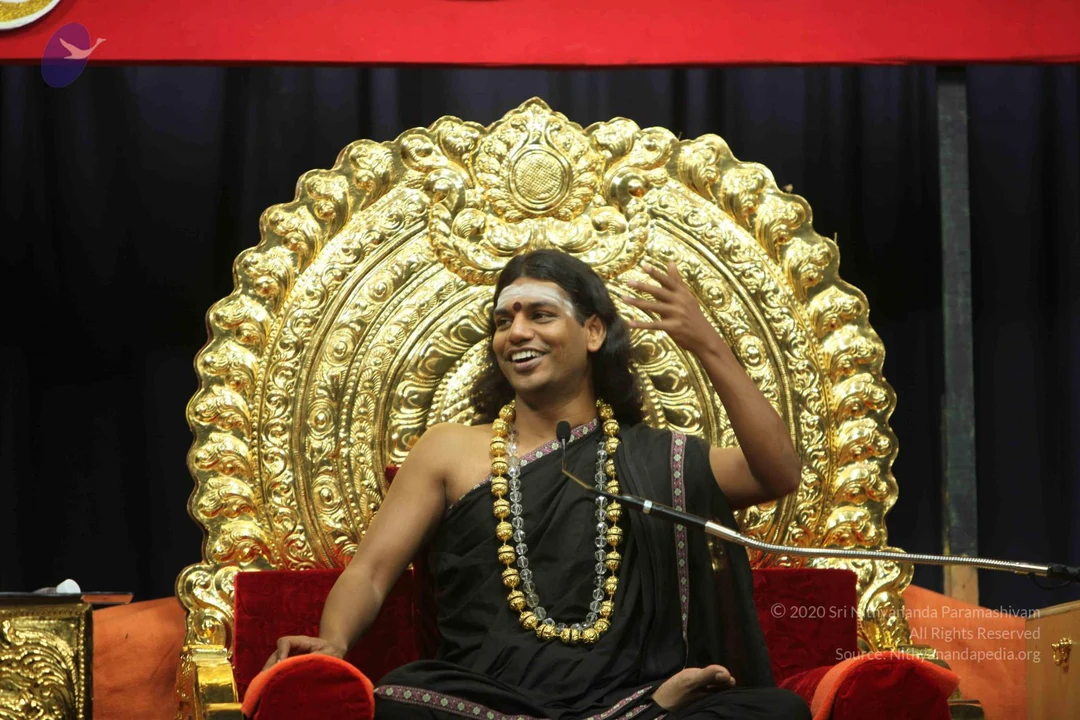
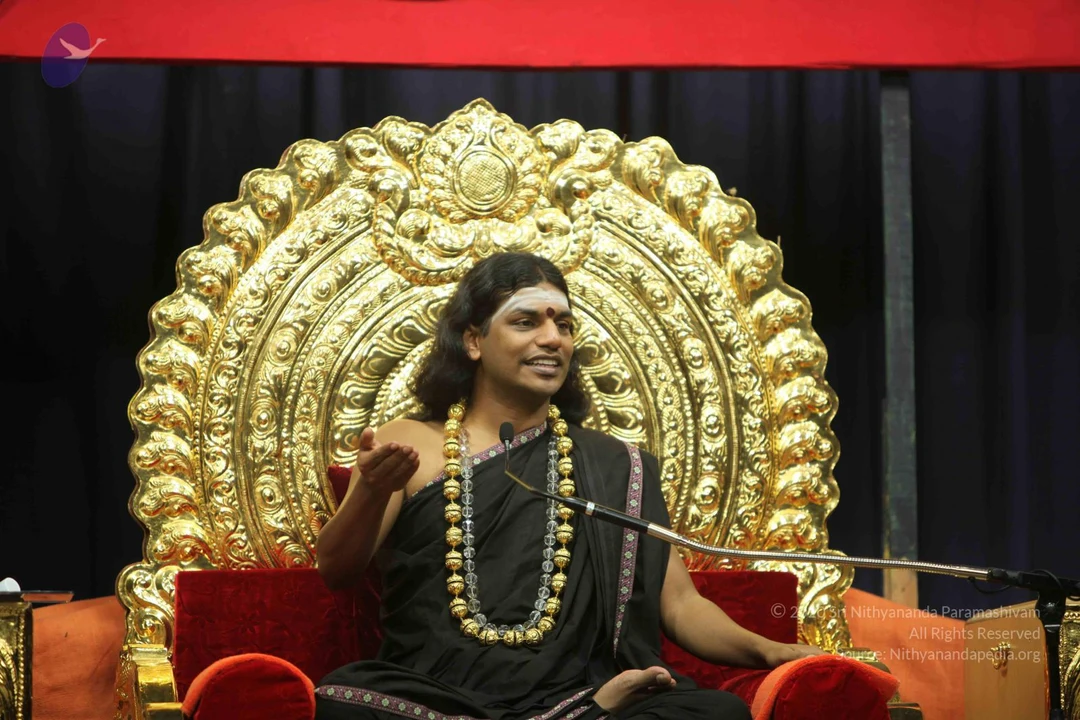
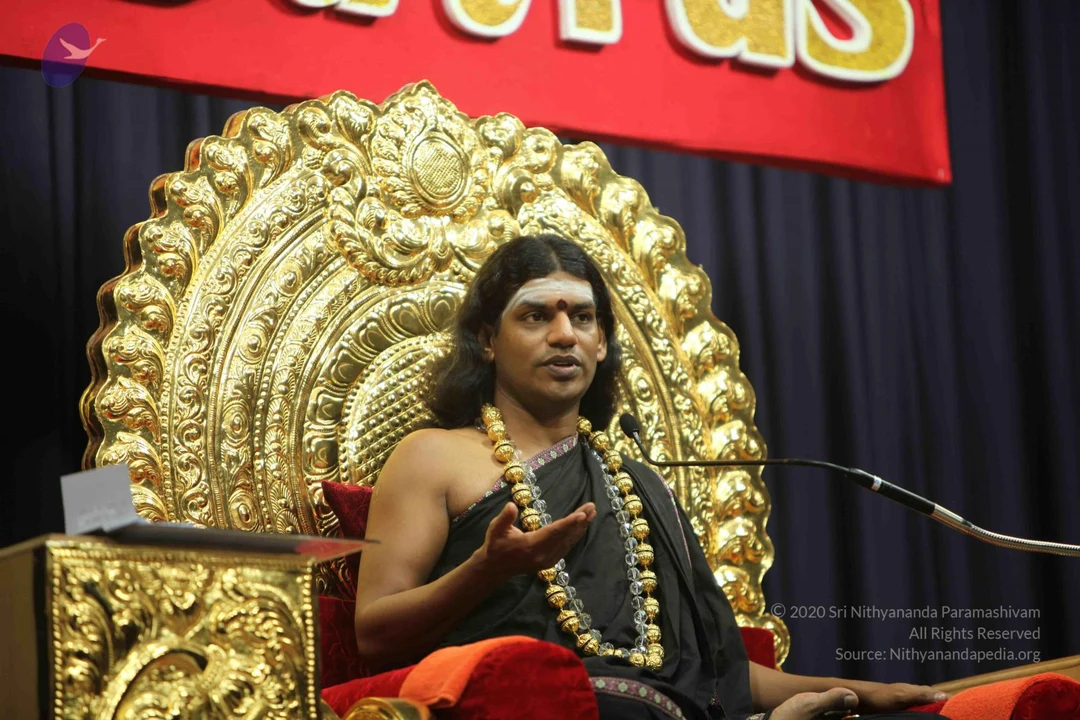
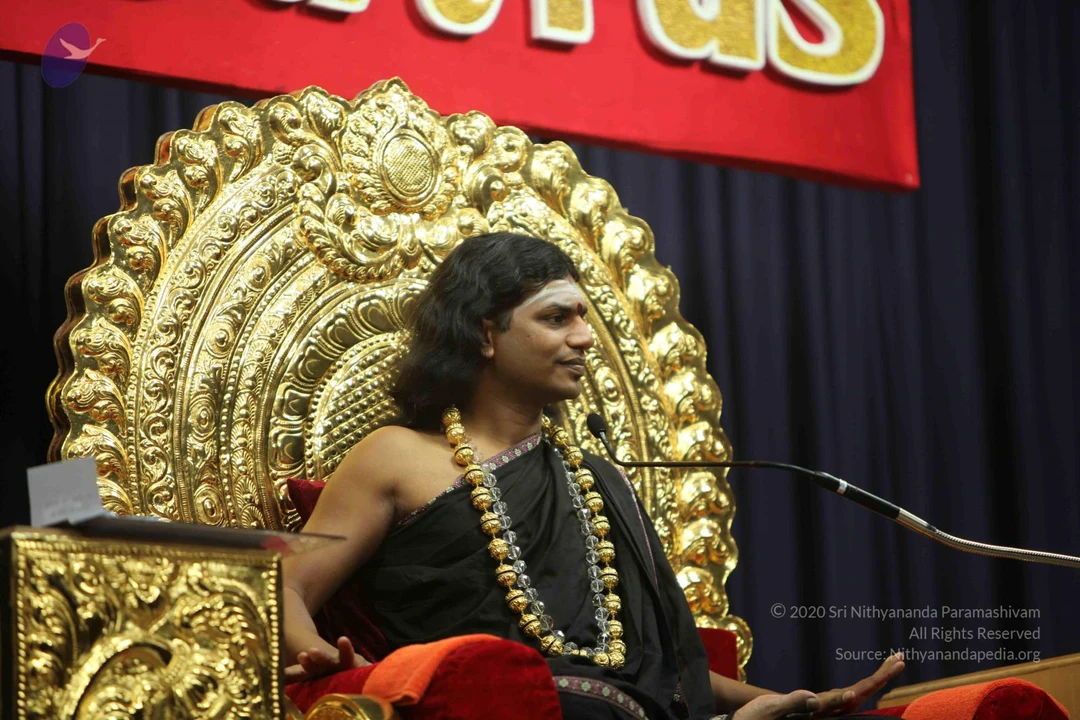
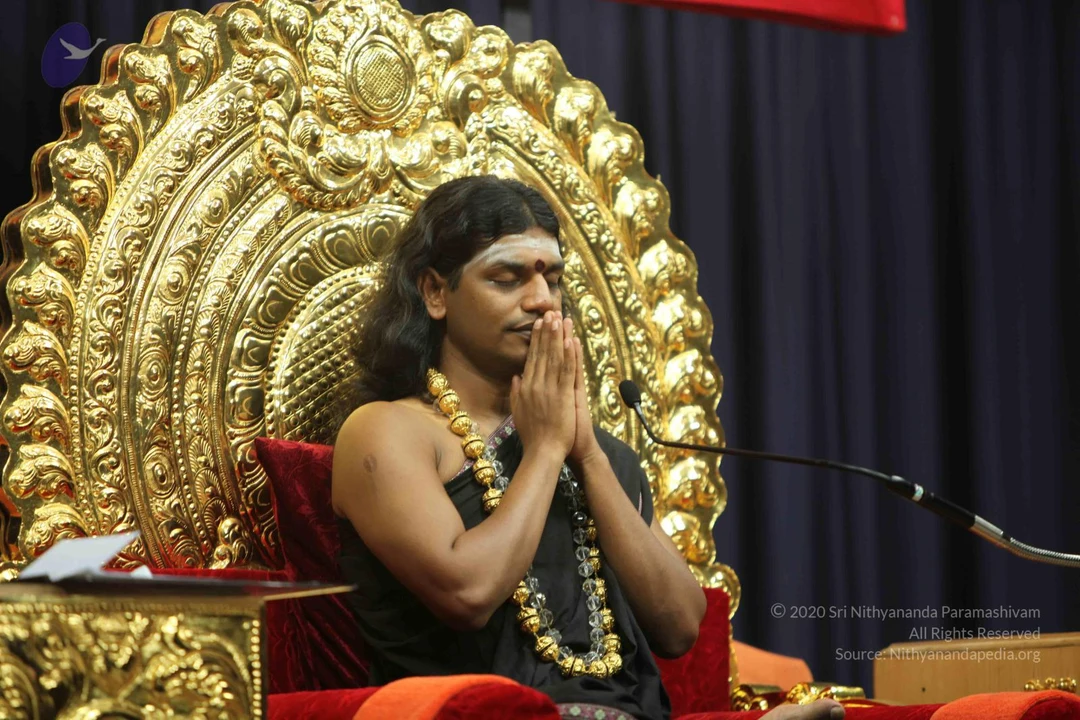
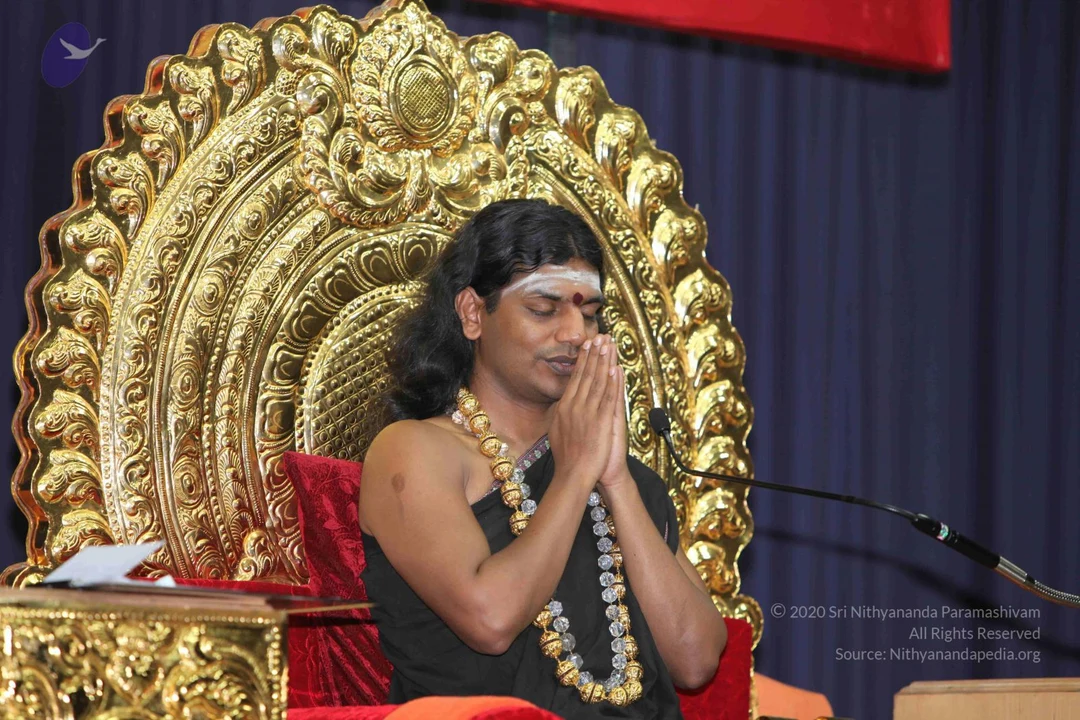
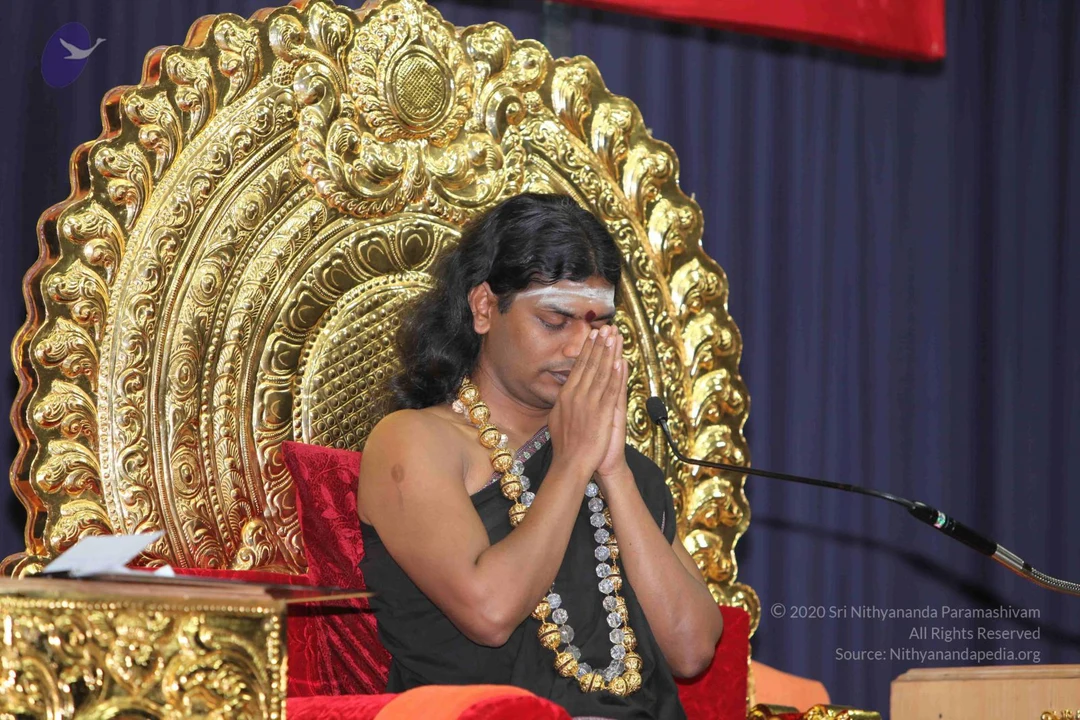
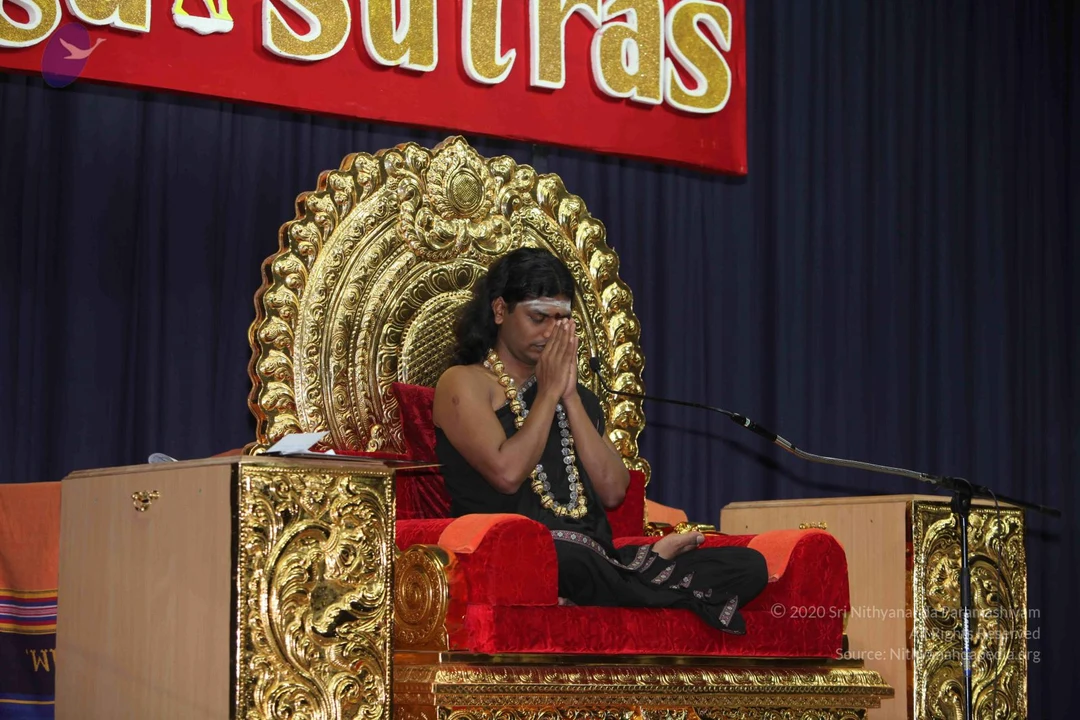
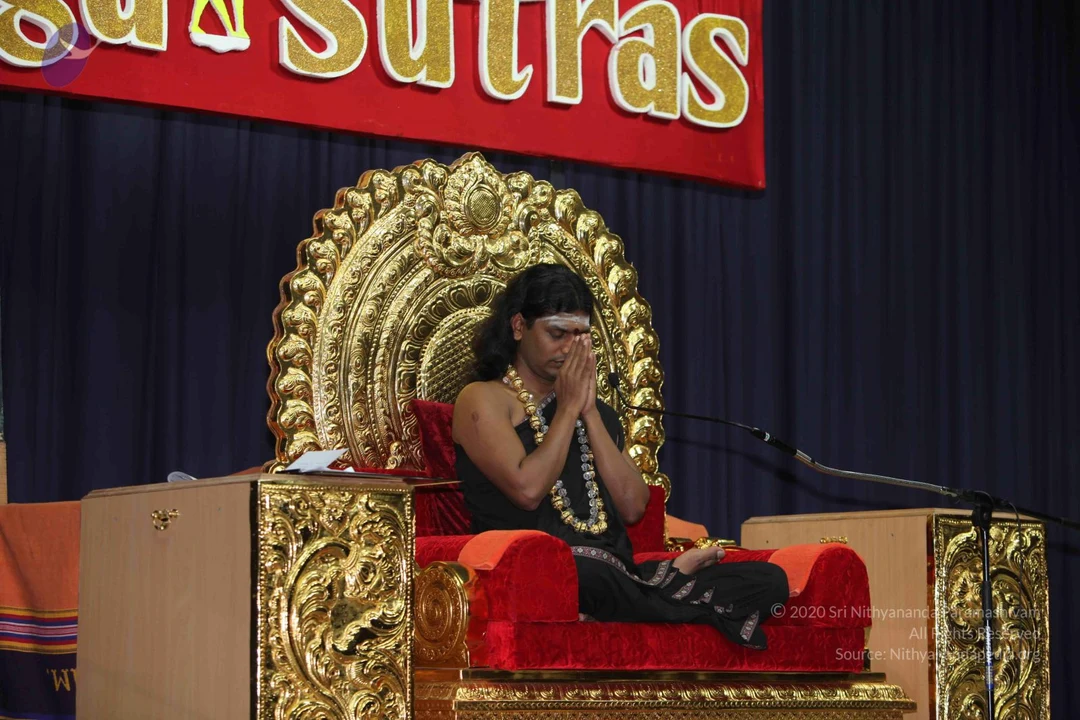
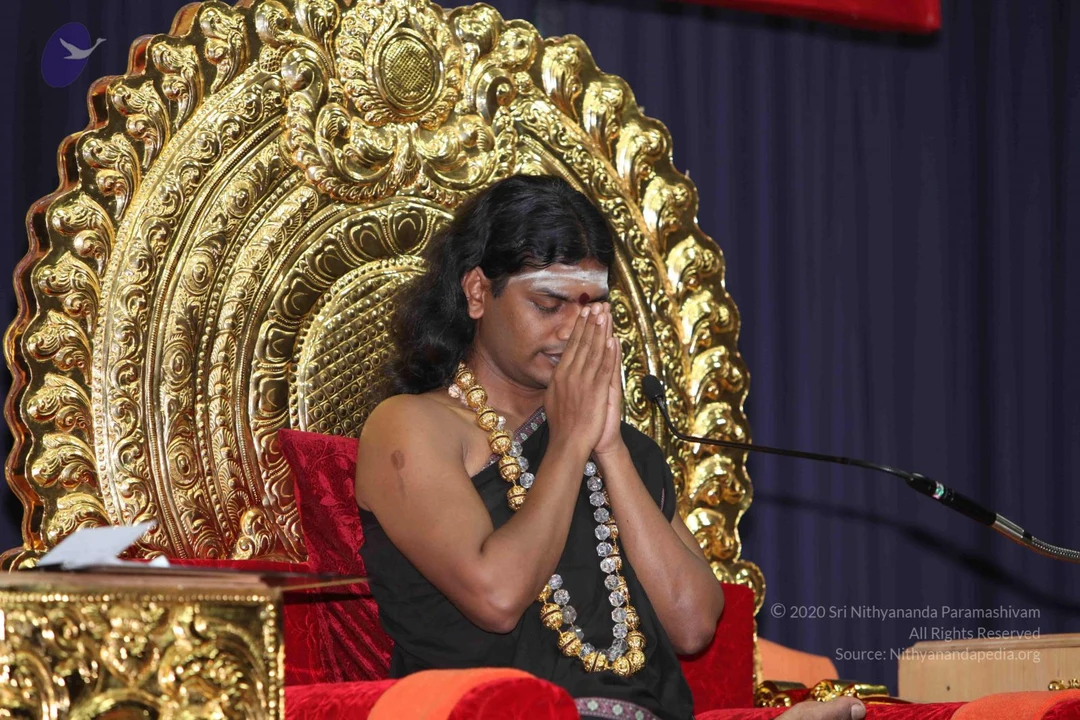
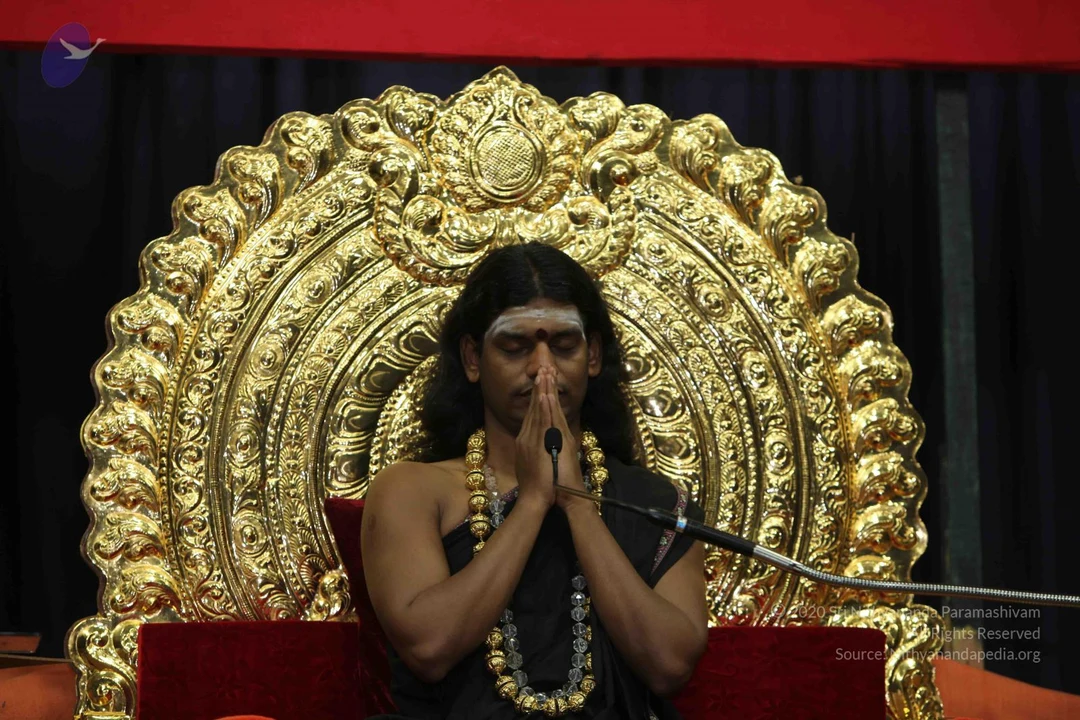
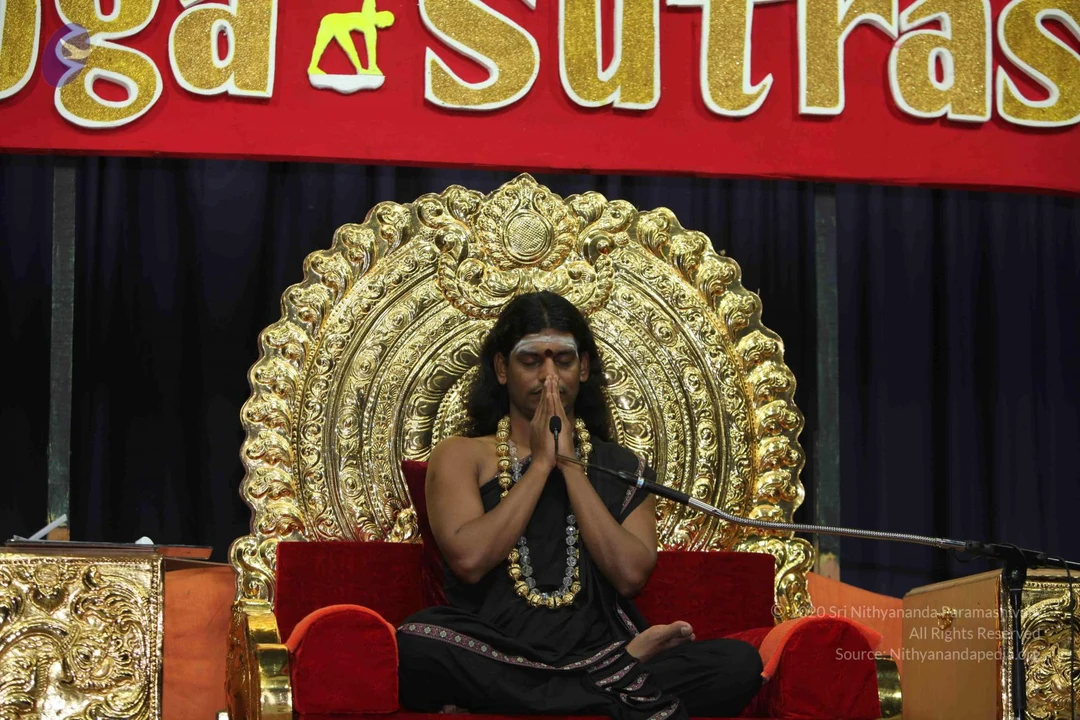
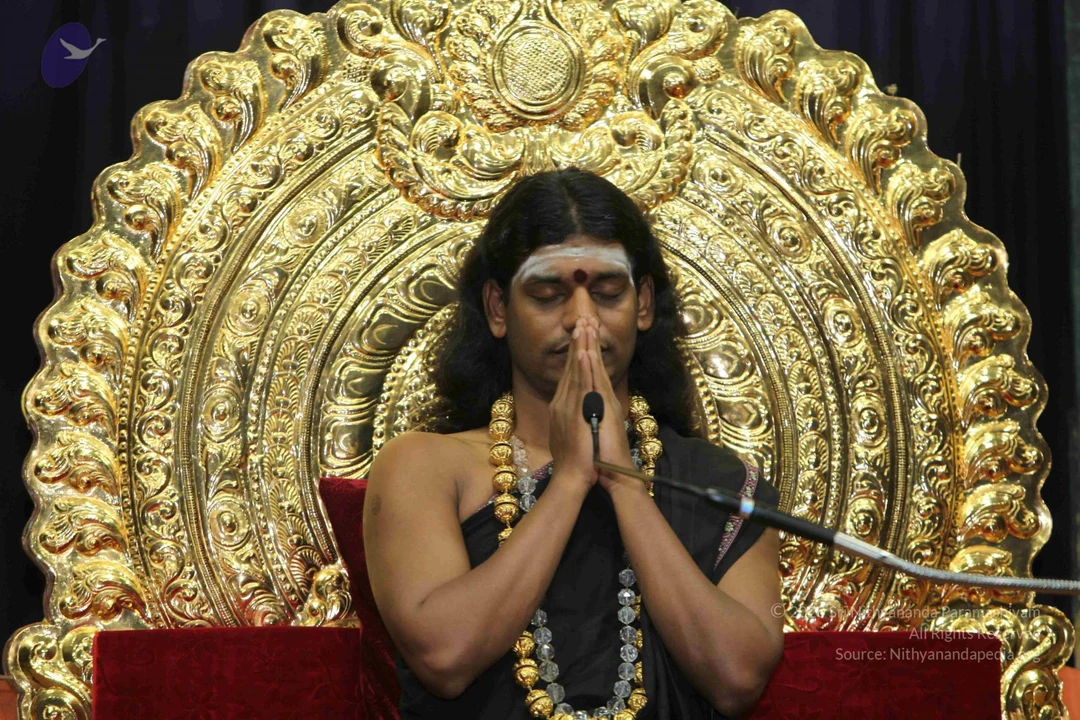
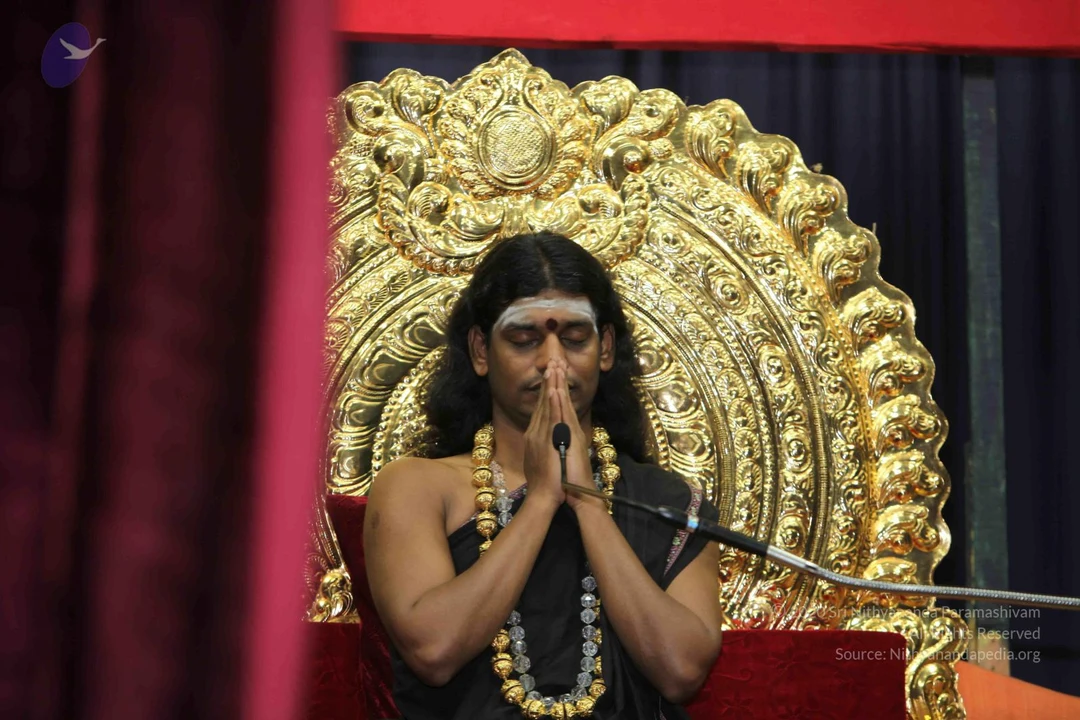
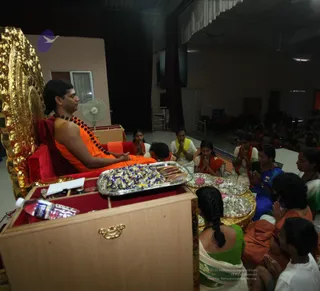
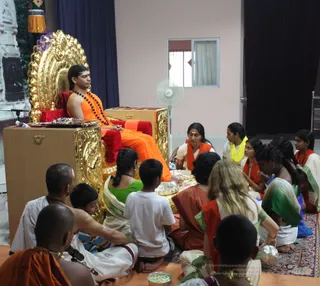
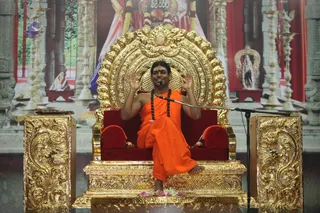
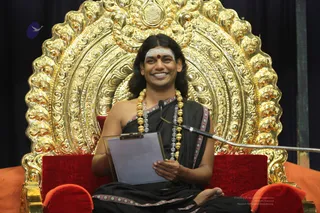
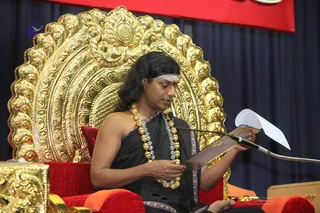
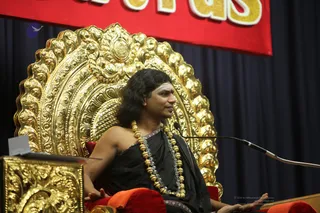
A man seated on an ornate golden throne with a red cushion speaks at a microphone while holding a document on a wooden lectern. He wears a black sleeveless wrap with a pink-and-green patterned border, a large necklace of gold beads and clear crystal beads, and a white-and-red forehead marking. He has long dark hair and his left hand rests on his chest. A dark blue curtain stands behind him.A photograph of a person in a black sari-style garment with a red-and-gold border, standing with palms pressed together in namaste before an ornate gold throne with red cushions. The person wears a white headband, long dark hair, and multiple beaded rudraksha-style malas with gold beads around the neck. Behind them hangs a red banner with large gold lettering, and a dark blue curtain backdrop. A microphone stand is visible at the lower right. Swamiji (probable): the appearance cues are long hair, a white headband, a black garment with a red-and-gold border, layered malas and a gold throne, so the person is.A photograph of a devotional gathering in a hall with golden-framed throne-style seating. A man on the left wears an orange robe with rudraksha malas, a purple crown-like headpiece, and sits on a red-cushioned golden throne, facing right. Seated on the floor in front are several women and girls in orange, red and white saris, one in a yellow shawl, and a man in white with a bald head. Brass and silver plates with pink flowers and offerings sit on a golden tray in the centre. A woman in a blue sari sits near the right edge, and a fan, curtain and a small framed sign are visible in the background. Probable Swamiji (appearance cues: orange robe, rudraksha malas, crown-like headpiece, throne) is seated on the throne, presiding over the gathering.

October 27 2010

Original wiki page
Contents

Title

Heal Your Mental Scars To Redesign Your Life: Nithyananda Morning Message

Narration

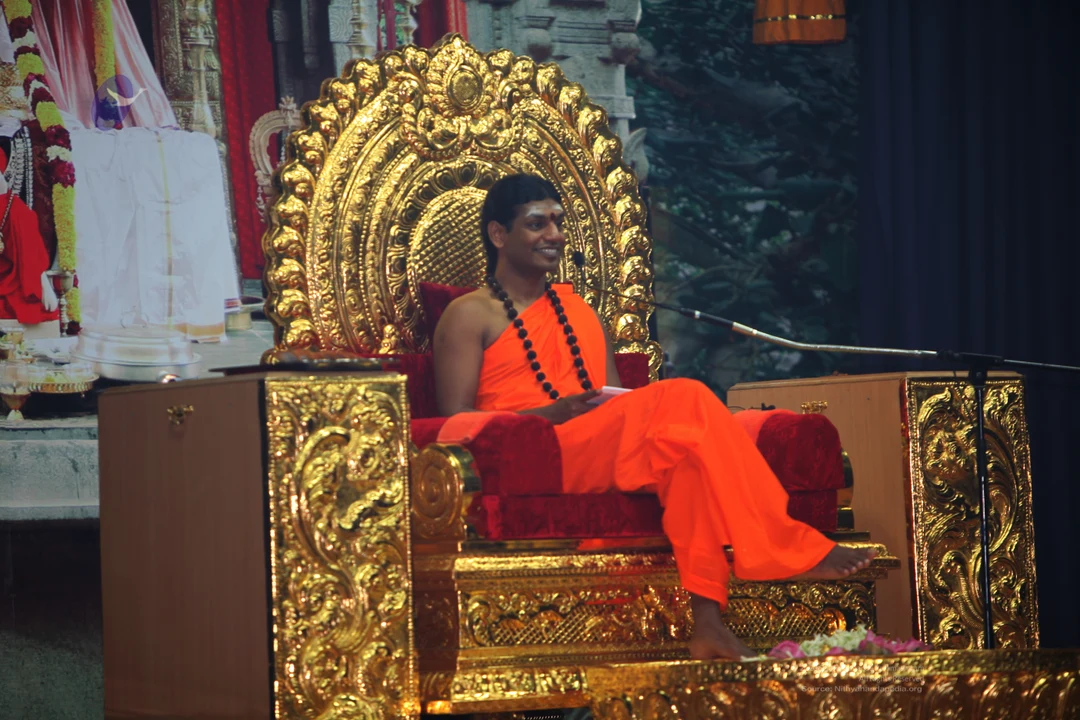
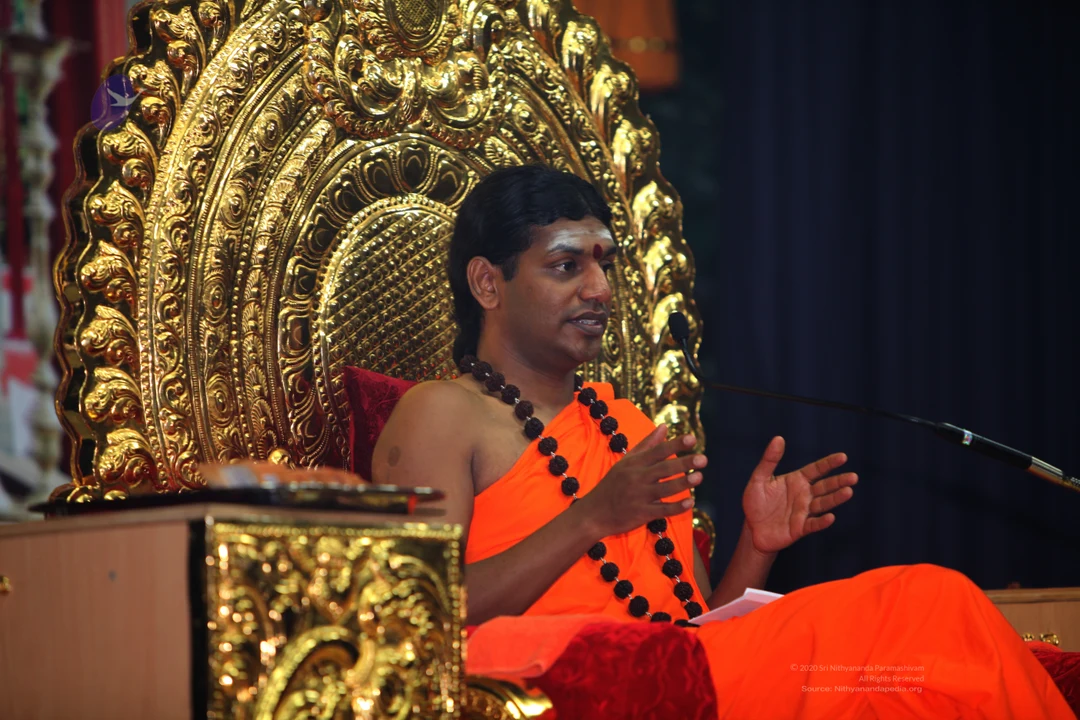
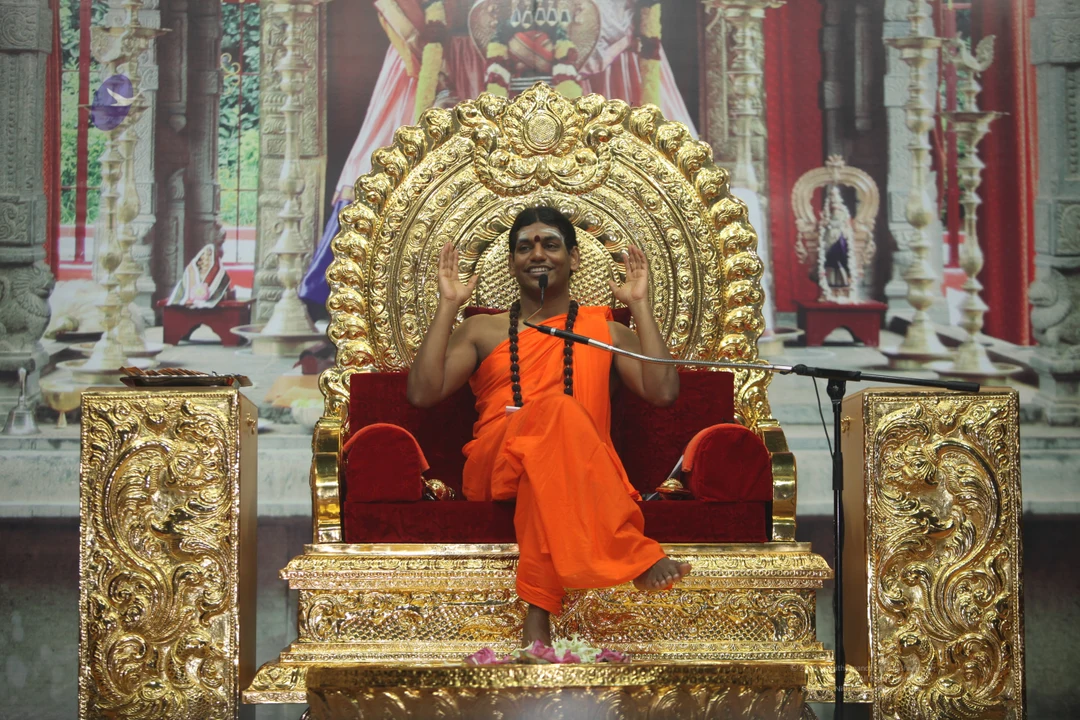
The Supreme Pontiff of Hinduism, Jagatguru Mahasannidhanam, His Divine Holiness, Bhagavan Nithyananda Paramashivam, expounded on the Cosmic Principles of Engrams during the everyday live public talk - Nithyananda Satsang. In this talk entitled Heal Your Mental Scars To Redesign Your Life: Nithyananda Morning Message (27 Oct 2010), His Divine Holiness (HDH) expounded that some people carry physical scars from the mental scars they carried in a previous birth. His Divine Holiness observed that devotees can become hurt by His loving words, and feel love from His very firing words, all due to the Samskaras in which they are caught. He shared that the only way to evolve human civilization in such a way that we are not running into the samskaras of others, is to develop awareness in children before the age of 14. He described several cathartic and intense techniques good for erasing engrams from the body. His Divine Holiness concluded by encouraging the Sangha to use the infrastructure of the Temples and Satsang centers to develop therapy programs in line with today’s message.

Video and Audio

Heal Your Mental Scars To Redesign Your Life

VideoAudio

Transcript

Sadashiva samarambam shankaraacharya madhyamaam Asmadaacharya paryanthaam vande guru paramparaam.

1:00 Todays subject is 'Heal Your Mental Scars To Redesign Your Life'. First you need to heal your mental scars. Some of us carry even physical scars due to the mental scars happened in the previous birth. Please understand, I have seen many people carrying the physical marks, scars related to previous birth, sufferings or incidents.

1:54 I have some shastra pramana from ancient rishis and modern day rishis; scientists. Here is a scientist; Joseph Chilton says samskaras or engrams are fixed predispositions carried in our subtle body that warp the neutral flow of energy and deliver pseudo information to the brain resulting in disturbance in natural processing of information the brain is designed to provide us. Oh God! I have seen even my loving word sometime people take it so hurtingly; even firing words people take it very lovingly. Just because of their samskara in which they are caught, the most dangerous thing in the planet earth is to relate with the person who has samskaras; means talking, is most dangerous thing in the world. I tell you really talking is most dangerous thing in the world. When people suffer with samskaras anything they see is disturbed like this sound.

3:42 See this sound is a samskara, anything you hear will be disturbed. The outside sound itself can disturb so much means inside sound what will happen? The inside sound is what I call samskaras. It delivers pseudo information. First things human being should learn before the age of fourteen is to establish yourself on certain awareness. I can call that state as pratyagatma chaitanya jagratam means an individual awareness is awakened to that level; all children have to be established basically in that level. Only then human civilization is possible. Till then whatever we are having is just hell where nobody is ready to listen to anybody. Everybody is suffering with their own engram and no relationship is possible.

5:11 Today morning I was reading a book ‘Same soul many bodies’. There is a doctor who wrote few books on this past life regression; ‘Many lifes many masters’. He wrote many books on past life regression. Today morning I was reading, browsing through these two books. He was revealing how we are loaded, loaded, loaded, with samskaras, engrams and how every moment our perception brings suffering to us. Once I asked a brahmachari what do you want? He told me that I should be established in samadhi state always. The moment he said I just looked into him deeply. His being did not even want to see me. He just put his head down and ran away. Because the being do not even know the meaning of the word it is uttering; being established in samadhi means completely engram free. But if I take out even hundred engram out of that person the being will feel empty. No, no, no, no, no I think too much is losing; I am losing too much.

6:46 This engraved memory is such a danger it can go on and on and on projecting your life is a hell. It can go on making you retain that heaviness in your heart. Whatever you may be doing whatever may be happening, but it can retain that heaviness. The engraved memory, the engrams can constantly divert you from the seeking. Understand, this frustration is nothing but laziness. There is no such thing as frustration. Understand, when this question really harms you, sync with that question. It will only create more and more inspiration in you. Because I have seen, see whenever I used to look in, who am I, what is, what am I, what is happening around me? I think yesterday I told you one incident in yoga sutra, Patanjali yoga sutra. There was a snake in the polytechnic I was studying. I was walking from my college to the hostel. On the way there was mechanical workshop one side and the ladies hostel other side. From the ladies hostel two three people were shouting snake snake, and I was on the main road. Few workers ran to kill that snake. But that snake got into the snake hole, it escaped.

8:51 I had one technique of creating a particular sound. So animals will listen to that sound and do what you say. It won’t work on human beings; it will work only on animals. So I had this science from this Narayanaswamy Dattar; he was an adept in the science of mantras. And I just tried and I saw that snake became unconscious and started moving towards me. When it came near me just ten feet, I saw because that snake was unconscious his being dragged towards me. On the way it got injured wounded by many thorns; so much bleeding. The moment I saw that something happened to me that something broke in me. The deep compassion and love, oh God! This fellow did not kill anybody and it did not hurt anybody why did I cause so much suffering to him. Just I broke and sat down in the road itself. I still remember very clearly snake was just ten feet from me and I stopped creating that sound.

10:15 When that snake came out of that unconsciousness, now if he wants he can bite me and kill me. I decided whatever suffering I caused, whatever happens let it happen I am going to surrender. Then I saw that guy, he just lifted his head and looked at me, poisonous snake, and he just licked his wounds. I could see very clearly immediately it got healed. I am still wondering whether the snake is something extraordinary or some higher level being, still I am I have no clue. He licked his wounds. It just immediately got healed and again he looked up, looked at me, put his head down and went back; did not bother about me. This was churning me for such a long time. That brahmanatva in me, means that not letting go the true seeking; that brahmanatva in me could not tolerate this whole incident. I could not forget and it was just churning me. Oh God what did I do? Why did this happen? What is the truth of this whole thing? And it was so strong; actually end of that when that started disappearing I only got established in deep compassion.

11:55 Then I went back to that swami, the Narayanaswamy and asked him, what is this? What have you done to me? What did I do? Why did you teach me this and why did I use this? And it brought me so much of hurt; wound. And he told me what the mantra need to do, it has done to you. He said very beautifully, extraordinary powers are given to you to show that even ordinary is not worth living. See if you can suddenly break this chit sabha like a small bamboo and fold it and put it in your consciousness, this is an extraordinary power. Just like how anything made out of wax you can just melt it like that this whole chit sabha can be melted and put in the consciousness just by sound vibration. If I can do this, this power proves even the ordinariness is not worth reality; it’s not the solid reality. See whenever you can break the ordinary rules, it is extraordinary. The ability to break the ordinary rules and make yourself extraordinary is not supposed to bring extra ego it is supposed to tell you the ordinariness itself is worthless; that is why your are able to break it. So he said that is what exactly the lesson you need to learn. You learnt it forget about it; that’s all. After that neither I was able to create that sound nor that mantra worked with me. Neither I could do nor I tried. It did not work. I forgot about the whole thing. But the lesson was learnt.

13:51 Understand, because there was no engram any click became energy. If you feel you are searching that who am I who am I who am I and finally you felt frustration understand you are stuck with laziness. So you need to break the laziness. You cannot have frustration. If you have frustration, understand the laziness is stopping your seeking. Because in my case no seeking, no seeking has lead me to frustration. It only led me to more and more energy. After that snake incident, yesterday I think if you hear the whole Patanjali yoga sutra you will understand, after that, that seeking that churning which was there for at least three four months, it only lead me to more energy, more understanding. Now if I have any more experience like that I am ready to go for deeper seeking; deeper experience. I am not frustrated about it.

15:13 Same way if you feel that you are started searching that who am I, after sometime you are feeling frustrated, it means you don’t want to do it once more. No. I have seen sometime these guys get into some foolish mess in the mental setup and do not want to meditate anymore. It’s like a cat which tried to drink hot milk. Once it gets the wound in its tongue will never ever go near the milk again. So if there is a frustration about any higher truth, disillusion, any, about higher idea, it is laziness; you are stuck. Break it. Understand laziness stored in your core muscles should be broken by yoga. Laziness stored in your brain muscles should be broken by again and again and again practicing; again and again and again no way. Don’t leave practice; sadhana, sadhana, sadhana. Because in the journey of sadhana even f you die, whatever is achieved will come with you. That’s what in young age I used to be told and I used to believe, the only thing which can come with you is the time you spend in seeking and finding the truth; accumulating which cannot be taken away from you. Acquiring which cannot be taken away from you.

17:39 So the engrams are fixed predispositions carried in our subtle body that warp the neutral flow of energy and deliver pseudo information to the brain. When I say something, do something you will have your own interpretation for it. Then you are caught suffering and big messing up, resulting in disturbance in the neutral processing of information the brain is designed to provide us. I can say samskaras are responsible for all brain related disorders whether it is Alzheimers or brain hemorrhage; anything I can say anything related to brain, all the damage, samskaras are responsible. Releasing the samskaras you collected in this birth is the first foremost spiritual practice.

19:13 This three can be a powerful technique to release the samskaras which you accumulated in this birth. One cathartic meditation techniques like manipuraka shuddhi kriya, bhastrika pranayama, kapalbathi pranayama or shambhavi mudra pranayamas or heavy samana yoga like weight lifting, intense running, heavy swimming, even that can be a powerful very powerful catharsis; physical activity. These all can be the first level cathartic techniques. The second level the mind level the samskara dahana kriya; go on writing and speaking out speaking out speaking out. See this samskara dahana kriya if you do once or twice don’t think it is done. No. At least 21 days every day it should be done. Every day it should be done like a ritual. Sitting and talking out to various people various situation; so various layers will open up actually. You should do all these things like courses. We should develop courses. Just for catharsis we can develop a 21 day course. The morning three hours of intense physical activity and noon three hours of only samskara dahana kriya and evening three hours of either reasonless crying or reasonless laughing.

21:20 Understand I am giving you clear science of catharsis. Morning three hours of cathartic techniques, as I described kapal bathi, bhastrika, manipuraka shuddhi kriya, heavy samana yoga like 108 surya namaskar, heavy weight lifting, swimming, running, physical activity; these all can be the physical the layer catharsis. This should be three hour session in the morning and noon three hour of only samskara dahana kriya. Go on digging, digging, digging, digging, digging, digging, digging, writing and talking, talking, talking, to different people; samskara dahana kriya. This should be a three hour session and evening just three hours of reasonless laughing or crying. If you laugh you will start crying, if you cry you will start laughing.

22:33 The first layer will cleanse the muscle memory; the second layer will cleanse the brain memory; engrams. The third level will cleanse the consciousness. In 21 day I can promise any man will have yogic body and vedic mind just with this three process. Very simple process, nine hours a day, nothing else to be done; all other remaining hours he has to just eat and sleep, nothing else; because the body will become completely tired and may need rest. Nothing else is required; 21 day catharsis program. In this 21 day, the whole engram which you accumulated from the time of your birth to this moment will be empty. You will be cleansed. I can promise at least ten important benefits you will have; release from all addictions, when I say all I mean all, release form all the trauma you accumulated, release from all the wounds; emotional wounds, release from all phobias when I say all I mean all, release from all tiredness’s, physical, mental fatigue. Please understand it may look too big promise but it is truth. Release from all emotional blockages, release from all physical diseases happened because of psychological problems; psychological disorders. All the chronic disease which happened because of psychological disorders will disappear and ability to create the body as you want. You will become your own Brahma, ability to create your own mind as you want.

25:08 Just this 21 day morning three hours of heavy physical catharsis, noon three hours of samskara dhana kriya, three hours means three hours you have to talk, talking, talking, talking, talking, talking, about your past; three hours you have to talk and evening three hours you have to continuously either cry or laugh for no reason. In Zen they use the technique of crying or laughing for no reason. You need guts to tell people to do something which they don’t understand logically. I tell you this three things combined together I can say this will be the ultimate catharsis. The level one past, to be rid of the level one past, this is the ultimate program just ultimate program; morning three hours of heavy, heavy, physical workout, samana to be balanced; noon three hours of samskara dahana kriya, evening three hours of crying or laughing for no reason. I can promise any problem related to the first layer past, past living, means the moment you took birth to this moment anything you accumulated, will be completely burnt away. It will disappear from your system you will be fresh, fresh, alive. You will be like a, you will be a new being to start your life fresh again.

27:11 I have some more scientific researches. Dr Timothy McCall Timothy McCal says the brain is pliable and capable of developing new neurons, neural pathways and memories as you create new habits and life patterns even in adults. Feel fortunate you don’t need to worry that you missed the gurukul lifestyle in the young age. Have the interest and intensity like the kids, you can become a gurukul child again and grow in the feet of rishi; grow in naimishaaranya. Naimishaaranya is available for you, only you need to say whether you are available for it or not.

28:11 A new research by Irwin neuroscientist suggests that memories exist even when forgotten. WOW! That is what I call the deeper level memories. For that reason only I wanted that evening session of laughing and crying for no reason. With the help of advanced brain imaging techniques the scientist discovered that a person’s brain activity while remembering an event is very similar to when it was first experienced; even if specifics can’t be recalled. Oh God! It’s a very powerful revelation. Let me read out once more. A new research by Irwing a neuro scientist suggests, Irwin neuroscientist suggests that memories exist even when forgotten. With the help of advanced brain imaging techniques the scientist discovered that a person’s brain activity while remembering an event is very similar to when it was first experienced; even if specifics can’t be recalled. This level memories can be released, the engrams can be released only by that crying or laughing for no reason. Actually in the beginning only it will be very difficult to open up; that crying and laughing for no reason. Once you open up so much will release; leave your system. I can say this weight reduction, body building, the whole thing can happen in this 21 days.

30:12 Alright now I declare this 21 day program I'll make it as a free program. People anybody can come and stay and do. Let them take care of their accommodation and food. Let the ashram charge just for that. We will provide a facility. Actually once in three months we will conduct this program; 21 day just for this. We will provide one facilitator; one facilitator who manages, who takes care, who conducts the program, because this will be one of the greatest service to humanity. I tell you helping human beings to be rid of their engrams, their sufferings, their addictions, phobias, fears and unnecessary fat, will be the greatest service. Once somebody goes through this program he will be ready for past lives regression. Once the prarabdha is cleansed he will be ready to get into sanchita so that he will not accumulate agamya at all and live a jeevan mukta life. But it is possible; it is possible to live without accumulating agamya. So this program of cleaning the past living engrams can become a 21 day independent workshop, very powerful workshop to help human beings. We will provide a space and facilitator for them to go through. We will create an ambience where all the situation is available for them to do that heavy samana yoga and cathartic techniques and the samskara dahana kriya and the intense reasonless crying or laughing. This will be the powerful therapy. I can say this will be one of the very powerful therapy; from all the past engrams they will be released. This will be one of the greatest service we will be providing for the whole humanity.

33:02 Some more researches. A new research at the neuroscience university of Zurich tracked the molecular basis of memories Professor Isabelle Mansuy of Zurich university of cognitive neurosciences says the enzyme calcineurin and specific gene factors determine the intensity of our emotional memories. They have tracked down the whole thing to a physical level. I can say this catharsis will completely alter this specific gene factor and the very enzyme calcineurin…

34:02 So maybe let this process, the solution be used by humanity and I really feel every where all over the world our temples and ashrams should see this message and design the programs as per this message and start conducting the therapy courses and classes in their places. That is the way I wanted the whole new enlightened civilization to evolve to happen for modern day human beings. That’s the only way we can help for the new civilization. Otherwise see how long we can be conducting programs just in this one place and thinking of evolving a new civilization. No. All our infrastructures our satsang centers, temples, ashrams, the communities, all of them should see everyday this kind of morning message and evolve this program. Start developing this program and start conducting because after all there is no side effect. Only side effect is enlightenment. No problem. People should start conducting these programs on their own with these instructions, understandings. That is the way I really wanted our communities to evolve,our satsang centers to evolve, our temples to evolve, our ashrams to evolve, our devotees and disciples to evolve into new man and share this science to the world to evolve new human beings.

36:05 So I bless you all to evolve as new human beings and radiate enlightenment. Let you all achieve and radiate enlightenment. Live, achieve, experience, express and radiate the eternal bliss, Nithyananda. Thank you. 36:29

Photos

Panchatapas
Paadapooja

Morning-Satsang

Sarvadarshan

Yoga-Sutras

Photos Of The Day:

nithyananda-bidadi

Photos Of The Day:

Photos Of The Day:

Swamijis Morning Event

Yoga-Sutras-Evening-Session

Photos from this day

View all 350 photos

Panchatapas
13 photosSource gallery
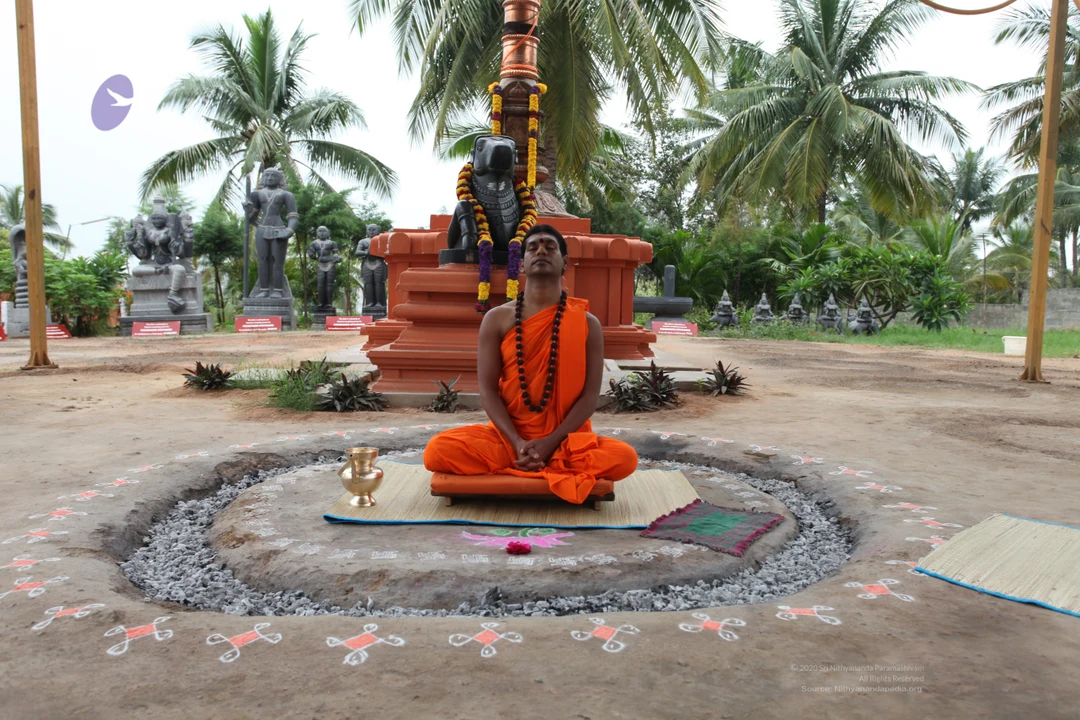
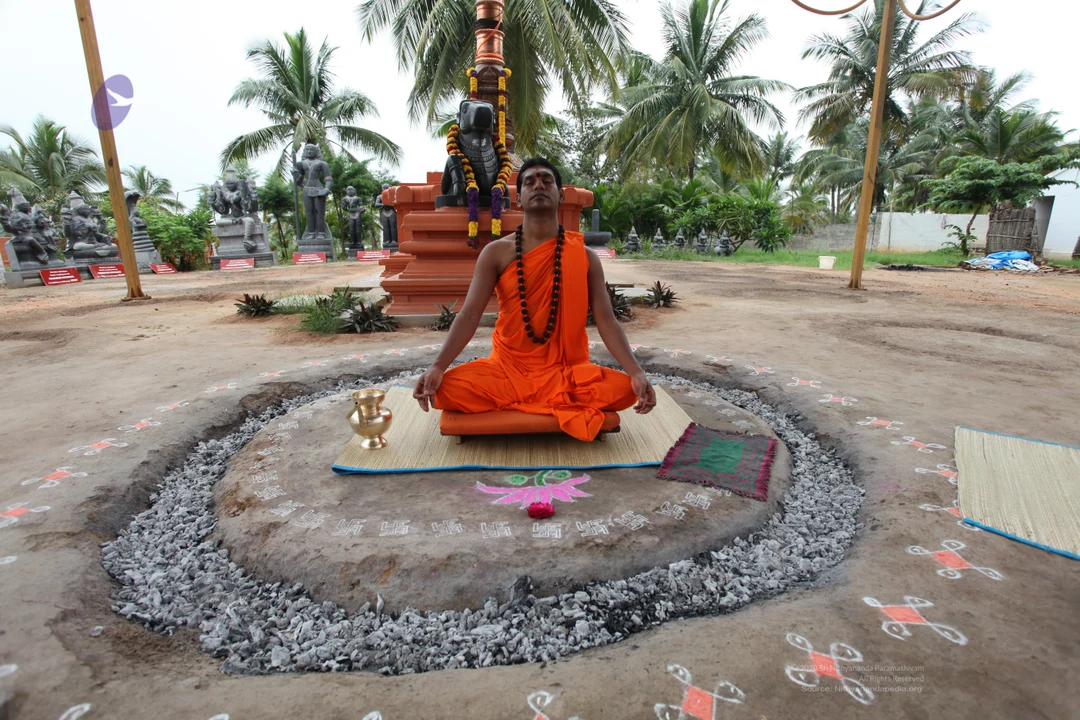
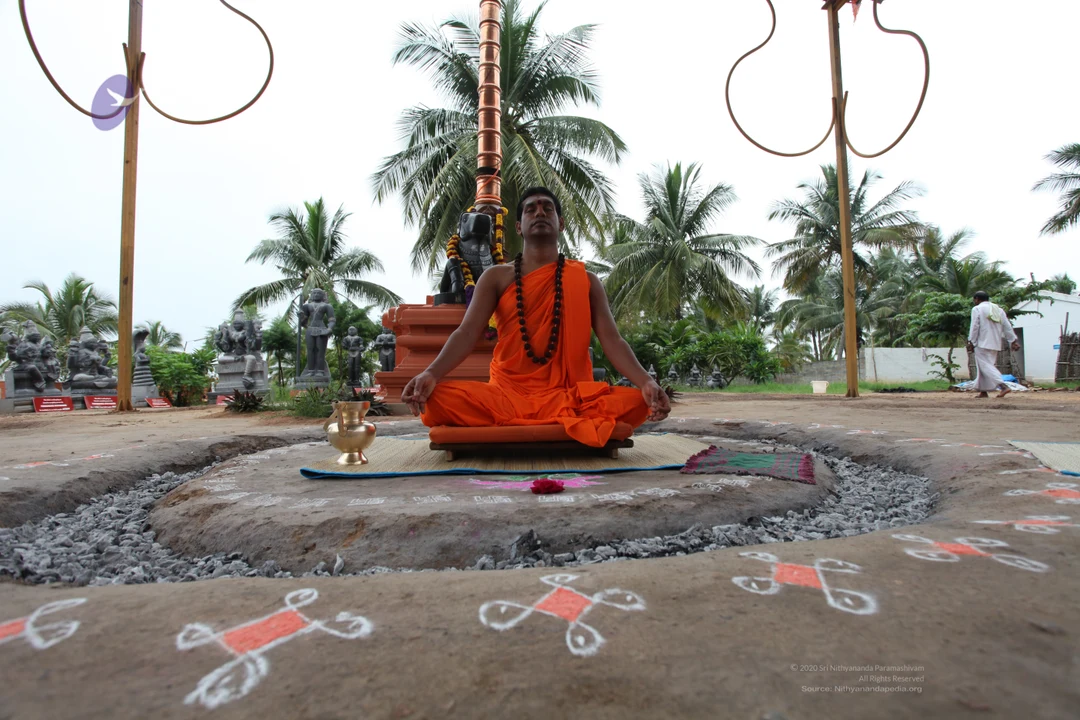
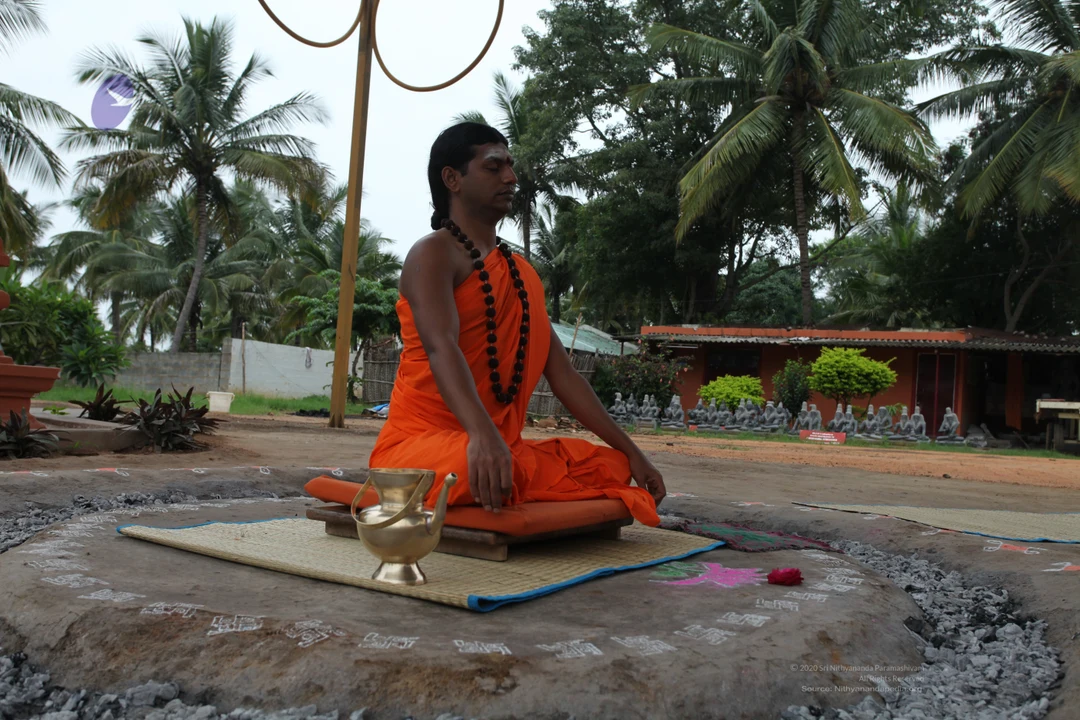
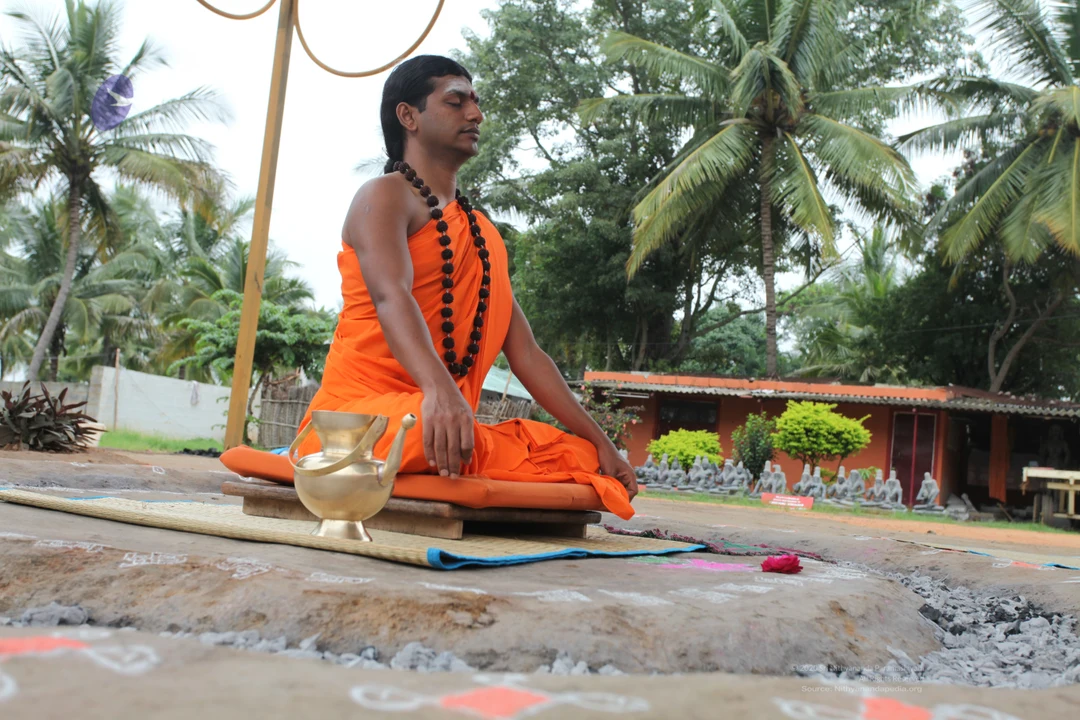
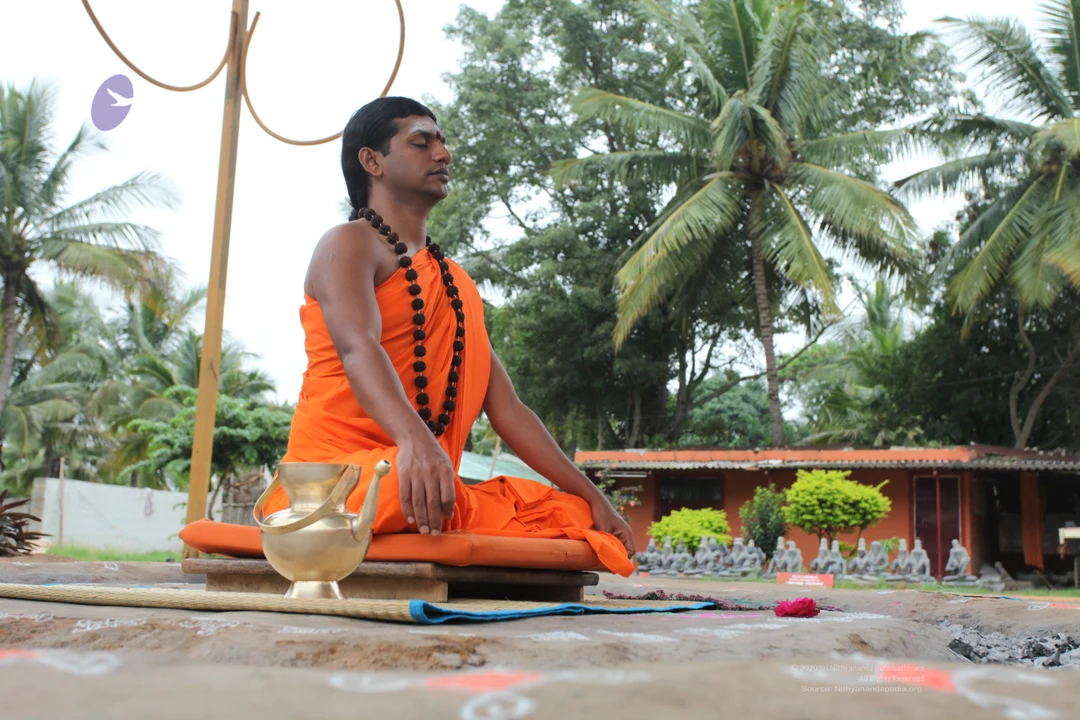
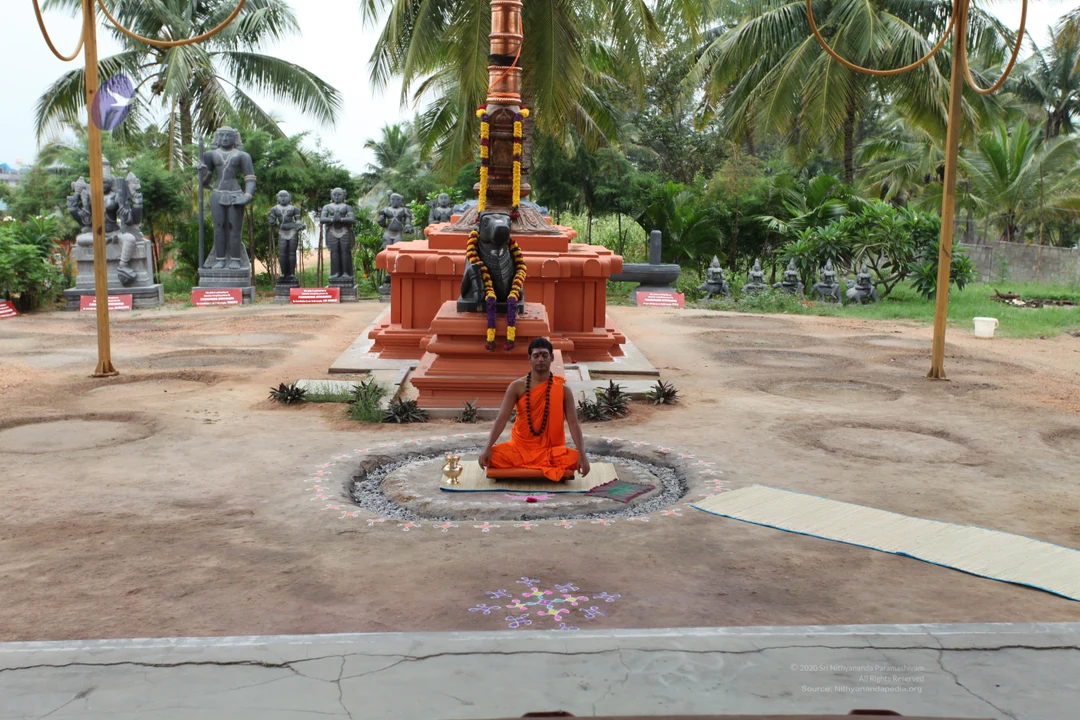
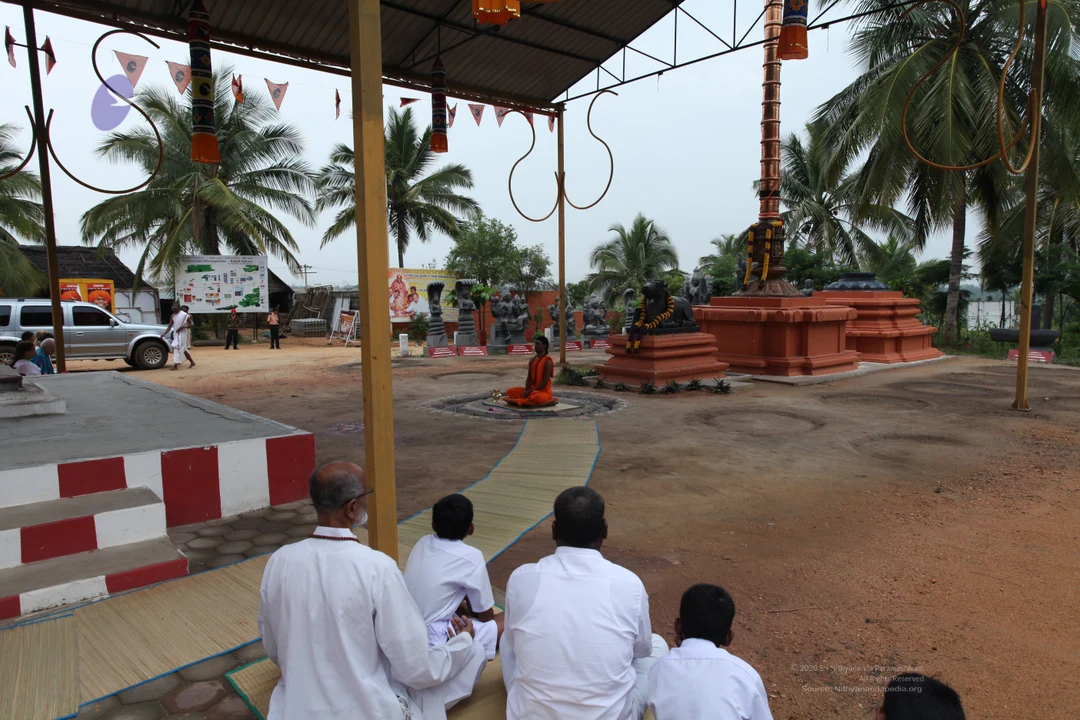
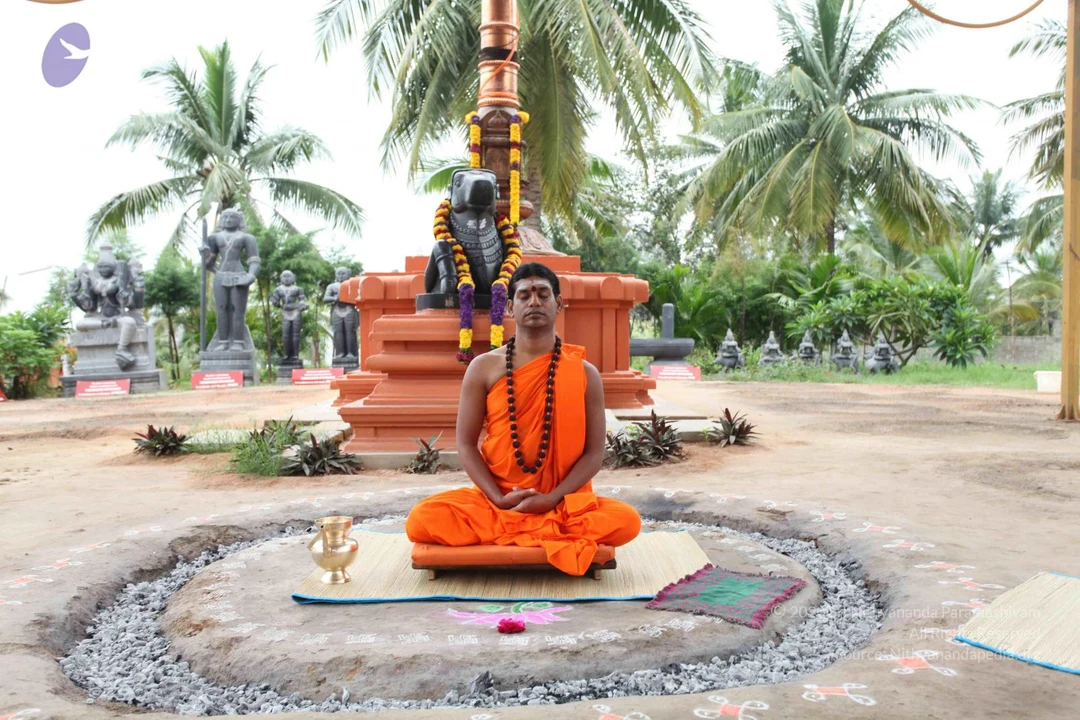
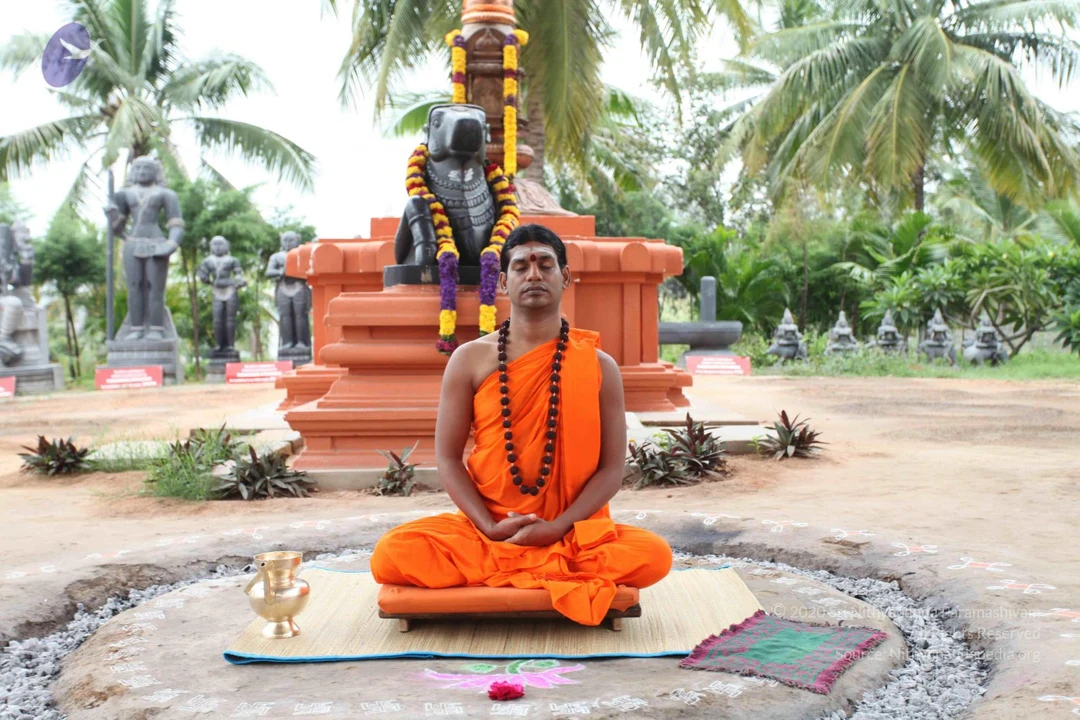
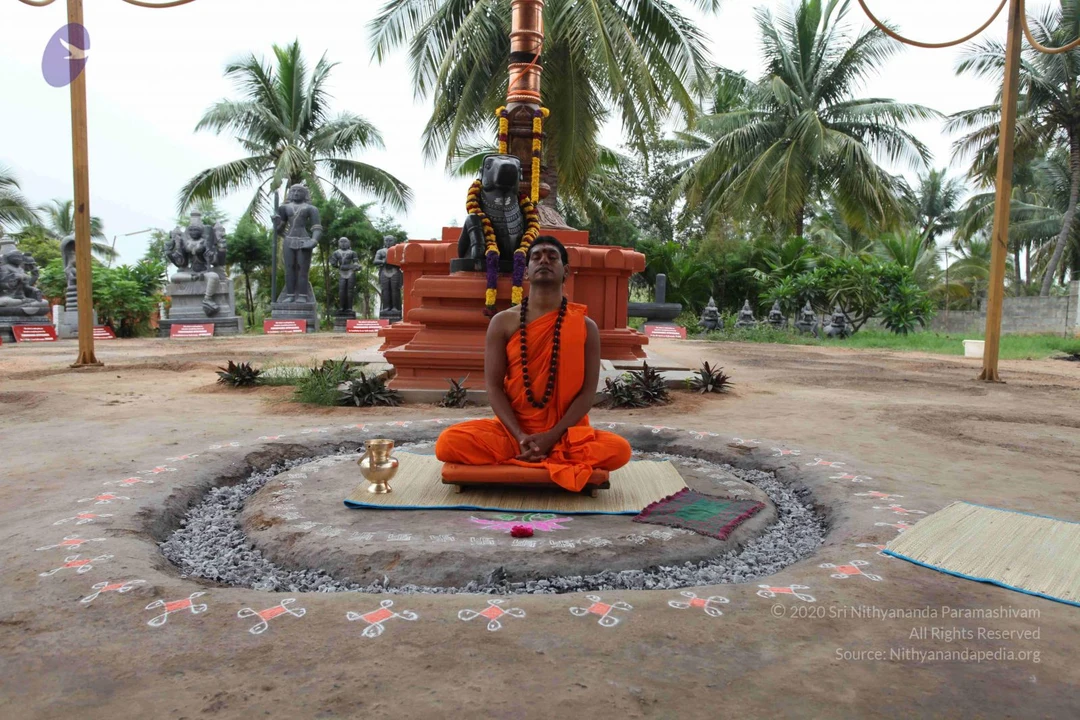
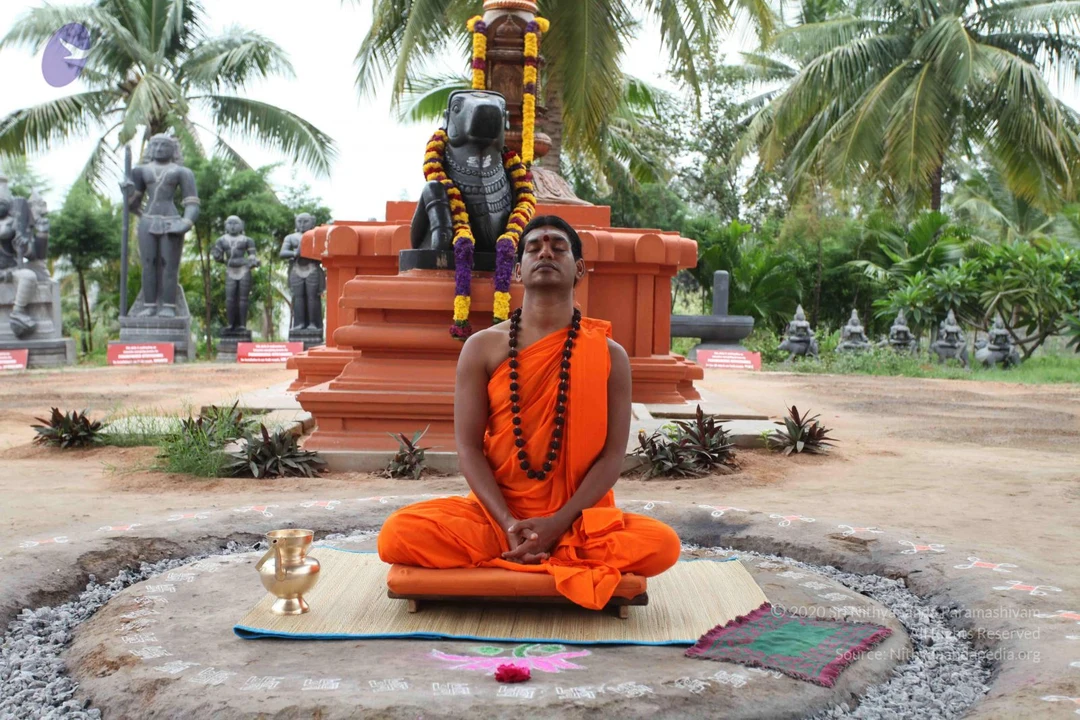
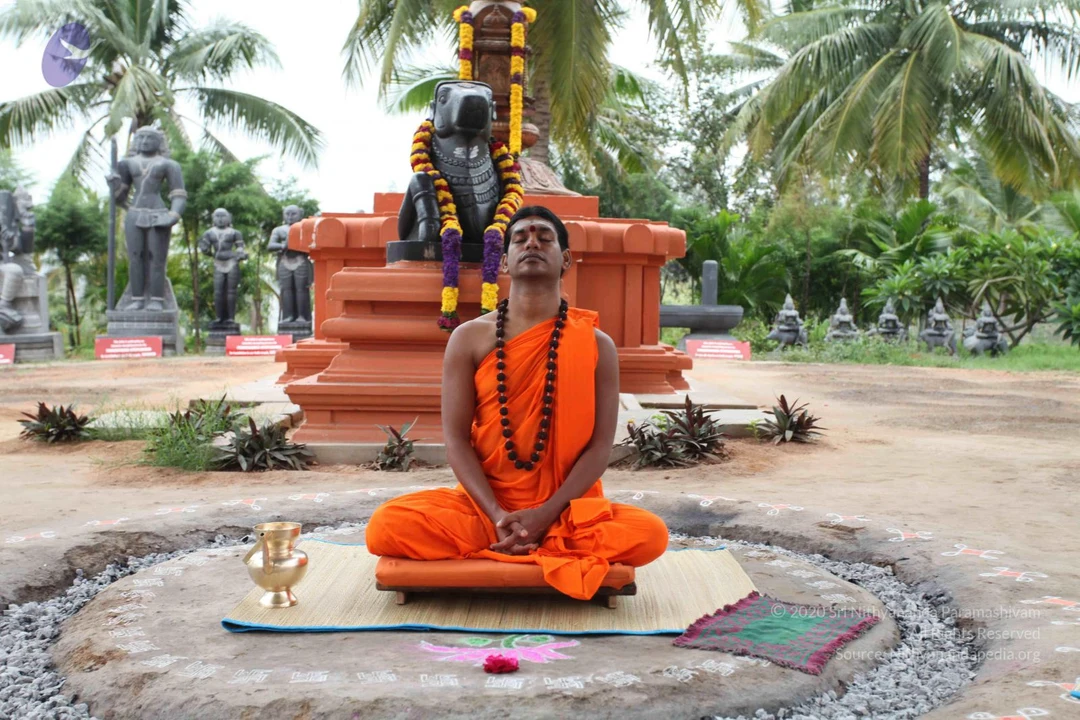
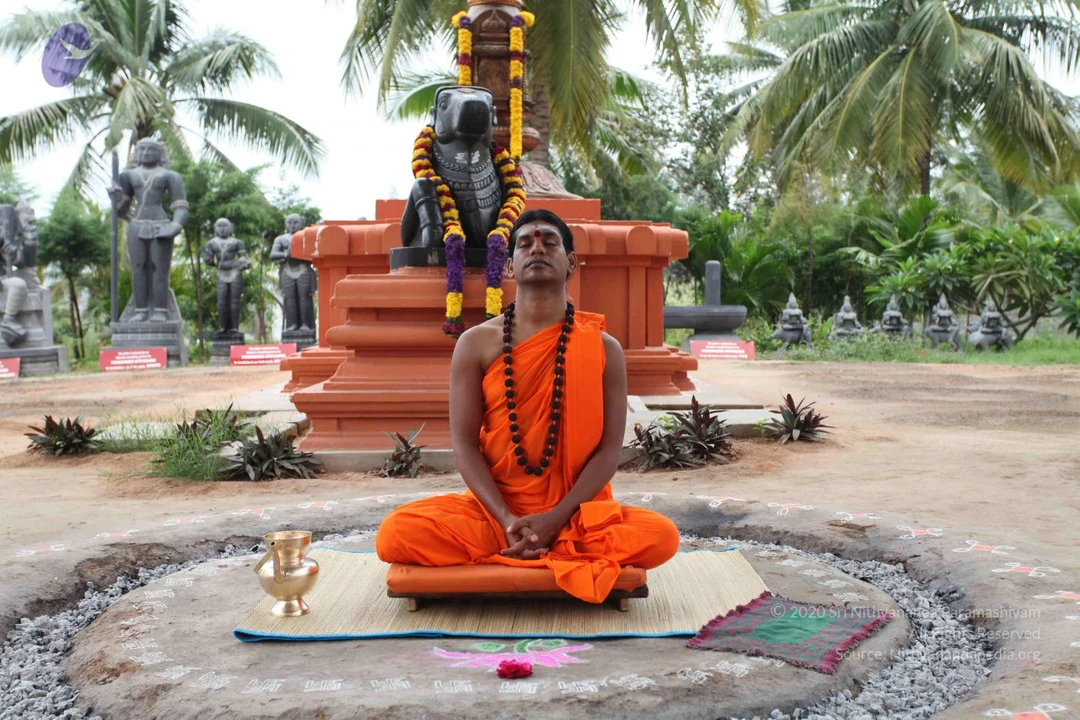
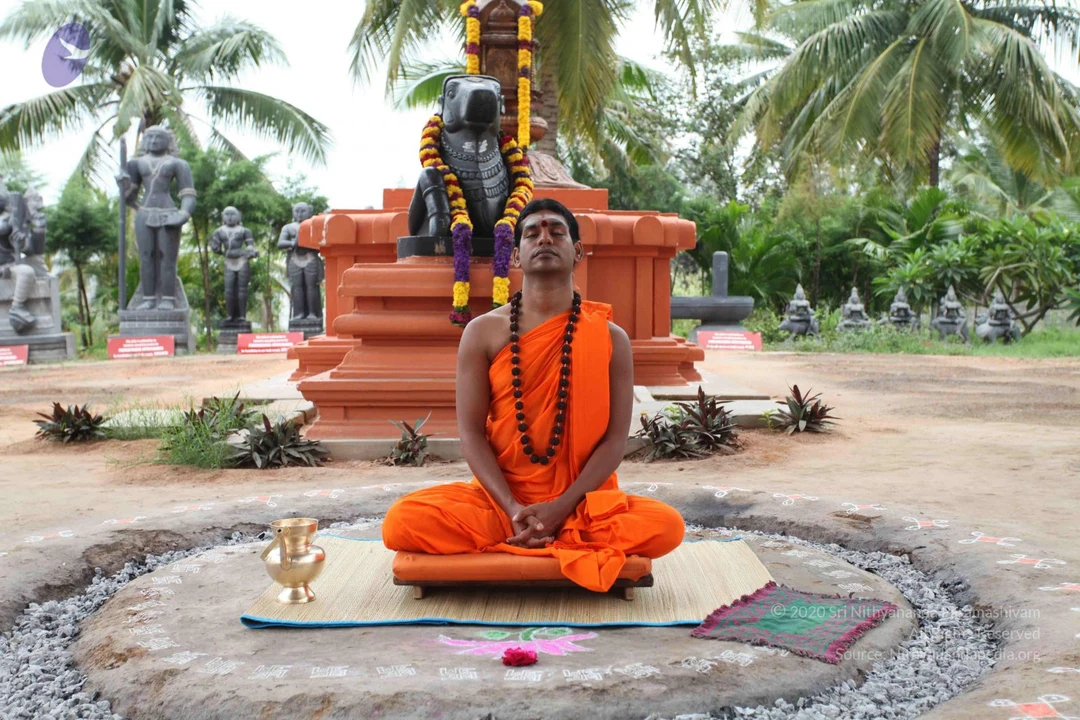
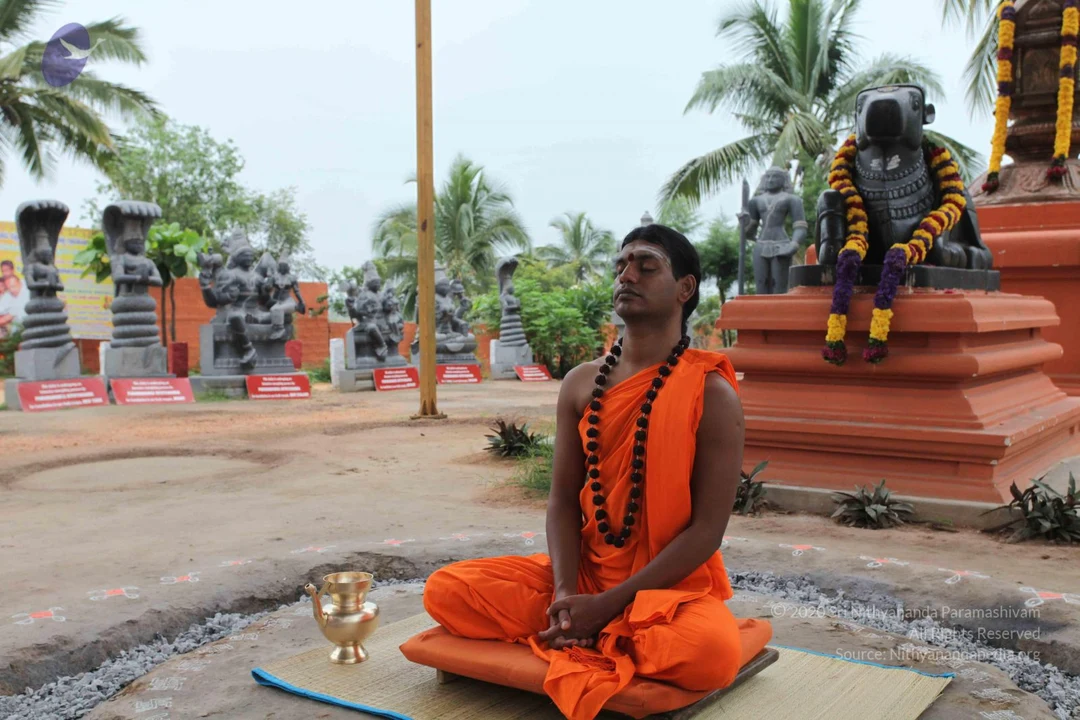
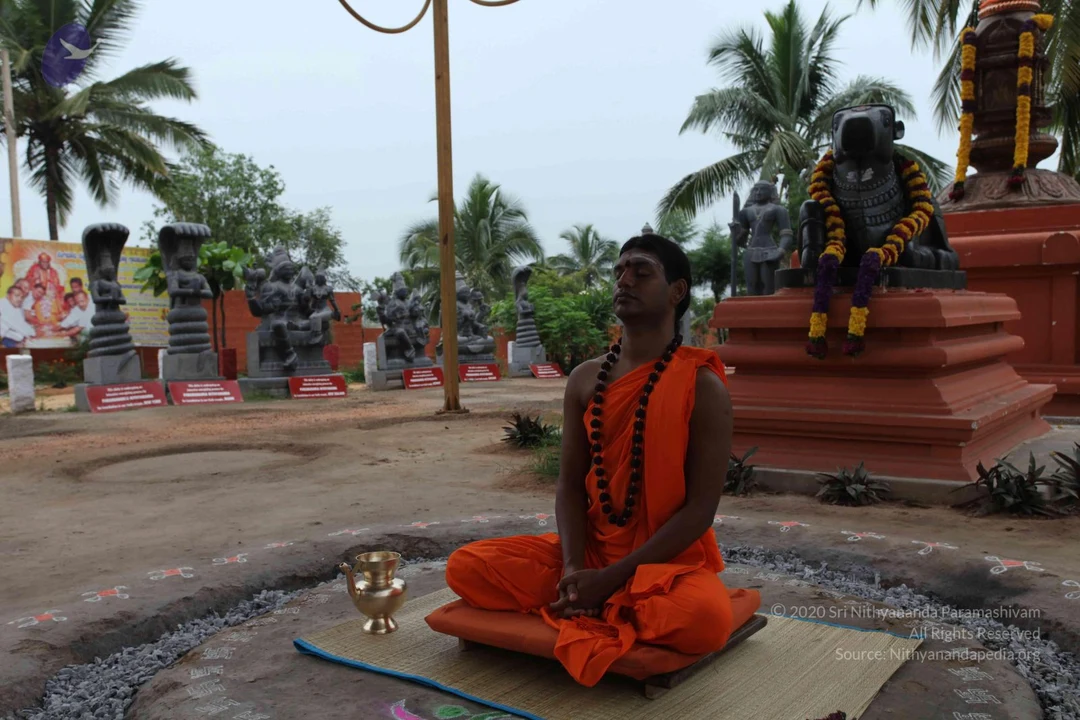
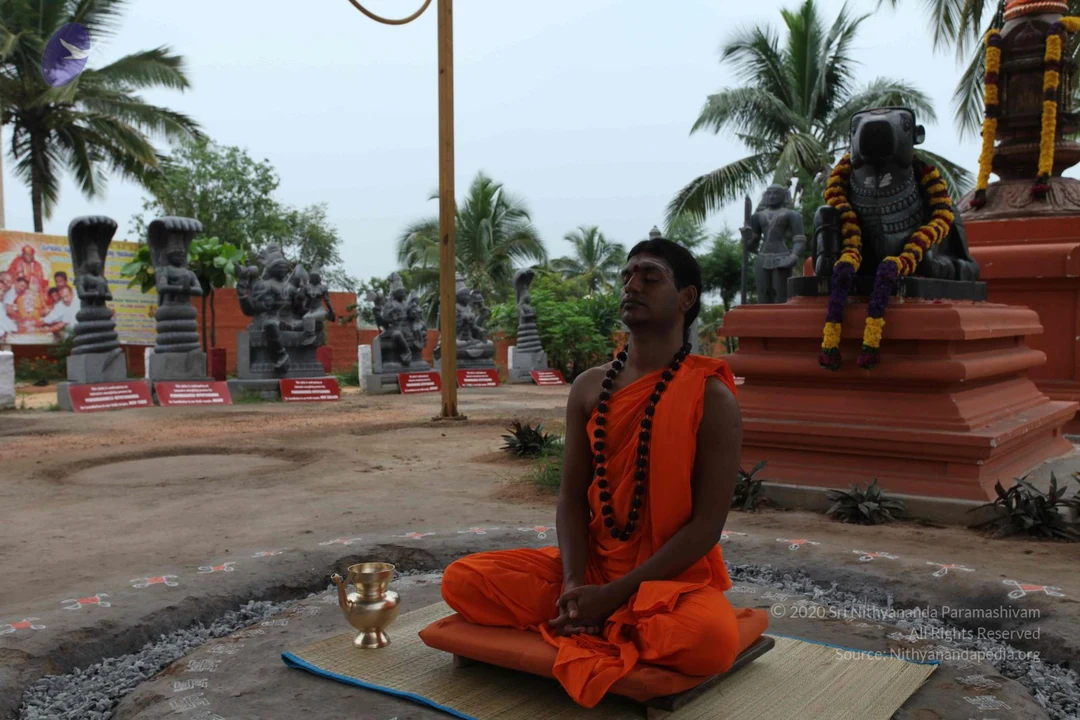
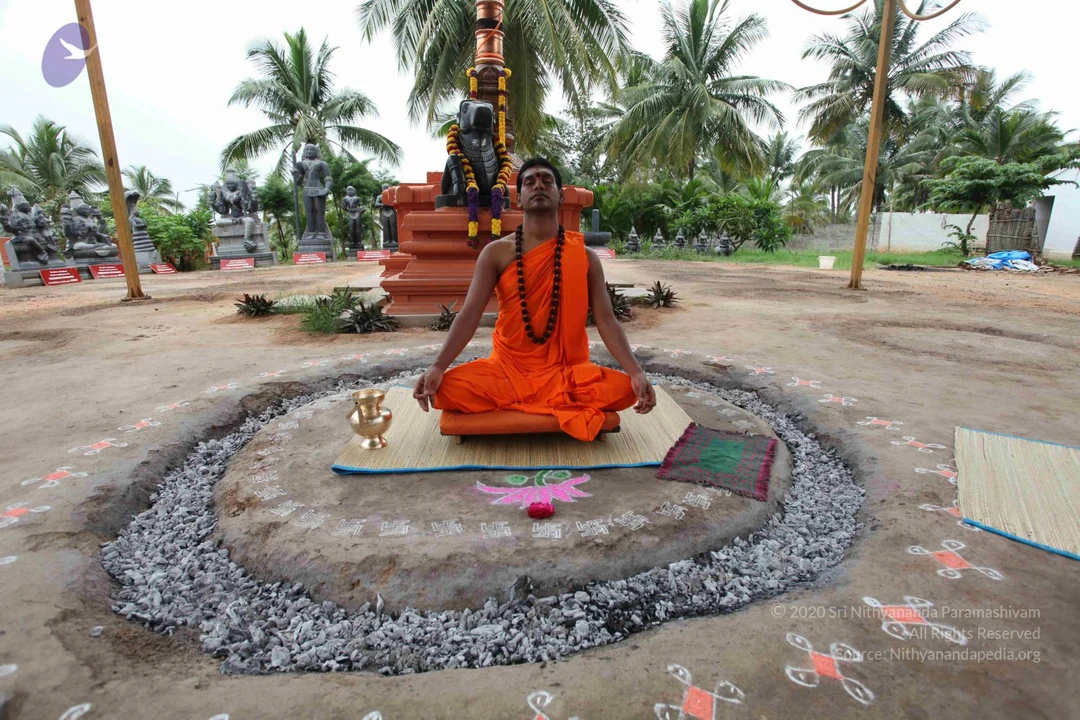
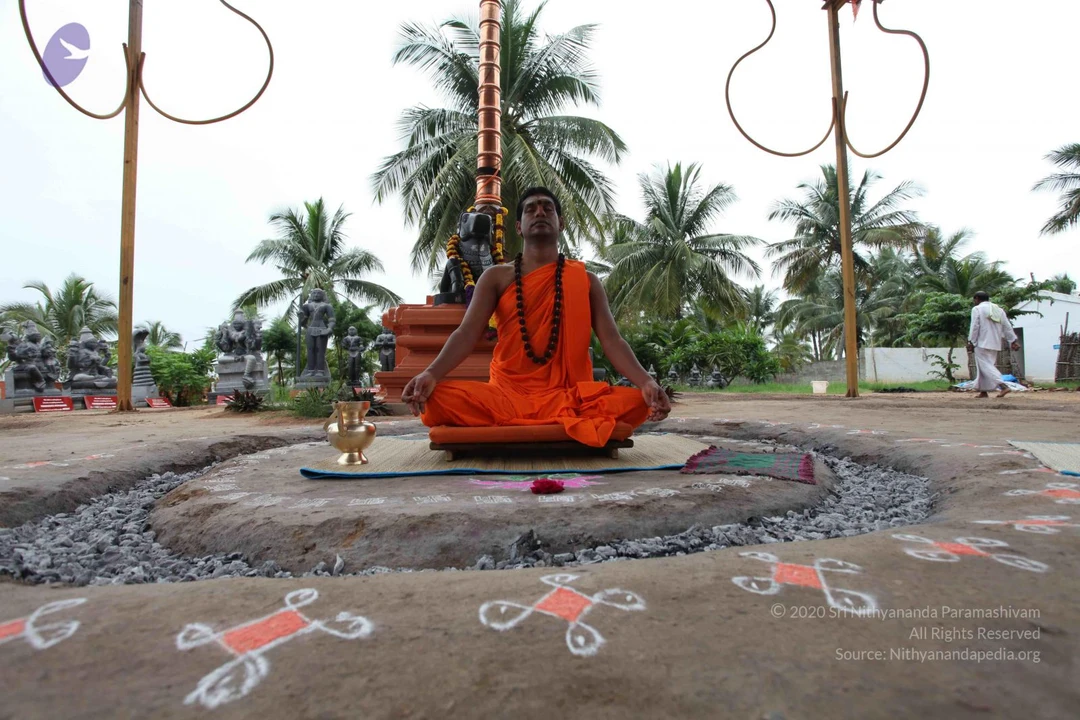
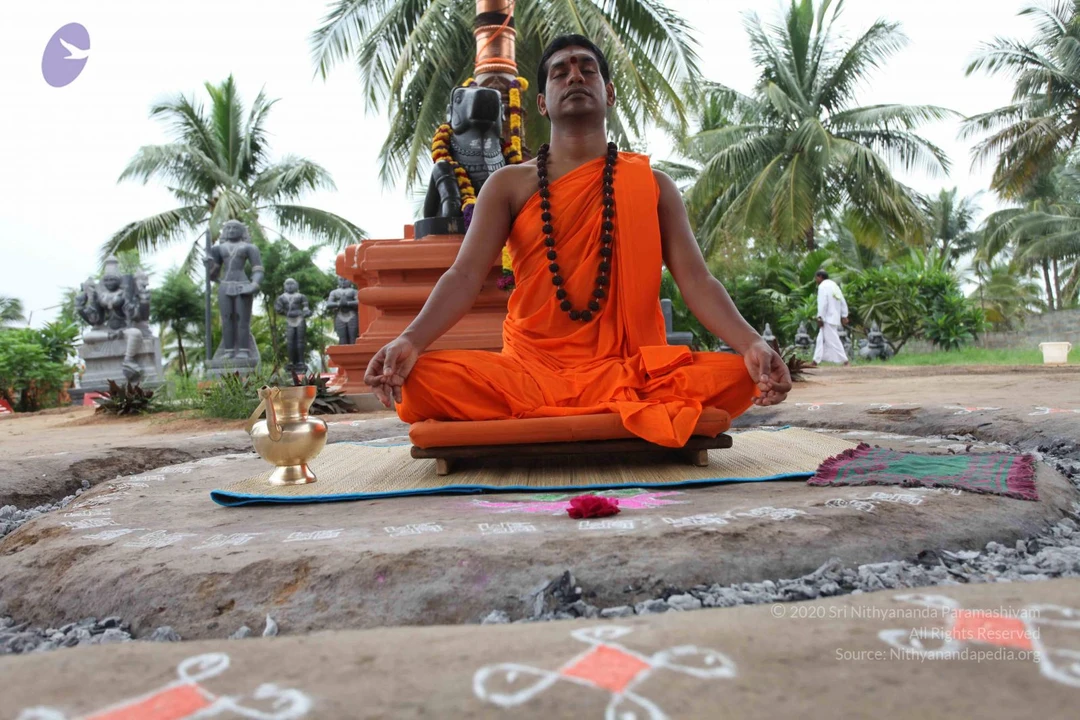
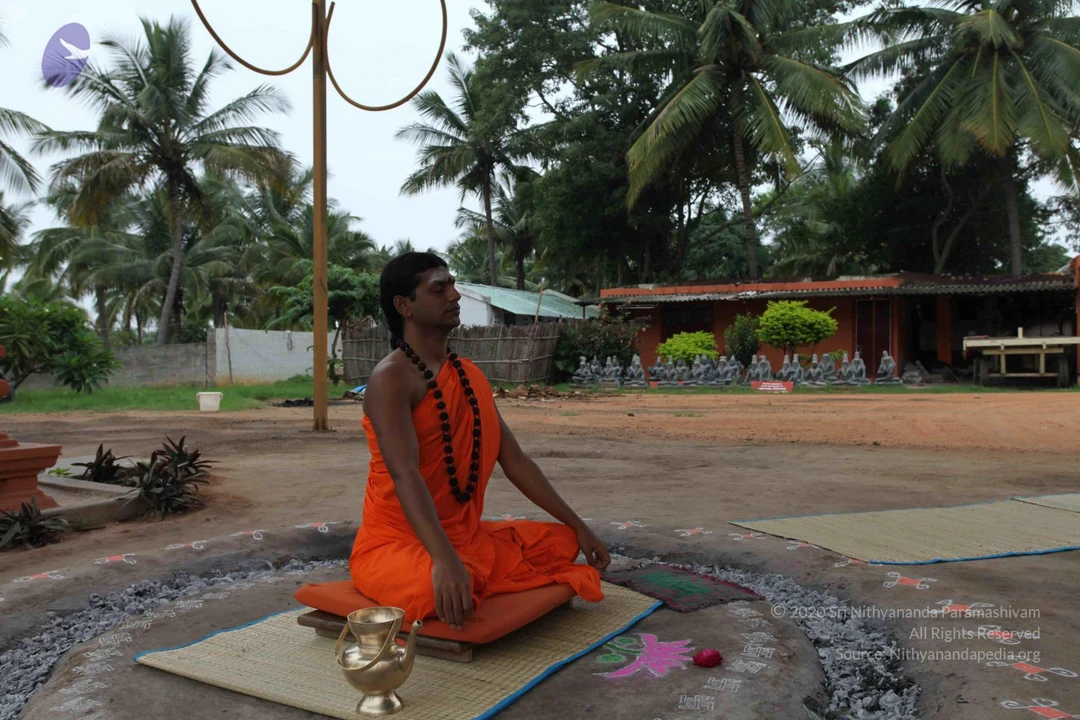
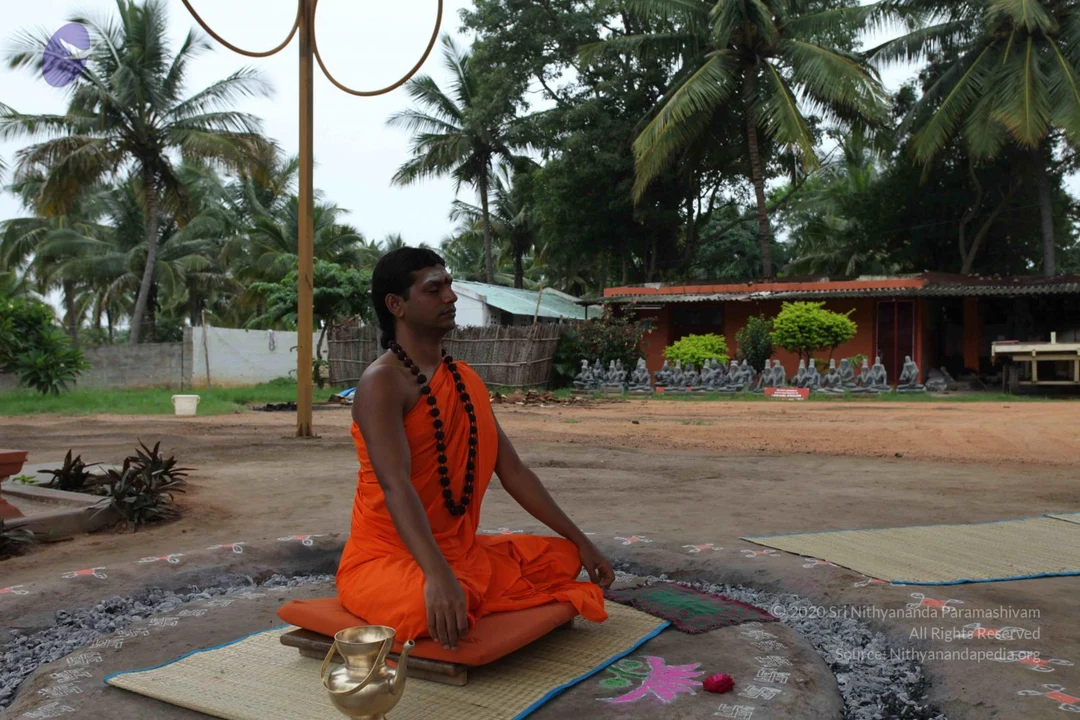
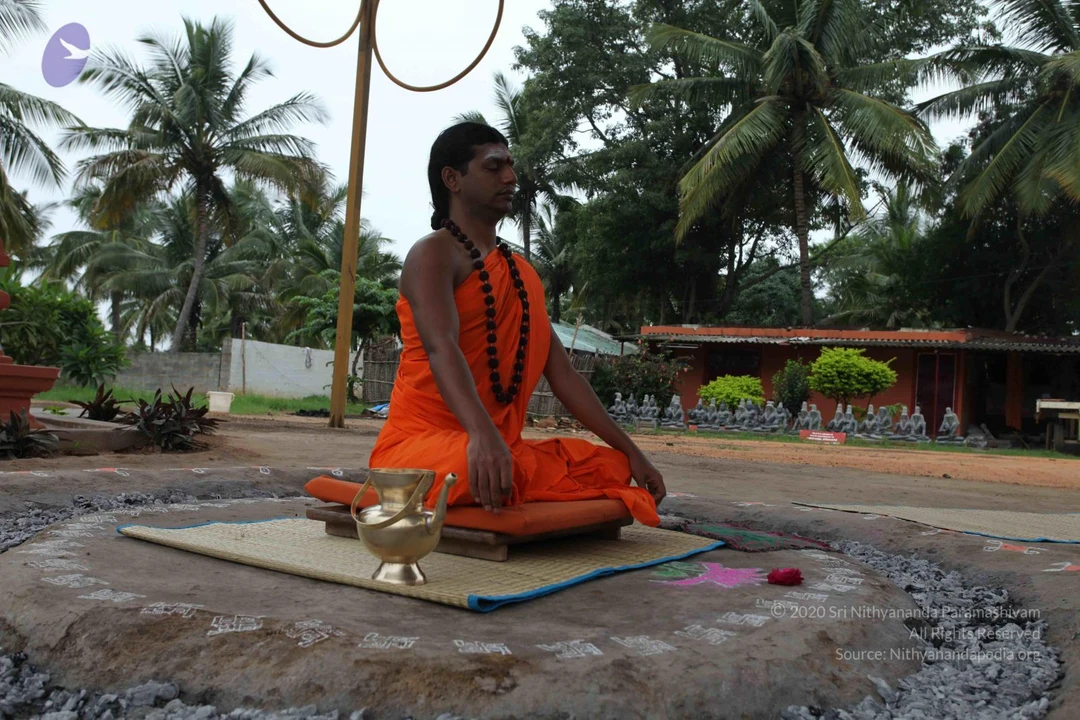
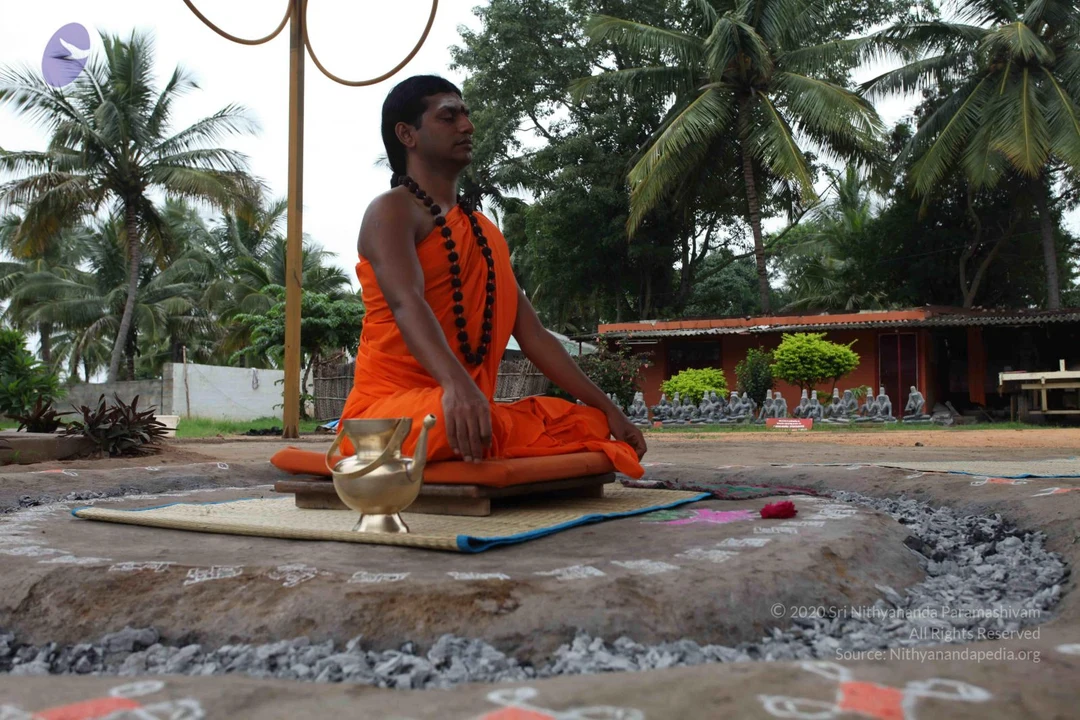
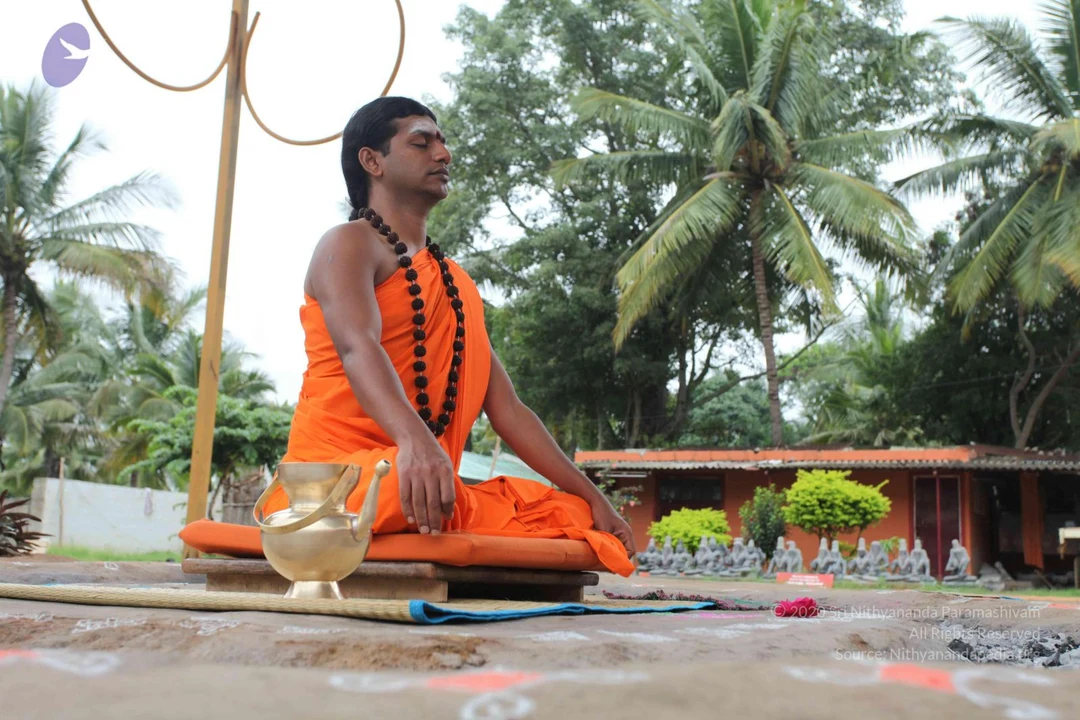
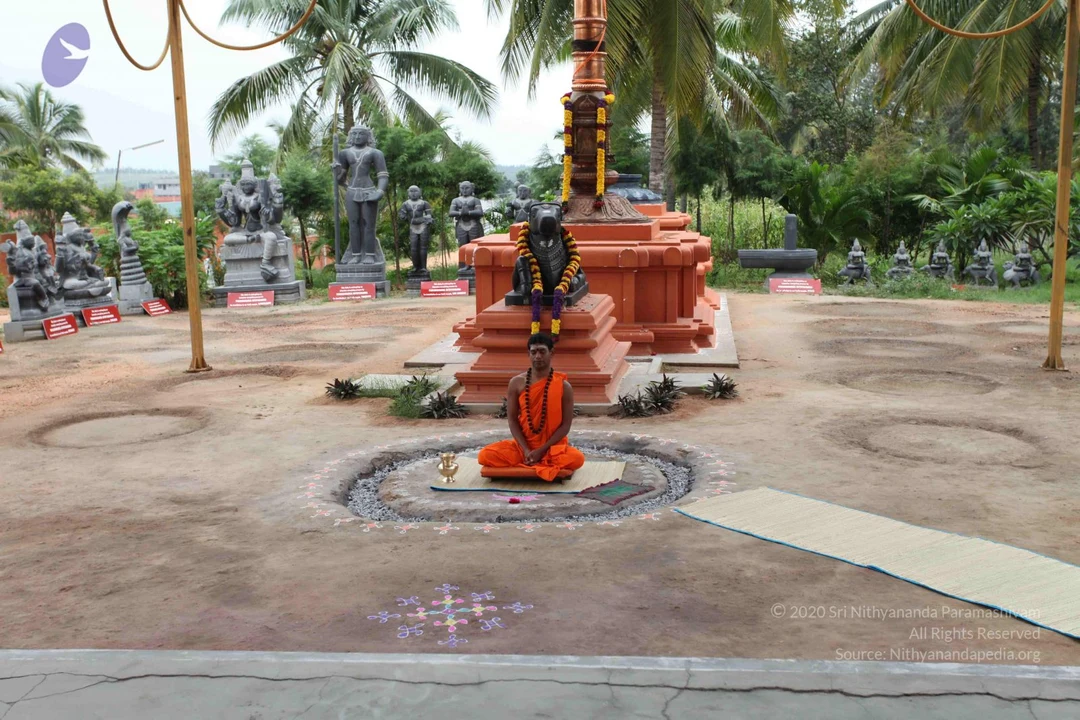
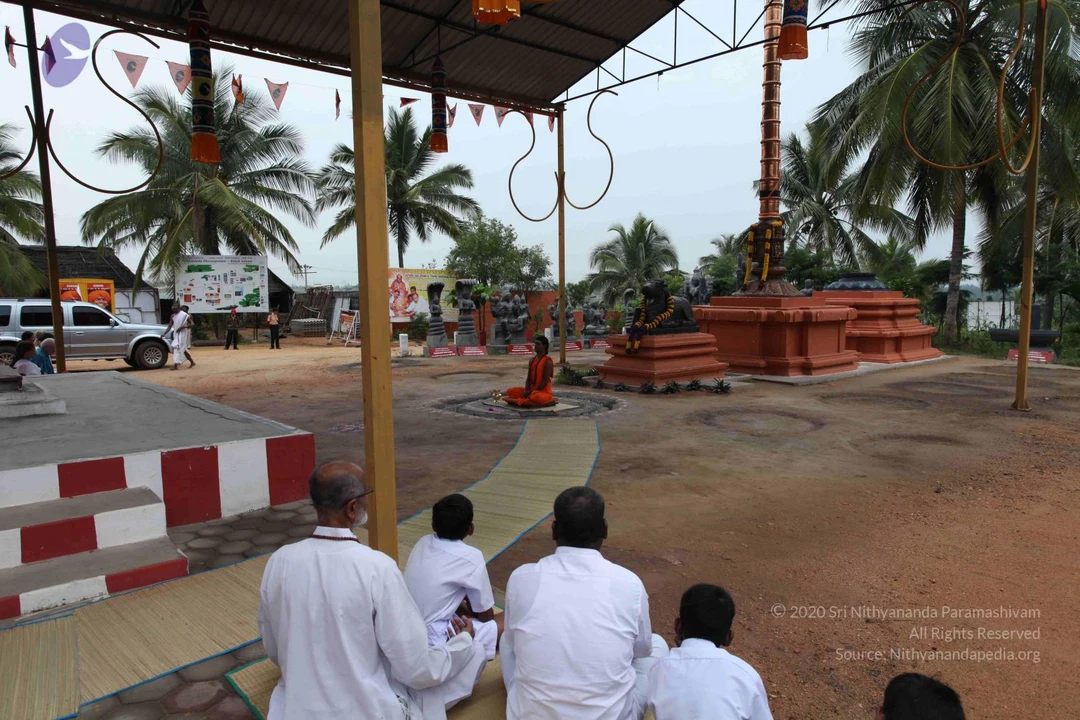
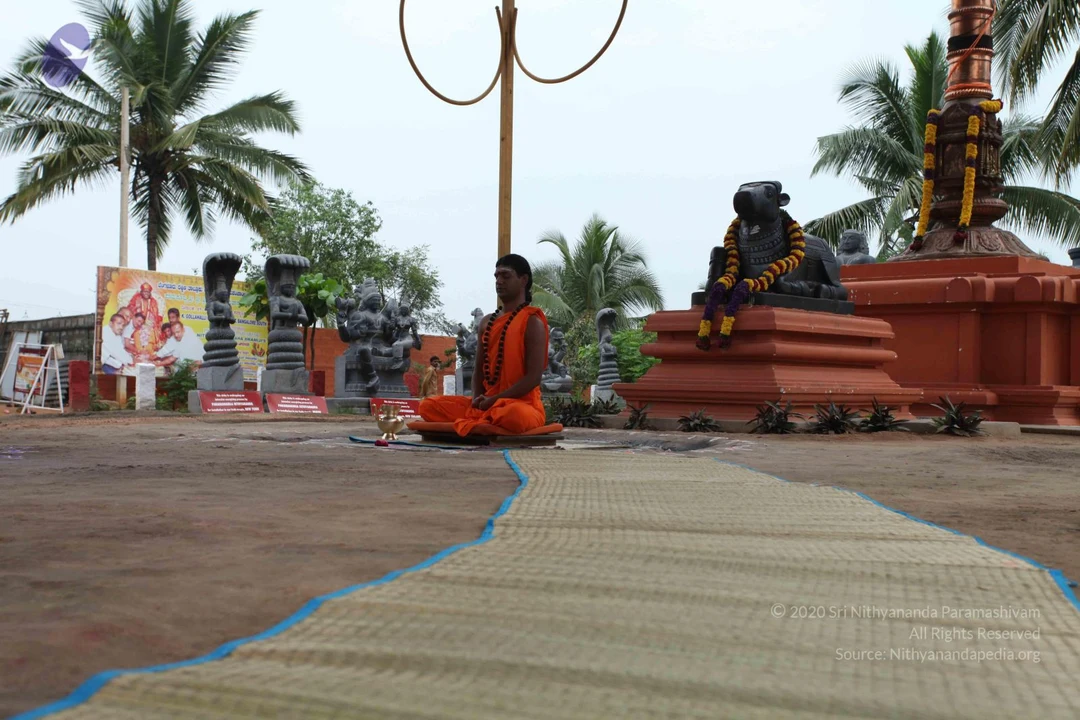
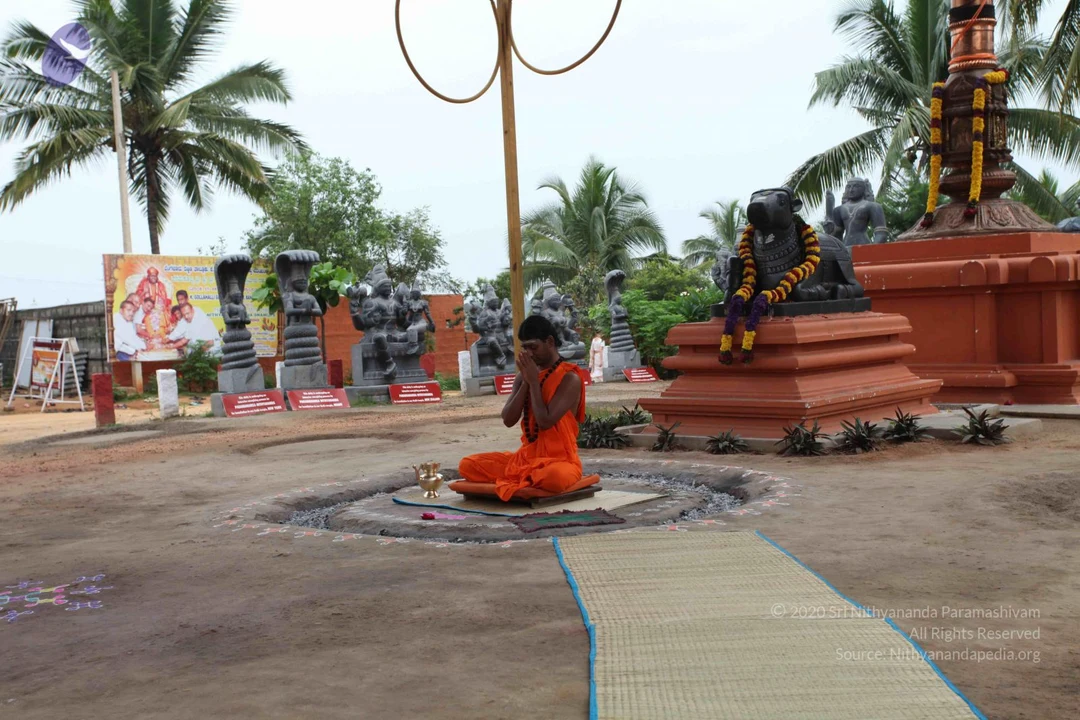
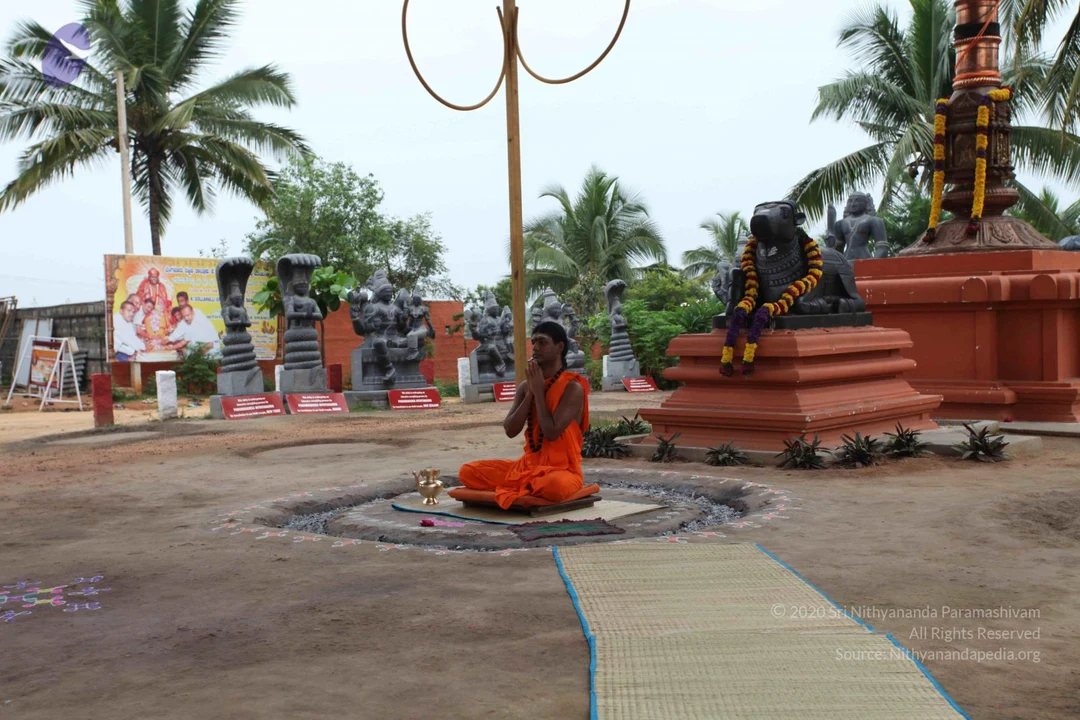
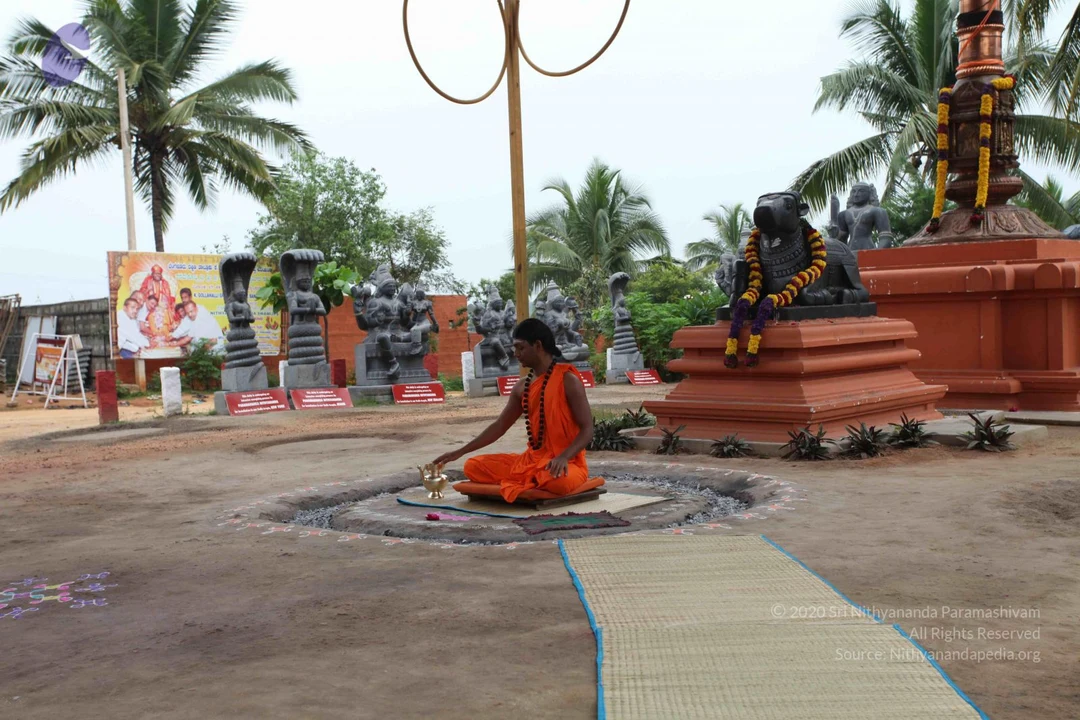
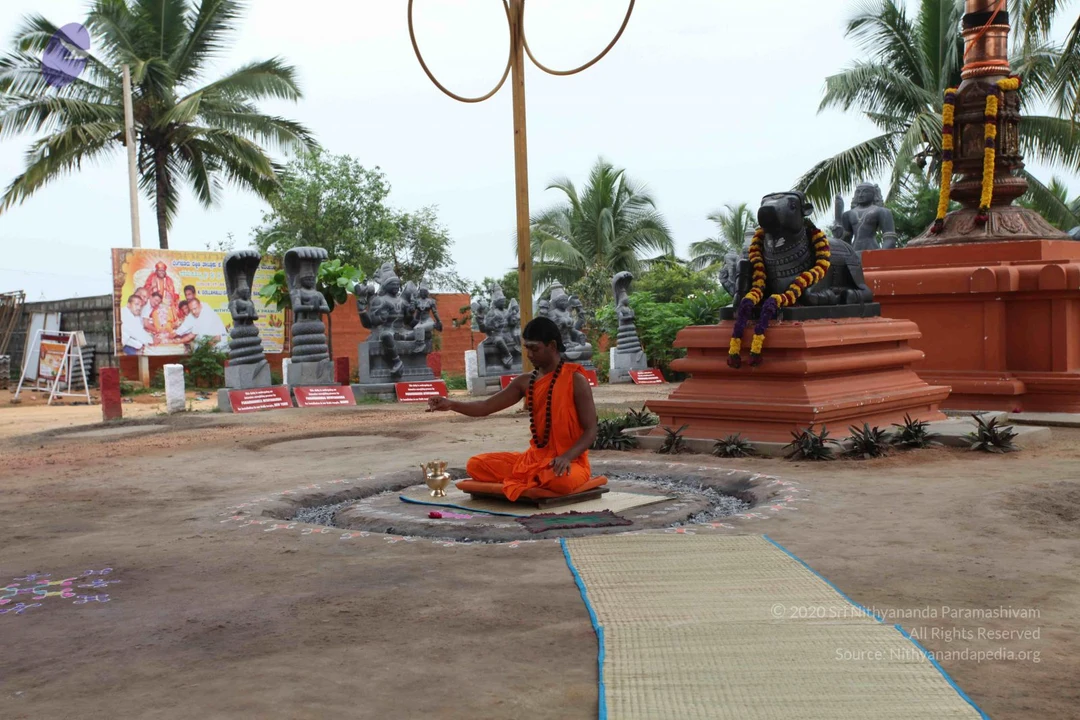
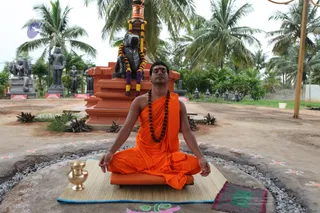
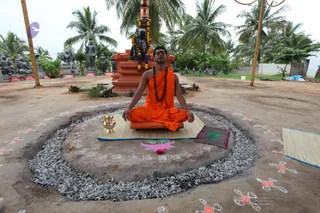
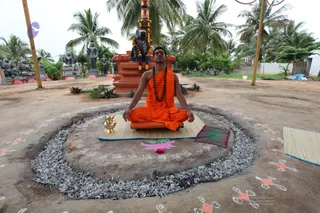
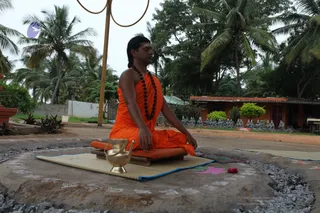
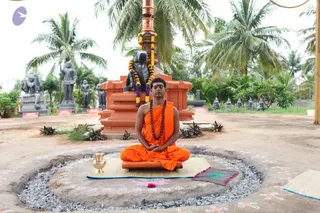
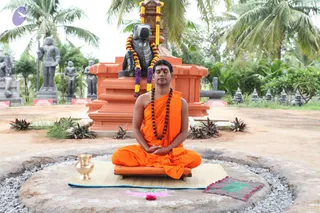
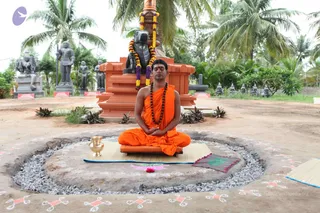
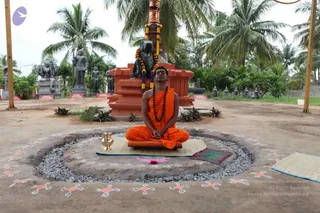
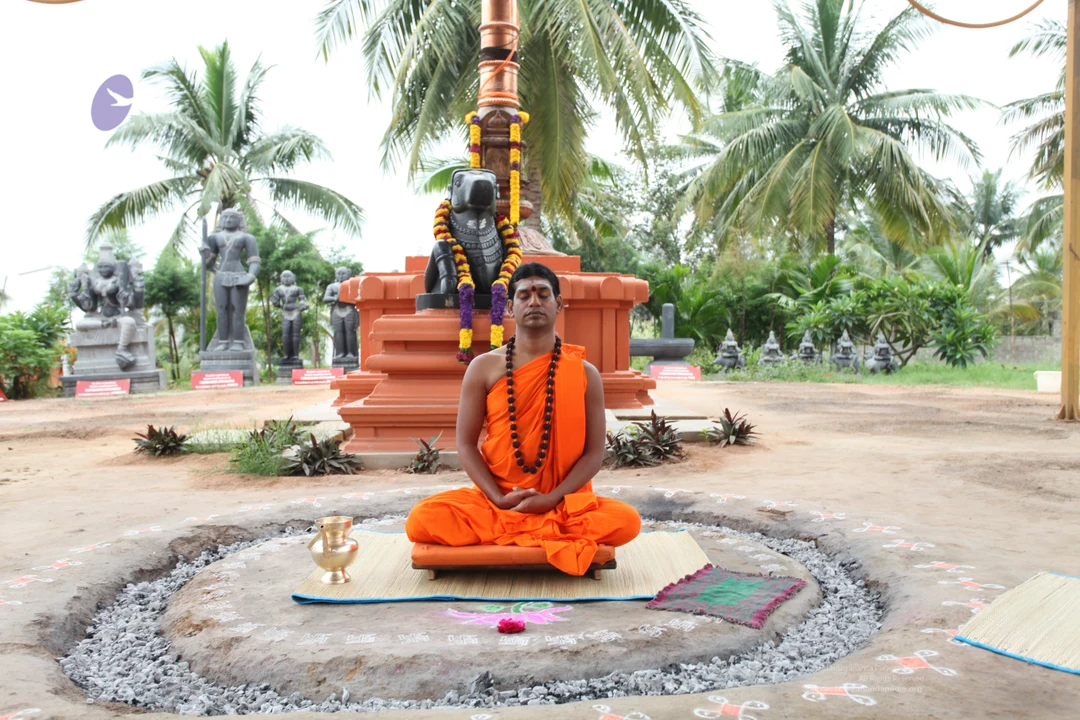
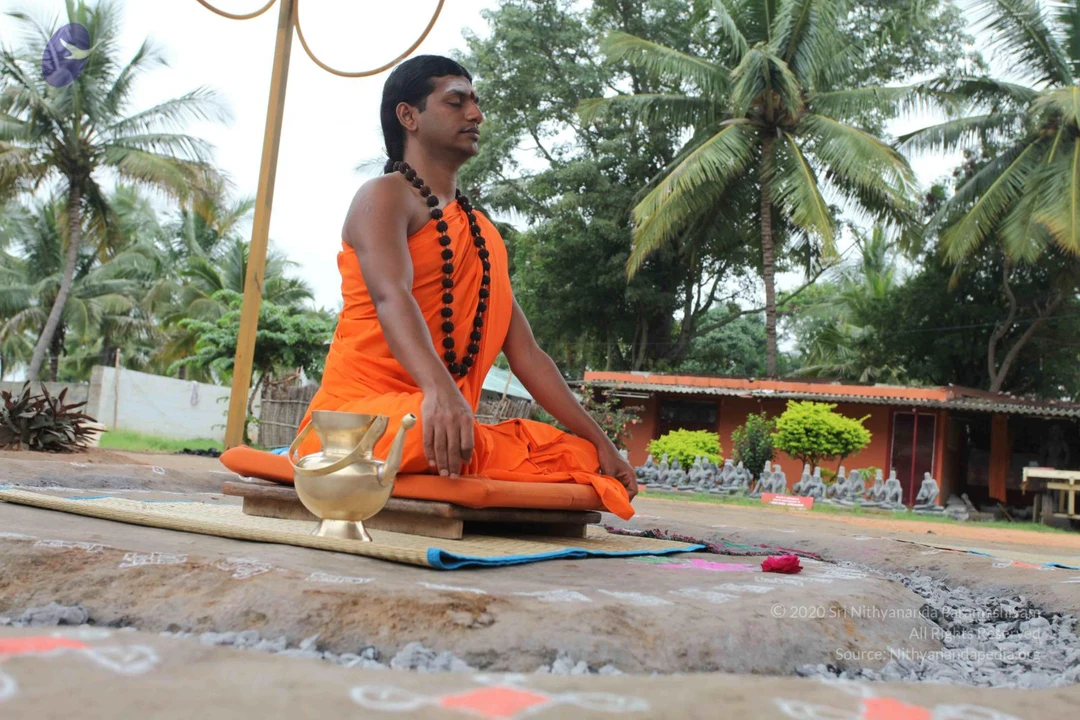
Outdoor photo of a man seated cross-legged in meditation on a raised stone platform surrounded by gravel and white and coloured floor kolam. He wears an orange saffron robe, a rudraksha mala and a red tilak on his forehead, with hands folded in his lap and eyes closed. Behind him stands an orange brick shrine holding a black Shiva lingam draped with marigold garlands in orange and purple. Grey stone deity statues and palm trees surround the courtyard, and a brass kalasha sits beside him.A photograph of a shaved-headed man in saffron-orange robes sitting cross-legged in meditation on a low wooden seat atop a mat, eyes closed, hands folded in his lap. He wears a long rudraksha mala. Behind him on a red stepped base sits a black stone Nandi-like bull statue draped with garlands of yellow and purple flowers, with a copper-topped pillar above. A brass kalasha/vessel and a pink flower sit on a grey gravel ring marked with white and orange kolam designs on the sandy ground. Palm trees, grey stone deity statues and potted plants surround the open courtyard.A man sits cross-legged in meditation on a low seat atop a woven mat, eyes closed, with a red tilak on his forehead. He wears an orange saffron robe draped over one shoulder and a long rudraksha mala around his neck. Behind him stands a large black Nandi bull statue garlanded with purple and yellow flowers, on an orange-red pedestal, flanked by palm trees and stone deity statues. A brass kalasha pot sits at his left, with a colourful kolam floor design around the seat.A man in saffron-orange robes and a rudraksha mala sits cross-legged in meditation on a raised circular stone platform outdoors. Behind him stands an orange-and-red pedestal topped with a black Shiva lingam draped in marigold garlands, flanked by palm trees and rows of dark stone statues. Brass kalasha pot and pink lotus rangoli designs decorate the ground, with grey gravel surrounding the platform. A green-and-maroon cushion and woven mats lie nearby.A man in saffron-orange robes sits cross-legged in meditation on a raised circular platform of stone chips and grey ash, with his eyes closed and hands resting on his knees. He wears a long rudraksha mala around his neck. A brass kalasha pot sits to his left, and a pink lotus-like floral motif is drawn on the ground in front of him. The ground around the platform is decorated with white and red kolam designs. Behind him stands a large dark Shiva lingam wrapped in a yellow and purple garland, set on an orange-red pedestal, flanked by grey stone deity statues and palm trees.Outdoors among coconut palms, a man in saffron orange robes and a wrap sits cross-legged on a low wooden seat with a cushion, eyes lowered in meditation. He wears a long dark rudraksha mala with a bare upper chest and his long hair is pulled back. In front of him on a woven mat is a brass pot-shaped vessel, and a small red flower lies on a concrete platform decorated with white chalk kolam designs and gravel. Behind him stands an orange-roofed building with rows of seated white statues. The appearance is consistent with the a person candidate described in the page, though identity is uncertain from appearance alone.

Paadapooja
8 photosSource gallery
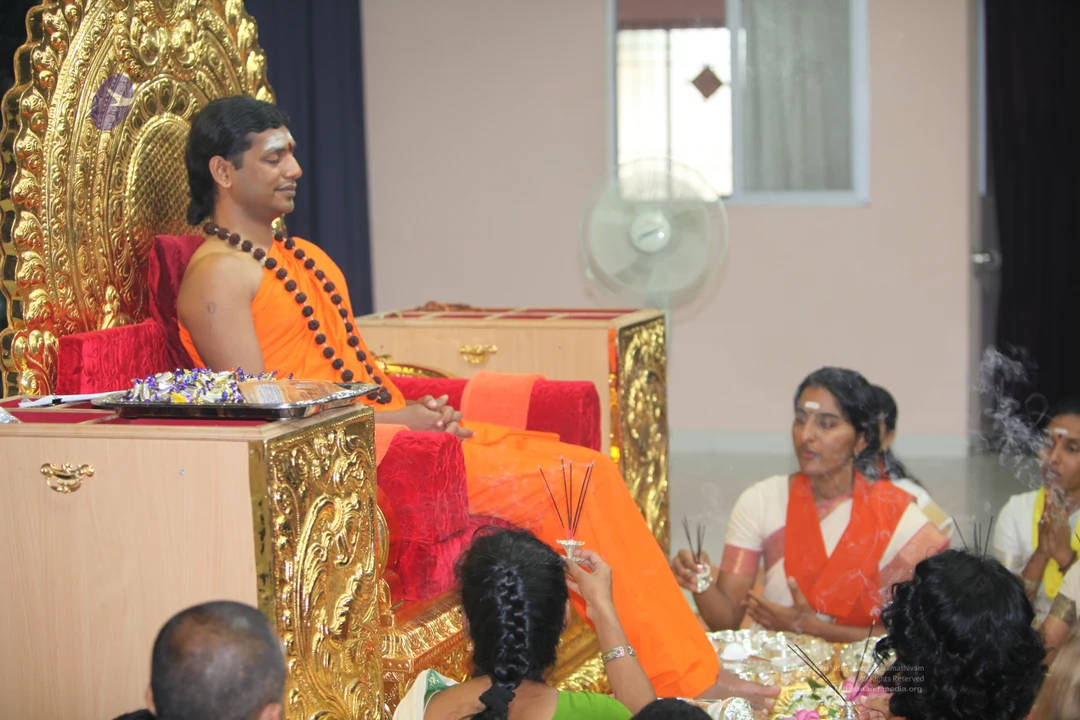
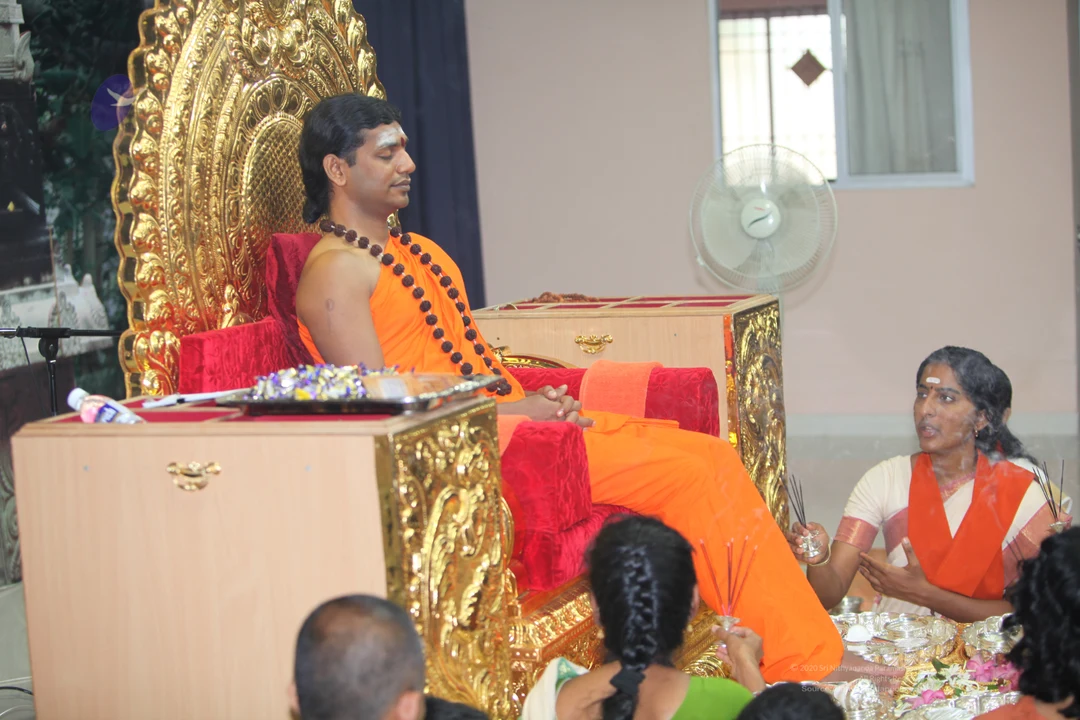
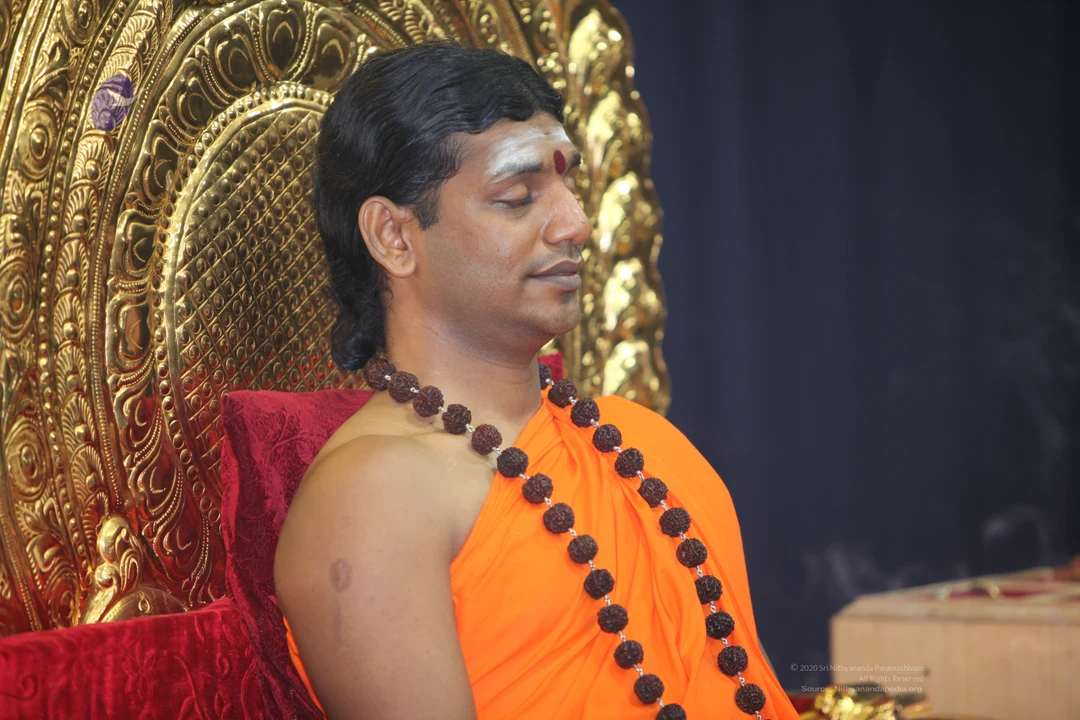
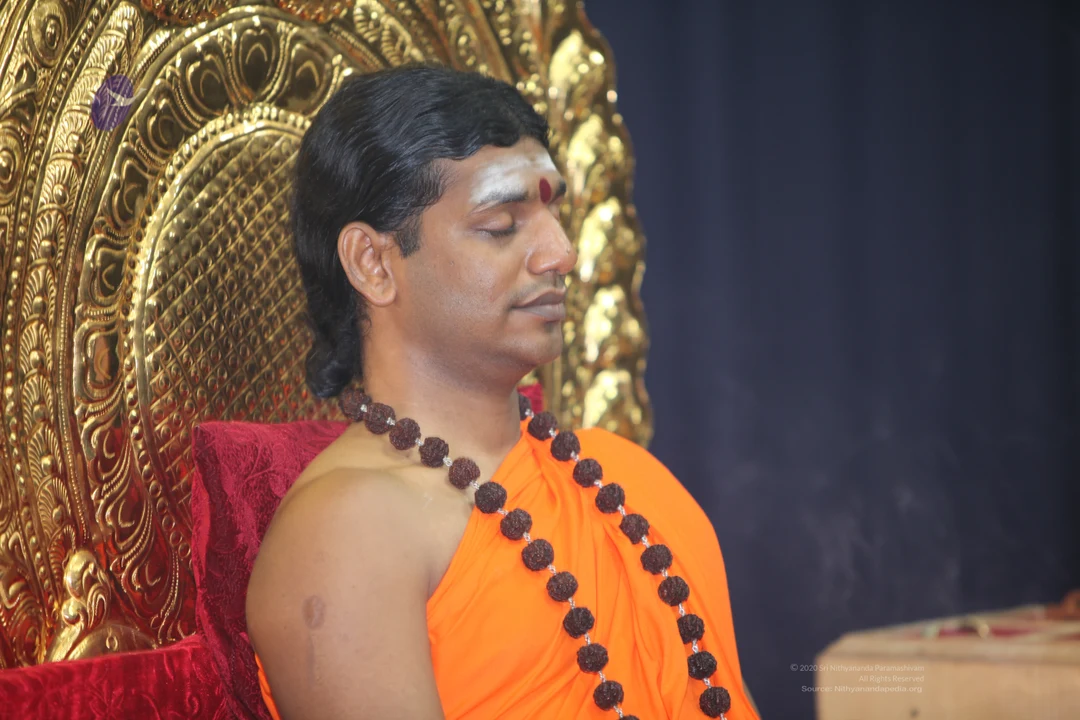
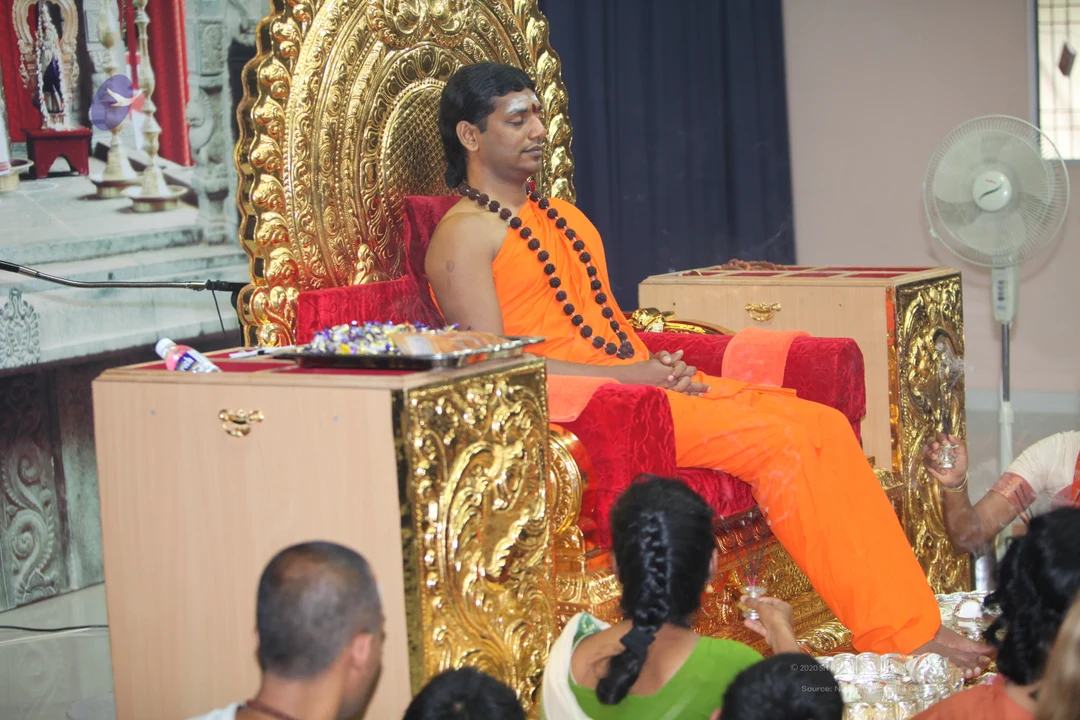
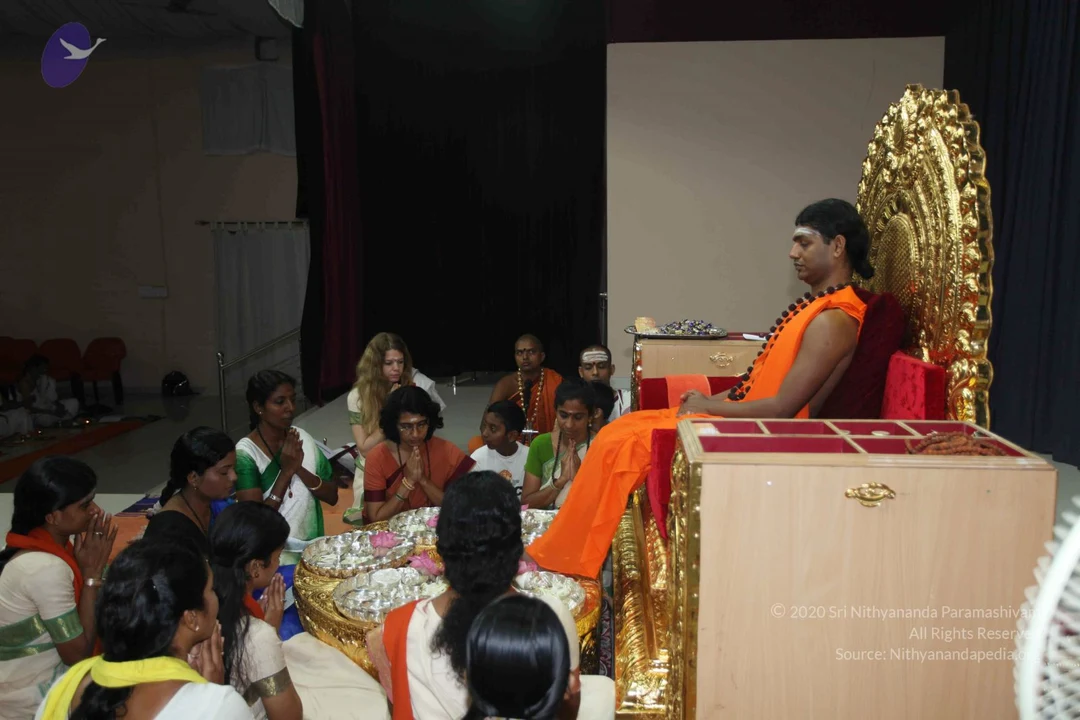
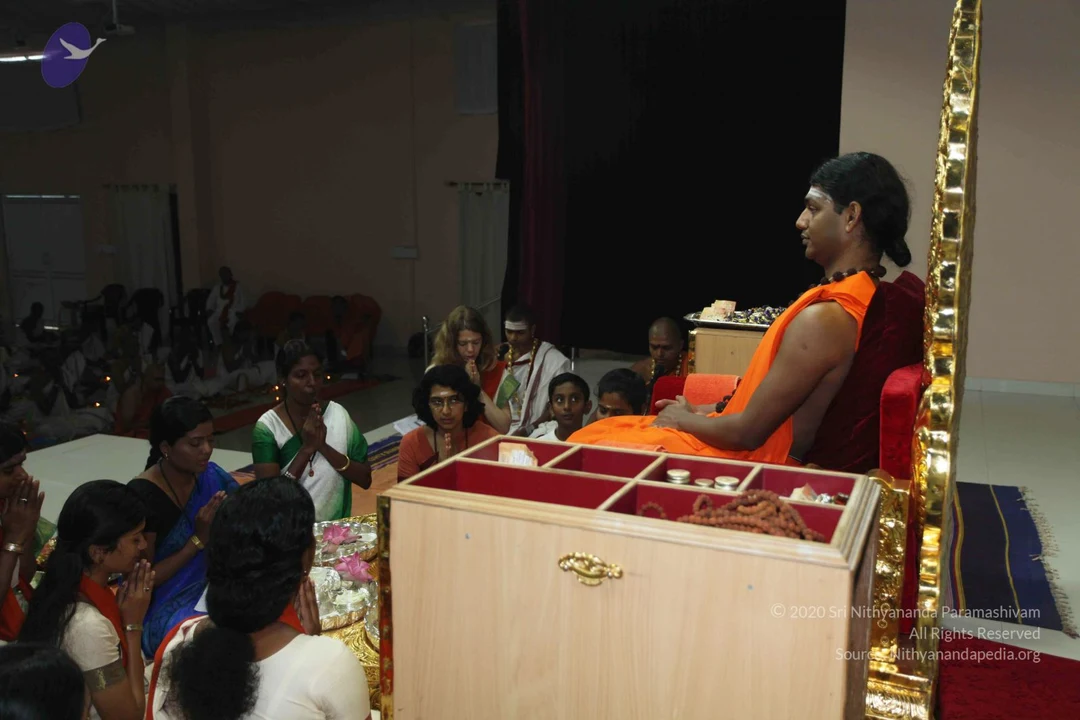
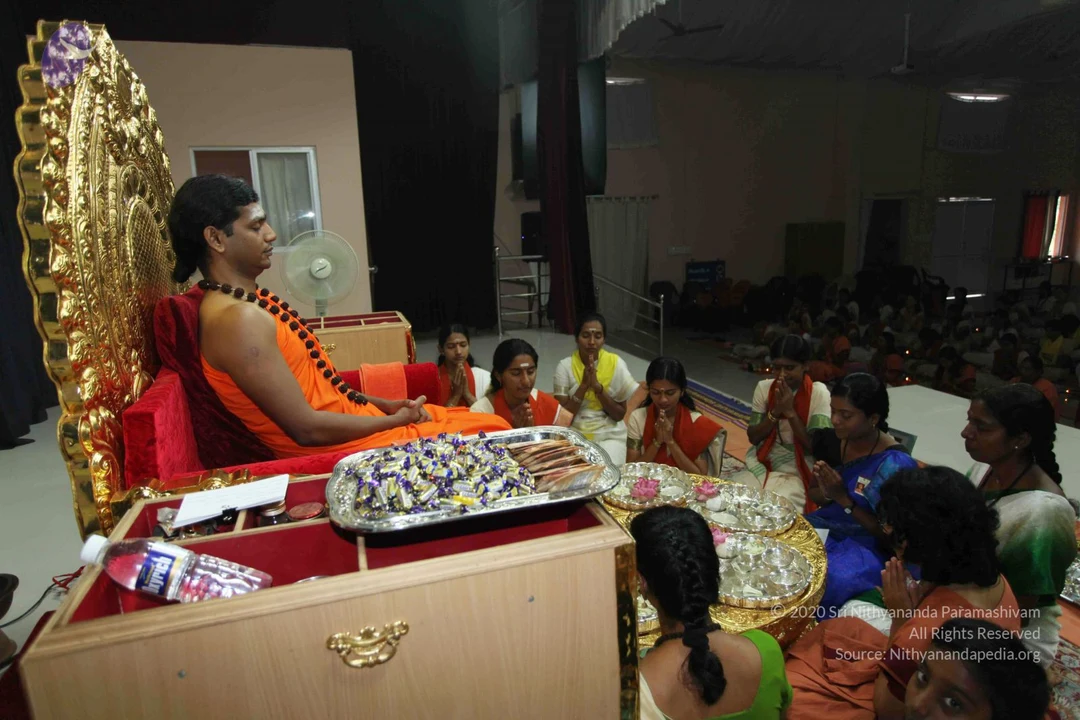
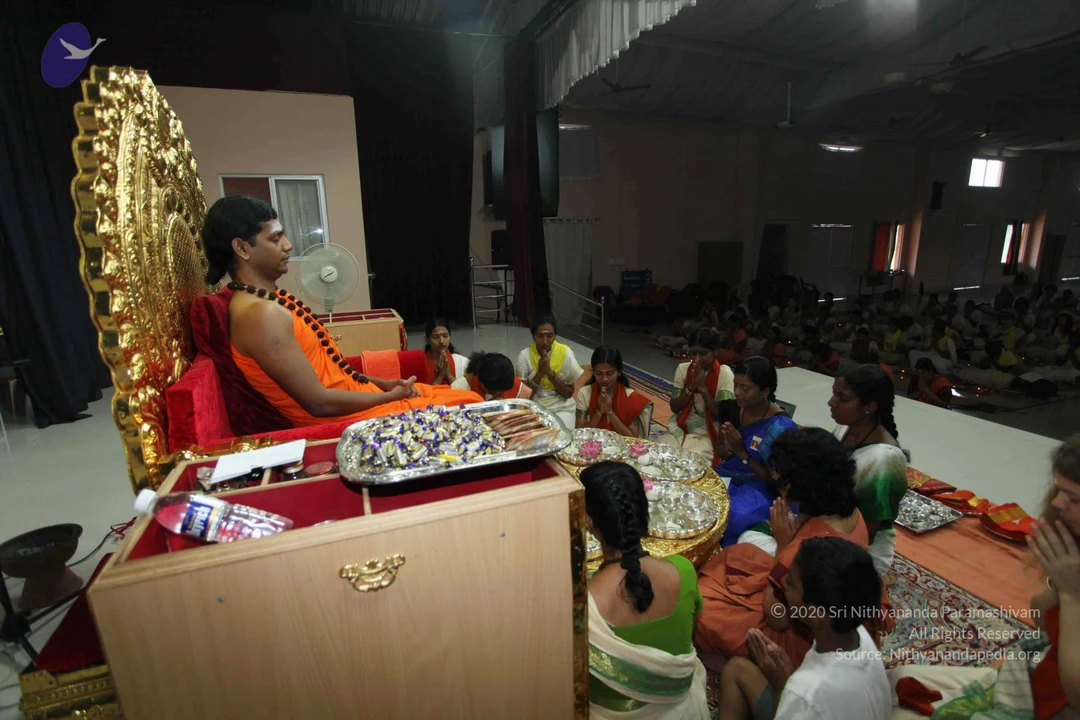
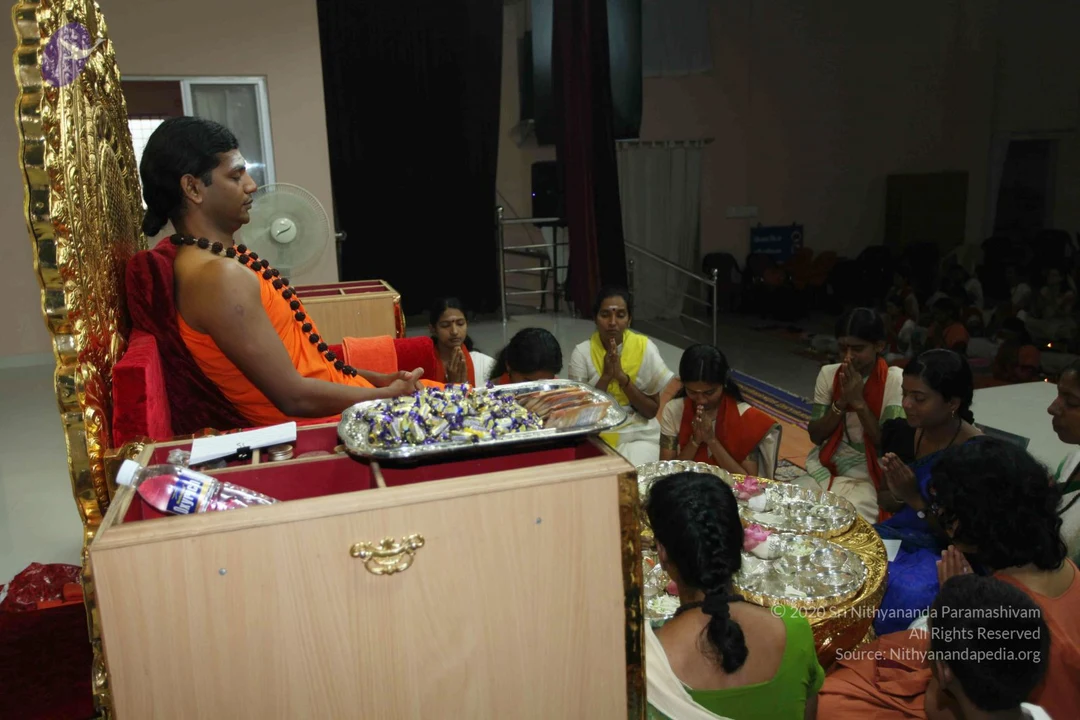
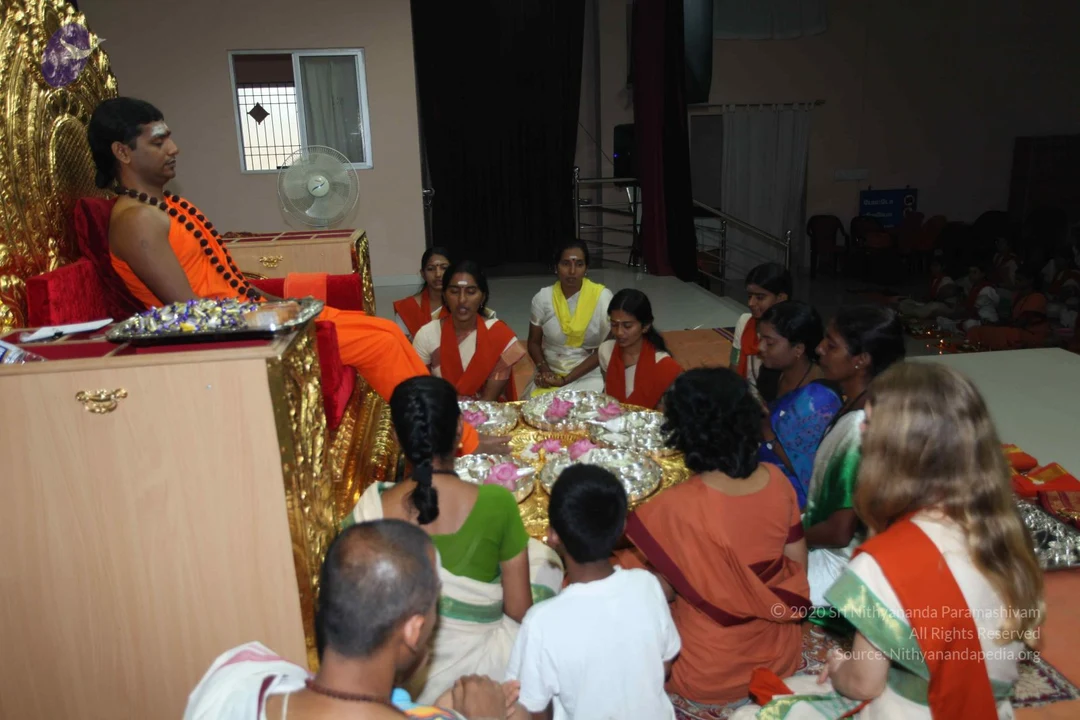
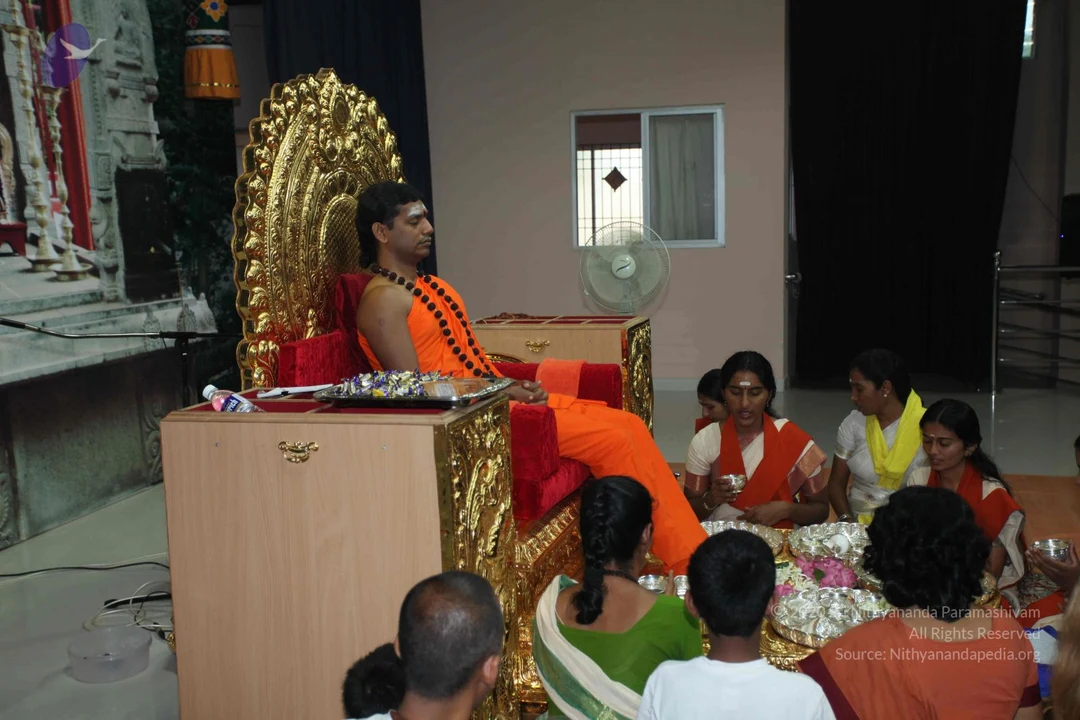
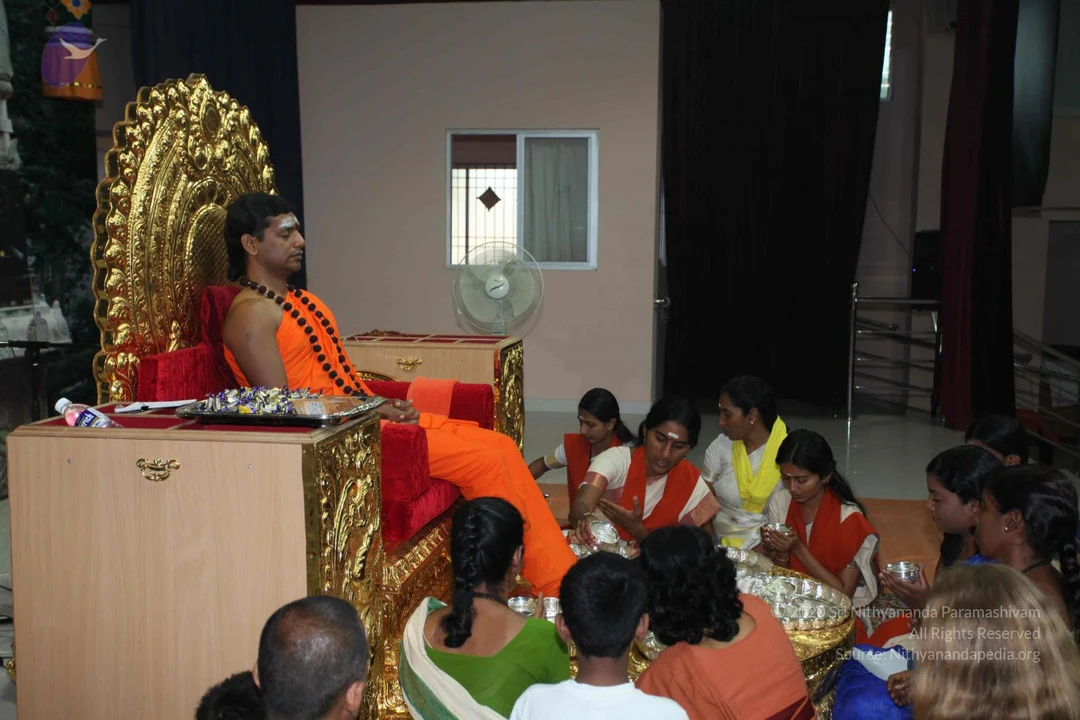
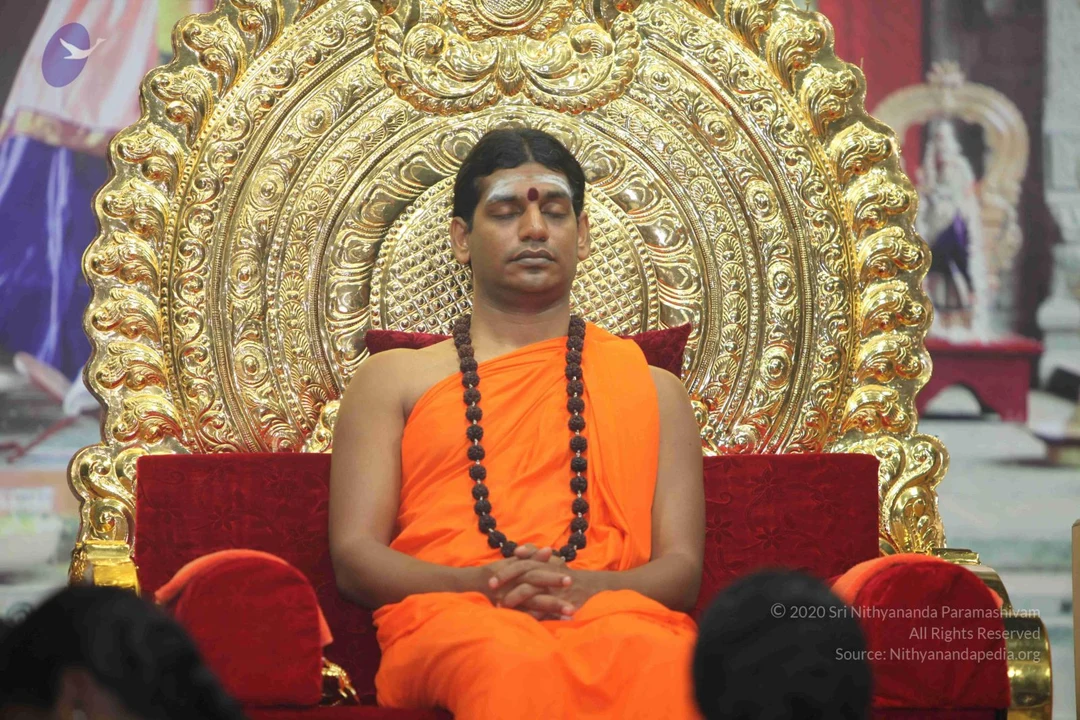
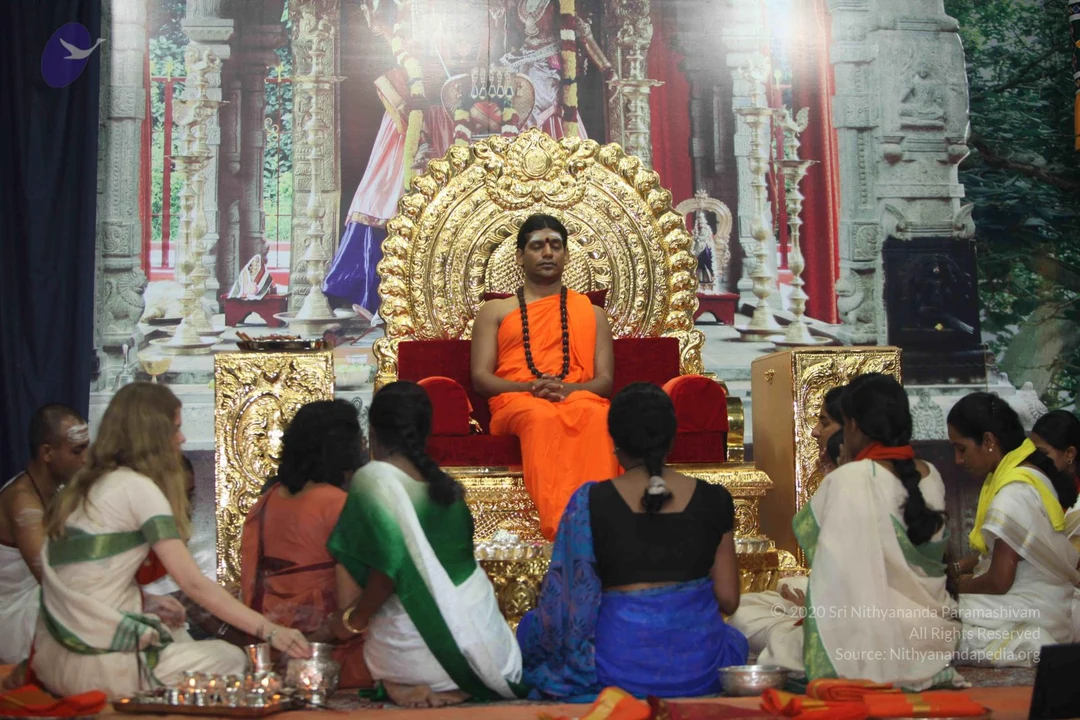
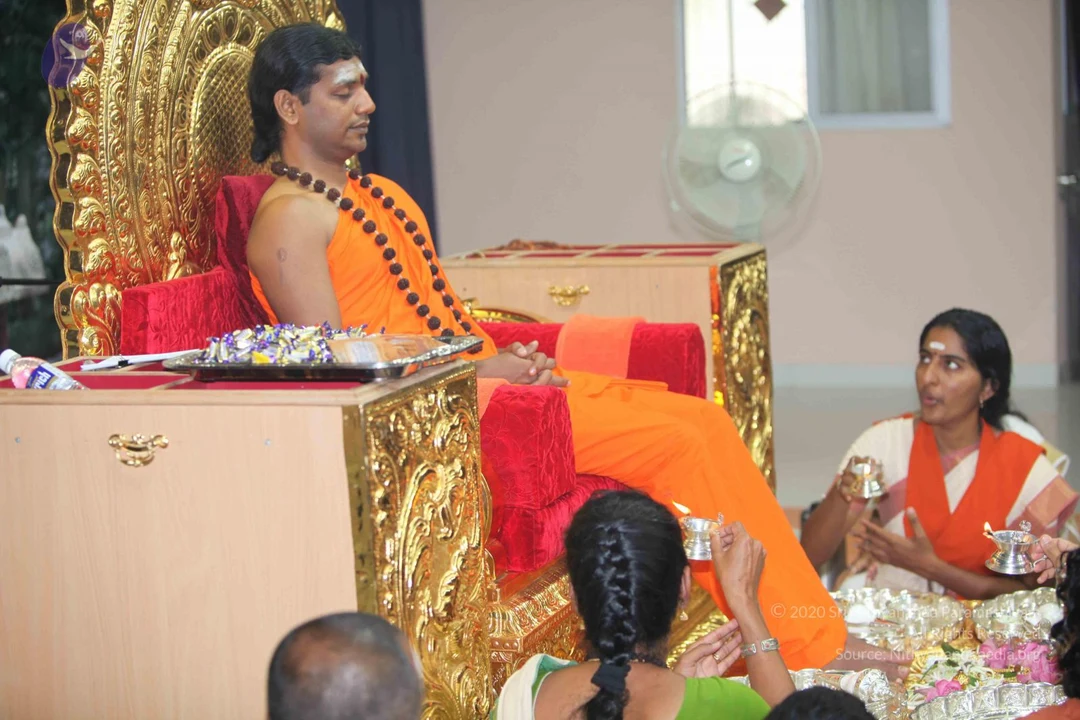
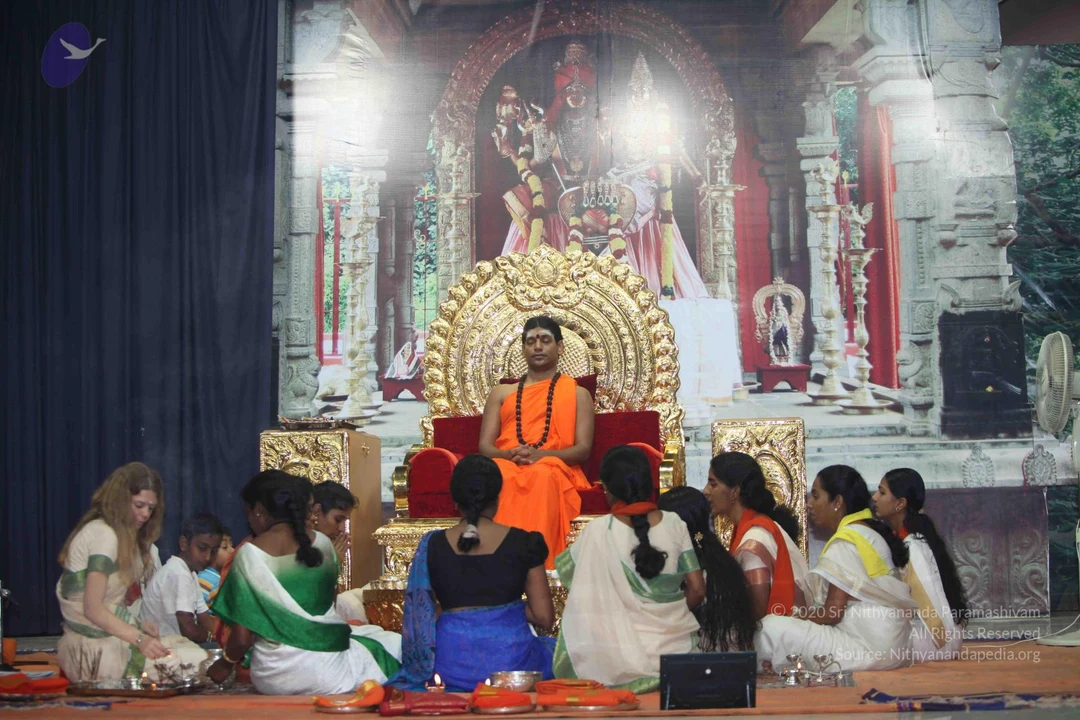
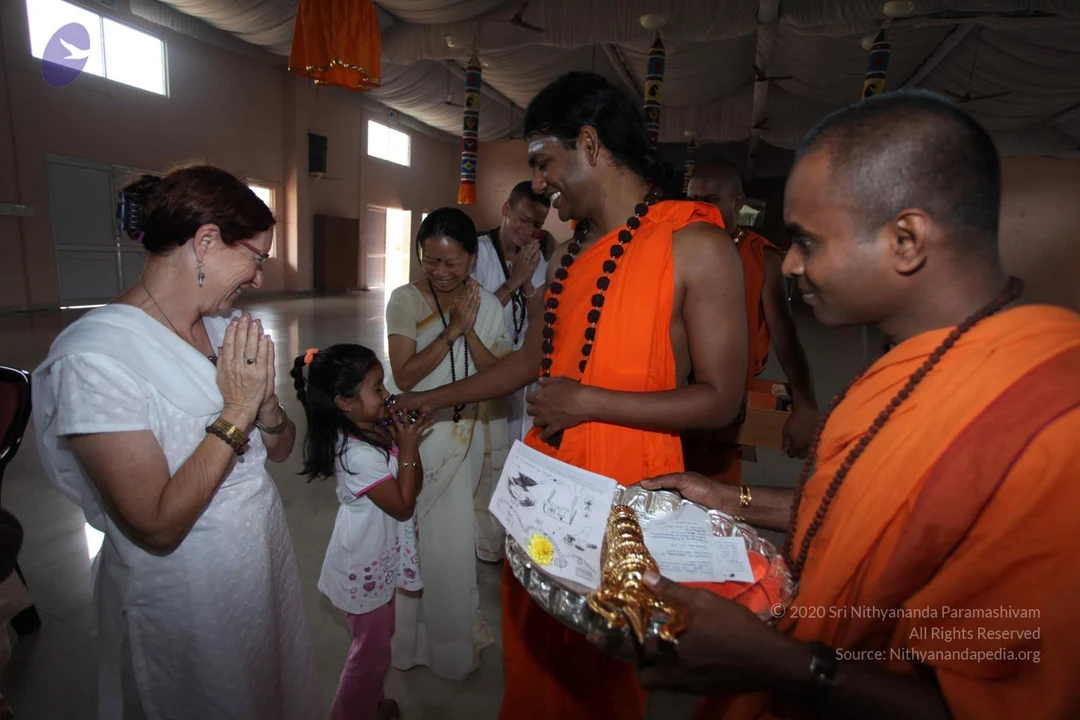
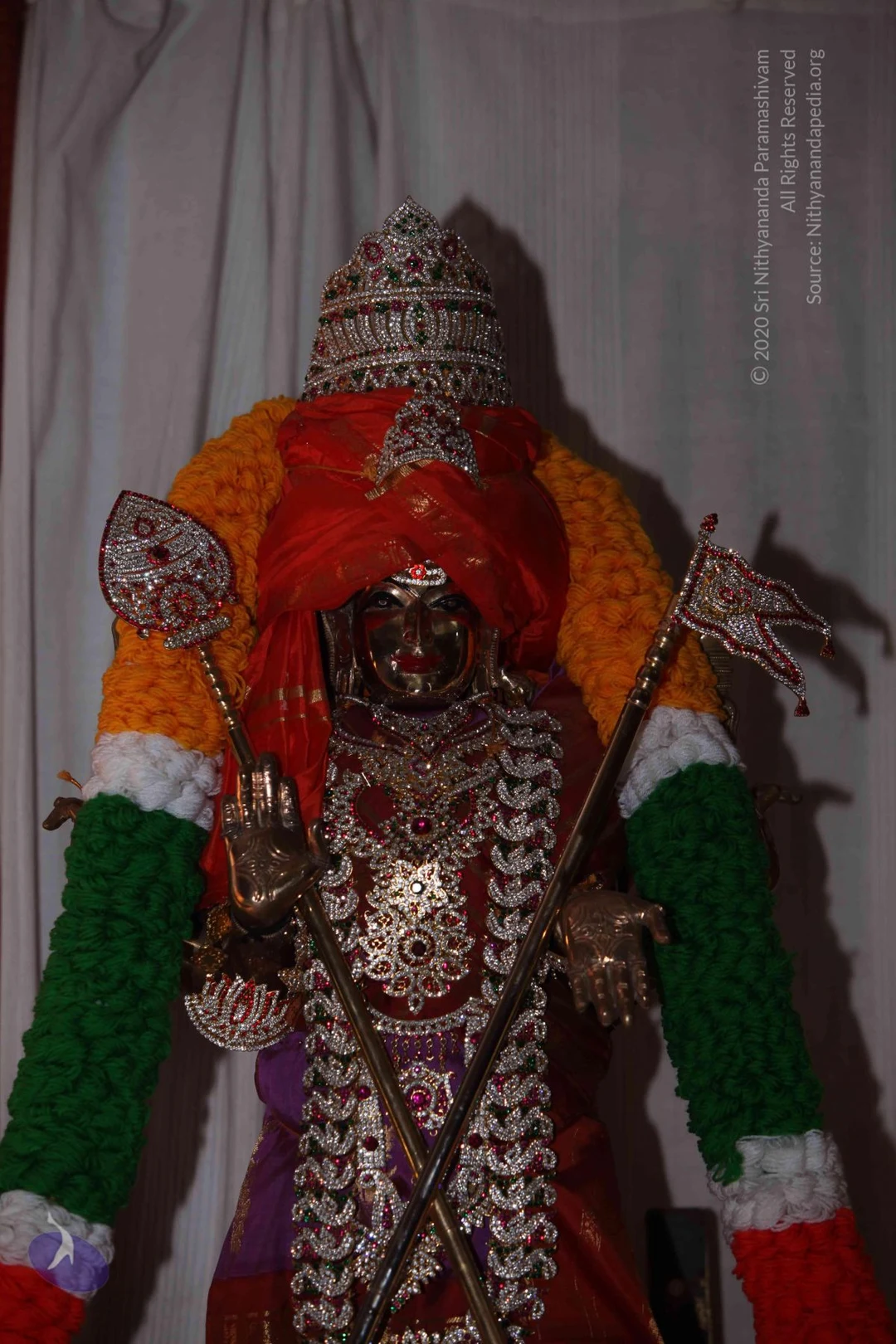
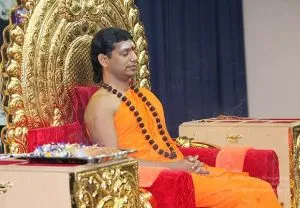
A seated man on a gilded throne with a red cushion wears an orange robe and a dark rudraksha mala, hands folded in his lap, facing away toward a hall. In front of the throne a wooden box holds a water bottle and a silver tray of wrapped sweets. Devotees kneel on the floor in front of silver and gold trays of flowers and offerings, several with palms pressed together in namaste; women wear orange, white, blue and green saris and shawls, and a few wear yellow or orange scarves. Rows of seated devotees fill the hall behind them, with a fan and stage equipment visible at the back. The setting is a satsang-style public gathering, approximately 40 people visible.A photograph of a devotional gathering in a hall with golden-framed throne-style seating. A man on the left wears an orange robe with rudraksha malas, a purple crown-like headpiece, and sits on a red-cushioned golden throne, facing right. Seated on the floor in front are several women and girls in orange, red and white saris, one in a yellow shawl, and a man in white with a bald head. Brass and silver plates with pink flowers and offerings sit on a golden tray in the centre. A woman in a blue sari sits near the right edge, and a fan, curtain and a small framed sign are visible in the background. Probable Swamiji (appearance cues: orange robe, rudraksha malas, crown-like headpiece, throne) is seated on the throne, presiding over the gathering.Indoor satsang in a hall with a gilded throne and cushioned red seat. Seated on the floor before him, devotees in white, green and orange saris and shawls face him; a bald priest in white with sandalwood marks sits at lower left, and a child in white sits nearby. Brass and silver plates of offerings and a flower-garland tray rest on the gilded table, with a pedestal fan and dark curtains behind.A man seated on an ornate gold throne with red cushions, eyes closed in meditation, hands clasped in his lap. He wears an orange saffron robe, a long dark rudraksha mala necklace, a red bindi and white vibhuti lines on his forehead. In the foreground, the backs of two heads of seated devotees are visible. Behind the throne, a backdrop shows a painted deity figure and a purple cloth.A photograph of a ritual scene in a hall. In the centre, a woman in a white sari with an orange-red shawl and a white forehead mark holds lit incense sticks and gestures over silver plates of offerings and flowers on a gold tray. Beside her, women in white and yellow garments sit with palms joined in prayer. On the left, a figure draped in orange cloth stands near a gilded wooden seat with red cushions. Smoke from the incense drifts through the frame.Close-up photograph of a seated figure in saffron-orange robes wearing a long rudraksha mala of dark beads around the neck. Clasped hands rest in the lap over the orange cloth, seated on a red plush throne with orange cushioned armrests and a gold-coloured ornate frame at the left edge. Only the arms, hands, lap and beaded necklace are visible; no face is shown.

Morning-Satsang
4 photosSource gallery
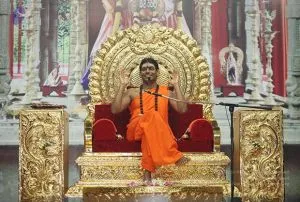
A man with short dark hair and a red bindi sits on an ornate gilded throne with red velvet cushions, speaking into a microphone. He wears an orange-saffron robe draped over his shoulders and a long rudraksha mala of dark beads around his neck. He is barefoot, with a small purple flower offering at the foot of the throne. Behind him, a backdrop shows a figure in red and white robes with a red turban seated beside a garland of yellow flowers, and a gold-framed altar with brass vessels.A photograph of a man seated on an ornate gold throne with carved red-cushioned seat, smiling and gazing to the side during a satsang talk. He wears a saffron-orange robe draped over one shoulder with the other shoulder bare, black rudraksha beads around his neck, and a red tilak on his forehead. He is barefoot, one foot resting on the golden platform. A microphone stand is at right. Behind him are a green forest-style backdrop, a shrine with white draped cloth, red fabric, and floral garlands. a person is the throne-seated speaker, identified by saffron robe, rudraksha mala and the satsang setting. Floral offerings lie at the base of the dais.A seated male teacher in orange saffron robes and a long rudraksha mala speaks during a satsang, gesturing with both hands in front of a microphone. He sits on an ornate gold-embossed throne with red cushions, a white tilak and red bindi on his forehead. Behind him is a dark blue curtain and a gold-trimmed wooden podium. a person by appearance cues (orange robe, rudraksha mala, ornate throne); the page places him at a 2010 satsang.A seated man on an ornate gold throne with red velvet cushions raises both hands palms-forward while smiling during a talk. He wears a saffron-orange shawl draped over one shoulder and wears long dark rudraksha malas hanging to his chest, with a red tilak on his forehead. A microphone on a stand is in front of him. Behind the throne, a large backdrop shows a deity murti in red and white with gold lamps and decorative temple pillars. Two gold carved side panels flank the throne, and pink flower petals lie at its base. a person appears in person, identified by the saffron clothing, rudraksha malas and ceremonial throne seating.

Yoga-Sutras

7 photosSource gallery
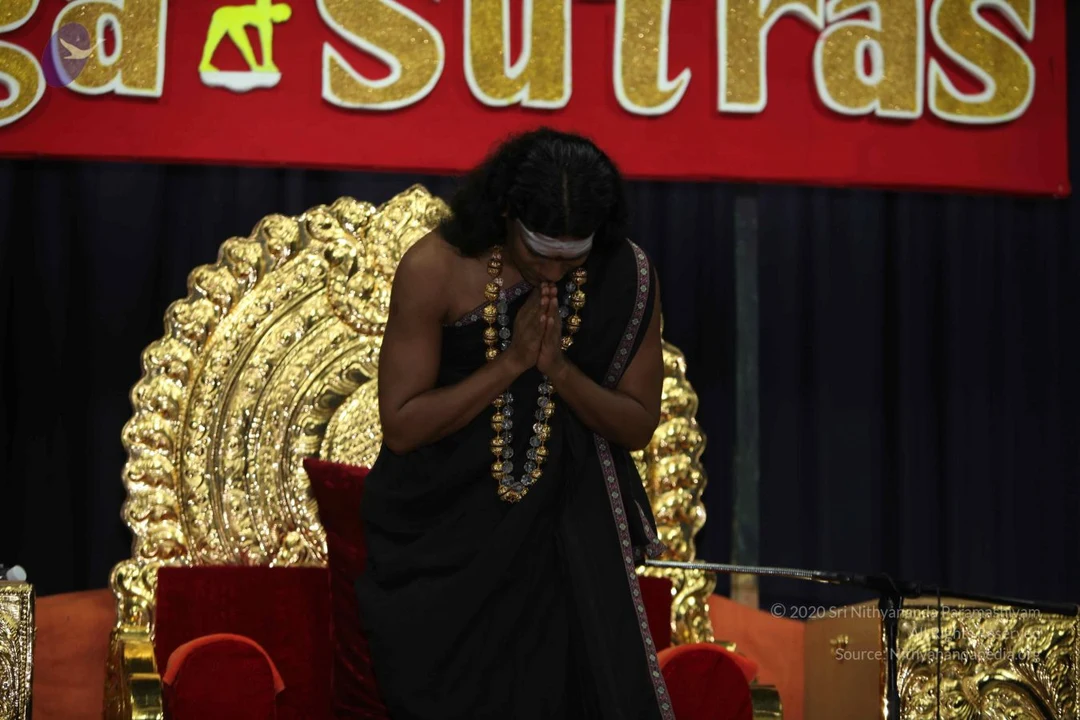
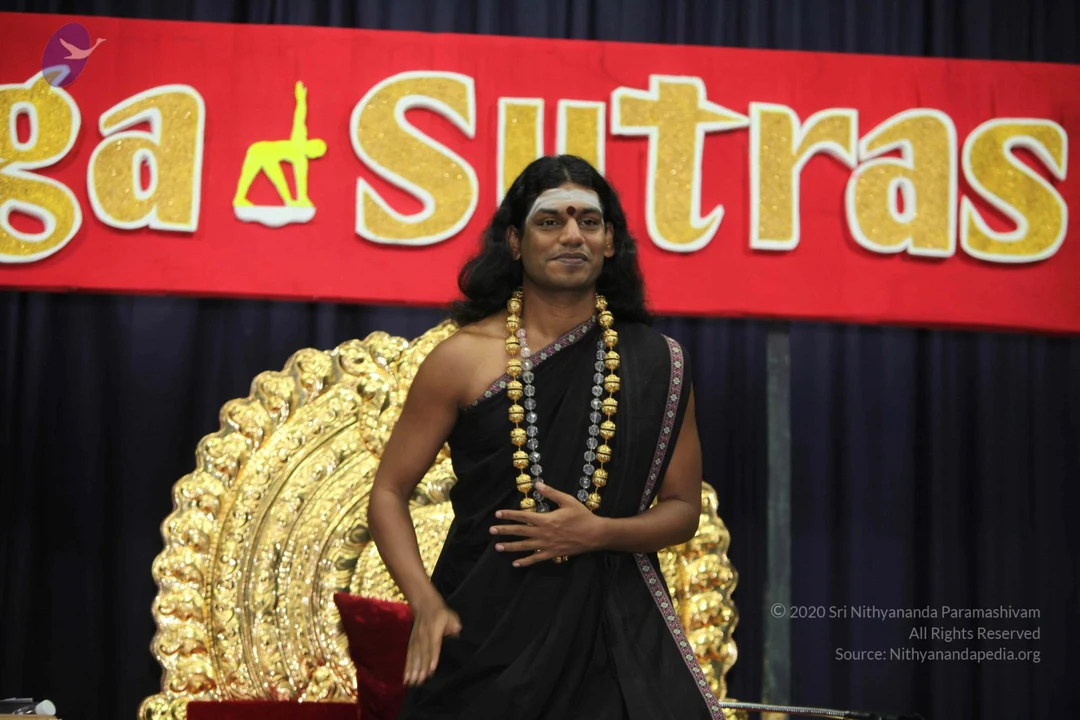
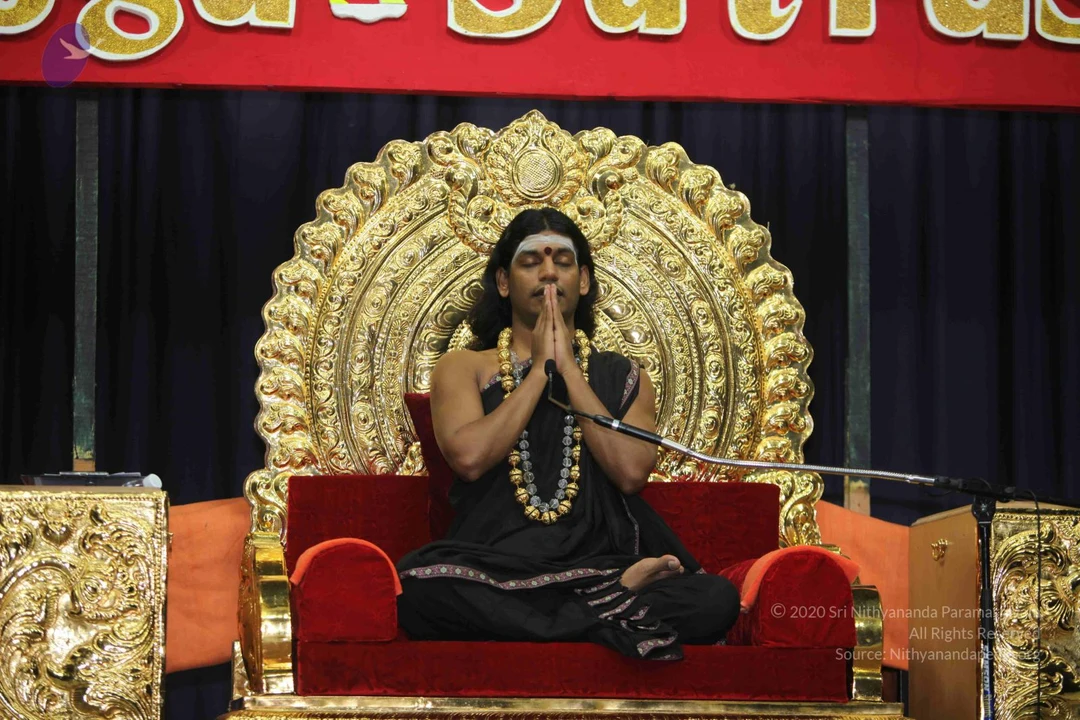
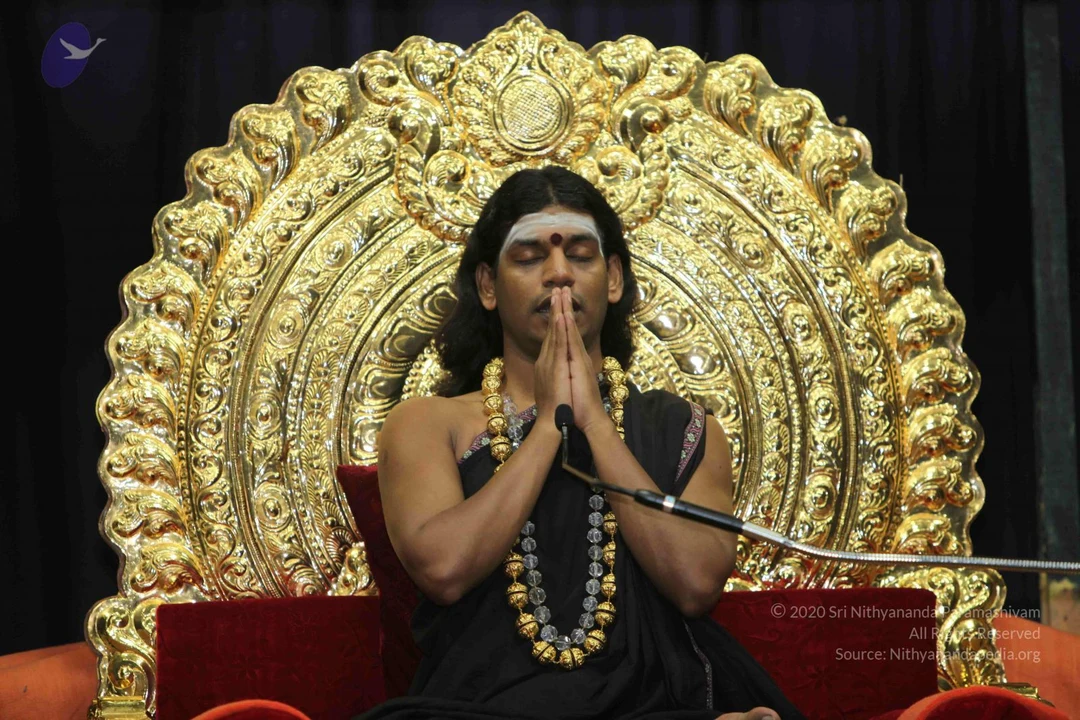
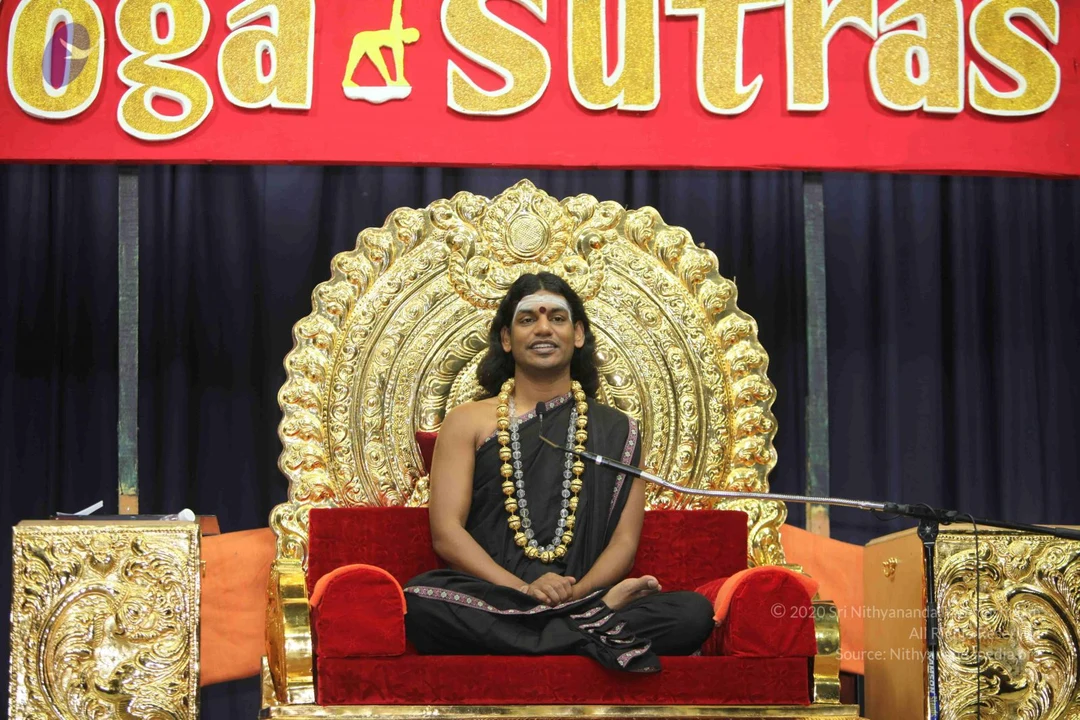
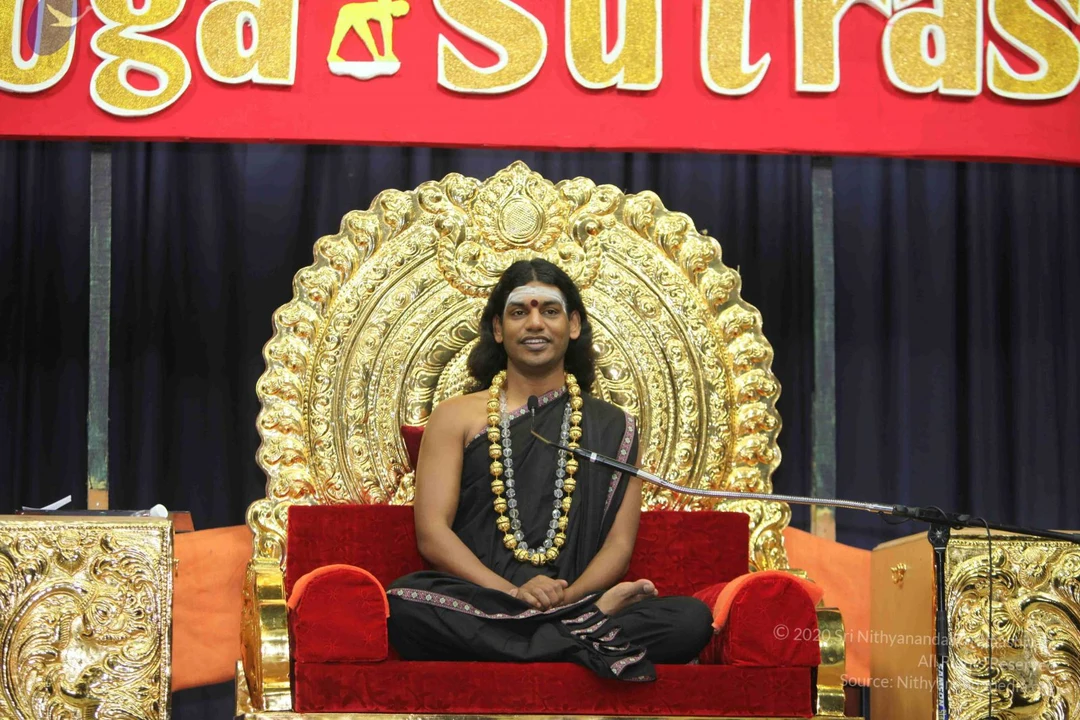
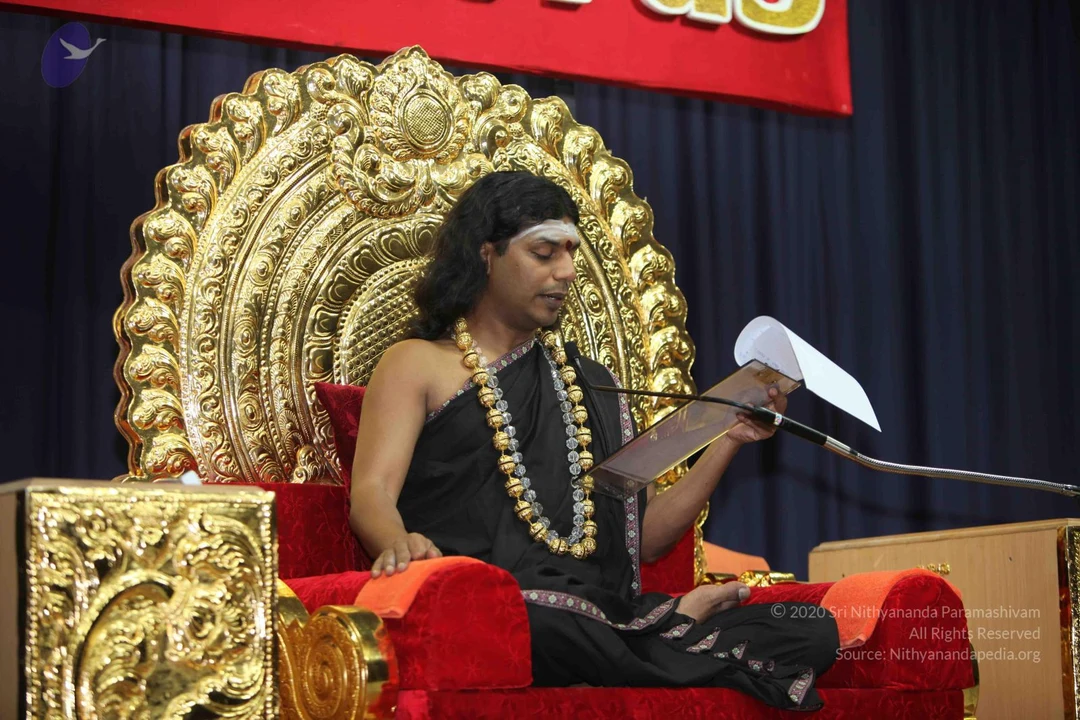
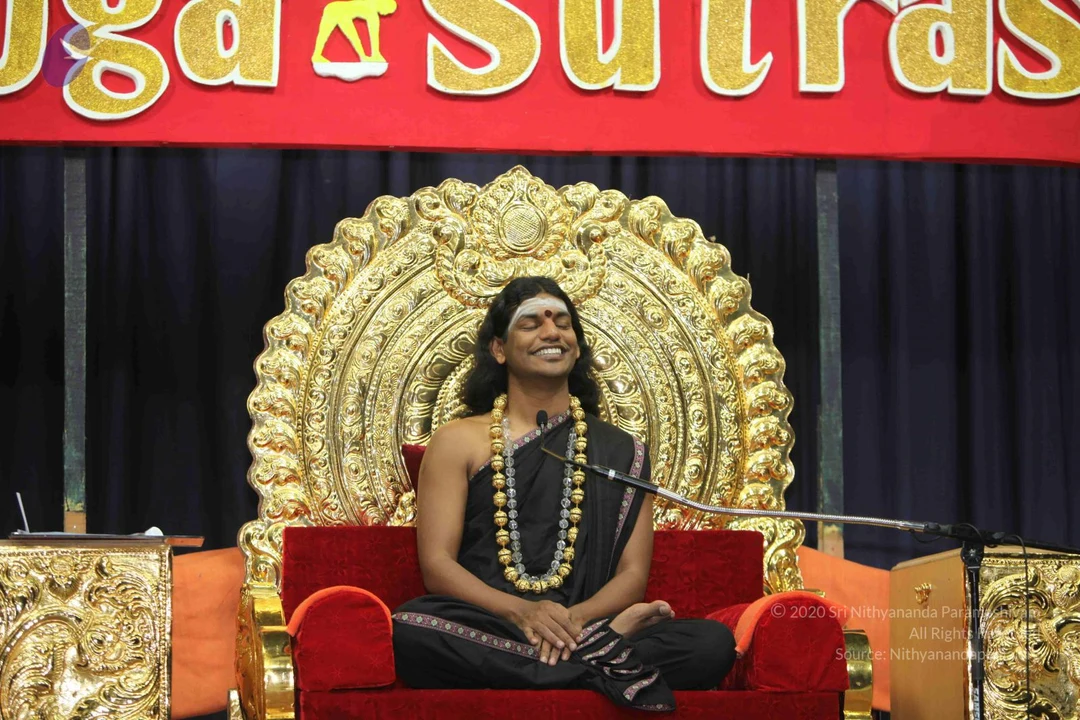
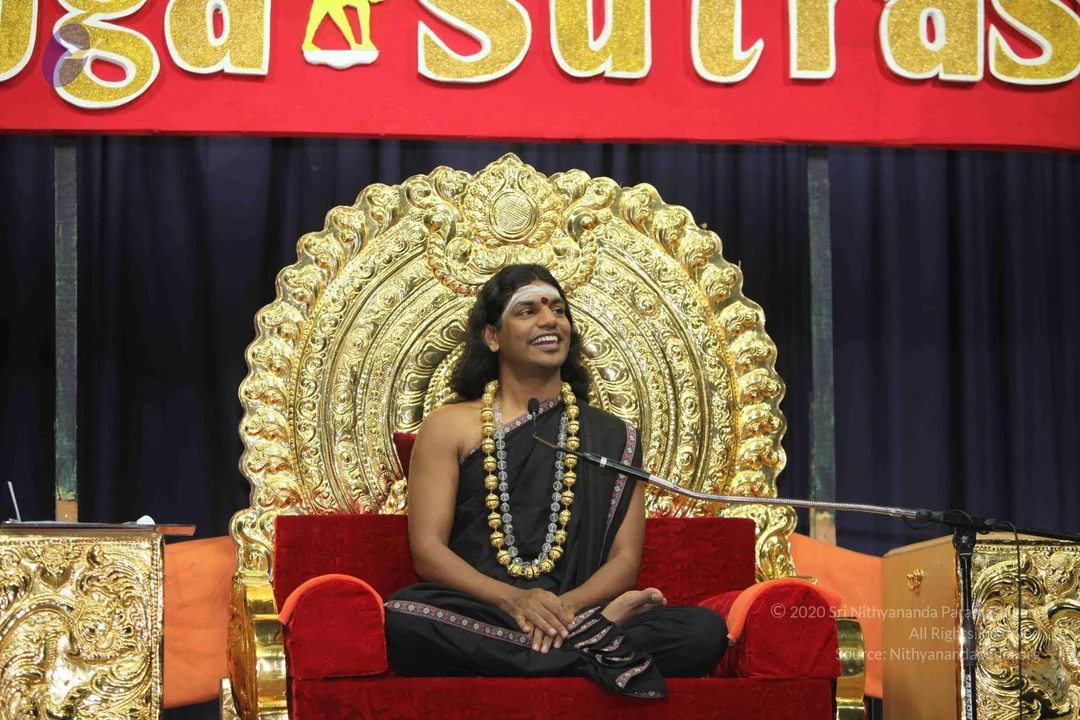
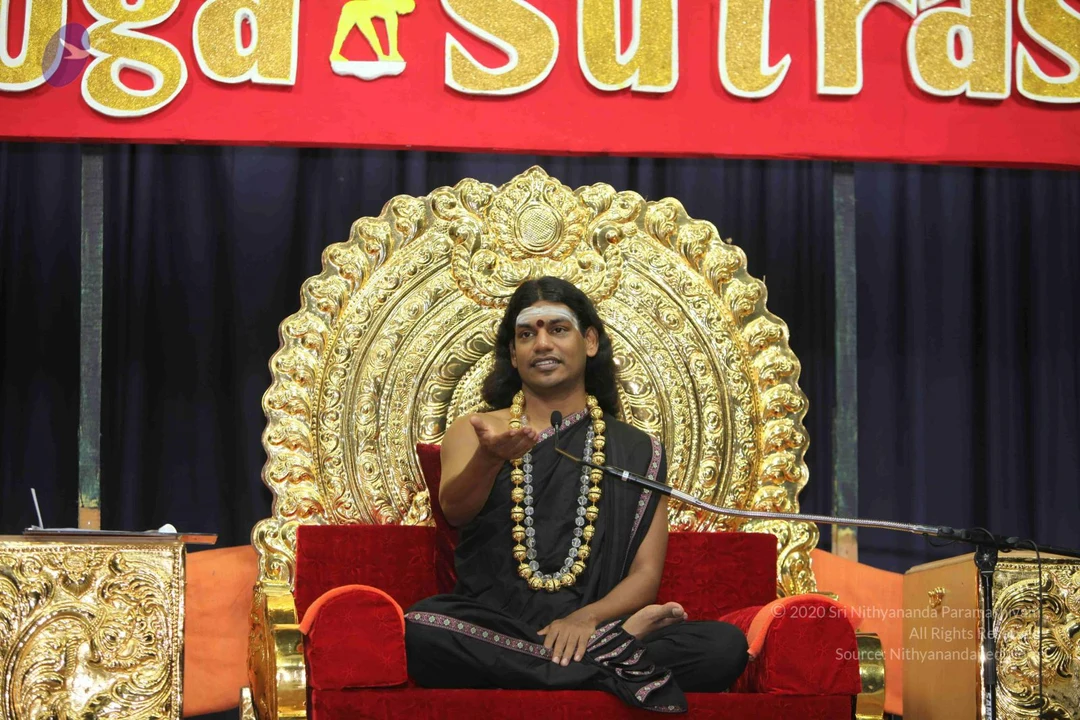
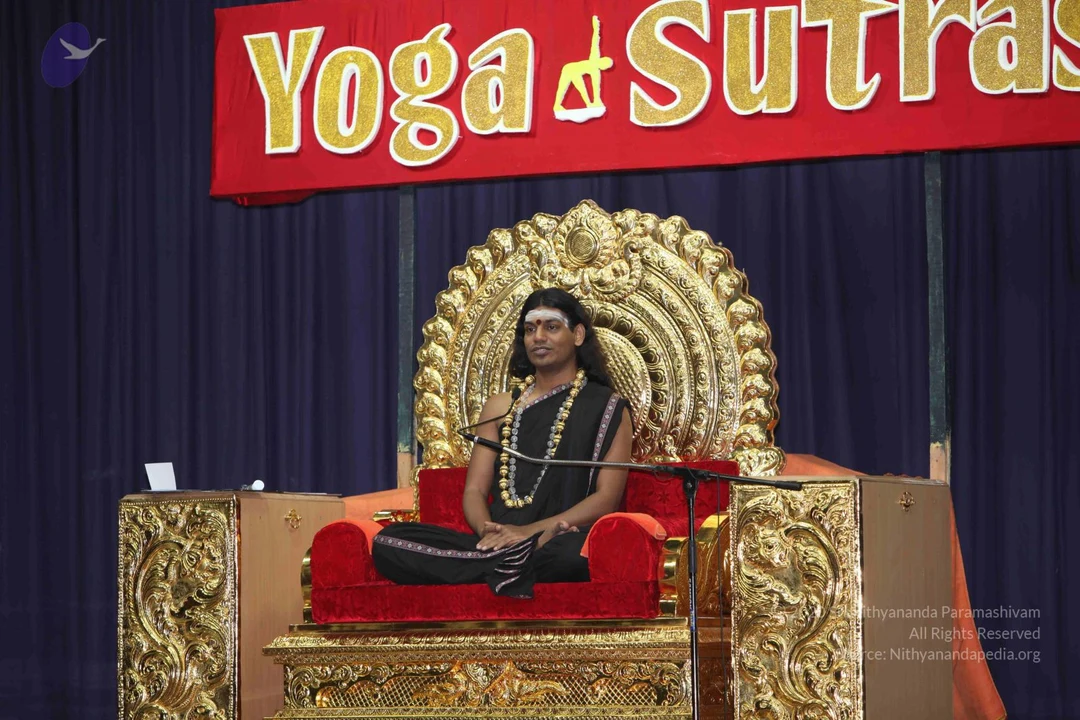
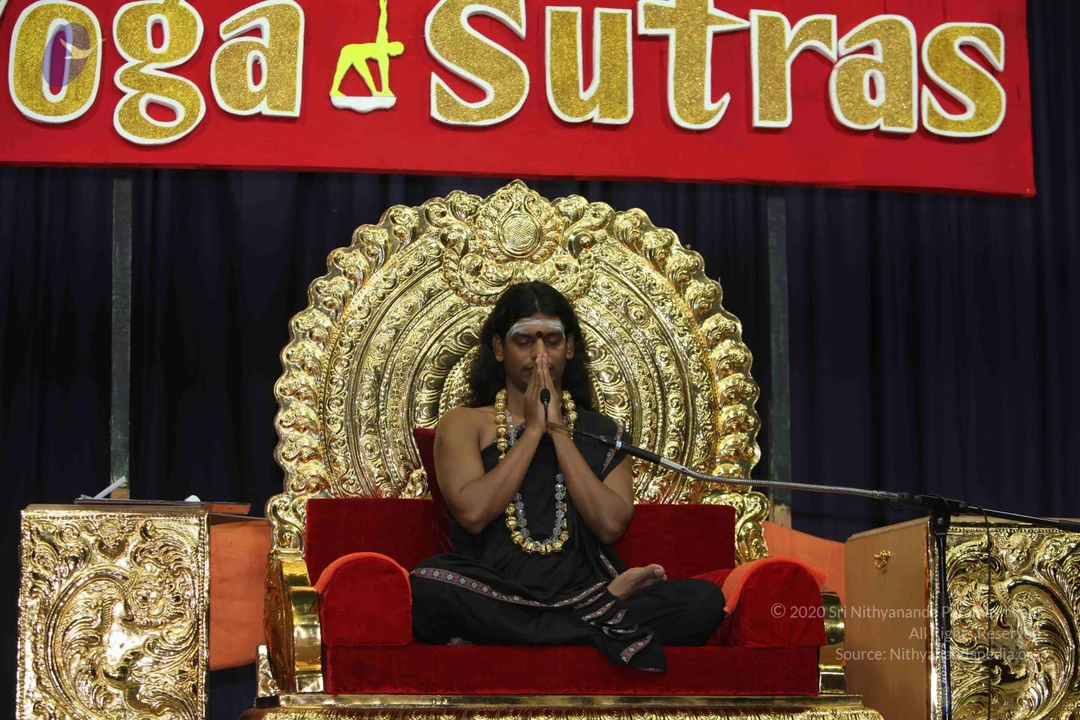
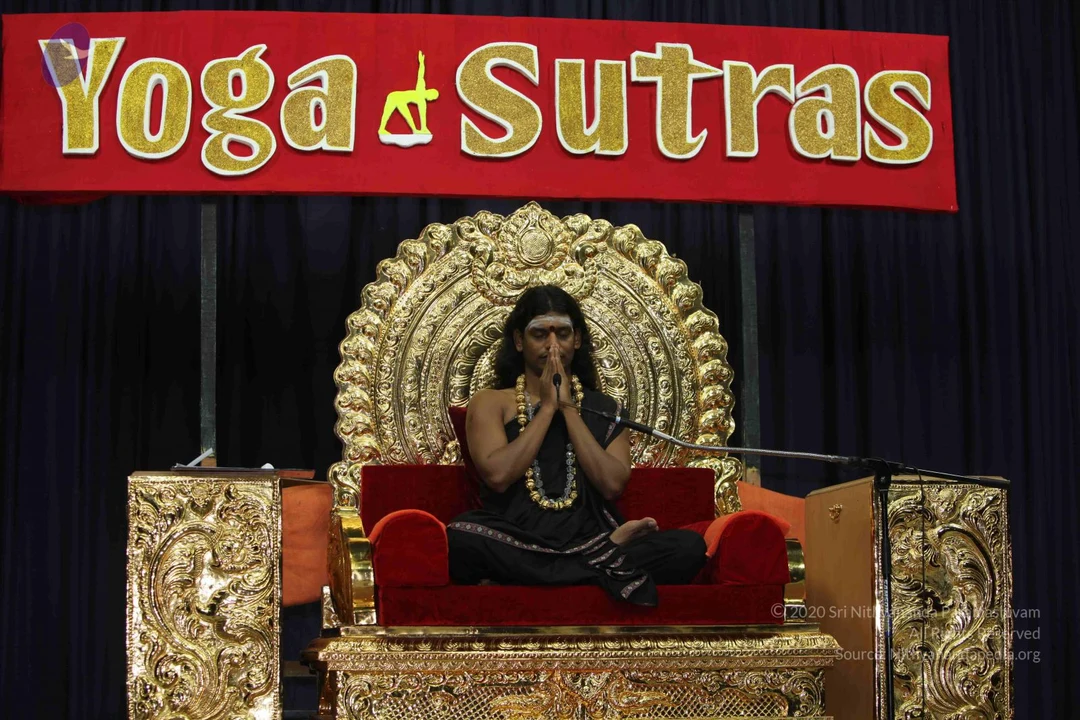
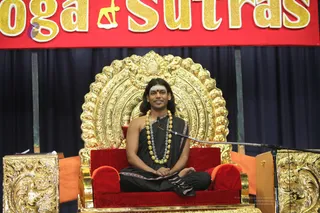
A photograph of a person in a black sari-style garment with a red-and-gold border, standing with palms pressed together in namaste before an ornate gold throne with red cushions. The person wears a white headband, long dark hair, and multiple beaded rudraksha-style malas with gold beads around the neck. Behind them hangs a red banner with large gold lettering, and a dark blue curtain backdrop. A microphone stand is visible at the lower right. Swamiji (probable): the appearance cues are long hair, a white headband, a black garment with a red-and-gold border, layered malas and a gold throne, so the person is.A smiling man with long dark hair and a white-and-red forehead marking sits on an ornate gold throne with a large golden backrest and red velvet cushions. He wears black robes with pink-and-green border trim, multiple gold beaded necklaces and a crystal bead mala, and holds a clipboard with papers while a microphone stand is positioned in front of him. a person: long swept hair, ornate gold throne, saffron-accented setting and gold necklaces, seated as the speaker of a satsang discourse. A purple bird emblem appears at the upper left of the frame.A seated male teacher in a black dhoti-style wrap with a maroon-and-gold border sits cross-legged on an ornate gold throne with red velvet cushions, speaking into a headset microphone. He wears a long gold-bead necklace with dark rudraksha-style beads, has a white tripundra with a red bindi on his forehead, and long dark hair. Behind him hangs a red banner with gold lettering reading 'oga Sutras' with a gold yoga figure, over dark blue drapes. a person seated on a peetha for a satsang talk, with a yoga-themed banner behind him.A seated man in a black garment with a sash-like border and a gold-bead necklace with clear crystal beads sits on an ornate gold and red throne with carved floral backrest. He wears a white forehead mark with a red dot and holds an open reading sheet while speaking into a microphone on a stand. Behind him hangs a red banner and dark blue curtain. Swamiji (probable): long dark swept-back hair, ornate gold necklace and ceremonial throne seating, with a single seated speaker visible.A man seated on an ornate golden throne with a red cushion speaks at a microphone while holding a document on a wooden lectern. He wears a black sleeveless wrap with a pink-and-green patterned border, a large necklace of gold beads and clear crystal beads, and a white-and-red forehead marking. He has long dark hair and his left hand rests on his chest. A dark blue curtain stands behind him.A man seated on an ornate gold throne with carved floral backrest speaks into a microphone on a stage. He has long dark hair swept back, a white vertical tilak with a red dot on his forehead, a black garment draped over his shoulders with pink-edged border, and a long necklace of gold beads and clear crystal beads. Behind him hangs a red banner with gold lettering and dark blue drapery. Orange cushions line the throne and a gold-carved lectern stands at left. Swamiji (probable) is presenting a discourse from the throne, with long swept-back hair, ornate gold beaded garland and dark ceremonial robe.

nithyananda-bidadi

12 photosSource gallery
A photograph of a temple shrine with a deity murti in a gilded alcove, adorned with multiple garlands of orange and red flowers. A figure in a blue garment sits in front of the shrine, with a white cloth draped beside them. Brass lamps and a brass vessel with offerings stand on the floor in the foreground. No people are clearly visible apart from the seated figure, whose face is not clear enough to determine identity.A photograph of a seated man on an ornate golden throne with red cushioning, in front of a blue backdrop and a small table draped in white with flowers and a brass tray. He wears a saffron-orange robe over the shoulder and a long rudraksha mala draped across his chest, hands resting in his lap. Two rudraksha-style malas hang from his neck. He appears to be giving a talk or satsang session. Swamiji (probable): long dark hair, saffron-orange robe, rudraksha malas, seated on a throne, consistent with the page's Nithyananda Satsang context.Close-up photograph of a ritual offering arrangement on a golden surface. A person's arm in an orange saffron sleeve reaches across several silver plates or trays holding white flowers, pink petals and green leaves. The metal trays are arranged in rows. No face is visible and no portrait is shown.A man in orange robes sits on an ornate gold-and-red throne, both hands raised in front of him in an expressive gesture, a rudraksha mala draped across his chest. Behind him, a temple wall shows painted deity figures and gold ornamentation. Two carved golden pedestals stand on either side of the throne. The setting suggests a temple satsang hall with a central seat for discourse.

Photos Of The Day:

5 photosSource gallery
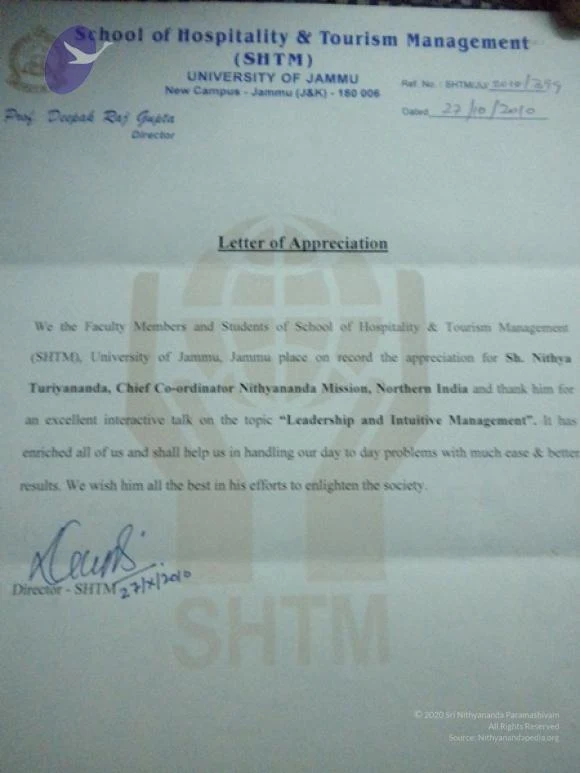
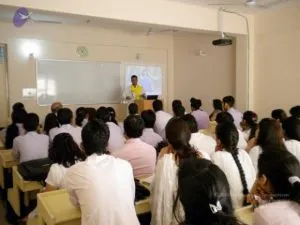
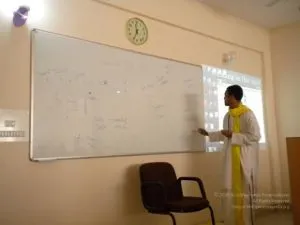
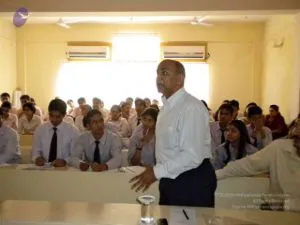
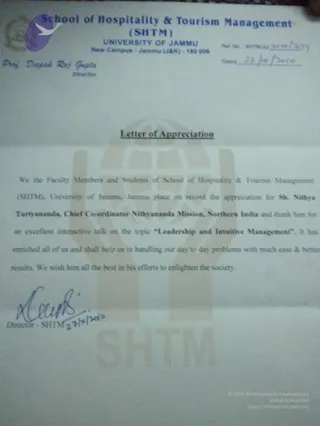
Indoor photo of a seated audience in a lecture-style hall with pale wooden tiered benches. In the foreground, a man in a light-colored collared shirt sits beside a bald man with a graying beard, both looking toward the front. Behind them, rows of young people in white shirts with dark ties and dark trousers sit attentively, several young women among them in light blue and white. Wall-mounted air conditioners are visible at the top of the room and a laptop sits on the desk at lower left. No one is clearly identifiable as a person; the seated figures appear to be audience members.Indoor classroom talk with students seated at wooden desks facing a whiteboard and projector screen. A man in a yellow top stands at the front, facing the audience, near the board. About two dozen students in white and pastel shirts sit in rows, many with their backs to the camera. Fluorescent ceiling lights and a wall clock are visible. The setting resembles a lecture or satsang session in a school-style hall. The speaker's appearance is not clear enough to confirm identity.A man in white clothing with a yellow shawl stands at the right edge of a bright classroom-style room, gesturing toward a large wall-mounted whiteboard covered in handwritten diagrams and notes. A clock hangs on the beige wall above the board, and a brown chair sits in front of the board. Windows let in daylight on the right. The figure's shaved head and yellow shawl are visible, but his face is not clearly shown, so the appearance is uncertain.A photograph of a classroom-style hall with rows of seated students in grey trousers or skirts and white shirts, some writing in notebooks. A bald man in a white shirt and dark trousers stands at the front, gesturing with one hand beside a small table with a glass of water. Two wall-mounted air conditioners are visible above, with bright windows behind. The setting appears to be a school or education hall during a talk, and the presenter's appearance is not clearly established enough to identify him.The letter thanks Sh. Nithya Turiyananda, Chief Co-ordinator a person Mission, Northern India, for an interactive talk on Leadership and Intuitive Management. No people are visible.

Swamijis Morning Event
202 photosSource gallery
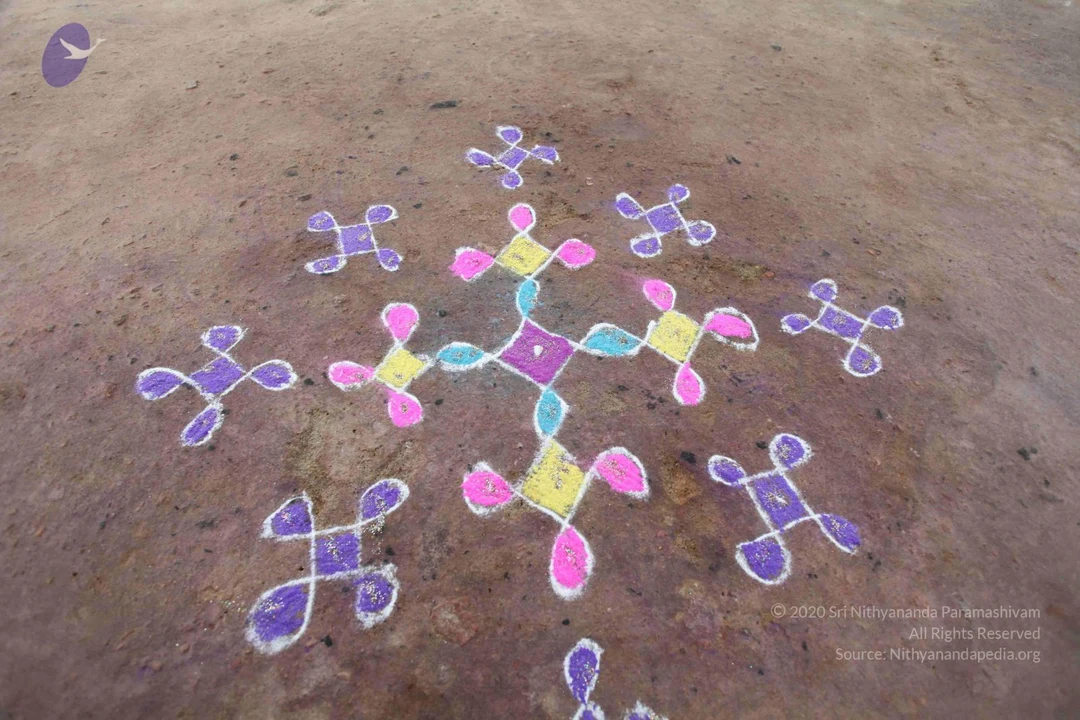
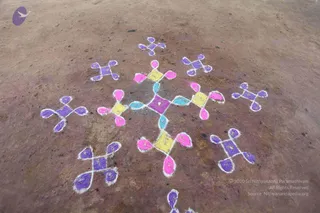
A man seated cross-legged in meditation on a raised cushion within a circular gravel-bordered platform outdoors. He wears an orange saffron robe, a rudraksha mala around his neck, and has a red tilak on his forehead; his eyes are closed and hands rest together in his lap. A brass kalasha/pot sits beside him on a woven mat, with a red flower on the ground and white kolam-style patterns. Behind him stands an orange-red base with a black Shivalinga draped in purple and yellow marigold garlands, flanked by palm trees and grey stone deity statues. Red-and-white signboards are visible in the background.A man sits cross-legged in meditation on a low wooden seat over a woven mat, in front of an orange stone structure topped by a black Nandi bull statue draped with garlands of marigolds and purple flowers. He wears an orange-saffron shawl over his shoulders and a dark rudraksha bead mala around his neck, with a red tilak mark on his forehead and eyes closed. A brass kalasha-style vessel and a small red flower rest on the ground beside him, with a pink lotus rangoli design below. Dark grey stone deity statues and palm trees surround the open courtyard.A photograph of a ground-level floor decoration drawn on reddish-brown earth. A geometric kolam pattern in white outline is filled with pink, yellow, purple and turquoise powder, forming a central square-and-petal motif surrounded by smaller purple cross-shaped figures. No people, deities or a person are visible in the frame.A man sits cross-legged in meditation with eyes closed, hands resting in his lap, on a low orange wooden seat atop a woven mat in an outdoor courtyard. He wears a saffron-orange robe draped over bare shoulders, a long rudraksha mala, and a red tilak on his forehead. A marigold garland with purple and yellow flowers hangs over a black stone Nandi-like sculpture on an orange plinth behind him. A brass kalasha-style vessel sits beside the mat, a pink flower lies on the ground, and a rangoli-style chalk pattern surrounds the seat. Grey stone deity statues, palm trees and plants form the backdrop.A man in saffron-orange robes sits cross-legged in meditation on a low wooden seat atop a raised circular stone platform outdoors. He wears a rudraksha mala and a red tilak on his forehead, with hands resting in his lap. Beside him sits a brass kalasha or pot, and a red flower lies on the ground. Behind him stands an orange-red temple structure topped by a black Shiva lingam draped in yellow and purple garlands. Grey stone deity murti statues and palm trees surround the open courtyard, which has white kolam patterns on the ground. Appearance-based candidate: a person, seated in meditation with saffron robes, rudraksha mala and red tilak.A seated man in saffron-orange robes sits cross-legged on a low stone platform inside a ring of gravel, eyes closed, hands folded in his lap in a meditative posture. He wears a dark rudraksha mala and a bare upper body is visible, with a shawl-like orange garment draped over his legs. Marigold garlands hang across a black stone Nandi statue behind him, set on an orange-red pedestal. Around the platform are white and red rangoli kolam patterns, a brass kalasha pot sits at his left, and a mat and cushion lie nearby. Stone statues of deities and a garden of palm trees surround the open courtyard.
Yoga-Sutras-Evening-Session

99 photosSource gallery
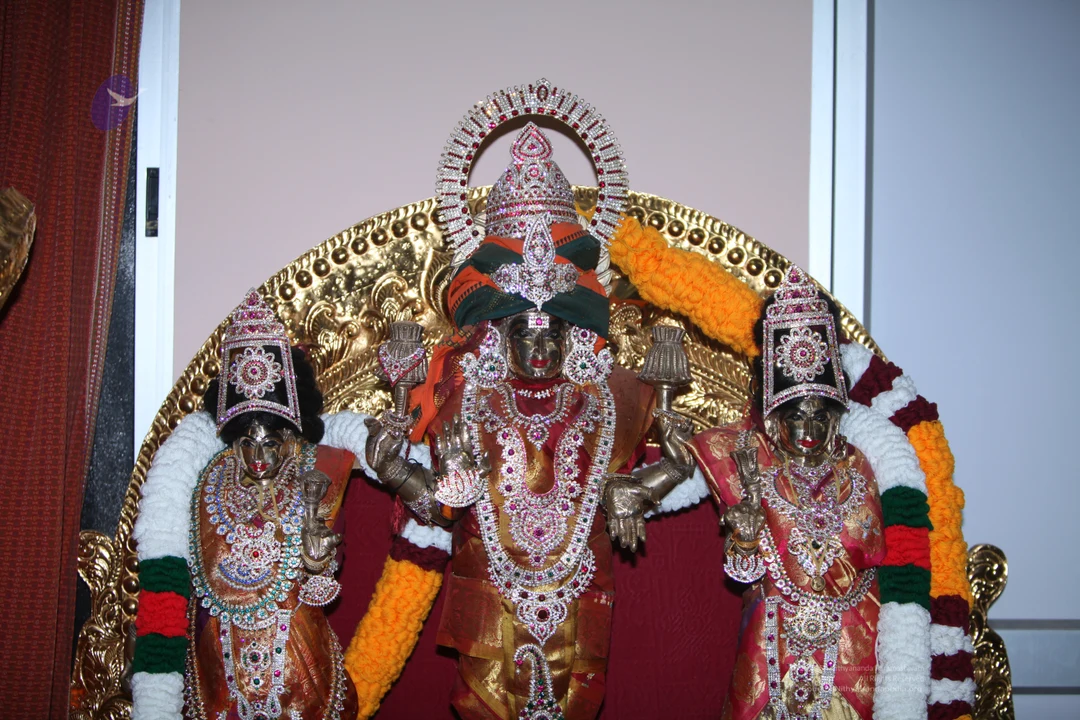
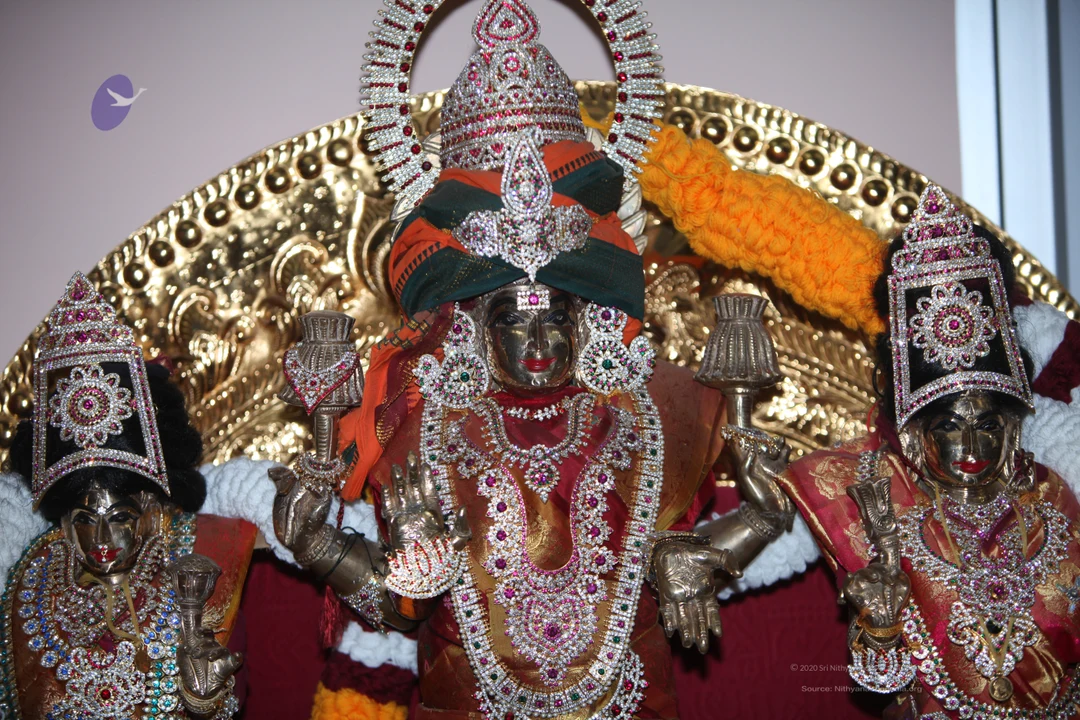
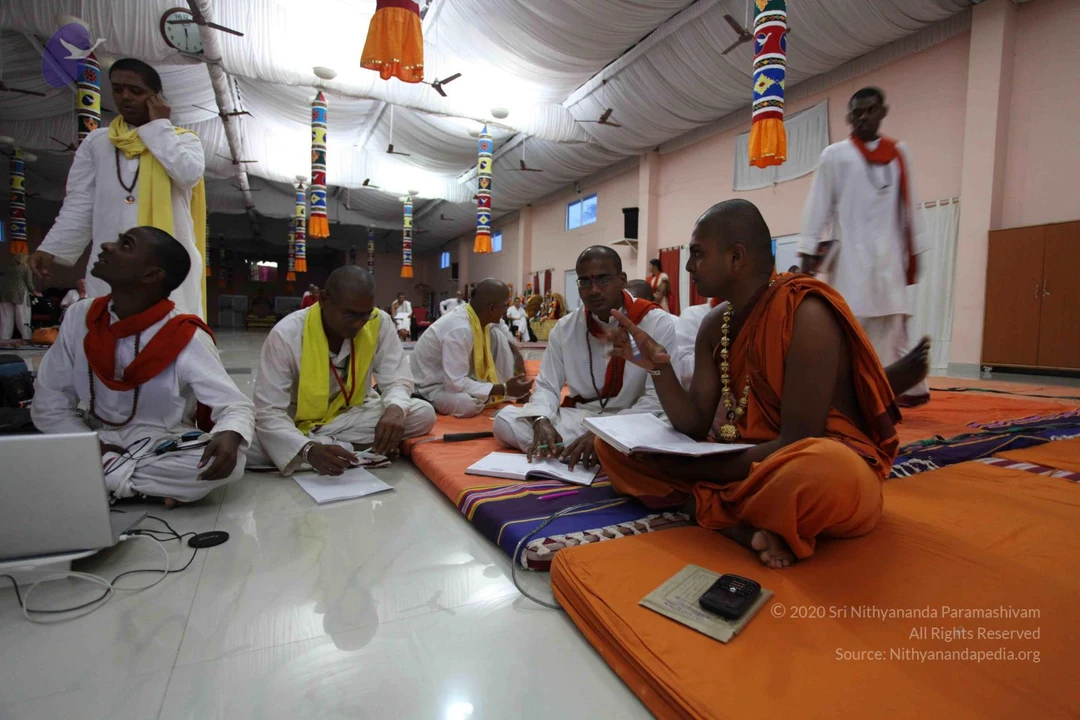
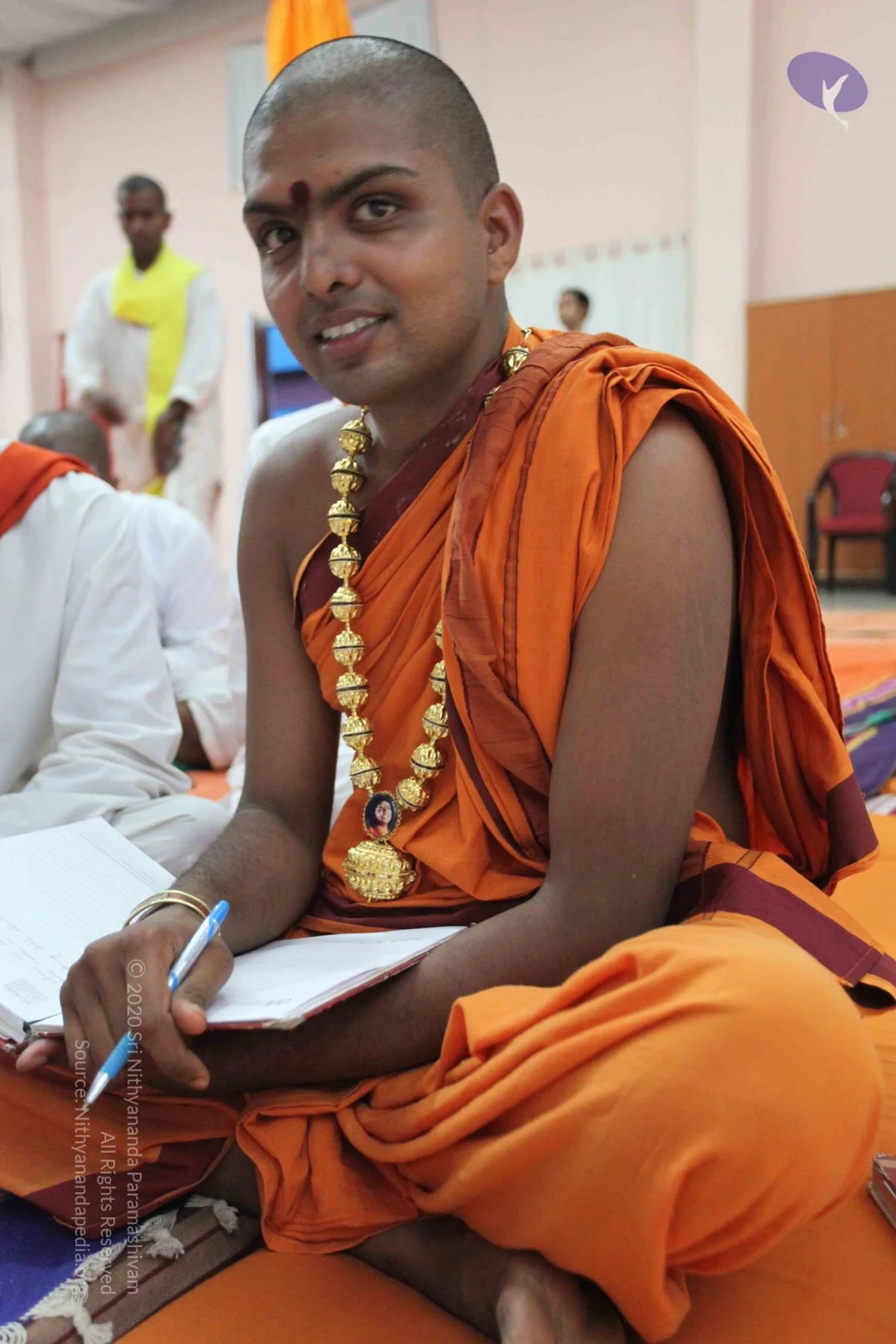
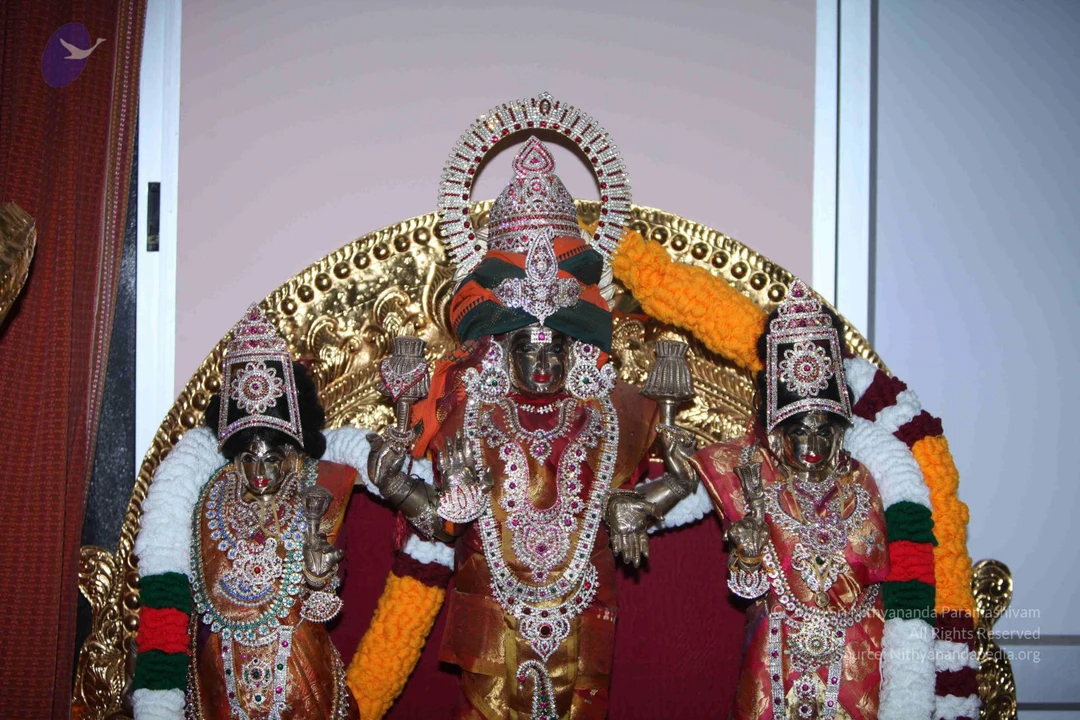
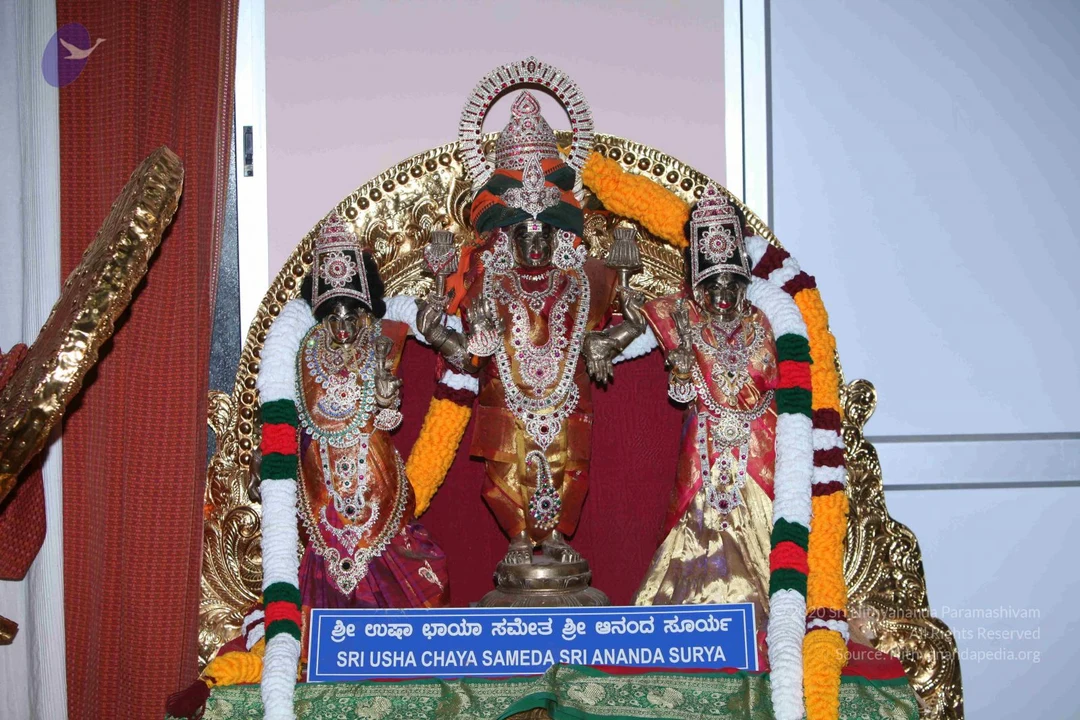
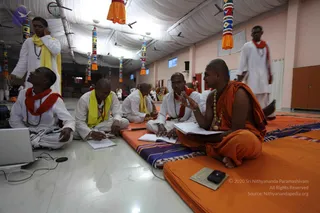
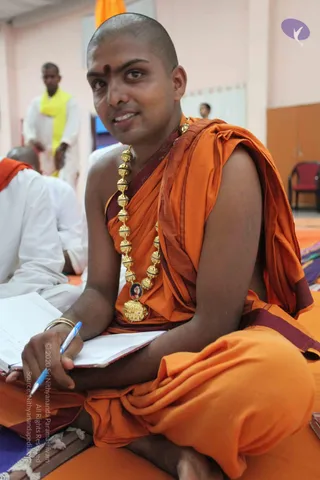
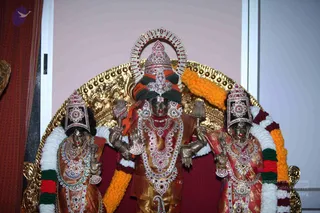
A photograph of a large hall with a white fabric ceiling canopy and colourful cloth tassels hanging from it. Seated on orange and purple floor mats, a bald man in an orange robe with beaded necklaces gestures while holding a open notebook. Nearby, several men in white dhotis and kurtas wear yellow or red shawls and rudraksha malas, some writing, some looking up, with a laptop on the floor and a small black phone and booklet beside the orange cushion. Another man in white walks through the background.A shaved-headed young man in orange robes sits cross-legged on an orange mat, smiling at the camera while holding a pen over an open notebook. He wears a red tilak on his forehead and a long gold bead necklace with a gold pendant holding a small framed portrait. Behind him, a white-clad man in a yellow shawl and another seated person are visible in a pale hall with a red chair. The man's appearance matches a devotee or sannyasi seated at satsang; no clear a person cues such as long hair or saffron ornate clothing with a crown are present, so identity is uncertain.A photograph of a central metal deity murti flanked by two smaller attendant figures, all adorned with elaborate silver-toned crowns, jeweled necklaces and rich gold-and-red garments. The central figure wears a tall jeweled crown with a green and orange turban, holds ceremonial objects in both hands, and stands before a large gold arched backdrop. Garlands of orange marigolds and white flowers drape across the arch and figures. A pink wall and red curtain form the setting. No living people are visible.Photo of three ornate metal murtis on a gold-framed altar backdrop. The central figure is a deity murti with a tall crown, a red and green turban-like headdress, a kirital with a halo, and heavy jeweled necklaces; it holds staff-like objects in its hands. Flanking it are two smaller female-form murtis wearing tall jeweled crowns, layered necklaces, and pink and orange silk saris, with garlands of orange marigolds and white flowers draped across the group. Red curtain at left, pale wall behind.A silver deity murti with a central figure wearing an ornate jewelled crown, an orange and green turban-like headdress, and heavy jewelled necklaces with red and green stones. Two flanking silver figures wear tall jewelled crowns and embroidered gold and maroon garments. The central figure holds a silver staff-like object and a lamp-like implement, with a golden arched backdrop and orange marigold garlands. Watermarked copyright text appears in the corner.Three metal deity murtis decorated with jewelled crowns, silver and gem-studded necklaces, and garlands stand before a gold repoussé backdrop. The central figure wears an orange and green turban-style headdress and holds a lamp-like object in one hand, with a gold-toned palm shown in the other. The side figures wear pink and red silk garments and stand before a white and orange floral garland. No physical people are visible.