Skip to content
Thursday

28 October 2010

Release Your Engrams And Realize Yourself: Nithyananda Morning Message

Dated photos
228
Source pages
1
Media
2
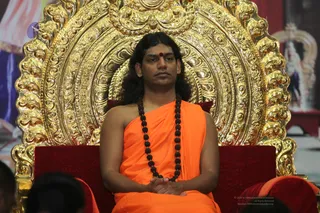
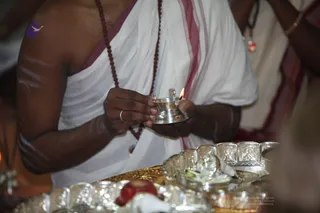
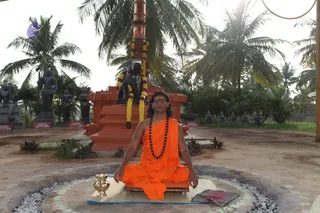
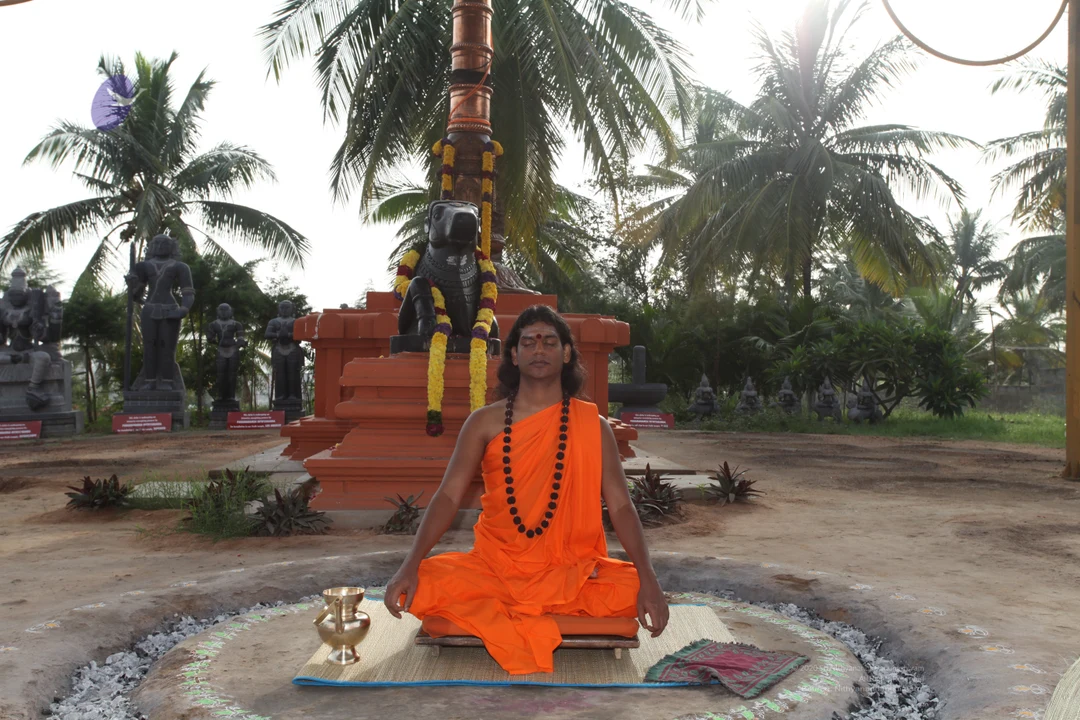
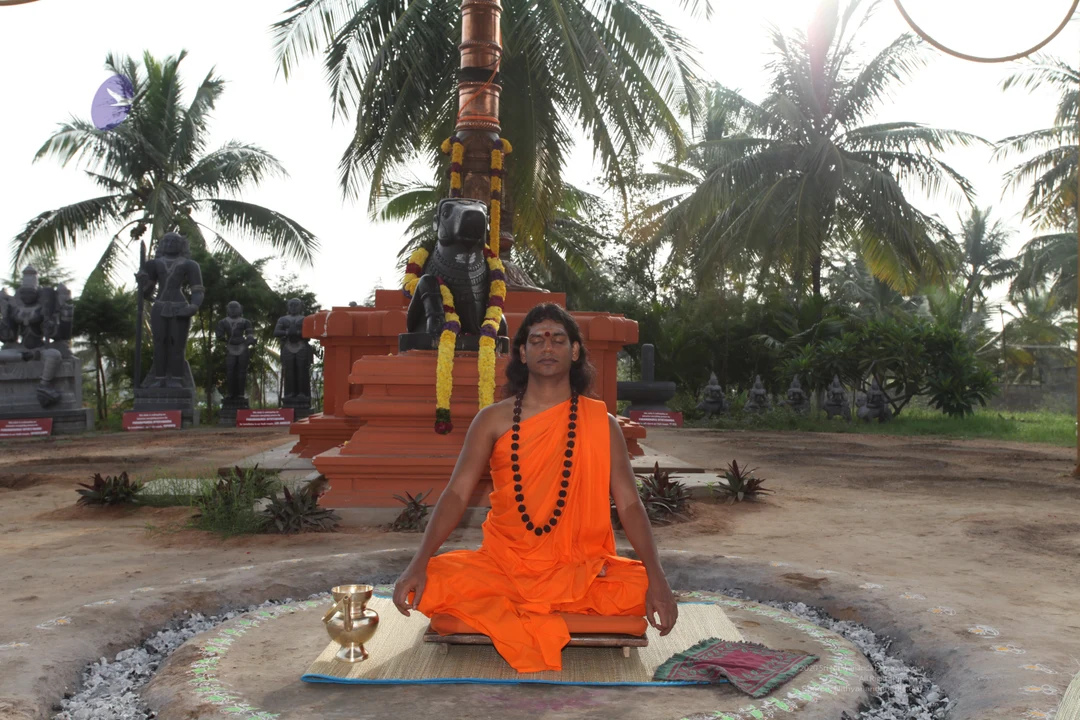
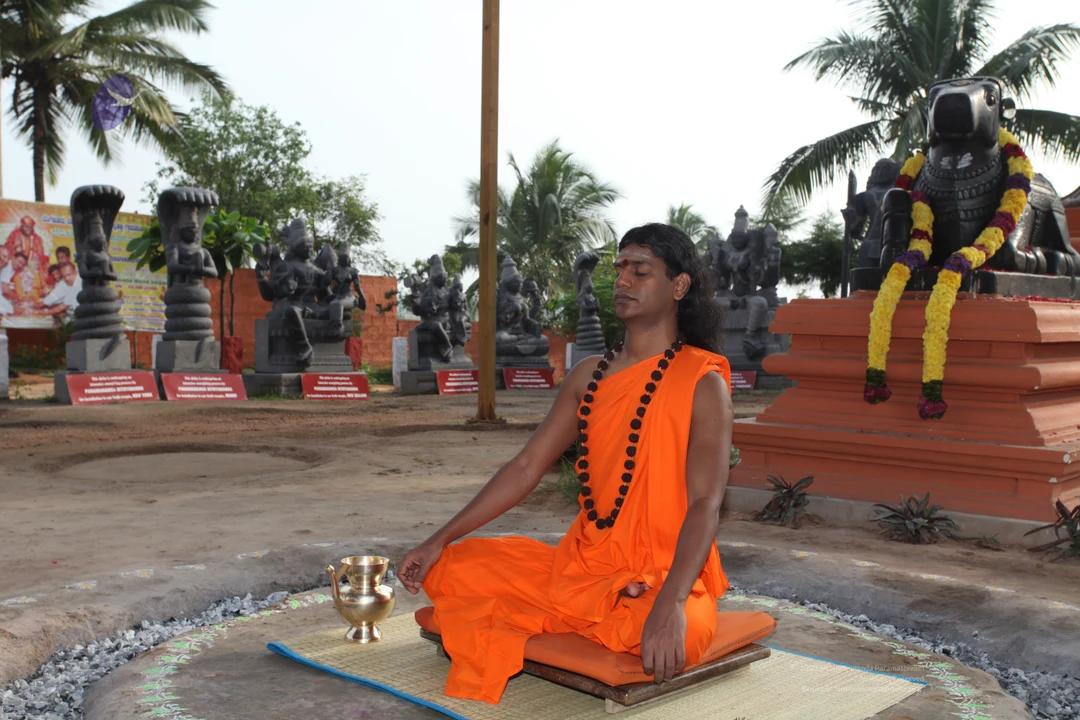
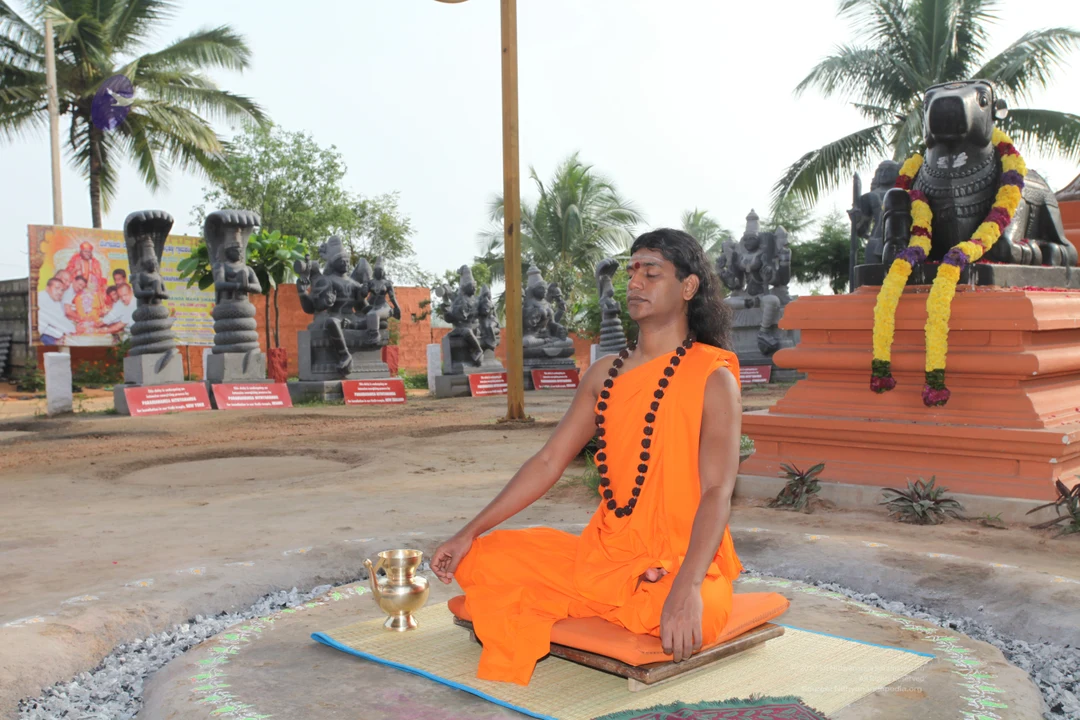
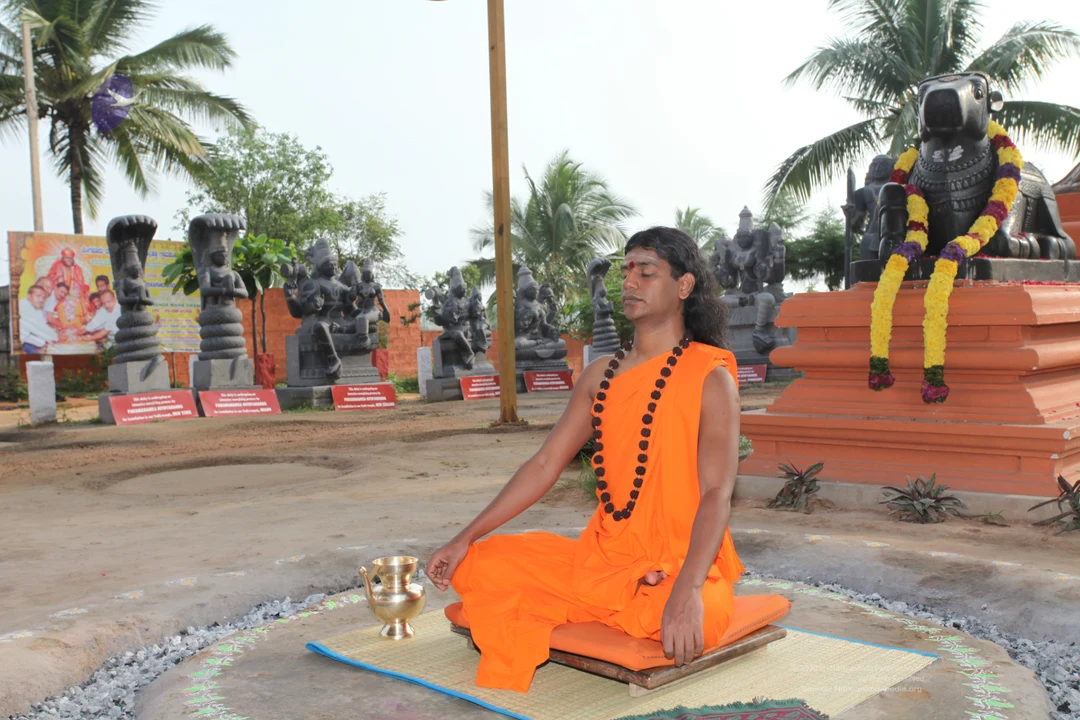
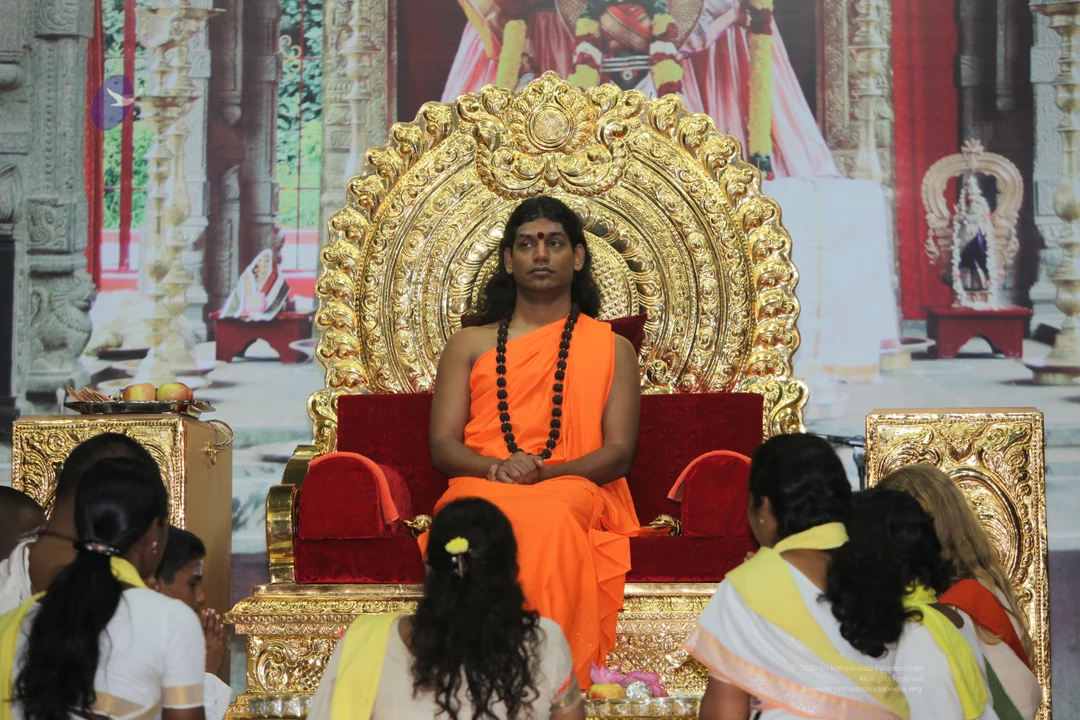
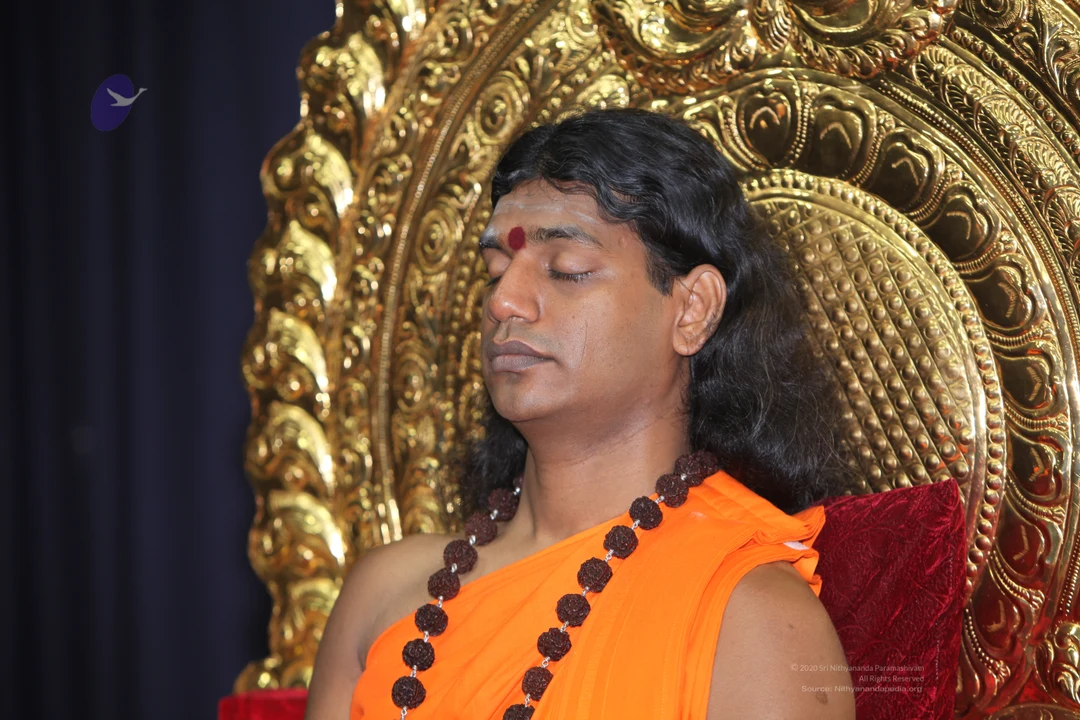
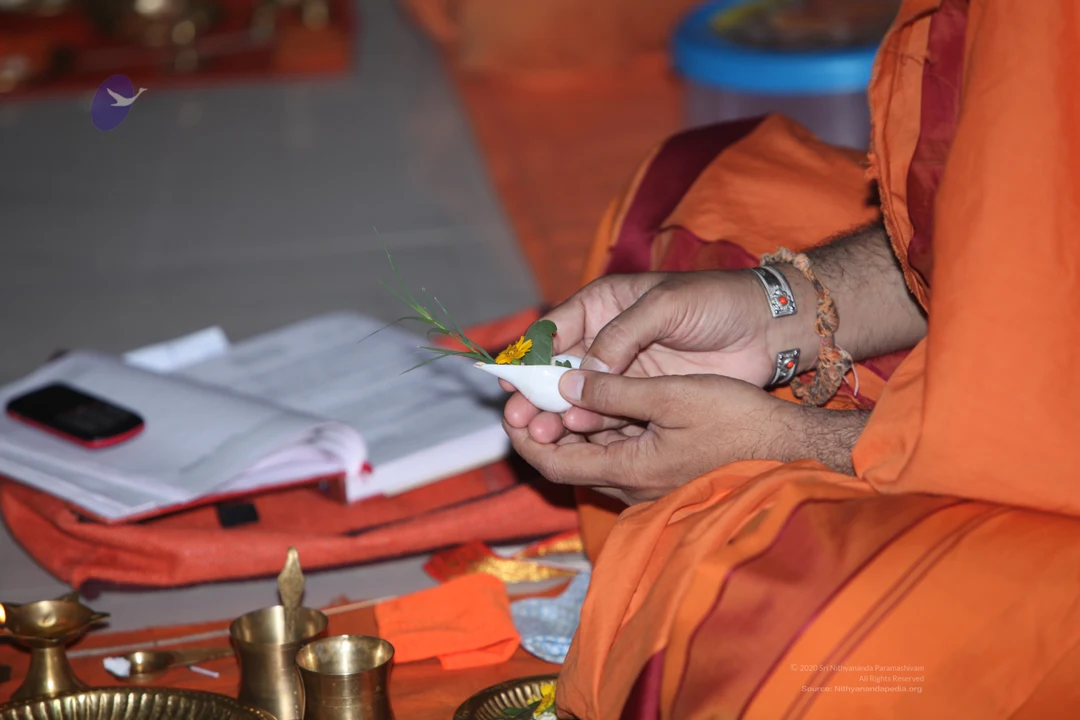
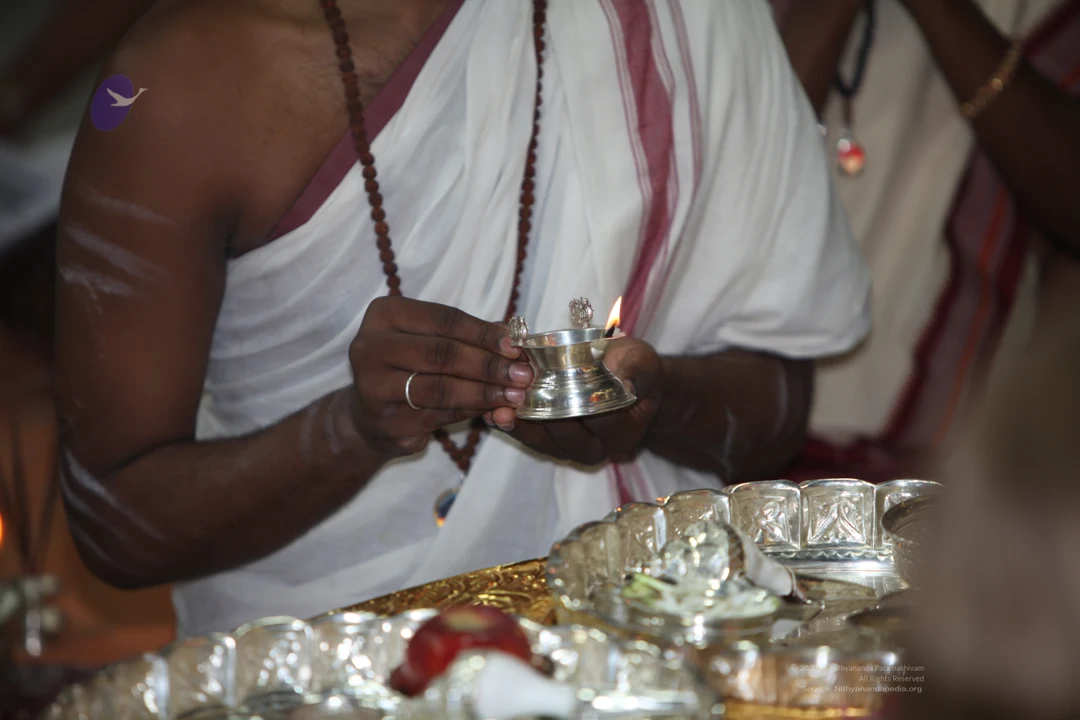
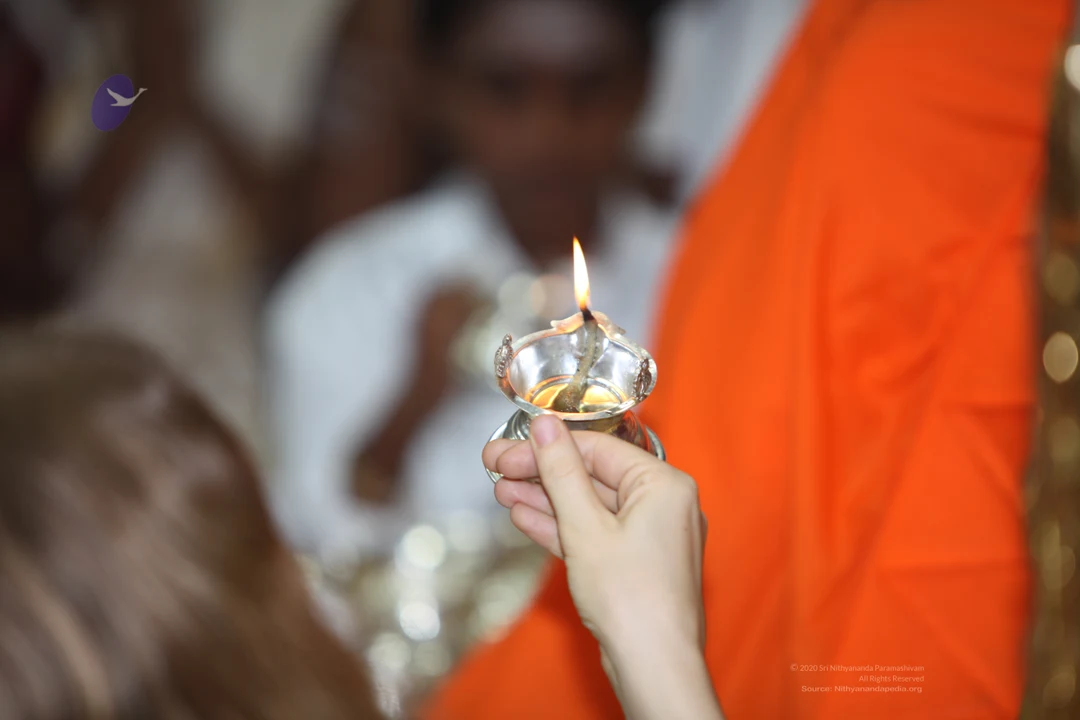
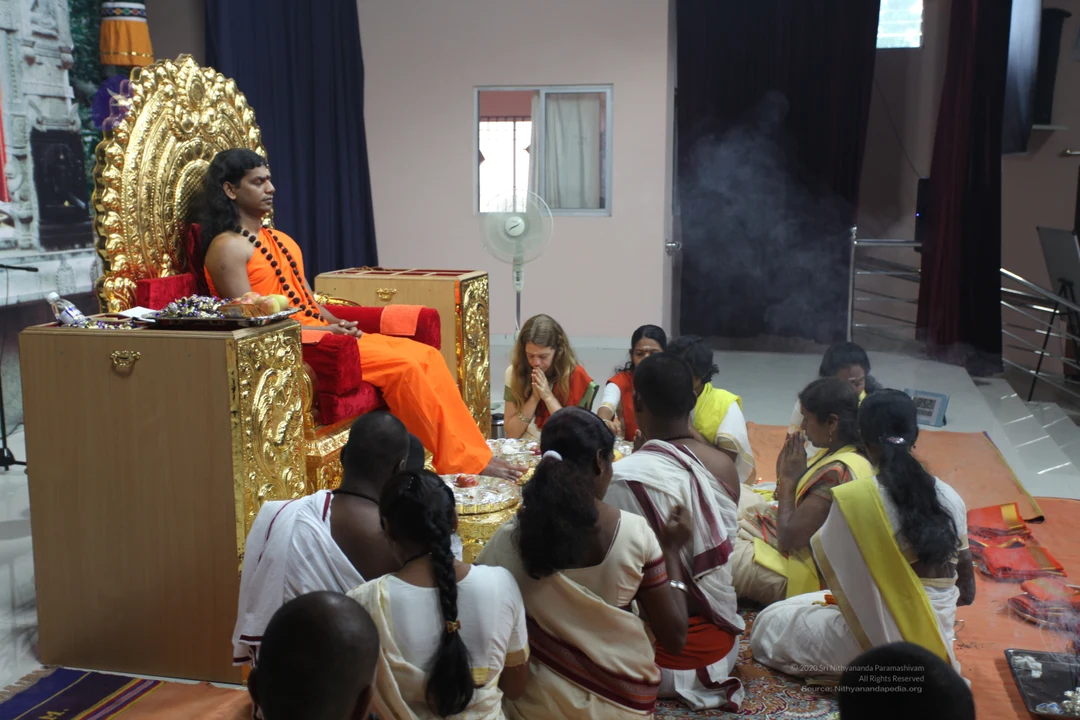
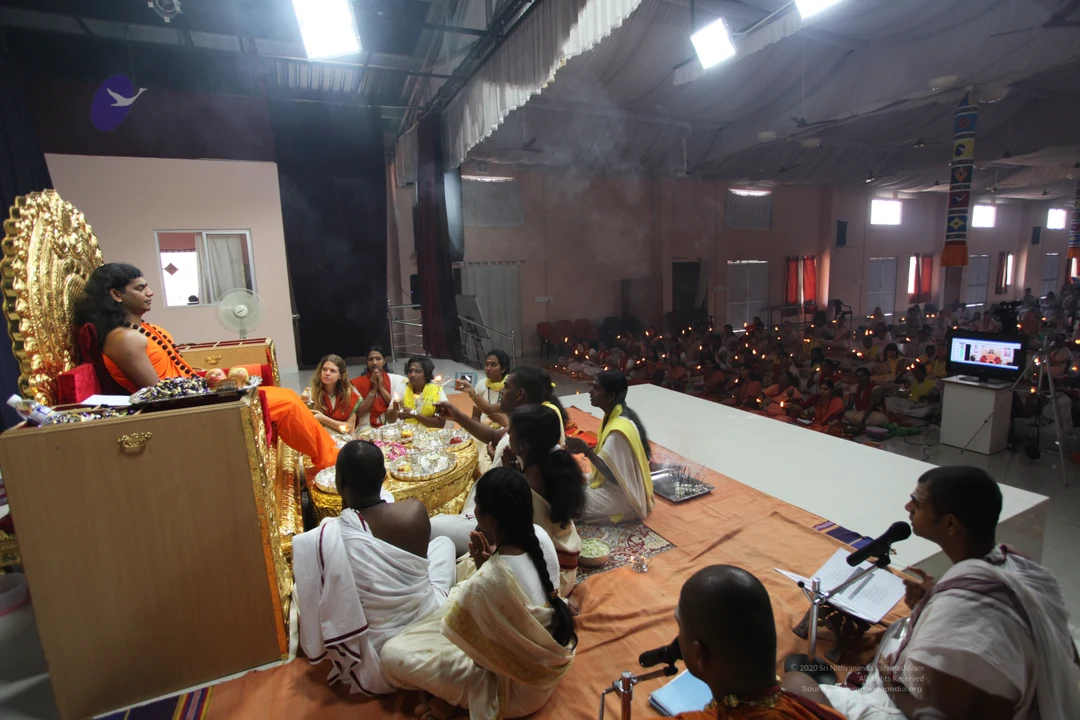
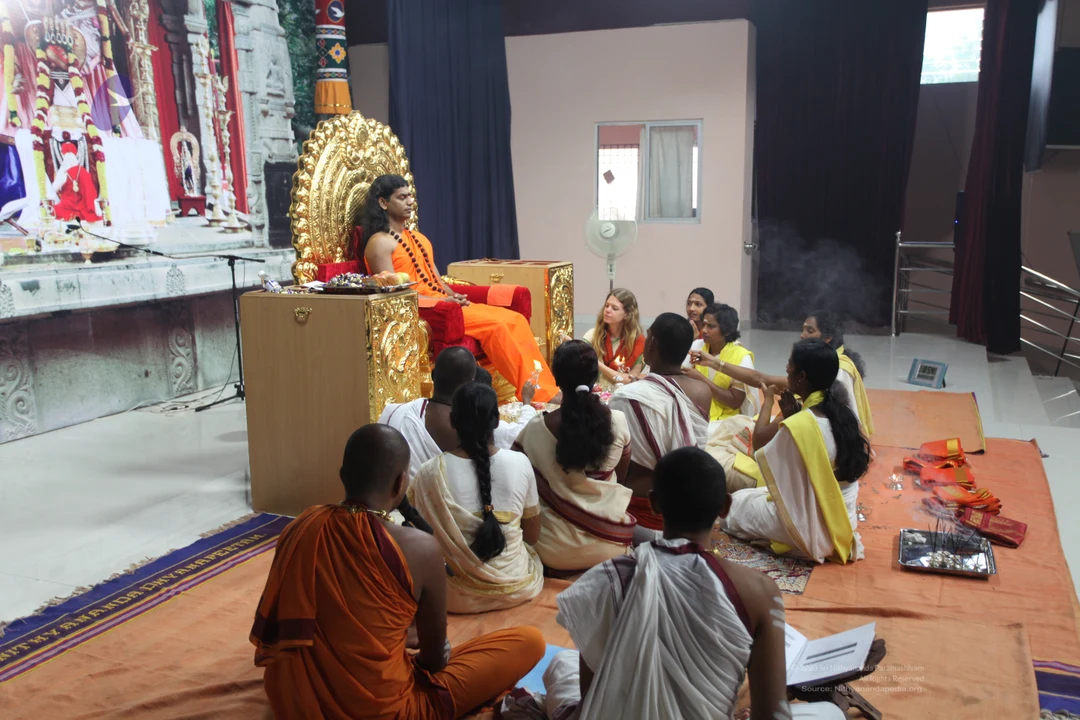
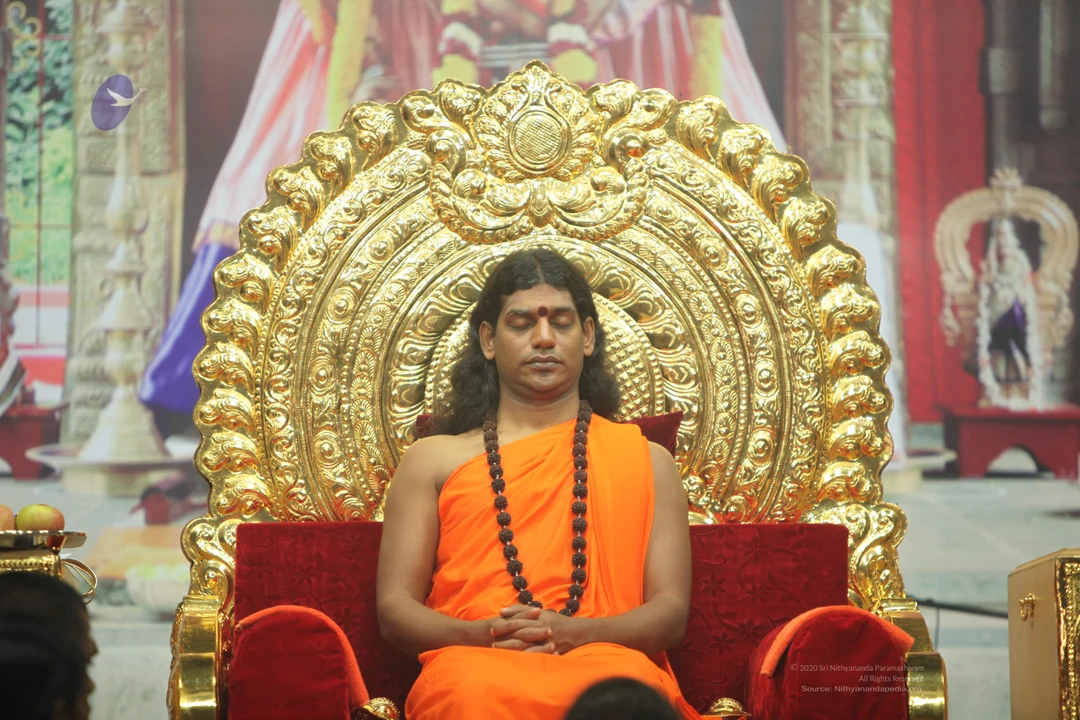
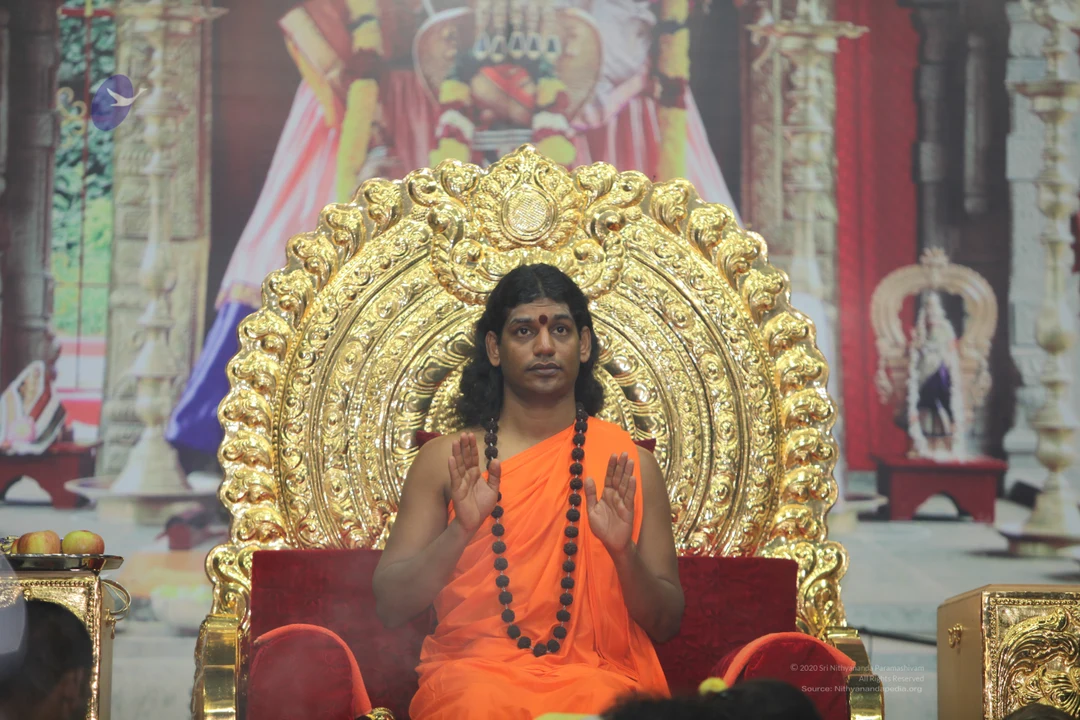
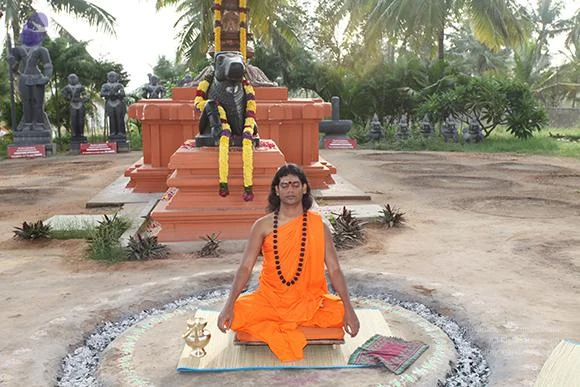
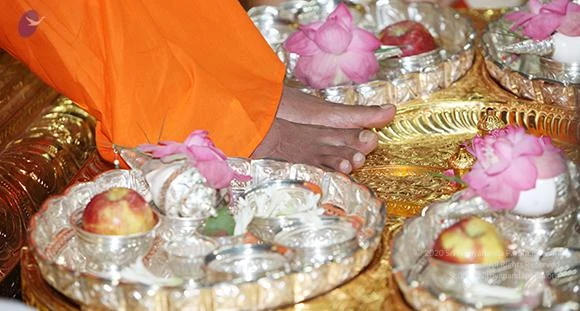
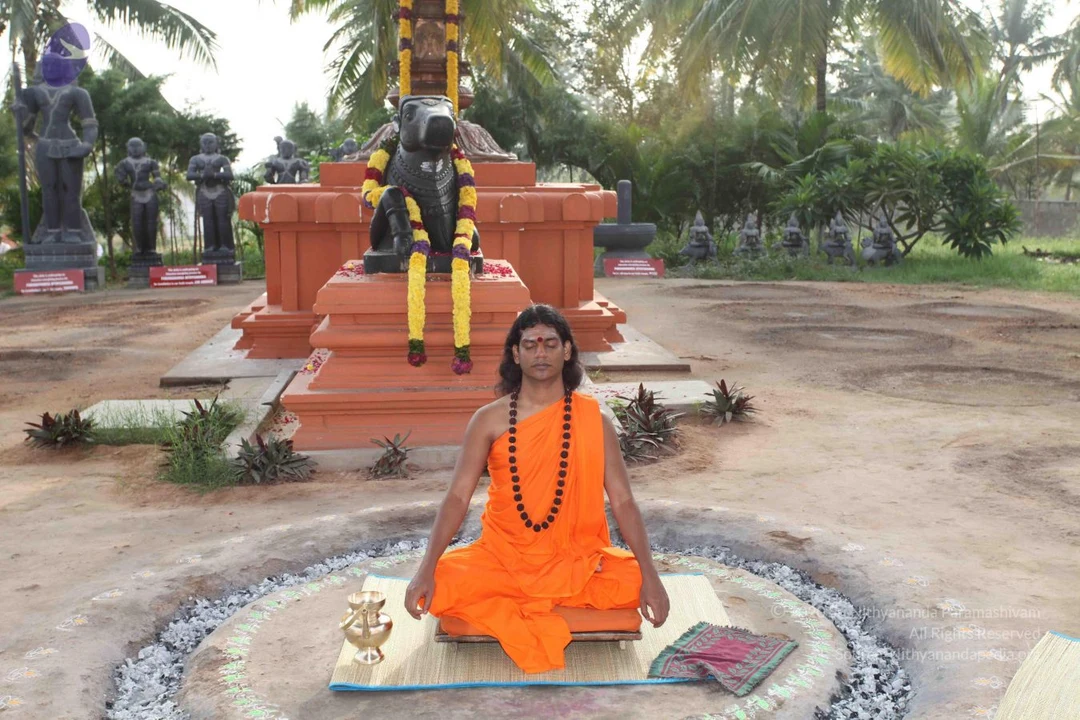
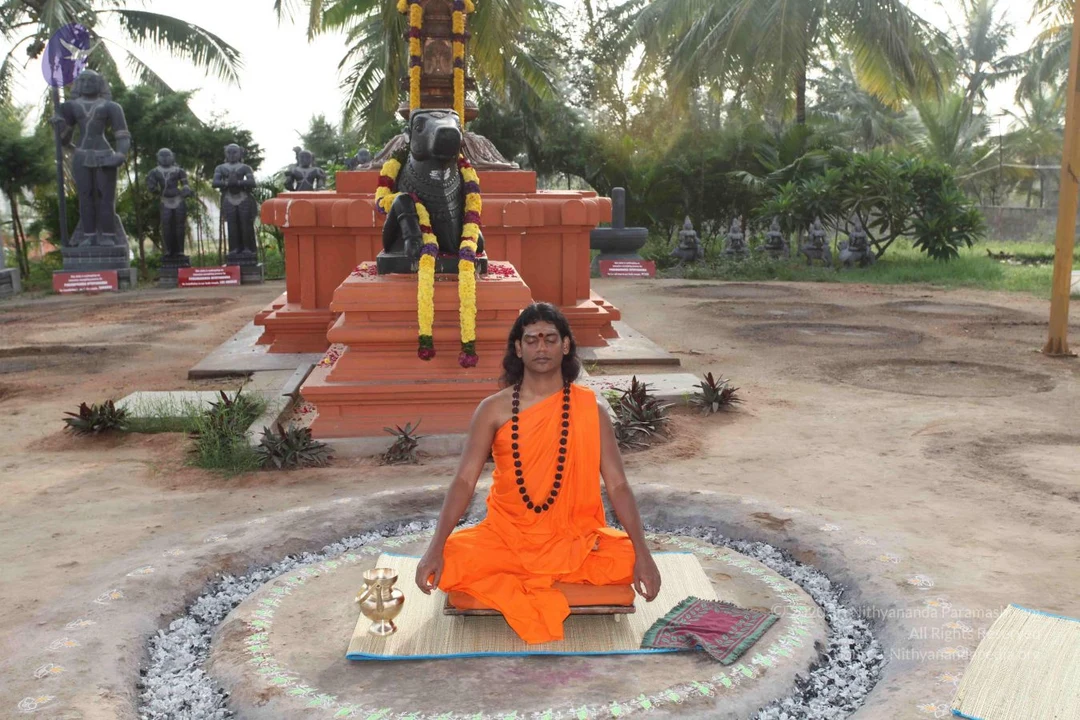
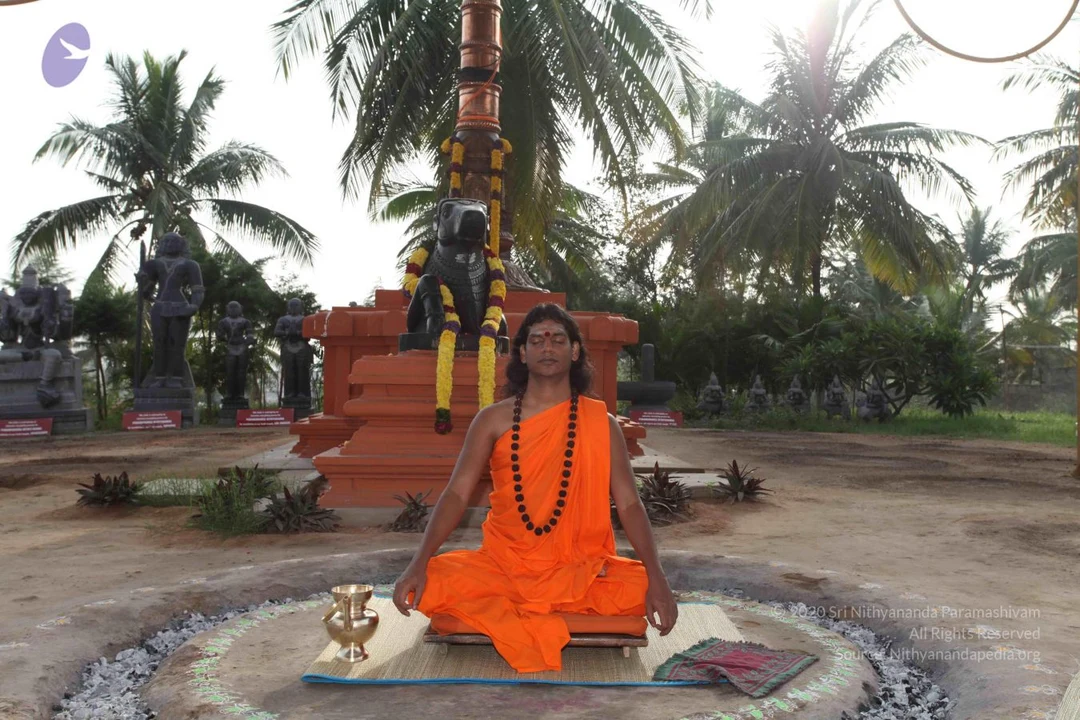
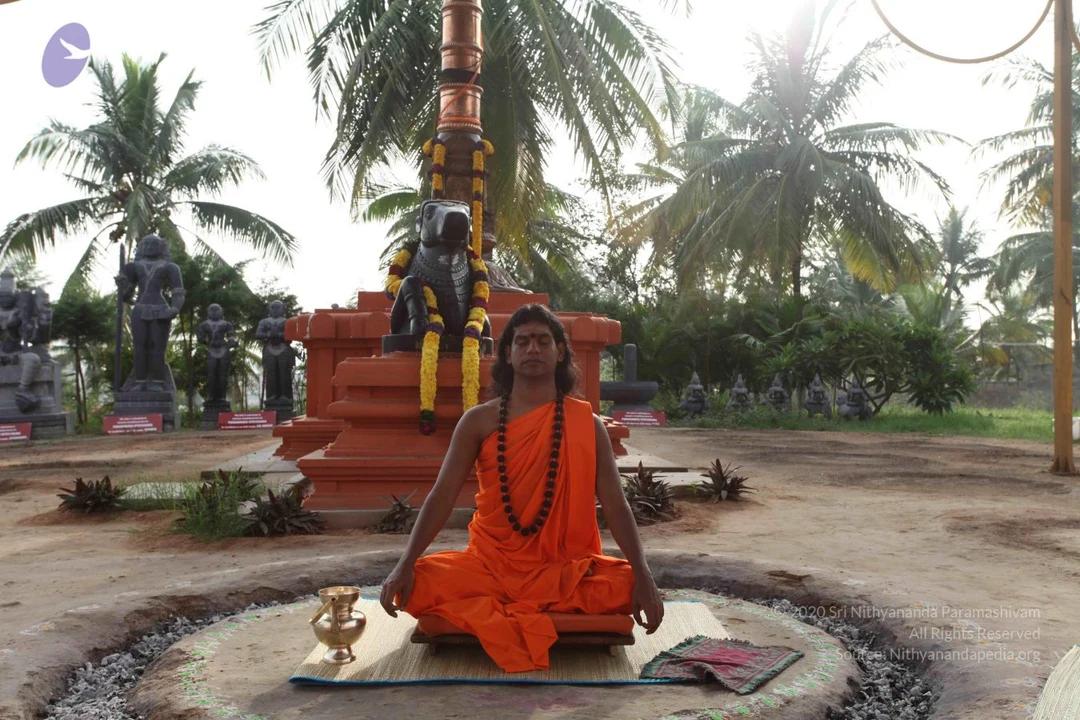
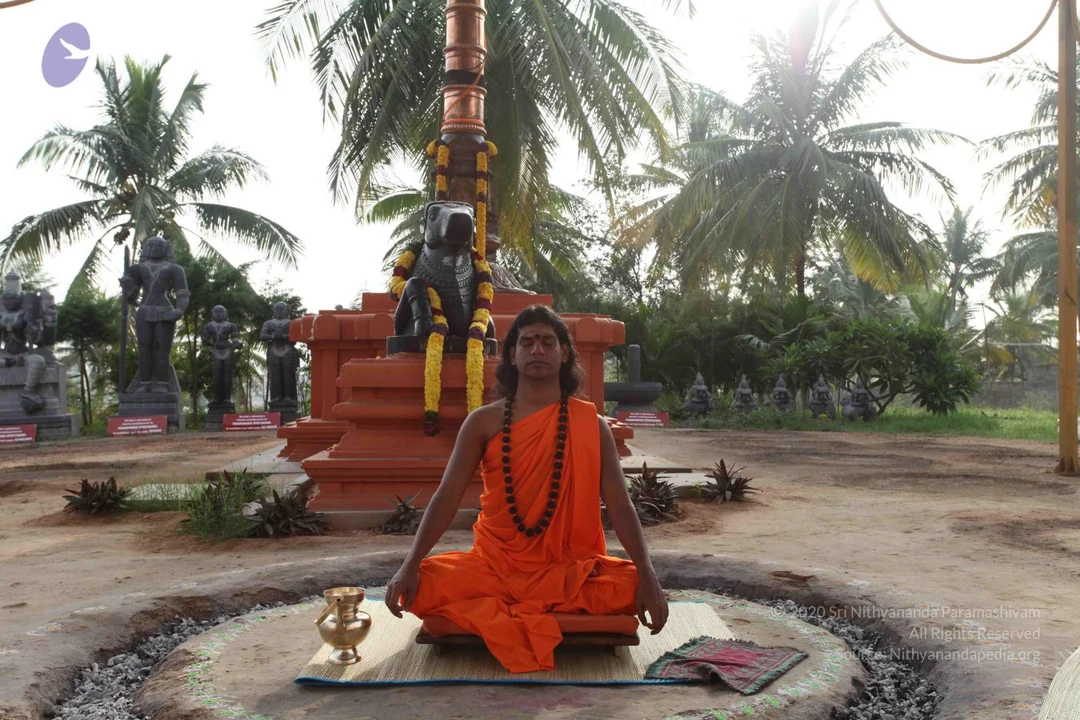
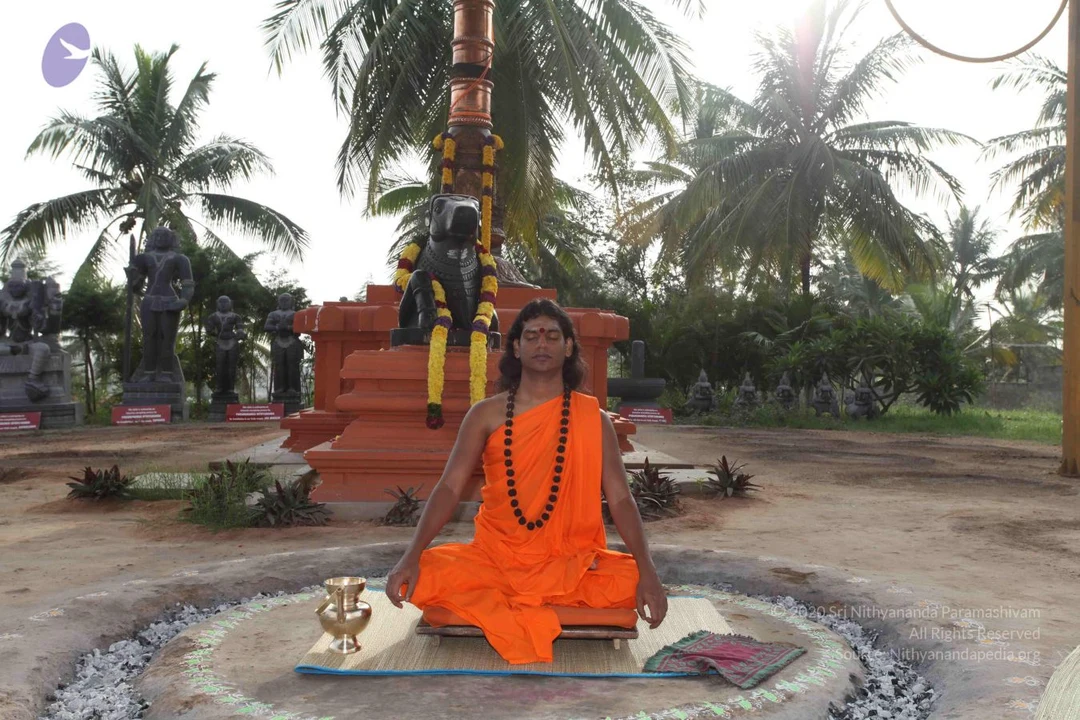
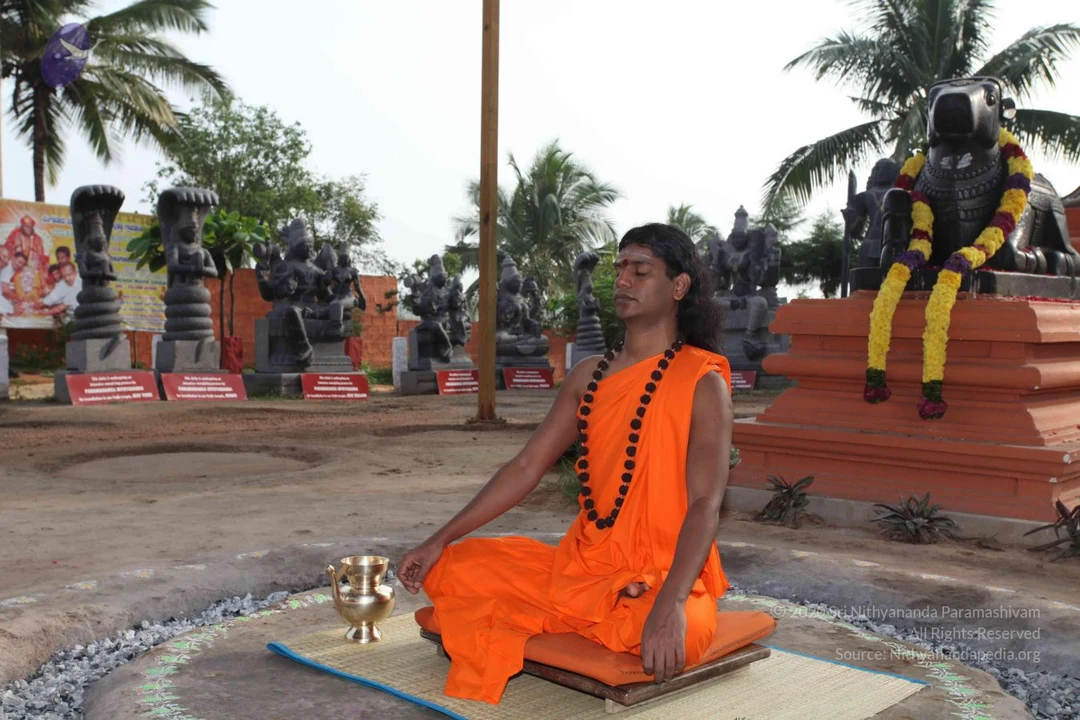
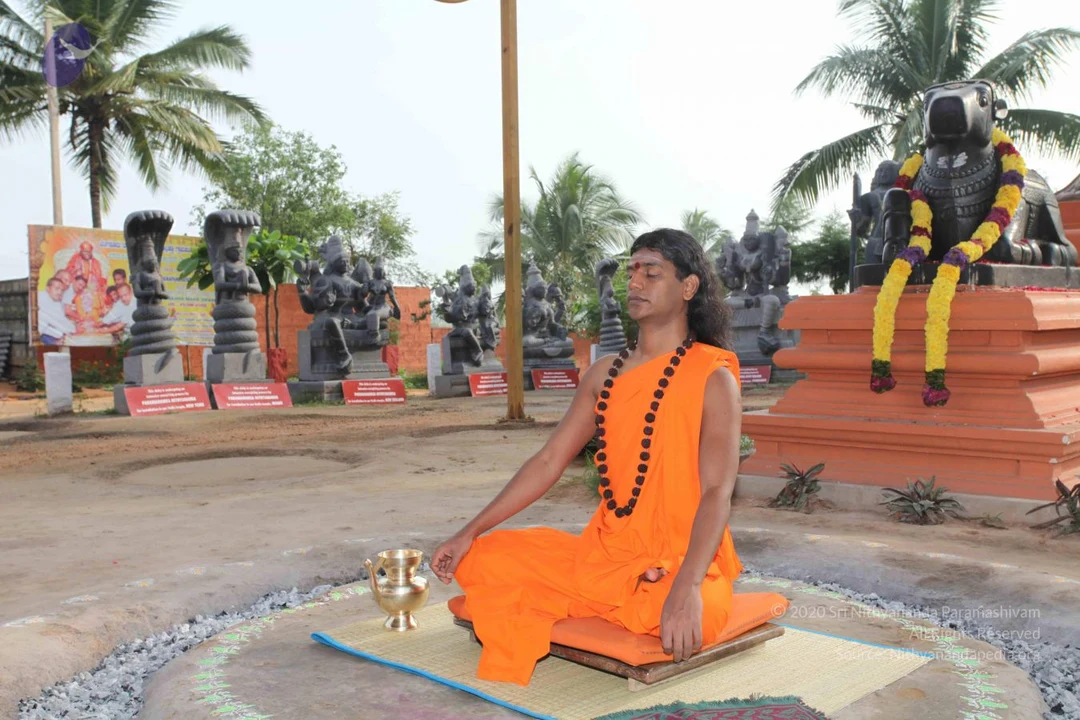
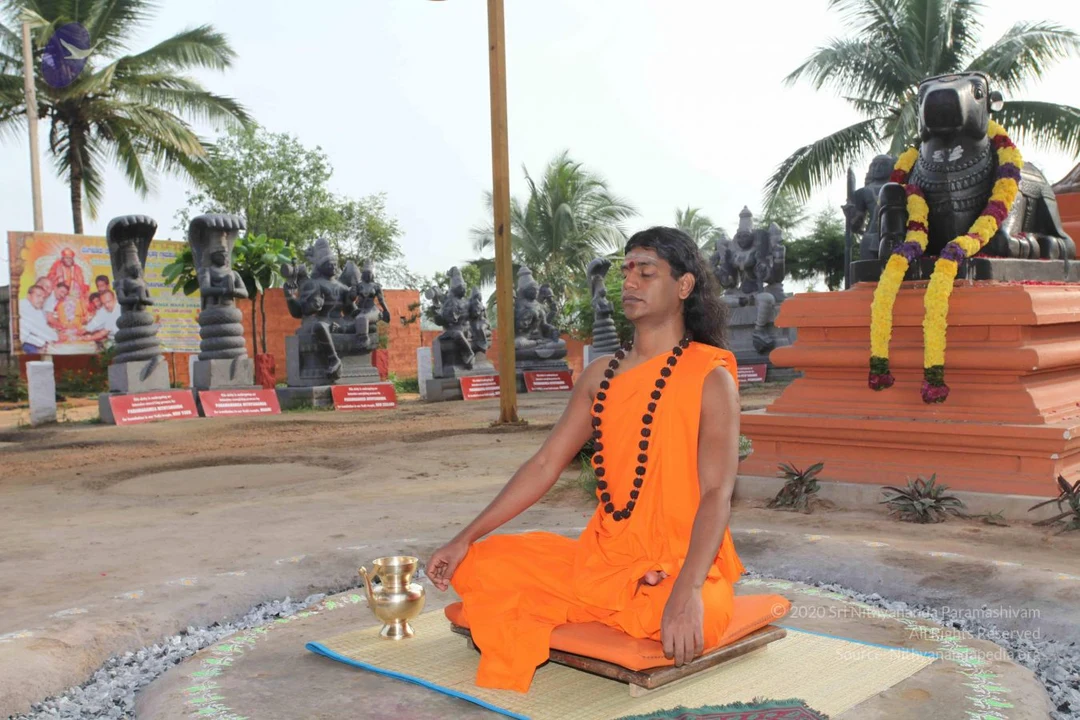
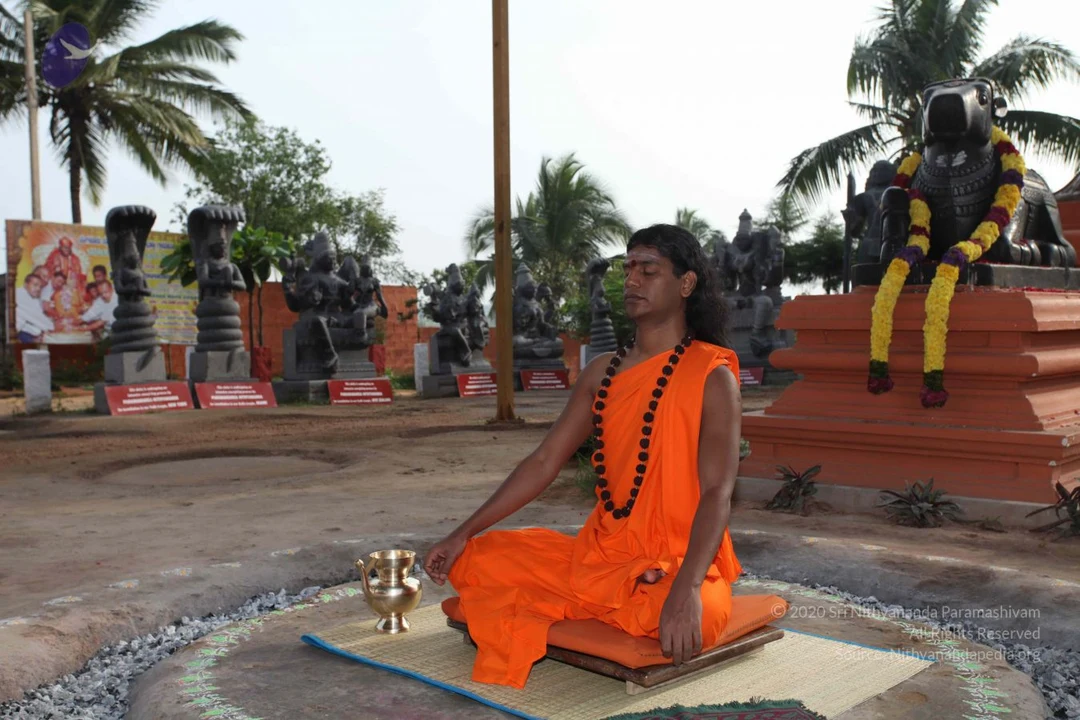
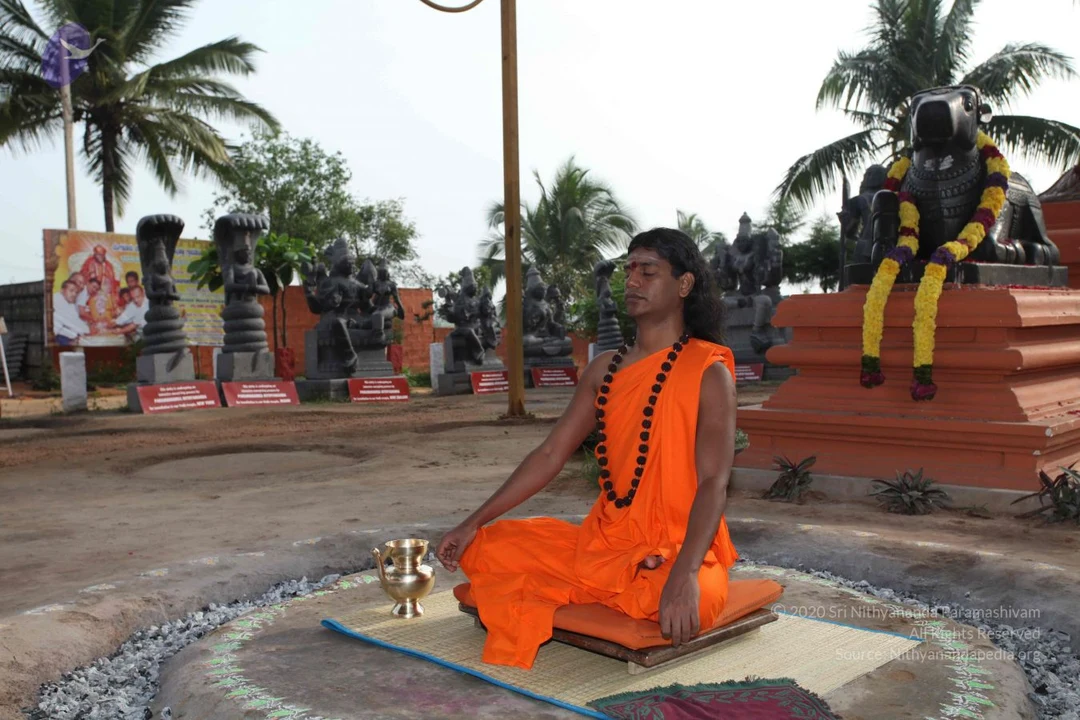
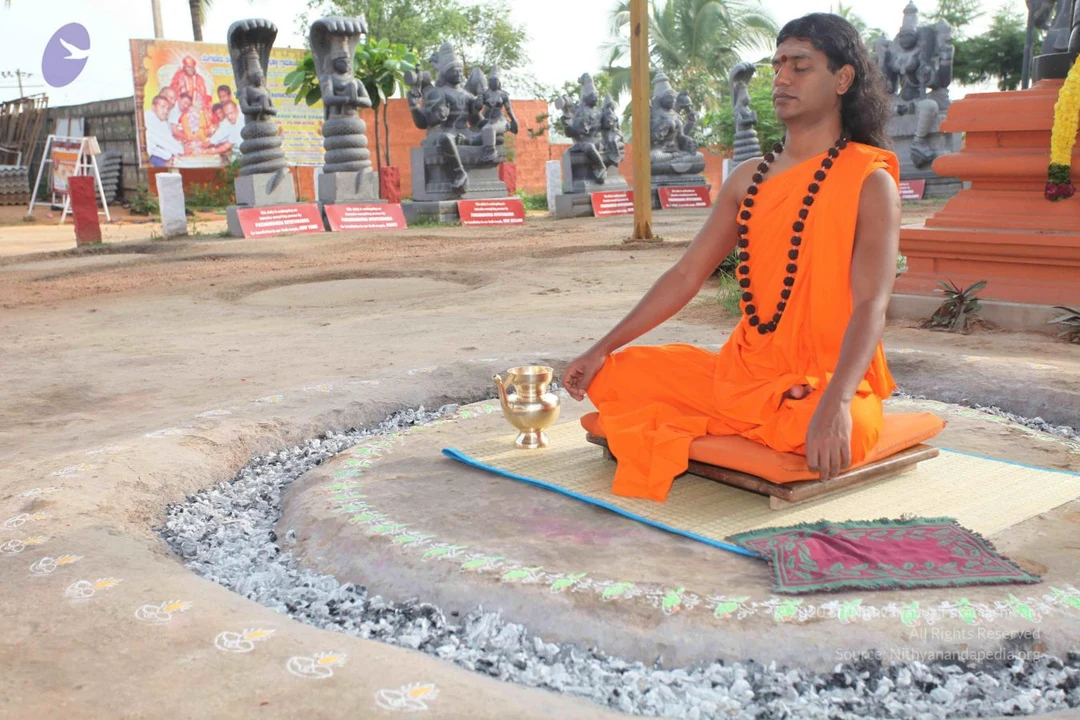
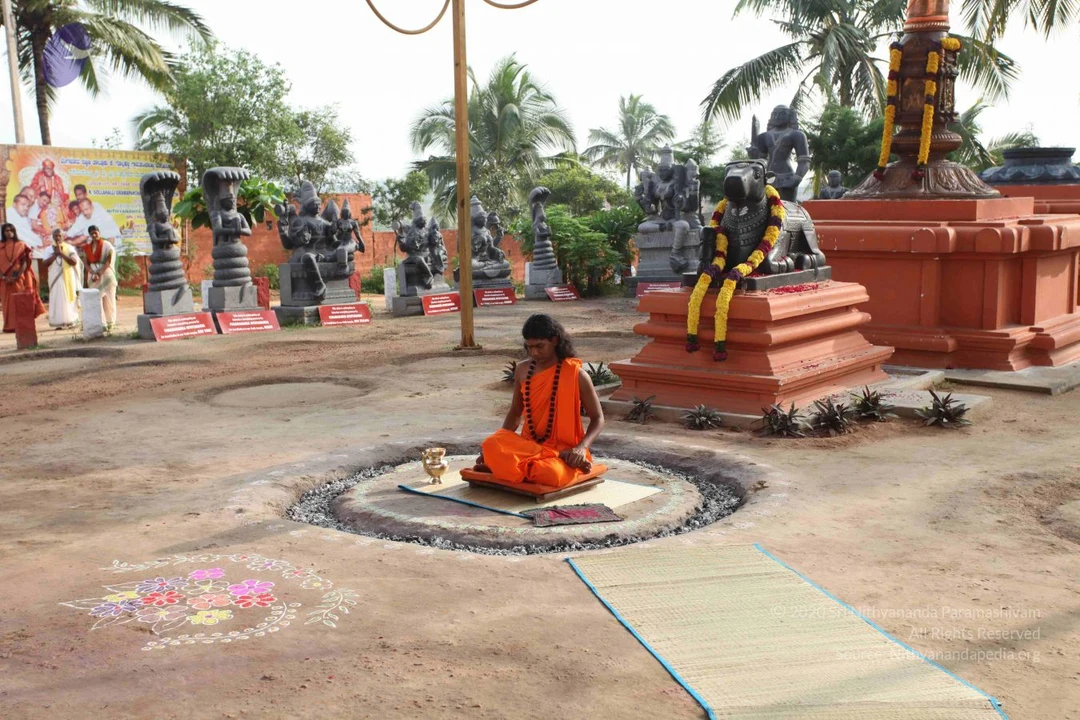
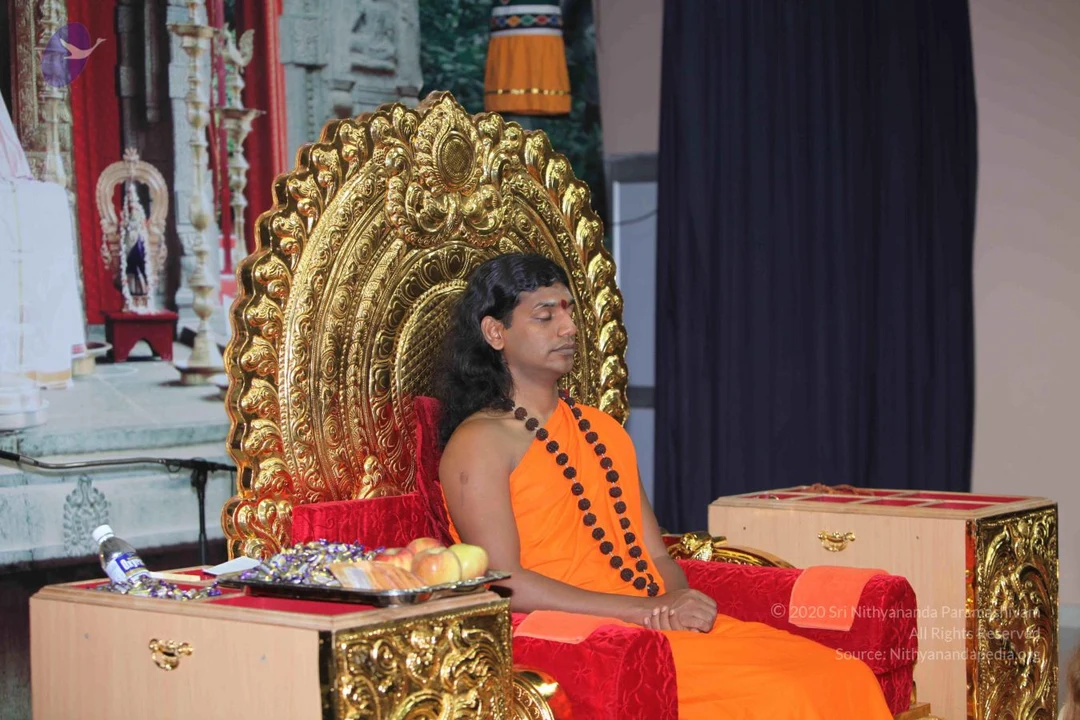
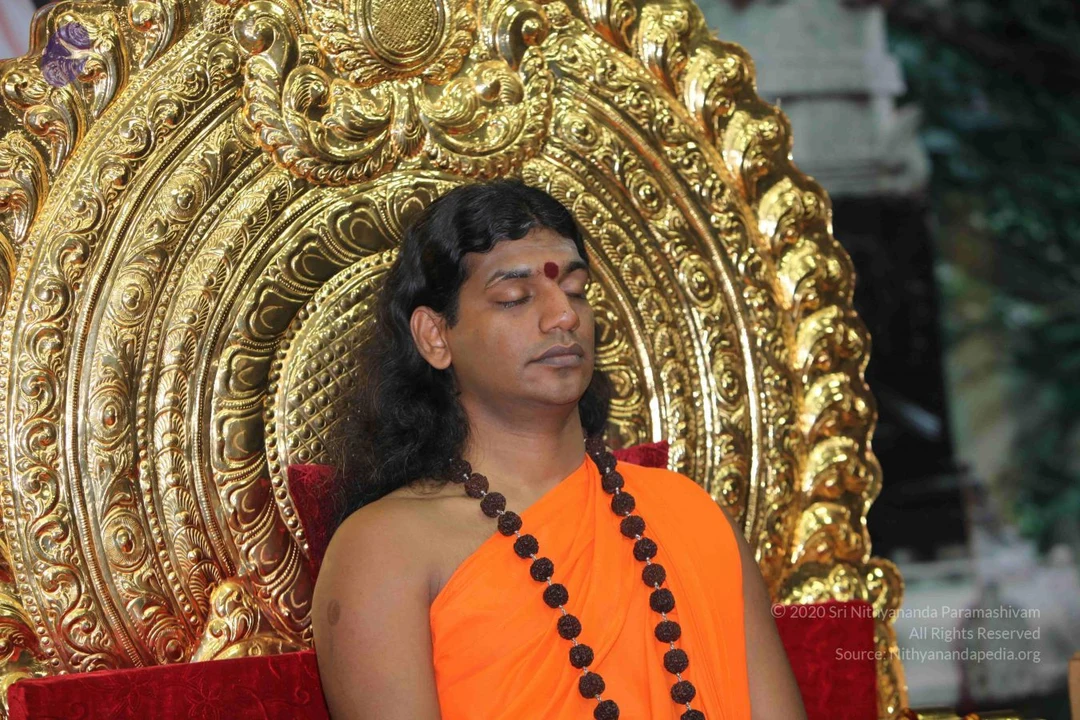
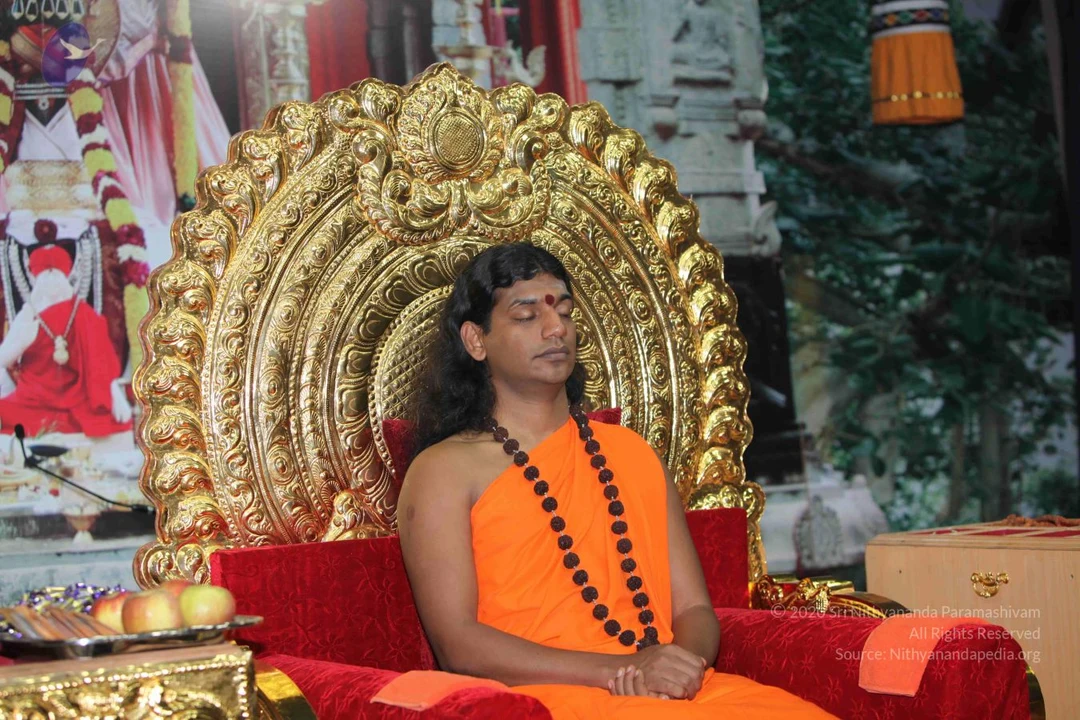
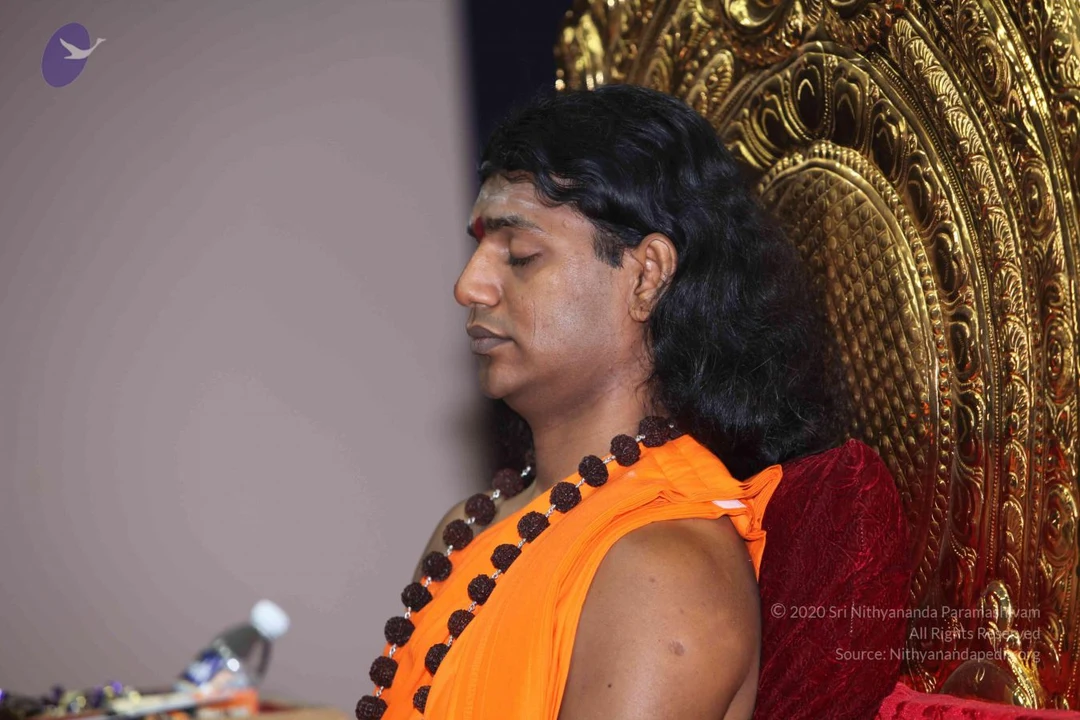
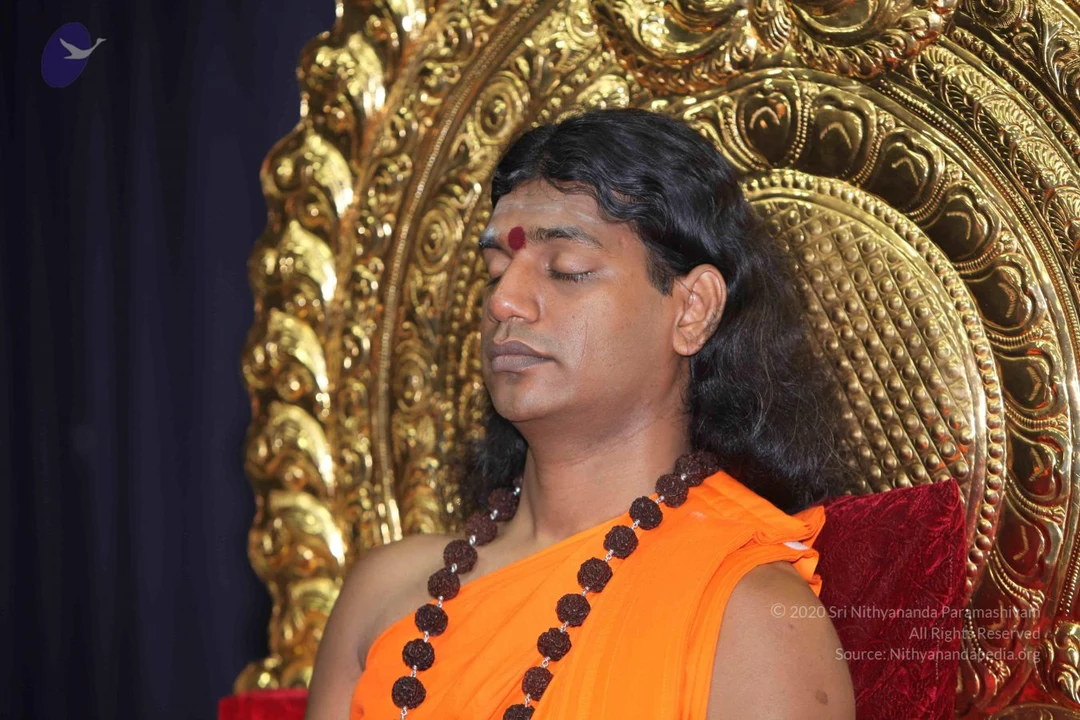
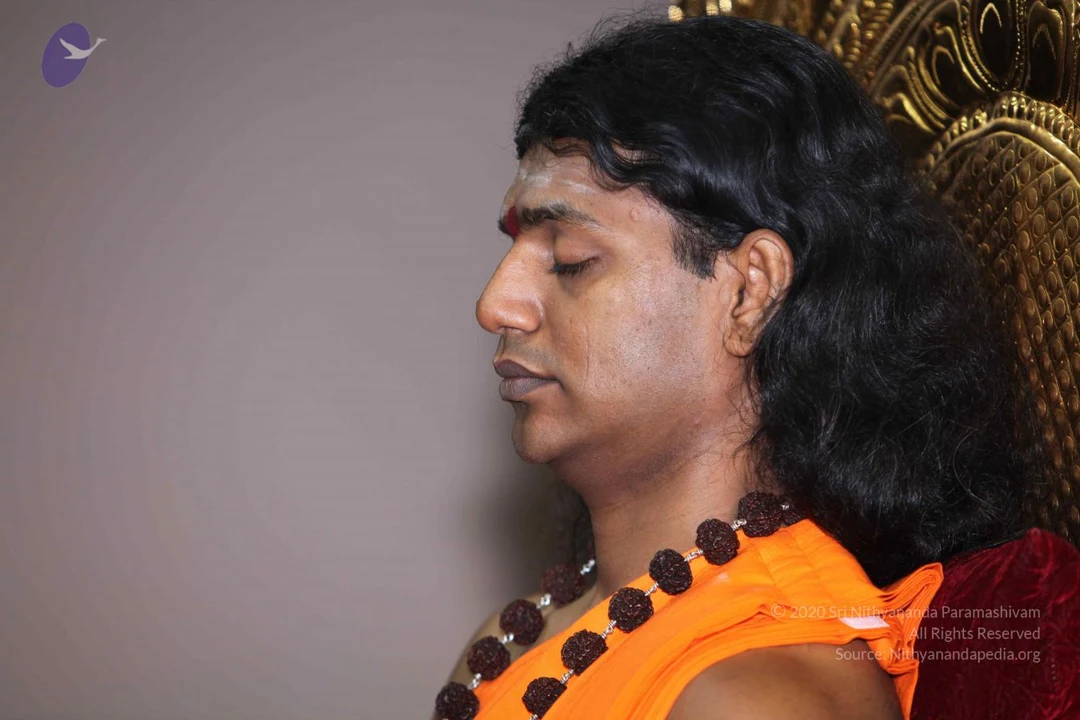
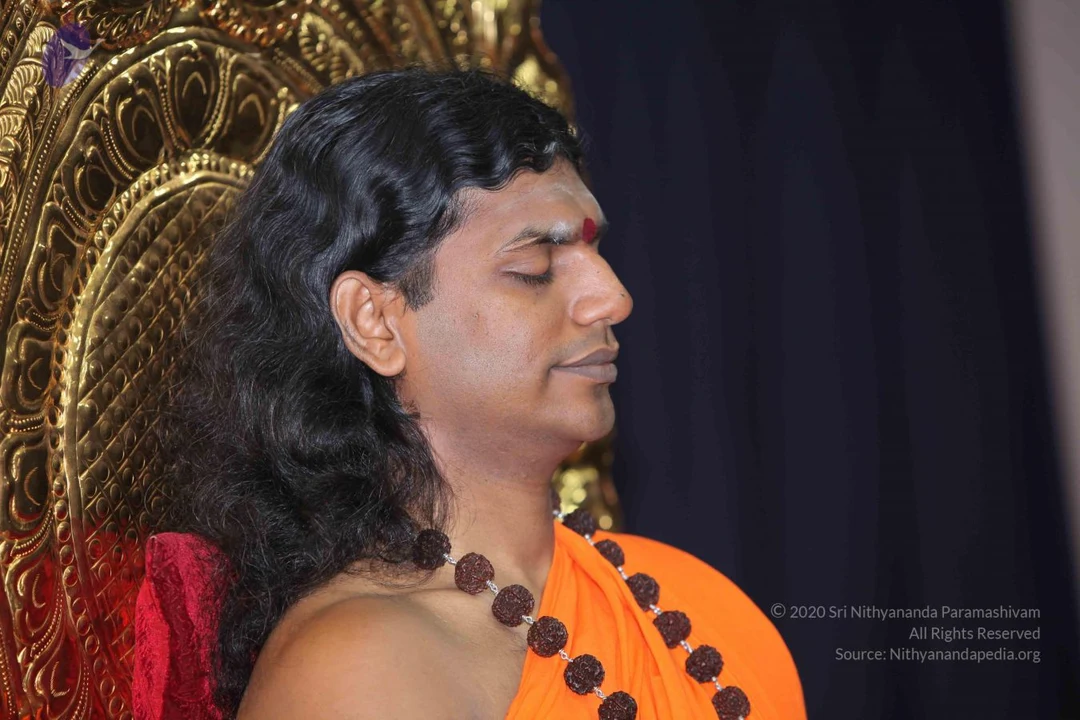
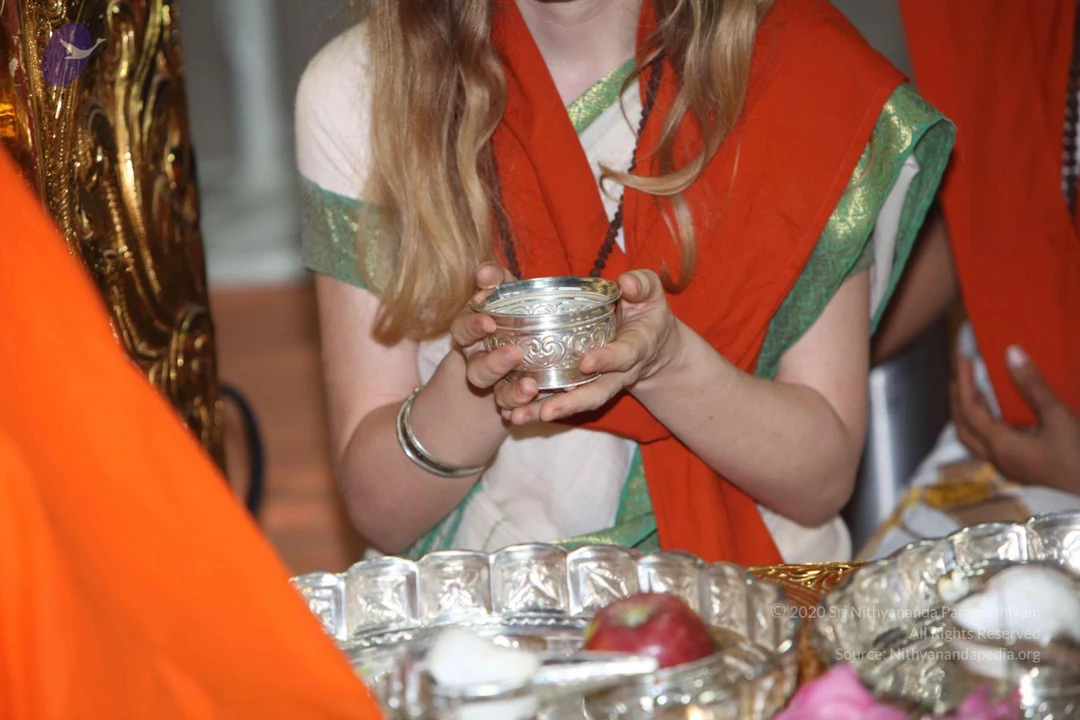
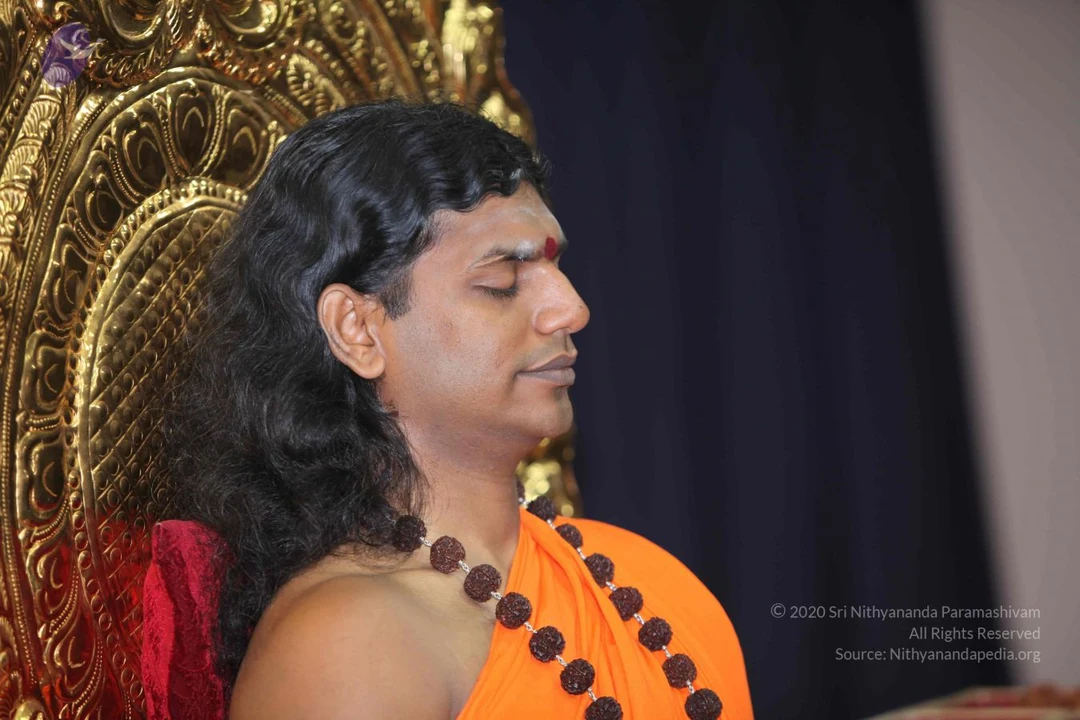
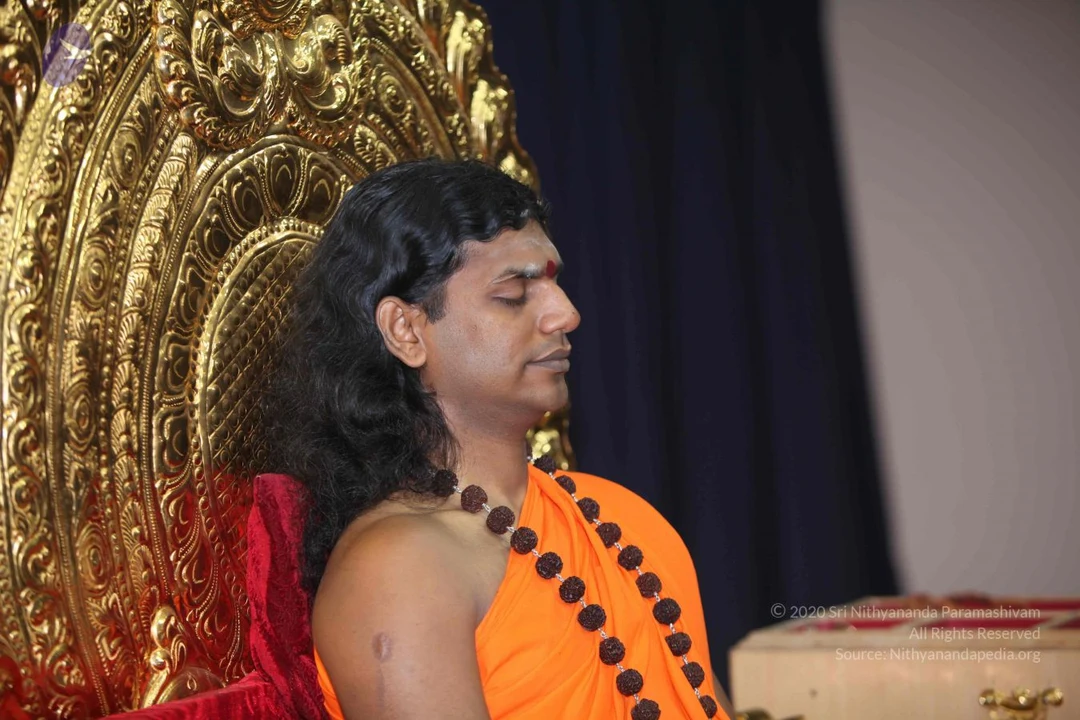
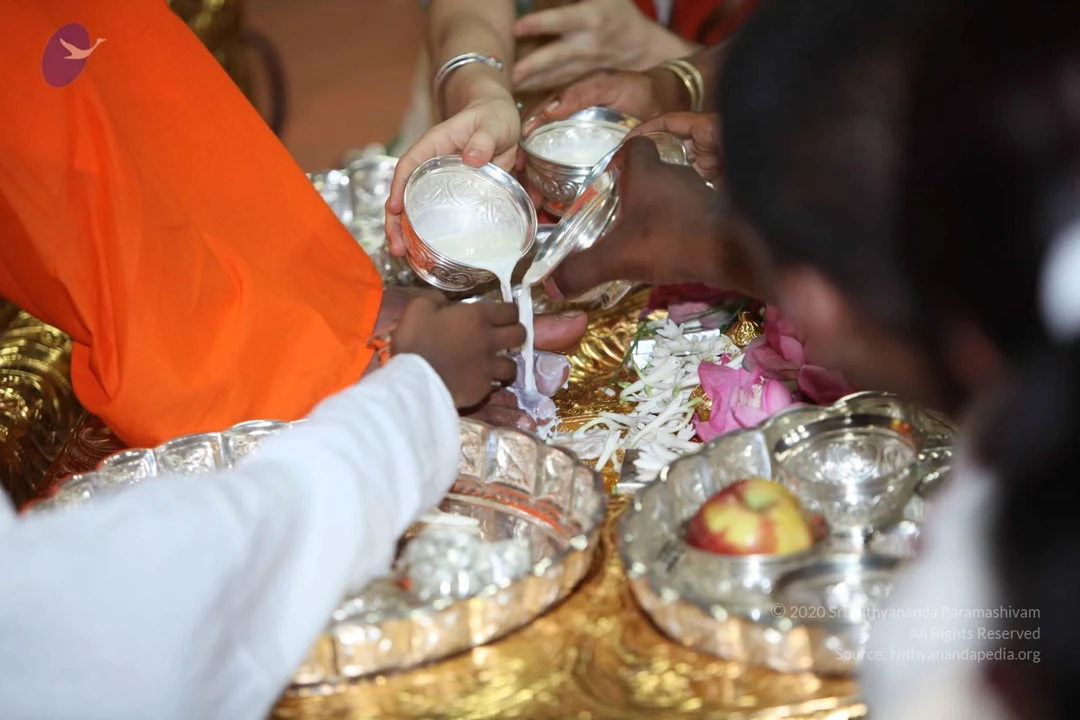
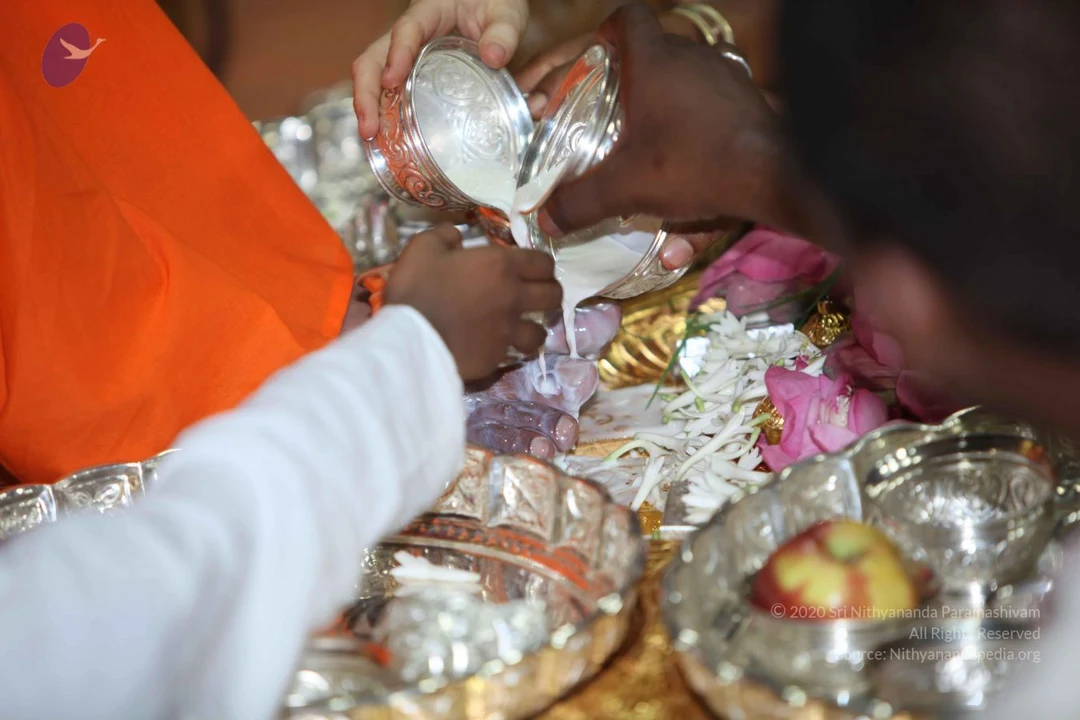
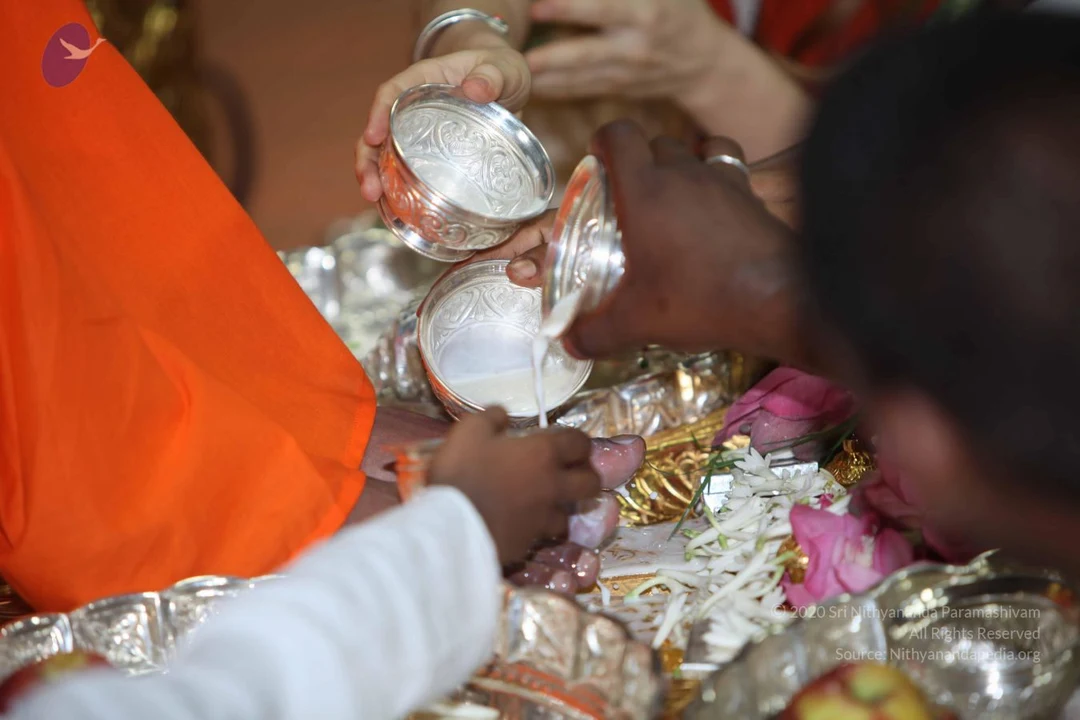
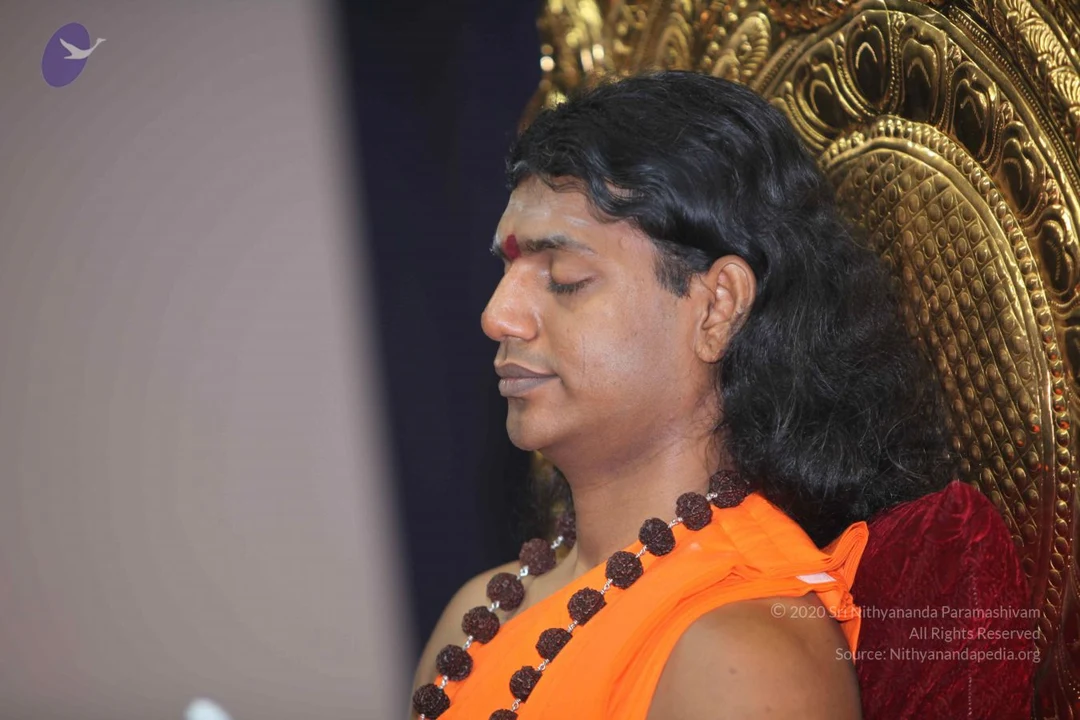
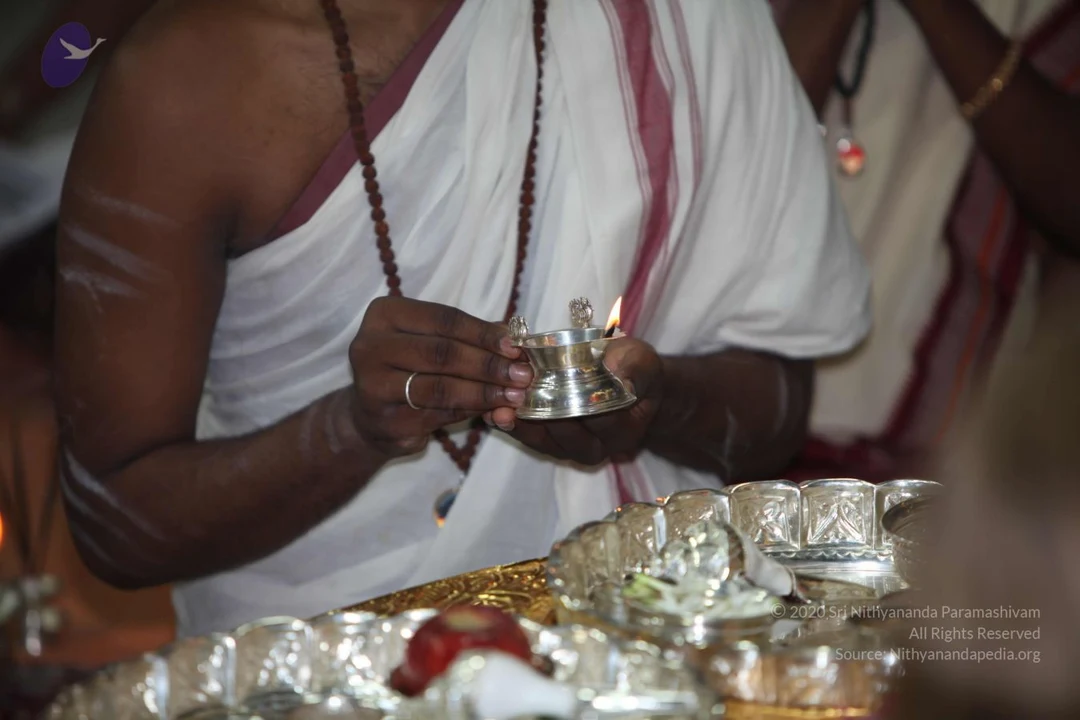
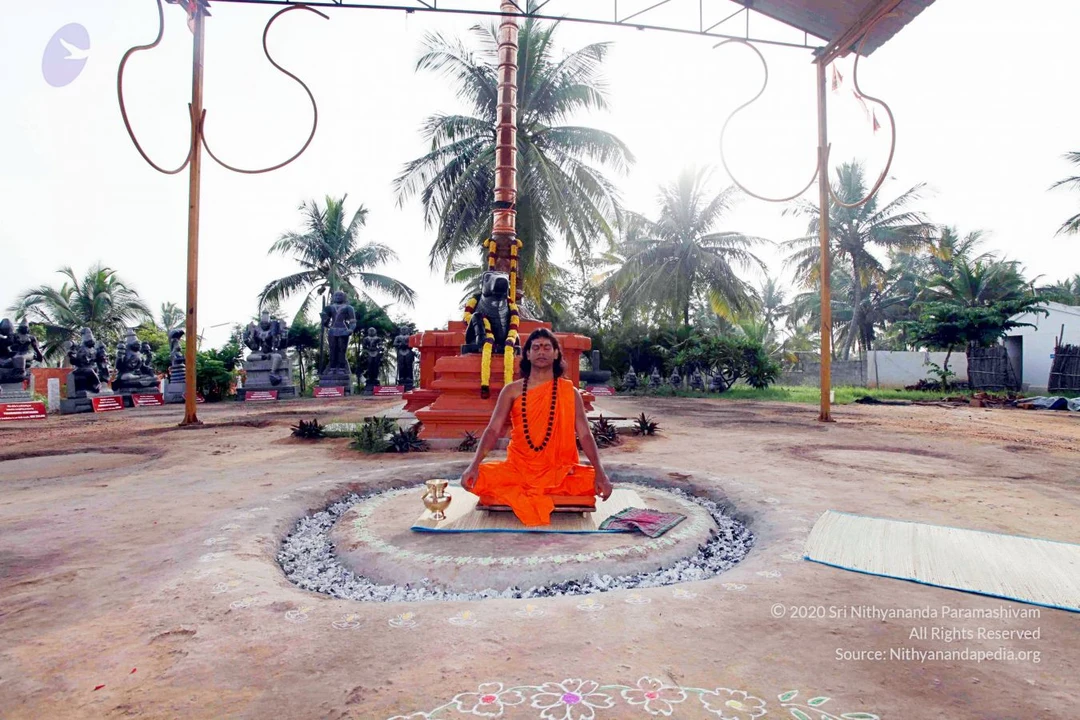
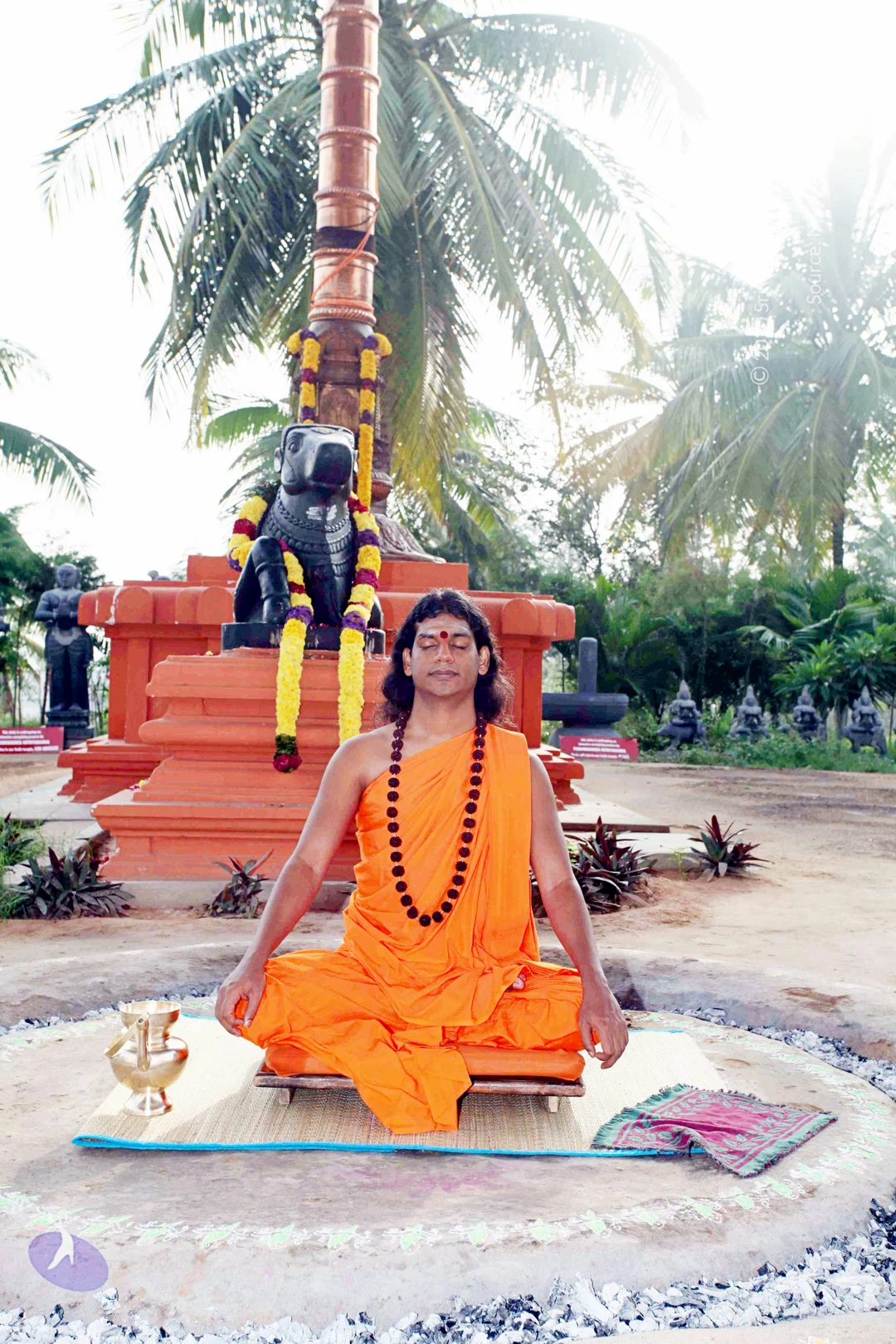
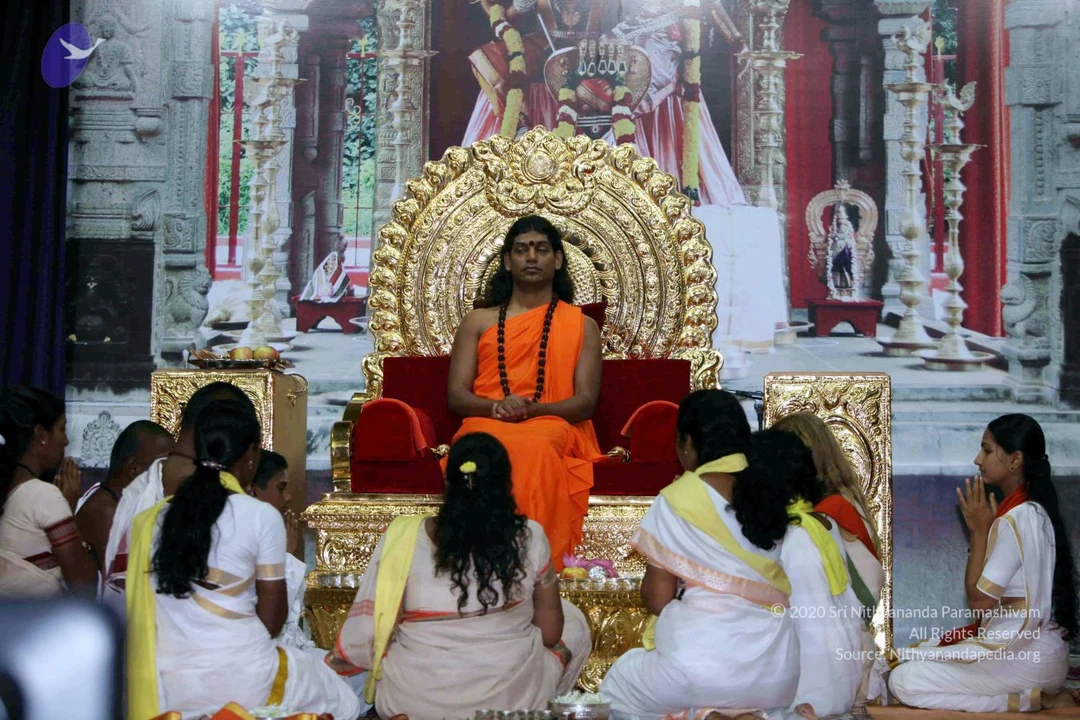
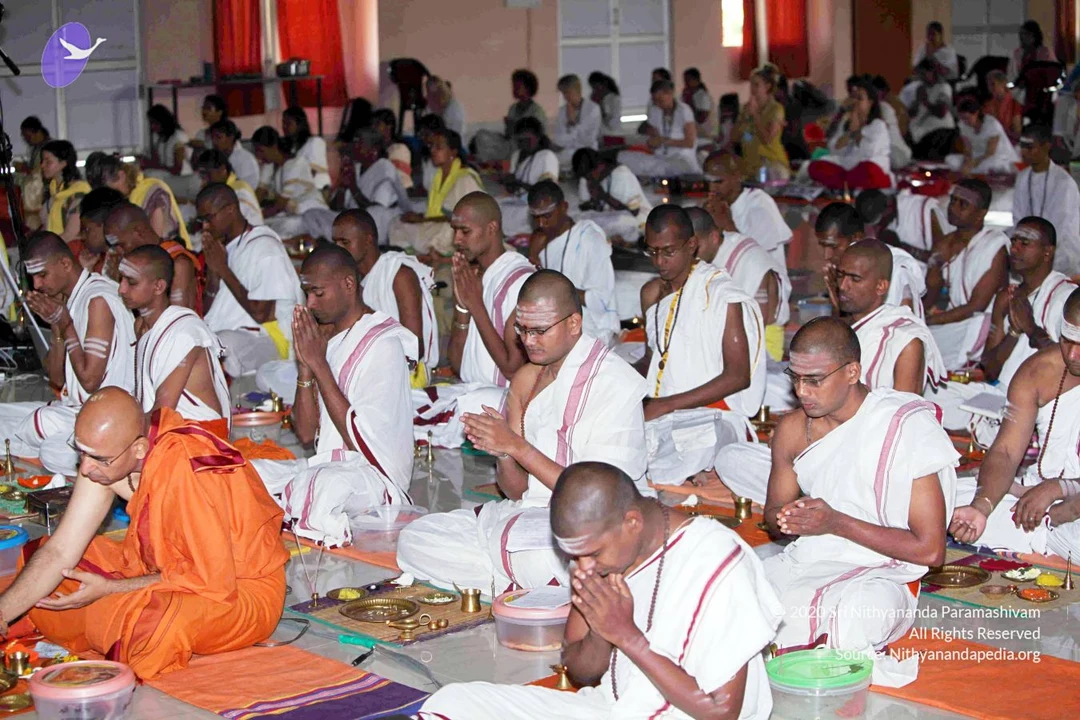
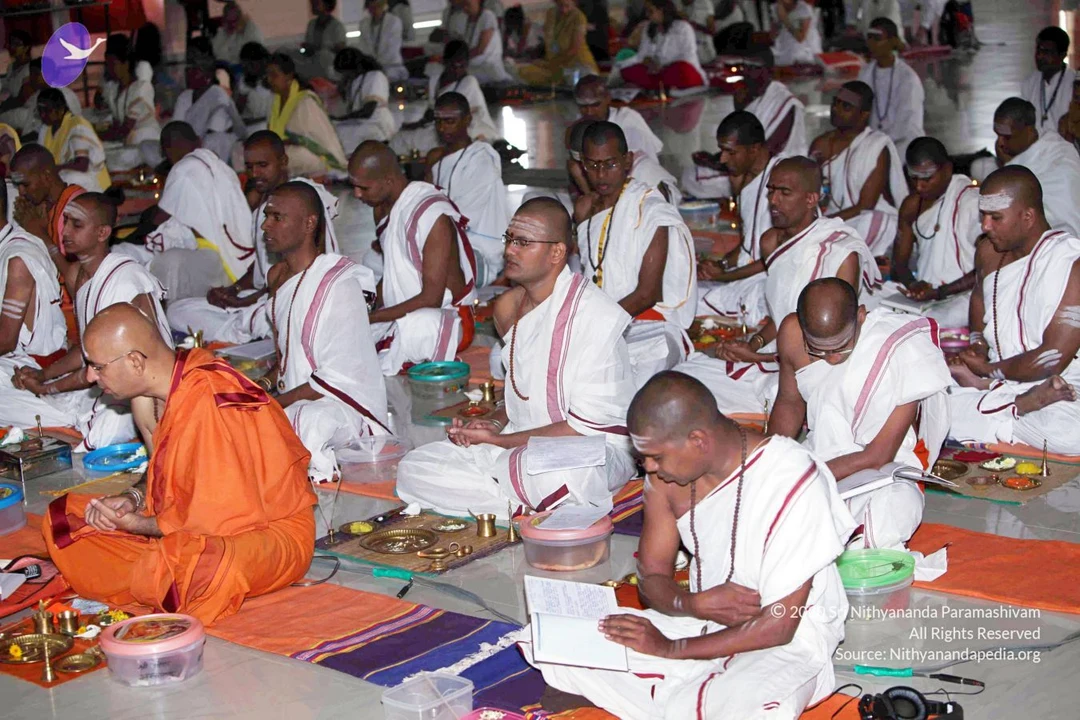
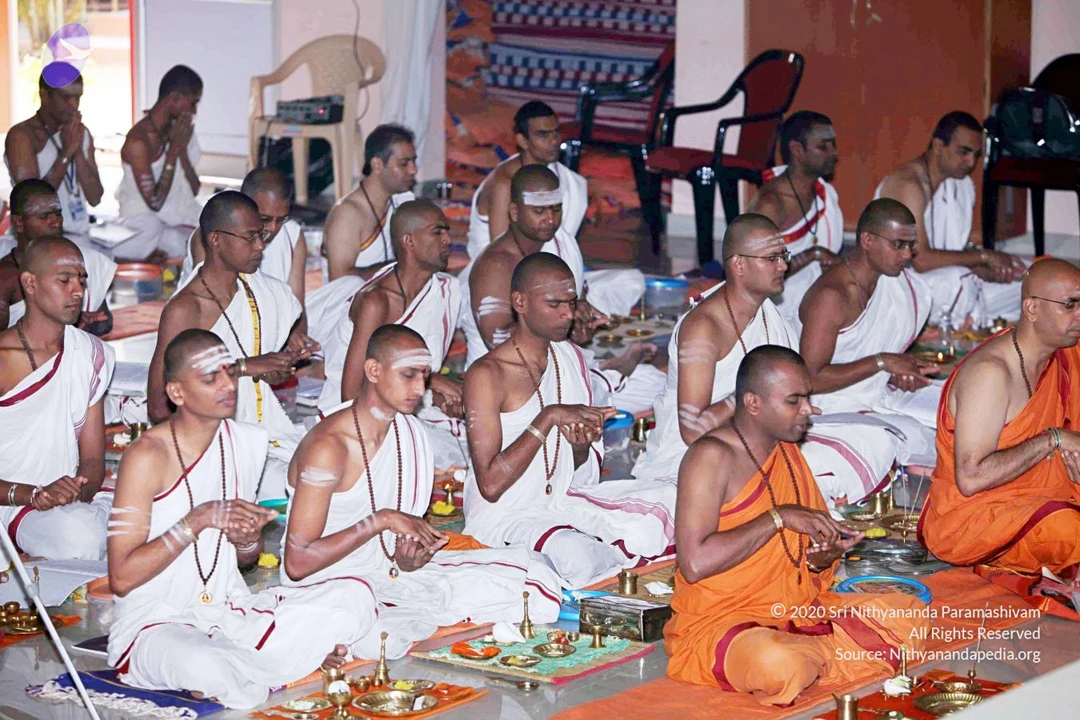
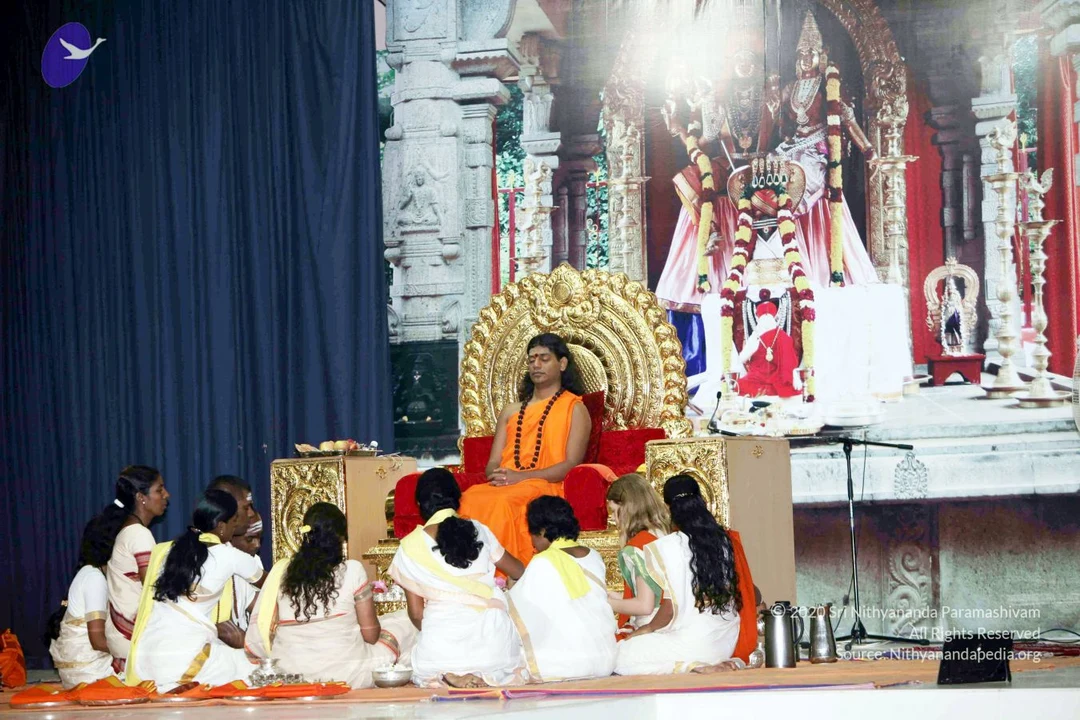
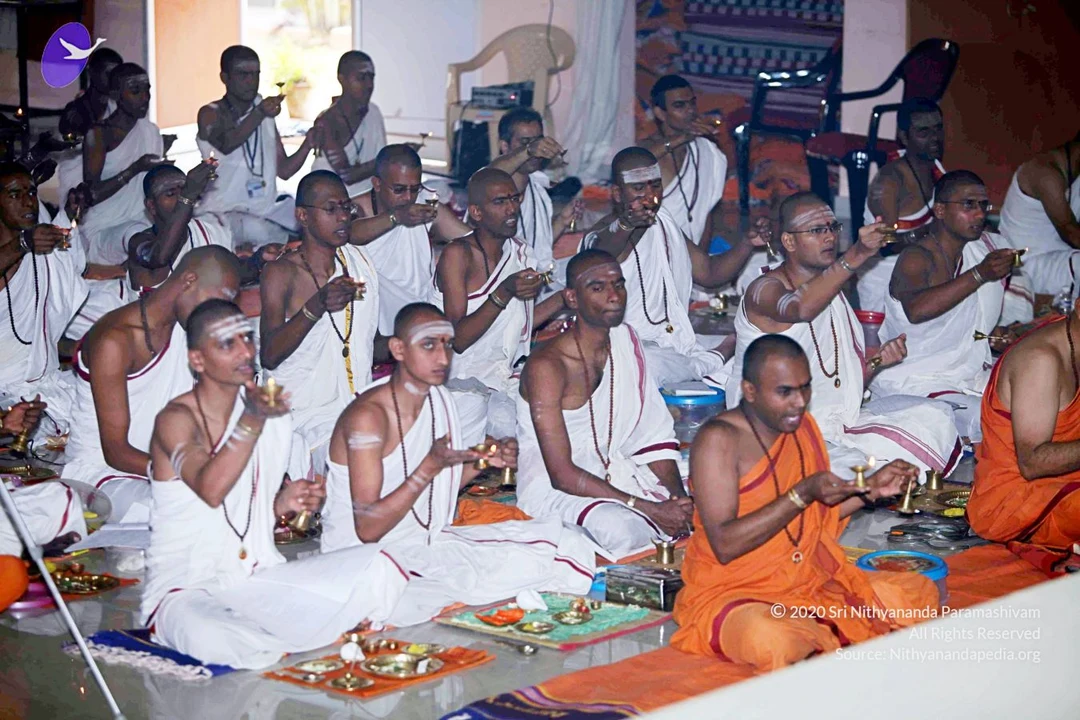
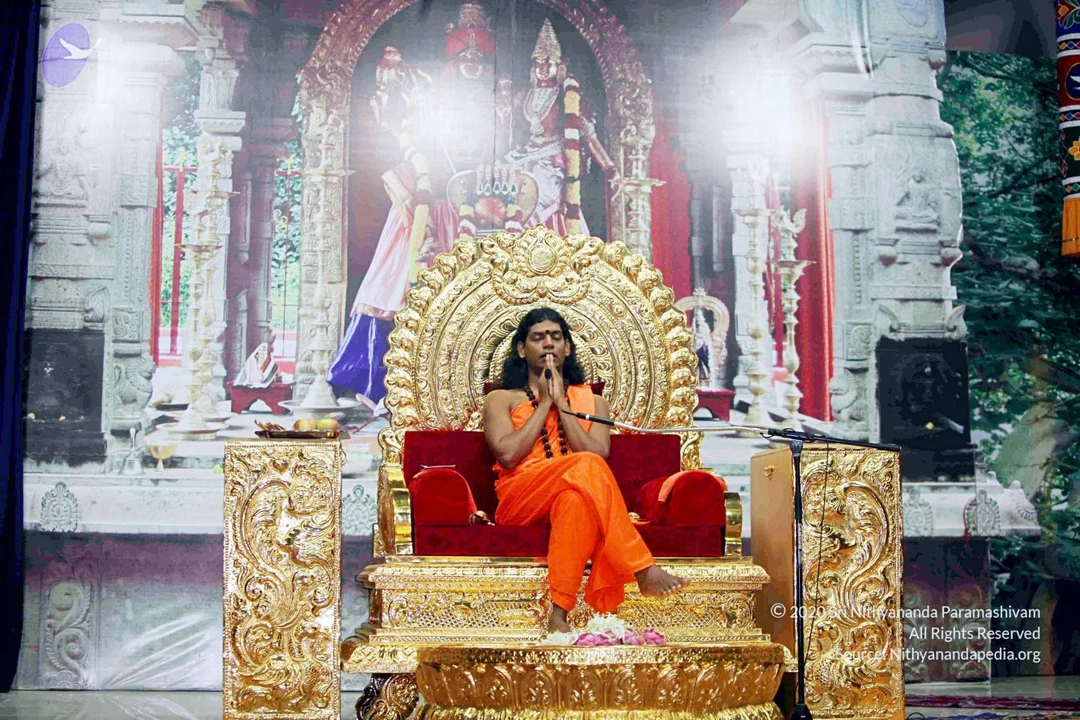
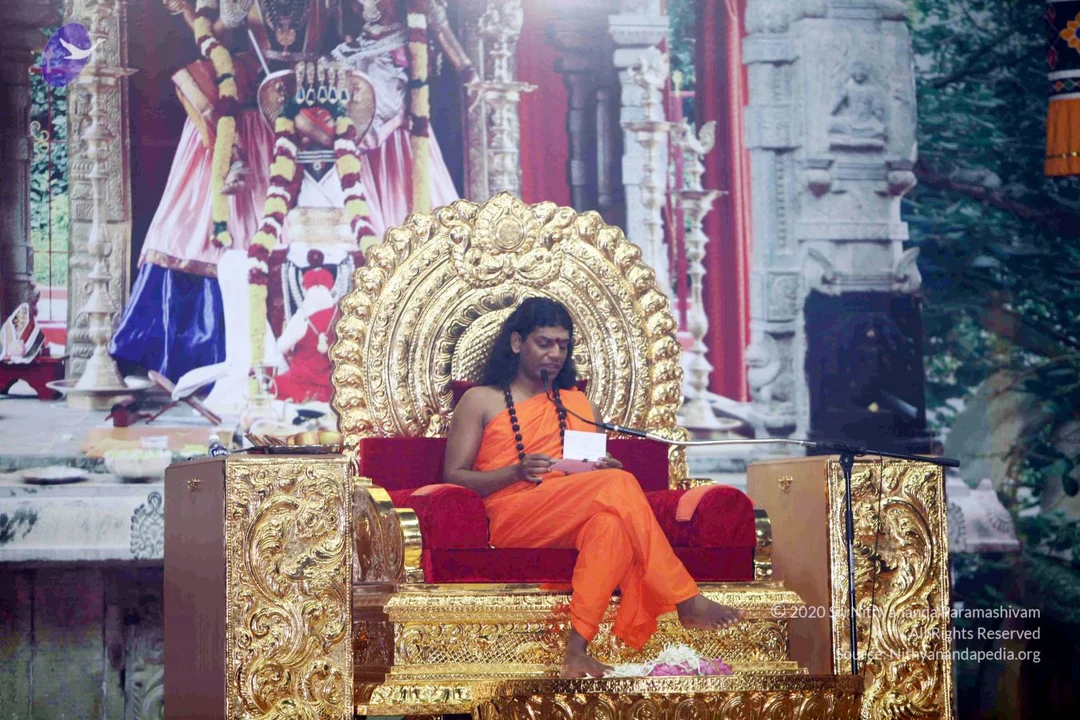
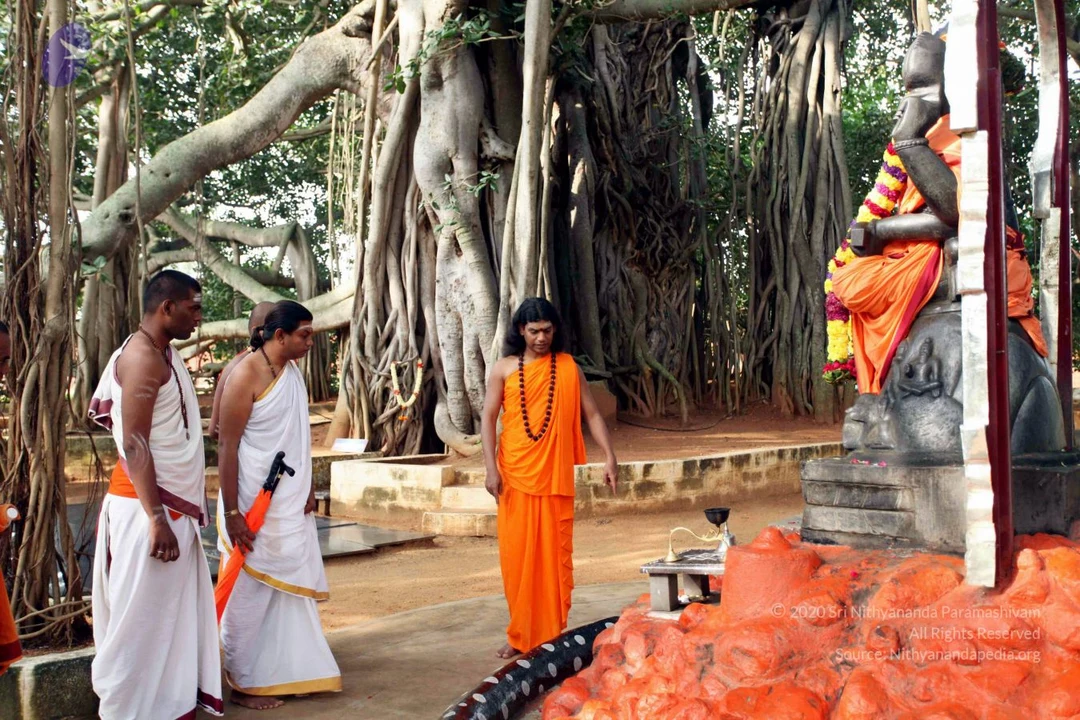
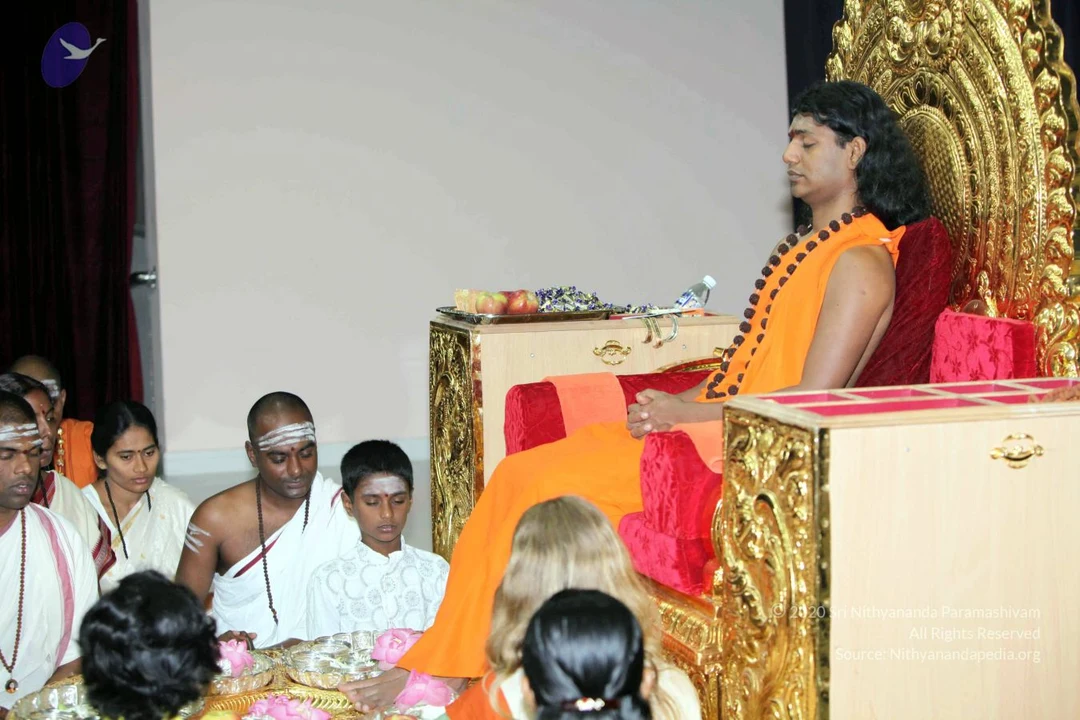
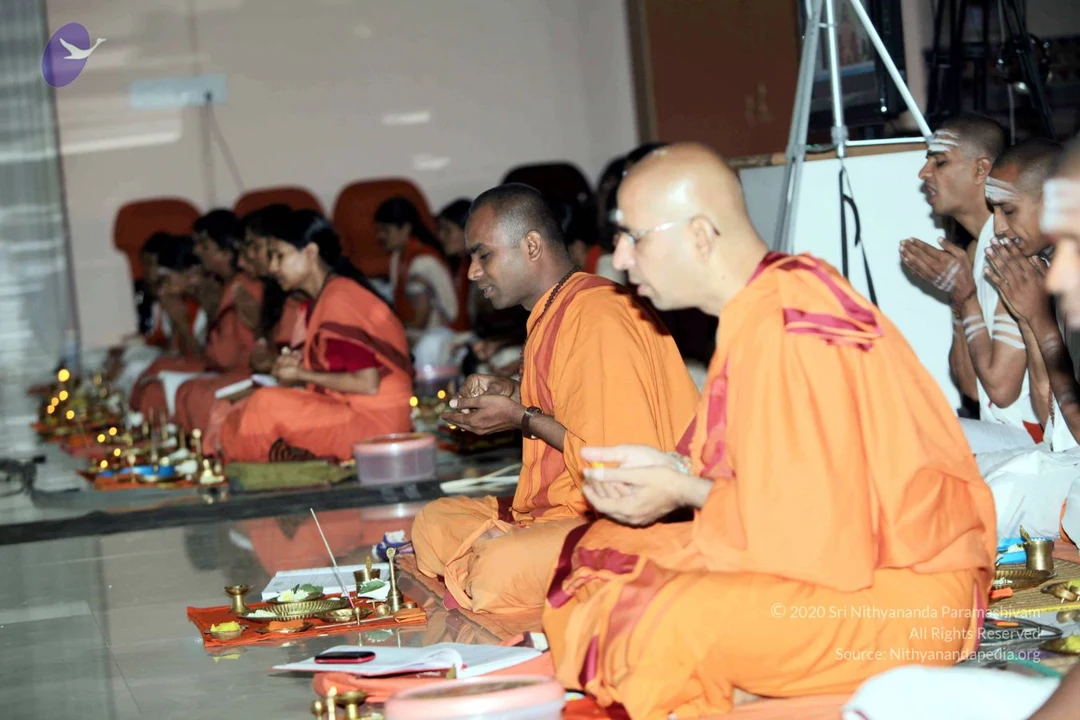
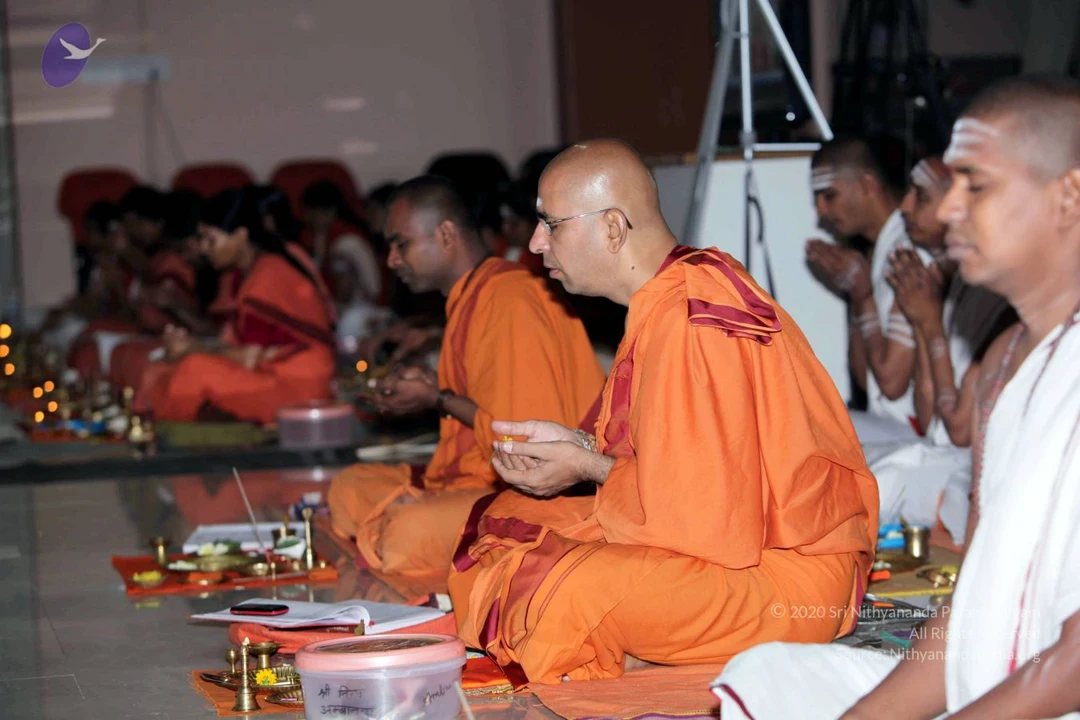
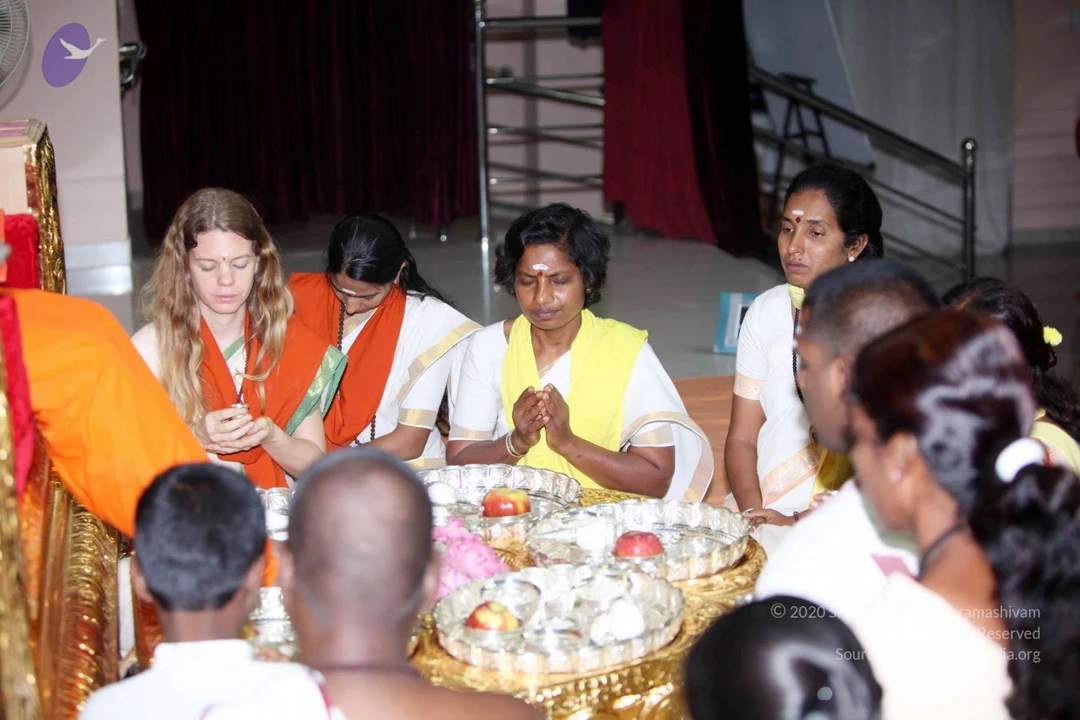
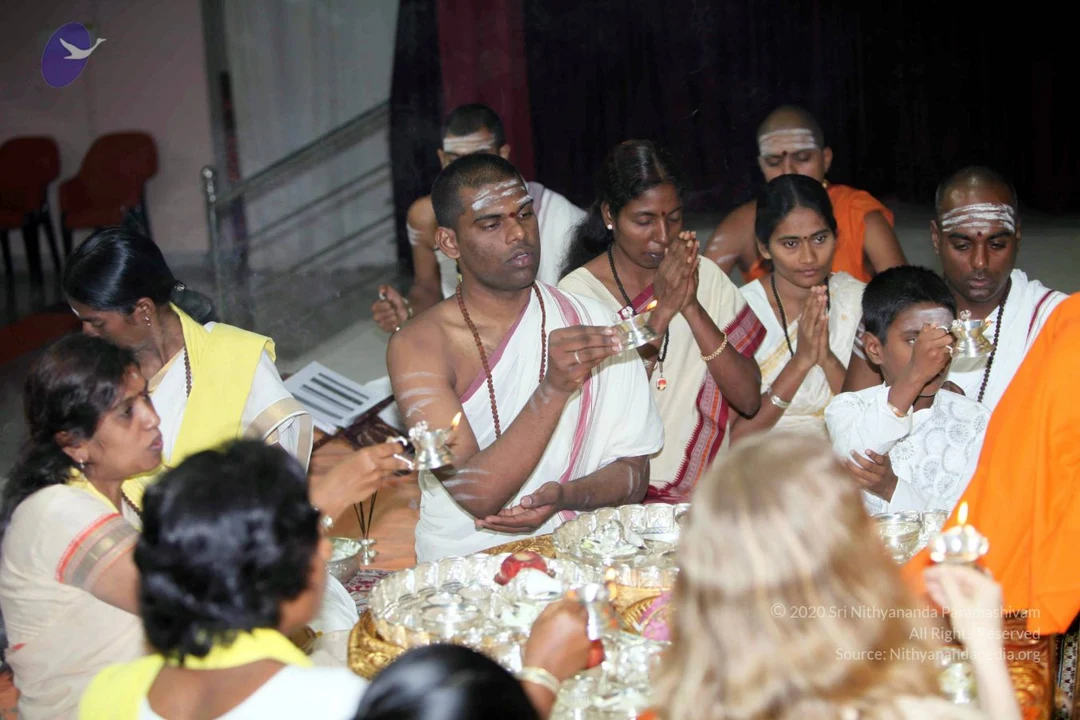
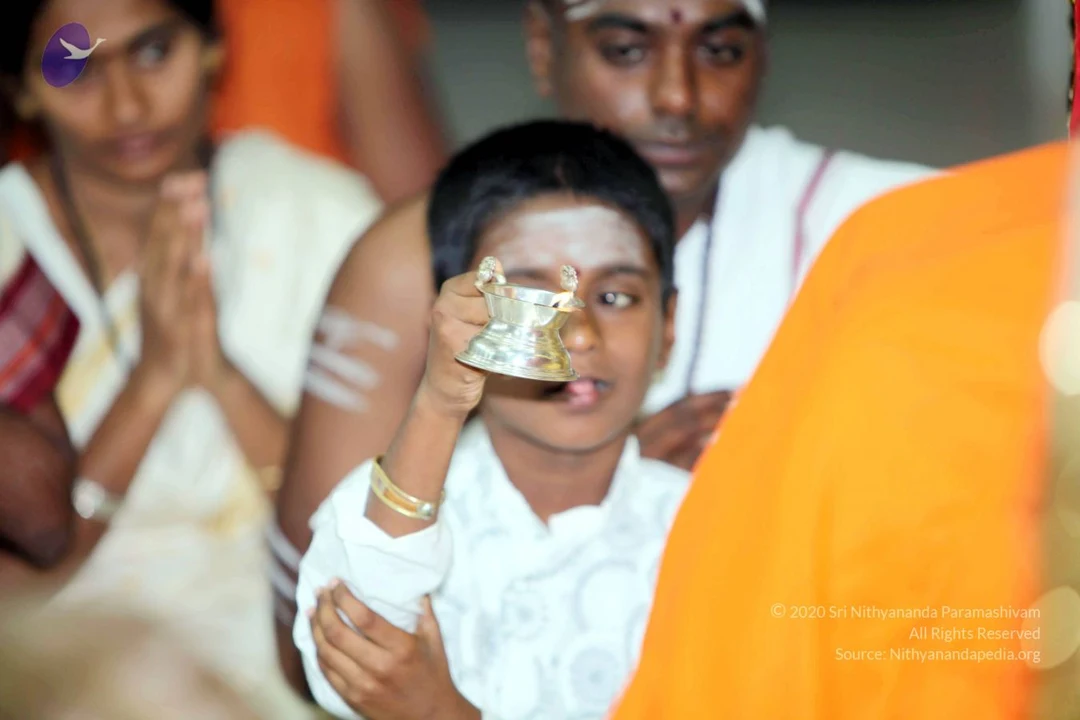
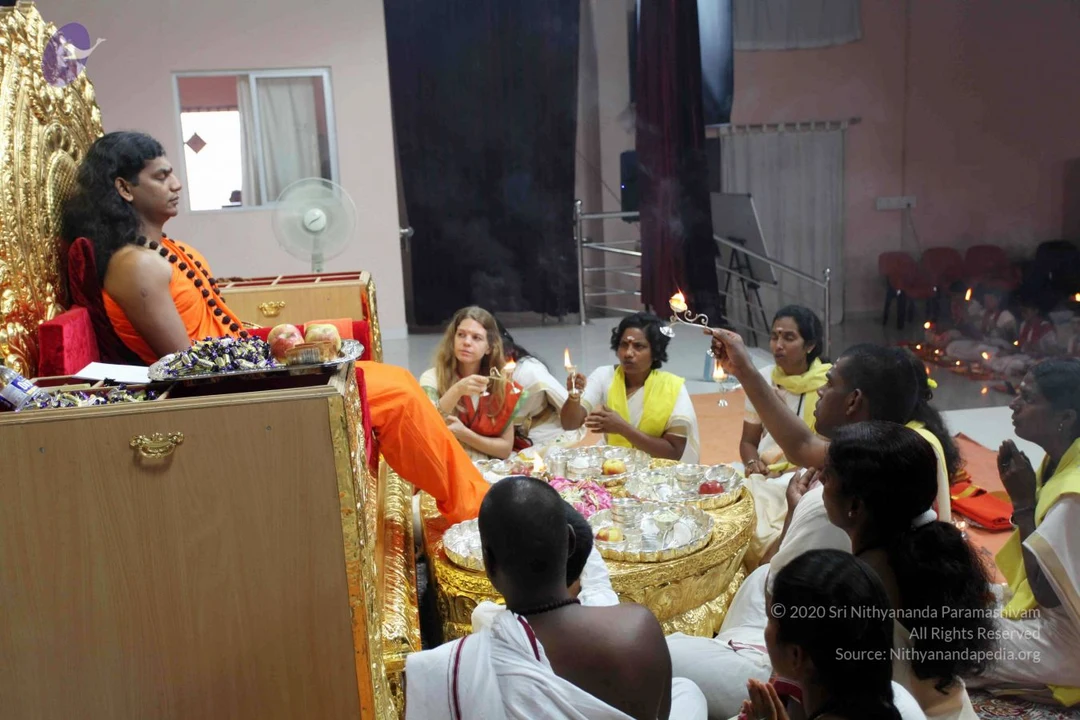
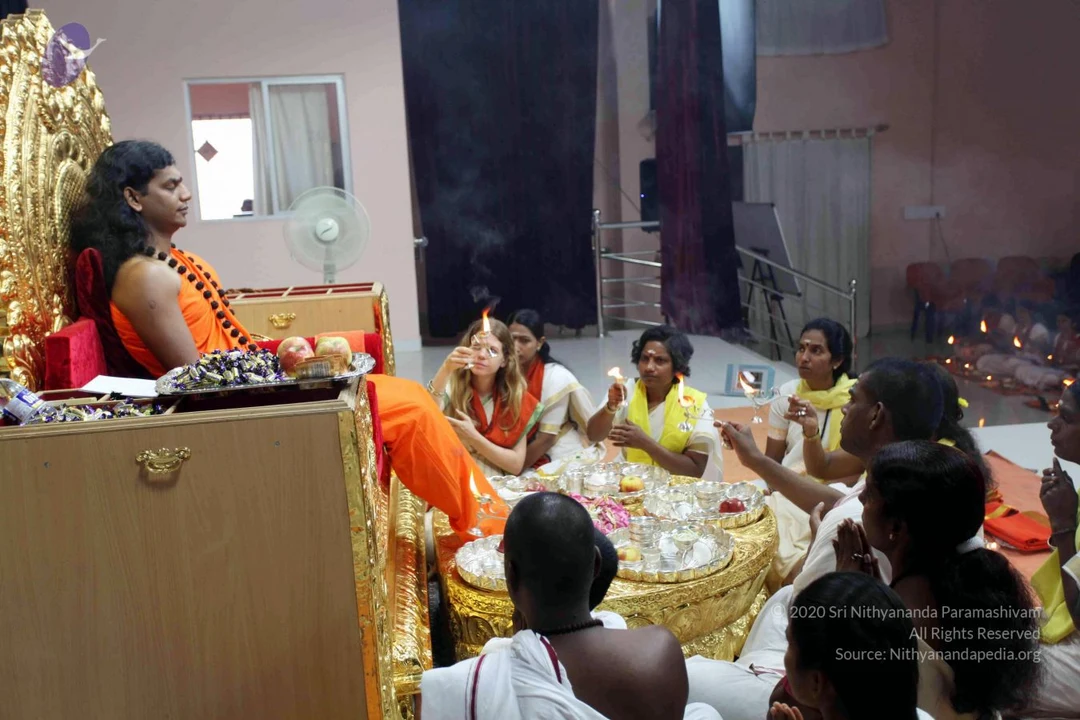
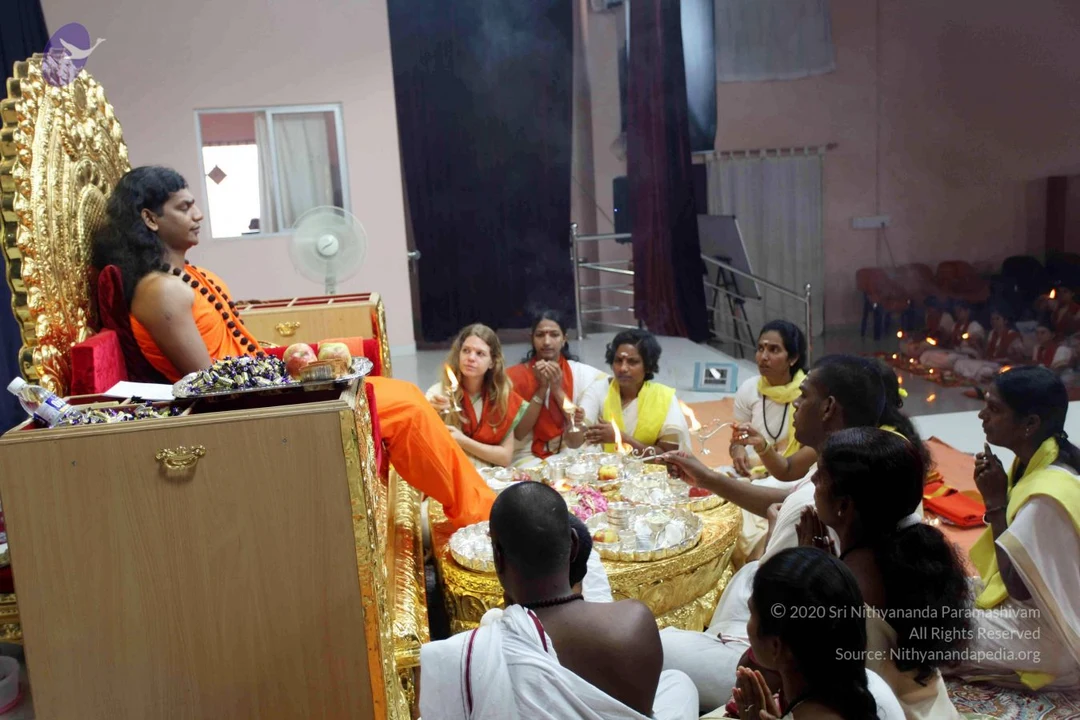
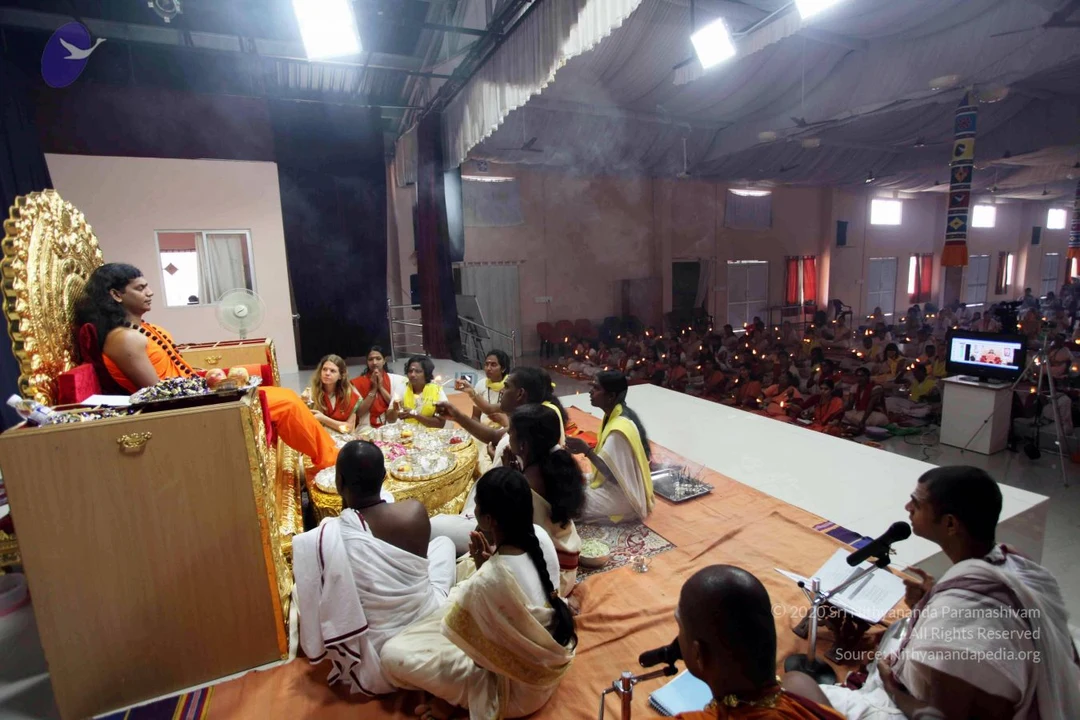
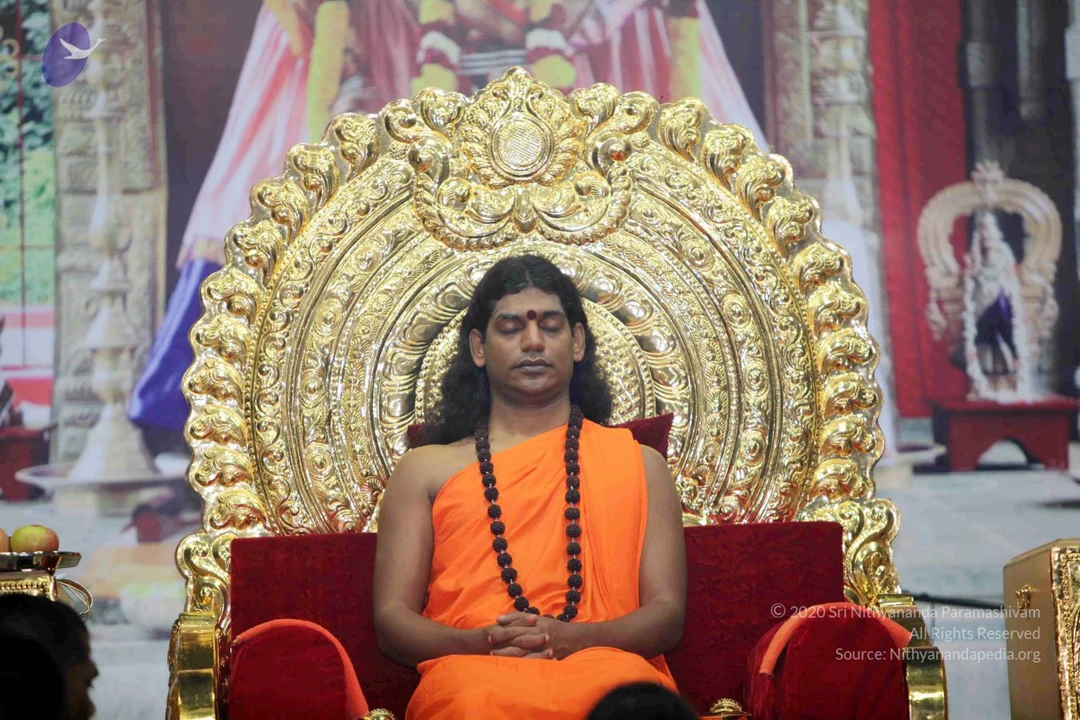
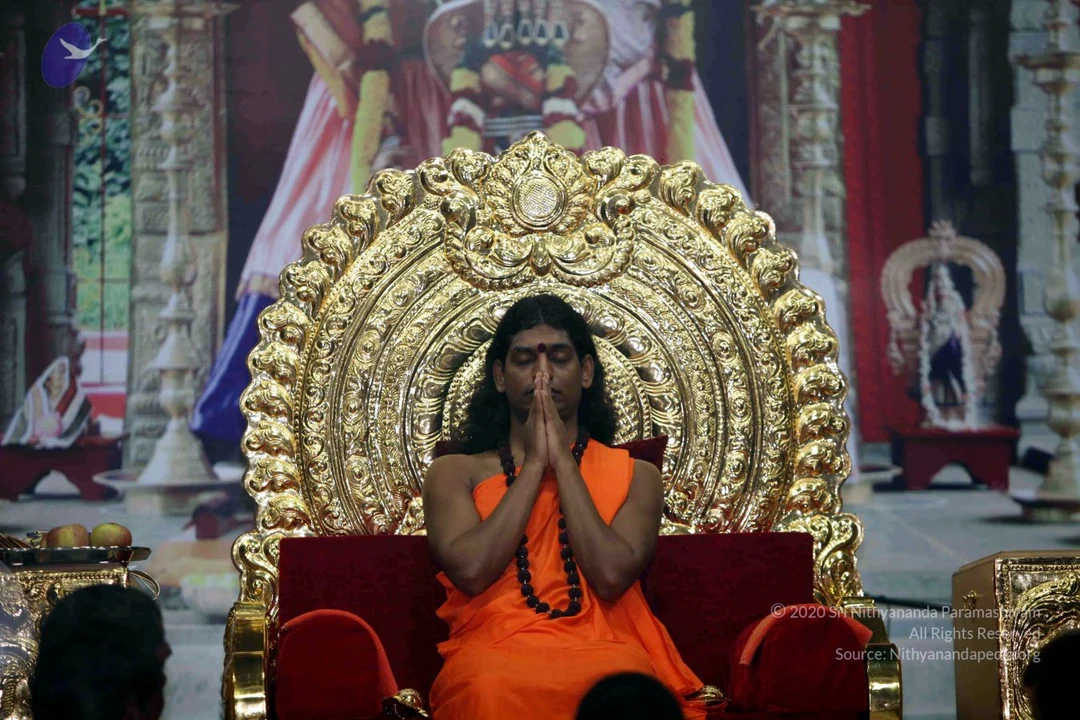
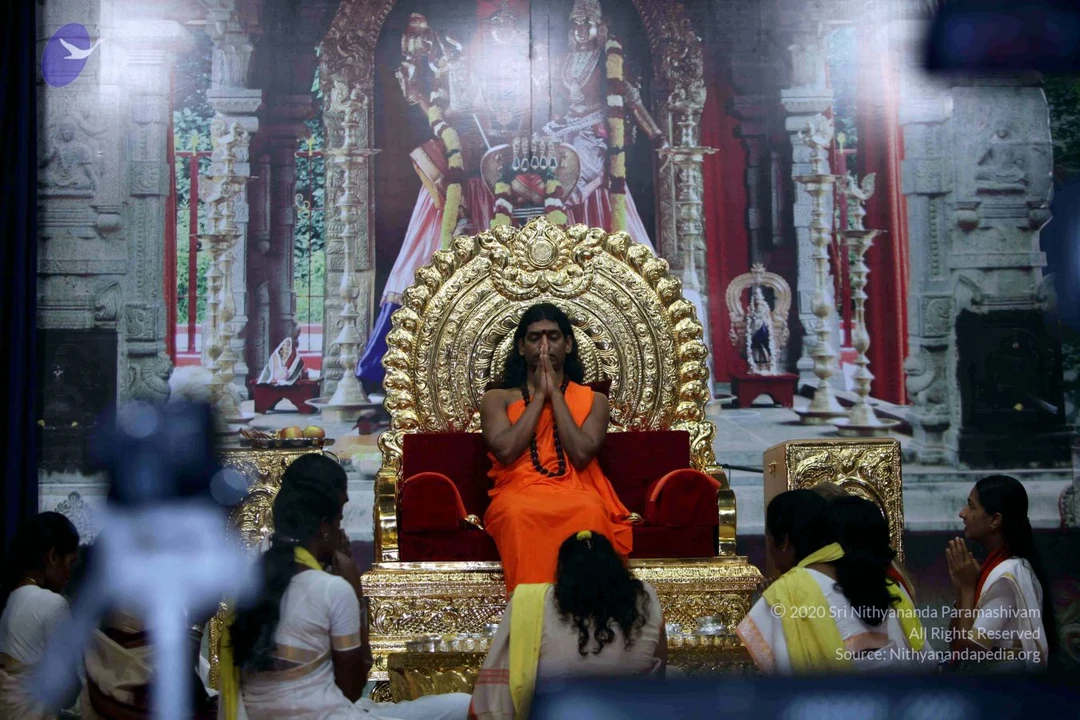
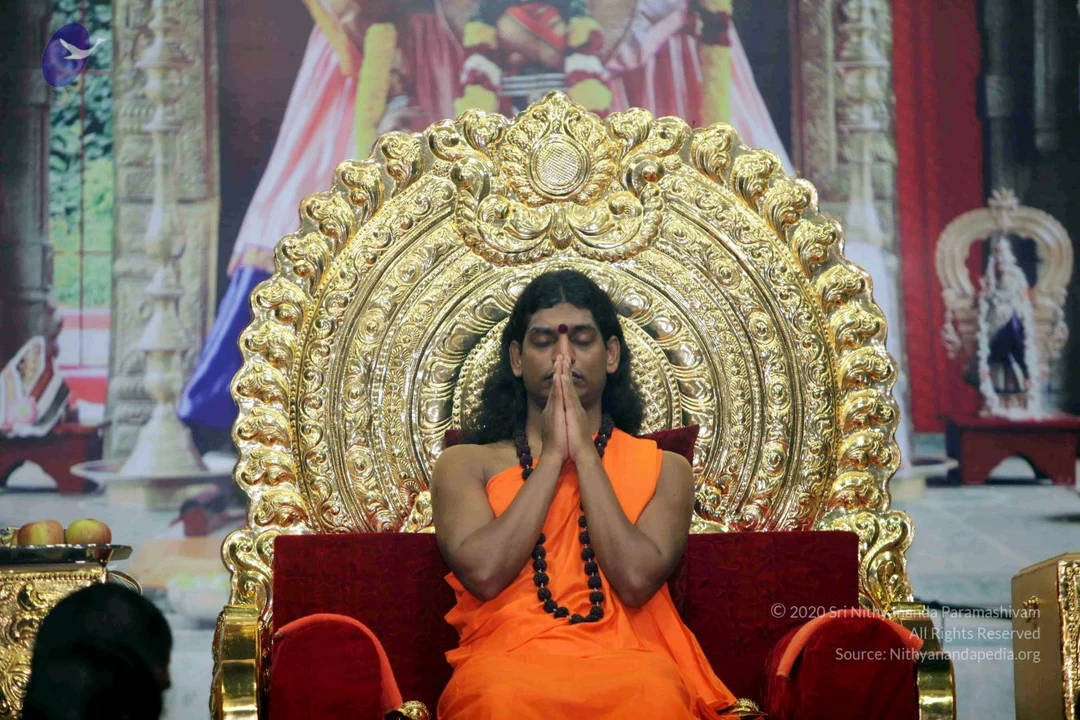
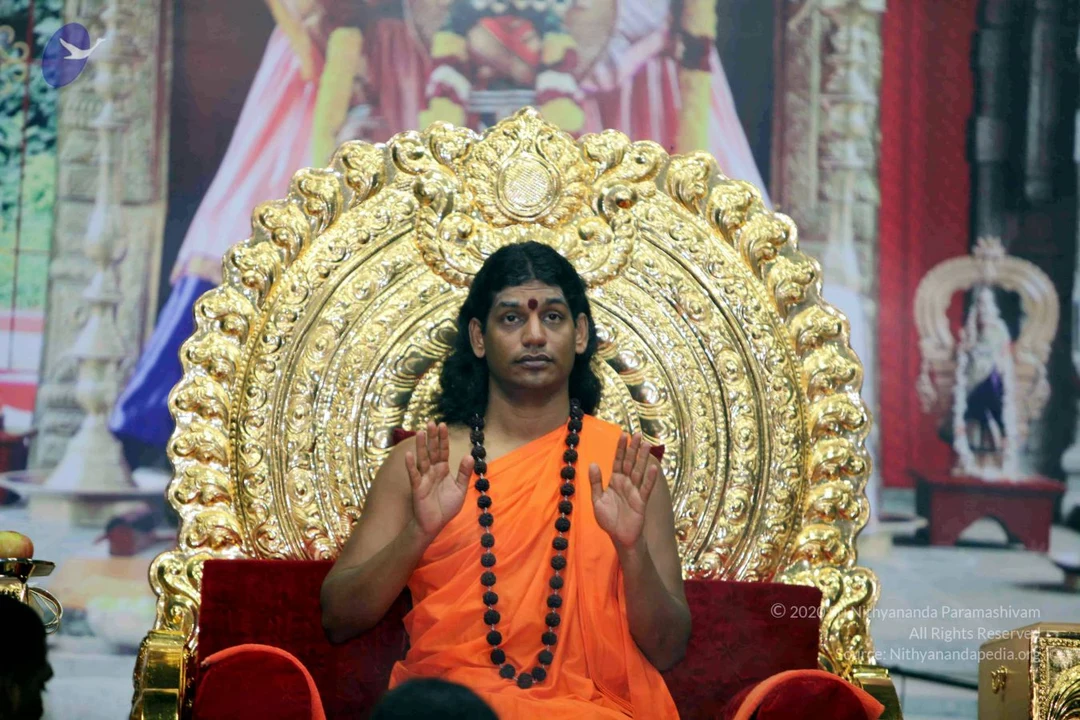
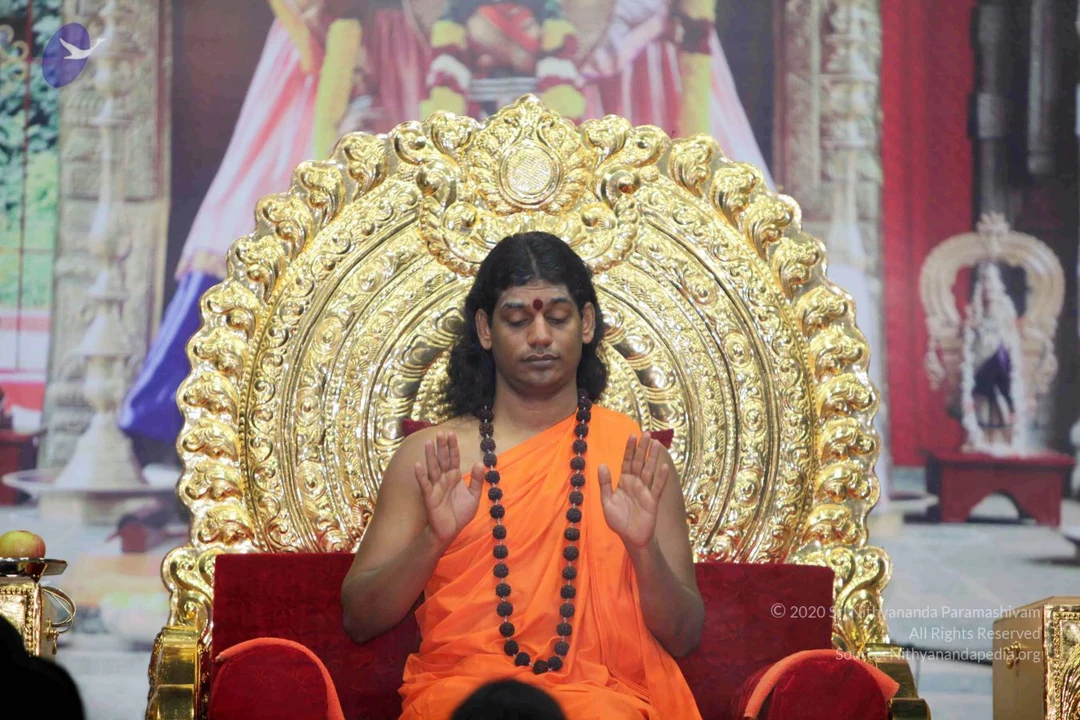
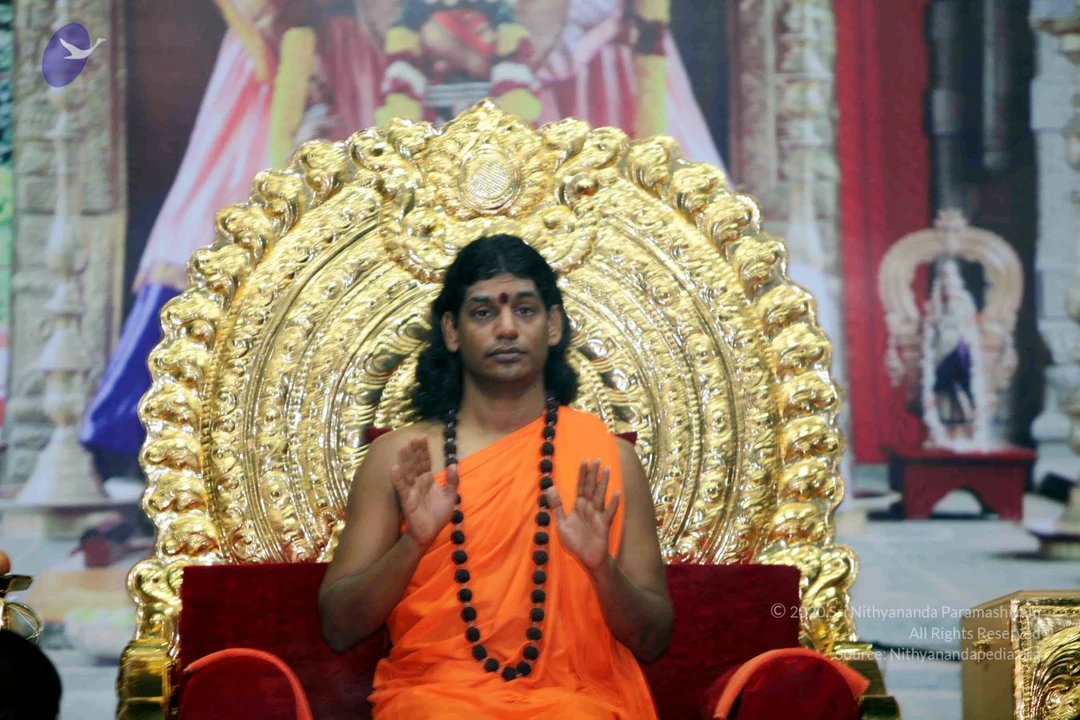
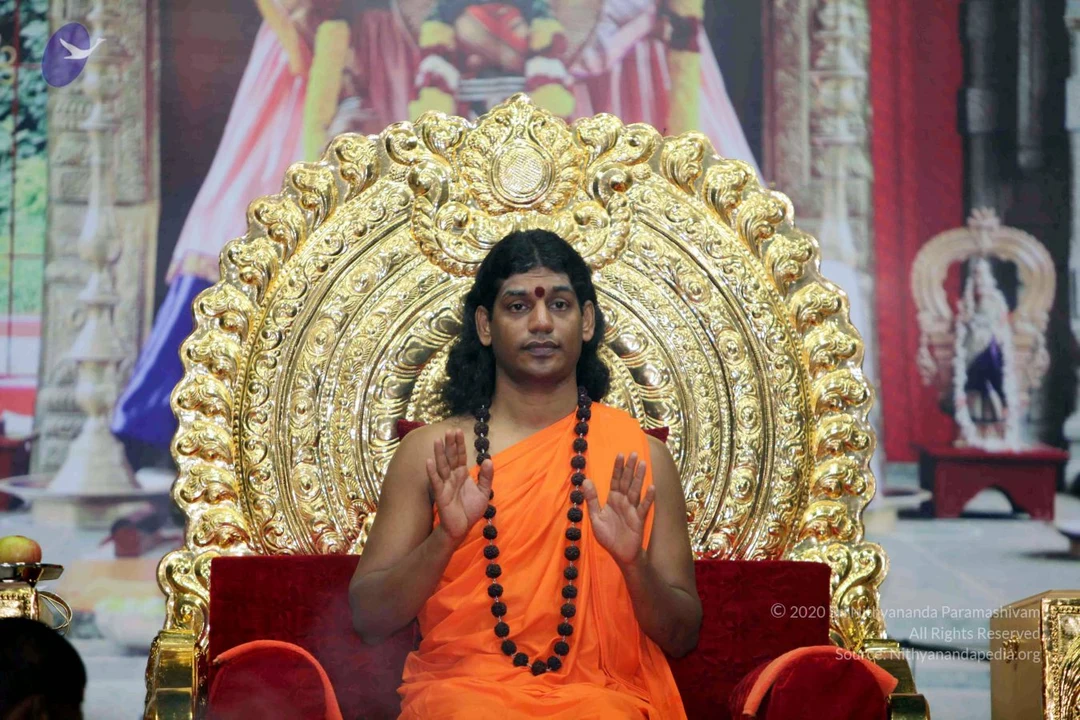
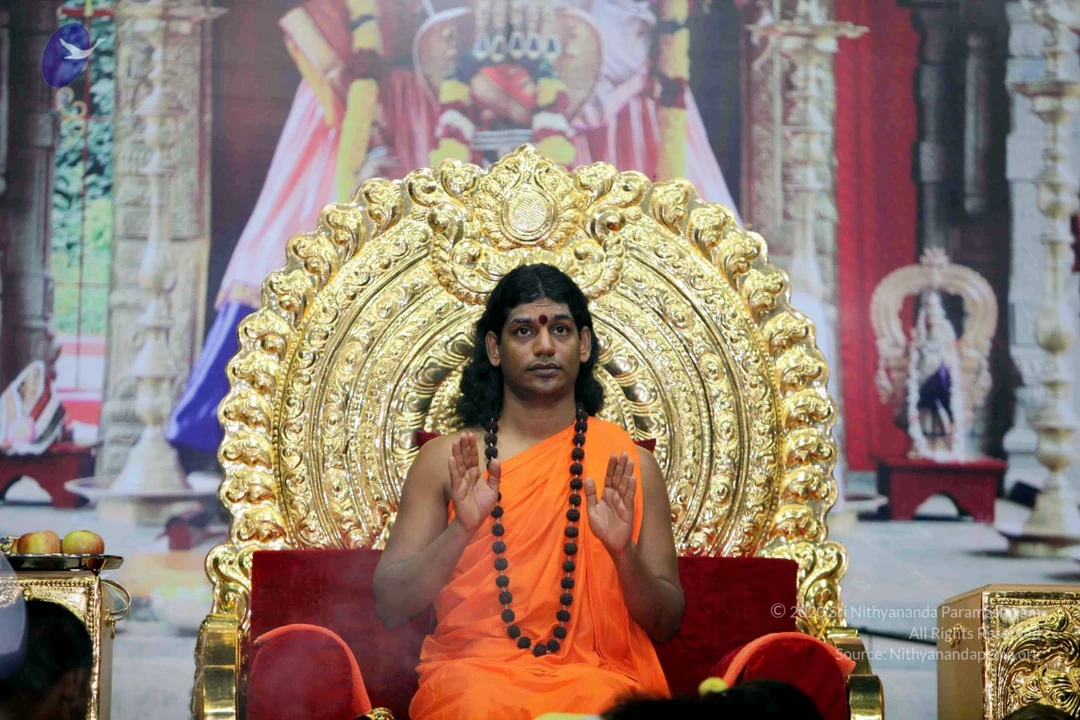
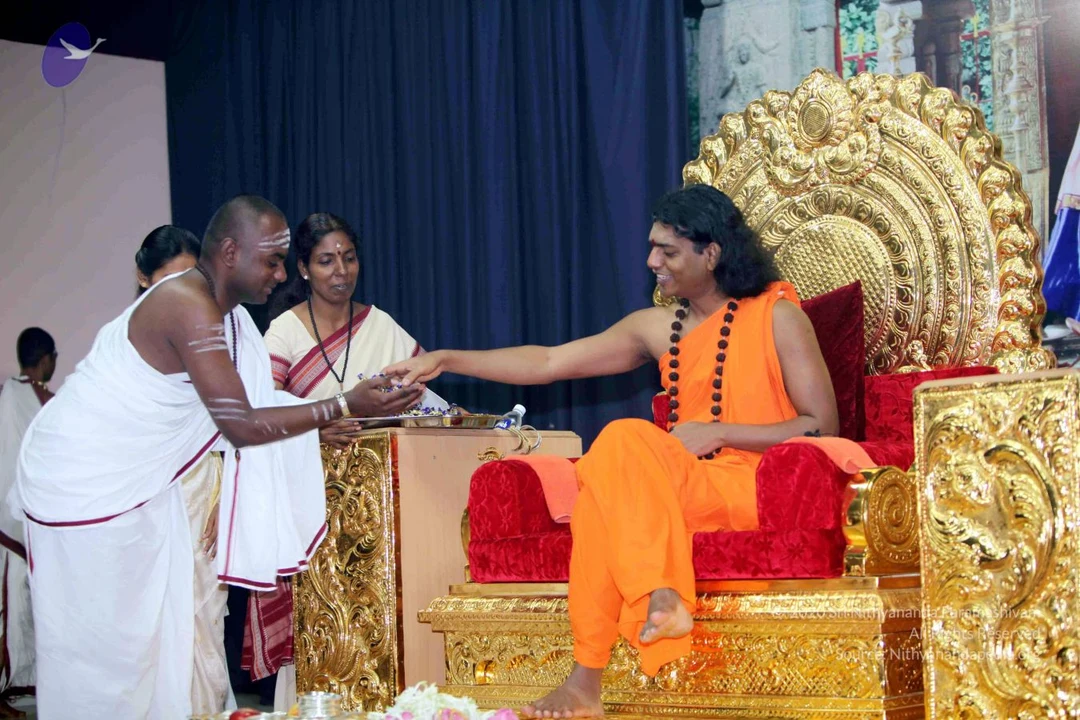
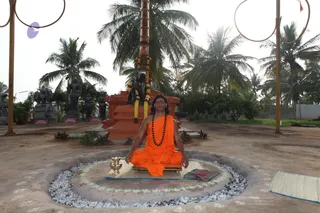
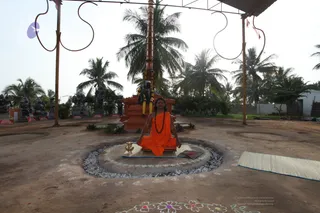
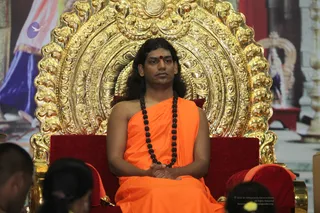
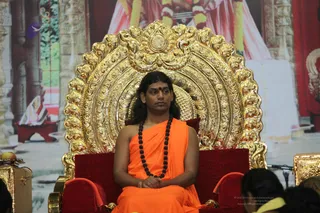
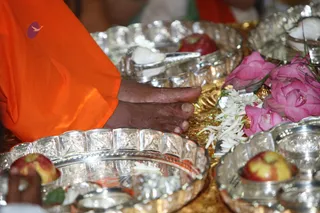
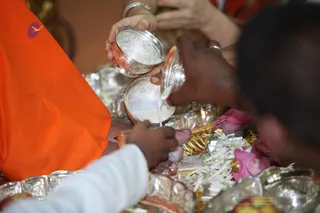
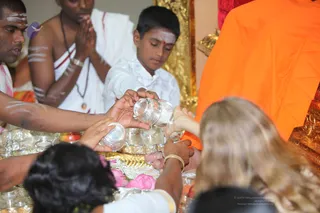
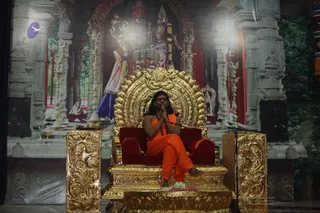
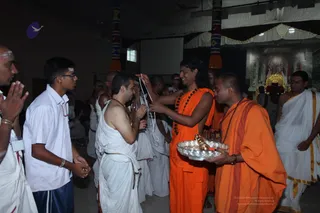
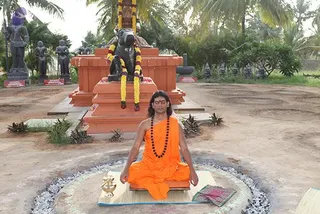
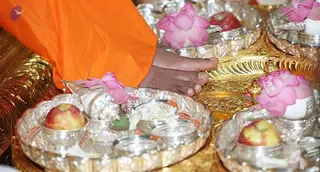
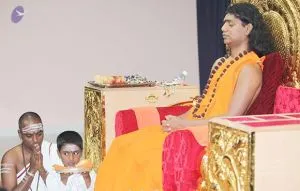
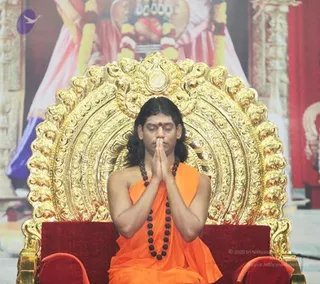
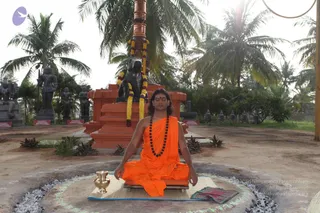
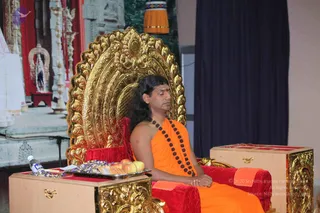
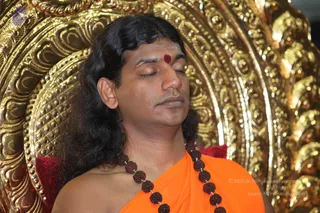
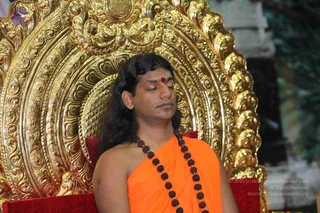
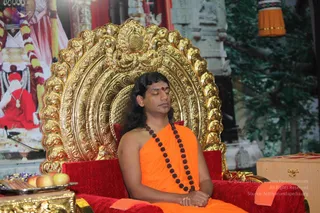
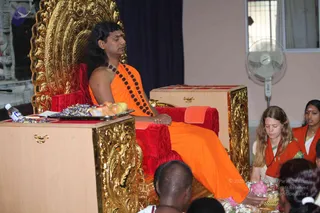
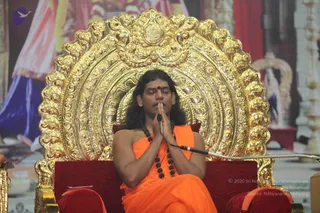
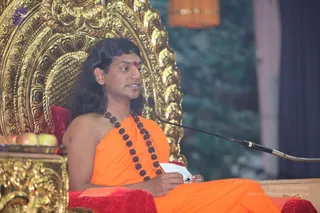
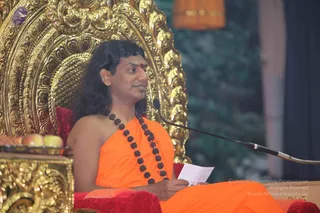
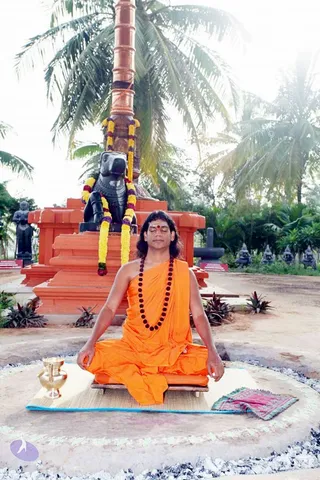
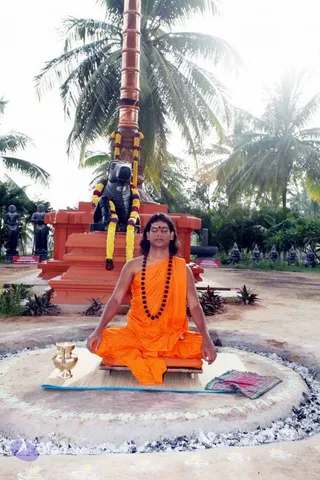
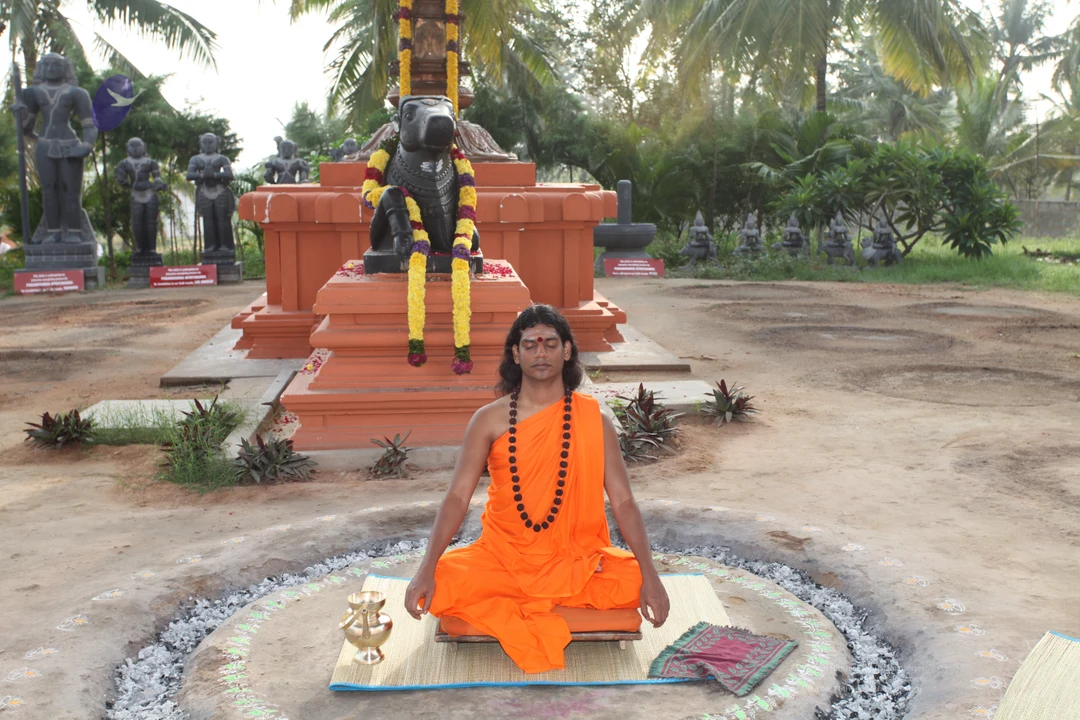
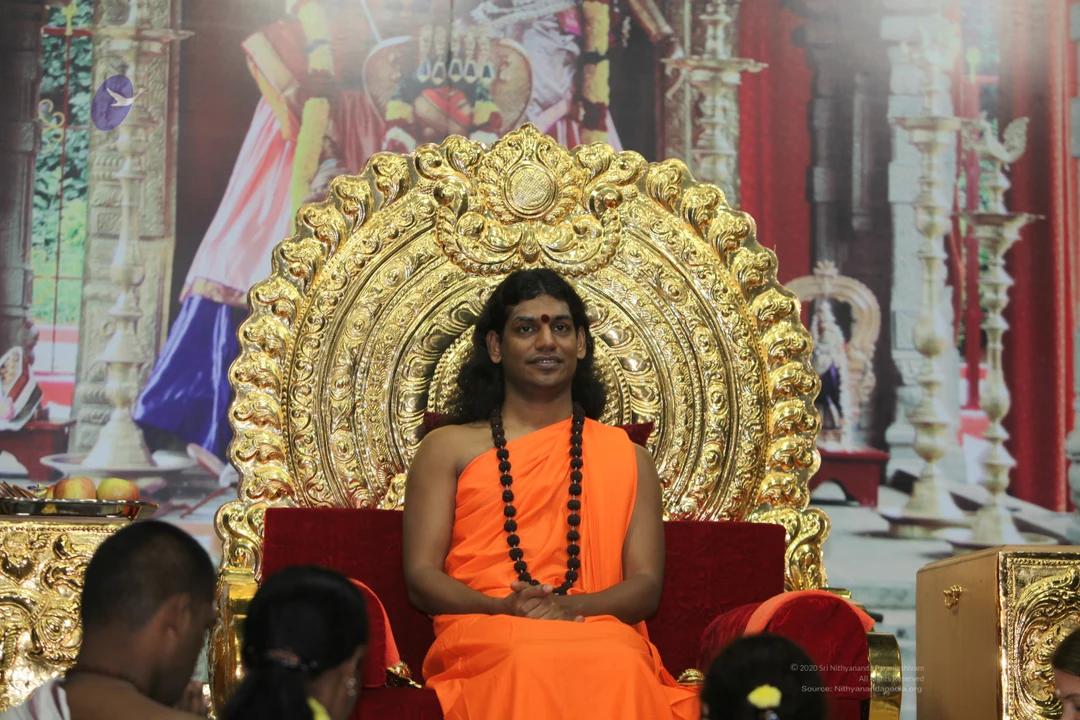
A man seated on an ornate gold throne with a deep red cushioned seat and red velvet armrest. He wears an orange saffron shawl draped over his shoulder, leaving the upper chest bare, and a long dark rudraksha mala hangs to his waist. He has long dark hair, a red tilak on his forehead, and his hands rest folded in his lap. Behind him a gold arched backdrop is partly visible, with a deity mural at the right edge. Two blurred heads of seated audience members appear at the bottom edge of the frame.Close photo of a bare-armed priest in a white dhoti and white shawl with a maroon-red border, wearing a rudraksha mala around his neck and white ash markings on his upper arms. He holds a small silver oil lamp with a lit flame in both hands. In front of him is a silver-toned tray and bowls set on a golden cloth, with a red fruit and offerings visible. The priest is the only person in clear focus; other people are partly visible at the edges. The priest's face is not shown.Outdoor photo of a man seated cross-legged in meditation on a woven mat and a wooden seat, on bare earth. He wears a saffron-orange robe draped over his shoulders and a dark bead rudraksha mala around his neck, with a tilak mark on his forehead. A brass kalasha-style vessel sits beside him on the mat. Behind him stands a large dark Nandi bull statue with yellow and orange marigold garlands on a red-orange pedestal, and a tall wooden pole rises above it. Coconut palms, several black stone deity statues, and small red signboards surround the courtyard, and a shallow ring of white stones frames the seat.

October 28 2010

Original wiki page
Contents

Title

Release Your Engrams And Realize Yourself: Nithyananda Morning Message

Narration

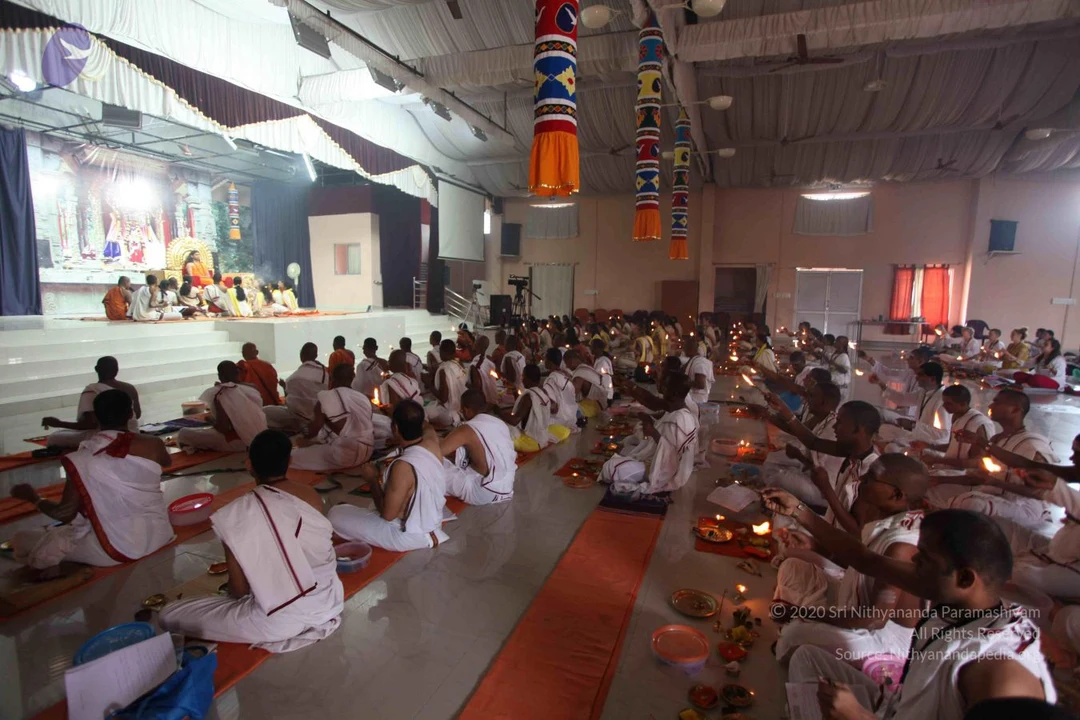
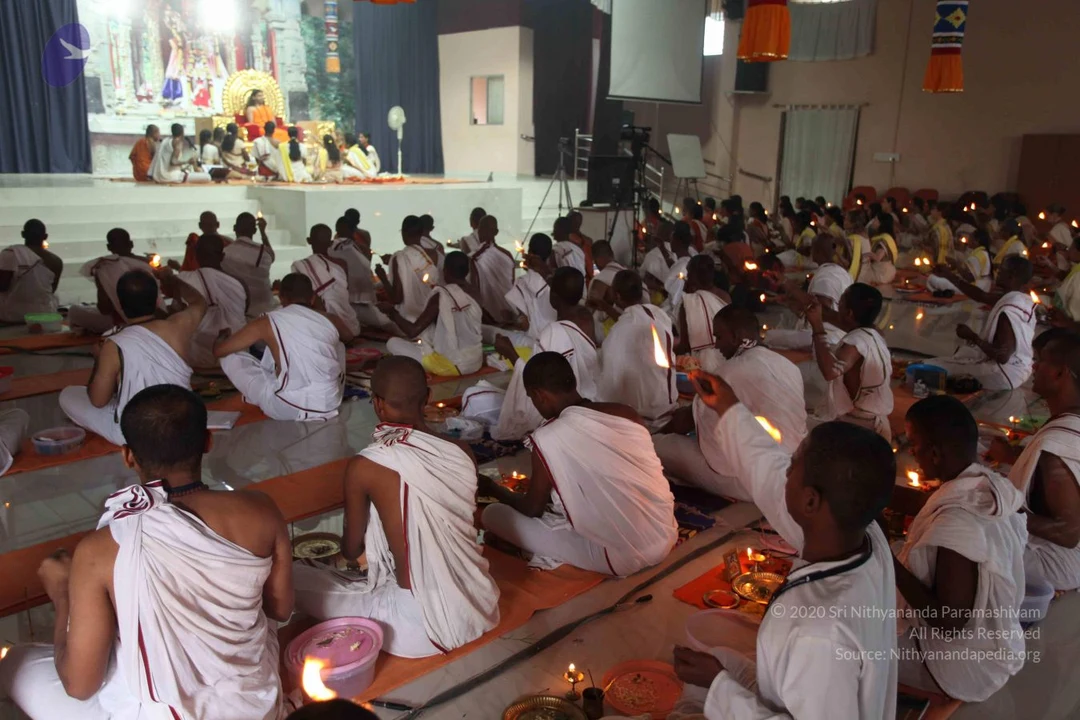
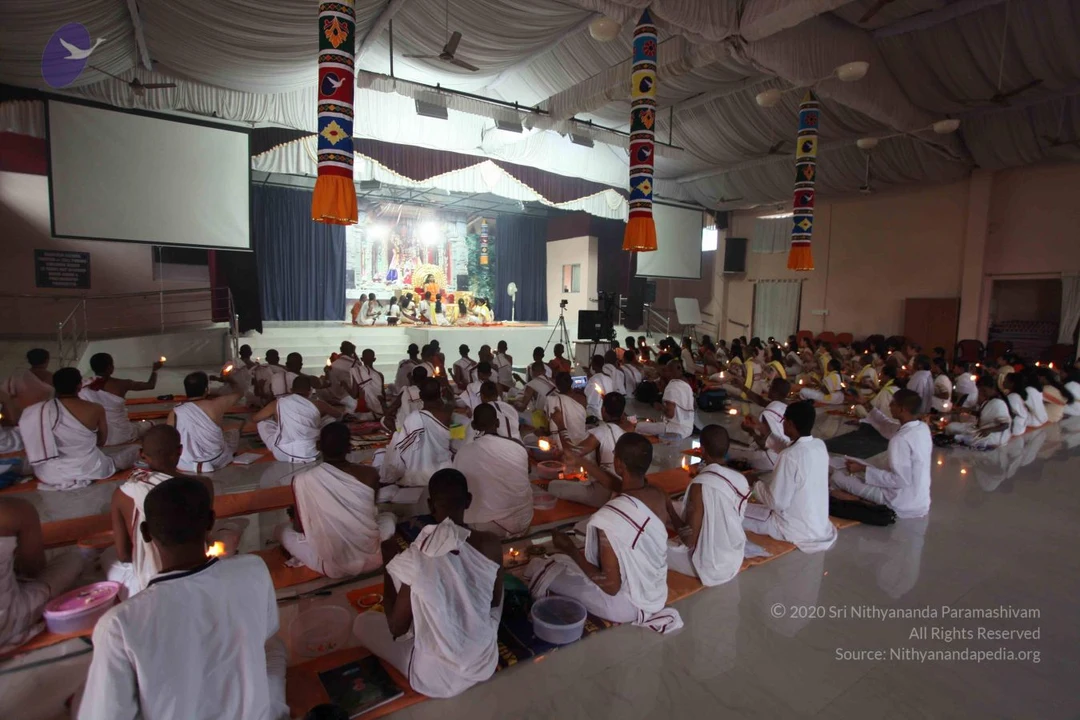
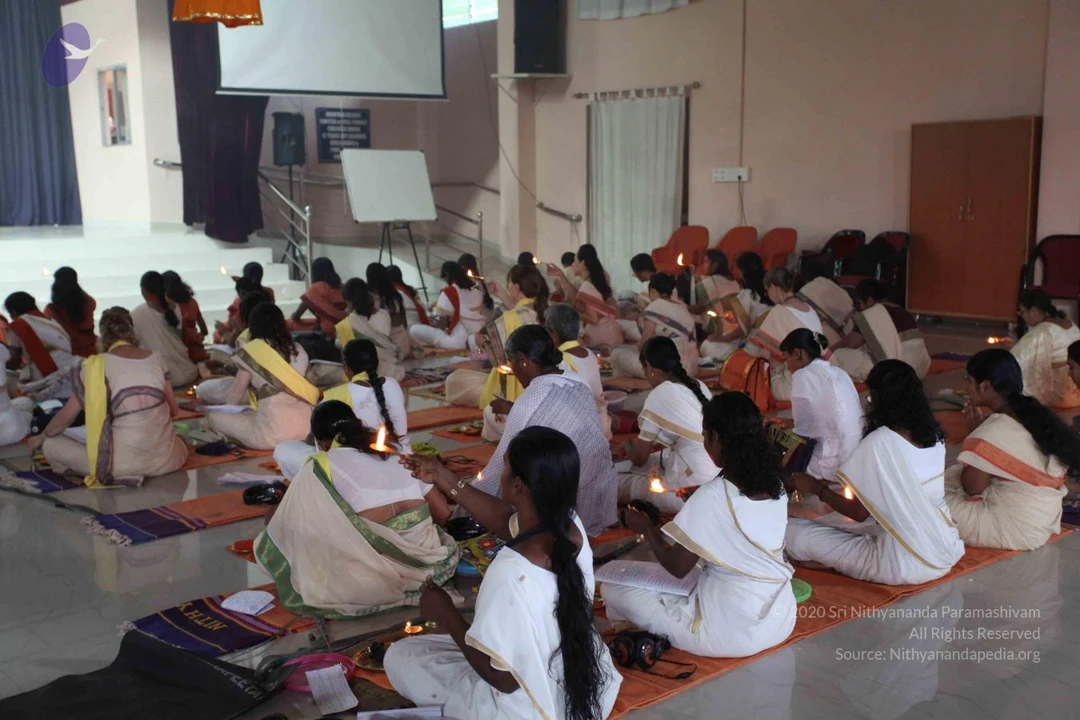
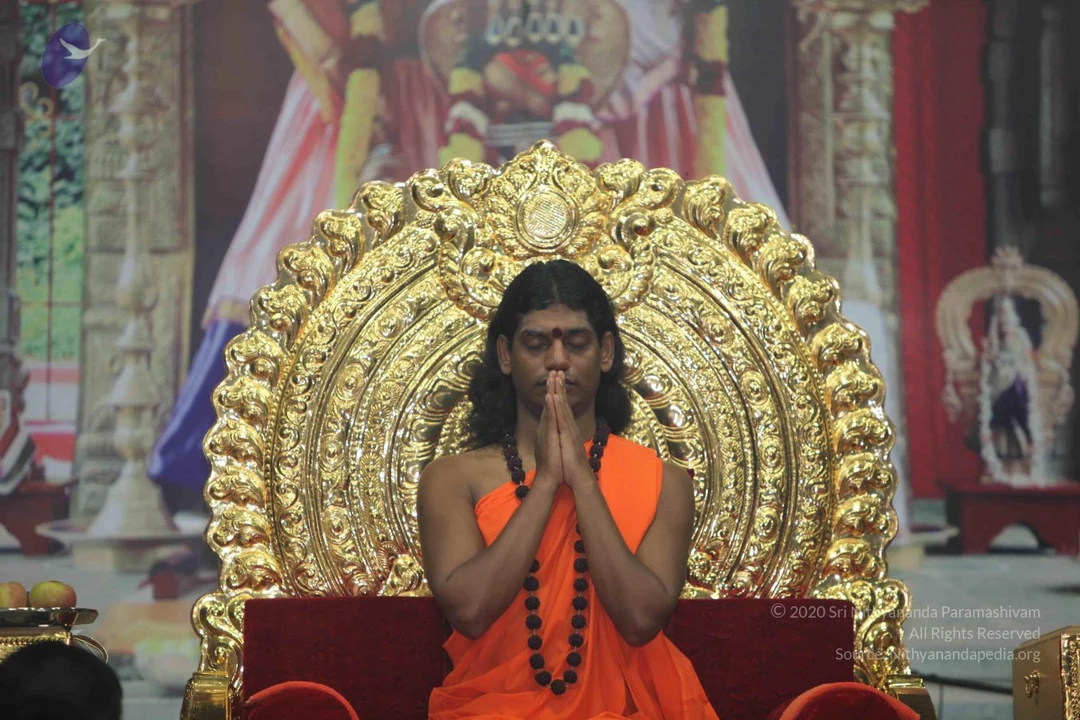
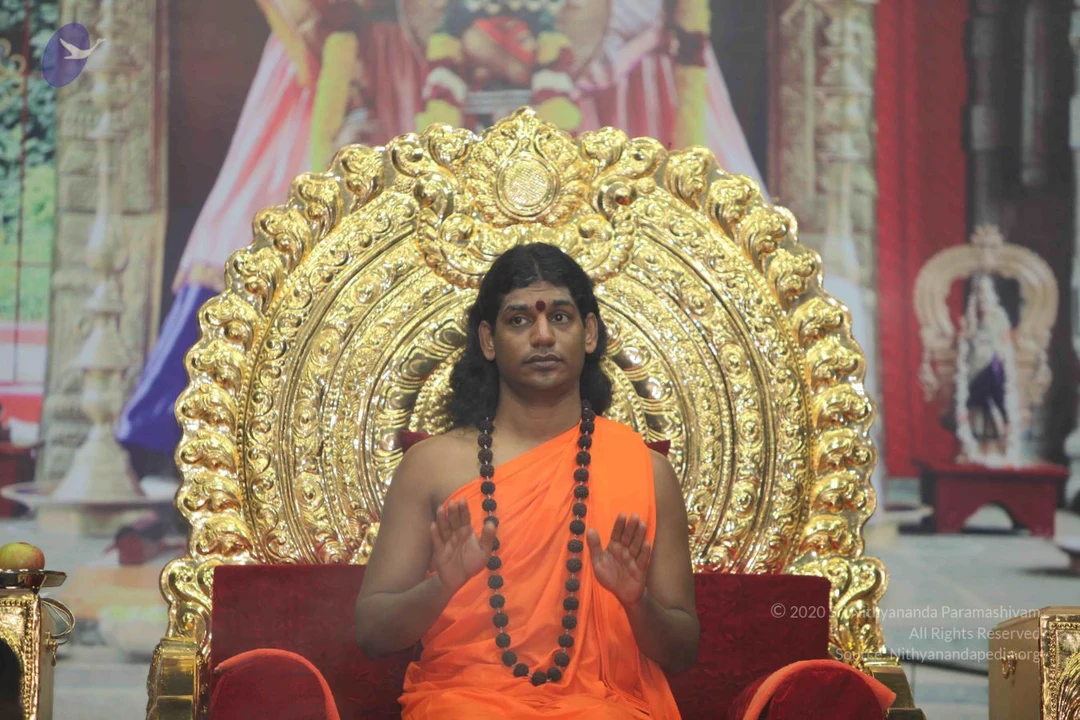
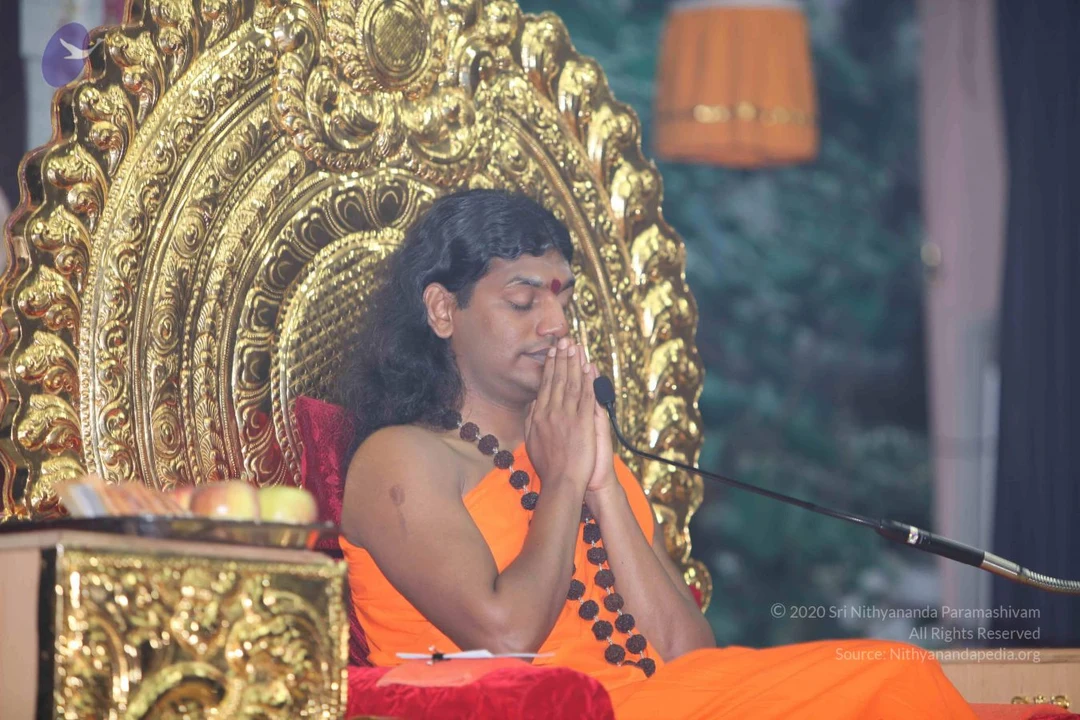
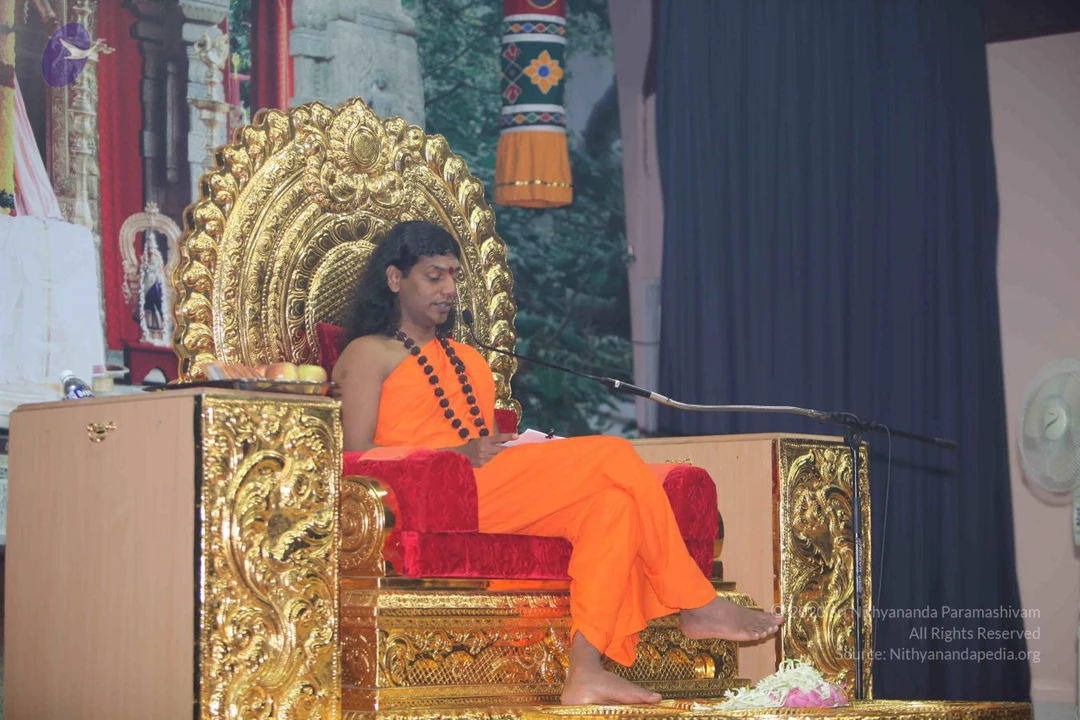
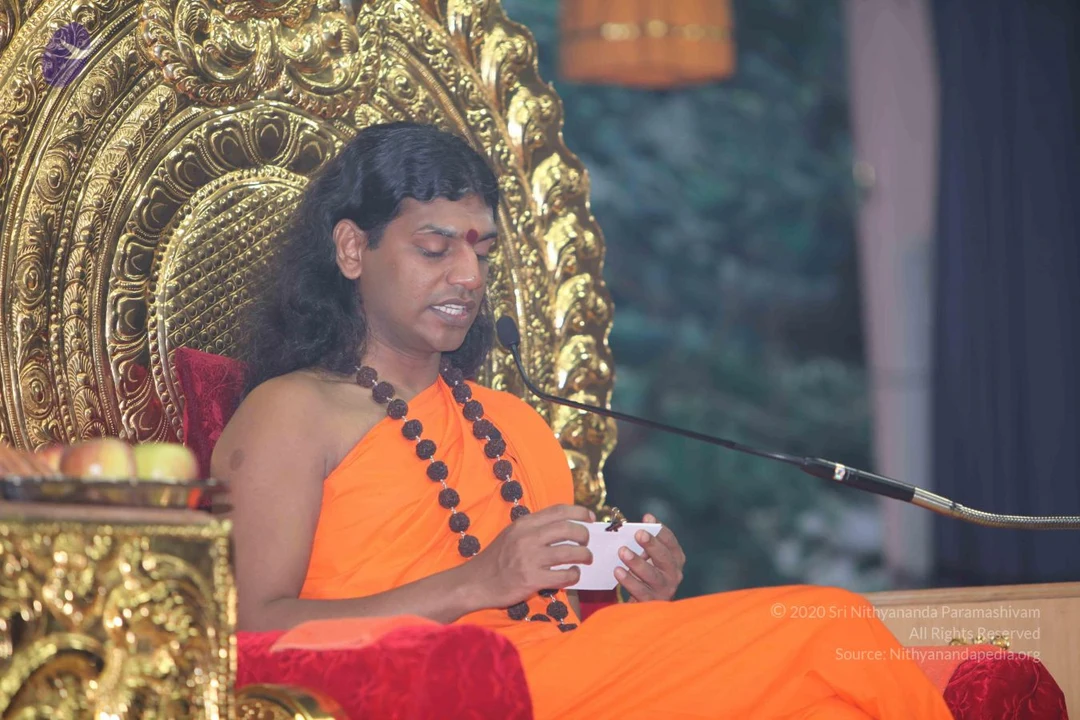
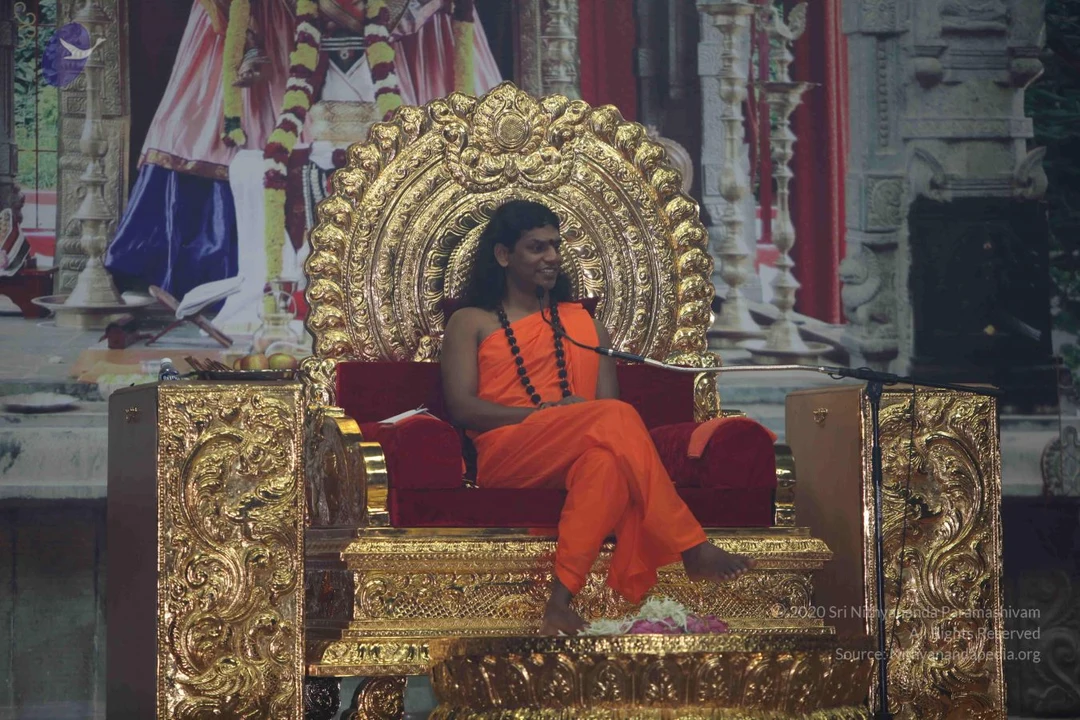
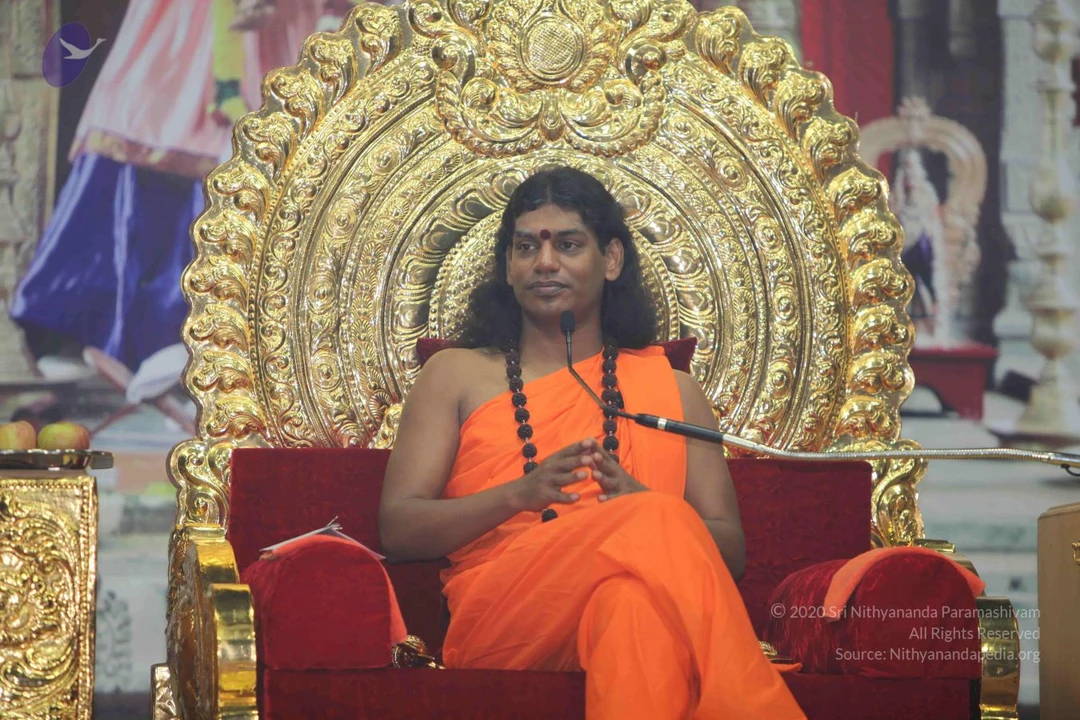
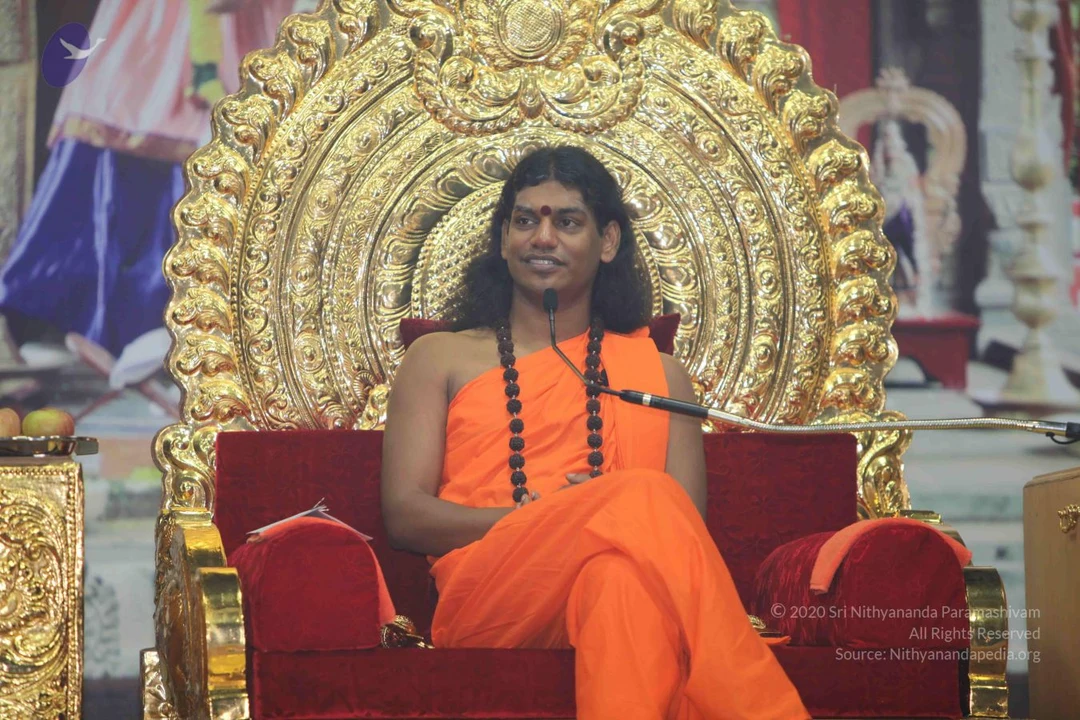
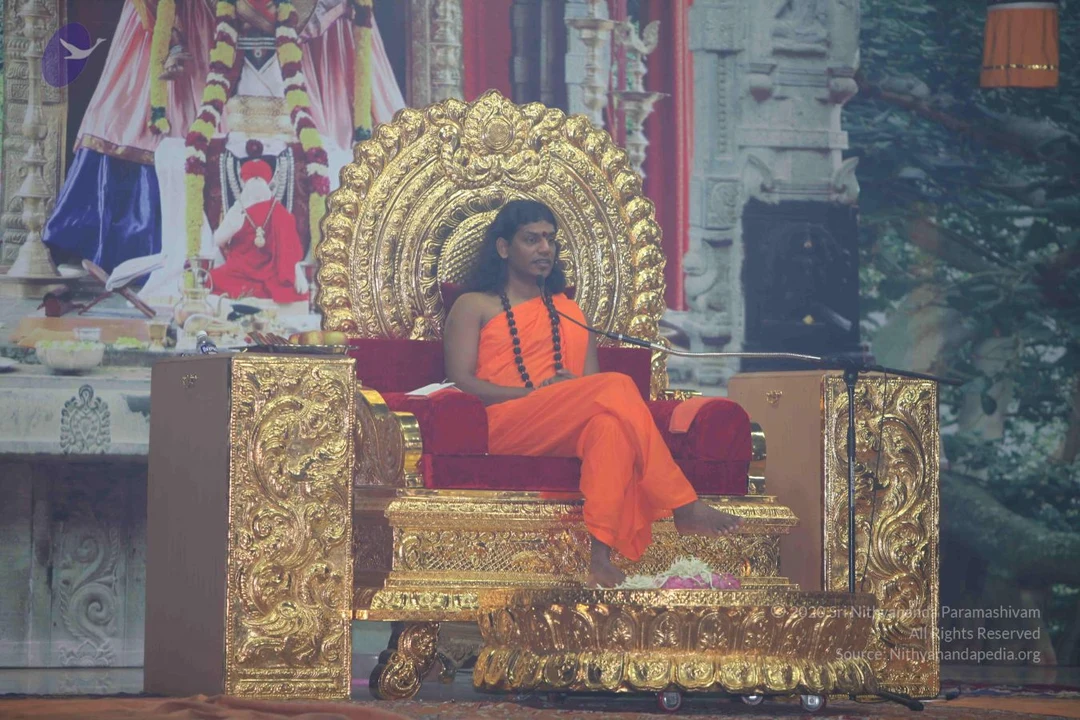
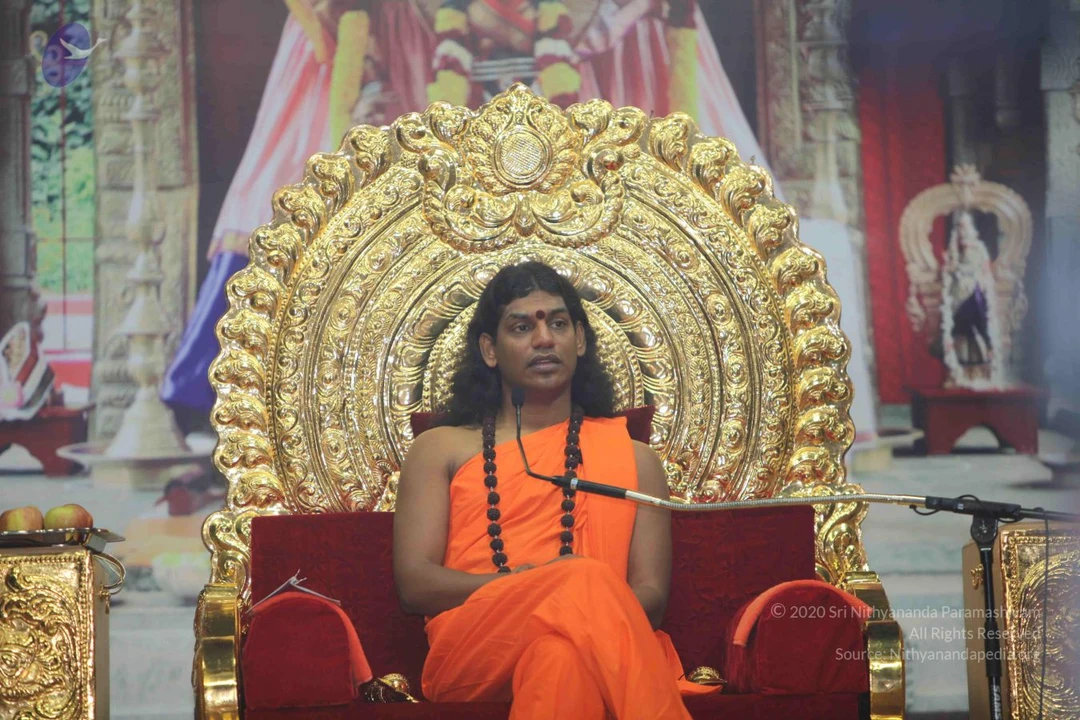
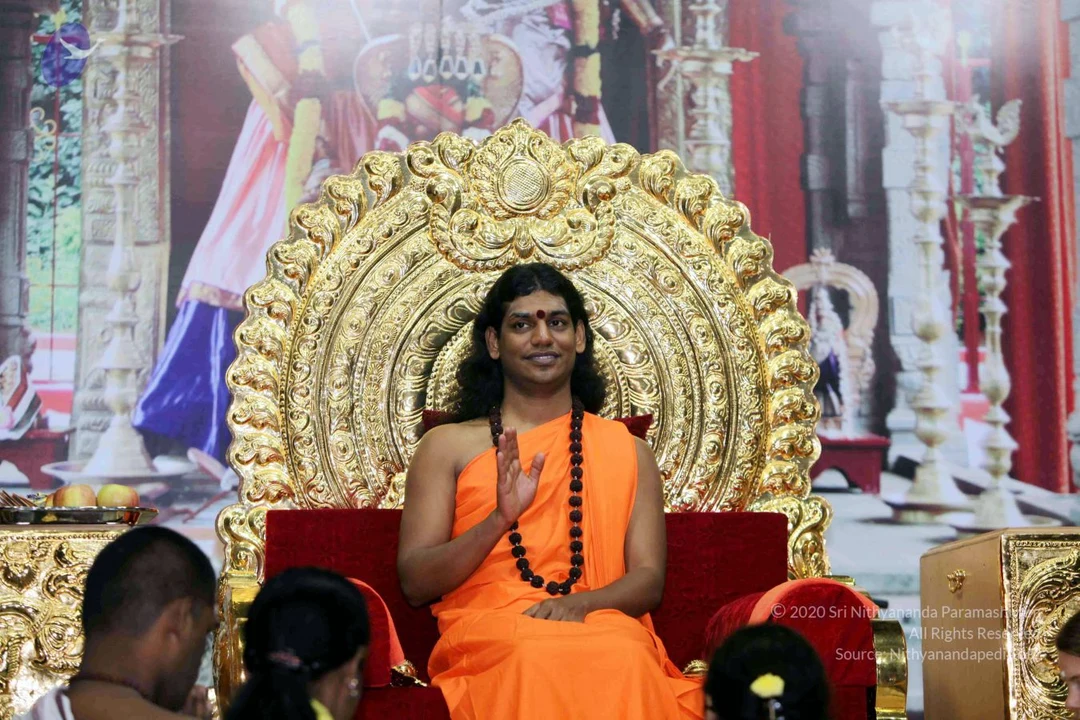
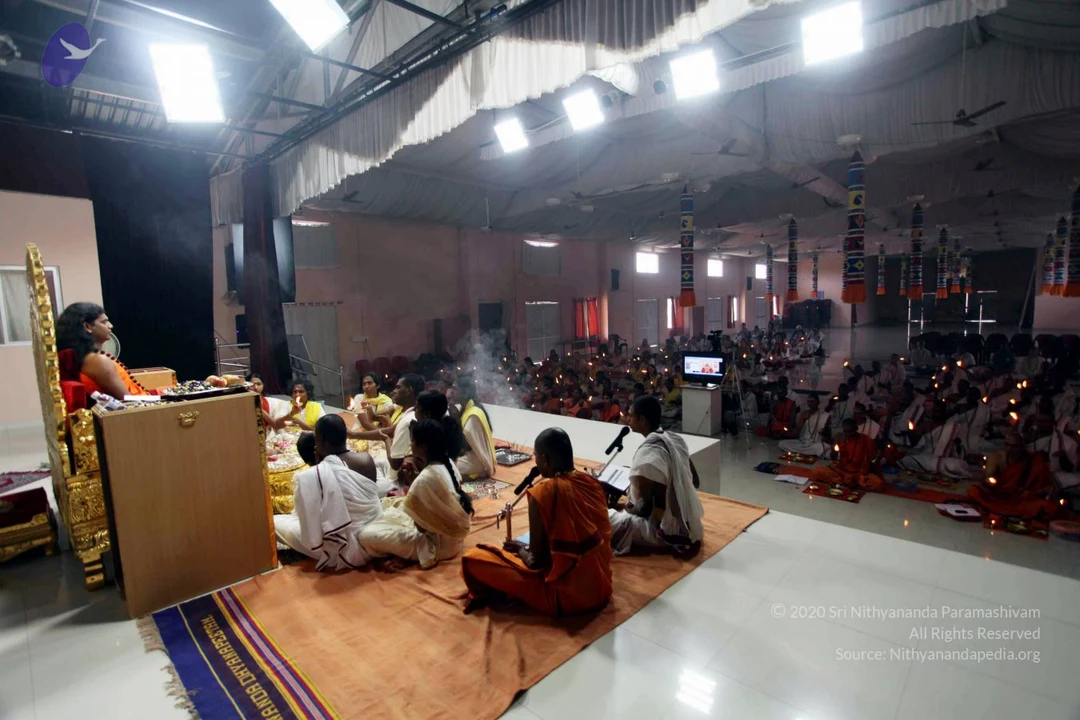
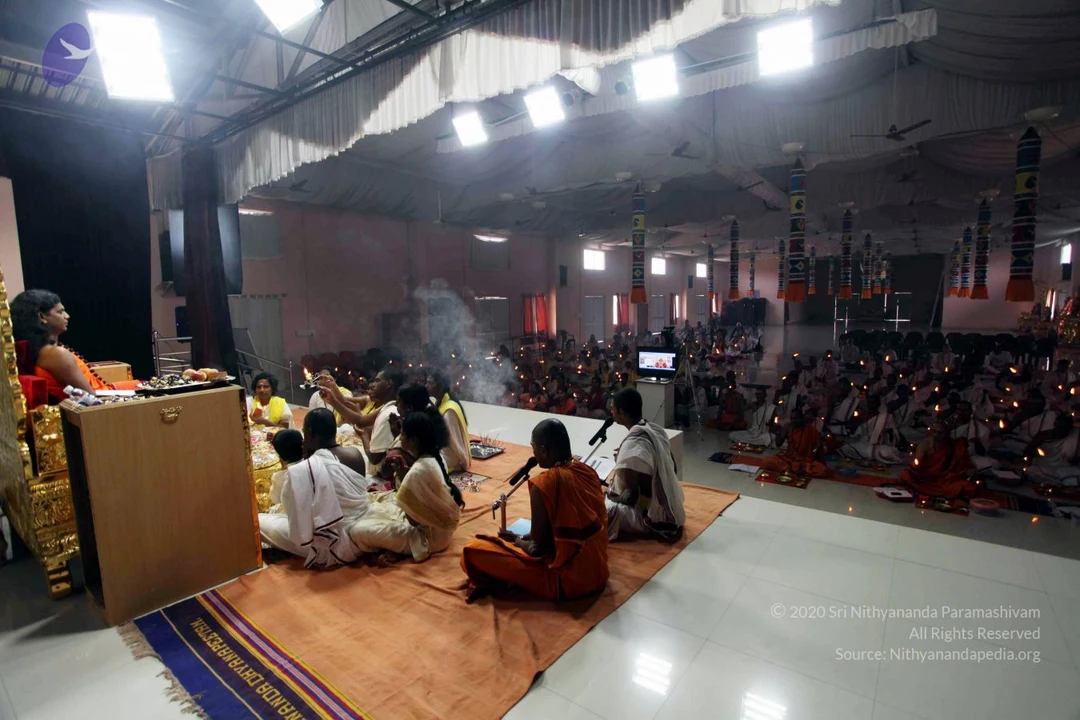
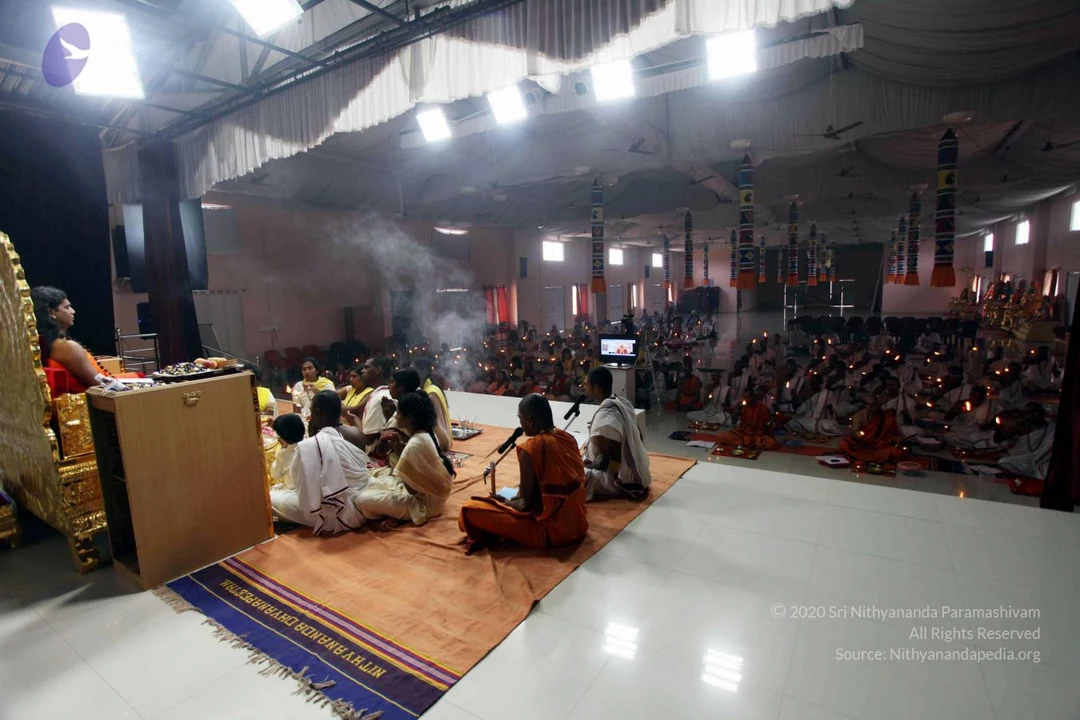
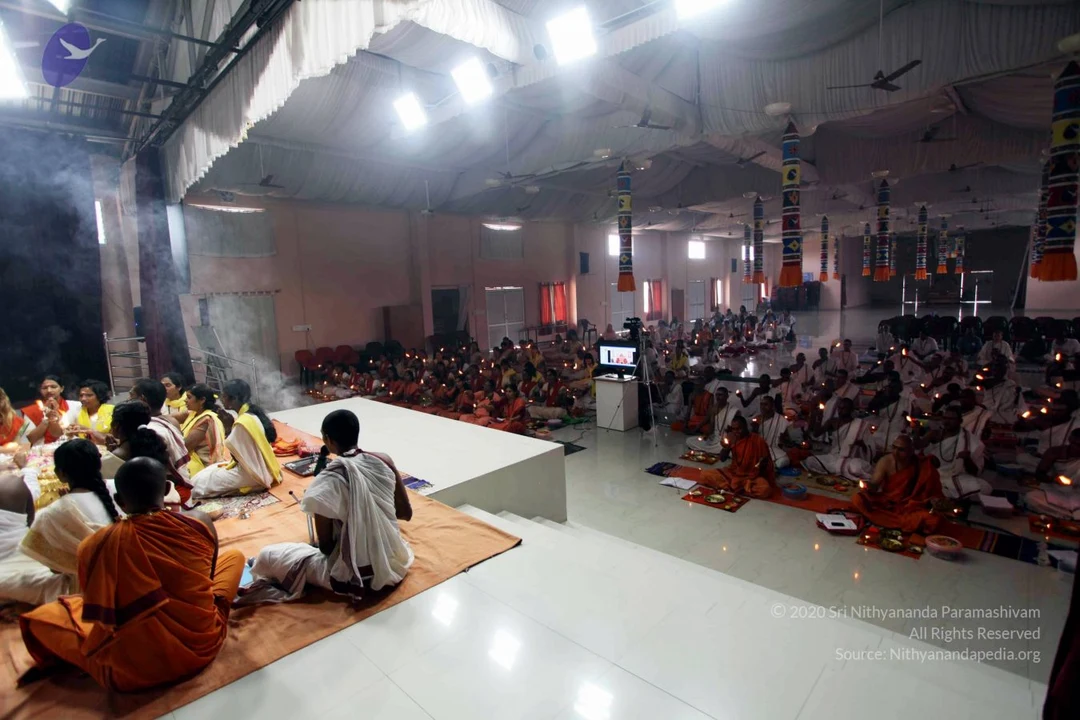
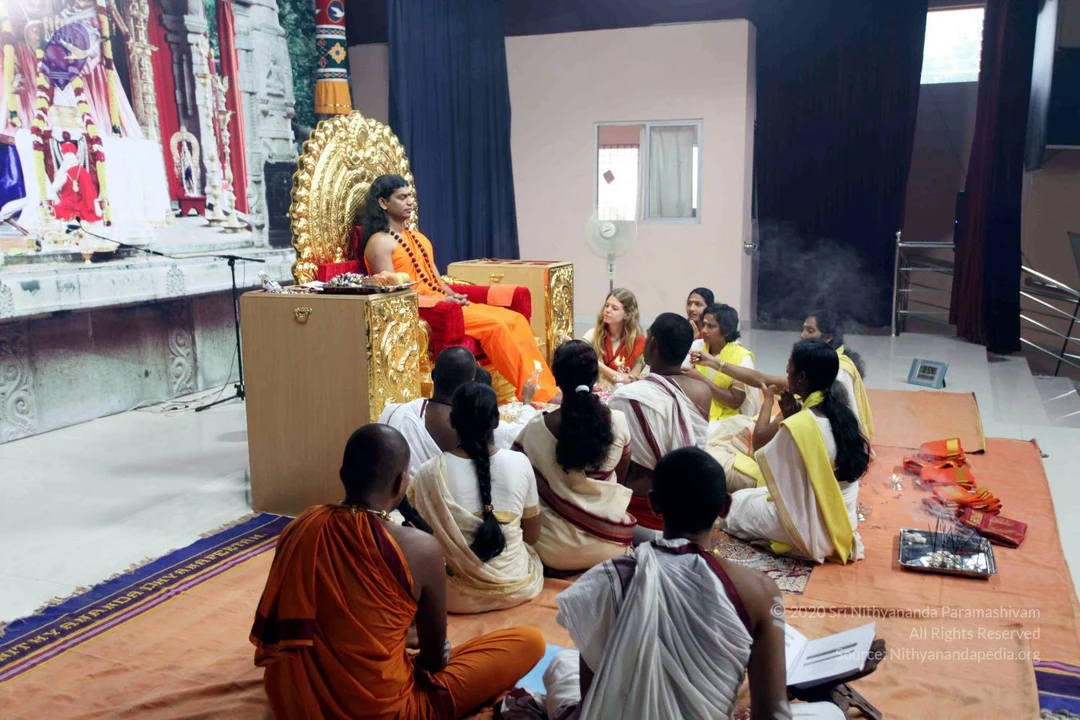
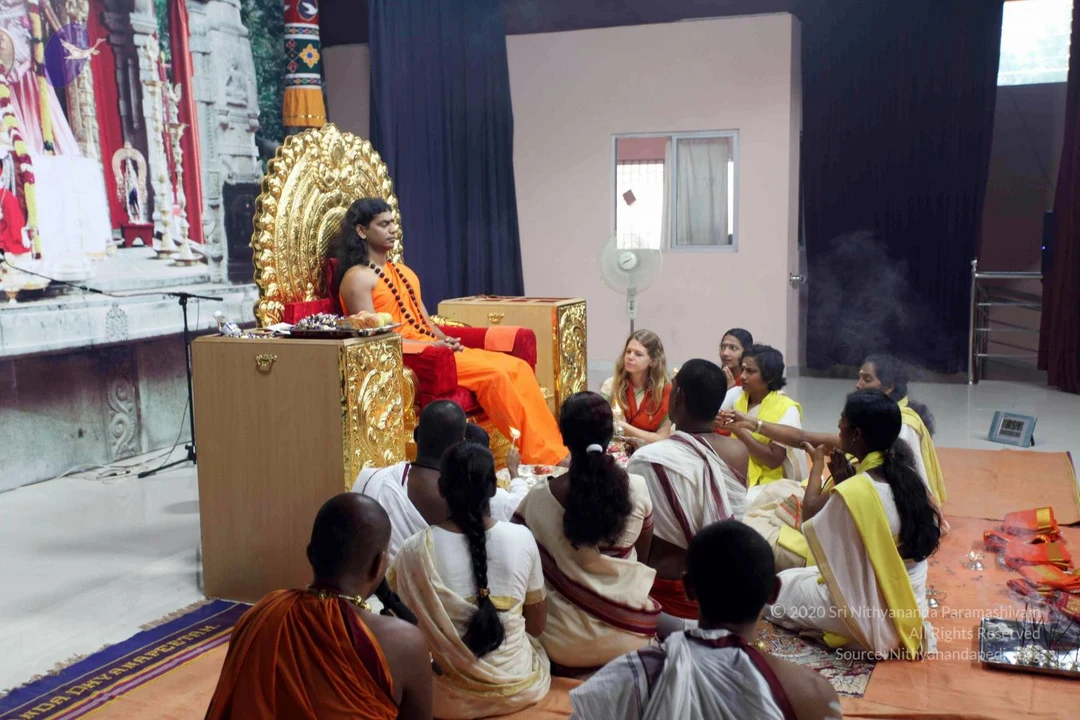
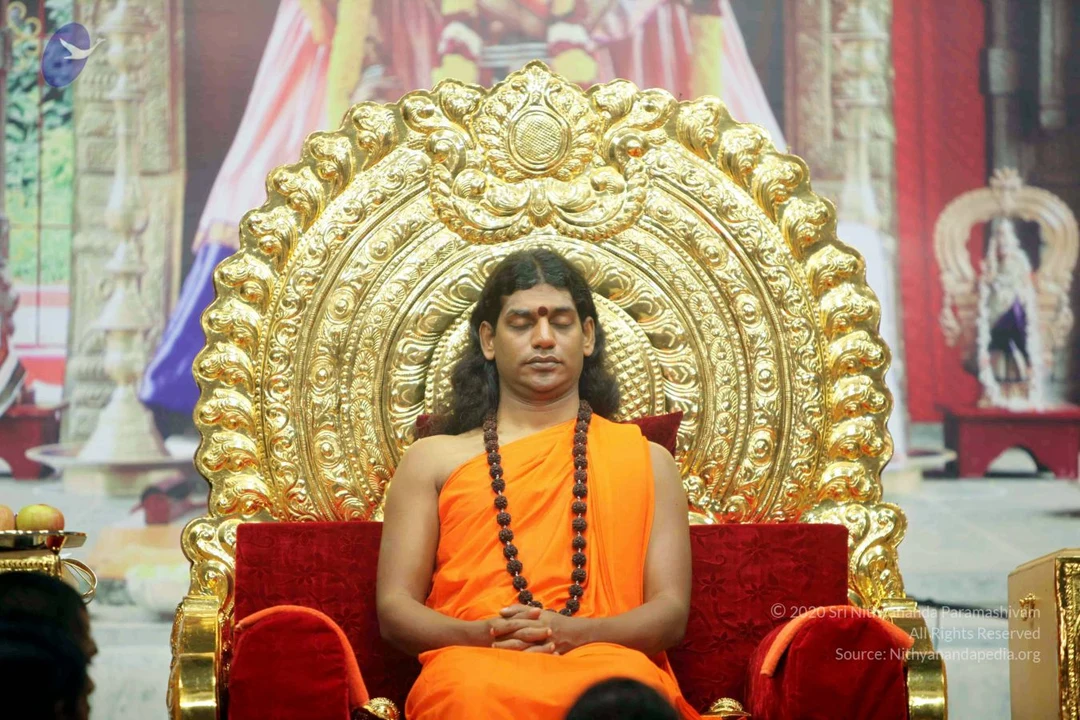
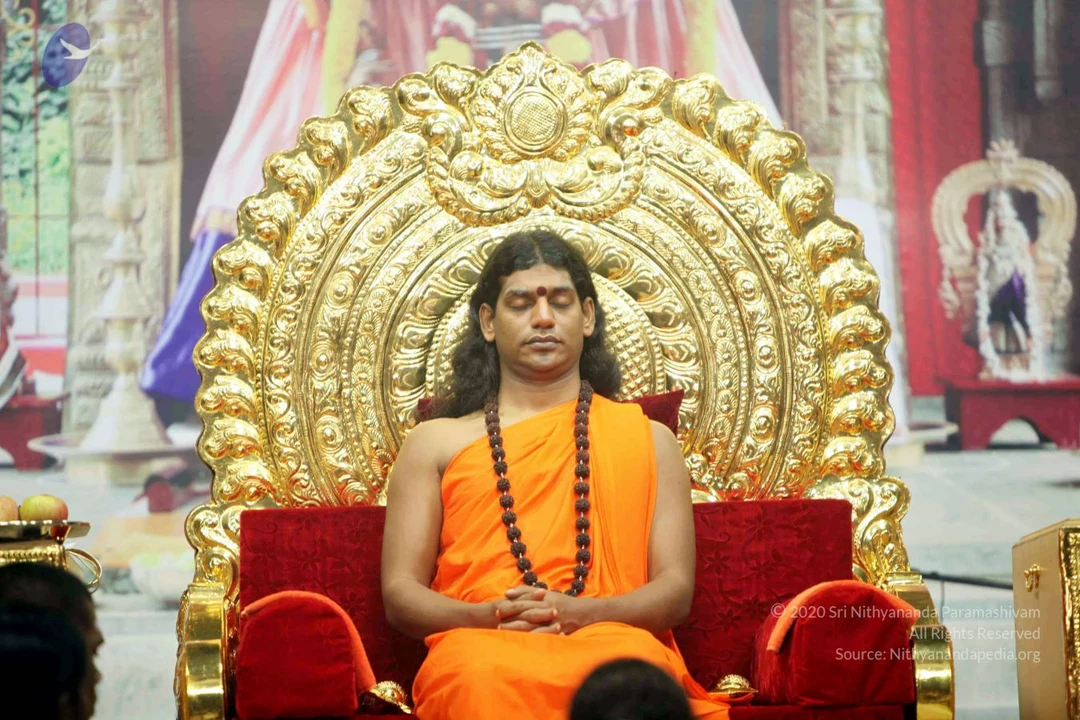
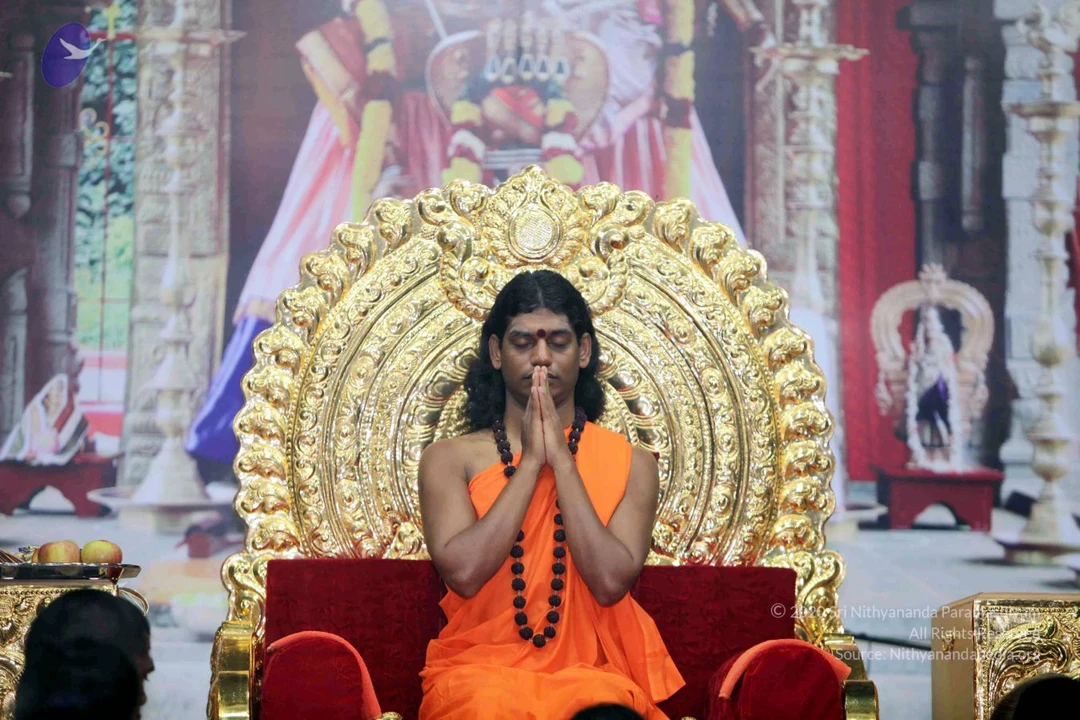
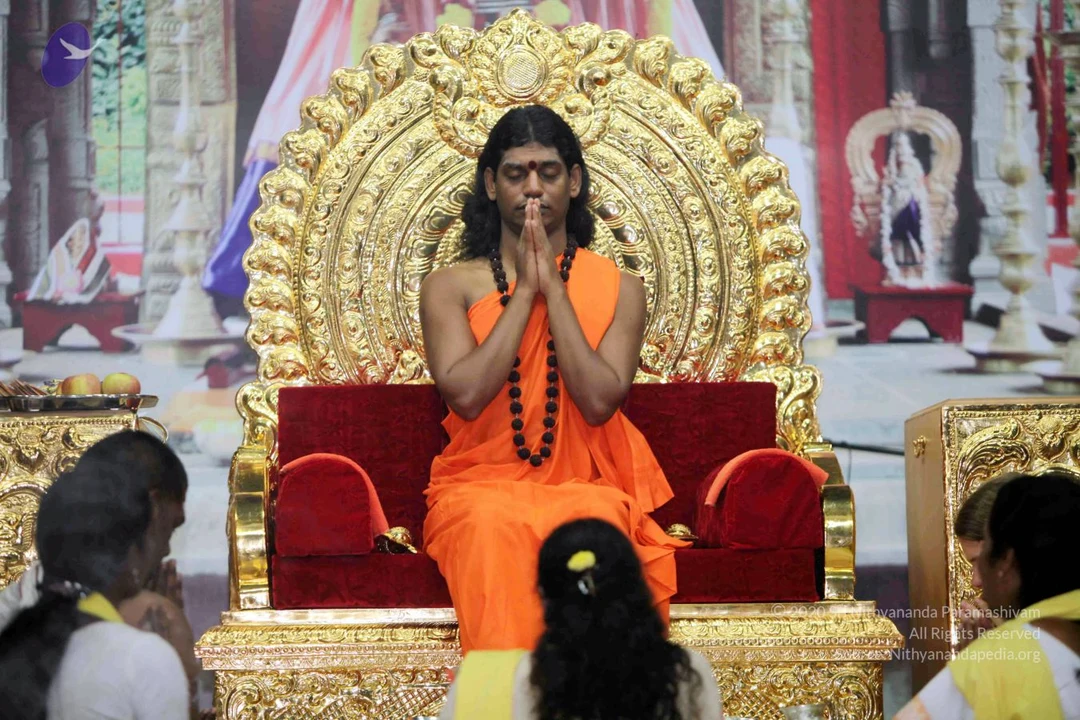
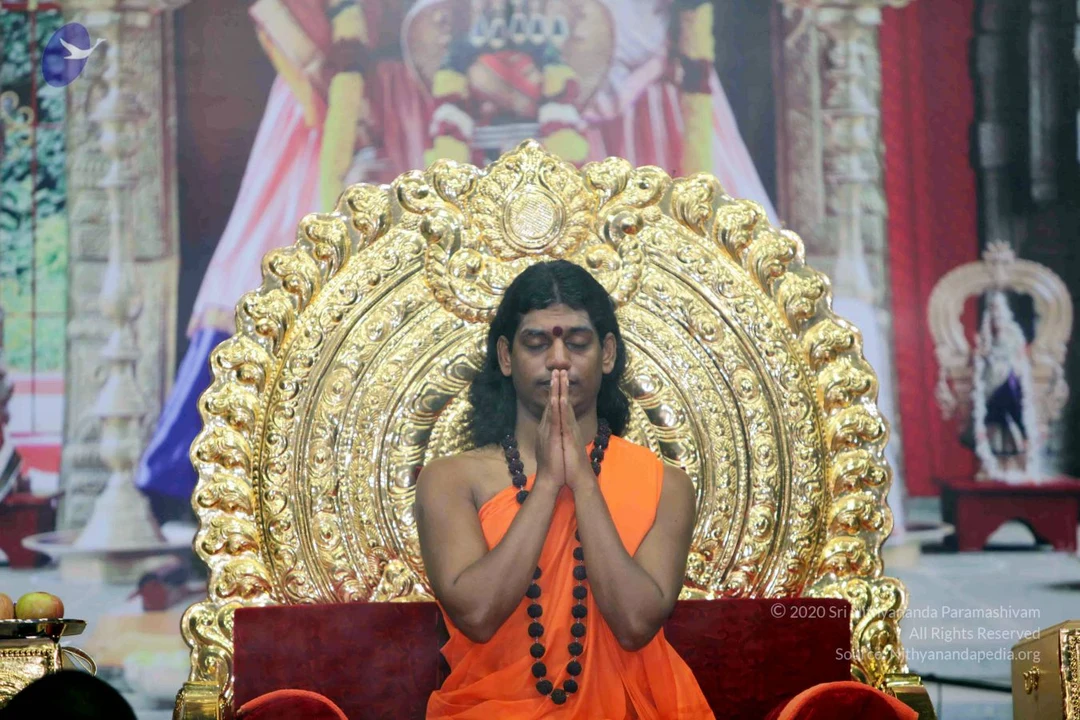
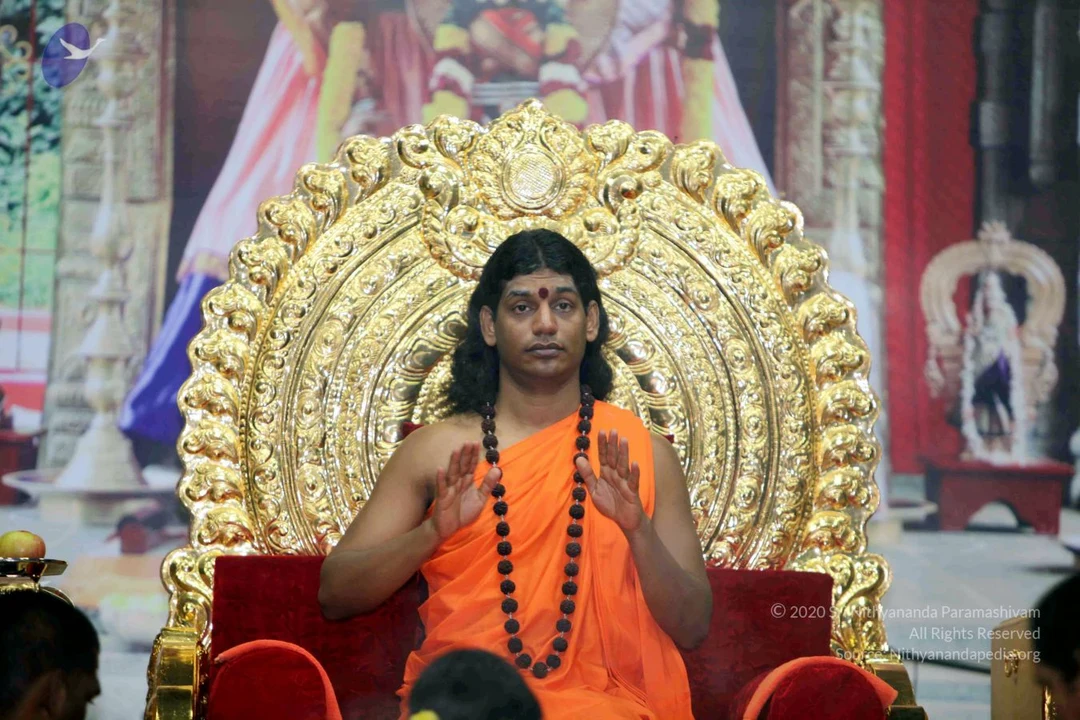
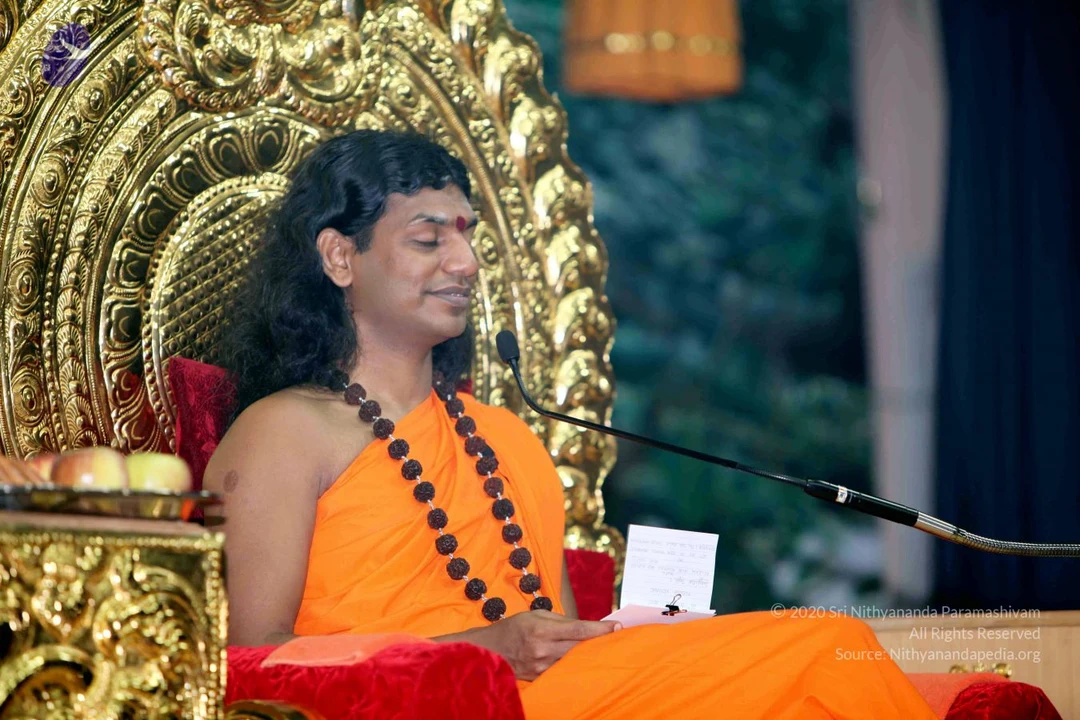
The Supreme Pontiff of Hinduism, Jagatguru Mahasannidhanam, His Divine Holiness, Bhagavan Nithyananda Paramashivam, expounded on the Cosmic Principles of Engrams during the everyday live public talk - Nithyananda Satsang. In this talk entitled Release Your Engrams And Realize Yourself: Nithyananda Morning Message, His Divine Holiness (HDH) cited research that reports that long term grief activates neurons in reward centers of the brain giving memories addiction-like properties; suffering becomes an addiction. He shared further that people sometimes feel that something is missing in their life is pain is not there. This is what His Divine Holiness calls a matured Pain body, which has its own independent intelligence and goes on giving birth to more and more bodies like it. He shared that engraved memories, if they are left alone without cleaning or removing, slowly become an addiction. Having a ‘Pain’ body becomes a lifestyle. His Divine Holiness explained further that people who believe pain is the juice of life are called Rakshasas, and are most dangerous; they can’t be without suffering. He cited additional research coming out of Canada which reports that Zen meditators can remove their pain, their meditation having the effect of a reinforced central brain region which becomes thicker. He concurred with this research, saying that just witnessing, witnessing, witnessing can produce this positive result in the brain. “Witnessing will lead to Unclutching, and unclutching will lead to witnessing” He said. Being a witness will naturally awaken Kundalini Shakti and non-mechanical parts of the brain. His Divine Holiness concluded by again repeating that His new cathartic courses are being planned which will heal the first layer of the past from our system and will be offered by his temples and Ashrams around the world.

Video and Audio

Release Your Engrams And Realize Yourself

VideoAudio

Transcript

Sadashiva samarambam shankaraacharya madhyamaam Asmadaacharya paryanthaam vande guru paramparaam.

0:50

I welcome you all with my love and respects. Today’s subject is ‘Release Your Engrams And Realize Yourself’. Some of the modern scientific discoveries; group of researchers at the university of California, Los Angeles report that long term or complicated grief activates neurons in the reward centers of the brain possibly giving this memories addiction like properties.

1:54

I always tell people suffering becomes almost an addiction. People are very happy with it. Without that they feel something is missing. This is what I call matured pain body. See when your physical body is matured it goes on giving birth to more and more bodies like it. Same way if the pain body gets matured beyond certain level, it goes on expanding giving birth to itself, like its likeness. More and more and more pain bodies are created. When the pain bodies get matured when it gets into the addiction like properties, that is what I call matured pain body. So it just goes on reproducing more and more and more pain bodies just like itself; just like itself. Catching the pain body, taking care it does not become more and more mature it does not become like addiction, is a very important step. See the engraved memories if they are left alone, if you just let them be without cleaning, without removing them, they slowly become like addiction.

4:07

It’s a very revealing truth. Let me read out once more. Complicated grief, long term or complicated grief activates neuron in the reward centers of the brain possibly giving these memories addiction like properties. Means, you feel a kind of a juicy, very comfortable with those memories. If they are not there, you feel something is not there you are missing something. It’s very dangerous. It is very dangerous to go with this matured physical body. When I say the word matured, means grown up, overgrown, overgrown so that, overgrown so much, now it has its own independent intelligence to reproduce constantly.

5:41

The extraordinary suffering caused by the samskaras, engram not only becomes a lifestyle, your brain starts believing that as a juice of the life. That is the worst engram. I can tell you that’s one of the worst engram. That’s is why I tell you, the moment you encourage pain body in you, means samskaras, they not only occupy you completely, they become so strong, they start reproducing and that reproduction becomes almost like a very juicy. You start feeling that is a essence of life. That’s a juicy part of life; most dangerous. People who feel suffering is a juicy part of life, for whom it has become addiction, they are only called rakshasas. They can’t be without suffering. So even if they don’t know what to do, they go on hurting somebody so that there can be some suffering for them. They can have something called juicy in their life. Don’t allow matured pain body in you.

7:29

Montreal university researchers found evidence that practicing the centuries old Zen meditation, sitting; Zen meditation can reinforce central brain region that regulates pain. Through training Zen meditators appear to thicken certain areas of cortex and this appears to underlie their lower sensitivity to pain. According to MRI results, the central brain regions that regulate emotions were significantly thicker in Zen meditators compared to non meditators.

8:18

I think few days before I was talking about my experience when the kundalini hit the sahasrara, the parietal lobe became just thick; frozen like a rock. Just witnessing nothing else is required; just witnessing. Just witnessing can make this happening in your system what the scientists are saying; the central brain regions that regulate emotions were significantly thicker in zen meditators. Just witnessing can make it thick. Nothing else is required. Go on witnessing, witnessing, witnessing. Witnessing will lead to unclutching, unclutching will lead to witnessing. Being a sakshi, being a witness will naturally awaken your kundalini shakti and non mechanical parts of your brain. That is what these researchers are proving with scientific evidences. It’s a very great revelation.

9:53

Ron Hubbard who developed the science of dynatics and scientology says the engrams or painful memories are the root of all human ills. Erasing the engrams can relieve us from diseases like neurosis, asthma, high blood pressure, arthritis; again the same thing. The methods and techniques and methodologies and research and discoveries related to this past living. Please understand when I say past living, I mean the moment you took this body till this moment, that zone; the first phase of past. If that is cleaned many of the diseases like neurosis, asthma, high blood pressure, even diabetes can be healed. All genetical disorders can be healed.

11:00

I can tell you from my experience I have seen thousands of patients, I can say even millions of patients, how they walk out of their disease; because I help everyday thousands of patients to walk out of their diseases. I know very clearly the science; who walks out and who will not walk out, who can walk out and who cannot walk out. See its like; the bio memory is the place where all these samskaras are caught. Understand in this way it’s like a ice-cream where so many nuts are caught. If it is frozen you cannot take those nuts out very difficult. If it just melts, simply very easily you can take that nuts out. Same way, how they make this stone or sorry, how they make these metal idols, metal statues, when they are being made, if some dust or small dirt small piece of wood or some, all these things falls on it or some small stone, all this if it falls on it, once it is cool the statue is made, you can’t take the piece out; it is caught. But if you can melt it again, those dust or small stones can be taken out.

12:49

Same way the frozen bio memory holds all the engrams; all the engrams are caught in the frozen bio memories. But if that just melts with devotion, deep devotion, those engrams can be just like that taken out and thrown away. That is the reason when somebody melts with a deep devotion I know the person will just walk out of that disease. All I need is just lending one hand and making that person walk out of the disease. If the person melts in devotion even the technique to remove the engrams, they will do it sincerely. They know Master’s words can lead us to enlightenment or health. But the problem is when there is no connection, feeling connection; naturally they will neither go through the process nor walk out of the disease. Even if they had little bit of sincerity to go through the process they will walk out of the disease, but unfortunately if people don’t have even that sincerity to go through the process, very difficult to walk out of the disease. Working on the samskaras, releasing the engraved memories does so many miraculous healing physically and mentally in you. That is what all these scientists and researchers and scholars again and again and again are proving.

14:56

So as I said yesterday this three method, three hours session, three session a day, 21 days. Cleansing the past living can be a very powerful process. I sincerely recommend all over the world, all our temples and ashrams and monasteries and centers start this program of cleansing the past living, this 21 day program as per the instruction and conduct properly. Of course you need to take care of your local legal systems. To conduct these kind of programs what needs to be done. Once the legalities are taken care you should start doing this program, offering this program as a service to humanity. I can tell you if somebody goes through this program and then comes for Inner Awakening or LBE he will have the extraordinary experience and we will also start providing this program of cleansing the past living; the first layer past, cleansing the prarabdha, so that humanity can raise into the higher consciousness; humanity can move to the higher consciousness.

16:43

Bless you all. Let you all live and radiate enlightenment. Achieve, live, experience, express and radiate the eternal bliss, Nithyananda. Thank you. 17:01

Photos

Panchatapas
Paadapooja
Morning-Satsang

Sarvadarshan

Photos Of The Day:

Photos Of The Day:

BIDADI-TEMPLE

TEMPLE-VISIT

PANCHA-TAPAS

PADA-PUJA

NITHYA-SATSANG

SARVA-DARSHAN

SCENERY

More Photographs from the day

Photos from this day

View all 228 photos

Panchatapas

6 photosSource gallery
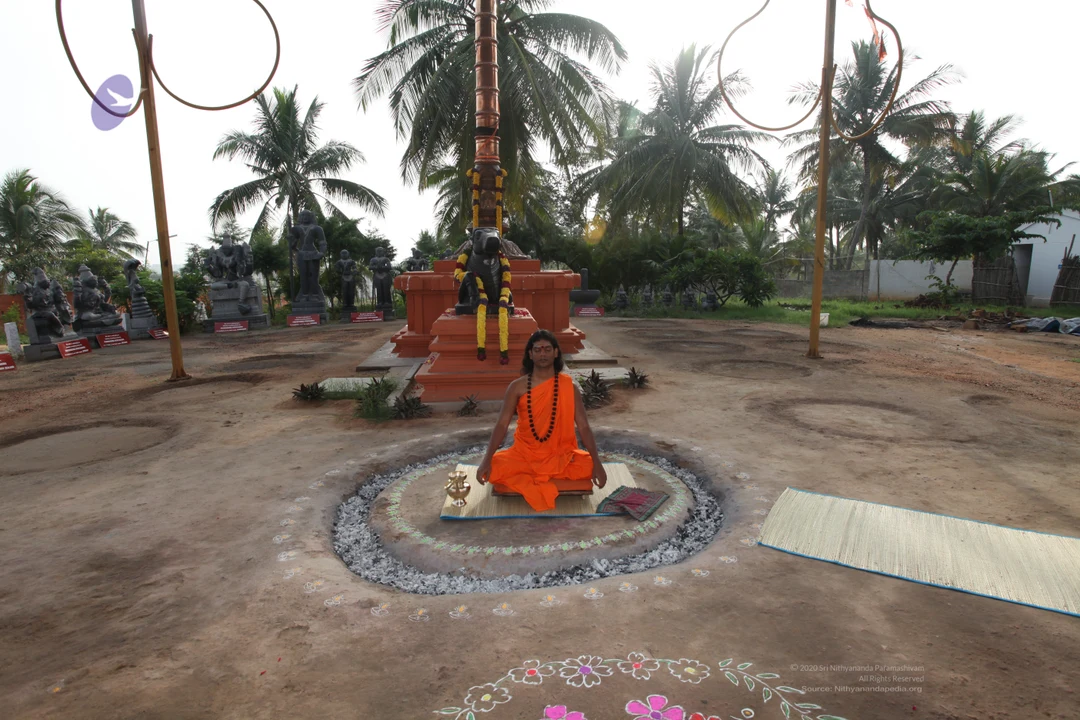
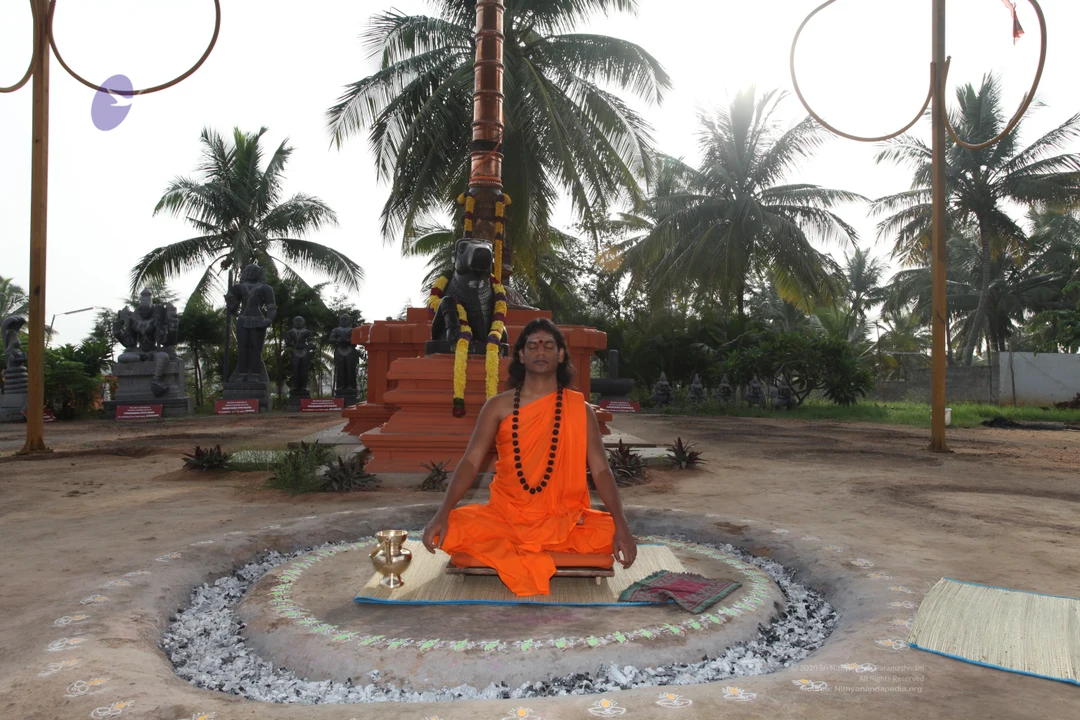
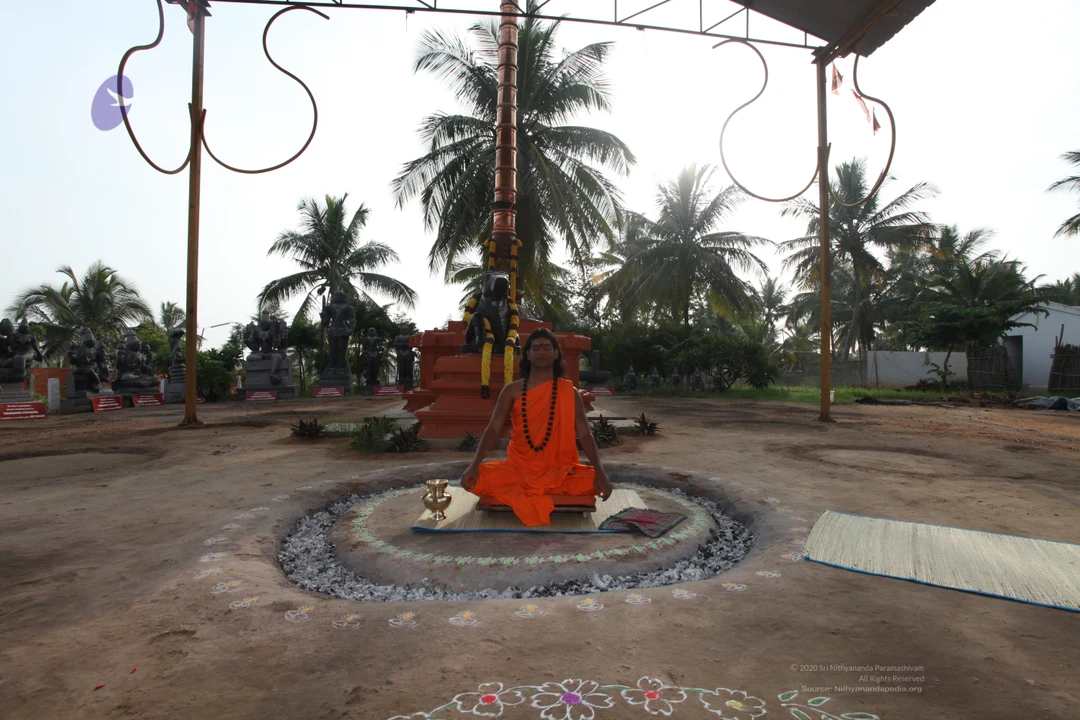
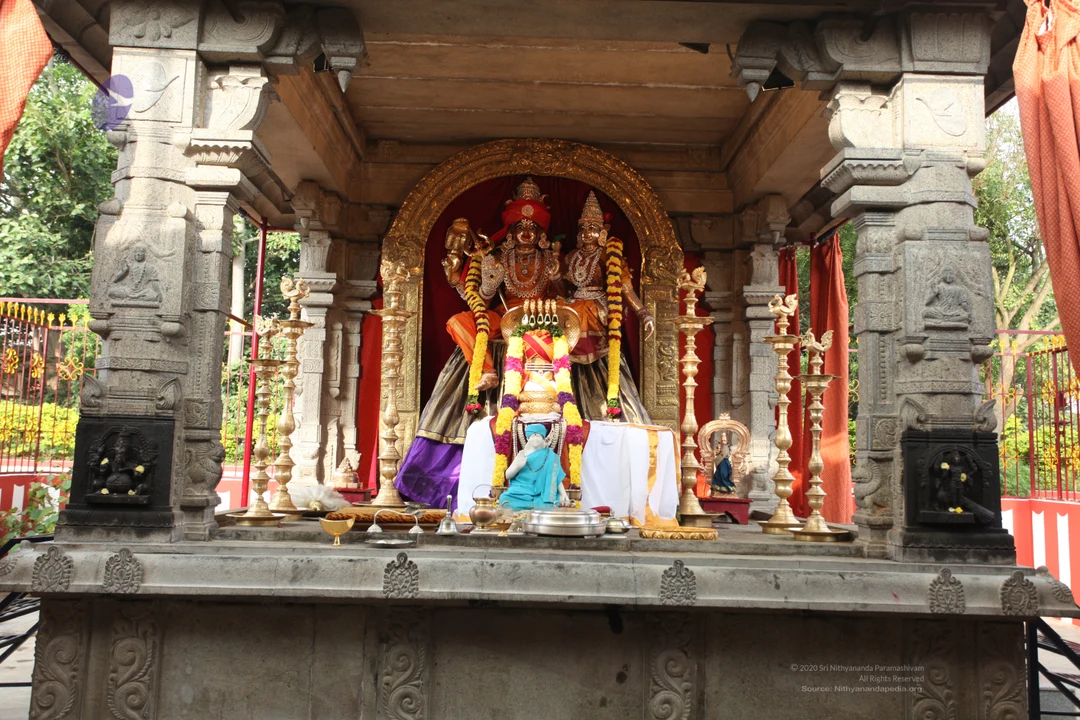
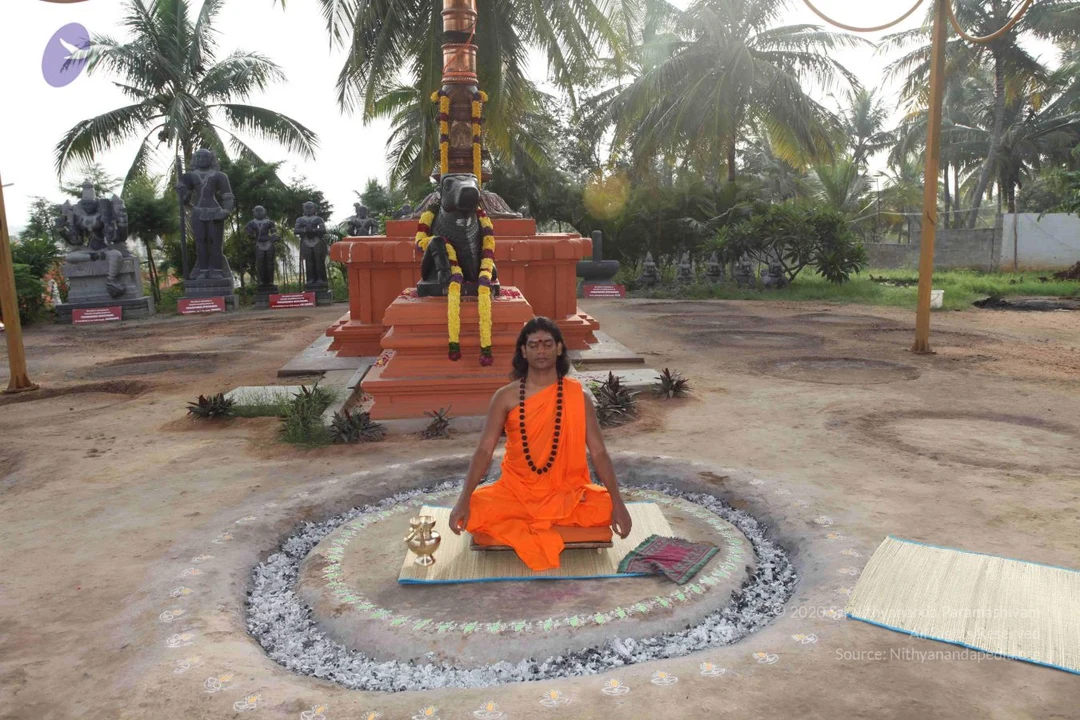
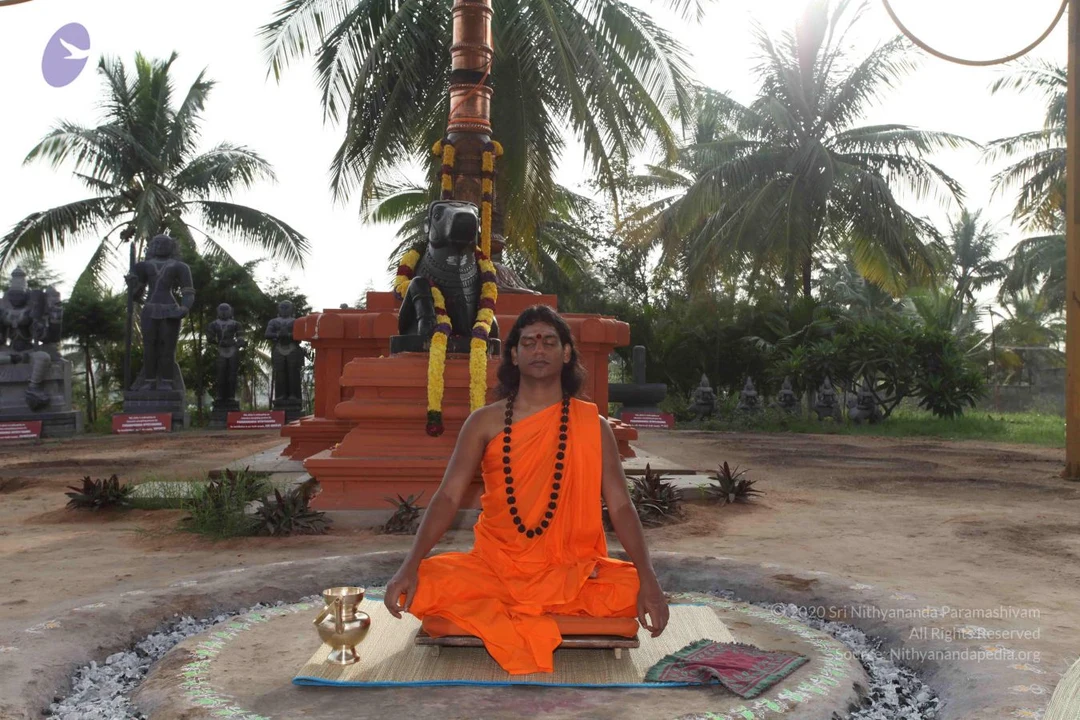
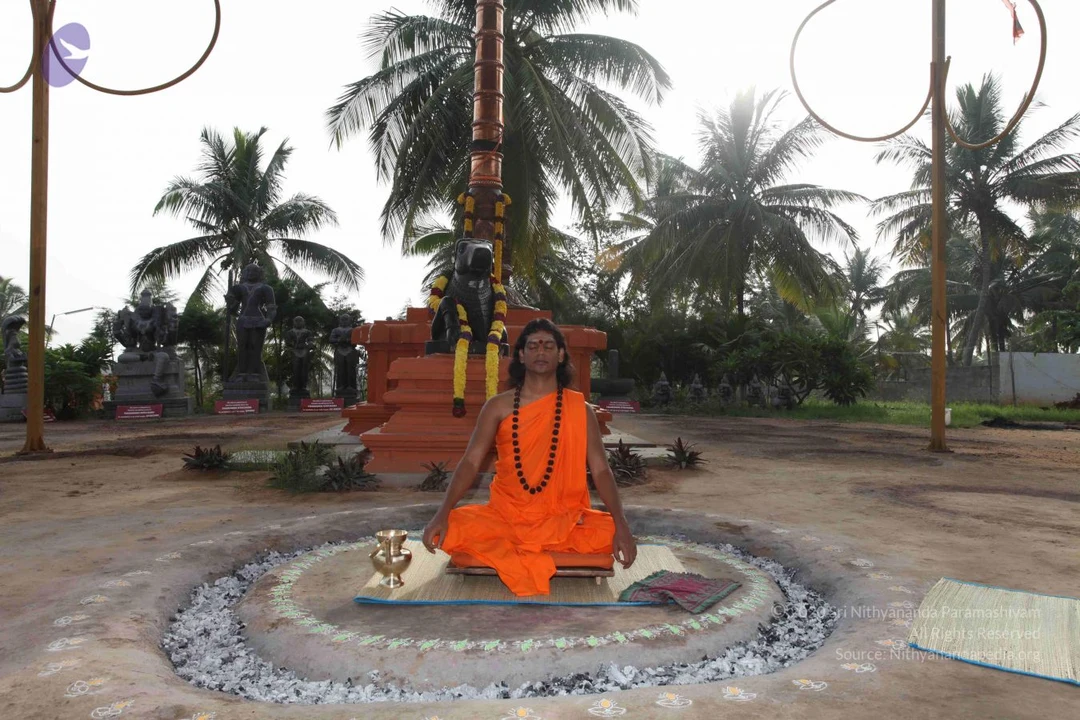
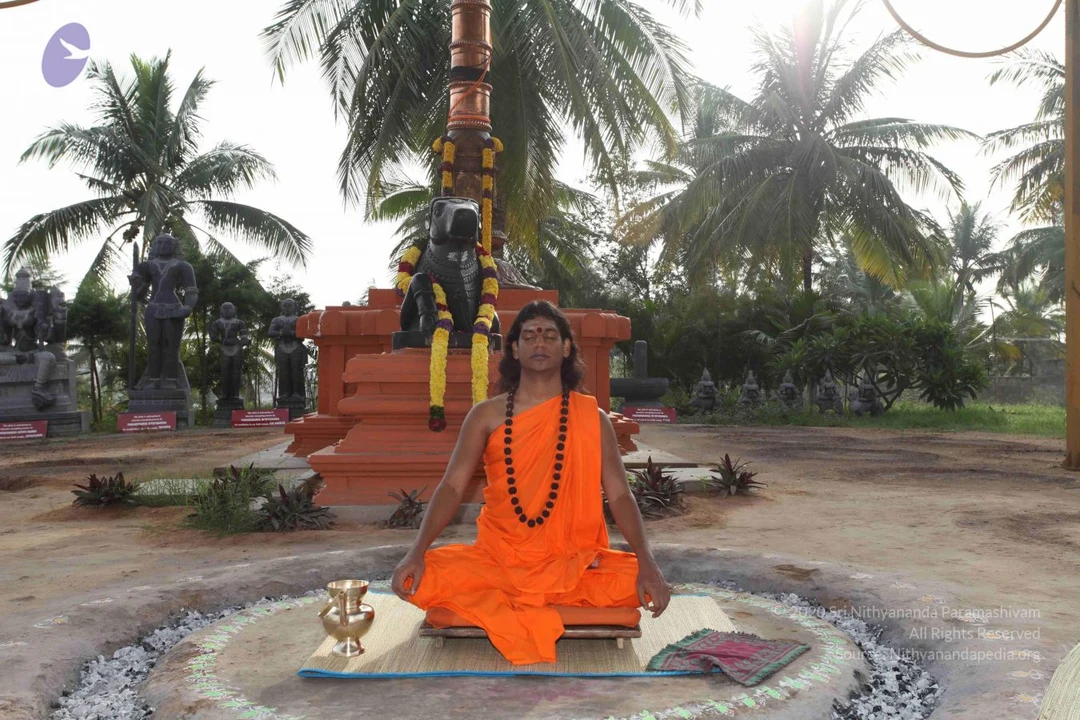
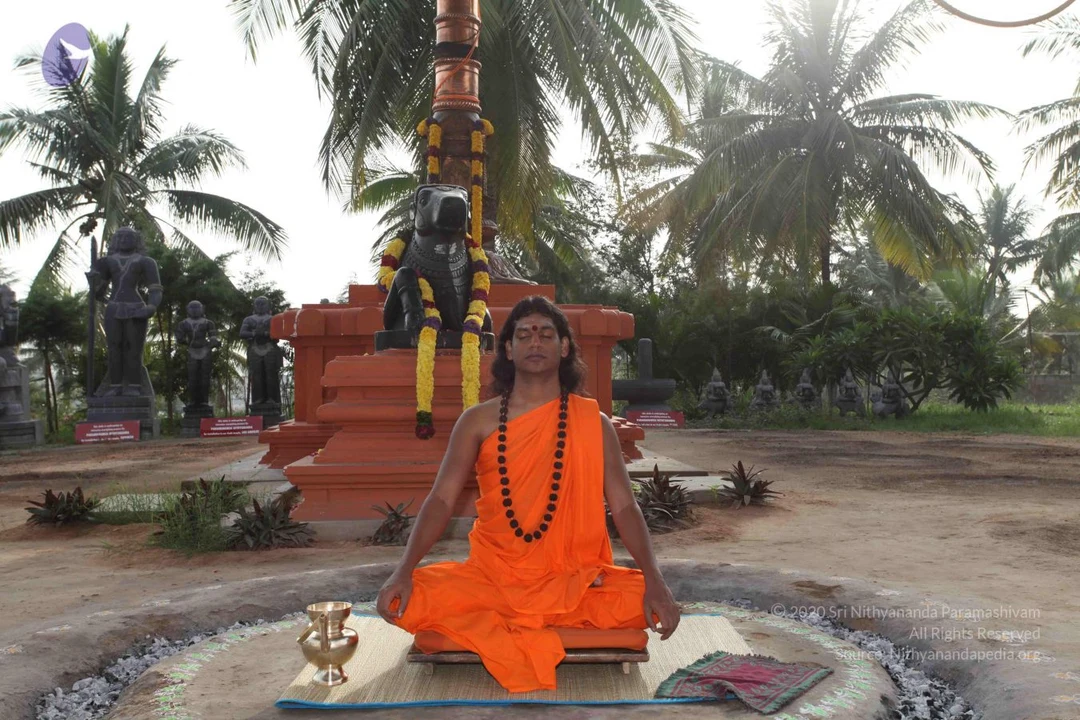
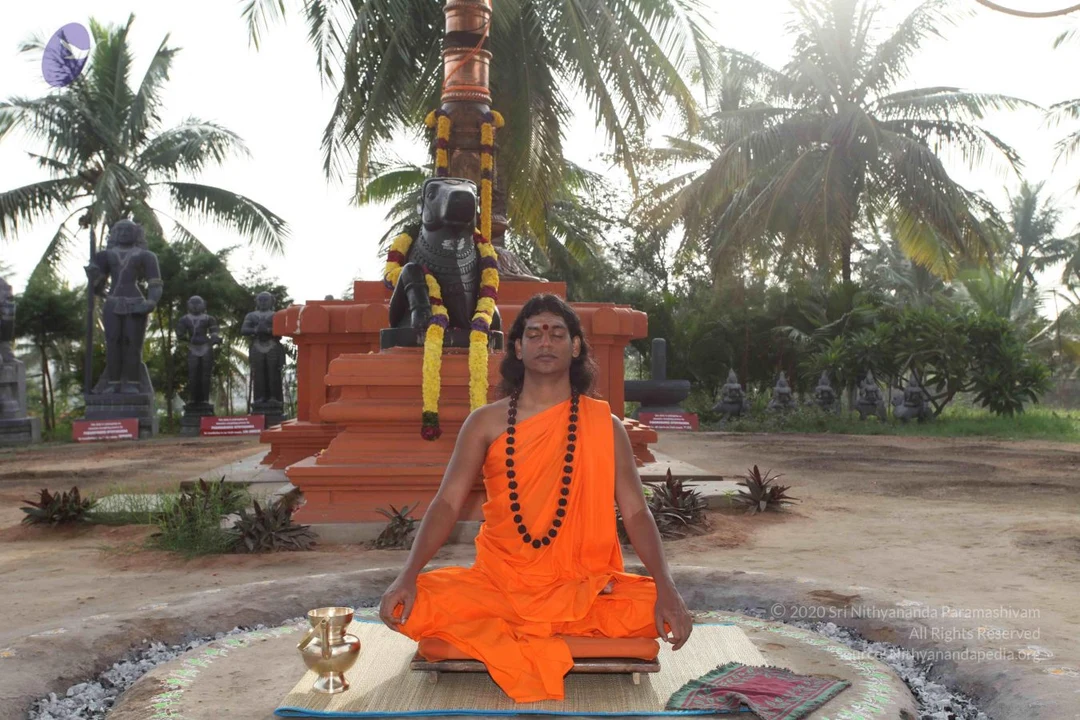
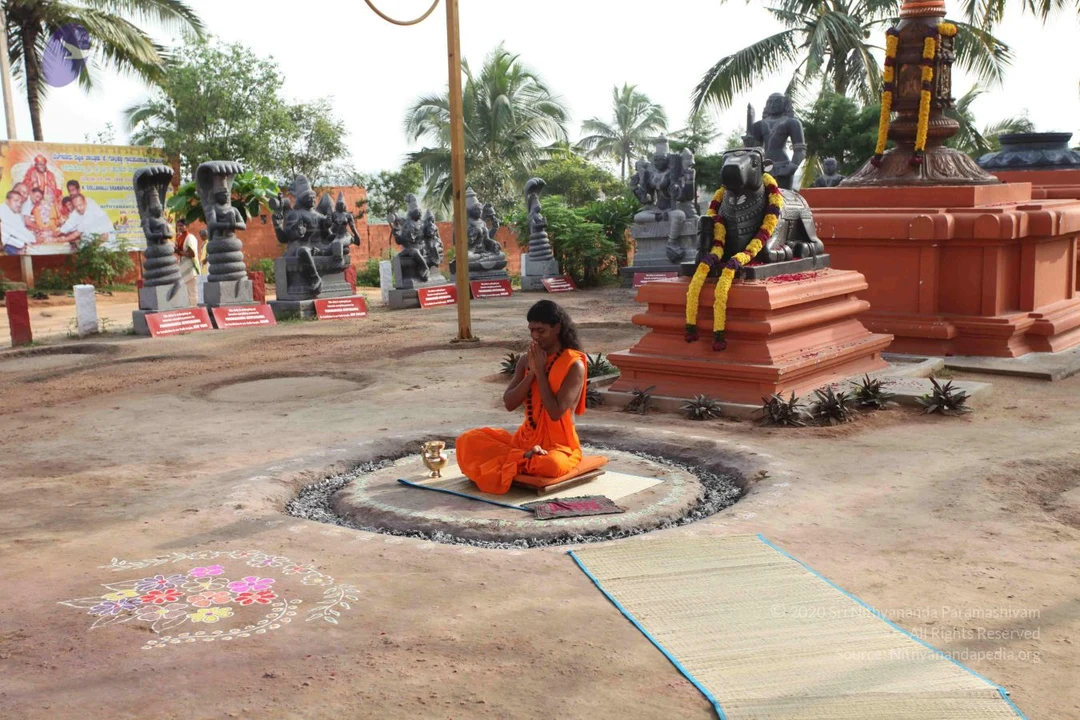
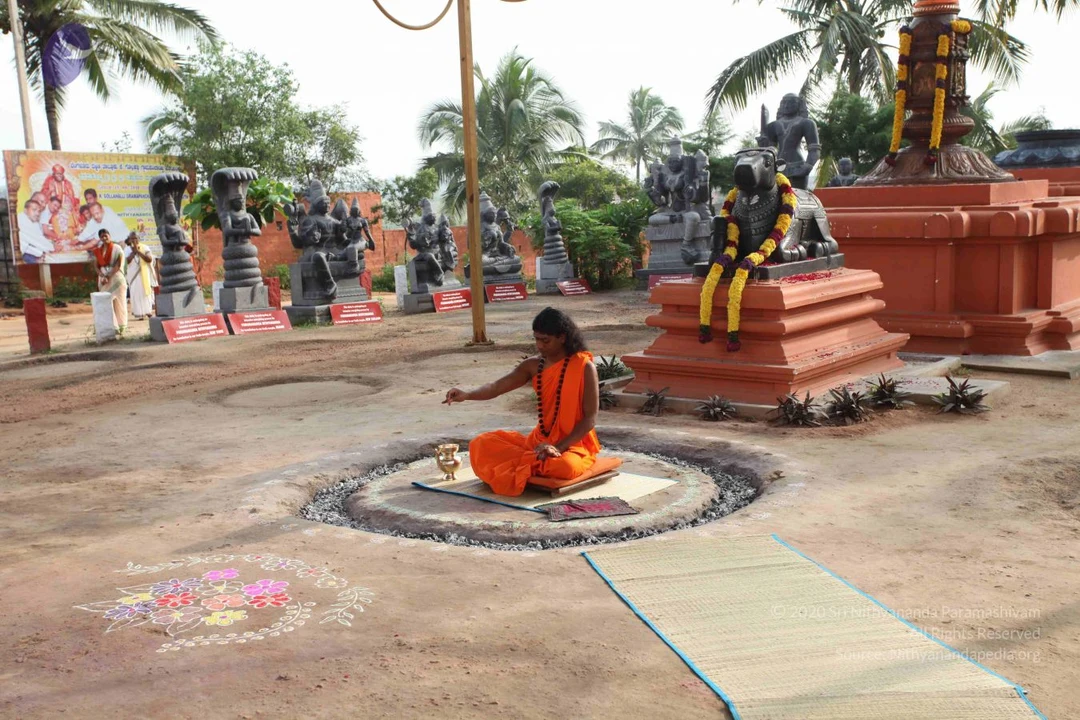
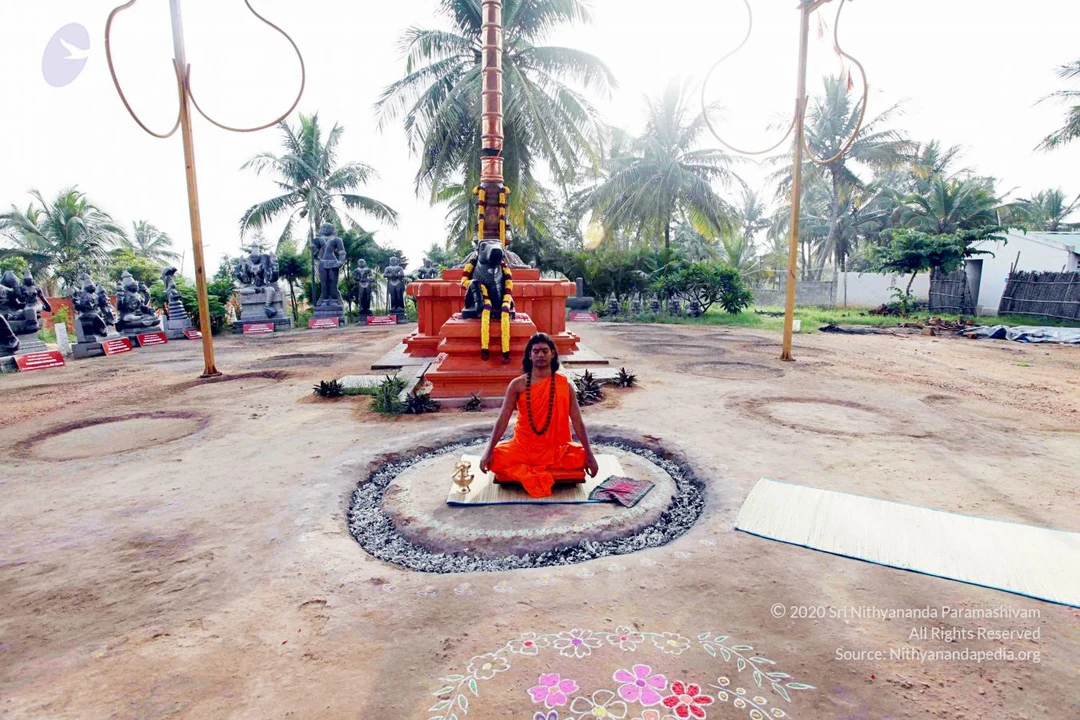
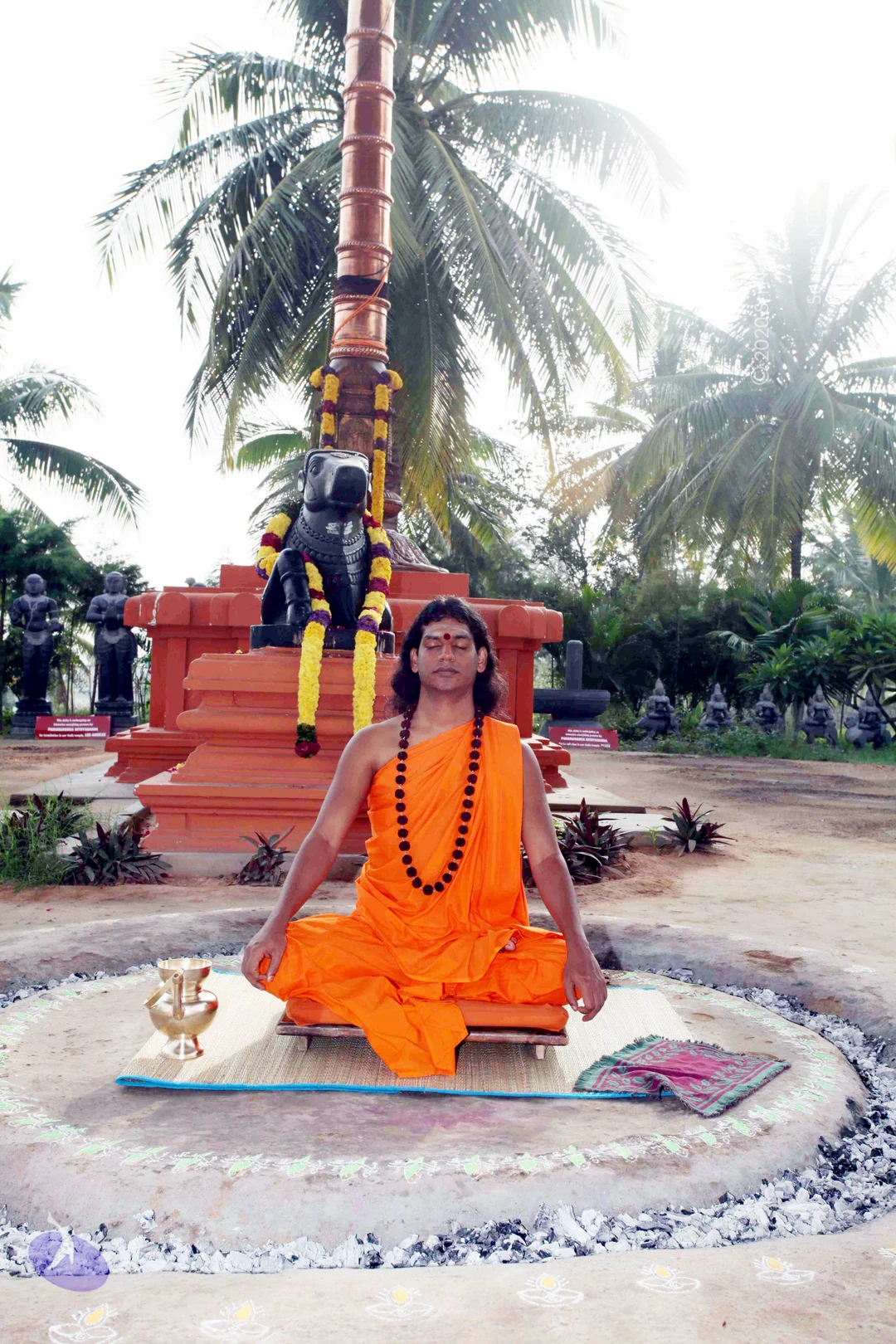
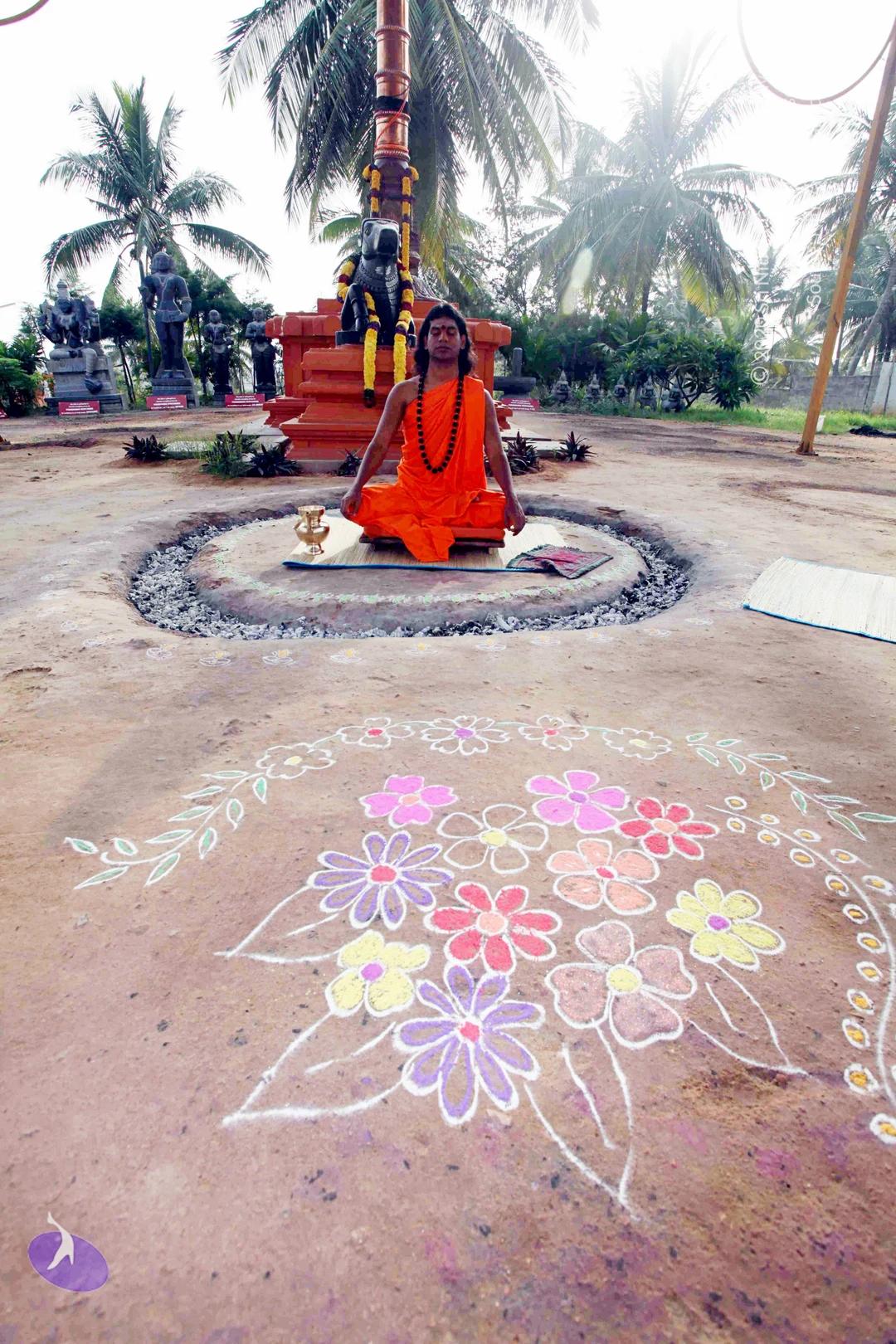
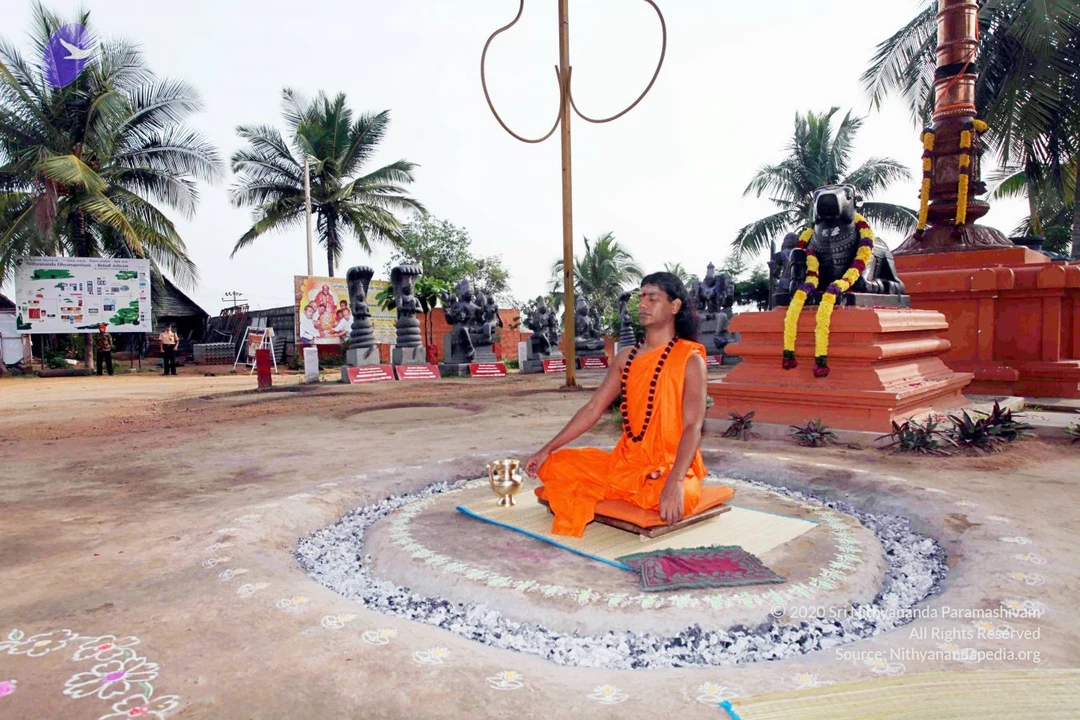
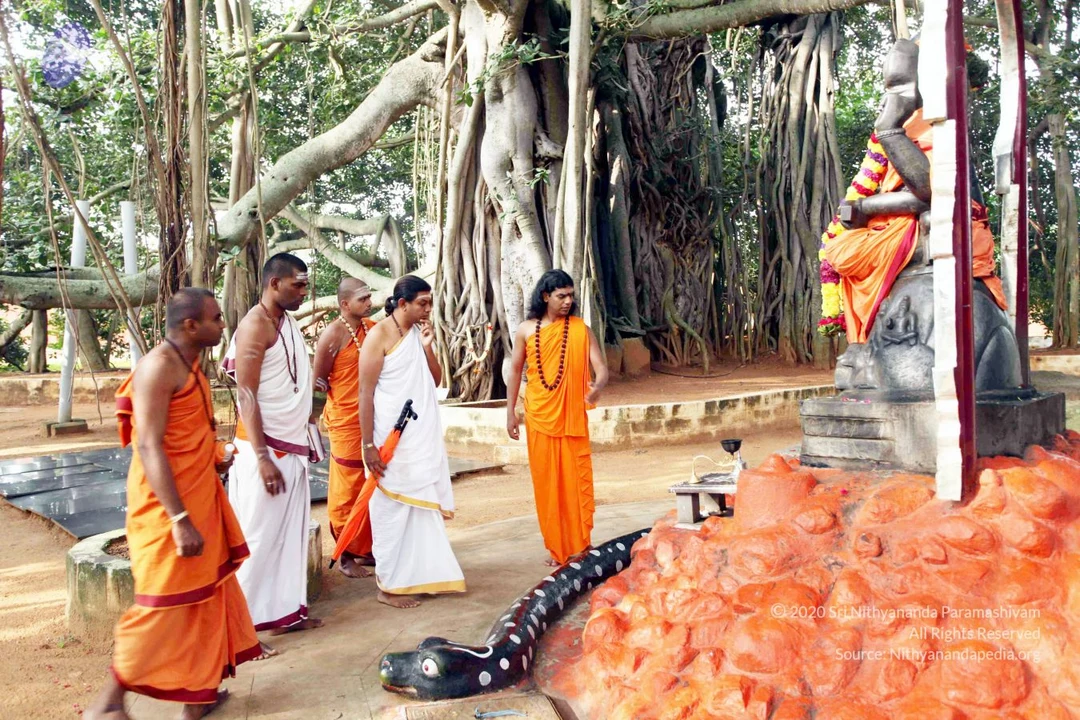
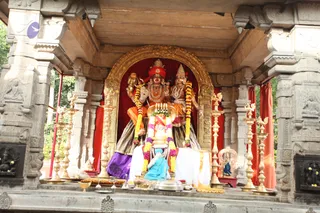
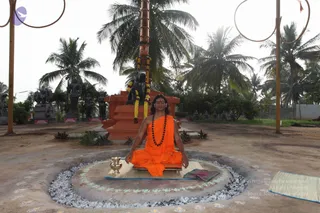
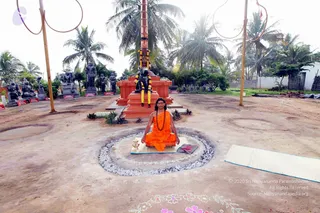
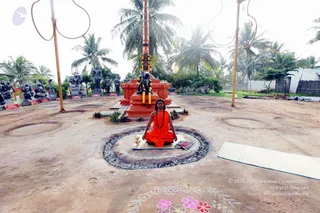
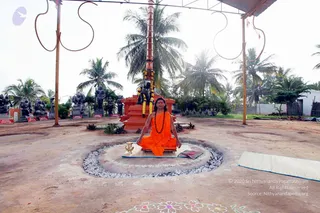
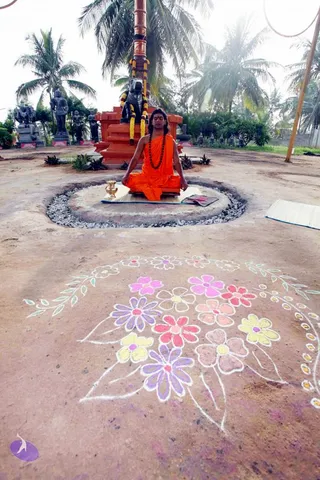
A seated figure in an orange saffron robe and a long rudraksha mala sits cross-legged on a low wooden platform at the center of a circular floor design, with white stones and a decorative border of flowers around the seat. Behind, a tall copper-topped pillar garlanded with yellow and orange flowers rises above a red-brick base and a black stone object, flanked by black stone statues of deities on the left. Tall palm trees and a white wall surround an open dirt courtyard. A floral rangoli sits in the foreground, a brass lamp and a folded cloth rest near the seat, and a woven mat lies to the right. A person in saffron with a rudraksha mala appears, and the appearance-based candidate is a seated figure with long hair in saffron clothing.Outdoor photo of a man seated cross-legged in meditation on a woven mat and a wooden seat, on bare earth. He wears a saffron-orange robe draped over his shoulders and a dark bead rudraksha mala around his neck, with a tilak mark on his forehead. A brass kalasha-style vessel sits beside him on the mat. Behind him stands a large dark Nandi bull statue with yellow and orange marigold garlands on a red-orange pedestal, and a tall wooden pole rises above it. Coconut palms, several black stone deity statues, and small red signboards surround the courtyard, and a shallow ring of white stones frames the seat.A man seated cross-legged with eyes closed in meditation on a low wooden platform over a woven straw mat, wearing a saffron-orange robe, a long rudraksha mala, and a red tilak on his forehead. Behind him stands a large orange pedestal with a black nandi statue draped in yellow and purple marigold garlands, flanked by palm trees and dark stone deity sculptures. A brass kalasha or lota sits beside him, and a small folded cloth lies on the mat. A circular bed of ash or burnt offering surrounds the platform on bare ground in an outdoor temple garden. Red signboards are visible among the statues.A man in an orange saffron robe sits cross-legged in meditation with eyes closed on a raised platform inside a circular bed of white ash or stones, with a brass kalasha-style vessel placed before him. He wears a long black rudraksha mala and a red tilak on his forehead, and his long hair falls past his shoulders. Behind him stands a tall orange-painted pillar garlanded with yellow and orange flowers, flanked by a black stone nandi bull and dark stone deity murtis. Coconut palms and garden plants surround the open courtyard, with small flower-patterned rangoli dots on the ground.A photograph of a seated man in an orange saffron robe with a long rudraksha mala around his neck, sitting cross-legged in meditation on a raised square platform with a mat and a small brass vessel beside him. The platform sits within a circular bed of grey ash or stones surrounded by a decorated rangoli border of flowers and colours. Behind him a tall copper pole hangs with yellow and orange flower garlands near a red brick base, and rows of black stone deity statues stand in the background among palm trees under a bare sky. A woven mat lies on the ground to the right.Photograph of an ornate stone temple shrine with a golden arched frame and red drapes behind two large painted deity murtis, one holding a trident-like staff and wearing a red headband and garlands, the other seated beside in a crown and purple-and-orange cloth. Marigold and rose garlands hang from the figures, a white cloth covers a central pedestal with a kalasha-like vessel, and tall brass oil lamps and a brass vessel stand in front. Carved stone pillars frame the shrine with a green garden behind. No physical people are visible.

Paadapooja
10 photosSource gallery
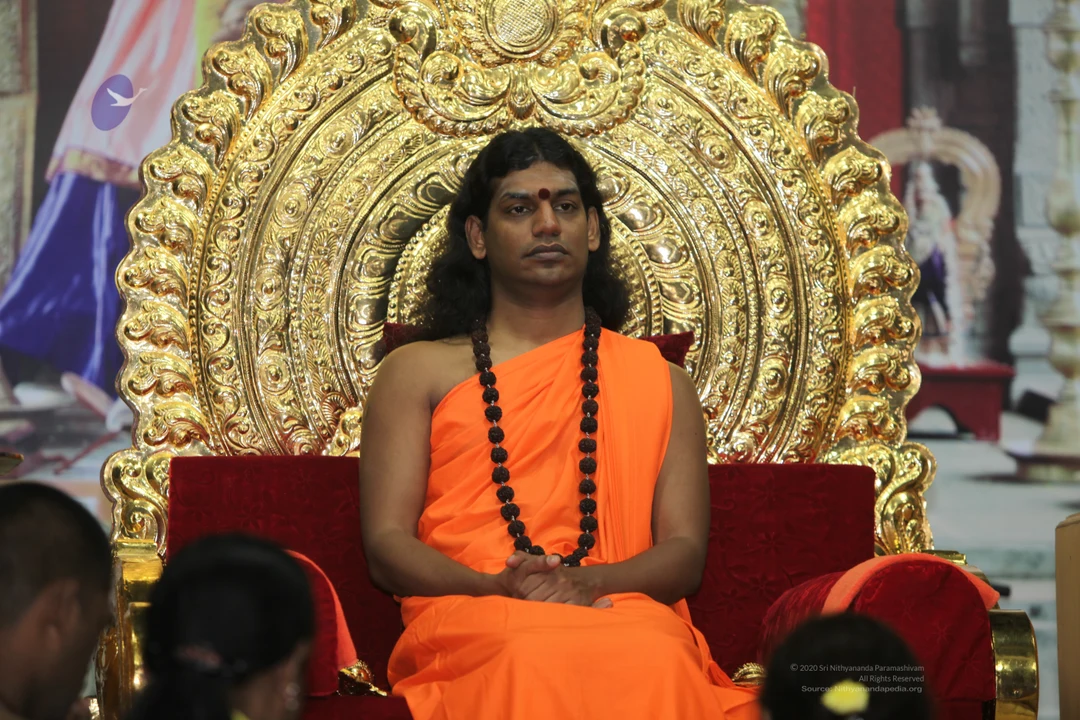
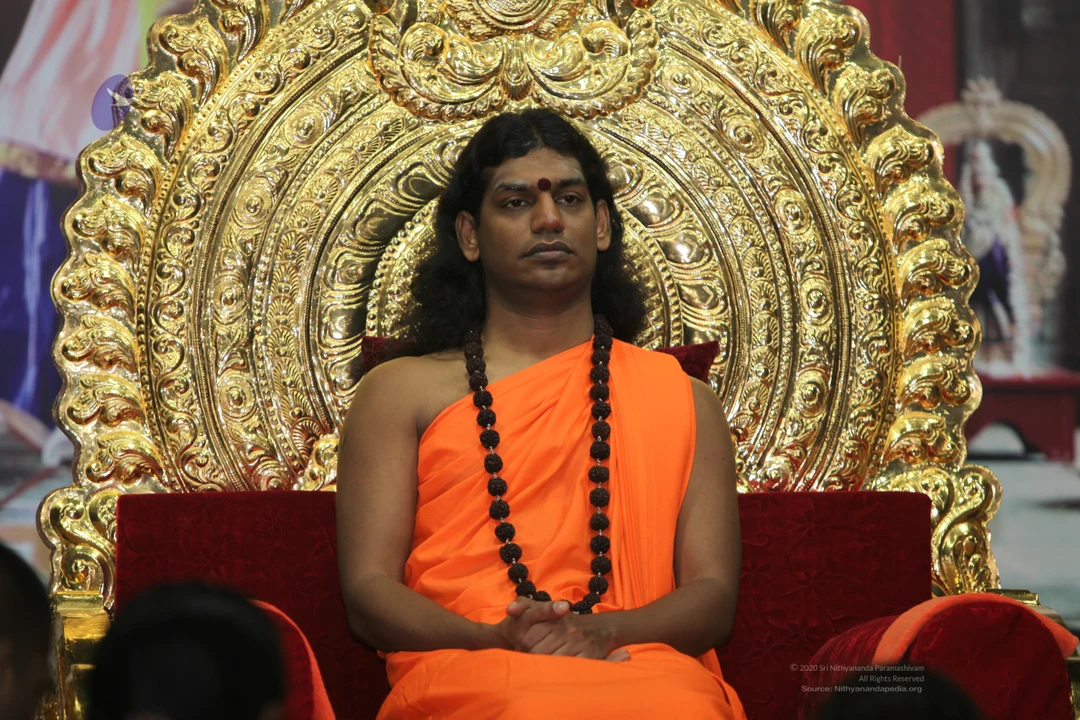
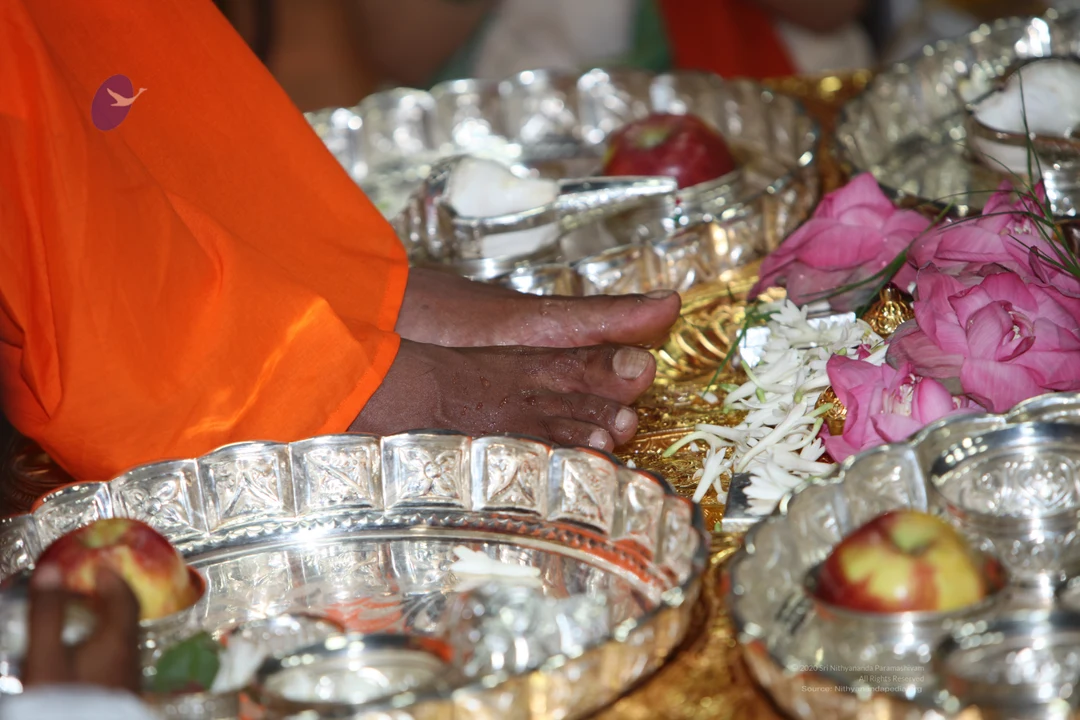
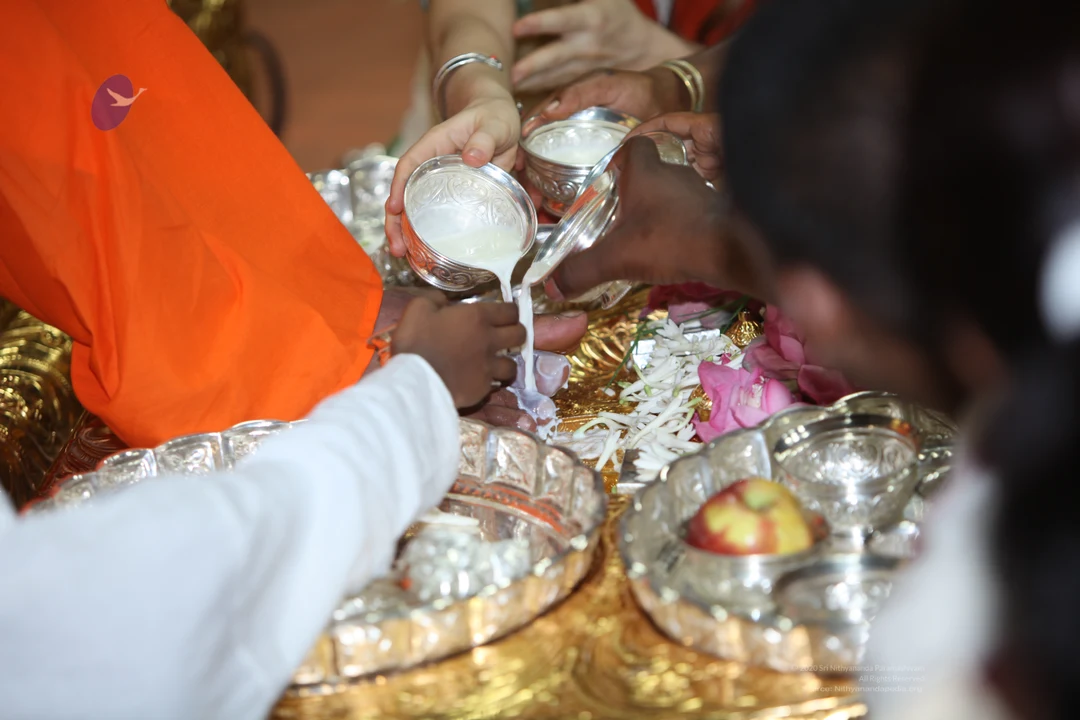
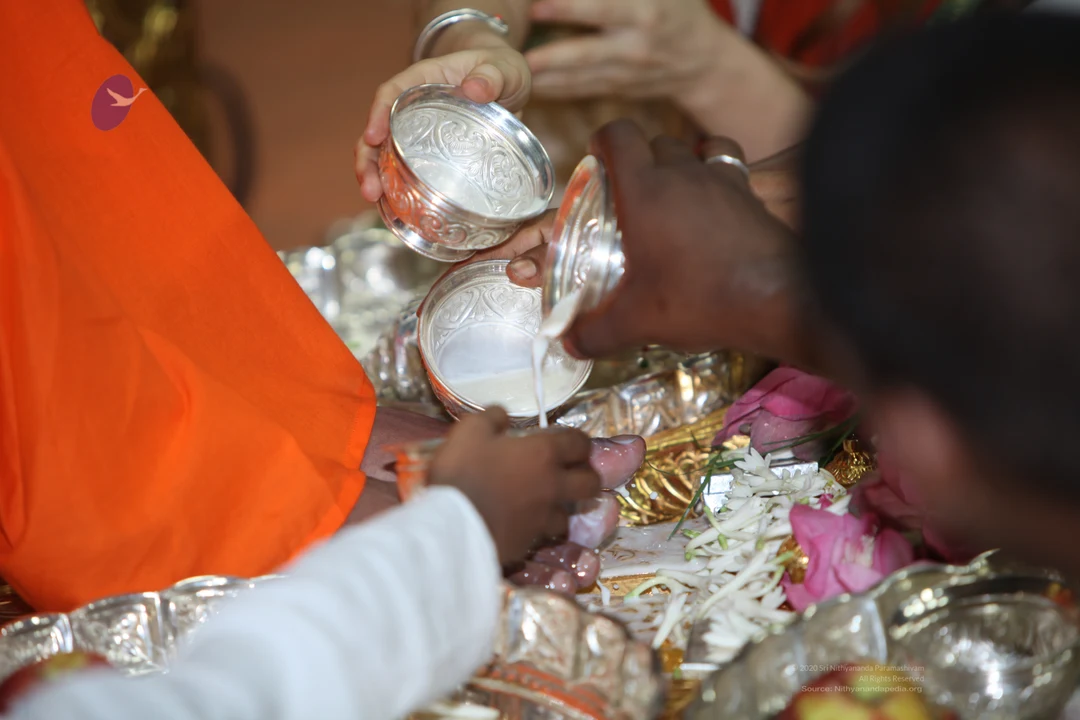
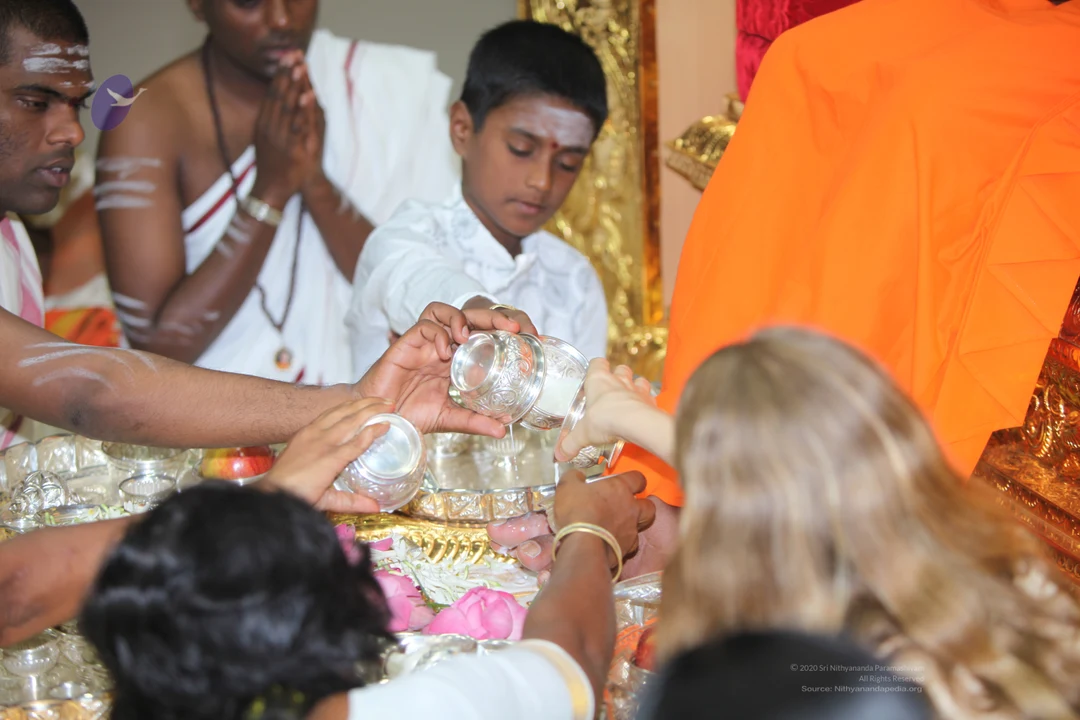
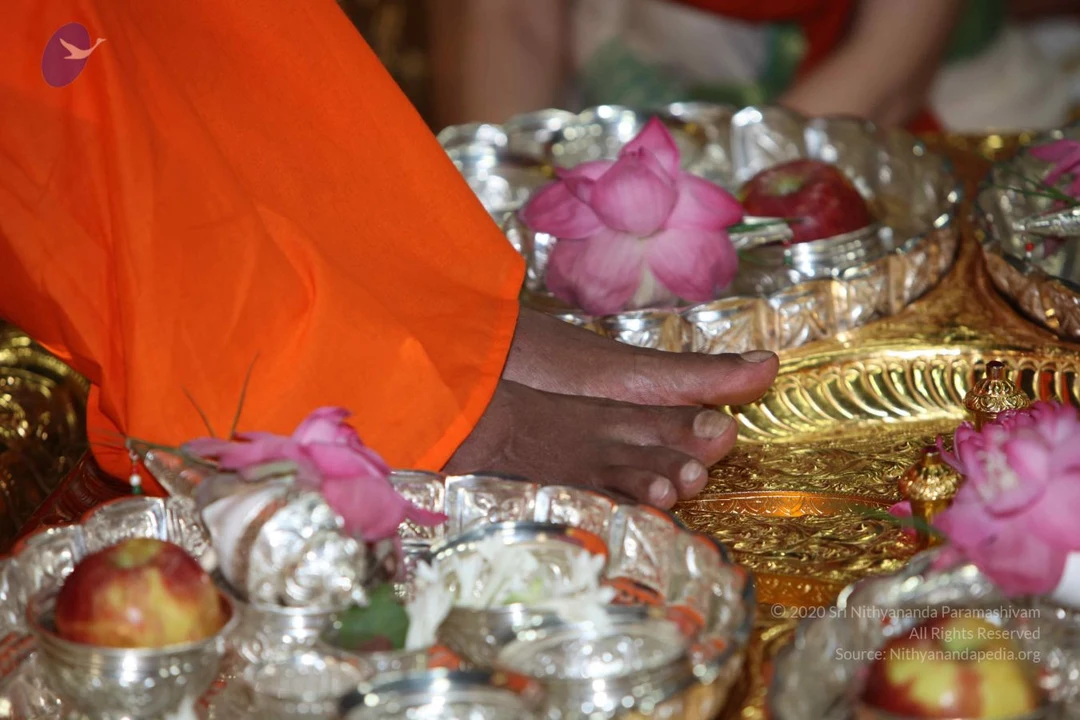
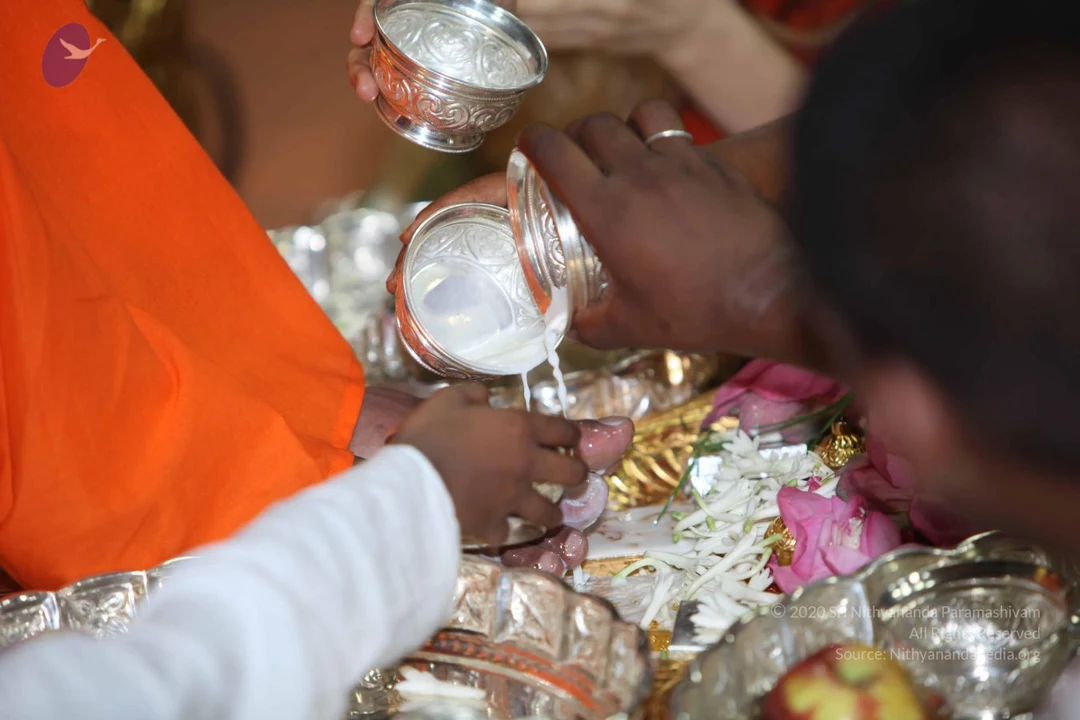
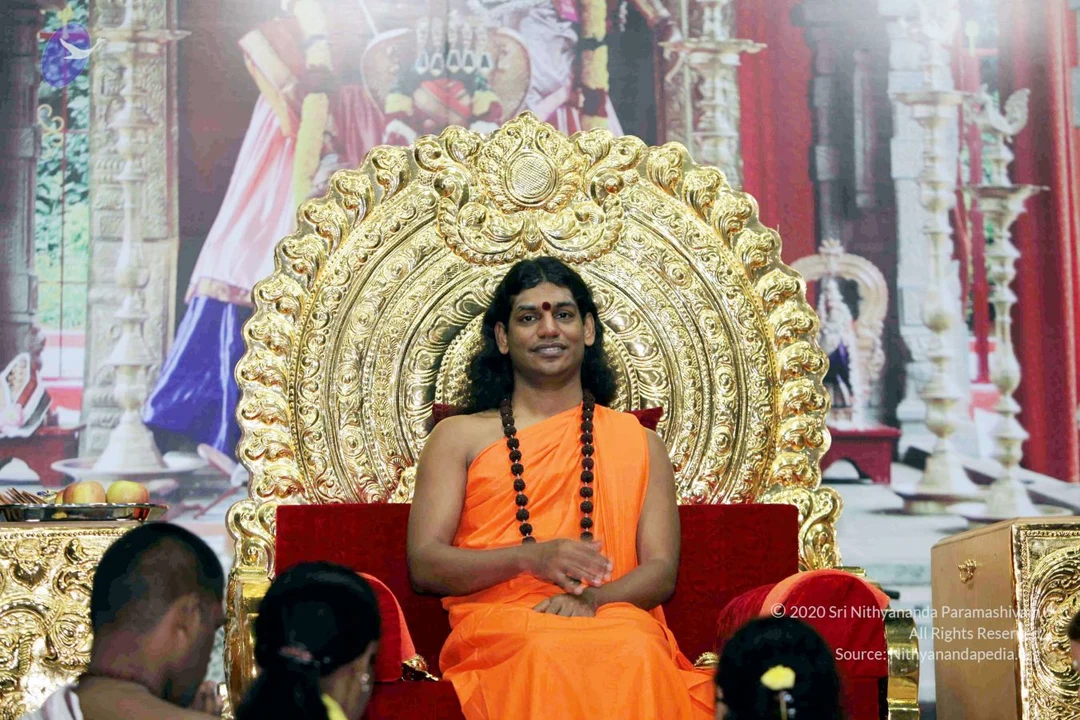
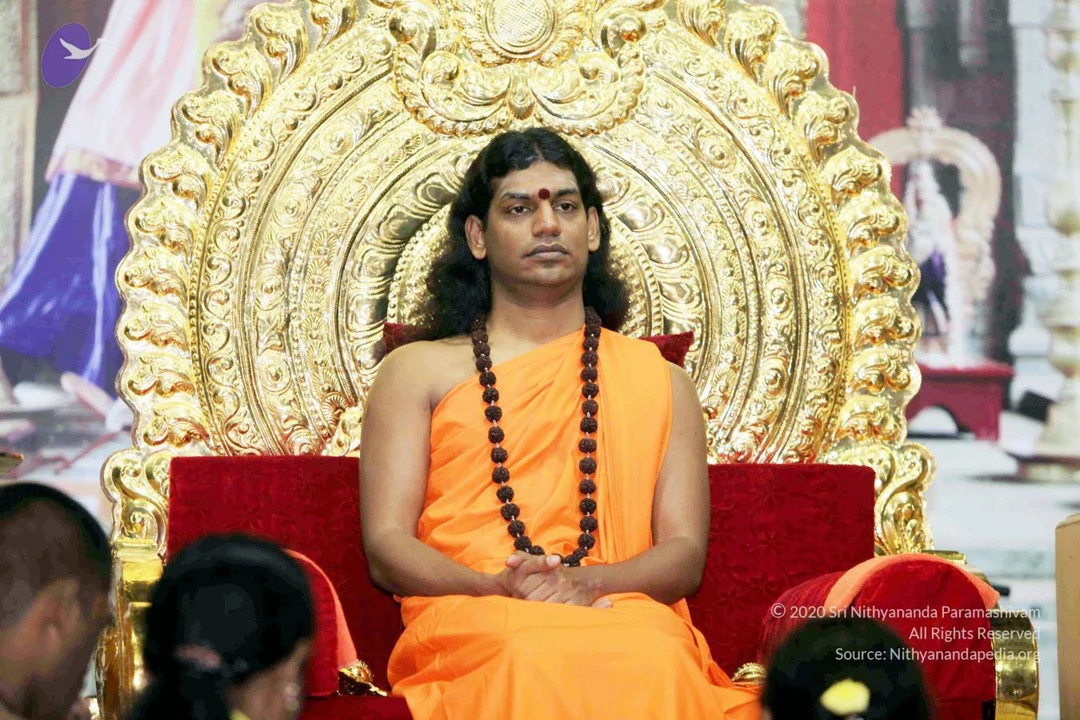
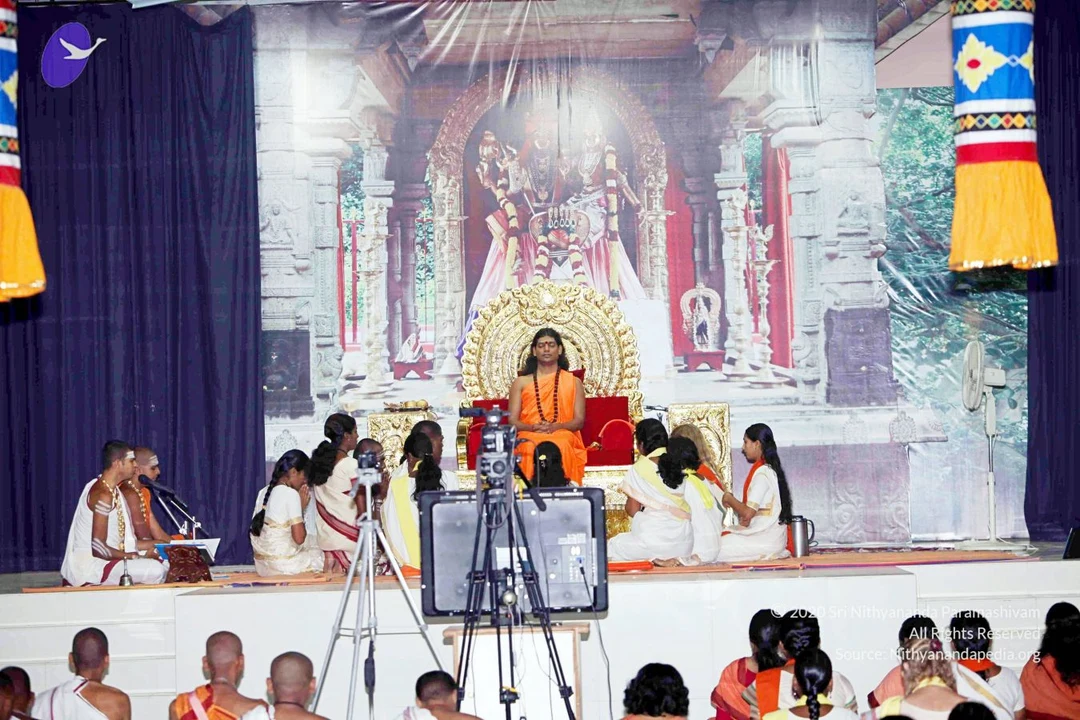
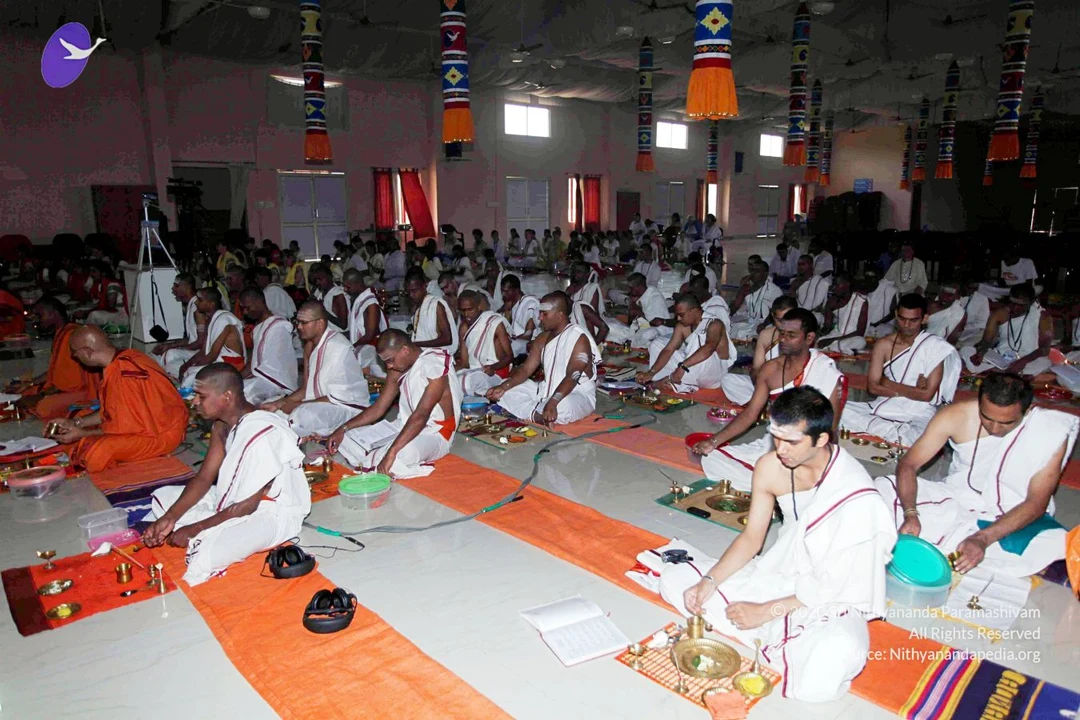
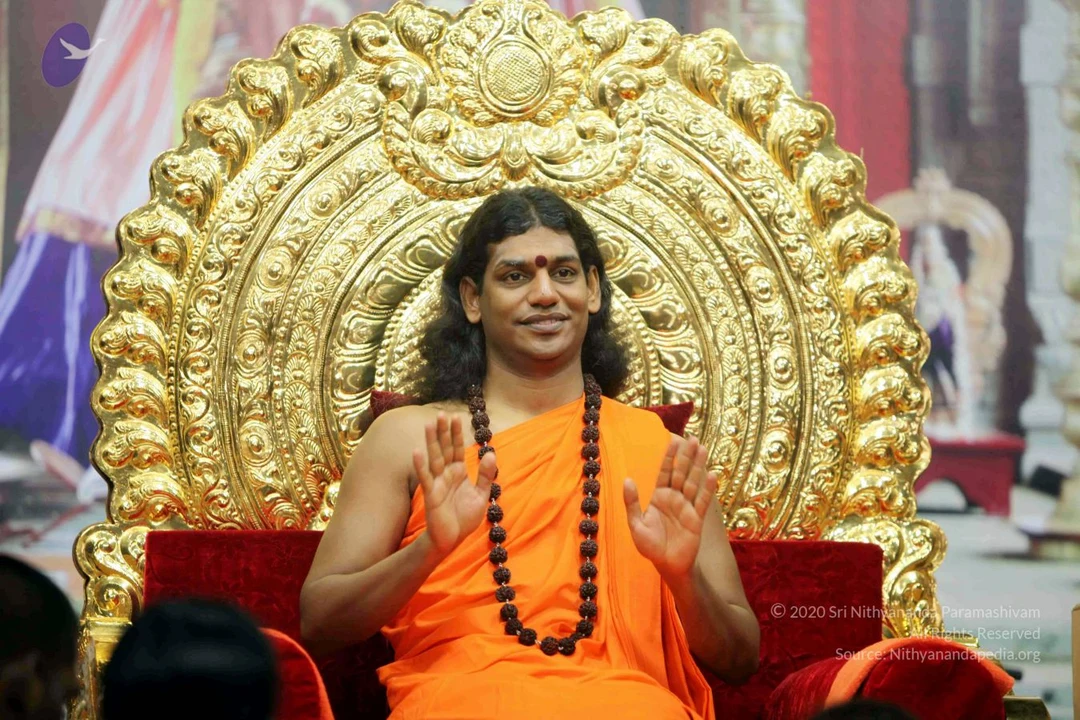
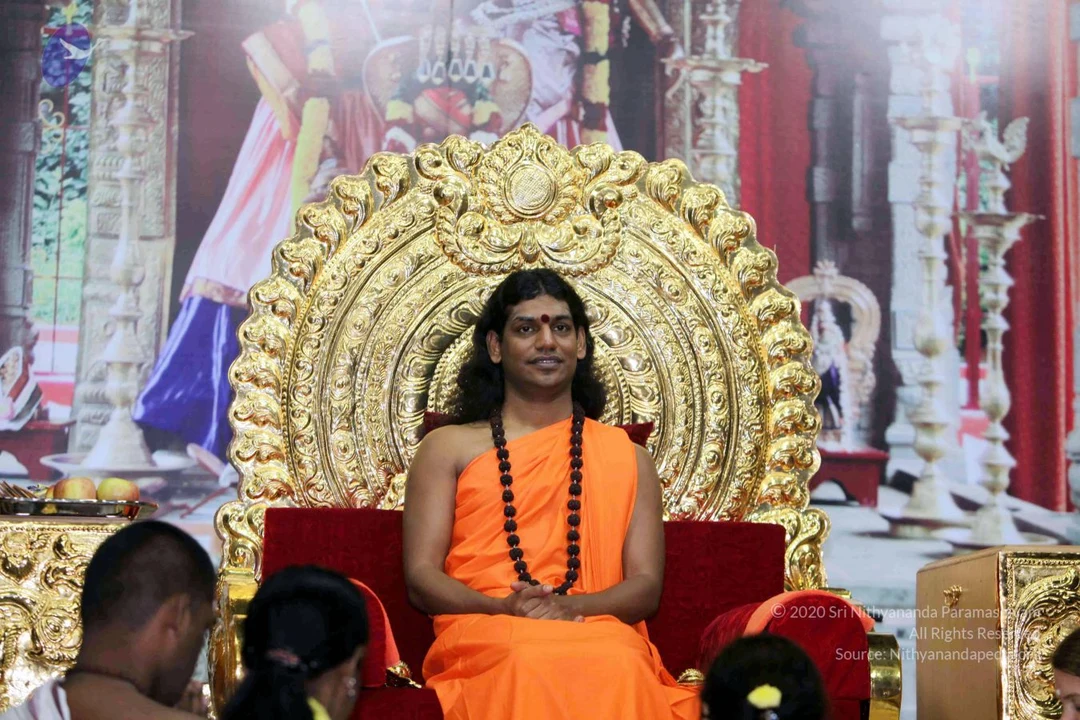
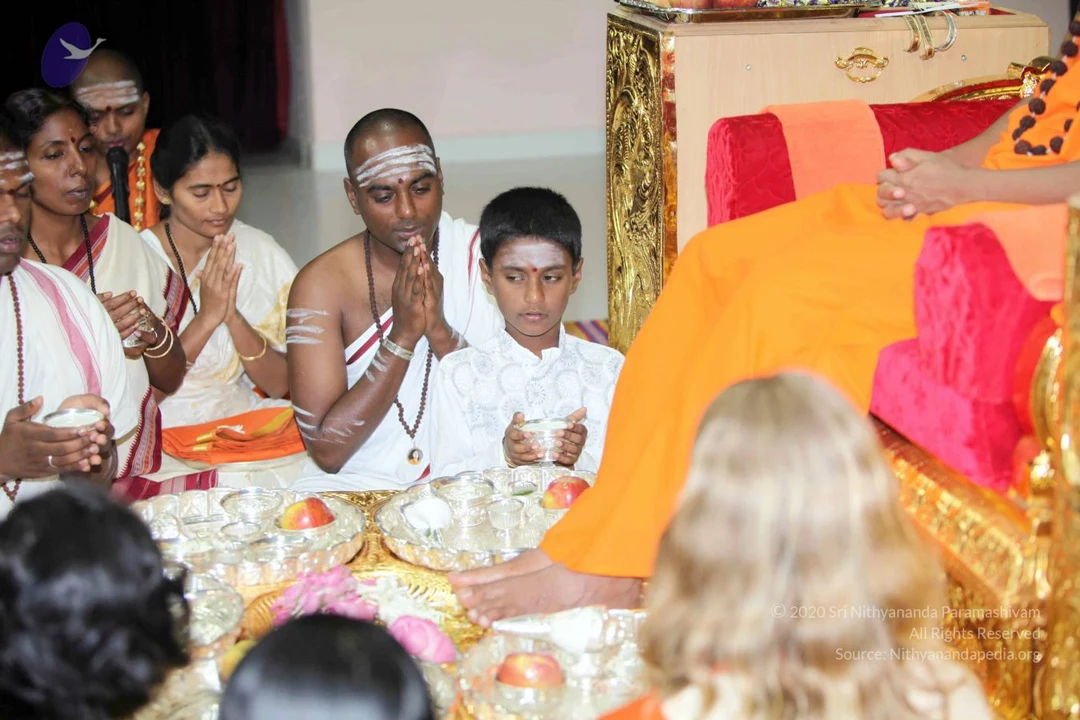
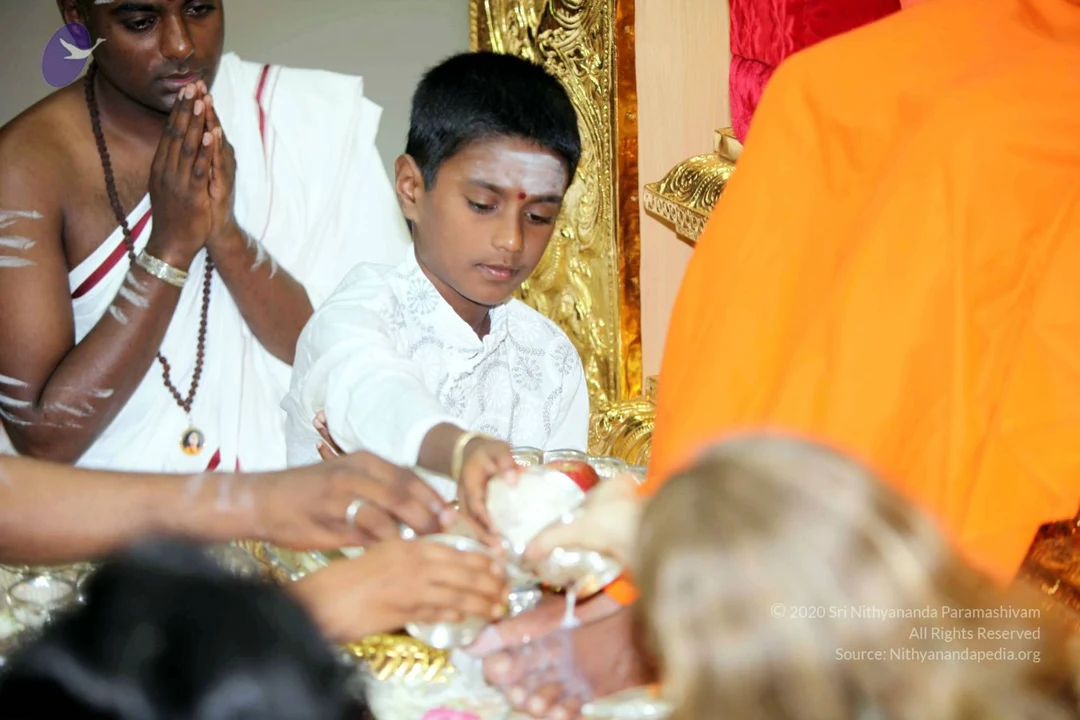
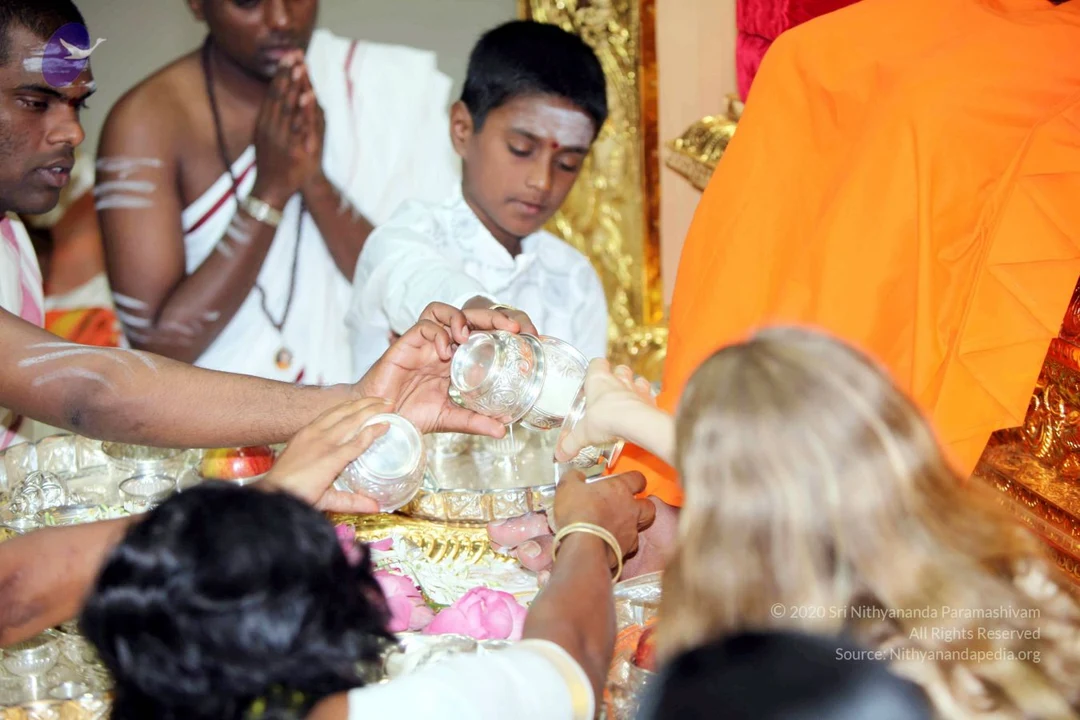
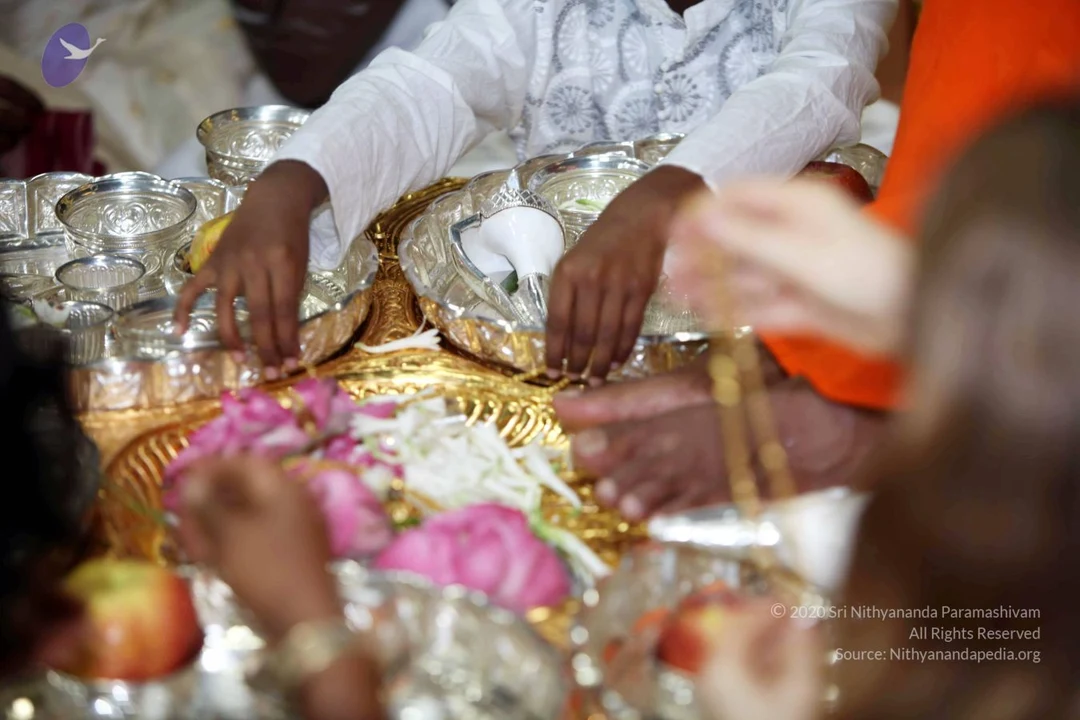
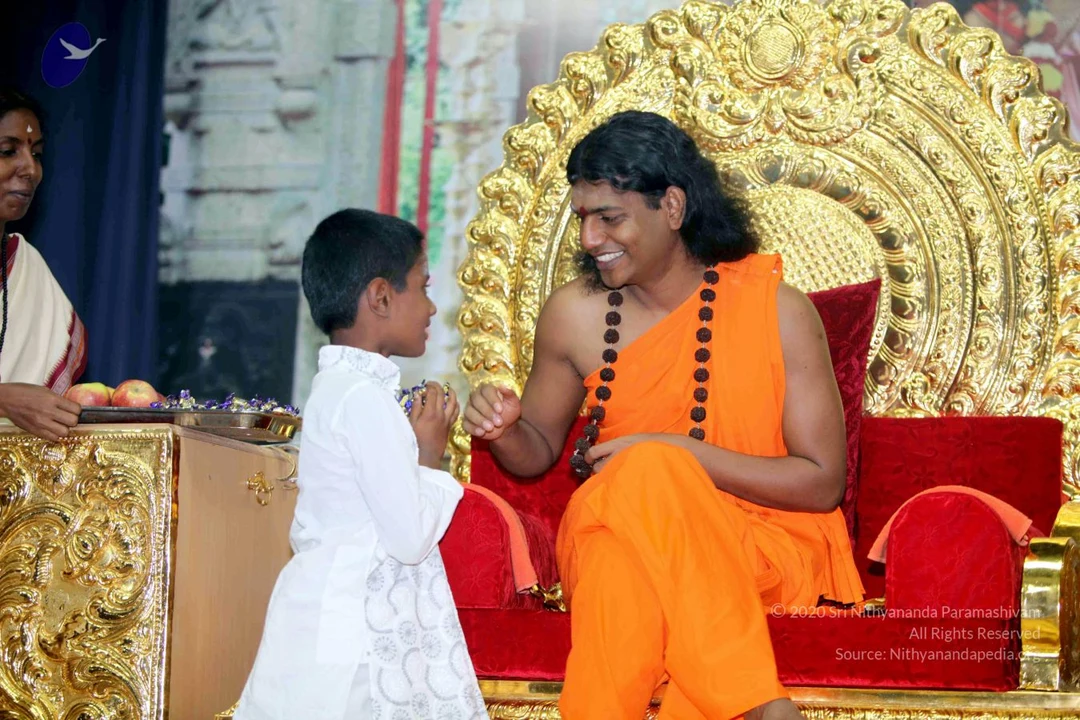
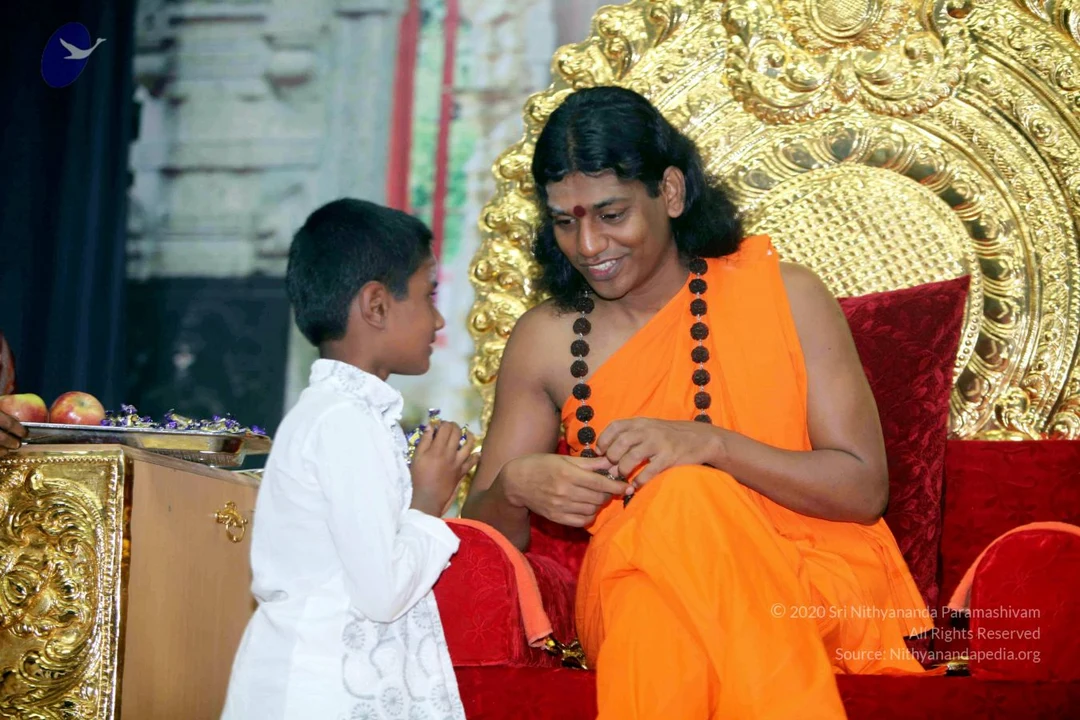
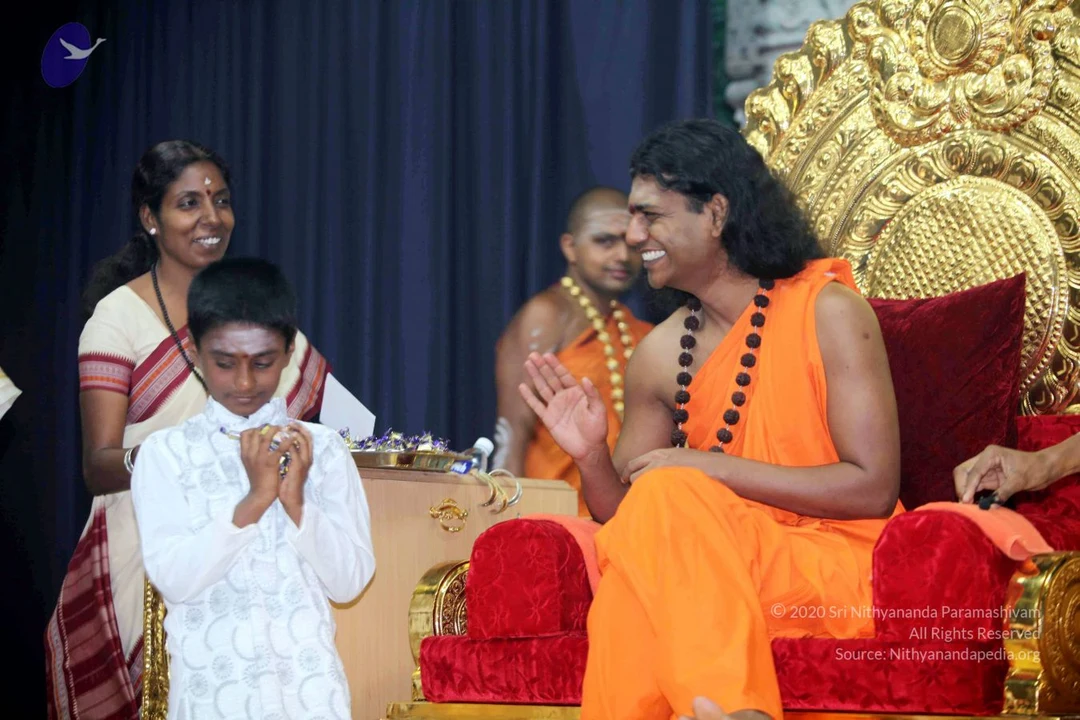
A seated man in an orange saffron robe with long dark hair and a red bindi sits on an ornate golden throne with red cushions, hands folded in his lap, rudraksha mala beads around his neck. Two people's heads are partially visible in the lower foreground, and a golden backdrop with painted figures stands behind him. Swamiji (probable): long swept-back hair, saffron robe and rudraksha mala on a golden throne.A man seated on an ornate gold throne with a deep red cushioned seat and red velvet armrest. He wears an orange saffron shawl draped over his shoulder, leaving the upper chest bare, and a long dark rudraksha mala hangs to his waist. He has long dark hair, a red tilak on his forehead, and his hands rest folded in his lap. Behind him a gold arched backdrop is partly visible, with a deity mural at the right edge. Two blurred heads of seated audience members appear at the bottom edge of the frame.A man with long dark hair, wearing a saffron-orange robe and a dark rudraksha mala, sits on an ornate gold throne with red velvet cushions, hands folded in his lap, with a red bindi on his forehead. Behind him a large backdrop shows a deity image draped in pink and red cloth with yellow garlands. Partial heads of seated devotees are visible in the foreground, and a small brass or gold stand sits at the lower right edge. Swamiji (probable): long swept-back hair, saffron robe and rudraksha mala, seated on the throne as the speaker.Close photo of an abhishekam being performed on a deity's feet with milk. Two ornate silver bowls are tilted, pouring white milk over a silver-and-gold base. A figure in orange robes sits at left, their hand resting near the offering. Another person's hands in silver bangles pour from a bowl at top right, and a child's hand in a white sleeve reaches in at lower left. White jasmine-like flowers and pink roses lie scattered on the silver tray.A photograph of a temple ritual in which a young boy in white clothes with a white forehead marking pours liquid from a silver cup into a large silver vessel. Several hands reach toward the silver vessels and pink flower petals on a brass tray. Behind the boy, a man in white dhoti with a red-striped cloth and a rudraksha mala stands with palms joined in prayer, and a man on the left has white sacred markings on his arms. At right, a figure in a flowing orange-saffron robe sits near a gold-framed shrine with an ornate golden deity murti.

Morning-Satsang
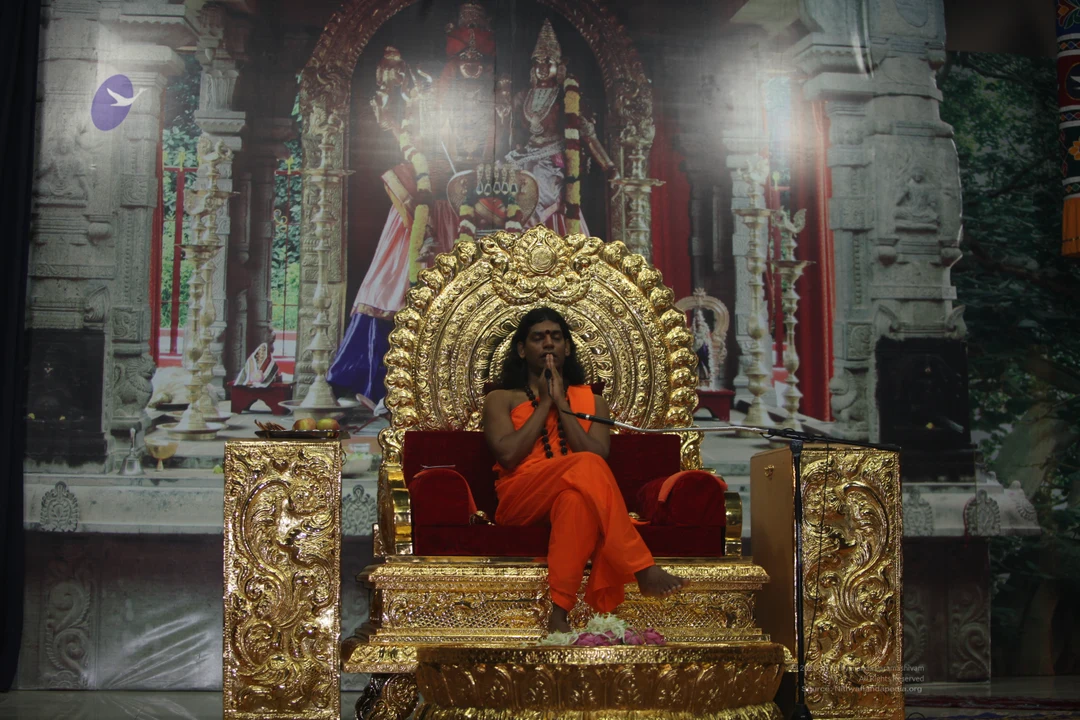
1 photoSource gallery
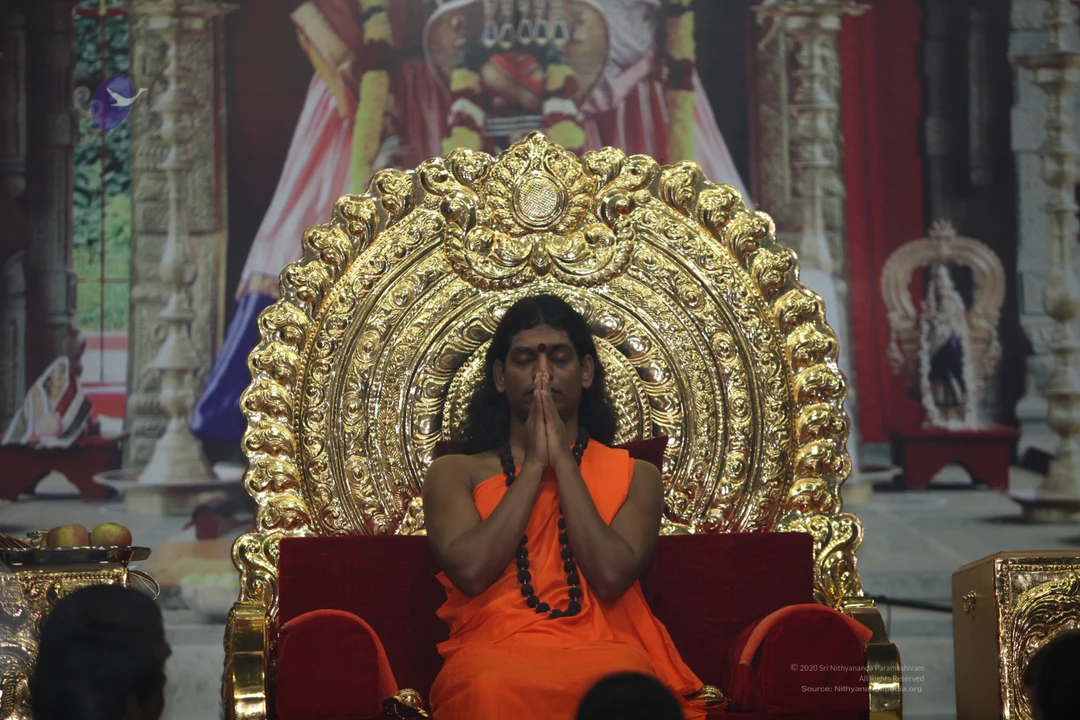
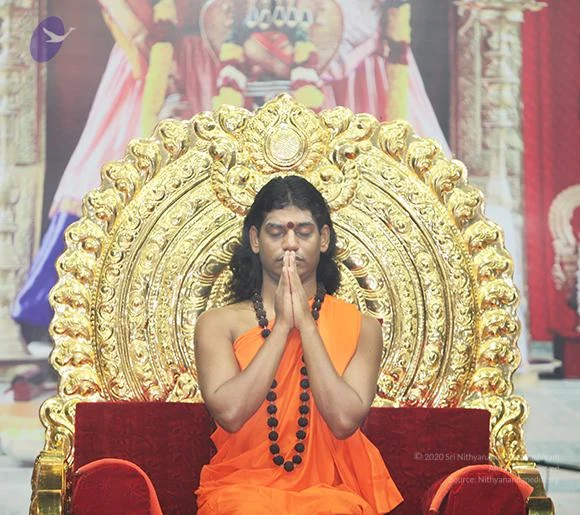
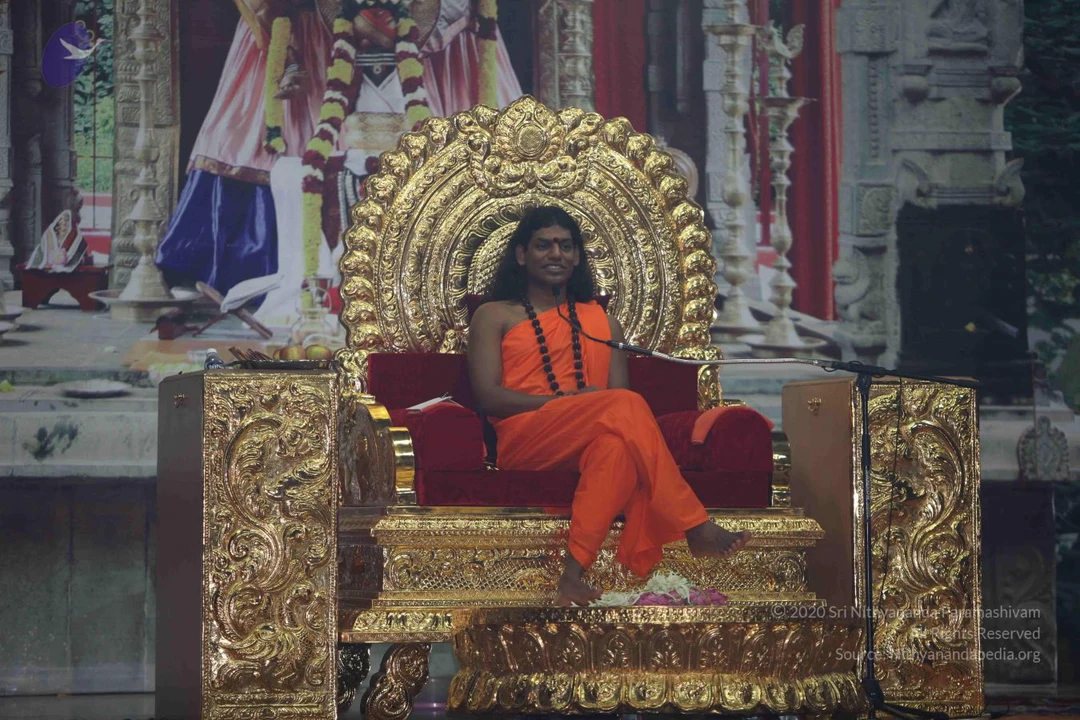
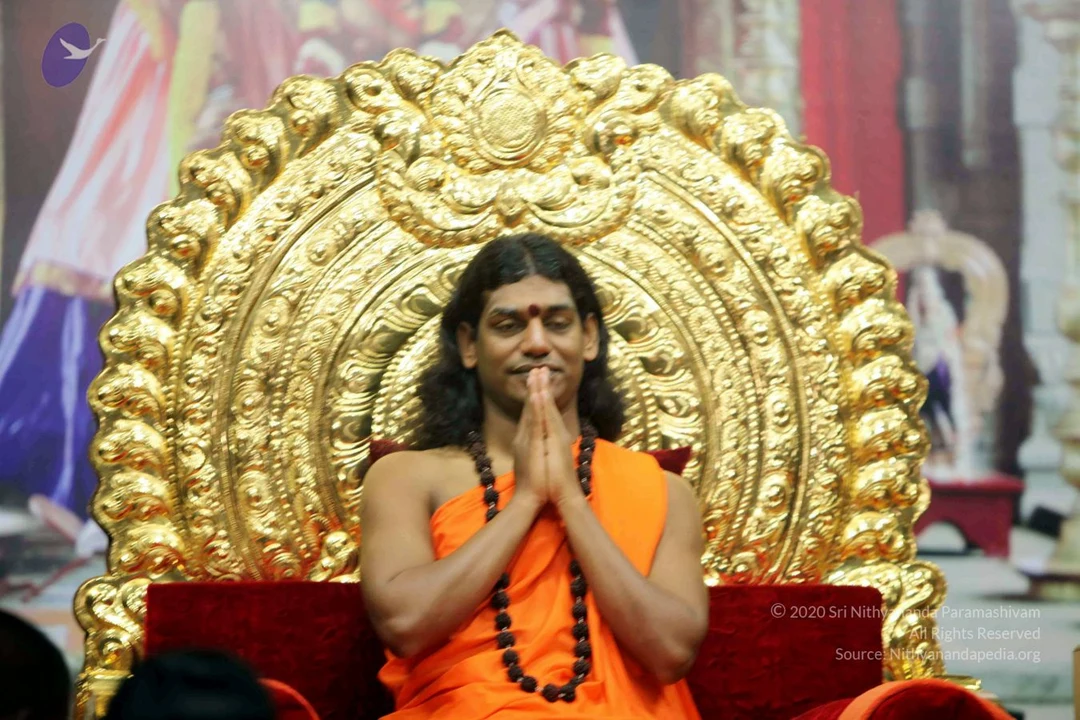
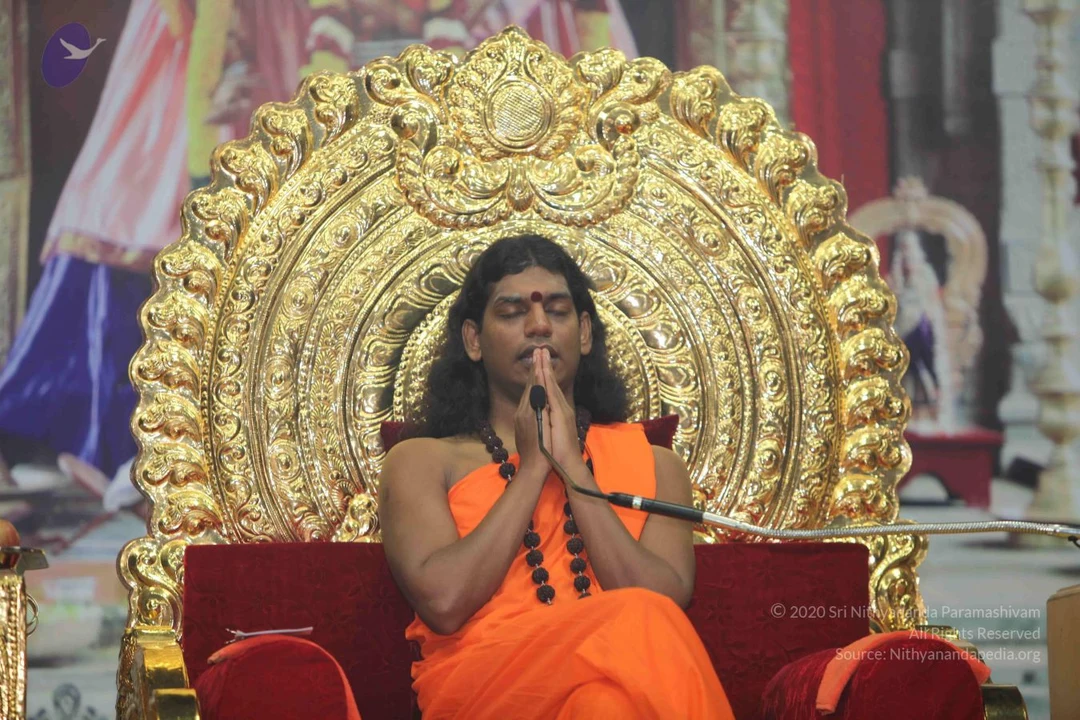
A photograph of a long-haired man in saffron-orange robes seated cross-legged on an ornate gold throne with red velvet cushions, palms pressed together in anjali mudra in front of his chest. A small bindi-like mark is on his forehead and a mala hangs at his neck. Behind him a large backdrop shows a painted temple scene with deity murtis garlanded with yellow and orange flower garlands, stone pillars and oil lamps. Flower petals rest on the platform below the throne, and a microphone stand stands at the side. Probable Swamiji seated in satsang on the peetha, with the distinctive long hair, saffron clothing and rudraksha-style mala as visible cues.

Sarvadarshan

1 photoSource gallery
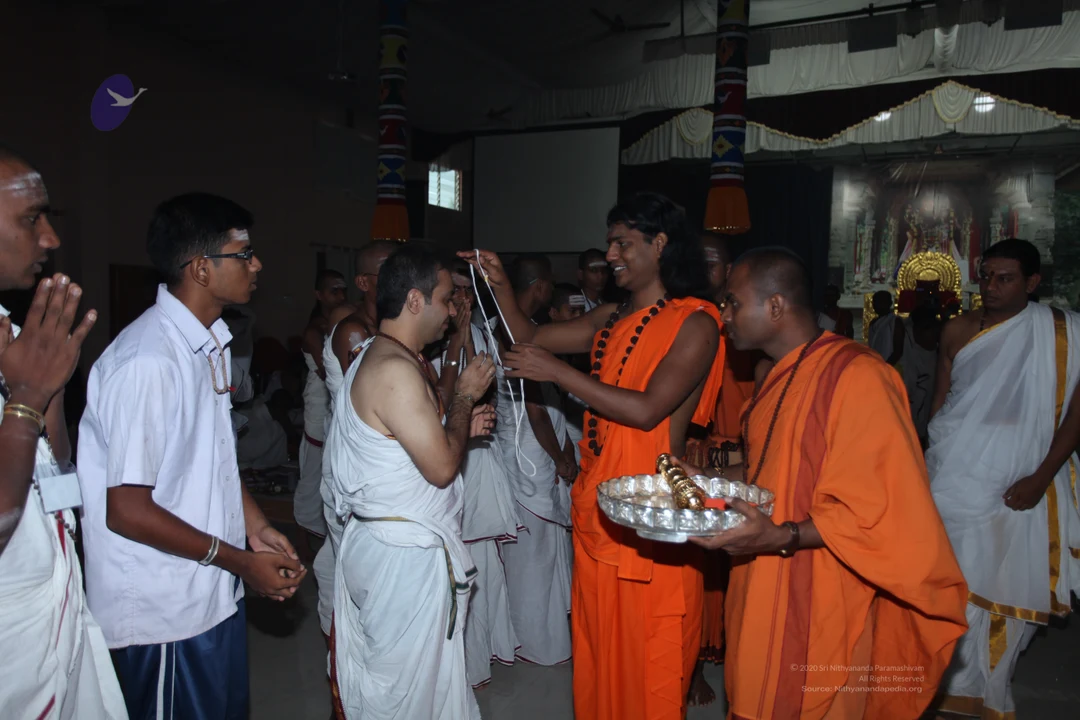
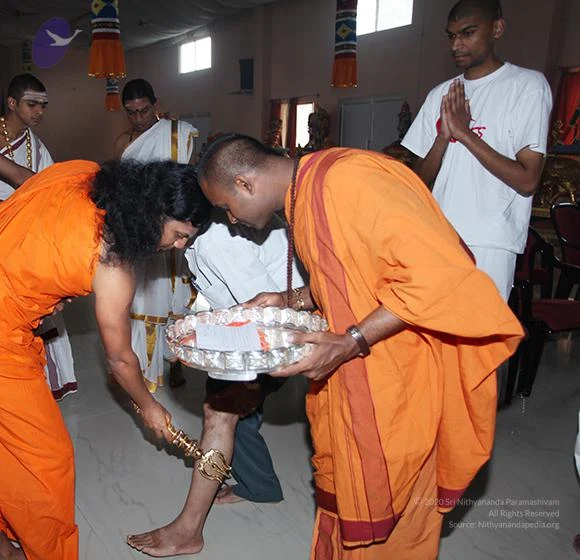
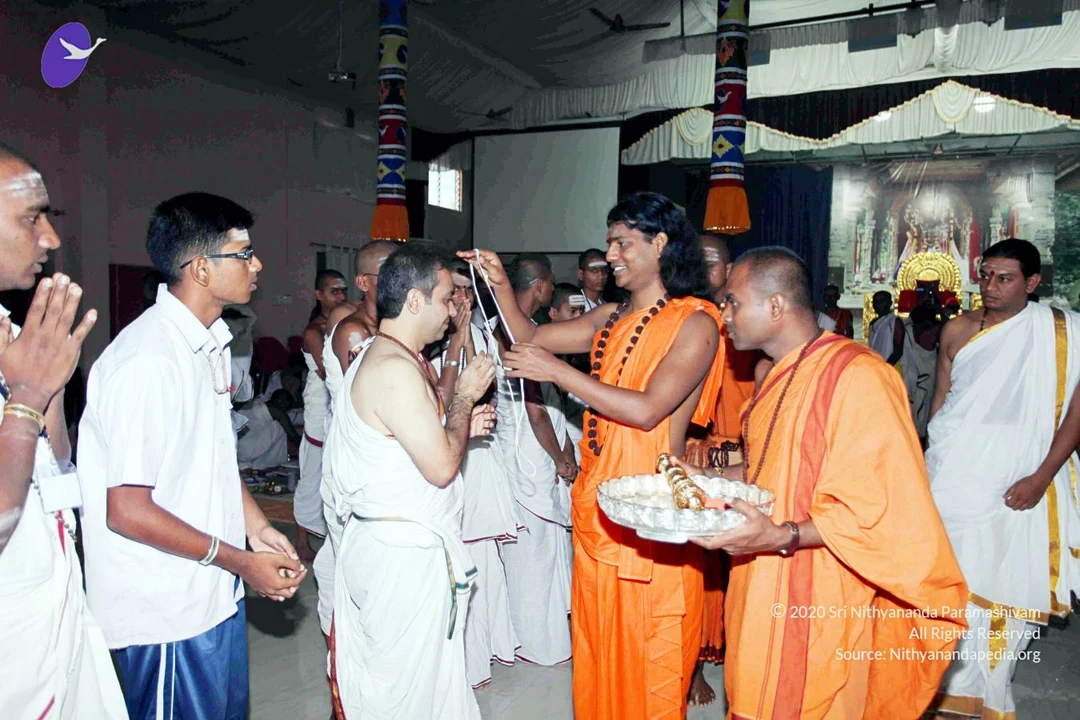
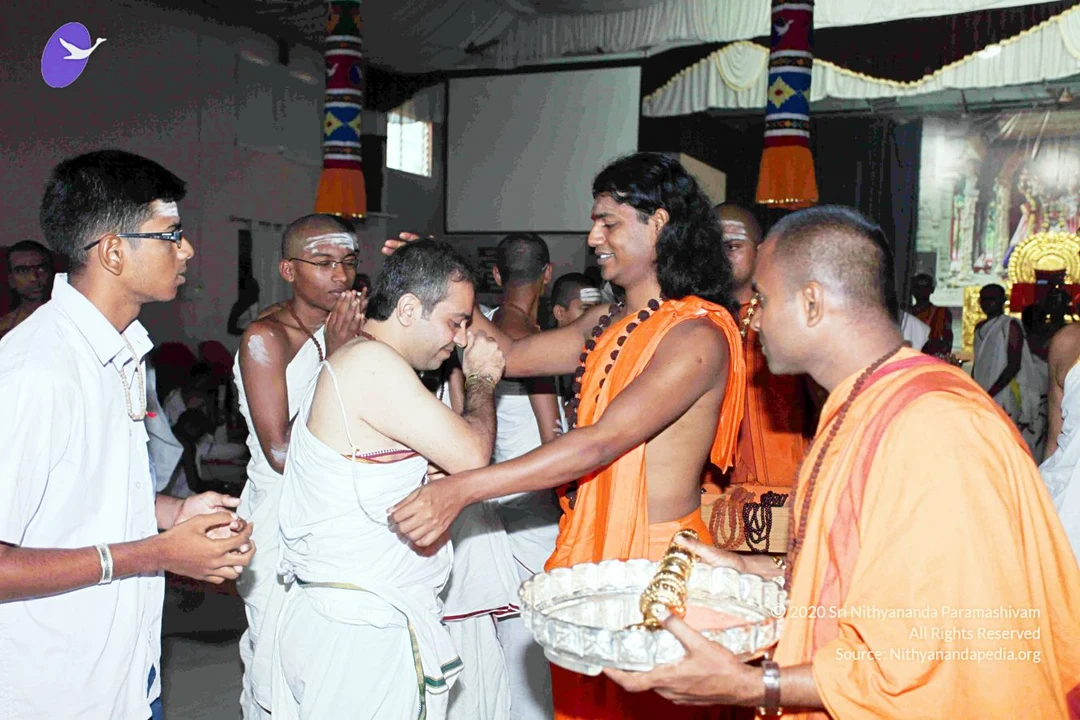
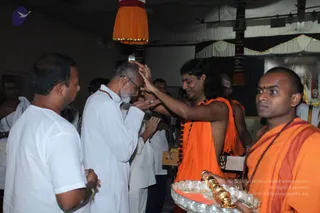
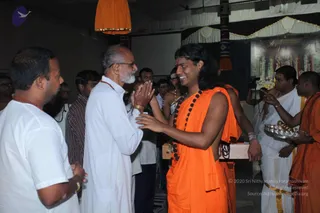
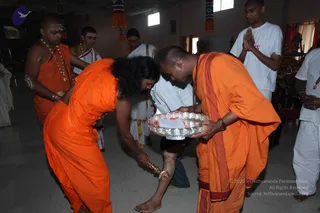
Photograph of a ritual scene in an indoor hall. A long-haired figure in saffron-orange robes with rudraksha beads and a dark string stands center-right, holding a thread or cord that a bare-chested devotee in white dhoti, folded hands and a sacred thread receives. To the right, a man in saffron robes holds a silver tray with a brass vessel and offerings. Several men in white dhotis with gold-bordered shawls stand behind, and a man in a white shirt and glasses with folded hands watches at left. In the background, a decorated altar with a gold throne-like canopy and a framed picture of deities sits beside draped white fabric and painted pillars. Identity of the saffron-robed figure is uncertain from appearance alone.

Photos Of The Day:

8 photosSource gallery
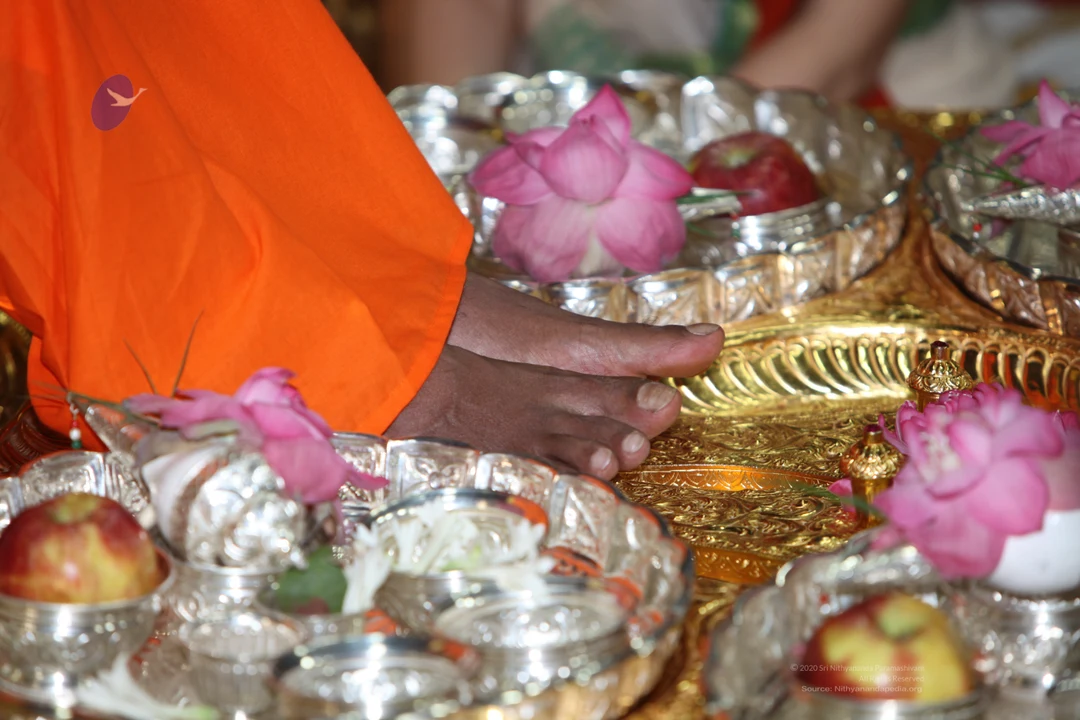
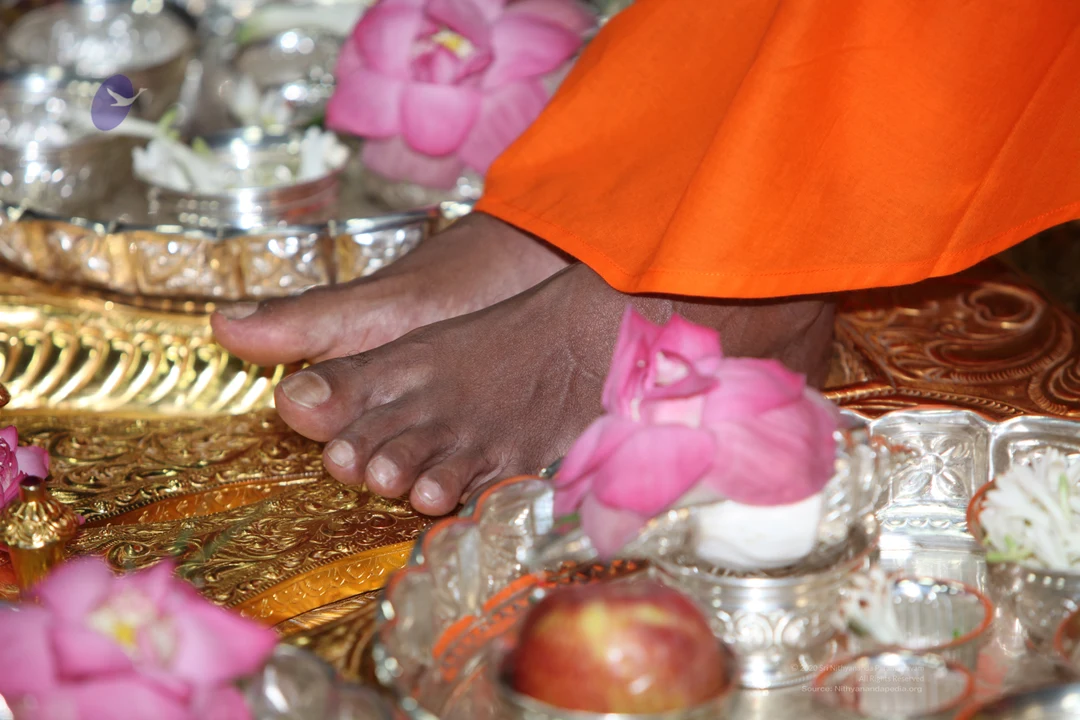
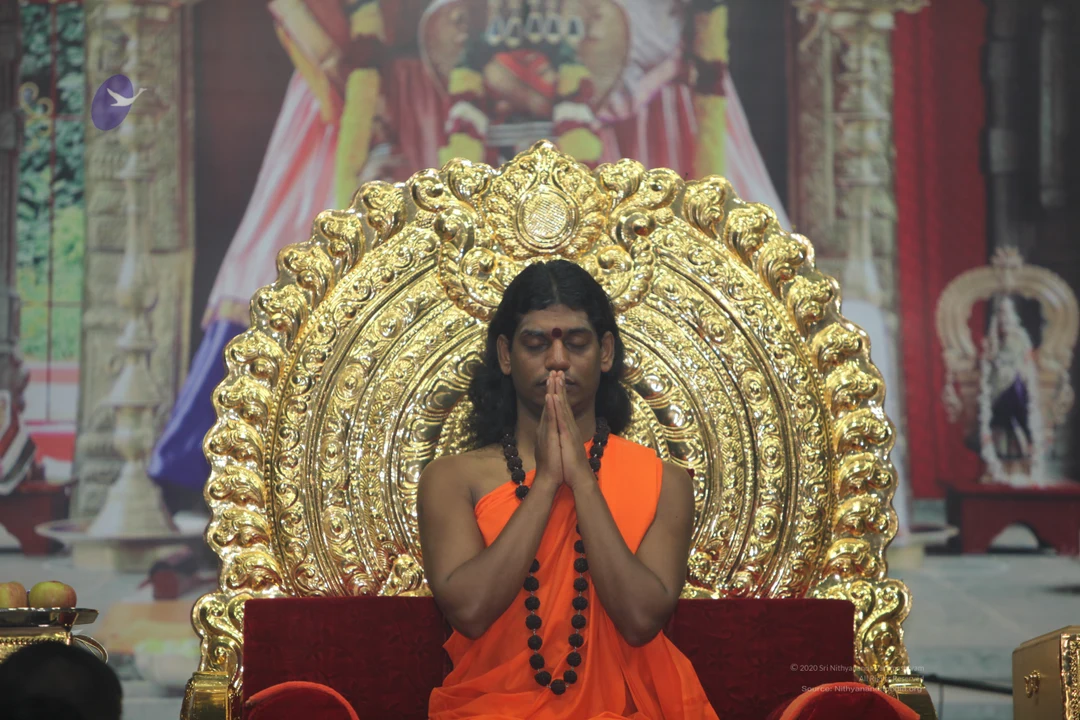
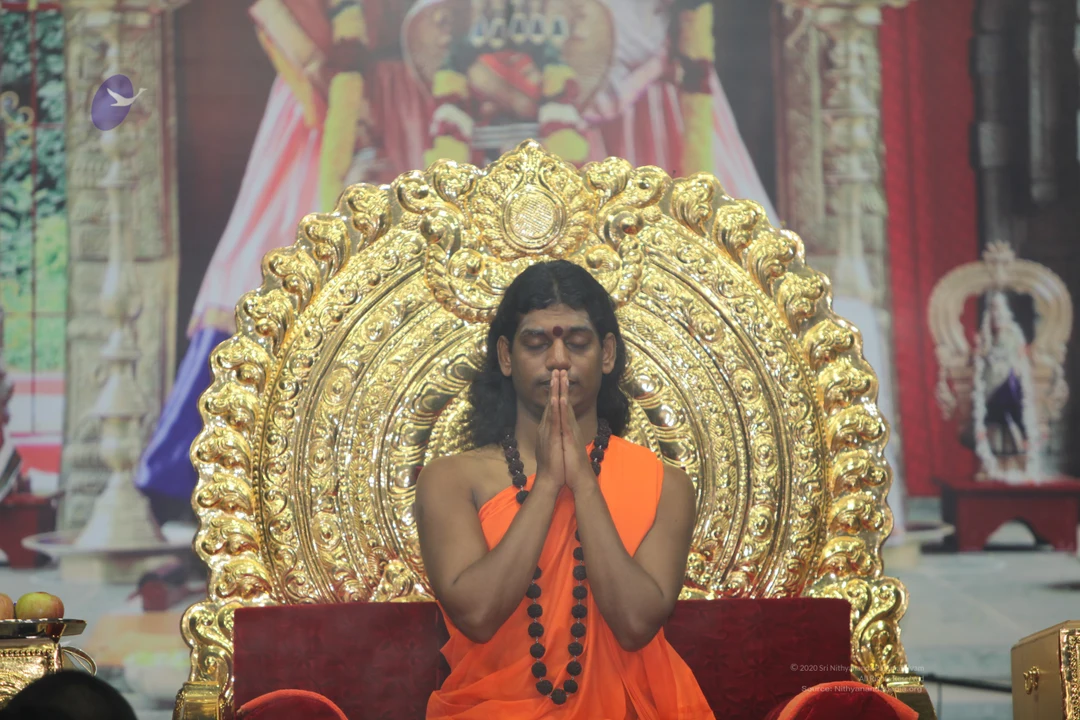
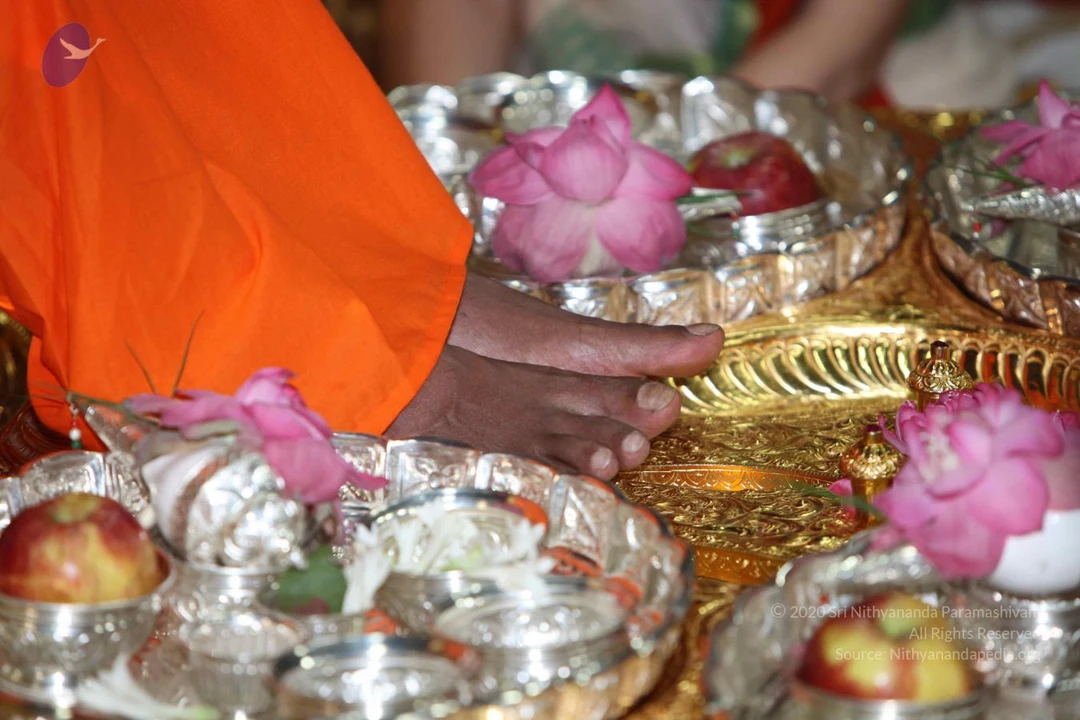
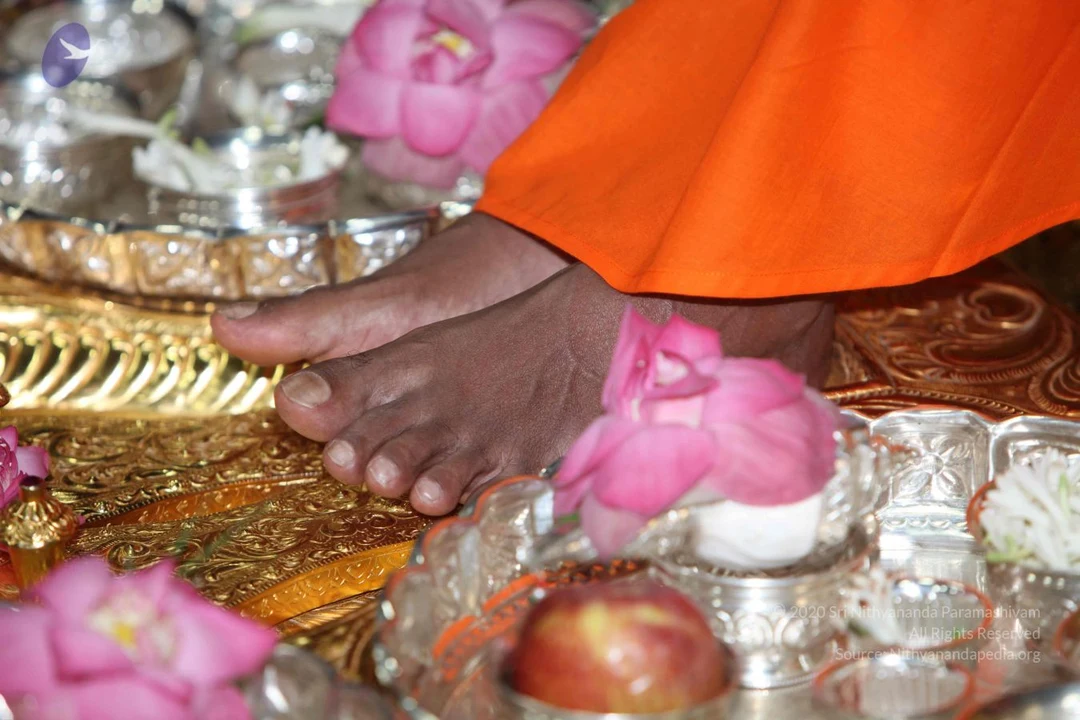
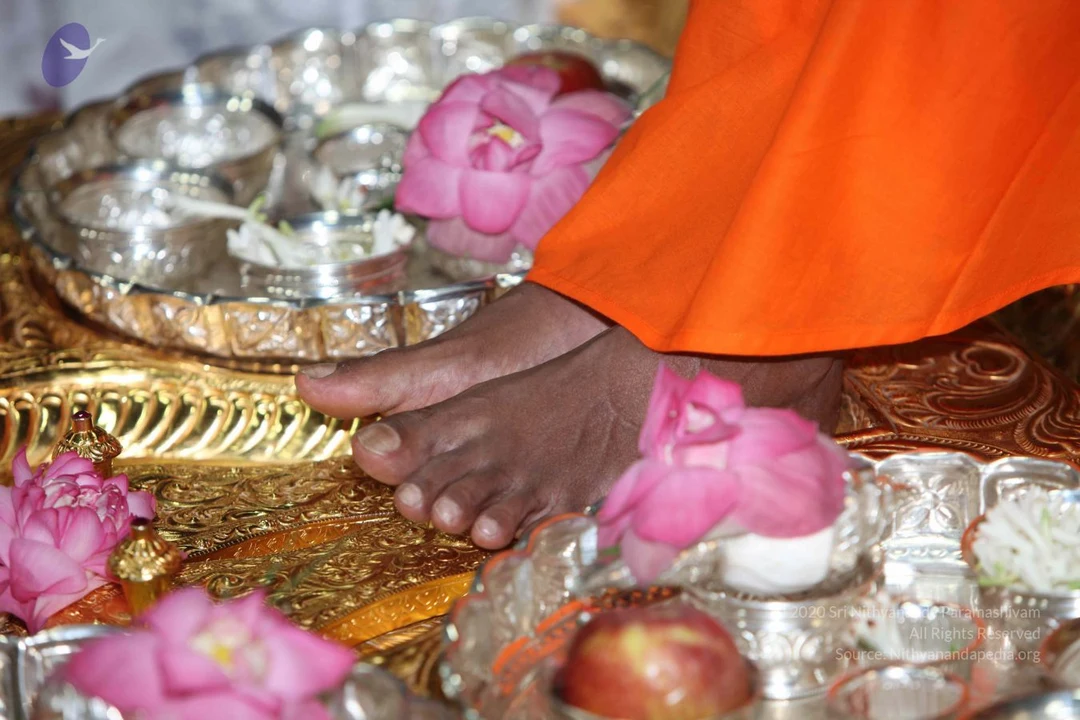
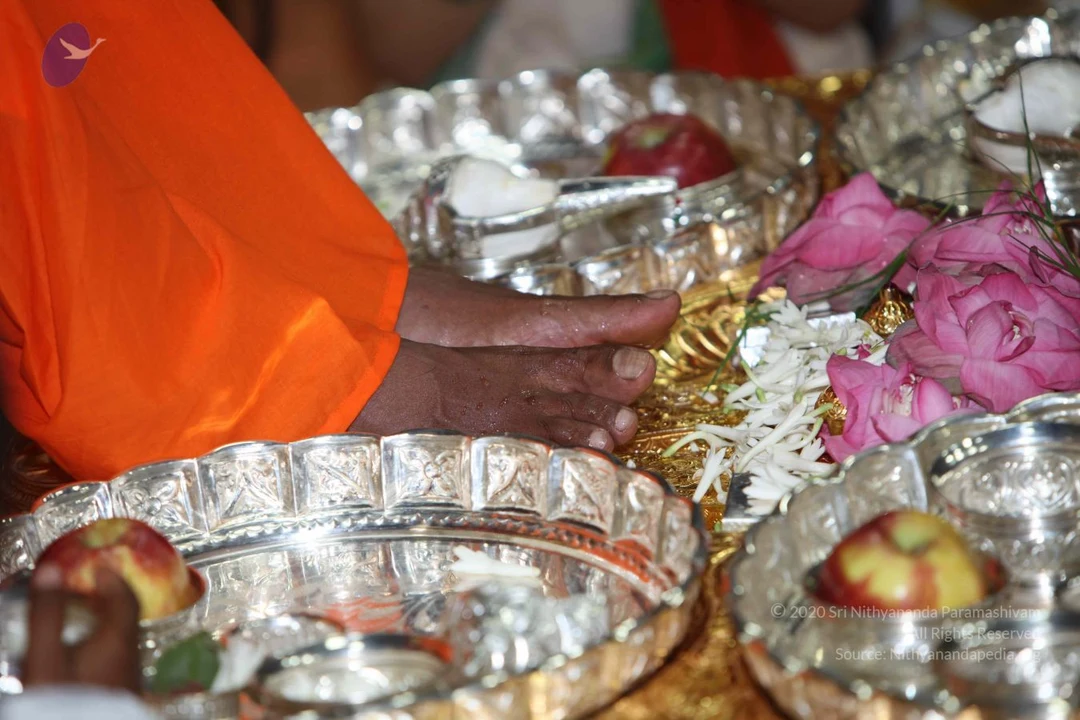
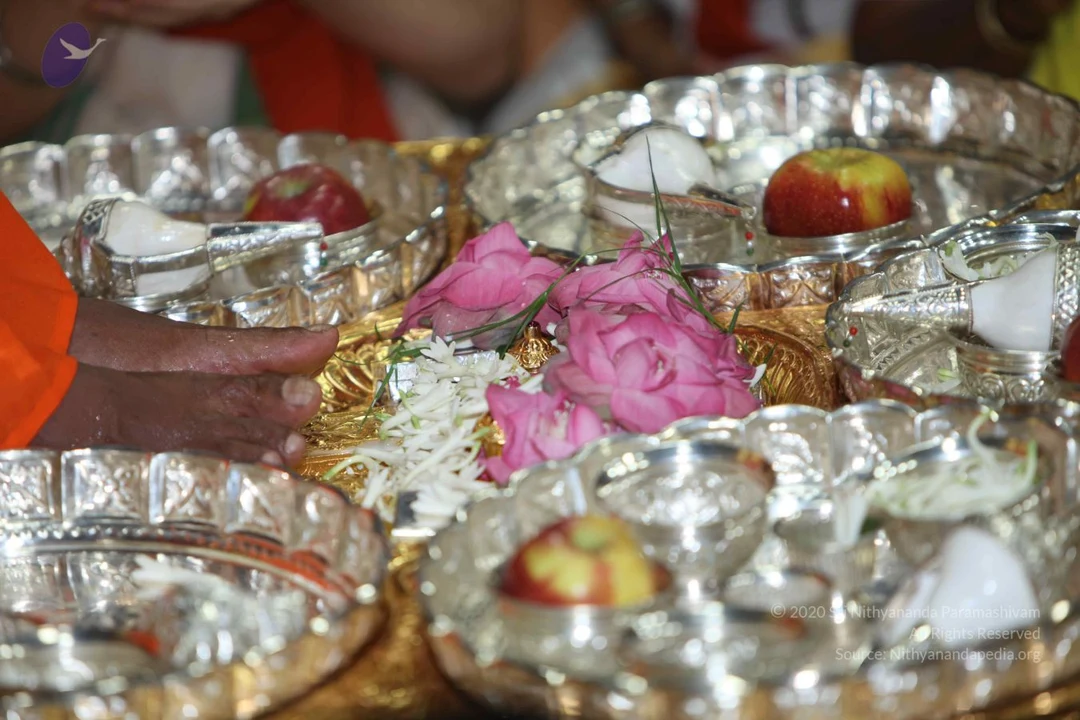
A photograph of an outdoor temple courtyard with a woman in orange saffron robes kneeling in prayer on a white mat, hands pressed together at her chest. Behind her stands a red-brick shrine platform with a seated deity murti draped in yellow cloth and adorned with orange garlands. Several dark stone statues of deities and figures line the background beneath palm trees, with a small floral kolam or rangoli pattern on the ground near the mat.Close view of a bare foot in a saffron orange garment resting on a brass tray, with silver and gold ritual plates arranged around it. Each plate holds an apple, pink lotus flowers, and small silver bowls with white offerings. The foot appears to be receiving a padapuja.A photograph of a satsang stage. On the right, a seated figure in saffron-orange robes and rudraksha mala sits on an ornate golden throne with red cushioning, a long-haired figure with a crown-like head covering. In front of him stands a wooden lectern-style table holding a flower arrangement and offerings. On the left foreground, a bald man in white ritual dhoti and shawl stands with folded hands, beside a young boy in white clothing. The background is a plain light screen.A seated man on an ornate golden throne with a red cushioned base sits with eyes closed and palms pressed together in anjali mudra. He wears an orange saffron robe draped over the shoulders and a long black rudraksha mala around his neck, with a red bindi on his forehead. Behind him a large pictured backdrop shows a deity figure in pink and blue with floral garlands, and red drapery frames the stage. Swamiji (probable): the saffron robe, rudraksha mala and long hair are the visible cues for the seated teacher on the throne during a satsang setting.

BIDADI-TEMPLE

6 photosSource gallery
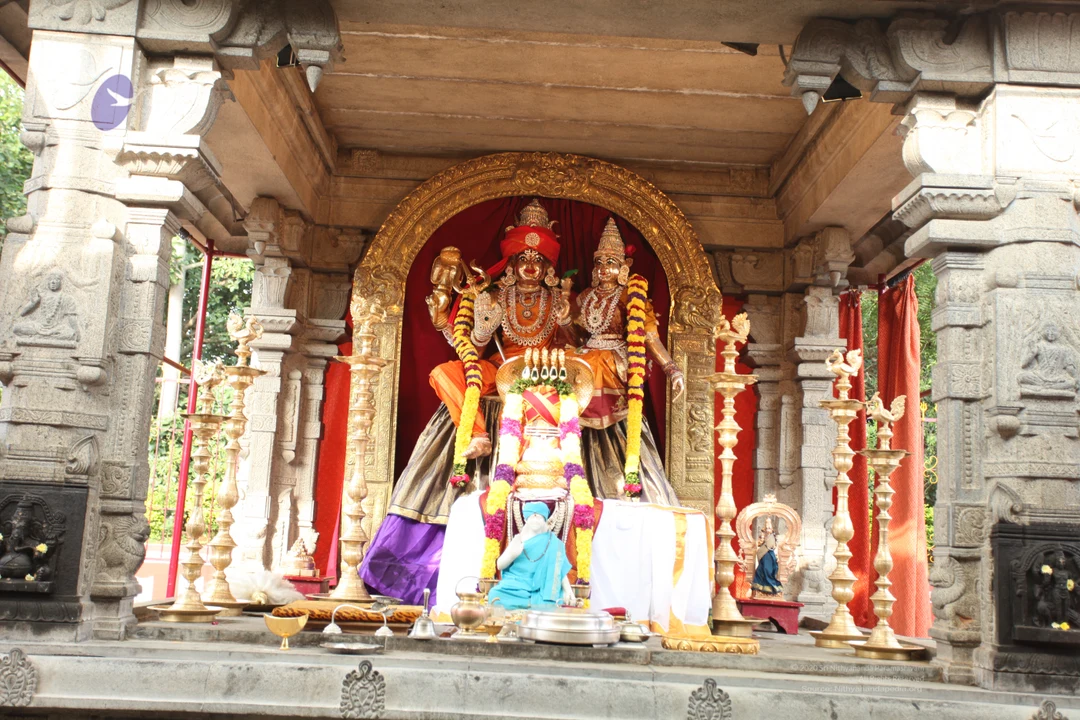
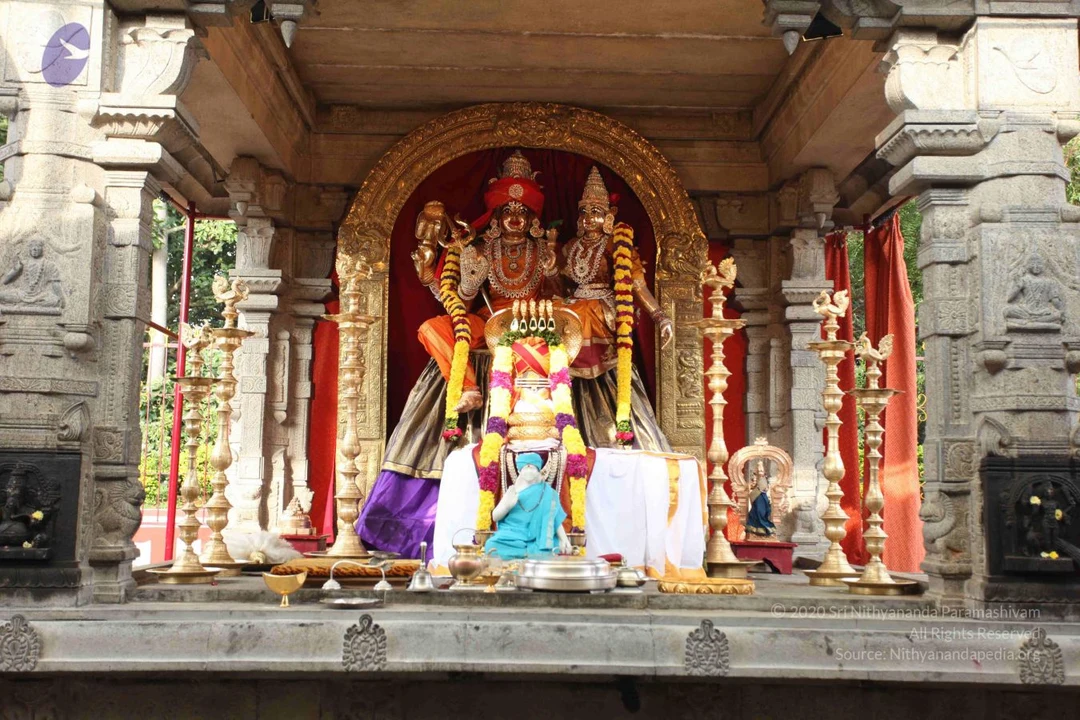
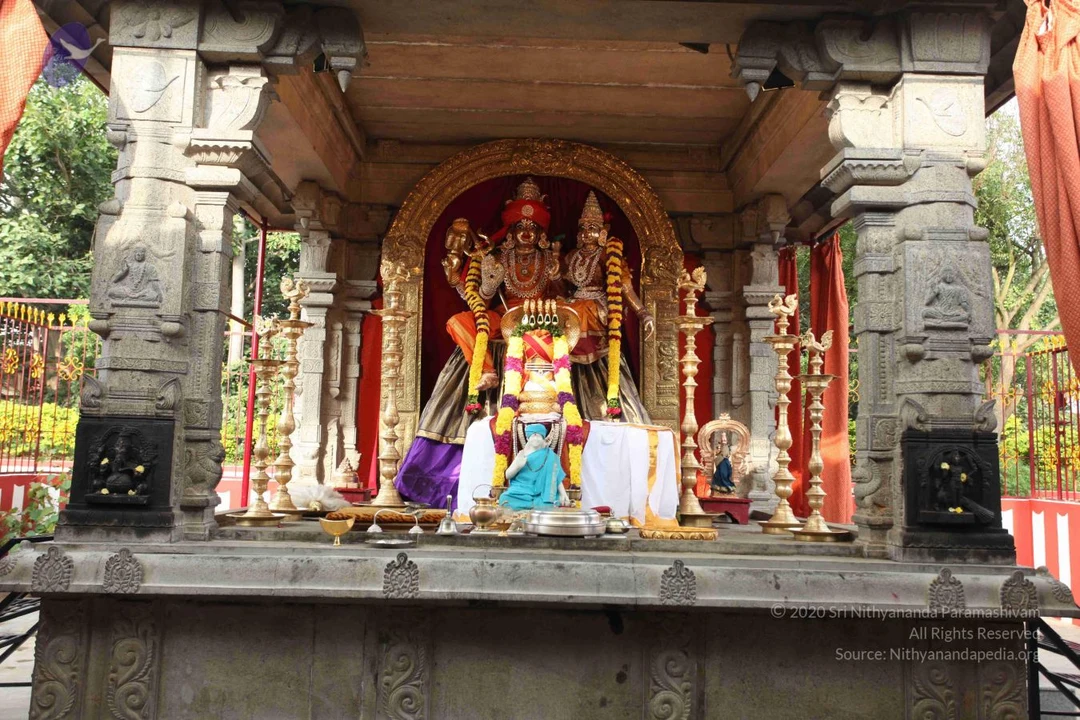
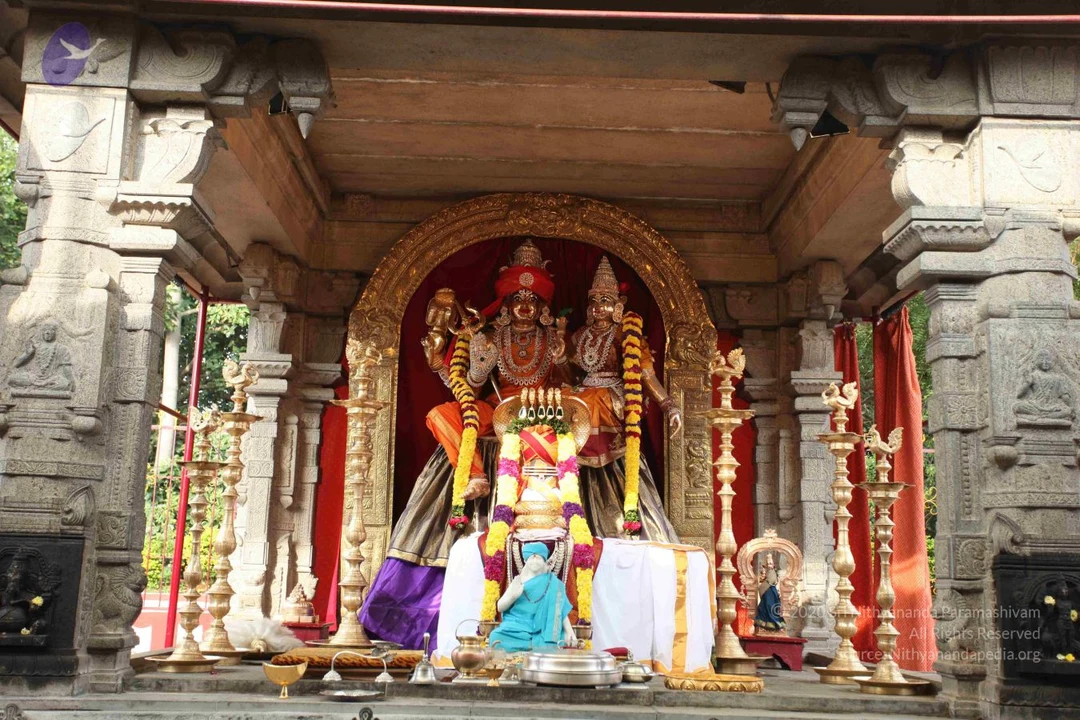
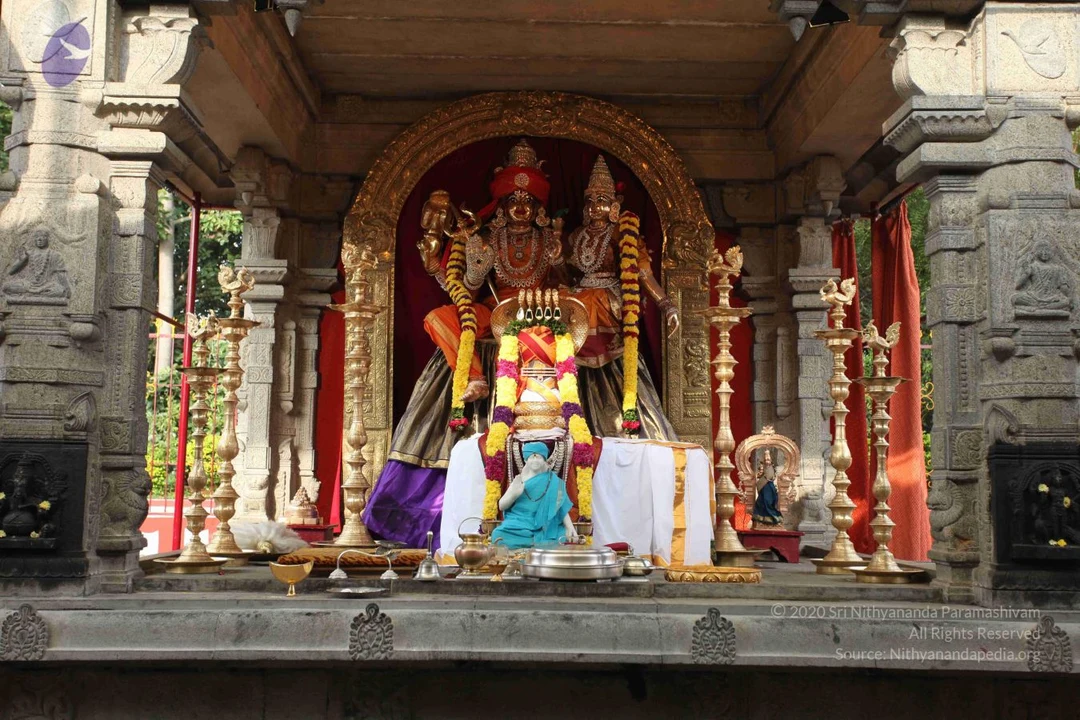
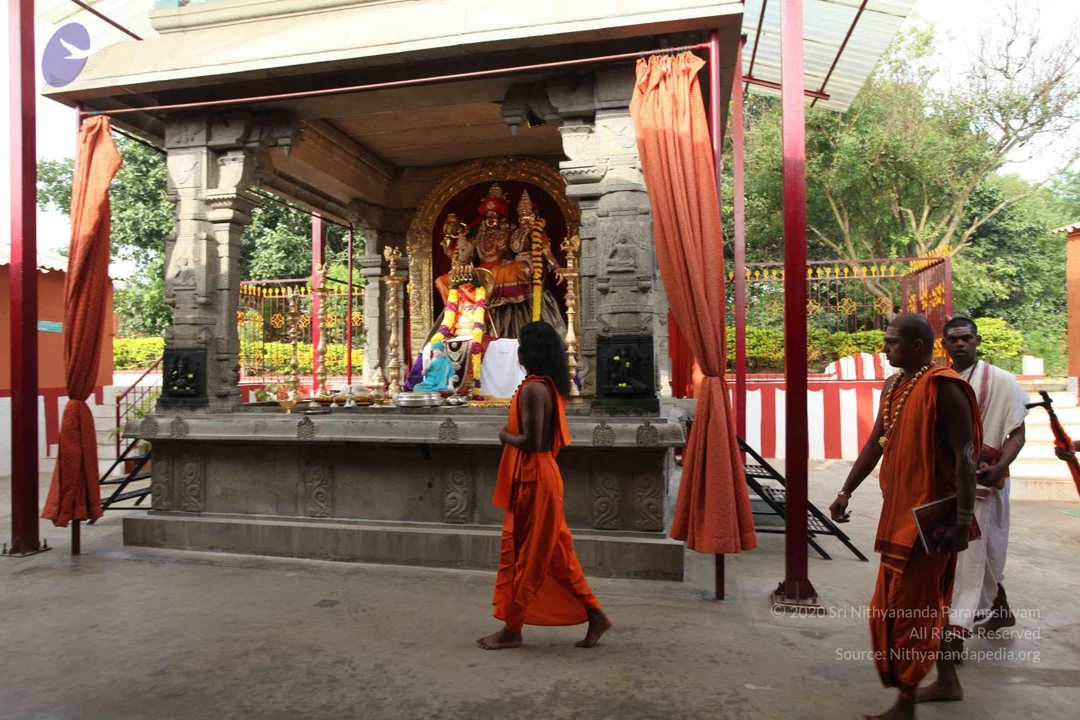
A photograph of a temple shrine with a deity murti group set in an arched golden frame against a red drape. Two standing deities are shown: the left figure holds a trident and wears a red headdress, a beaded necklace and an orange-and-gold dhoti, while the right figure wears a crown and a purple-and-gold garment. Marigold garlands hang from both figures. A large silver kalasha stands at the centre on a white-draped platform, surrounded by brass lamp stands, brass pots and offering plates. Carved grey stone pillars frame the scene. No physical people are visible.A stone shrine with carved granite pillars and an arched gold-framed niche holding deity murti statues, one seated figure in red crown and garlands flanked by a female figure in gold ornaments, with a smaller figure in blue. Yellow and orange marigold garlands hang across the murti, and brass oil lamps stand on both sides. White cloth covers a platform in front, with brass vessels and a kalasha-like bowl. No people are visible; the shrine is empty of devotees.A photograph of a temple shrine with two large painted deity murti standing under a gold-framed arch against red drapes. The murti on the left wears a red turban, gold necklaces and a dark garland, holding a ceremonial staff; the figure on the right wears a gold crown and a red-and-gold garment. Both are draped with yellow and purple flower garlands. In front, a white-cloth-covered pedestal holds a kalasha-like vessel with a small blue figure, surrounded by brass oil lamps, bells and a brass plate with offerings. Carved stone pillars and reliefs frame the shrine, and a small Ganesha relief appears at lower left. No people are visible.A photograph of a temple shrine with a golden arched niche framing two large deity murtis standing behind a shivalinga-style lingam decorated with marigold garlands. The central figure wears a red crown and red headdress with a multi-stranded beaded necklace, and the figure beside it wears a tall crown and jewelled ornaments. Garlands of yellow and orange marigolds hang from both sides. Brass oil lamps stand on either side, and a red curtain hangs behind the shrine. Offerings sit in front, including a brass plate, a pot and a small blue-draped figure. No people are visible in the scene. Carved stone pillars with relief figures frame the sanctum.A photograph of a stone temple shrine housing a pair of painted deity murti standing on a raised platform, the central figure with a red crown, a red and gold garment and a long garland of yellow and purple flowers, beside a female figure in a yellow-orange sari. Below them stands a small teal-clad image and a conch-shaped form draped with white cloth, with a garland hanging down. Brass oil lamps, a kalasha-style vessel and metal ritual vessels line the platform, and carved pillars and red curtains frame the shrine. No people are visible.A stone temple shrine with carved pillars and a gilded arched niche framing two large deity murtis, one male and one female, both crowned, with red and gold garments and garlands of orange and purple flowers hung from their shoulders. In front stands a row of tall brass oil lamps on either side, with a silver kalasha and brass vessels on a white-draped altar and a small blue-clothed figure at the base. No people are visible in the scene.

TEMPLE-VISIT

9 photosSource gallery
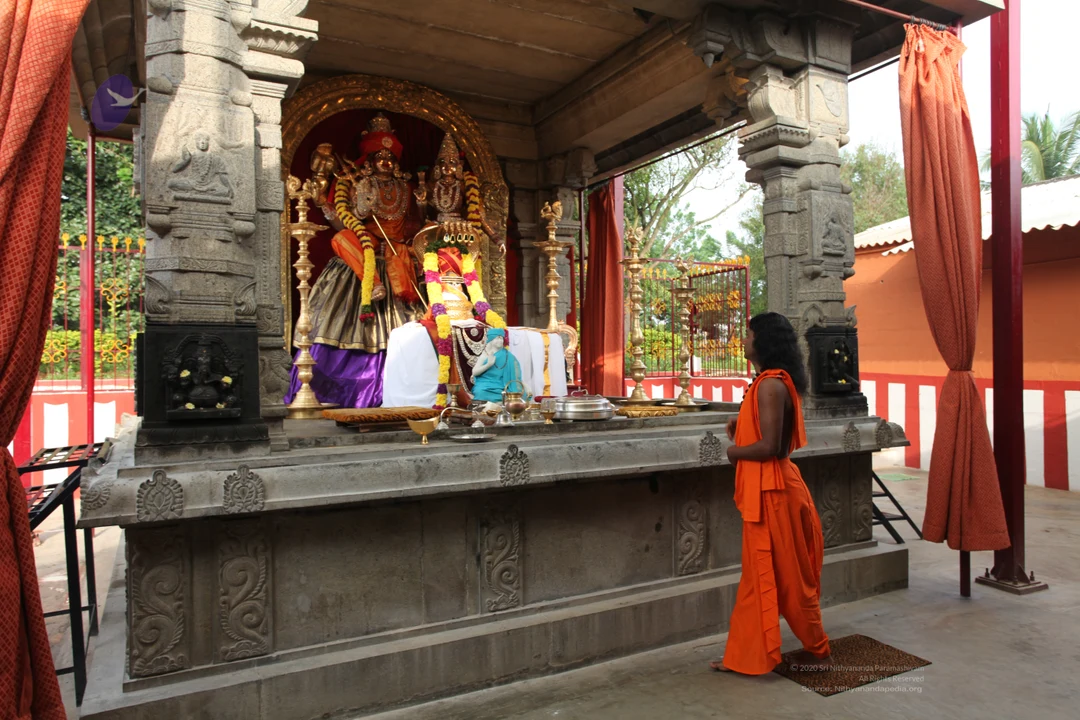
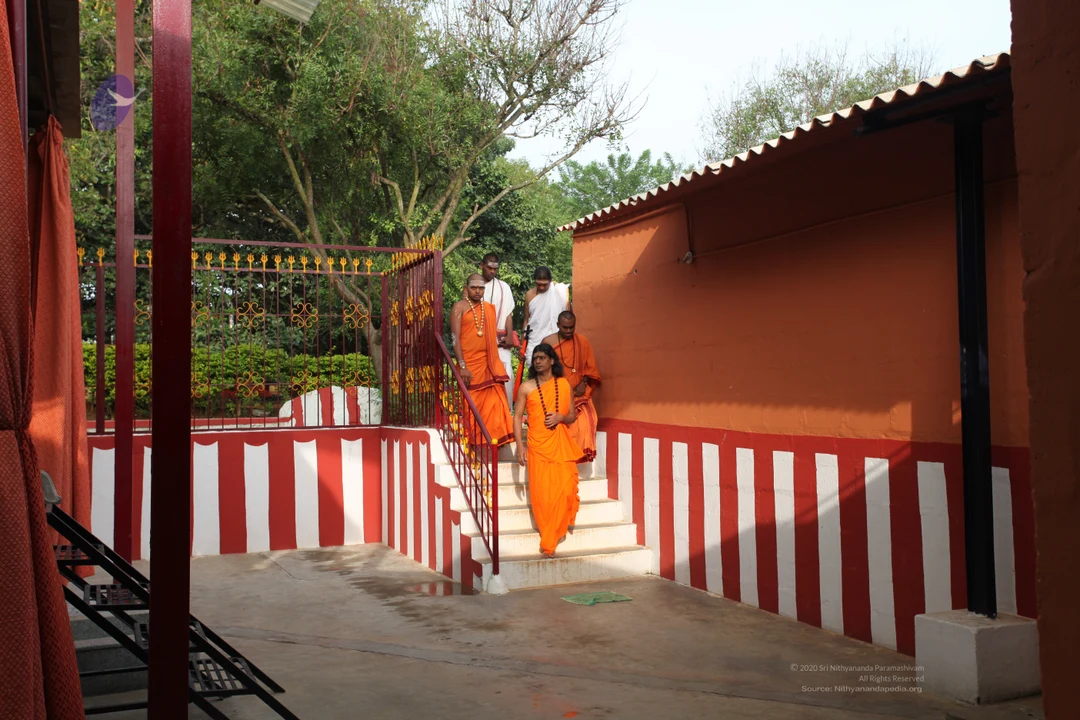
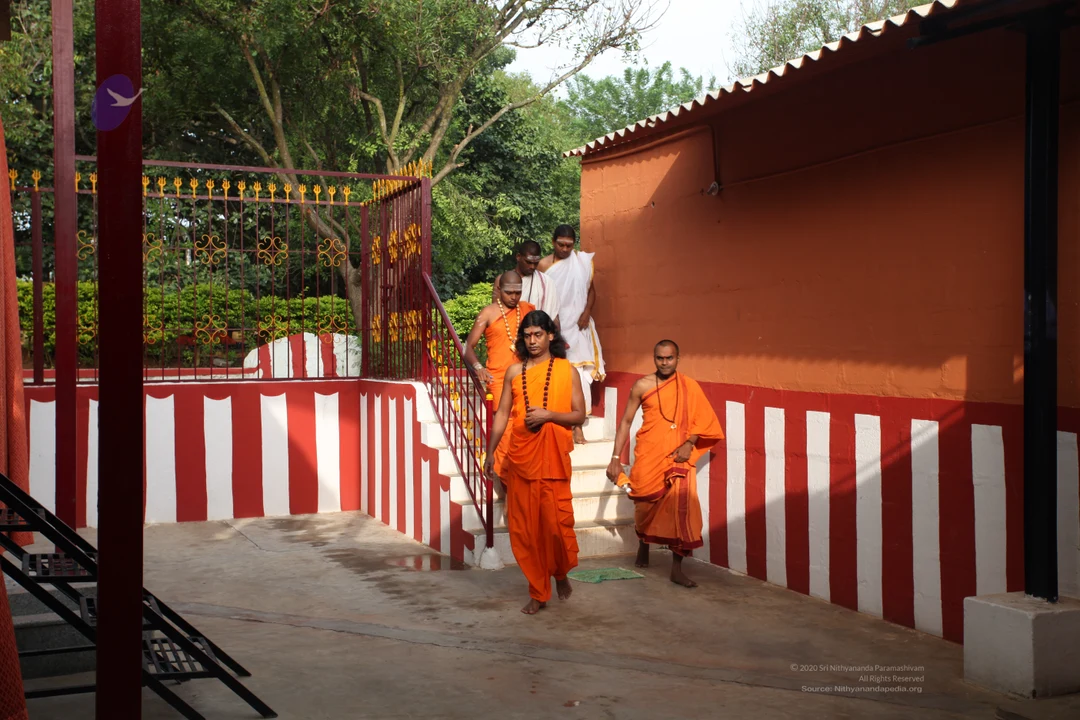
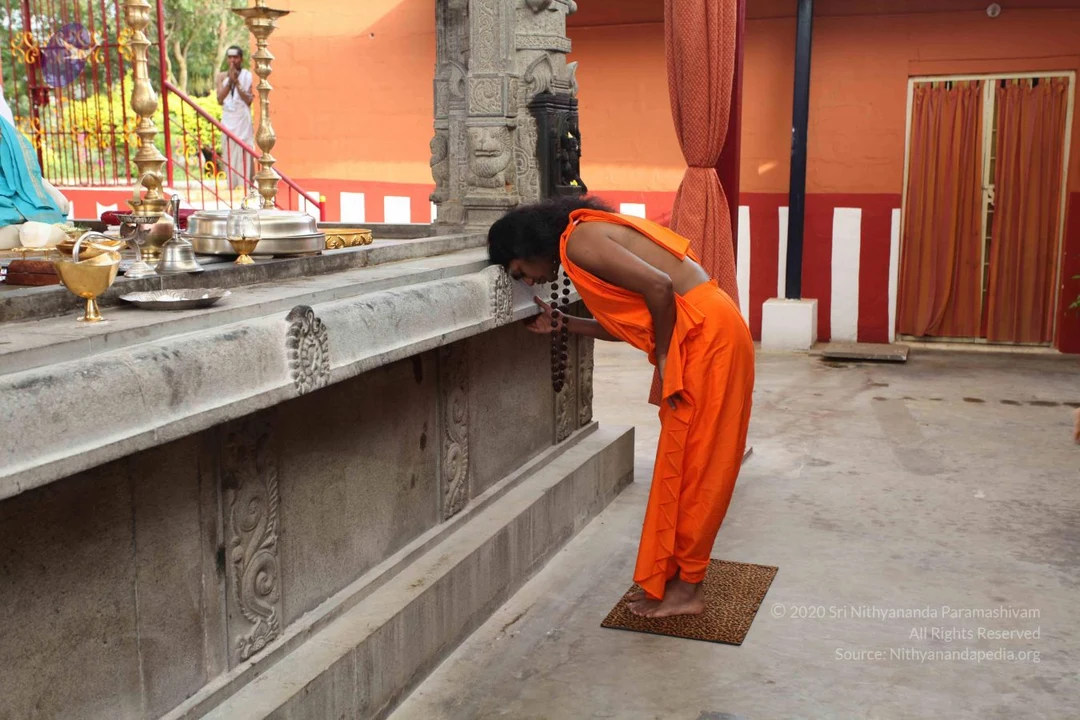
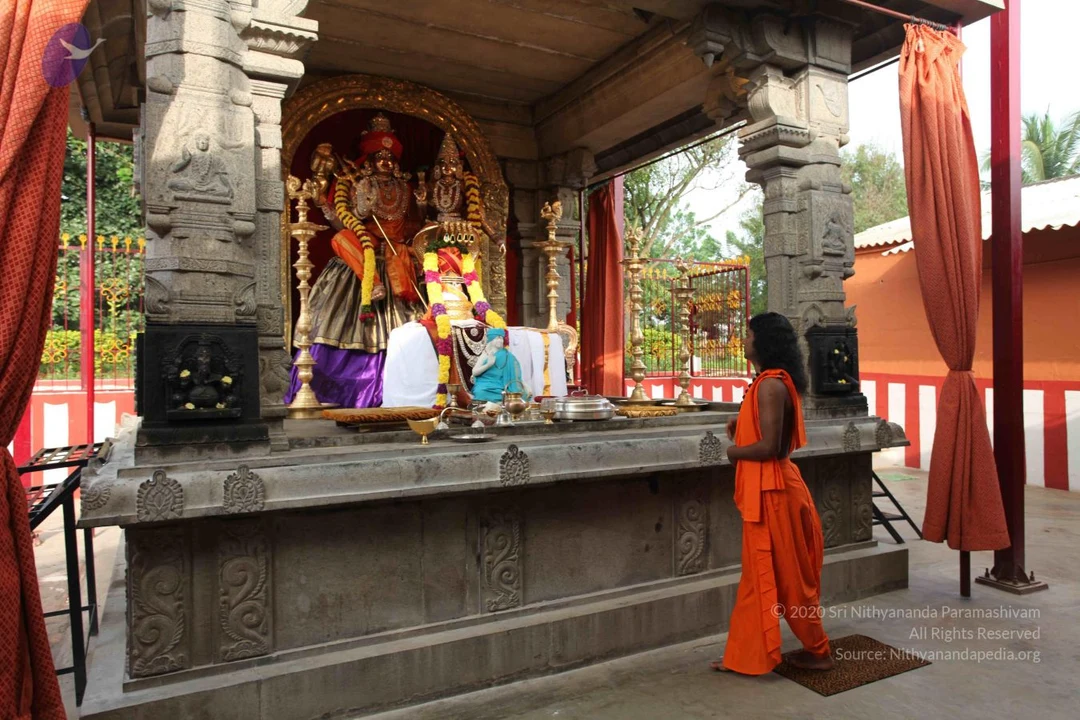
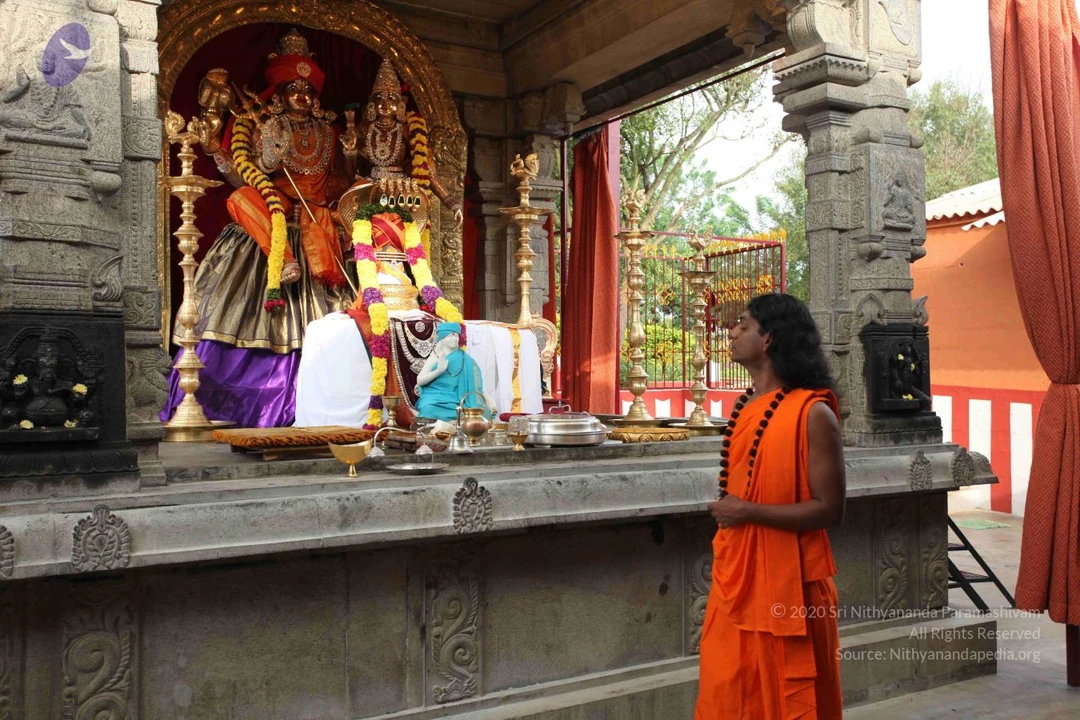
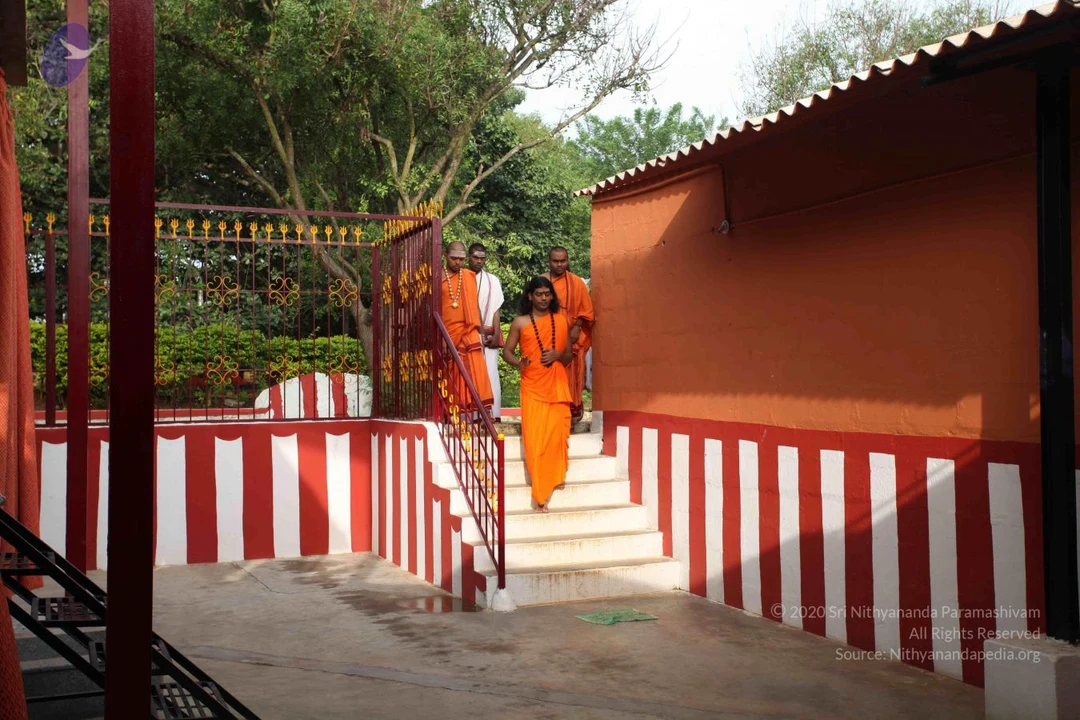
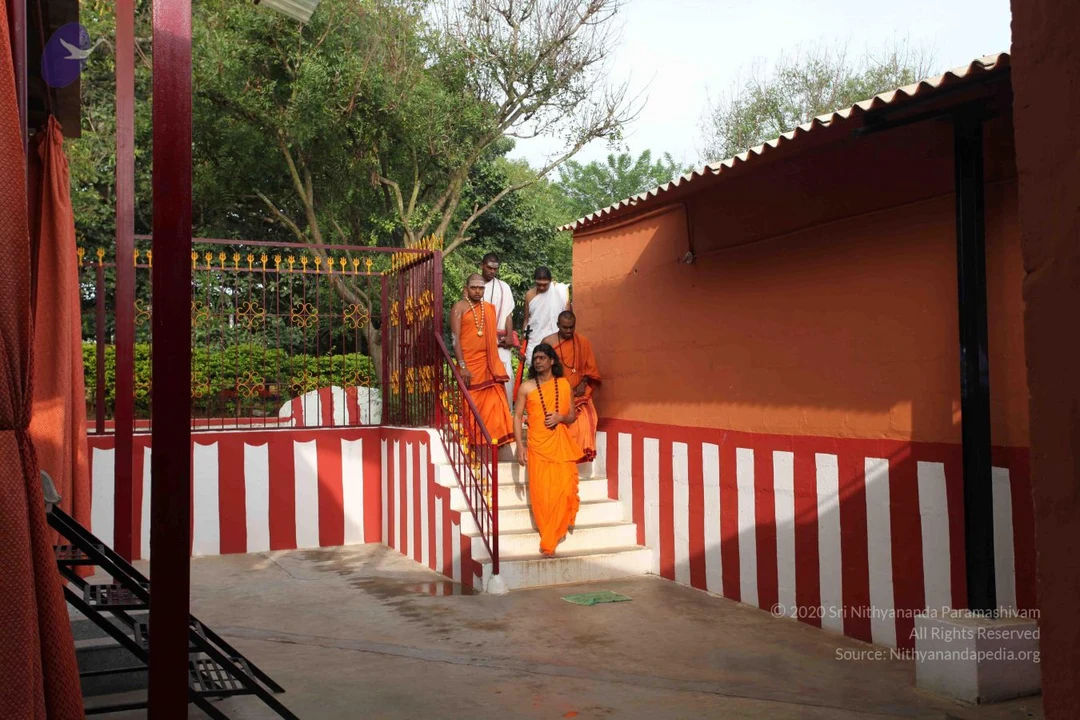
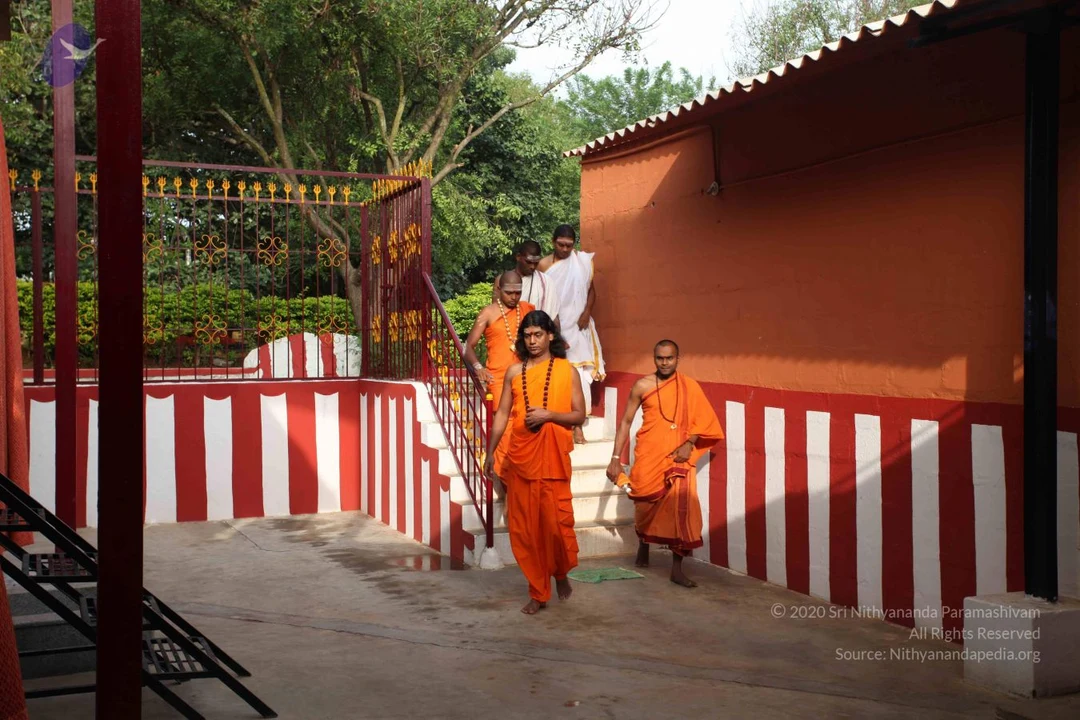
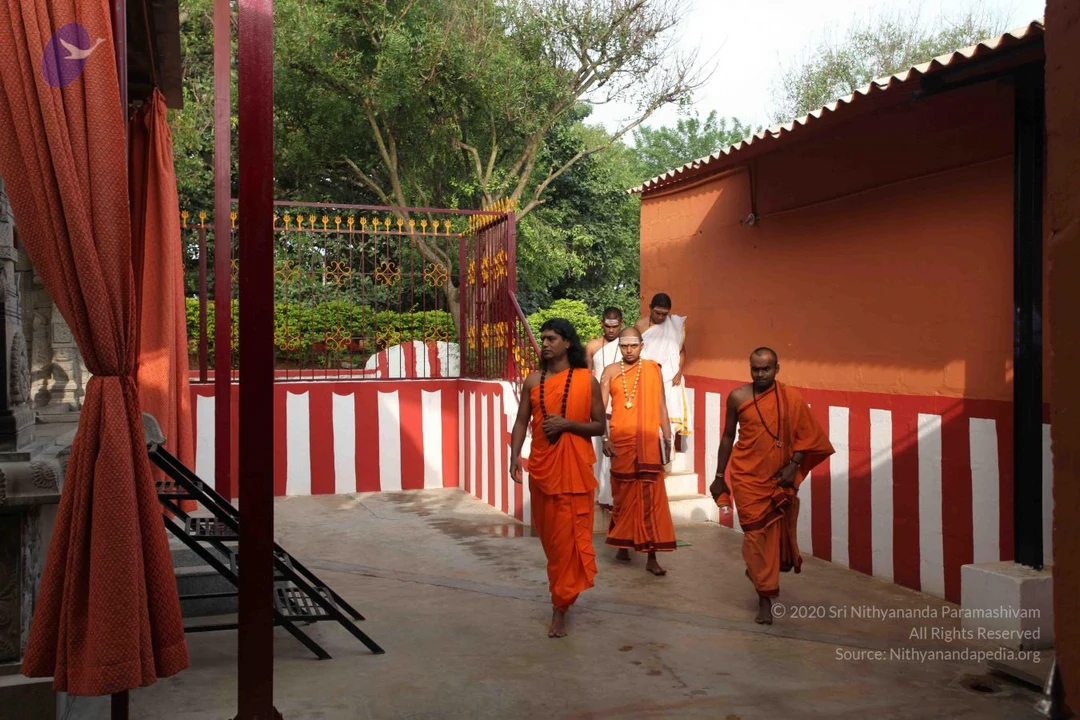
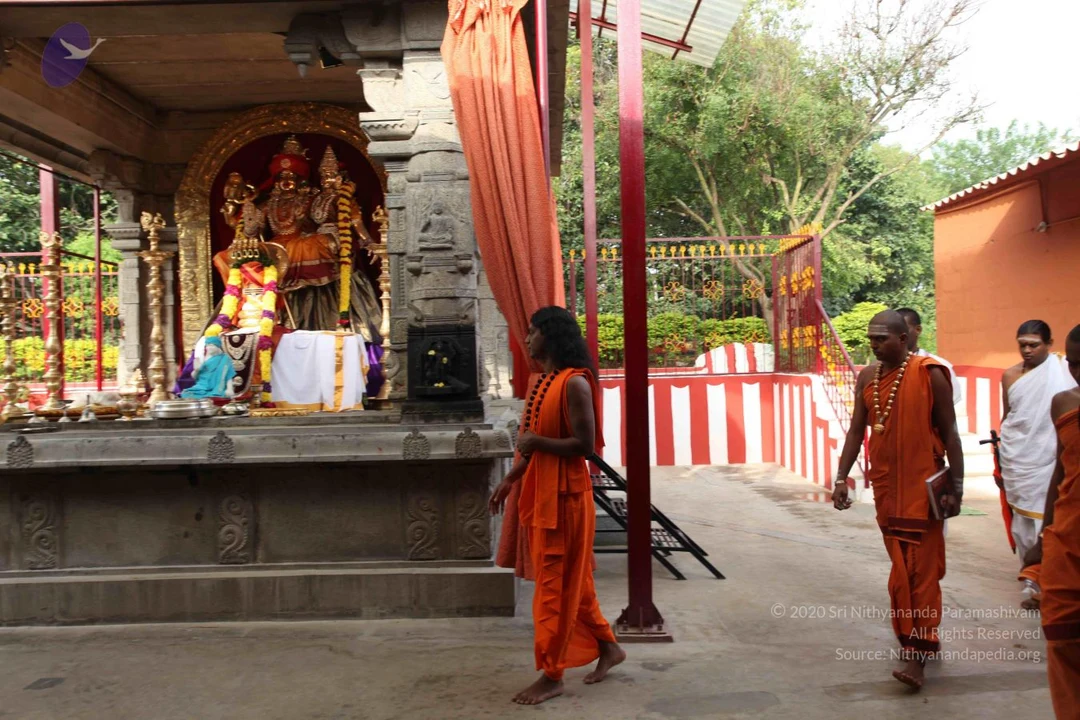
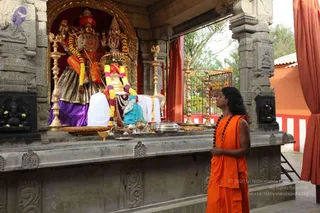
A figure in an orange saffron garment with long dark hair and a rudraksha mala hanging at the neck bows deeply with hands joined toward a grey stone shrine platform carved with floral reliefs. Brass oil lamps, a brass bell, a silver plate and small offering vessels sit on the platform. Behind, an orange-walled hall with red and white striped trim and orange curtains is visible, and a man in white clothes stands in the background. The figure stands on a leopard-print mat.A photograph of a stone shrine with a seated goddess murti in red and orange with a crown, flanked by garlands of yellow and orange flowers and brass oil lamps on a stone platform. A person in orange robes with long dark hair stands barefoot on a mat at the right, facing the shrine in prayer. Orange curtains frame the open pavilion, and a plain blue and white figure sits near the base of the murti.A photograph of a figure in orange robes and a long rudraksha mala standing with hands folded in front of a stone shrine. Behind the stone altar, a deity murti with a trident and red crown, draped in purple and orange cloth, is garlanded with marigold and multicoloured flower garlands. Brass oil lamps, a kalasha-like pot, metal bowls and offerings sit on the altar, with a small blue figure and a white cloth below. The shrine is framed by carved grey stone pillars, a red-and-white striped wall and a red curtain. This is a worship scene, and the figure is an appearance-based candidate for a person, shown with long swept-back hair, saffron robes and rudraksha beads.A photograph of a staircase at a temple-style compound with red and white vertical striped walls and an orange-painted wall on the right. A person with long dark hair, wearing an orange saffron robe and a long rudraksha mala, descends the white steps followed by several men in orange robes and one man in white clothing. Ornate red and gold iron gates and green trees stand behind them. The walkway is wet with a green mat at the foot of the stairs. a person is the figure in front wearing the rudraksha mala and long hair.A photograph of a group of people descending a short flight of white-painted steps between red-and-white striped walls at an ashram-like courtyard with an iron gate and green trees behind. In front, a figure in orange robes with a long rudraksha-style mala descends first, followed by several men in saffron-orange robes and white dhotis, one with shaved head. Two more people in white clothes stand behind on the steps. Red curtains hang at the left edge and an orange-painted wall stands at right. Six people are visible in total.A photograph of an ashram walkway with red-and-white striped walls and an orange-painted wall behind a red iron gate. Five people in orange and white clothing descend a set of white steps. The front figure wears a long-haired, orange robe with a rudraksha-style bead mala and walks barefoot, carrying nothing. Behind him, a figure in orange with a shaved head and a mala follows, and a figure in white dhoti and shawl comes last near the top of the stairs. Trees and shrubs fill the background.

PANCHA-TAPAS
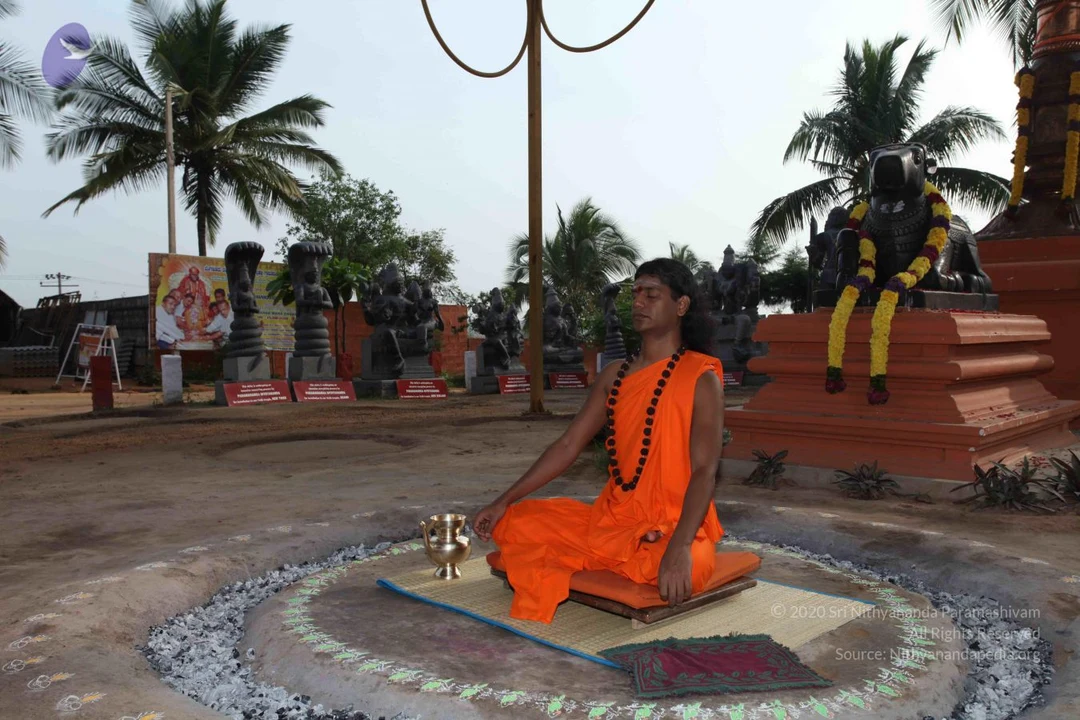
18 photosSource gallery
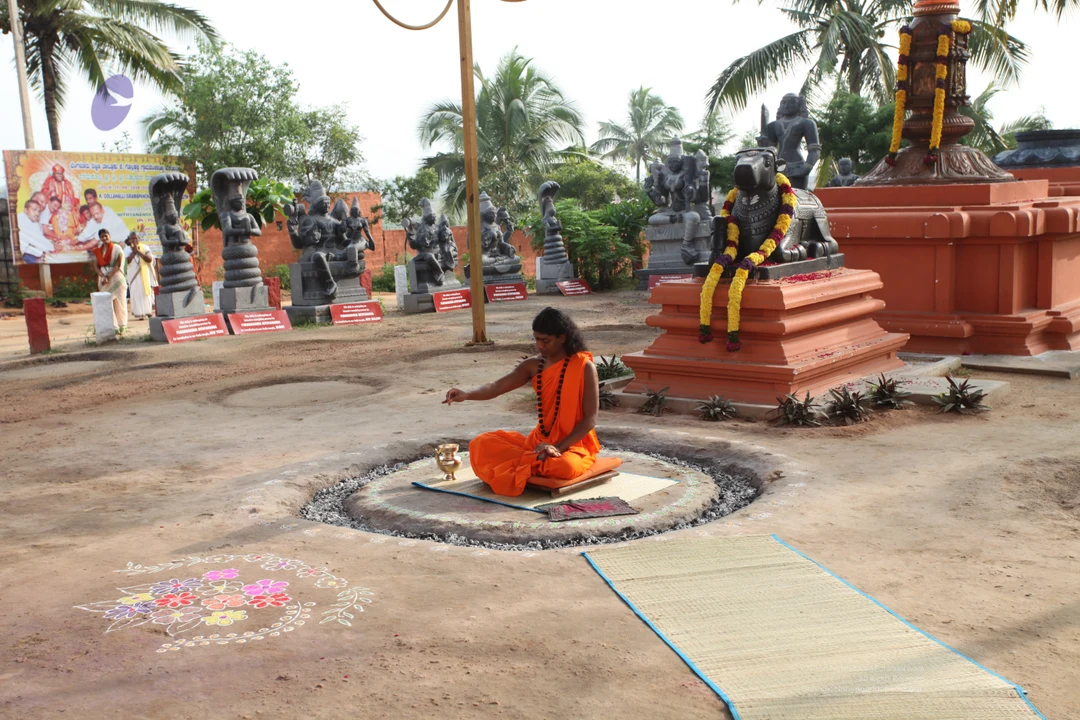
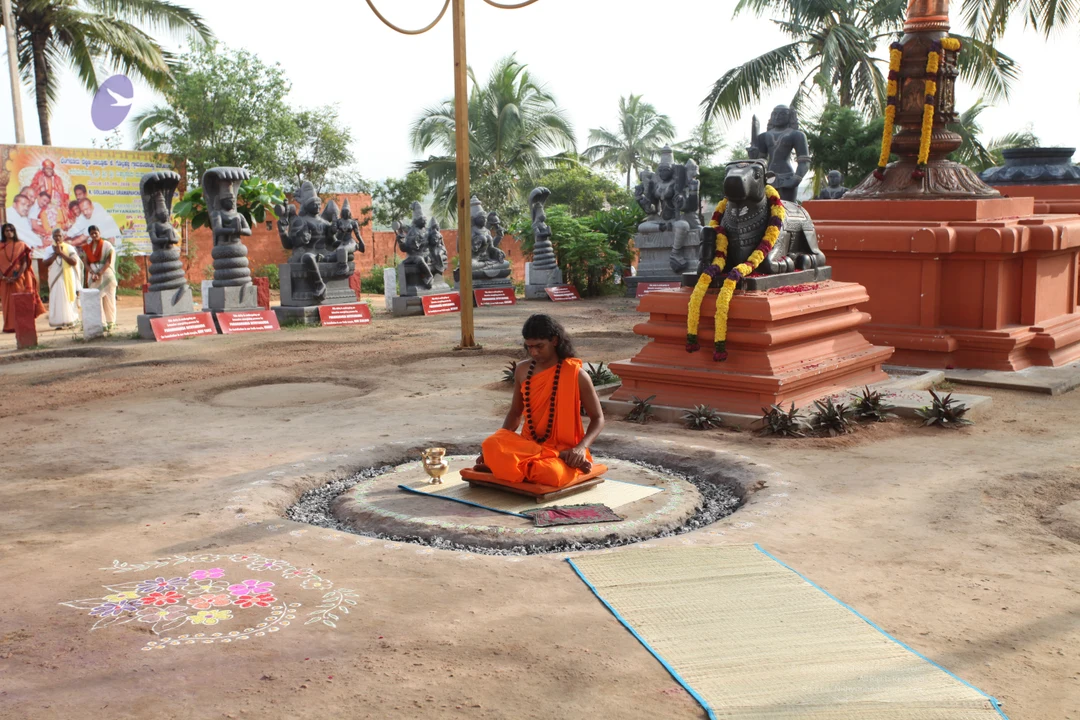
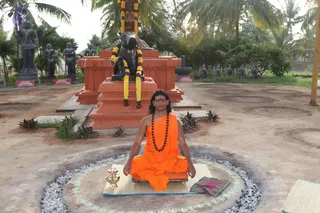
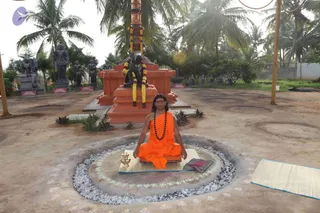
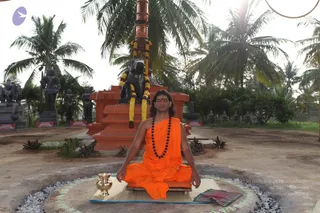
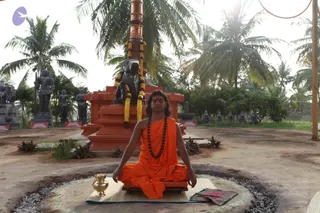
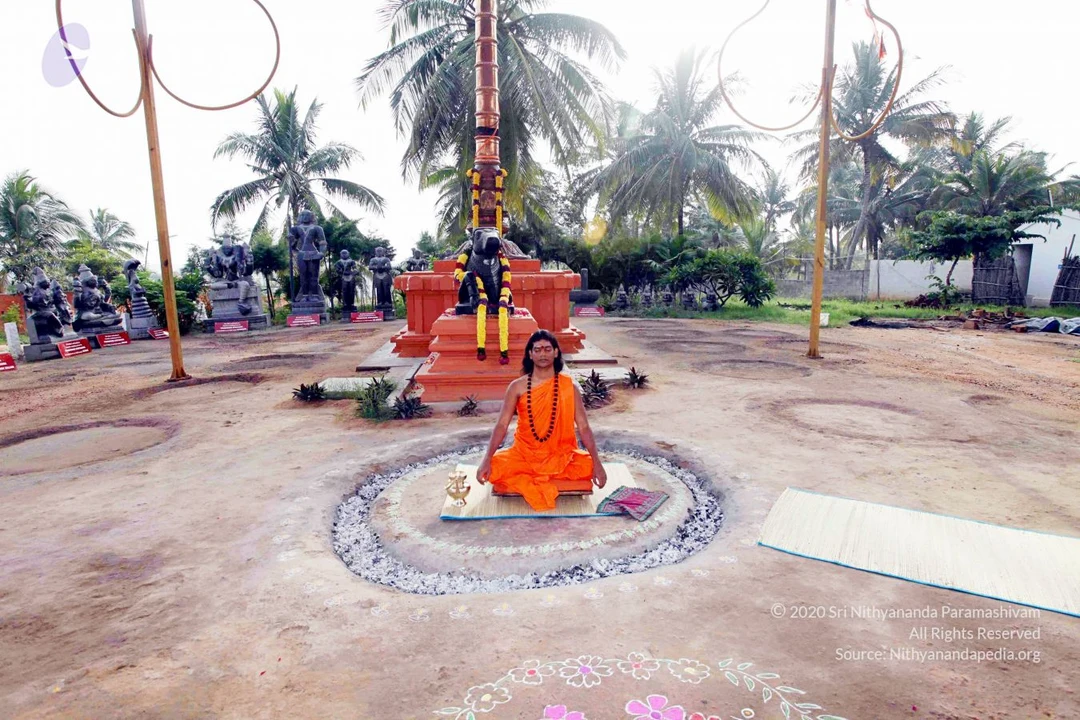
Outdoor photo of a man seated cross-legged in meditation on a low wooden platform within a circle of white stones and green patterned edging. He wears an orange-saffron robe, a rudraksha mala of dark beads, and a red tilak on his forehead, with eyes closed and hands resting on his knees. Beside him sits a small brass object and a folded magenta cloth on a straw mat. Behind him stands an orange-red stepped pedestal topped by a black stone Nandi bull draped with garlands of orange and purple flowers, and a tall object above. Dark stone statues stand on the left, with palms and green shrubs in the background. Probable Swamiji cues: long swept-back hair, saffron robe and rudraksha mala, with a meditative posture and orange garlands in the setting.A photograph of a single seated figure in an outdoor temple courtyard under palm trees. A man with long dark hair and a yellow-orange forehead mark sits cross-legged on a mat and wooden seat, wearing an orange-saffron robe and a dark rudraksha mala, eyes closed in meditation. He sits inside a circular raised ring of ash or white powder with green flower decoration around its edge. Behind him stands an orange-red brick platform with a dark stone Nandi-style bull figure draped in yellow and white flower garlands, beneath a tall orange kalasha-like pillar. Dark stone deity statues and small red-bordered signboards stand in the background, with a brass lamp in front of him. Coconut palms and a boundary wall frame the scene.A man sits cross-legged in meditation on a woven mat over a wooden platform outdoors, eyes closed and hands resting on his knees. He wears a saffron-orange cloth draped over his body and a long necklace of dark rudraksha beads, with a red tilak on his forehead. Behind him stands a dark stone Nandi bull draped with yellow and purple marigold garlands, set on an orange stepped pedestal beneath a tall pillar. Coconut palms and black stone deity statues surround the open courtyard. A brass kalasha-style vessel sits on the mat beside him, and a small ring of white ash or lime marks the ground around the platform.A seated man in an orange saffron robe and a dark rudraksha mala meditates with eyes closed on a low wooden seat over a woven mat, outdoors in a palm-lined garden. Behind him stands an orange stepped pedestal topped by a dark stone Nandi bull, draped with yellow and orange marigold garlands, and a tall copper-capped pillar rises above. A brass vessel sits on the mat at his left, and dark stone figures and small red-bordered signboards surround the area under a bright sunlit sky. The man's appearance, with long hair, orange robe and mala, is a probable match for a person, though this cannot be confirmed; he is depicted as a meditating sannyasi.Outdoors in a palm-shaded temple courtyard, a man sits cross-legged in meditation on a woven mat and wooden seat, eyes closed. He wears a saffron-orange robe draped over his shoulders and a dark rudraksha mala around his neck, with a red bindu on his forehead. A brass kalasha-style vessel sits before him on a circle of ash-white ground. Behind him stands a red brick platform with a black bull statue (Nandi) draped in yellow and purple flower garlands, flanked by dark stone deity statues and small red signboards. Palm trees and green foliage frame the scene under bright sky.A photograph of a man with long dark hair and a red bindi seated cross-legged in meditation on a raised mat within a circular ring of white stones on sandy ground. He wears an orange saffron robe and a long dark rudraksha mala, with eyes closed and hands resting on his knees. Behind him stands a tall orange pillar draped with yellow and white marigold garlands, flanked by a dark stone Nandi bull on an orange pedestal. A brass kalasha sits on the mat beside him. Palm trees, dark stone sculptures and a palm-lined grounds form the background.

PADA-PUJA
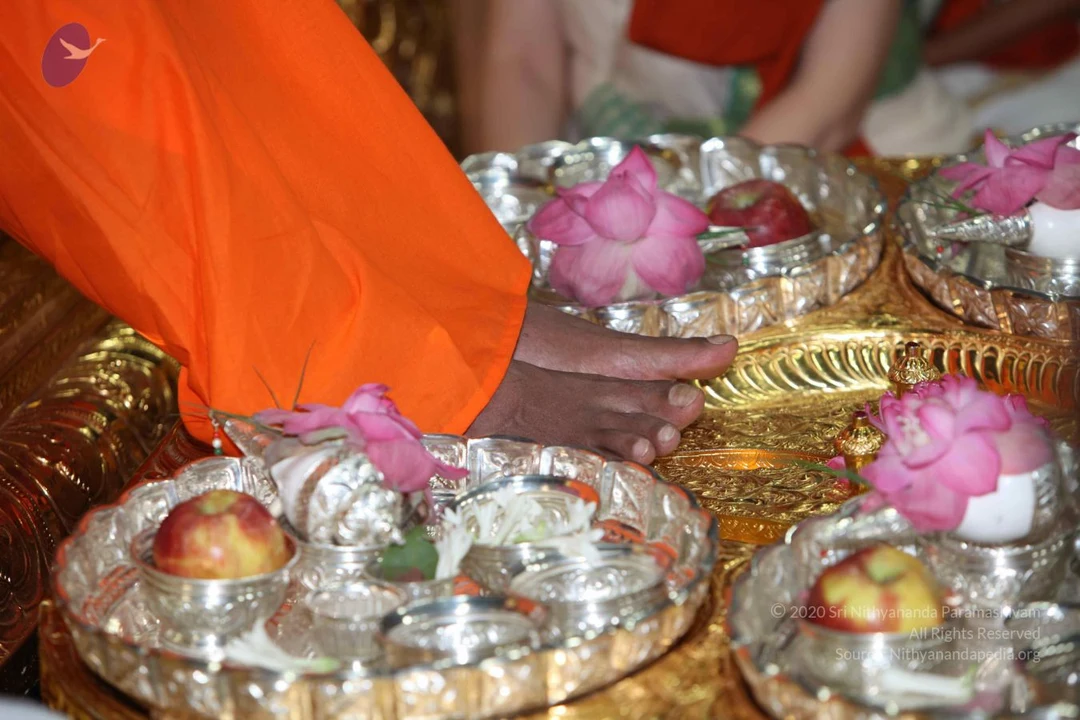
53 photosSource gallery
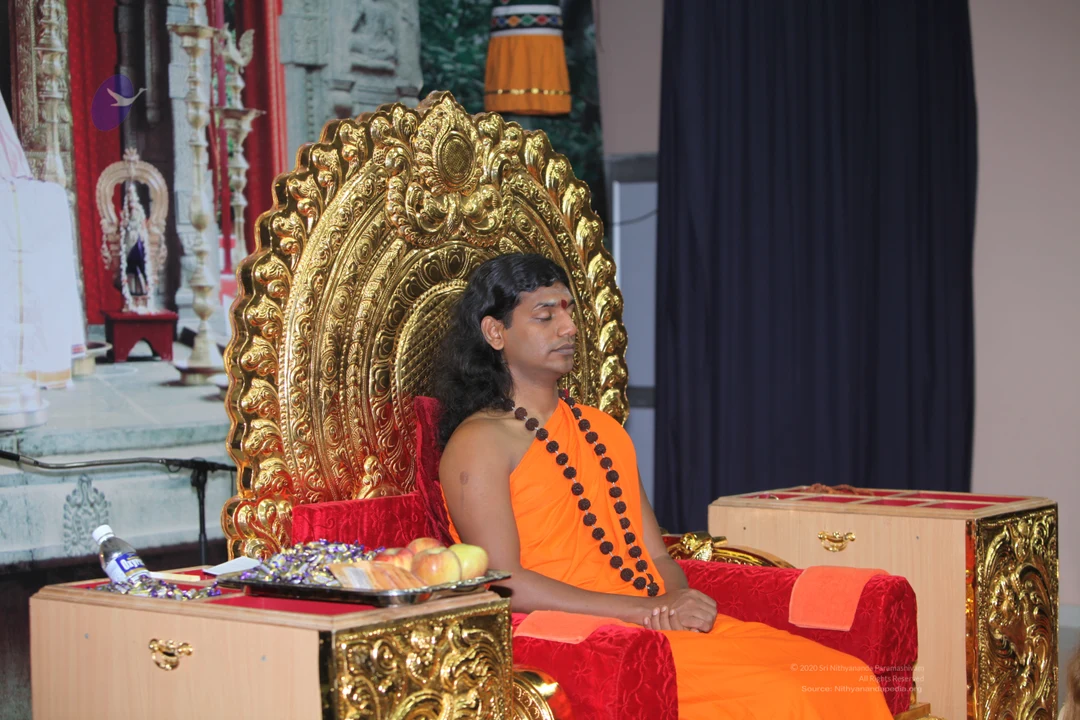
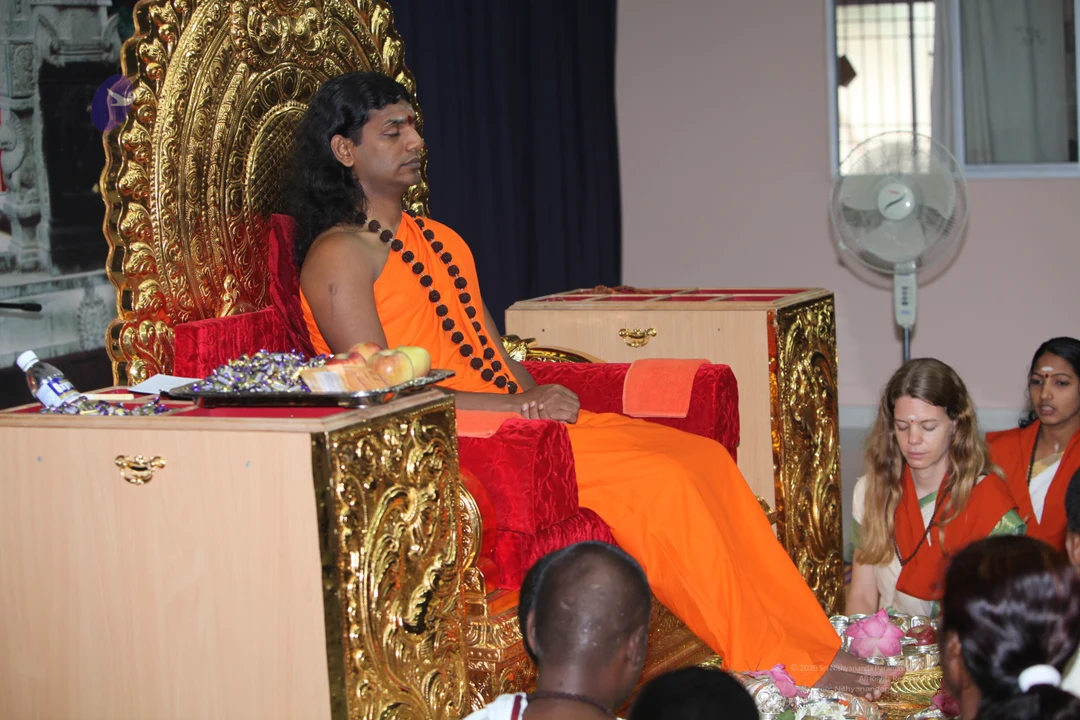
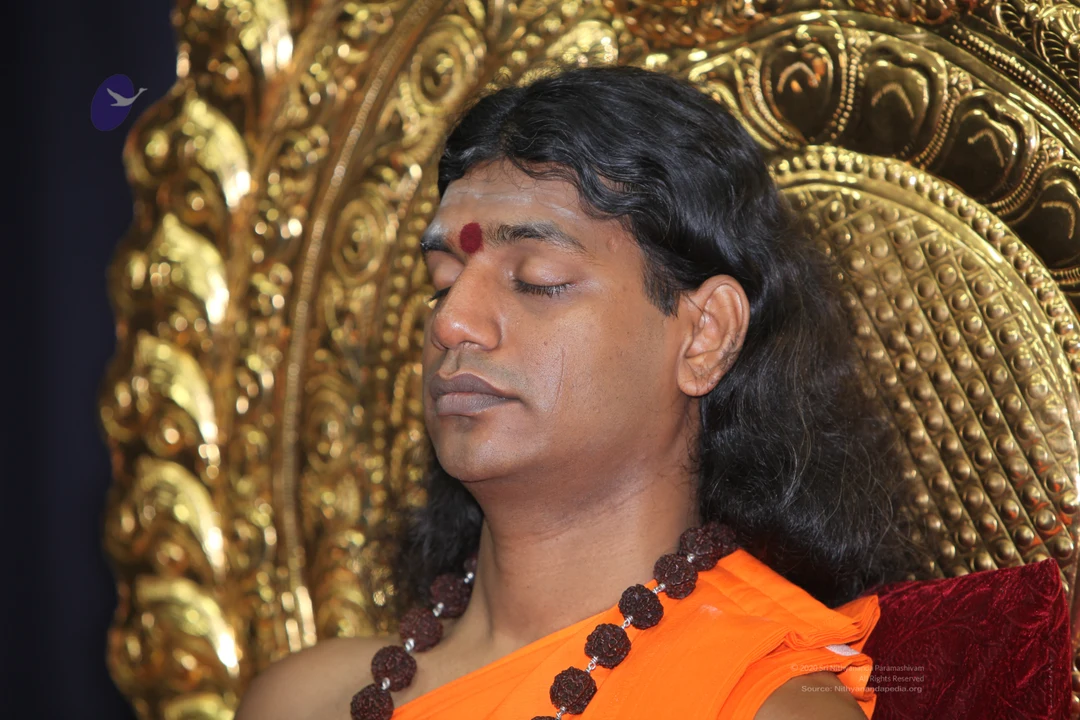
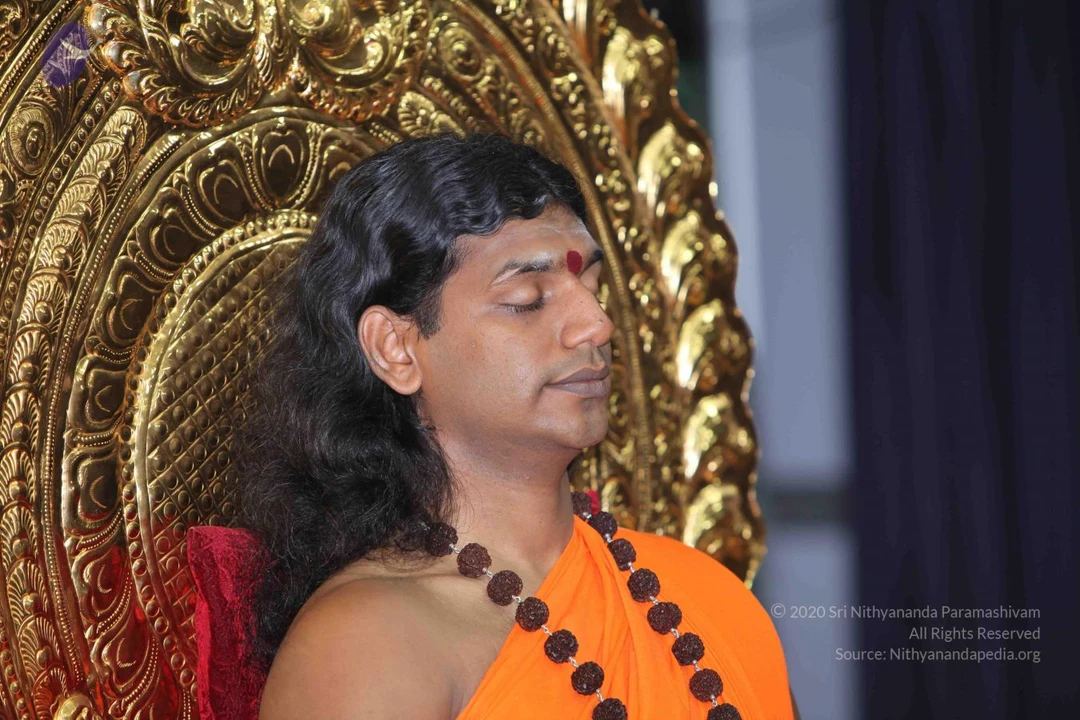
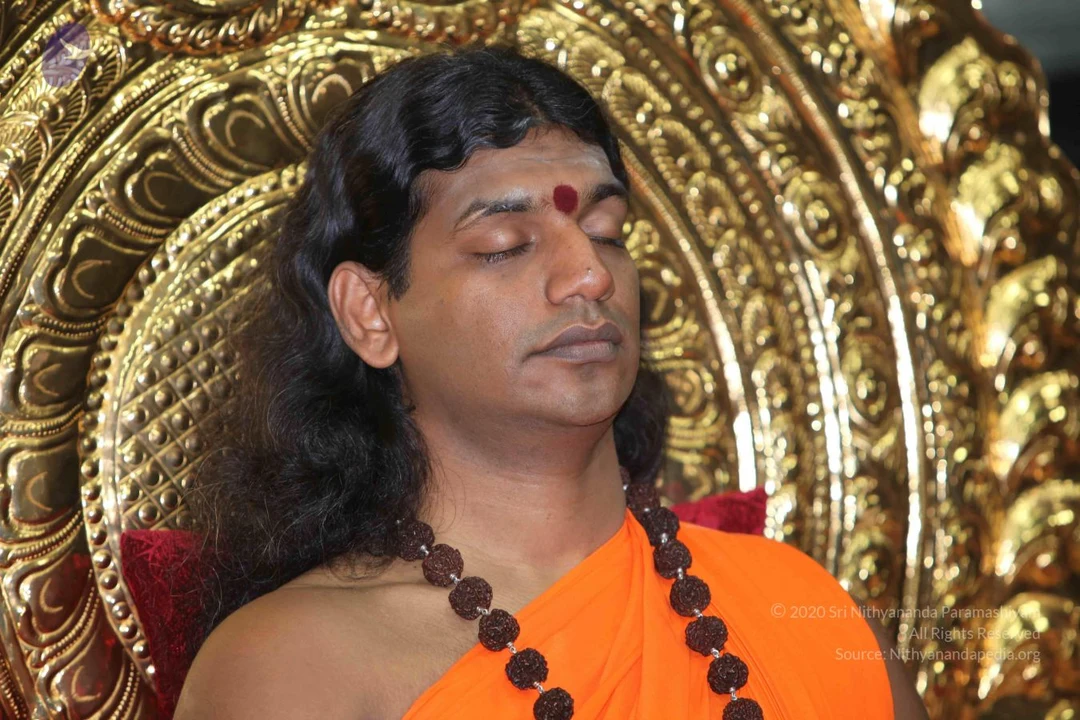
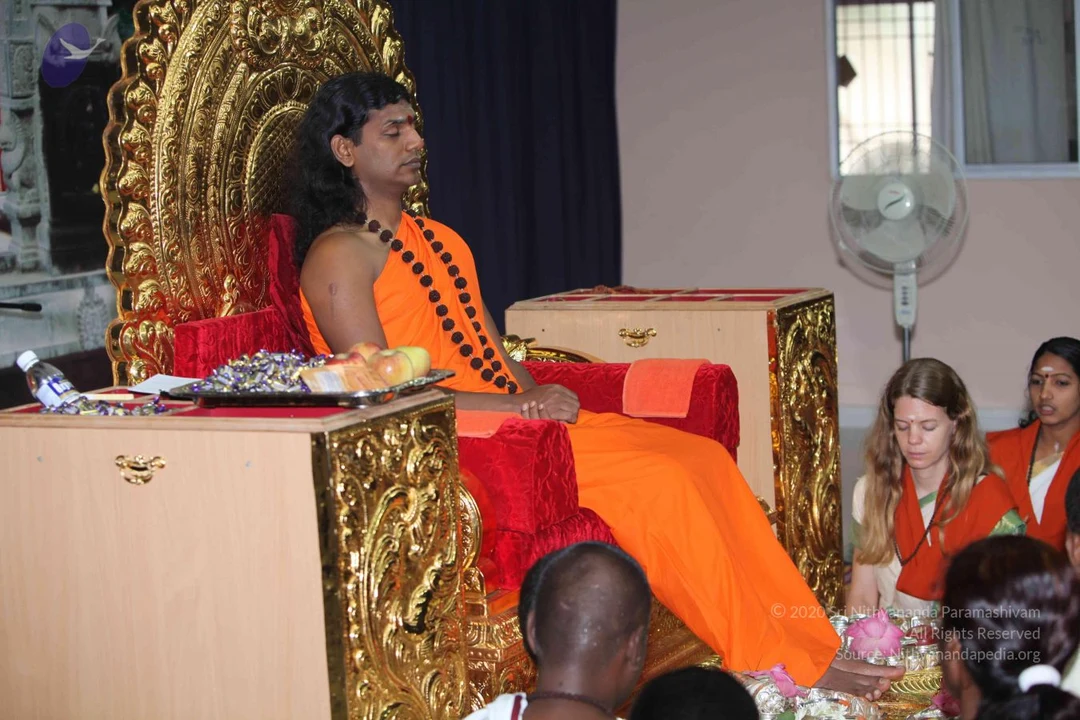
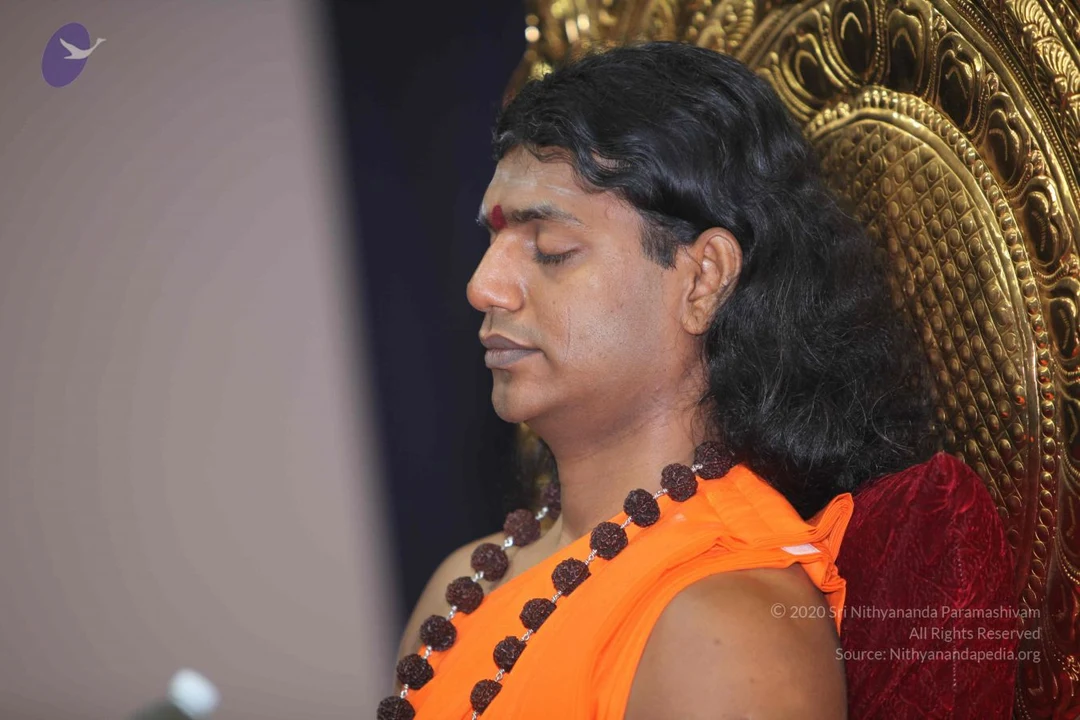
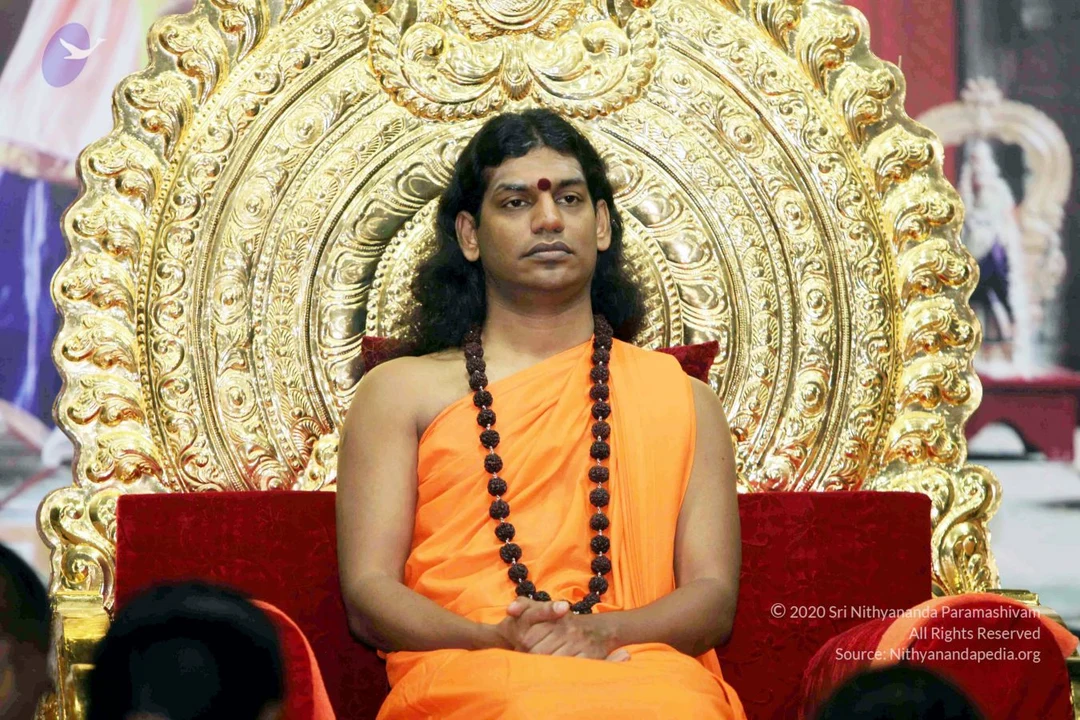
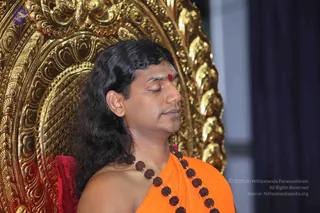
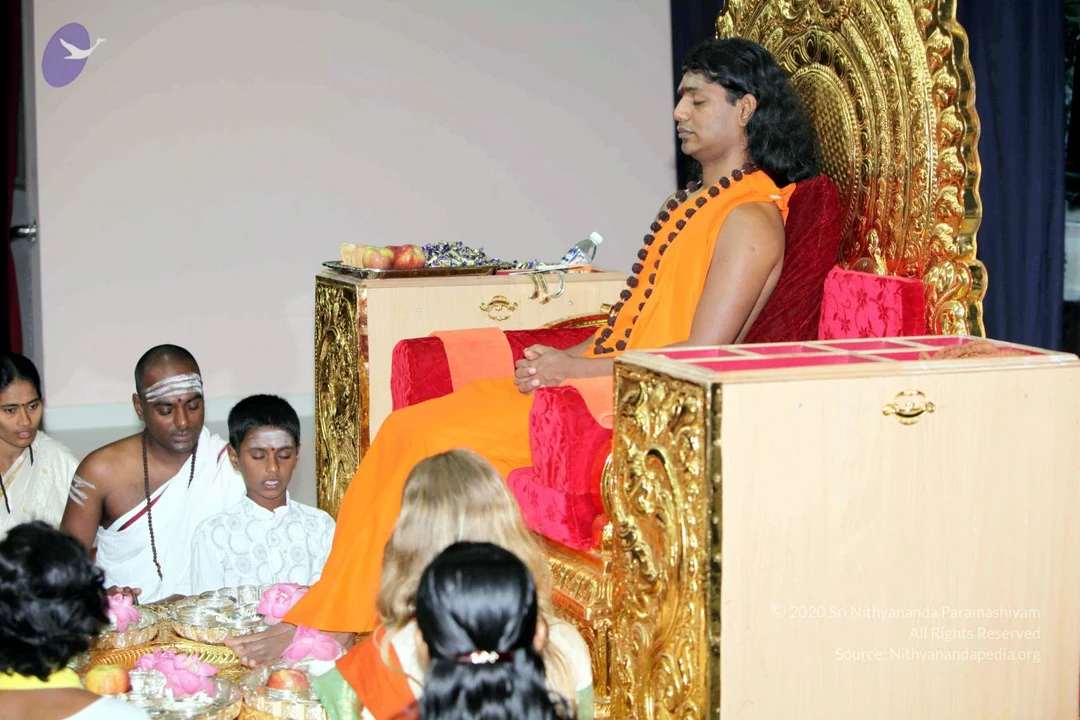
A man with long swept-back dark hair and a red tilak on his forehead sits eyes-closed on an ornate gold-carved throne with red velvet upholstery, wearing an orange robe and a dark rudraksha mala. His hands rest folded in his lap. Beside him stands a small side table holding a tray of apples, sweets, and a water bottle. Behind the throne are gold oil lamps, a deity murti in a shrine niche, and a dark blue curtain. Swamiji (probable): long swept-back hair, saffron robe and rudraksha mala on a throne, matching the page's talk.A photograph of a man with long swept-back black hair seated before an ornate gilded throne with repoussé floral and scrollwork carving. He wears an orange saffron shawl over bare shoulders, a long rudraksha mala necklace, and a small red bindi on his forehead, with eyes closed in meditative stillness. Probable Swamiji: the long hair, saffron shawl, rudraksha mala and golden throne match the Paramashivam presentation cues; the page identifies him at this event. A dark curtain and a pale panel sit at the right edge.A man with long dark swept-back hair sits with eyes closed in meditation, wearing an orange saffron shawl over bare shoulders and a long rudraksha mala of dark brown beads. A red bindi/kumkum mark is on his forehead. He sits before an ornate gold-embossed throne with a red cushion behind him. Single person, photographed seated in a quiet posture.A man with long dark hair sits with eyes closed on an ornate golden throne with a red velvet cushion. He wears an orange saffron shawl over his bare shoulders and a long mala of dark rudraksha beads, with a red kumkum dot on his forehead. The gilded carved backrest frames him, and greenery shows at the upper right. Swamiji (probable) is shown in meditative repose on the peetha, with the cues of long hair, saffron shawl and rudraksha mala visible.A photograph of a man seated with eyes closed on an ornate gold throne with a carved, scrolled backrest and red upholstered cushions. He wears an orange-saffron robe, a long rudraksha mala around his neck, and a small red bindi on his forehead, with hands resting in his lap. Behind him a large backdrop shows a red-robed figure with garlands and a temple-like scene, and green foliage on the right. A tray of apples and sweets sits on a gold table at left, and a microphone stand is visible. Swamiji (probable): the seated man has long, swept-back hair, saffron robes, rudraksha mala and a throne, matching the page's noted presence of Swamiji. One person is visible.A man with long swept-back dark hair, wearing a saffron-orange robe with a black rudraksha mala across the chest, sits eyes closed on an ornate gold-and-red throne with a carved golden backrest. Beside him a tray holds apples and sweets, and a water bottle sits on a small table. Devotees sit on the floor: a woman with long light hair in an orange top and a woman in orange with a red bindi kneel nearby, and bald heads of people are visible in the foreground. A pink flower rests near a brass vessel at the lower right. A white wall fan and window appear behind. a person seated in a satsang setting, with devotees.
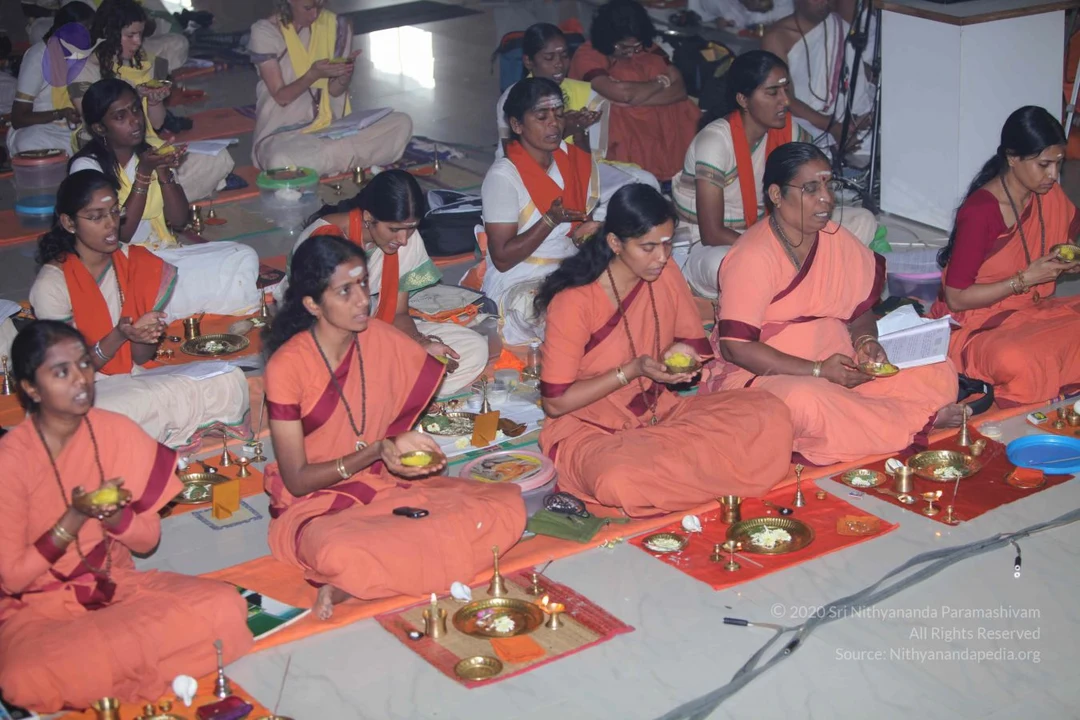
NITHYA-SATSANG
15 photosSource gallery
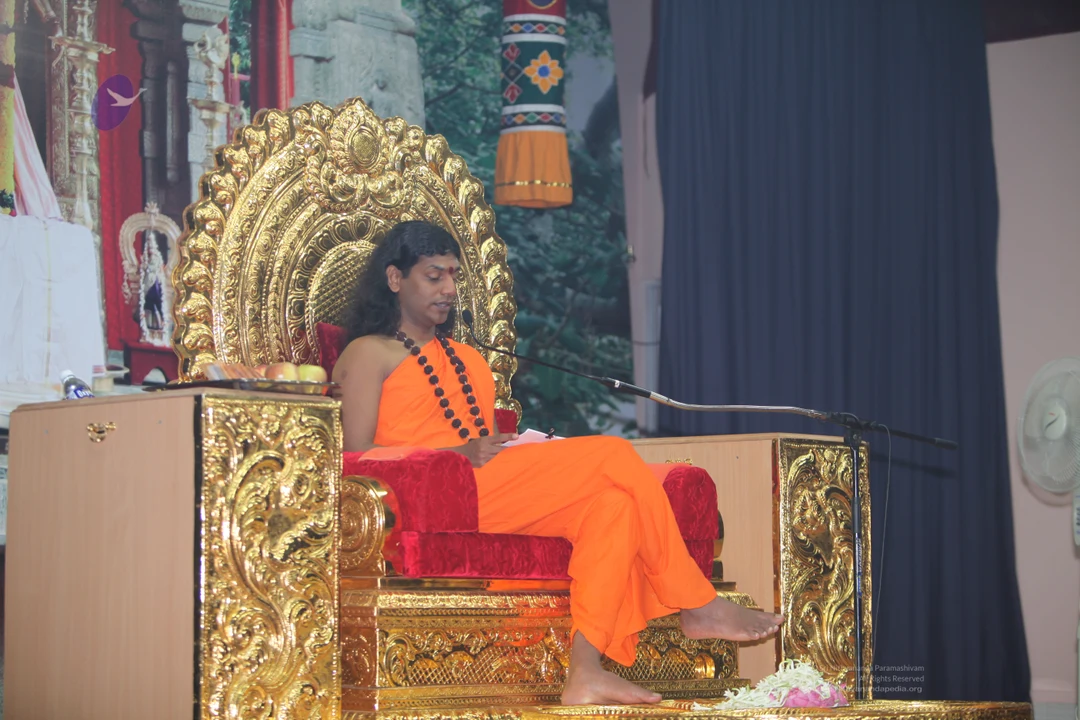
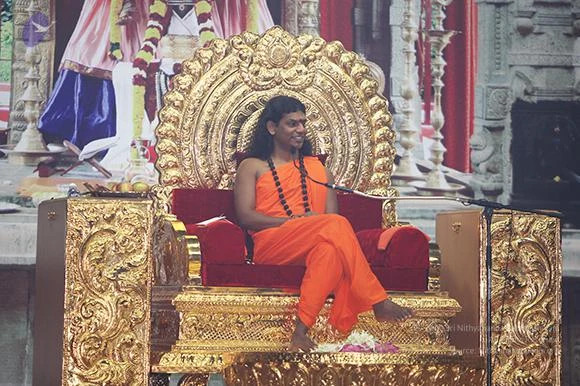
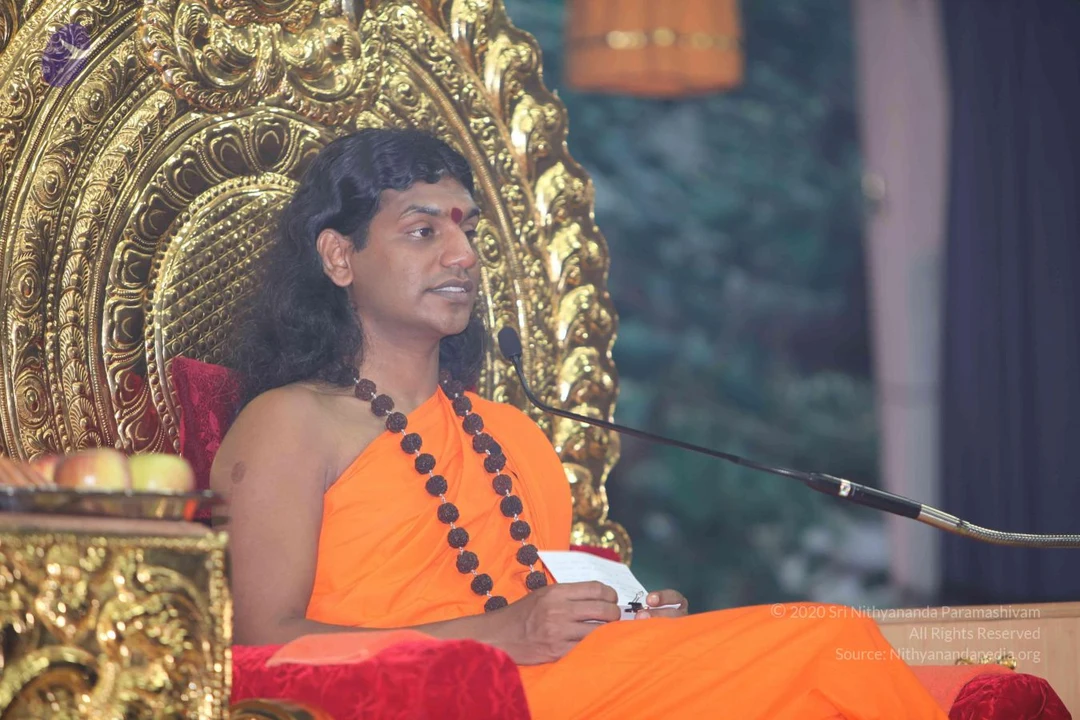
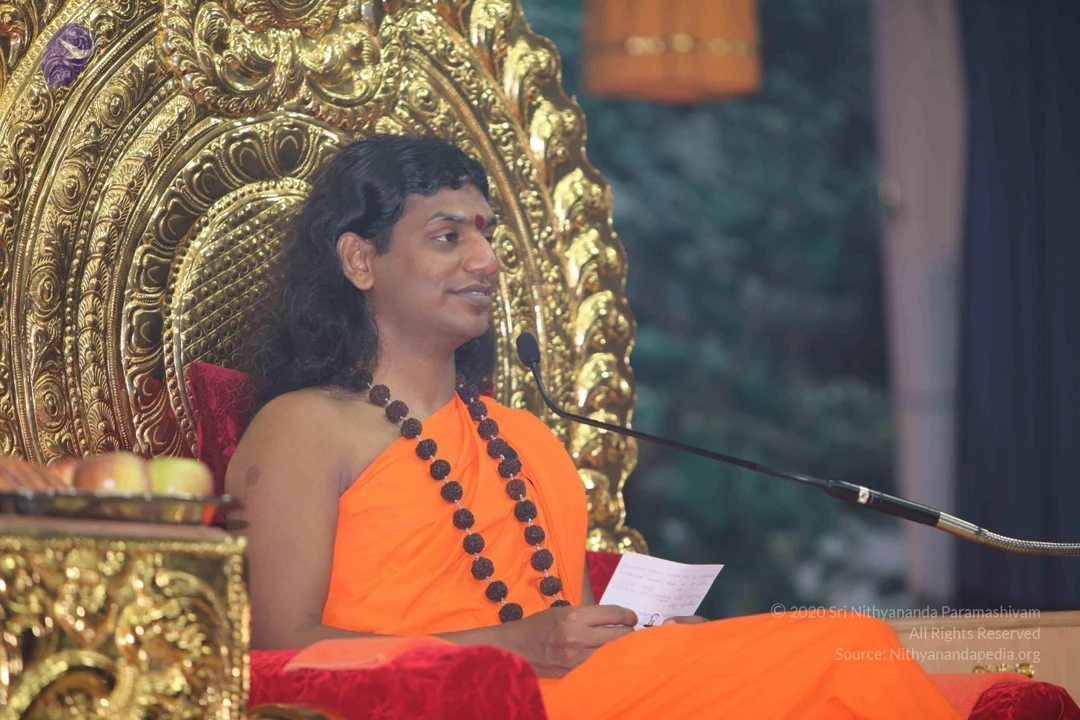
A seated man in saffron-orange robes sits on an ornate gold throne with red velvet cushions, hands pressed together in anjali before his chest, eyes closed. He wears a long rudraksha mala and a small red bindi on his forehead, with a microphone stand in front of him. Behind the throne are large painted backdrop panels with pink, blue and white draped figures. The page describes a morning satsang talk on engrams, and the throne and robes match that setting; the appearance-based cues are long swept-back hair, saffron robes, rudraksha beads and a gold throne, so this is a probable Swamiji seated in person.A seated man in saffron-orange robes sits on an ornate golden throne with a red cushion, hands pressed together in namaste with eyes closed. He wears a long rudraksha mala with dark beads, a red tilak on his forehead, and has long dark hair. A microphone stand is at his right, and a golden decorated table holds fruit and a tray at left. A small red cloth lies in front, and an orange drape hangs in the background.A seated man in an orange saffron garment sits on an ornate gold throne with a red velvet cushion and armrests, reading from a small booklet. He has long swept-back hair, a red bindi on his forehead, and wears a dark rudraksha mala around his neck. Behind him are golden temple-style decorations, a red and gold hanging, and a dark blue curtain. A microphone stands at his side, and a fruit offering and flower garland rest on the gold base of the throne. A probable Swamiji is shown in an appearance-based match with long hair, saffron clothing and rudraksha beads, giving a talk seated on the throne.A seated man in saffron-orange robes, wearing a long rudraksha mala with a red bindi on his forehead, sits on an ornate gold throne with a red cushion. He holds a small white card in both hands and looks down at it while speaking into a microphone on a stand. Long dark hair falls past his shoulders. A brass tray with apples sits on a gold side table at left, and a green foliage backdrop and dark curtain fill the background. Appearance suggests a person, seated on the throne as the satsang speaker, consistent with the page's talk.A man seated on an ornate gold-carved throne speaks into a microphone during a satsang talk. He wears an orange saffron robe draped over one shoulder and a long dark rudraksha mala. He has long swept-back dark hair and a small red bindi, and holds a folded paper in his hands. Fruits sit on a gold side table to his left, and red cushions and a dark curtain frame the scene. Appearance-based candidate: a person, seated and speaking as the teacher at the discourse.A man in orange saffron robes sits on an ornate gold throne with a carved, repoussé backrest, a red cushion beneath him. He wears a long rudraksha mala necklace with dark beads and a small red bindi, has long swept-back dark hair, and holds a small white paper in his hands while looking to his side. A black microphone stand is in front of him, and a brass tray with fruit sits at left. The setting appears to be a satsang discourse hall with green foliage and an orange lamp in the background. a person appears to be seated in the speaker's position, matching the page's reference to a morning message talk.

SARVA-DARSHAN

3 photosSource gallery
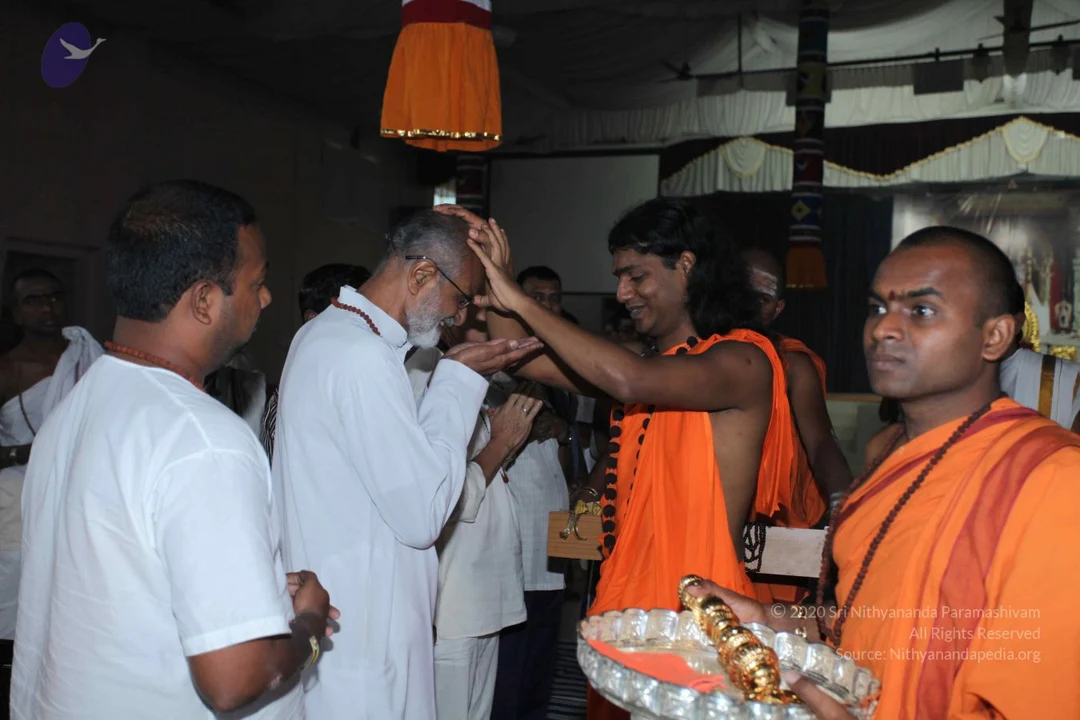
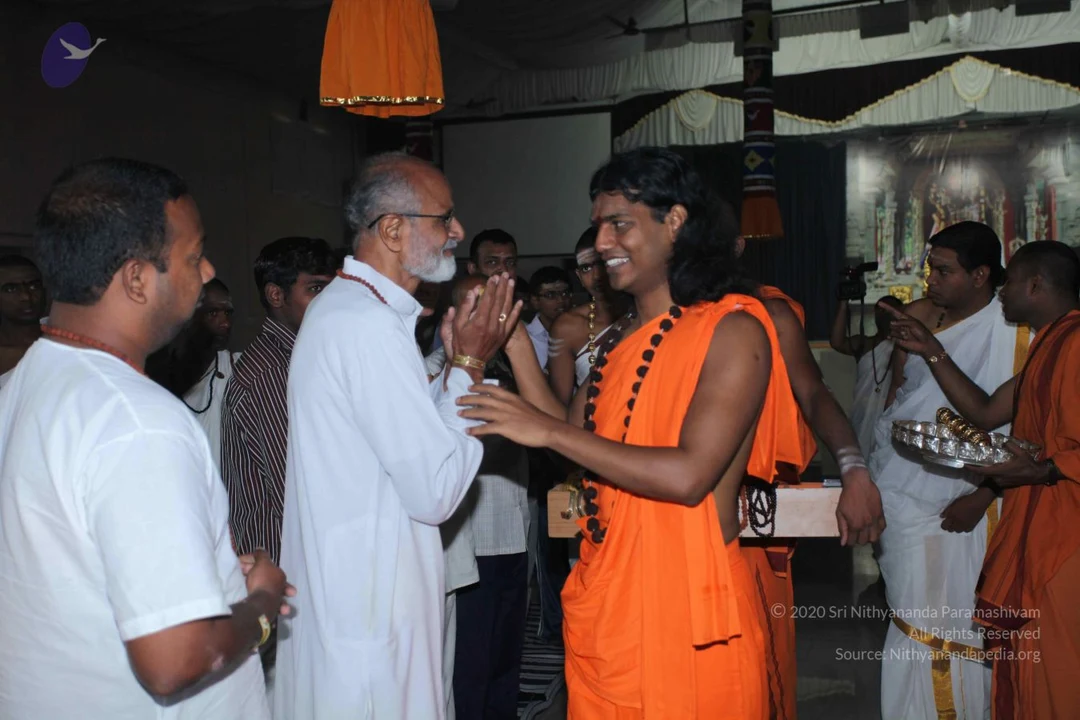
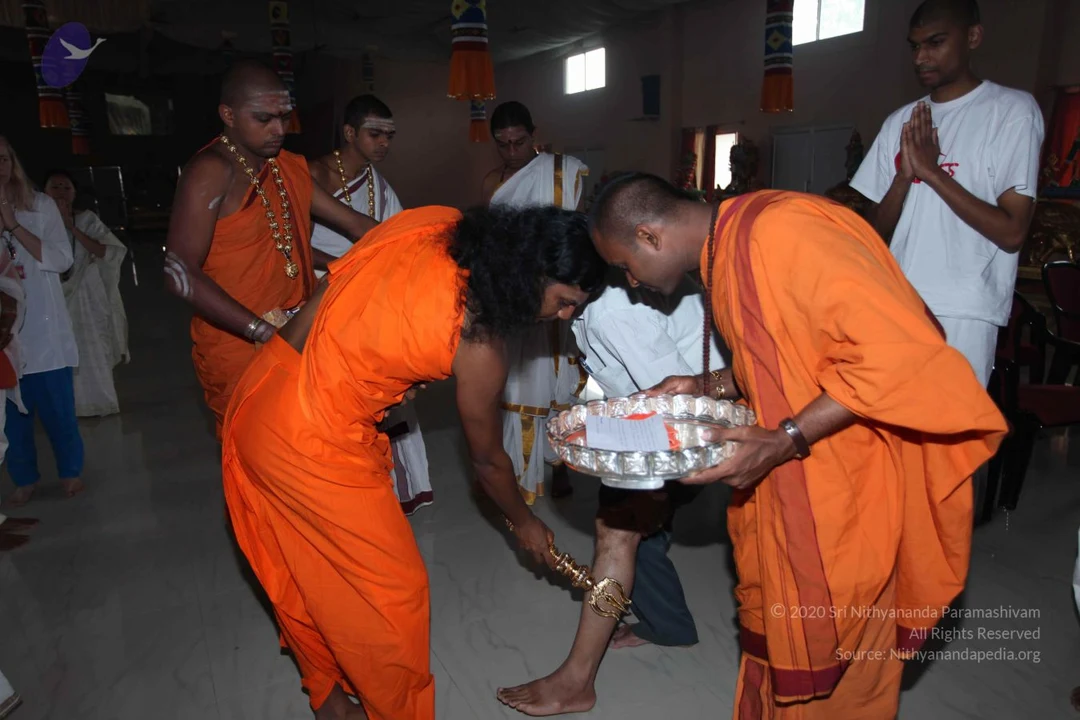
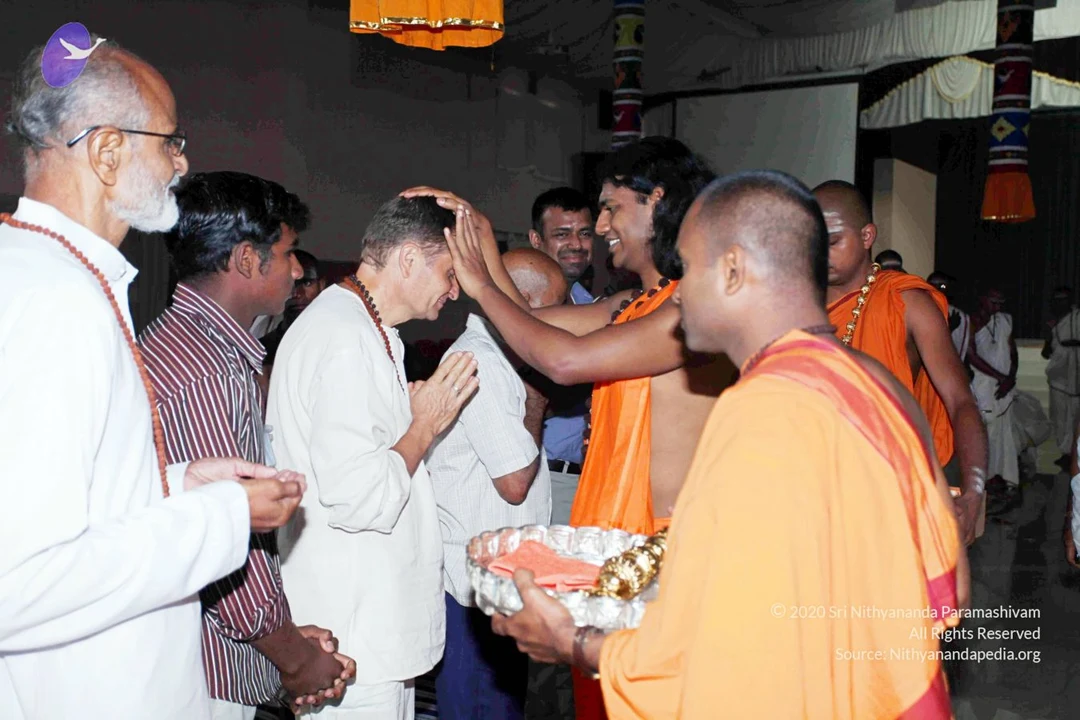
A photo of a blessing moment in an indoor hall with a dim, warm atmosphere. A man in an orange saffron robe with rudraksha beads and a dark wrap stands center-right, his hand raised to the forehead of an older bearded man in a white shirt and white dhoti-style clothing with a red-and-white rudraksha mala. Nearby, a man in white shirt on the left watches with hands together, and a shaved-headed man in orange robes with a rudraksha mala on the right holds a silver tray with gold items. Behind them, white and gold drapery, orange hanging fabric and a framed image are visible.A photograph inside a hall with a decorated backdrop and hanging orange lamp shade. A man with long dark hair, wearing an orange saffron robe, a black rudraksha mala and a gold necklace, stands facing an older bearded man in white kurta with a red beaded mala, who presses his palms together in greeting. Others in white and orange clothing stand around, and a man in white holds a silver tray of items at right. a person candidate is present, identified by long swept-back hair, saffron robe and rudraksha mala.A ritual photo in a bright hall with white walls and tall windows. In the centre, a figure with long dark swept-back hair wears orange robes and a gold ornate necklace and bends forward to wash or touch the bare foot of a seated person. Beside them, a man in orange robes with a rudraksha mala holds a silver tray with a dish of offerings. Behind them, men in white dhotis with sacred marks on their foreheads and gold-threaded cloths stand, and a young man in a white shirt with palms pressed together watches. Hanging festoons decorate the upper wall.

SCENERY

15 photosSource gallery
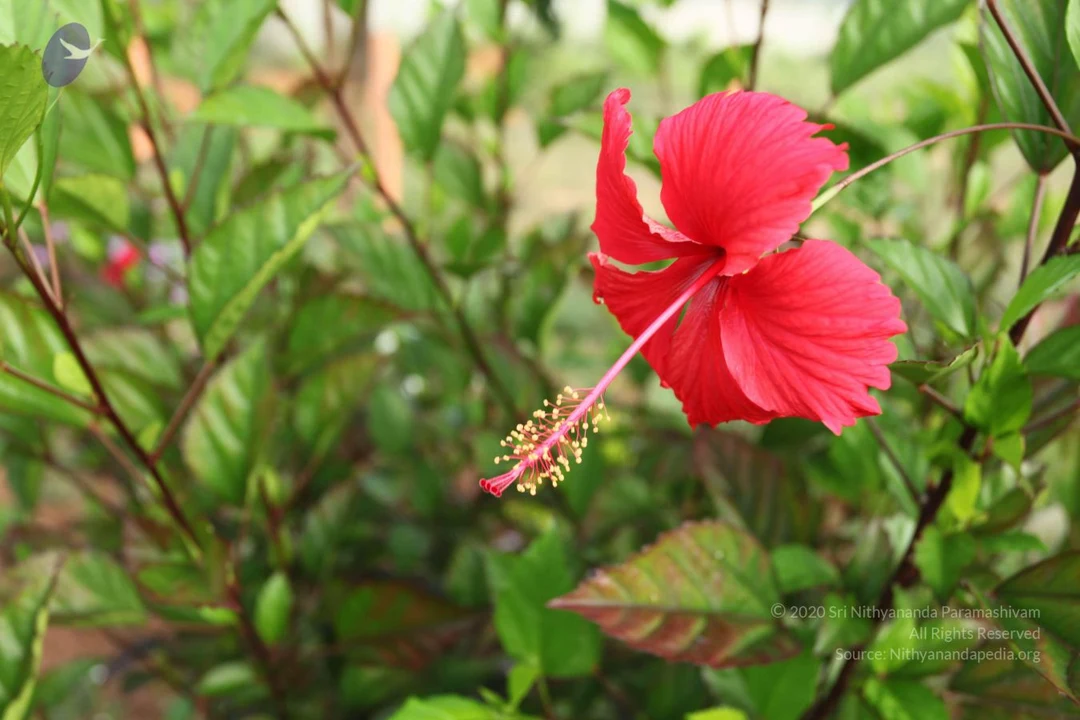
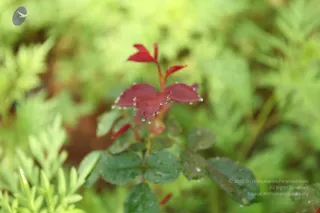
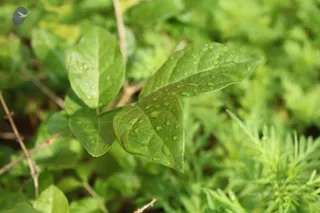
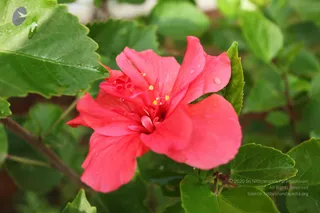
Close-up photograph of a green plant in a garden, with slender feathery leaves and several small unopened green flower buds at the top of a stem. The background is softly blurred, showing a red-brick building and more greenery. No people are visible.A close photograph of a single pink-red rose in bloom with water droplets on its petals, set against a blurred green foliage background and a white wall with red vertical stripes. No people are visible. The rose is the sharp central subject.A close photograph of a single deep red rose in full bloom, with layered velvety petals and water droplets on its outer petals, set among green leaves and feathery fern-like foliage. Several unopened red rosebuds sit on thin stems in the background. No people or ritual setting is visible.A close-up photograph of a small plant with reddish-maroon young leaves and green leaves beyond, covered in water droplets after rain. The background is a soft blur of green foliage. No people, deities or ritual objects are visible.Close-up photograph of green leaves on a plant with small water droplets scattered across their surfaces, set against a soft, blurred background of more green foliage. No people are visible. The leaves show prominent veins and the droplets catch light.A close-up photograph of a single red hibiscus flower in bloom, with five broad petals, a central cluster of yellow stamens and a pink stigma, and water droplets on its petals. Glossy green serrated leaves frame the flower, with a blurred green foliage background. No people are present.

More Photographs from the day
83 photosSource gallery
A photograph of an outdoor temple courtyard with sandy ground and tall coconut palms. A single person sits cross-legged in meditation posture on a low platform inside a circle of white pebbles, wearing an orange-saffron robe and a long rudraksha mala, with hair falling loose. In front of them lie a small brass or gold ritual object and an open book. Behind the seated figure stands a red-orange plinth holding a dark stone bull (nandi) draped with yellow and orange marigold garlands, beneath a tall copper-coloured pillar. Dark stone deity murti and figures line the courtyard, some marked with red placards. Rangoli floral designs decorate the ground in the foreground, and a white woven mat lies to the right.A photograph of an outdoor ashram courtyard with sandy ground and palm trees. A lone seated figure in an orange robe and a rudraksha mala sits cross-legged on a mat in the centre, in front of a red-painted stone platform topped with a tall wooden pole and a dark stone statue draped with yellow and orange garlands. Rows of dark stone statues and small red signs line the left side, and tall poles with rope loops stand on either side. A white floor mat lies on the right, and a flower kolam is drawn in the foreground. Credit text reads 2020 Sri Nithyananda Paramashivam.A seated man in saffron-orange robes and a rudraksha mala sits cross-legged on a mat atop a circular raised platform of white stone chips in an open outdoor courtyard of packed earth. Behind him stands a tall red-and-gold pillar with garlands, flanked by black stone deity statues on pedestals and palm trees. A brass kalasha sits beside him, with decorative white rangoli patterns in the foreground and a rolled mat to the right.A man with long dark hair sits cross-legged in meditation with eyes closed on a low wooden seat atop a woven mat outdoors. He wears an orange saffron robe draped over one shoulder and a long necklace of dark rudraksha beads, with a red bindi on his forehead. Behind him a large black Nandi bull statue sits on an orange-red pedestal, draped with yellow and purple marigold garlands, below a tall copper-coloured pillar and palm trees. A brass kalasha vessel and a folded pink cloth lie beside him on the ground, with small grey statues in the background.A man with long dark hair sits cross-legged in meditation on a woven mat over a low wooden seat, eyes closed, wearing a saffron-orange robe draped over one shoulder and a long rudraksha mala of dark beads, with a red bindi on his forehead. Behind him stands a black stone Nandi bull draped with yellow and red marigold garlands, set on a red-orange stepped plinth beneath a tall copper-banded pole and palm trees. A brass kalasha-style vessel sits to his left and a folded pink cloth to his right, on a circular raised platform edged with white stones. Several dark stone statues stand in the background among garden plants. The scene is outdoors in soft morning light. The man appears to be a person in an appearance-based label: long swept hair, saffron robe and rudraksha mala are visible.Outdoor temple courtyard with palm trees and sandy ground. A man in an orange saffron robe with a rudraksha mala sits cross-legged in meditation on a mat atop a circular raised platform ringed with gravel. Long hair falls to his shoulders and he has a tilak on his forehead. Beside him is a brass kalasha pot. Behind the platform stands a red-orange shrine with a black Nandi bull statue draped in yellow and orange flower garlands, and a tall flagpole-like pillar. Black stone deity murti statues stand in the background among plants. A large colourful floral rangoli in pink, purple, red, yellow and white covers the foreground ground.