Skip to content
Thursday

4 February 2016

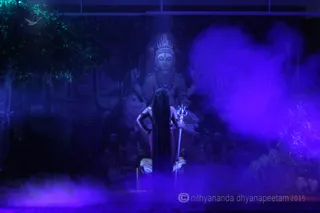
Inner Awakening Day 1. Seeking the Source - 'By Whom Am I' - Inauguration Of Kena Upanishad.

Dated photos
494
Source pages
1
Media
4
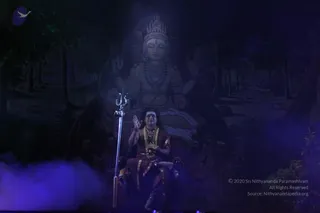
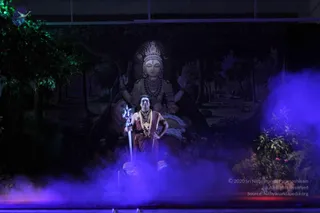
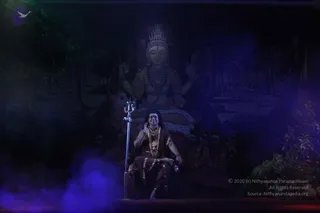
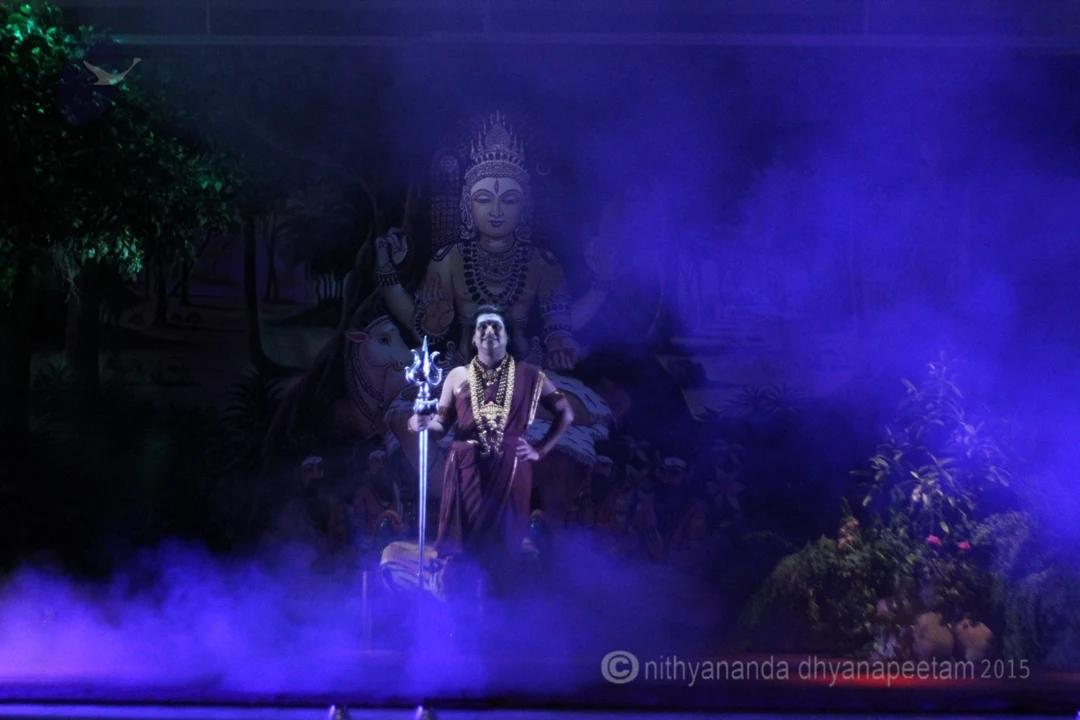
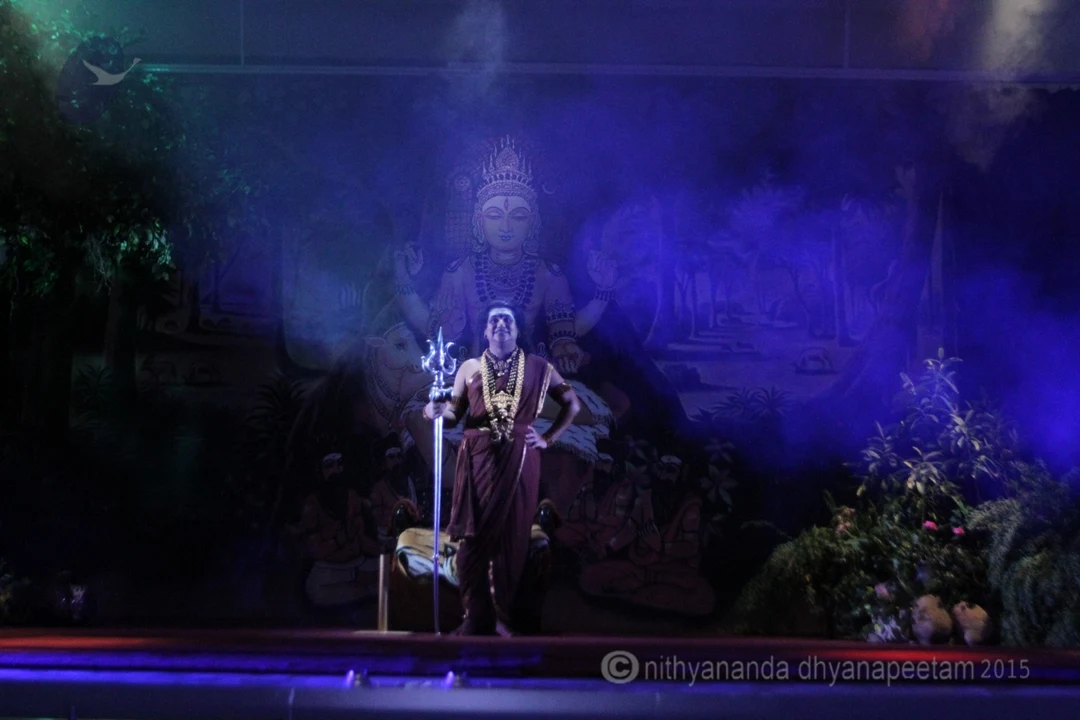
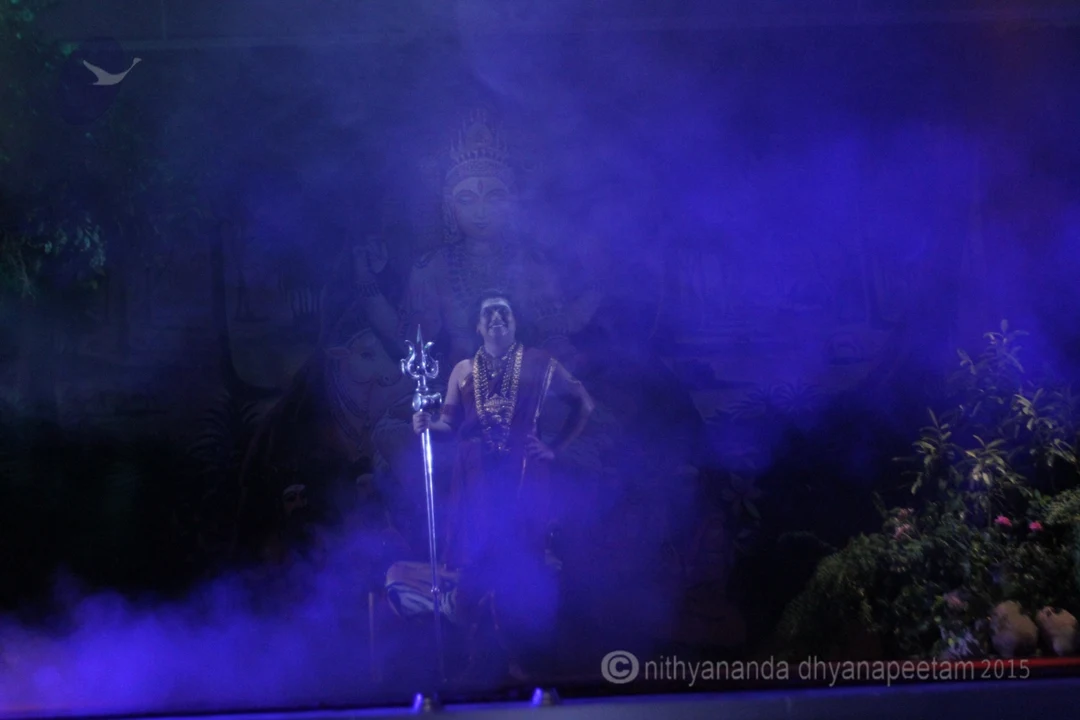
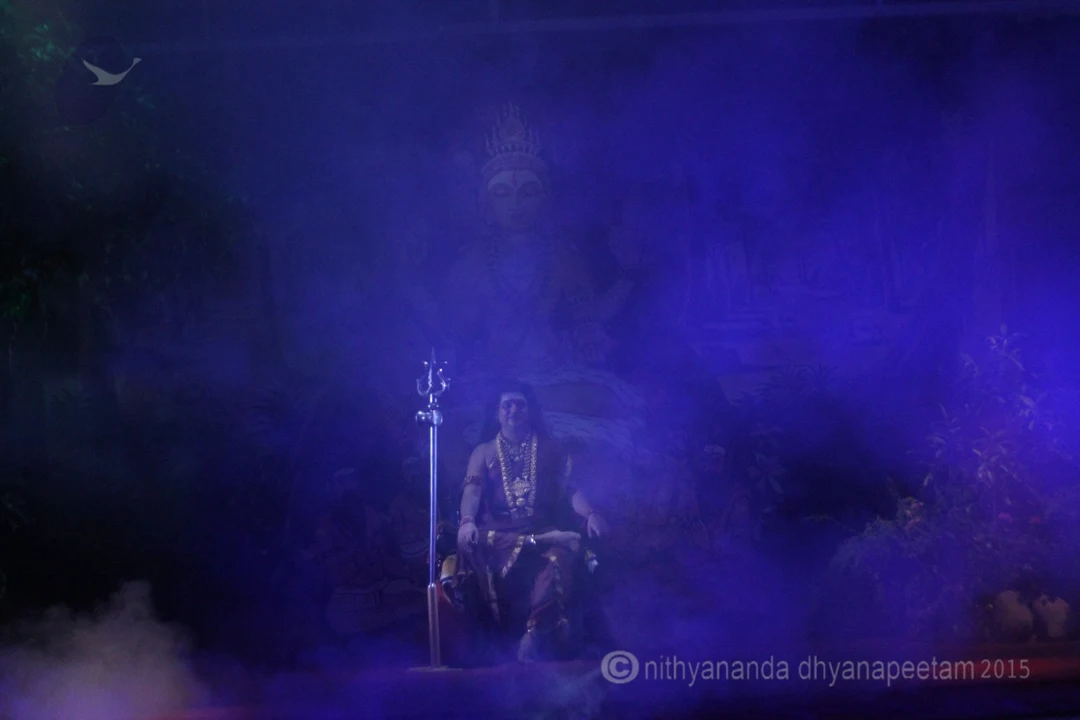
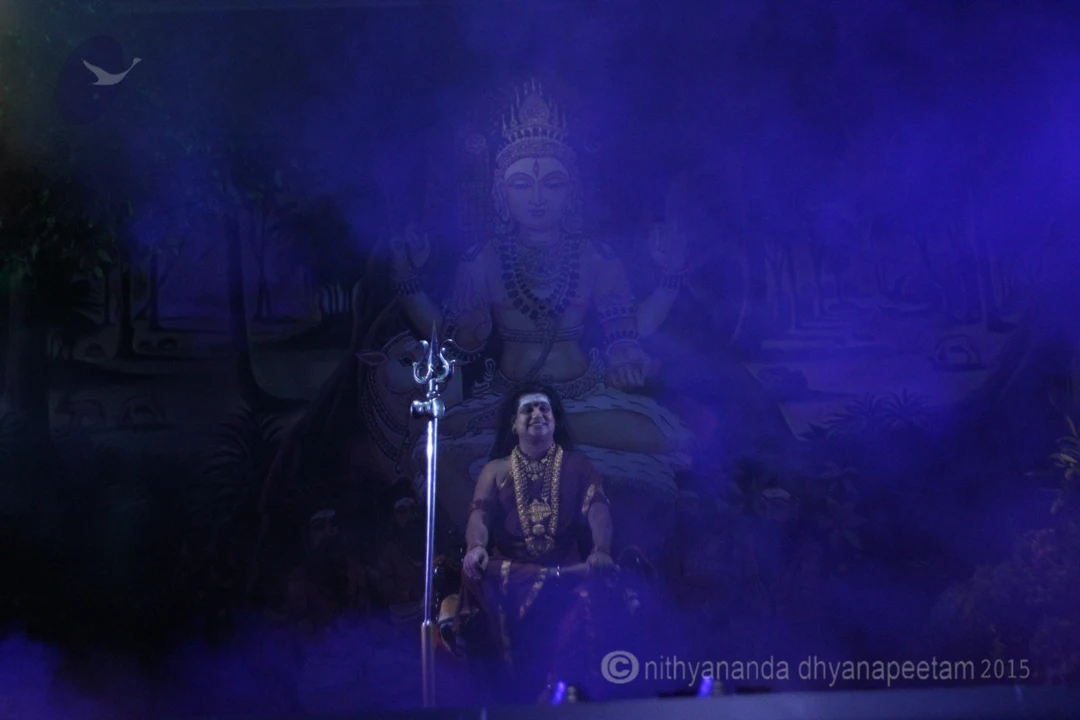
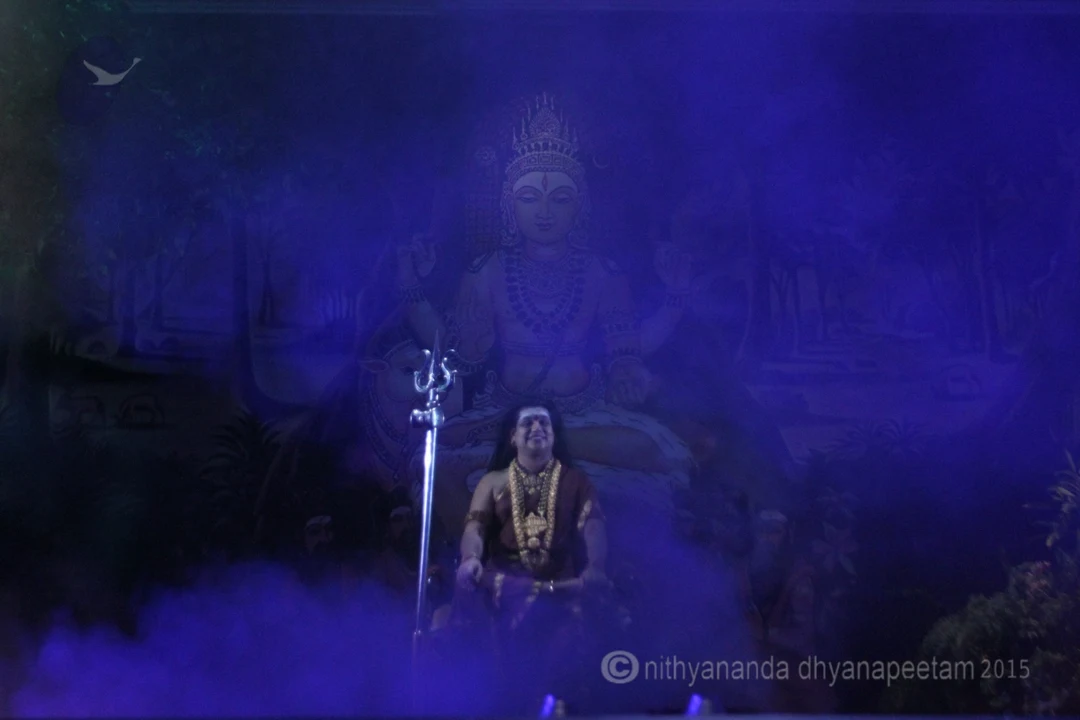
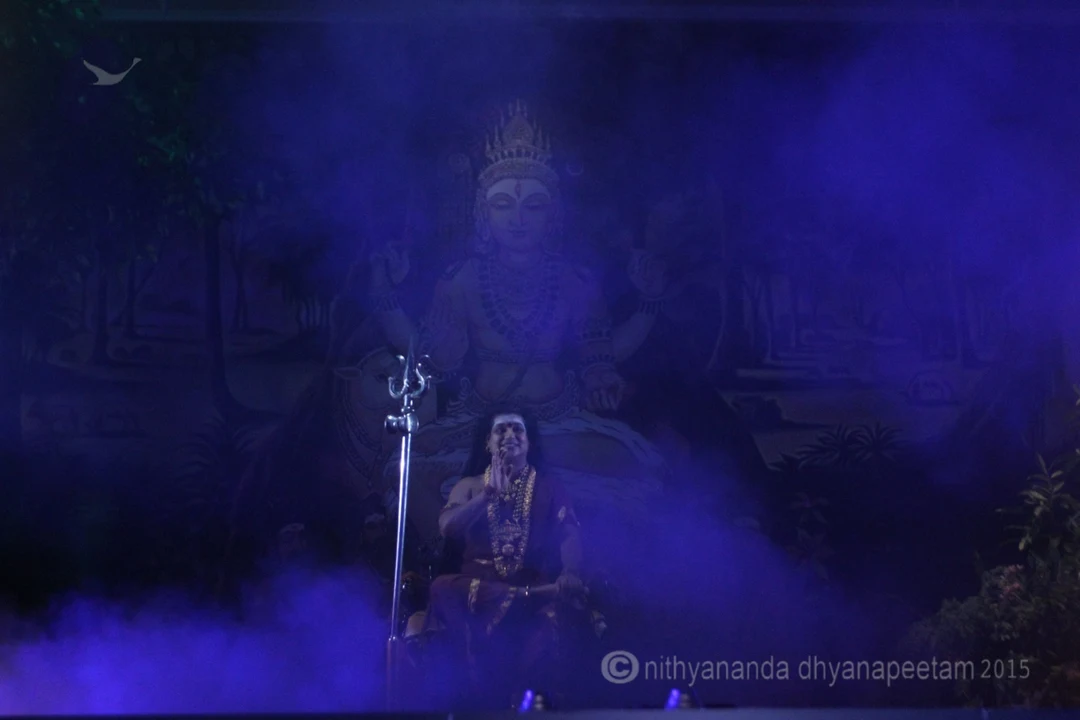
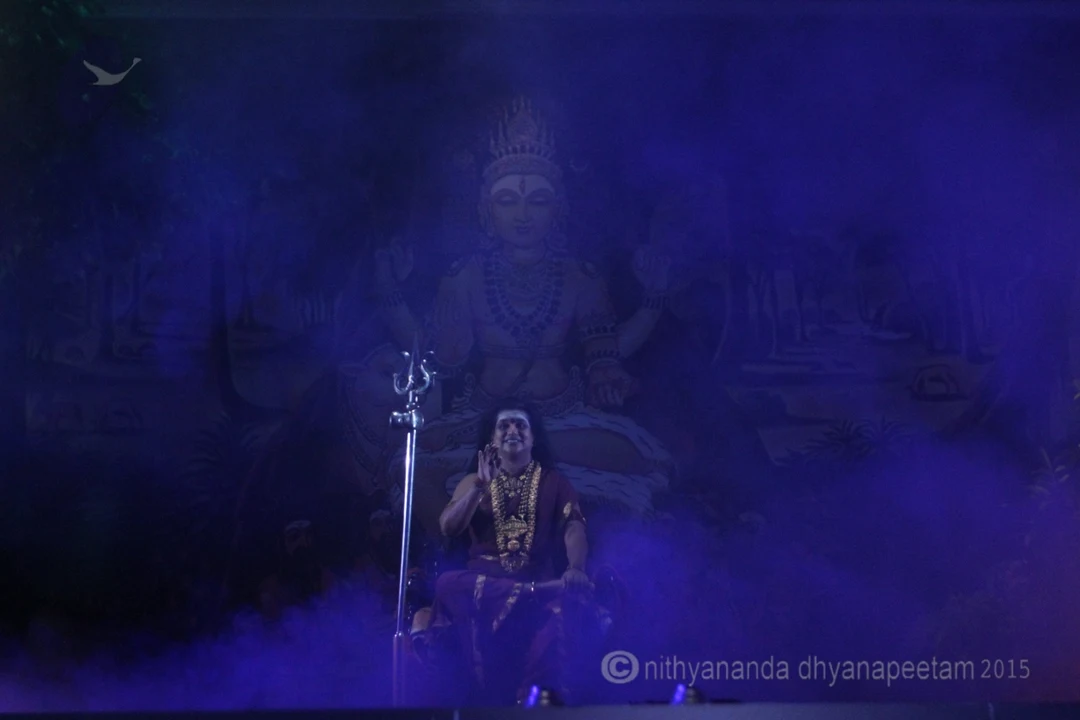
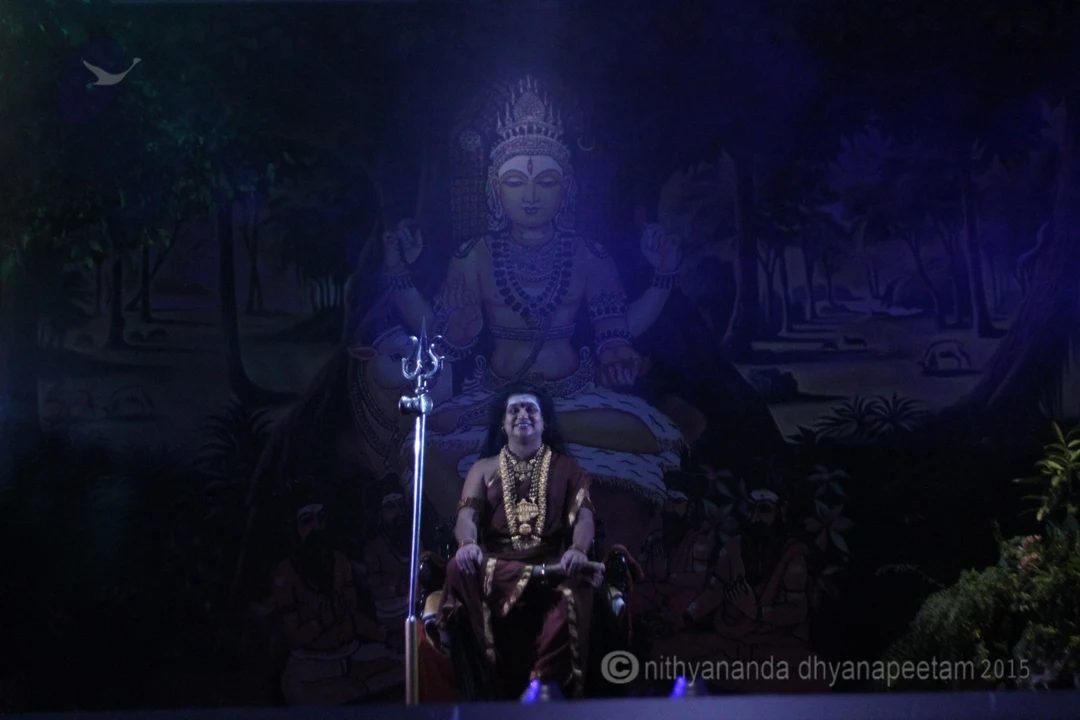
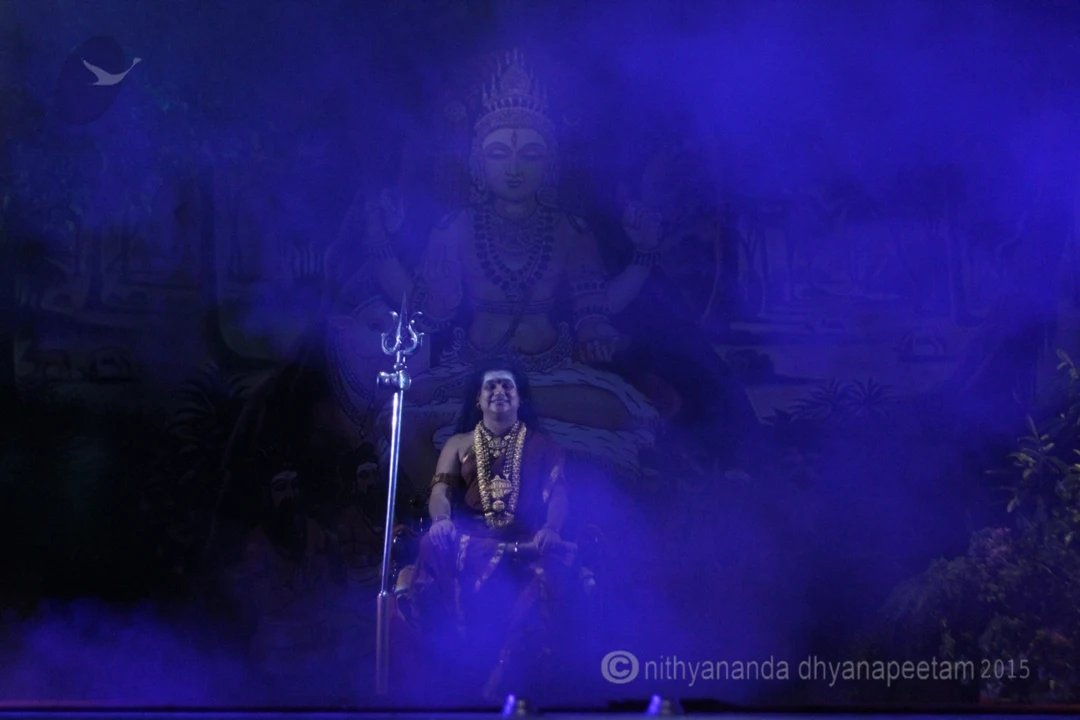
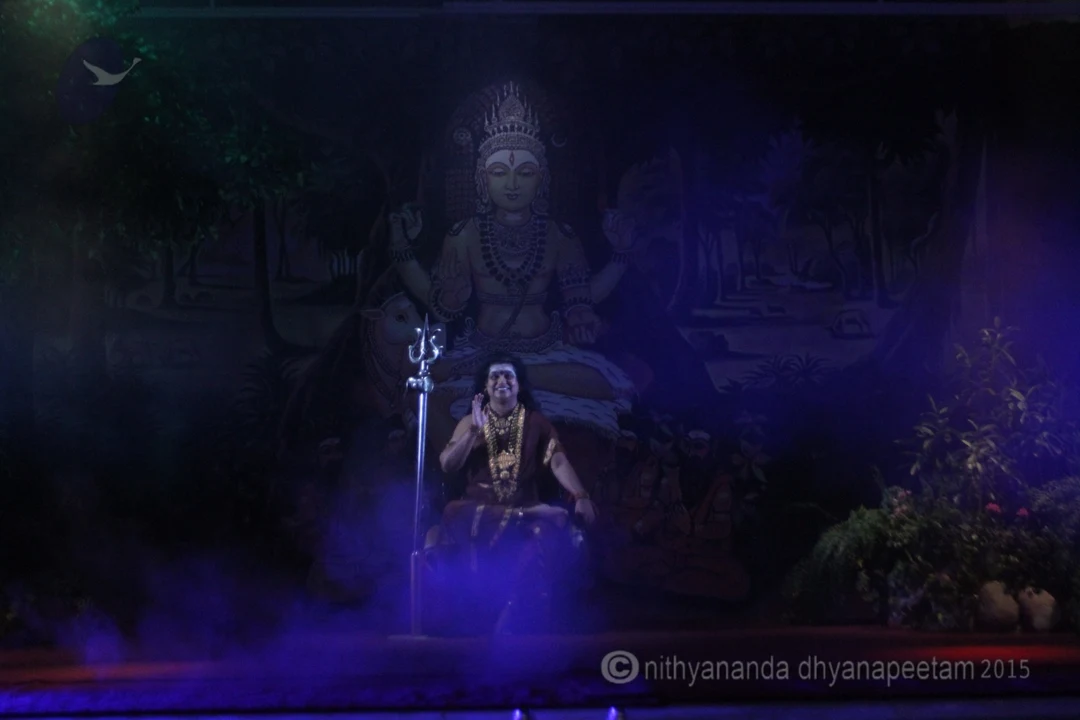
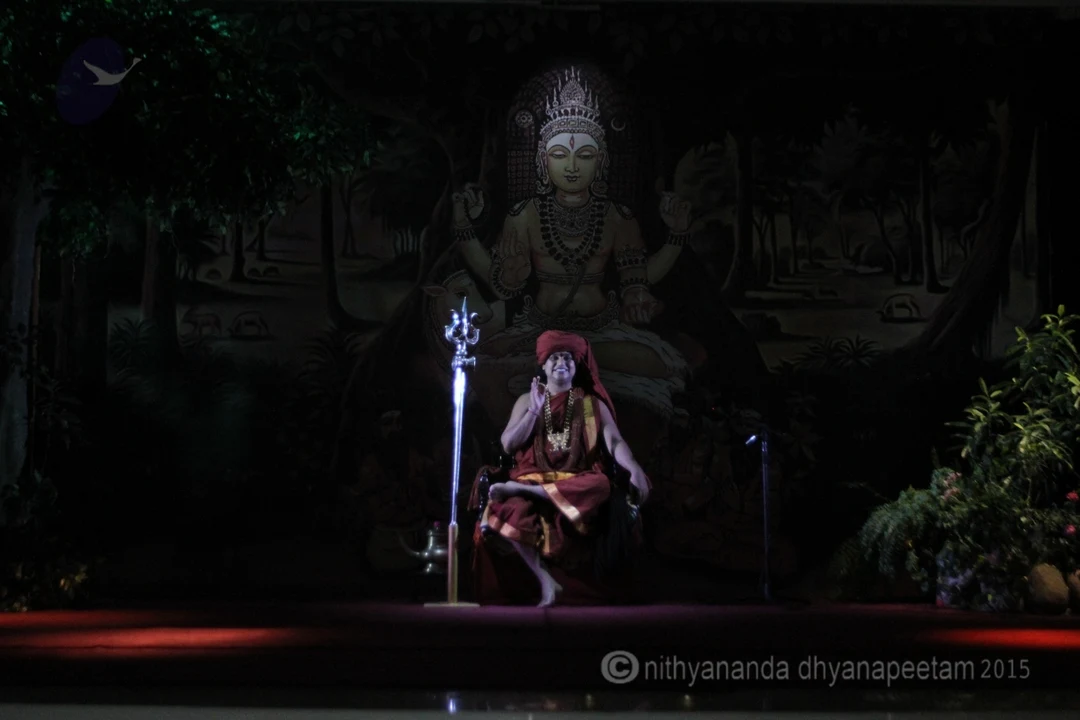
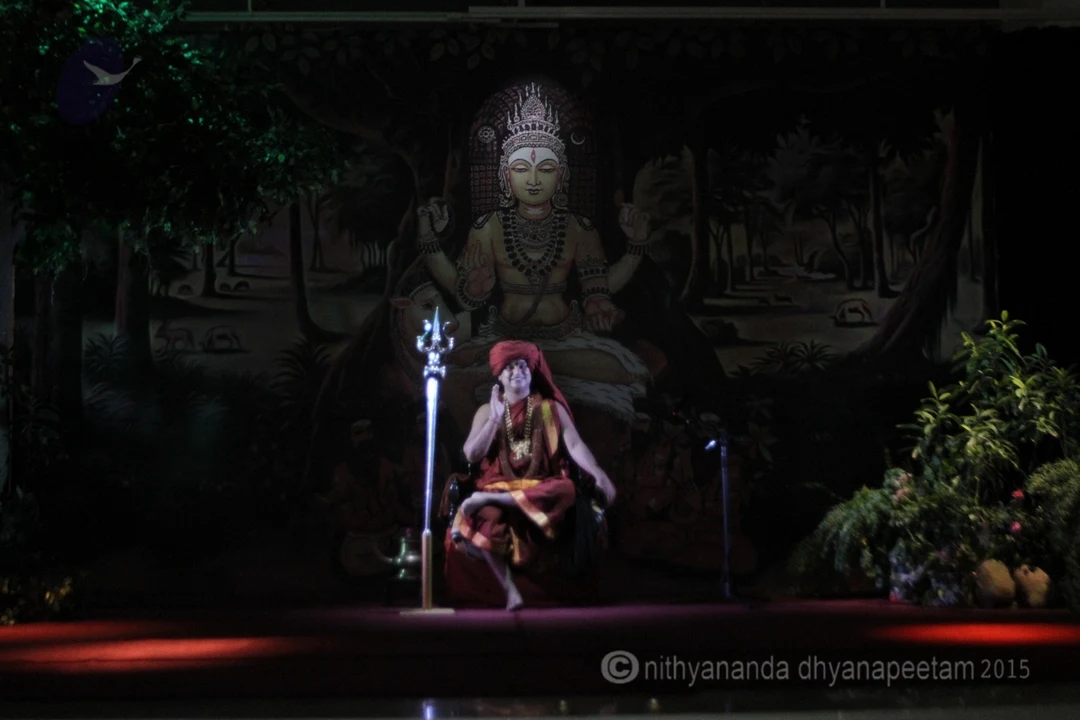
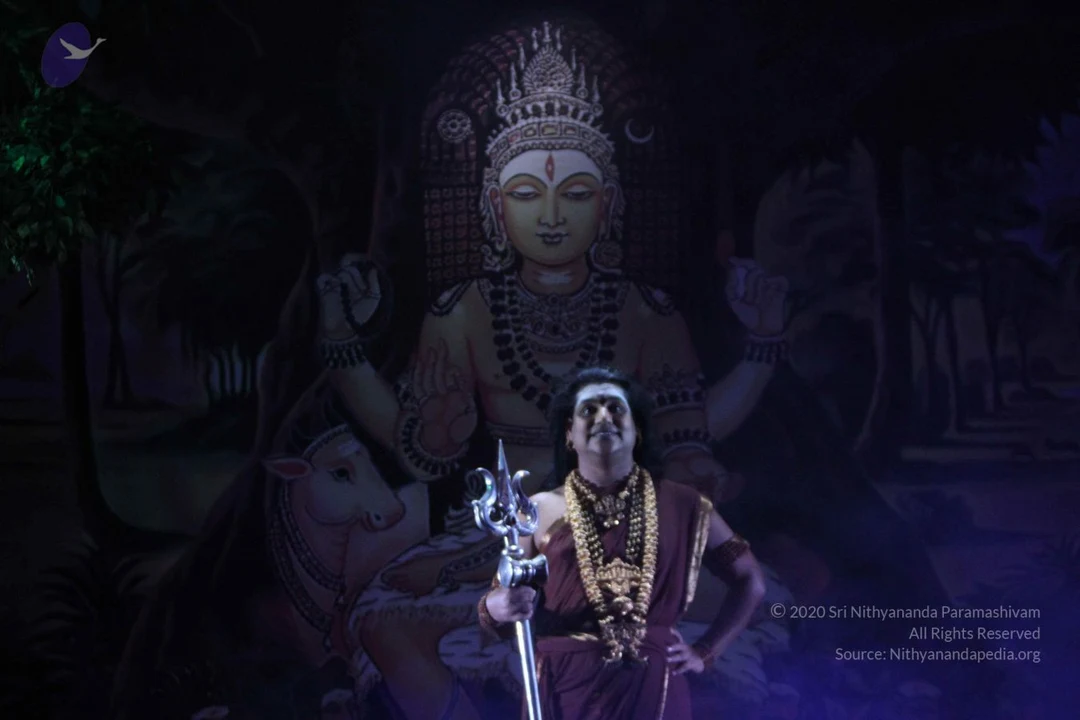
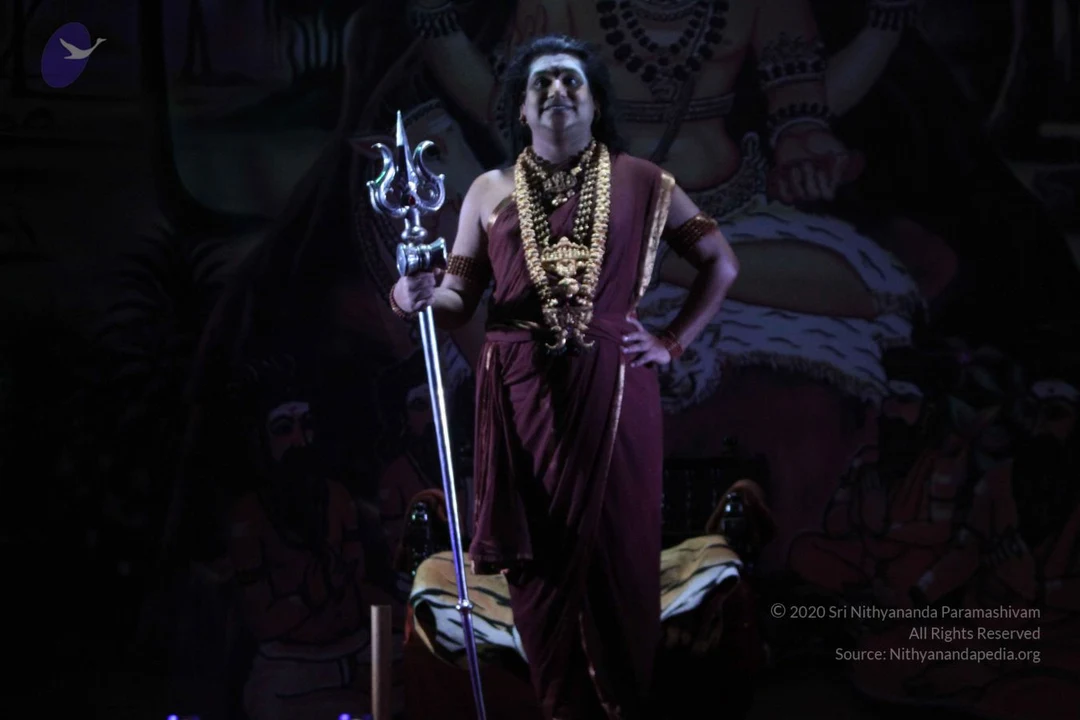
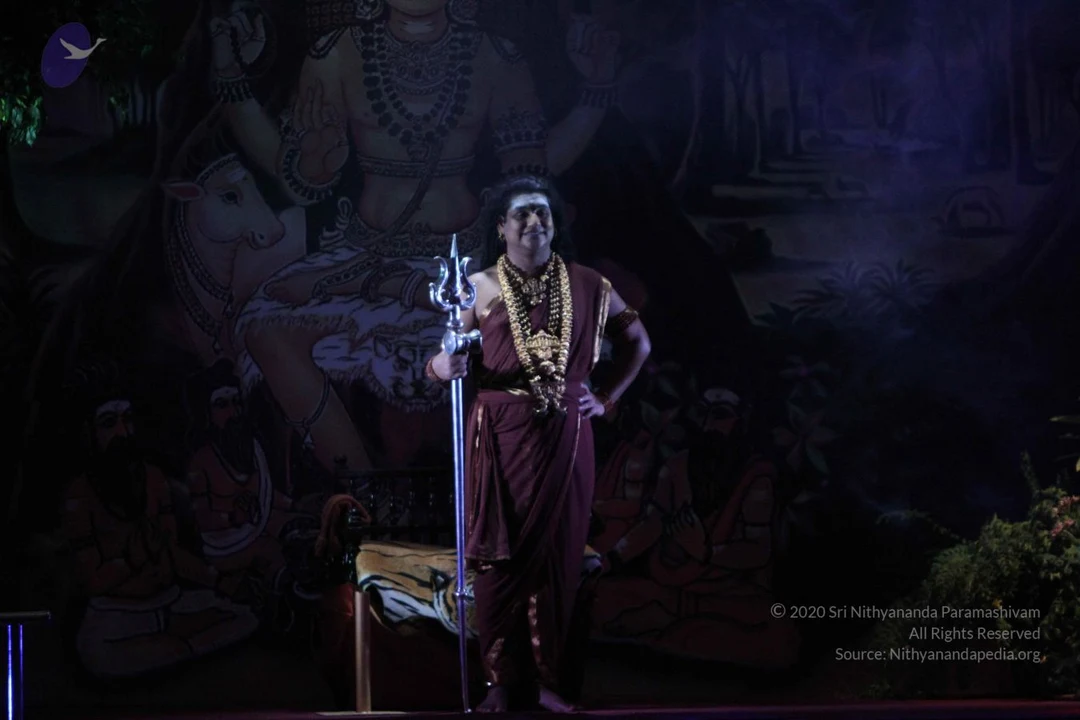
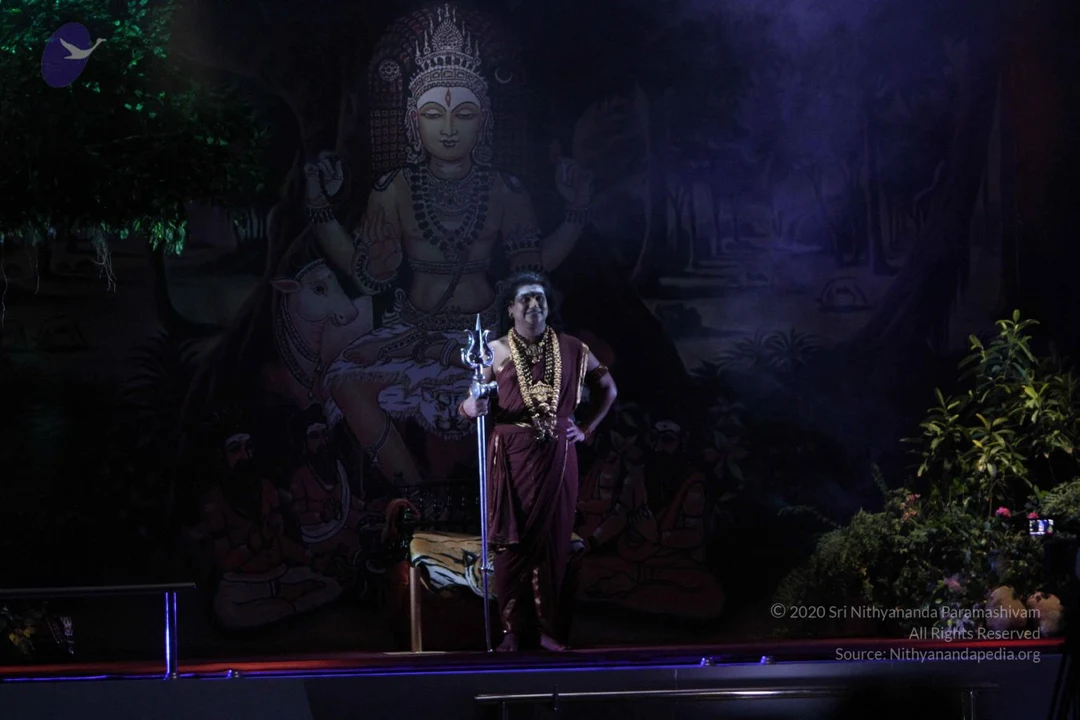
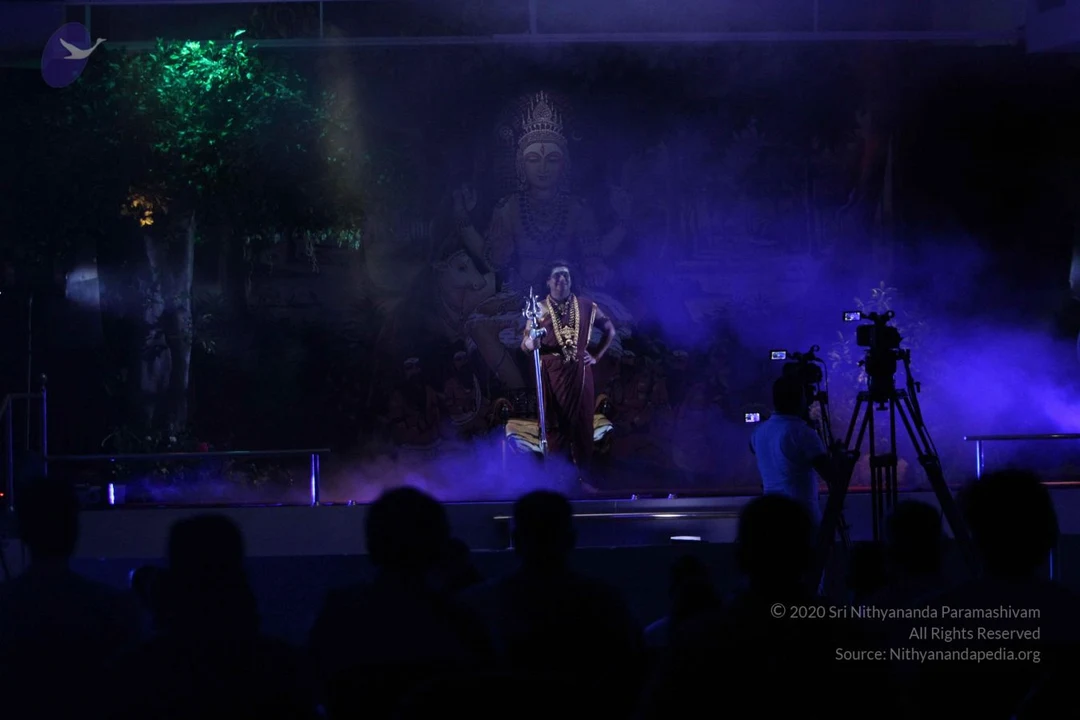
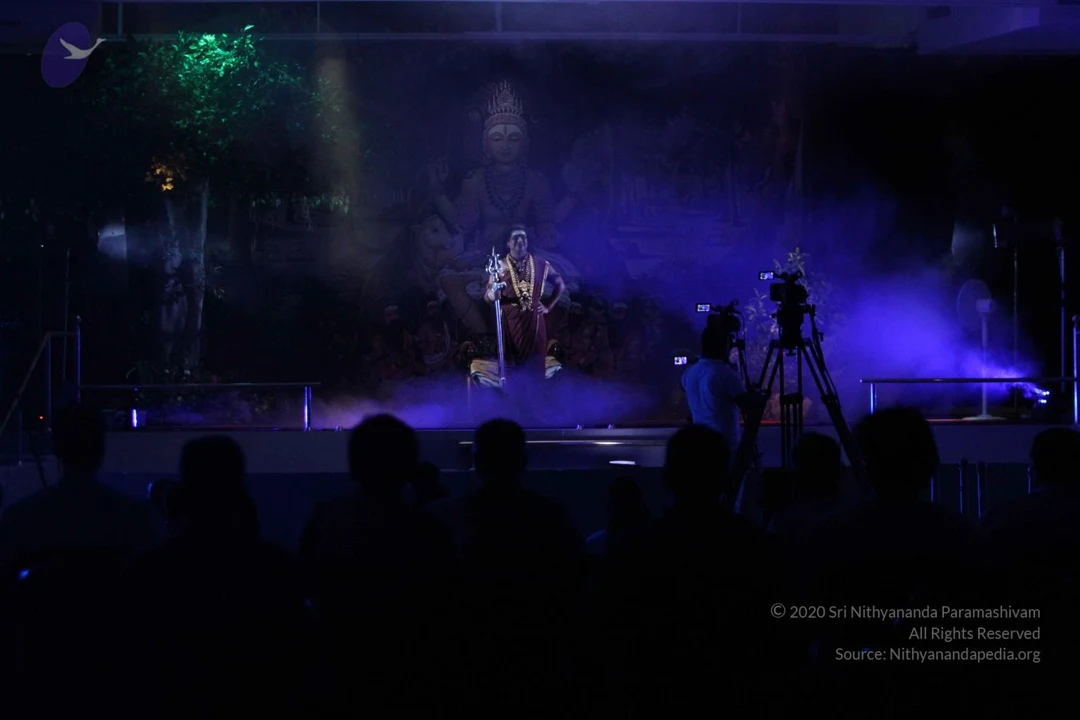
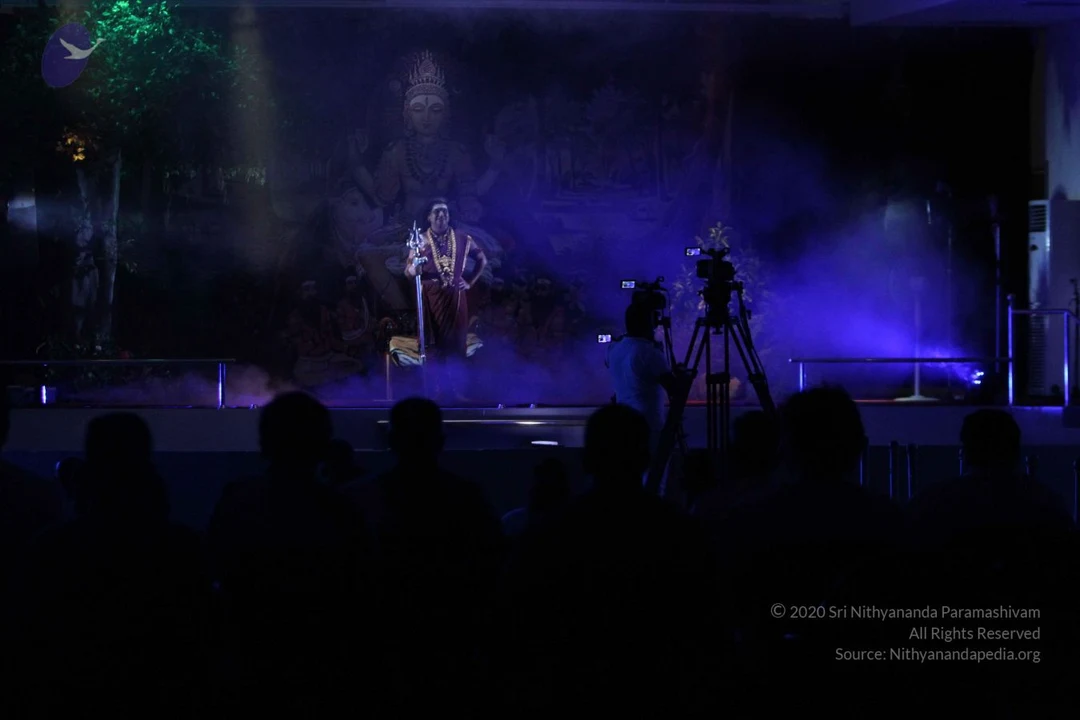
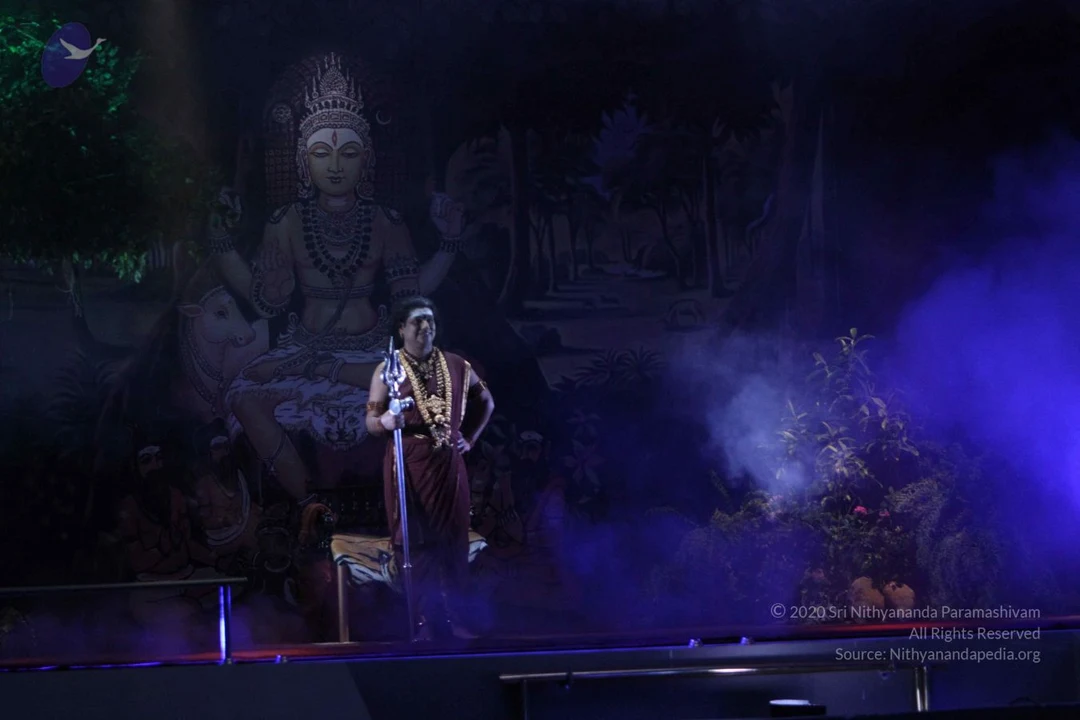
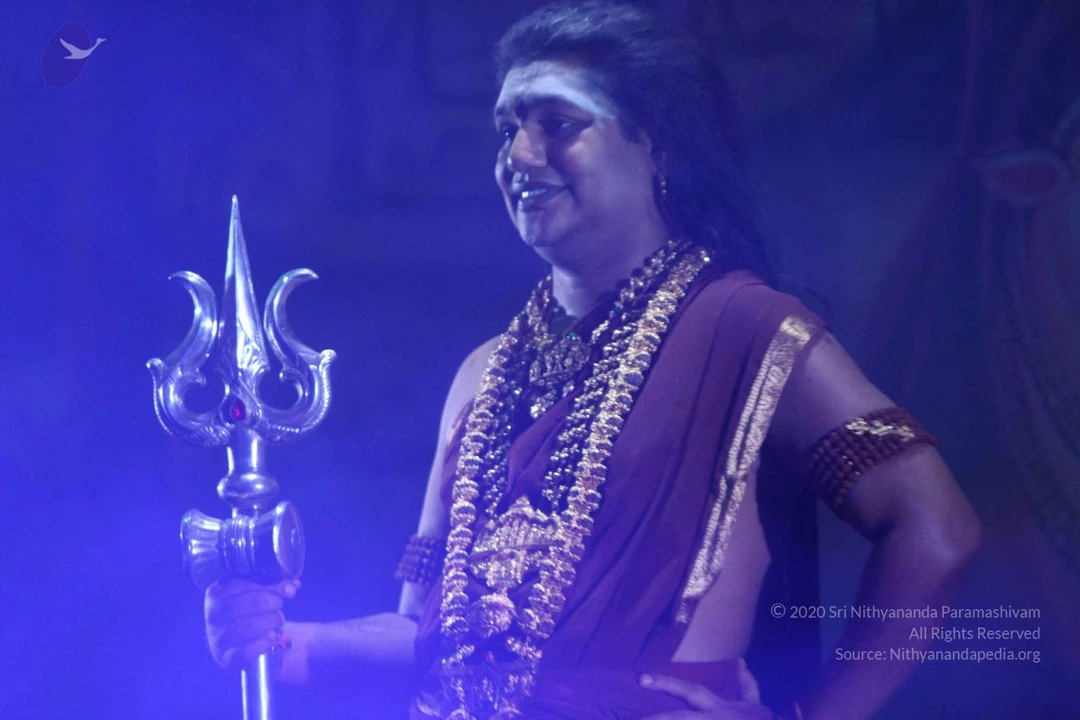
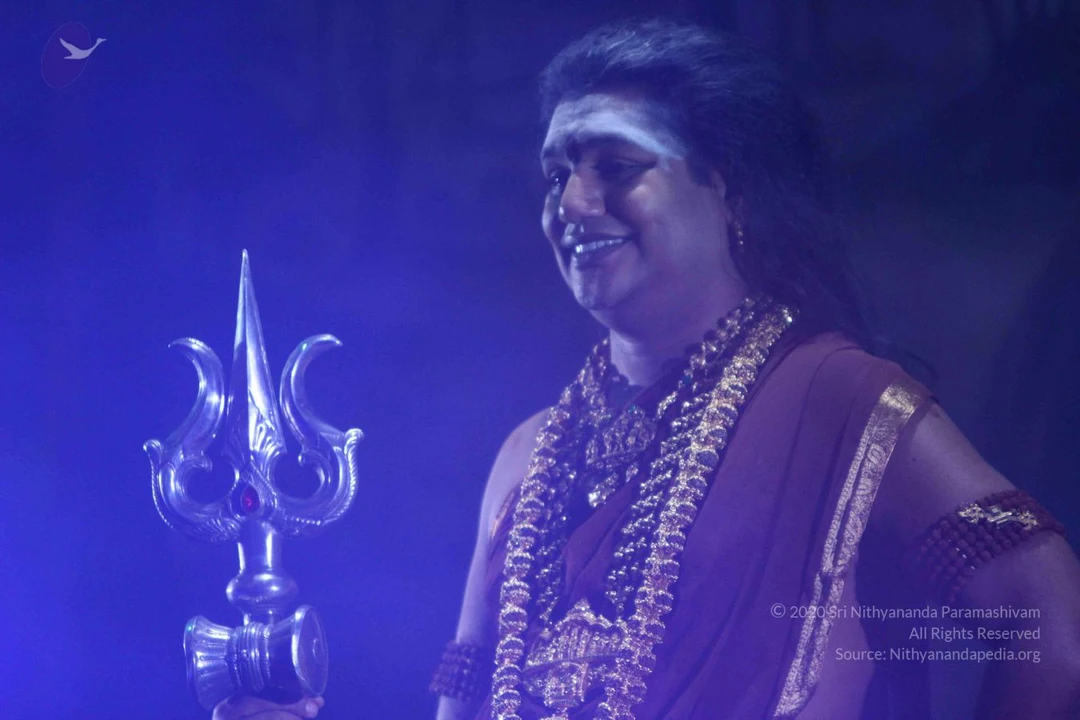
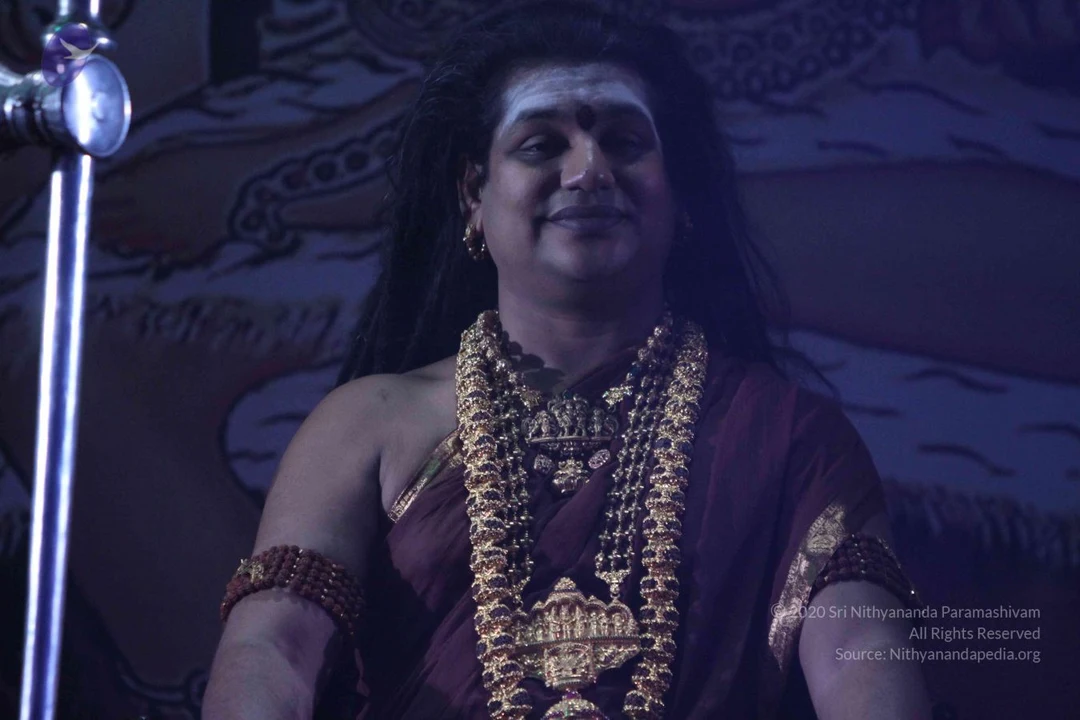
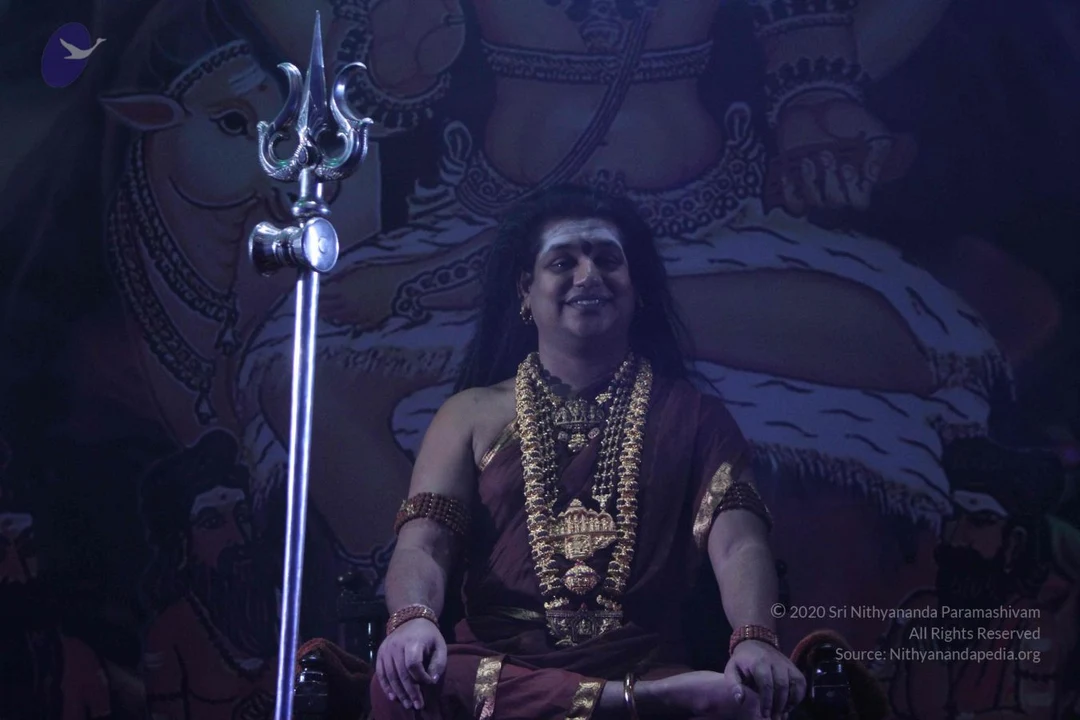
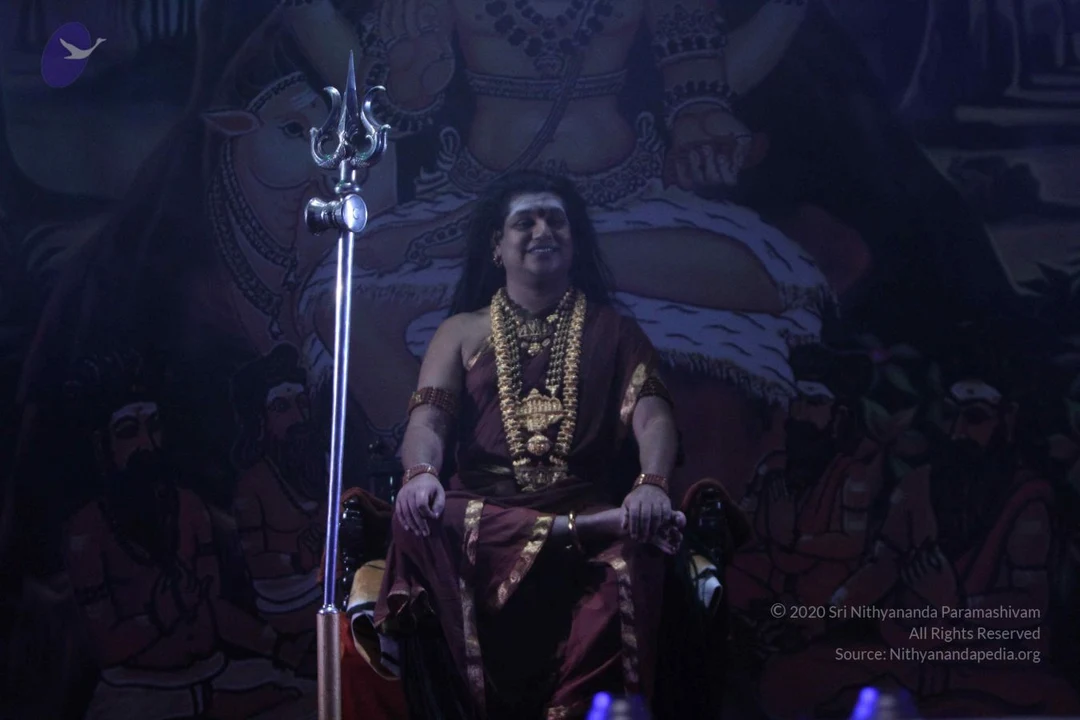
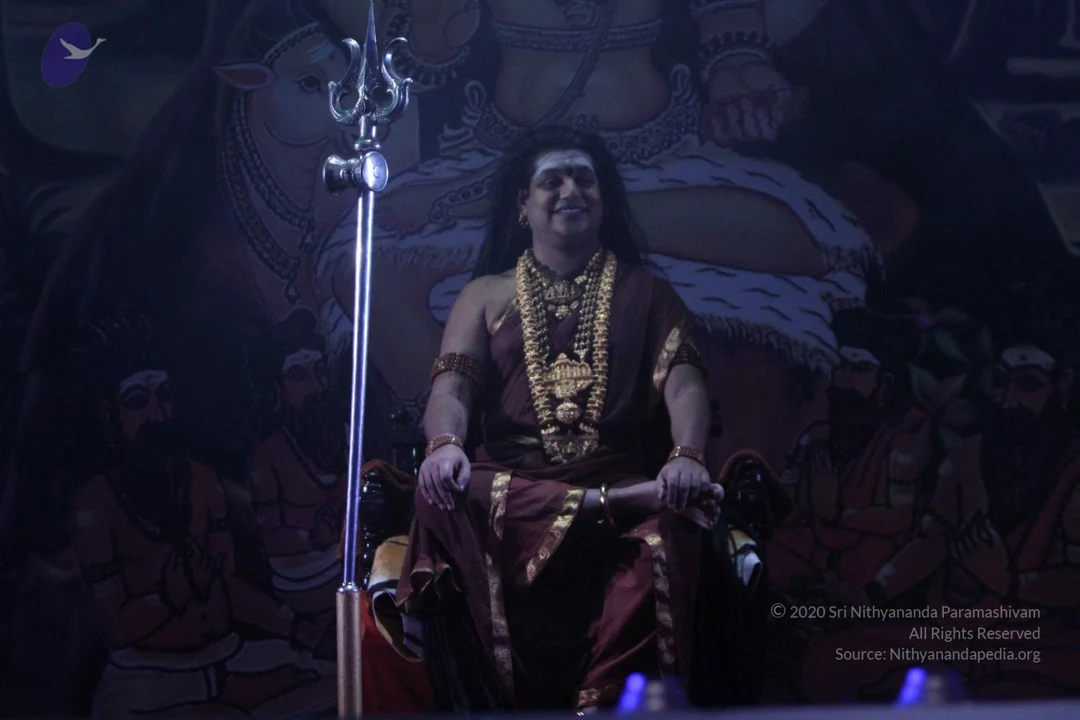
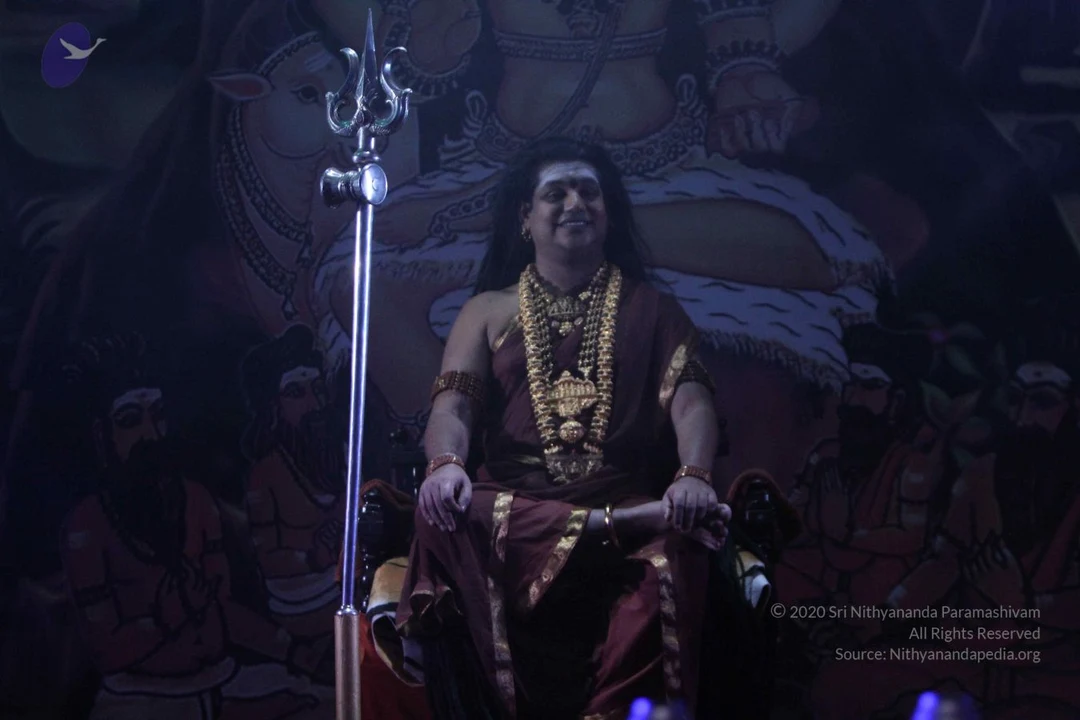
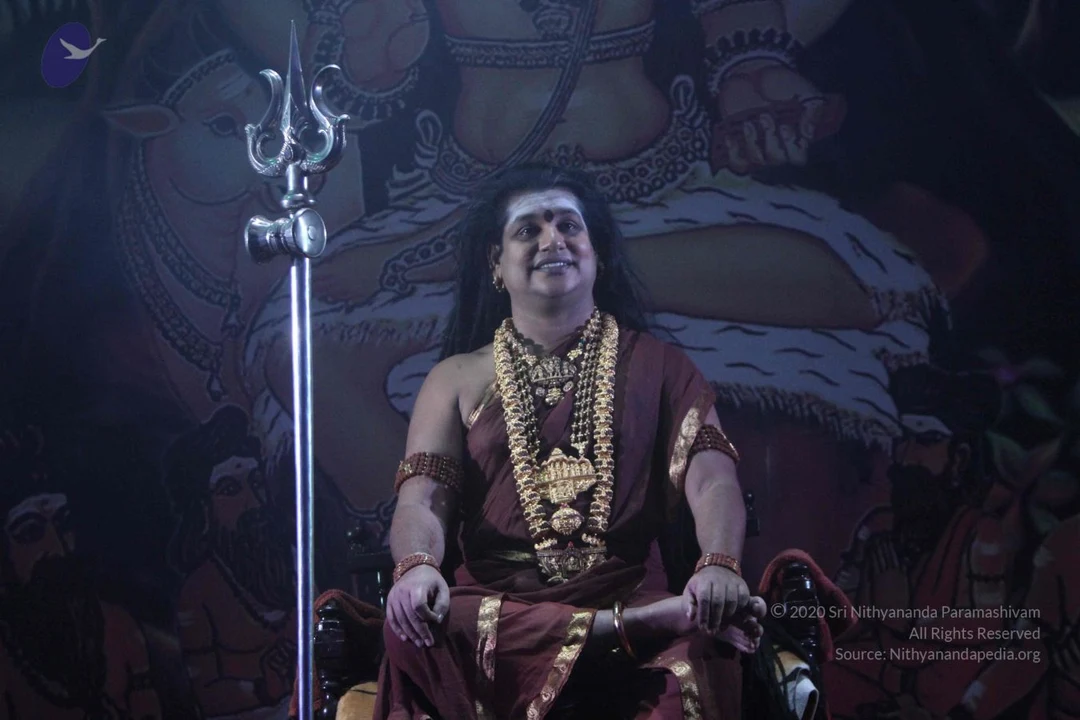
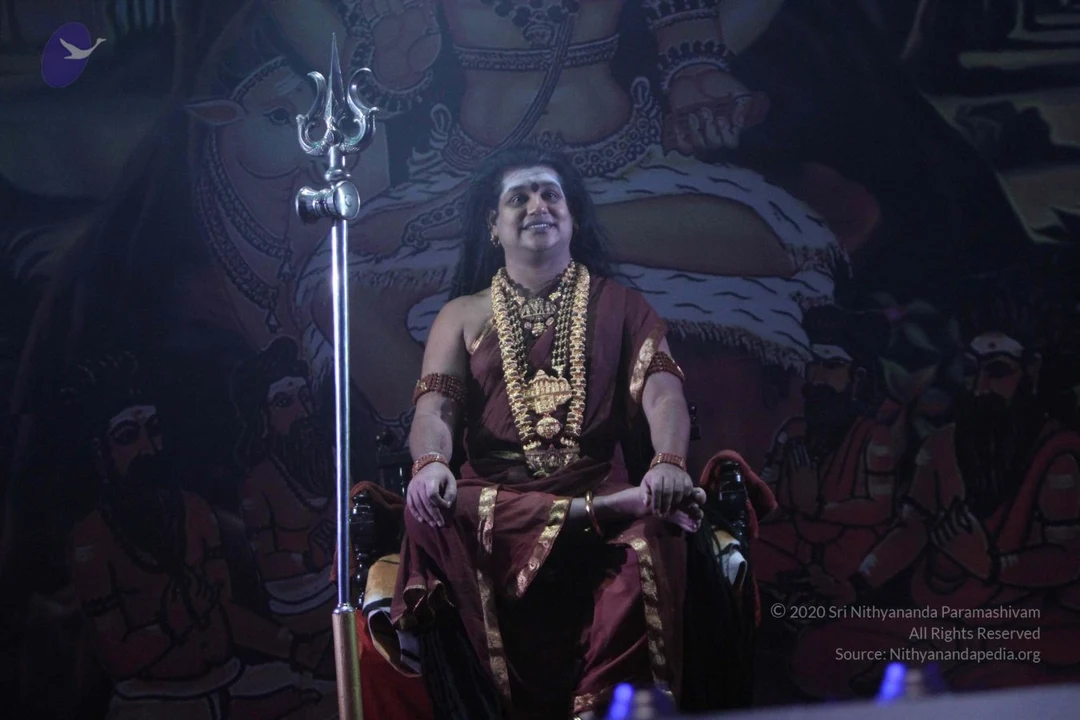
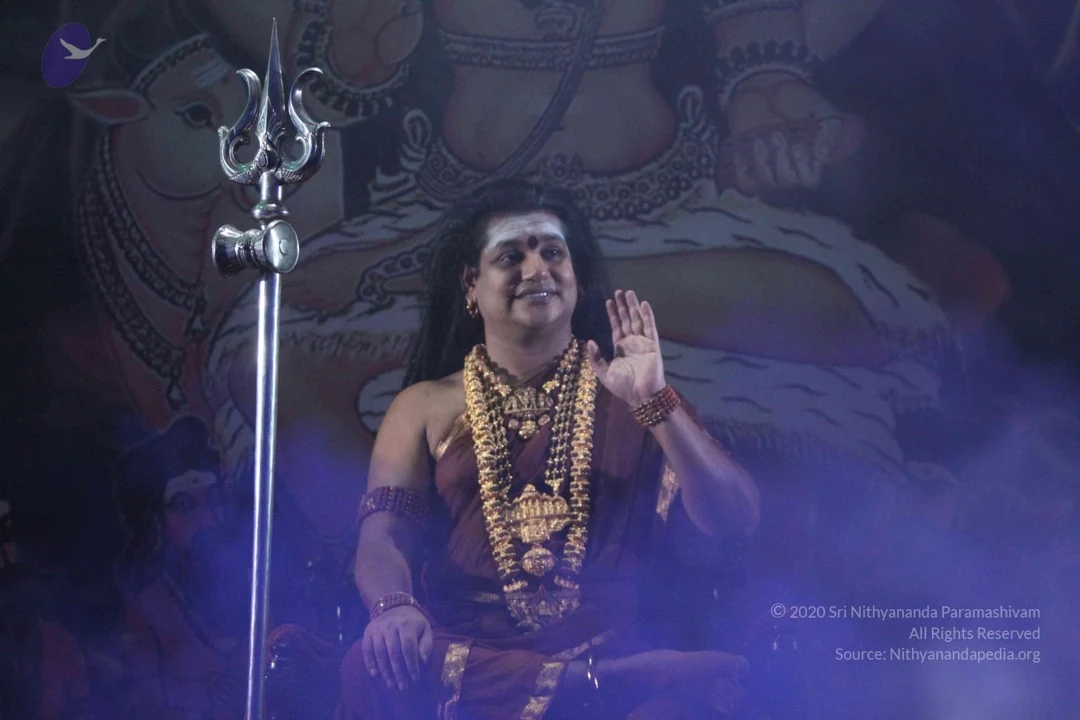
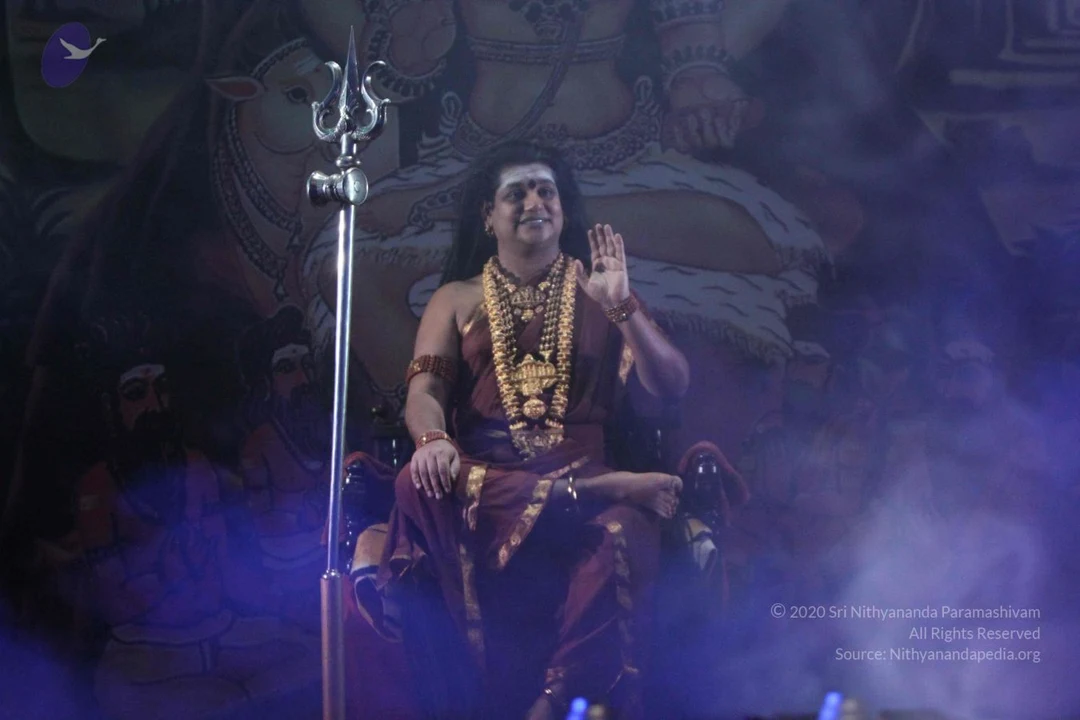
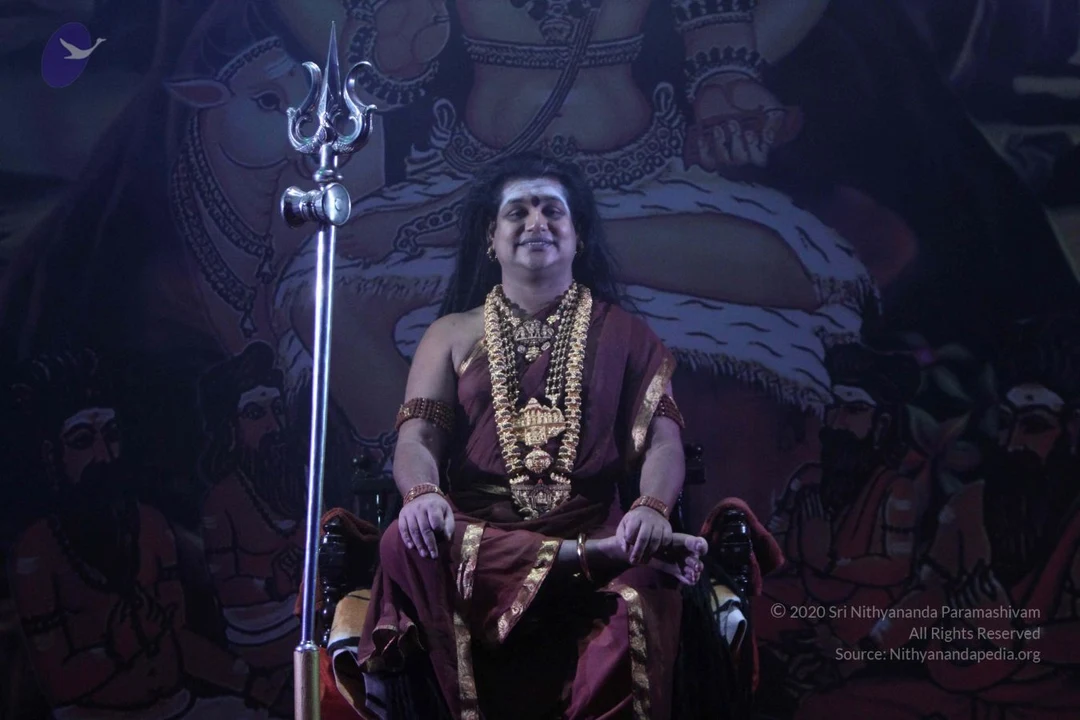
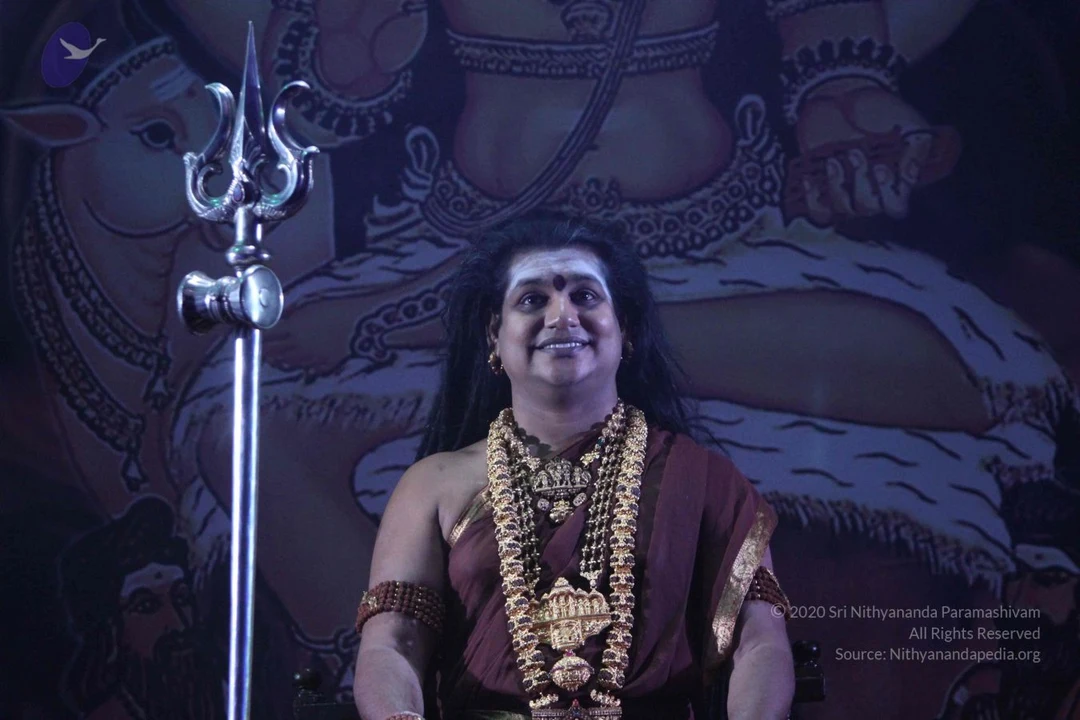
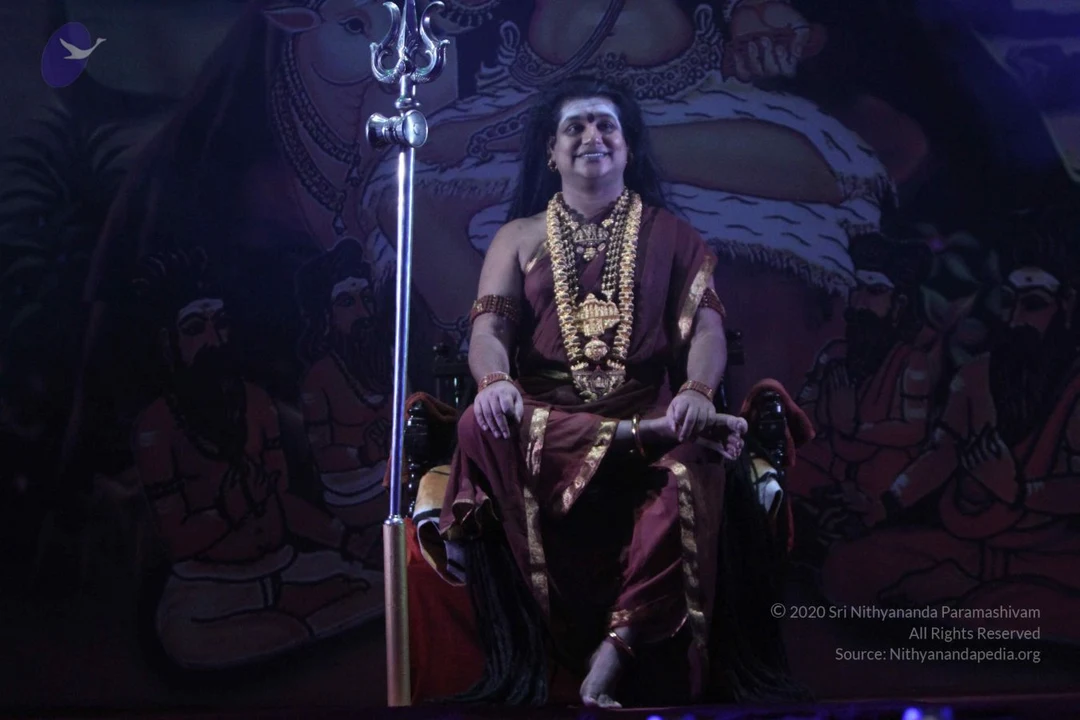
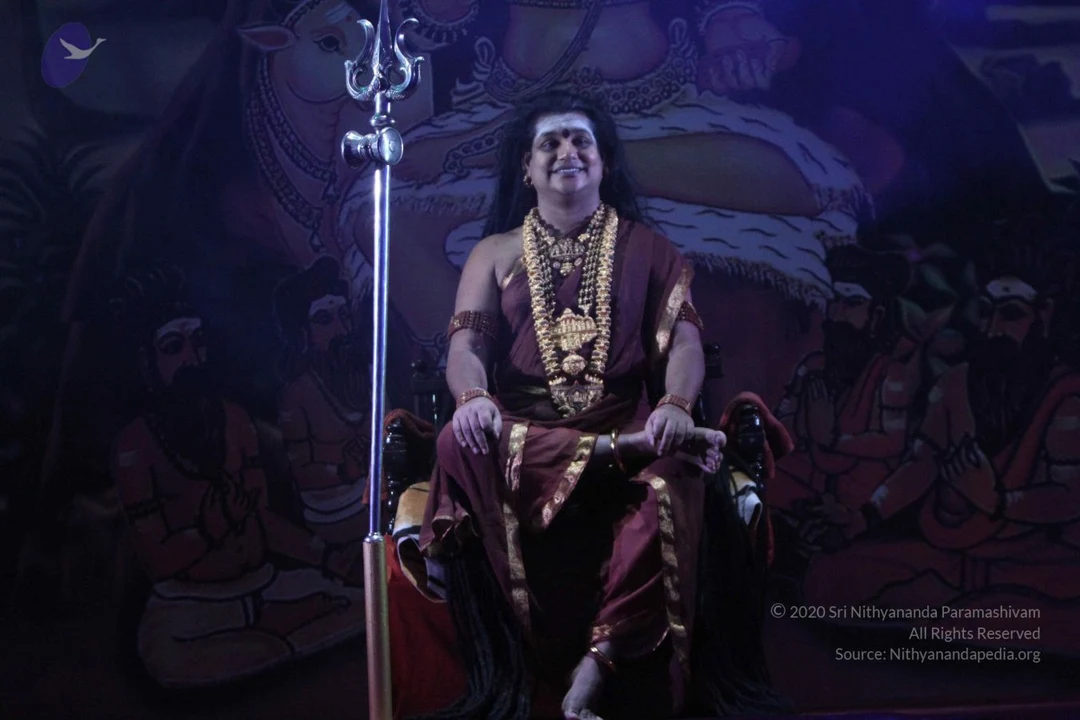
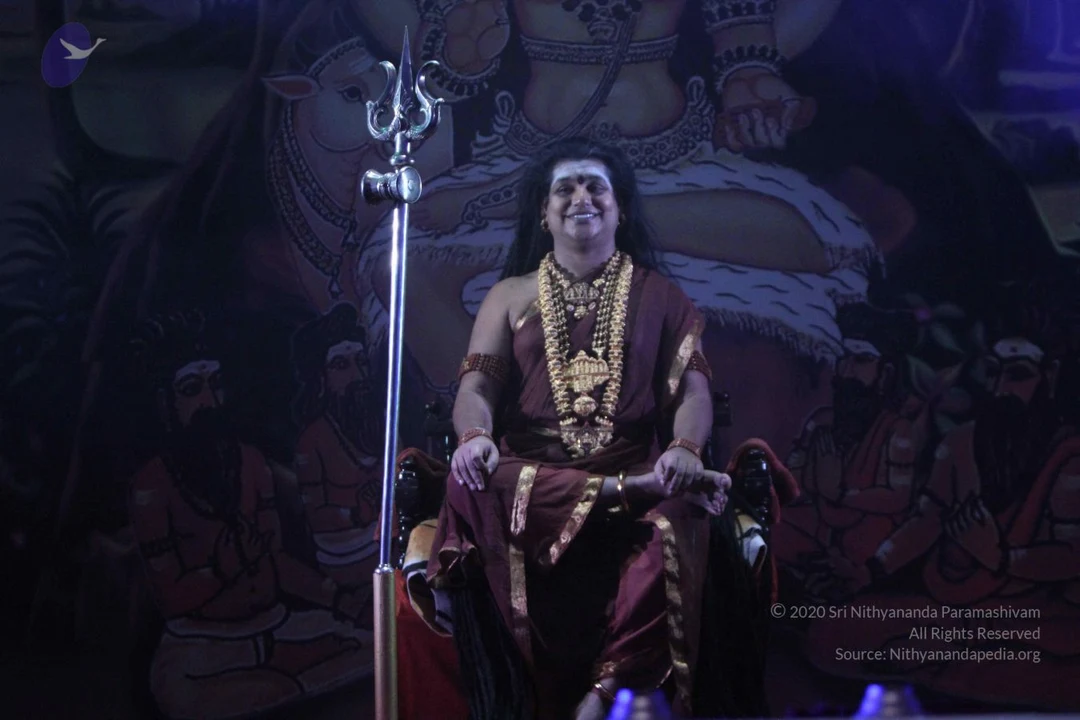
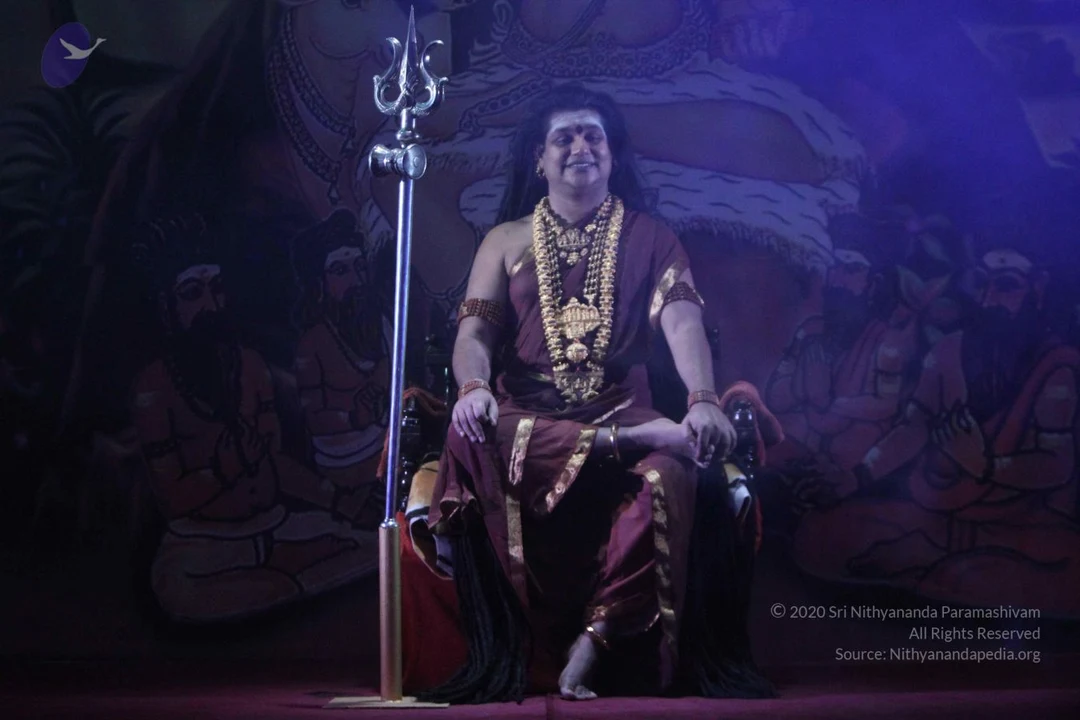
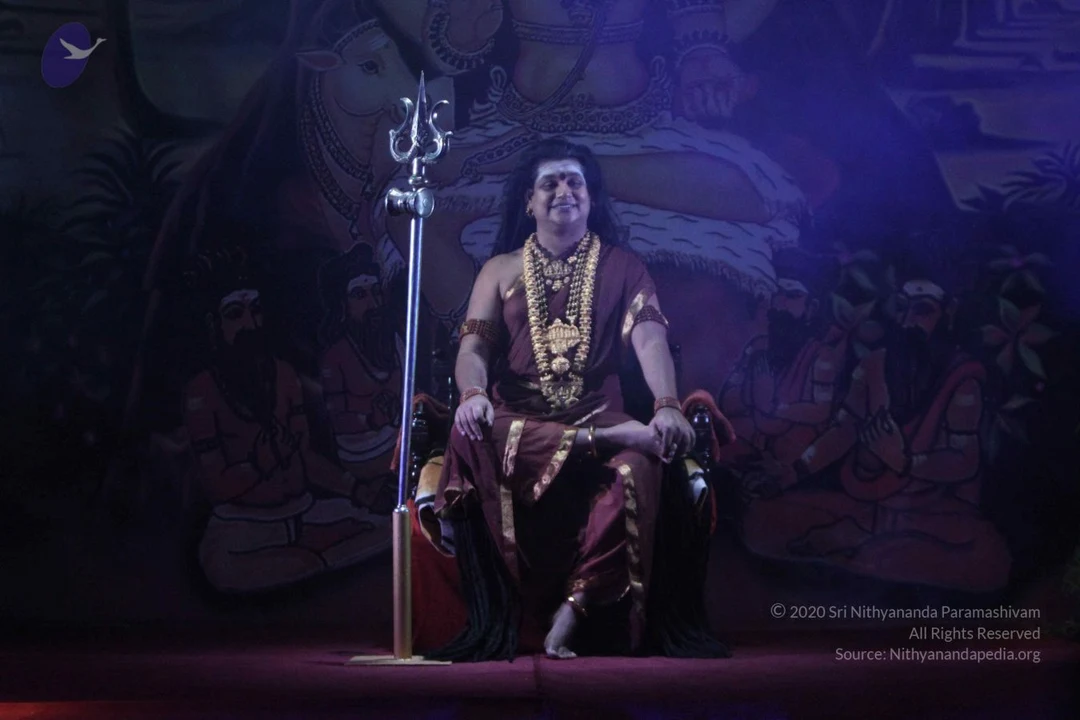
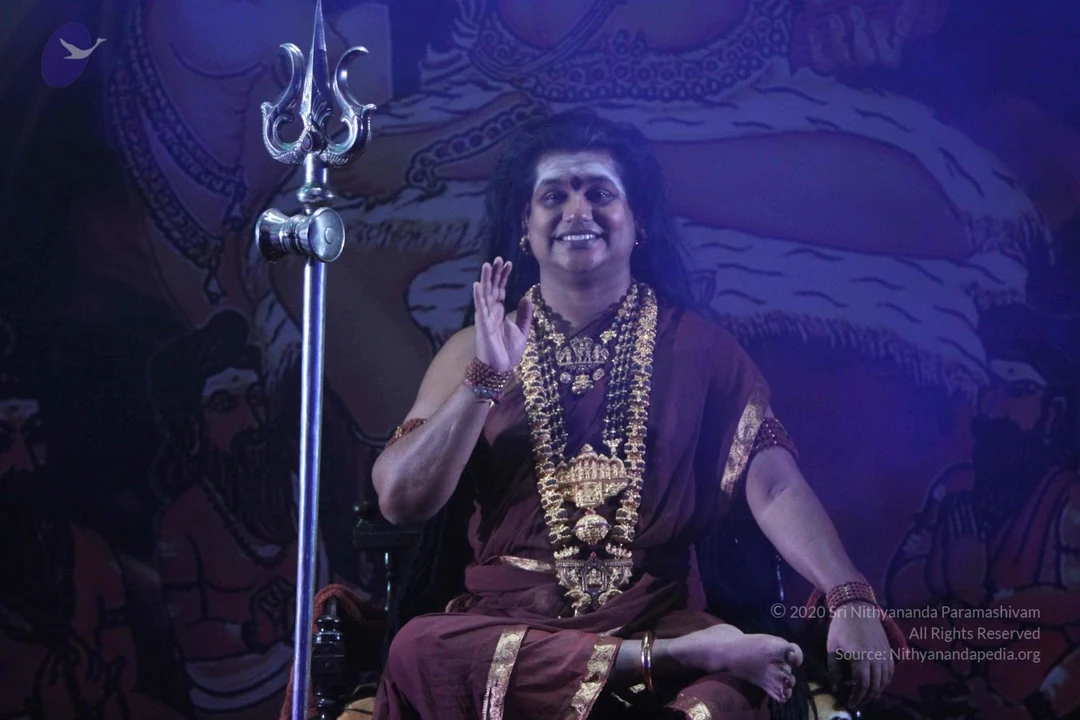
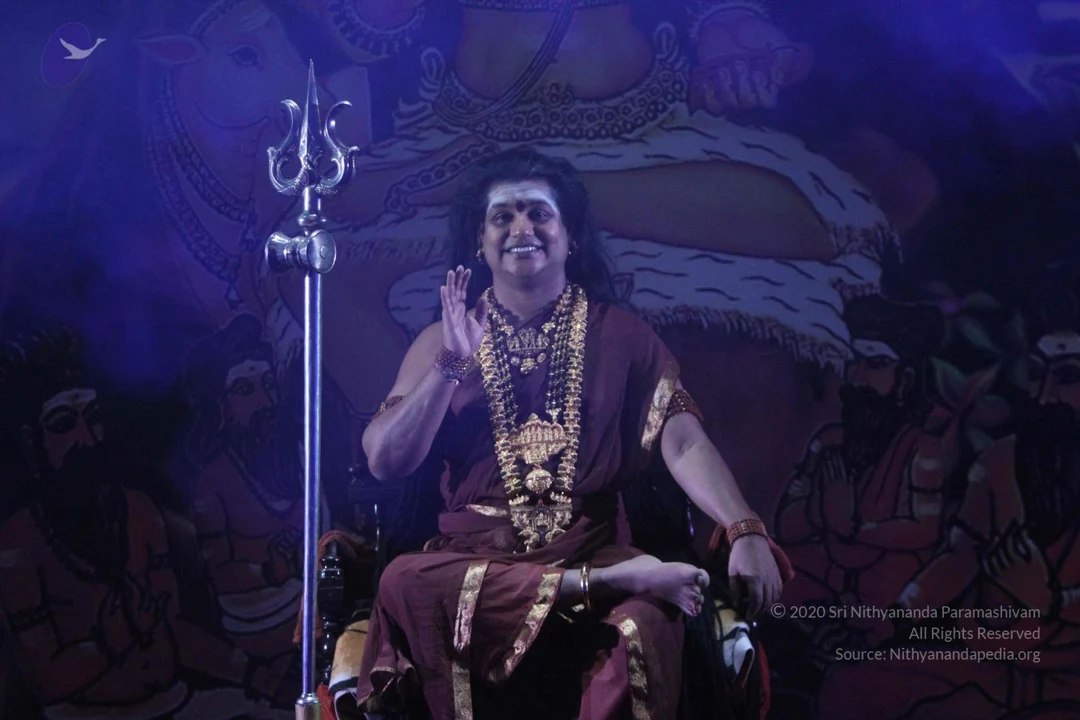
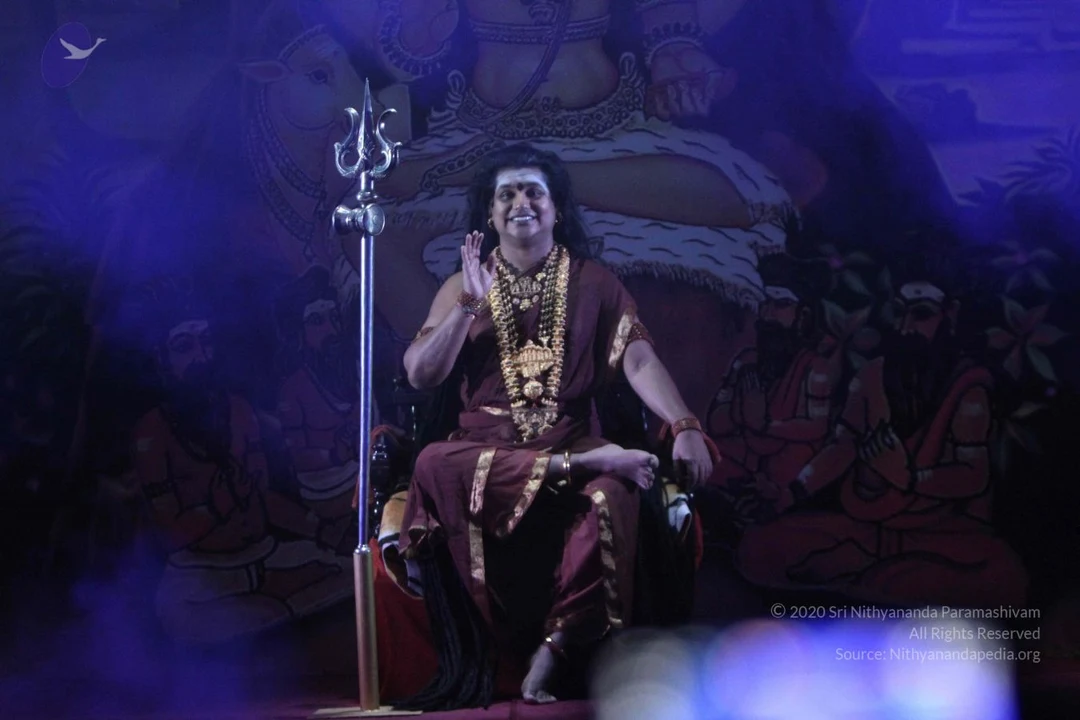
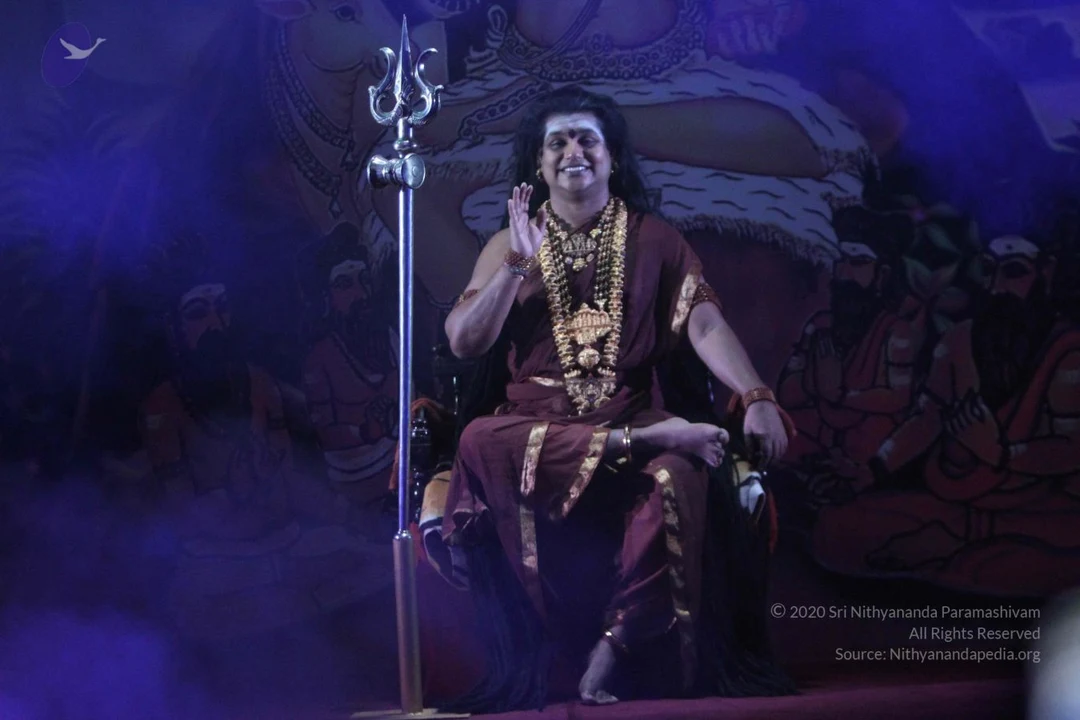
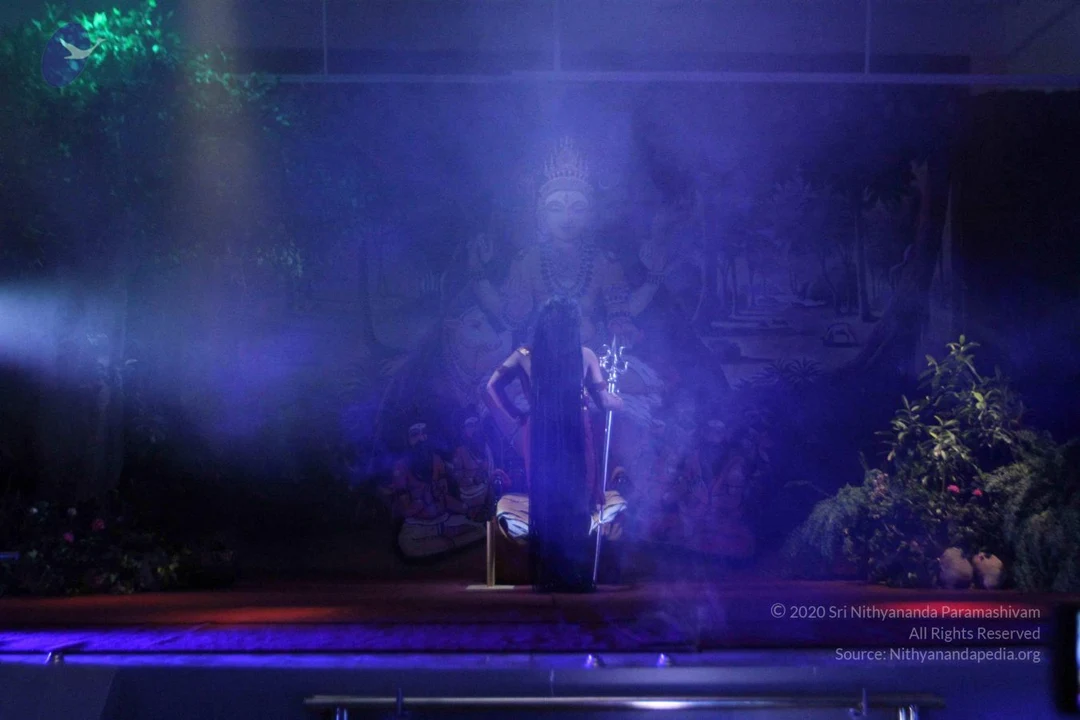
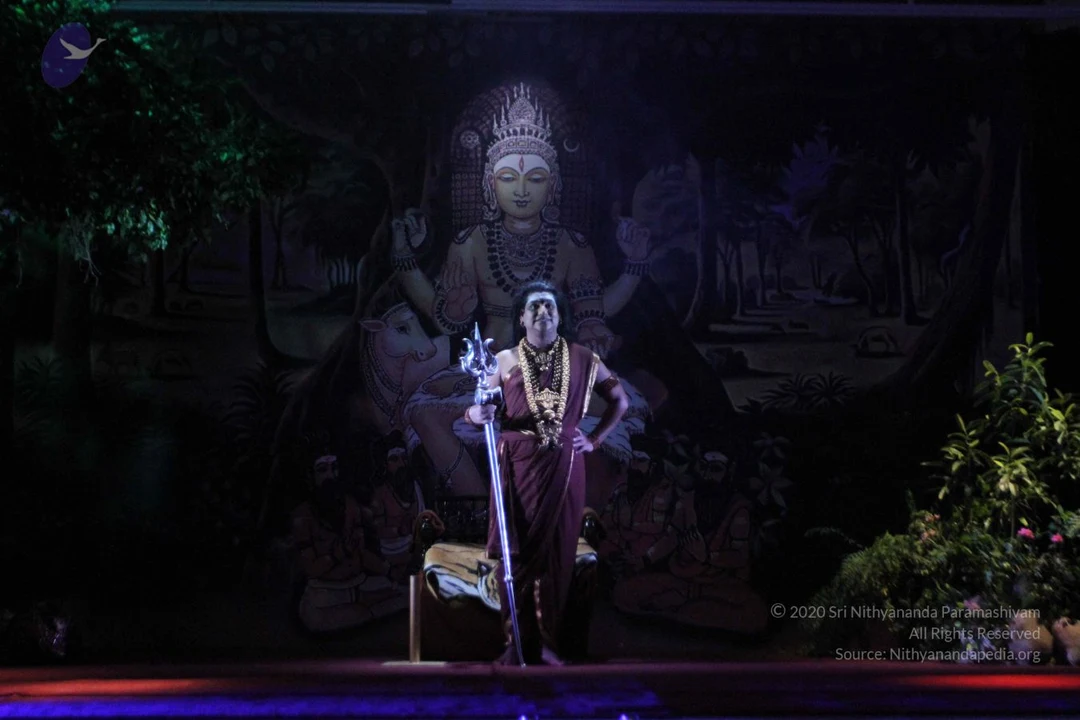
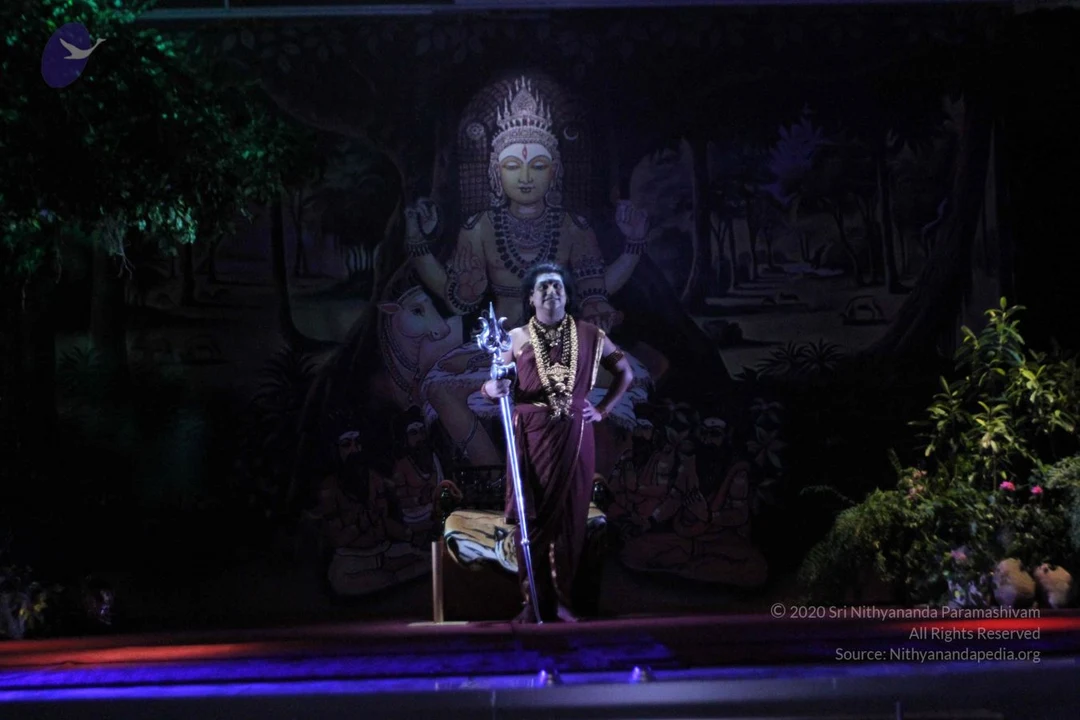
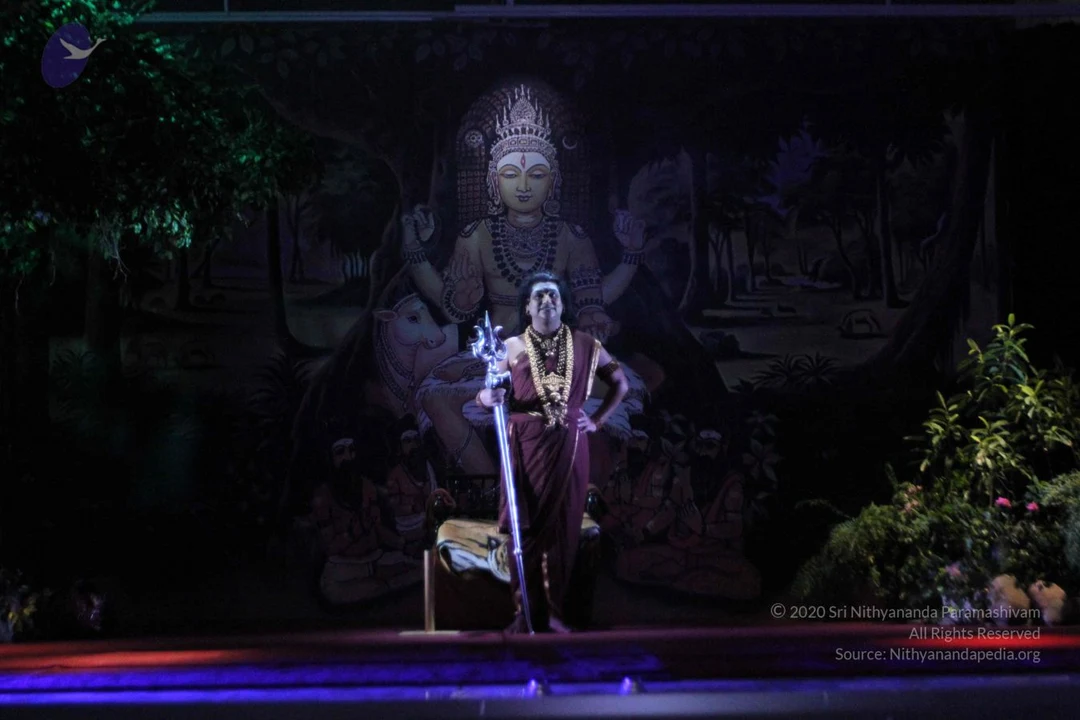
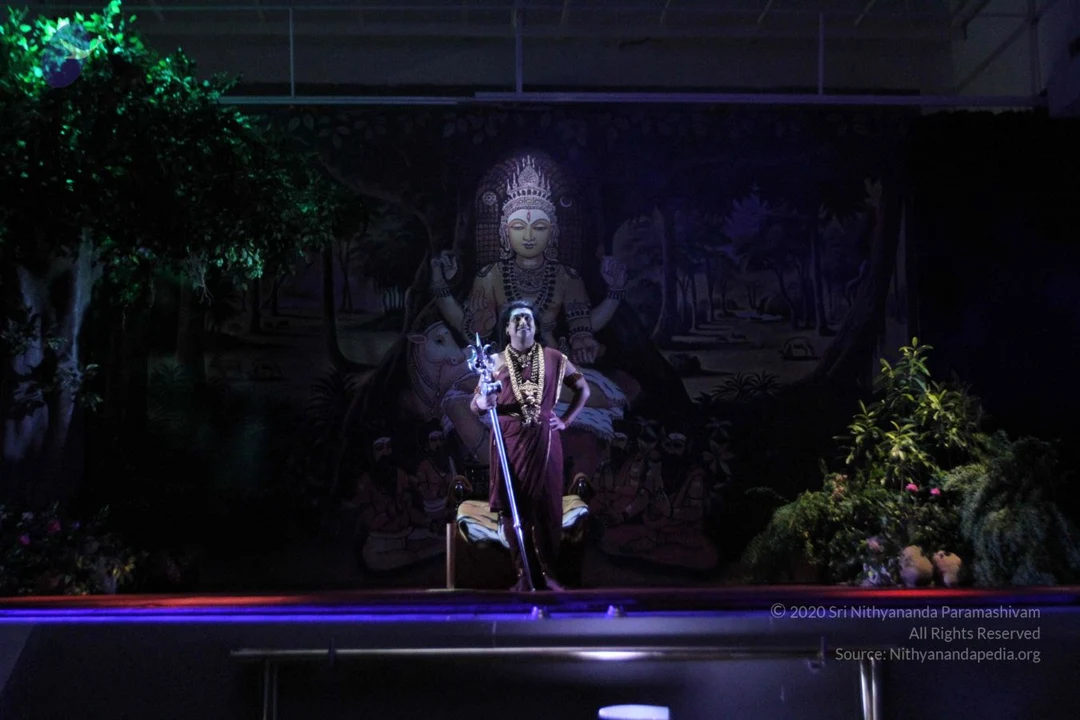
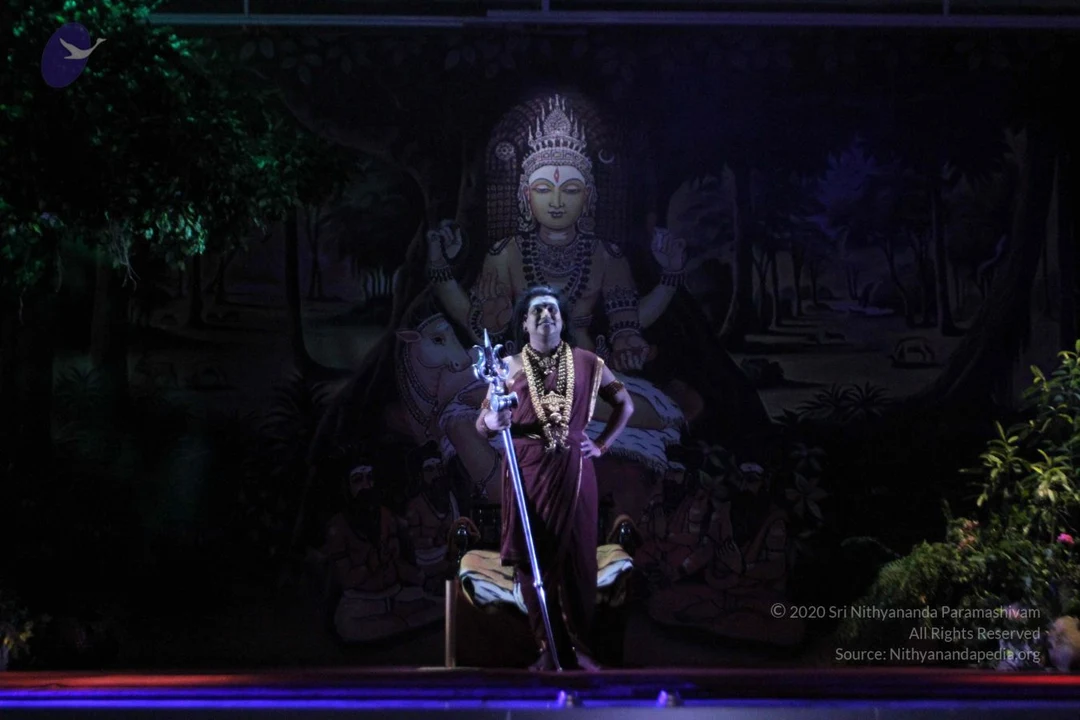
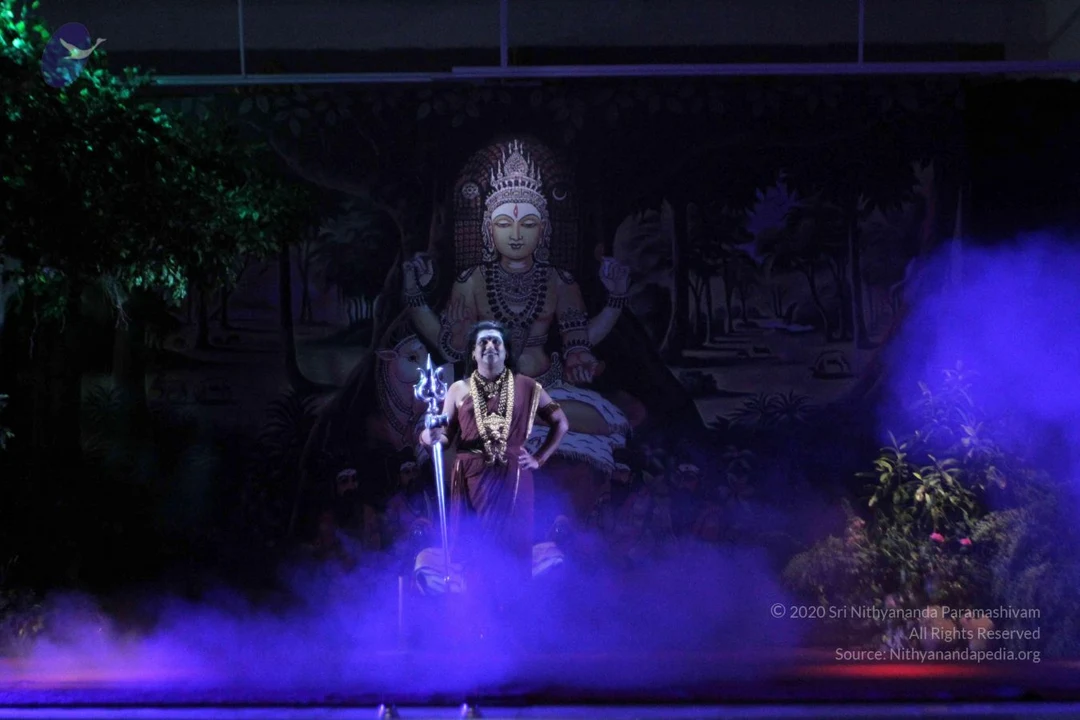
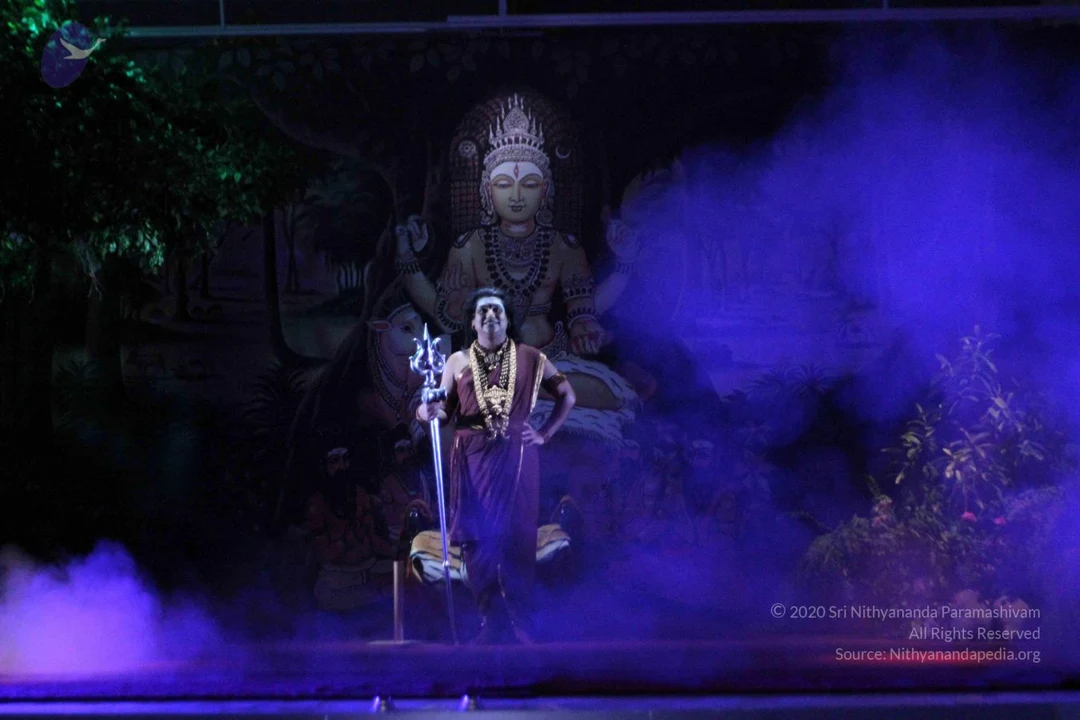
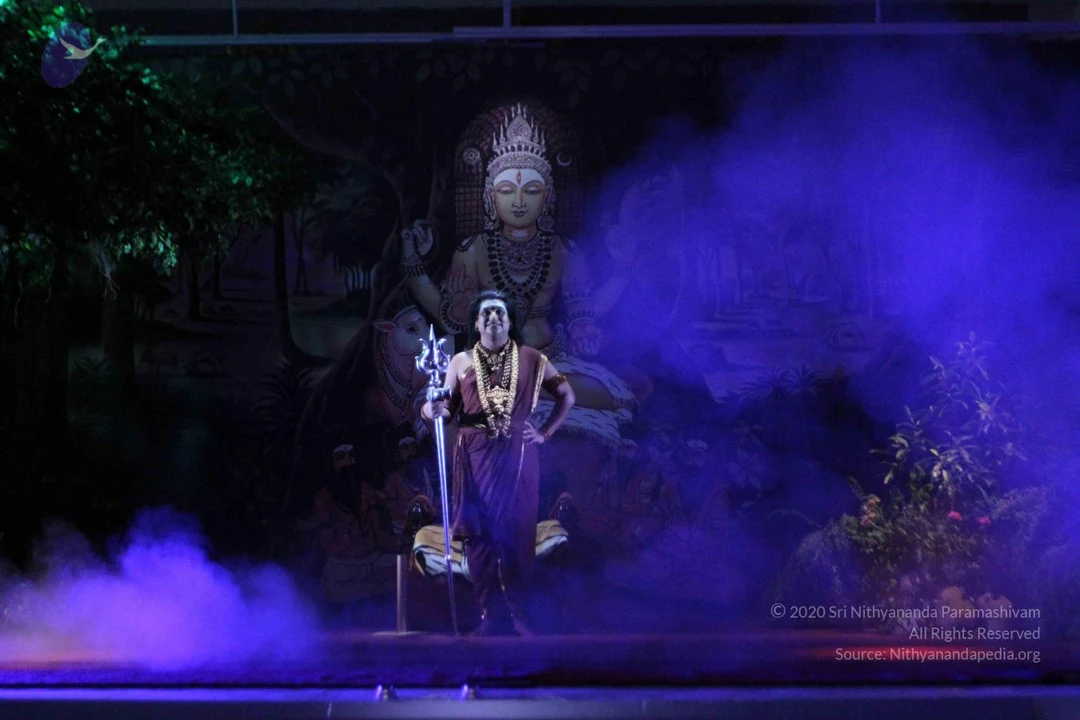
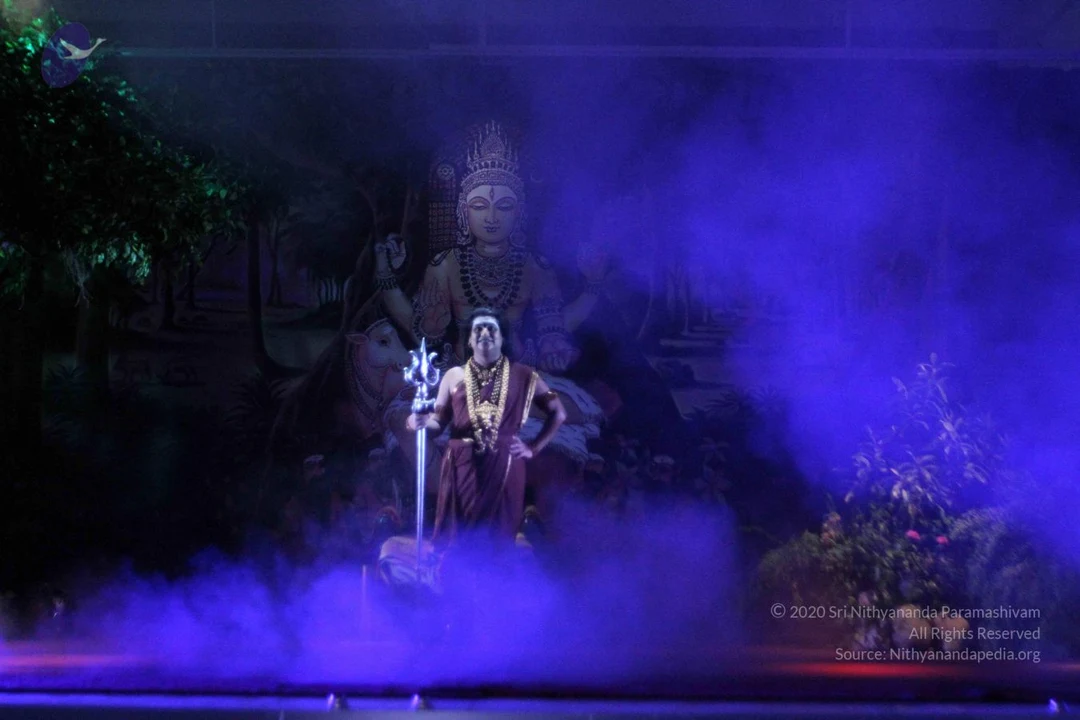
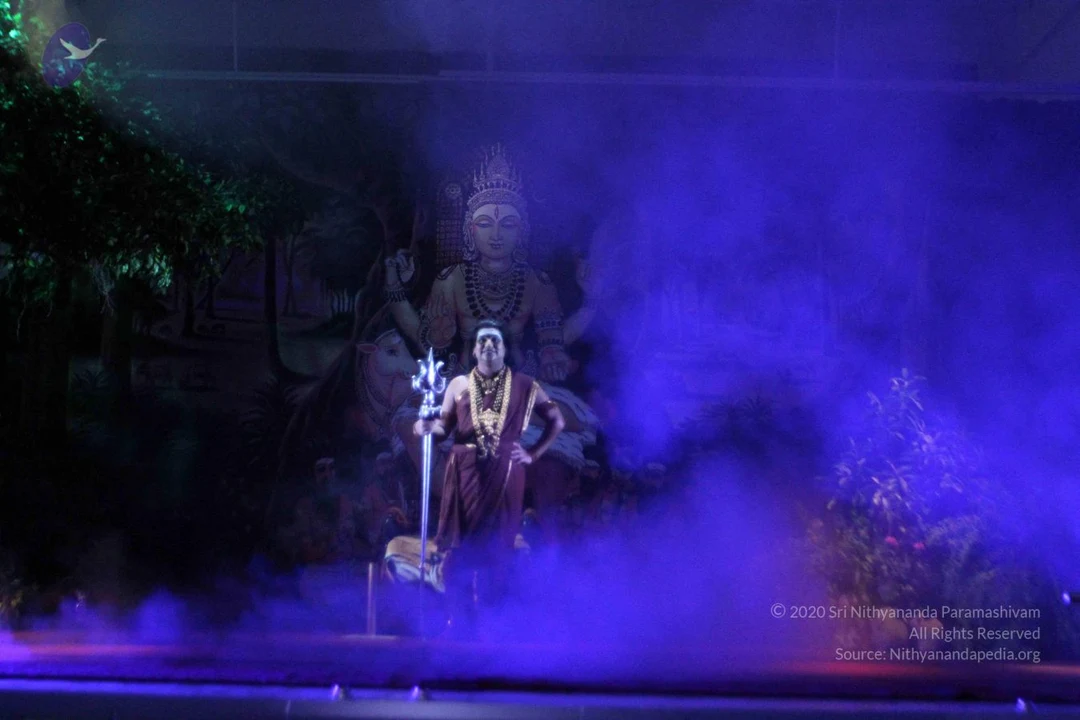
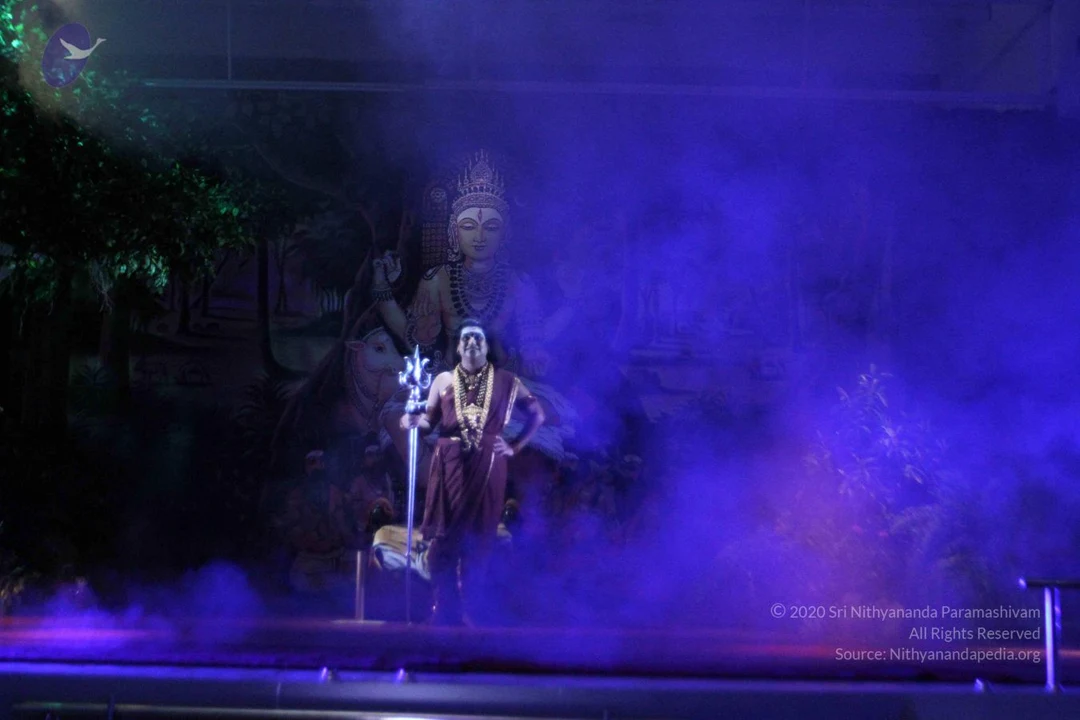
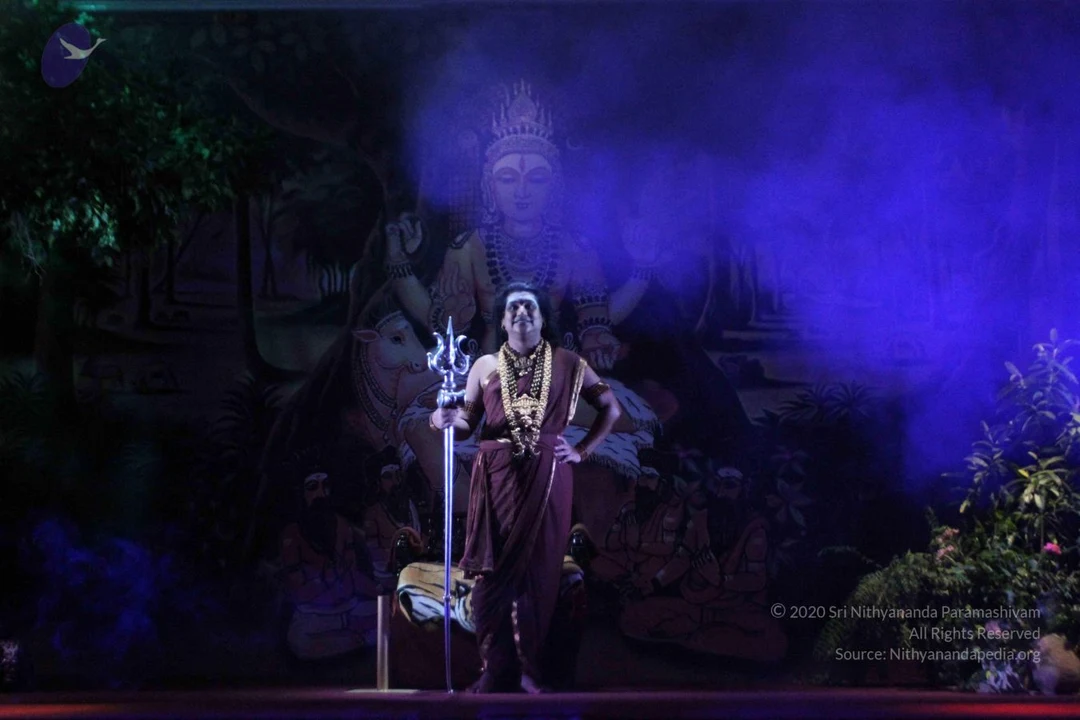
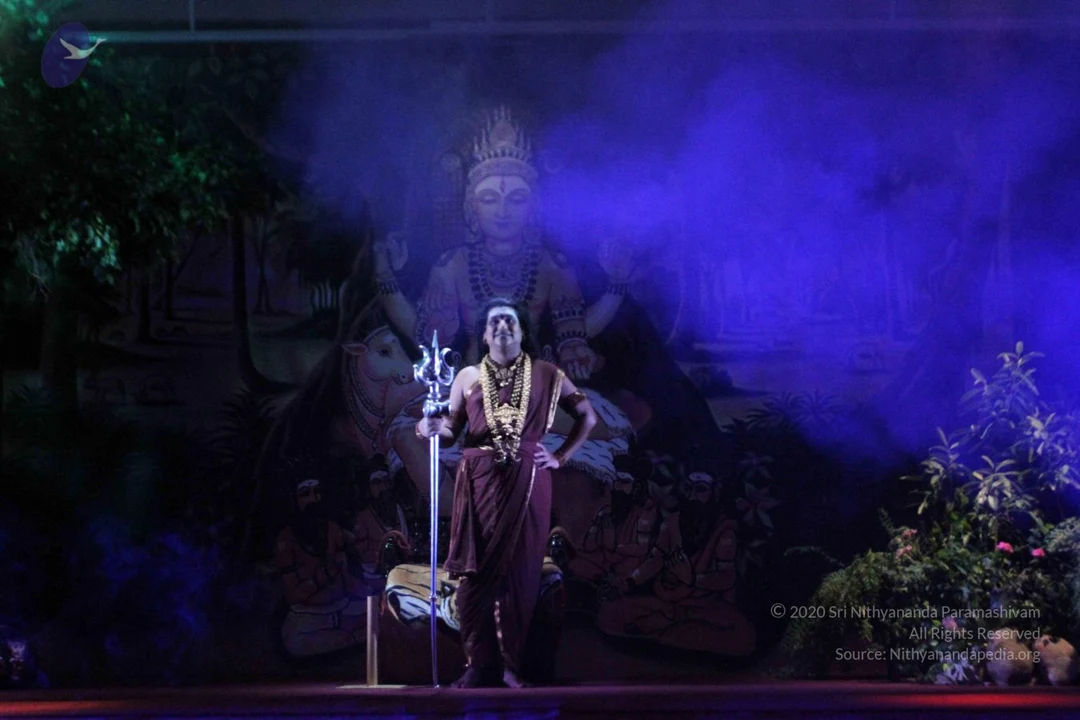
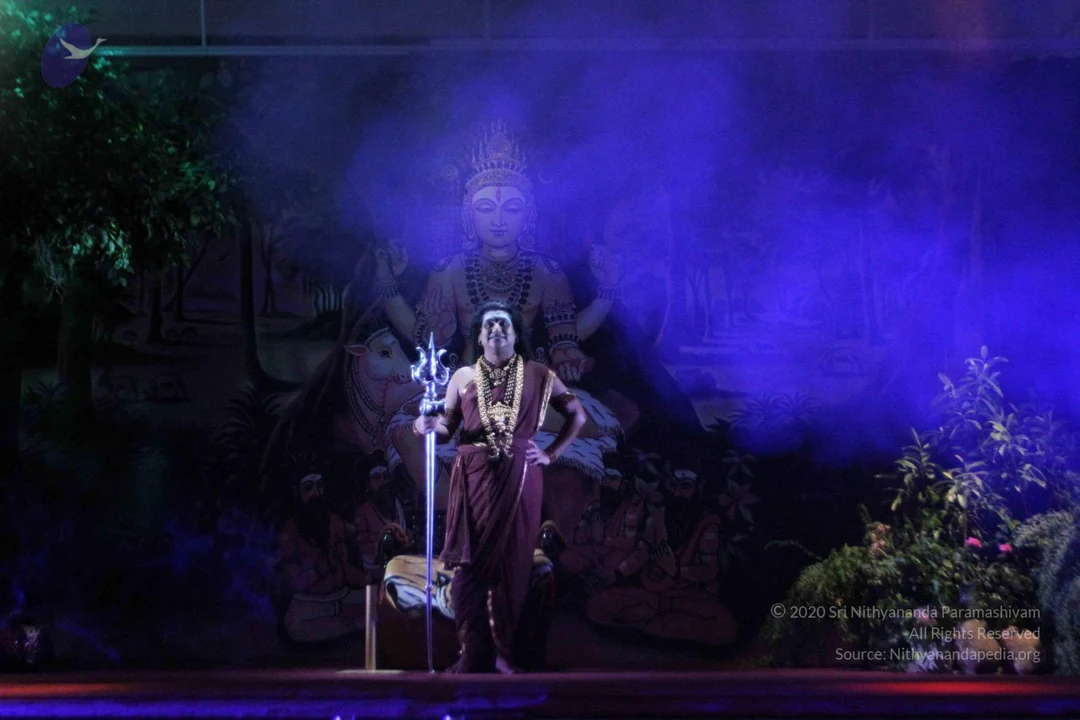
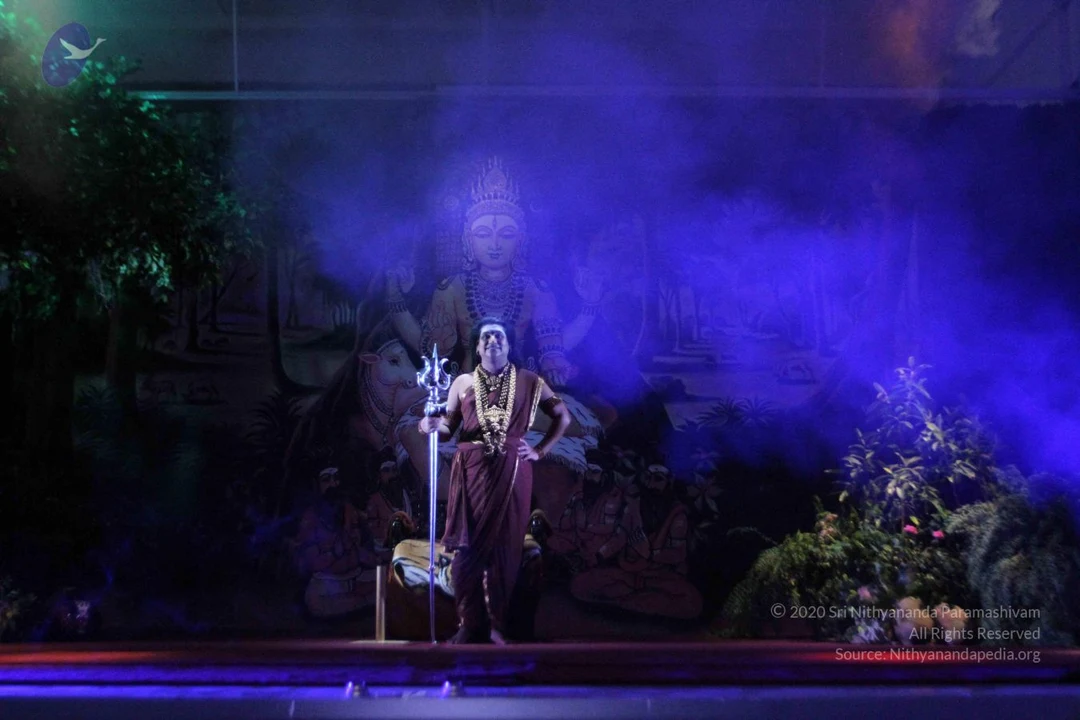
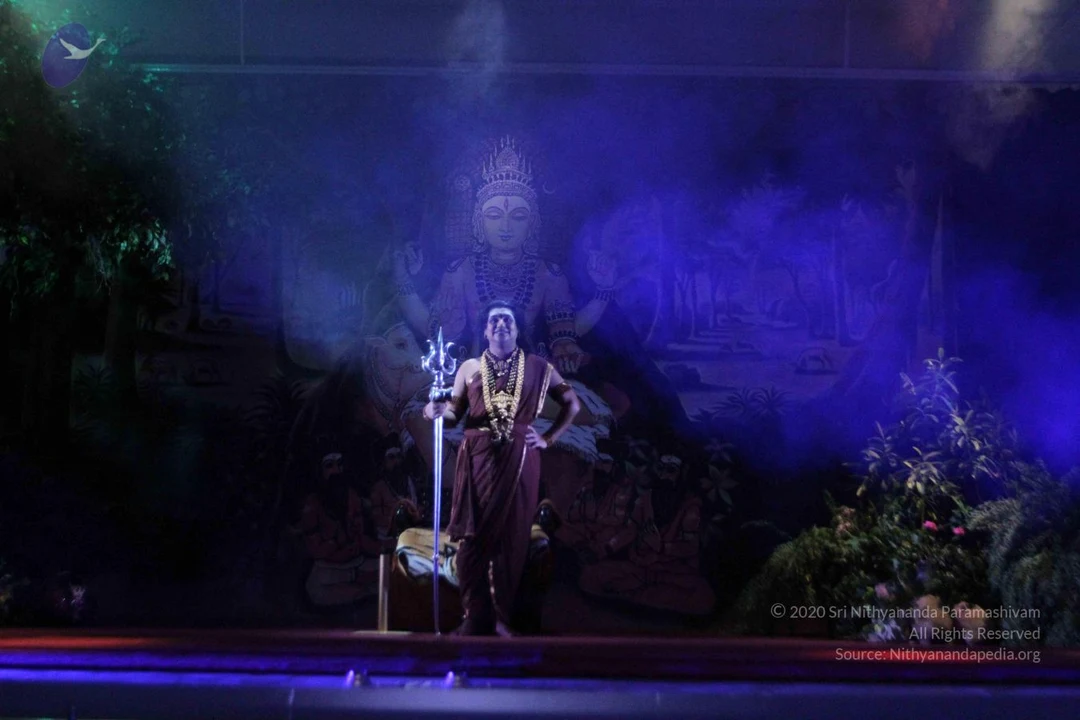
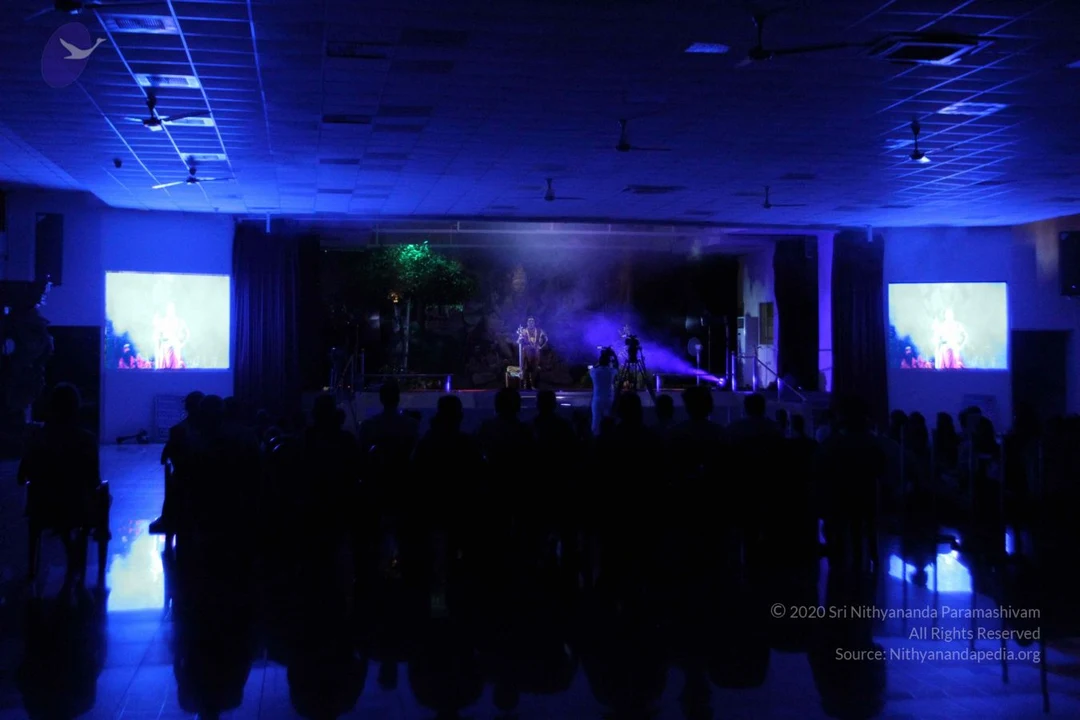
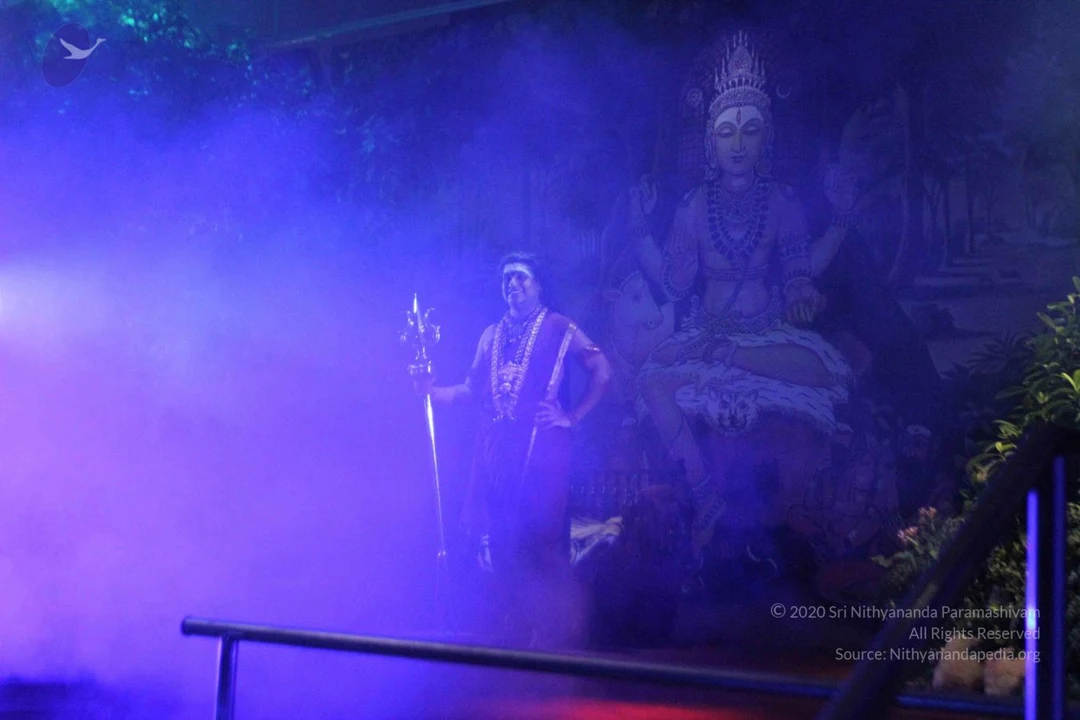
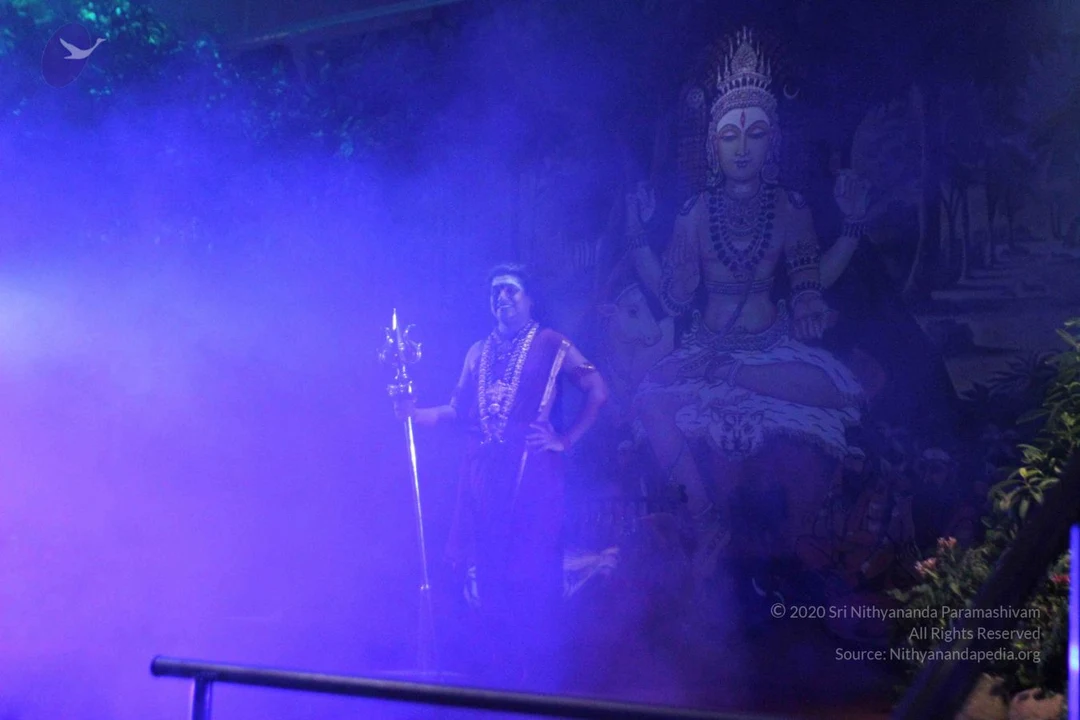
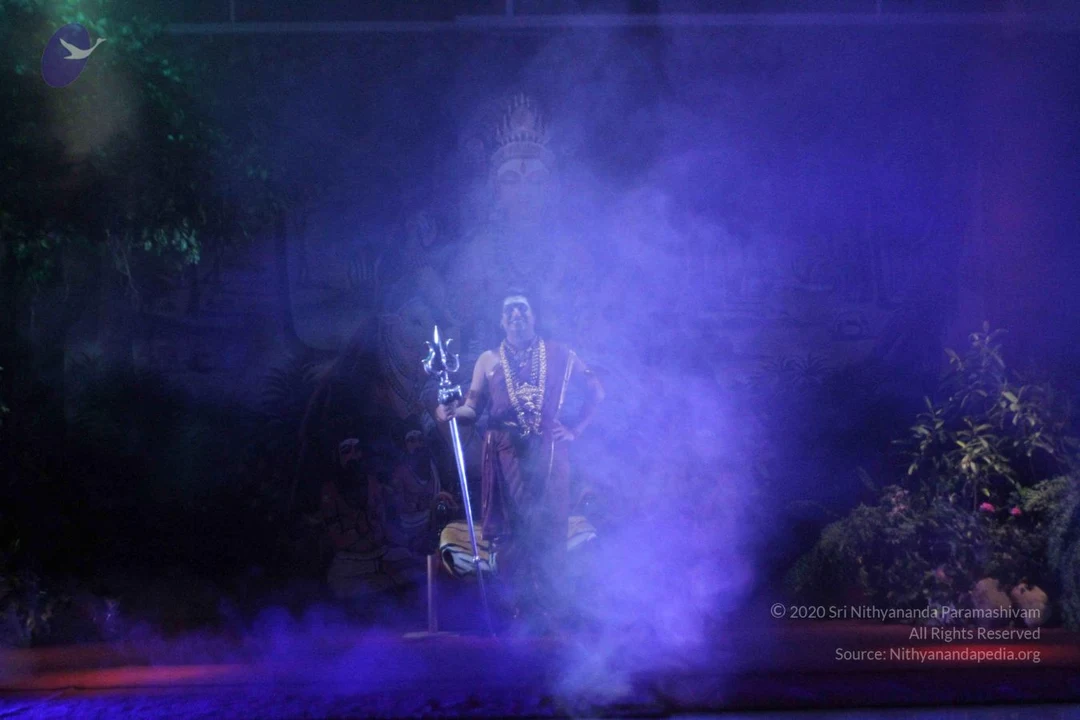
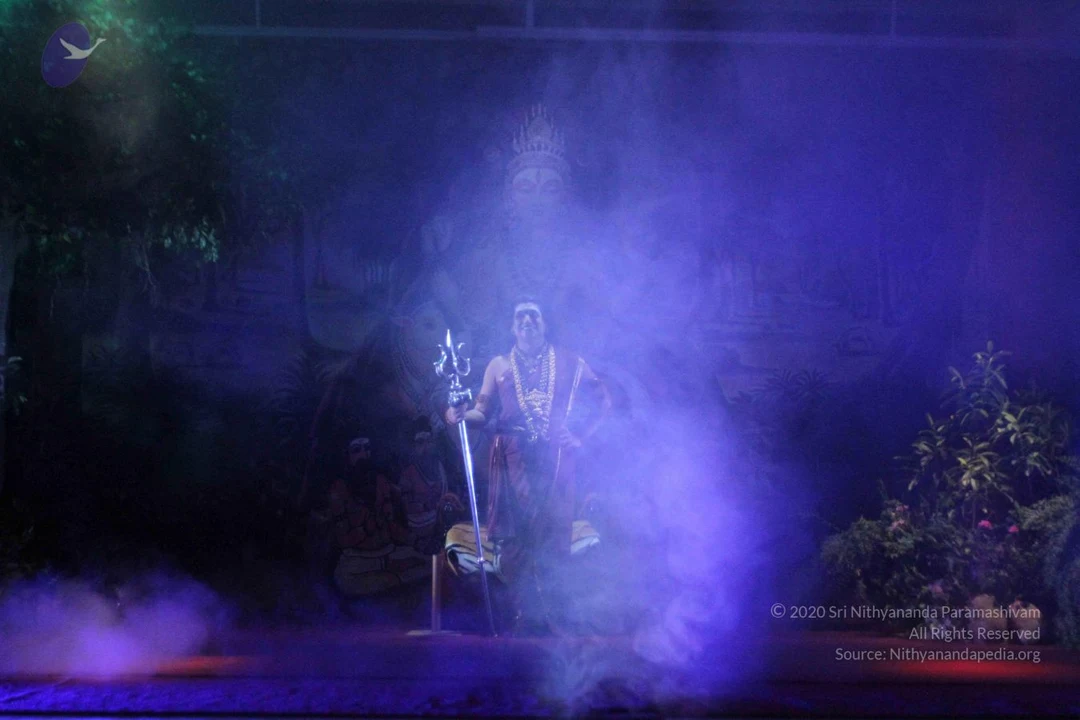
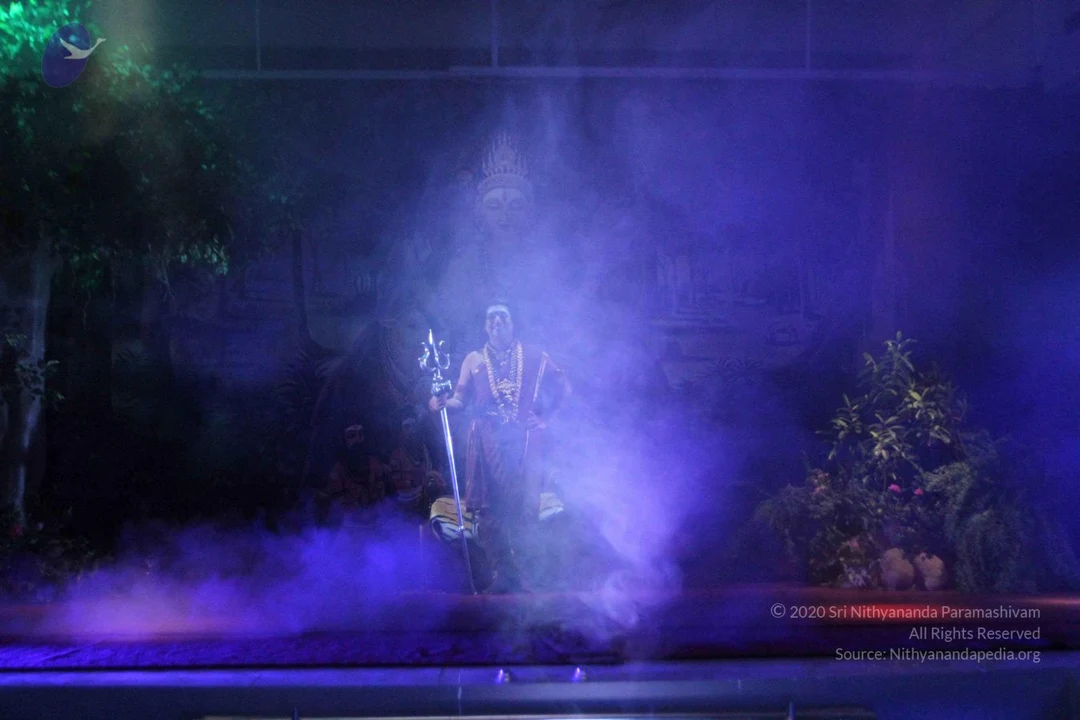
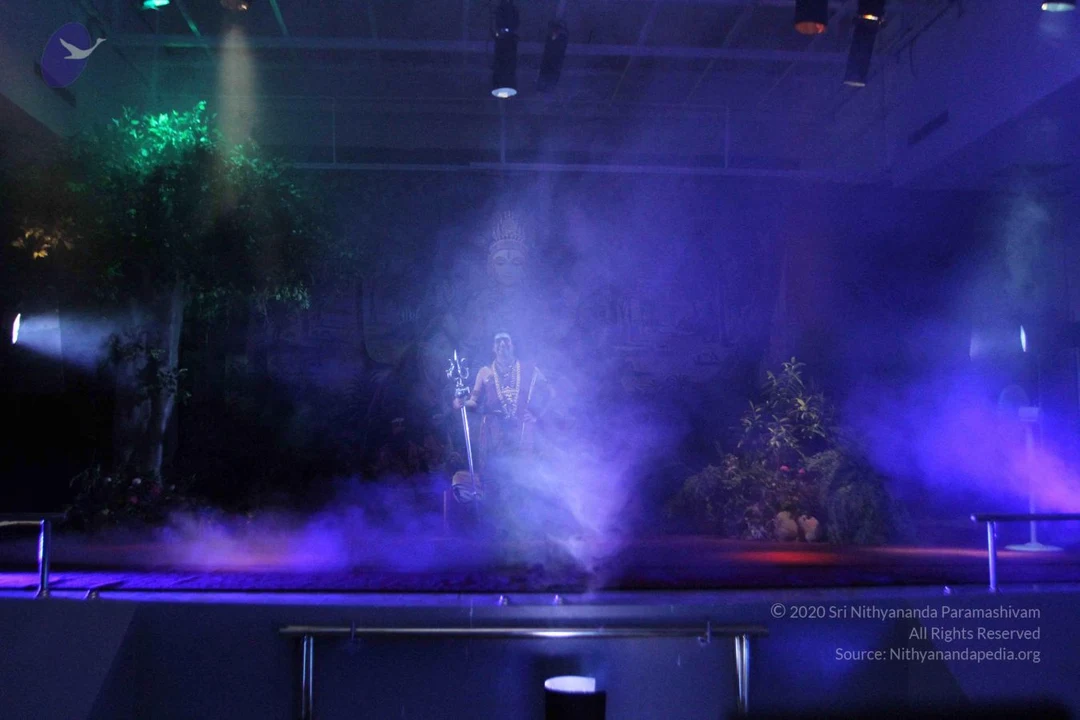
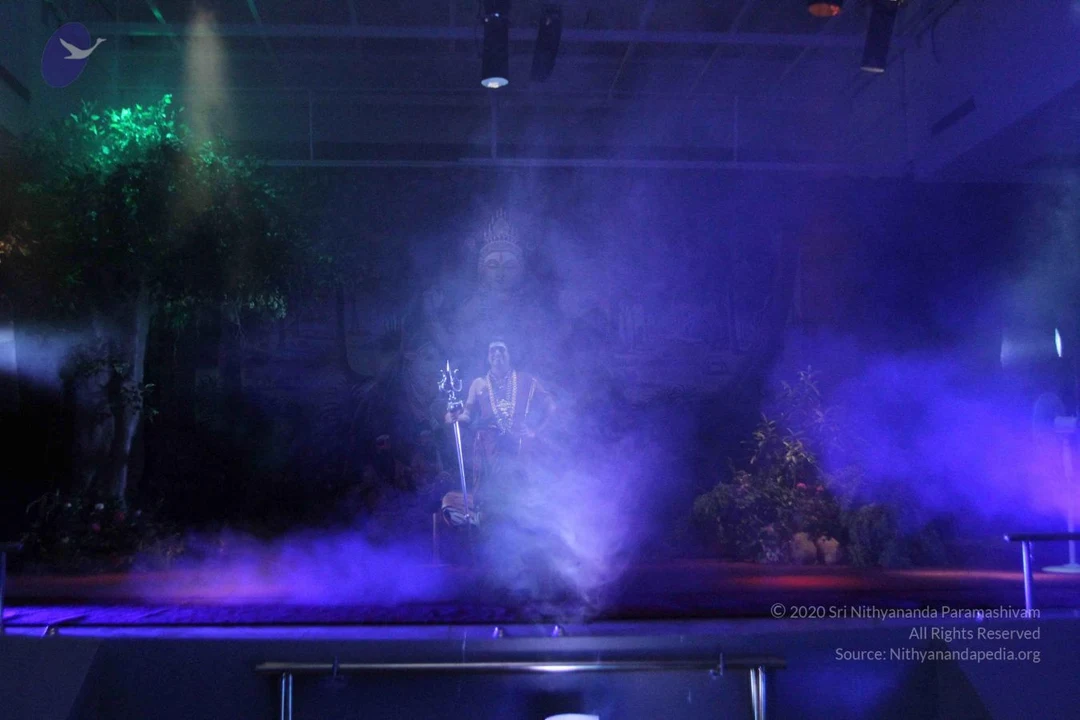
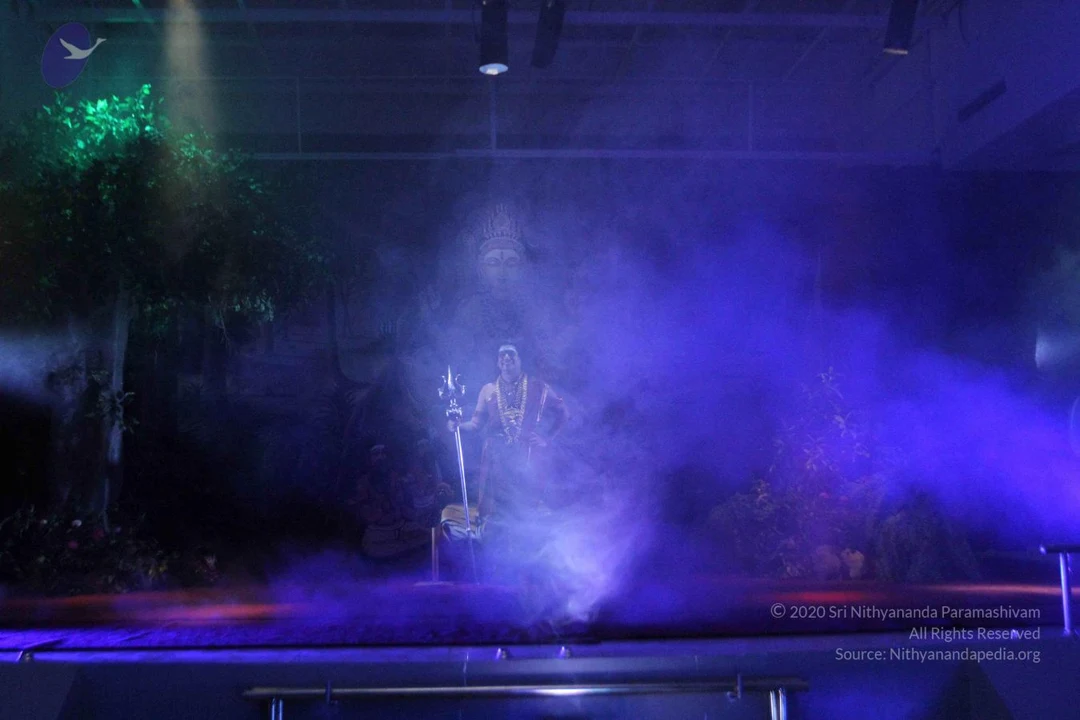
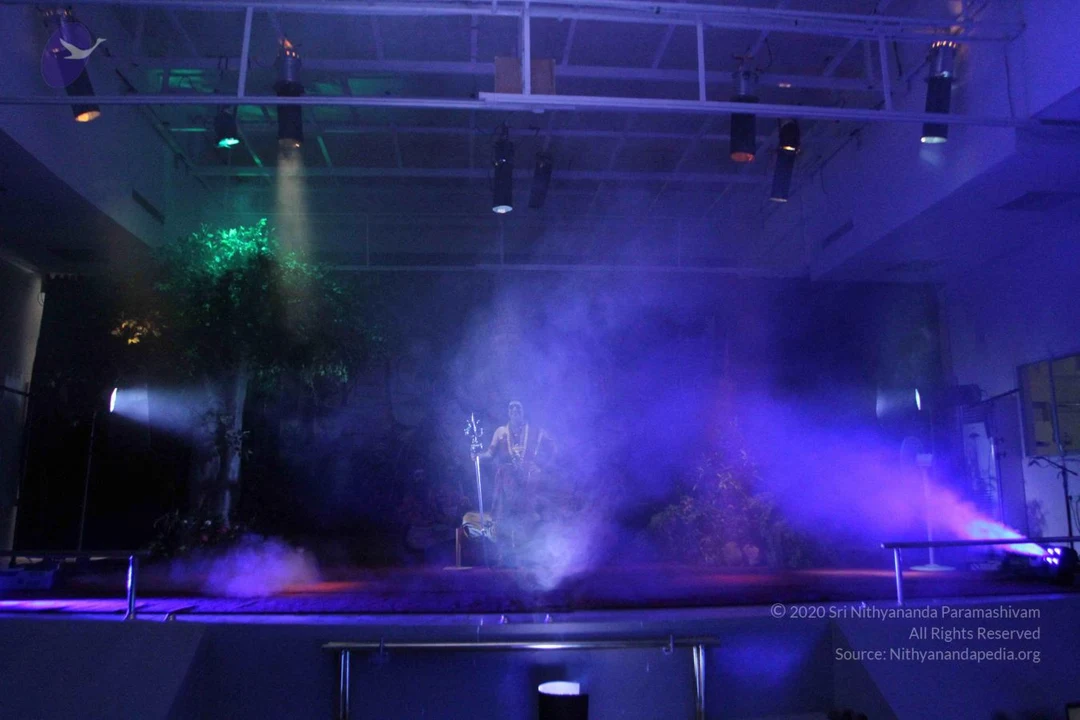
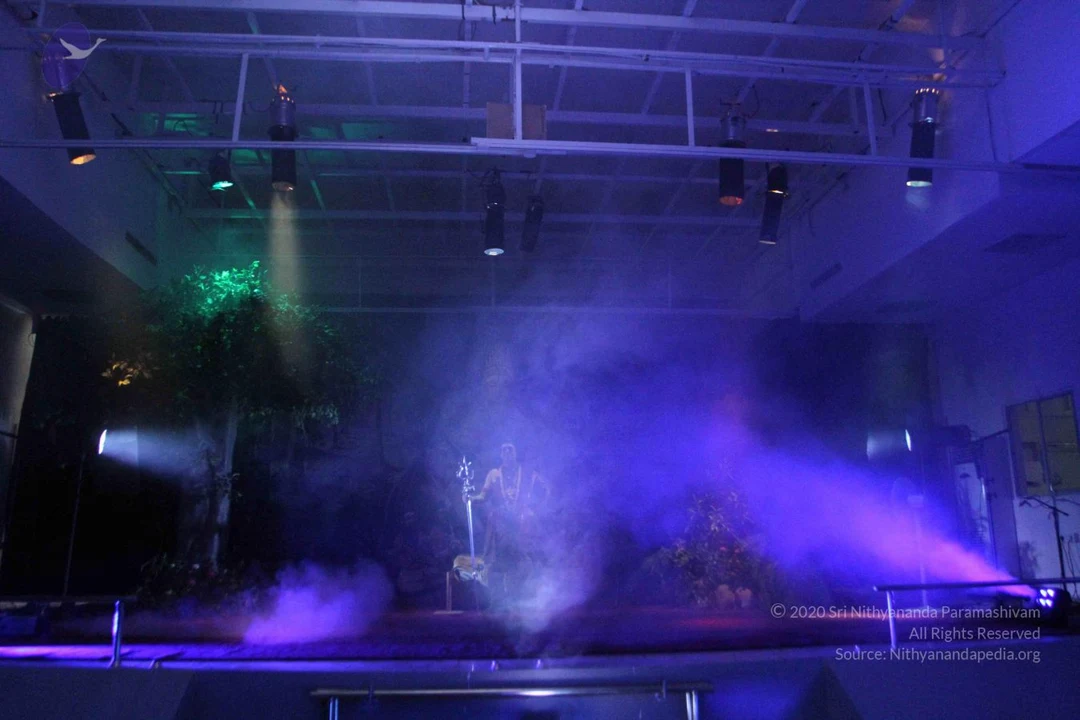
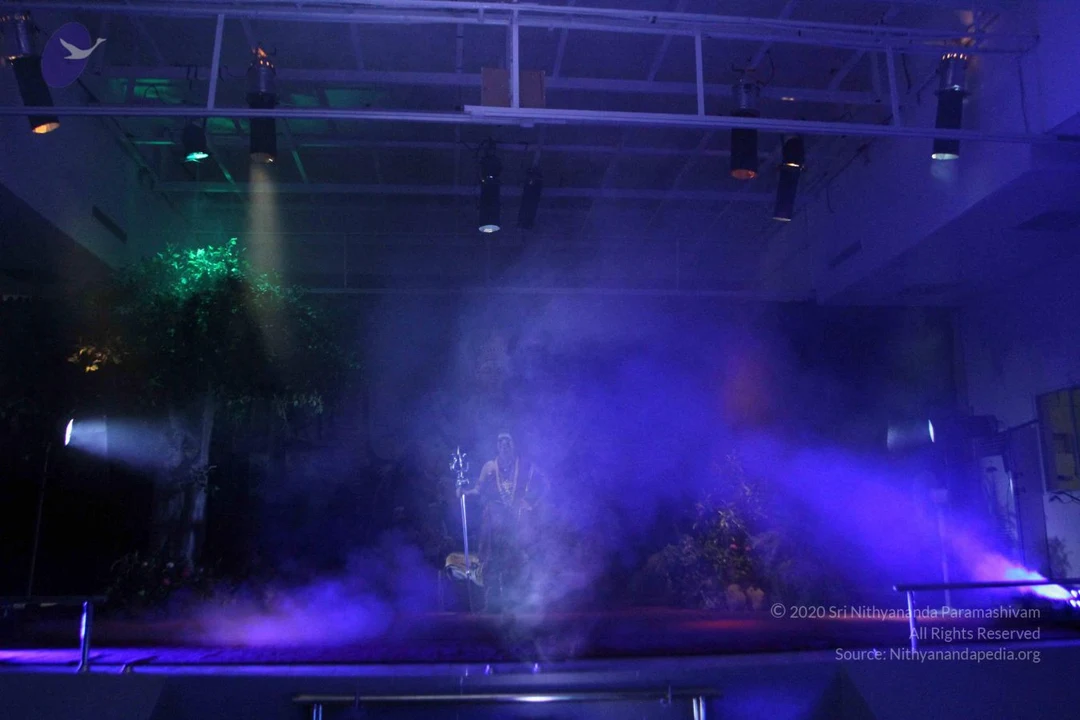
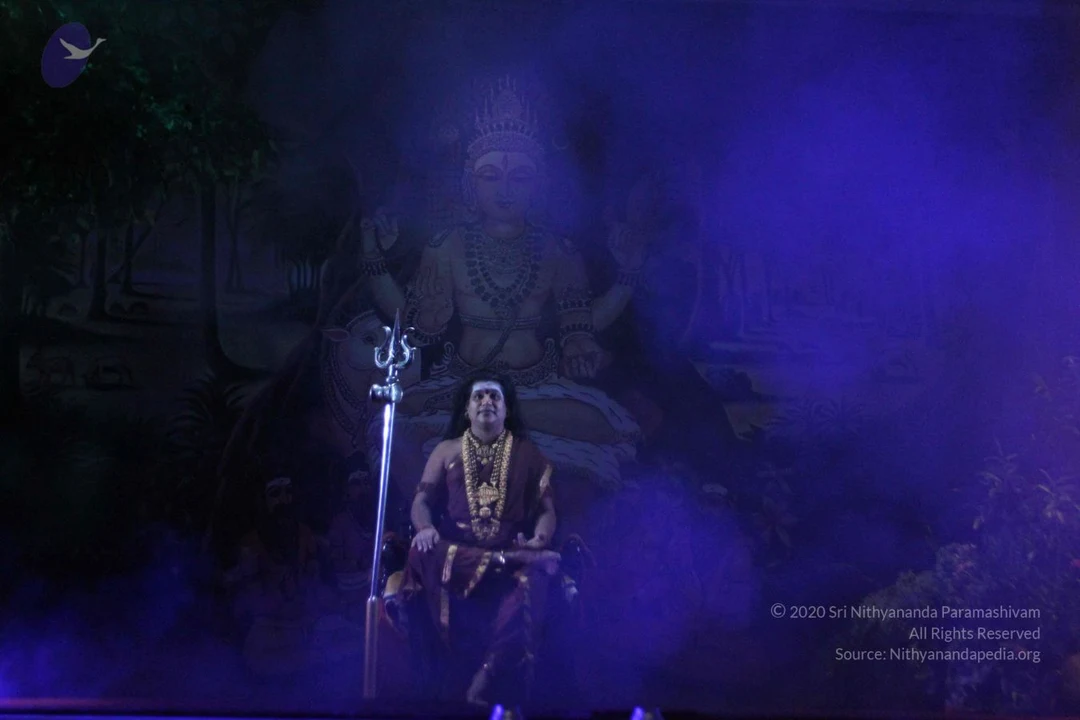
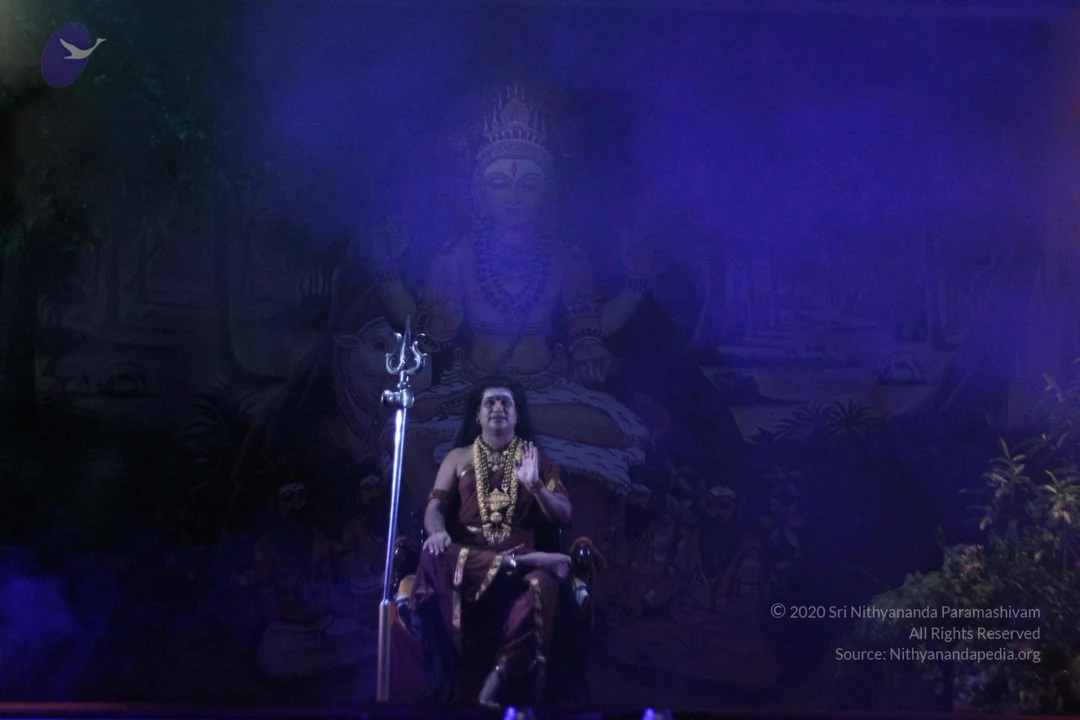
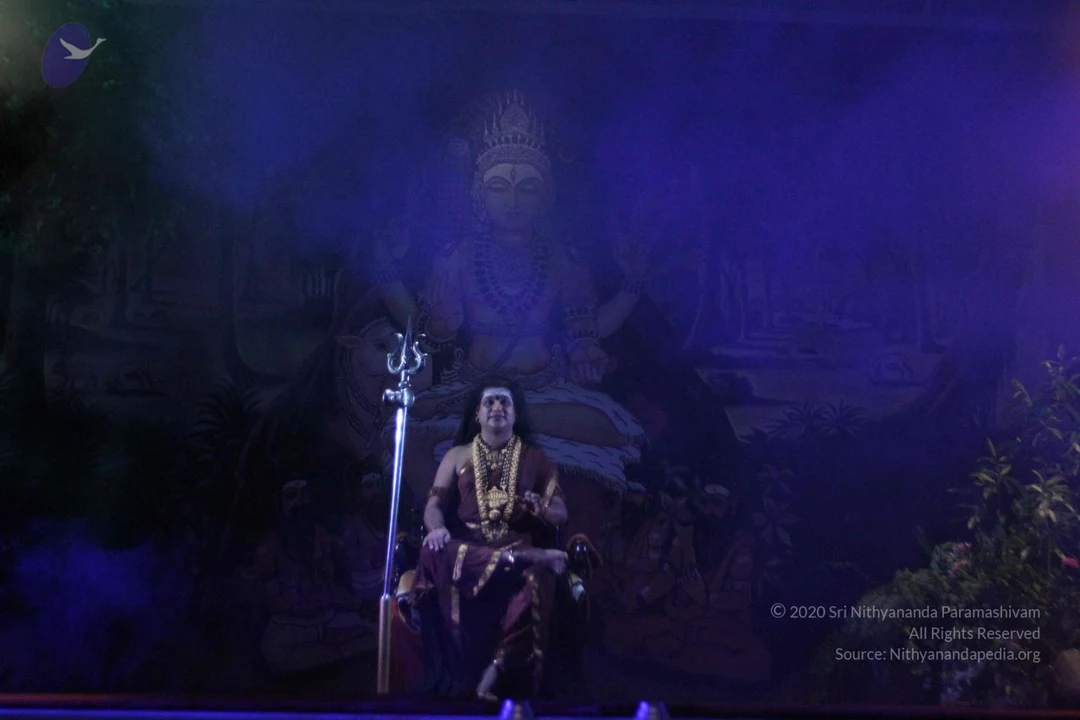
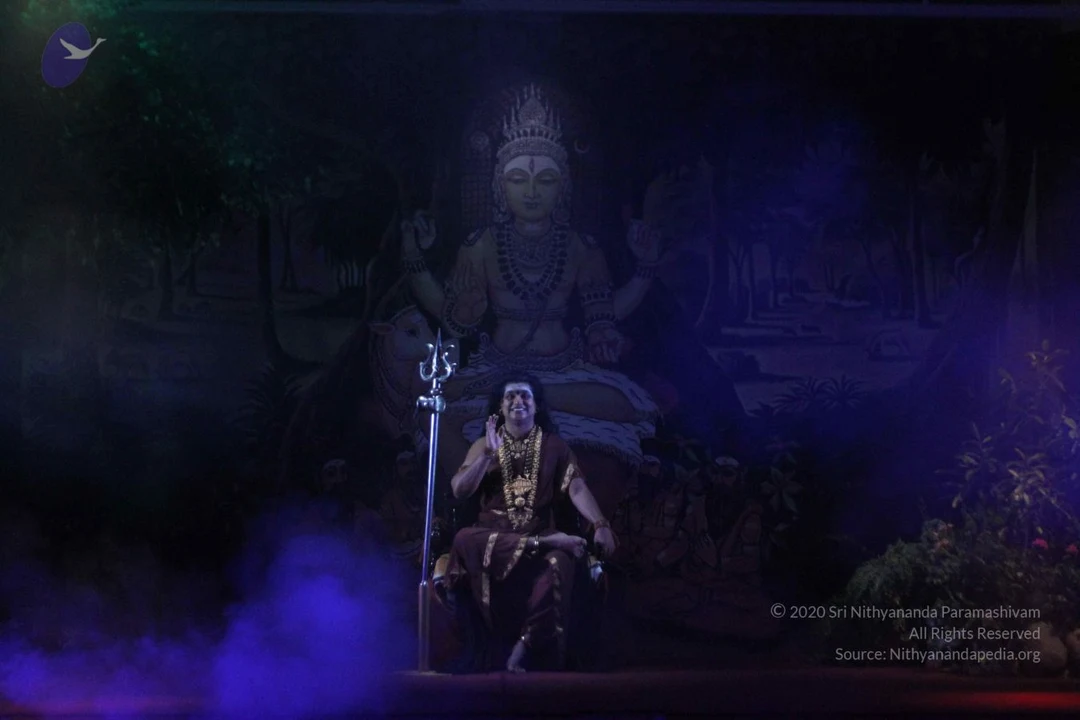
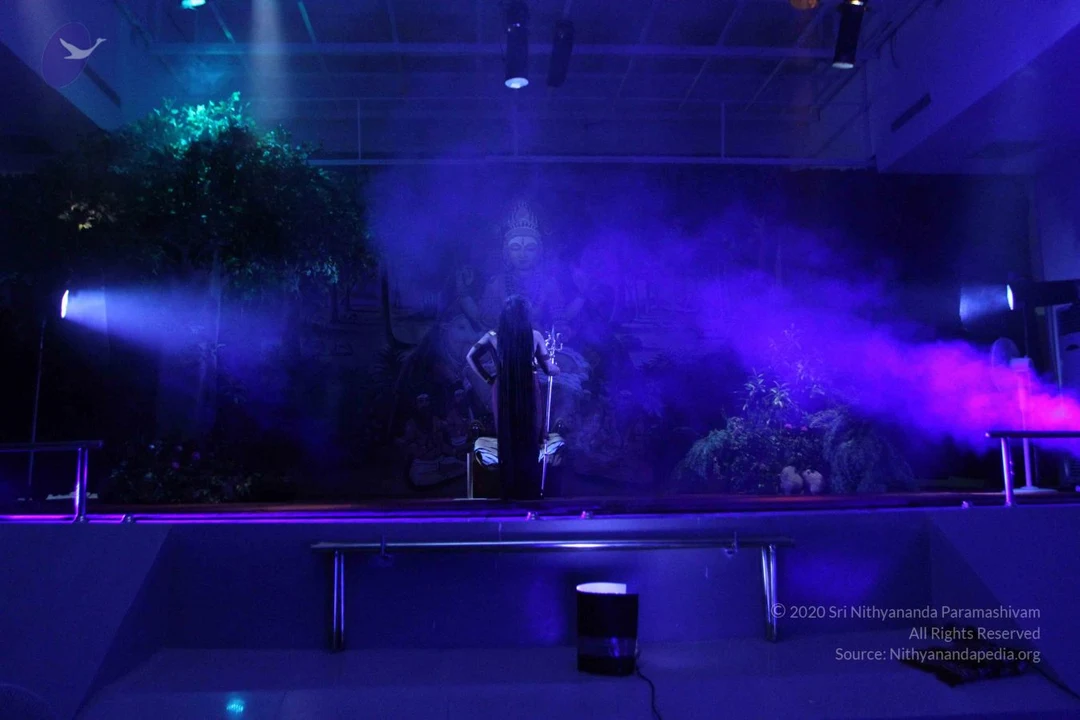
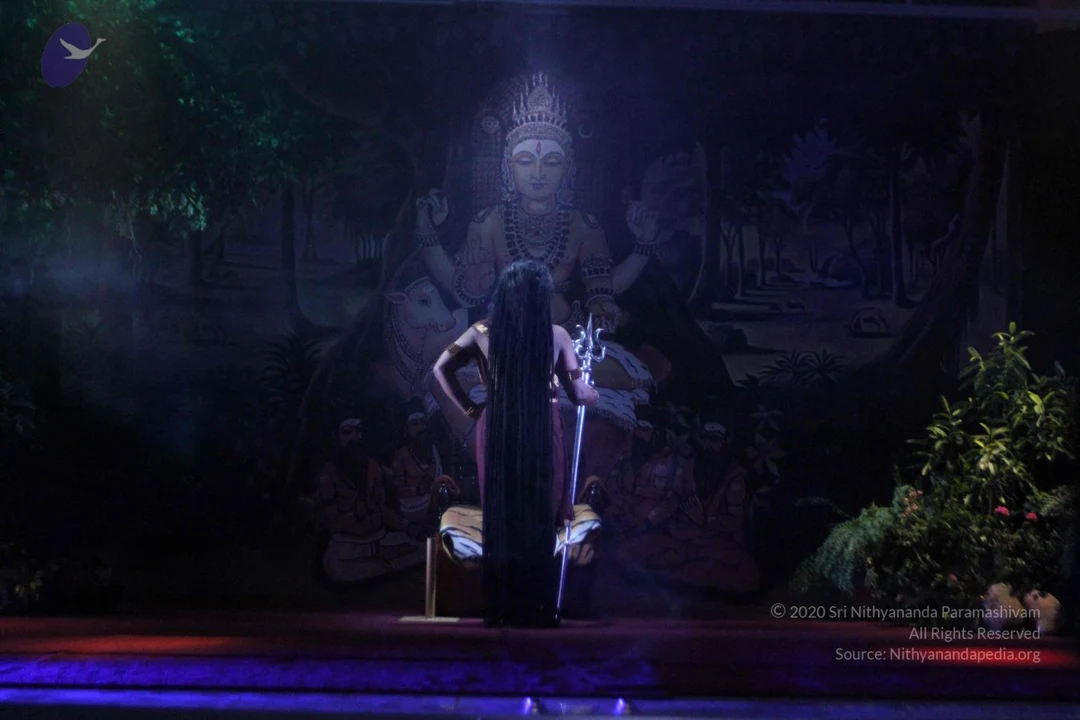
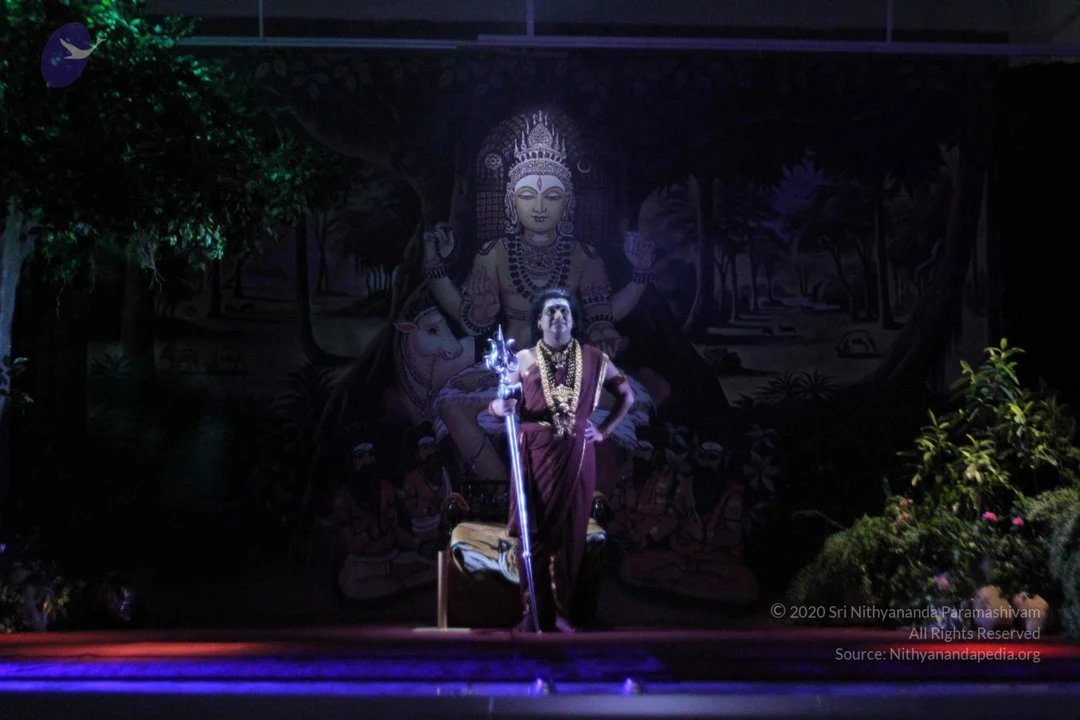
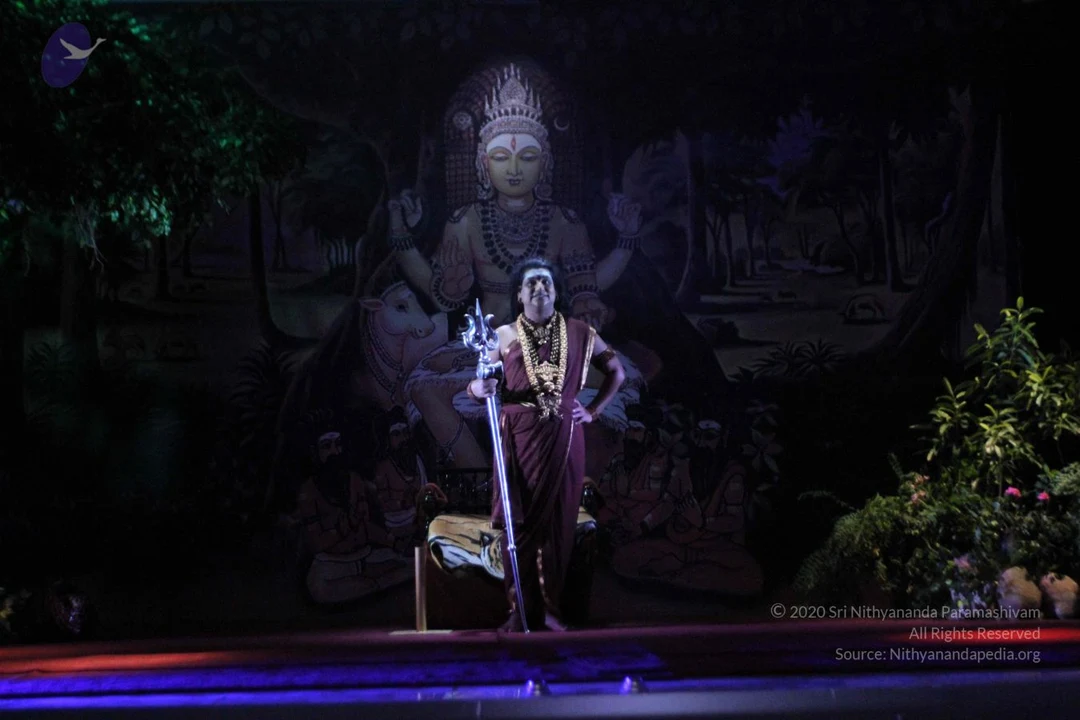
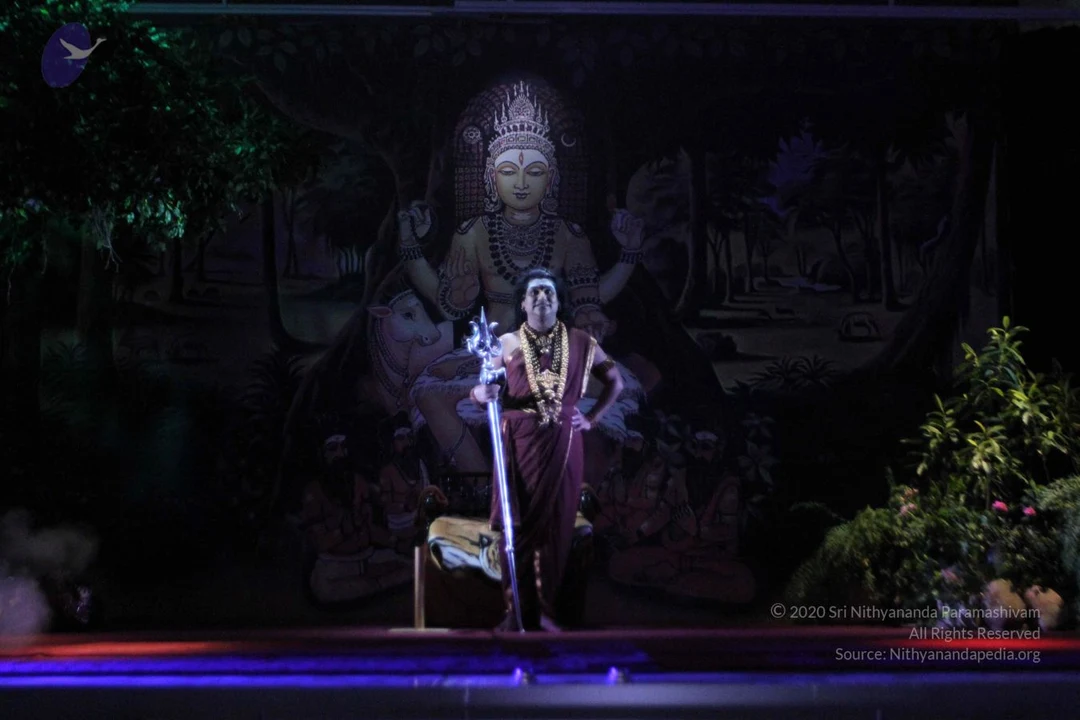
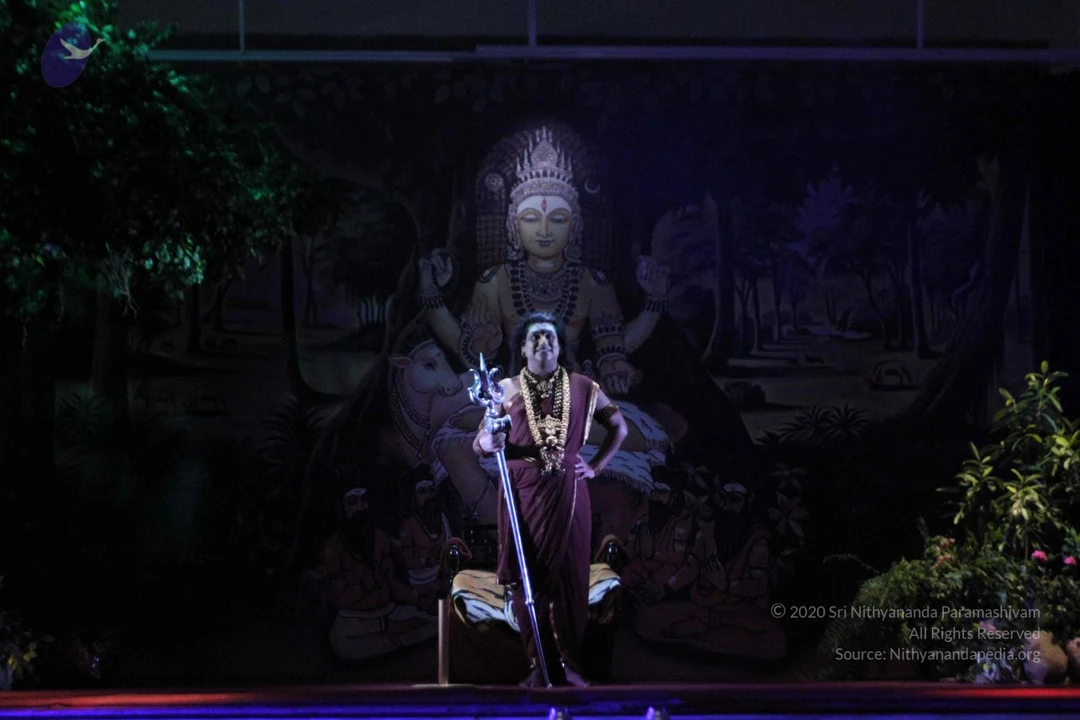
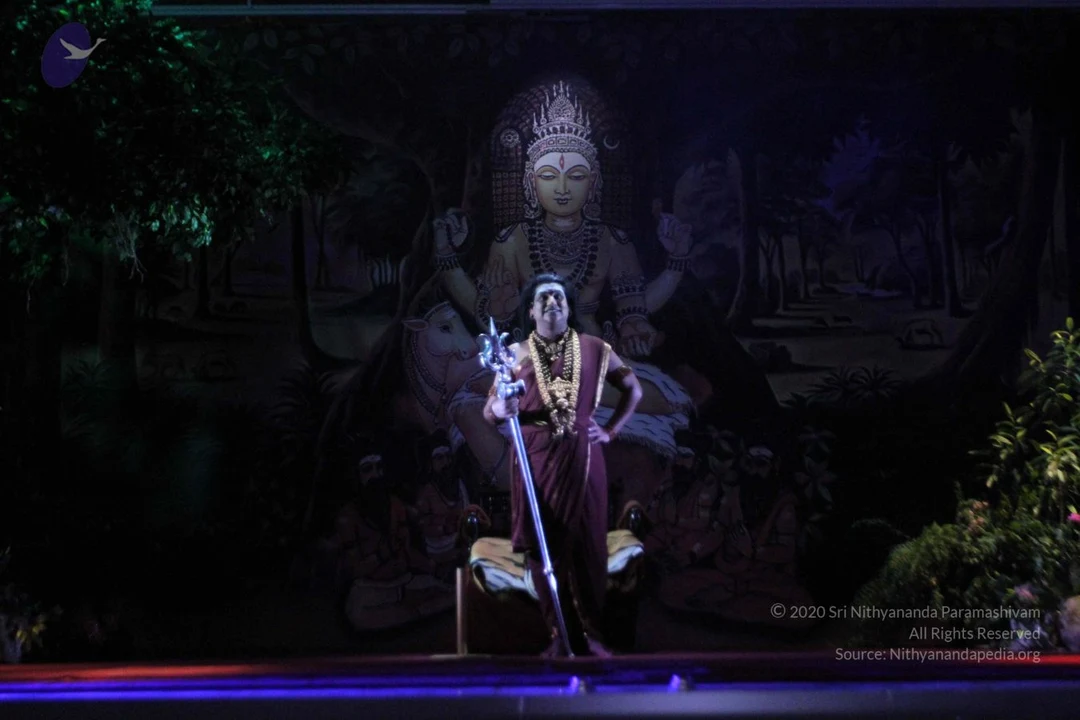
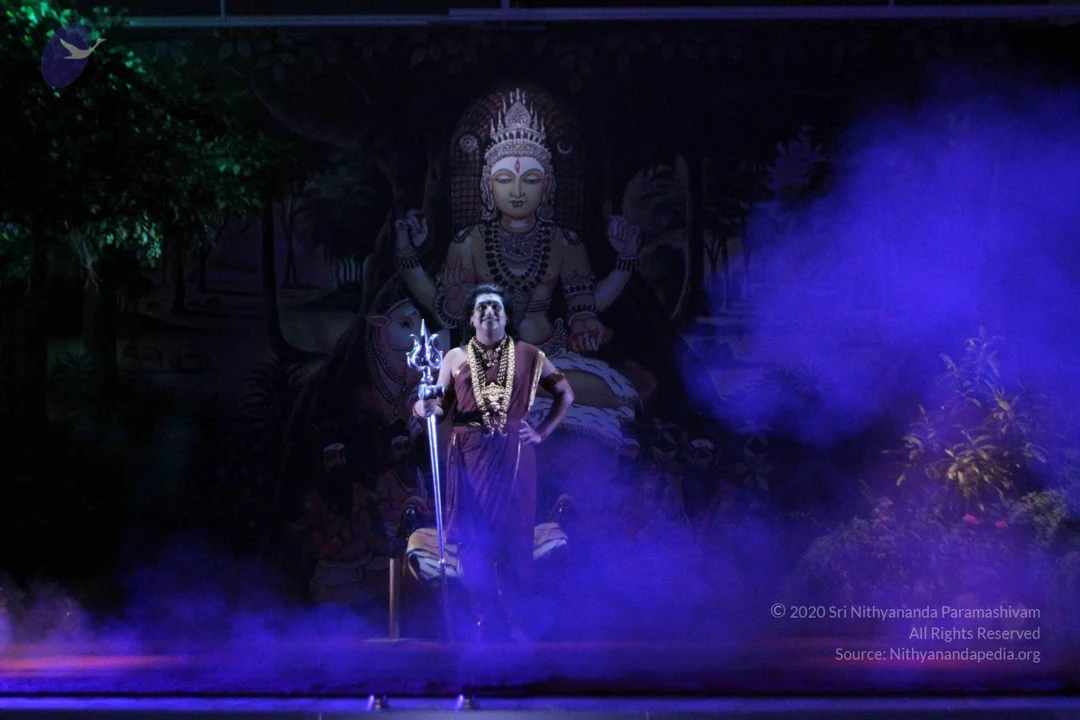
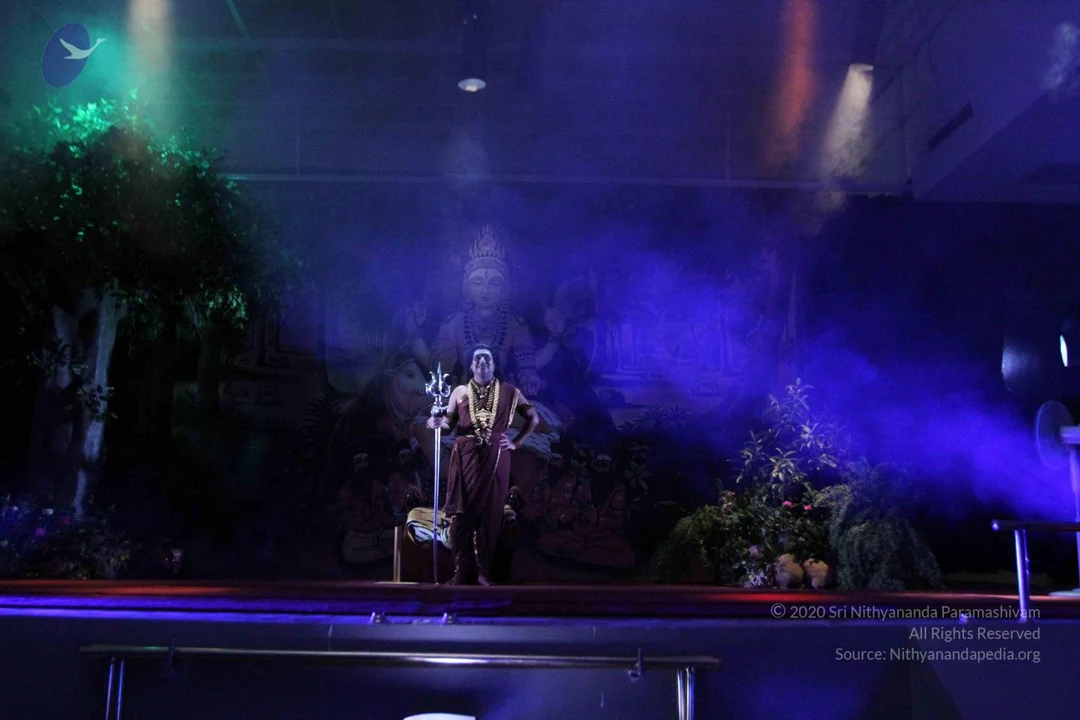
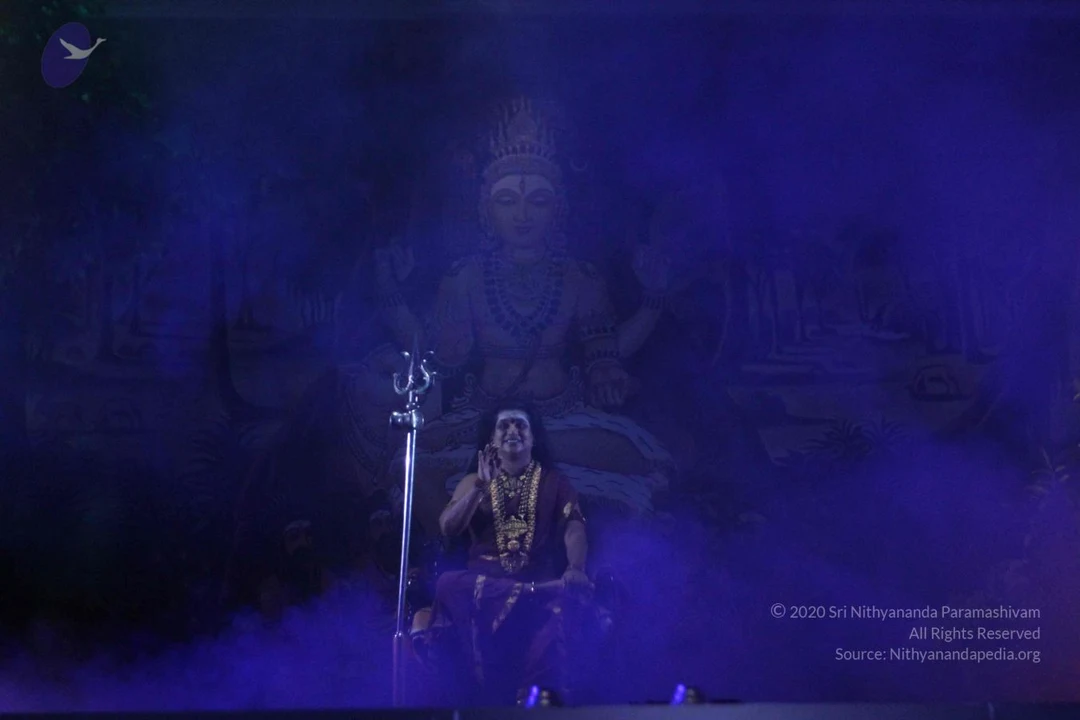
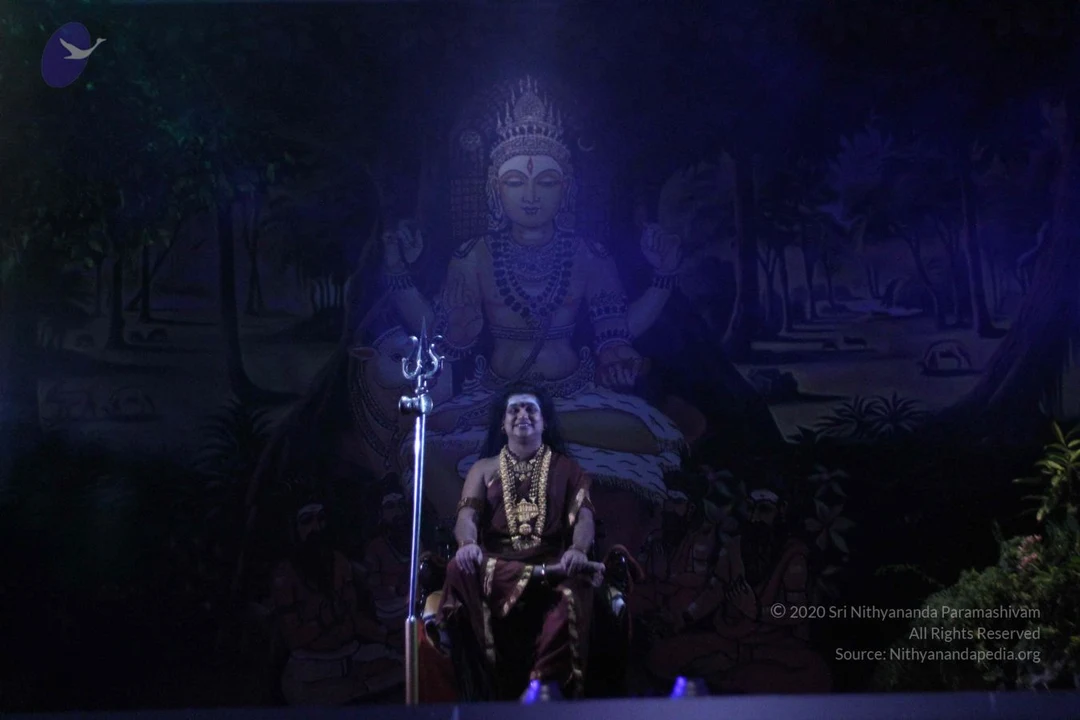
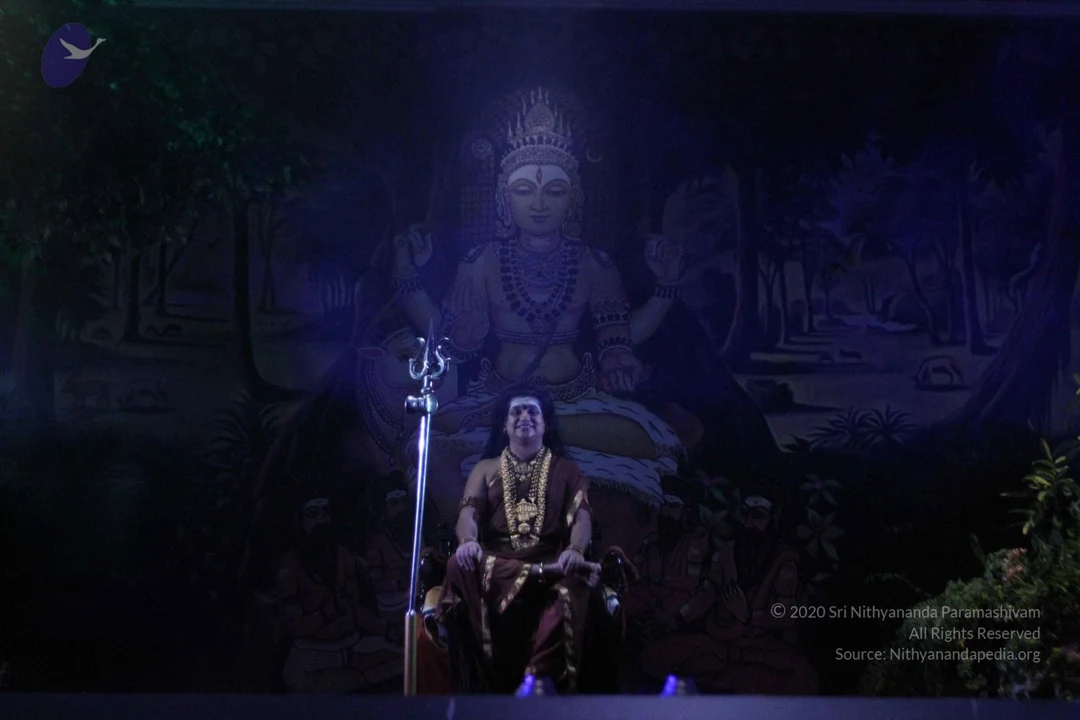
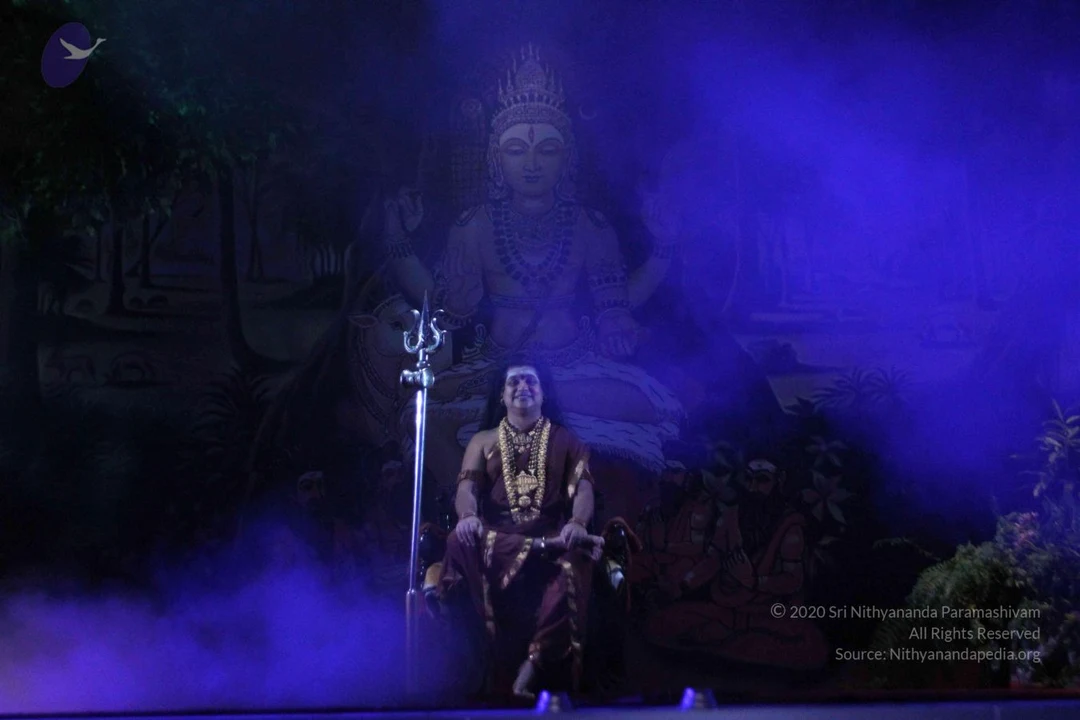
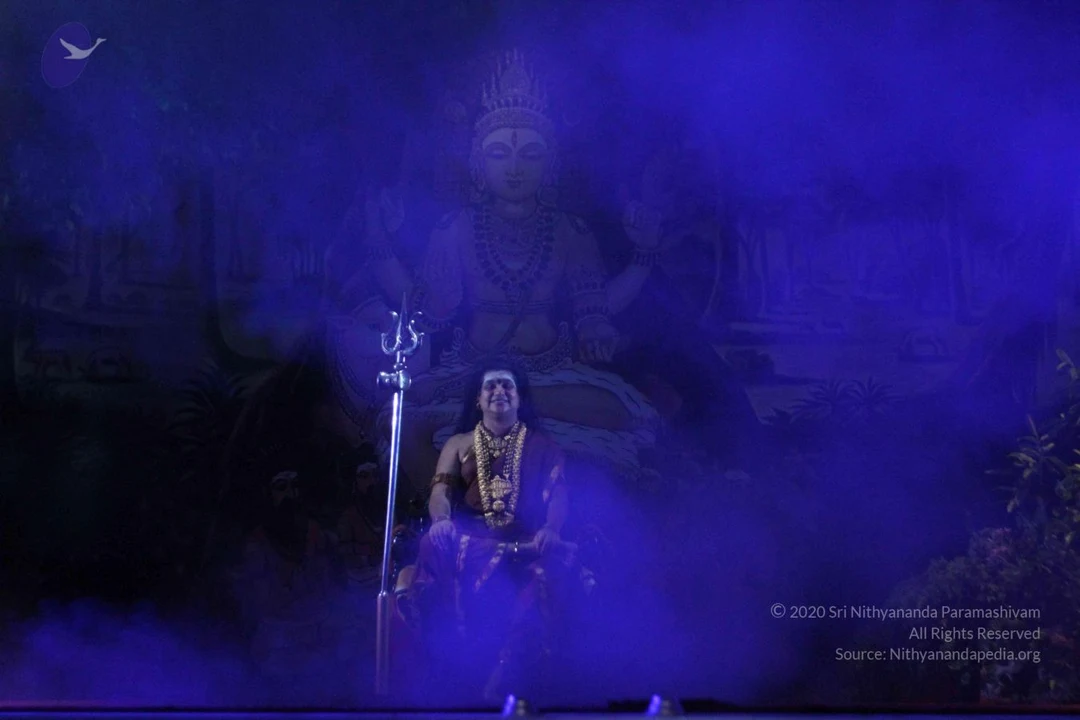
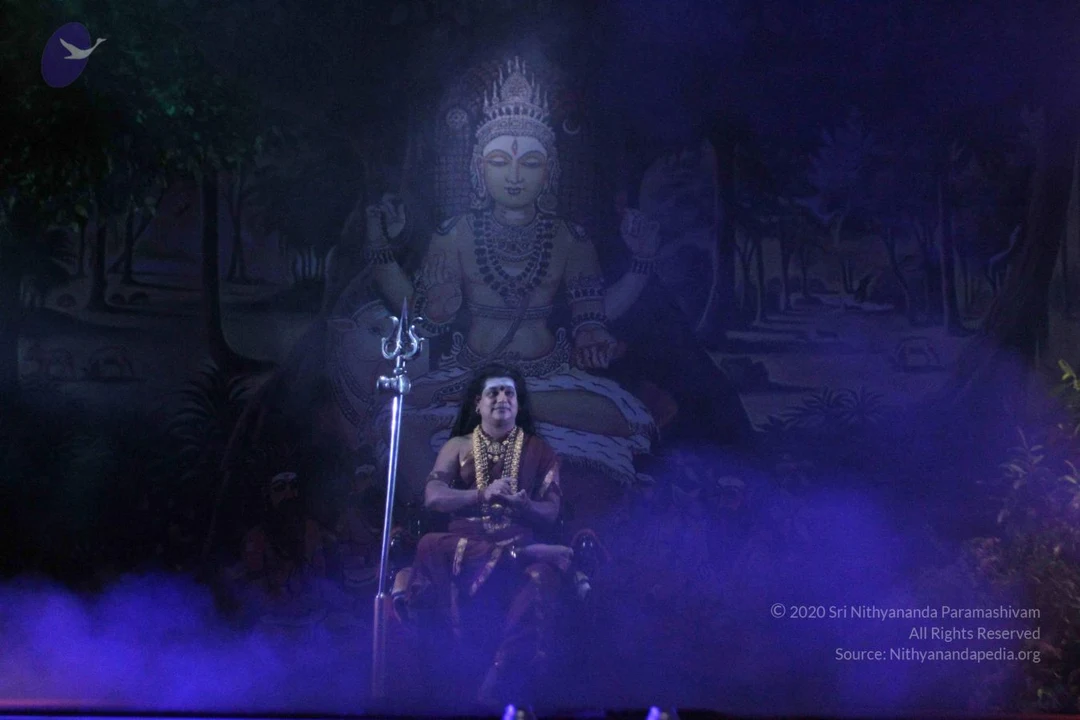
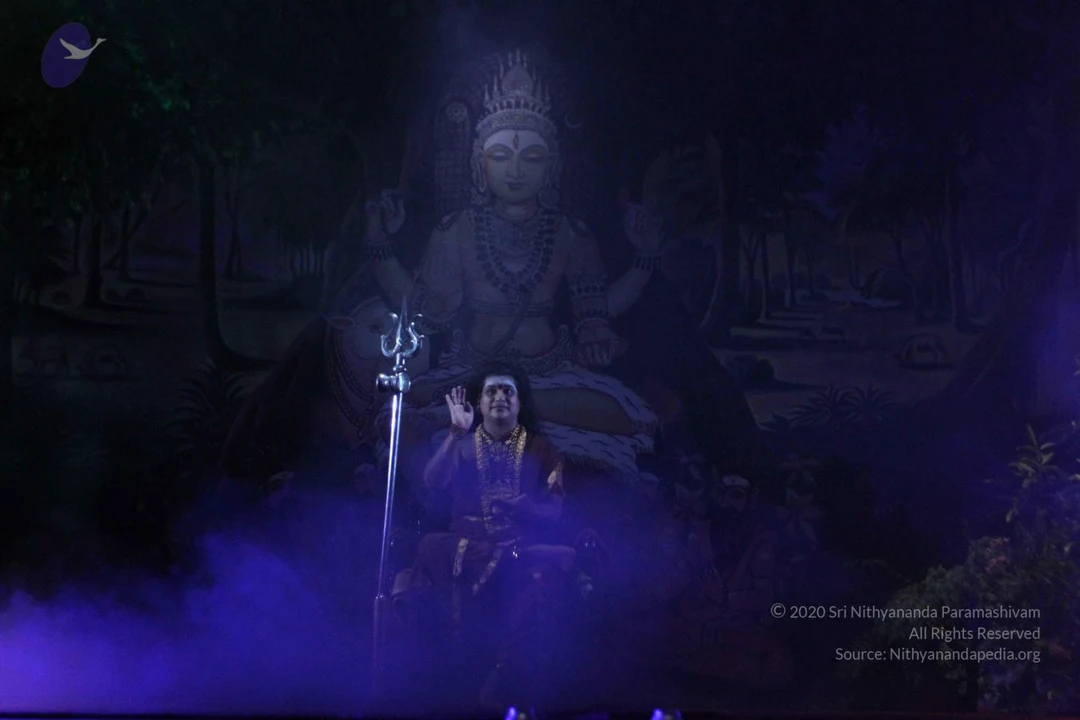
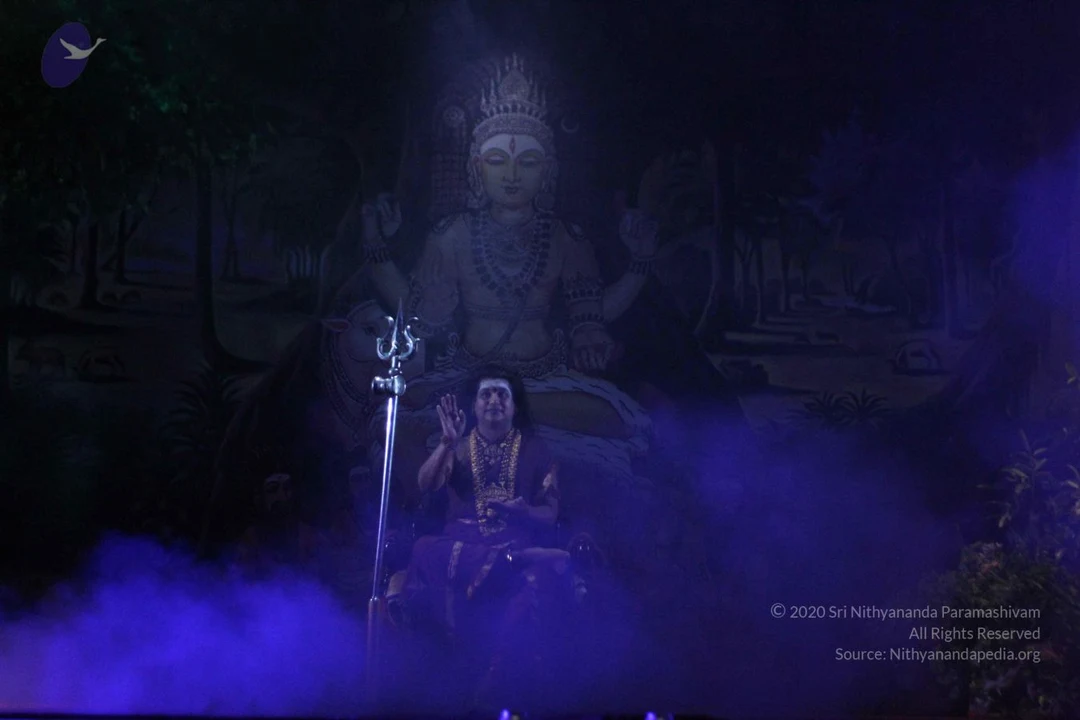
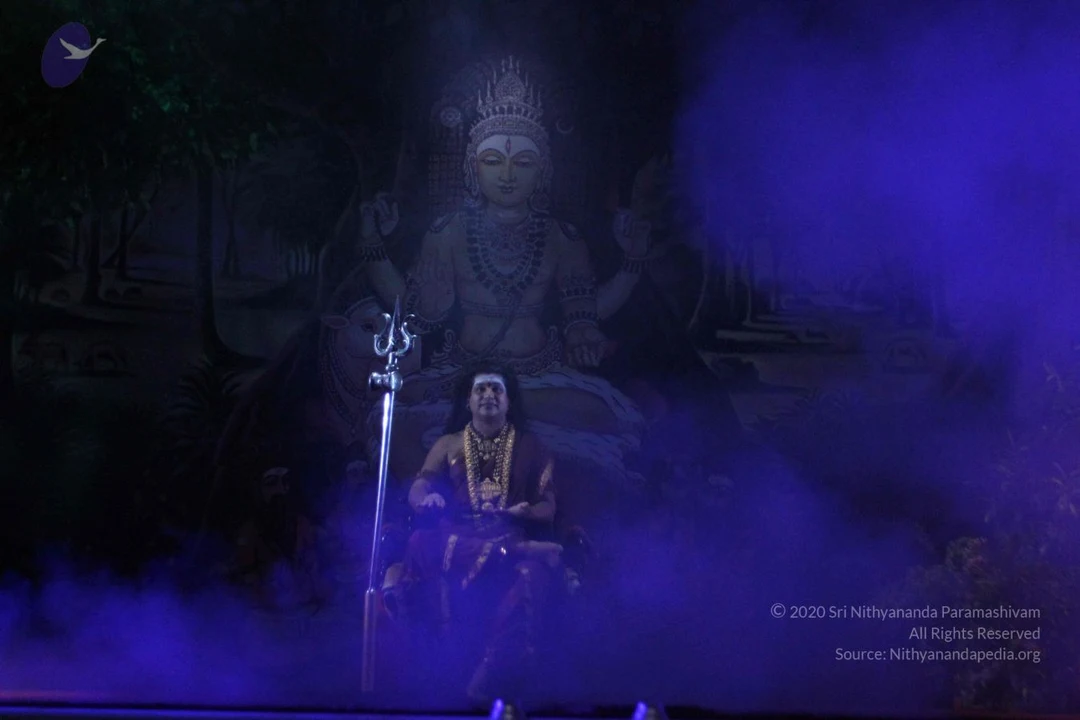
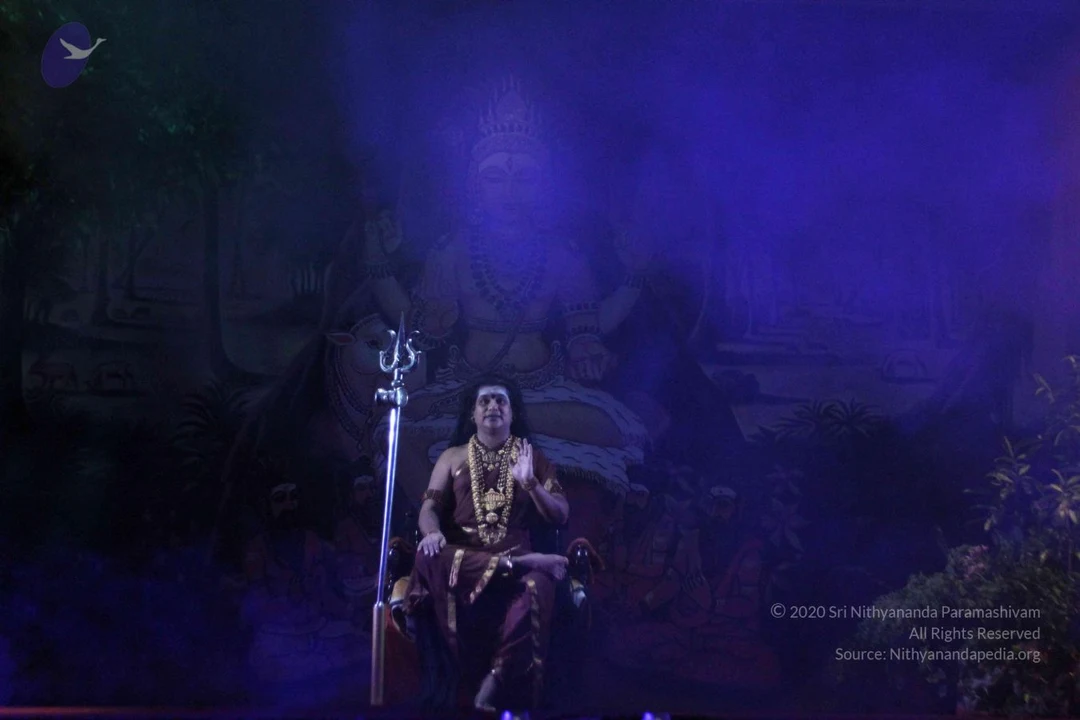
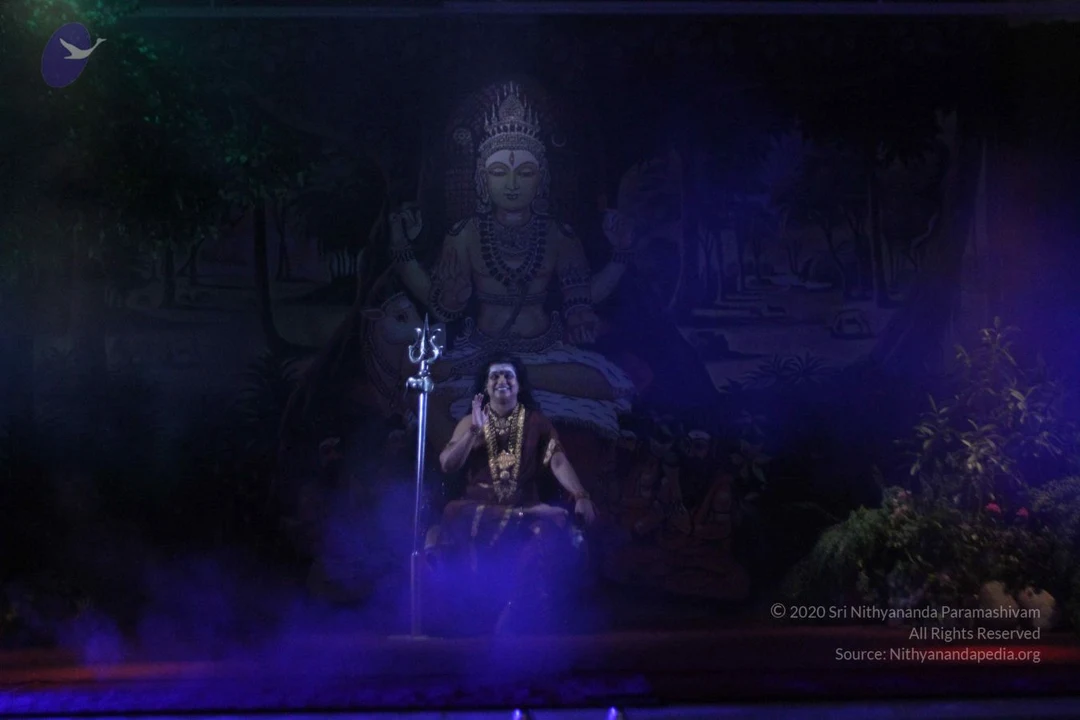
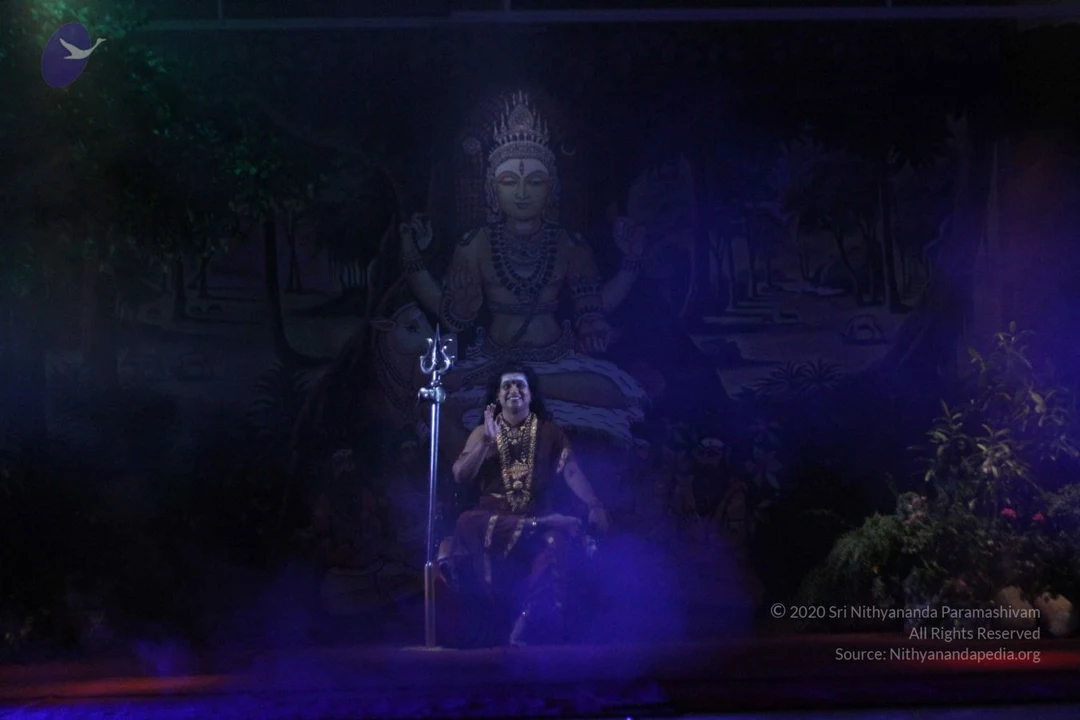
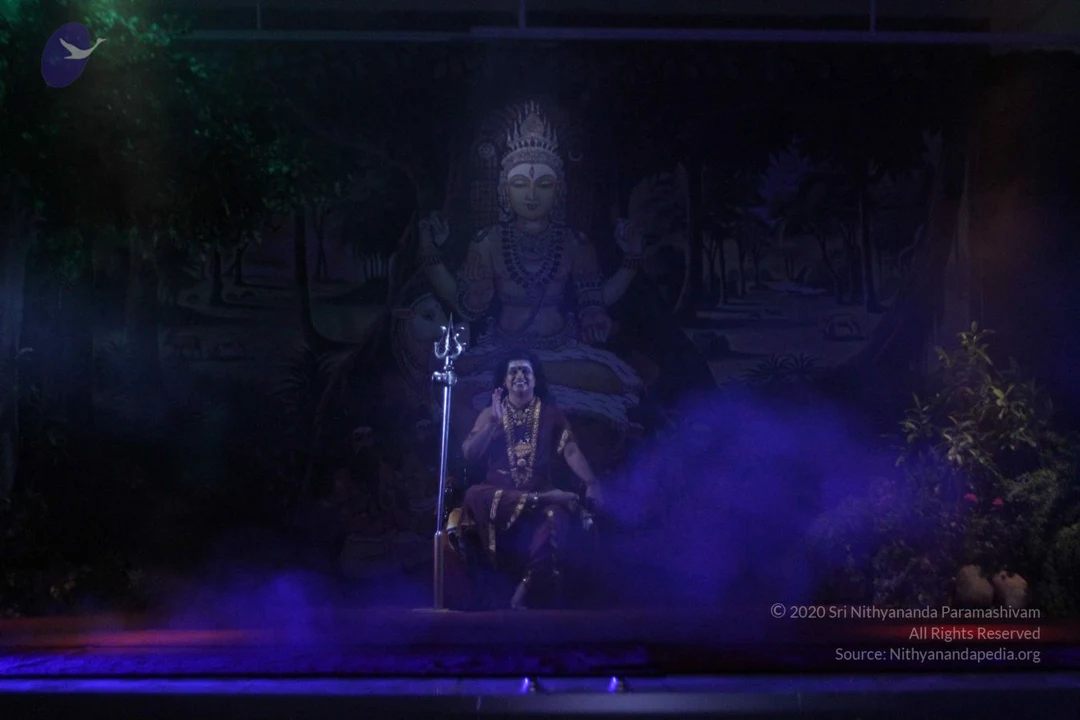
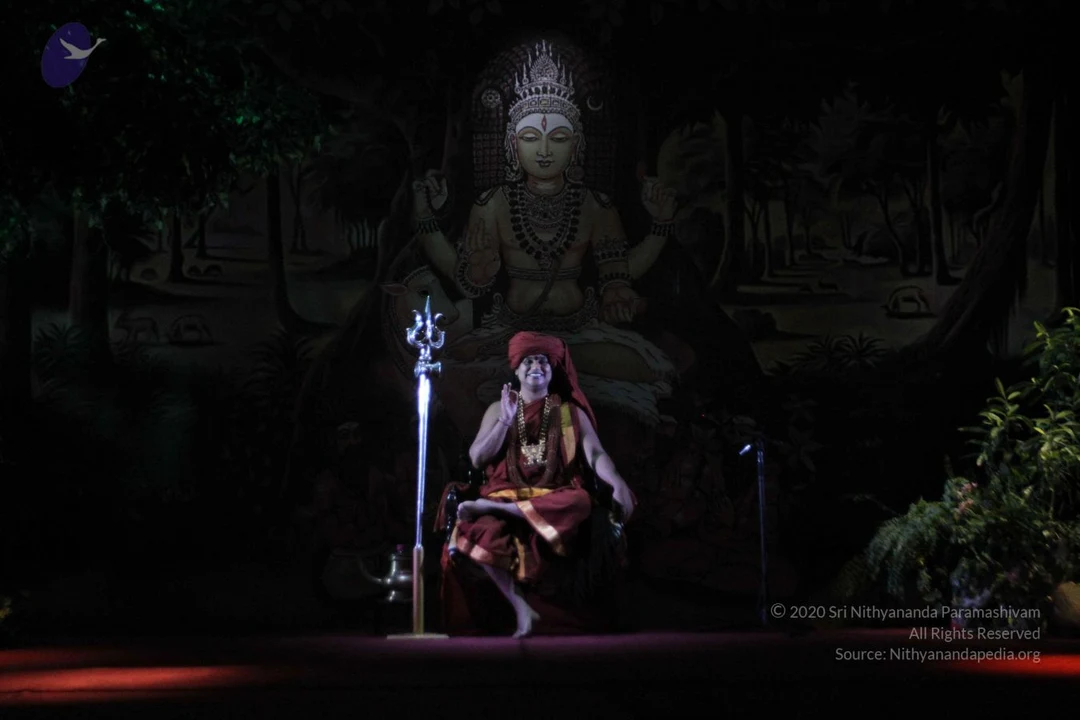
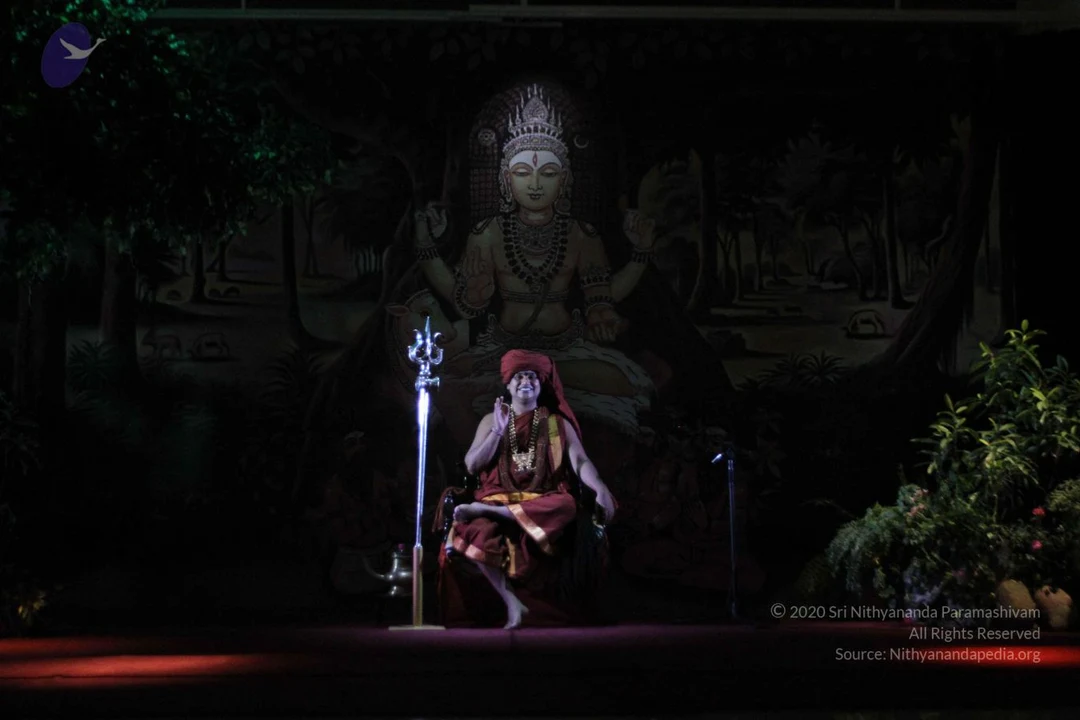
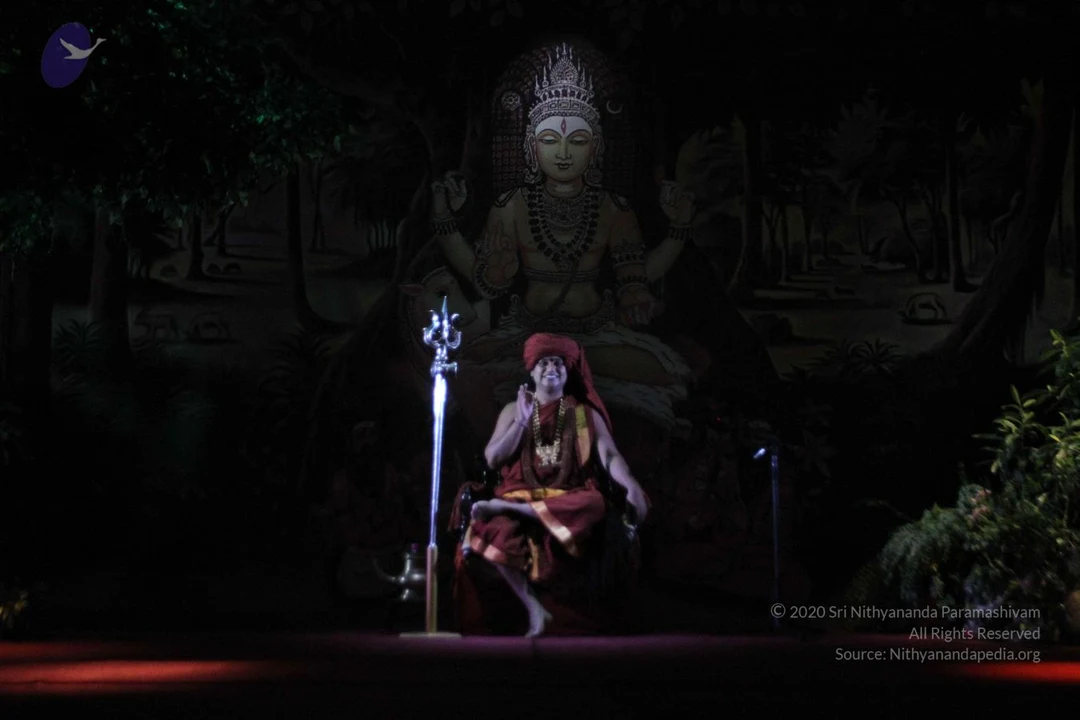
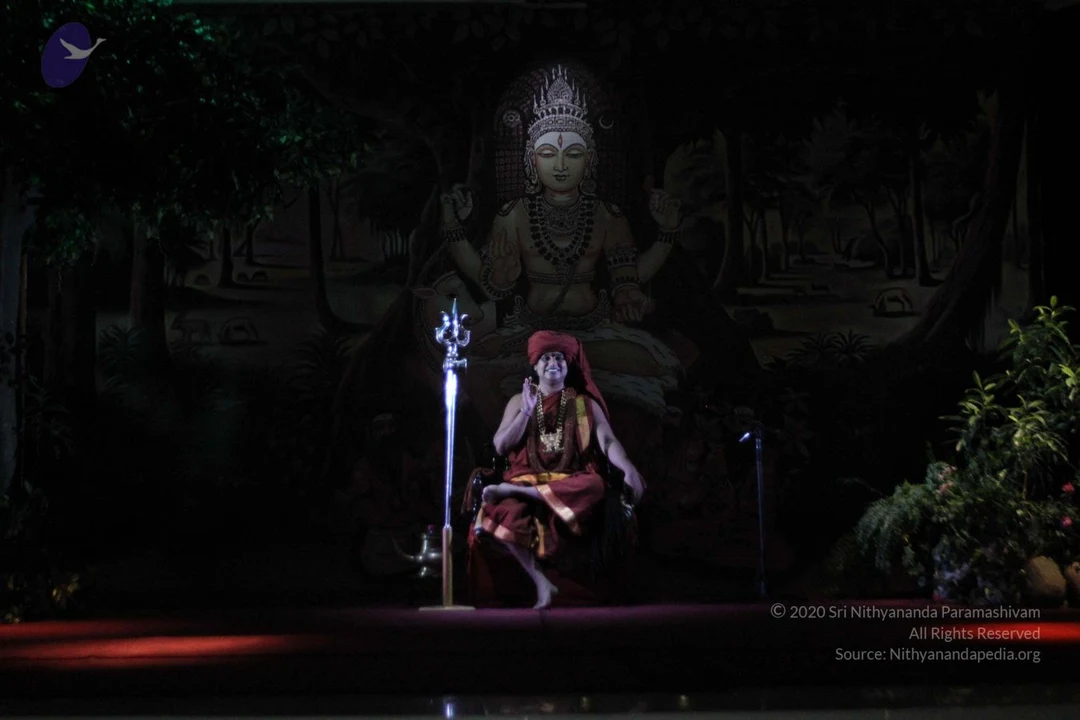
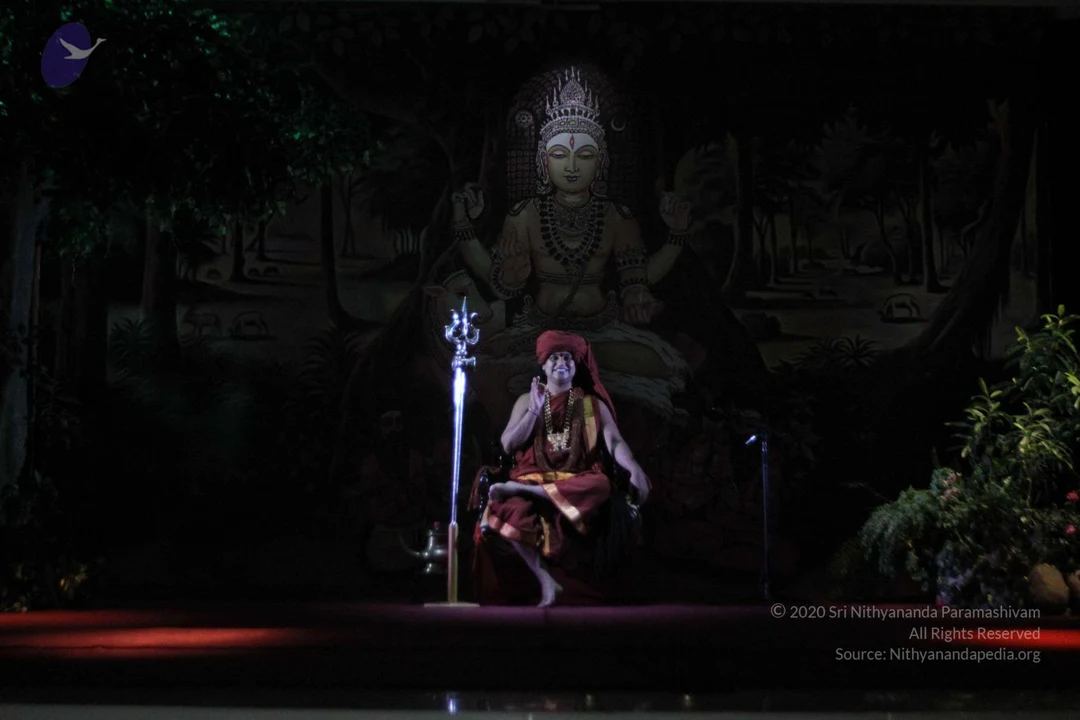
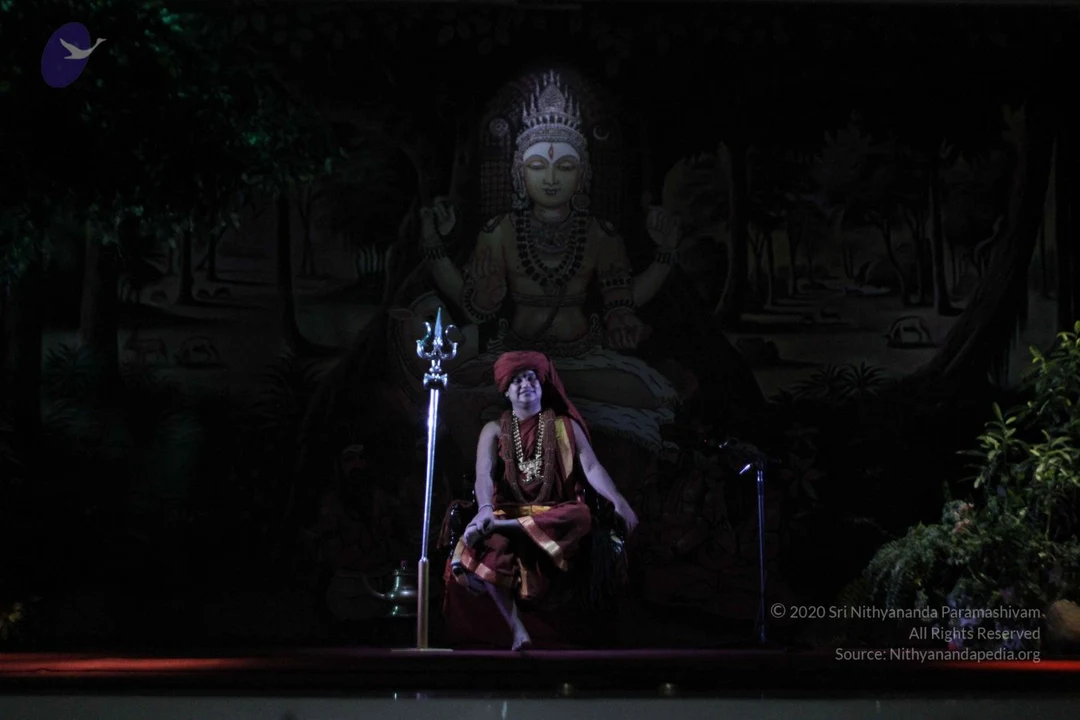
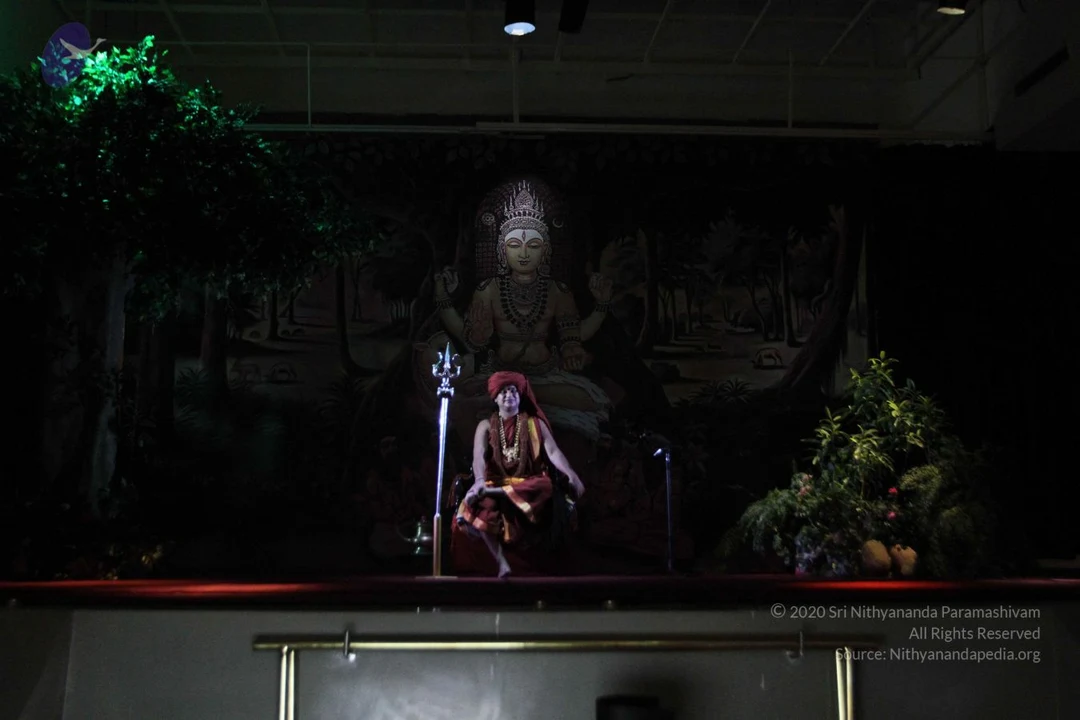
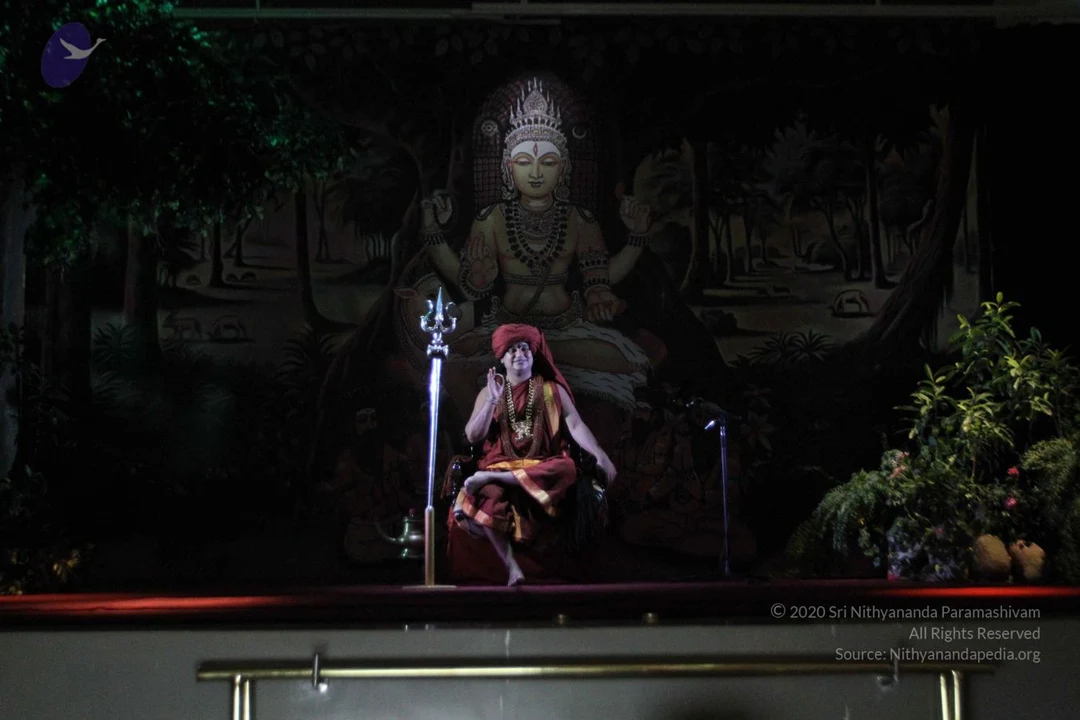
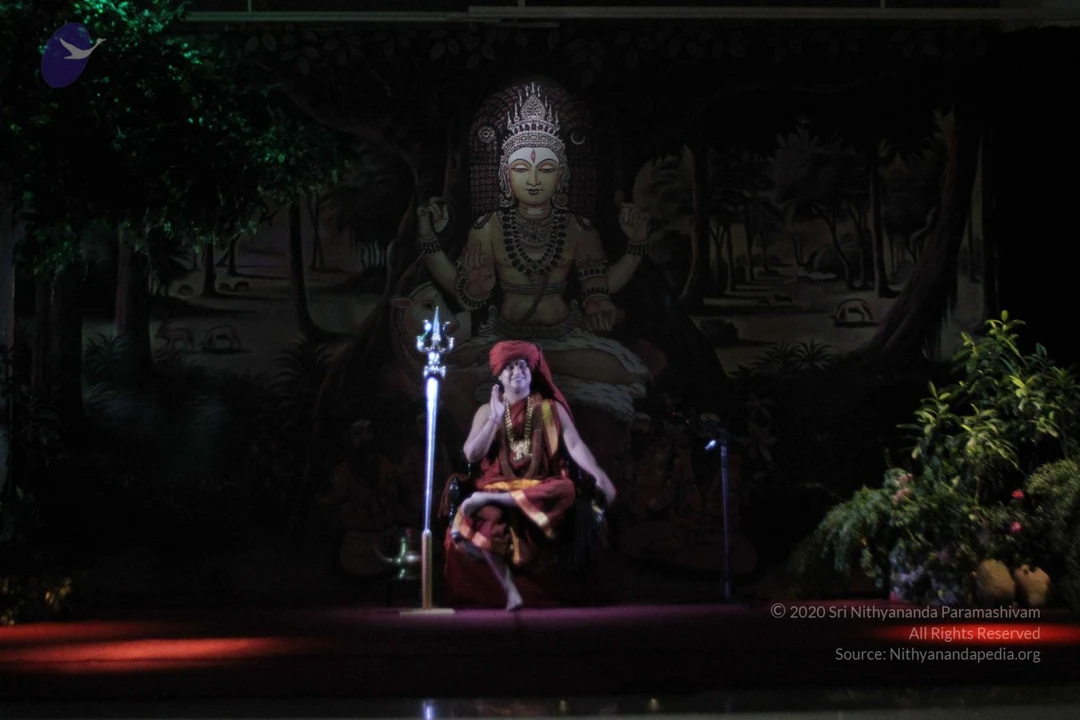
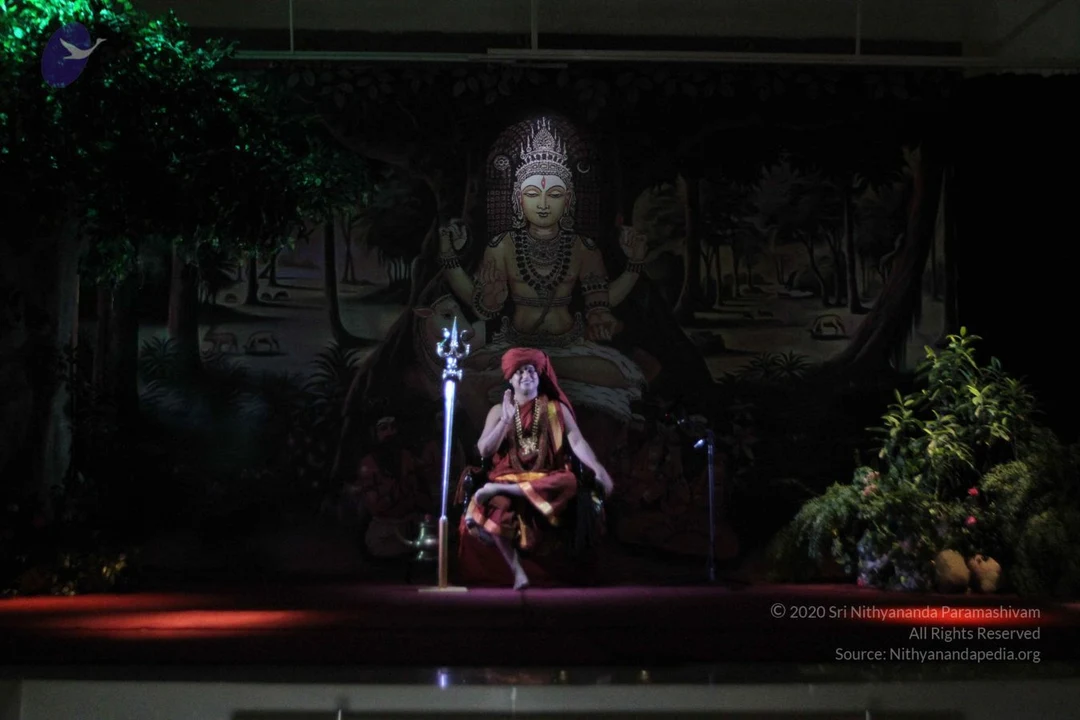
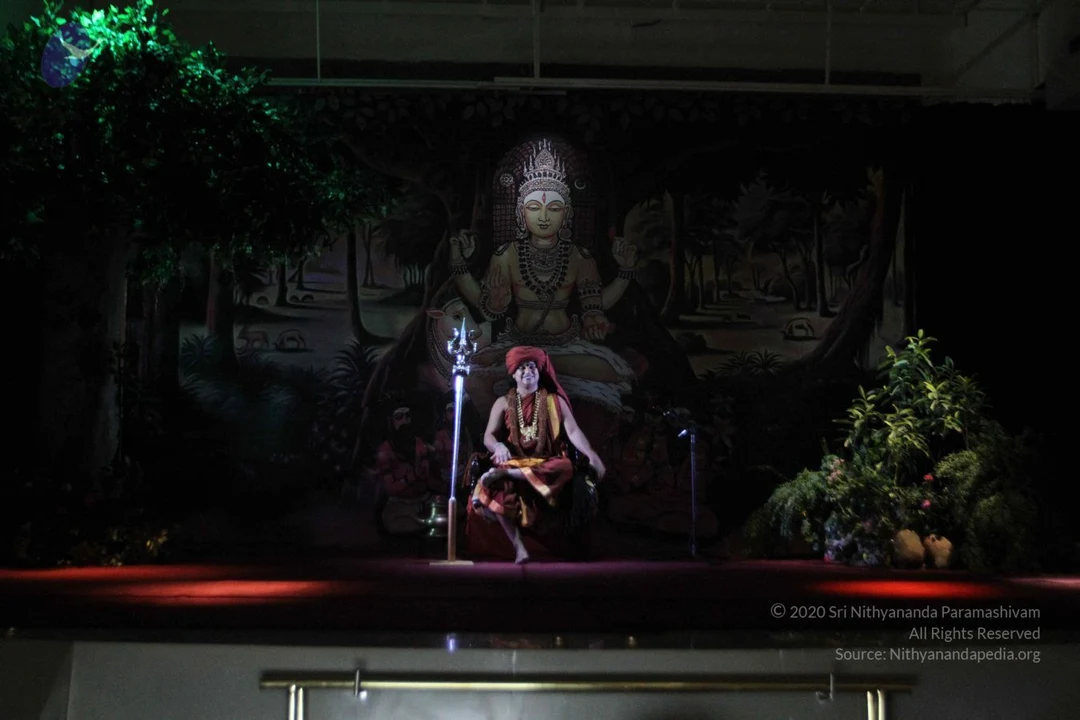
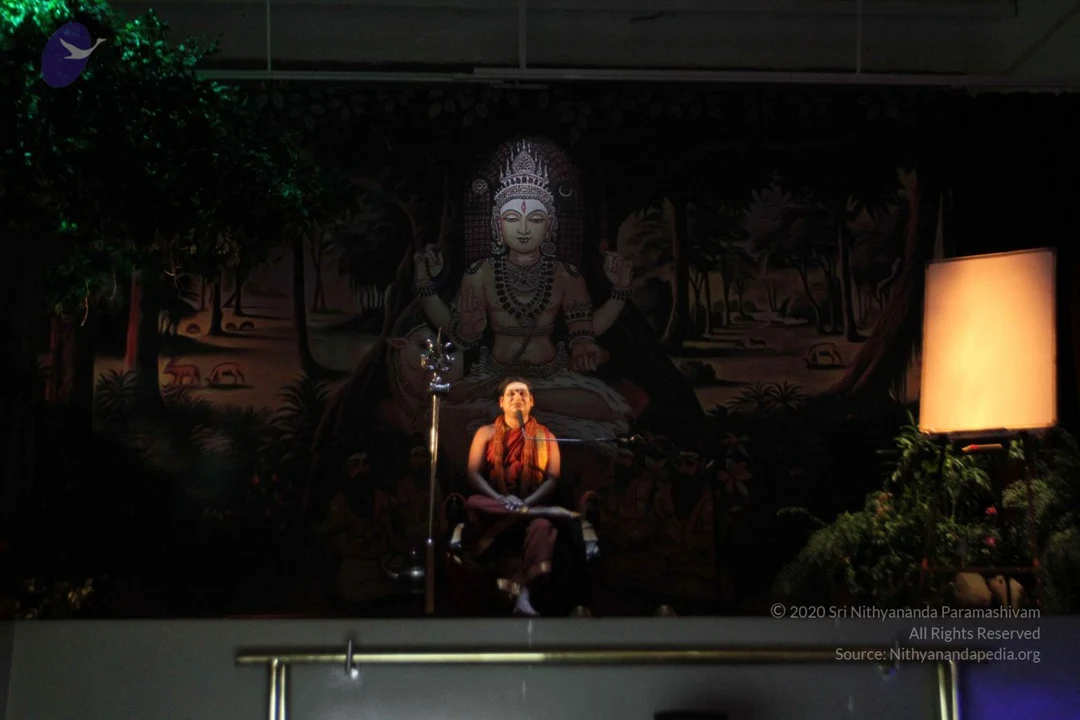
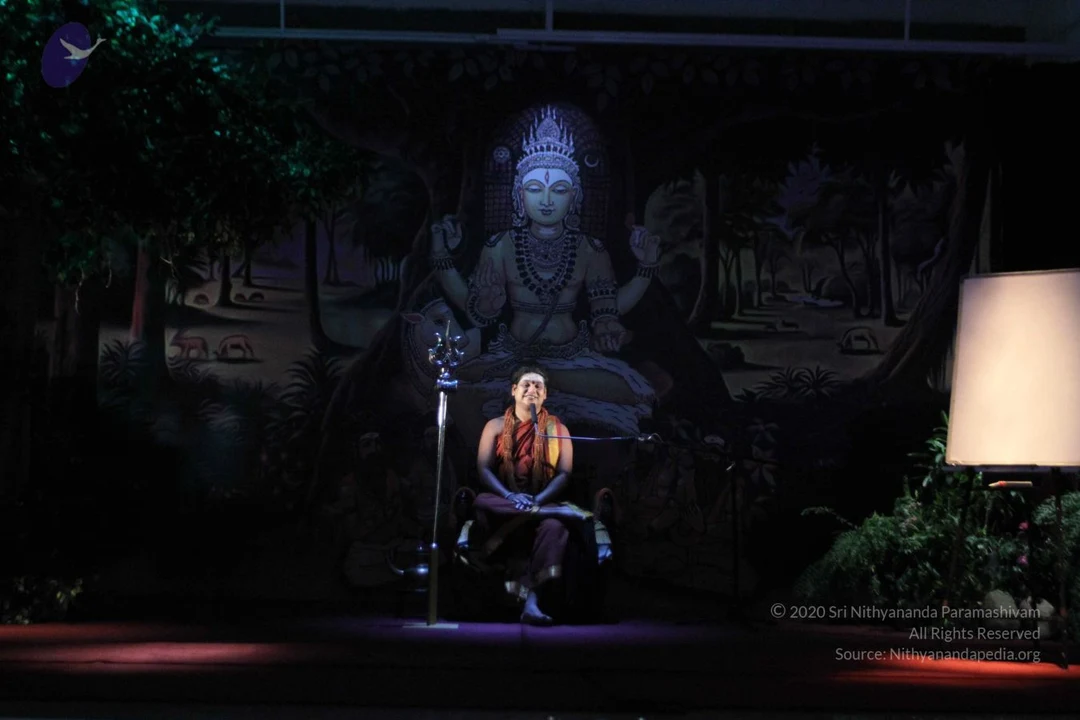
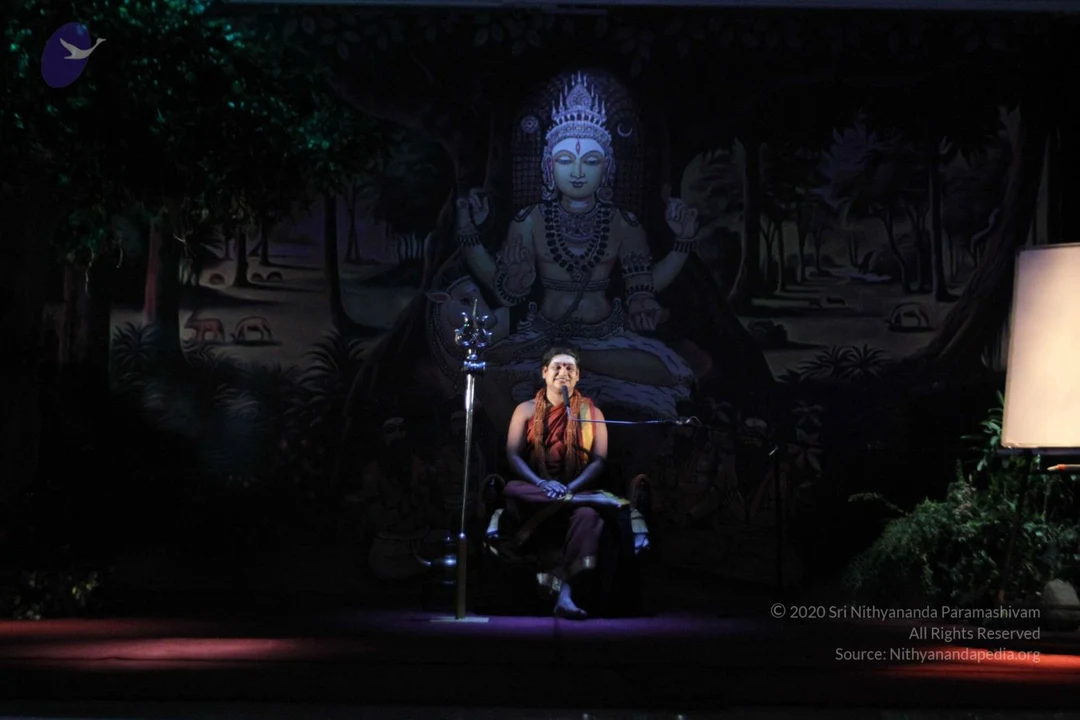
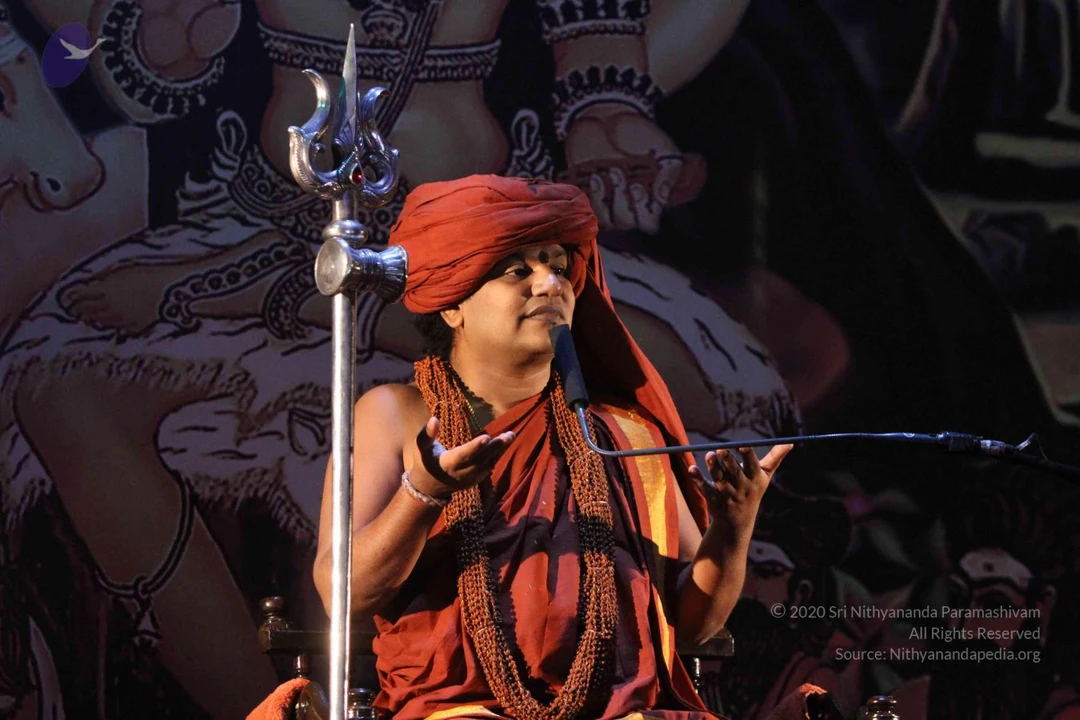
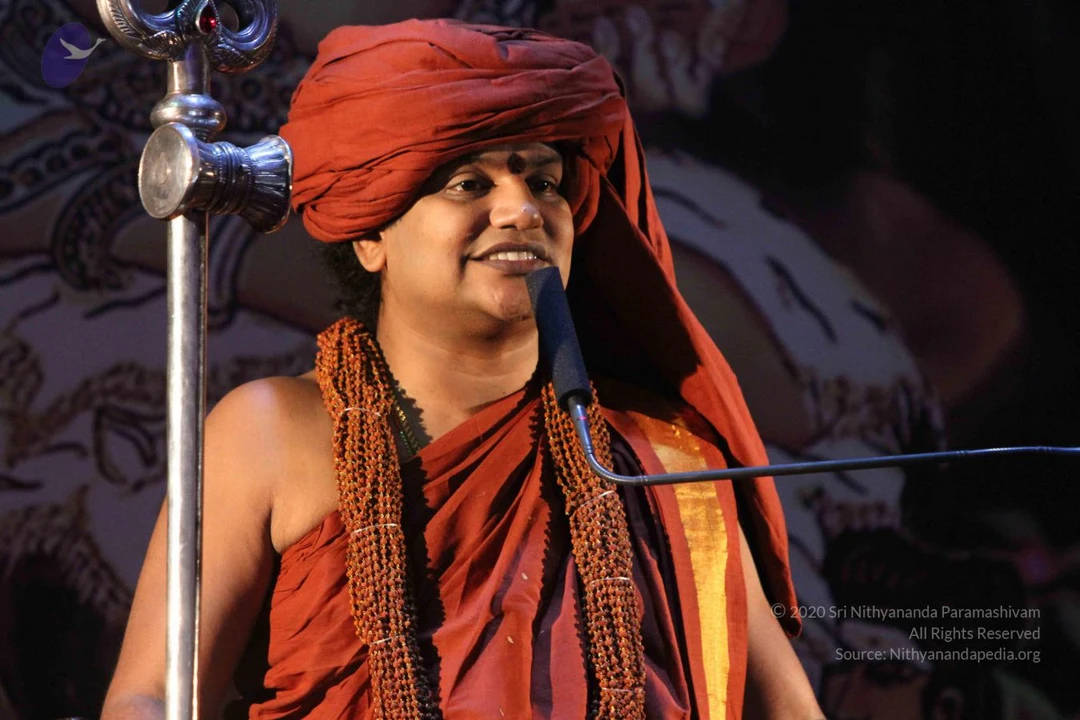
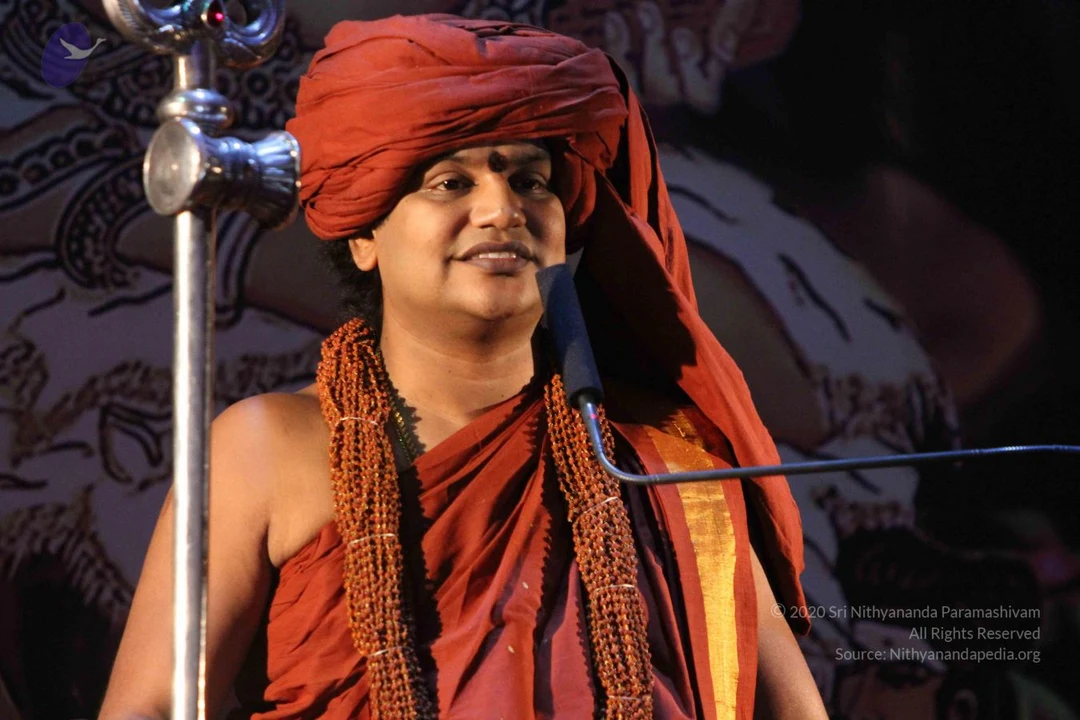
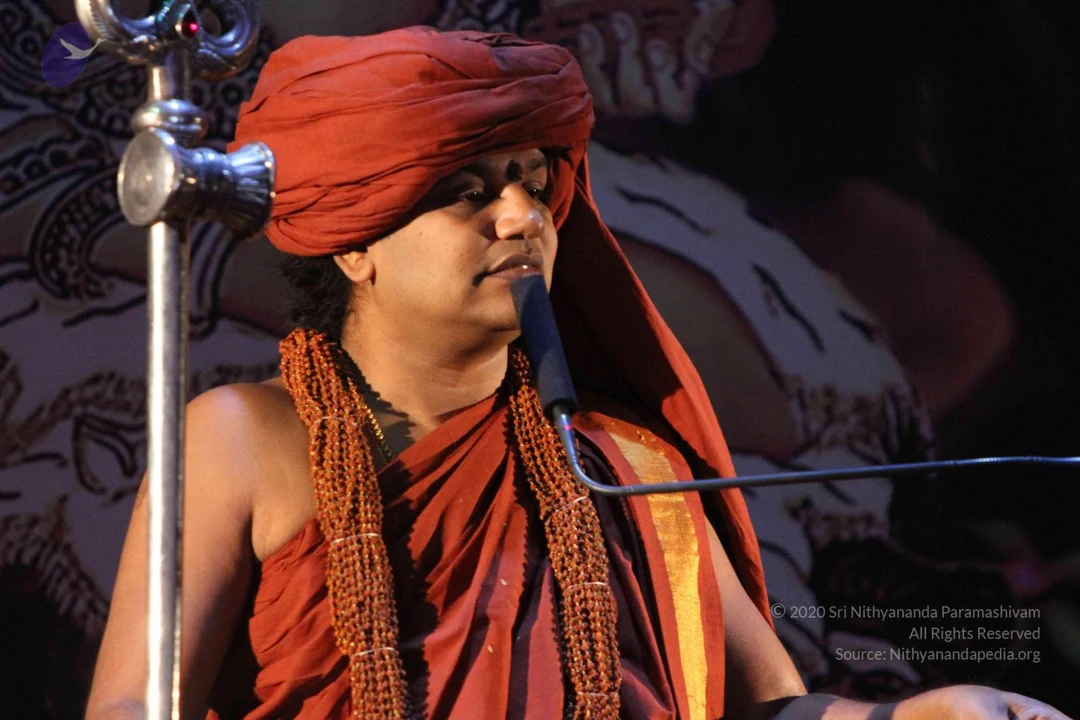
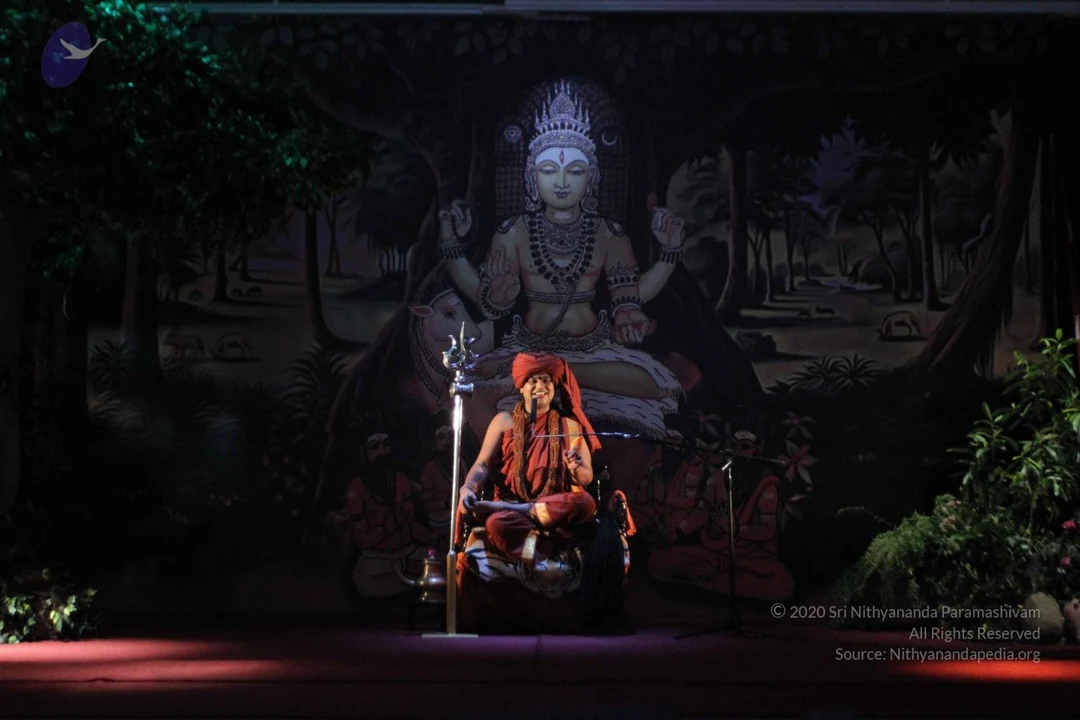
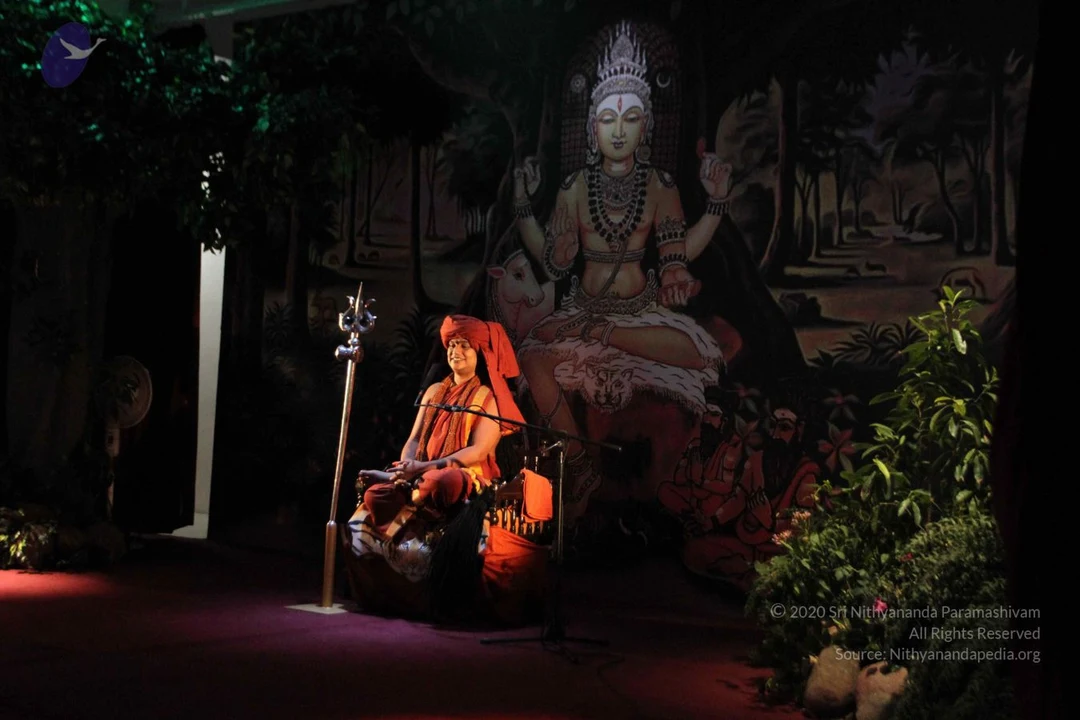
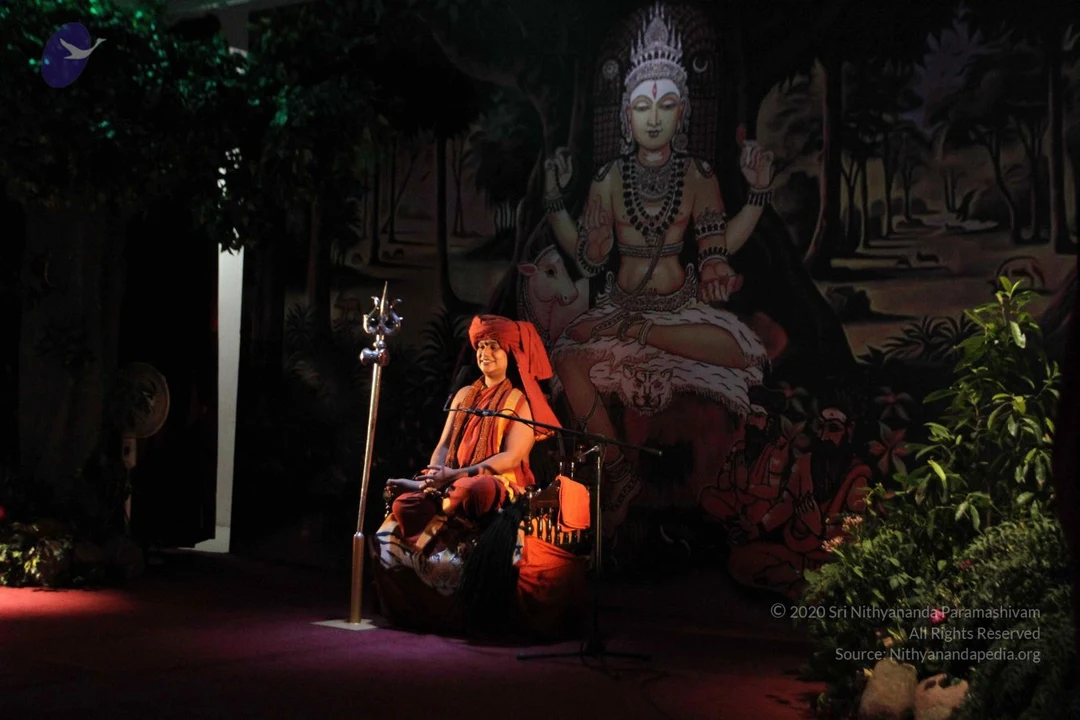
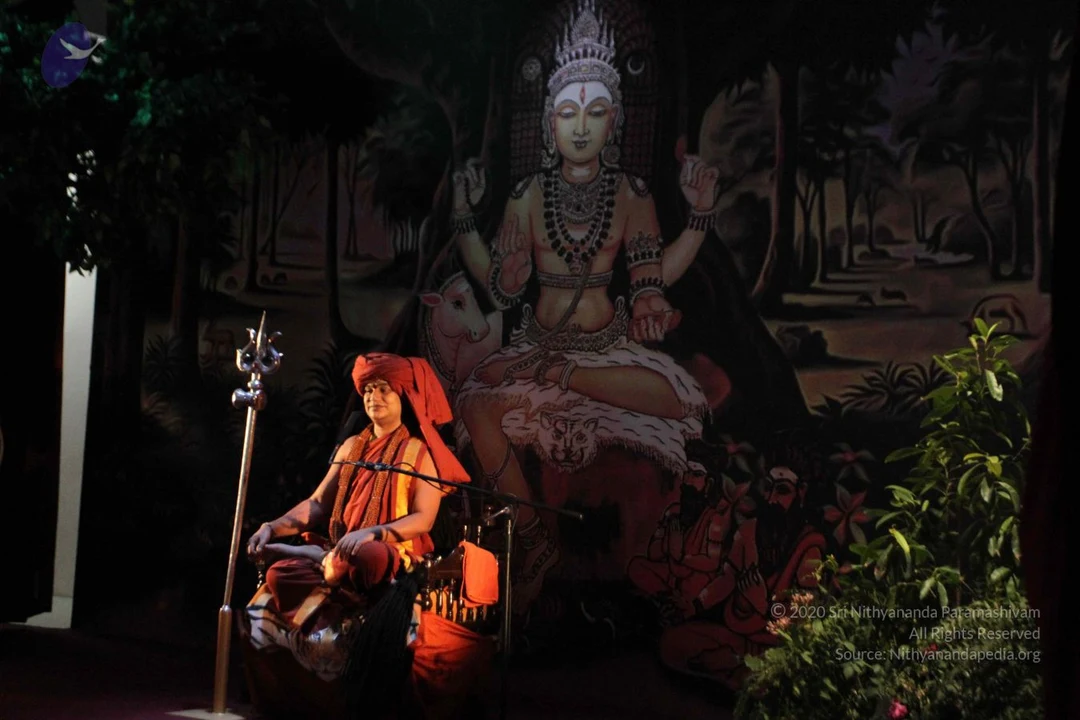
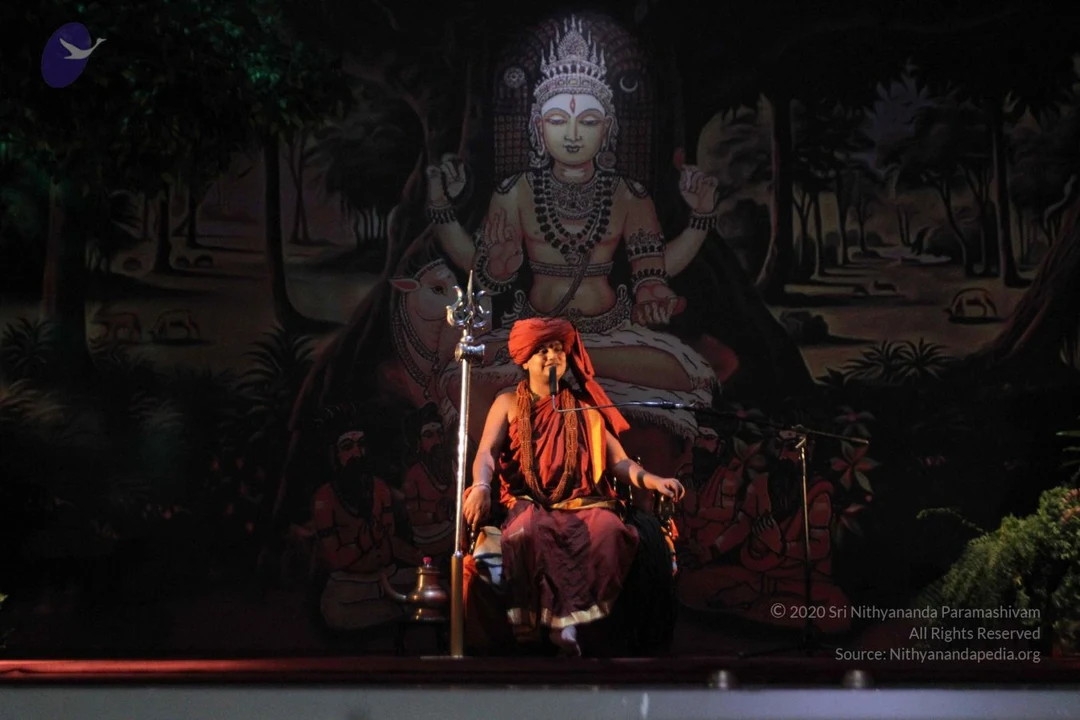
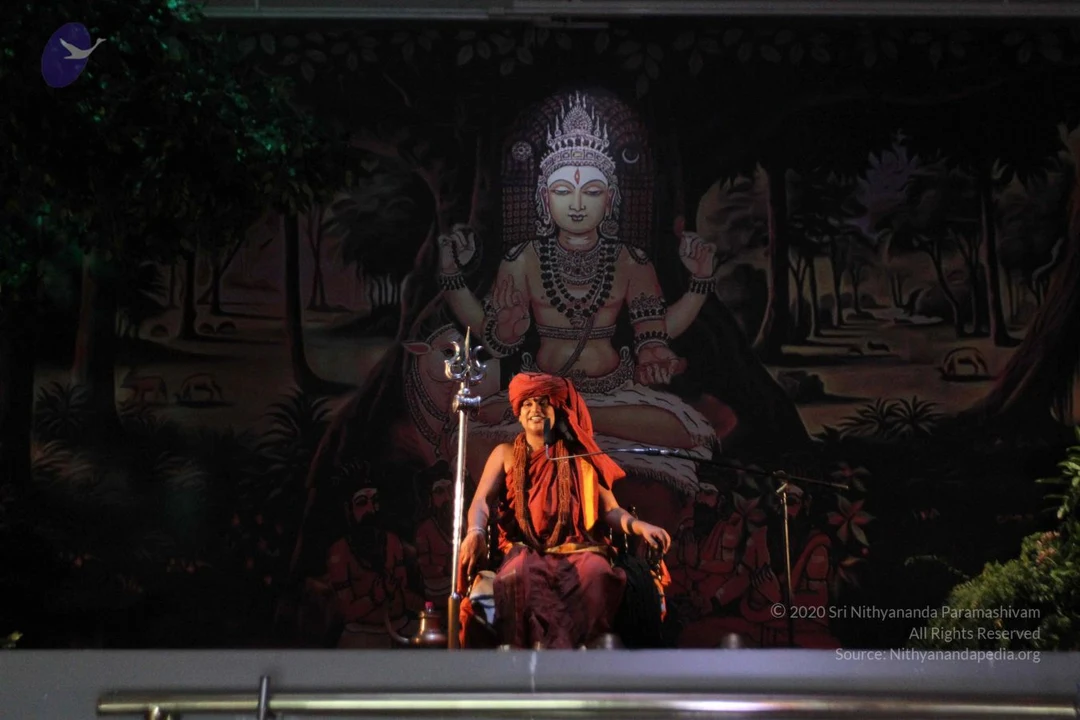
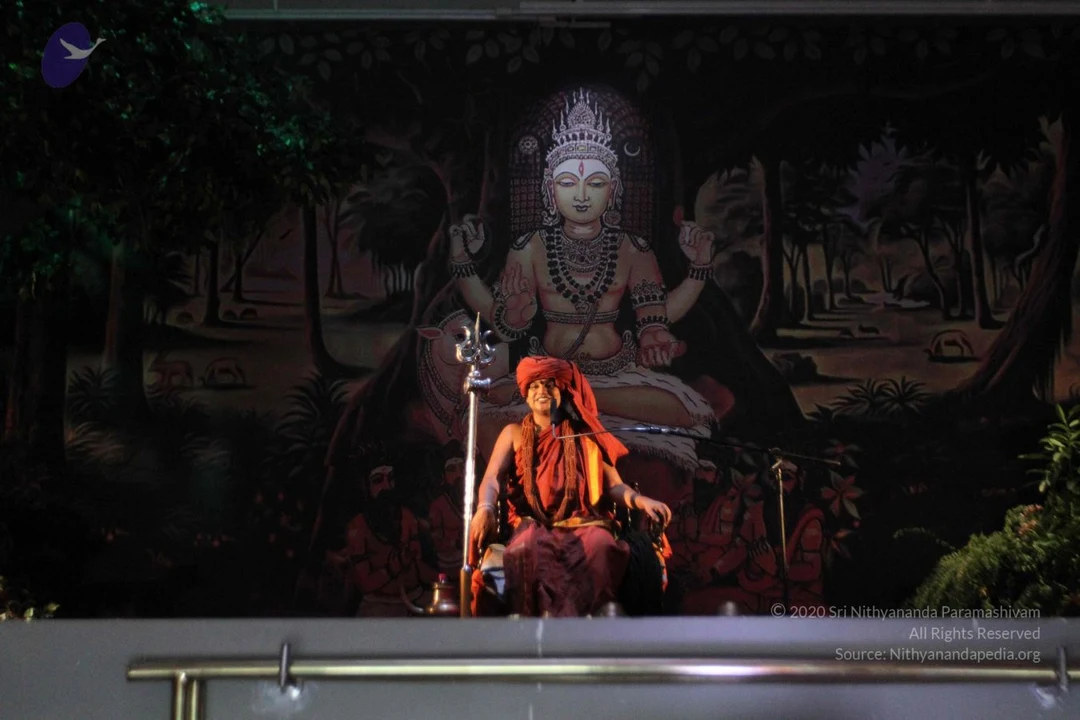
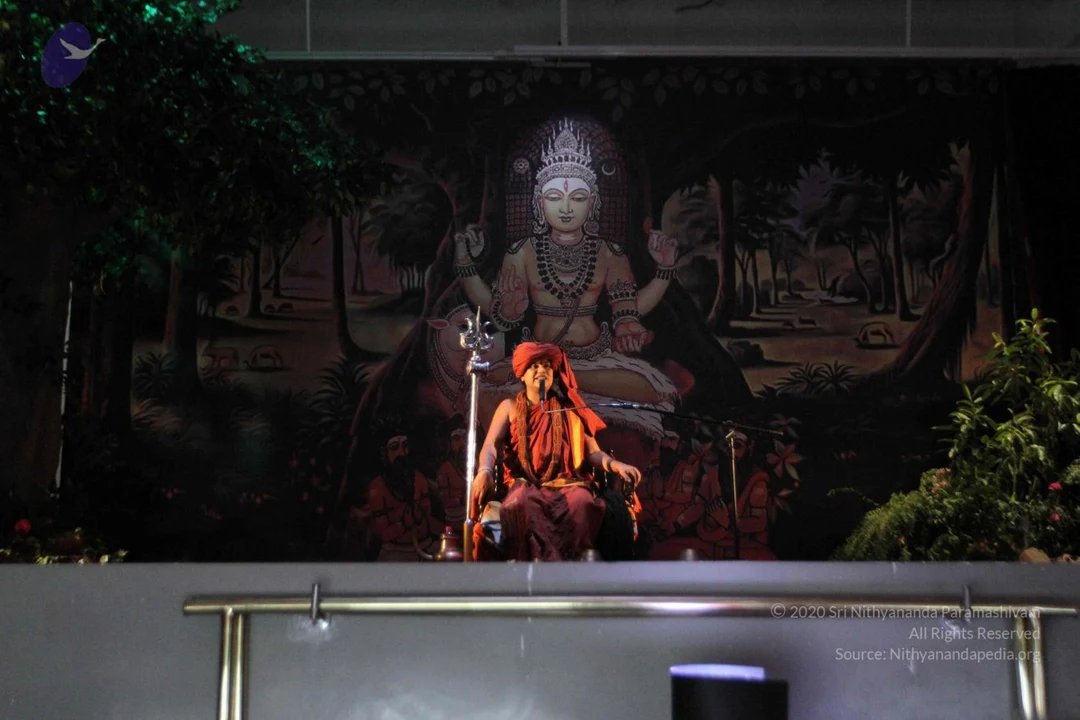
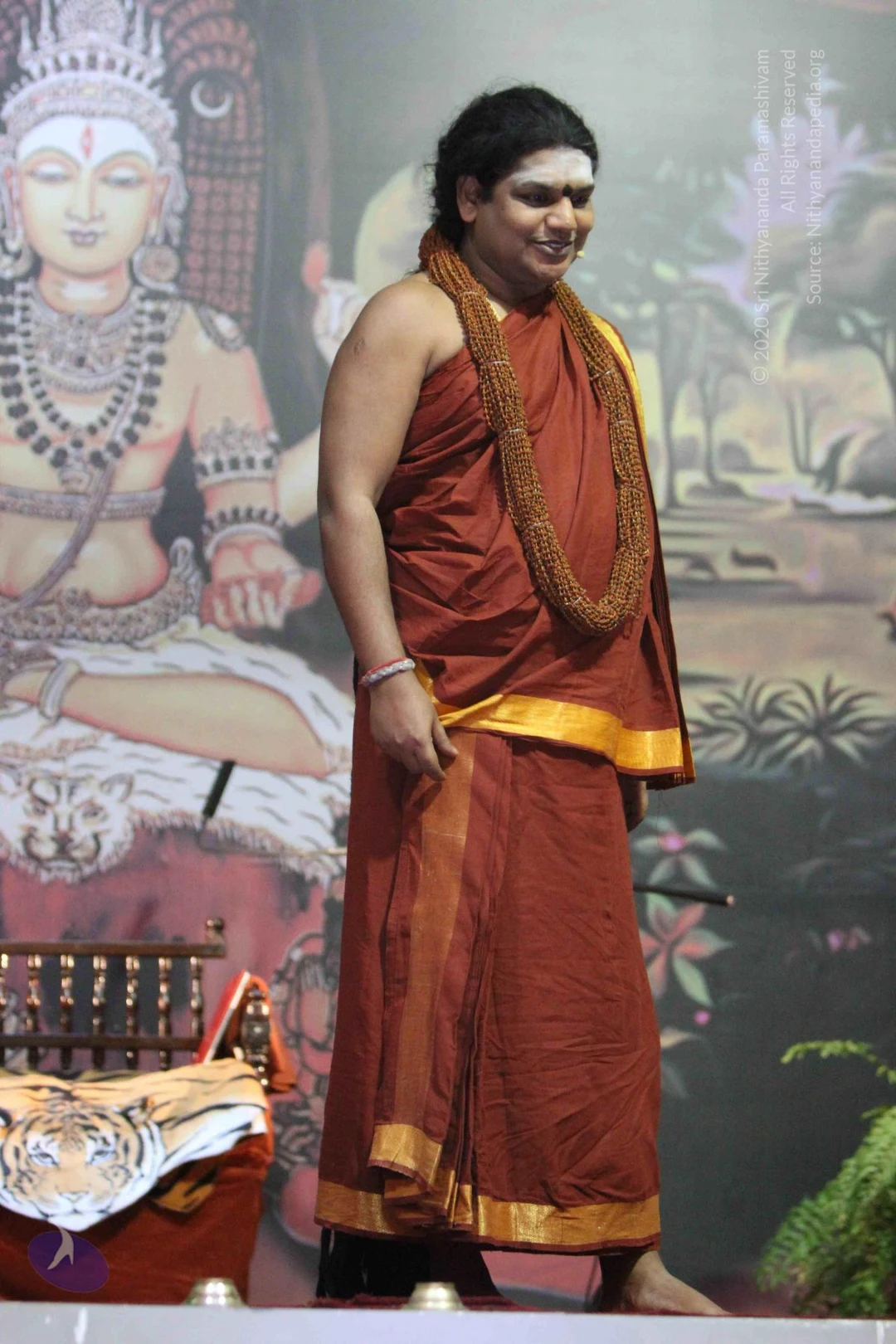
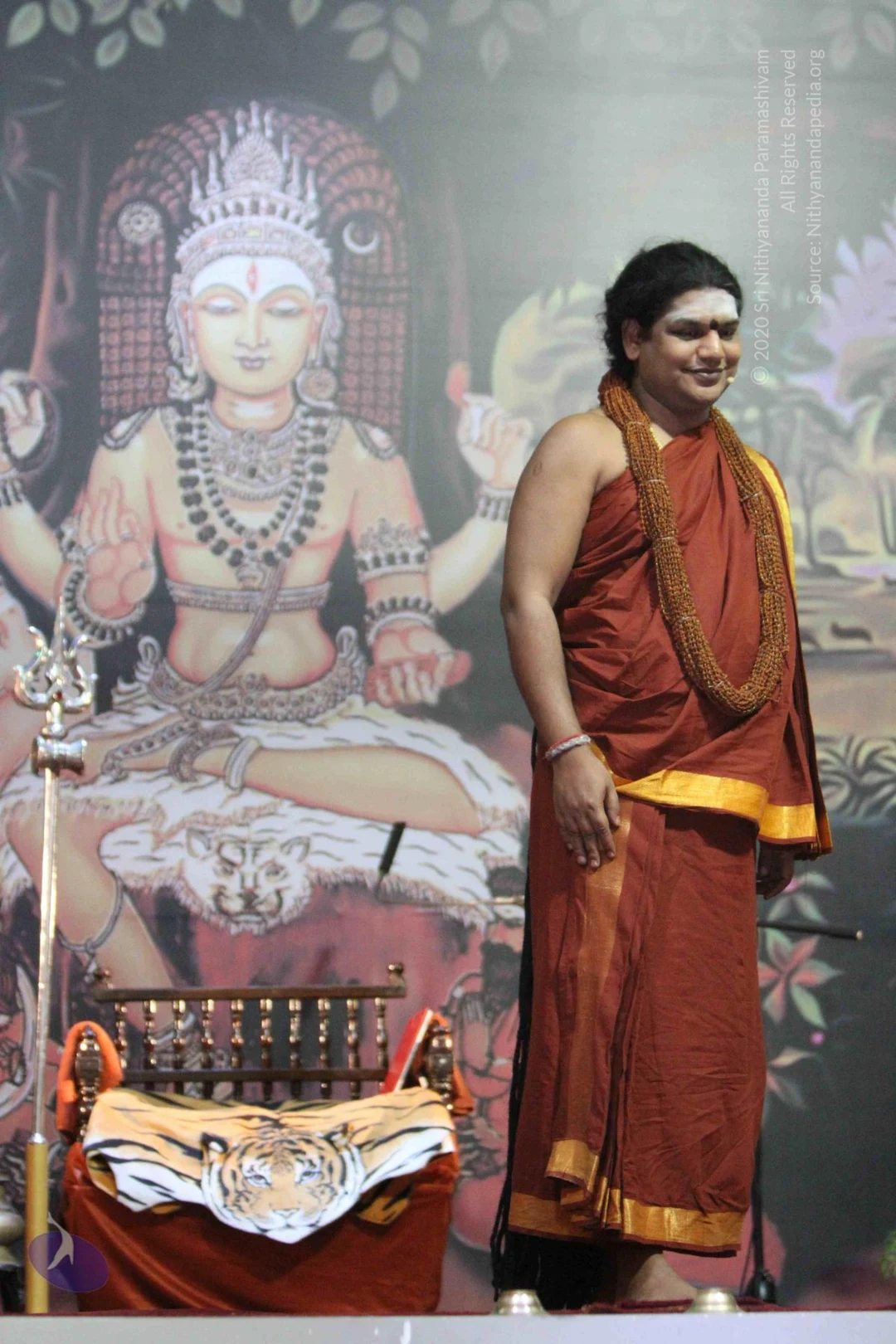
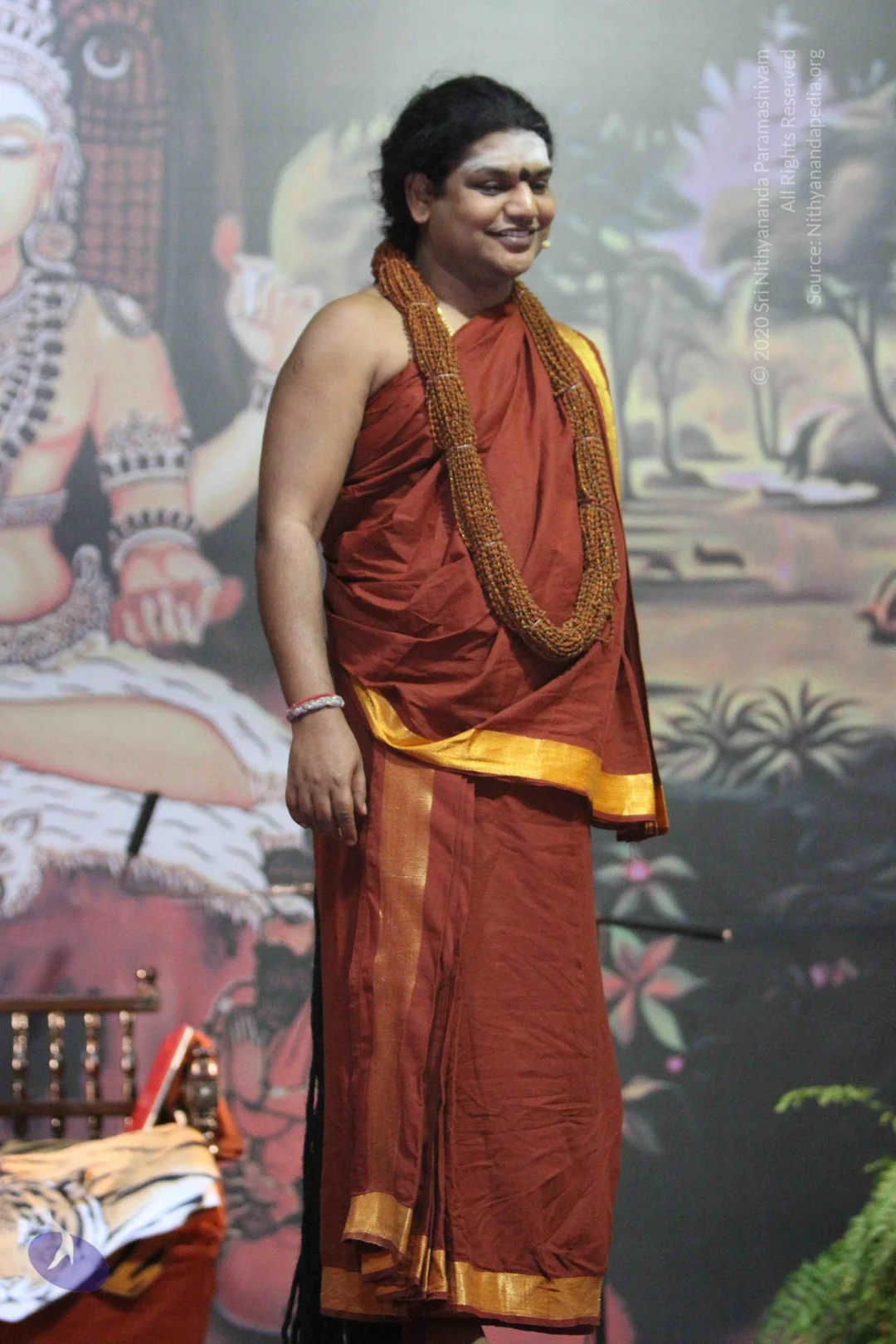
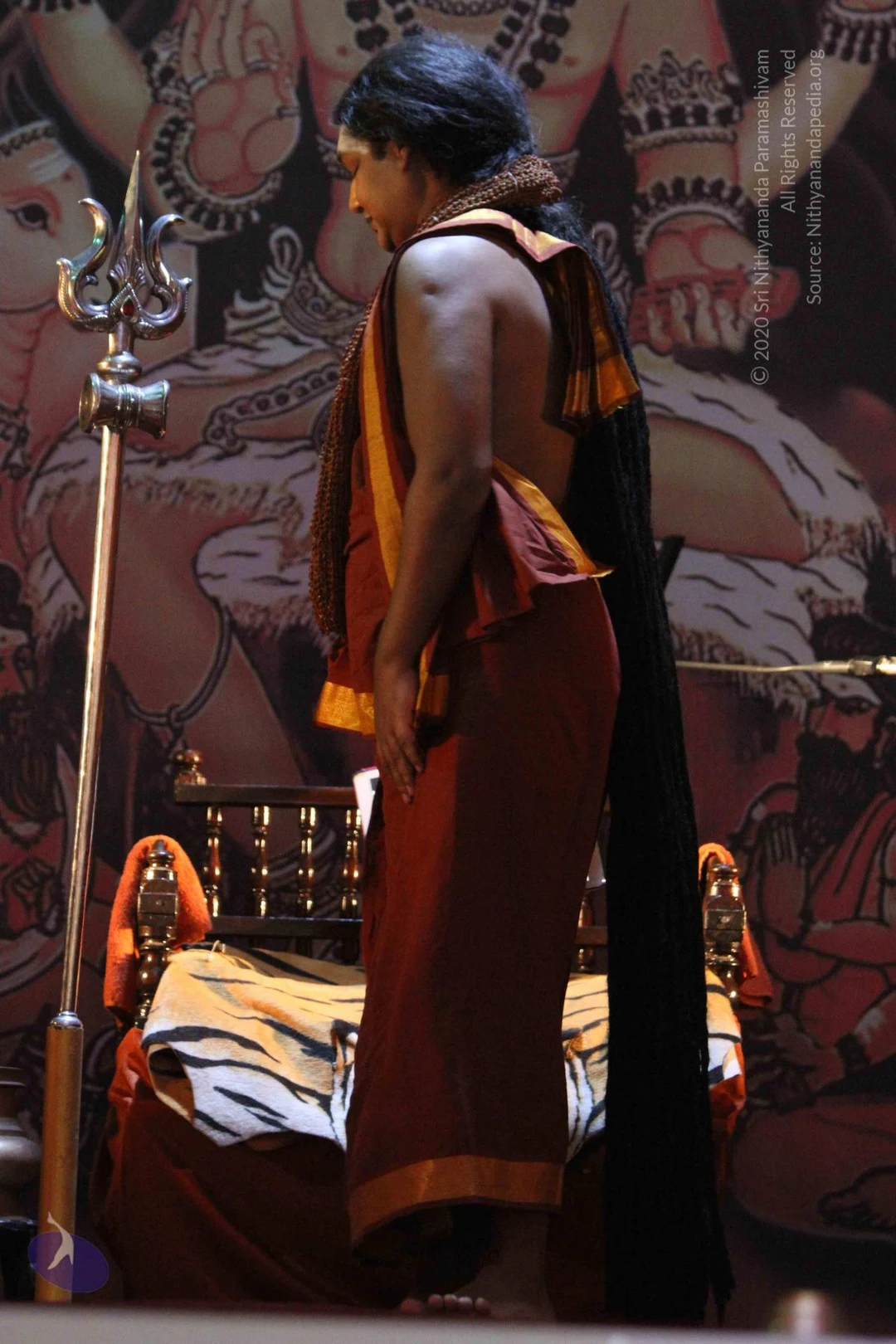
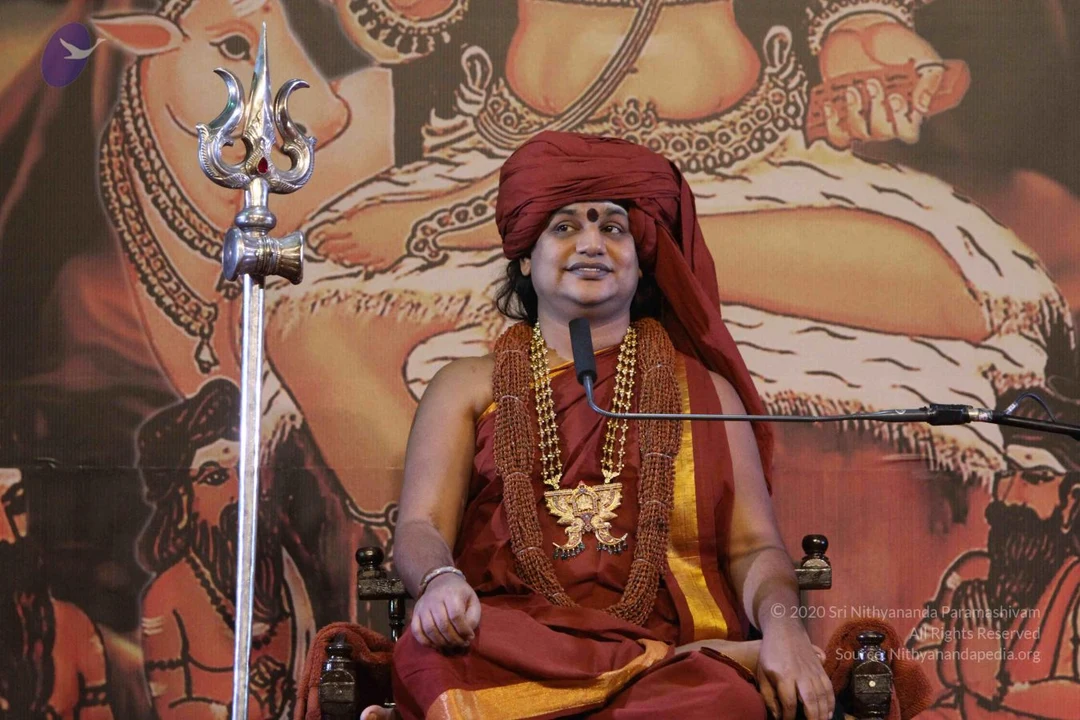
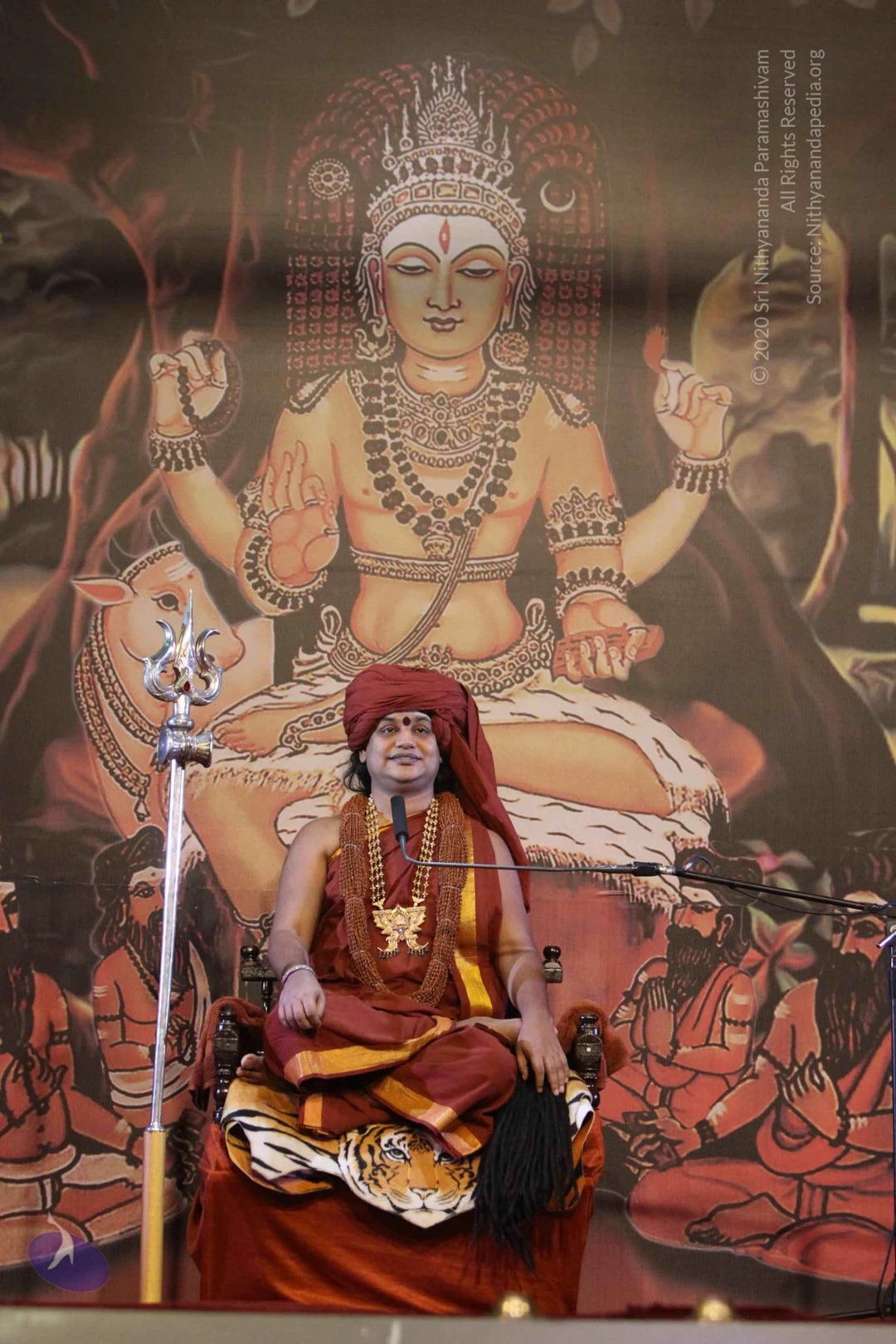
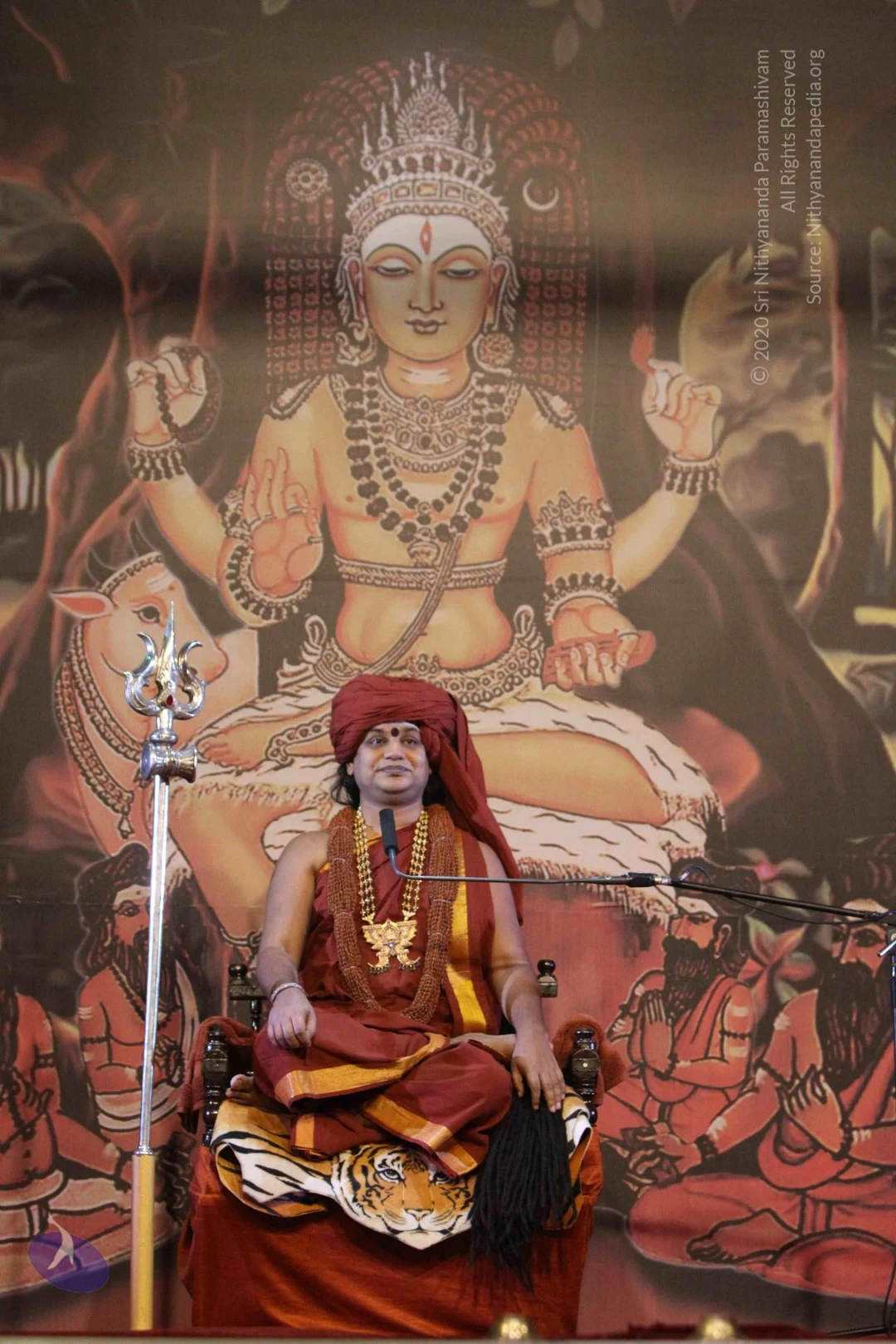
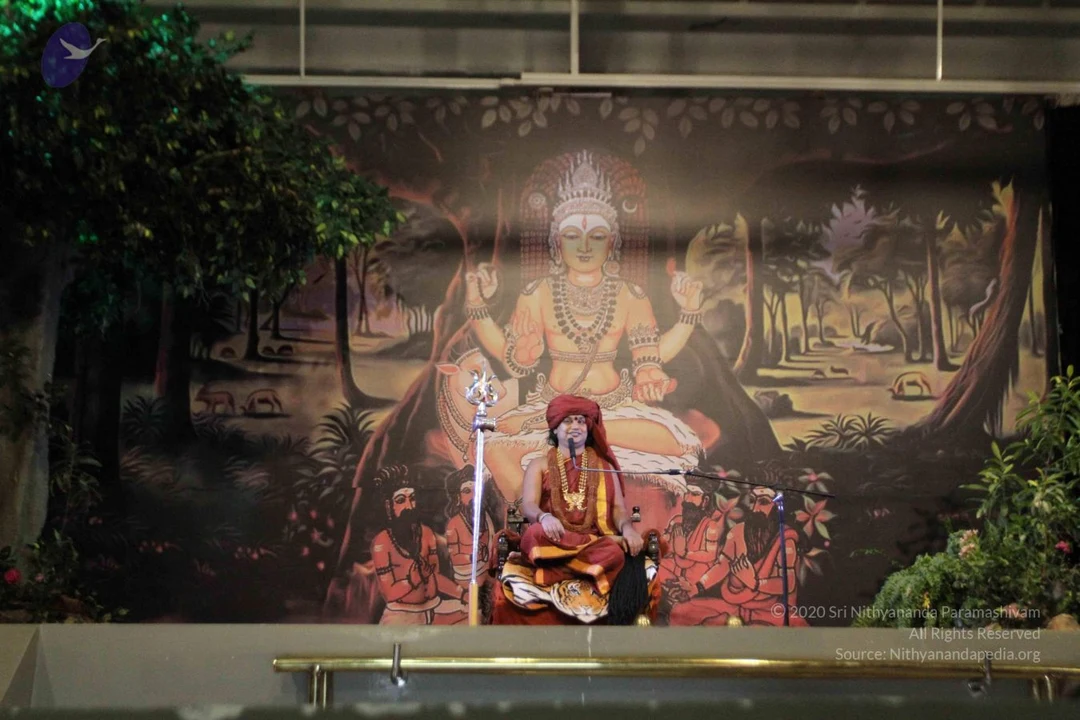
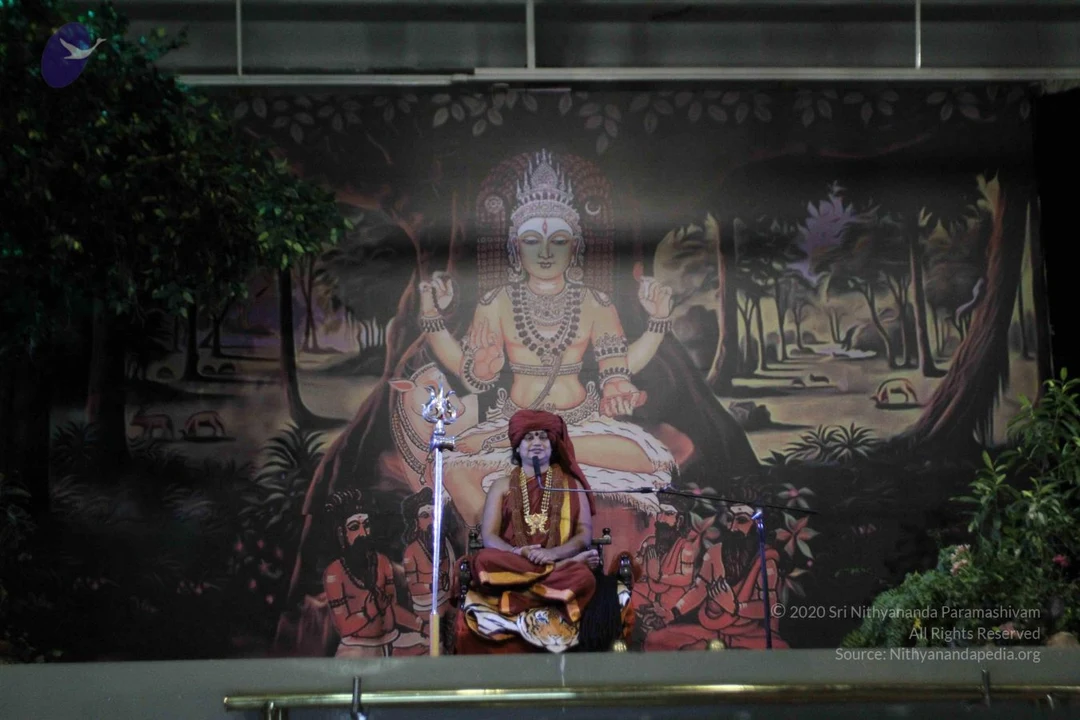
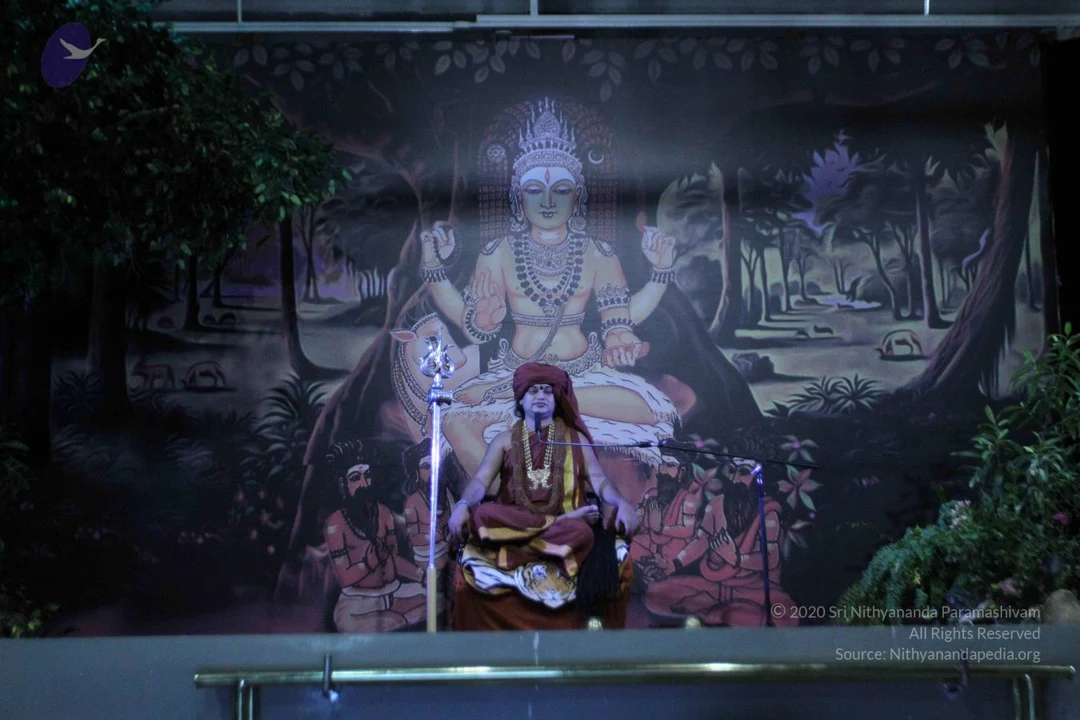
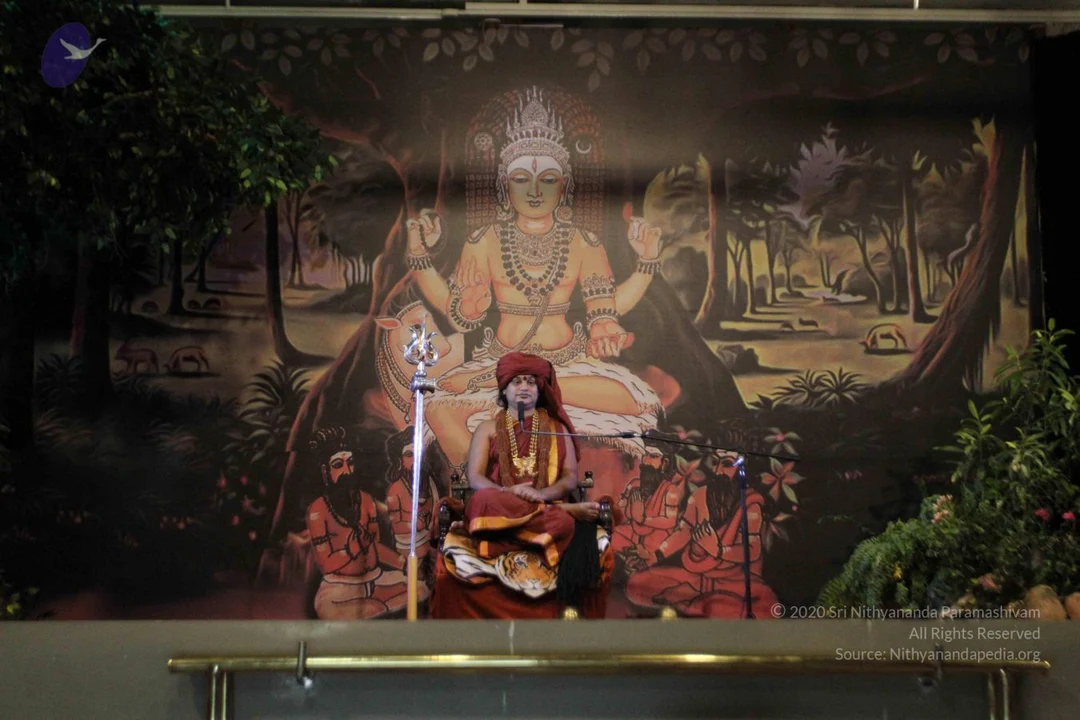
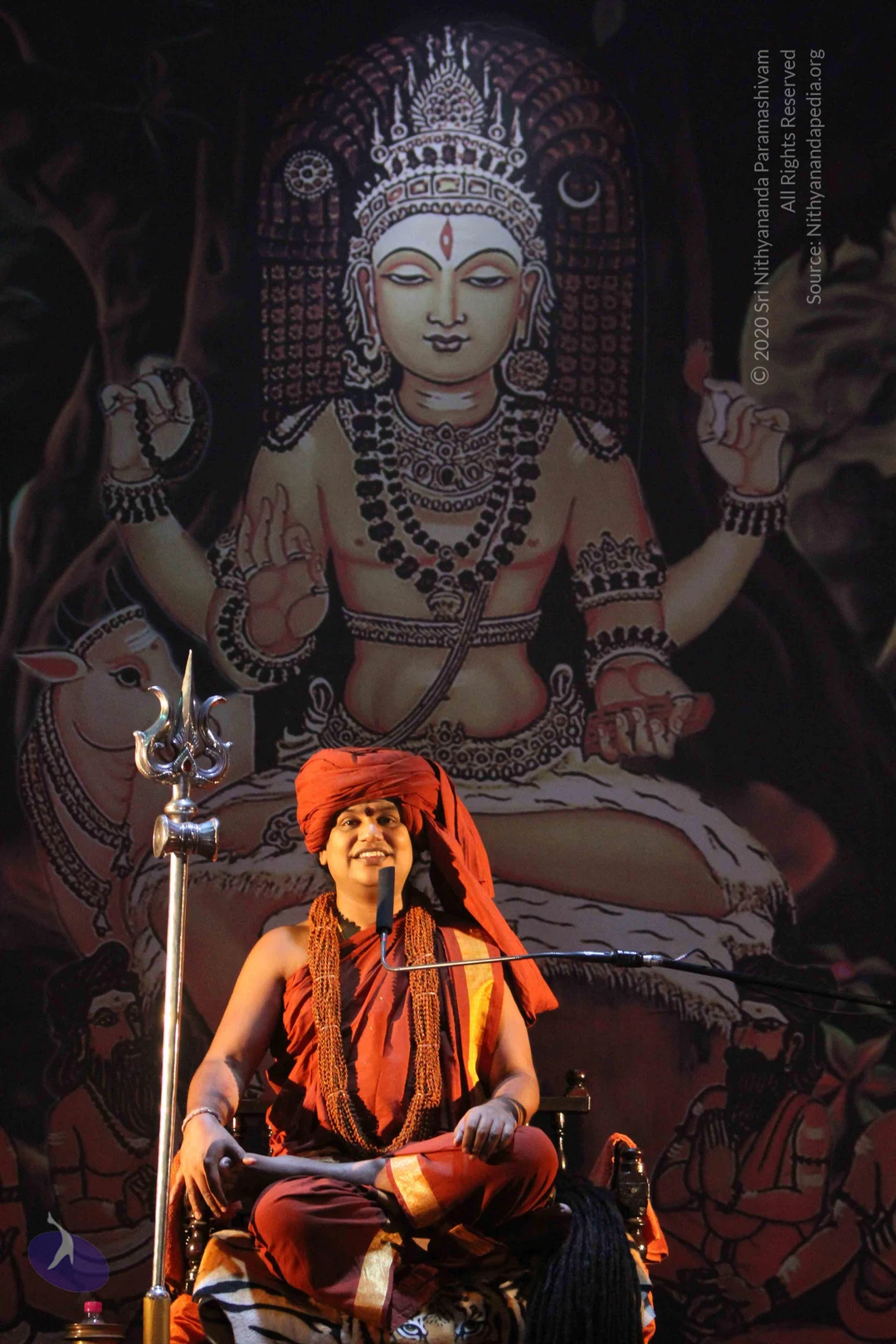
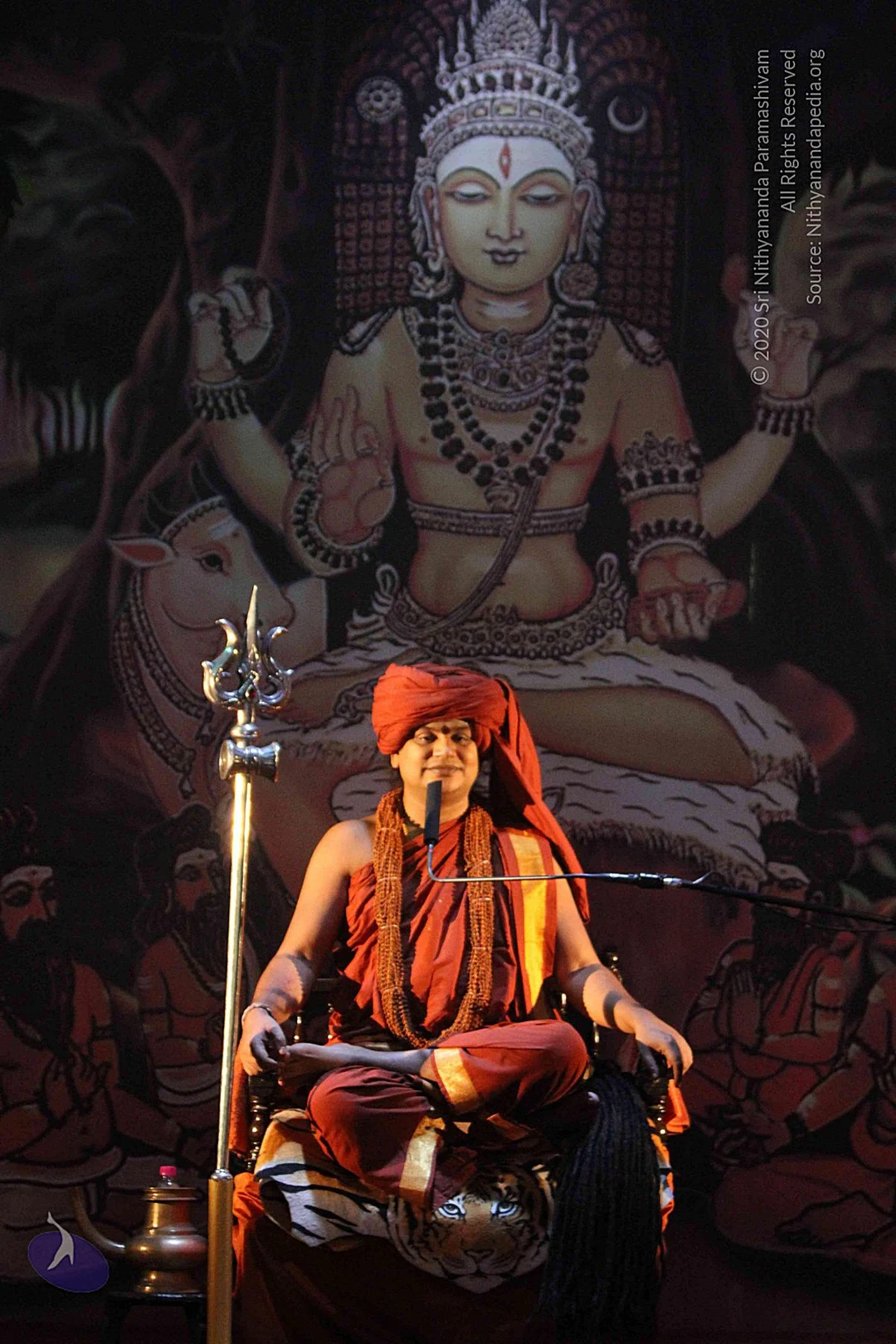
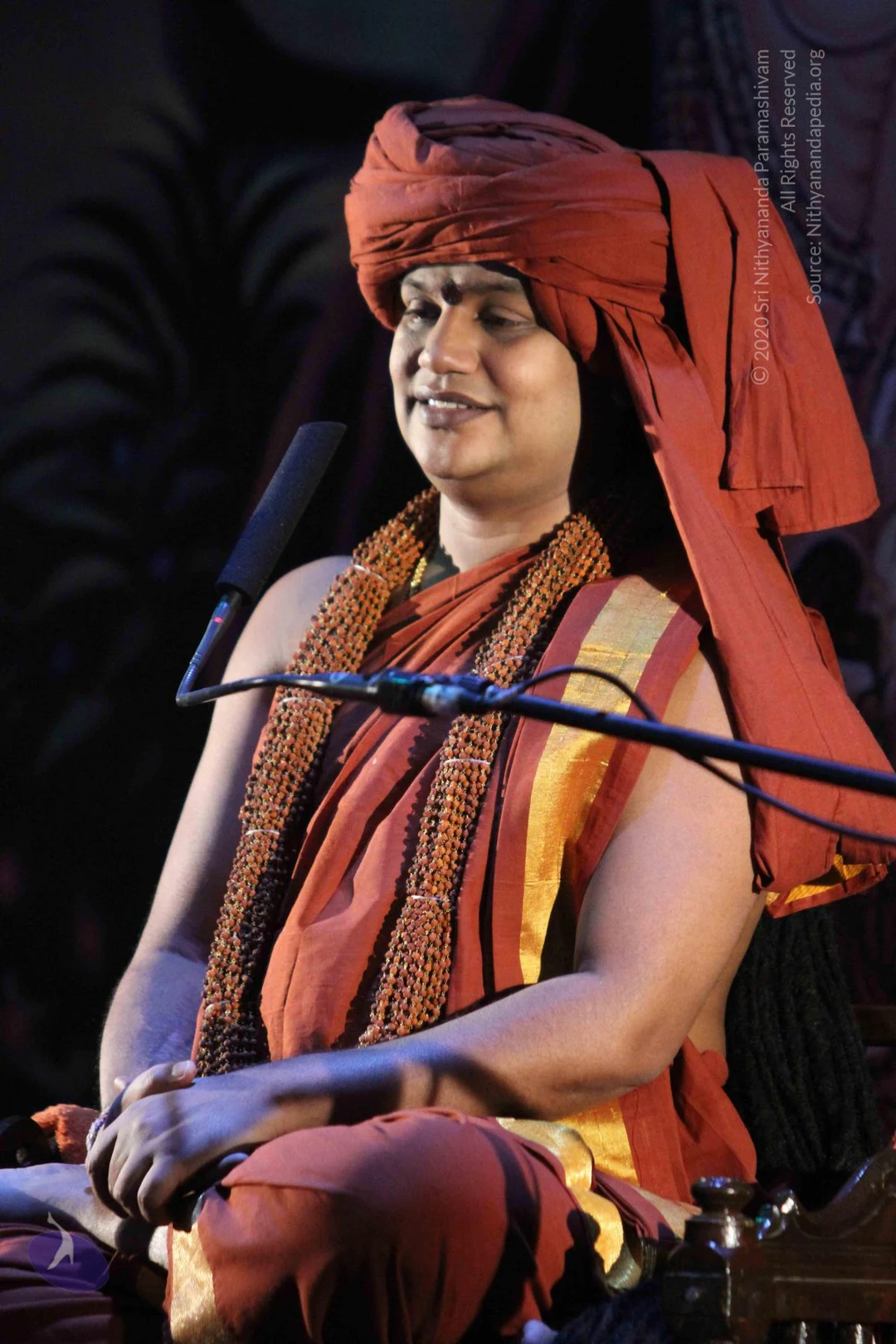
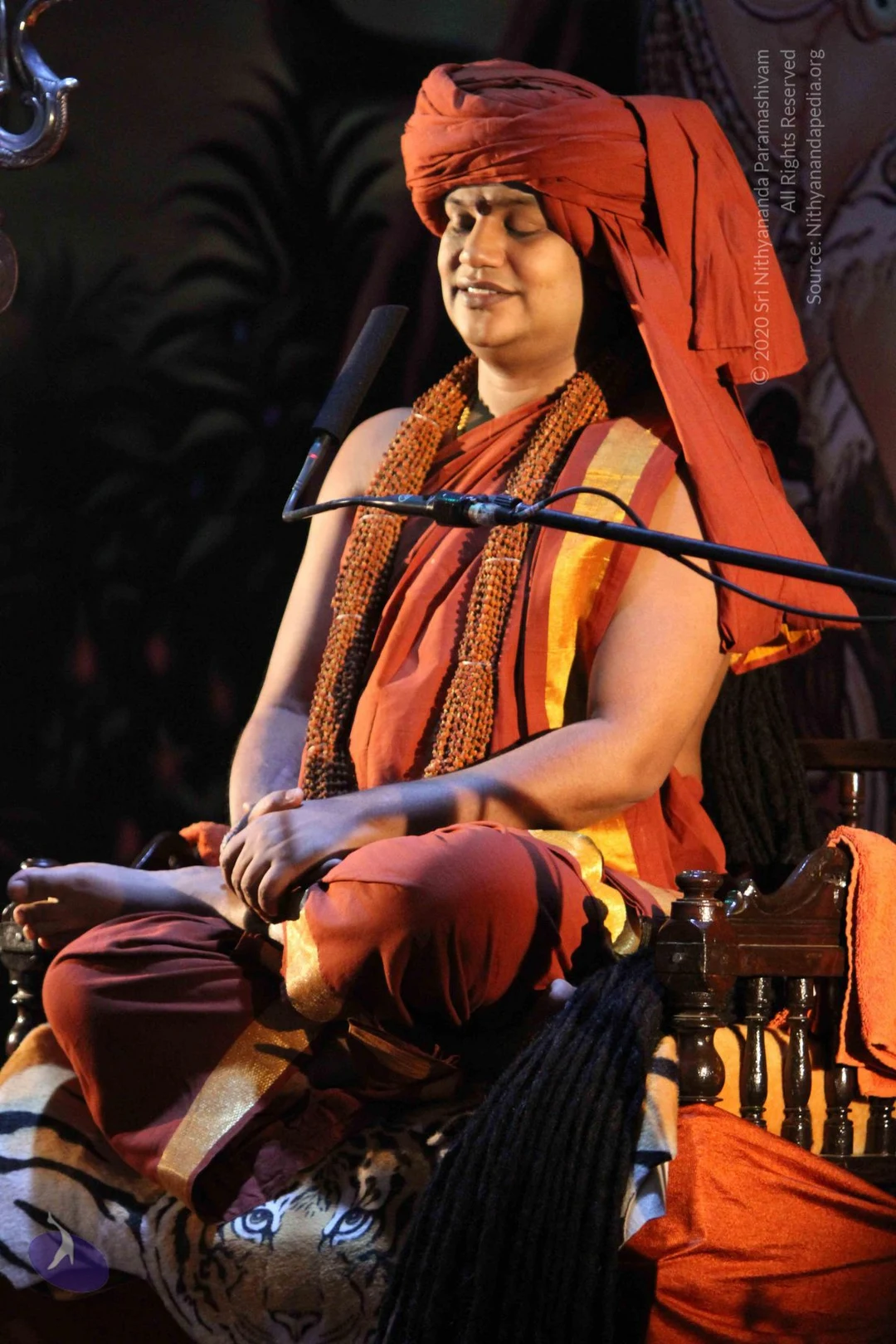
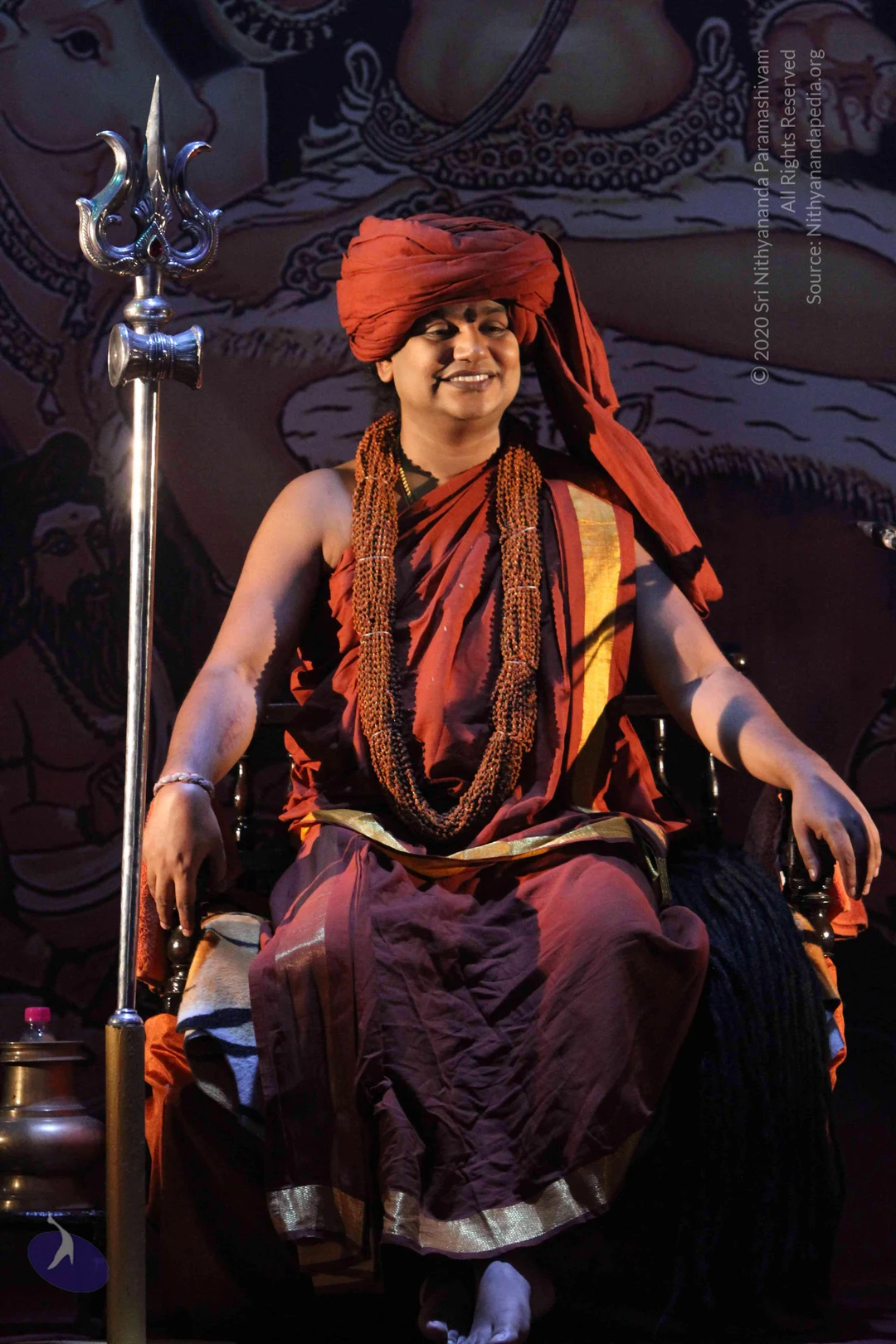
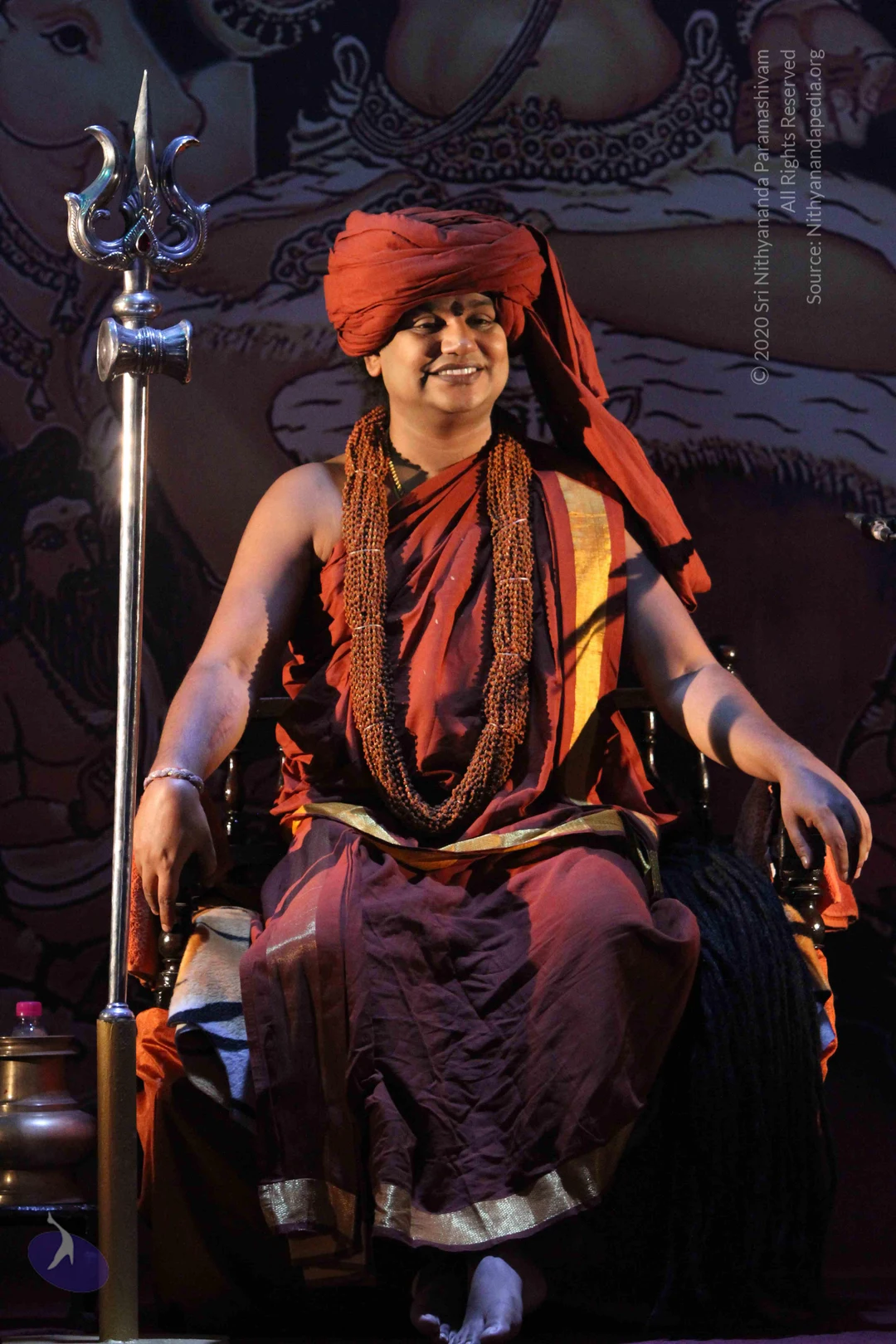
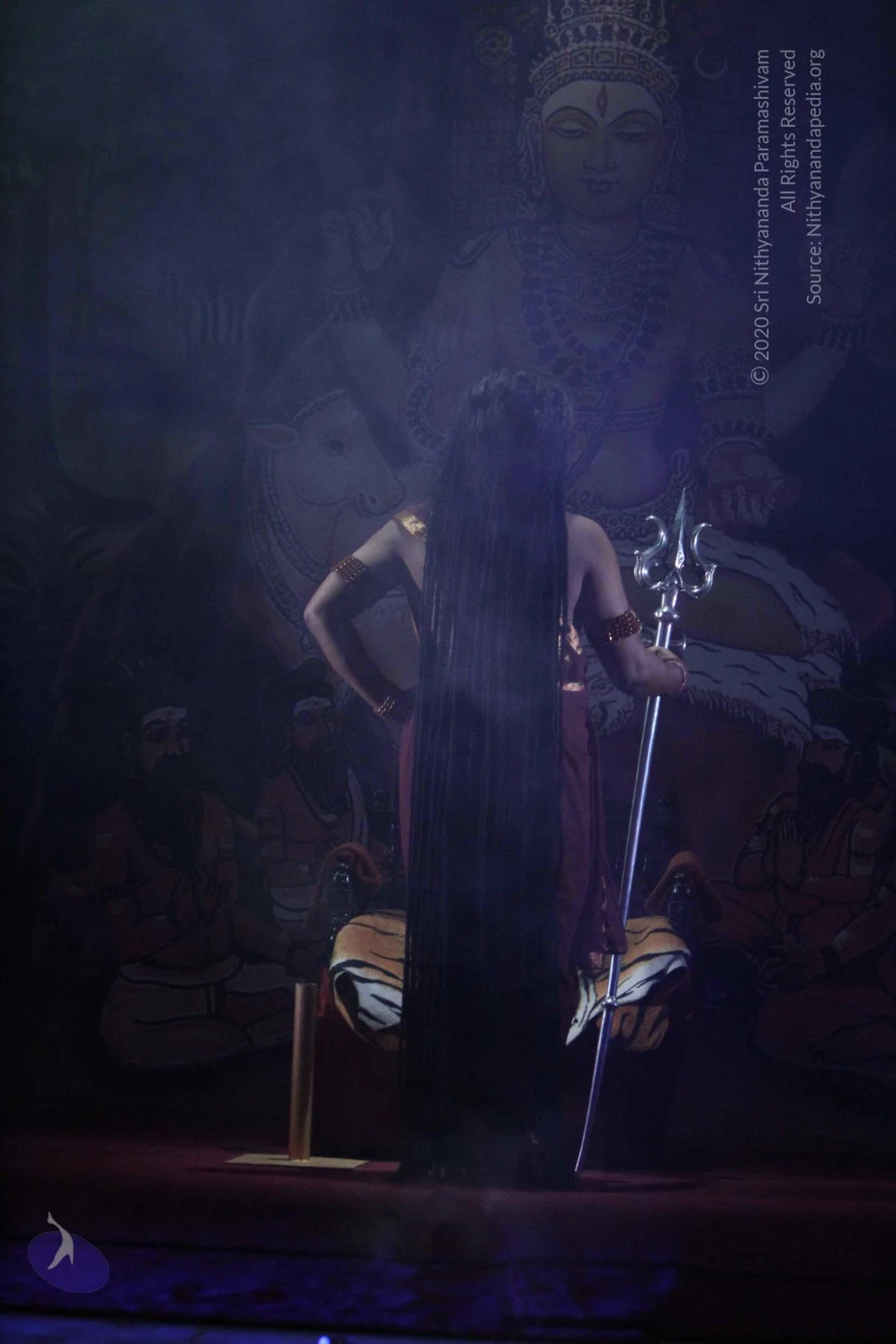
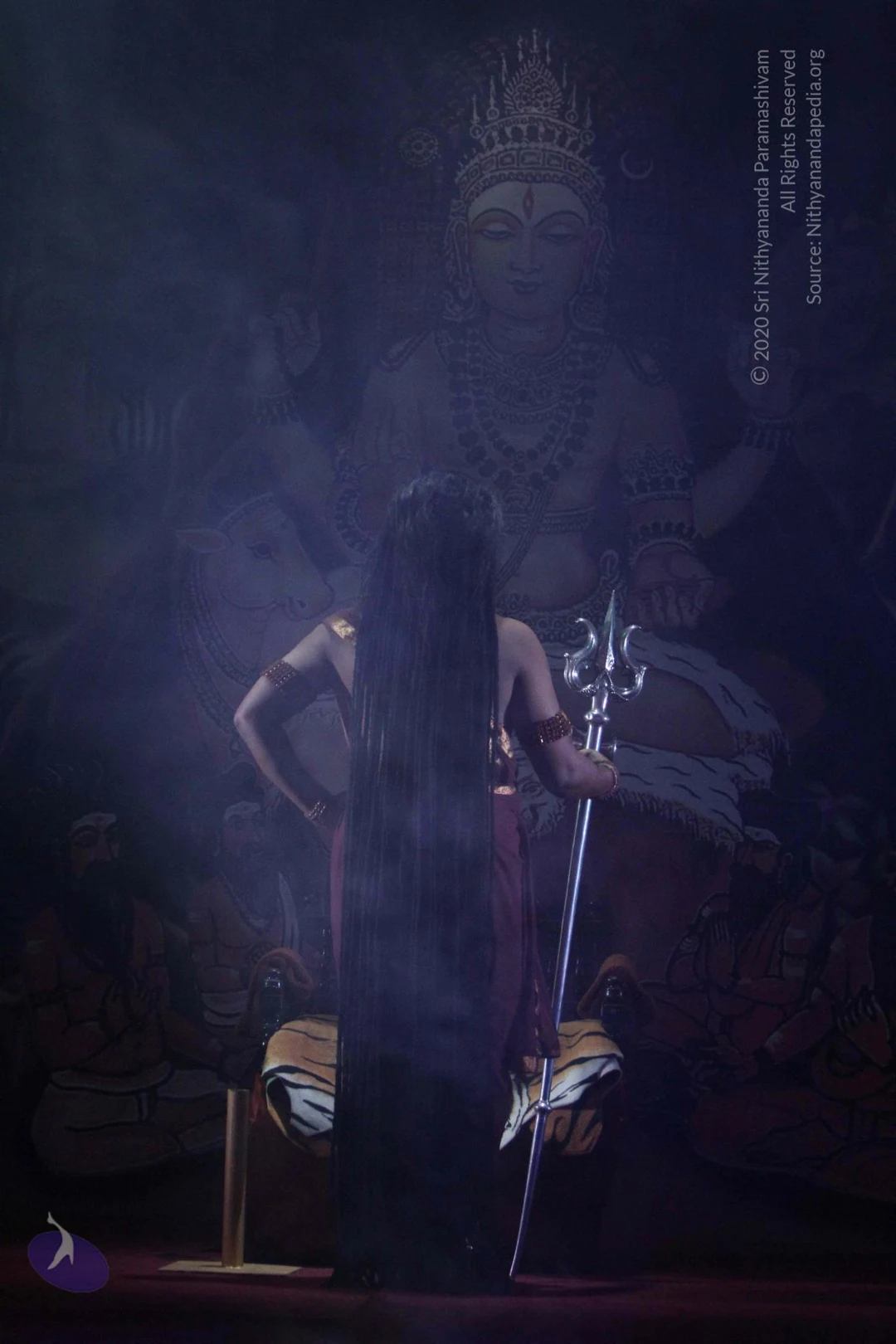
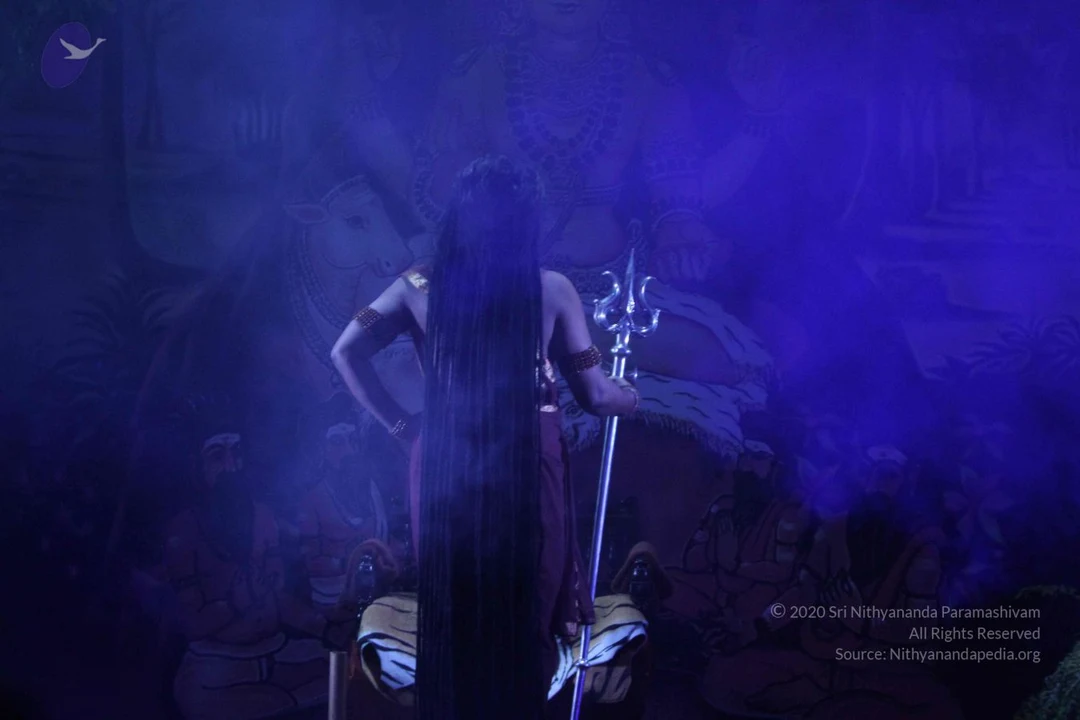
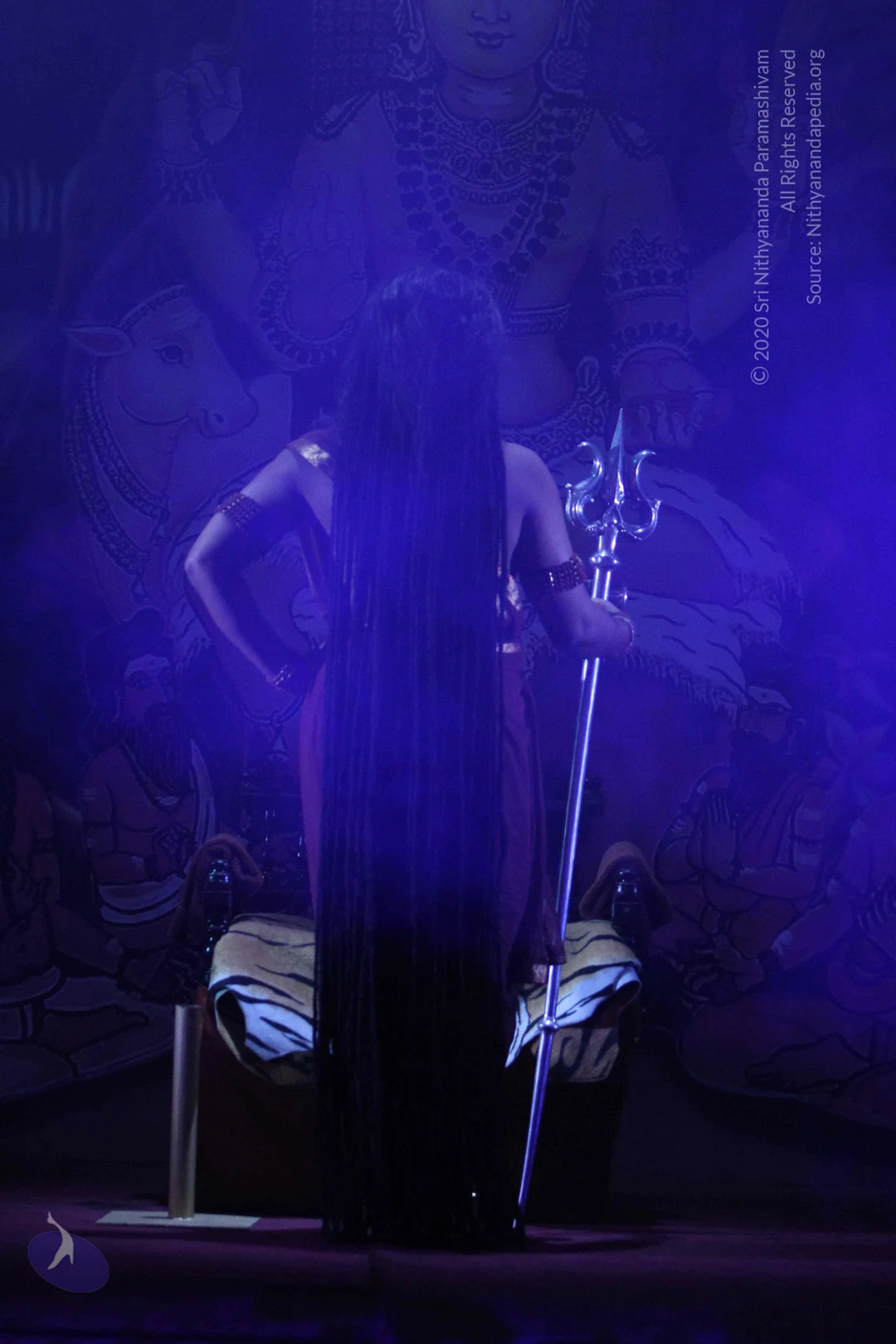
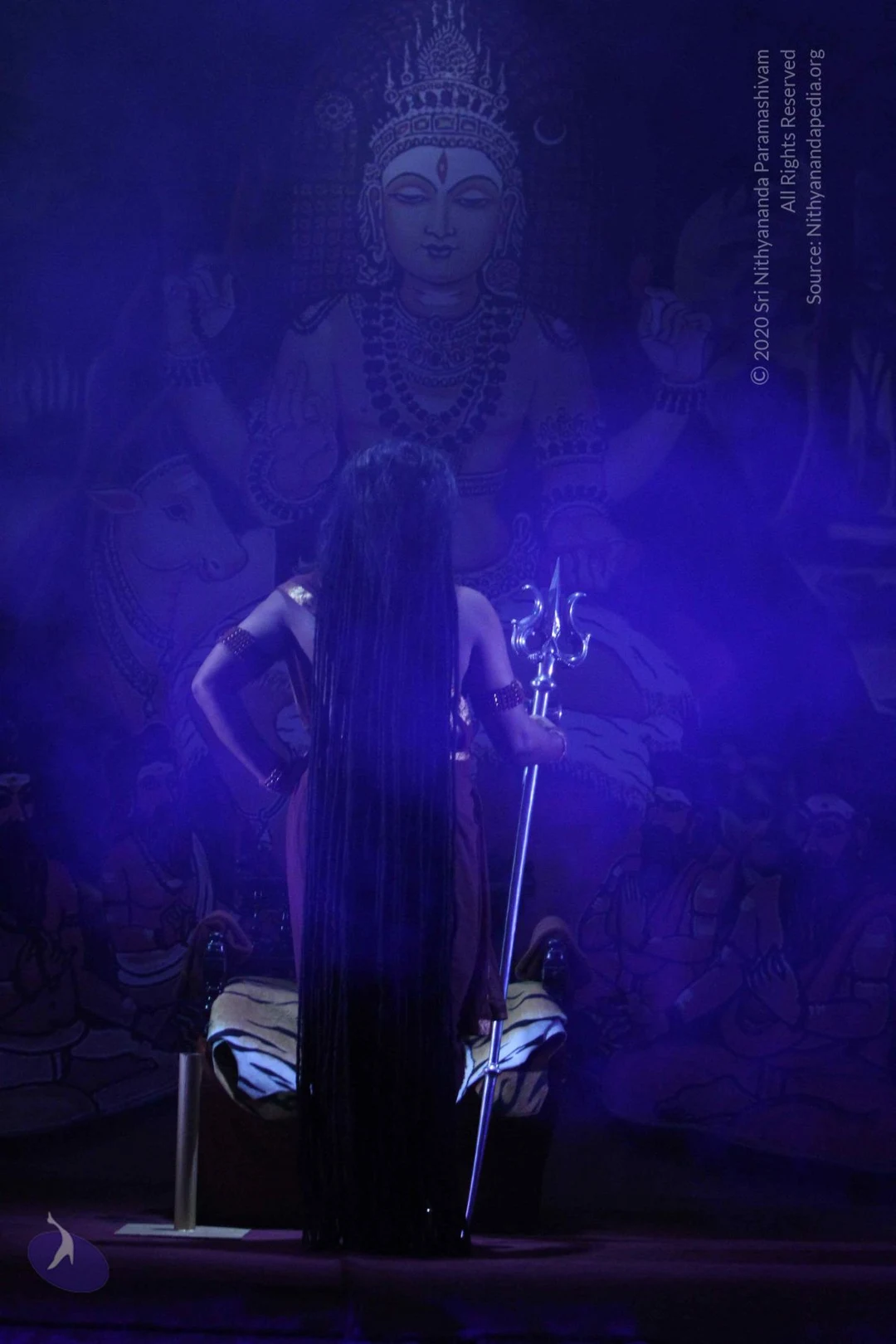
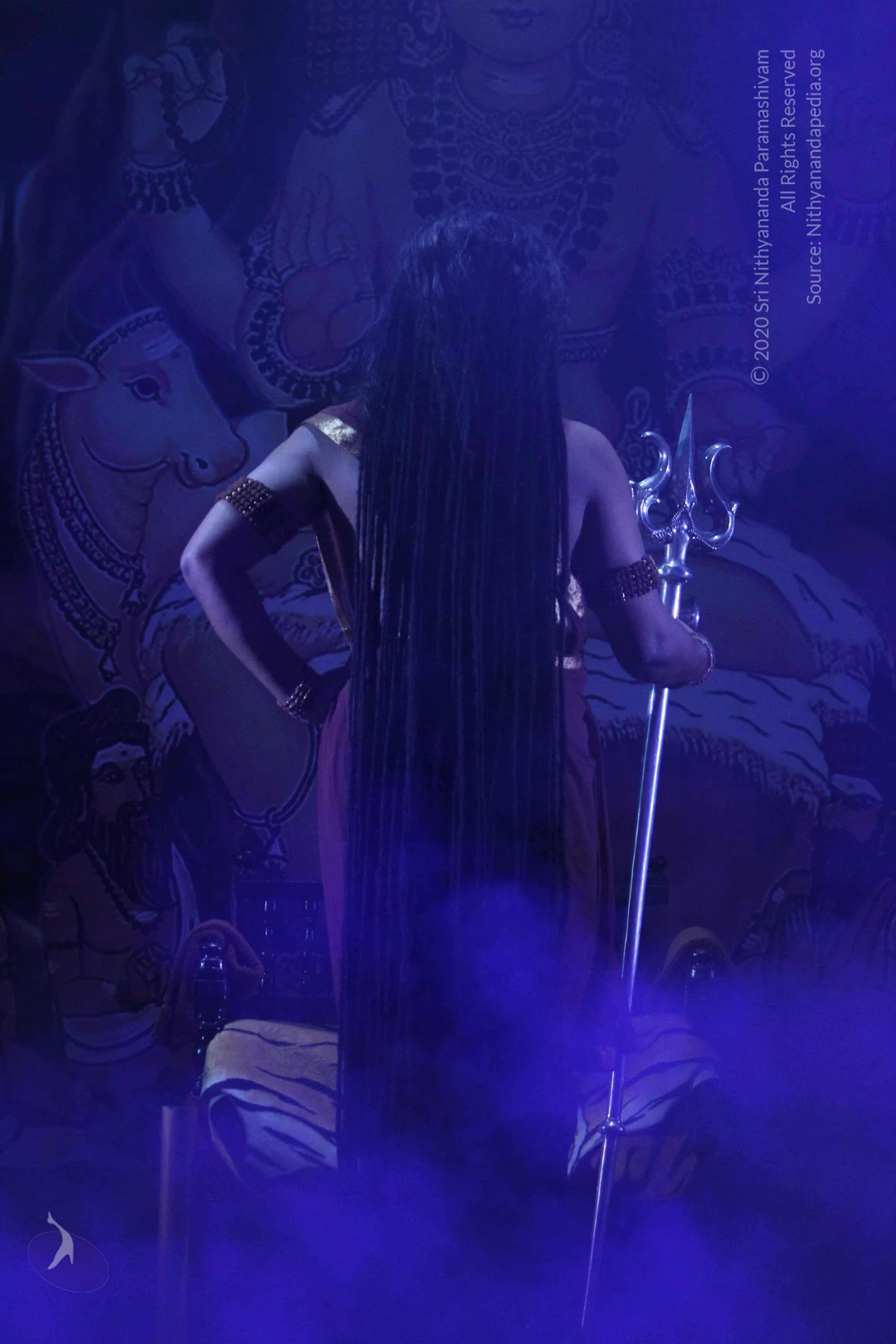
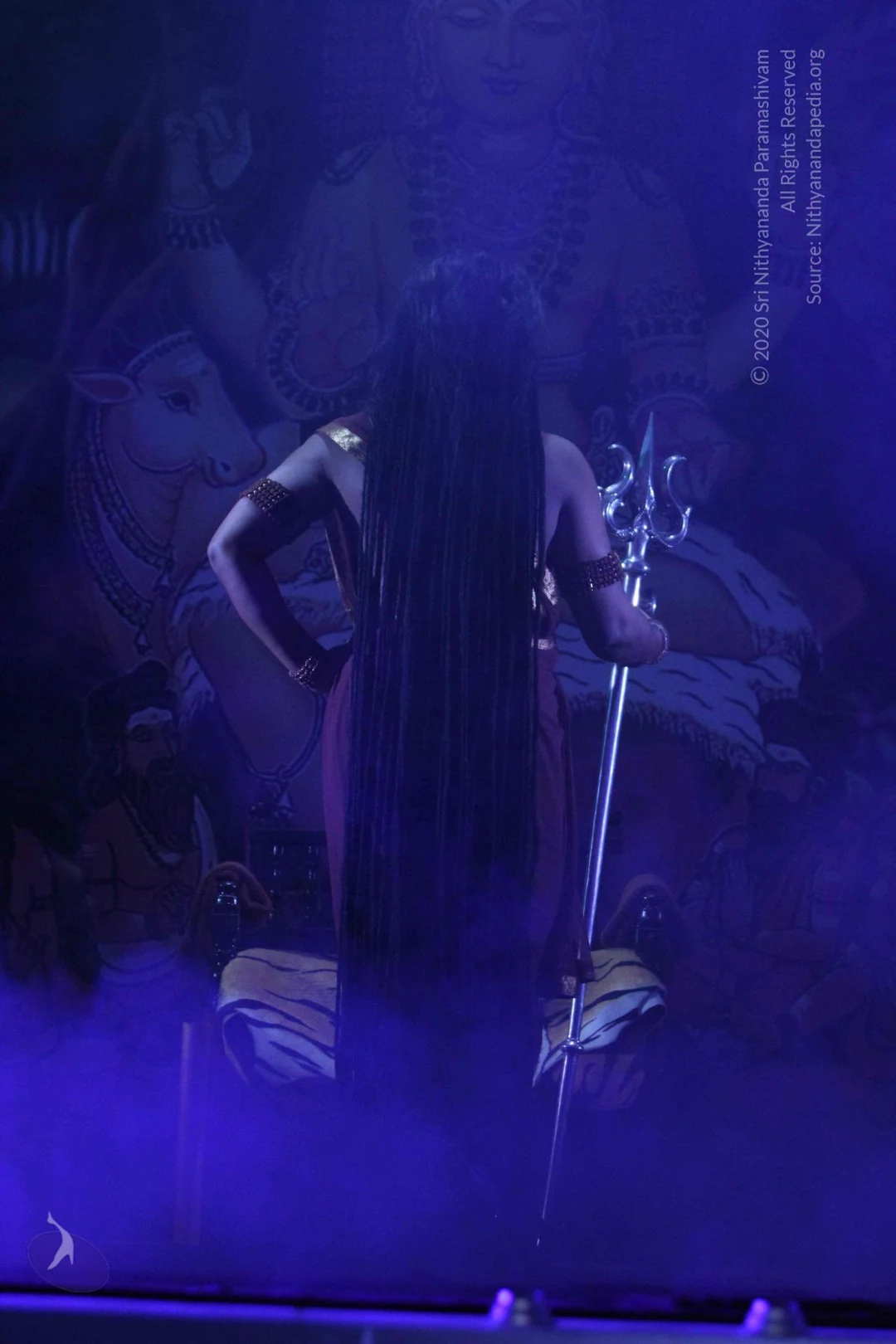
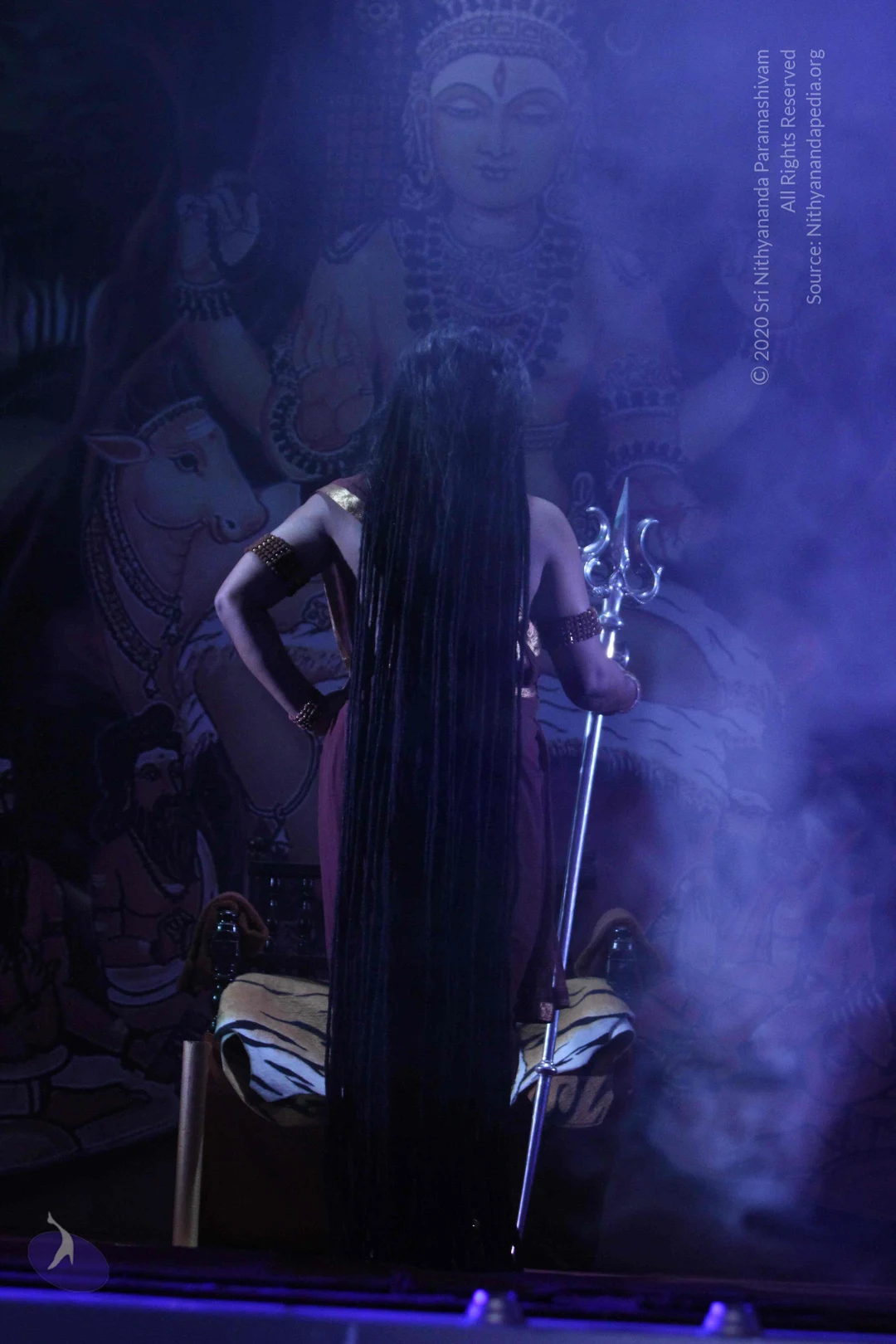
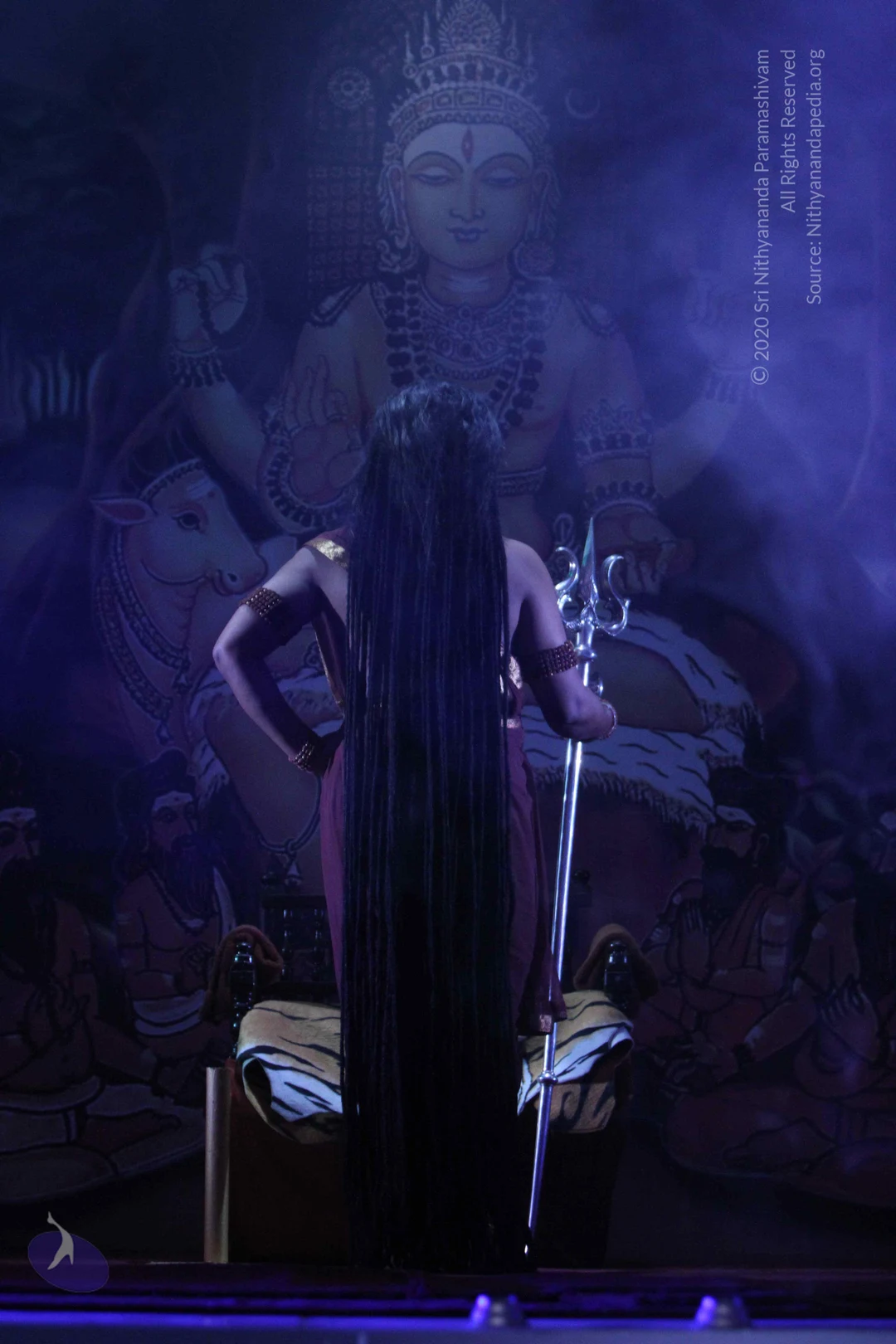
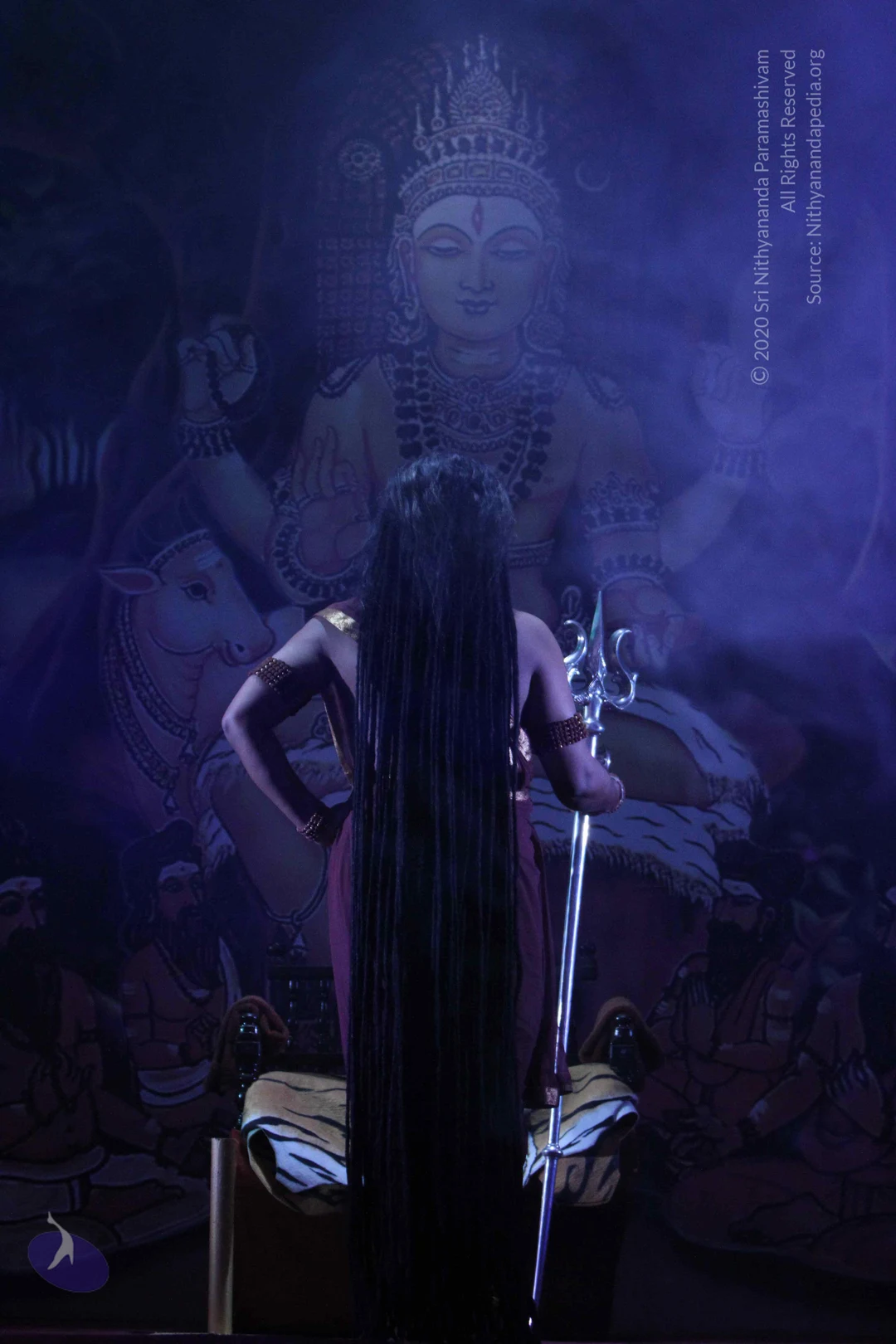
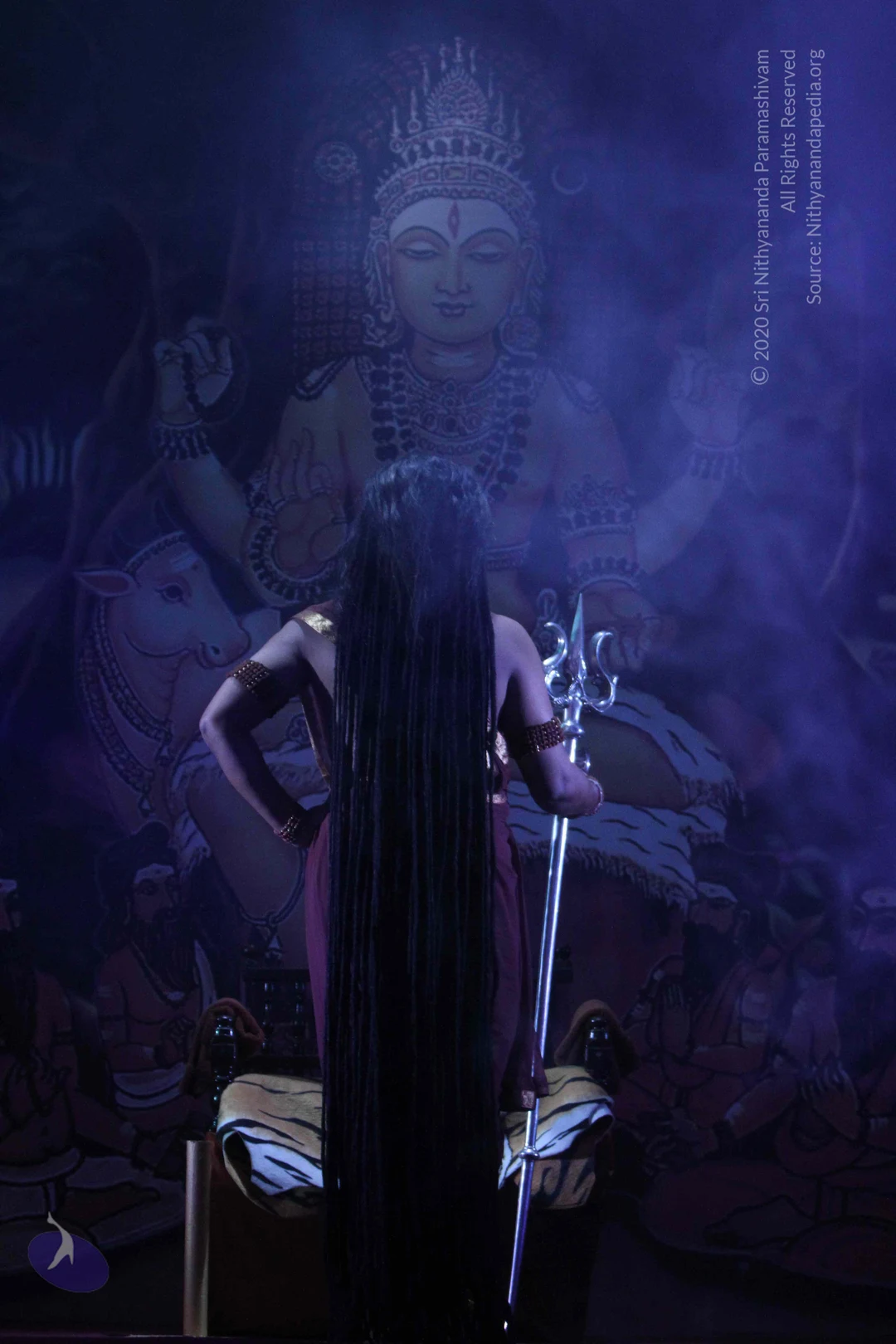
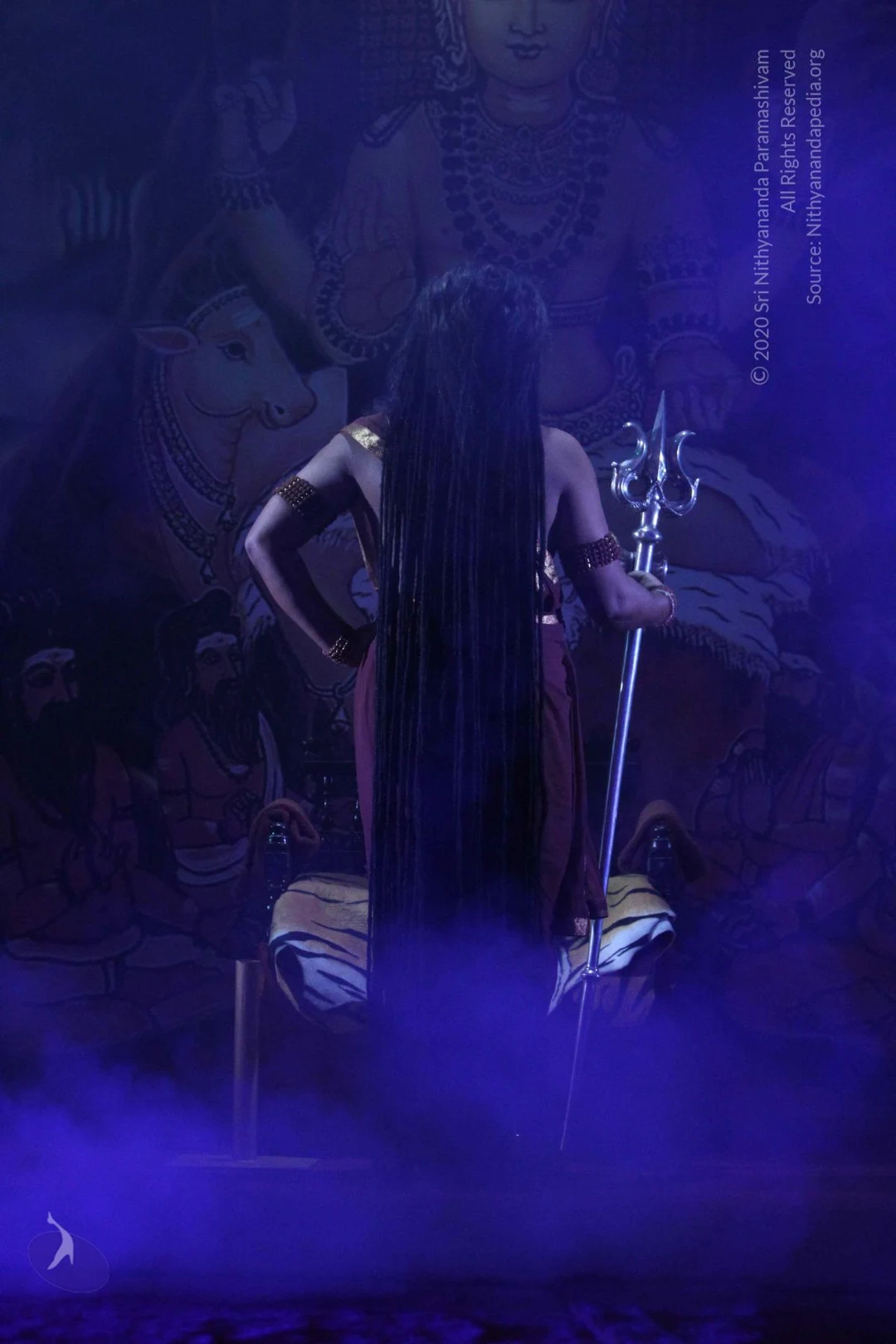
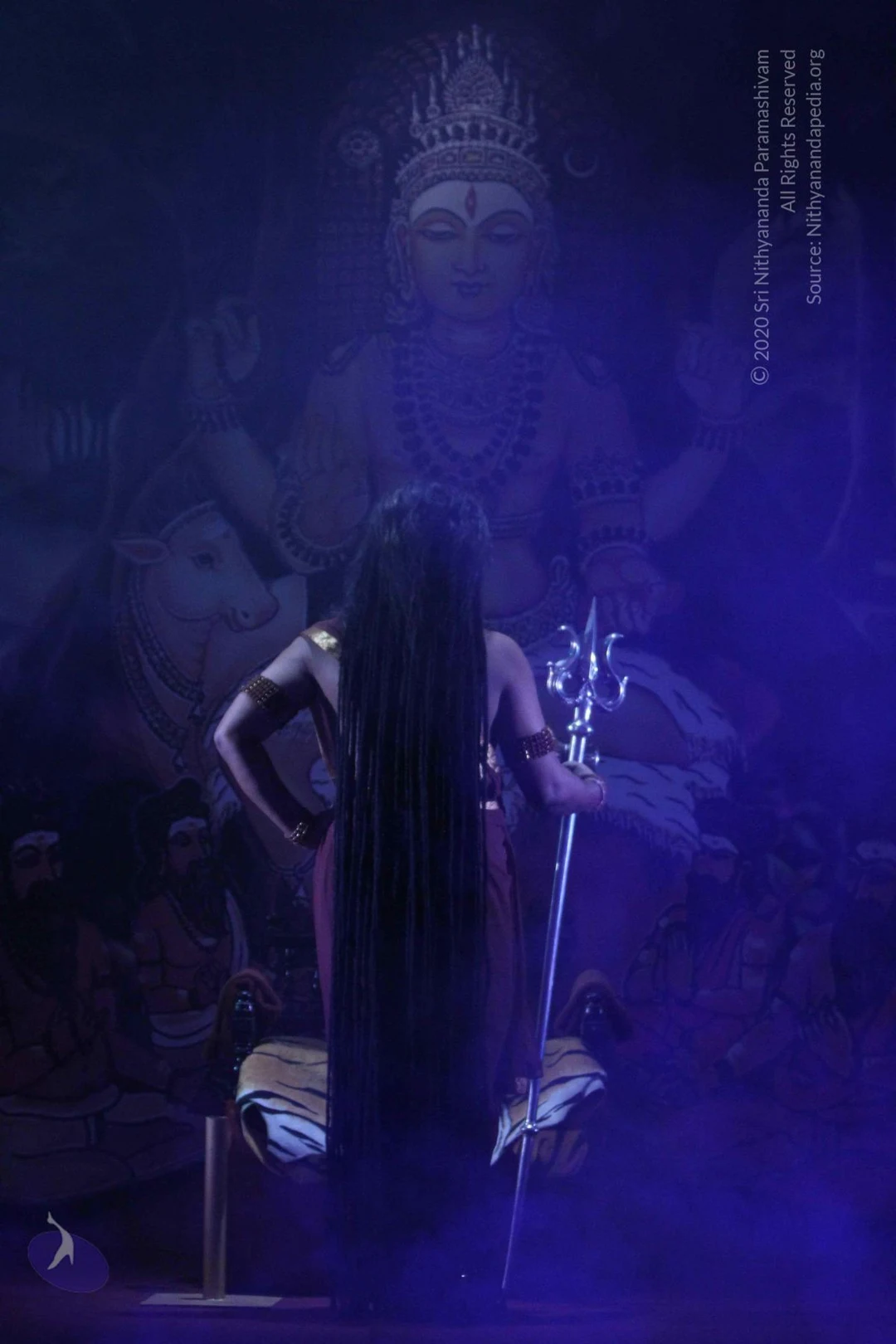
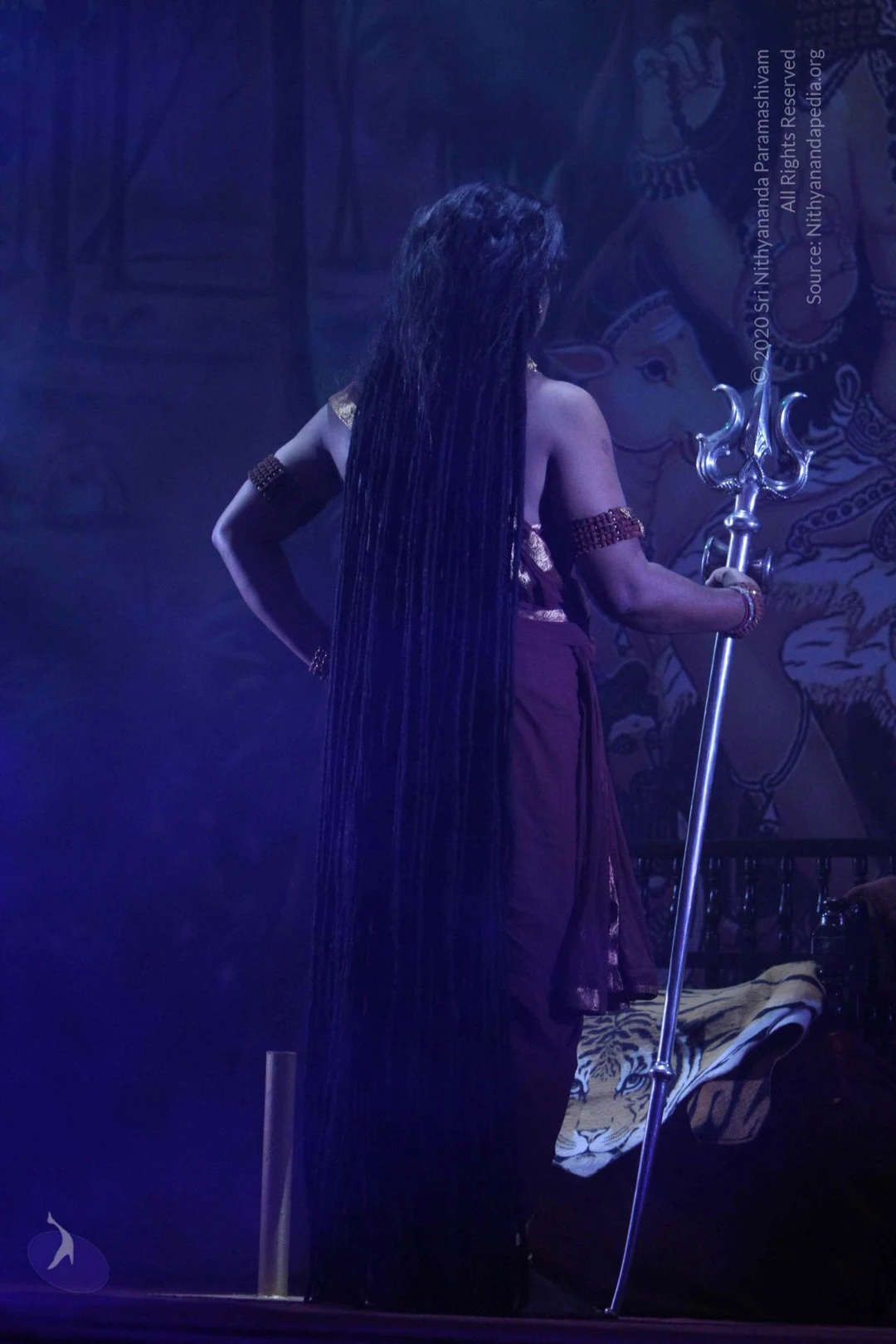
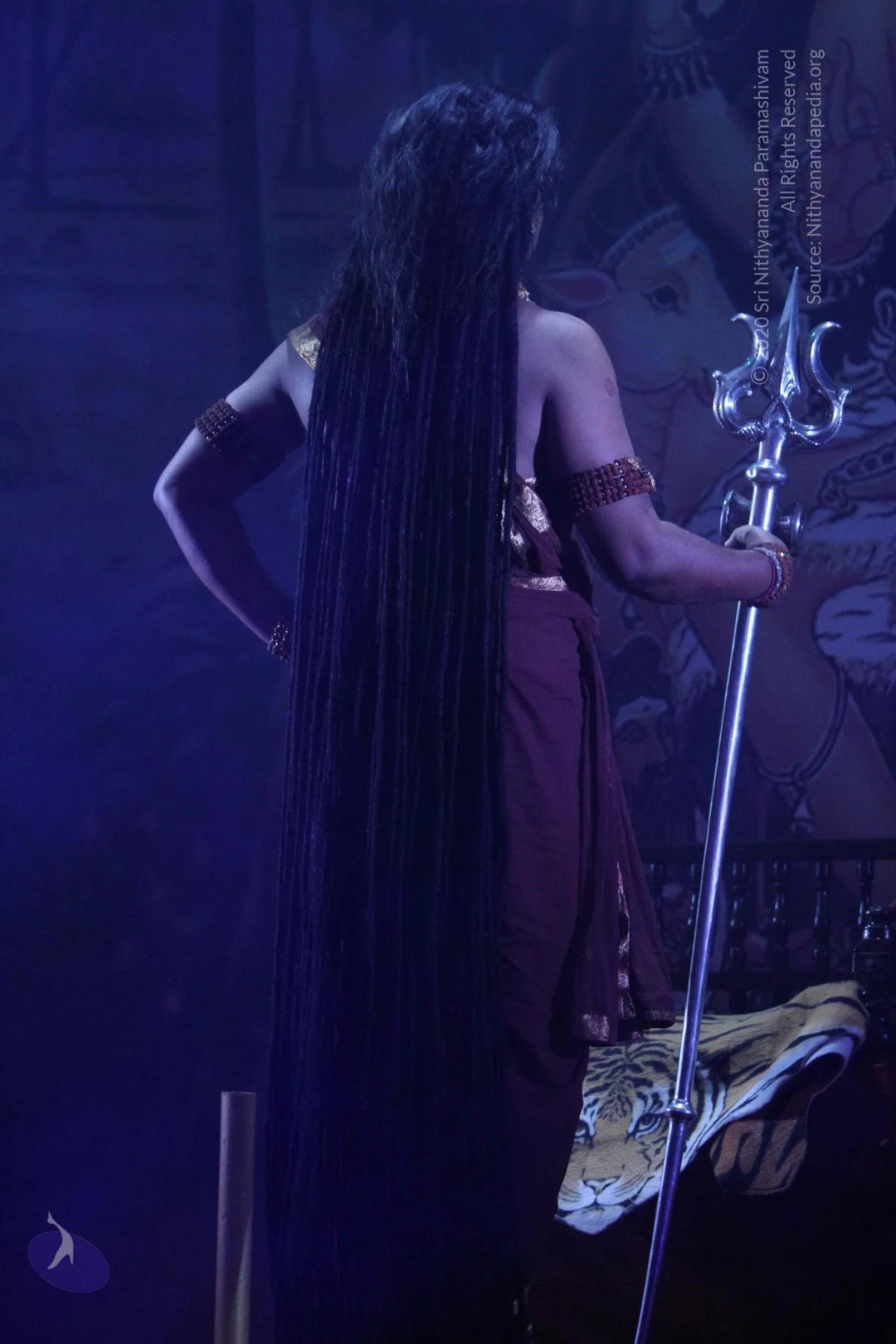
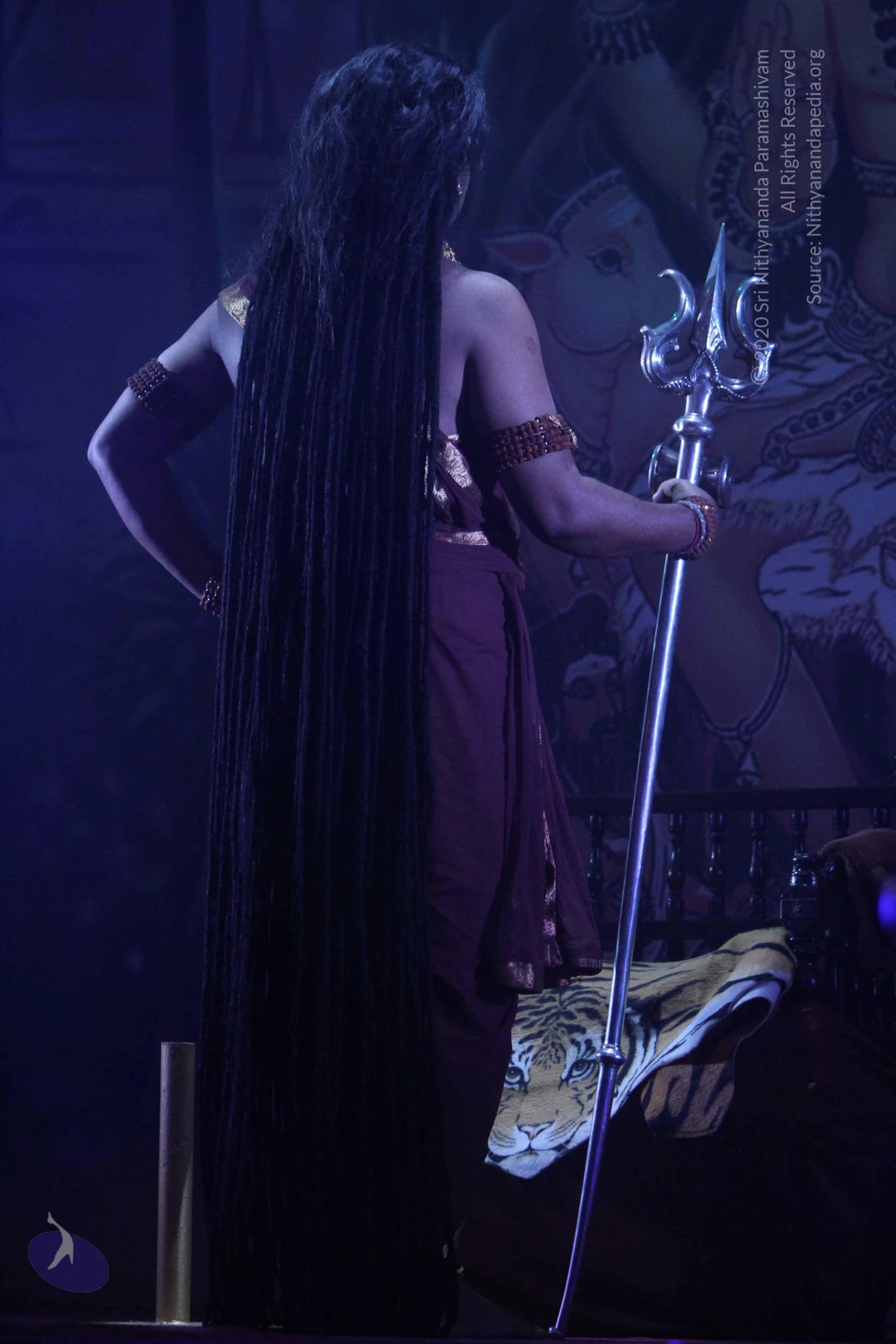
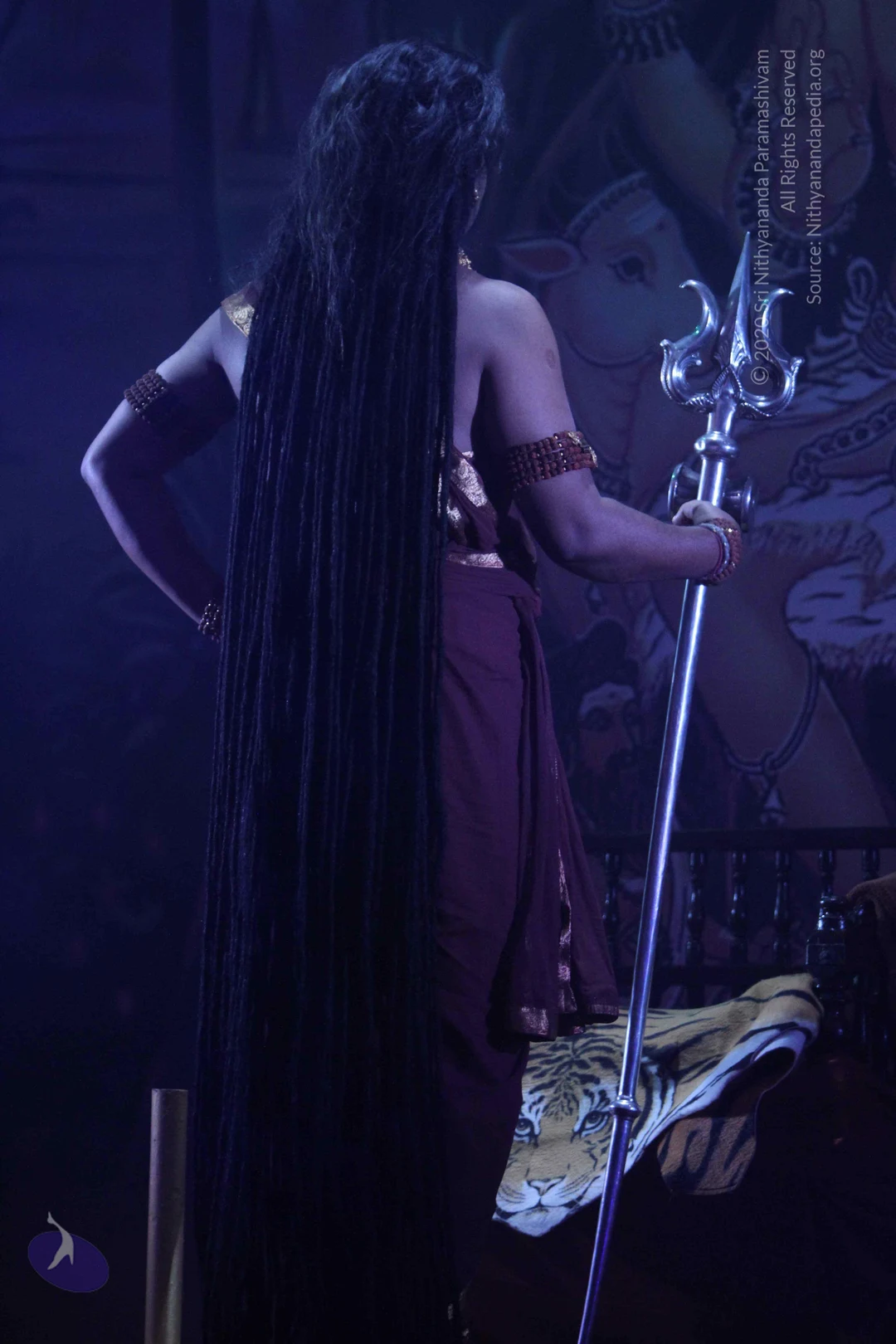
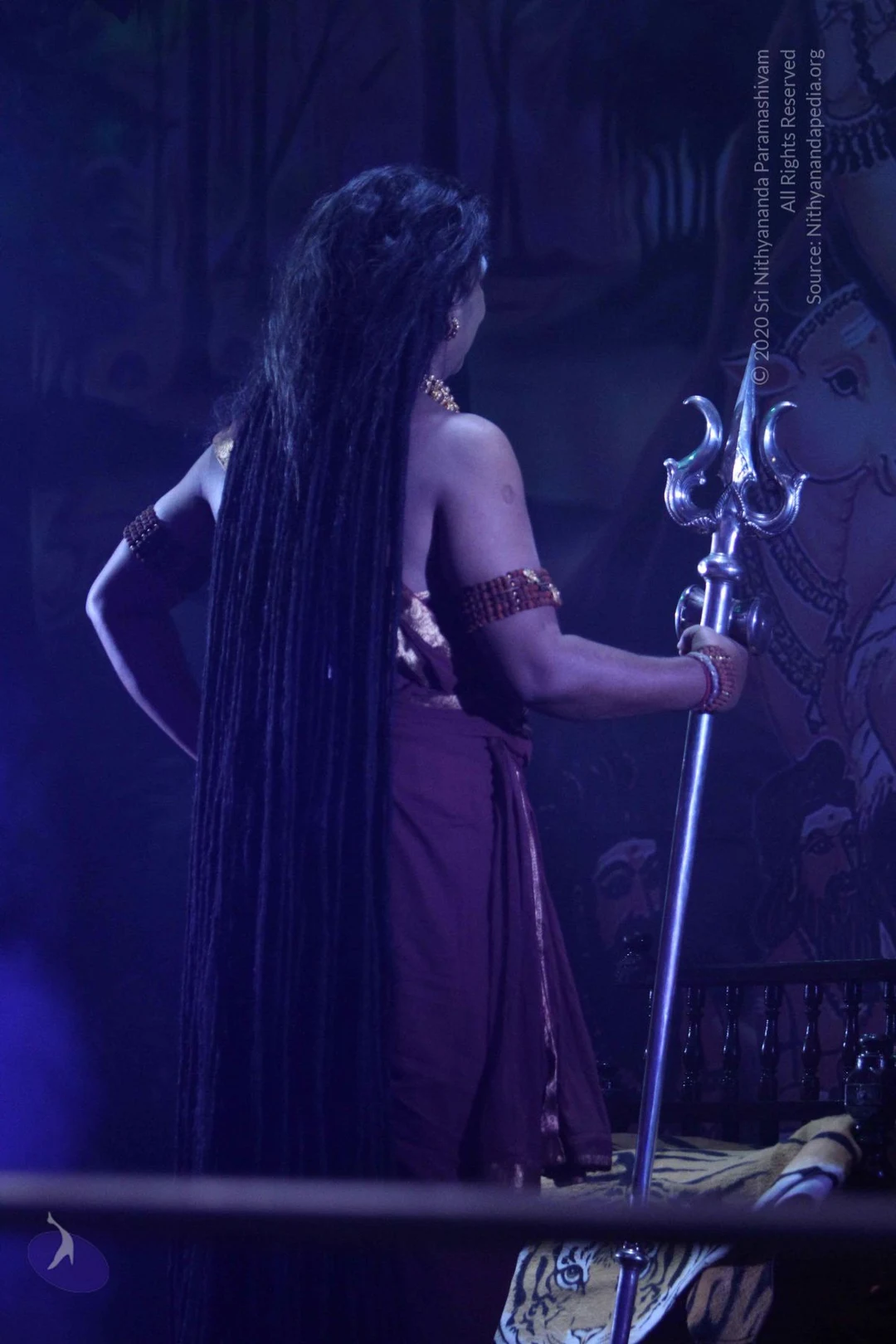
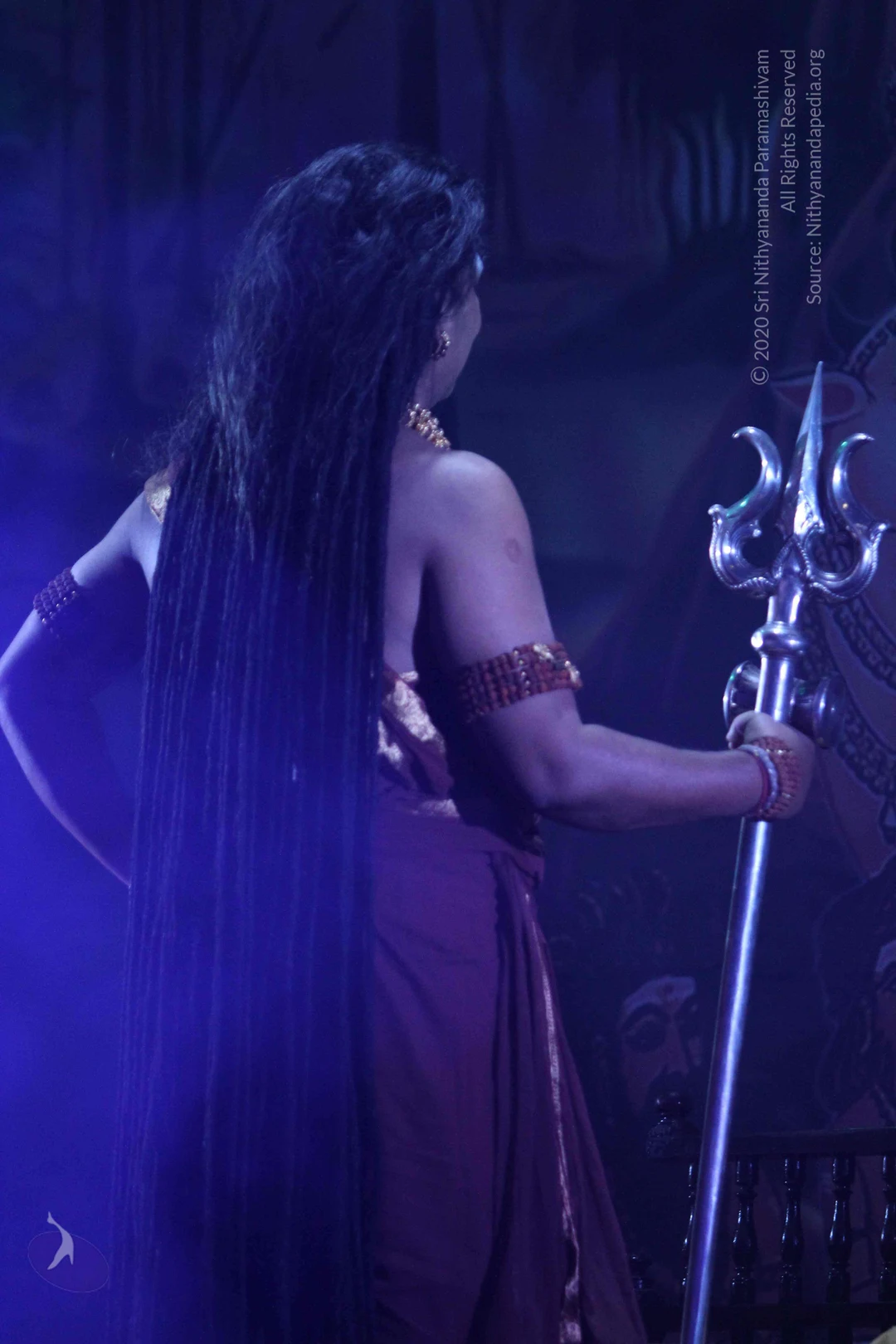
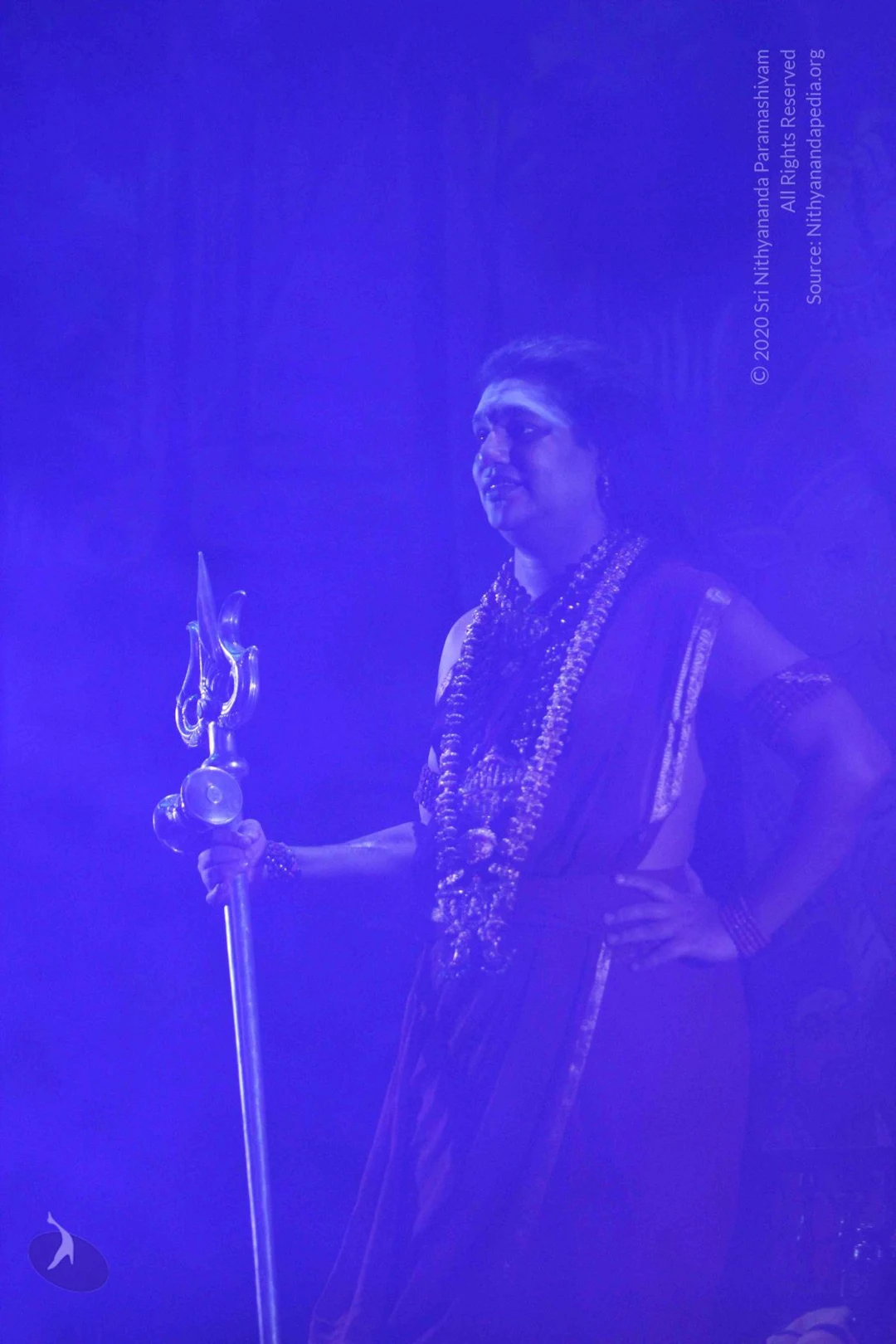
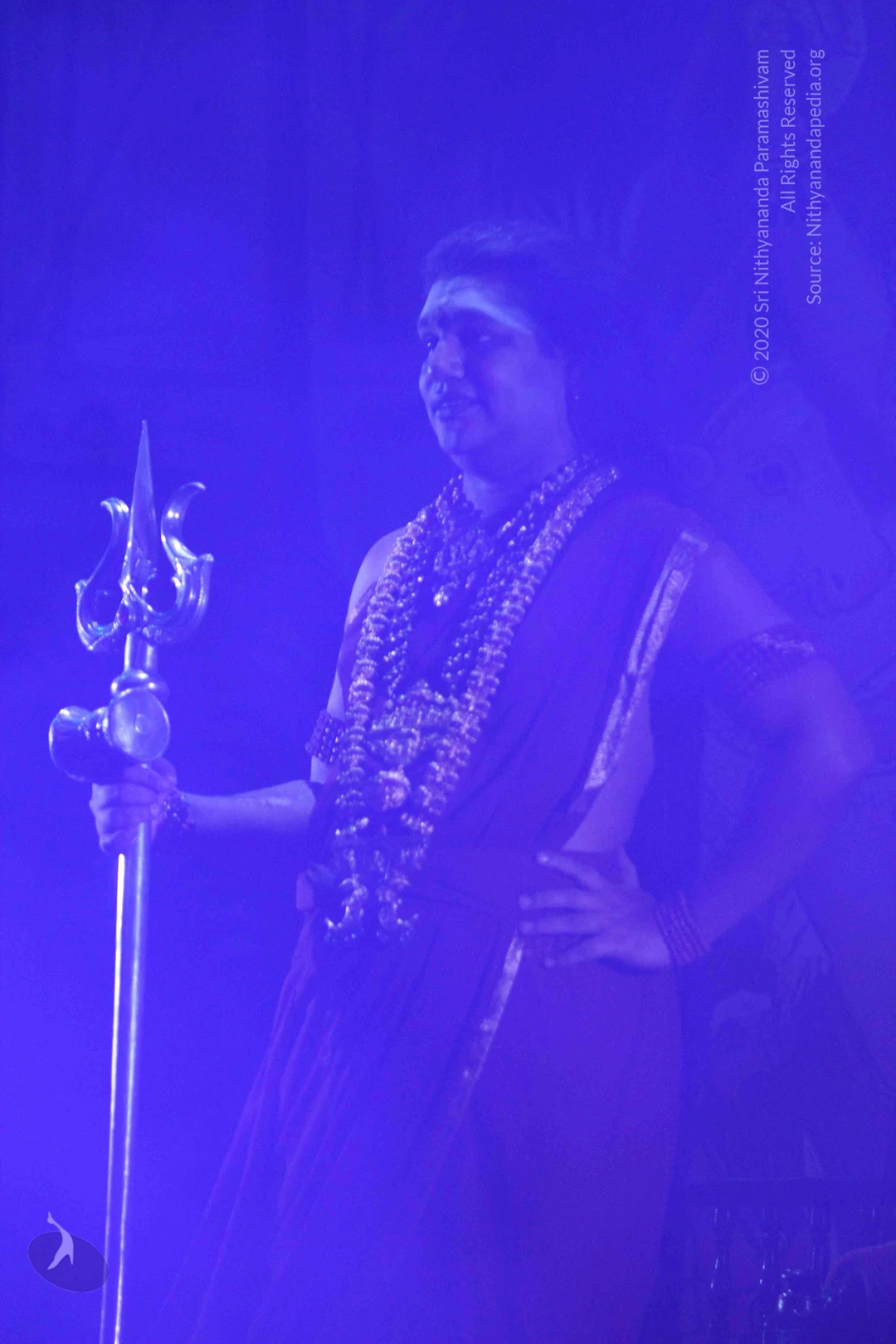
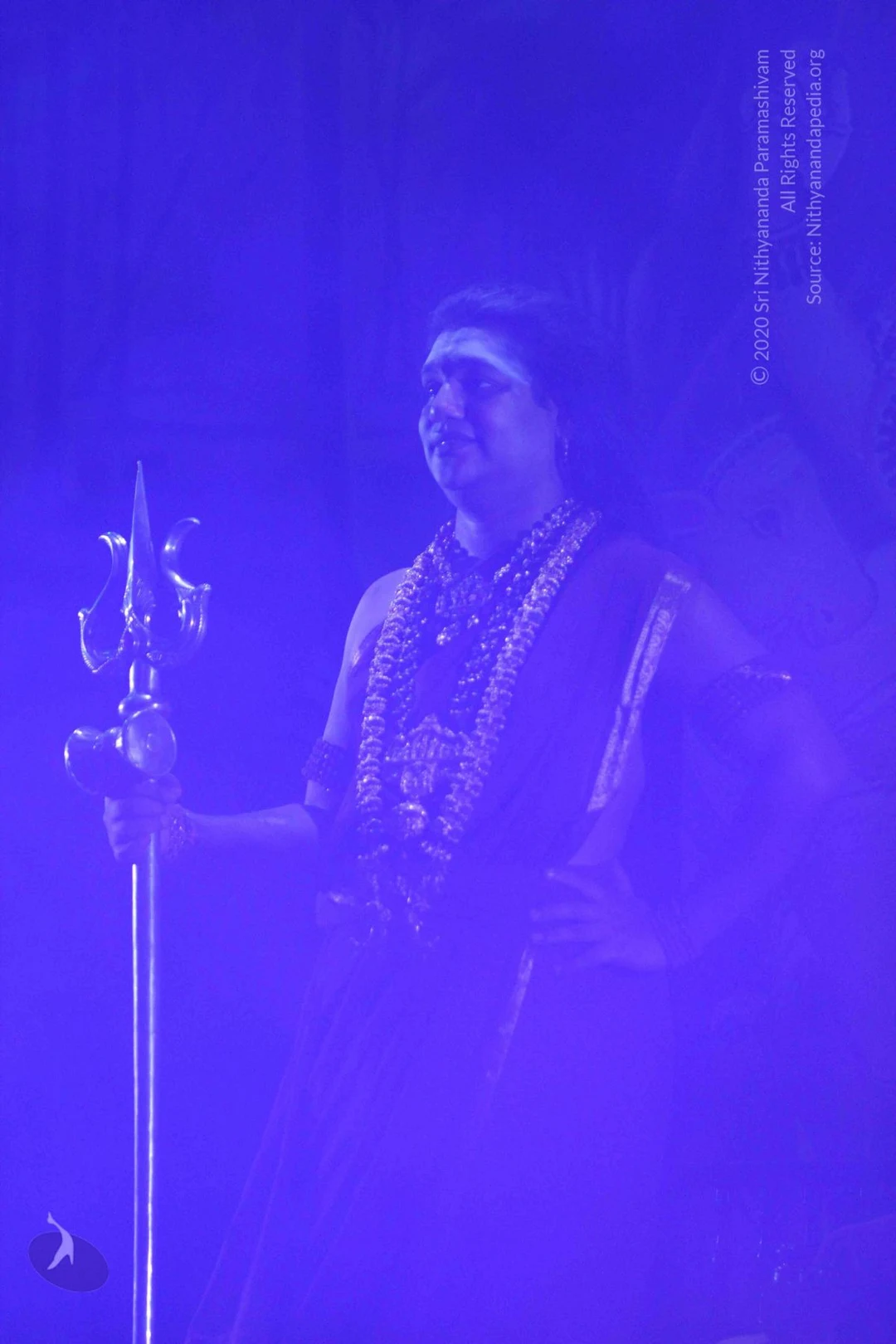
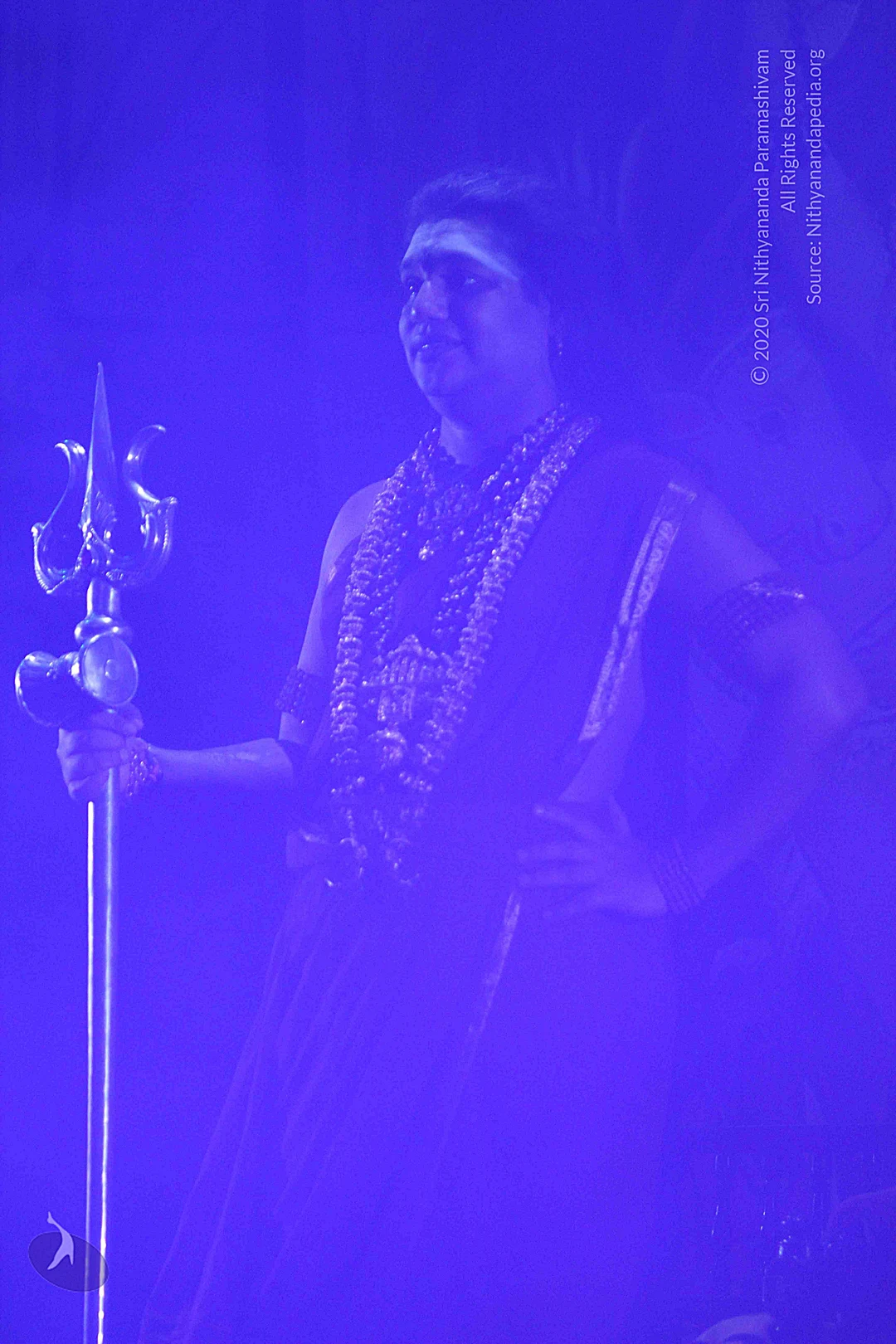
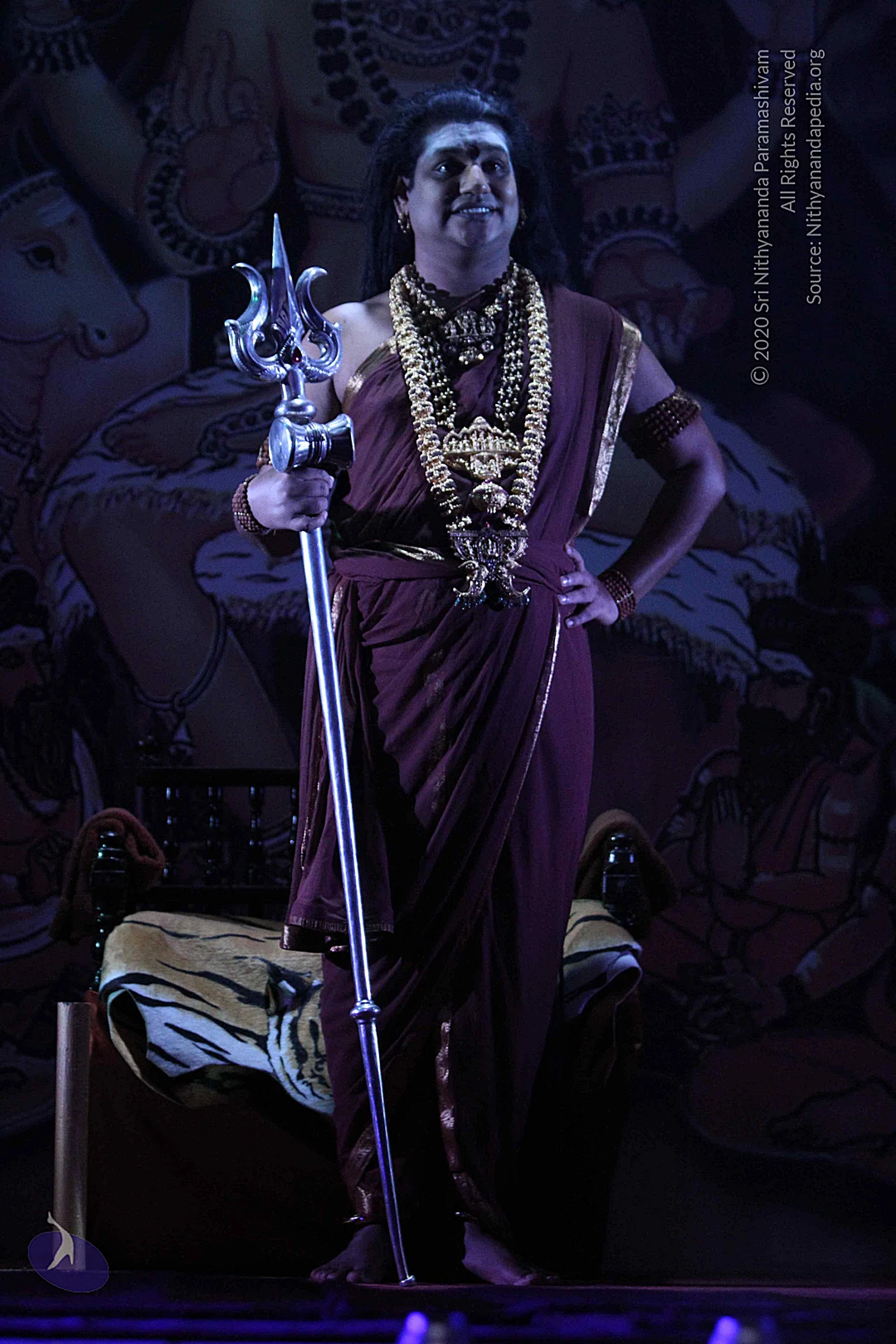
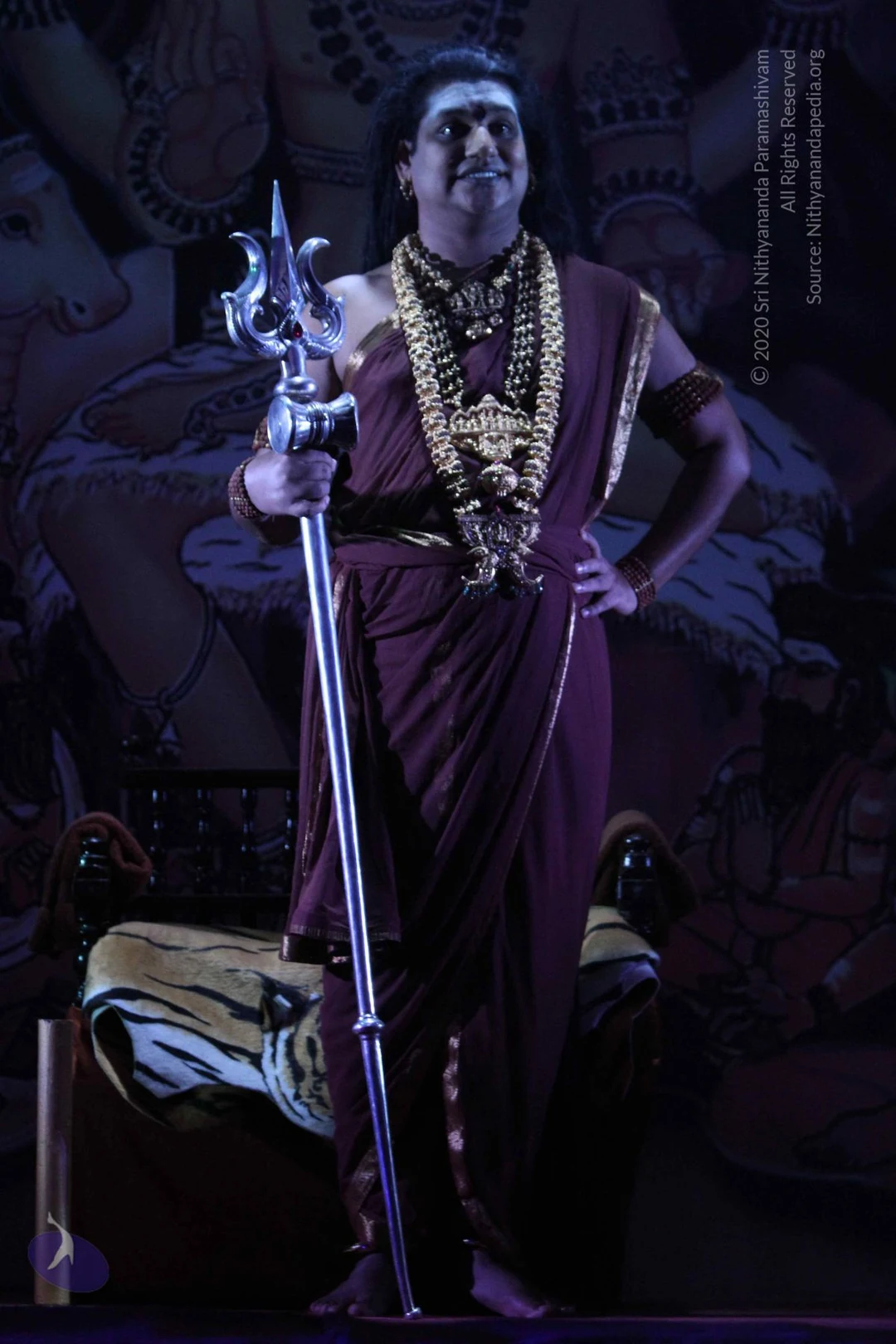
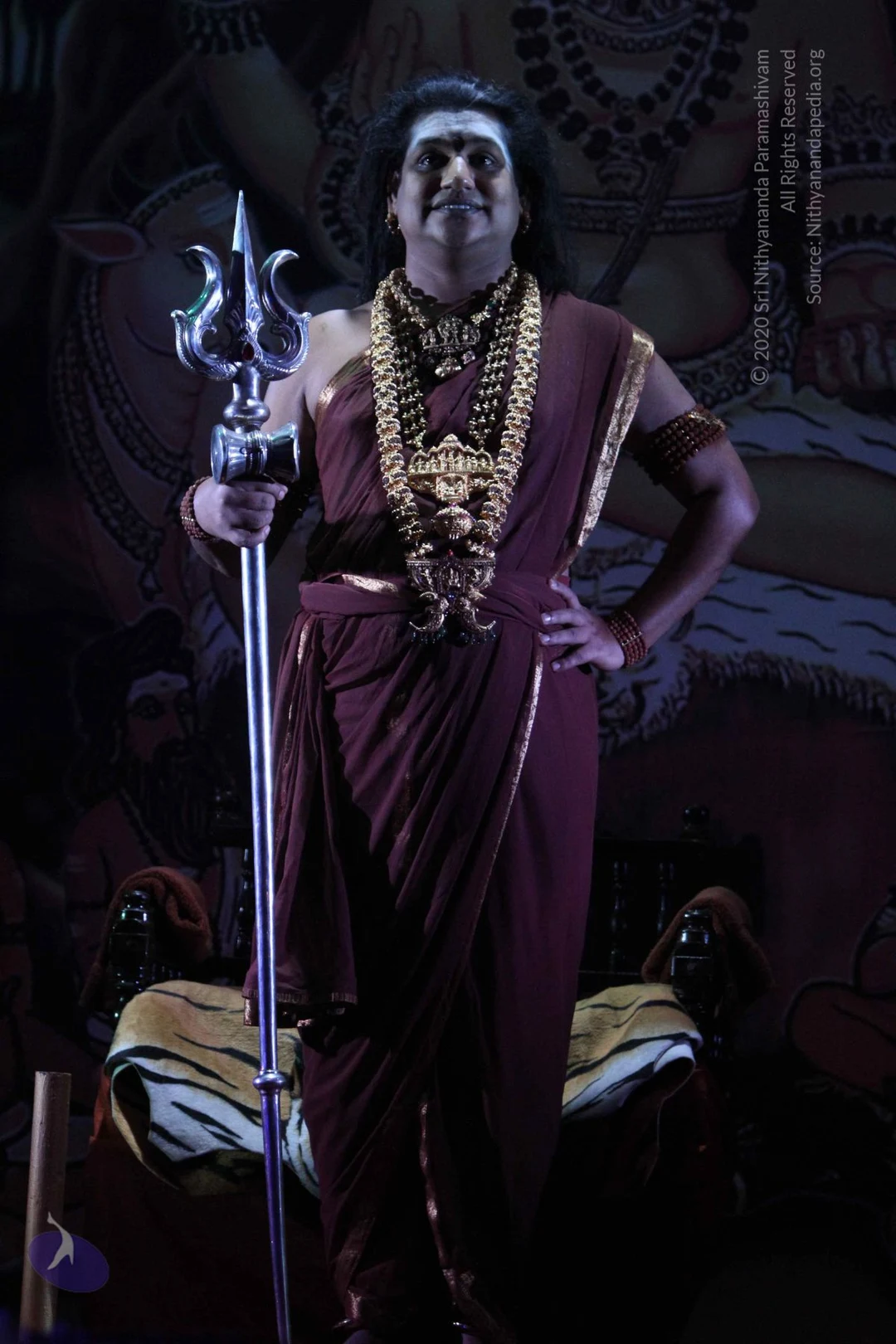
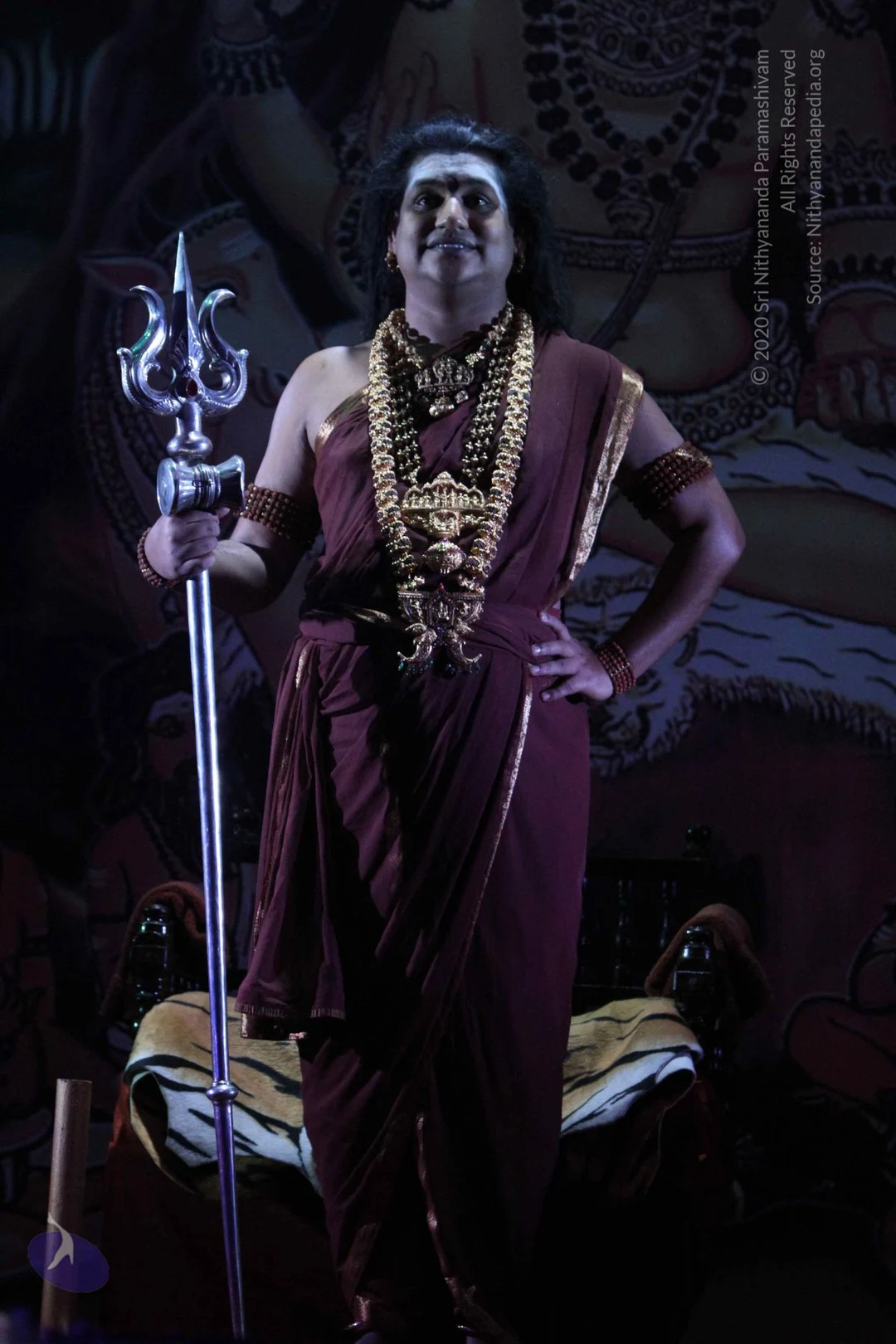
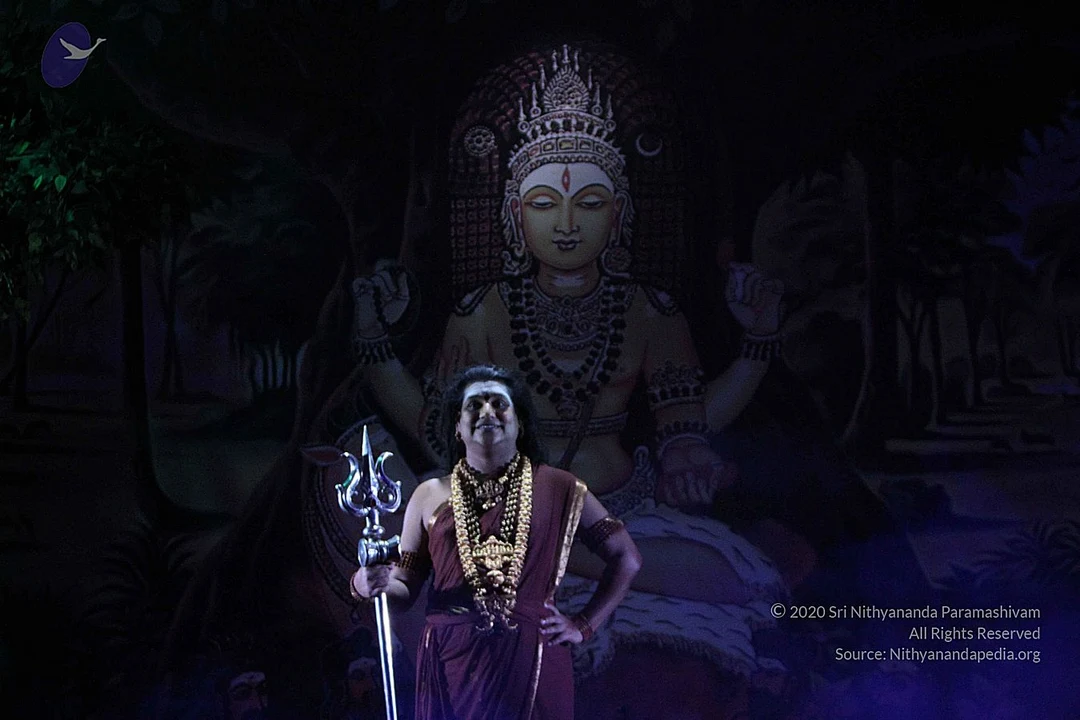
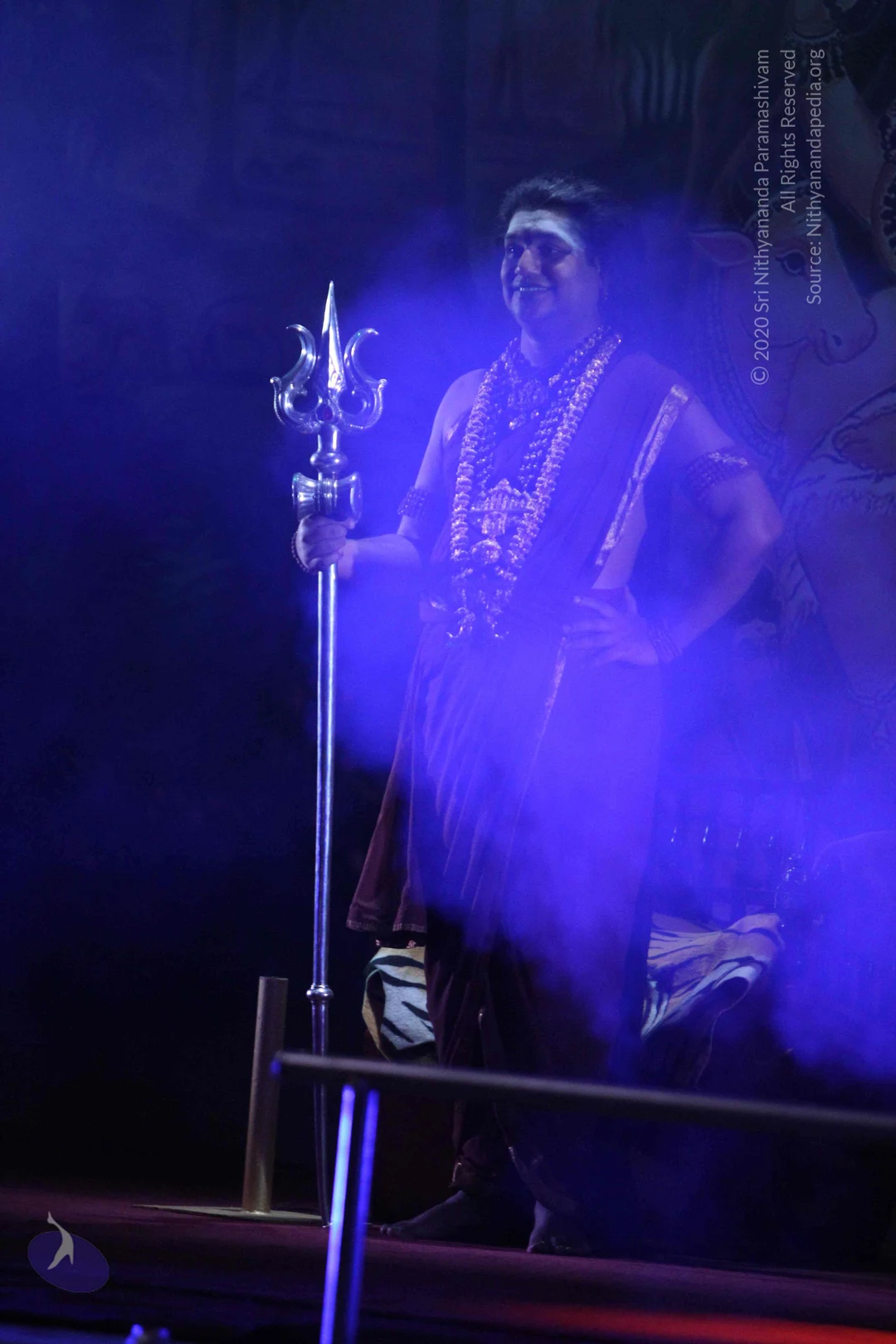
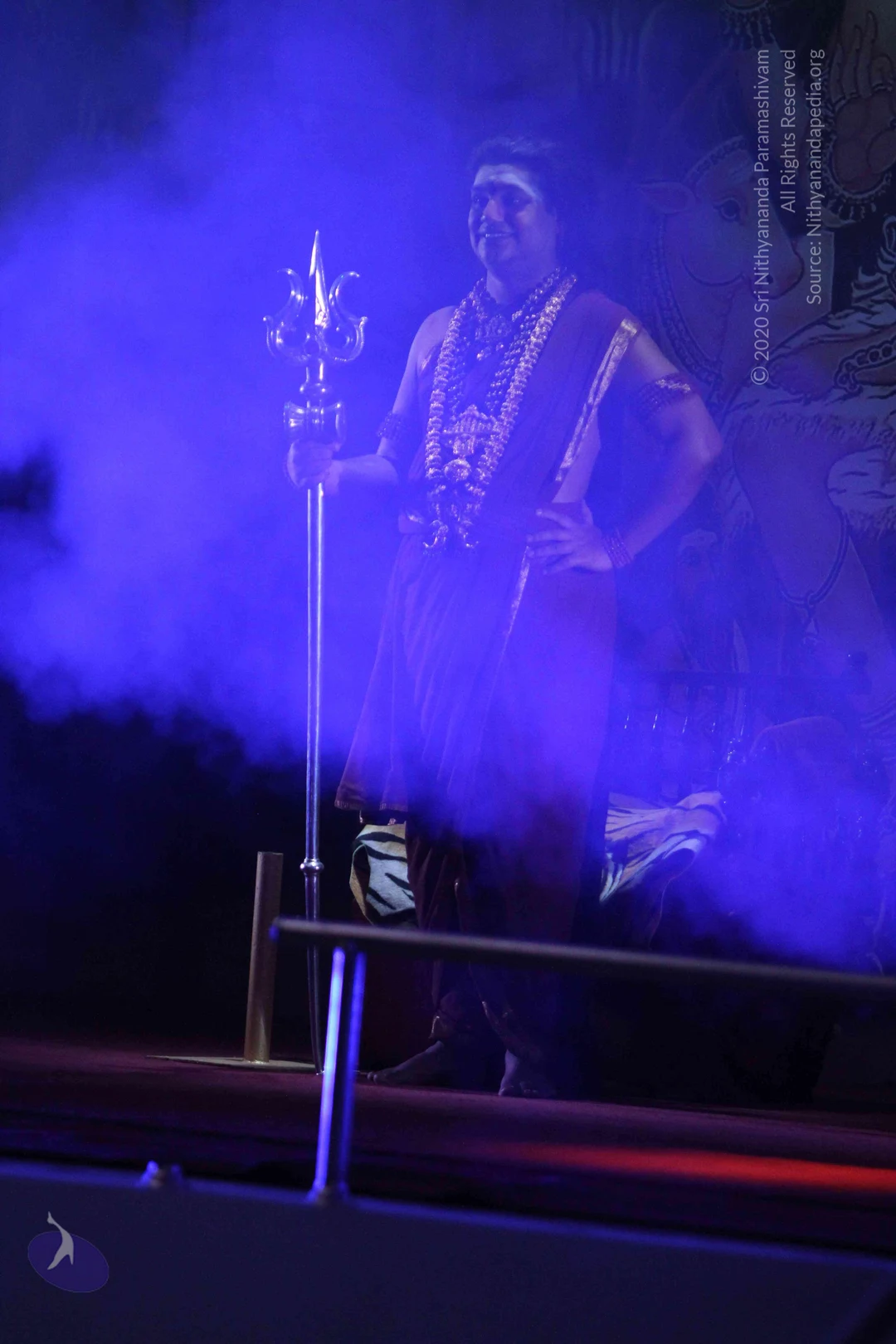
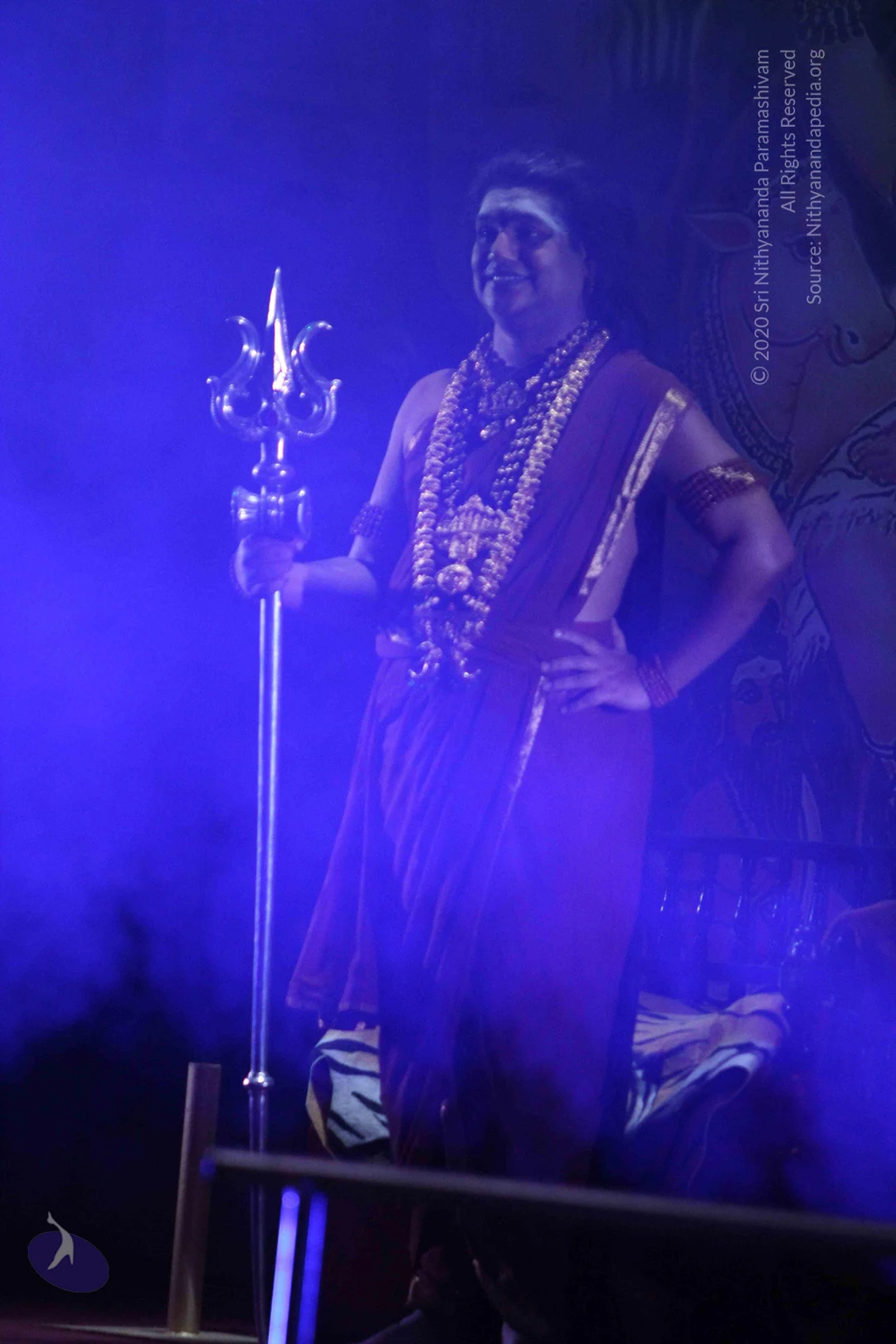
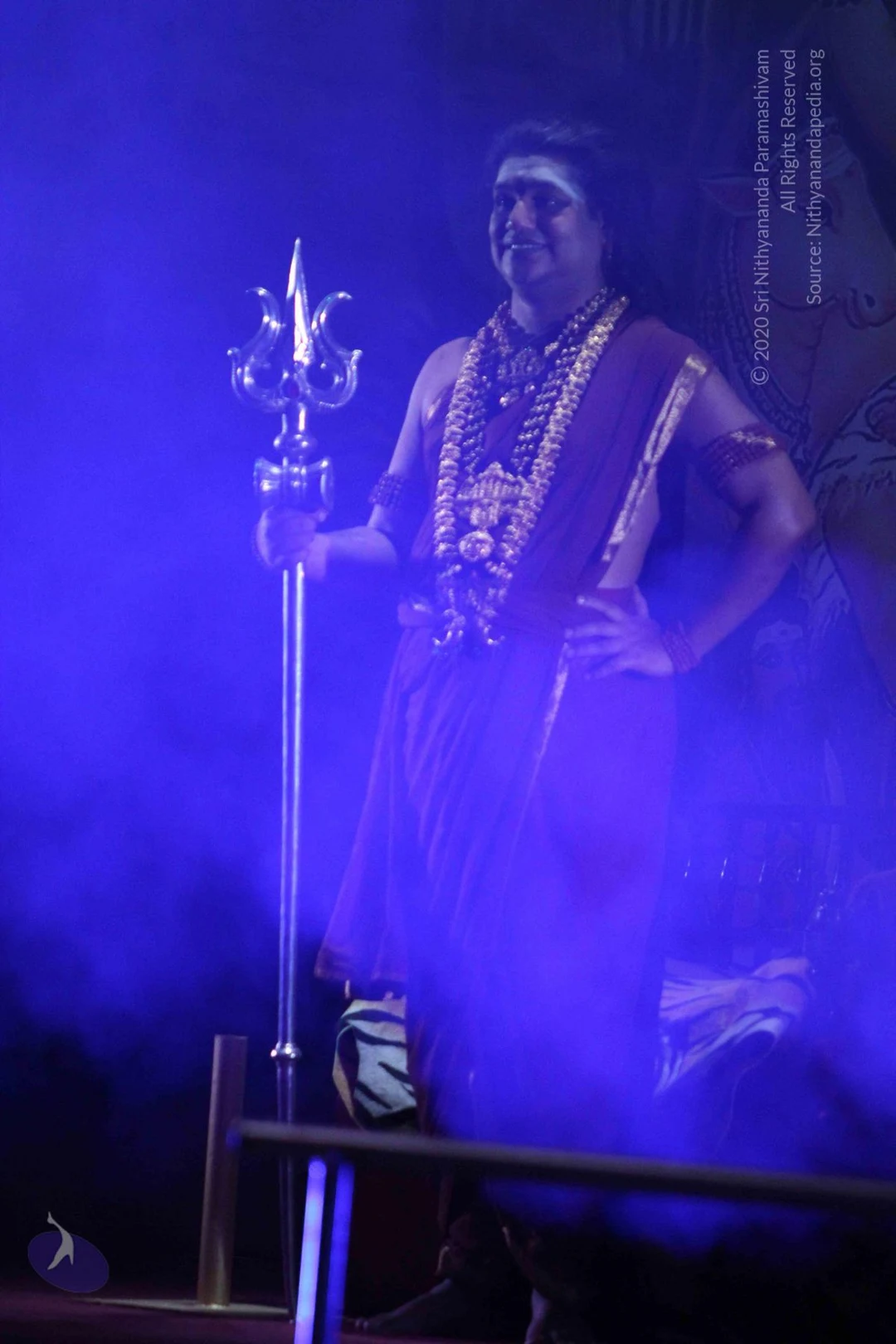
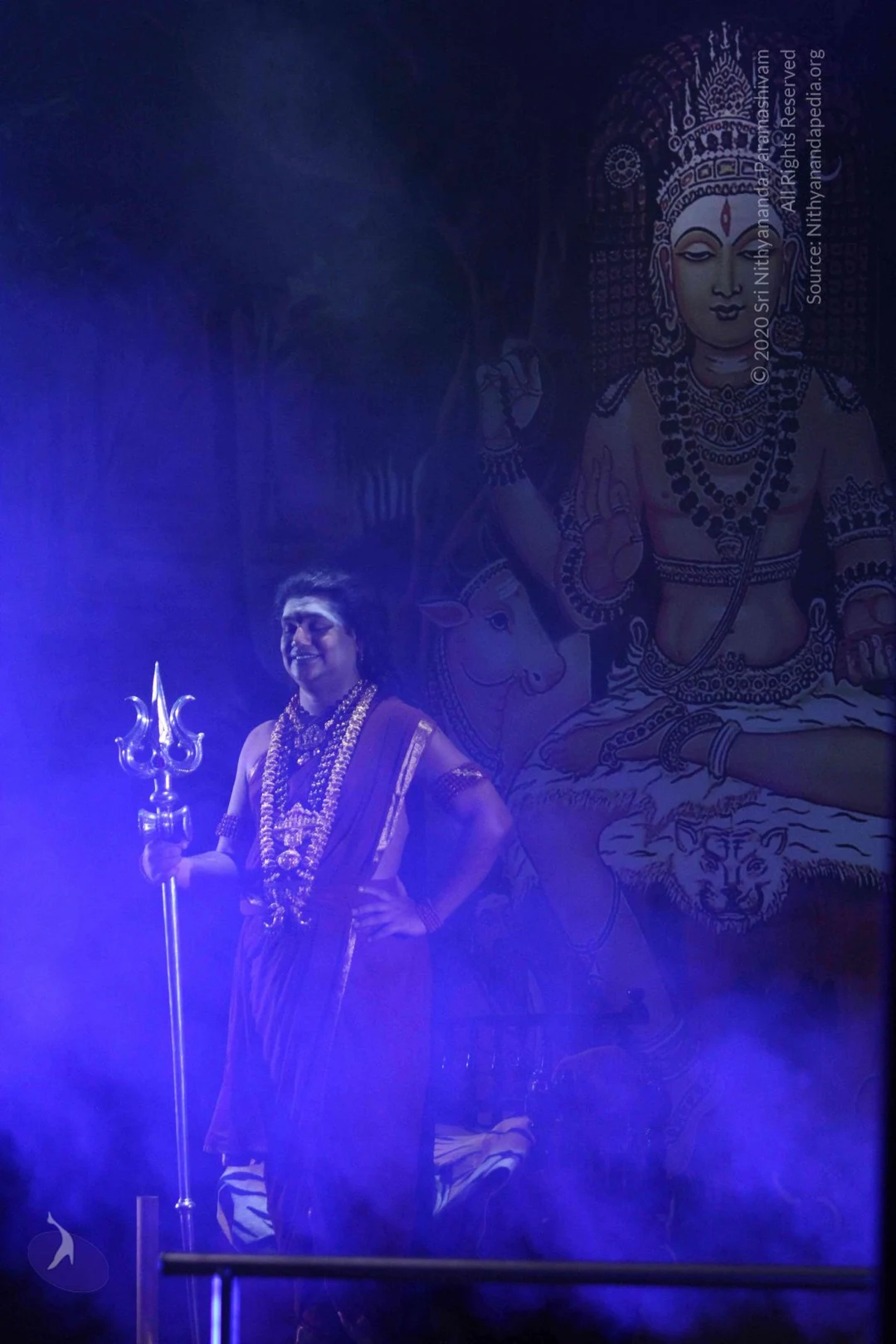
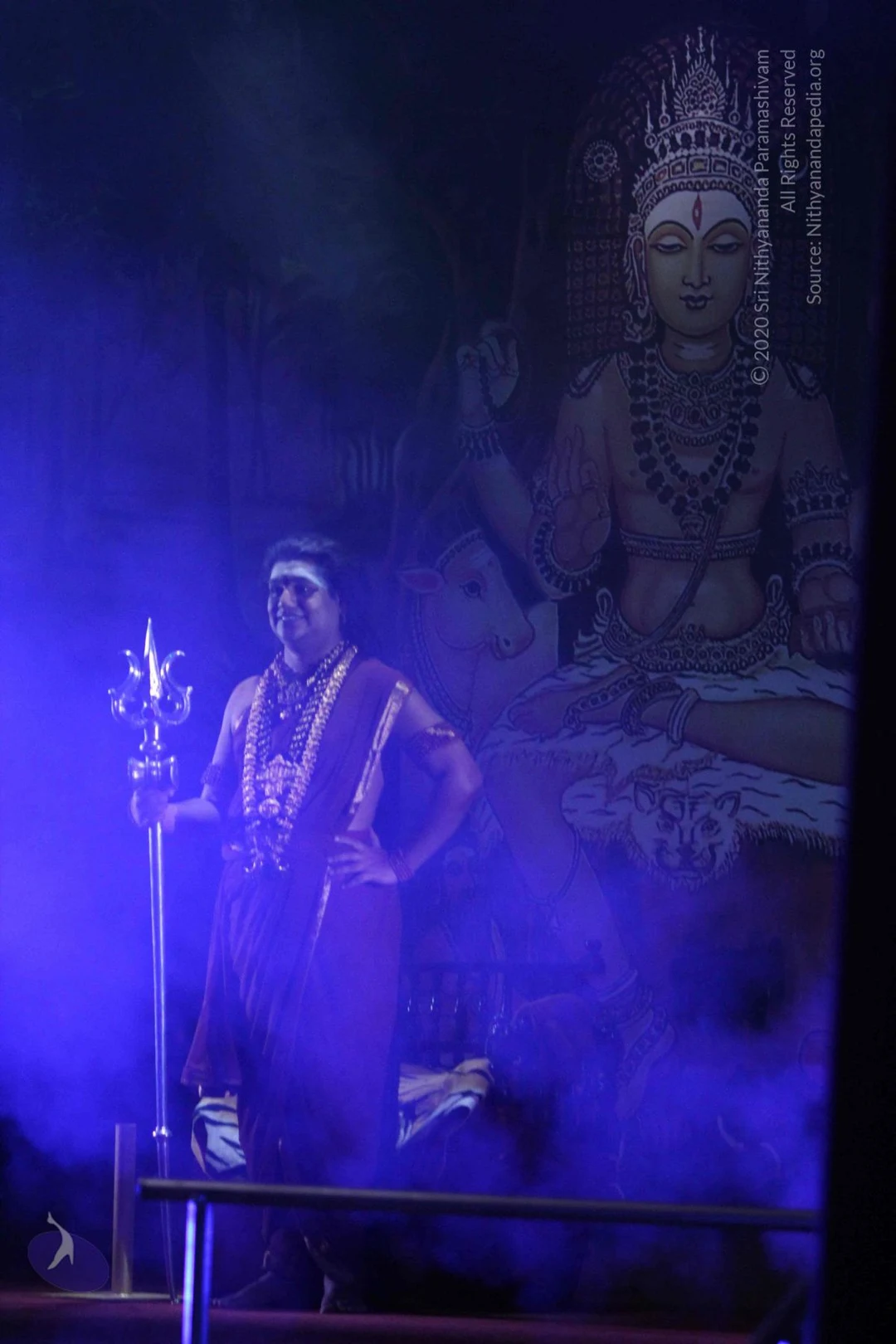
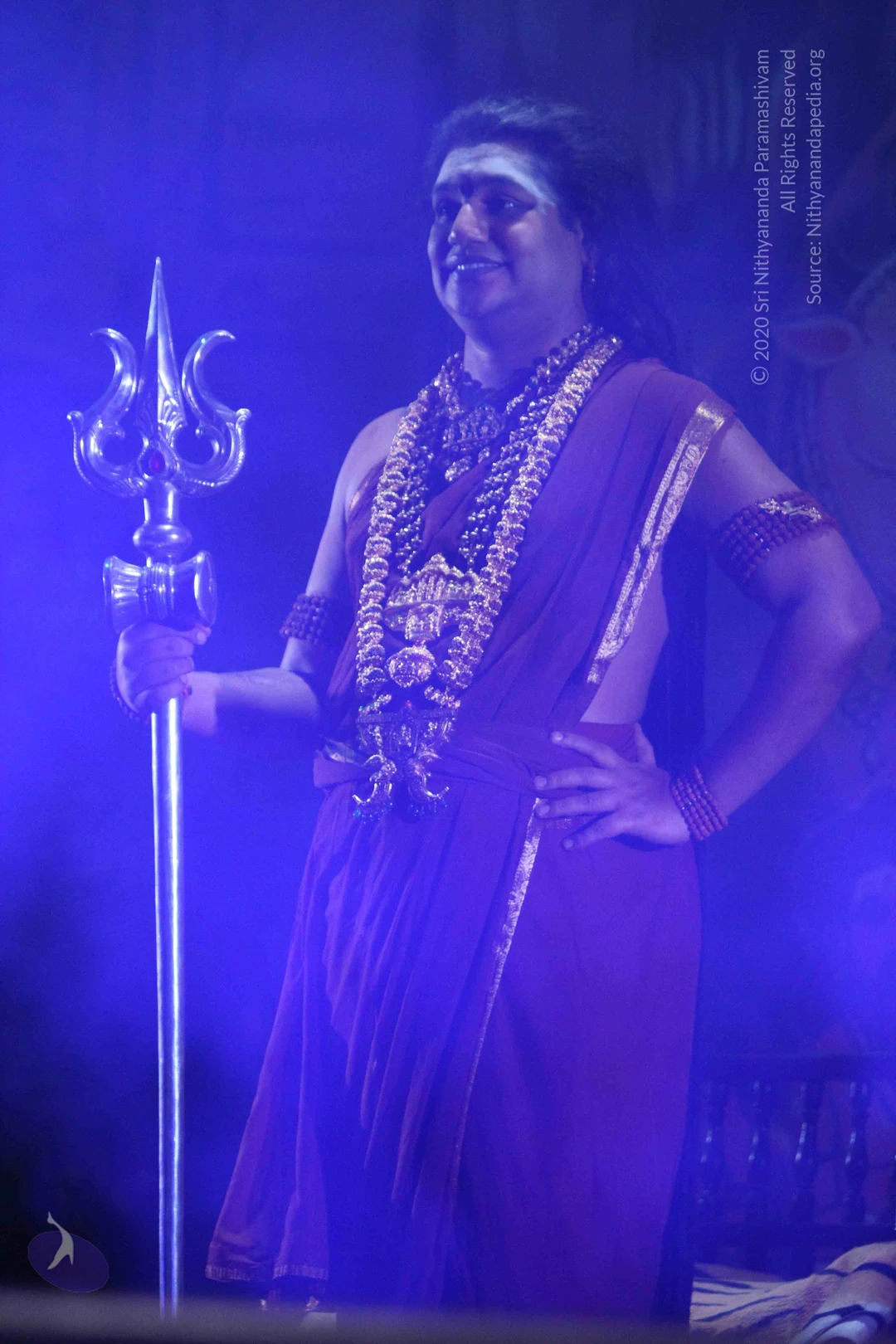
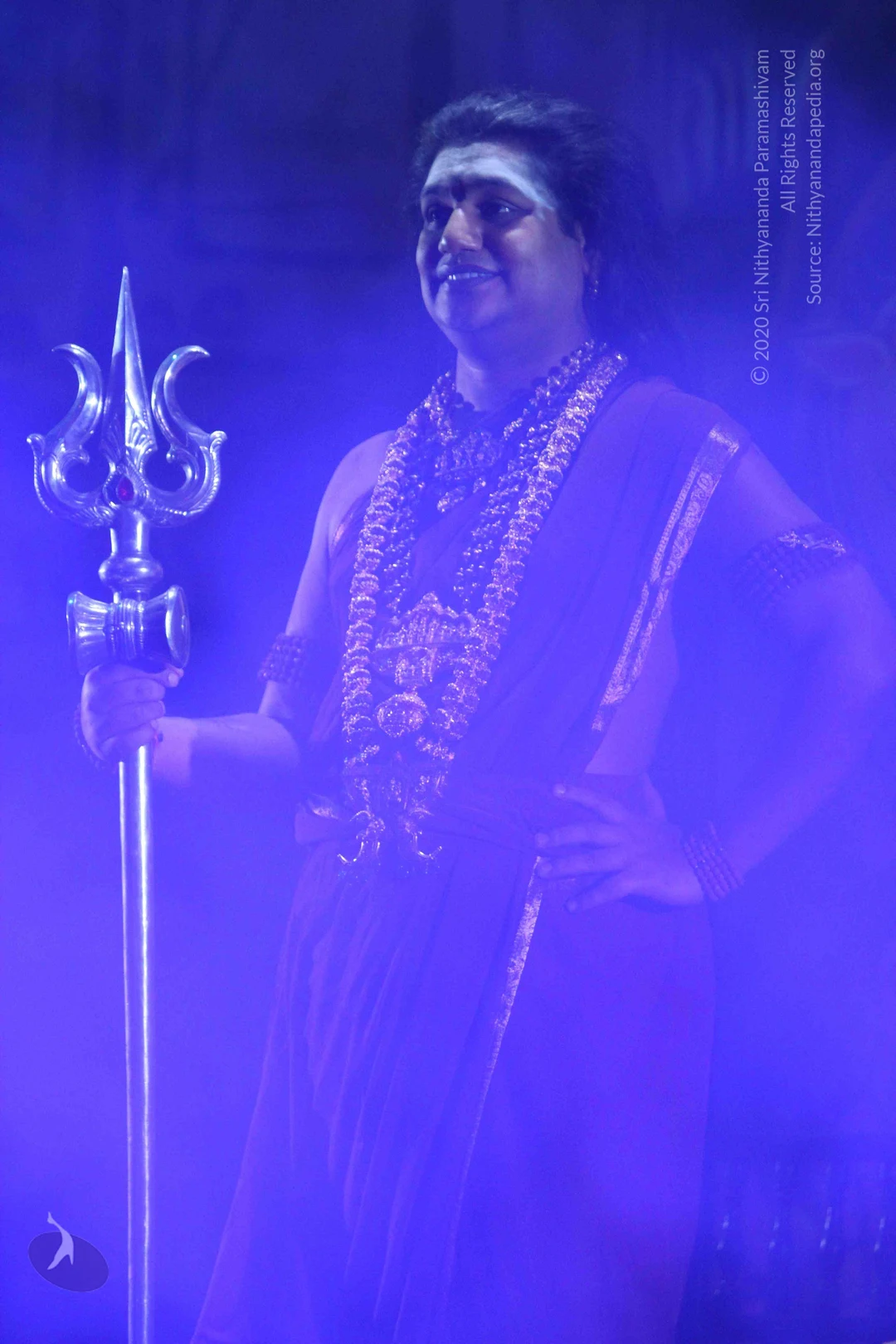
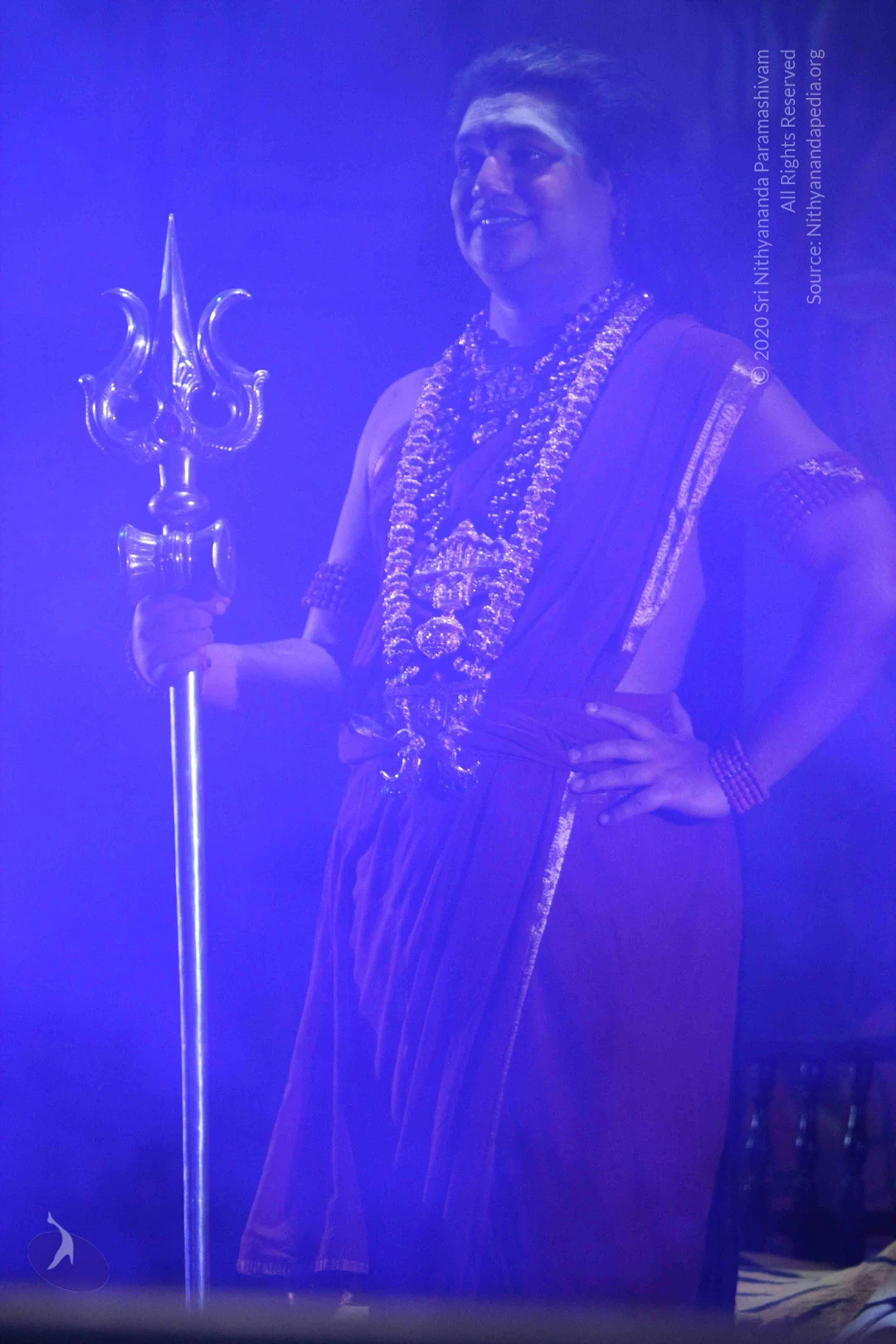
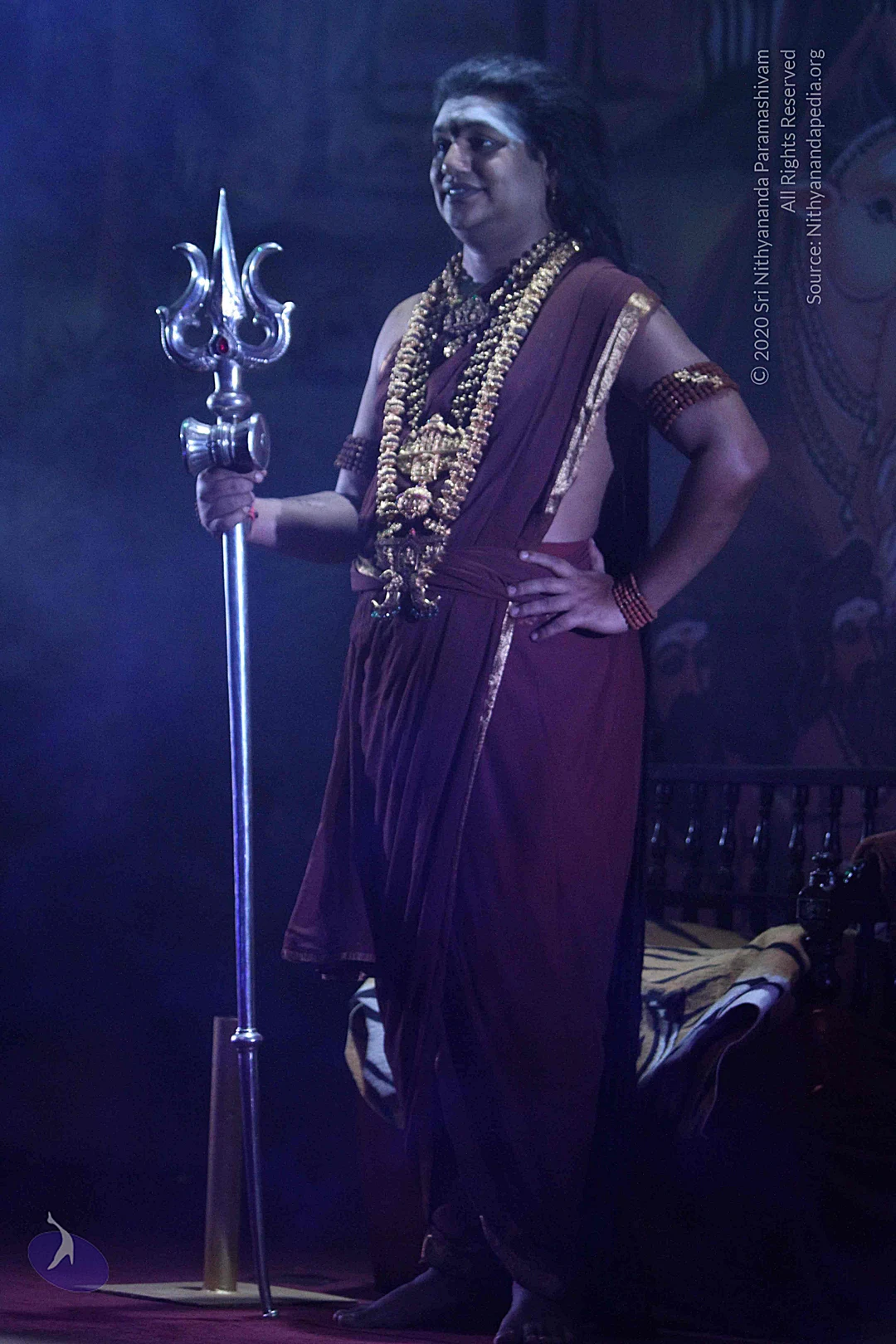
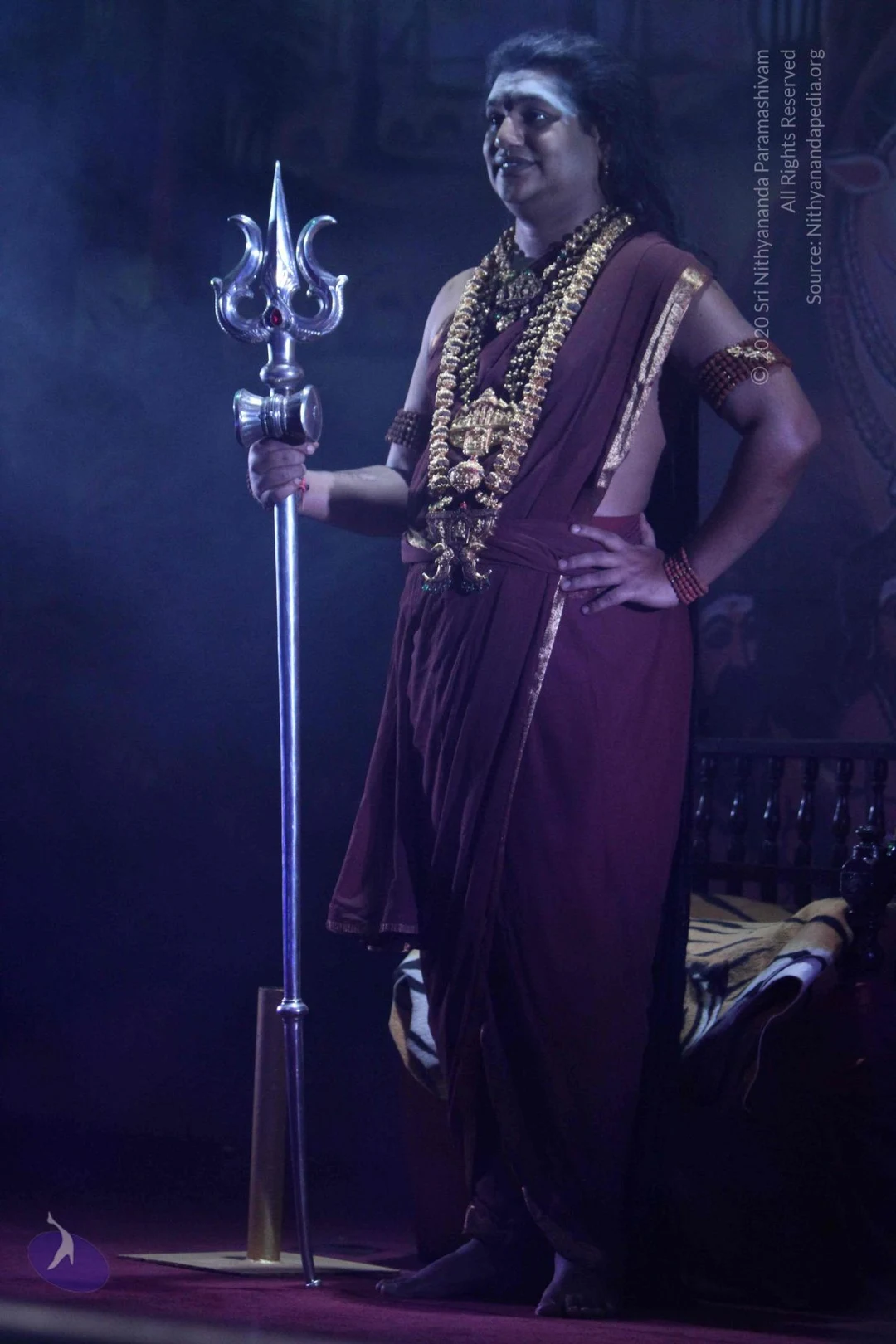
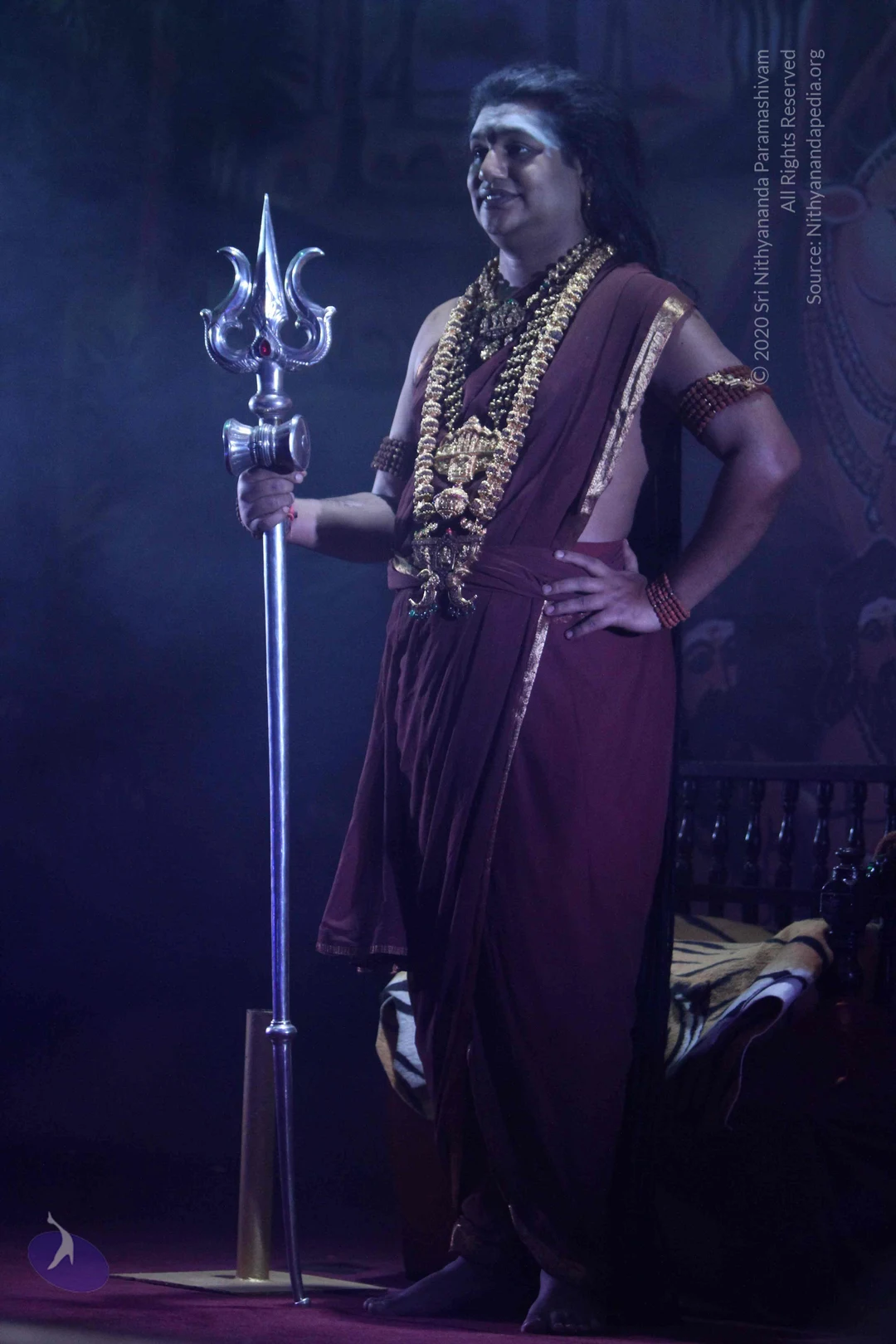
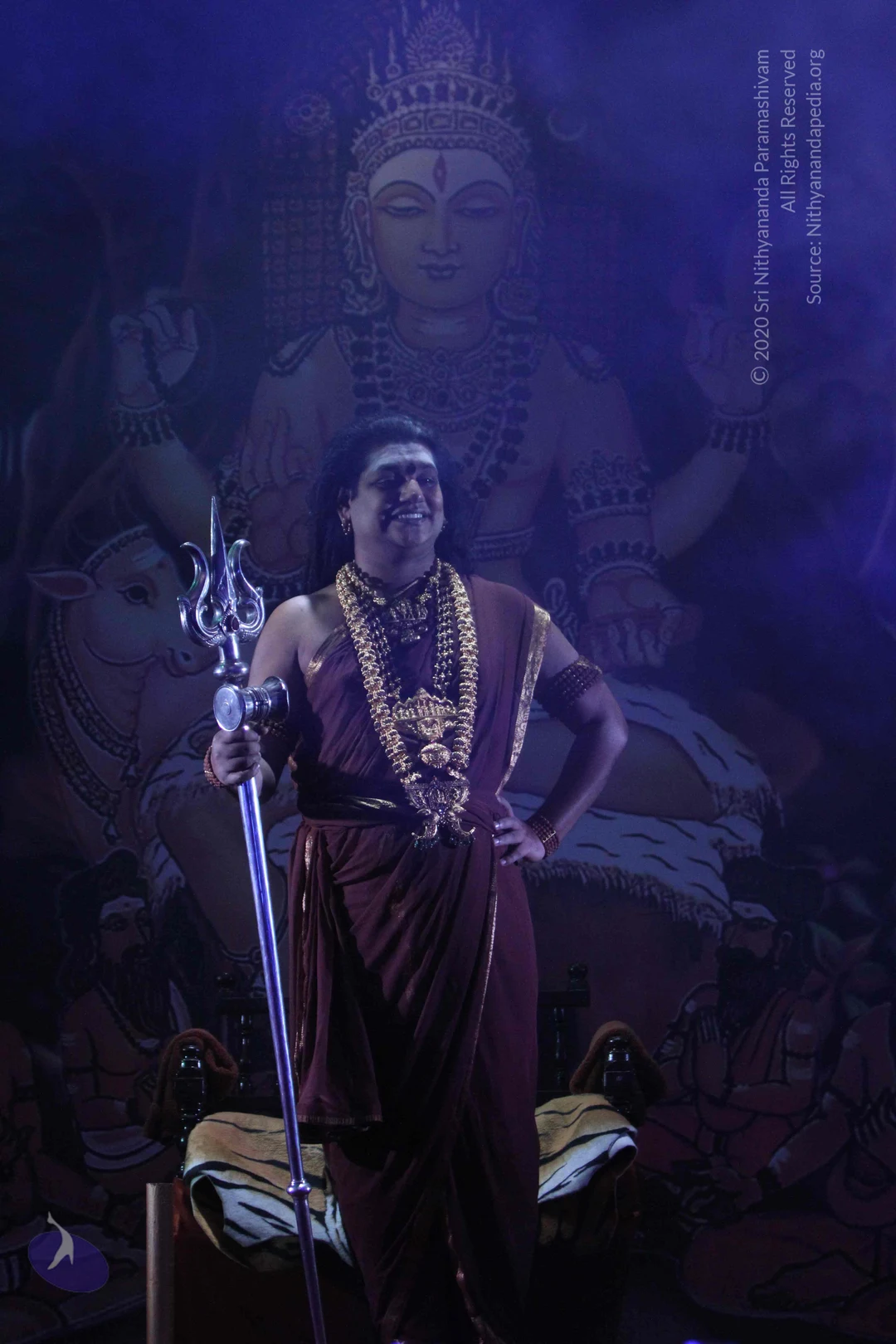
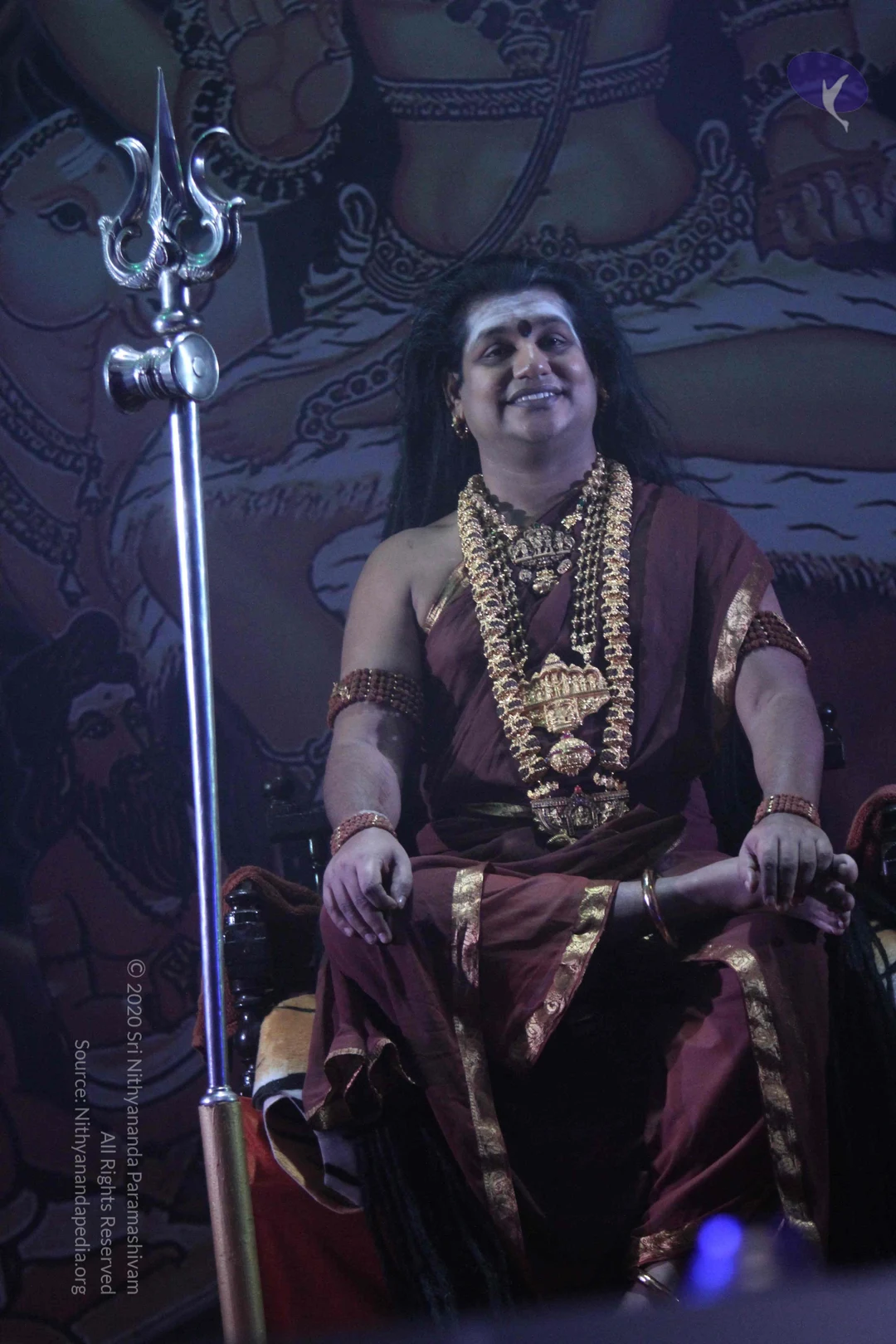
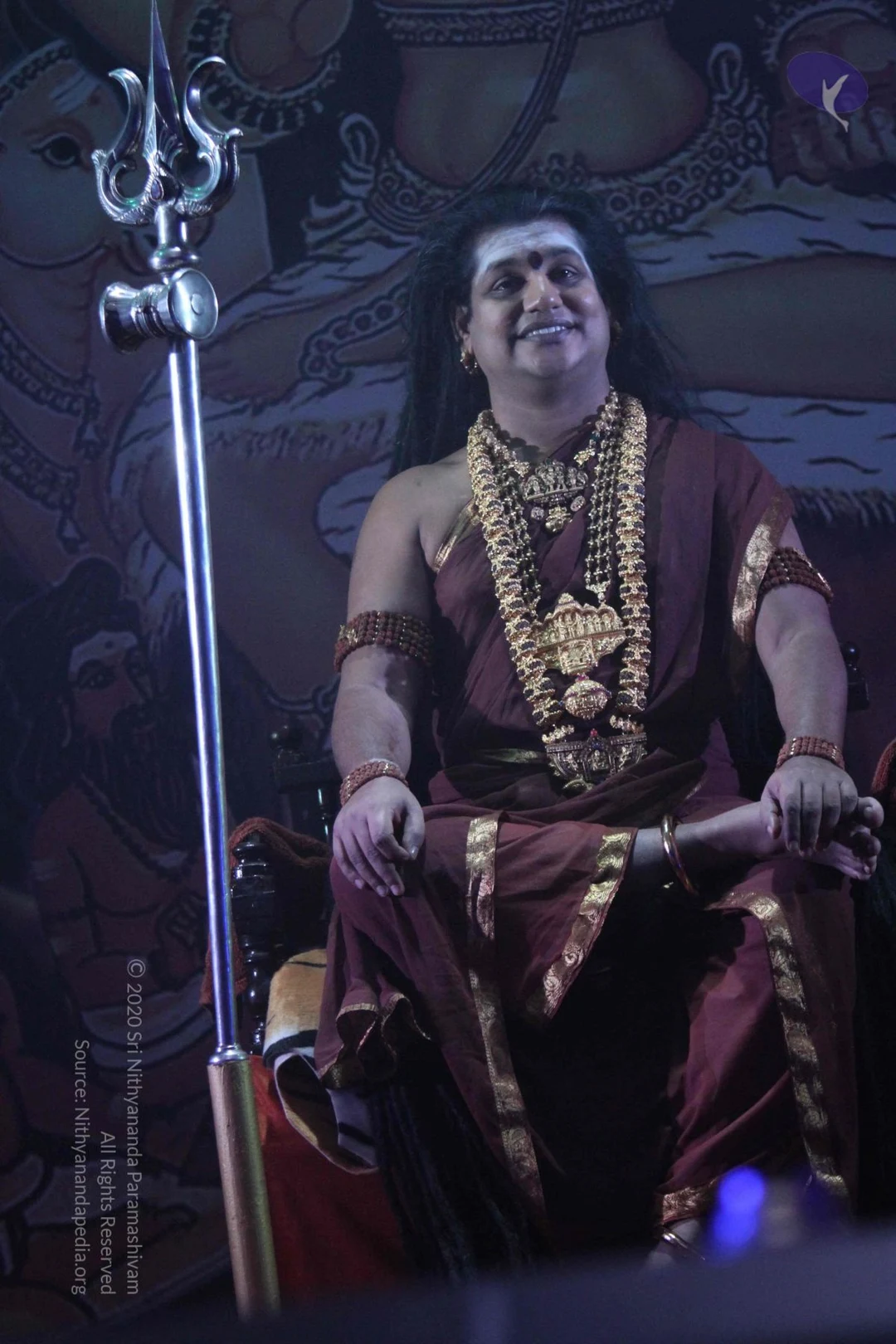
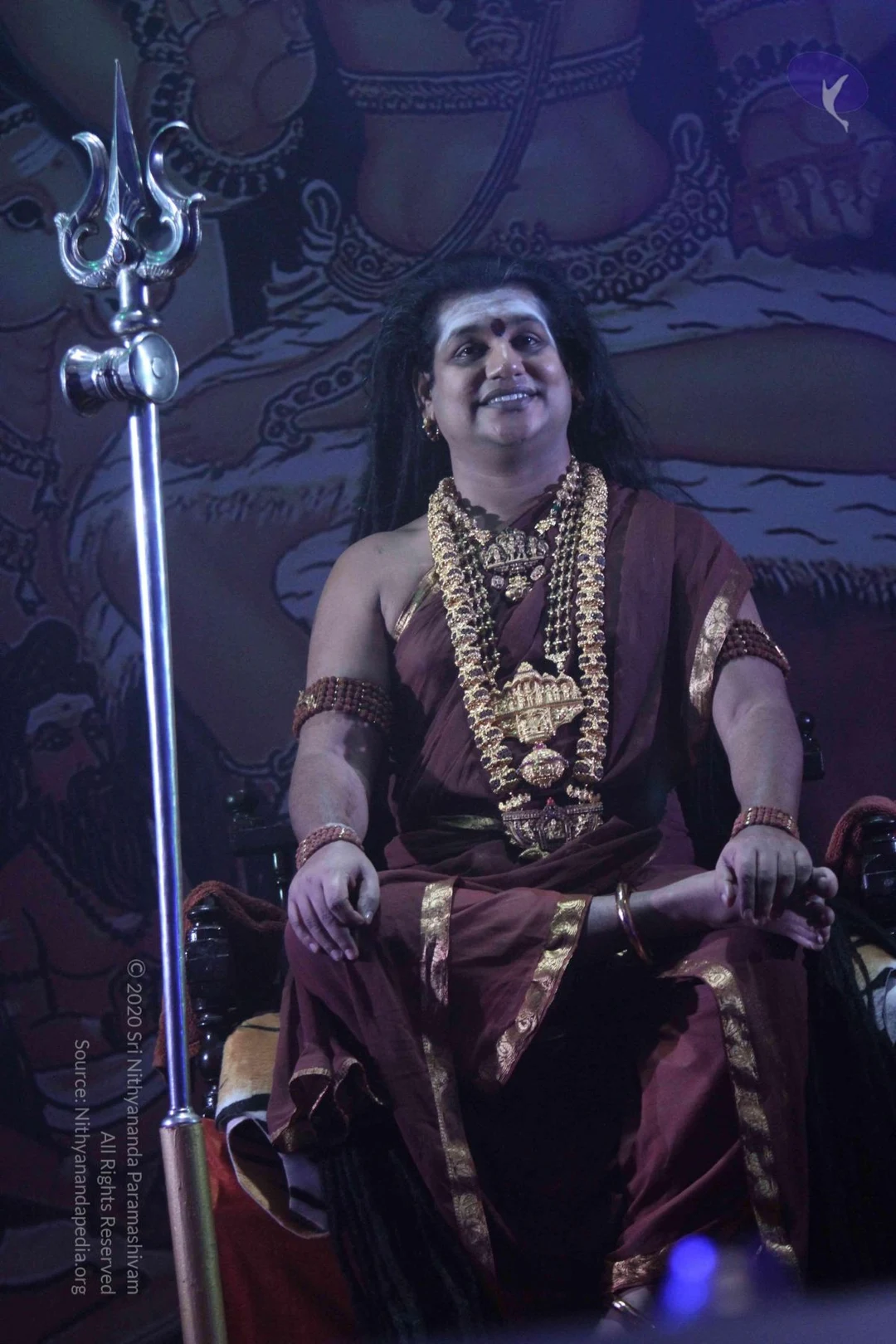
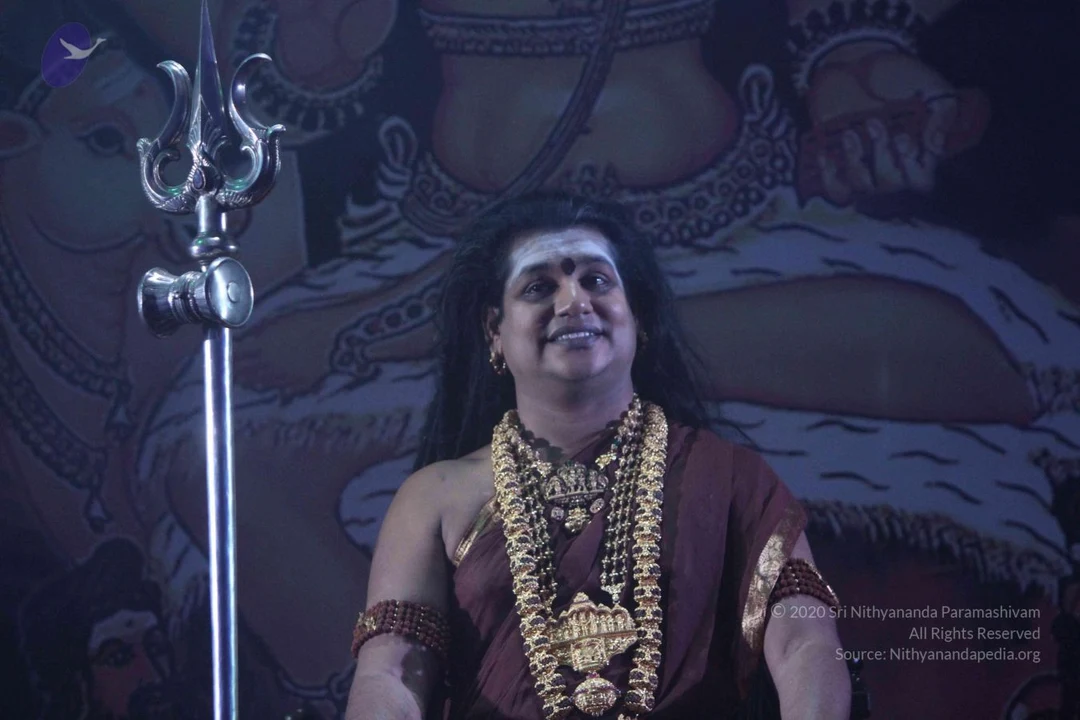
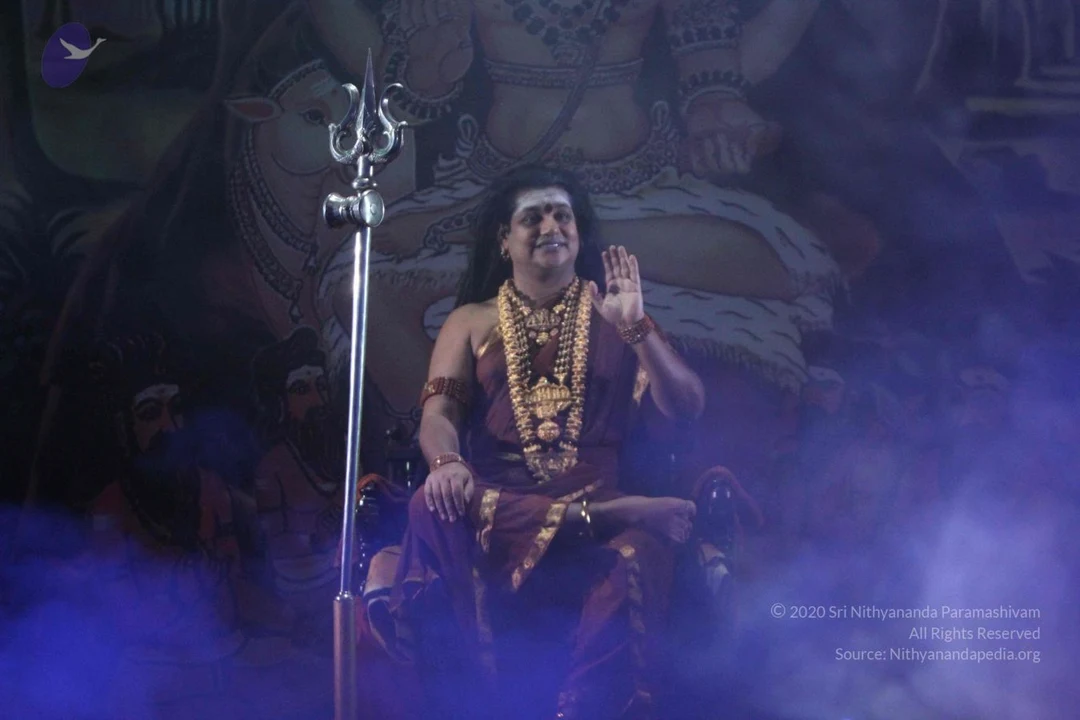
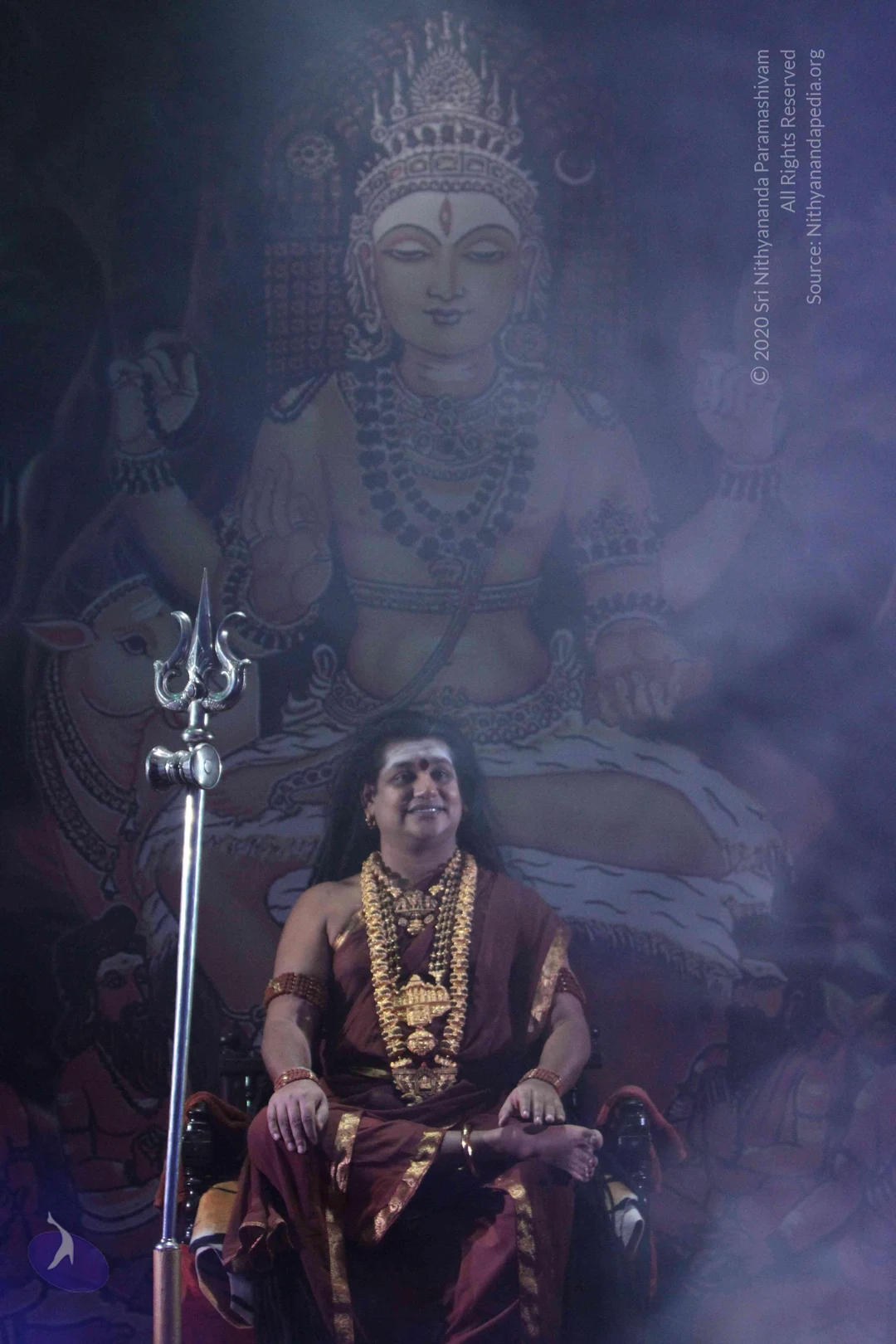
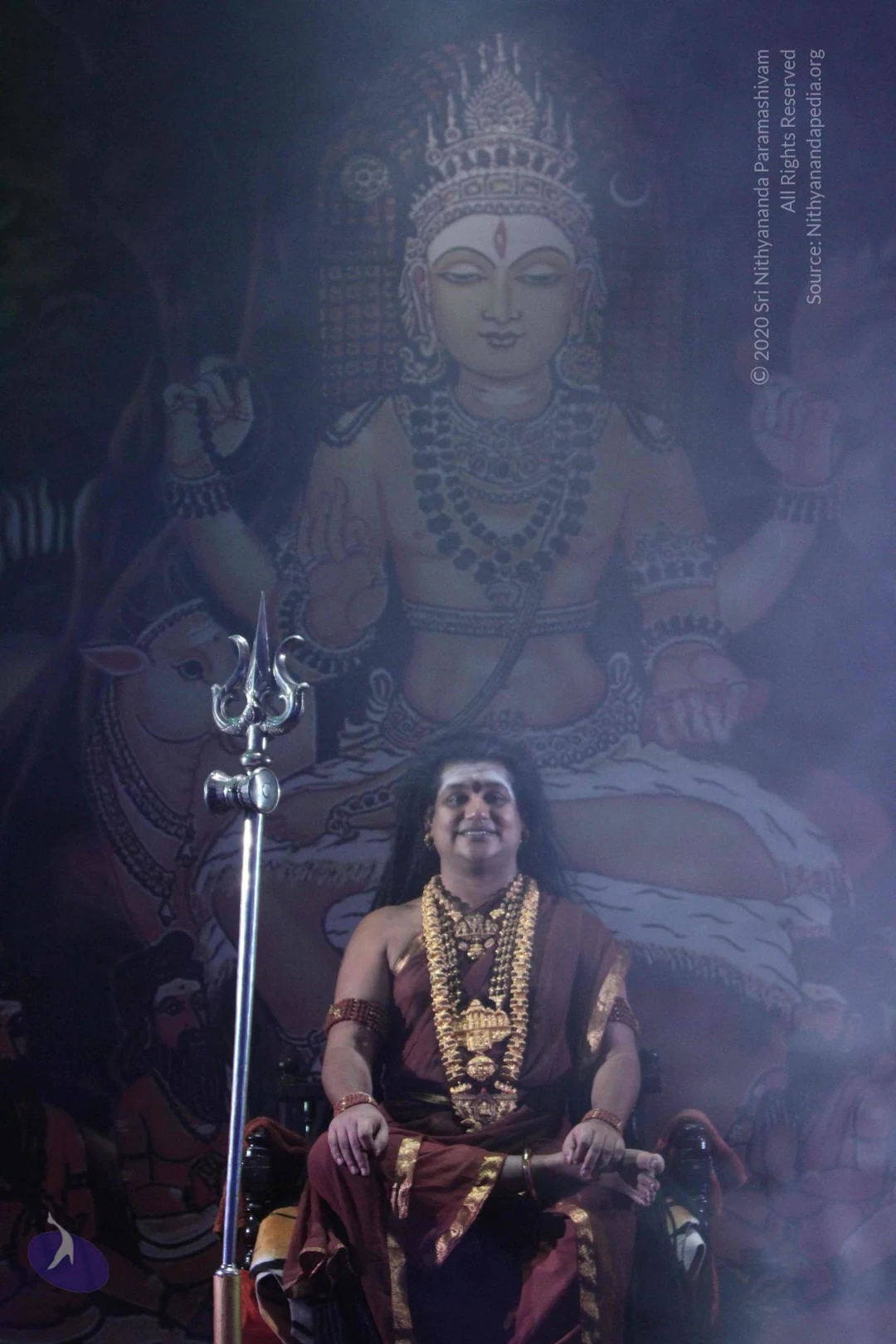
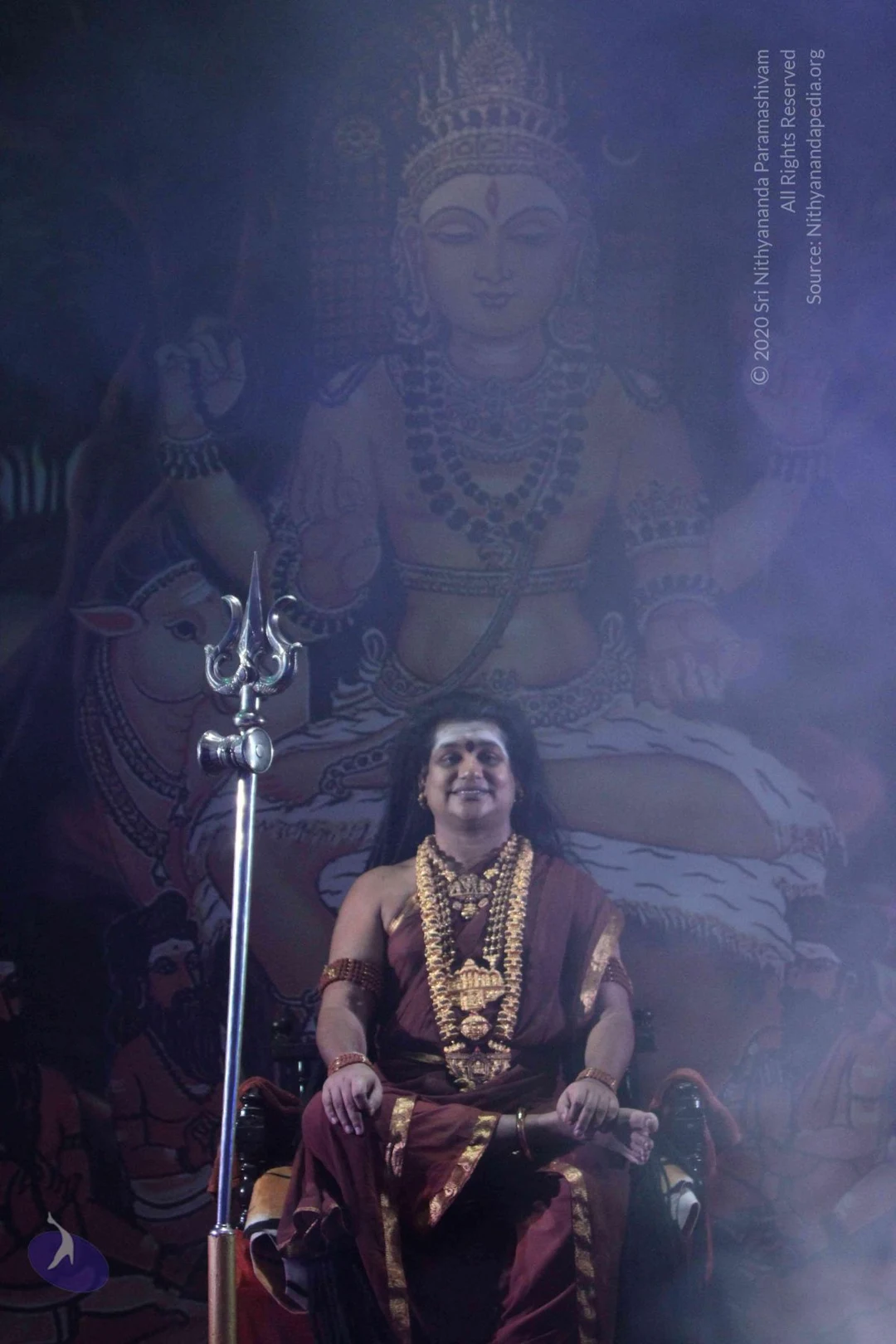
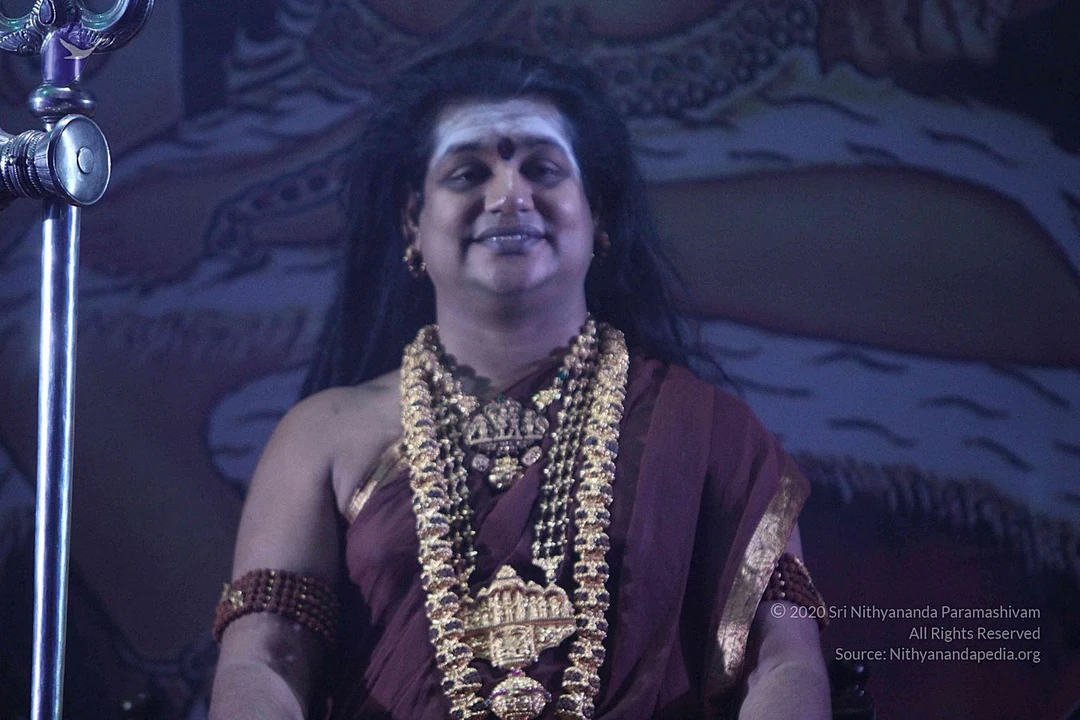
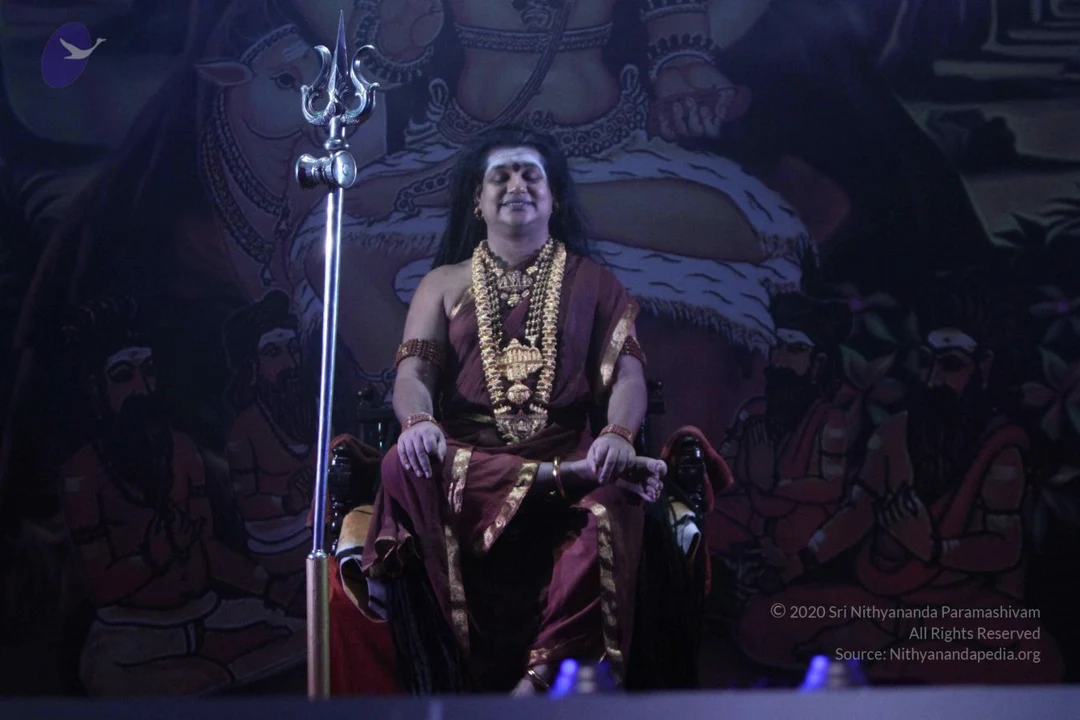
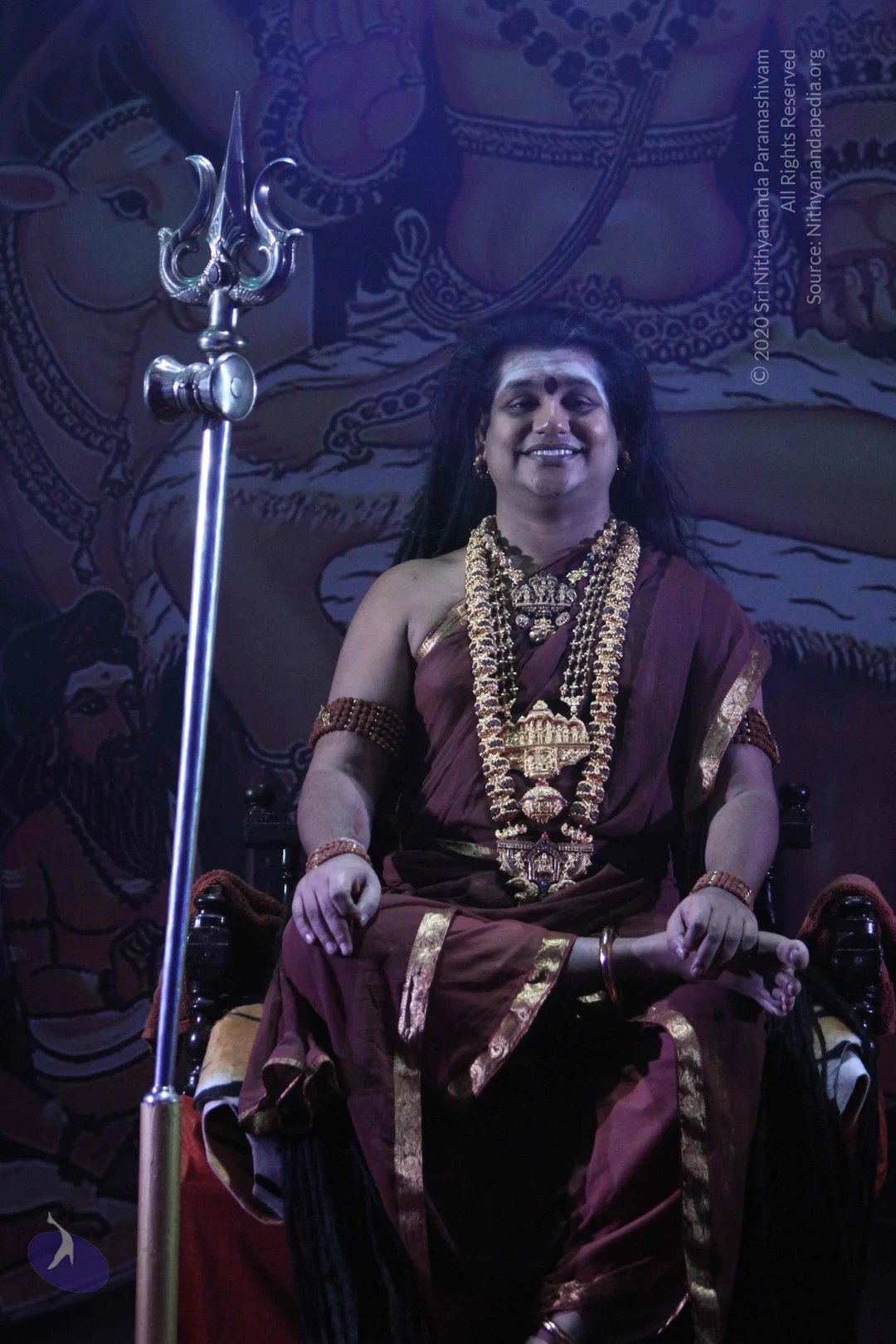
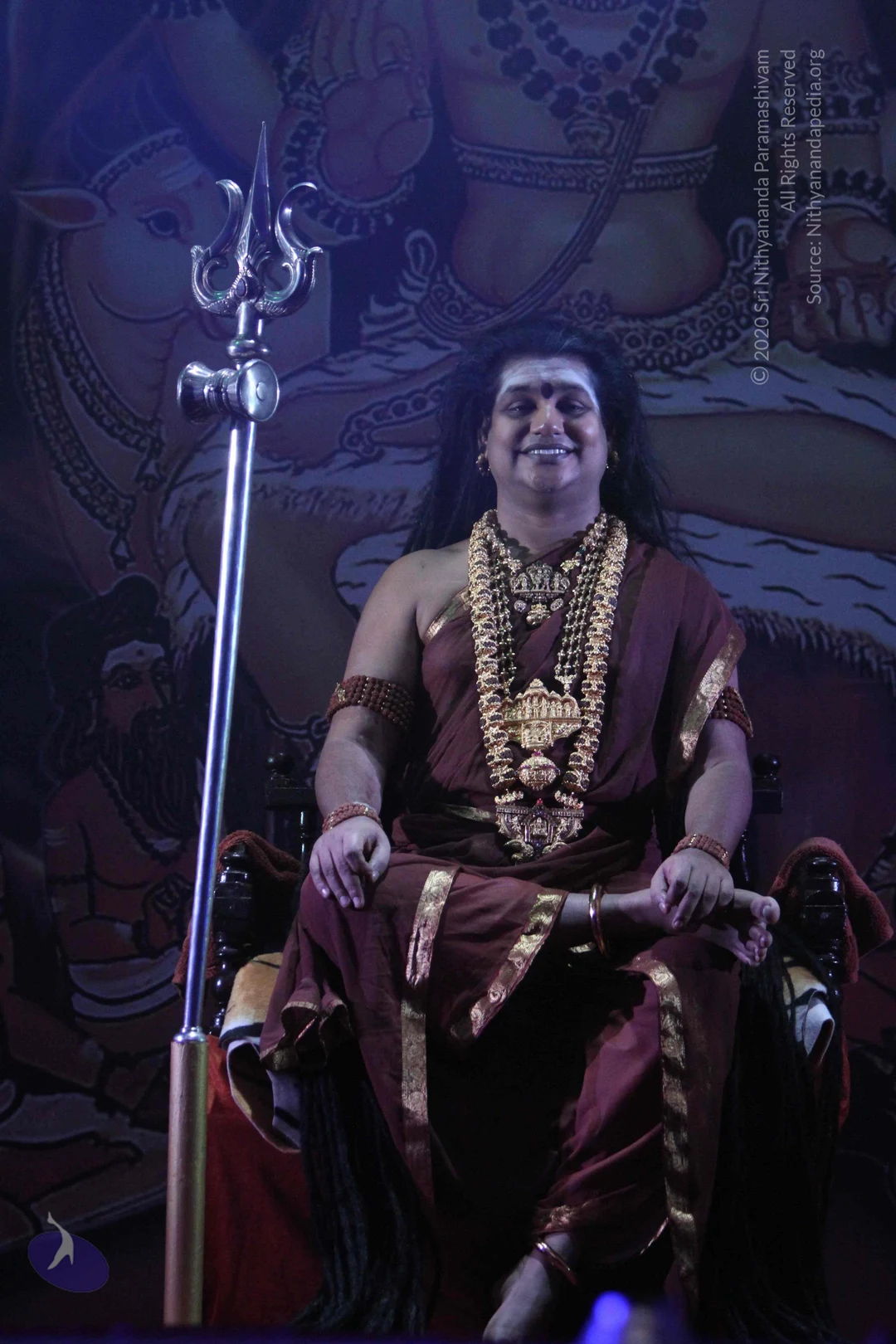
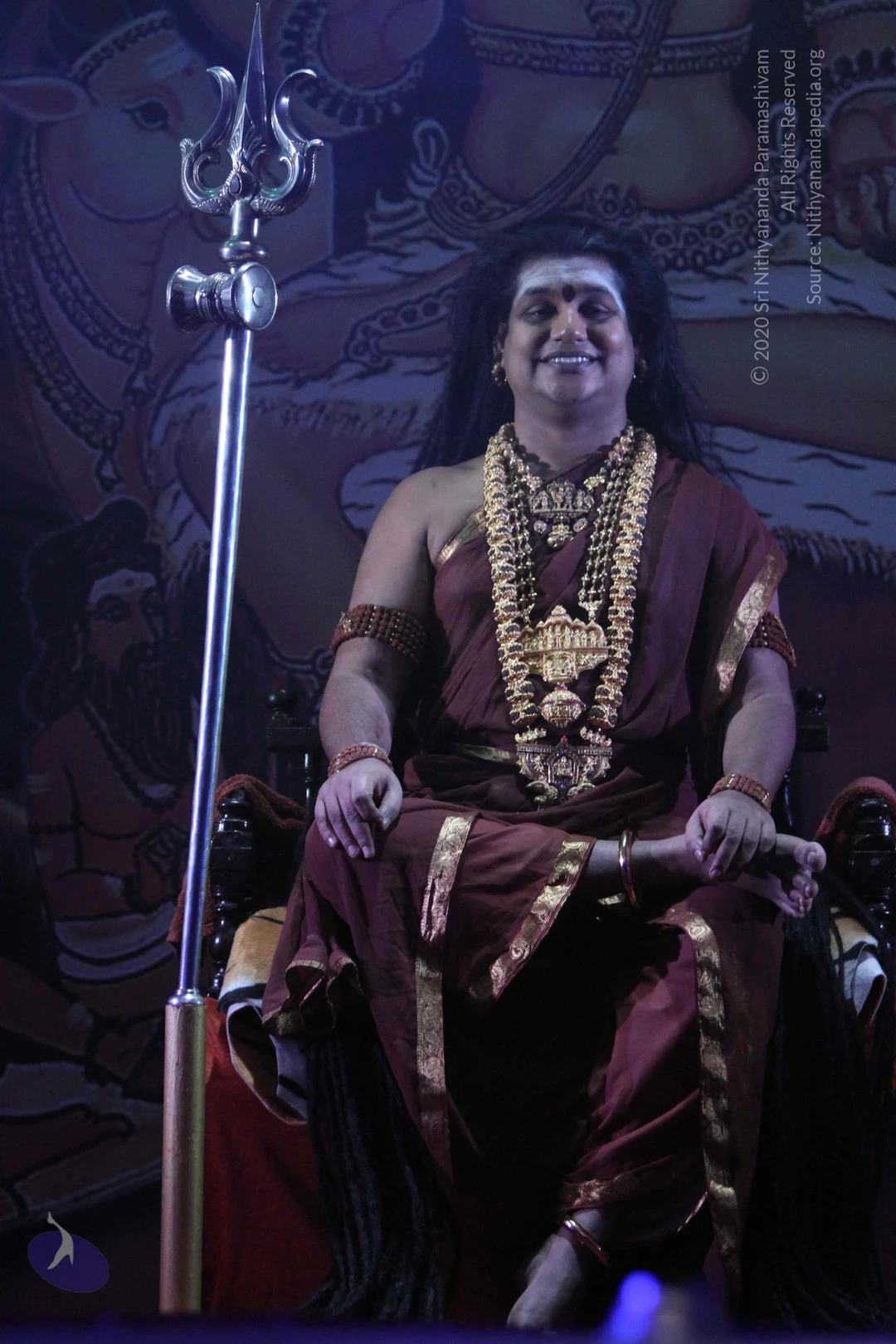
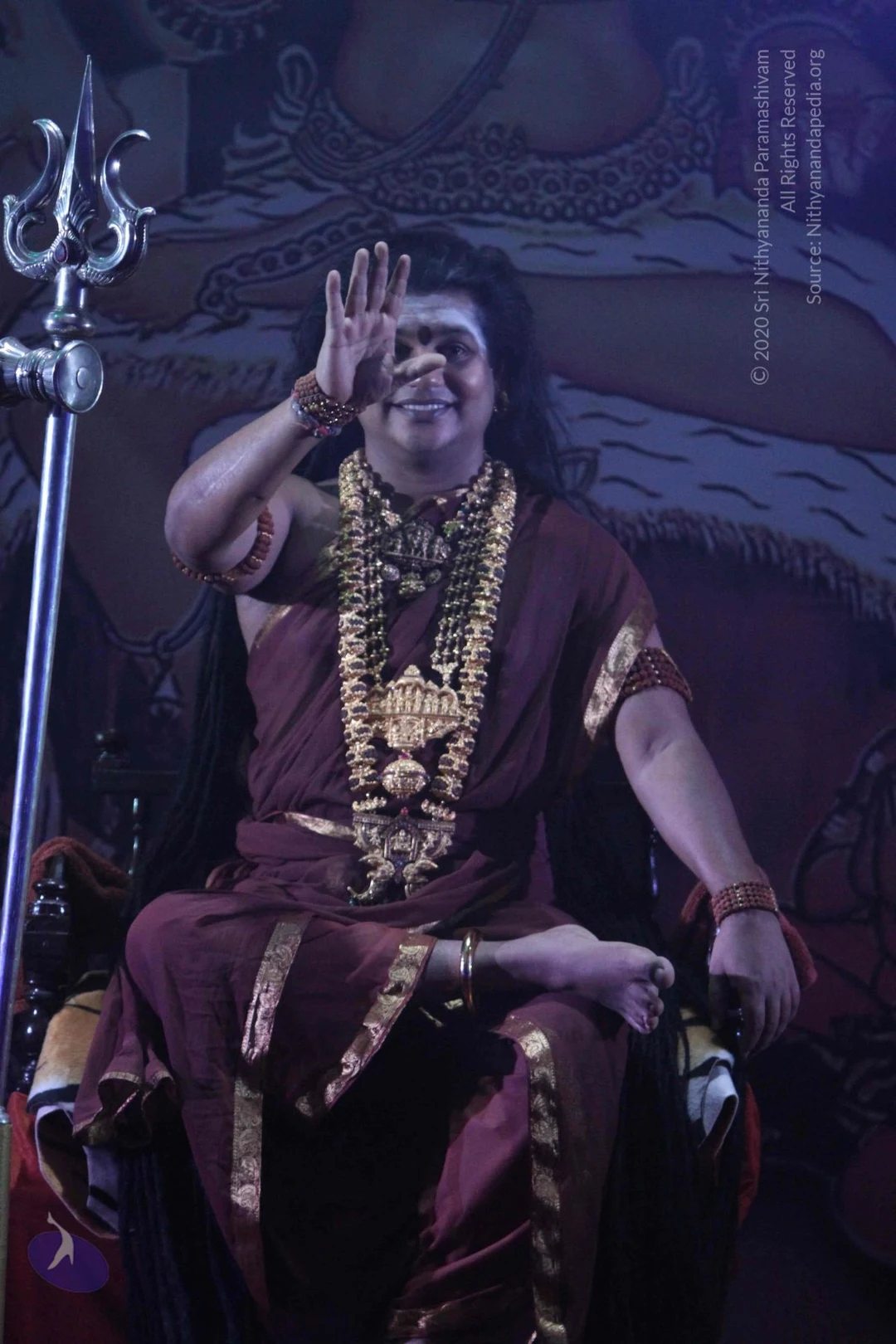
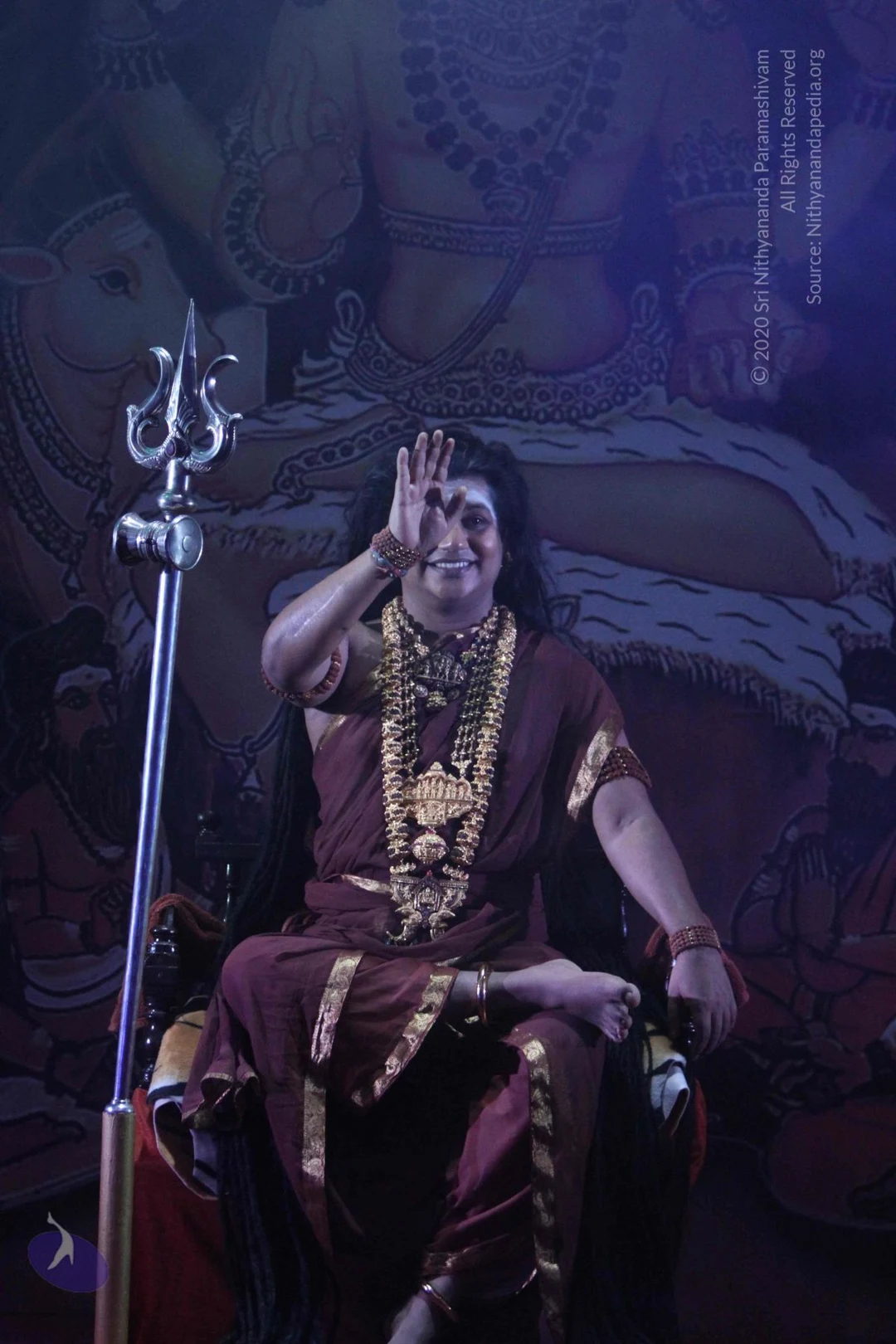
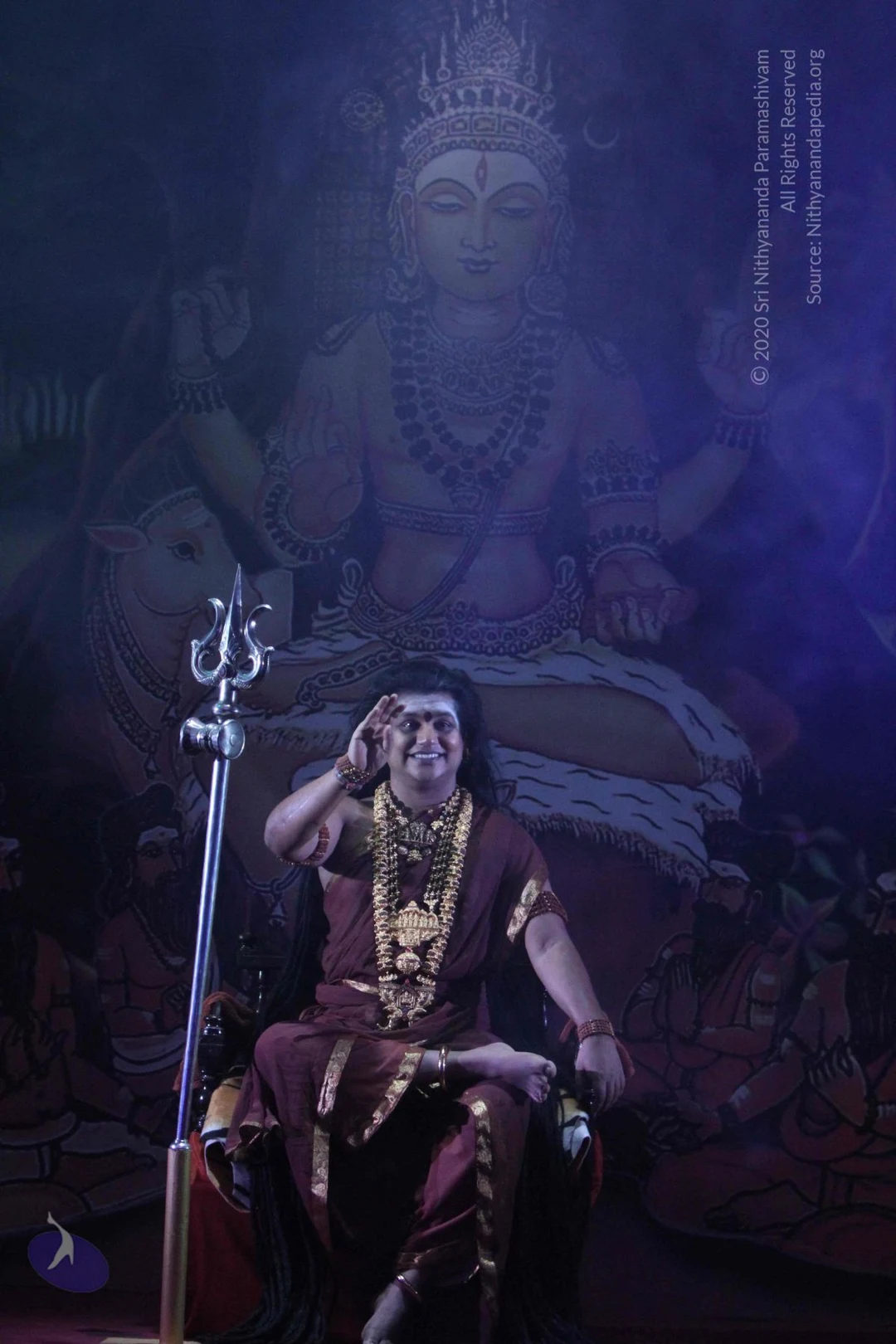
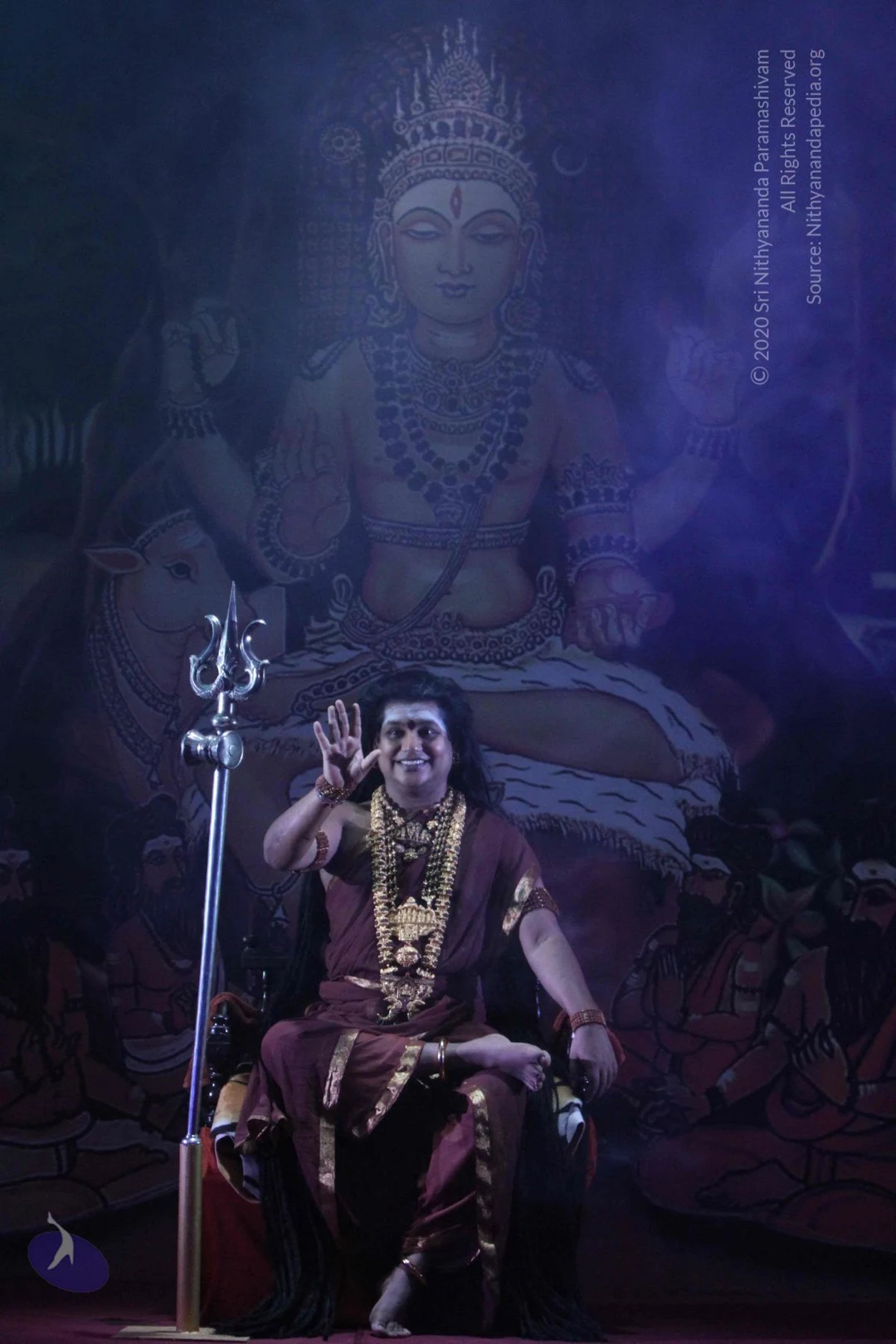
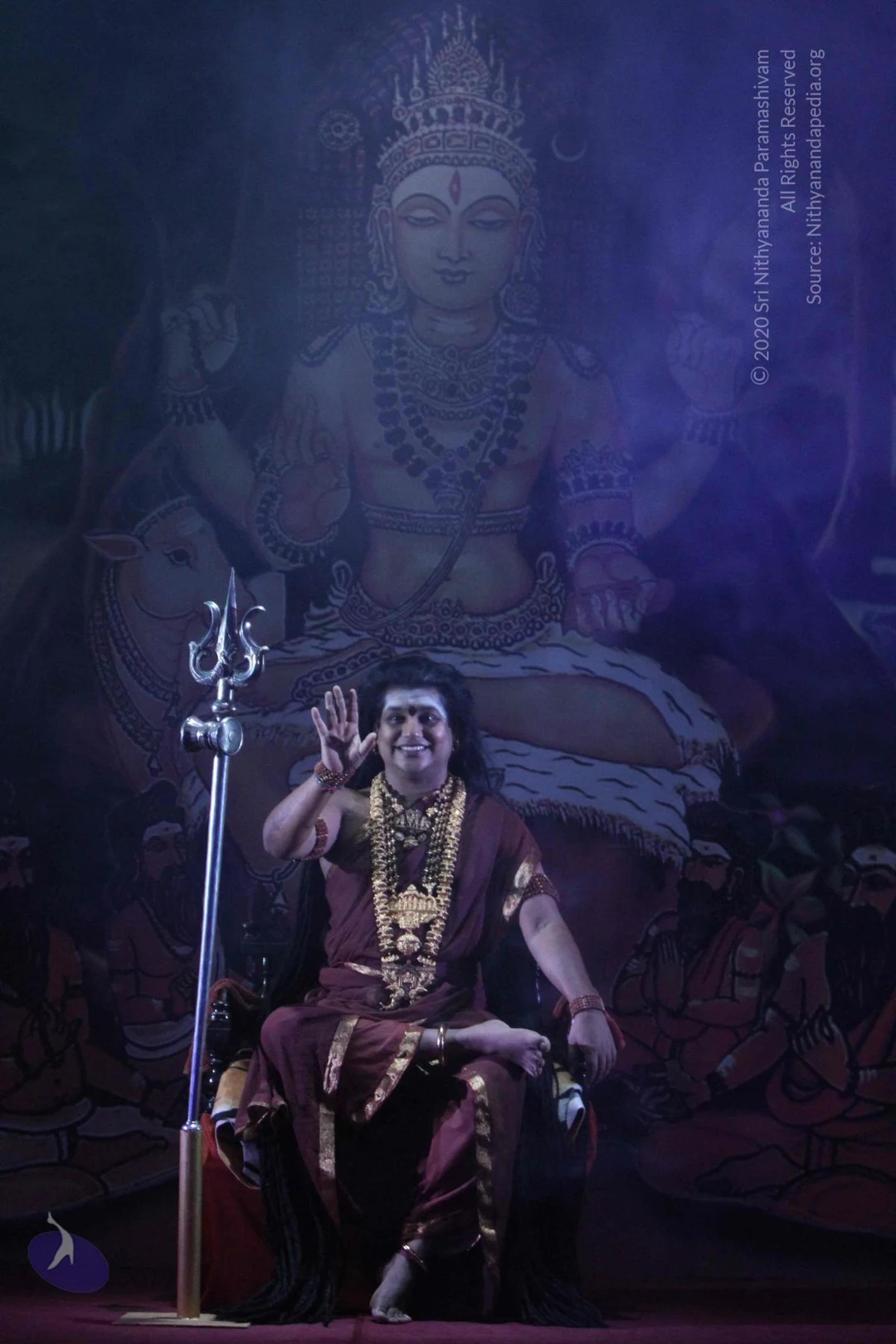
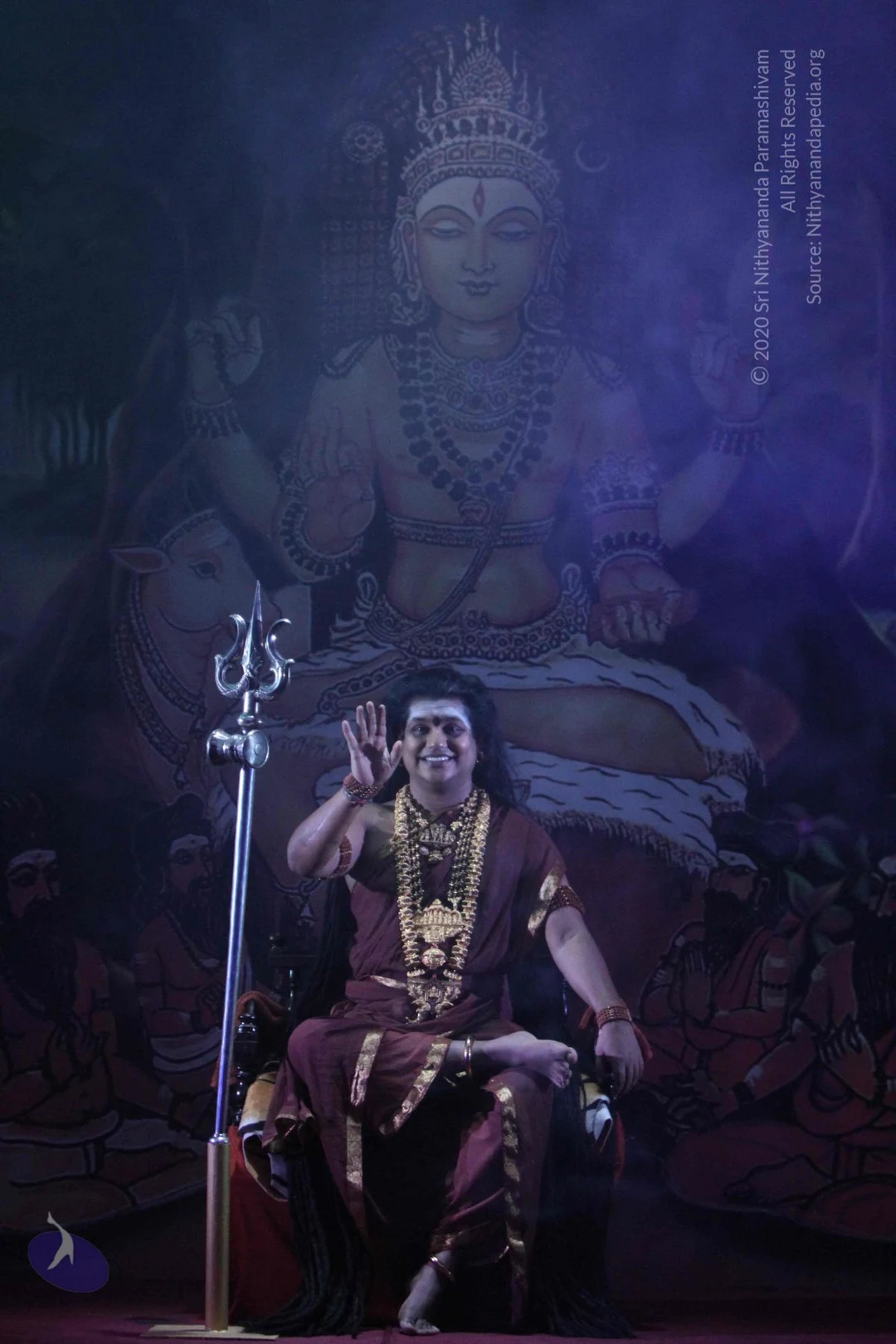
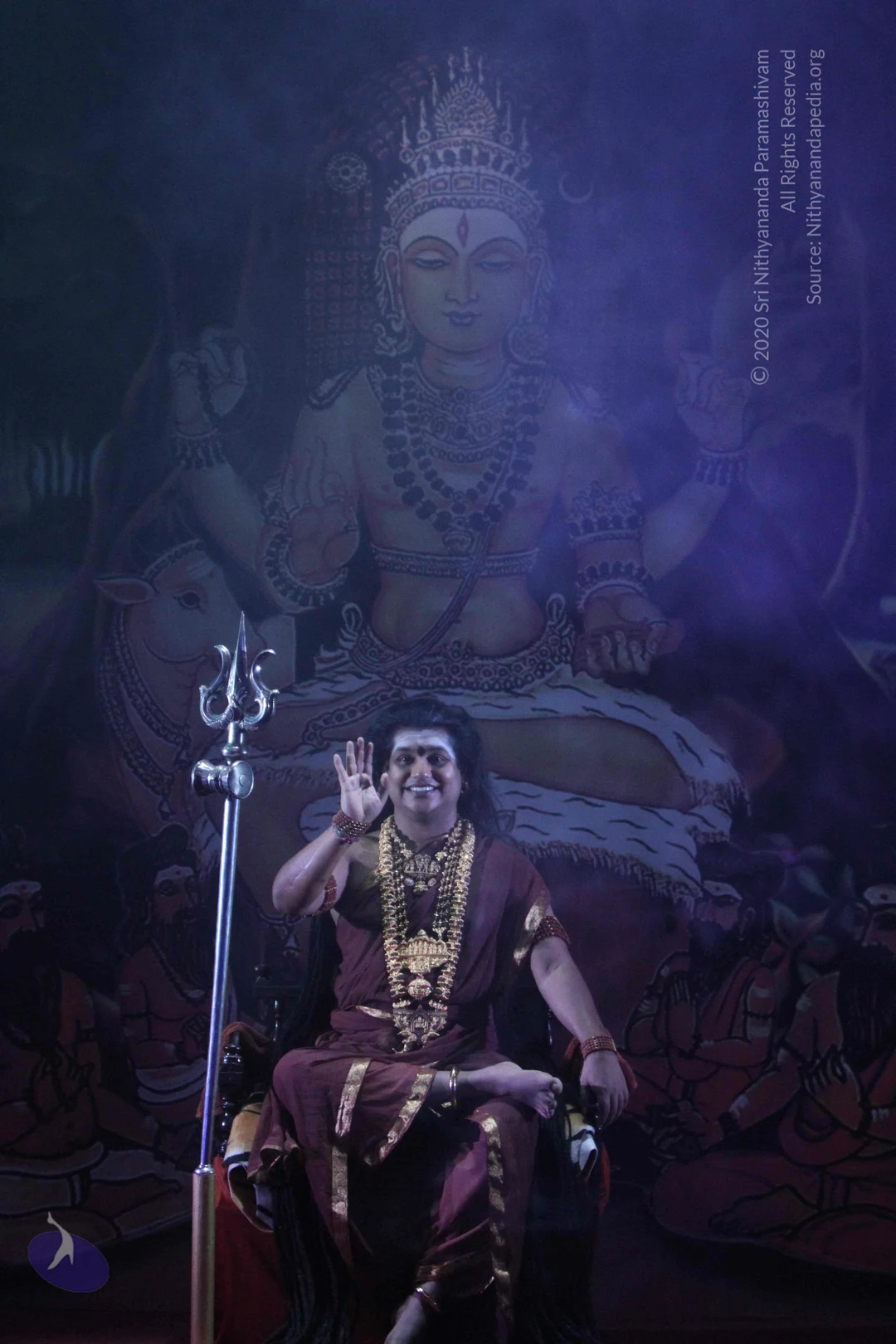
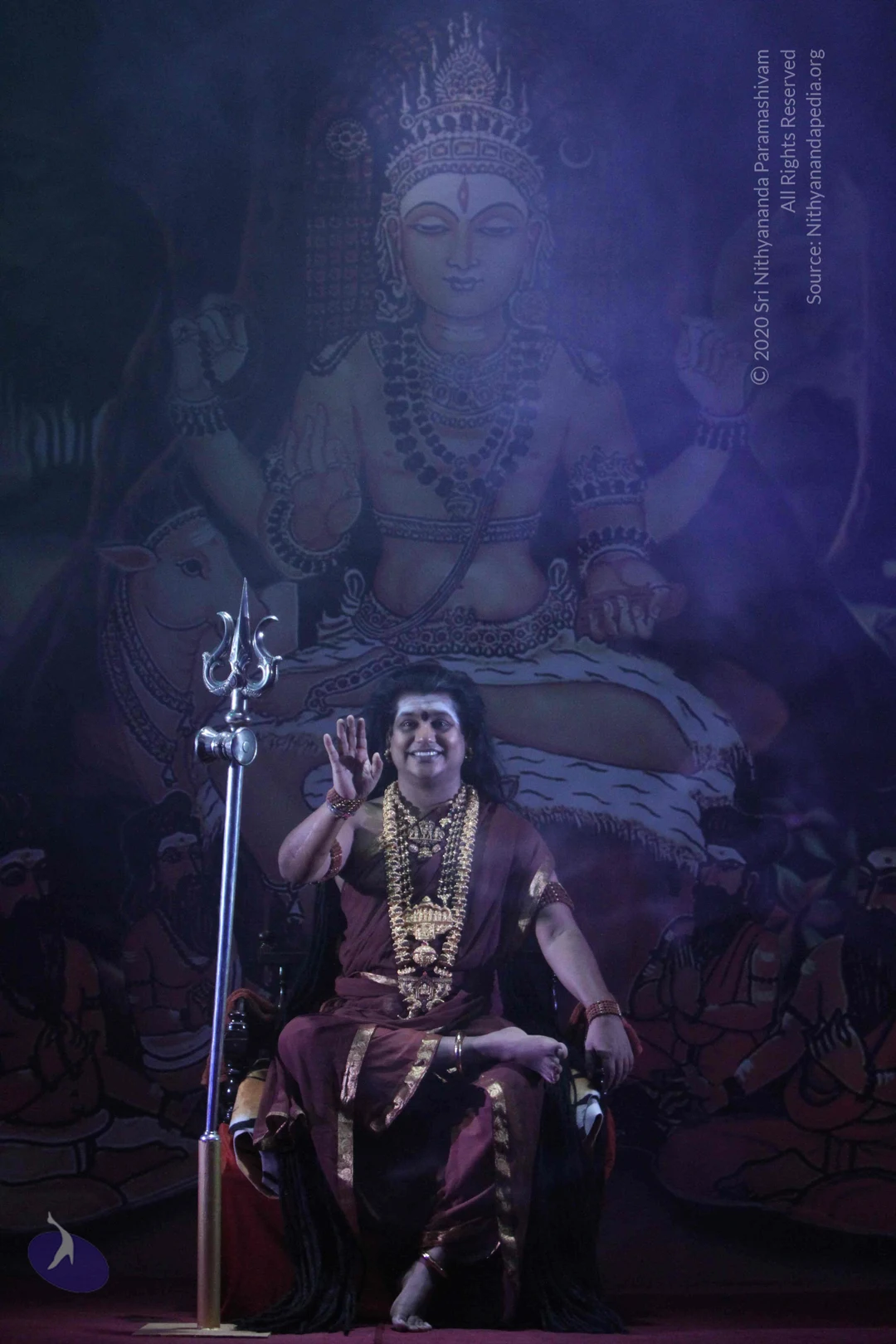
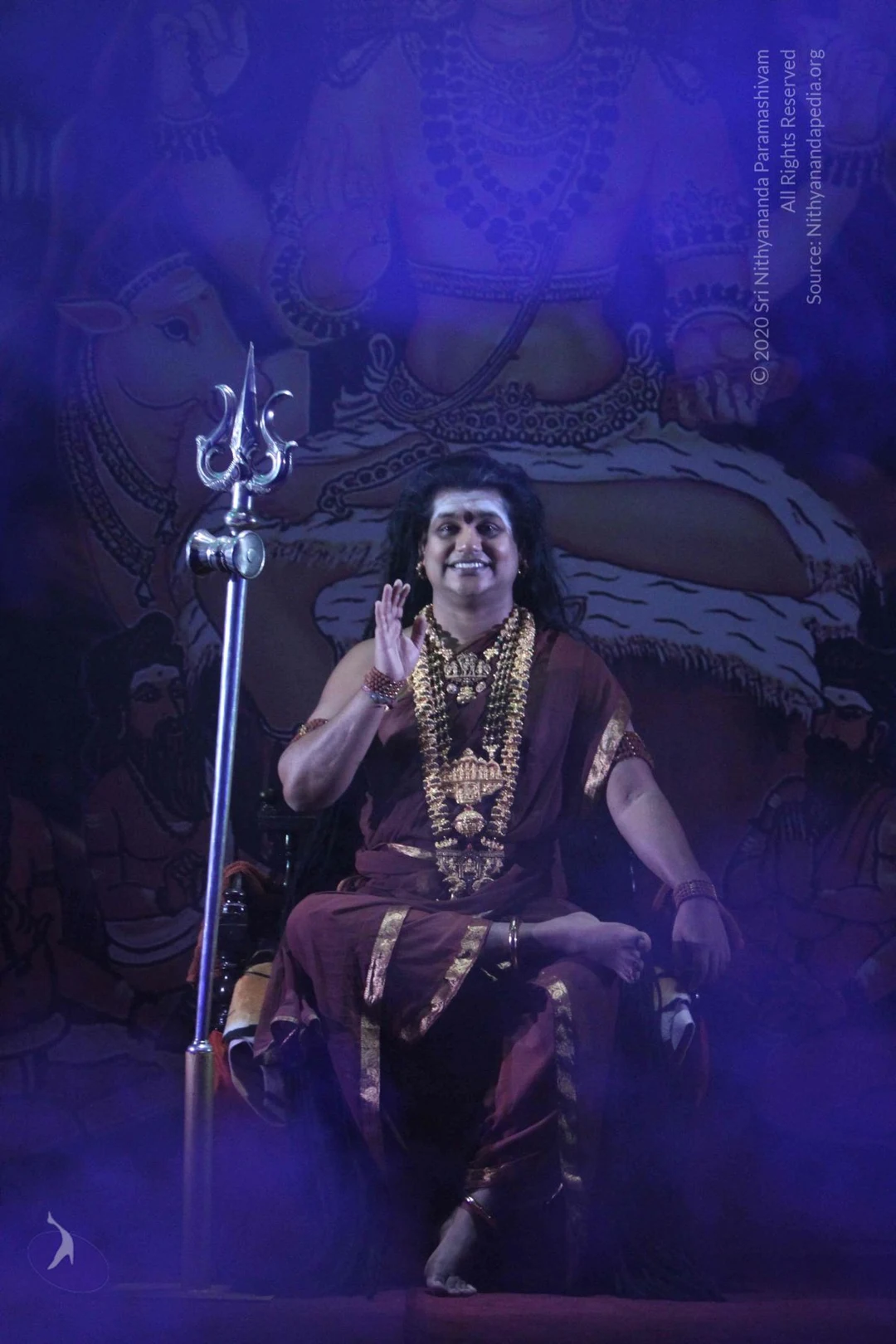
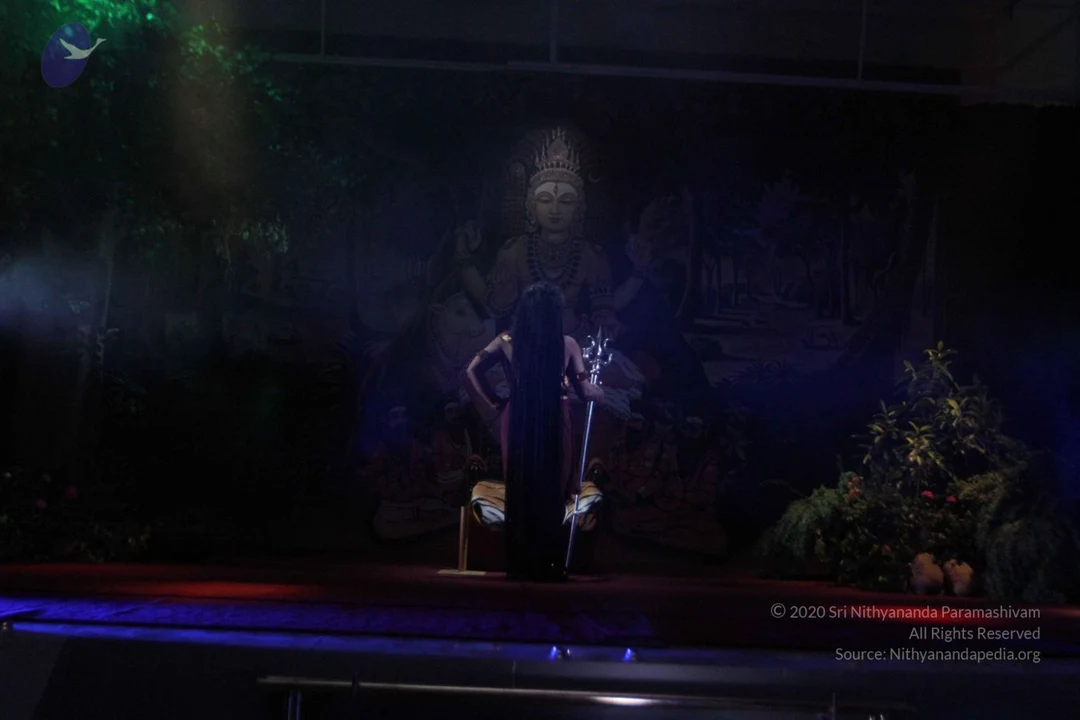
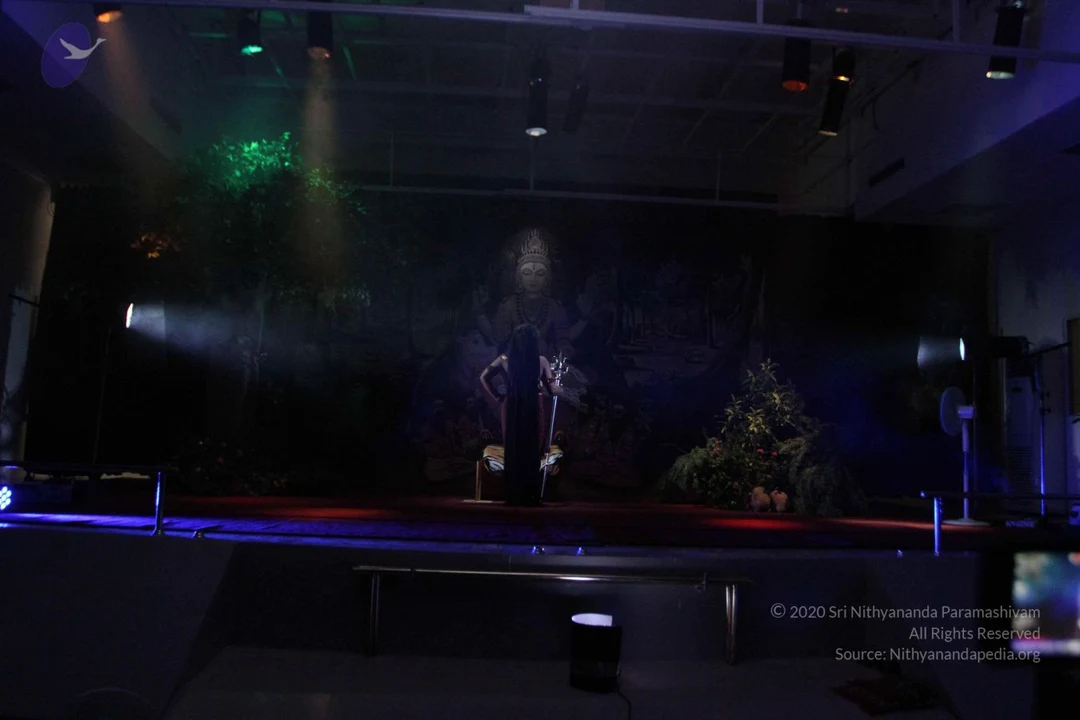
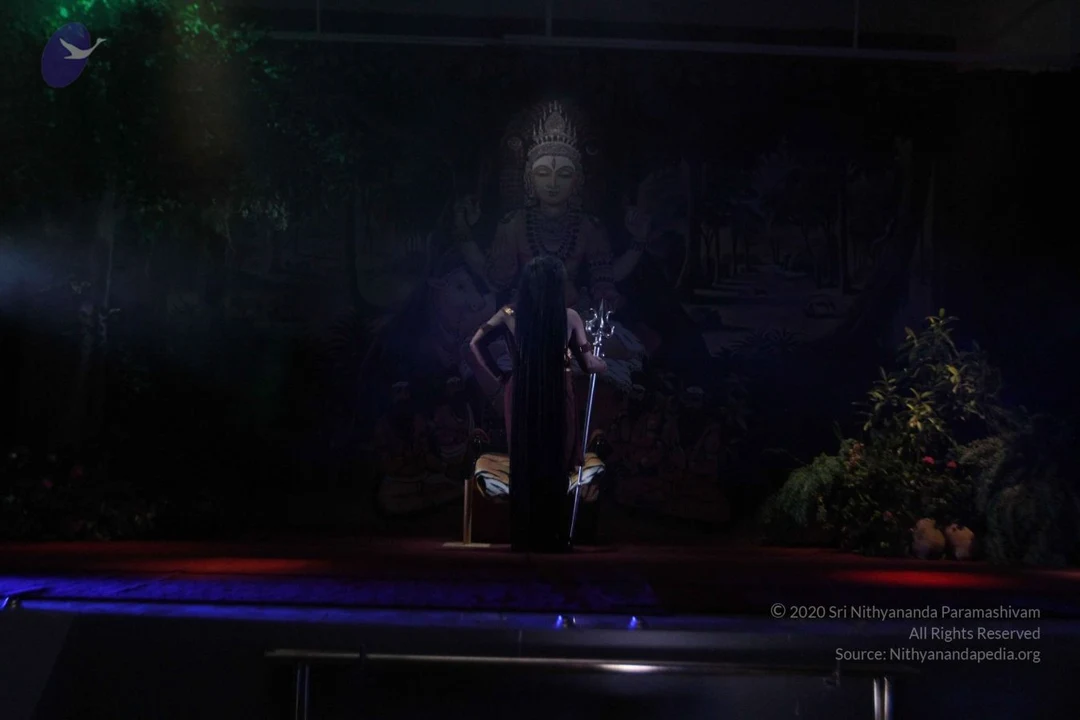
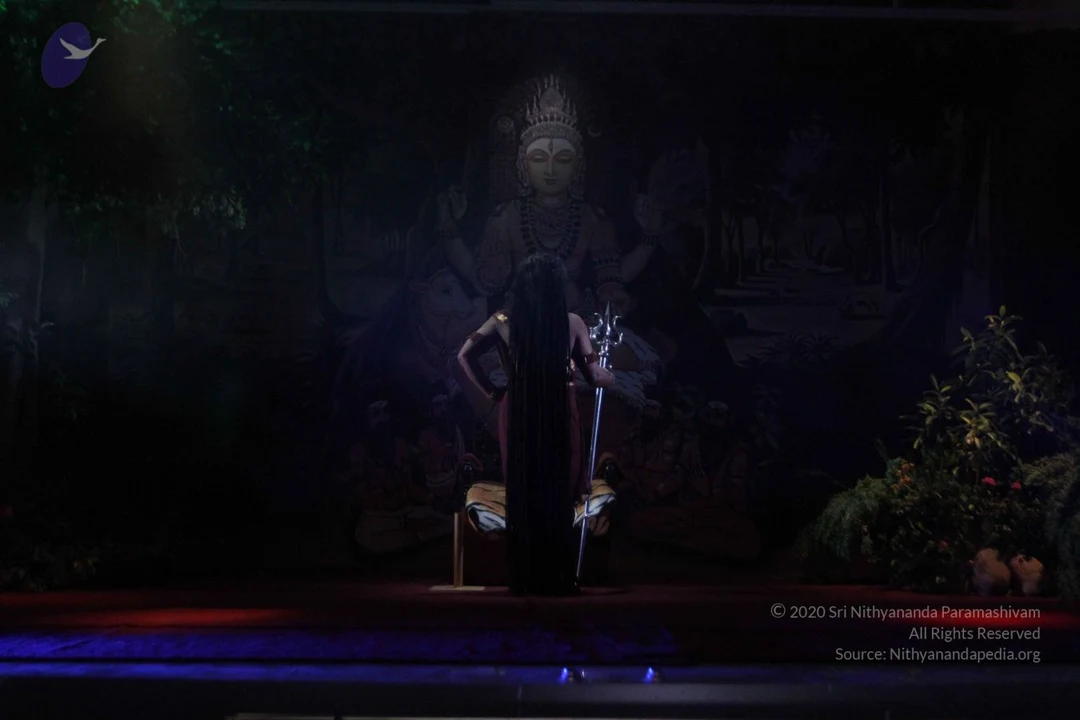
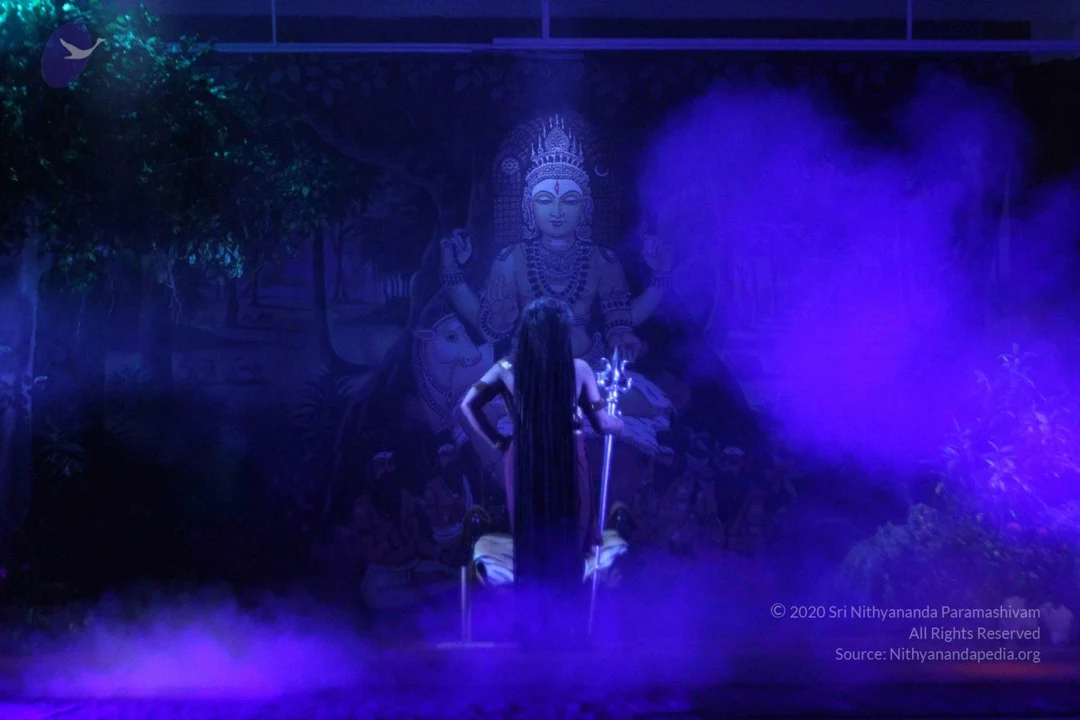
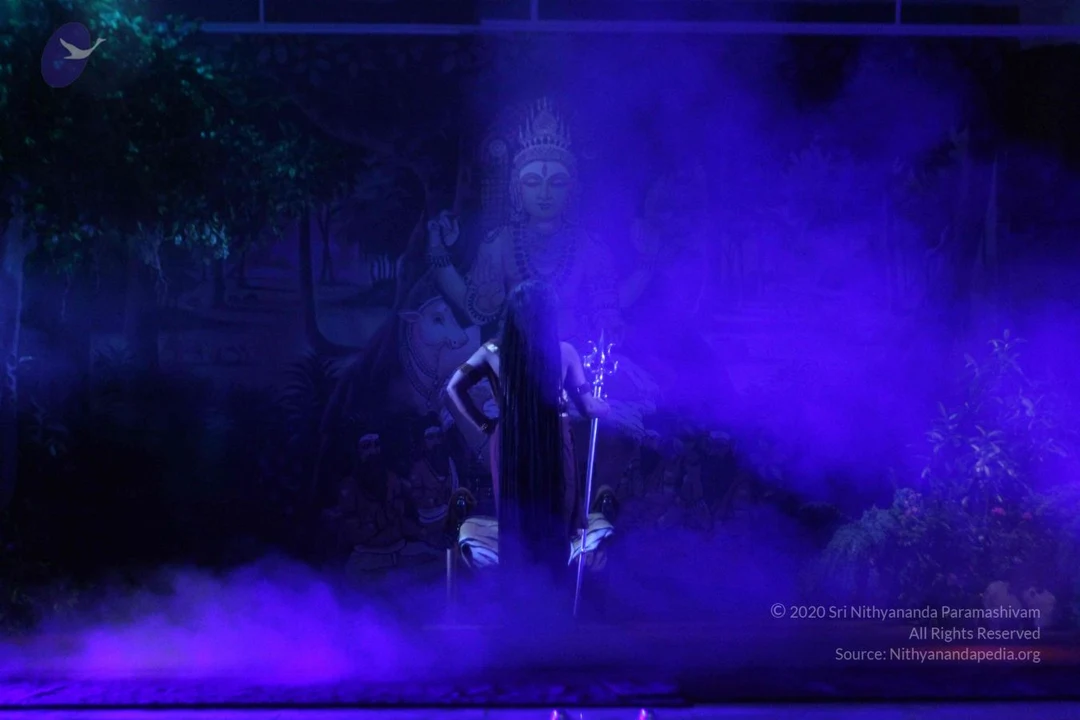
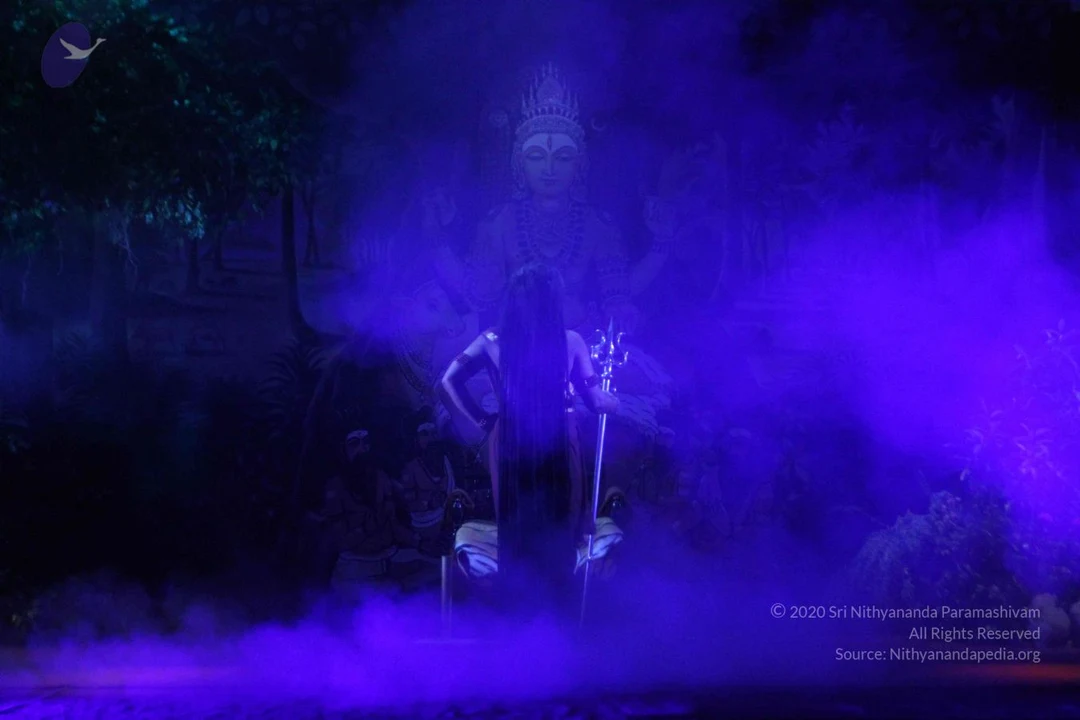
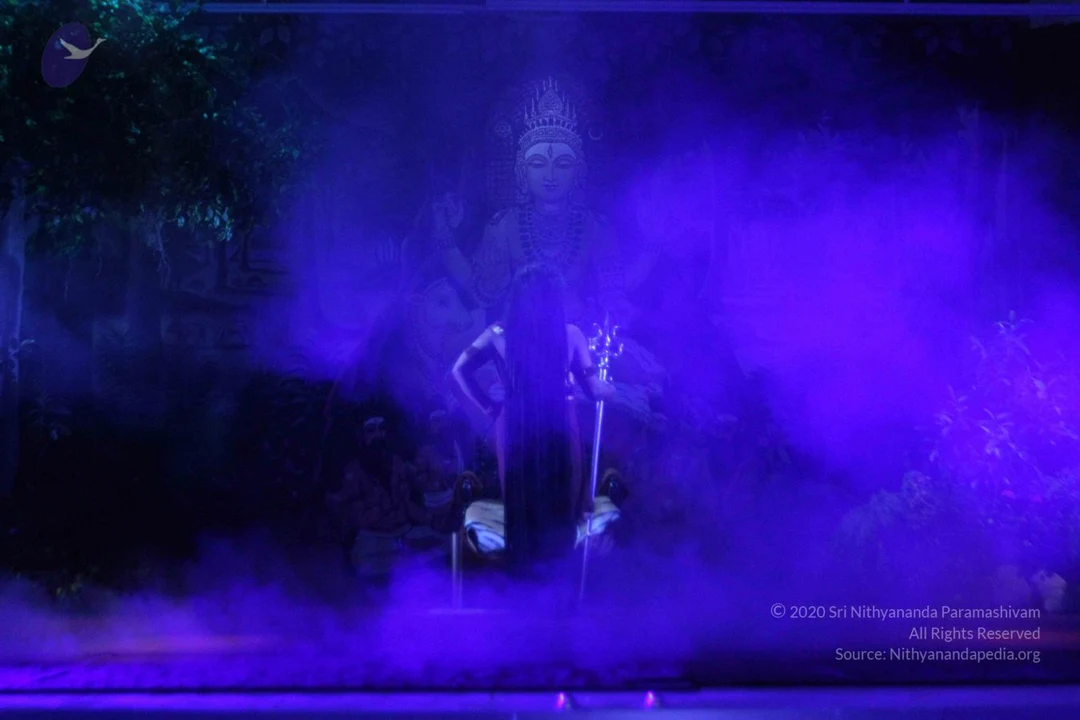
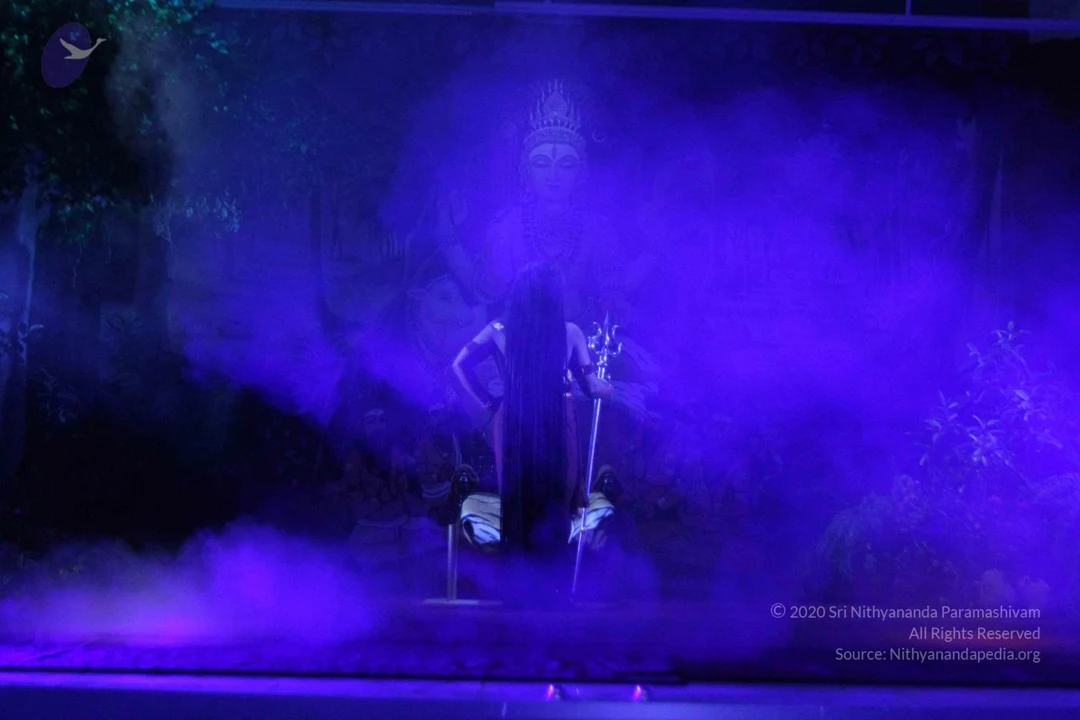
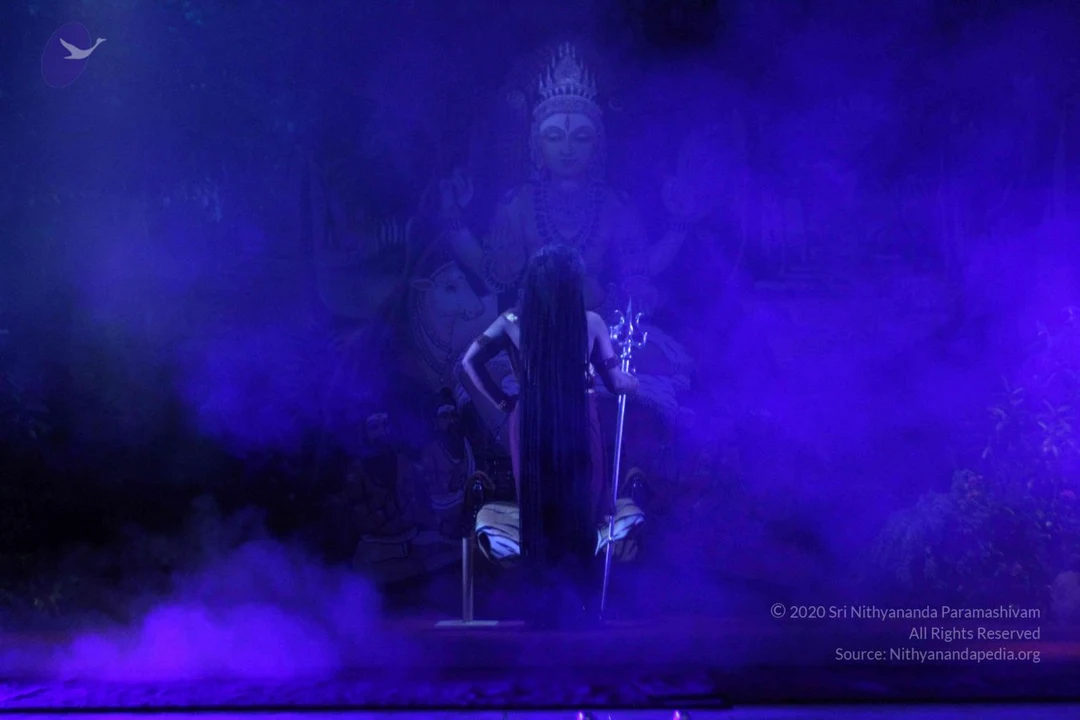
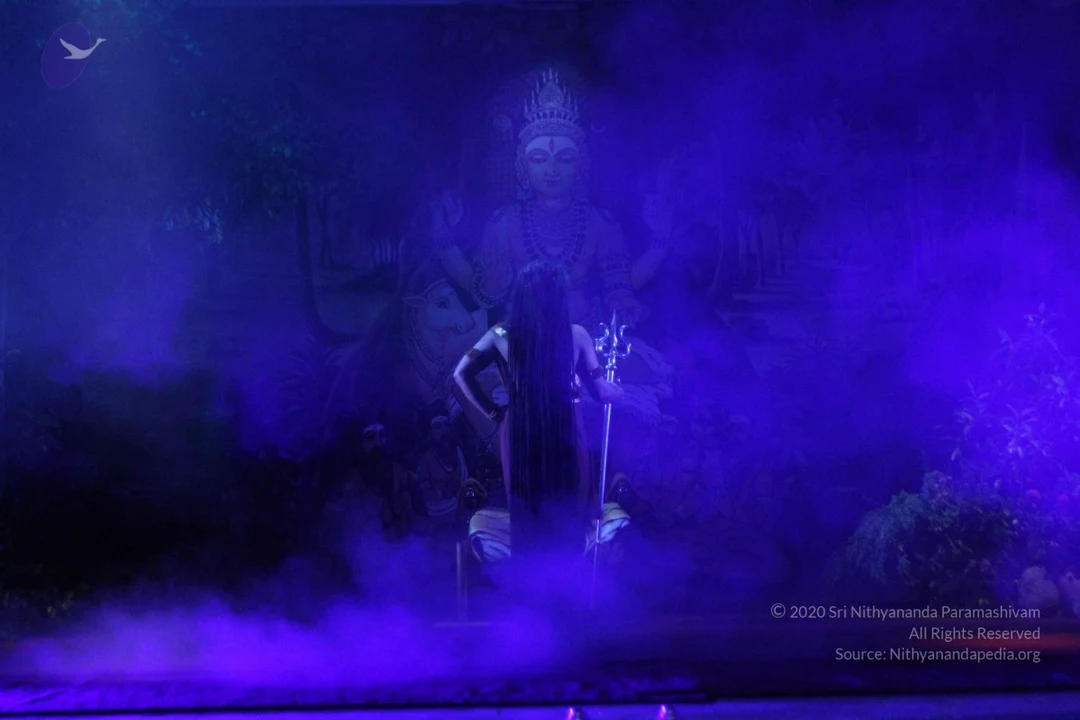
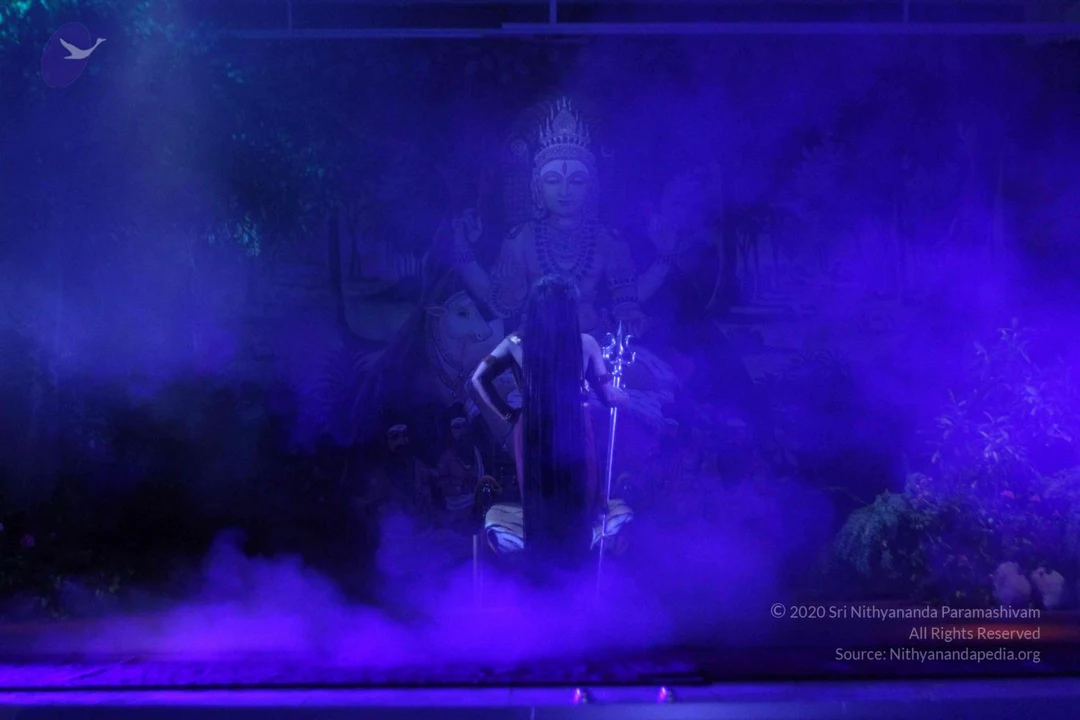
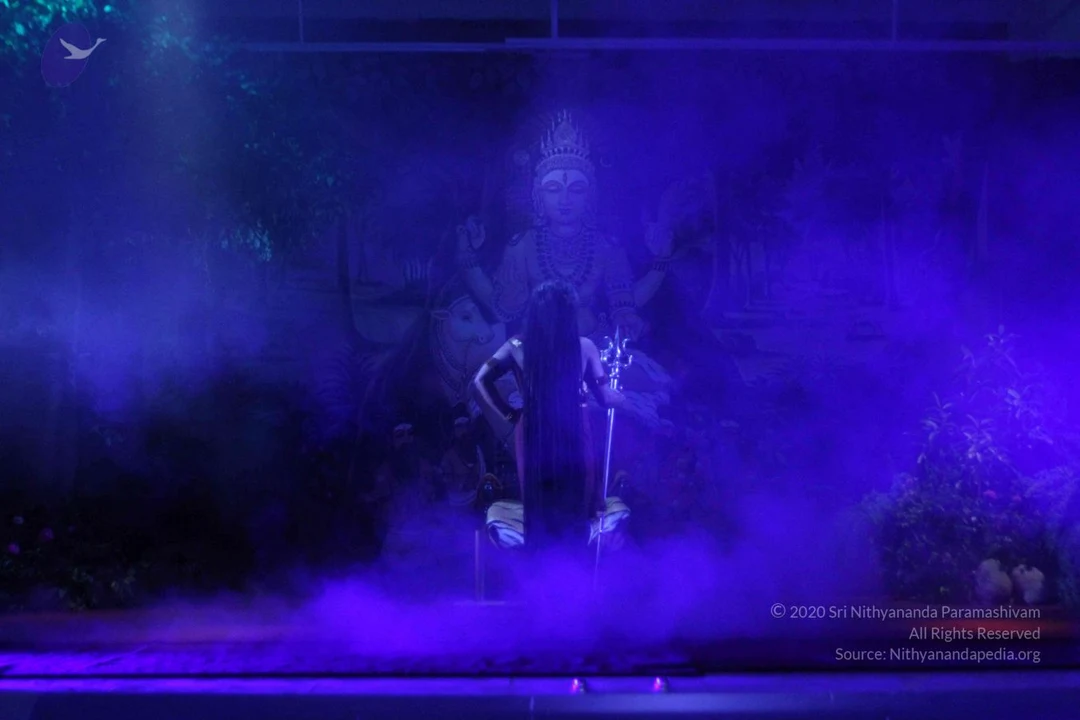
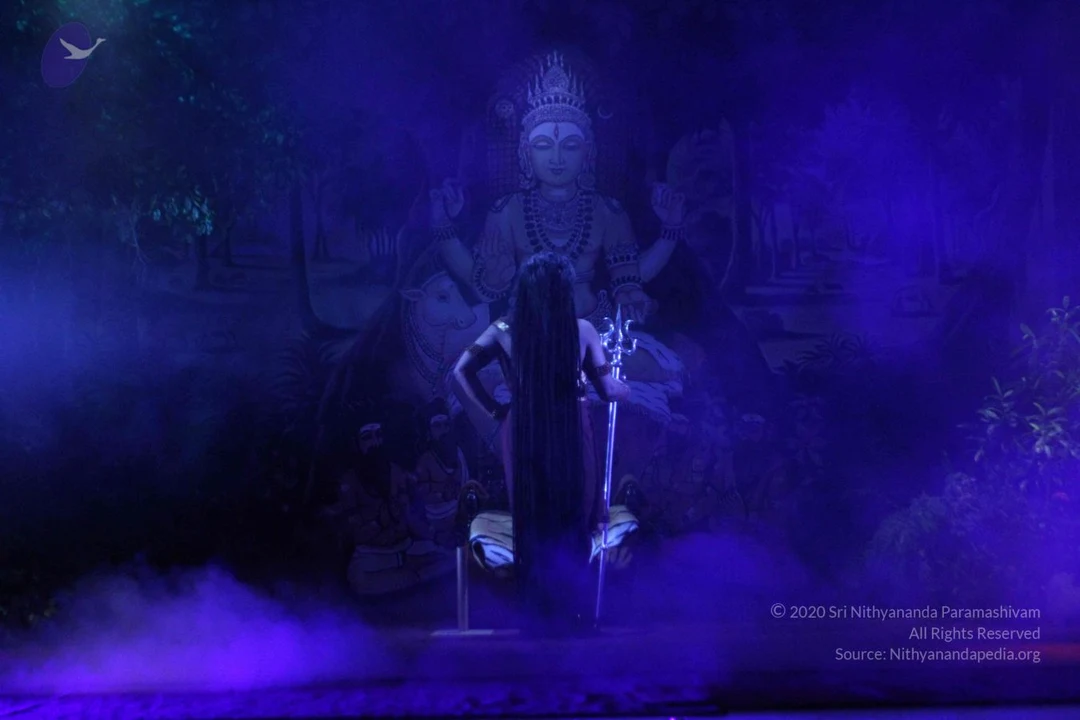
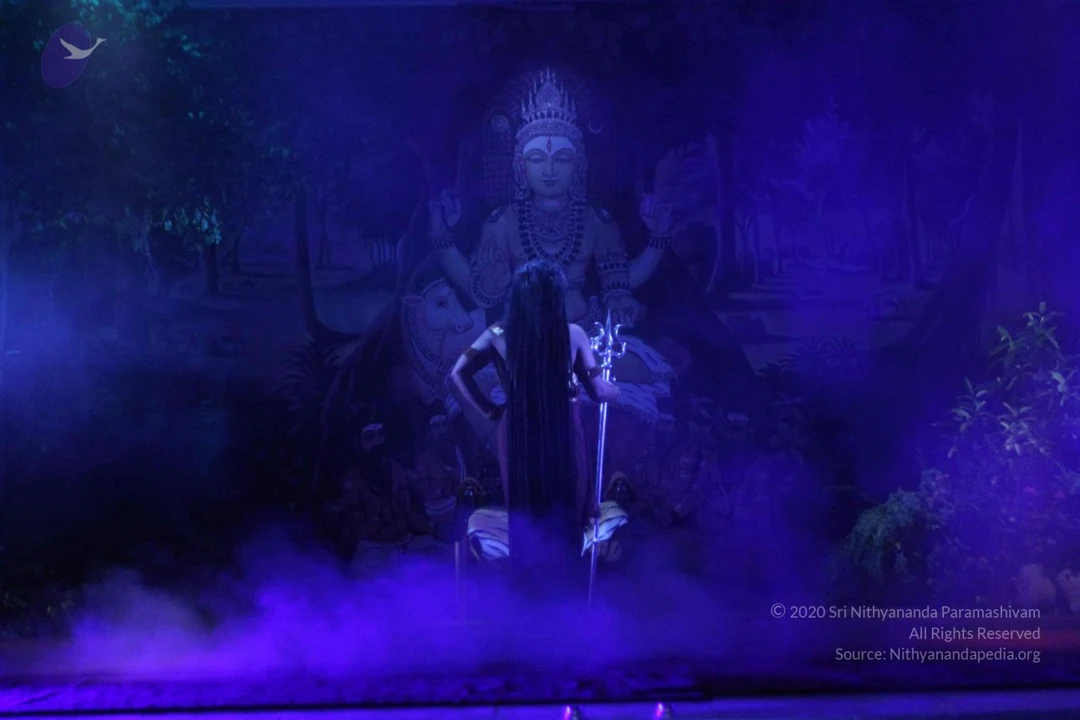
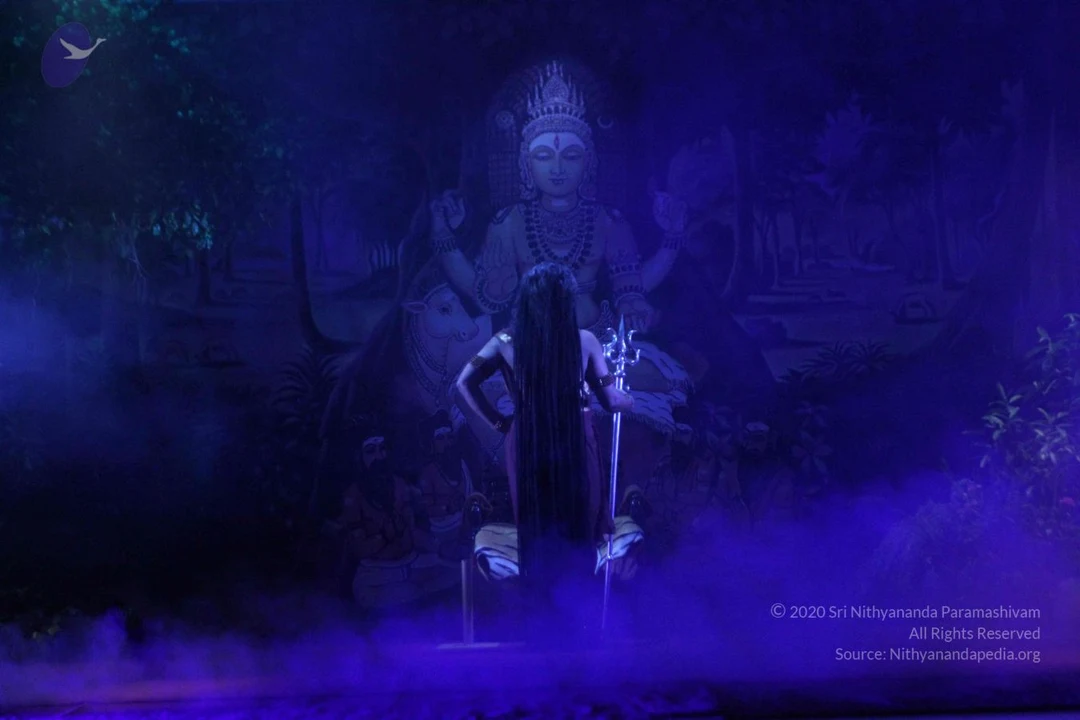
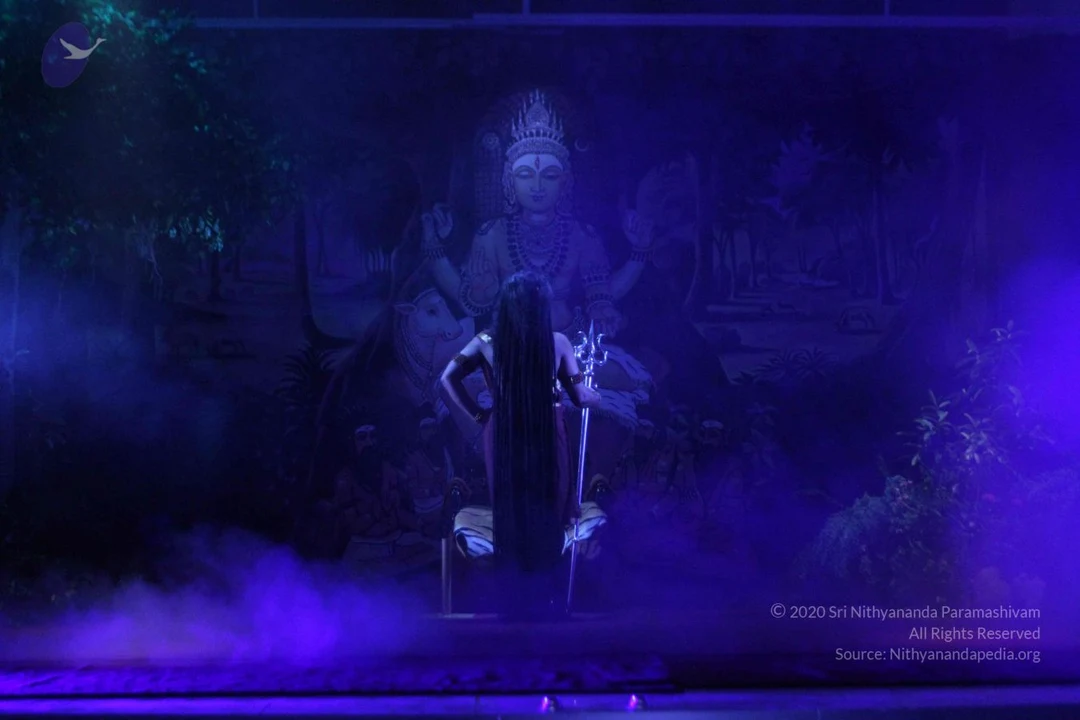
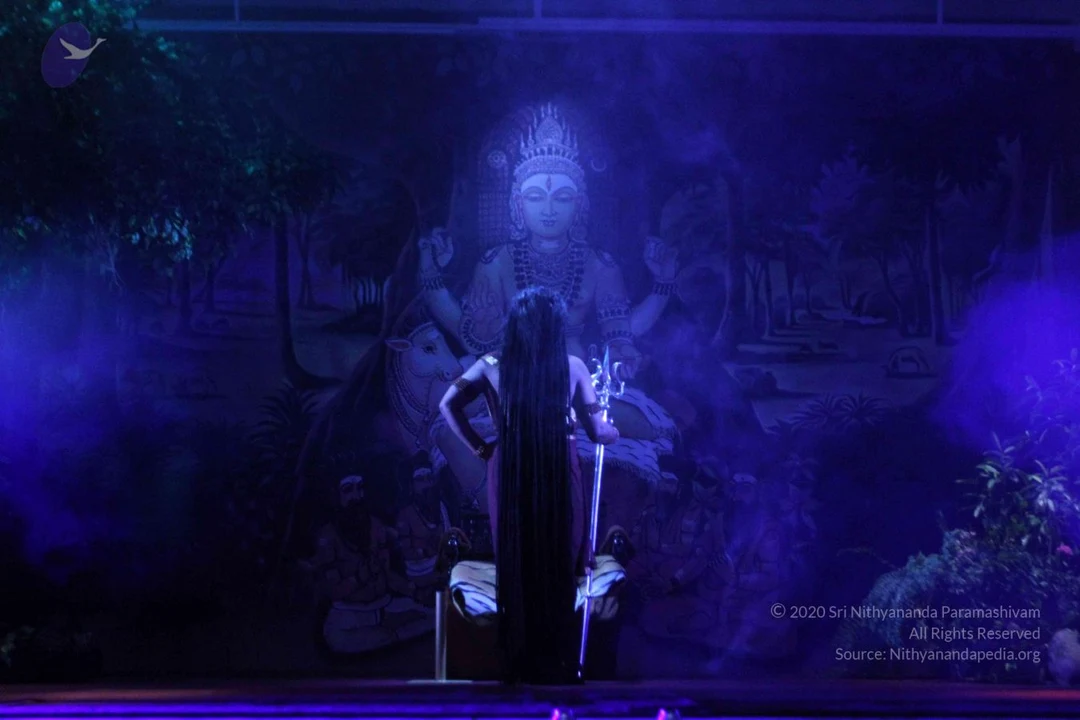
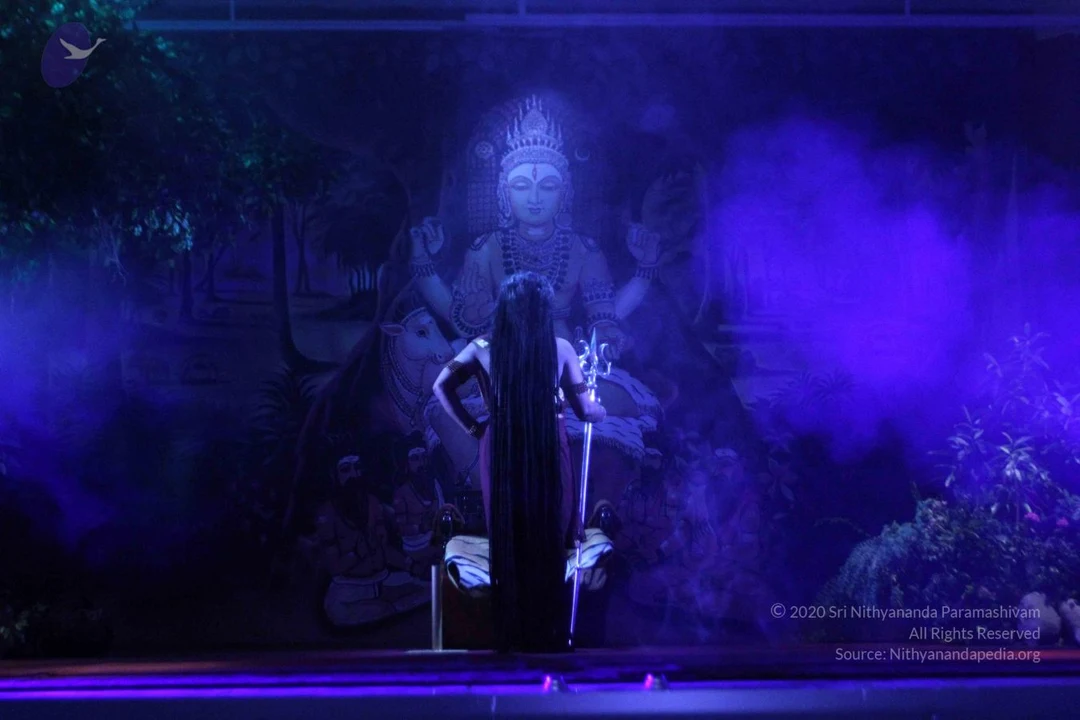
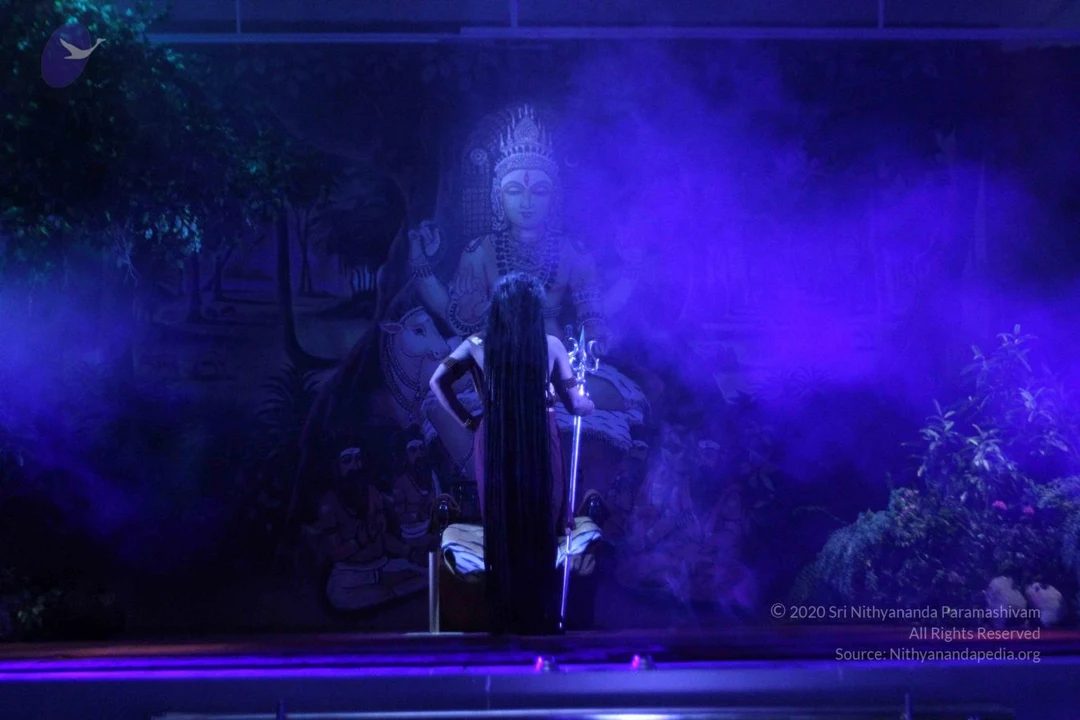
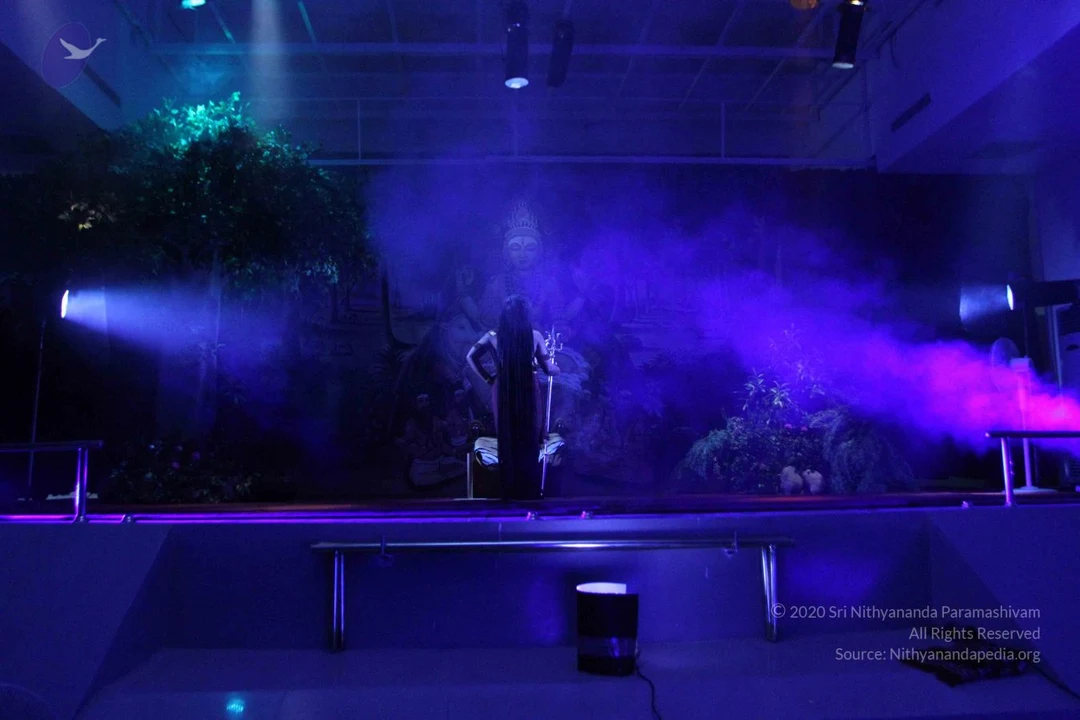
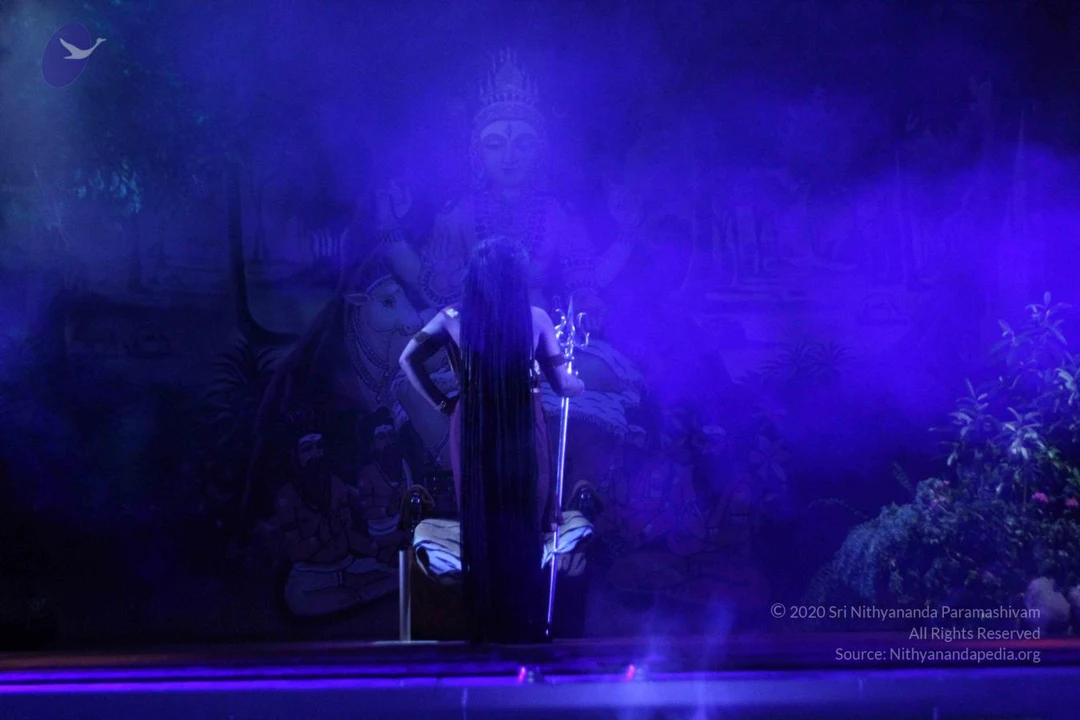
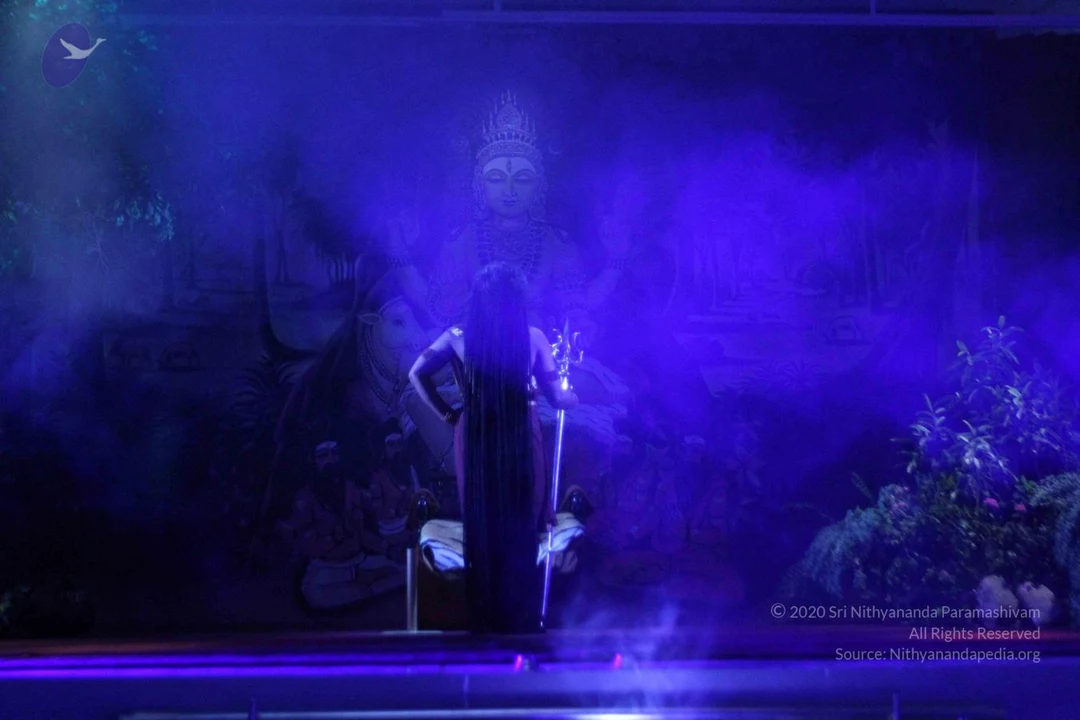
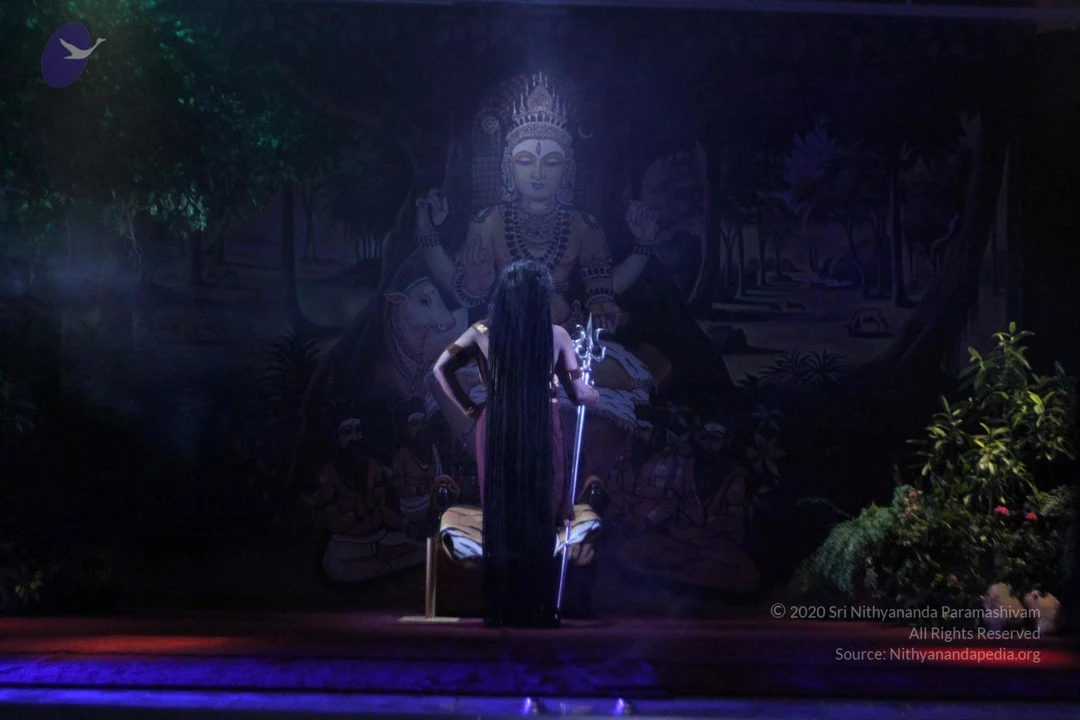
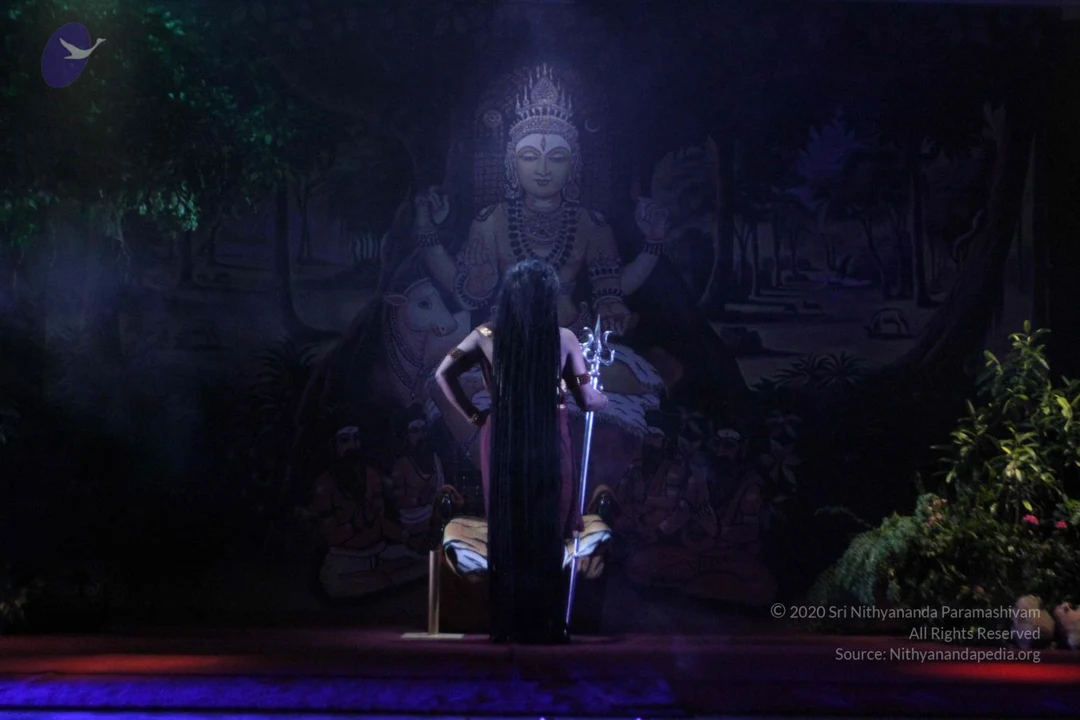
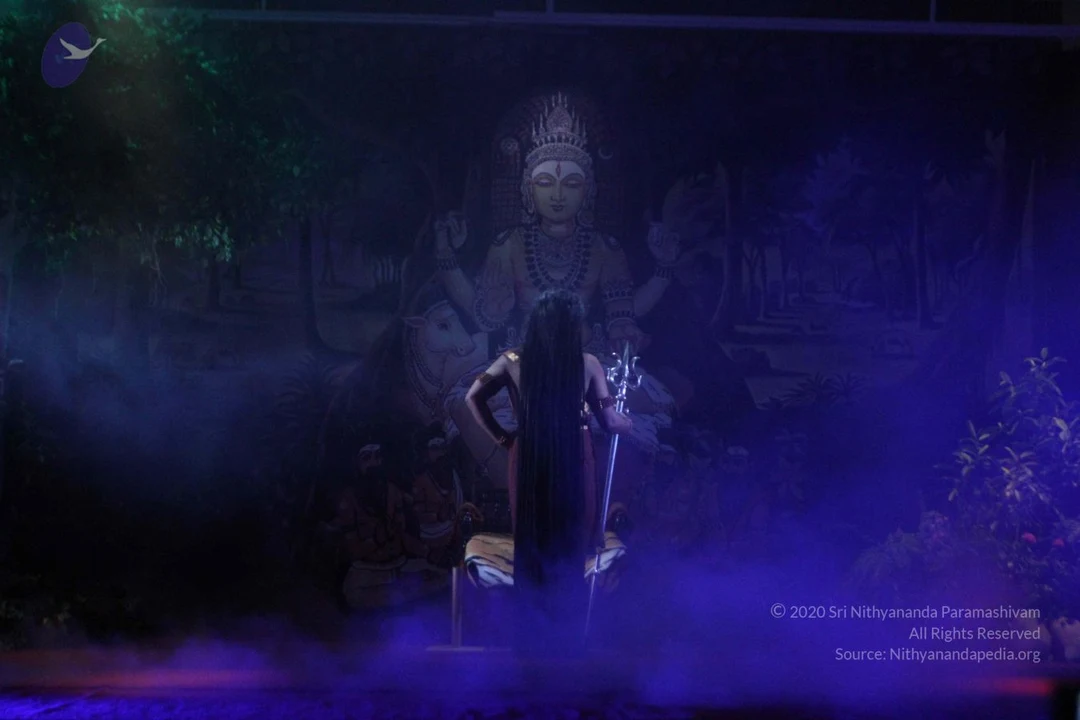
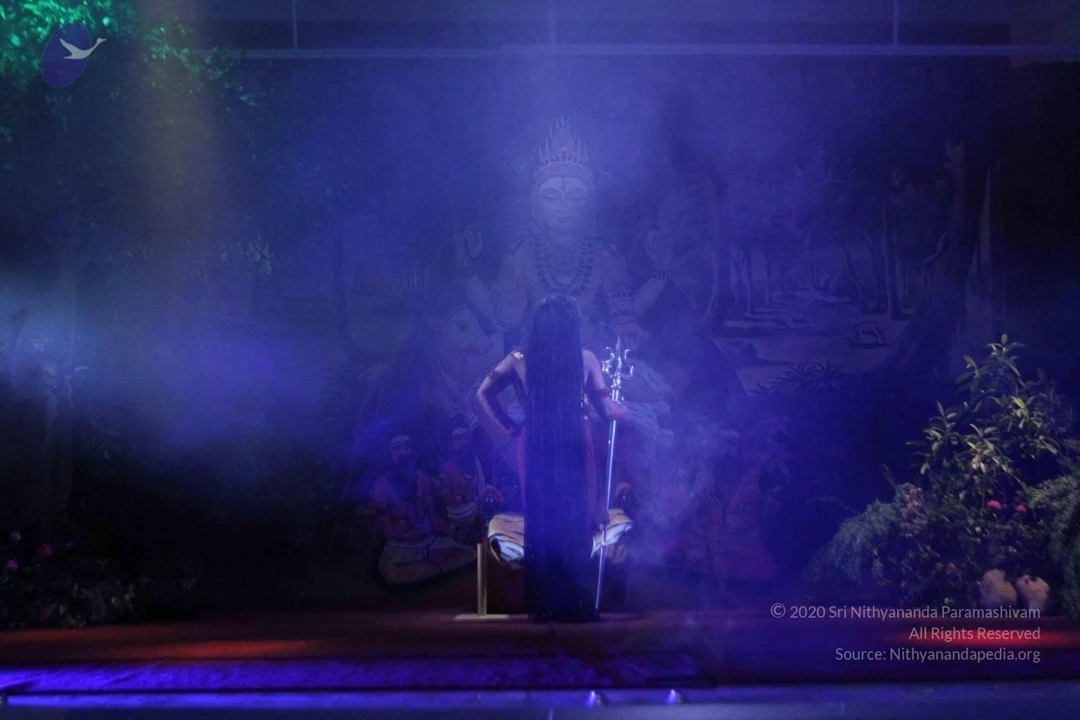
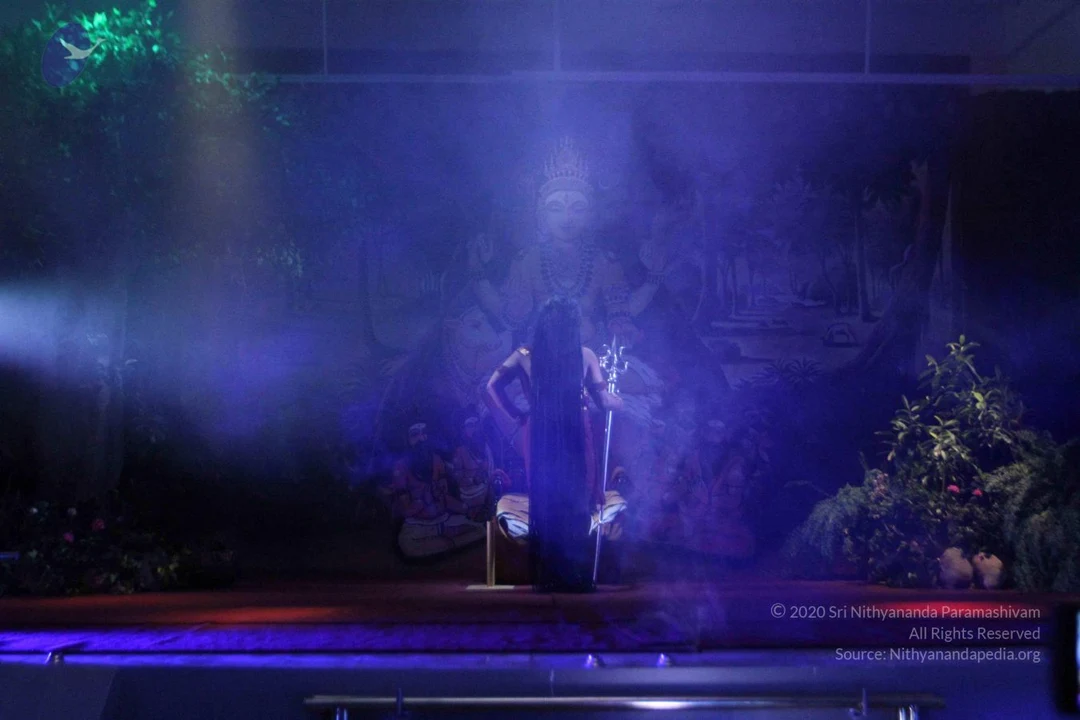
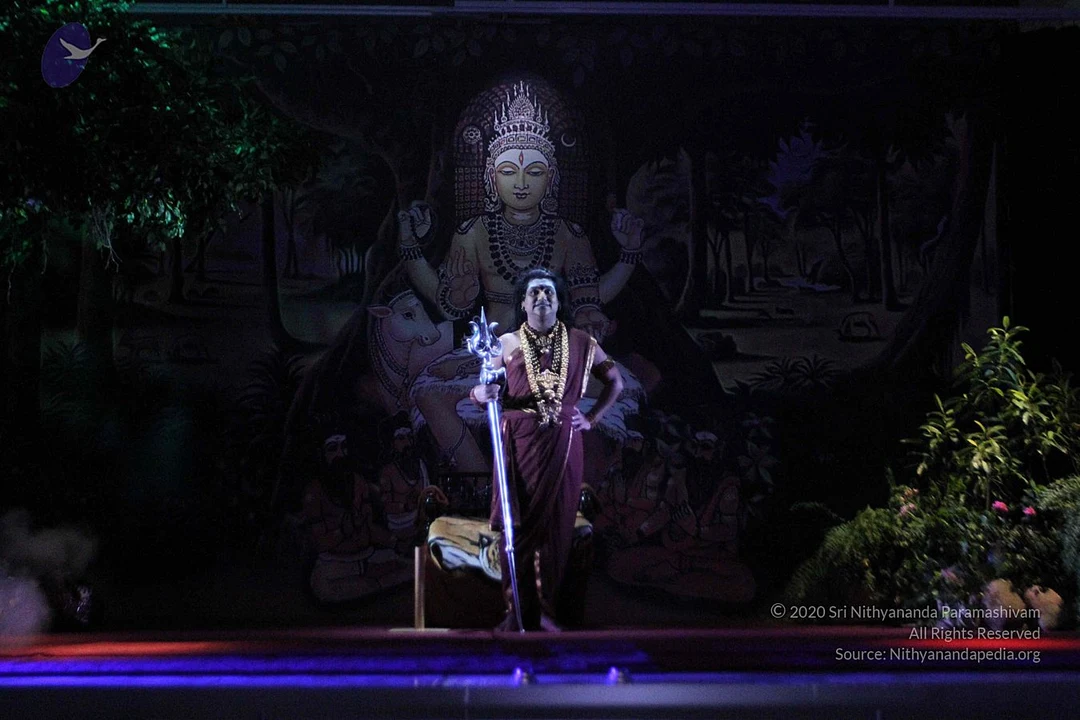
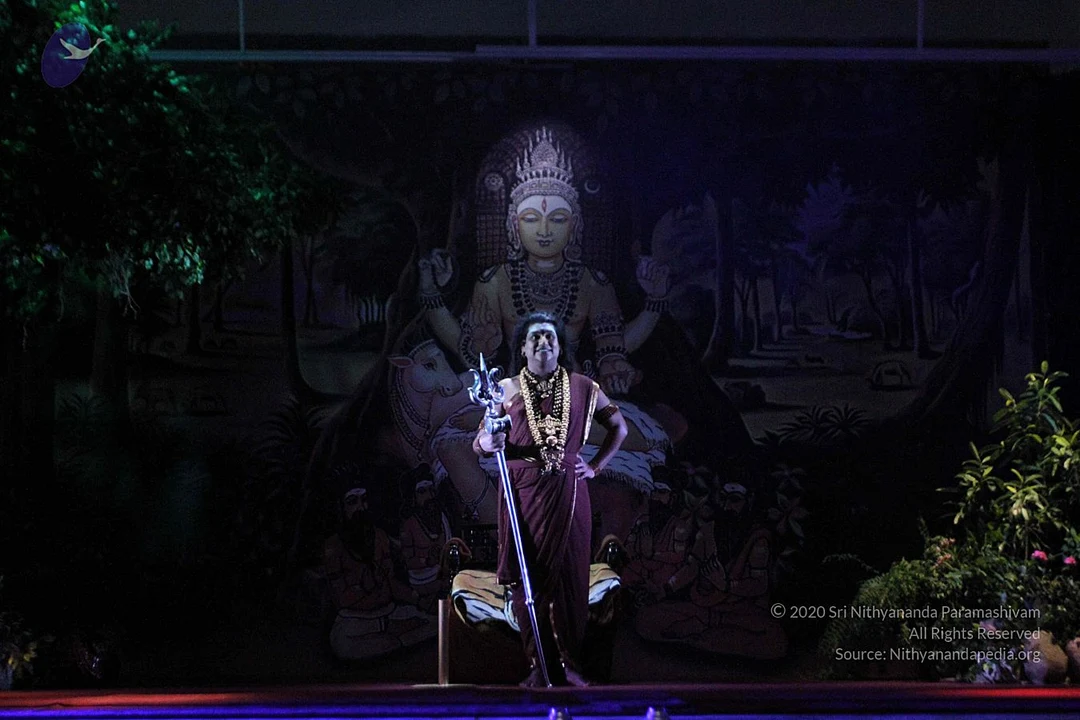
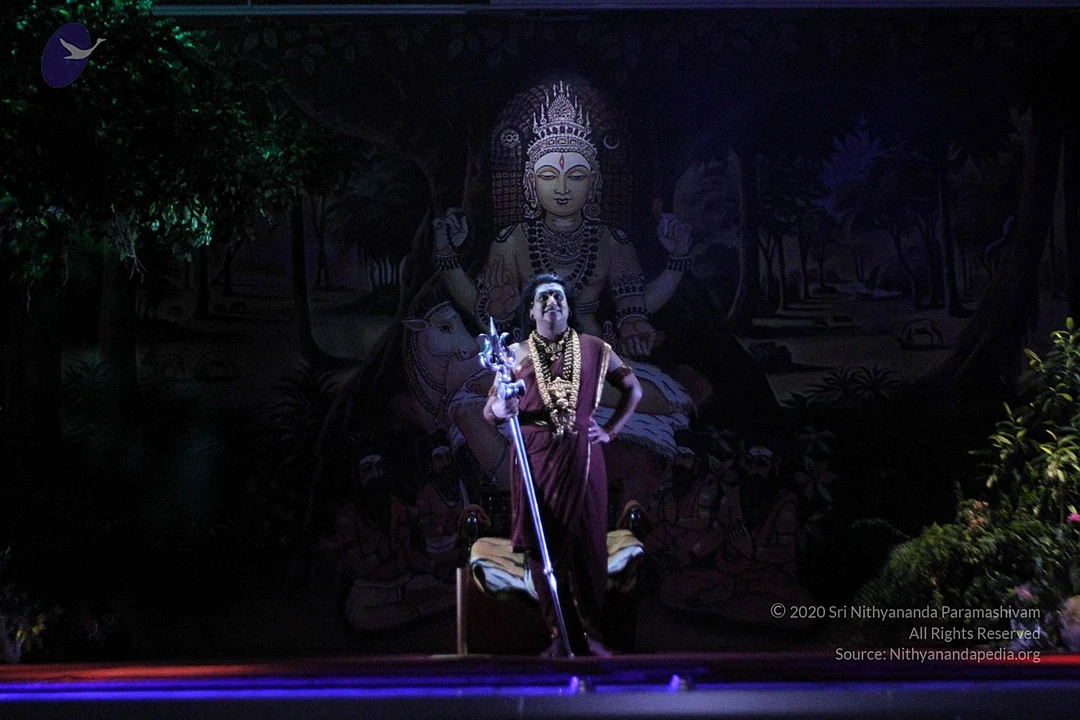
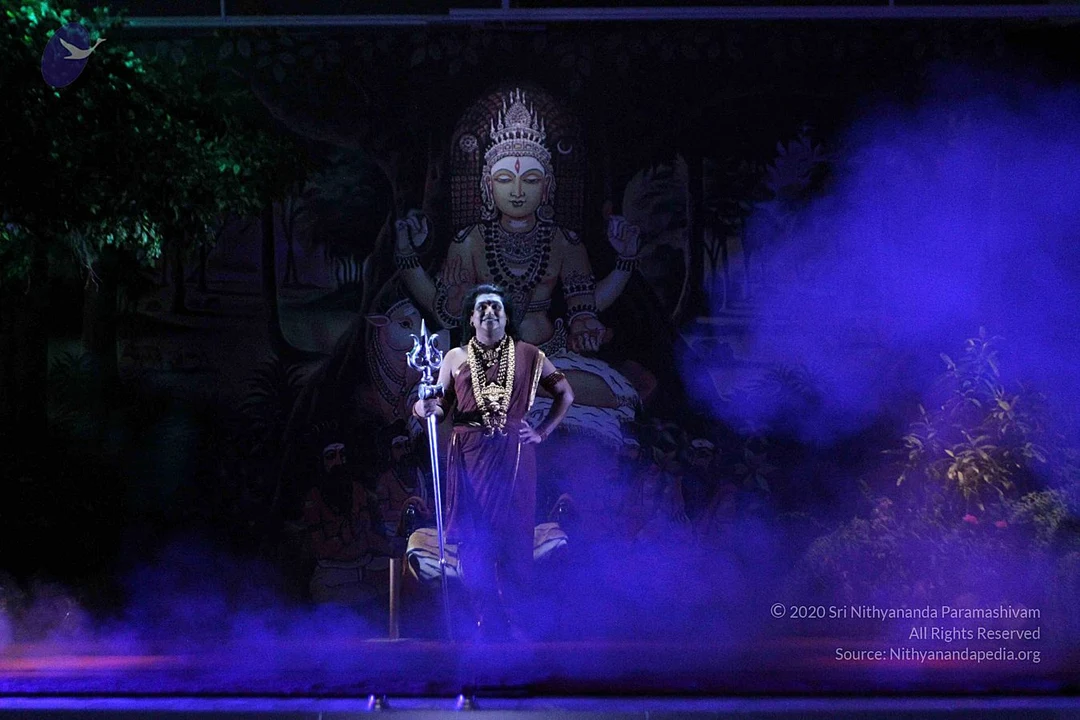
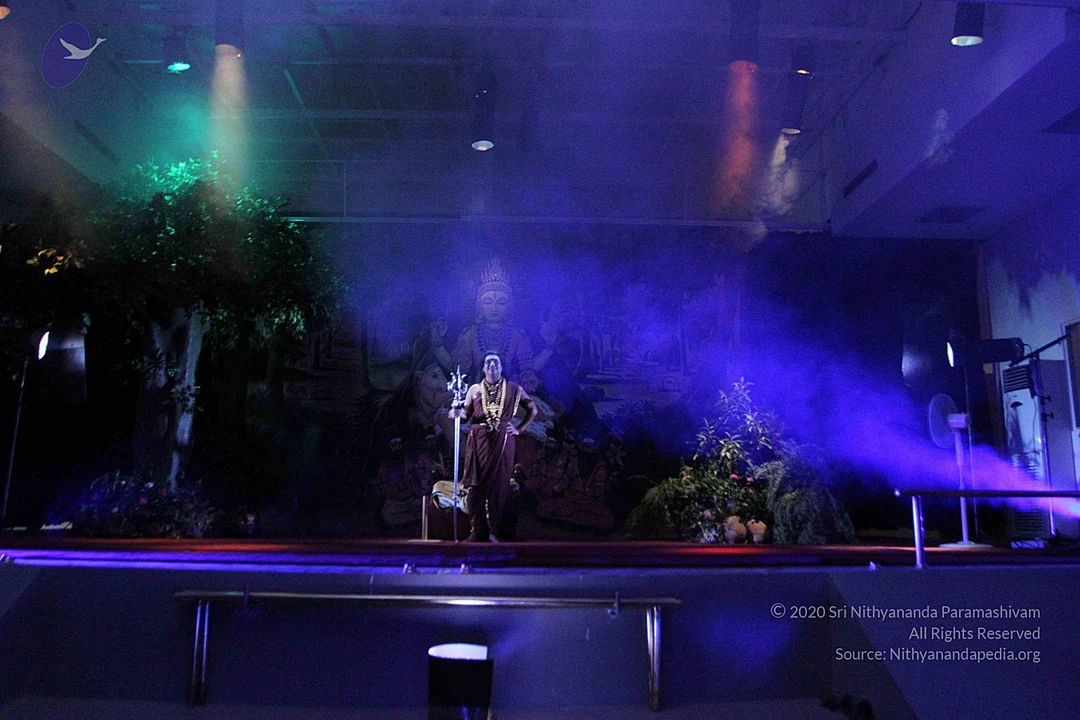
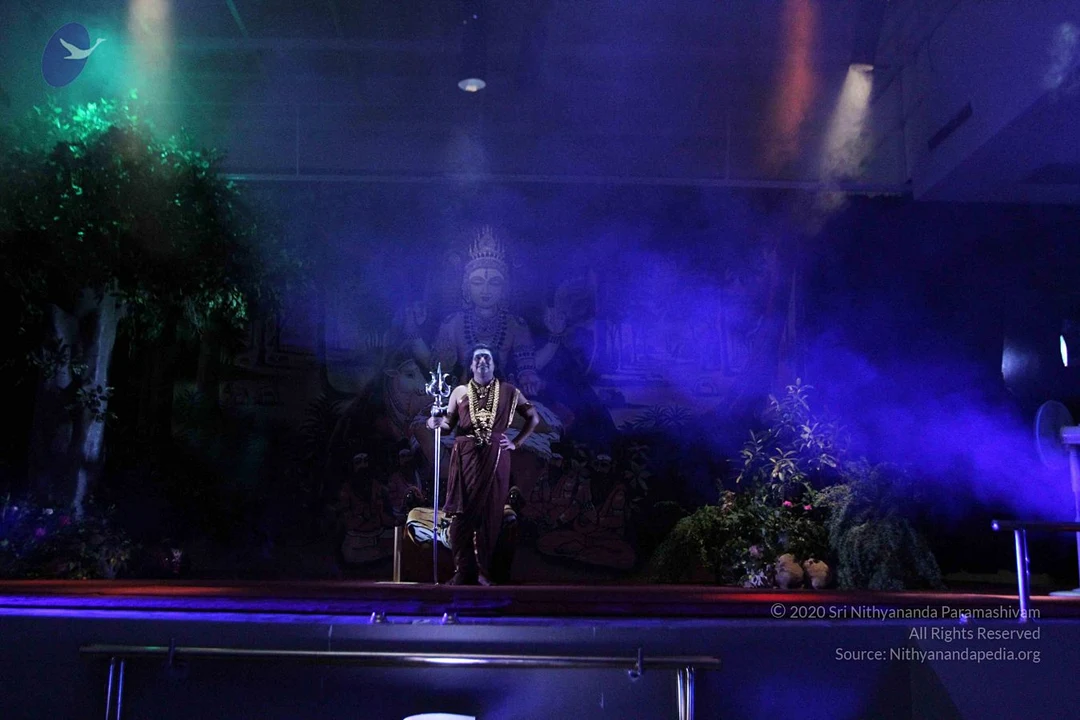
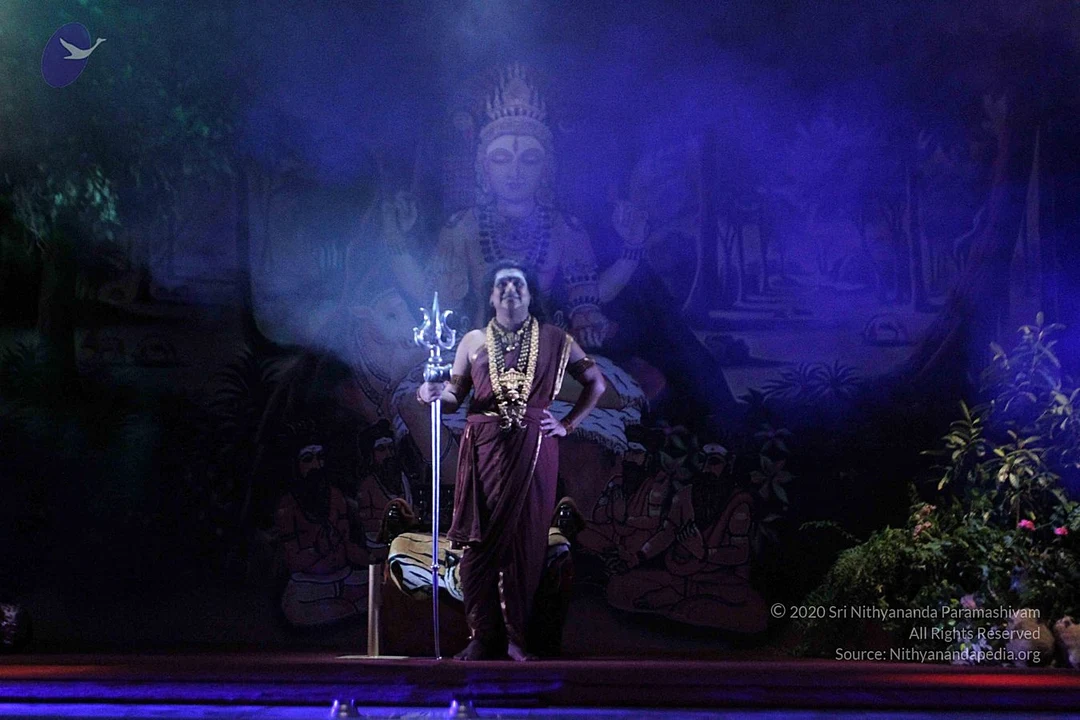
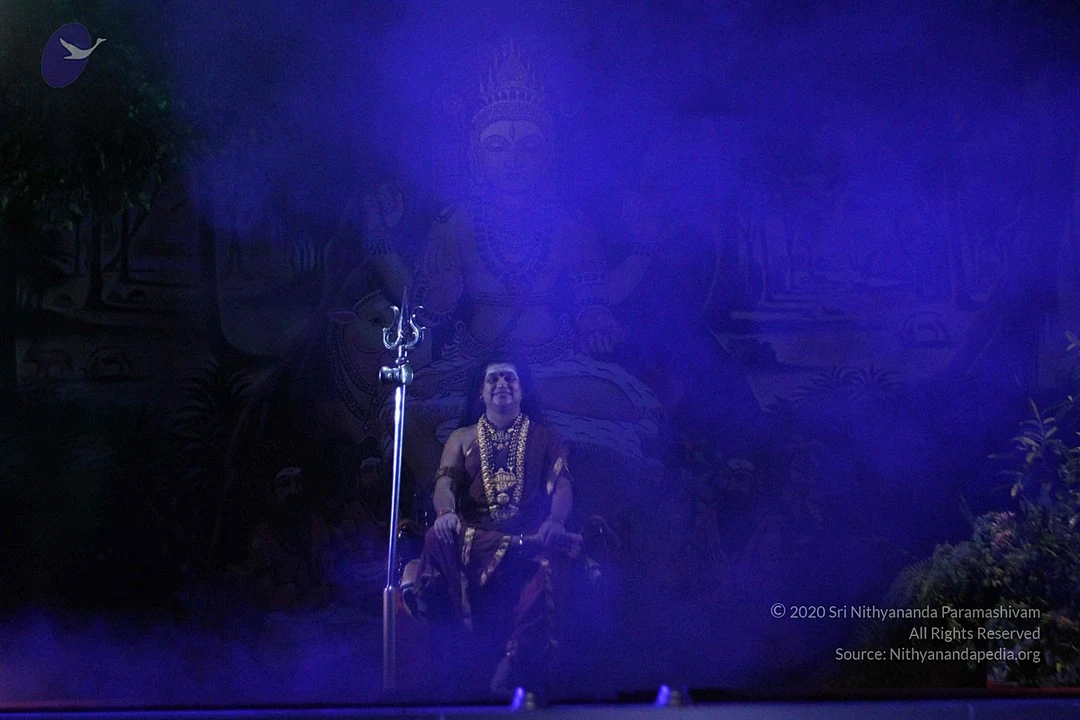
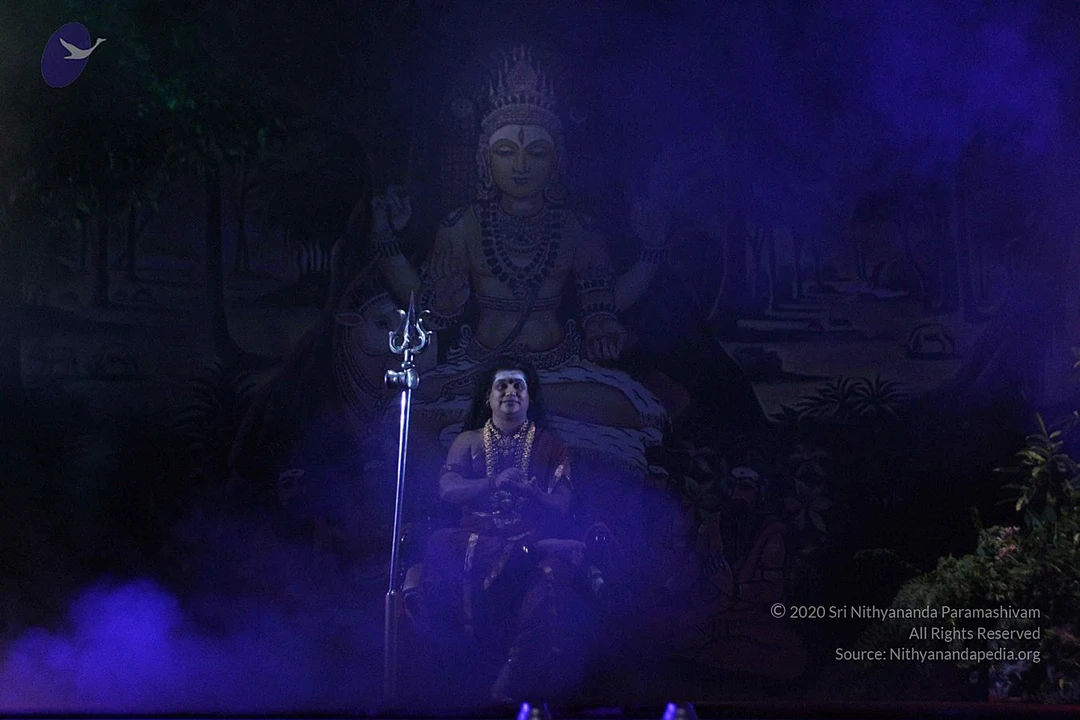
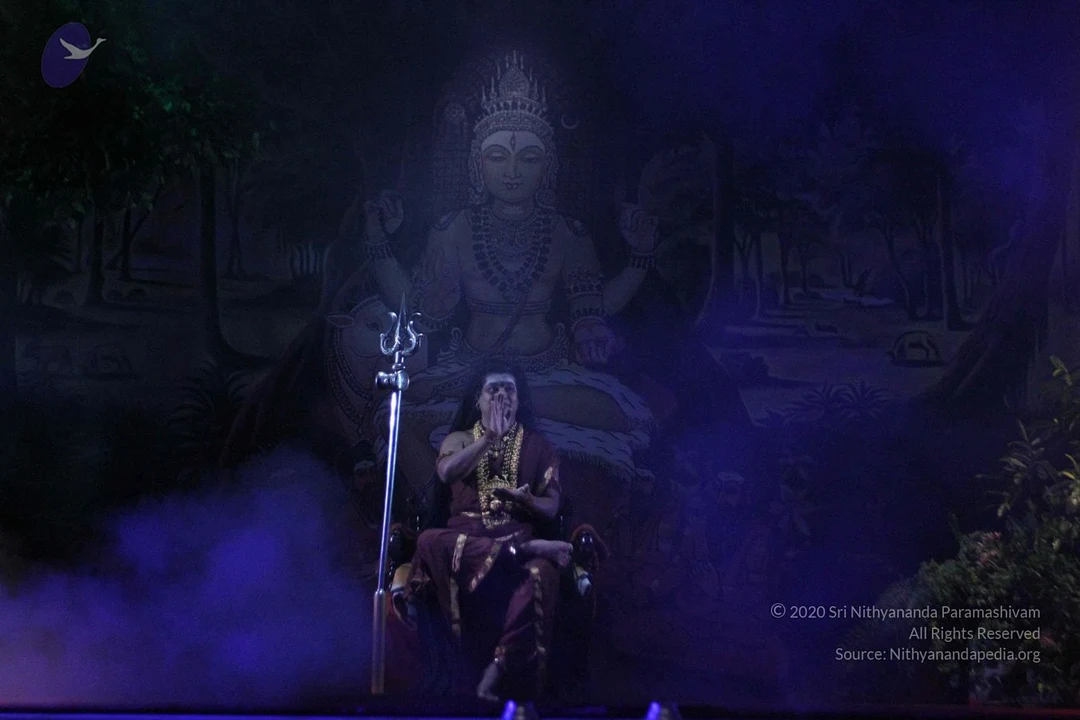
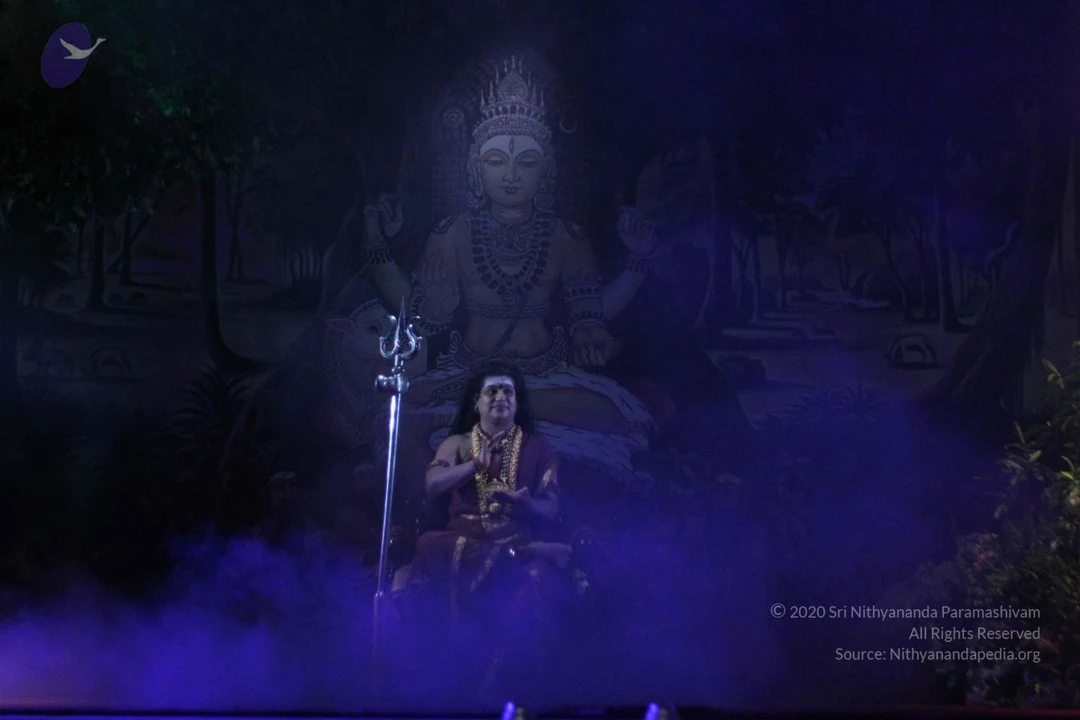
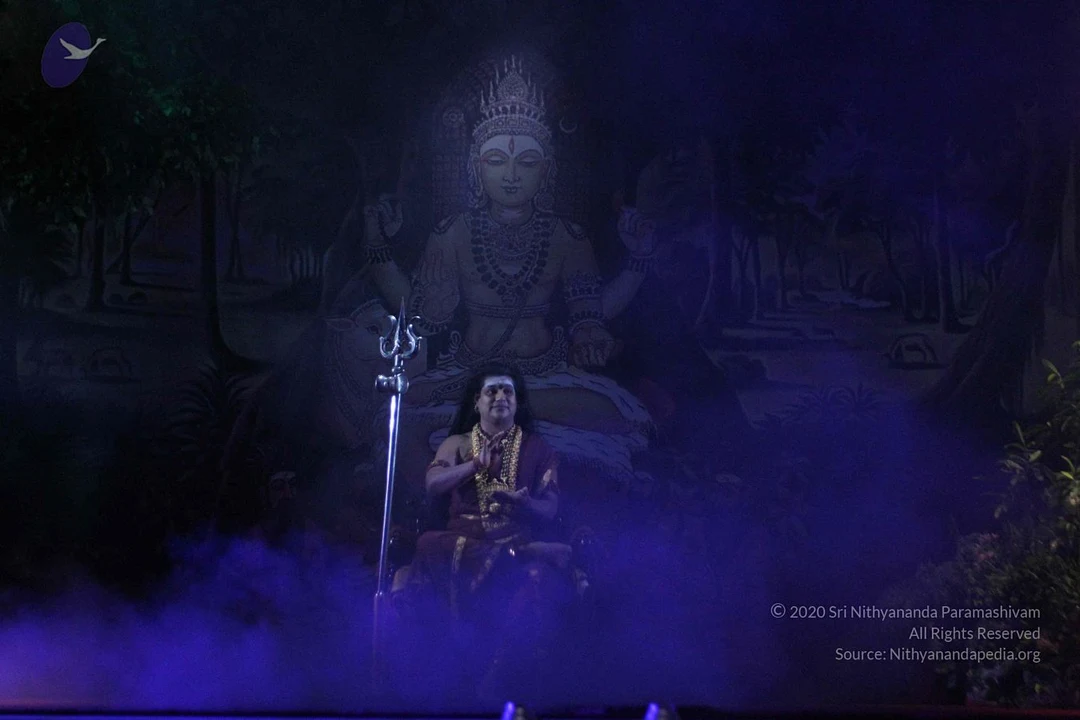
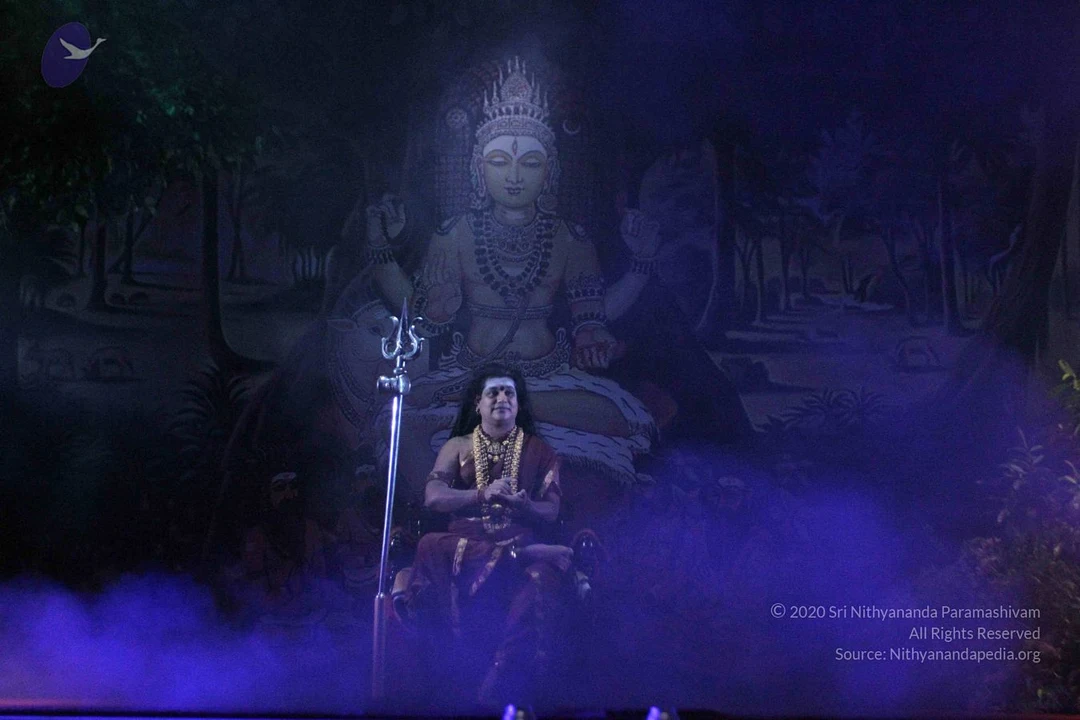
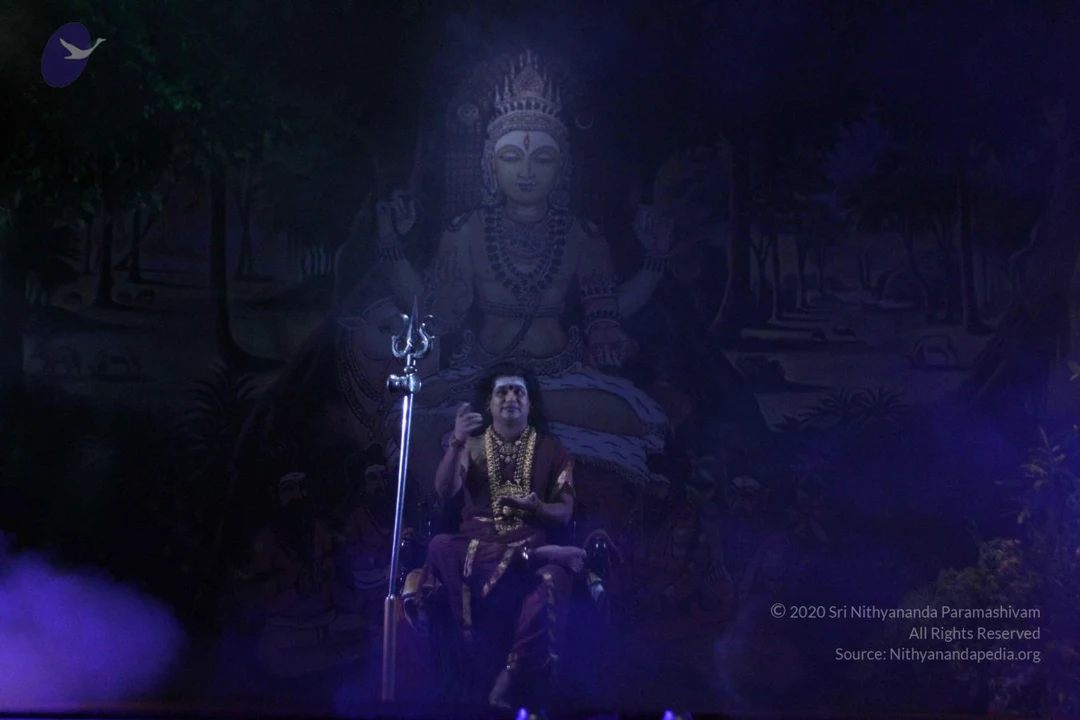
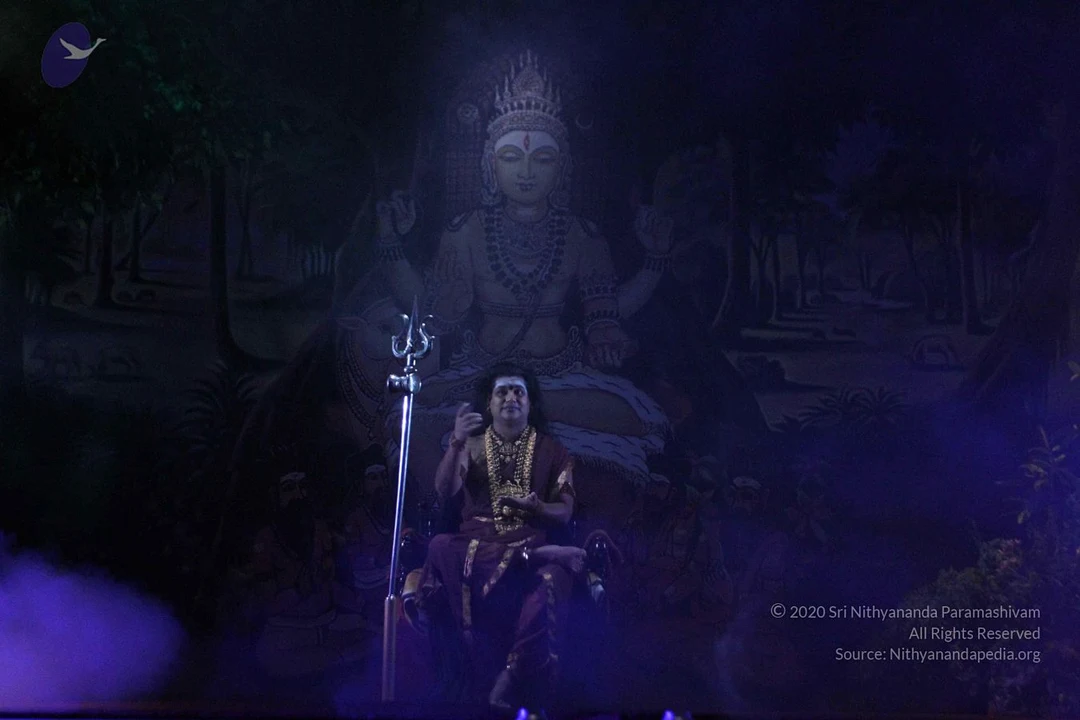
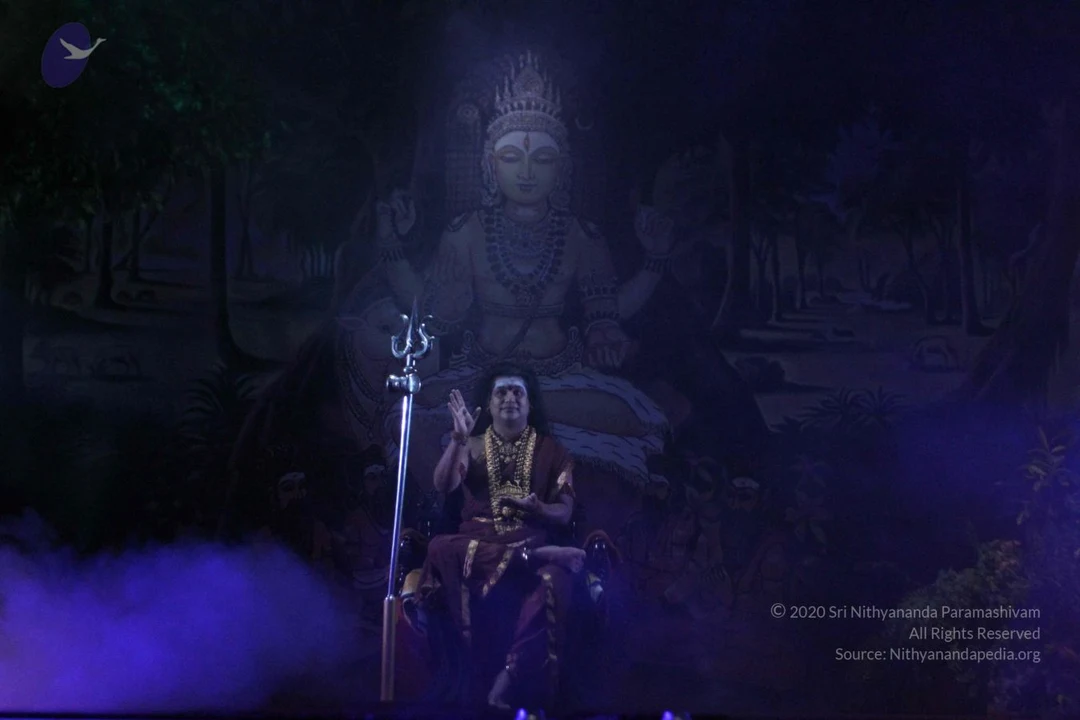
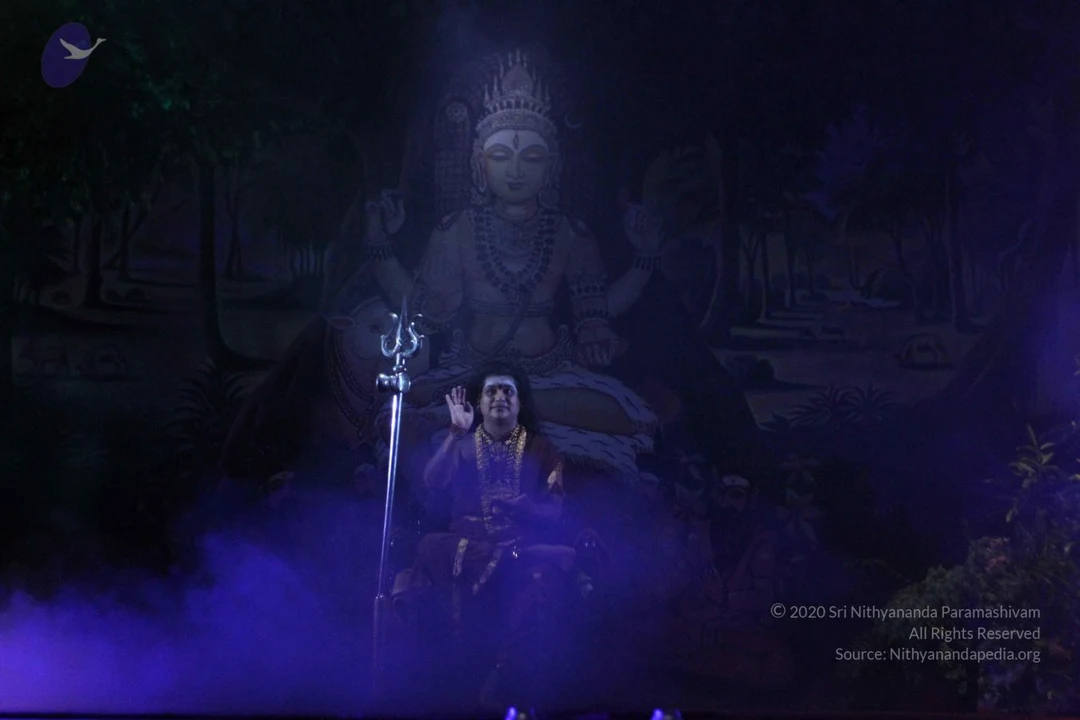
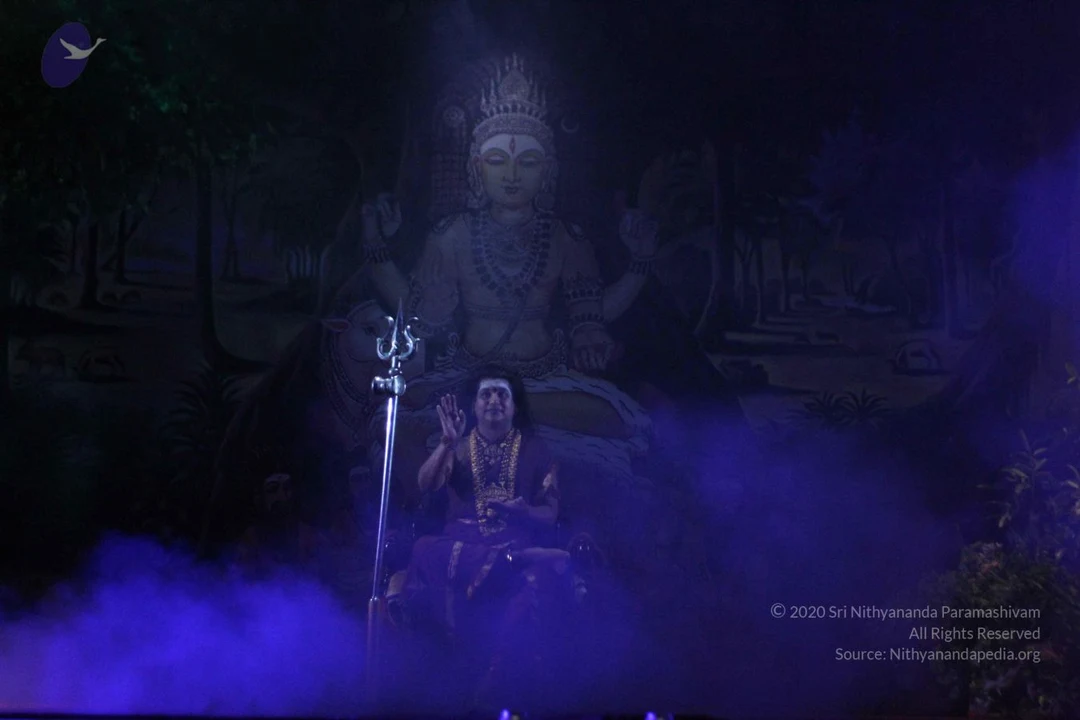
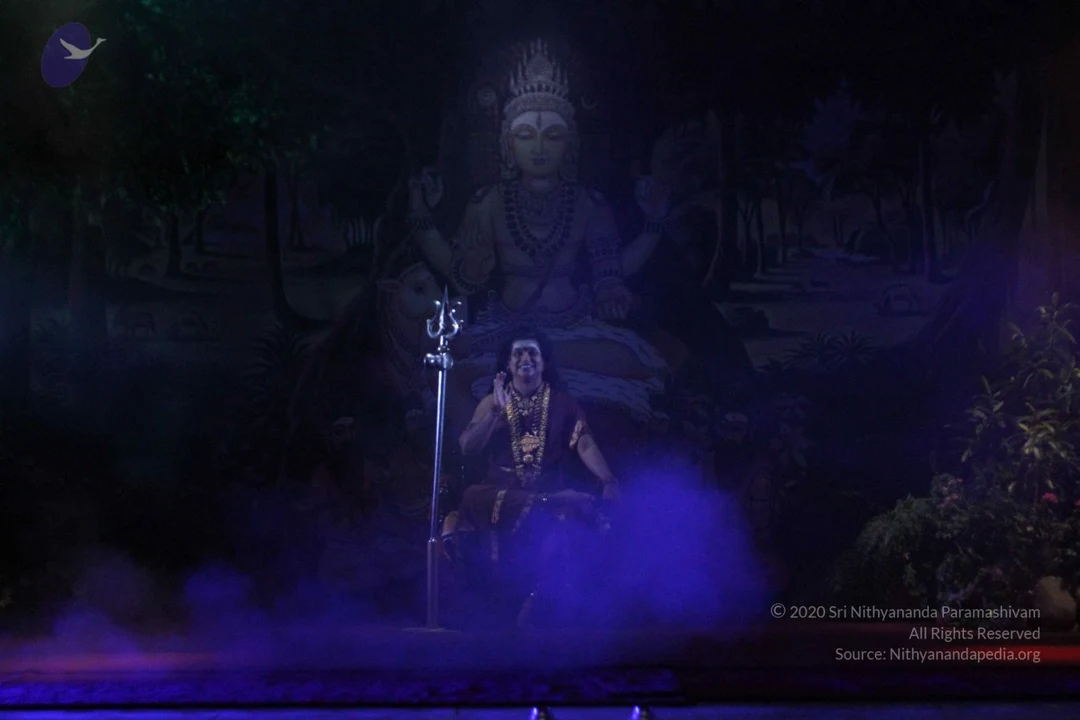
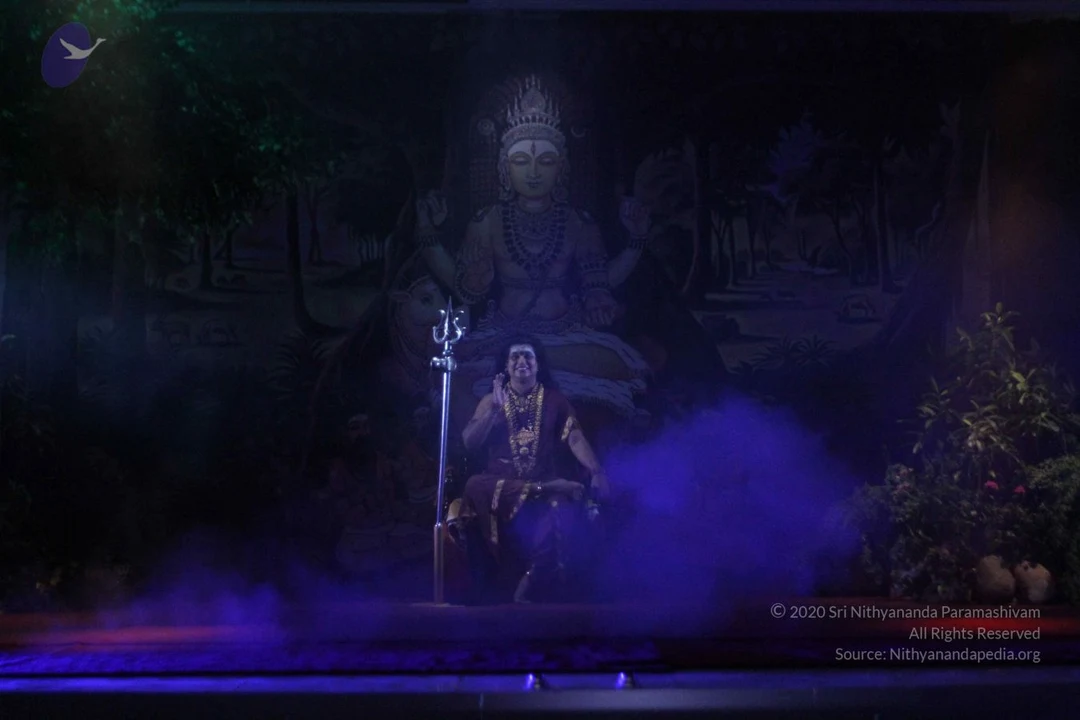
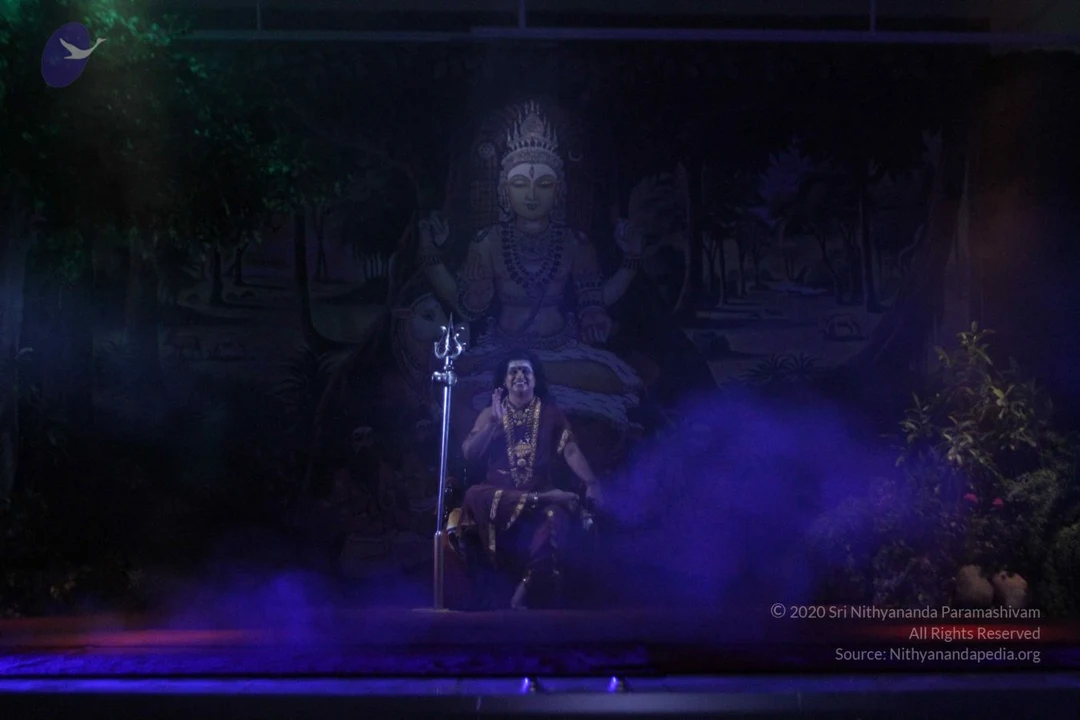
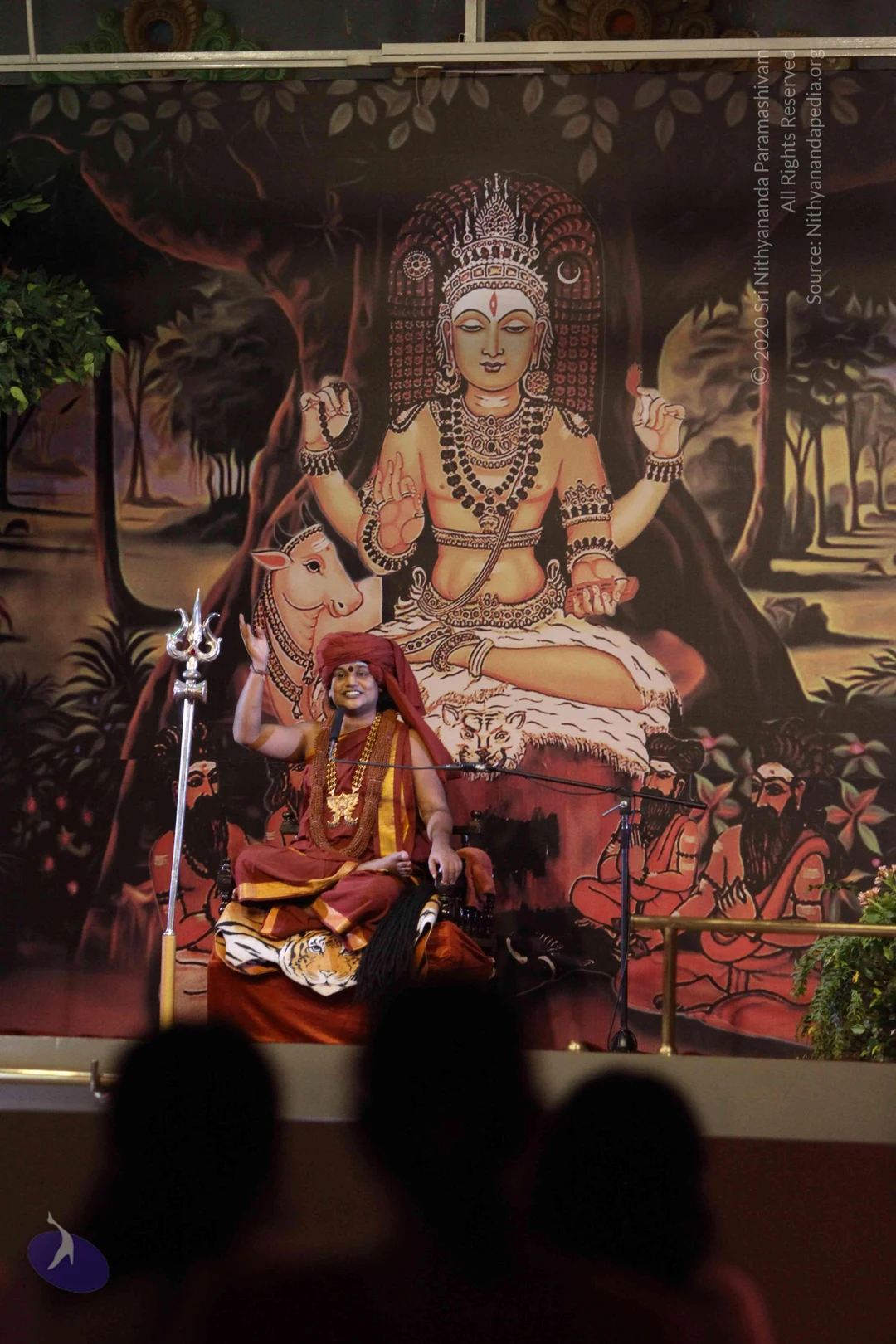
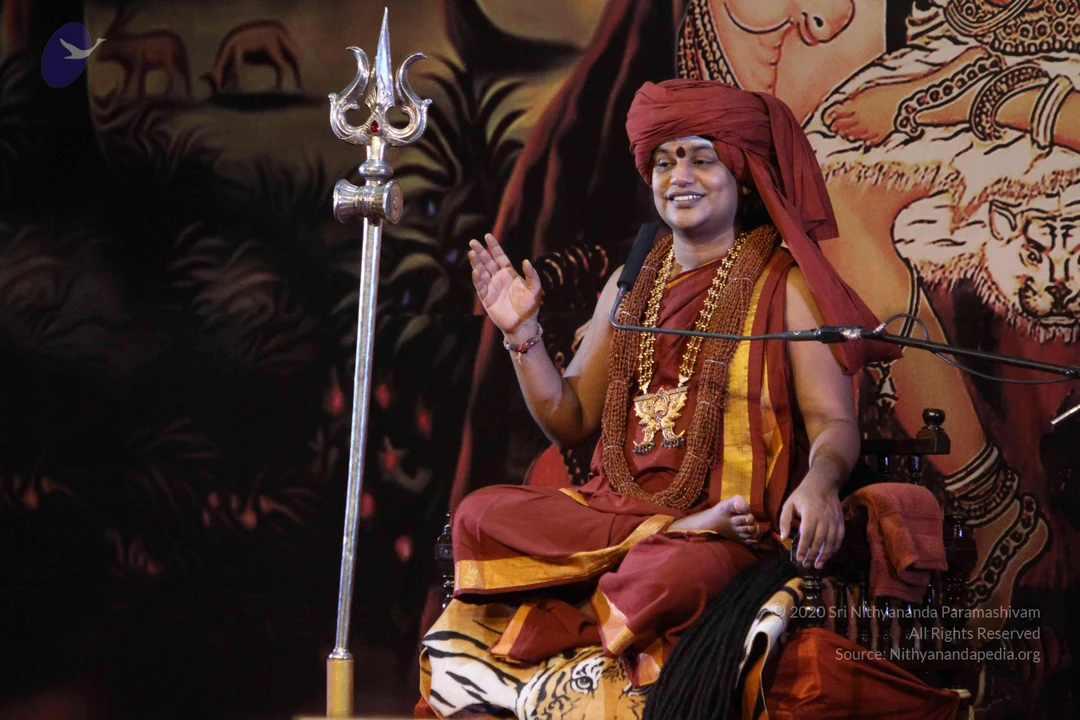
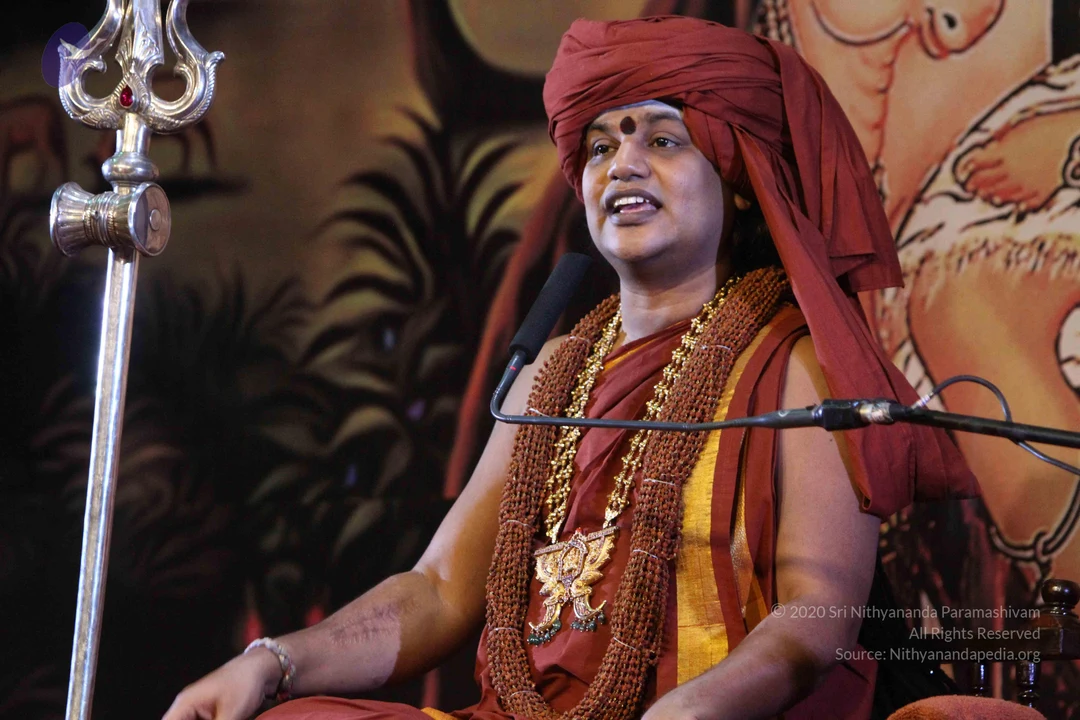
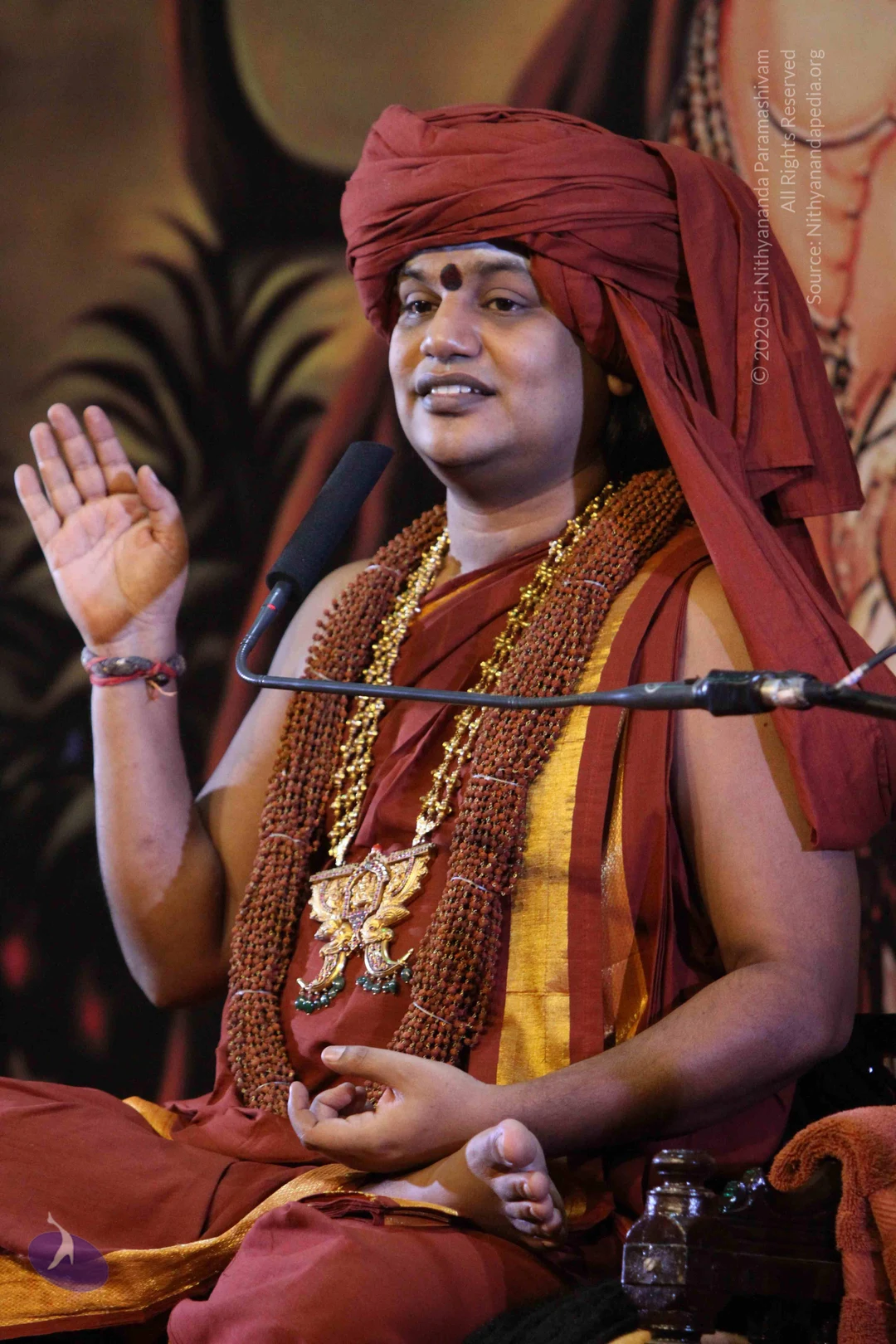
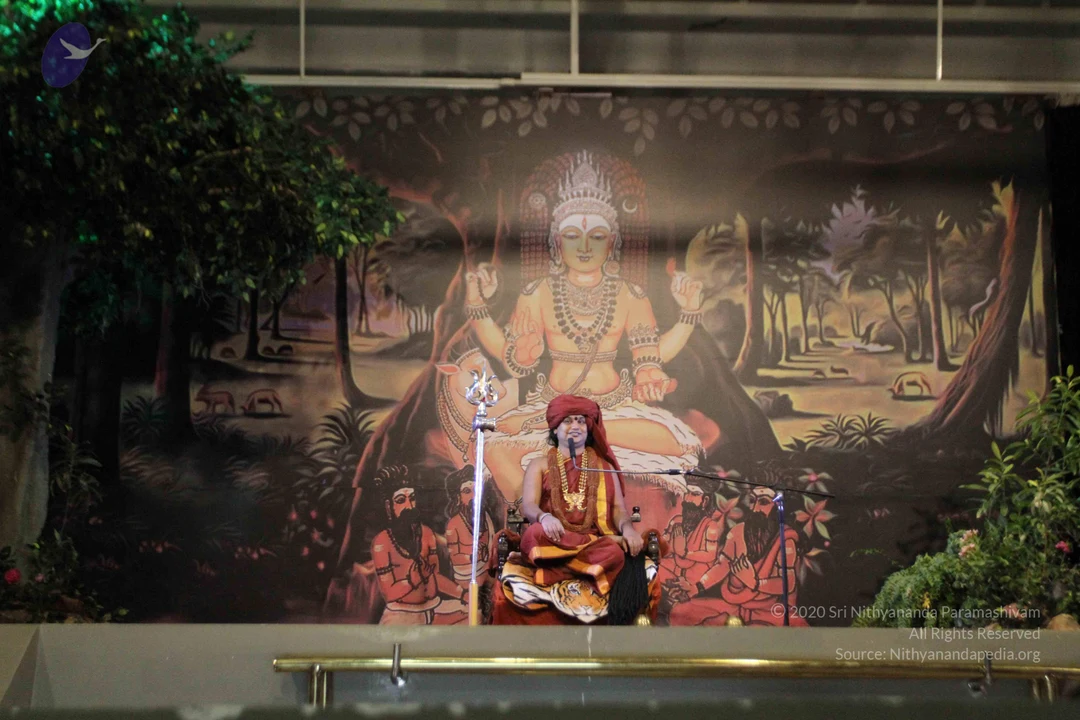
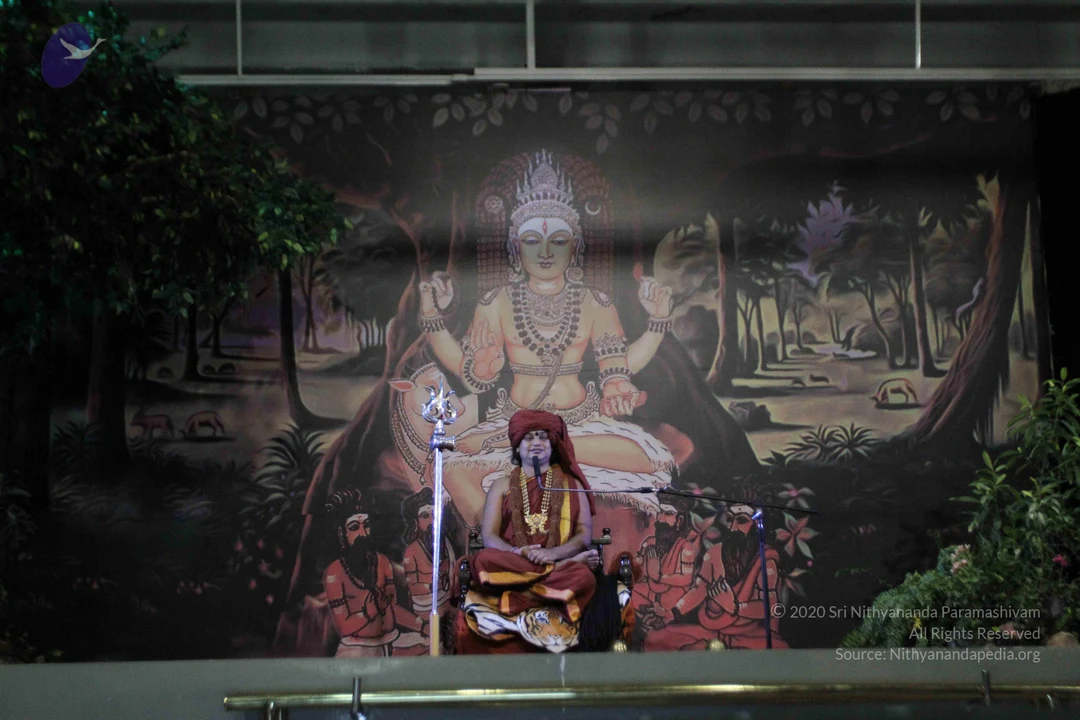
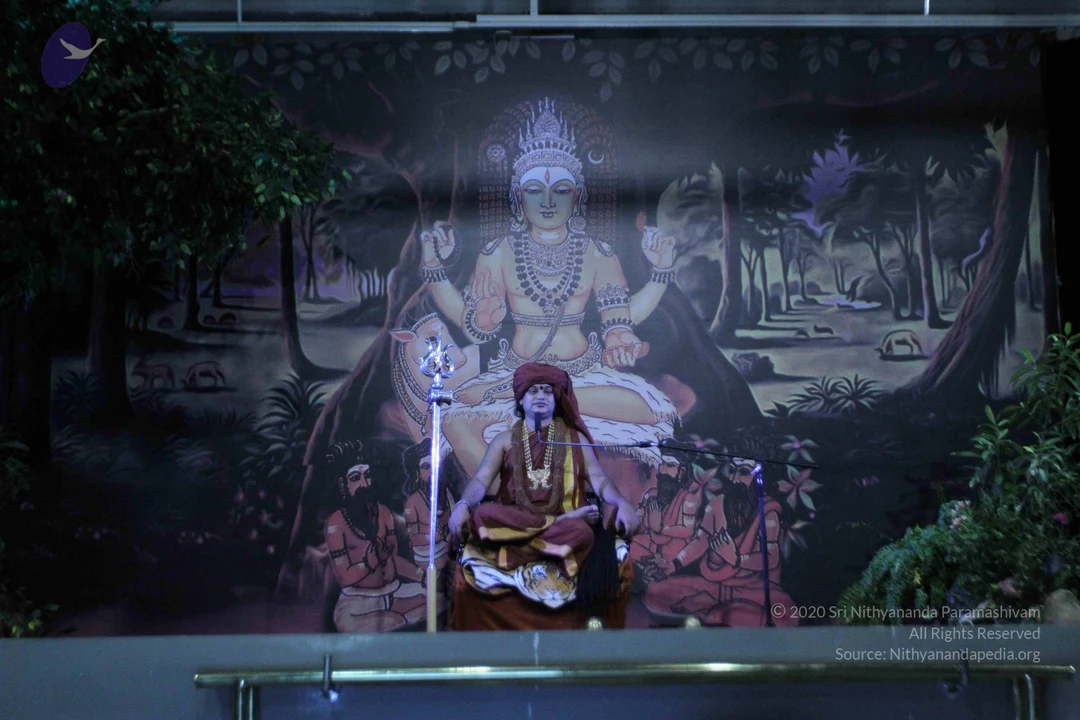
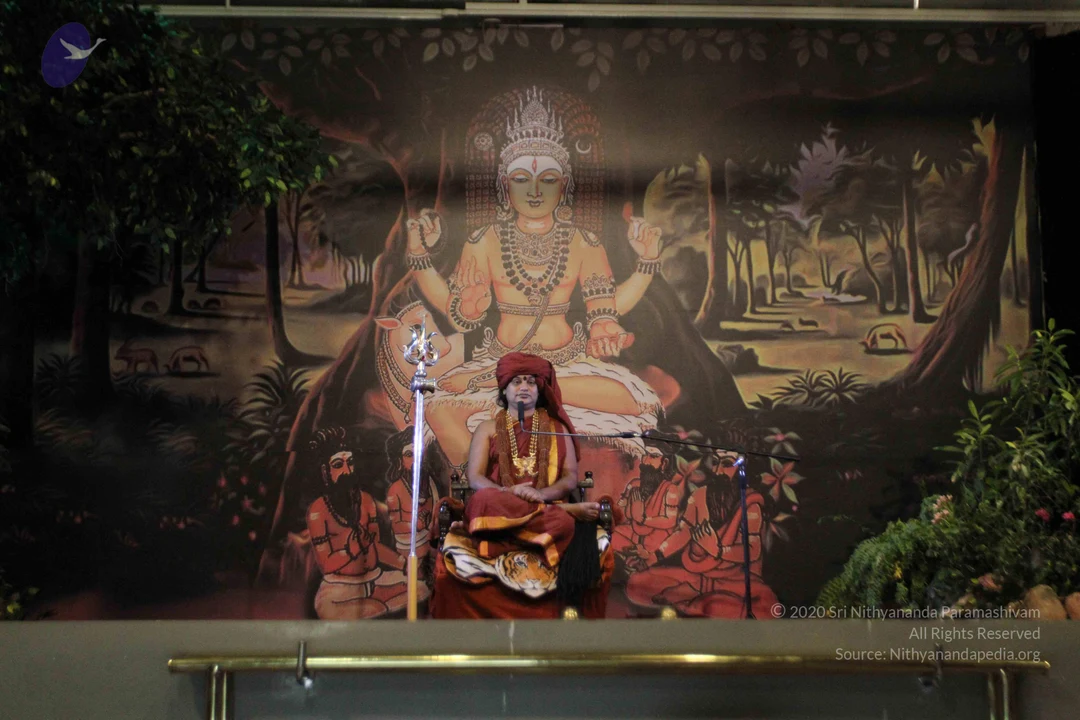
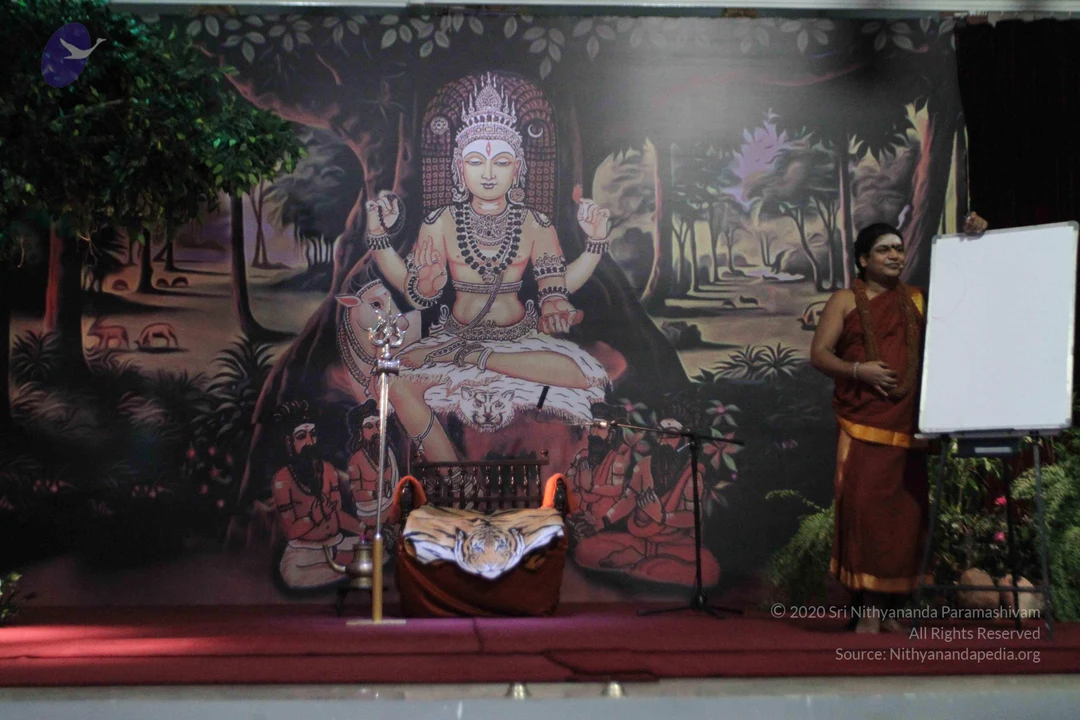
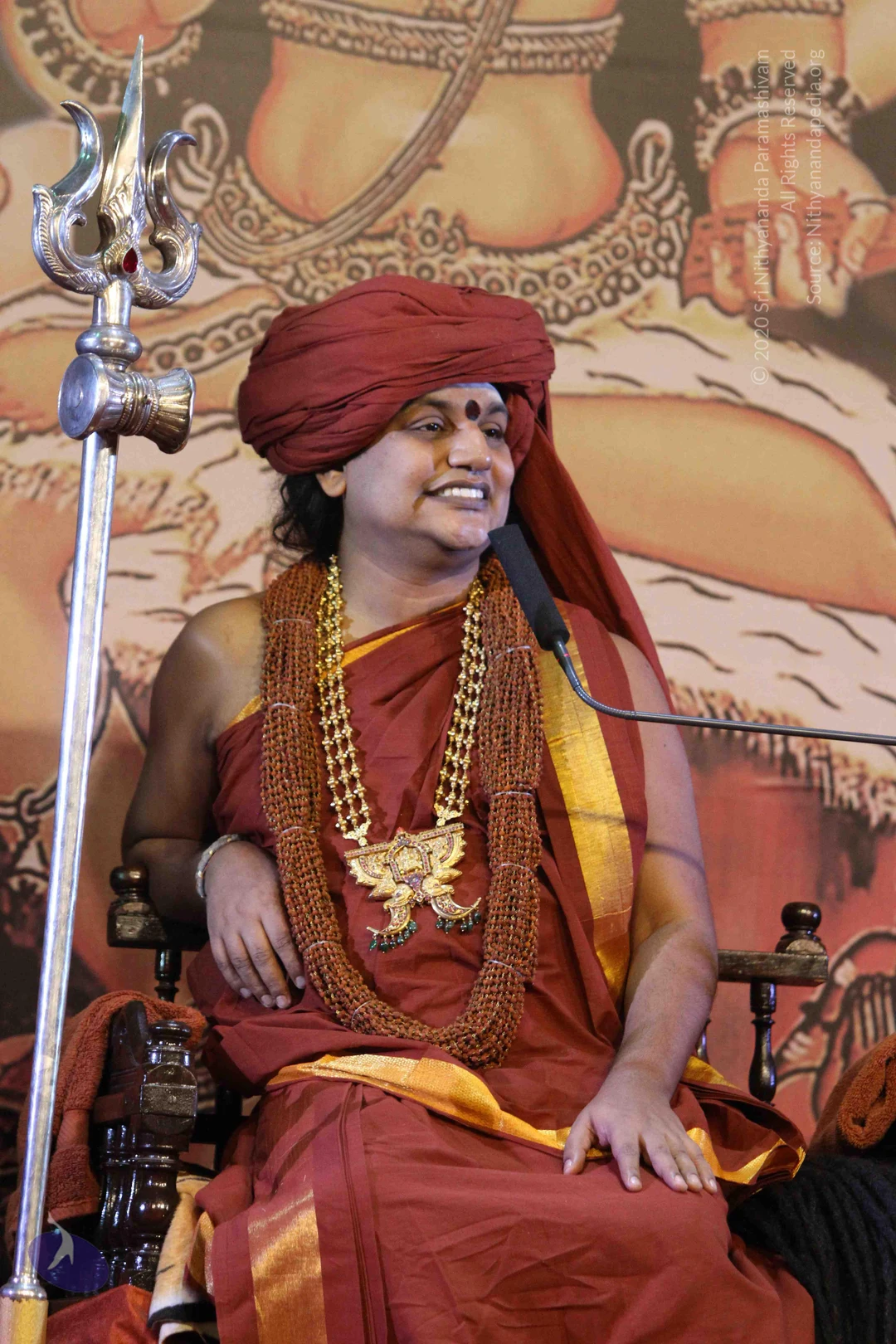
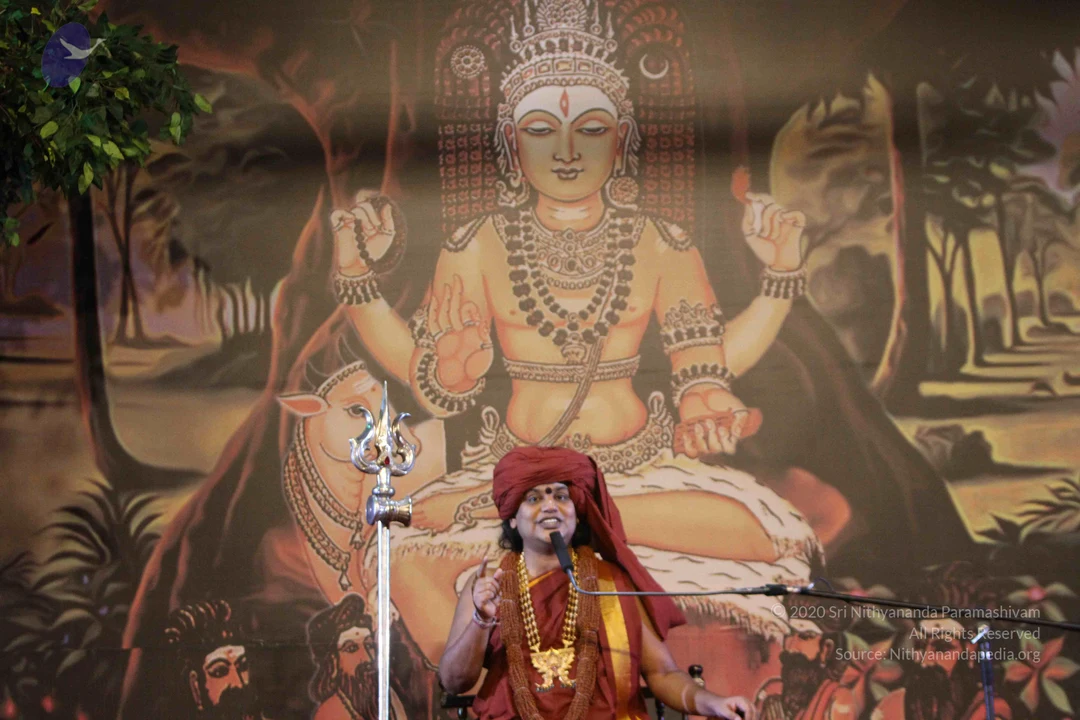
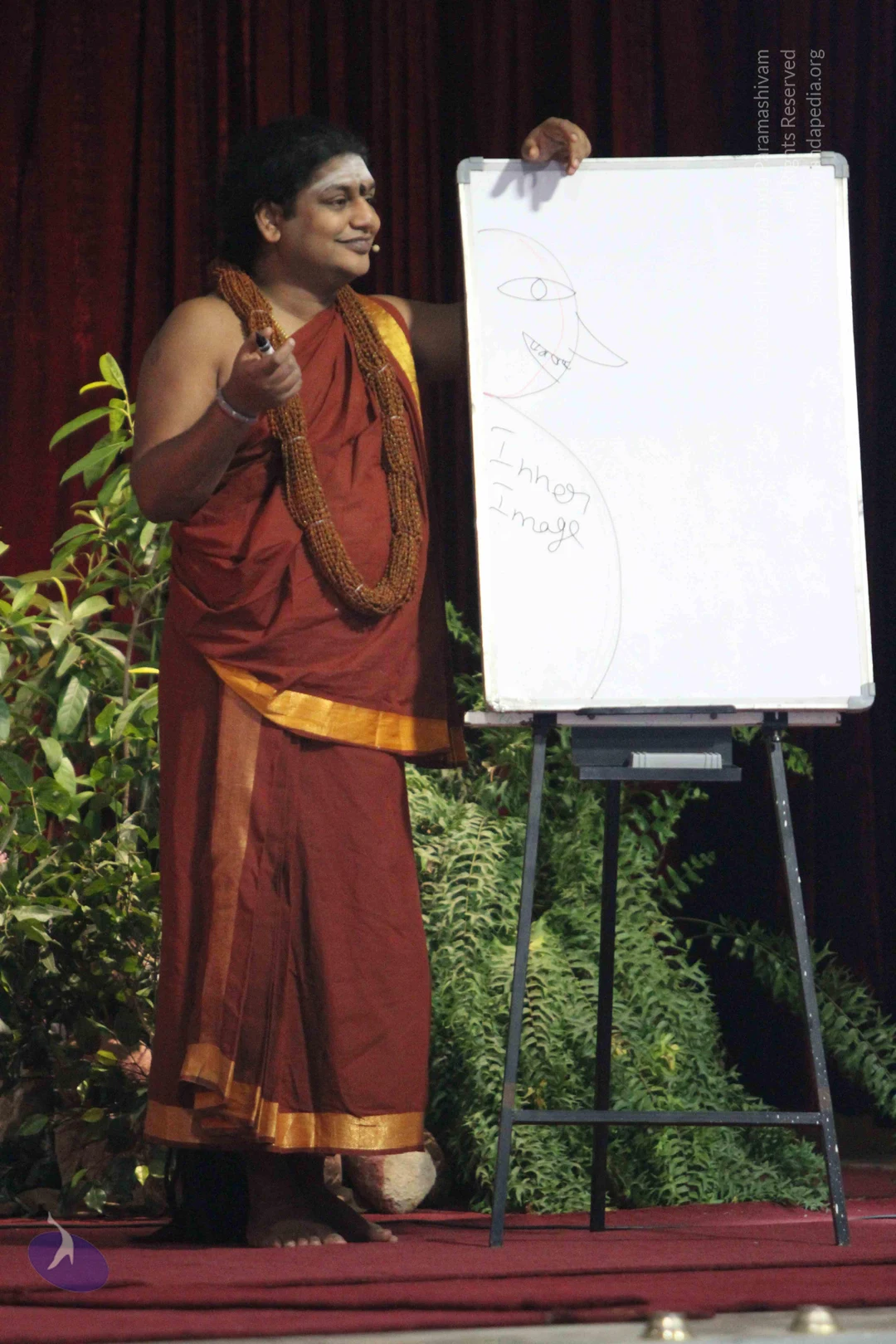
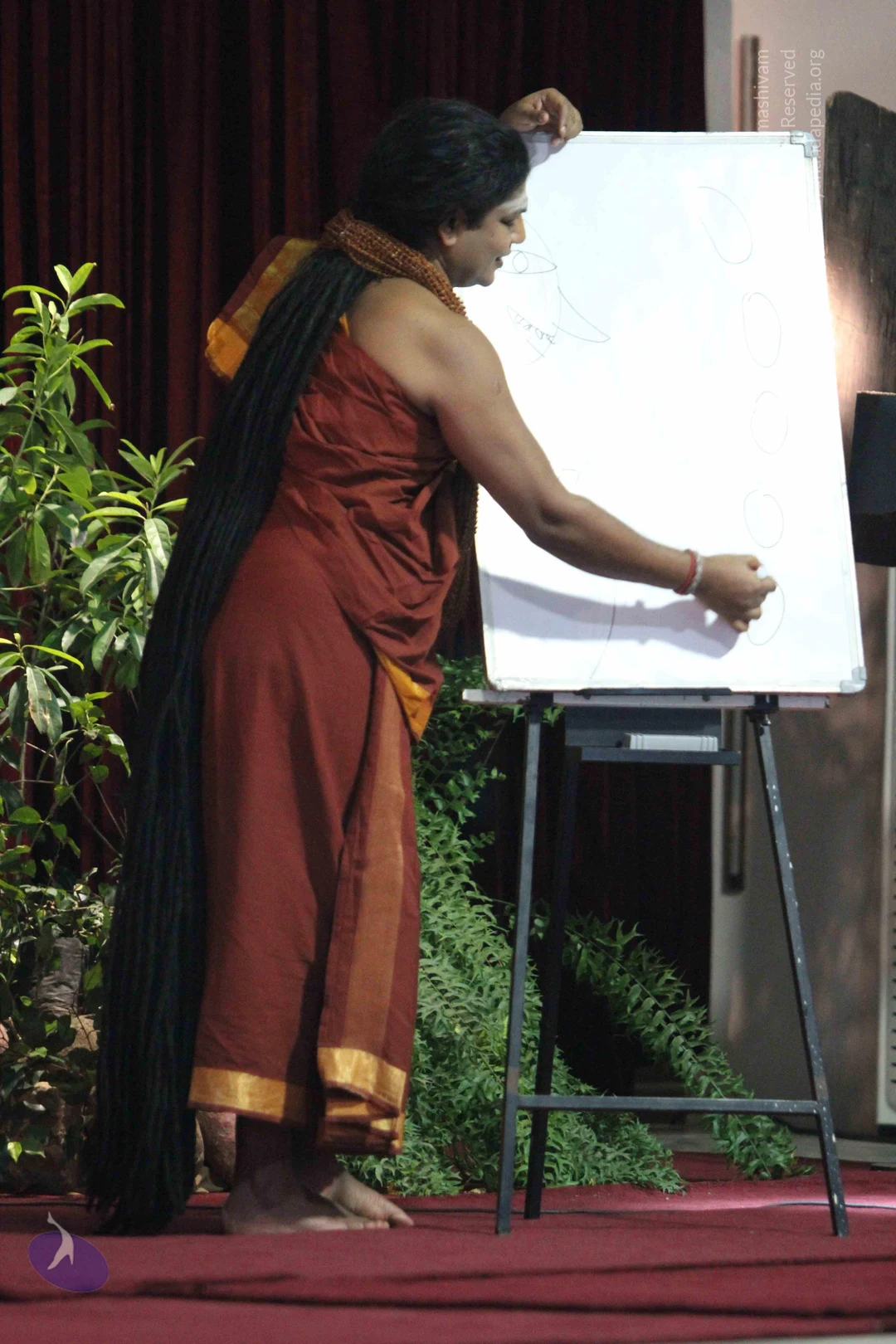
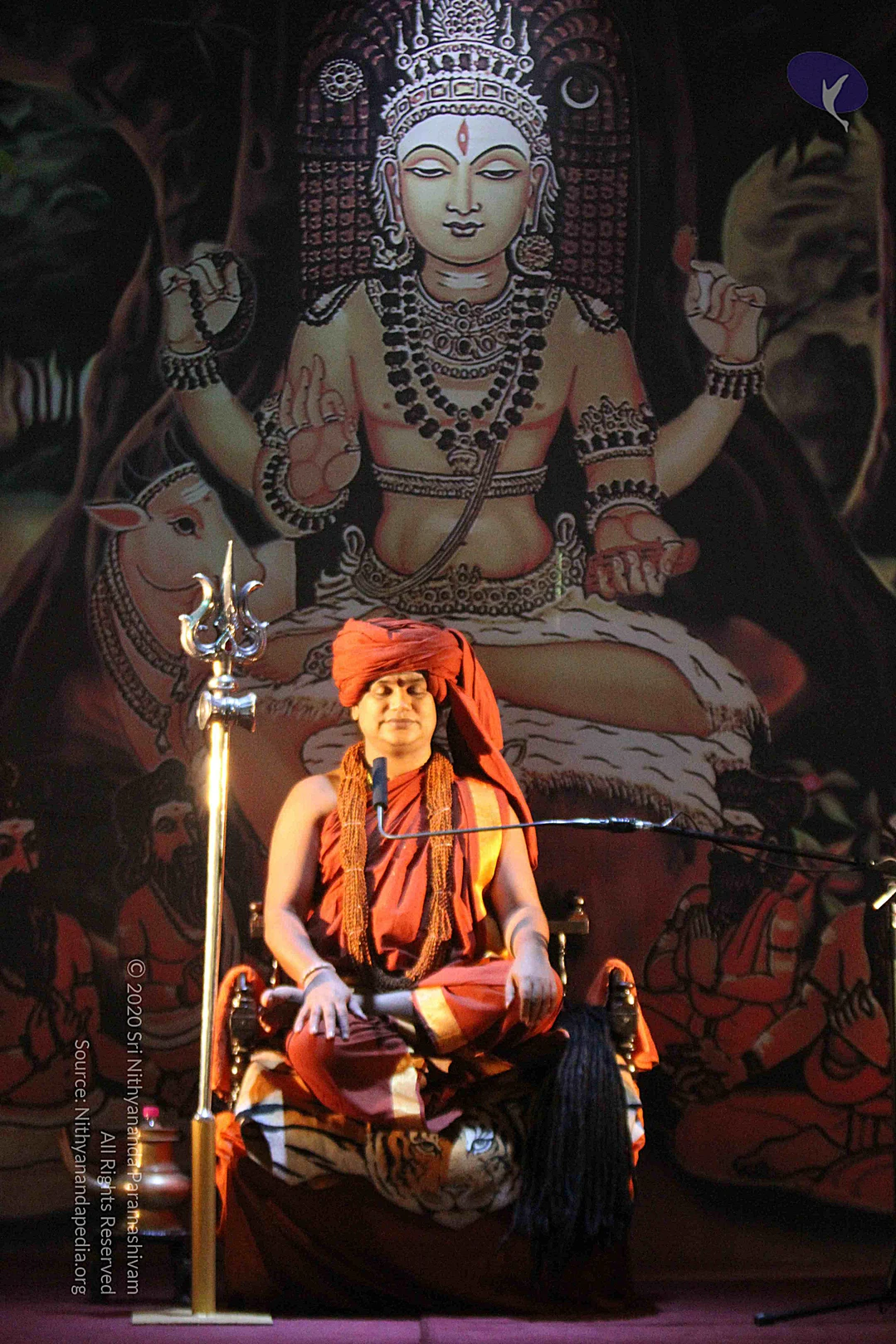
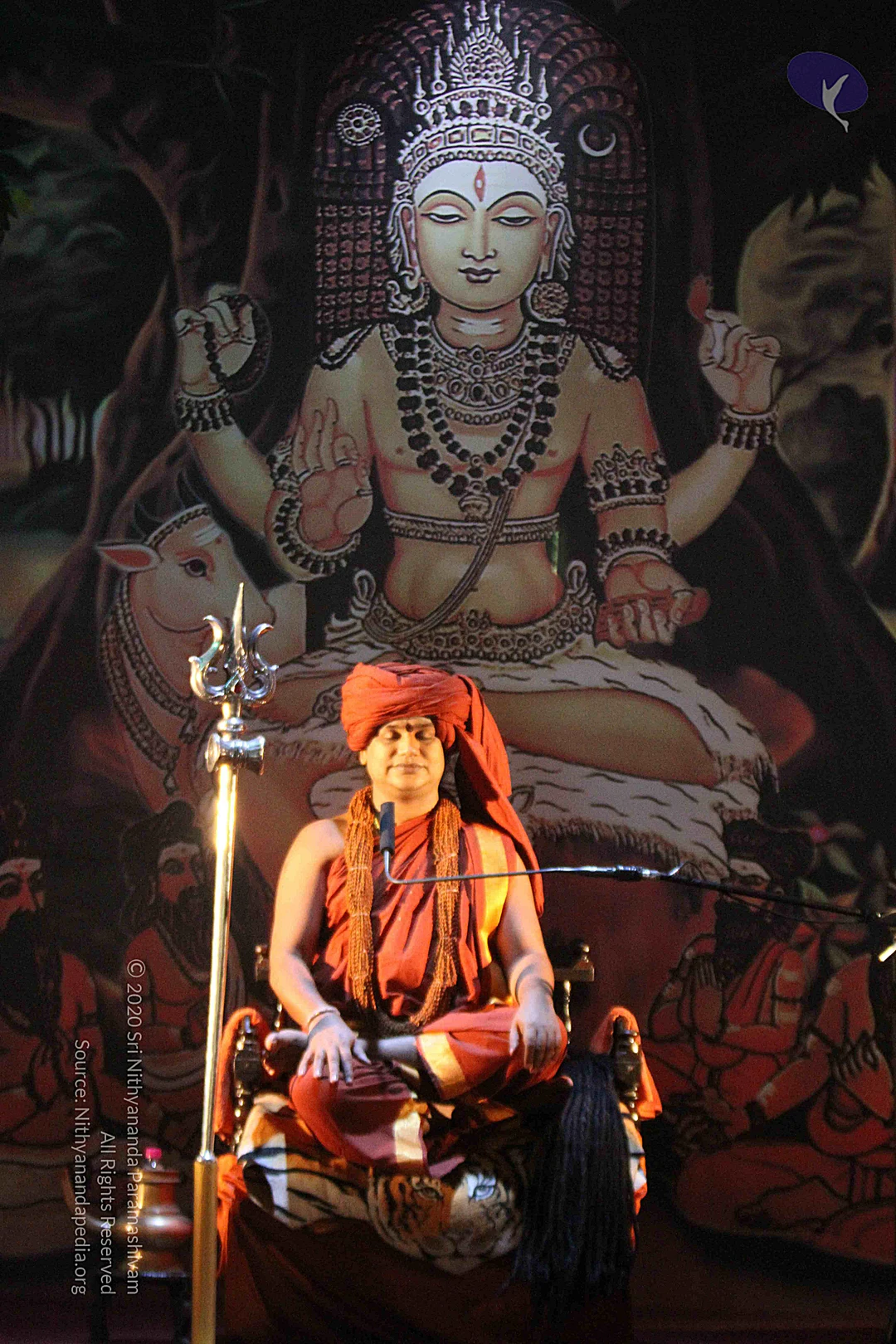
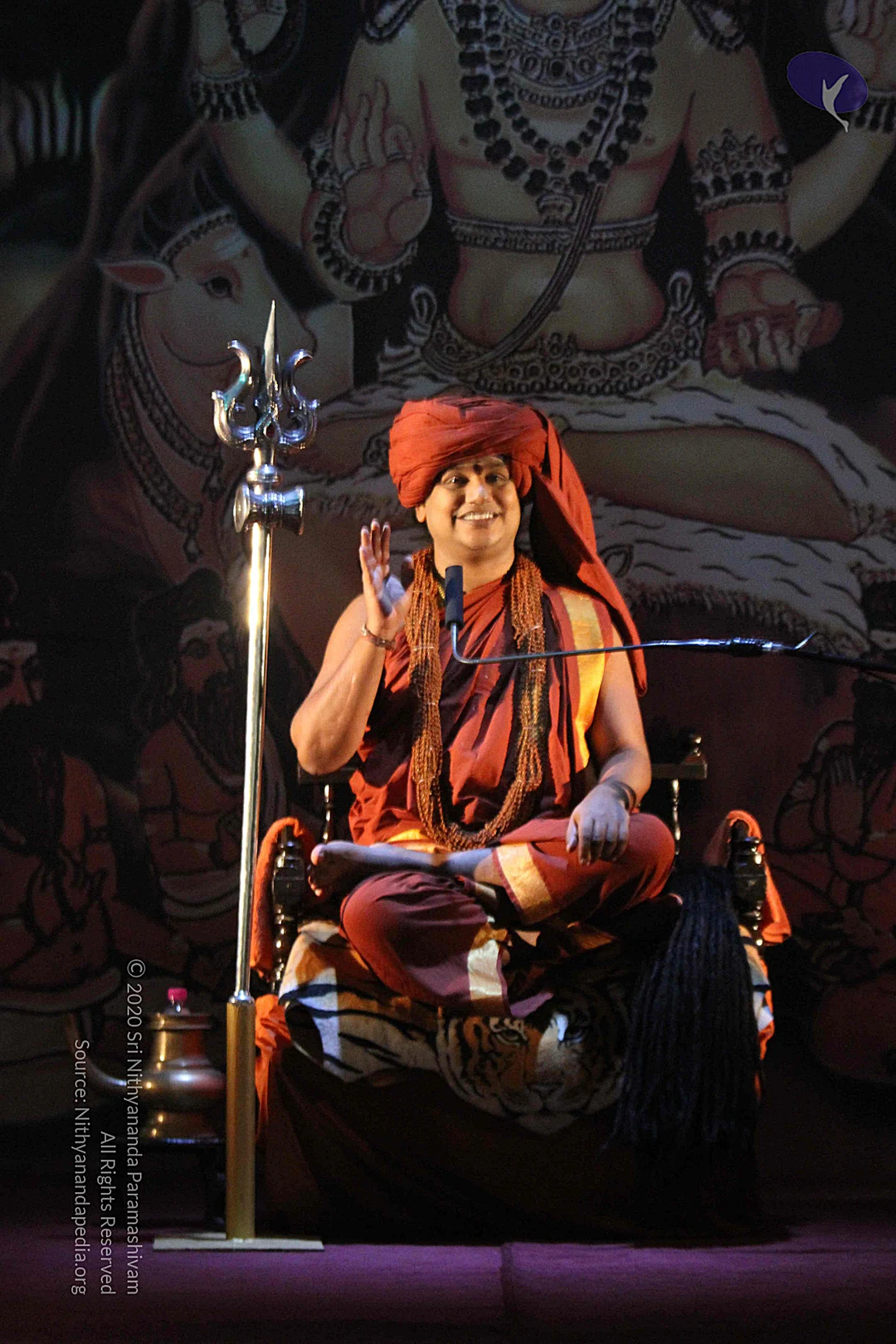
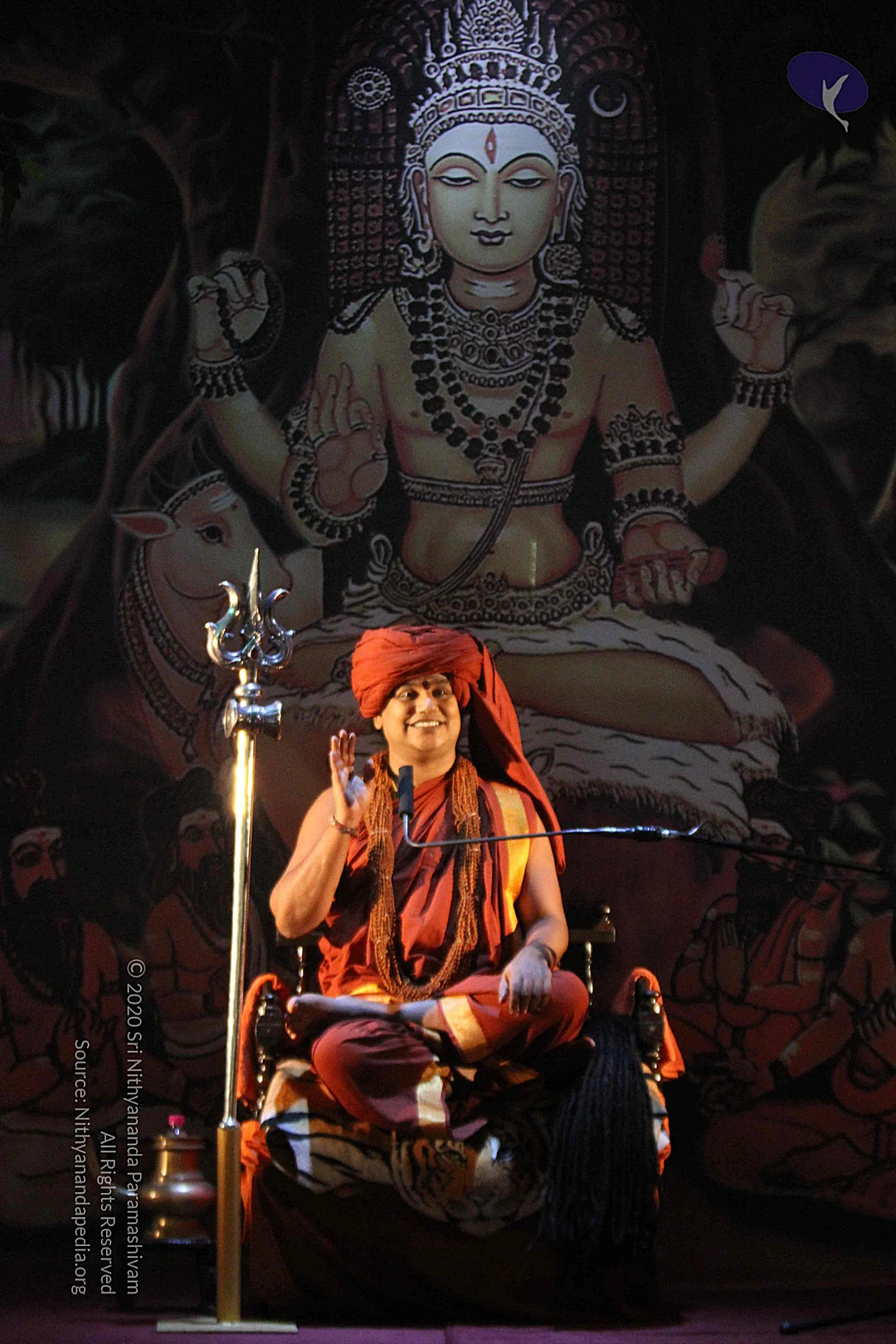
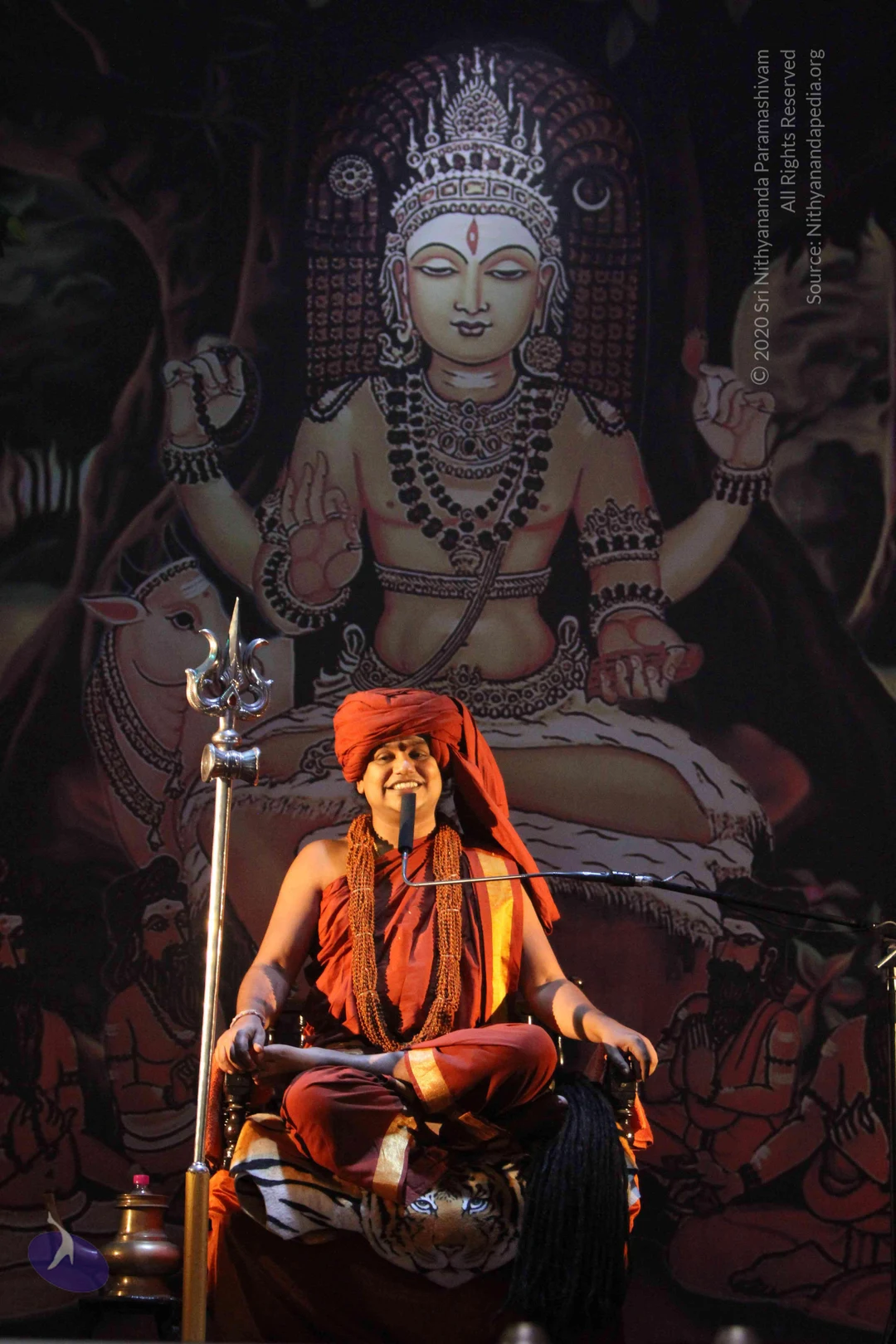
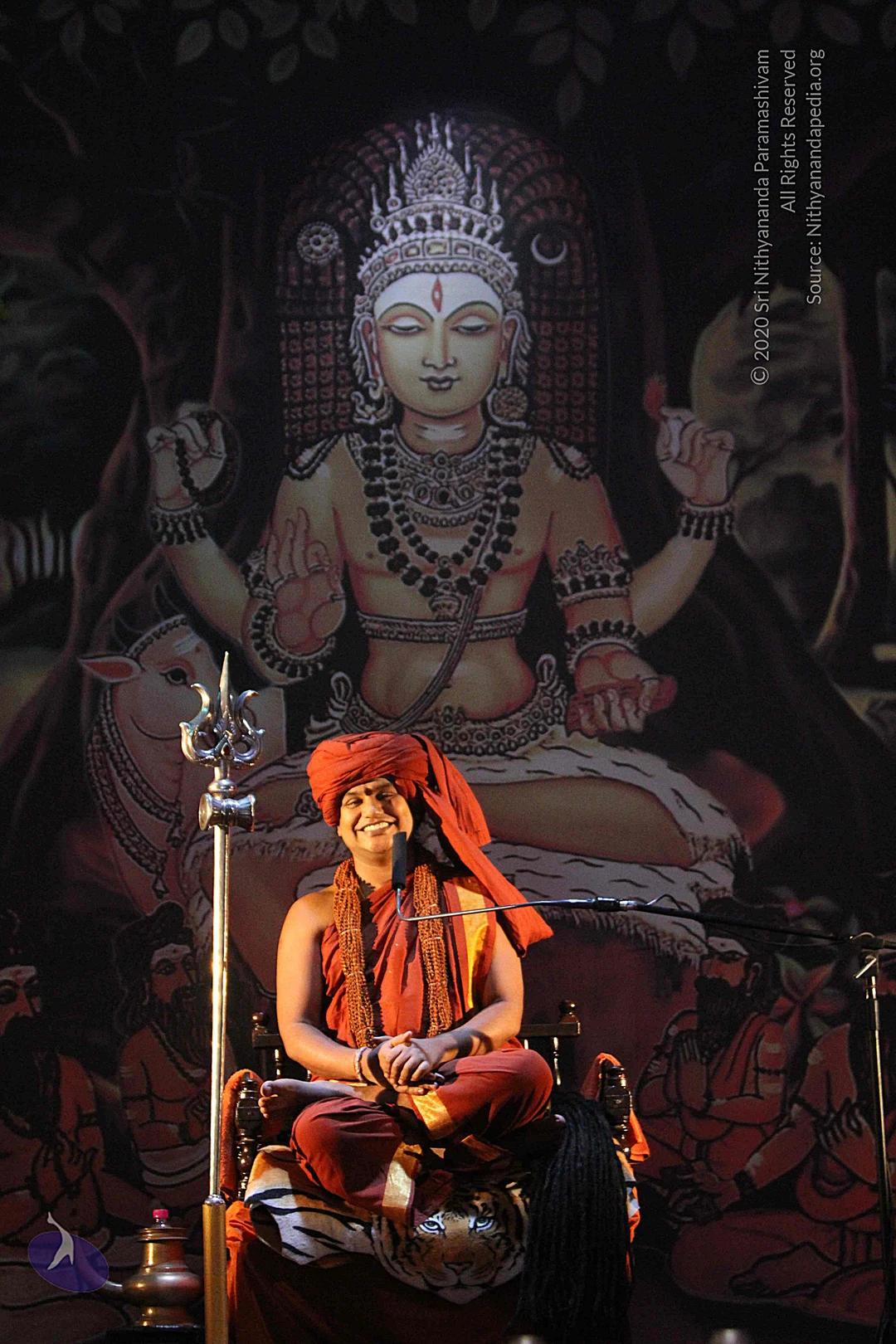
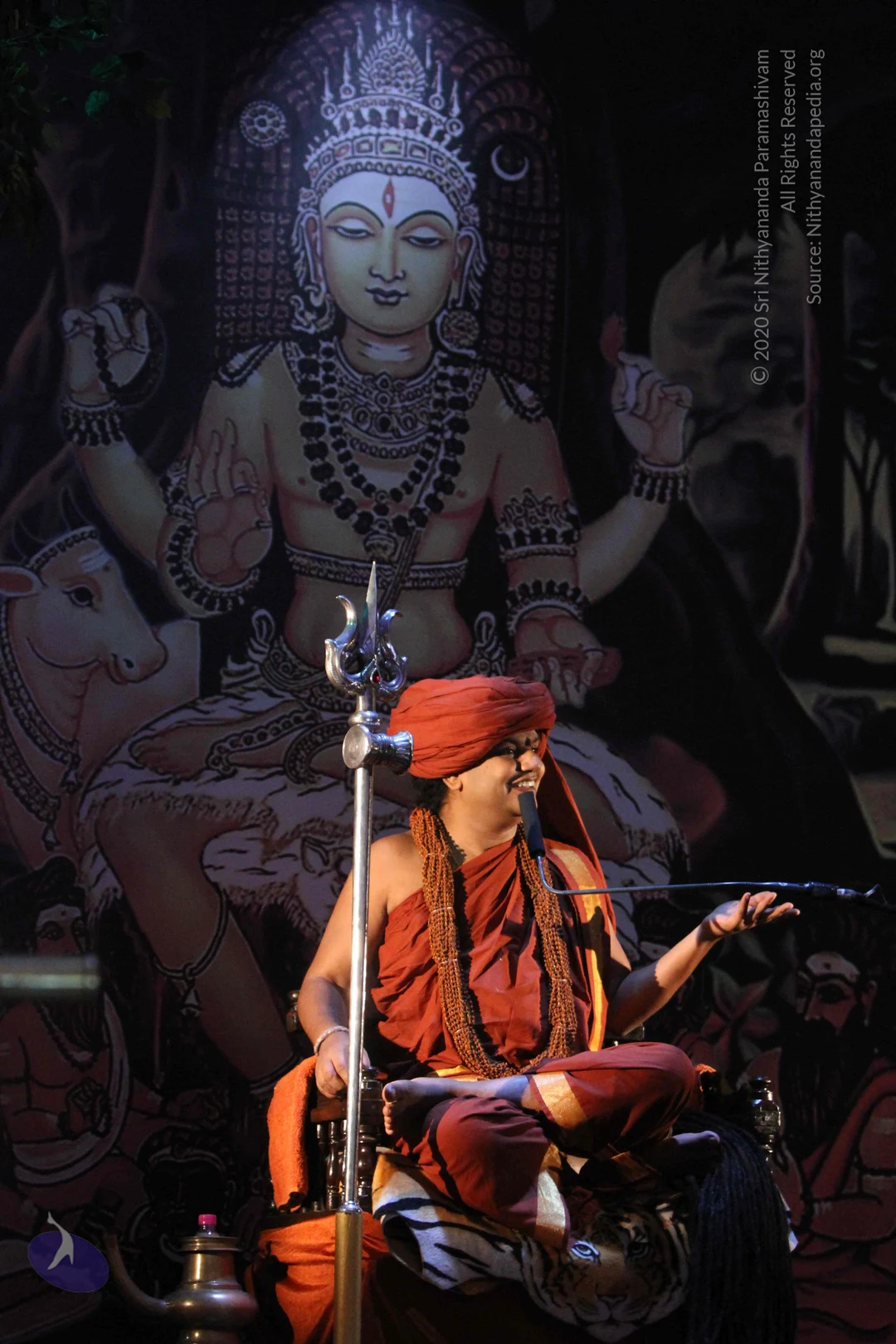
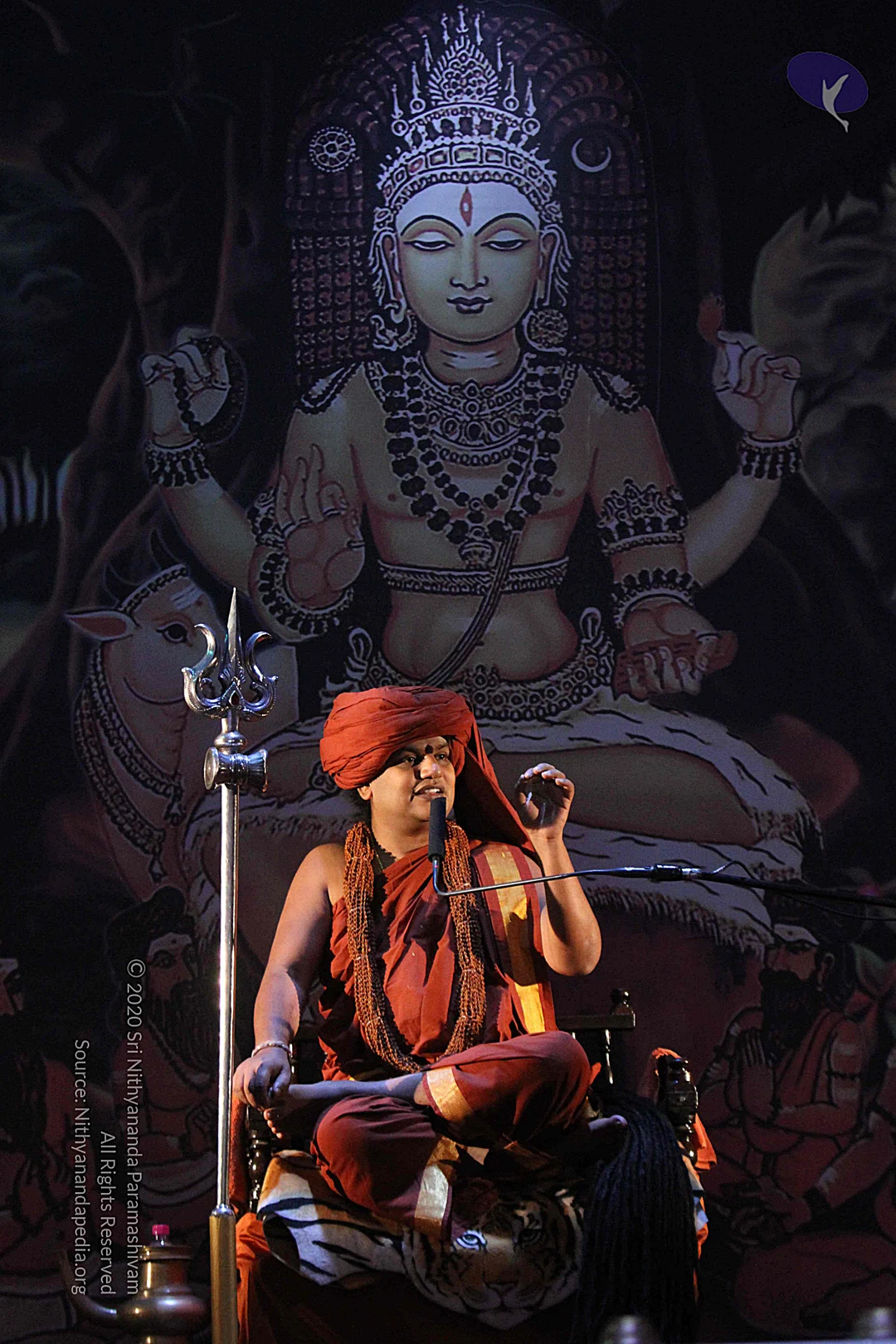
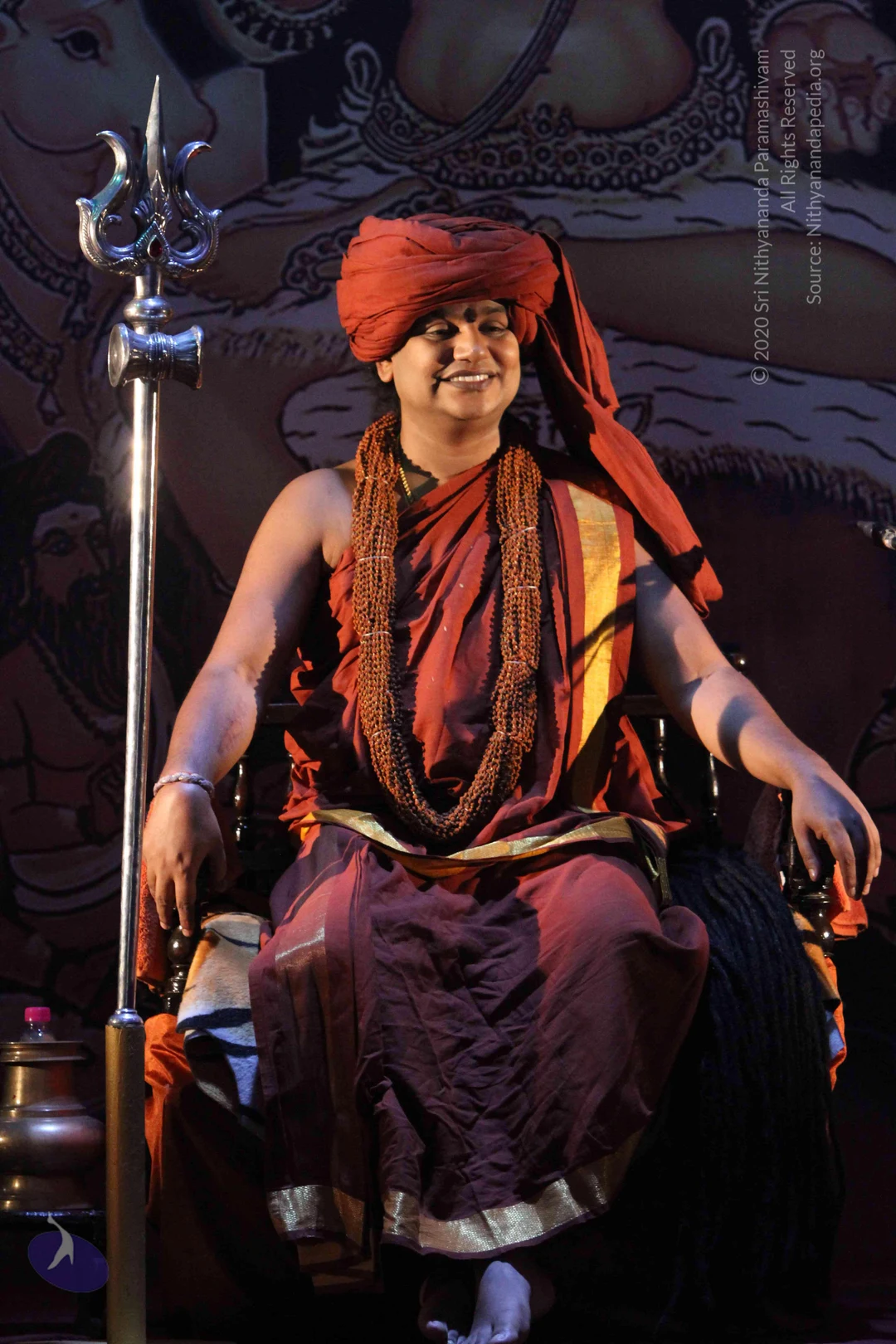
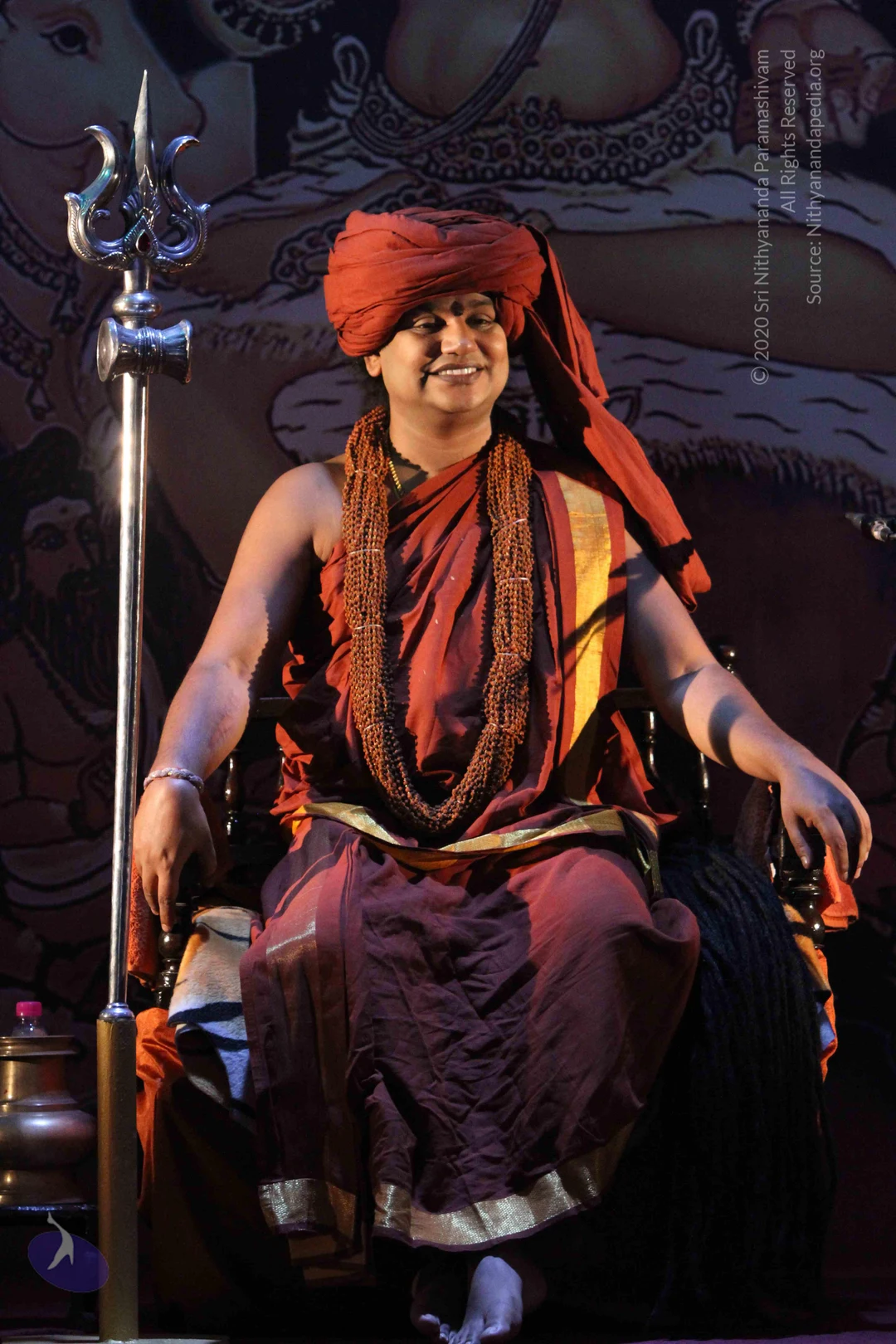
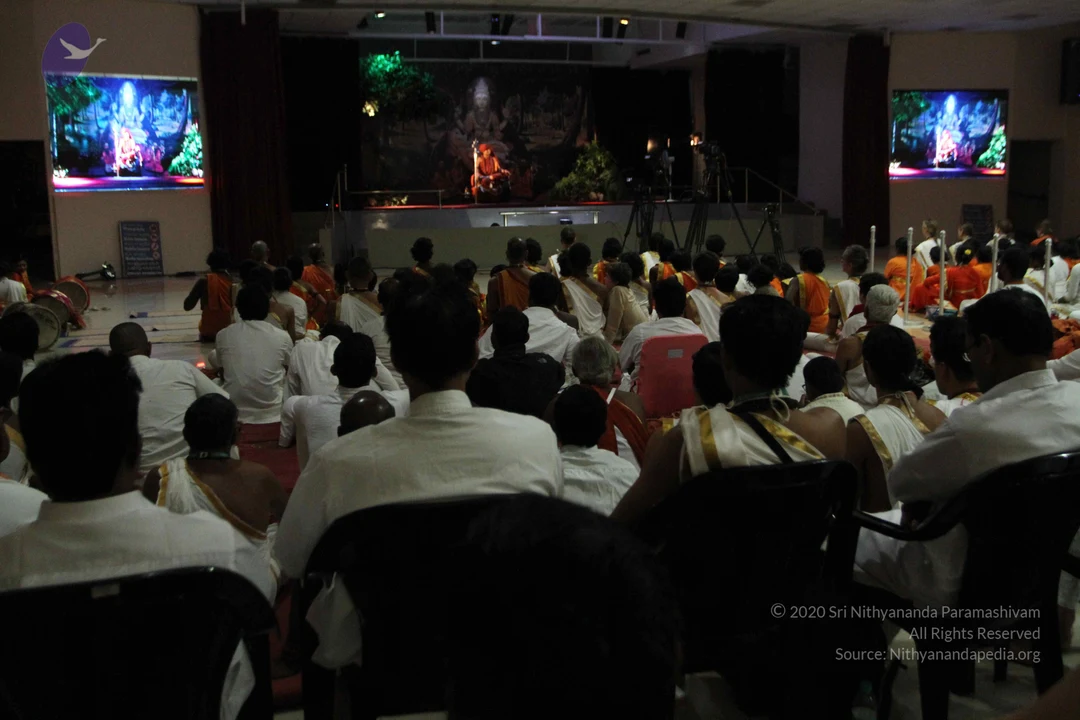
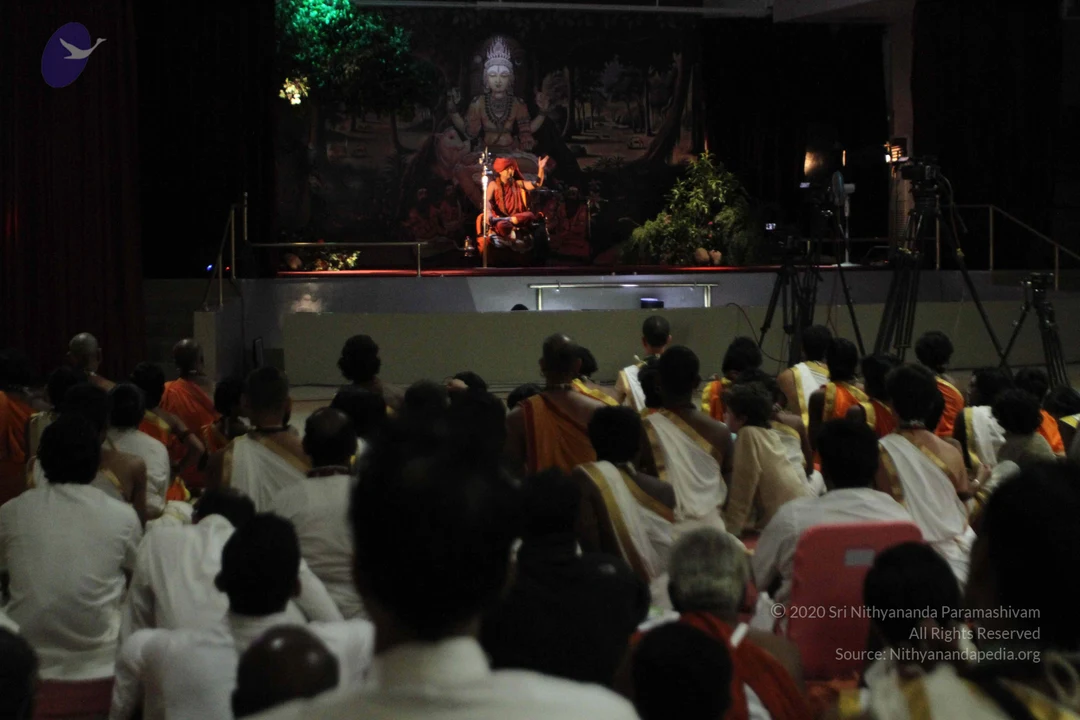
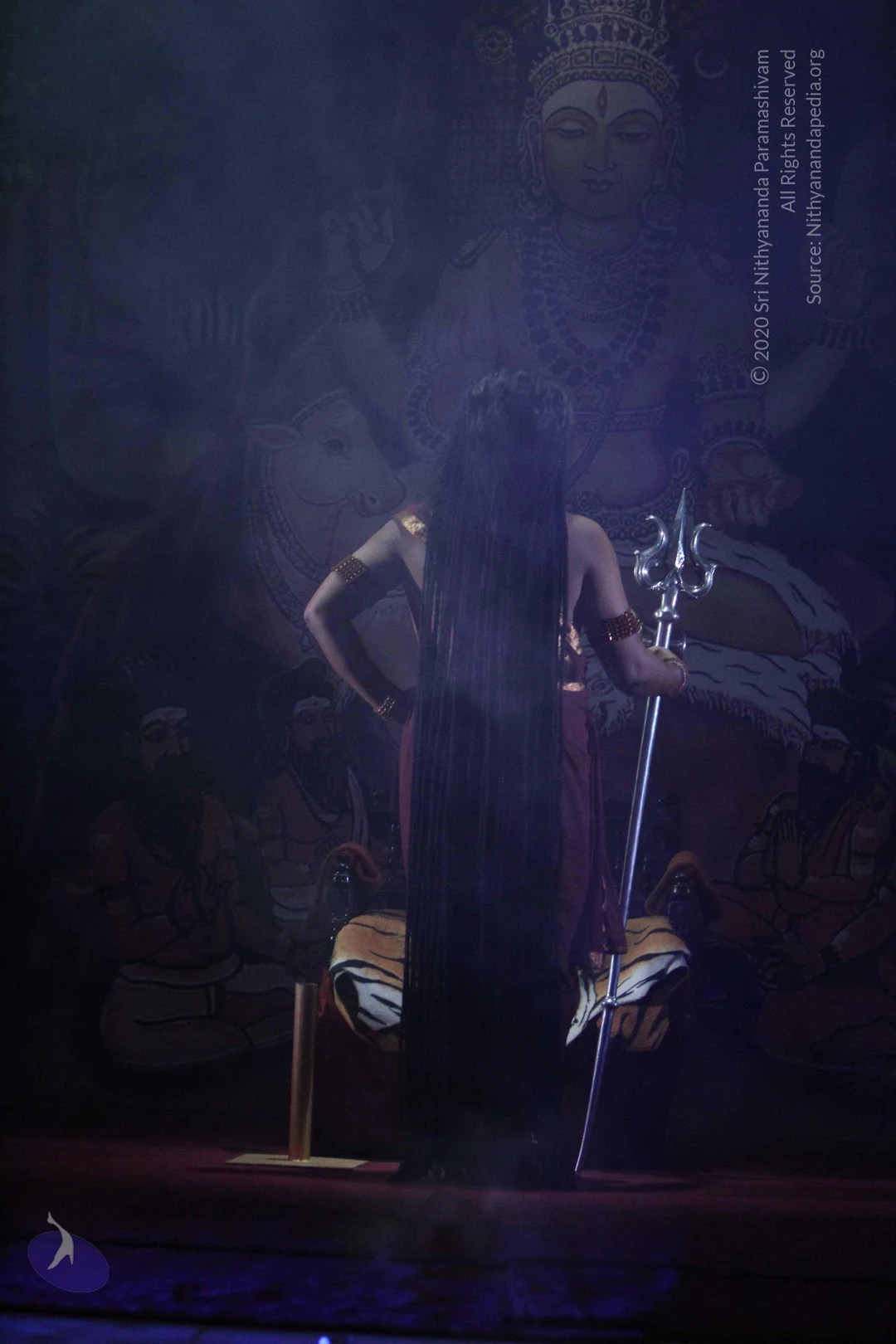
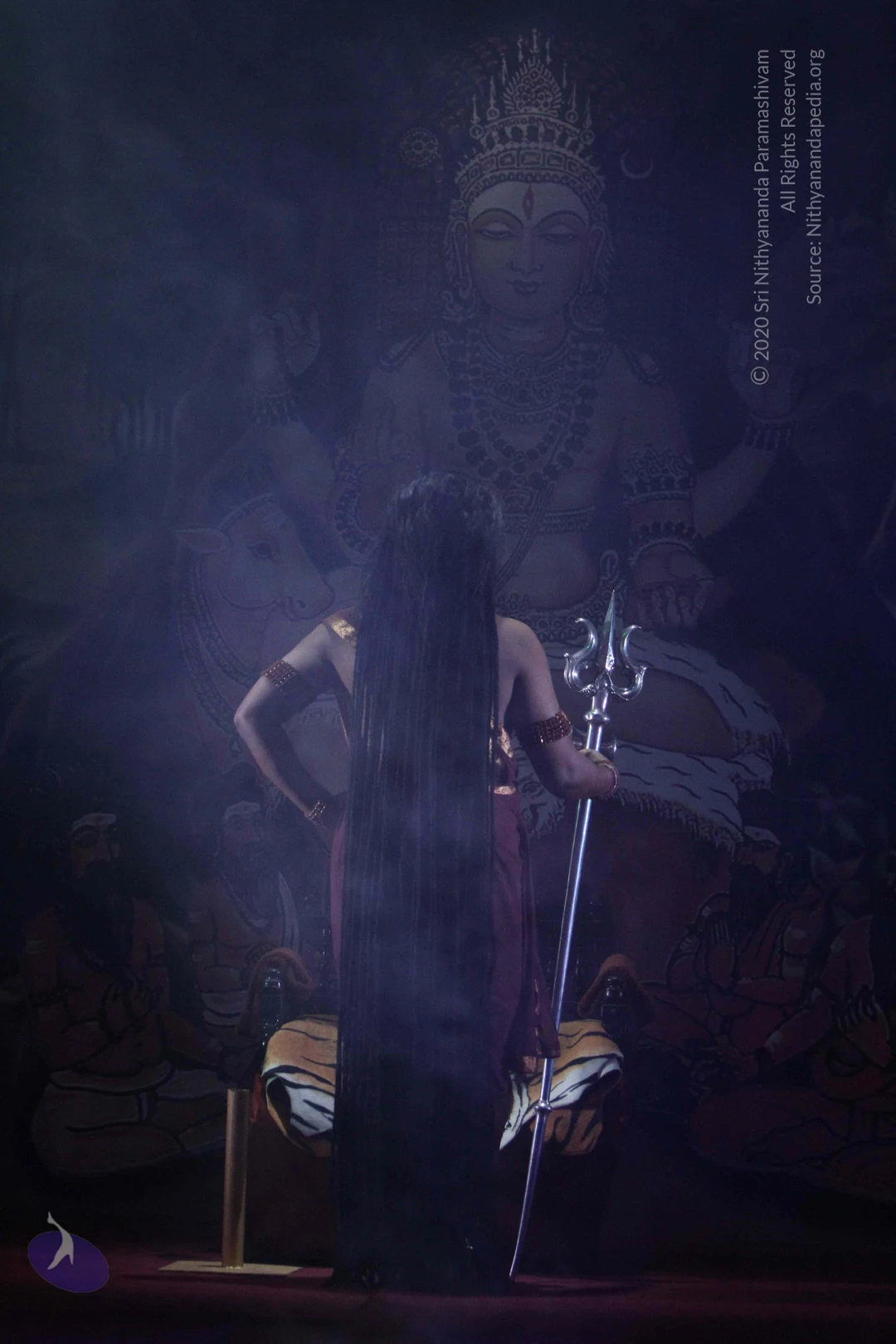
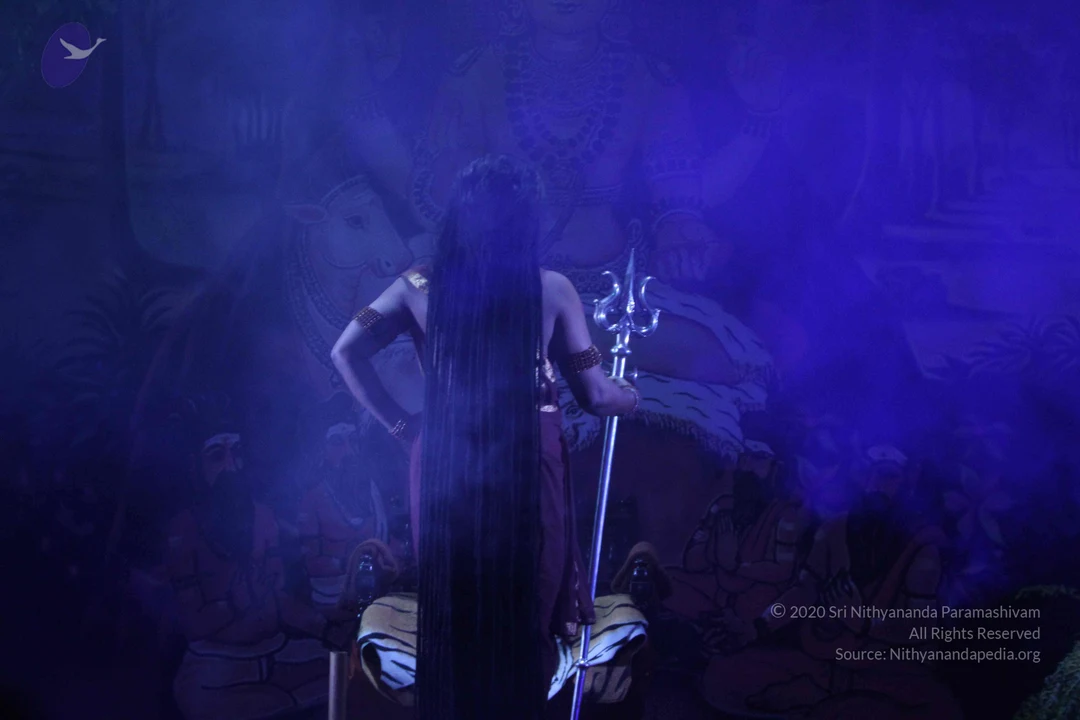
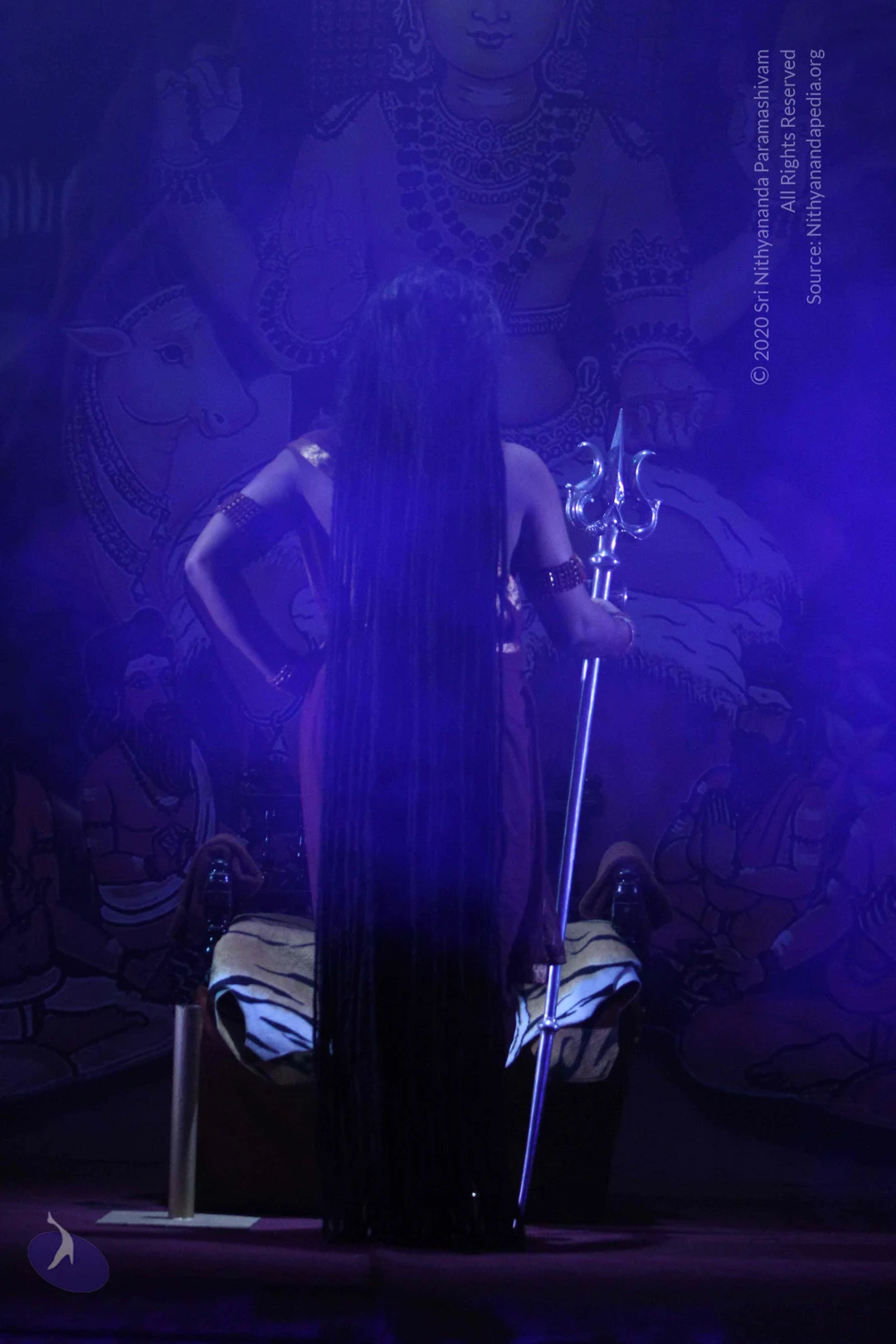
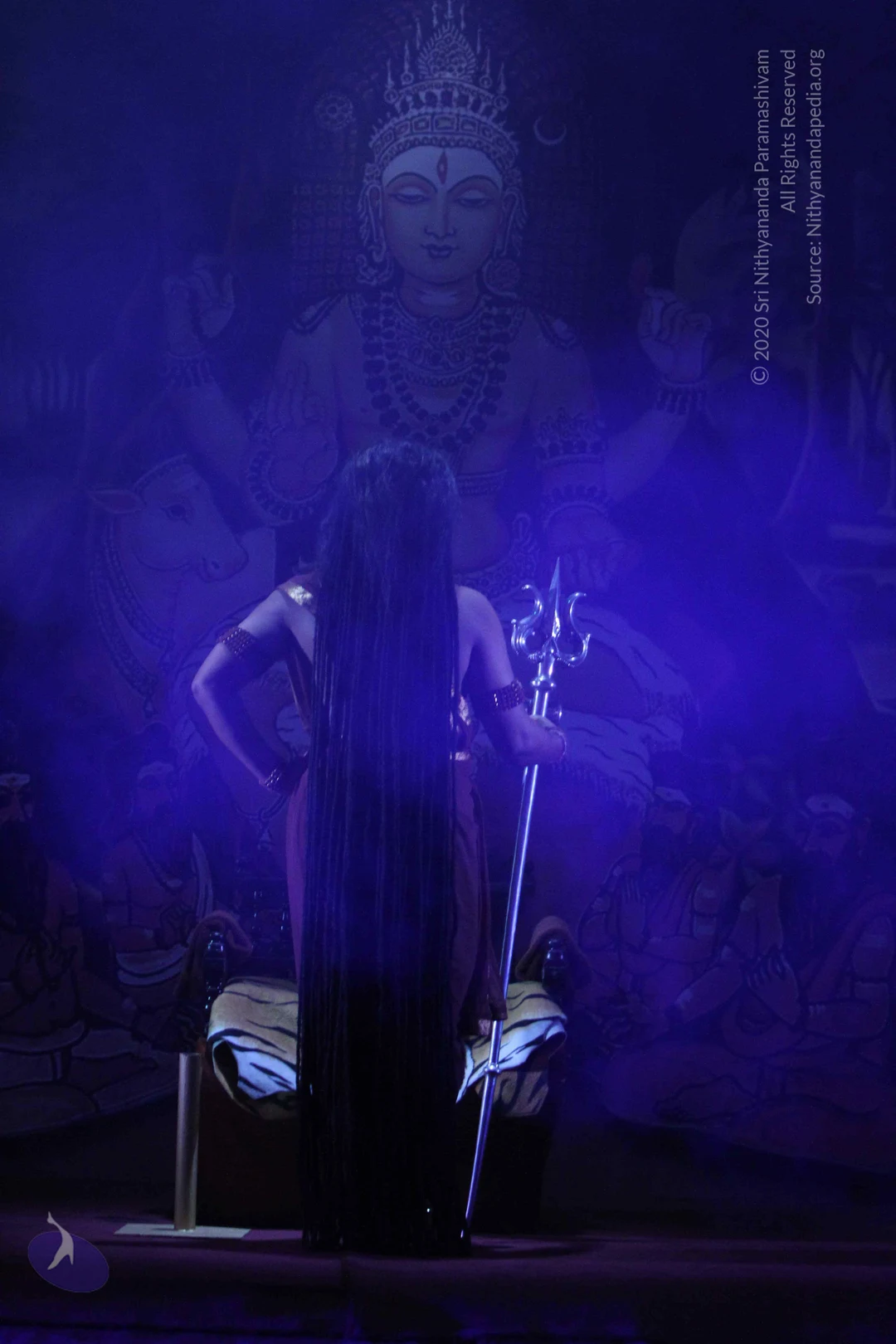
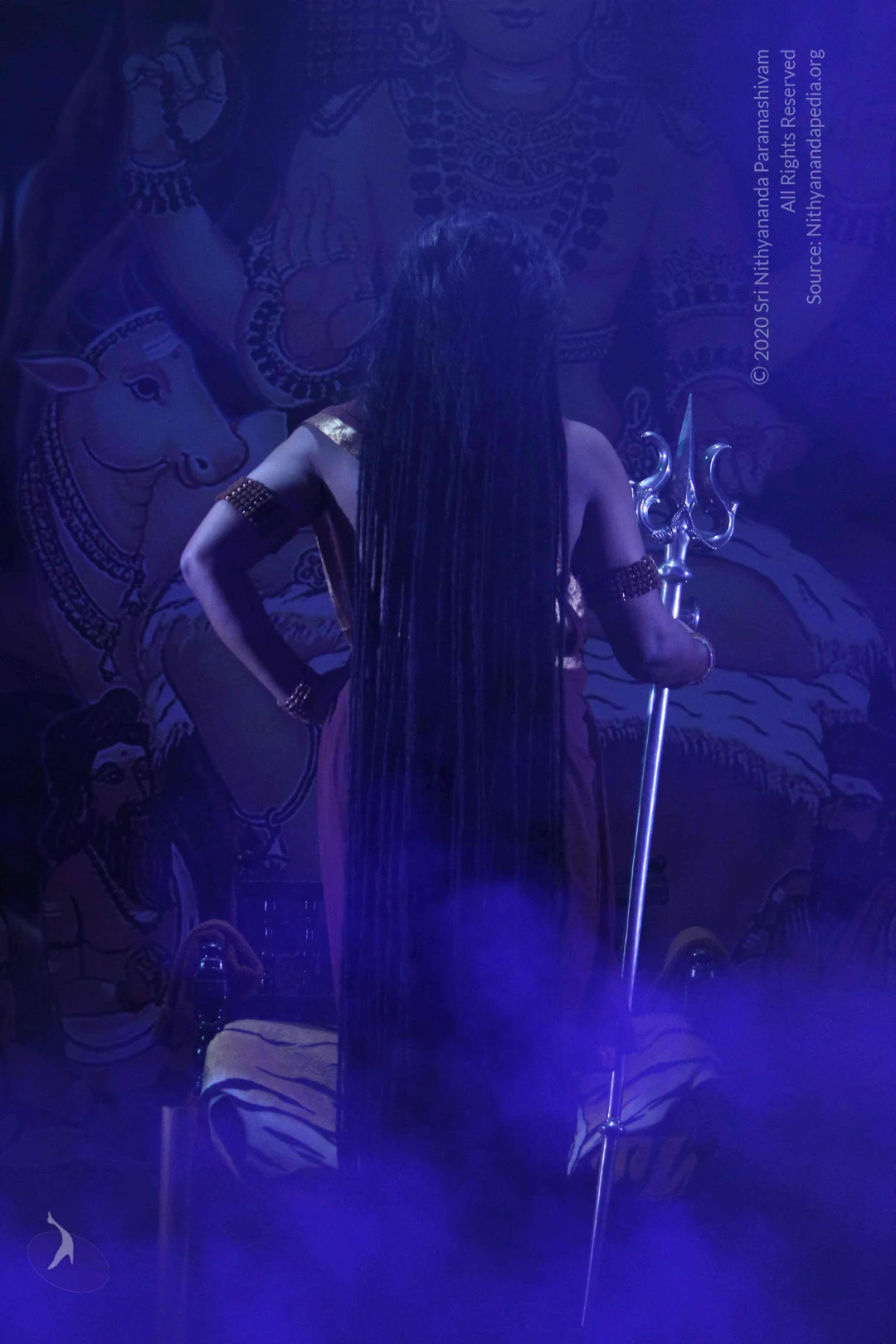
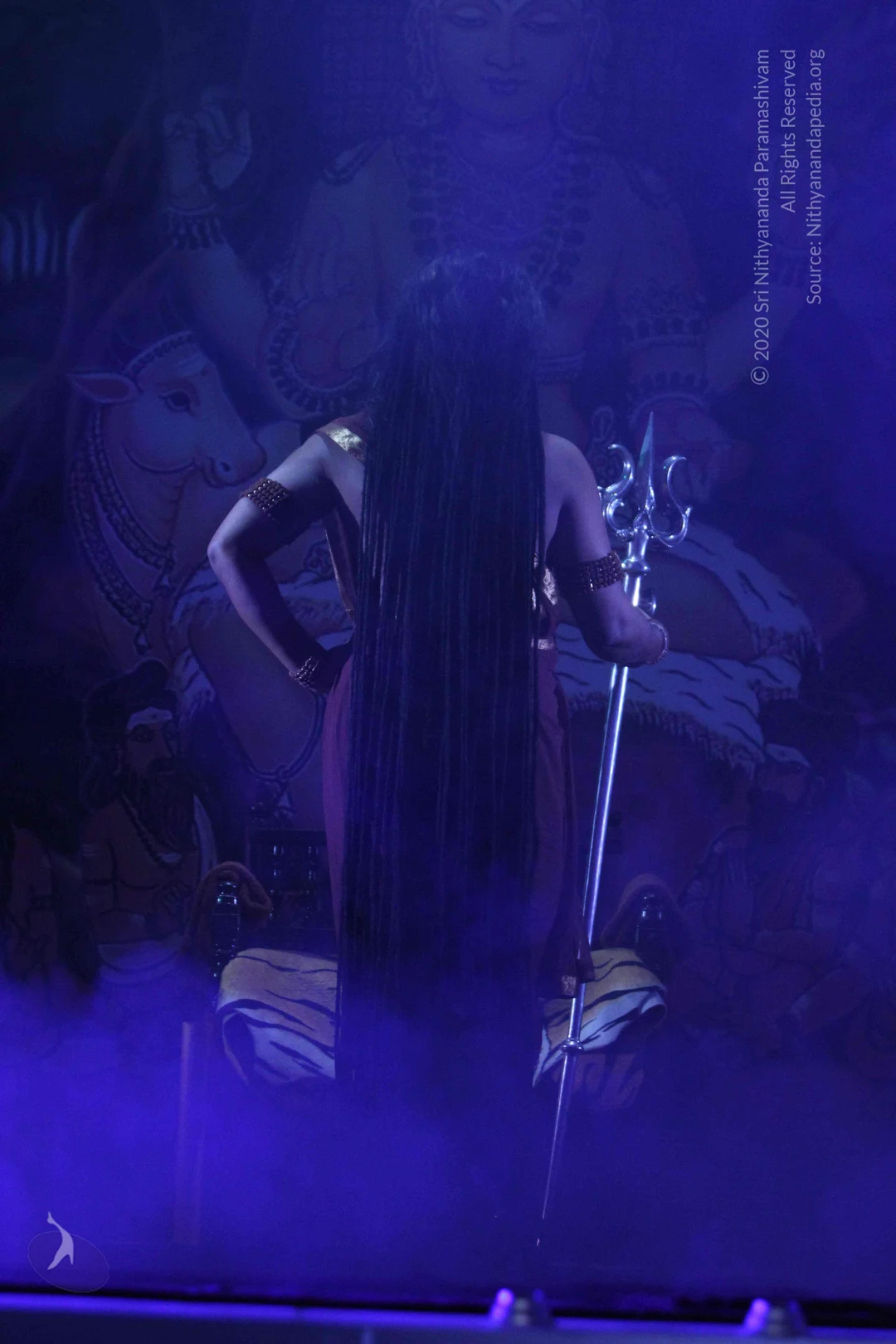
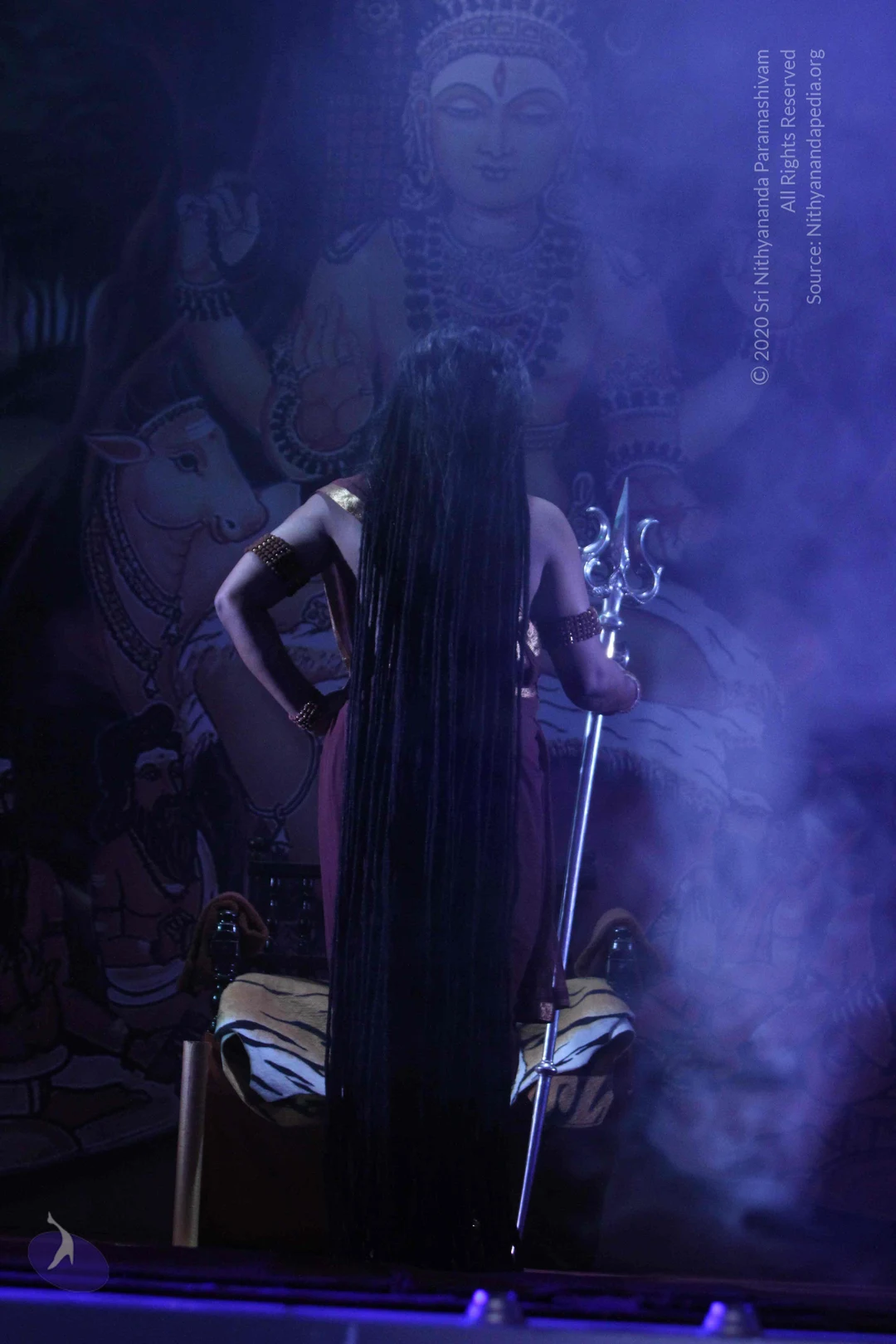
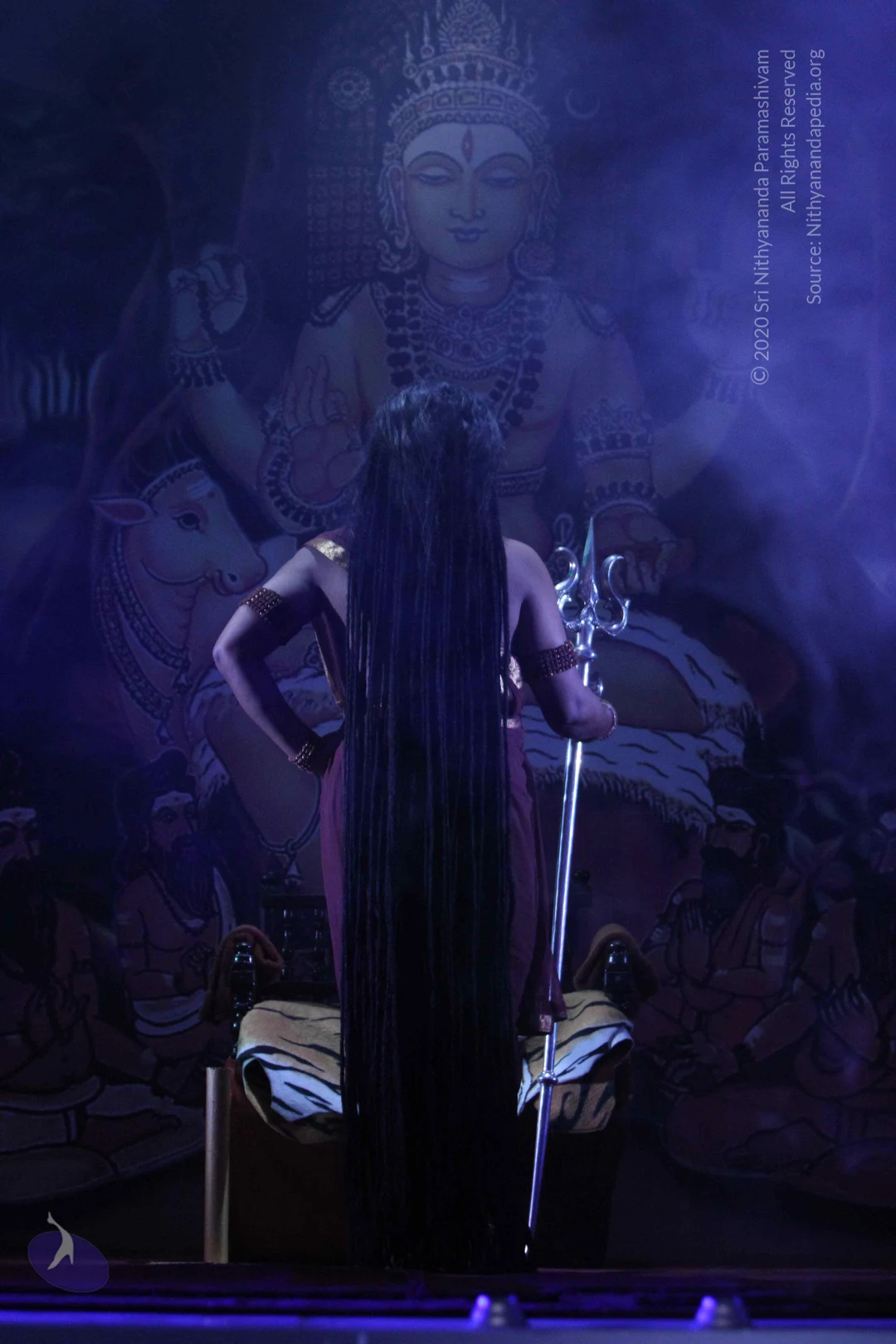
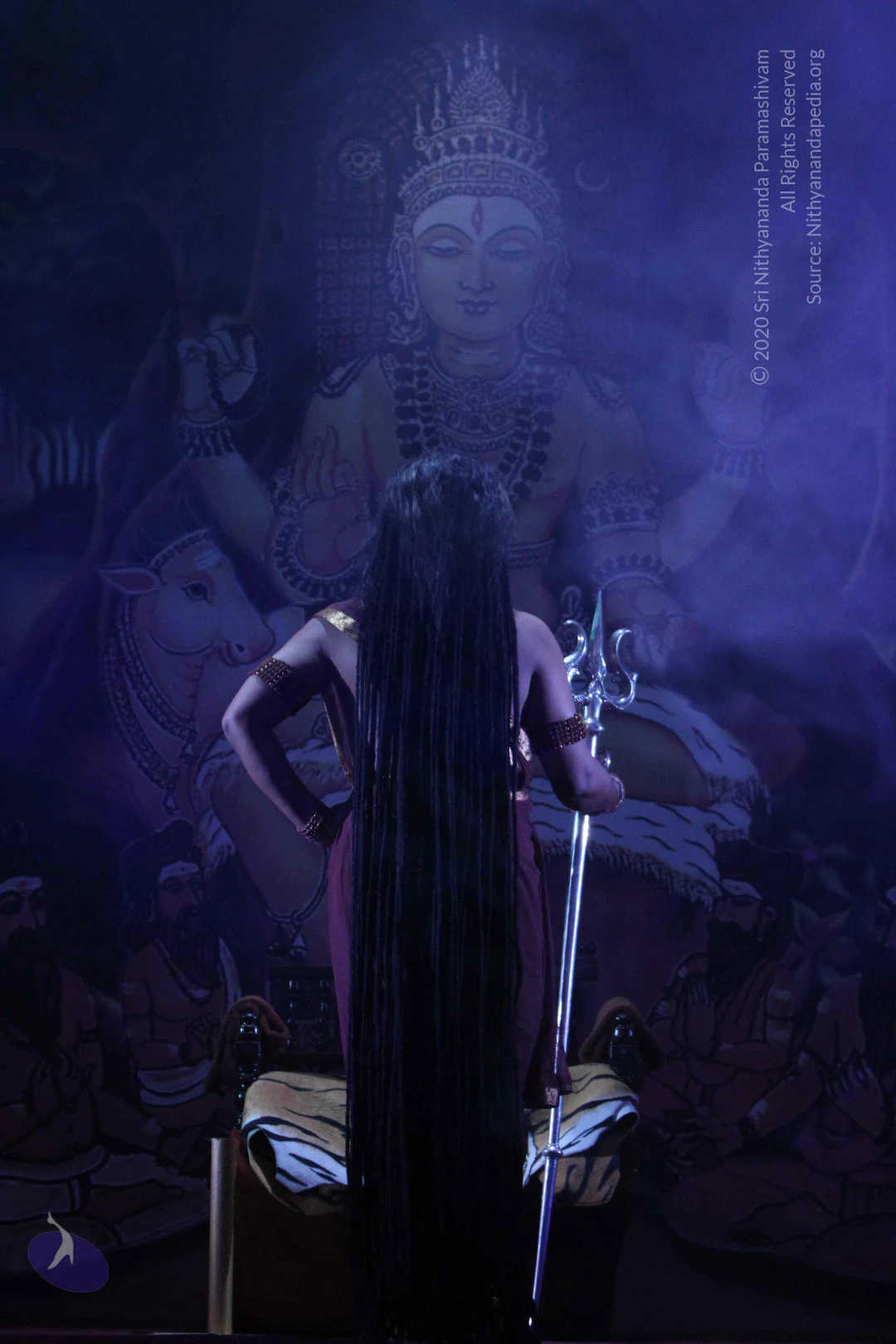
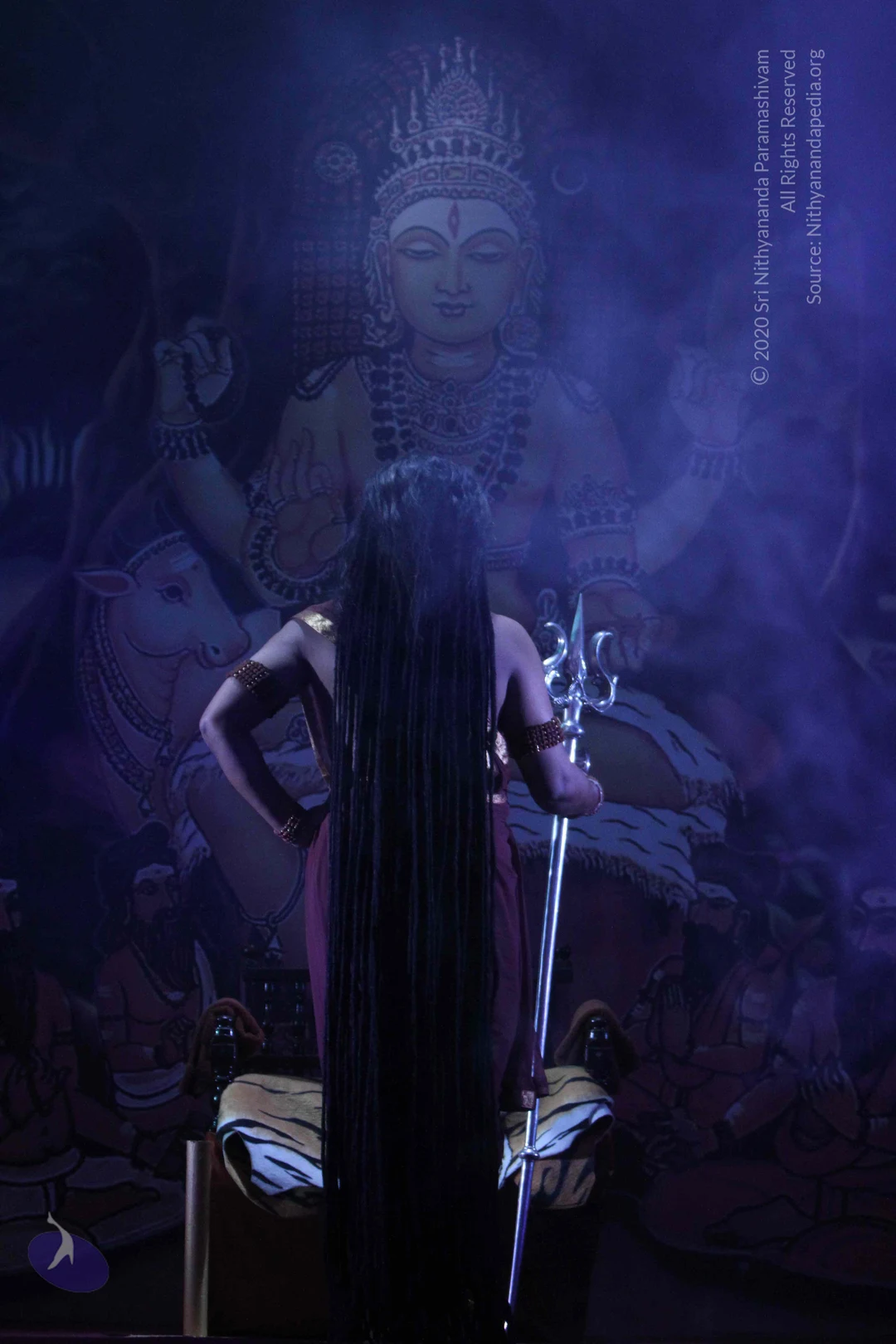
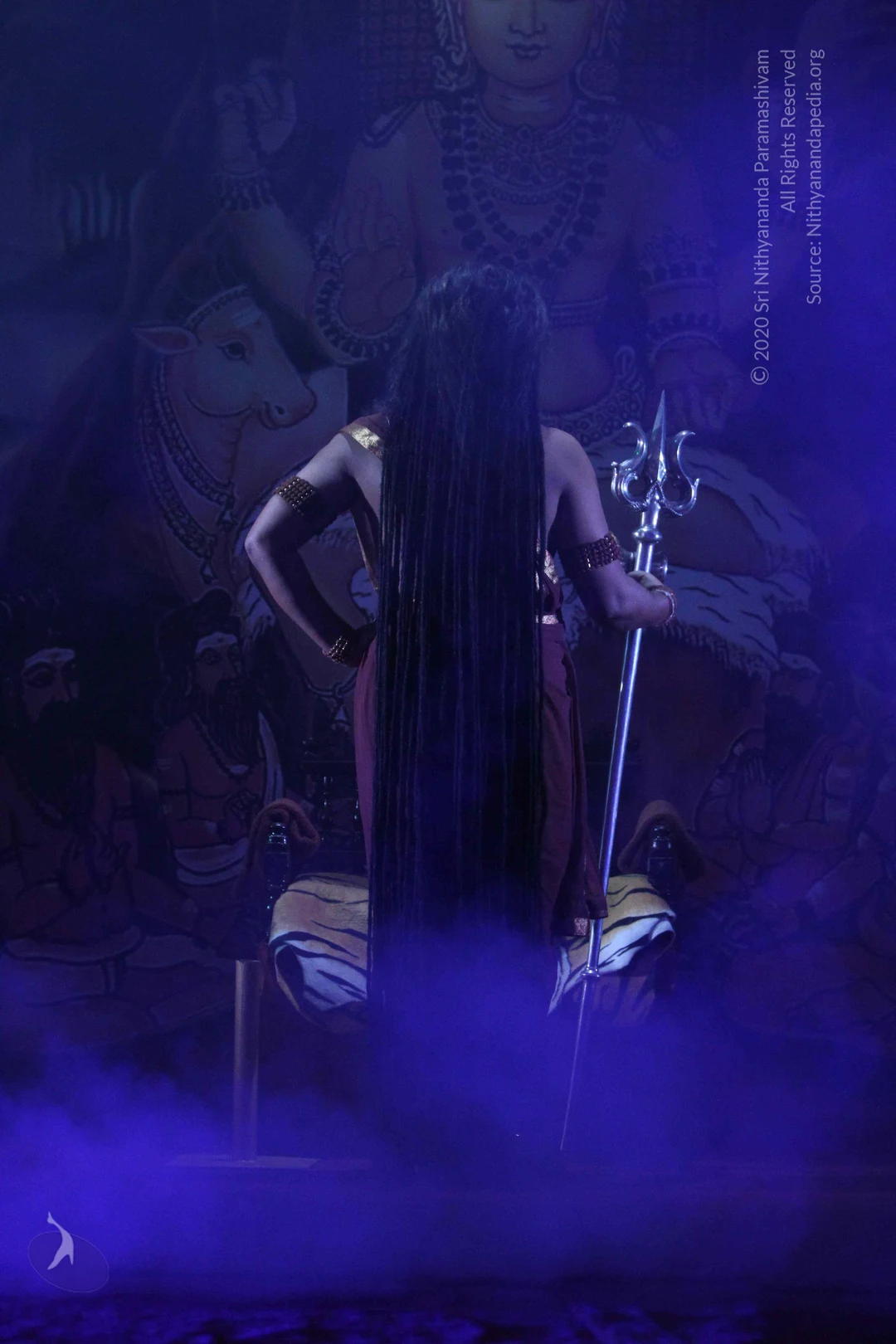
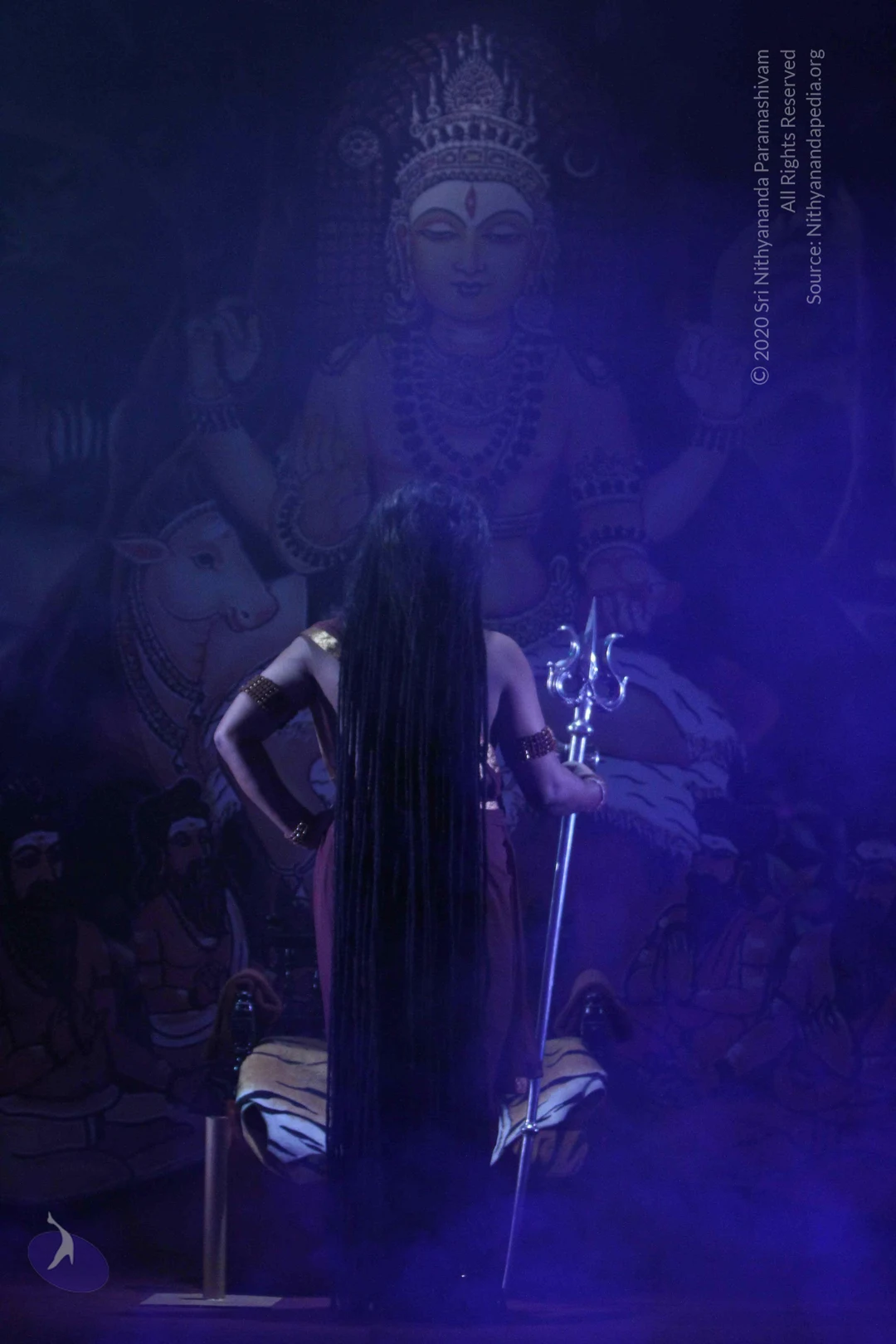
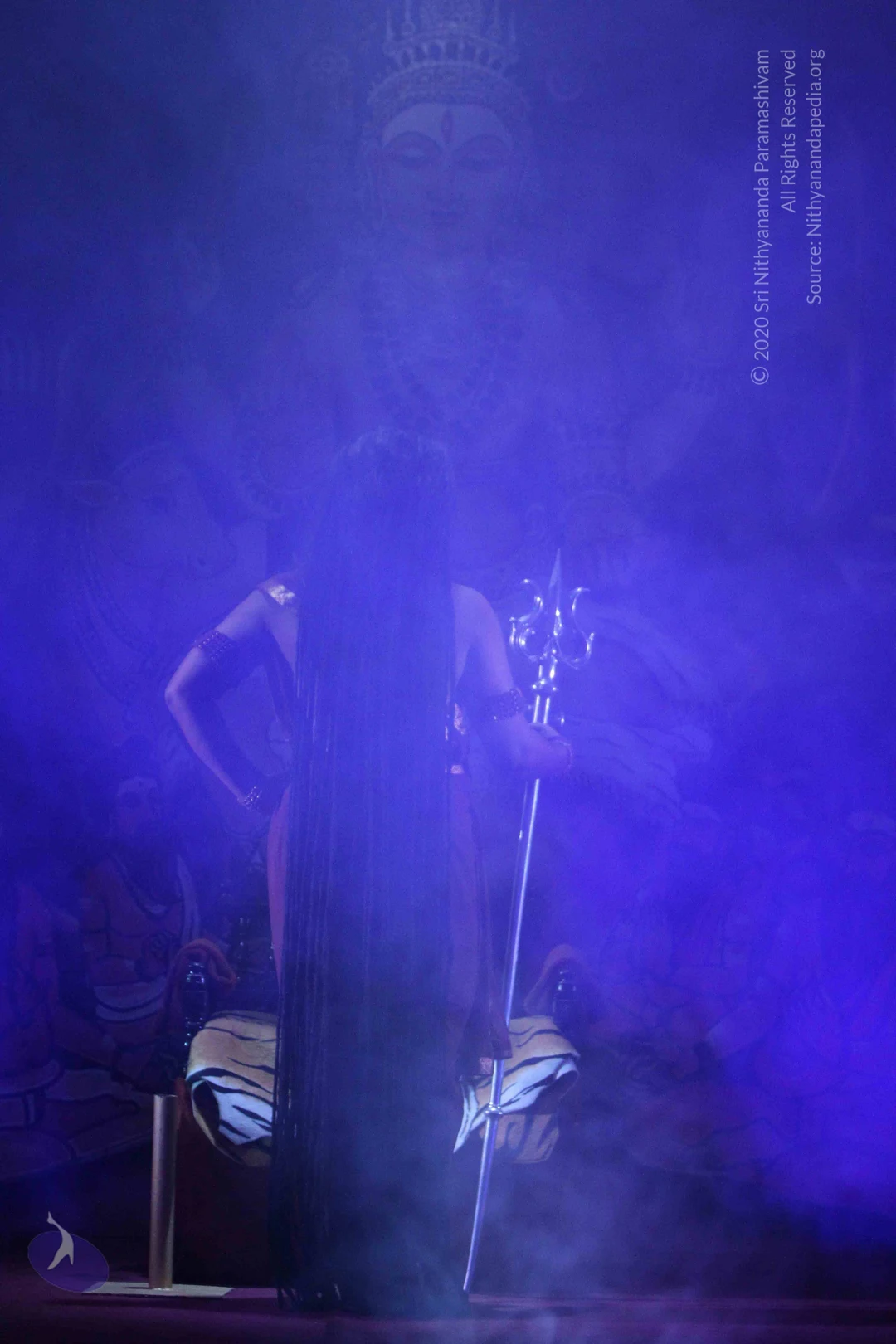
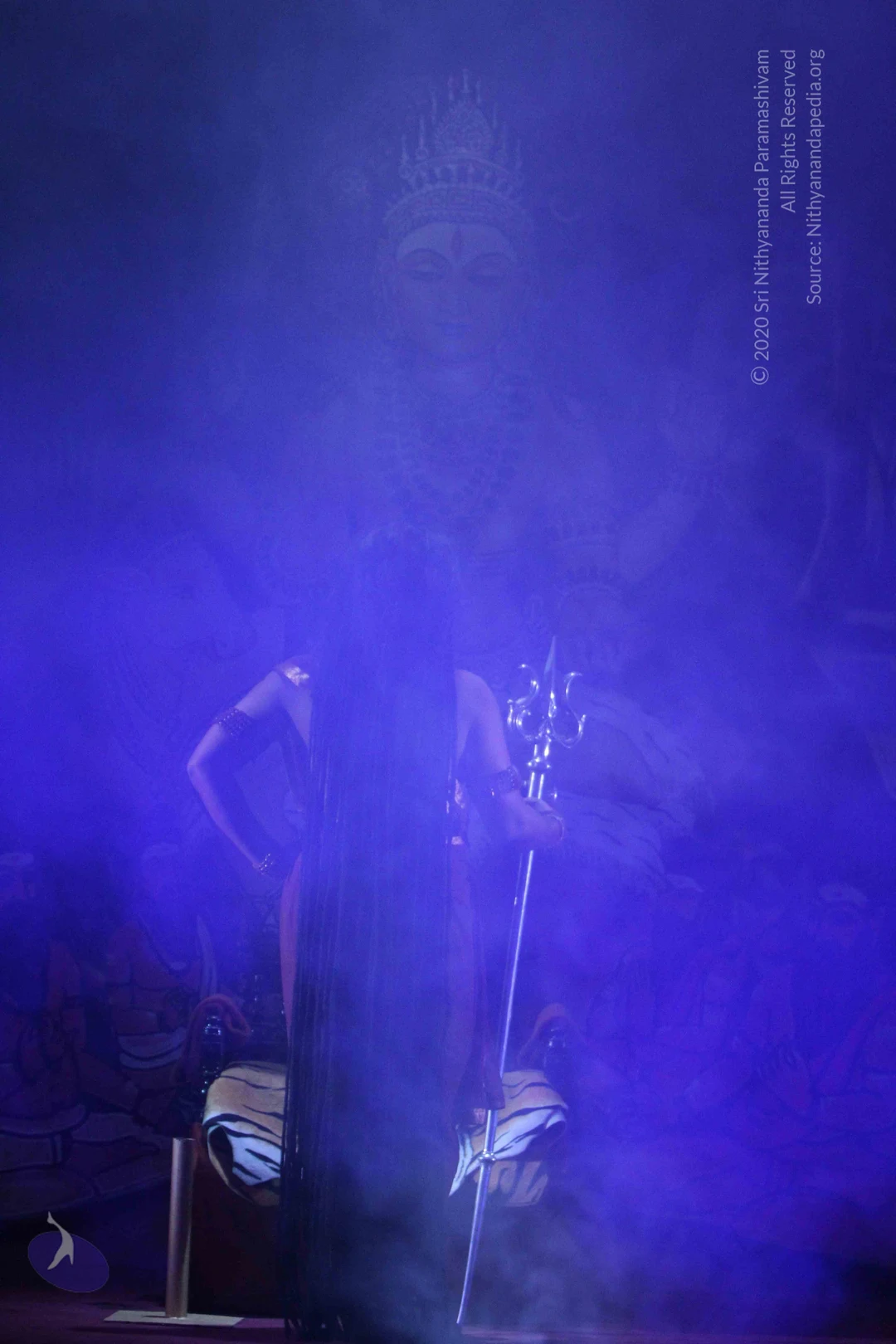
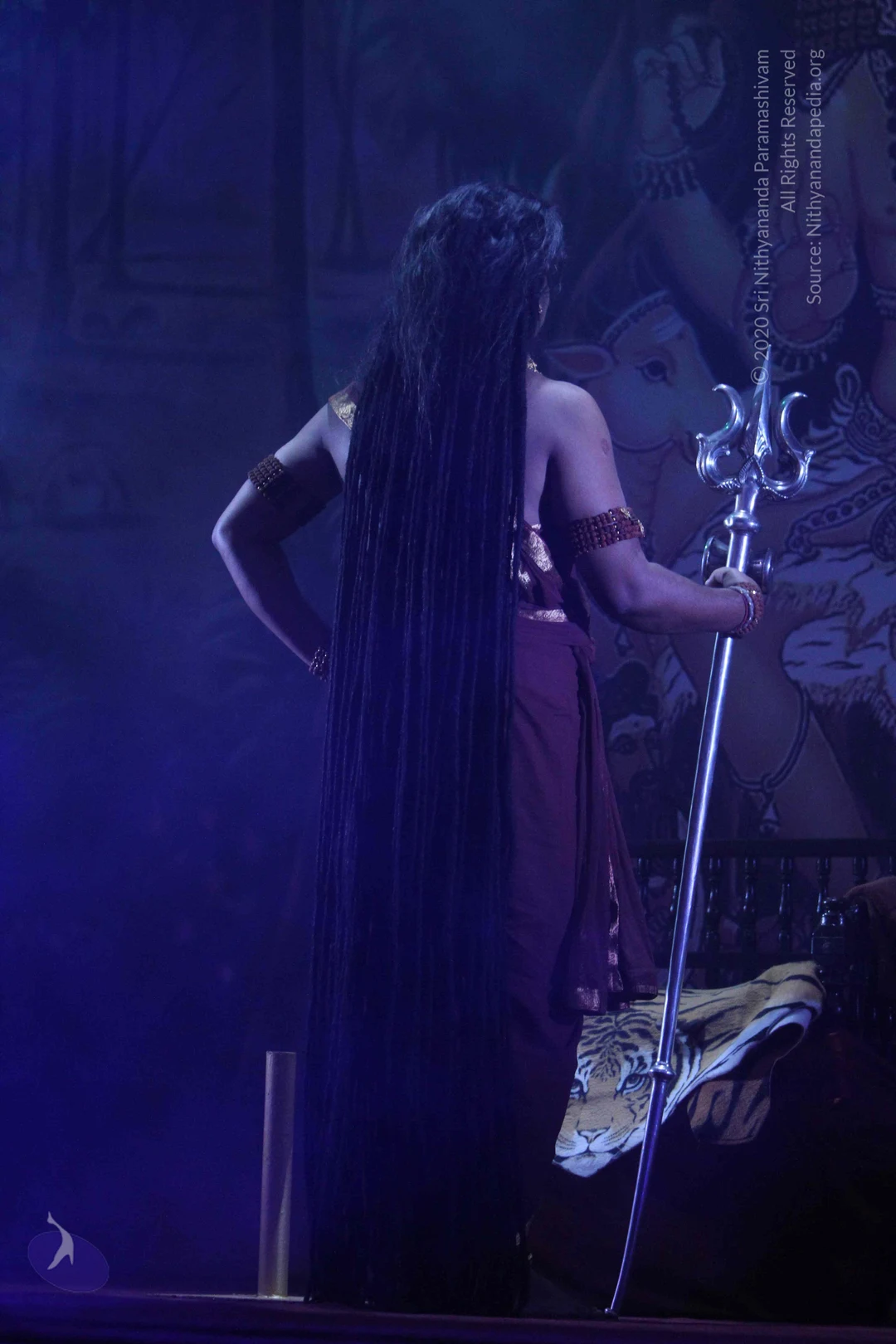
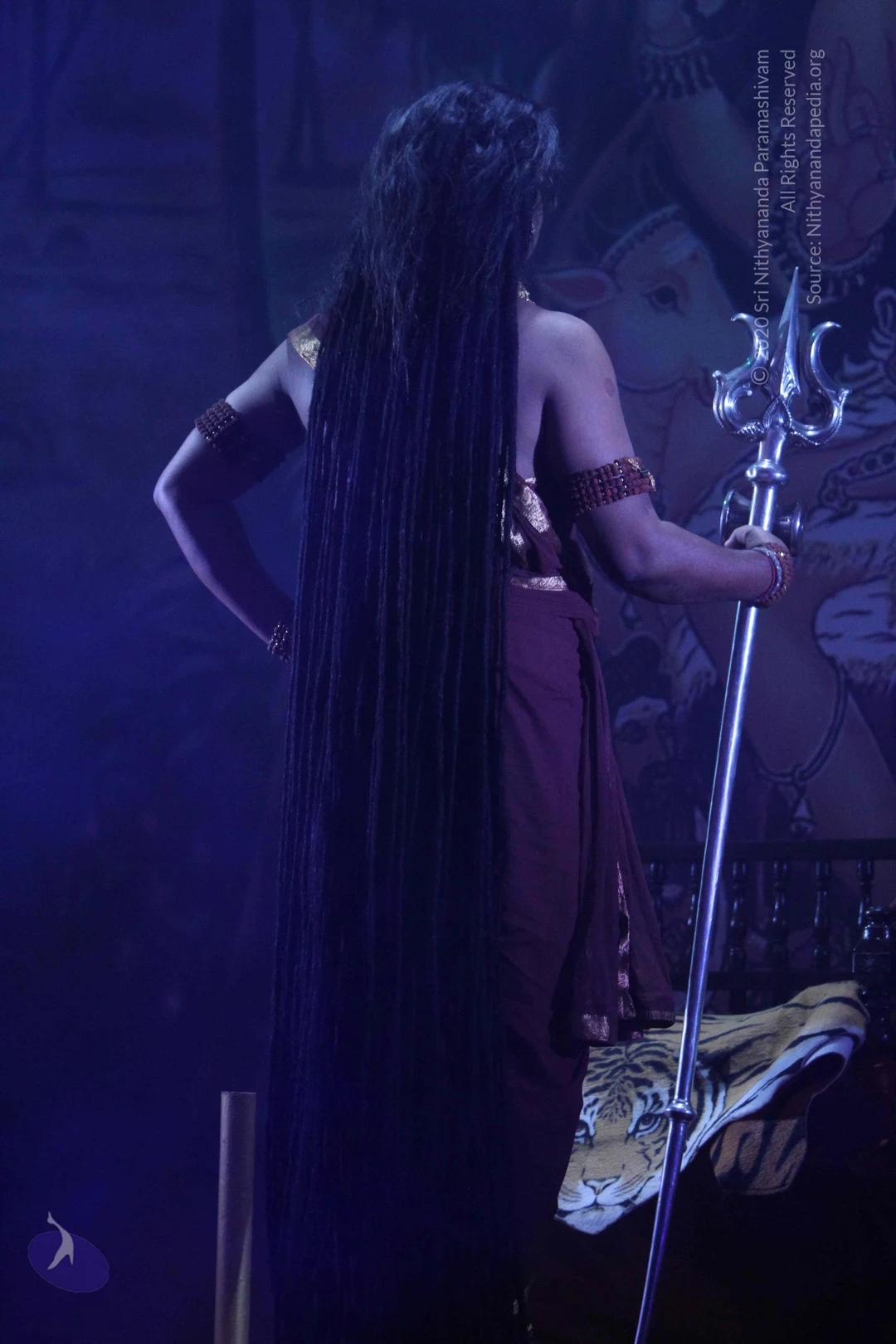
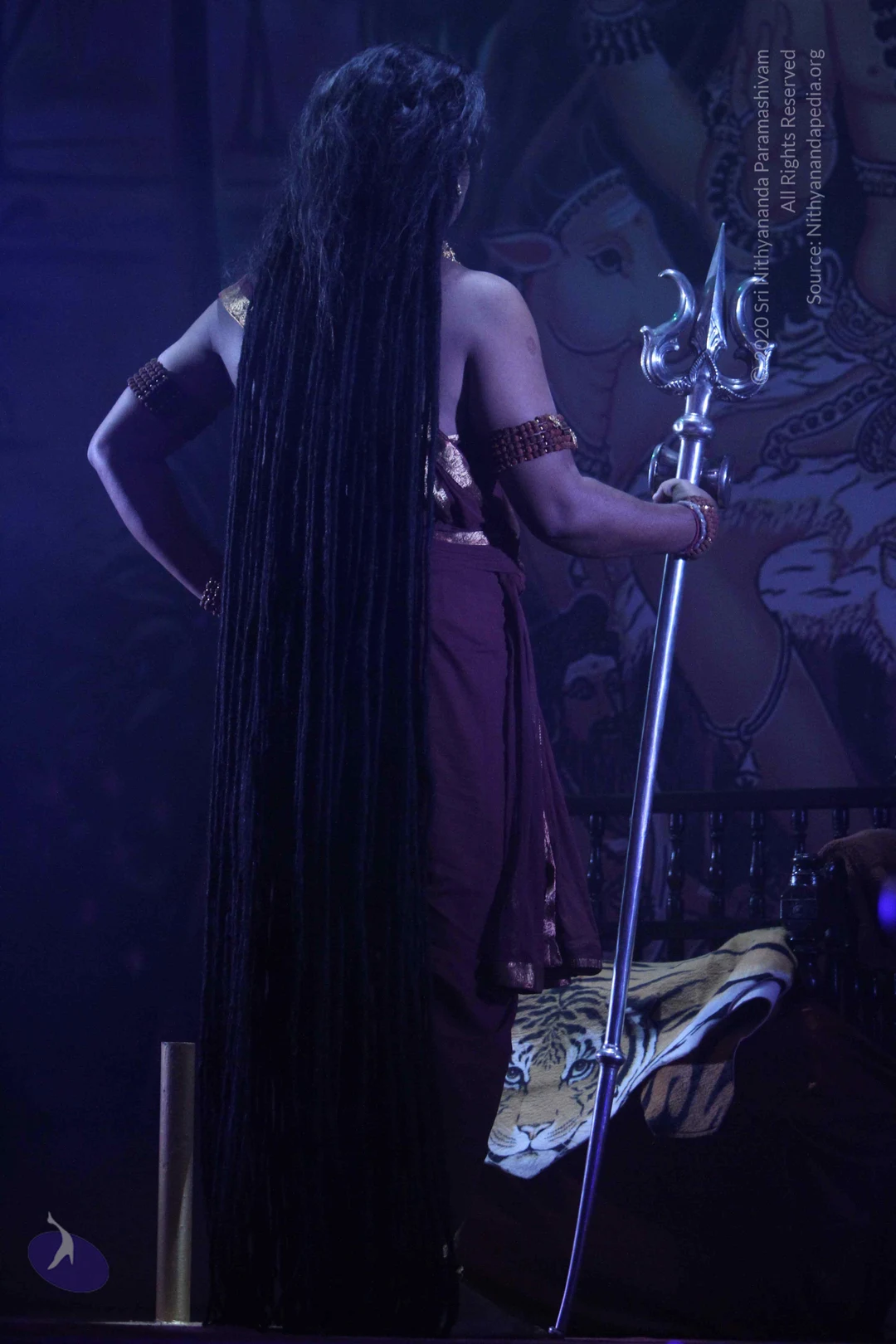
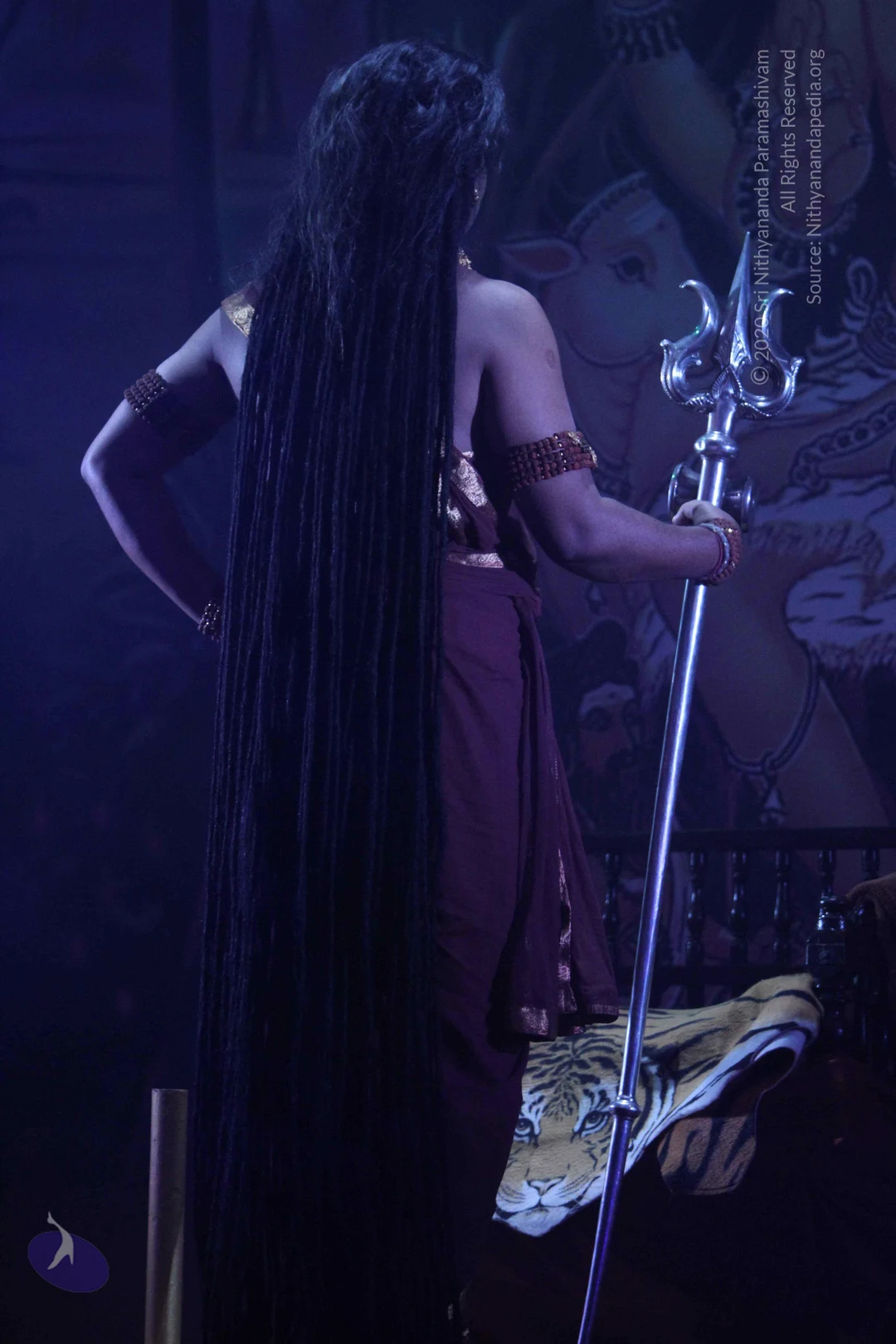
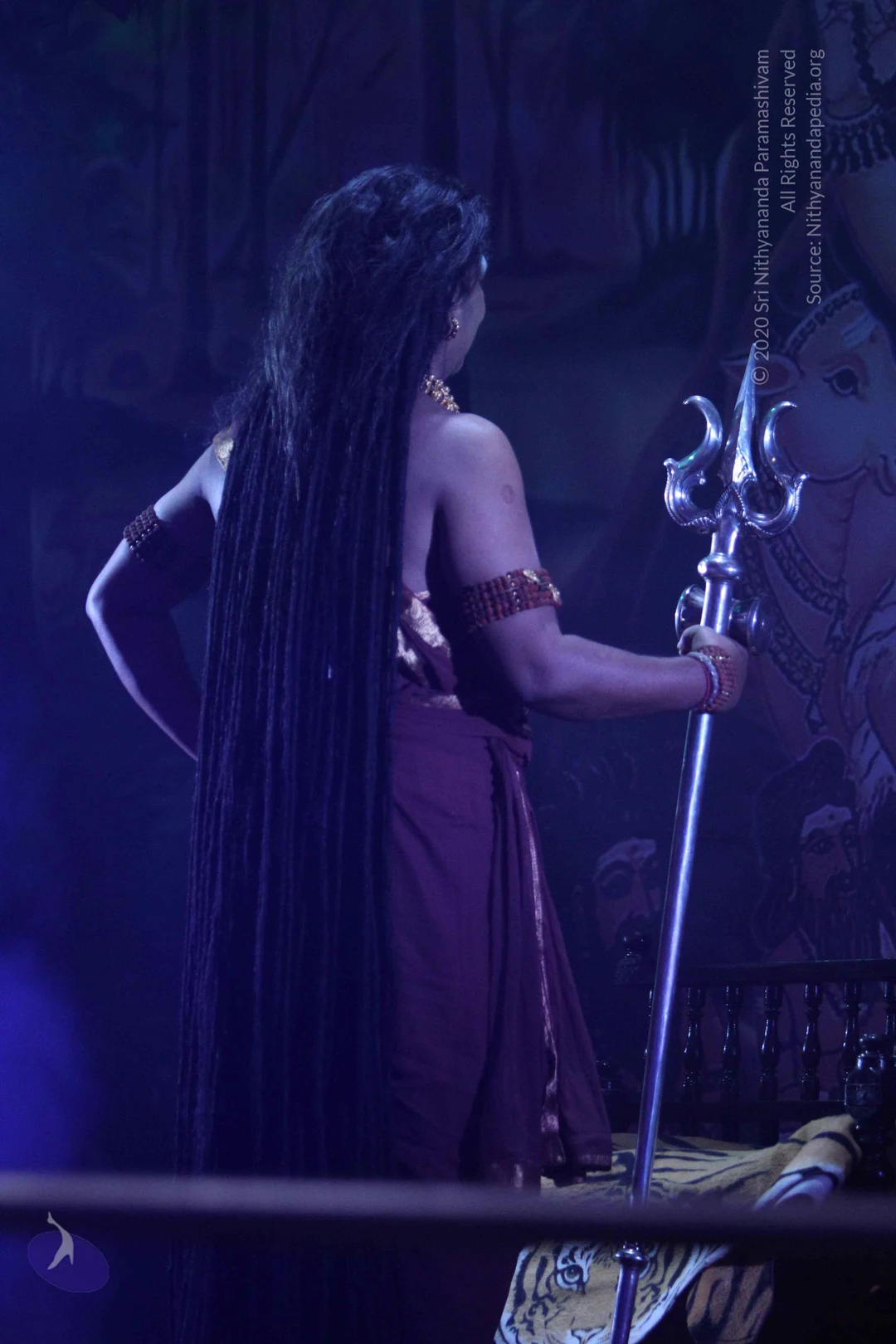
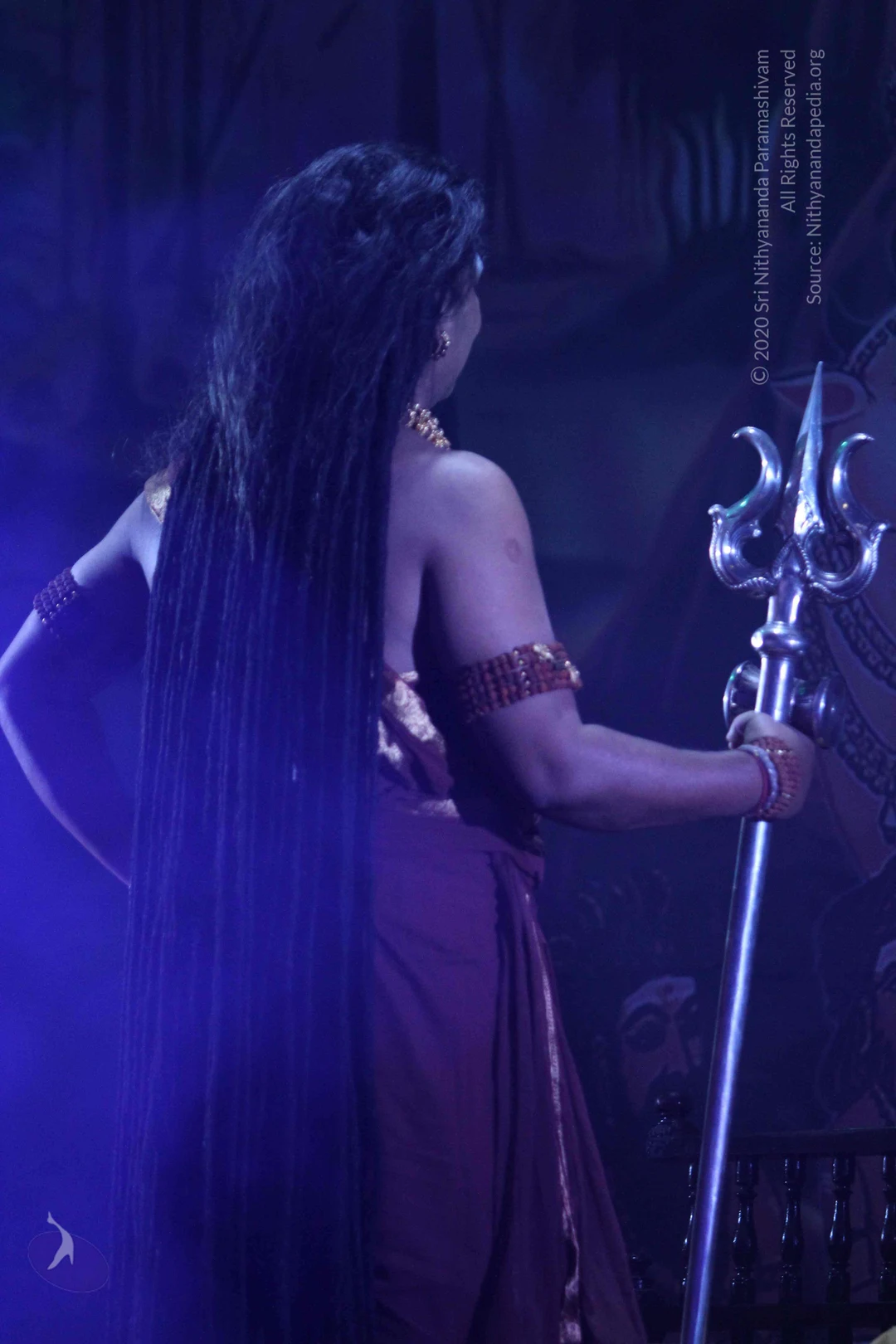
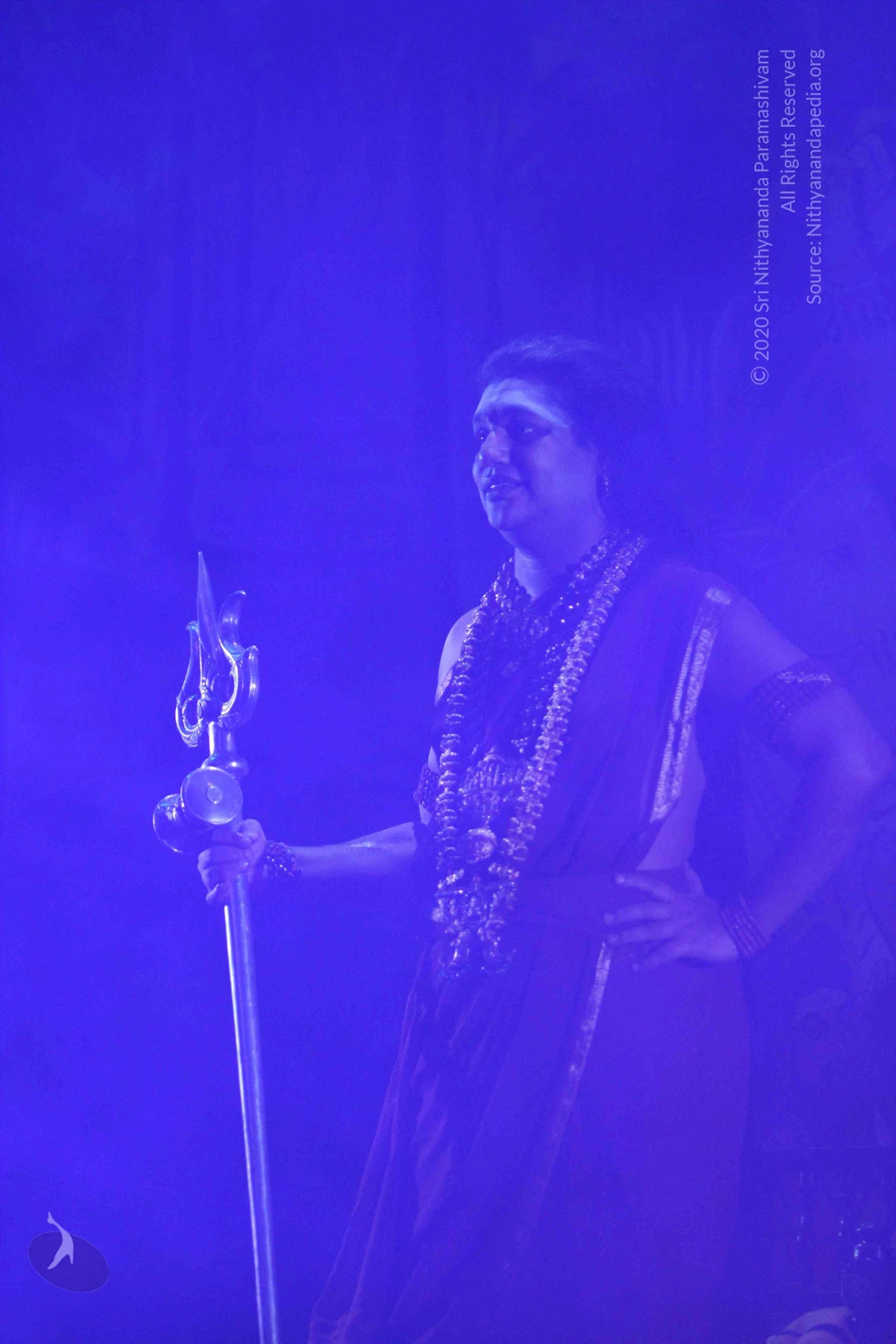
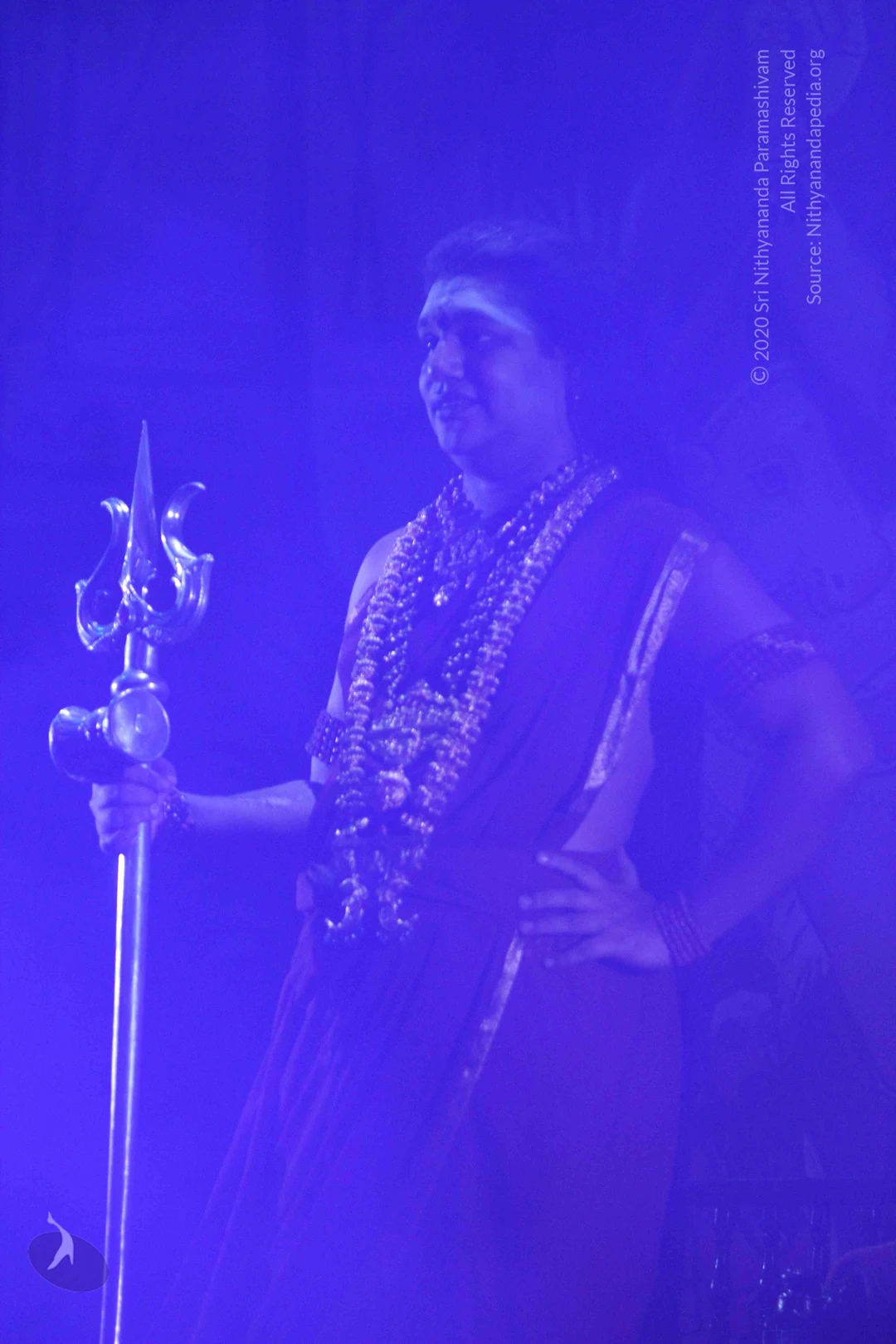
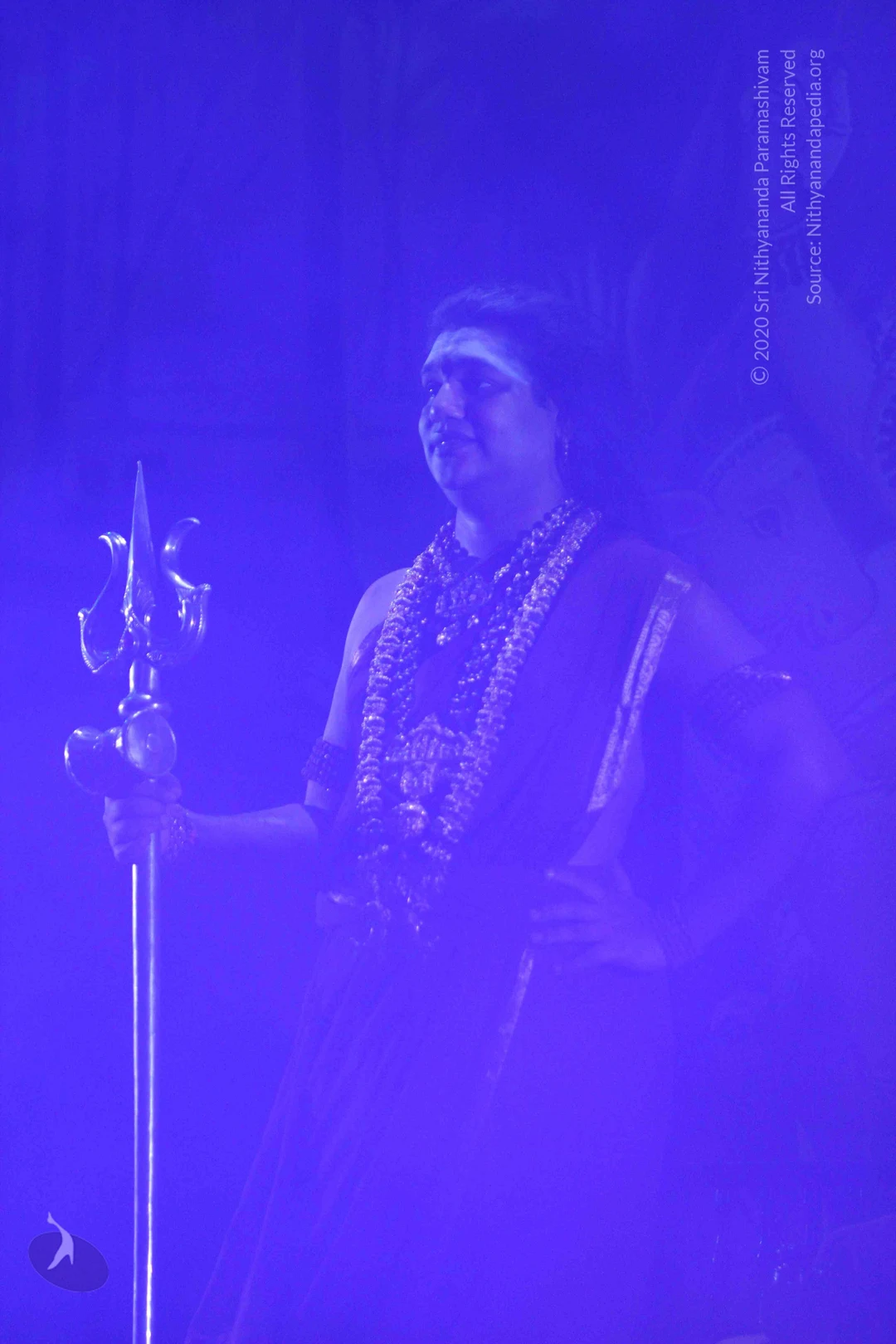
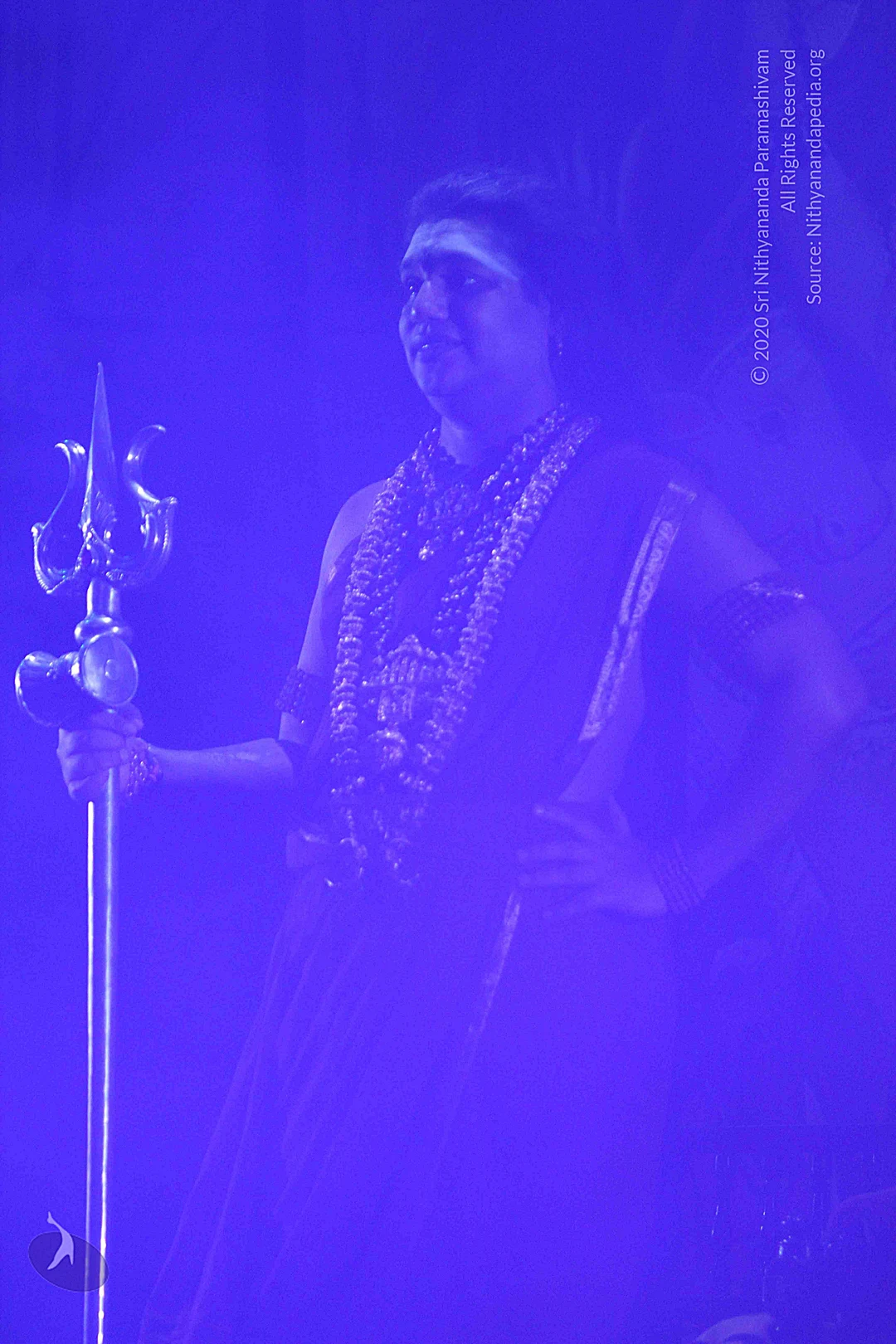
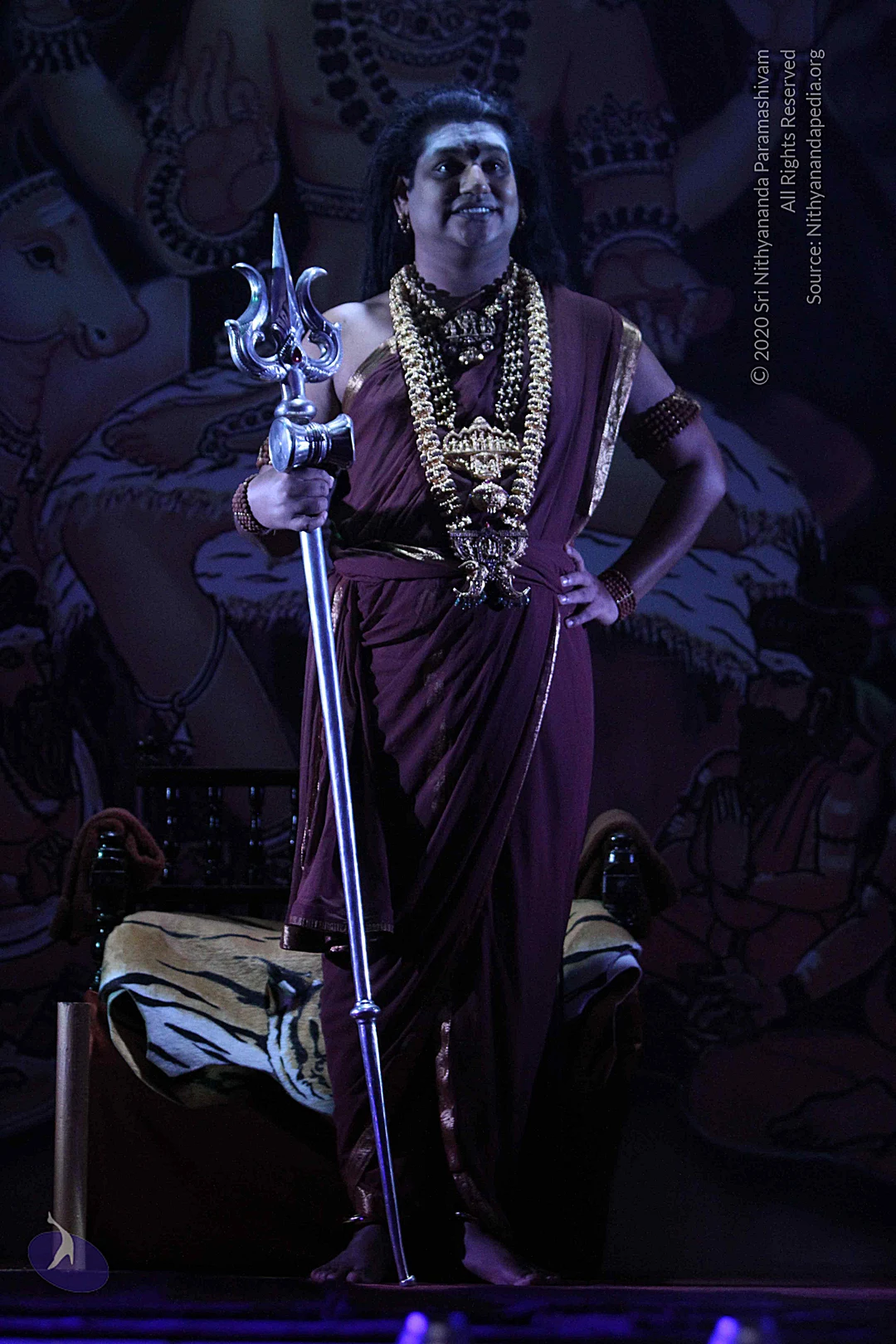
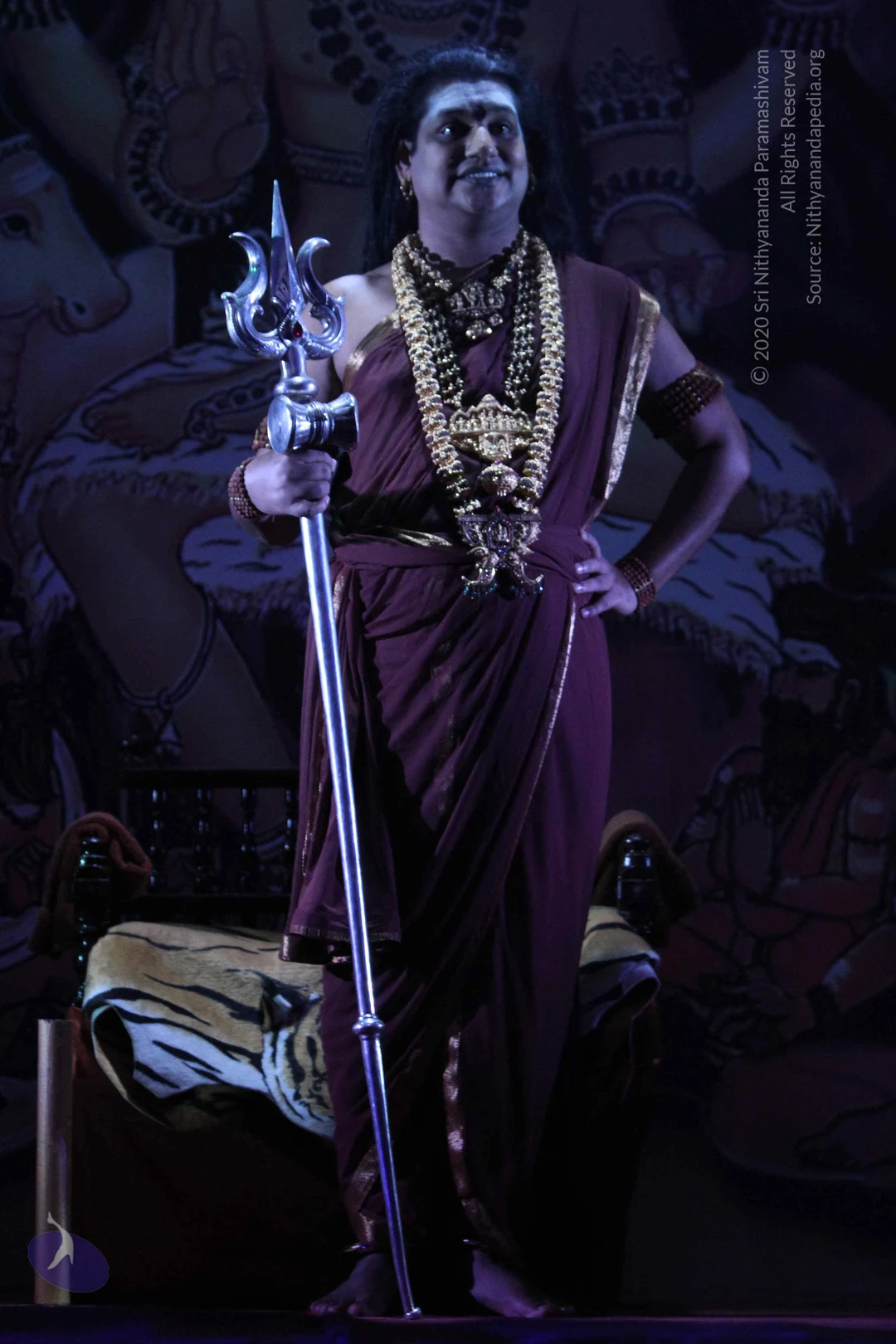
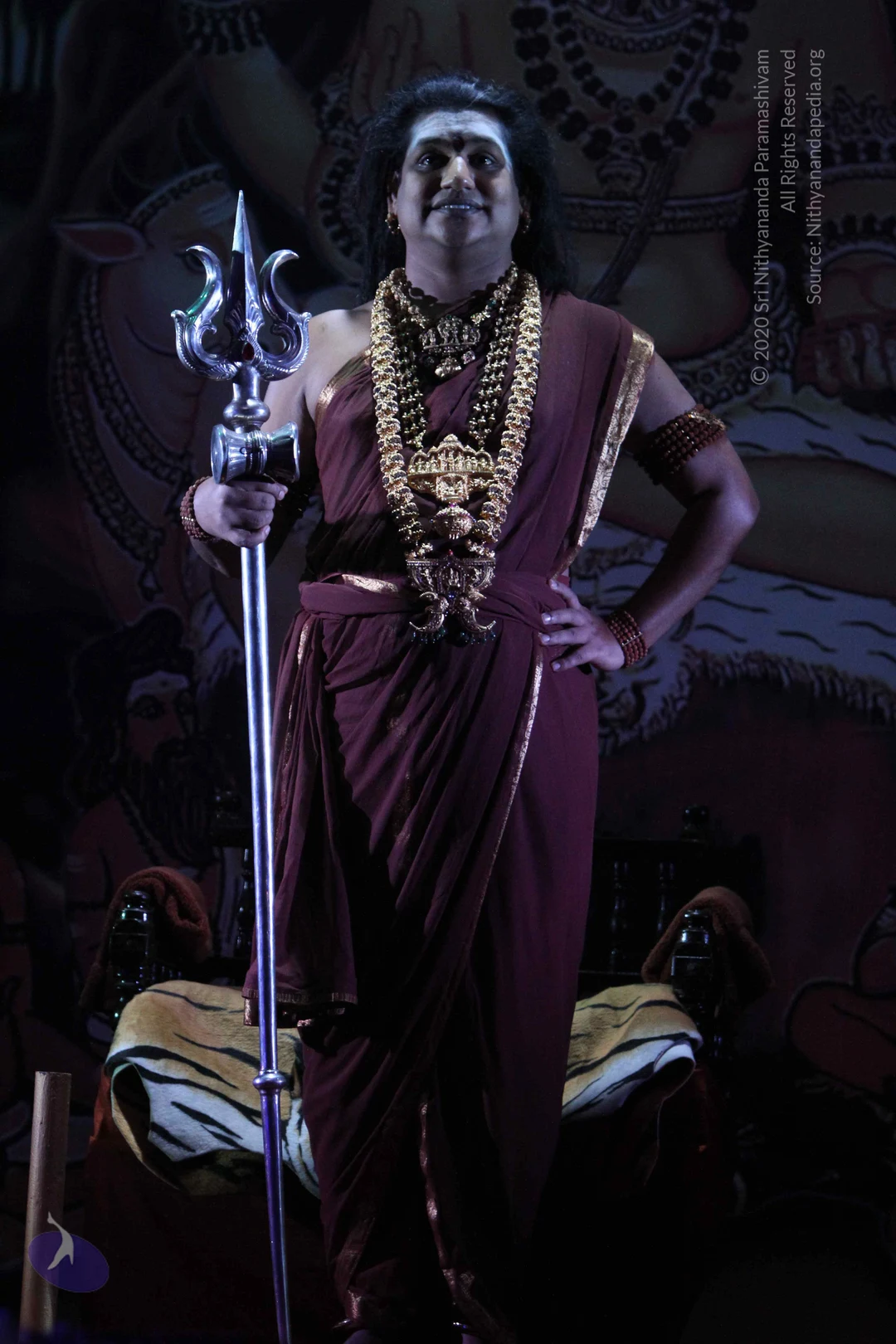
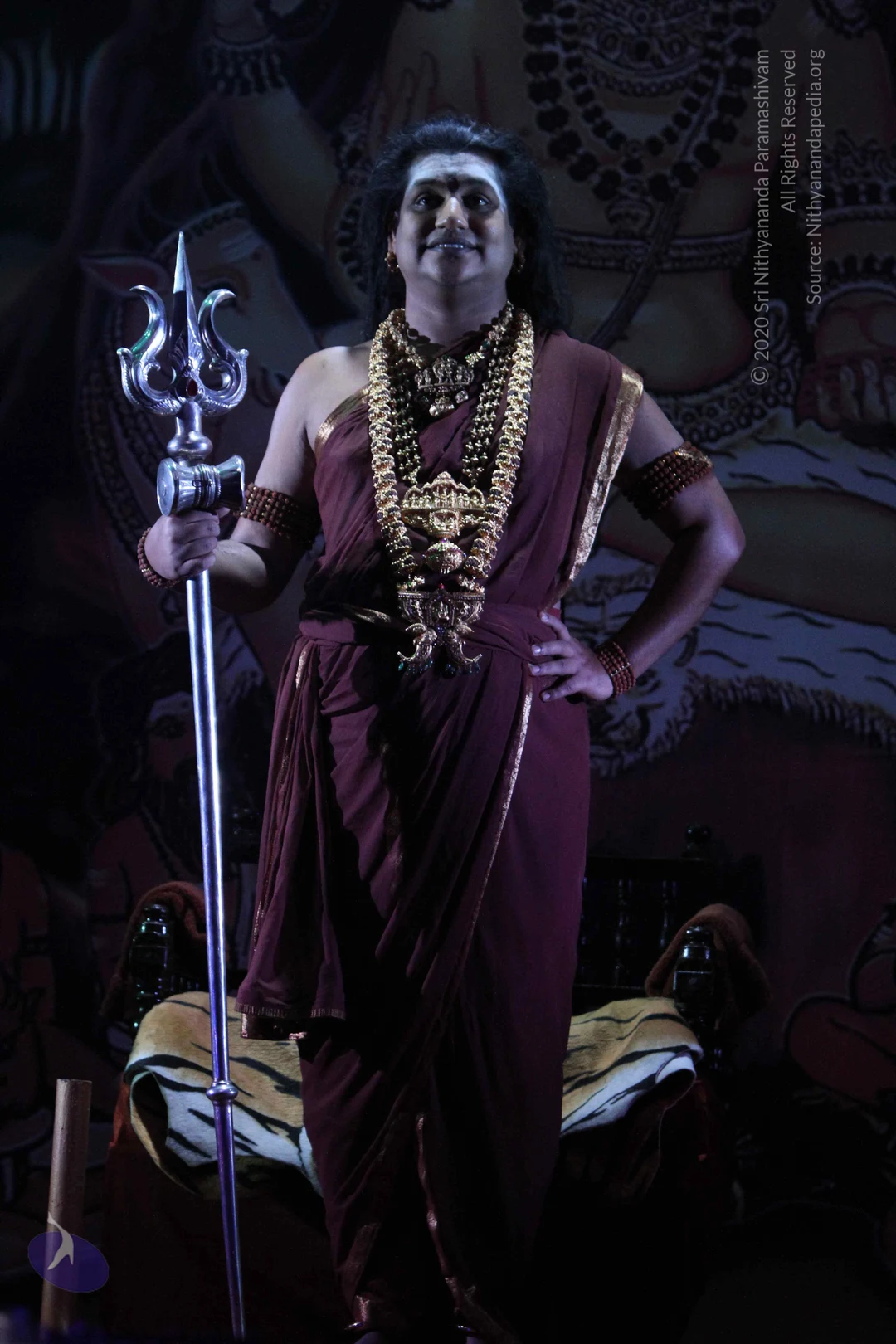
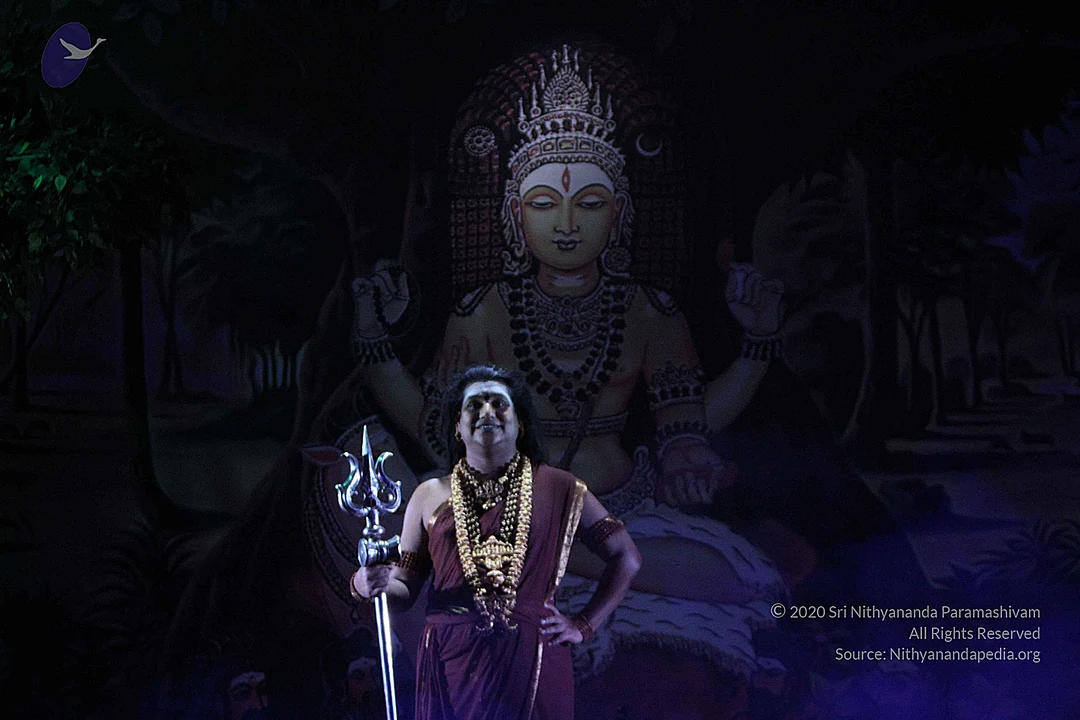
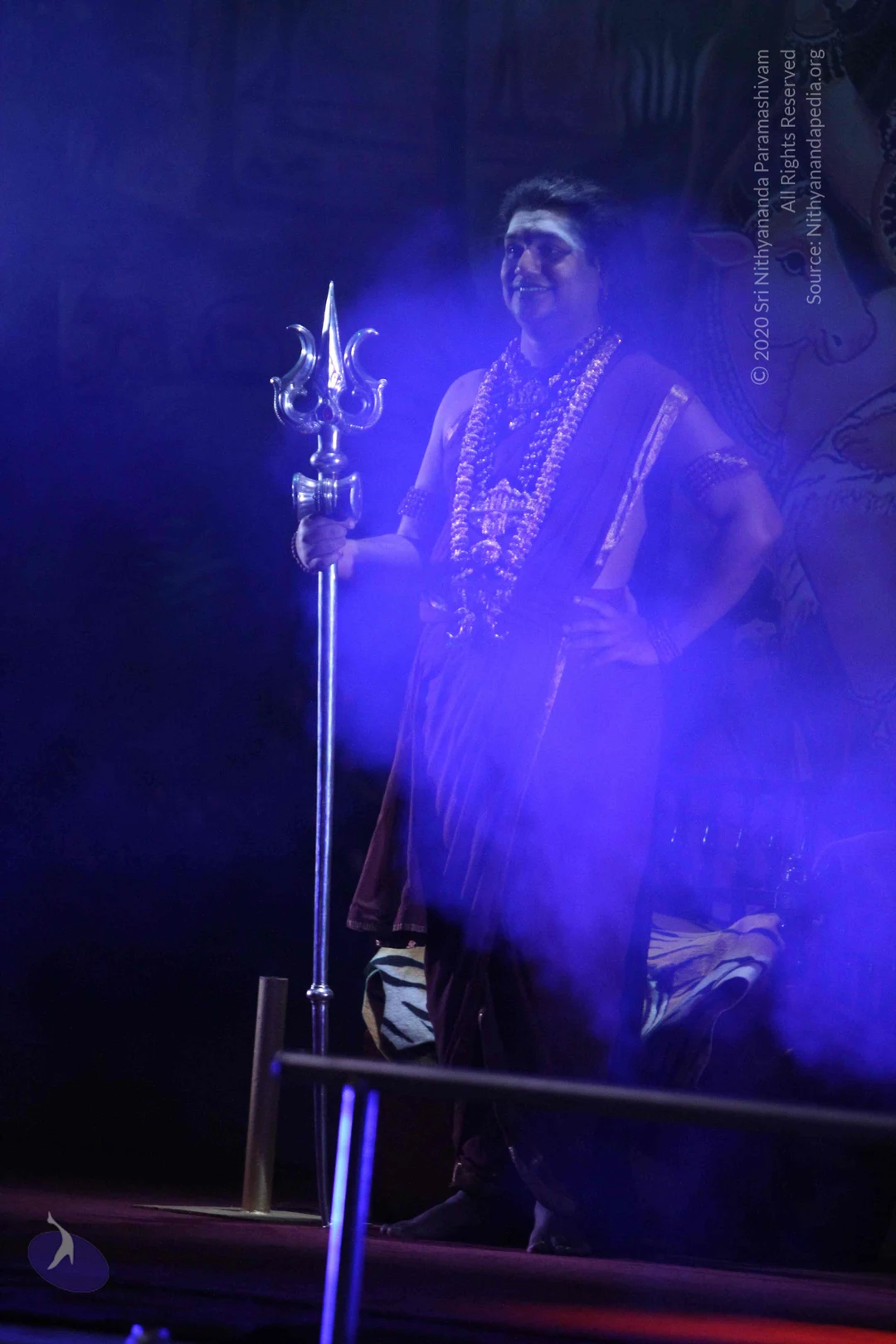
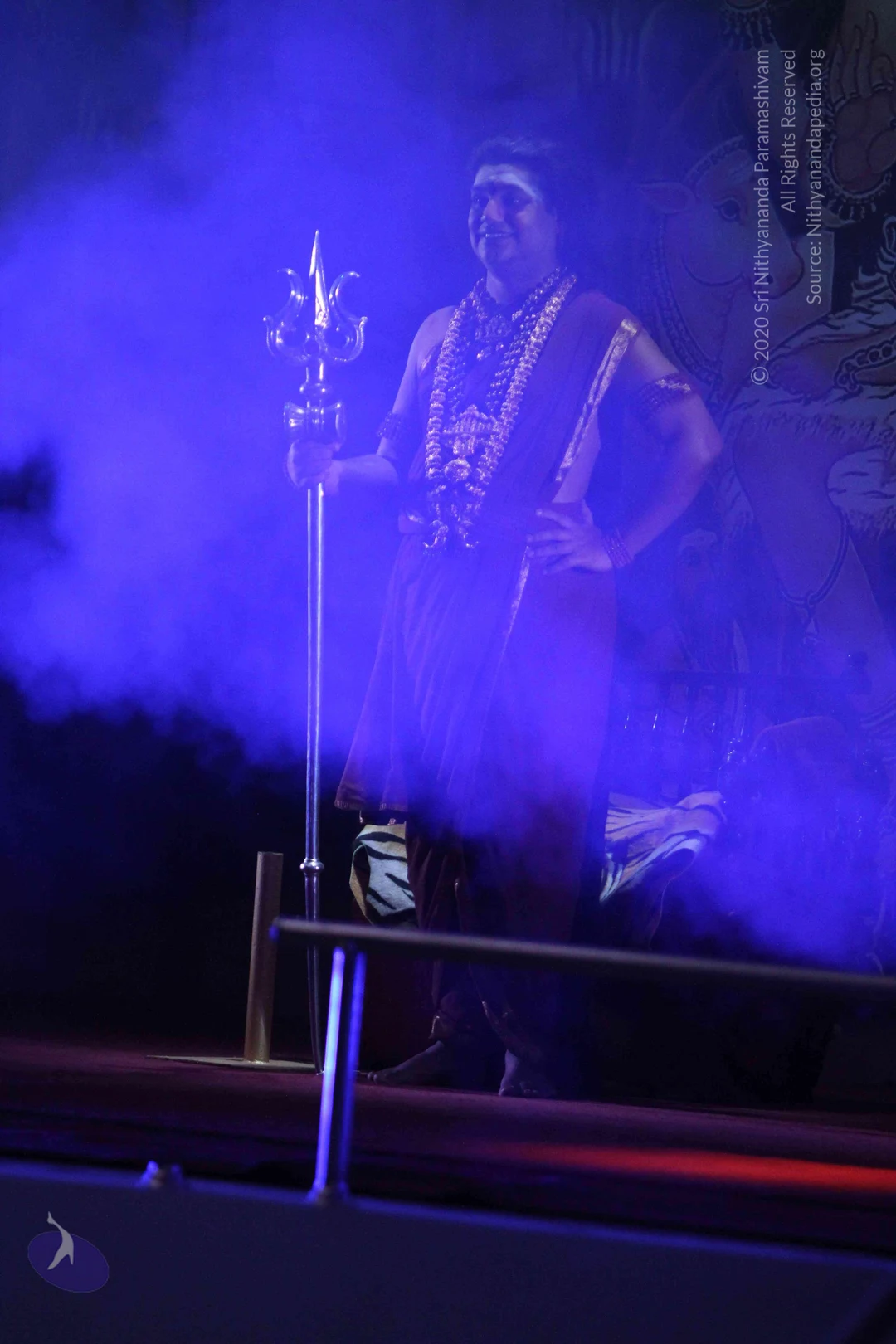
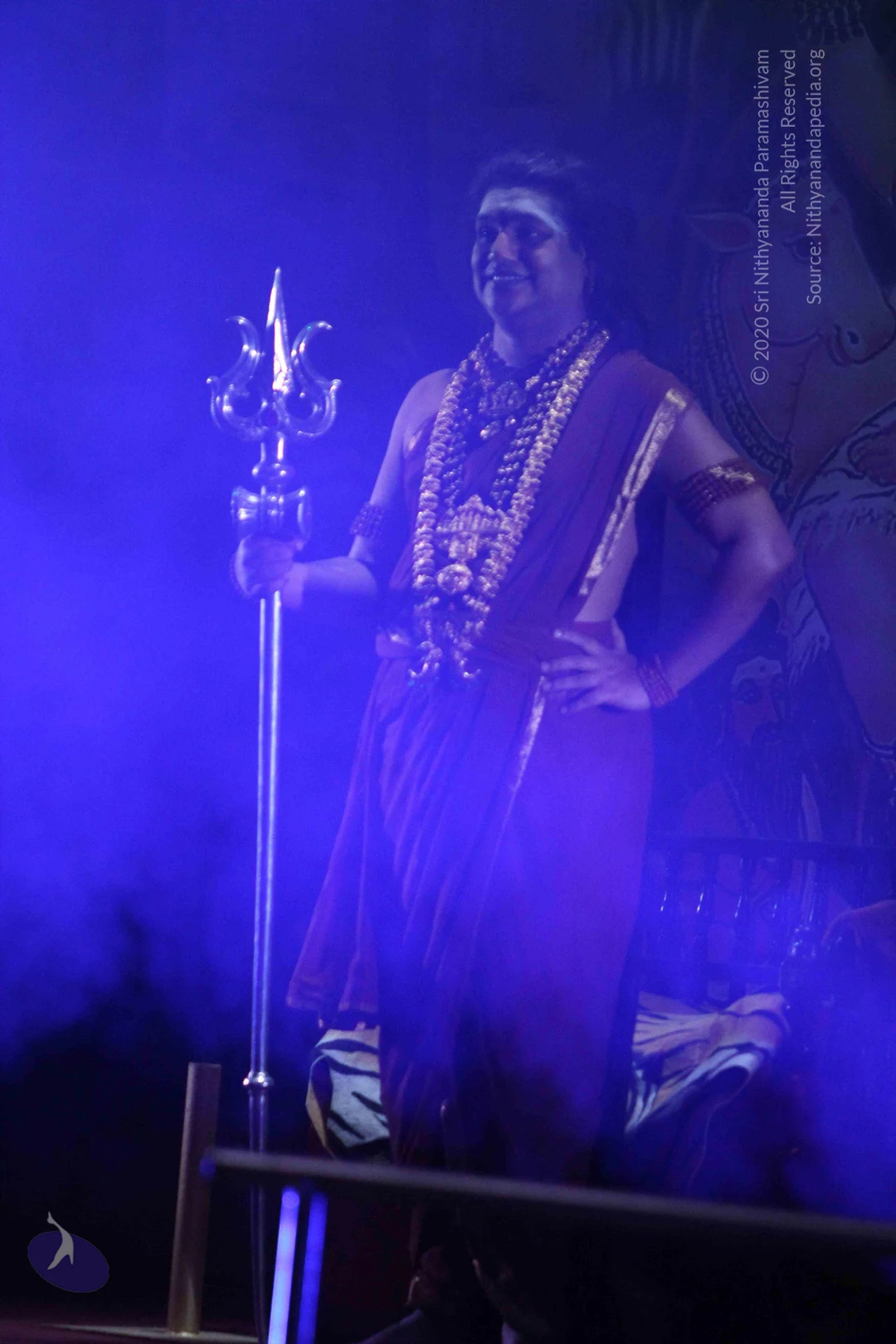
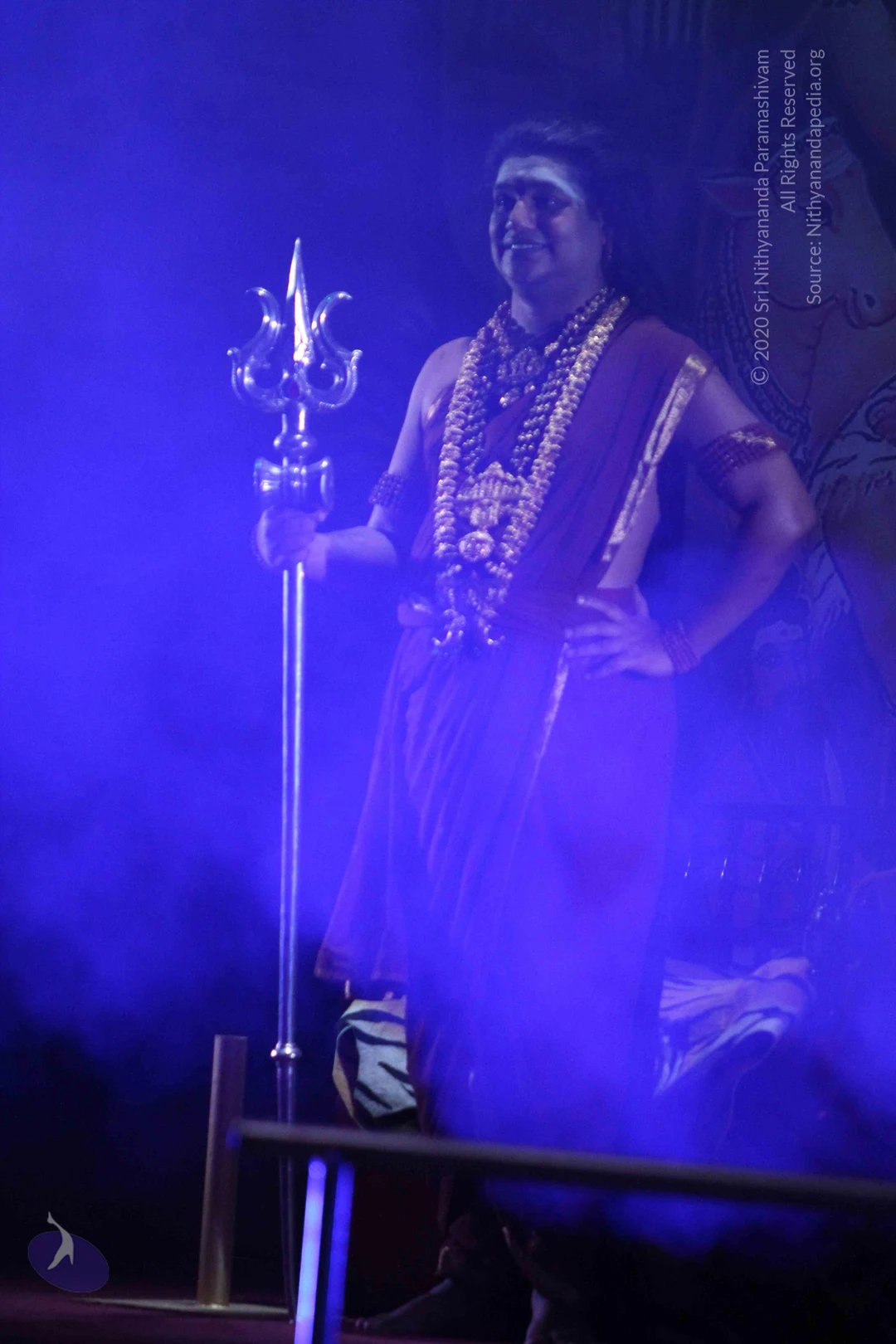
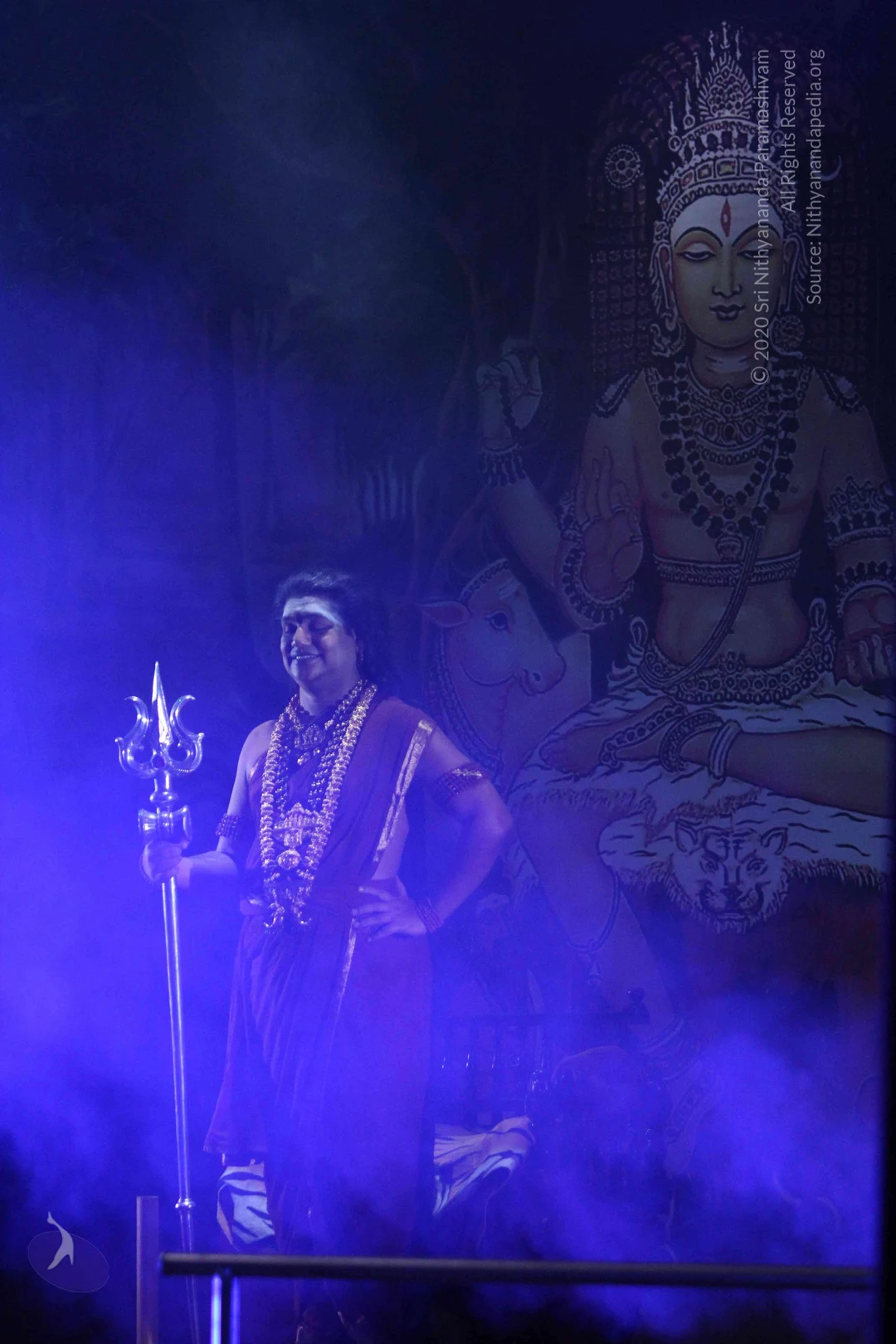
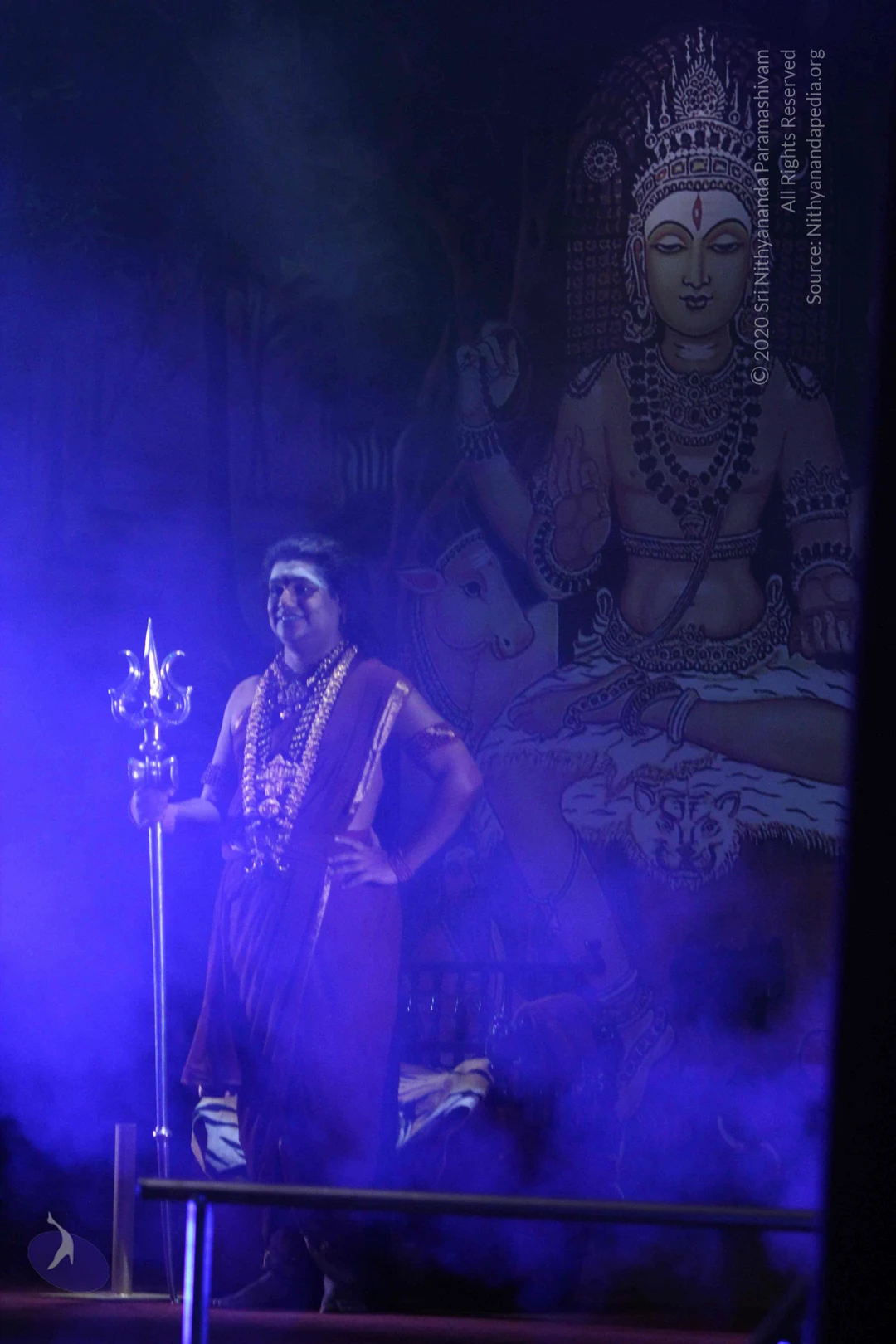
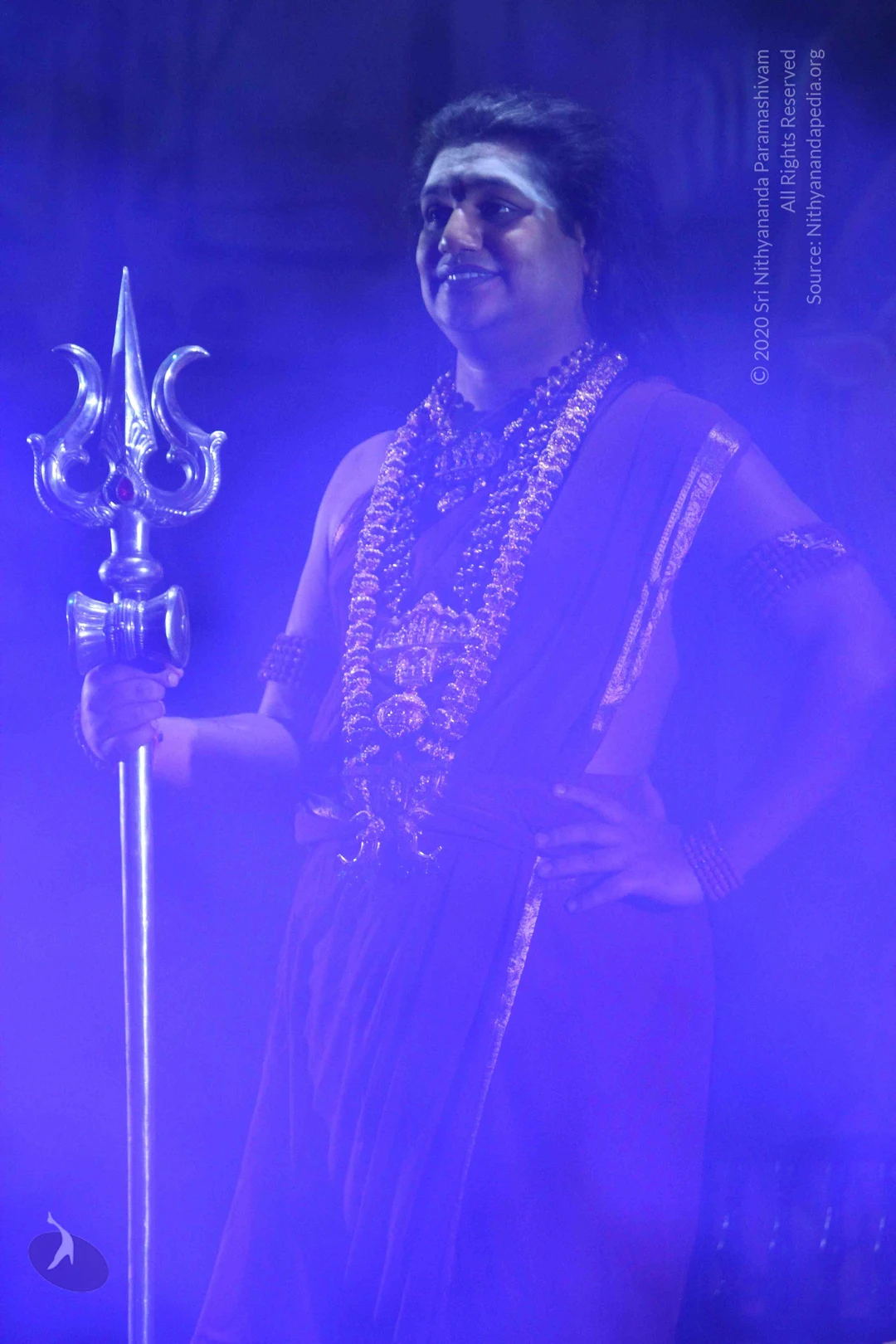
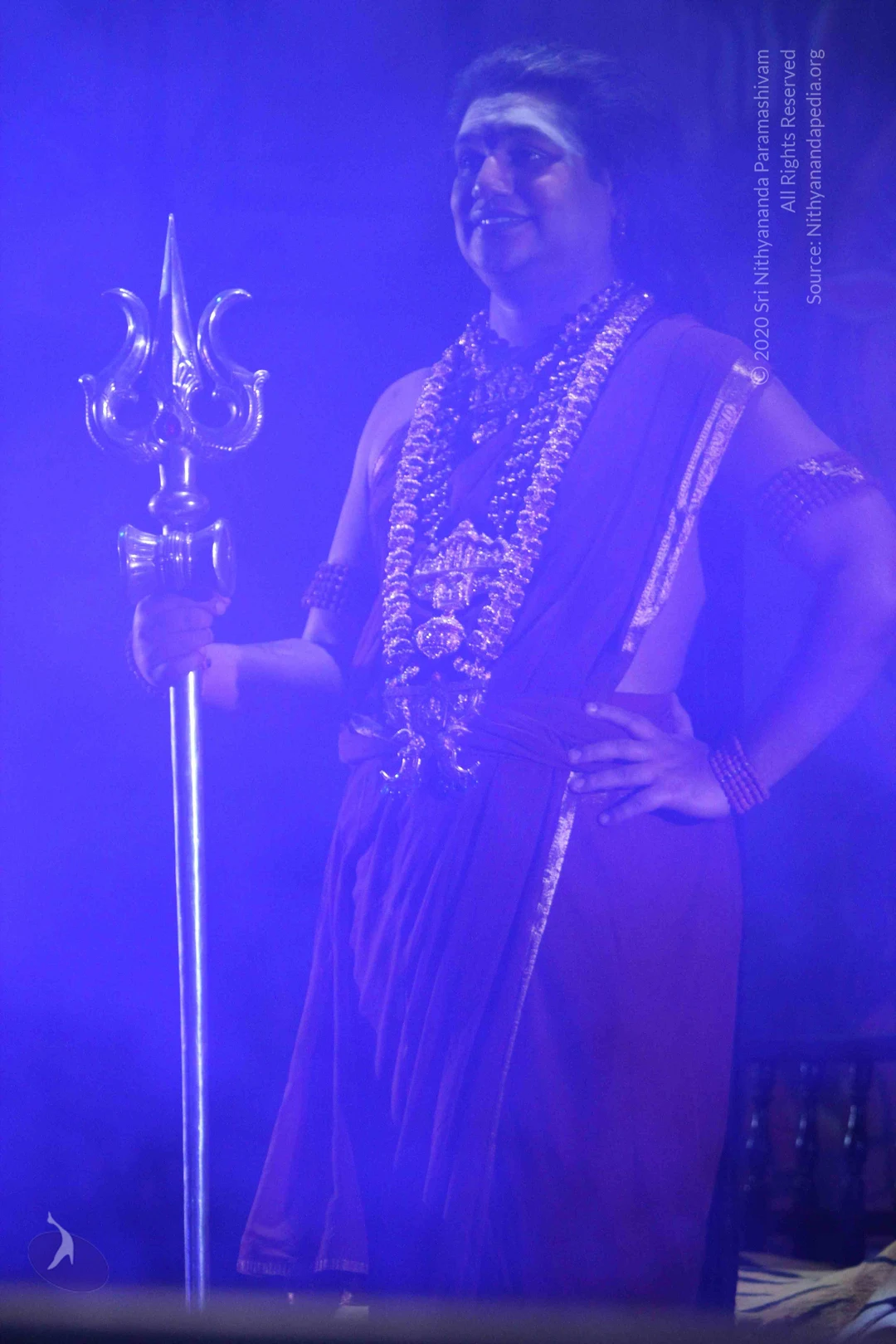
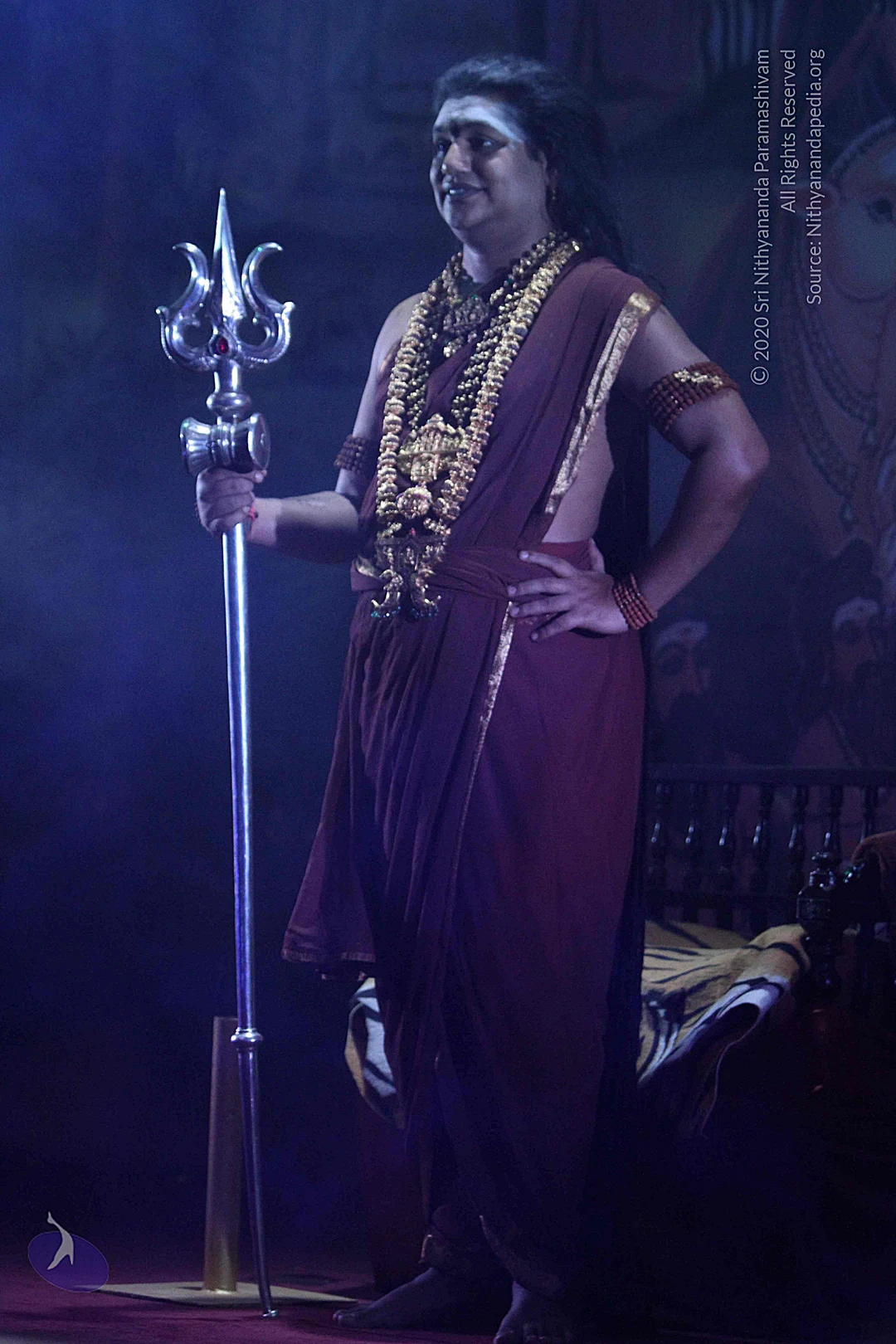
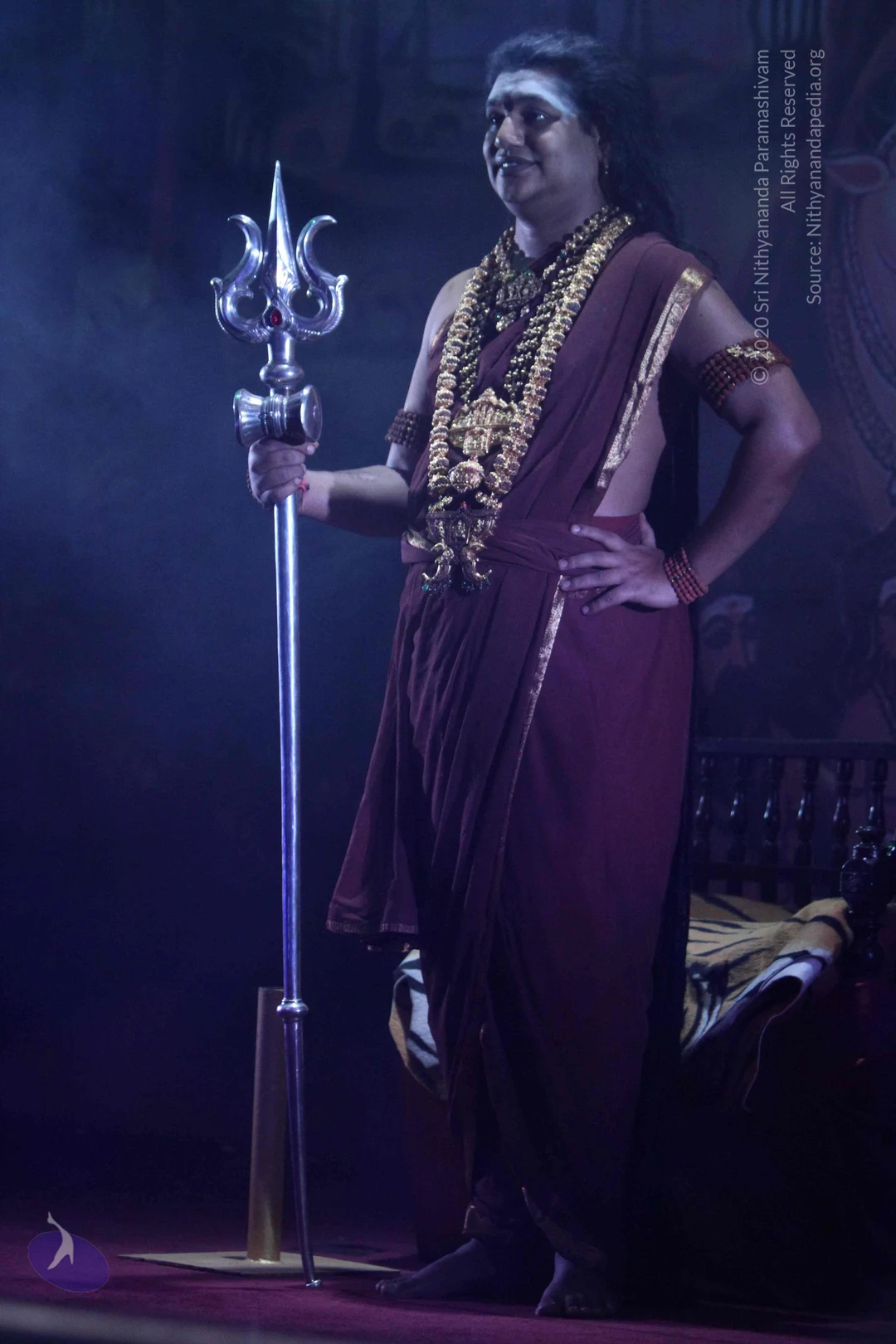
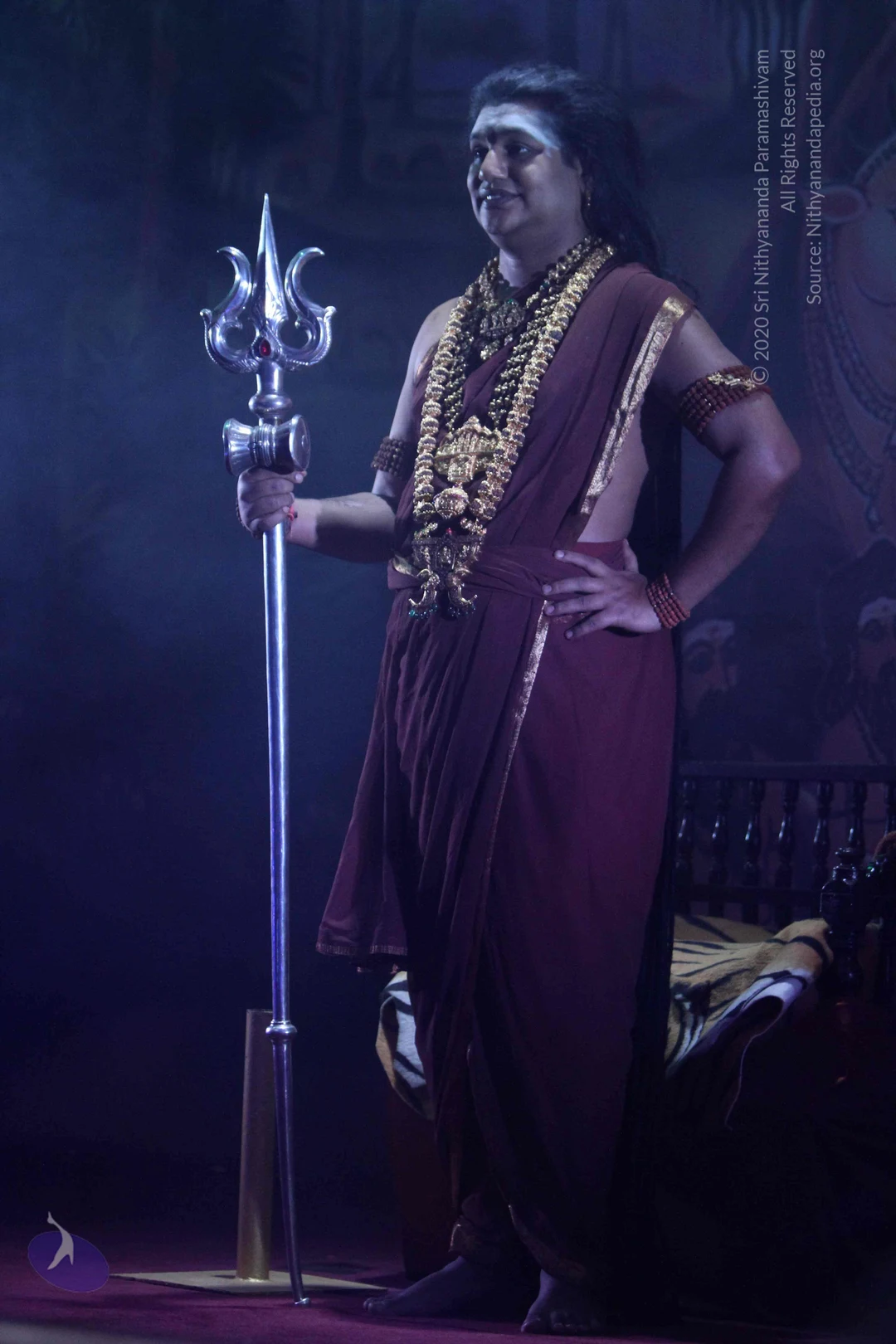
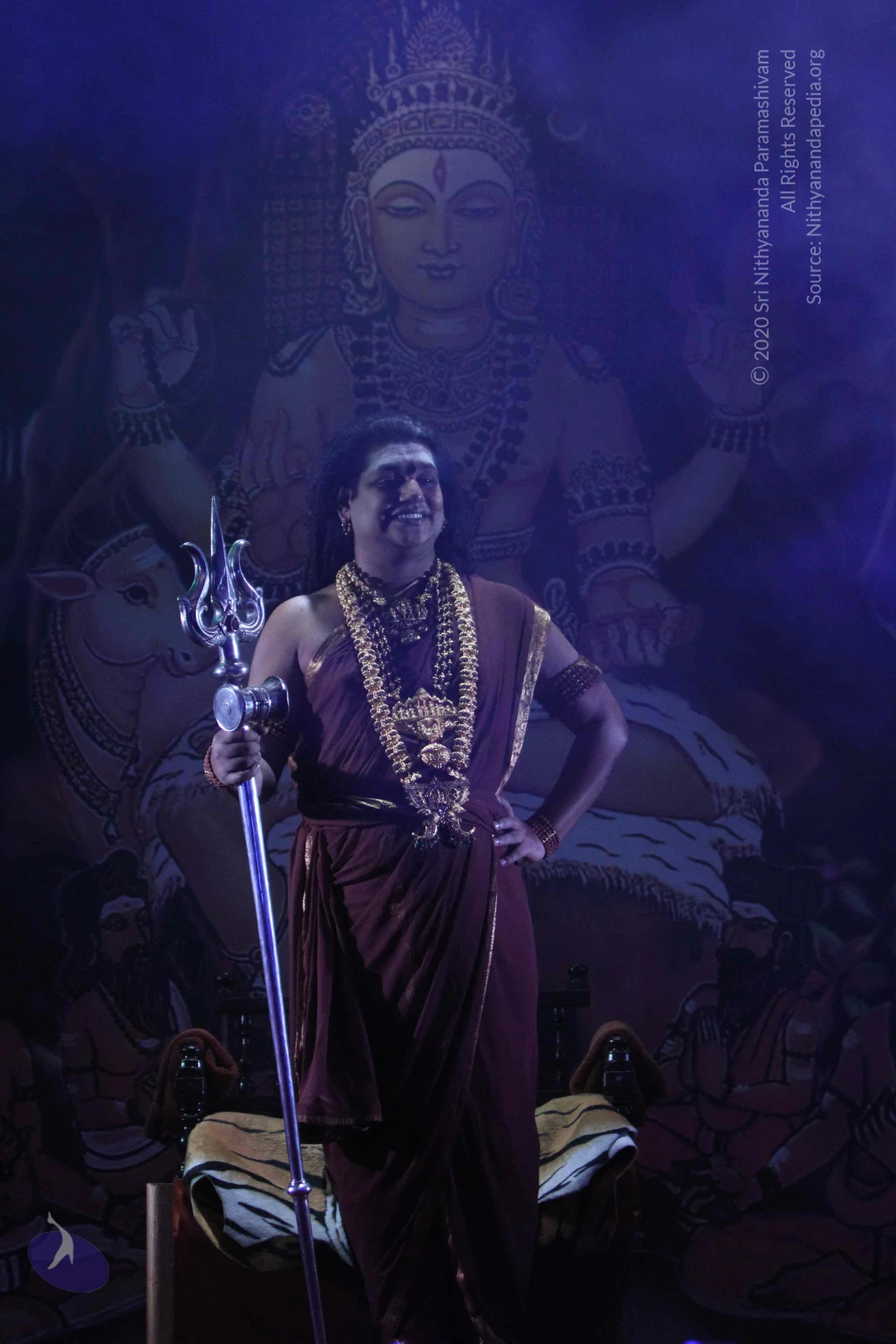
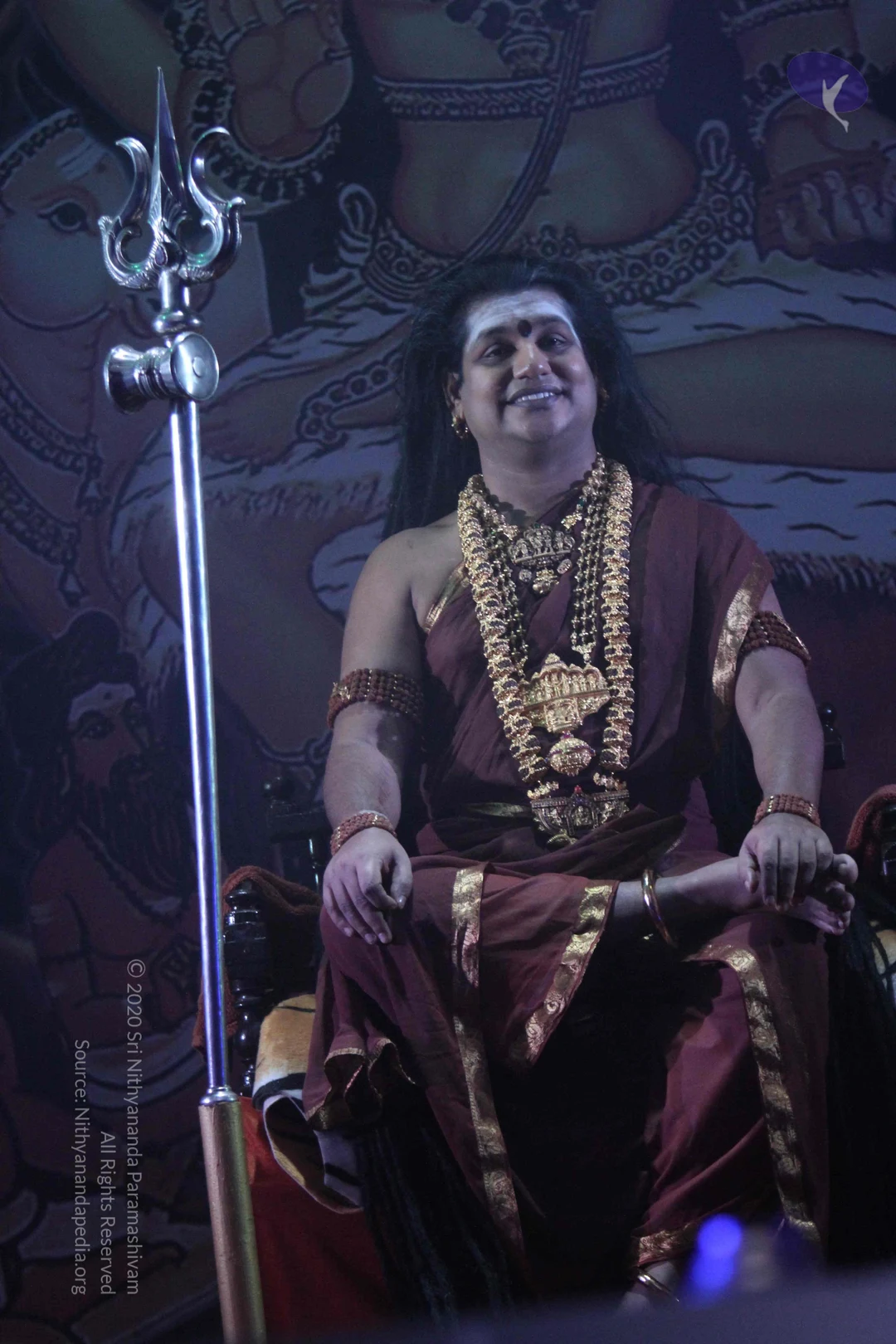
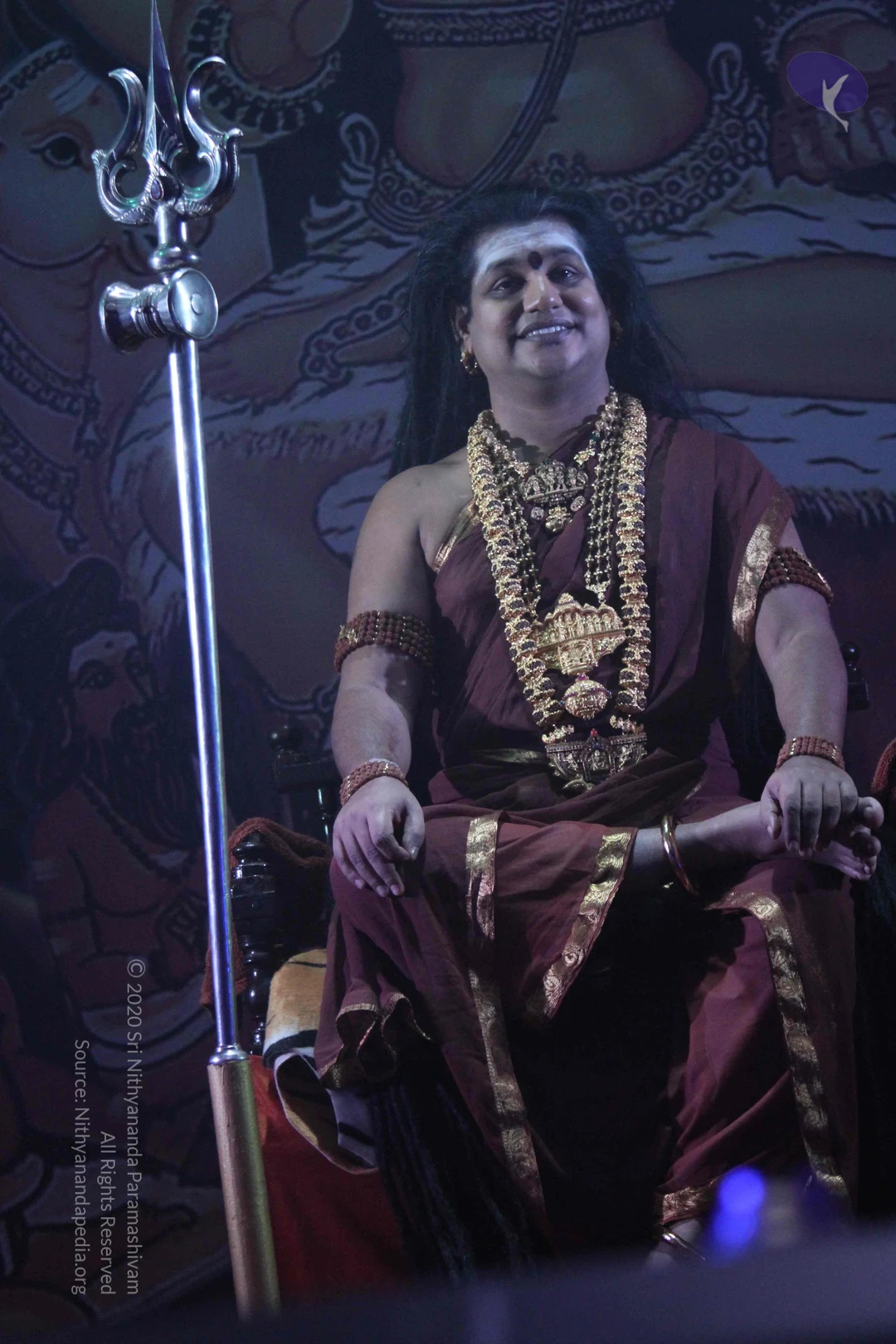
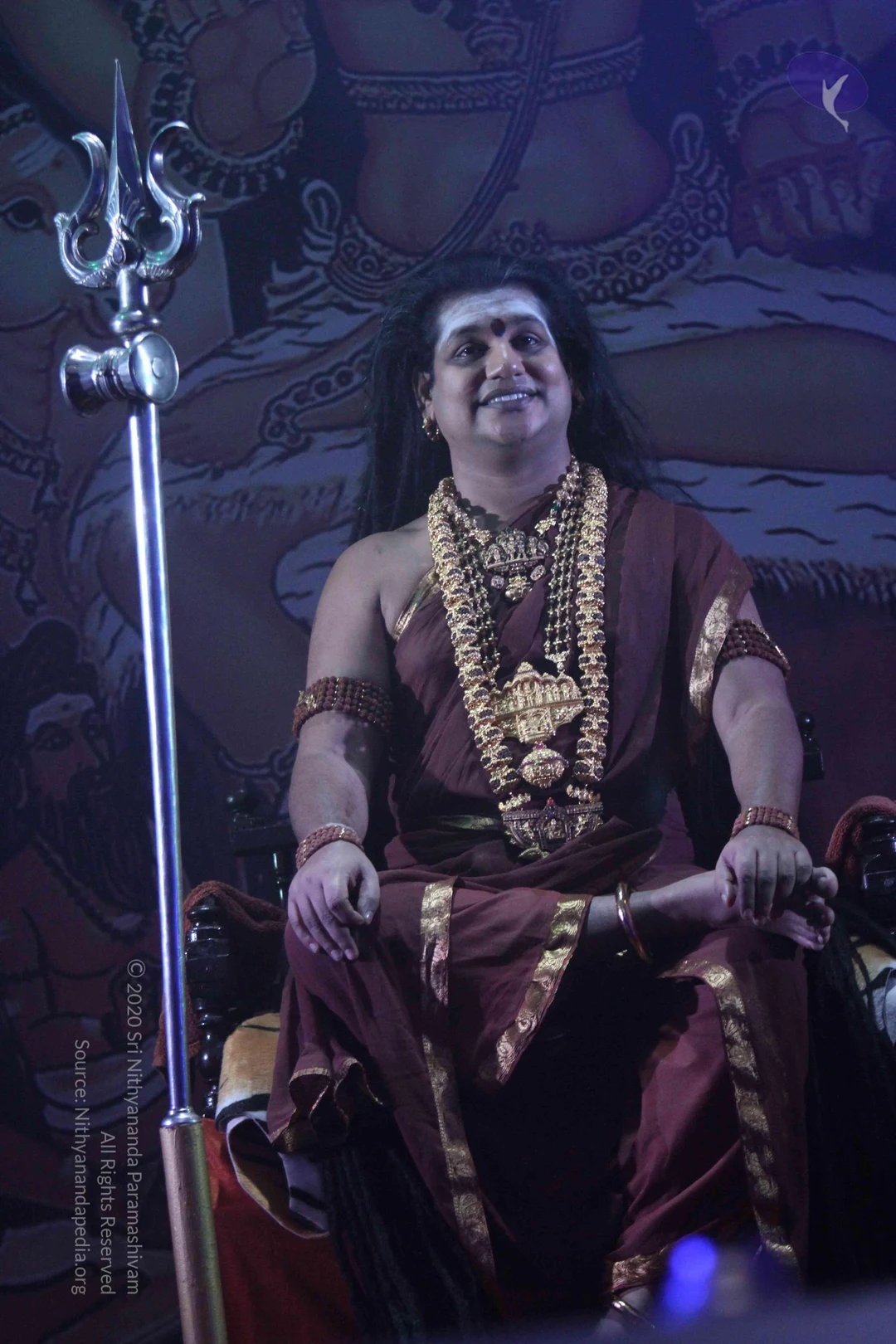
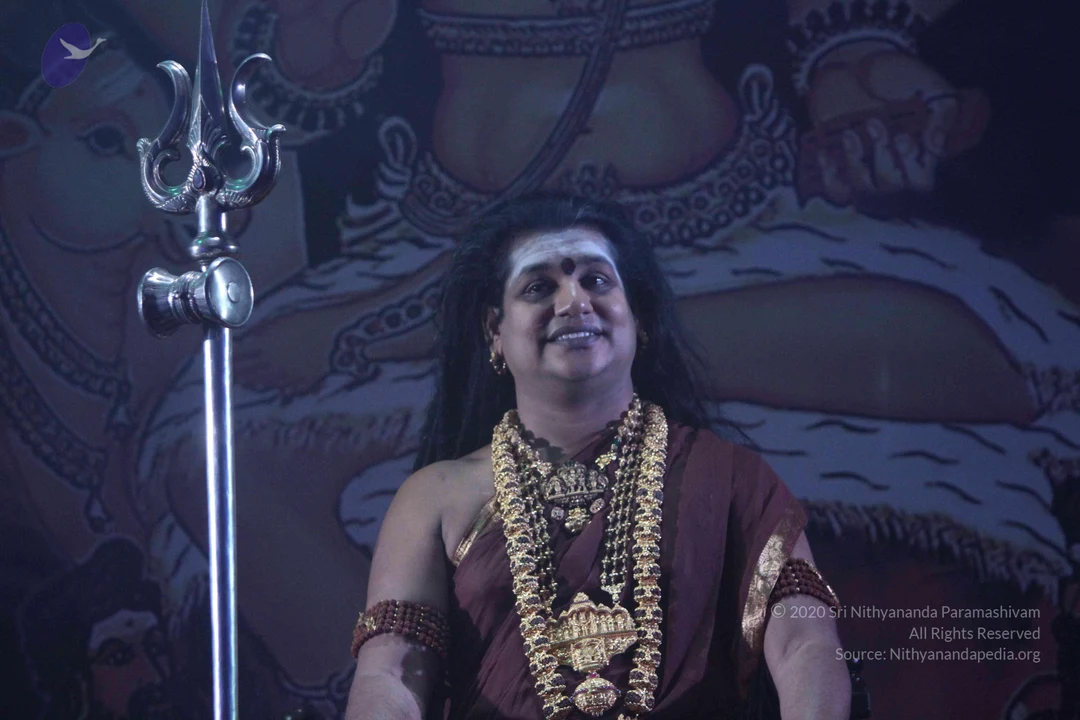
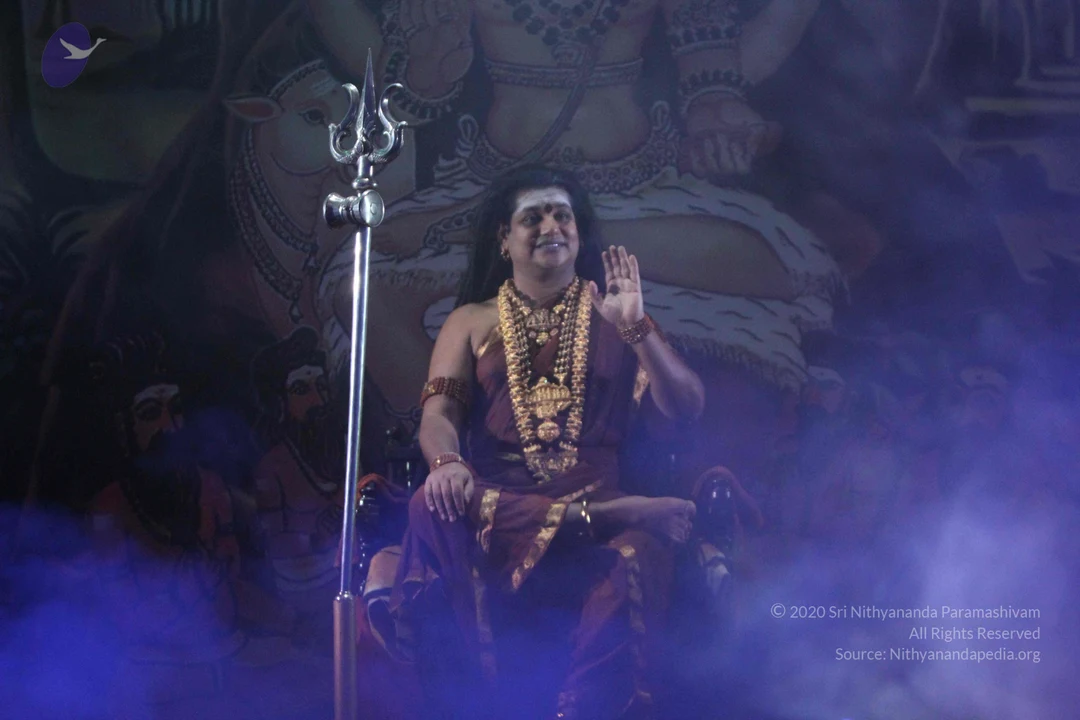
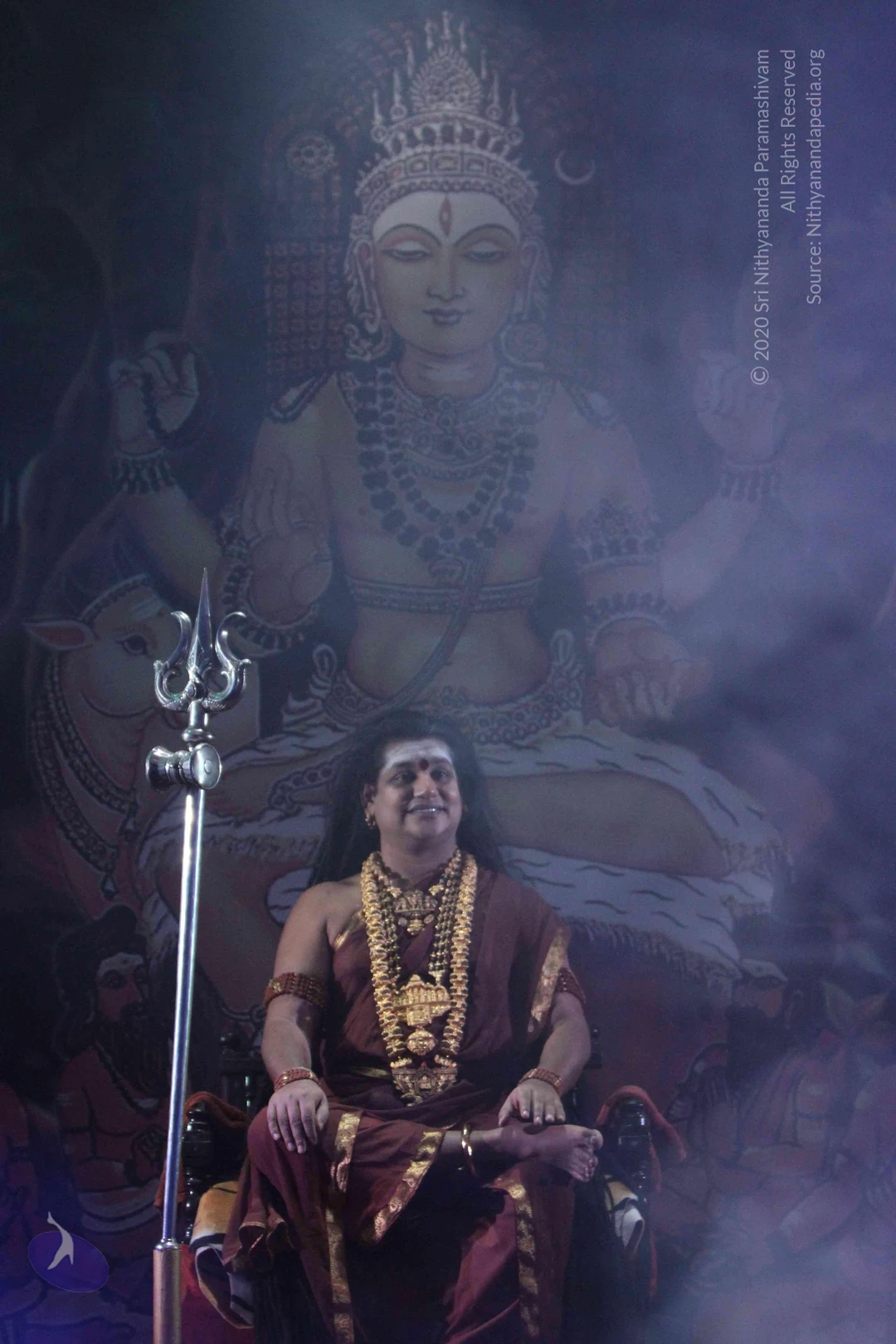
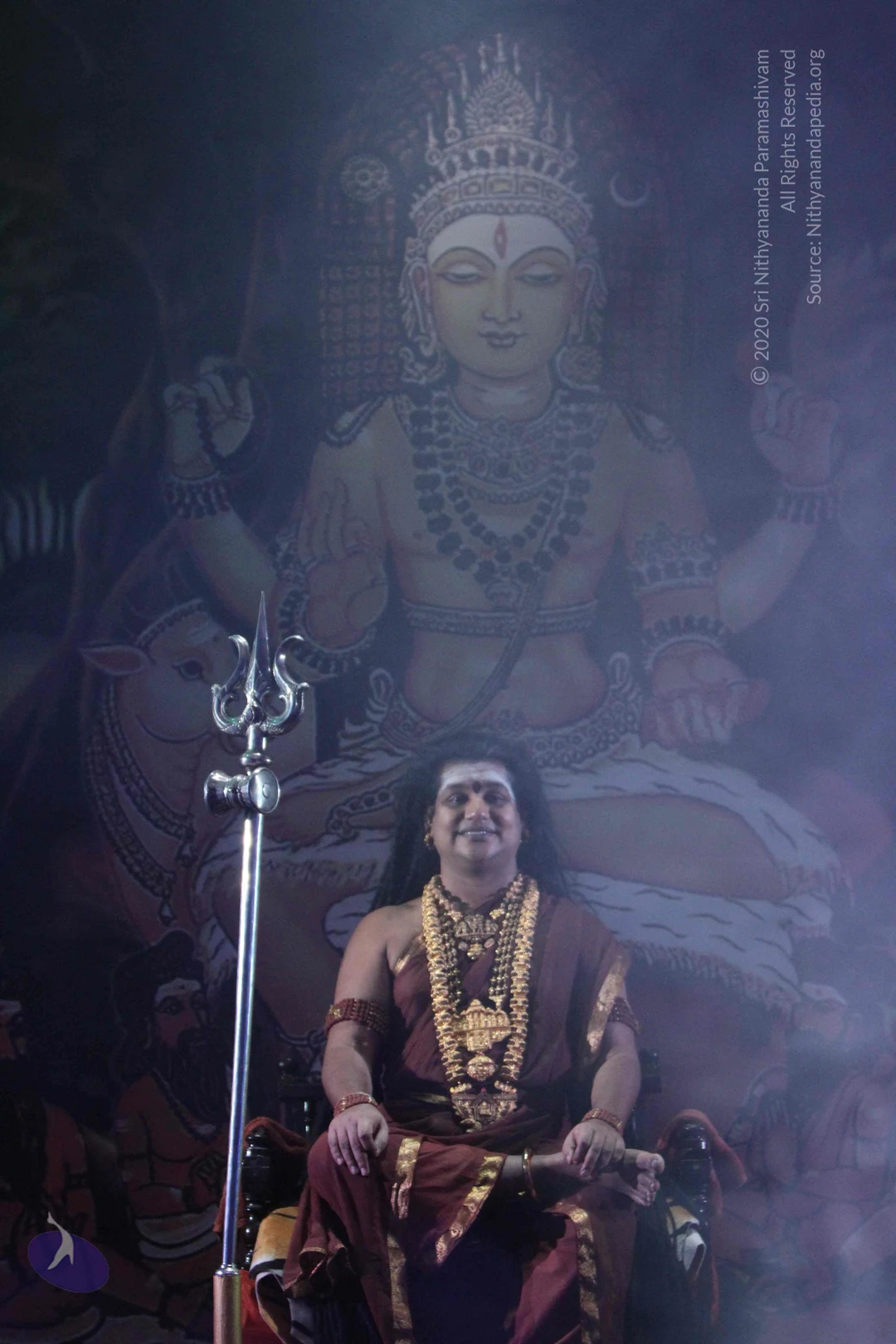
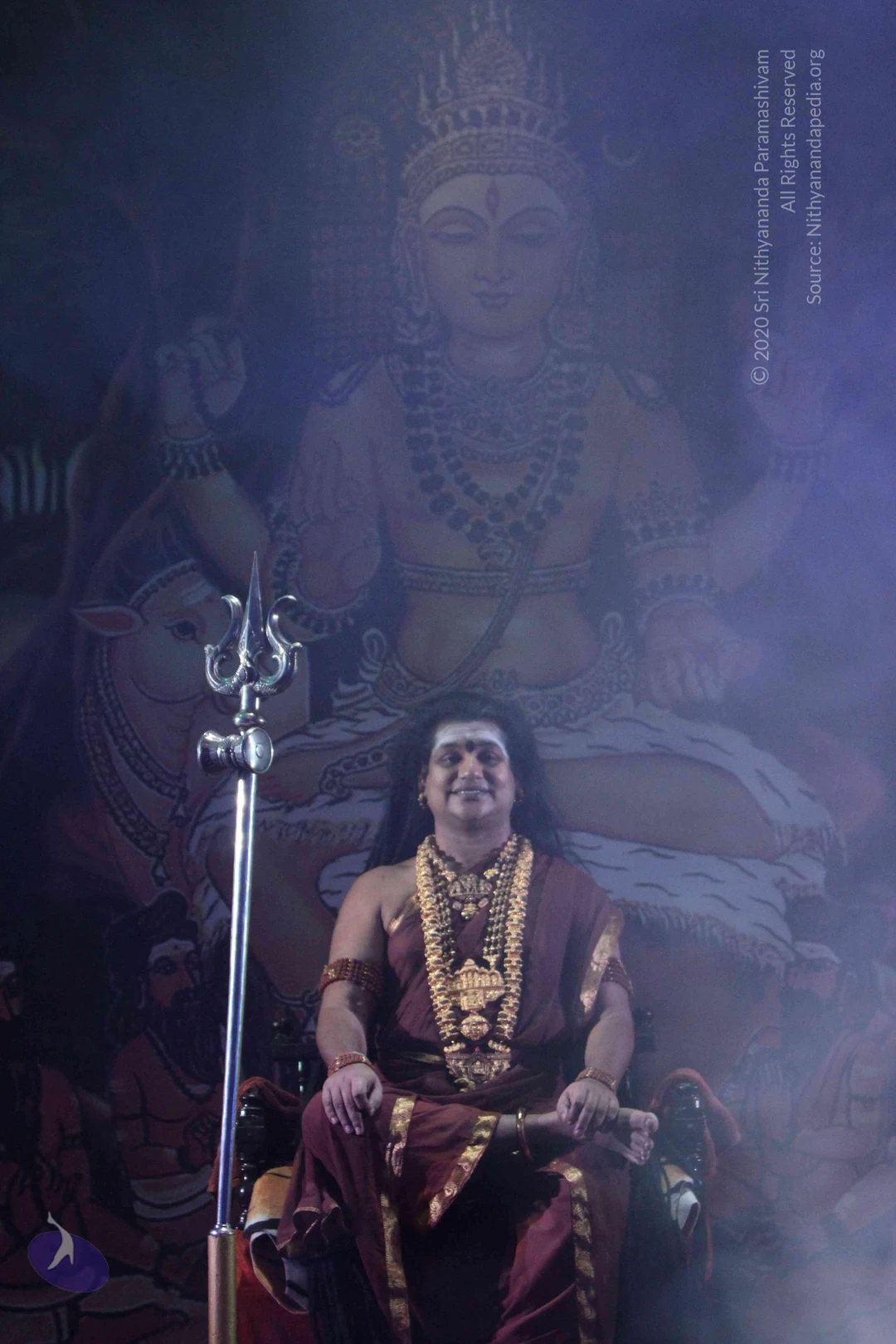
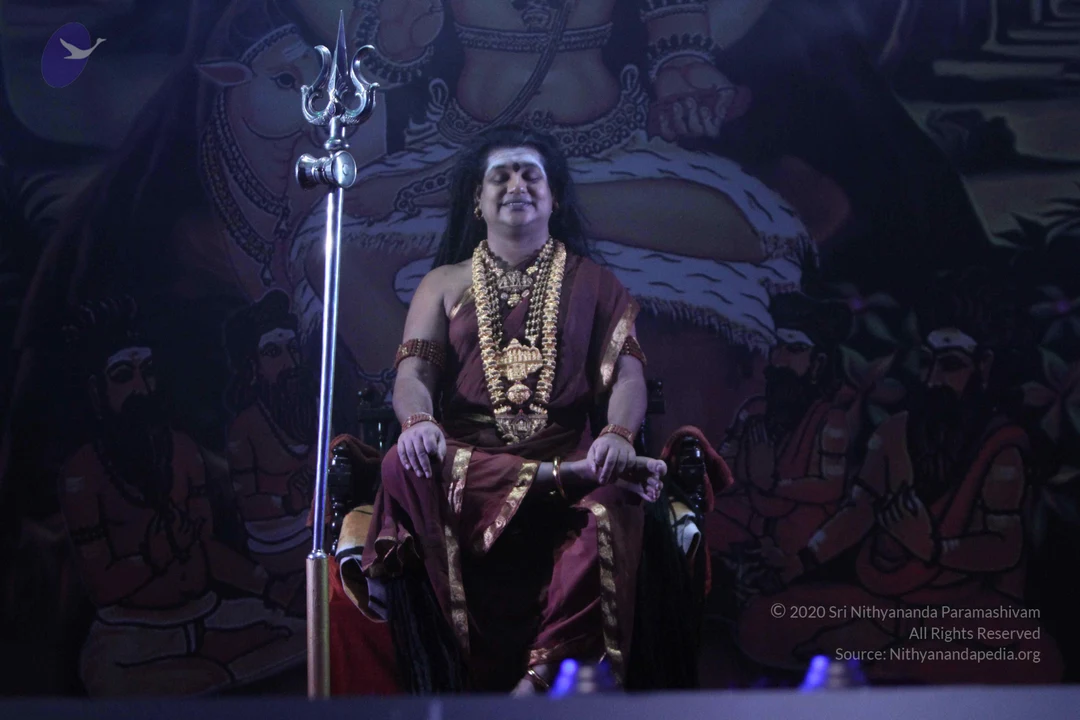
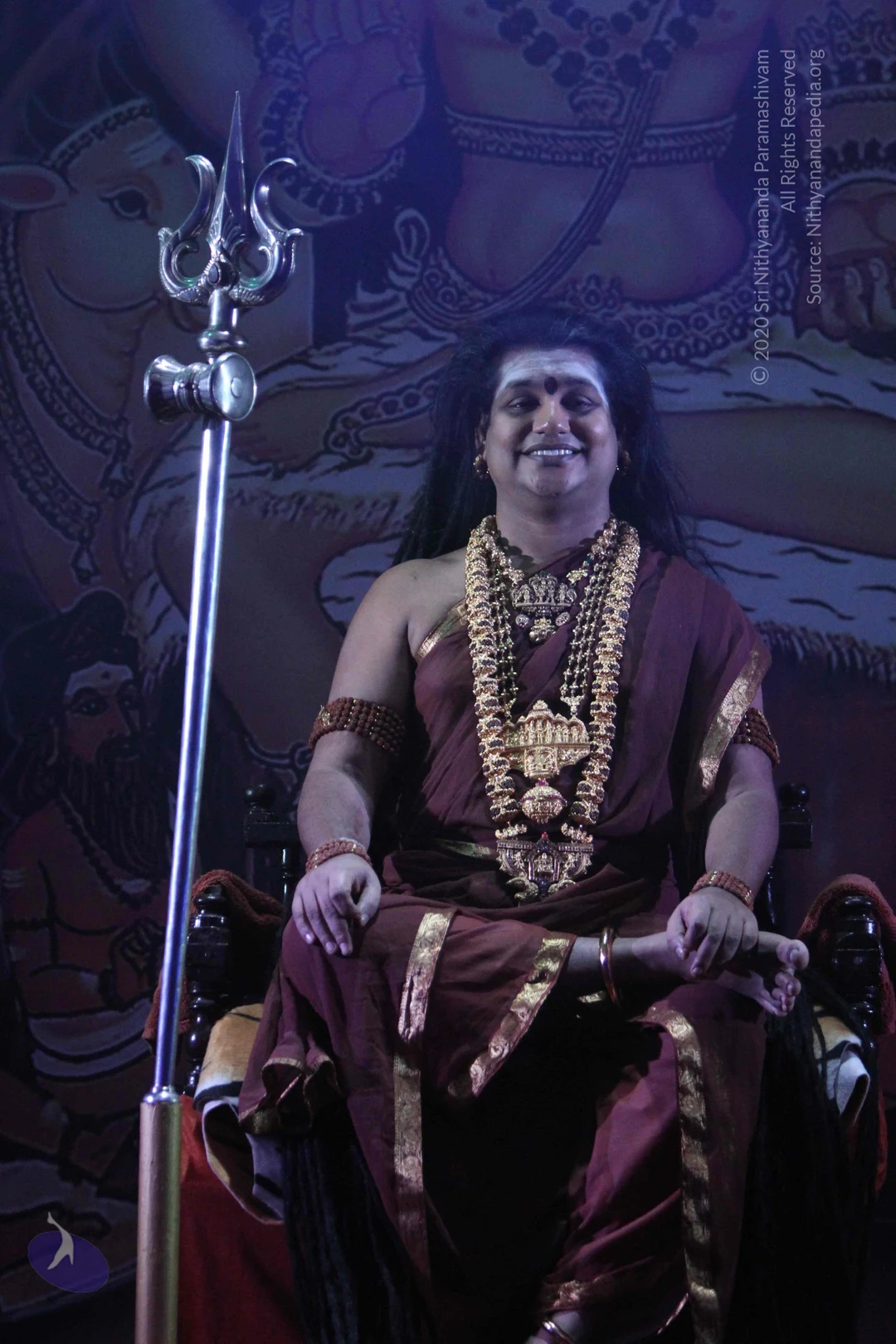
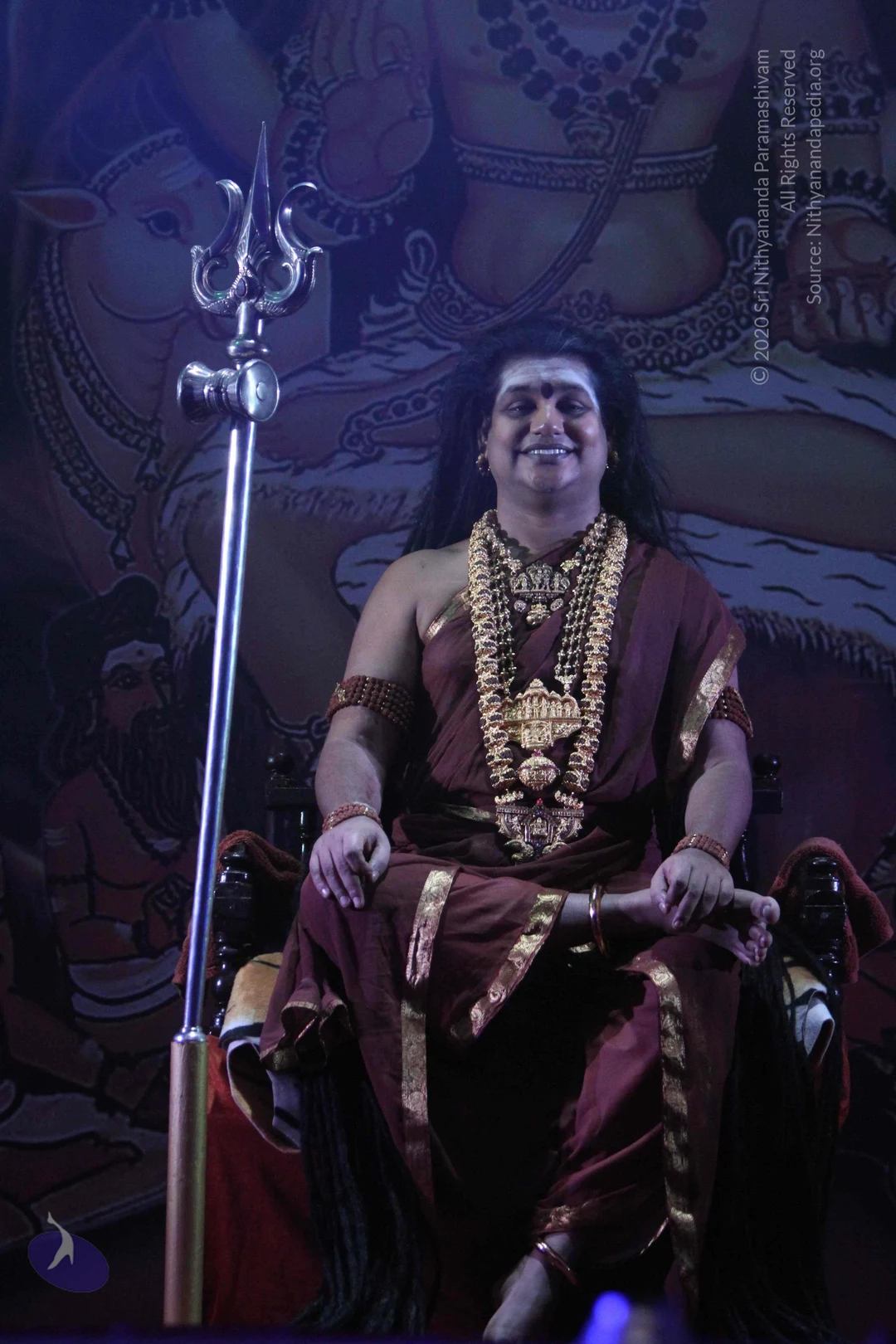
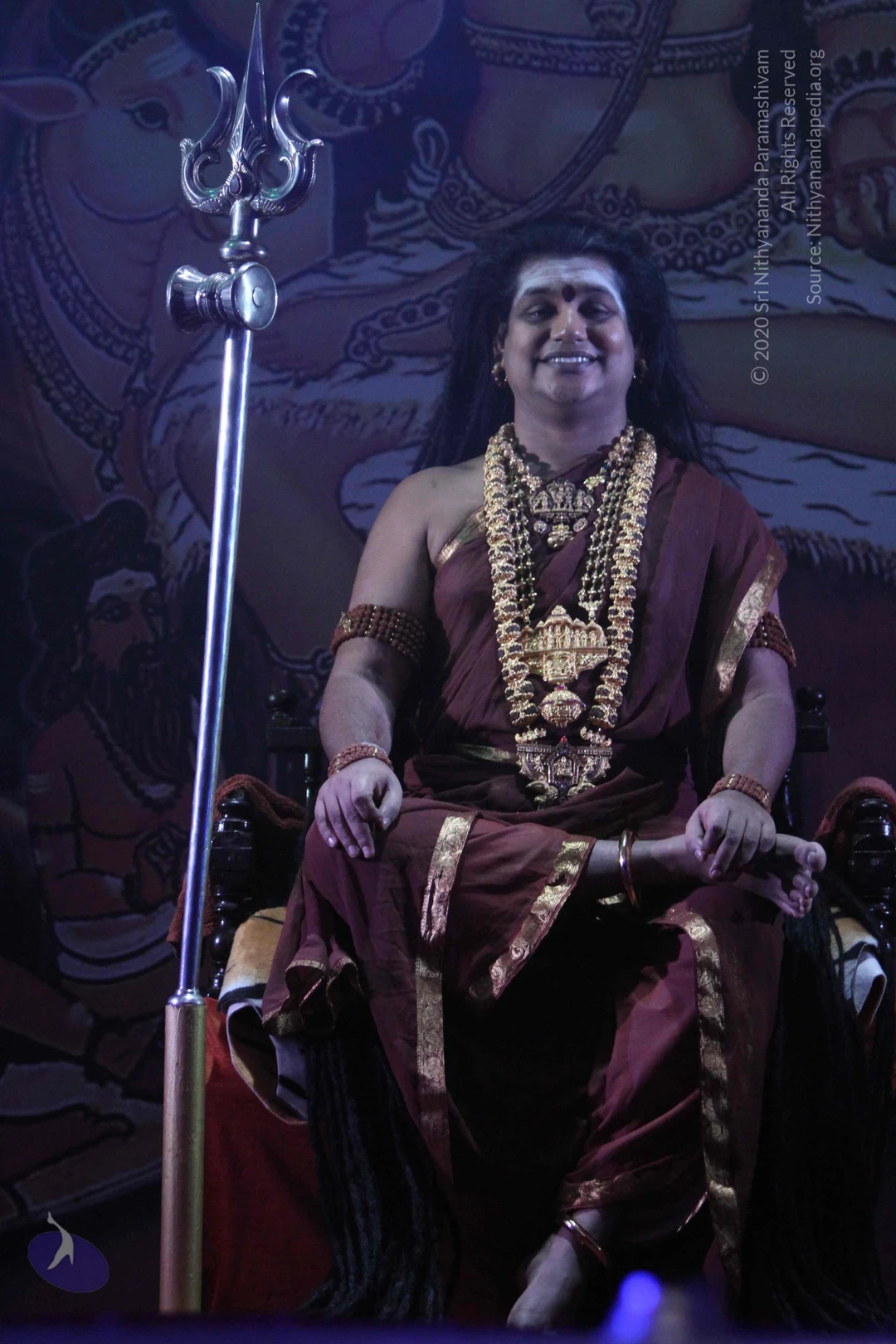
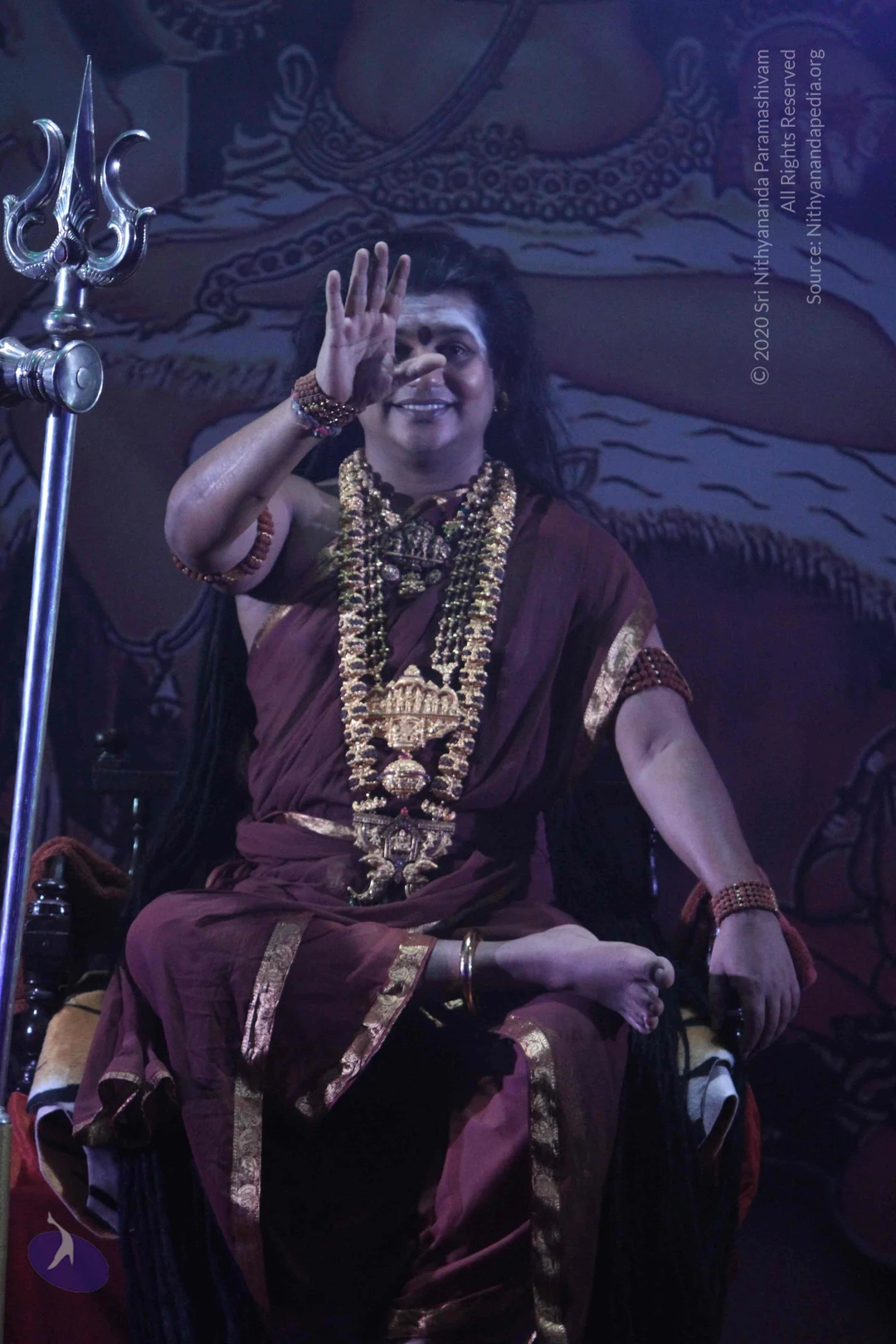
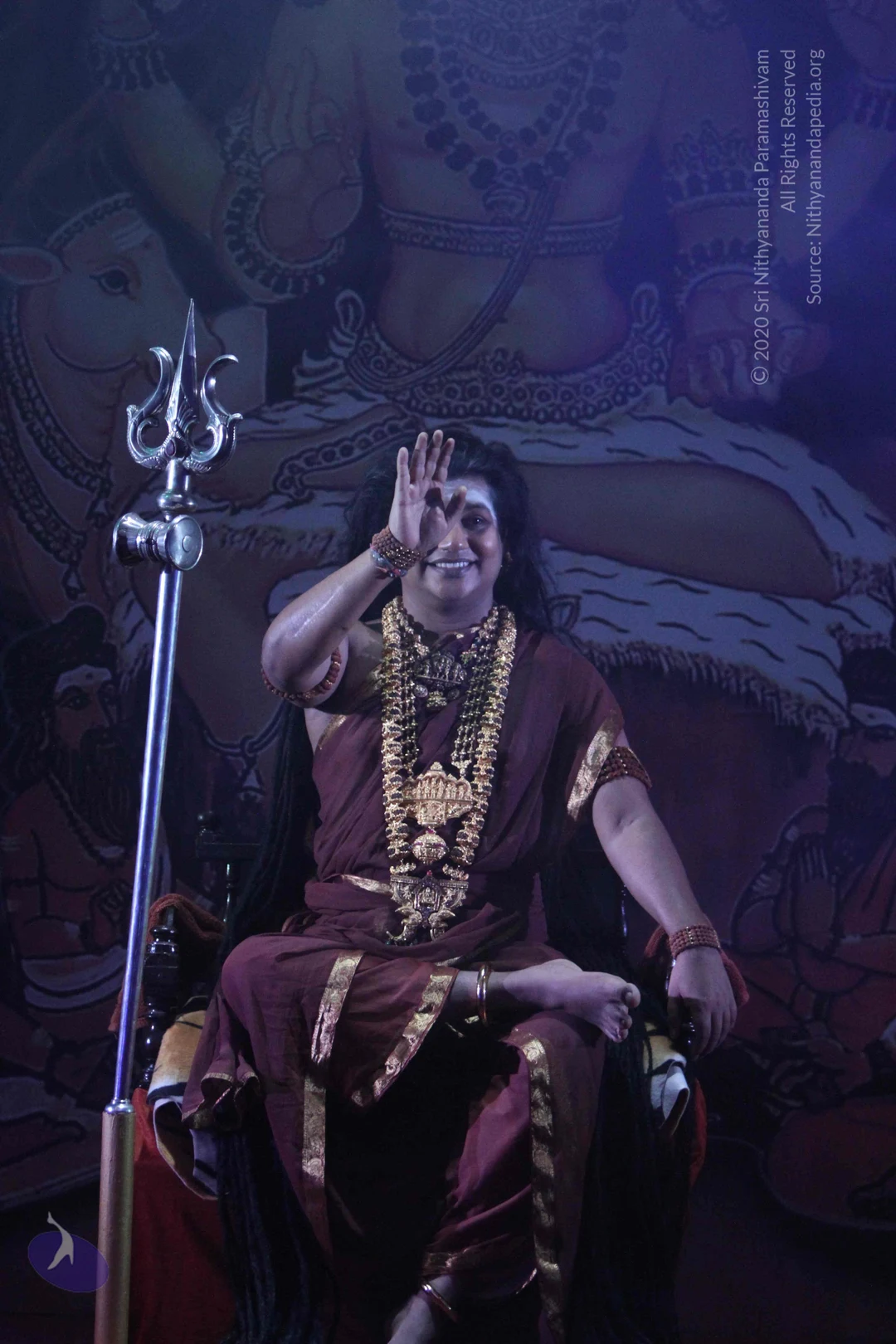
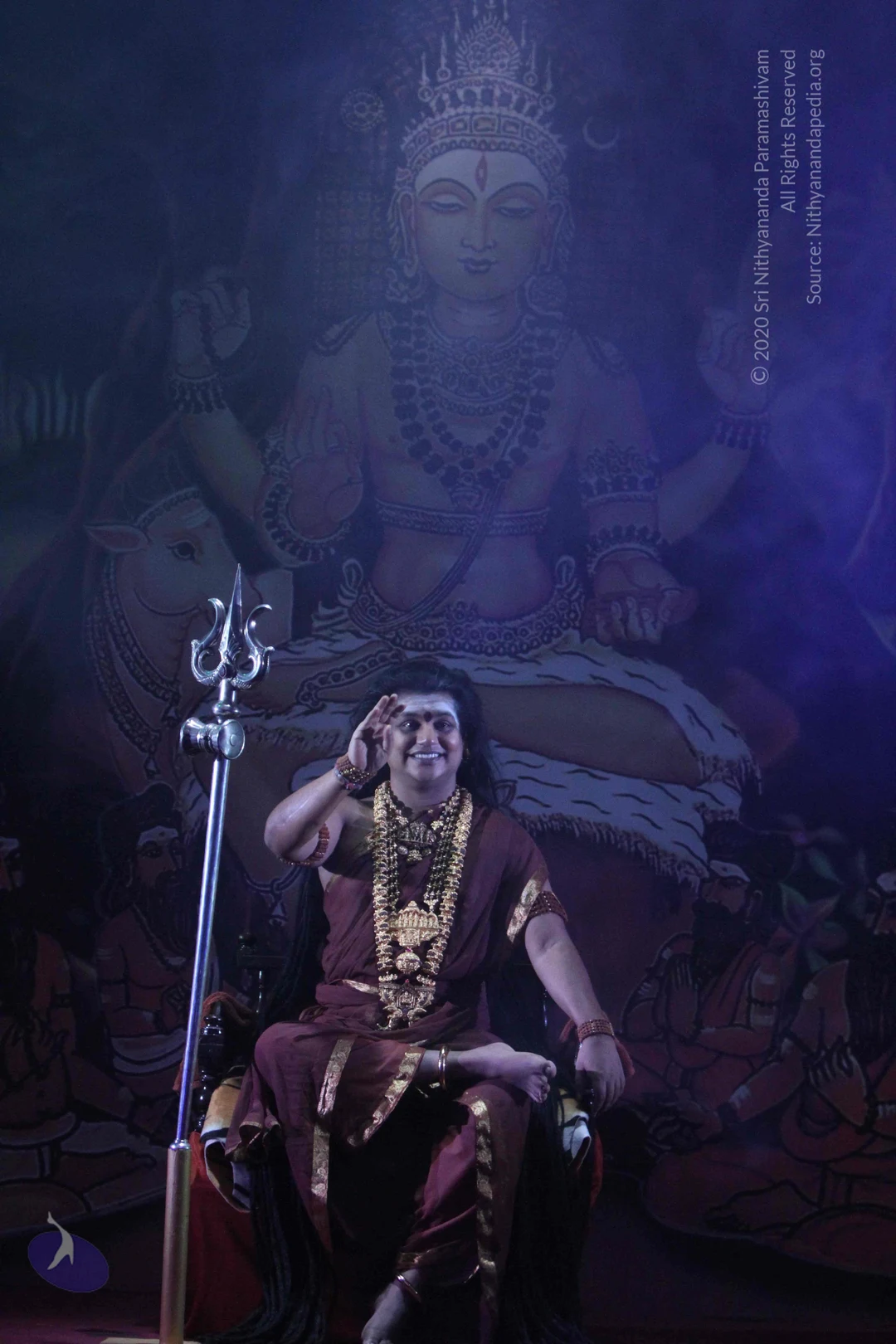
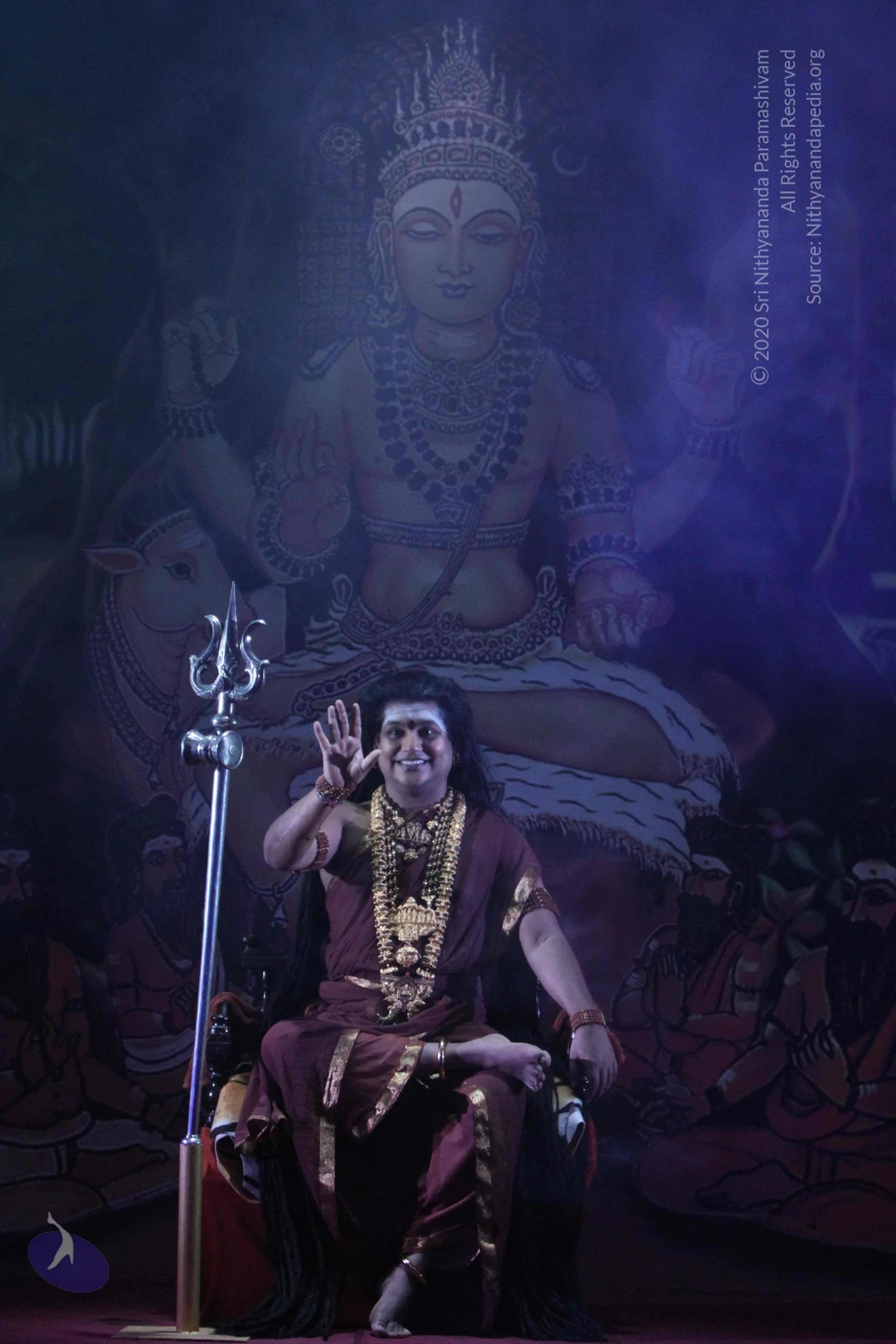
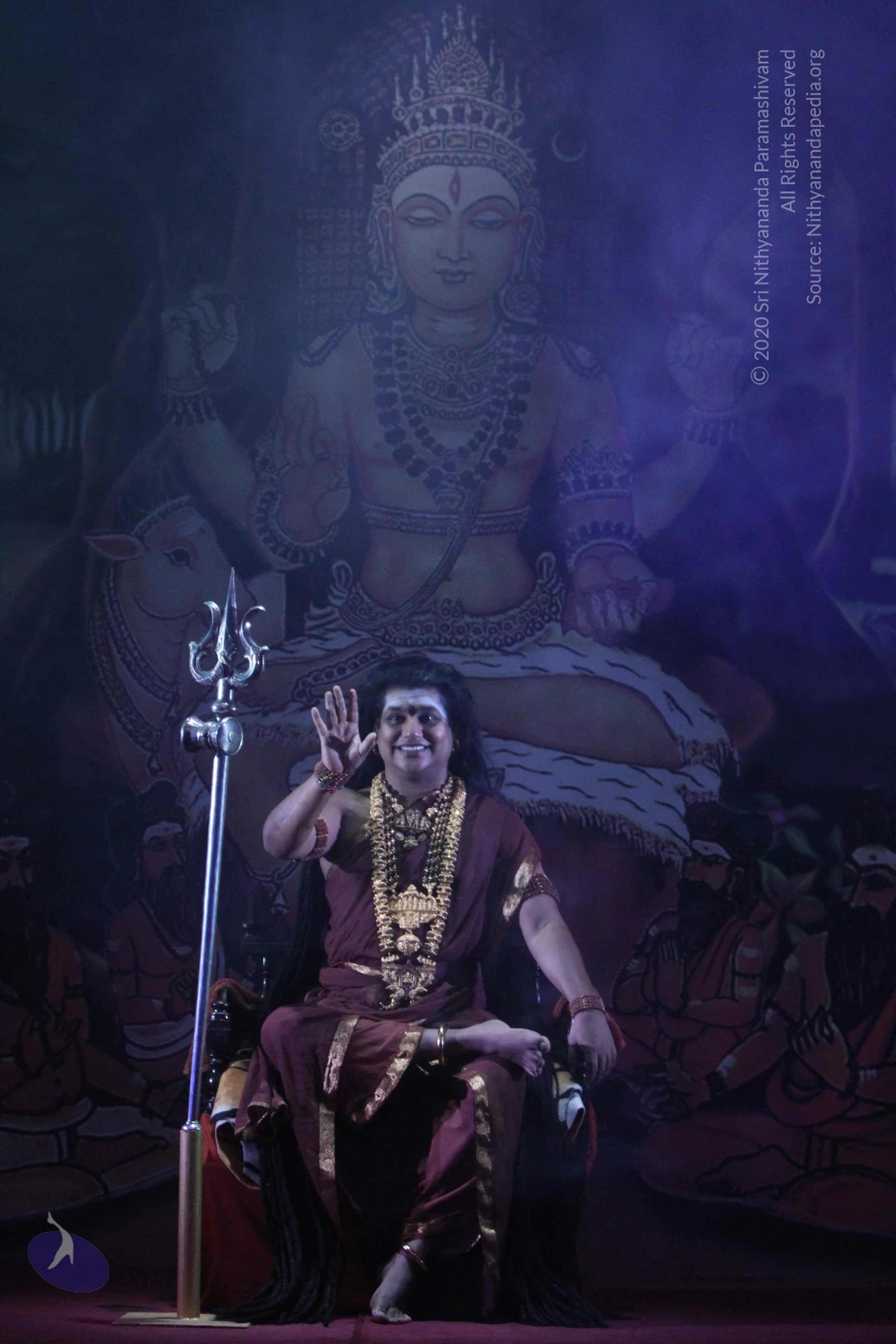
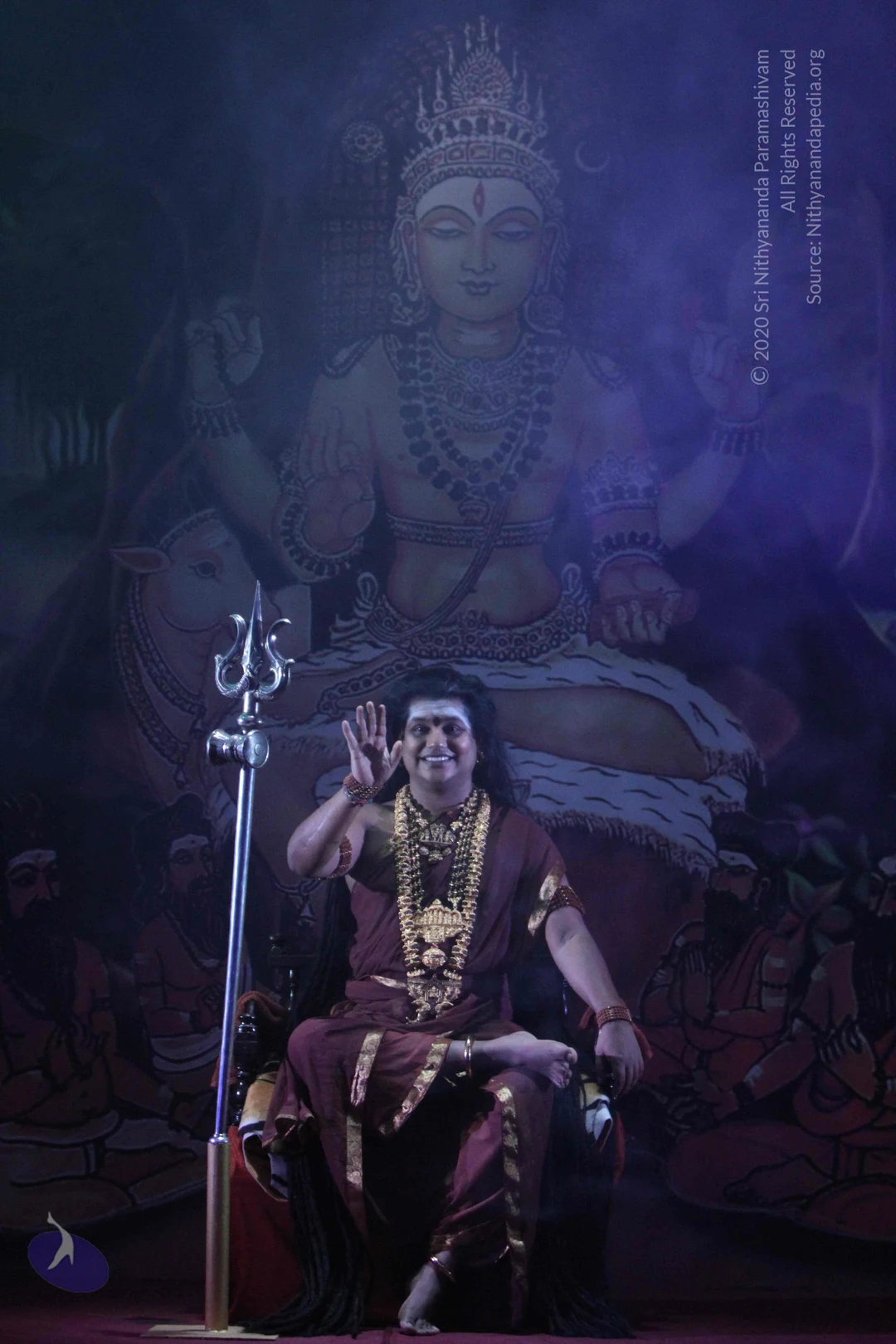
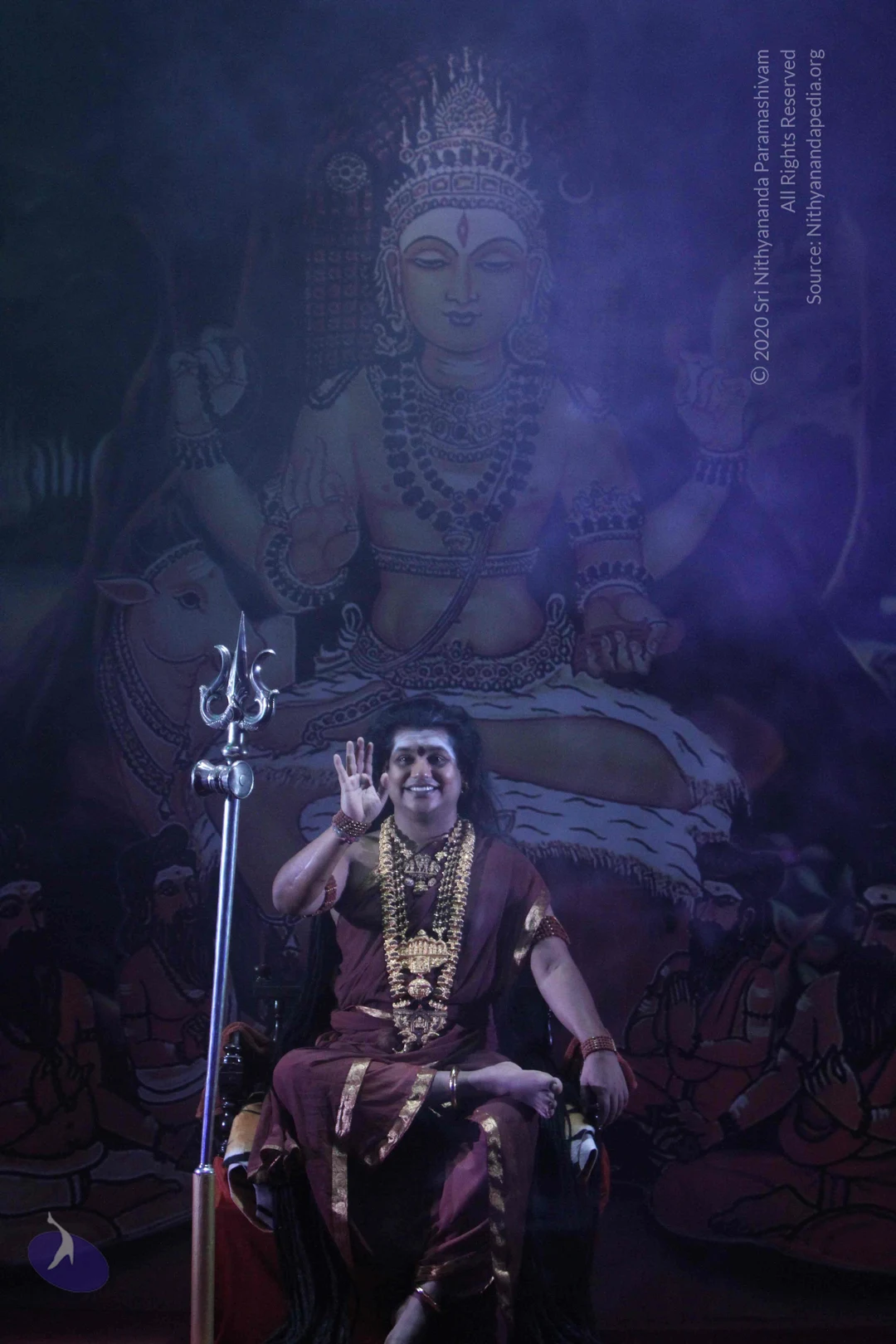
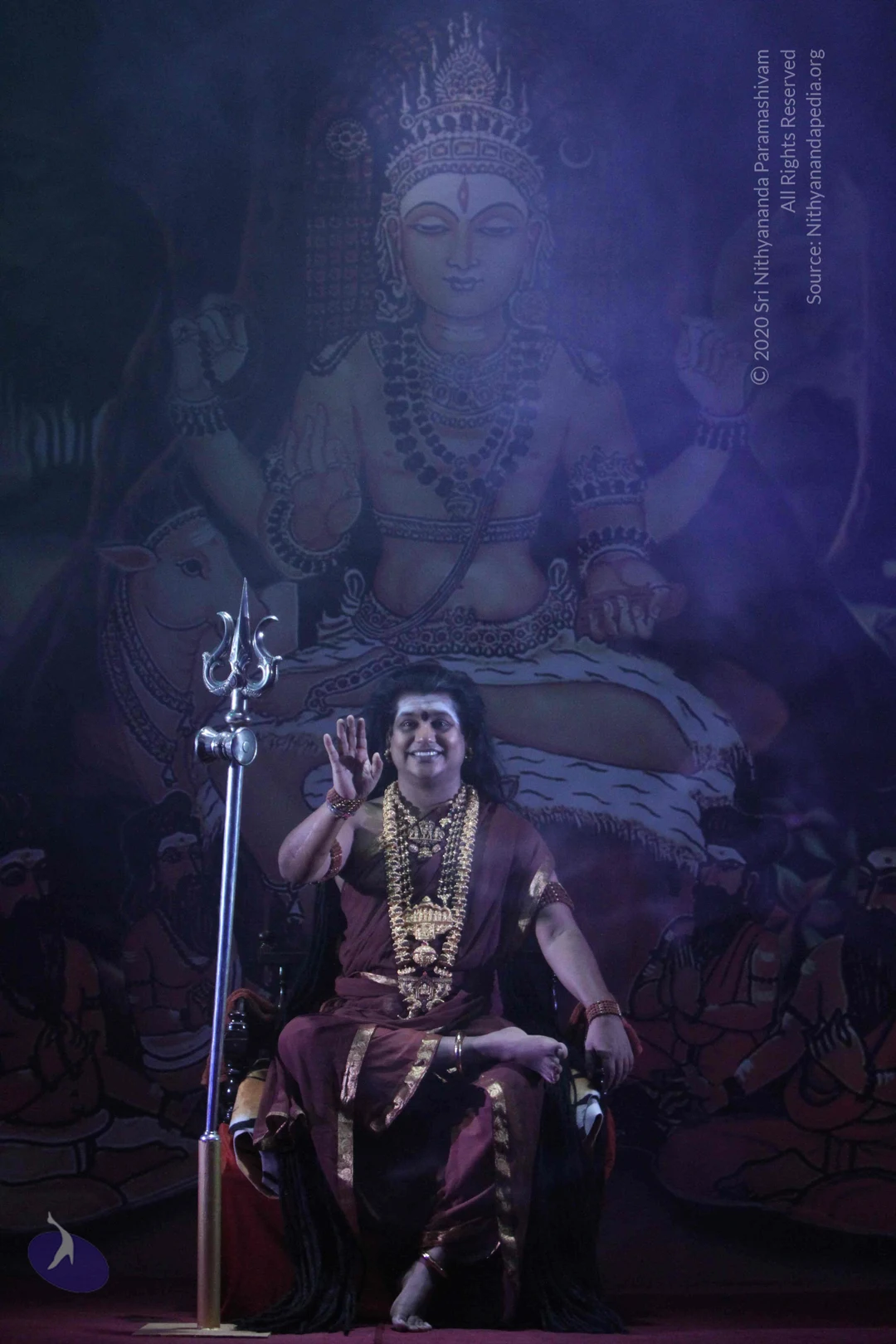
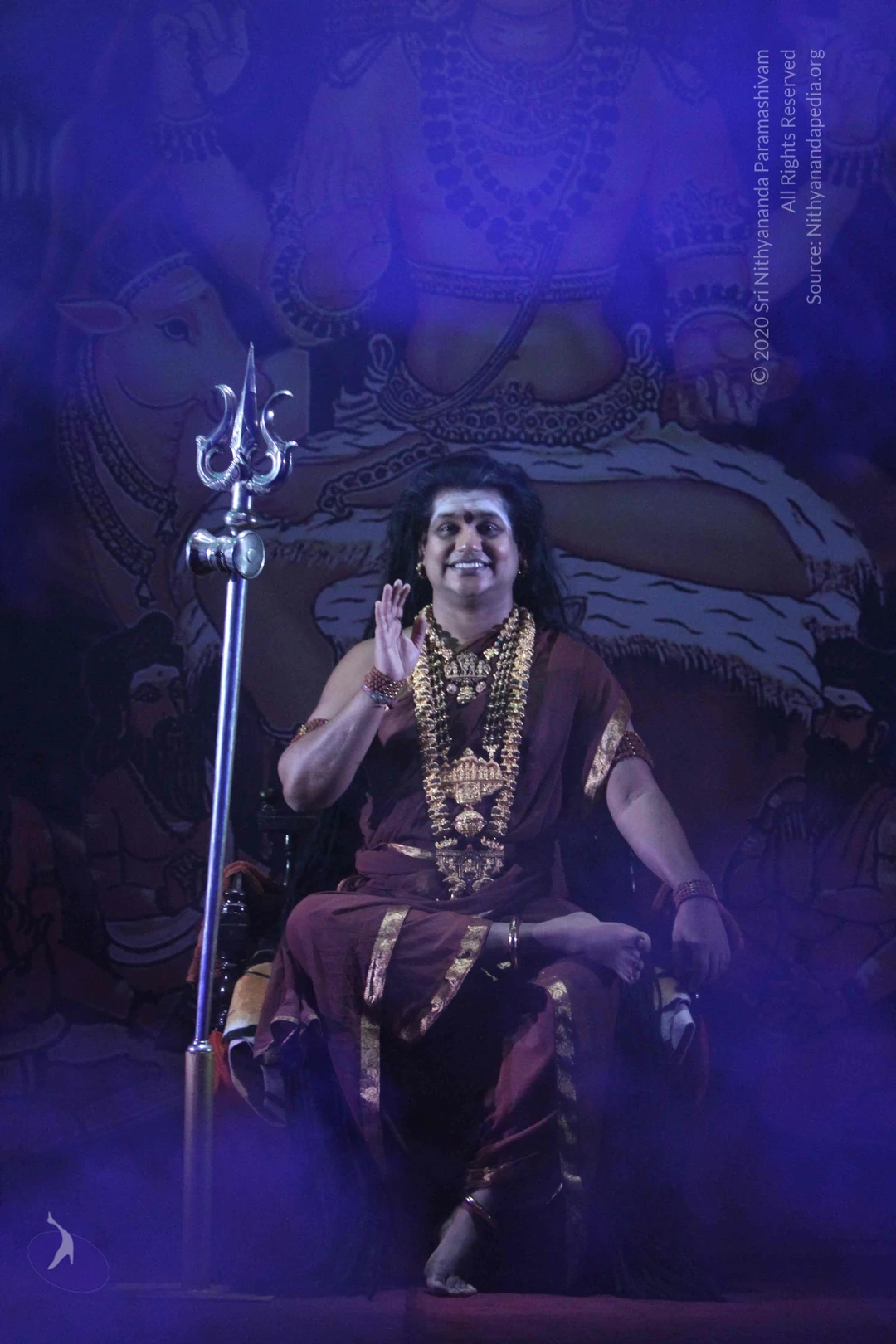
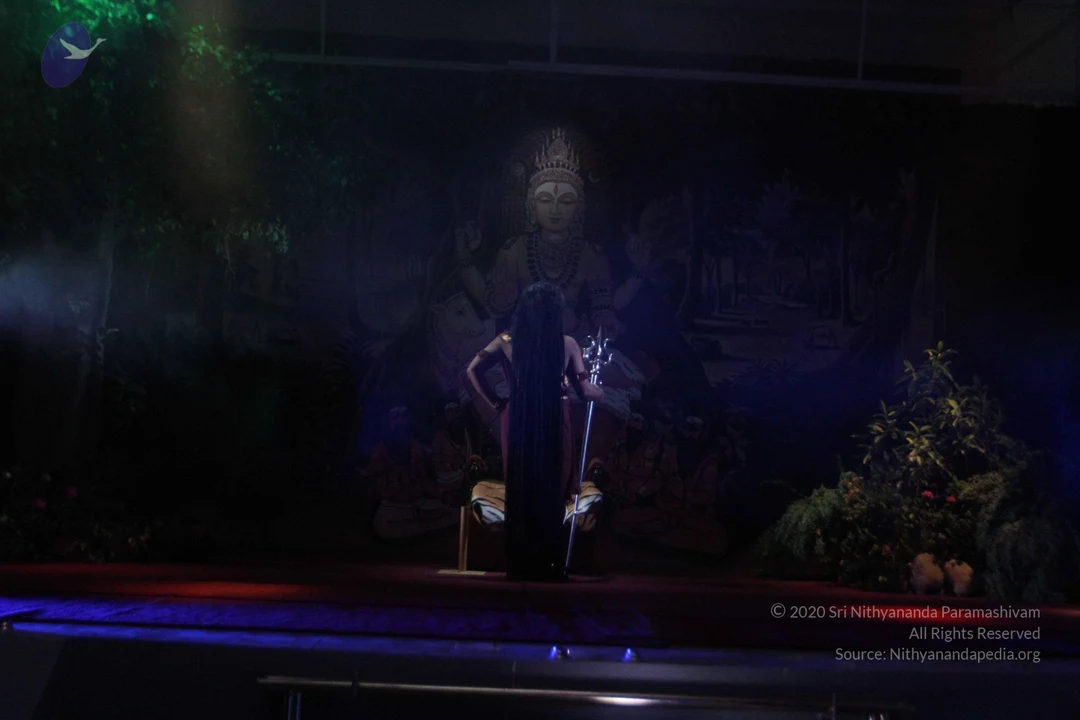
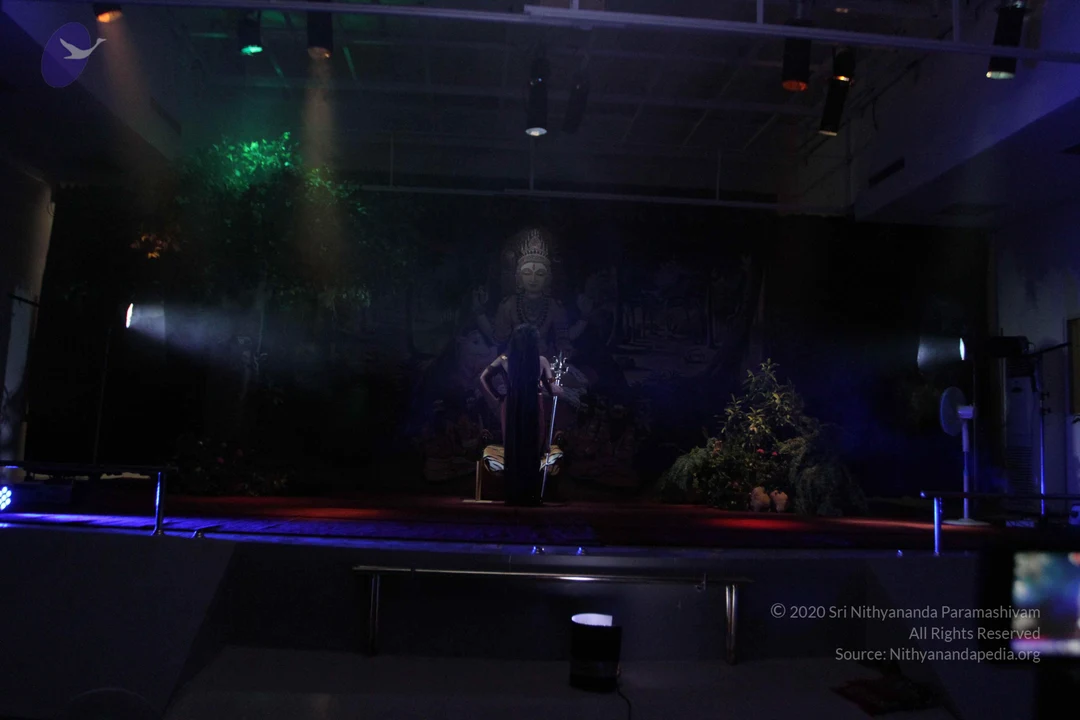
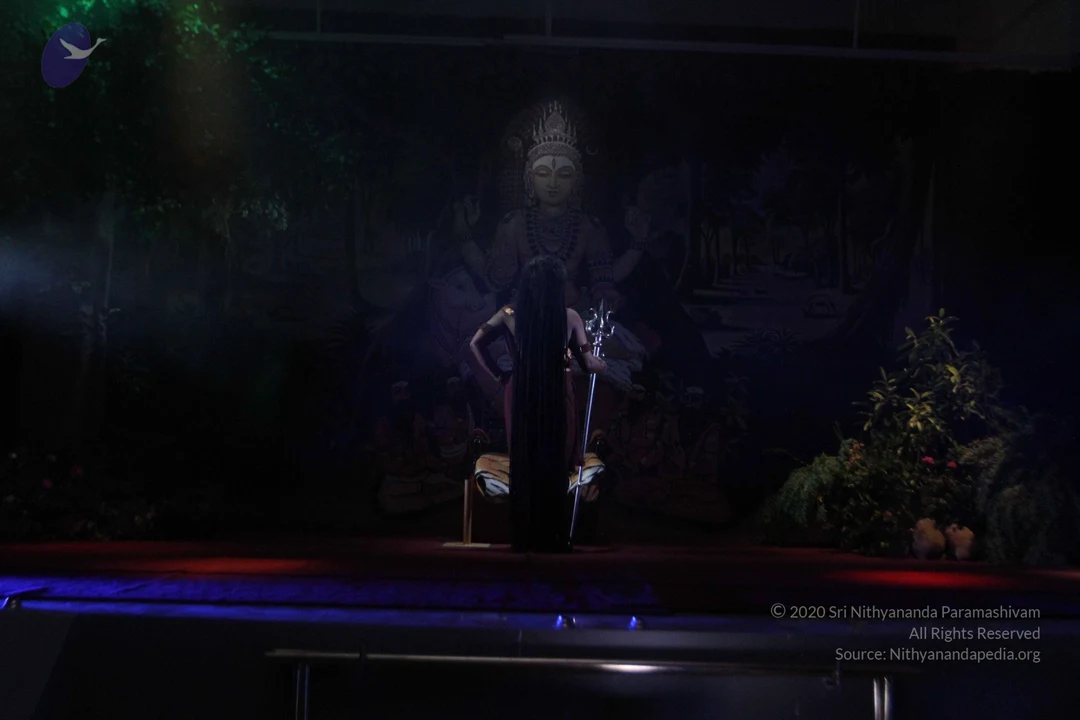
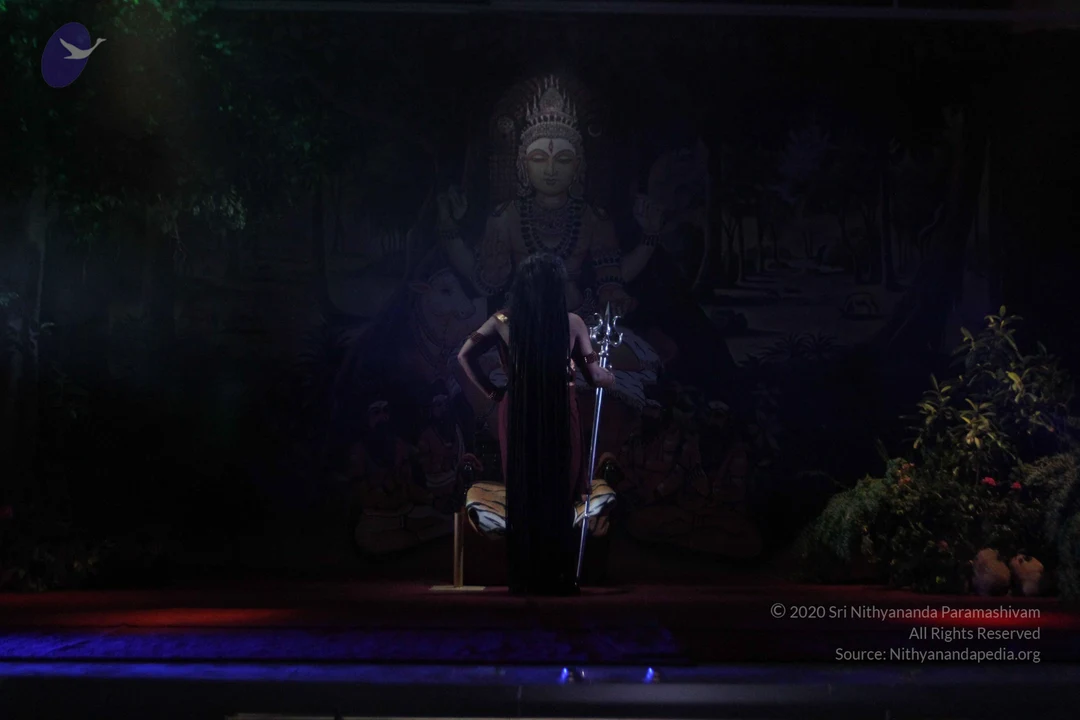
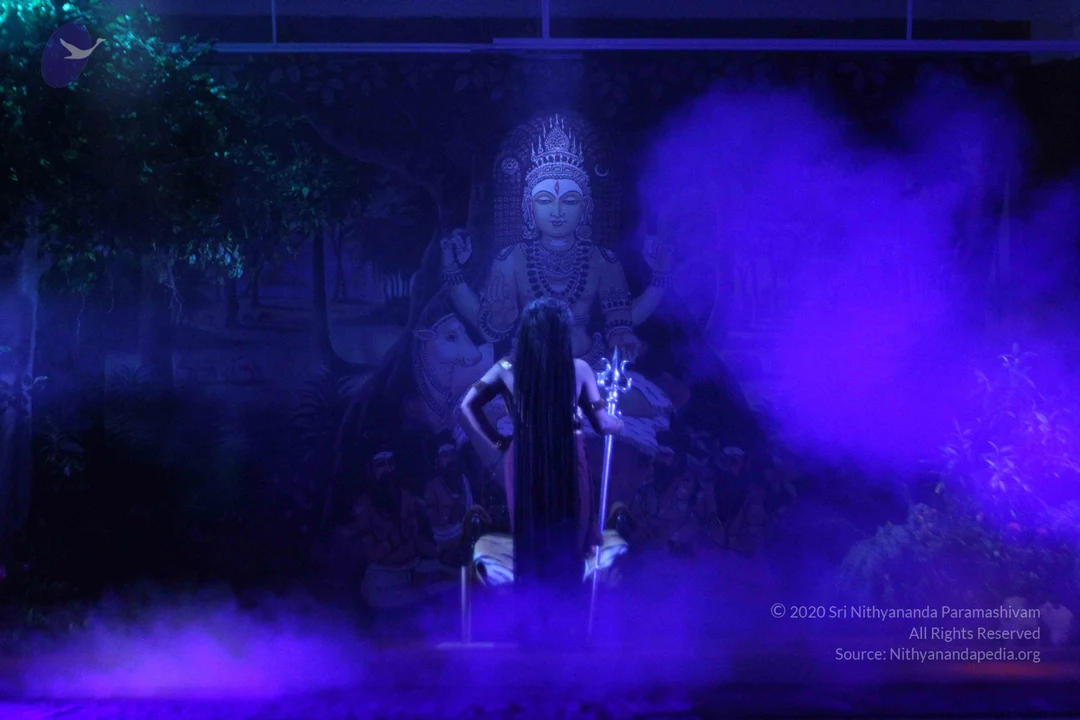
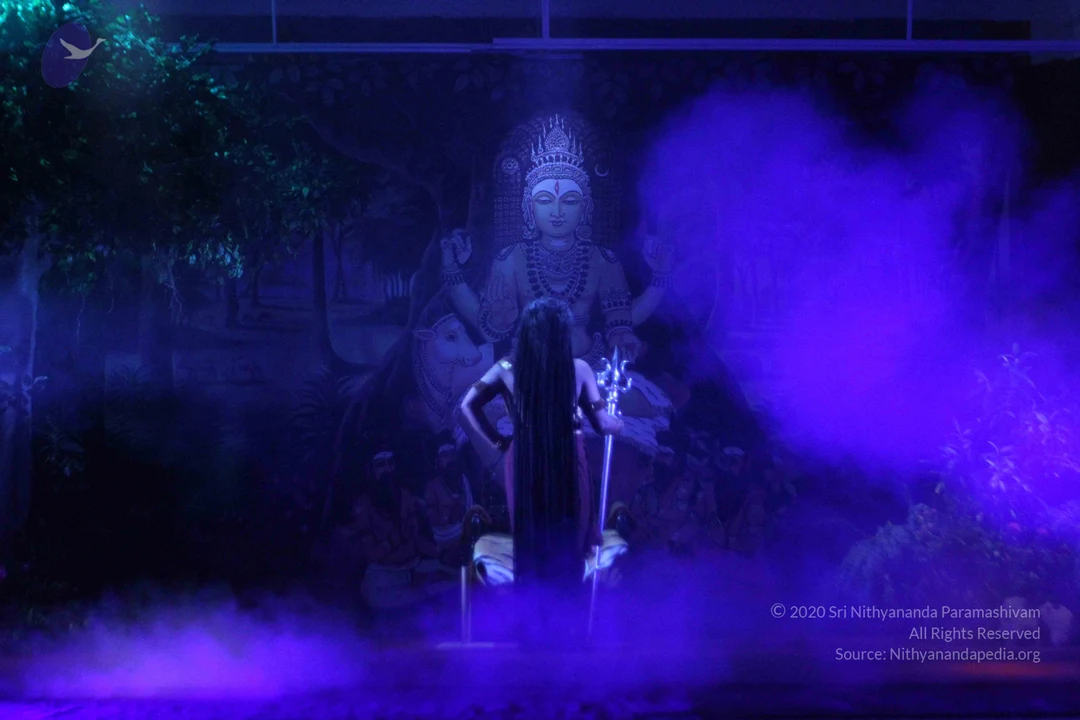
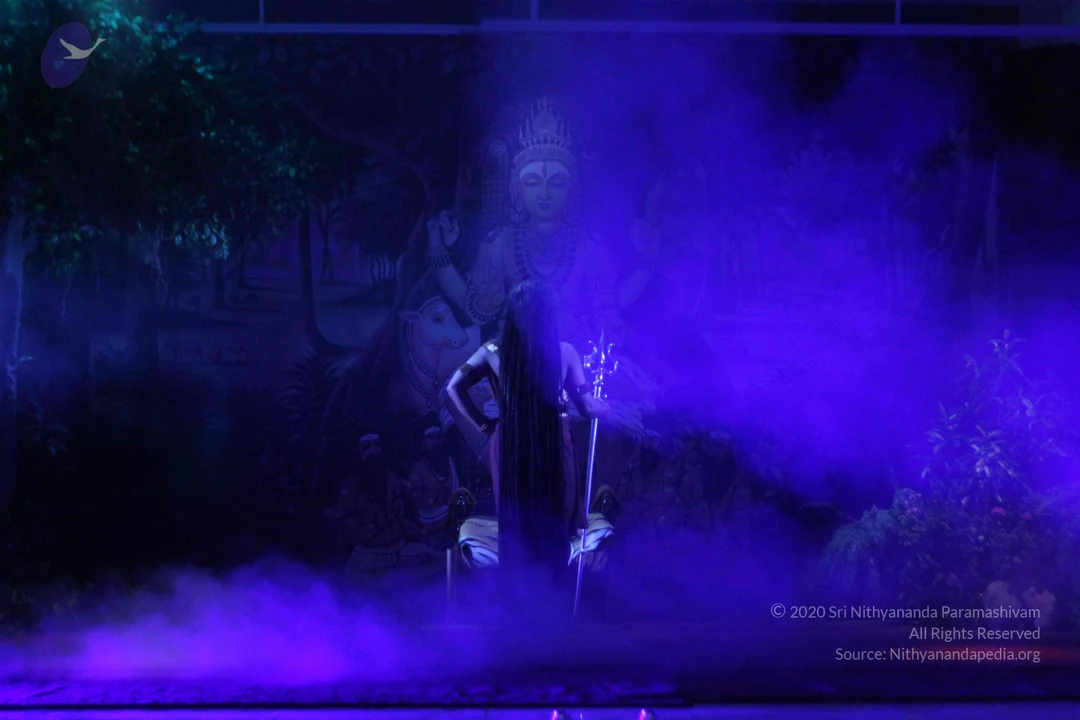
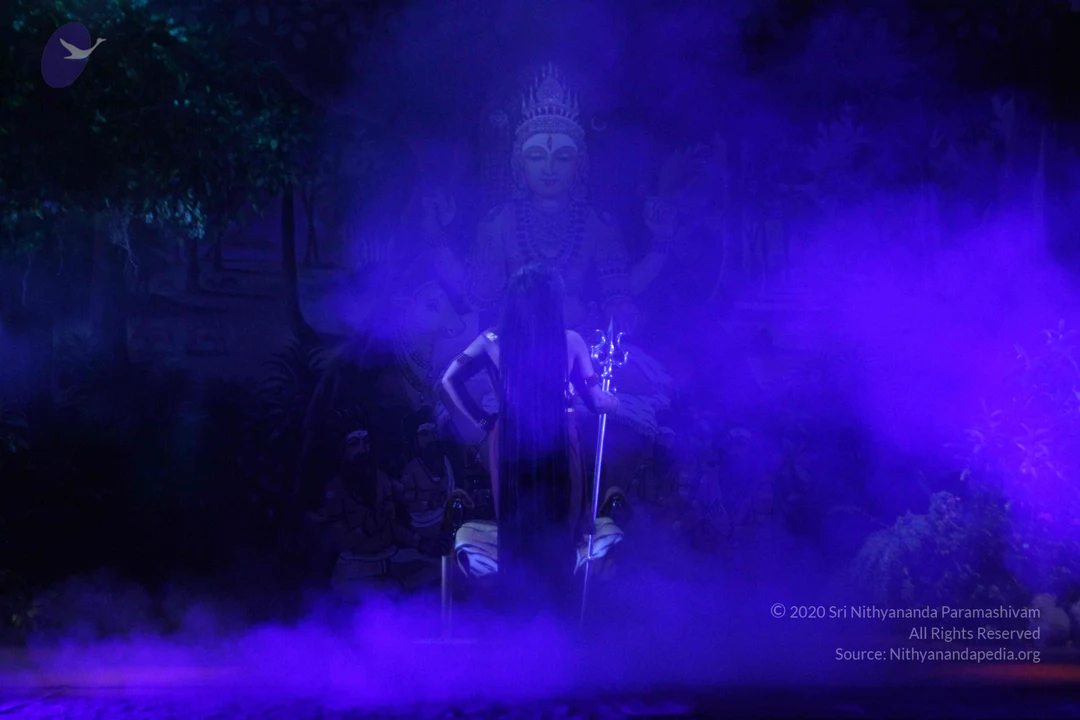
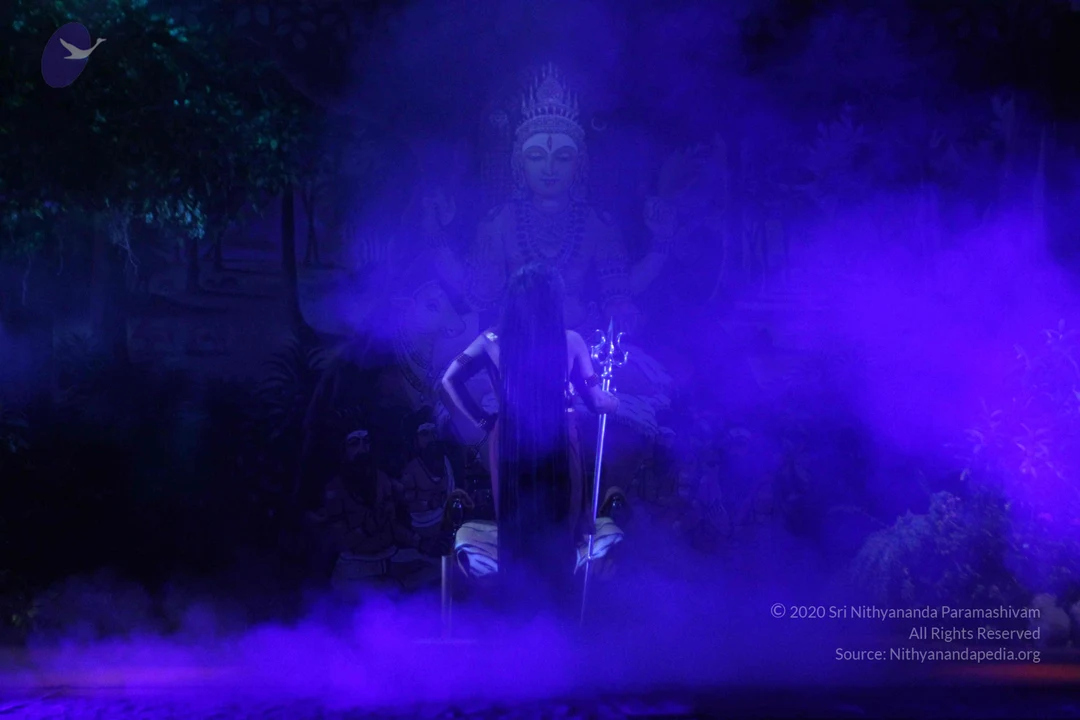
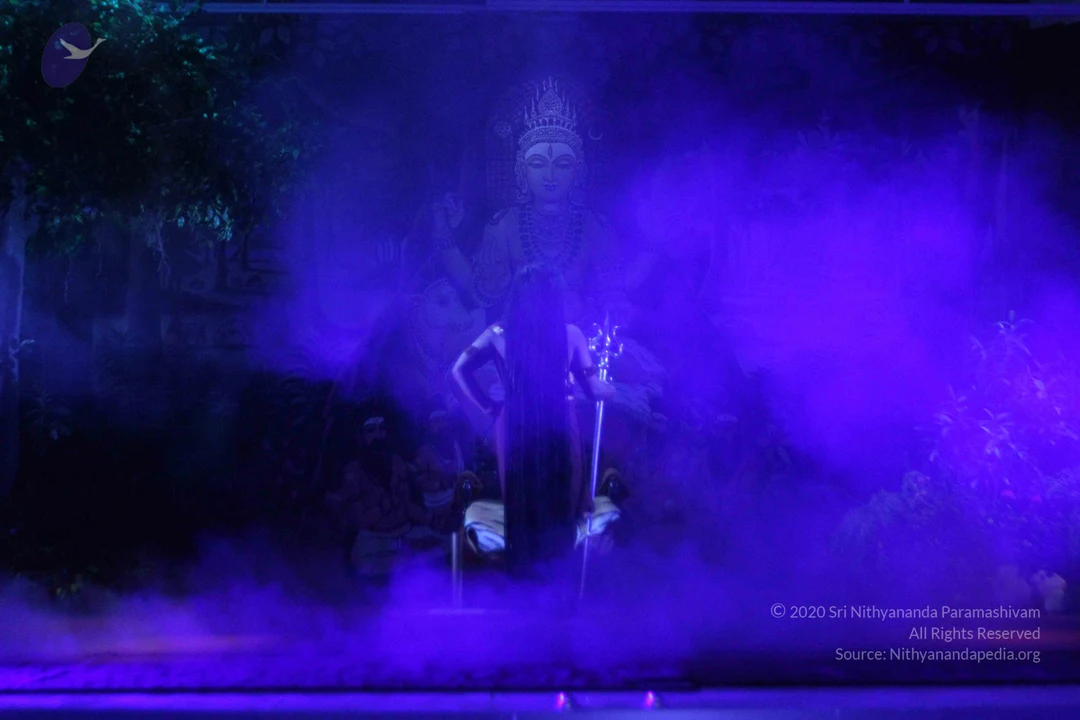
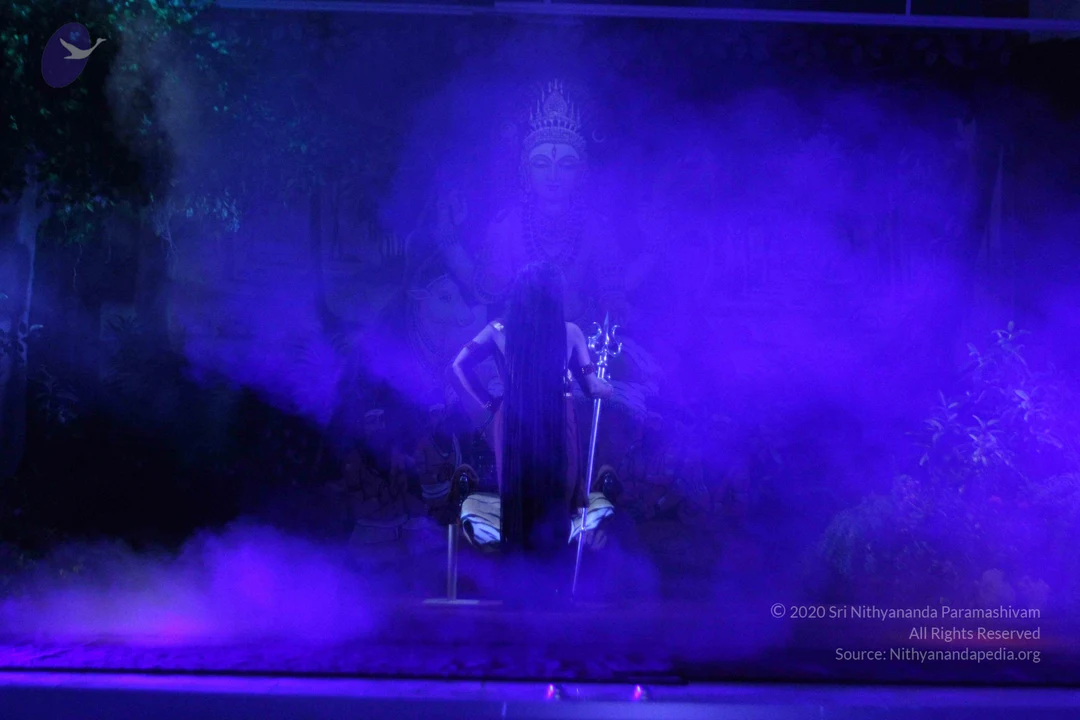
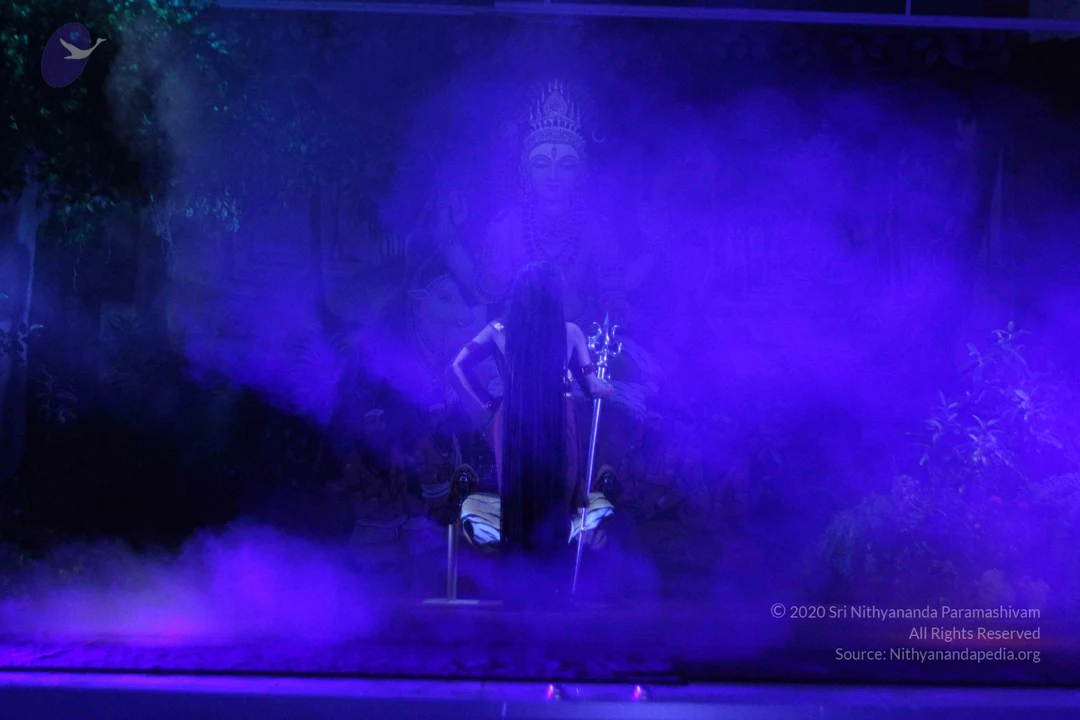
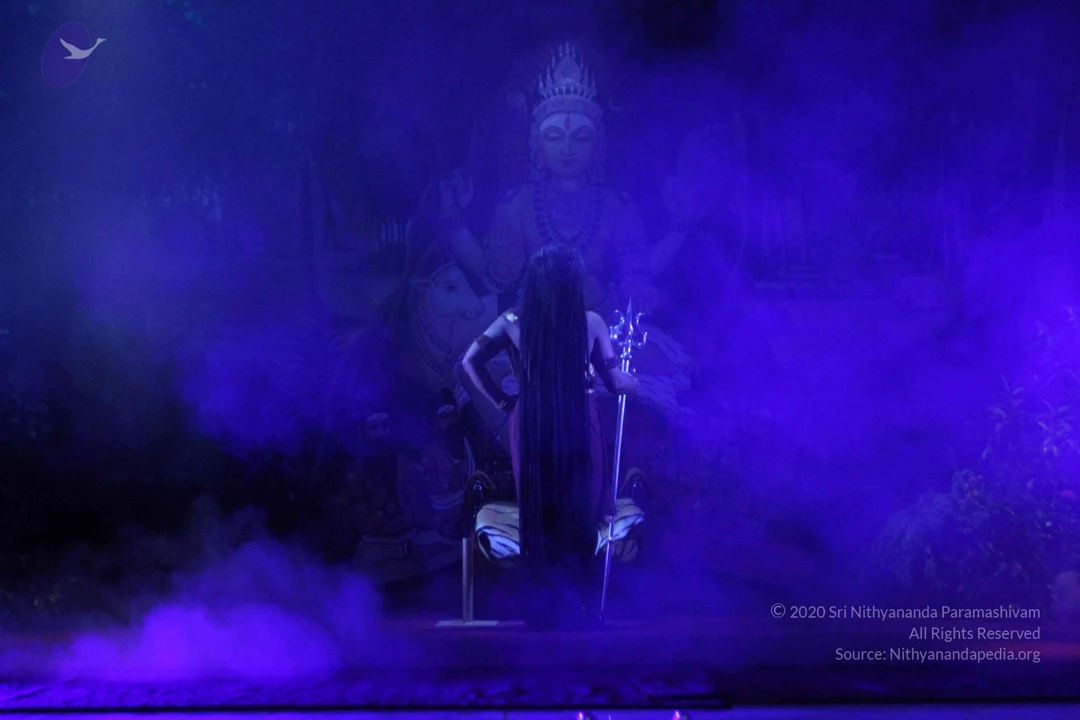
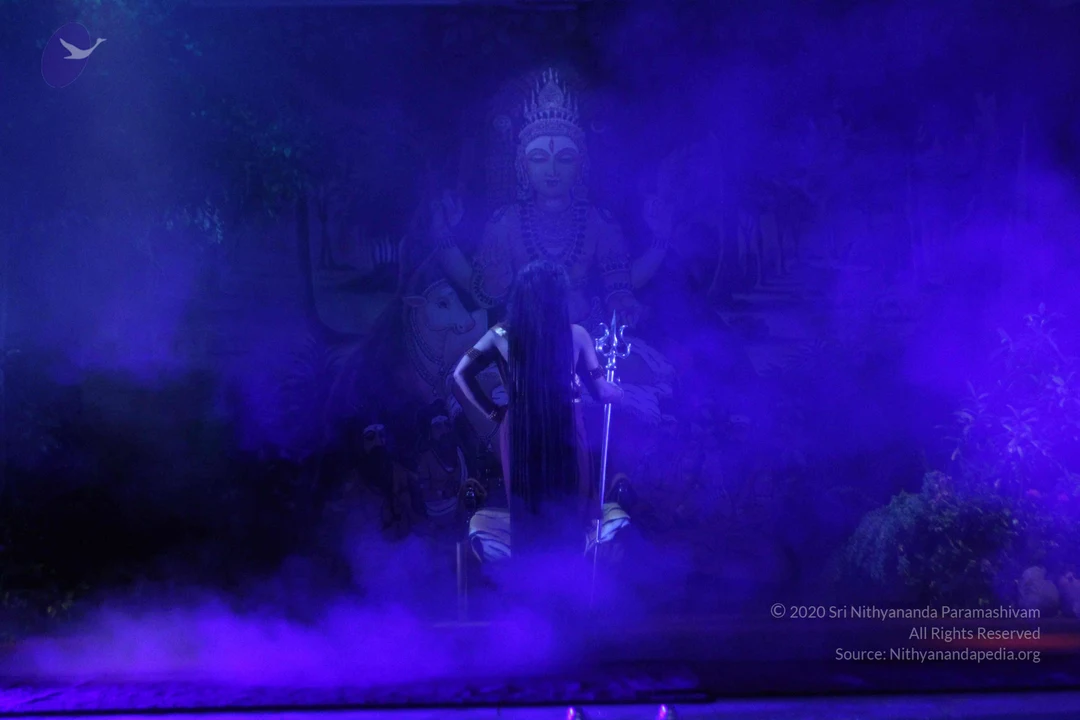
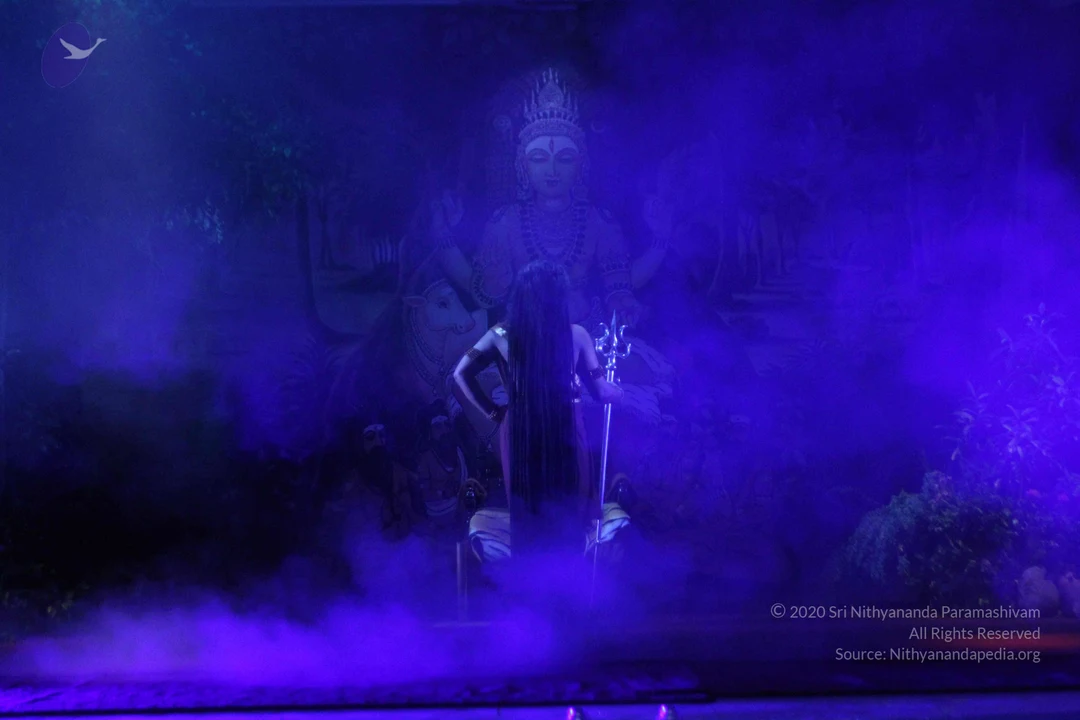
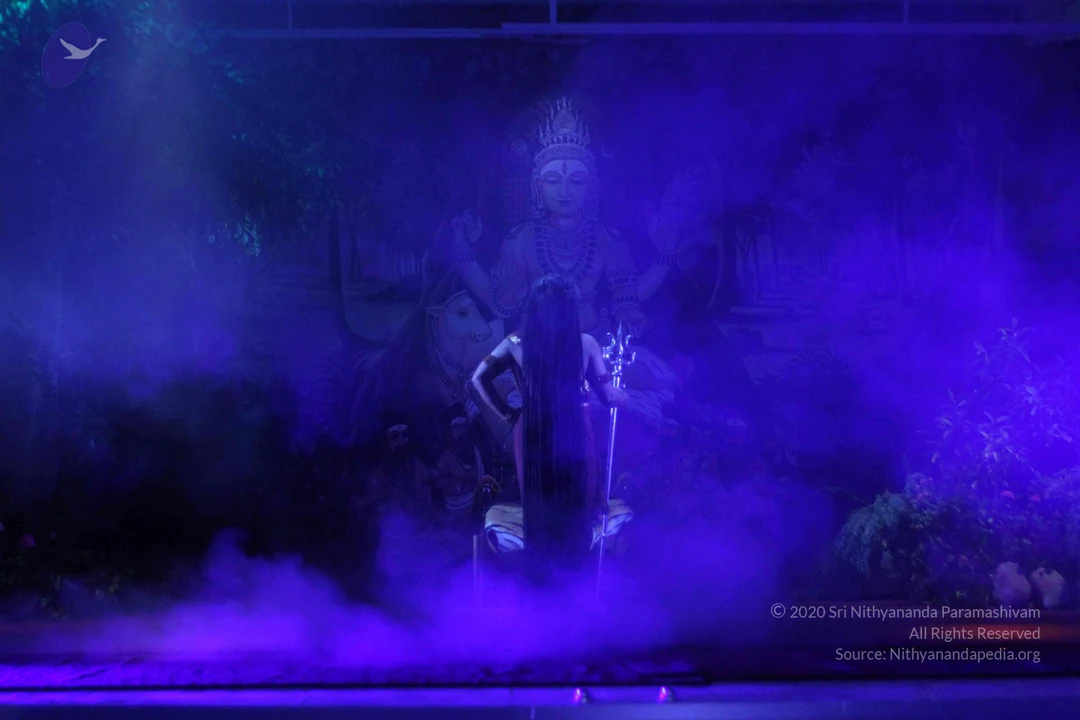
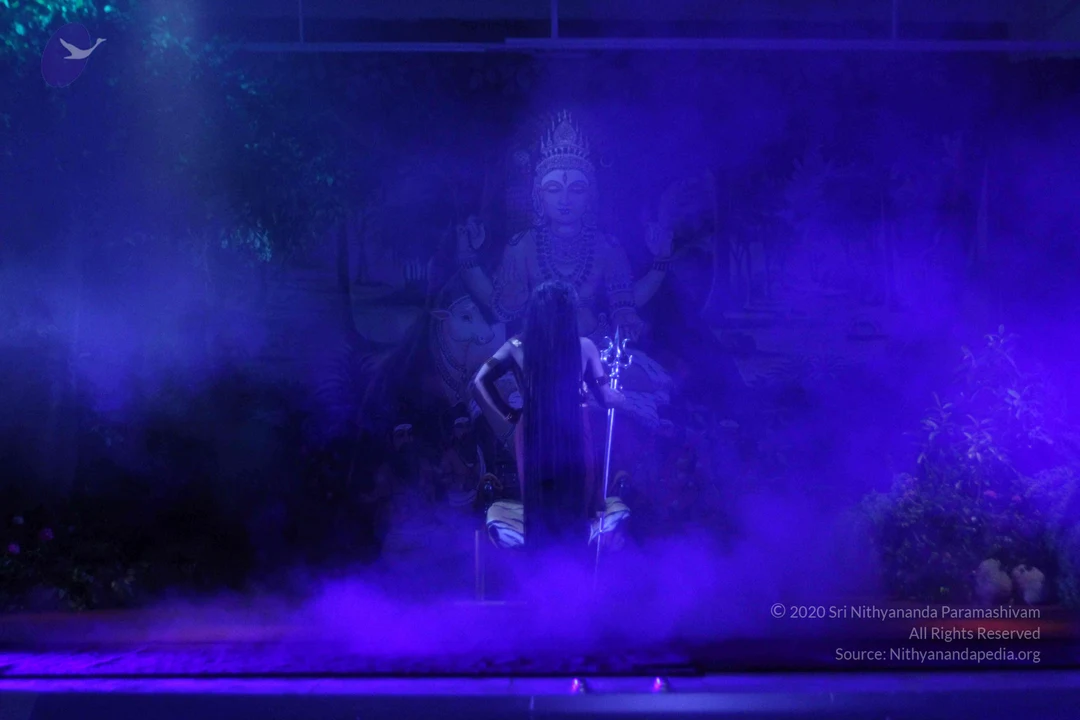
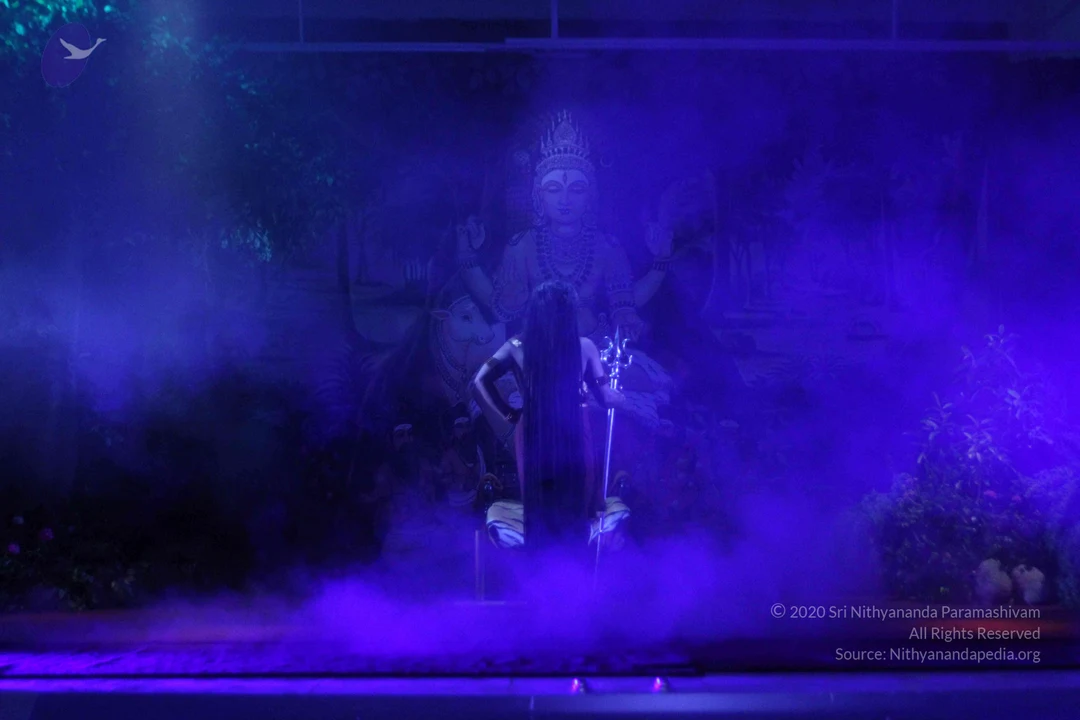
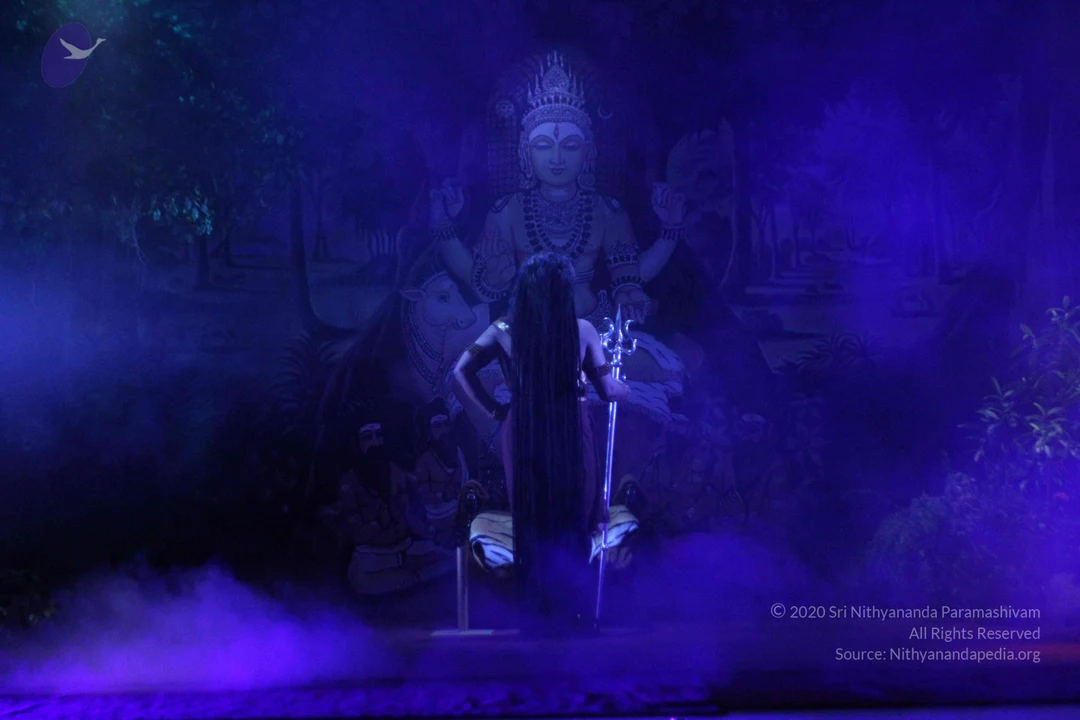
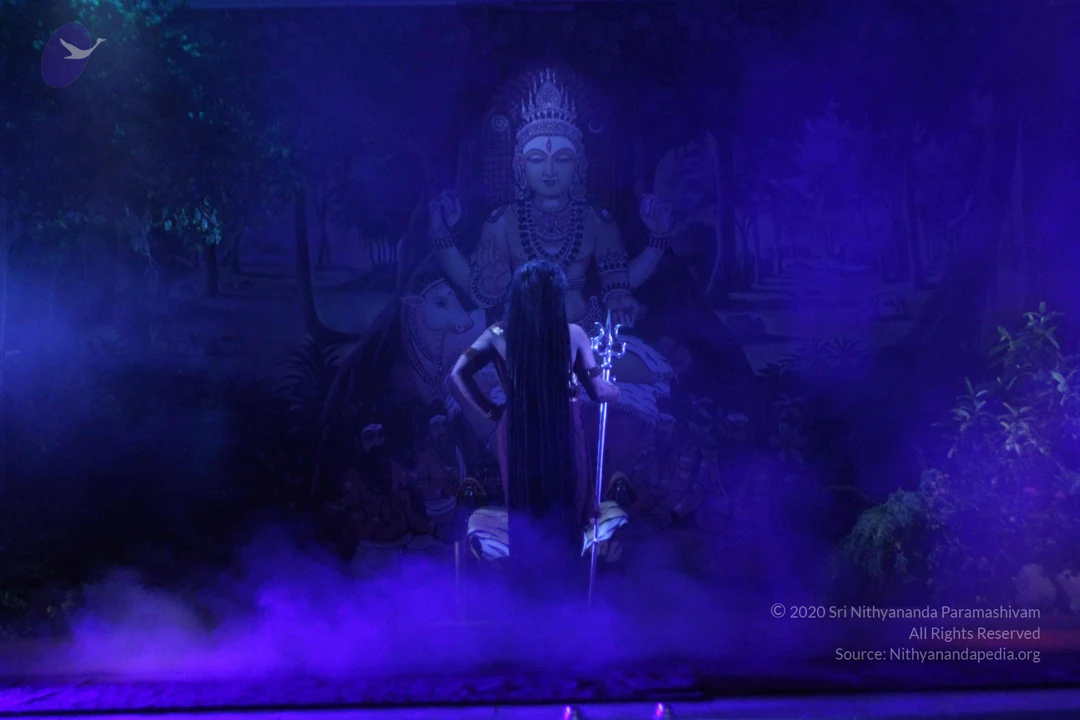
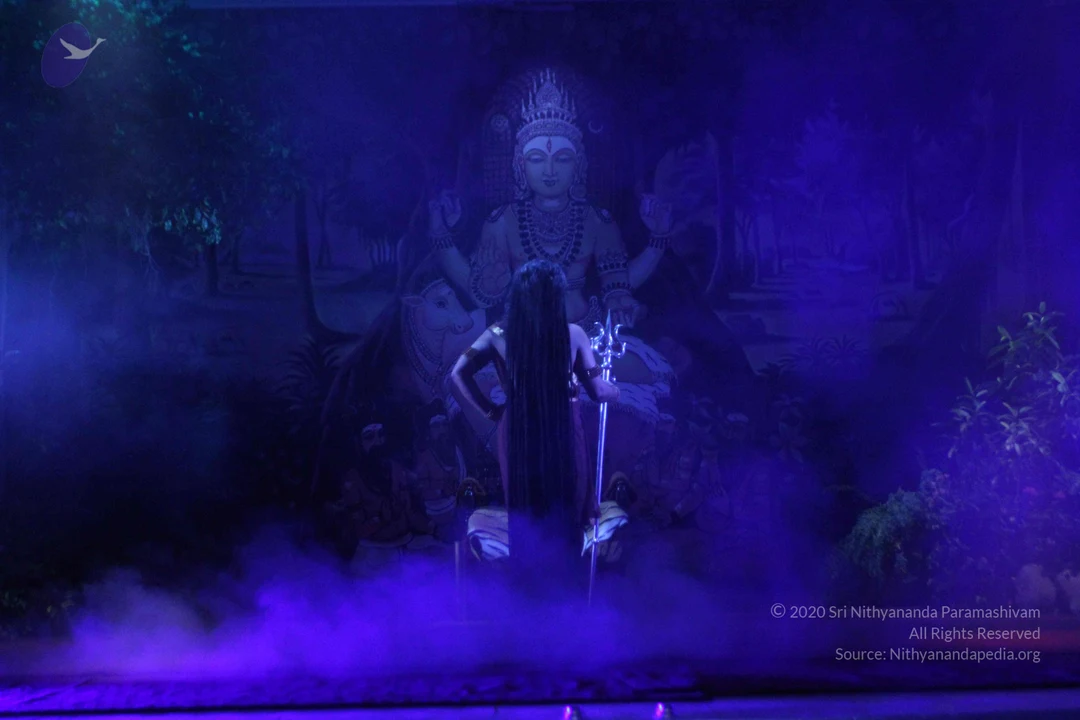
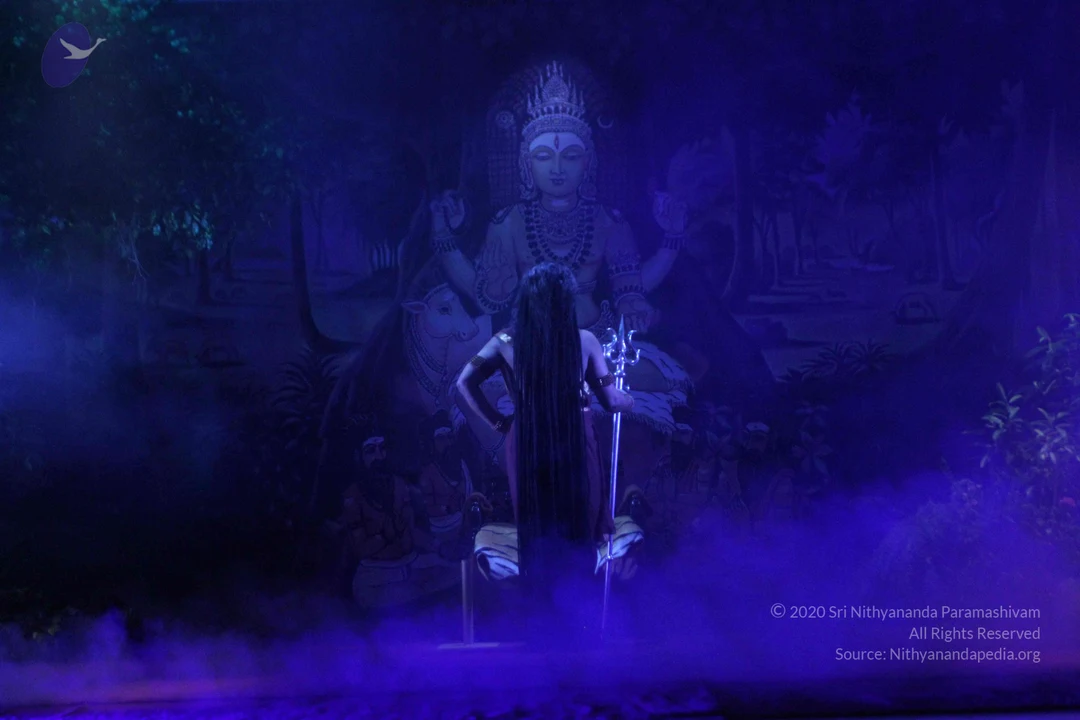
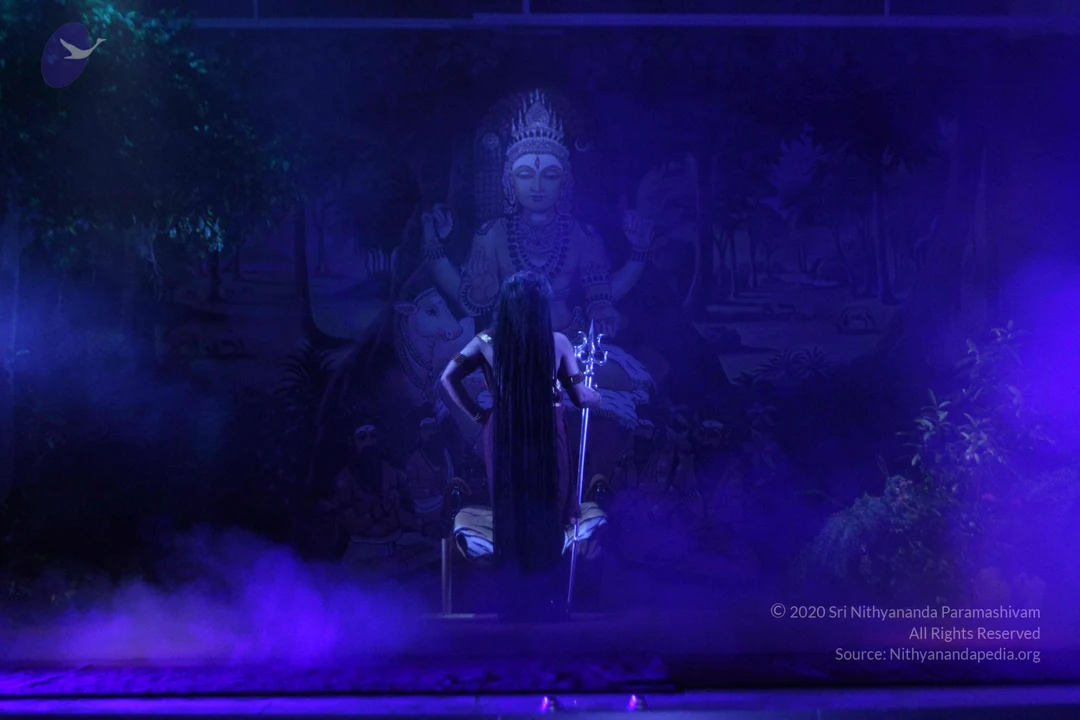
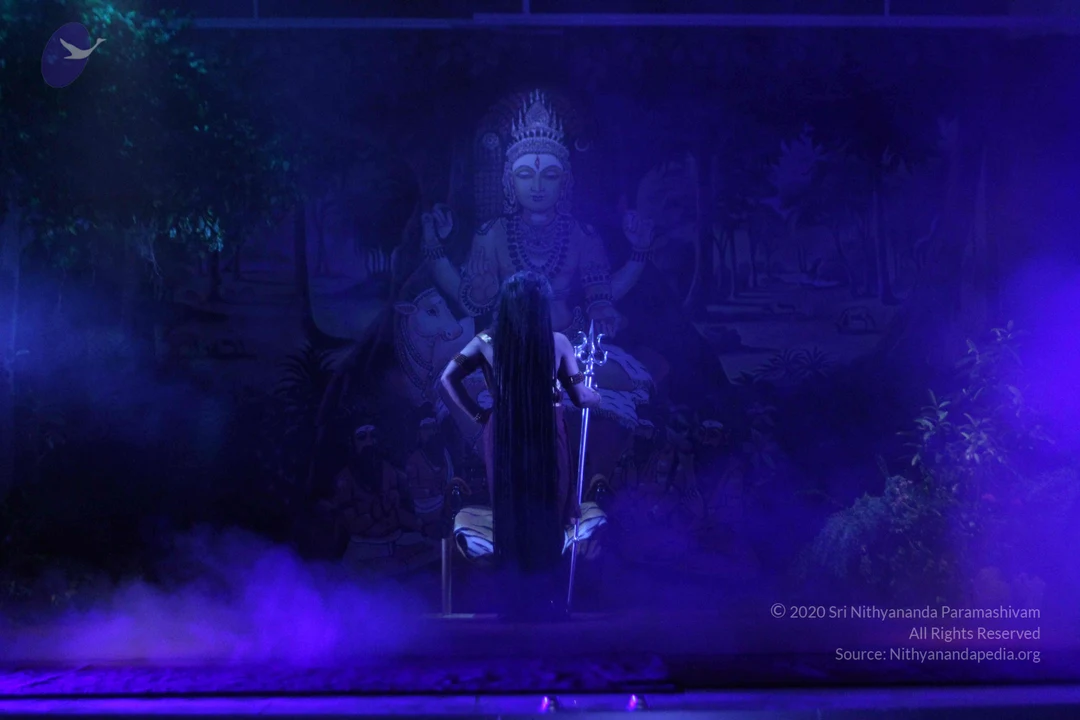
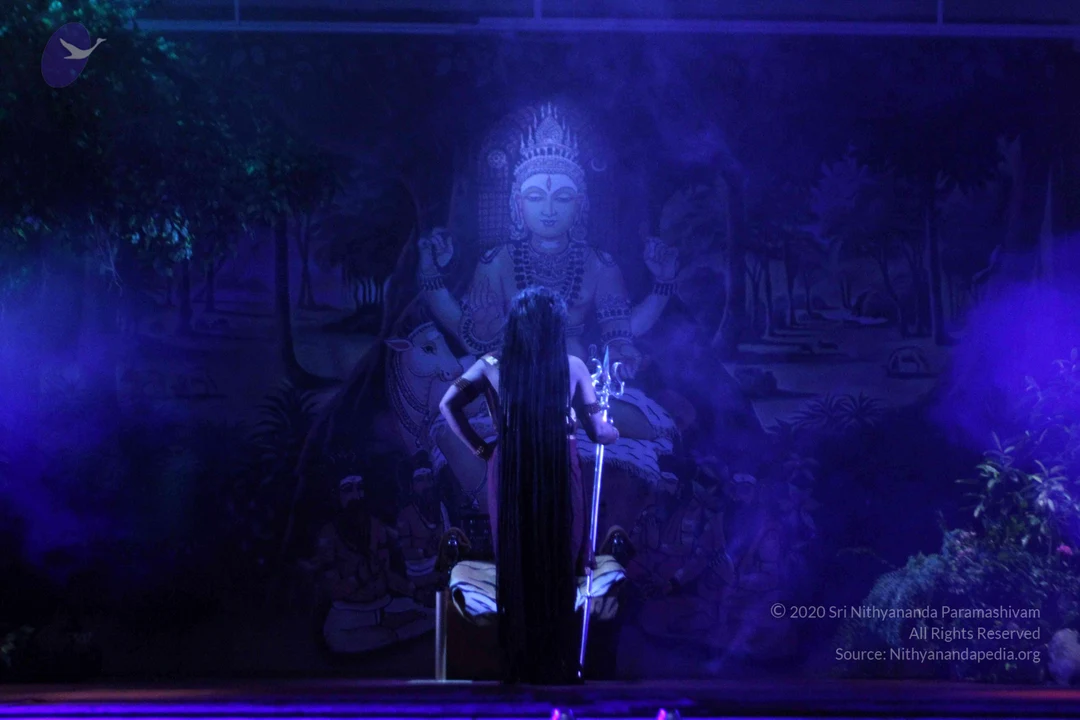
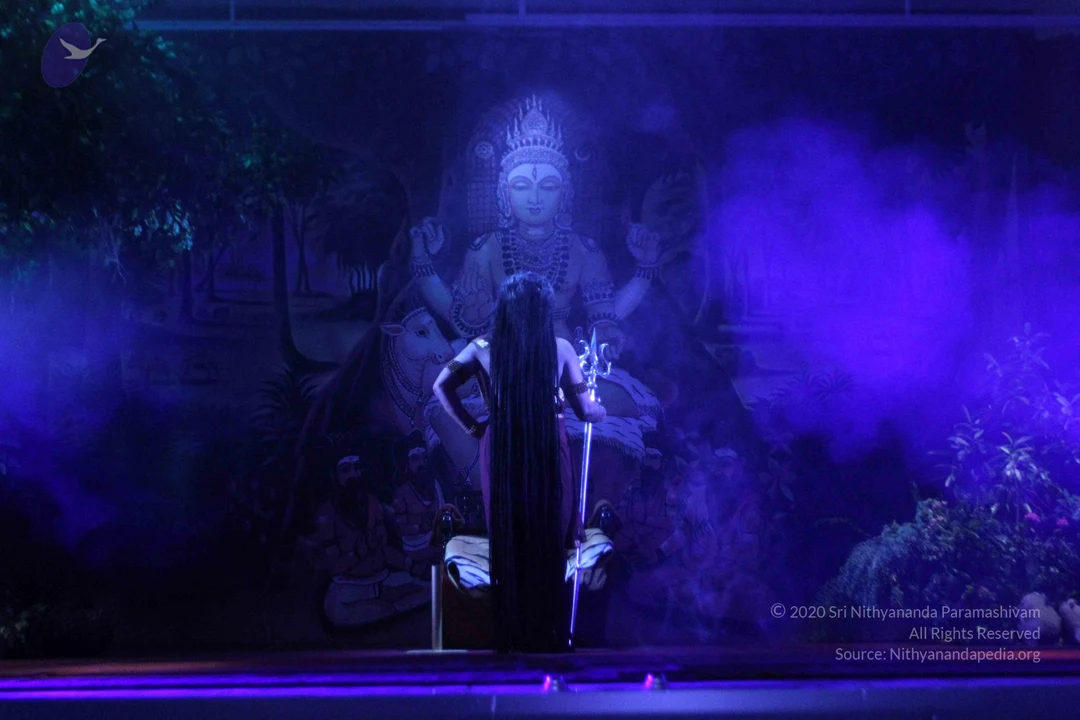
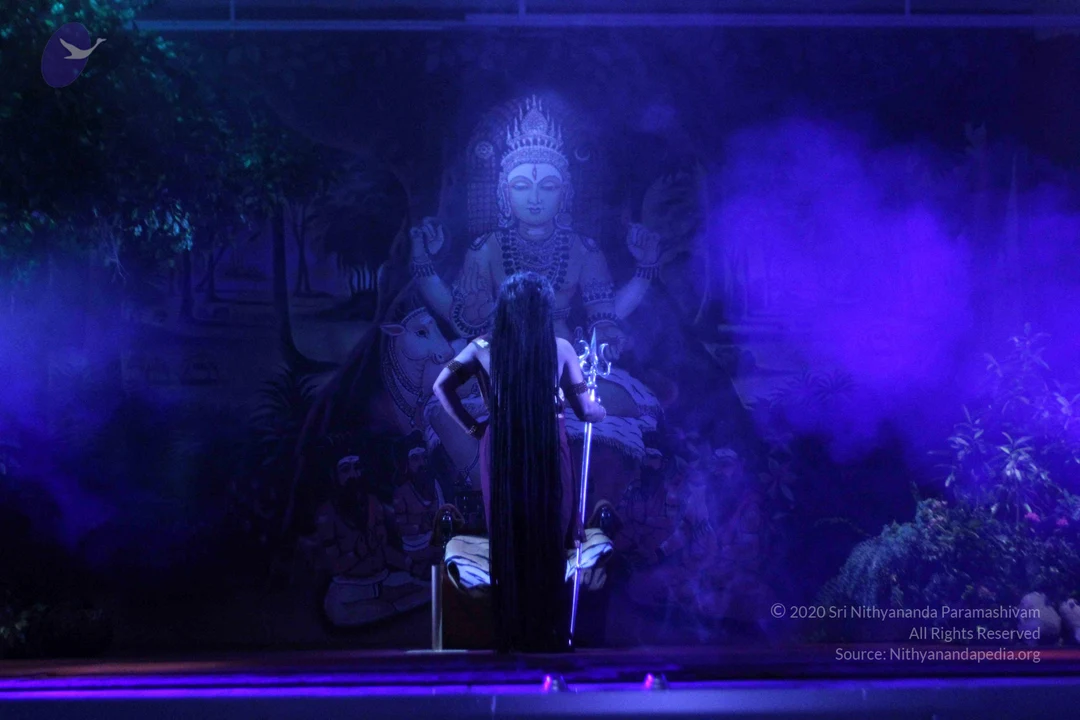
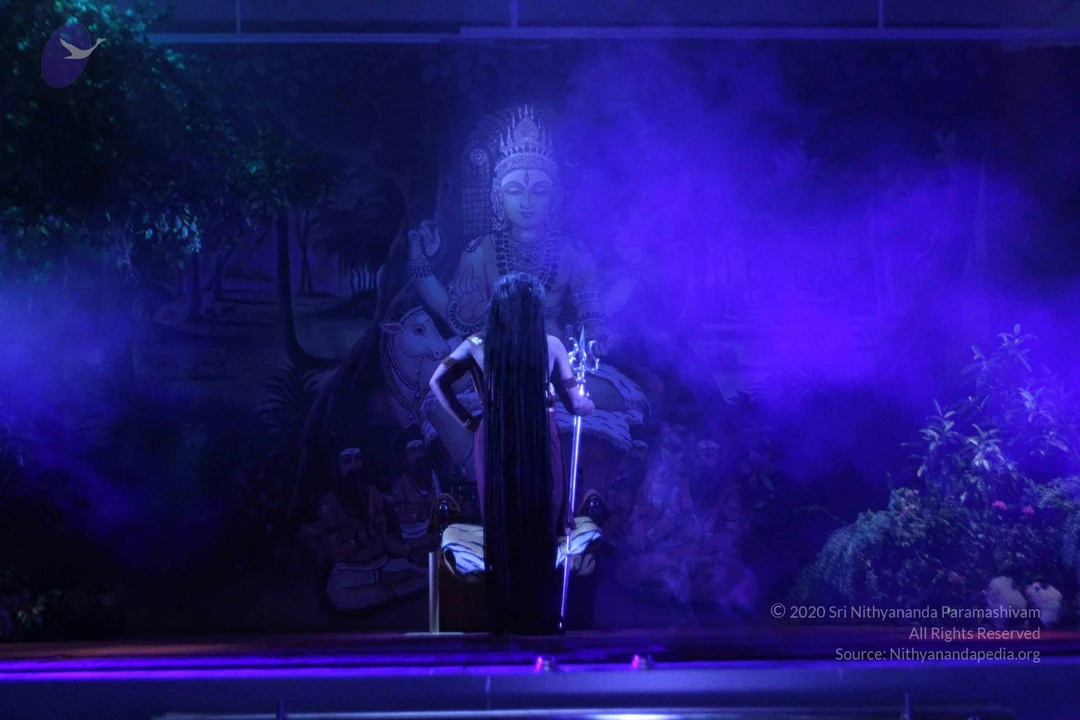
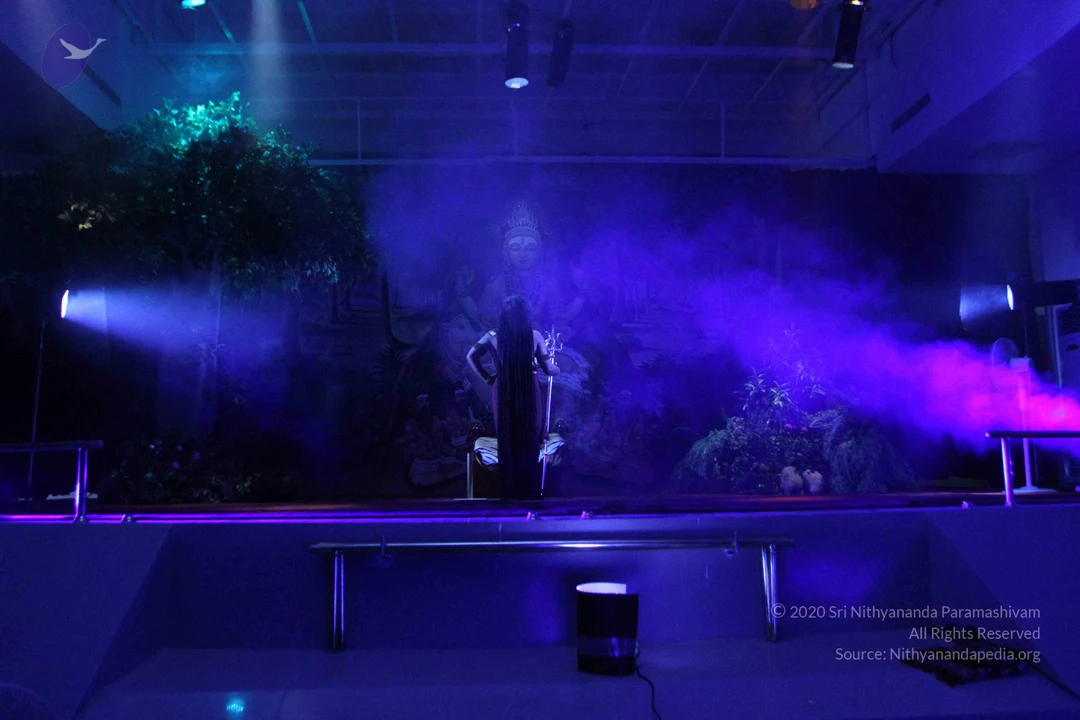
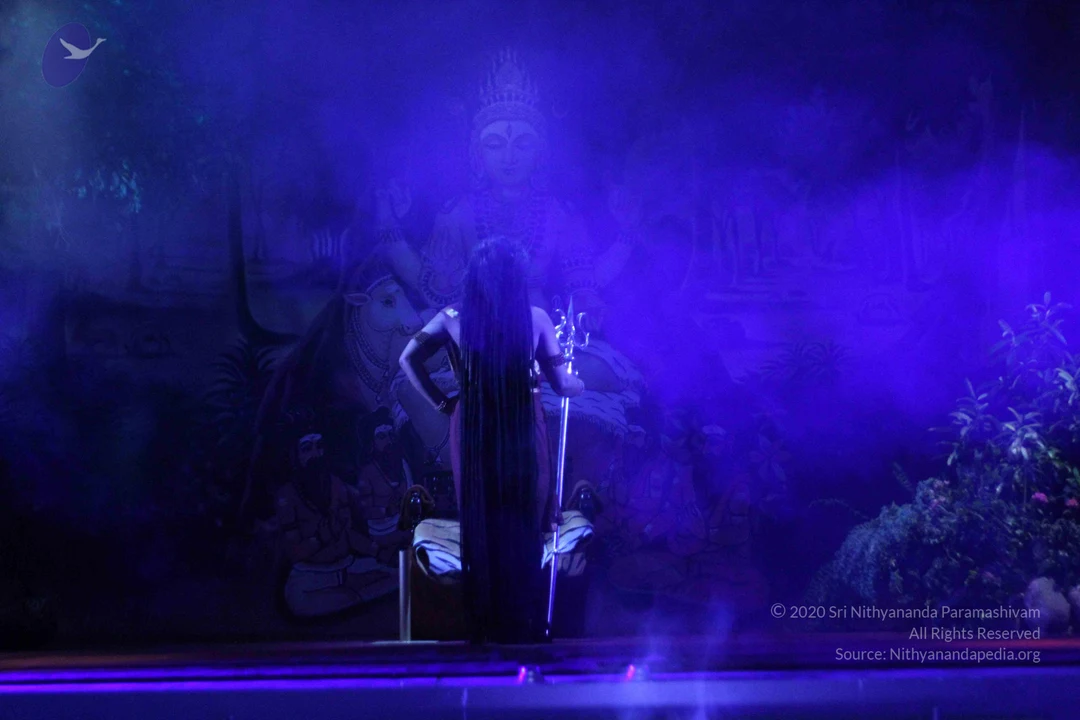
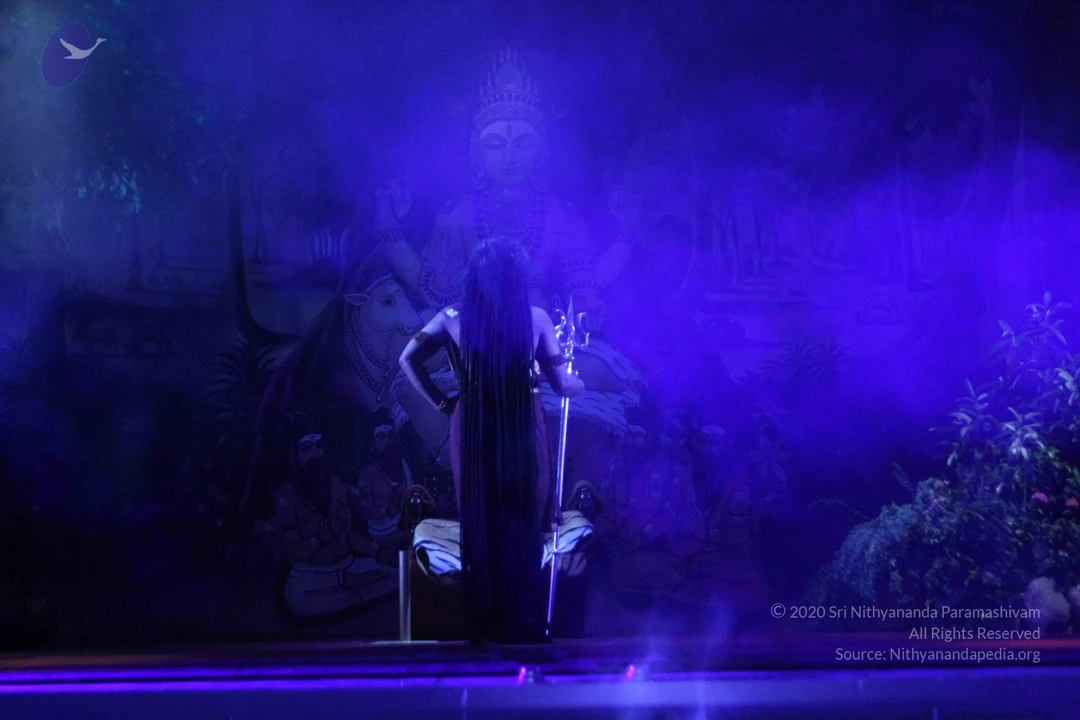
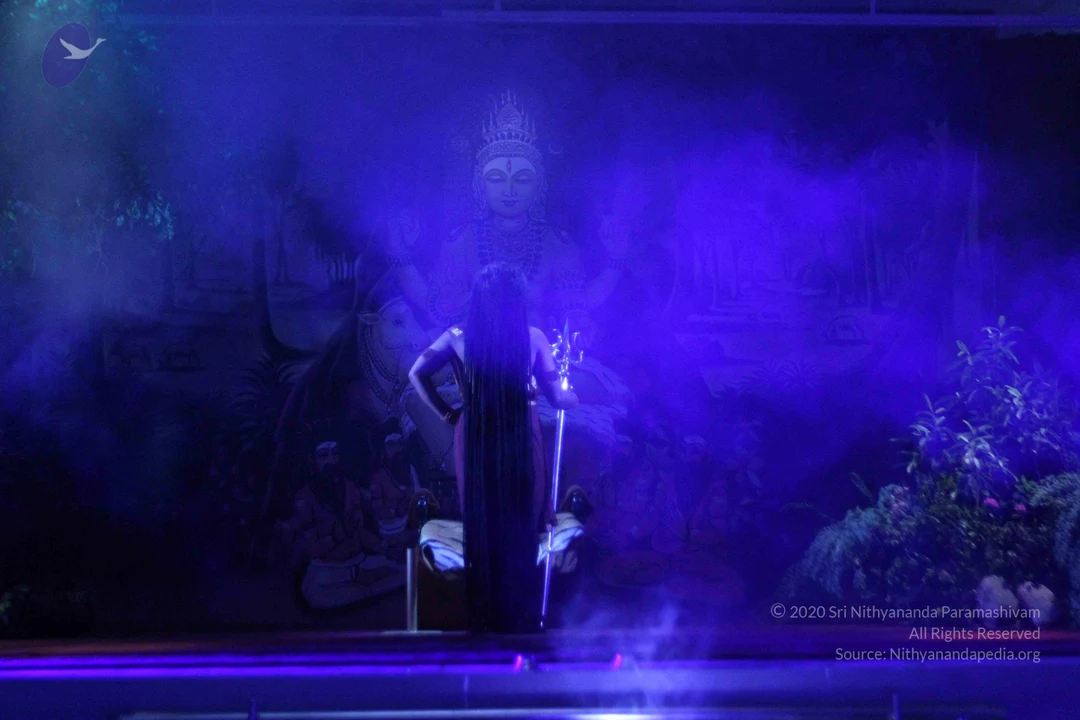
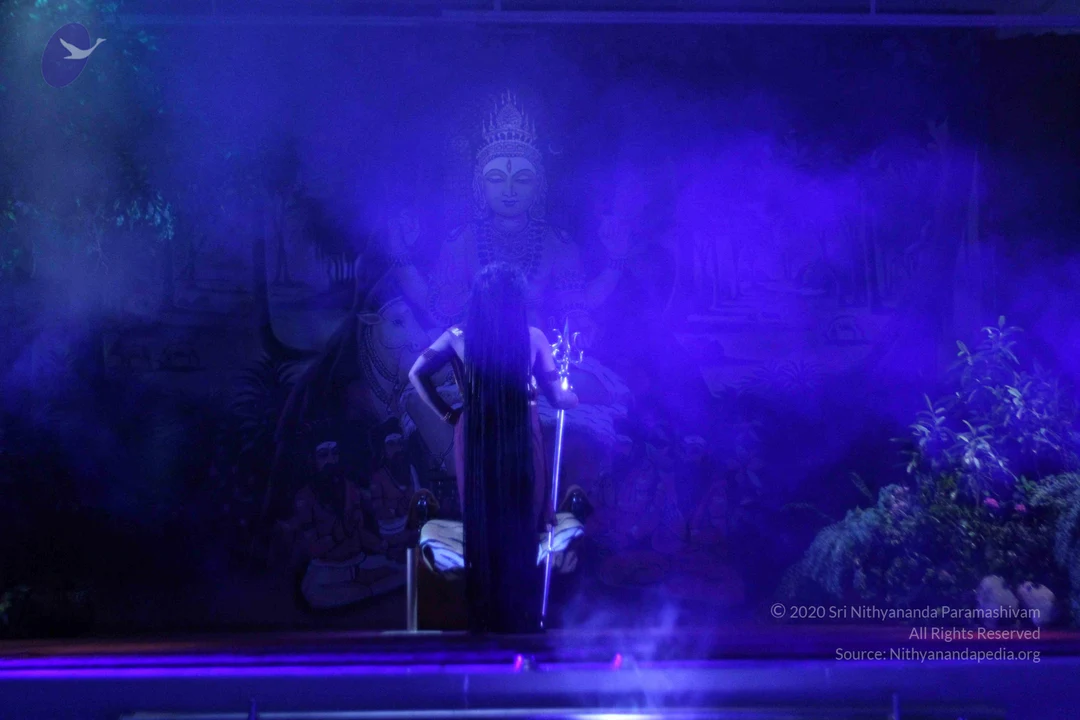
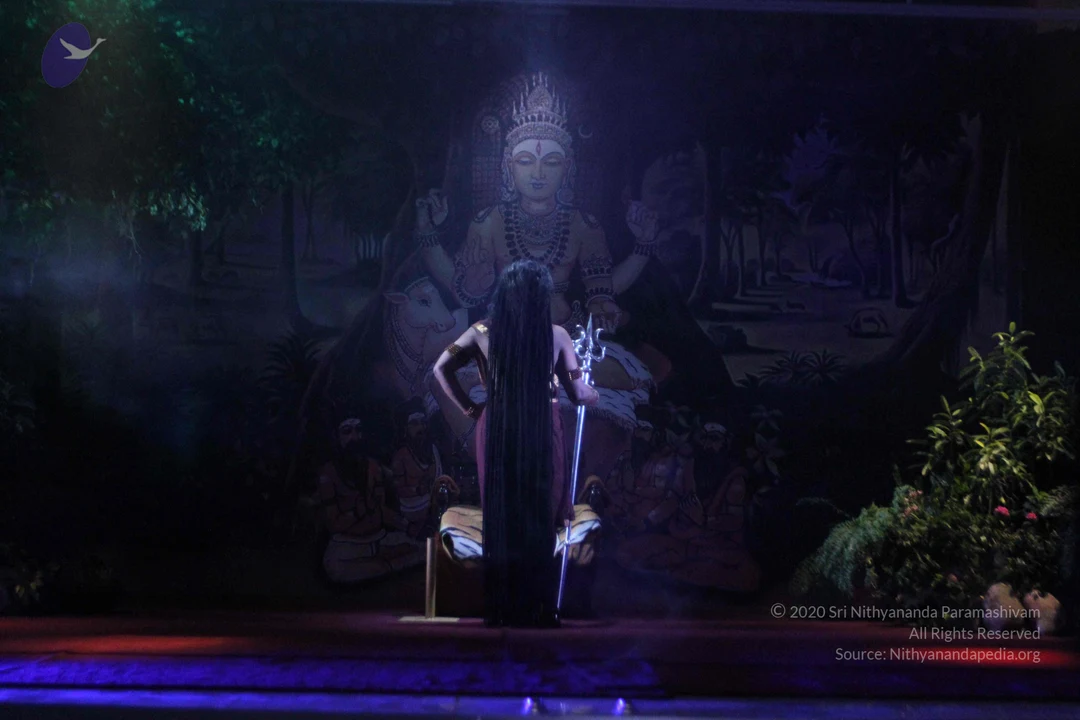
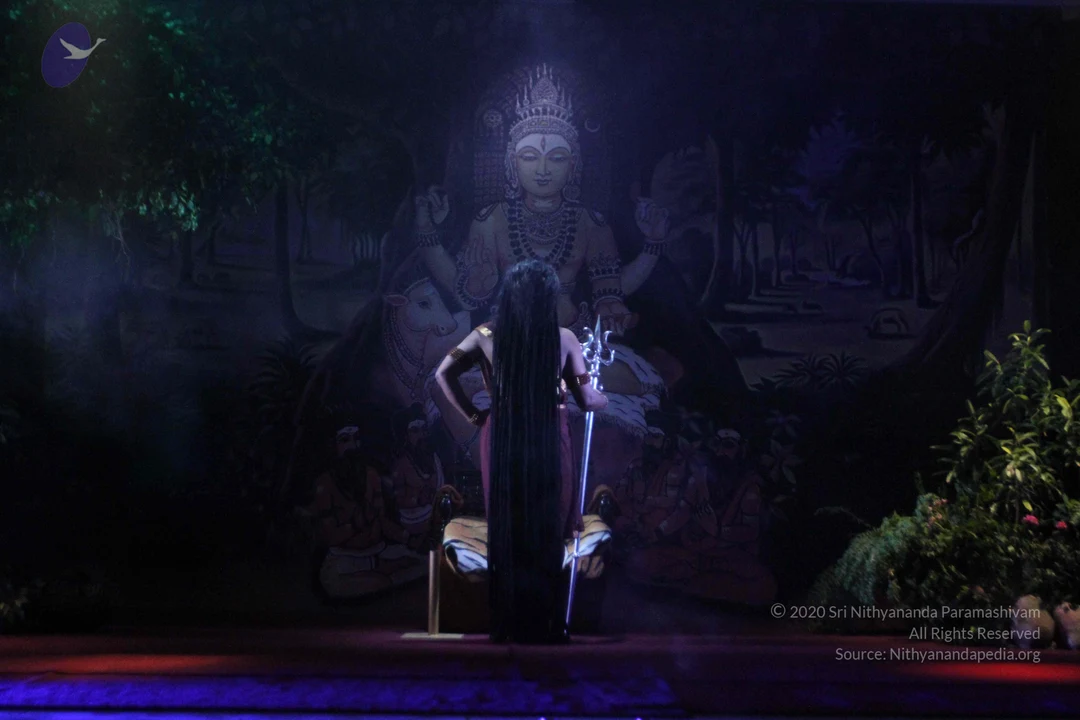
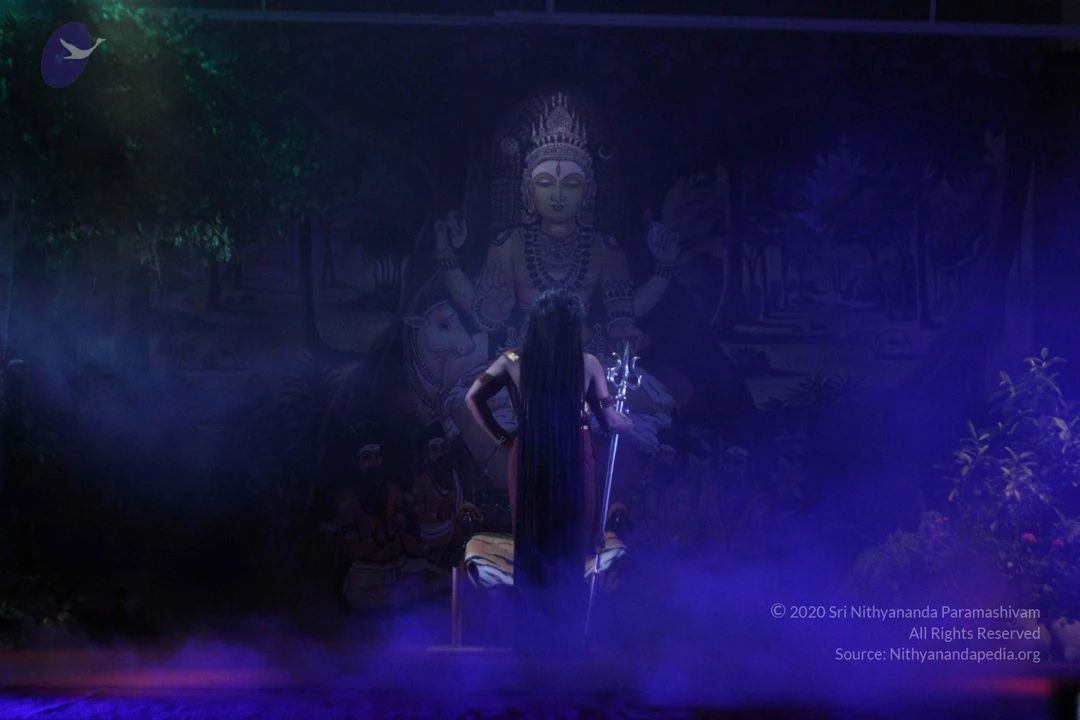
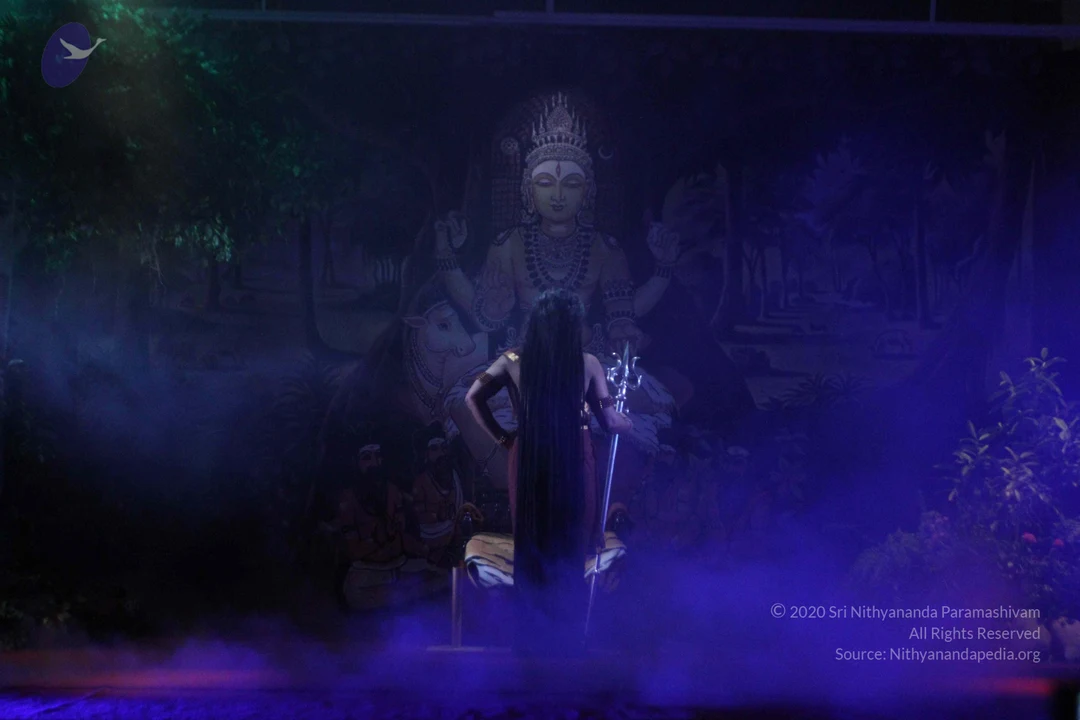
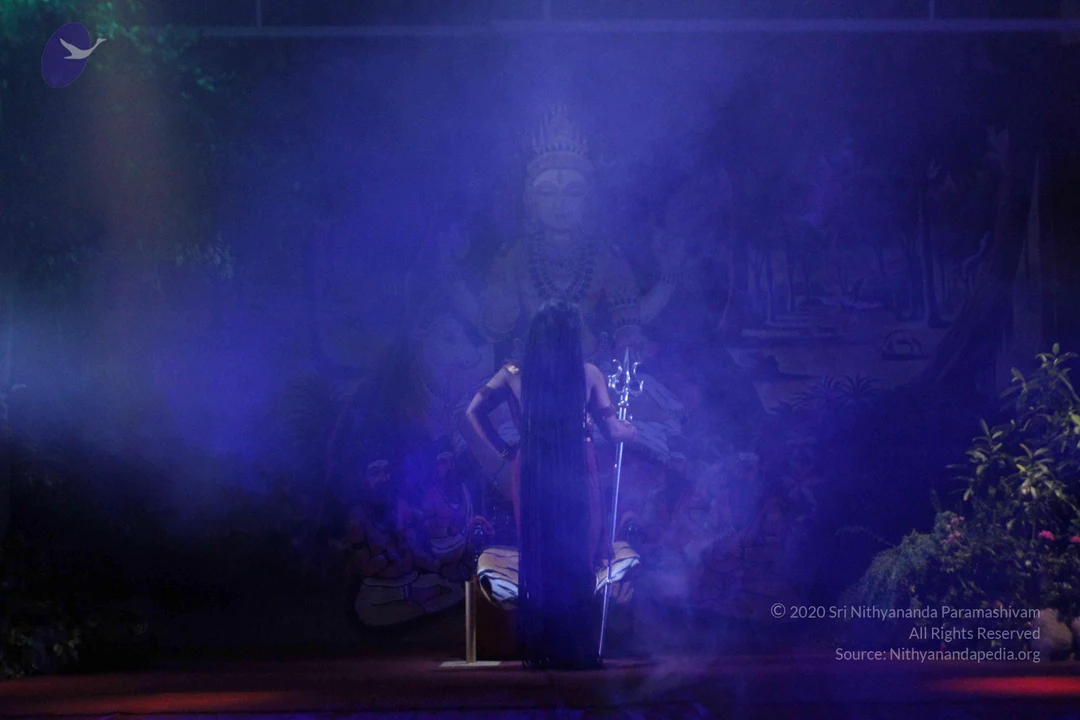
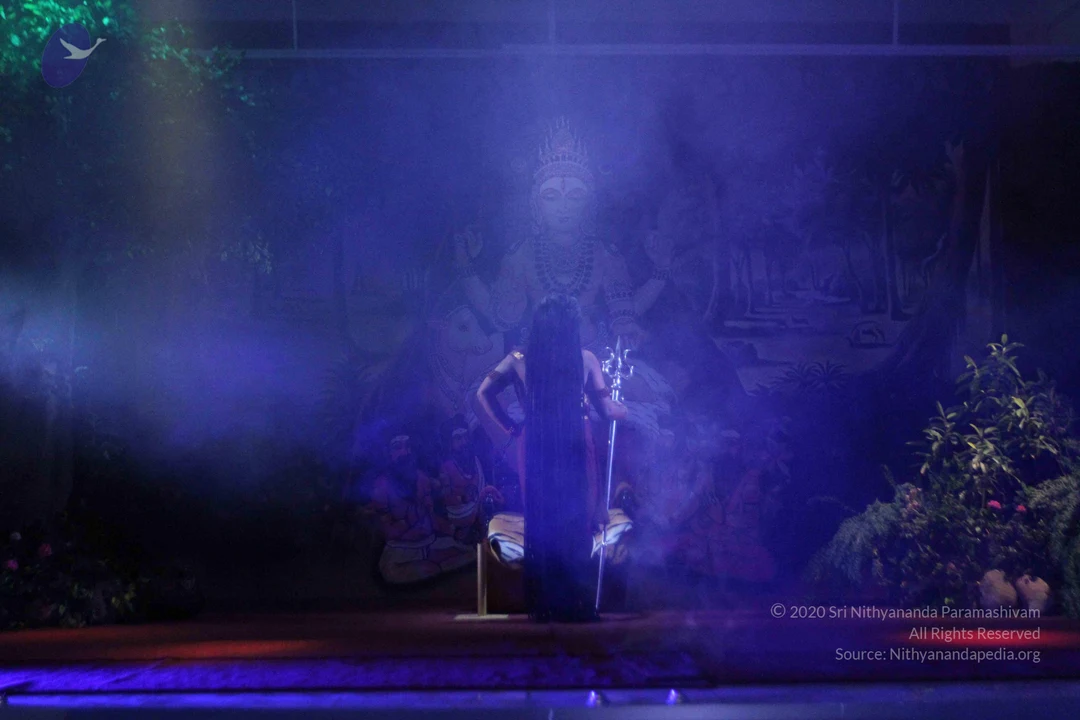
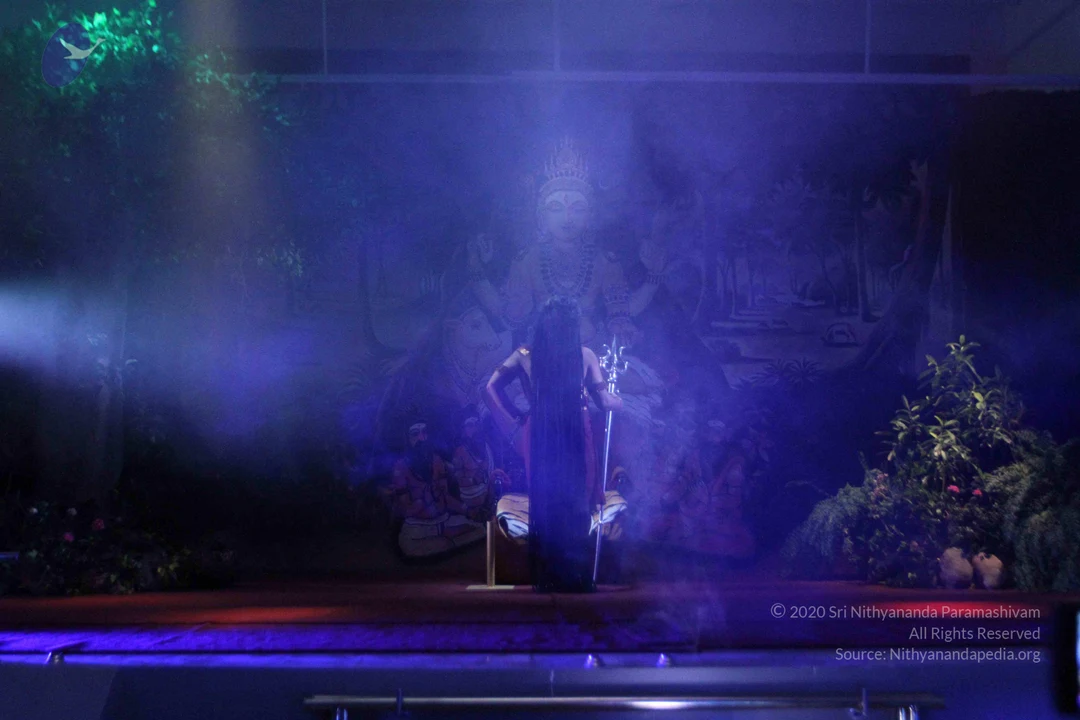
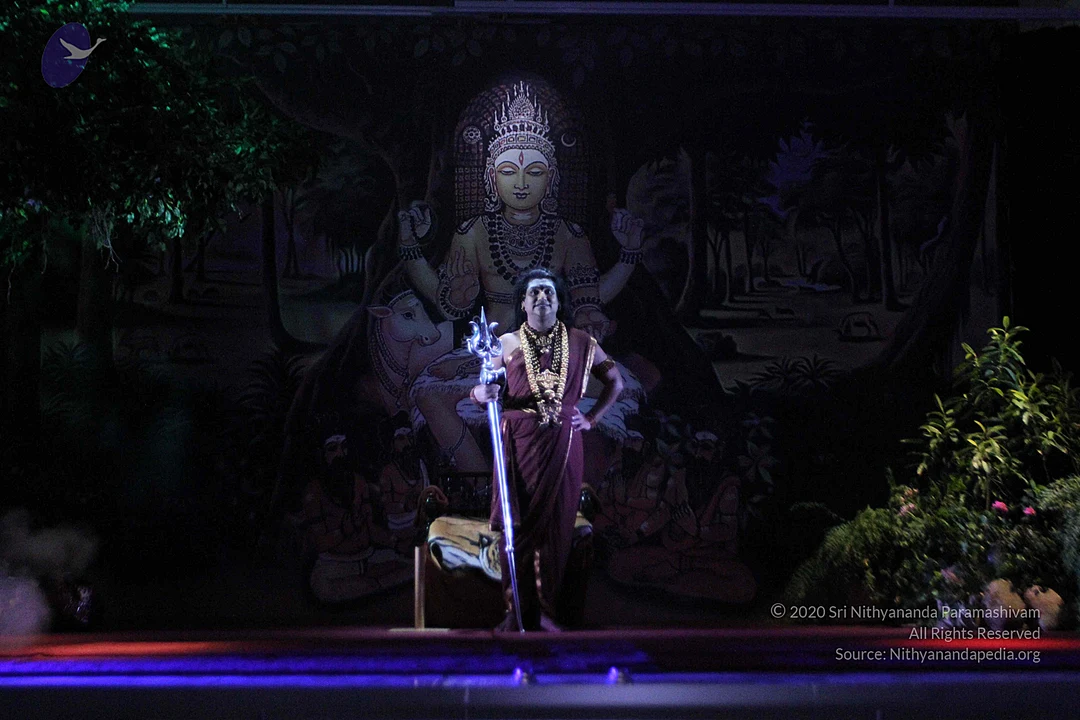
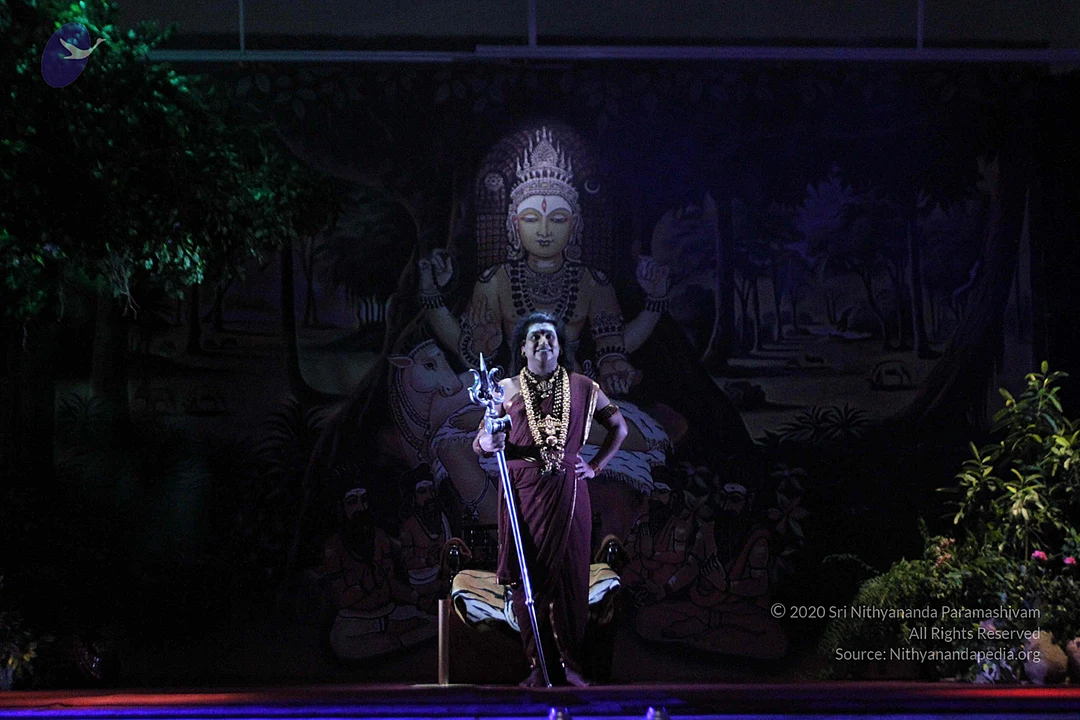
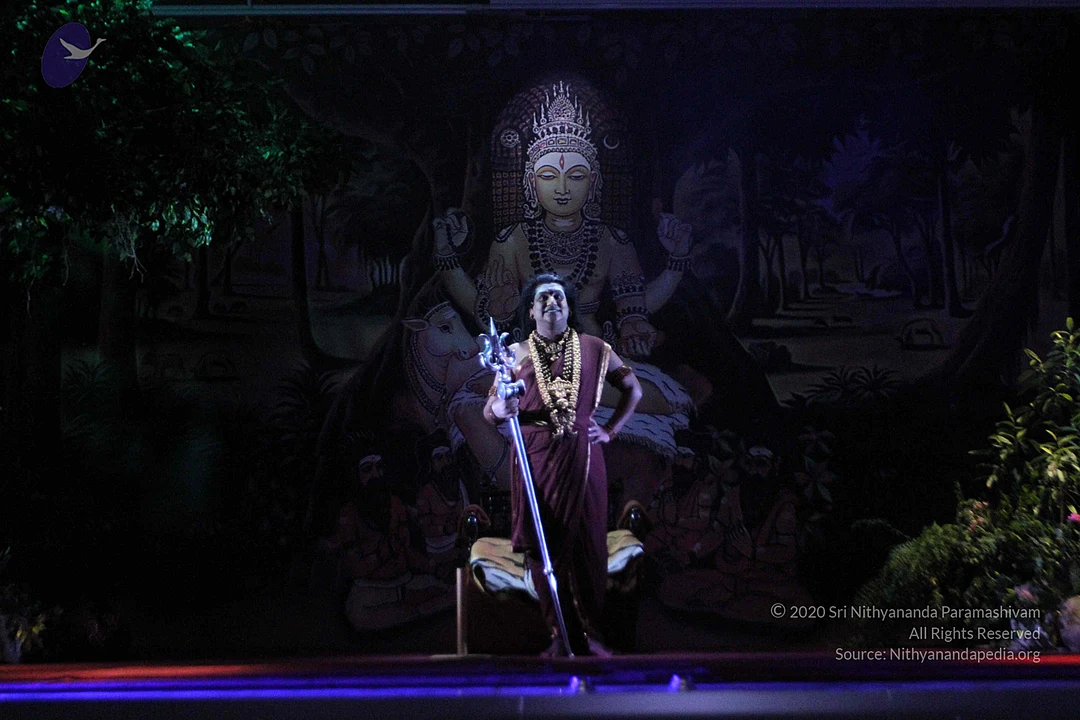
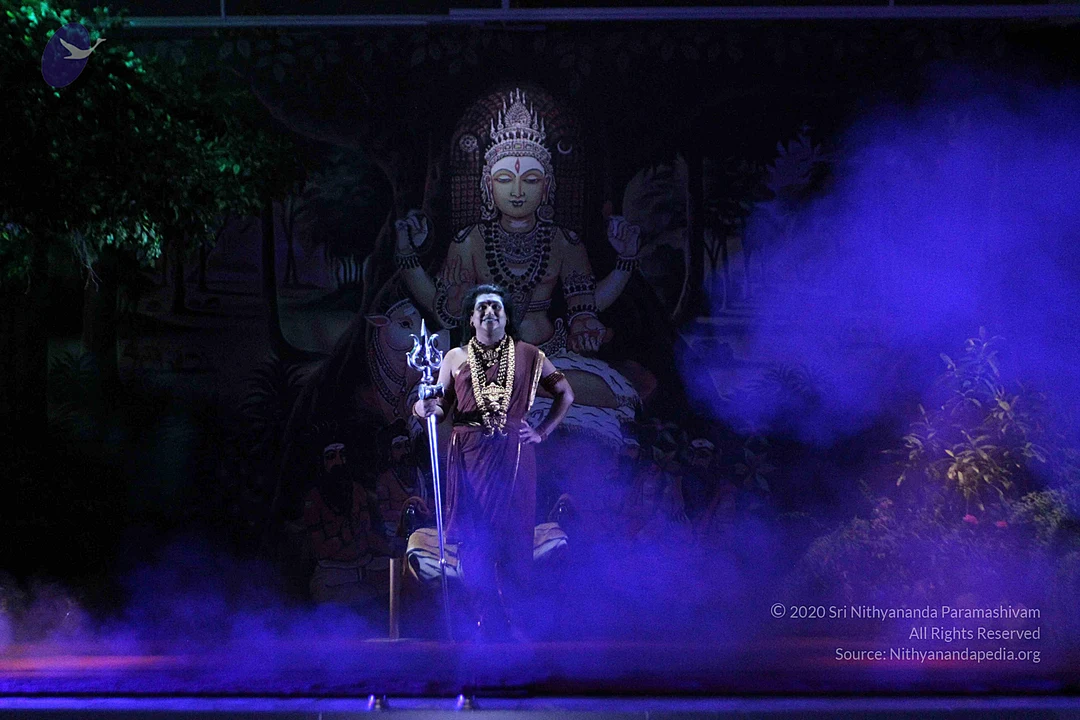
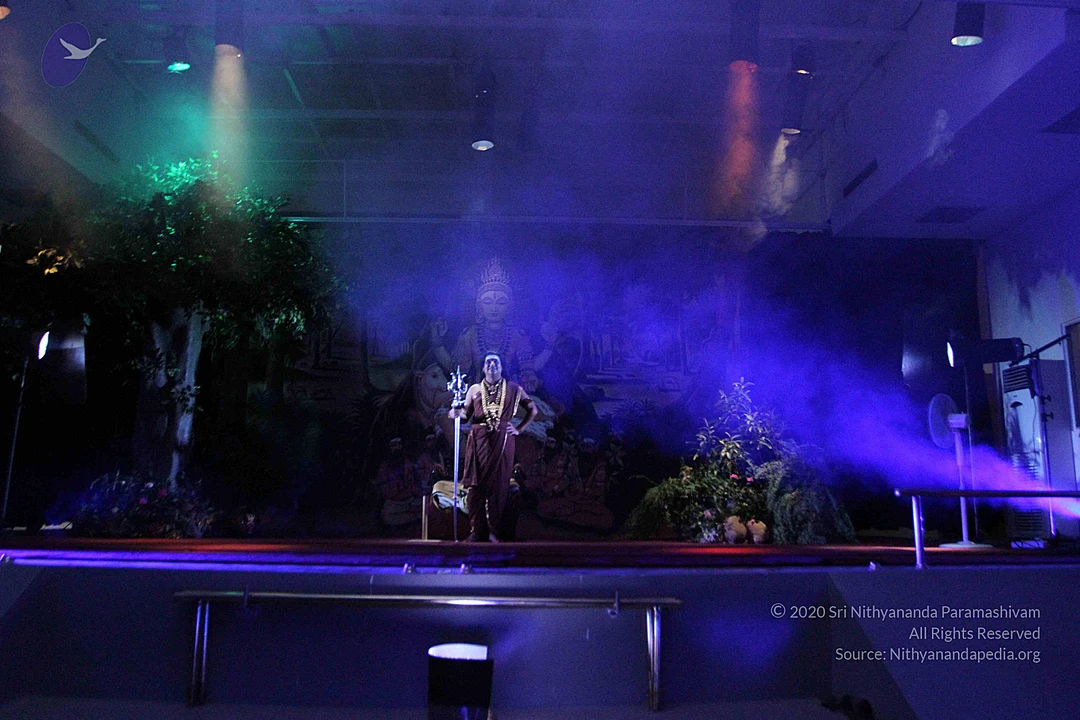
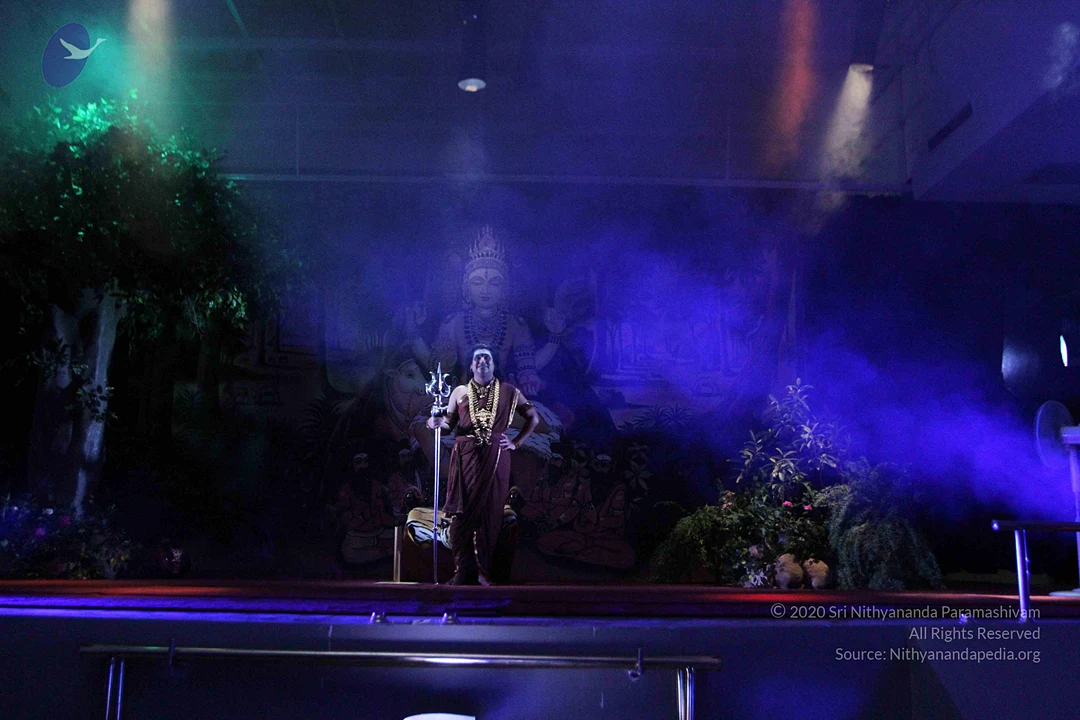
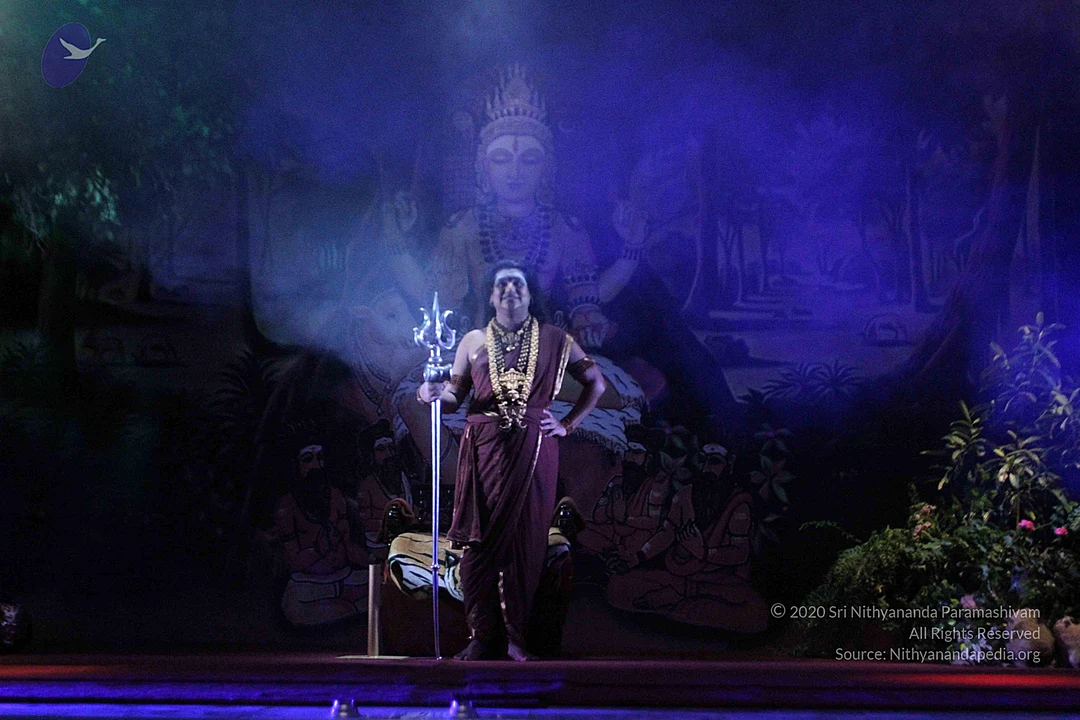
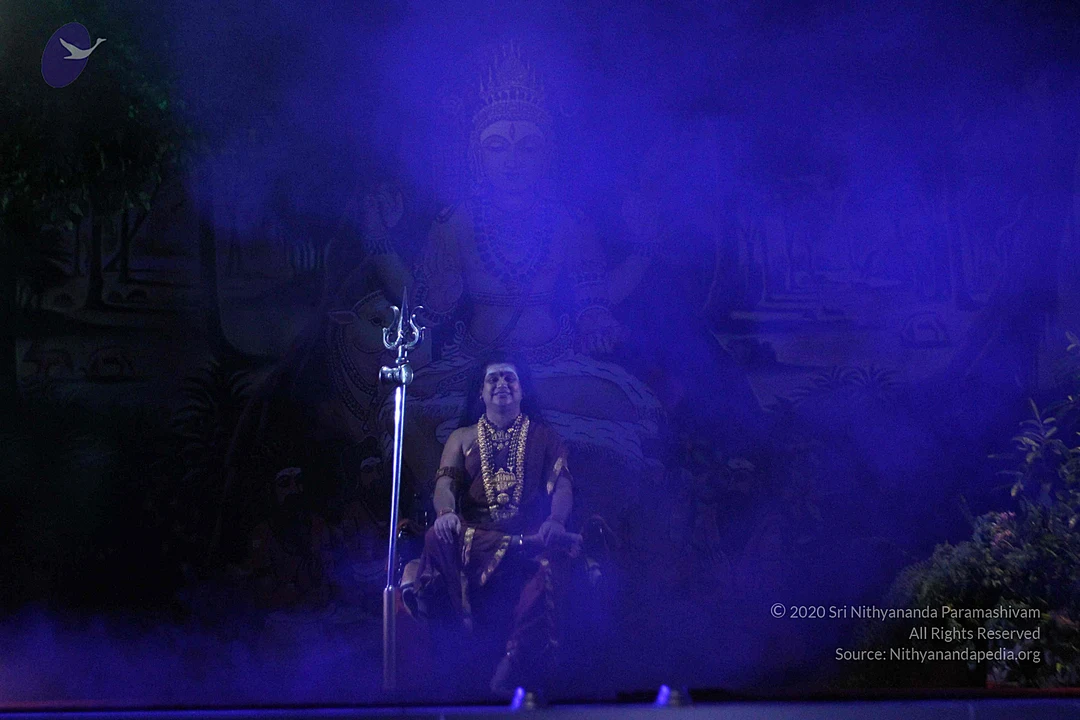
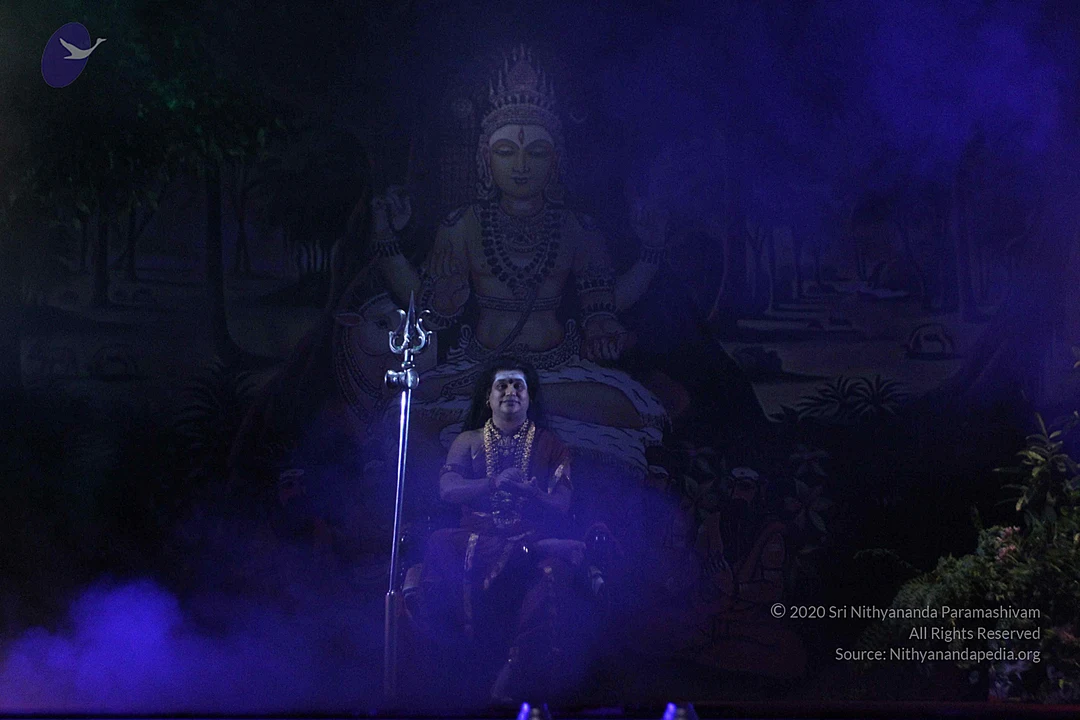
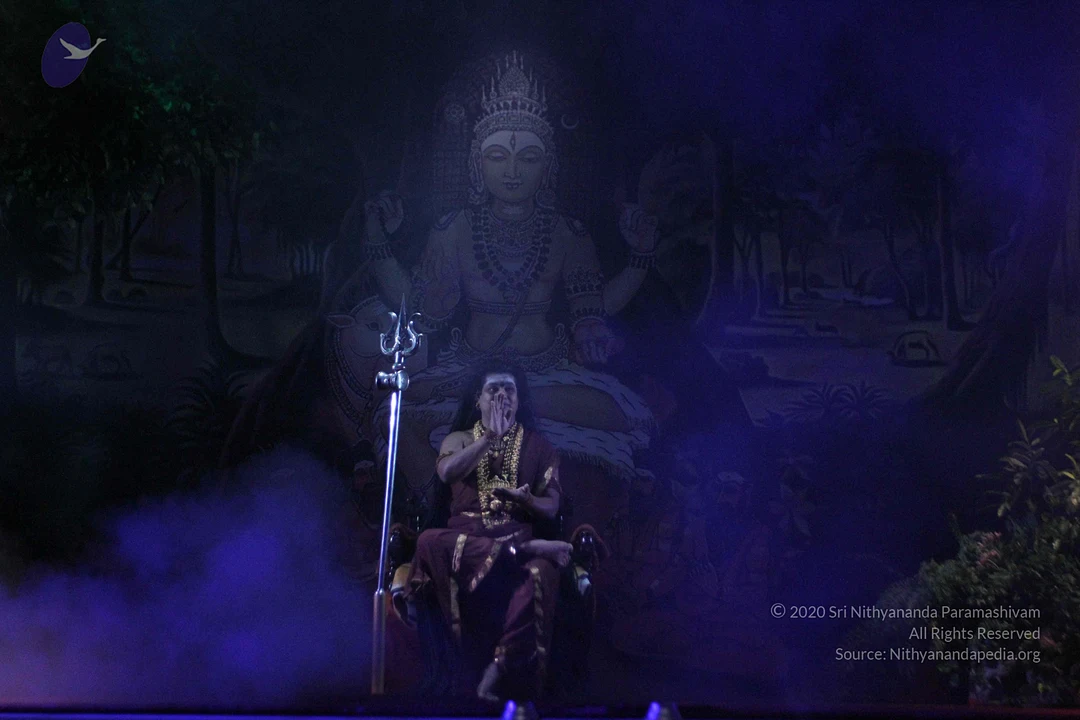
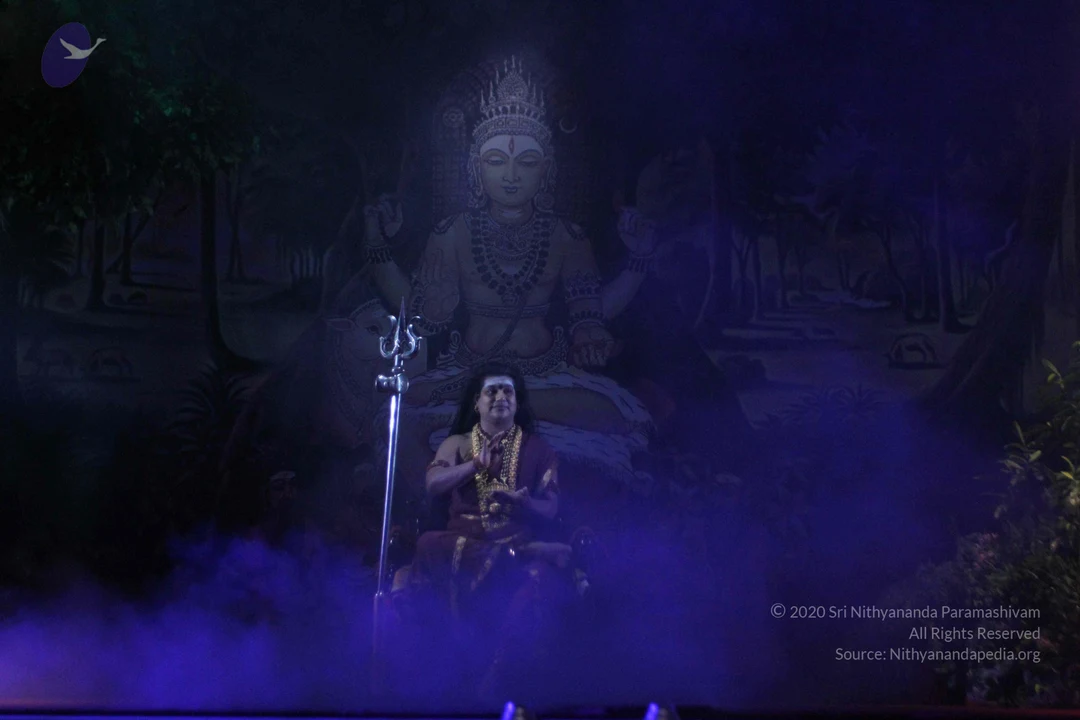
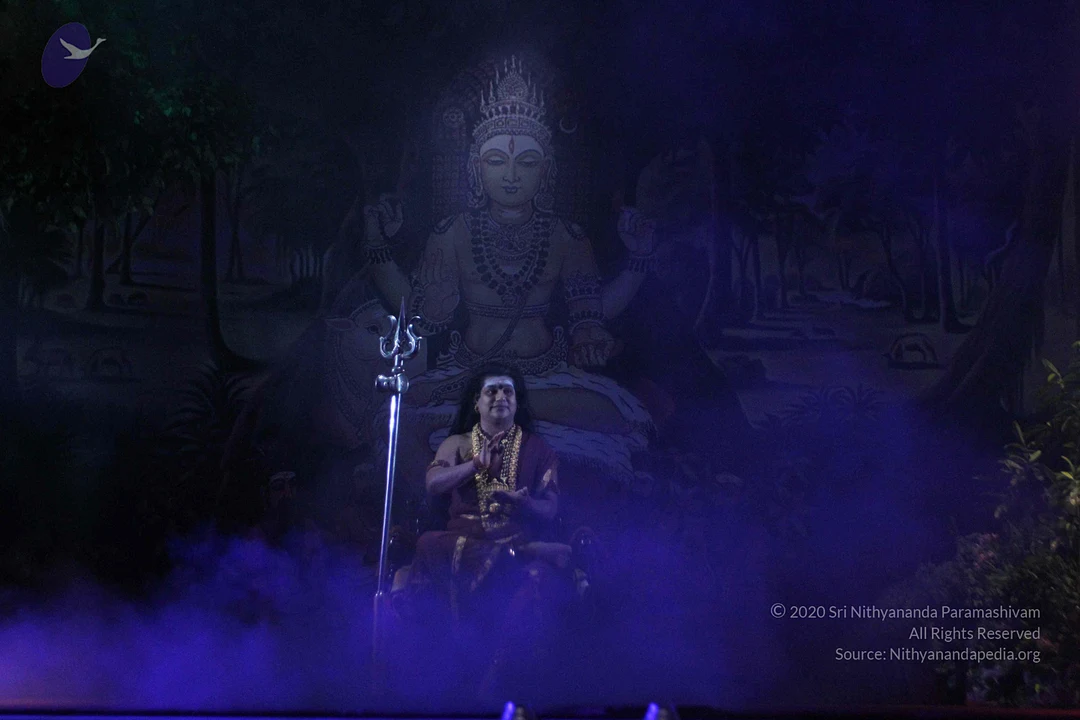
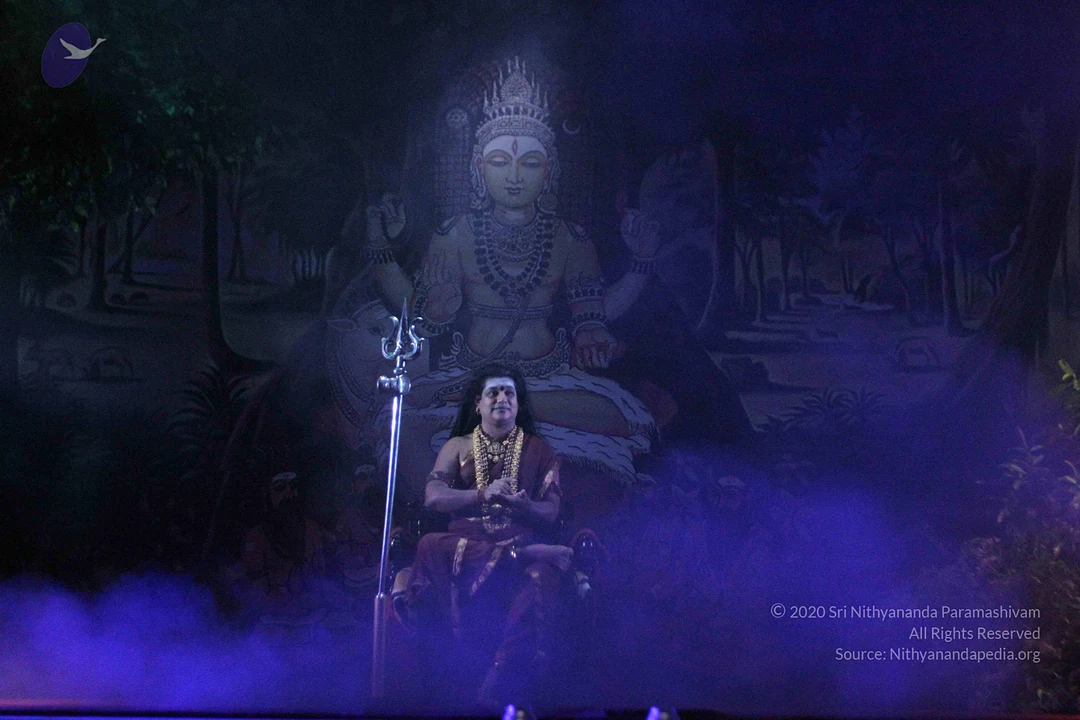
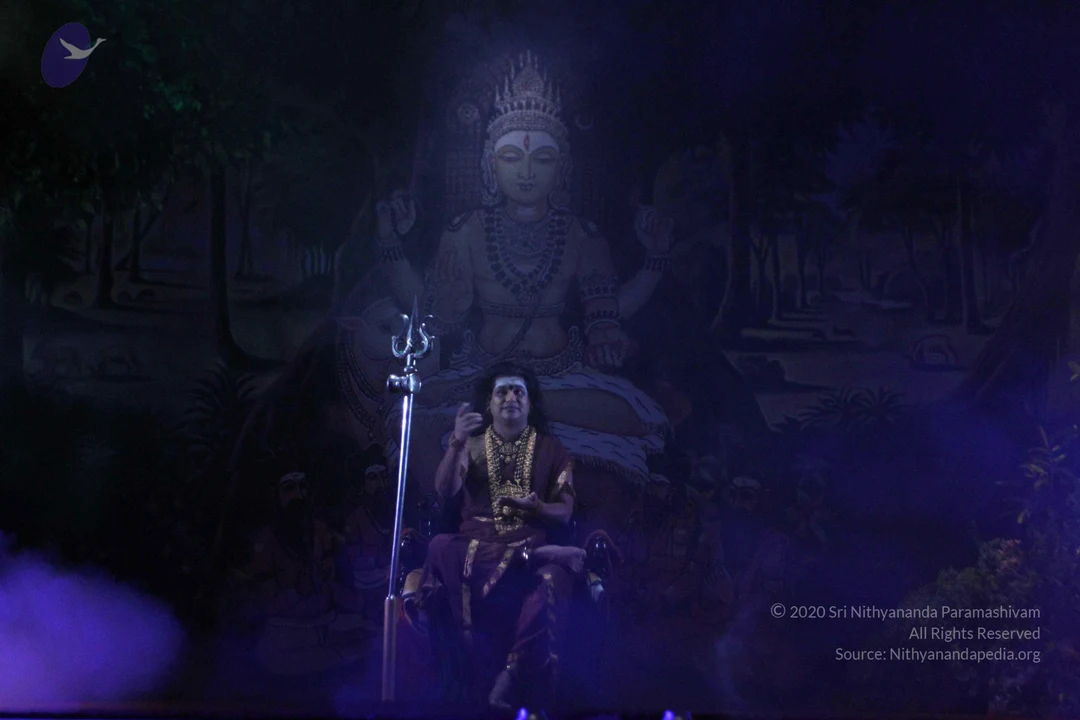
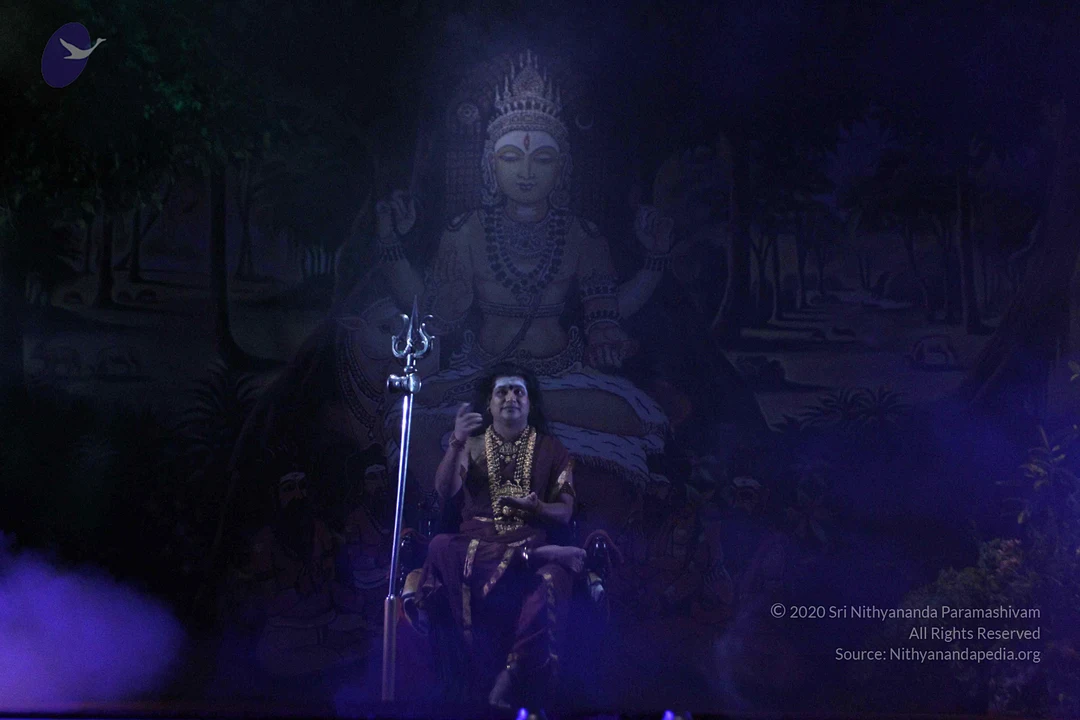
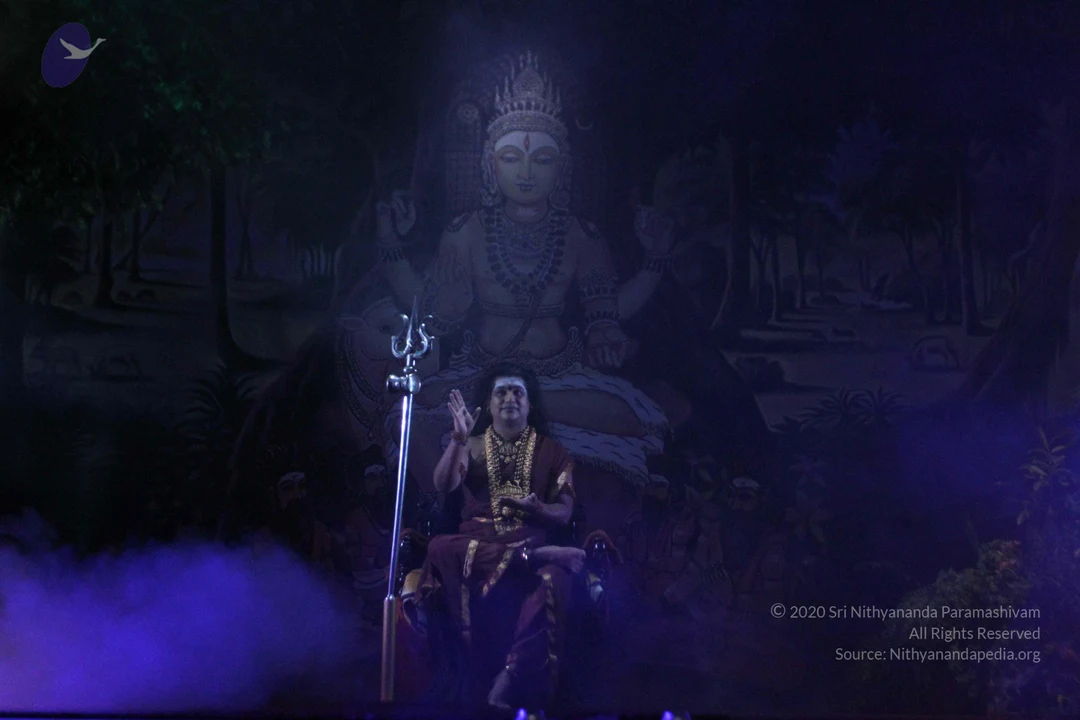
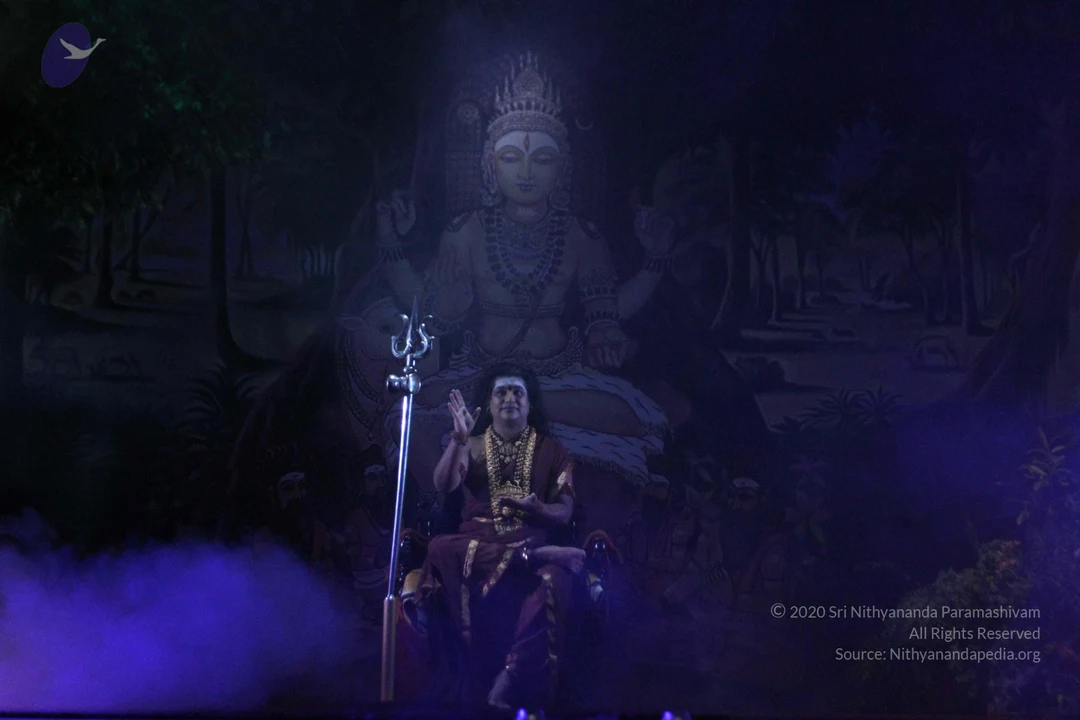
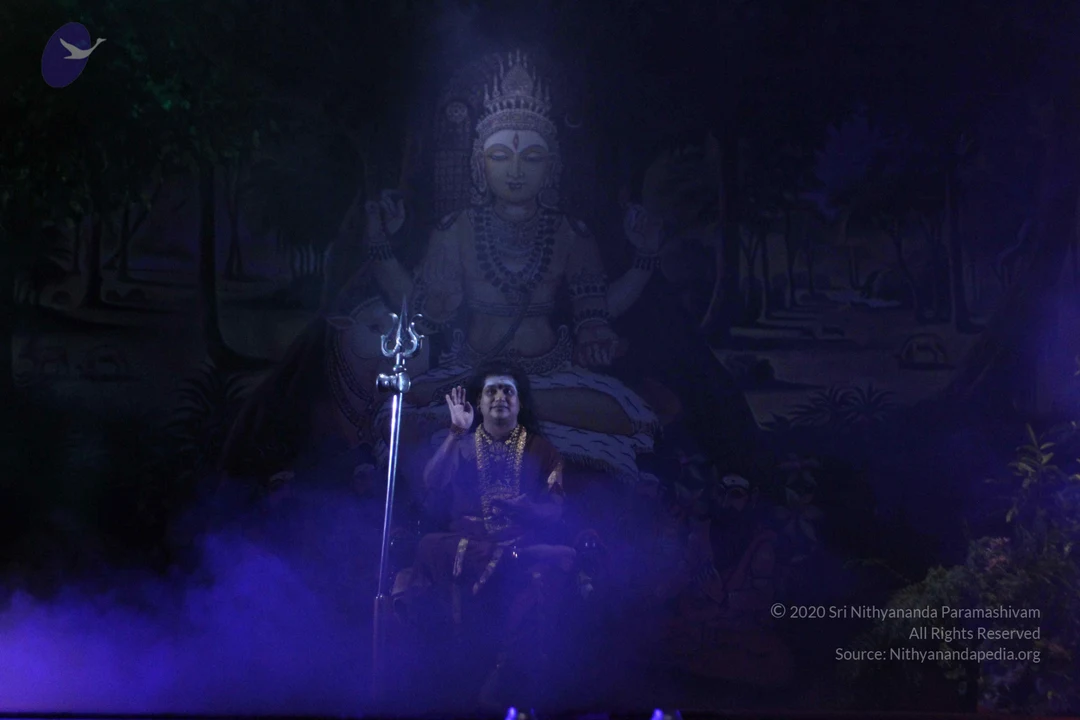
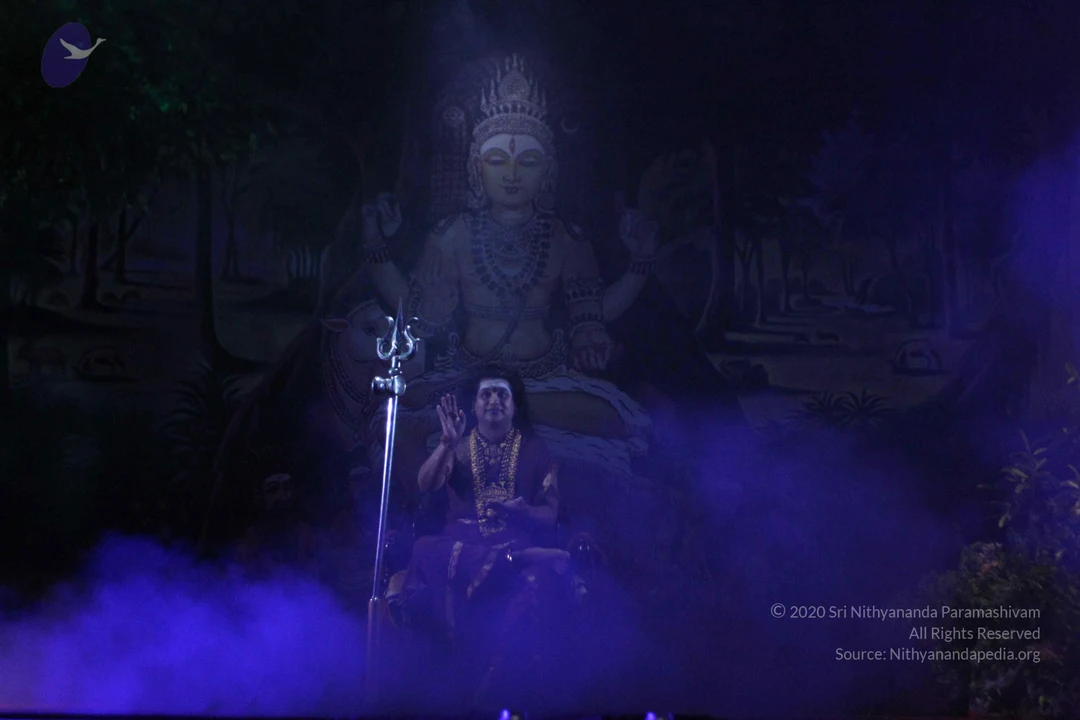
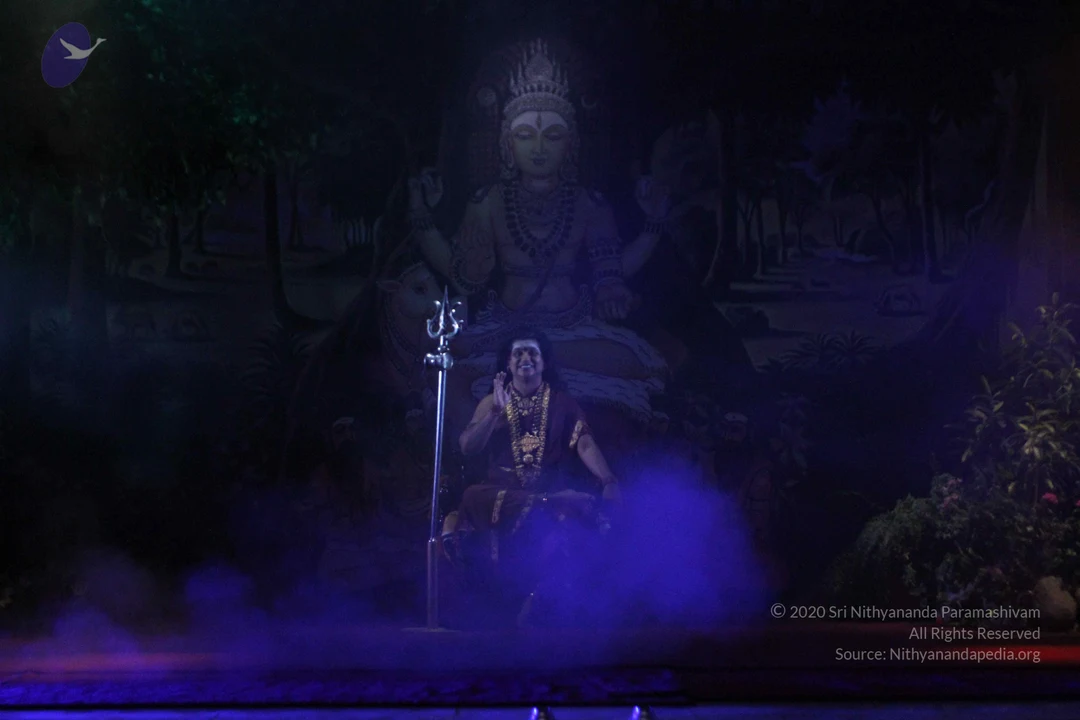
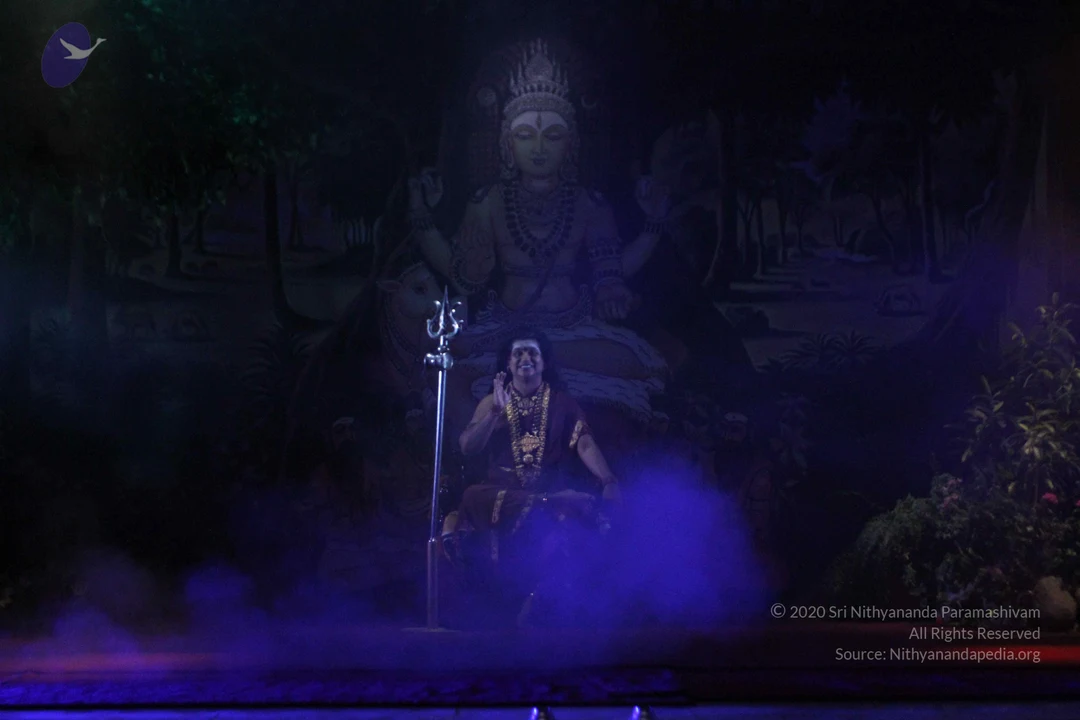
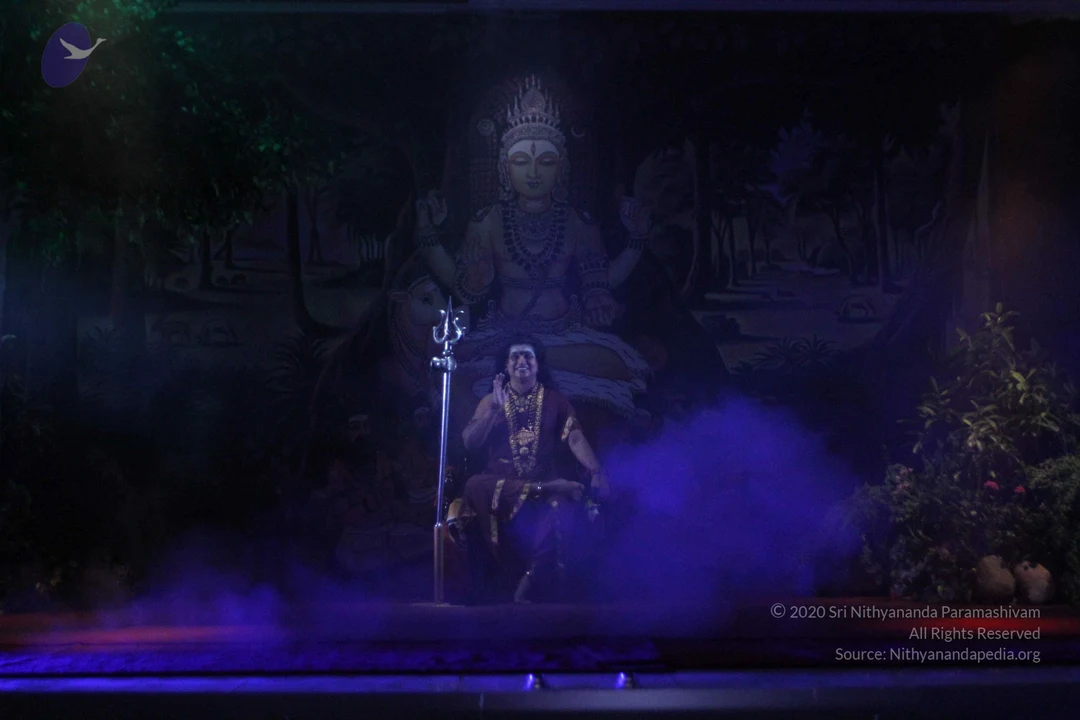
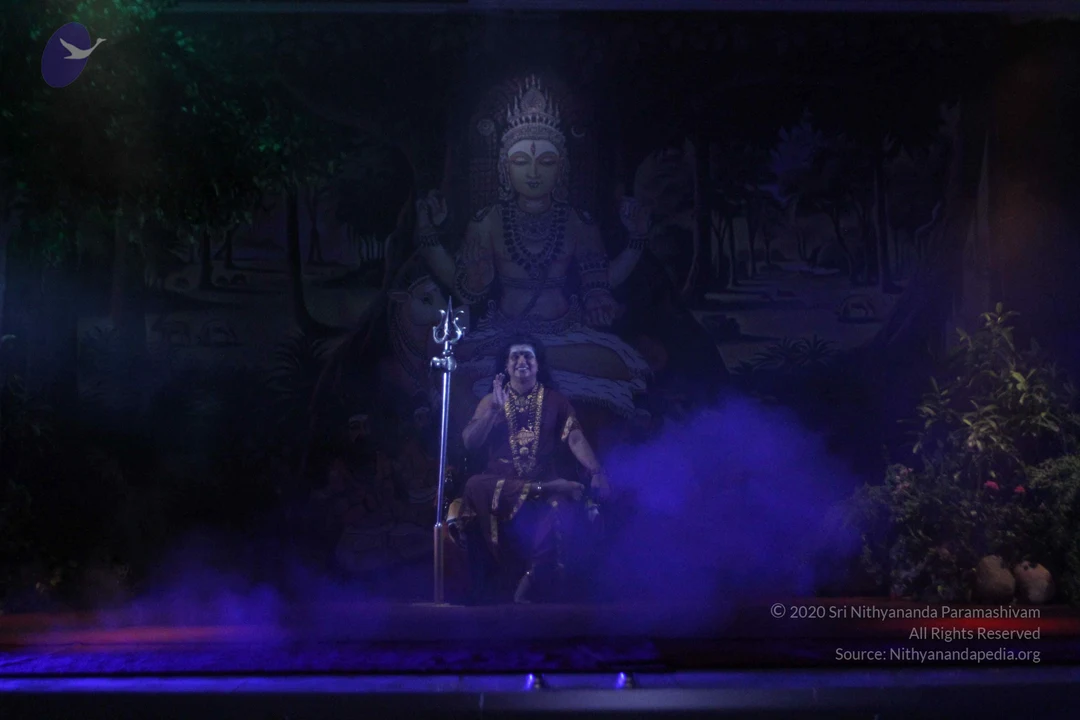
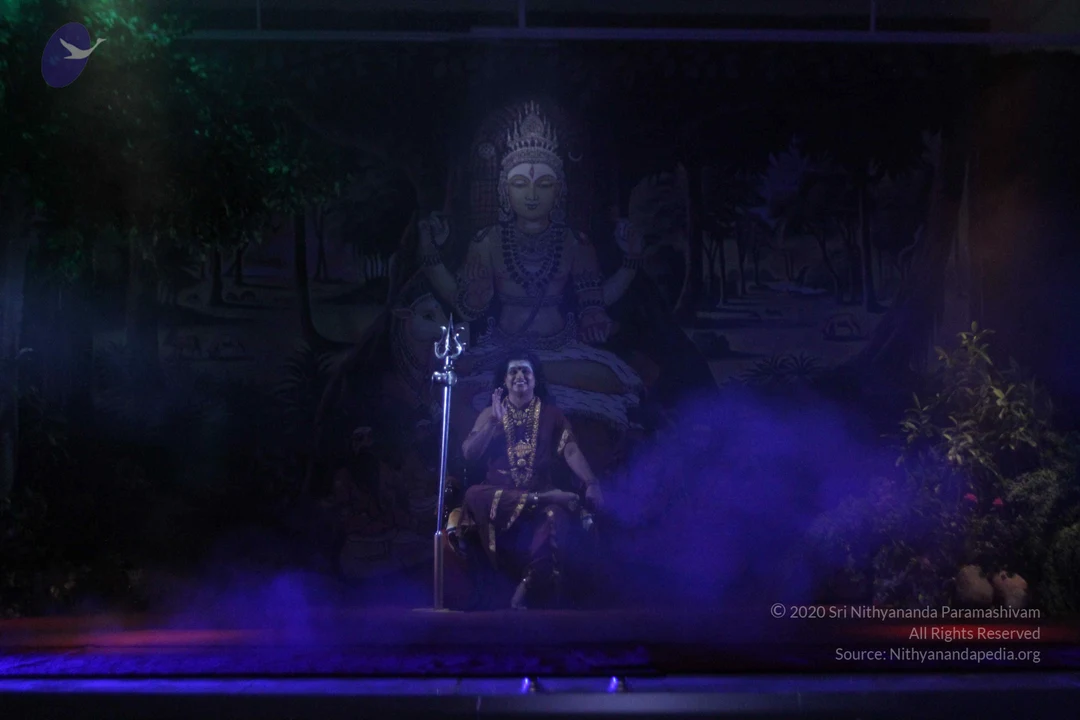
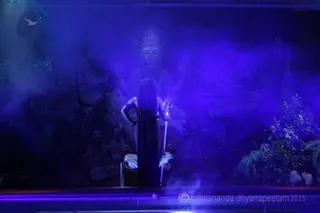
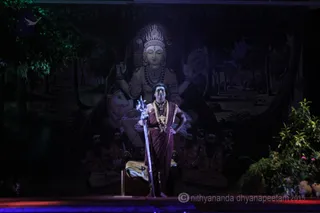
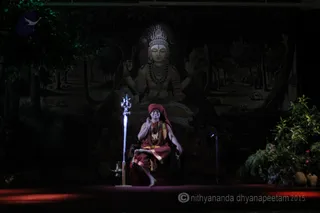
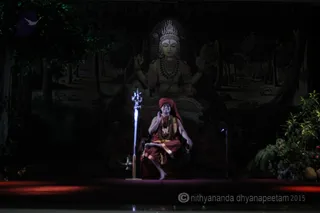
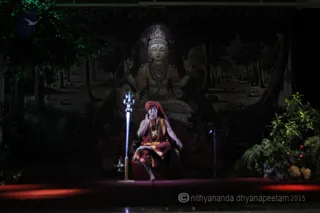
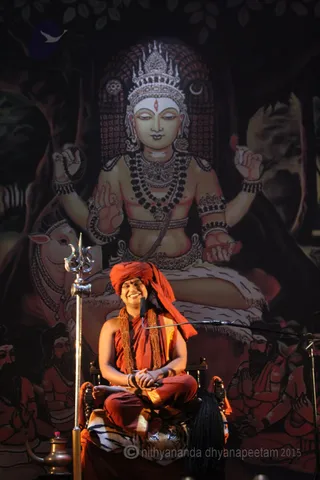
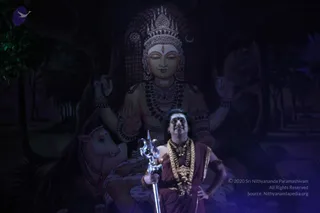
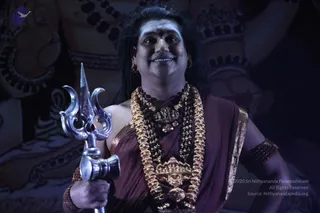
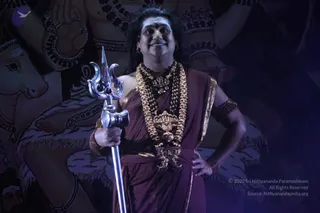
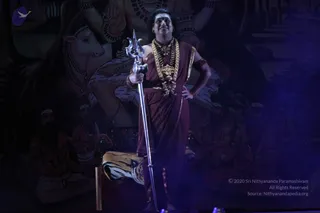
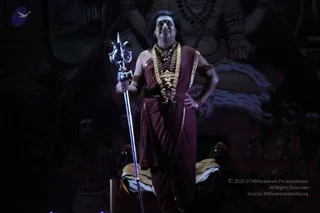
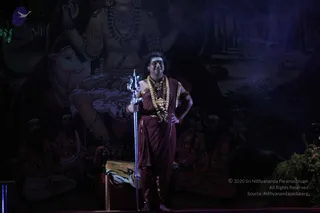
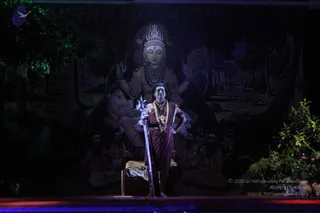
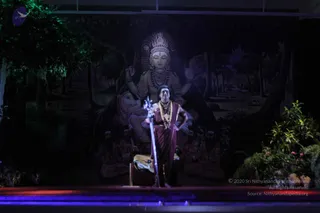
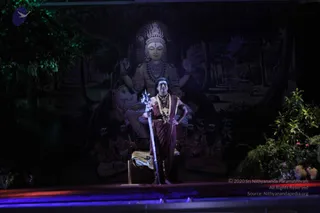
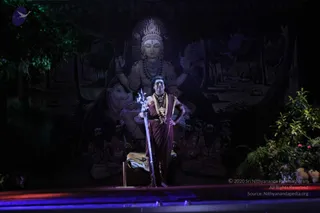
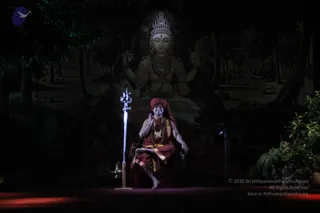
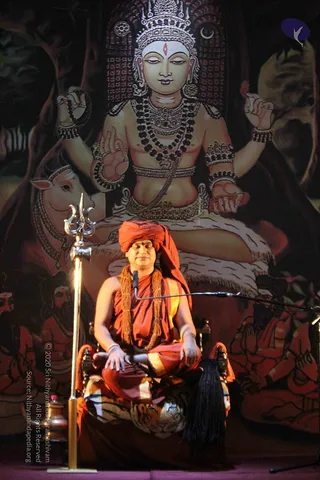
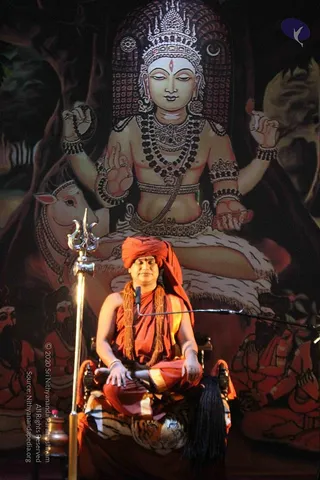
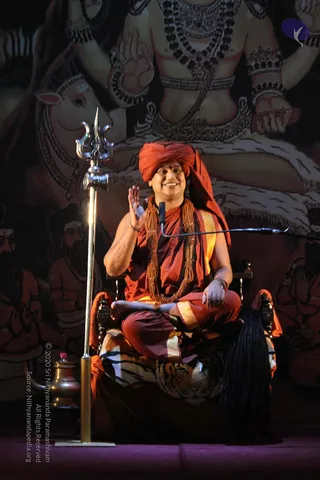
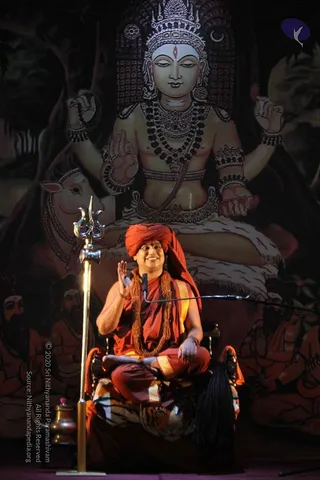
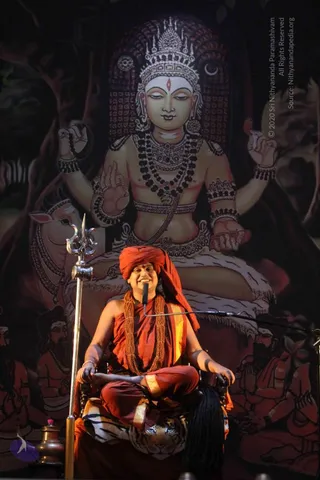
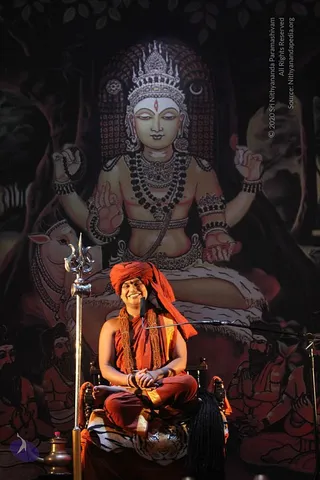
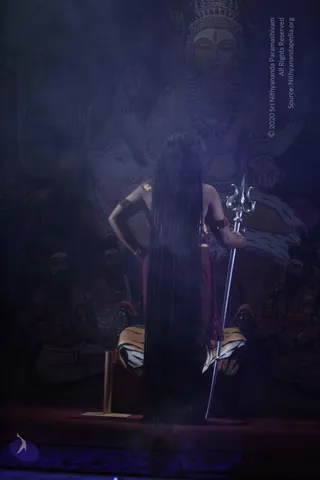
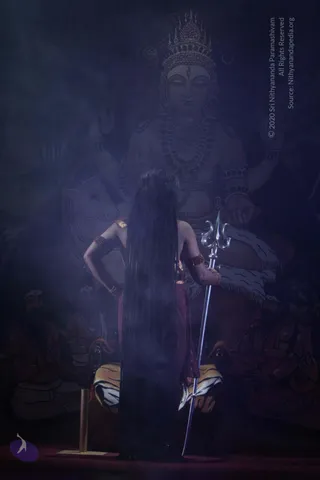
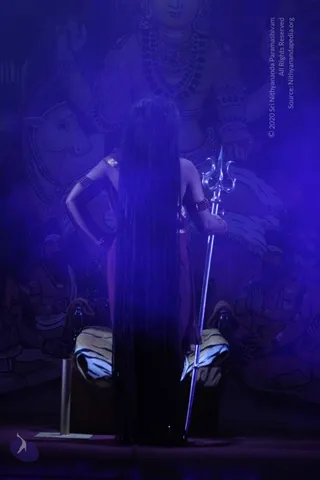
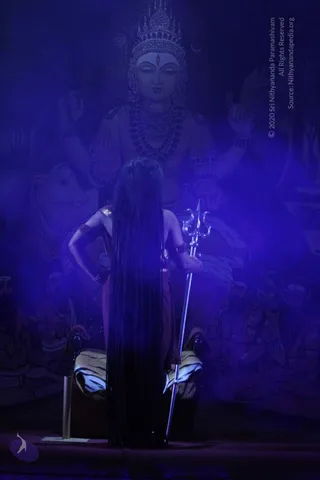
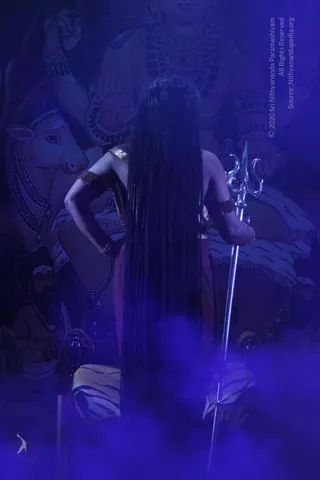
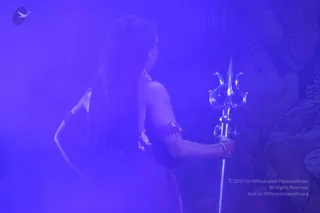
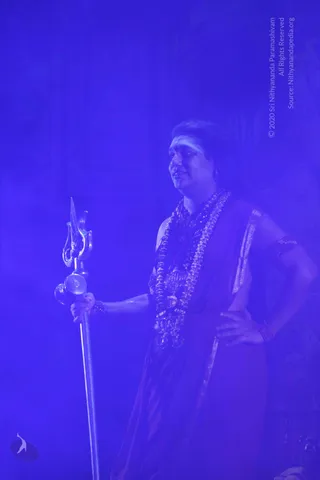
A dimly lit stage scene with a figure seated on a dark throne-like chair, raised right hand in a blessing or teaching gesture. The seated figure wears a maroon-brown robe with gold trim and a long garland of beads around the neck. A tall silver trident stands to the left on the stage floor, and blue-violet haze drifts across the foreground. Behind him a large painted backdrop shows a seated four-armed deity with a crown and beaded necklaces, flanked by forest trees and seated attendant figures. The scene is a stage setting with a seated speaker in dramatic blue light. a person: the seated figure has the ornate maroon robe and bead garlands of a teacher on a stage, but the face and features are too dim to confirm identity, so the appearance is uncertain.A dimly lit stage scene with blue-violet fog spilling across the floor. In the centre stands a bare-chested man in a deep red-maroon dhoti-style wrap, wearing a long multi-strand gold necklace and white face markings, holding a silver trident upright in his right hand and resting his left hand at his waist. Behind him is a large painted backdrop of a multi-armed deity with a tall crown and a crescent moon, seated on a tiger-skin or animal hide amid dark forest foliage, with a bull figure visible at the lower left. Green stage light falls on foliage to the left and a pink glow on plants to the right. Two smaller figures sit in the shadows at the lower left. The printed copyright line and archive credit appear in the lower right corner.A dimly lit stage set with a large painted backdrop of a multi-armed deity seated on a throne among forest trees, with a crowned figure and a bull-like animal below. In the foreground, a person in a maroon-brown robe with gold trim and layered beaded necklaces sits on a chair, one hand raised, beside a tall silver trident. Blue and purple stage lighting and haze surround the scene, with a potted plant at right.

February 04 2016

Original wiki page
Contents

Title

Inner Awakening Day 1. Seeking the Source - 'By Whom Am I' - Inauguration Of Kena Upanishad.

Narration

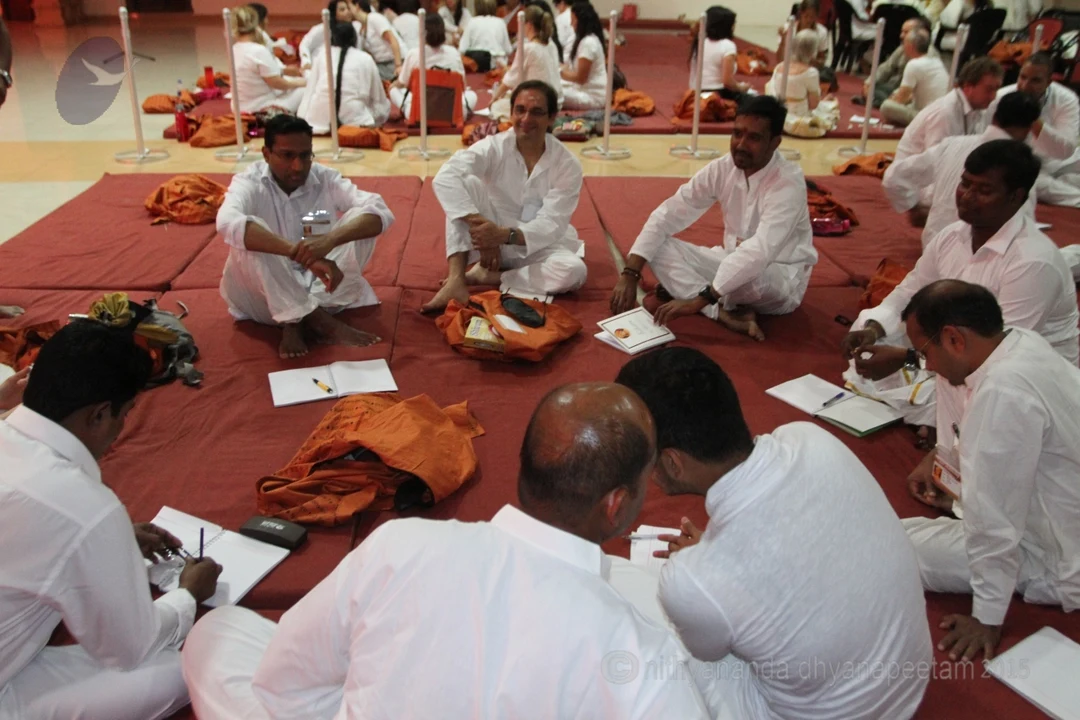
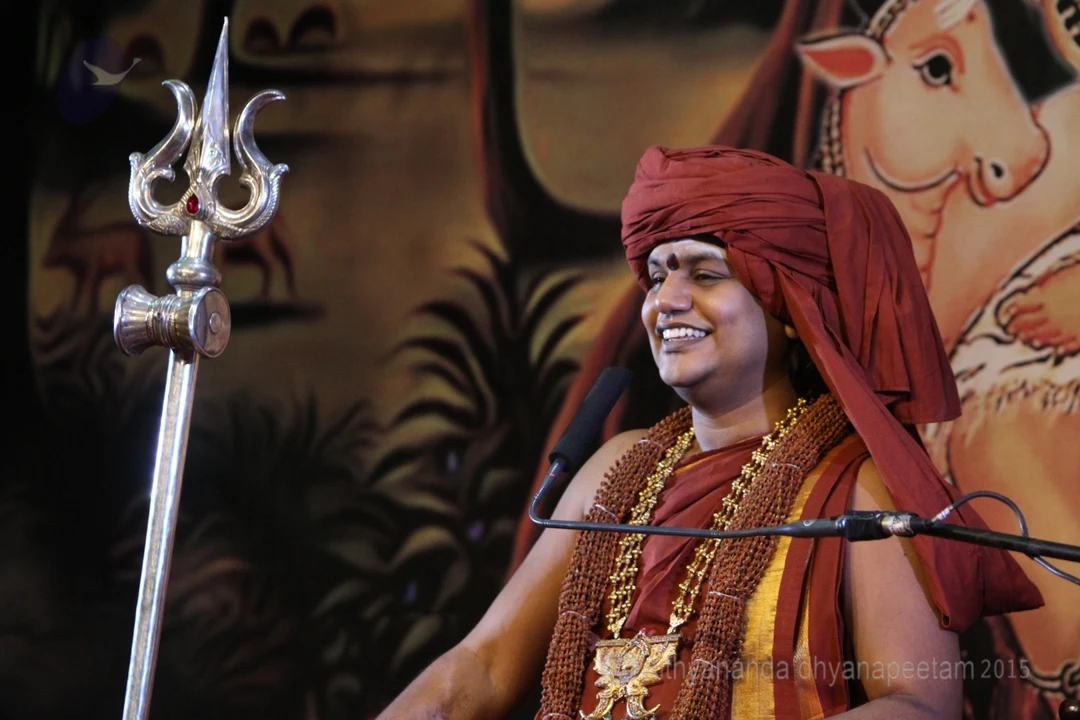
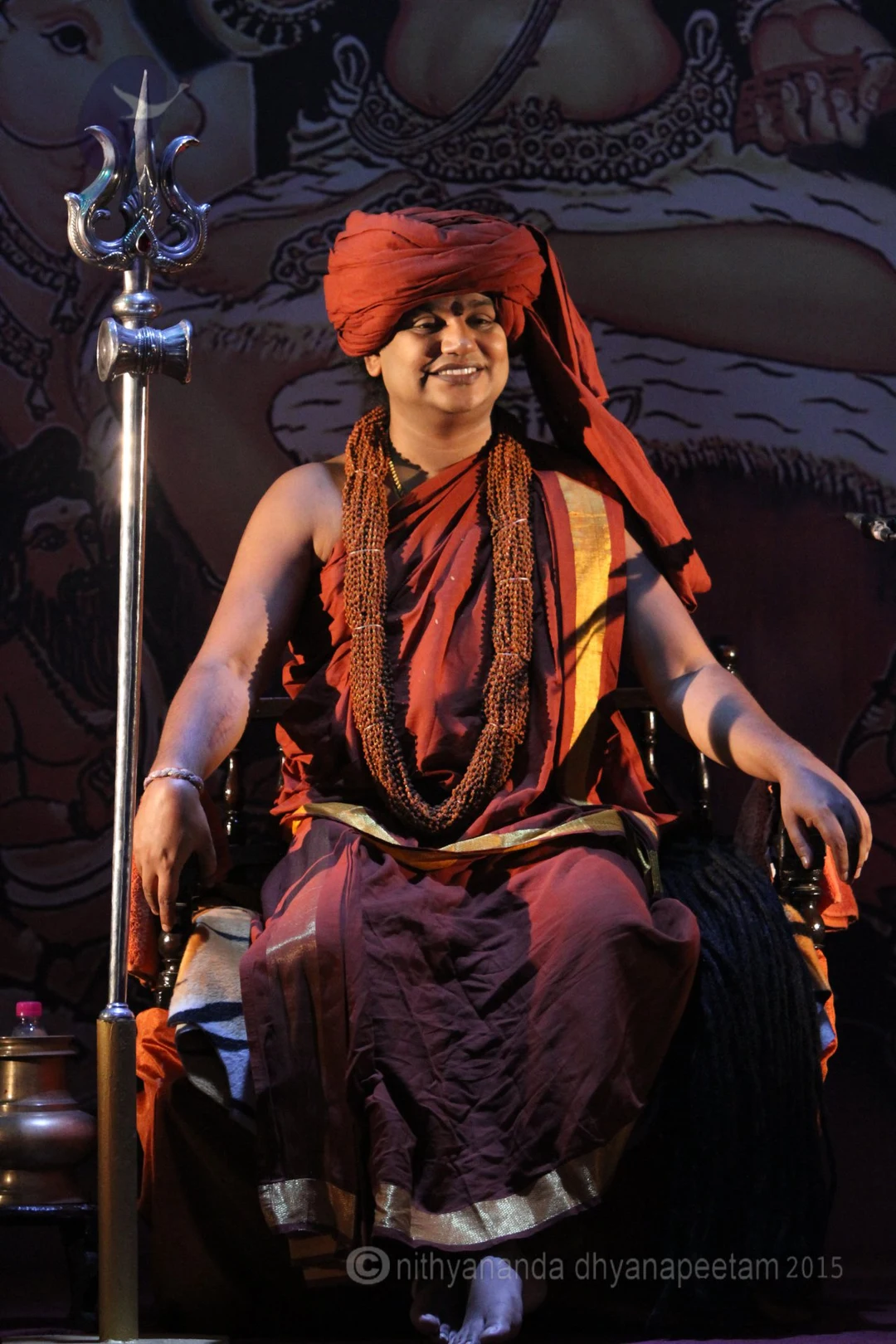
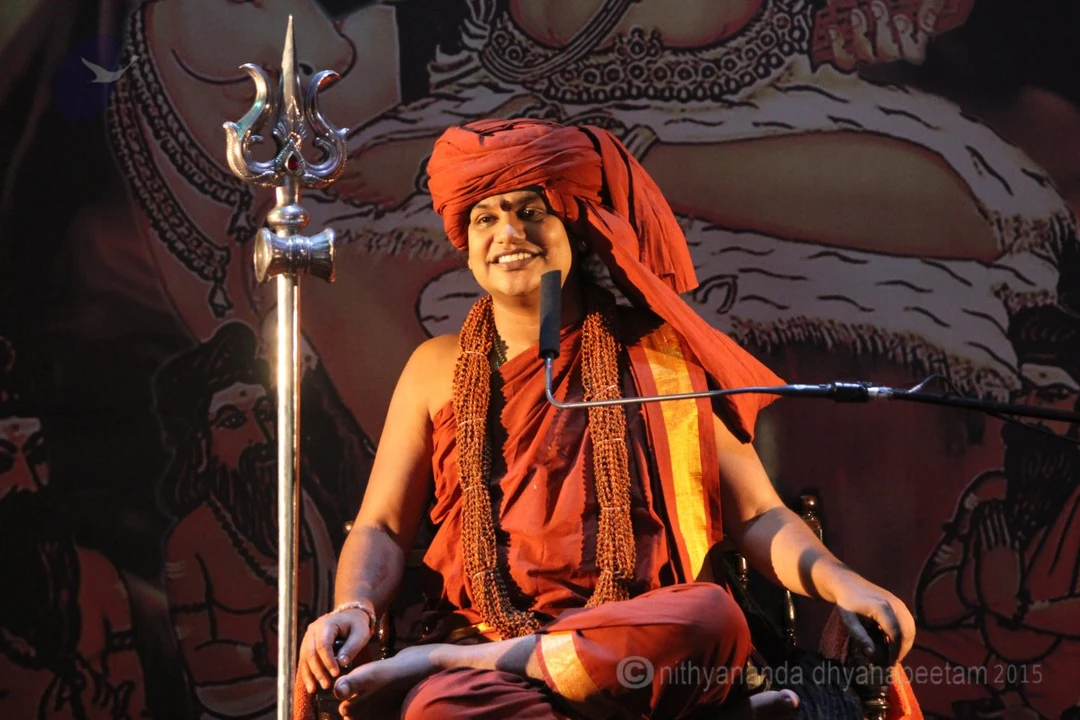
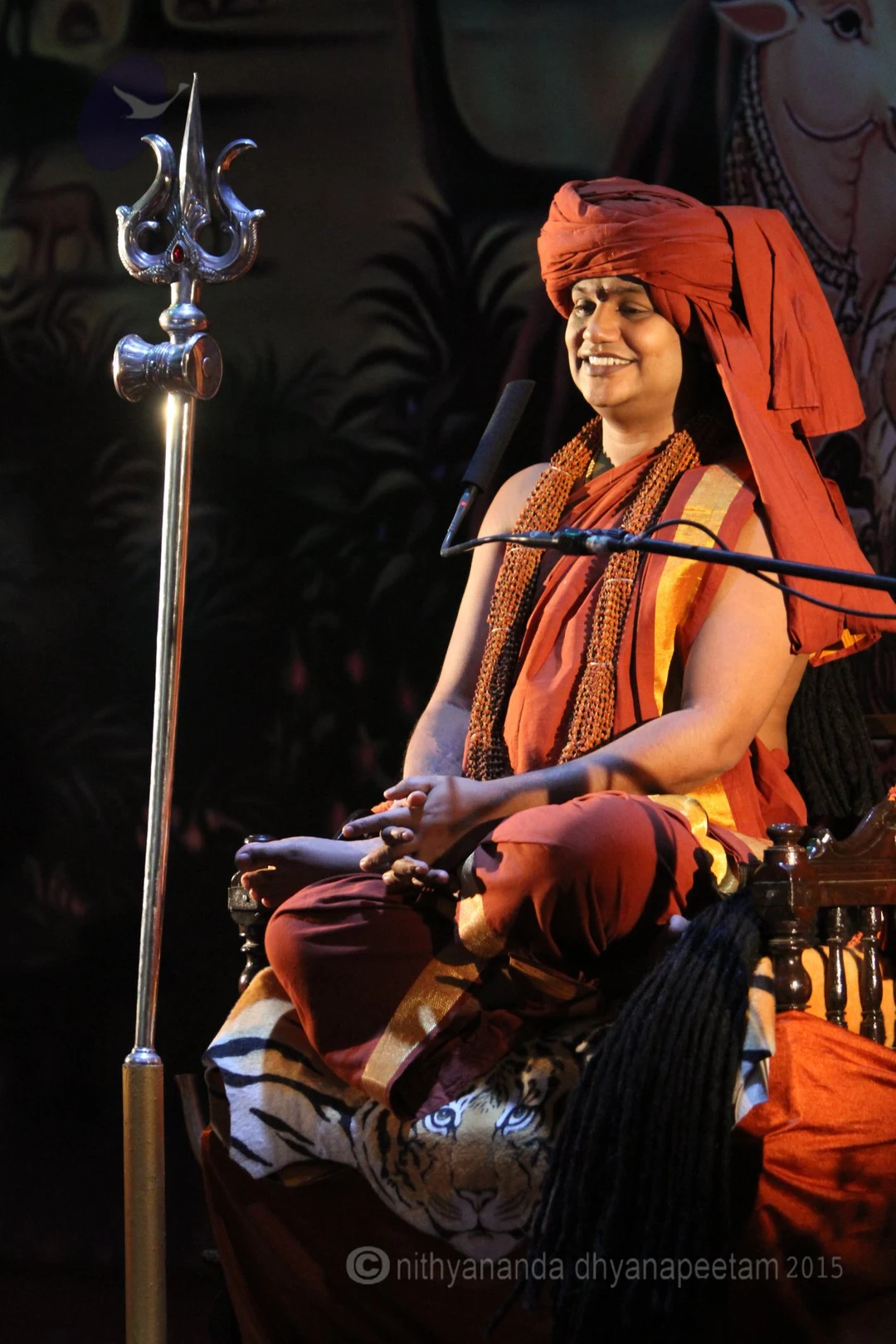
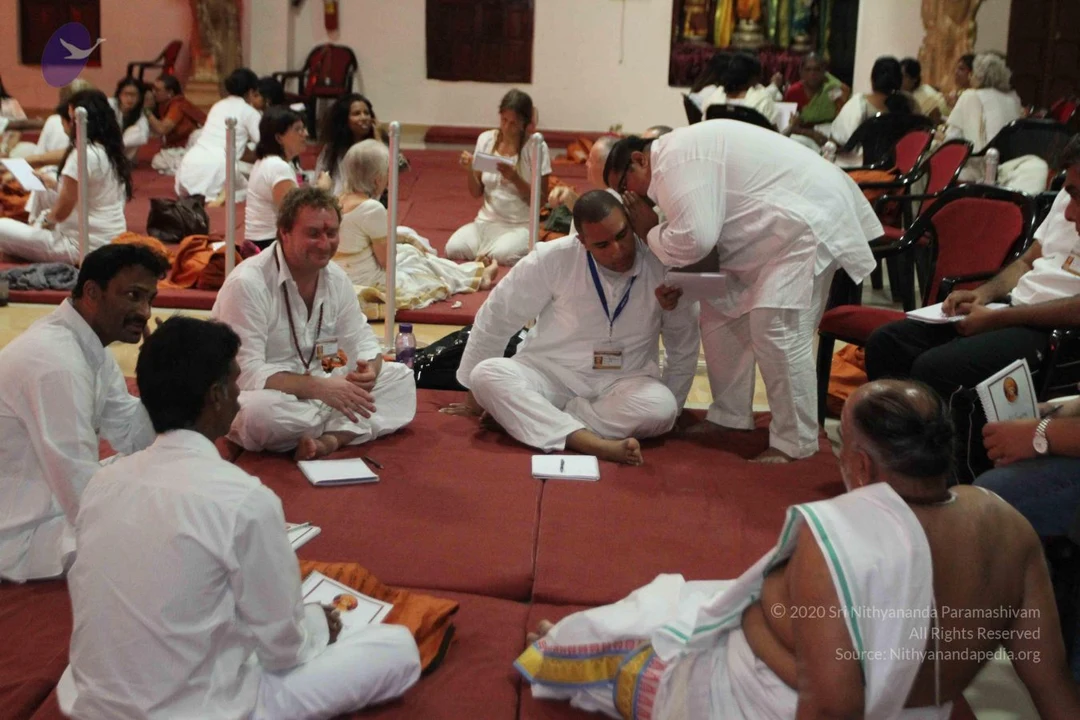
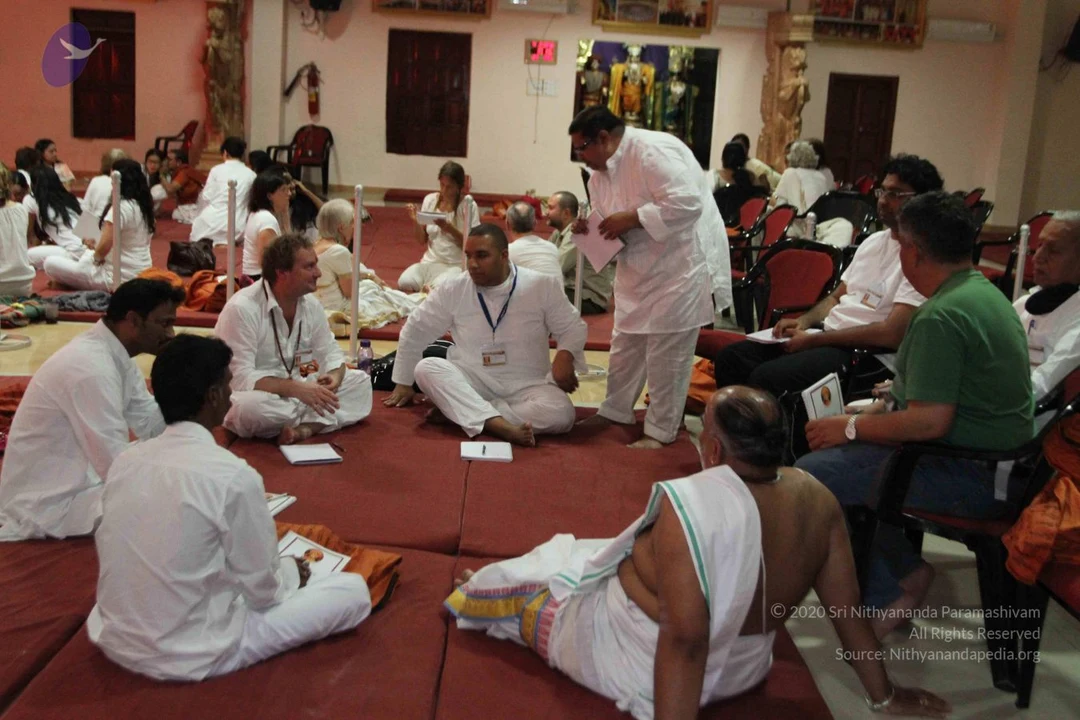
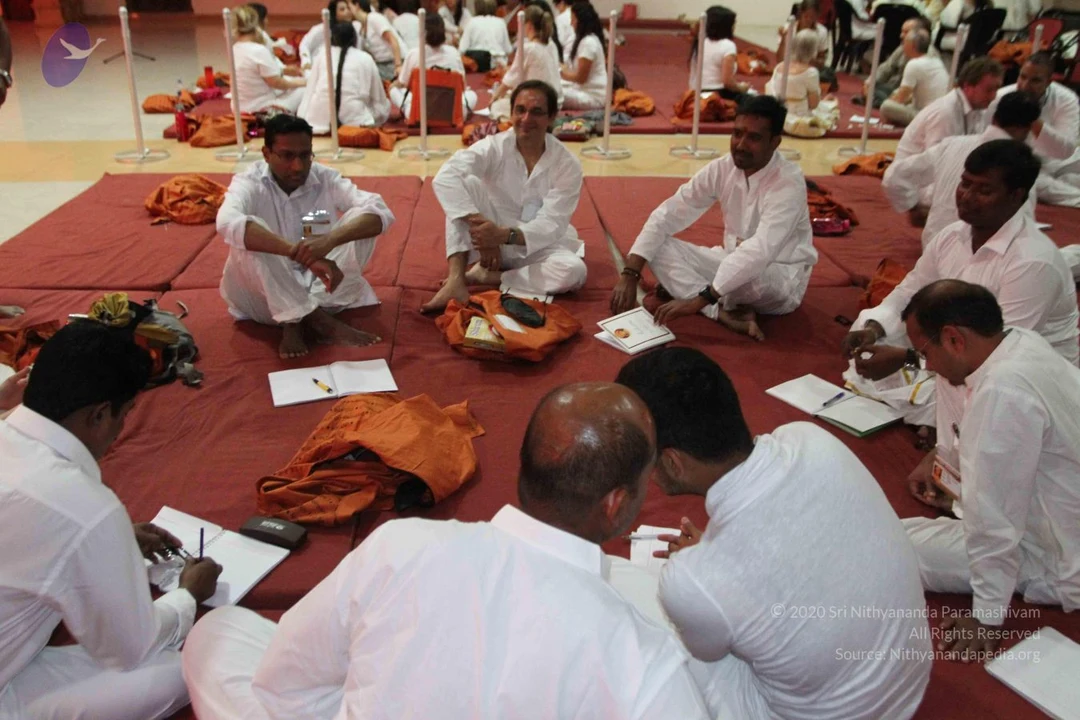
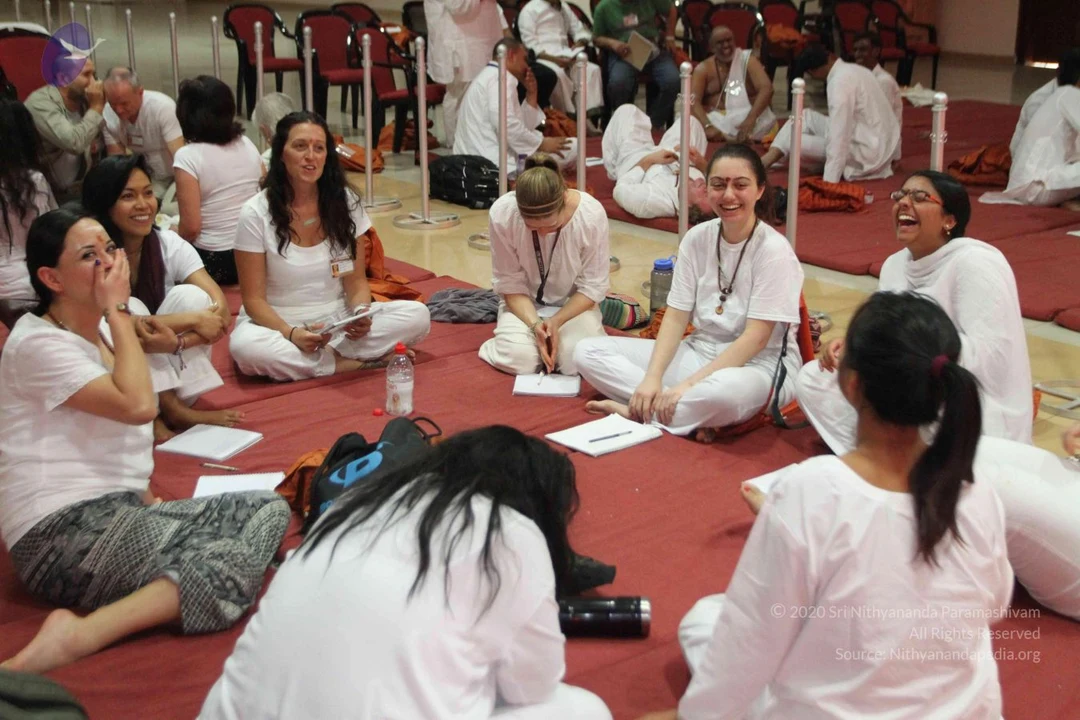
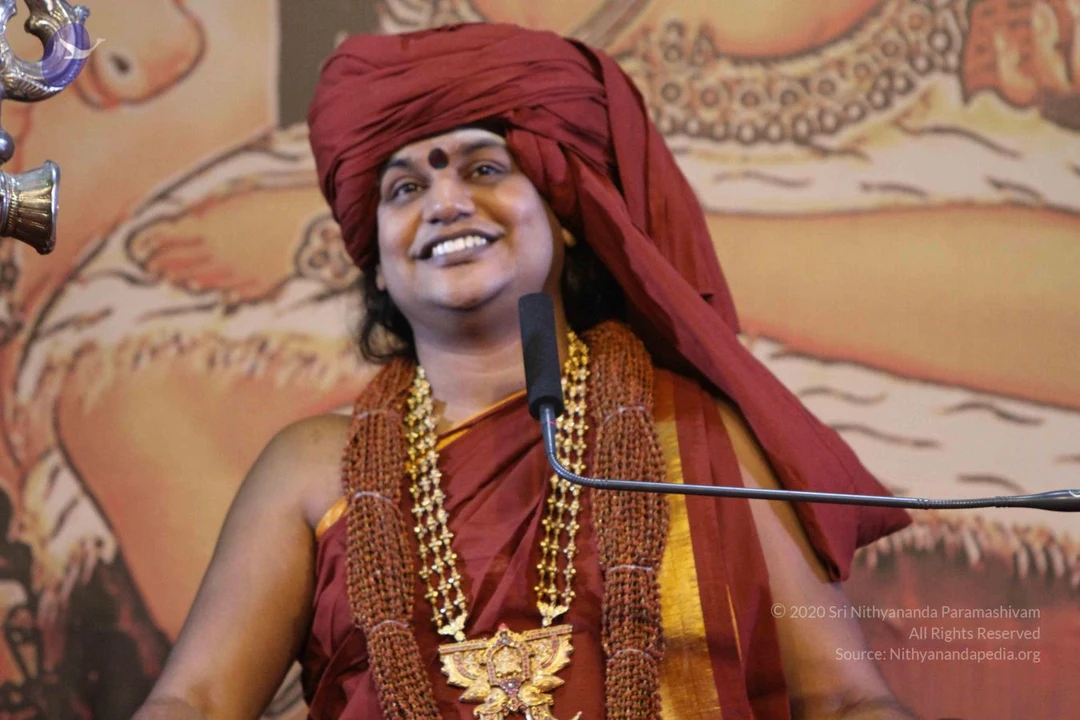
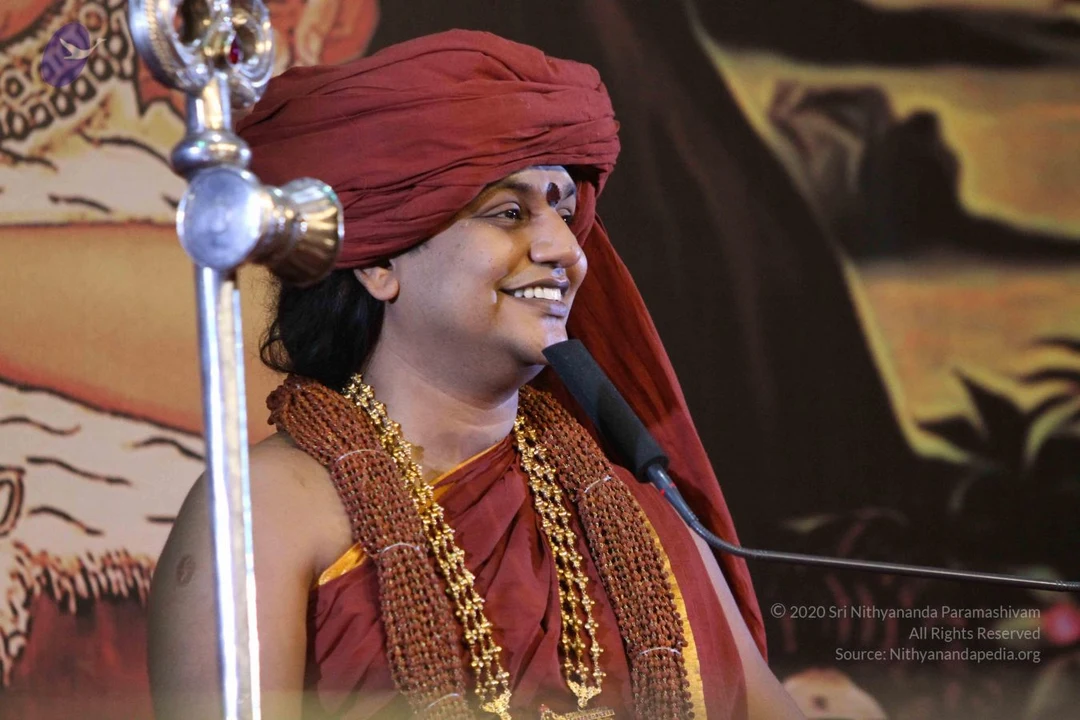
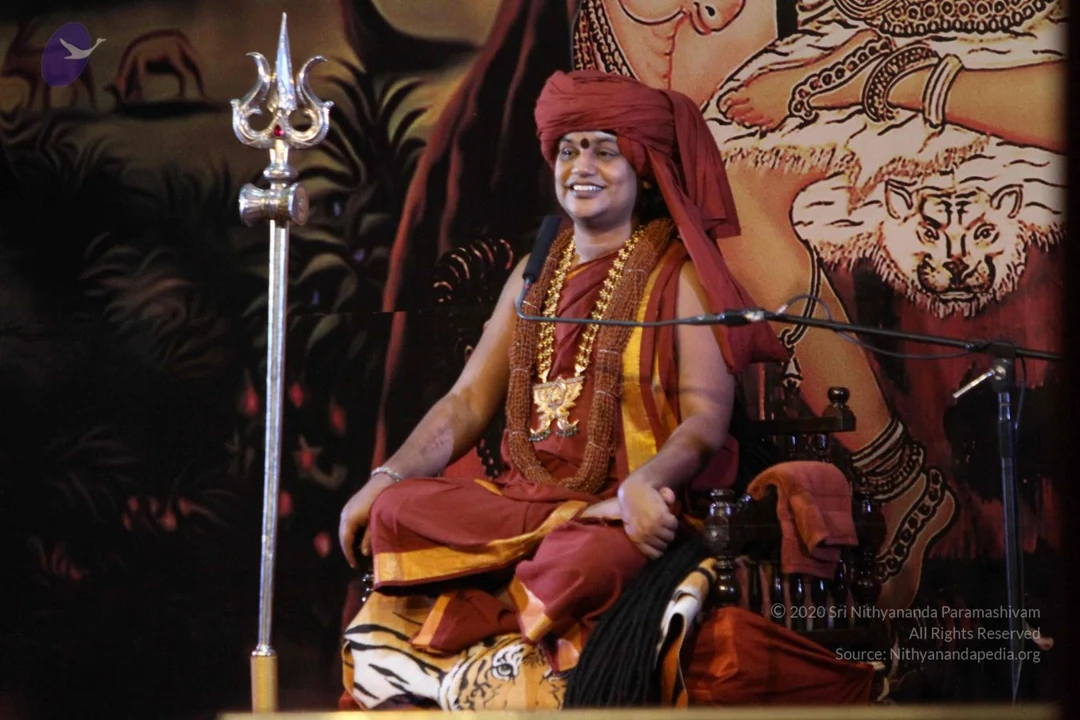
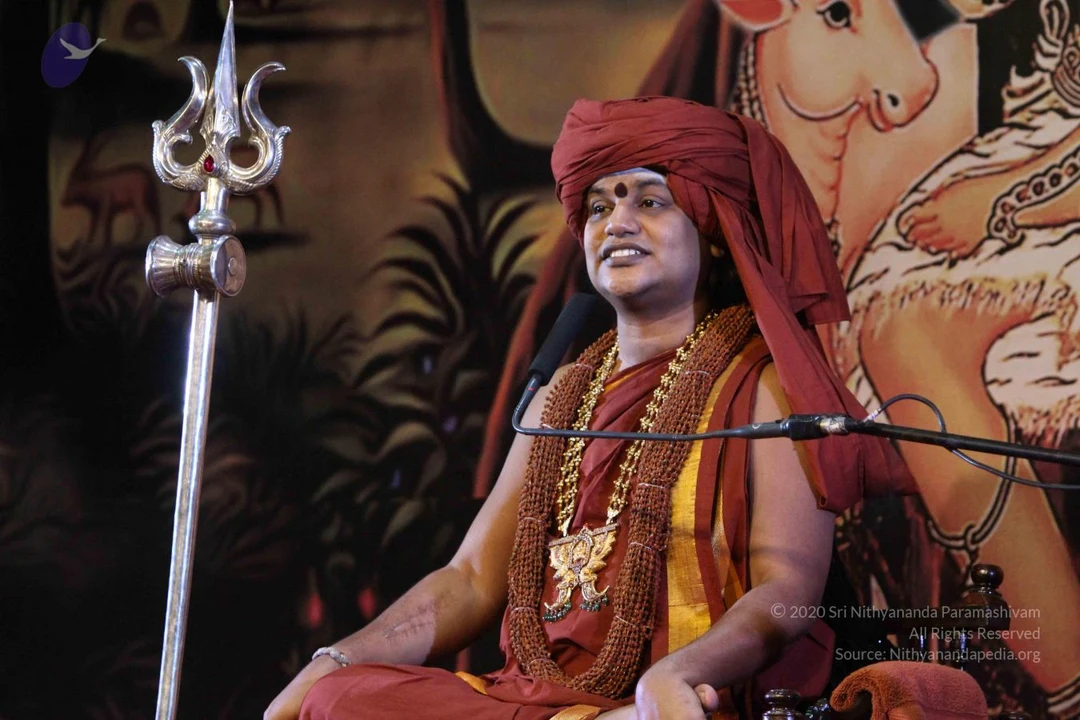
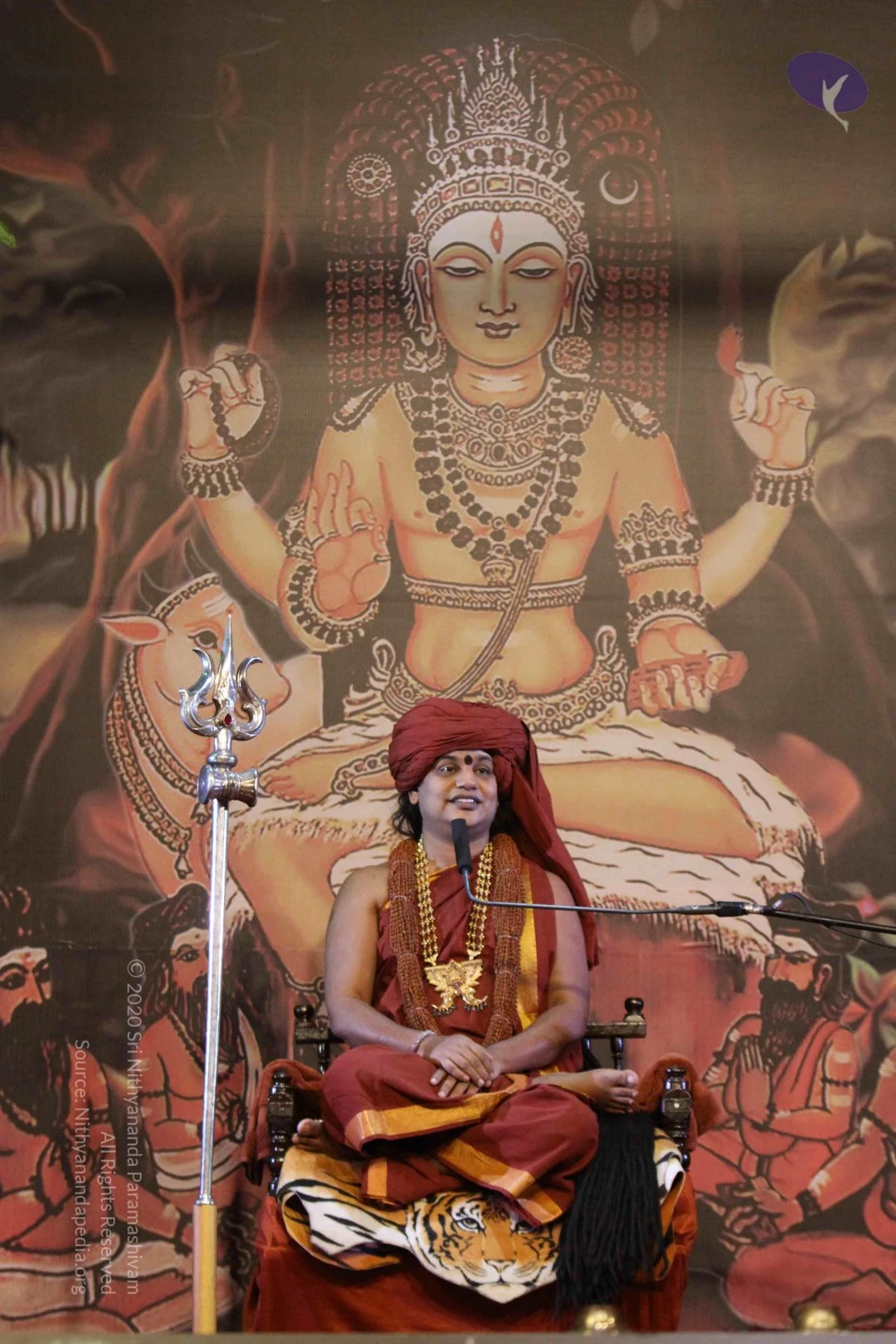
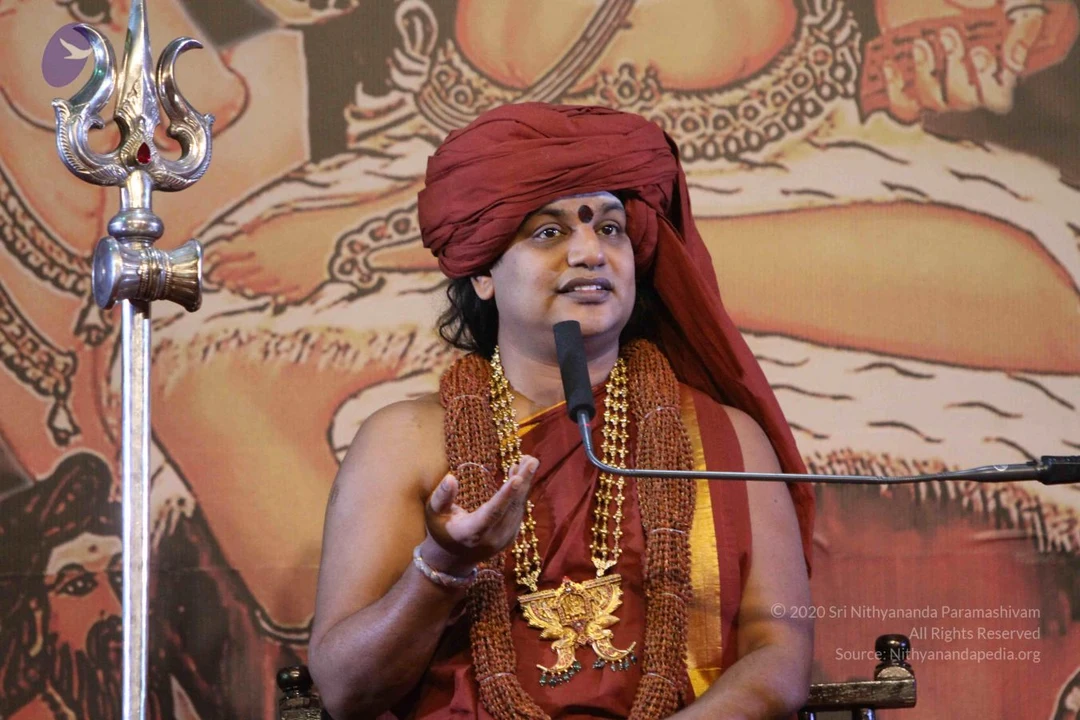
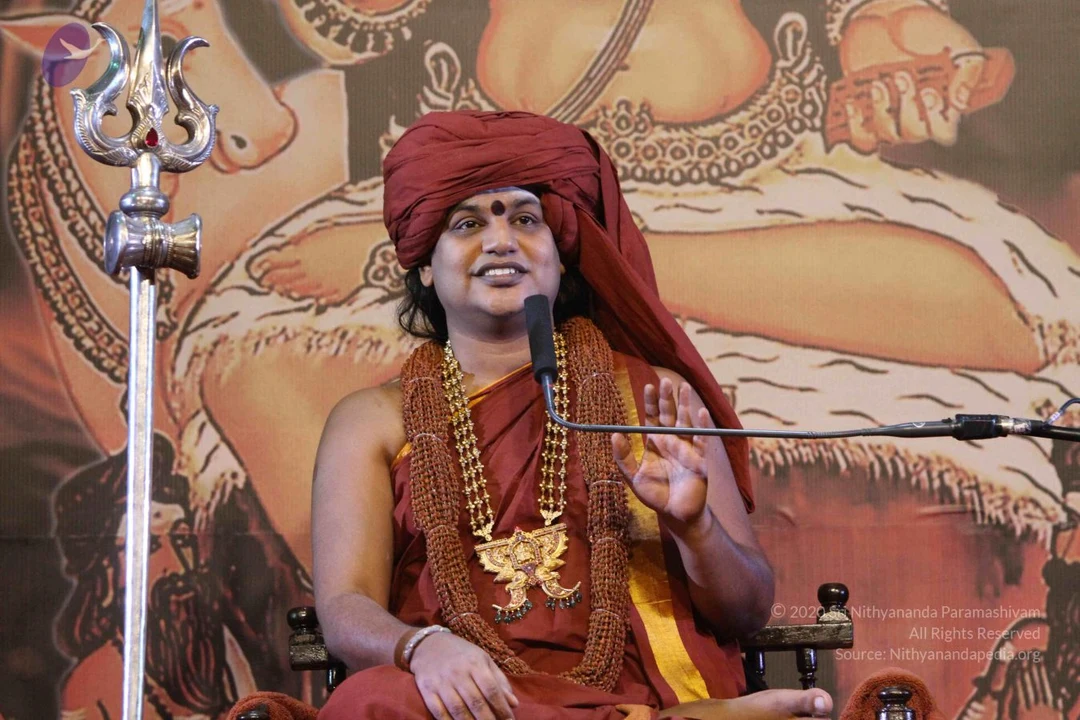
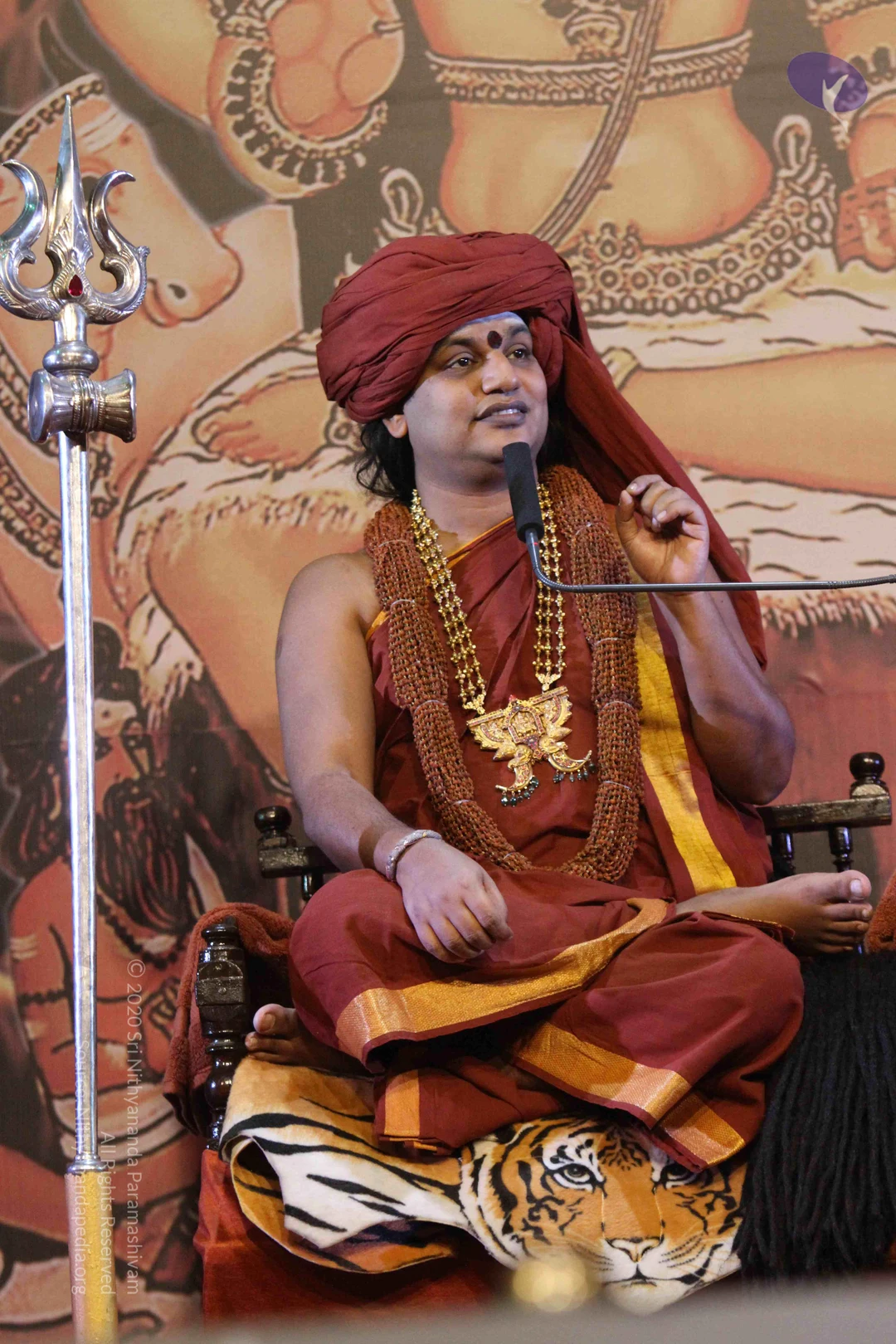
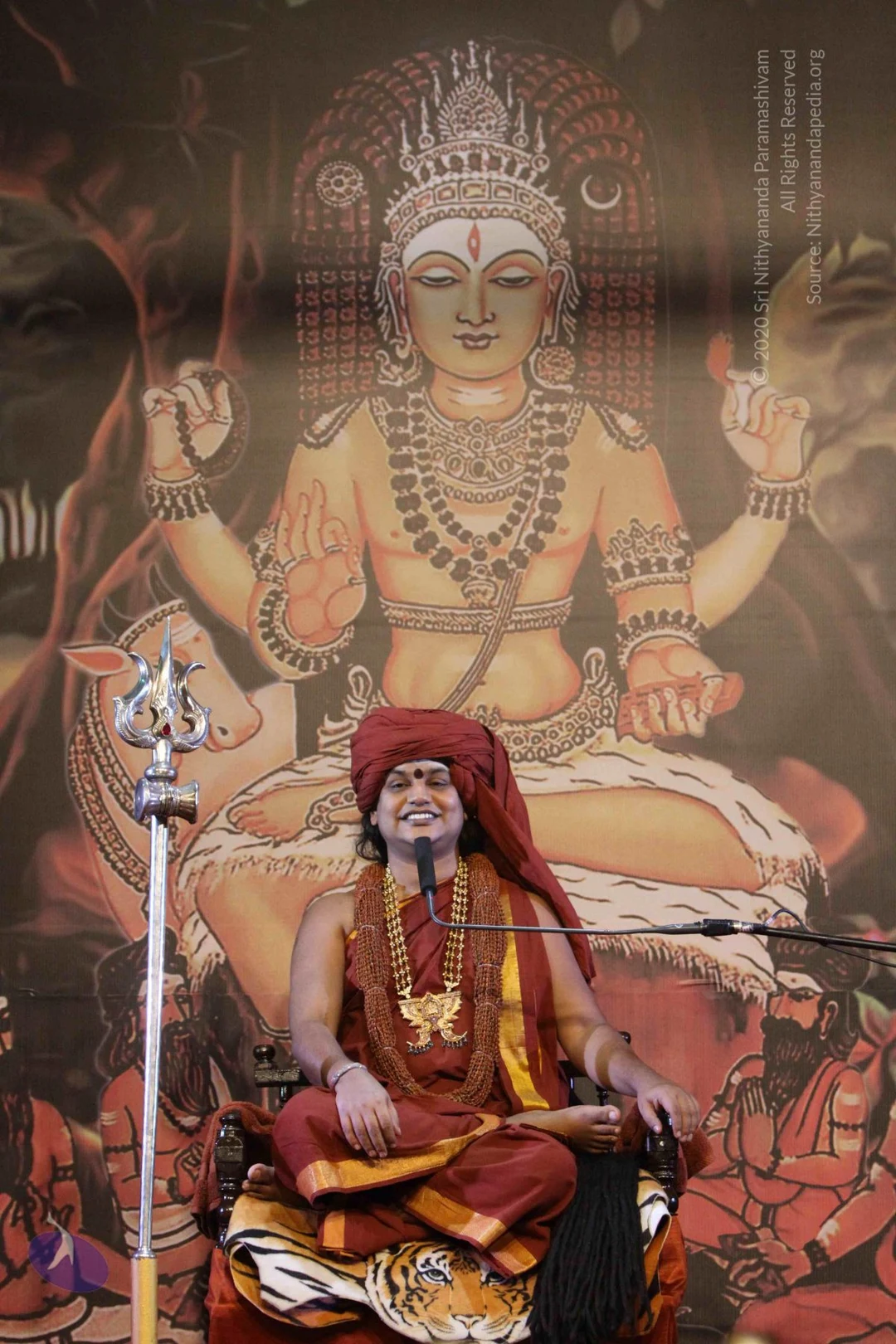
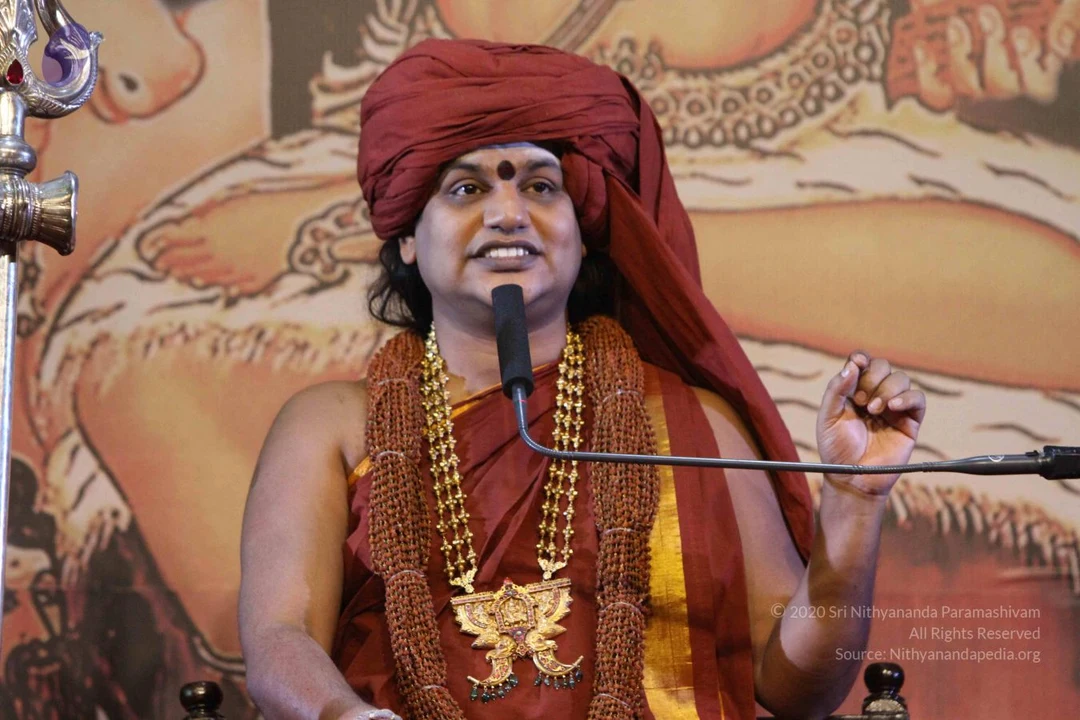
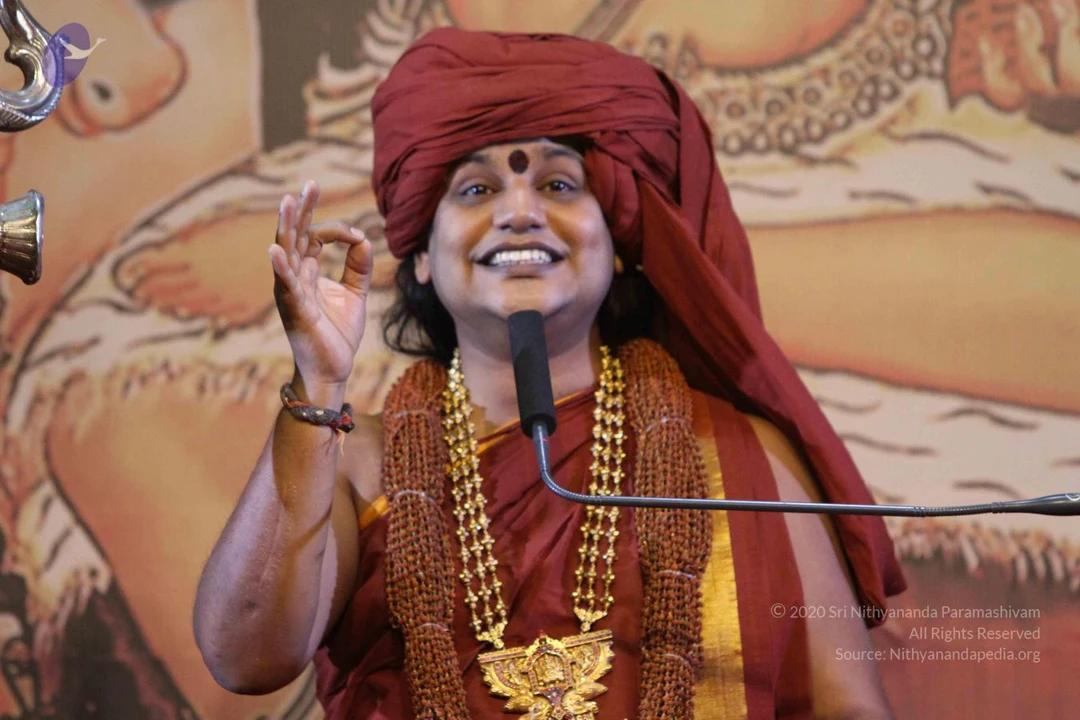
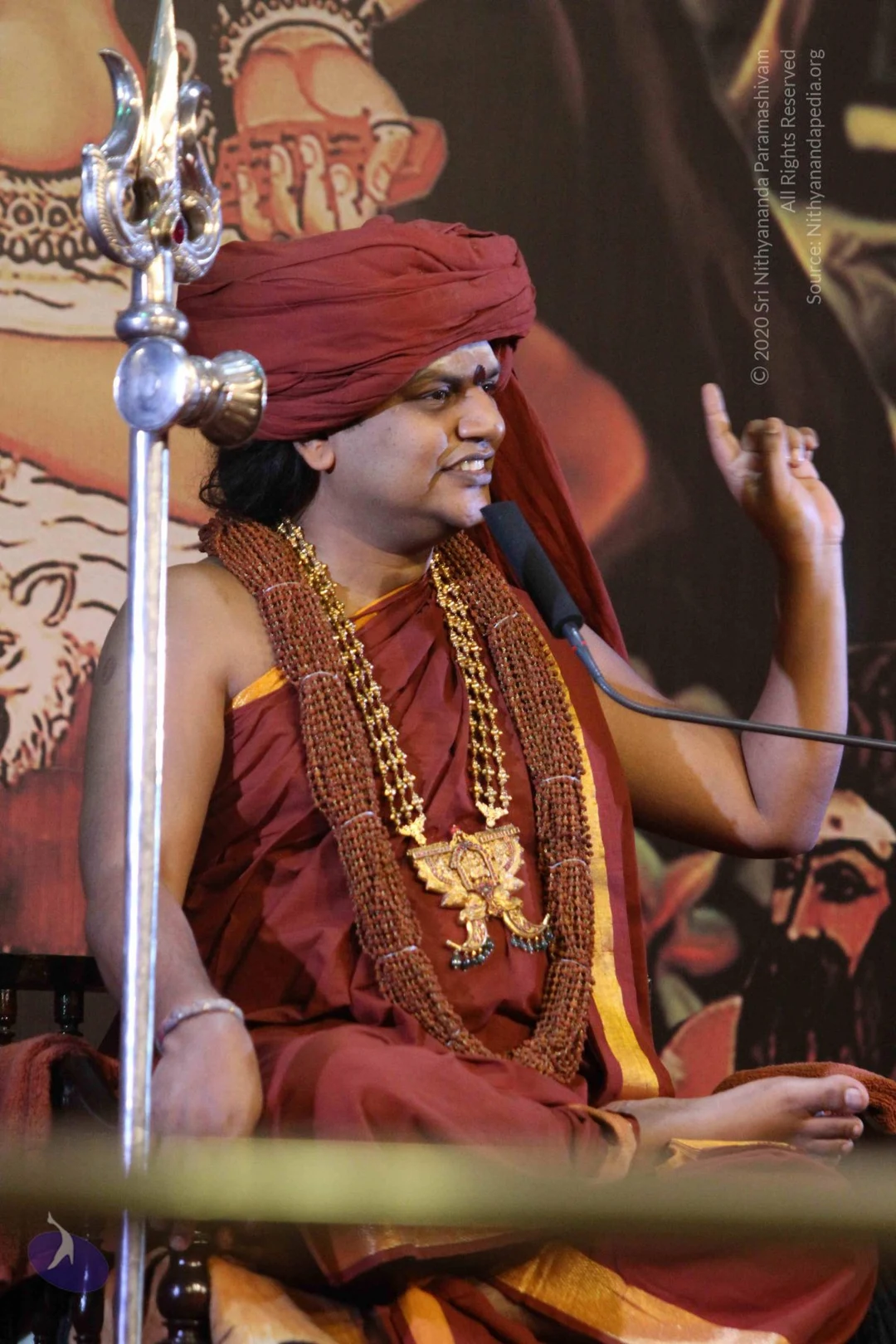
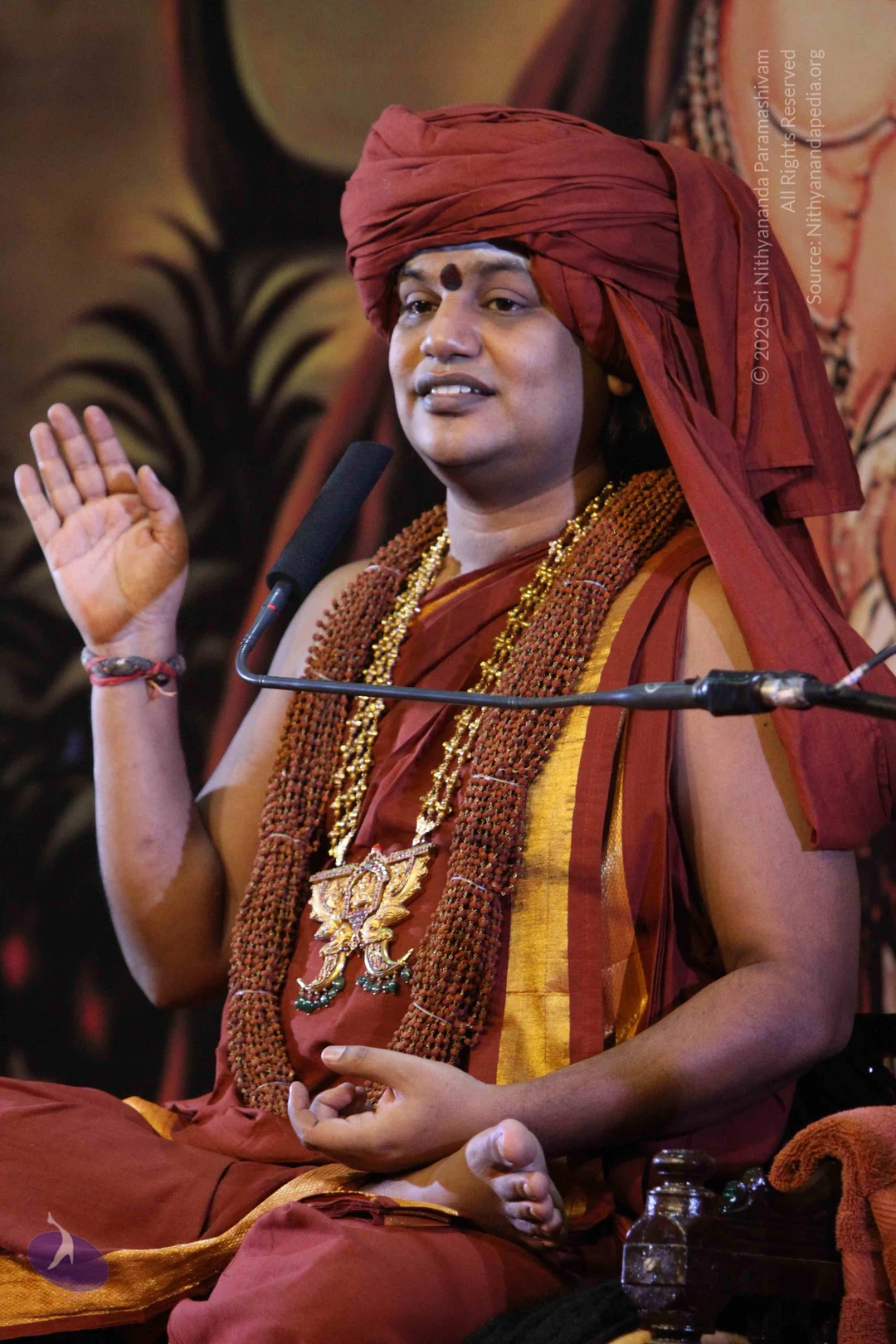
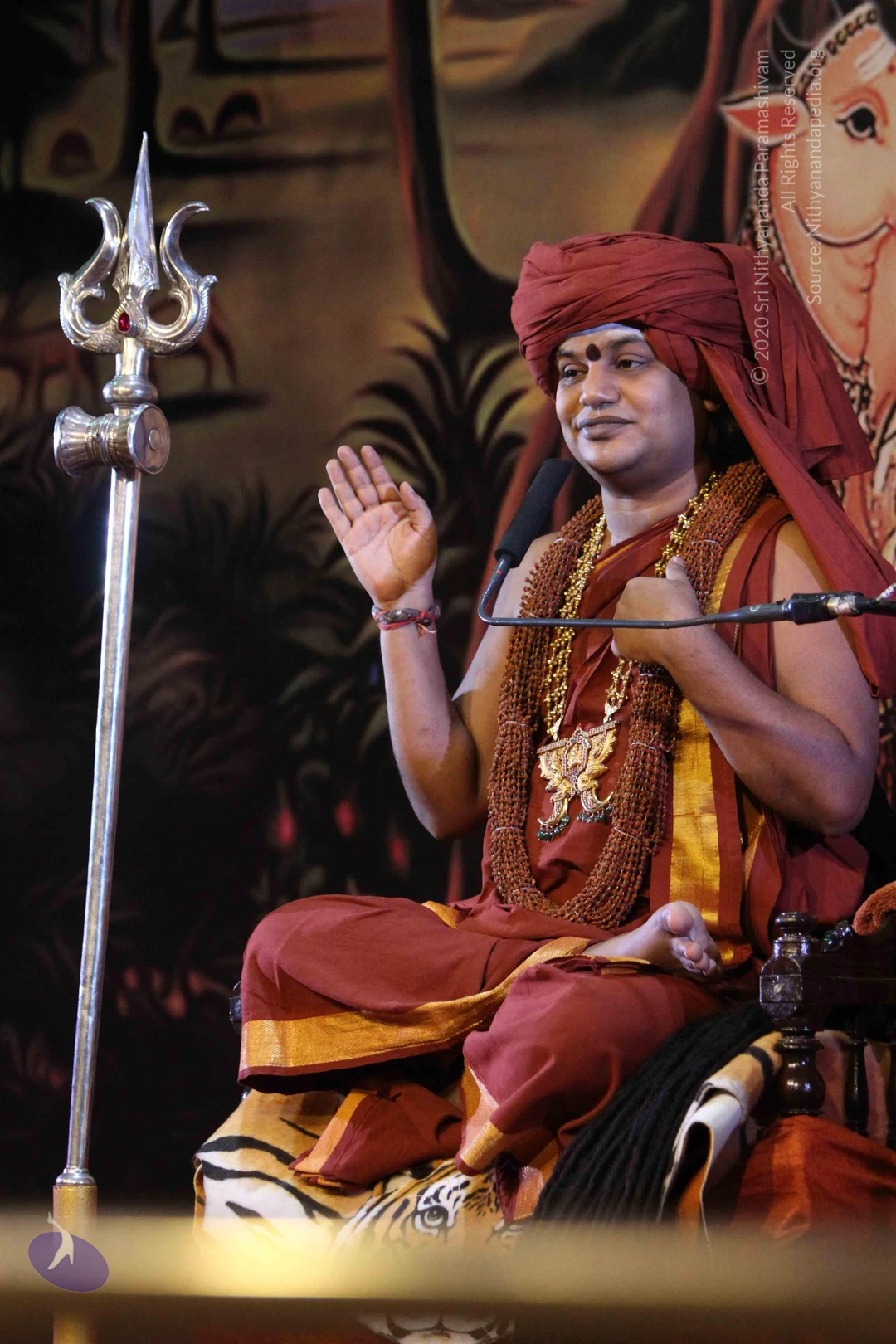
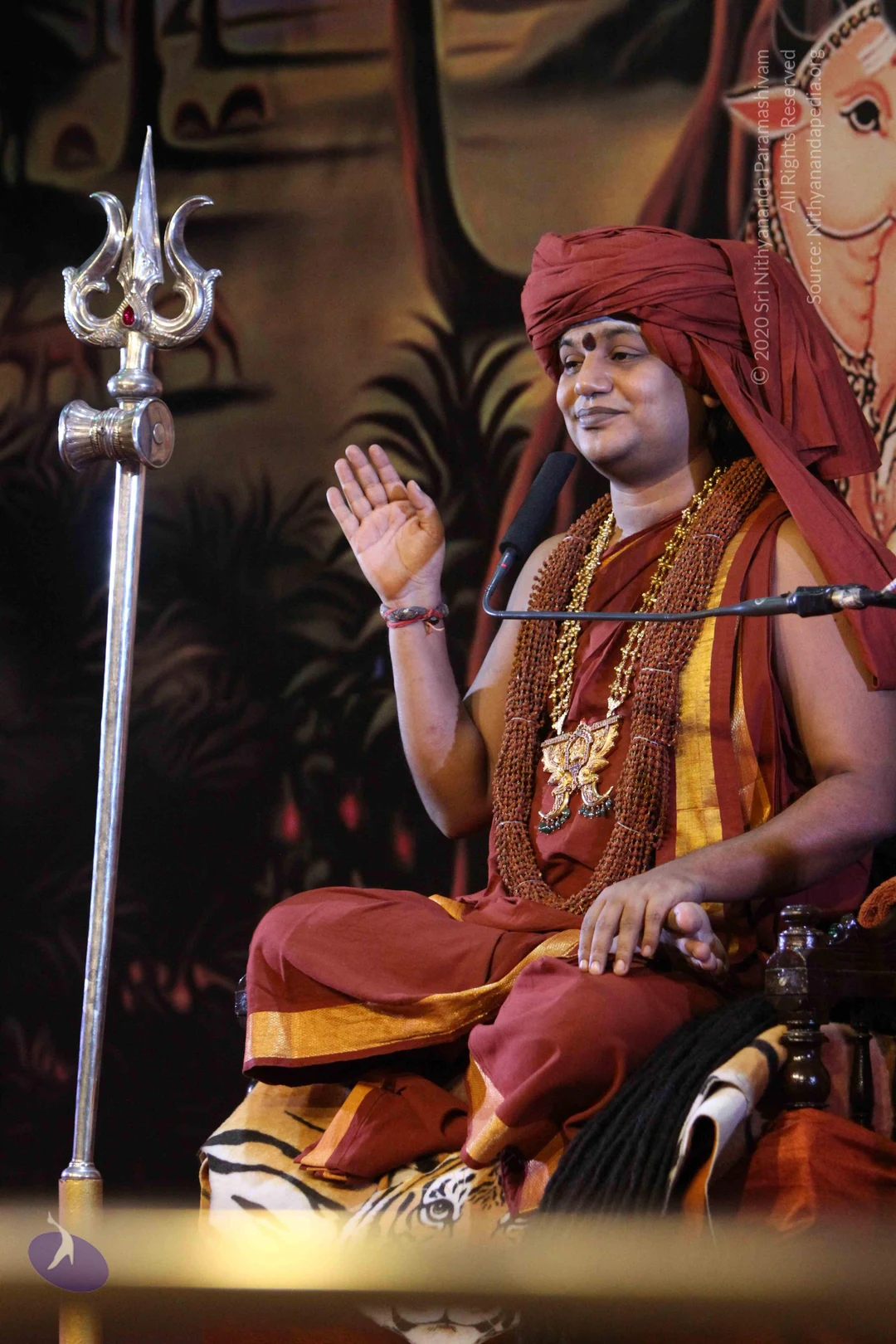
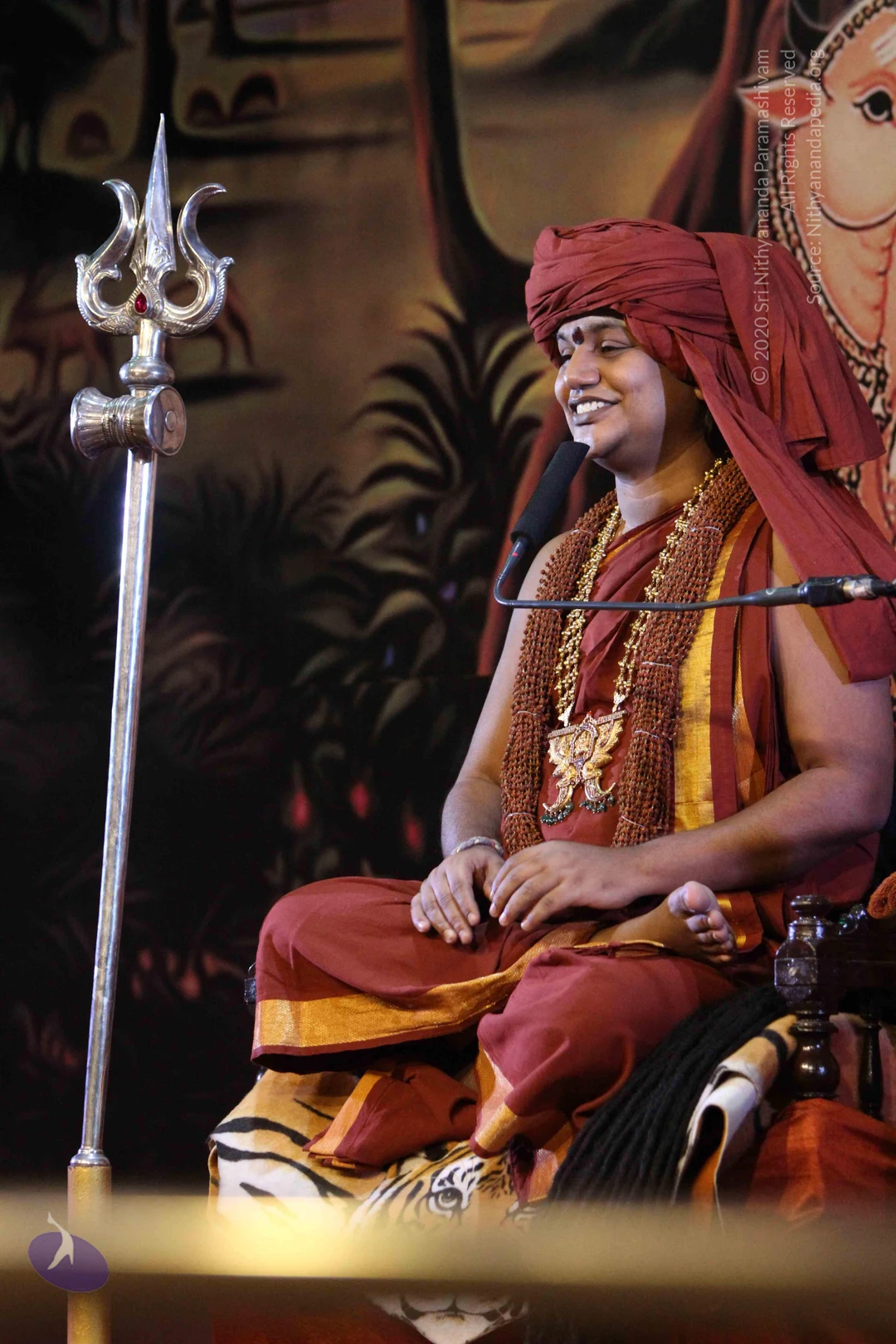
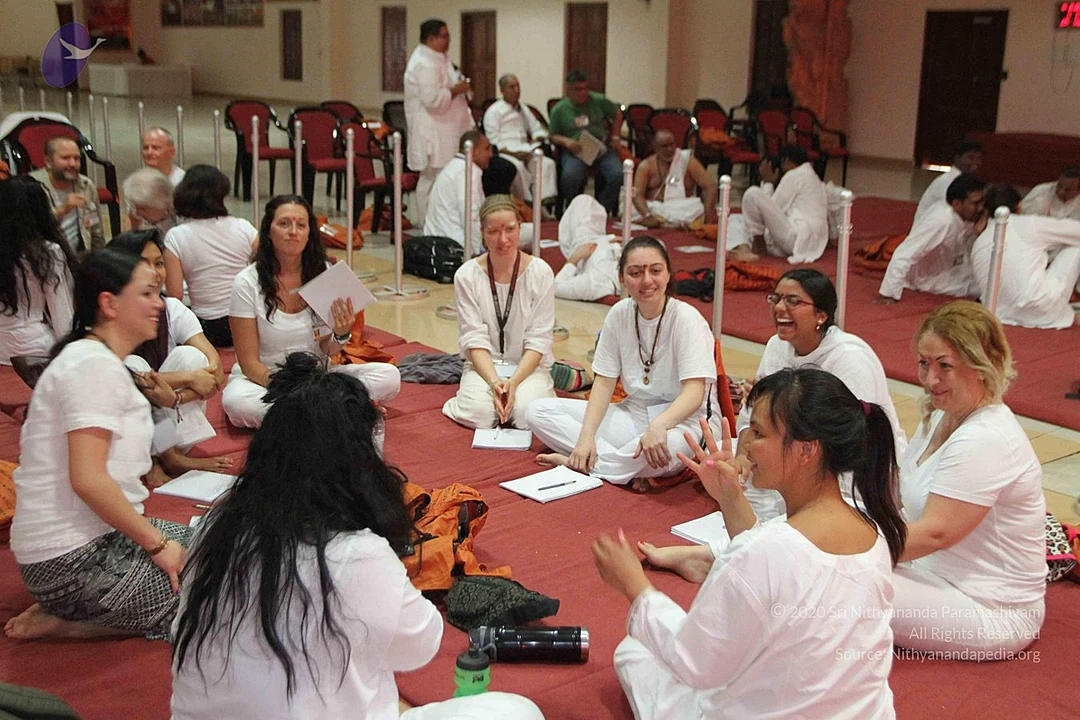
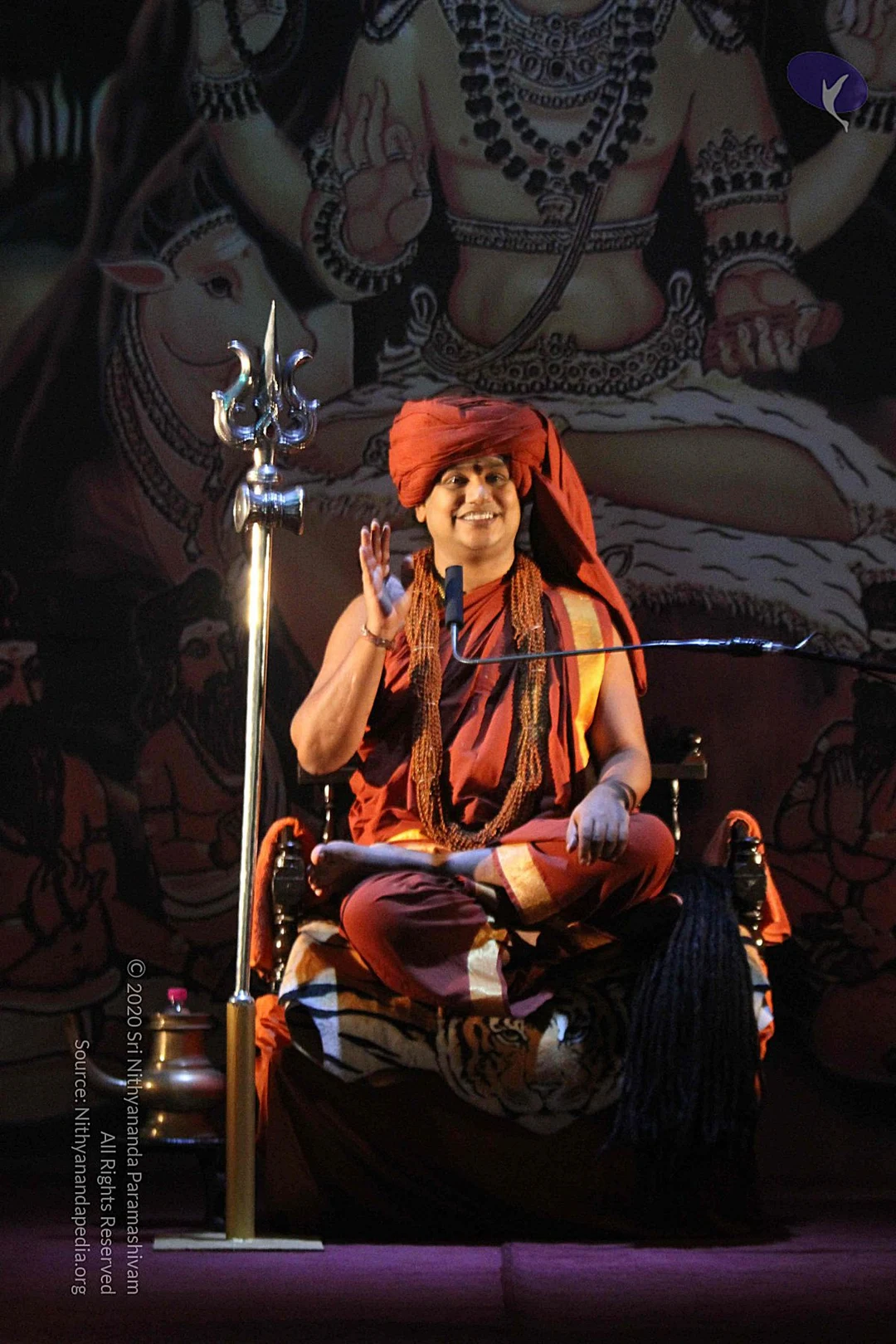
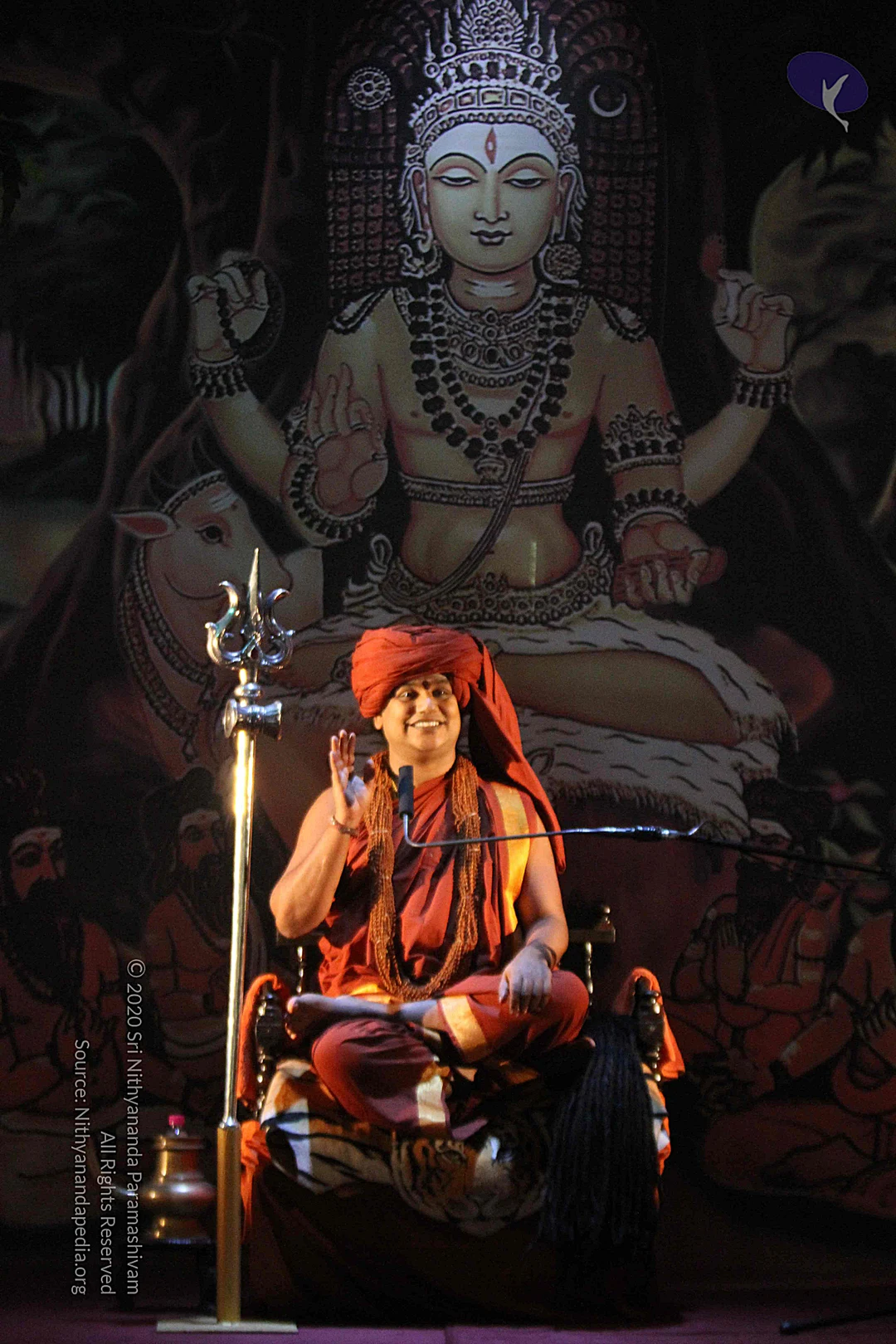
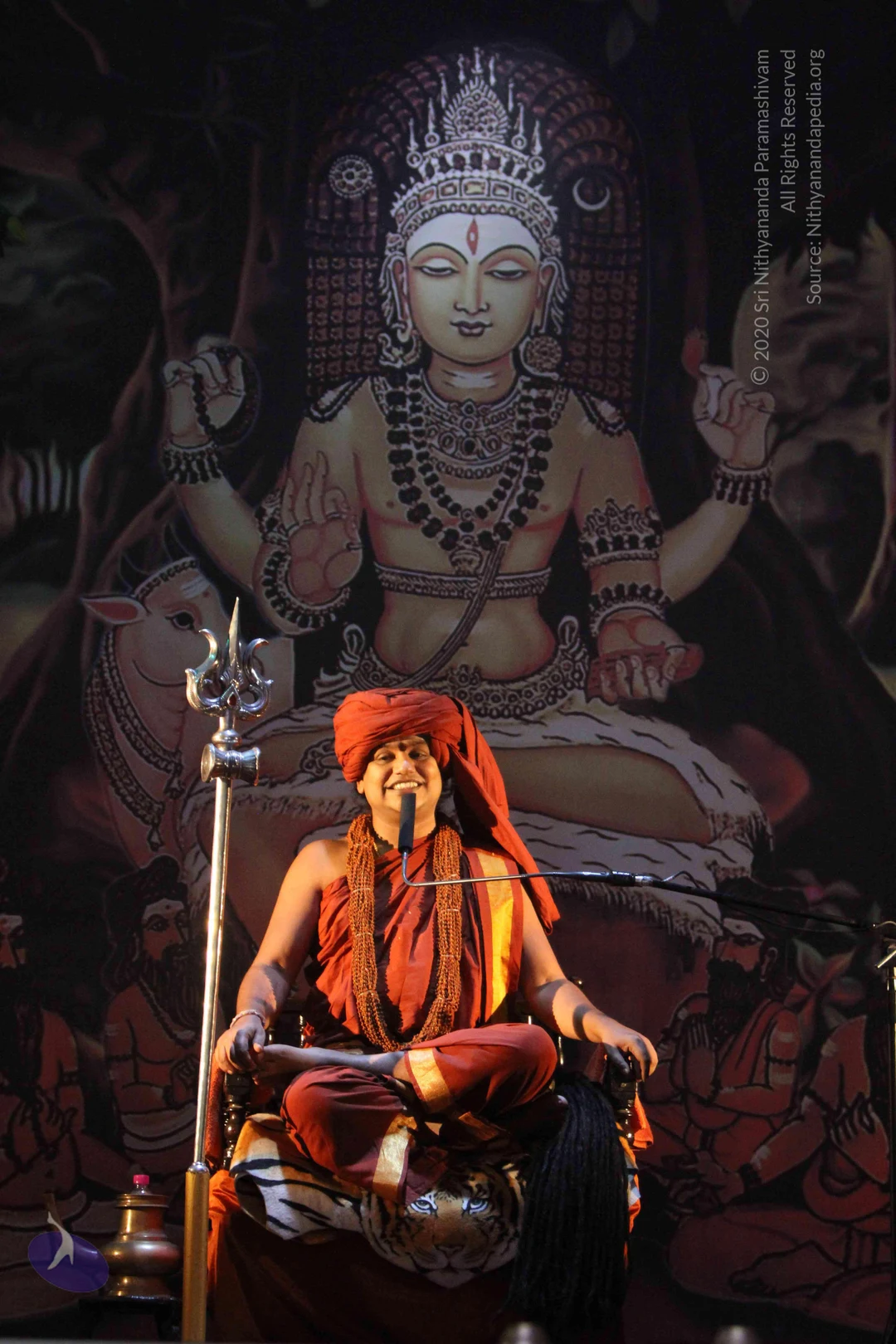
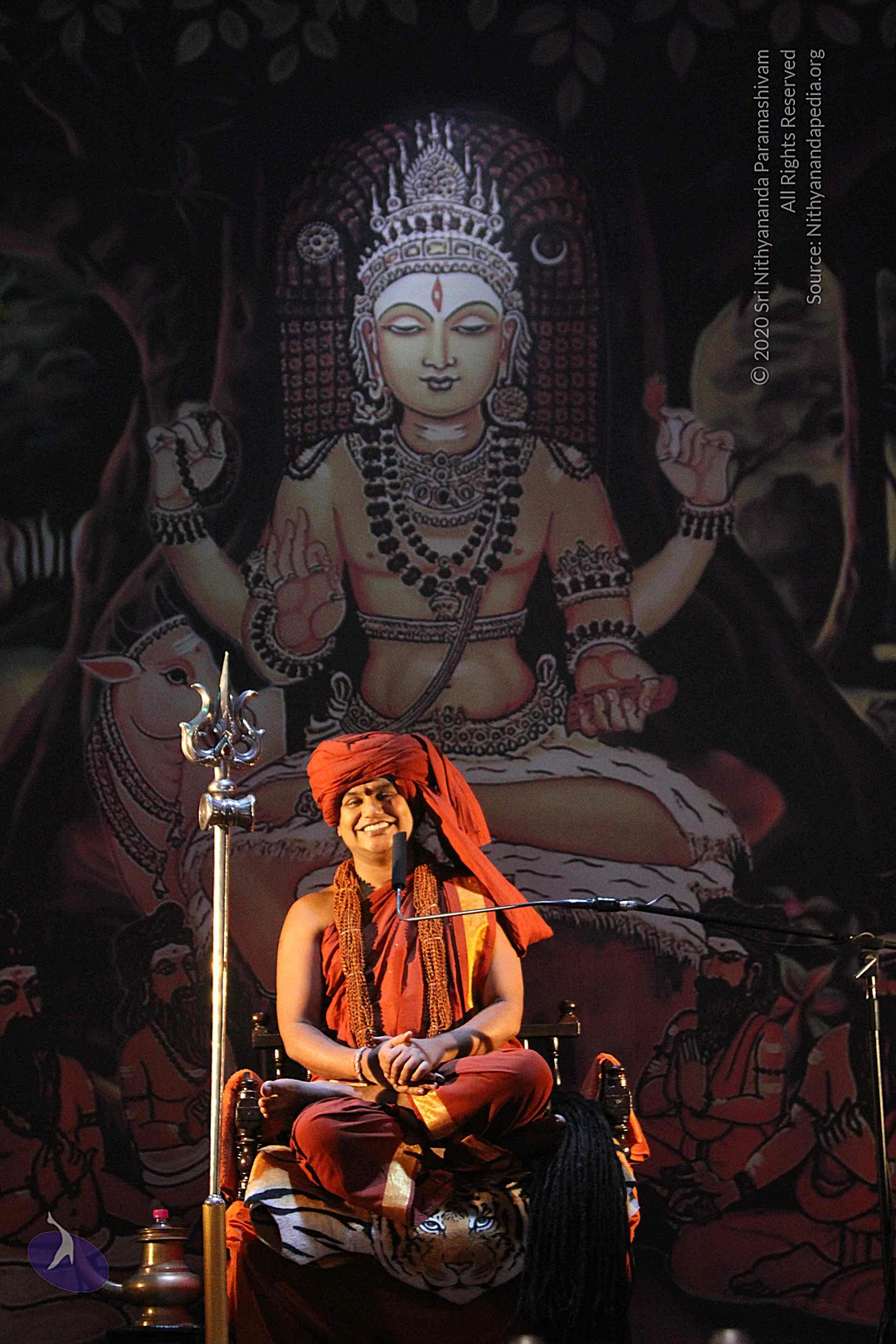
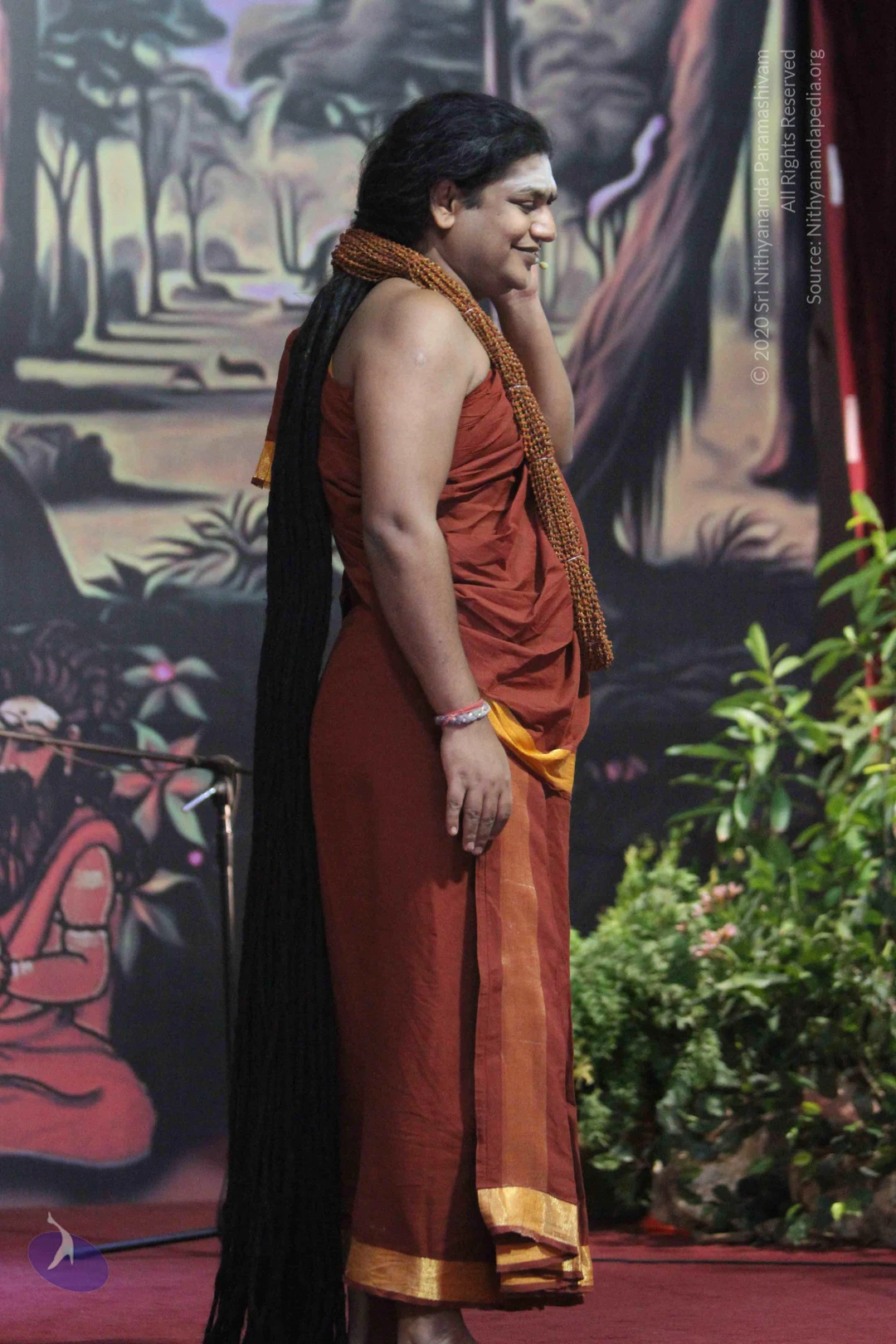
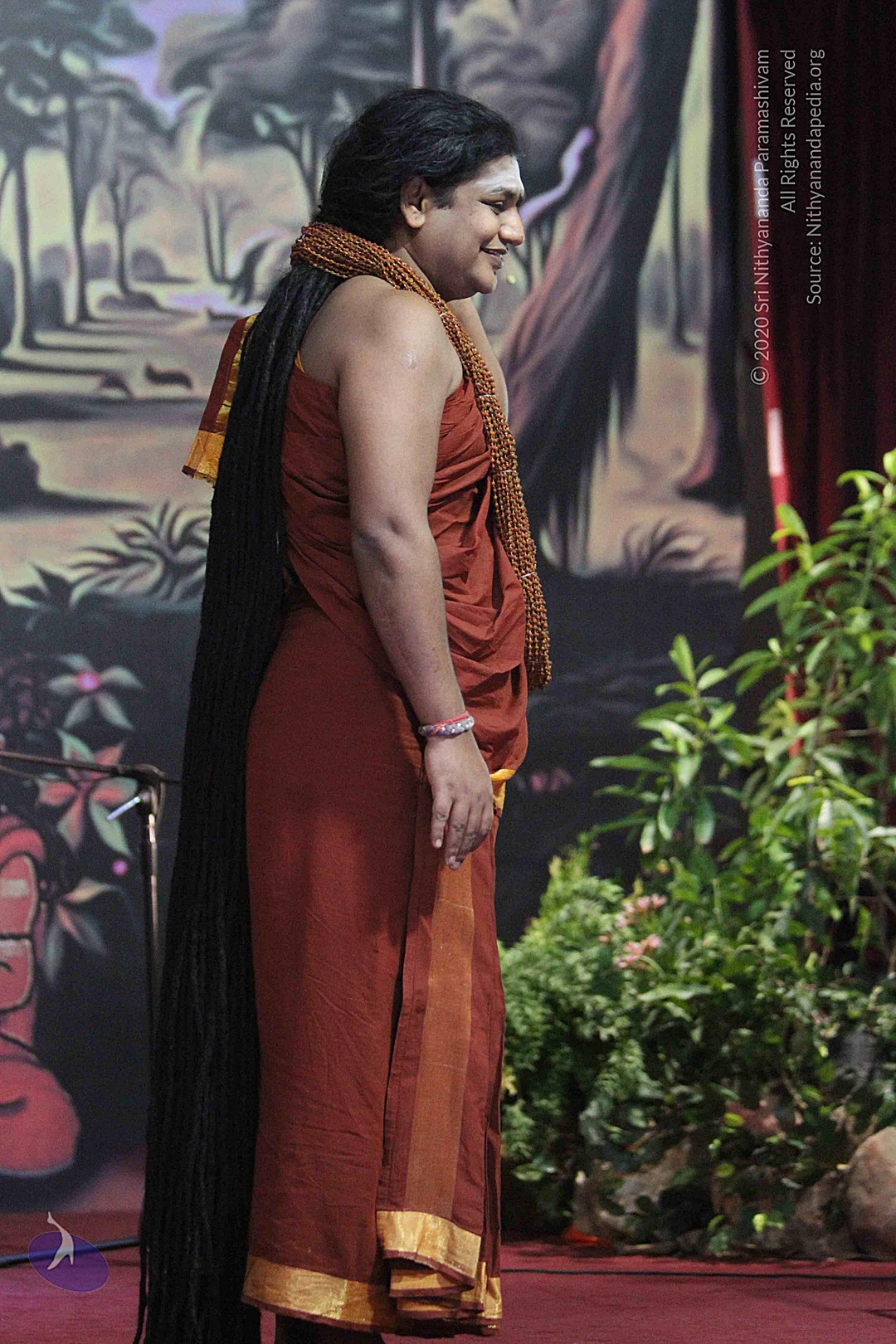
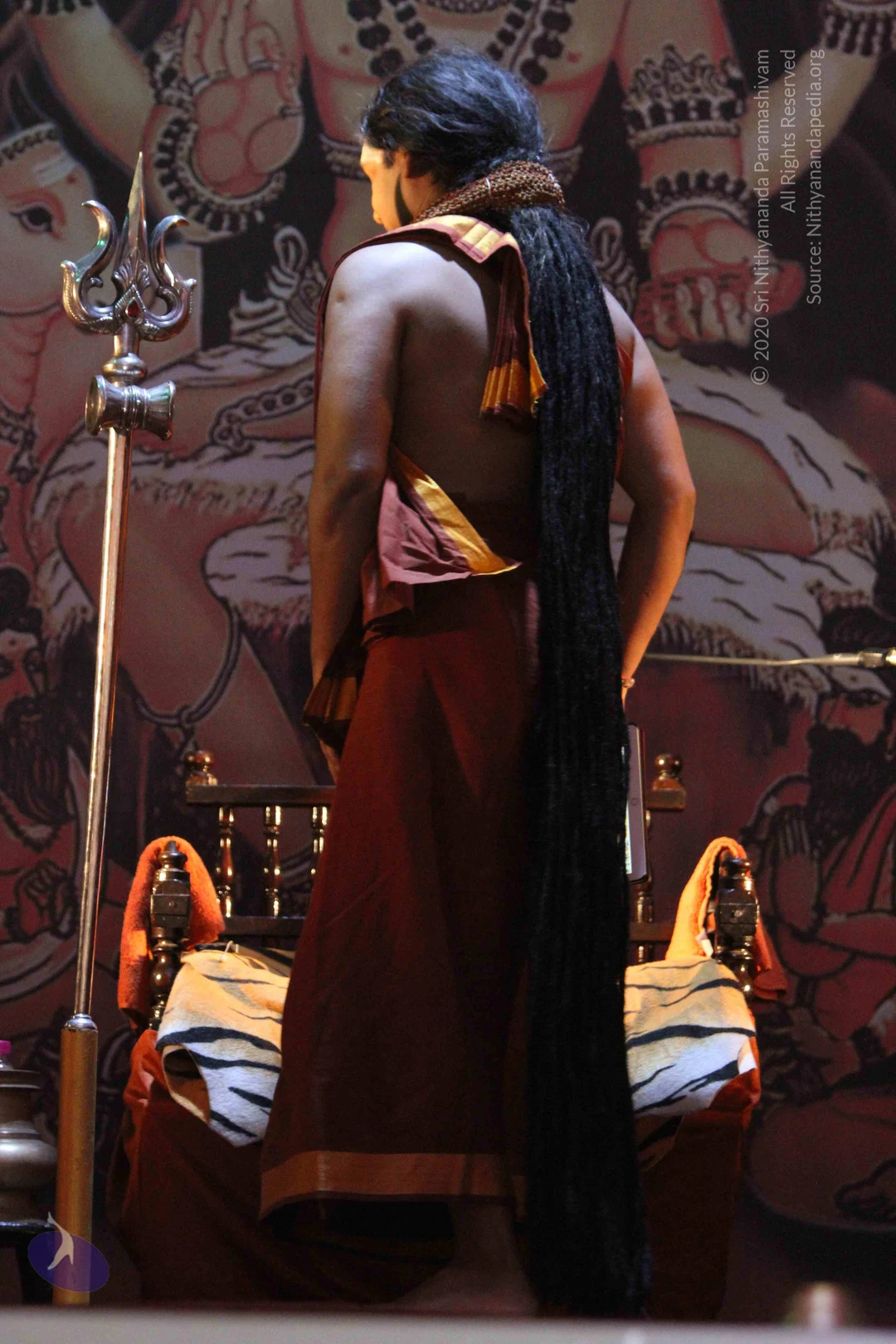
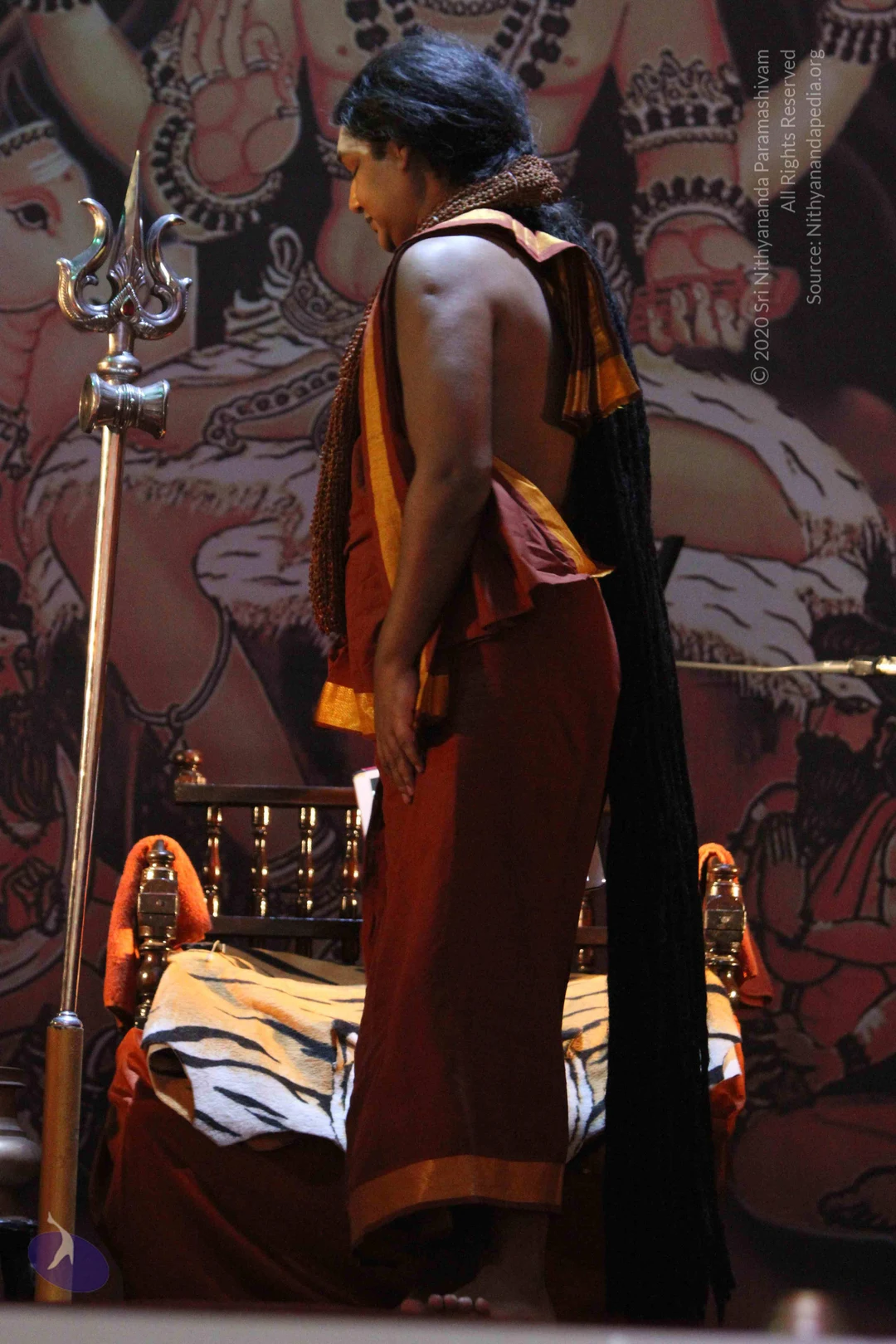
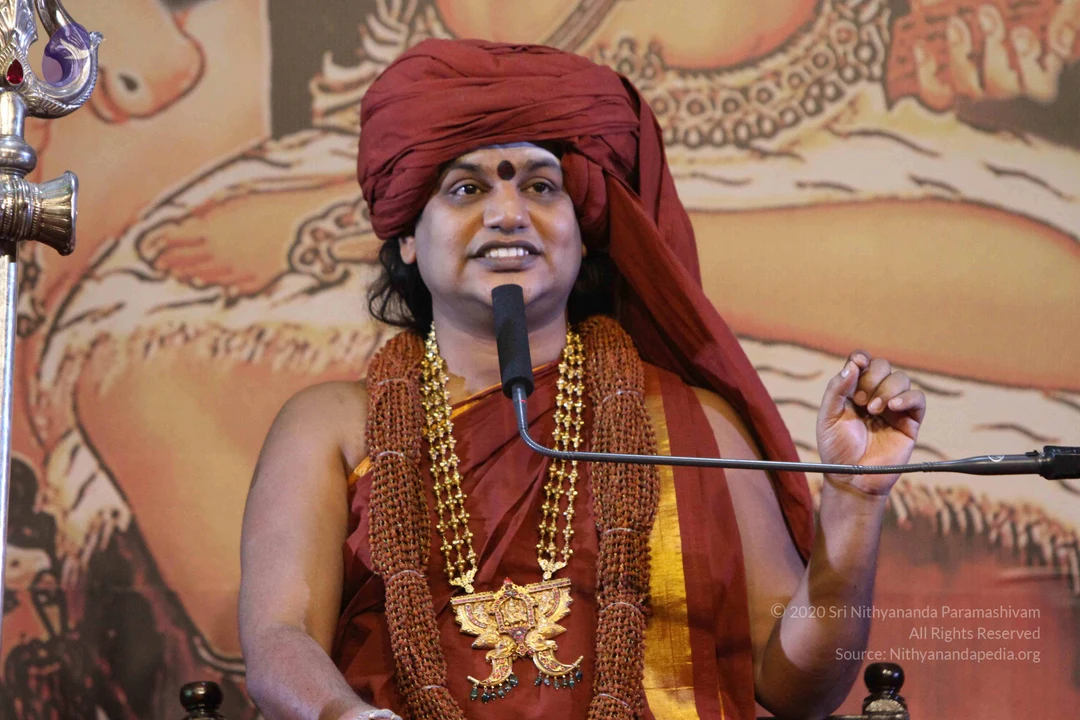
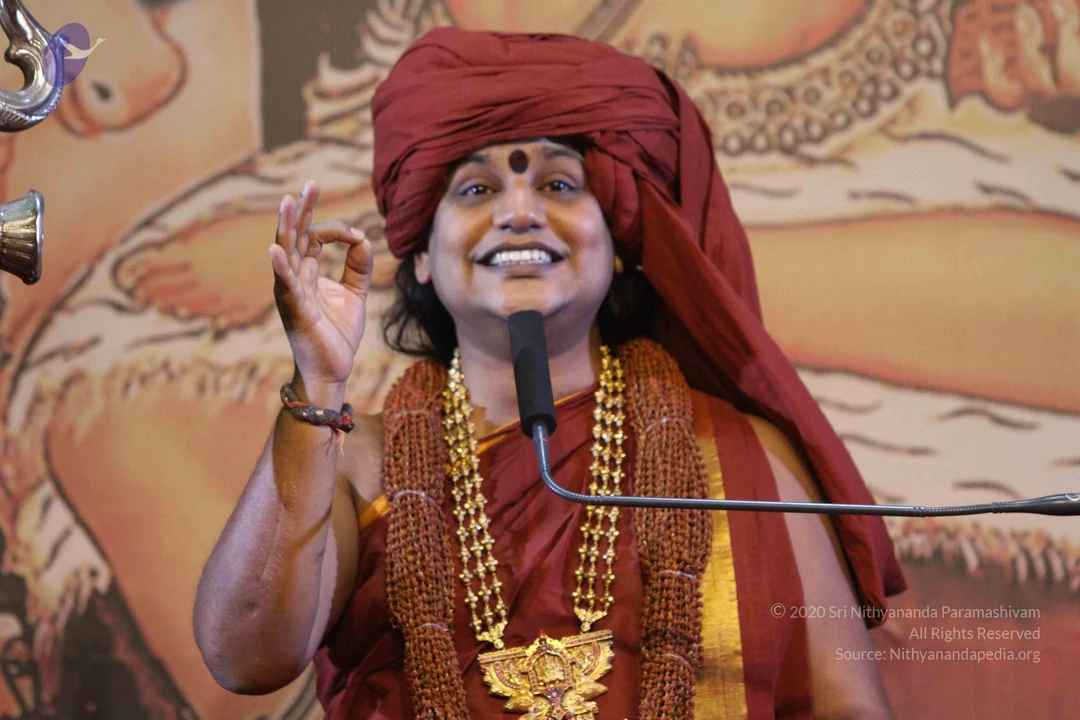
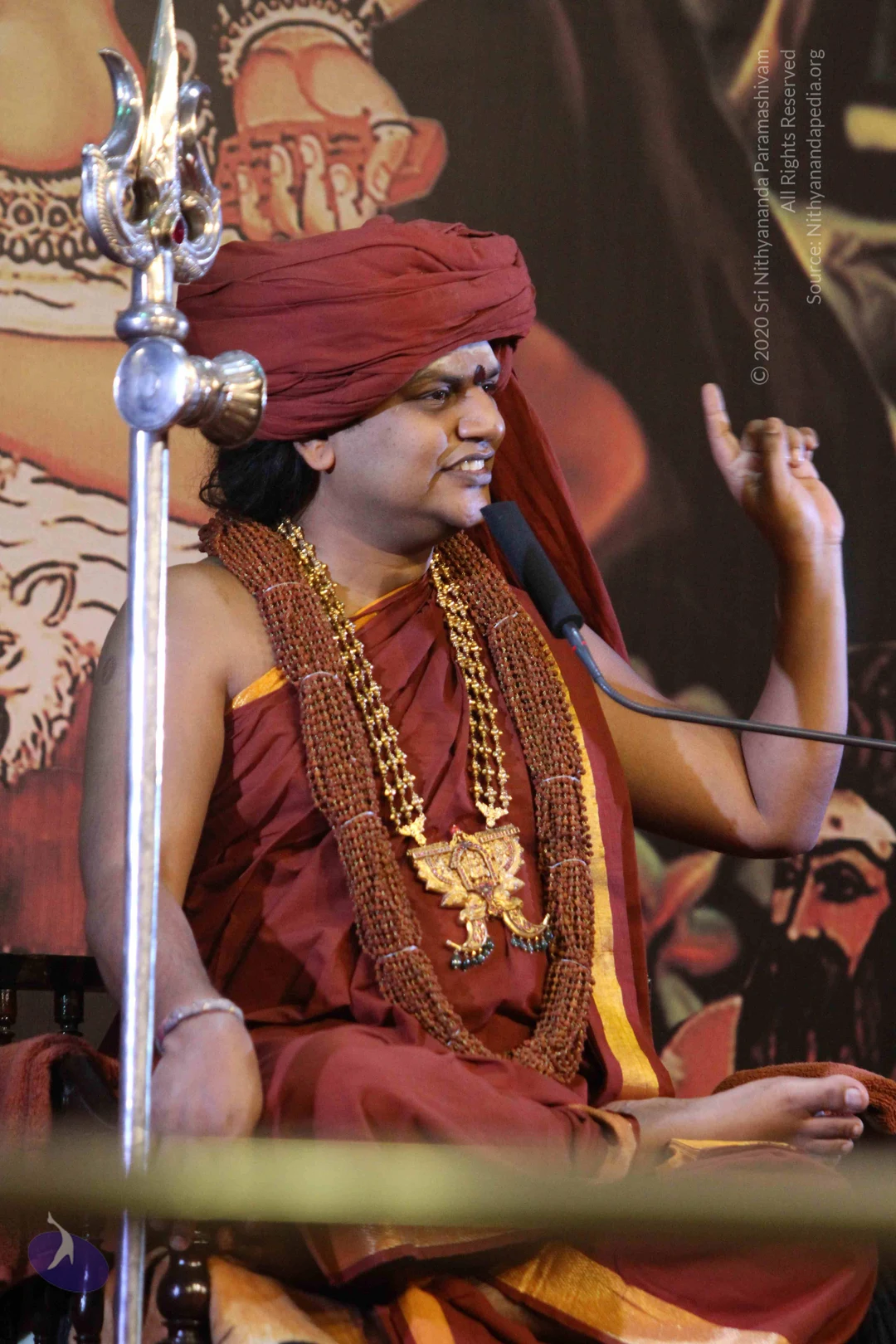
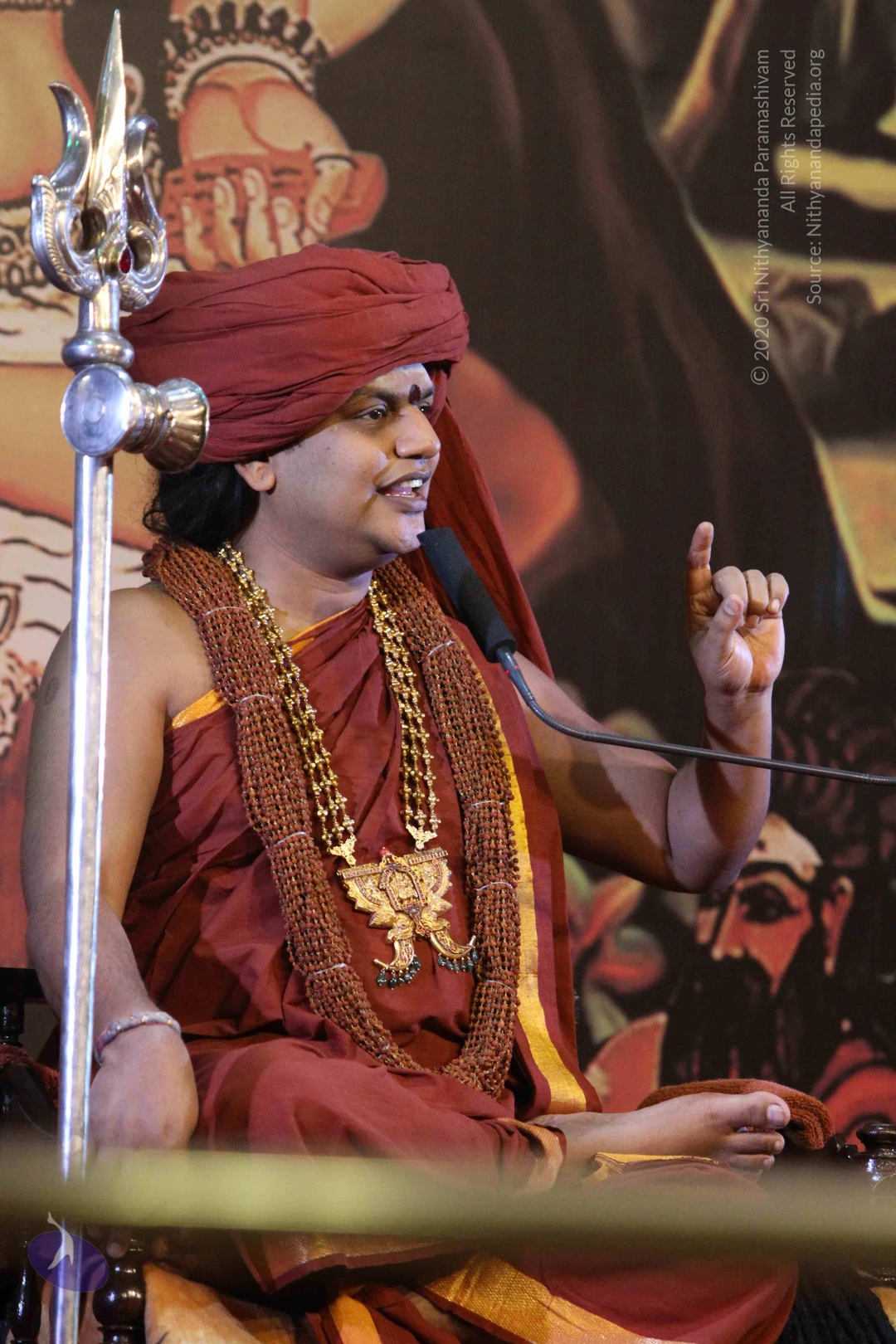
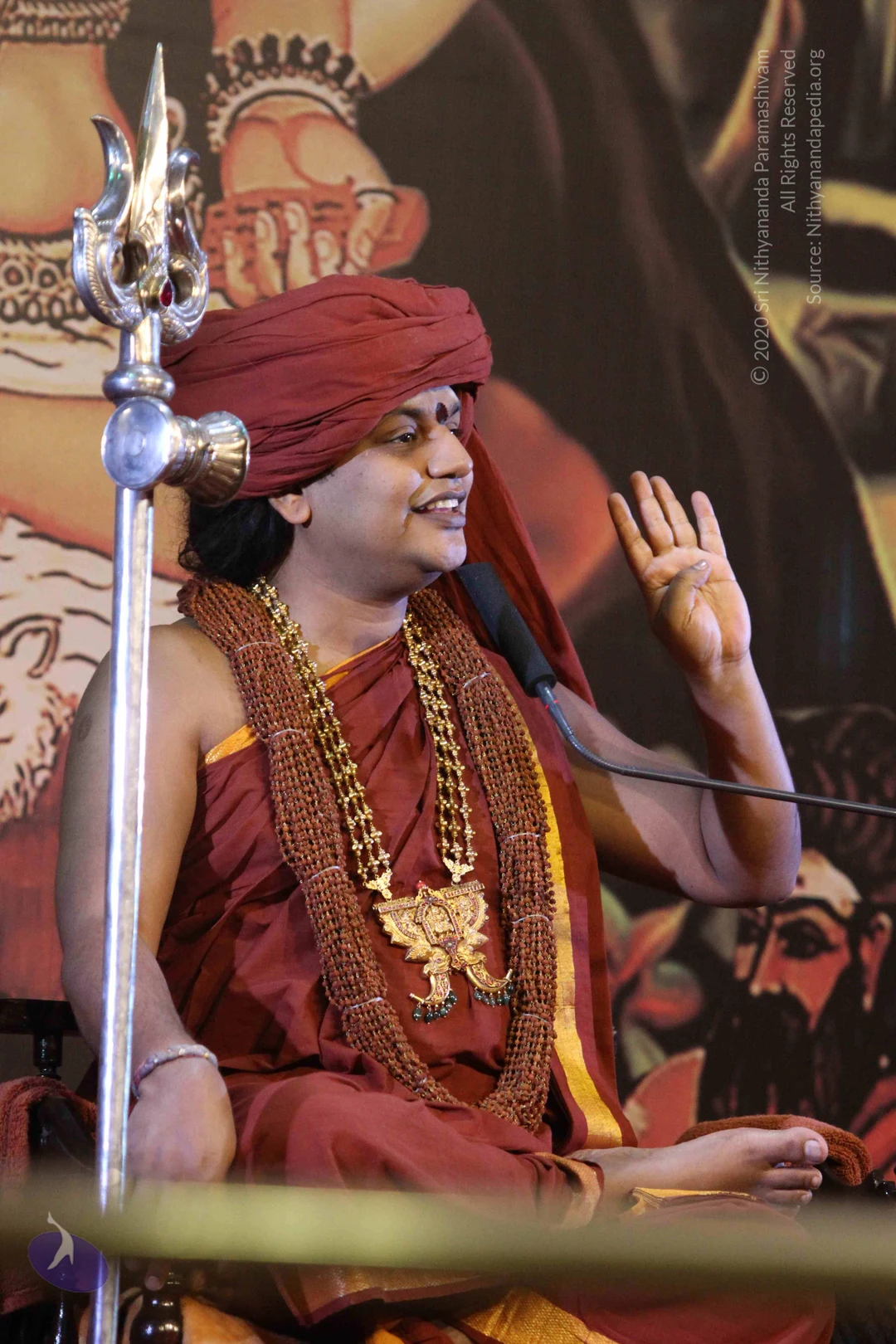
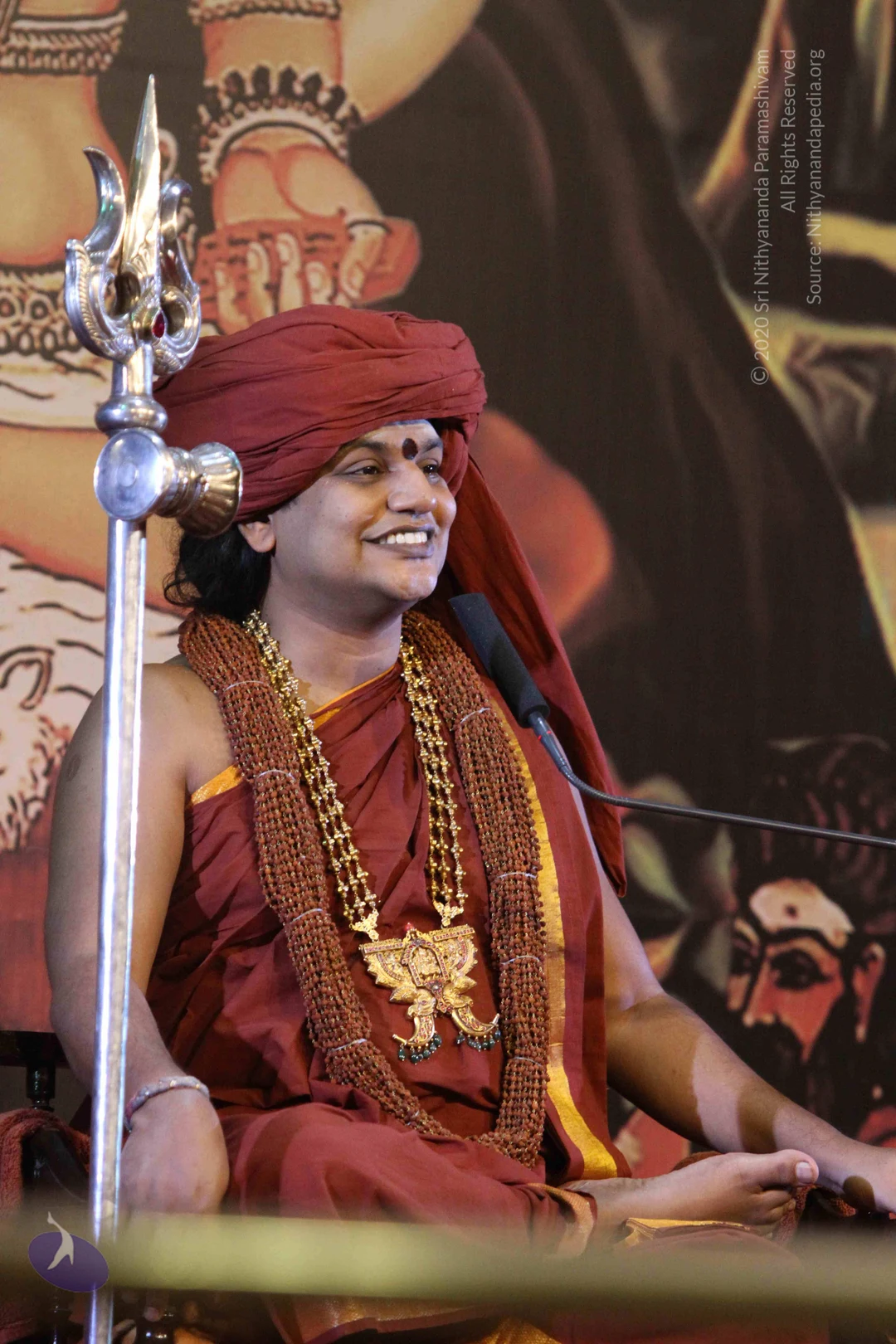
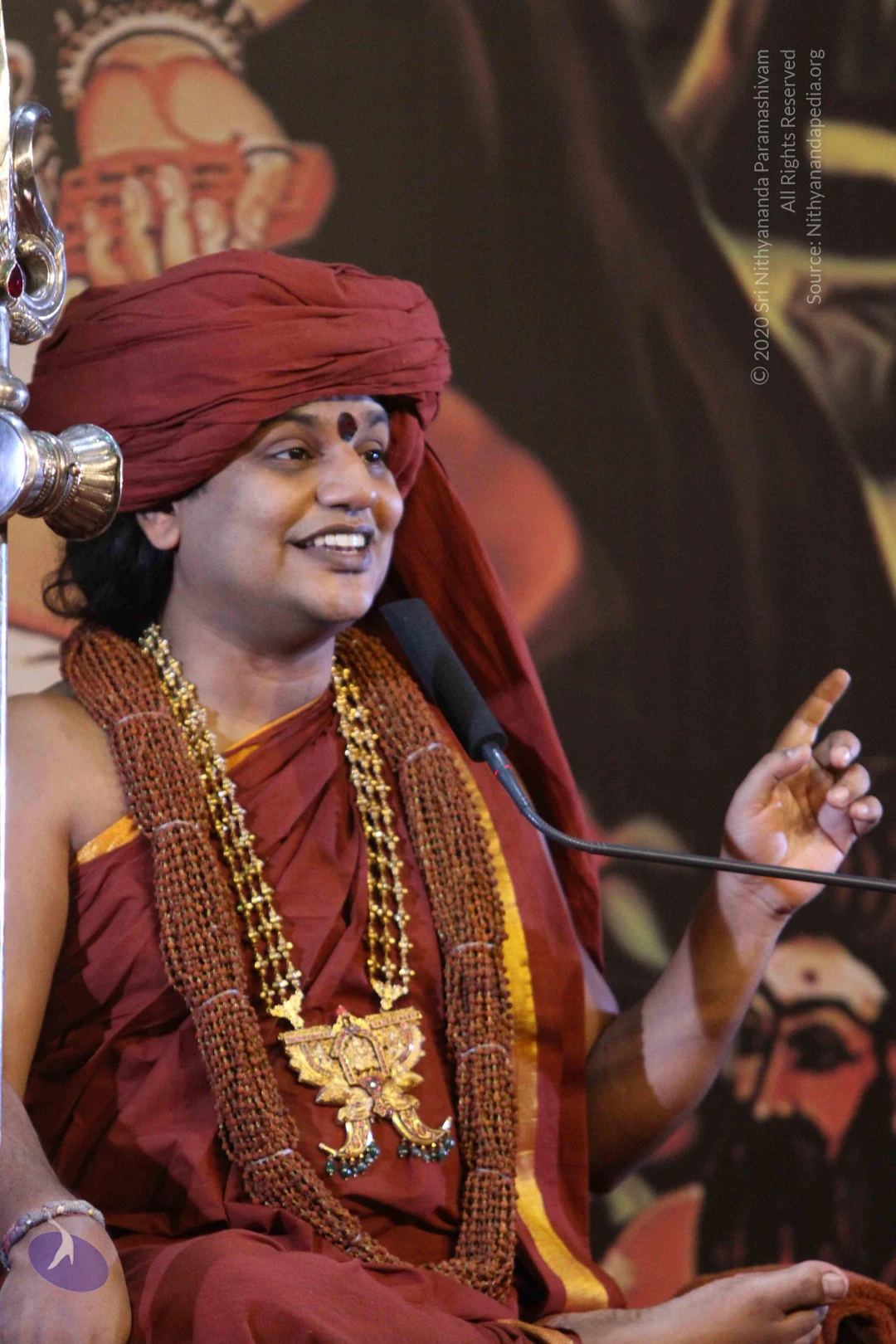
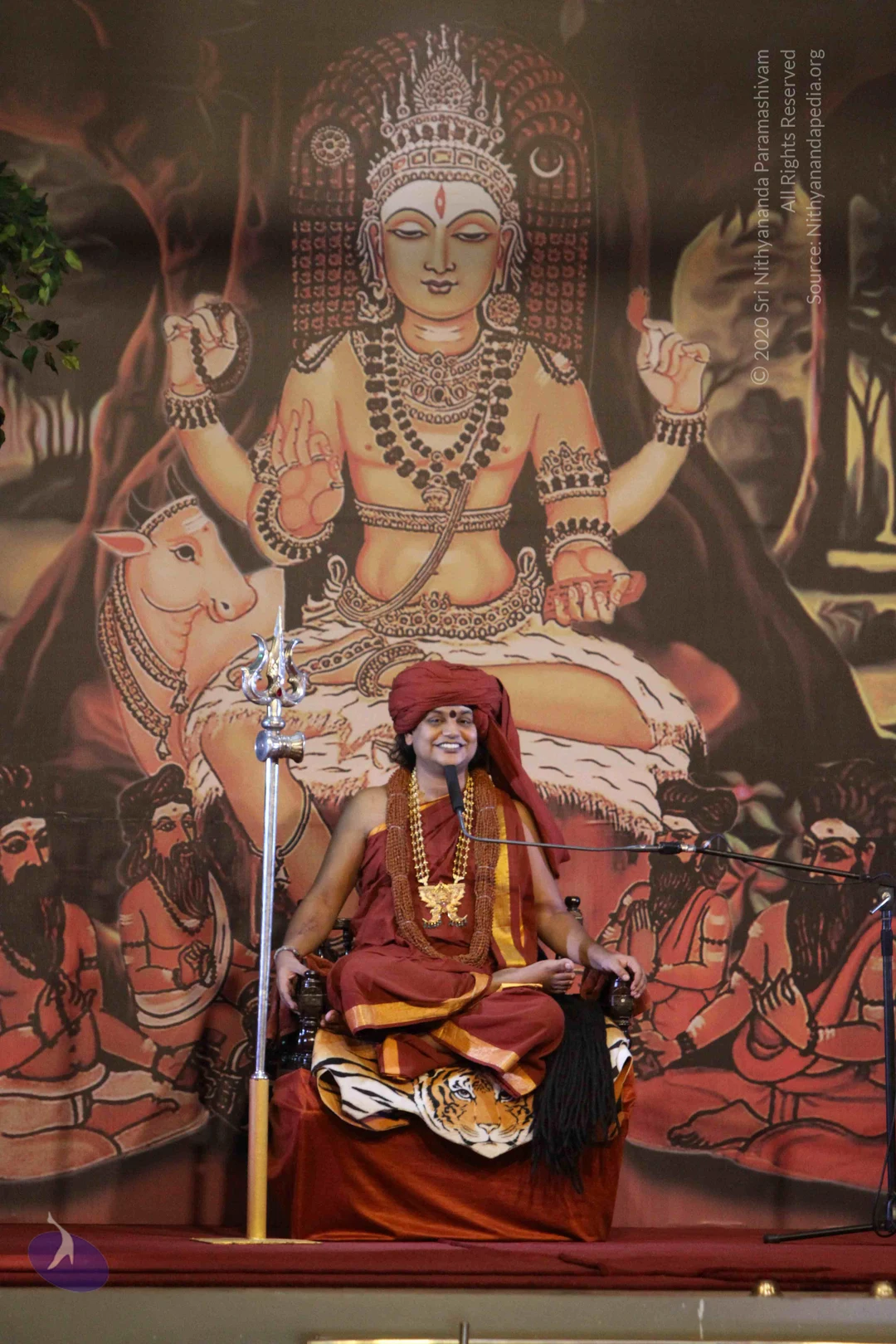
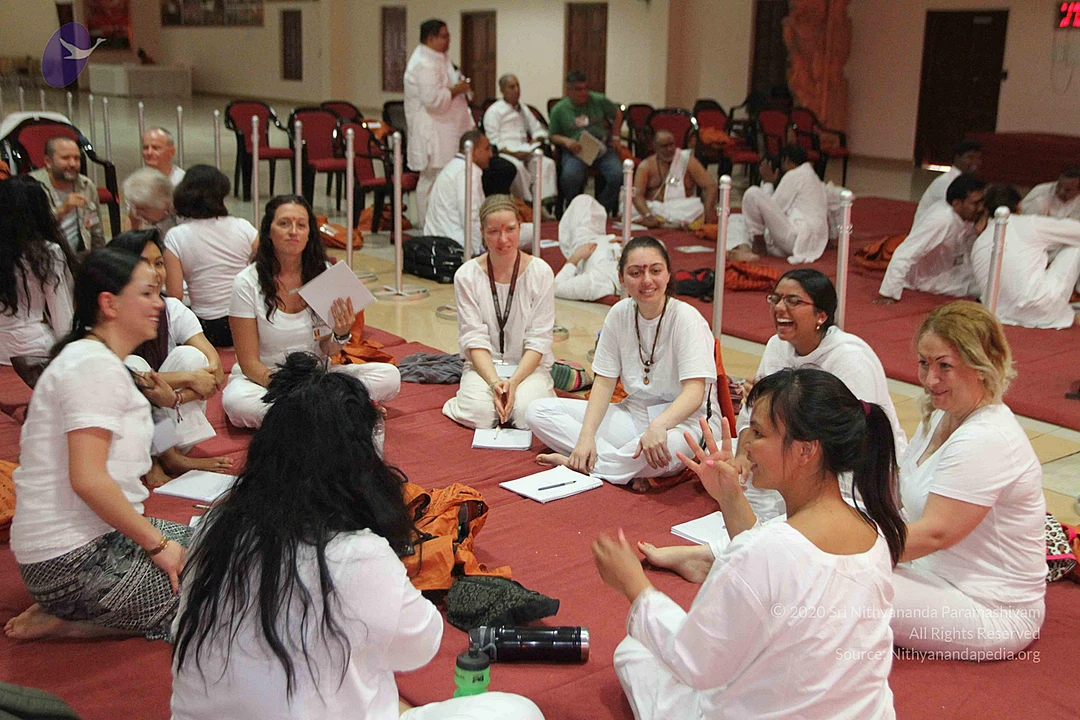
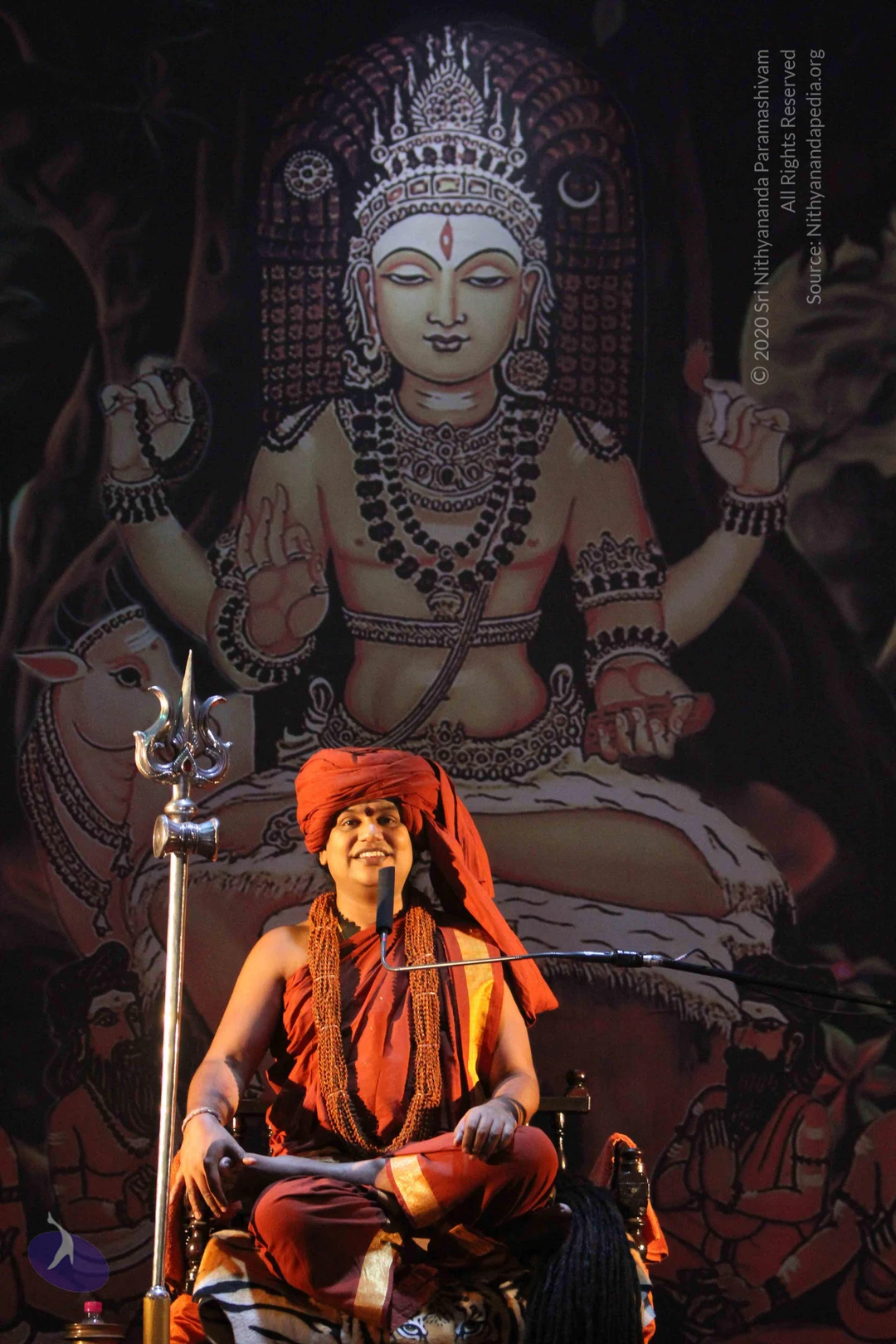
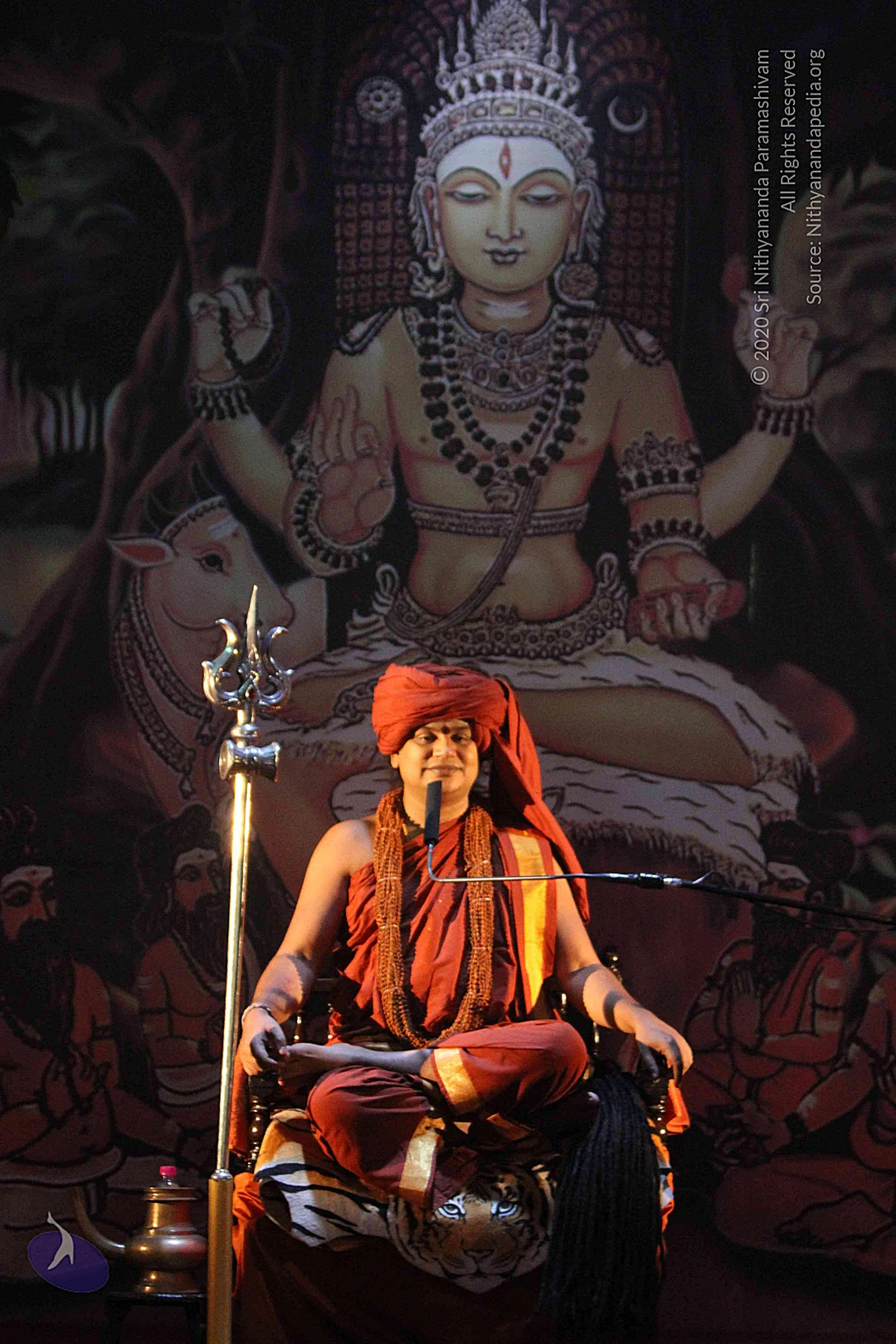
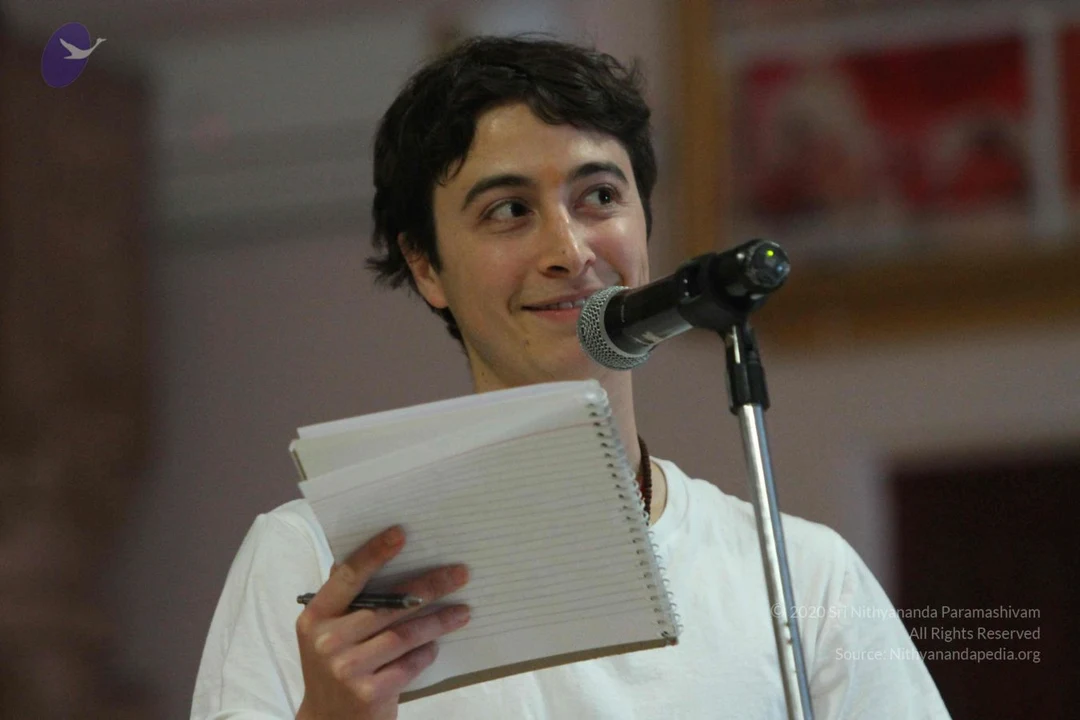
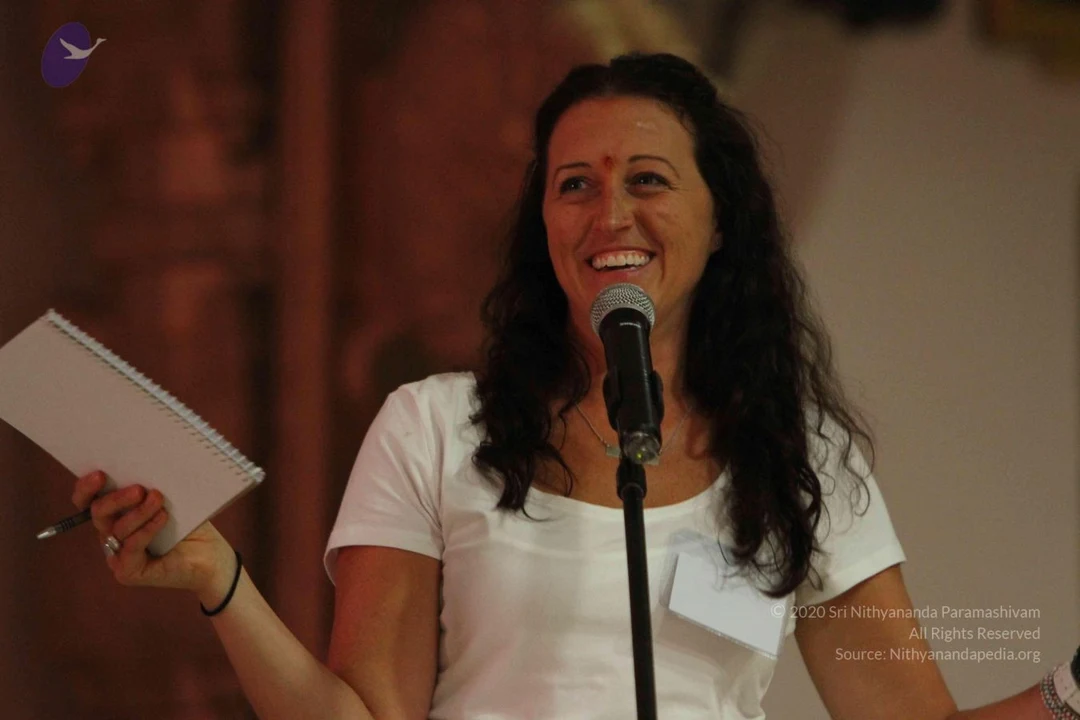
Inner Awakening participants have been blessed with 2 Dharshans of HDH Sri Nithyananda Paramashivam. Participants also had Completions sessions.
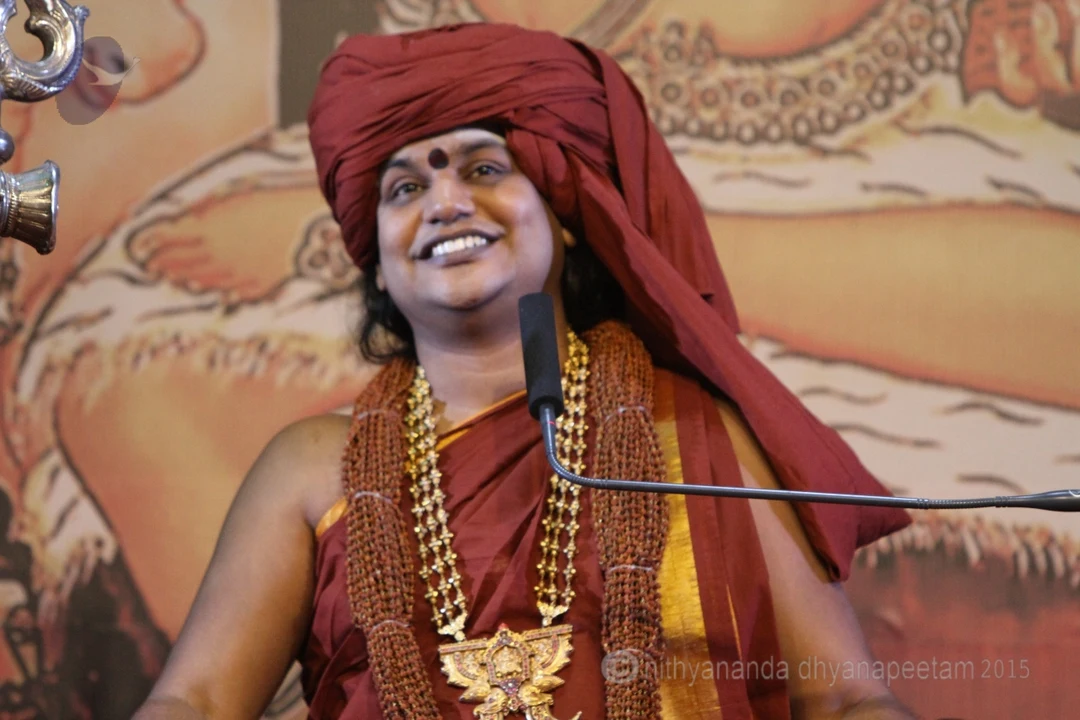
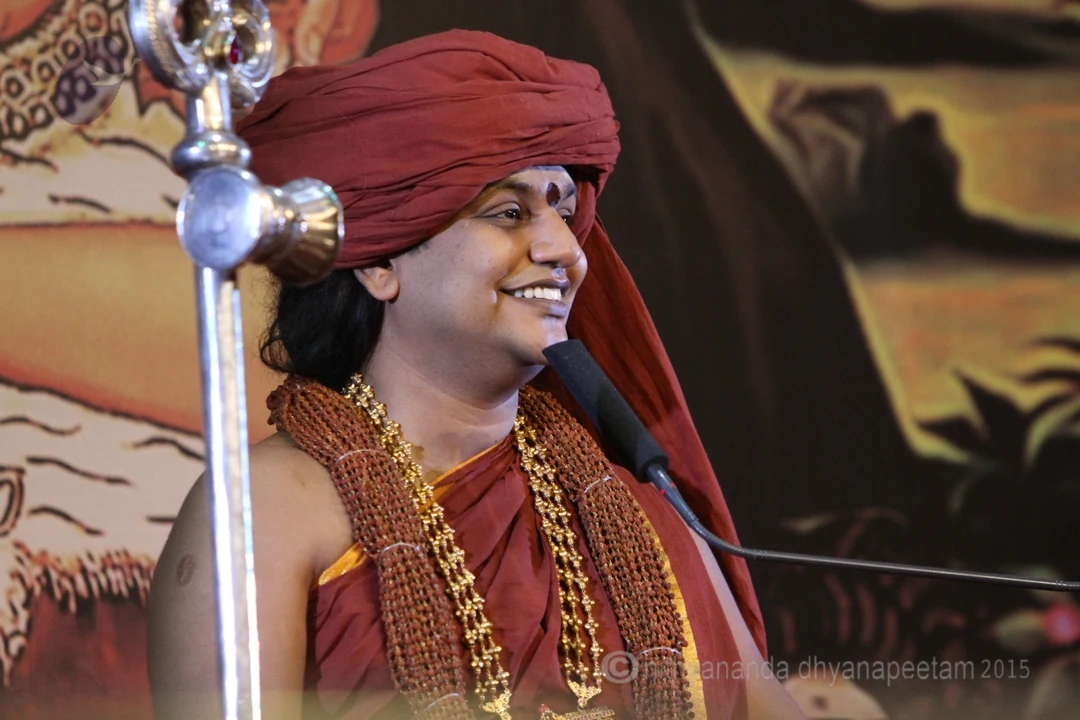
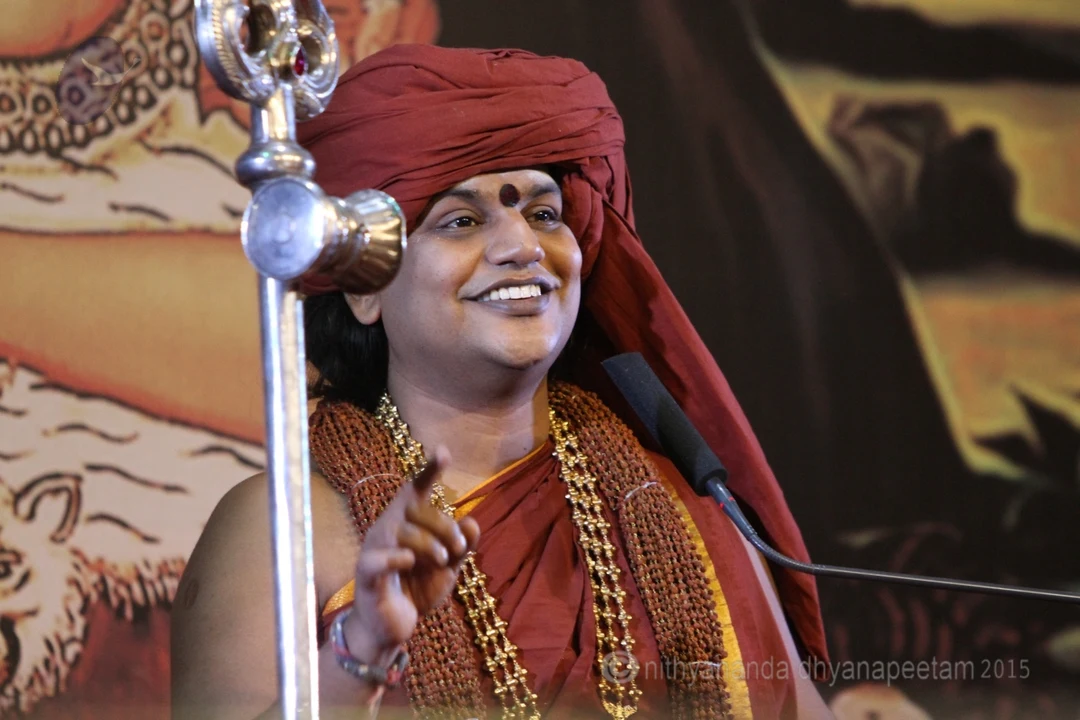
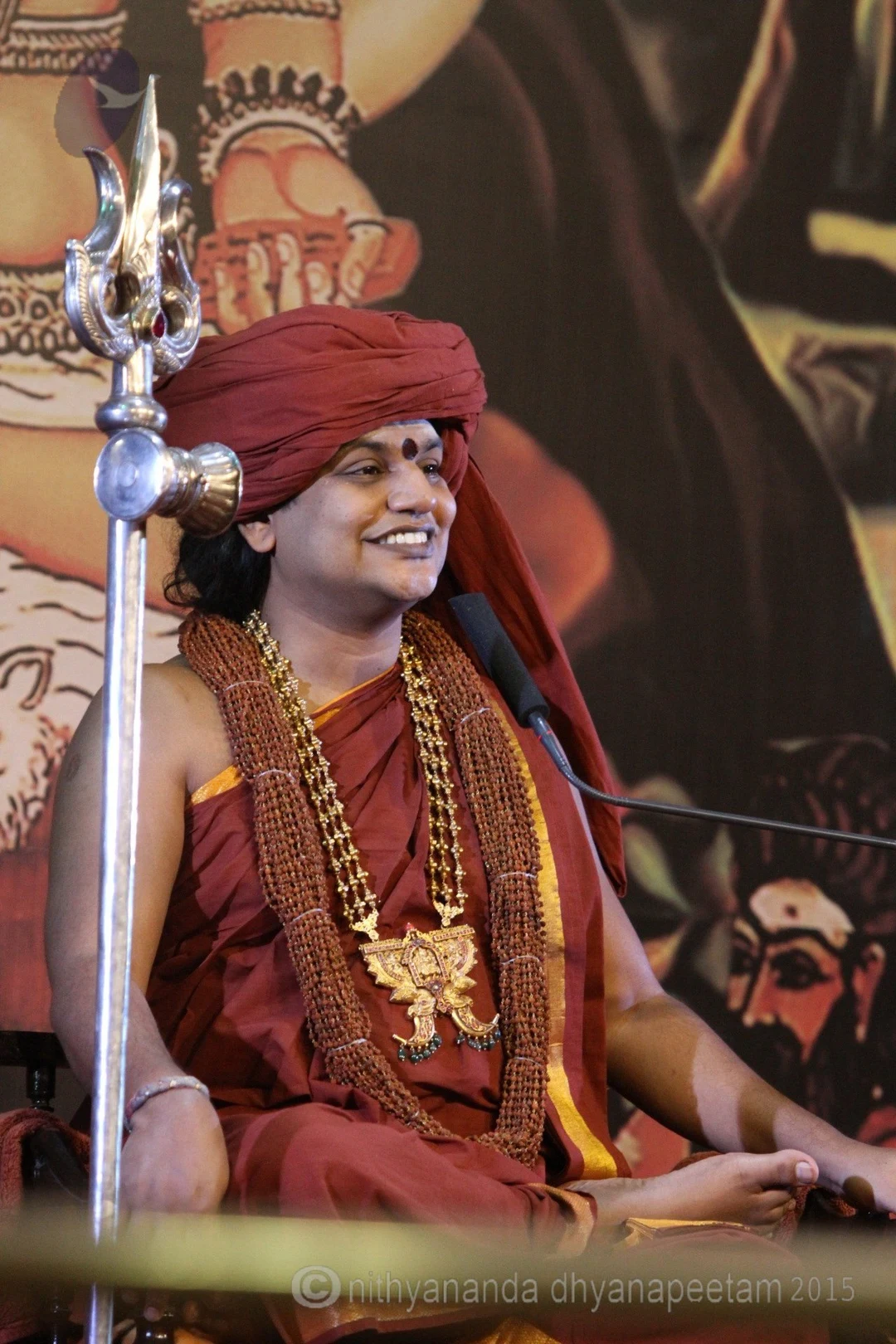
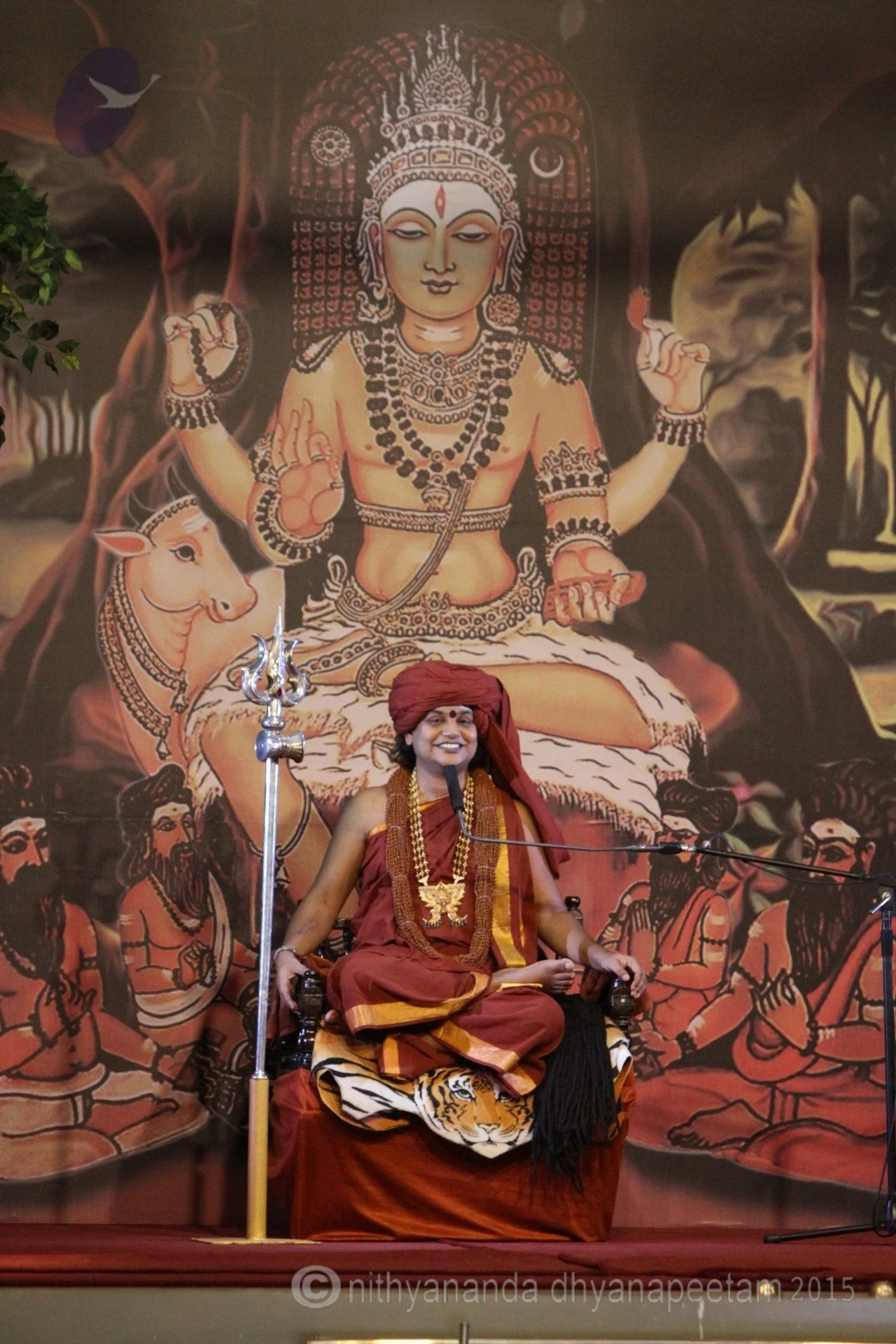
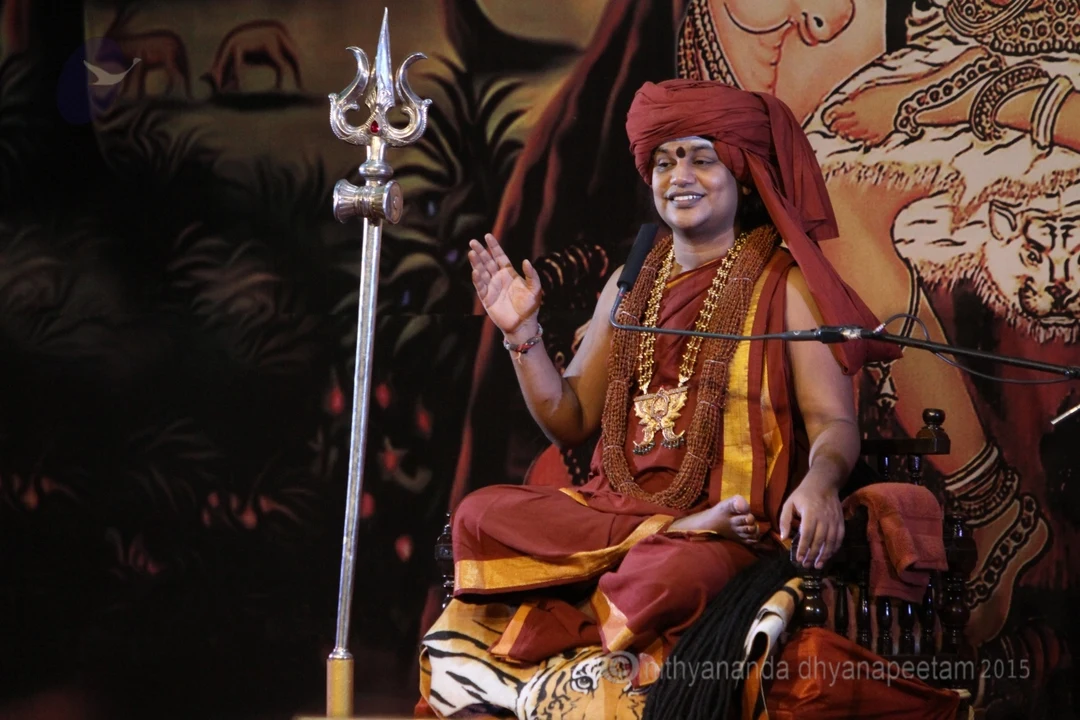
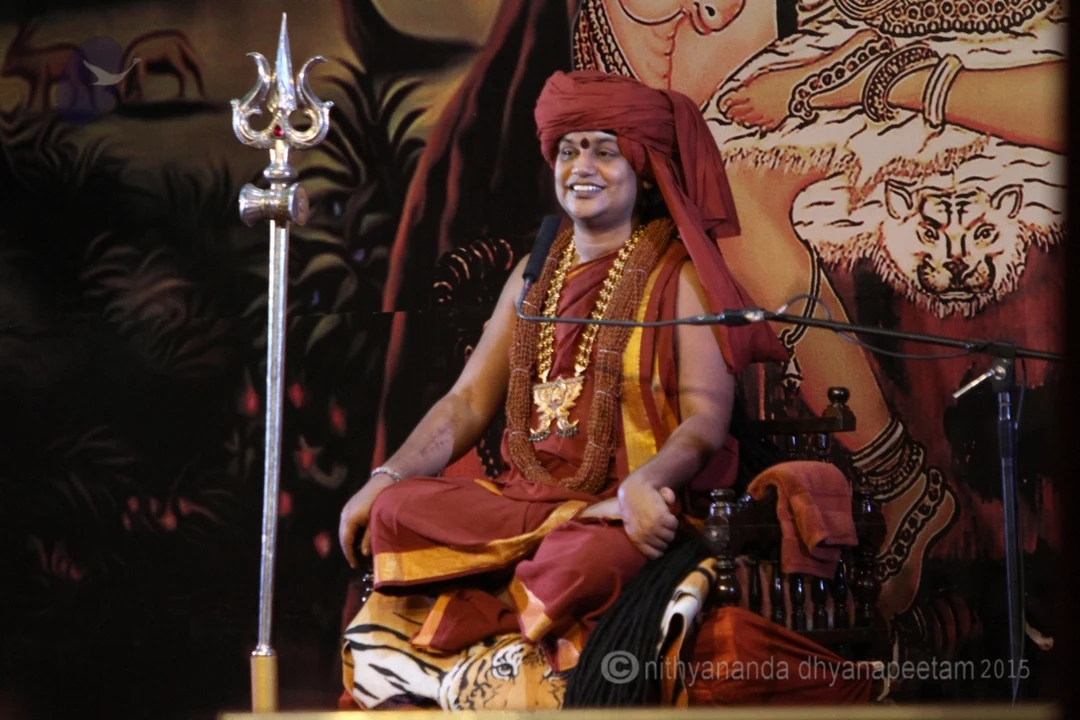
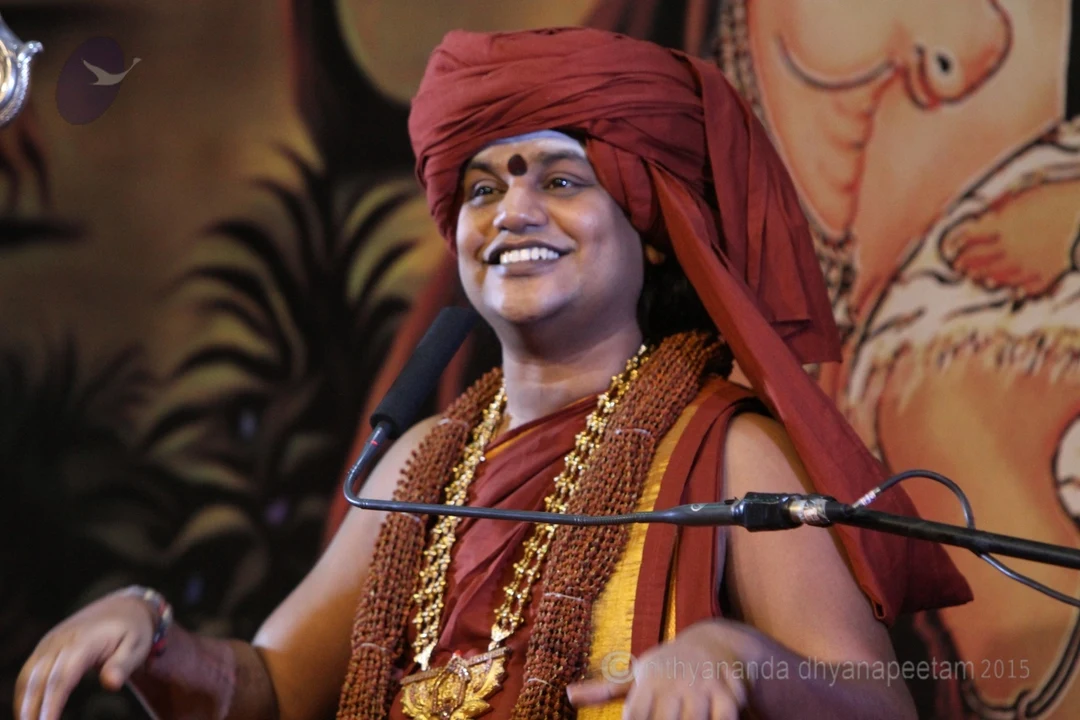
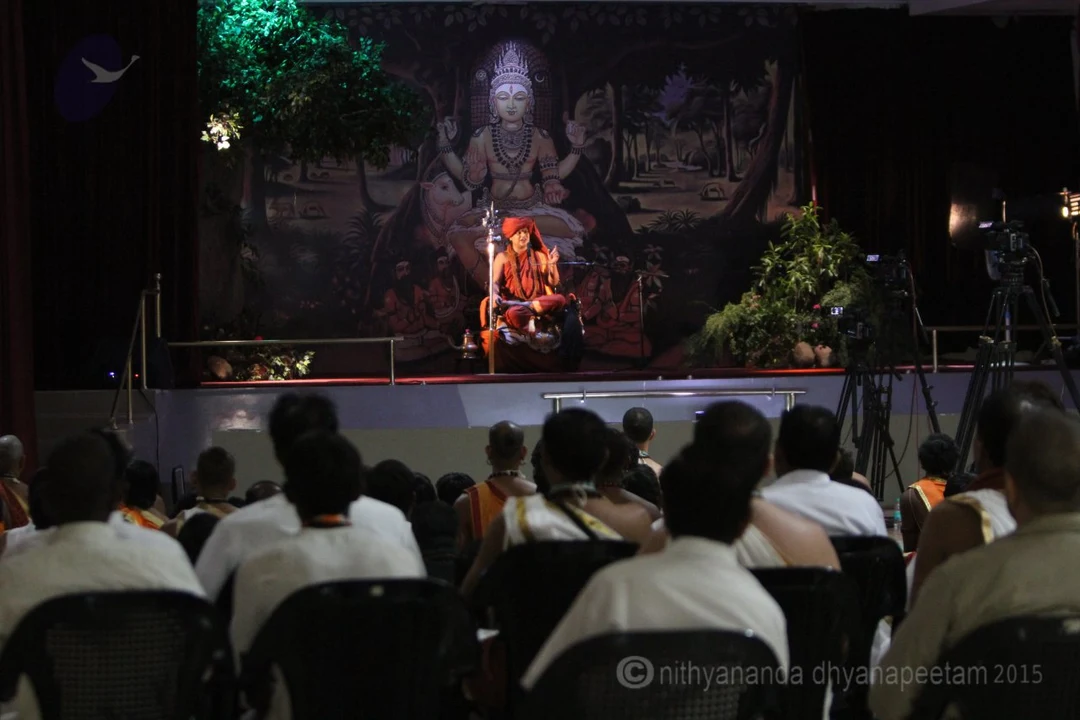
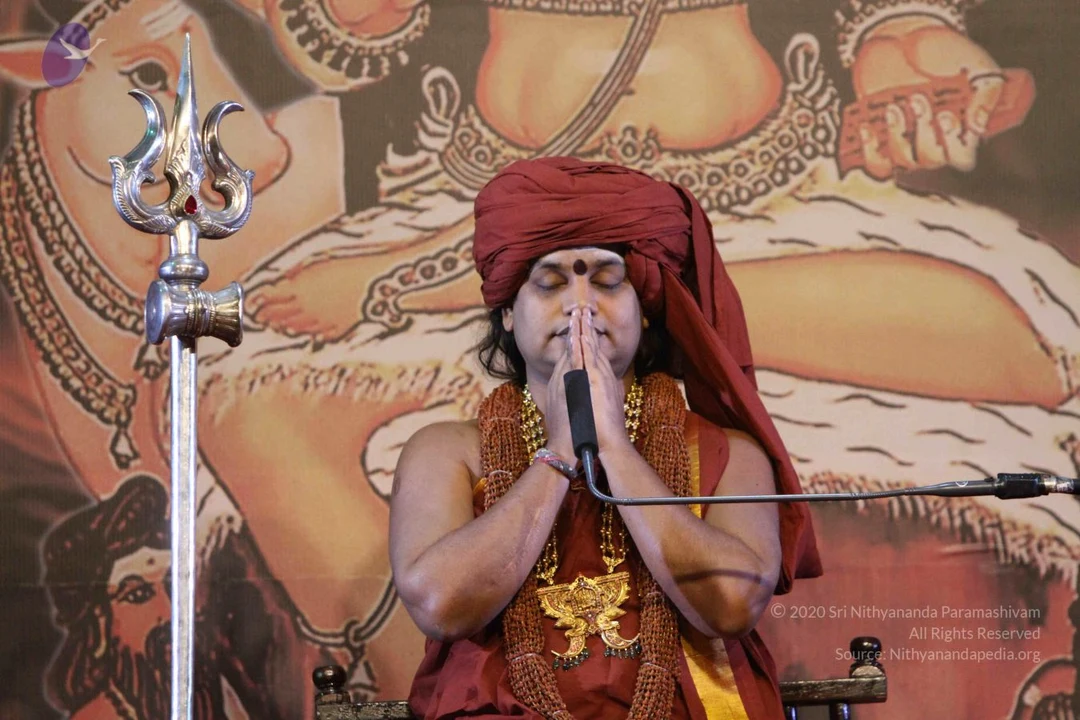
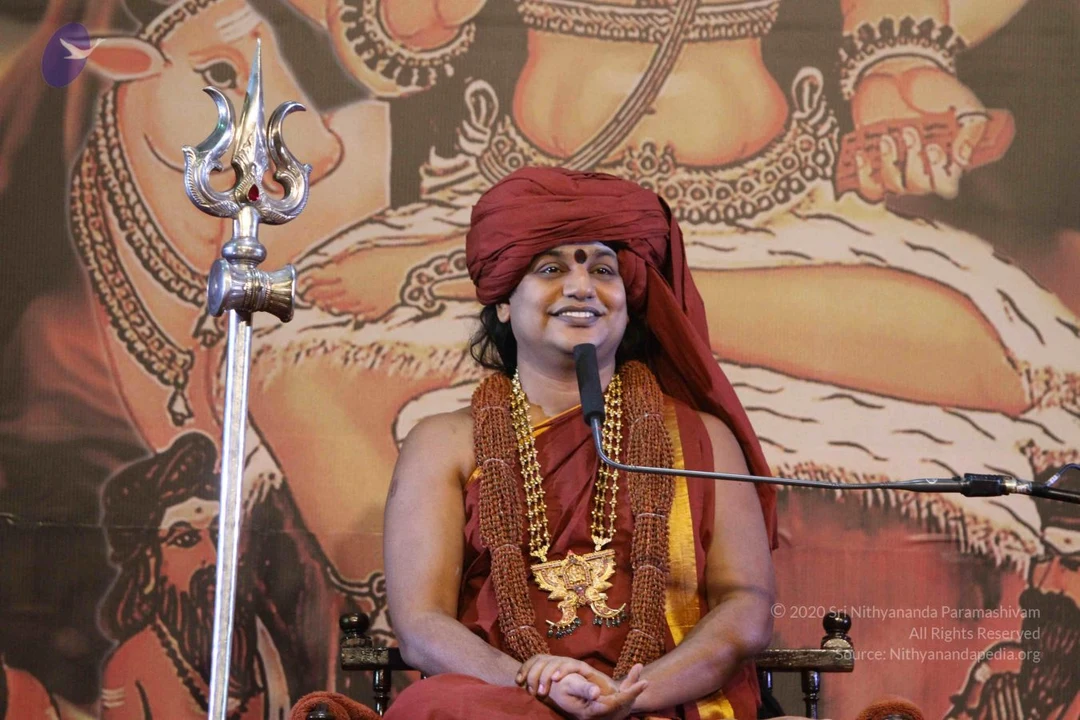
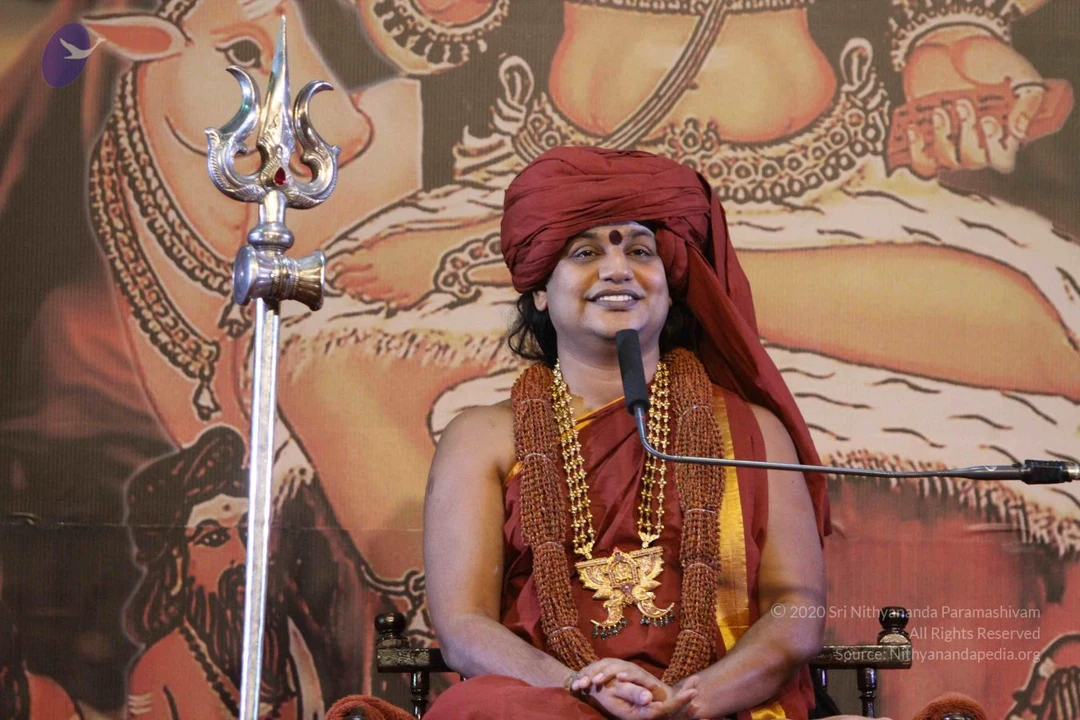
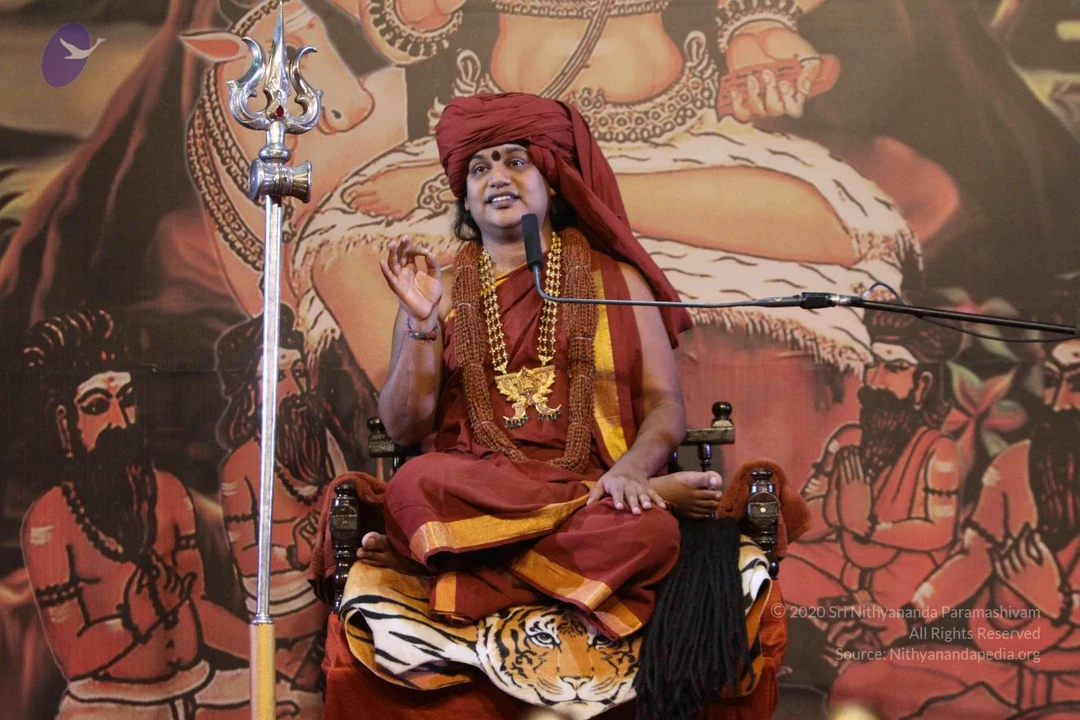
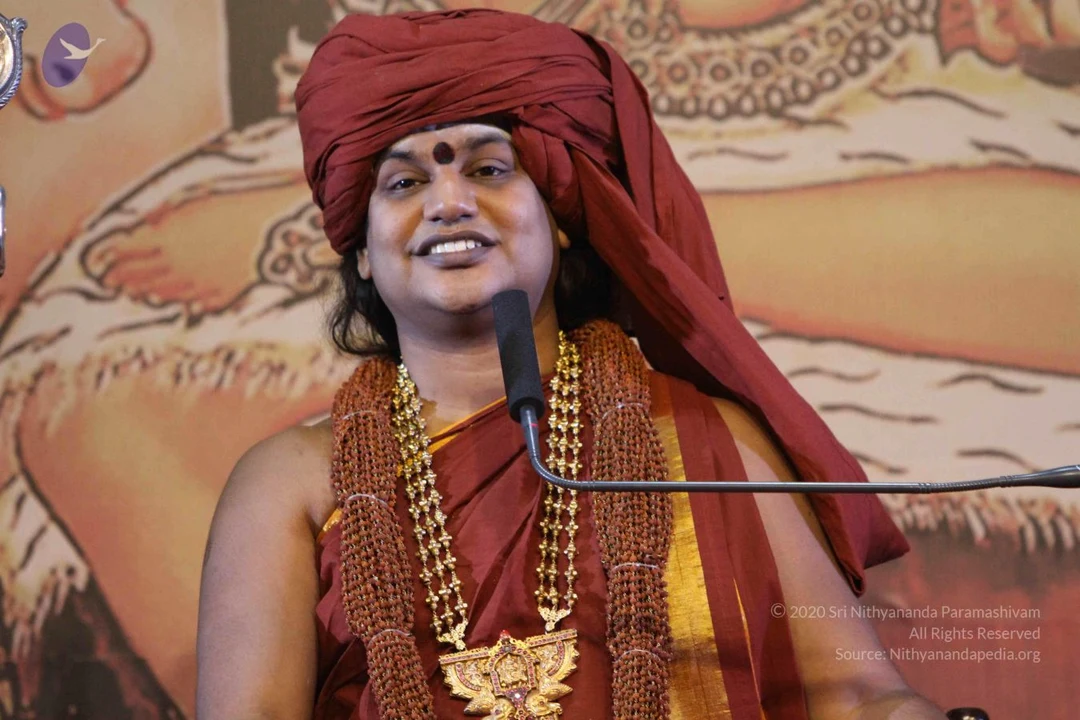
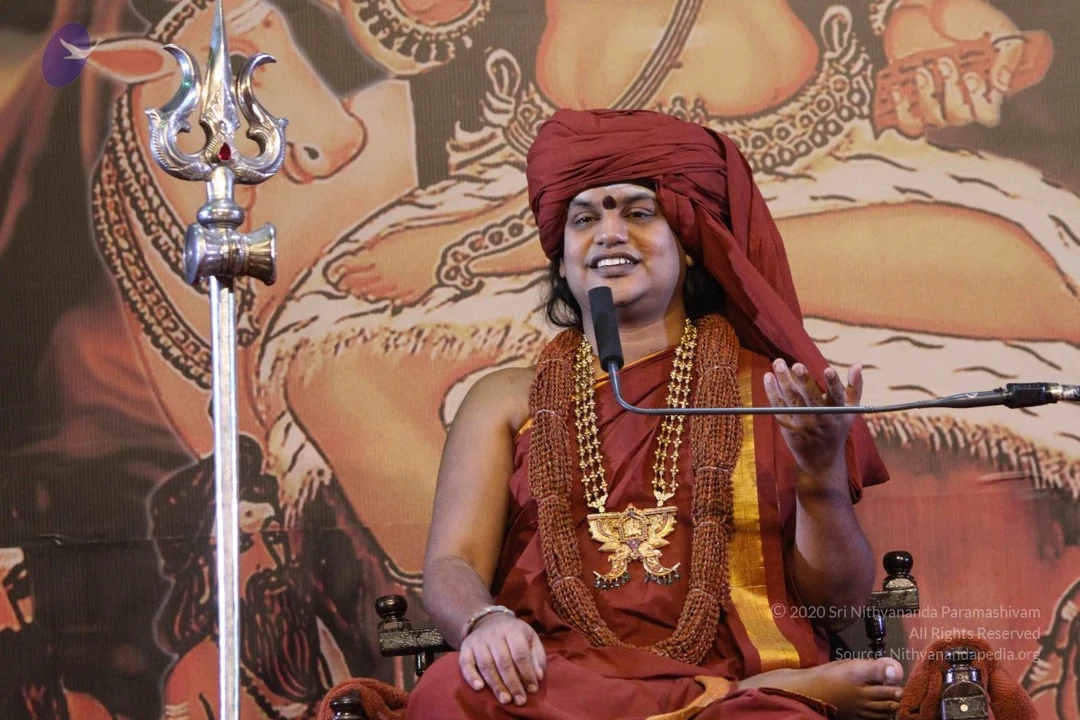
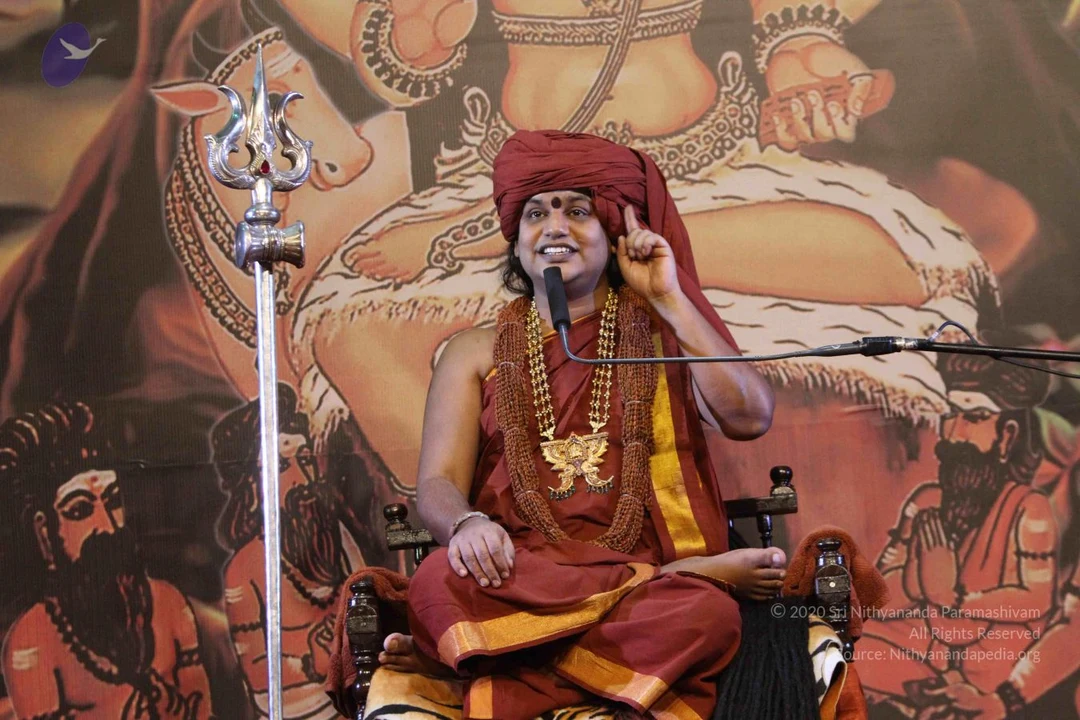
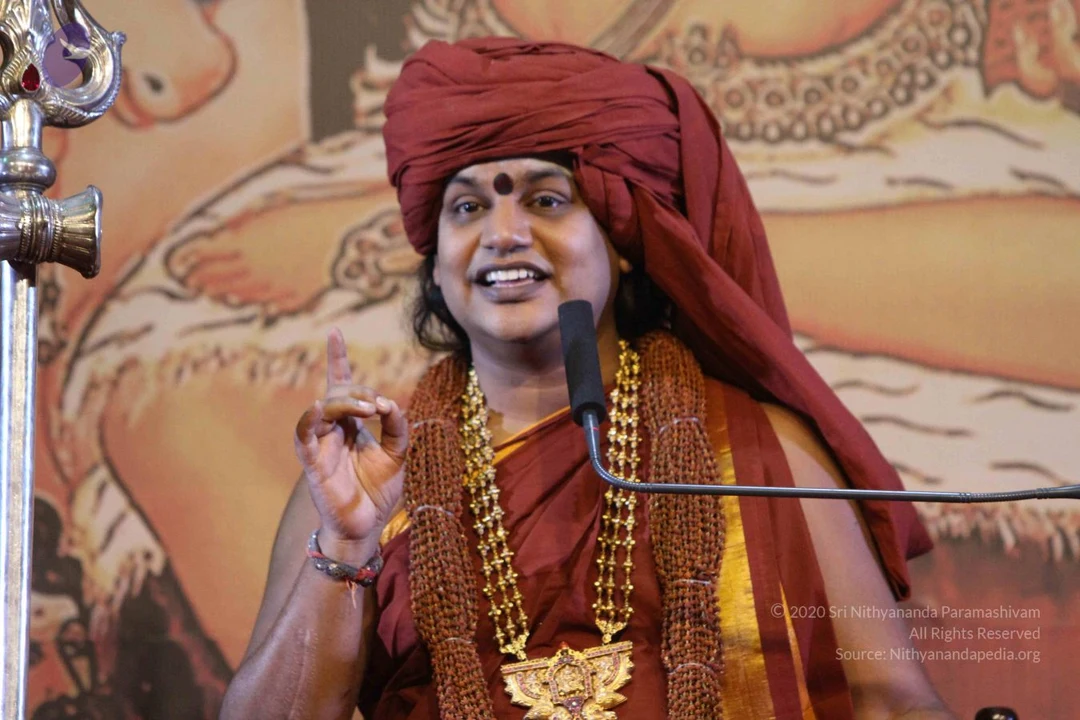
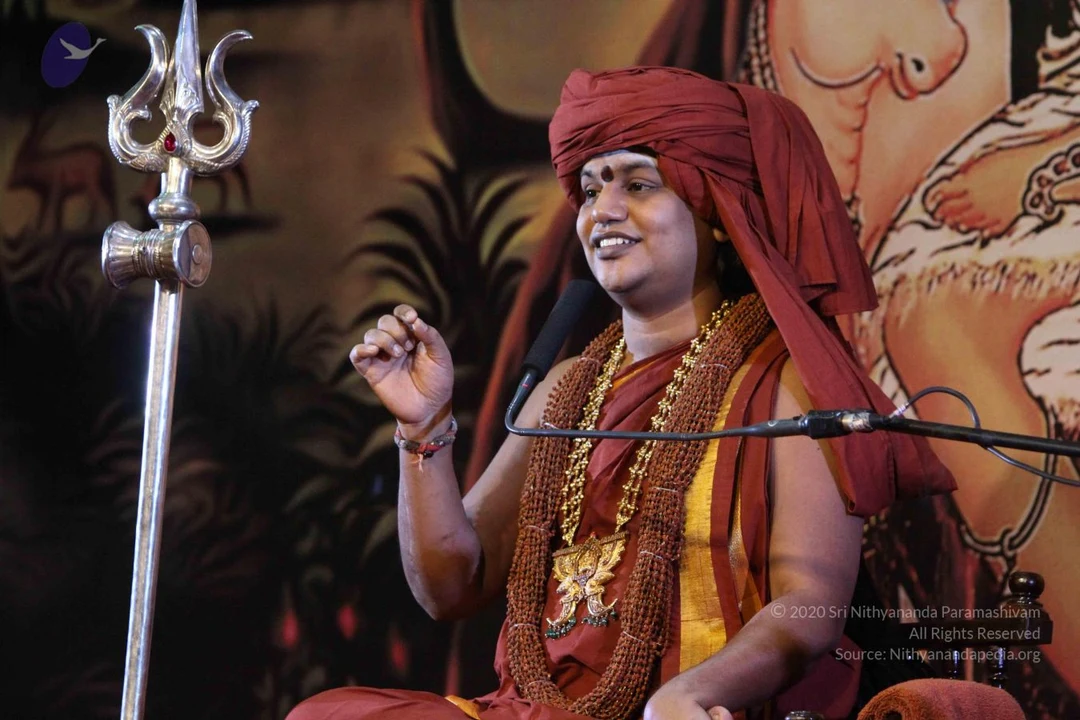
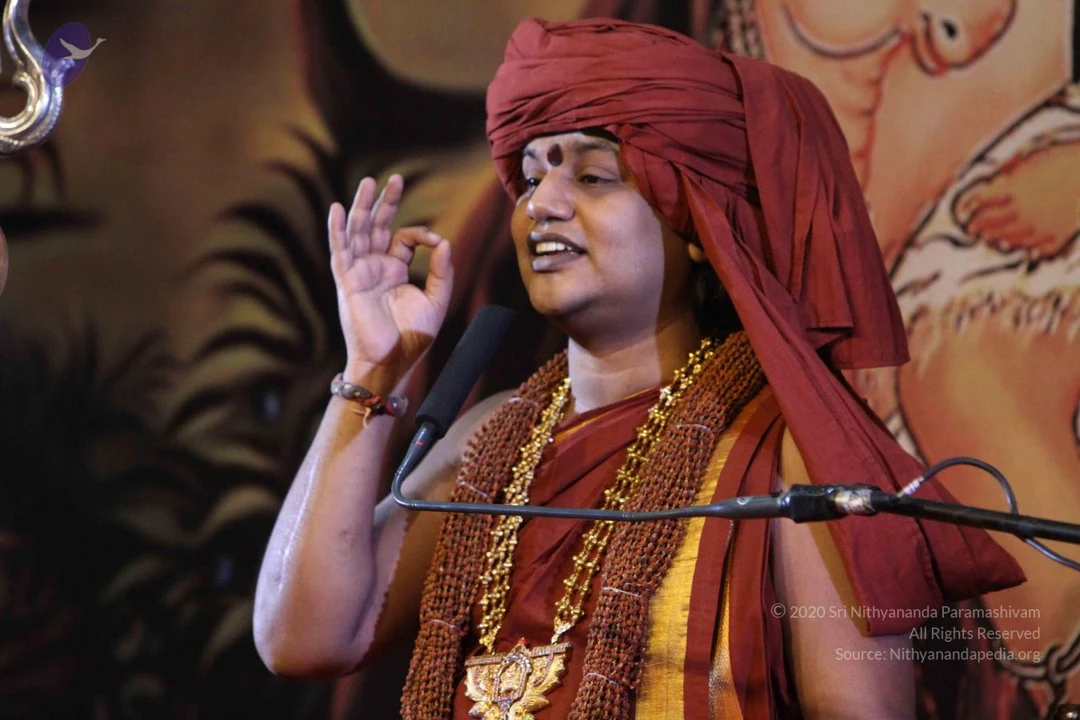
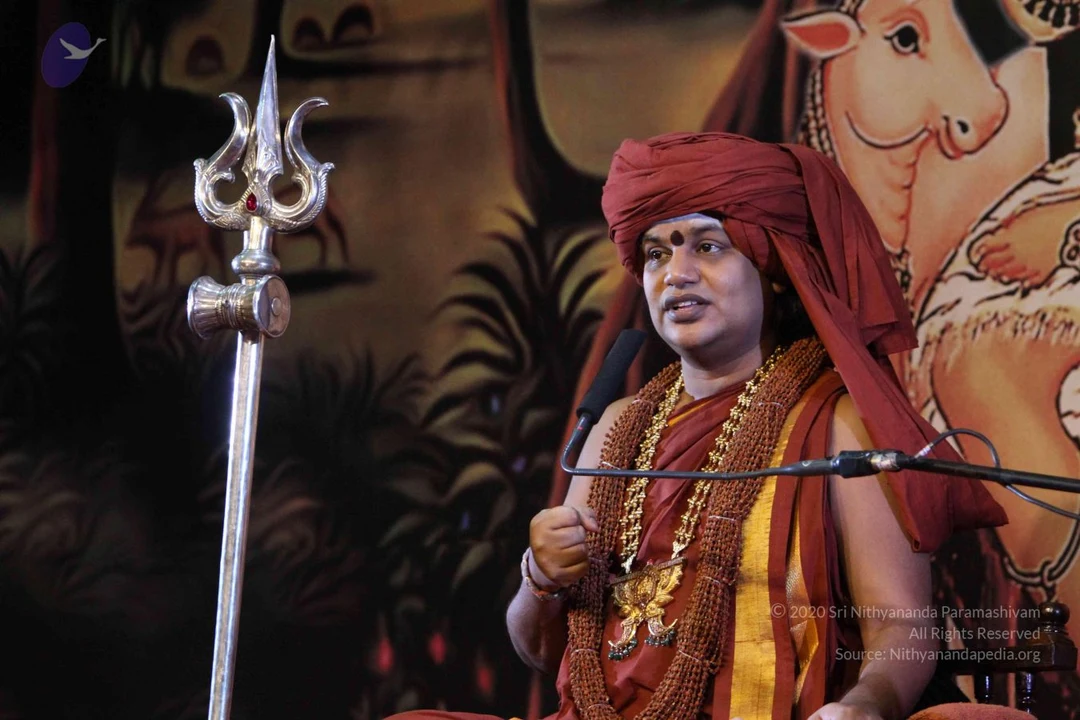
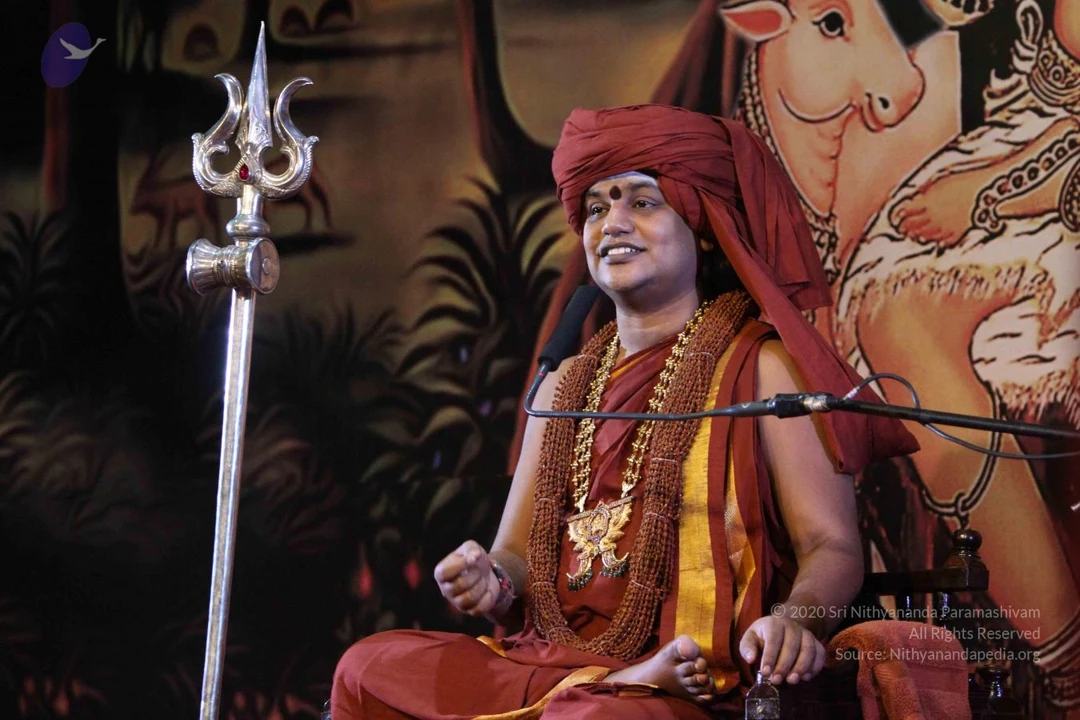
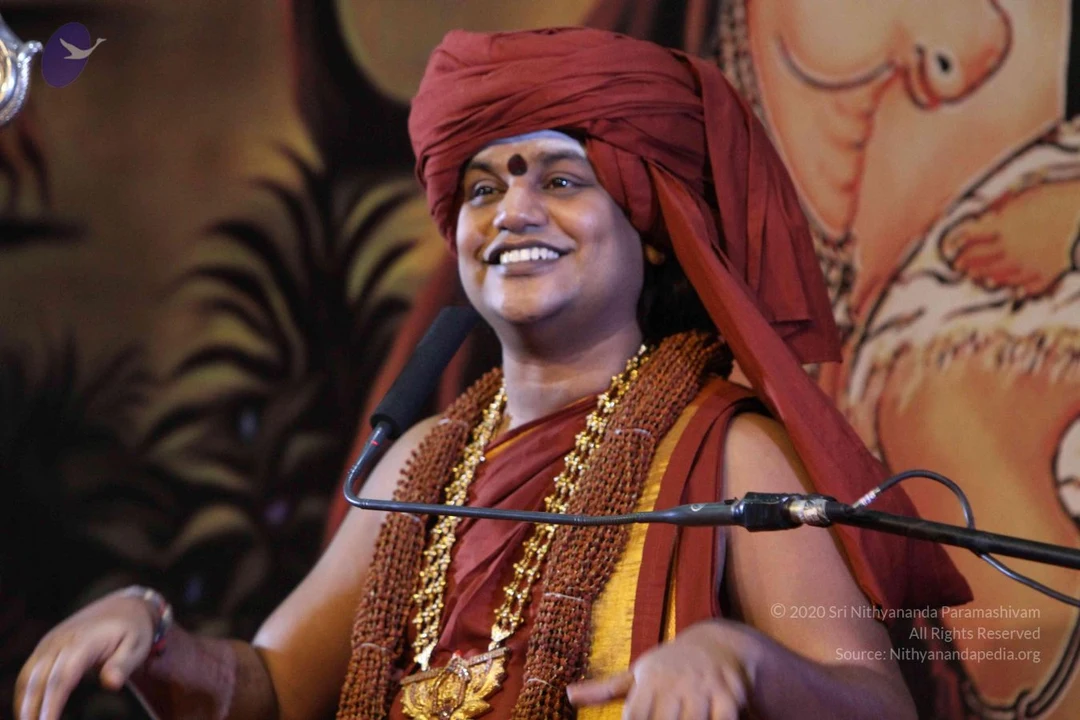
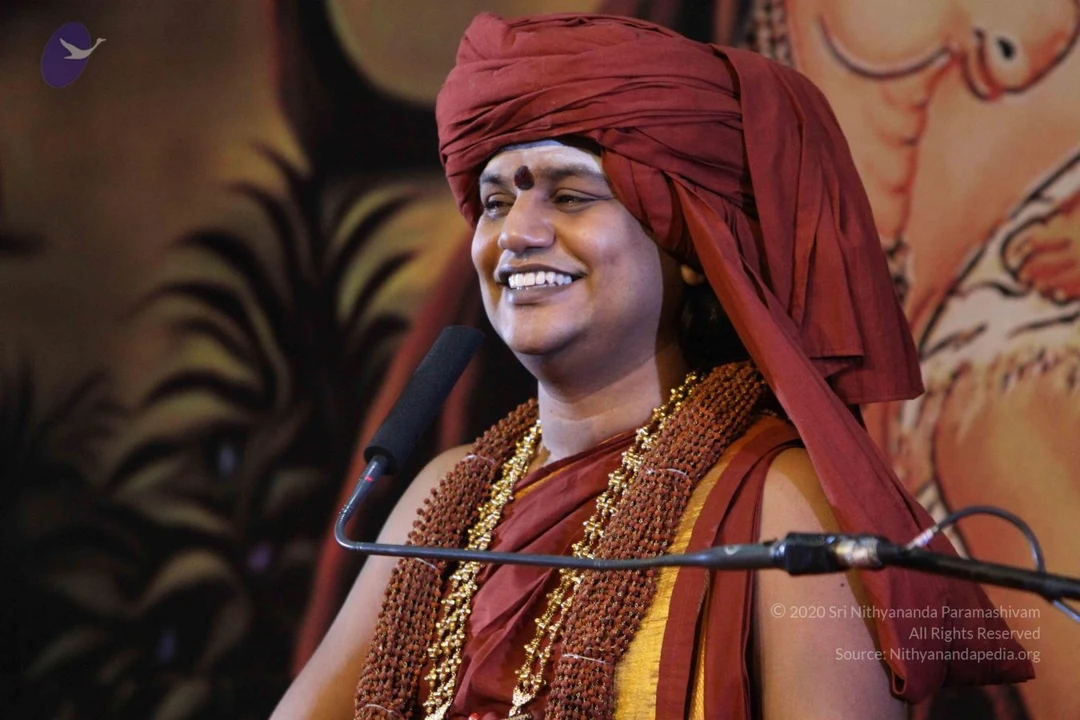
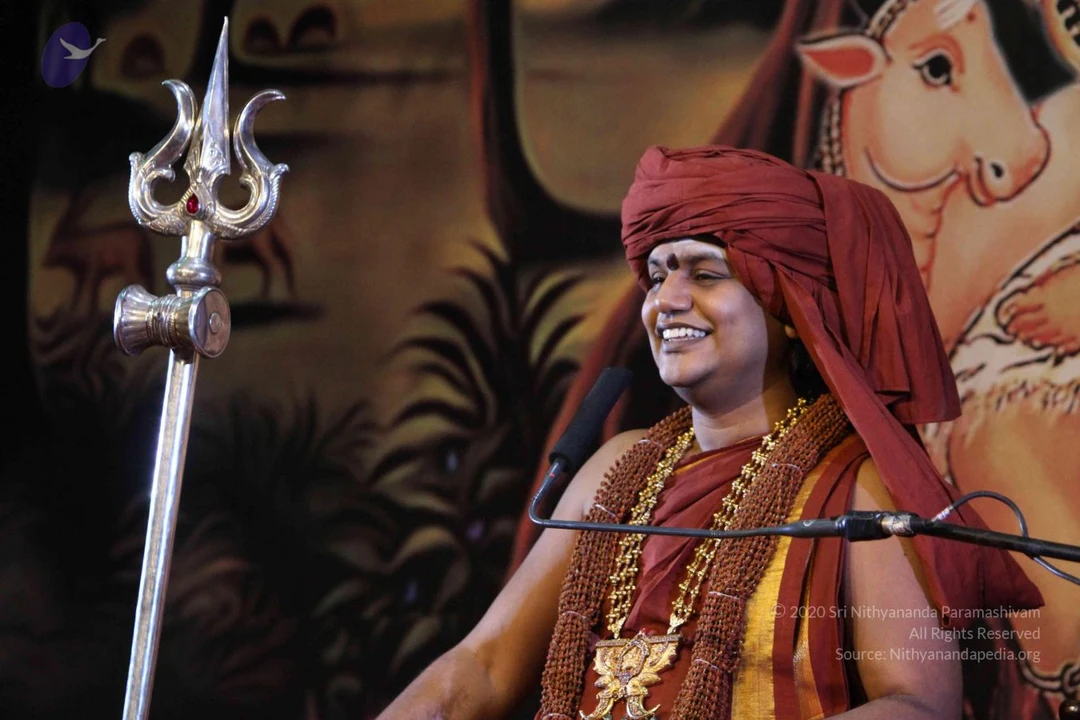
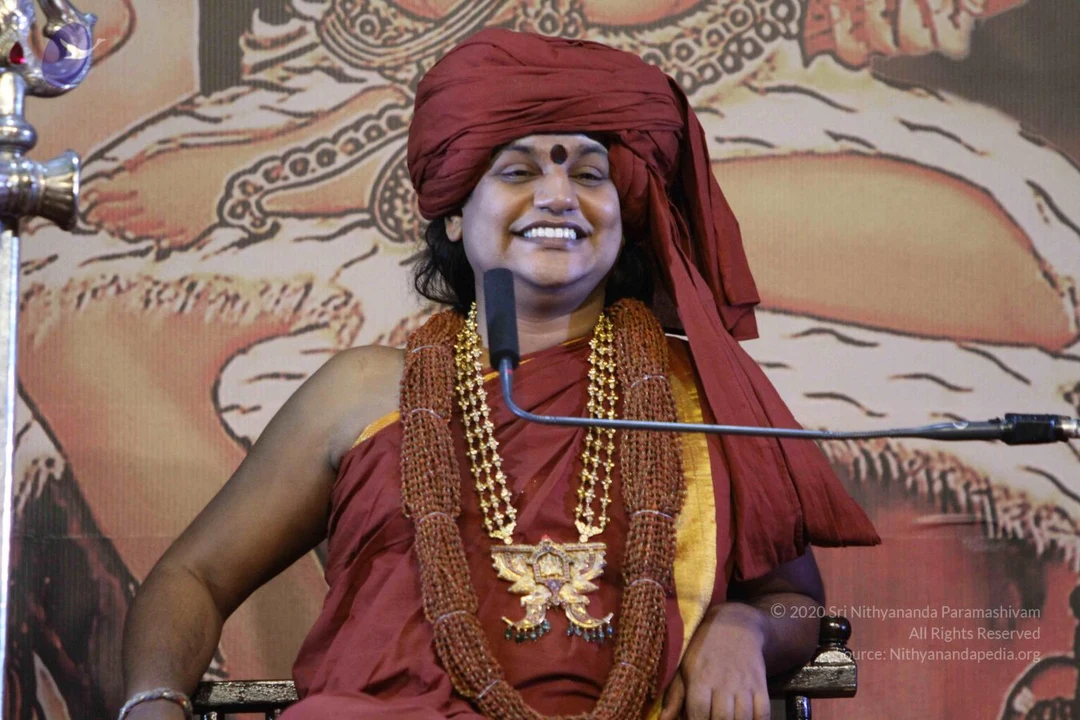
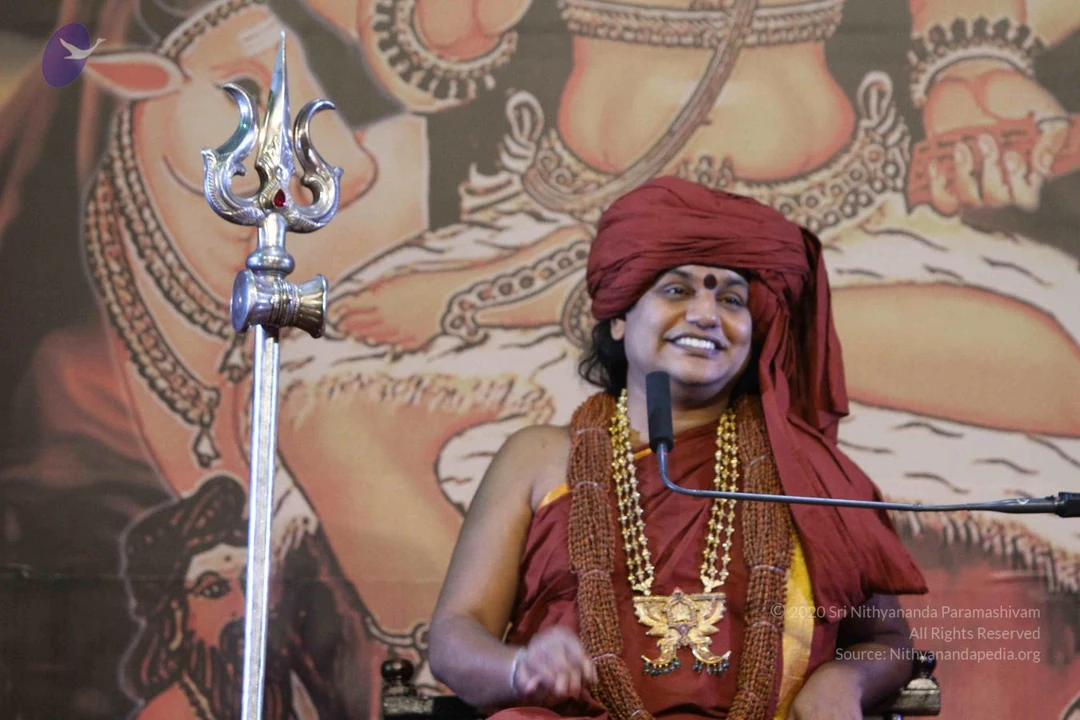
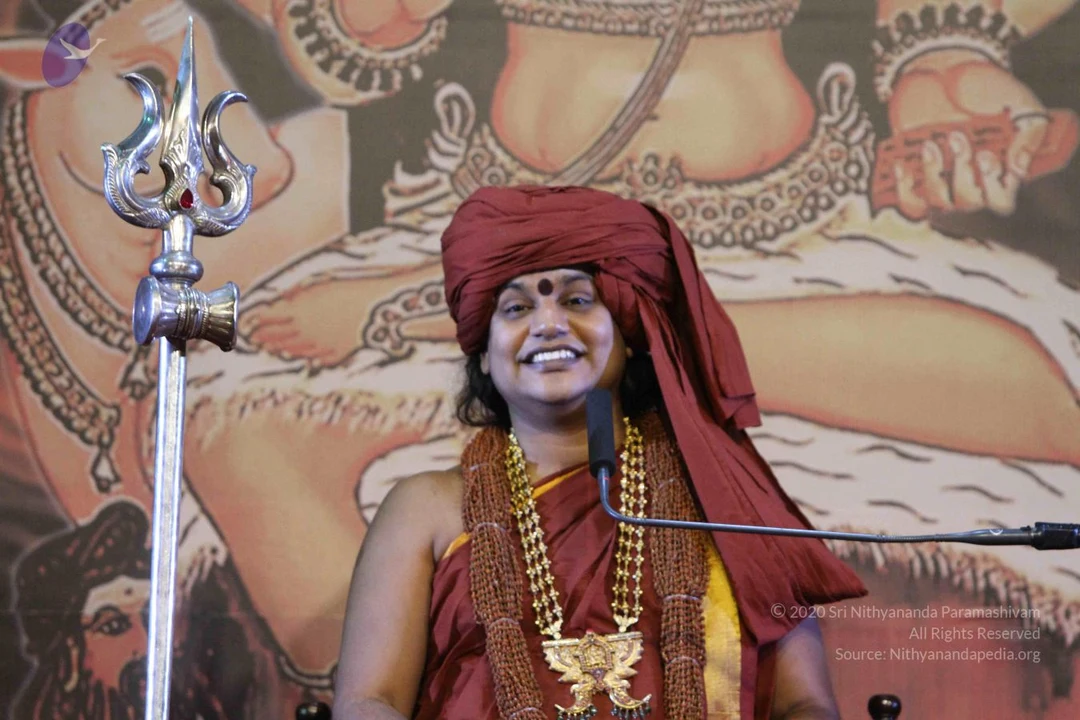
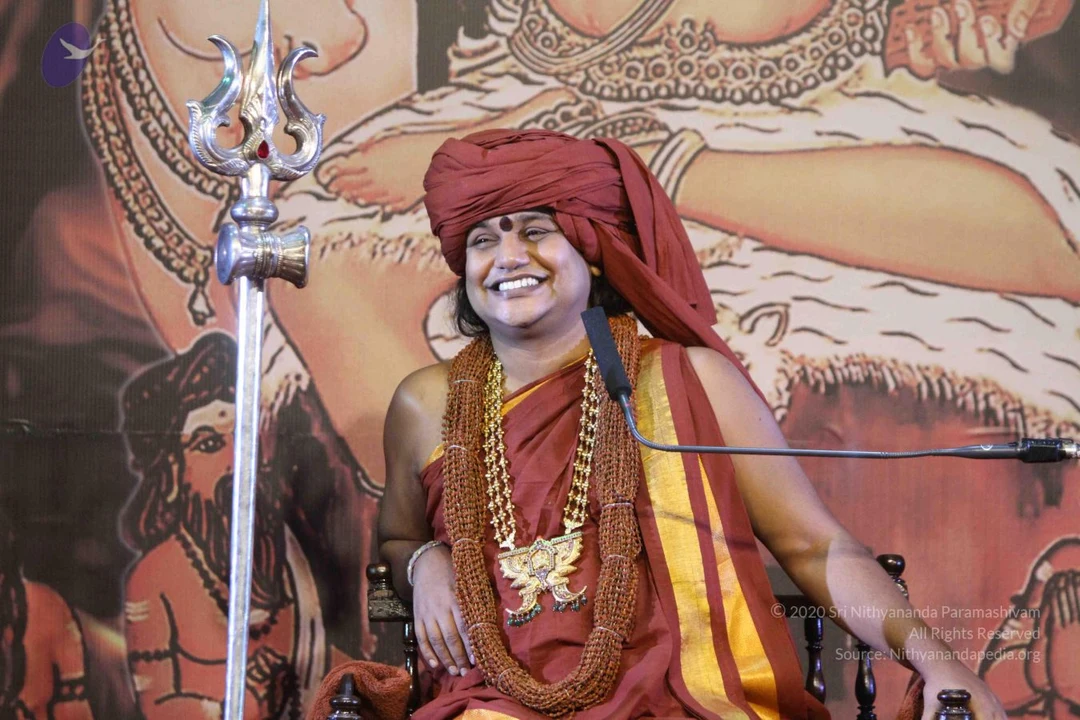
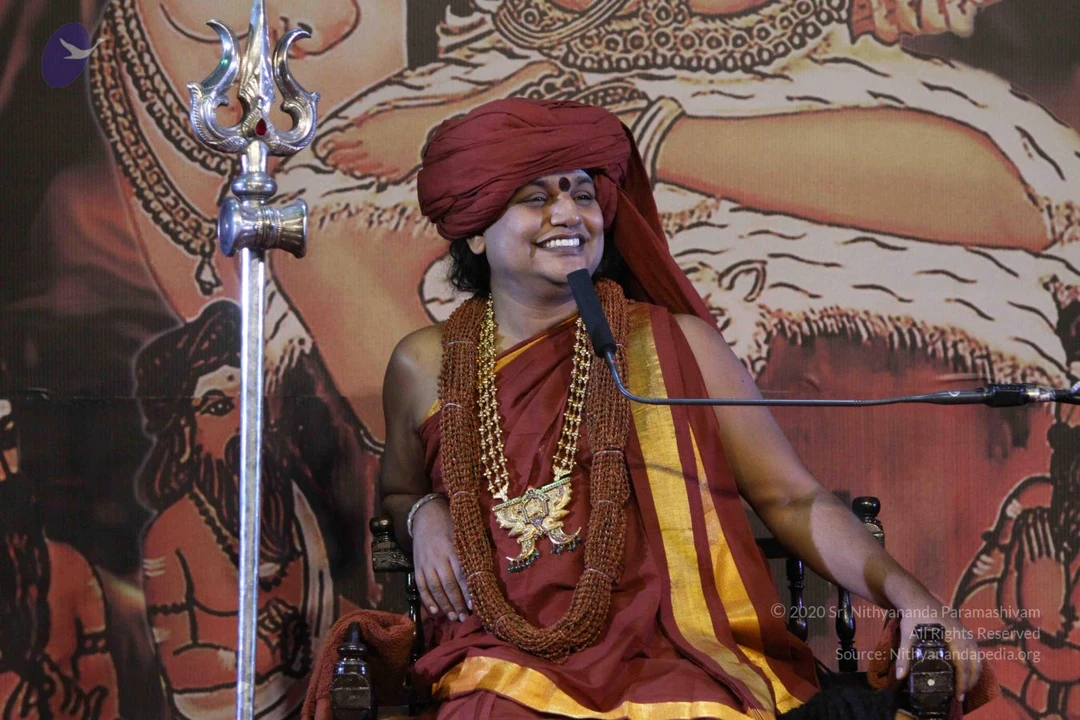
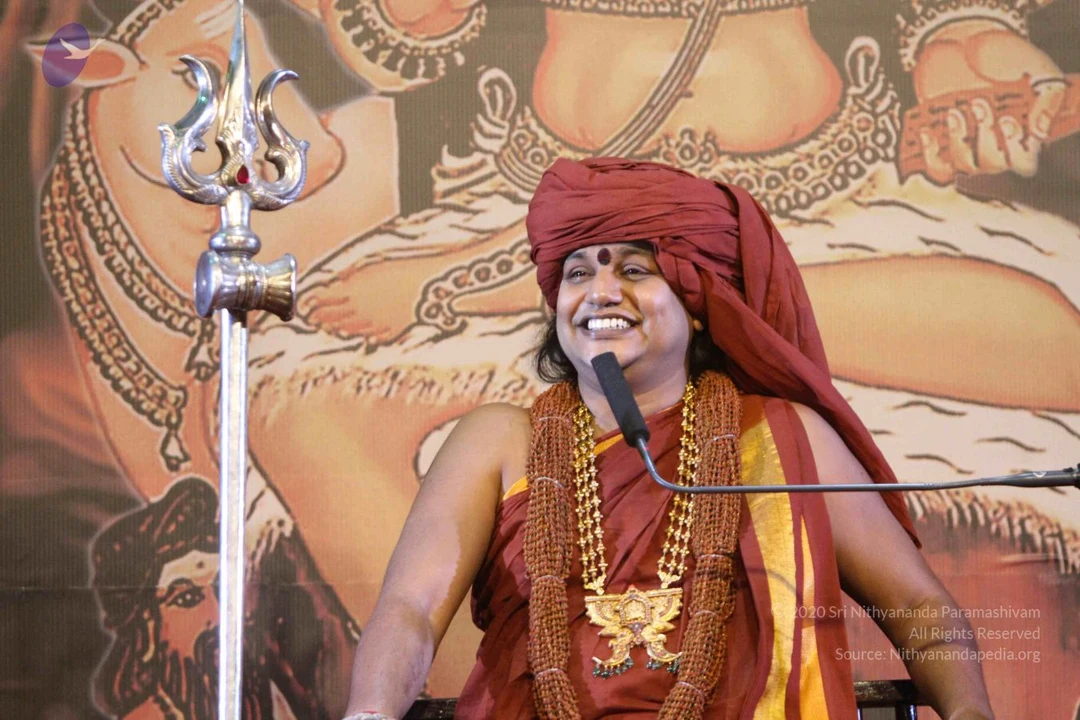
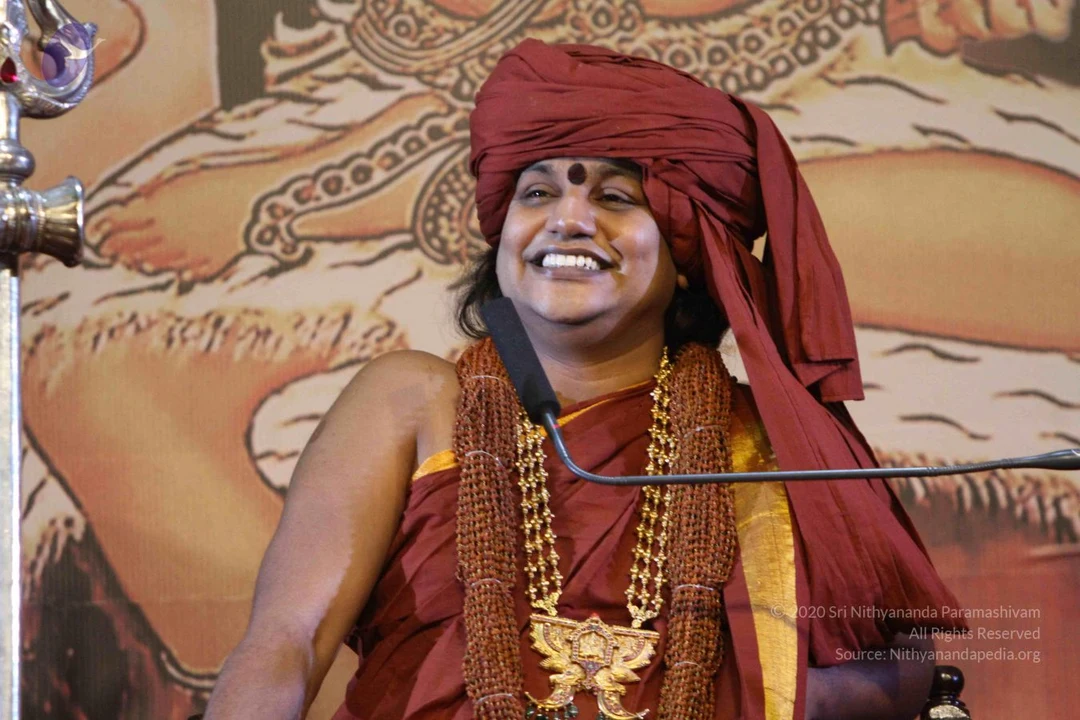
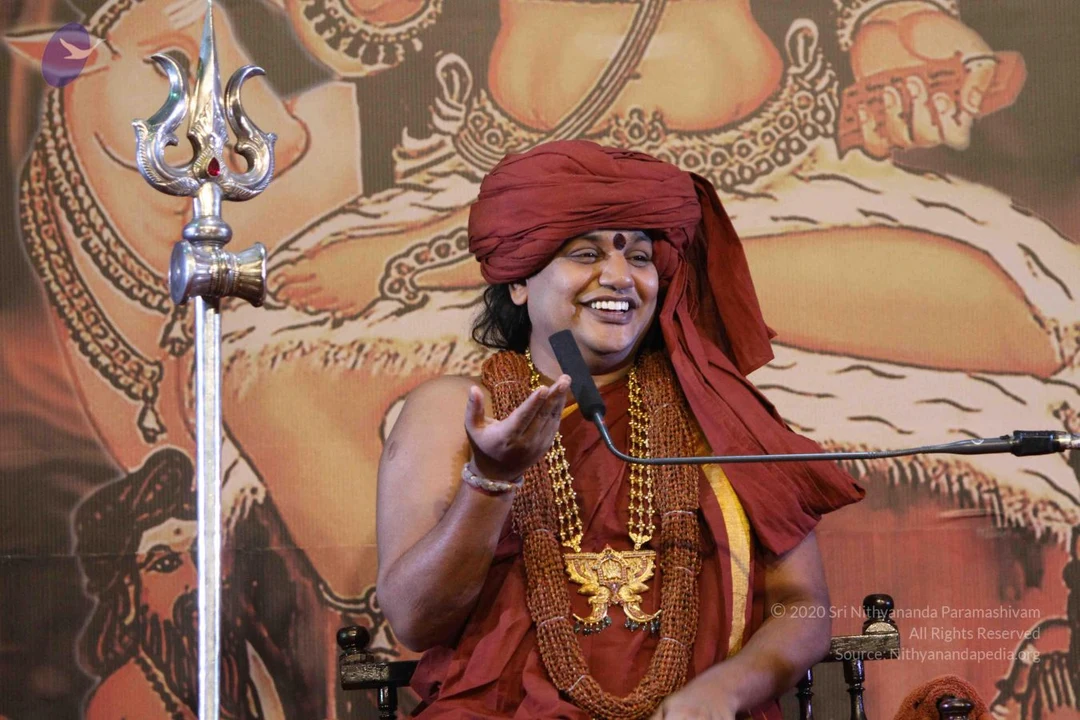
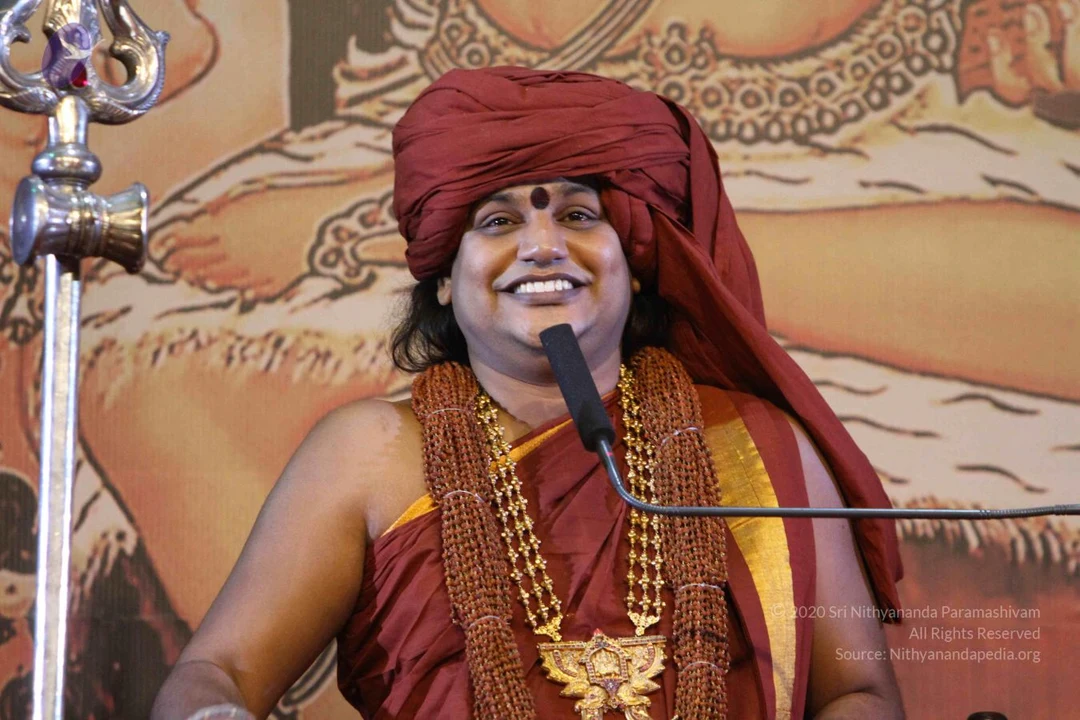
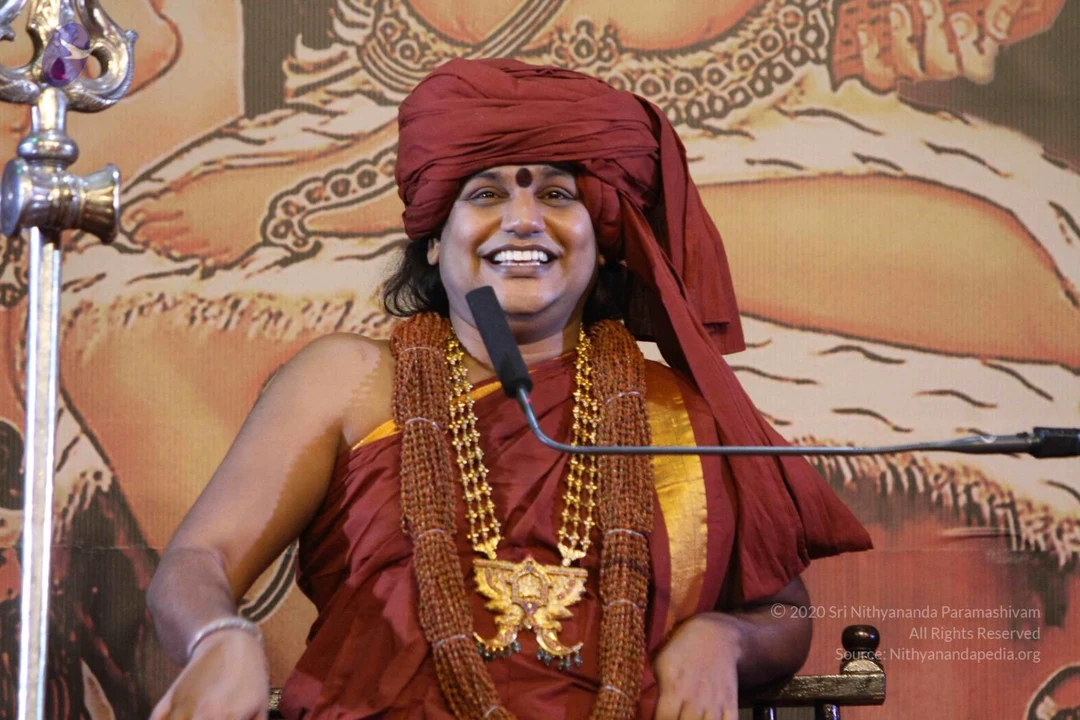
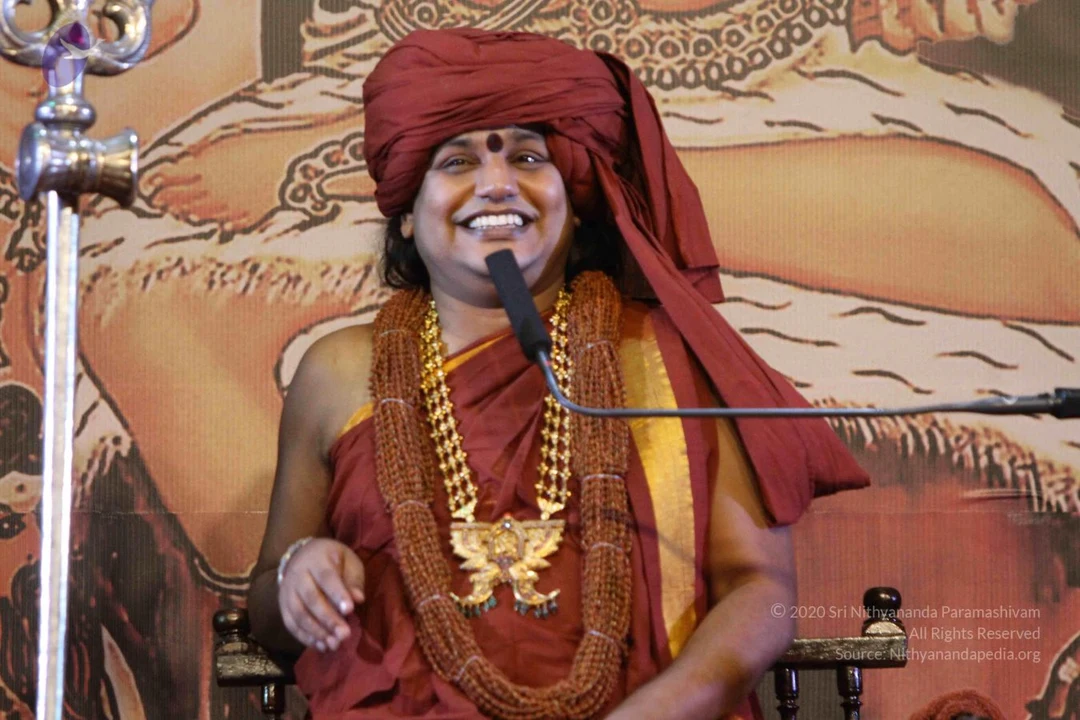
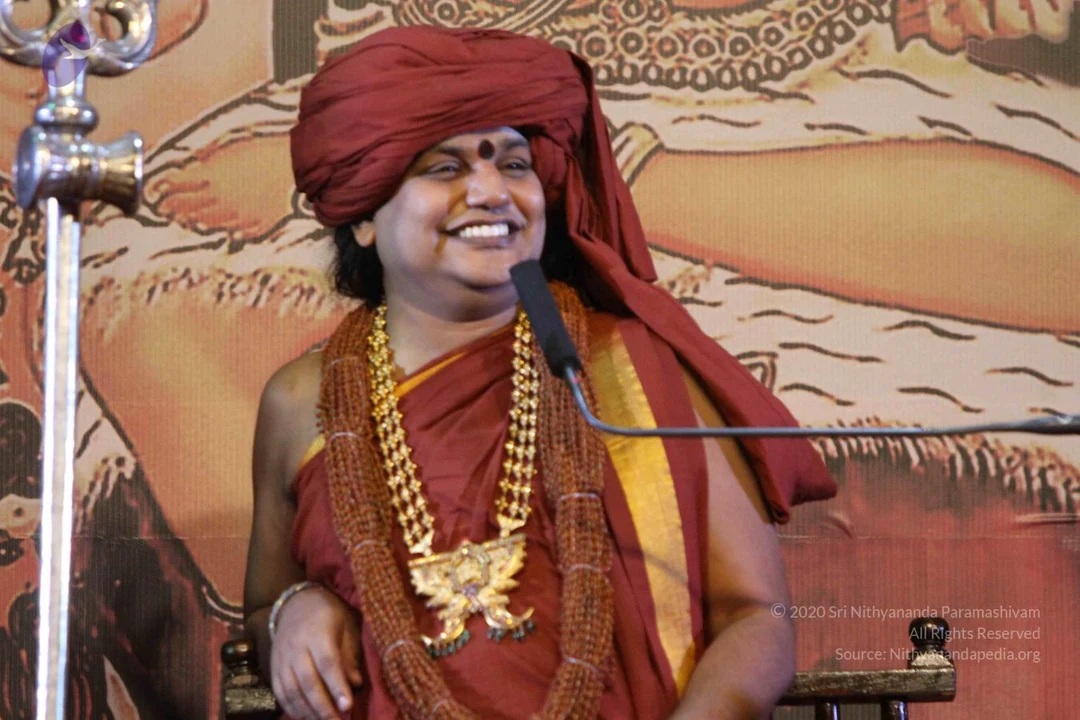
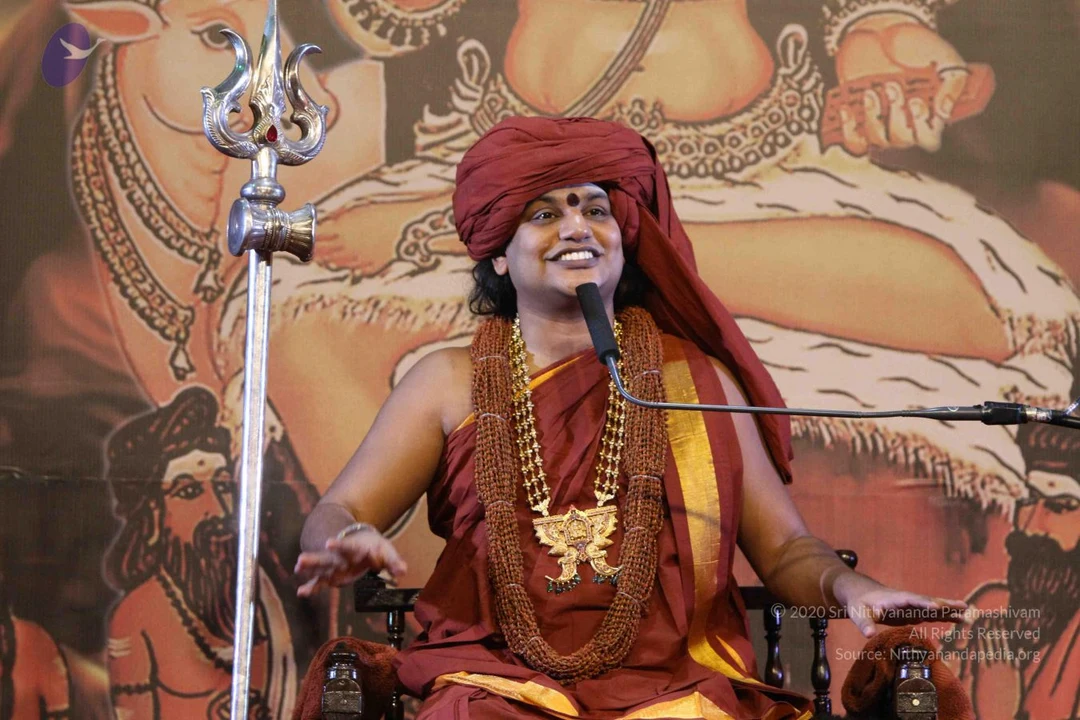
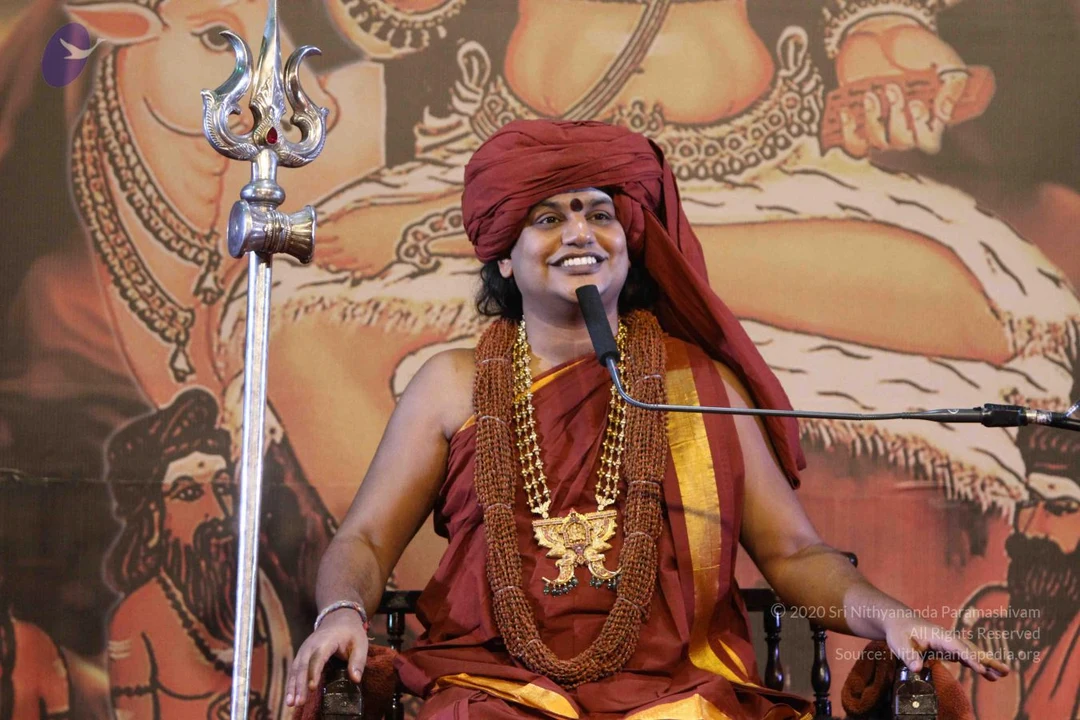
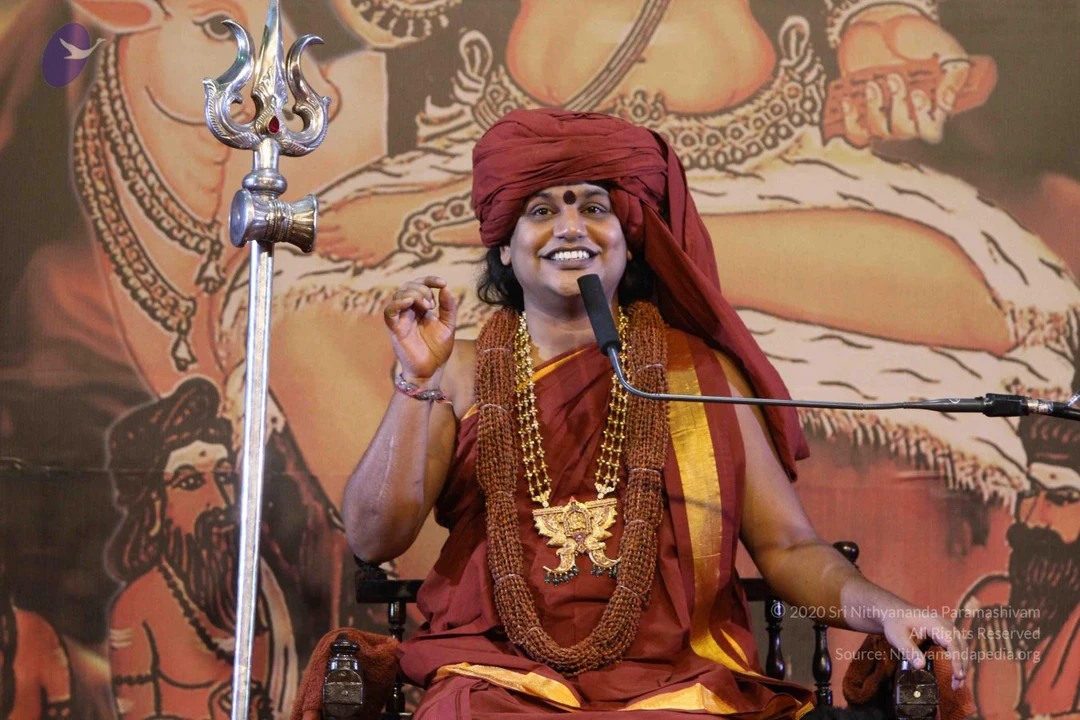
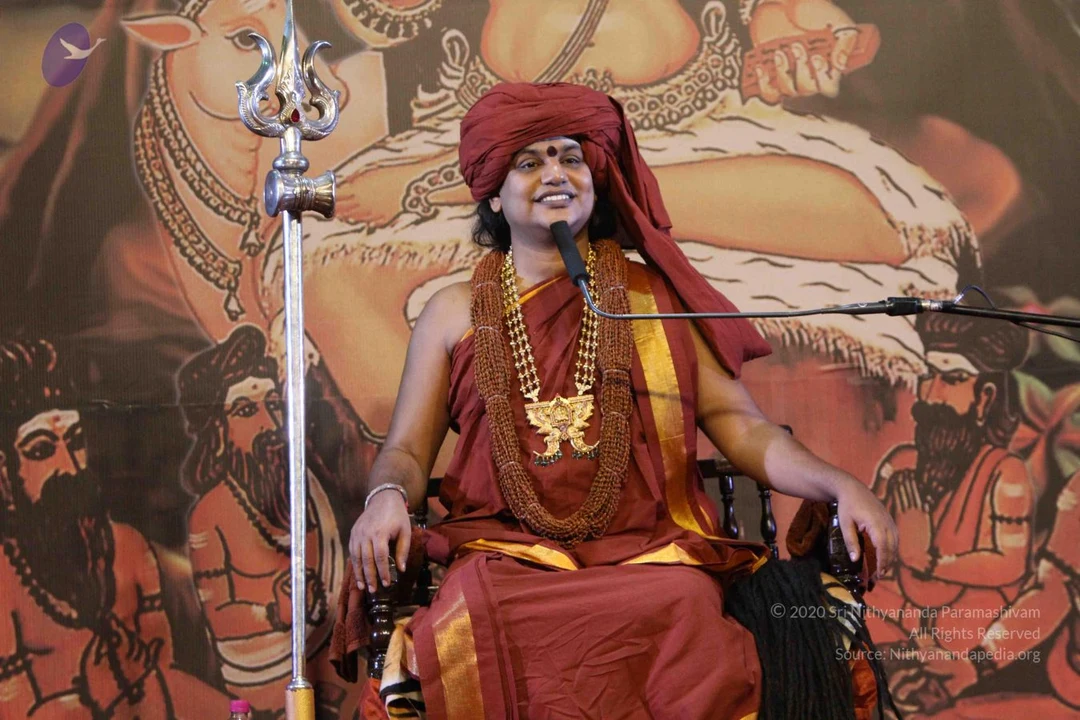
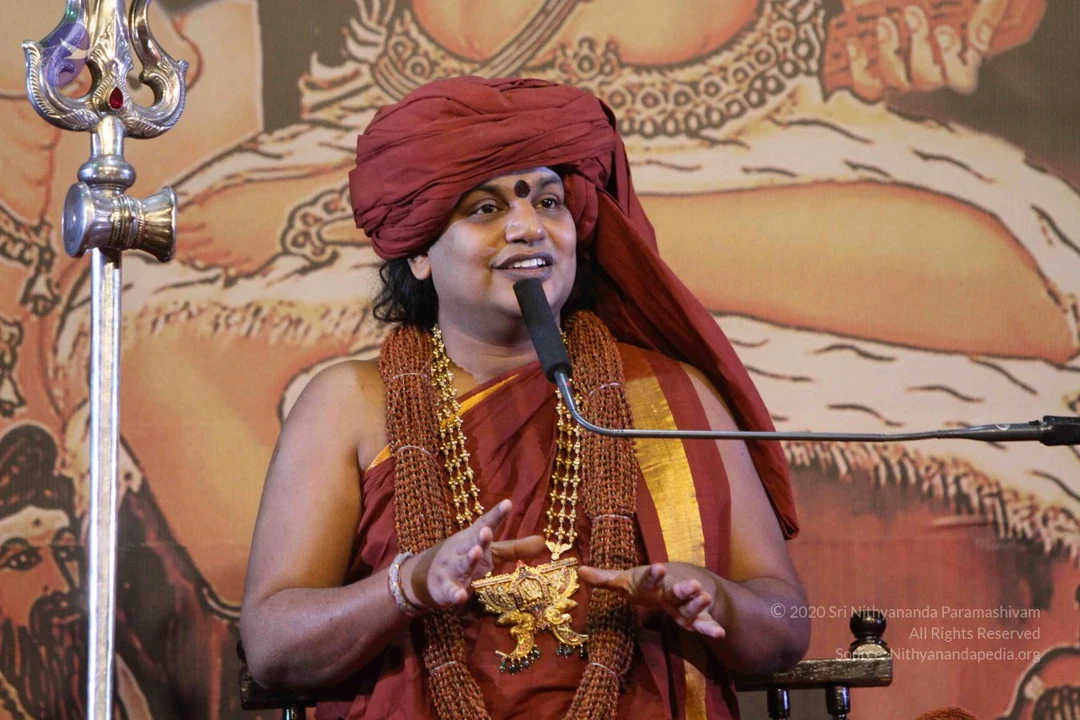
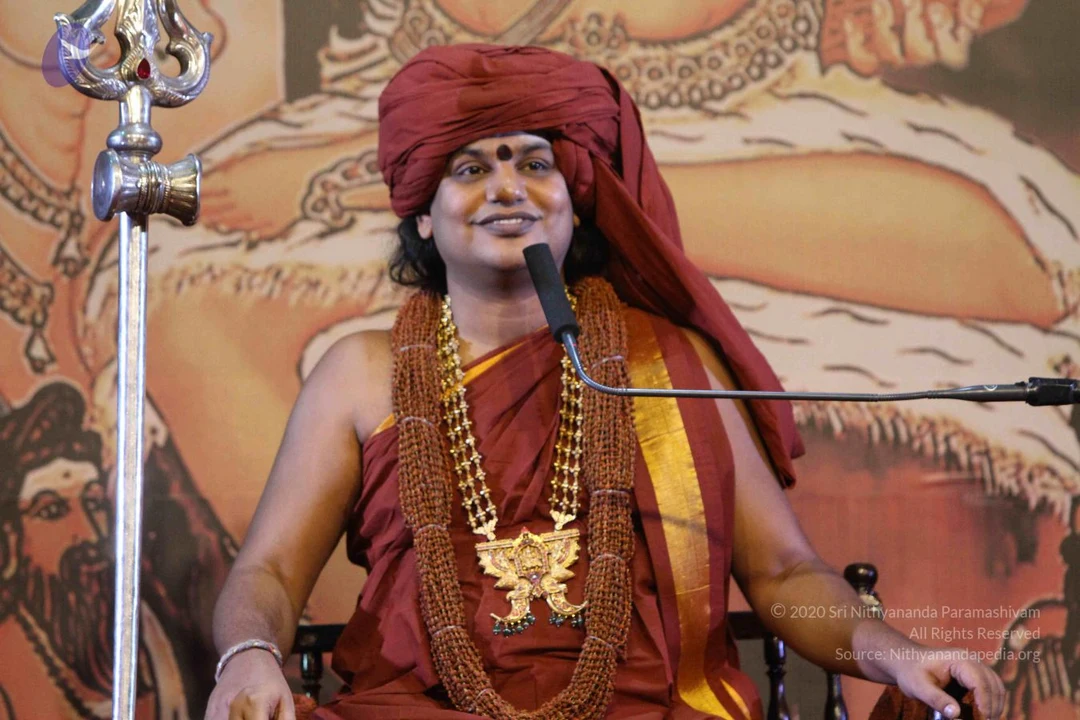
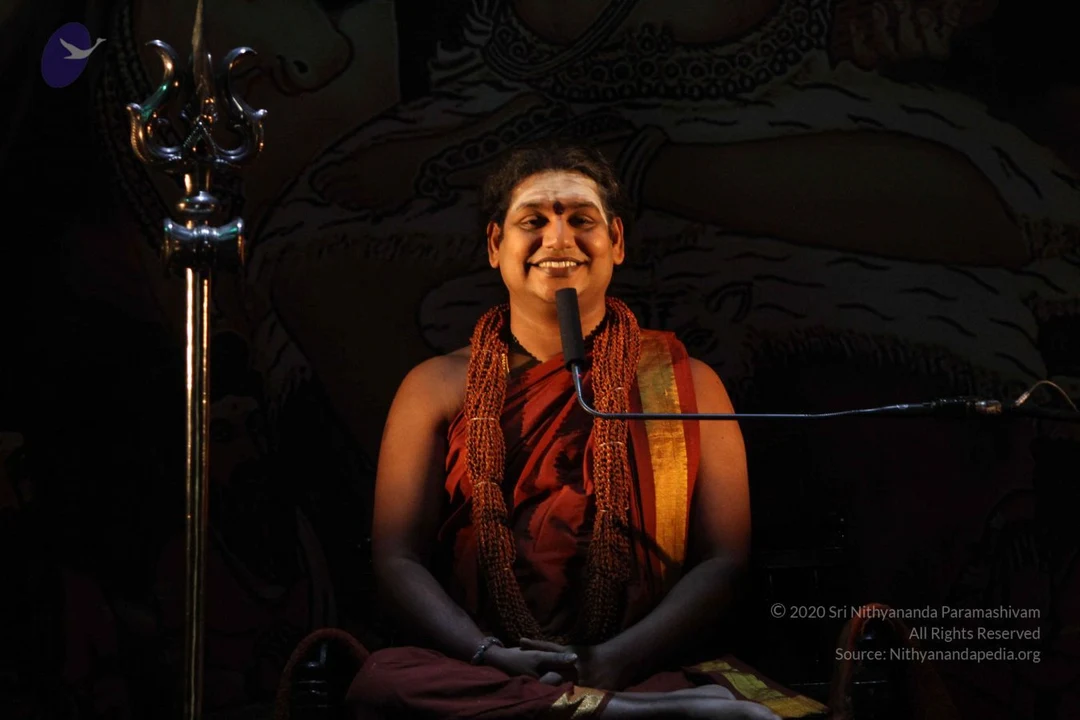
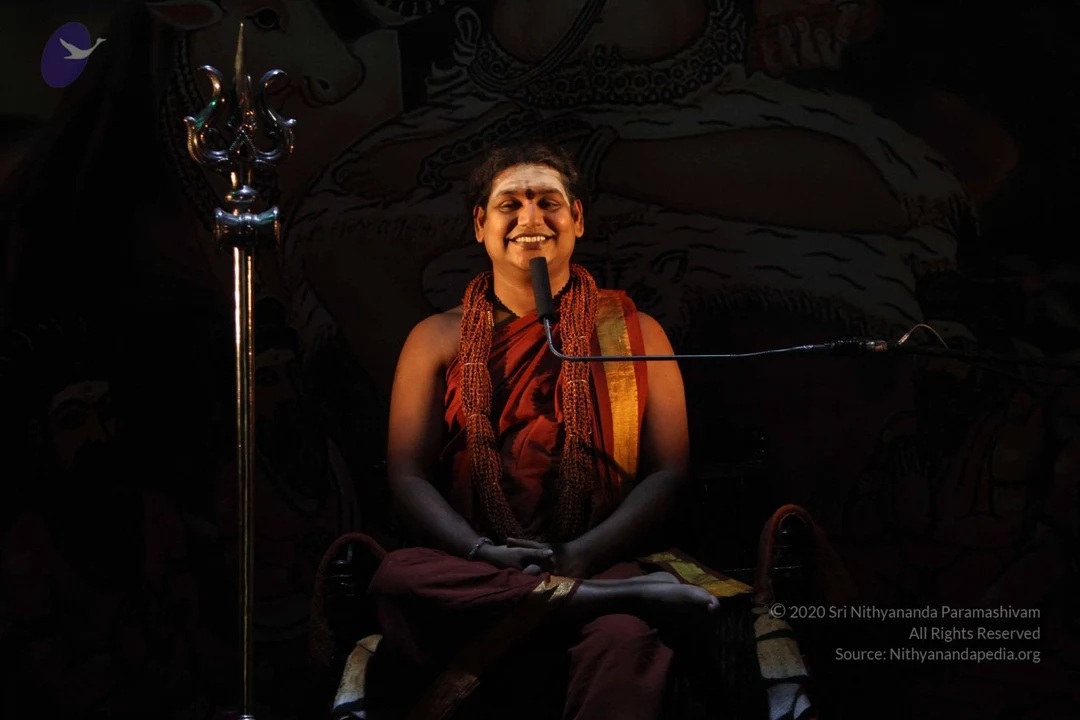
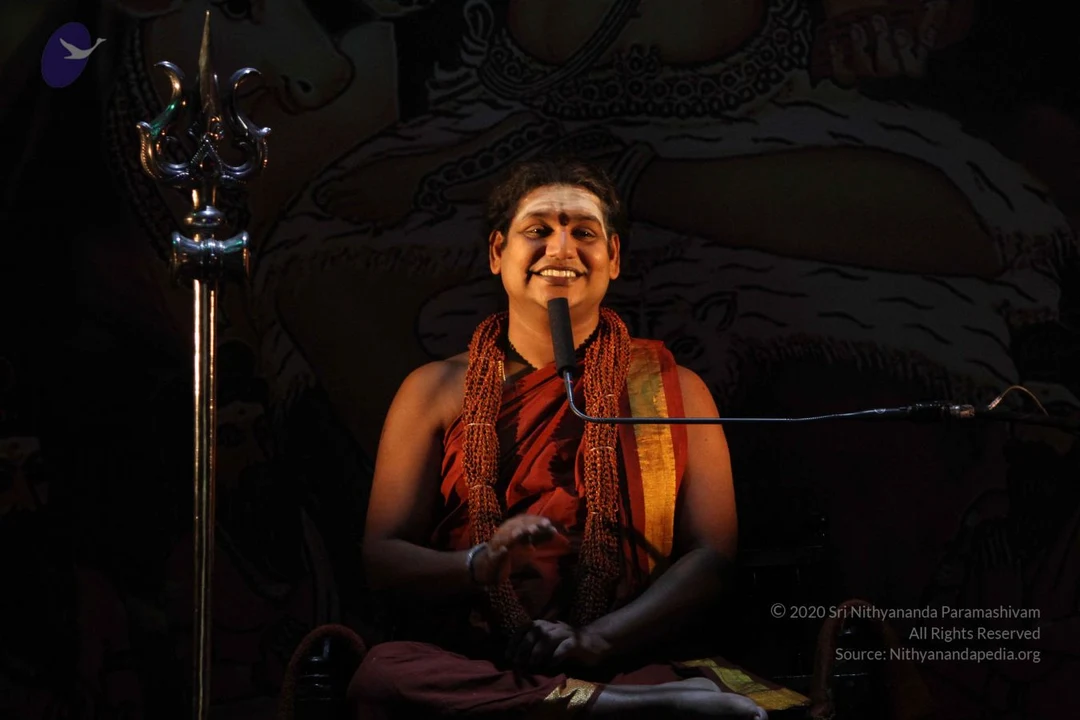
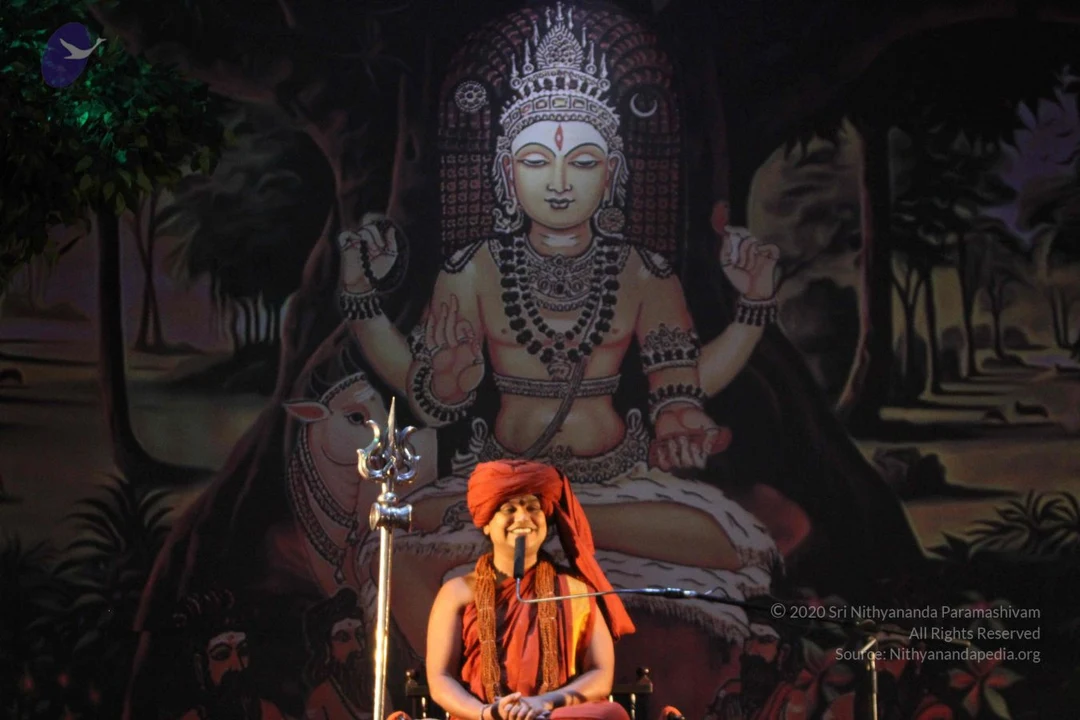
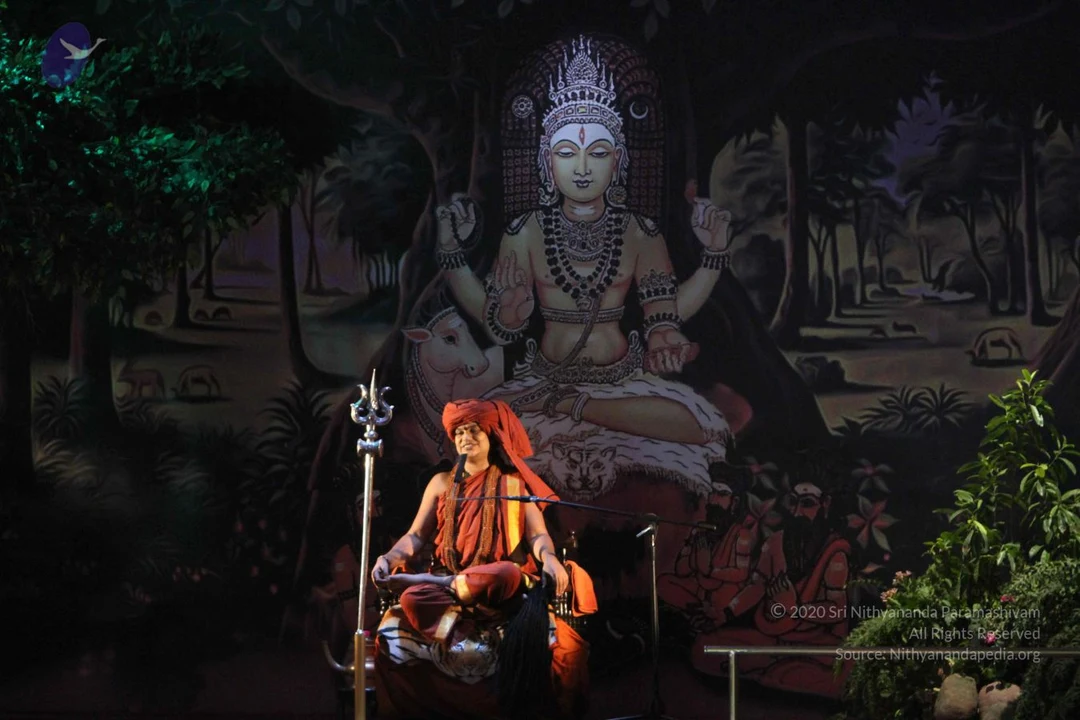
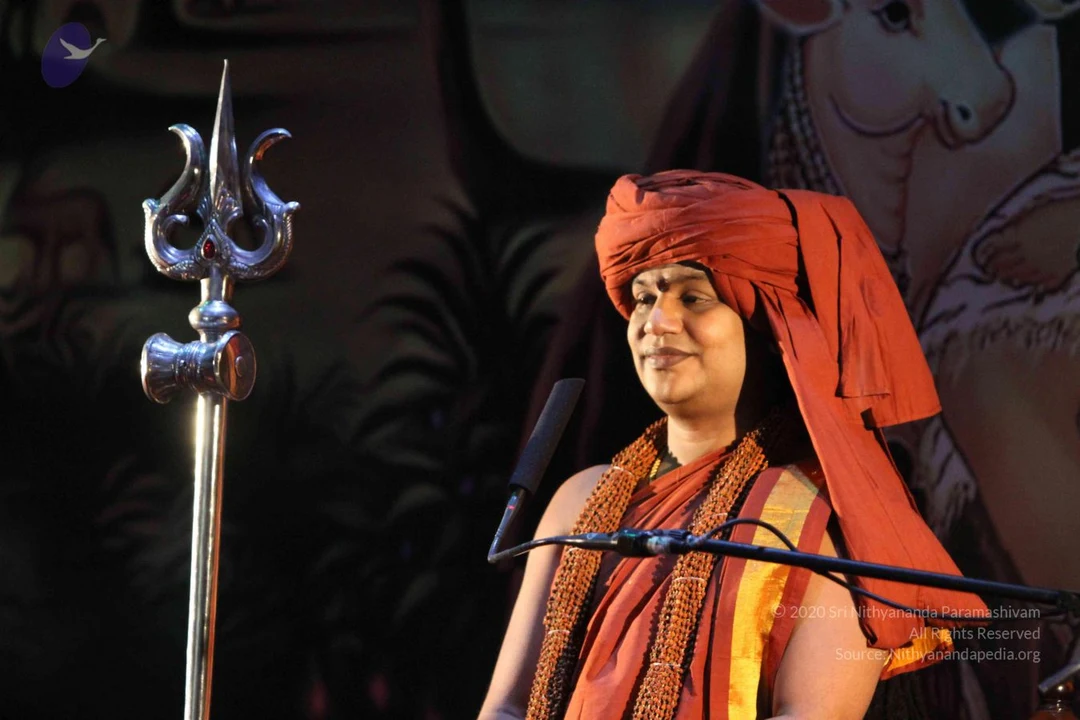
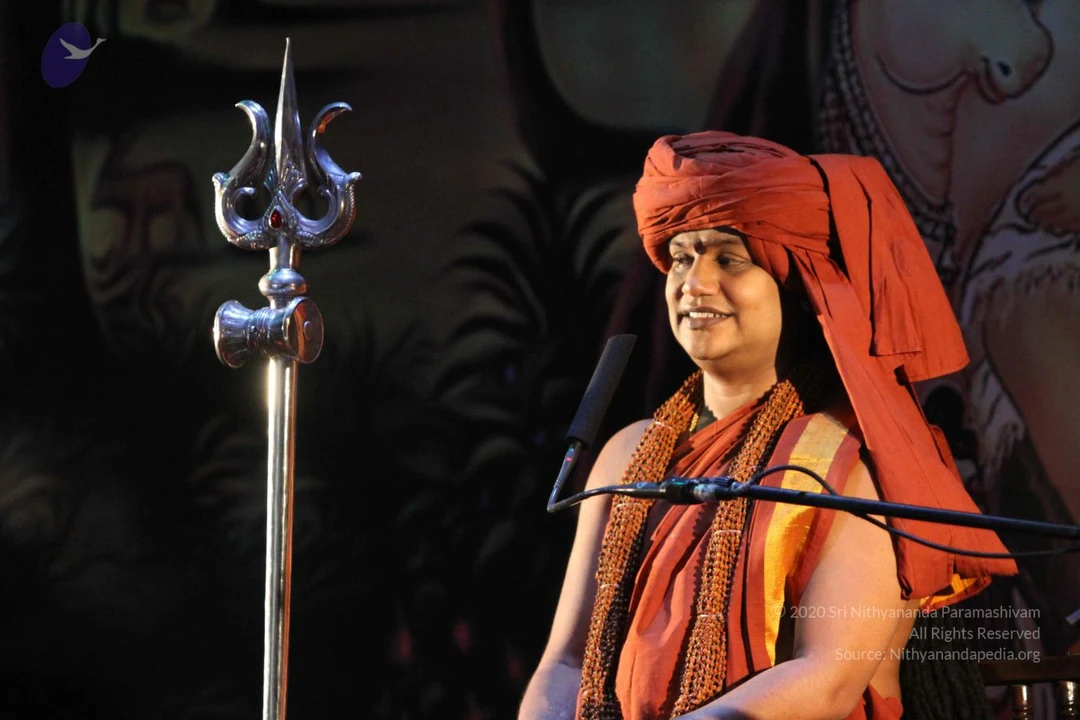
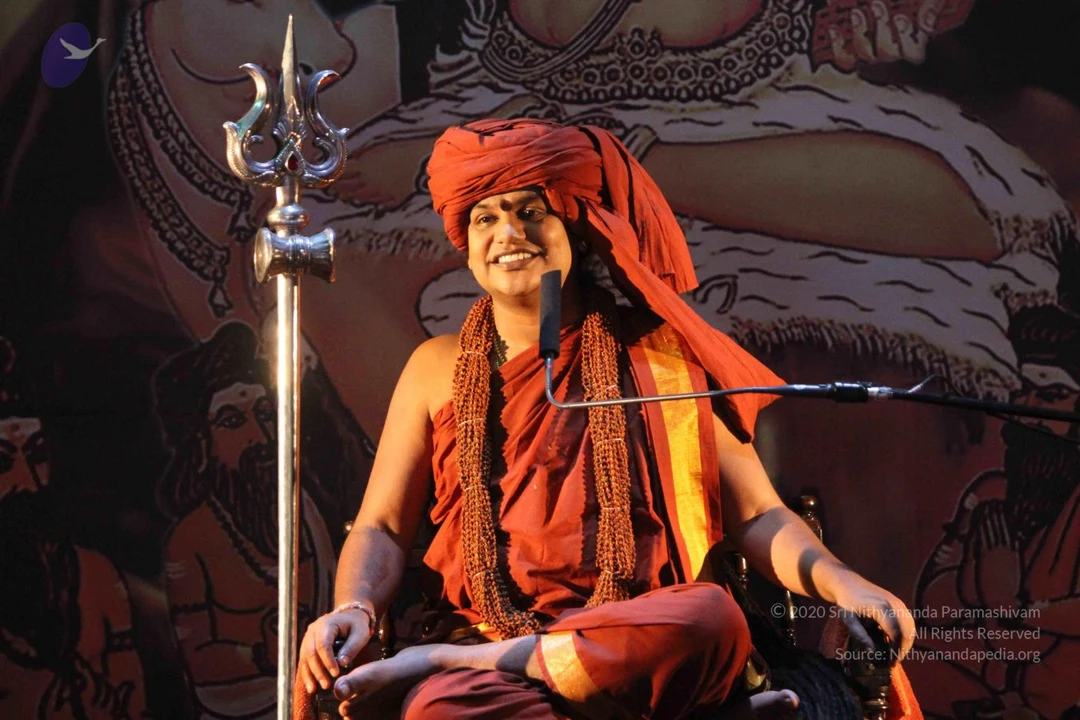
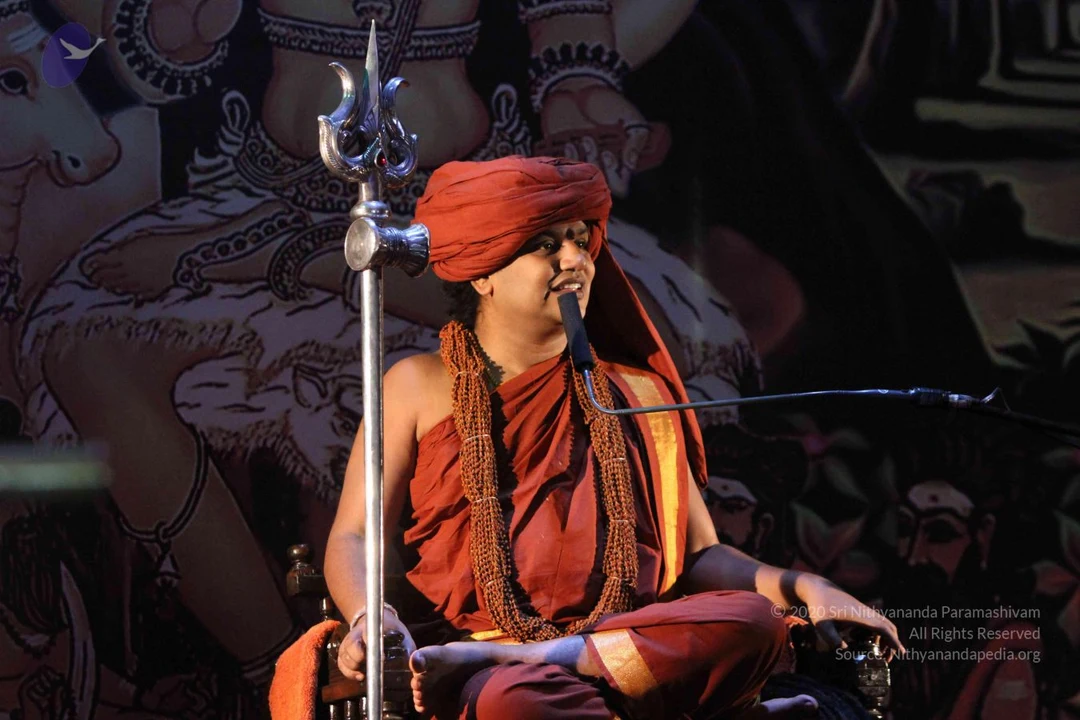
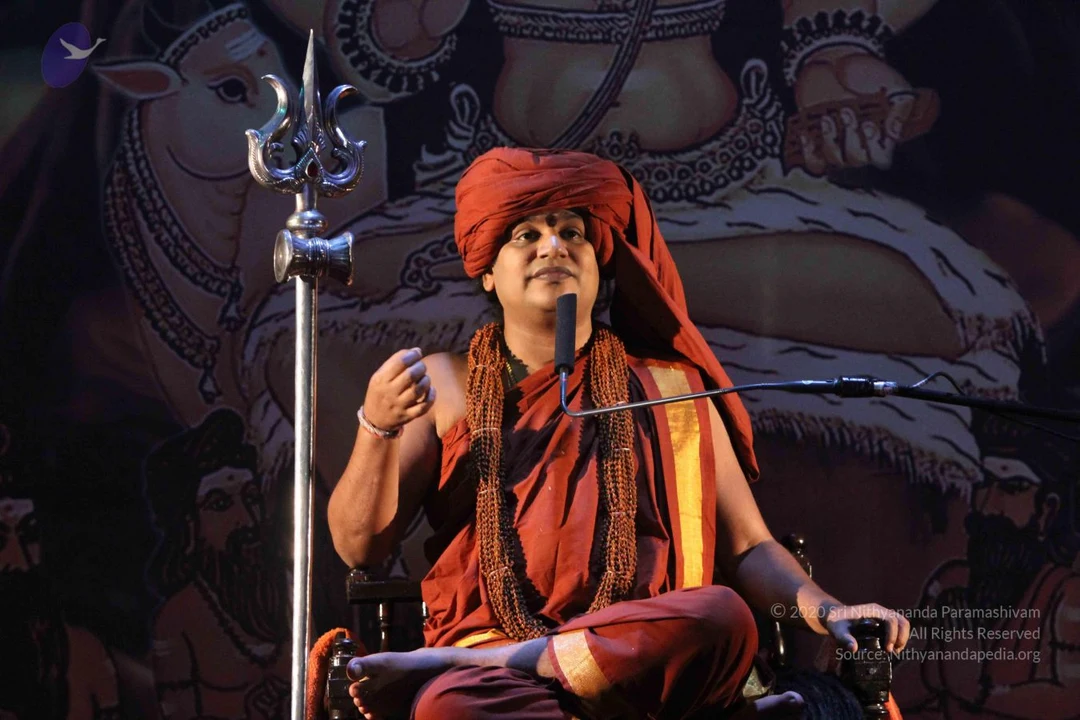
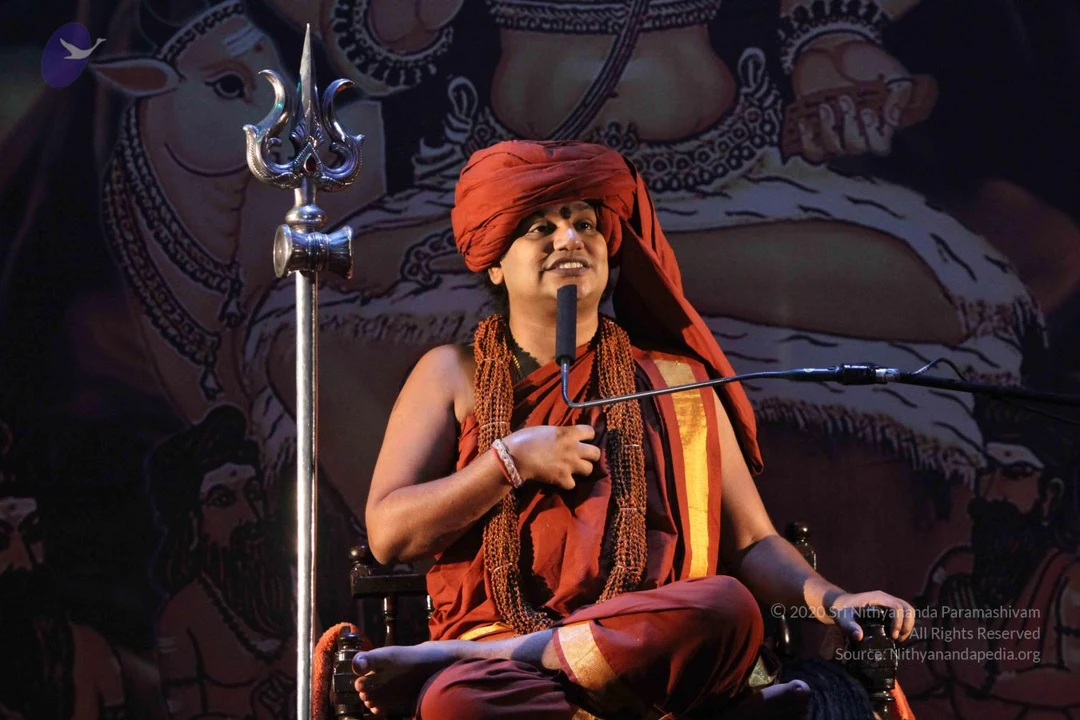
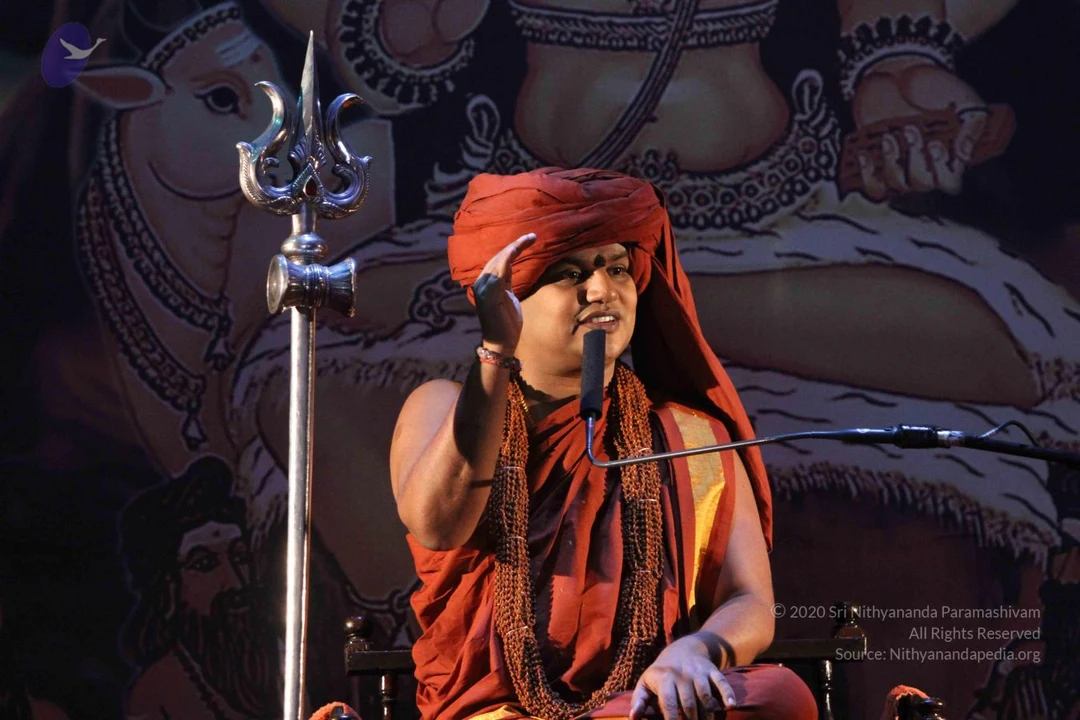
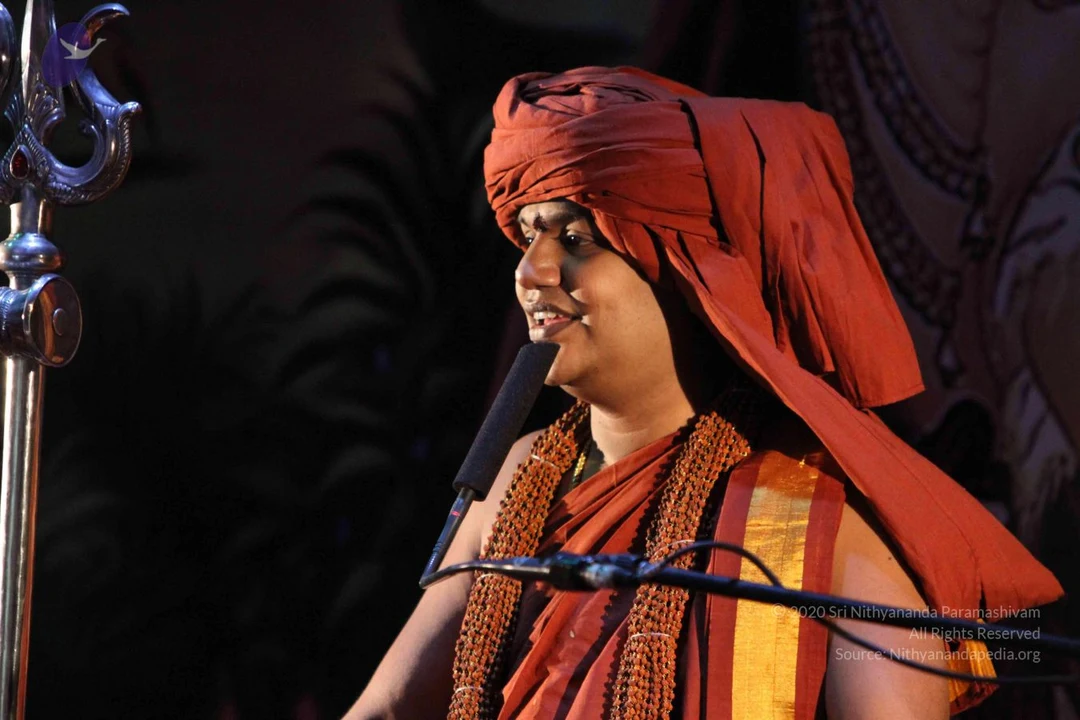
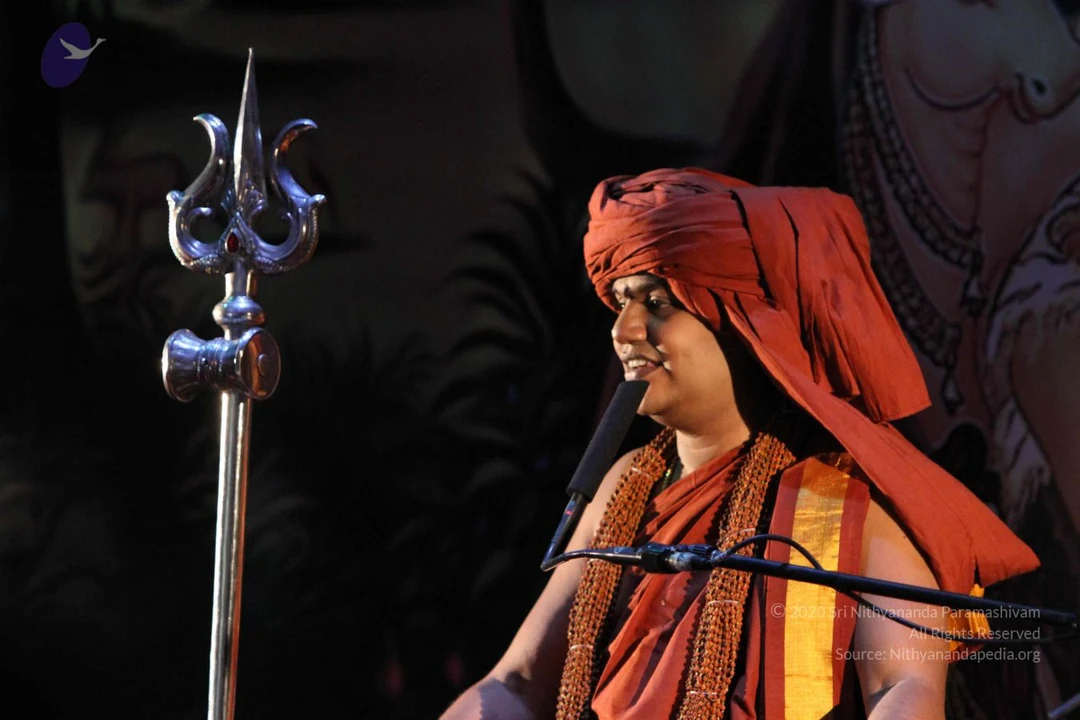
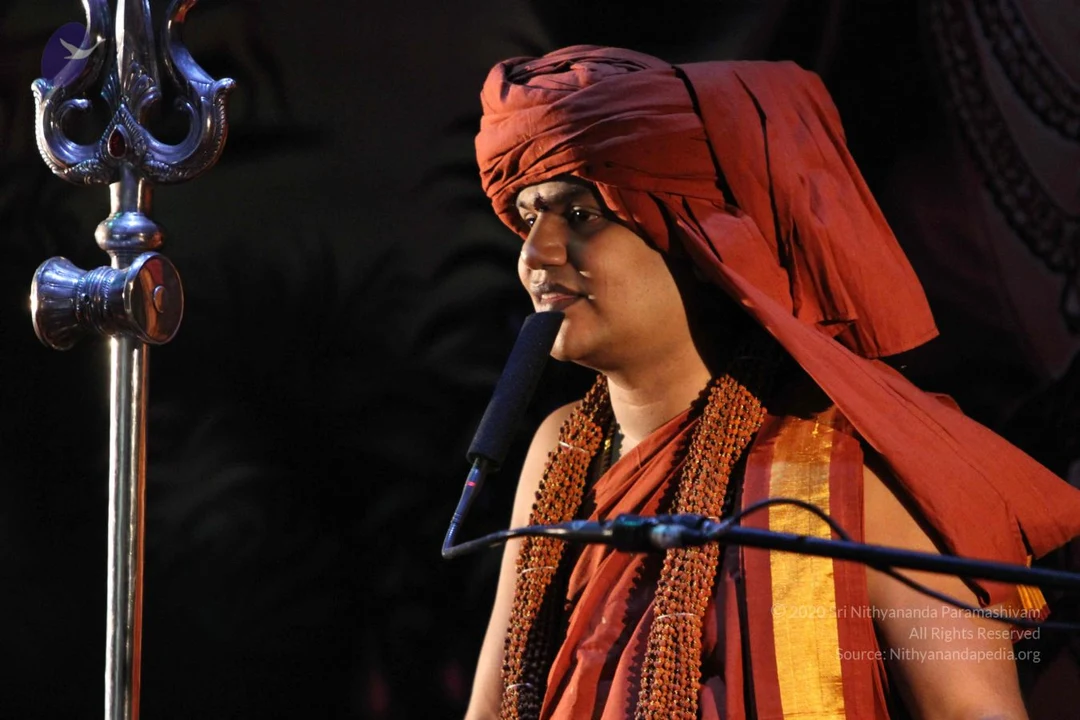
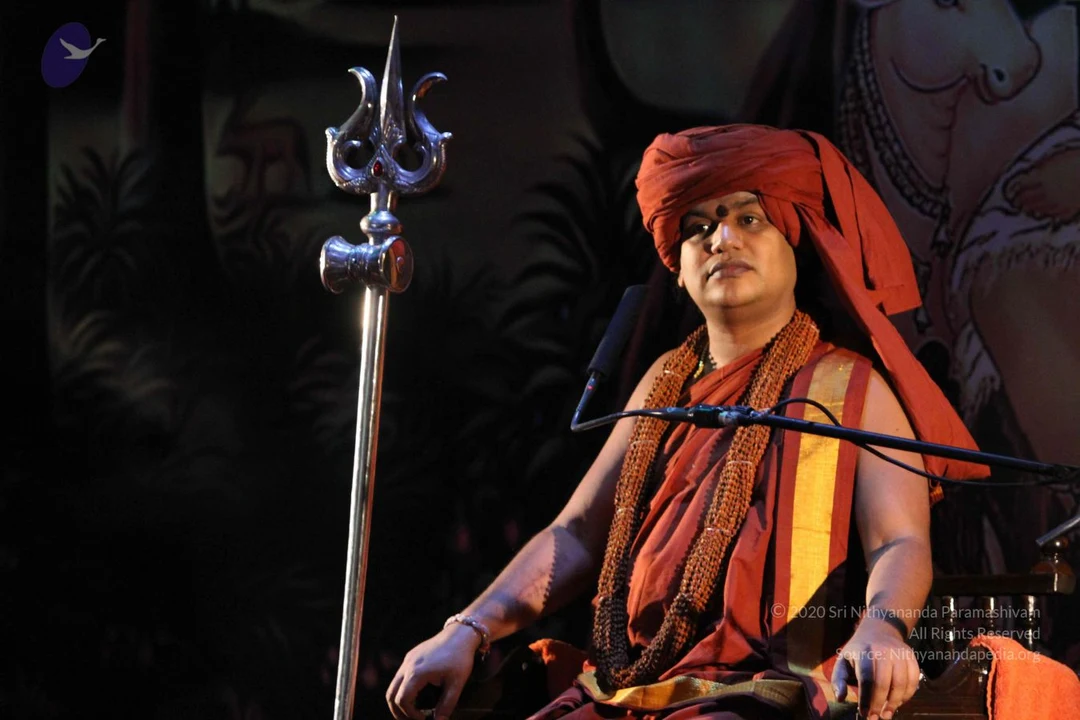
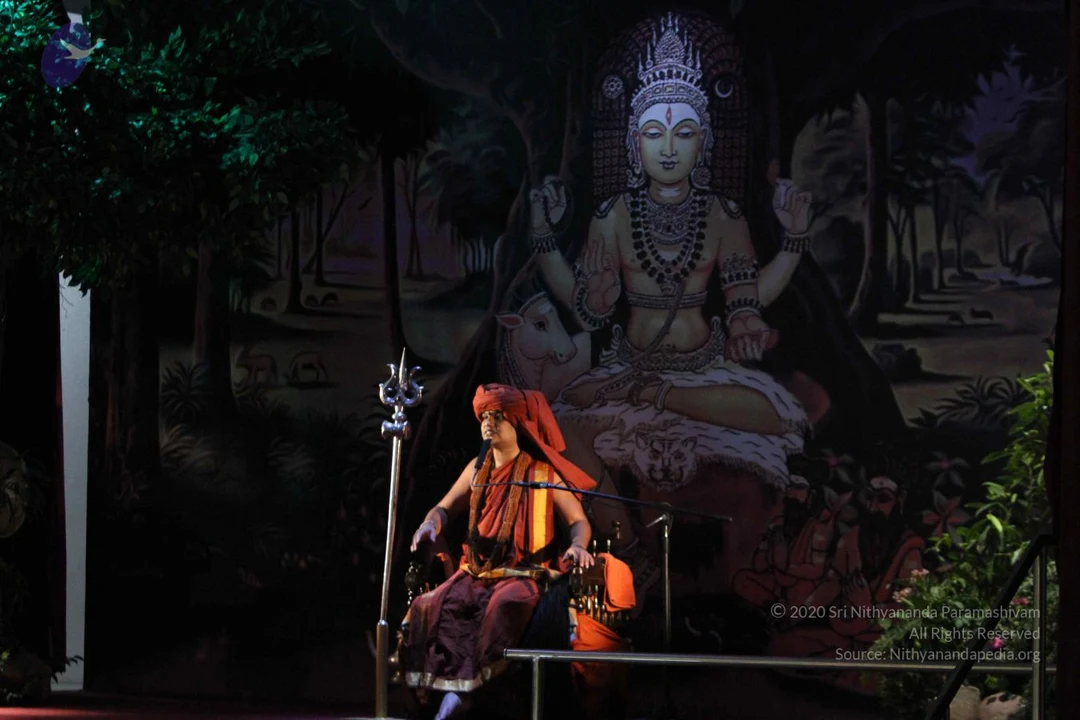
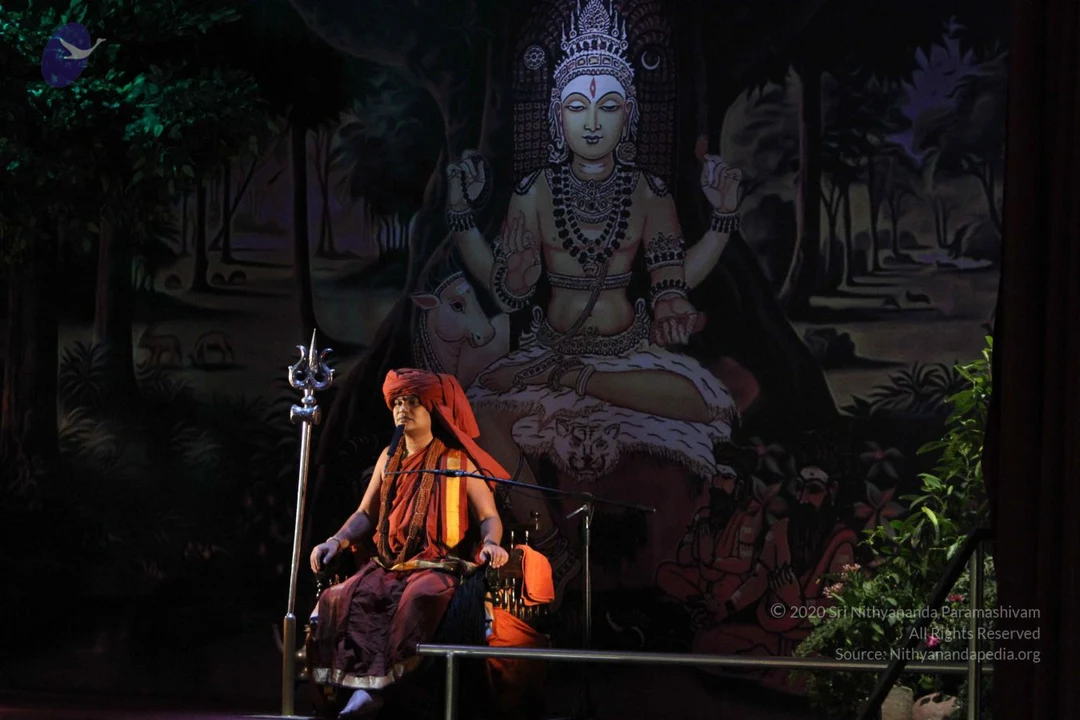
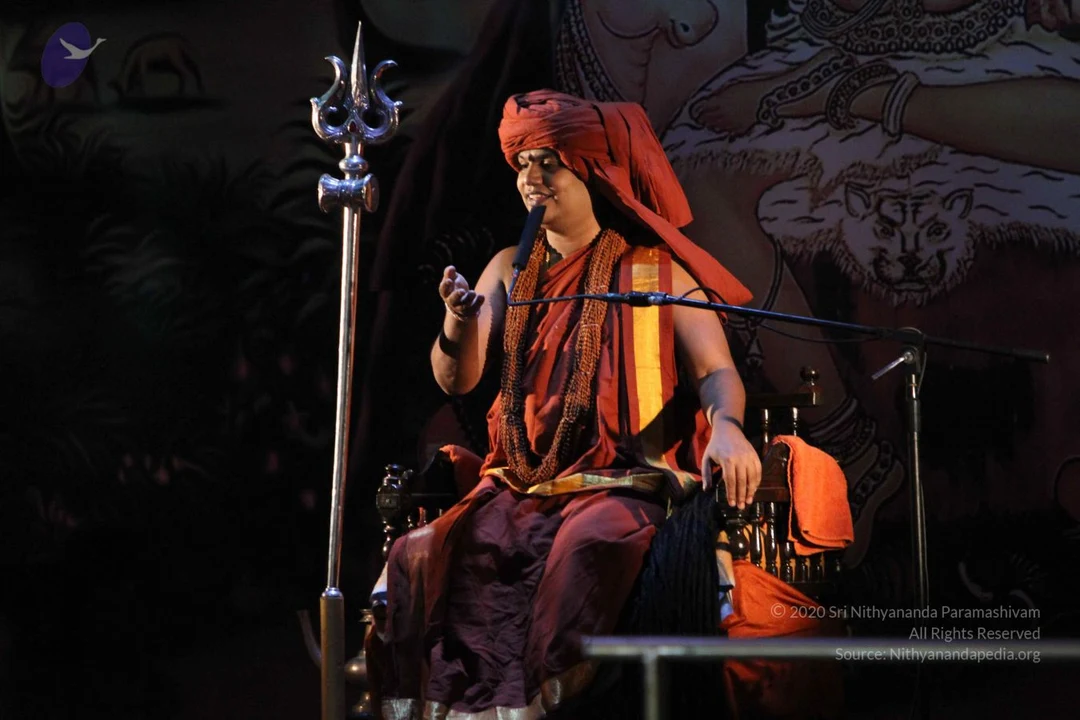
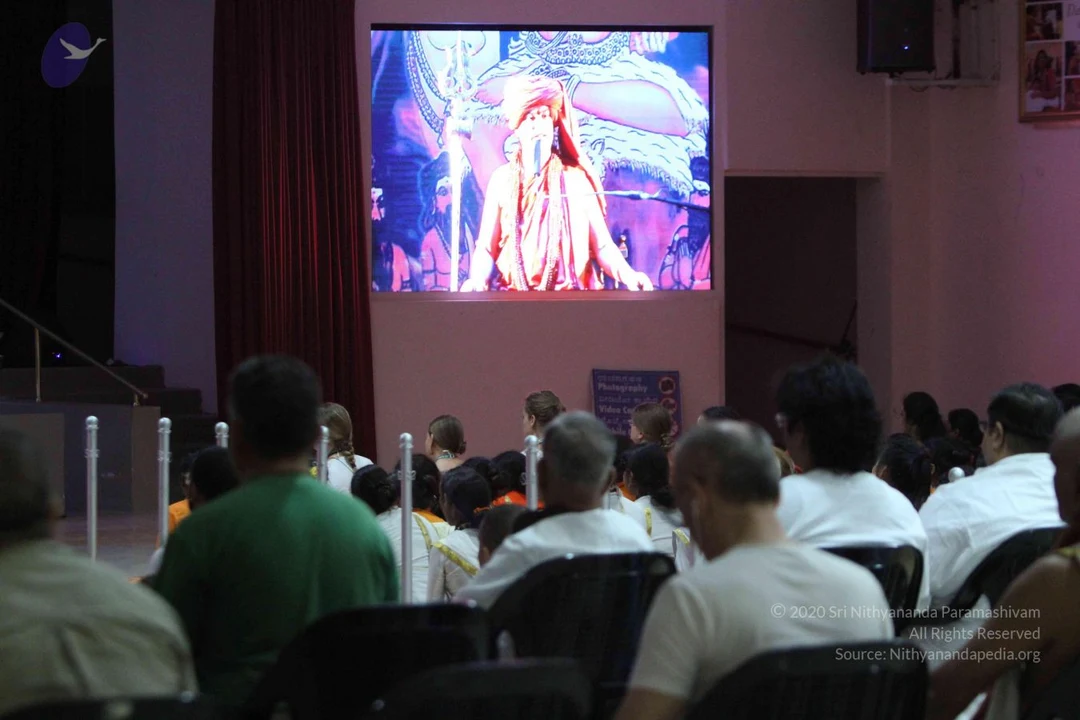
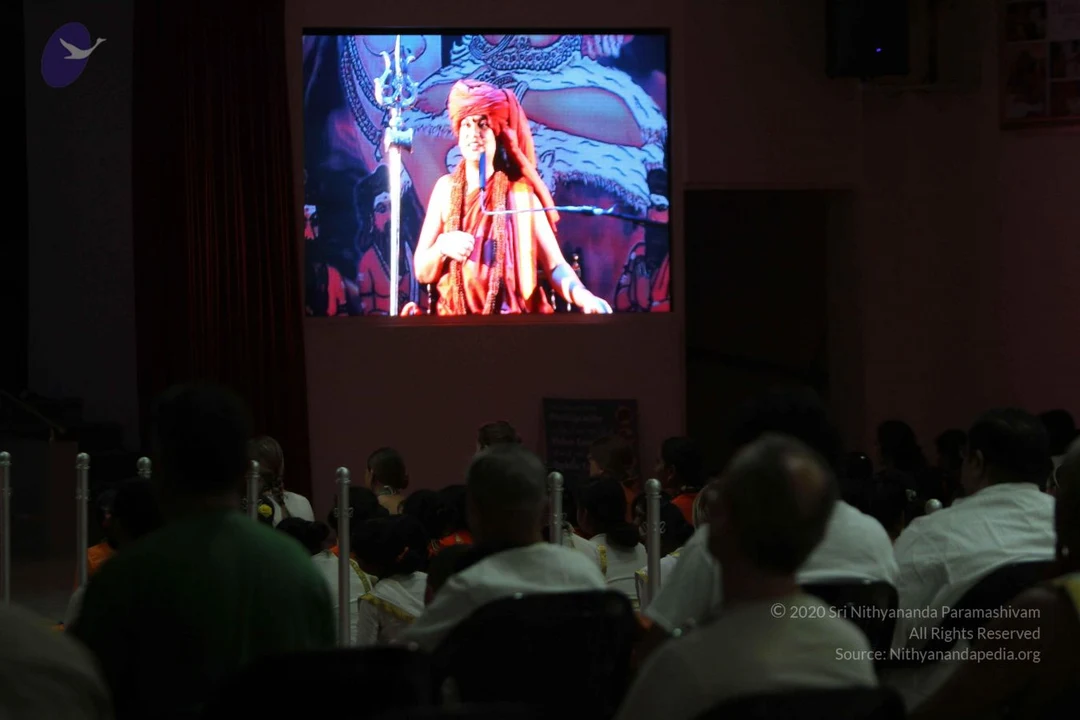
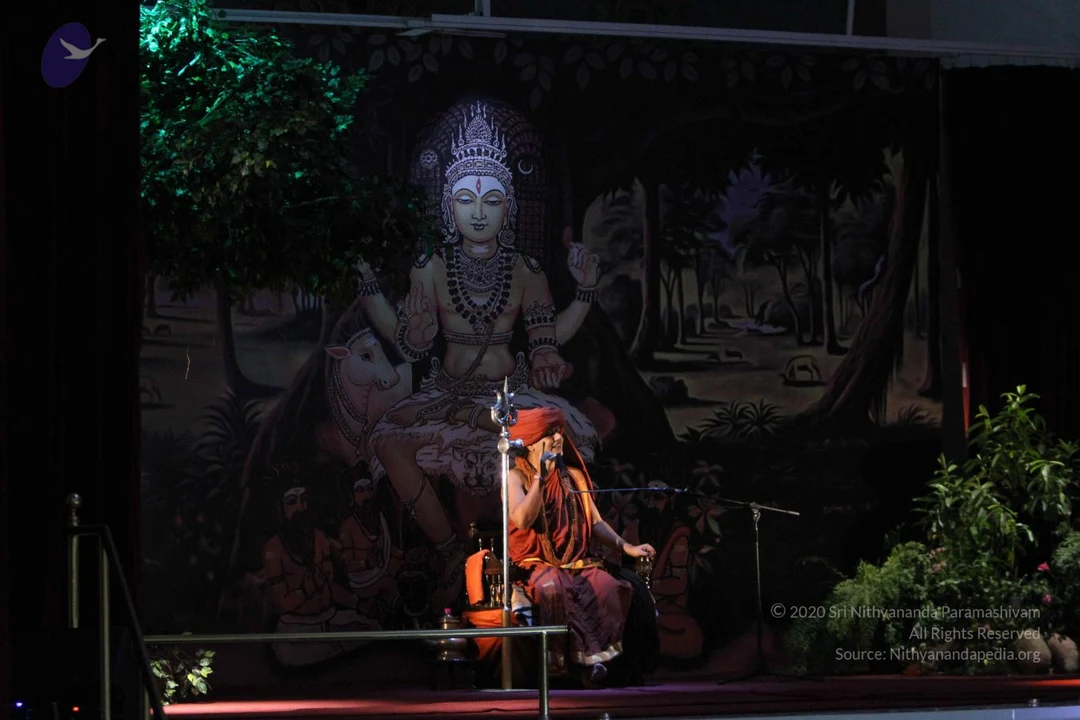
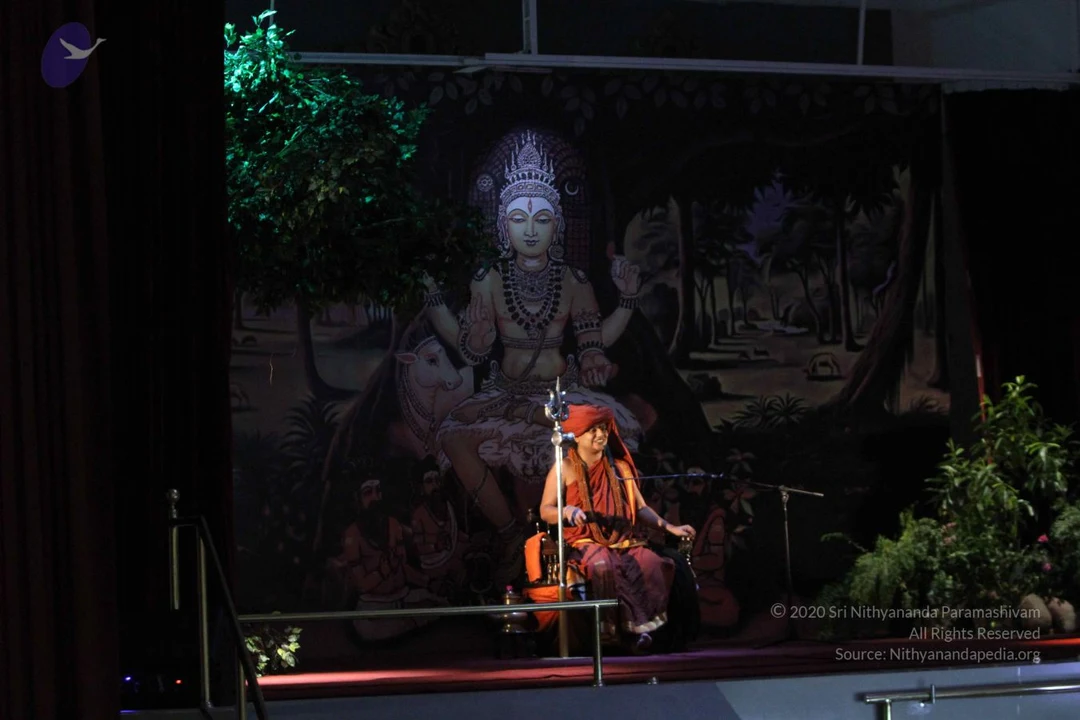
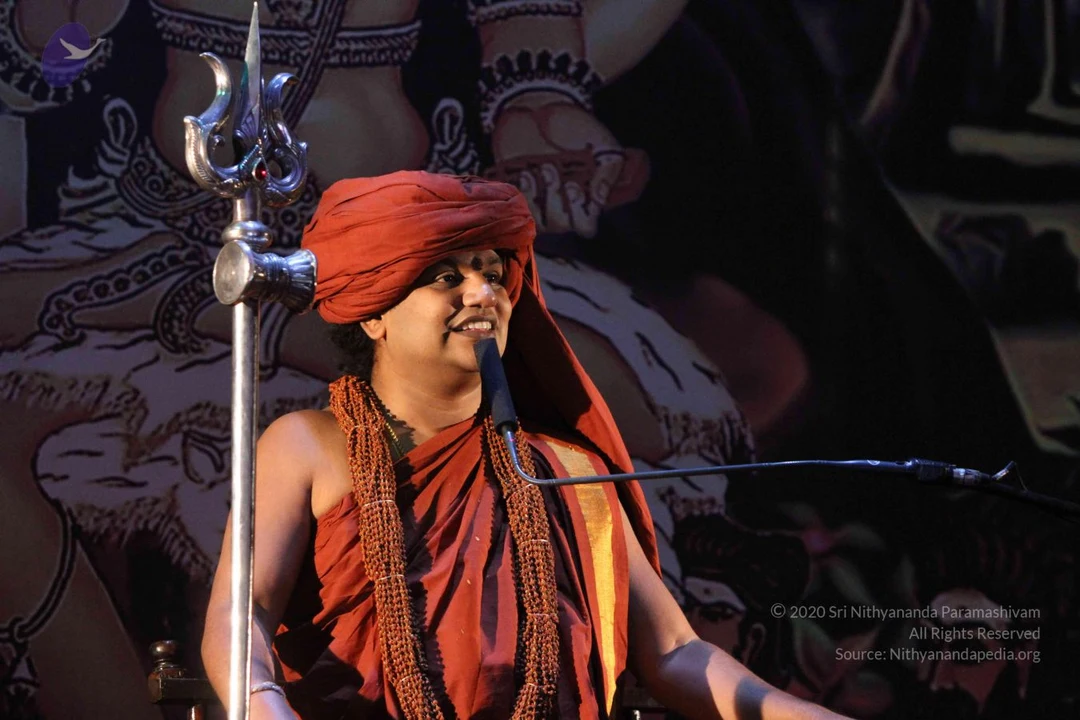
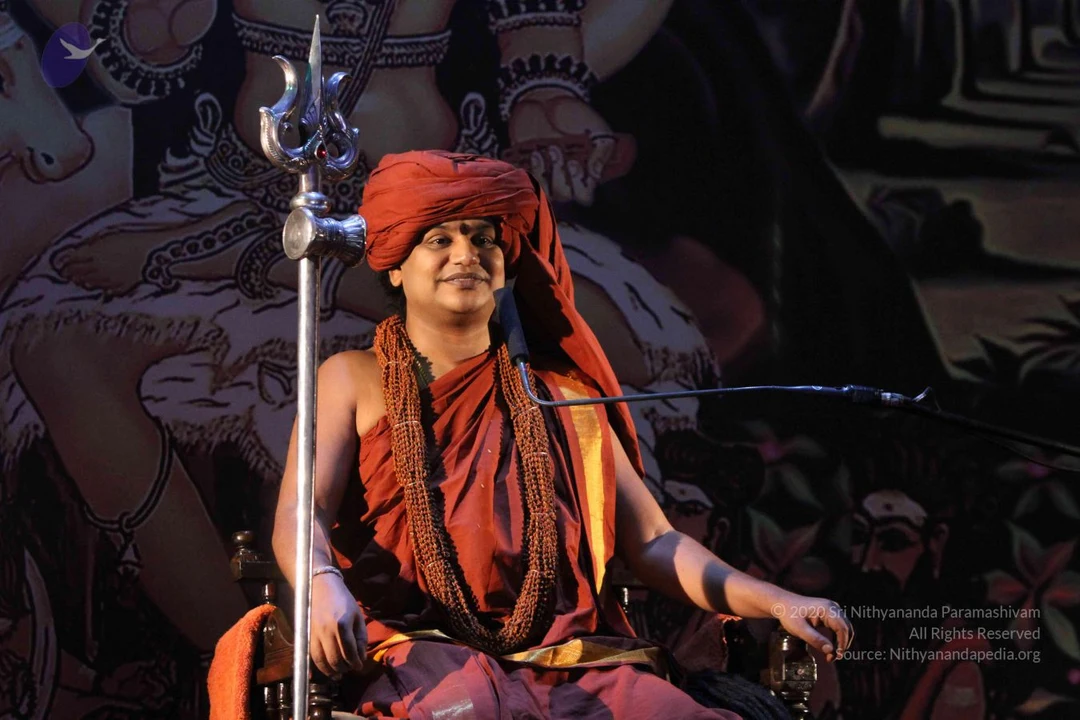
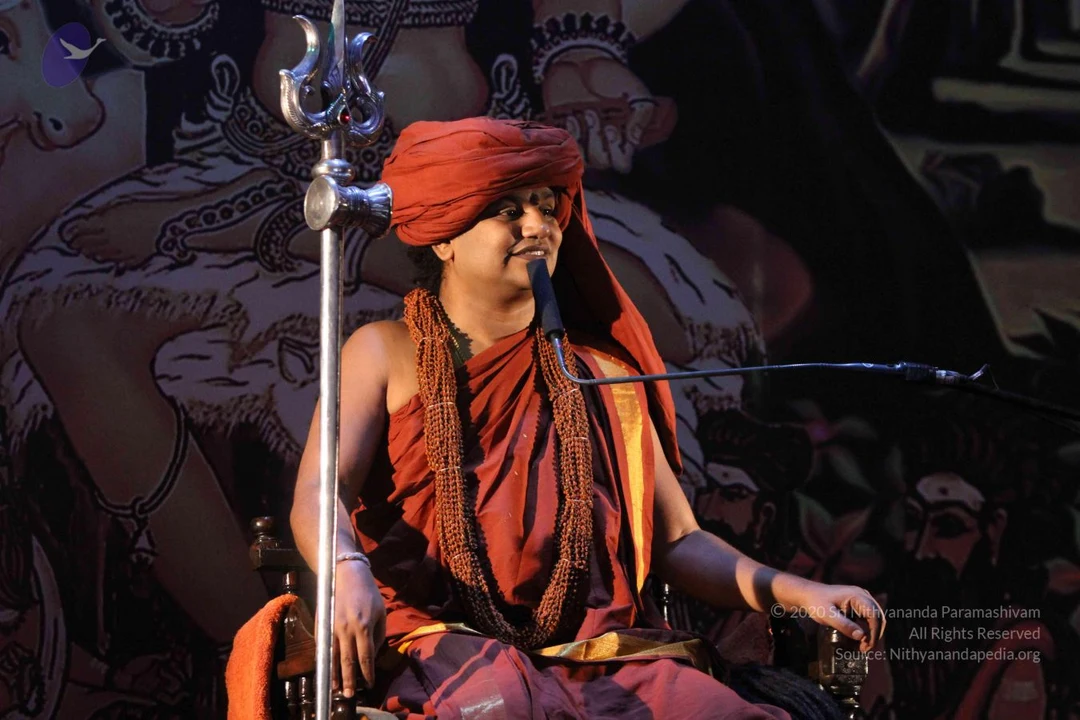
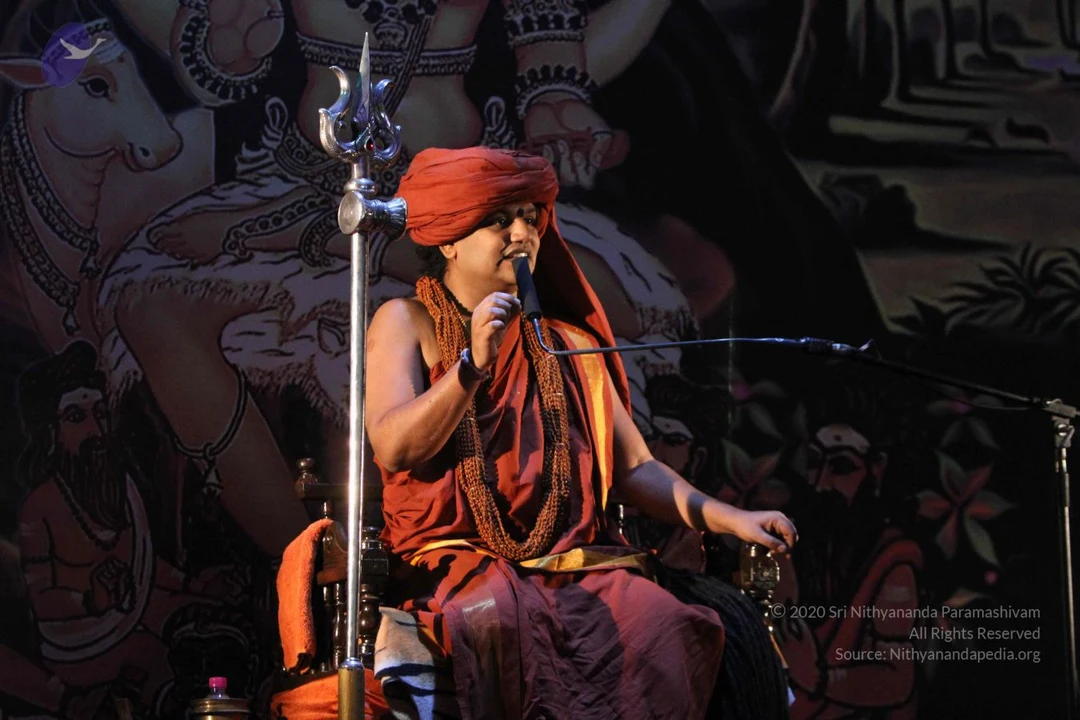
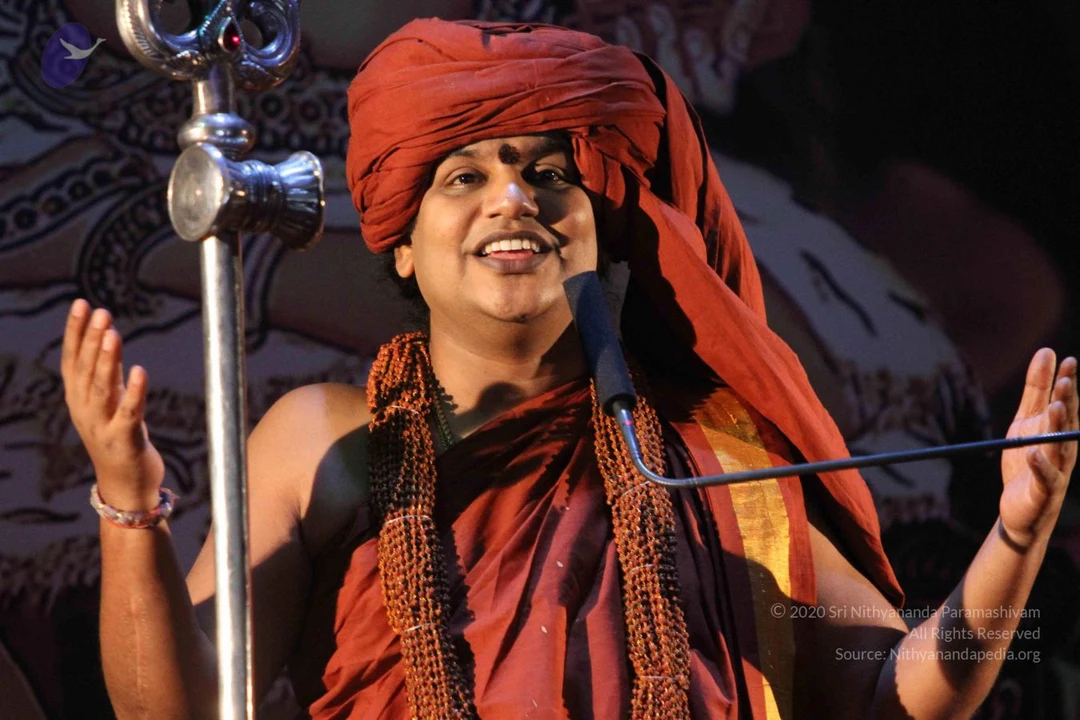
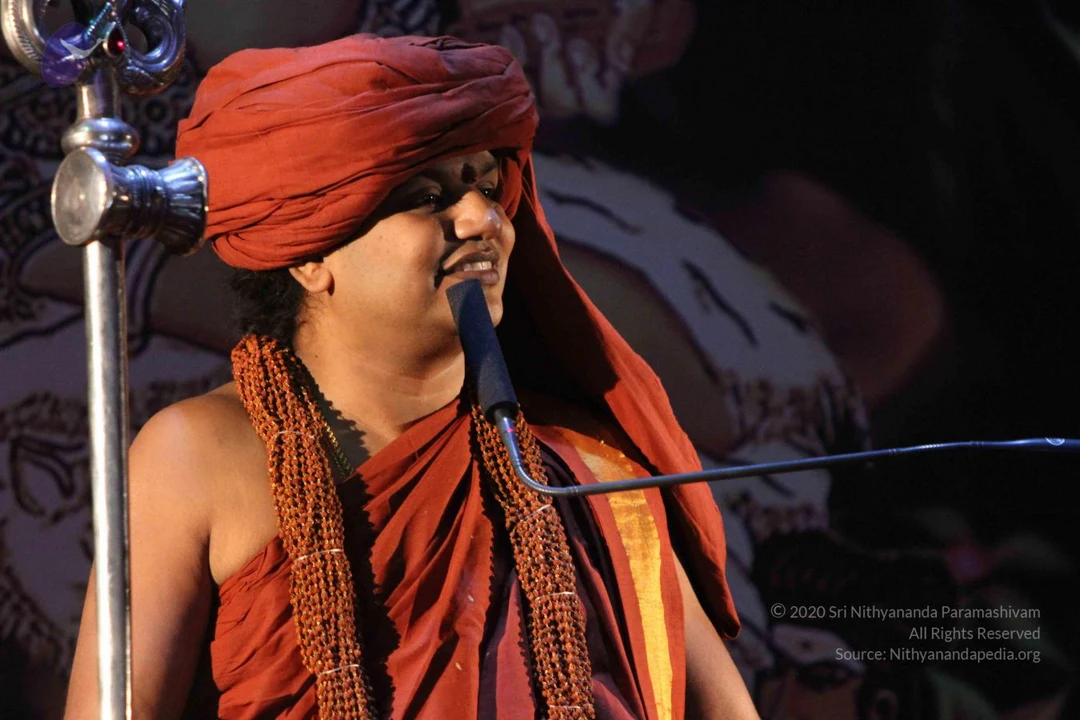
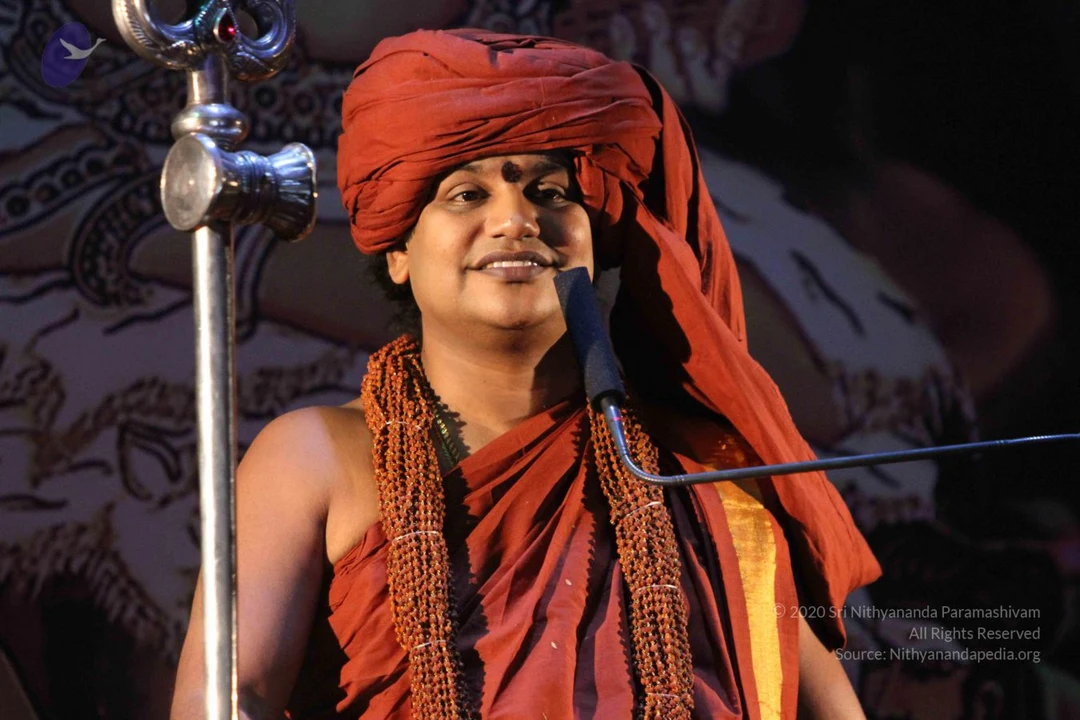
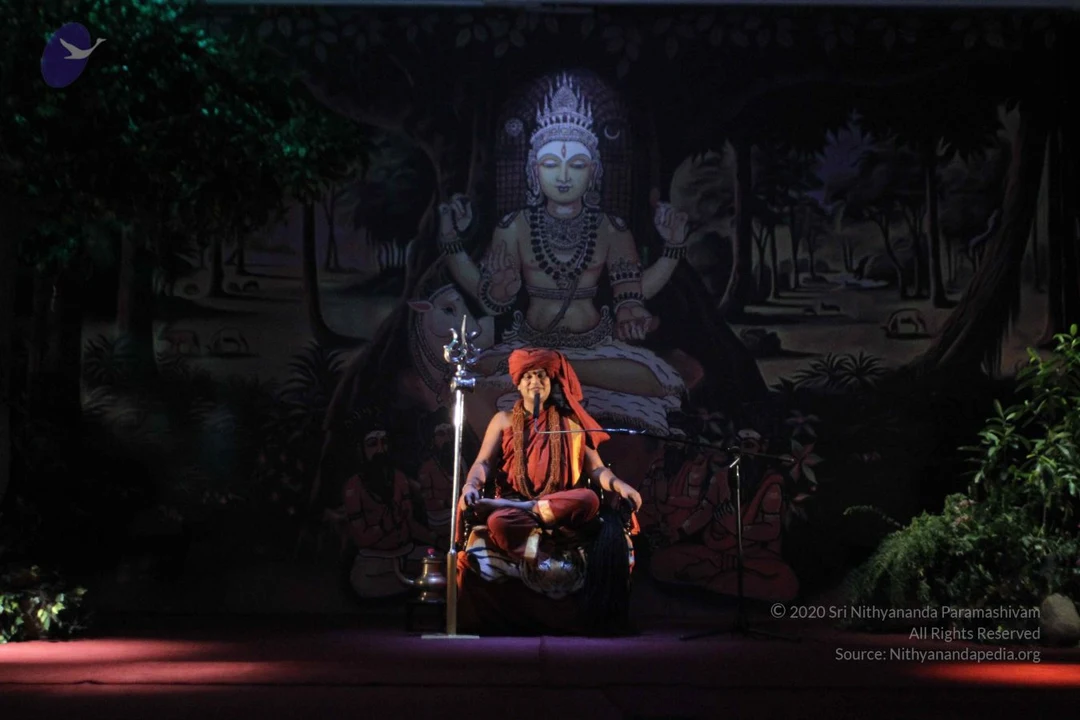
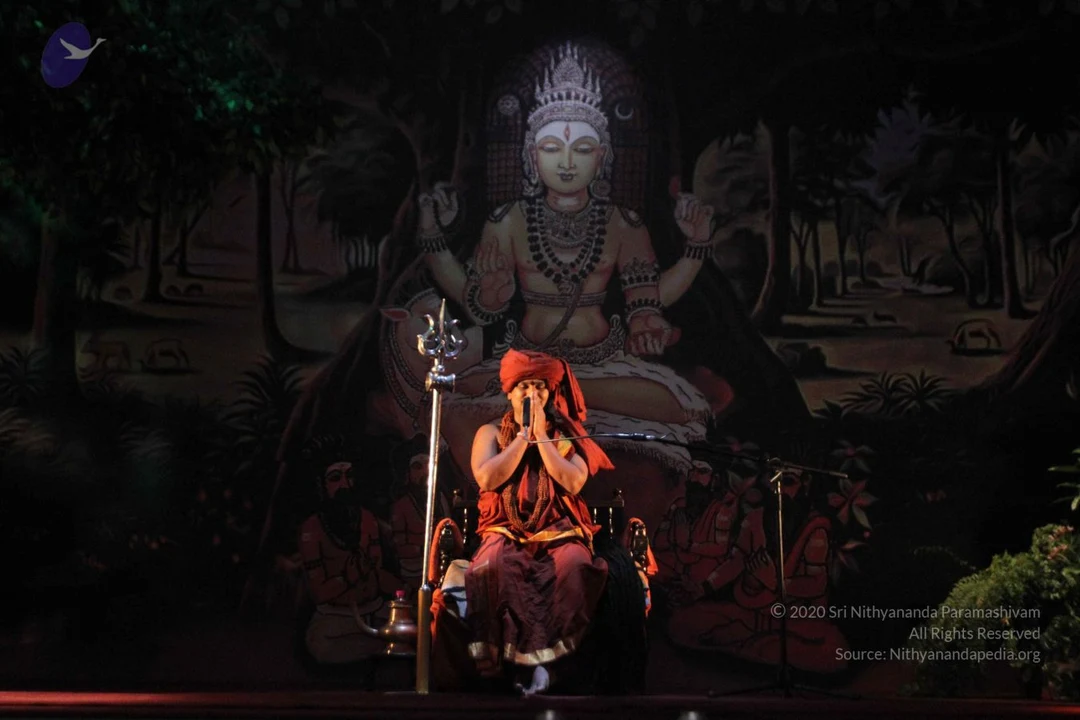
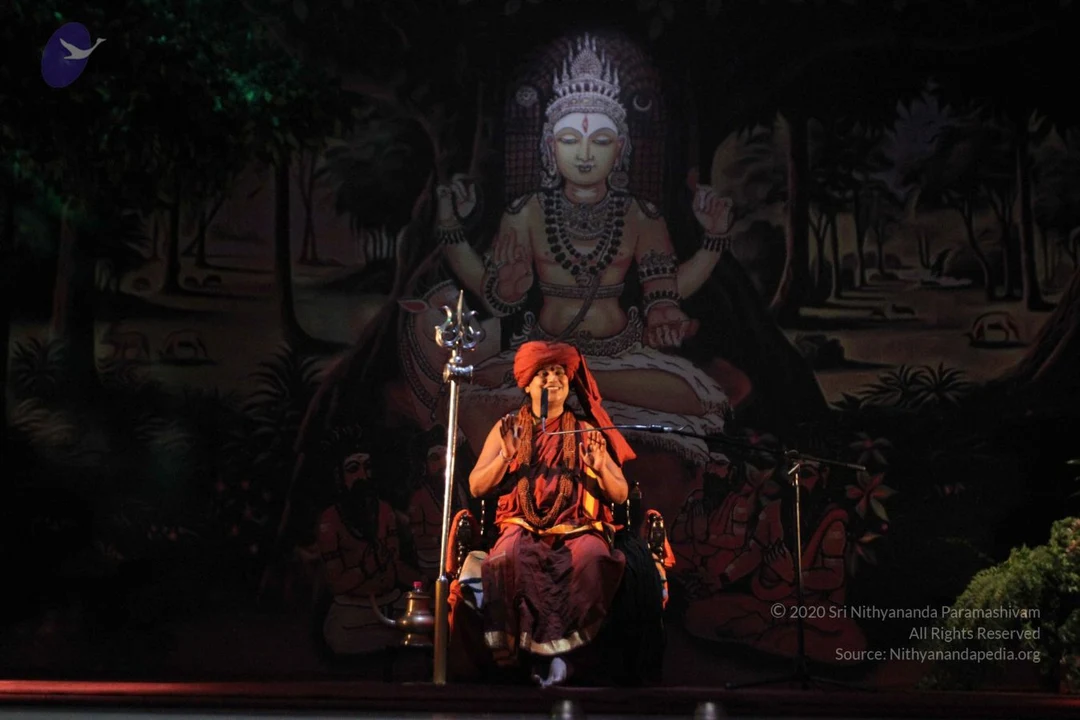
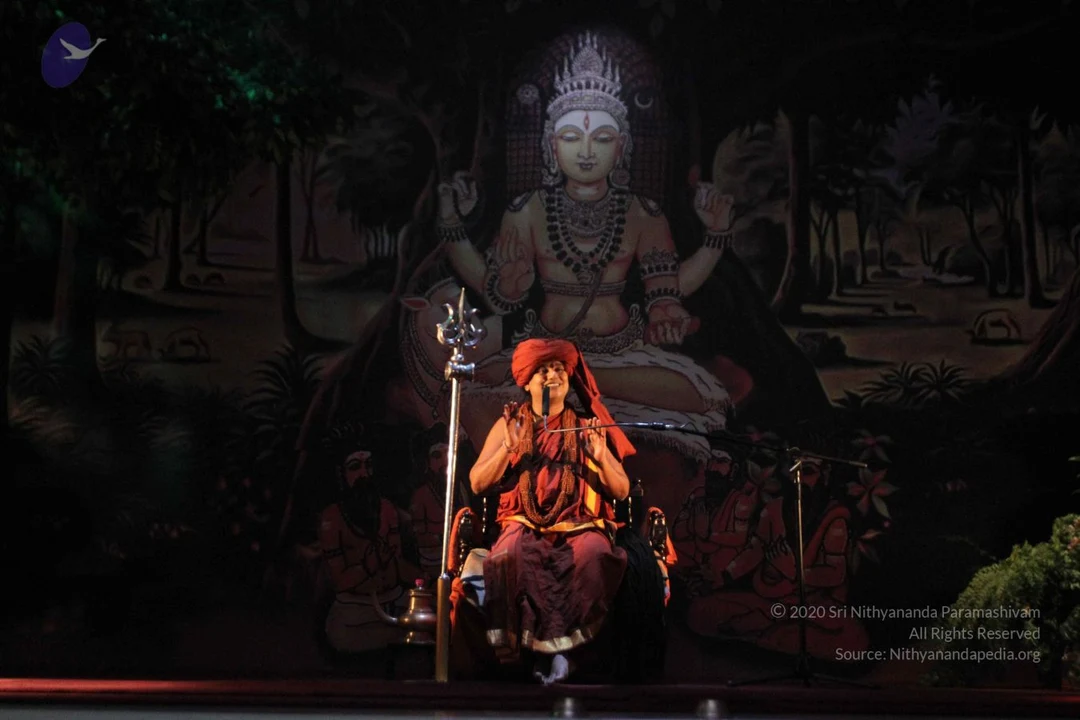
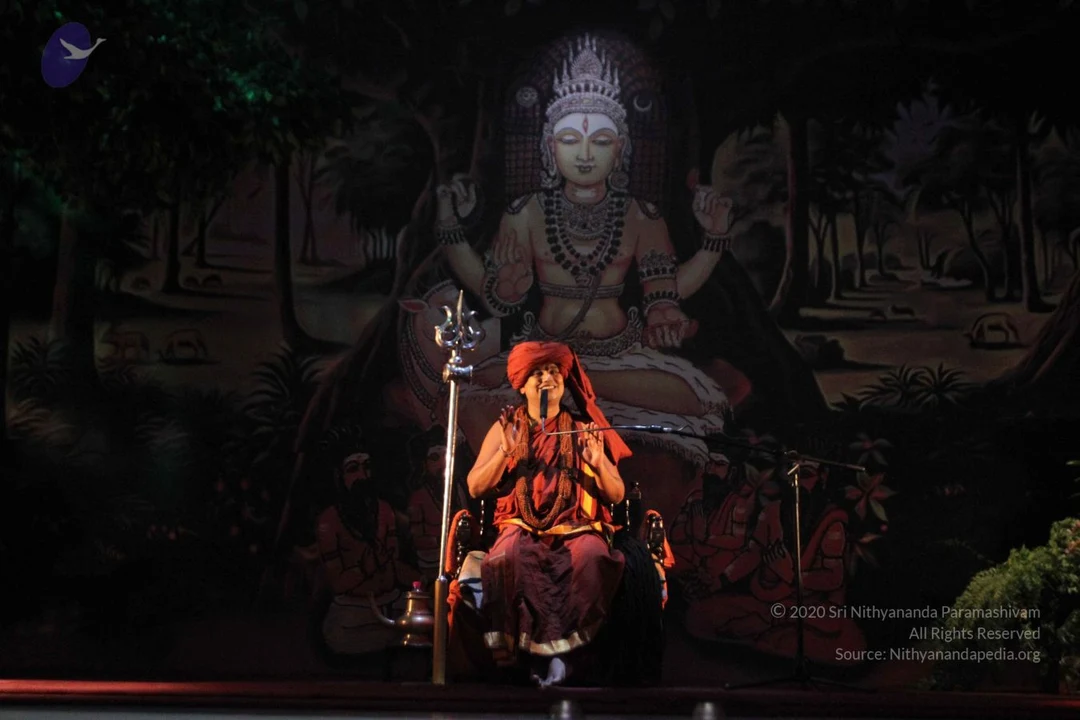
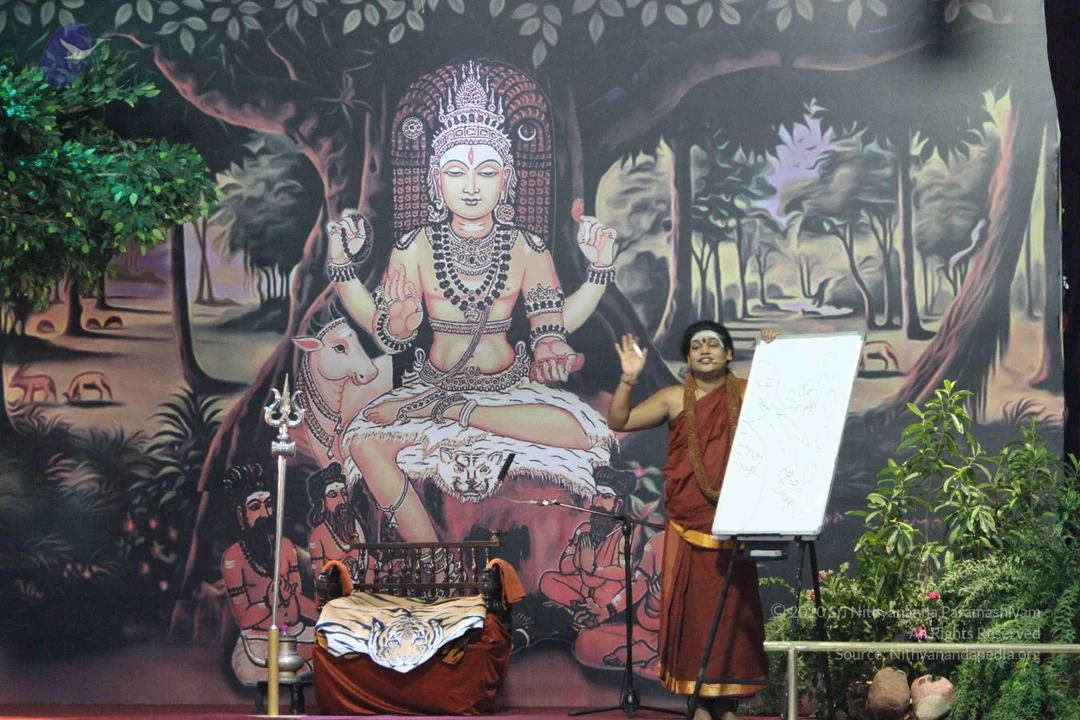
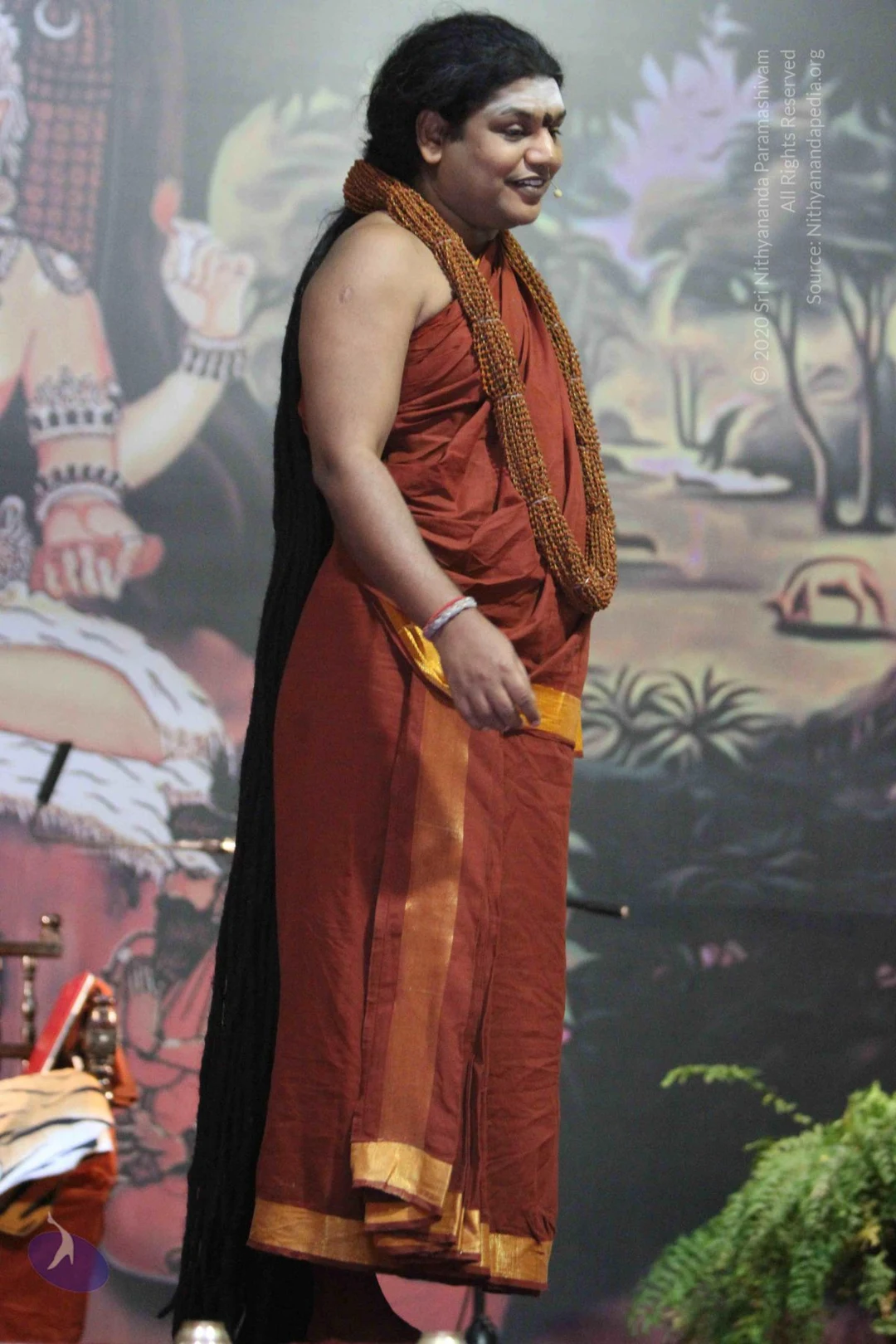
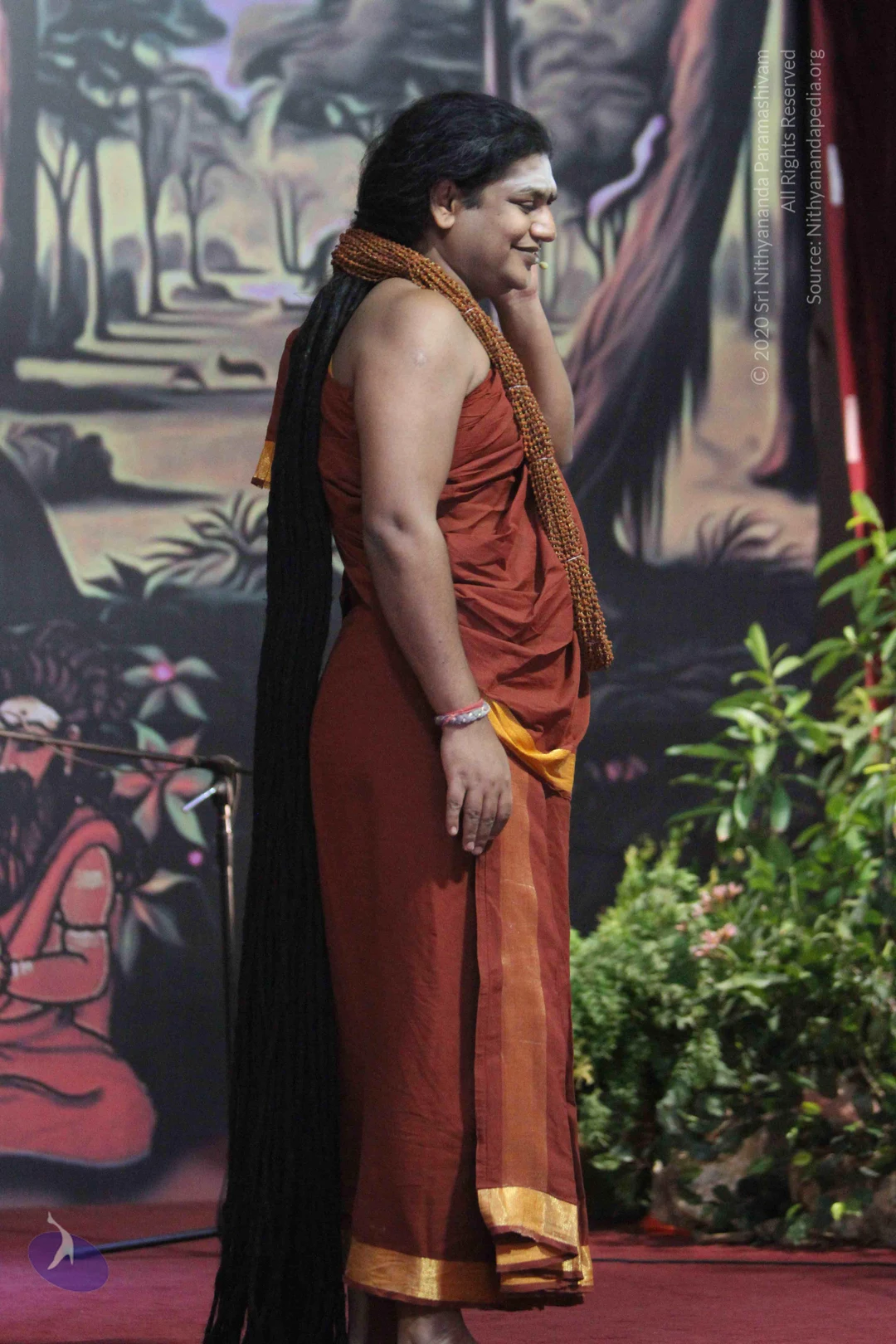
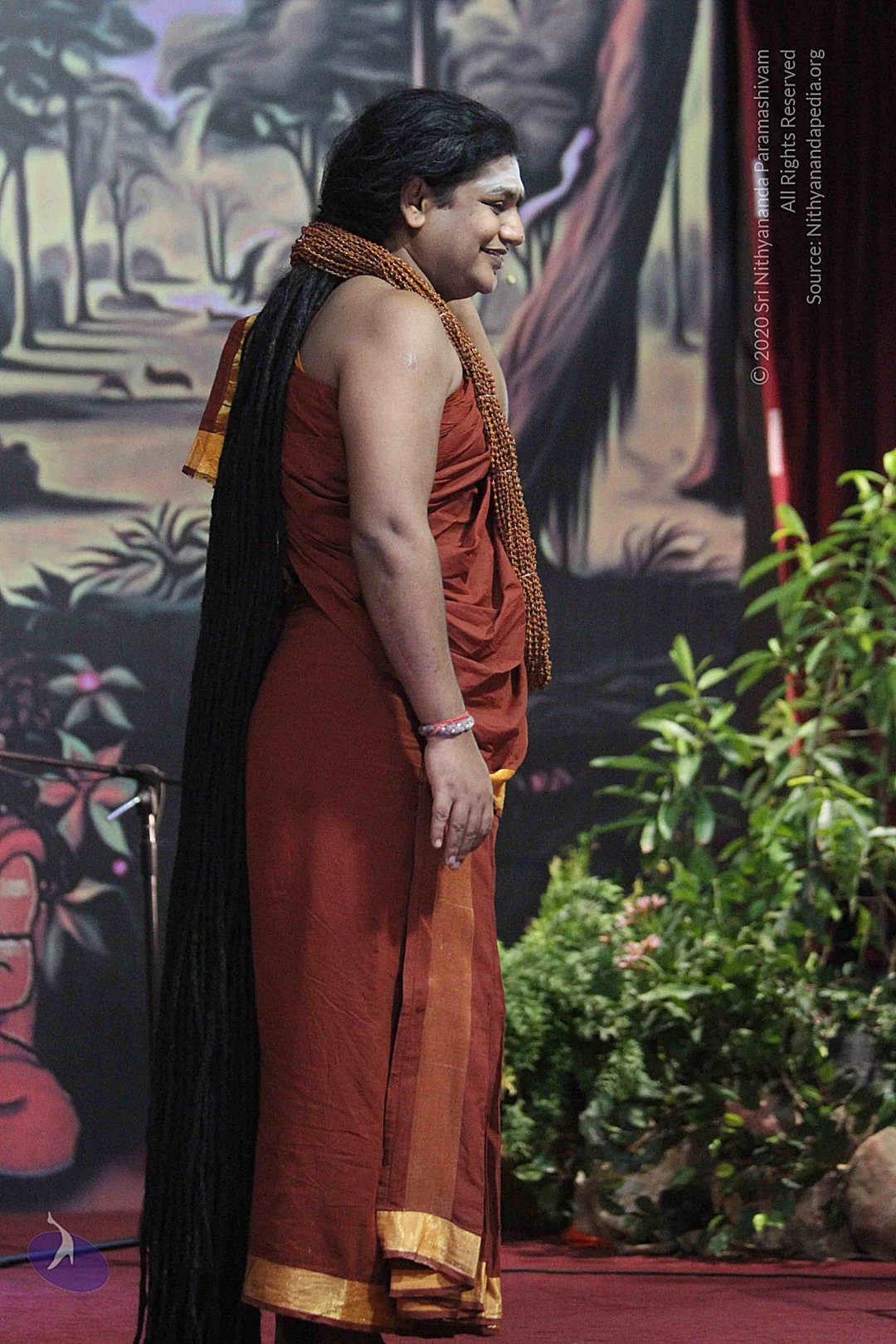
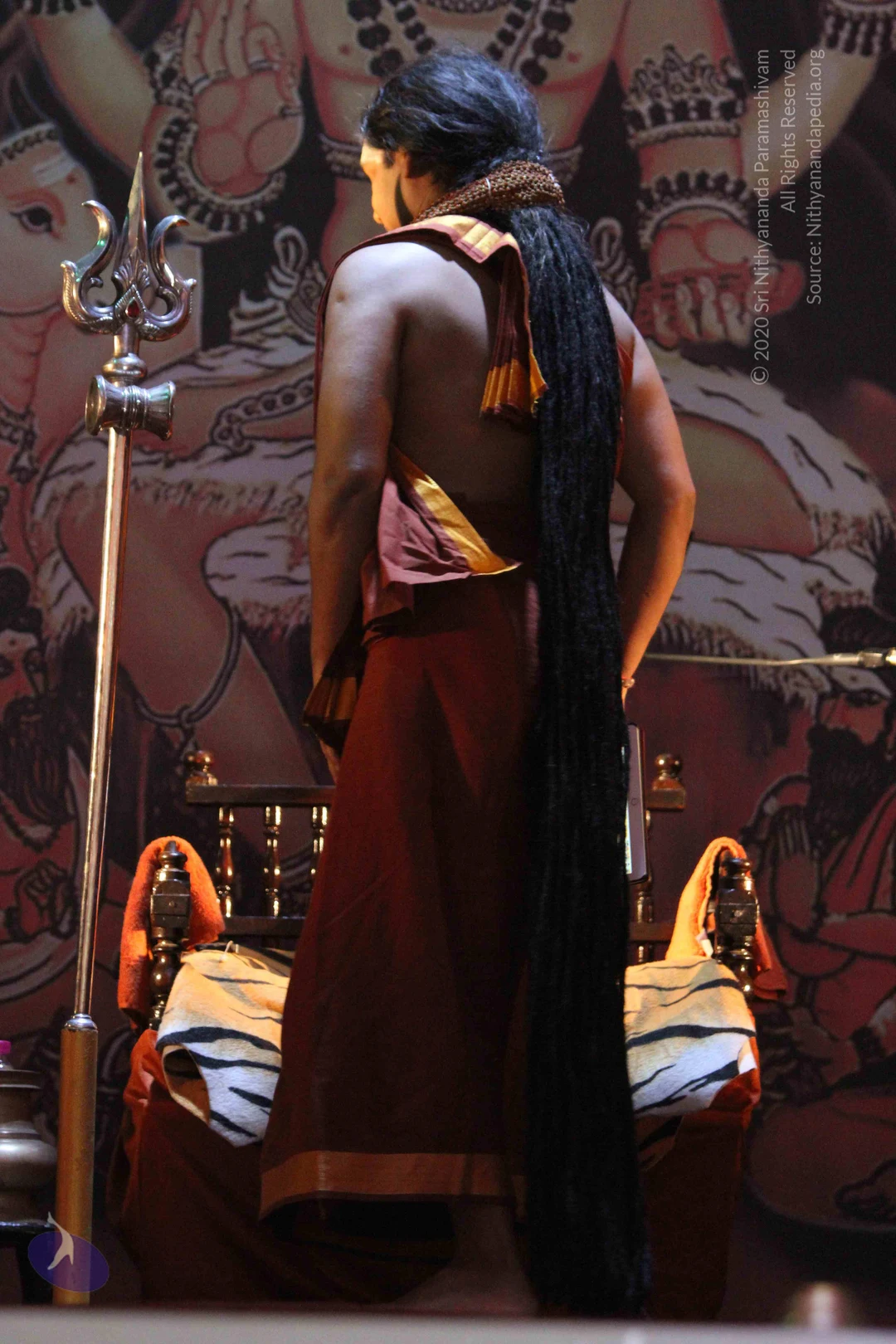
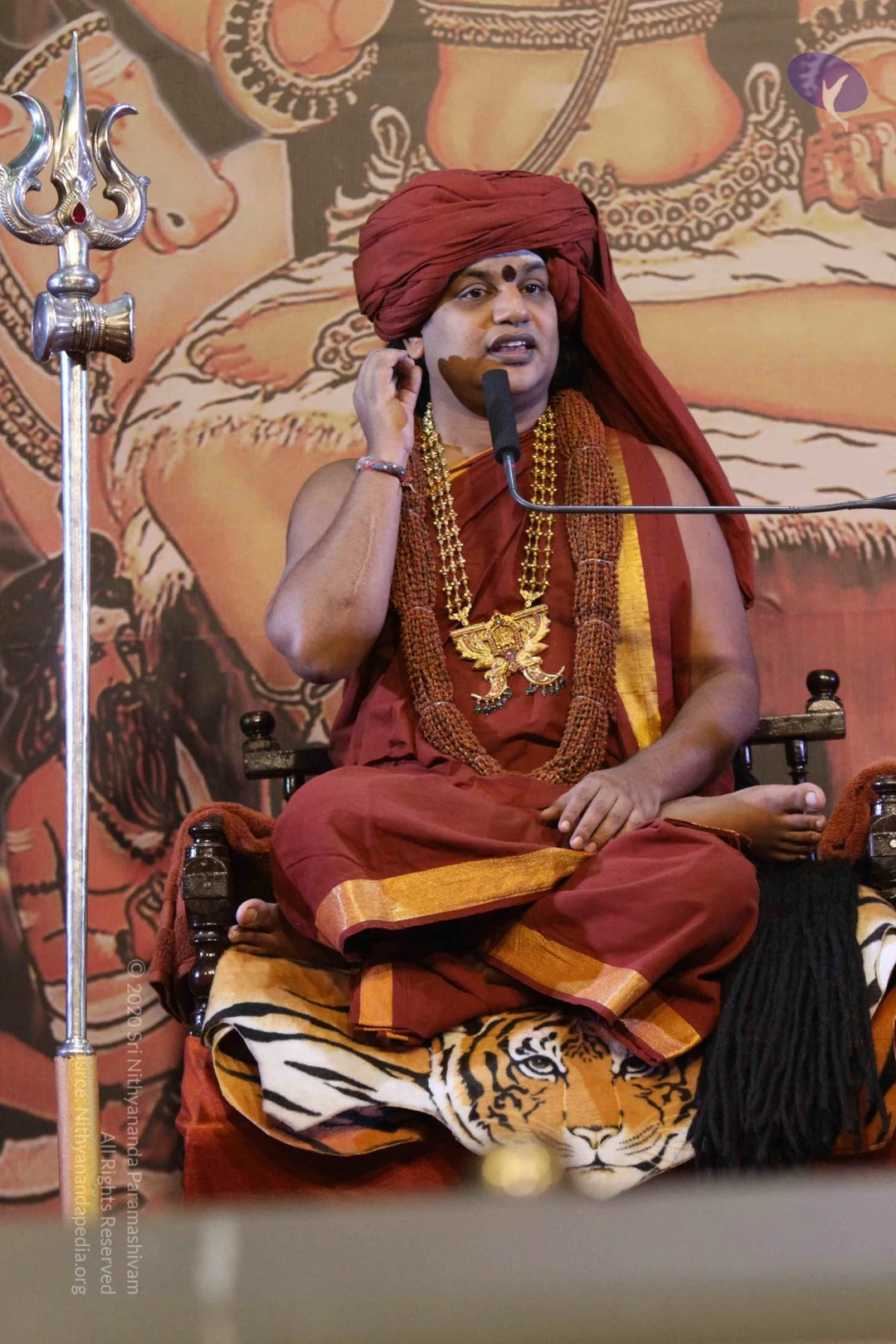
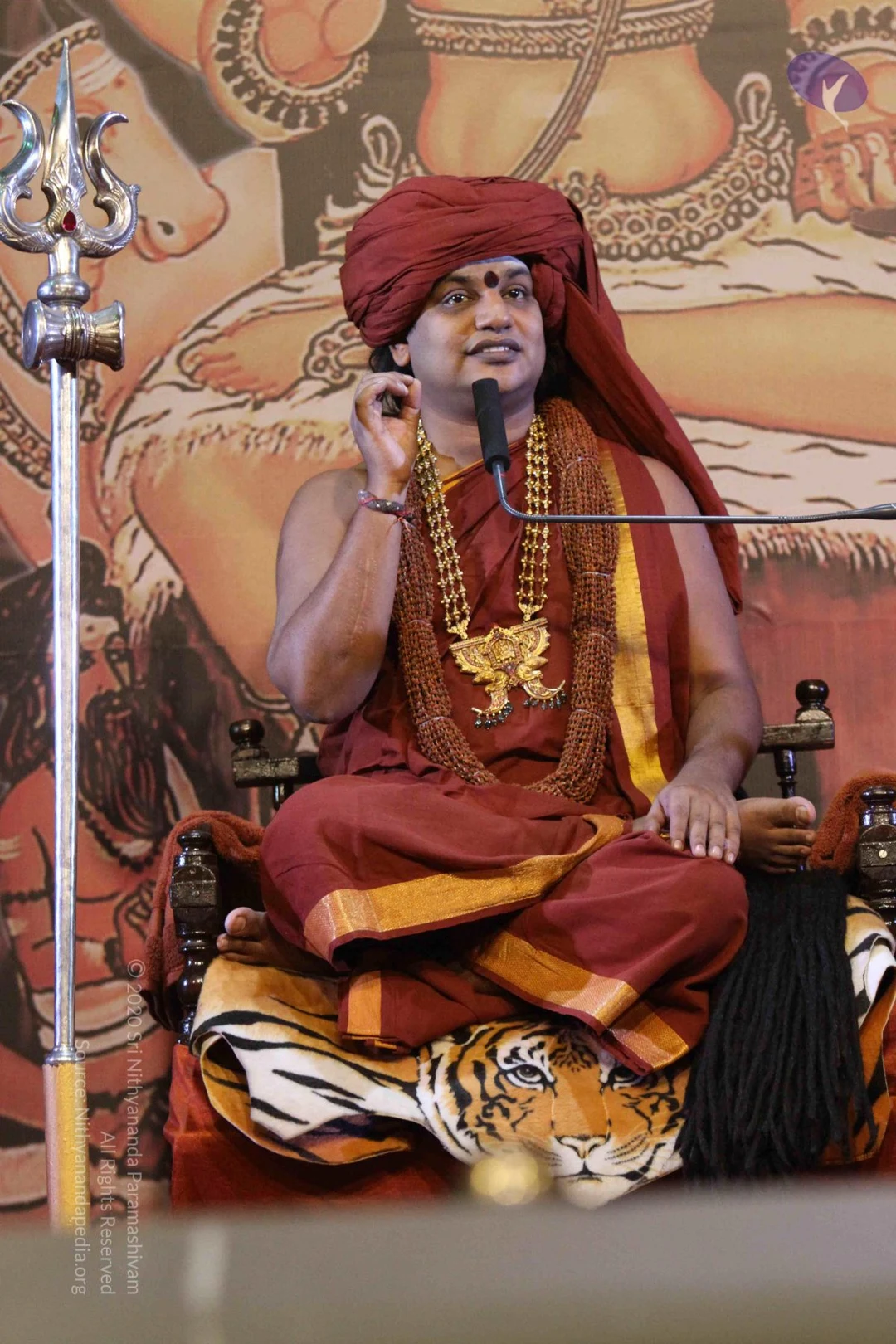
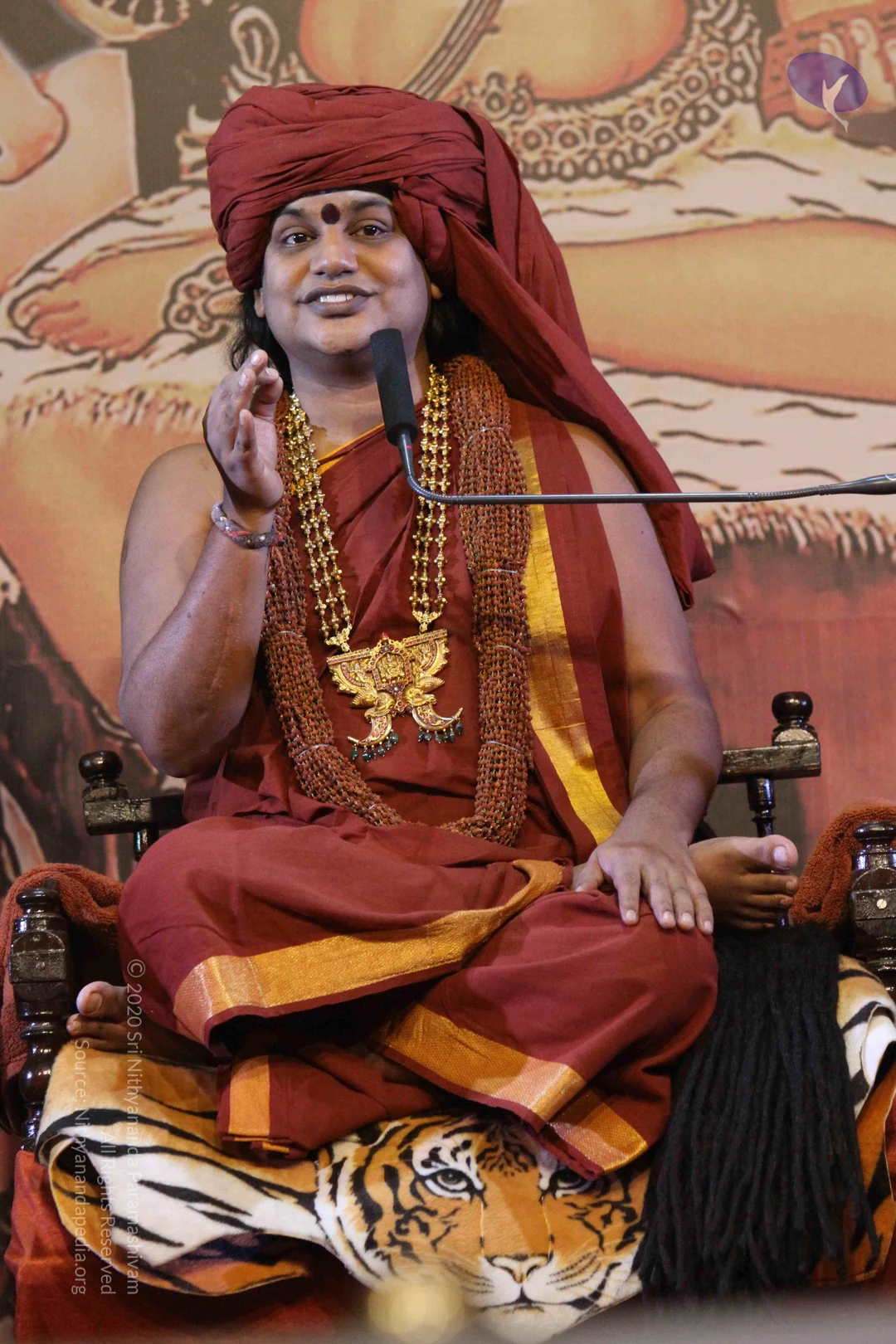
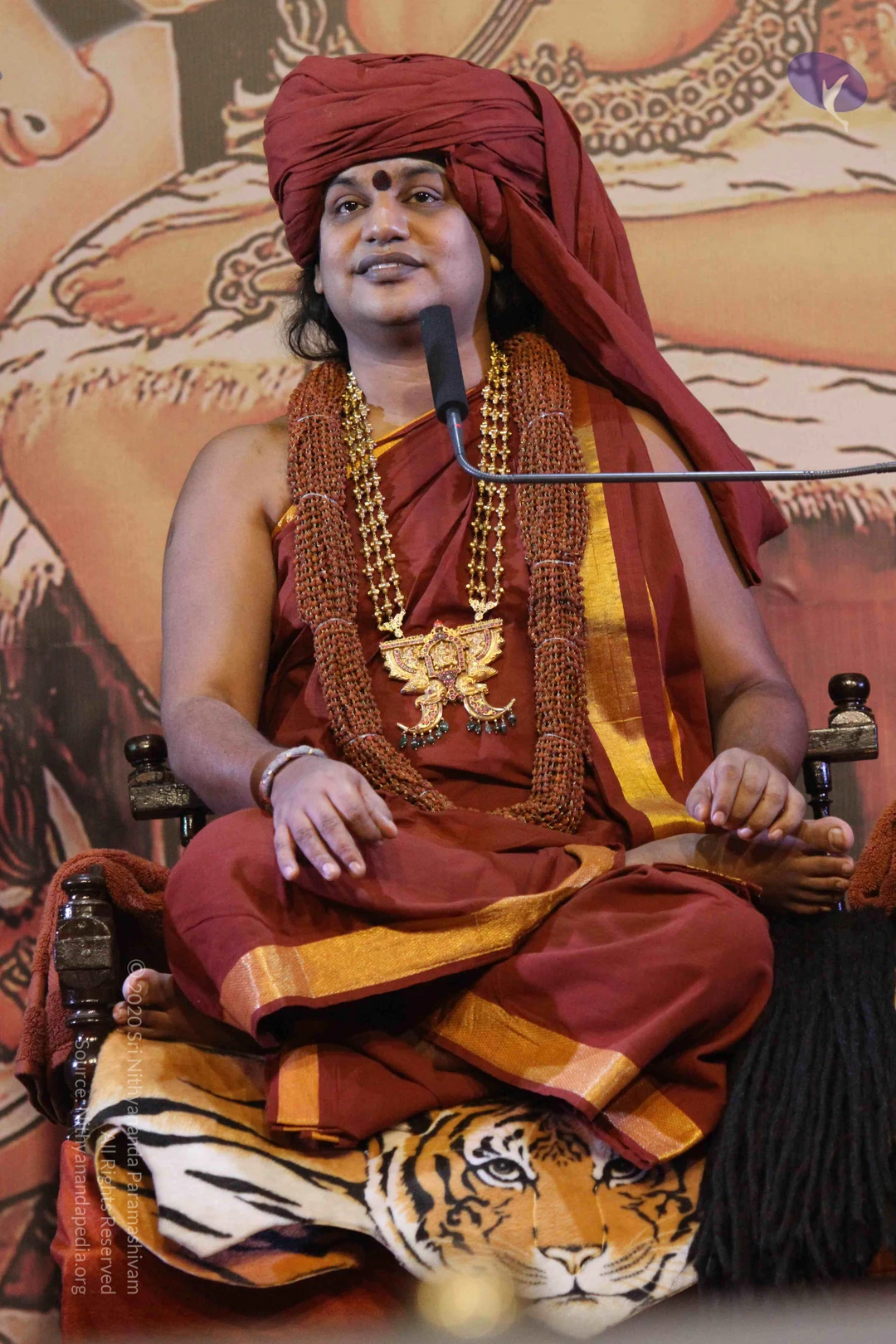
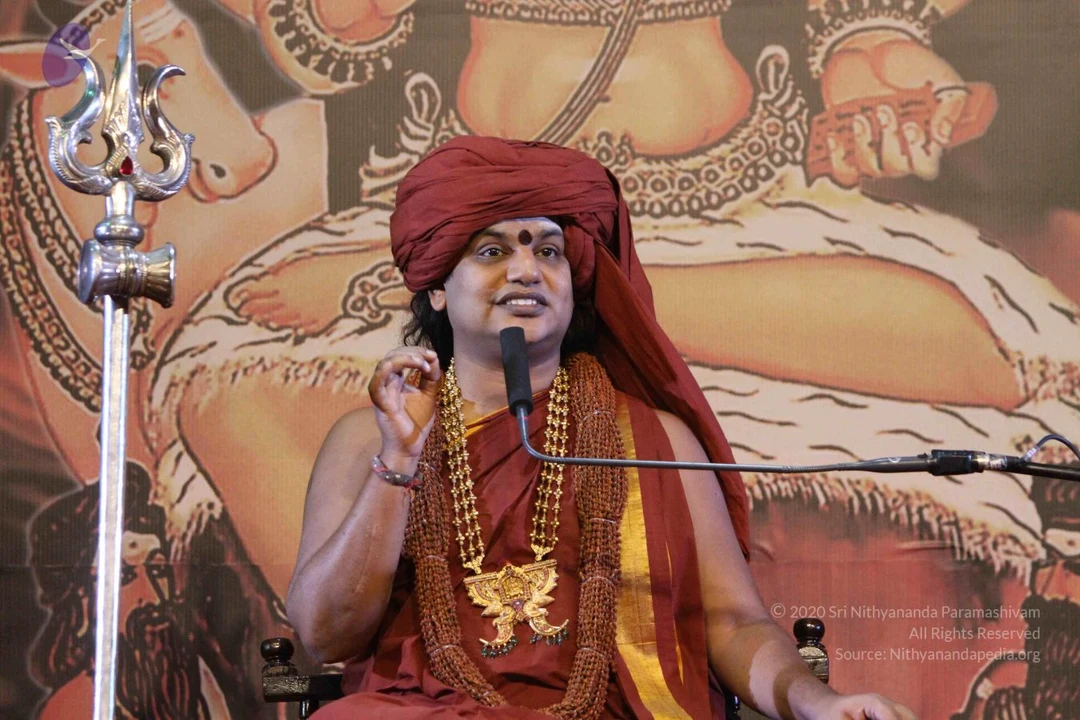
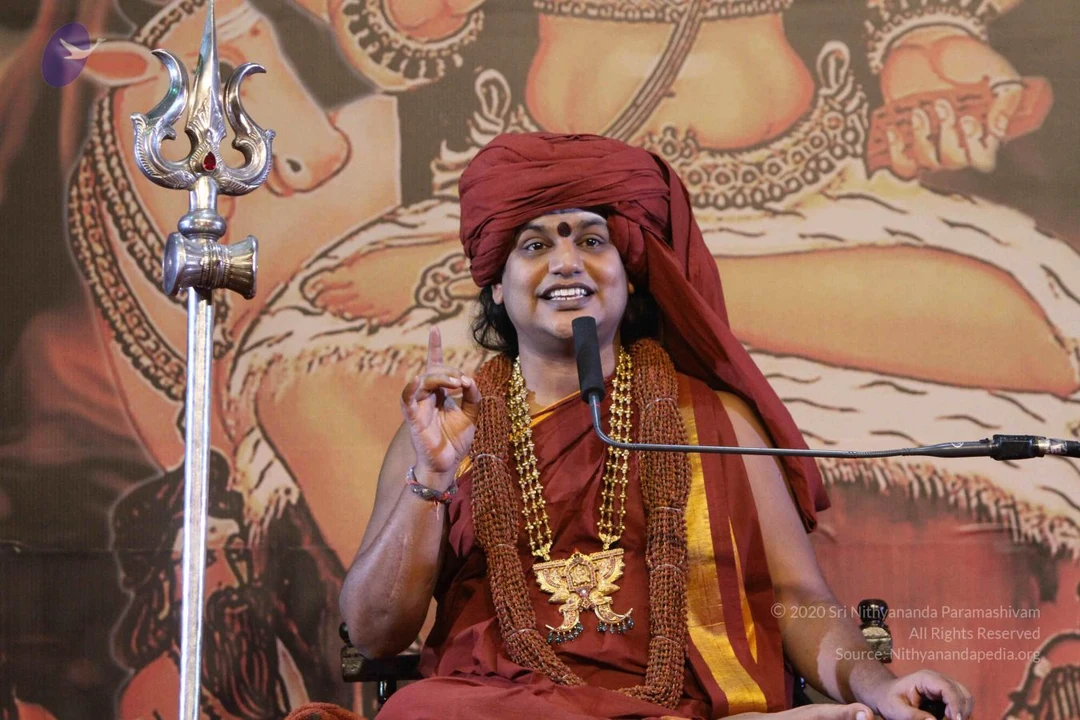
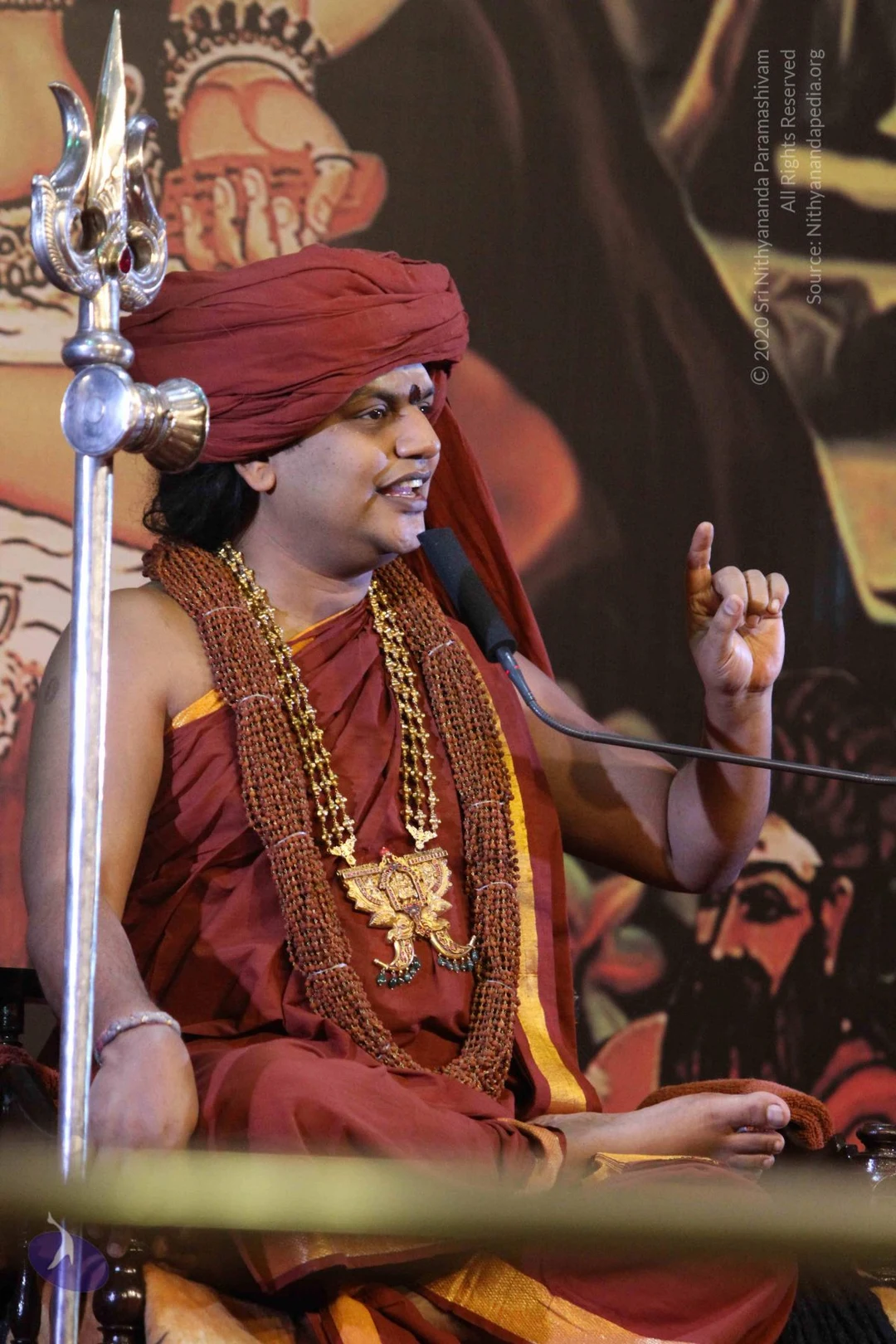
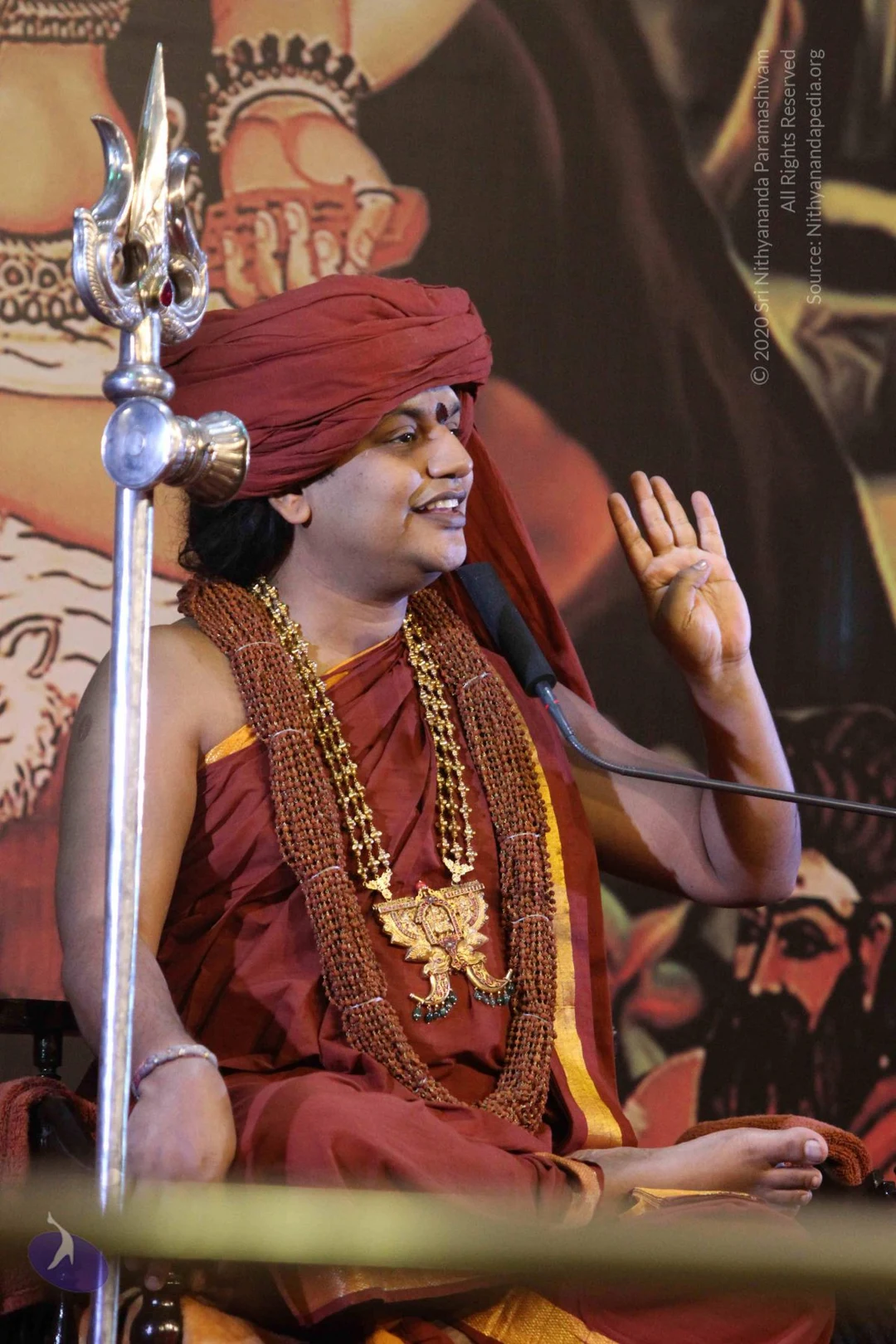
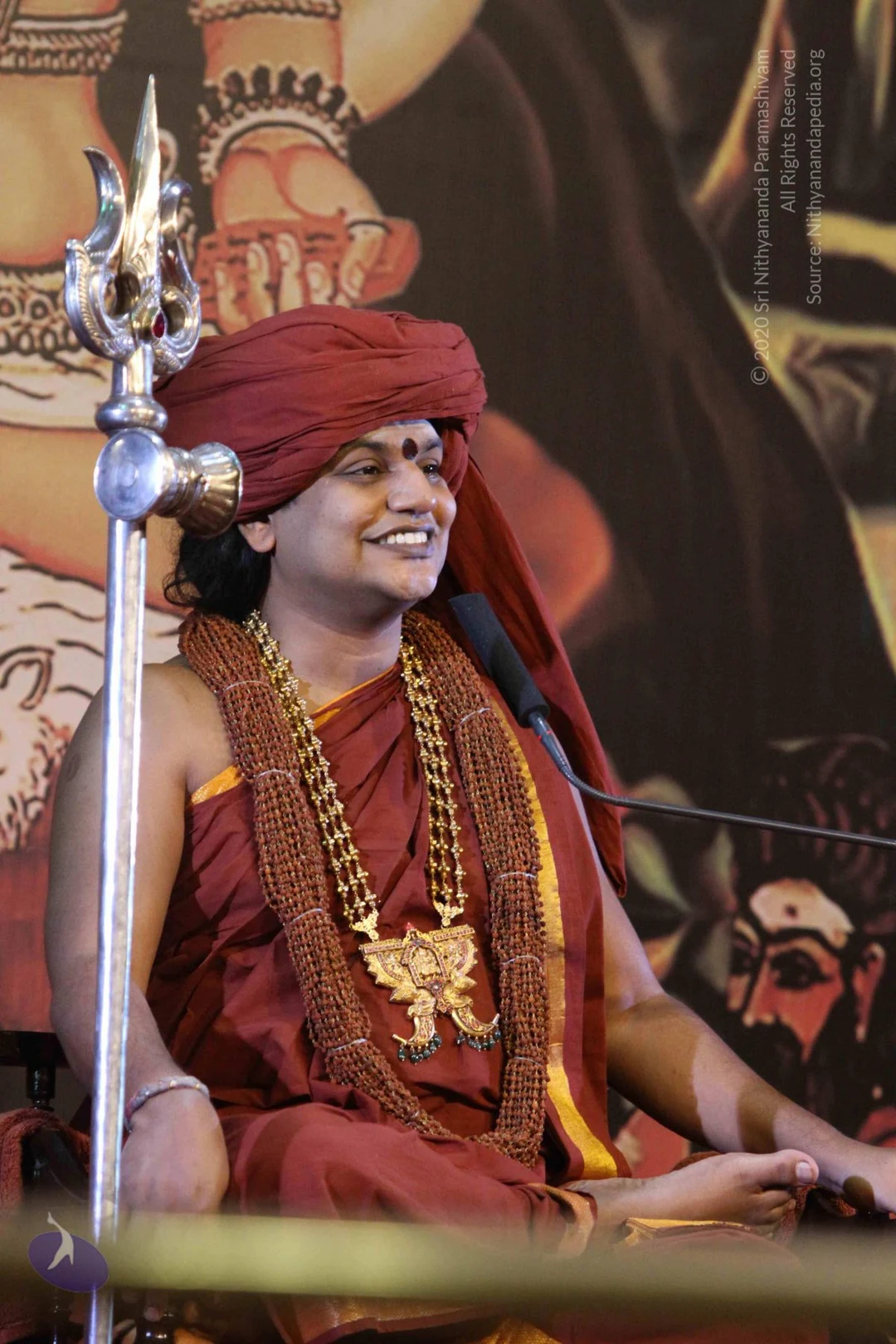
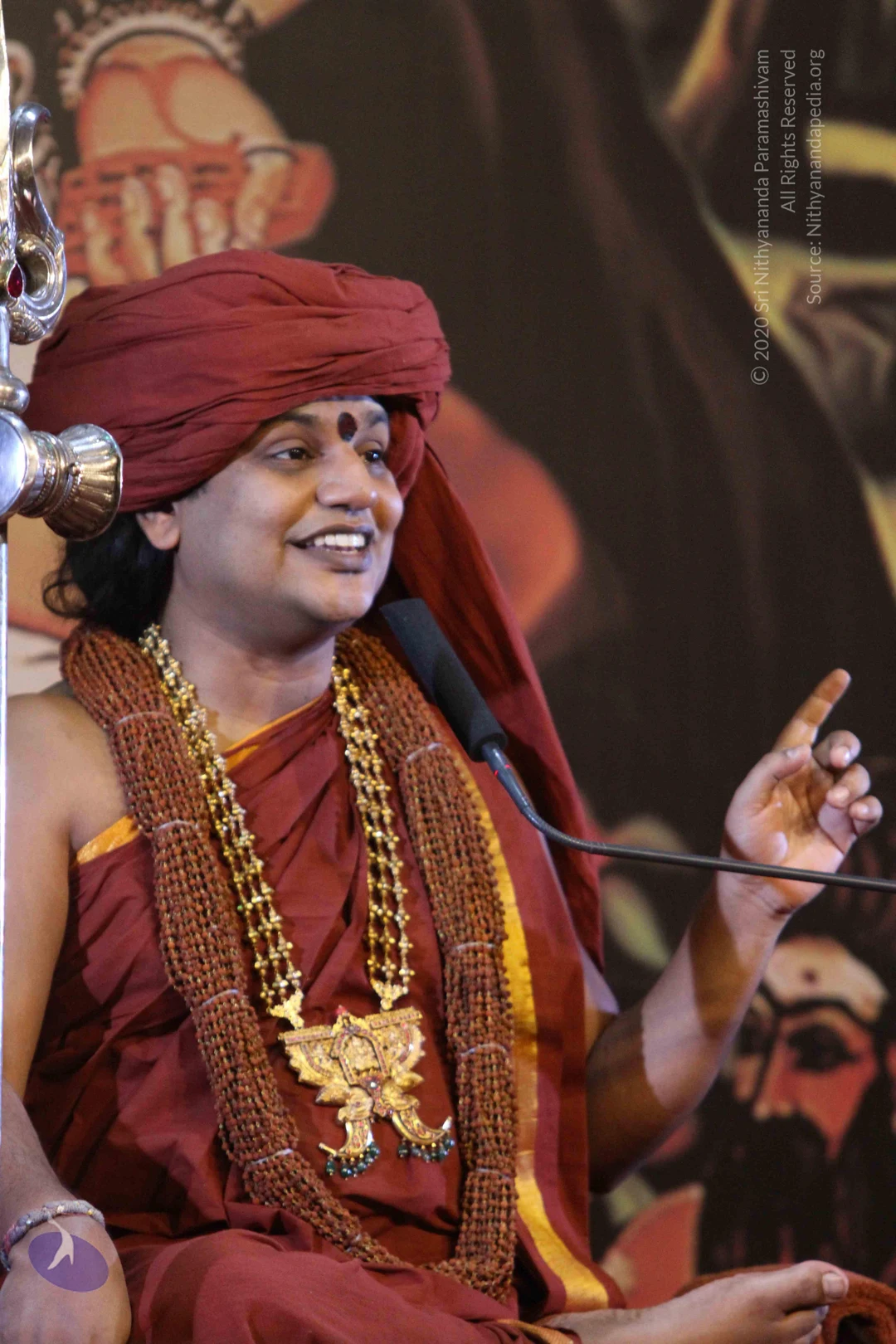
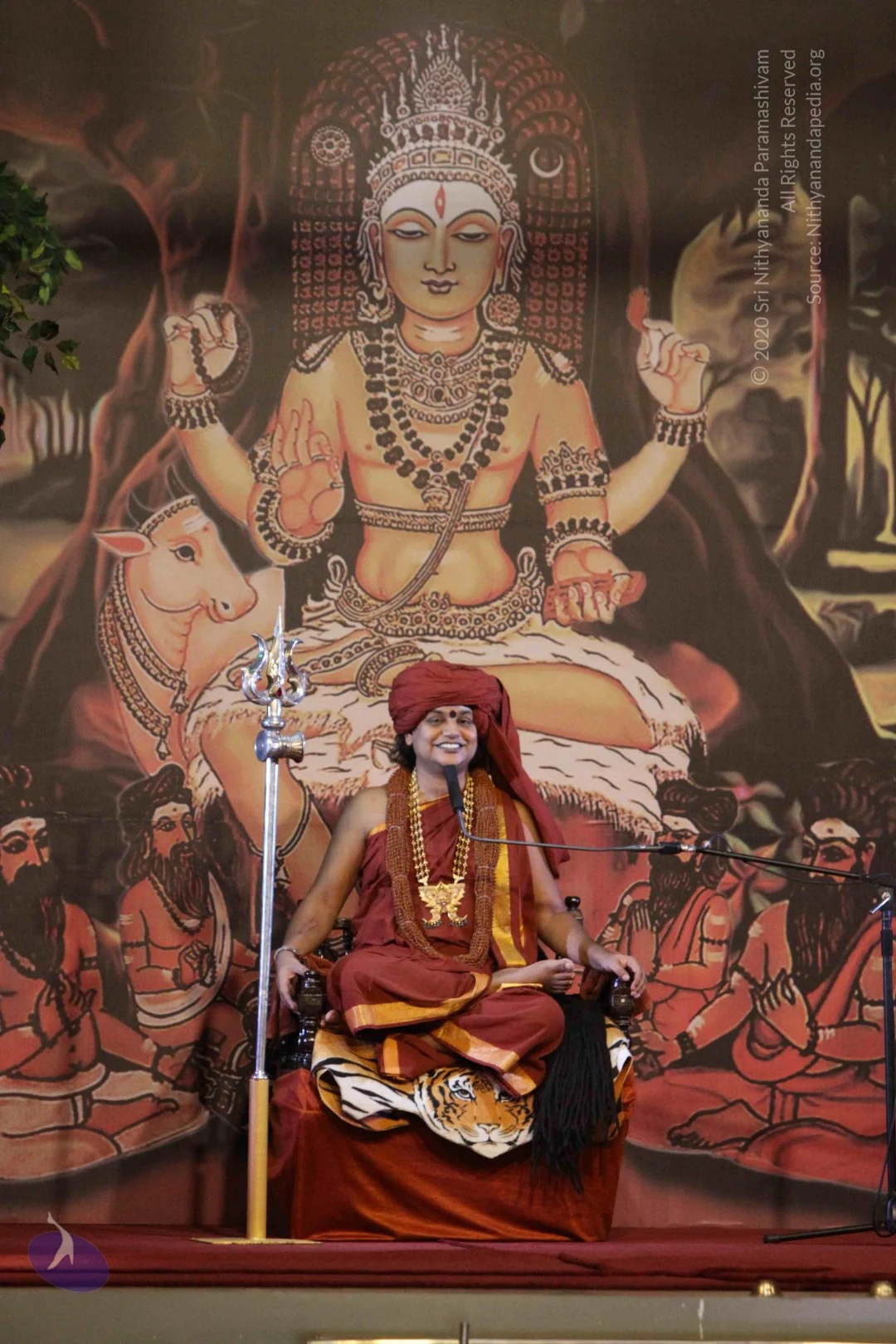
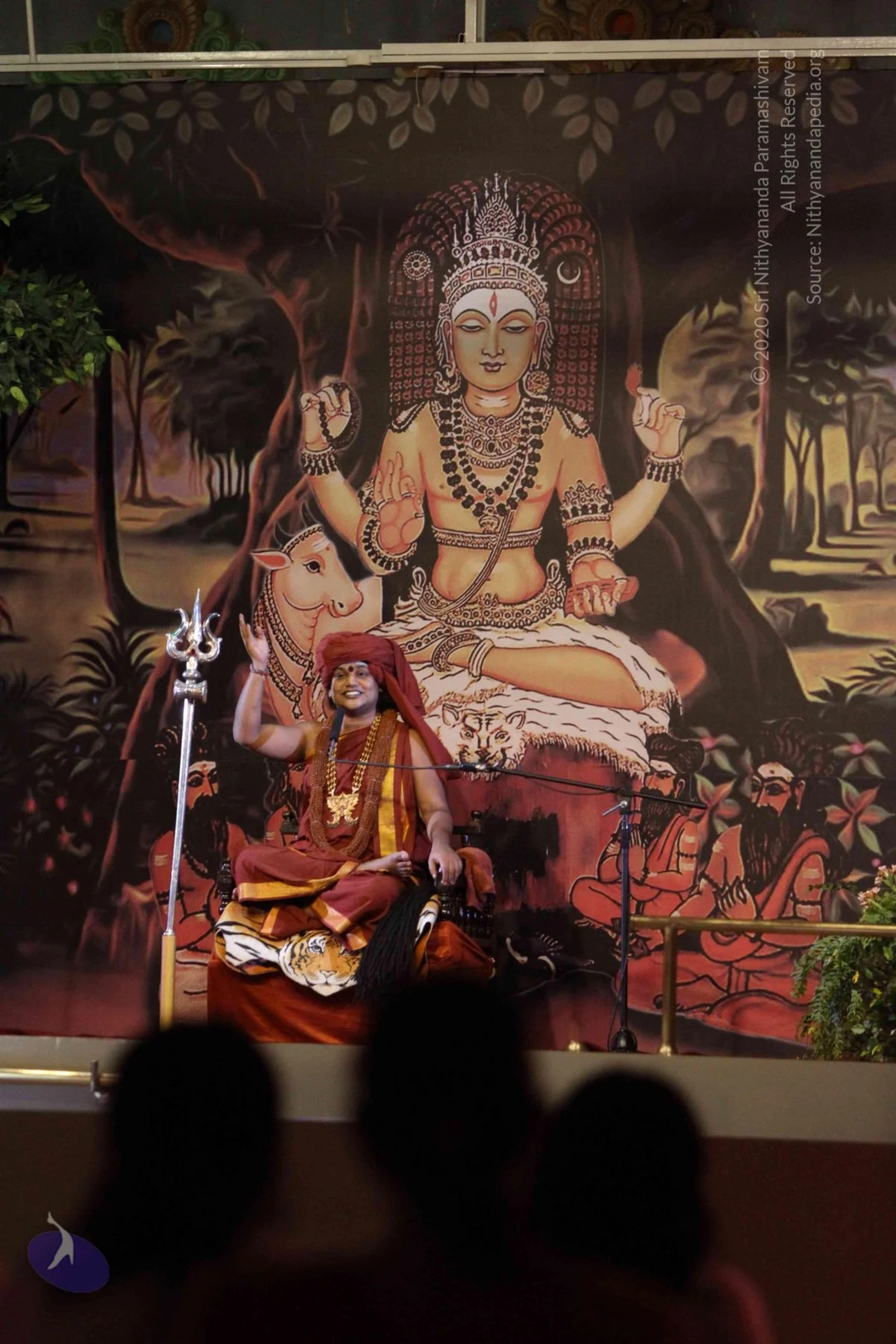
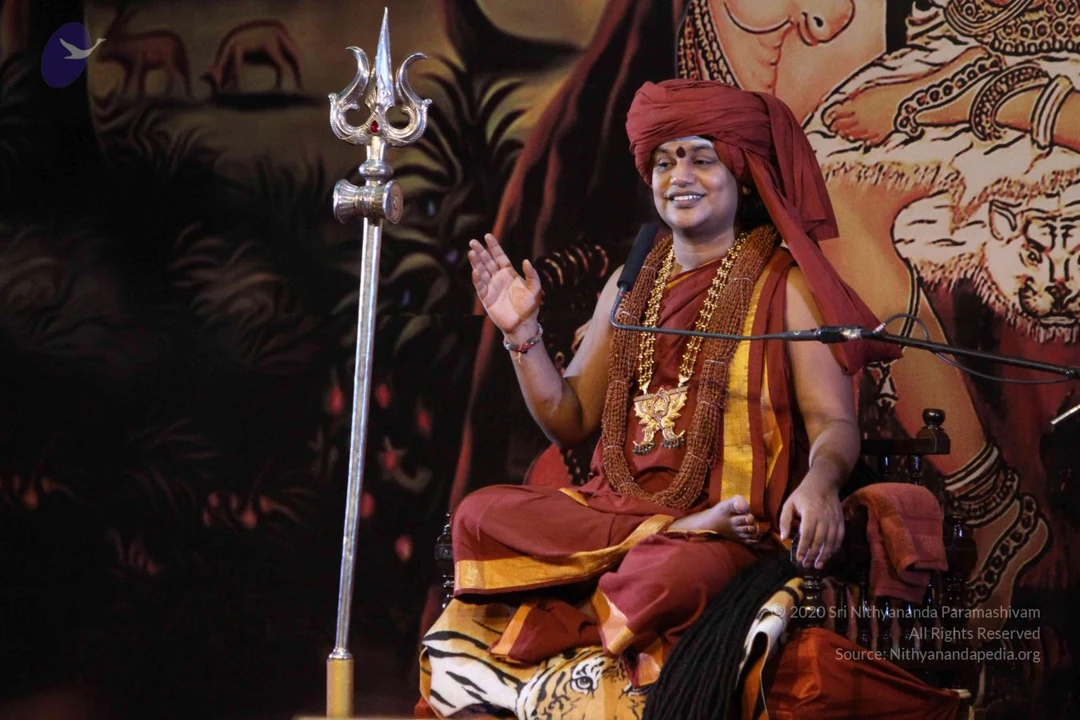
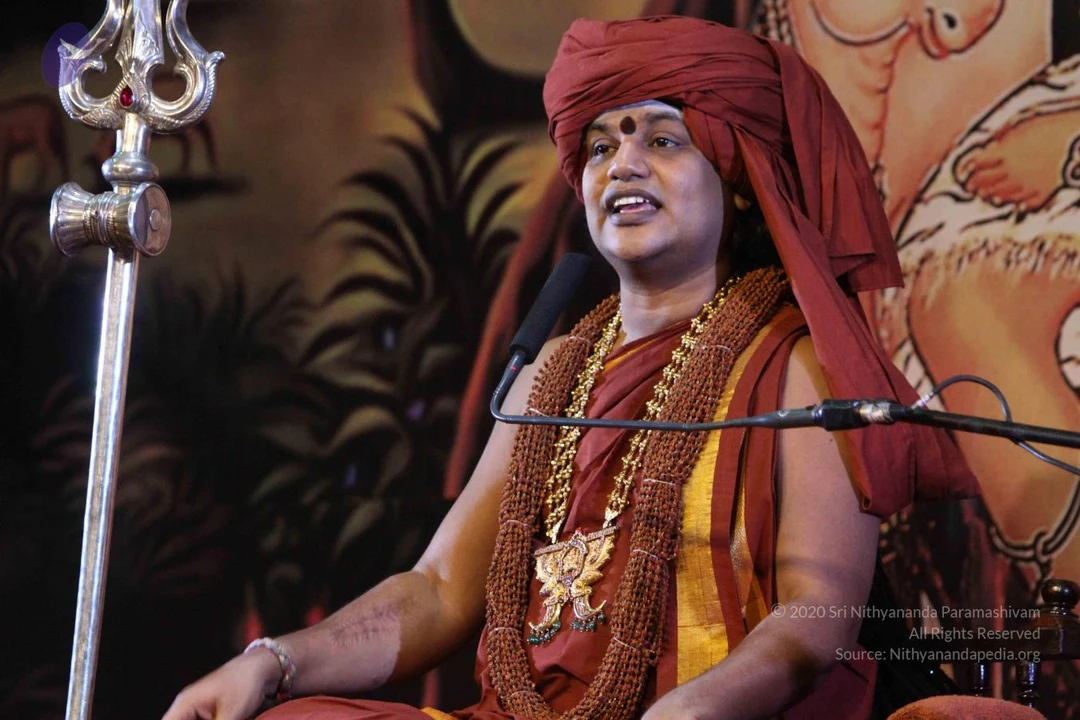
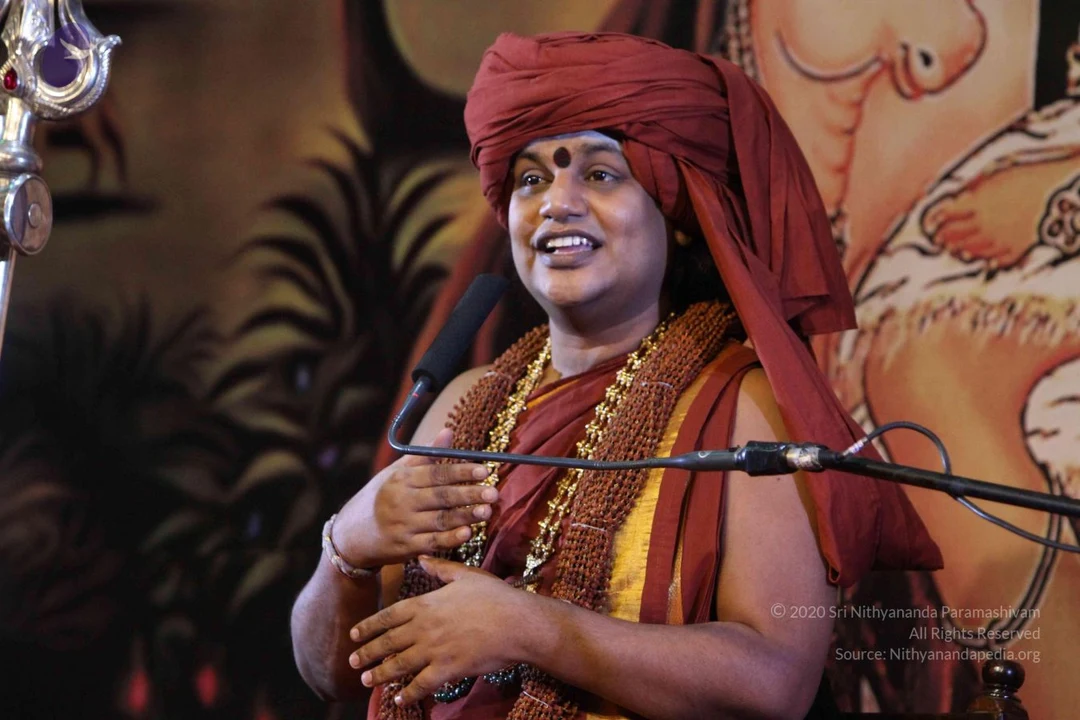
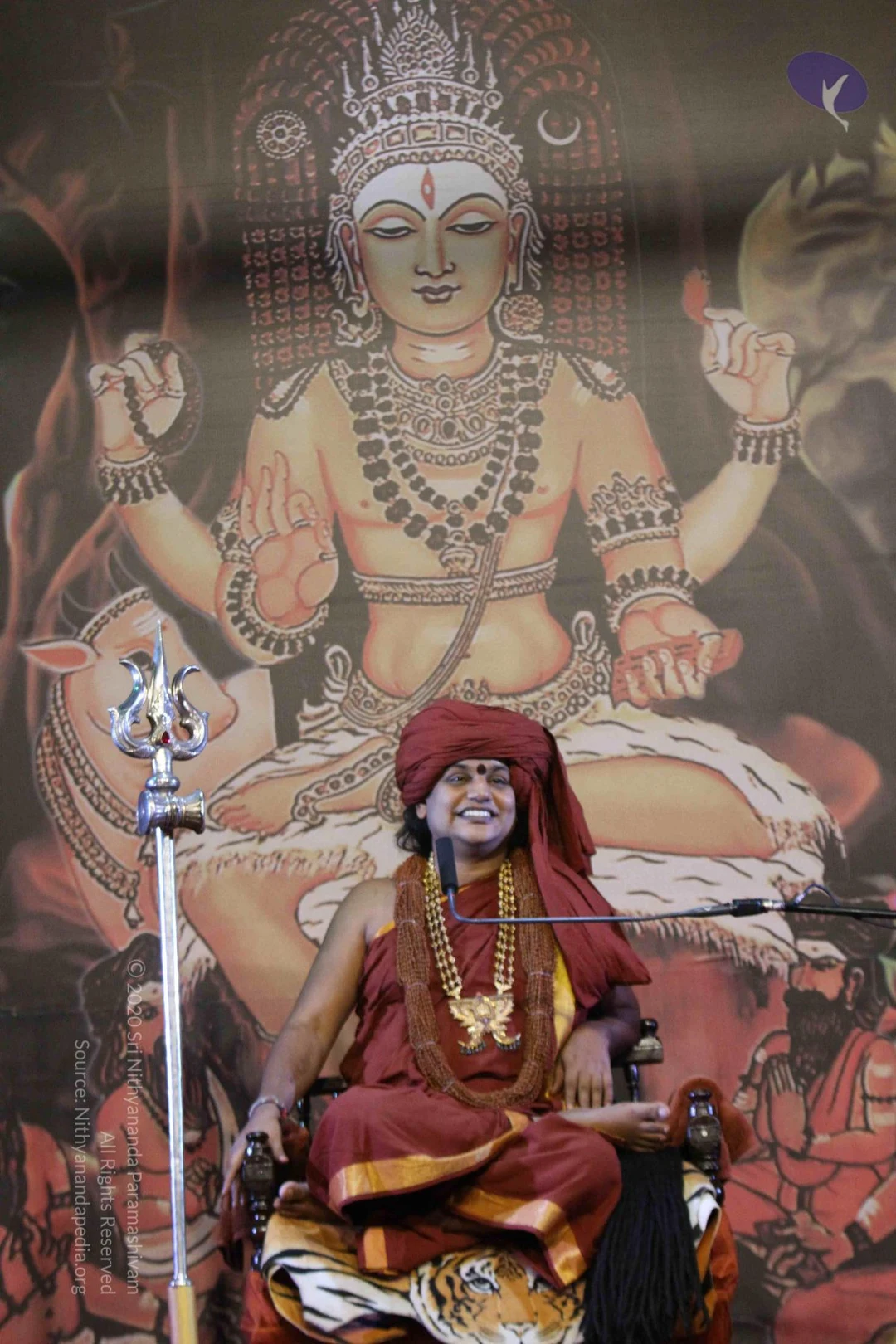
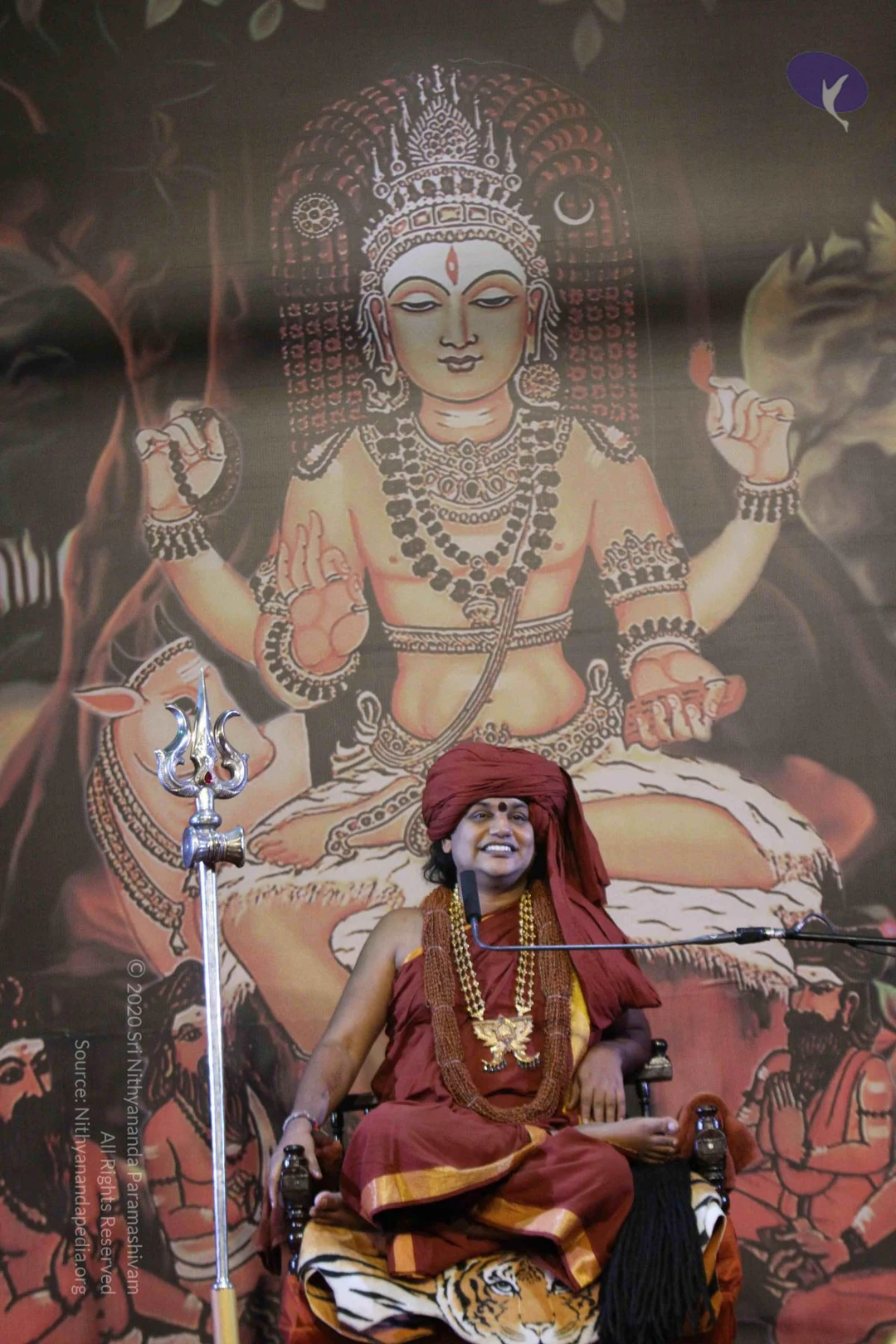
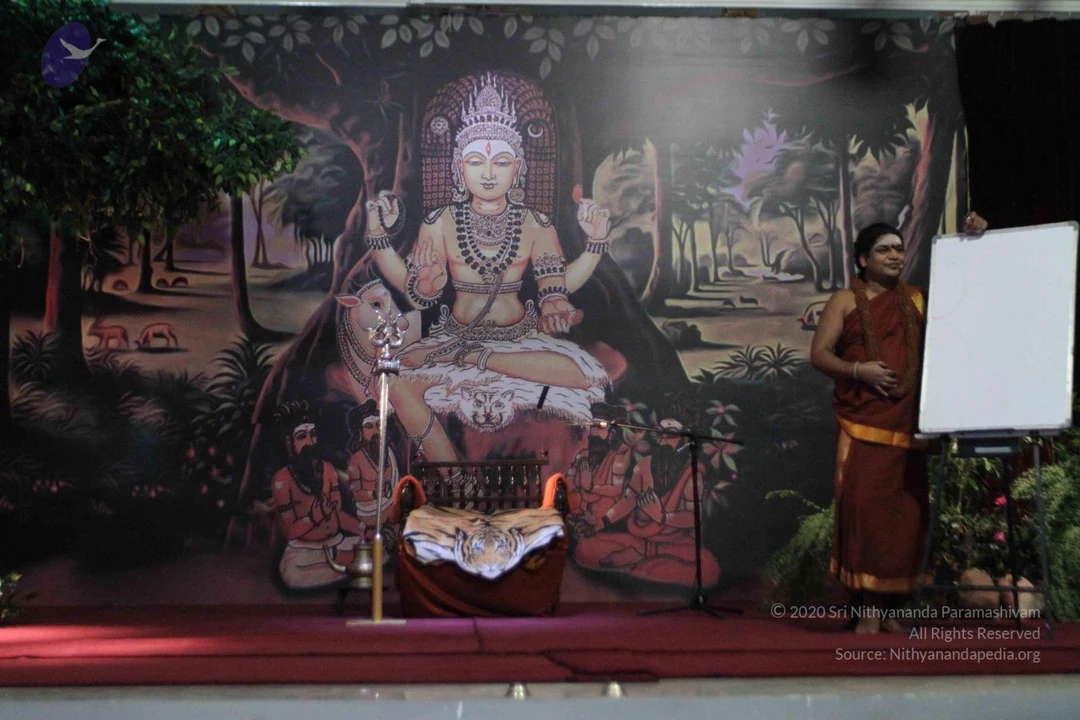
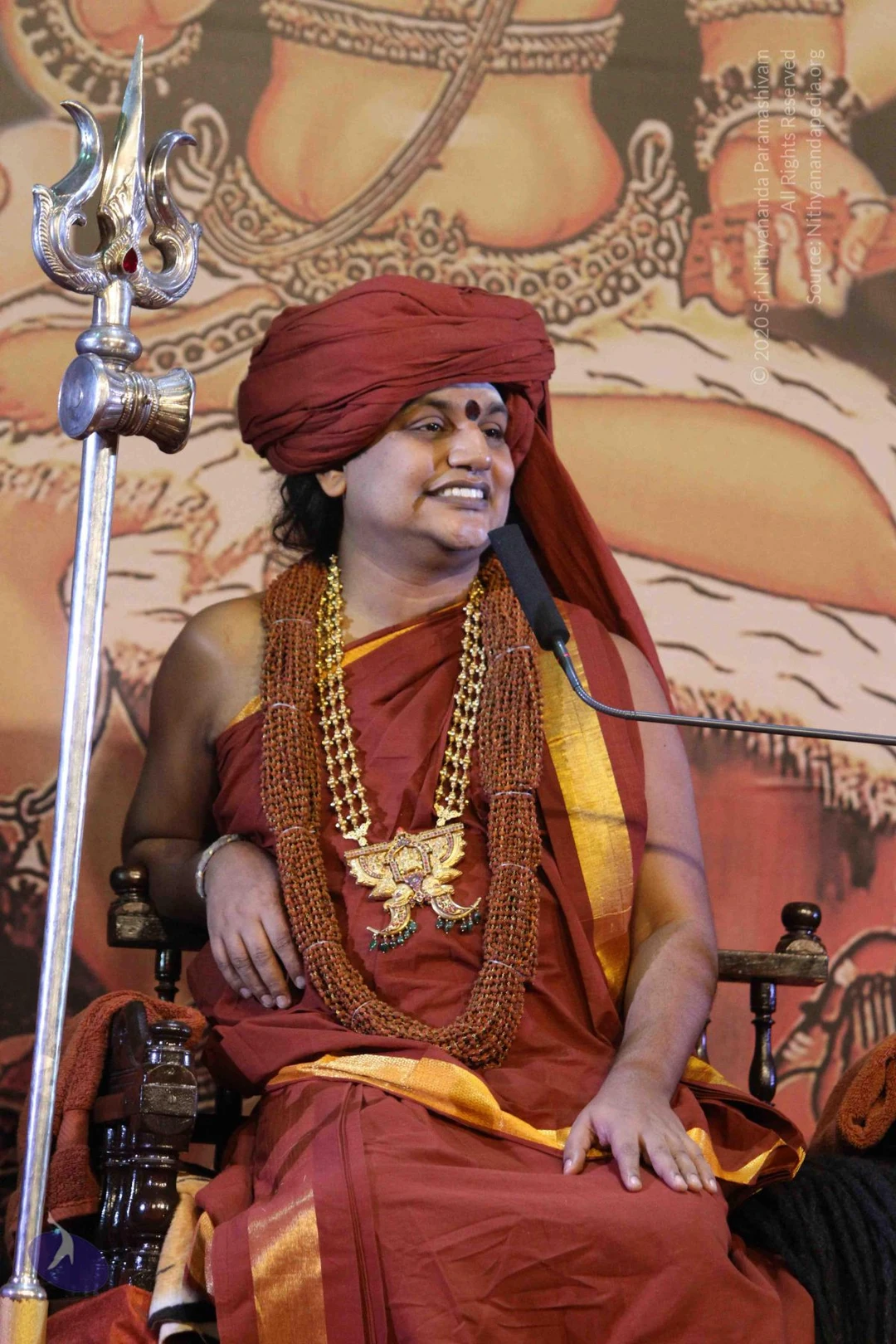
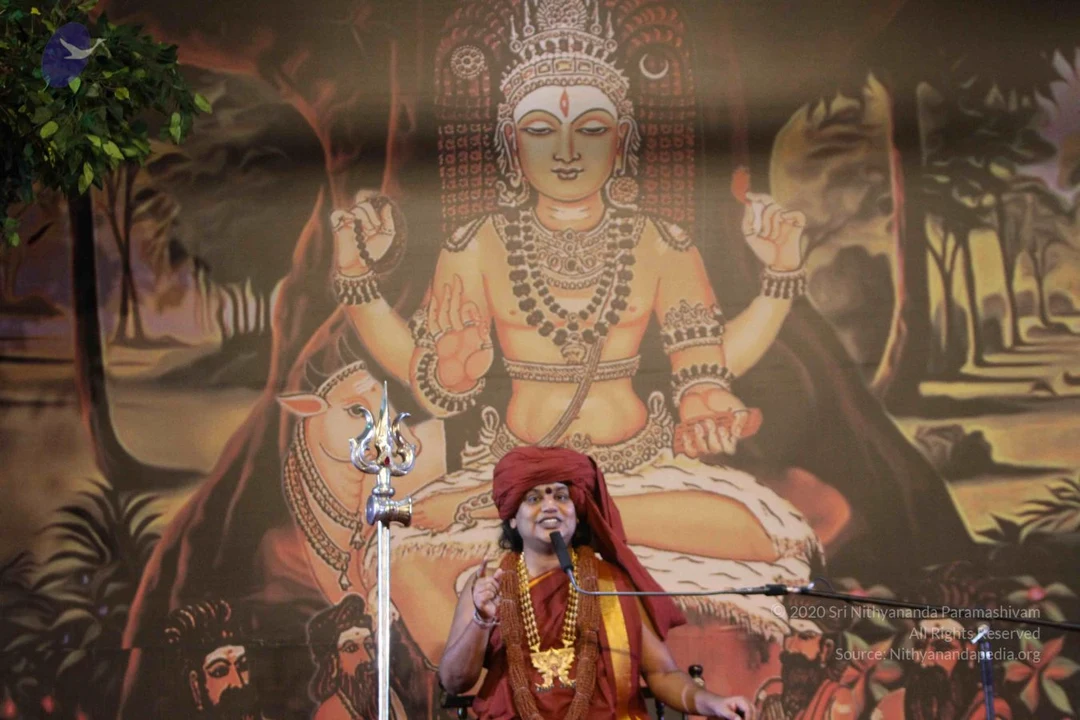
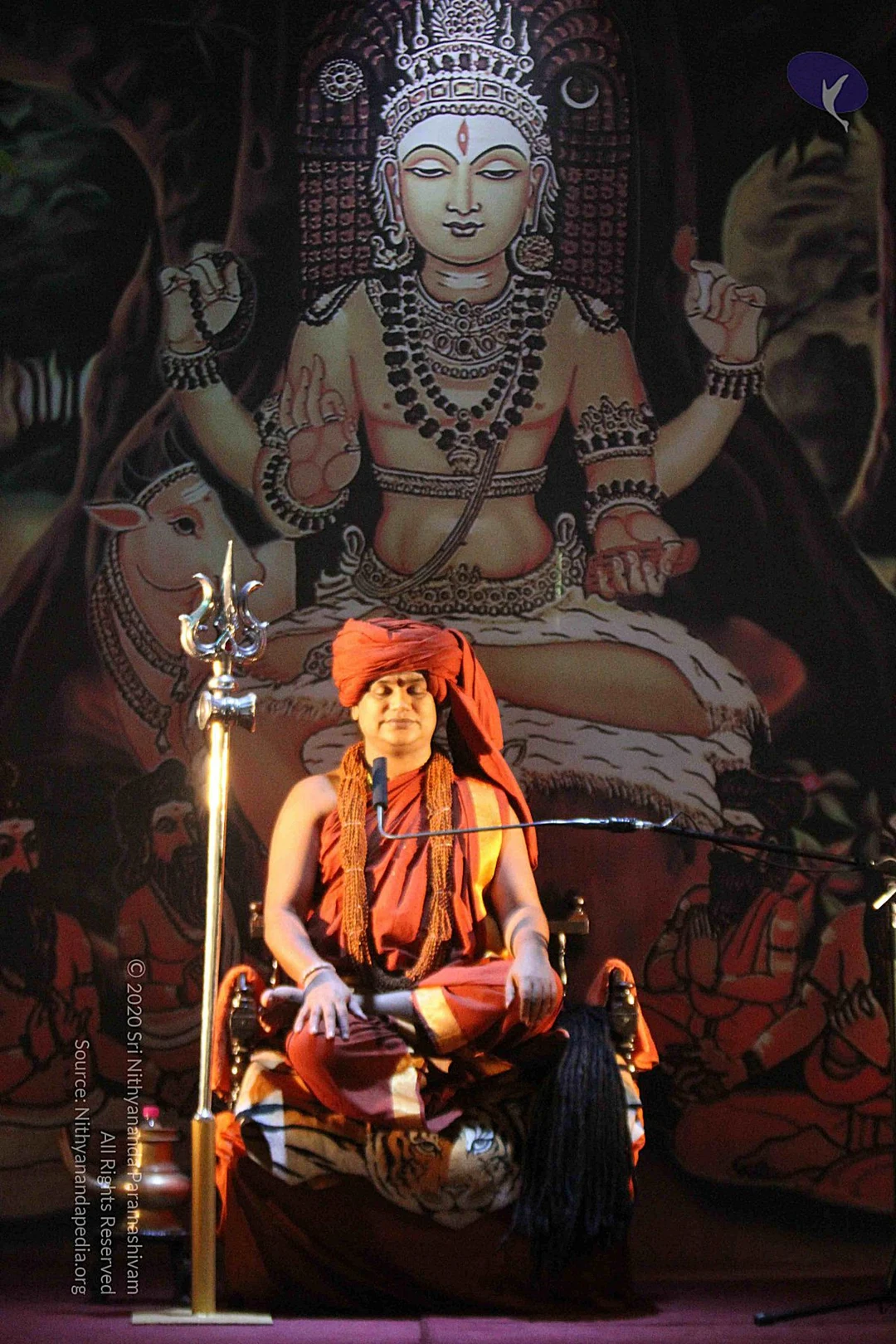
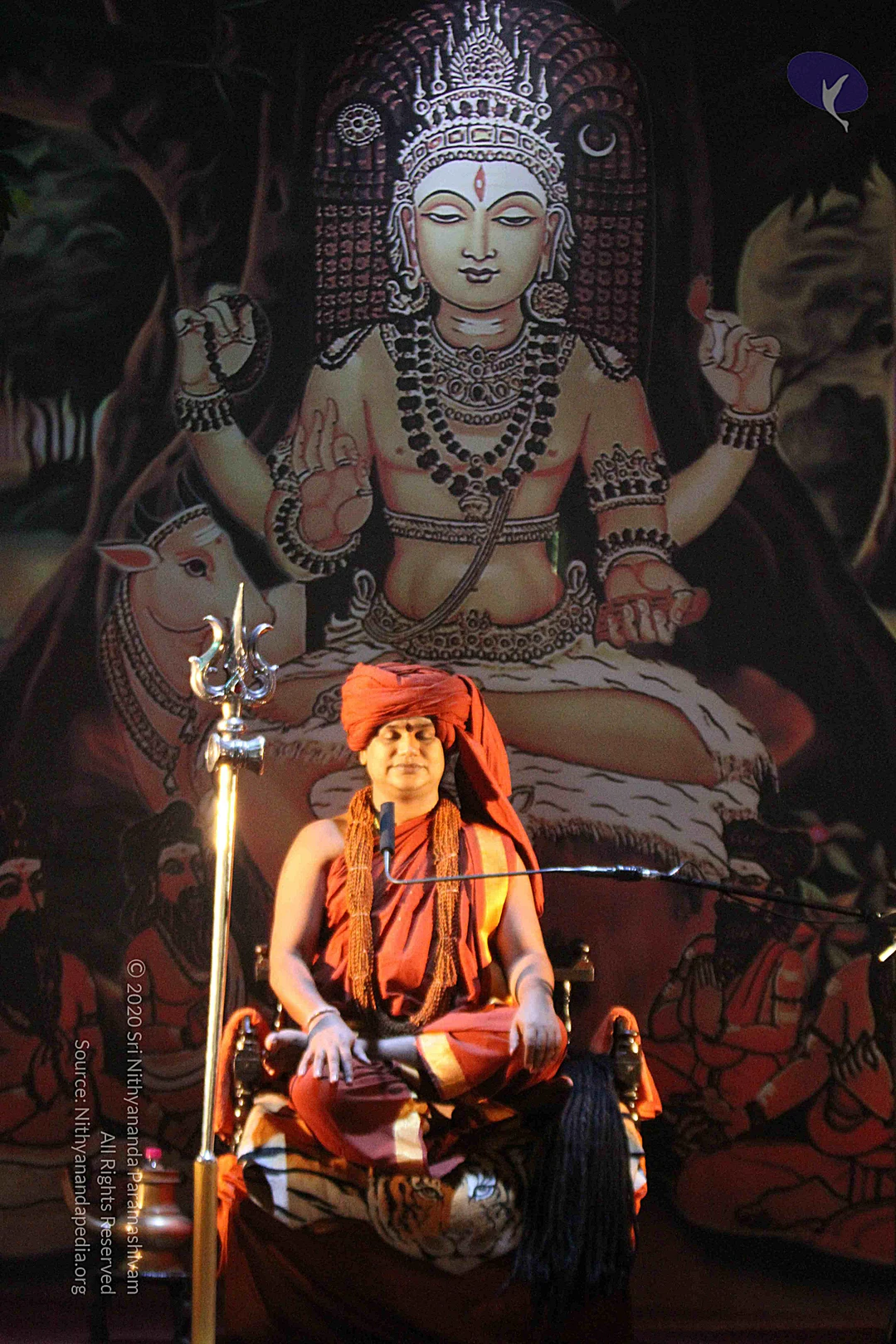
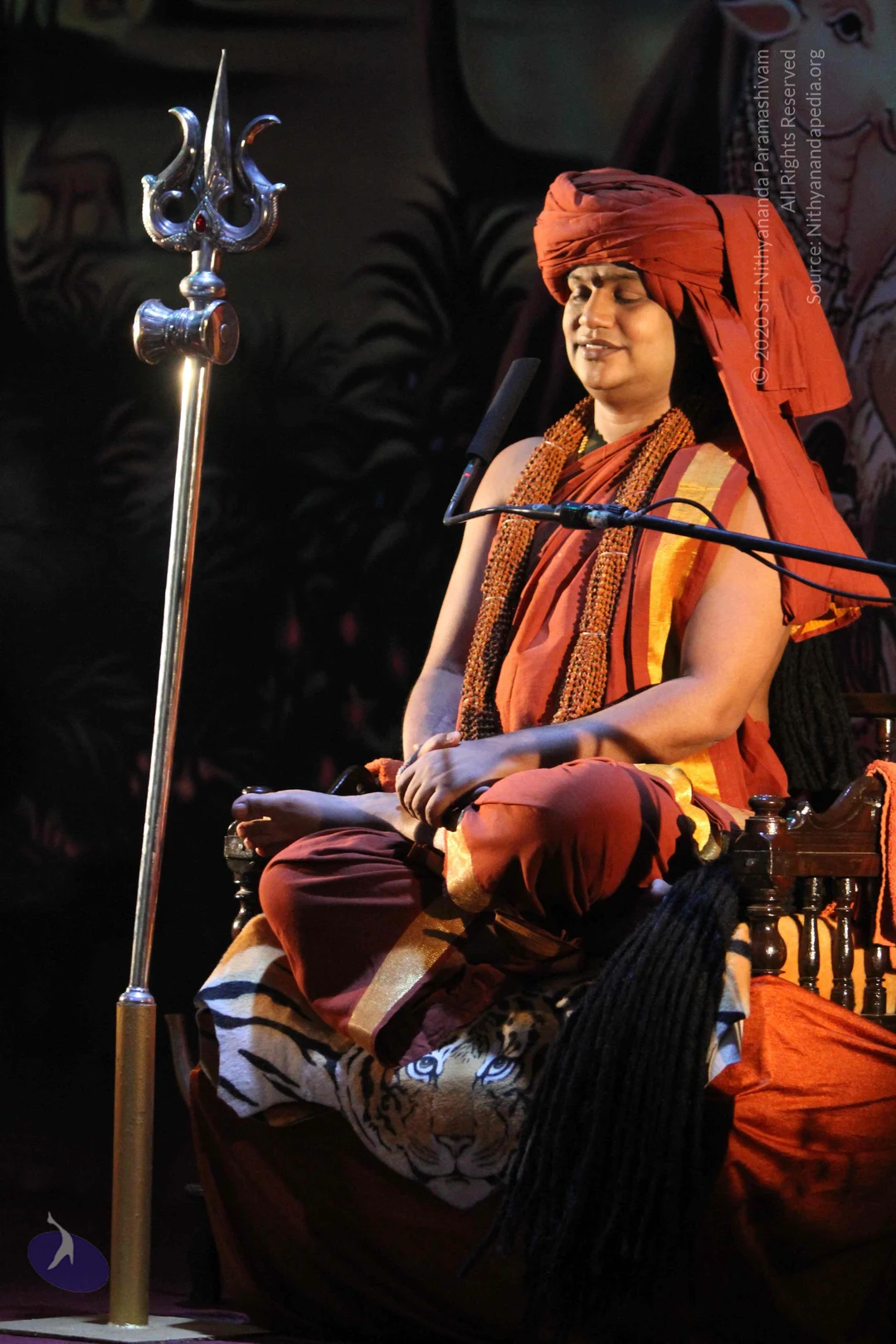
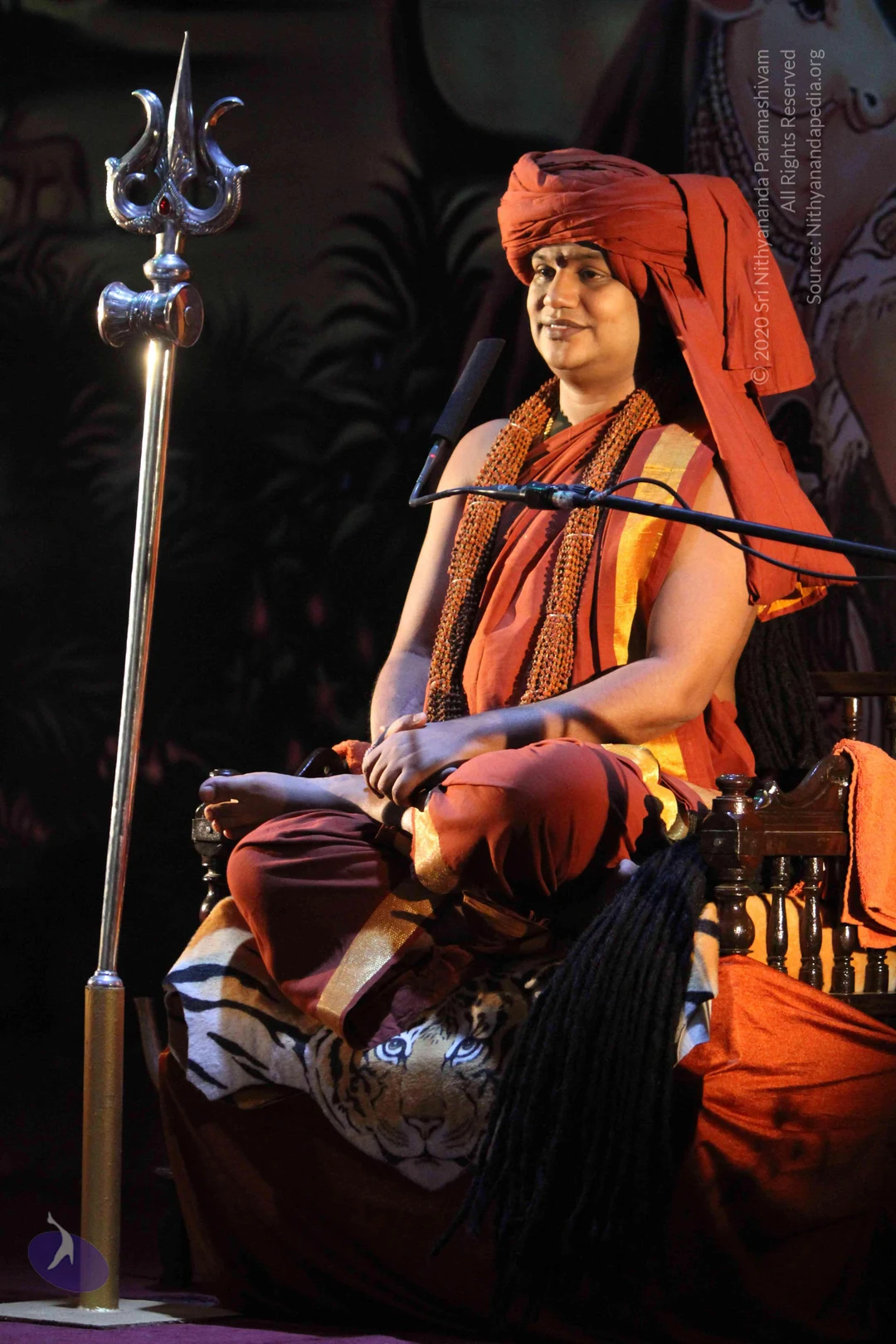
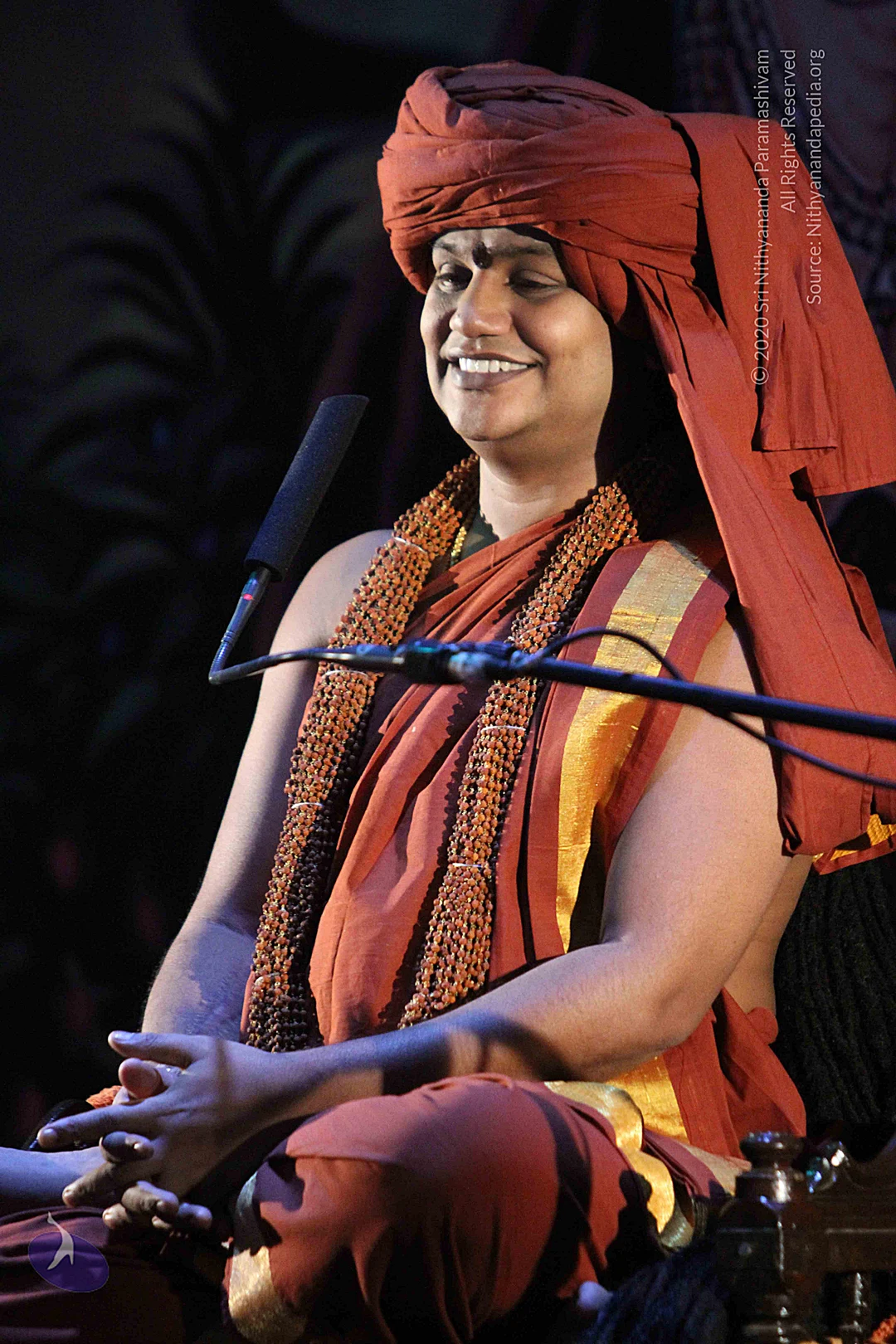
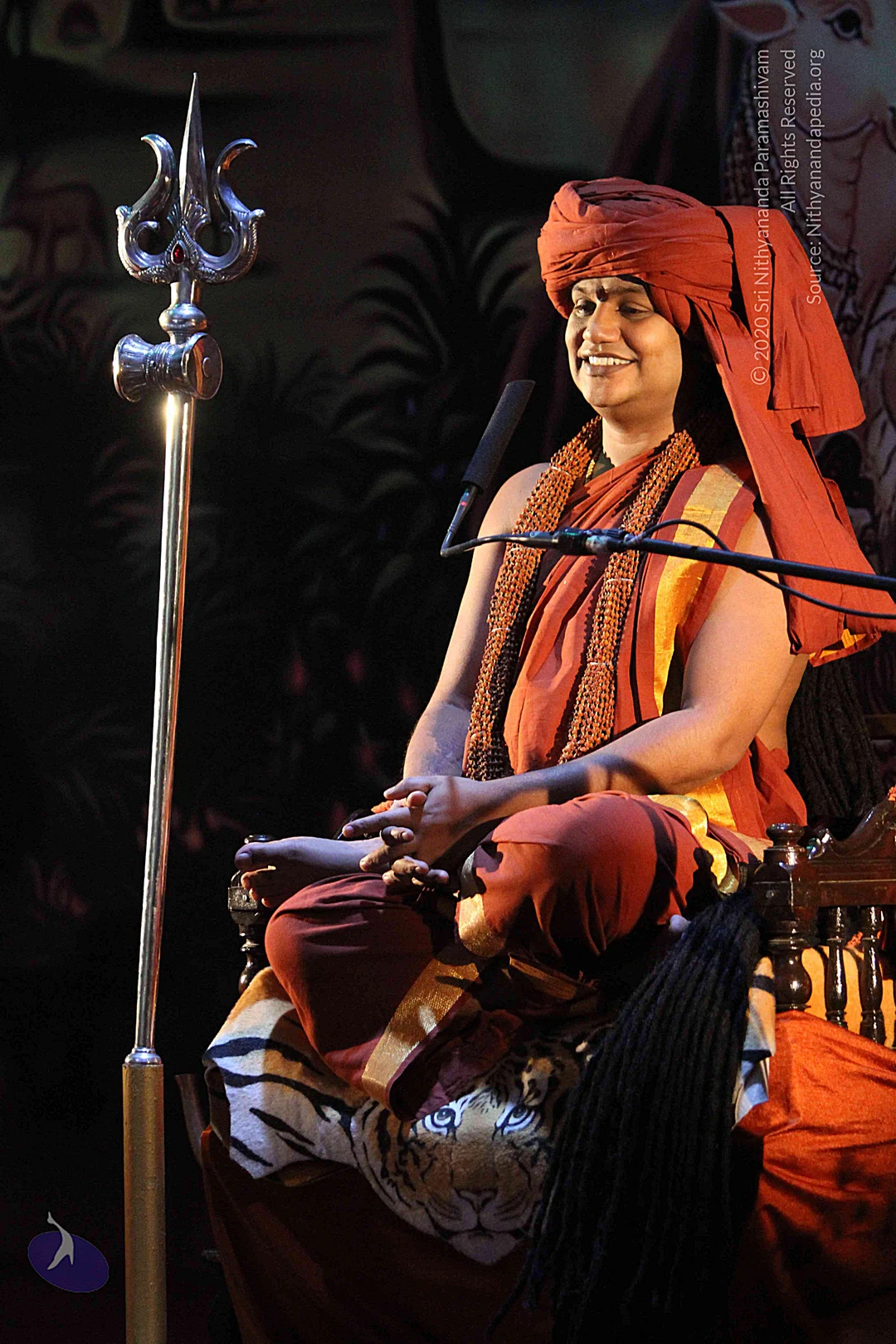
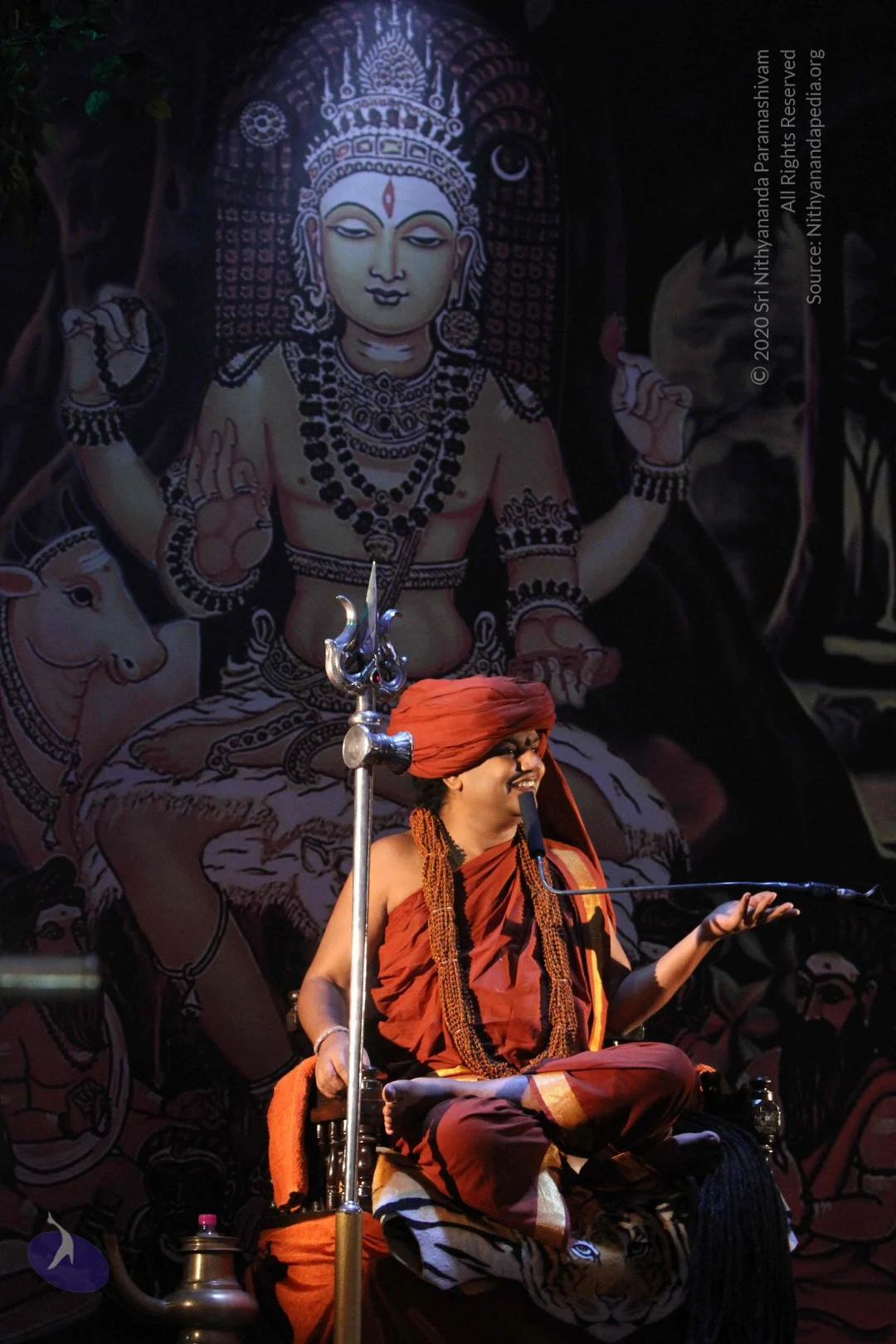
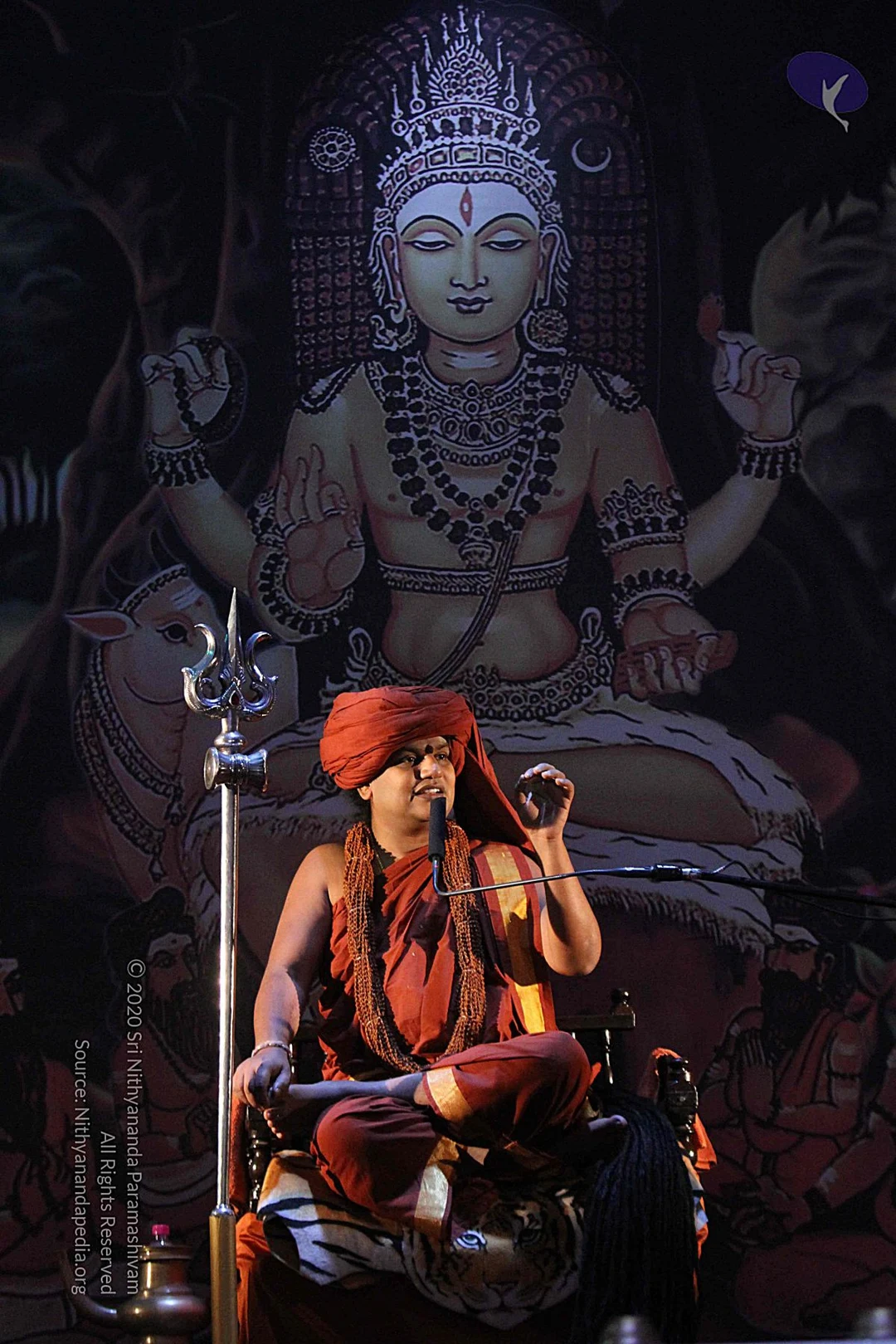
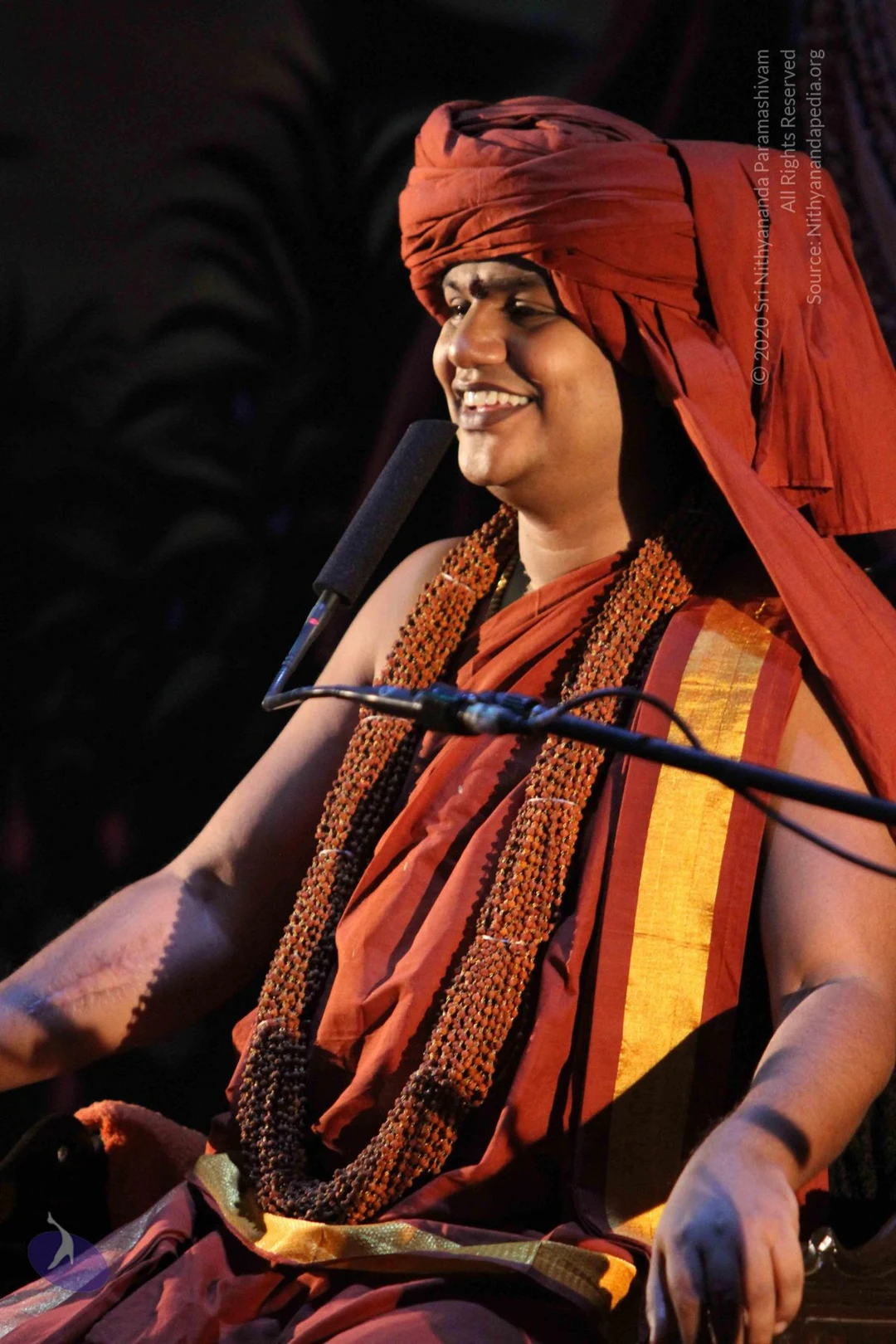
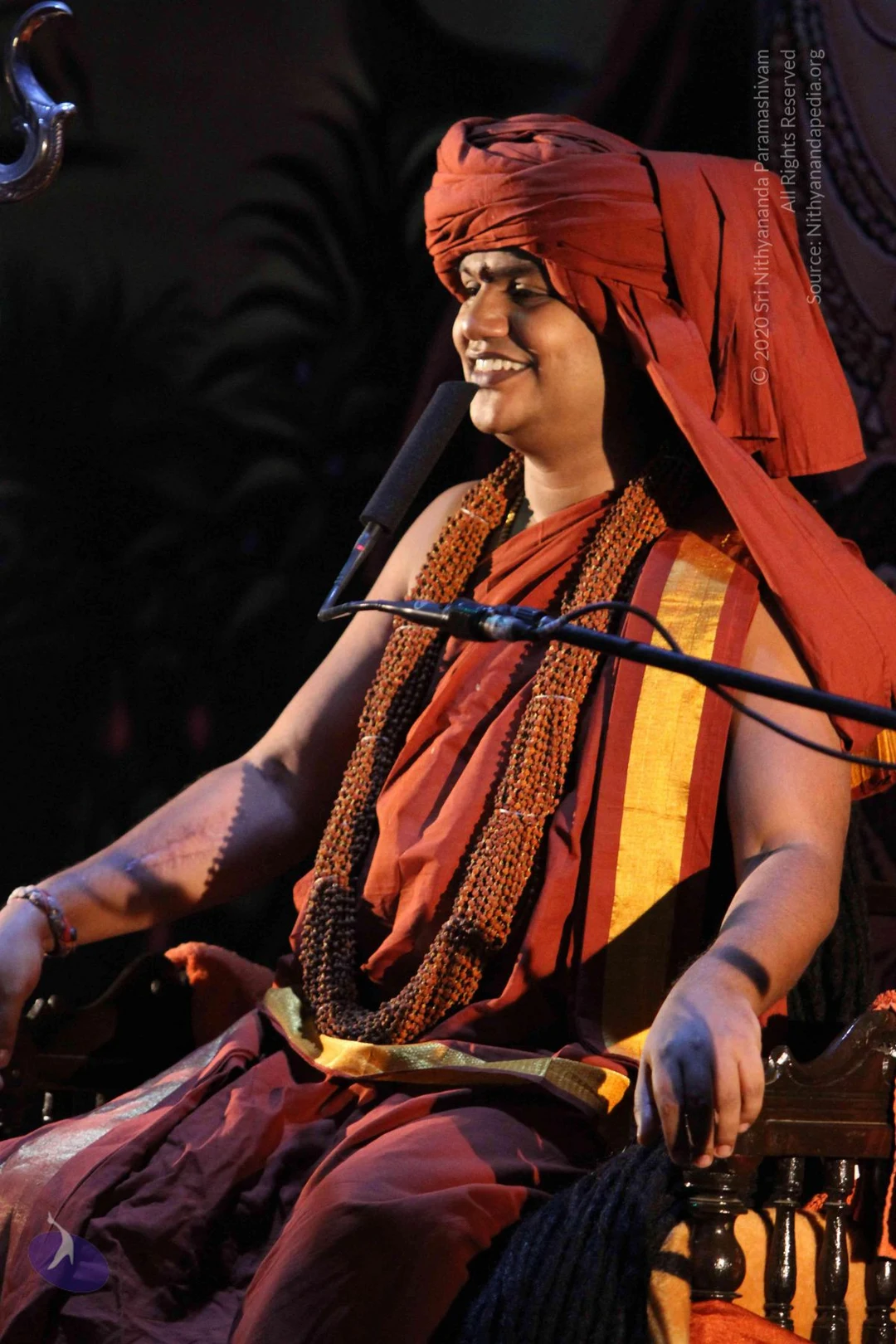
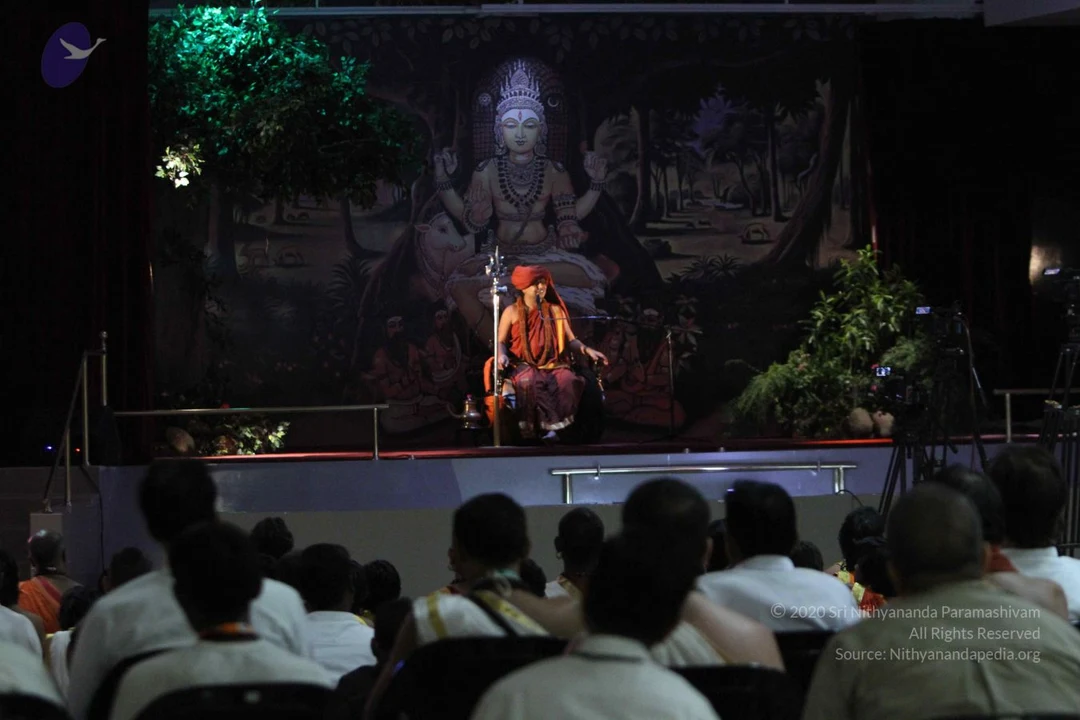
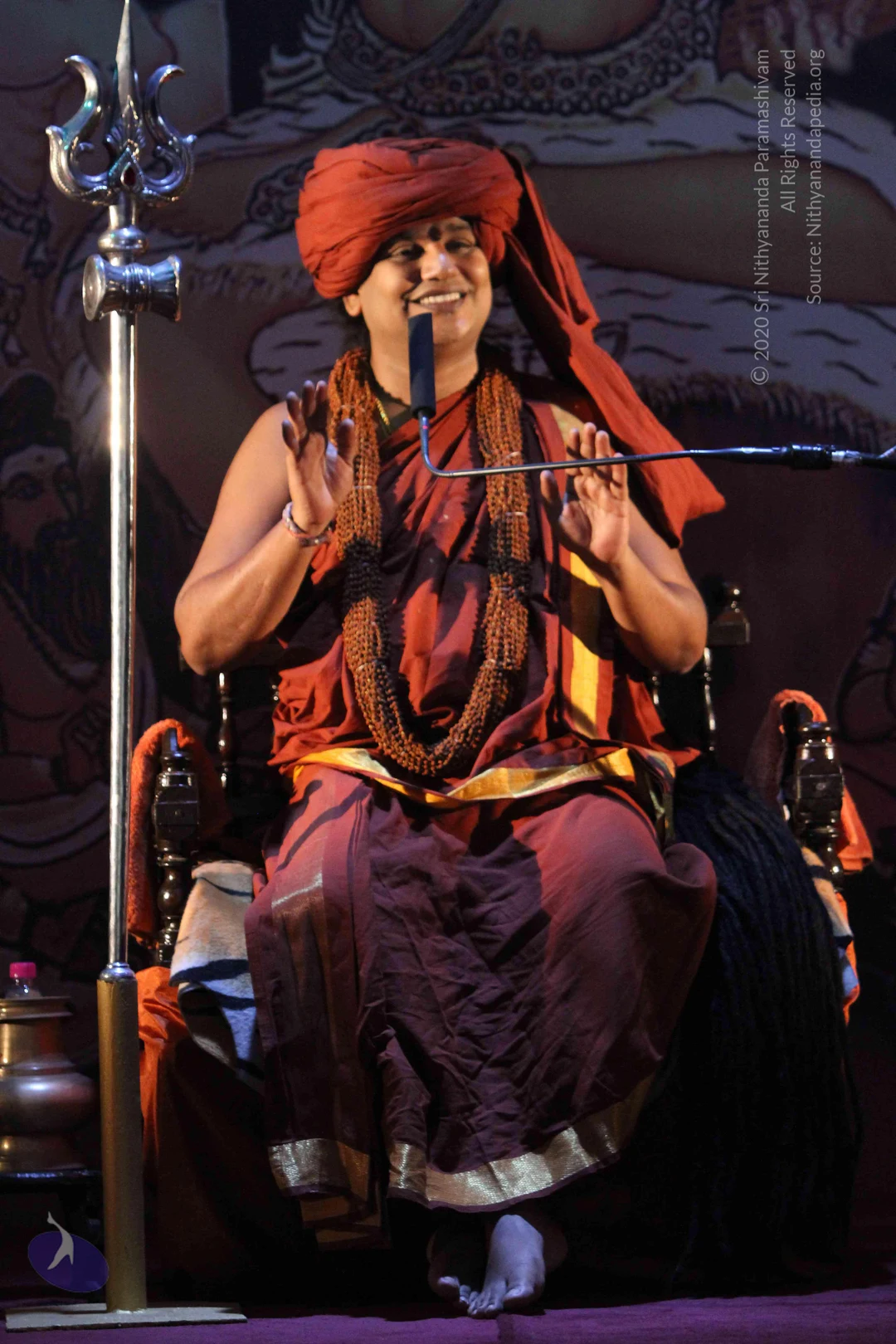
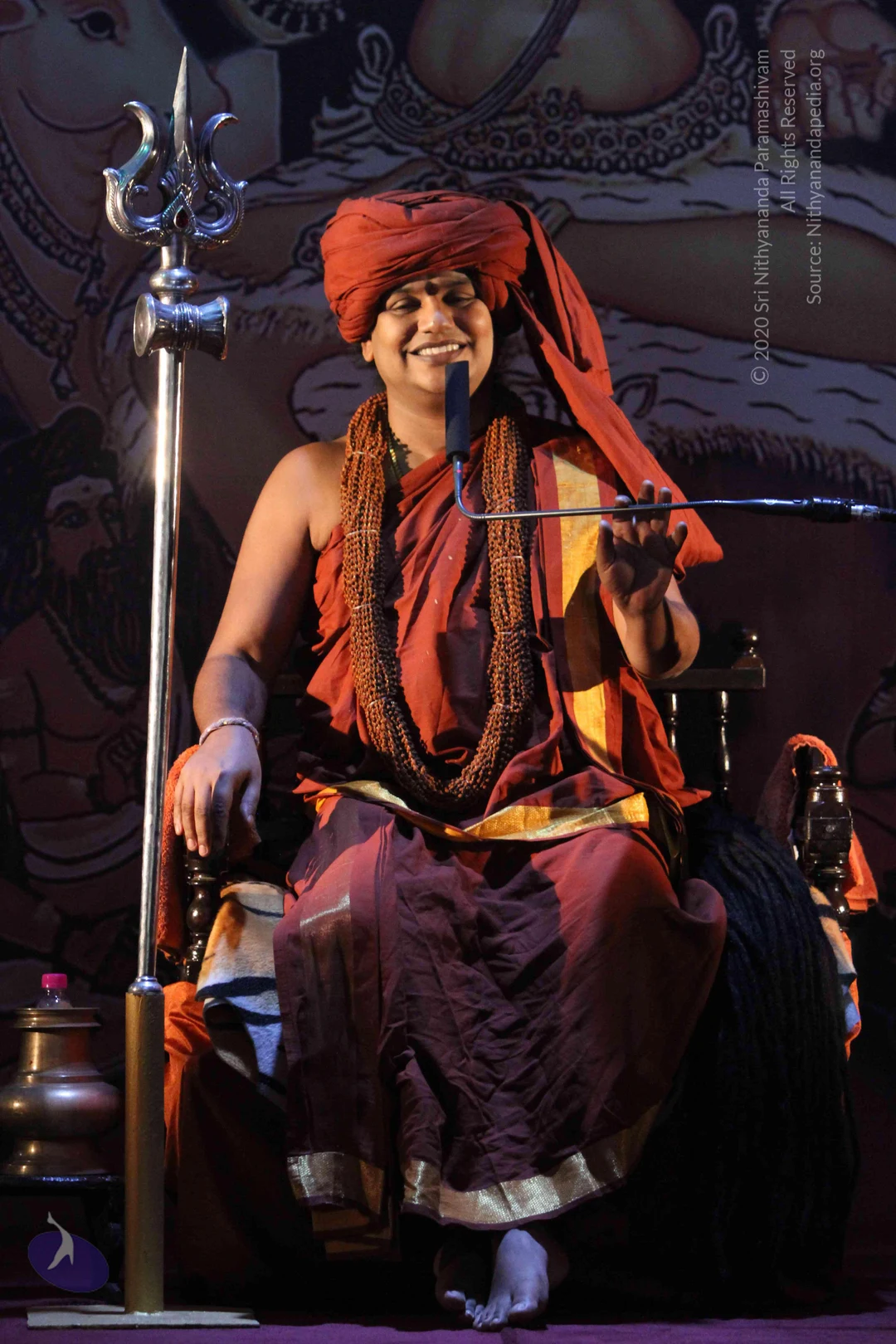
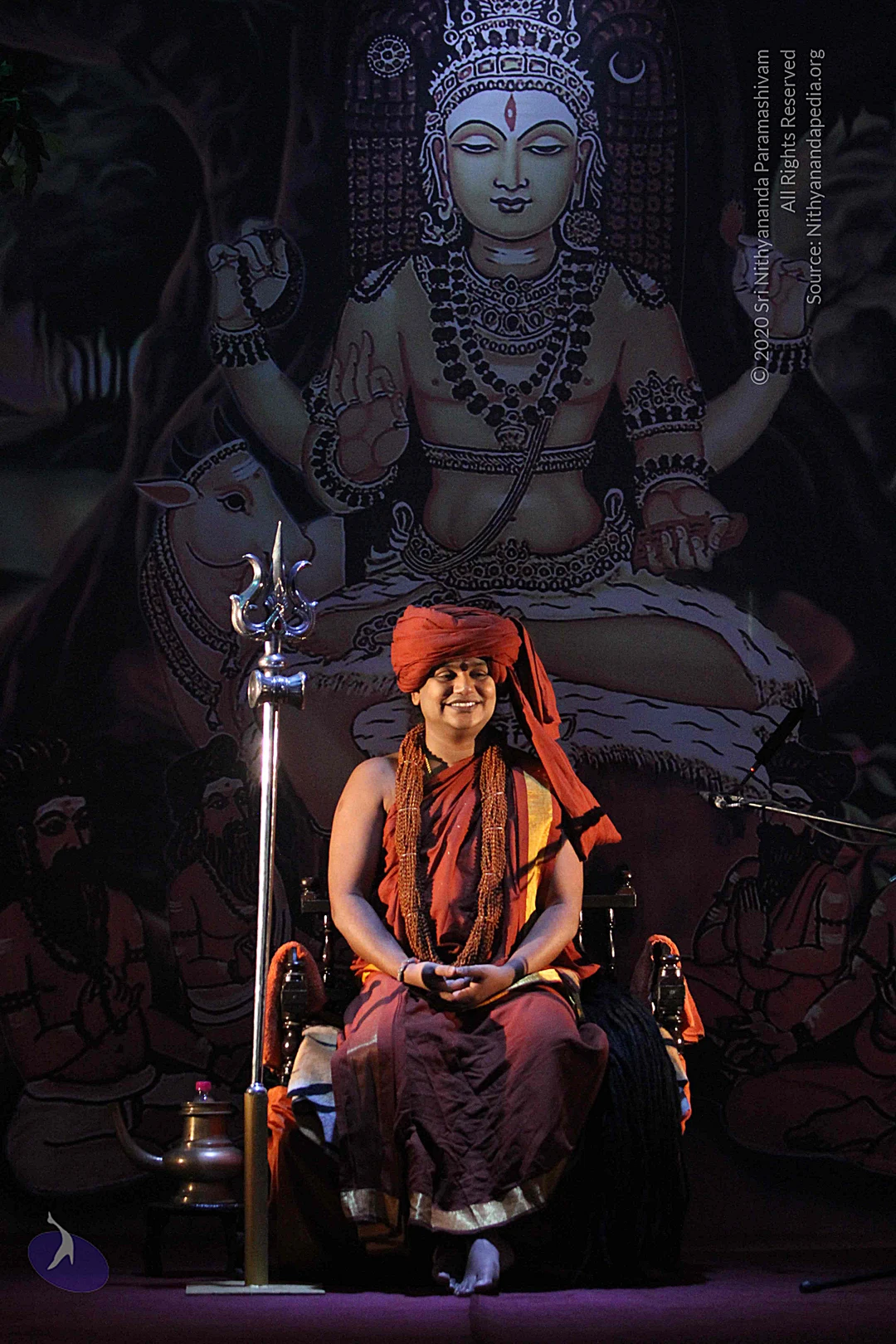
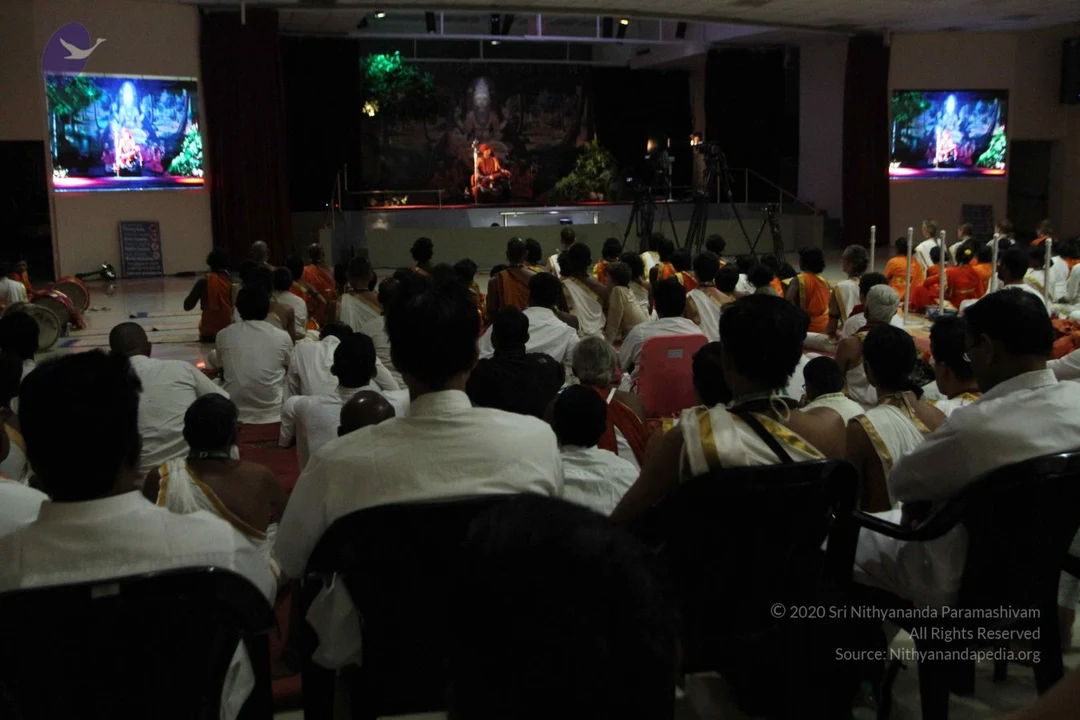
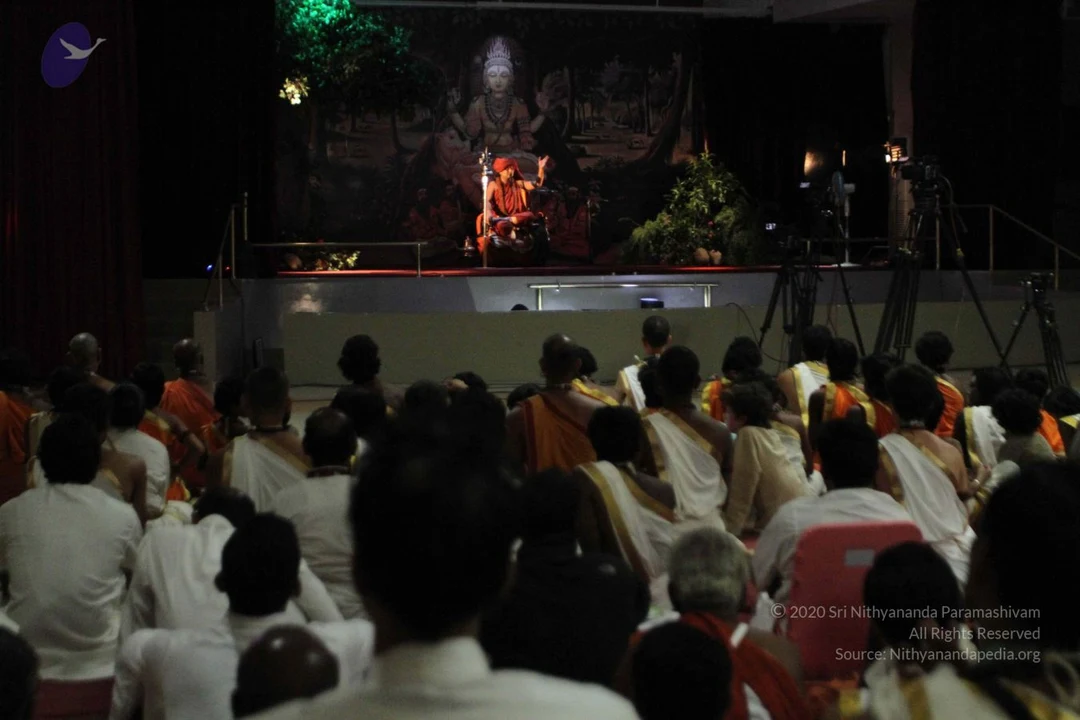
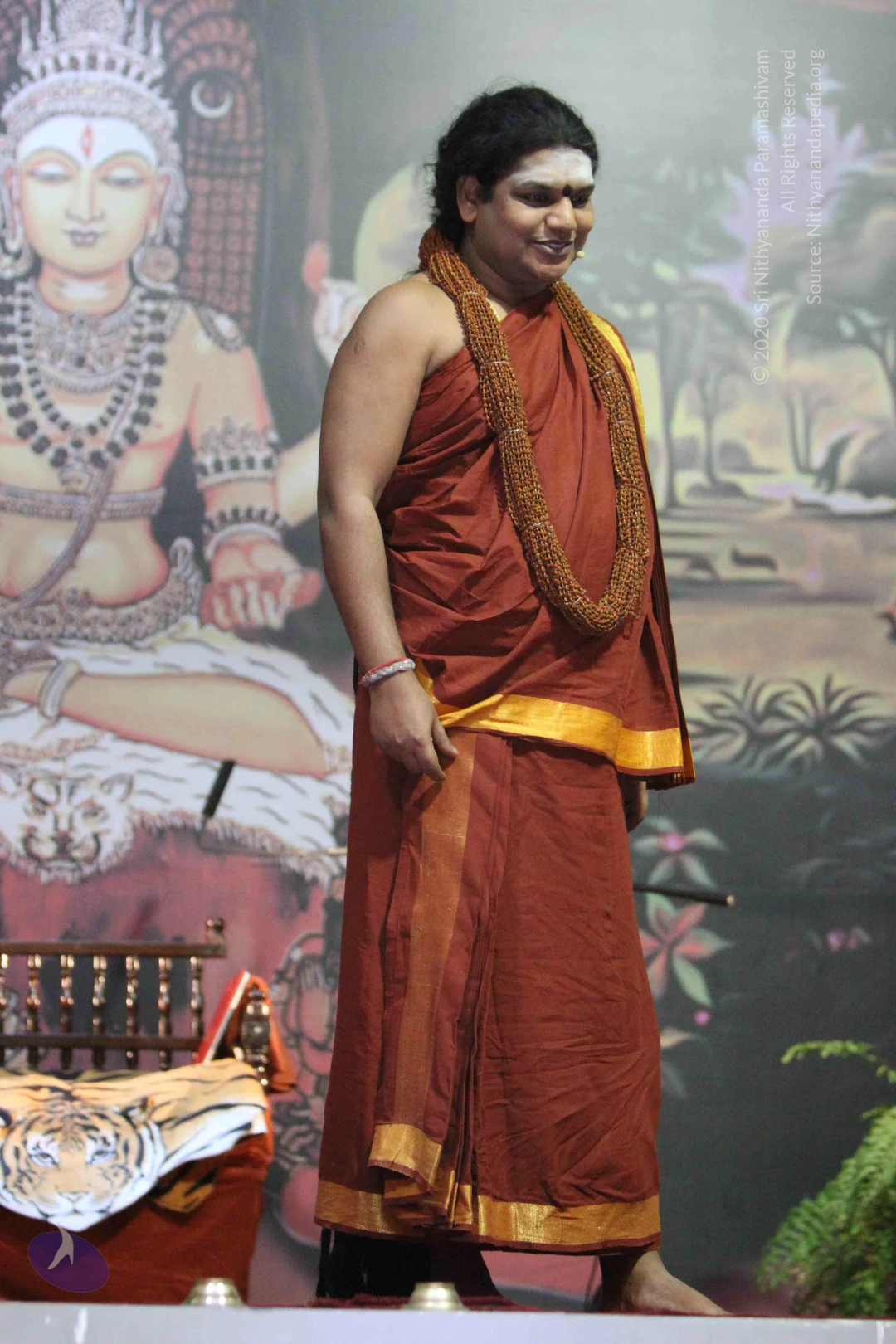
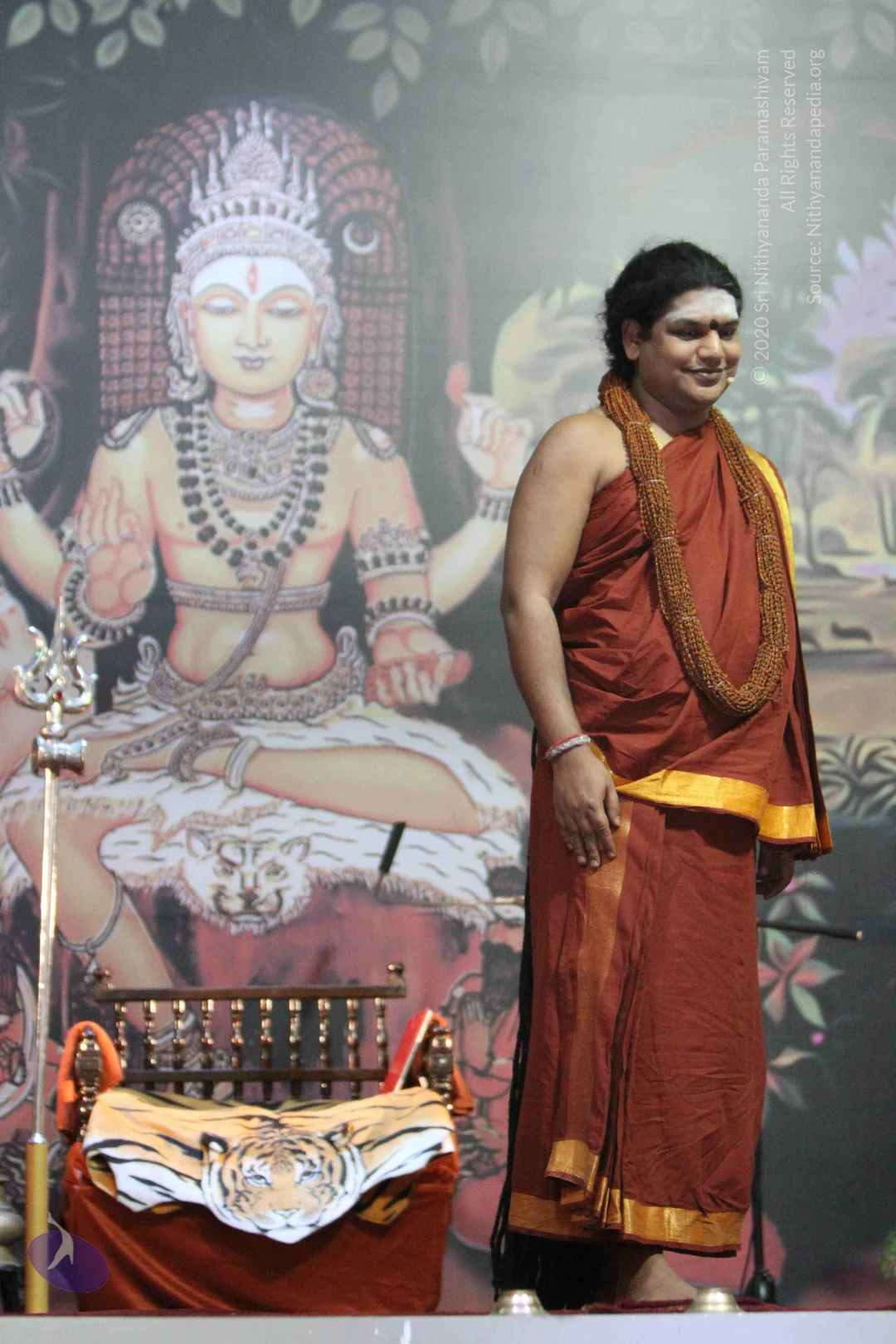
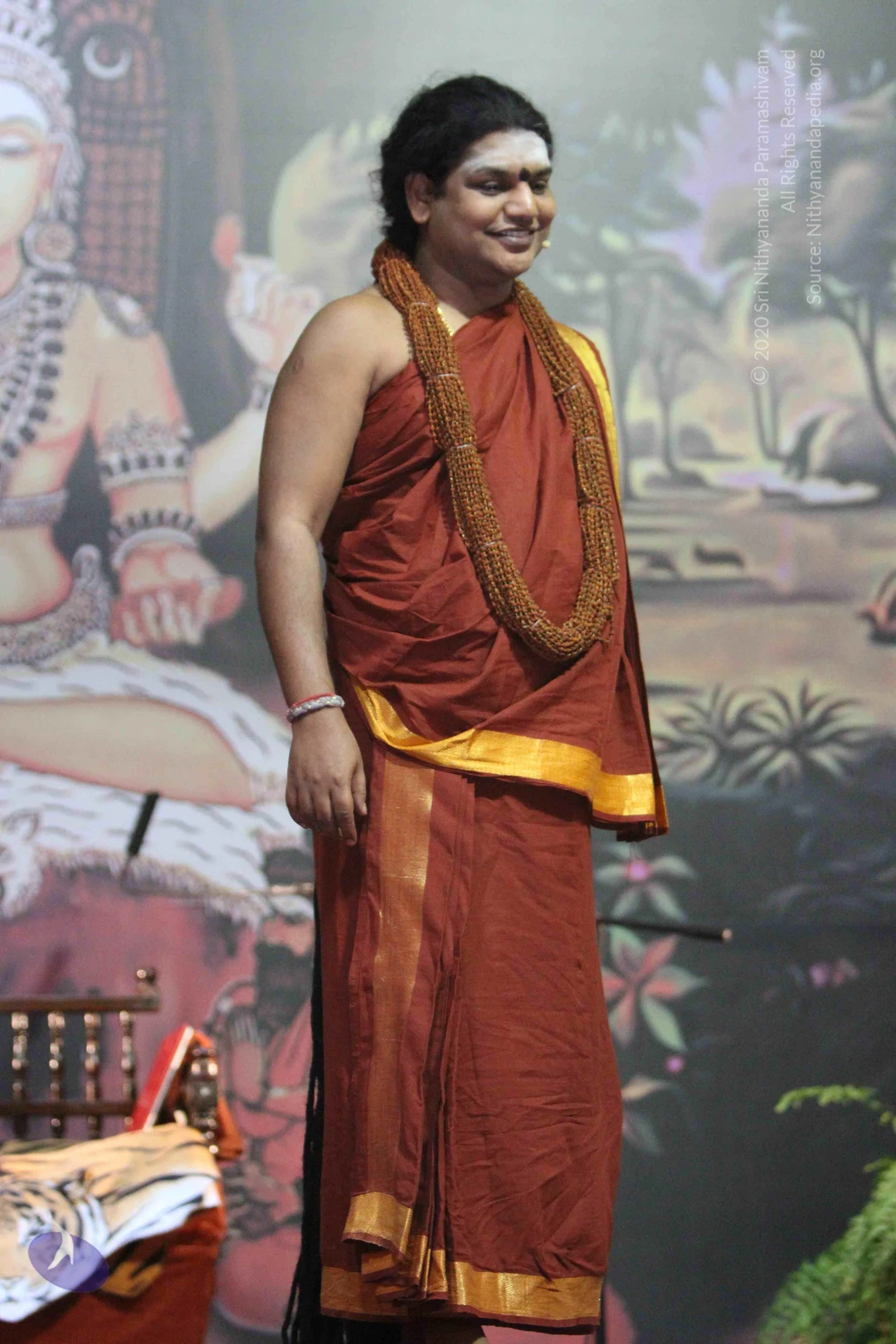
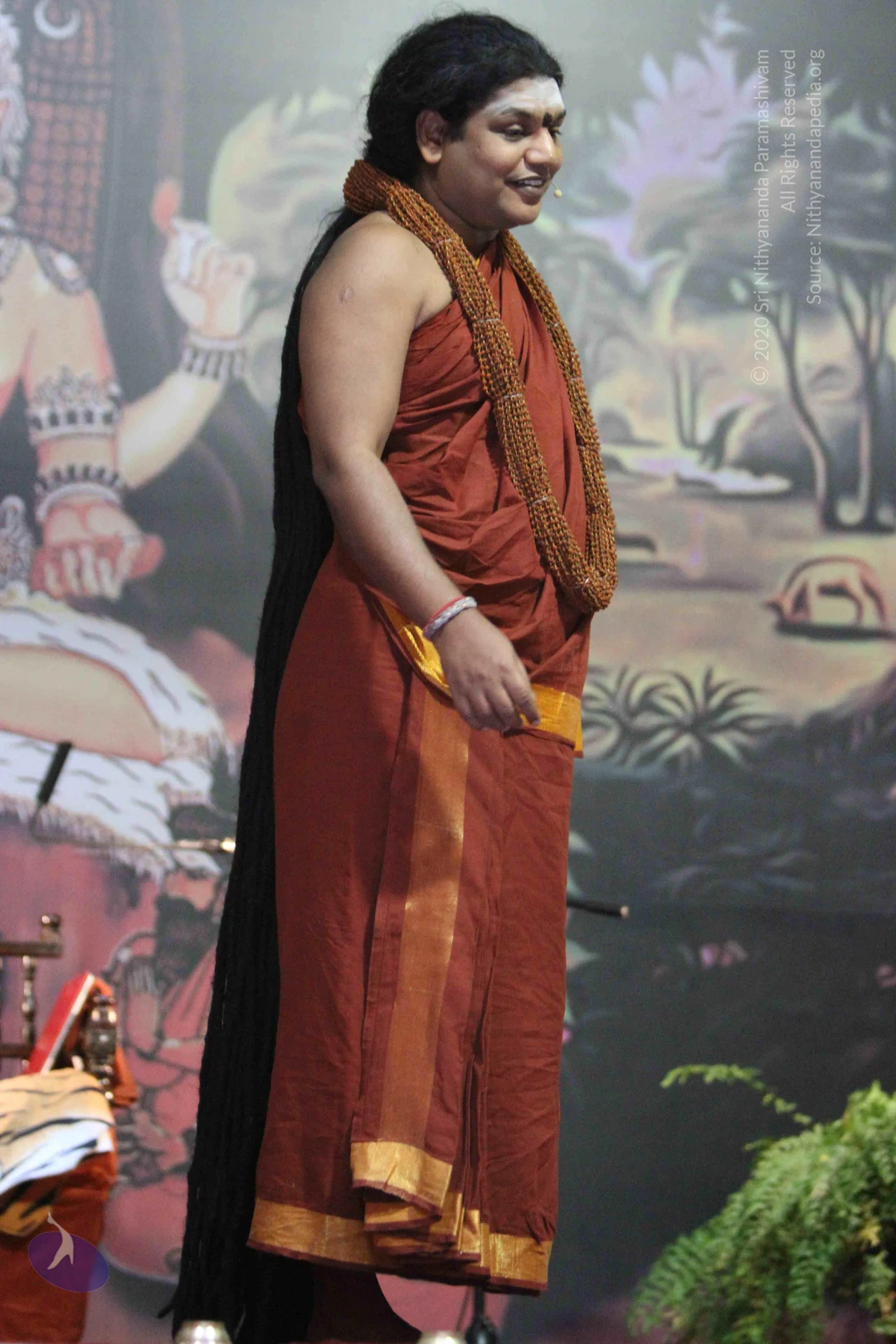
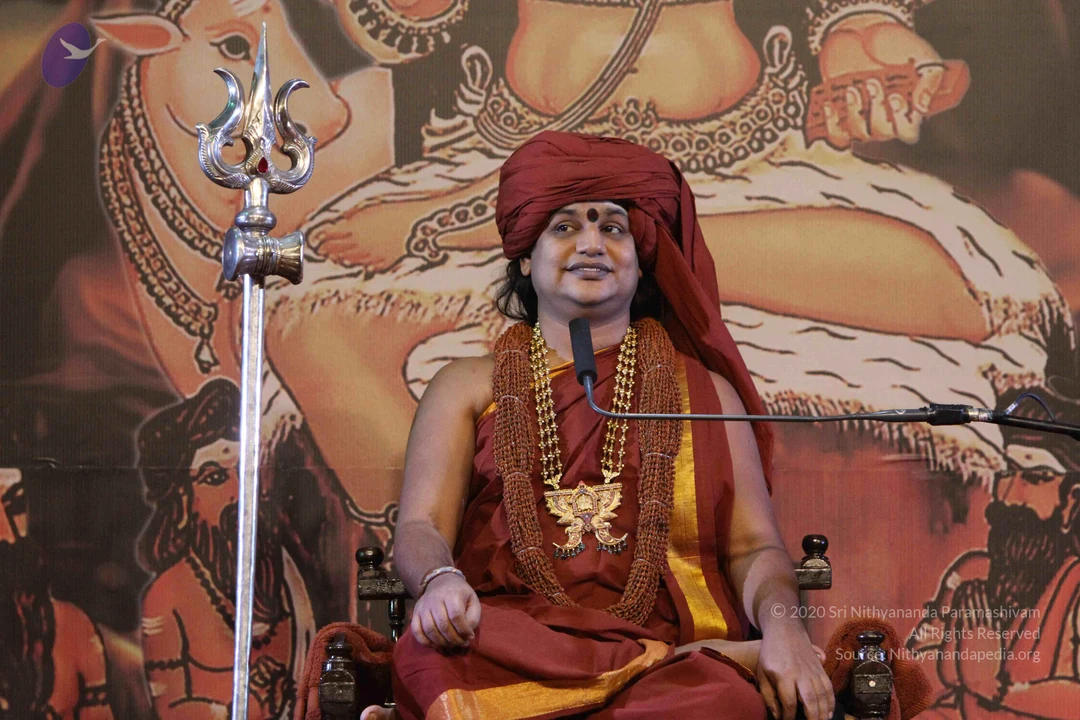
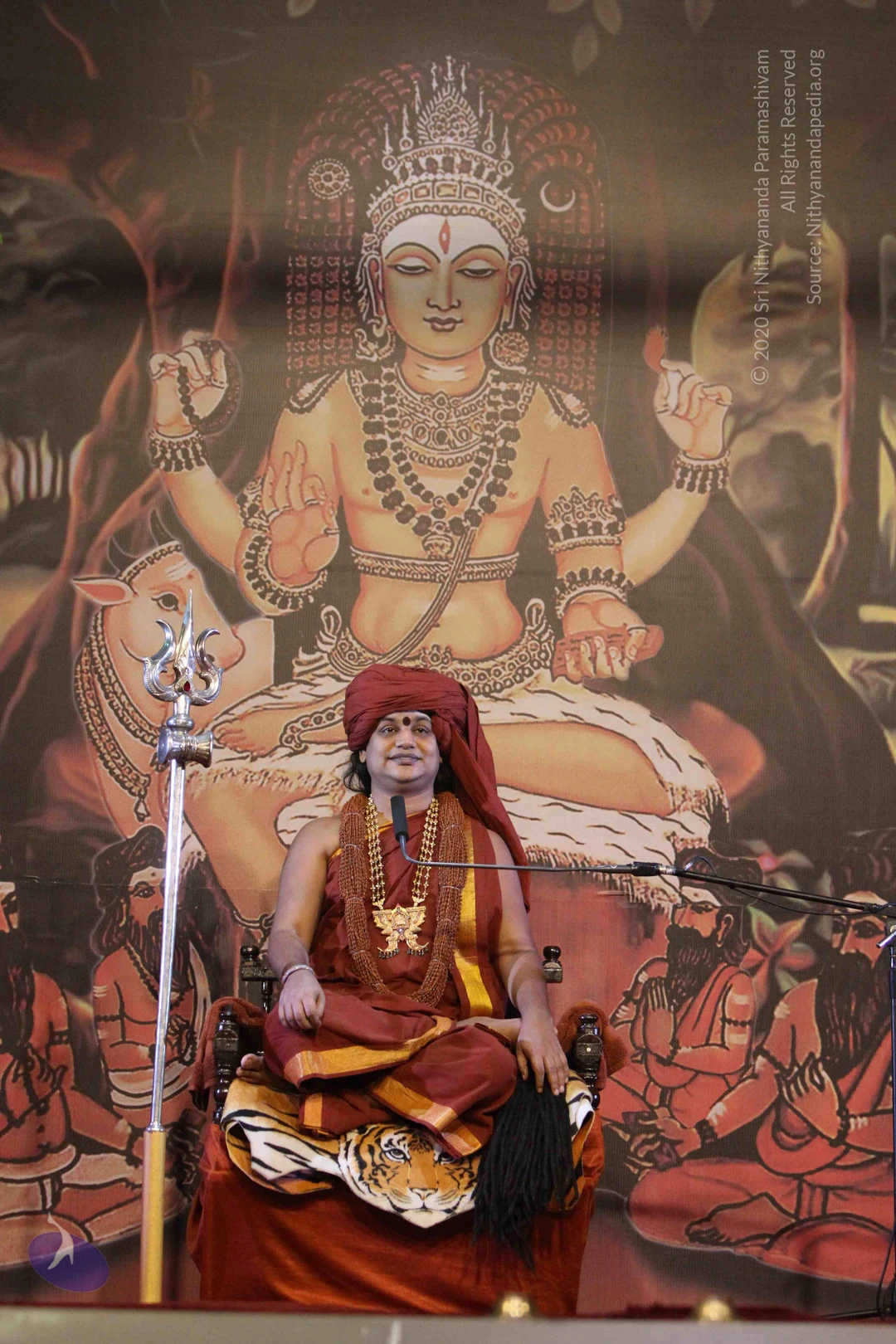
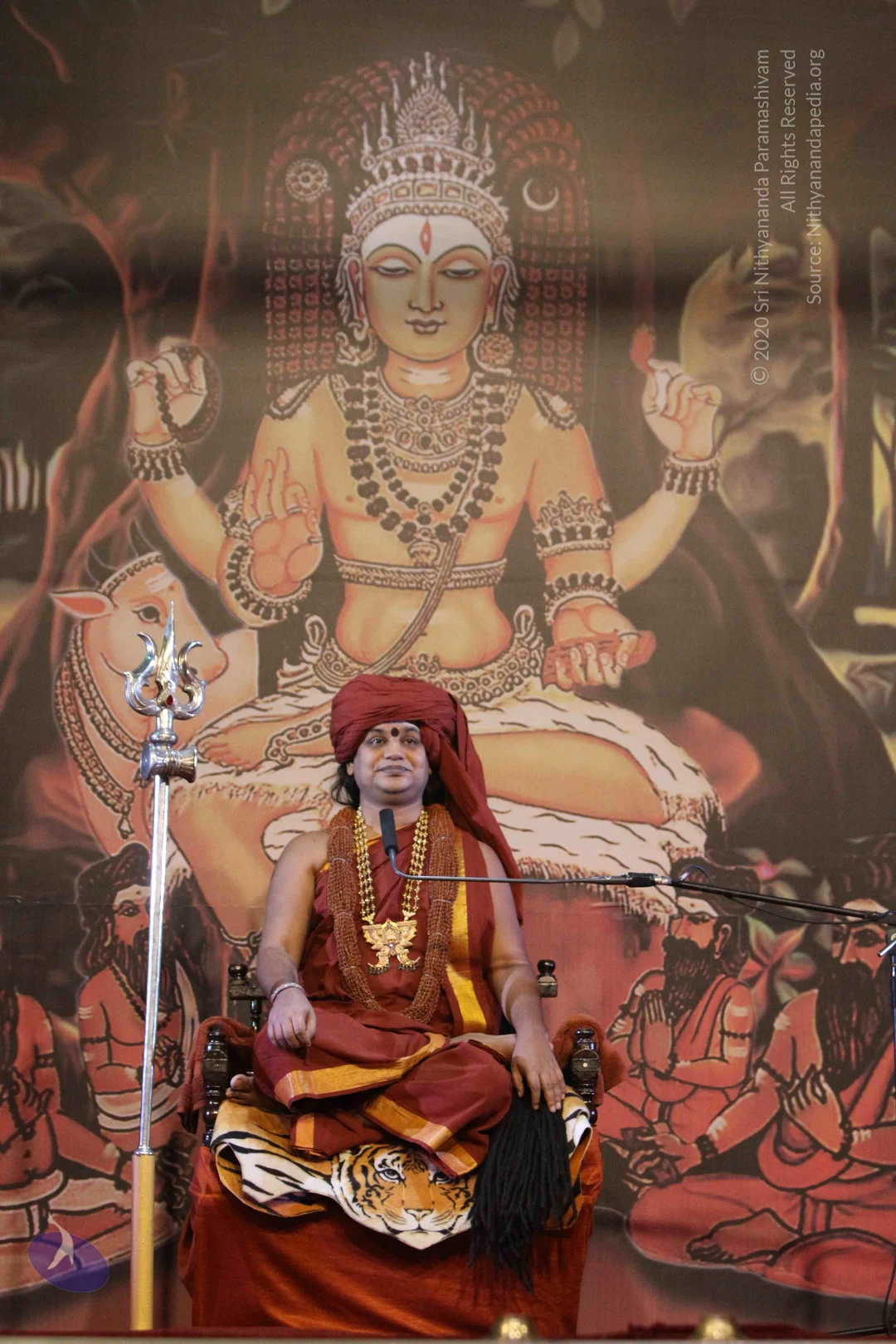
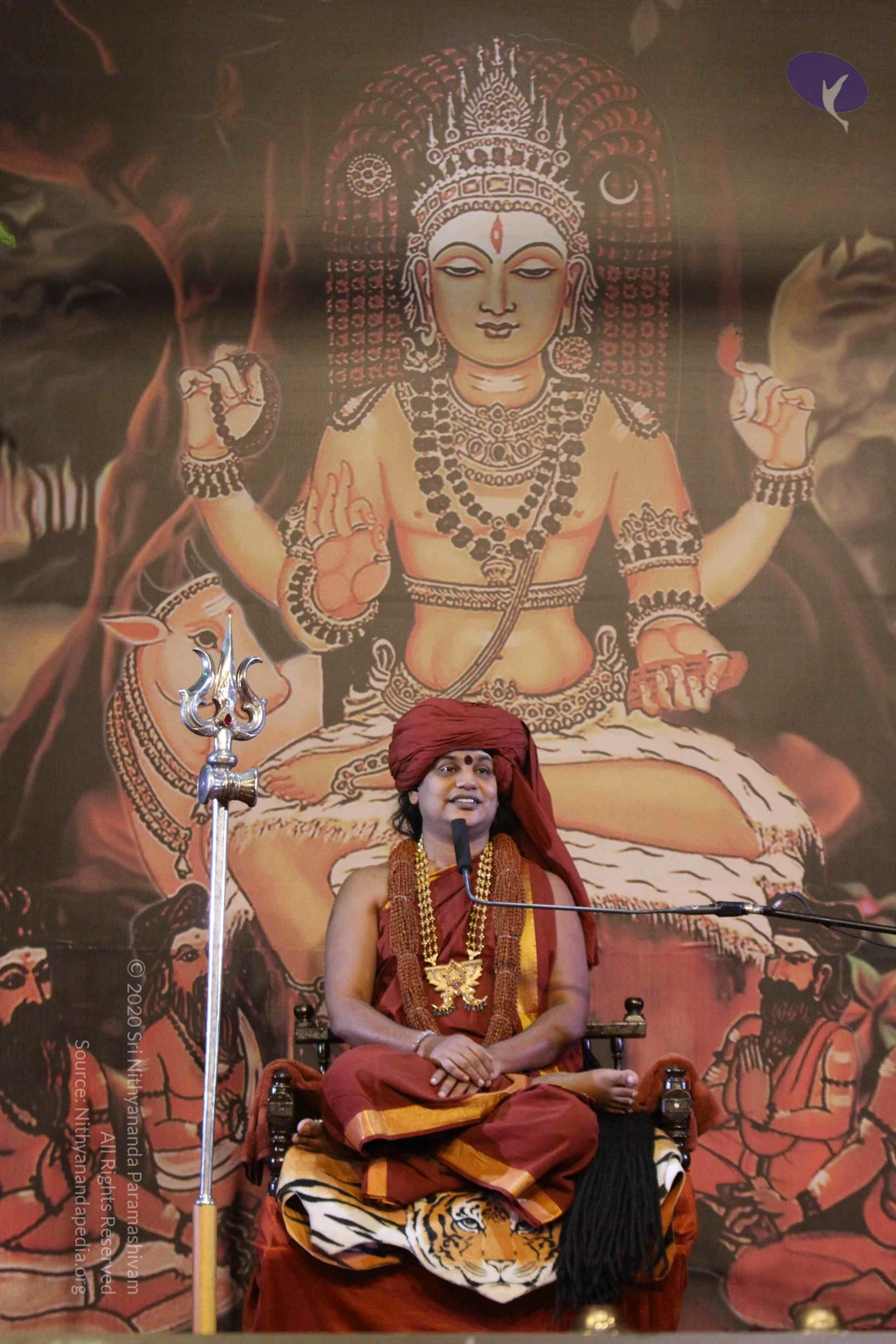
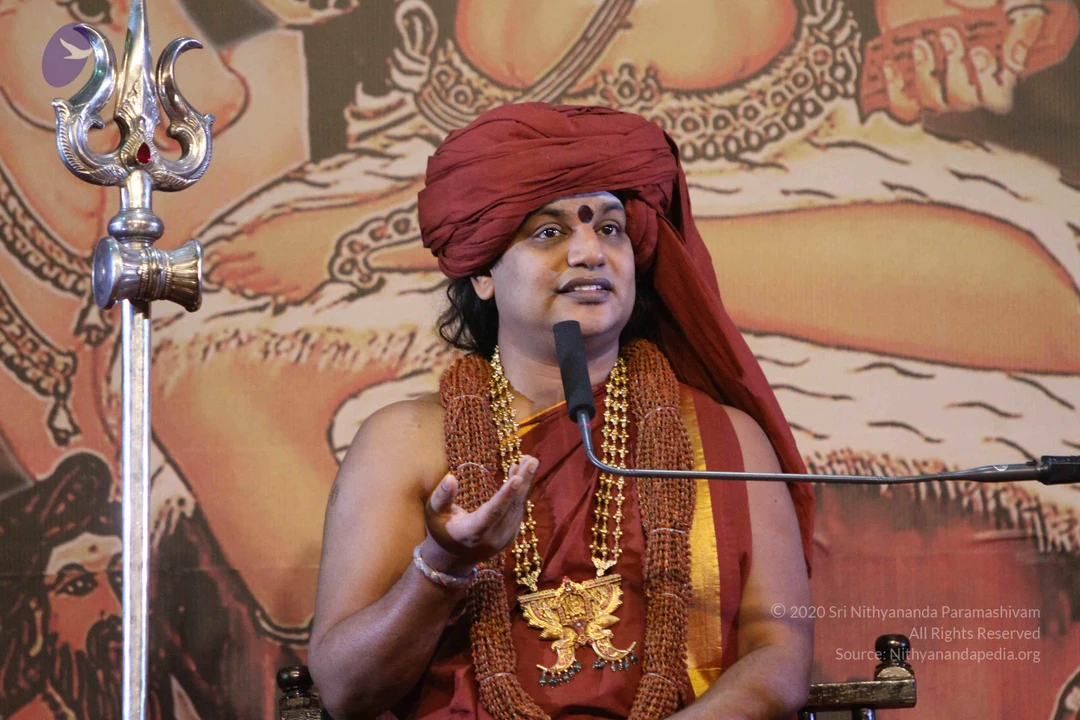
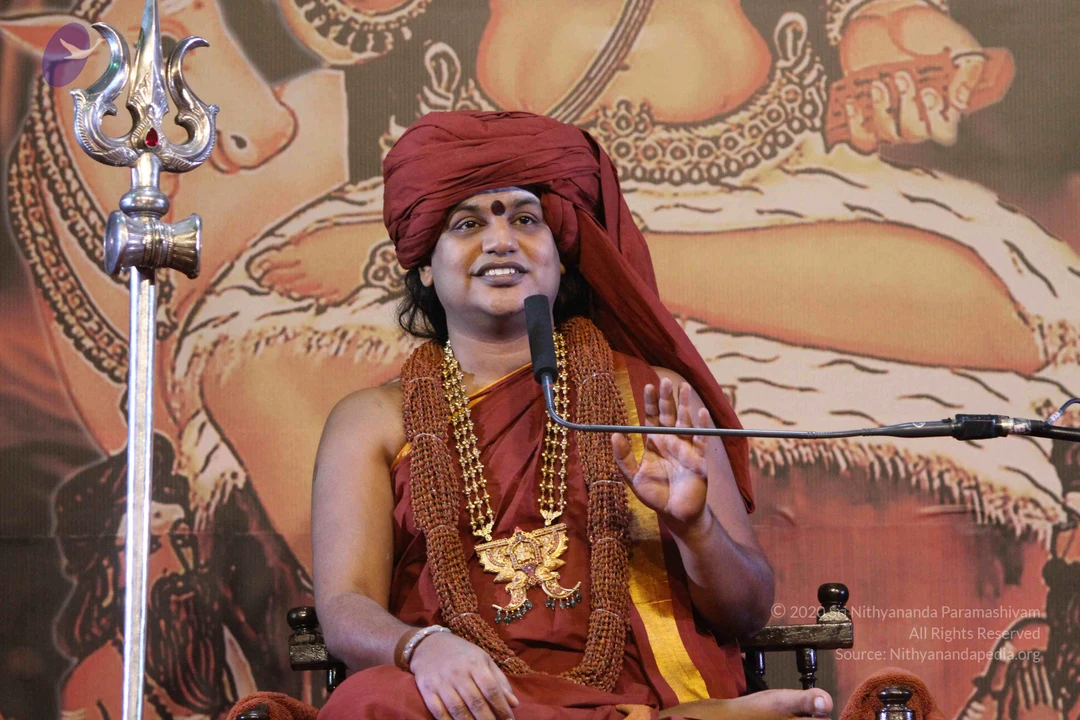
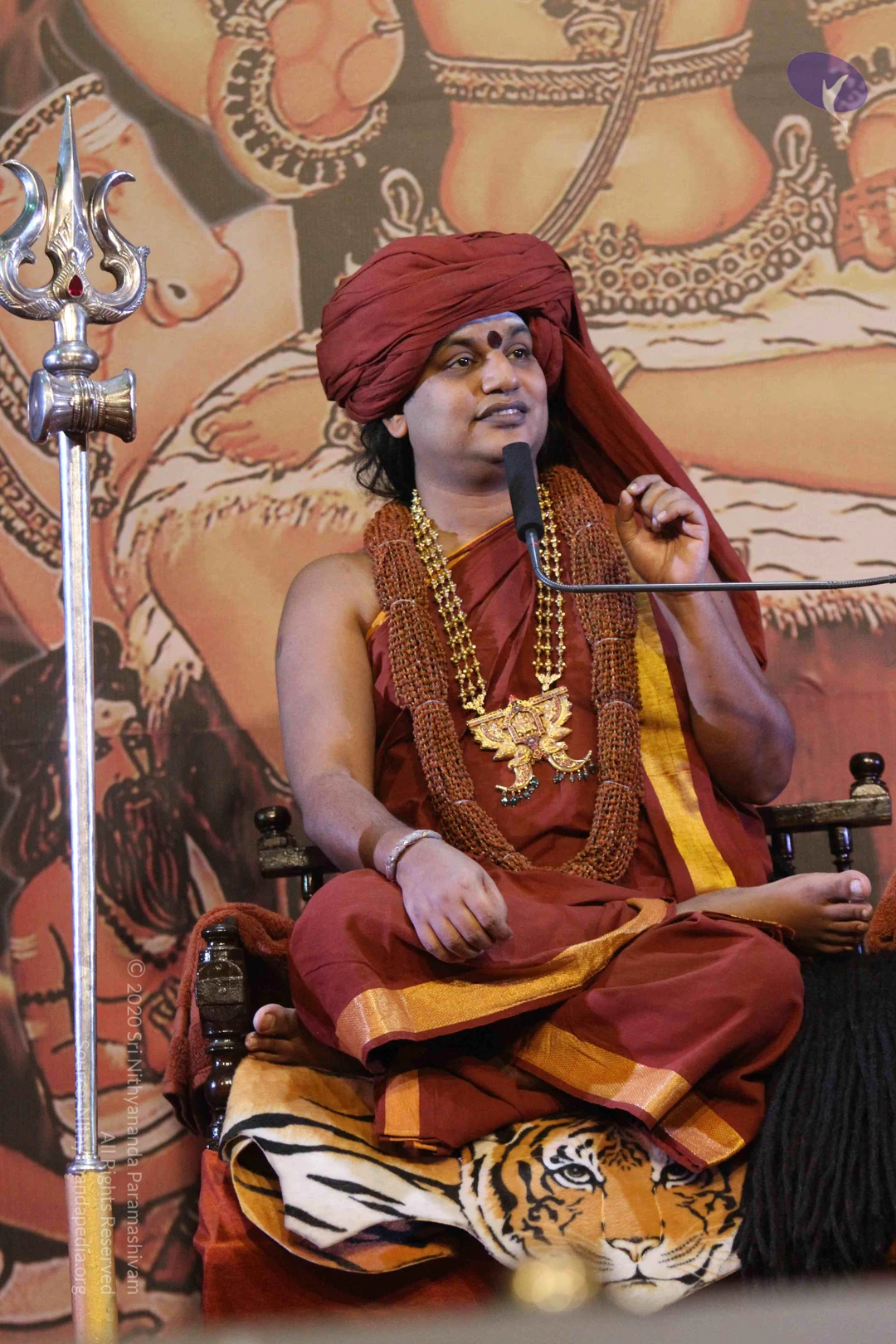
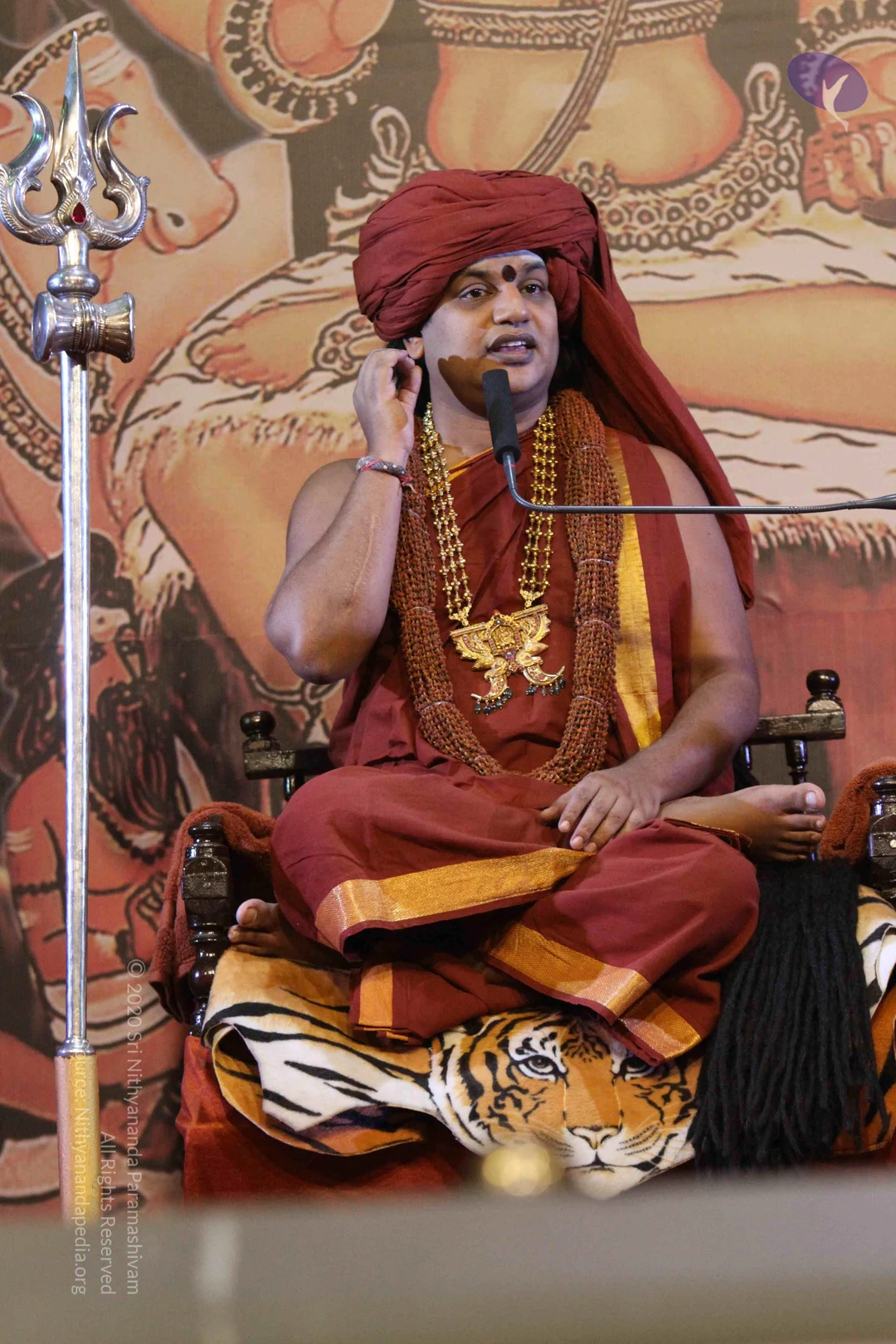
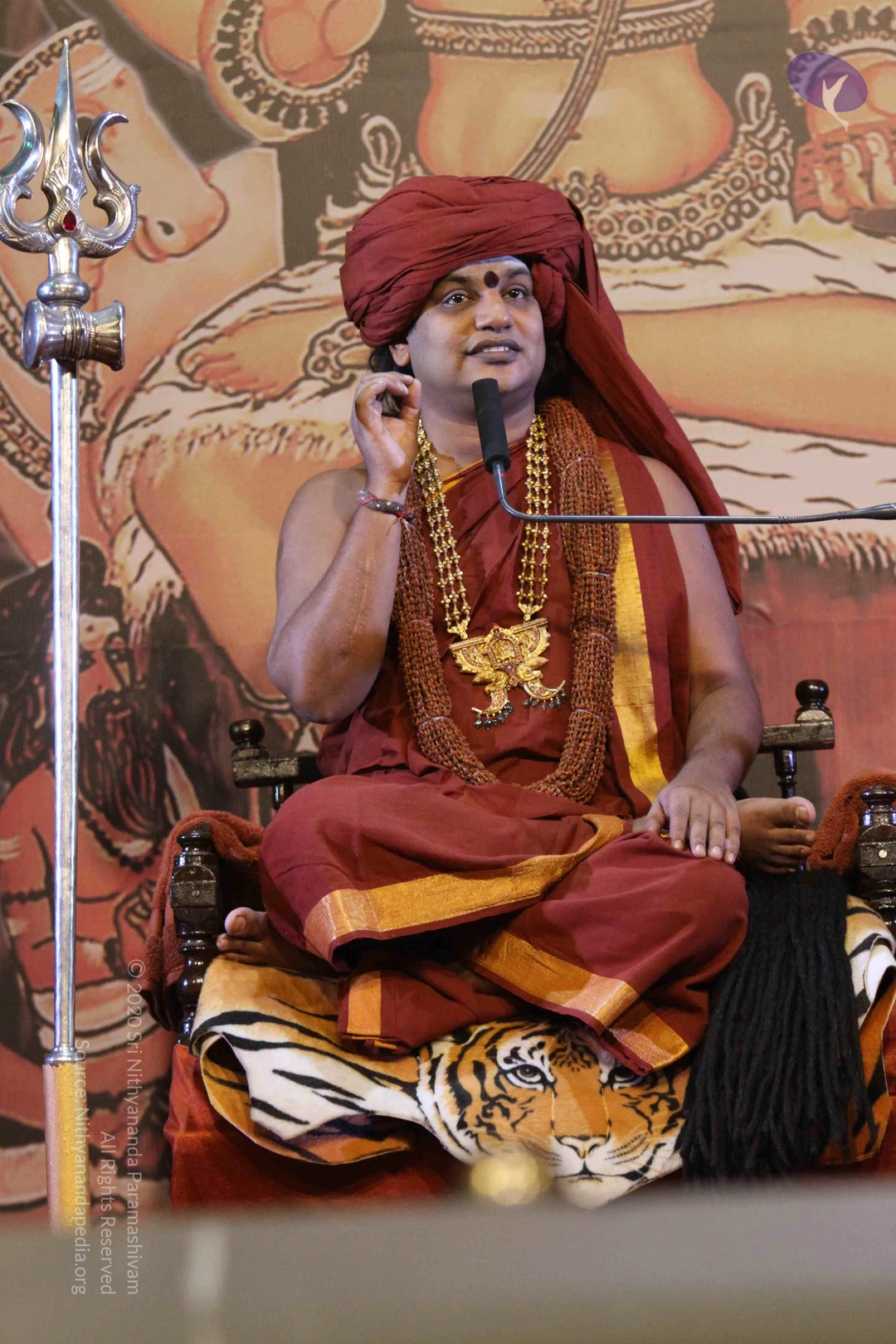
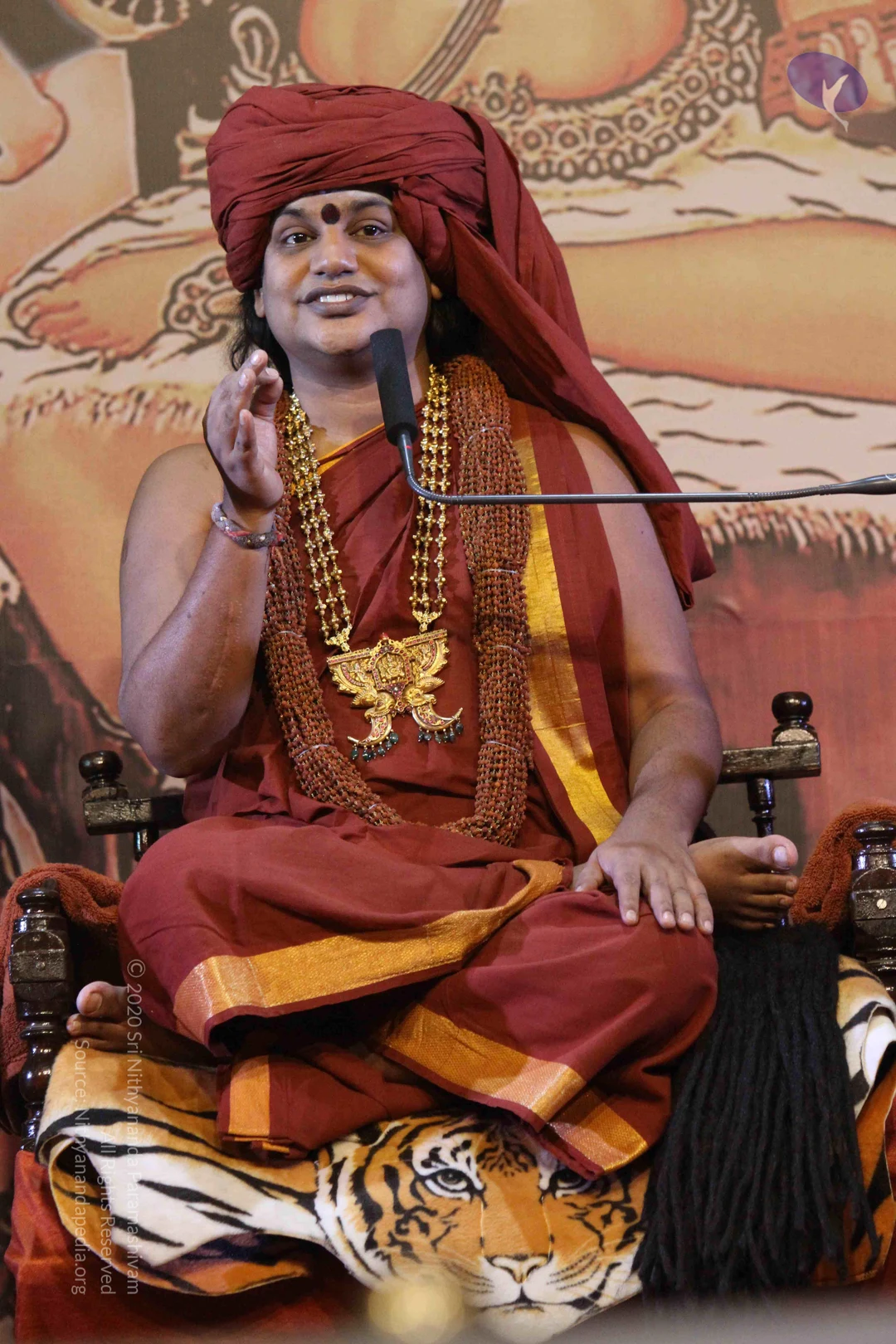
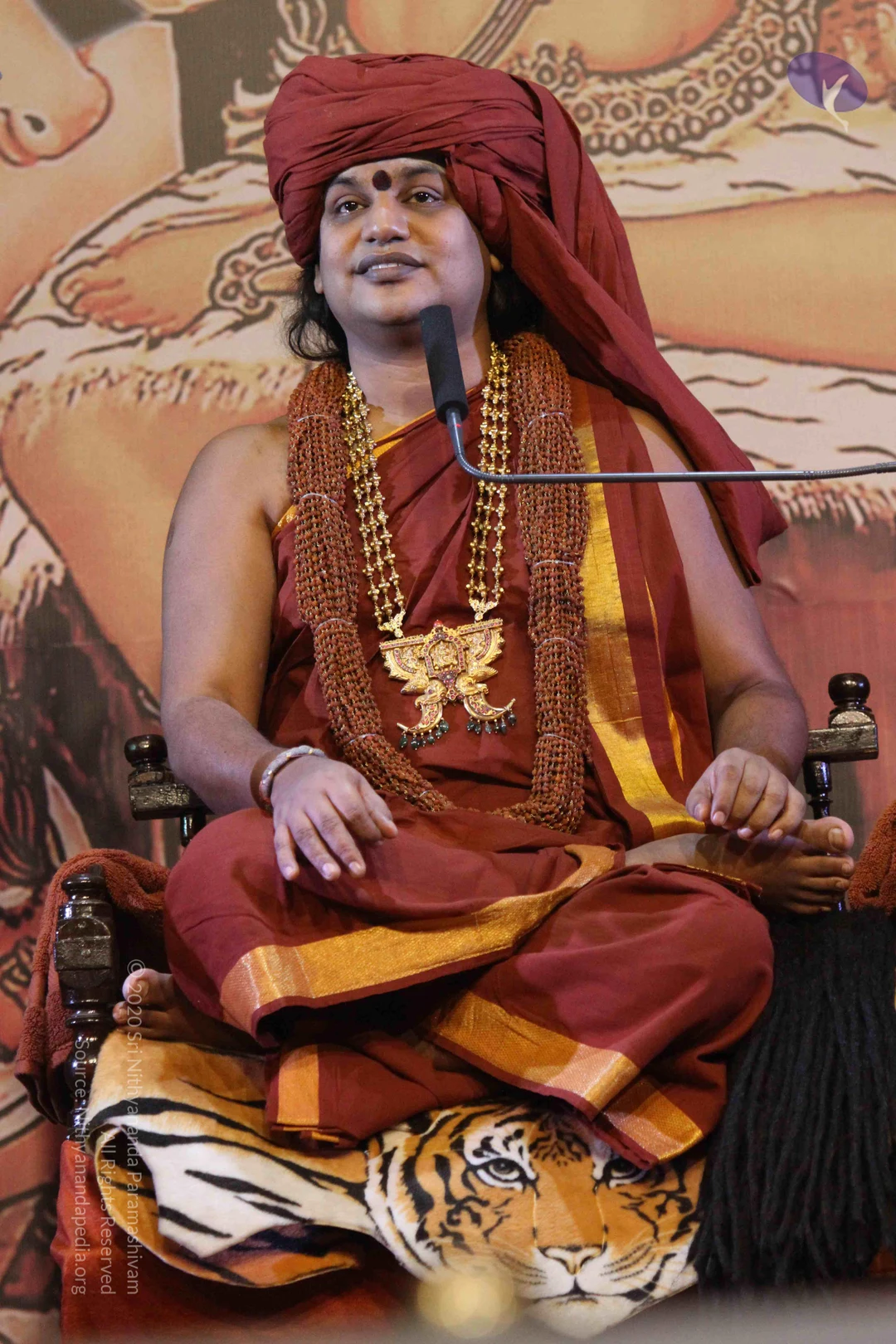
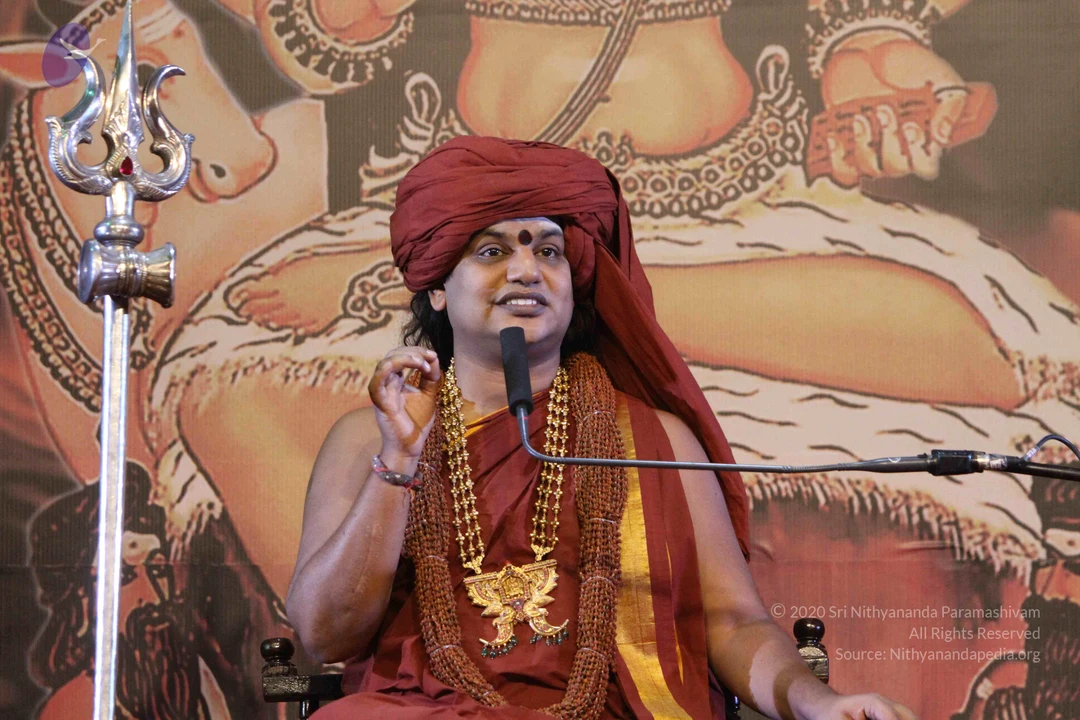
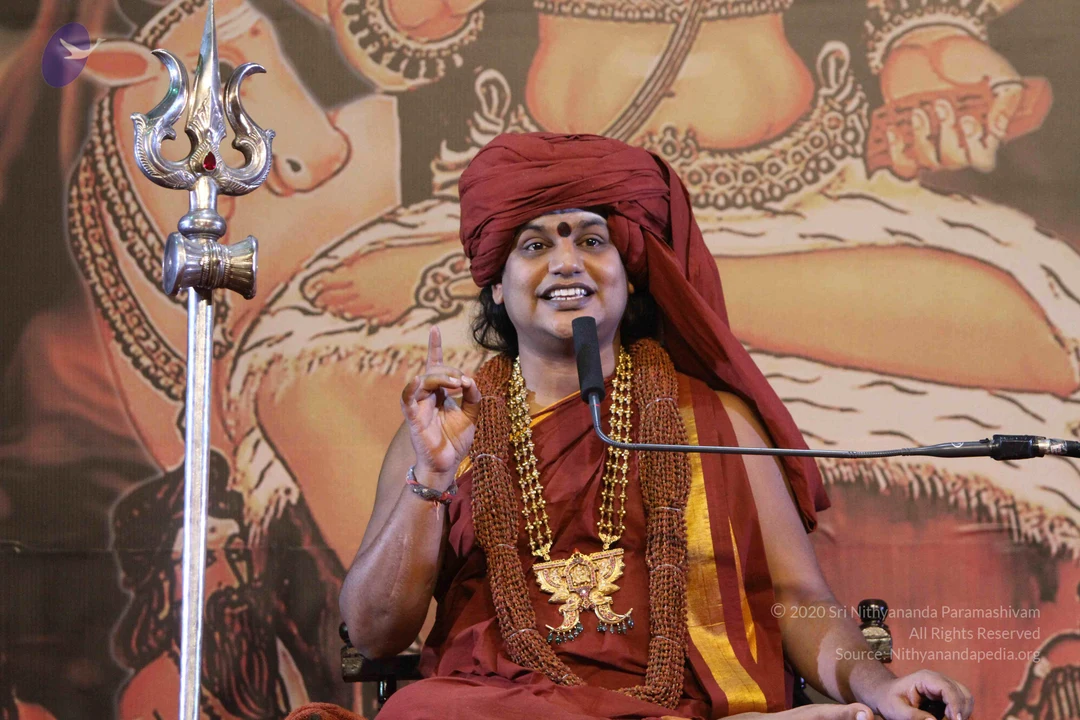
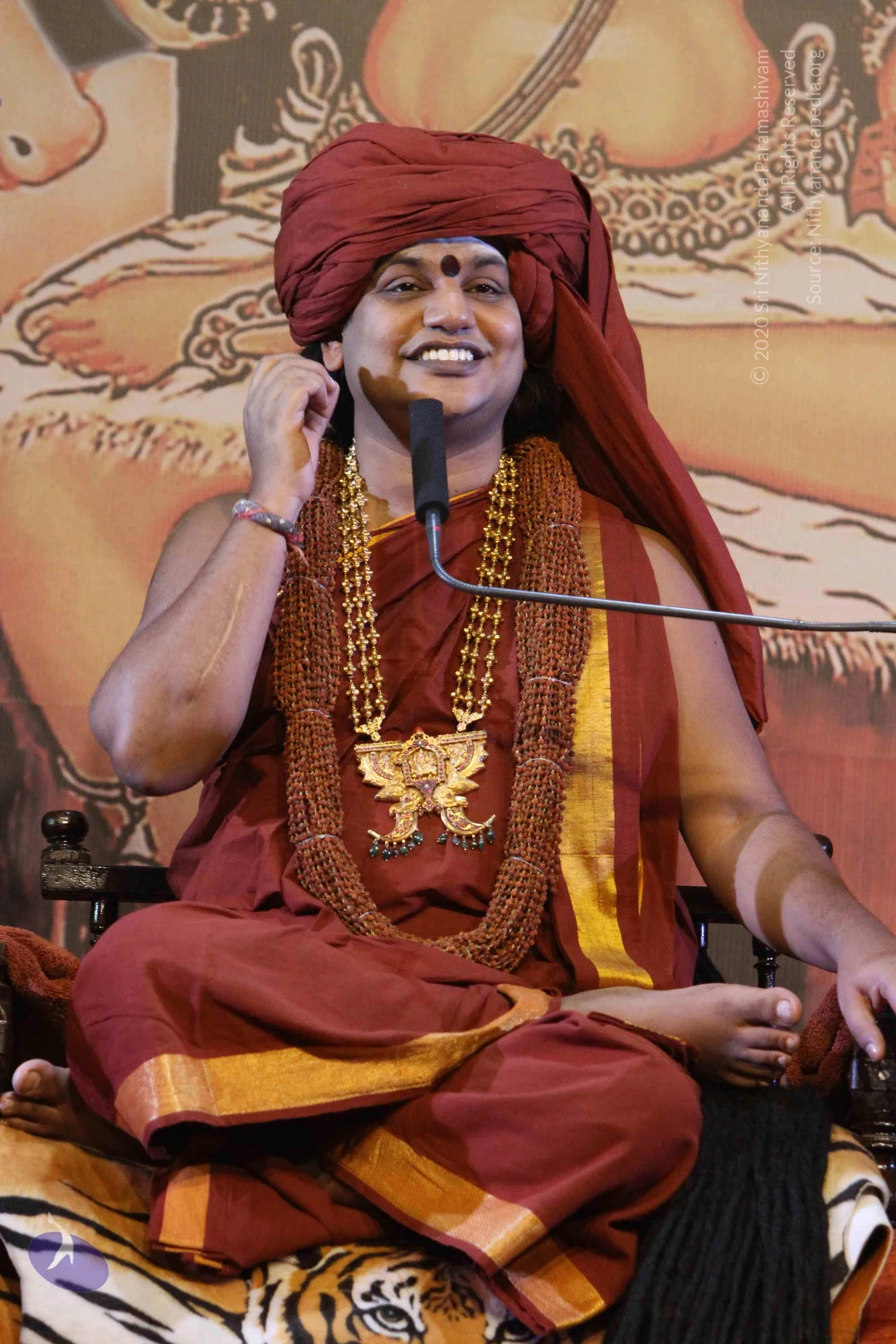
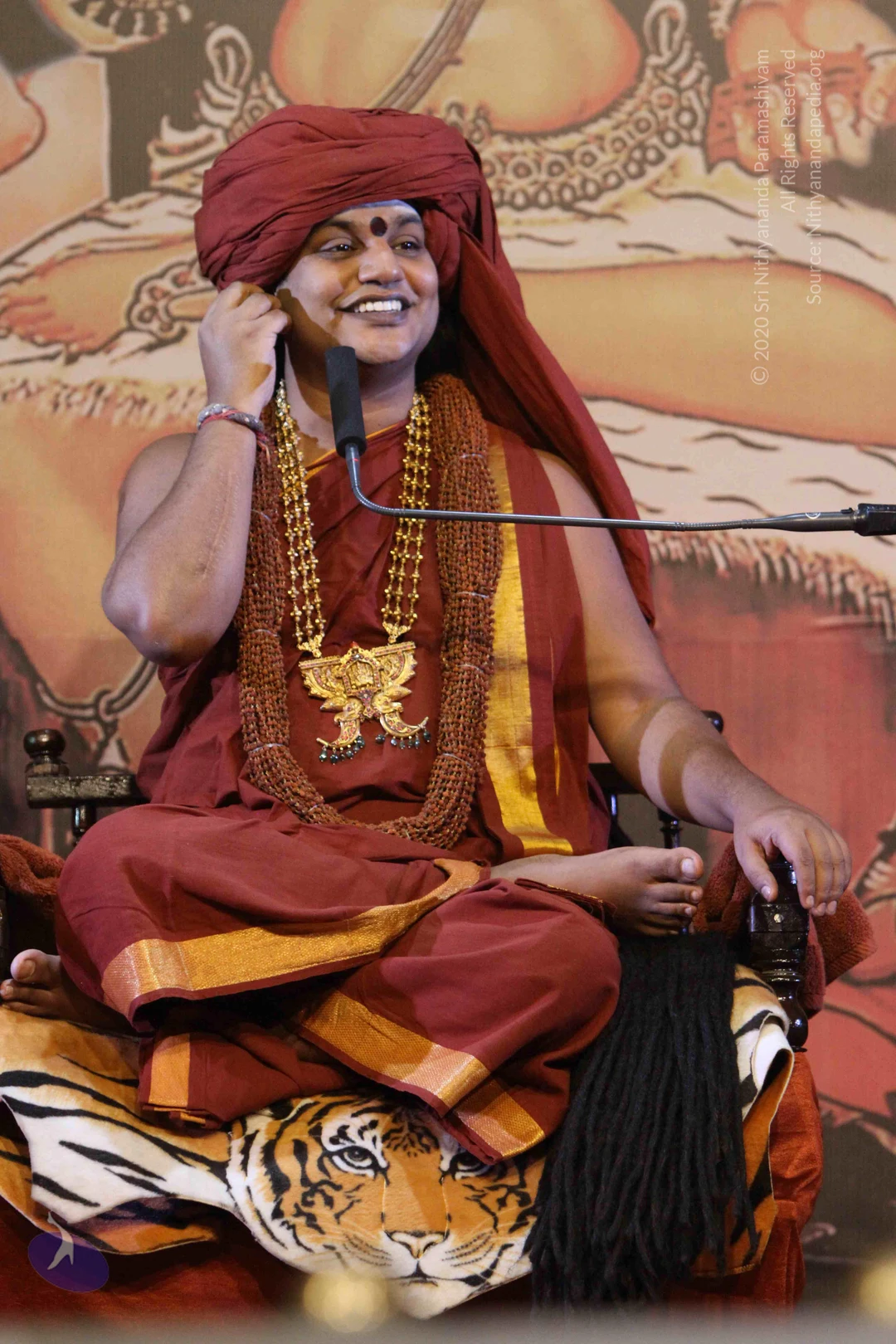
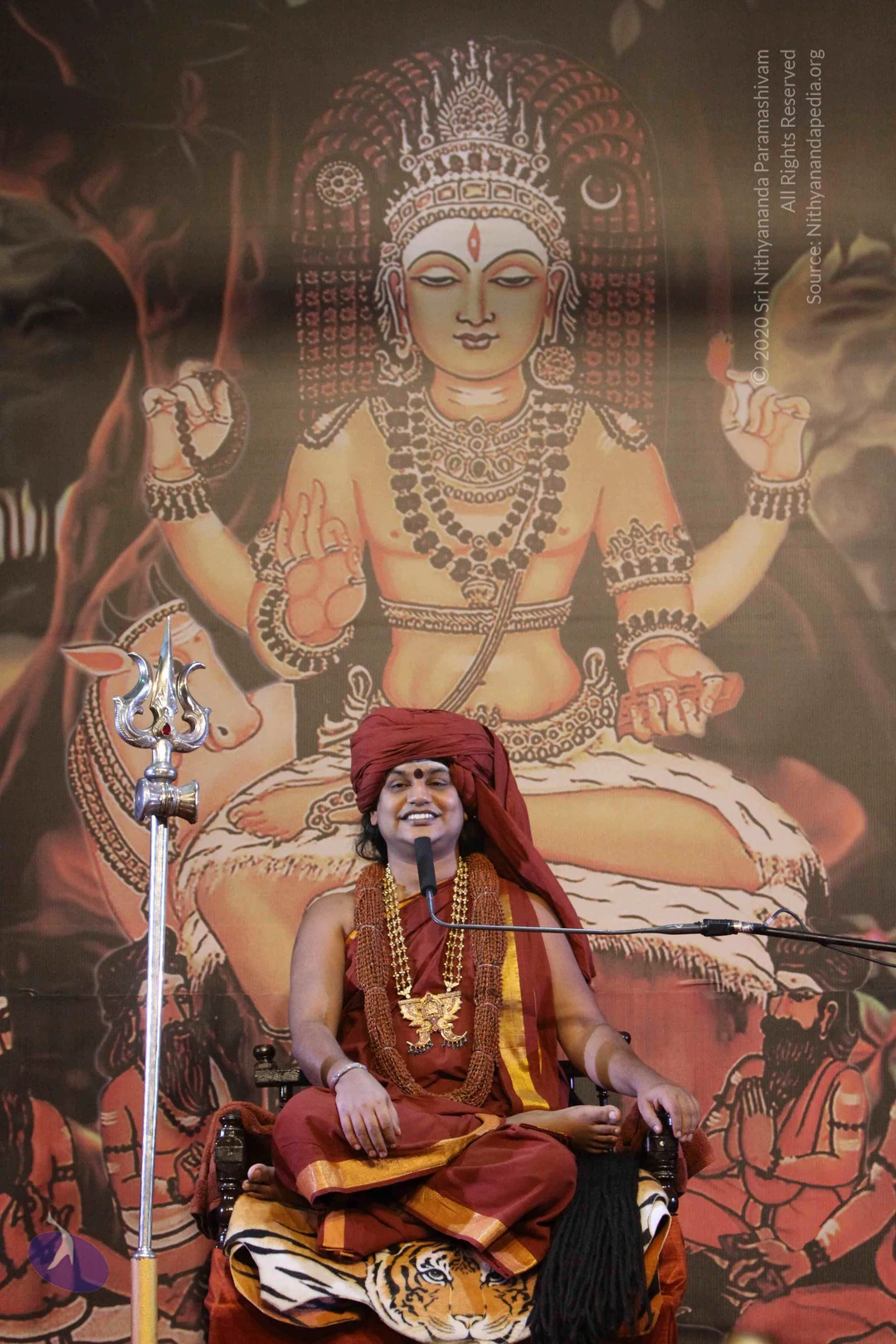
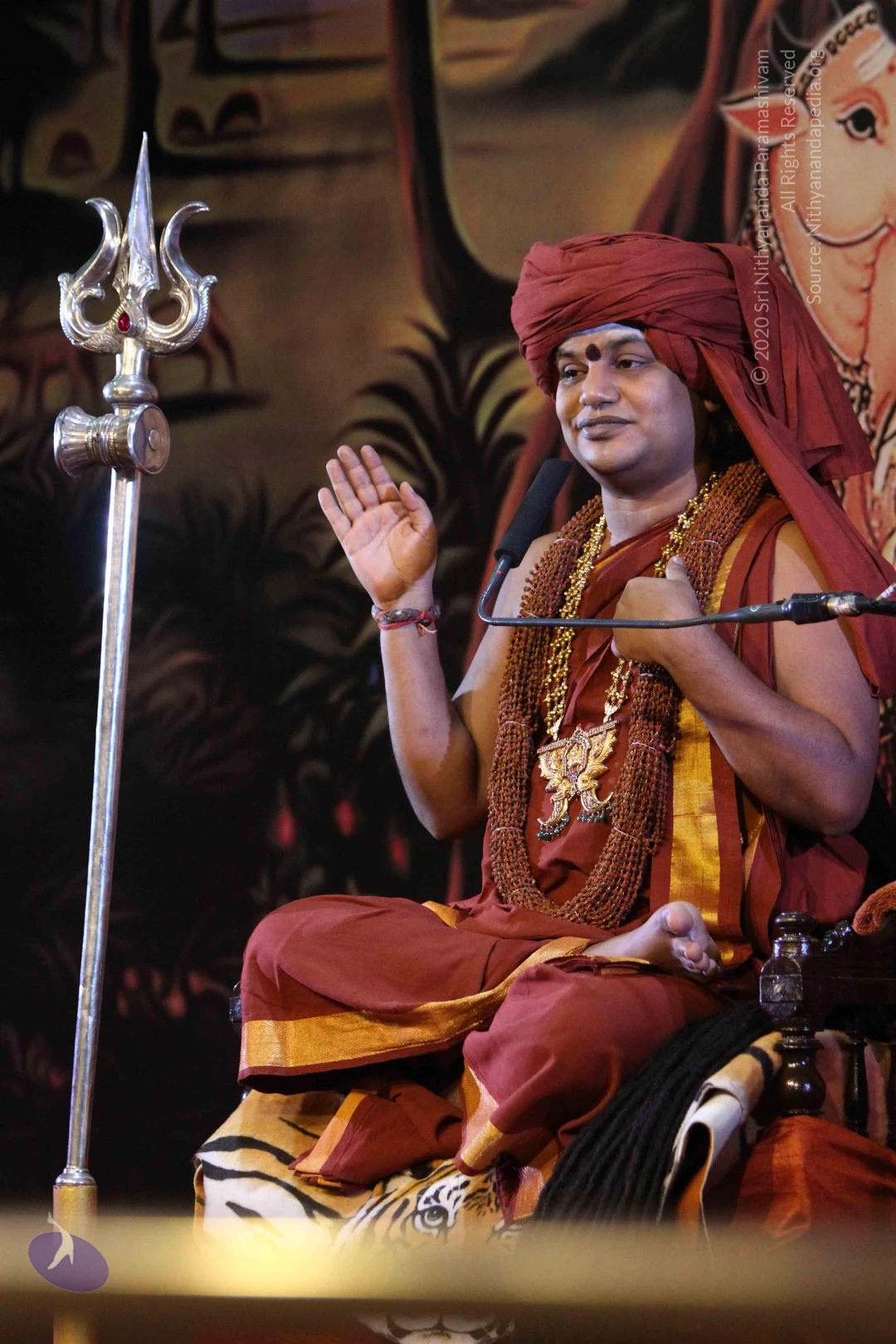
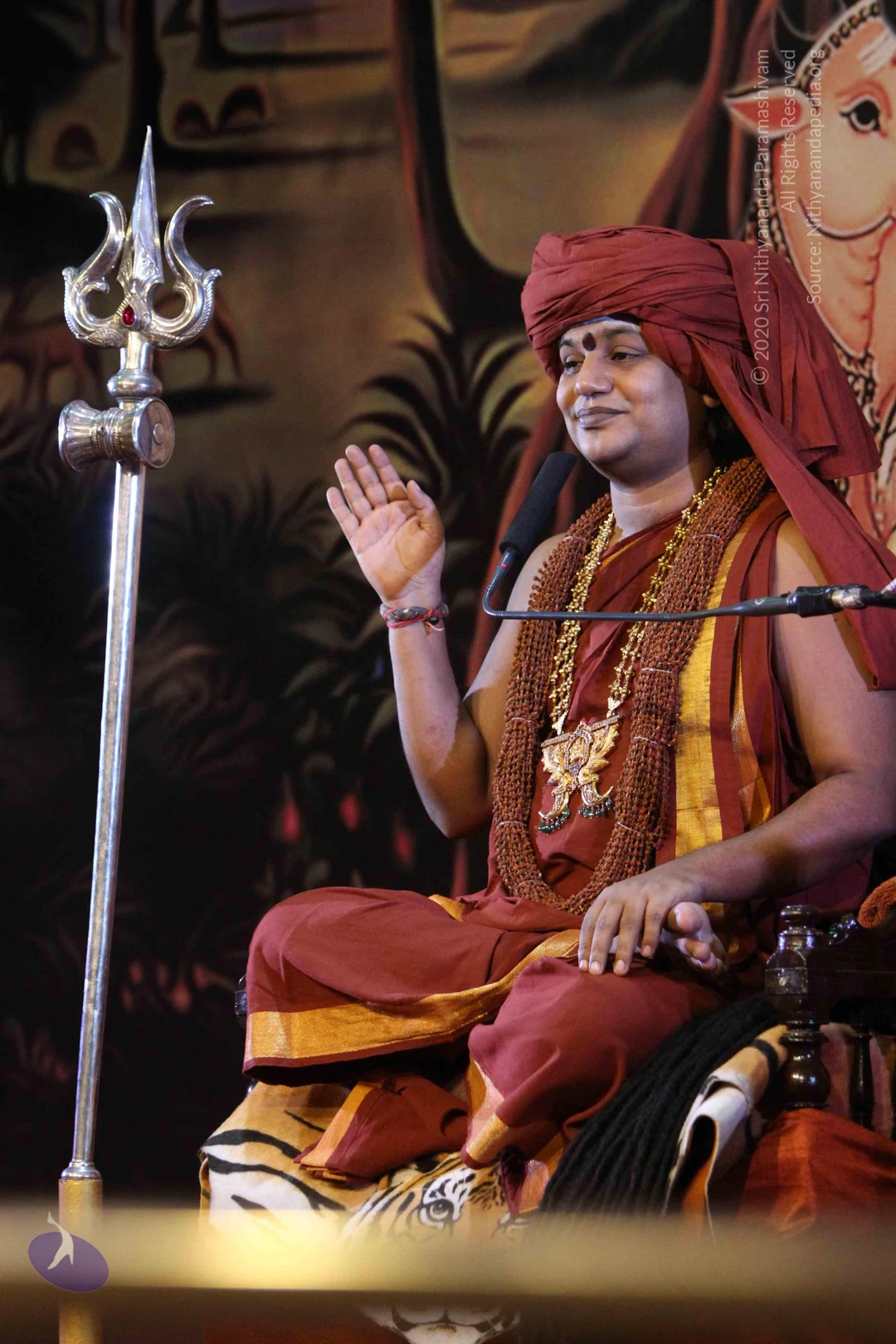
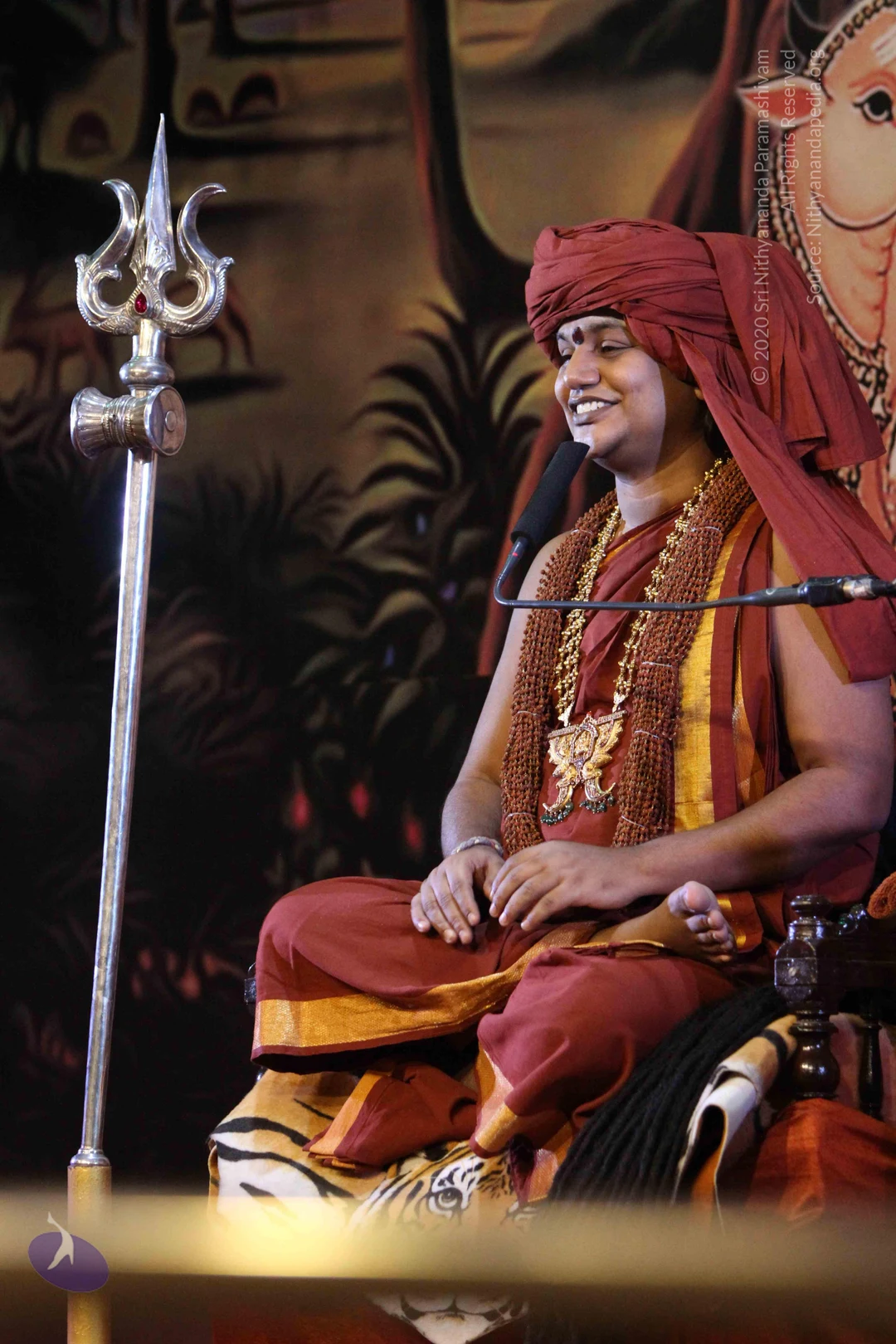
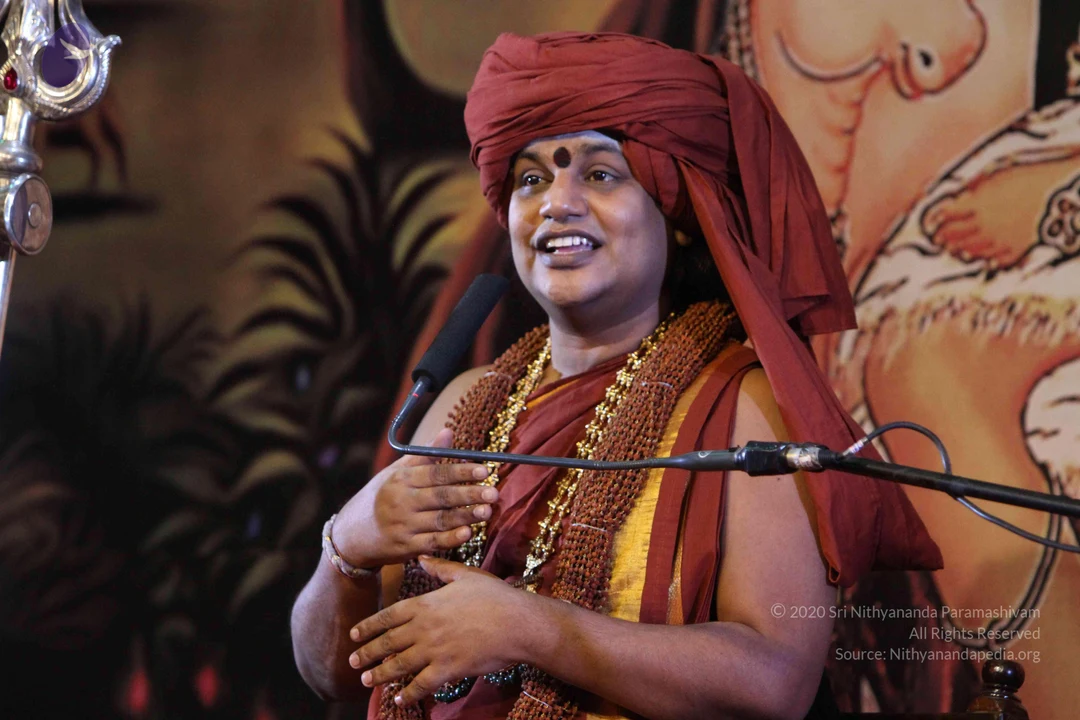
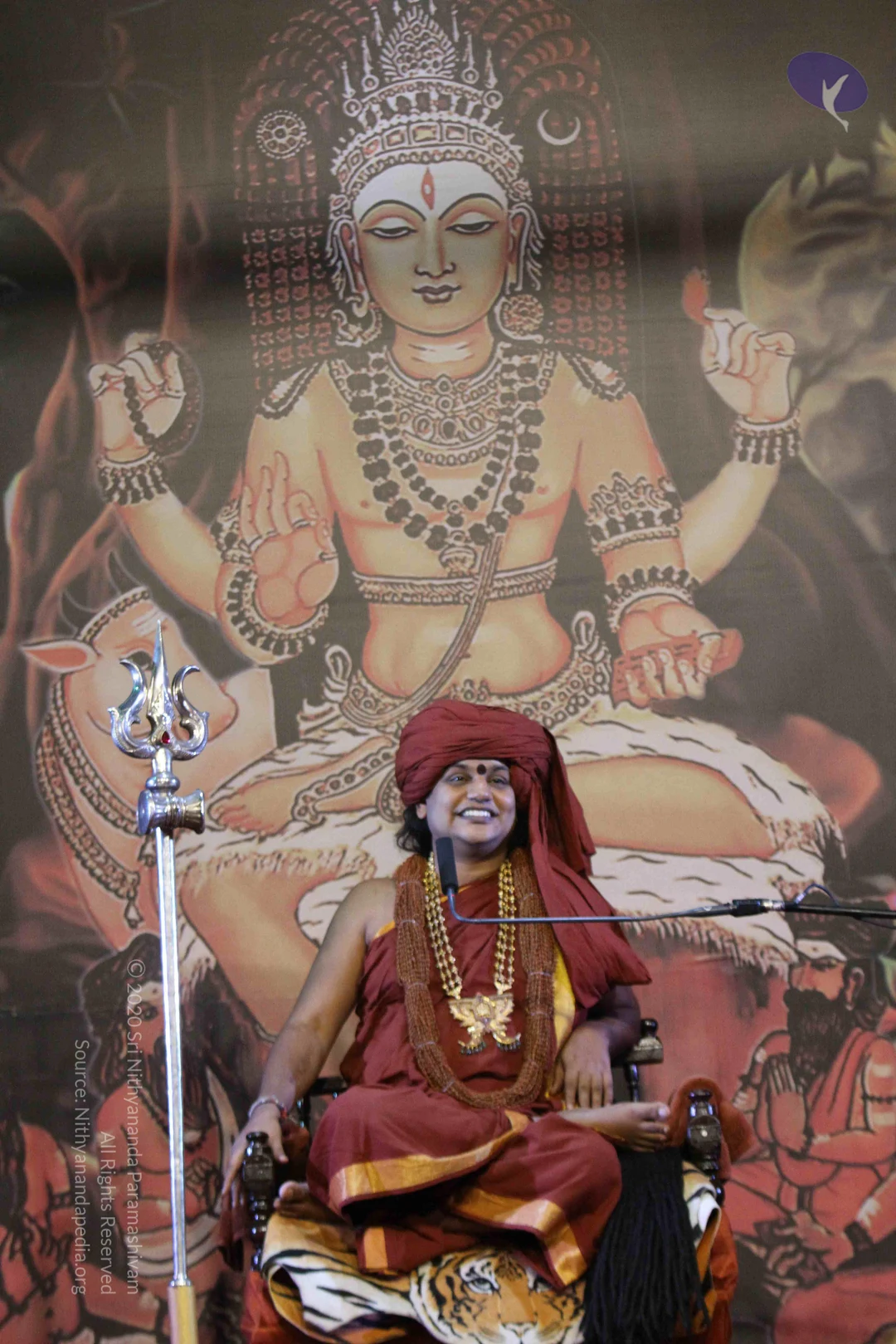
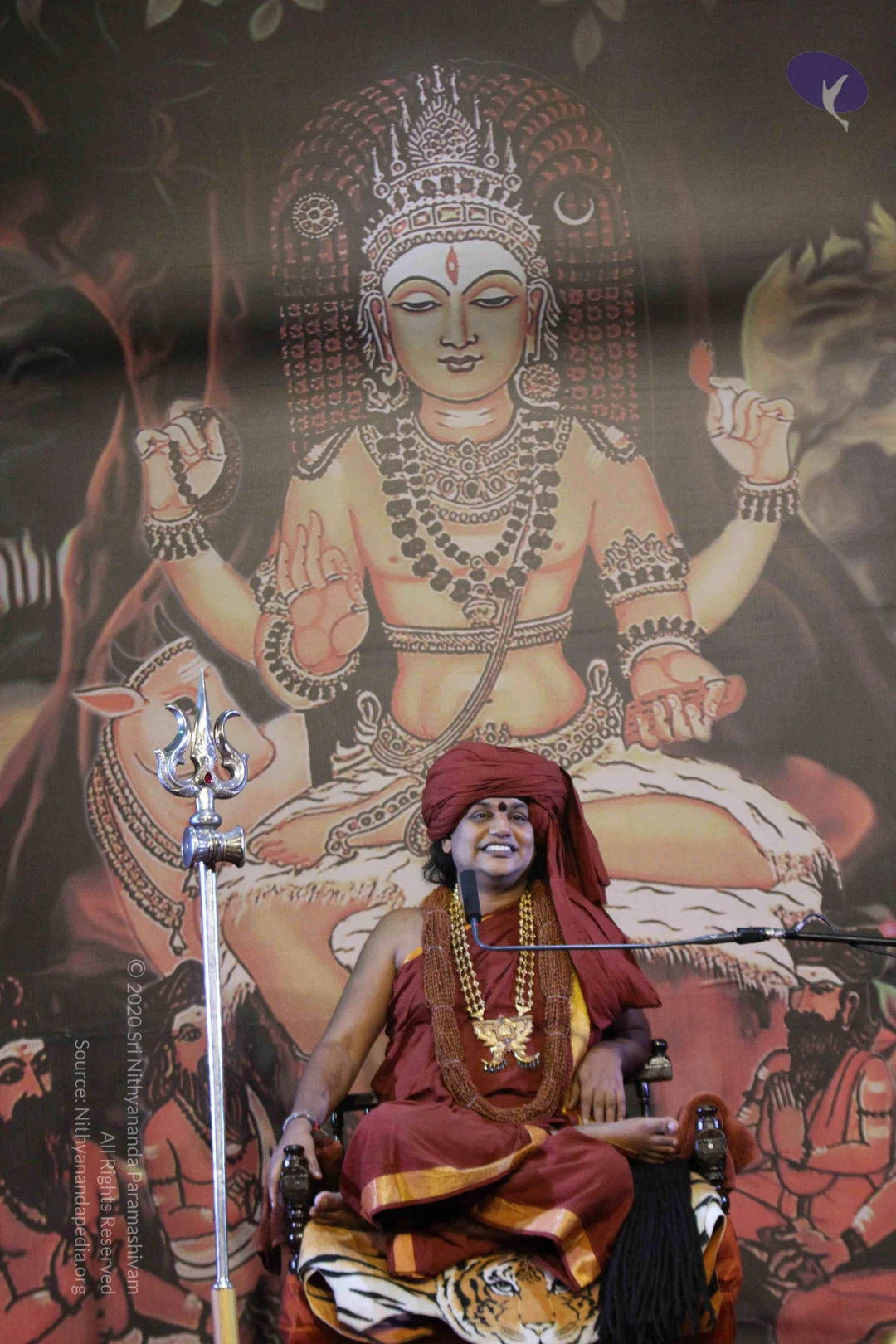
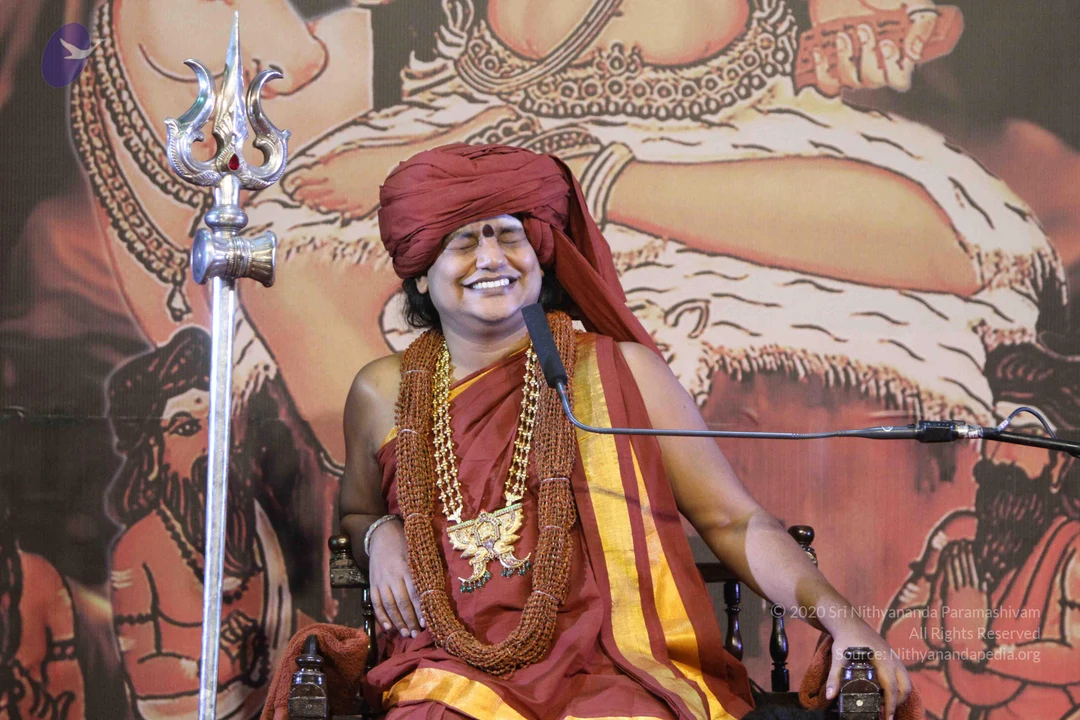
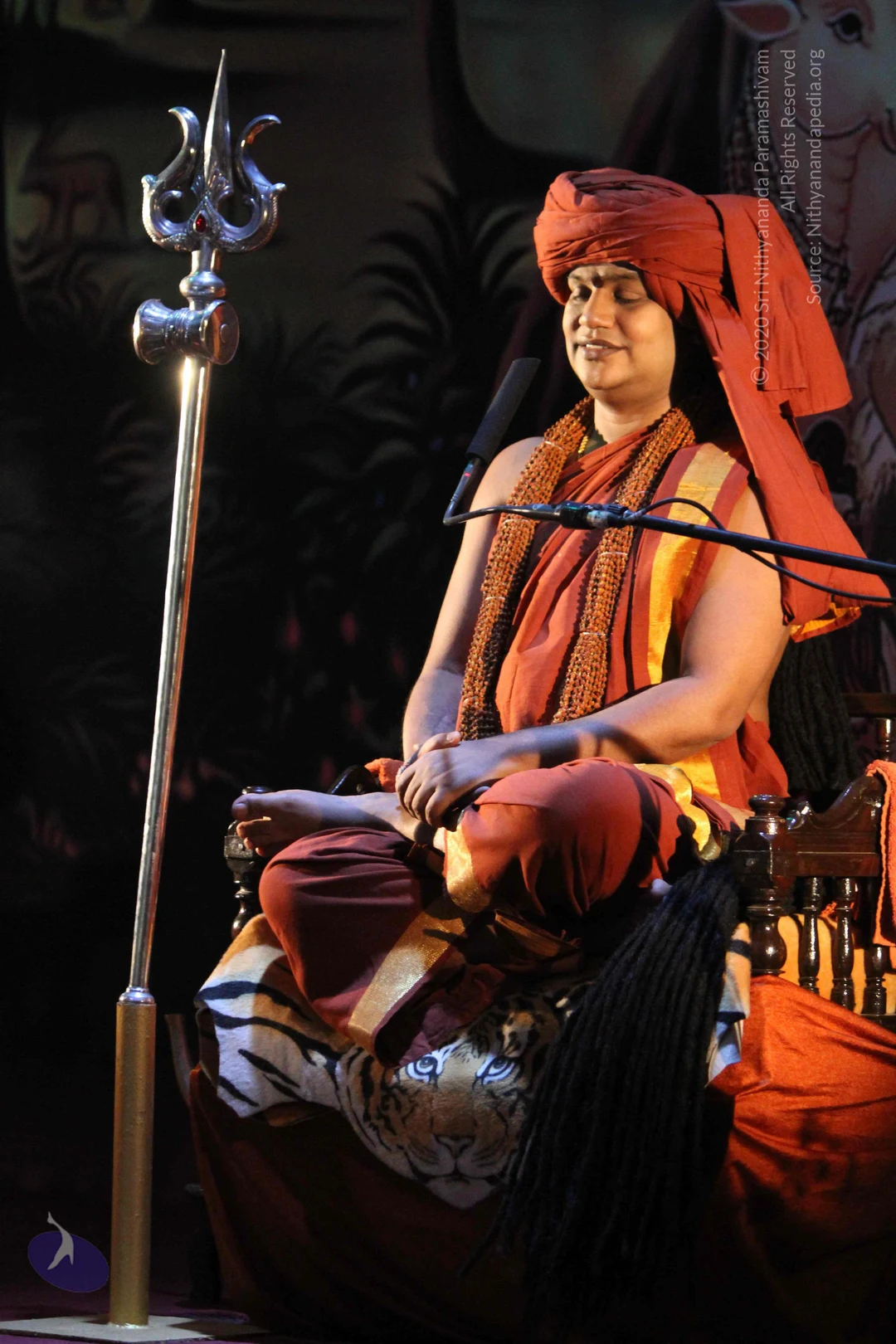
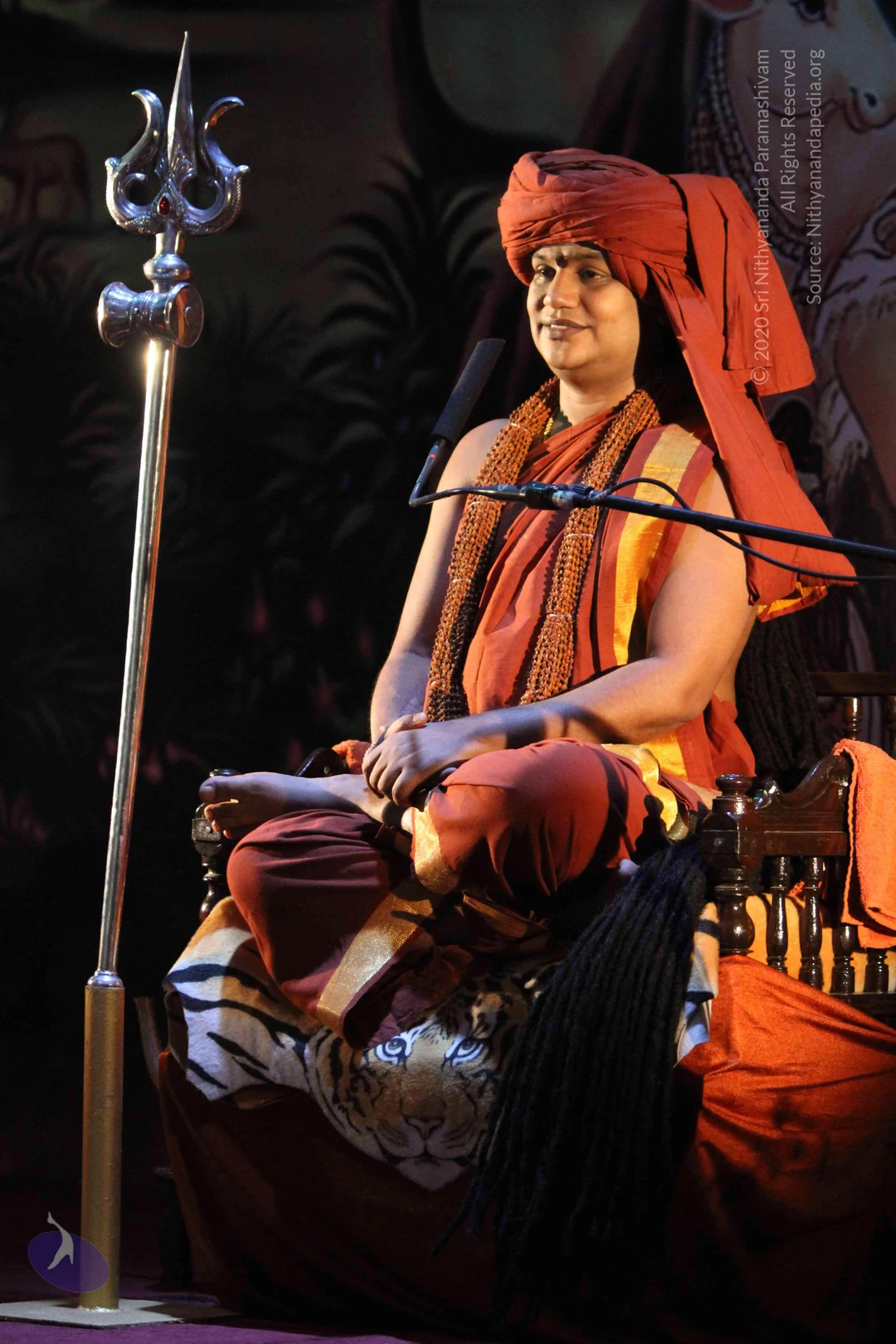
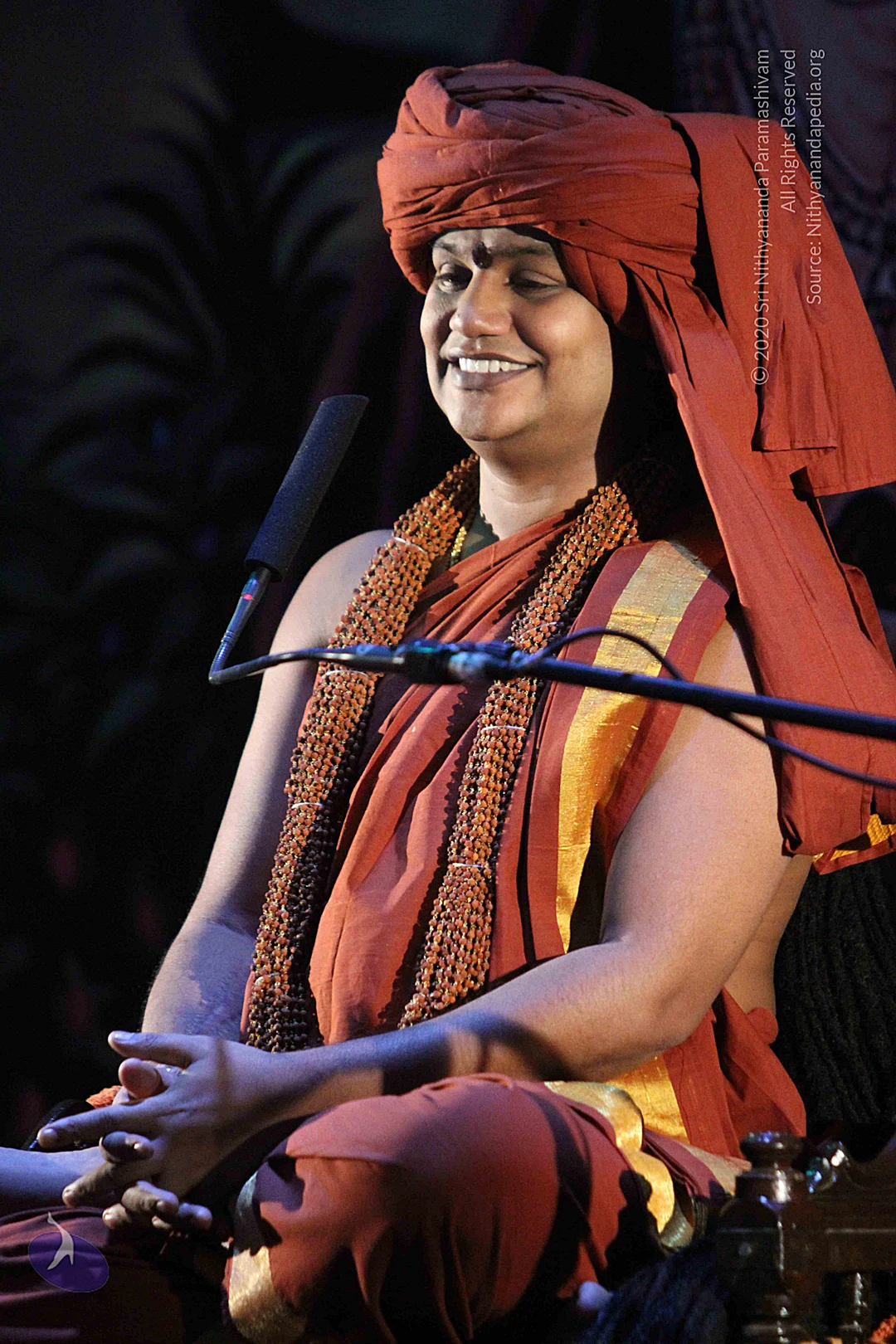
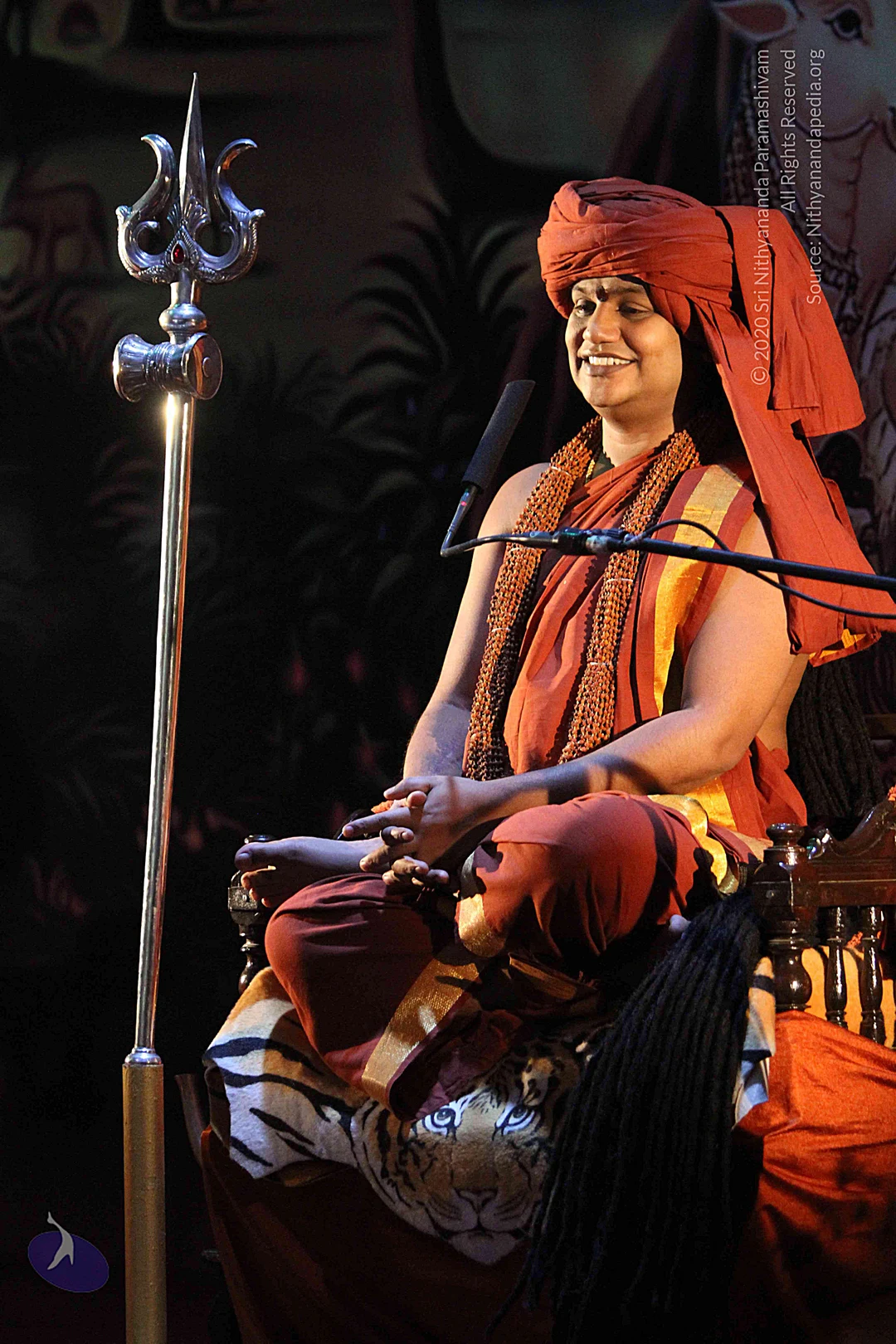
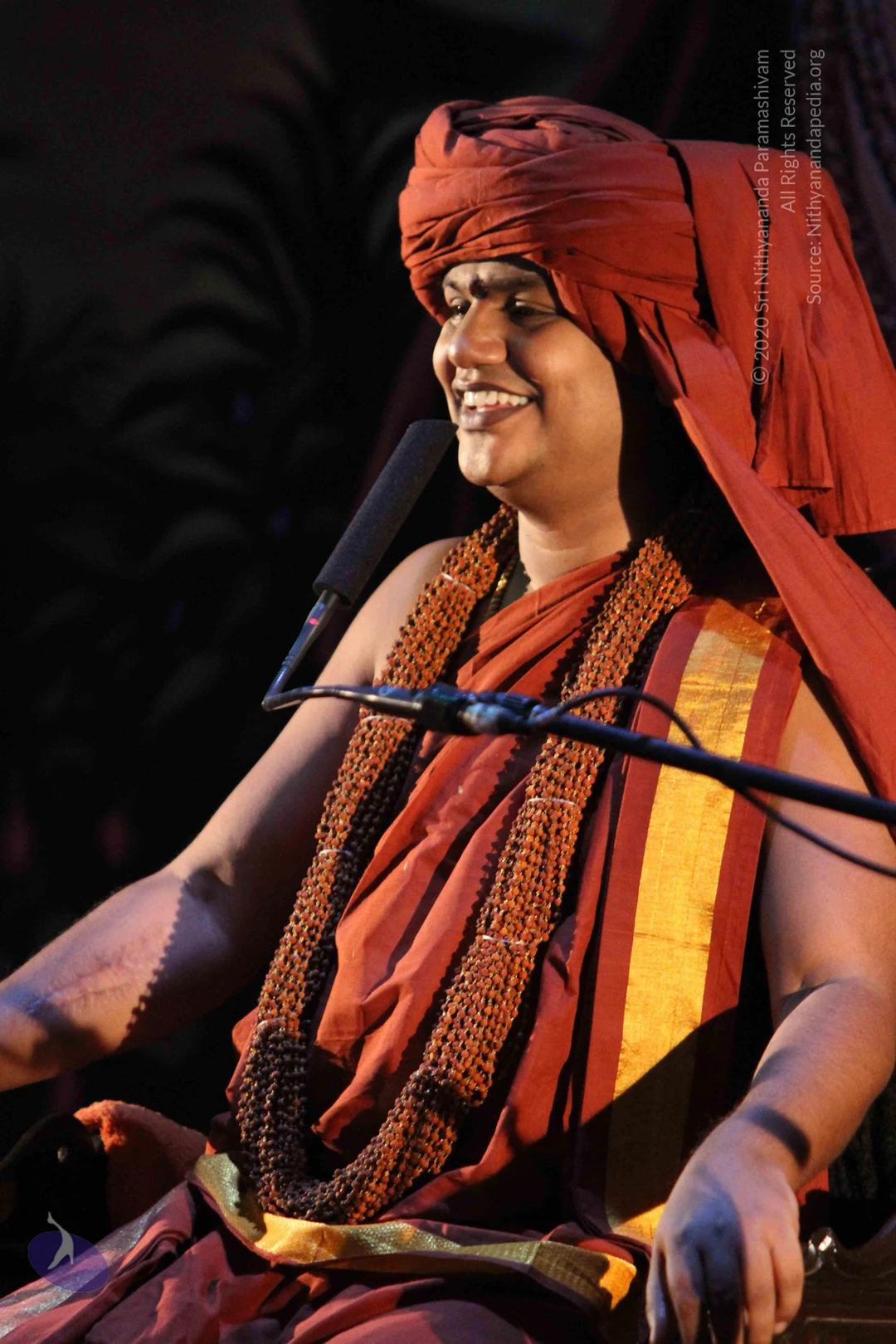
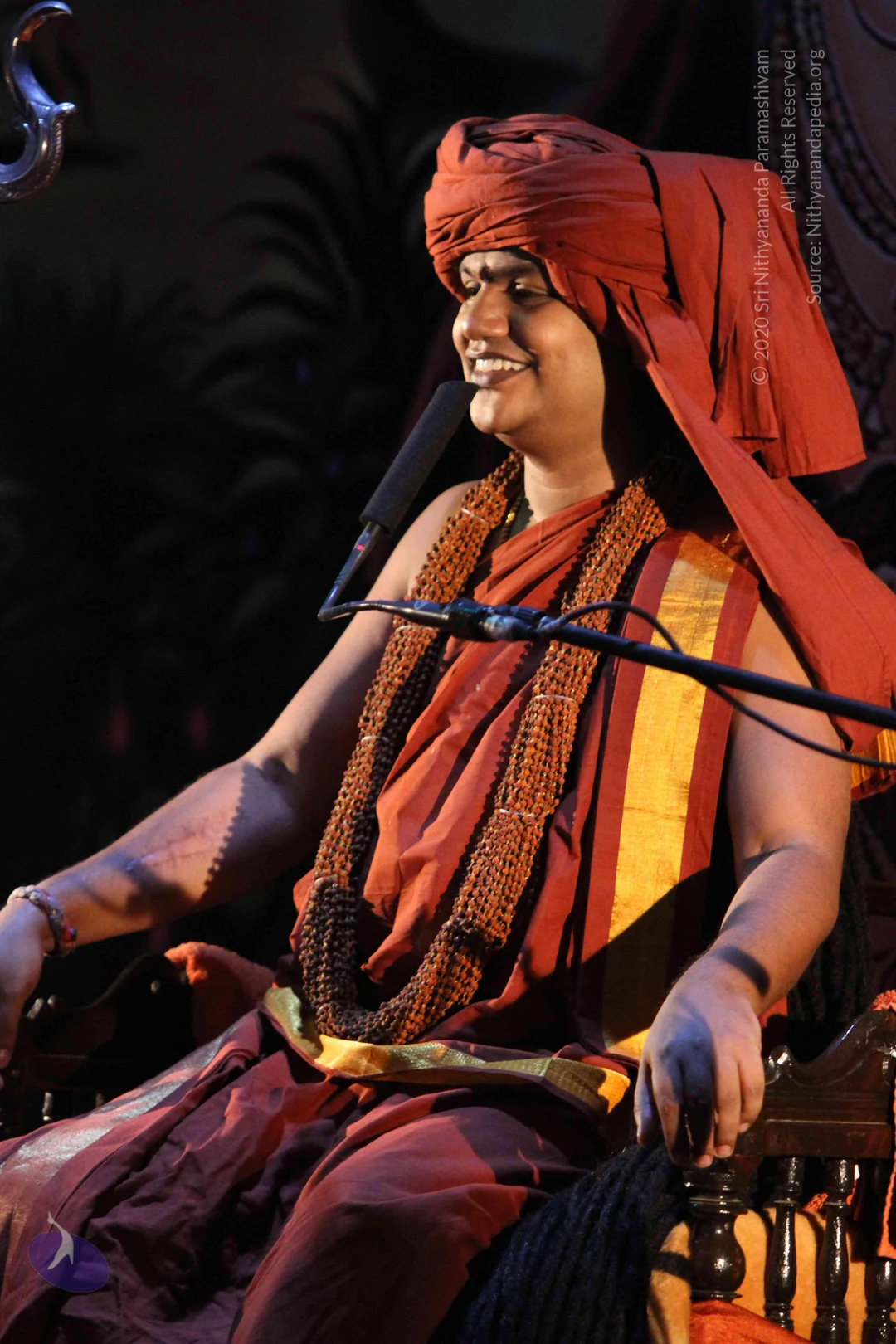
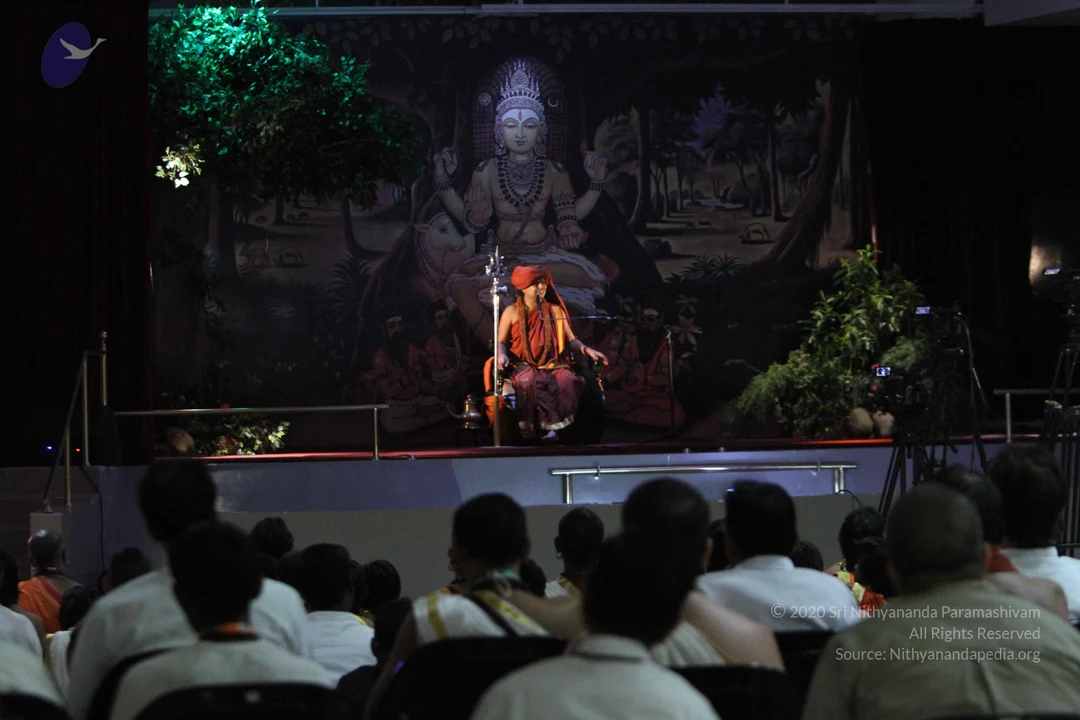
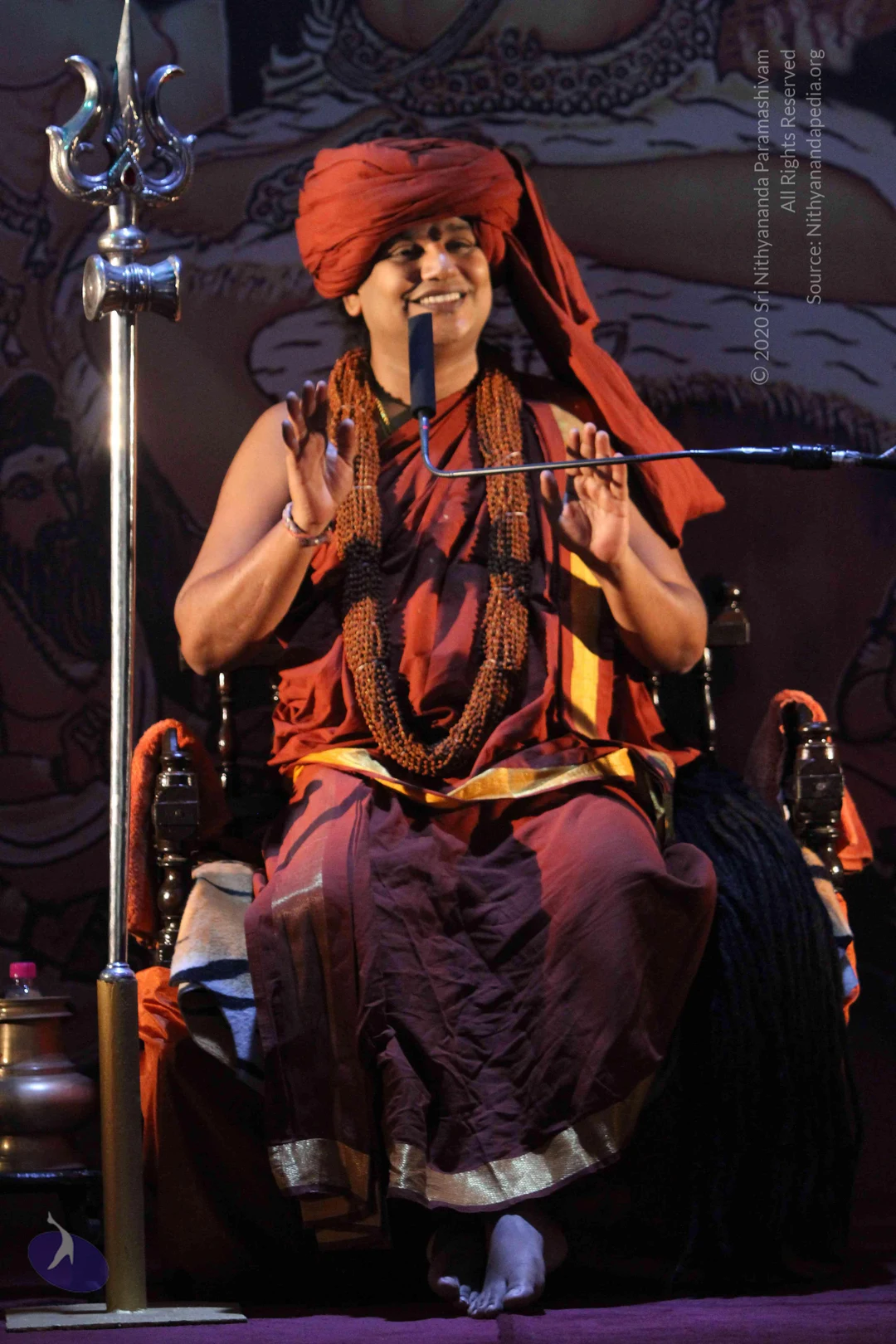
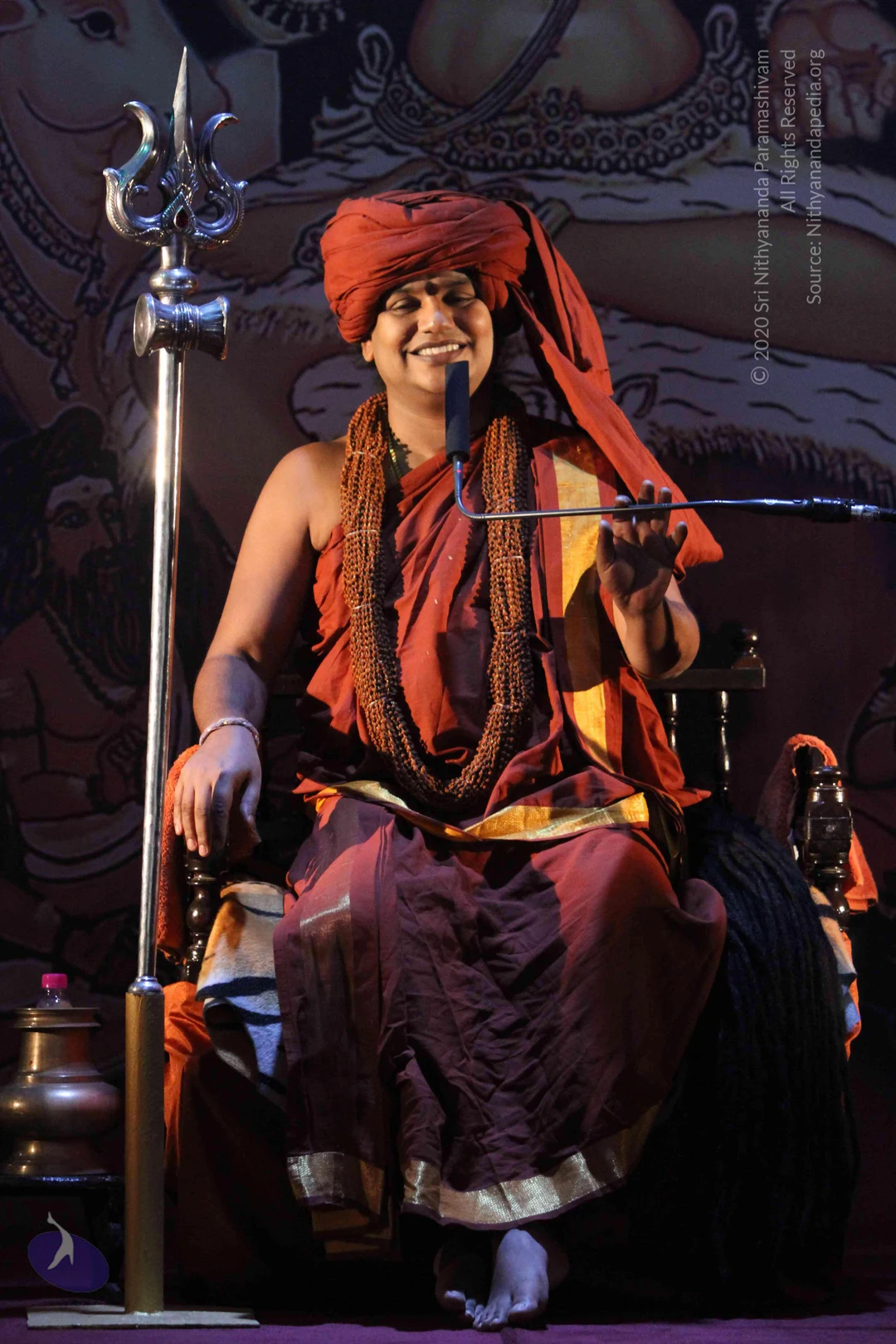
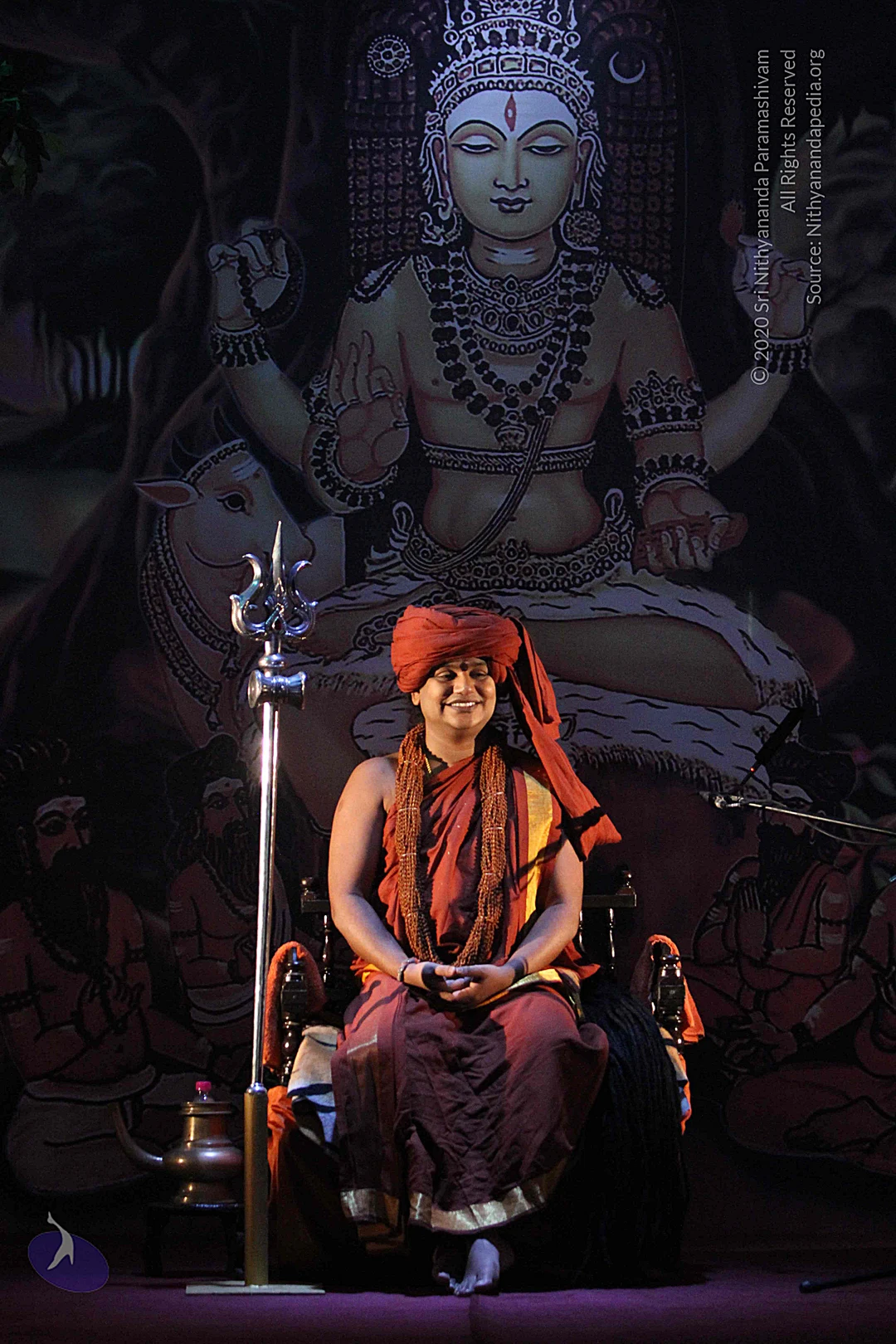
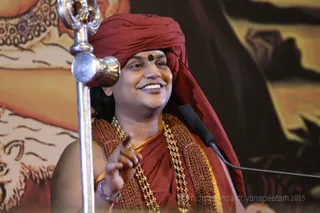
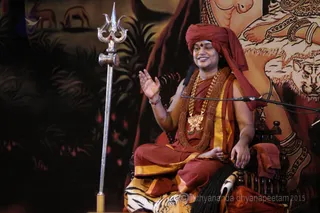
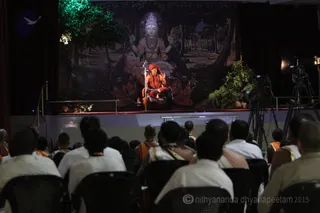
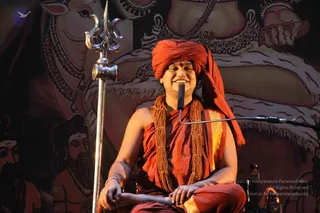
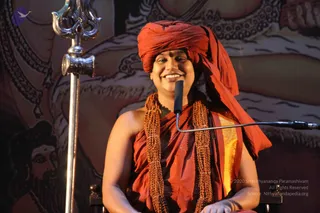
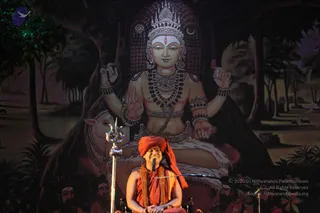
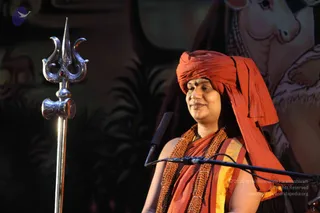
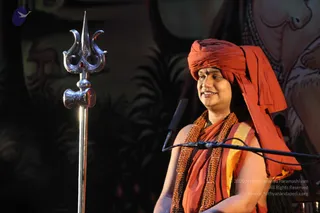
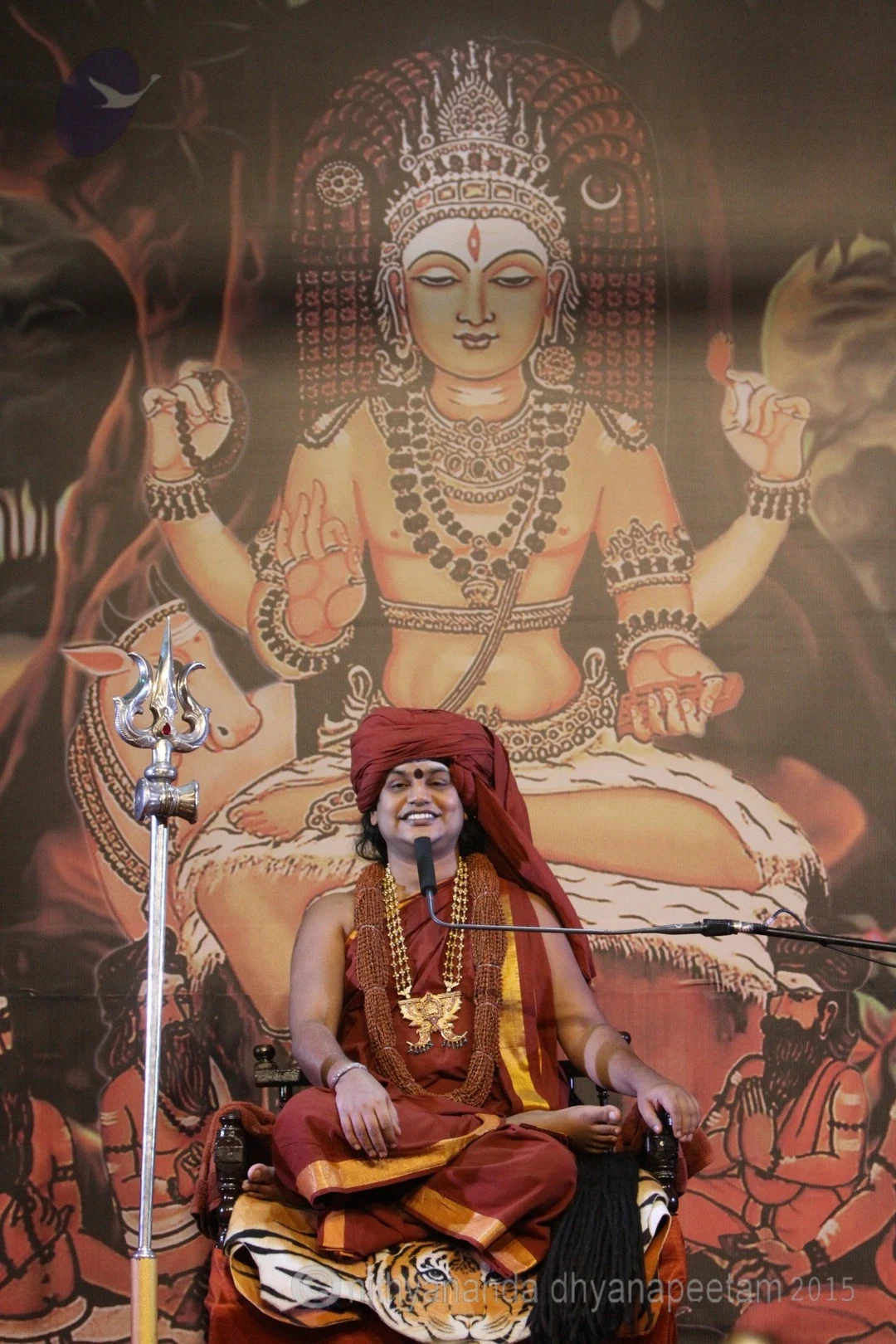
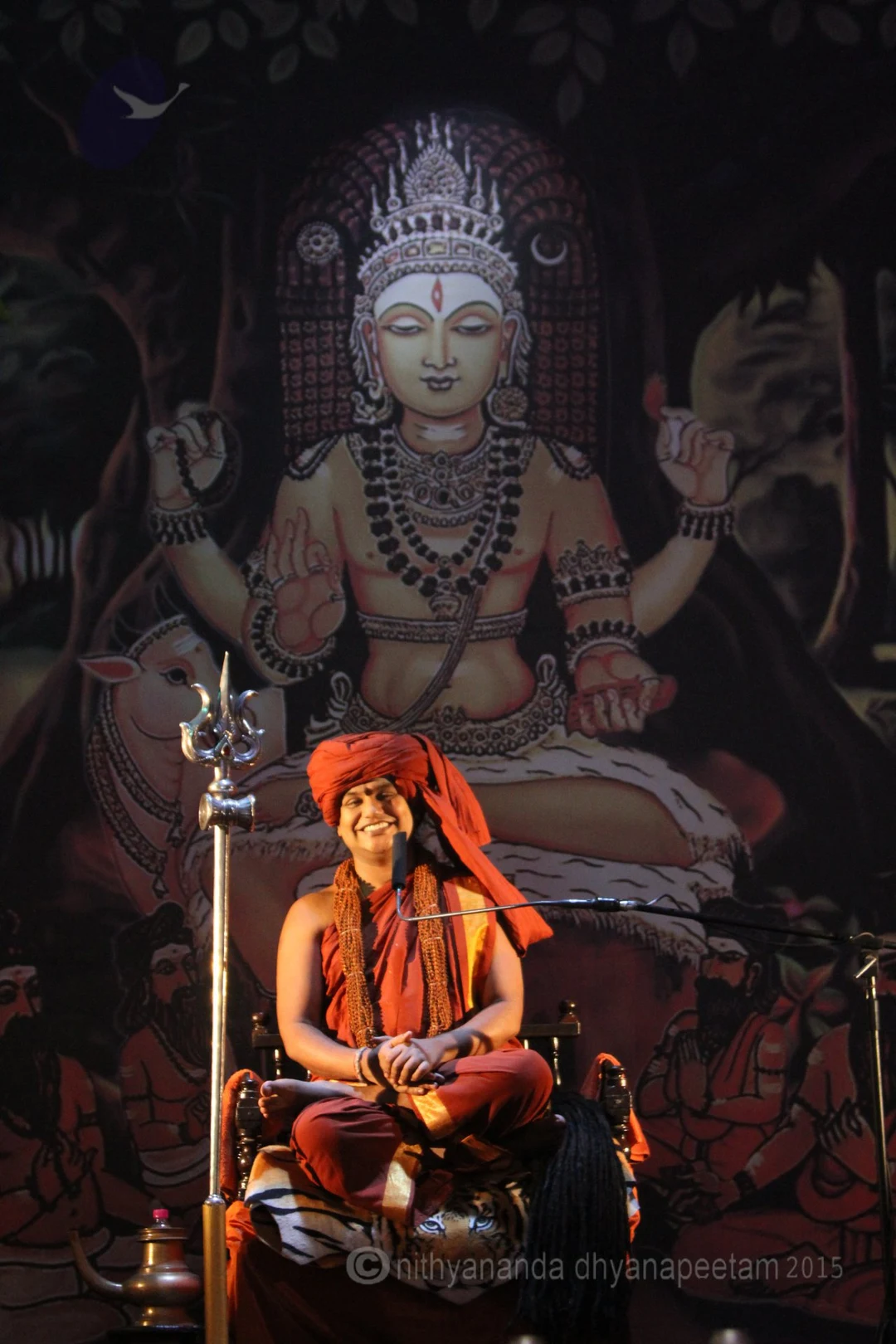
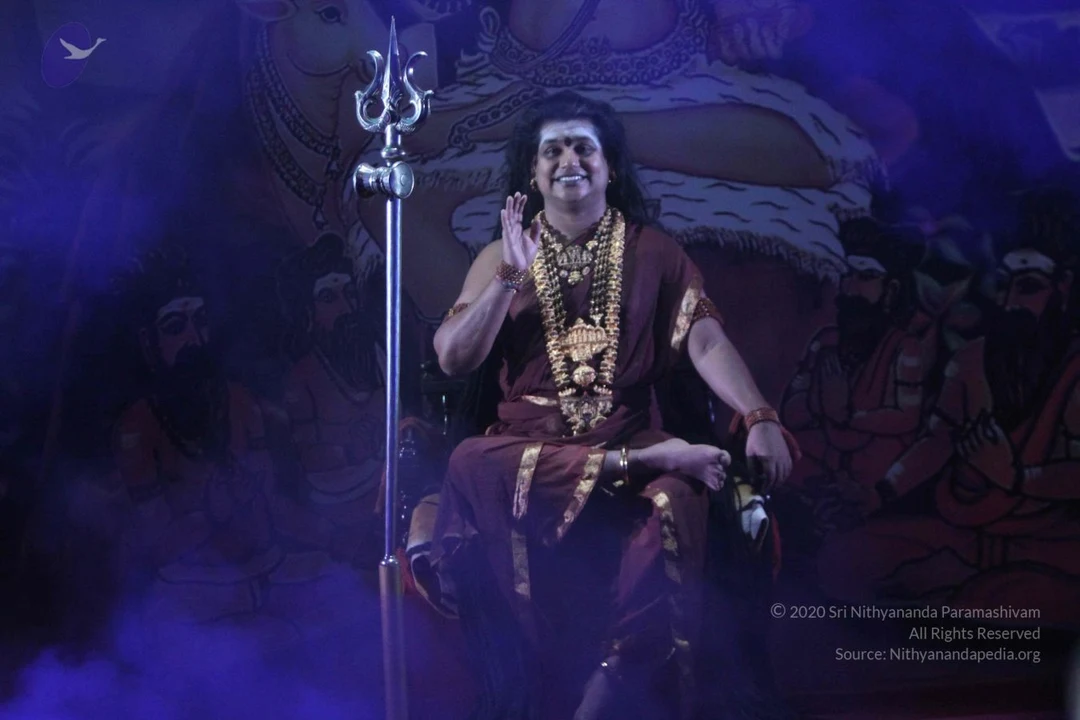
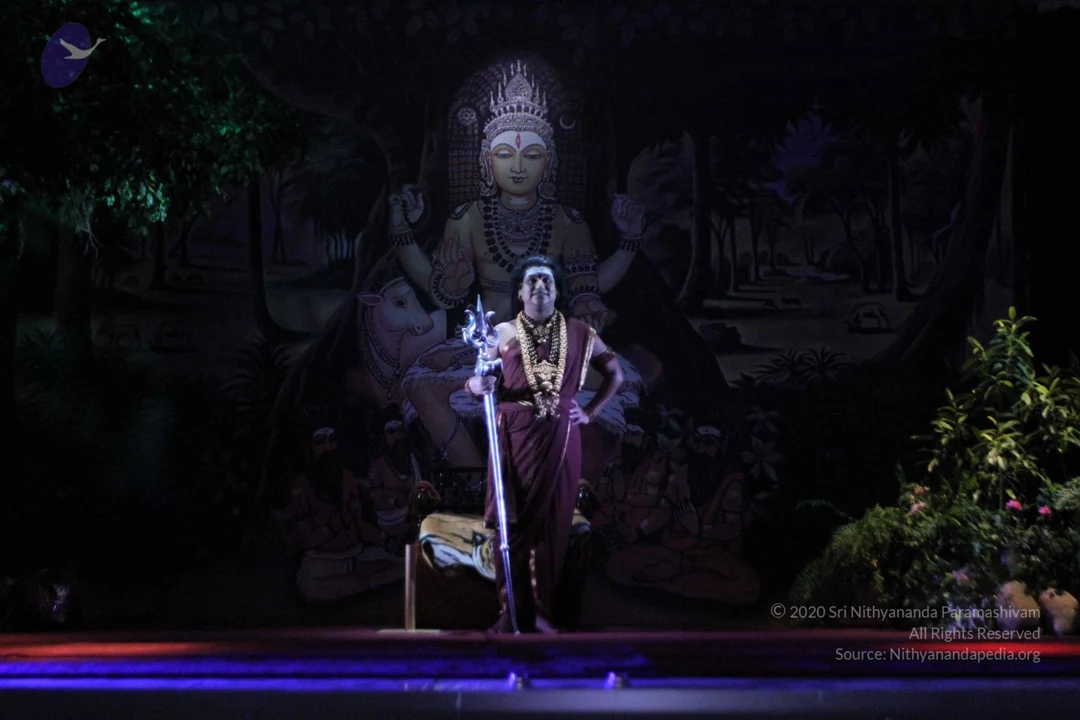
HDH Sri Nithyananda Paramashivam inaugrated the Kenopanishad or Kena Upanishad of Sama Veda, the second primary (mukhya) Upanishad by His Holiness Paramahamsa Nithyananda, with the chanting of Shanti Mantra (invocation peace chant), while seated divinely in the forest of pure knowledge. With the disciples, devotees and viewers seated in Upanishad before His Holiness through the two-way video conferencing and TV, He introduces Keno Upanishad, which begins with the primeval enquiry - KENA ISHITAM - By Whom – revealing its essence, while making us wonder over the sophisticated brains and capacities of the Rishis, the perfected Sages, who could capture the most subtle visualisations and reflect the Cosmic truths, which is Awakened Intelligence. "The essence of Isavasya Upanishad is Seeking. The essence of Kenopanishad is Seeking into the very Source, not just WHO AM I, BY WHOM AM I? Enquiring into the Source is Seeking the very source. The essence of today’s satsang is – Seeking the Source, Cosmos. You can capture it by developing the subtle grooves of the brain by evolving complete completion." Before entering to this Upanishad, He requests all to bring Completion, Silence within so He can begin reflecting the subtle most truths of Kena Upanishad, as anything our brain captures and enjoys, our Life will make it as Reality.

Link to Video:

Seeking the Source - 'By Whom Am I' - Inauguration Of Kena Upanishad

VideoAudio

Transcript:

[00:13]

nithyānandeśvara samārambhām nithyānandeśvari madhyamām | asmat āchārya paryantām vande guru paramparām ||

[00:34]

I welcome you all with My love and respects. Kena Upanishad. Brief technical introduction, the word ‘kena’ means ‘whom’. The Upanishad appears as the 9th chapter in Talavakara Brahmana of the Sāma Veda, and also known as Talavakara Upanishad in.. or Jaimini Brahmana. 35 verses and Shanti Mantra. It’s one of the very important Upanishad and as per the Muktikopanishad, it’s a second Upanishad in the whole order. Upanishad is also called…. known as Talavakara Upanishad. Kena means, exactly the word means ‘whom’, ‘by whom’. keneṣitaṁ – by whom willed or directed – directing the enquiry of the Truth to its very Source, is the seed of Kenopanishad. Please understand. This Upanishad directs your seeking to the Source. I will start with the Shanti Mantra, then I will introduce the Upanishad. Please chant along with Me.

āpyāyantu mamāṇgāni |

Listen. The verse actually is – mamāṇgāni; paatha bedha is māmāṇgāni – means the way I heard from My Guru, His paatha bedha. The paatha bheda is māmāṇgāni, the ‘ma’ plus not full ‘aa’ half ‘a’. māmāṇgāni

āpyāyantu mamāṇgāni vākprāṇaścakśuḥ śrotram-athobalam-indriyāṇi ca sarvāṇi |

Please understand. The original mantra is sarvāṇi; paatha bedha is ‘sarvāuṇi’ – the half ‘u’ is added – ‘sarvāuṇi’.

sarvaṁ brahmopniṣadam mā’ham brahma nirākuryām mā mā brahma nirākarod-anirāka…...anirākara….. Anirākaraṇamstva

That is the way the big words are taught.

anirākaraṇamstva -nirākaraṇam me’stu | tadātmani nirate ya upaniṣatsu dharmāste mayi santu te mayi santu || auṁ śāntiḥ śāntiḥ śāntiḥ || Balasants chant the Shanti Mantra. By chanting this Shanti Mantra, formally I inaugurate the Kenopanishad.

[05:49]

Understand the subject matter of the Kenopanishad. Now that is the important thing. The essence of Isavaysa Upanishad is Seeking. The essence of Kenopanishad is Seeking into the very Source, not just Who am I, By whom am I? Understand. ‘Who am I?’ starts and ends inside your body, ‘By whom am I?’, starts and ends in Cosmos. There is a big difference between by who am...there is a big difference between – who am I, by whom am I? Enquiring into you is Seeking. Enquiring into the Source is Seeking the very Source. The subject matter of Kenopanishad deals with multiple sacred secrets, sacred truths, but important sacred truth – the essence is whom am I? By whom, by whose will everything came to existence. Whom am I? Some of the best brains produced in the planet earth were Rishis. Some of the best people happened in the planet earth were Rishis. I still wonder, seeing the kind of a subtlety and capacity to catch and reflect the Cosmic Truth. Please understand. If somebody explains to you – What is Shiva? All-pervasive, akhilānḍa koṭi brahmānḍa nāyakaya sachidānanda parabrahma śristi-sthiti – He creates, maintains, destroys, puts souls in delusion and liberates; if you are able to visualize, even if you are able to enjoy it, be very clear, you are blessed. Only if your brain has developed the subtle grooves, which can start enjoying these higher things, can understand it. If you understand, you will enjoy; if you enjoy, you will understand. A rough, gross, politicians dull head can never capture this. For him, he only knows – “what I can grab today, push it behind my seat,” without even bothering about, from behind the seat, somebody else is stealing and running. He doesn’t even have a time to check whatever he pushed behind the seat is there or not.

[10:47]

A gross, power hungry, lazy, tired, bored man can’t even understand if you explain these subtle truths. His brain cannot capture those visualizations; because he can’t capture those visualizations, he can’t enjoy. When he doesn’t enjoy, he can’t capture. It is like a vicious circle. I tell you, even about Guru, if you are able to enjoy His quality, you will understand His qualities. If you understand His qualities, you will be able to enjoy His qualities. If you are able to enjoy – know clearly, you are blessed. You are blessed. A ignorant, tired, agitated, dull head can never capture the subtle truths or the subtle qualities. Because he cannot imagine, he won’t enjoy; because he doesn’t enjoy, he can’t visualize. Ability, the brain’s ability to catch the subtlest visualizations, come by a long practice of internal silence, what I call unclutching or meditation. Understand. By the tremendous internal silence, your brain develops the capacity to capture the most subtle visualizations. Ability to capture the most subtle visualizations is the awakened intelligence. Whoever is able to capture subtlest truths become Rishis. His brain has evolved, developed such subtle grooves, it started reflecting the Cosmic Truths, it started capturing the Cosmic Truths. It started becoming a pure, silent water pond, where the moon is reflecting as if it has come down to planet earth. Moon is reflecting as if it has come down to planet earth.

[14:38]

Understand. Practicing surrender or unclutching or Ananda Gandha Dhyana, Complete completion, all this not only brings peace into your heart, it raises the subtlety of your brain grooves and your brain’s ability to capture the higher truths. Your brain’s ability to capture the higher truths, brain’s ability to live the higher truths. Anything your brain is able to capture, its stores as record. The most subtle one your brain captured, makes itself as your cognition and life’s goal. Understand. Even once if you are able to understand, capture the word Satchidananda – Sat-Chit-Ananda – the Existence, Conscious, Bliss. Anything which is subtle, the most subtlest experience, imagination, visualization, your brain is able to capture, it will make that as a base for its function. I don’t need to do anything other than describe how the materialization happens to My Baalasants, the way they are able to capture, the moment their subtle grooves in the brain captures this, that power will start manifesting in them. Why I am saying Baalasants… because they are more ready to listen, their inner space has more peace, their brains have more subtle grooves to imbibe what I am sharing. When I explain that science, if you can visualize it, that power will start manifesting in you; because anything your brain can visualize, it will make that as your basic functionality. If I can explain – moving from one body to another body, Astral travel – and your brain is subtle enough to capture it, visualize it, you will start manifesting that power. All powers are like that only. You just need the completion space and Guru who properly makes your brain grooves to catch it.

[18:48]

I wonder, the sophistication with which this Upanishadic Rishis were able to reflect the whole reality. I tell you, the detail with which they describe the stars and the planets in Vedas and Agamas, you will be shocked. Even I was wondering, how did they? See, unless you see, you can’t pen down so detail, such detail. The biggest conspiracy done against Bharat is – the Indian astronomy and astrology was not given its due respect and legitimacy; brushed aside in the name of myth and mythology. If you read, you will understand—oldest, the future longest possible prediction can be done only by our calendar, Pañcikā. Science is so perfect. I used to wonder – what was the telescopes they used? What was the satellites they used? How did they so precisely record the details?

[20:55]

Actually the exact method happened, I saw in the Cosmic Records. One Rishi will sit in Samādhi and reflect the whole Cosmos in his inner space. The other Rishi will just see his inner space, do fast forward, just like how you handle the IPad and pen down, that’s the way they have done it. He will become so pure, Complete Completion, his inner space will just reflect the whole Milky Way, whole Cosmos and the other Rishi who is recording will push, pull, do fast-forward or rewind, even zoom-in, zoom-out, and pen down. I commit with you guys, I will make My Baalasants to do this. I will give them this power. It’s possible. It’s possible. Just they need to evolve more into the space of completion and responsibility. It is possible. That is the way they recorded. Understand. More and more your inner space gets into Completion, more and more, you will catch the sacred secrets about the Source, Cosmos. This question – By whom?, Keneshitam – the Kena Upanishad, the essence of Kena Upanishad, you can experience the essence, if you can make your inner space, completely Complete. If you are ready with the Completion, I can just show the exact reflection of – Keneshitam, By WHOM.

[23:58]

In this Upanishad, Devi is the Guru. Understand, it’s directly from Devi. Uma, first time the word ‘Uma’ appears in this Upanishad. Devi is addressed as ‘Uma’ in this Upanishad. The word – ‘Ishvara, Isha’ – is used for Mahadeva in the first Upanishad. The word ‘Uma’ is used for Devi in this Upanishad. You can reflect, capture, visualize, exact most subtle visualization with a little completion inside. Please understand. Understand this example. A seven or eight year old child is made to see pornography again and again, the physical maturity age is quickened more than 70% means: the physical maturity which is supposed to happen at the age of 14, it is drastically brought down; by the age of 8, the body will be physically matured. If the body is made to visualize again and again the sexual action through pornography or some reminding, because whatever your brain visualizes, body becomes ready to make that into reality and experience. The brain makes that into your experience. That is why I say, if you want next generation to be sexually healthy, ban pornography. We always have a wrong idea, it is through porn next generation is going to enjoy the sex. No. It is going to be a big disease. If you want the next generation to have a healthy sexual life, ban pornography because that is going to reduce the age of physical maturity, which is going to drastically destroy the health of the next generation.

[26:54]

Understand. The Truth I am trying to convey. Anything your brain can capture and enjoy, your life will make that into reality. If your brain can capture and enjoy the most subtlest understandings of Cosmic sacred secrets and the spiritual powers, you will become just Yogi, Divya Shariri. If you enjoy pornography, your body will be physically matured. If you enjoy this subtle powers, subtle understandings, simply your body will become Divya Shariri, you will become Yogi, Baala Yogi, Baalasant. Baalasant is a person whose brain captures all these highest conscious truths, subtle truths while you were young. The way your brain captures these great truths, simply your body starts manifesting it; you become Yogi, you become a Divya Shariri, you become embodiment of Mahadeva. You become Baalasant.

[28:30]

Understand. Ability to reflect the subtlest truths, ability to reflect the sacred understandings, ability to catch the most sacred bliss, ability to capture the powerfulness of the Consciousness, ability to look into the Source of the Cosmos, happens with tremendous completion and peace in the inner space. So before entering into this Upanishad, I request all of you, today spend time doing Completion. Tonight spend time doing Completion. Come back tomorrow with the space of complete Completion, so I can reflect the Kenopanishad in your system. You can capture it, live it, love it, celebrate it. The essence of today’s satsang, essence of Kenopanishad is – Seeking the Source, Cosmos. You can capture it by developing the subtle grooves in your brain by evolving complete Completion. We have further sessions for Inner Awakening participants. Today only it is starting; this time I have to finish the whole Inner Awakening within ten days, because the next ten days Shivoham and Nithyanandoham process, I have to take long sessions. Today we have a long day. I will move to Inner Awakening sessions.

[32:04]

So with this… Actually I came, just not to give a first day, second day break; prathama vighna and dvandva vighna should not be there. The first day and second day a project should not be stopped or dropped or disturbed. So, Kenopanishad is an important project. So, first day or second day, it should be broken or disturbed. That’s the reason I came for the satsang. You can expect in the further satsangs new and clear spiritual cosmic revelations. With this, I bless you all: Let you all radiate with integrity, authenticity, responsibility, enriching, causing Living Shuddhādvaita Shaivam, the Eternal Bliss, Nithyananda. Be Blissful.

[33:10]

Nithyananda Times, 04th February, 2016

VideoAudio

Photos From The Day:

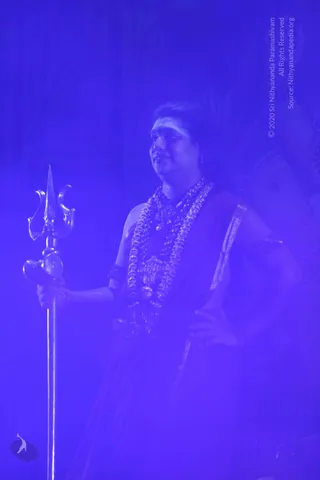
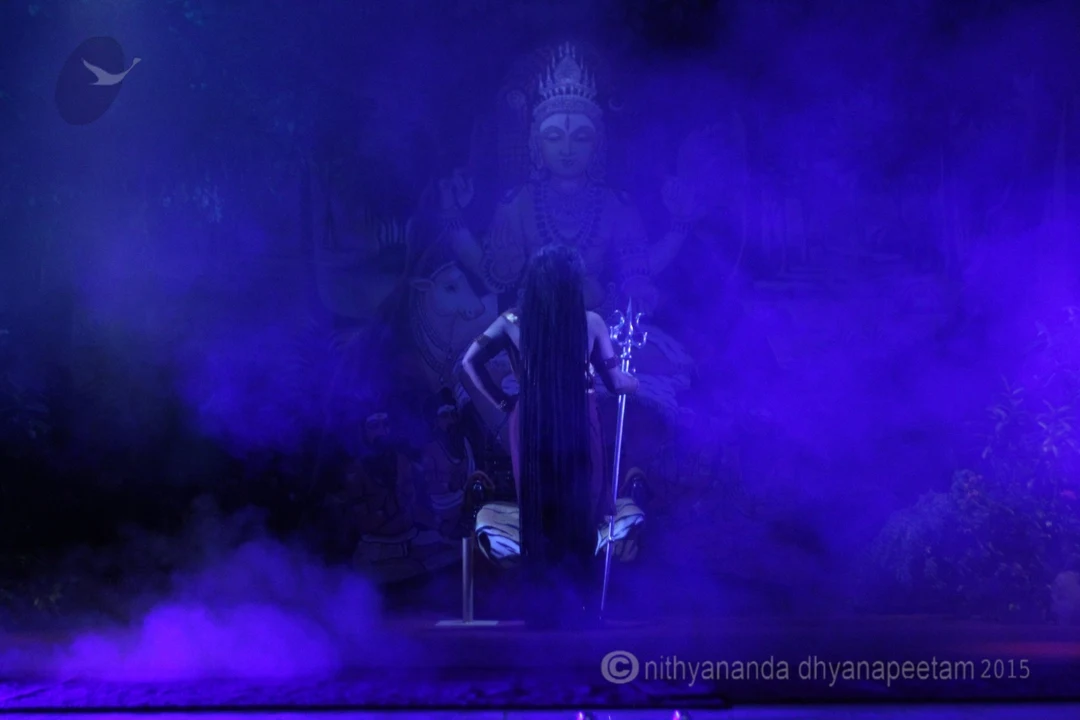
Opening Darshan
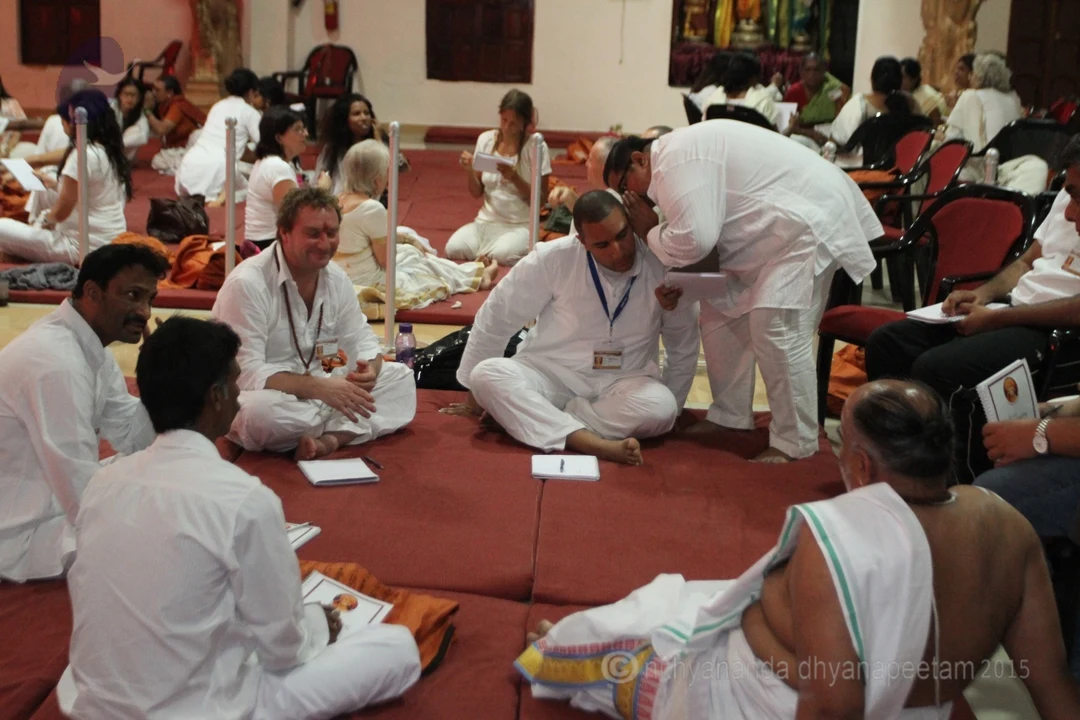
Completions sessions during IA Session
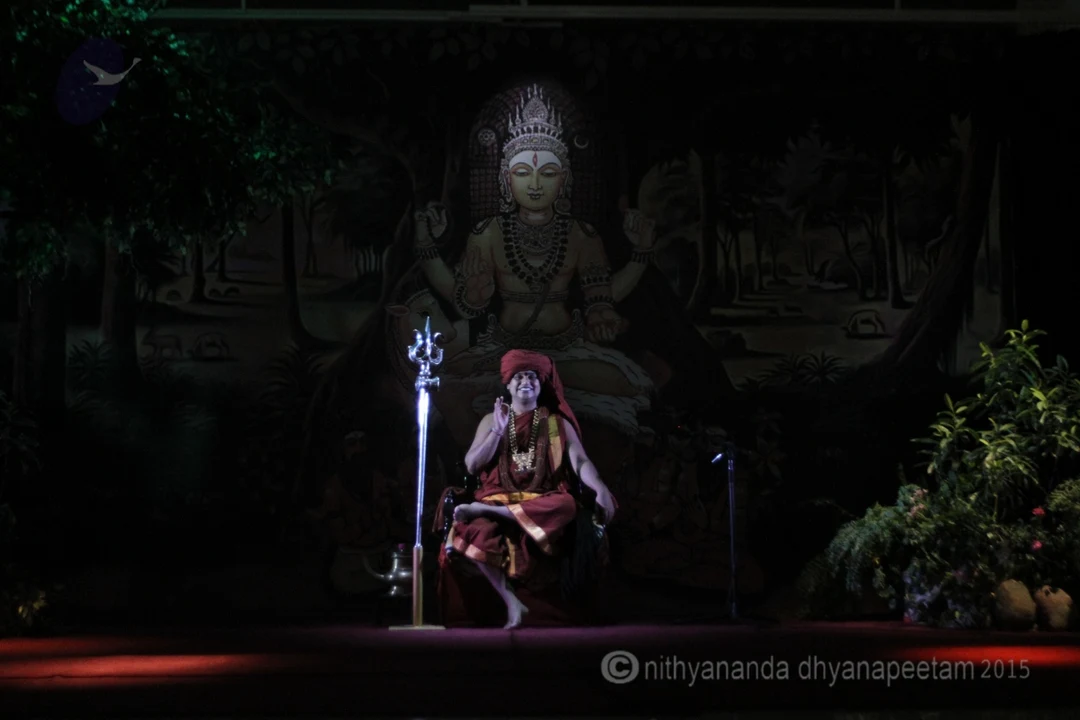
2nd Darshan of the Day
IA Afternoon Session
Link to Facebook Page

https://www.facebook.com/ParamahamsaNithyananda/posts/960260250728492

Photos Of The Day:

Intro

IA-Listening-Session

IA-Genesis-of-Identity-

Nithya-Satsang

Evening-Satsang-Kenaupanishad

Photos Of The Day:

IA-Genesis-Of-Identity

Evening-Satsang-Kenaupanishad

Darshan-Introduction

01-IA-Genesis-Of-Identity

02-Evening-Satsang-Kenaupanishad

03-Darshan-Introduction

Photos from this day

View all 494 photos

Opening Darshan

16 photosSource gallery
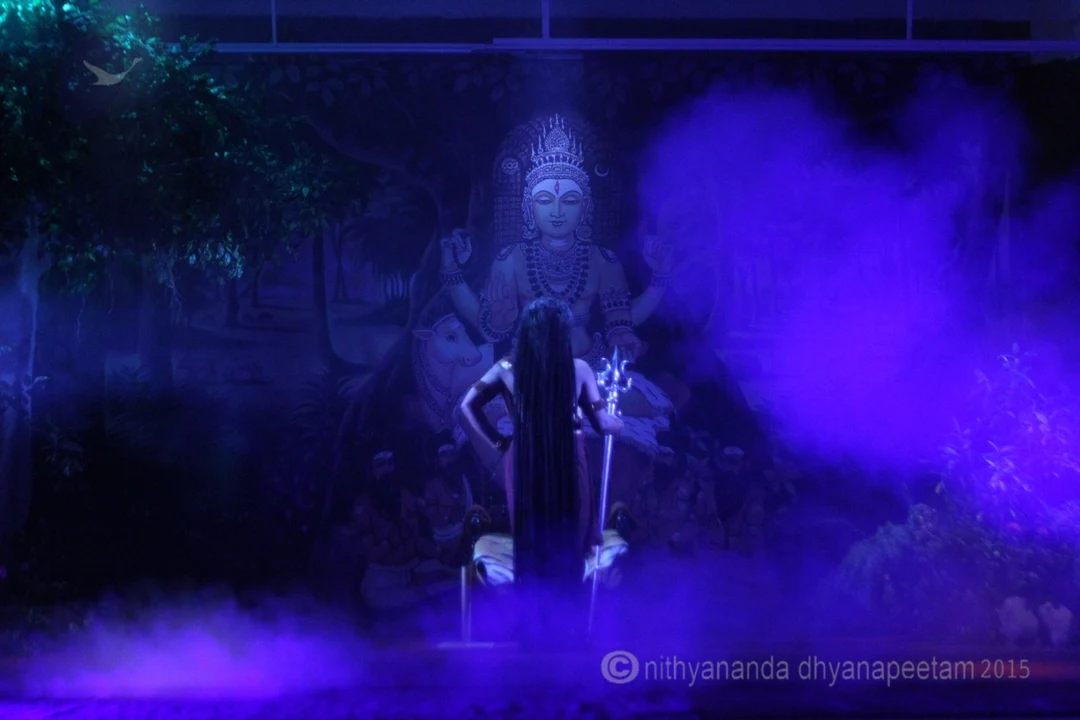
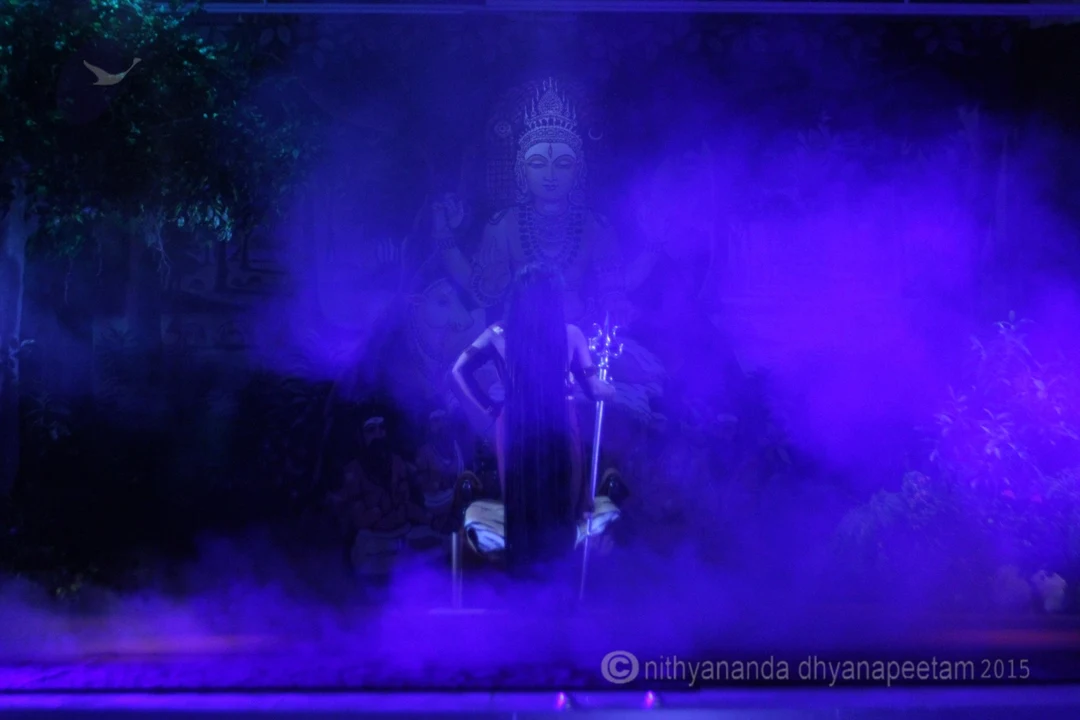
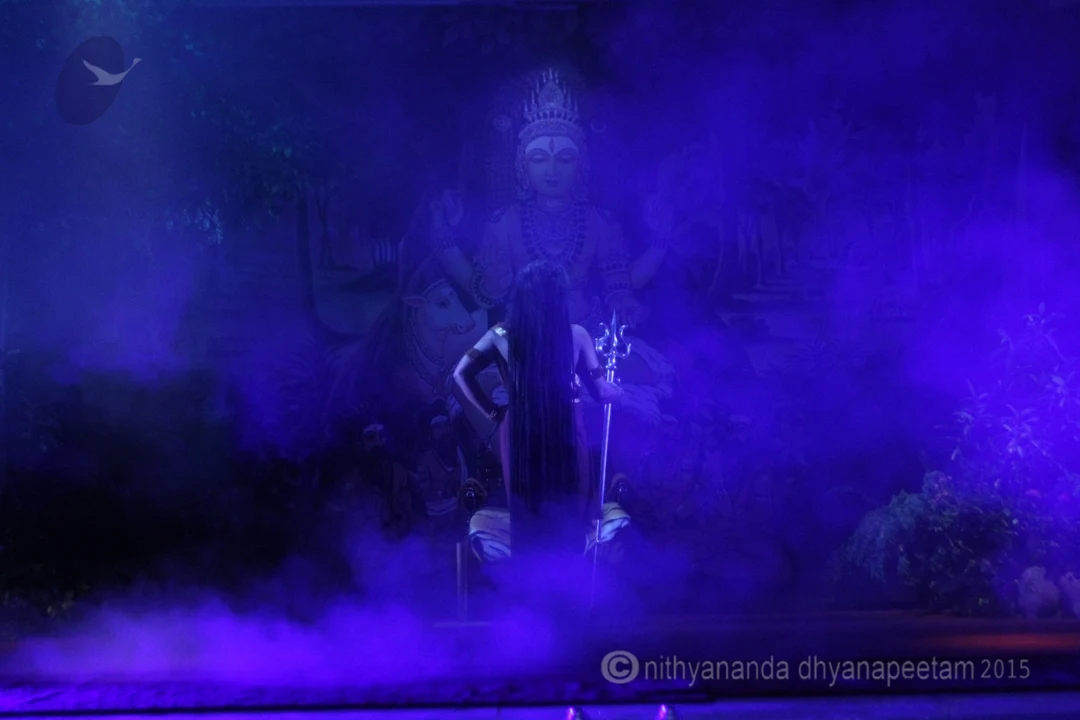
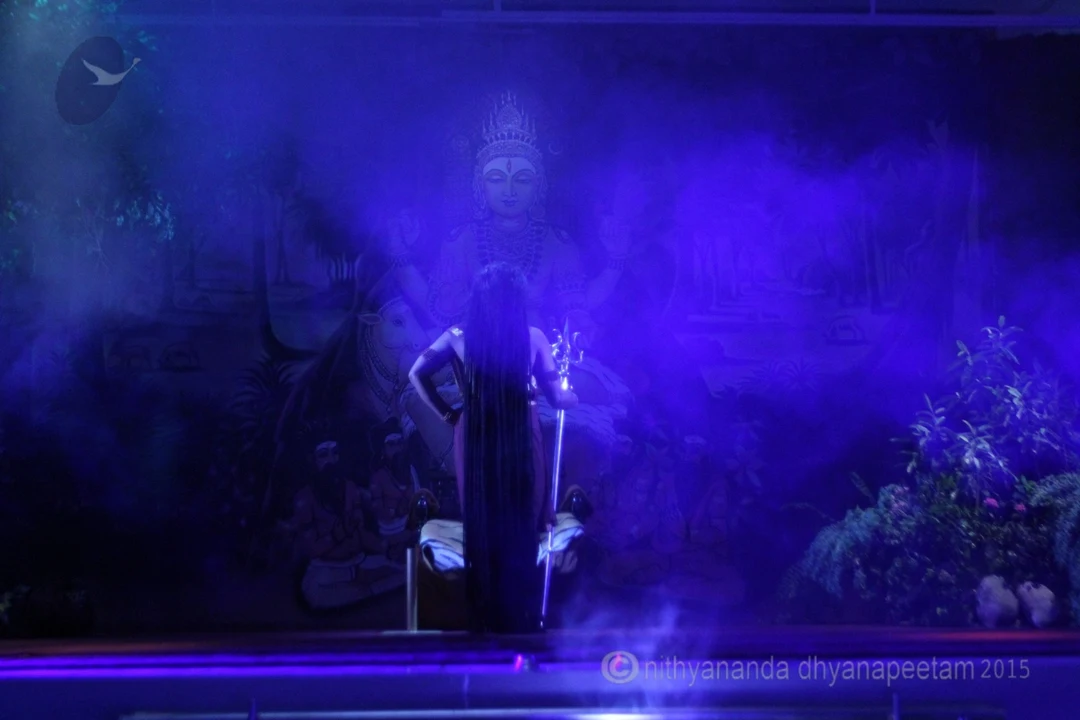
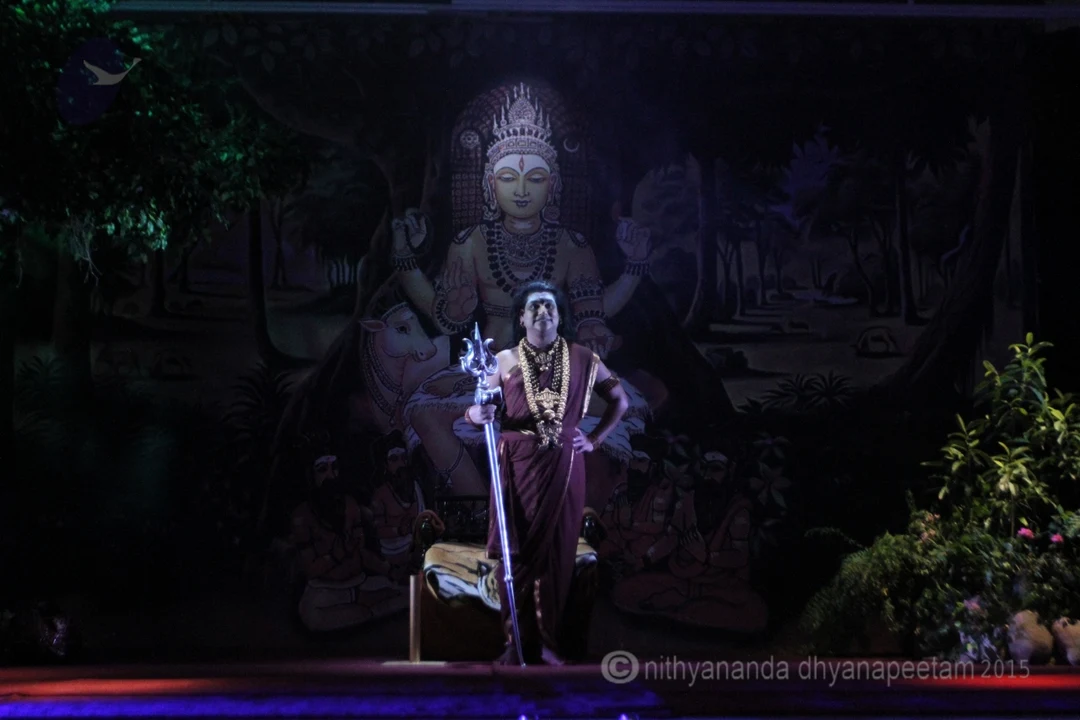
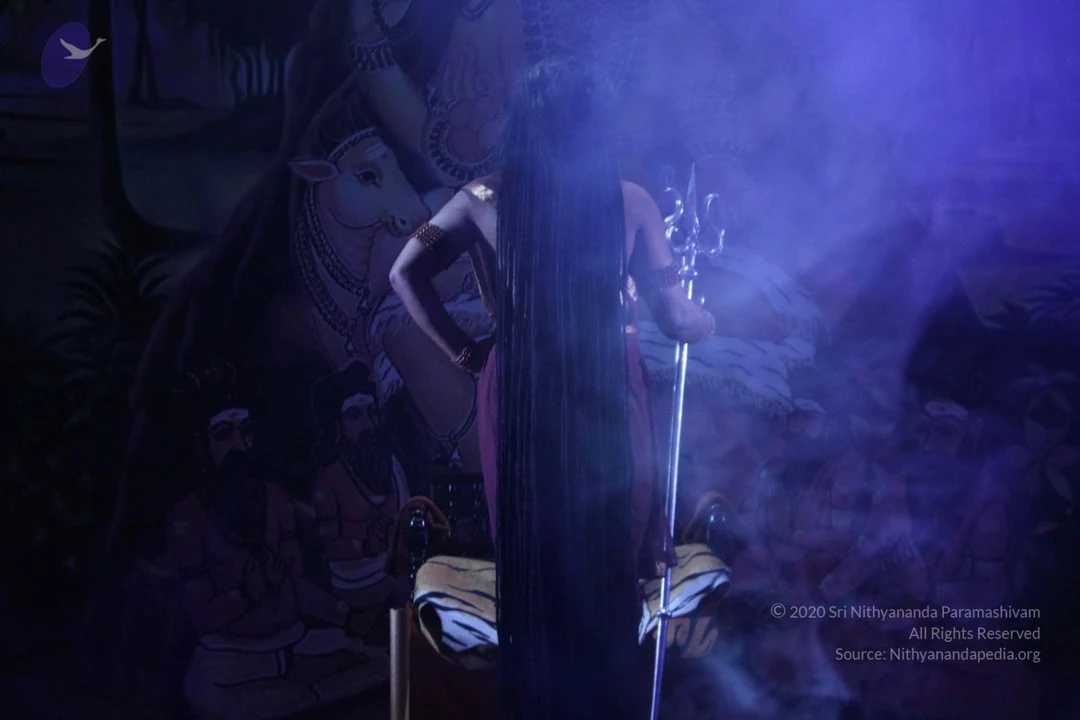
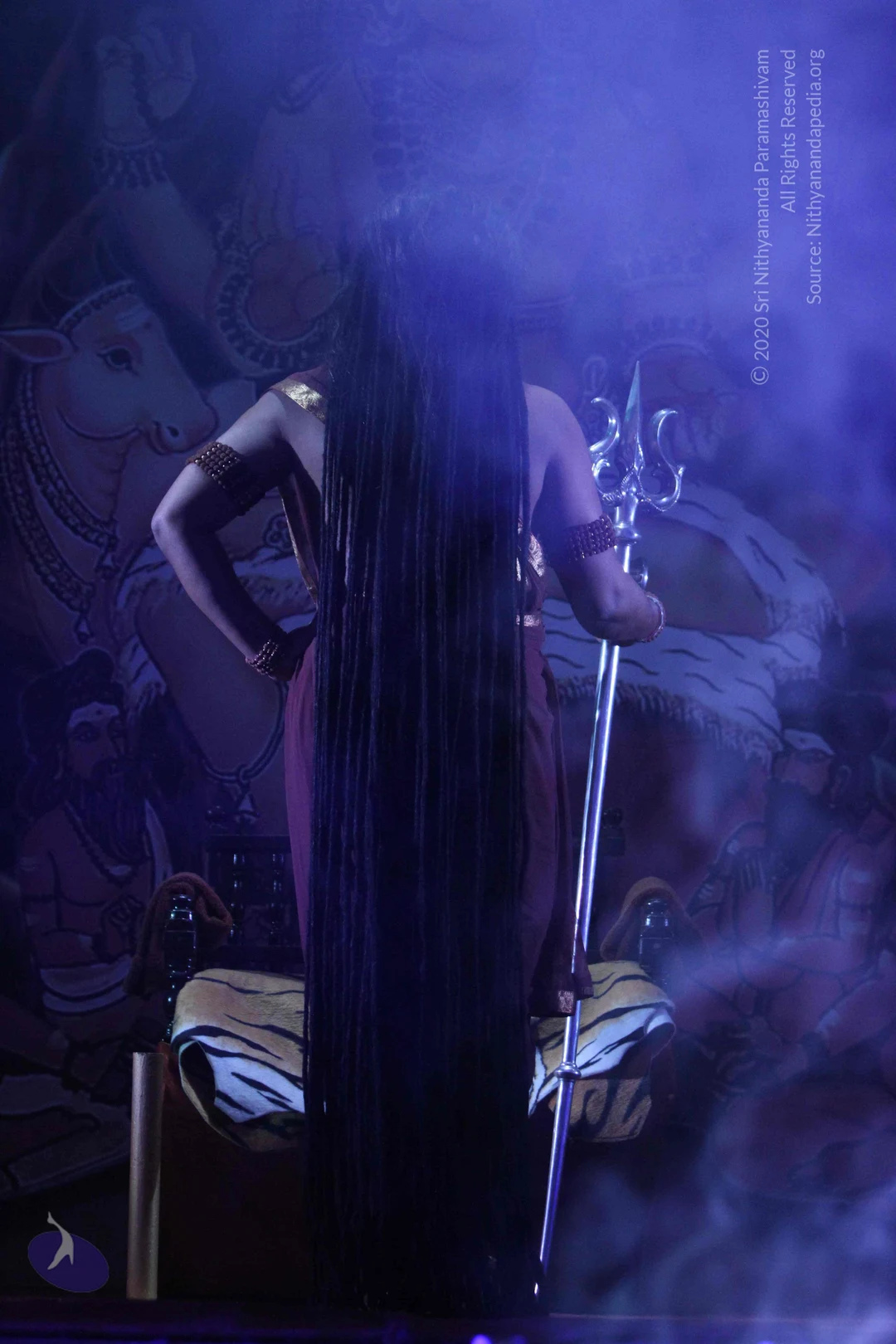
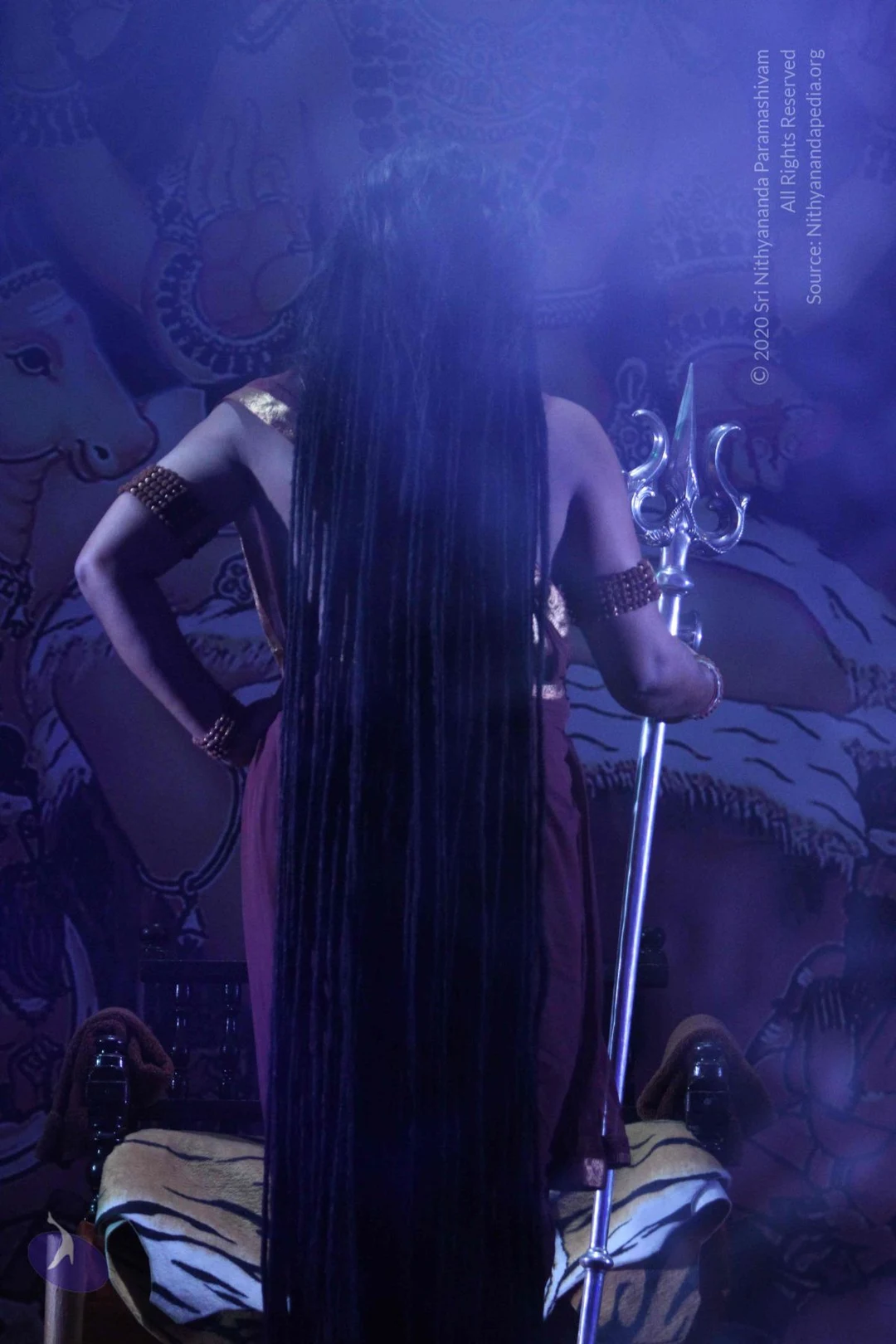
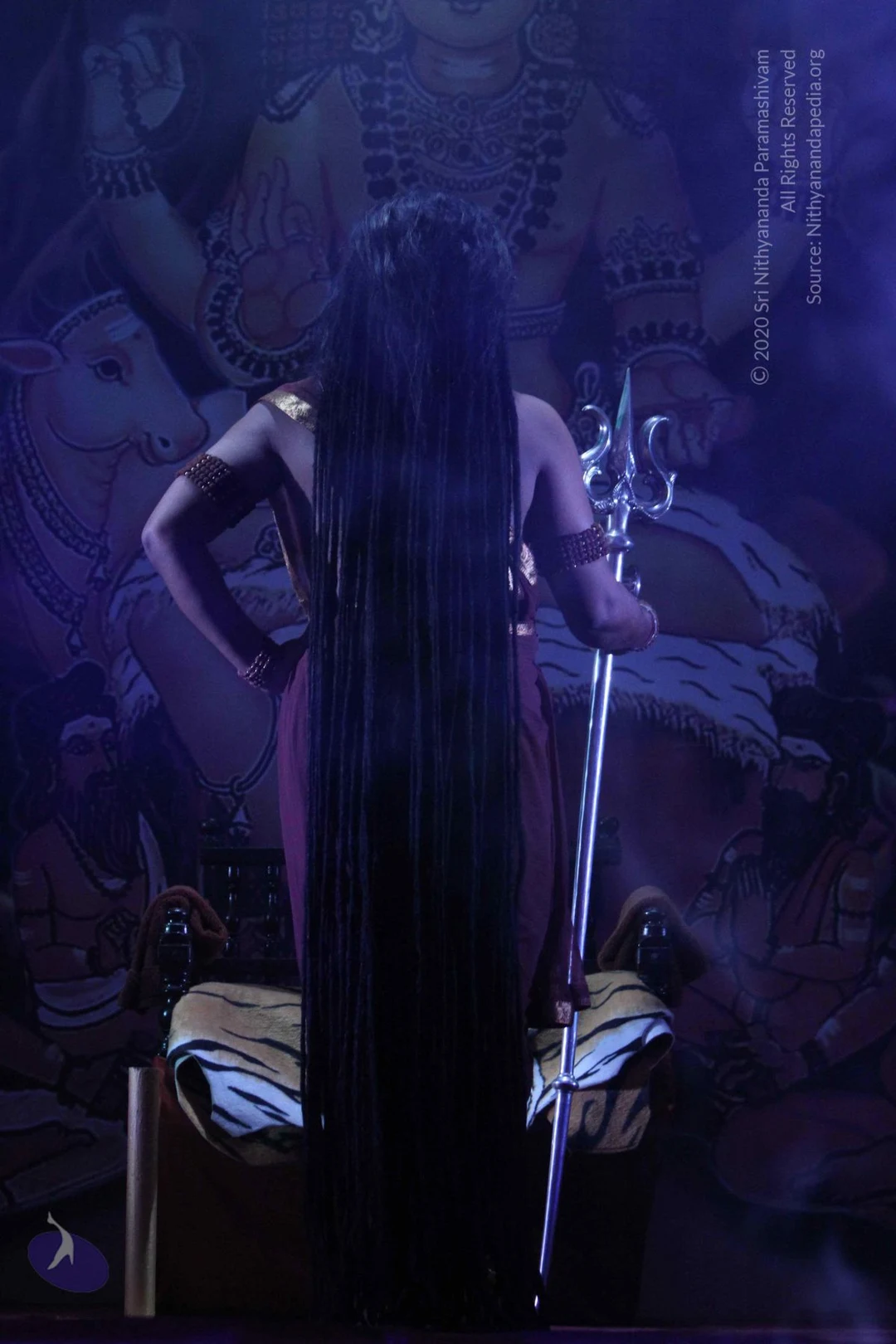
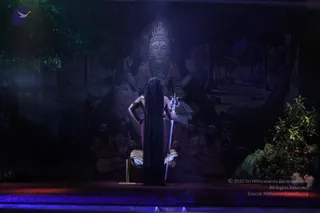
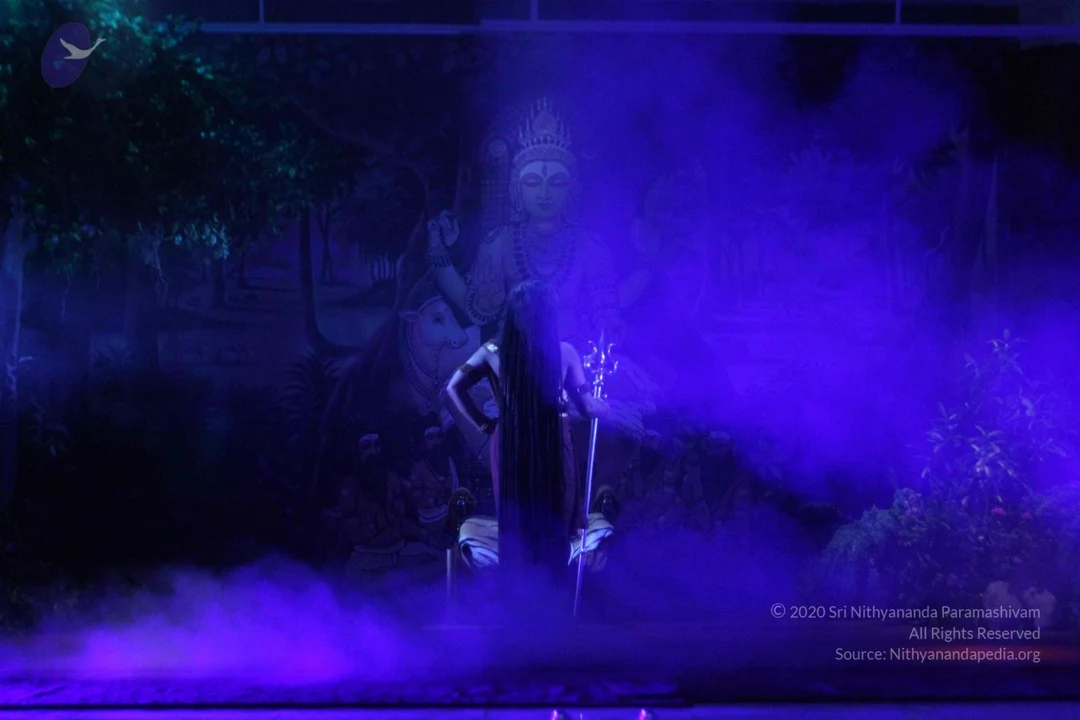
A purple-lit stage set in a forest scene with painted backdrop of trees and a large four-armed deity figure crowned and adorned with necklaces, shown mid-chest. In the foreground a figure seen from behind with long black hair, bare-backed, stands with a hand on hip and holds a silver trident, amid swirling fog. Printed text reads nithyananda dhyanapeetam 2015 in the lower right corner.A photograph taken in a dimly lit stage setting filled with violet-blue fog and light. A large painted backdrop shows a goddess figure wearing a crown and layered beaded necklaces, with a sitting figure below. In the foreground stands a long-haired figure holding a trident, shown as a depiction on stage rather than a living person in the scene. Dense foliage and painted trees frame the left and right edges. A small lotus and a stone-like form appear at the lower left.Dim blue-violet stage lit with fog. A figure seen from behind, with long dark hair falling down the back, stands beside a silver trident with hands on hips. Behind is a large painted or projected backdrop of a crowned deity with multiple arms holding objects, next to a bull, amid foliage. Two small seated figures appear faintly at the lower left.A photograph of a dimly lit stage washed in blue and violet light with heavy smoke or haze. A figure with long dark hair falling down the back, shown from behind and bare-backed, stands centrally holding a silver trident (trishula). Behind them a large painted backdrop shows a deity murti-like figure with a crown, a bull, and forest foliage. A few small figures in white are faintly visible at the lower left. The scene suggests a theatrical or devotional enactment rather than a seated discourse.A photograph in a dimly lit hall washed in blue light and drifting haze. A figure seen from behind stands centre-frame with very long dark hair falling down the back, holding a trident-like staff in one hand and a cloth or object in the other, and wearing a sleeveless top. In front stands a stone or metal lingam-shaped form? No: a painted backdrop shows a large deity figure with a crown, multiple arms and a garland, flanked by a seated figure, trees and foliage. A cluster of flowers and greenery sits at the right edge, with a glowing purple floor strip at the base. The scene suggests a staged stage setting rather than a rite in progress.A dimly lit stage shows a standing man in a maroon-red dhoti-style garment and a long garland of gold beads and flowers, holding a silver trident in his right hand and resting his left hand on his hip. He stands beside a wooden seat draped with a striped tiger-skin cloth. Behind him a large painted backdrop shows a deity murti with a crown, multiple raised arms and rudraksha beads, seated among forest trees, animals and seated sages in meditation. Green foliage and pink flowers frame the right edge. The man has long dark hair and a dark streak of paint or marking on his forehead. Appearance suggests a person in a role-based costume with trident and garland; cues include the long hair, gold garland and ornate maroon dress.

2nd Darshan of the Day

3 photosSource gallery
A seated figure in a dimly lit stage setting, dressed in rust-red robes with a red head wrap, a gold-coloured sash across the waist, and multiple long beaded necklaces. The person sits cross-legged on a raised seat, hands lifted in a gesture of teaching, looking upward. A tall silver trident stands to the left beside a small metal vessel. Behind the seat is a large painted backdrop of a seated deity murti with a crown, many arms, and rudraksha-style beads, set among dark painted trees. Green foliage and a potted shrub sit at the right edge of the stage, and a microphone stand is visible near the seat. The stage is lit by warm red floor lights.A seated figure in a dimly lit stage setting, with a large painted backdrop of a multi-armed deity in a crown seated amid forest trees. The central figure wears a red head wrap, red and saffron robes with gold trim, and multiple rudraksha beaded necklaces, and raises one hand in a gesture while seated on a low chair. A tall silver trident stands to the left, with a small brass vessel near the base and potted greenery on the right. The seated figure appears to be a person, based on the red head wrap, ornate saffron-and-gold robes, and rudraksha malas. One person is visible.A dimly lit stage photograph shows a seated man in a red-and-maroon robe with a red head wrap, wearing a beaded necklace and a sash, sitting cross-legged on a raised platform. He raises one hand near his face in a contemplative gesture. A tall silver trident stands to his left, and a microphone stand is to his right. Behind him a painted forest backdrop shows a large four-armed deity murti with a crown, rudraksha-style beads, and a serpent-like element, seated among trees. Green foliage plants frame the right side of the stage. The scene reads as a discourse or satsang setting.

IA Afternoon Session
4 photosSource gallery
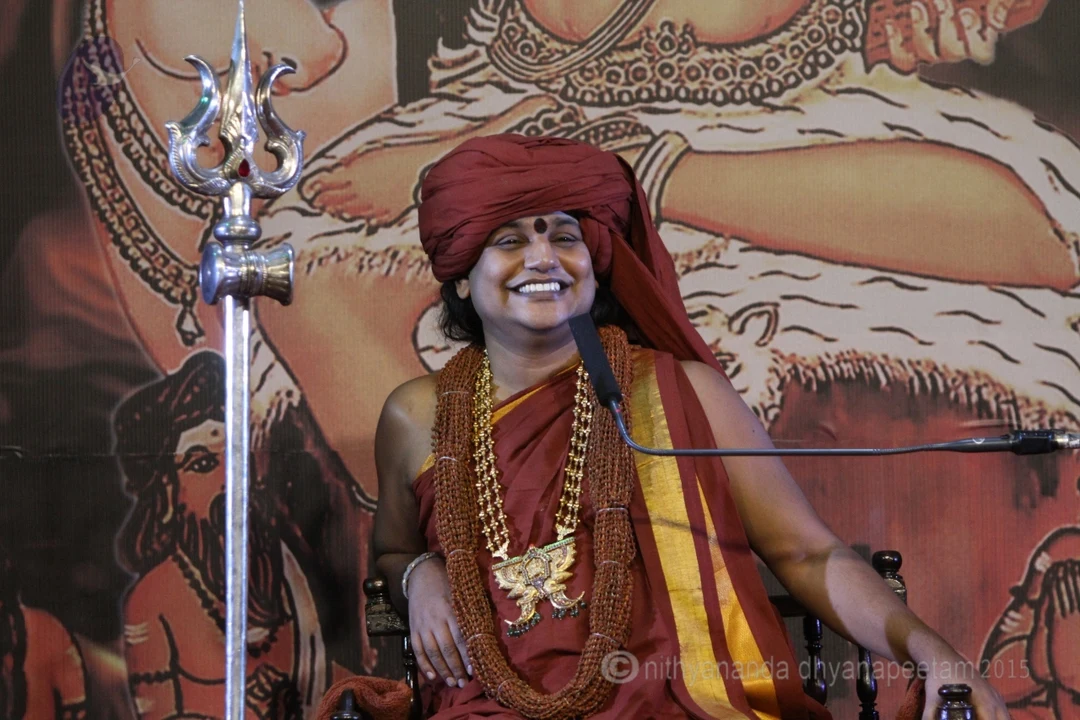
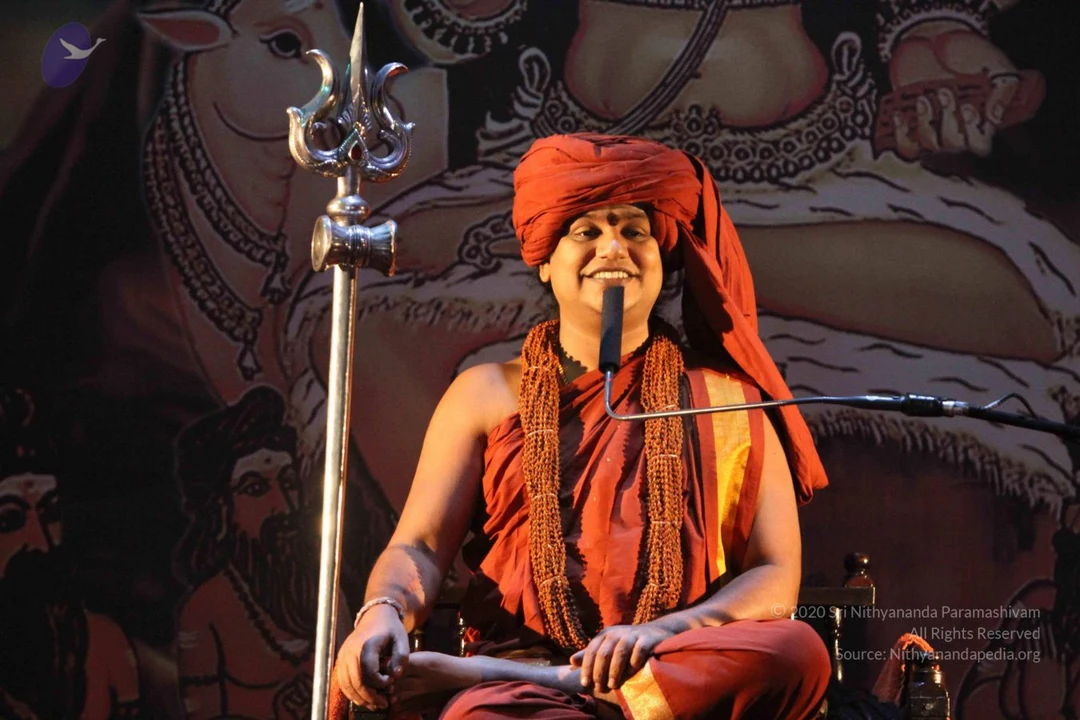
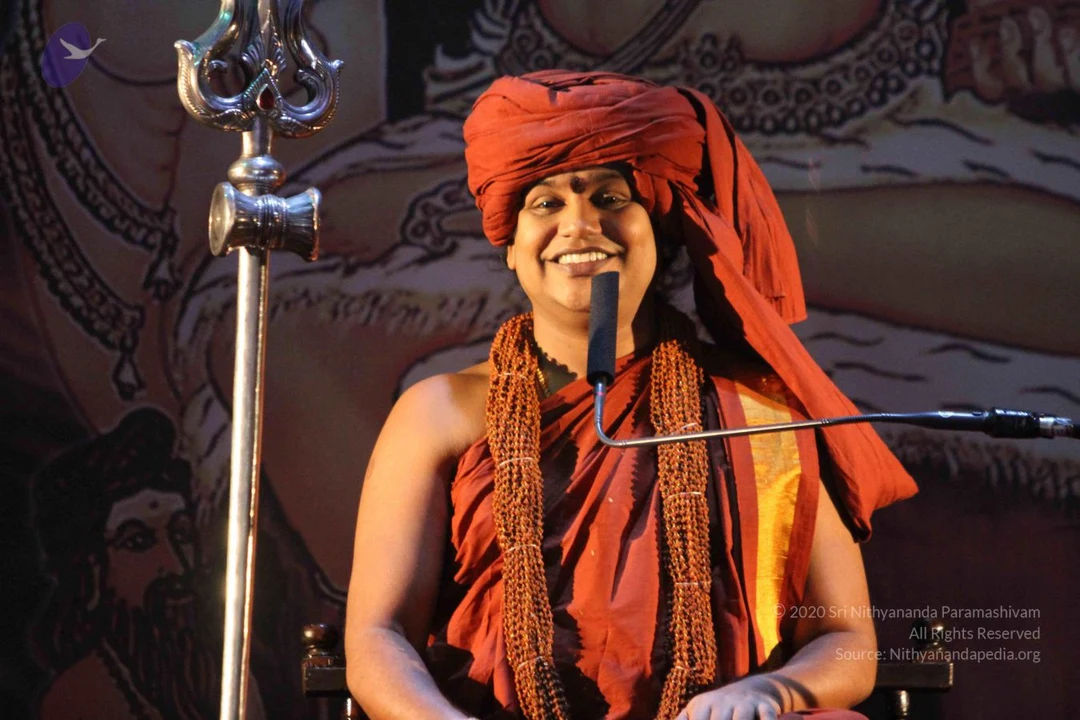
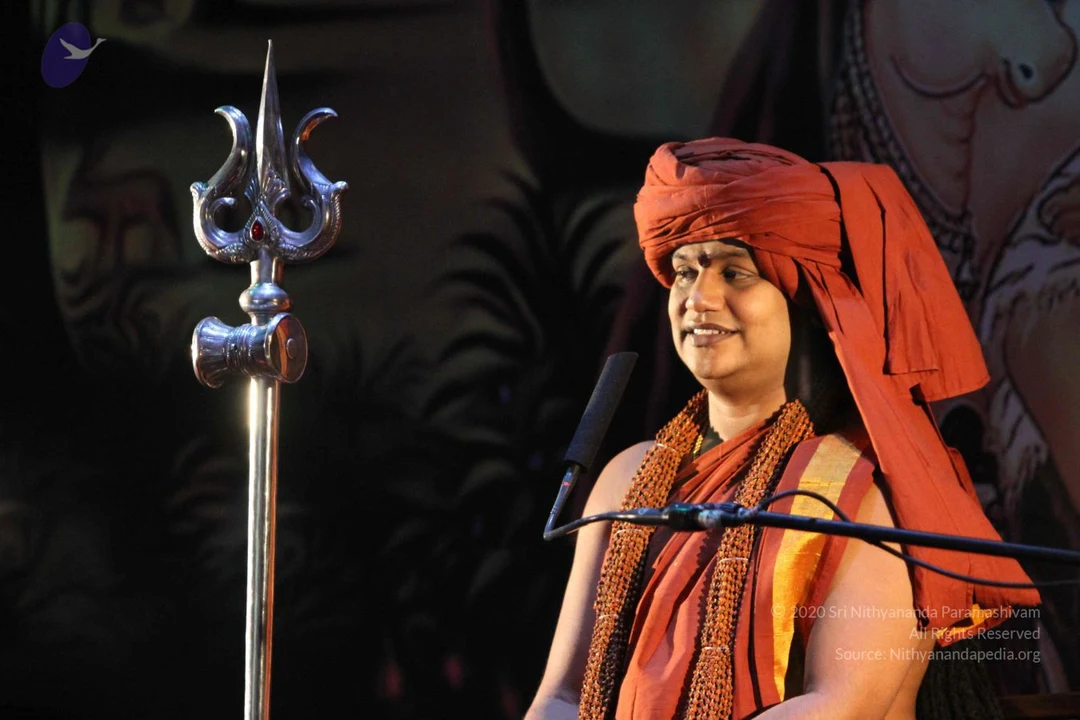
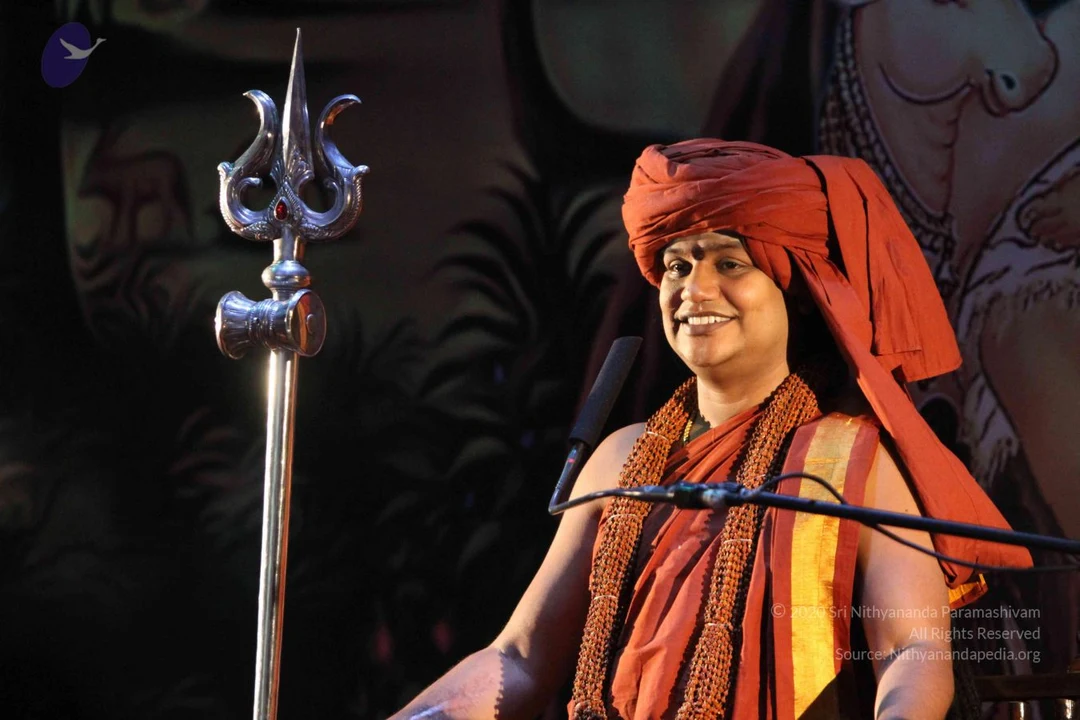
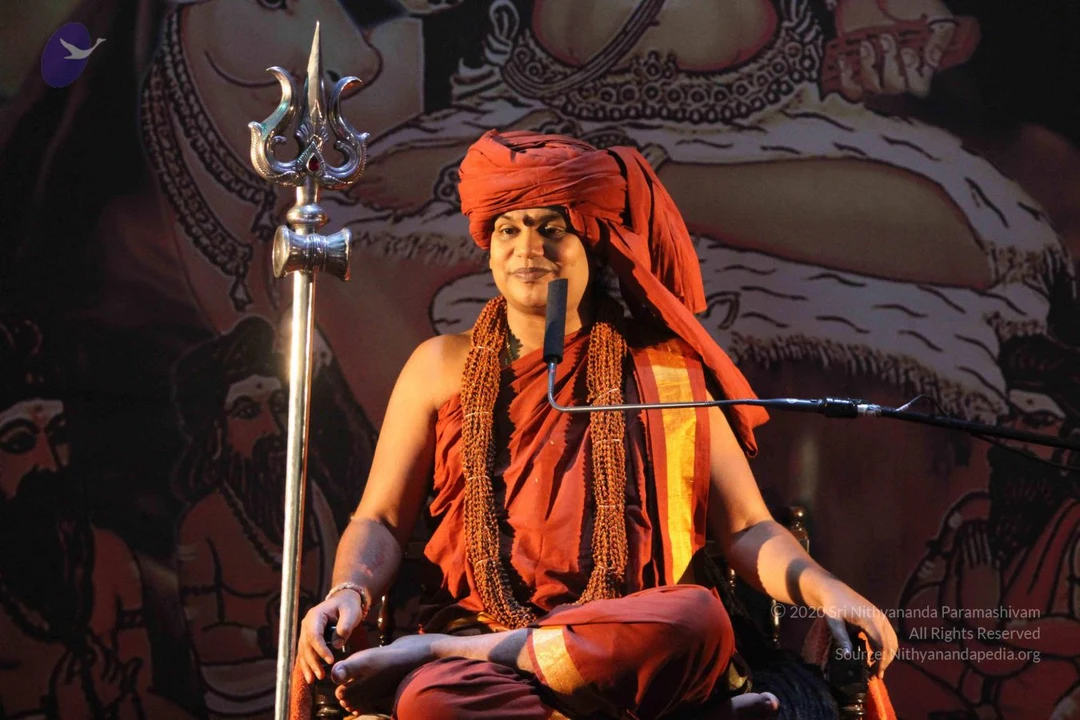
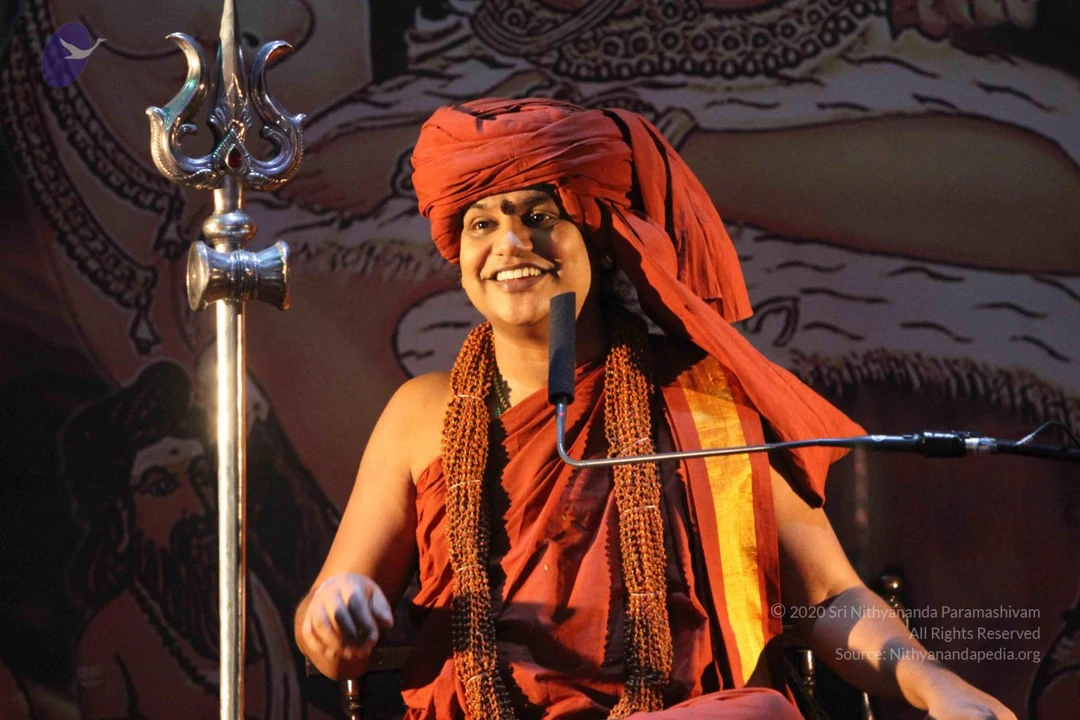
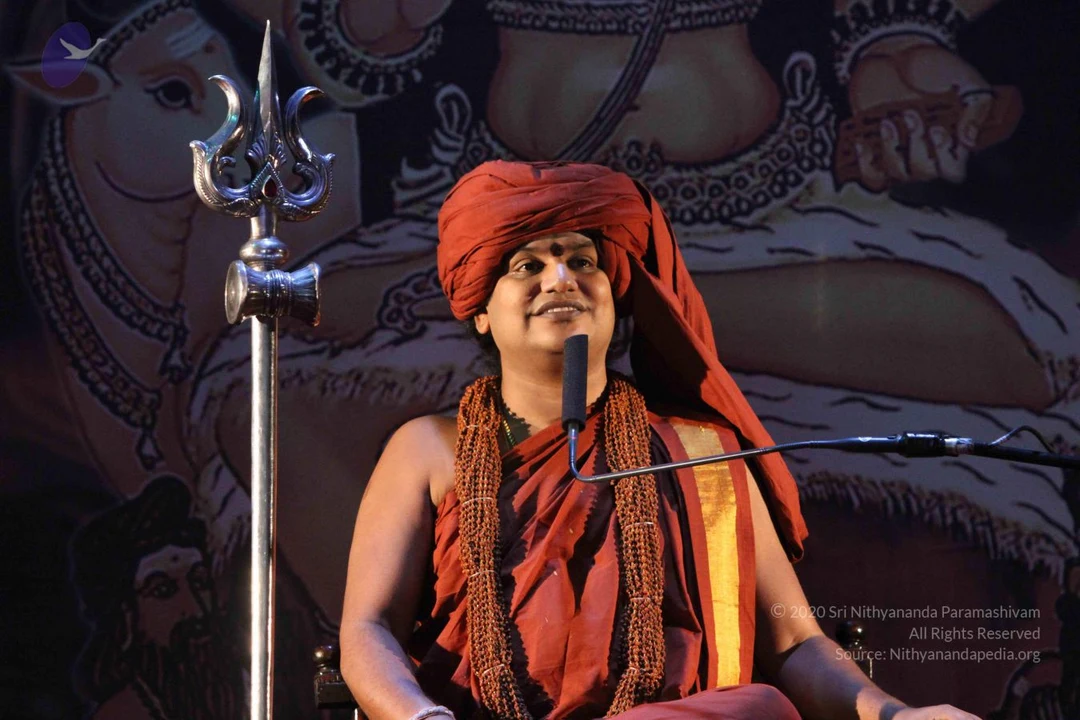
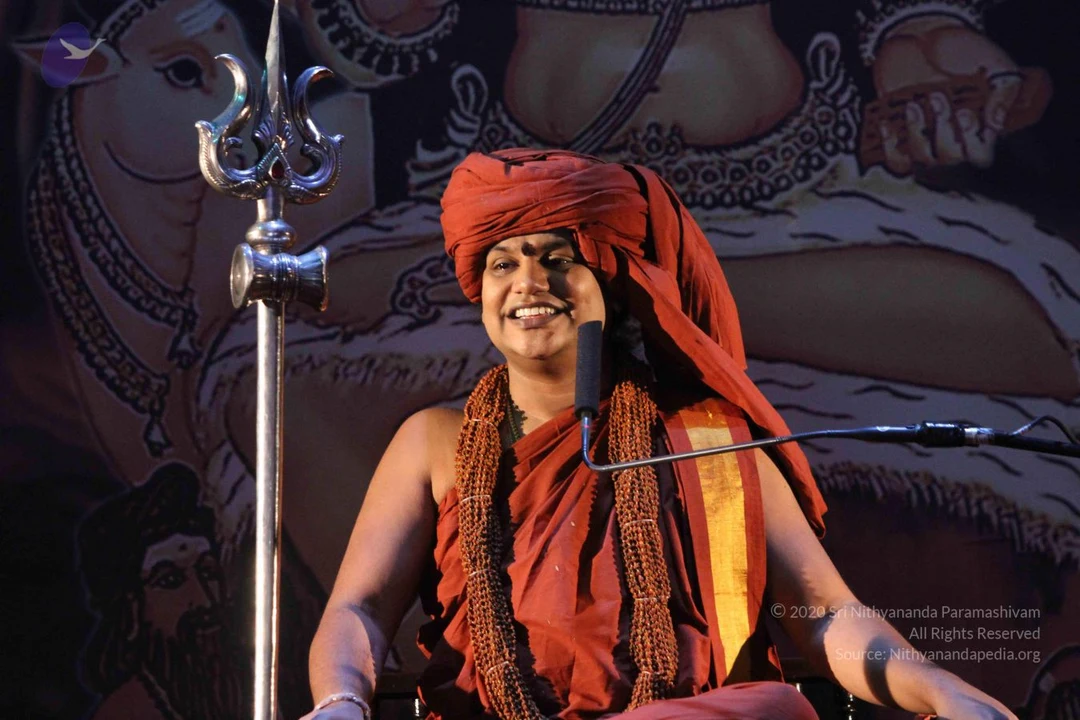
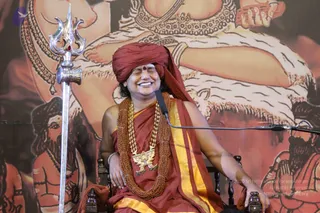
Photograph of a smiling man seated at a microphone during a talk, wearing a red-maroon turban and saffron-red robes with a gold-thread shawl, a long gold ceremonial necklace and rudraksha-style beads, and a red bindi on his forehead. He gestures with one raised hand beside a silver ritual staff topped with a finial. The backdrop shows a painted scene in red, orange and gold tones. Probable Swamiji by visible cues: distinctive maroon turban, ornate gold necklaces and rudraksha mala, speaking as the presenter. Text on the image reads a Dhyanapeetam 2015A seated man in a red-maroon turban and saffron-red robe with a gold-and-yellow border sits on an ornate wooden throne draped with a tiger-skin cloth. He wears layered beaded rudraksha malas and a large gold pendant, a red kumkum dot on his forehead, and raises one hand mid-speech toward a microphone. Behind him a painted backdrop shows a tiger and other animals in a forest. A silver trident stands to his left.A photograph of a stage session in a hall, with a large painted backdrop of a multi-armed goddess seated amid forest trees and rishis in saffron. A figure in saffron robes and an orange turban sits cross-legged on a raised platform with a microphone and a small kalasha-like vessel beside them, gesturing with one hand. Rows of seated audience members in white and cream clothes, many with orange shawls, face the stage from the front; their backs are visible. Camera tripods and a video camera on the right indicate broadcast recording, and potted plants frame the stage.A seated man in an orange-red turban and saffron robes sits smiling on an ornate wooden chair draped with a tiger-skin cloth, with a microphone stand before him. He wears layered rudraksha malas and a golden-bordered wrap, hands folded in his lap, and a silver trident stands to his left. Behind him a large painted backdrop shows a four-armed seated deity with a jeweled crown, rudraksha necklaces and a crescent moon, beside a white bull and rows of seated red-robed sages. A brass kettle-spouted vessel sits at lower left. Photo of a teaching session.

Intro
74 photosSource gallery
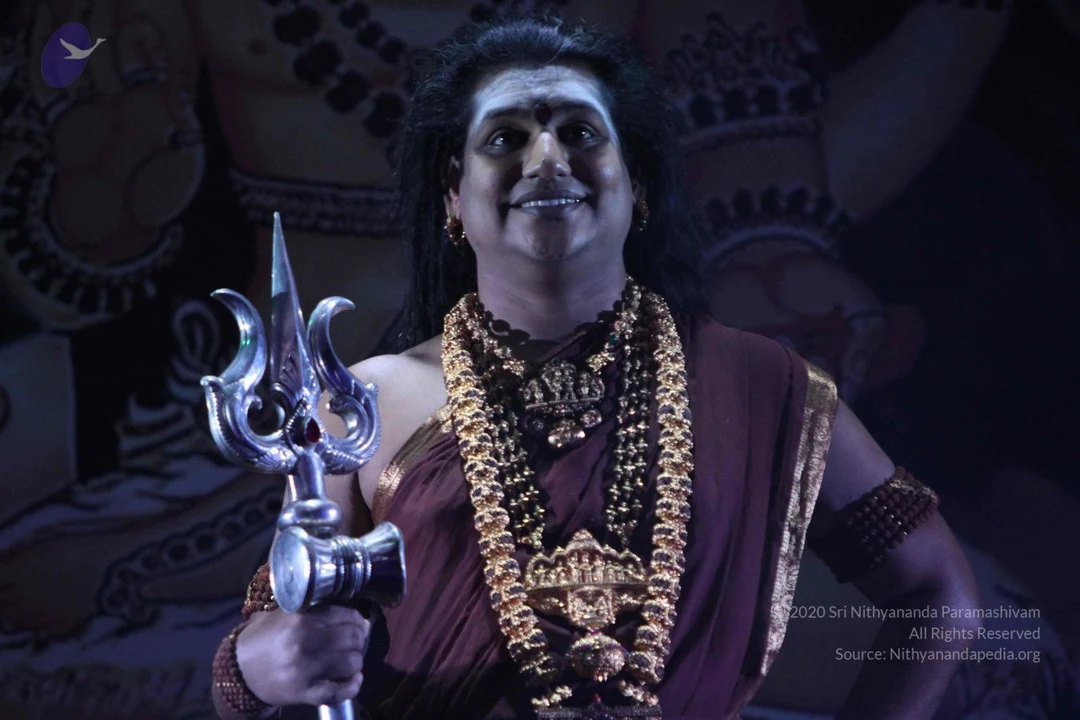
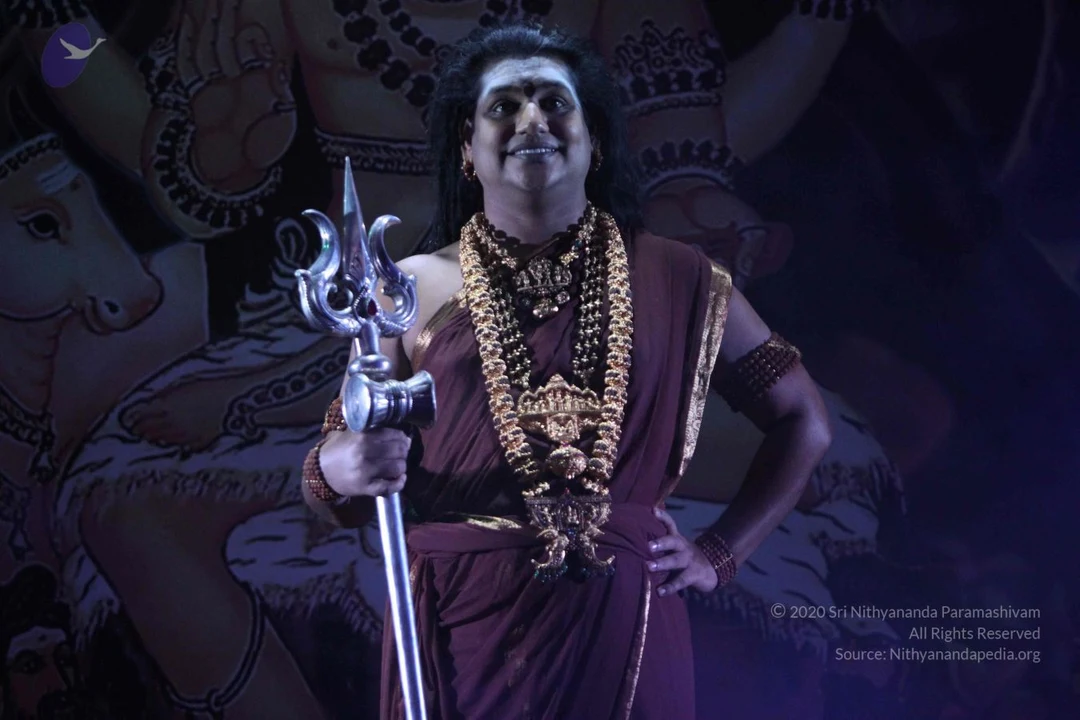
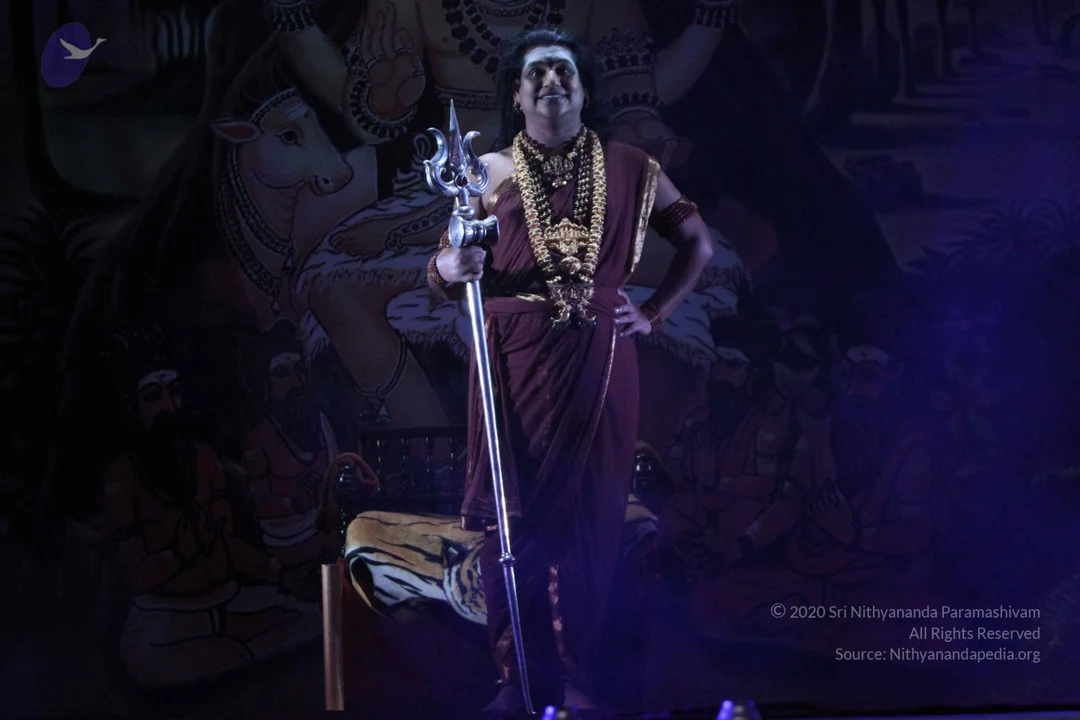
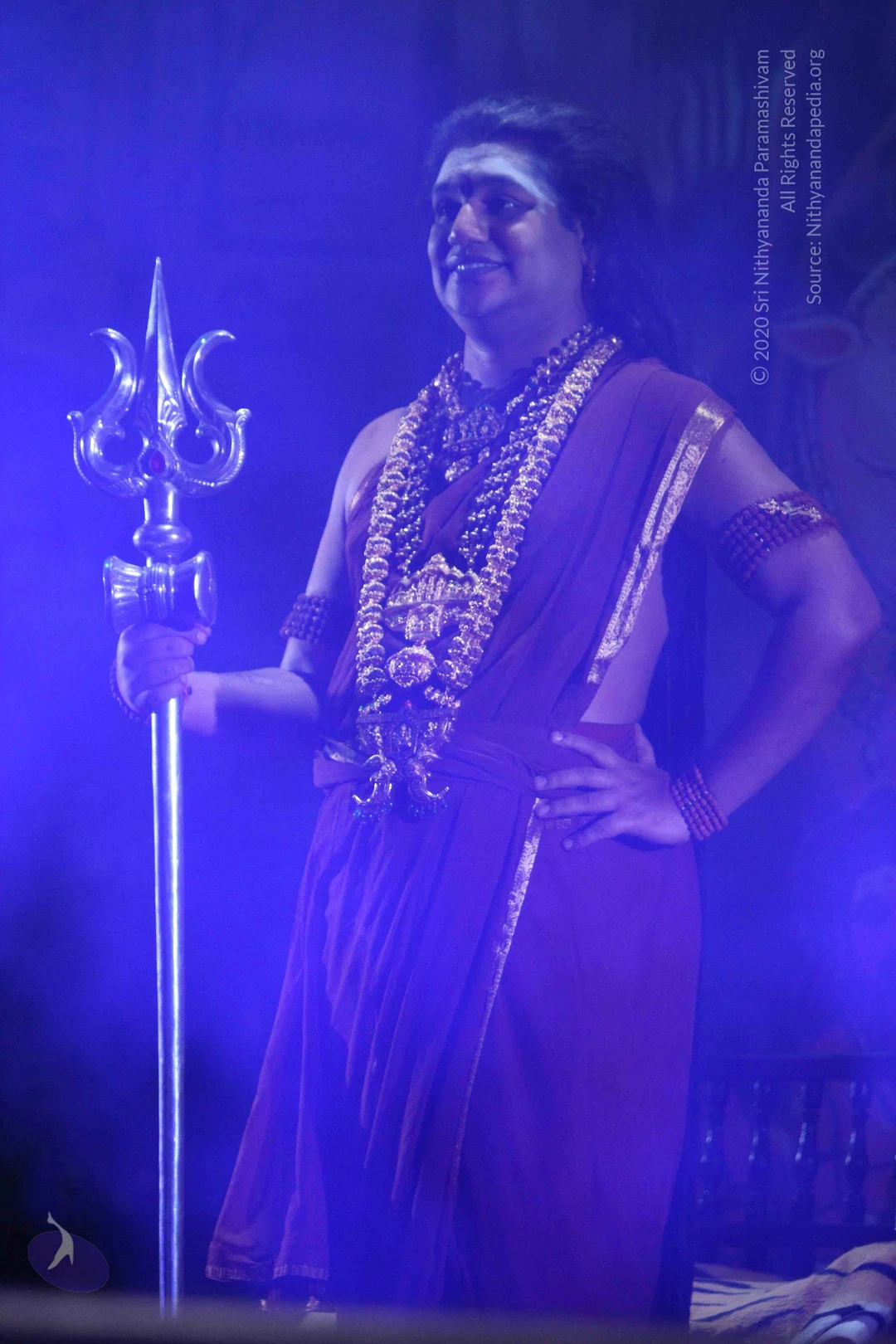
A man stands in front of a large painted backdrop of a multi-armed deity with a tall crown, crescent moon, rudraksha garlands and a white bull beside a forest scene. He wears a maroon-red dhoti and shawl, layered gold and beaded necklaces, and holds a silver trident in his left hand while his right hand rests on his hip, with a tilted-up gaze. Swamiji (probable): the figure has long swept-back dark hair, ornate gold necklaces, rudraksha malas and saffron-red ceremonial clothing, consistent with the page's reference to Swamiji.Close photograph of a smiling man with long dark hair and a white-painted forehead with a dark central mark, wearing a maroon draped garment with gold border, layered gold and bead necklaces, a gold pendant and rudraksha-style bracelets. He holds a silver trident with a red gem in his left hand. Behind him is a painted backdrop with ornate decorative figures. The man appears to match the Swamiji description, with long swept-back hair, ornate gold necklaces and a trident; this appearance-based label is probable.A man stands in a dim, purple-lit setting before a painted backdrop of deity figures with a bull and multiple arms. He wears a maroon-brown dhoti-style wrap with gold edging, a layered gold-and-bead necklace with a large ornate pendant, and red beaded bracelets. He holds a silver trident in his left hand and rests his right hand on his hip, smiling and gazing upward. Swamiji (probable): the appearance cues are a long swept-back hair style, ornate gold necklaces, rudraksha-style beaded malas and a ceremonial wrap, consistent with the page's reference to him at this event.A photograph of a standing man in a dark maroon draped garment with a gold border, holding a tall silver trident (trishul) in his left hand and resting his right hand on his hip. He wears a heavy gold necklace and layered garlands, gold armlets and bangles, and a tilak on his forehead. Behind him is a painted backdrop of seated sages in meditation and a reclining tiger-skin-covered seat, with a bull painted in the upper left, under dim blue stage lighting. The figure has long dark hair and is the only person visible; the pose and the page's mention of a person are not enough on their own to confirm identity, so the appearance cue is uncertain.A standing man in a dark maroon dhoti-style garment with a gold-edged drape stands in a dim hall before a painted backdrop of seated figures. He wears a heavy gold necklace and layered garlands and holds a tall silver trident in his right hand, his left hand on his hip. Dark bangles and a rudraksha-style beaded armband are visible on his arms, and his face is marked with white paint. Behind him, a tiger-striped seat is visible. a person description applies: the presentation shows distinctive ornate cues, including the gold necklace, garlands and trident, though the image is dim and the identification is uncertain.A standing figure on a dimly lit stage holds a silver trident upright in his right hand while the other hand rests on his hip. He wears a maroon-brown draped garment, a heavy gold-and-bead necklace with a large pendant, and a gold armlet, with a dark bead mala and a red-dotted forehead mark visible. Behind him a large painted backdrop shows a seated deity with a bull and a tiger-striped seat, and robed sages sit in meditation at the sides beside foliage. A tiger-striped cloth covers a low seat near his feet. Appearance-based identification is uncertain, so the figure is described by role as a performer or speaker on stage with a trident. Printed copyright text appears at lower right.
IA-Listening-Session
46 photosSource gallery
A dimly lit stage bathed in blue and violet light with haze drifting across the scene. A single standing figure with very long dark hair falling down the back, seen from behind, holds a staff or rod and stands before a painted backdrop of a forest with a large tree on the left, foliage, and a crowned deity-like figure painted in the background. Low metal railings line the stage edges and a small cylindrical object sits at the front of the stage. The figure's presentation is not clear enough to establish identity, so a person's presence is uncertain.A dim stage photograph shows a seated figure viewed from behind, with very long dark hair falling down the back, holding a silver trident upright beside a dark-skinned flat stage. Behind them a large painted backdrop depicts a seated deity murti with a crown, multiple arms and a serpent-like garland, with a bull, trees and seated sages in a forest scene. Potted plants with red flowers stand at the right edge and a small lamp sits near the seat. A printed photo credit overlays the lower right corner.A photograph of a man standing on a dimly lit stage in front of a painted backdrop of a forest scene with a goddess figure wearing a crown and multiple necklaces, with seated sages drawn at the base. The standing man wears a maroon-red draped garment, a large white floral garland, and dark rudraksha-style beads, and holds a silver trident in his right hand while resting his left hand on his hip. He stands beside a tiger-skin-covered seat. Green foliage and pink flowers appear at the right edge. a person is shown in a red garment with a silver trident and garland, consistent with a staged portrayal.A photograph of a single man standing on a dimly lit stage in a forest-themed set. He wears a maroon saffron-toned wrap over bare shoulders, a long gold necklace, and a strand of beads, and holds a tall silver trident (trishul) upright beside him. Behind him a painted backdrop shows a seated four-armed deity with a crown, rudraksha beads and a bull, surrounded by trees and seated sages in red. Green foliage and flowers frame the right side. a person is shown in an event setting. The rest of the frame is dark.A figure stands on a dimly lit stage holding a silver trident, wearing a maroon-brown draped garment, a layered gold and beaded garland, and a bold red tilak with dark eye makeup. Behind, a large painted backdrop shows a seated four-armed deity murti on a white bull in a forest landscape, with rows of seated sages painted at the base. Green and pink foliage frames the right side. A red stage light glows along the floor. The figure's identity cannot be confirmed from appearance alone, so the a person field is set to unsure.A figure in a maroon-red draped garment stands on a dimly lit stage holding a tall silver trident in the right hand, with the left hand on the hip. He wears a long garland of pale flowers and dark beaded necklaces, with a bindi on the forehead and dark hair swept back. Behind him, a painted backdrop shows a deity murti with multiple arms and a crown, seated beside a bull, with forest trees and robed sages in meditation below. A wooden seat with a patterned cloth rests at the side, and pink flowering plants border the right edge.

IA-Genesis-of-Identity-
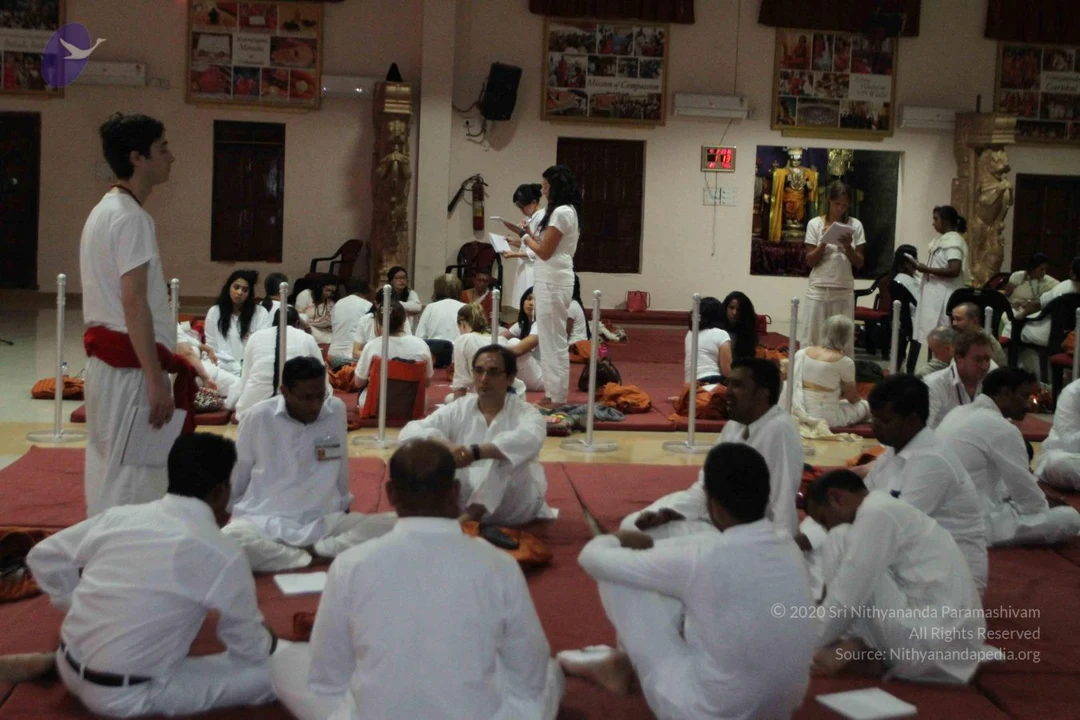
19 photosSource gallery
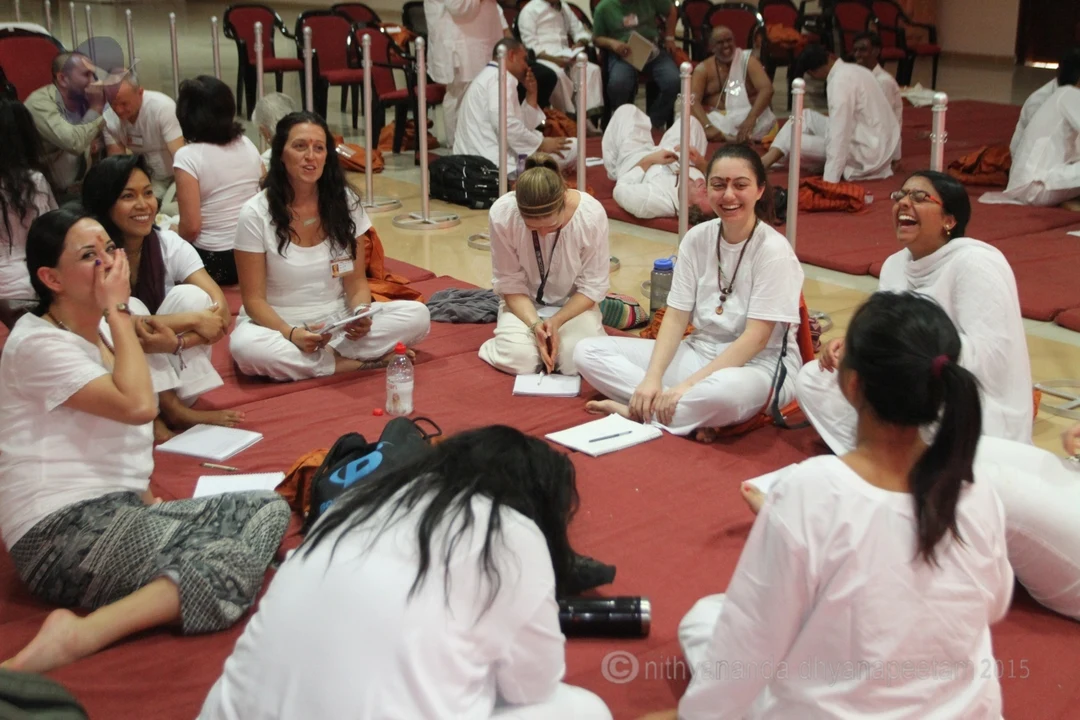
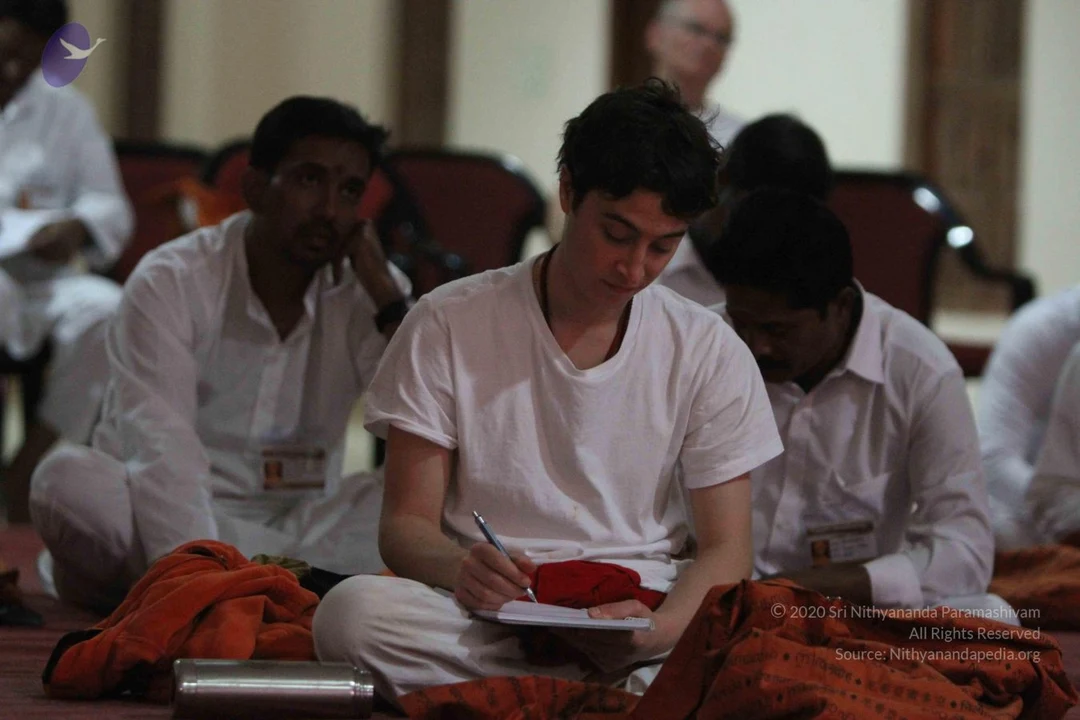
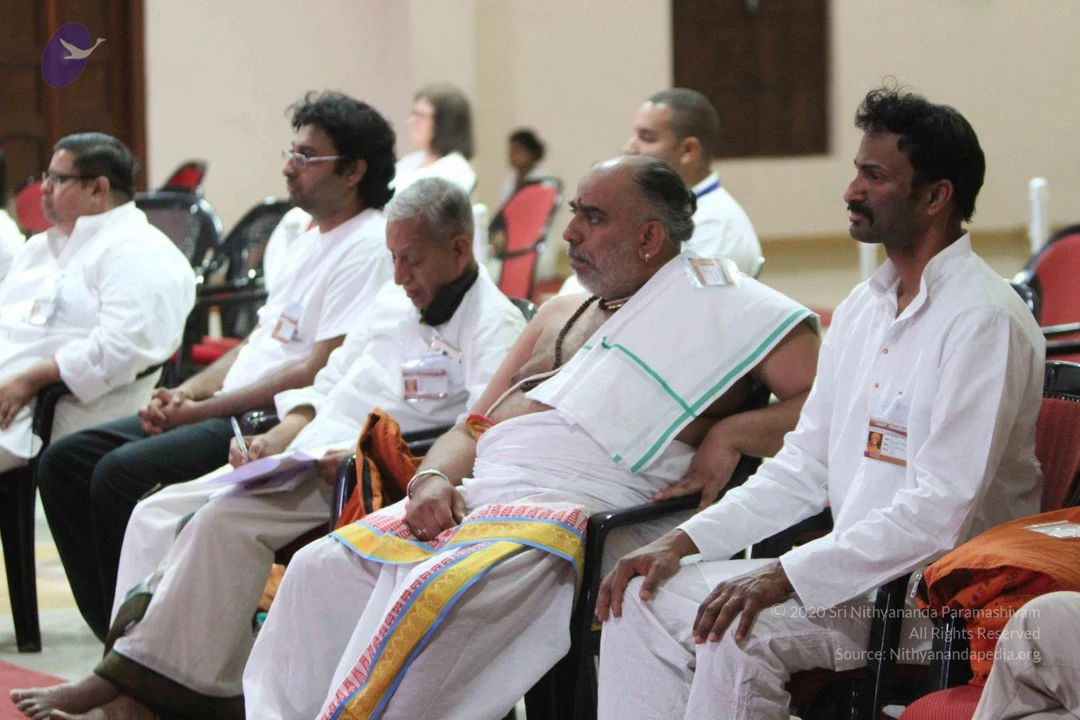
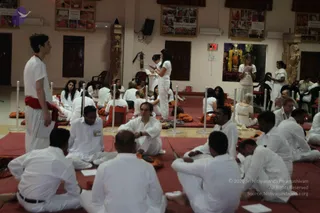
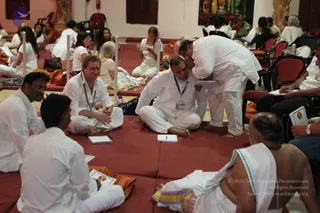
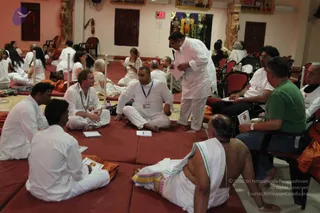
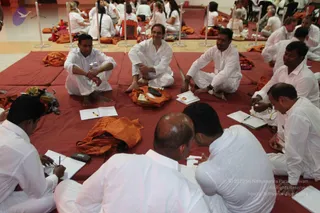
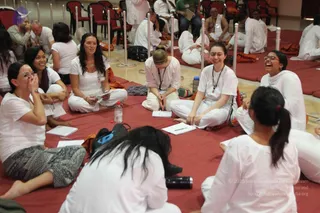
A photograph of a seated group session in a hall with red floor mats and wooden chairs at the back. Many participants in white clothes sit cross-legged on the mats, some with notebooks and papers. A young man in white with a red sash stands at left holding papers. Several women in white stand near the centre-right holding sheets and reading. A framed image of a deity murti in gold and red stands on a shrine to the right, and a standing figure in white is visible near it. Rows of orange cloths and bags lie among the seated people. Brass-coloured pillars and framed photo panels decorate the walls.A seated group session in a hall with red floor mats and a few red-cushioned chairs, with white-clad participants sitting on the mats. In the centre a man in a white shirt and trousers with a blue lanyard badge sits cross-legged, looking down at a notepad, while a standing man in white kurta-style clothing bends down to speak with him. A man on the left sits on the mat, and a bald older man in a white dhoti with a green-and-gold border sits in the foreground. Others in white clothes, some with notebooks, are seated around the room, and a few orange cloths lie on the mats. Ornate shrine decorations appear at the back of the hall. No visible person is identified as a person, and the scene shows participants in a study or discussion session.A seated group session in a hall with red floor mats and wooden chairs, with a shrine containing deity murtis and a framed picture at the back. A man in a plain white kurta stands at the center holding a pink notebook while a man in a white shirt with an ID badge sits cross-legged facing him. Other participants wear white clothes, some with lanyards, and a bare-chested man in a white dhoti with green-bordered cloth sits at the lower right. A man in a green shirt sits on a chair at right holding papers. No figure is clearly identifiable as a person from the visible cues.A photograph of a group of men seated cross-legged on red floor mats in a hall, dressed in white kurtas and white dhotis, with several orange cloth bags and books placed on the mats. Several participants lean forward writing in notebooks with pens. In the background, more people in white clothing sit on red mats in rows. The room has a beige floor and white posts marking the seating areas.A group of women in white clothing sit in a circle on red floor mats during a workshop-style session. Several laugh and smile while others take notes on paper pads, one holds a sheet of printed paper, and bottles and bags sit on the mats. Behind them, men in white and saffron-coloured cloths sit on mats near metal stanchions in a hall with red chairs visible. No clear a person candidate is distinguishable in the foreground, and the scene shows an inner awakening style satsang group discussion.A dimly lit stage photograph of a seated man in saffron-red robes and a red head wrap, sitting on a dark chair with bare feet, hands raised in a gesture before a painted backdrop of a multi-armed deity in a crown with rudraksha-style beads, surrounded by forest trees. A silver trident stands upright beside him and a small brass lamp sits near the chair, with green foliage at the right edge. a person (appearance cues: red head wrap, saffron-red robes, rudraksha mala and ceremonial beaded necklace) seated in satsang-style discourse. The one visible person is the seated speaker.

Nithya-Satsang
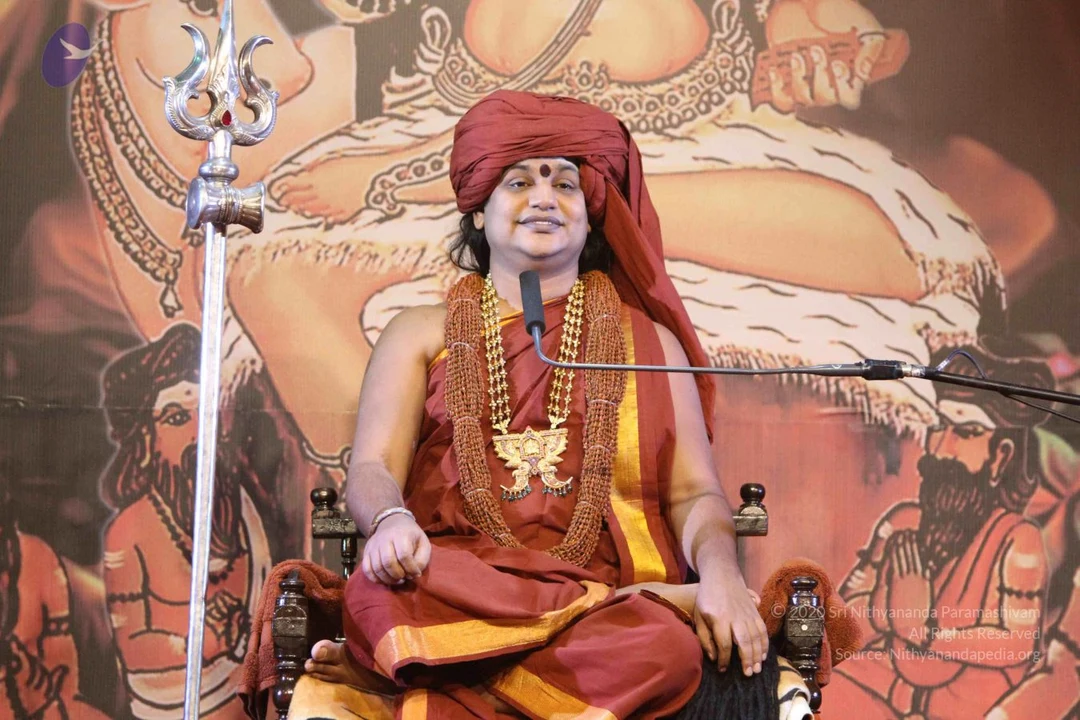
68 photosSource gallery
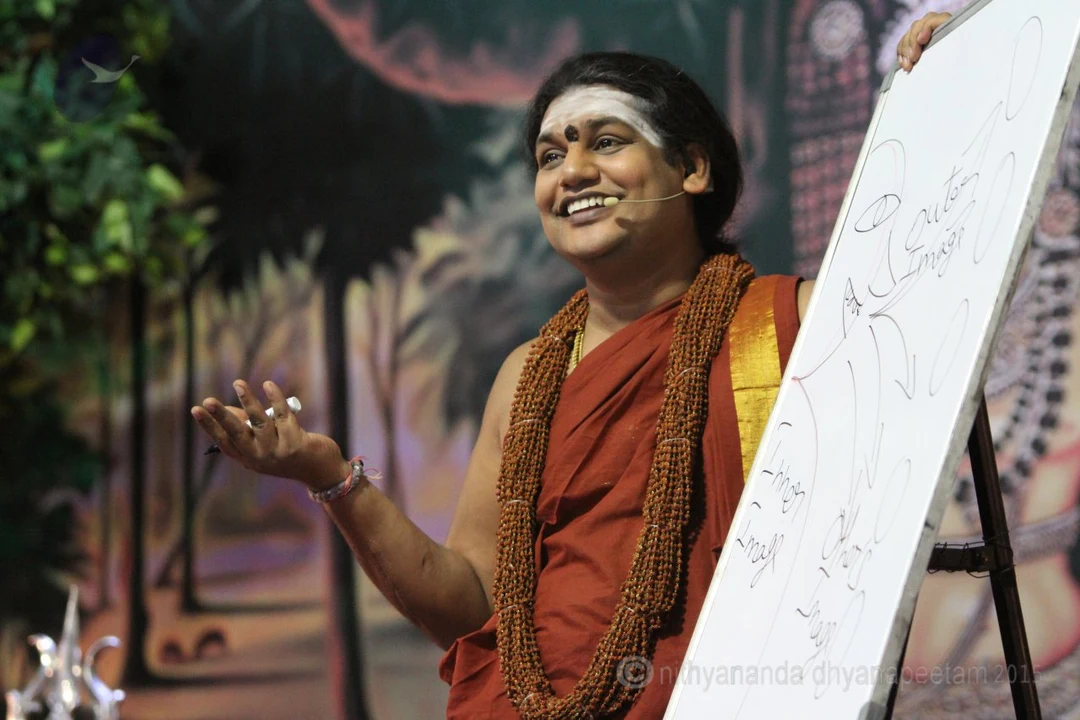
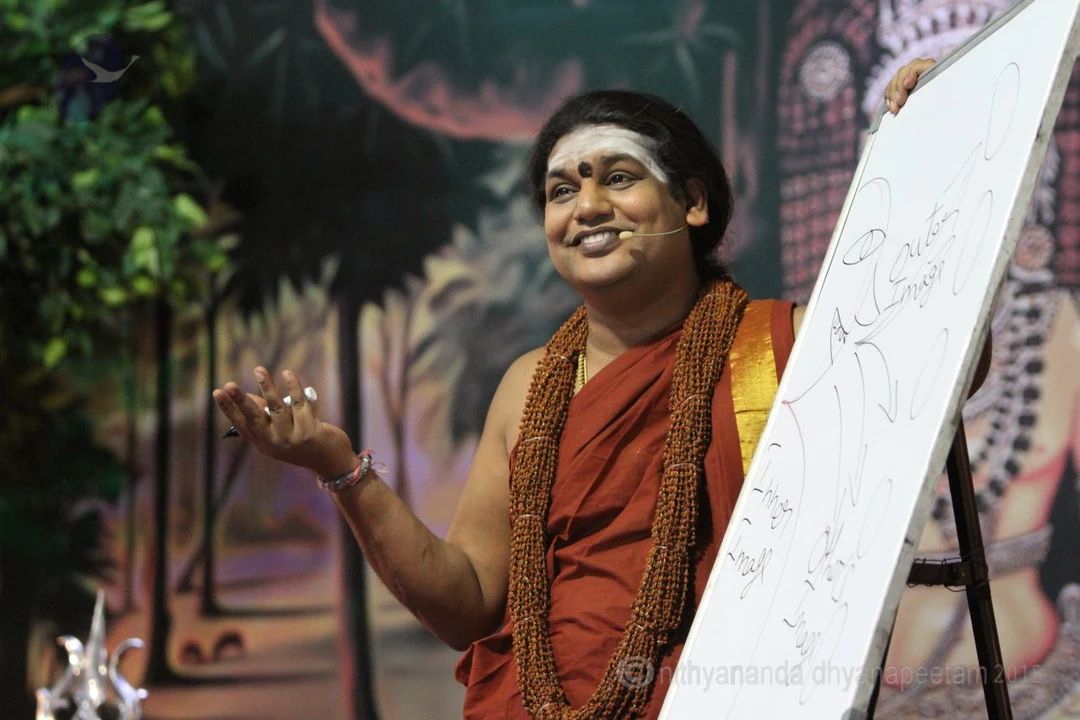
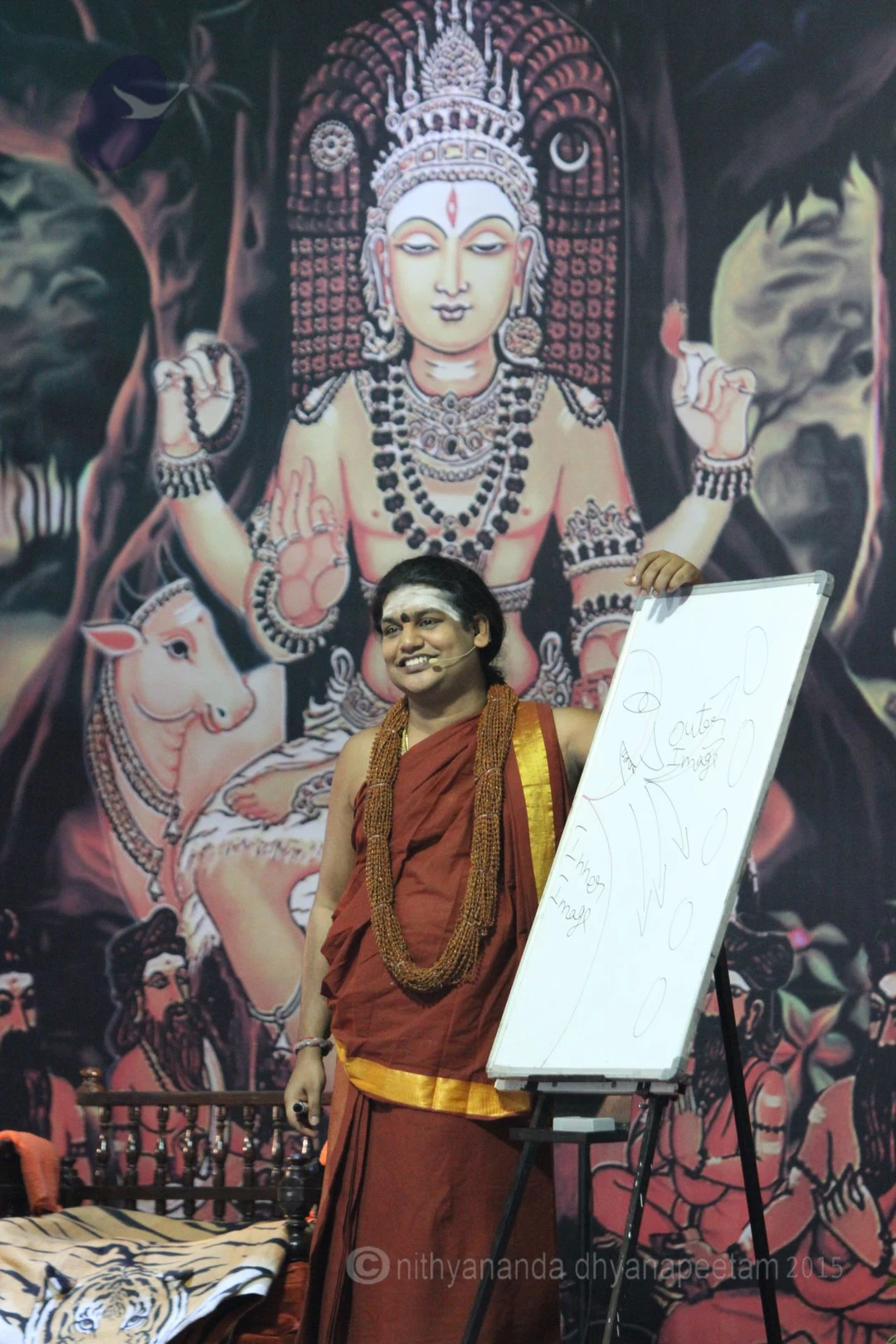
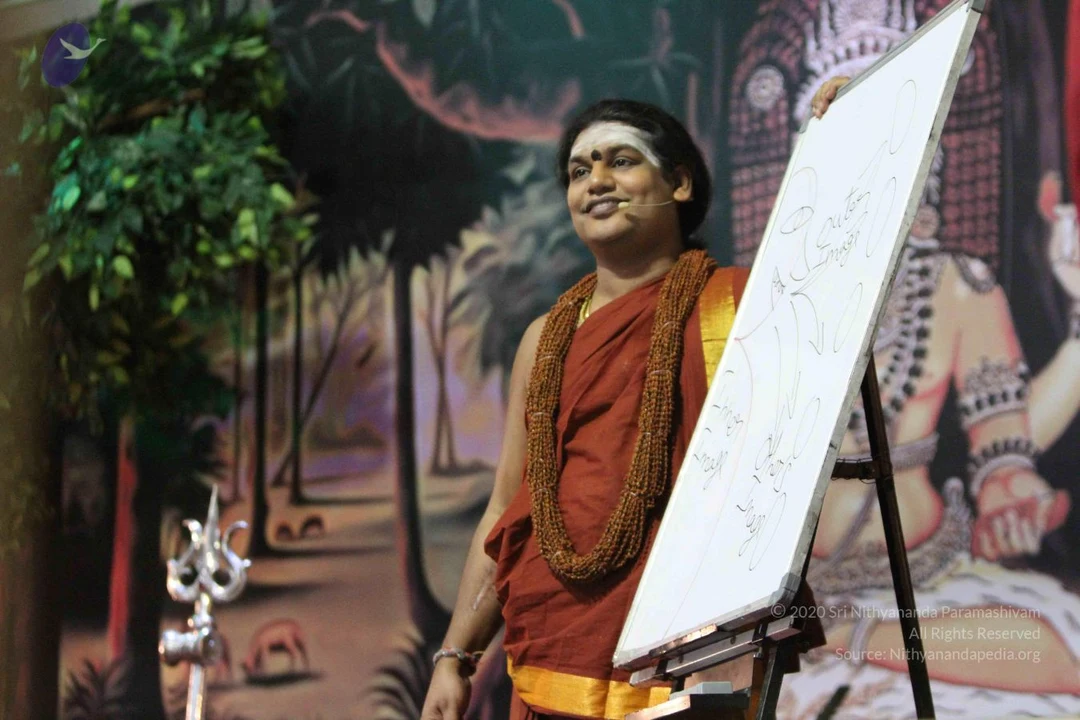
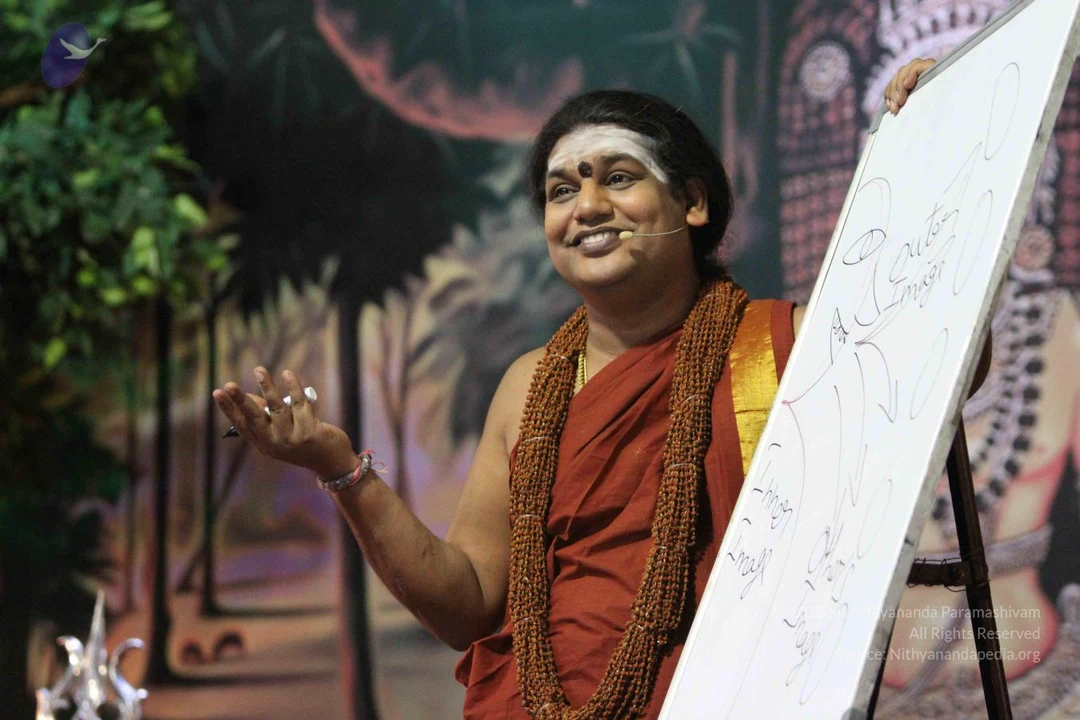
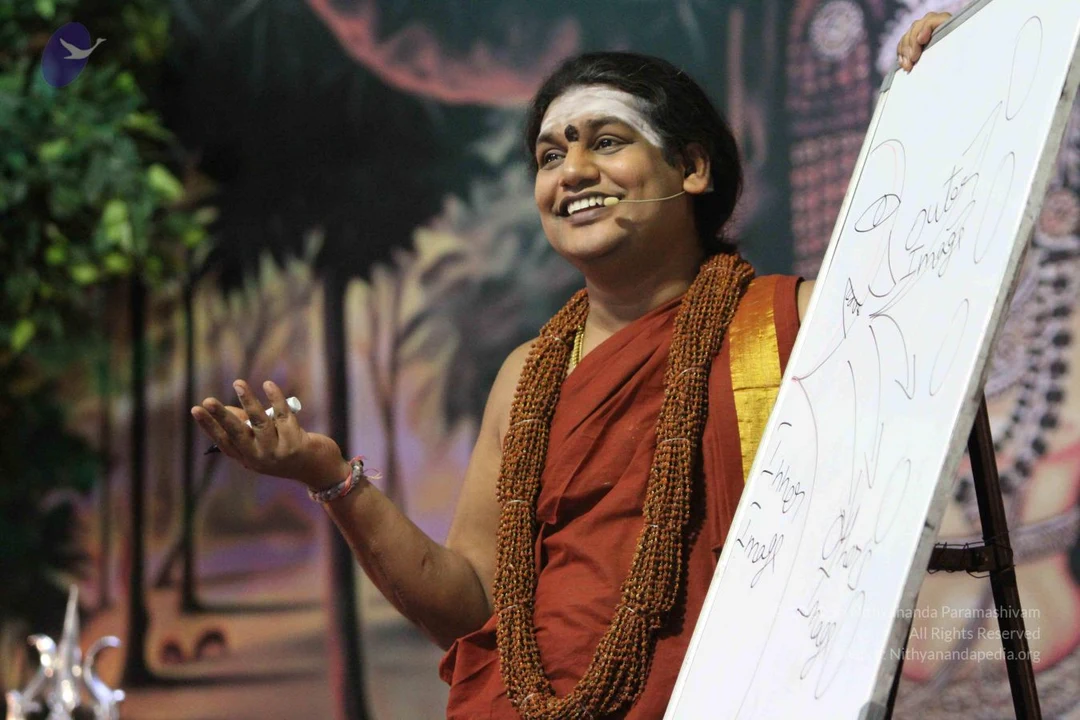
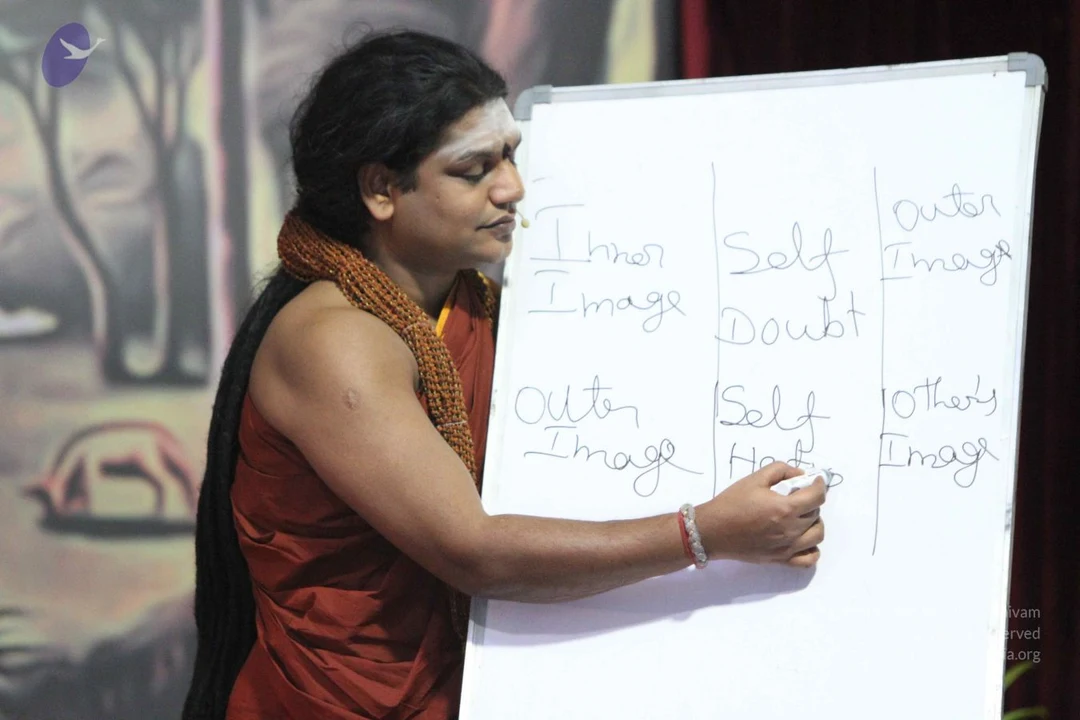
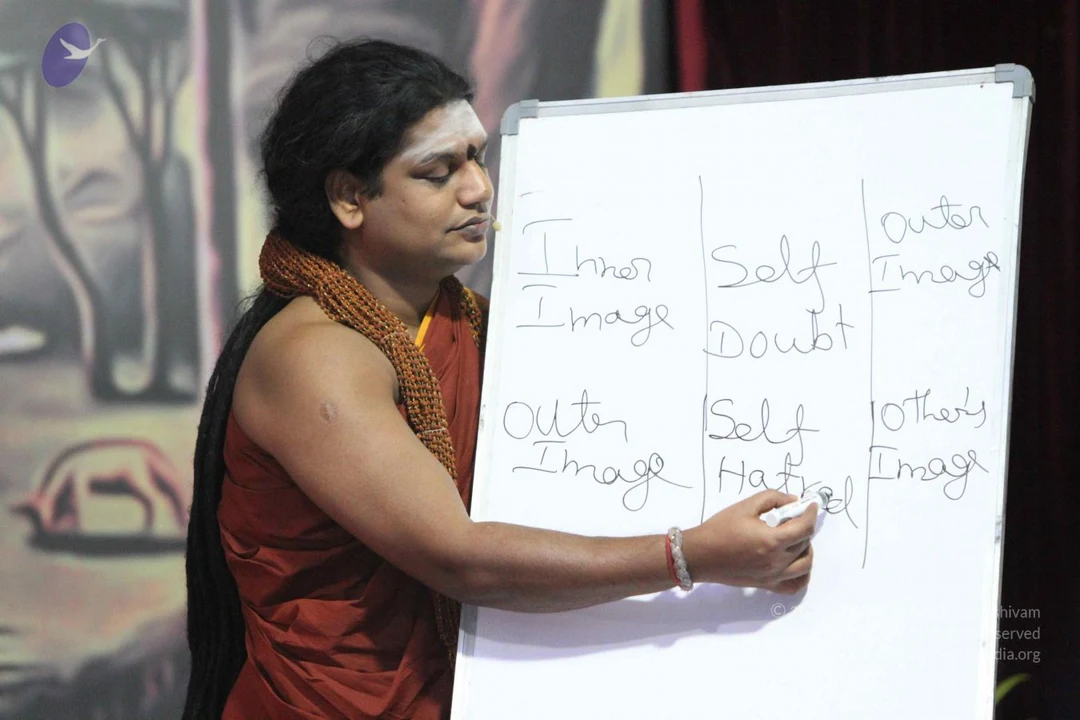
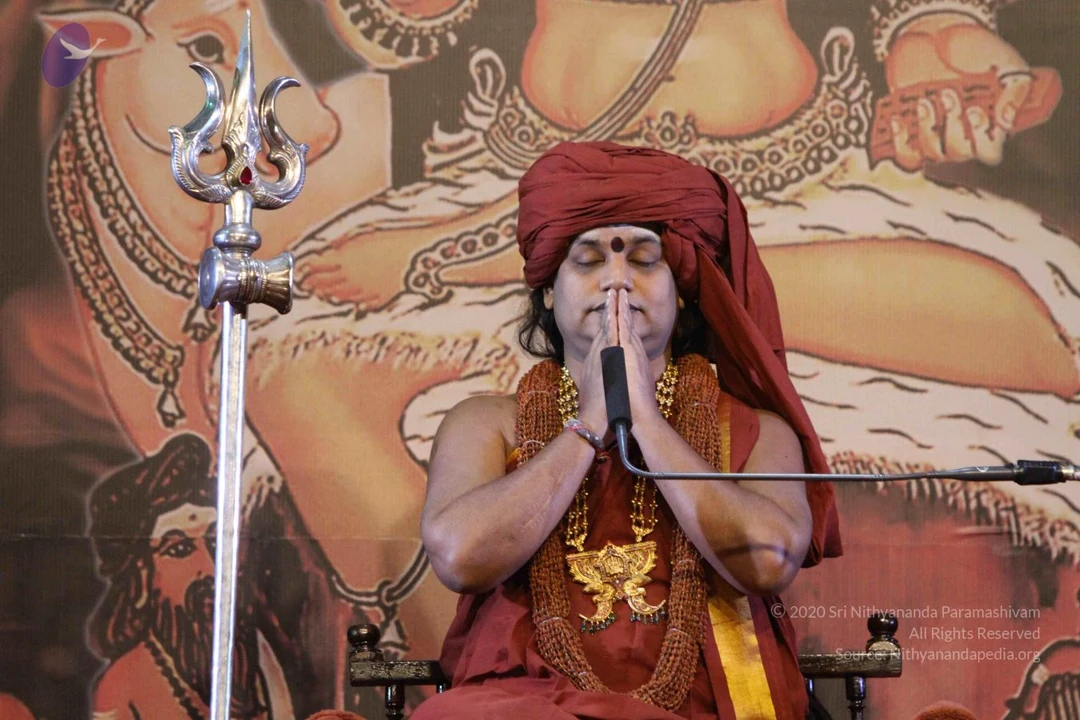
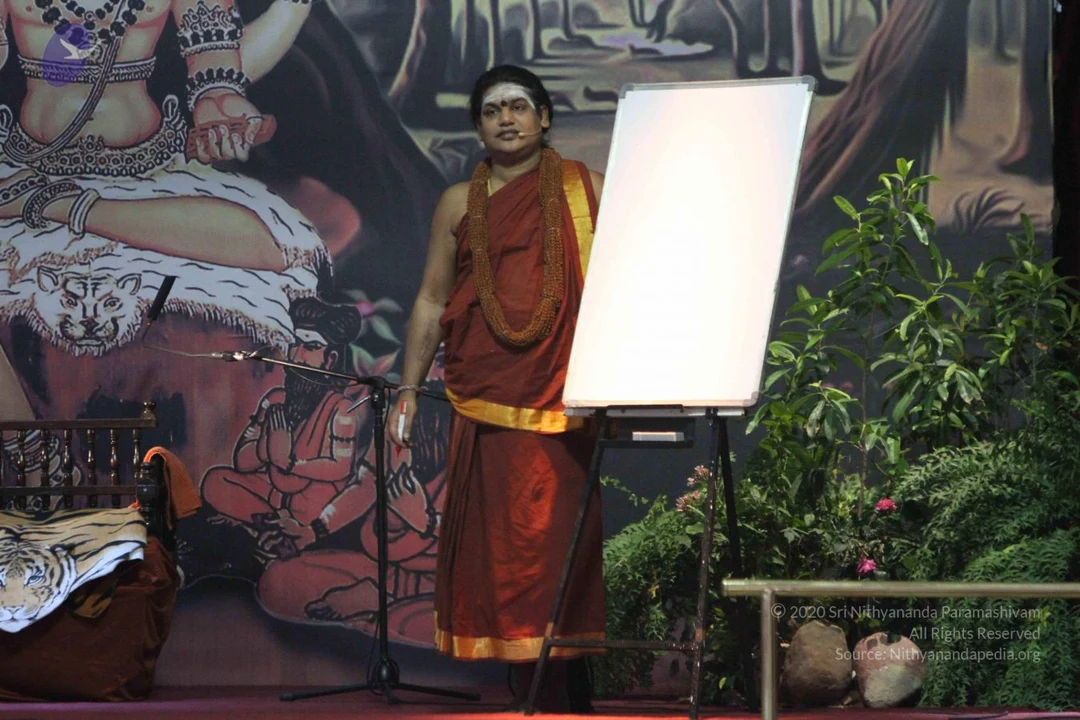
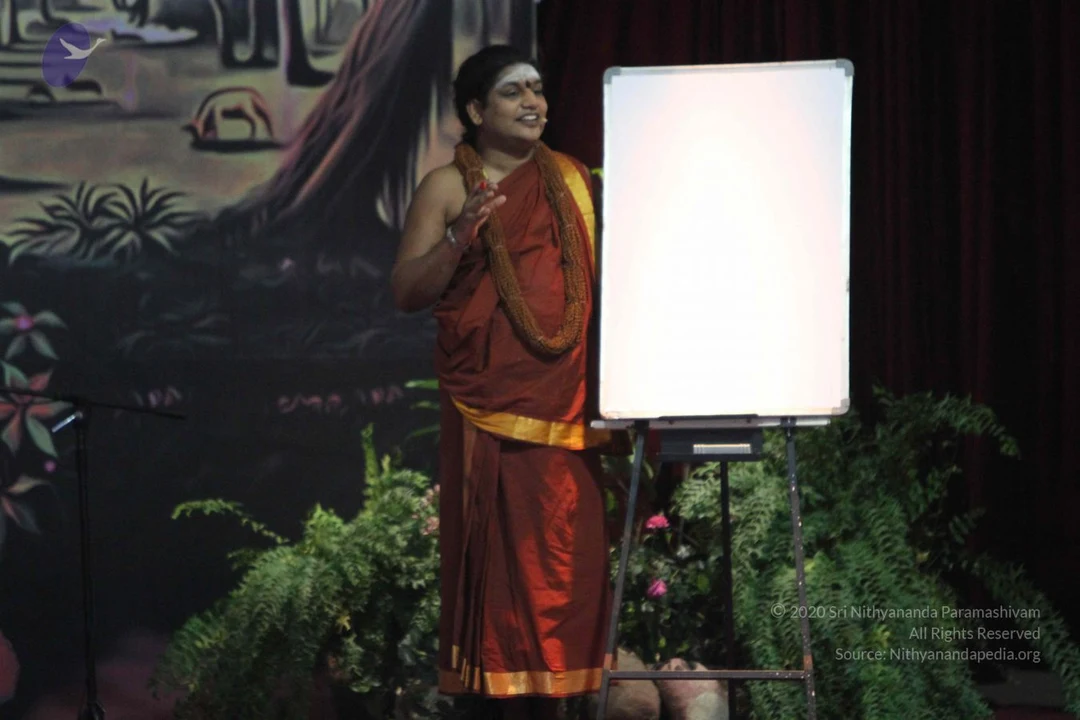
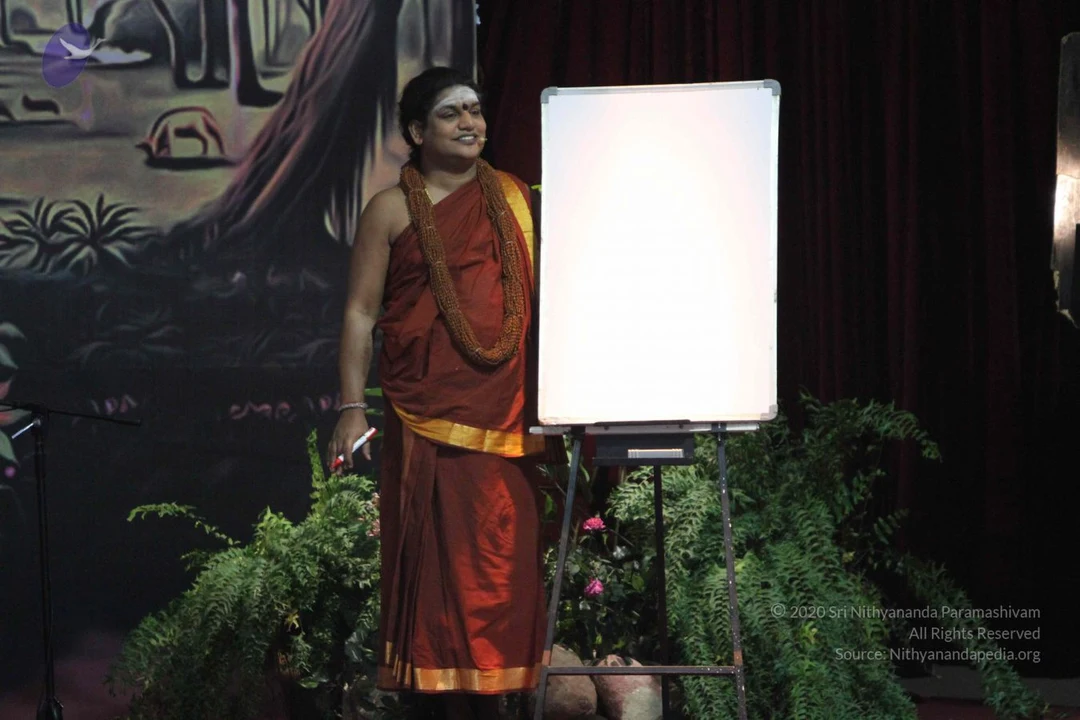
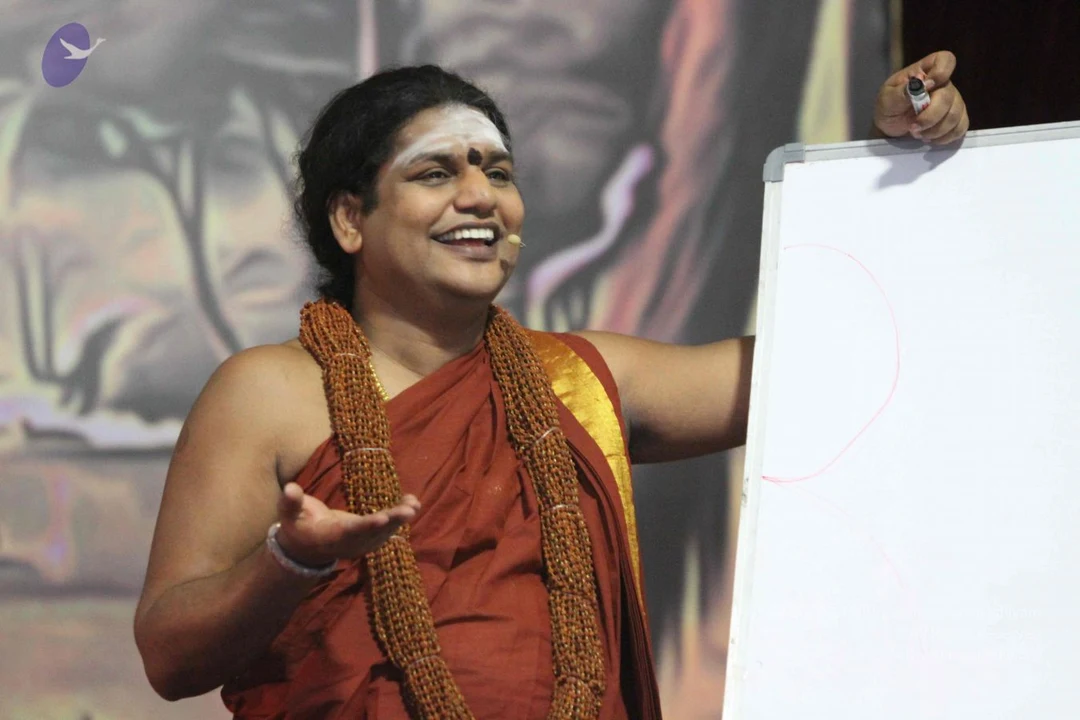
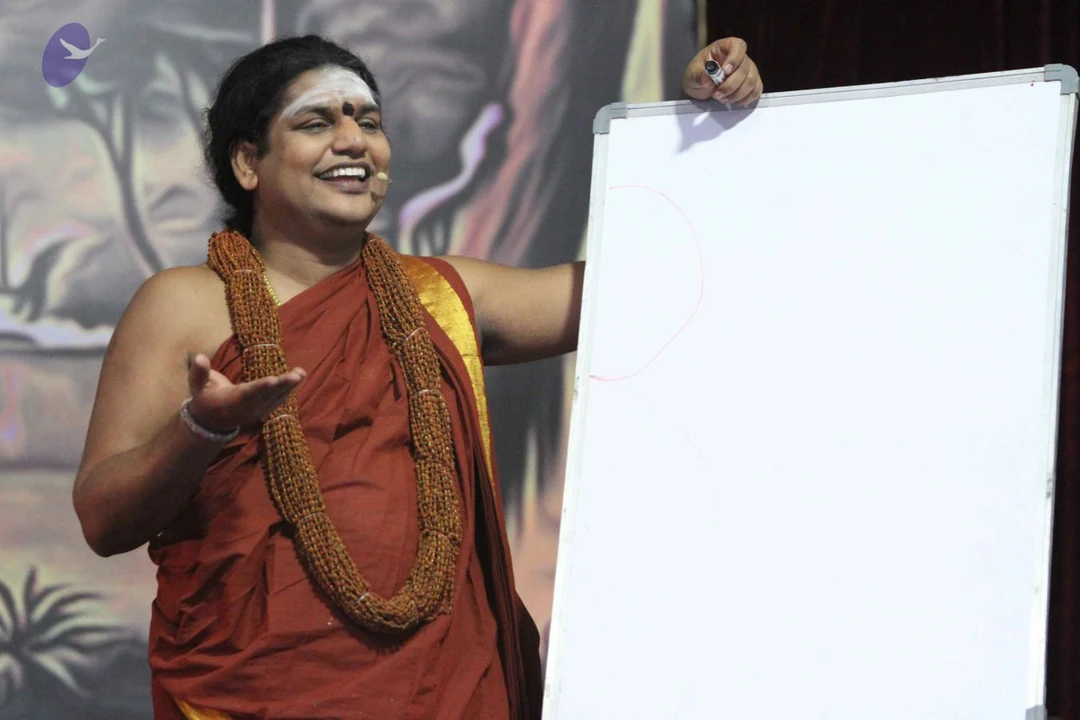
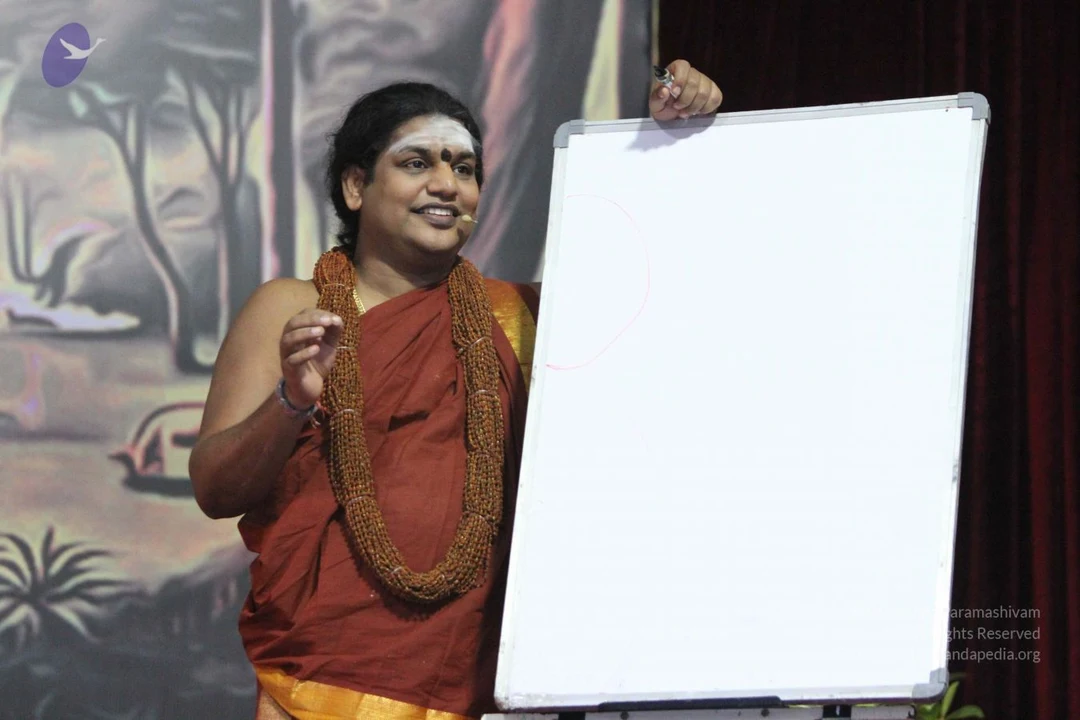
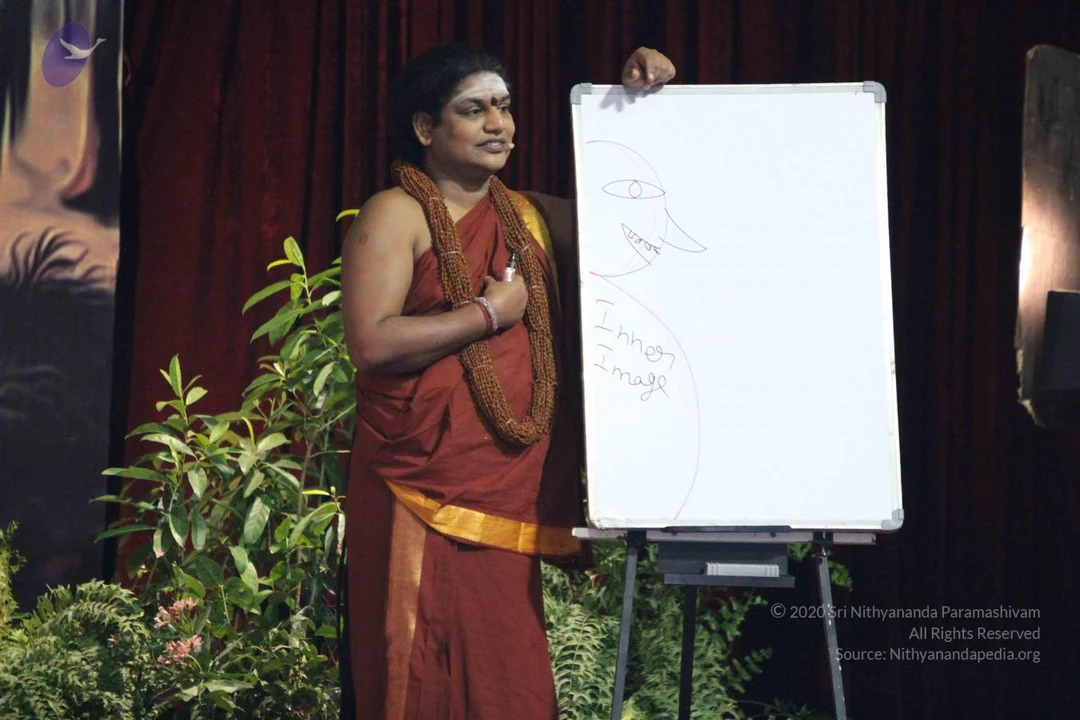
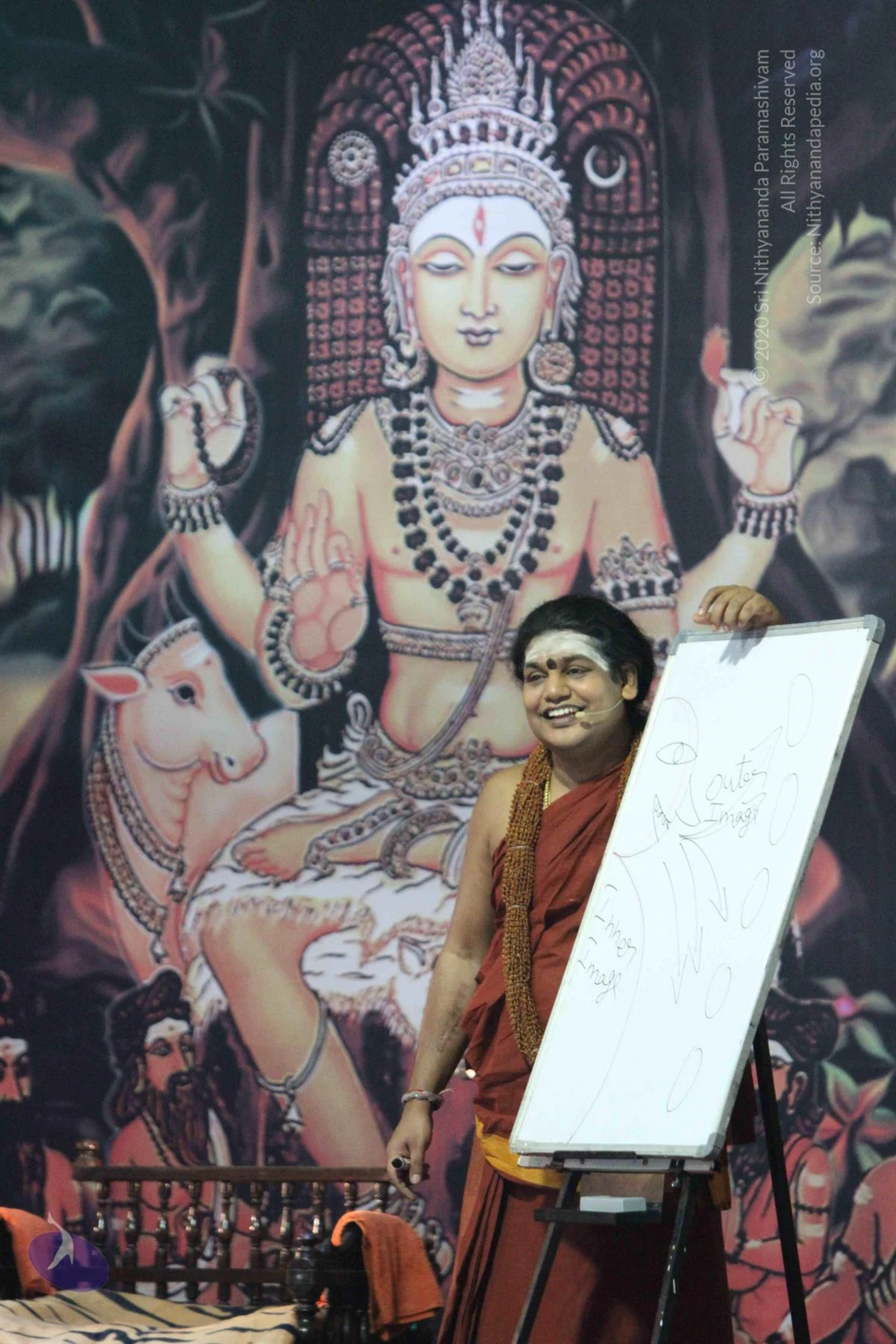
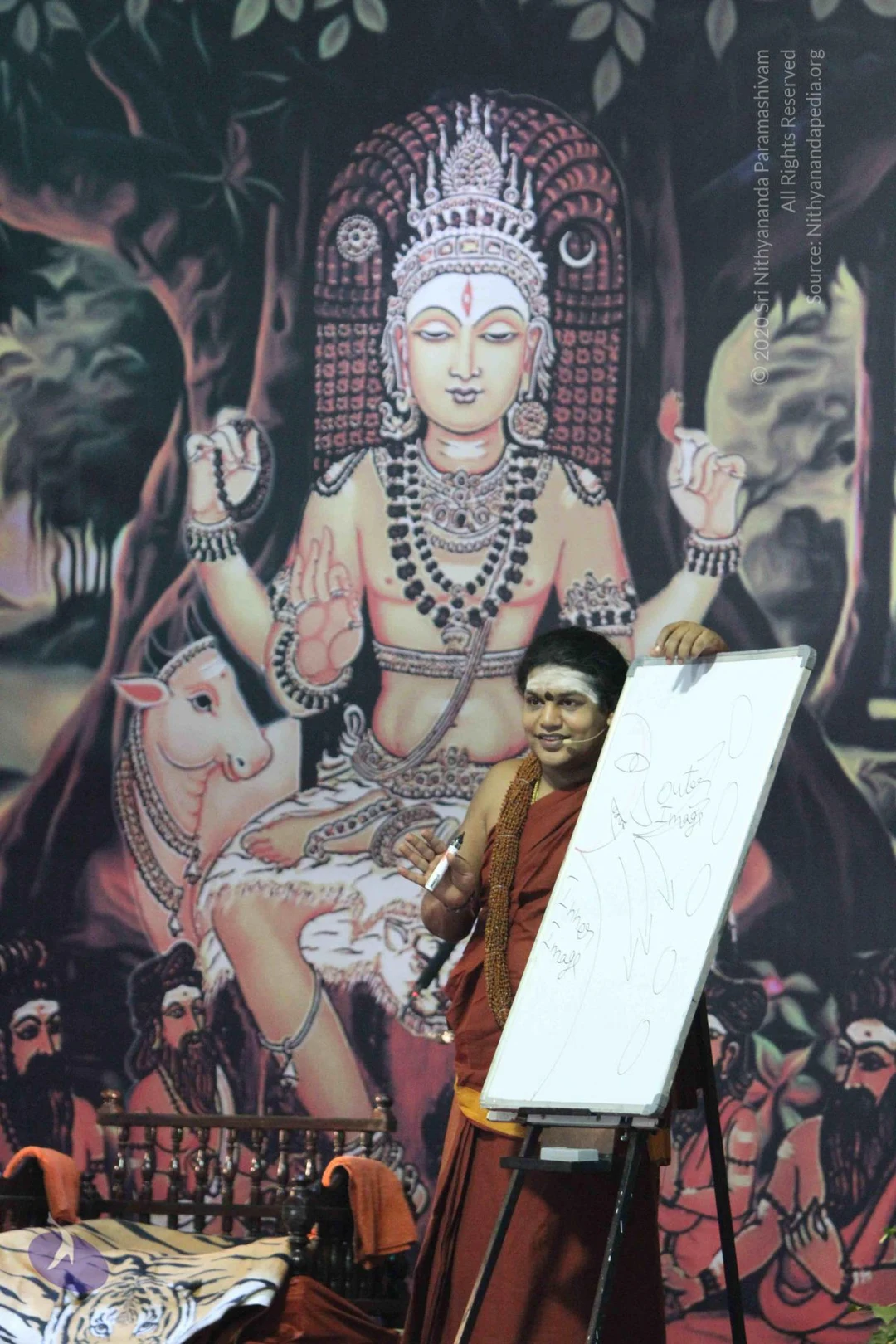
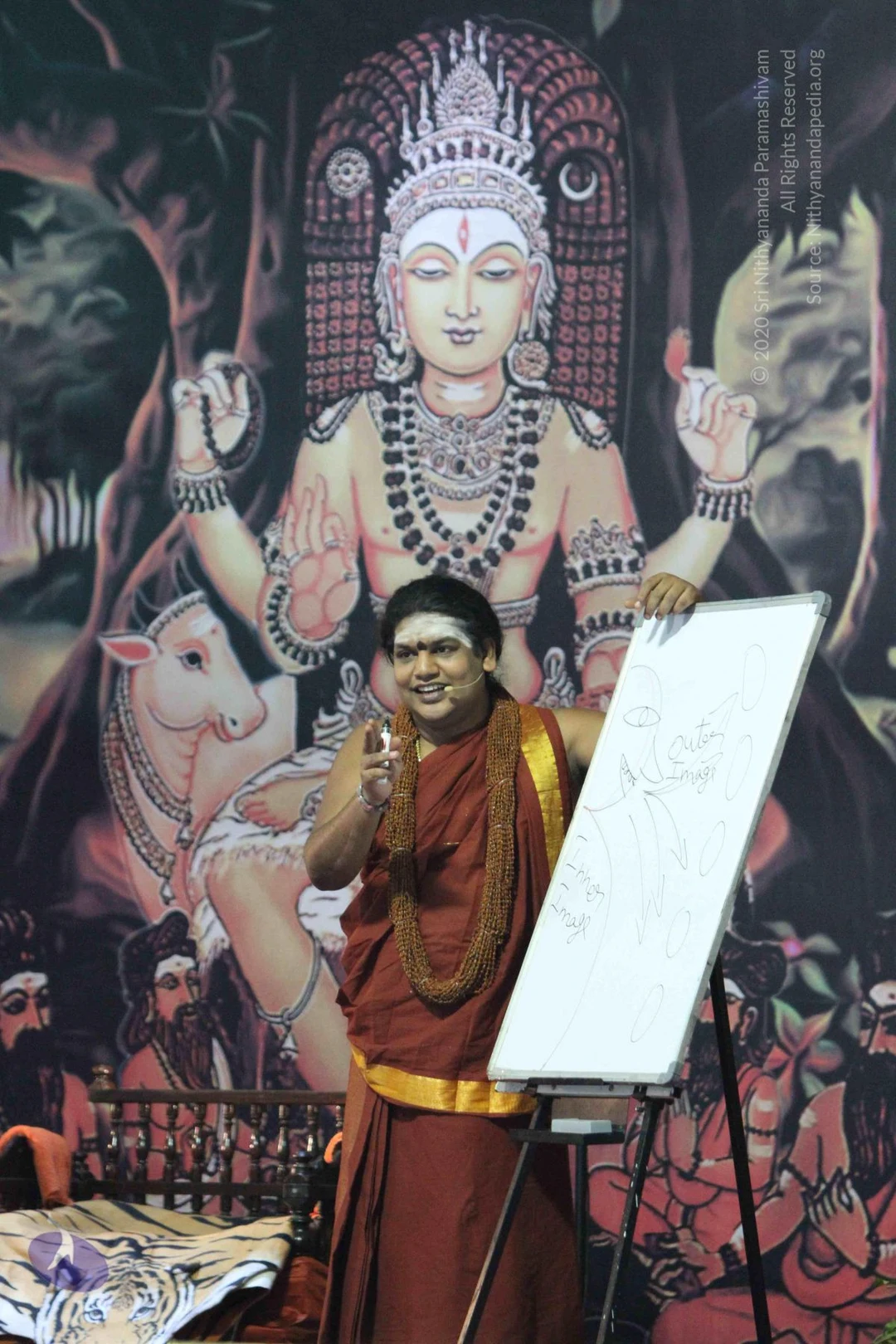
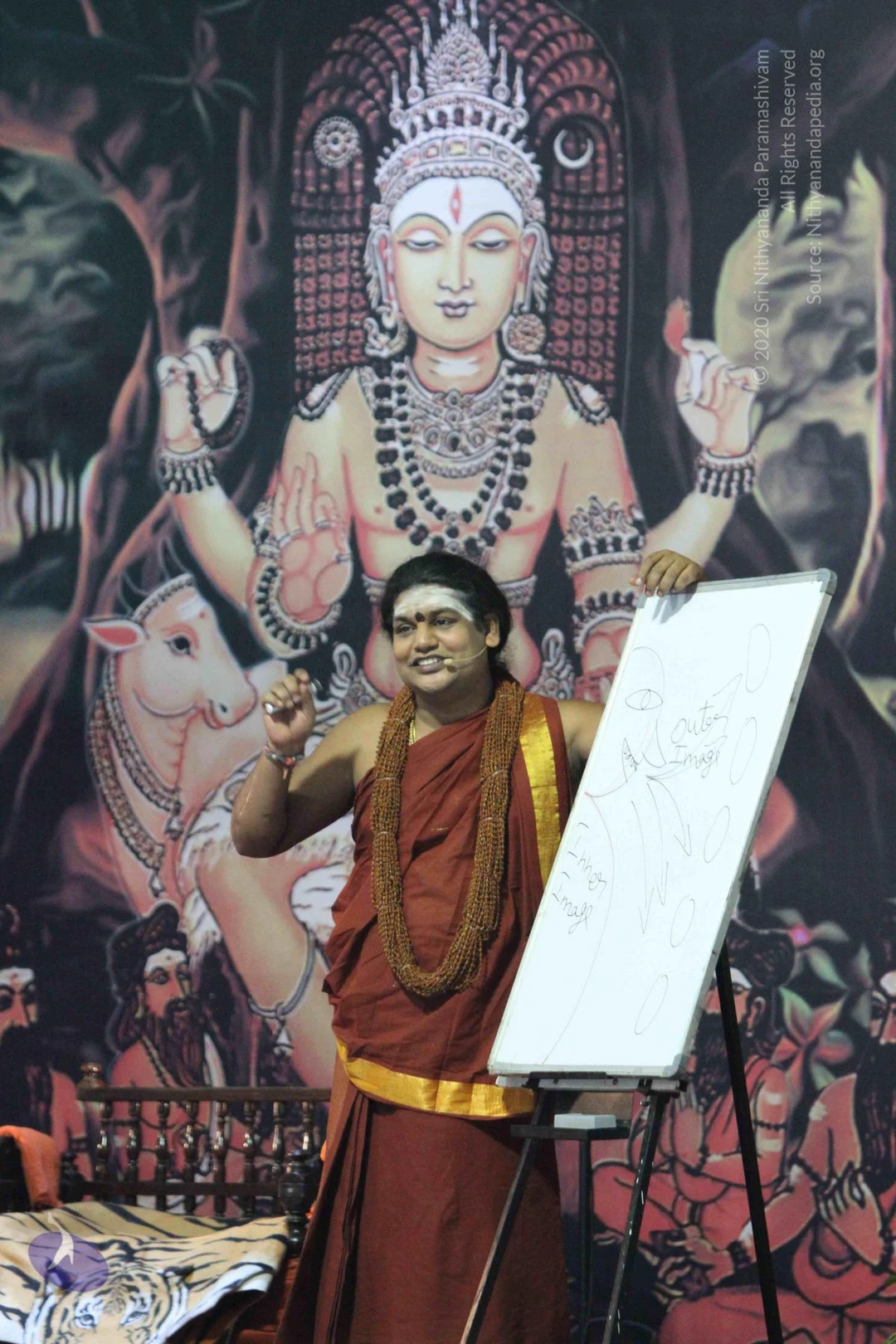
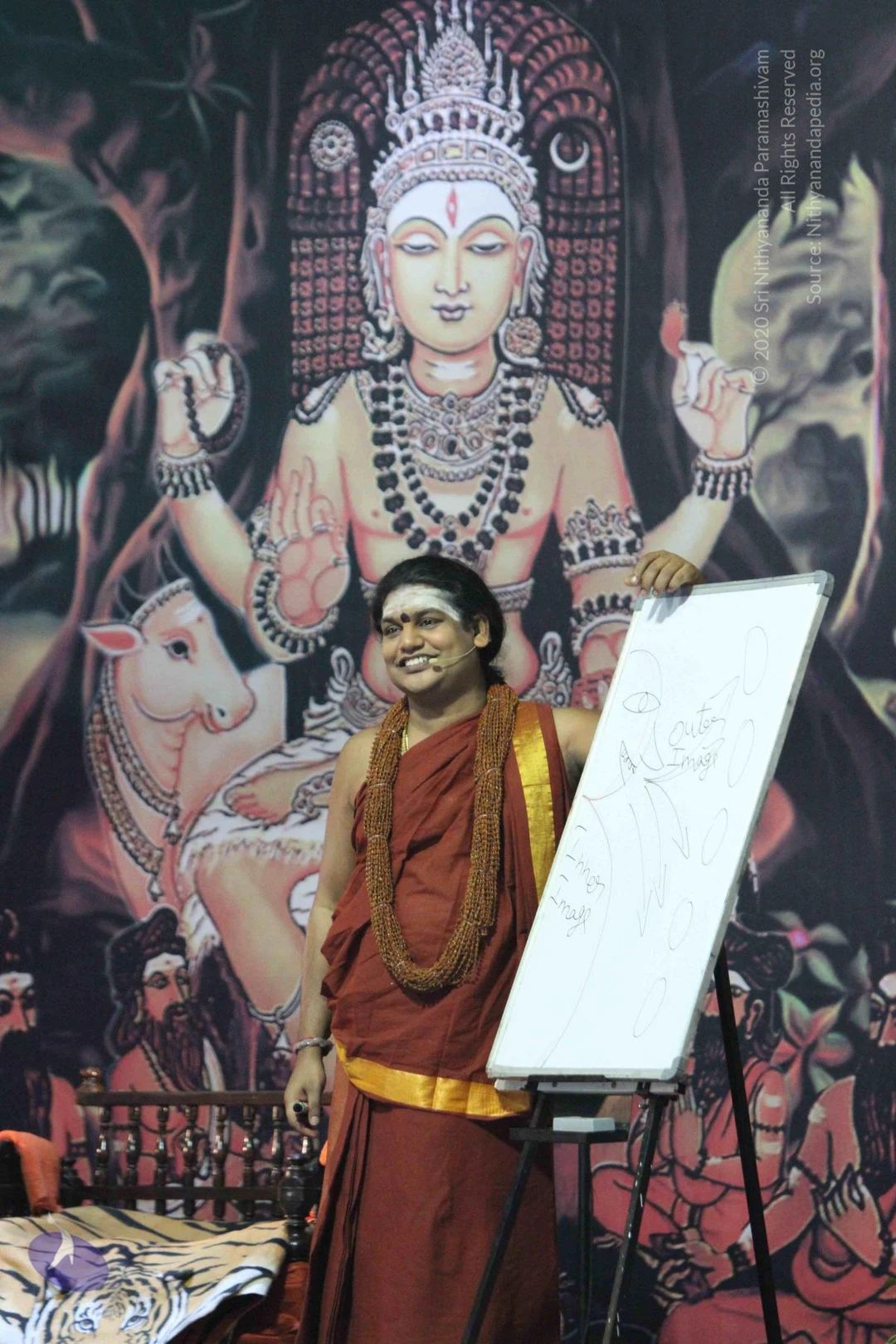
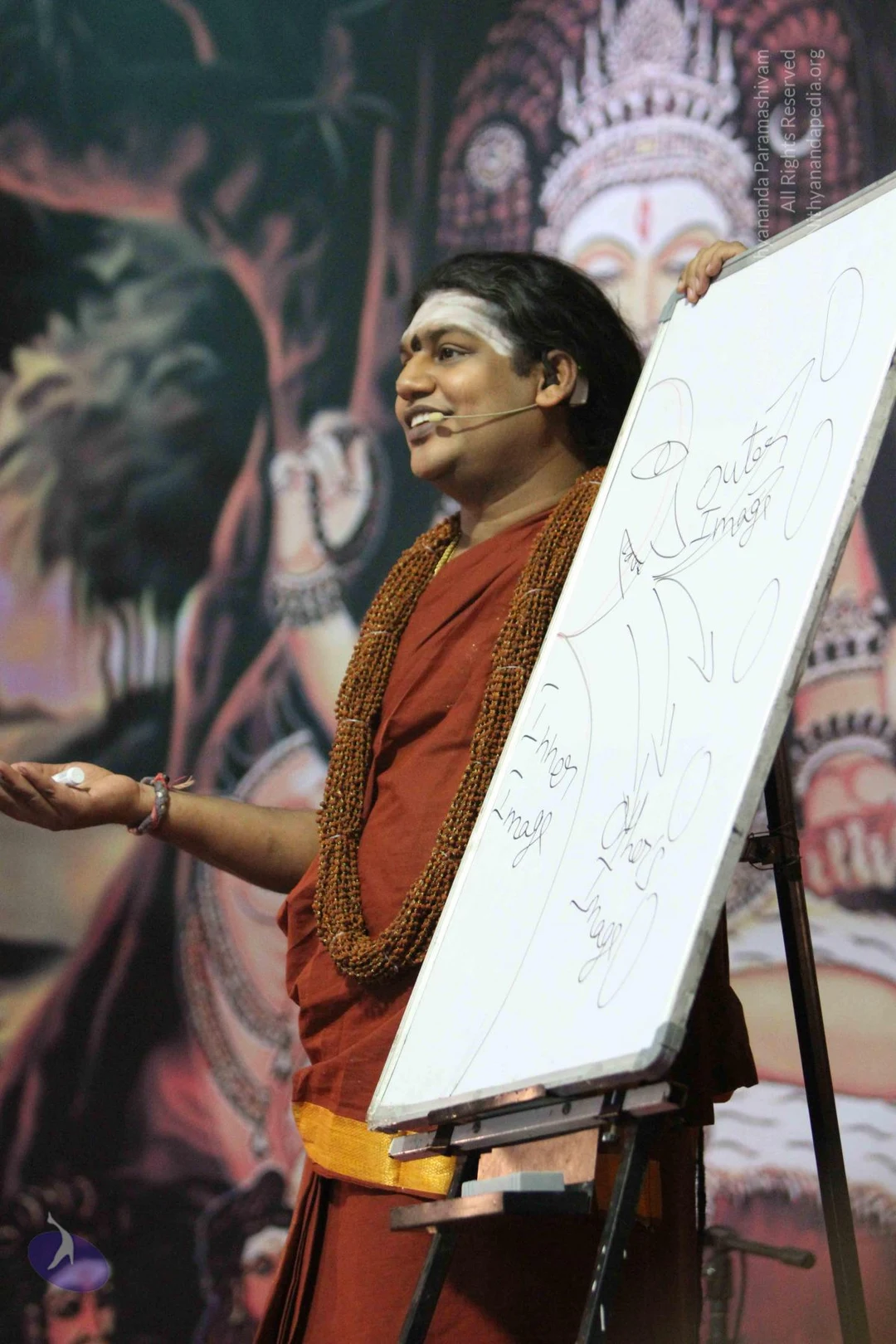
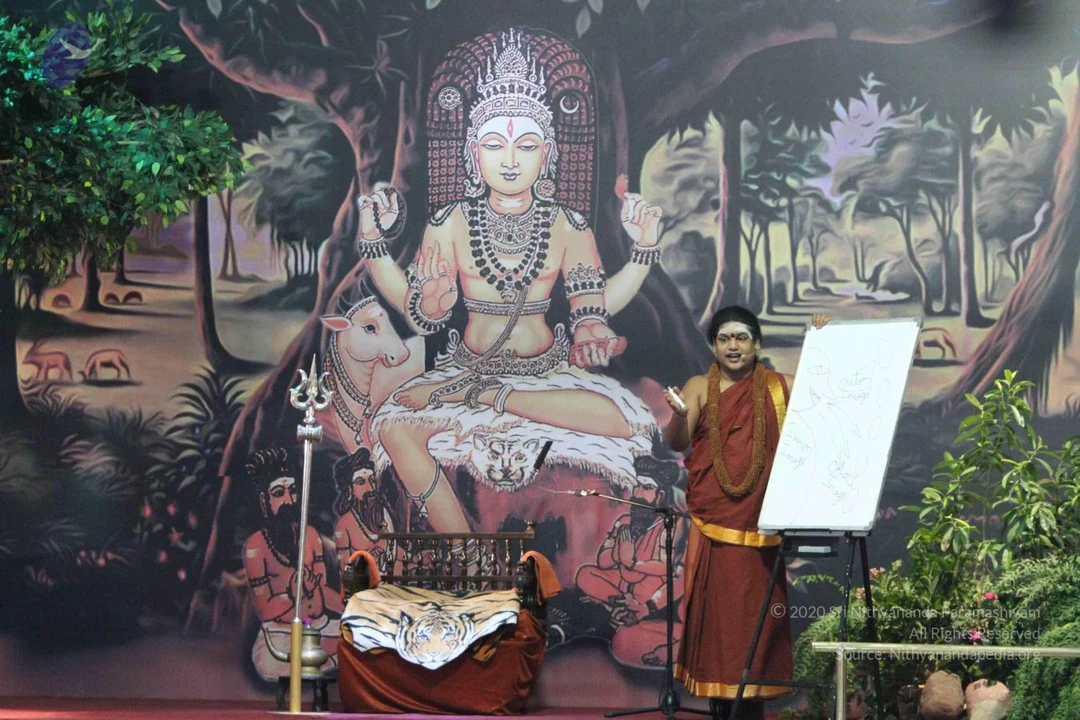
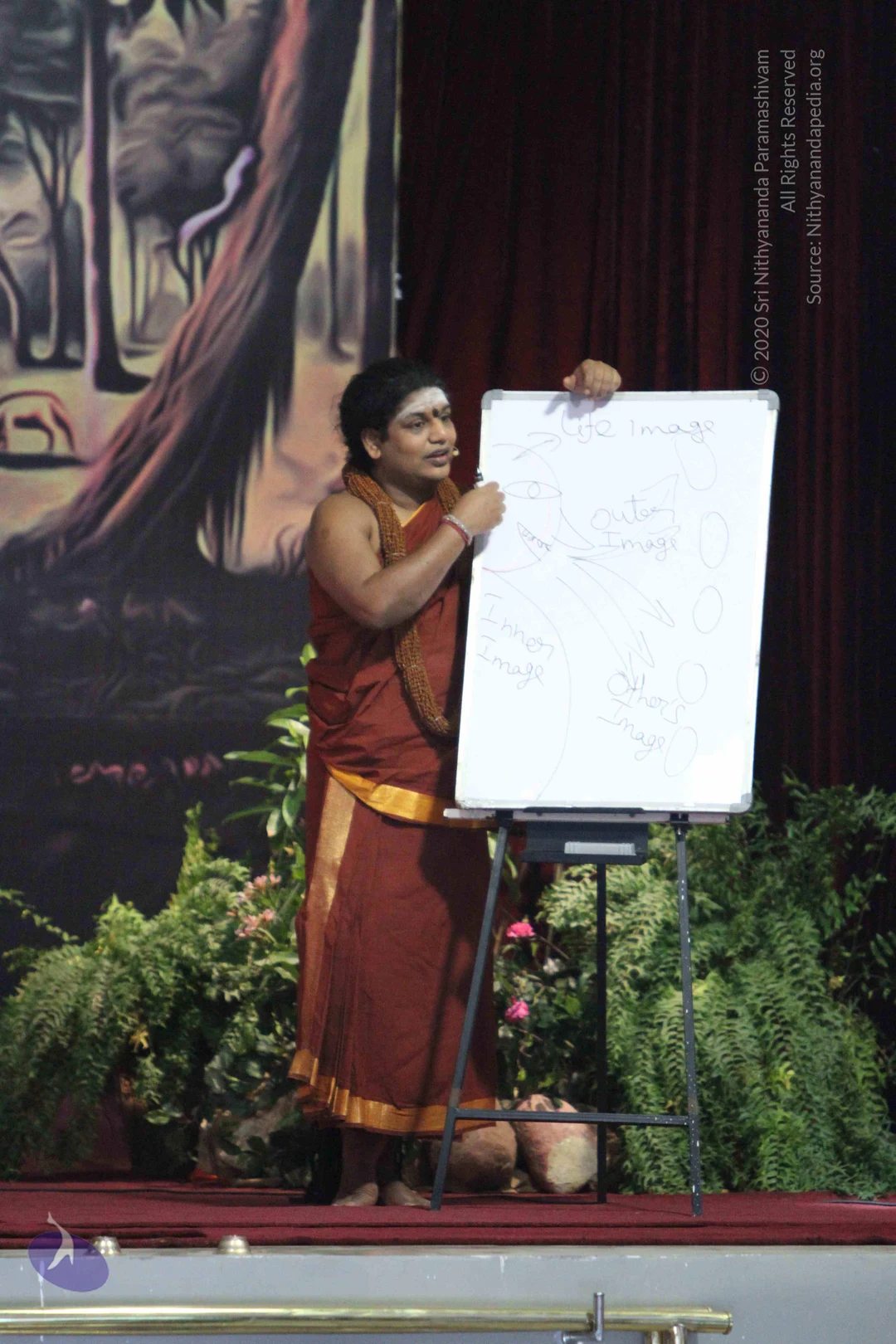
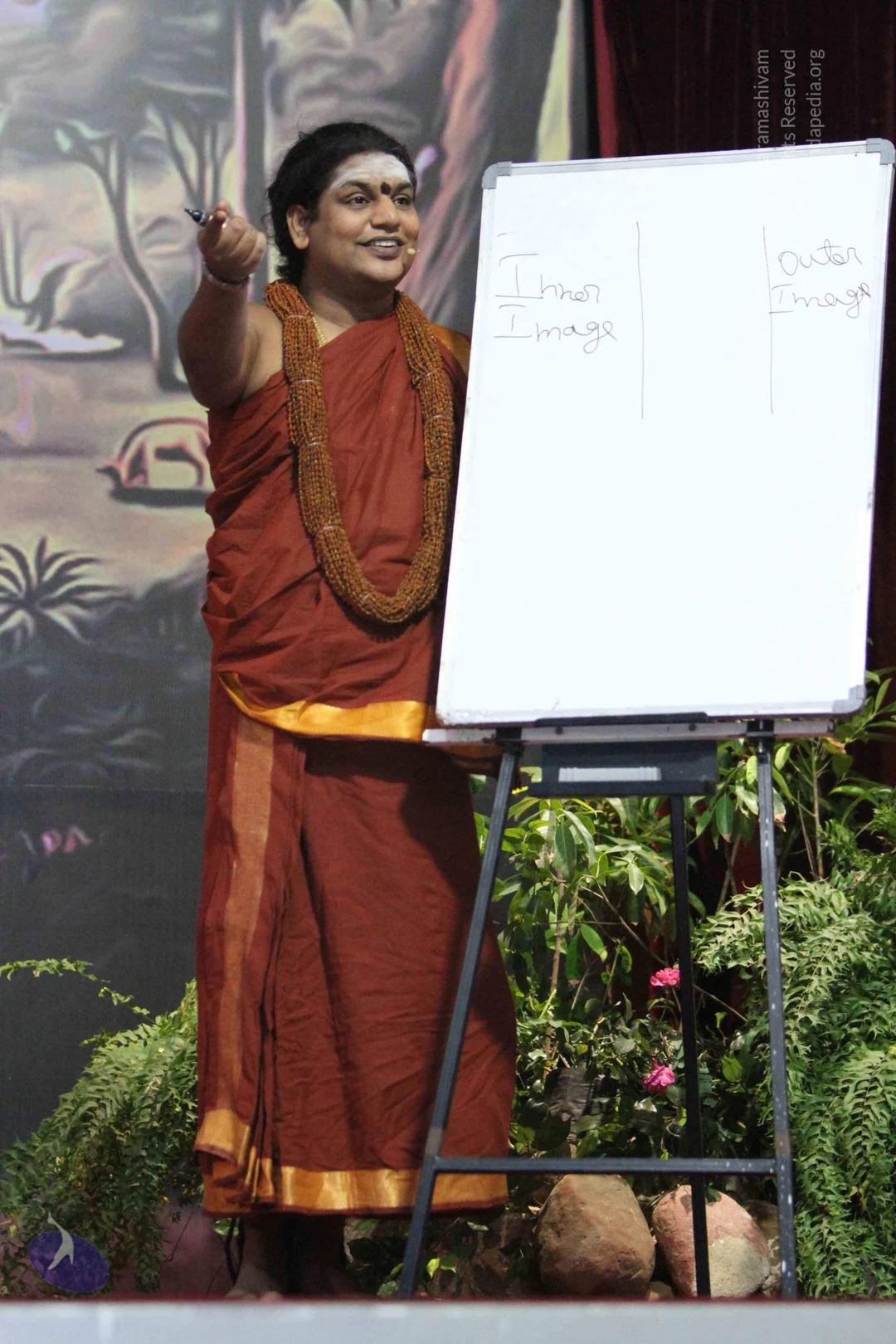
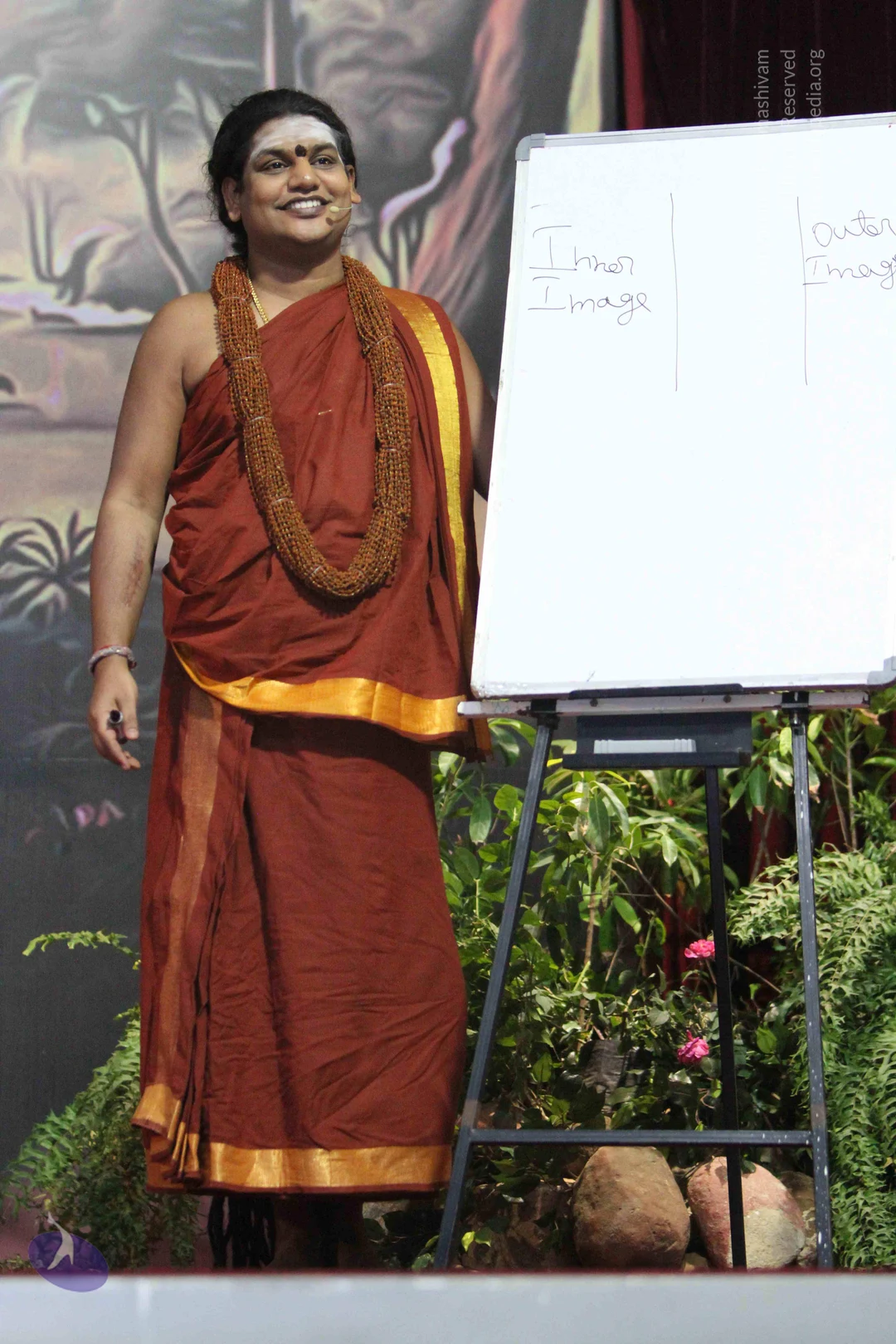
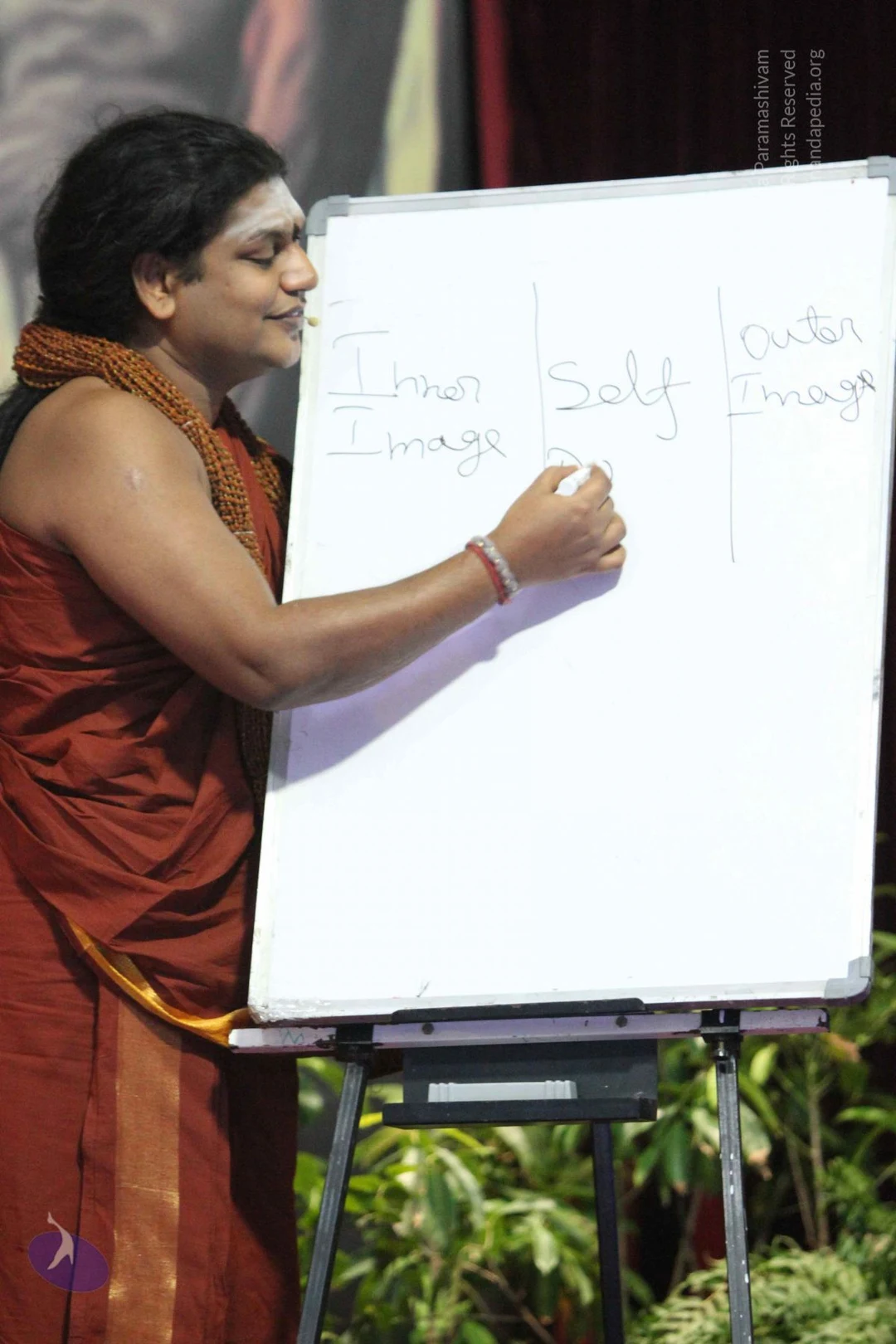
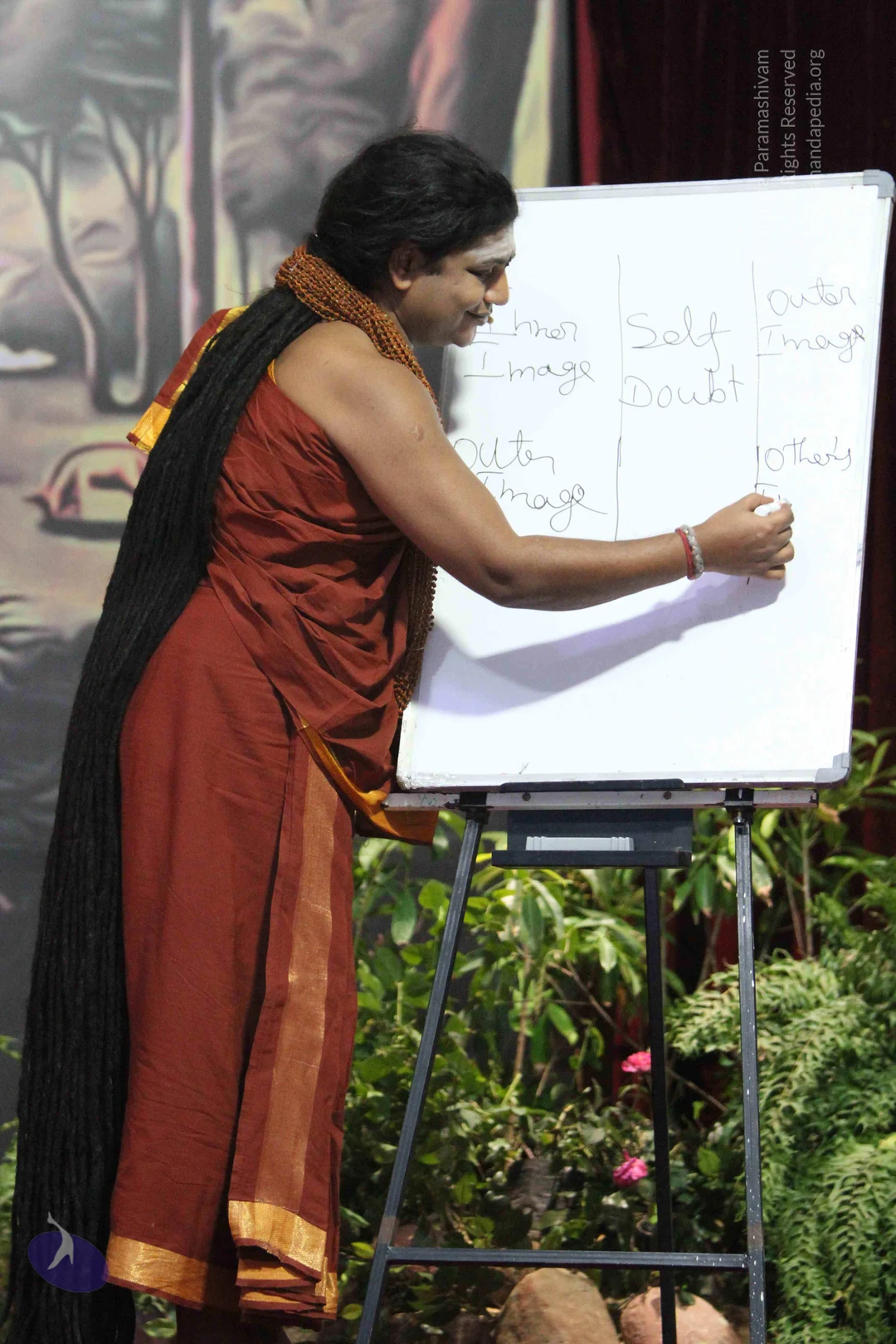
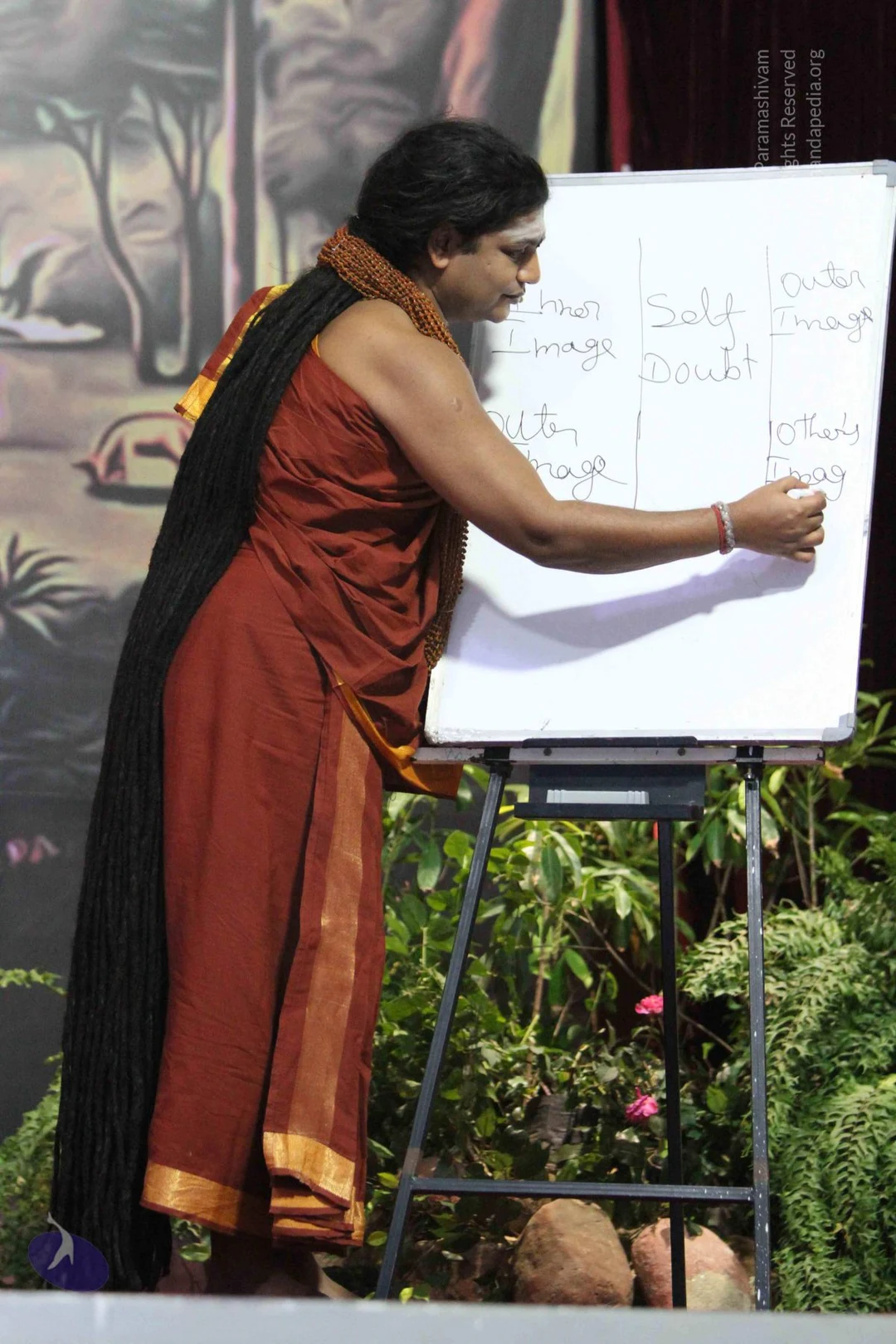
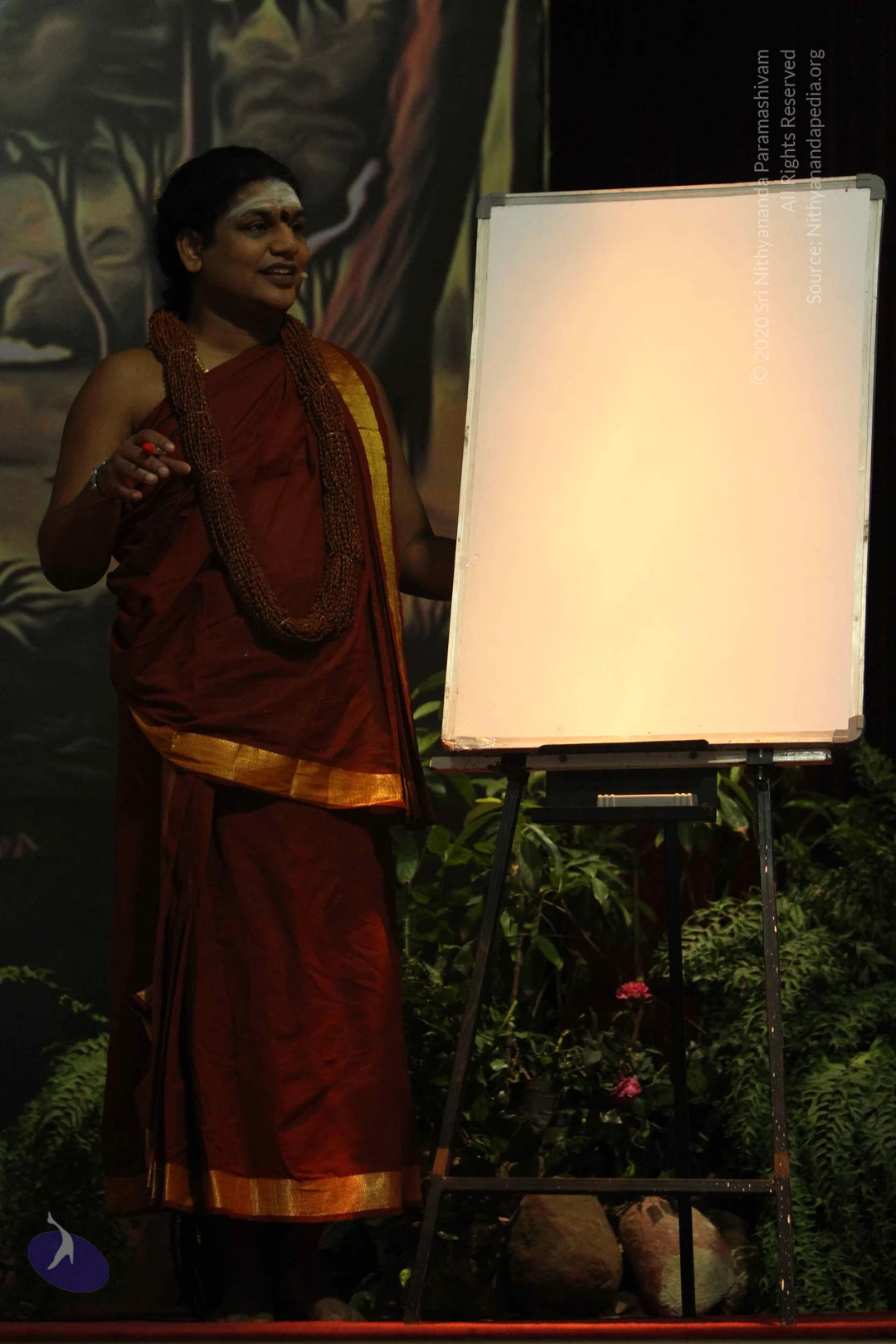
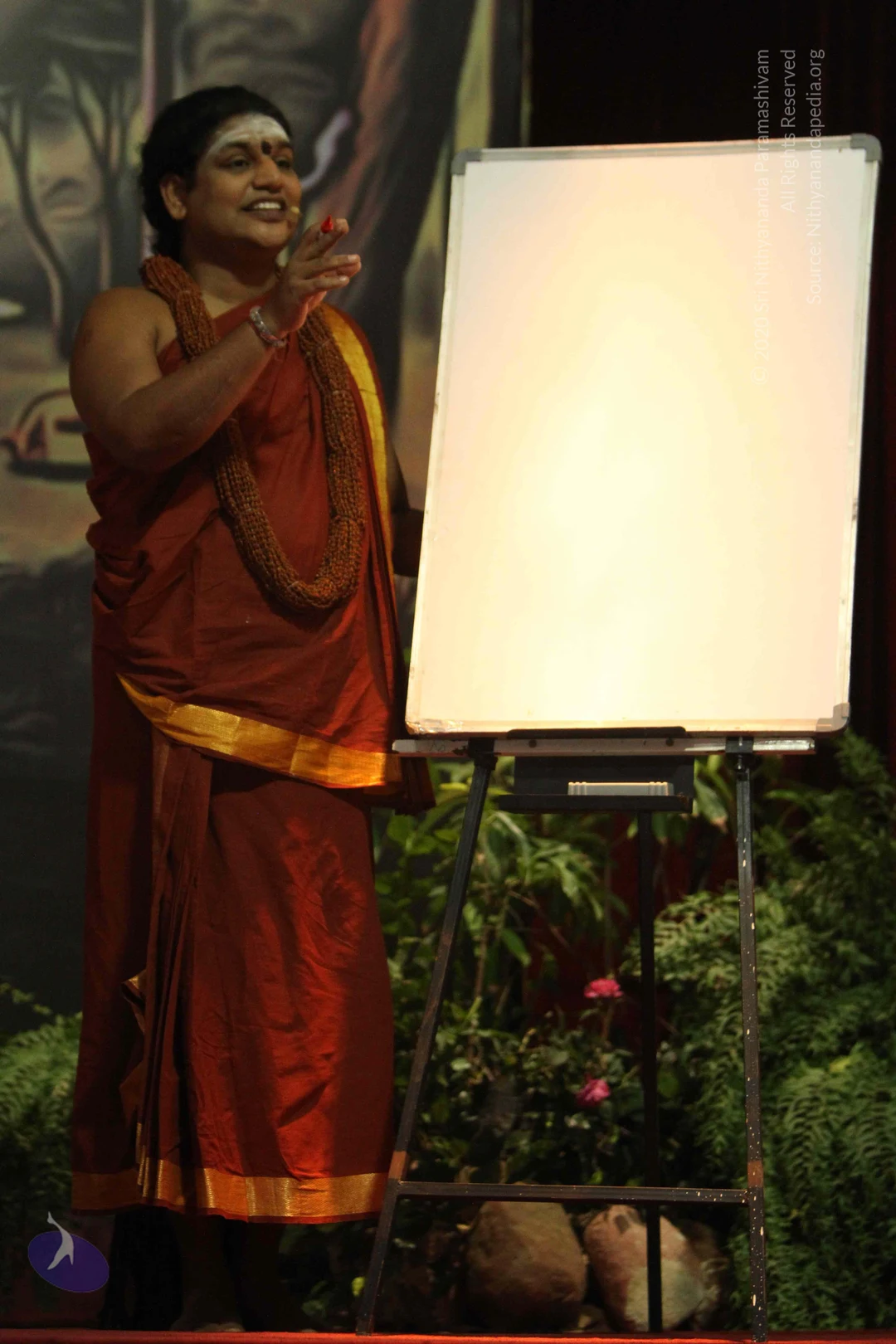
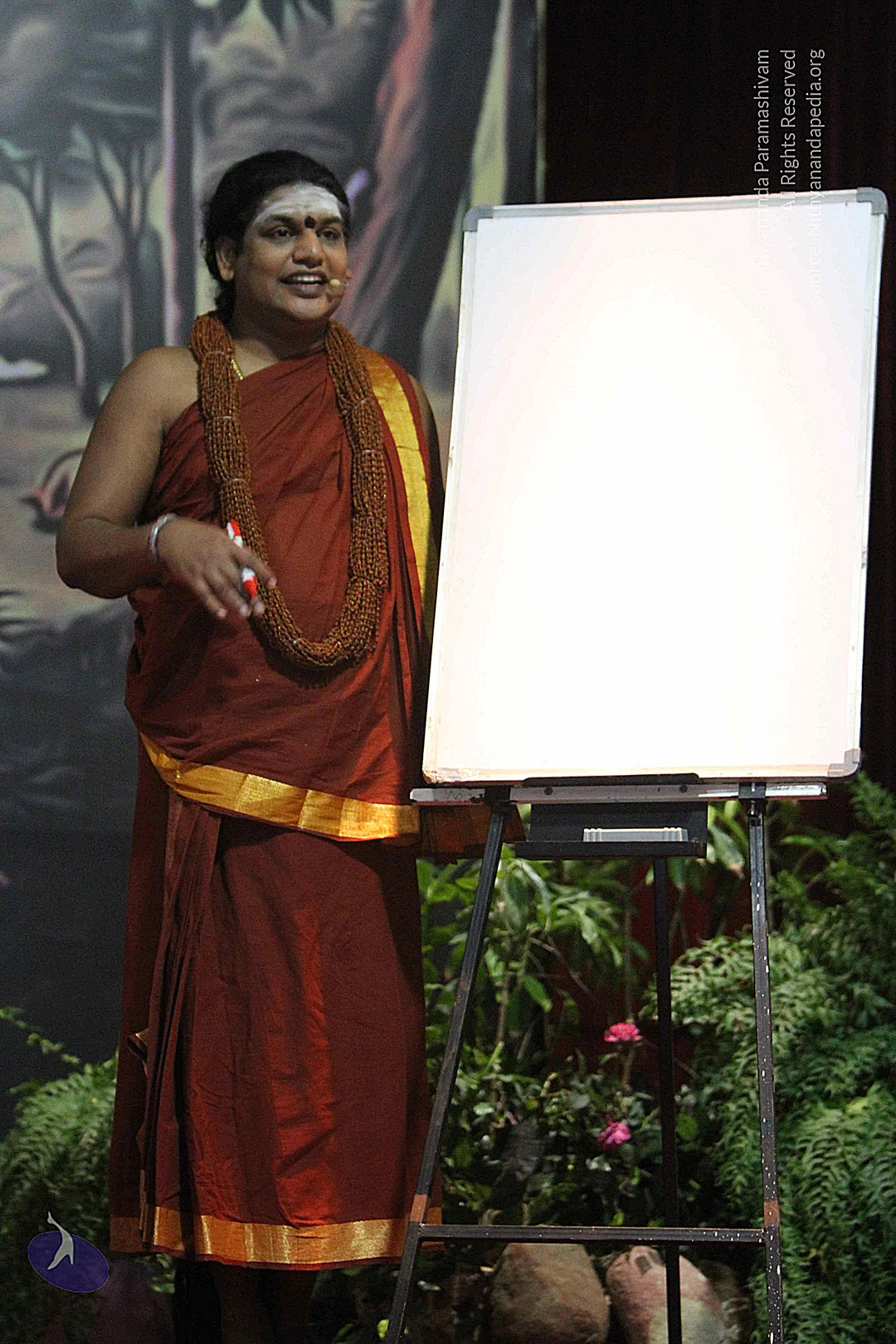
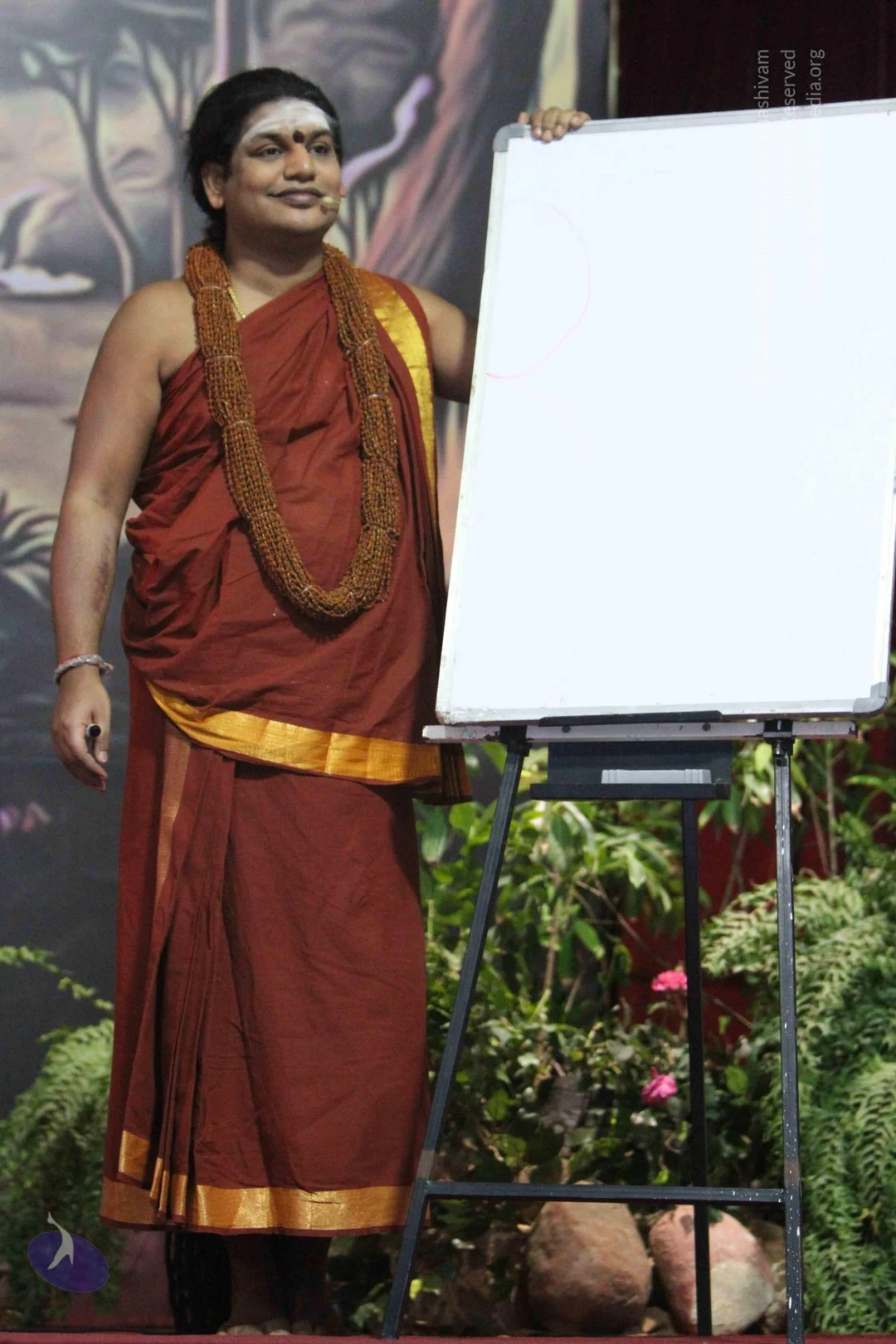
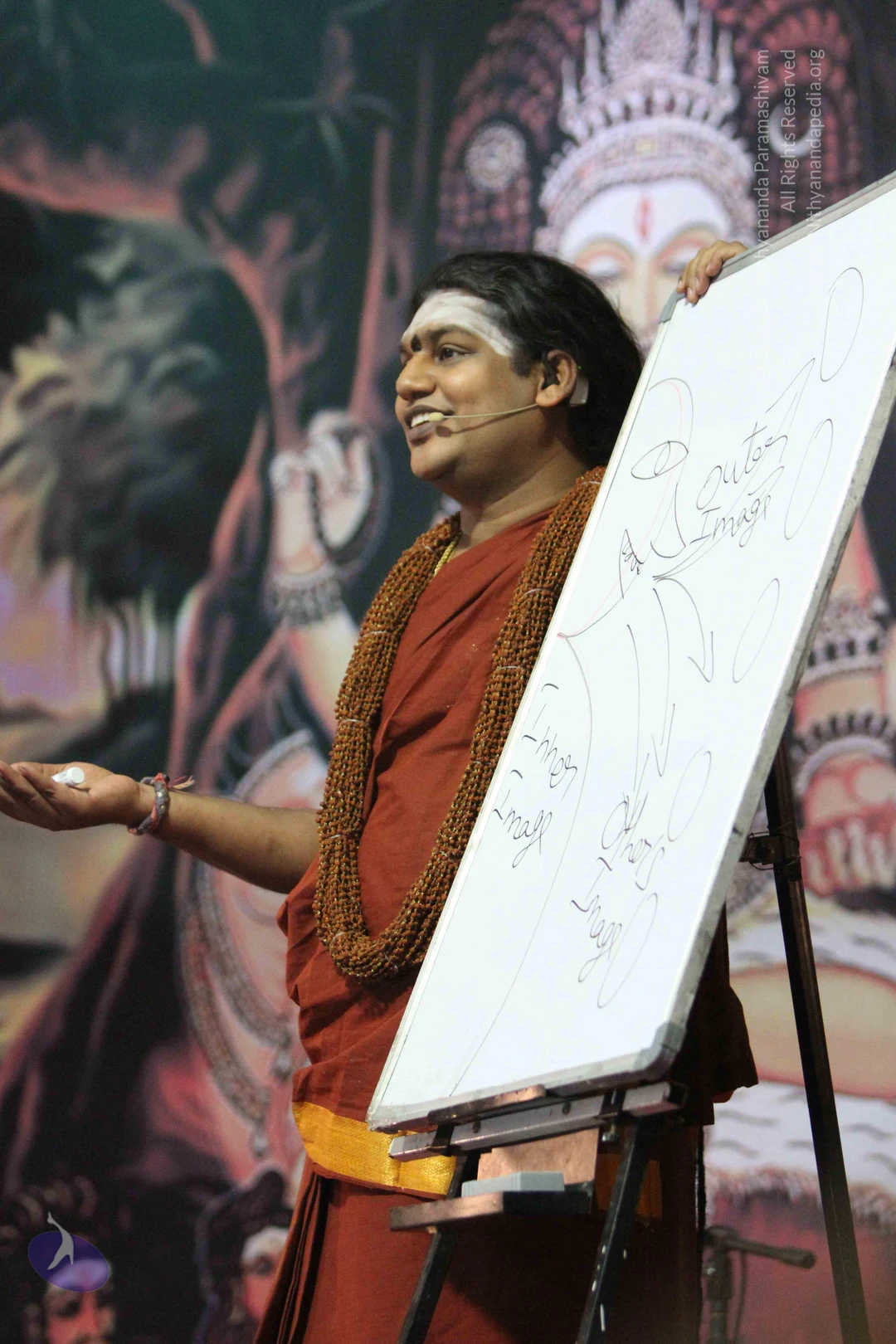
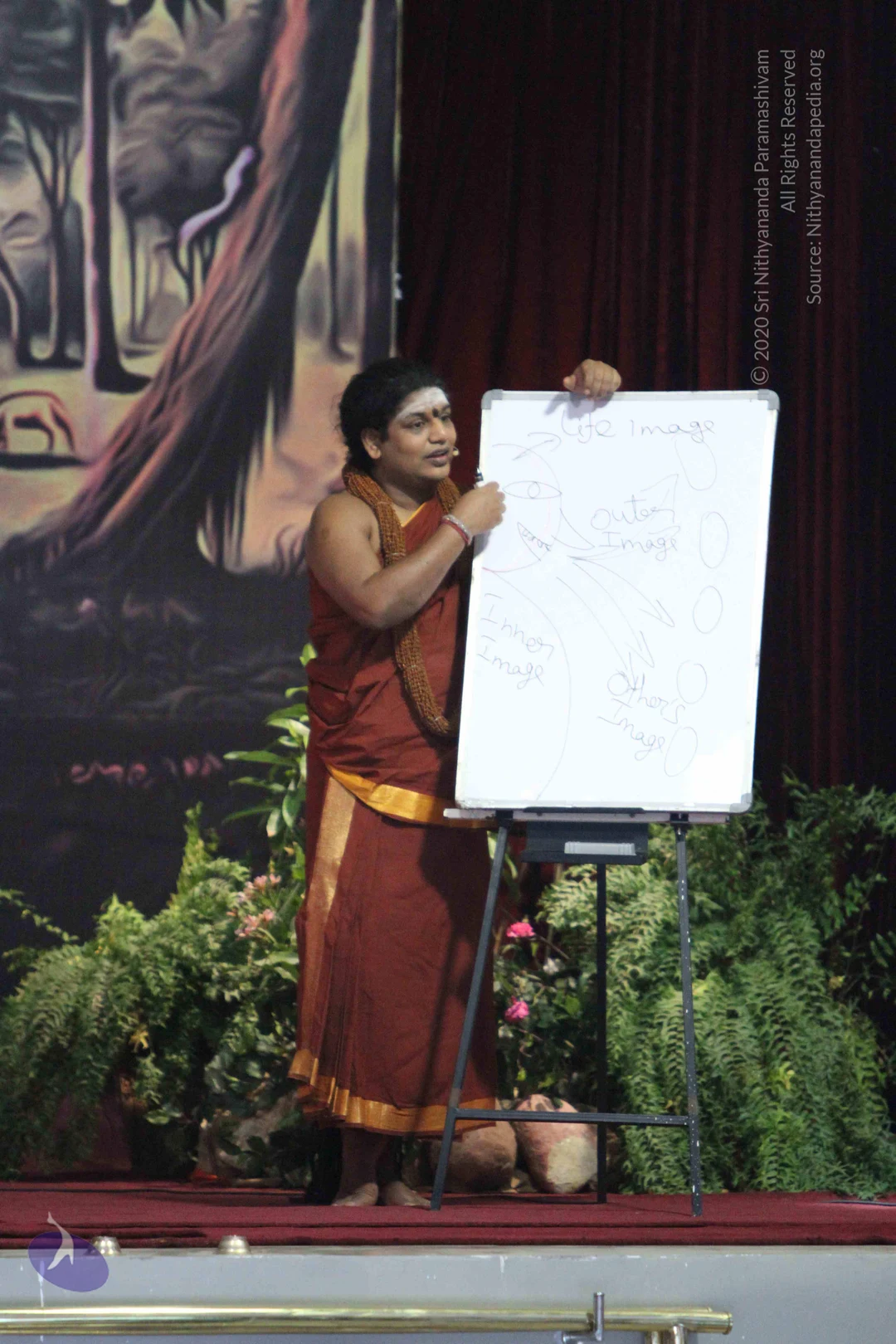
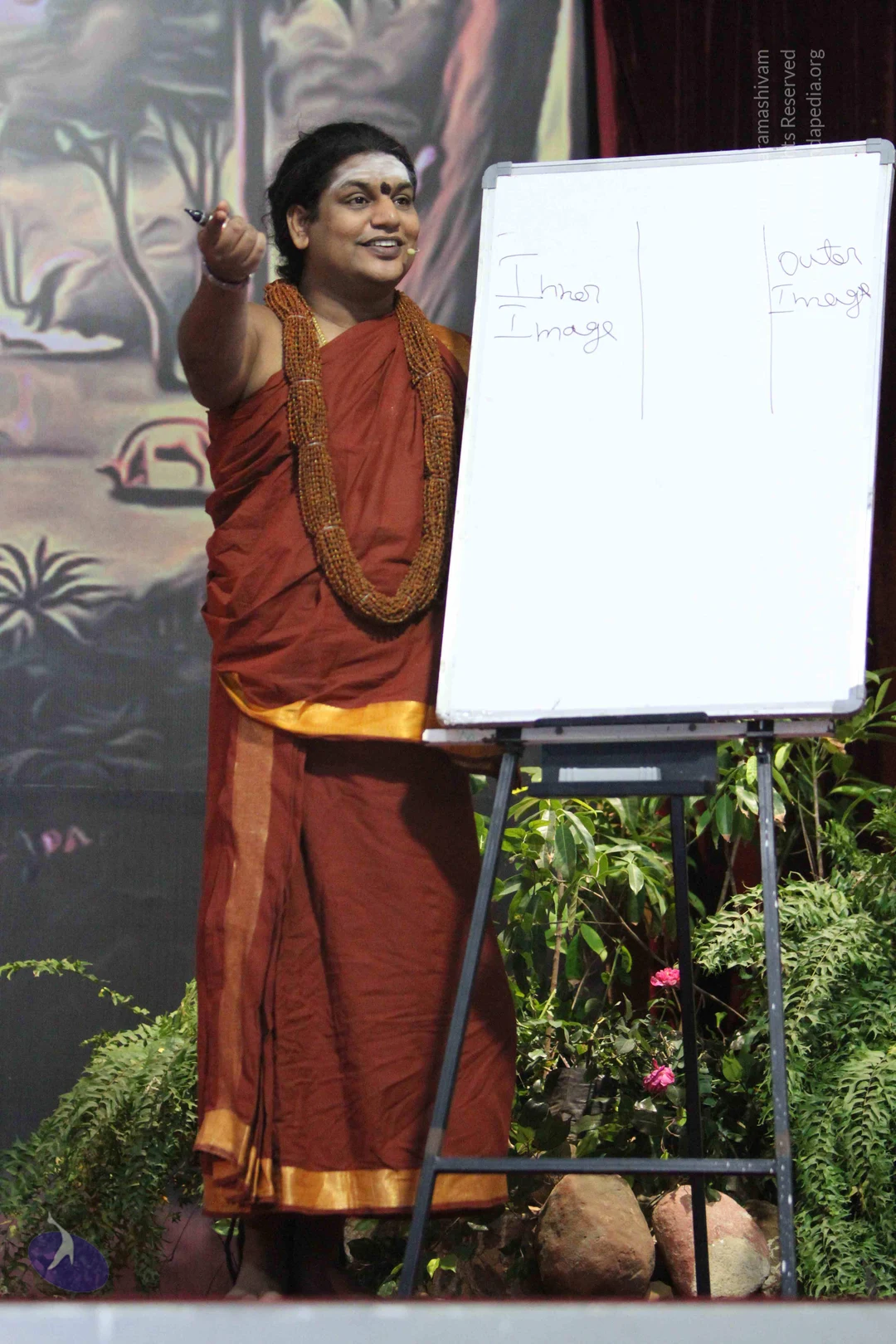
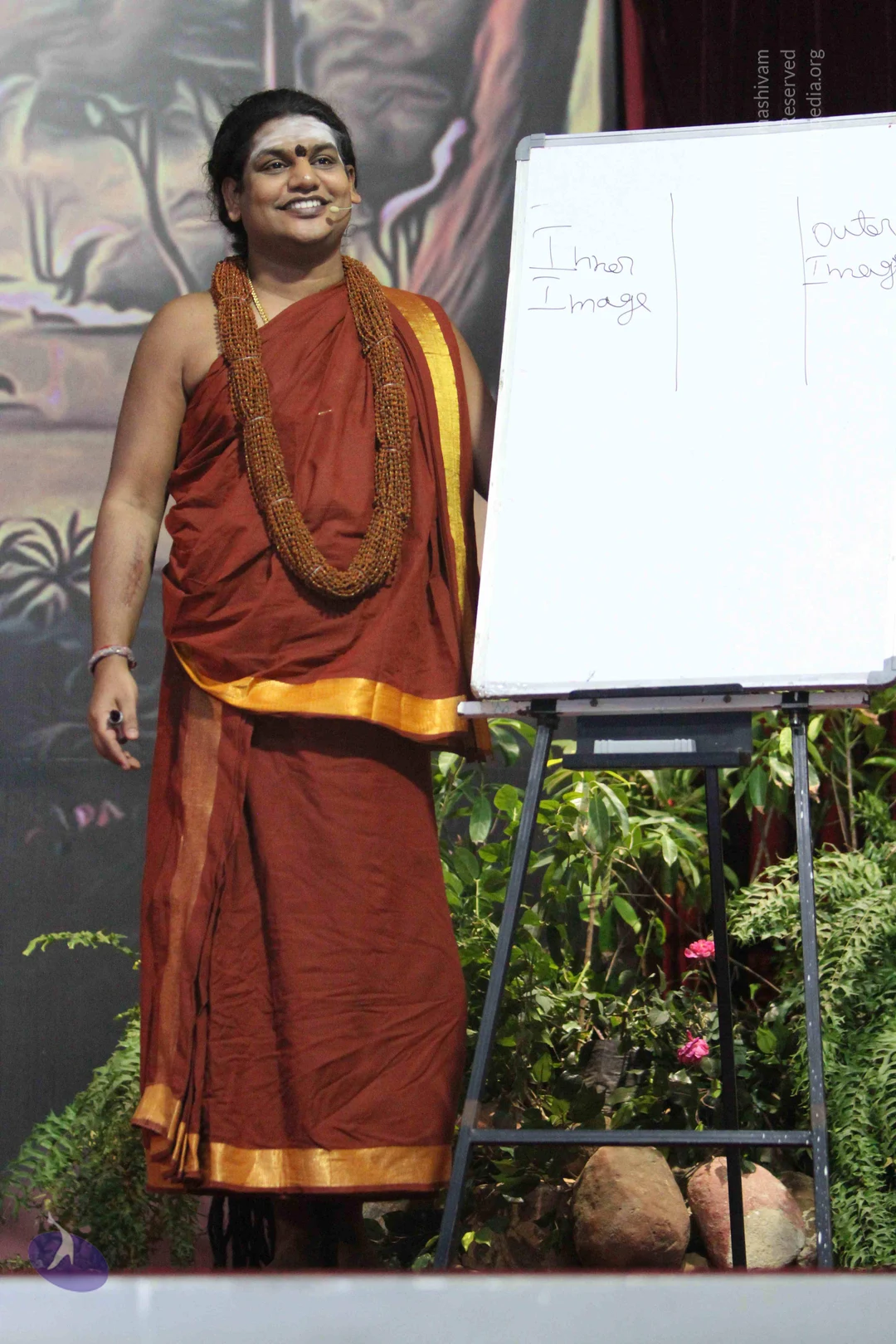
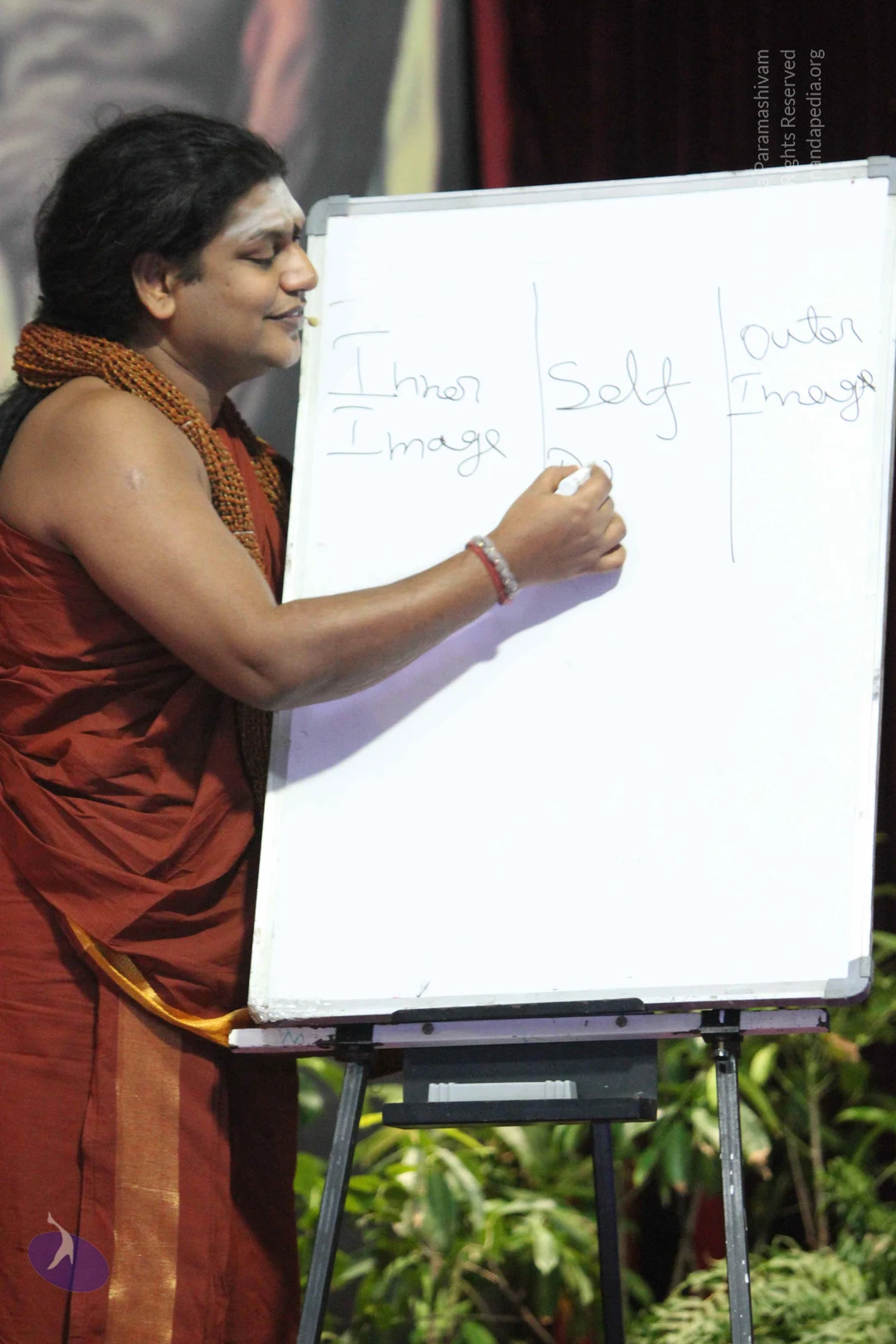
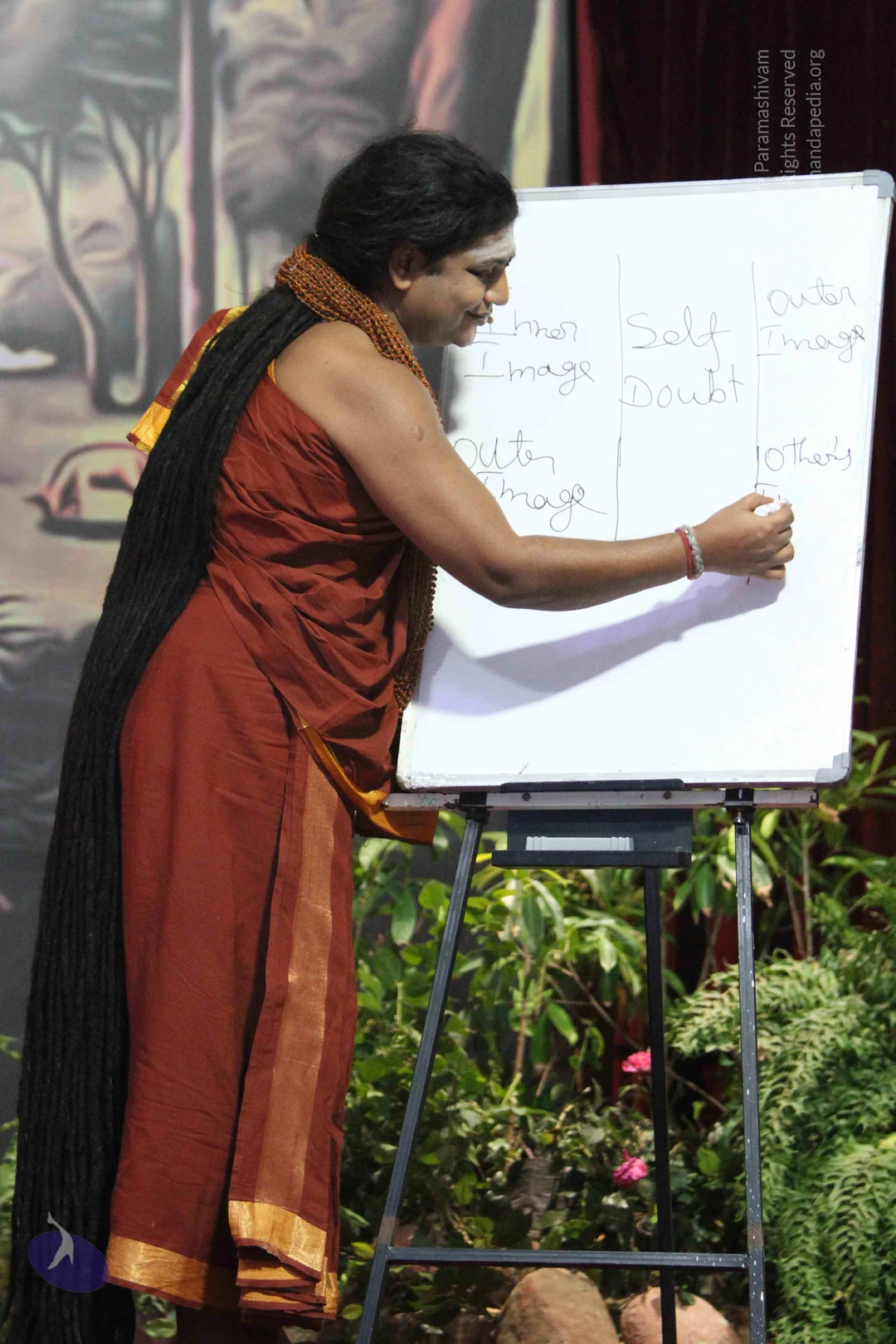
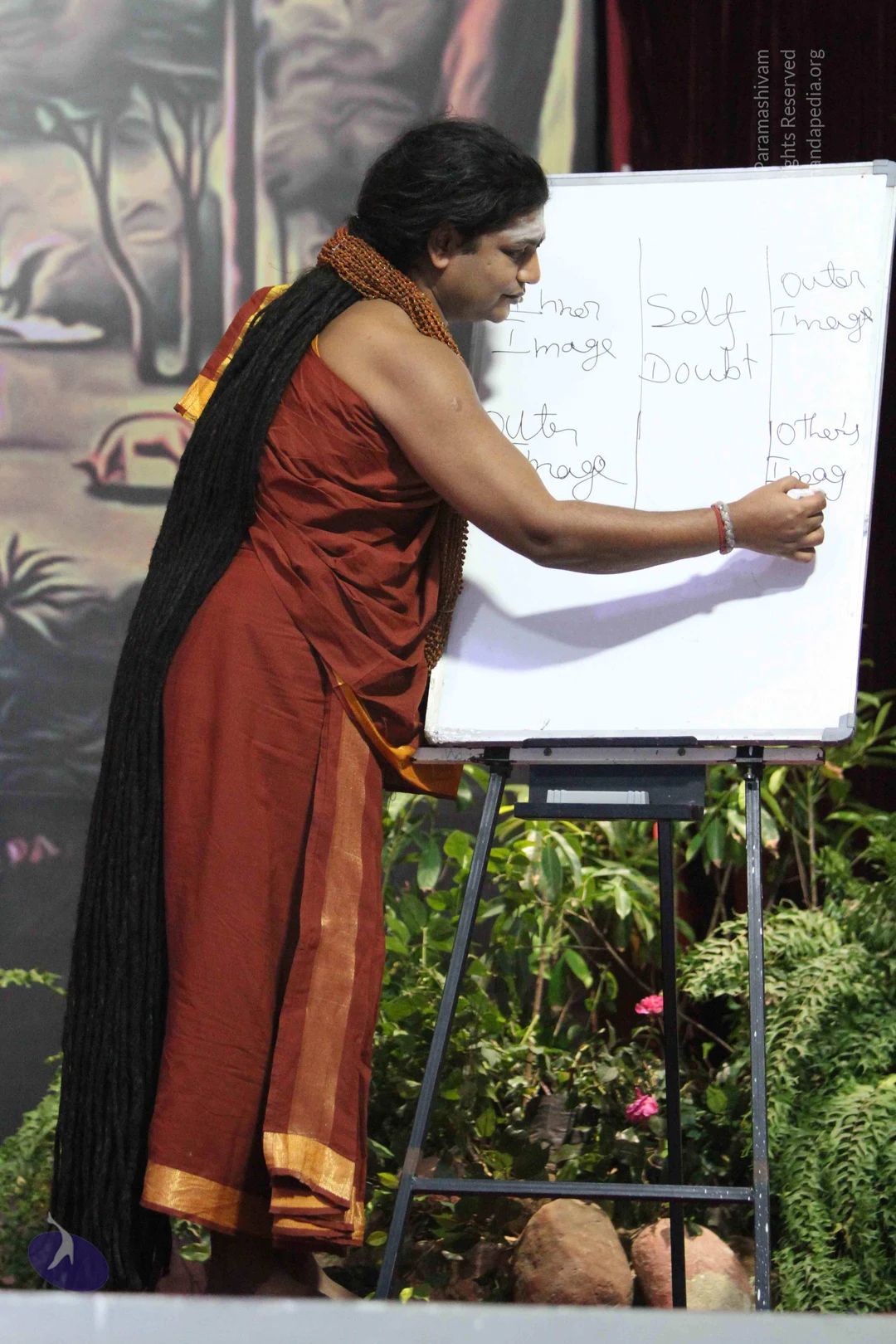
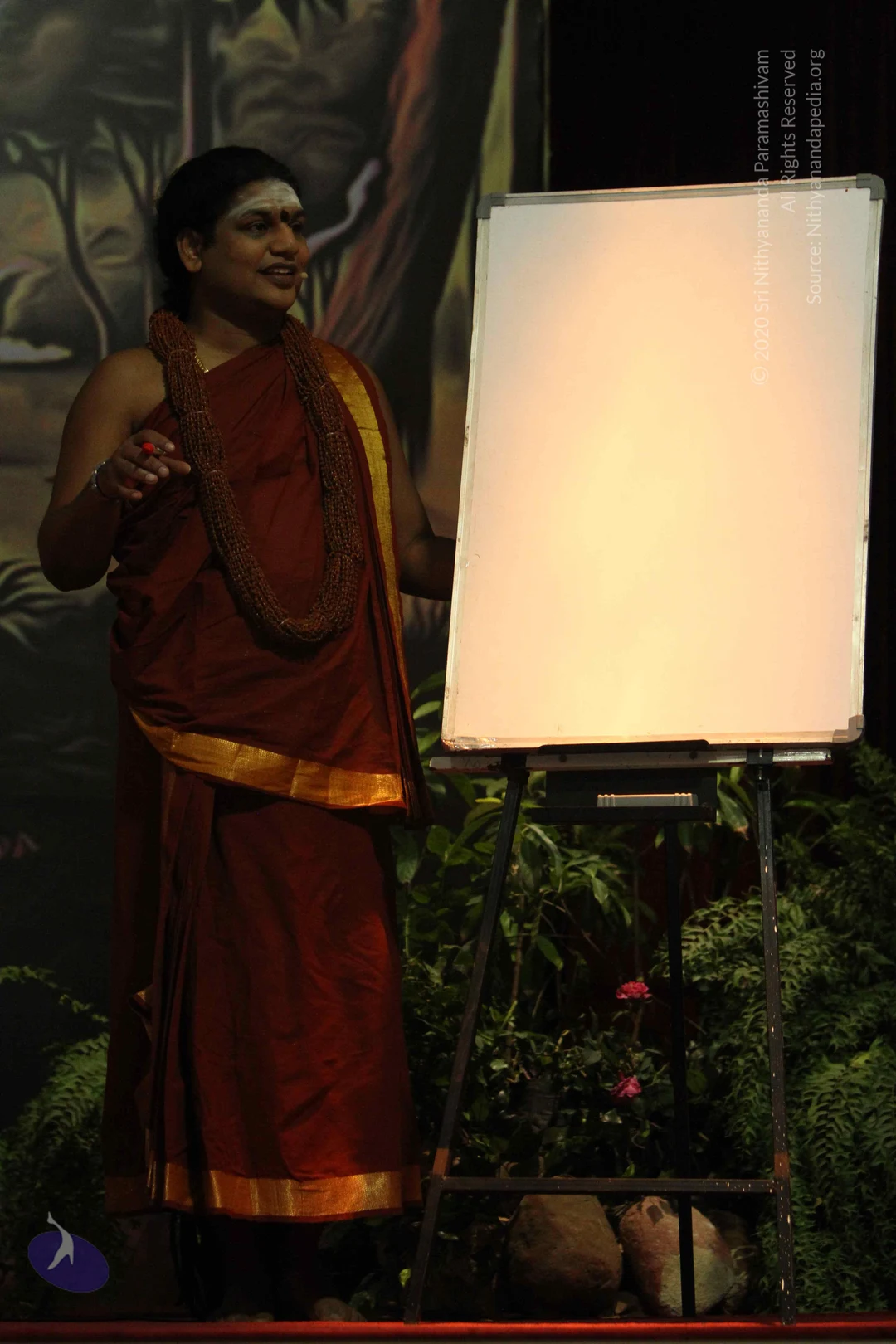
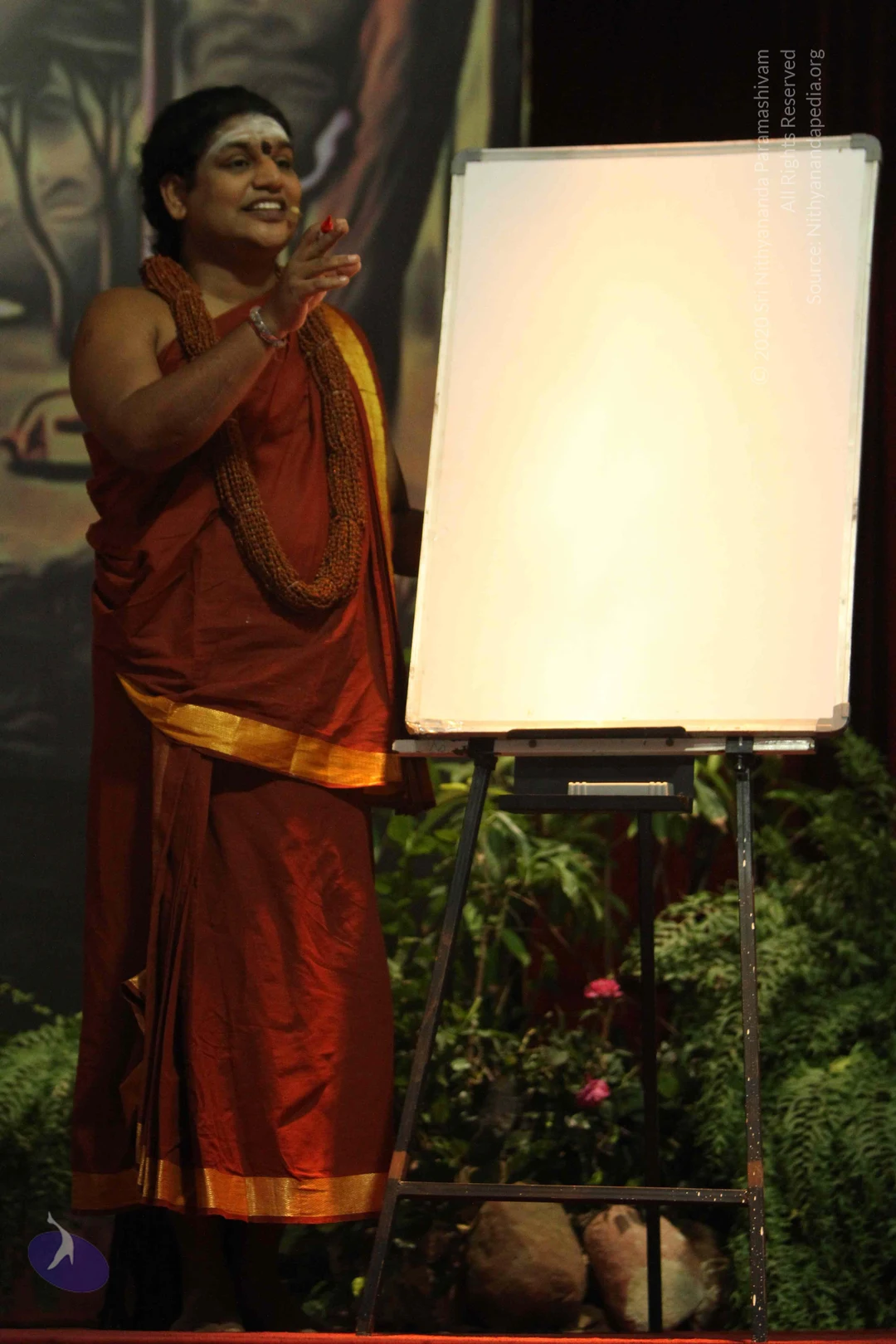
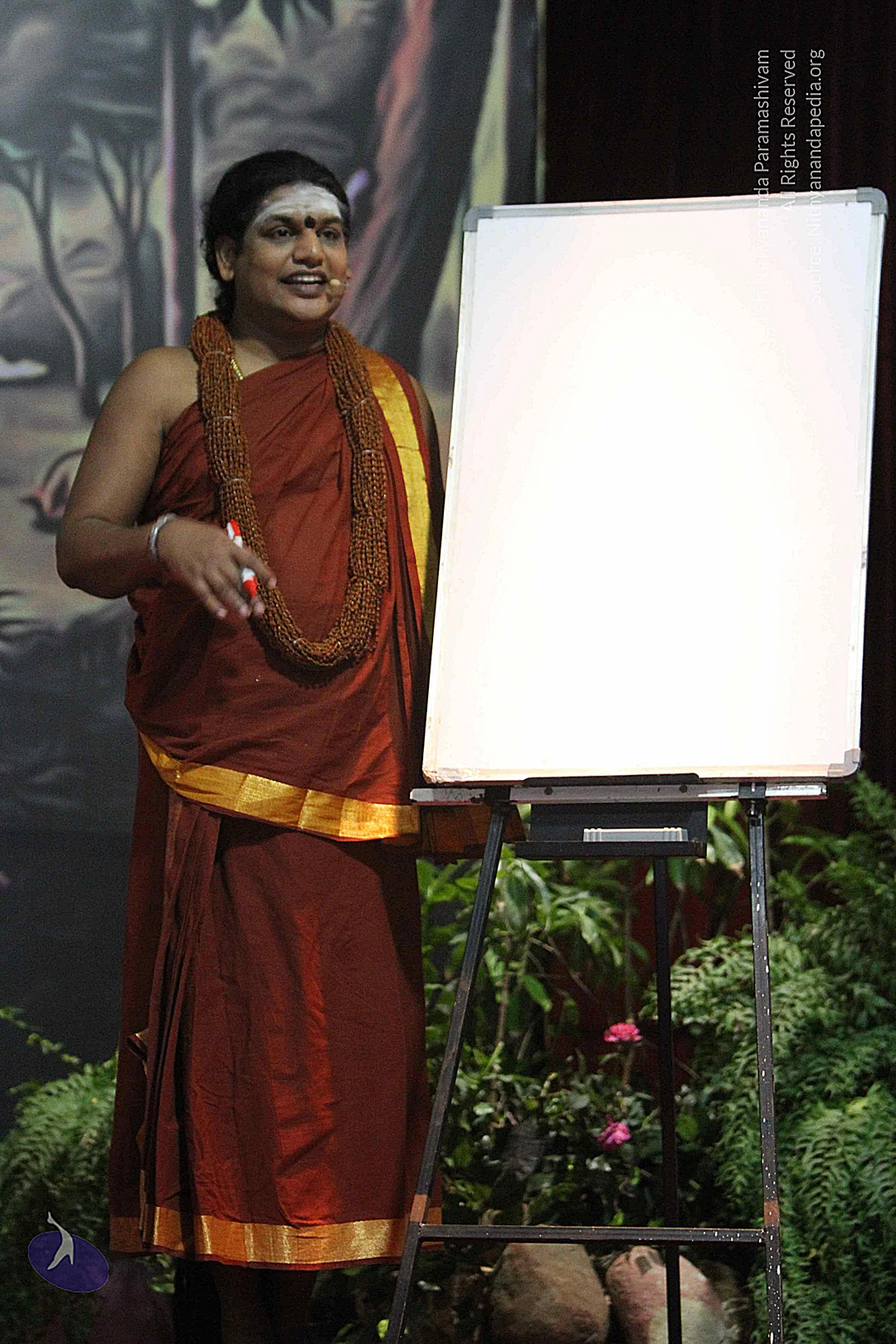
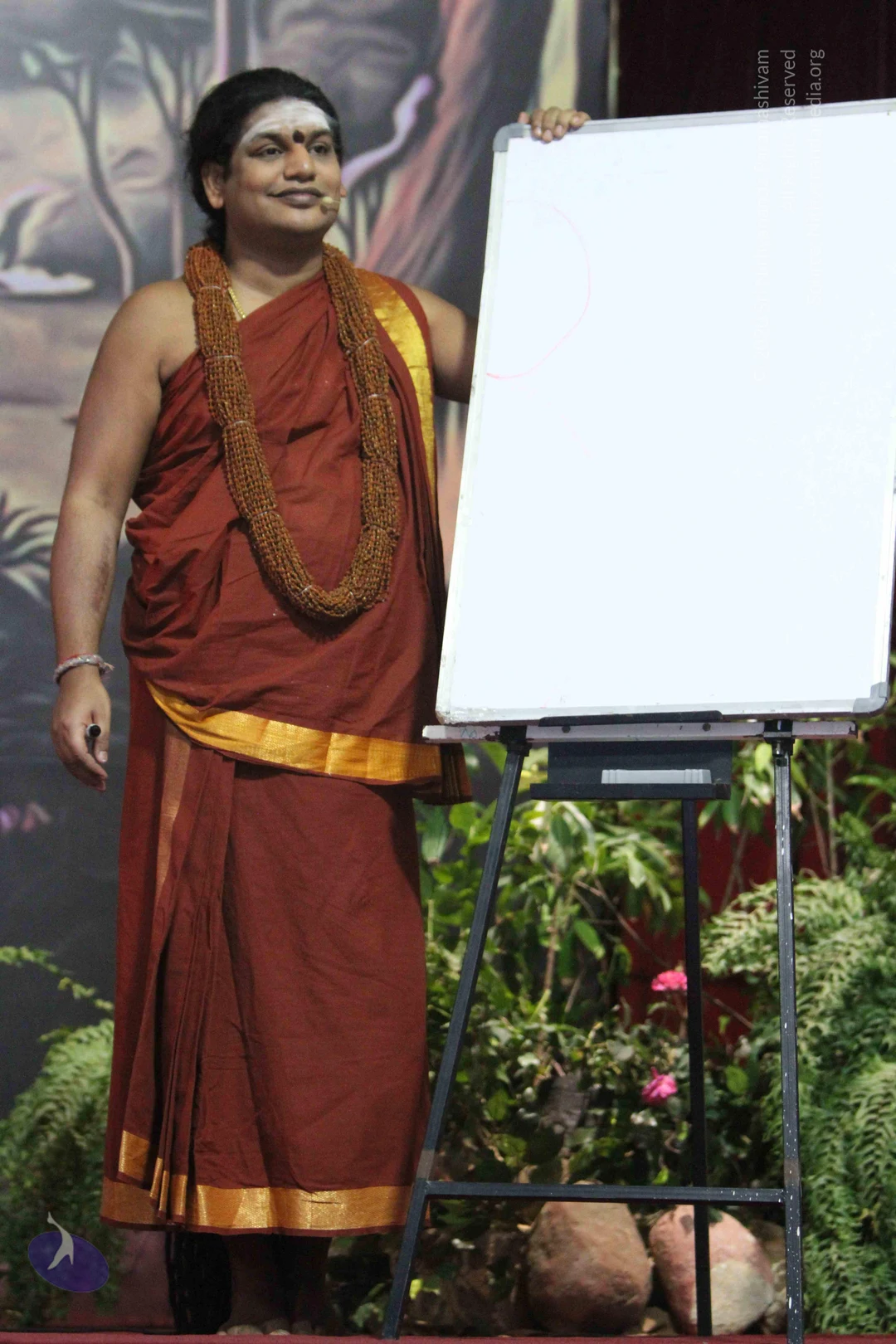
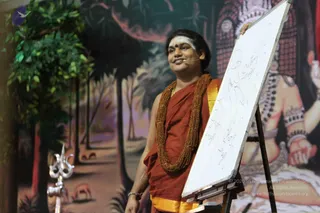
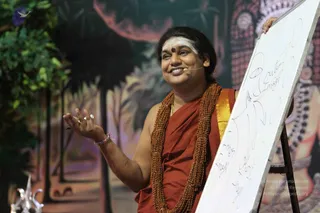
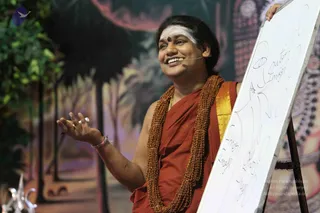
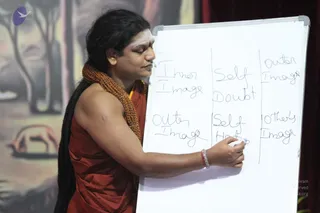
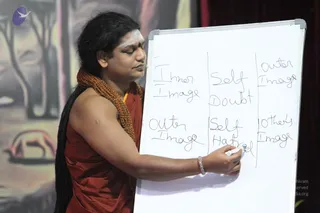
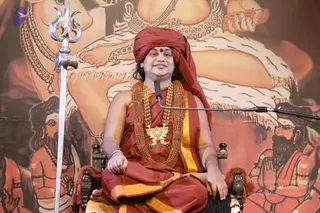
A man stands beside a white easel board covered with handwritten Tamil-style or Sanskrit-style notes in black marker. He wears a rust-red saffron-toned cloth draped over the shoulders with a golden-yellow border and a long rudraksha mala around his neck, with a small gold chain visible. He has a white horizontal tilak on his forehead and a red dot between his brows, and wears a small headset microphone. Behind him is a painted backdrop of a forest with trees and a large painted deity figure adorned with jewelry and a crown. A silver trident stands at the left edge. The scene looks like a teaching session in a forest-themed hall, with the speaker presenting notes on the easel.A man in saffron-orange robes with a long rudraksha mala and a gold necklace stands beside a white easel board covered in handwritten marker notes, gesturing with his raised right hand and smiling while speaking into a headset microphone. He has white vertical tilak marks and a dark bindi on his forehead. Behind him is a painted forest backdrop with trees and a figure in a patterned frame, and a silver ritual vessel sits at lower left. a person: the saffron robes, long rudraksha mala and gold necklace are the qualifying cues, and the page identifies this event as featuring him, so the presence is recorded as in_person with uncertain identity.A smiling man in a saffron-orange robe with a gold-bordered shawl stands beside a white easel board covered with handwritten notes. He wears a long rudraksha mala, a white vertical forehead mark with a small dark bindi, and a headset microphone. He gestures with his left hand toward a forest-themed painted backdrop with trees and foliage. a person is shown in an appearance-based label with saffron clothing, rudraksha mala and a headset microphone during a teaching session. The setting suggests a discourse stage.A man in a rust-orange robe with a rudraksha mala draped over his shoulders writes on a white flipchart with a marker. He has long dark hair, a white vertical mark on his forehead, and a red wristband on his right wrist. The flipchart lists handwritten words in four boxes: Inner Image, Self Doubt, Outer Image, Outer Image, Self Help, and Others Image. Behind him is a painted backdrop of trees and a deer. a person is the central figure, shown teaching from the flipchart in a seminar setting.A photograph of a man in a rust-orange sleeveless robe with a long dark braid and an orange-beaded necklace standing before a white whiteboard, writing with a marker. The whiteboard holds a four-quadrant grid of handwritten words: Inner Image, Self Doubt, Outer Image, Outer Image, Self Hatred, Other's Image. A painted forest backdrop with trees and a painted animal is behind him. A single person is visible. a person: the man has a long braid and orange-beaded necklace consistent with the page's a person reference, but this is appearance-based only.A seated man in a saffron-red turban and red-orange robe with gold border sits in a wooden armchair before a microphone on a stand. He wears a large gold ornamental pendant on a gold chain and a rudraksha mala draped over his shoulders, with a red bindi on his forehead. A silver trident stands to the left. The backdrop is a large painted mural of Hindu sages and figures in orange tones, and the scene suggests a discourse setting. Swamiji (probable): the seated speaker wears a red turban, rudraksha mala and gold ceremonial necklace.

Evening-Satsang-Kenaupanishad

56 photosSource gallery
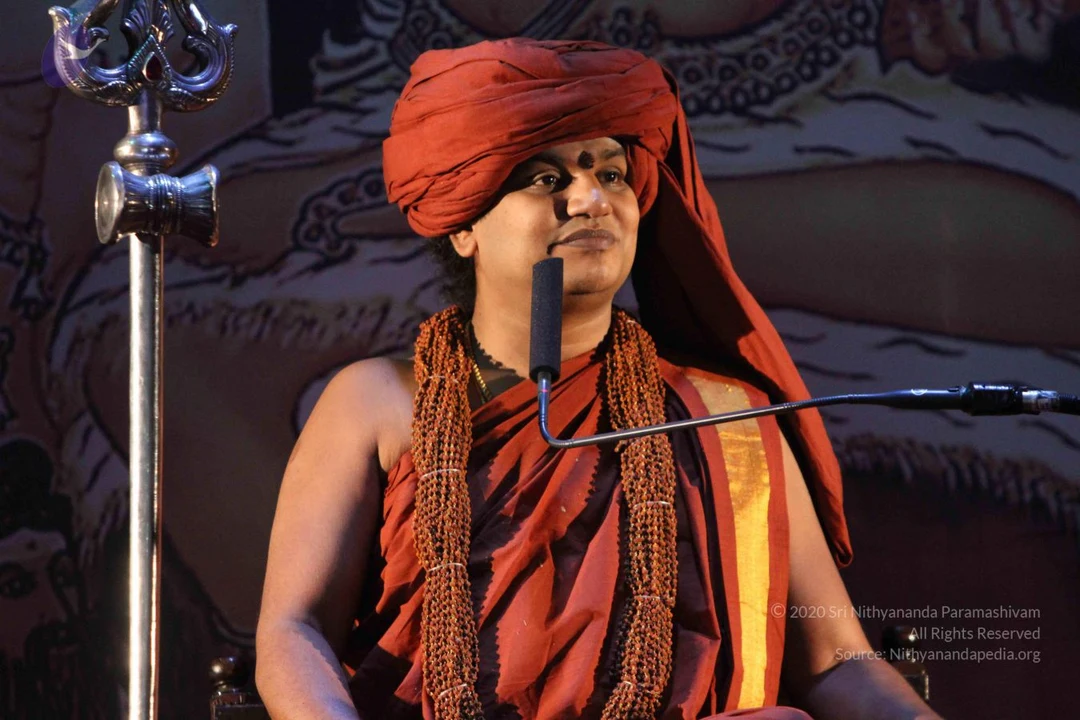
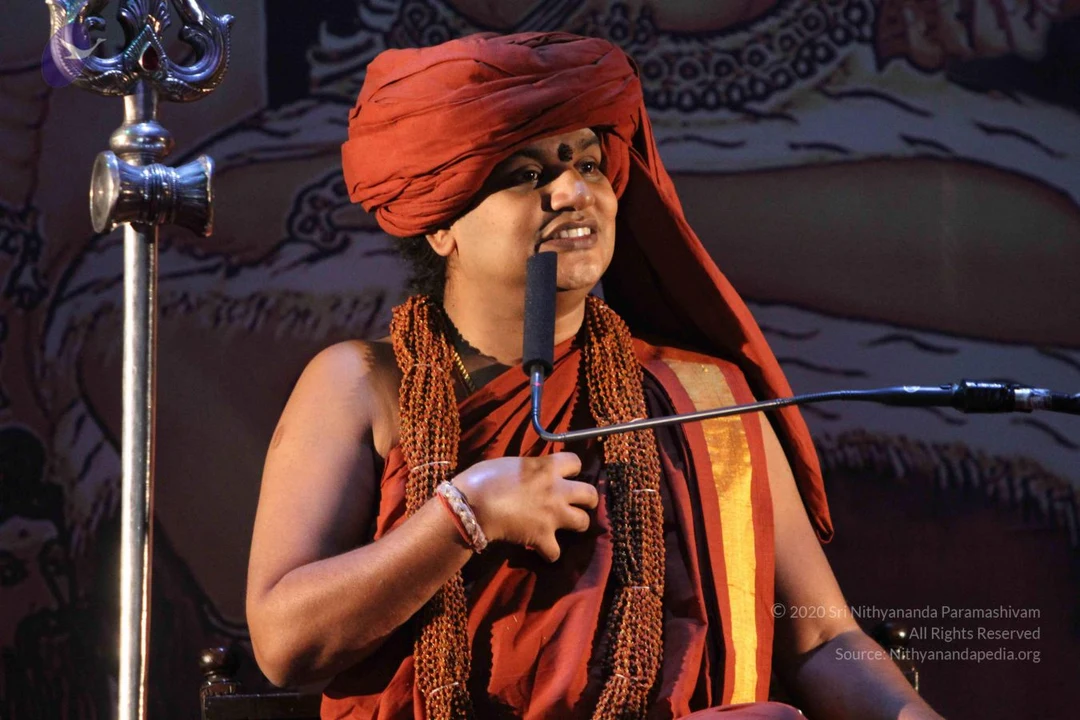
A seated man in a red-orange turban and matching saffron wrap smiles while speaking into a black microphone on a stand. He wears a long rudraksha mala draped over his shoulders and sits cross-legged on a wooden chair in front of a large painted backdrop of Hindu deities and sages. A tall silver trident stands beside him on the left. Swamiji (probable): the seated speaker has the saffron turban, saffron wrap and rudraksha mala of his presentation, and the page names him as present at this event.A seated man in a deep red turban and red-orange robe speaks into a microphone on a stand, smiling broadly. He wears a long double strand of rudraksha beads around his neck and has a red-orange shawl draped over one shoulder with a gold border. A tall silver trident stands to the left, and a painted backdrop of a Hindu deity figure and a bearded sage fills the background. a person is seated in discourse, with a microphone and a silver trident beside him. Text on the photo reads a and a source credit toA photograph of a man seated on a chair on a stage, speaking into a microphone during a discourse. He wears an orange-red turban, an orange-red shawl over bare shoulders, and a long beaded mala around his neck. Behind him is a large painted backdrop of a deity murti seated on a white bull, with four arms, a crown, a crescent moon, rudraksha beads and ornaments, set in a dark forest with trees and seated sages. A trident stands to the left of the speaker. Swamiji (probable): the seated speaker wears an orange-red turban and shawl with a rudraksha mala, the cues associated with Swamiji, in his role as a speaker giving a discourse.A seated man in saffron-orange robes and an orange head wrap sits cross-legged on a stage before a microphone, holding a book and a long black cloth fringe at his side. A tall silver trident stands at left. Behind him, a large painted backdrop shows a four-armed deity murti seated on a tiger skin, adorned with a crown, rudraksha malas and bangles, with a bull and deer in a dark forest, and seated sages in saffron robes at lower right. Green foliage frames the scene. The stage setting suggests a discourse or satsang session. The man's appearance with saffron robes, a head wrap and a long mane of hair gives a candidate who may be a person, but identity is uncertain from the photo alone.A figure in an orange-red turban and saffron-orange robe with a gold-bordered shawl and layered rudraksha mala stands at a microphone beside a tall silver trident with a red gem. Behind them a painted backdrop shows a white bull and dark foliage. a person figure speaks while seated or standing on stage, with the trident beside them.A photograph of a person seated on stage beside a tall polished silver trident with a red gem set in its shaft. The person wears an orange-red turban and an orange-red robe with a golden-yellow border, and a long rudraksha mala hangs over the chest. A microphone on a stand is in front of him, and a dark painted backdrop with ornate figures is behind. The figure is smiling and looking to the side. Swamiji (probable): the orange turban and robe, rudraksha mala and trident fit a distinctive presentation, so this is an in-person candidate.
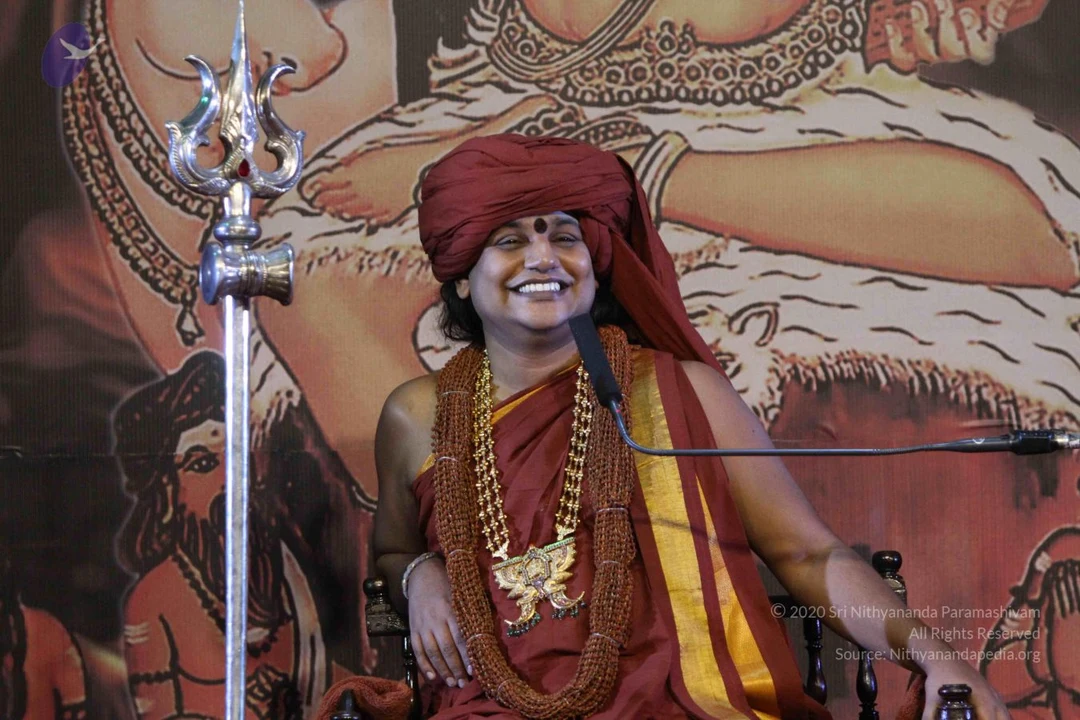
IA-Genesis-Of-Identity

90 photosSource gallery
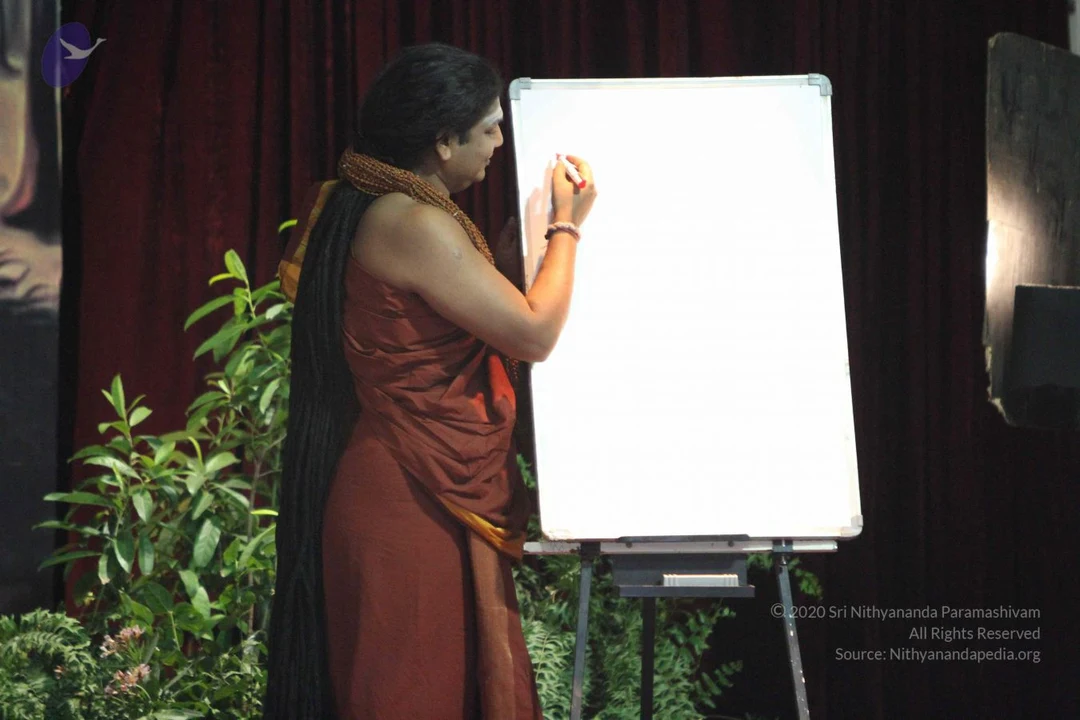
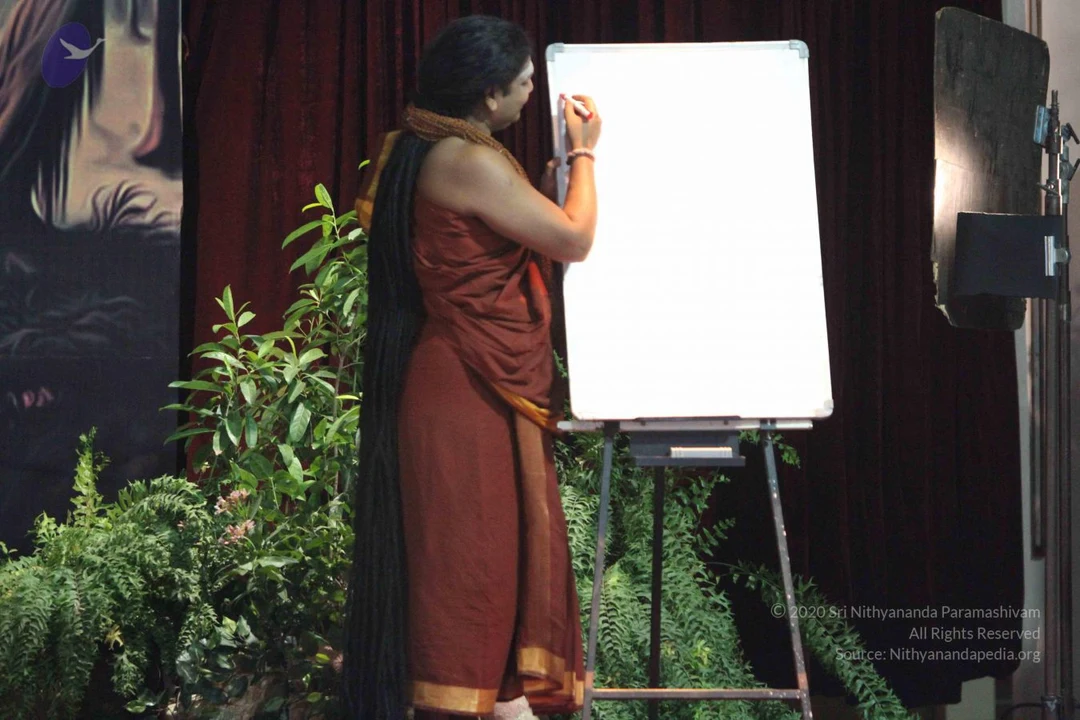
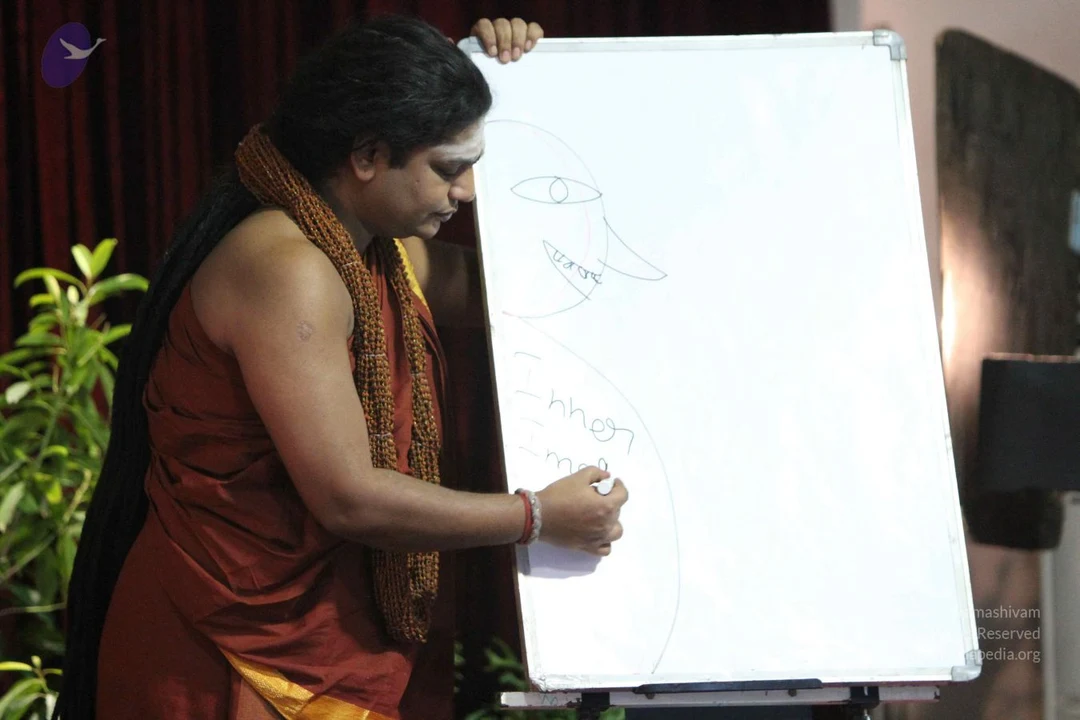
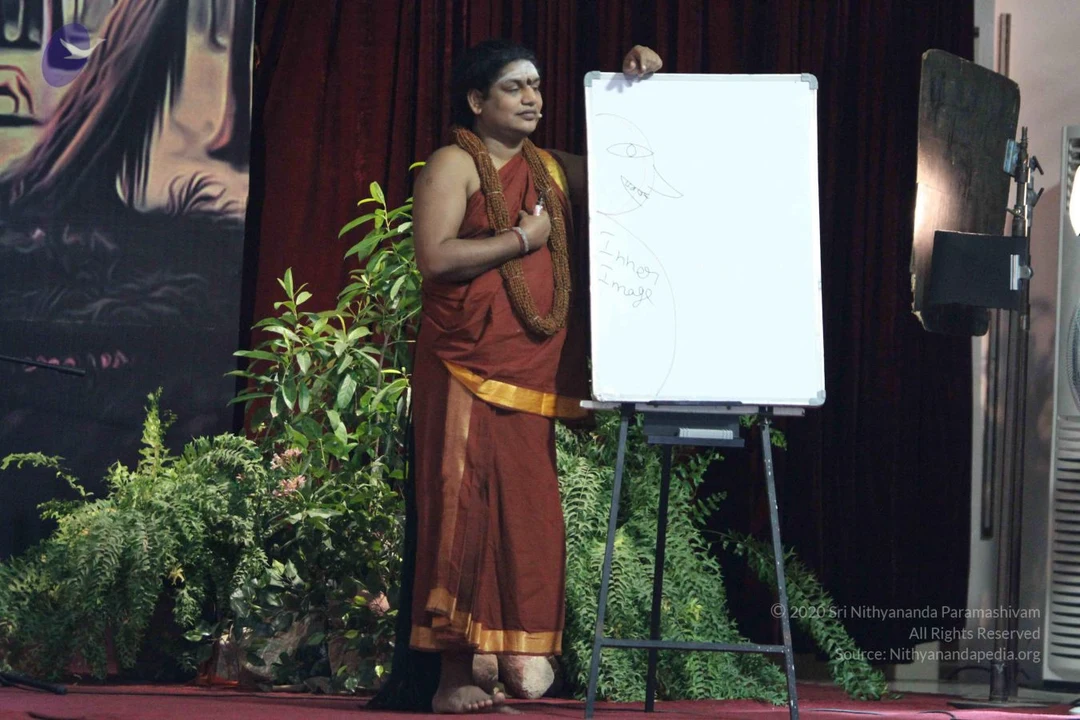
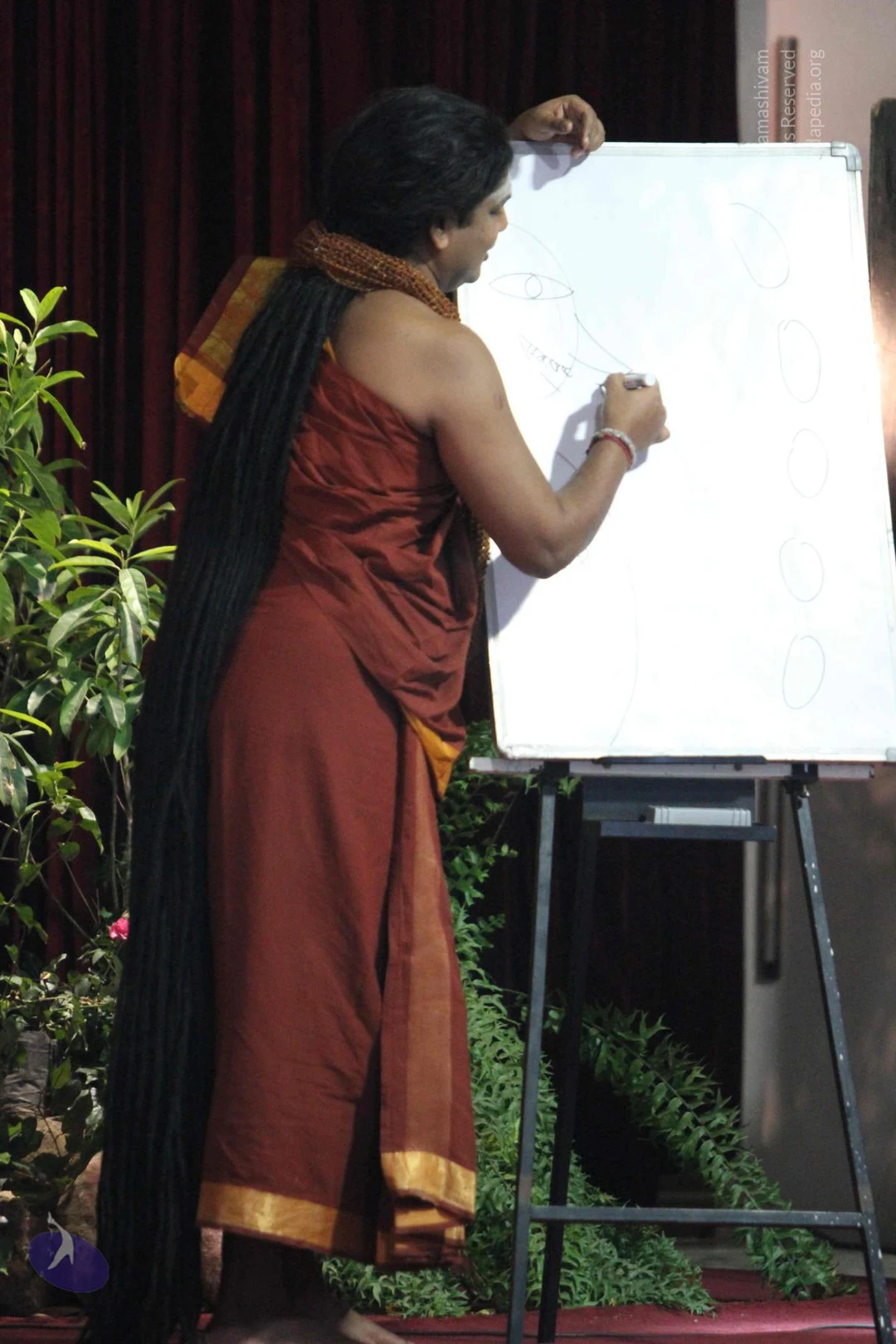
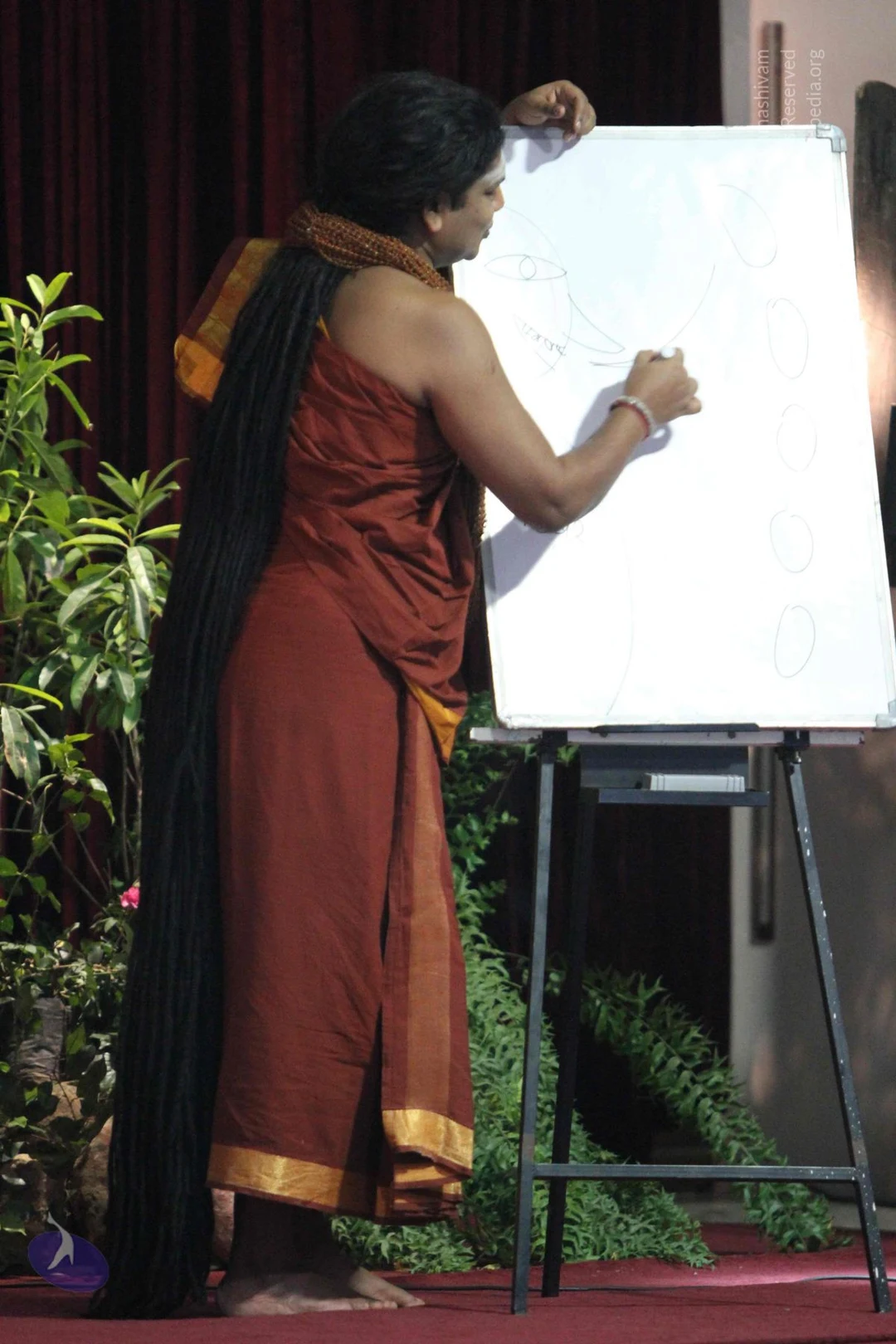
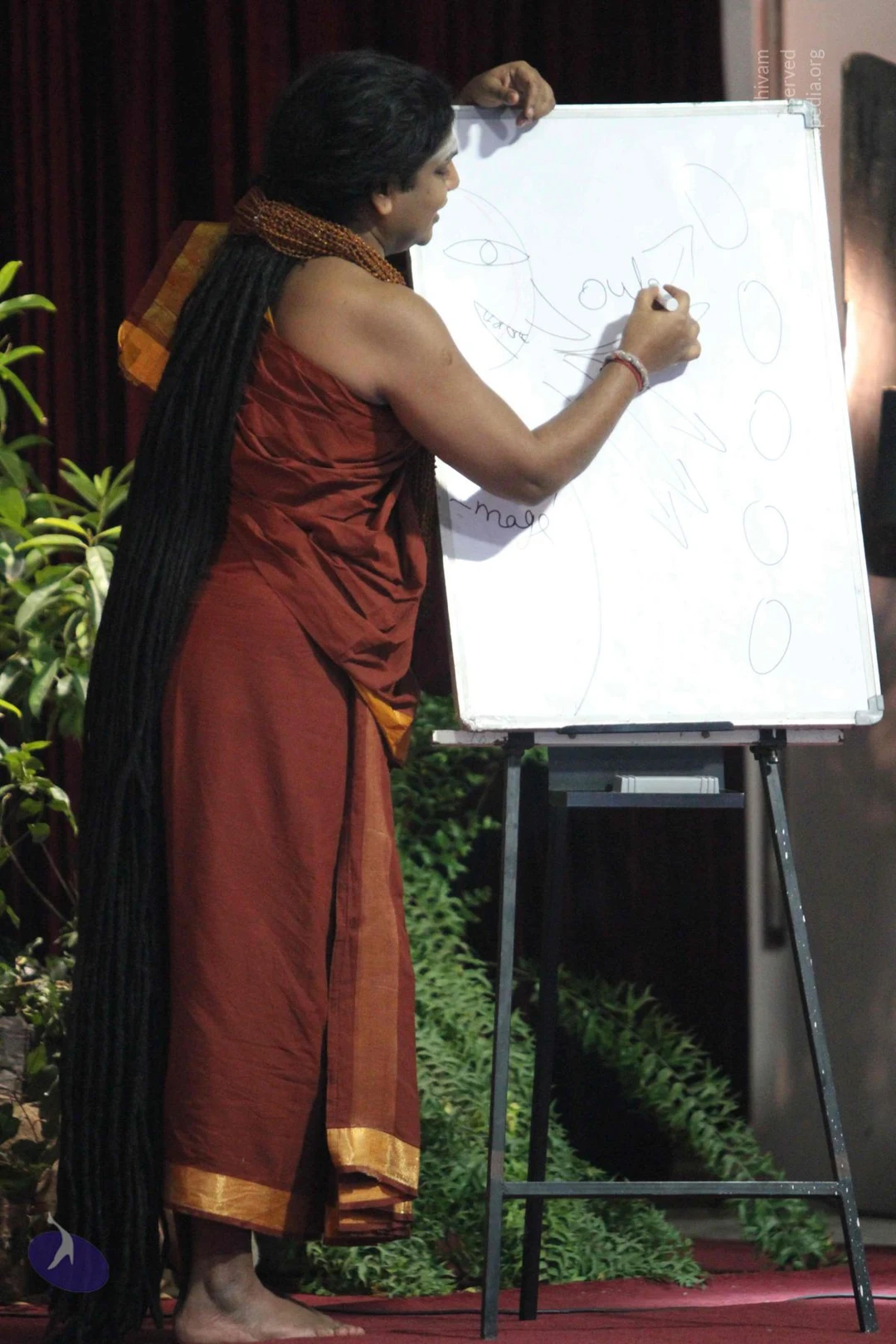
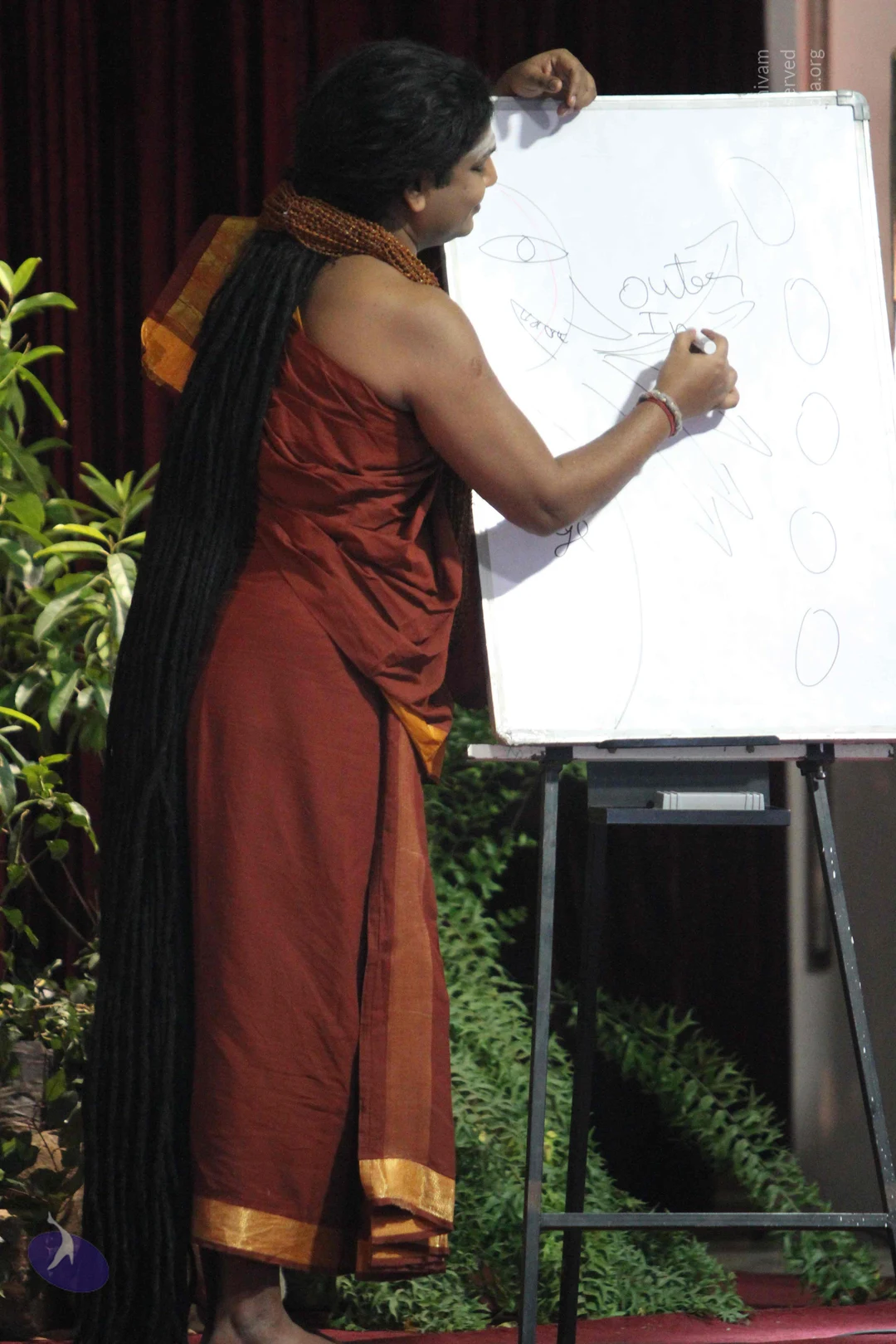
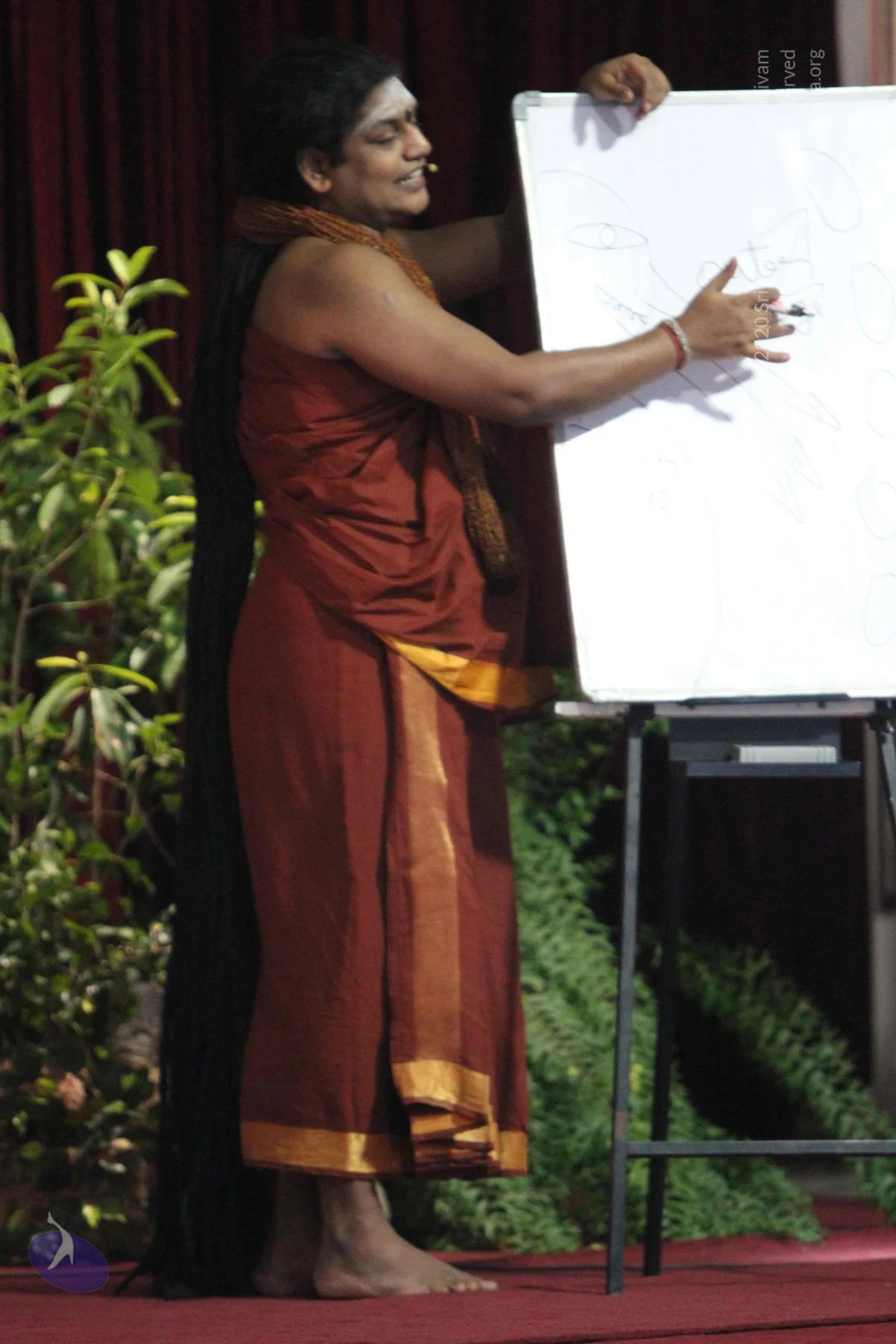
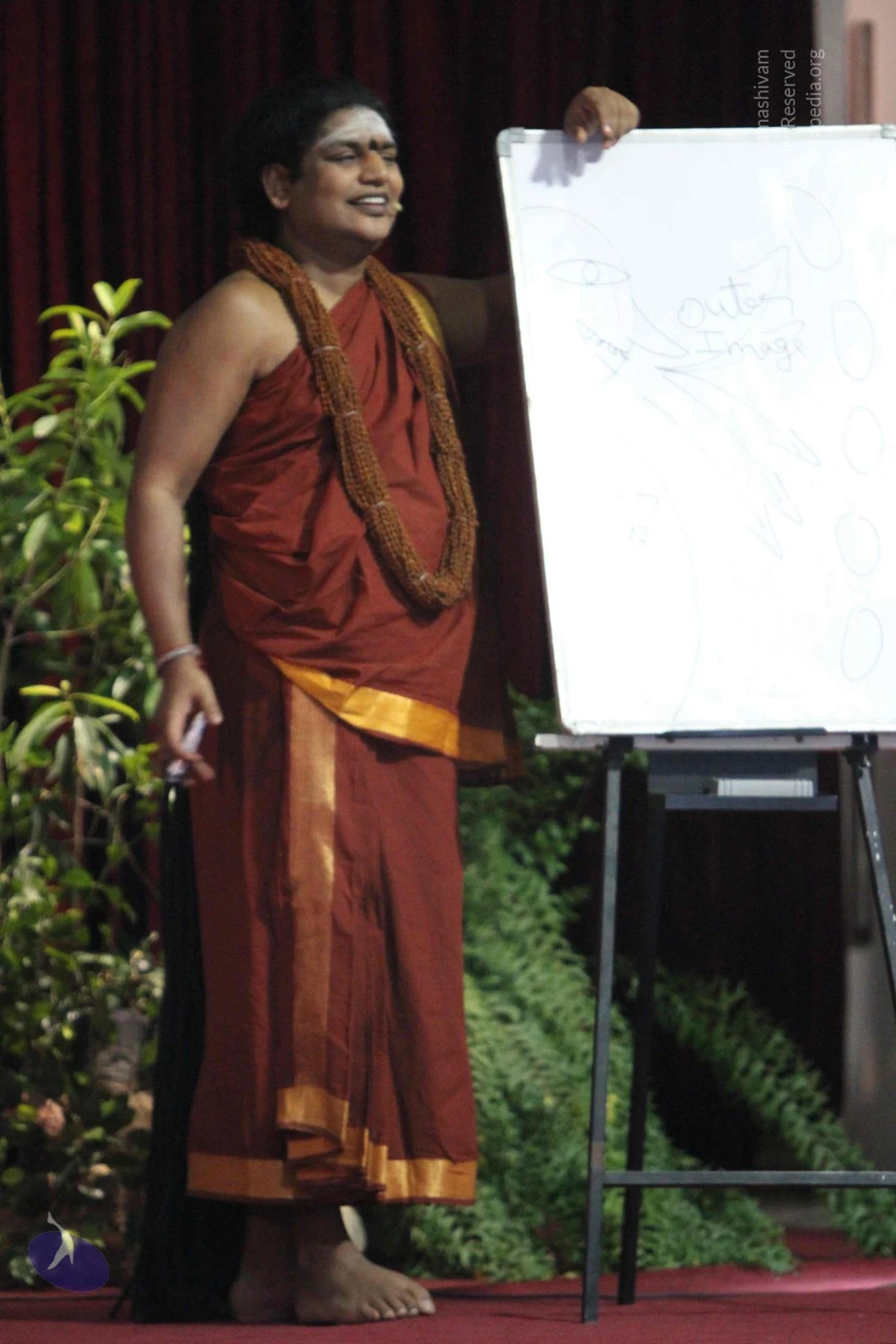
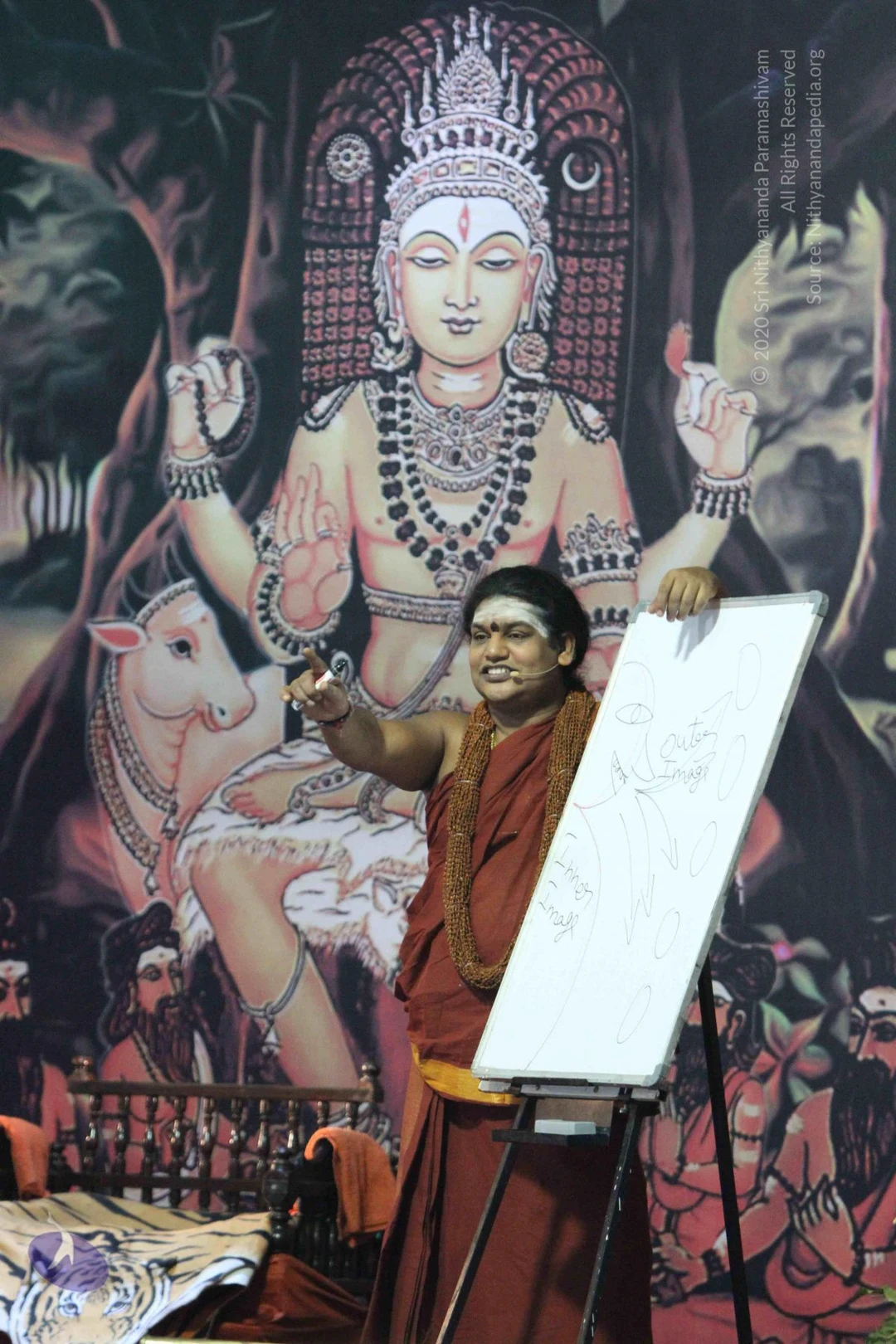
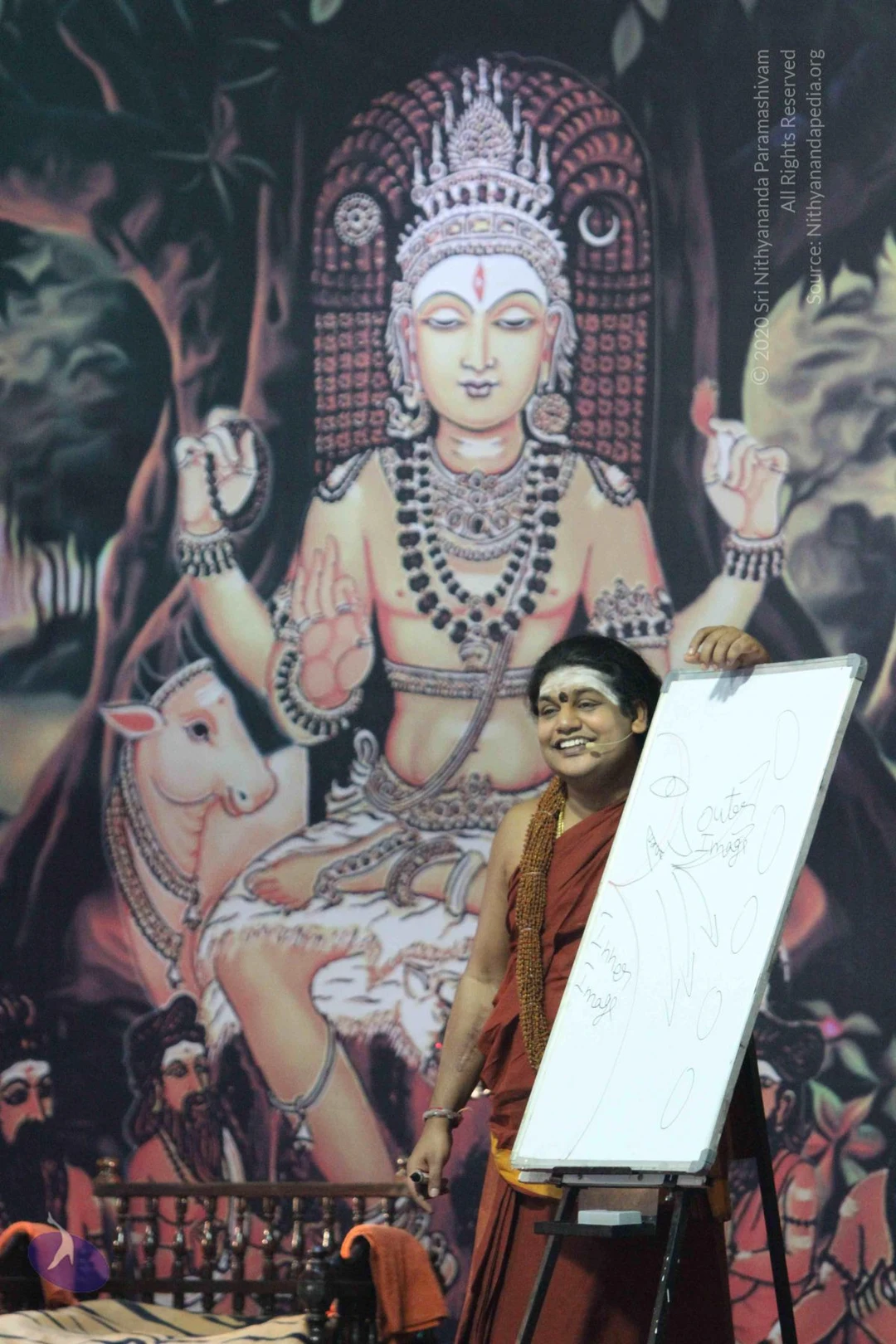
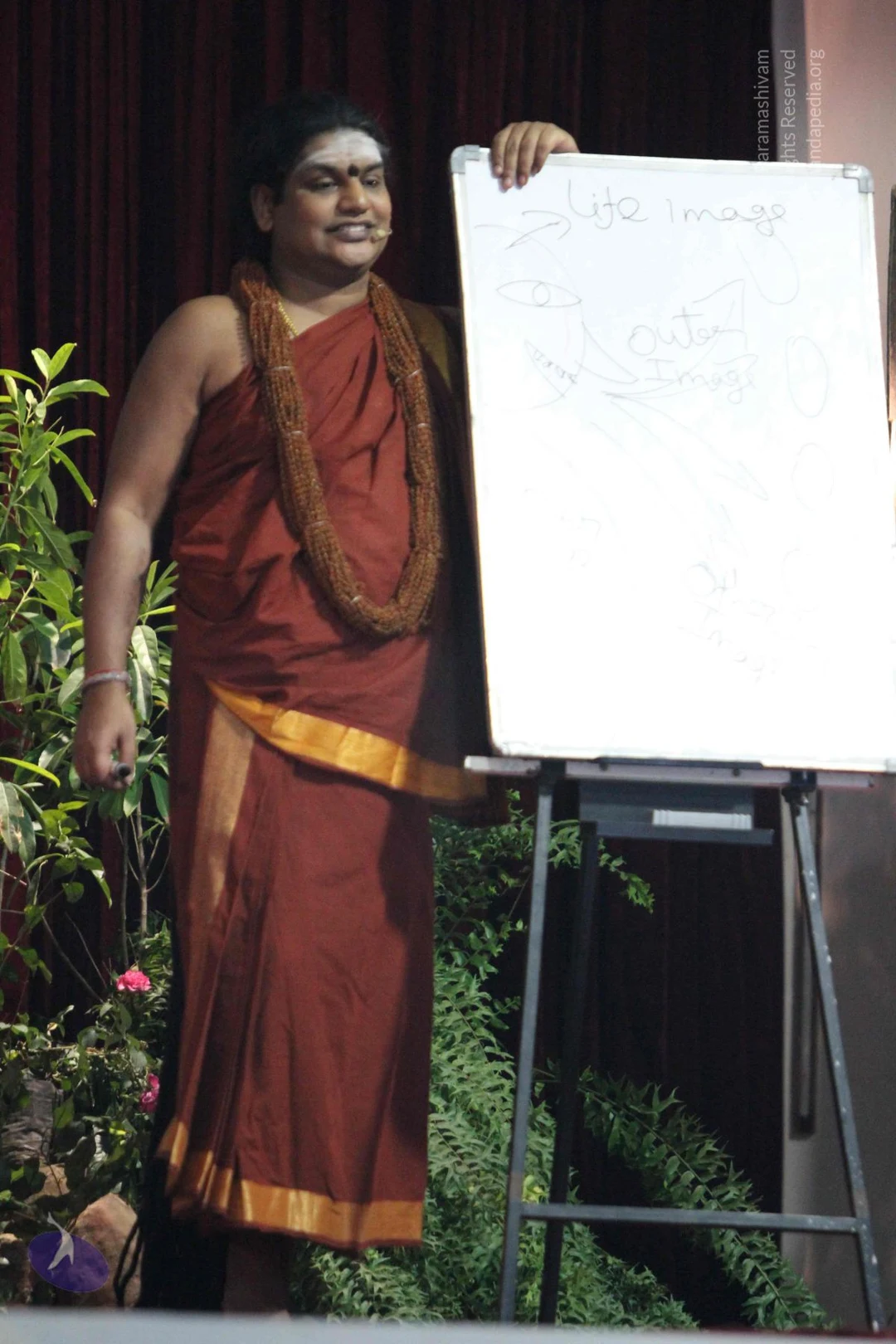
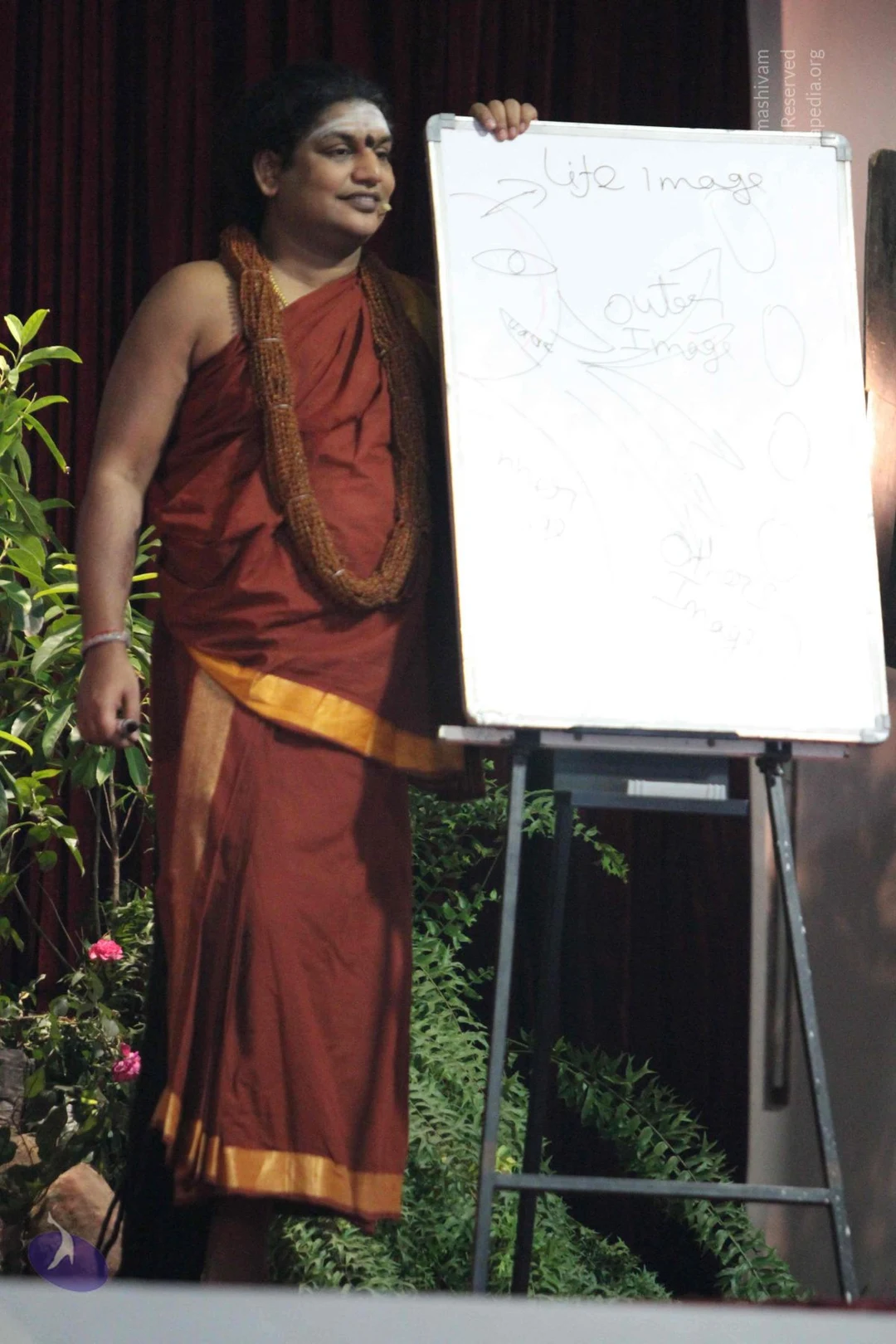
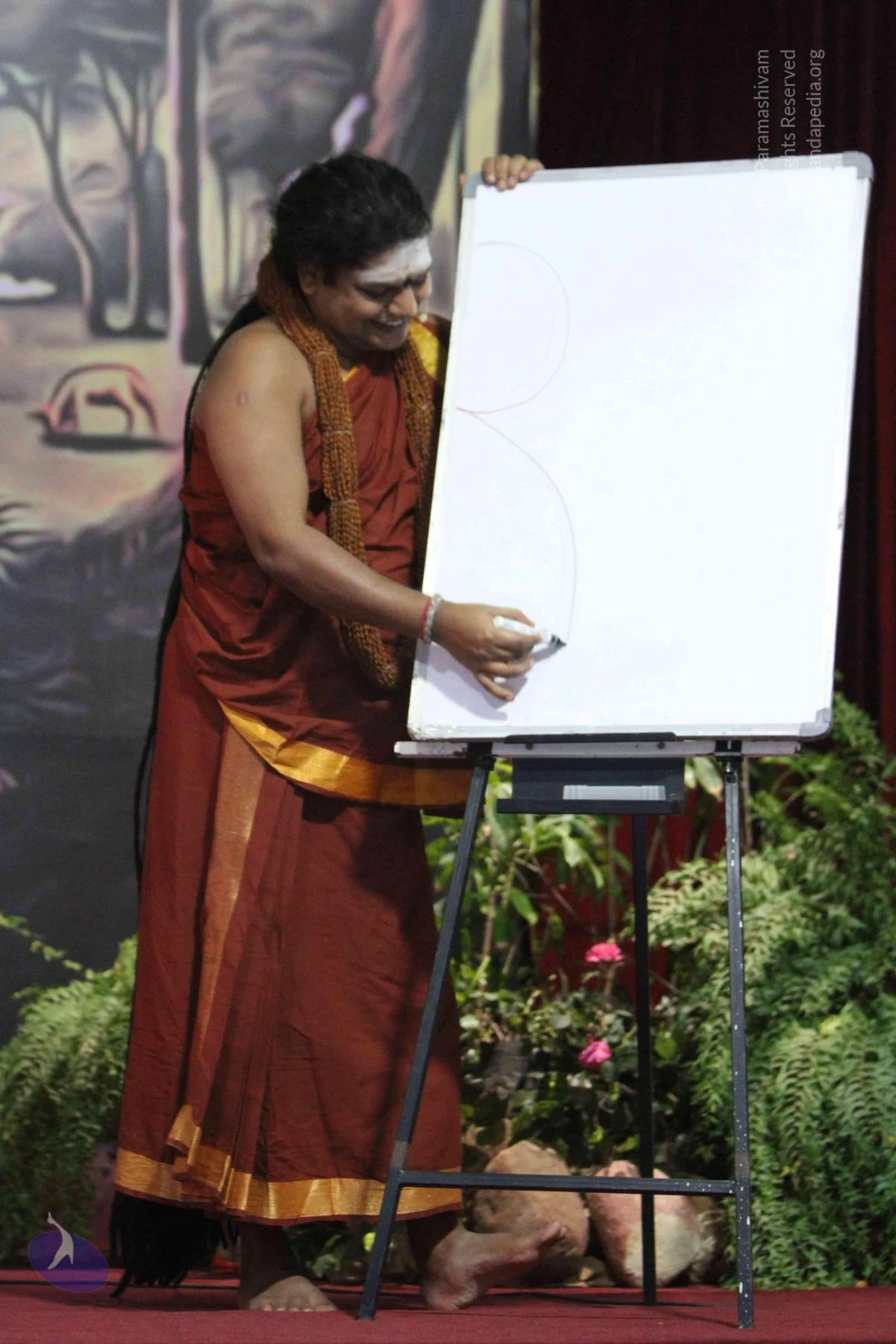
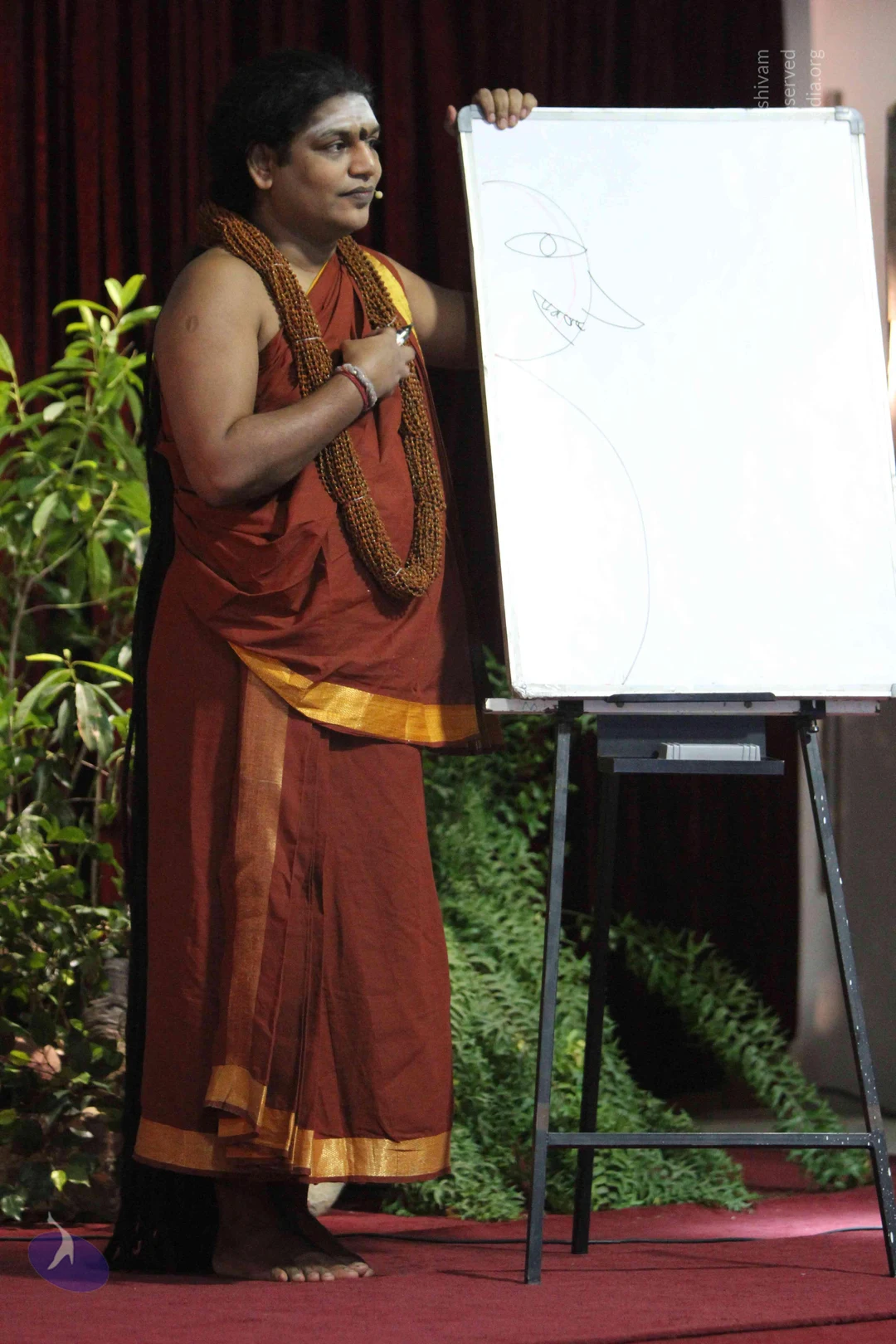
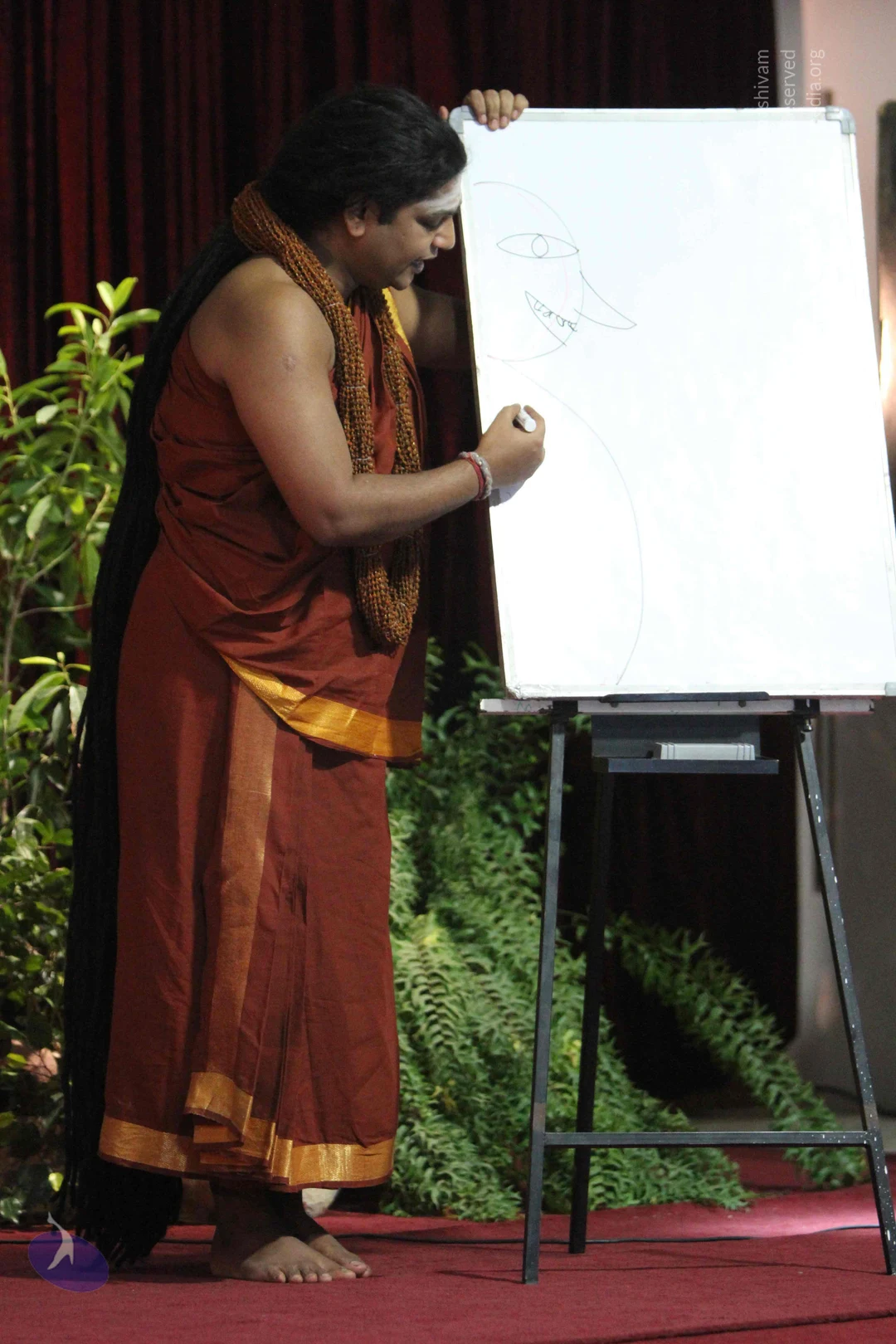
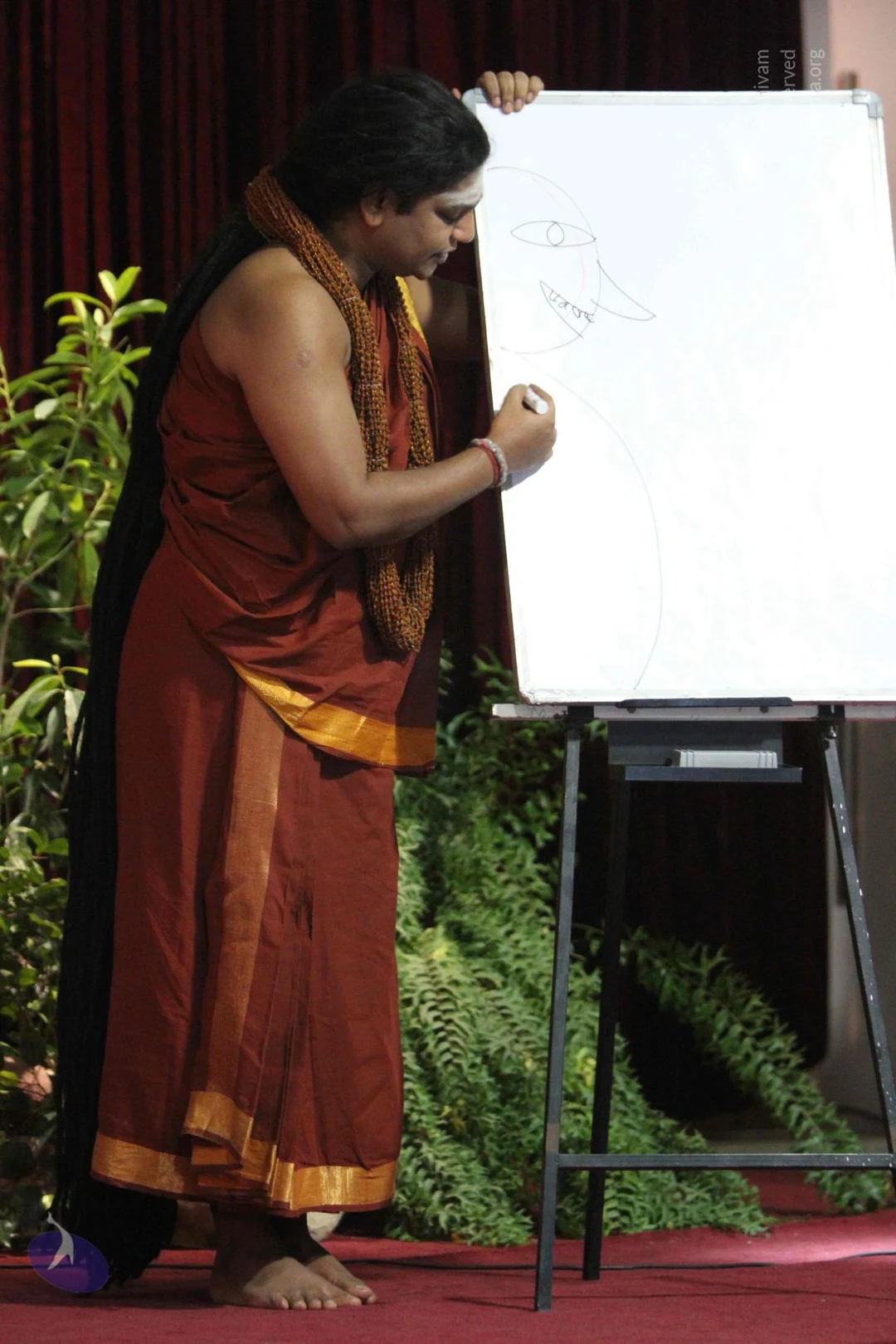
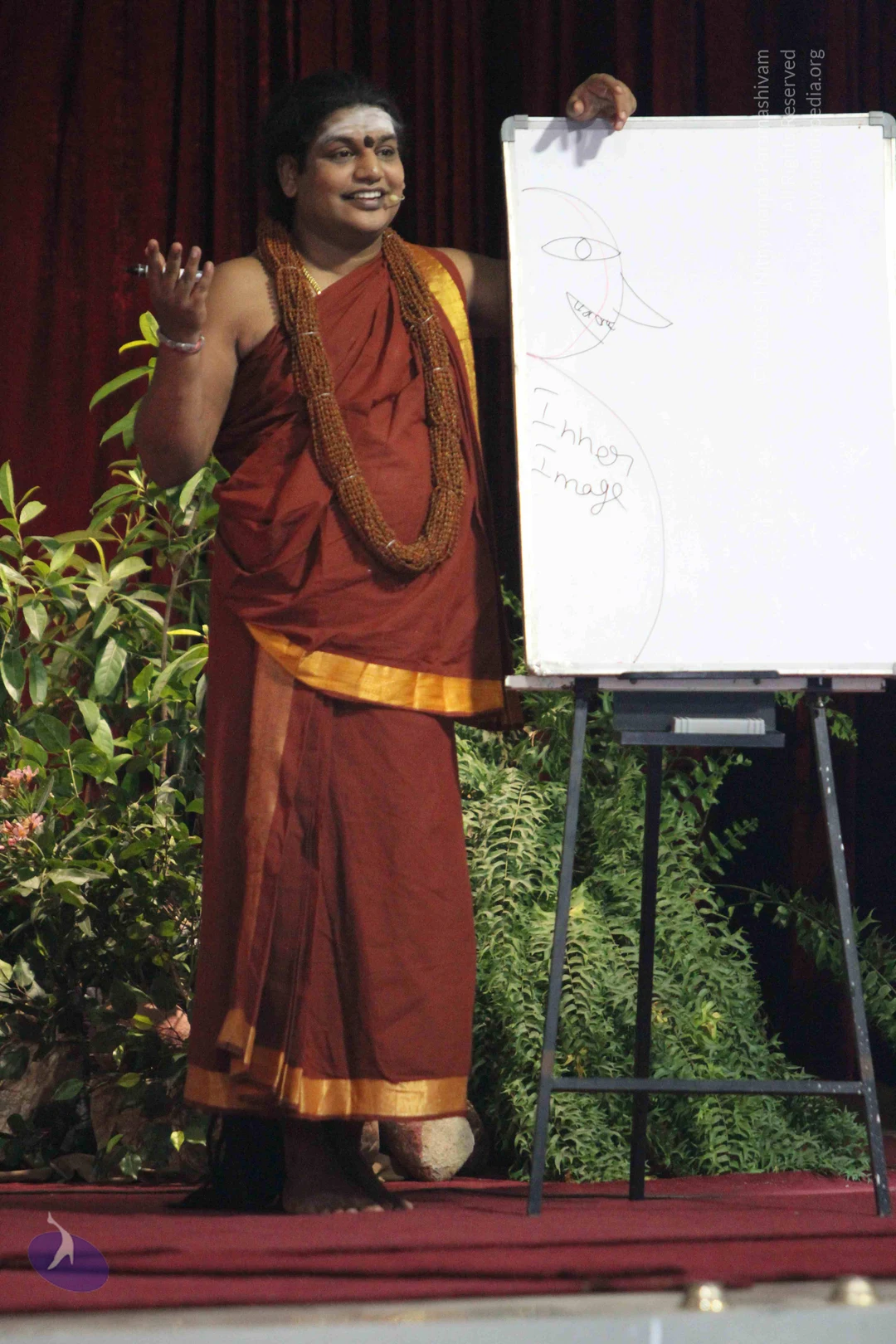
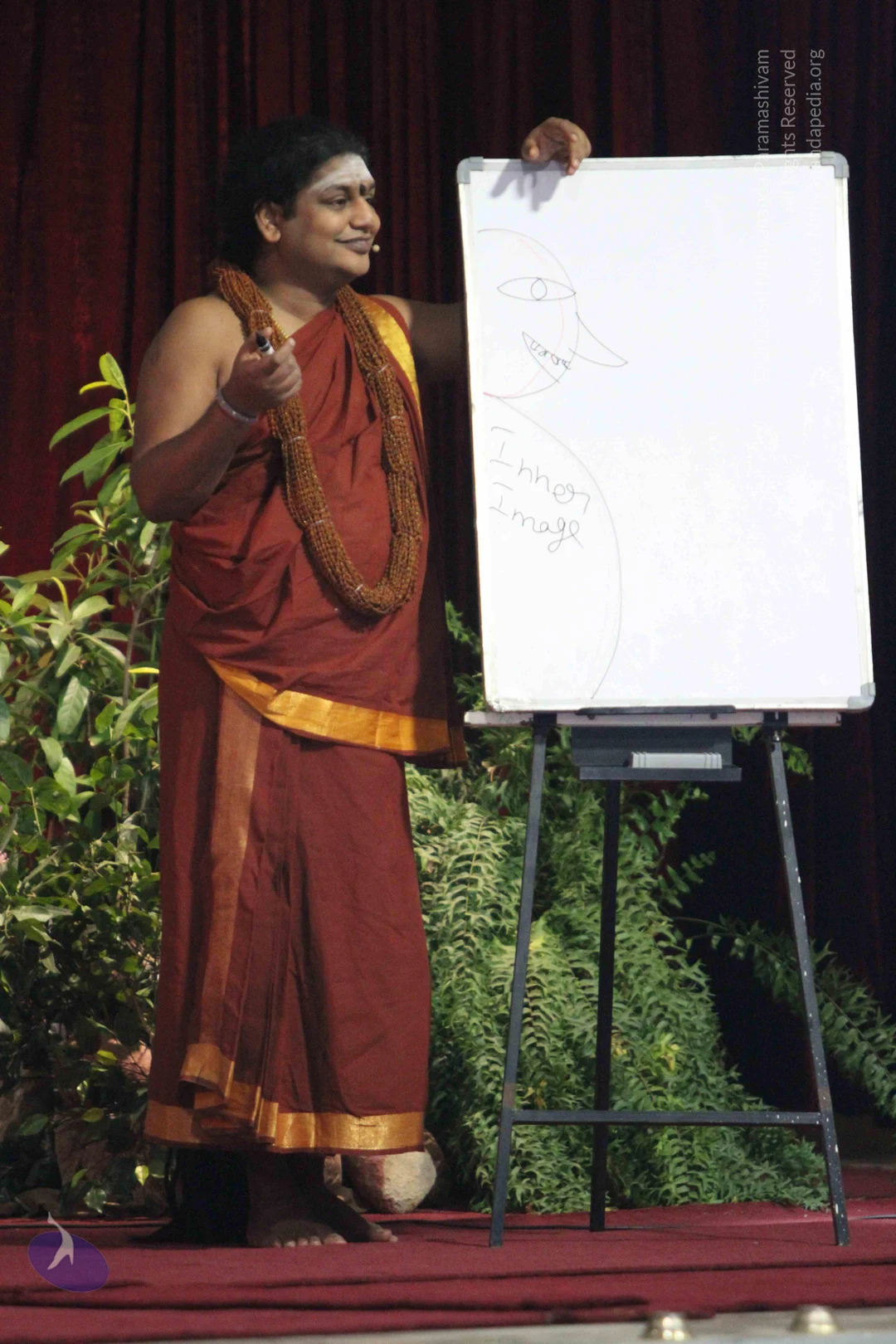
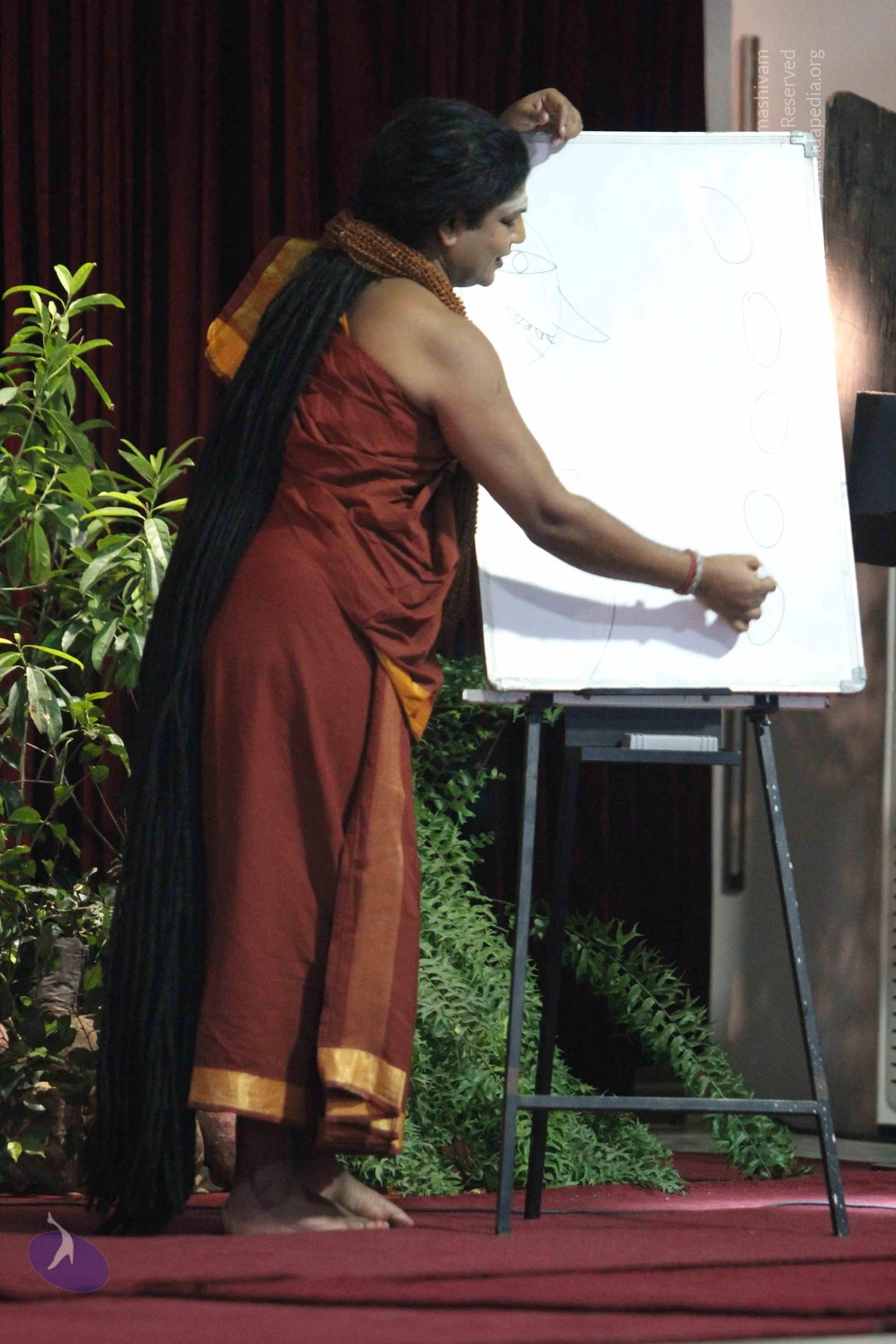
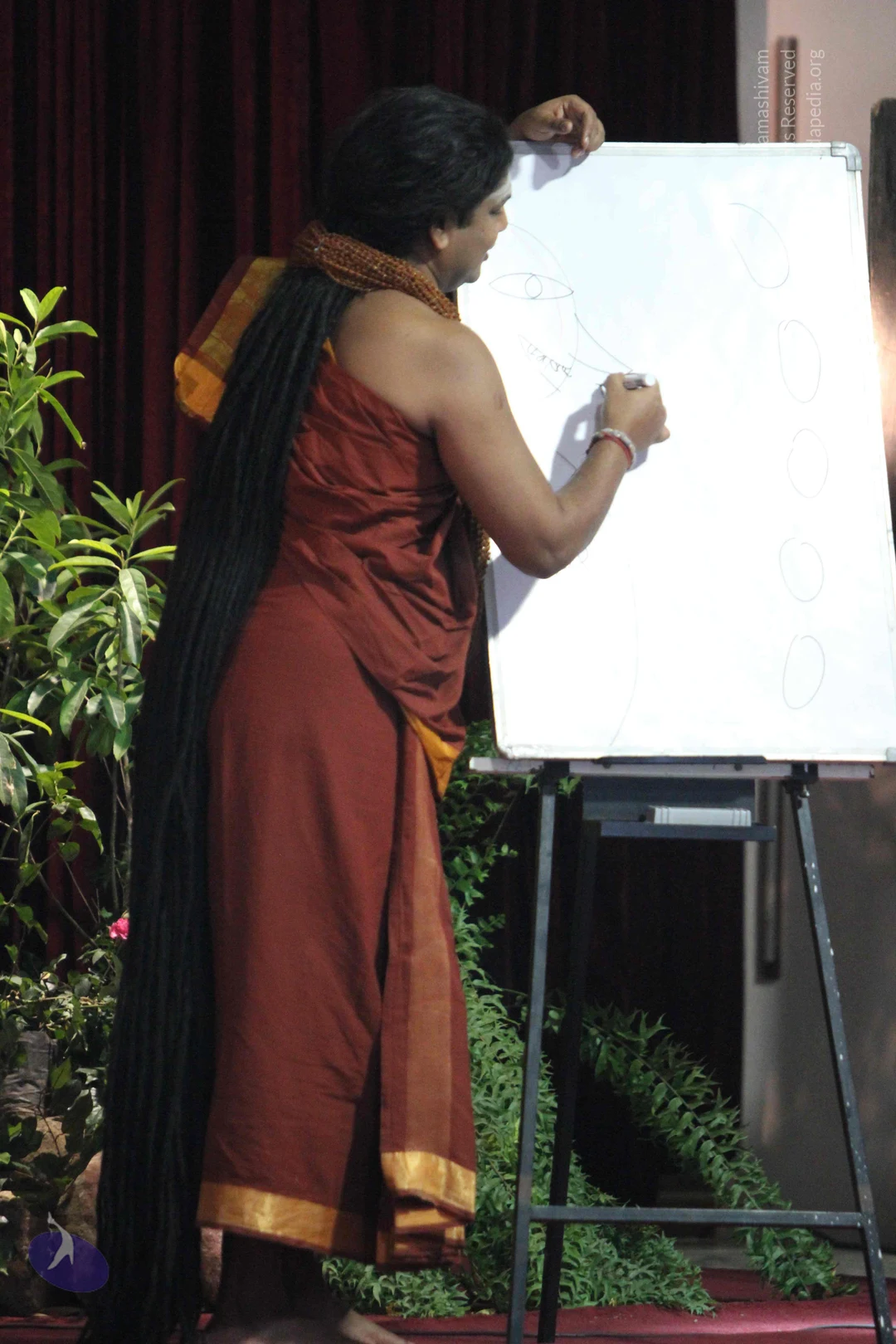
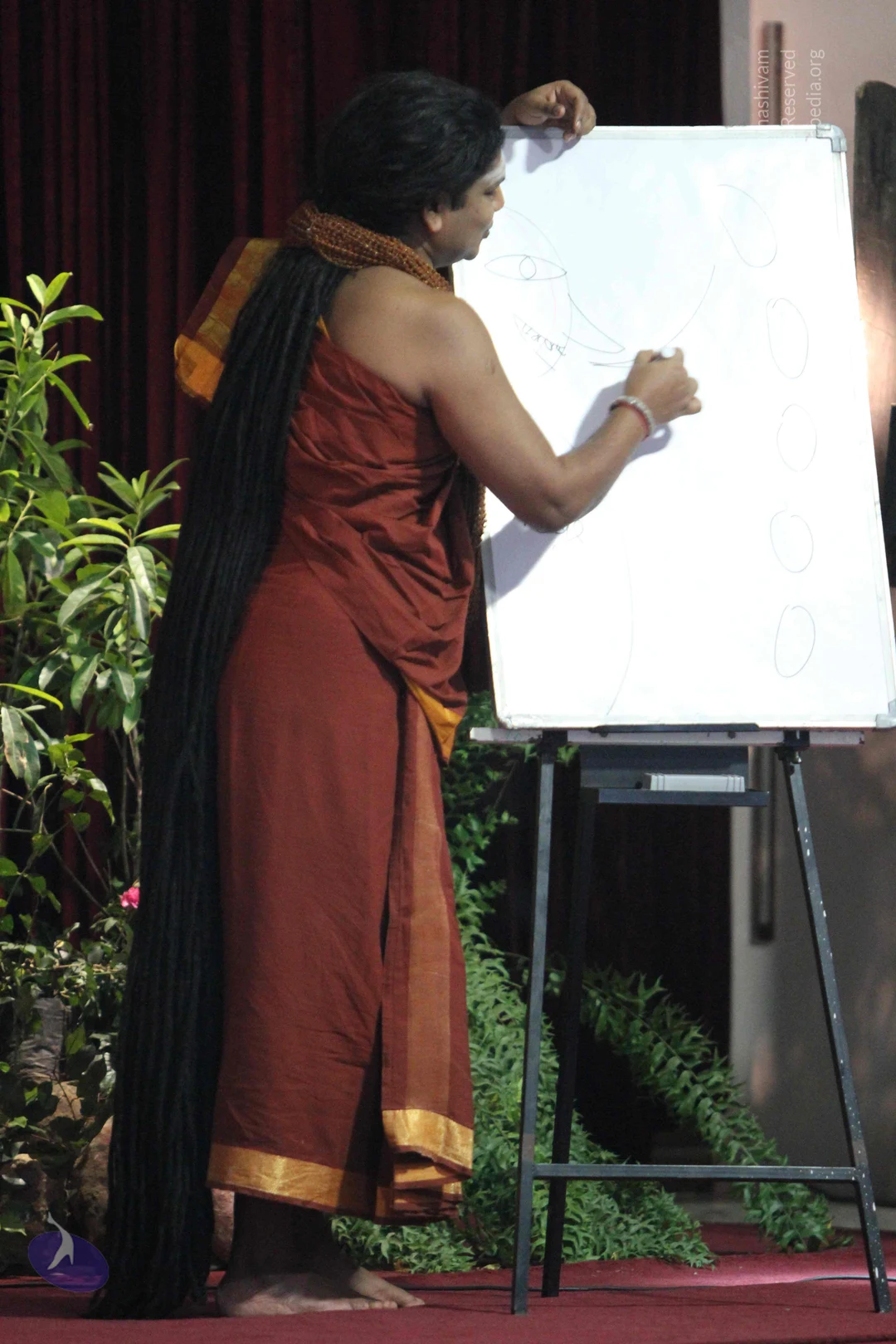
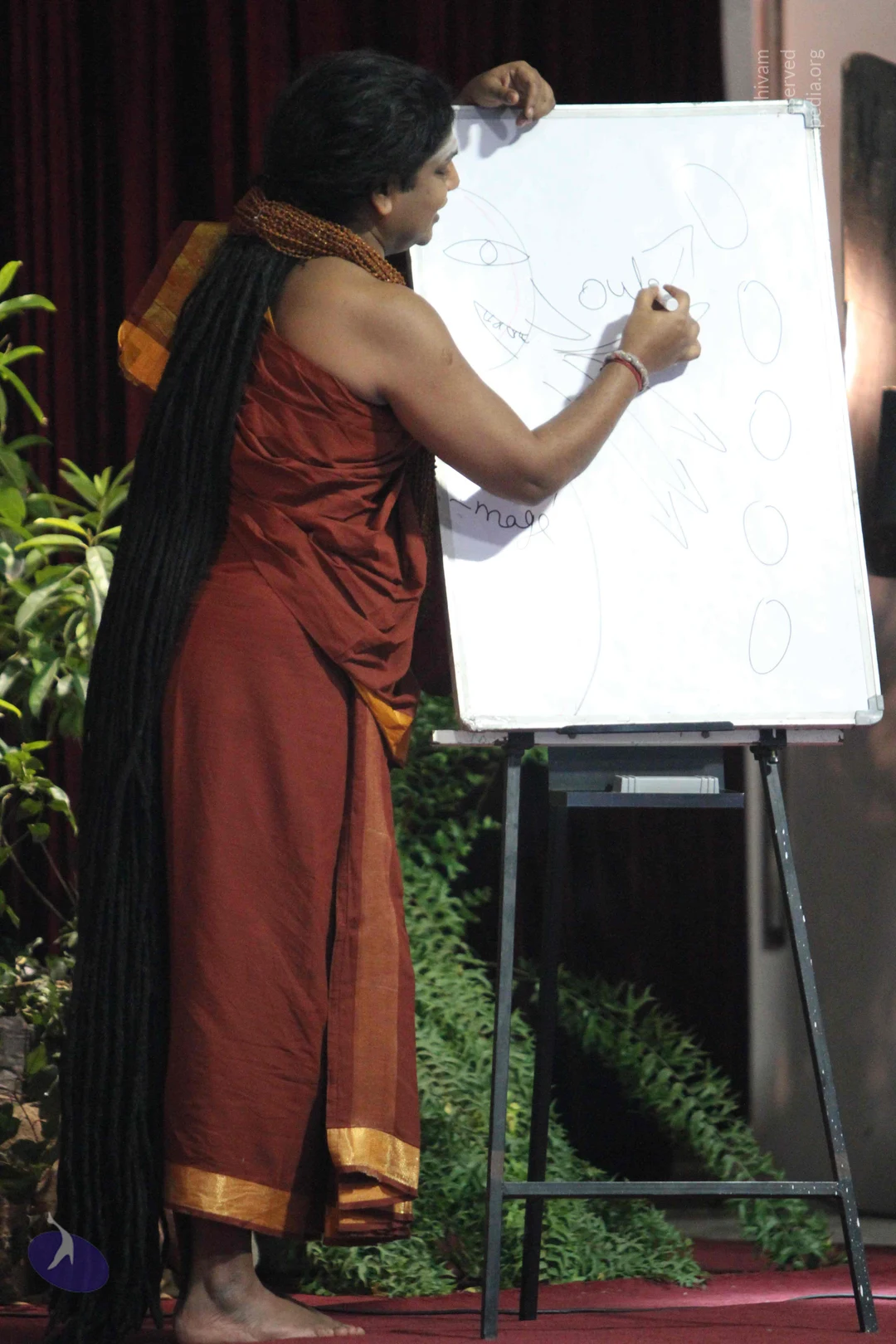
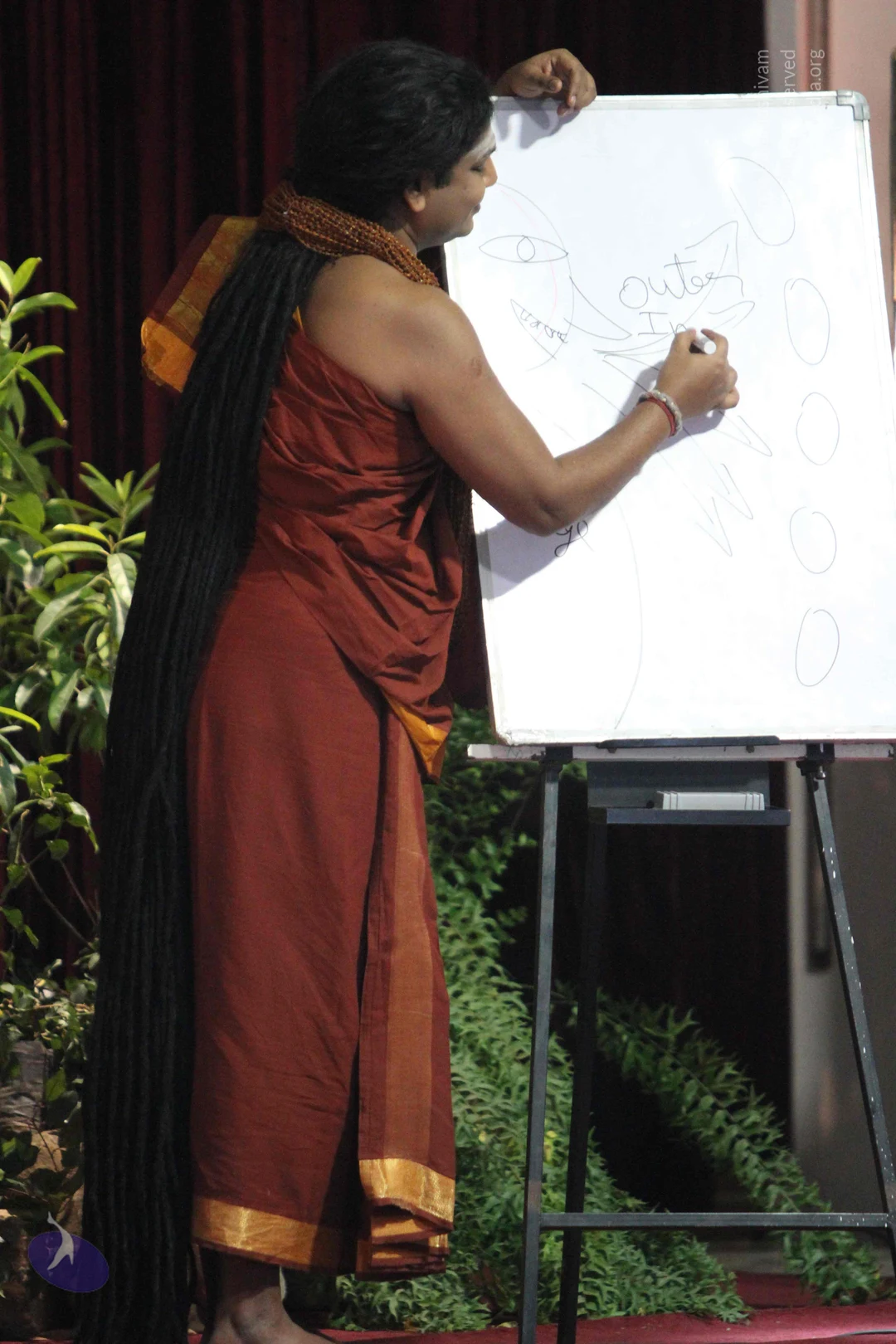
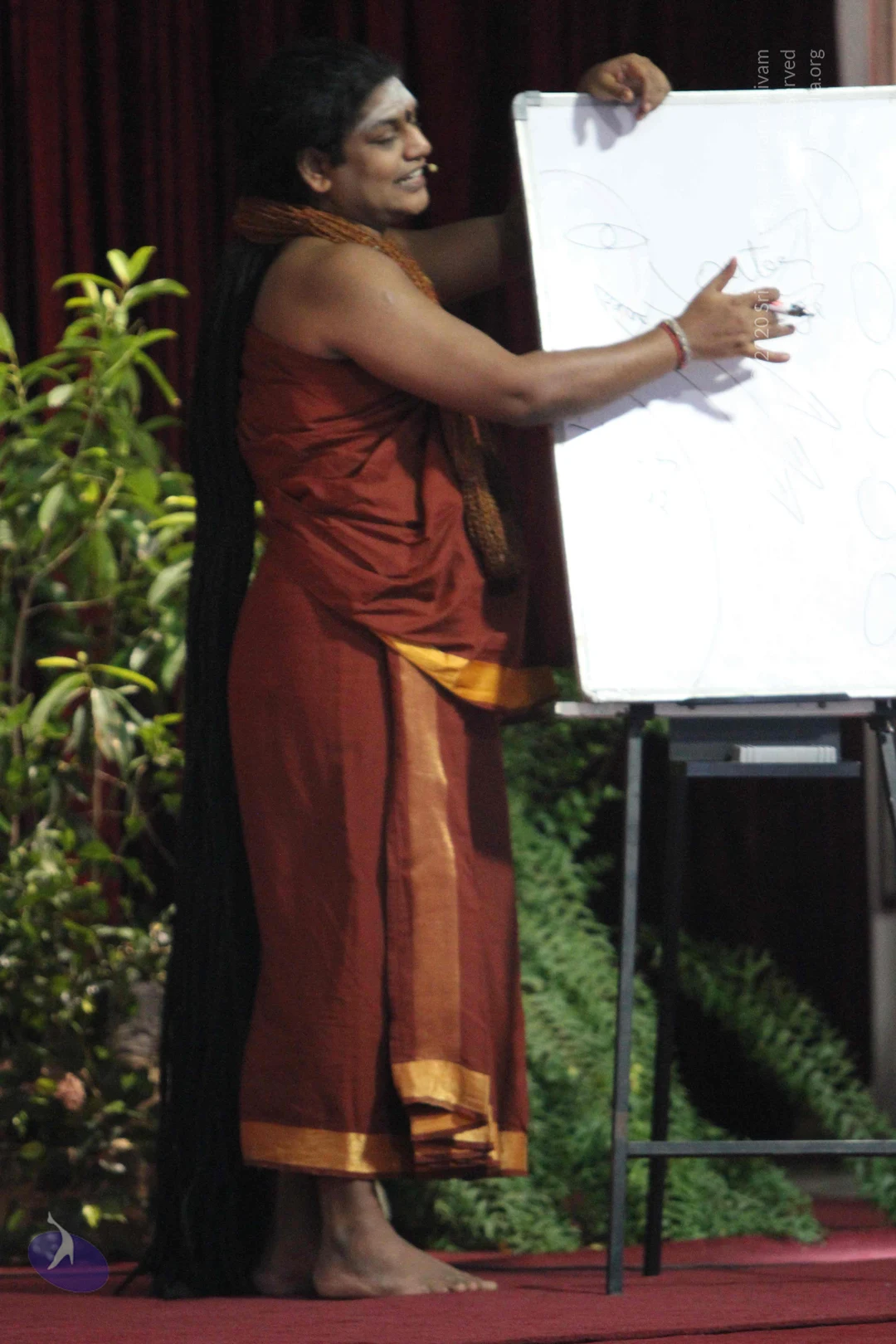
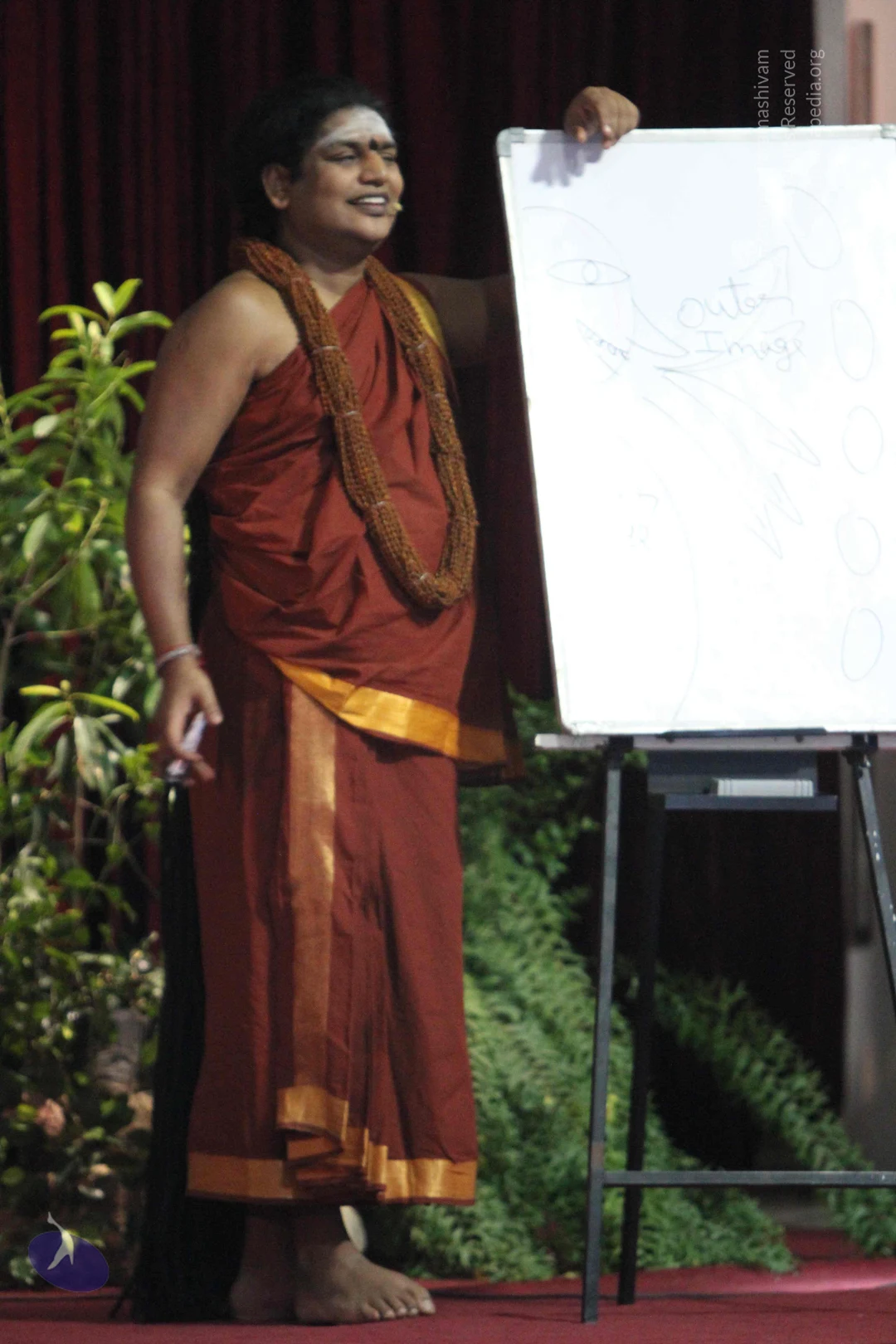
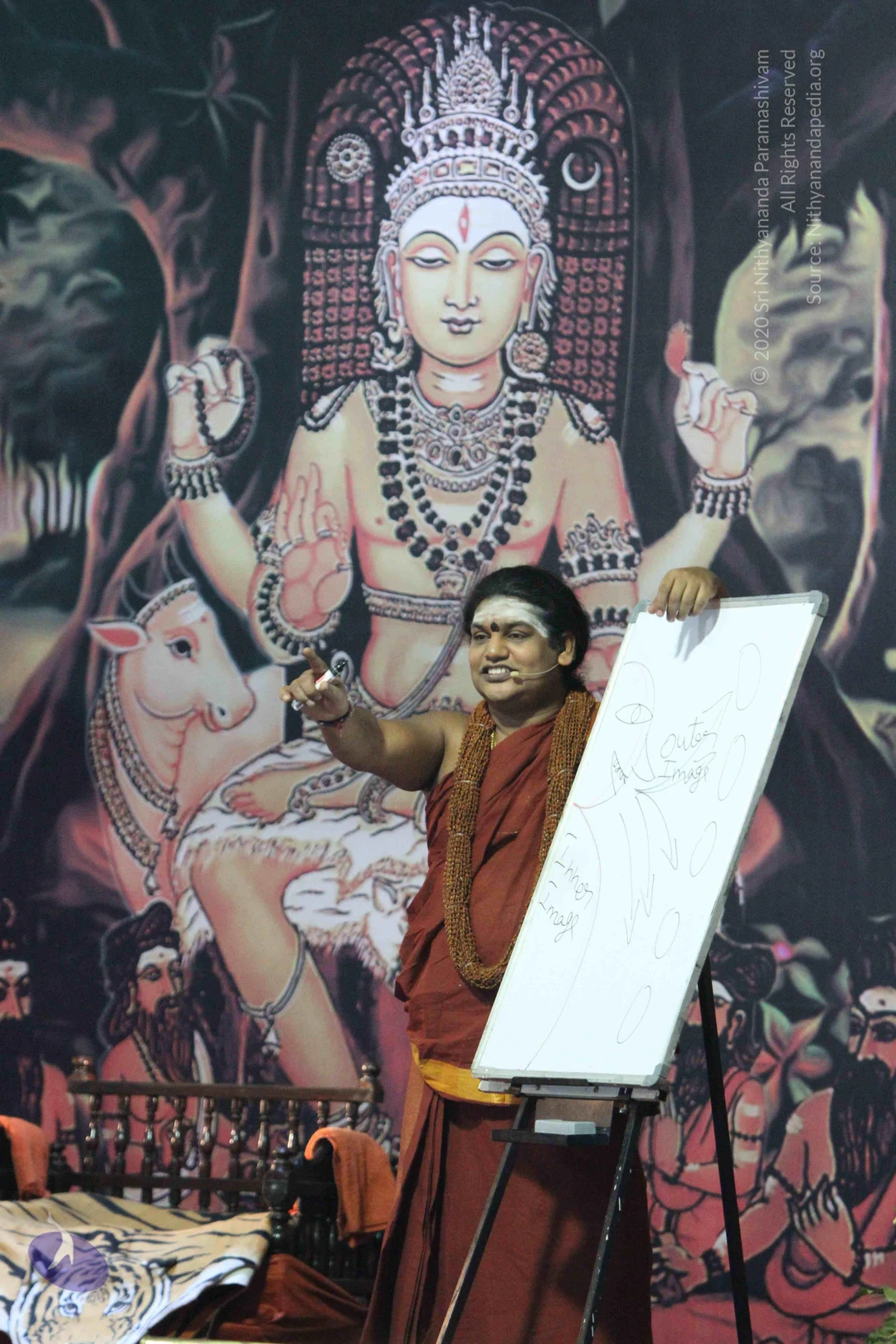
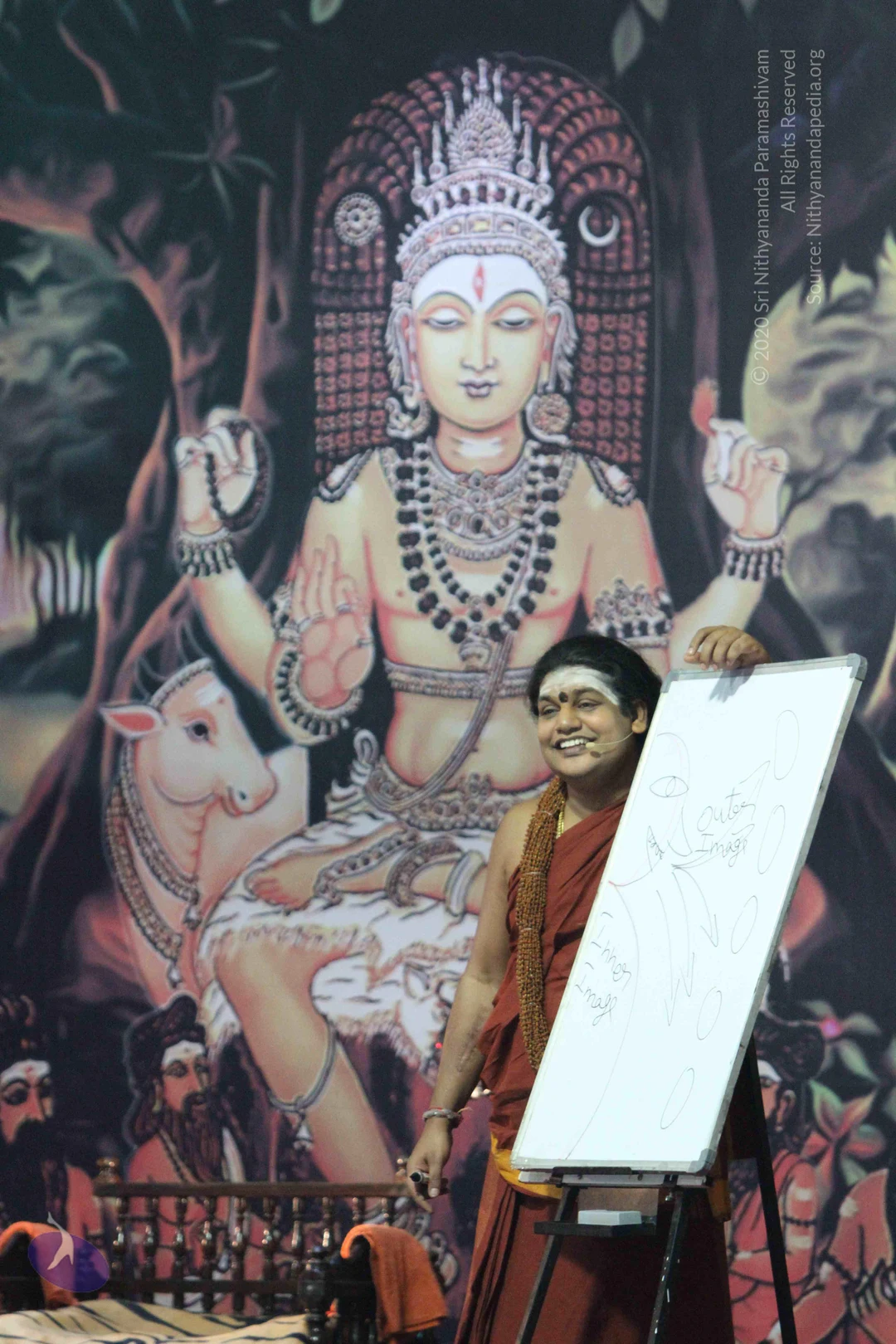
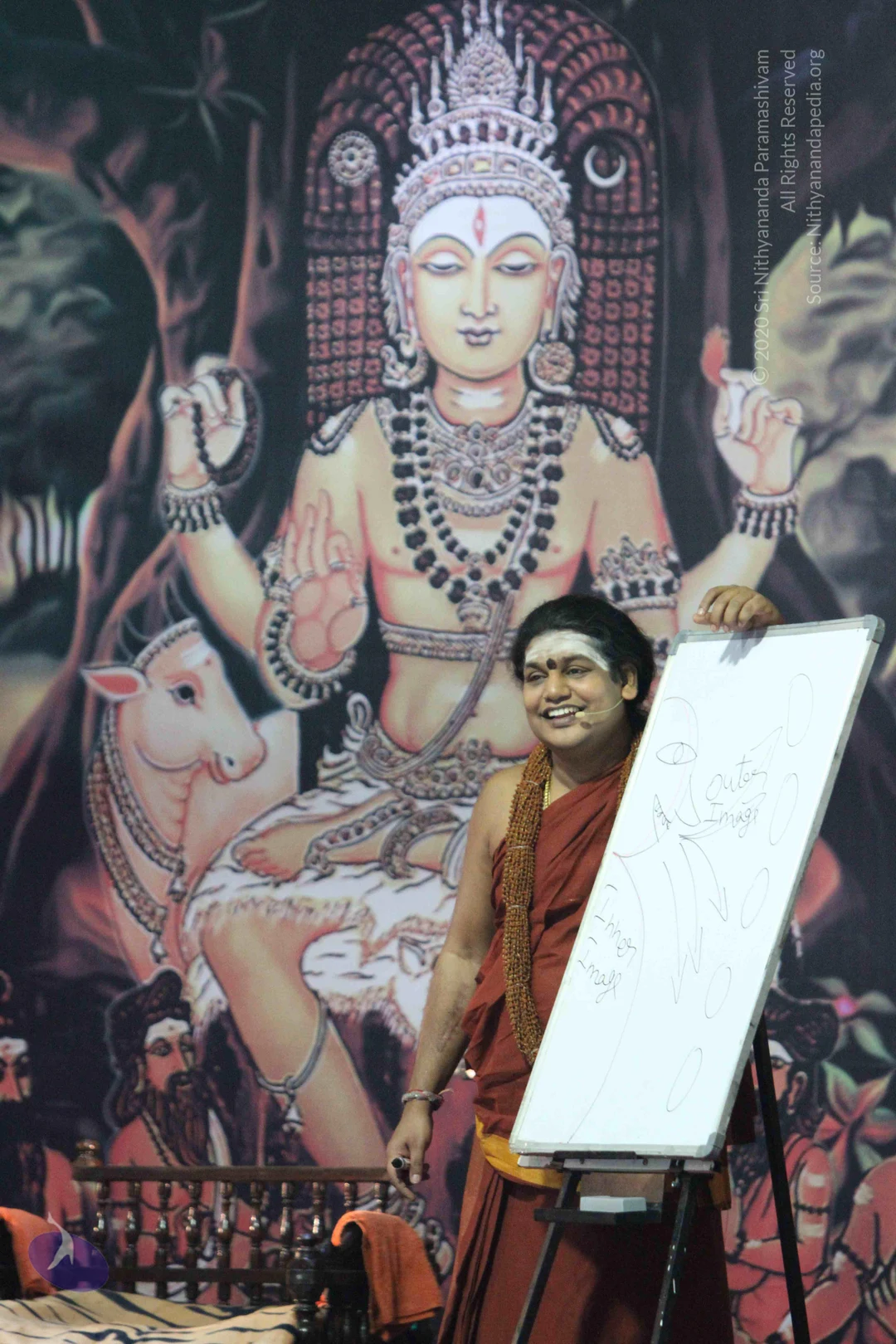
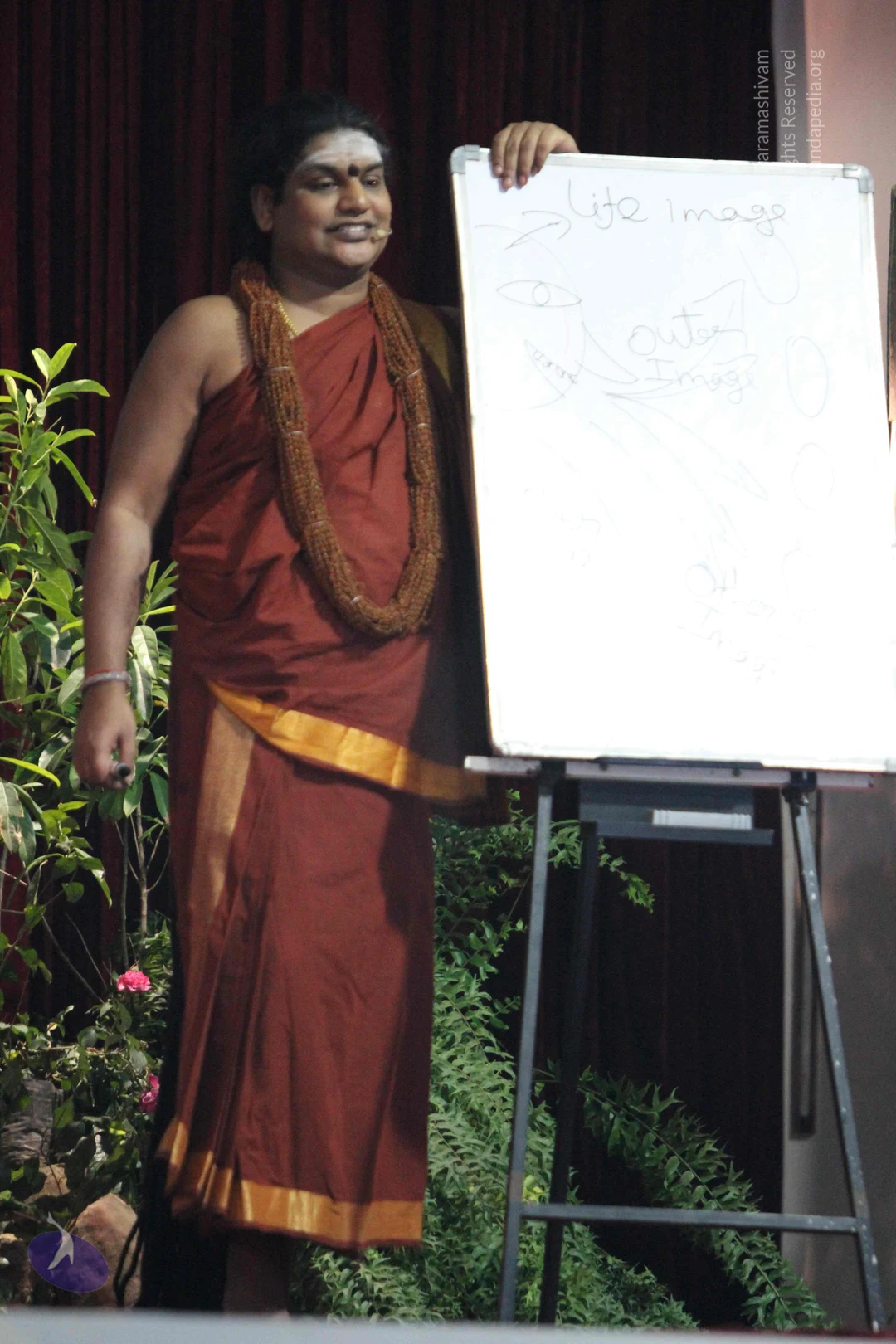
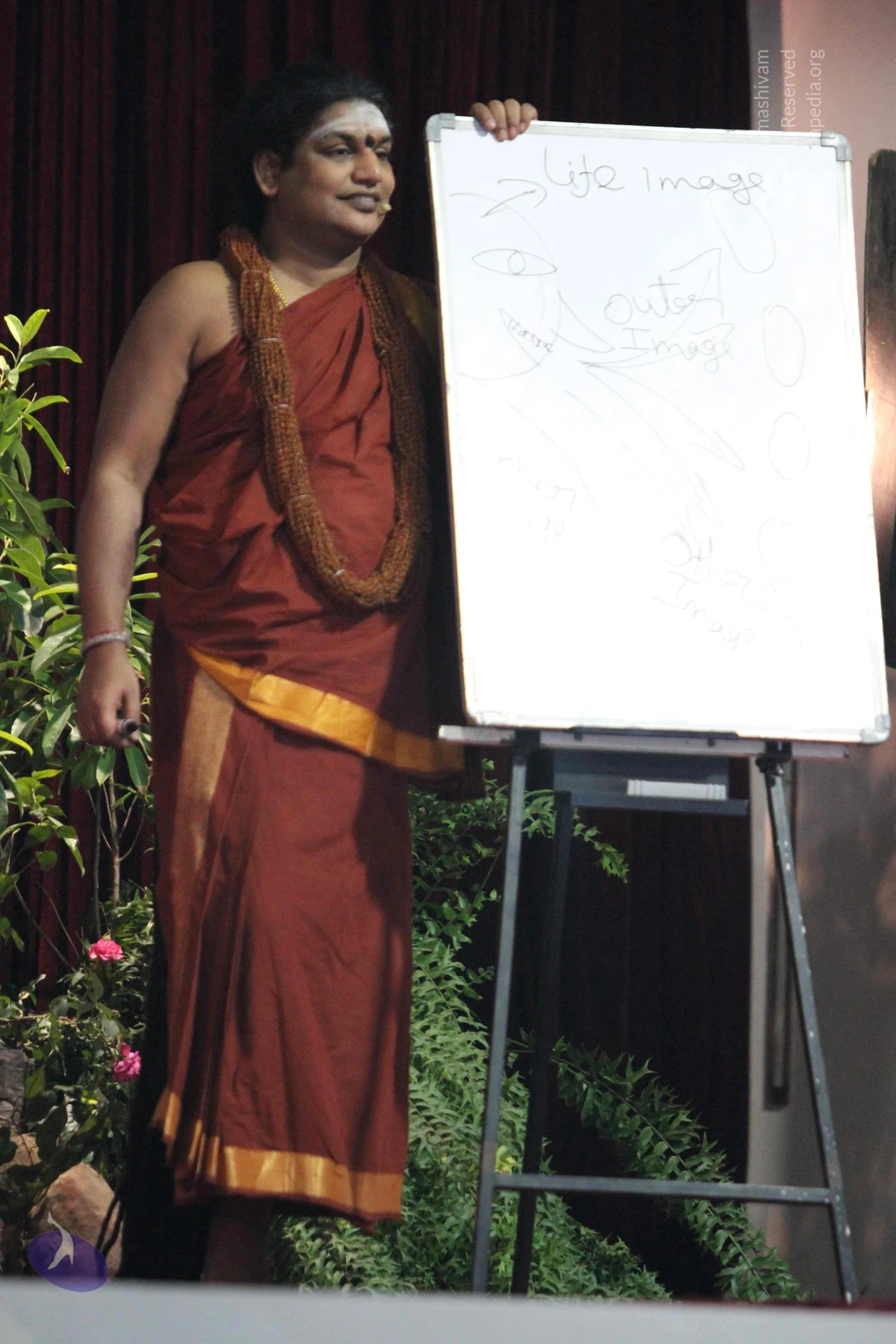
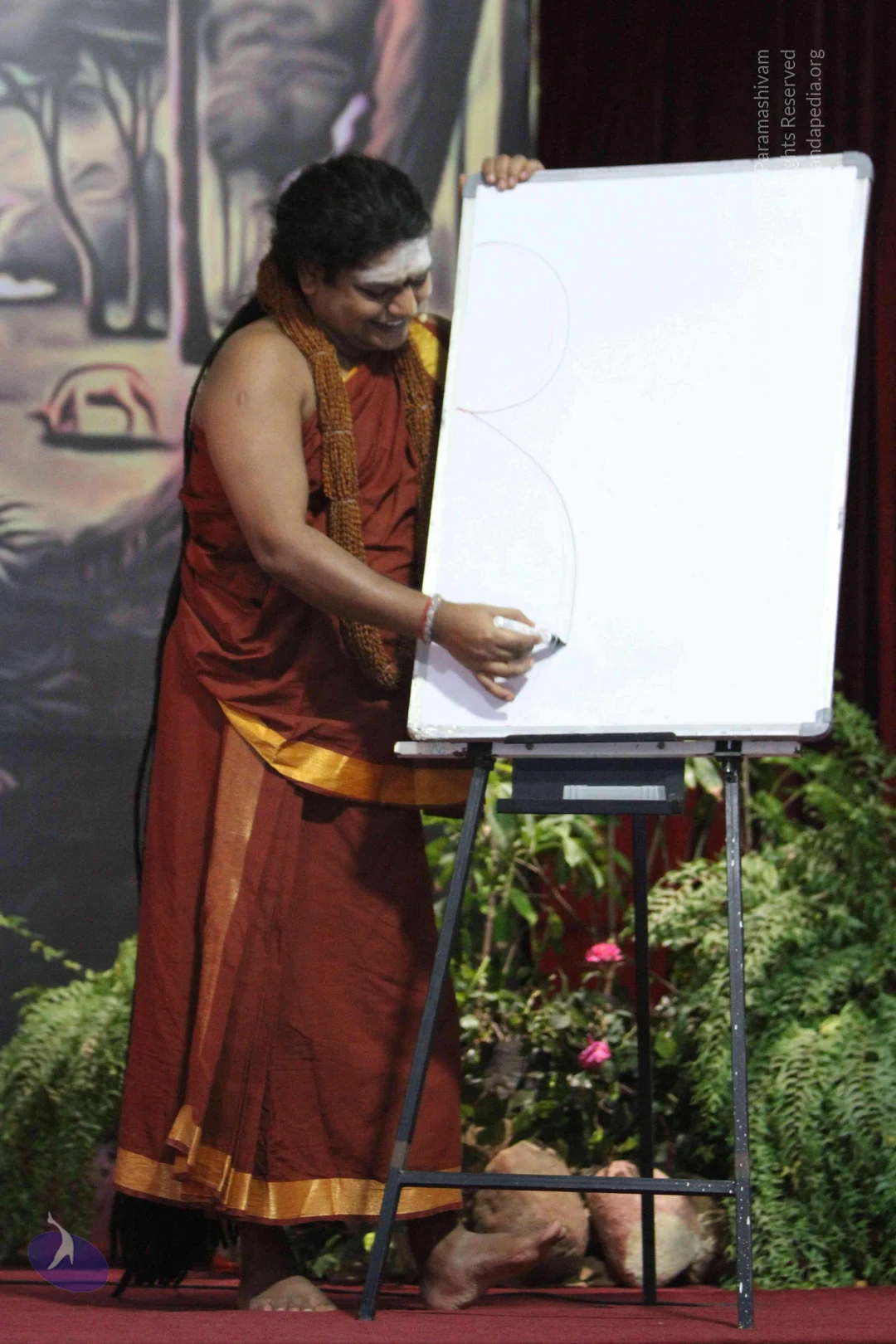
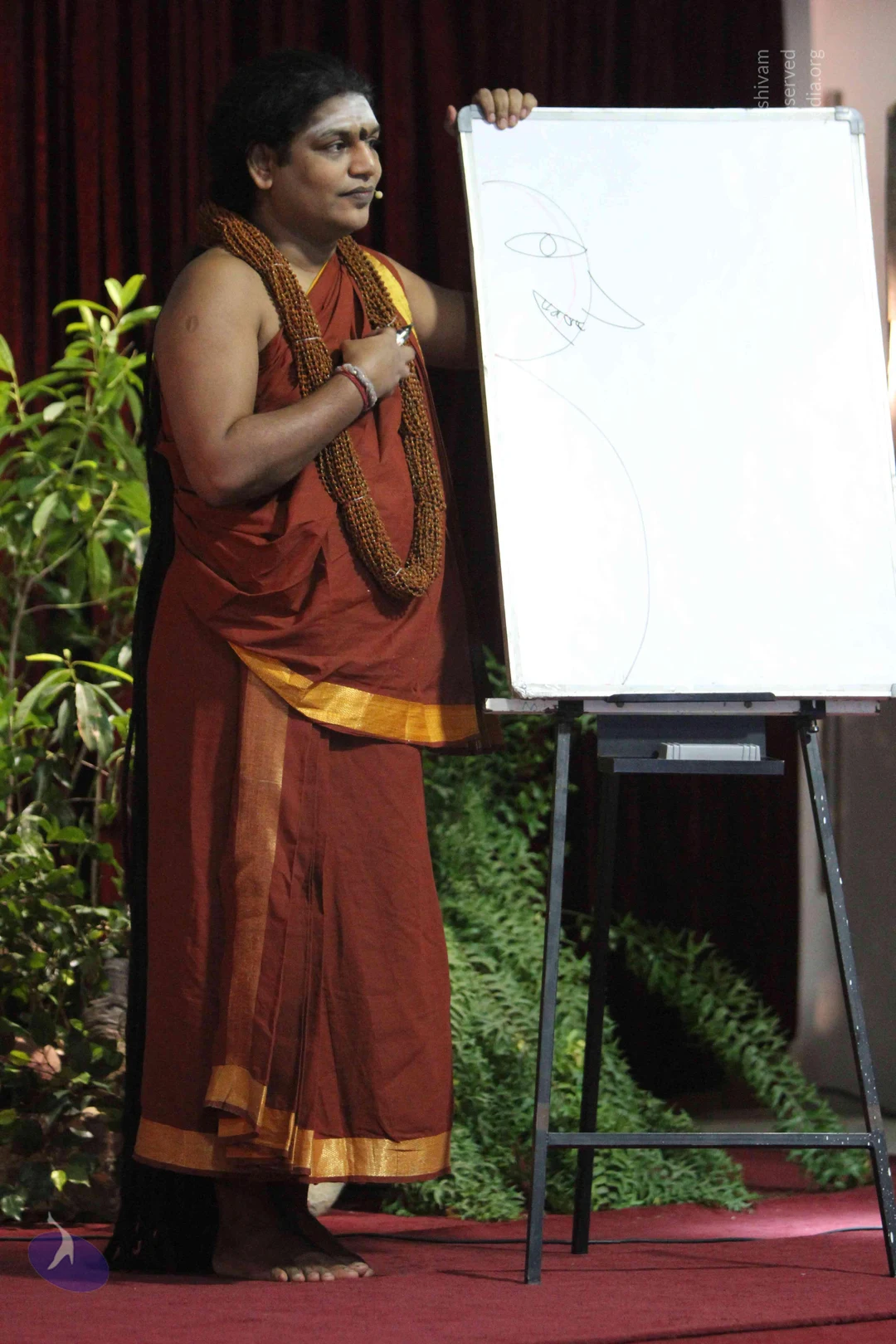
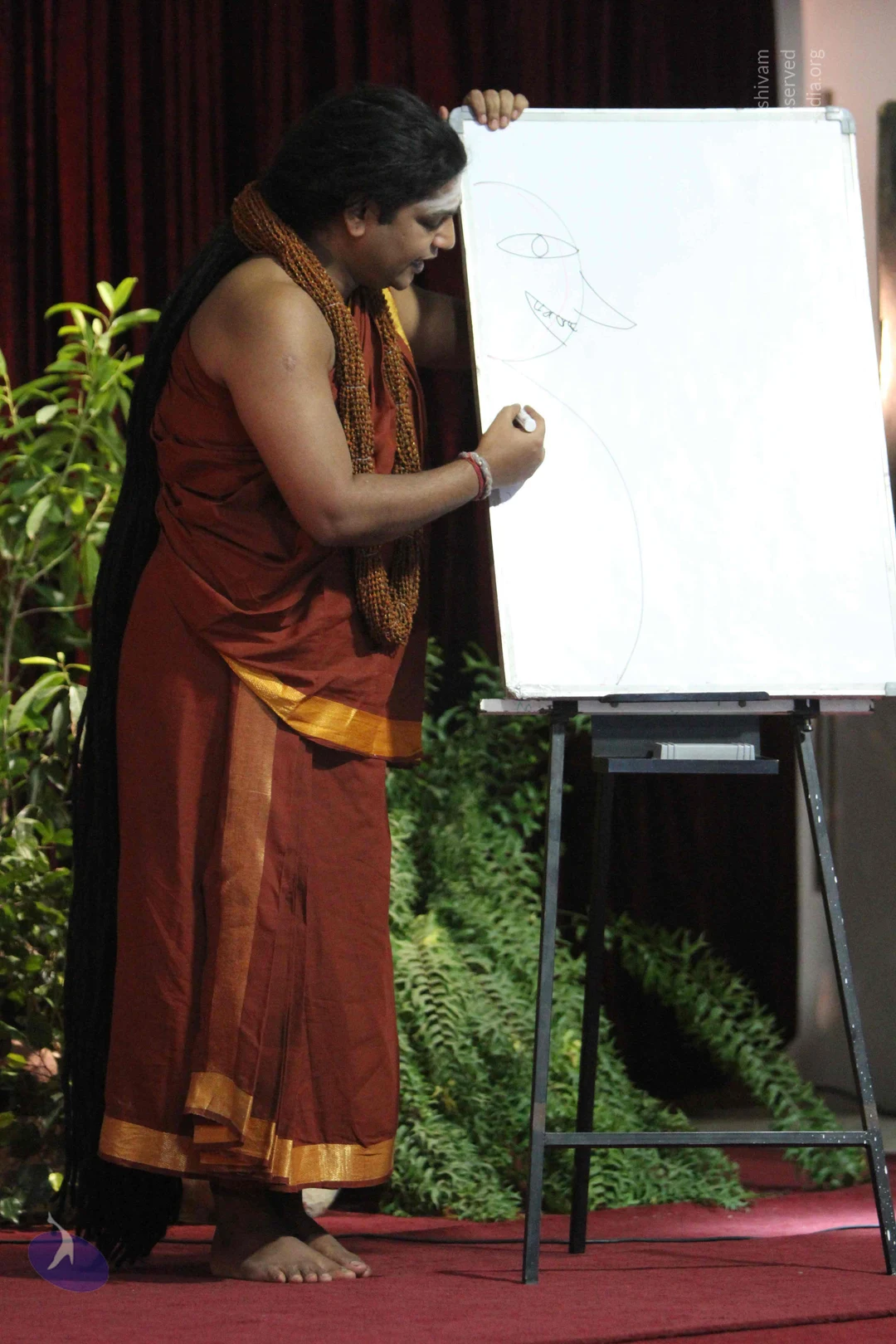
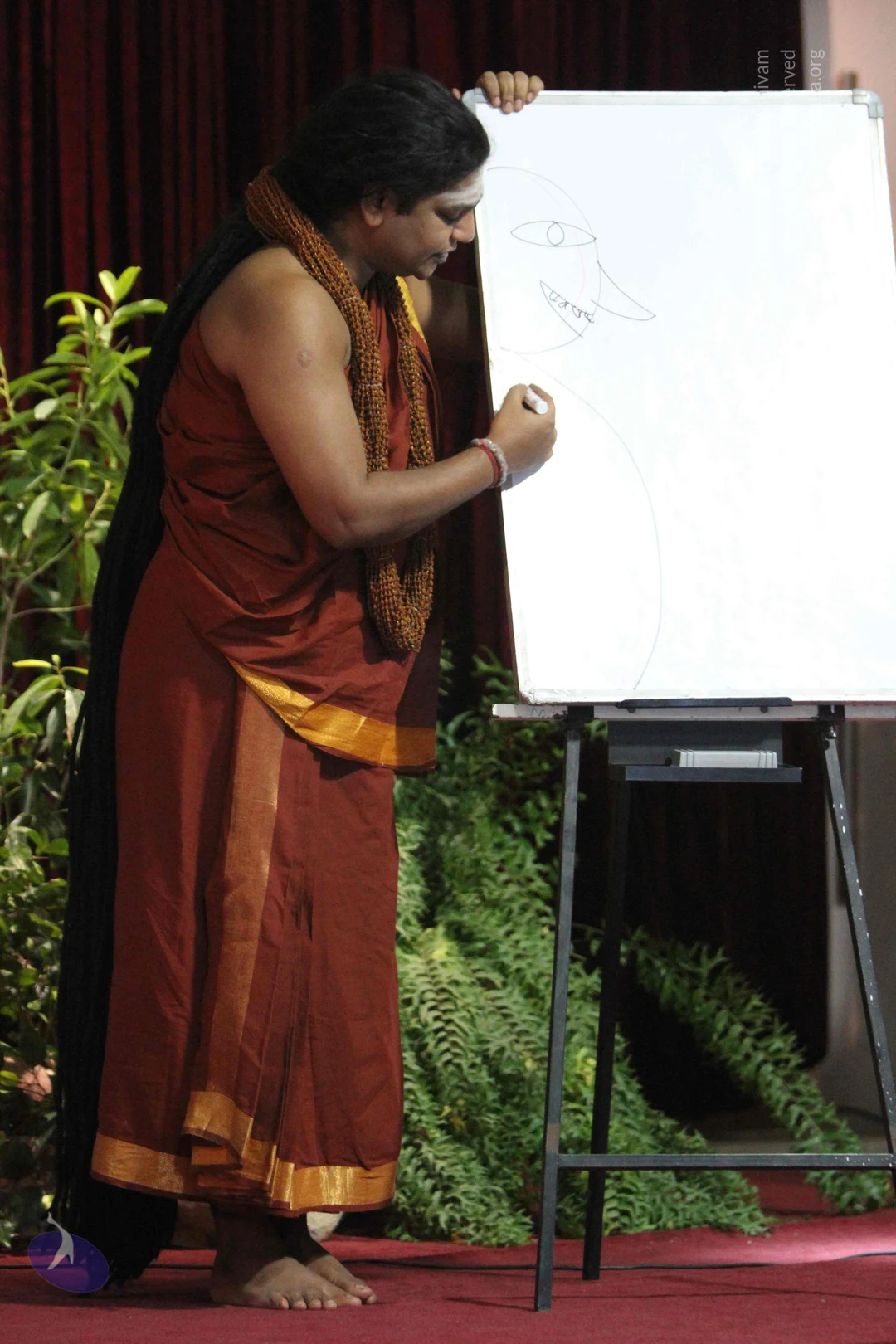
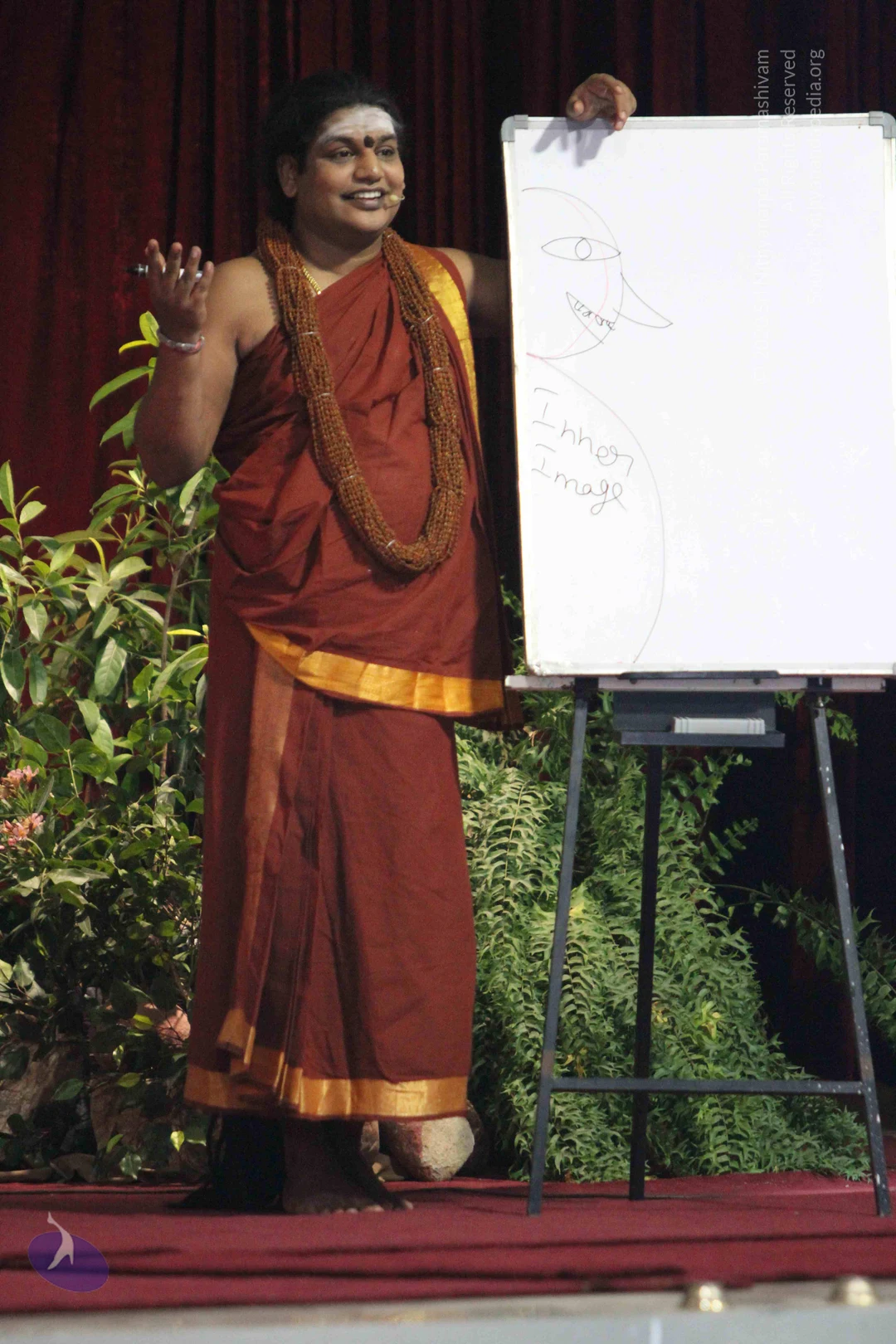
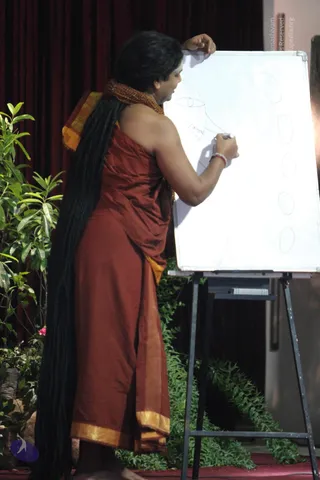
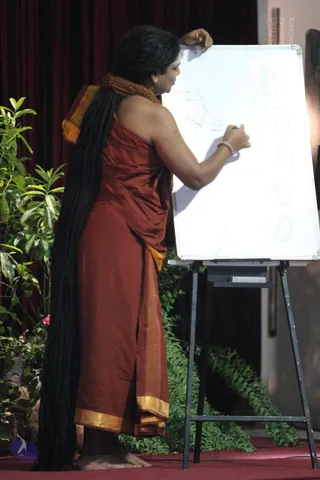
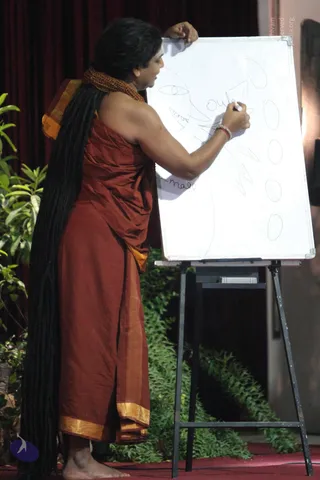
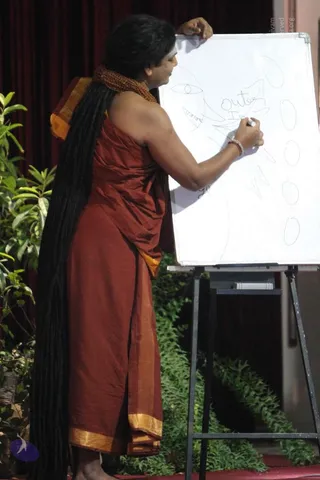
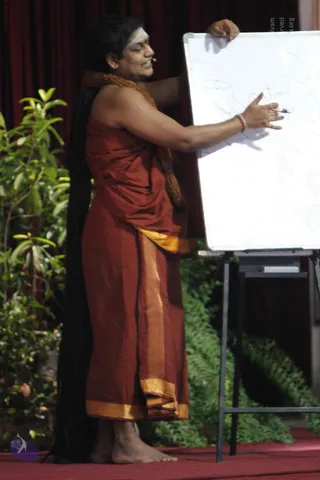
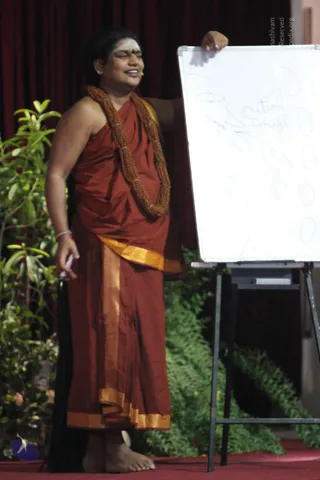
A photograph of a man with very long dark hair falling down his back, wearing a rust-red wrap with gold-bordered edges and a beaded rudraksha-style mala around his neck. He stands at a whiteboard on an easel, drawing with a marker in his right hand, while a red and white bracelet is visible on his wrist. Green potted plants and a dark red curtain frame the stage behind him. The whiteboard shows a sketched outline with an eye and oval shapes. Only one physical person is present. Appearance-based cues are distinctive (very long hair, mala, saffron-toned wrap), so the figure is labelled Swamiji (probable) as an in-person presenter at a teaching session.A barefoot person in a rust-red robe with a gold-bordered orange shawl stands on a stage, drawing on a white flip-chart board mounted on a tripod easel. Long dark dreadlocked hair falls down the back, and a beaded rudraksha-style mala is worn around the neck. The person's right arm is raised to the board holding a marker, with a red thread bracelet on the wrist.A photograph of a man with very long, dark, matted hair falling down his back, wearing a rust-red robe with gold-bordered edges and a beaded rudraksha-style mala around his neck. He stands barefoot on a red stage, writing with a marker on a white flip-chart board on an easel. The board shows a rough sketch of a face and the word 'Who' repeated down the right side in hand-drawn letters, with a partly visible word 'maa'. Red curtains and green foliage form the backdrop. The board is a teaching aid during a discourse.A person with long, loose black hair falling past the waist stands at a whiteboard on an easel, writing with a marker. He wears a rust-red draped garment with gold-bordered edges and a beaded rudraksha-style necklace in reddish-brown, and a red and white wrist band. Hand-drawn diagrams on the board include an eye, a face outline, the words 'Outer' and 'Inner' with arrows, and rows of circles. Potted green plants and a dark red curtain form the backdrop, and a small logo sits in the lower left corner.A barefoot person with very long black hair, wearing a rust-orange draped garment with gold borders and a rust-orange beaded rudraksha-style mala at the neck, stands on a red stage at a whiteboard on an easel, drawing with a red marker and gesturing toward the board. Green potted plants and a dark red curtain form the backdrop. A mic is clipped at the mouth. The whiteboard shows rough sketched diagrams.A person stands on a red-carpeted stage before a flip chart easel, smiling and gesturing toward a whiteboard-style sheet with hand-drawn sketches and the words "Outer Image" written in marker. The person wears a rust-red robe with a gold-toned border, a brown beaded rudraksha-style mala draped over the shoulders, and a white vertical mark on the forehead with a small red dot. Dark red curtains and green leafy plants form the background.

Evening-Satsang-Kenaupanishad

26 photosSource gallery
A seated man in a saffron-orange turban and matching robes sits eyes-closed in meditative posture on a throne draped with a striped tiger-skin cloth, with a golden trident standing to his left and a microphone before him. Rust-orange rudraksha malas hang around his neck. Behind him is a large painted backdrop of a four-armed deity seated on a white cloth with a bull beside, flanked by painted seated sages in red. The man appears to be a person giving a satsang or discourse, with long dark hair falling over the throne. One person is physically visible.A photograph of a seated figure in a saffron-red turban and red-orange robes, with a rudraksha mala draped over the shoulders, sitting cross-legged on a chair draped with a tiger-striped cloth. A microphone stands before him and a silver trident rests on a brass stand to the left. Behind is a large painted backdrop of a multi-armed deity with a crowned, hooded headdress, rudraksha garlands and a bull, flanked by seated sages in red. Only one physical person is visible.A seated man in a red-orange turban and saffron-maroon robes sits cross-legged on a throne draped with a tiger-striped cloth, raising his right hand in a blessing gesture while speaking into a microphone. A rudraksha mala with a long, saffron-trimmed shawl hangs around his neck, and a silver trident stands to his left beside a brass kalasha. Behind him is a large painted backdrop of a multi-armed deity murti with rudraksha garlands and several seated sages. The probable Swamiji's appearance matches the page's claim: a turban, saffron clothing and rudraksha beads serve as the appearance cues, and he is shown as the speaker in this talk setting.A photograph of a seated man in a saffron-red turban and red-orange robes, wearing long rudraksha malas, sitting cross-legged on a tiger-skin-draped throne and gesturing with one raised hand while speaking into a microphone. A tall brass trident stands to his left and a brass kalasha-style vessel sits at the base. Behind him a large painted backdrop shows a four-armed deity murti with a crown, rudraksha garlands and a bull, flanked by seated sages in orange. Probable Swamiji (probable) appears to be the speaker, identified by the saffron turban, rudraksha malas and throne setting, seated in a discourse setting.A seated man in a red-orange turban and saffron-red robe with gold-striped border sits cross-legged on a throne draped with a tiger-skin cover, smiling while speaking into a microphone on a stand. He wears a long rudraksha mala around his neck and holds a silver trident beside him. Behind him a large painted backdrop shows a multi-armed deity murti with a jeweled crown, rudraksha ornaments and a seated figure beside a white bull, with painted sages in red robes meditating in the foreground. A brass kalasha-style vessel sits at the lower left. The scene suggests a discourse or satsang on stage. Swamiji (probable): the seated speaker has long dark hair falling behind the throne, a red turban, rudraksha mala and saffron-red clothing, though the view is partly obscured.A seated man in a red-orange turban and matching saffron robes sits on a wooden throne draped with a tiger-skin cloth, smiling and holding a microphone. He wears a long rudraksha-style mala necklace and his hands rest folded in his lap. Behind him a large painted backdrop shows a multi-armed deity with a tall crown, rudraksha garlands and a cobra hood, seated on a cushion with a bull beside it, and robed sages in meditation appear along the lower edges. A silver trident stands to the left and a brass kalasha-style vessel sits at the bottom left. The seated man is a speaker at a discourse setting, and the appearance-based candidate cues are a red turban, saffron robes and a rudraksha mala, though his identity is uncertain.
Darshan-Introduction

111 photosSource gallery
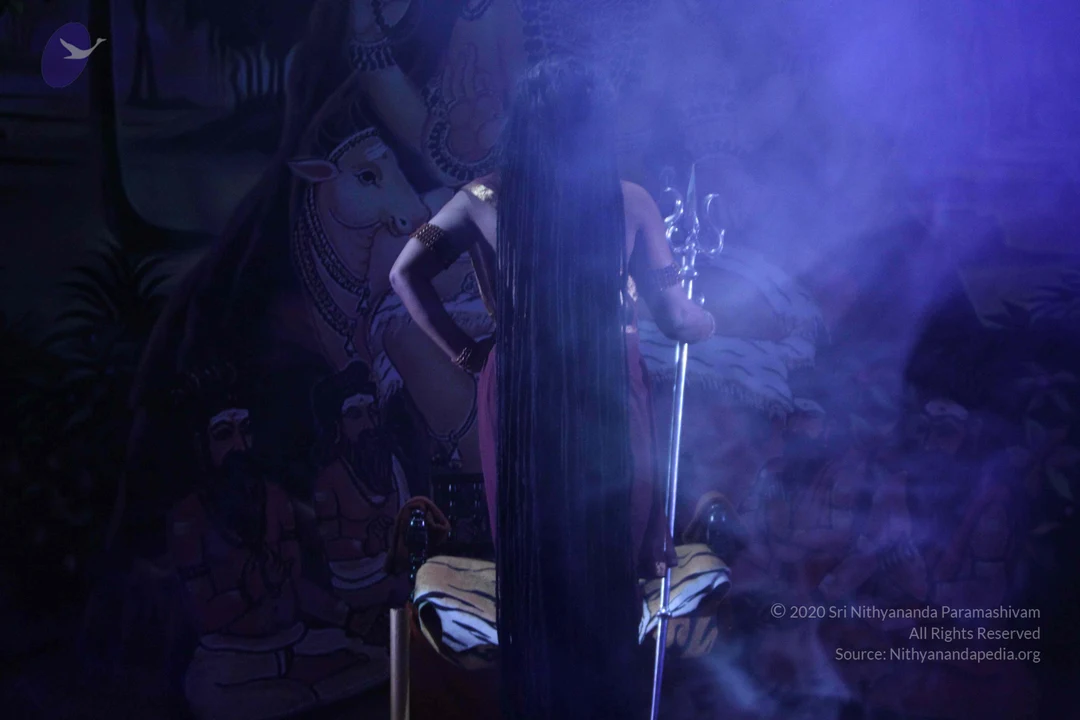
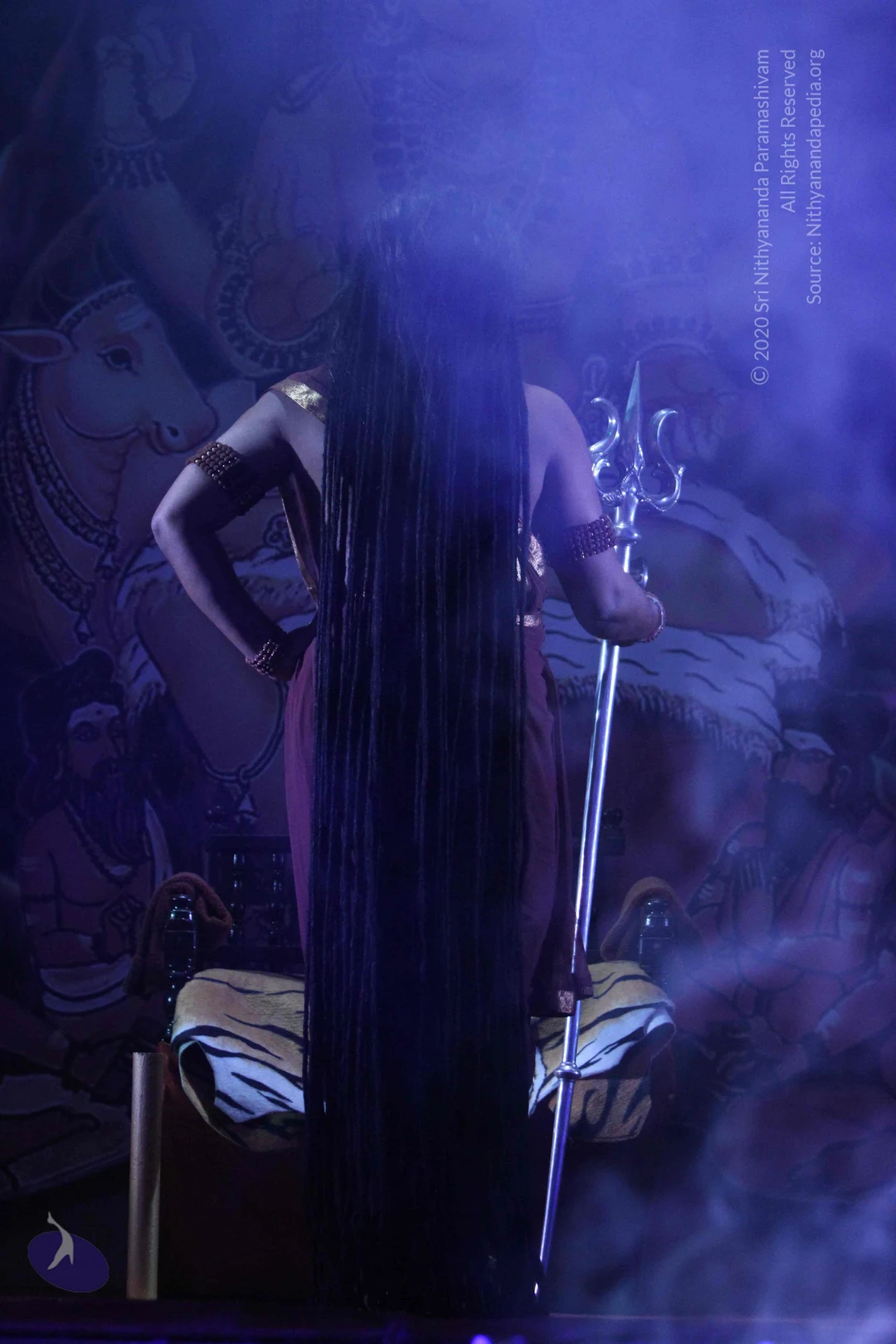
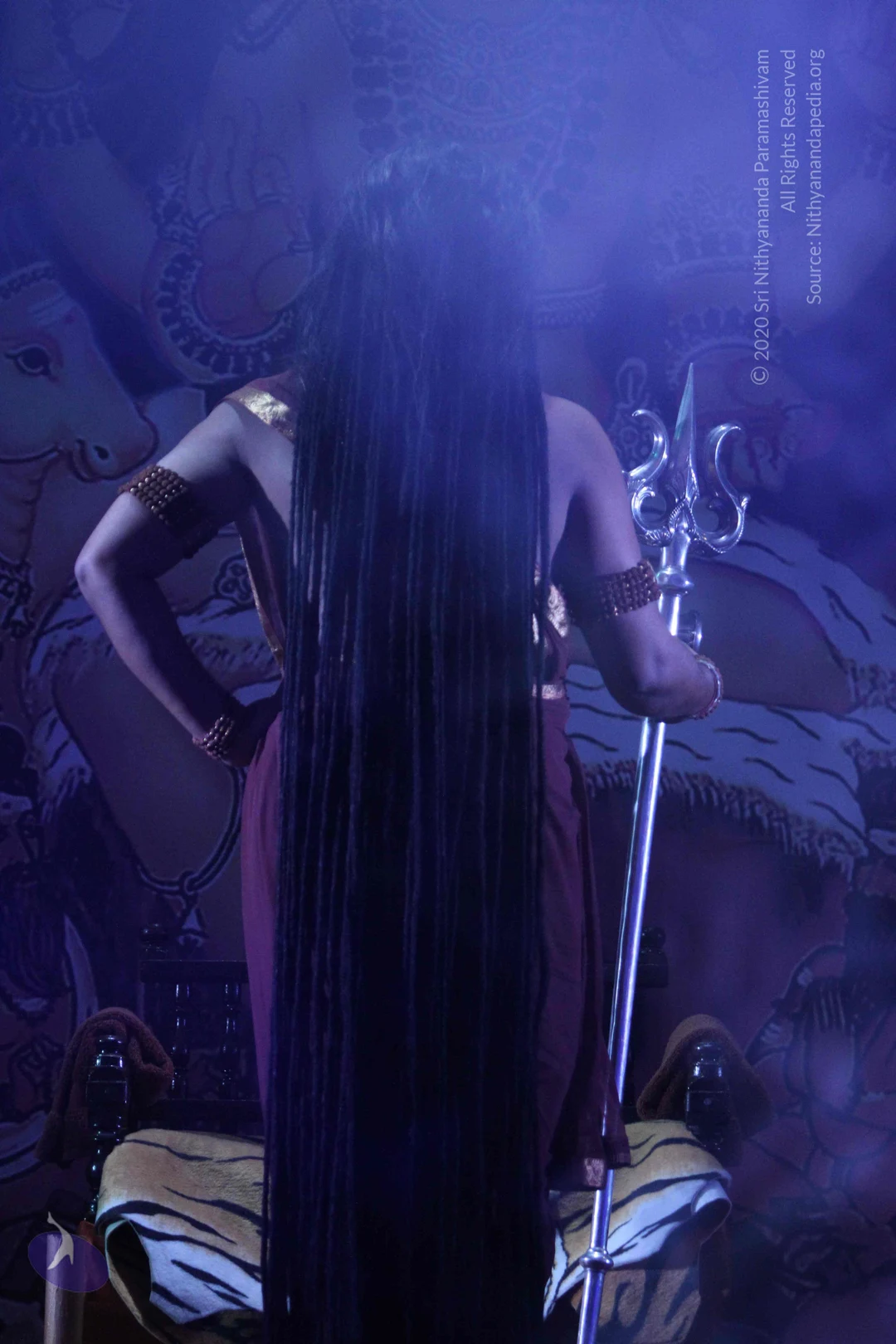
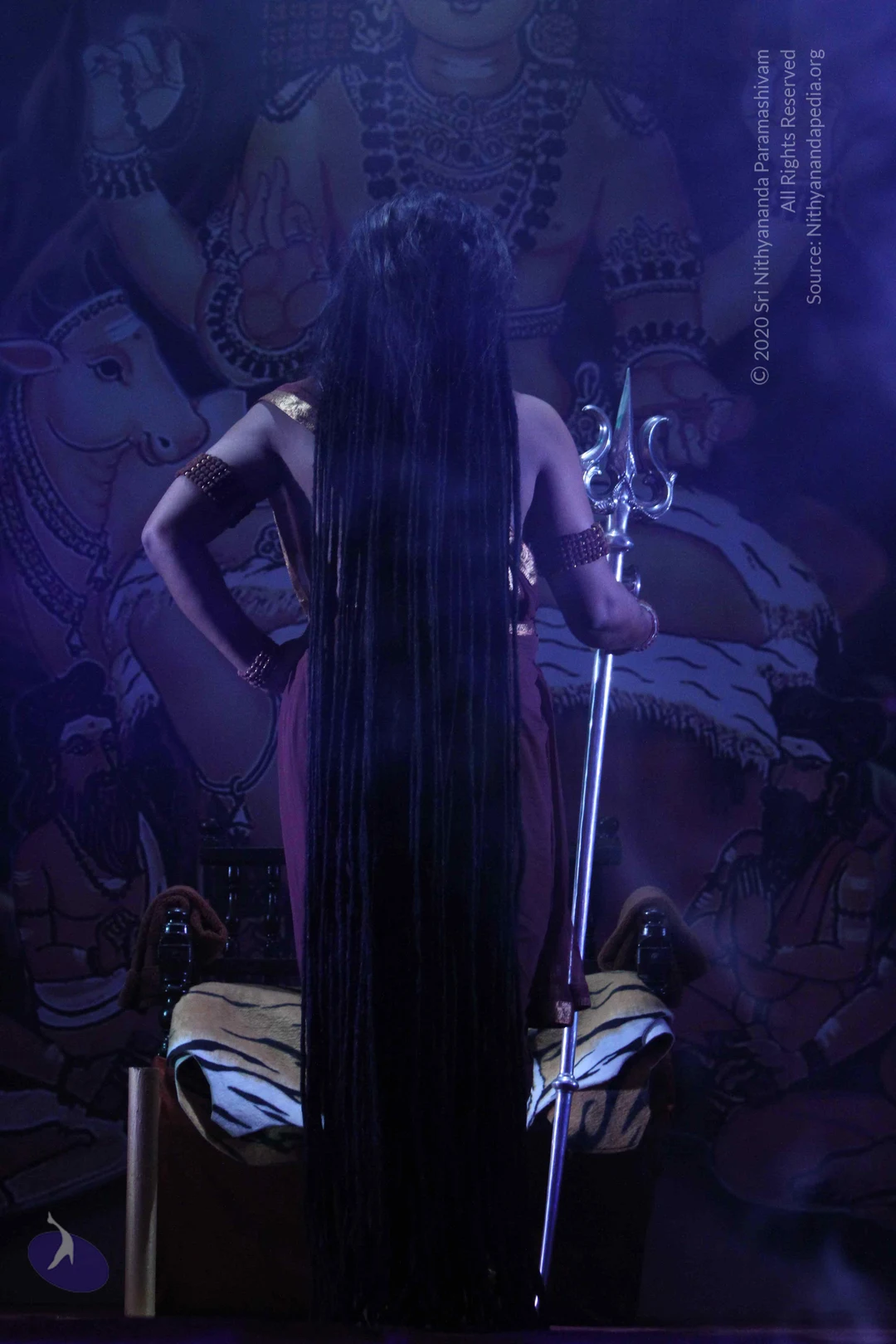
A dimly lit stage scene with a single performer seen from behind, wearing a dark red garment, gold armlets and bracelets, with very long straight black hair falling to the back. She holds a silver trident upright with one hand and rests the other on her hip, facing a large painted backdrop of a multi-armed deity with a crown, a bull and seated bearded sages in orange robes. Smoke or mist drifts across the stage, and a tiger-skin cloth is draped on a seat at the side.Dark stage photograph of a single performer seen from behind, with very long straight black hair falling to the waist. She wears a maroon garment with gold-trimmed borders, gold armbands, and holds a silver trident in her right hand while her left hand rests on her hip. Behind her a large painted backdrop shows a multi-armed goddess with a jeweled crown, bead necklaces, and a bull-like animal, surrounded by seated figures in orange robes. Smoky blue lighting fills the scene. A faint logo sits in the lower left corner.A figure seen from behind stands in blue-violet stage lighting and haze, with very long straight dark hair falling down the back. The figure wears a maroon garment, dark arm bands and a gold-toned upper-arm band, one hand on the hip and the other holding a silver trident. Behind is a painted backdrop of a bull and a large deity murti with a crown, and seated figures in maroon robes sit in the dim foreground. The figure appears to be a performer in costume, and no clear a person appearance cues are visible from behind.A photograph in deep blue stage lighting shows a single seated figure seen from behind, with very long straight dark hair flowing down to the floor. The figure wears a reddish-pink garment and dark beaded armbands, with one hand on the hip and the other holding a silver trident with a tall shaft. Behind them a large painted backdrop depicts a deity with multiple arms, a bull, and rows of seated devotees in meditative poses. The figure sits on a white and black striped tiger-skin seat, with a small light stand nearby. The scene is smoky and dim.A photograph taken from behind of a single standing figure with very long, straight black hair flowing down the back, holding a silver trident (trishul) upright in the right hand while the left hand rests on the hip. The figure wears a reddish-brown garment, dark armbands and bangles, and a gold shoulder ornament. The stage is bathed in deep blue and violet light and smoke. Behind the figure is a large painted backdrop of a blue, multi-armed deity murti wearing a tall crown, a crescent moon, and a long rudraksha-style bead necklace, with a white bull and seated robed figures painted at the sides. A tiger-striped seat stands to the side. The figure's appearance does not clearly establish an identity, so no candidate is named.A person seen from behind in a blue-lit stage setting with heavy purple haze, long dark hair falling down the back, wearing a rust-red garment with gold trim and beaded brown armbands, holding a silver trident upright in one hand while the other hand rests on the hip. Behind them a large painted backdrop shows a white bull with a garland and a bearded figure, with a deity mural above. A tiger-skin seat and a small lamp sit in the lower left.

01-IA-Genesis-Of-Identity

1 photoSource gallery
A smiling man seated in a wooden armchair on a stage, eyes closed and laughing, wearing a deep red turban and a red shawl with a gold-bordered yellow edge. He wears a long rudraksha mala and a large gold ceremonial necklace with a bird-shaped pendant, and a tilak on his forehead. A silver trident stands to his left and a microphone is in front of him. Behind him is a large painted backdrop of a reclining figure and bearded sages in orange and red tones. Swamiji (probable): the seated man shows the qualifying cues of a red turban, rudraksha mala and ornate gold necklace while teaching on stage.

03-Darshan-Introduction

6 photosSource gallery
A photograph in deep violet-blue stage lighting with haze. A figure with long dark hair seen from the side and back holds a silver trident with a bare upper arm and beaded armlets, standing before a painted backdrop of a deity murti with a large face and ornate design.A photograph in heavy violet-blue stage lighting and haze shows a woman with long dark hair seen from behind and partly in profile, holding a silver trident at her right side. Behind her a large painted backdrop shows a deity figure with a tiger-skin motif and ornate jewellery. The figure is partly silhouetted and the scene is dim and smoky.A figure with long flowing dark hair stands in blue-violet haze, holding a silver trident (trishul) upright in the right hand. Gold bangles and armlets are visible on the arms. Behind the figure, a large stone or painted deity murti with an ornate necklace and carved features fills the background. The scene is dim and smoky, lit mainly by purple-blue light.A person stands in deep blue stage lighting holding a silver trident (trishula) upright in the left hand, the right hand resting on the hip. The figure wears a red-orange draped garment with a metallic border, multiple strands of beaded rudraksha-style malas and a bead necklace across the chest, and beaded bangles on the wrists, with white markings on the forehead. A slight smile is visible. The background is a smoky blue haze. Swamiji (probable): the long swept-back hair, rudraksha malas, orange-red draped clothing and trident are the qualifying cues. Lit by the blue stage light, the scene reads as a discourse or satsang setting.A figure stands in blue-violet stage light holding a silver trident with its tines pointing up, the shaft held in the right hand while the left hand rests at the waist. The person wears layered rudraksha-style beaded malas around the neck, a draped dark garment with a lighter striped edge, and beaded bangles on the wrist. A pale band marks the forehead. The background is dim and smoky, lit in blue. a person appearance-based label: long dark hair and rudraksha malas match the page's reference to a person, presented in the context of a Kena Upanishad inauguration session, so this is an in-person candidate with uncertain appearance cues.A dimly lit stage scene with a figure seated on a dark throne-like chair, raised right hand in a blessing or teaching gesture. The seated figure wears a maroon-brown robe with gold trim and a long garland of beads around the neck. A tall silver trident stands to the left on the stage floor, and blue-violet haze drifts across the foreground. Behind him a large painted backdrop shows a seated four-armed deity with a crown and beaded necklaces, flanked by forest trees and seated attendant figures. The scene is a stage setting with a seated speaker in dramatic blue light. a person: the seated figure has the ornate maroon robe and bead garlands of a teacher on a stage, but the face and features are too dim to confirm identity, so the appearance is uncertain.