Skip to content
Monday

17 February 2014

Dated photos
25
Source pages
1
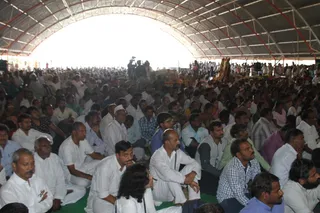
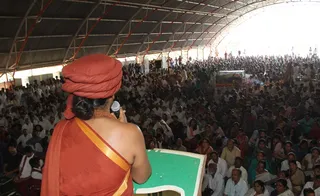
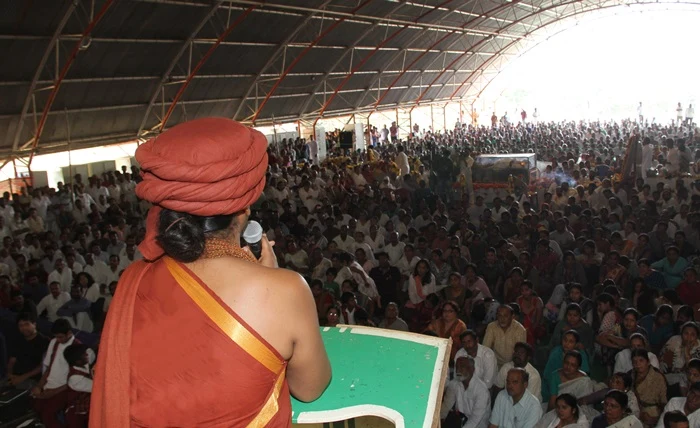
A photograph inside a covered hall shows a glass-topped casket draped in marigold and orange flower garlands, with a deceased man's body visible beneath the glass. Behind it, a line of sannyasis in saffron and orange robes stands with palms pressed together in namaskar, several wearing hooded head coverings. Seated devotees in white clothing sit in the foreground, some with hands folded, and a lit oil lamp rests among the flowers at lower left. The setting is a crowded sombre gathering paying respects.A large photograph of a seated crowd inside a long arched tent with a white fabric roof and metal framing. Hundreds of devotees sit cross-legged on green mats in rows, most wearing white kurtas and dhotis, while others wear checked shirts and pastel tops. Several men in front wear white caps and some sit with hands folded, facing a stage at the far end. Bright daylight enters through the open tent entrance. Some people stand at the back and along the sides of the gathering. The crowd is too dense and distant to count precisely, and the presence of a person cannot be visually confirmed in this image.Photograph taken from behind a speaker standing at a green podium in a large open tent with a curved roof. The speaker wears a saffron-orange turban, an orange shawl with a yellow edge, and a rudraksha-style beaded necklace, and holds a handheld microphone. Facing them is a vast crowd, mostly seated on the floor in white and light-coloured clothing, with many women in saris and some people standing in the back near the entrance. The scene appears to be a satsang or discourse assembly. The speaker's face is not visible, so the appearance-based identification is uncertain.

February 17 2014

Original wiki page
Contents

Description:

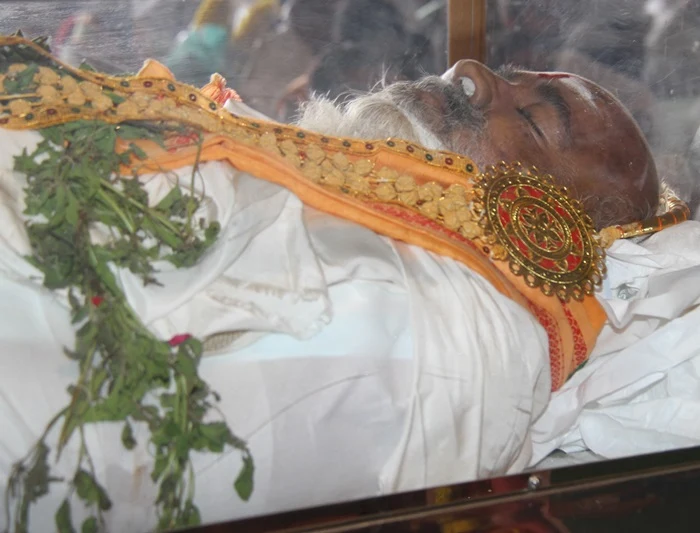
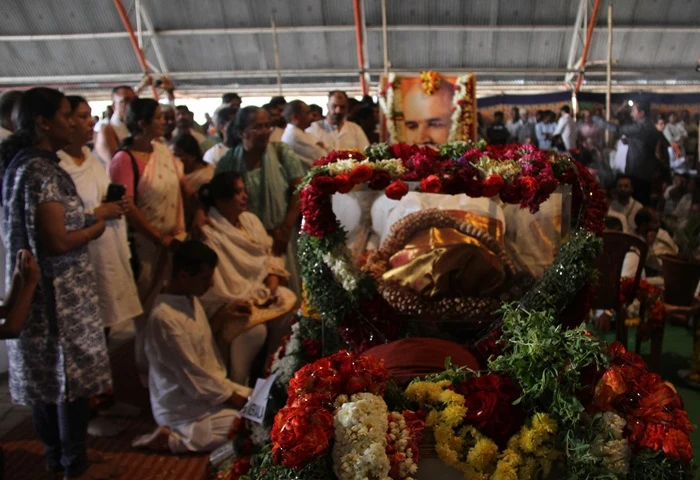
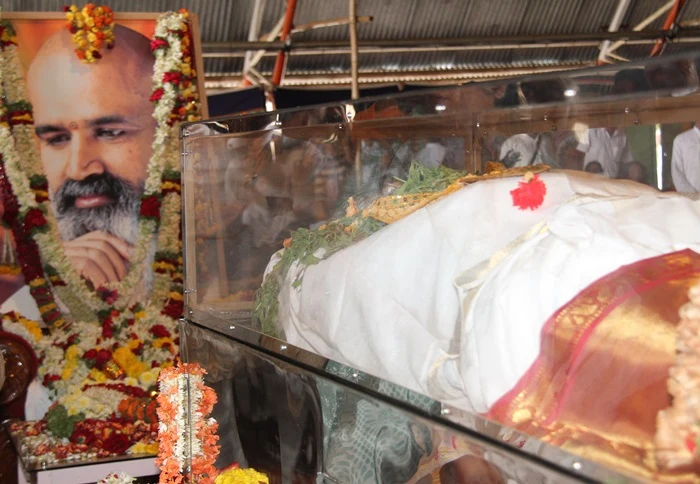
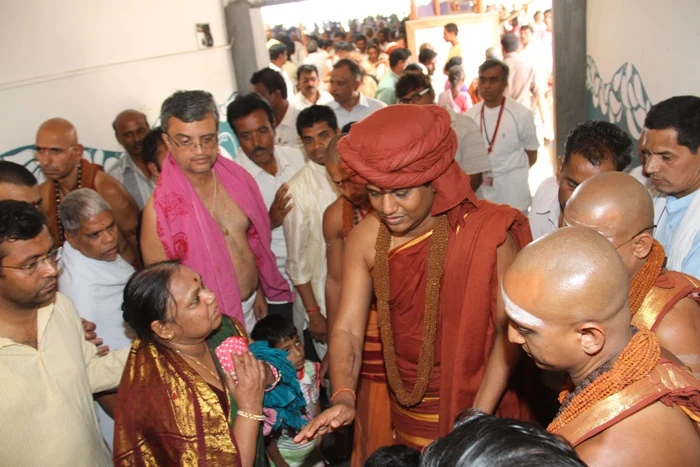
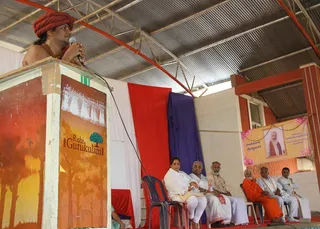
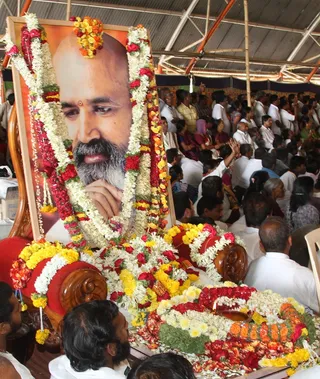
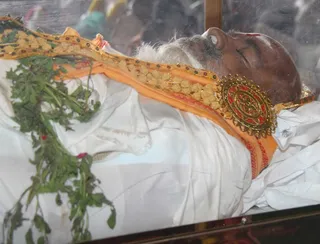
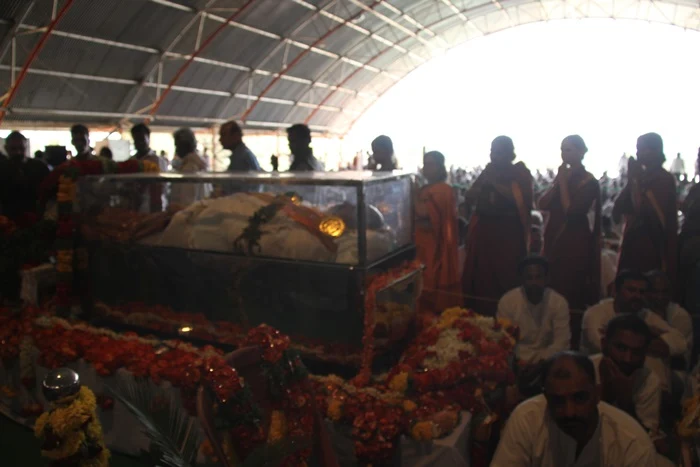
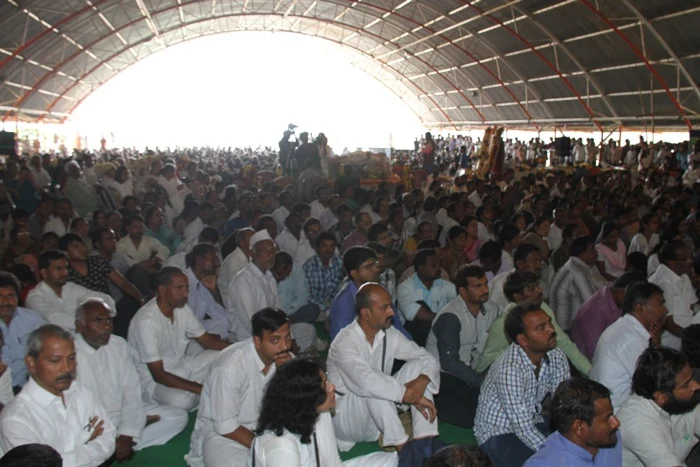
The day's routine started with the Monday morning Rudrabisheka followed by devotees and disciples offering PadukaPuja to Swamiji. A recorded Satsang was played today as Swamiji, Ashramites and the Inner Awakening participants went to pay respect to Sri Rishi Prabhakar who left the body the day before. The 12th day of Inner Awakening program continued in the evening with the Nithya Yoga session and session by Swamiji.

Nithyotsava Brahmotsava

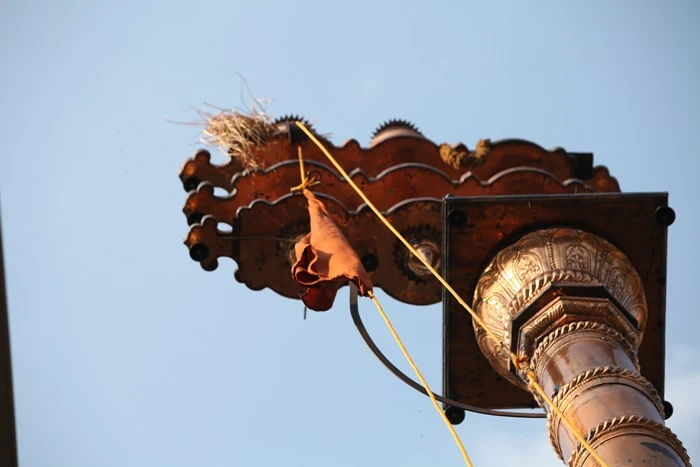
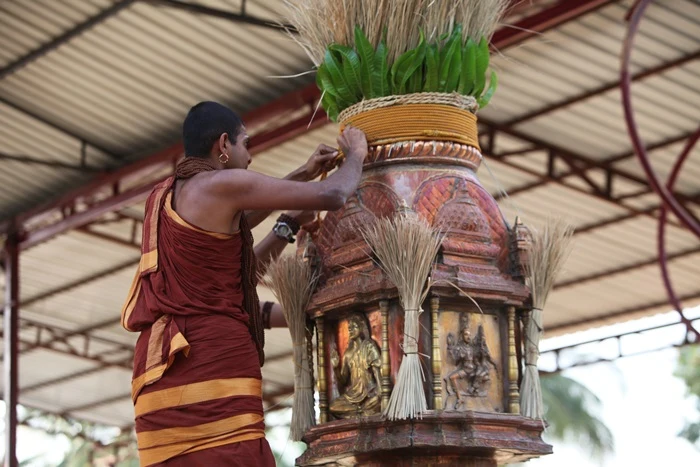
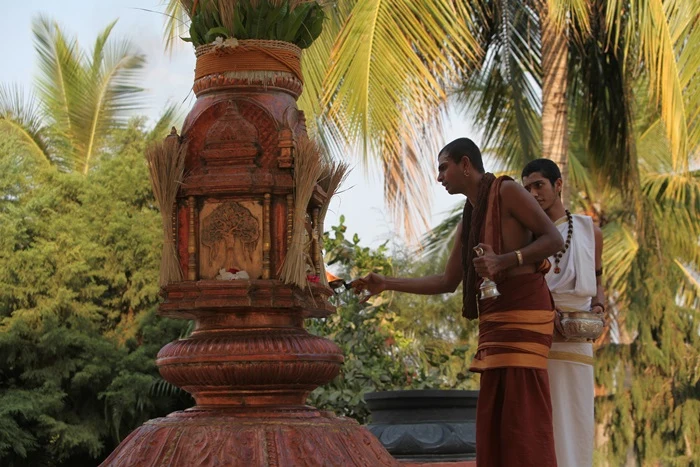
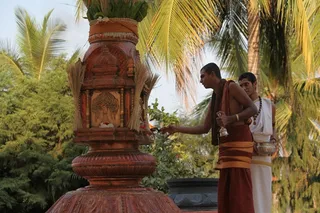
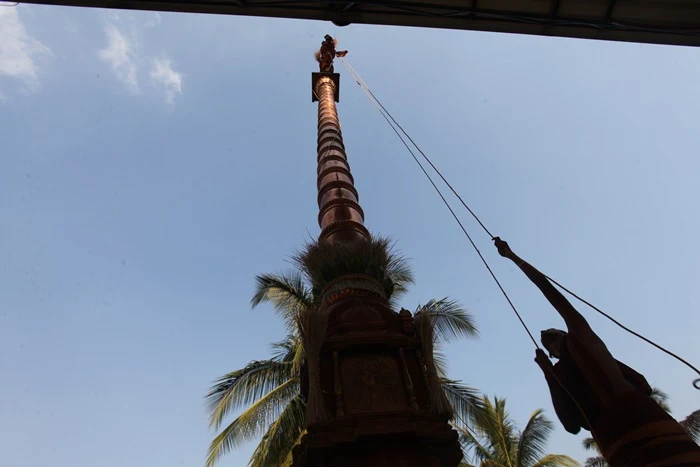
As the Rajarajeshwari Brahmotsava concludes the Nithyotsava (the eternal celebration) flag was hoisted by the Nithyanandeshwara Temple priest

Photos From The Day:

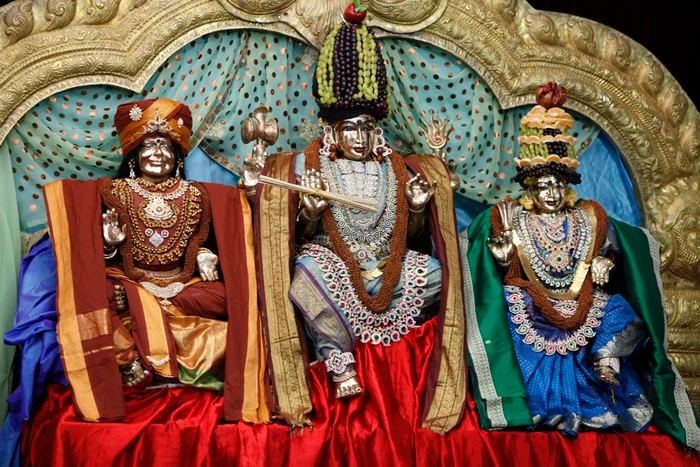
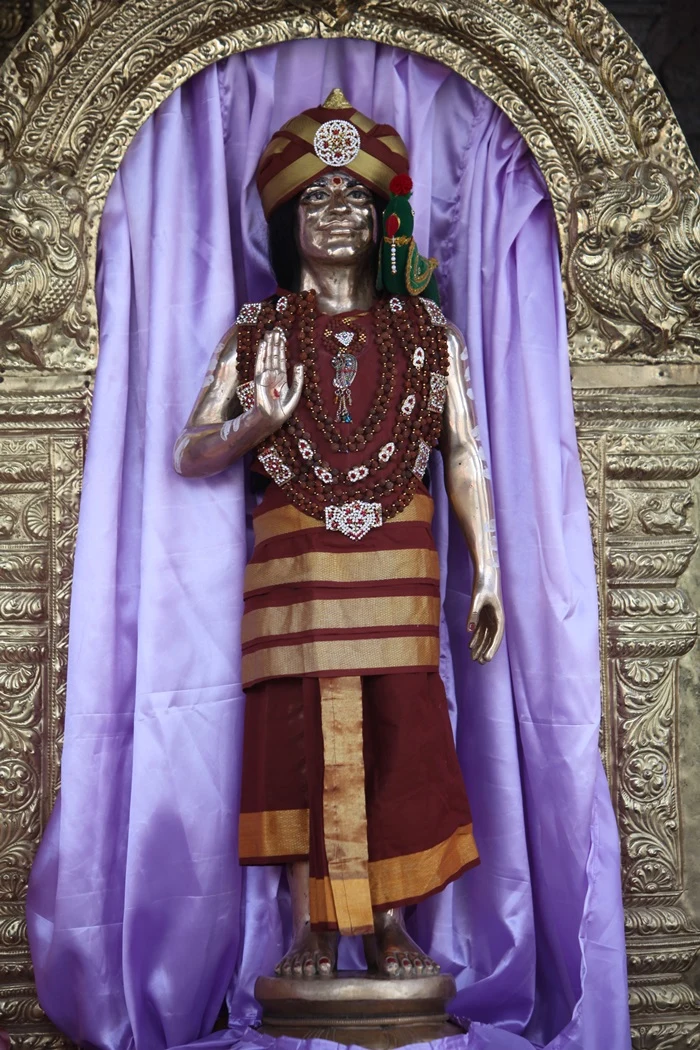
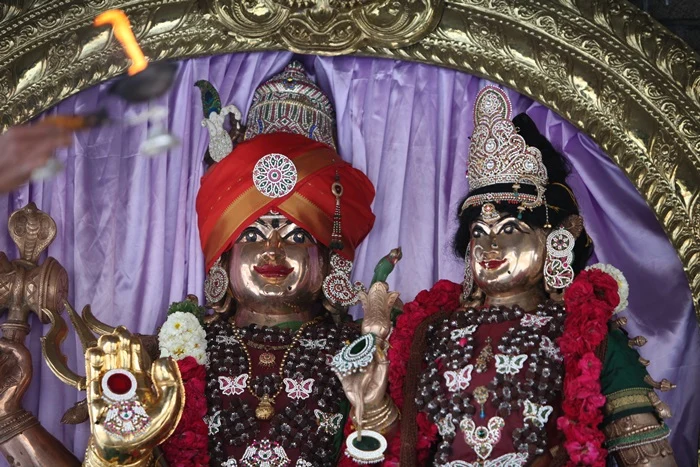
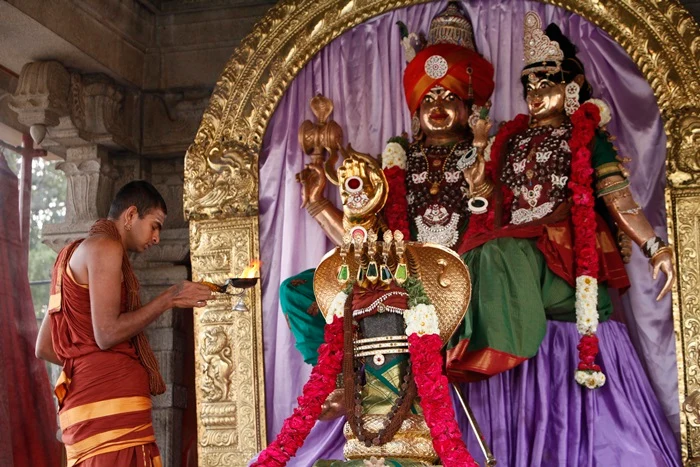
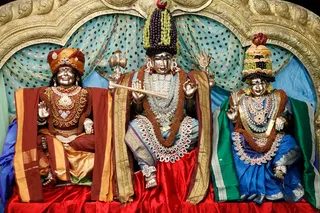
Leela Alankaram of the Day
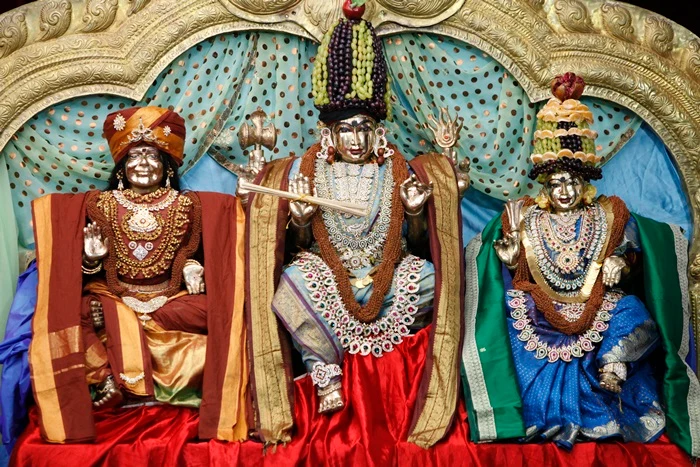
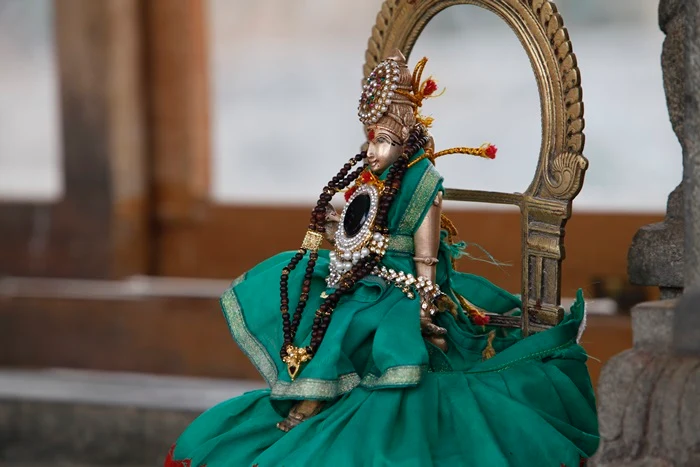
Devi's Leela Alankaram of the Day
Leela Alankaram of the day

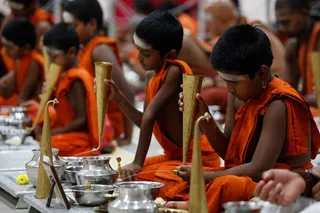
onday morning Rudrabishekam

Monday morning Rudrabishekam is being performed
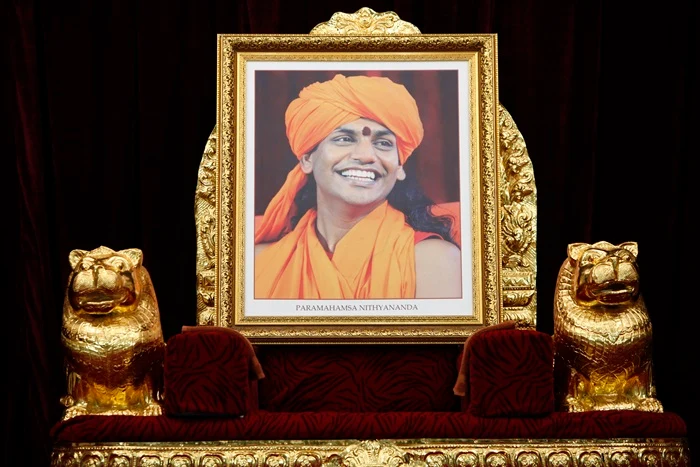
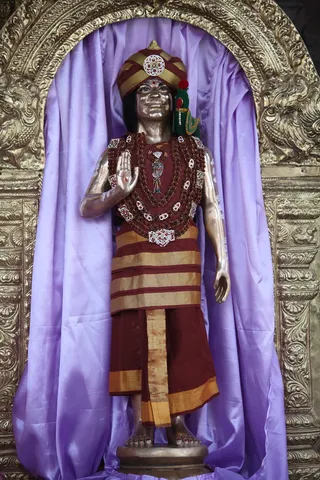
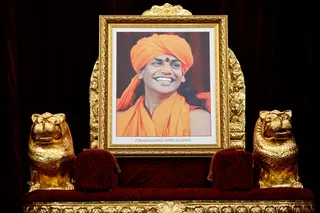
Gurumoorthi of Swamiji (Paramahamsa Nithyananda)

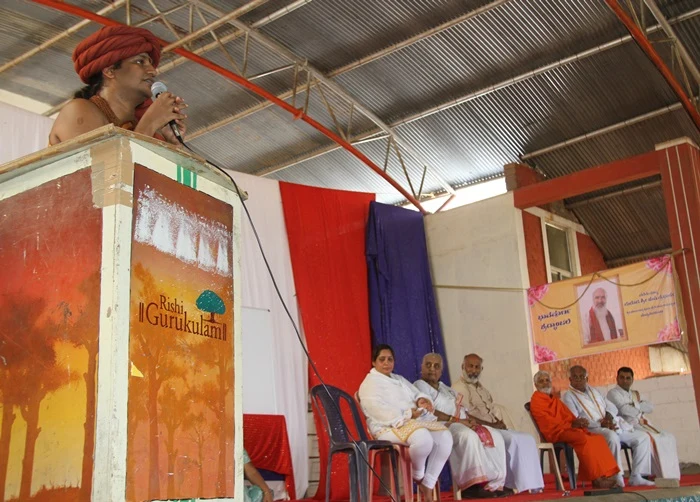
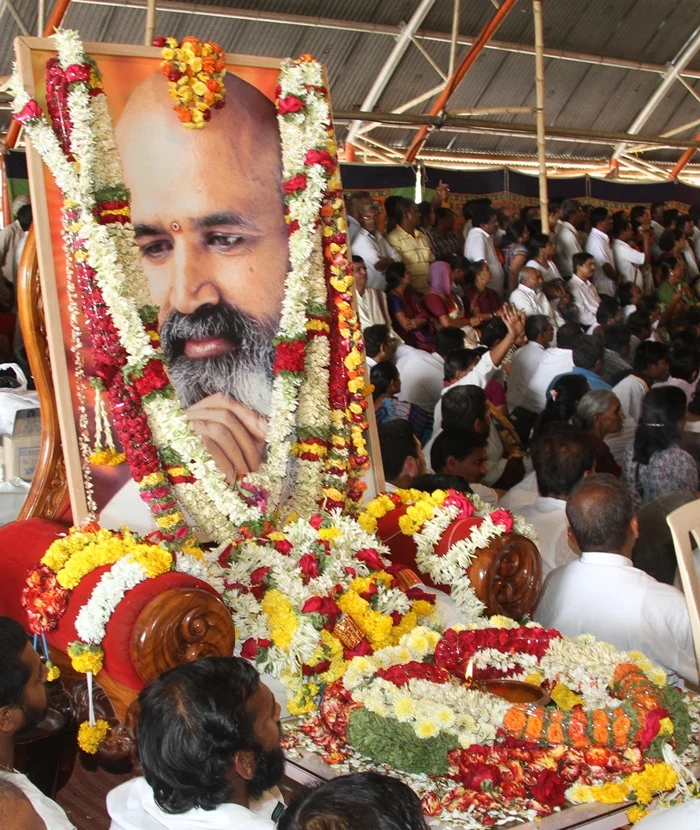
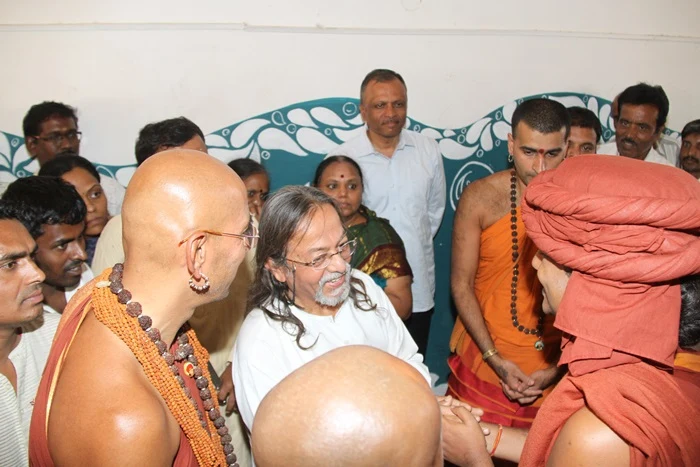
Sannyasis and devotees of Nithyananda paidrespect to Sri Rishi Prabhakar
Nithyotsava flag is hoisted by Temple Priest as the Rajarajeshwari Brahmotsava concludes

Temple Glimpses

Photos from this day

View all 25 photos

Sannyasis and devotees of Nithyananda paidrespect to Sri Rishi Prabhakar
11 photosSource gallery
A photograph inside a covered hall shows a glass-topped casket draped in marigold and orange flower garlands, with a deceased man's body visible beneath the glass. Behind it, a line of sannyasis in saffron and orange robes stands with palms pressed together in namaskar, several wearing hooded head coverings. Seated devotees in white clothing sit in the foreground, some with hands folded, and a lit oil lamp rests among the flowers at lower left. The setting is a crowded sombre gathering paying respects.A large photograph of a seated crowd inside a long arched tent with a white fabric roof and metal framing. Hundreds of devotees sit cross-legged on green mats in rows, most wearing white kurtas and dhotis, while others wear checked shirts and pastel tops. Several men in front wear white caps and some sit with hands folded, facing a stage at the far end. Bright daylight enters through the open tent entrance. Some people stand at the back and along the sides of the gathering. The crowd is too dense and distant to count precisely, and the presence of a person cannot be visually confirmed in this image.Photograph taken from behind a speaker standing at a green podium in a large open tent with a curved roof. The speaker wears a saffron-orange turban, an orange shawl with a yellow edge, and a rudraksha-style beaded necklace, and holds a handheld microphone. Facing them is a vast crowd, mostly seated on the floor in white and light-coloured clothing, with many women in saris and some people standing in the back near the entrance. The scene appears to be a satsang or discourse assembly. The speaker's face is not visible, so the appearance-based identification is uncertain.A man in a red-orange turban and bare upper body stands at a wooden podium with a microphone, speaking at an open-sided pavilion with a corrugated metal roof. Behind him hang red, purple and white drapes. A podium panel reads "Rishi Gurukulam" beside painted trees. Six seated people face him on a raised platform: a woman in white sari, several elderly men in white, and a man in an orange robe. A banner on the right shows a portrait labelled in Tamil script with the printed caption "Rishi Prabhakar" area text. Visible people are seven.A large framed portrait of a bald, bearded man with a small vermilion mark on his forehead is garlanded with red, white and yellow flower strands, set on a wooden stand with a red cushion. In front of it sit floral arrangements and offerings of marigolds, roses and green leaves. Behind the altar, a crowd of seated devotees in white and pastel clothing fills a covered hall under a corrugated roof. Several people in the foreground, some in white, sit near the offering. The portrait is a printed depiction rather than a person present in the scene.A photograph of an elderly man with white hair lying on his back inside a glass-fronted casket, eyes closed, dressed in a white cloth with an orange-and-red shawl edged in gold embroidery and a round gold-and-red ornamental medallion. Green leaves and a garland lie across his chest and shoulder. The glass panel shows reflections of people standing behind it.

Nithyotsava flag is hoisted by Temple Priest as the Rajarajeshwari Brahmotsava concludes
5 photosSource gallery
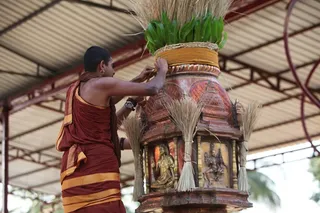
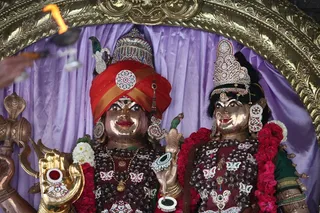
Low-angle photograph of a tall, tapering reddish-brown wooden dhwajasthambha flagstaff rising against a clear blue sky, with a gilded finial at its top and a palm fronds collar wrapped around its base. Ropes run up toward the top of the pole, and at the lower right a person's arm and shoulder, partly visible, grips the rope to hoist it. Palm trees stand behind the pole, and a dark canopy edge crosses the top of the frame.Photograph of a temple priest in a saffron-orange dhoti and matching wrap with a rudraksha-style cord, standing at left and tying or adjusting a green leafy garland and dried straw bundles on the top of a decorated brass-and-red temple kalasha or ornamental pot. The pot has carved figures of deities on its side panels. A corrugated roof with a red metal frame overhead. One person visible, no identifiable a person candidate with sufficient cues.Outdoor photo beside palm trees and green foliage showing a tall ornate red-brown ceremonial vessel with carved panels, topped by a green leafy bundle and straw bands. A shaven-headed young man in a rust-orange dhoti with a sash and a gold-banded waist cloth stands at the vessel, extending his hand toward it while holding a small bottle, as if performing a ritual sprinkling. Beside him, a second young man in a white dhoti and white upper cloth wears a beaded necklace and holds a small brass vessel. A dark stone basin sits behind them.A silver-toned standing statue of a sage-like figure in a gold-framed niche draped with lavender satin. The figure wears a maroon and gold turban with a green tassel, a dark brown and gold garment with a striped gold border, multiple strands of rudraksha or bead malas, and jewelled ornaments on the chest and arms. Its right palm is raised in a blessing gesture while the left arm hangs at the side. The statue stands on a base at a temple setting. No physical people are visible; the figure is a statue, so it is depicted rather than present in person.A photograph of two golden deity murtis decorated for a leela alankaram at a temple shrine. The left figure wears a red turban with white and gold ornaments, rudraksha malas and a gold chain; the right figure wears a tall ornate crown with jewelled earrings, rudraksha malas and a white-and-gold garland. Both are draped in red and white floral garlands, and a lilac curtain forms the backdrop beneath a gold arch. A brass lamp flame rises at the top left as a hand performs an aarti near the figures, and a brass ritual vessel with a kumkum-marked base sits at the lower left. No physical people are visible.

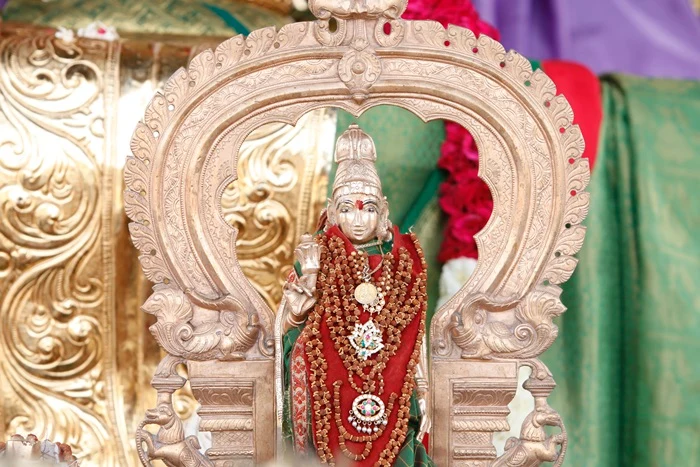
Temple Glimpses

5 photosSource gallery
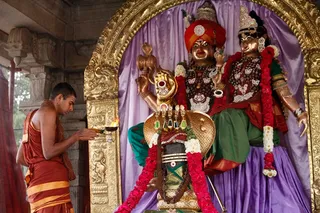
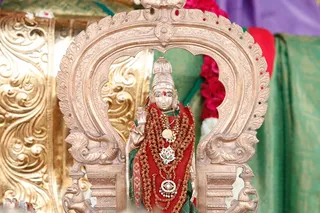
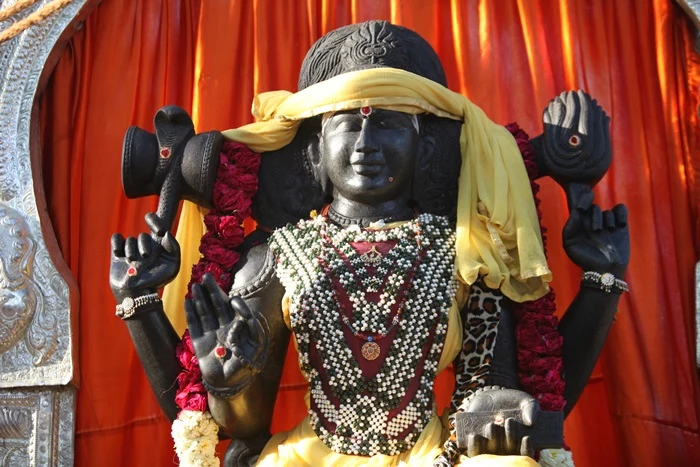
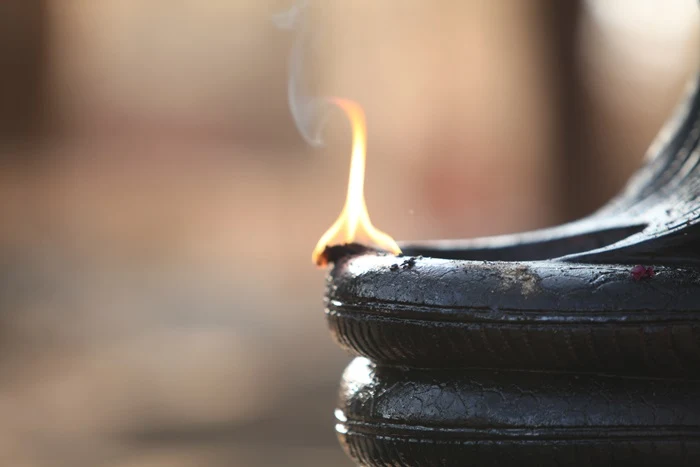
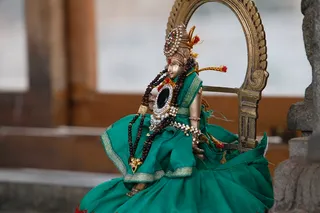
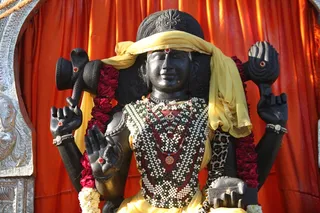
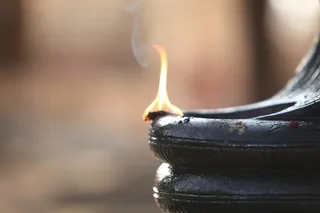
A temple priest in an orange-red dhoti and wrap stands at left, holding a lit oil lamp in his right hand toward a shrine. The shrine holds a large deity murti with a red and gold turban-like crown, gold-and-red adorned garments and a golden face. The figures are decorated with red and white garlands and jewelled ornaments, set against lavender drapery and gold-framed niches. A shivalinga-style form in front is draped with red and white flower garlands and a gold hood. This is an aarti scene in a temple sanctum.A metal deity murti stands within an ornate golden arched prabhavali frame, adorned with a red silk garment, layered rudraksha-style beaded garlands, and a jewelled pendant and chest ornament. The murti's right hand is raised in abhaya mudra. Behind it are green and red draped fabrics and red flower garlands, with golden carved panels at the left edge. No people are visible.A decorated deity murti seated in a green silk garment with gold-bordered edges, adorned with a silver and gem-studded crown, rudraksha mala beads, a large gem-set pendant and jewelled bangles. It sits before an ornate gold arch frame, with a red flower and kumkum marks visible, in what appears to be a temple setting.A dark stone or metal murti of a four-armed deity is seated before a red and orange draped backdrop. The figure wears a yellow cloth draped over its head and shoulders, a large beaded necklace of white and green beads with red stones, a red pendant, and garlands of red and white flowers. Its hands hold ritual objects and a small red dot marks the forehead. Ornate silver-toned metalwork frames the left edge. No people are visible in the scene.Close-up photograph of a single small flame rising from the rim of a dark, glossy, stacked metal oil lamp (deepam) in the foreground, with thin smoke curling upward. The background is a soft, blurred warm brown and orange. No people are visible.

February 17 2014

4 photosView all
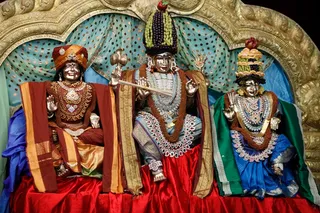
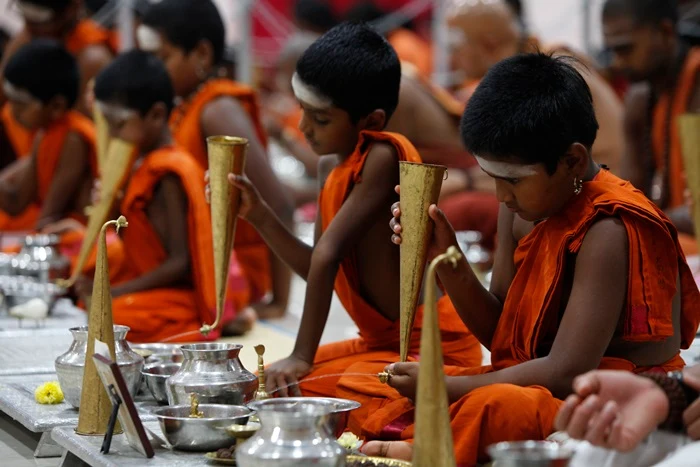
A framed portrait on a gilded stand is the central subject, set against dark maroon drapery. The printed portrait shows a smiling man in a saffron-orange turban and saffron-orange robe, with a red tilak on his forehead. Flanking the portrait are two ornate gold lion sculptures, and the shelf below holds maroon velvet cushions. The portrait is labelled "PARAMAHAMSA NITHYANANDA" along its bottom edge. No physical people are visible in the scene.Three silver-toned deity murtis are seated side by side on a red satin cloth in an ornate golden shrine with a blue and gold dotted backdrop, decorated as a Leela Alankaram of the day. The central figure holds a staff-like rod and a damaru-style hand gesture, wears a fruit-and-flower-decorated crown of grapes and bananas, and is adorned with beaded rudraksha-style garlands and jewelled necklaces. The figure on the left wears an orange-and-gold turban and orange-gold draped cloth with a ceremonial necklace, while the figure on the right wears a green-and-gold shawl, blue sari with gold border and a fruit-piled crown with jewelled necklaces. No physical people are present.Three ornately decorated murti figures seated side by side on a red cloth-covered platform before a gold-framed backdrop with turquoise and blue fabric. The central figure, painted silver-grey, wears a fruit-and-flower crown, a tall plumed headdress, layered beaded necklaces and a blue dhoti, holding a flute and a staff-like rod. The figure on the left wears an orange and gold turban, red-brown shawl and jewelled necklaces, while the figure on the right wears a green-and-gold shawl, blue sari-style garment and a tall fruit-topped crown with a flower. Garlands of rudraksha-like beads and ornaments drape all three. No living people are visible.A photograph of a group of young boys seated closely together, dressed in saffron-orange cloth draped over their shoulders, with white tilak markings on their foreheads. The nearest boy in the foreground holds a tall brass horn-shaped vessel upright, while another boy beside him holds a similar brass vessel. In front of them on a low table are polished steel and brass bowls, pots and small vessels, with a few yellow flowers scattered on the surface and a framed picture visible at the edge. Other boys in saffron robes sit behind them, and a partial view of seated adult feet appears at the lower right.