Skip to content
Monday

20 January 2014

Kalpataru Space of Possibility to fulfil your desires

Dated photos
304
Source pages
1
Media
2
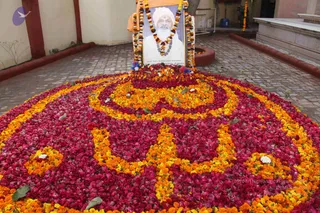
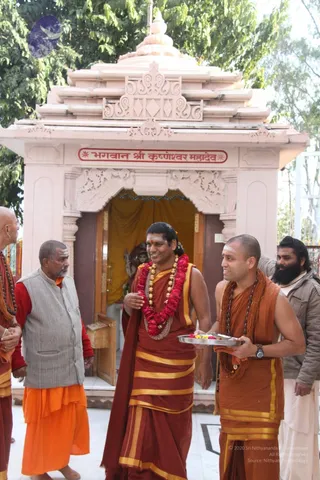
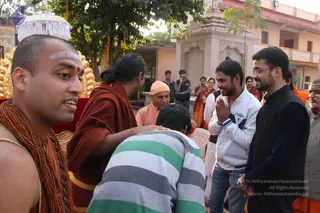
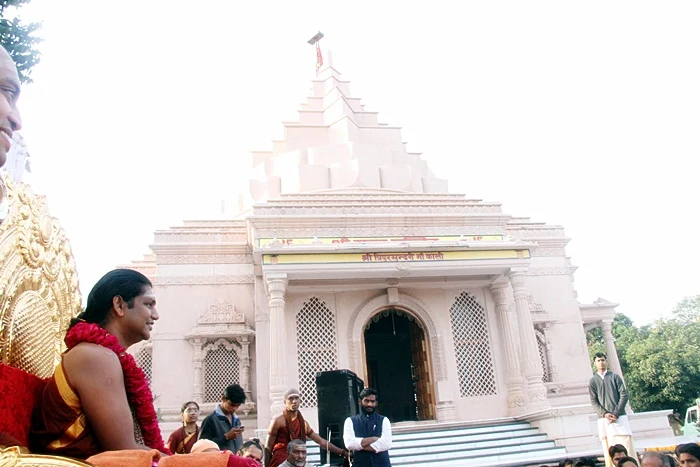
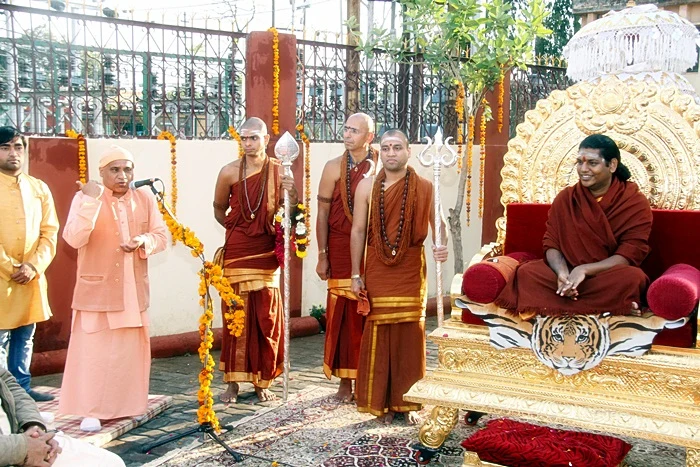
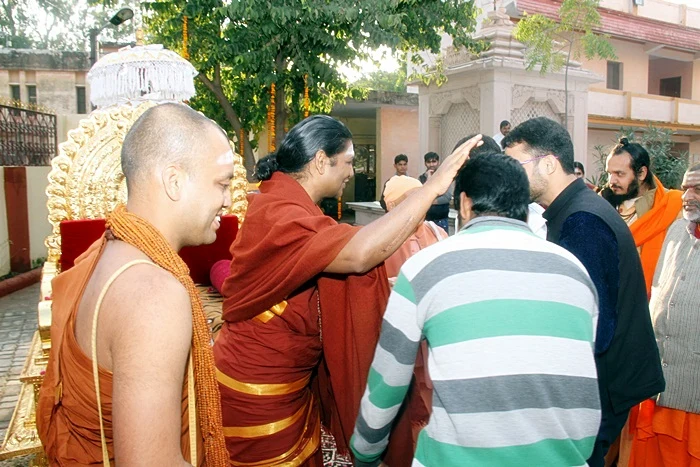
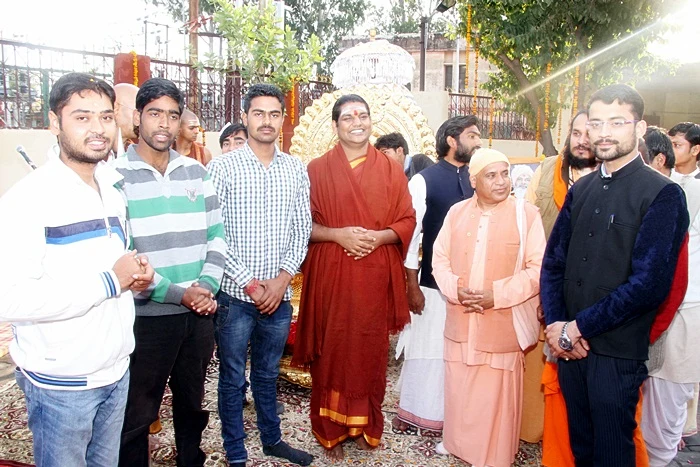
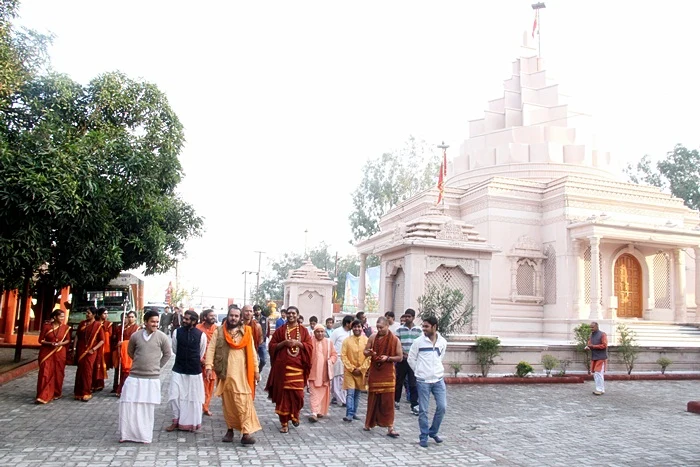
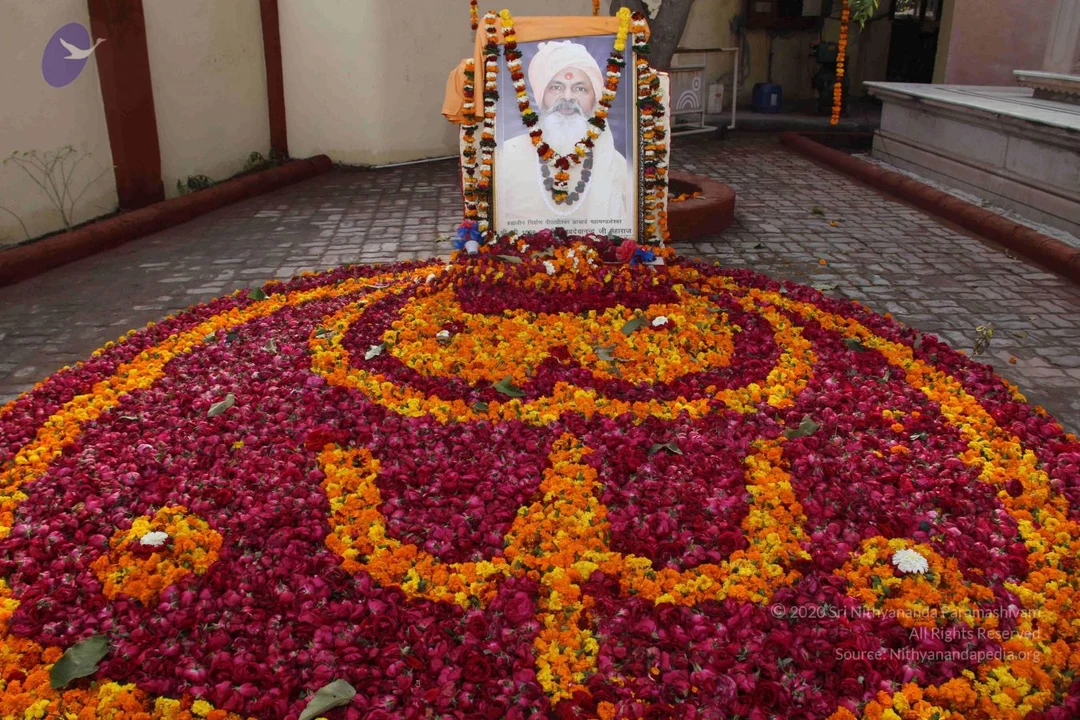
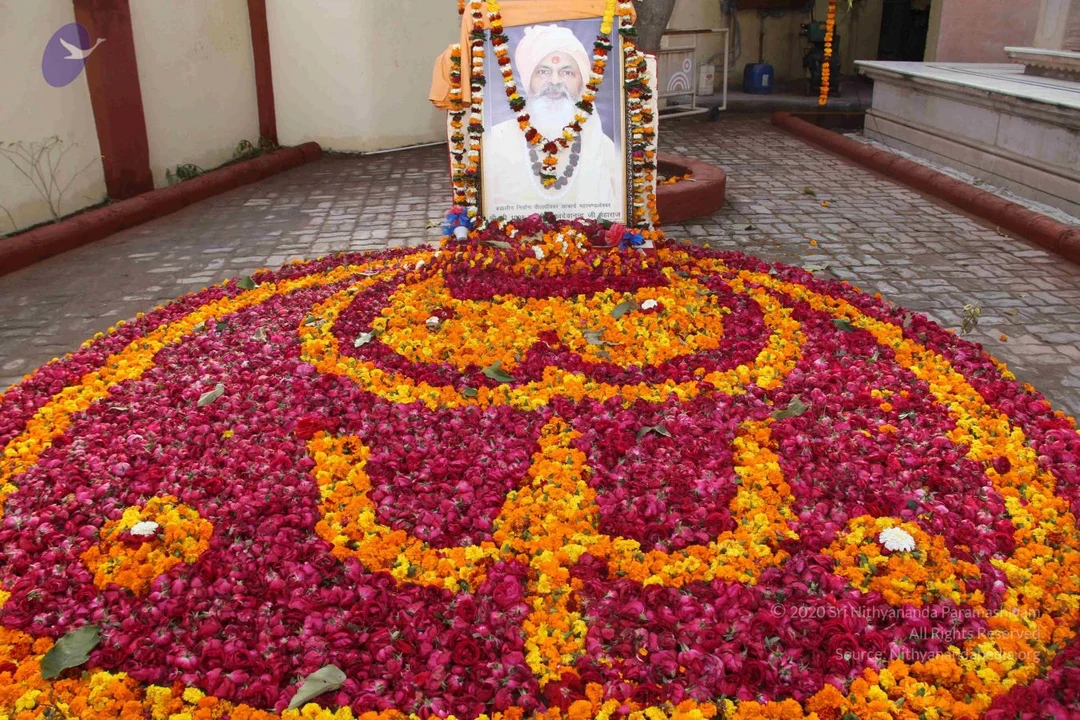
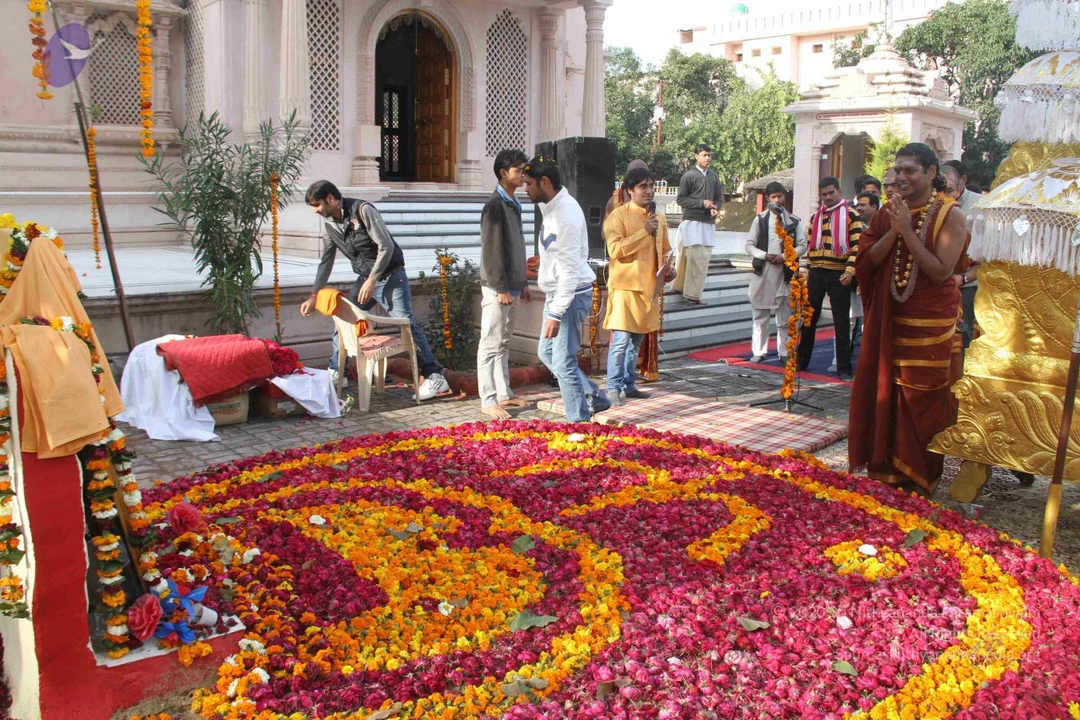
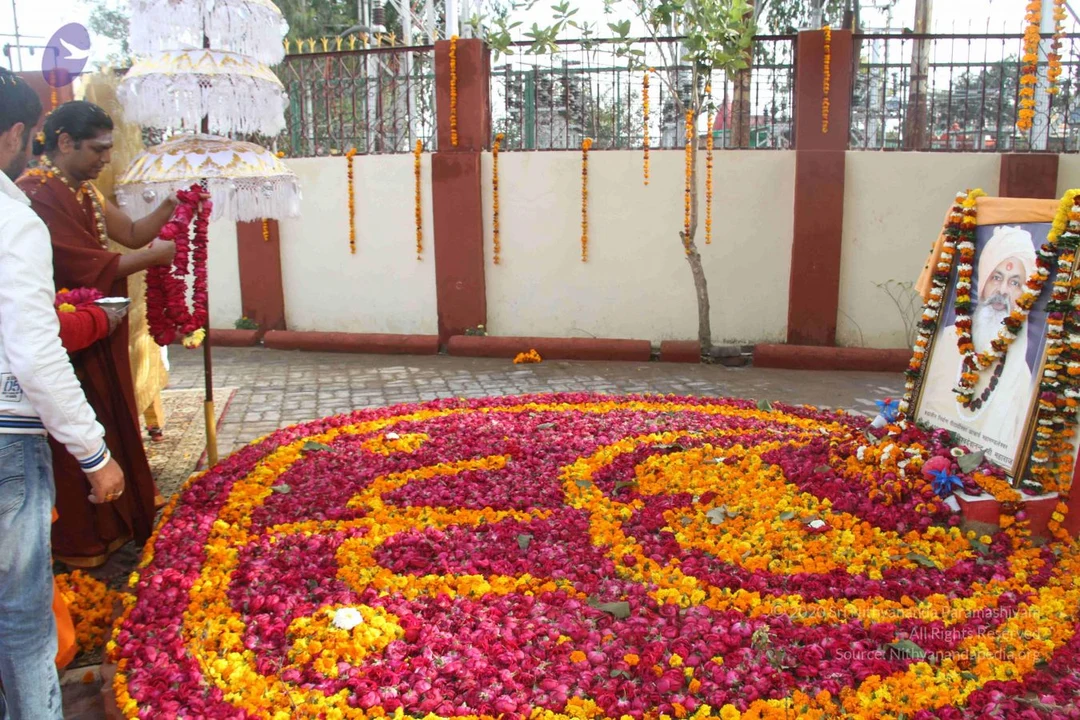
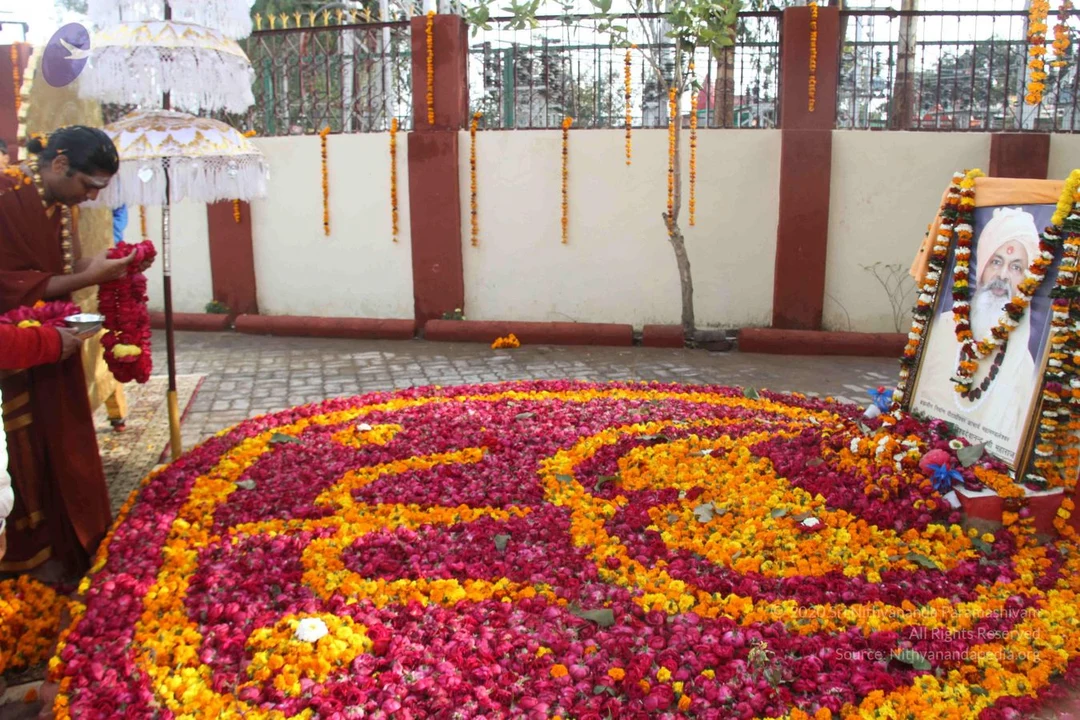
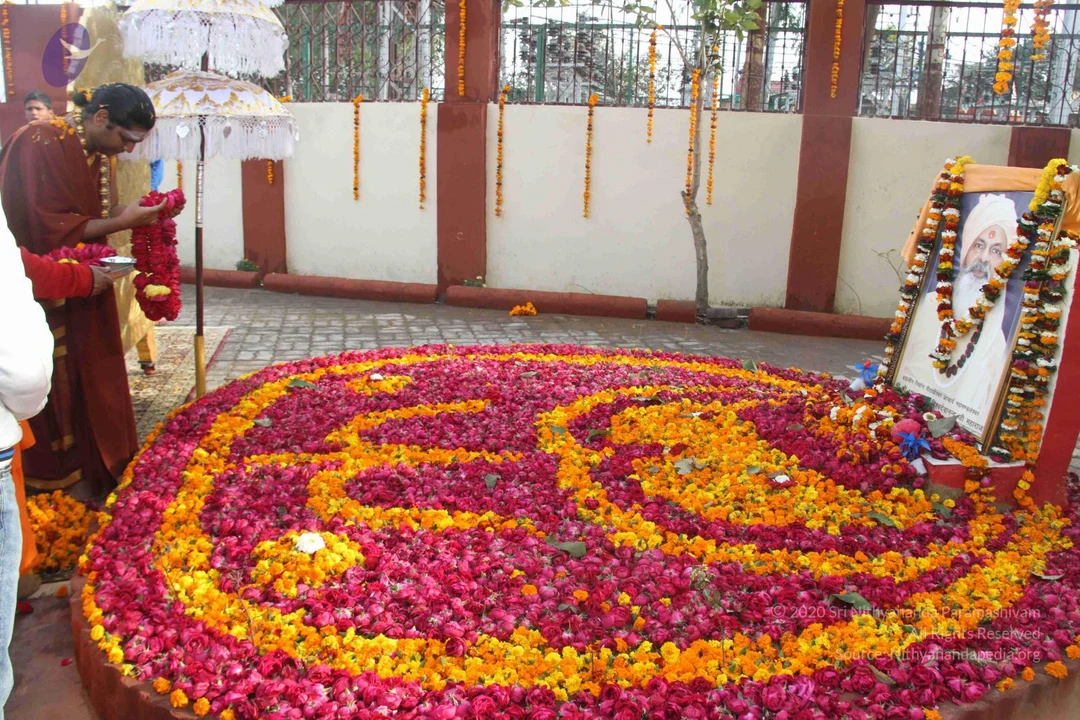
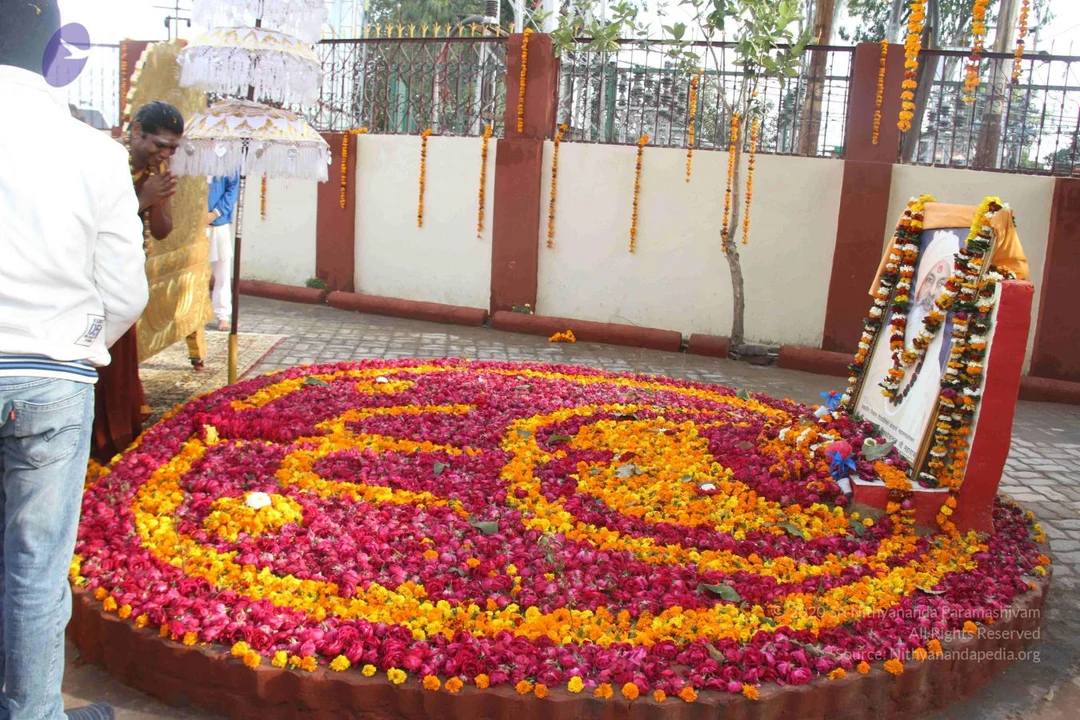
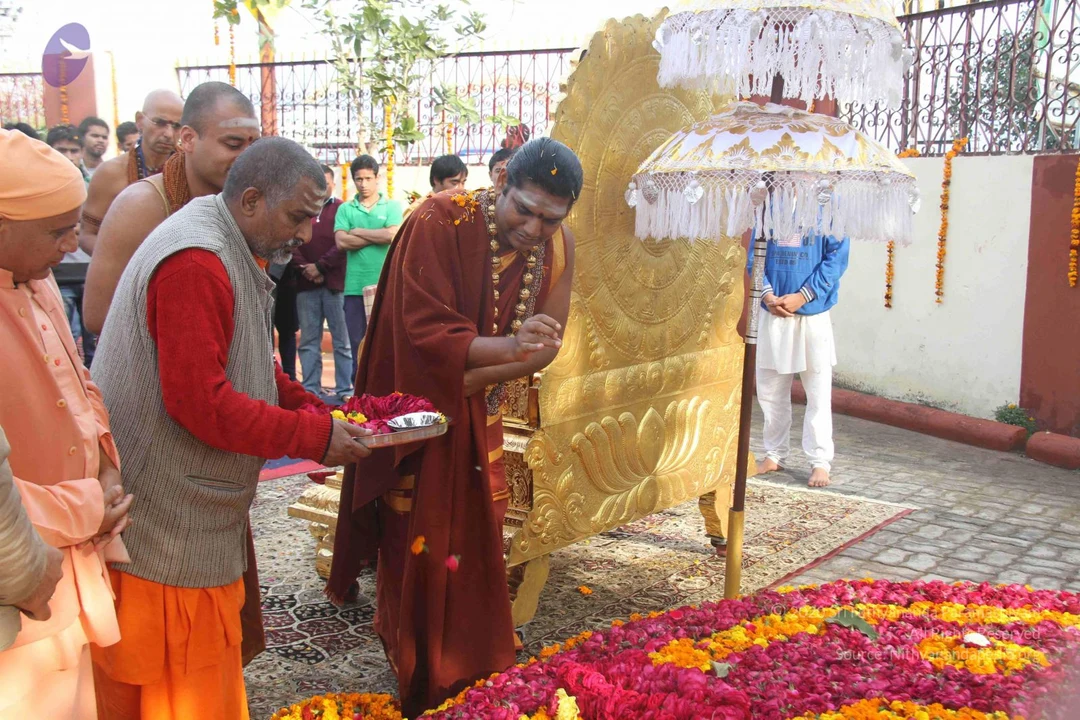
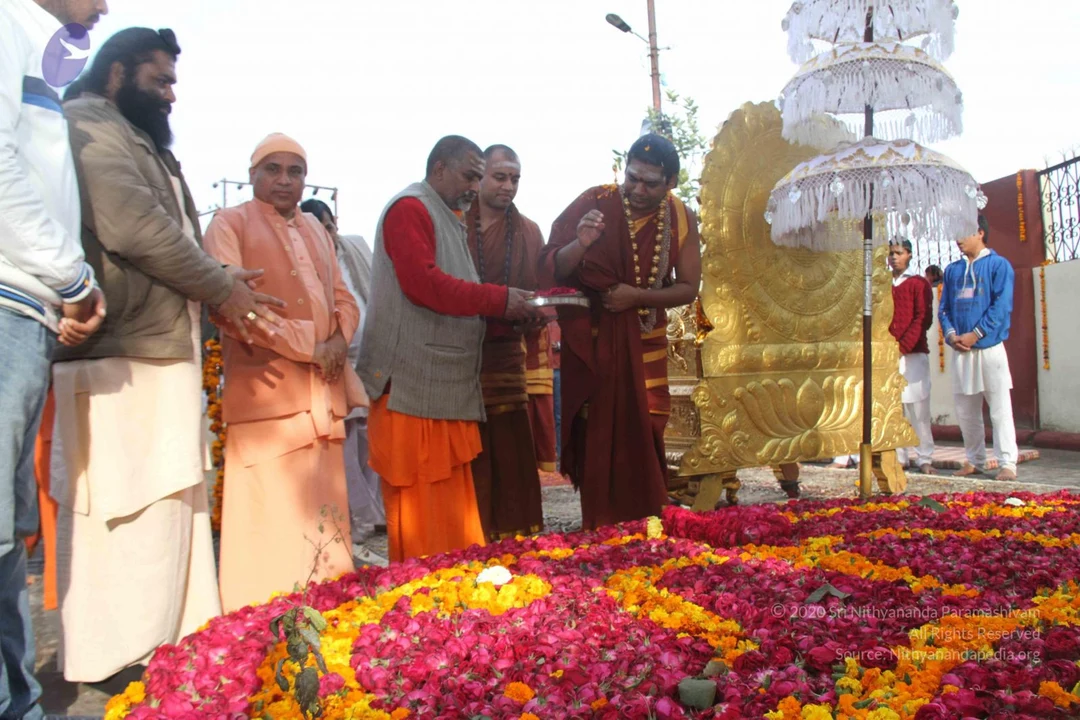
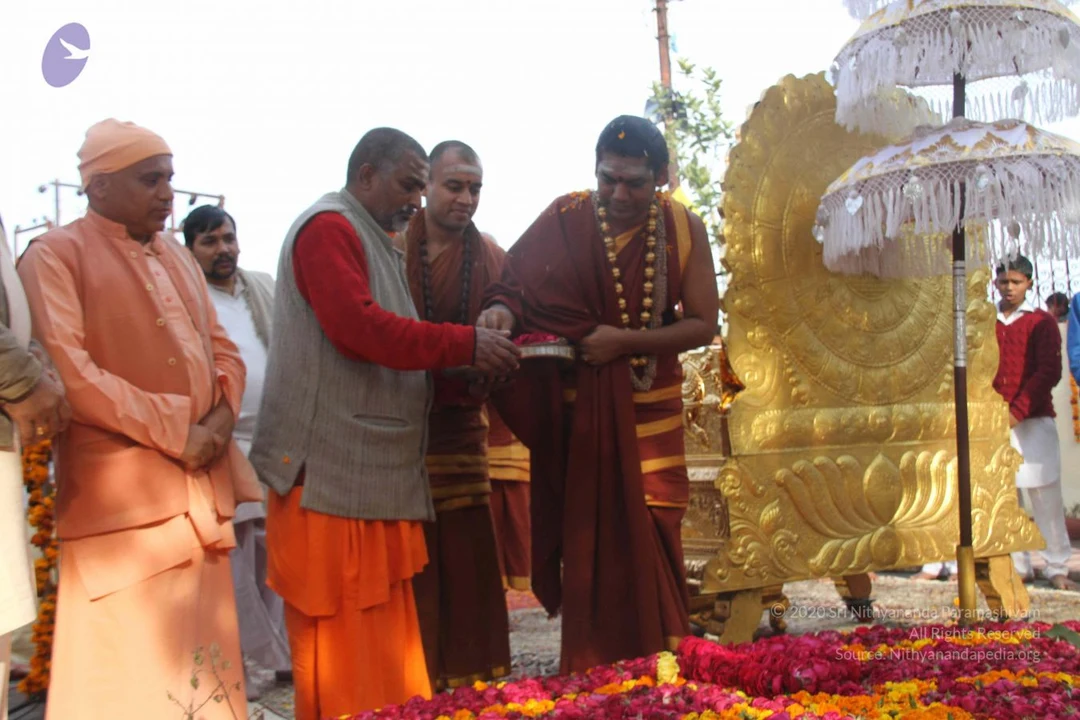
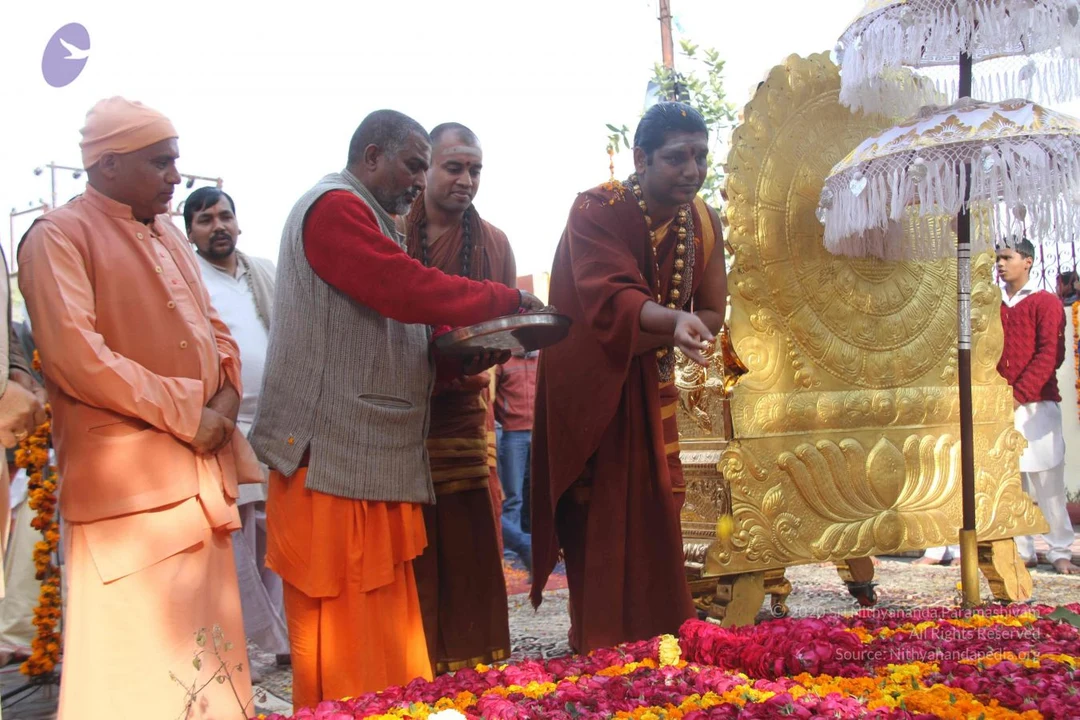
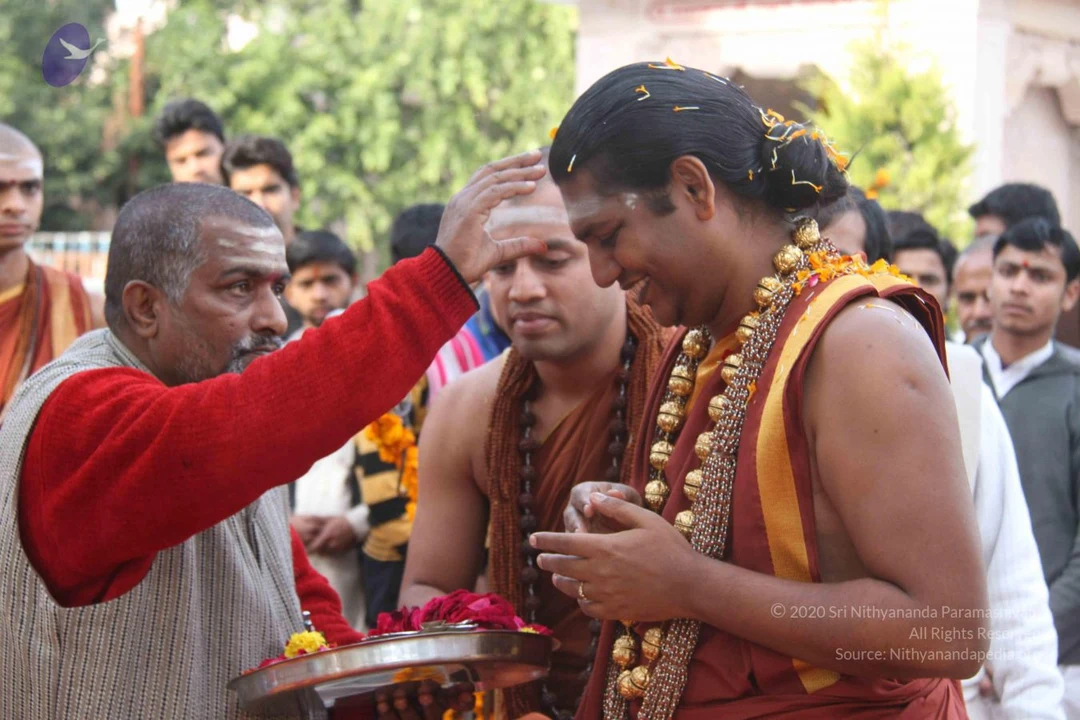
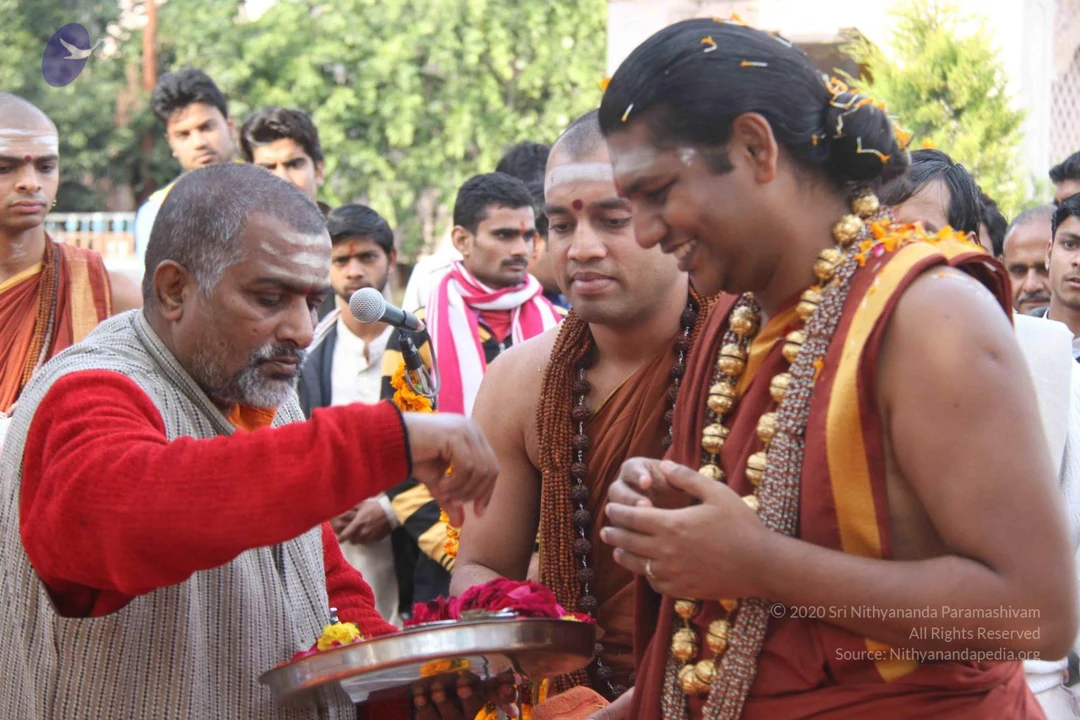
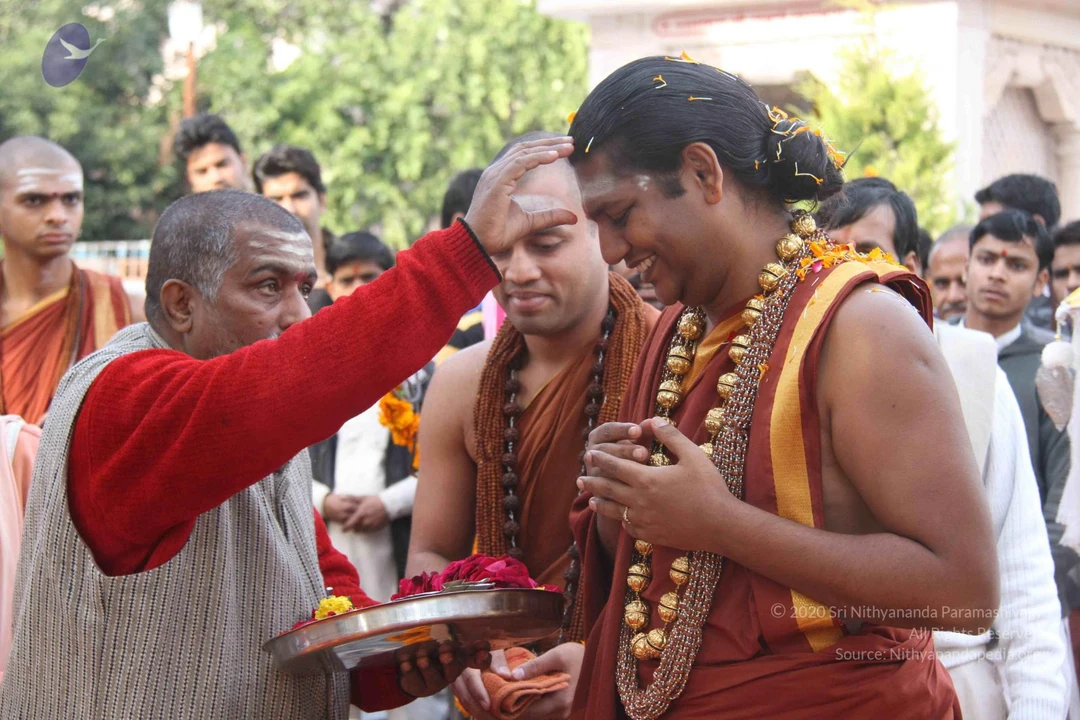
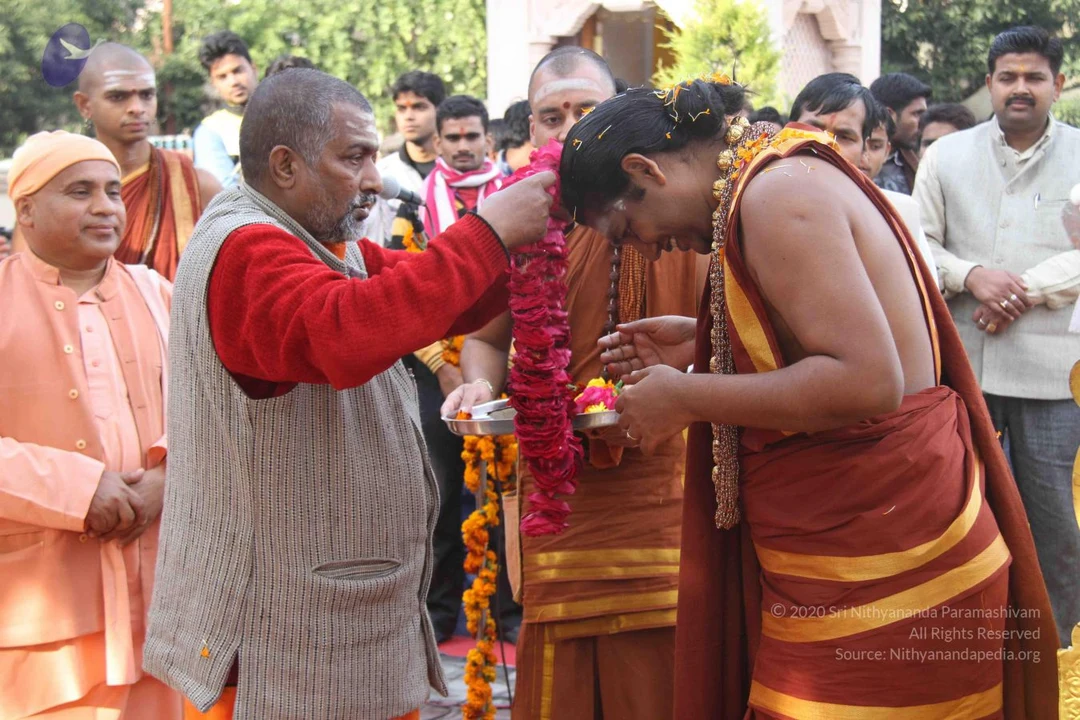
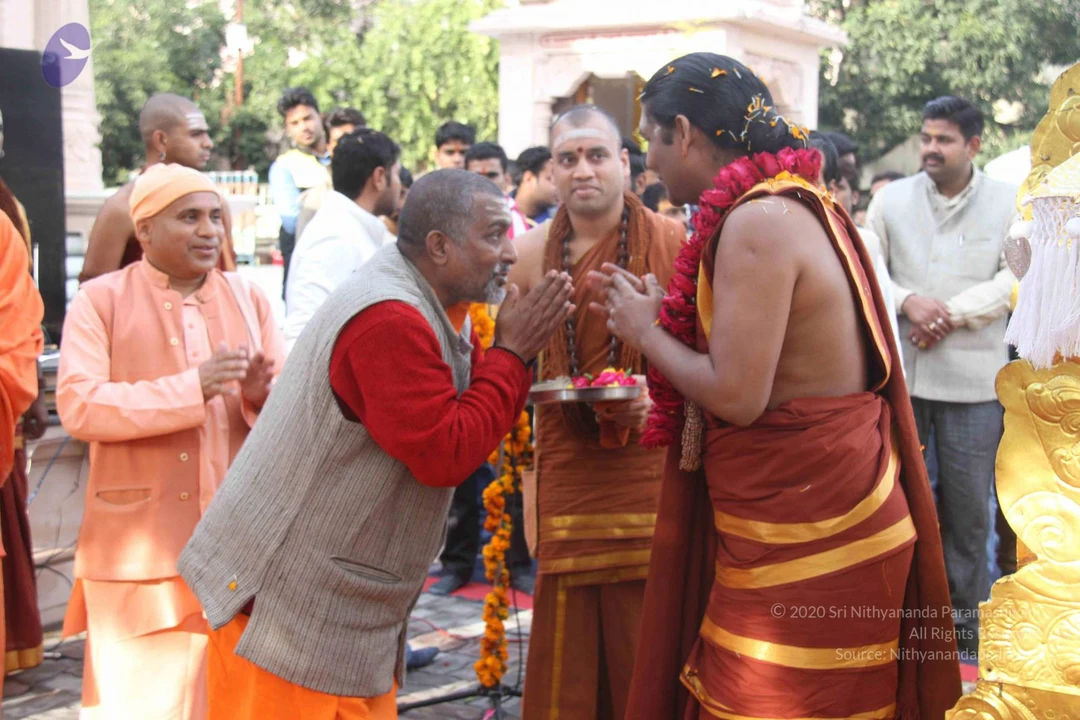
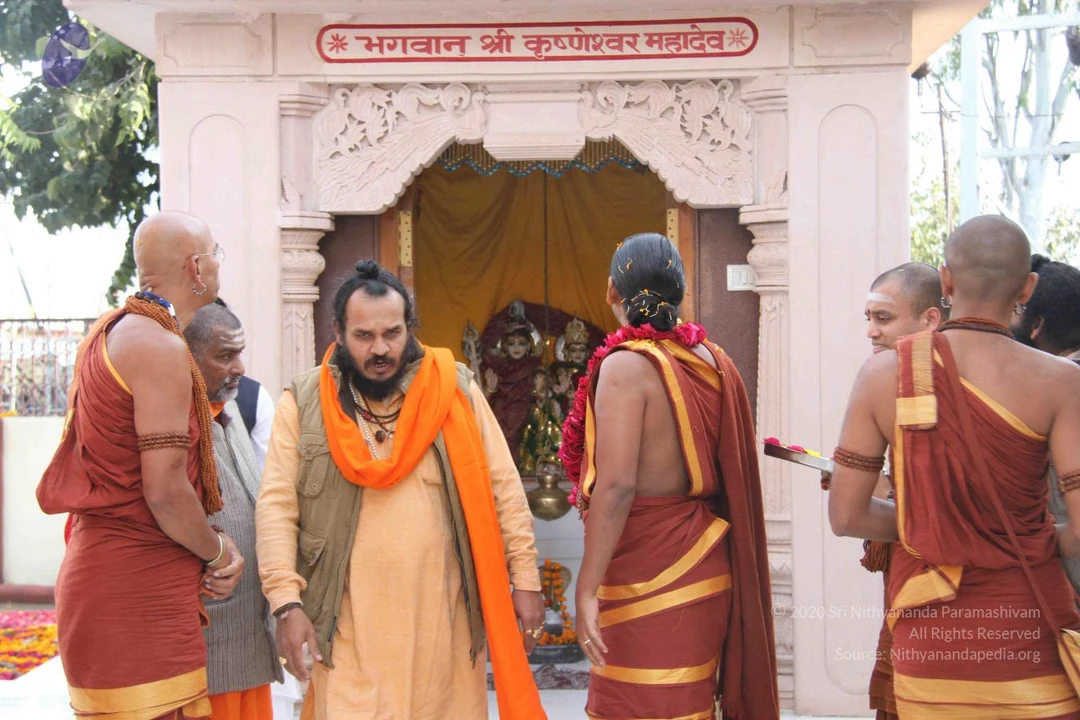
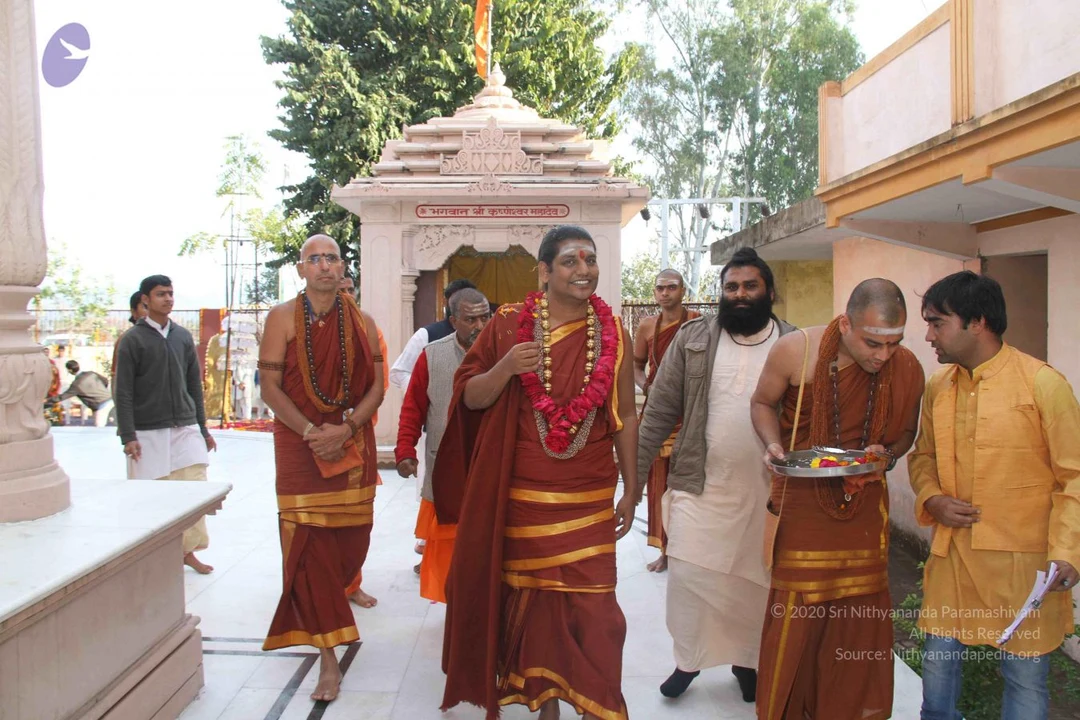
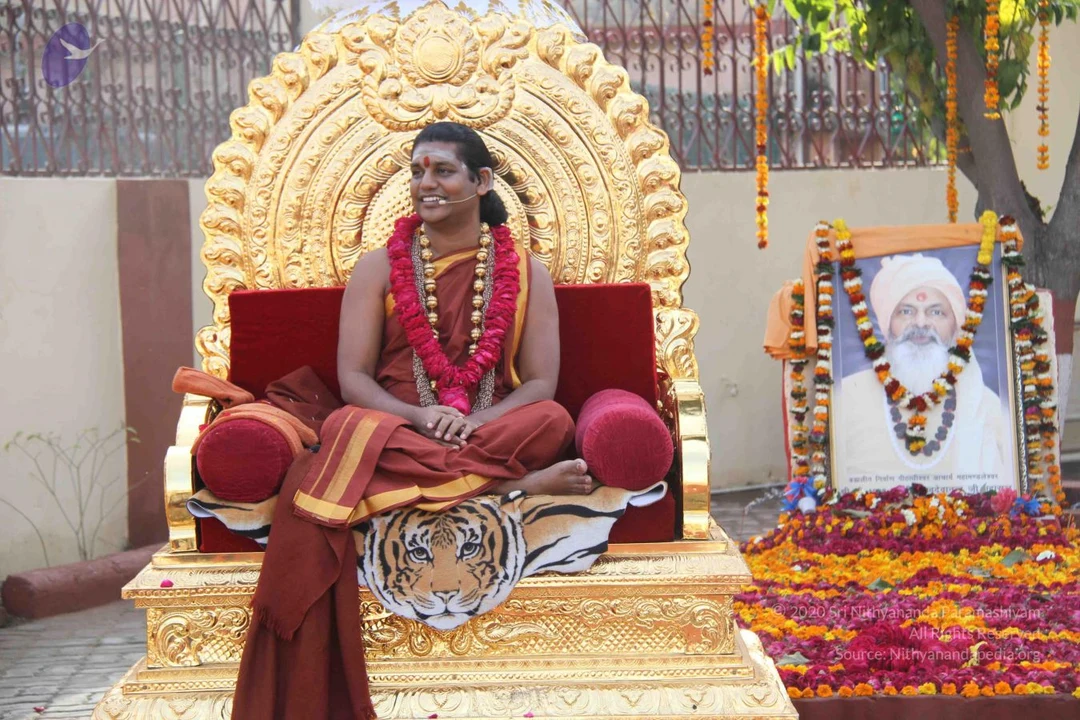
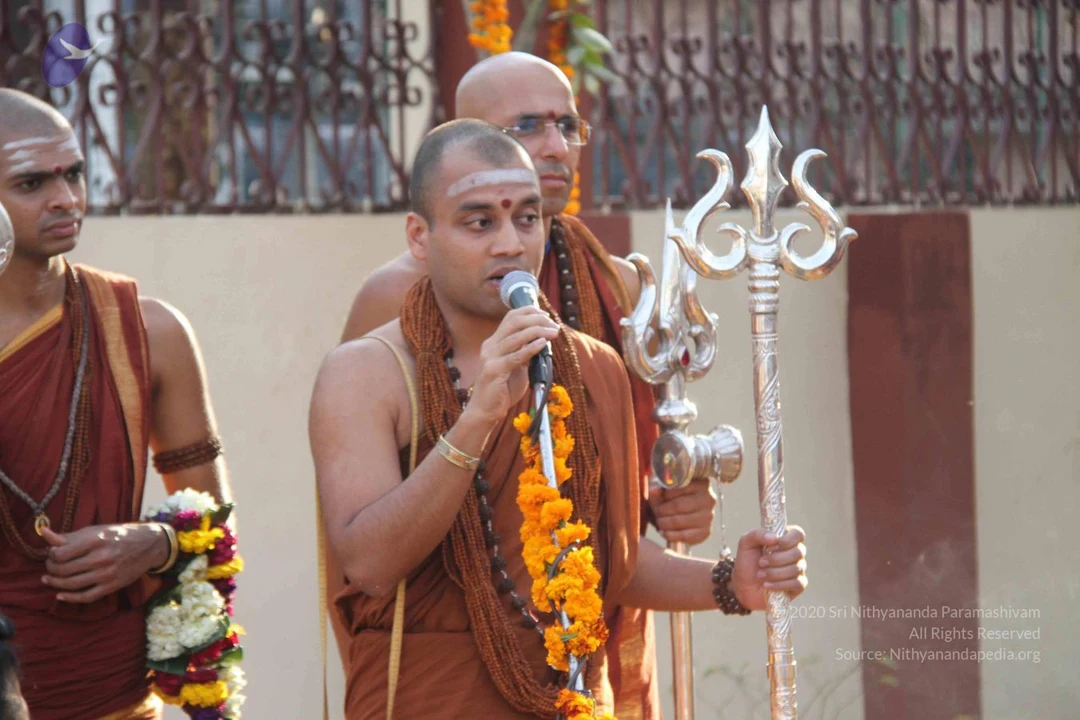
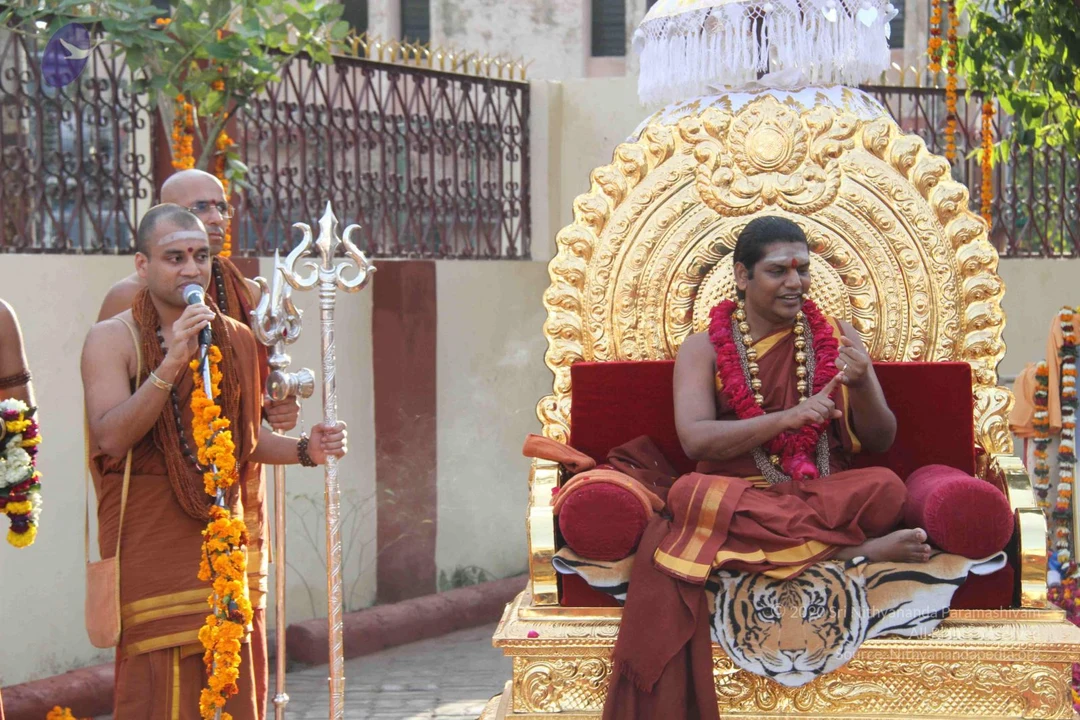
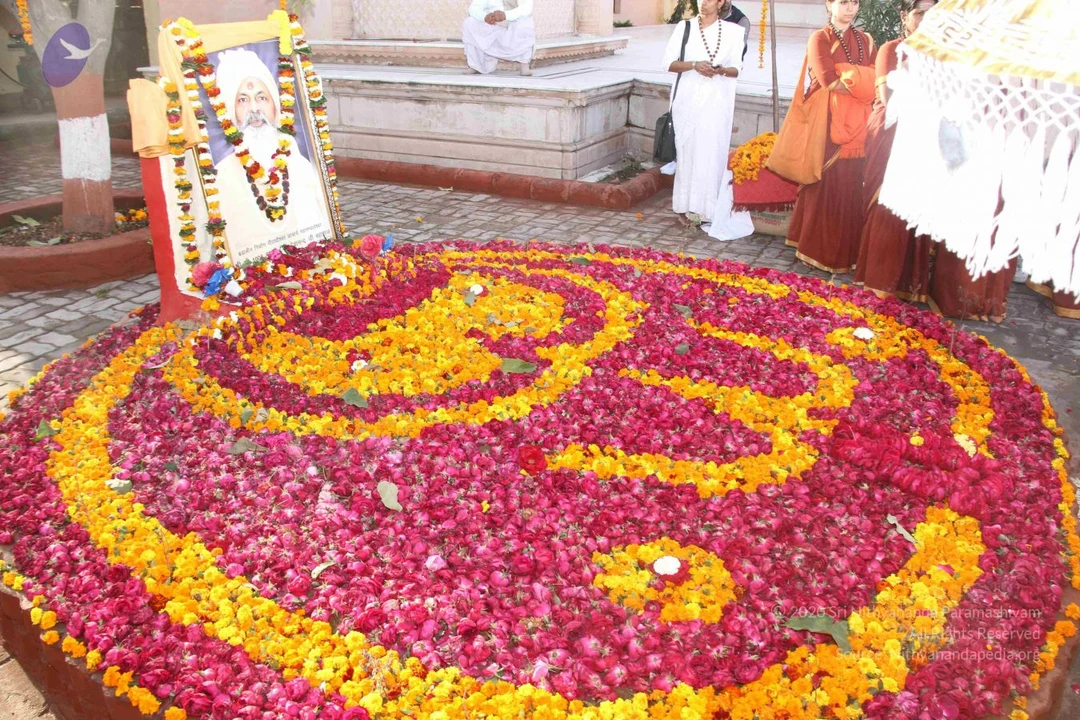
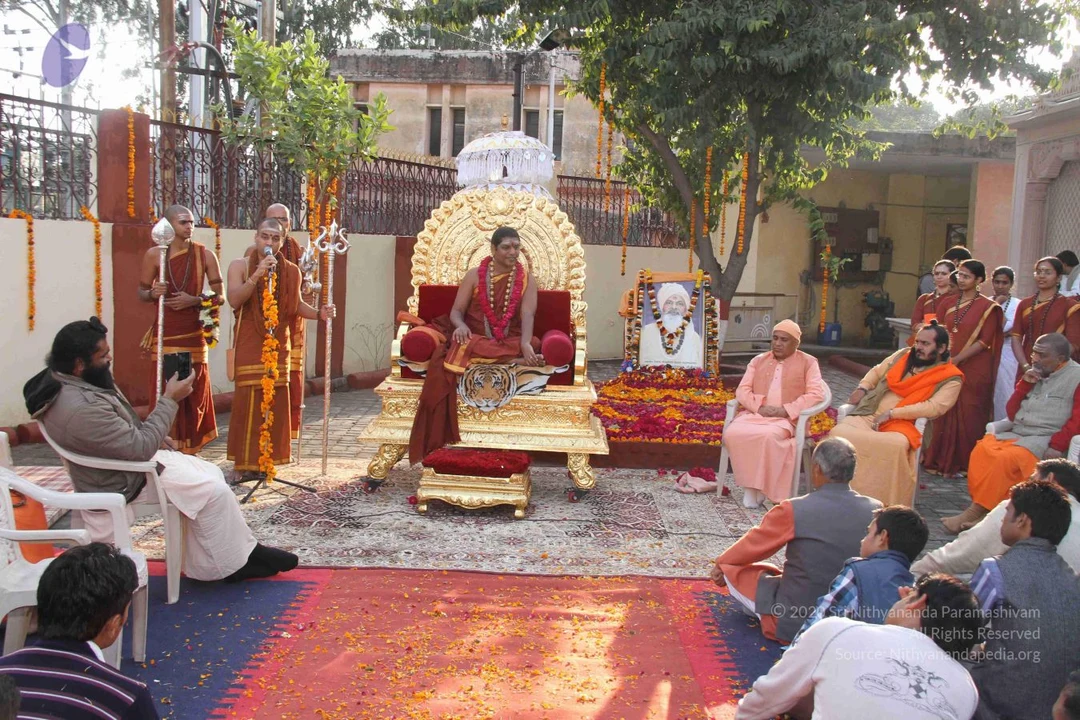
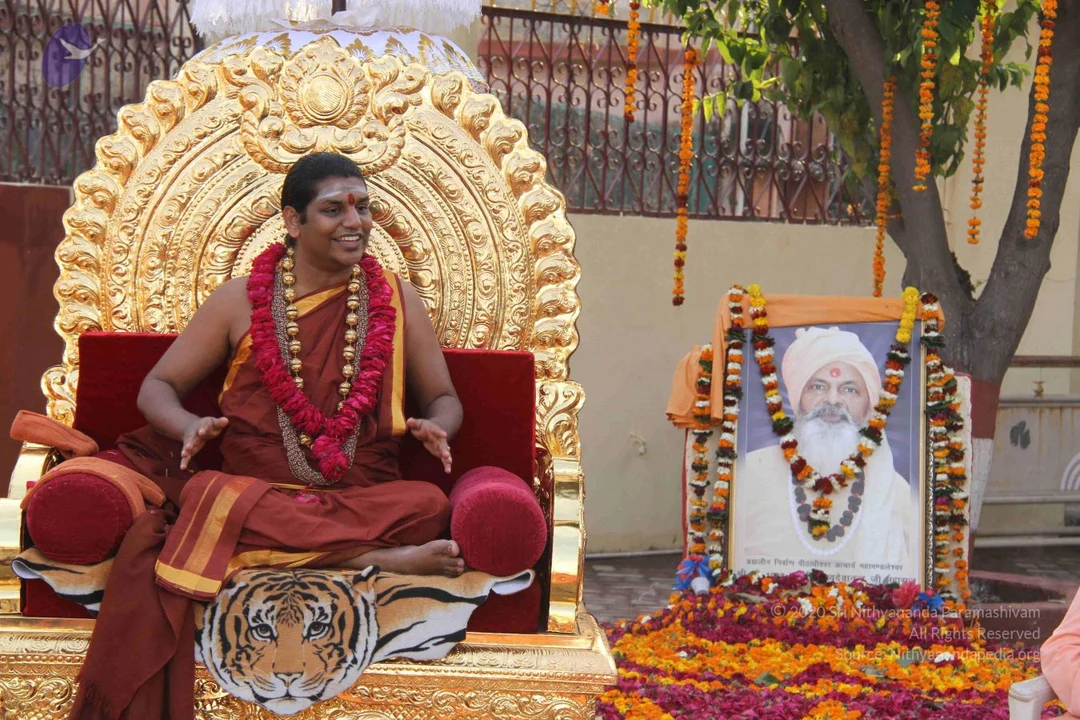
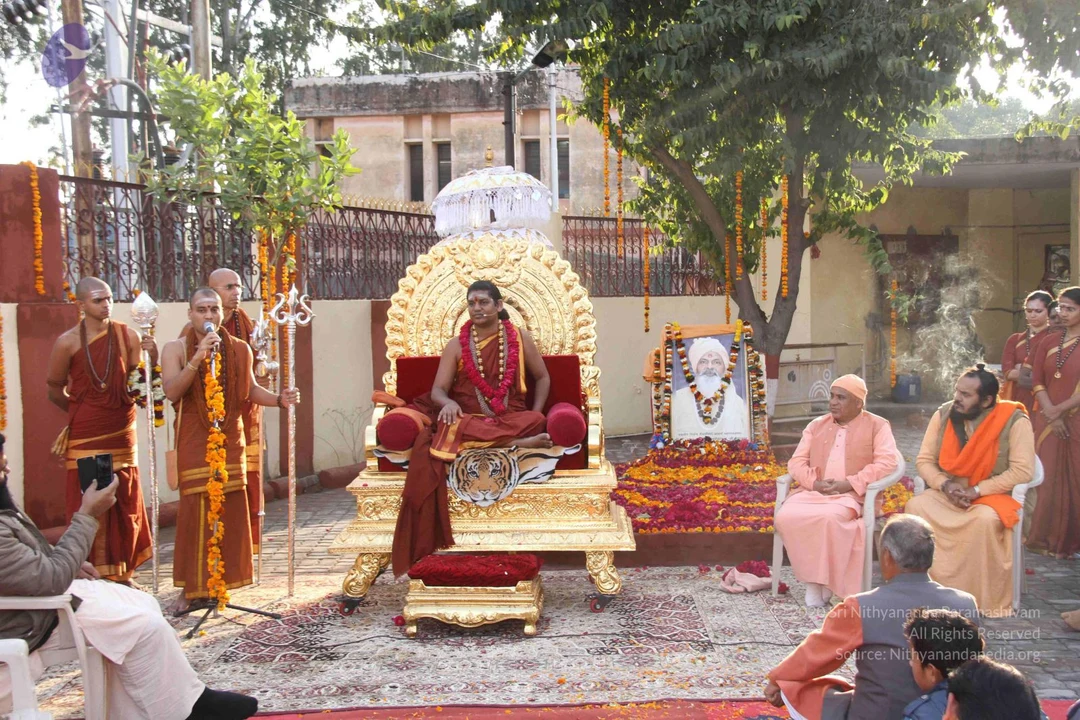
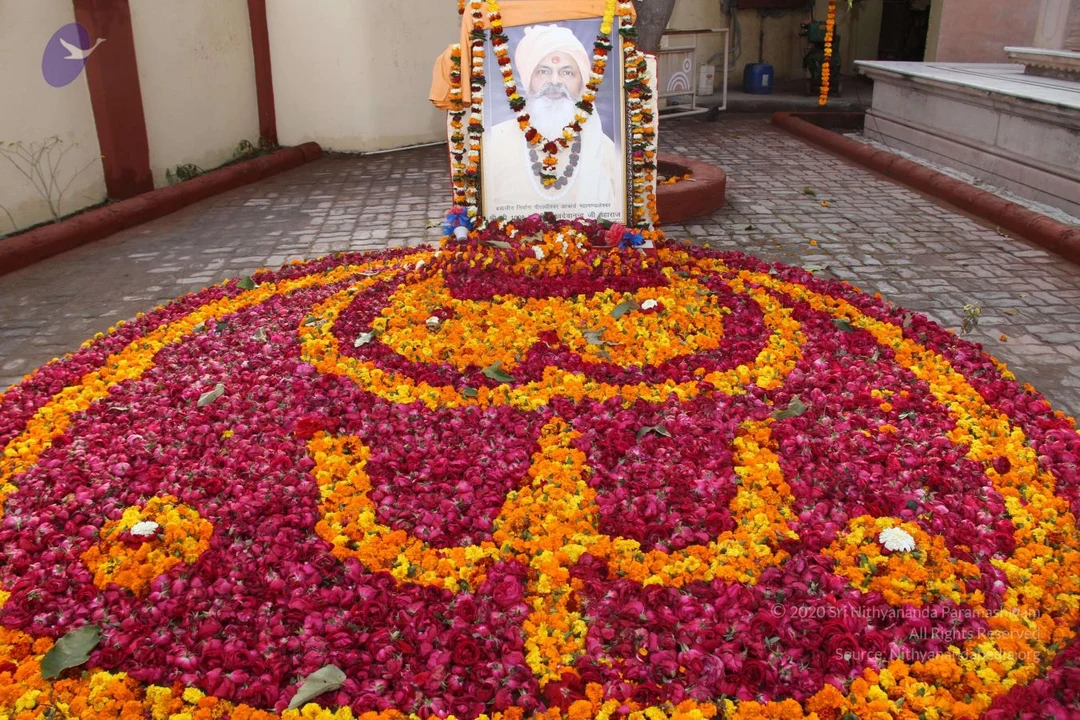
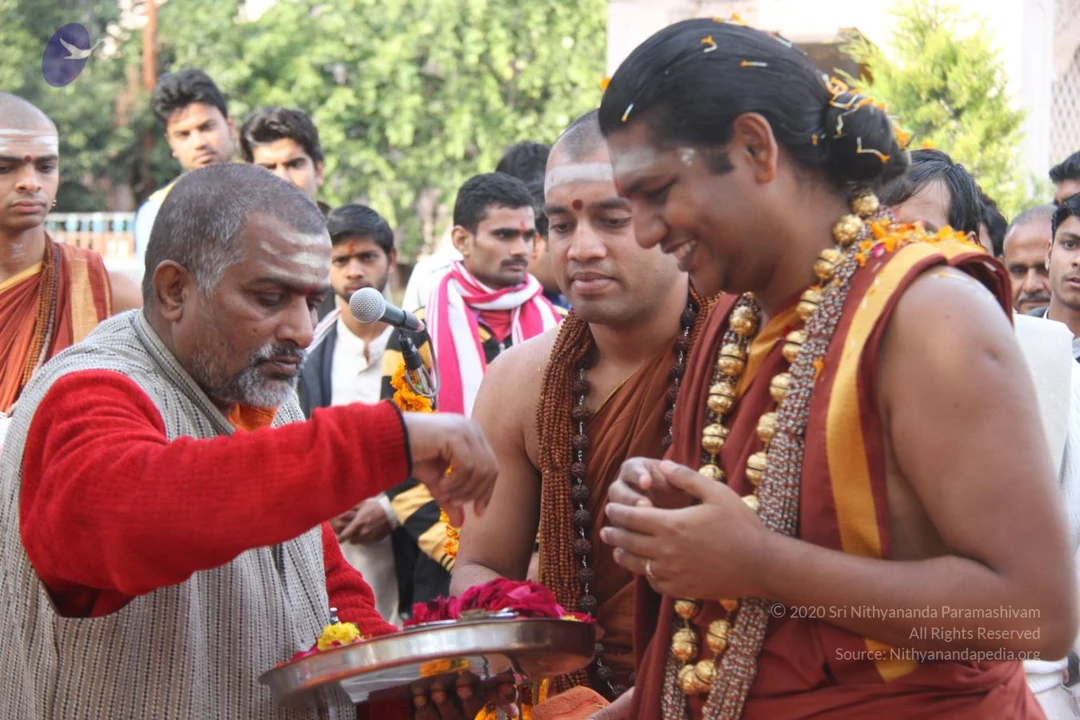
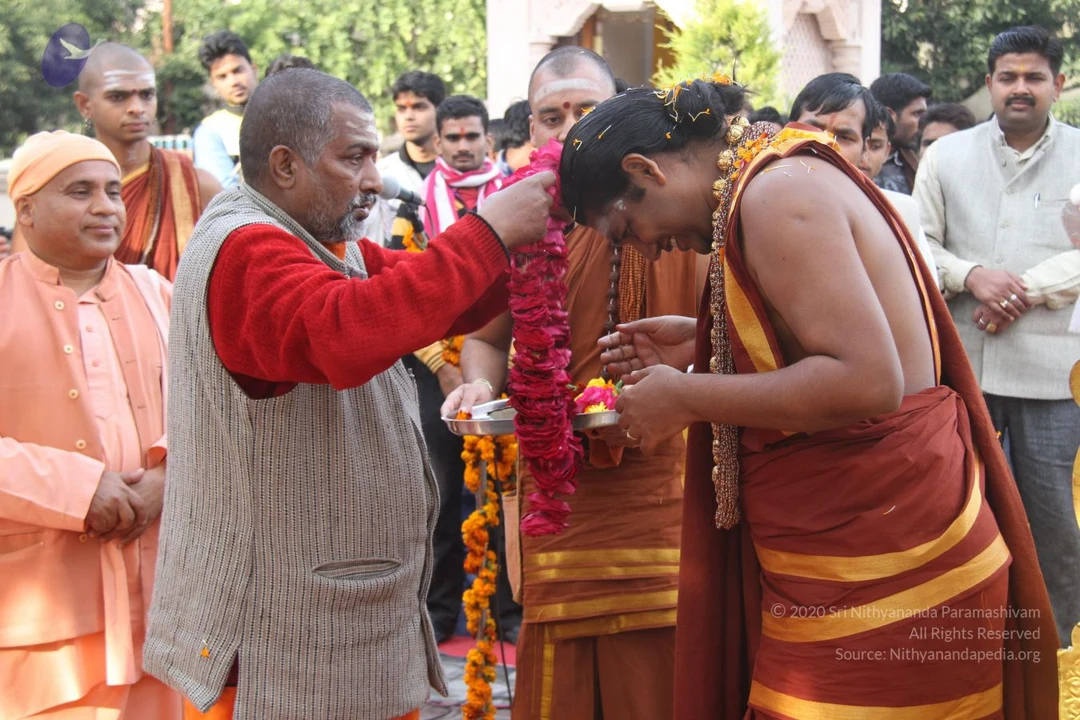
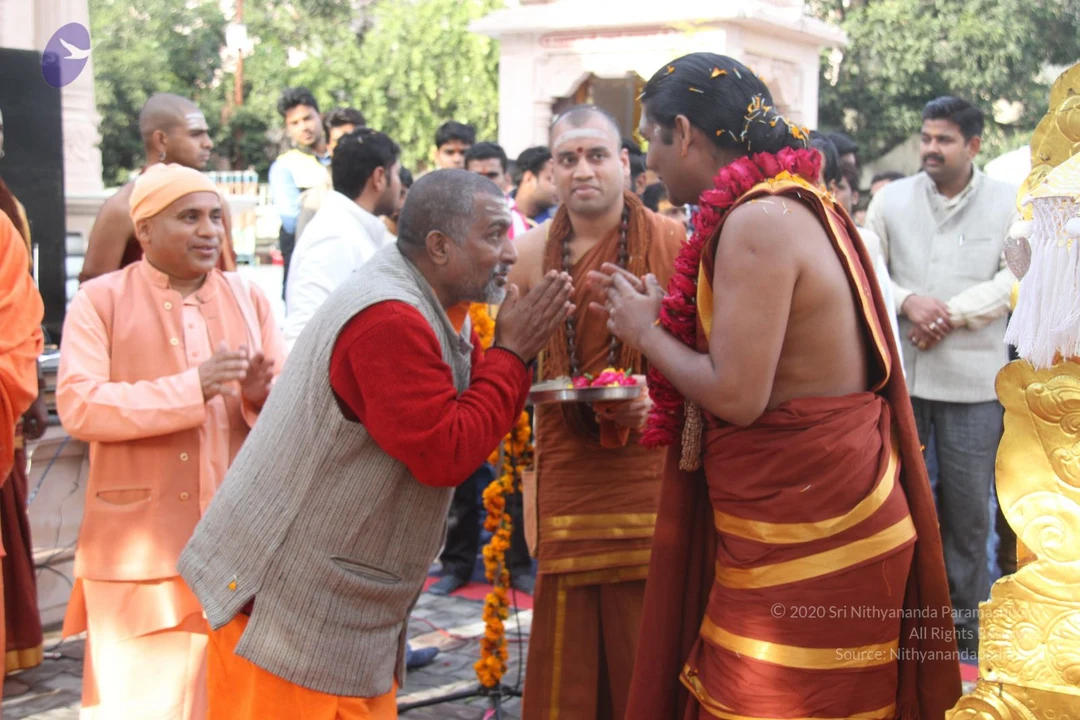
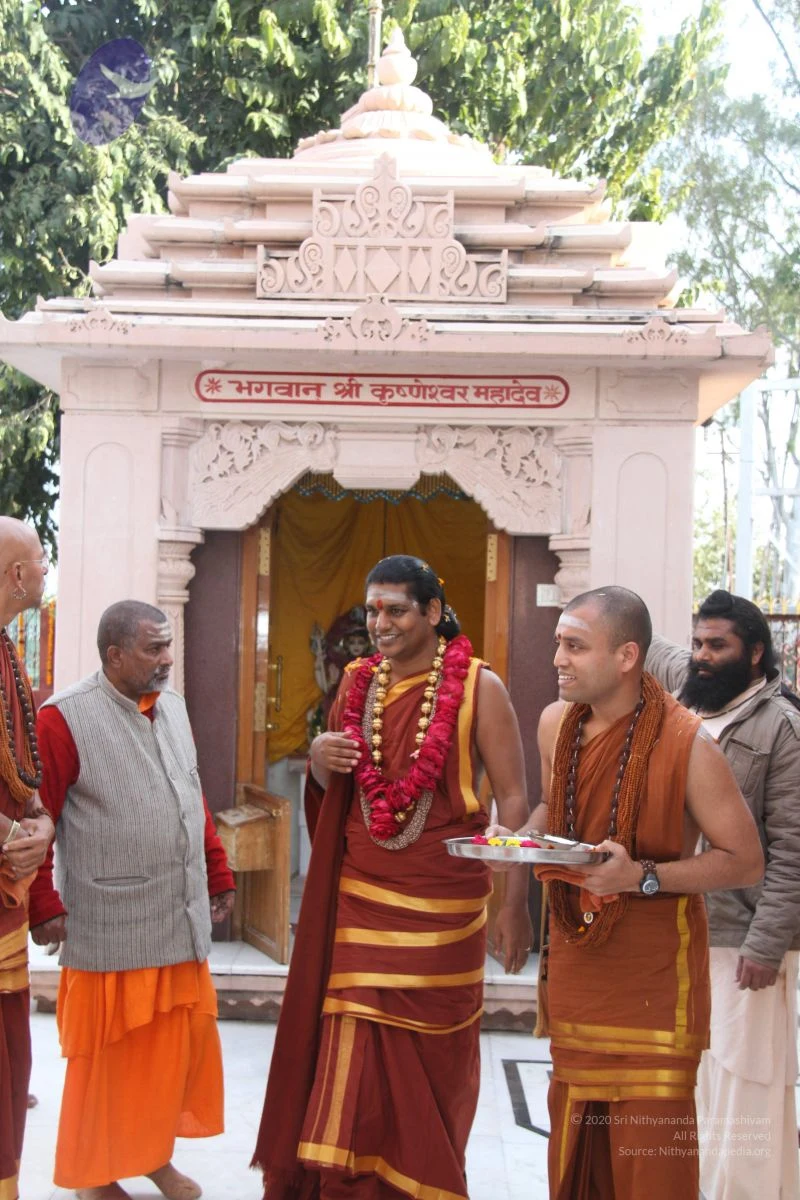
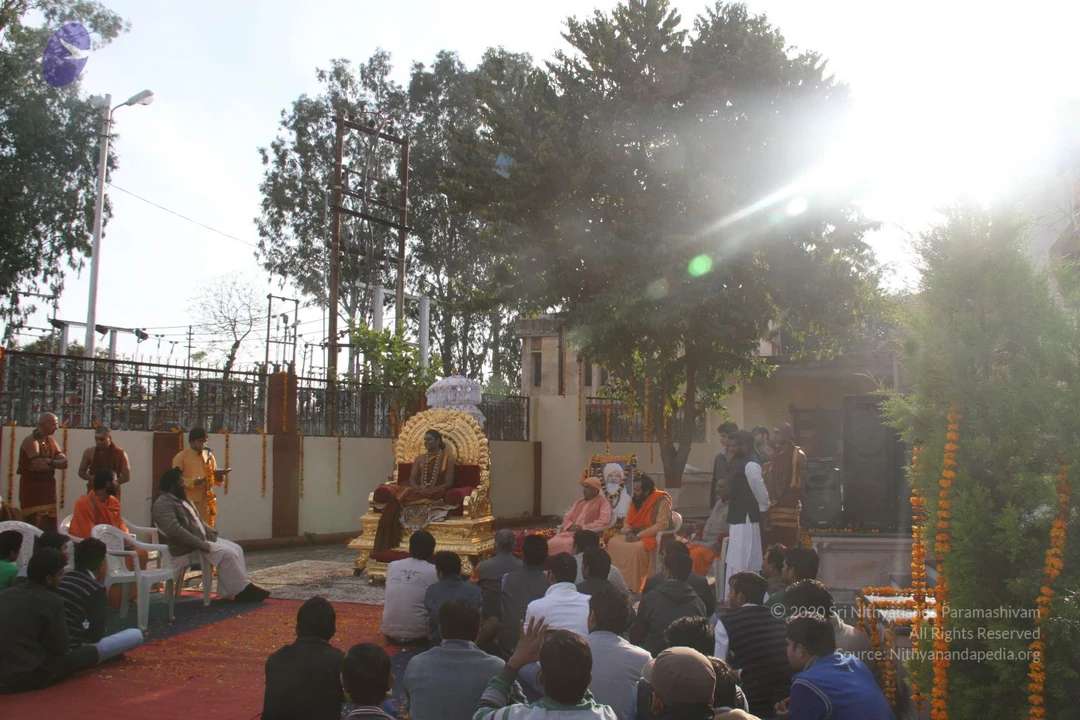
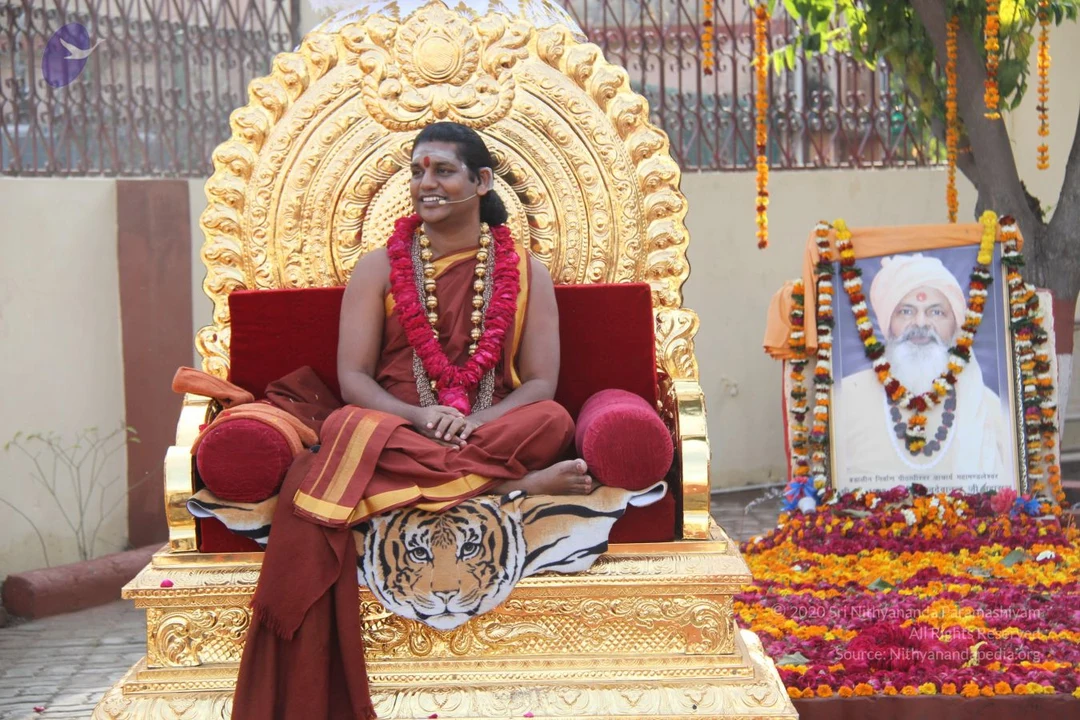
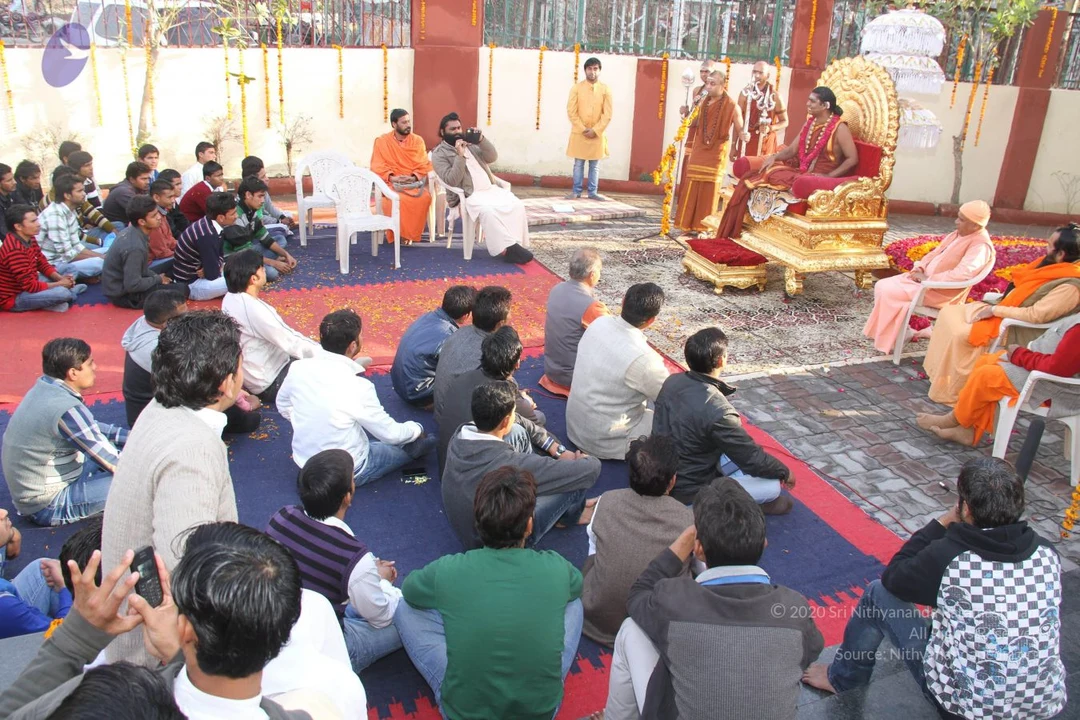
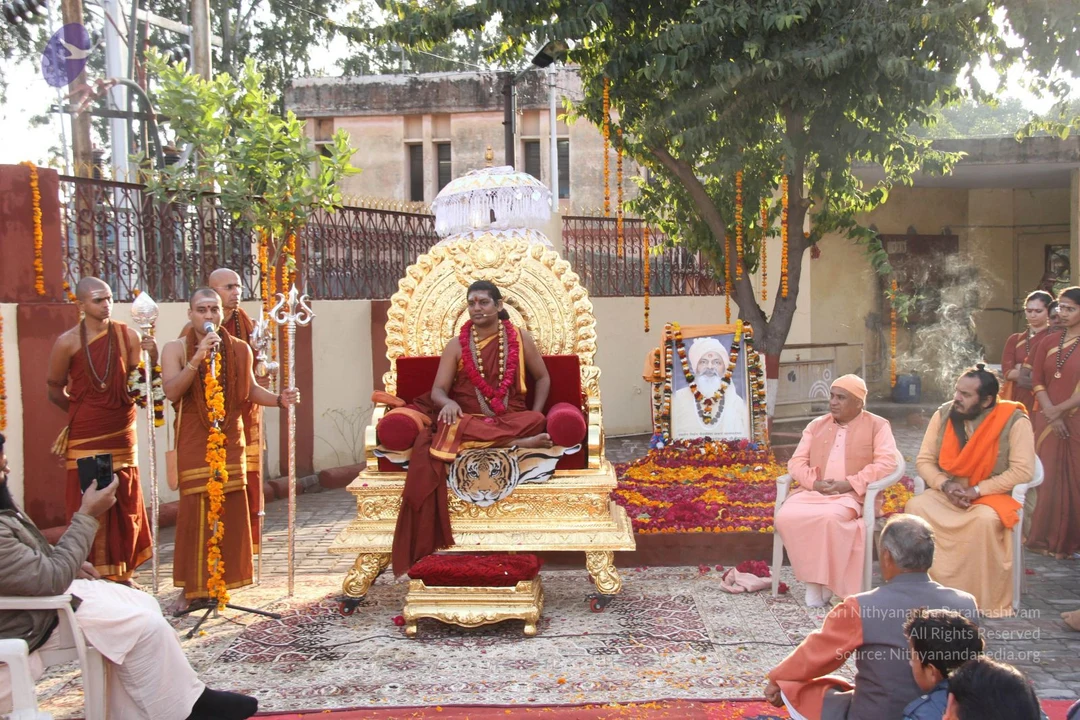
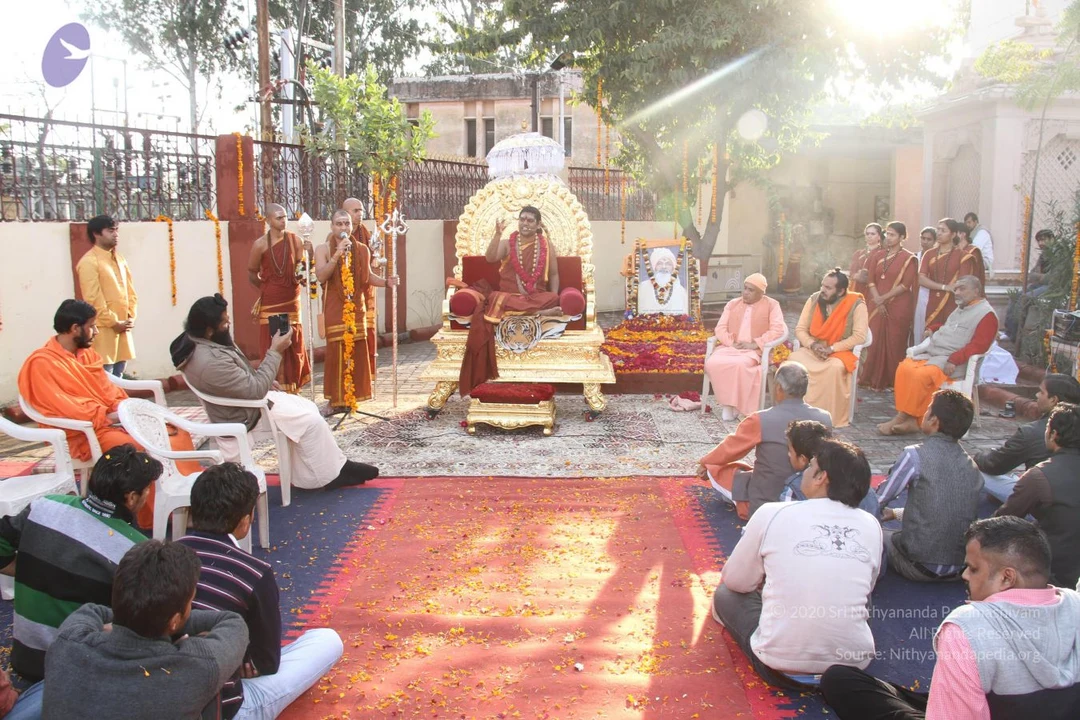
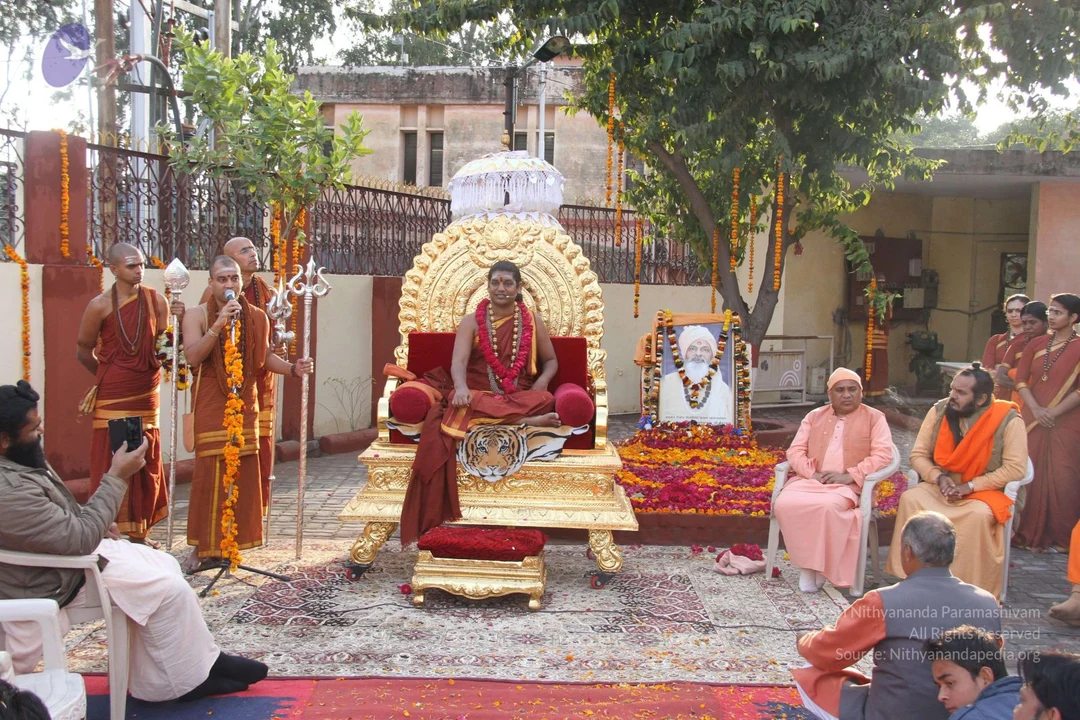
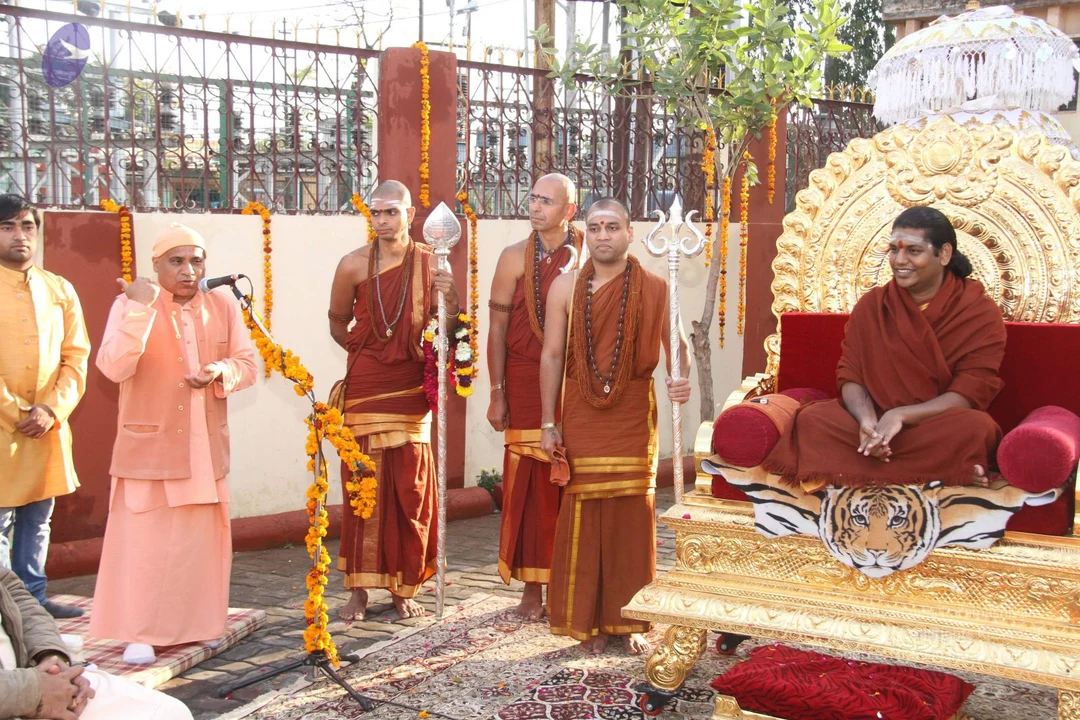
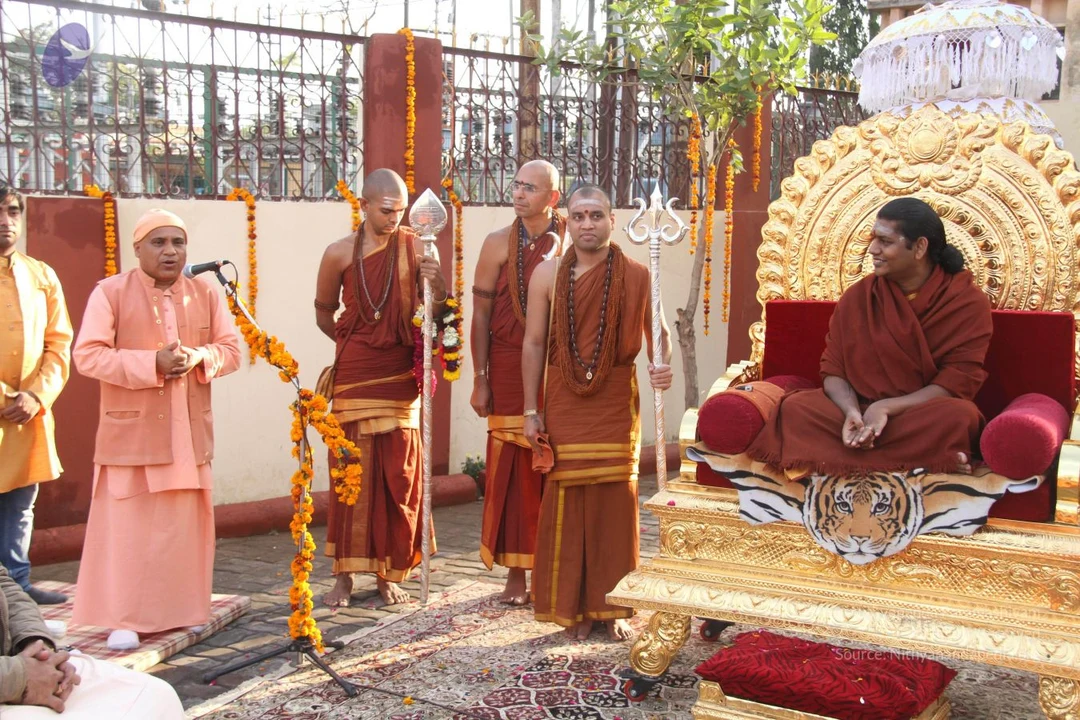
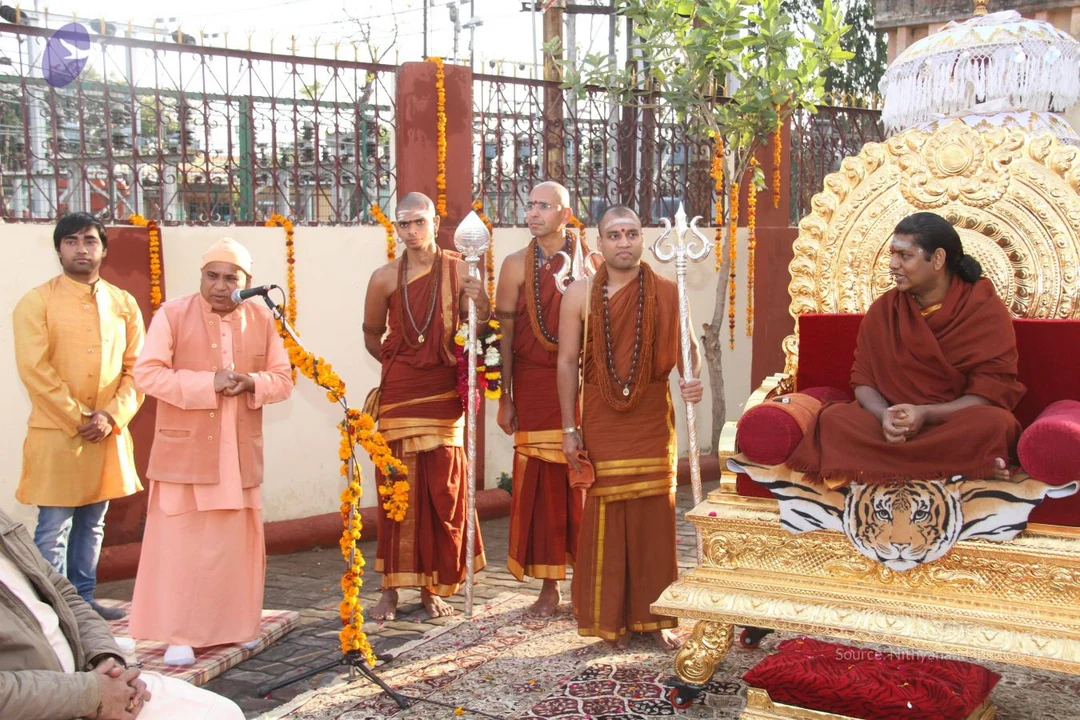
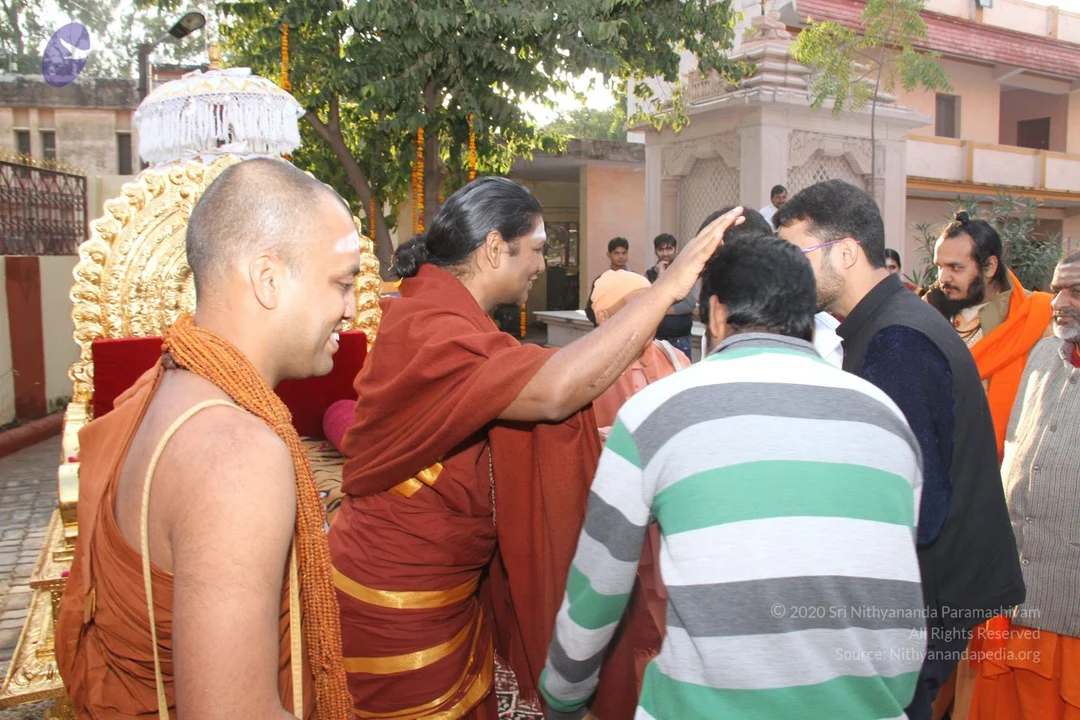
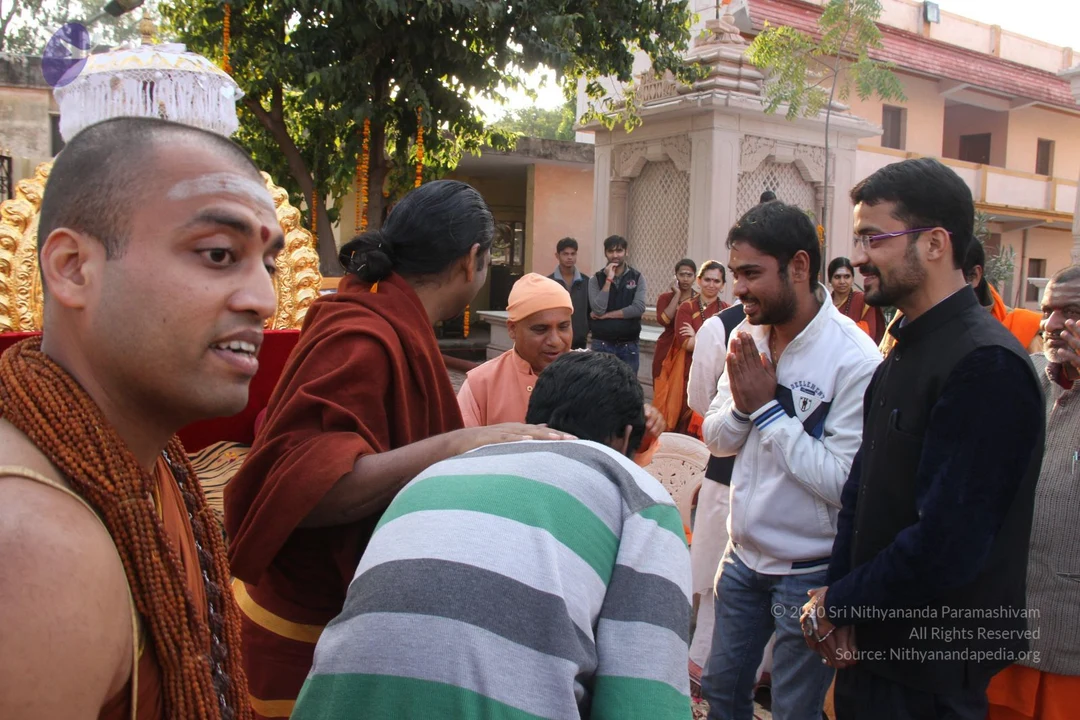
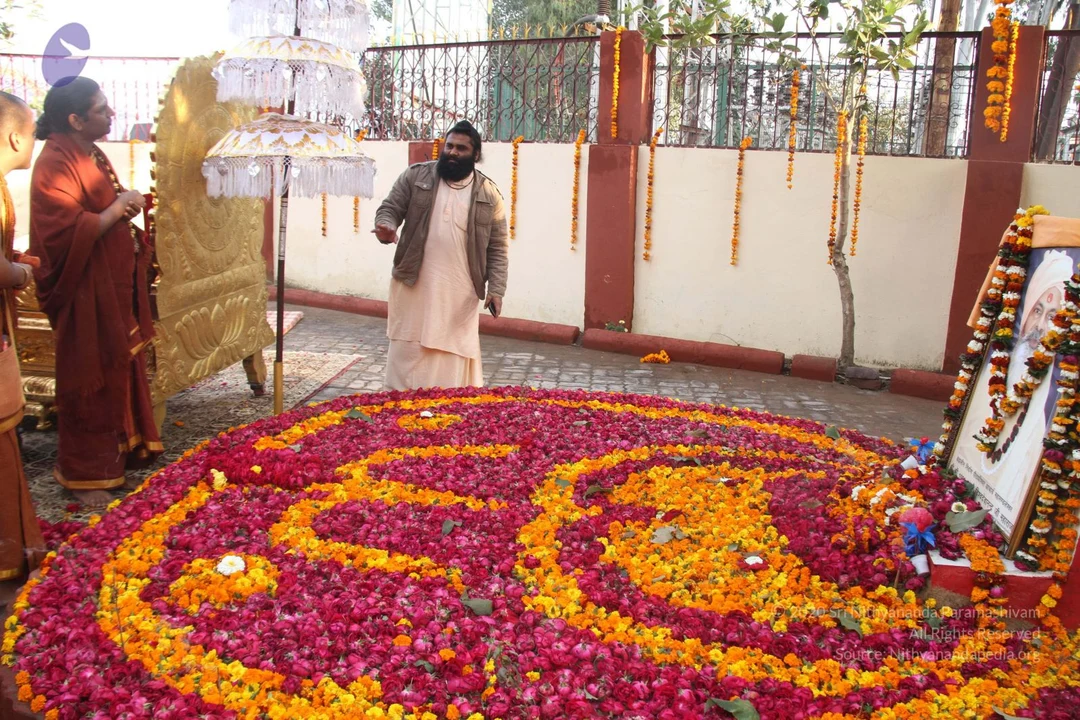
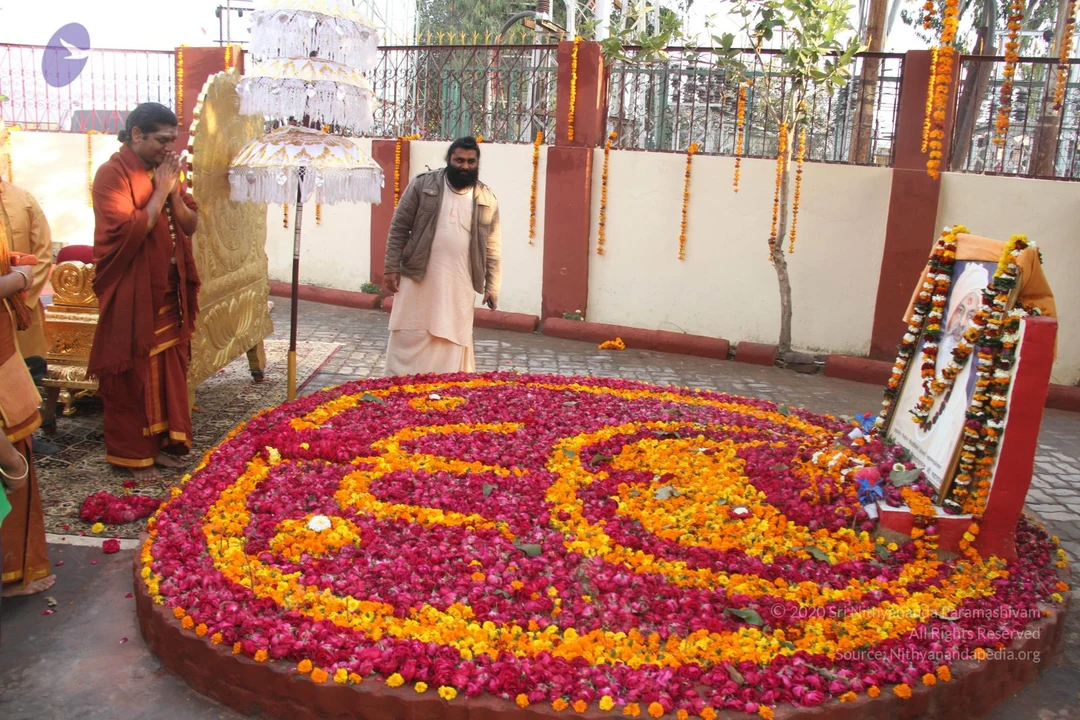
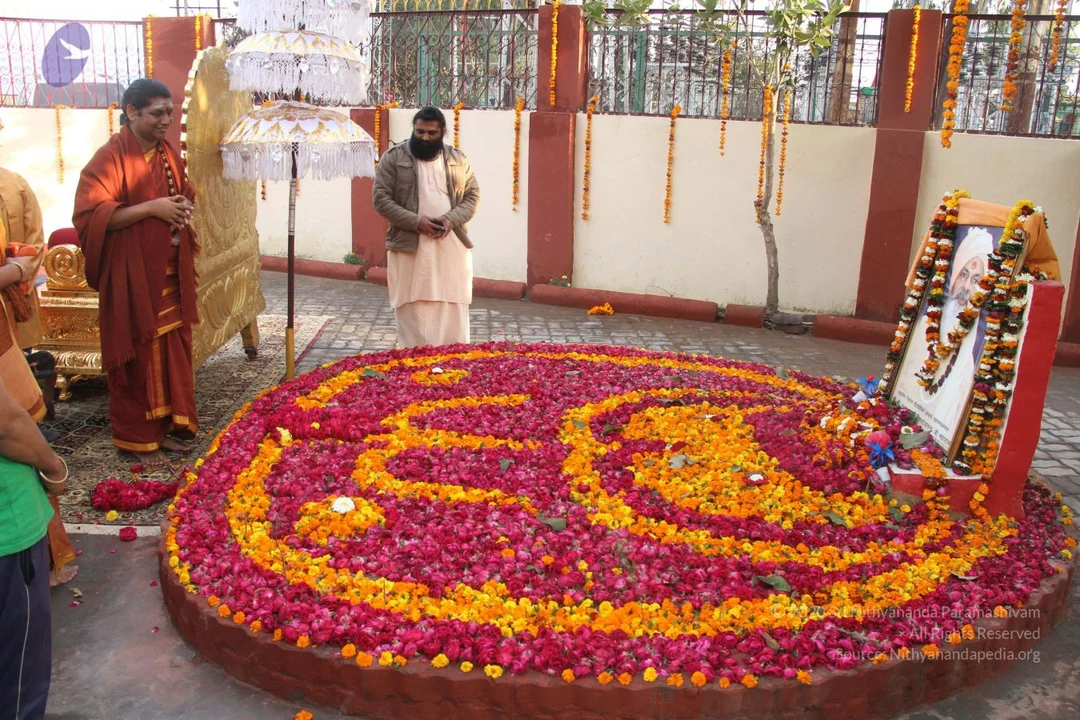
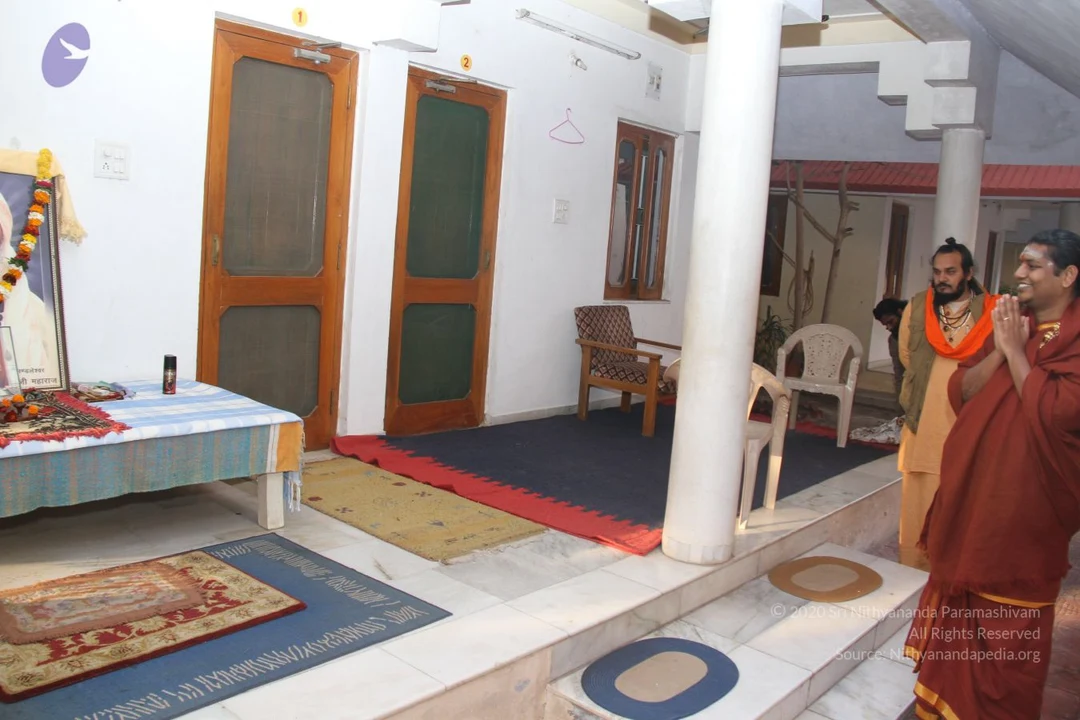
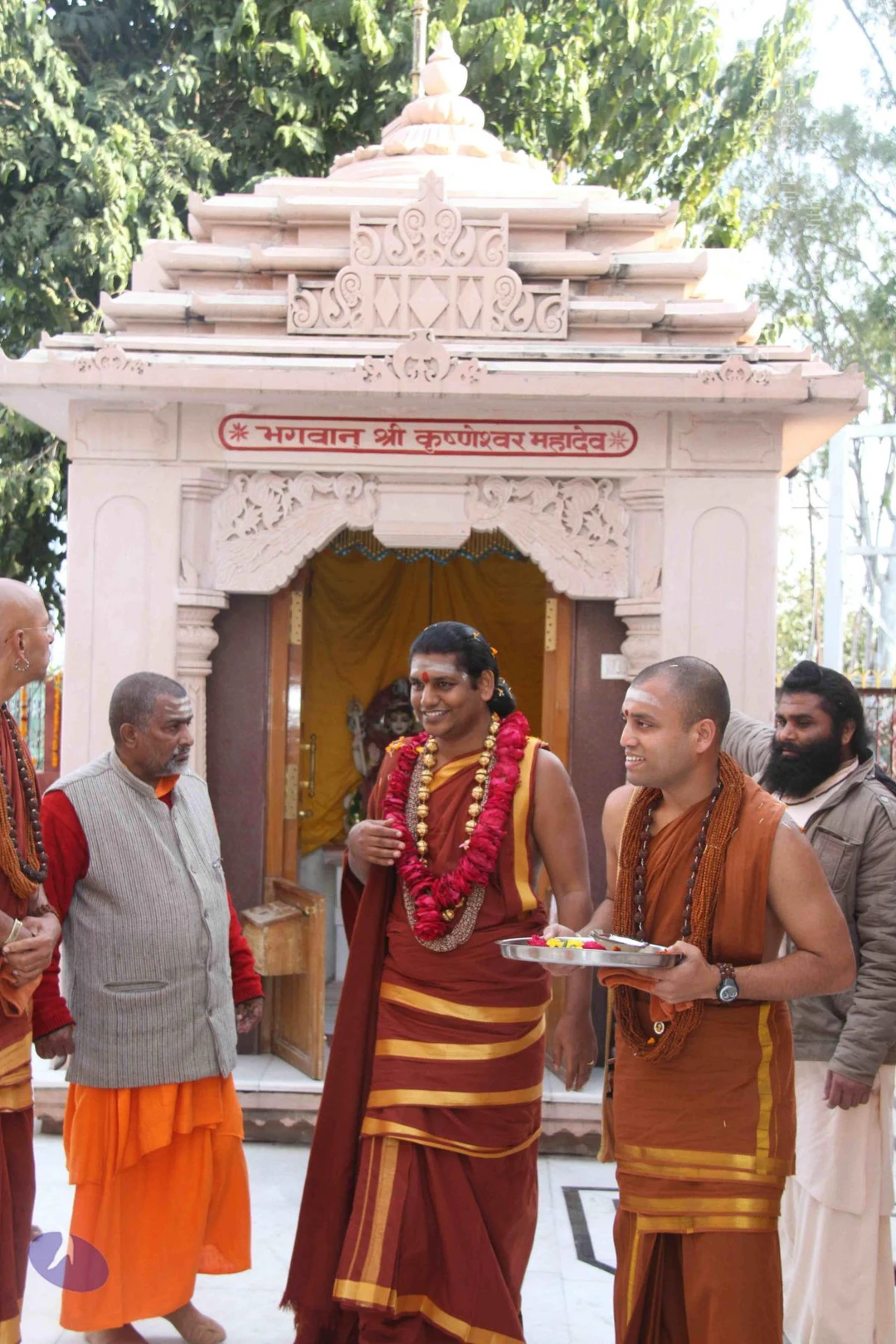
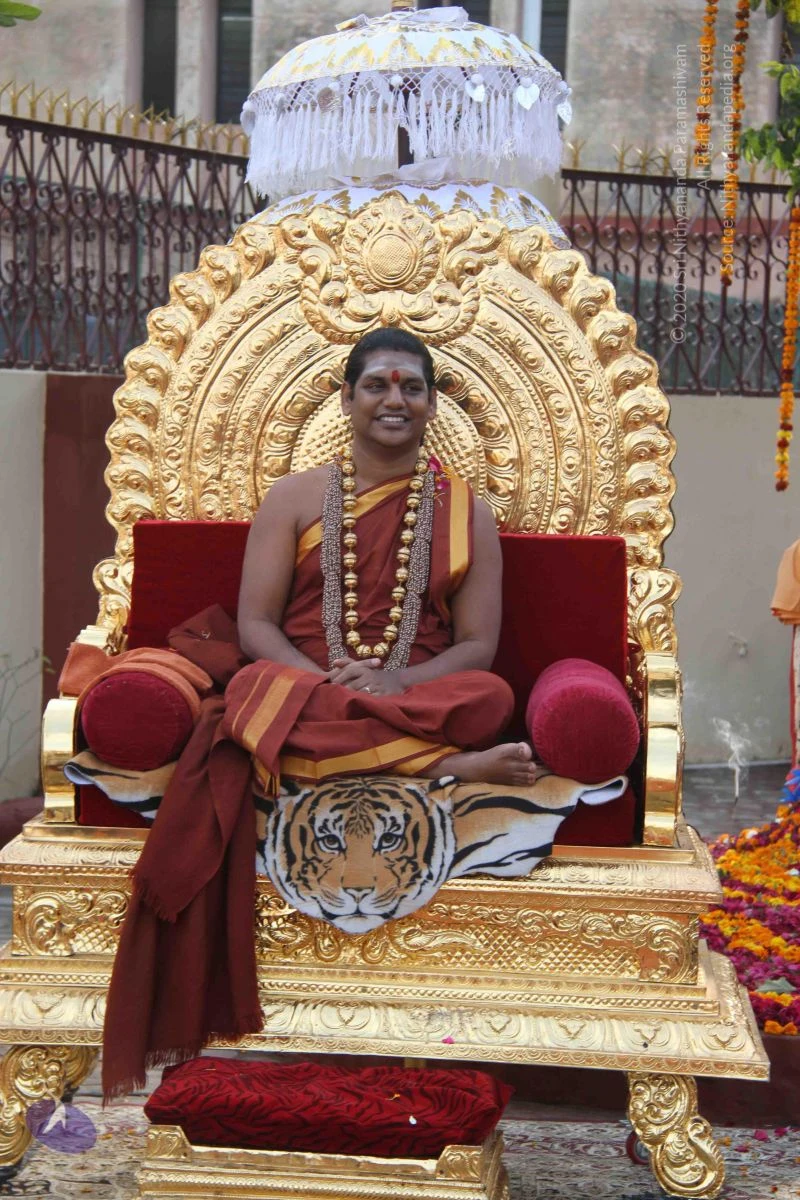
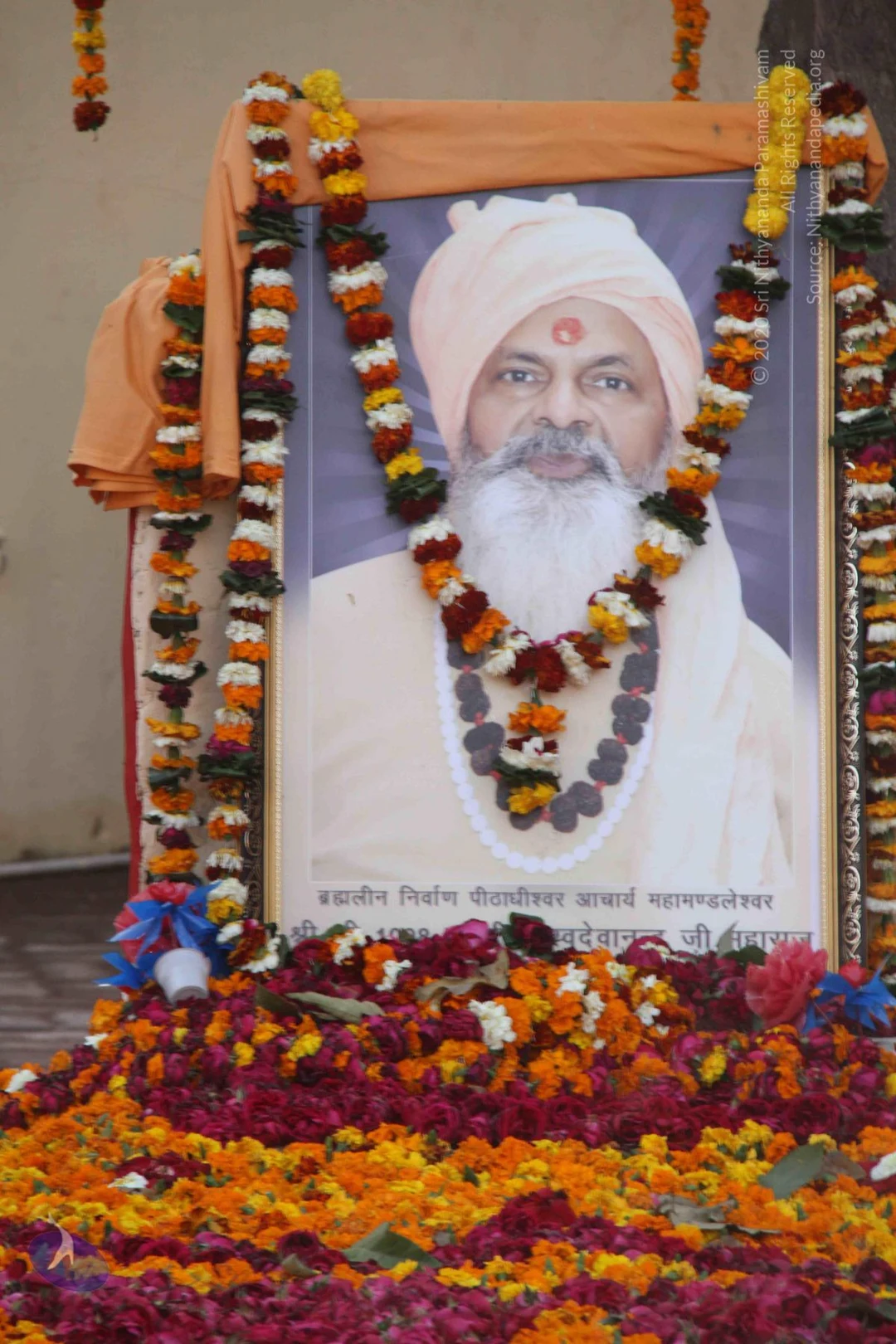
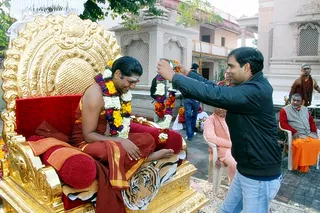
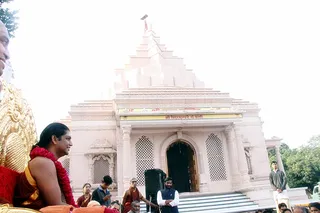
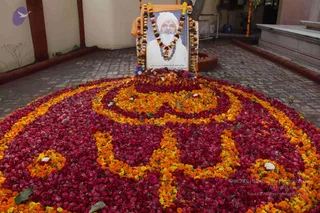
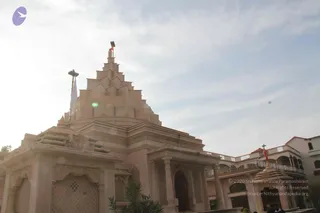
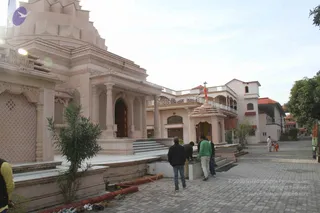
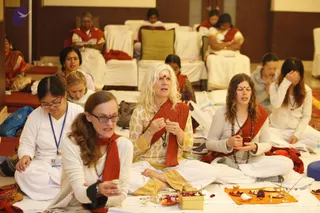
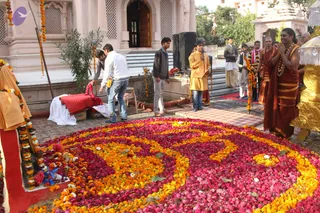
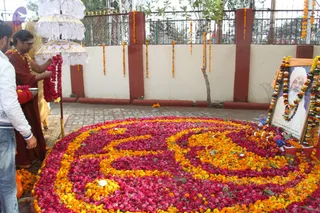
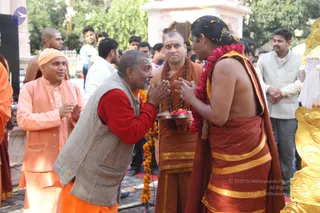
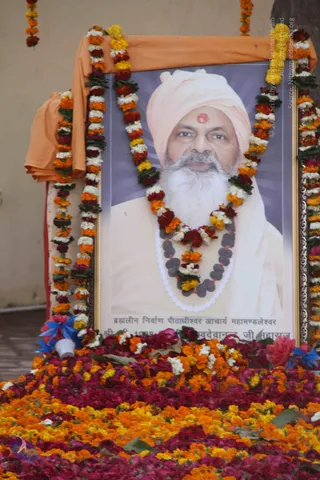
A large circular floral design of marigolds and pink-red rose petals covers the paved ground in a courtyard. A framed portrait of an elderly bearded man in a white turban and white robes stands at the top, garlanded with orange and yellow marigold strands and a red-and-gold garland, set on an orange-draped structure. The portrait is a printed picture, not a physical person. No people are visible in the scene.A photograph outside a small pink sandstone shrine with carved ornamental arches, its entrance marked by a red banner reading Bhagavan Shri Krishneshwar Mahadev. In the centre, a smiling man with long swept-back hair wears a red-and-gold dhoti and shawl, a red and pink flower garland, and a gold-bead necklace with a rudraksha mala, with a red tilak on his forehead. Beside him, a shaven-headed man in an orange-and-gold robe with a rudraksha mala holds a silver tray of flowers and offerings. On the left, an older man in a grey vest over orange clothing stands near a bald man in orange and red. On the right, a bearded man in a grey jacket and white dhoti stands behind. A yellow curtain hangs in the shrine doorway behind them, and trees frame the background.Outdoor photo at a temple courtyard with a white umbrella canopy and gold-carved seat at left. A shaved-headed man in a rust-brown robe with orange-brown rudraksha malas and a white tilak stands at left, speaking. Next to him, a man in a rust-brown robe with long hair tied in a bun rests a hand on the back of a striped-shirt devotee who bends forward in obeisance. A man in a saffron/peach head cloth stands behind them. At right, a smiling man in a white jacket with hands folded in namaskar and a man in a dark vest look on. Saffron-clad sannyasis and onlookers stand in the background near a white pavilion with carved screens and a flowering tree.

January 20 2014

Original wiki page
Contents

Title

Kalpataru Space of Possibility to fulfil your desires

Description

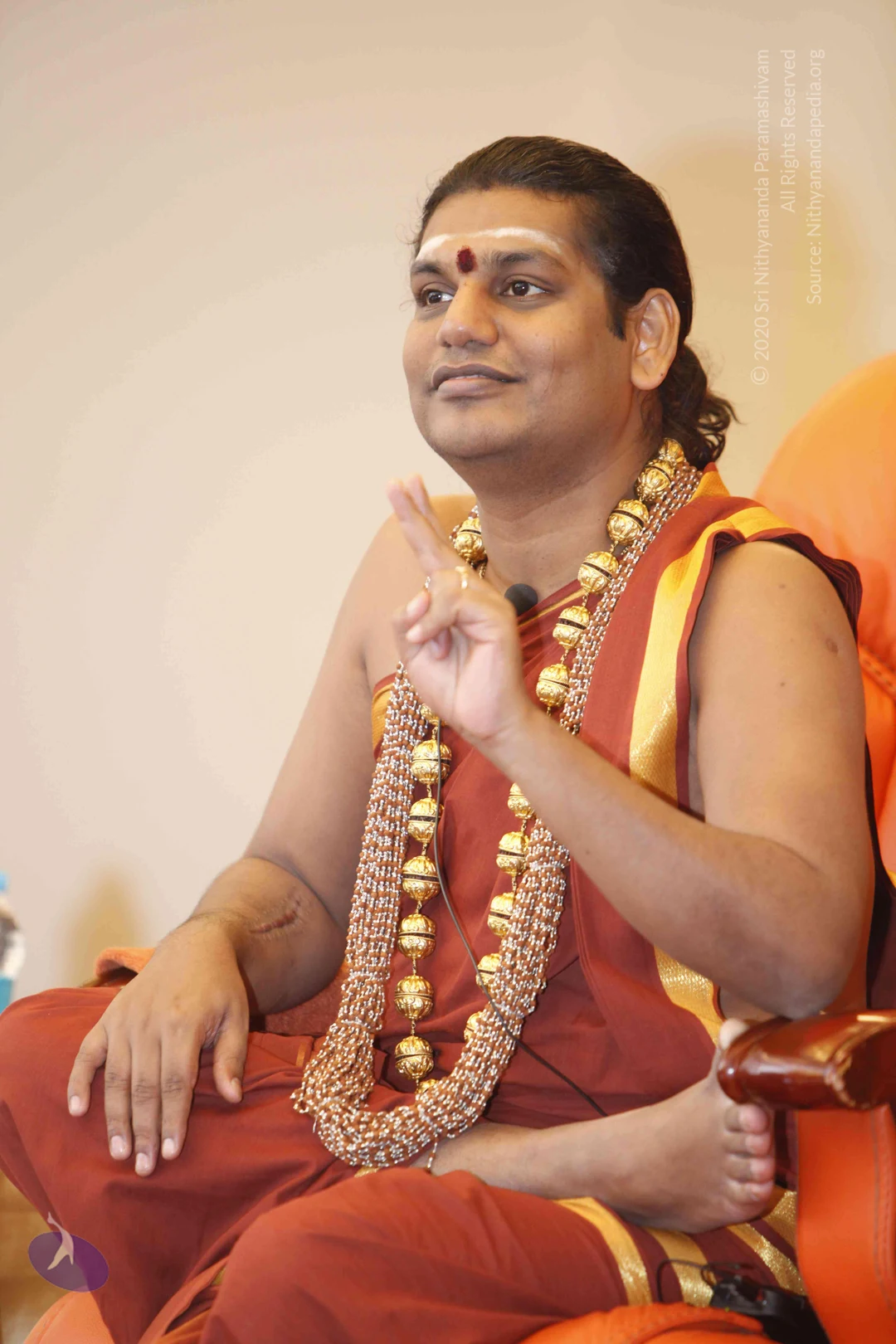
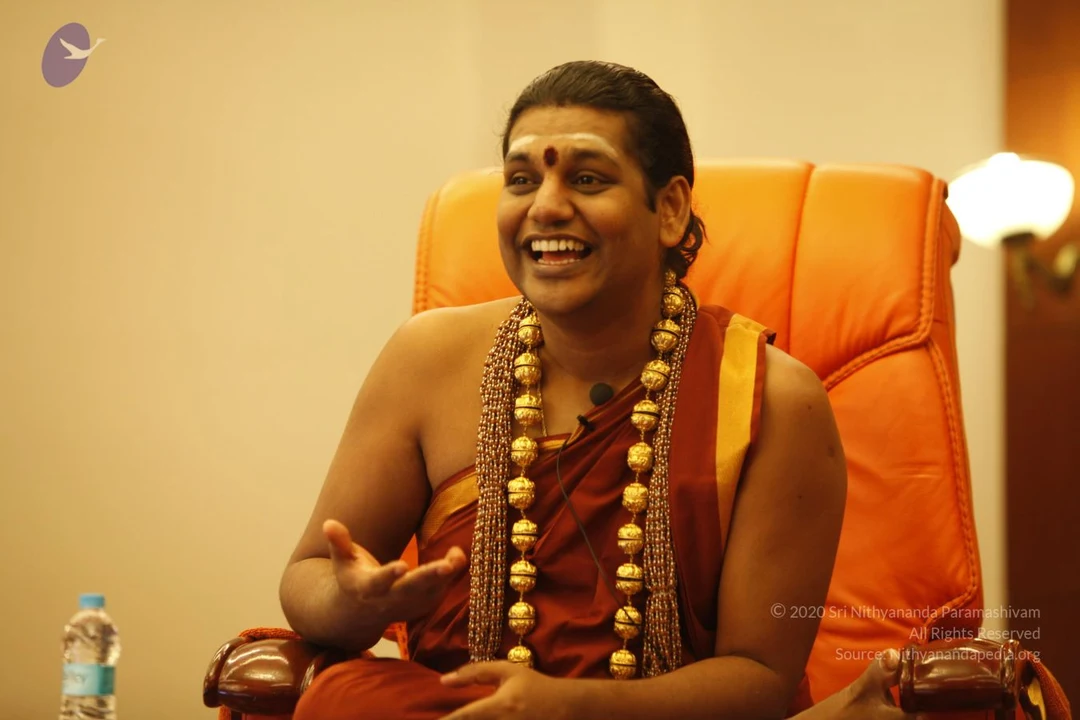
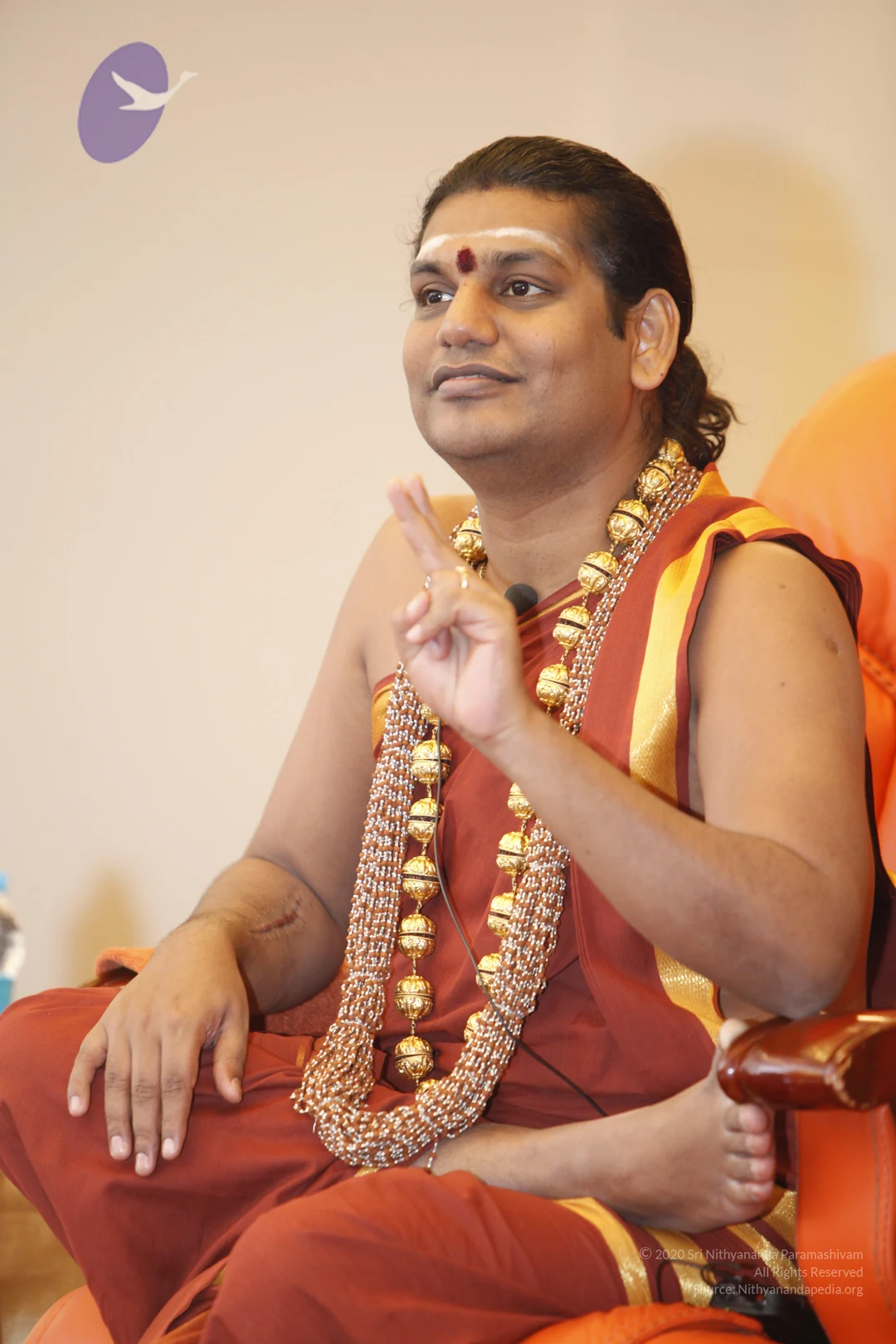
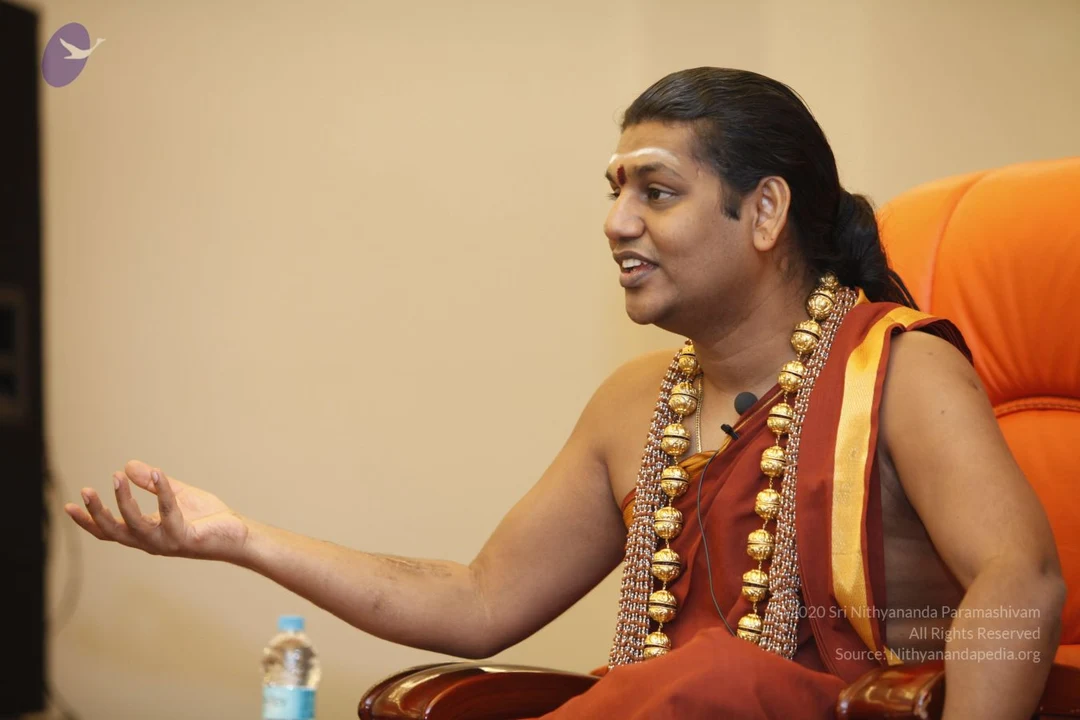
In today’s morning Satsang, Paramahamsa Nithyananda gives us a beautiful message – carry the space of possibility in our heart! There is a profound difference in living with possibility versus impossibility. When we perform actions with possibility in our hearts, we see beauty, joy and excitement with what we are doing – it is anti-aging! With impossibility, the effort for the same action diminishes, filling us with tiredness, boredom and anxiety. Let us live with the idea that everything is possible in our daily lives!

Video and Audio - Kalpataru Space of Possibility to fulfil your desires

VideoAudio

Transcript

(00:15)

nithyānandeśvara samārambhām nithyānandeśvari madhyamām | asmat āchārya paryantām vande guru paramparām ||

(00:41)

(In Hindi) Aaj ke satsang me Main aap sabhi ka prem or ashirwad sahit swagat karta hun. Sabhi bhakto, shisyo, sanyasiyon, samajiyon ka swagat he.

(01:01)

I welcome all the devotees, disciples, samajis, satsangis sitting with us through Nithyananda TV, Lotus News Channel, Sadhna TV, two-way video-conferencing all over the world.

(1:30)

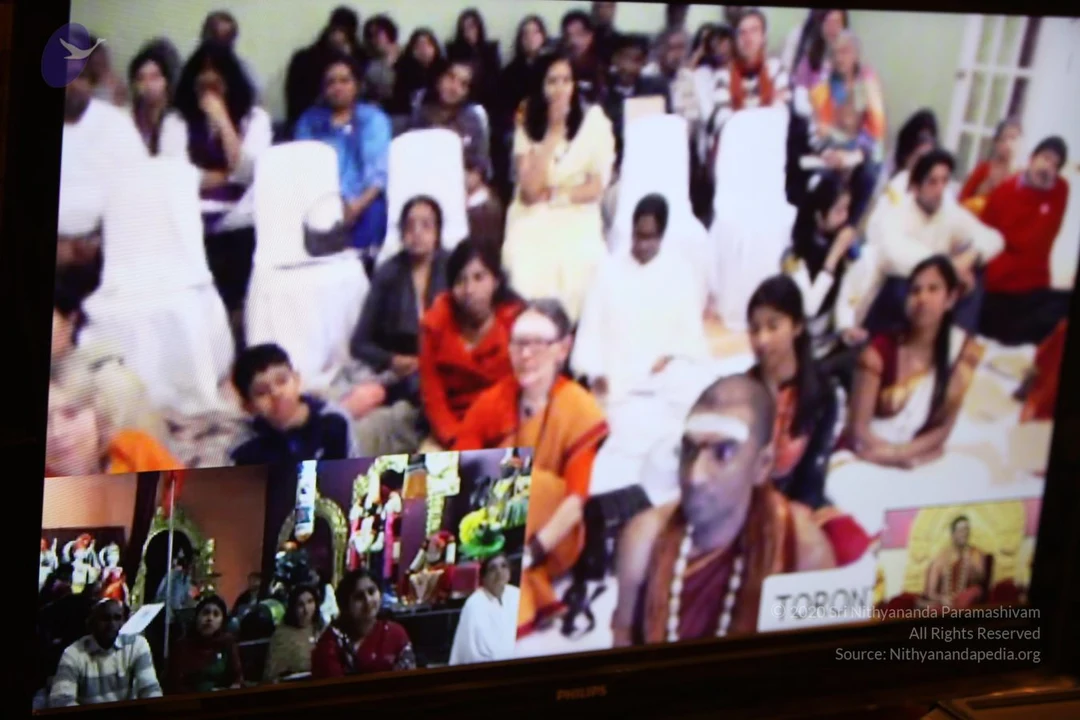
Cities sitting with us, all over the world through two - way video conferencing: Calgary - Amarnath. Calgary are you able to hear Me? Yes, okay. Bangalore City Centre, Seattle - Chidambaram, Guadeloupe - Rameshwaram, Phoenix - Kancheepuram, Ohio - Prayag; Los Angeles - Arunachalam, Oklahoma - Somanatham, San Jose - Madurai; Singapore - Singapuram; Nithyananda Nagaramu - Hyderabad, Nithyananda Nagara - Bangalore, Toronto - Kailasam; Hong Kong - Seerhazhli, Washington DC - Sripuram, Austin, Chicago - Srirangam, New York - Varanasi, Houston - Kalahasti, Wellington - New Zealand, Bogotá - Colombia; Richmond Hill - Canada, Dubai - Vaidyanathan; Adi Nithyananda Dhyanapeetam - Avathipalayam, Santa Fe - New Mexico, Hyderabad - Gupta Kashi, Charlotte - Srisailam, Kuala Lumpur - Palani, Thiruvanmiyur - Chennai, Toronto, Slovakia, Oman - Sivagangai, Colorado Springs - USA, San Diego - Oceanside, Jorpati - Nepal, Enriching Temple Bidadi, San Antonio Texas, Richmond Hill - Canada.

(3:18)

Yes, I welcome all of you with My love and respects. I especially welcome all the participants in Toronto - Kailasam, all the devotees, viewers, visitors gathered in Toronto - Kailasam for special Kalpataru Darshan, unique Kalpataru Darshan, Kalpataru Utsava. Wow! The hall is overflowing and people are in the garbha mandir also. Blessings to all of you. Great. I think first time the temple is overflowing. 😊

(04:07)

And, today the...all the Inner Awakening participants, you guys are going to enjoy the world’s oldest recorded ritual – Ganga Aarati. Please understand. See when a priest completes the ritual and signs a document and receives his salary, that document is called “Maniyam”. Maniyam- is the name of the document. All Hindu temples boast their ...that...like their age, their oldness, based on that Maniyam record only. That record where the priest completes his ritual signs and receives his salary, that record is accepted as a evidence to recognize the temple’s oldness and unbroken worship. See, in Hindu tradition, size of the temple does not matter. How many number of years the worship has happened without breakage, without disturbance.

(05:35)

So, please understand. Sringeri temple has a 1,200 years of unbroken record; Rameshwaram Temple has a 1,700 years of unbroken record; and Ganga aarati has record of 12,000 years. Understand. 12,000 years, more than 1,000 Kumbha melas, Ganga aarati has record. It is unbroken ritual. The oldest ritual available to us, with record is Ganga aarati. Done in “Har ki Pauri”, means the “Feet of Shiva”, where Ganga comes to wash the feet of Shiva… So, you are going to enjoy that ritual today on exactly the same spot.

(6:48)

Of course, Vishwanath Temple and all has long Maniyams, but broken in between; in between it was broken. Fortunately, the.. even Madurai Meenakshi temple’s Maniyam is broken; it is not continuous. During the Muslim invasion it was broken; and then the Deity was smuggled into Adheenam and puja was going on there; but in the temple itself, the Maniyam is broken. Somehow, Rameshwaram, because they’re island, the army cannot go to Rameshwaram you see; 😊 army has to stop at Pamban. Army cannot go to Rameshwaram; so their Rameshwaram was saved.

(07:51)

So, today, you guys are going to enjoy the Har ki Pauri aarti, worship of Mother Ganga. It is recorded from the ancient time immemorial. The oldest ritual I have seen in any scripture referred is Ganga aarati only, Ganga’s puja, puja done to Ganga, Ganga aarati. It may be very simple ritual, I can say, maximum half an hour, or half an hour only the whole ritual is; but done without getting broken. One advantage is... you see, a temple ritual, for example, Meenakshi temple ritual, if Madurai is captured that ritual will be broken. If Rameshwaram is captured, that ritual will be broken. But Ganga, you can never capture the whole banks of the Ganga. 😊😊 Only one part you can capture always, the other part will be free. At some corner this priest will go and perform the aarati. So, that is the way the ritual was kept alive. It was a unbroken tradition because the Deity is too big, it cannot be captured by any enemies or war or army. How will you capture from Gangotri to Ganga Sagar? Even if you capture from Gangotri to Gangasagar, we will be sitting in Tapovan and doing it.😊 and Gomukam and do it. Even if you capture, you can’t keep an eye that ritual is not done.

(10:08)

Alright, today, again, I wanted to expand on Kalpataru. Listen. This is for the Inner Awakening participants also. Dhyan se suniya, please listen.

(10:30)

There is a big difference between every action you take with the idea of “impossibility” and with the idea of “possibility”. Understand. For example, from Haridwar you are travelling to Delhi. You are going by walk. Every step you take ..you put with the idea you are never going to reach Delhi, with all kinds of doubts ‘Who knows whether this is the right road? Who knows whether the temper...the weather will be helping us? Who knows I will not get into an accident and die?’ With all kinds of doubts, the more and more number of steps you put, more and more you will be tired, sick, depressed. If you walk in the same road with the idea of “possibility”, more and more you will be excited; when you see every name board, ‘Wow, we are coming closer to Delhi, closer to Delhi!’; and the ideas what you are going to achieve, enjoy, have in Delhi, that will inspire you and excite you more and more.

(12:16)

Please understand. Don’t ever think like a so-called rationalist - irrational rationalist. These irrational rationalists always give an argument: “Eh what is there? Whether I believe or don’t believe, the same number of steps only I have to take to reach Delhi.” Understand. The number of steps may be same, but the effort will not be same. When you walk with the “impossibility”, number of steps may be same, but the effort will be more. If you walk with the “possibility”, number of steps may be same, but the effort will be practically zero.

(13:09)

The more and more action, the more and more the excitement, is the definition of “Possibility”. The more and more action, more and more excitement. The more and more action, more and more tiredness and boredom, is the definition of “Impossibility”.

(13:37)

One of My disciples asked Me, ‘Swamiji, what is this every day morning exactly You get up, run to take bath, do Your puja, and sincerely doing.’ Even I am sometimes surprised. See, after the realization of My incarnation-hood. From the age of three, I started puja. First I started with Ganapati puja, with that Ganesha Deity I got. Then a few deities added. But, from the age of three, I remember Me doing puja unbroken till the age of twenty-two. And, after twenty-two, no puja; just being in the Samadhi, that’s all. Again, the day I took up the responsibility of Madurai Adheenam, from that day till now, unbroken I am doing puja as a tradition. I’ll sit and invoke My own presence and offer.😊 It’ll be very cute if you see the puja.😊 I will sit with so much of joy and I will feel exactly almost like a My own hand putting it on Myself! But it is such a joy.

(15:25)

So, one disciple asked Me, “What is this Swamiji? You do your puja and run to satsang? Are You going to do this for Your whole life forever?” Please understand. The moment he asked, I know that idea of boredom and tiredness as a pattern in him. Immediately I told, “First thing, understand, not only My whole life, even after I leave the body I am going to be doing this. I am going to be doing this forever as Akshardhama.” Forever and ever from My Akshardhama I’ll continuously be available to you. You will see, all over the world, in all My Samadhis, people will gather every morning, do Pada puja, and sit for satsang, upanishad with Me. When I am in the body, when My body is moving, when My vocal cord is functioning, it is “Satsang”, “Nithya Satsang”. When that does not function, it is “Nithya Upanishad”. That’s all. It is going to be My action whether I Am in the body or after I leave the body. He could not understand, the disciple could not understand.

(17:06)

I wanted to tell him and tell every one of you, if any action brings you tiredness and boredom, you already have a belief of “impossibility”, the subtle “impossibility” is already developed in you. I tell you, beauty in the action is “Possibility”... We all know how to beautify our body and skin. We need to know how to beautify our actions.

(18:03)

When you are carrying “possibility” and acting, every action brings more and more joy and excitement. You will grow younger and younger. Your face will become more graceful, more younger, more beautiful. Very rarely I have seen people growing younger. One person, without doubt I can say, is Sathya Sai Baba. He grew younger and younger and younger. The more time passes, He was becoming more graceful and more younger. Without any controversy or doubt I will tell very clearly and boldly, one person I have seen in My life growing younger and younger and younger is Sathya Sai Baba. I have seen Yogi Ram Surat Kumar also. Not only in face and the being, even the lifestyle, everything. Bhagwan Ram Surat Kumar, the more the number of years, the more He became like a child, he was growing younger.

(19:42)

I tell you, the same Haridwar to Delhi if you walk with the idea of “impossibility”, SDHD, you will not even cross Roorkee. Before that itself, in some Ganga canal you may fall and die 😊. With SDHD, you will not even cross Roorkee. If you walk the same road with the idea of “possibility”, without SDHD, every step gives you excitement by the time you reach Delhi, you have all the excitements..excitement of Delhi and you get excited to do more walking, more yatra.

(20:37)

I tell you honestly when I started on My yatra, please understand let it be on record. When I started My parivrajaka yatra I never thought or planned I’ll walk length and breadth of India, I will spend so much time in My Parivrajaka Yatra. The first few days of the yatra I carried with the idea of “possibility”, that’s all. The concept of “possibility” gave Me so much courage, so much joy; I never imagined I spend nine full years. Oh God! You see, a person who is more awake, for Him one day is equivalent to the three days of a normal man.

(21:35)

See, even for Inner Awakening, all the IA Graduates, understand. You guys did not go through twenty one day program; you have gone through sixty three day program in twenty one days. Because, the number of hours you are working just see morning four O’clock you have to get up Am I right? Ah sorry three 😊 Because four you have to be in the yoga; three you have to get up and four you have to be here. From three what time do you go to bed? Nine or ten, sometimes eleven! In the normal every day, regular day average a man works six to seven hours a day. Here, come on see how many hours. And that also all the emotional roller coasters, ups and downs, and so much of cleansing. So, three days action you go through in one day. Understand. External cleaning, internal cleaning, internal- internal cleaning.

(22:57)

So, I was this kind of a Person. Too many hours means, many number of waking hours. Too many number of waking hours was My lifestyle from the beginning. So, I never imagined, nine years – nine means in My lifestyle nine into four, 36 years. Because for Me there is no other thing, no waking….no dreaming and sleeping state 😊. I never thought so many years I’ll spend in Parivrajaka Yatra. Now, I remember, when I Am going around the Haridwar, I have not spent years in Haridwar; surely months only at different, different time; but months only, not years. But I feel like as if I know the whole Haridwar. Because, I don’t keep quiet; I will be walking around, going everywhere,😊😊 going to every temple, going to every ashram, going to every place. The active lifestyle, I tell you, because that “possibility” gave Me the excitement. Only now when I look back I Am shocked nine years I spent in Parivrajaka, means, going from place to place, not being stable in one place. God!

(25:02)

Please understand. Take this one lesson, intranalyze this one truth. It may be same number of steps, same distance, but the effort, result, everything will be different if you carry “possibility” with you. I tell you, when you travel with “possibility” idea from Haridwar to Delhi, with idea of “possibility”, even if you have walked the same number of steps, you will forget many time you walked or you struggled so much. To tell you honestly, when I describe, it looks like a struggle for all of you, My Parivrajaka time. Otherwise, it was simply “HoneySun”. Travel in your life also with the “possibility” in your heart.

(26:16)

You will see one, every step does not tire you. It adds to more and more excitement. See, when you walk with “impossibility”, every step adds anxiety, not excitement. When you walk with “possibility”, every step adds excitement, and when you reach the goal you won’t even feel tired that you did so much, because when you were walking you did not feel tired. See, when you were walking if you did not feel tired, after reaching you will not have the tiredness memory. But, with the idea of “impossibility” while you are walking, it will feel tired; you may not reach; by mistake if you reach, it will give you the idea ‘Oh, so much difficulty.....’

(27:11)

I tell you, I don’t feel at all I have struggled to do anything in My life... That’s why, still, I don’t care about all this opposition, abusal, illegal attacks; I Am not at all bothered. Actually, these guys who are abusing, spreading lies, spreading rumours, they should have a small trailer of My inner space. 😊😊 or they should get to look into My inner space. They will really, they will really be ...😊 because they may be thinking I Am...I Am giving too much of importance to them in My inner space. When they look there and they find that they are not even there, 😊 they will really be upset, because they really expect that I should be afraid of them or I should be frightened about them or I should have at least little concern. This is too much. What to do? Hm.

(28:50)

I tell you one thing, I tell all these guys who are abusing us, attacking us illegally, immorally, adharmically and lying about us, spreading rumours, I wanted to tell all you guys one thing. Please understand. Do not fight with a man who don't have vengeance. Understand. This is the secret of life. I don’t have any vengeance, I don’t have any violence. My inner space is full of power. Don’t fight with a guy who don’t have vengeance. You will fall and collapse, fail bitterly. See, only a person with vengeance will become tired, will become bored, will feel he is doing more...so much. A person without vengeance will never feel he is doing too much. I neither feel I am doing too much, nor I have any vengeance against anybody, or I have anger. No, nothing.

(30:14)

Understand! One of the very important lessons in the life; do not fight with a guy who don’t have vengeance. You will lose the game. Always fight with a fellow who has a vengeance; you will always win the game. Please understand. The fellow with vengeance, even if he is too big a guy, you are too small a guy, you just go with the space of without vengeance, go with the completion, you will just win him. I Am still working on trying to get some of the Akashic records, how did the few Akhada sadhus failed in war? I want to study because many of our Akhada sadhus were established on Nididhyasana. Only after they are established on Nididhyasana level, means the cosmic shift has happened, they’ve sent to war..they have been sent to war. How did they…. few wars they lost. How did they lose? I want to study. Maybe before some emergency, I think some of the people have been sent to war before the training. That might have been the reason for their loss.

(31:50)

Otherwise I tell you a violence free man can never be conquered. It’s a law of life. Violence free man can never be conquered. My victory declares, not just My victory, but the victory of dharma, I am telling you, My victory over all these abusive elements, anti-spiritual elements, anti-social elements, anti-humanity elements, anti-national elements, proves this one truth: A nonviolent person can never be conquered.

(32:42)

You will always lose if you are fighting with a nonviolent person, because he is so powerful. I tell you, a nonviolent person will be so powerful inside, he will not have any wound inside and he knows very beautifully he will handle the whole situation, and he knows what to do. 😊

(33:10)

When you are filled with violence, you will not know what to do; 😊 you will enter foolishly into a small ashram and break, beat that Swami, and get into trouble... 😊 I tell you, that is why, in tradition, always before war, warrior has to do tapas, he has to do tapas. Whether it is Arjuna or Bhima, first they have to do tapas, become non-violent, powerful. Only then any war.

(34:04)

I tell you, carry this space of “Possibility, you will always win in all wars. No one can win over you in any war, because the space of “Possibility” excites you more and more, inspires you more and more, brings rejoice in you. You can see in My life. Really, people thought, “How can Swamiji do twenty-one day program continuously?” First year, we did one; second year we did two; third year we did four; fourth year we did six, sorry third year we did one, because of the abusal and attack; but fourth year, we did six….four, four; and fifth year, we did six; sixth year, we did eight; and seventh year, we are doing twelve...😊 Yes, 2008 – One; 2009 – Two; 2010, because of the attack and abusal – One; 2011 – Four; 2012 – Six; 2013 – Eight; Now 2014 – Twelve. It is only just multiplying... By next year, I Am training acharyas. I’ll do in one spot; acharyas will be going around and doing in different places. 😊

(36:38)

Understand... Carry the space of “Possibility”, every day action will only lead you to more and more excitement. Every Inner Awakening only excites Me, not tires Me. I Am only excited to spend more time with people, to be with people. Every day Kalpataru only excites Me; it doesn't tires Me. I tell you, in your life, carrying the space of “Possibility” in your heart is “Kalpataru”. So, meditate on this one truth: Carrying the space of “Possibility” in your heart is “Kalpataru”.

(38:30)

Essence of today’s satsang is this one line: Carrying the space of “possibility” in your heart is “Kalpataru”. Let you all achieve, experience, live, express, radiate, share and explode in Eternal Bliss, Nithyananda.

(38:53)

Photos

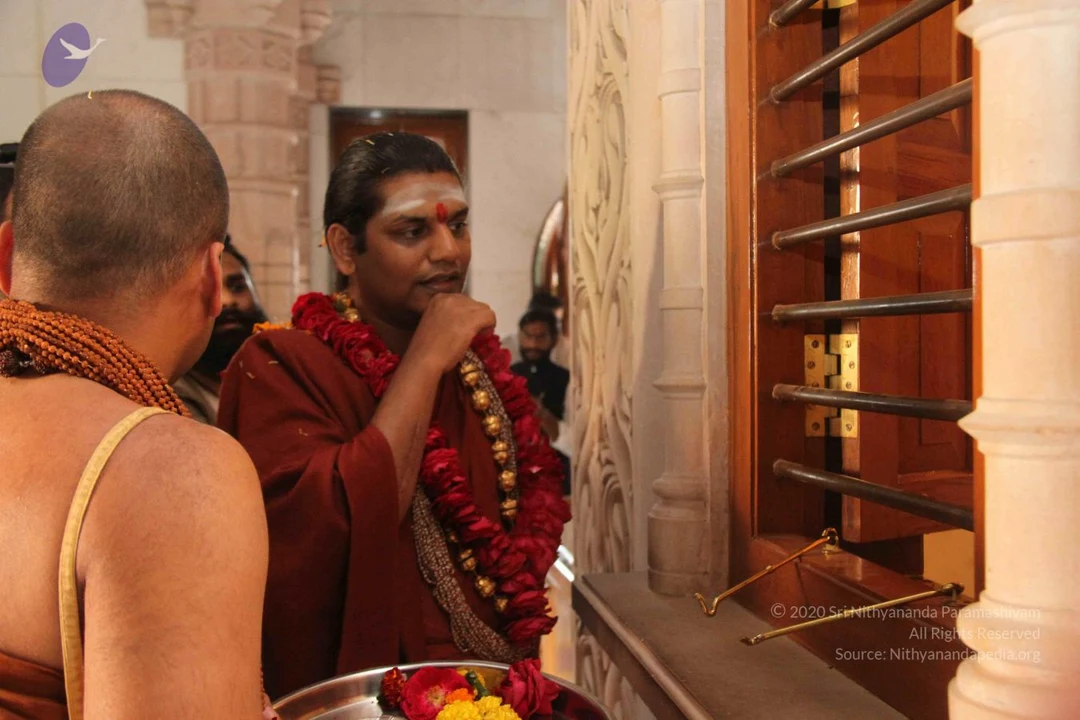
Aarathi to Gurumoorthi
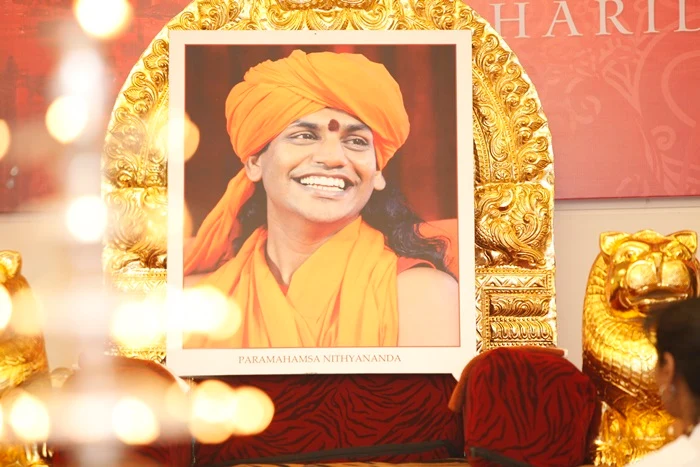
Aarathi to Gurumoorthi

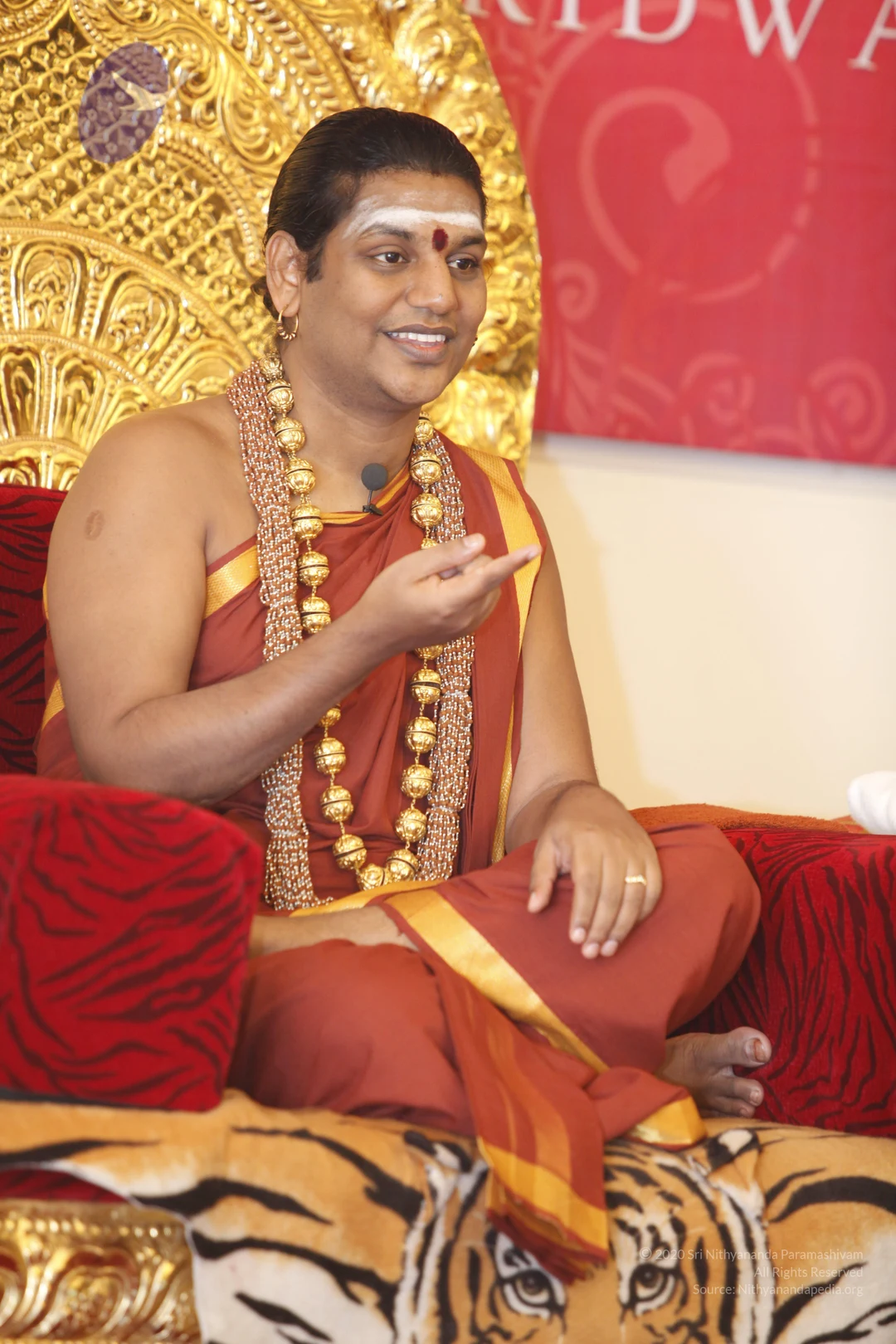
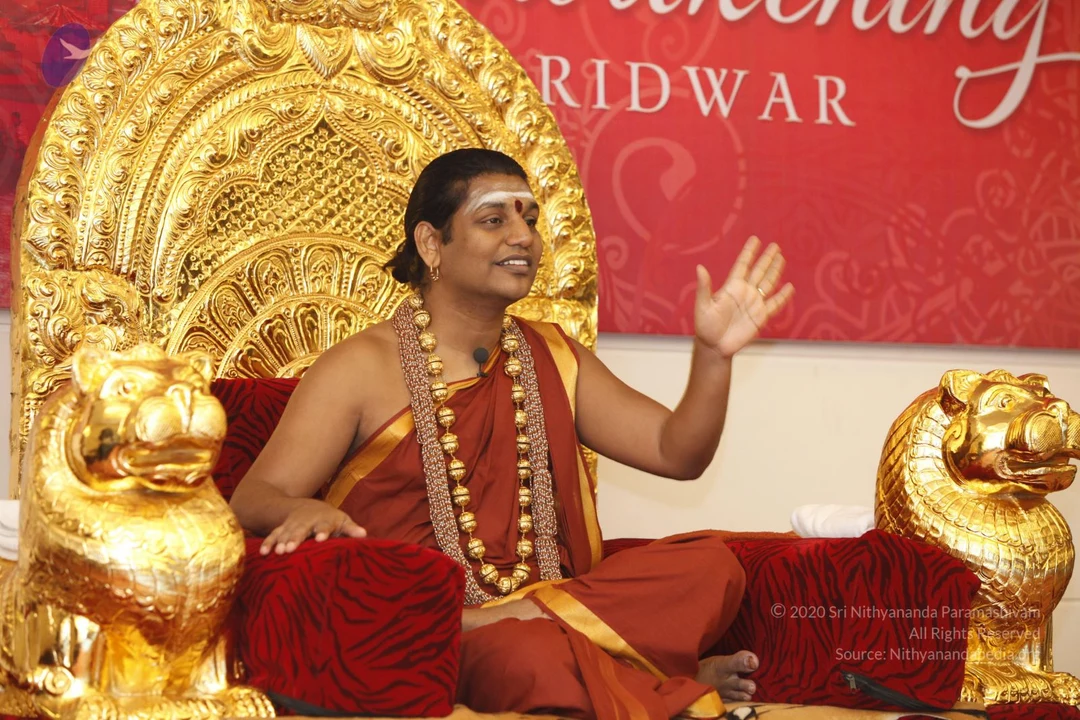
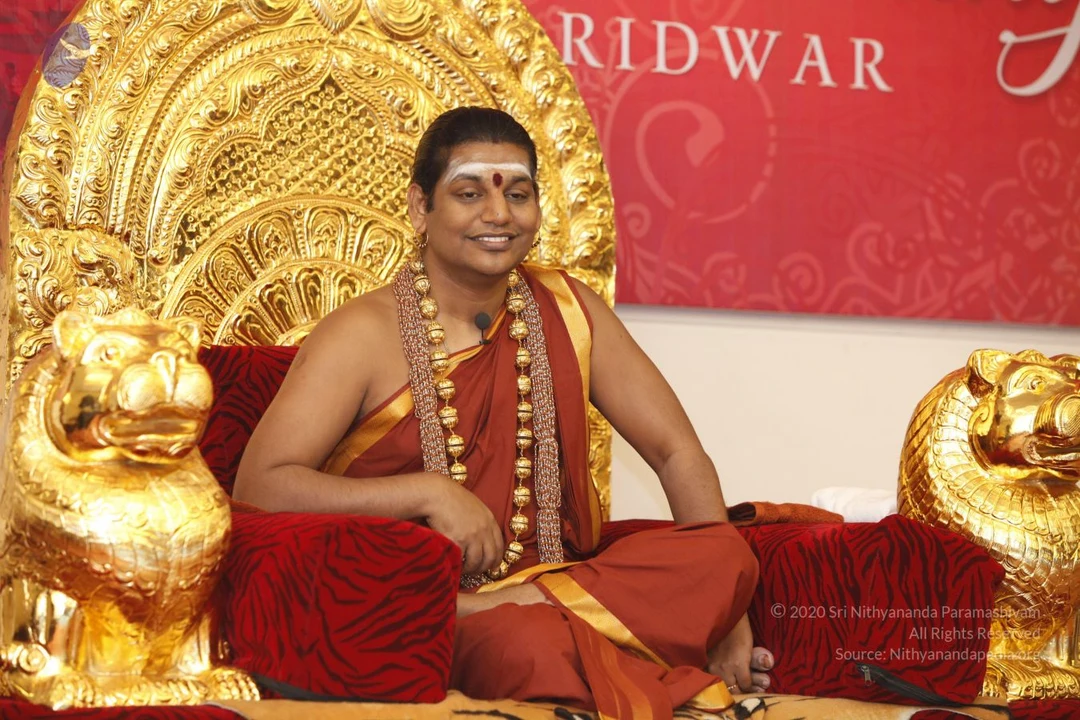
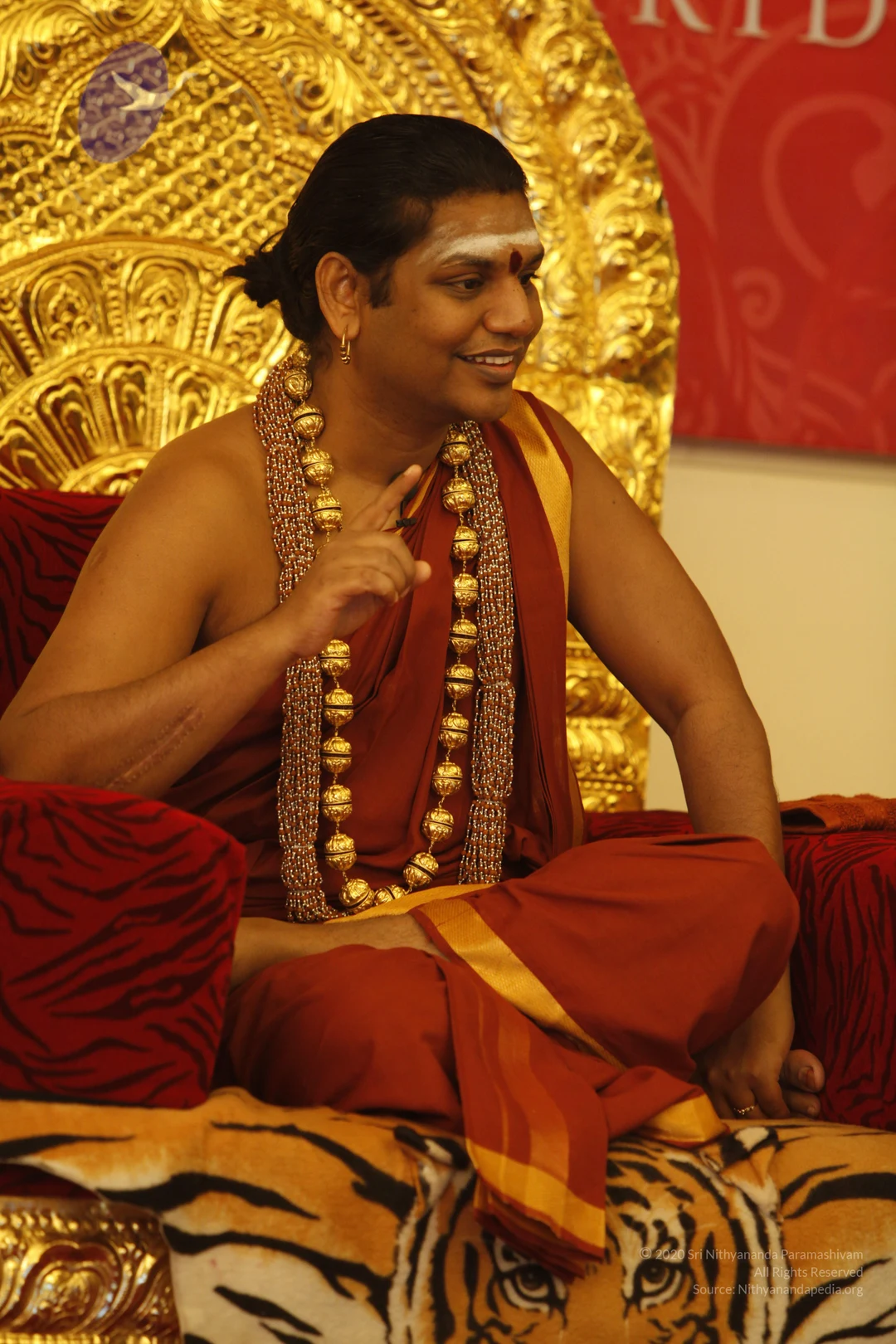
Leela Alankar of Today
Nithya Satsang
Nithya Satsang

Kalpataru Darshan

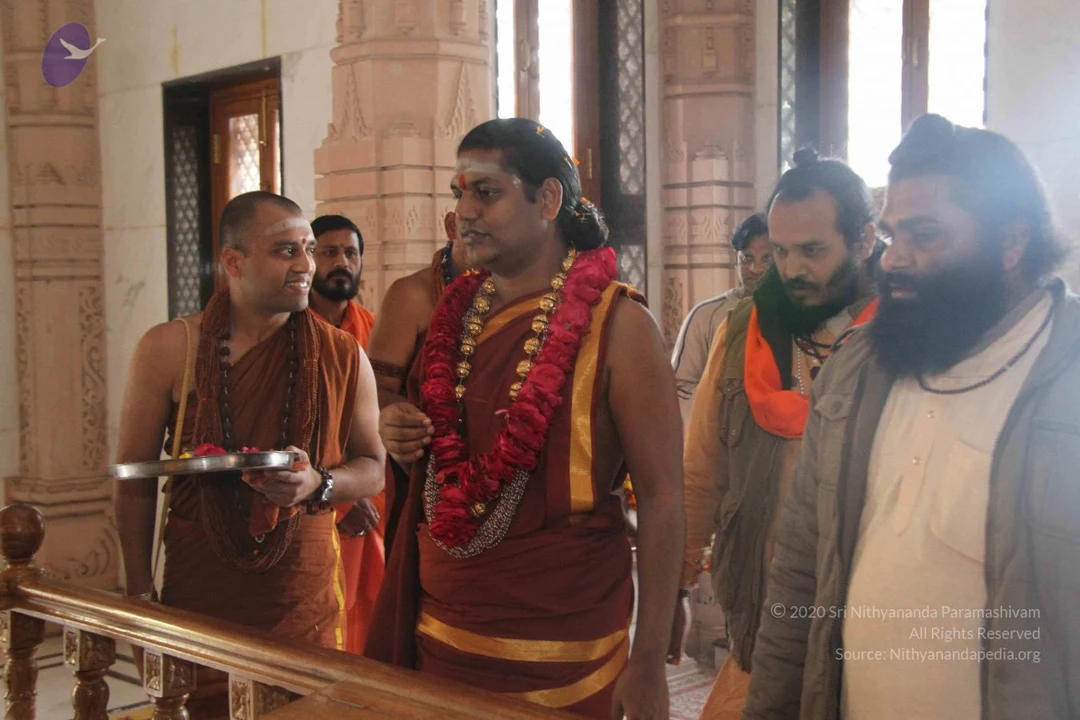
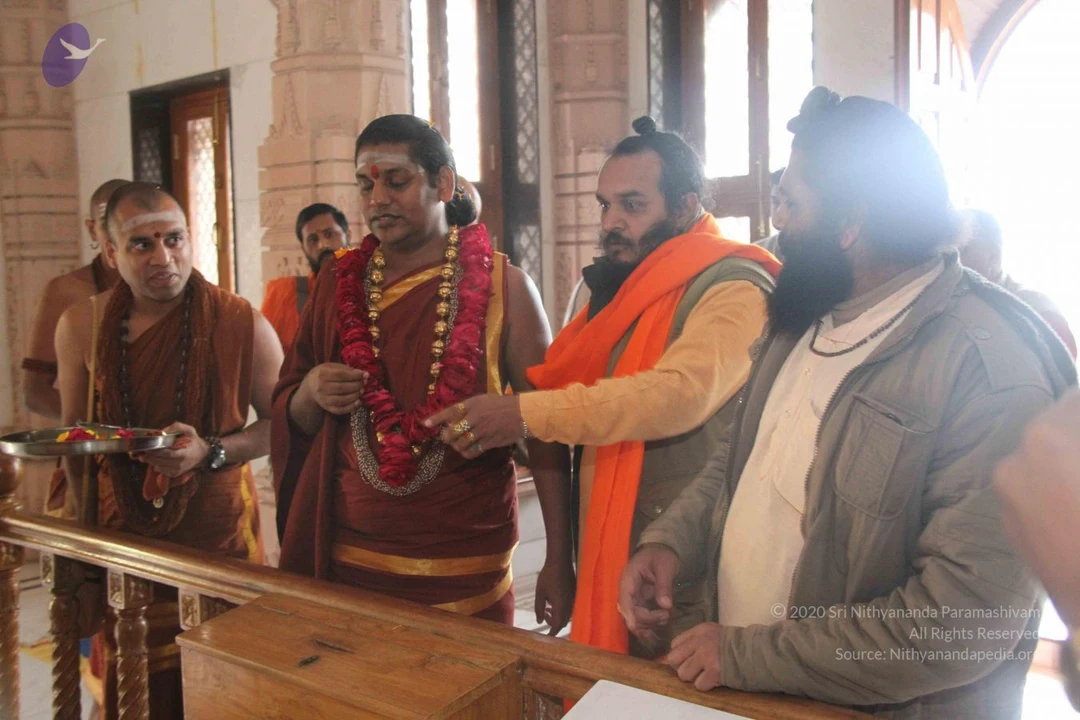
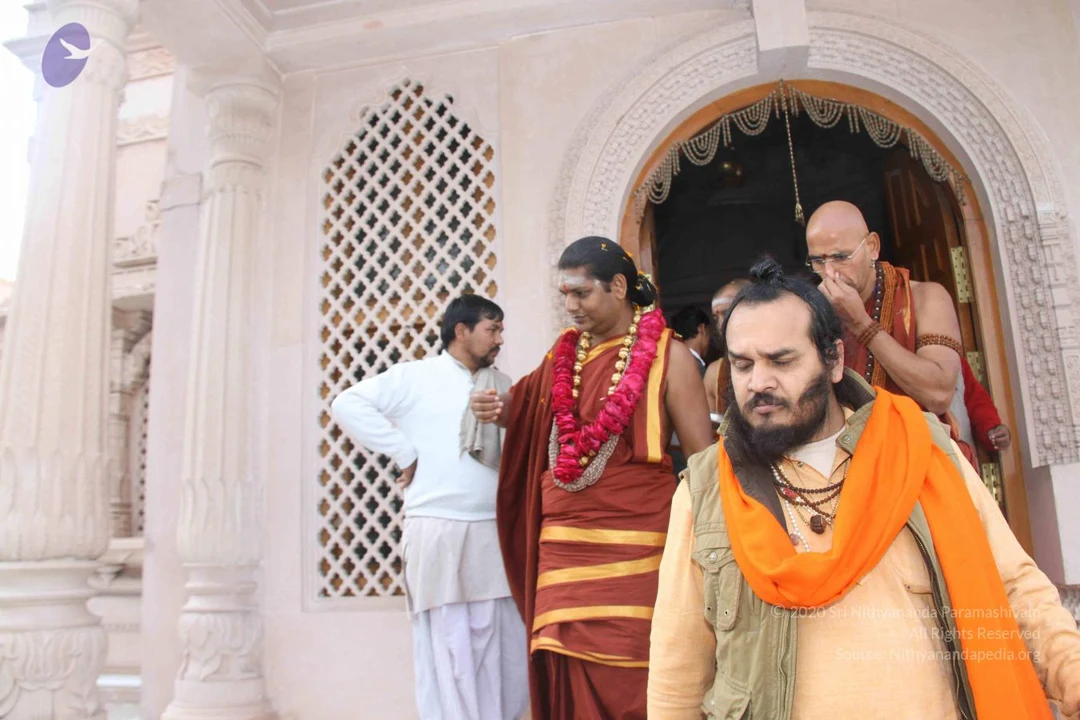
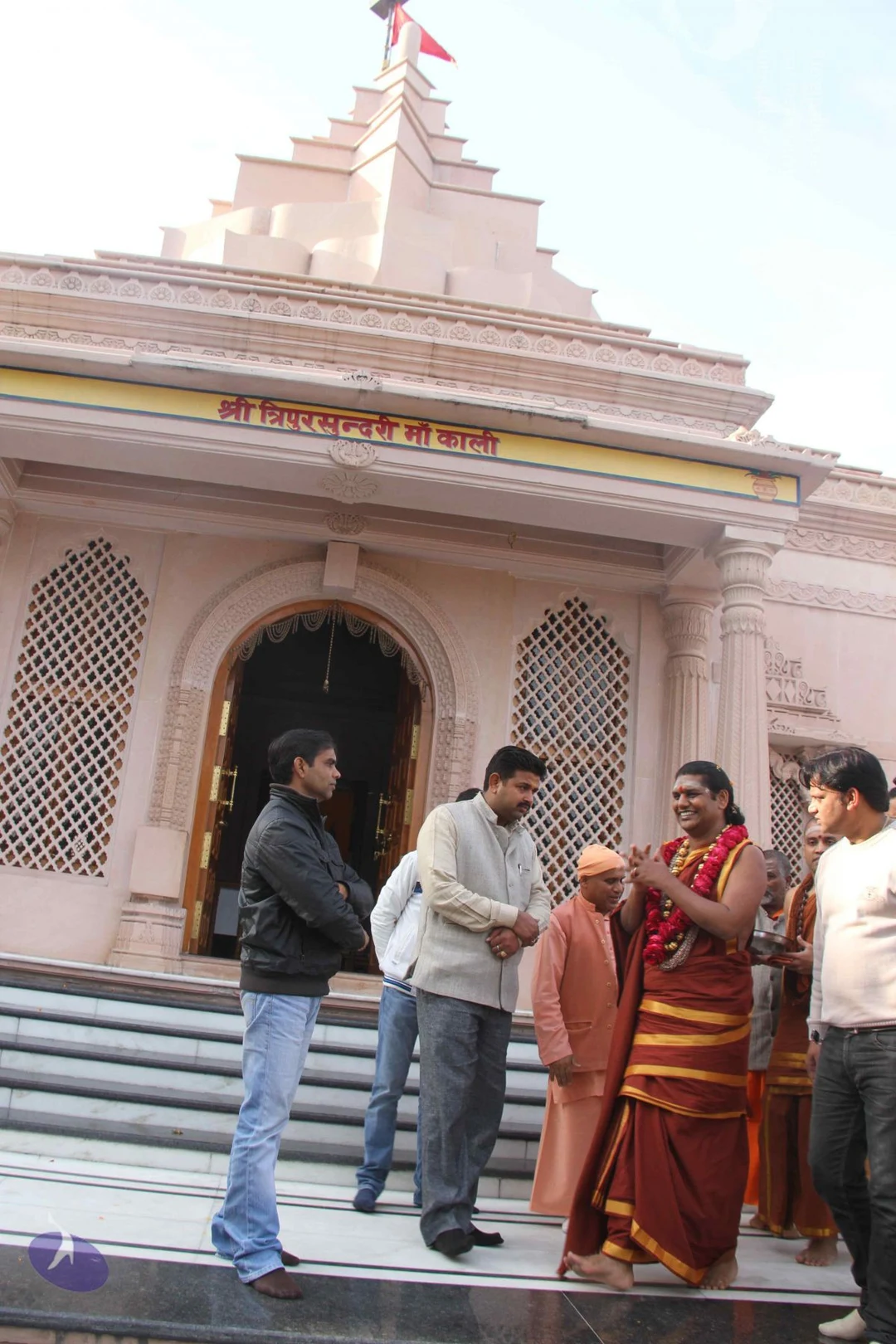
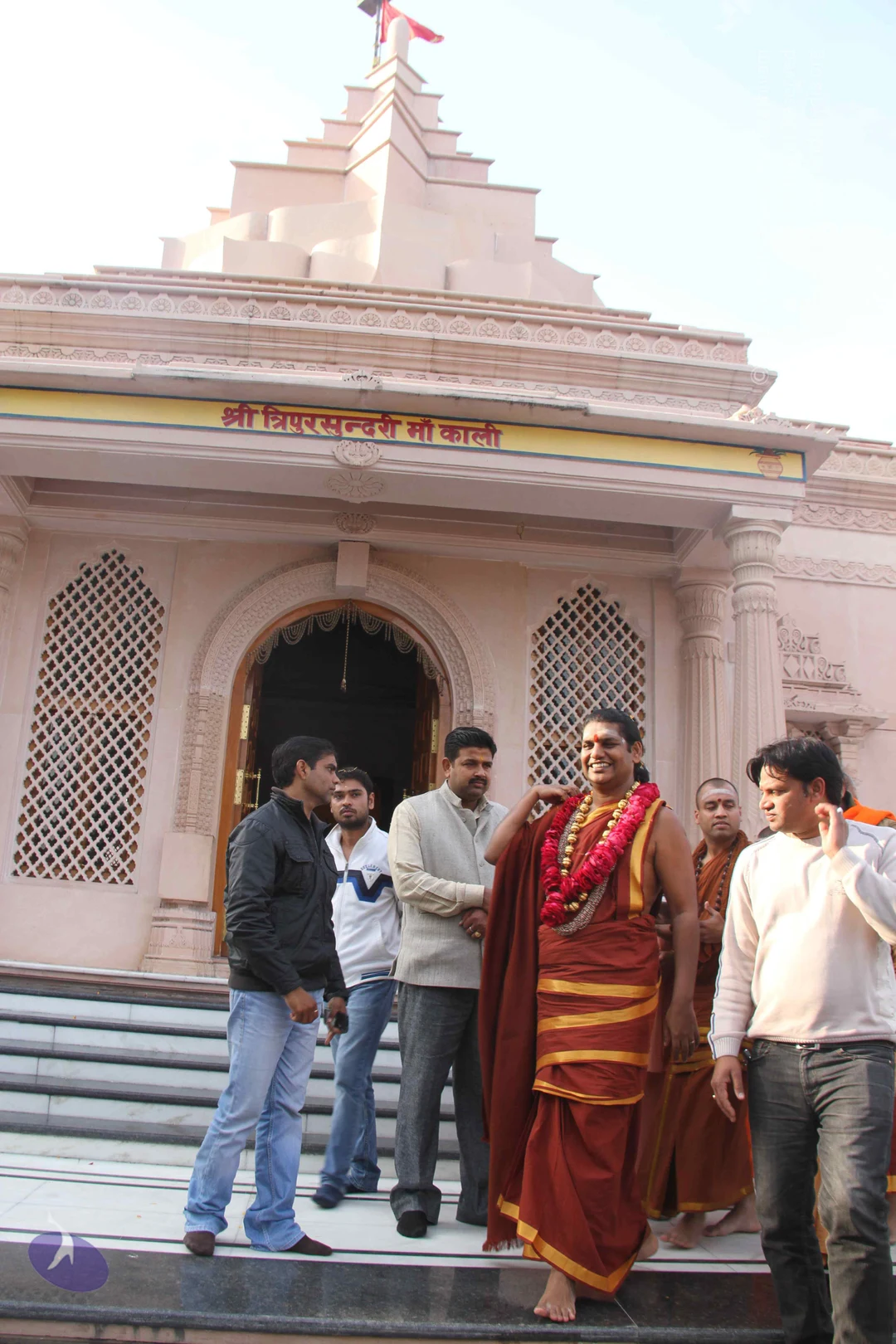
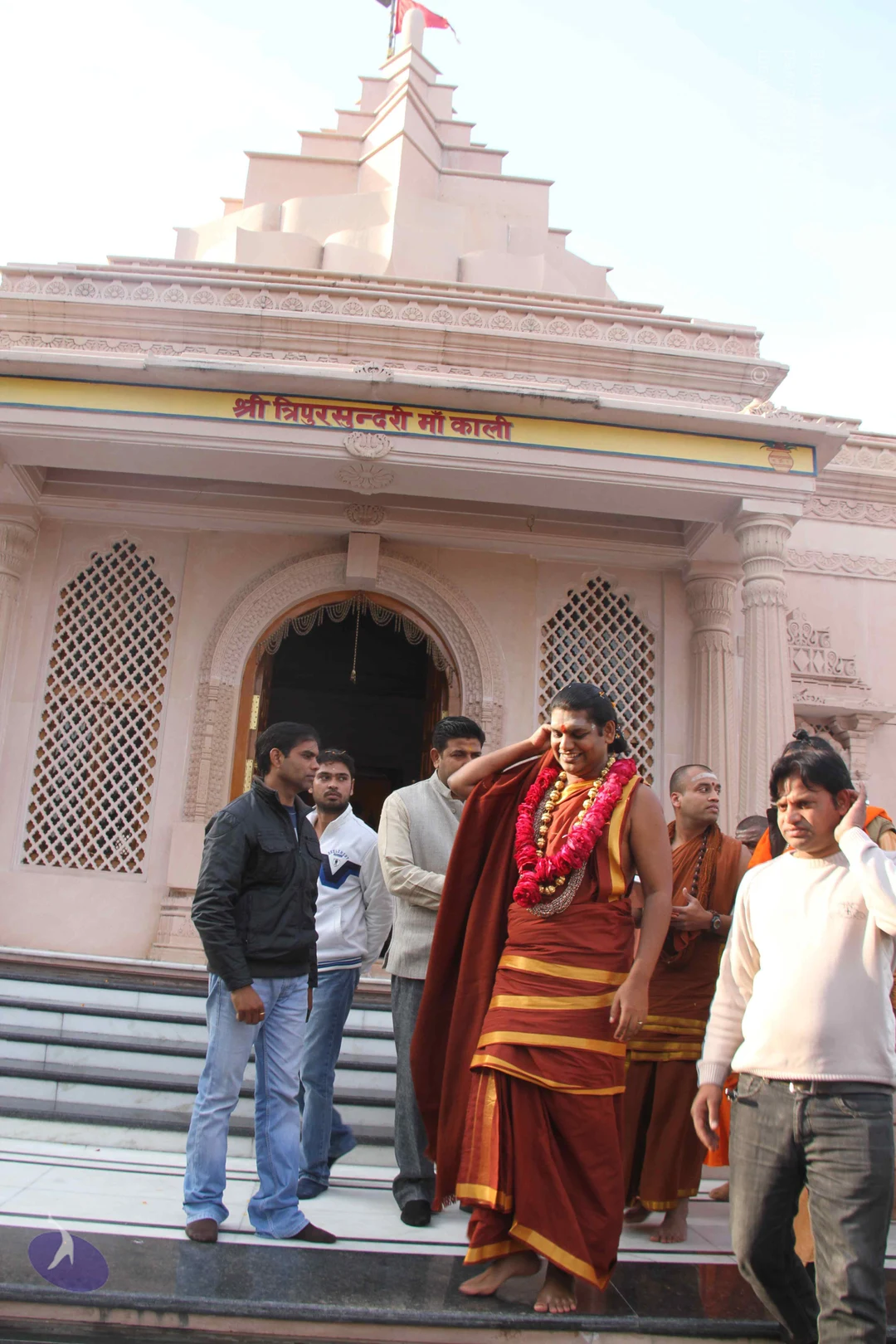
Sri Yantra Mandir visit
Tags

Paramahamsa Nithyananda, Mahabharata, message, heart, possibility, anti-aging, tiredness, boredom, anxiety, live.

Photos Of The Day:

Kalabhairava Darshan
Nithya Satsang

Sri Yantra Mandir

Photos Of The Day:

Satsang

Sriyantra-Mandir

Photos Of The Day:

Kalabhairava Darshan - To be edited
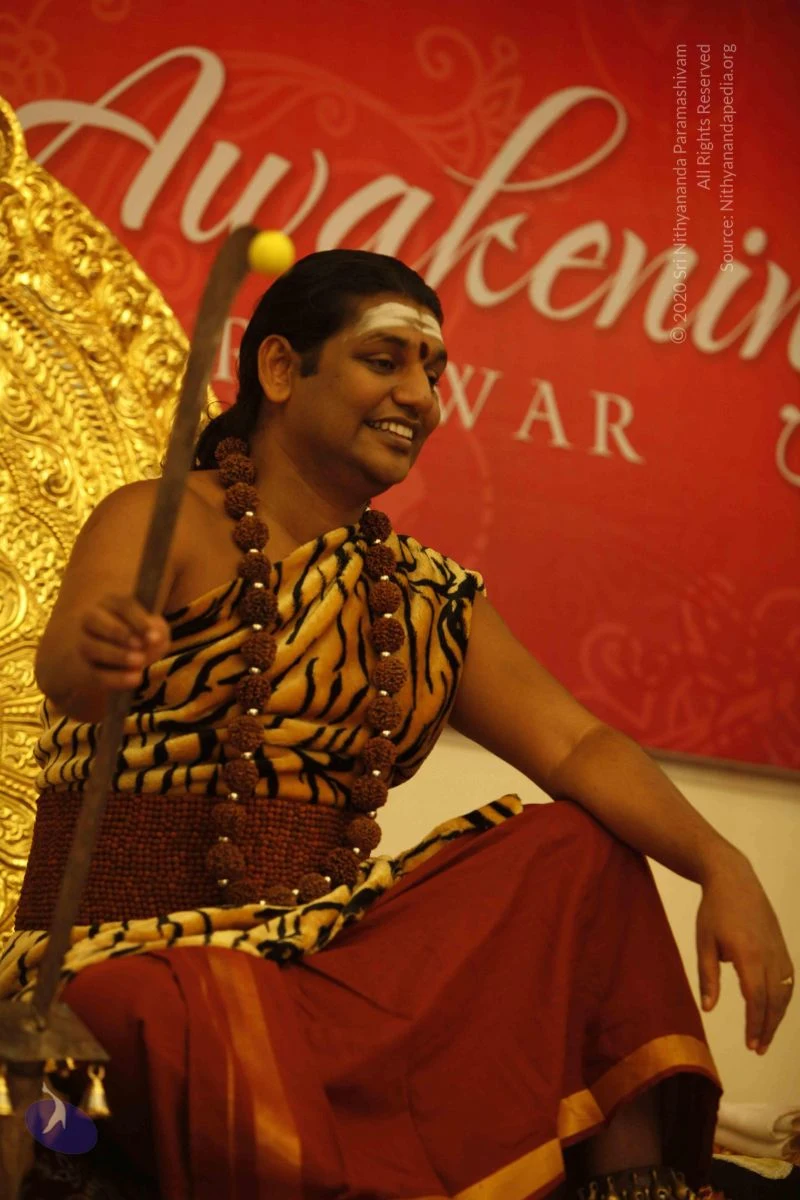
Sri Yantra Mandir.-TO BE EDITED LATER

1-Kalabhairava Darshan

2-Satsang

01-Kalabhairava-Darshan

02-Energy-Darshan

02-Energy-Darshan_Photo_1000__MG_7422_CMP_WM

Photos from this day

View all 304 photos

Kalpataru Darshan

2 photosSource gallery
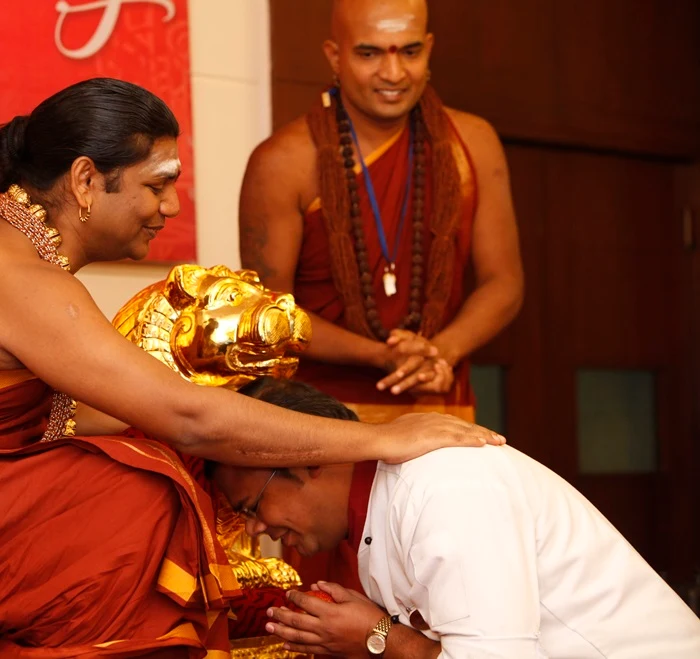
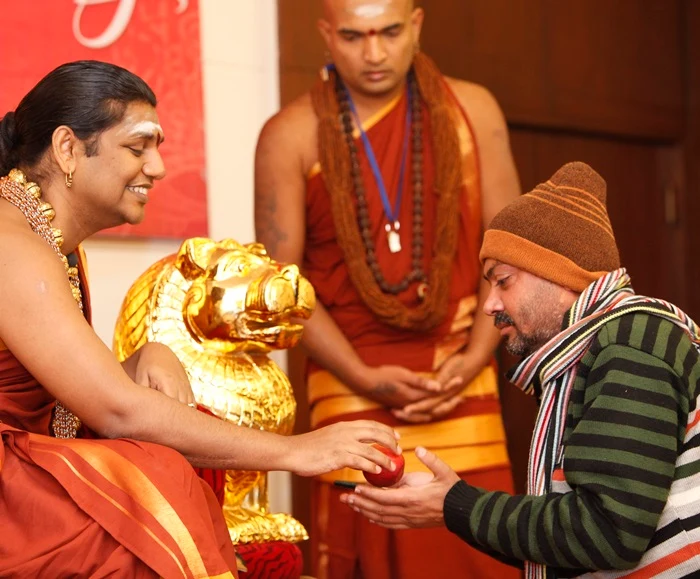
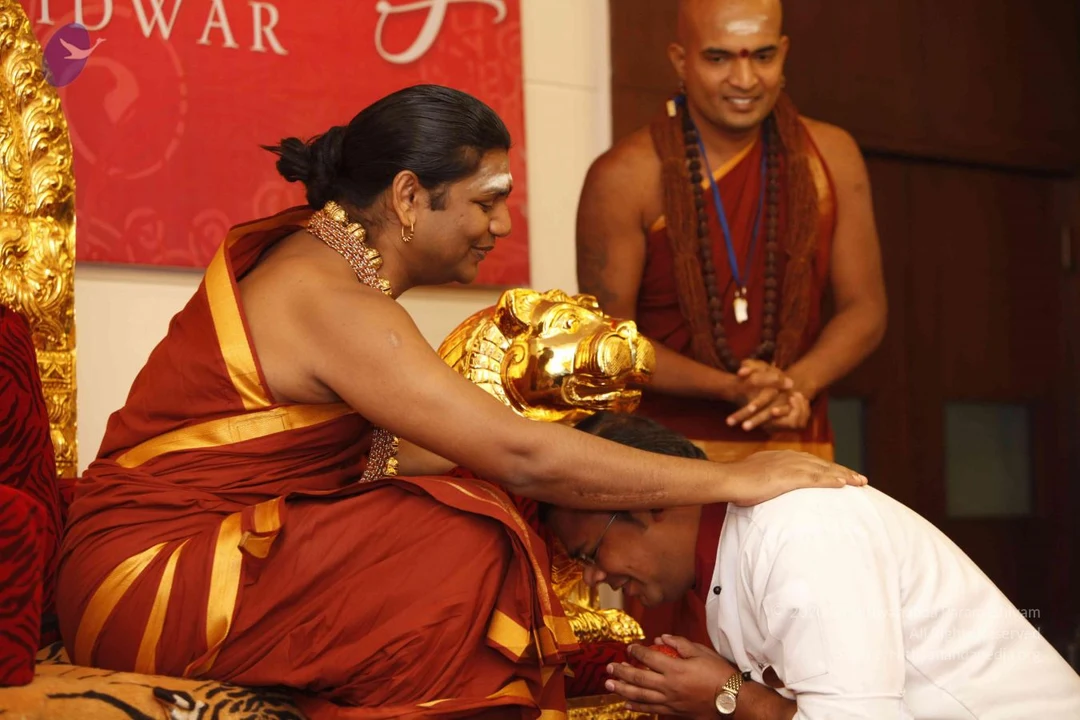
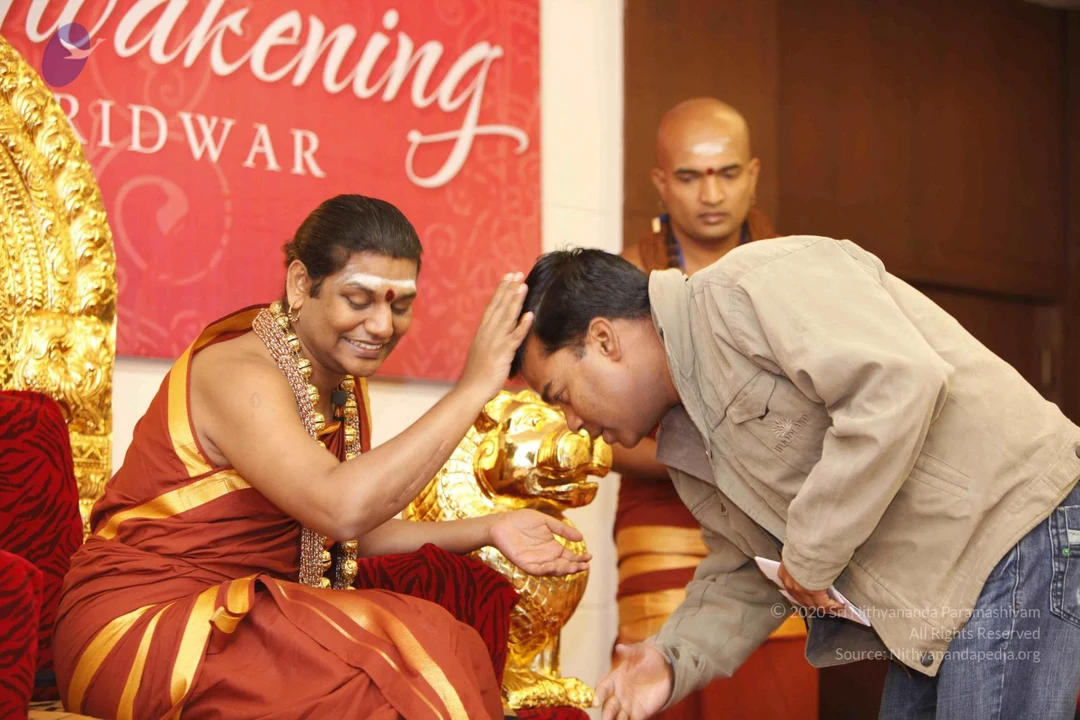
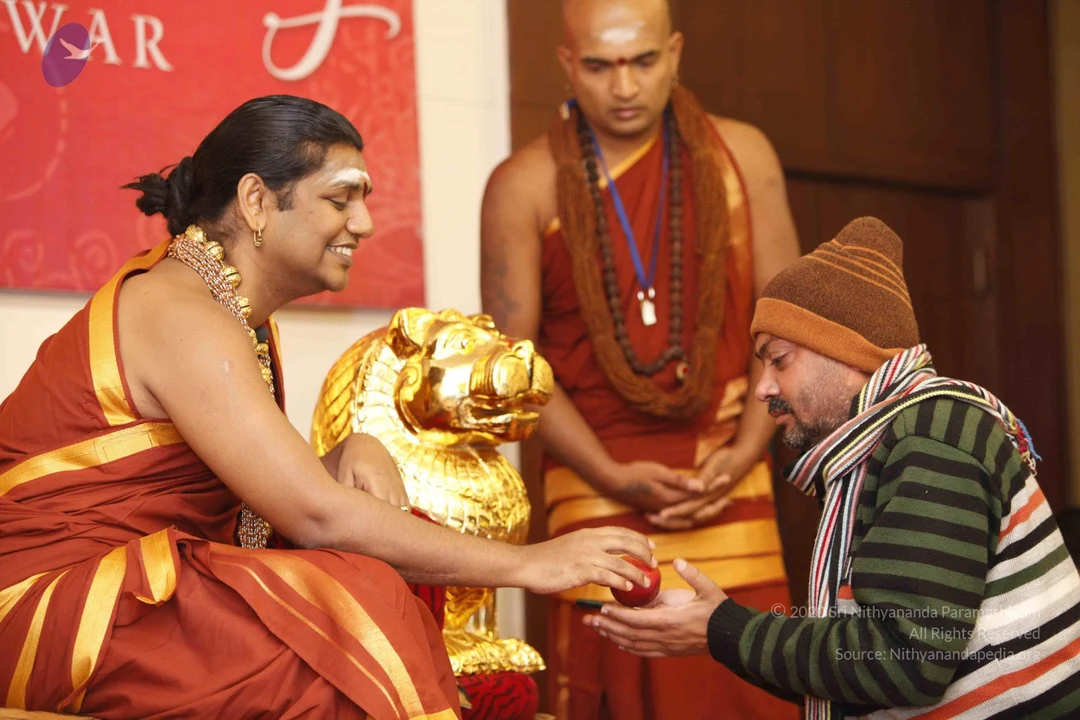
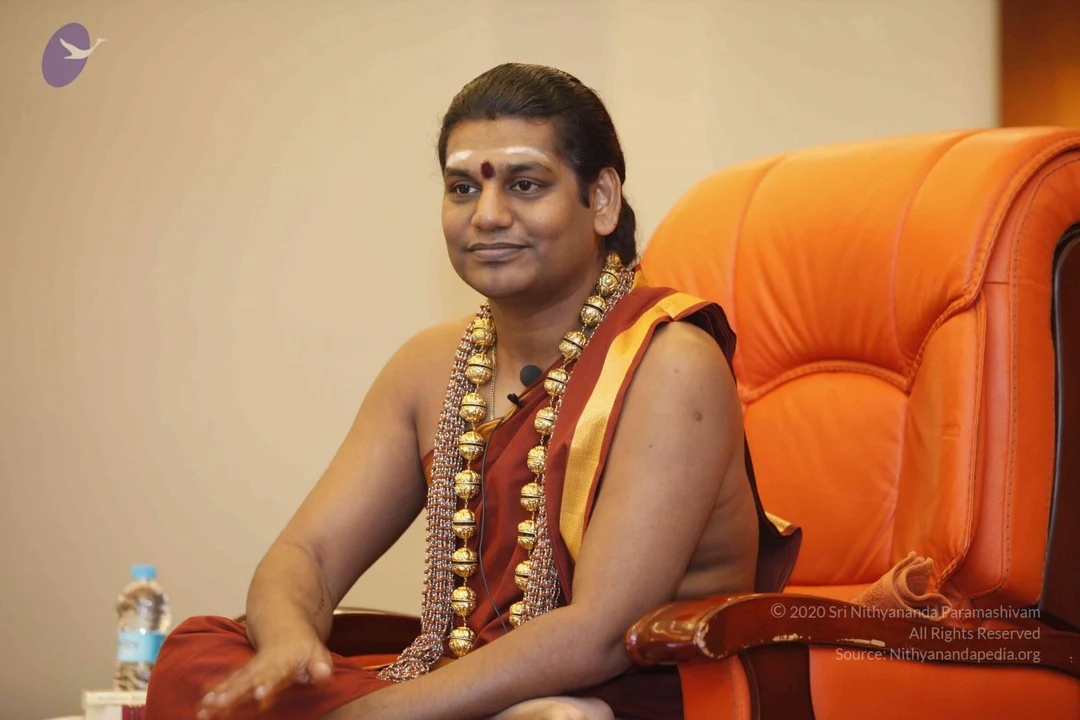
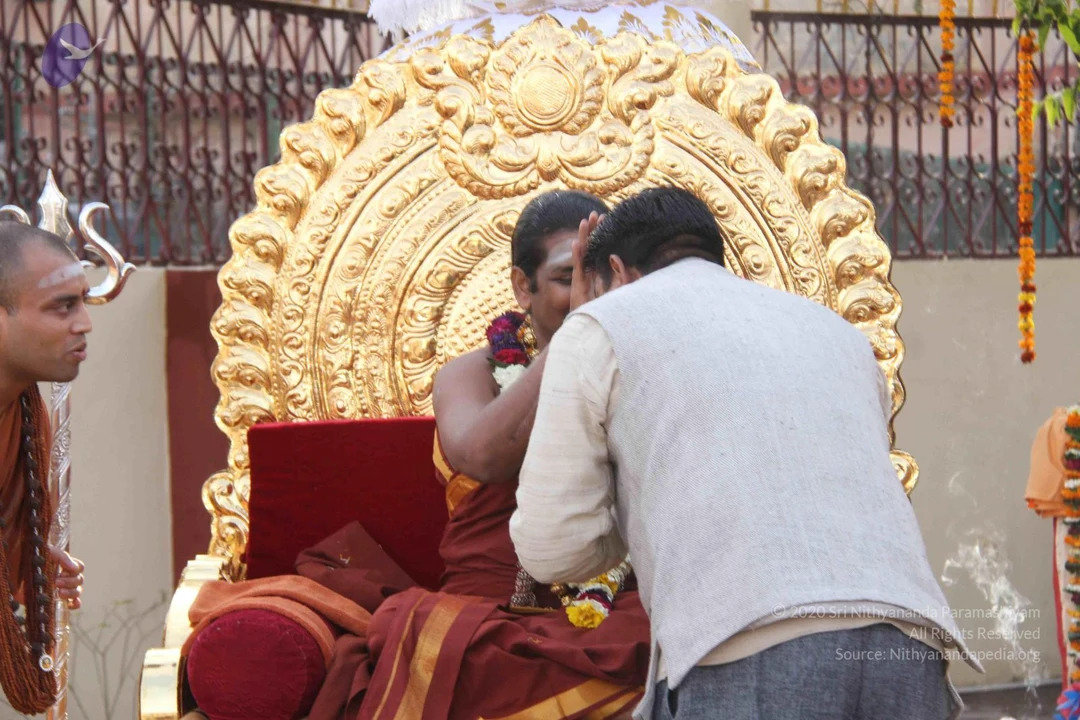
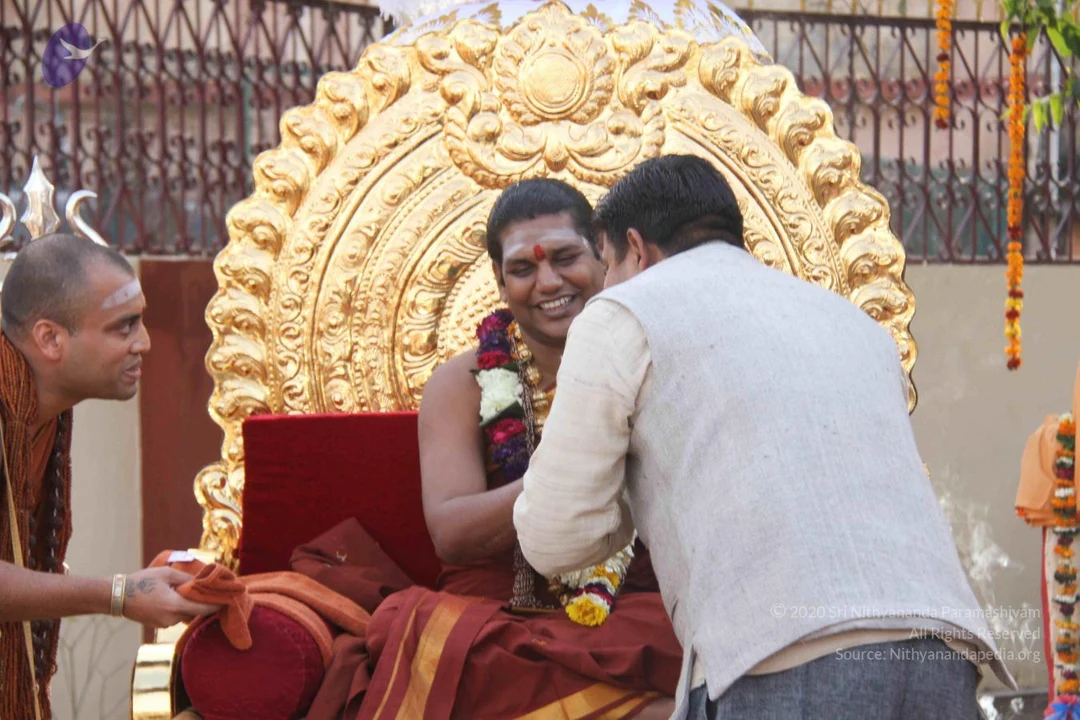
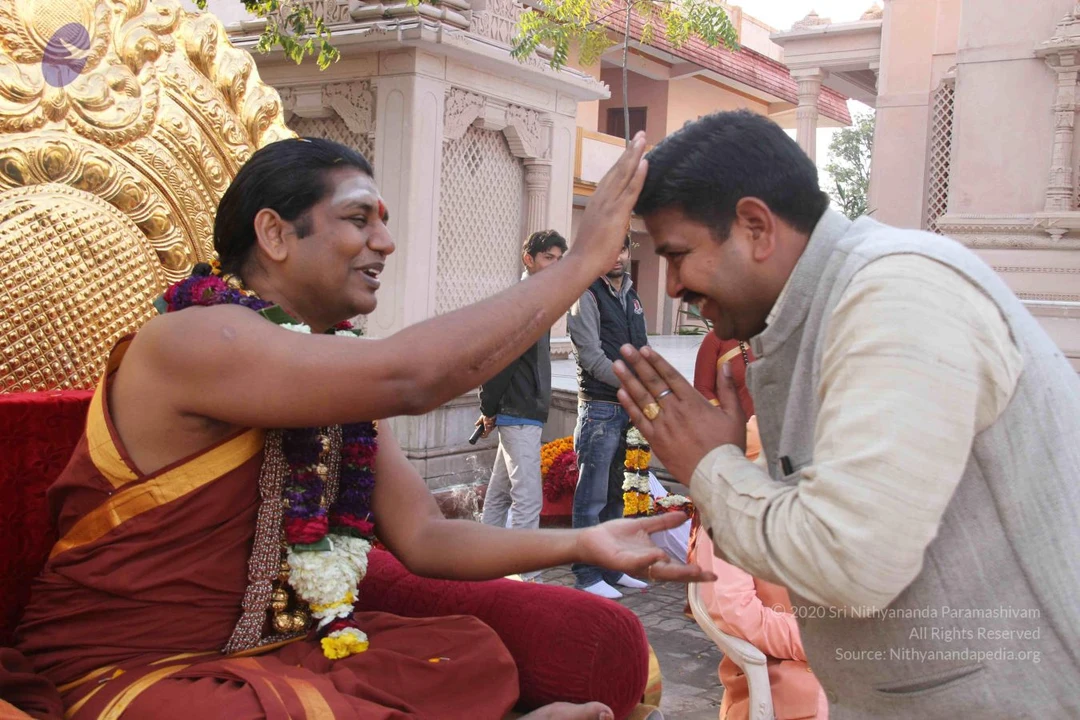
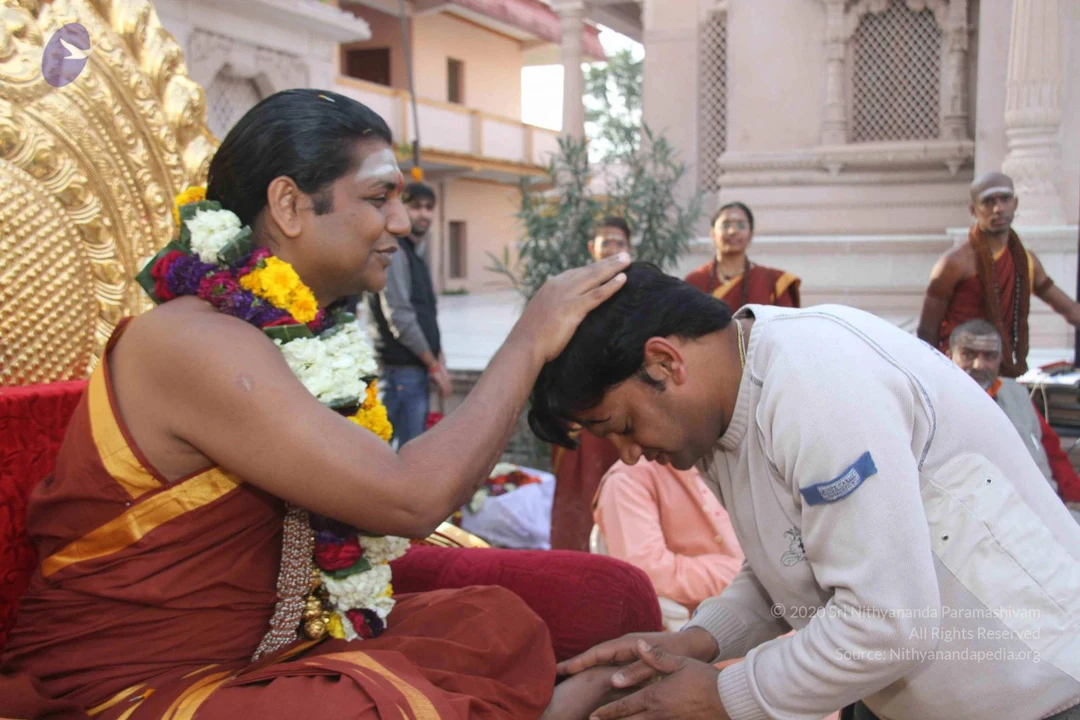
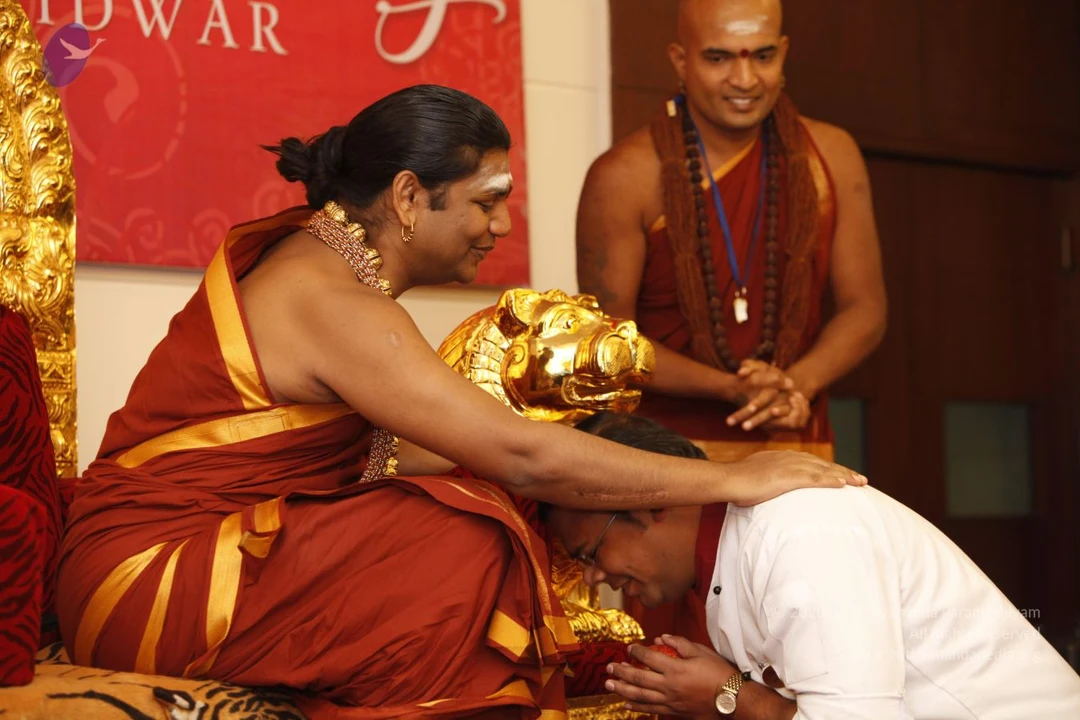
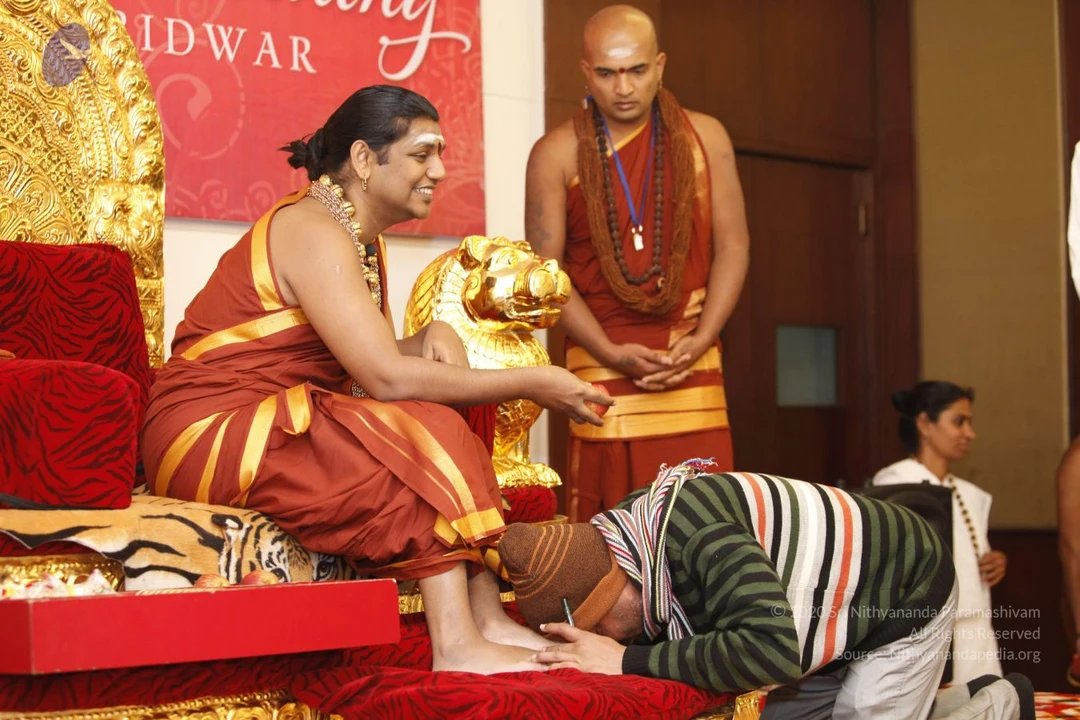
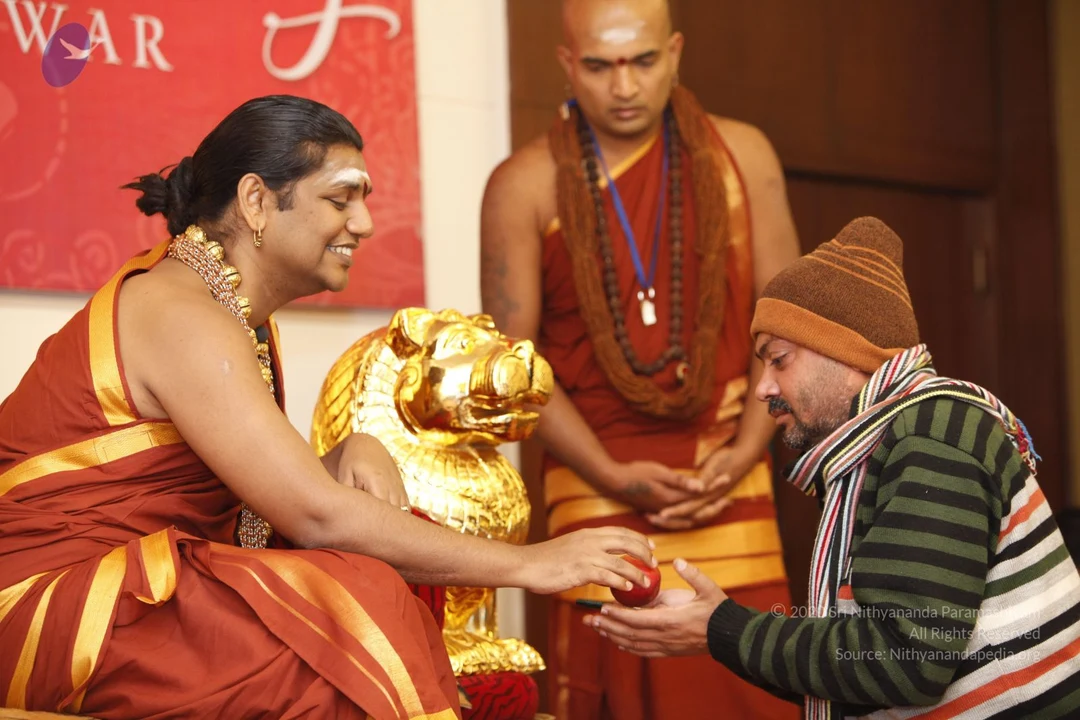
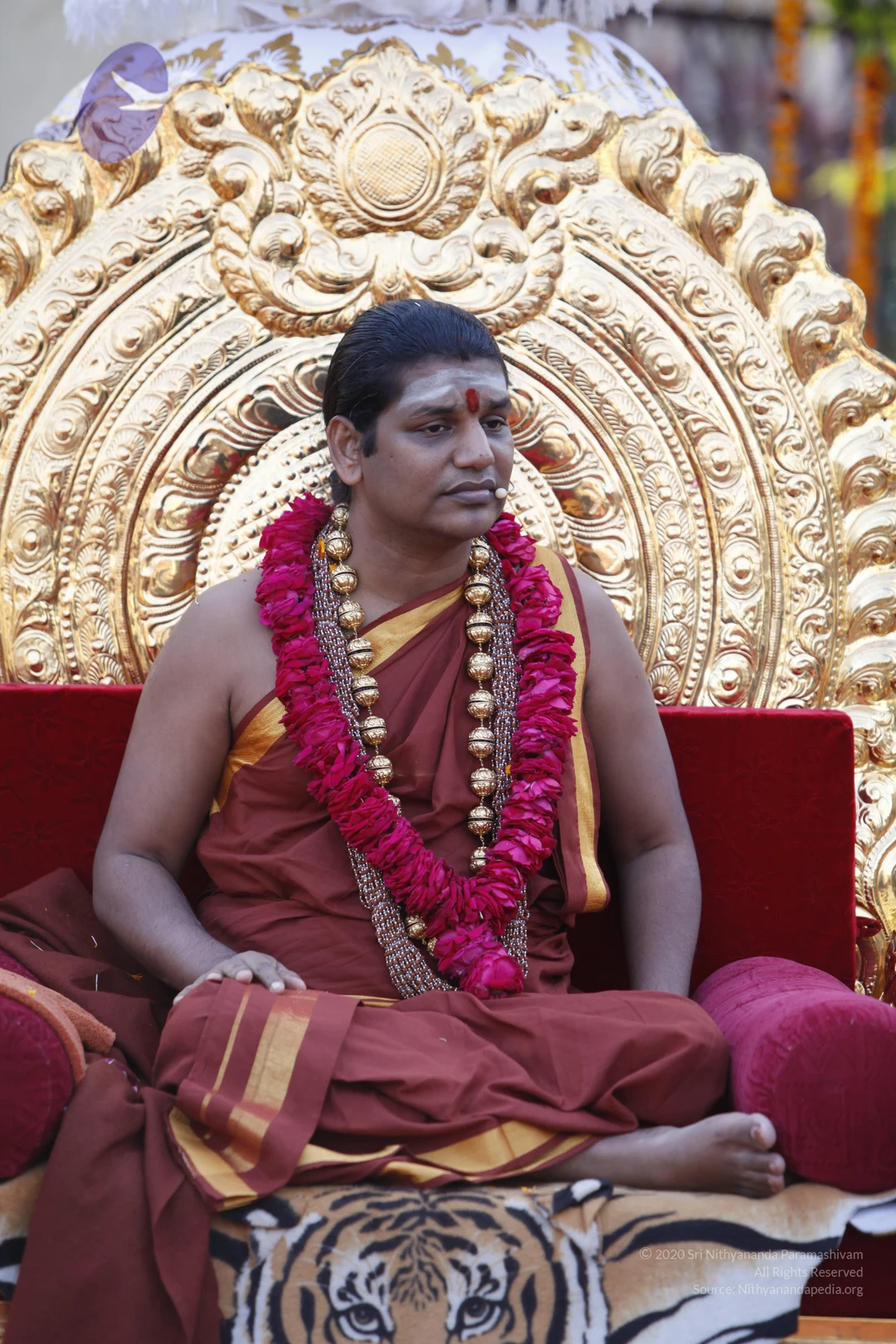
A photograph of a ceremonial blessing in an indoor hall. A long-haired figure seated on the left in saffron-orange robes, with a gold necklace and gold earrings and white tilak marks on the forehead, places a hand on the head of a man bowing low. The bowing man wears a white shirt and a wristwatch and holds a red offering. Beside the seated figure is a golden lion-headed ornament. Behind them a shaved-headed attendant in saffron-orange robes with a rudraksha mala and a blue ribbon pendant stands with palms pressed together, smiling. The background shows a red wall and wooden panels.A photograph of a seated man in saffron-orange robes with a gold-and-beaded necklace and sandalwood-paste forehead marks, handing a red apple to a kneeling man in a brown knit beanie and green-and-white striped sweater with a striped scarf. Beside them stands a standing sannyasi in saffron robes, a rudraksha mala and a blue lanyard, hands folded. A gilded lion figure and a red banner are in the background. The seated figure has long swept-back hair and ornate gold jewellery, matching probable Swamiji cues, so he is labelled Swamiji (probable) and an in-person candidate.

Sri Yantra Mandir visit

10 photosSource gallery
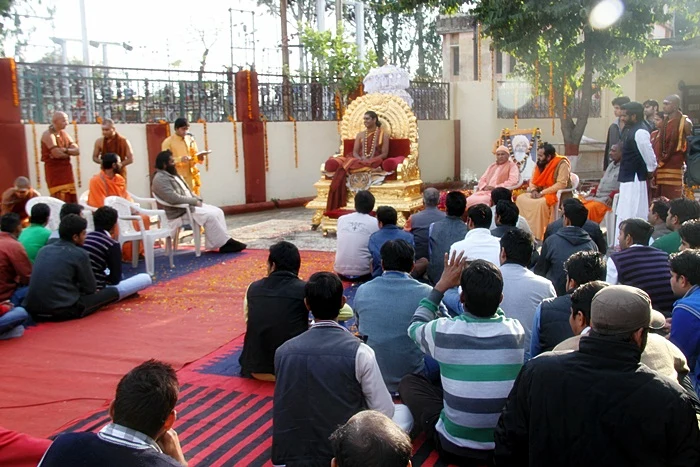
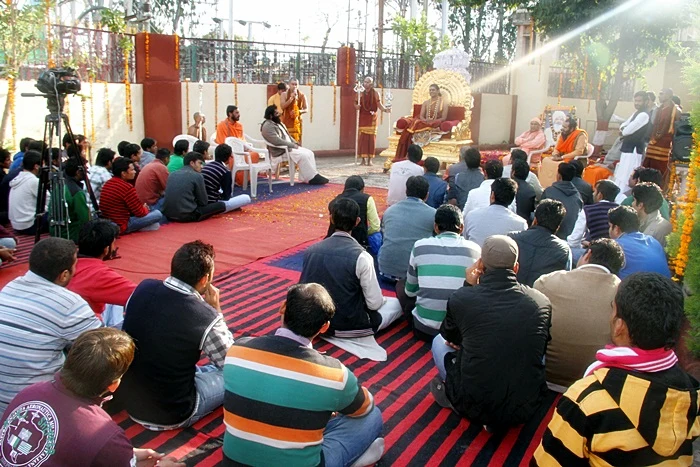
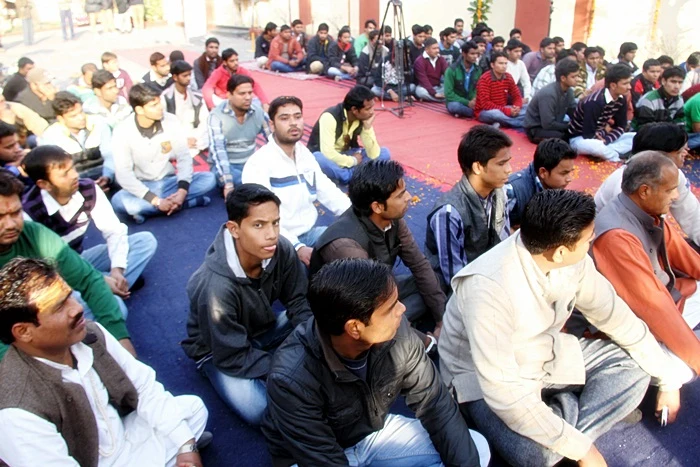
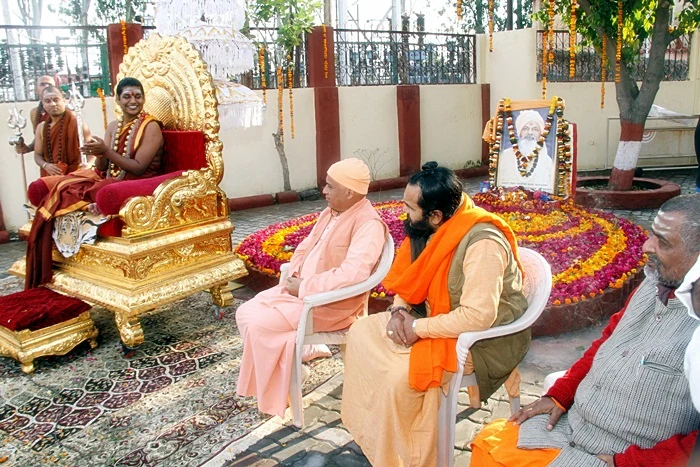
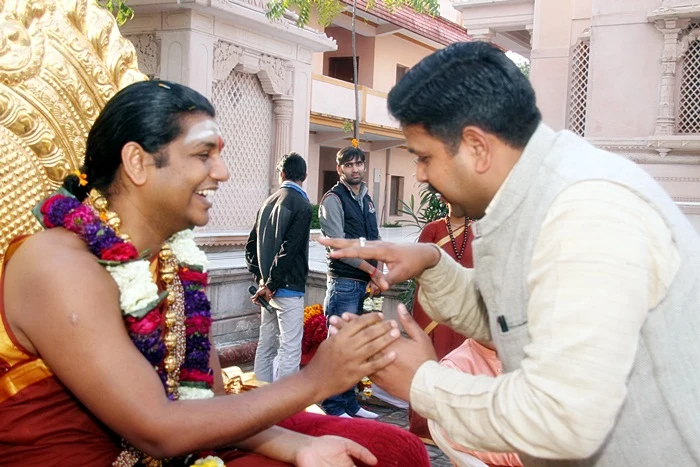
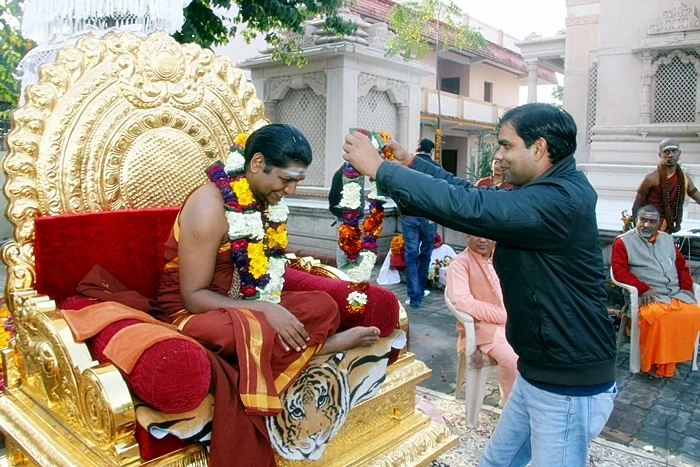
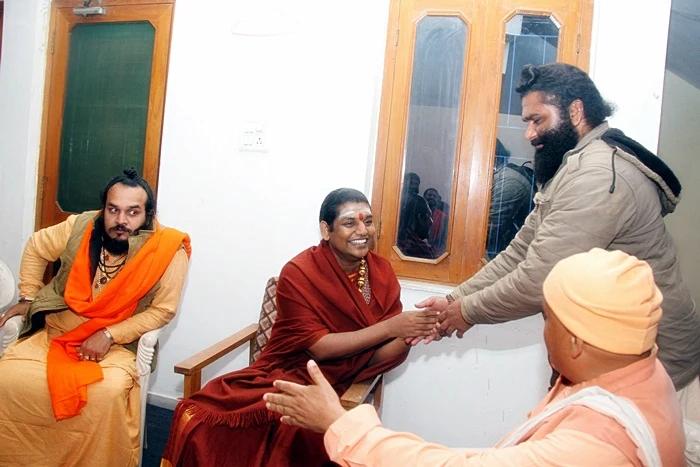
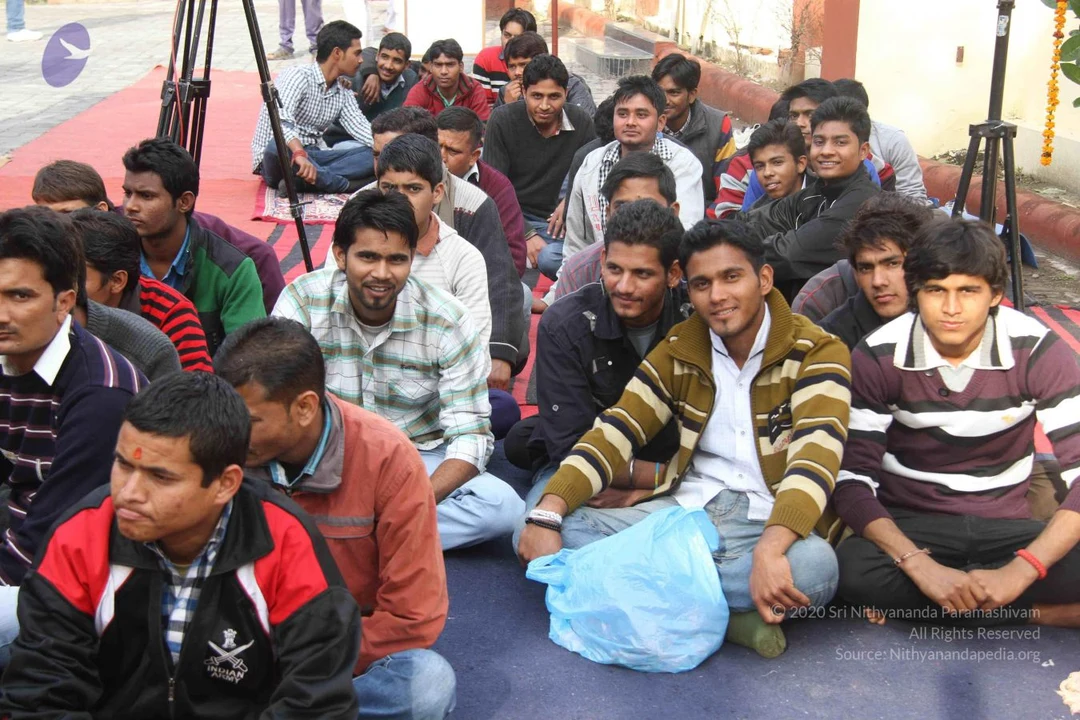
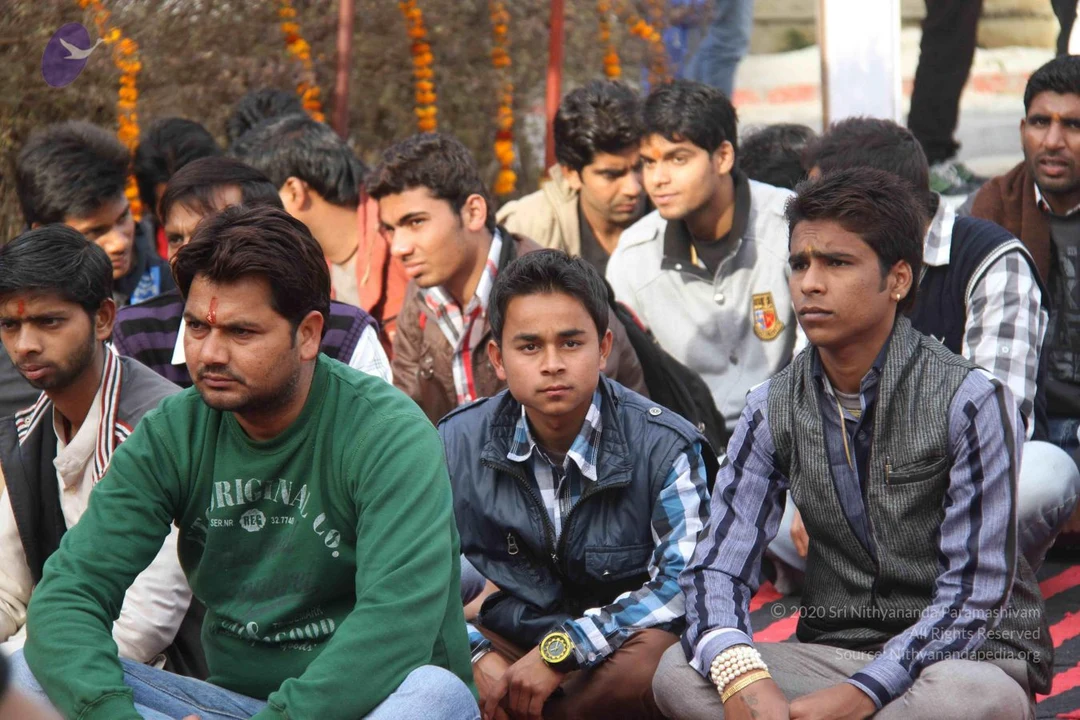
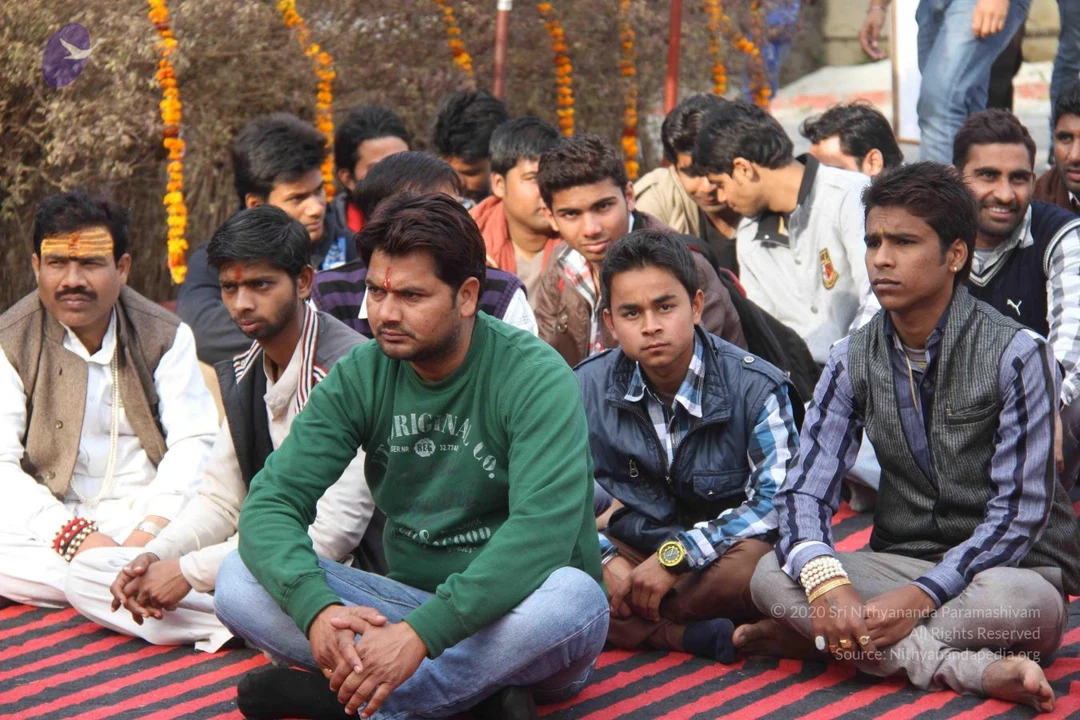
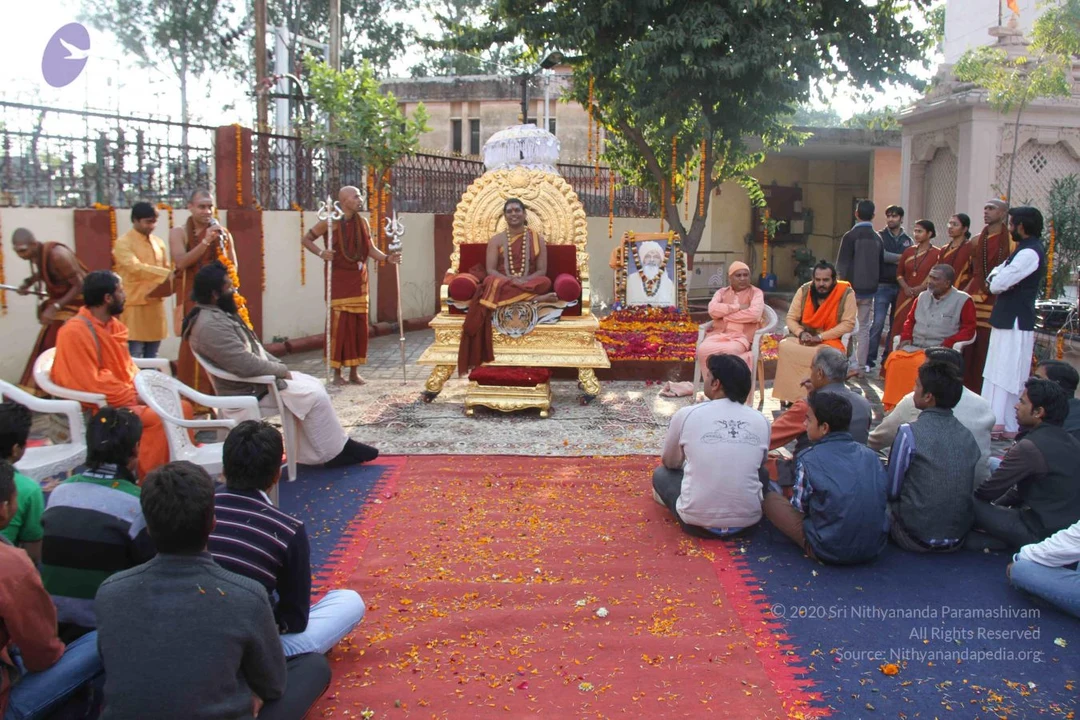
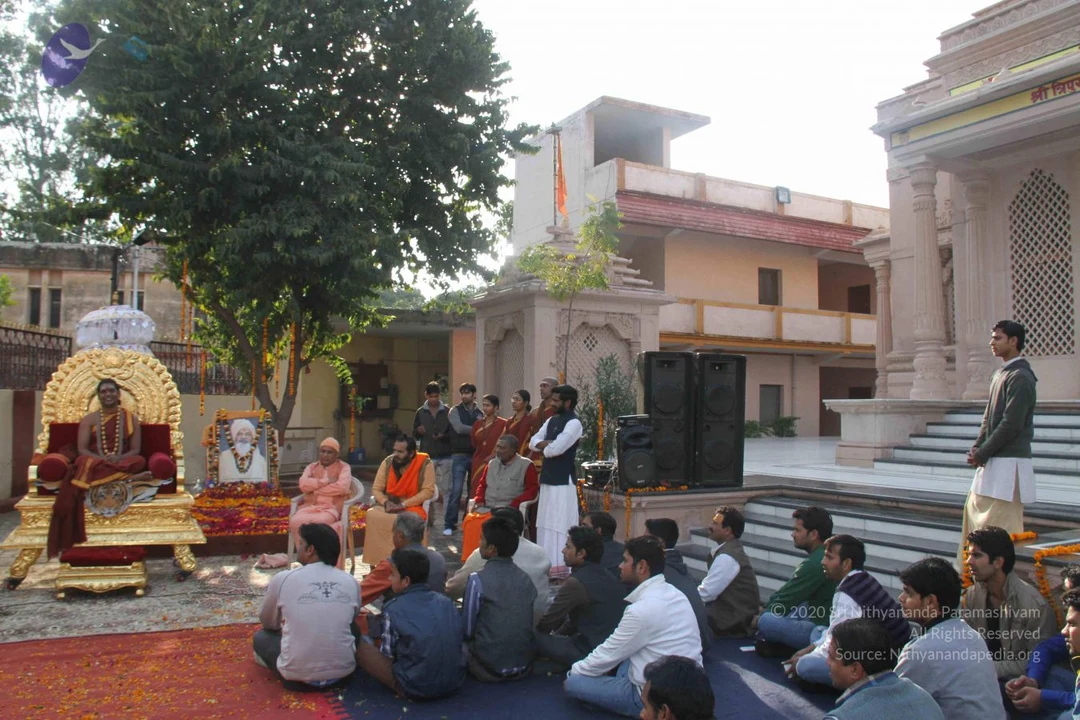
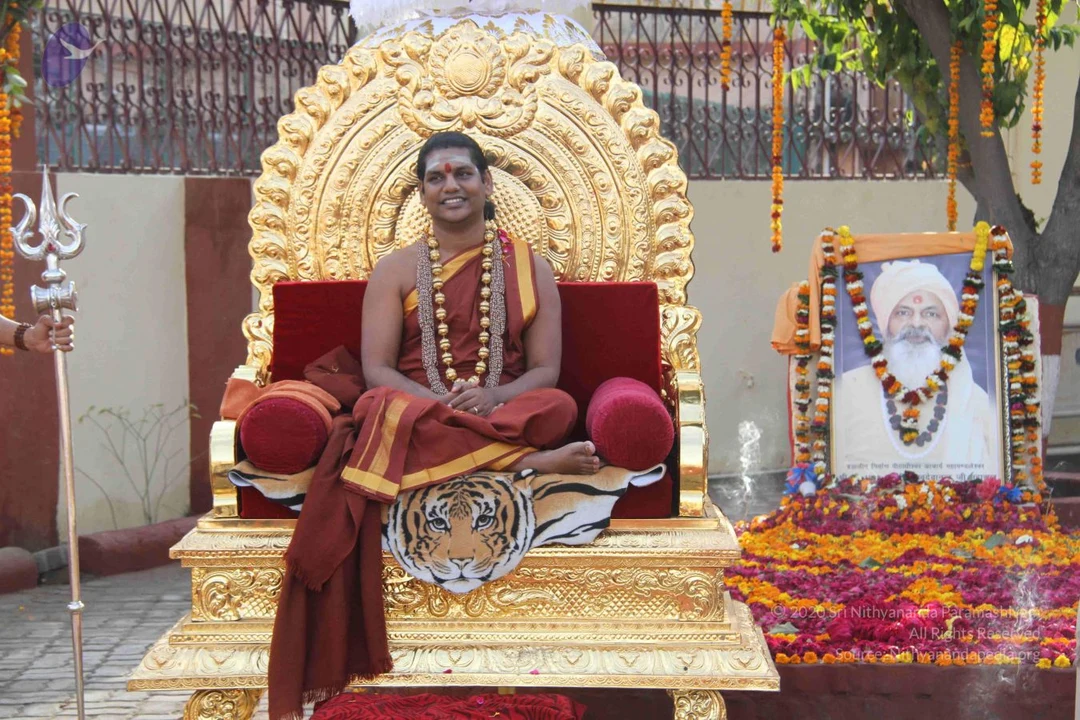
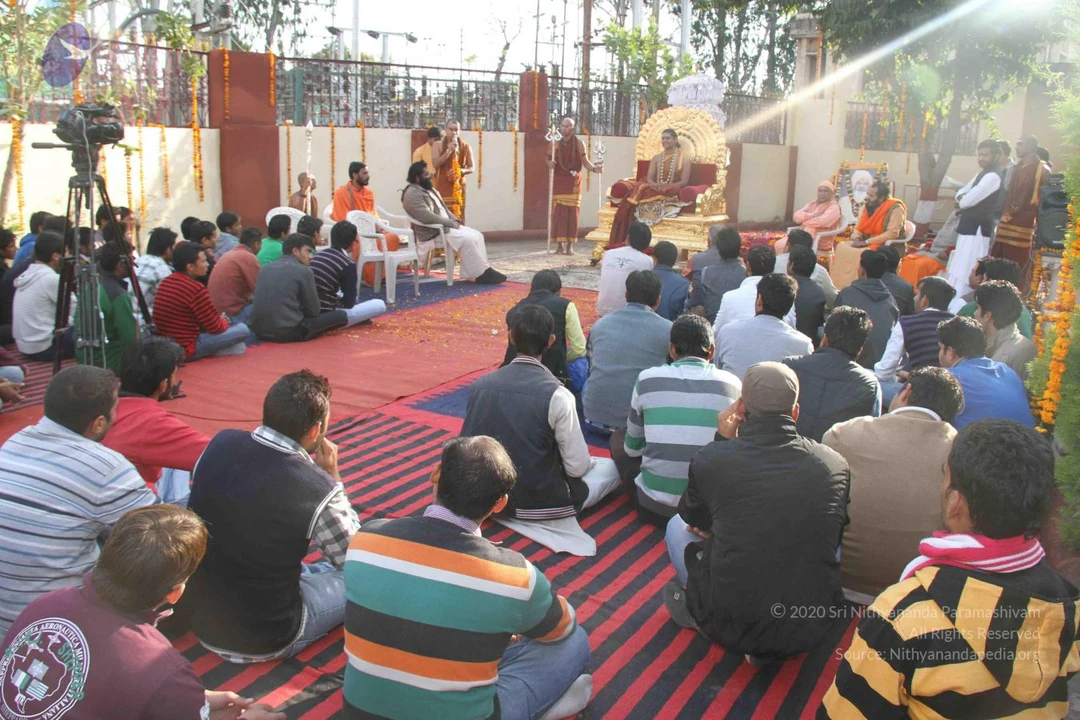
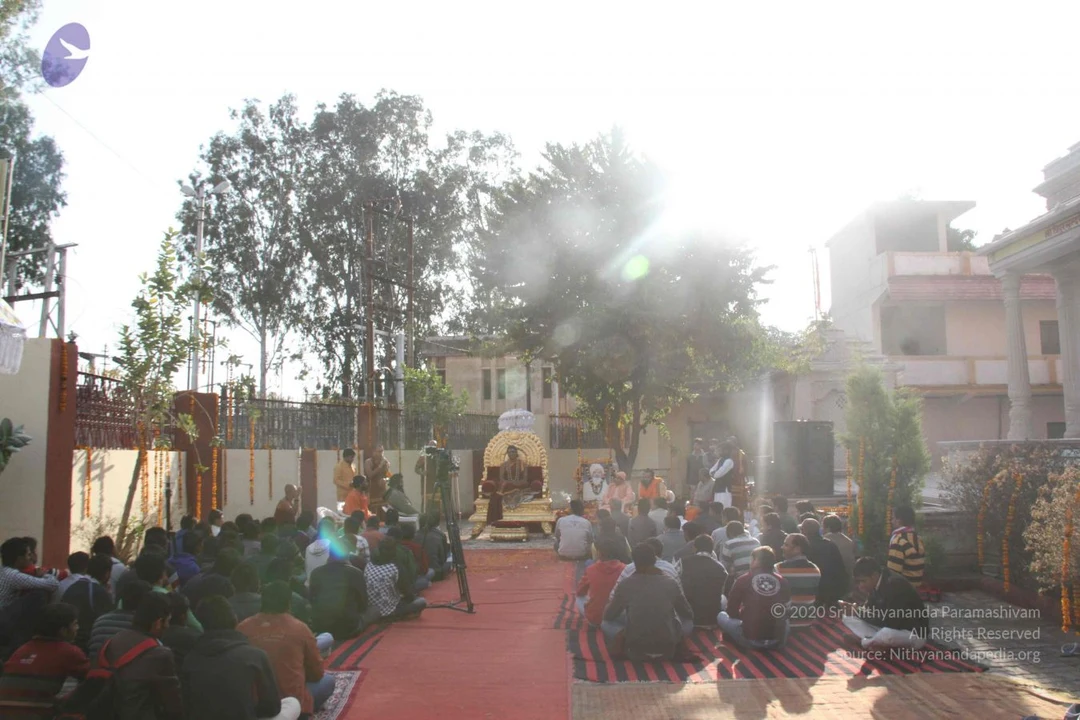
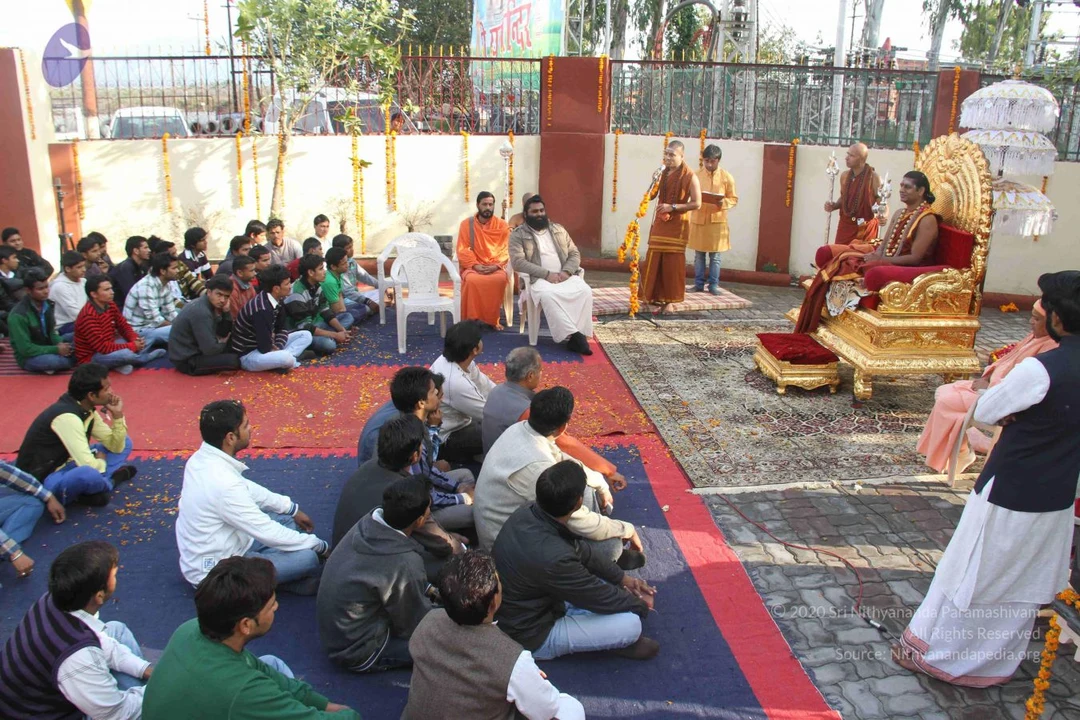
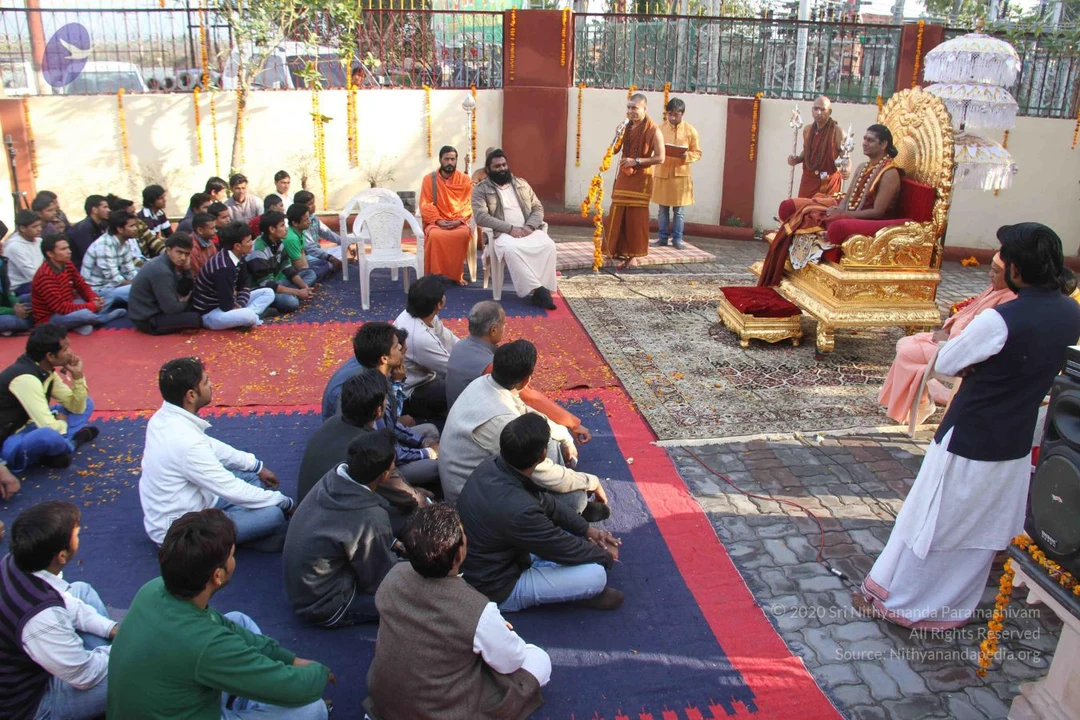
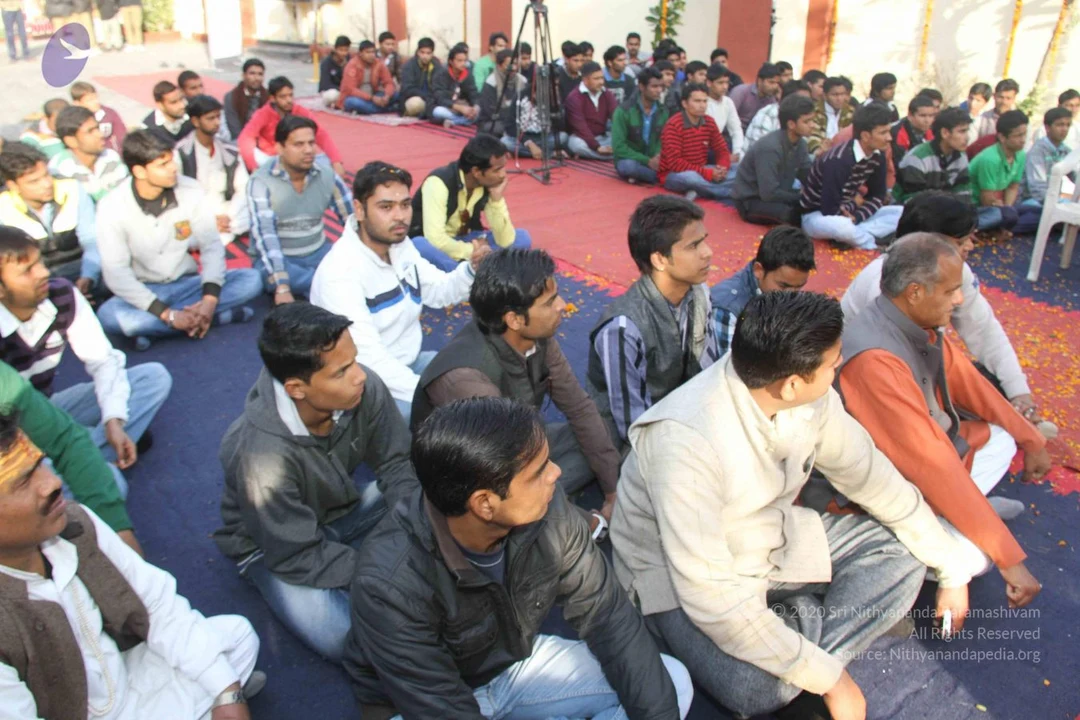
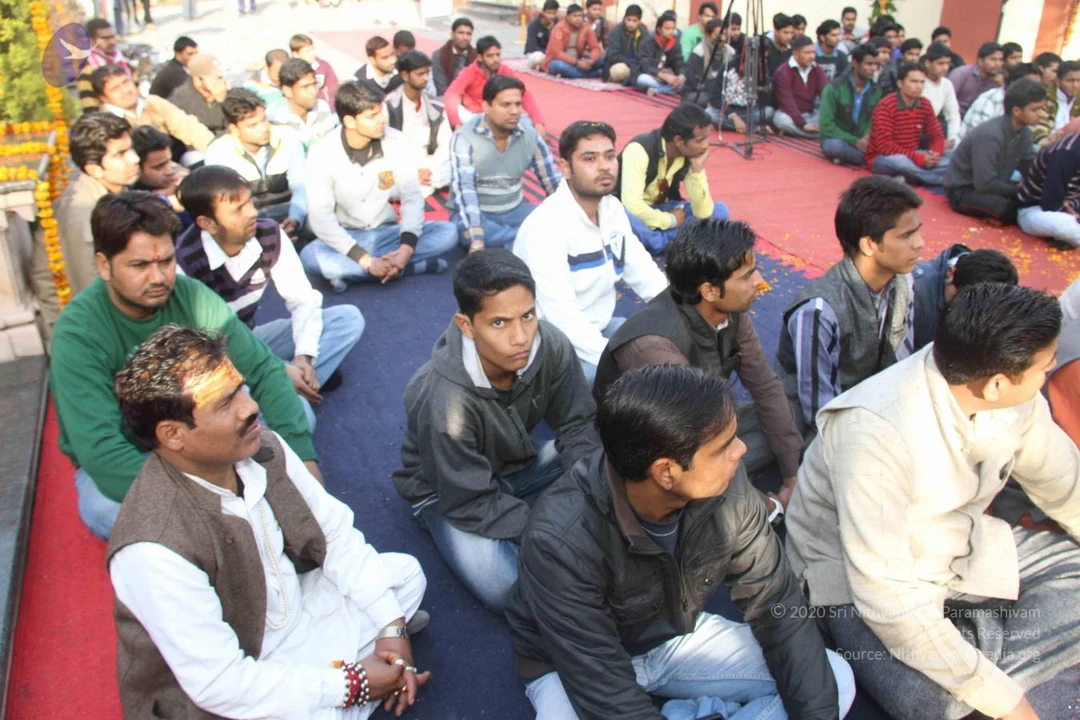
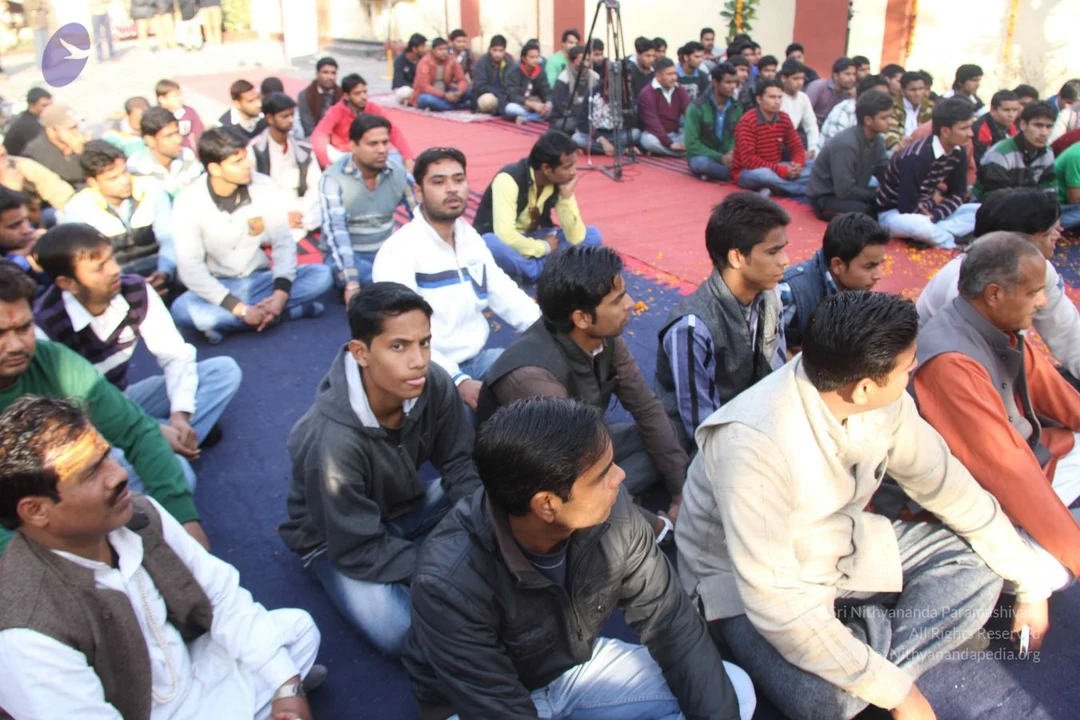
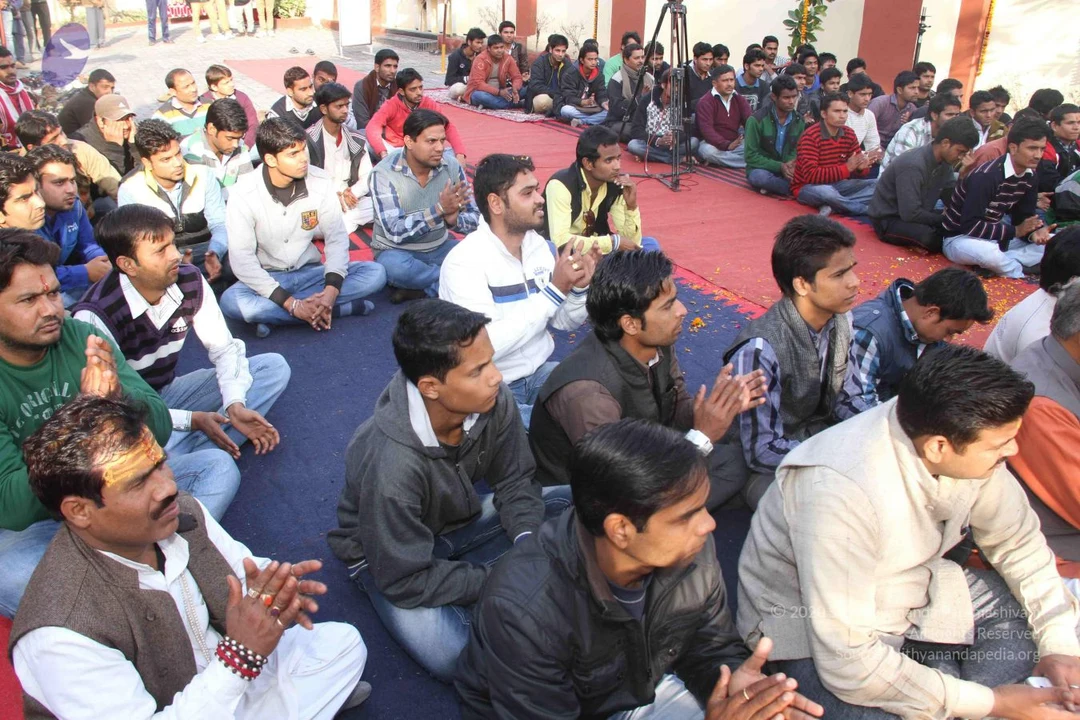
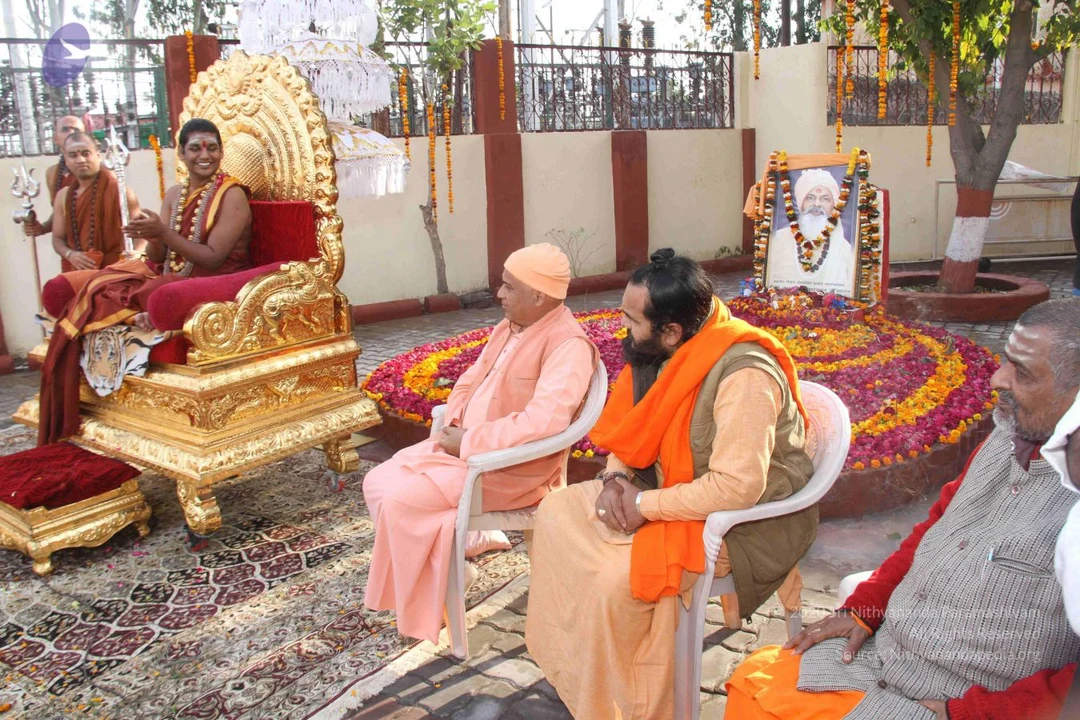
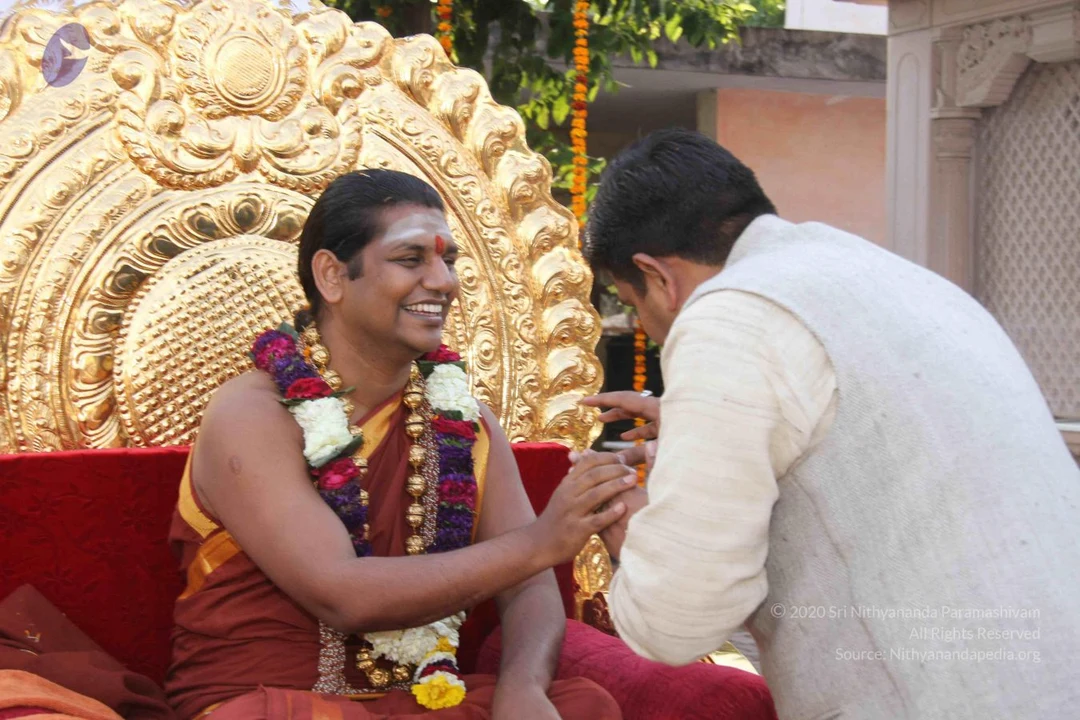
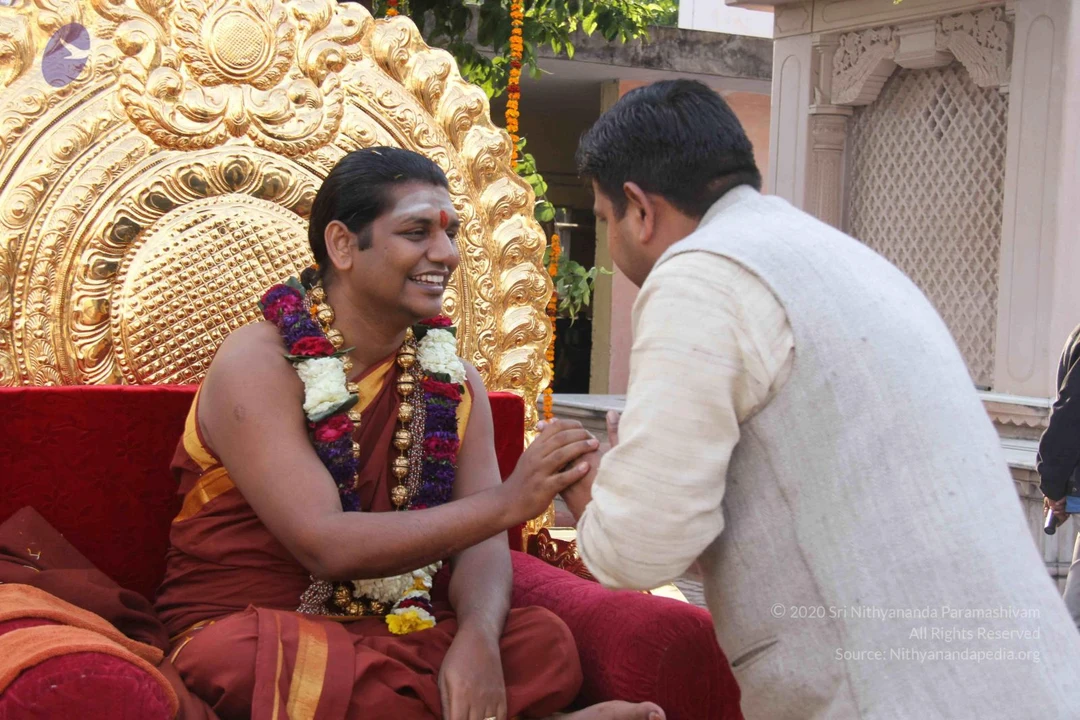
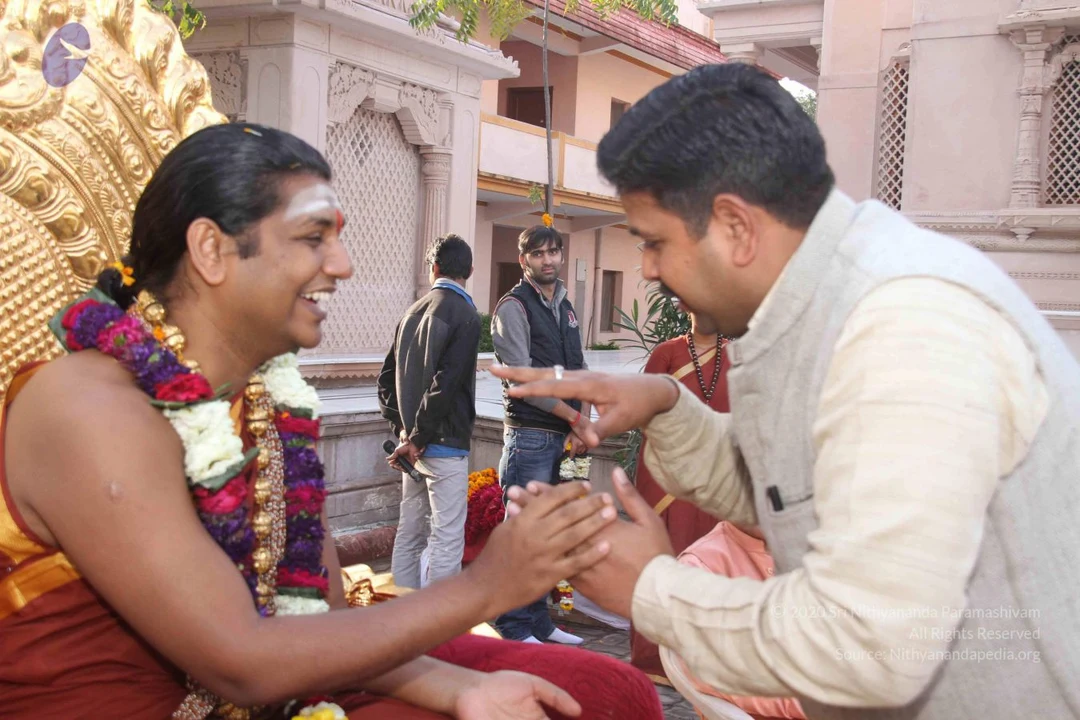
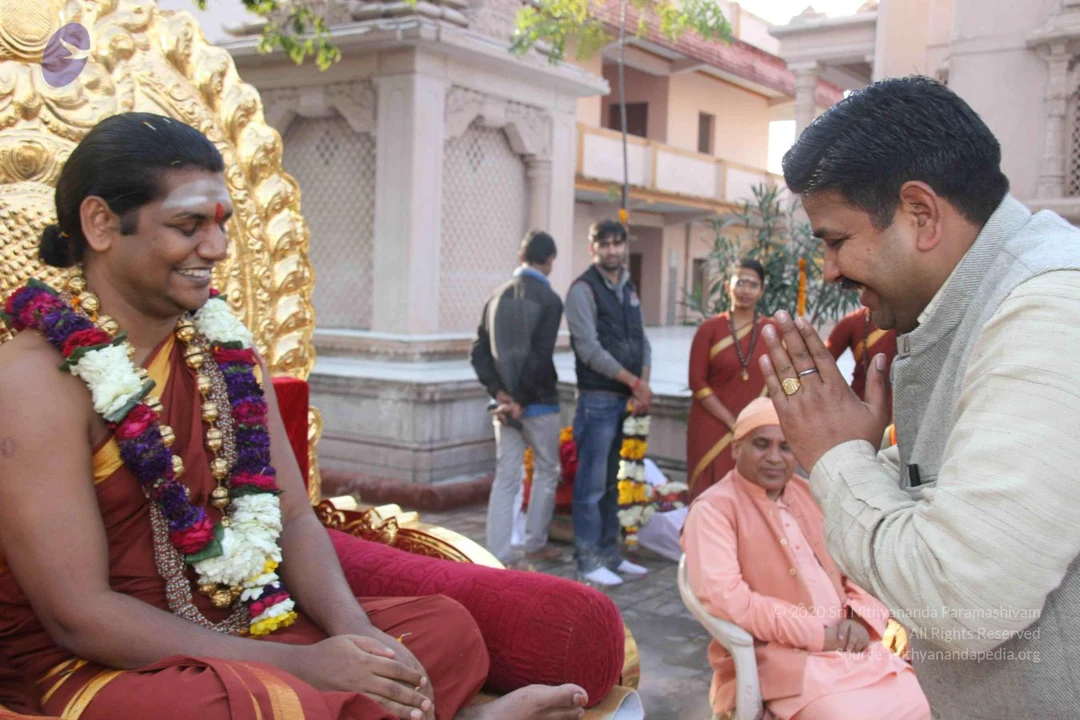
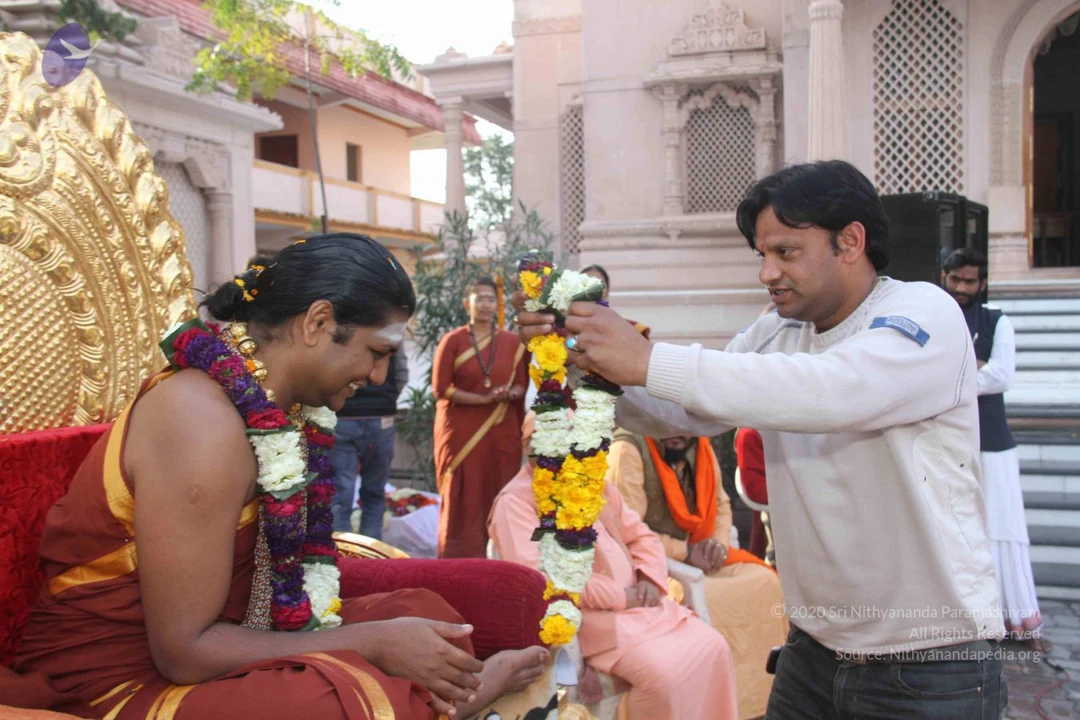
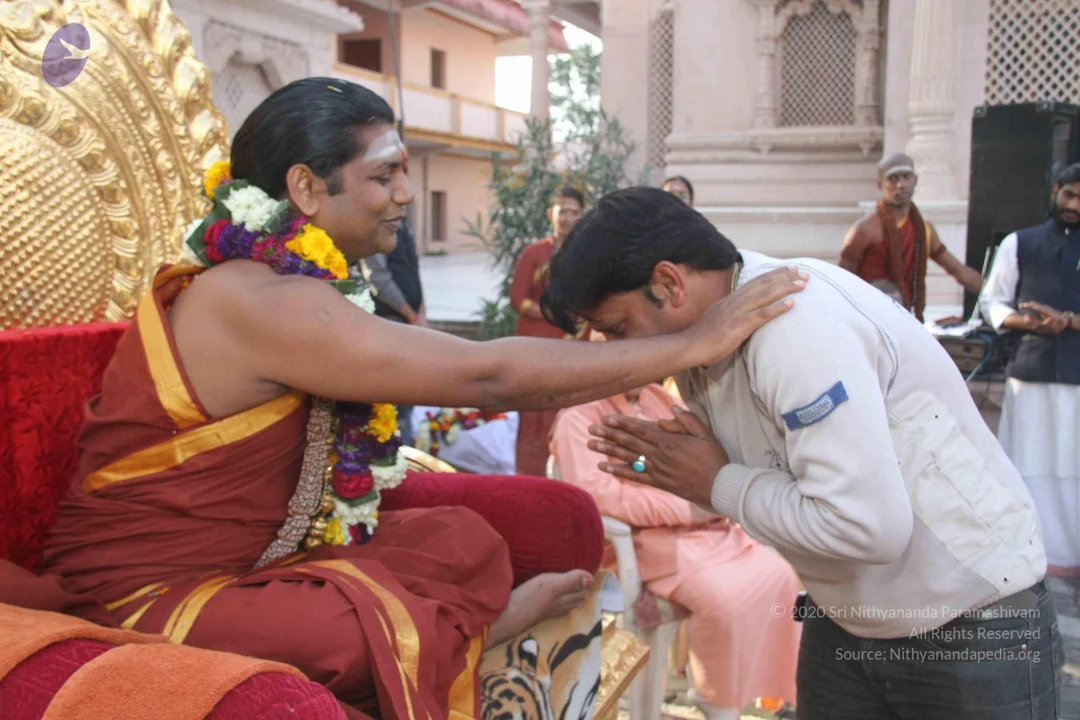
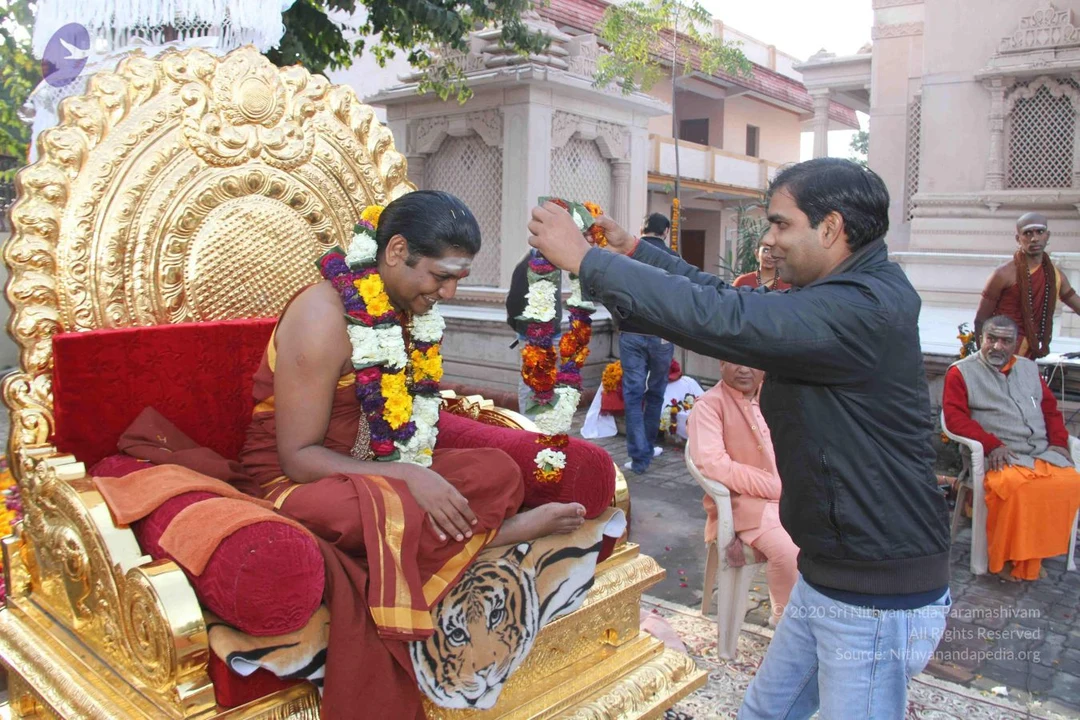
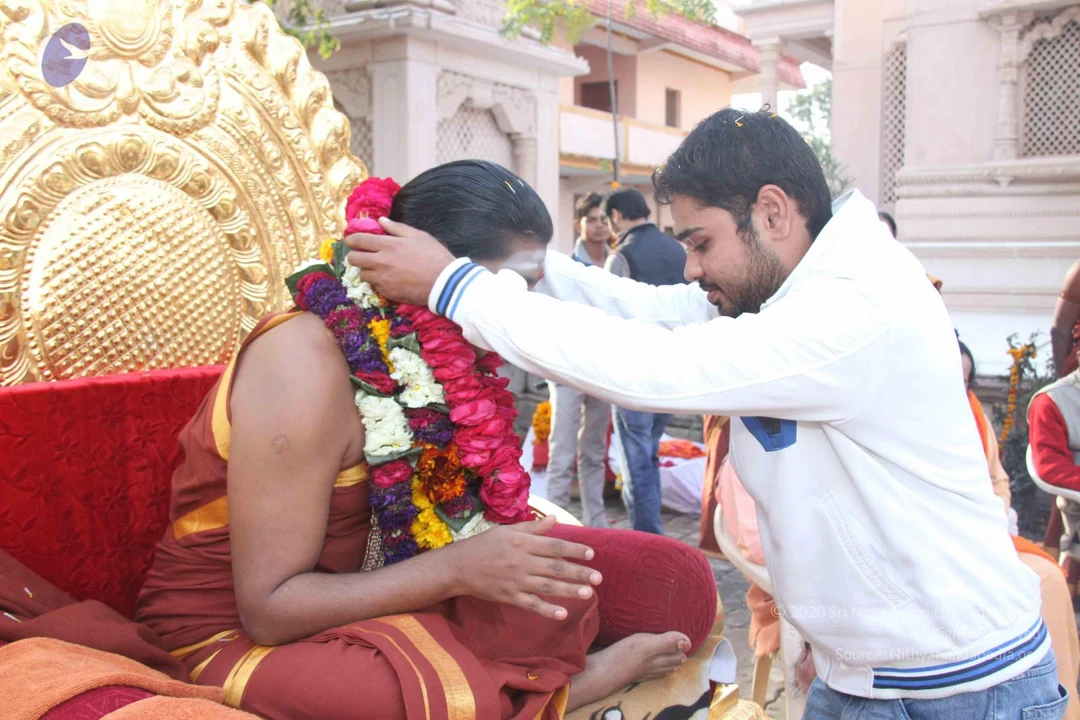
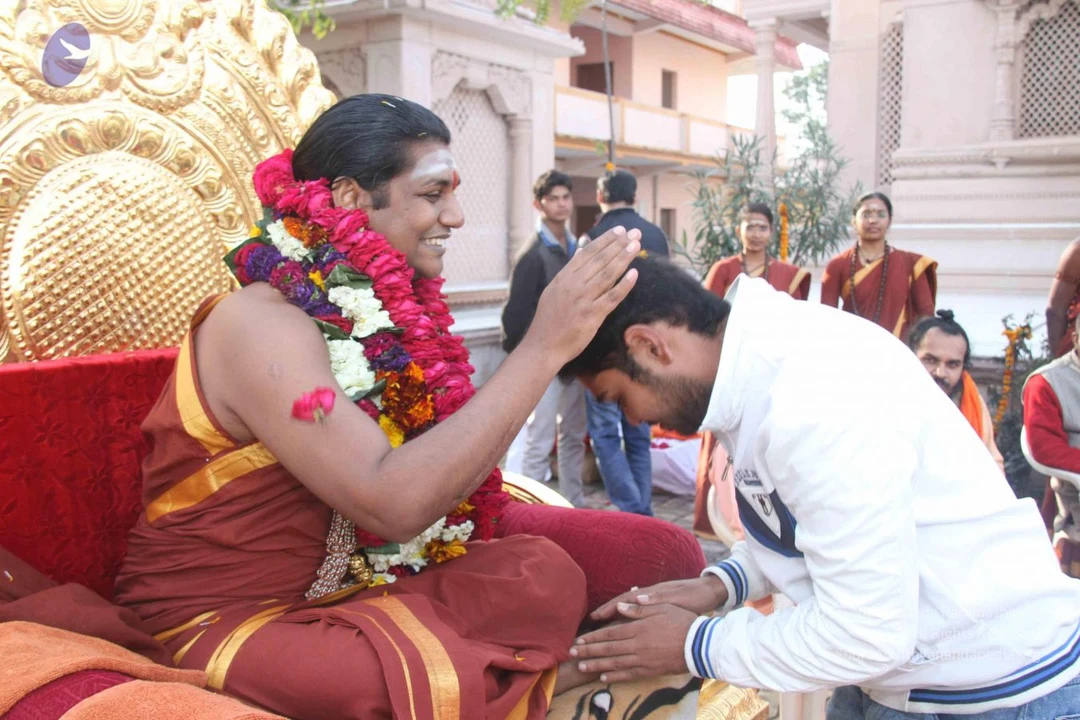
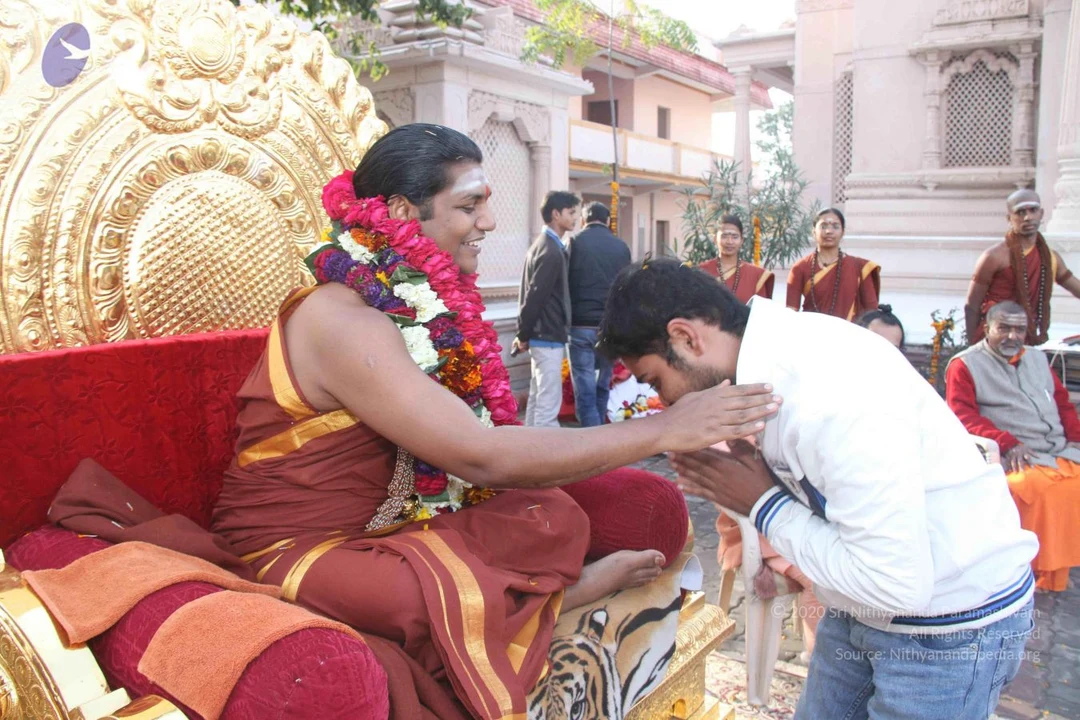
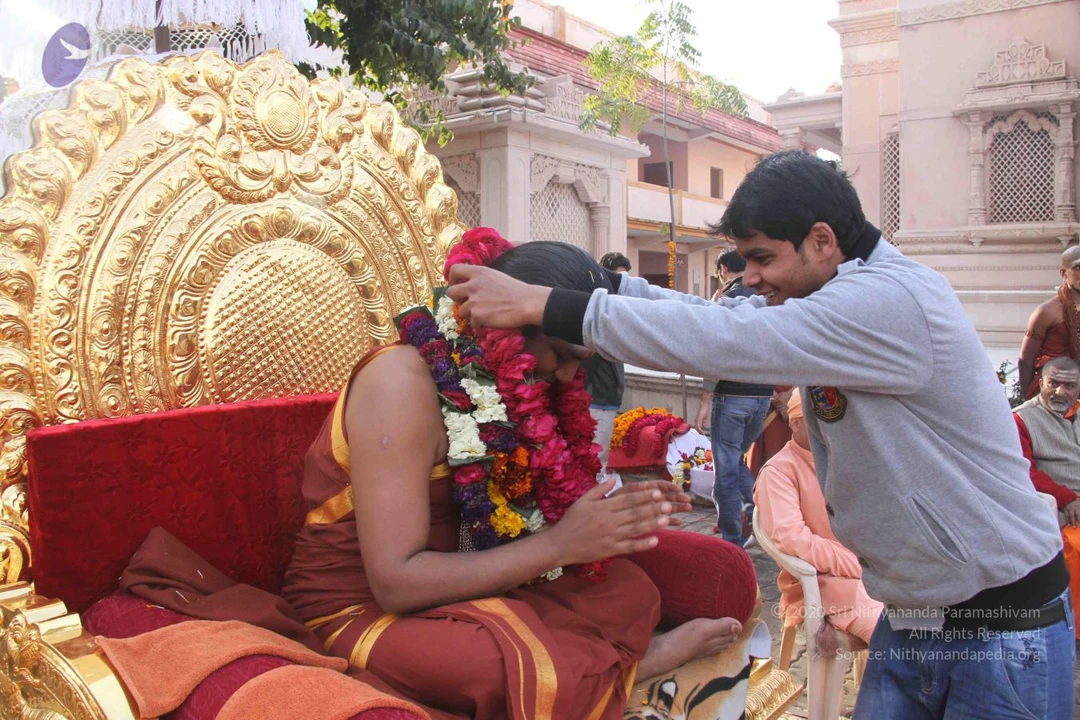
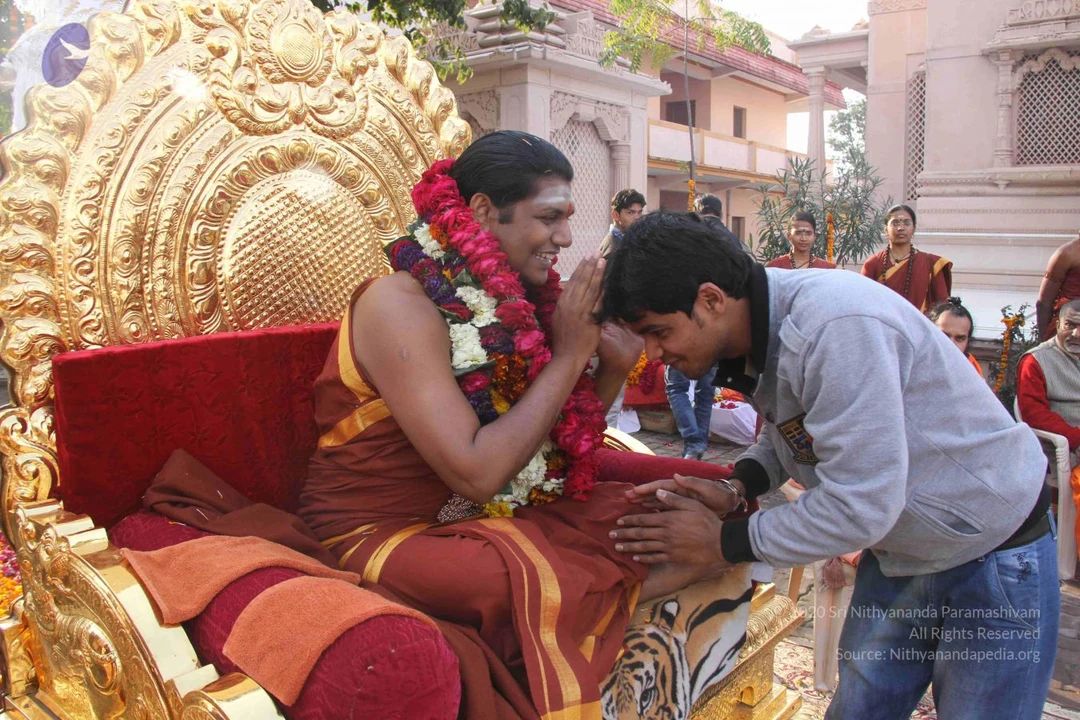
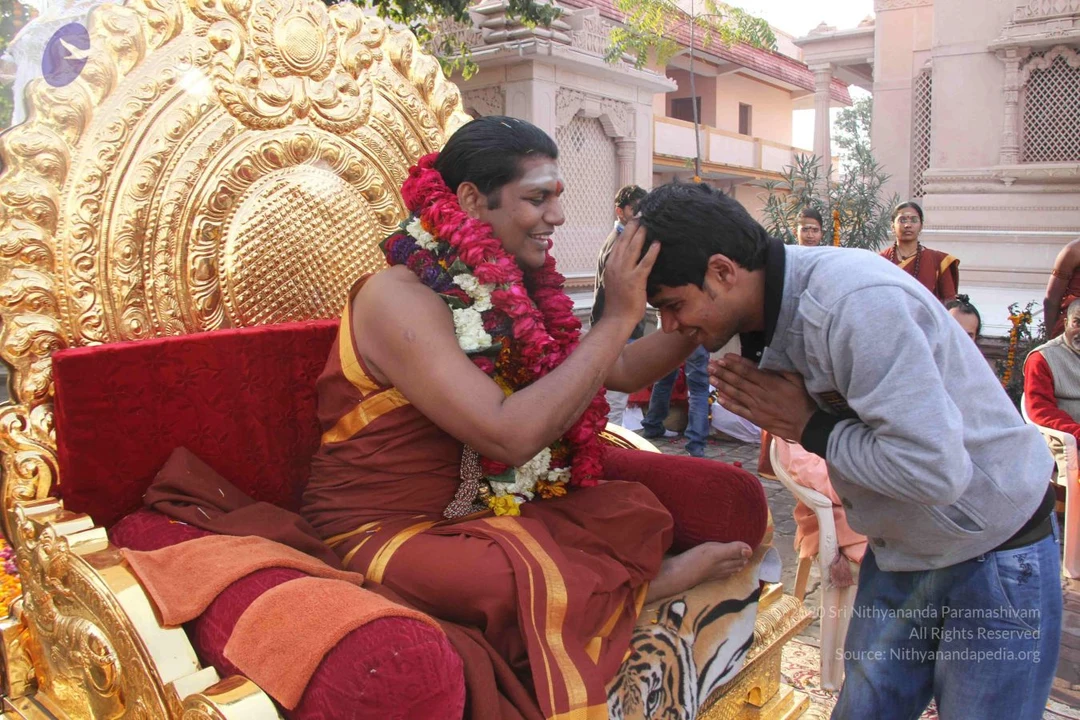
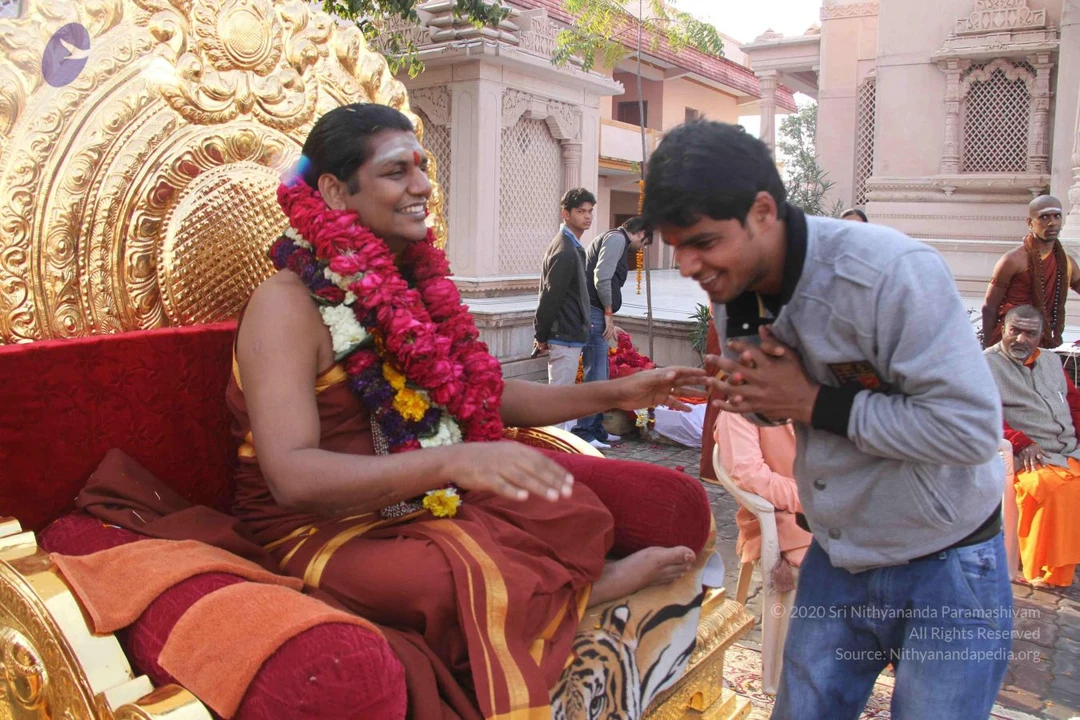
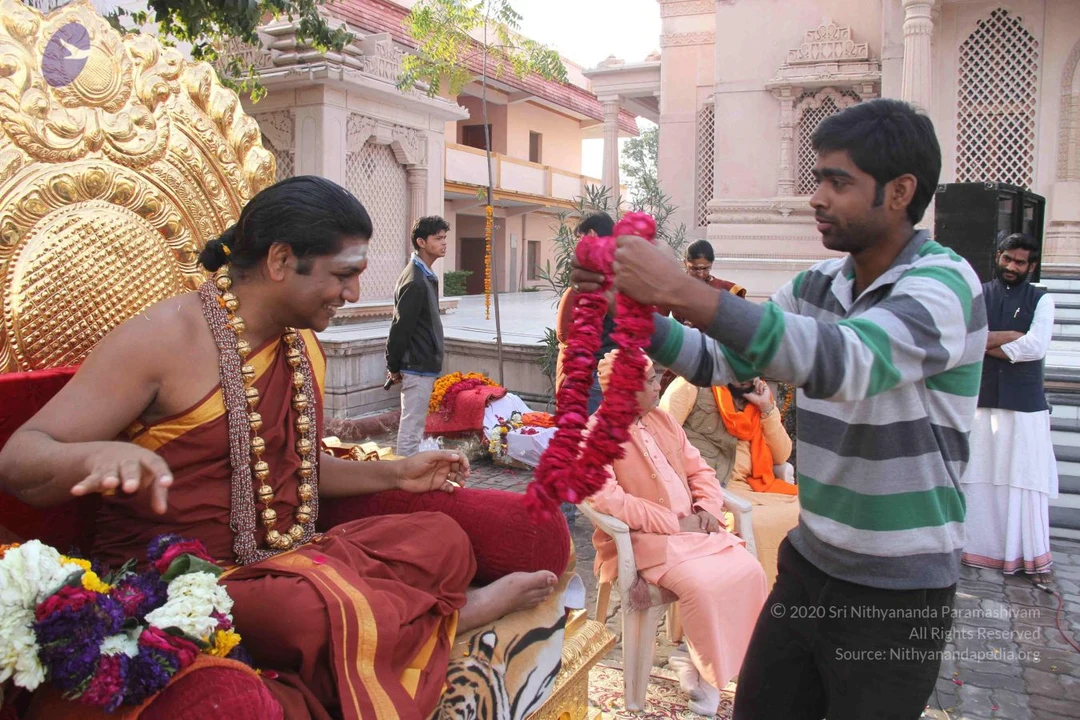
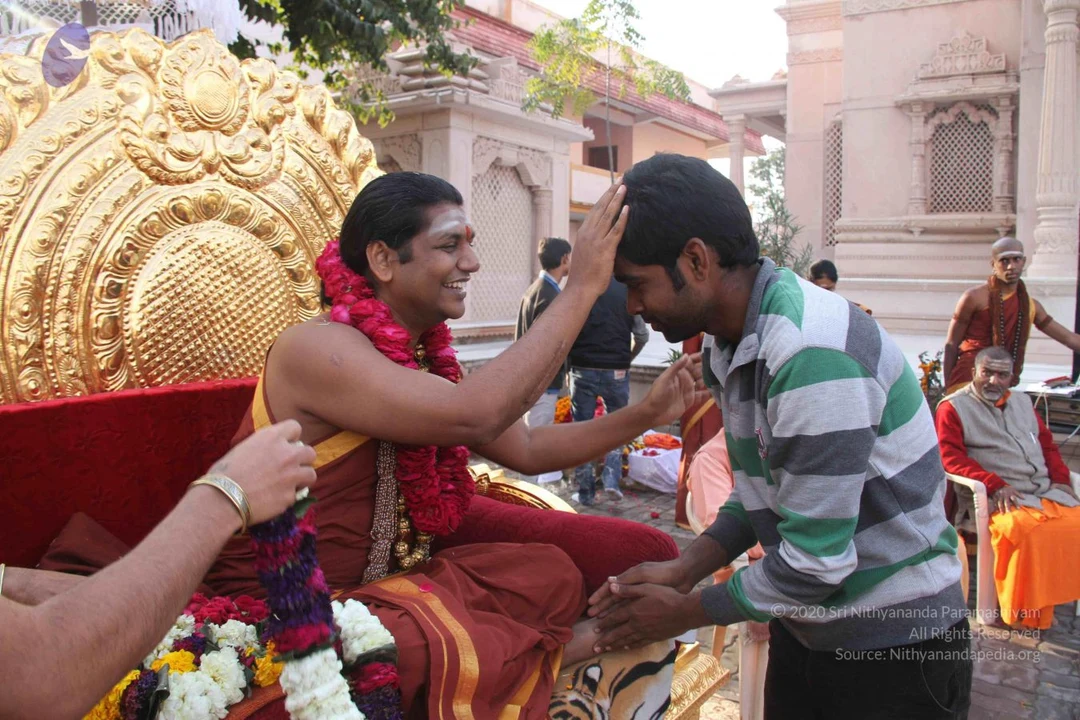
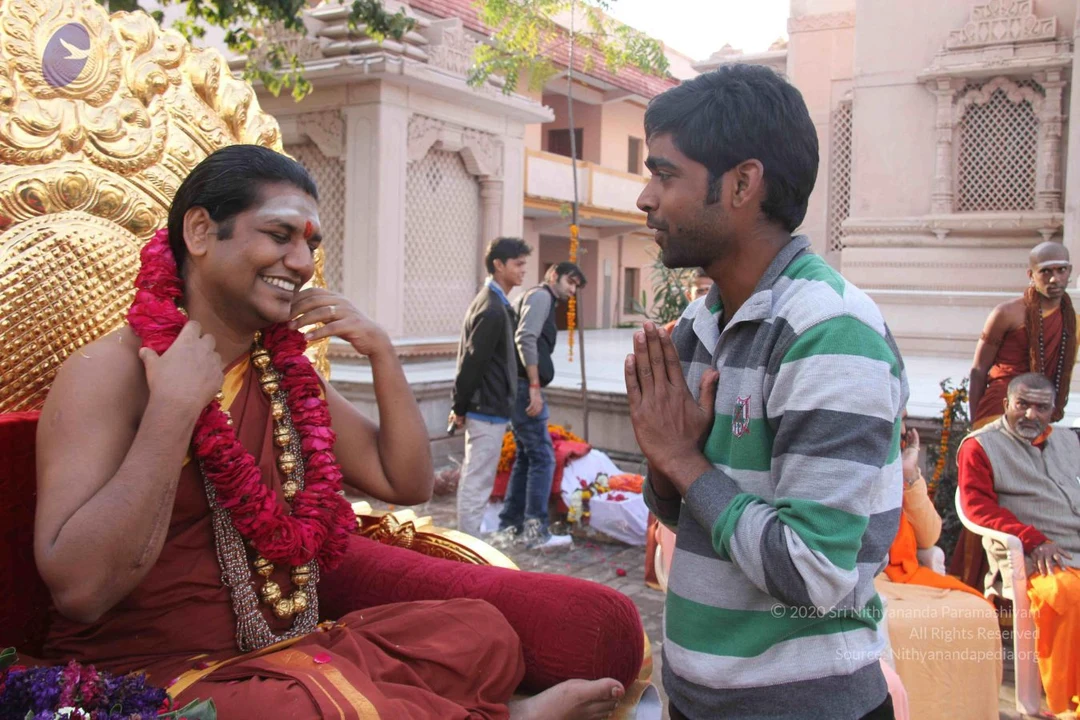
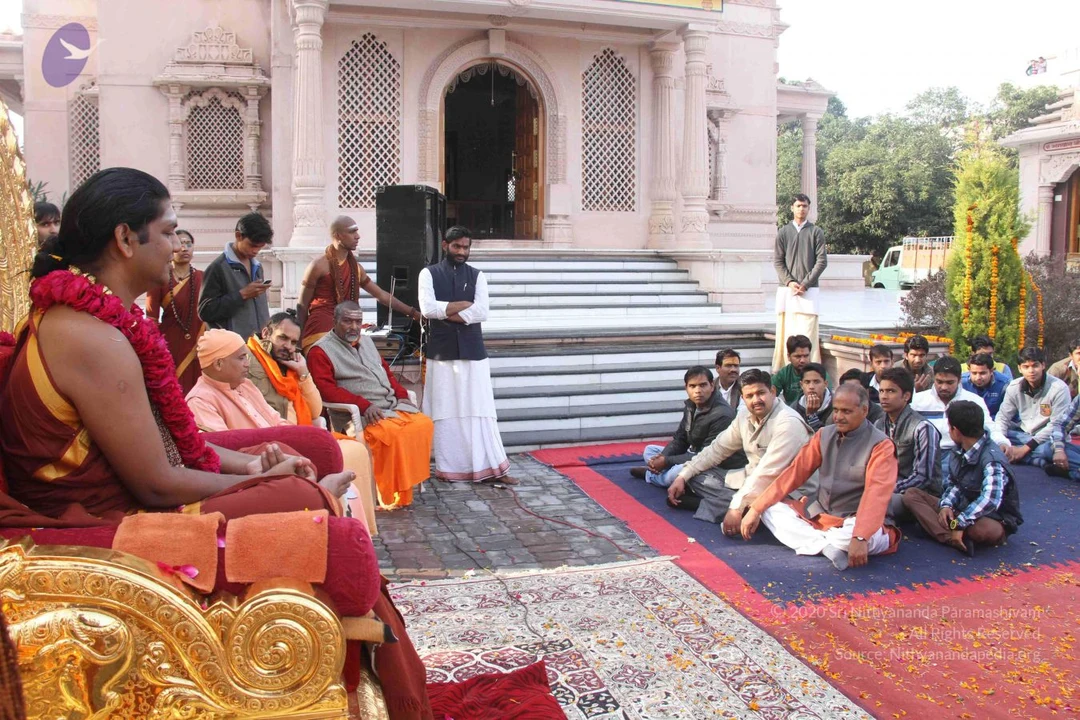
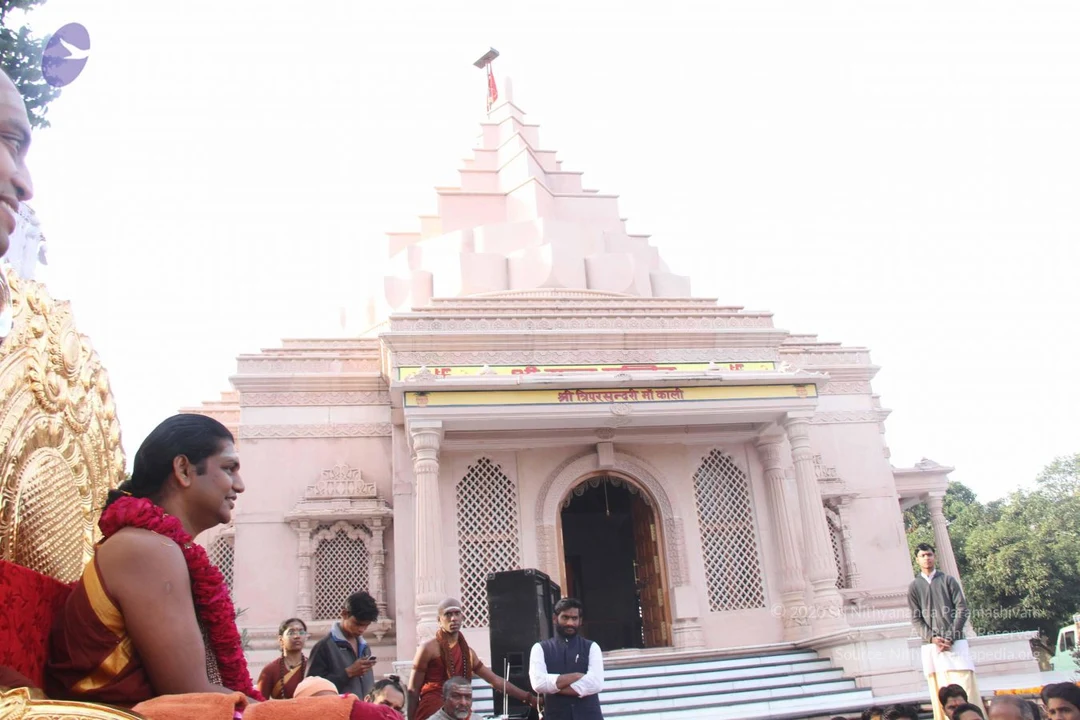
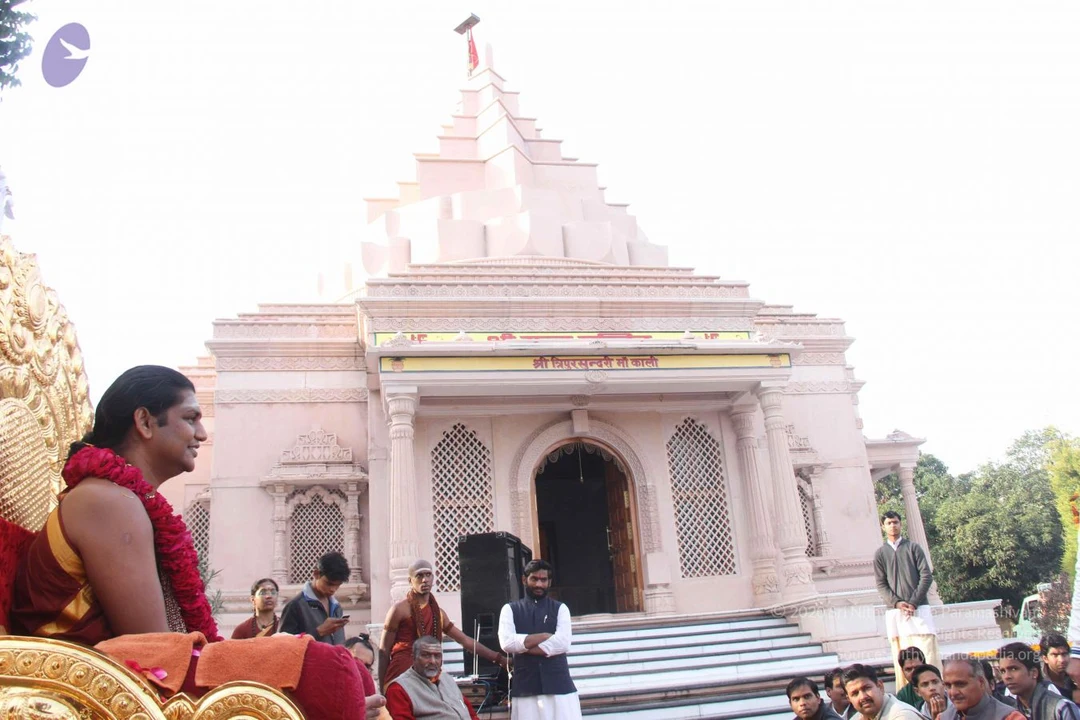
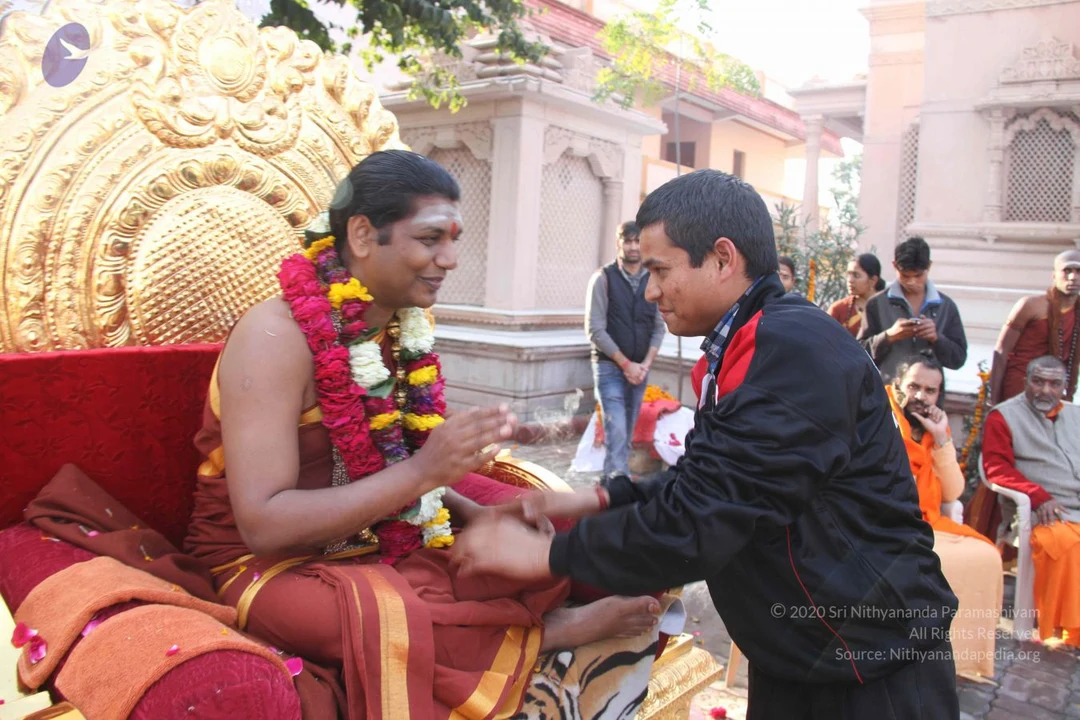
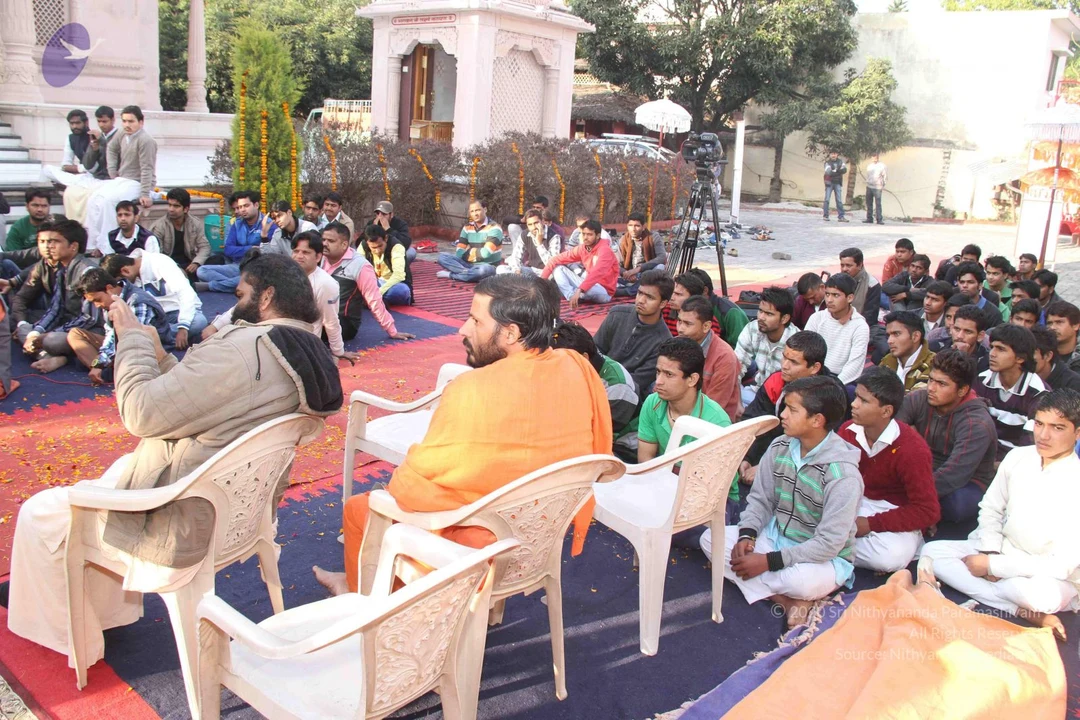
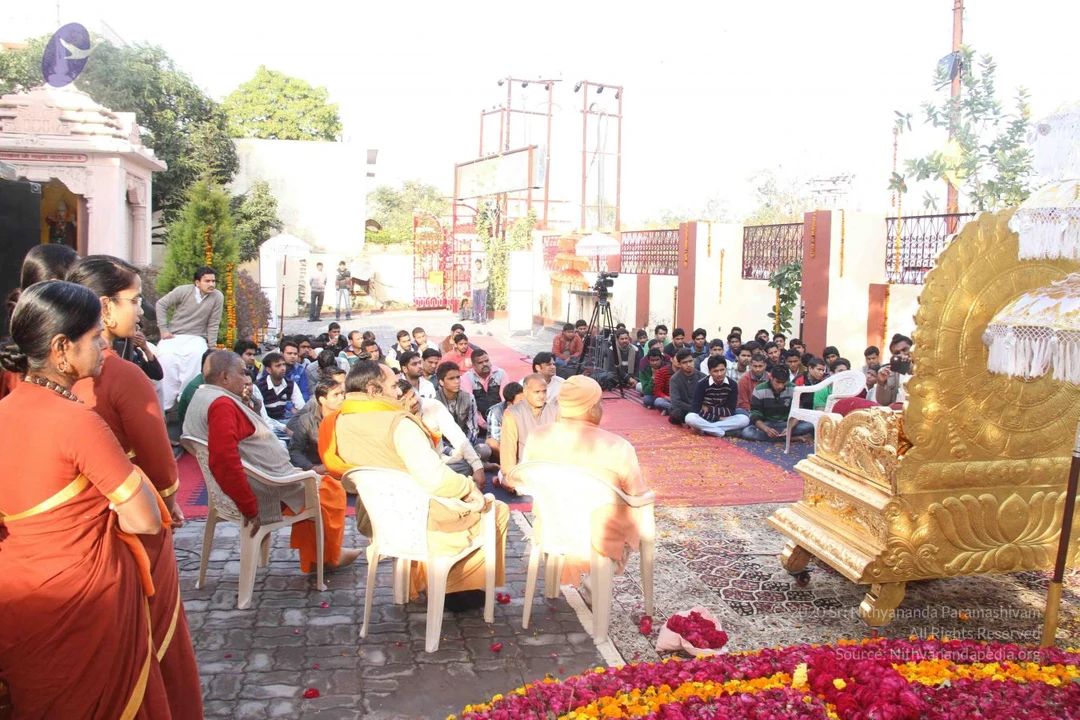
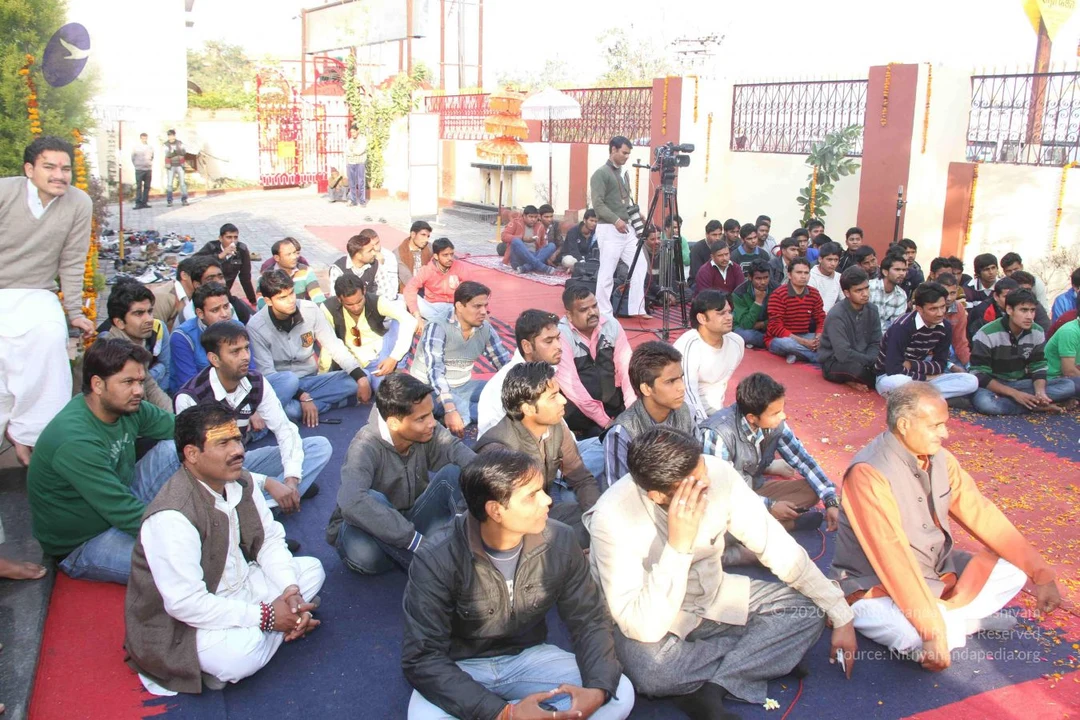
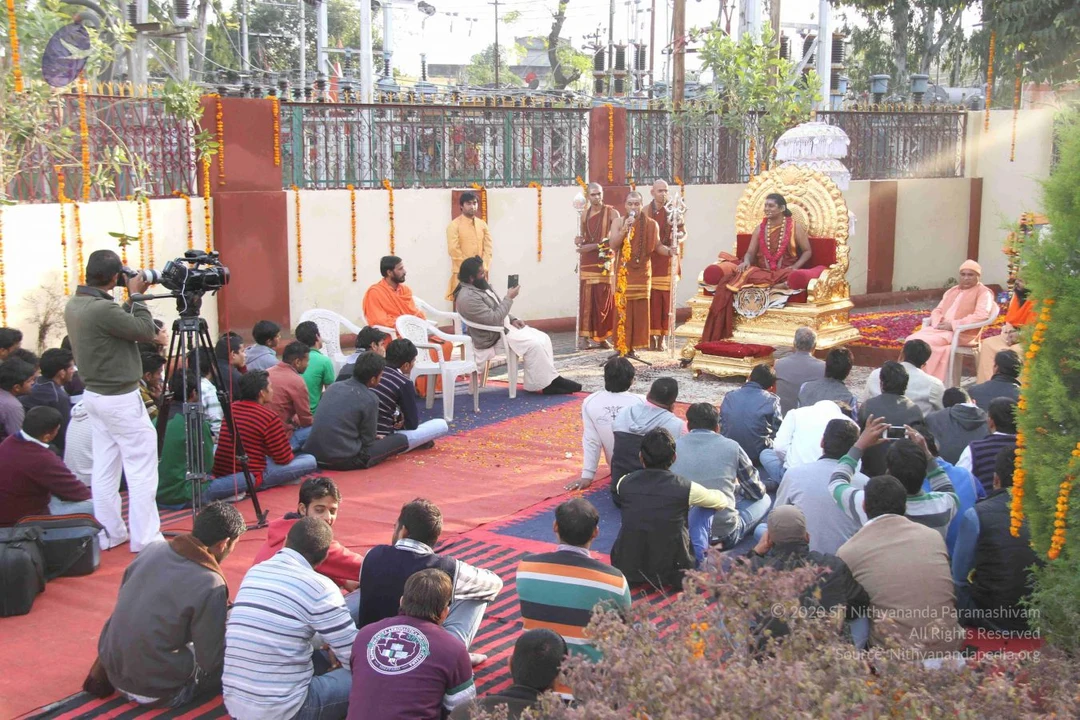
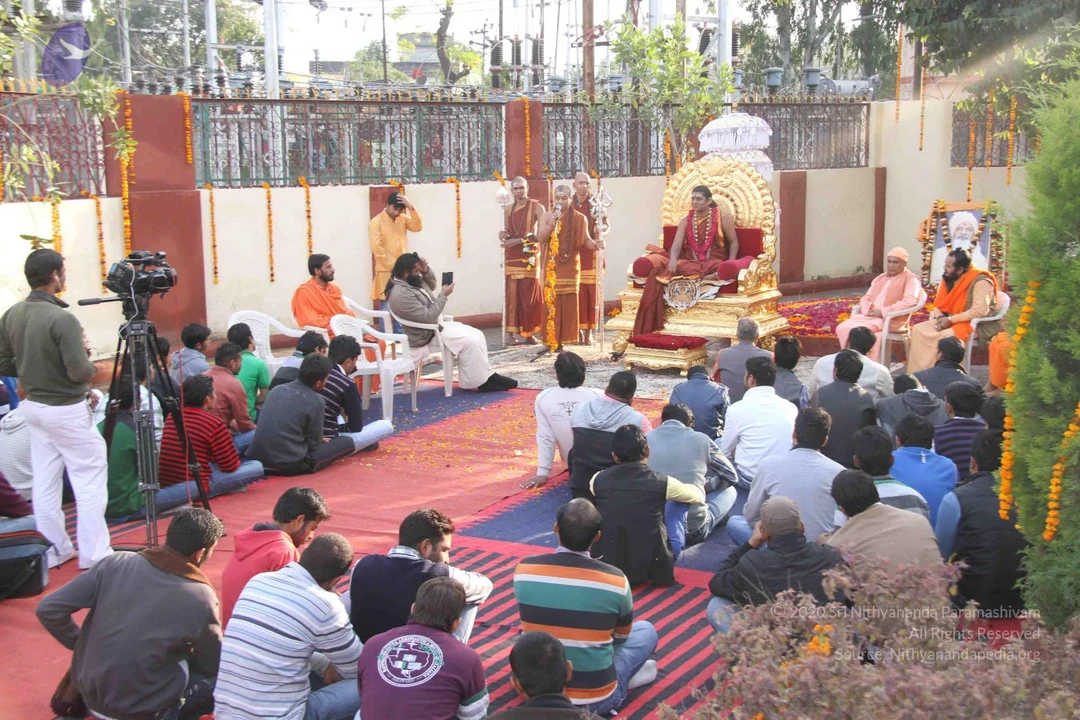
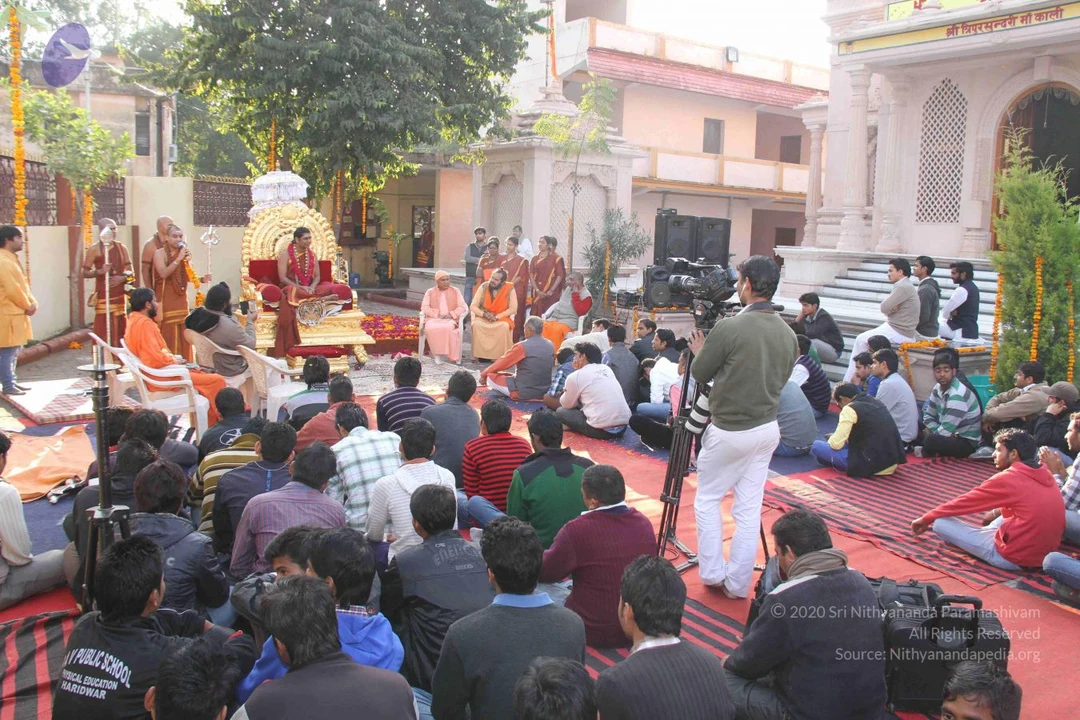
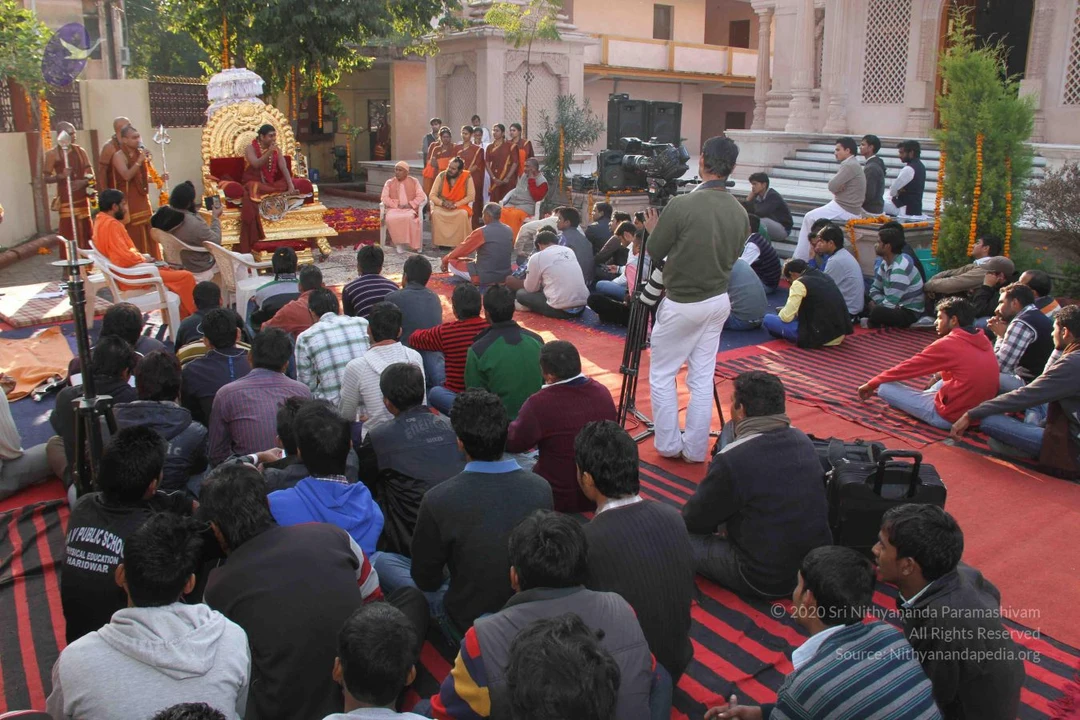
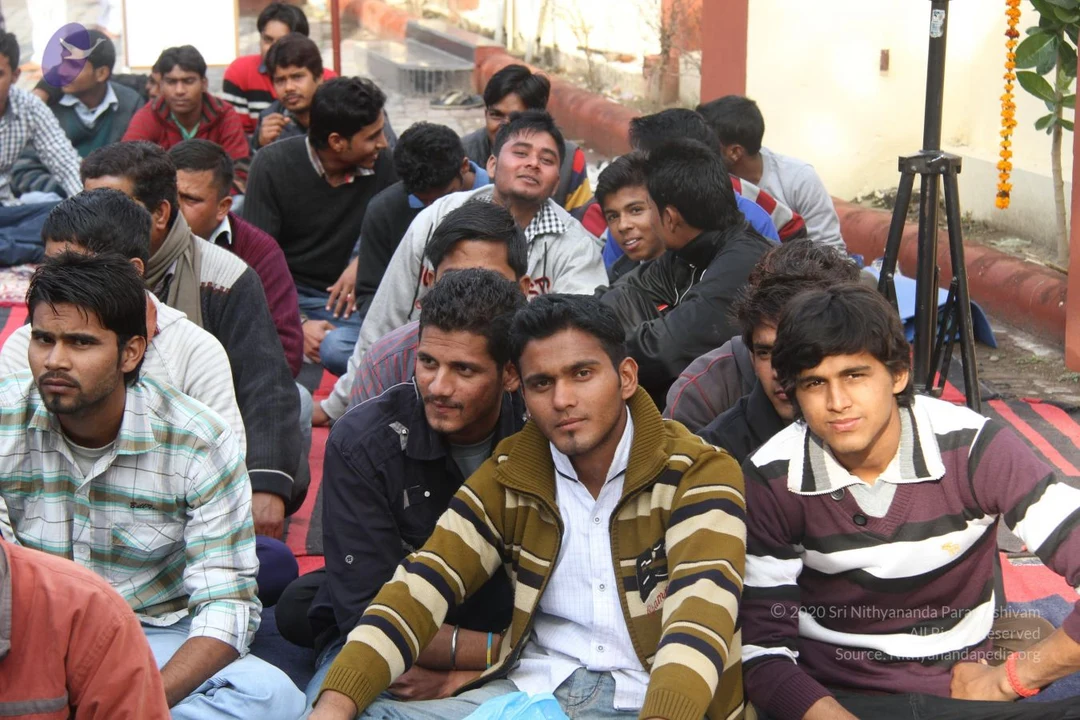
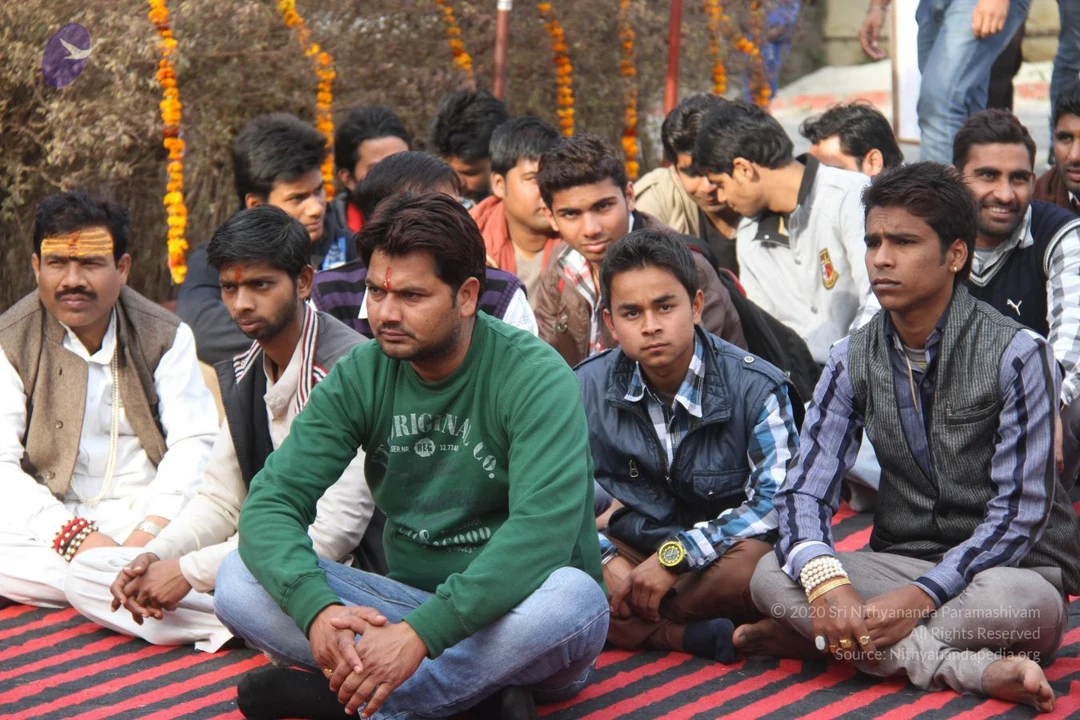
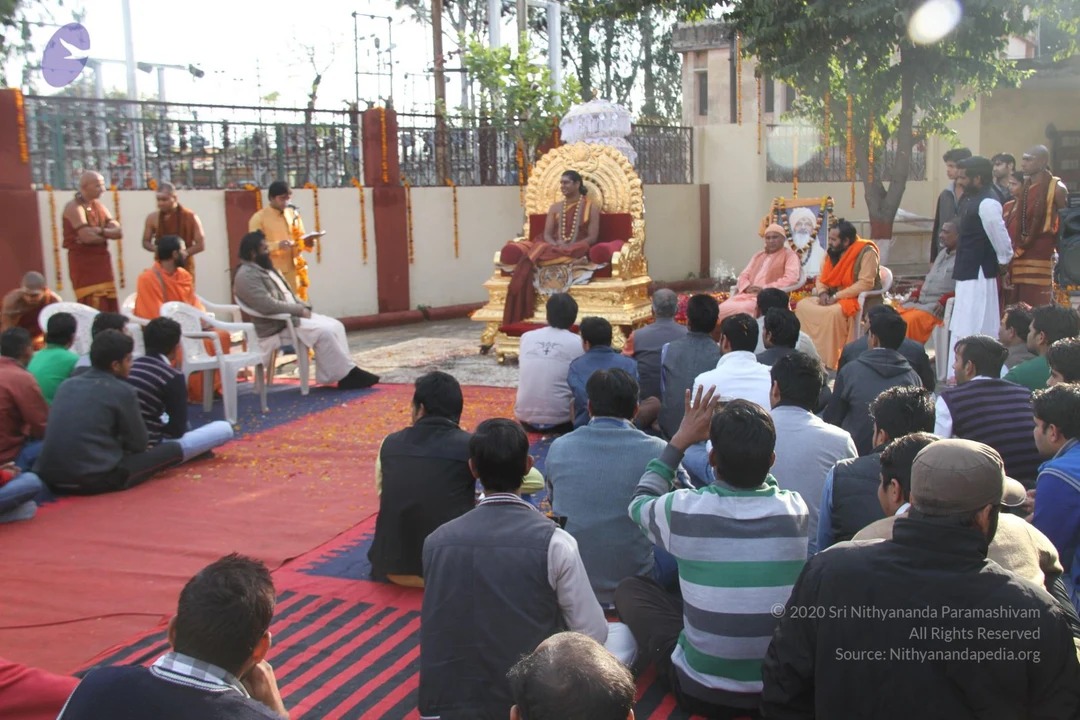
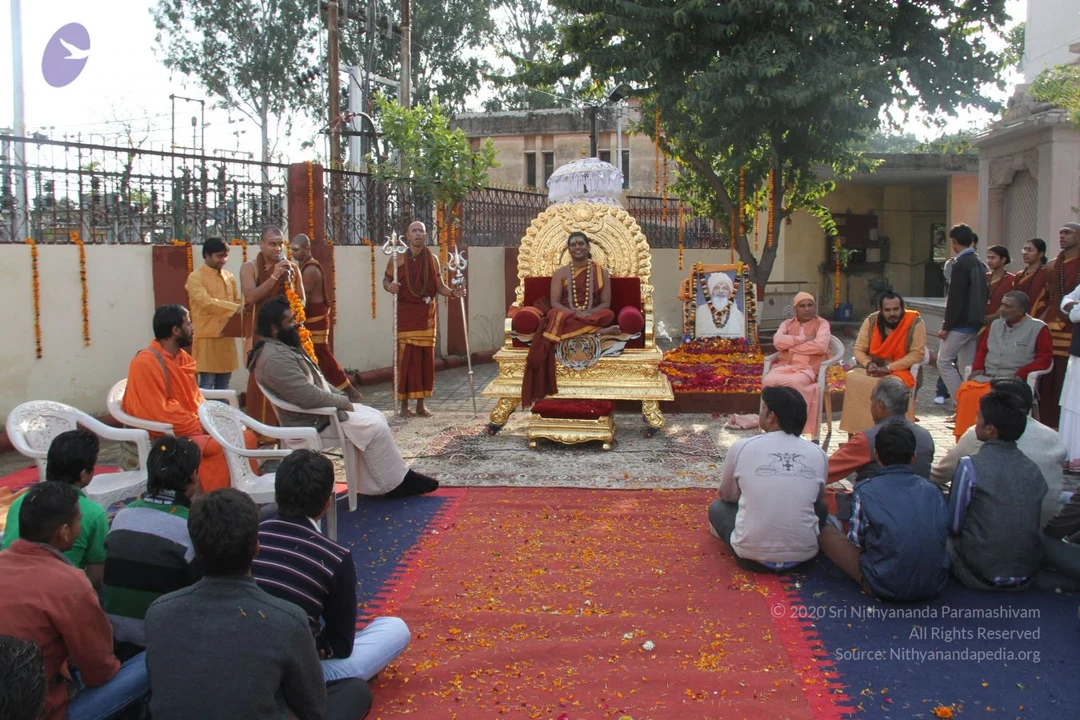
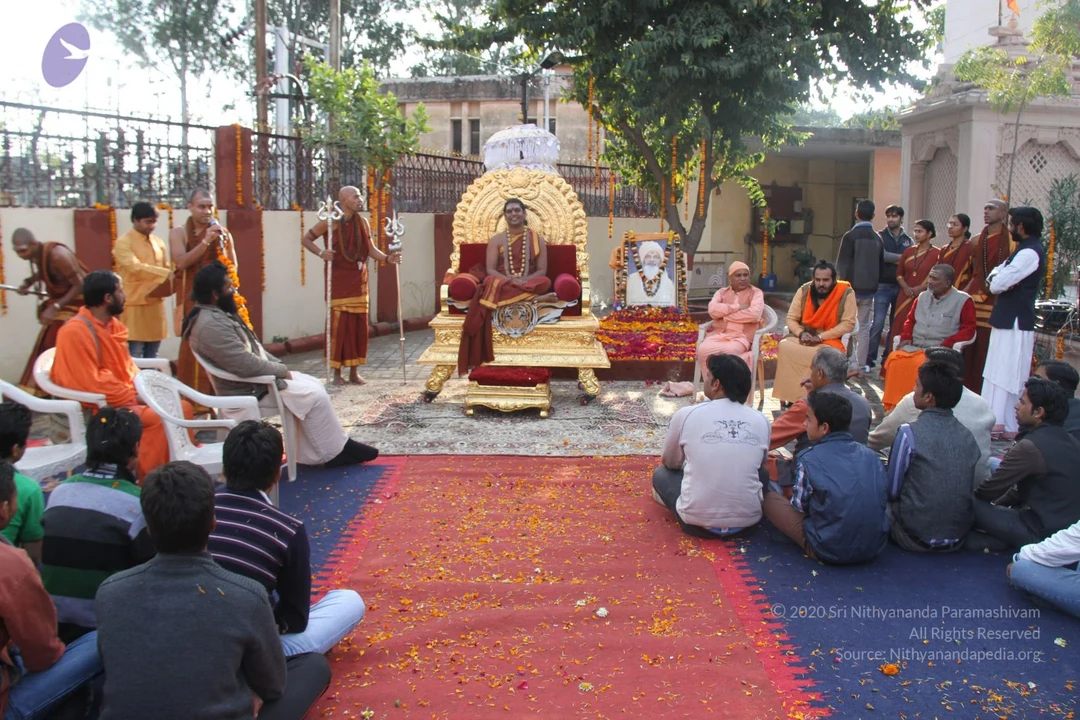
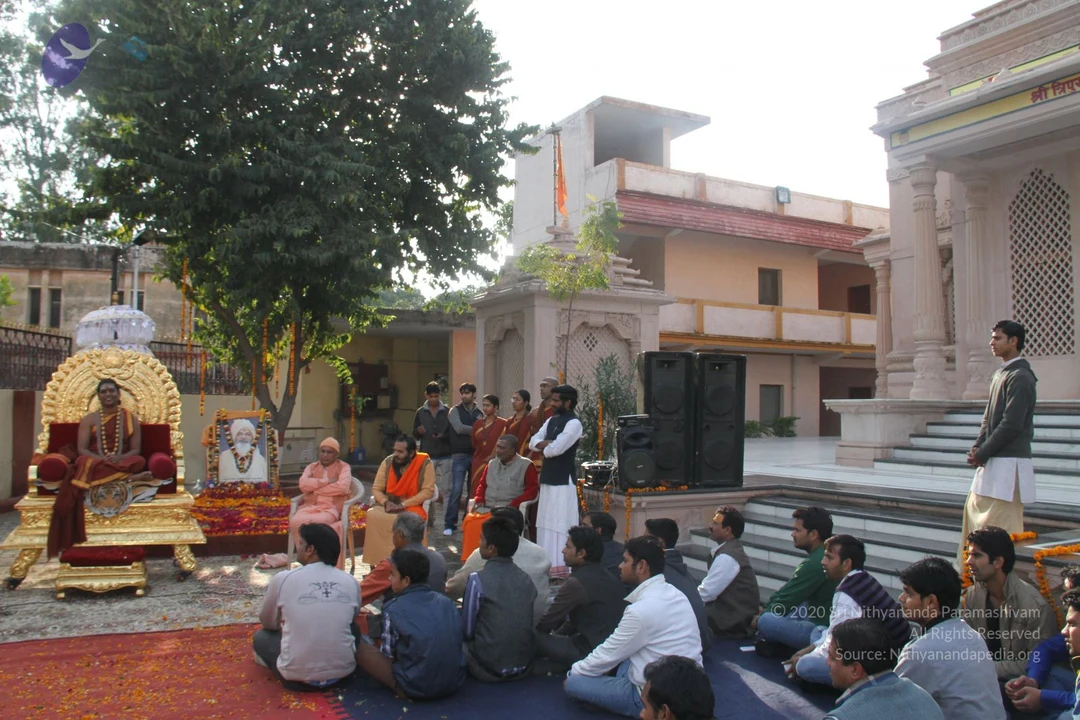
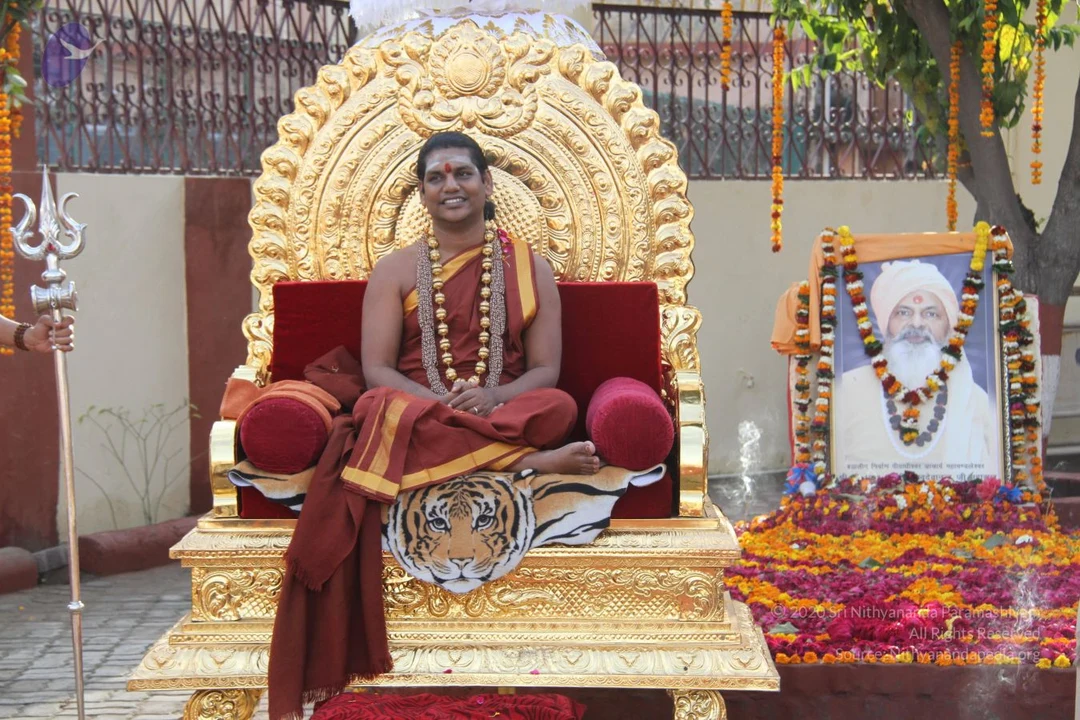
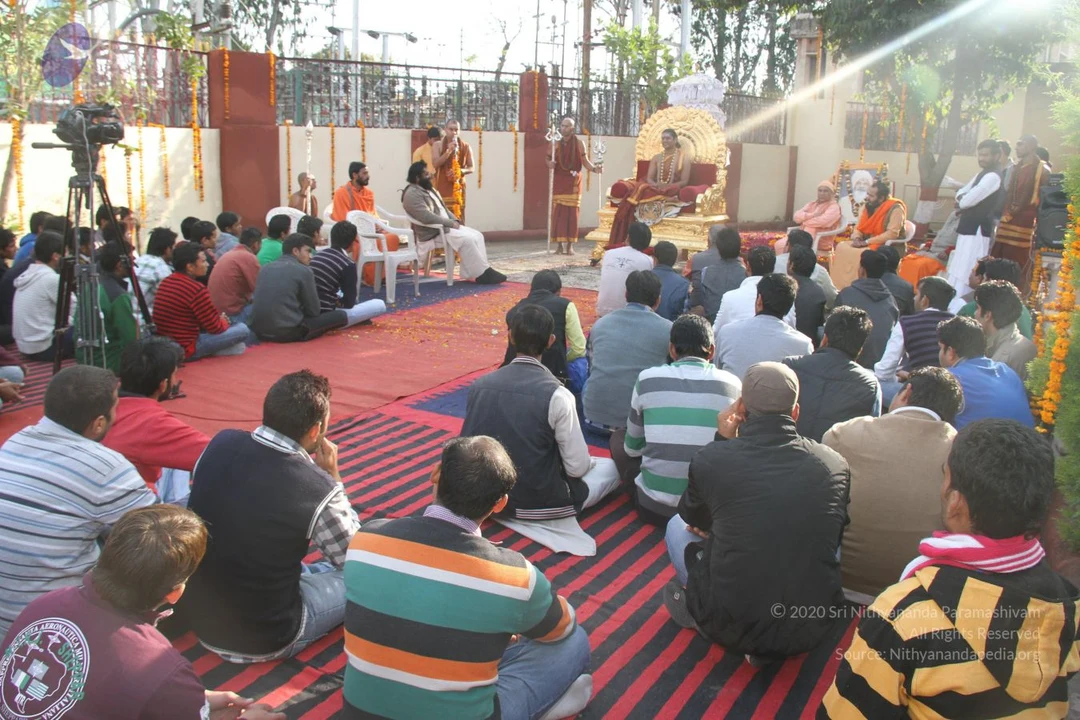
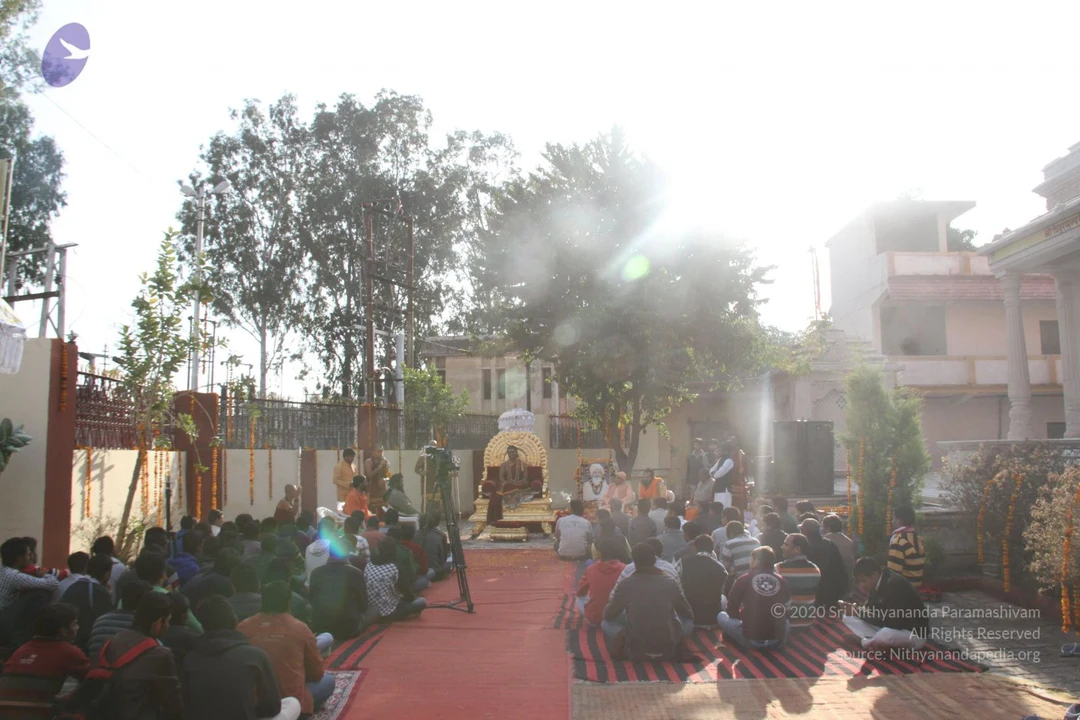
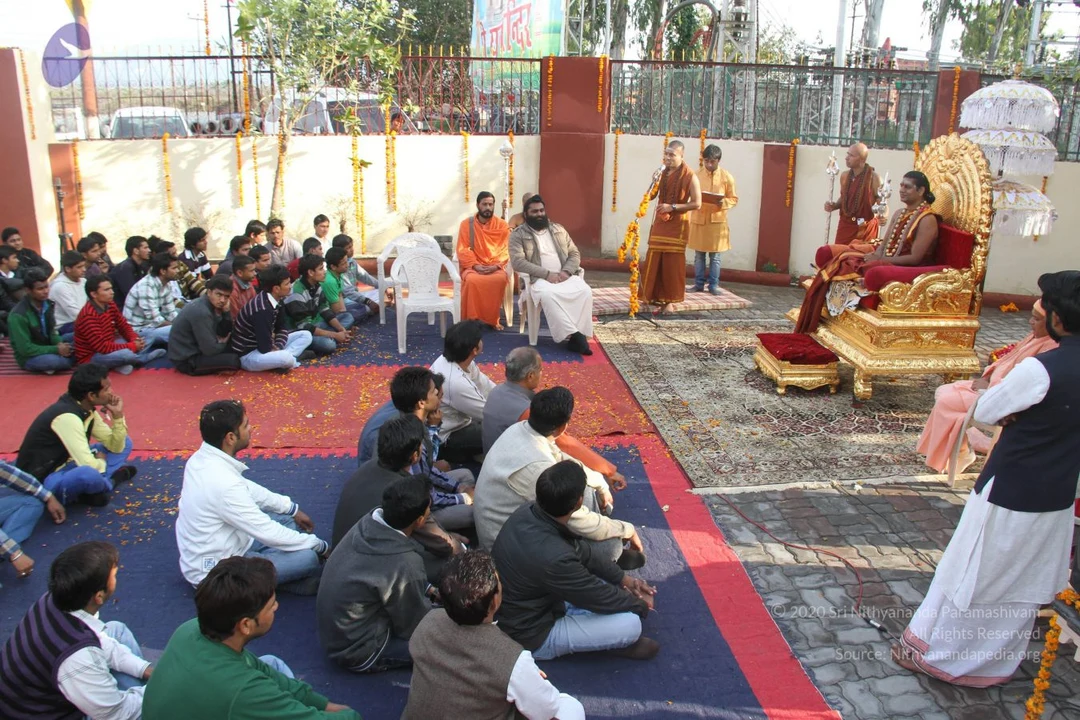
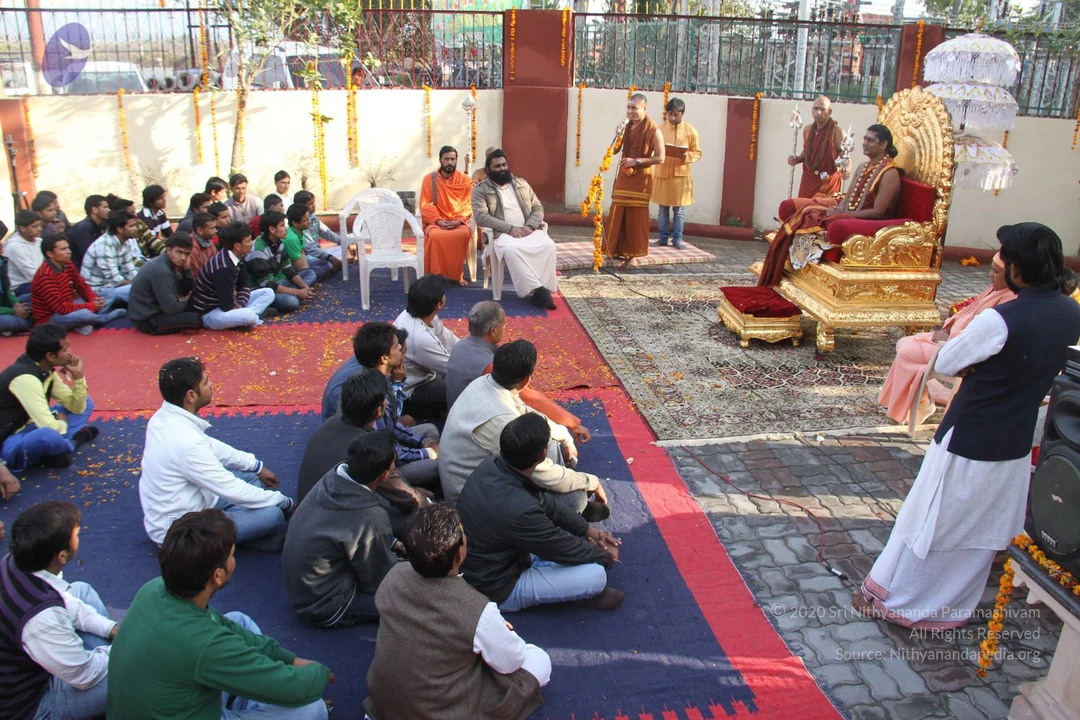
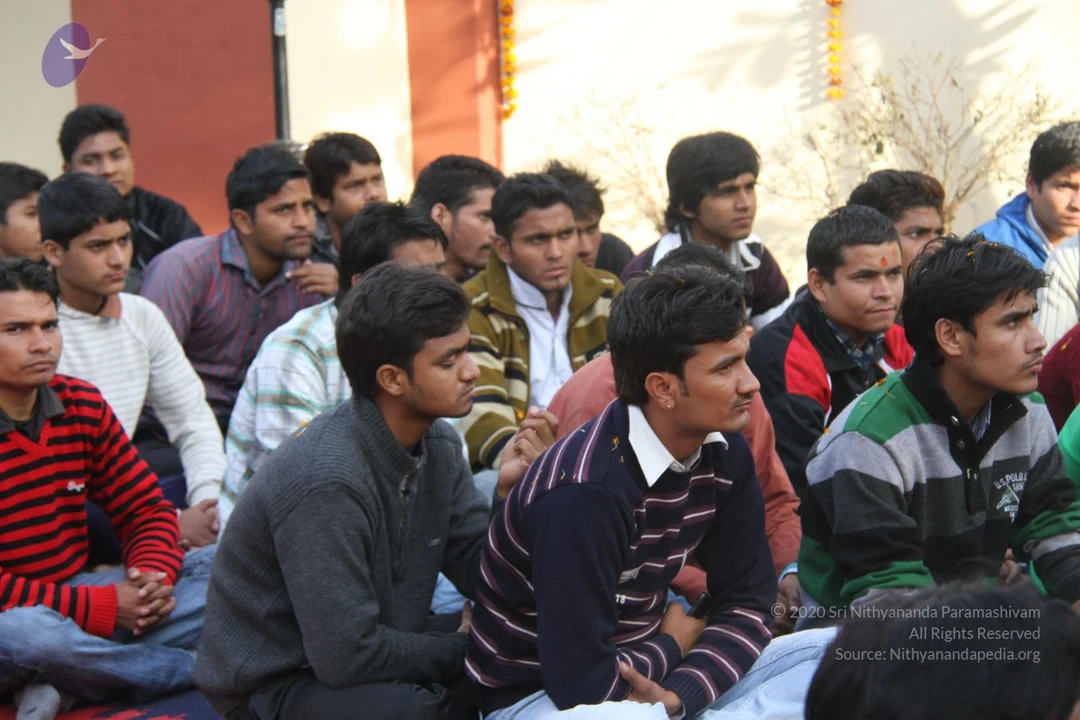
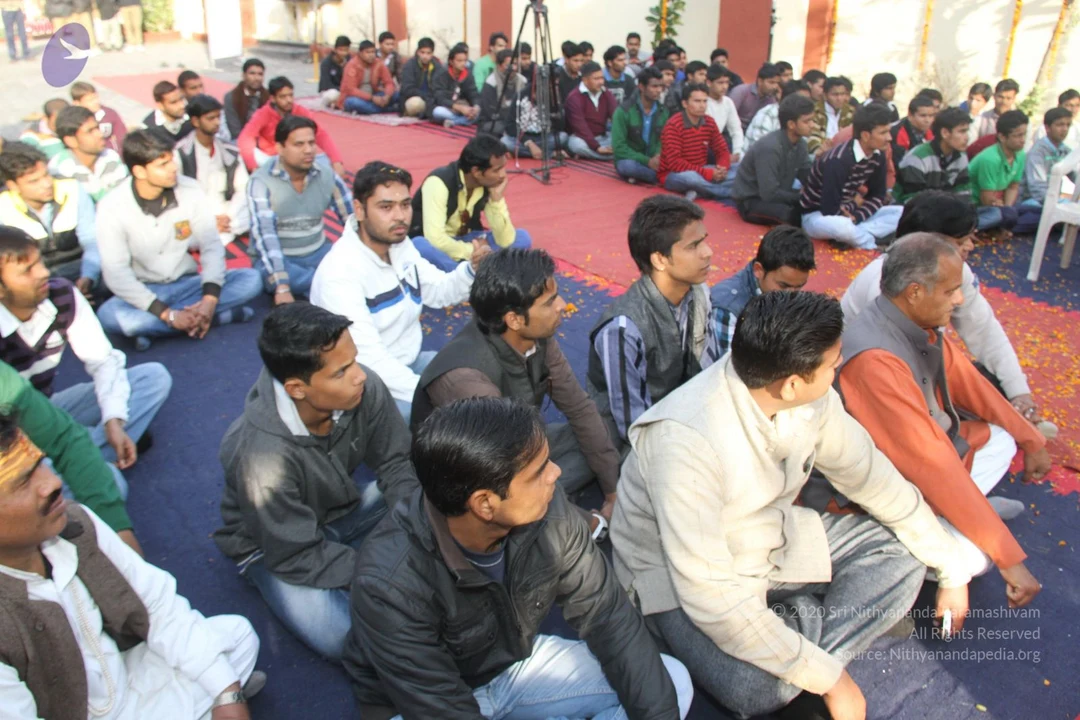
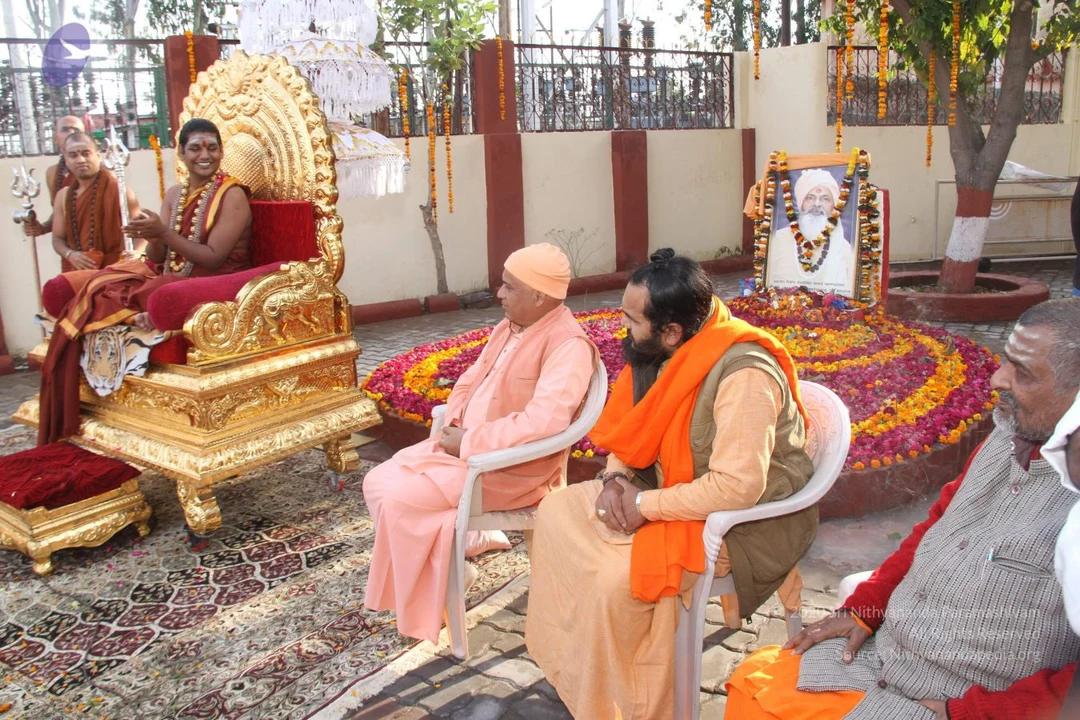
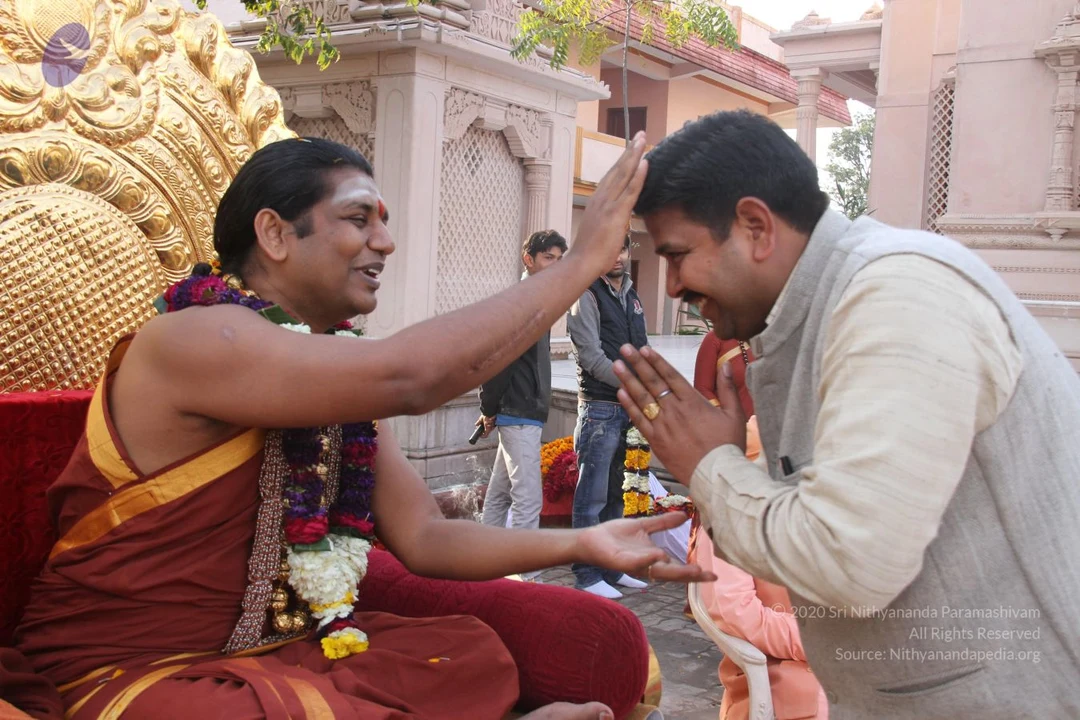
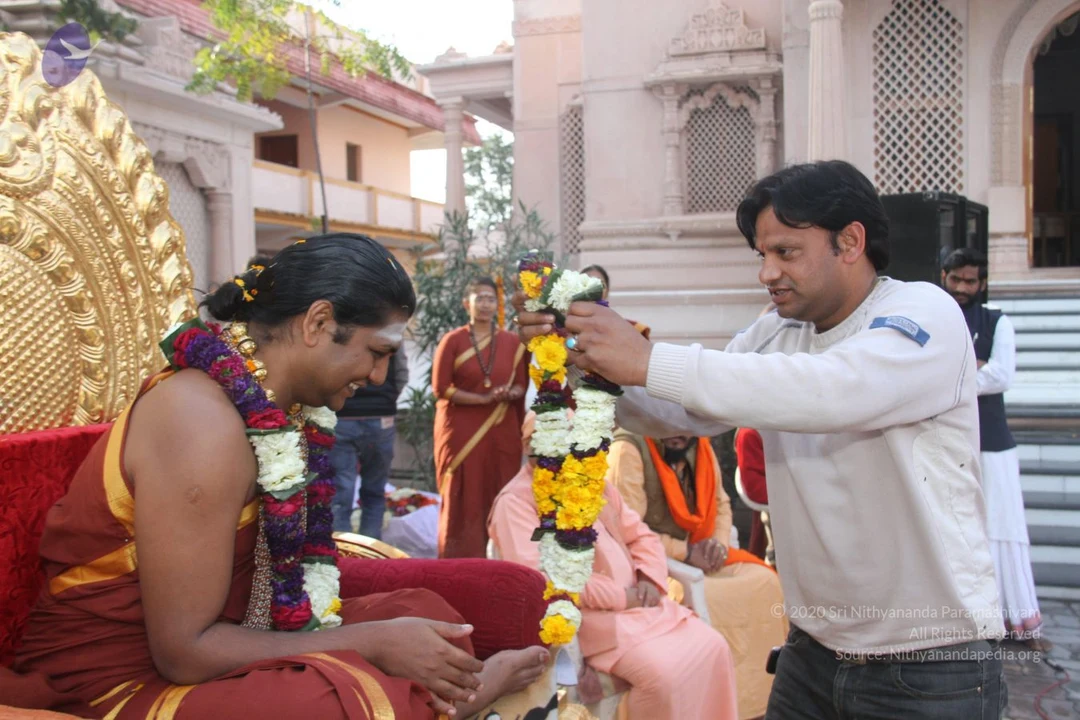
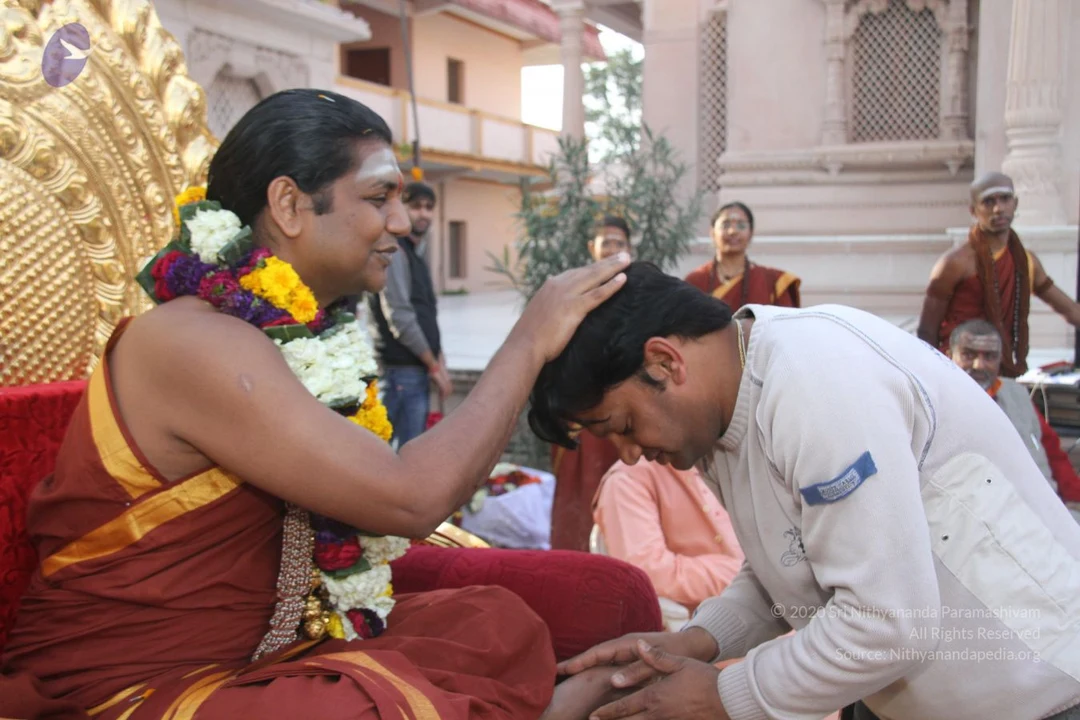
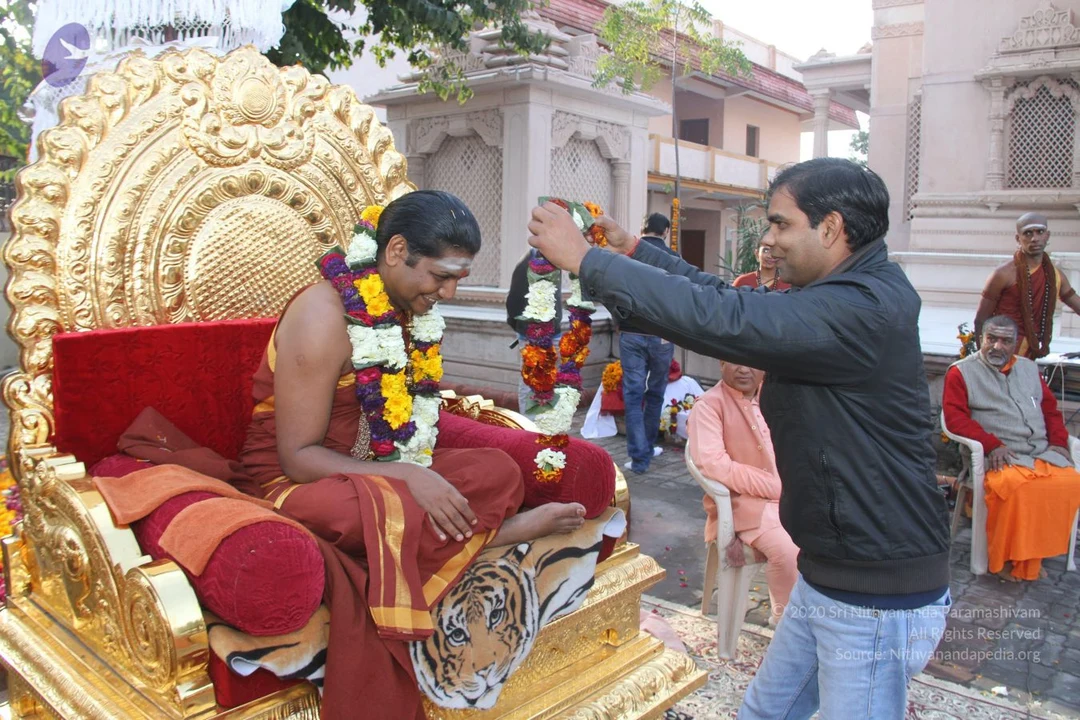
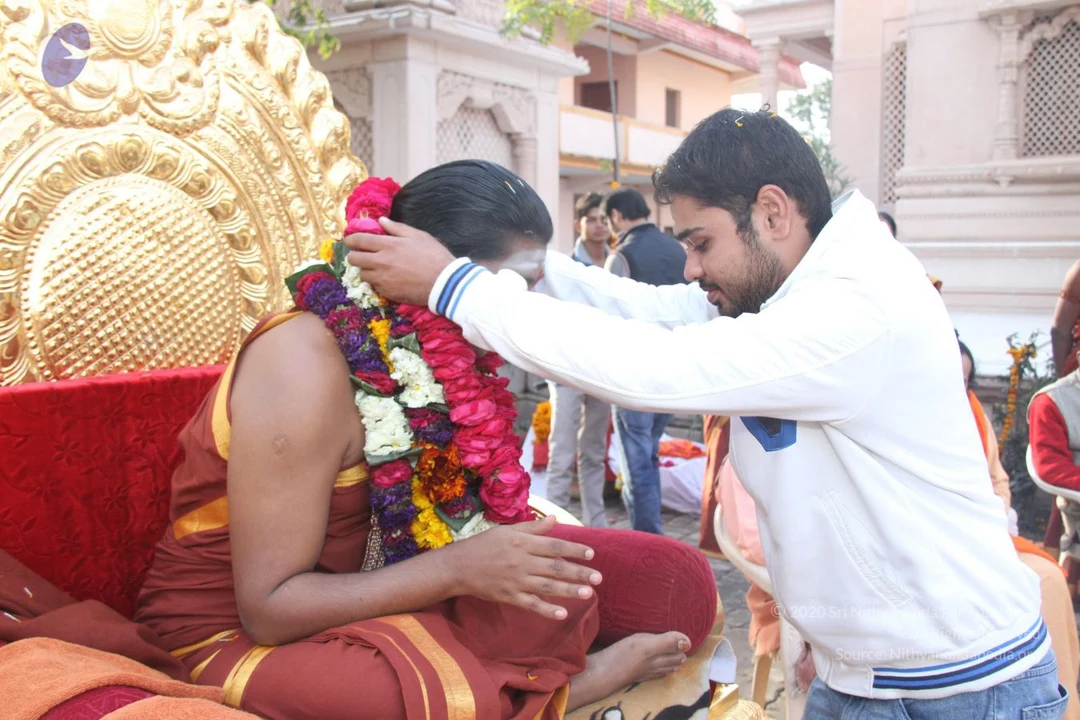
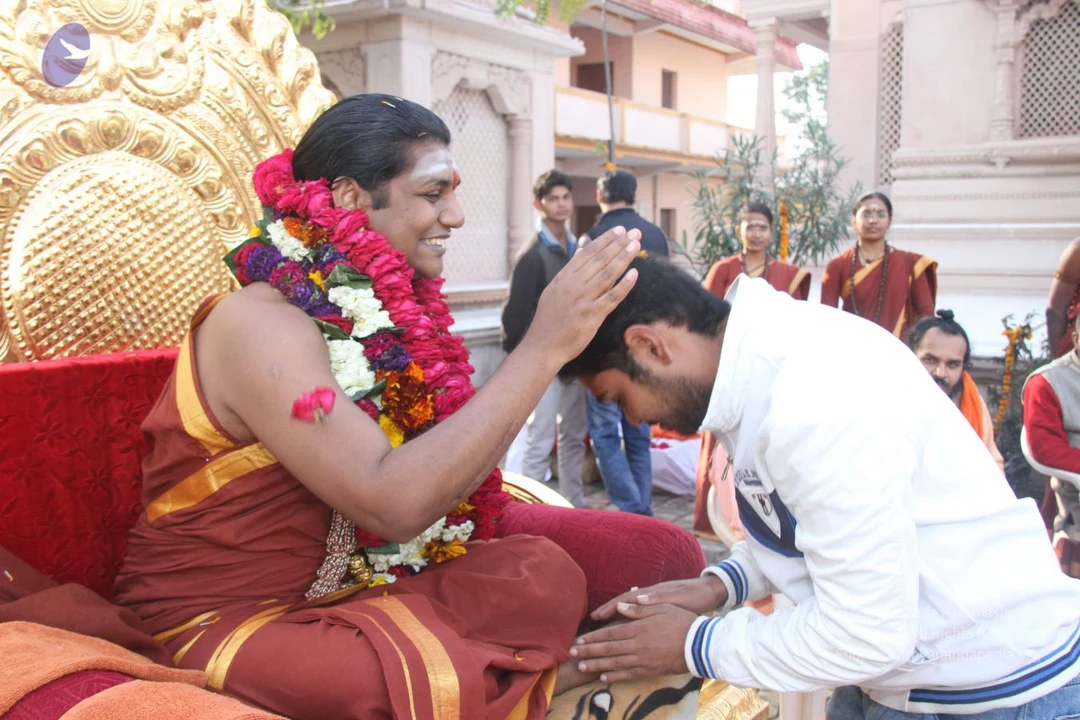
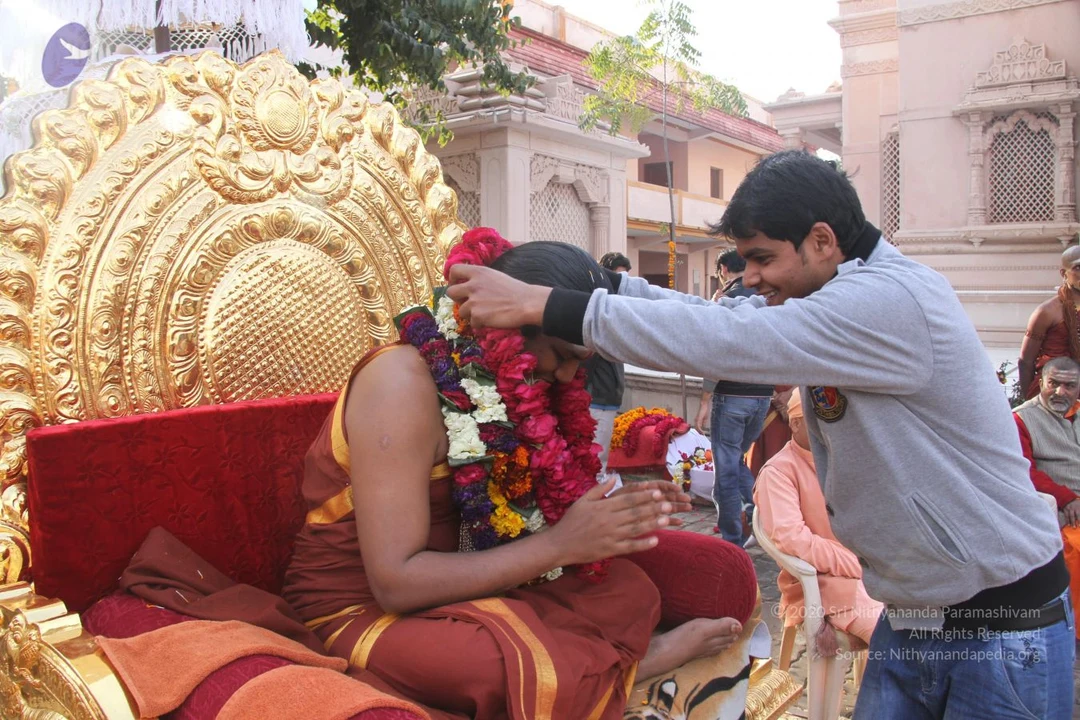
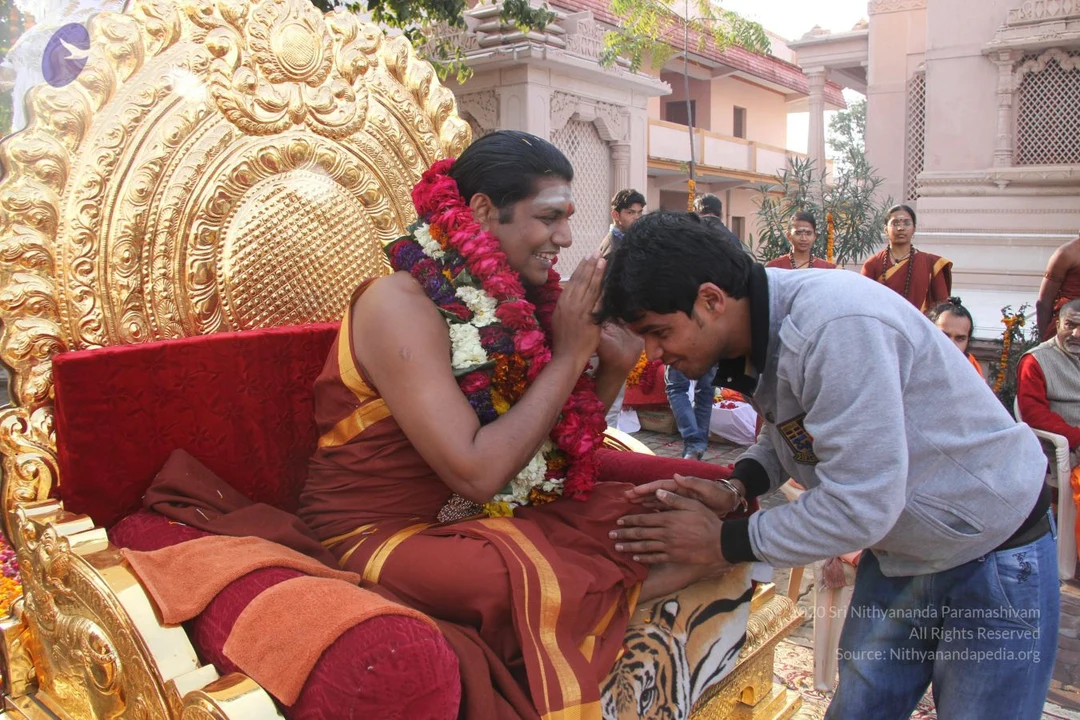
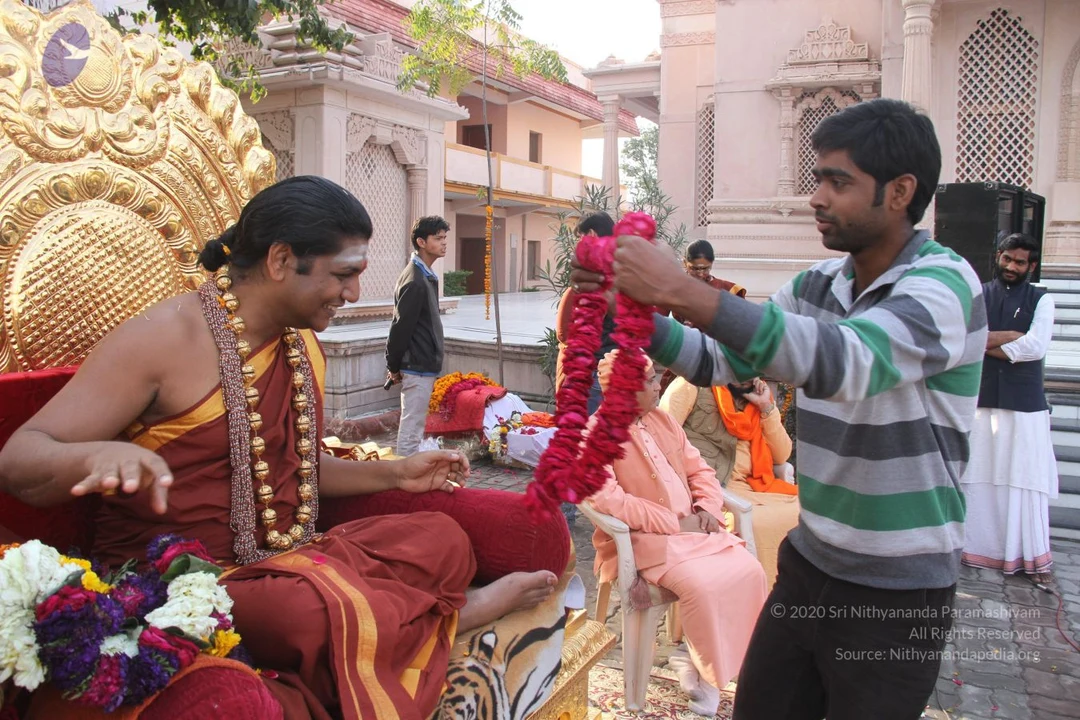
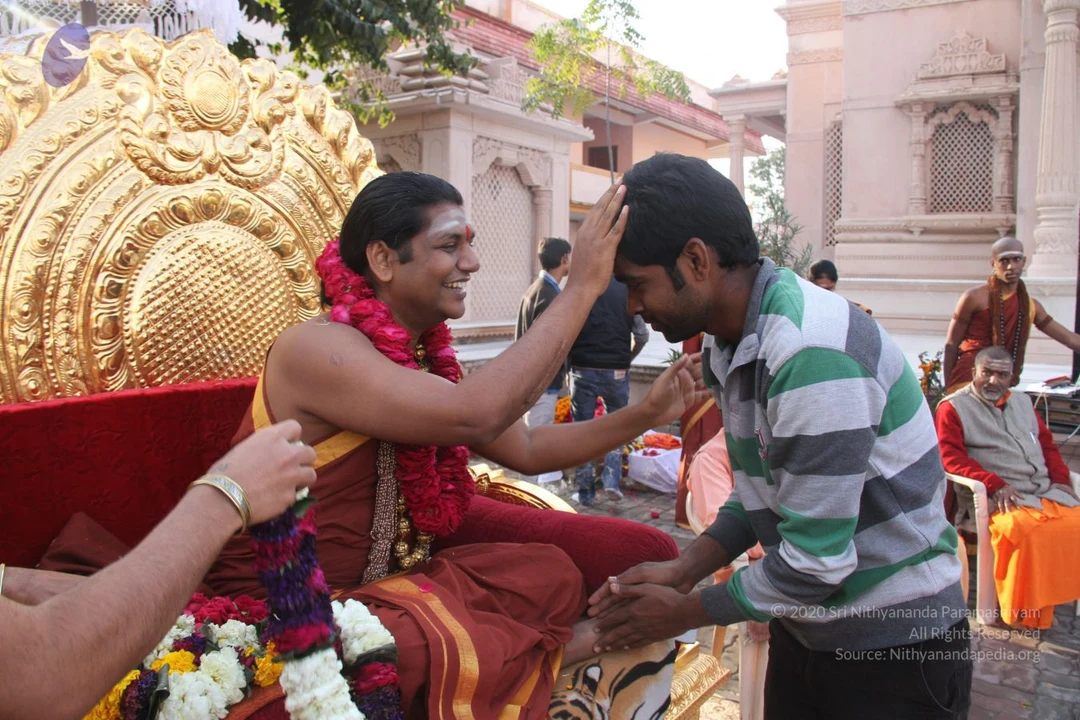
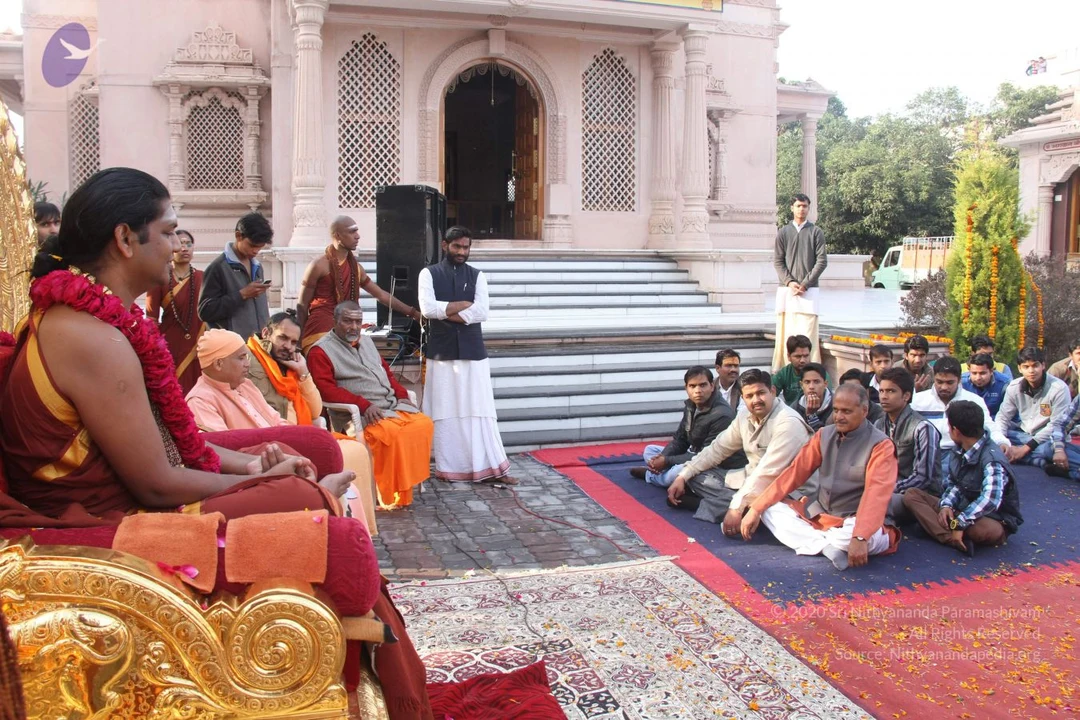
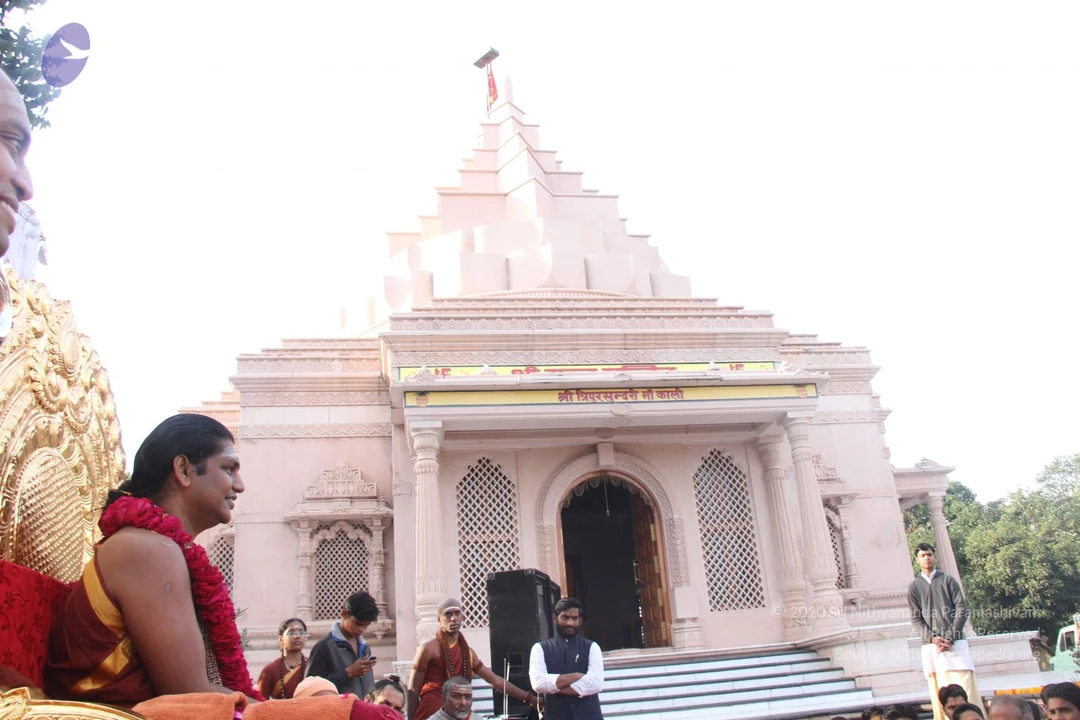
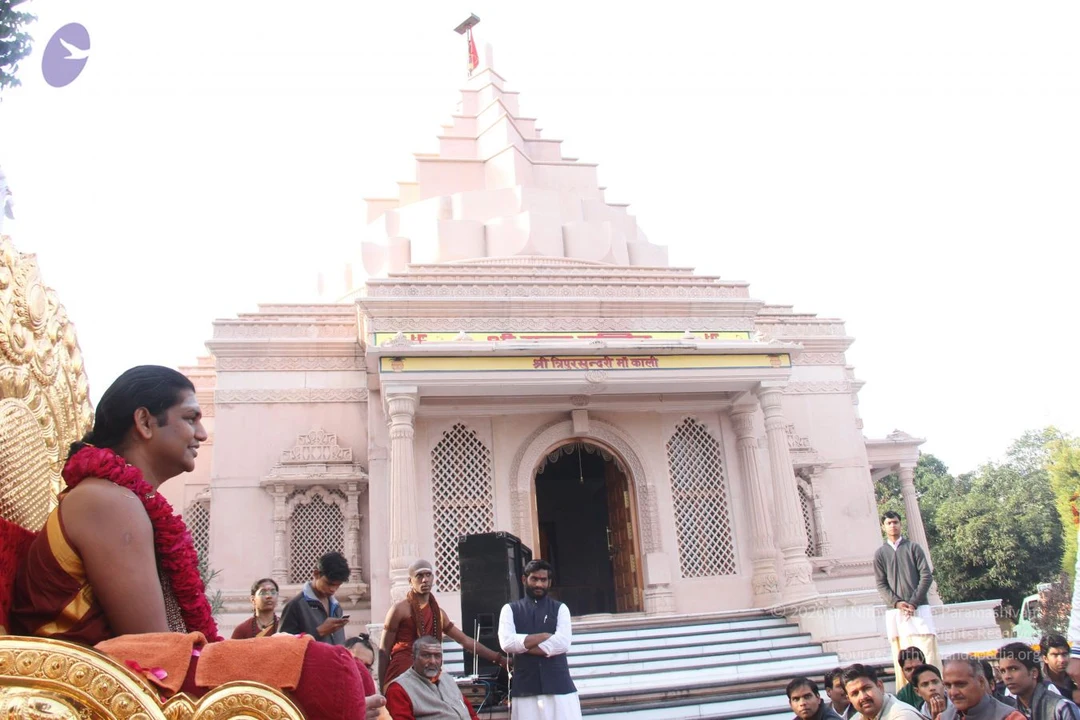
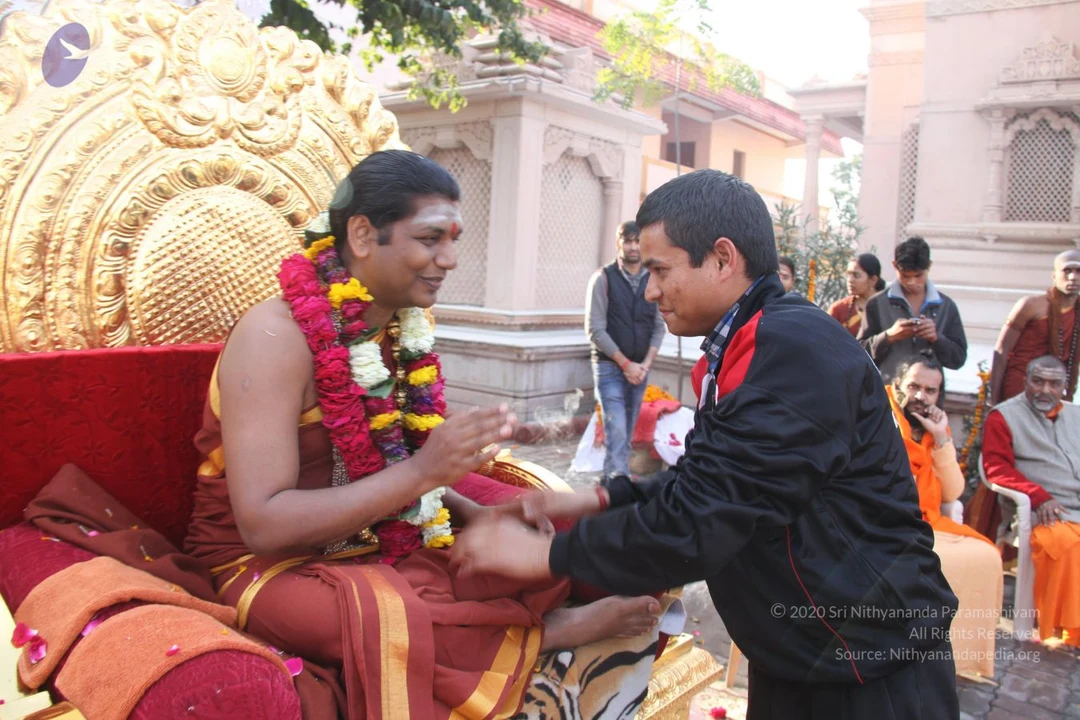
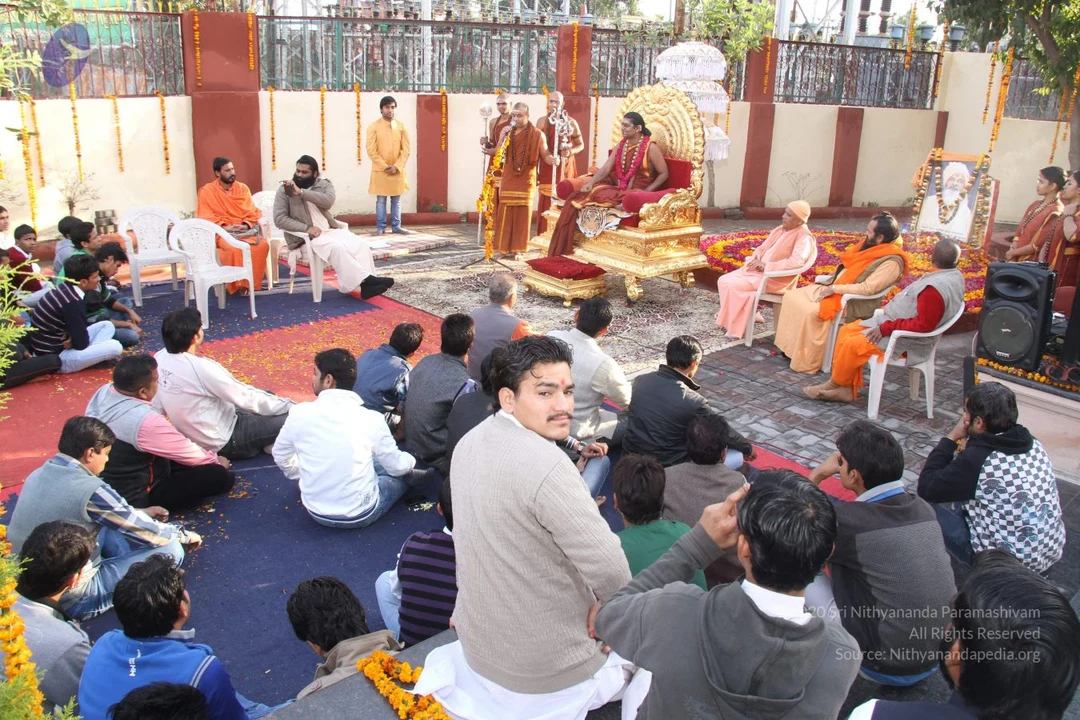
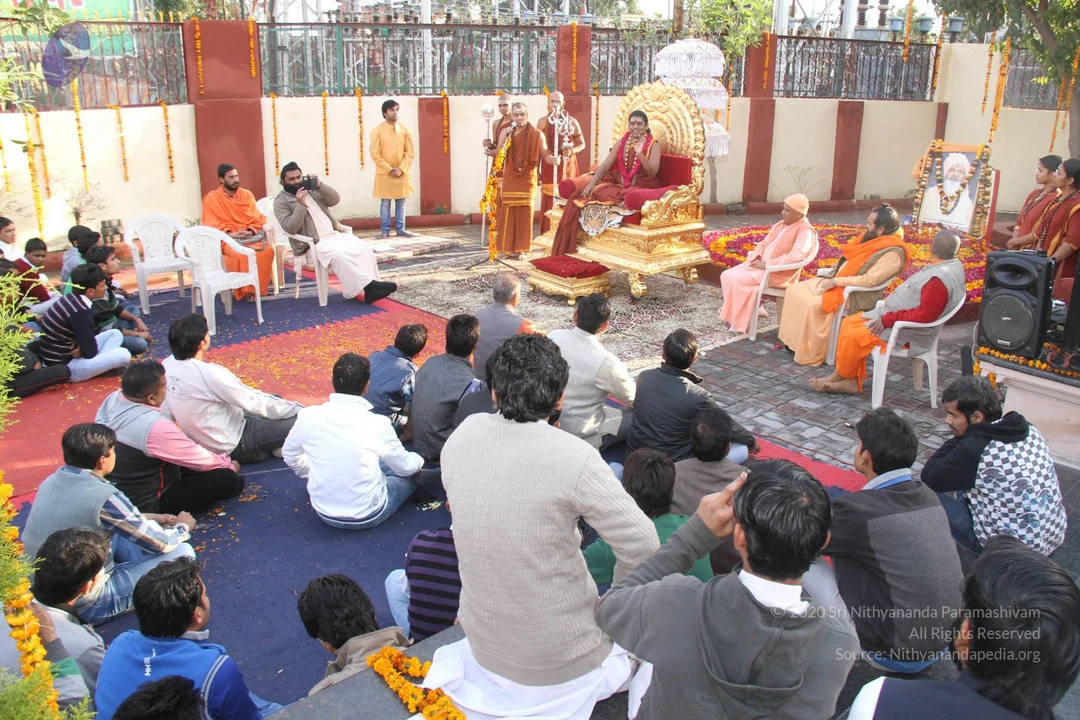
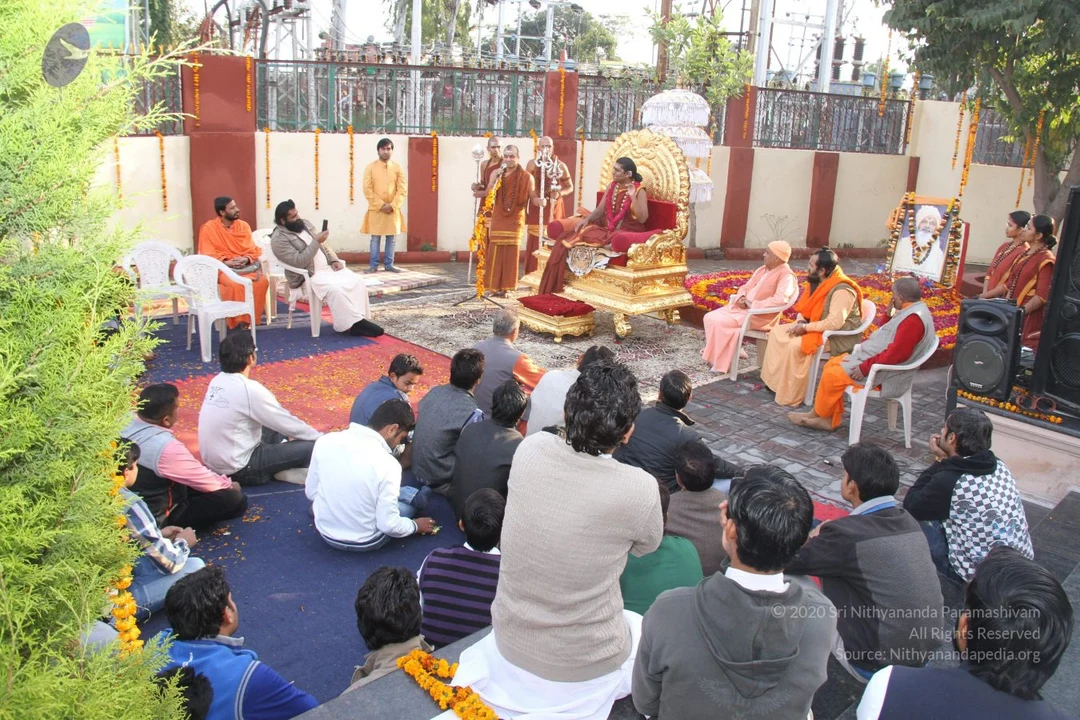
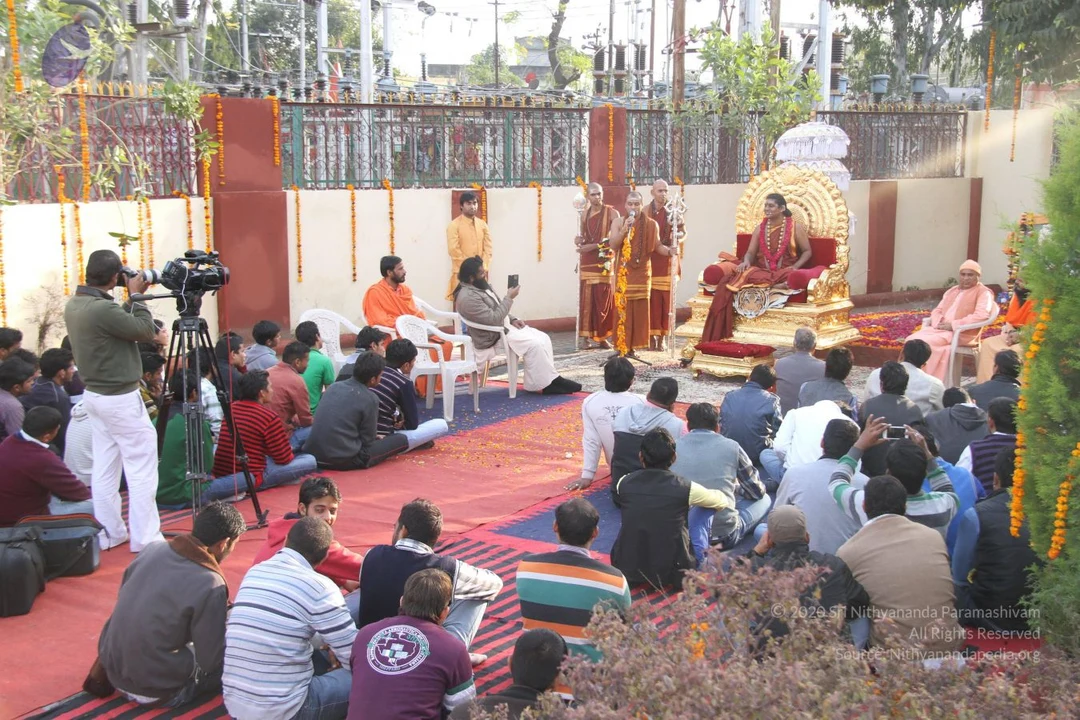
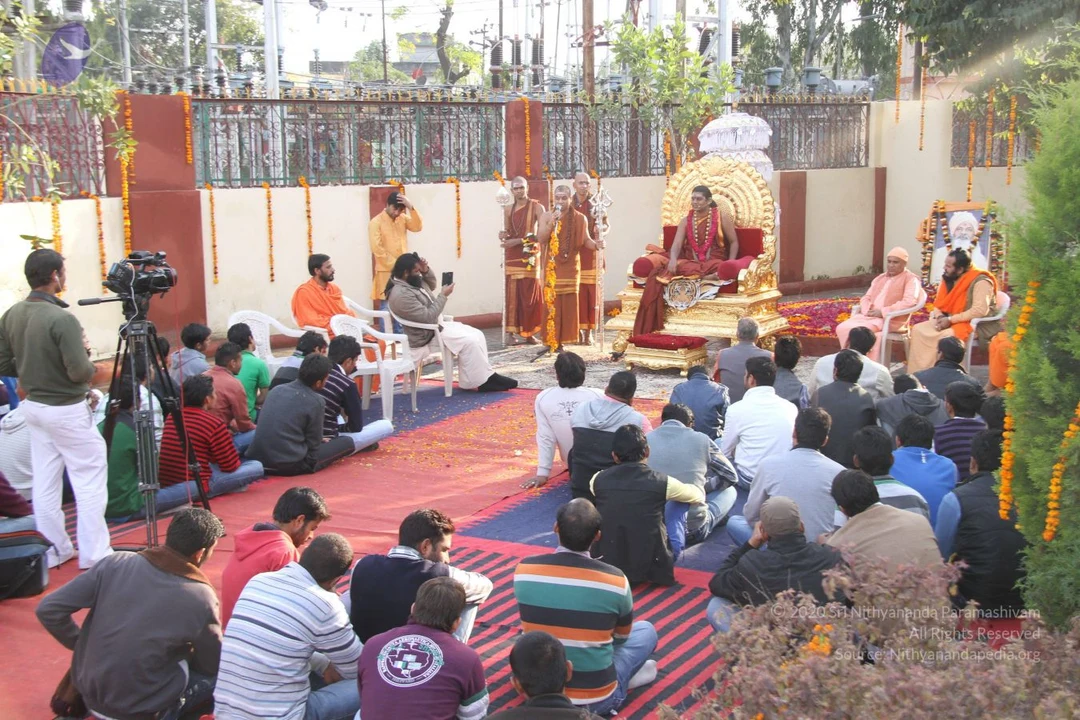
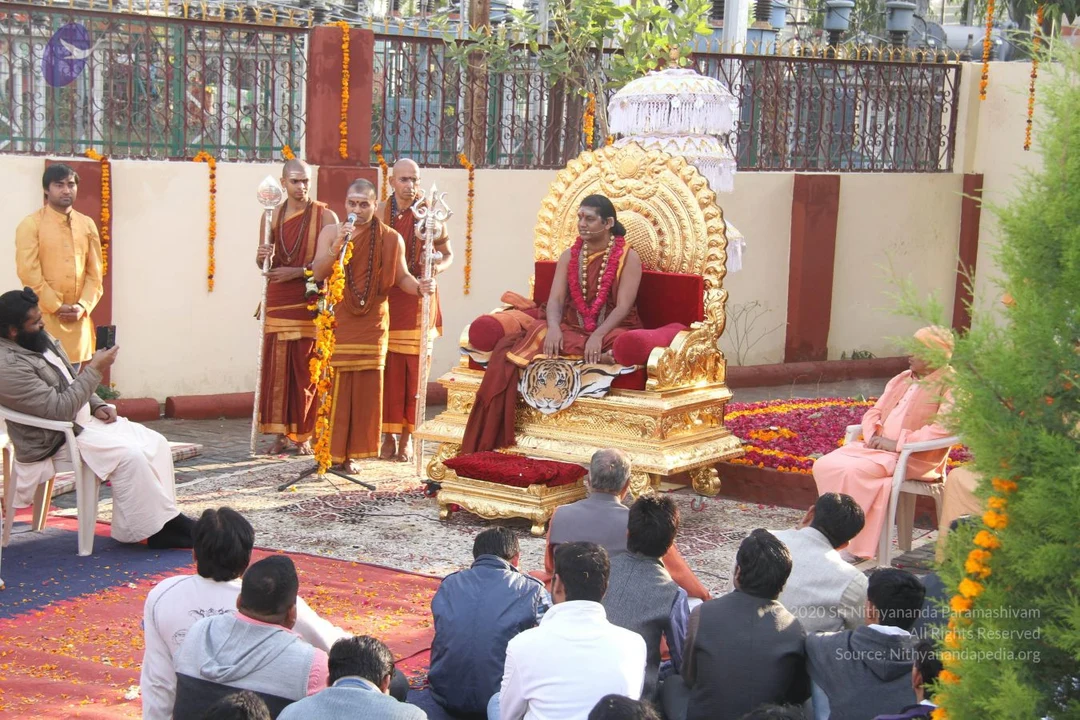
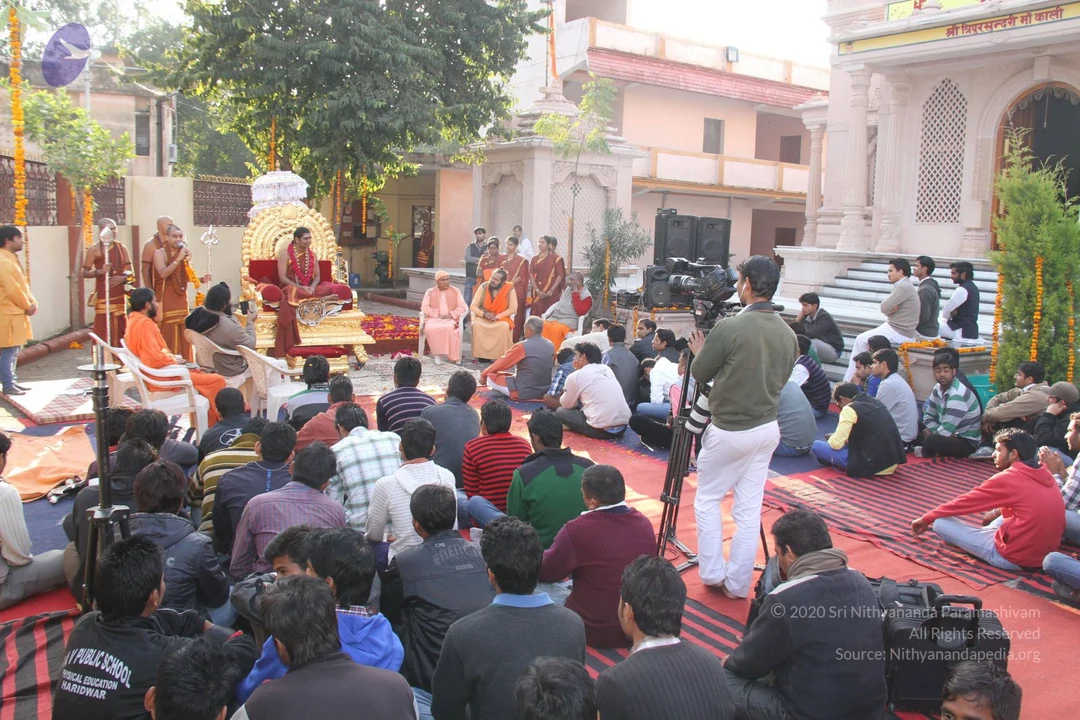
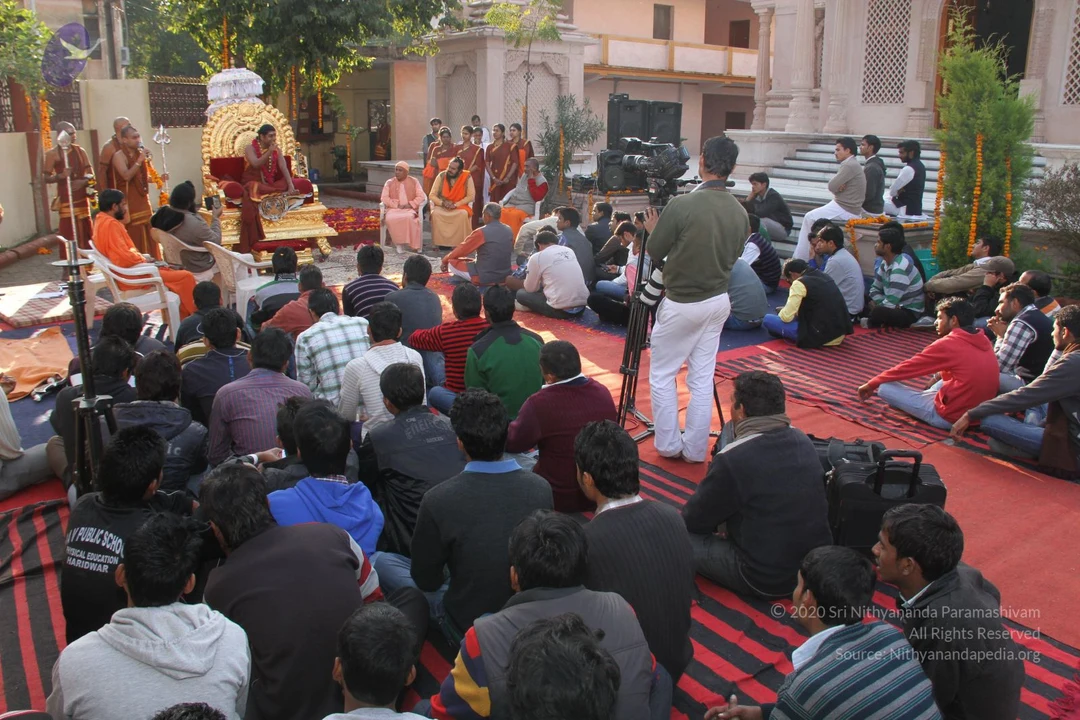
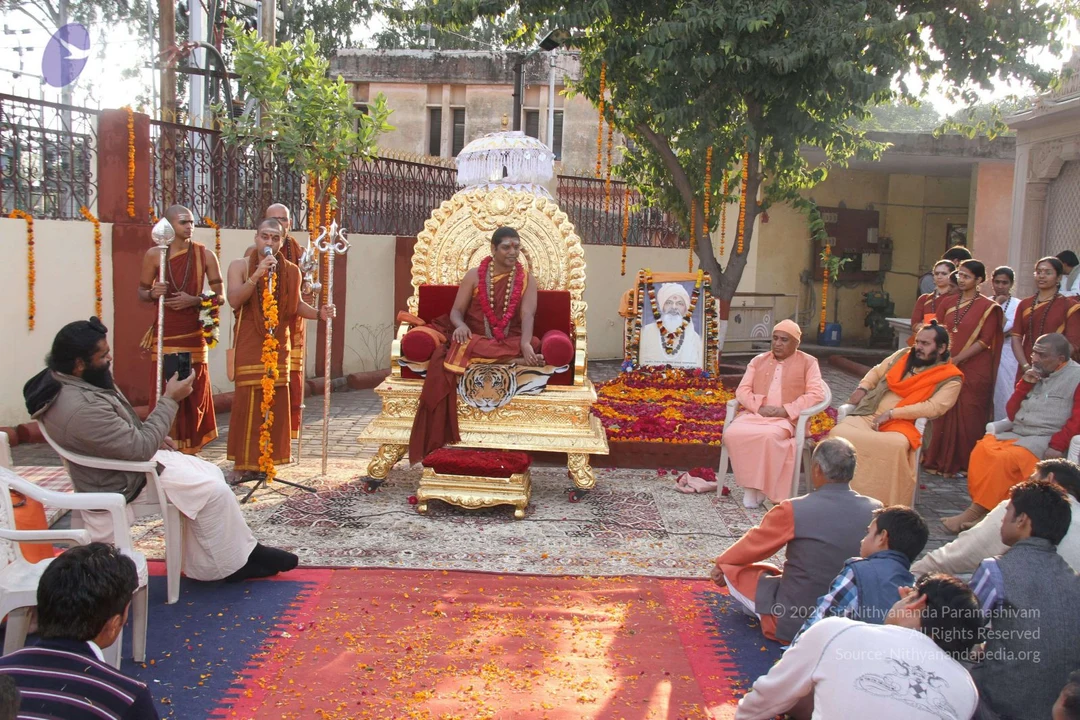
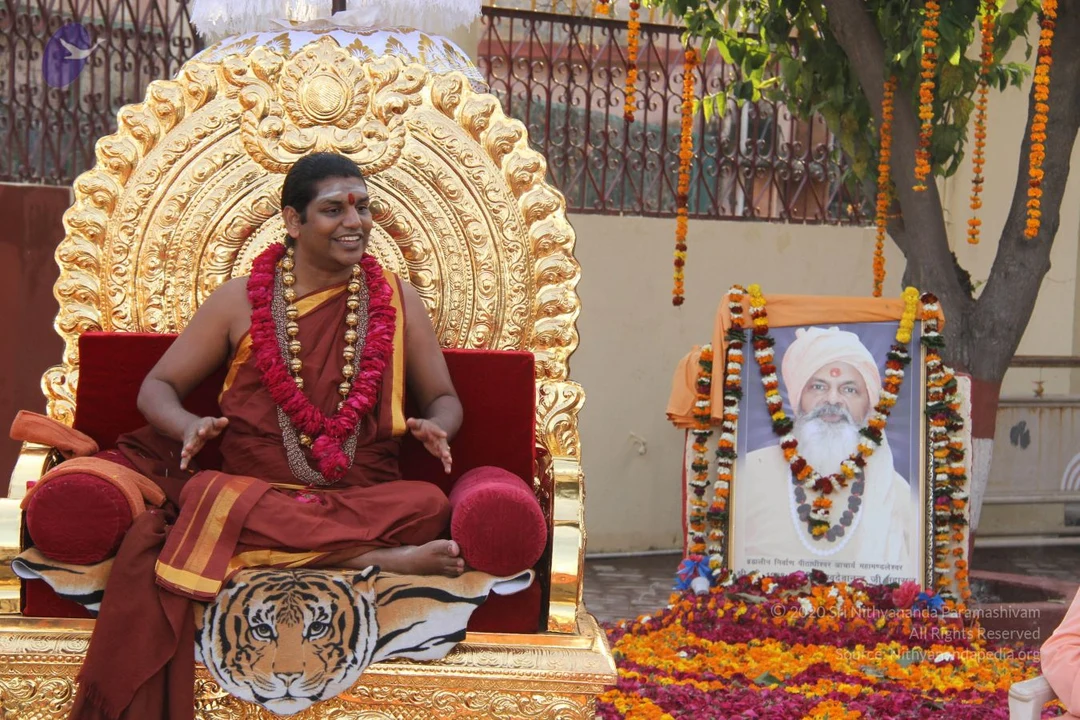
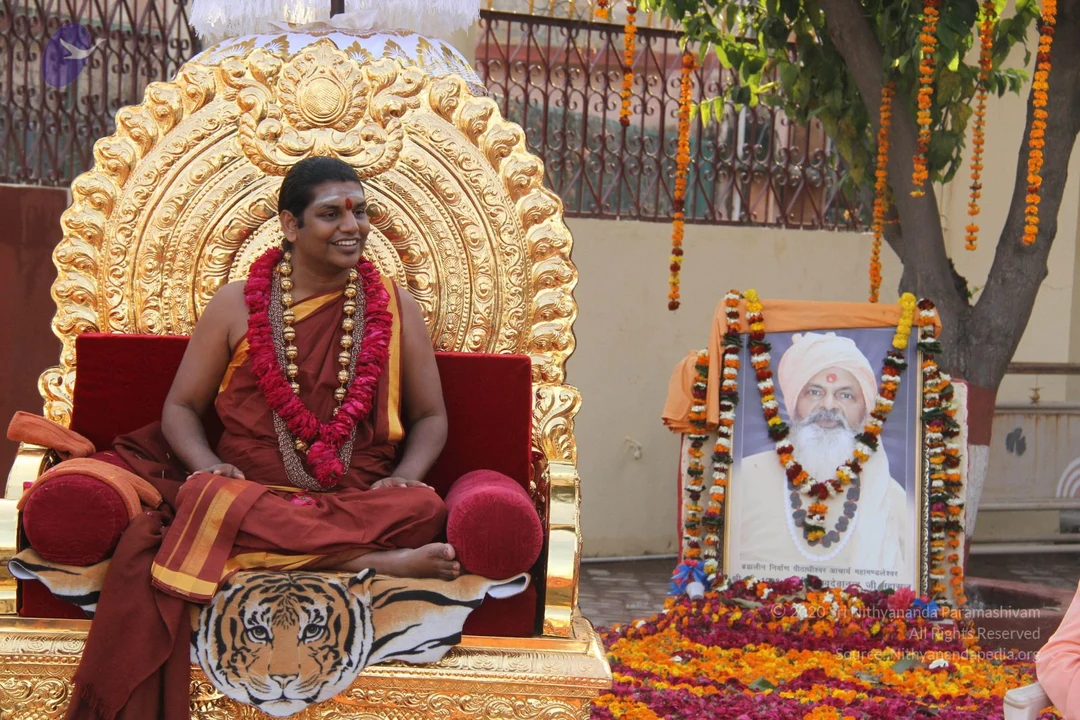
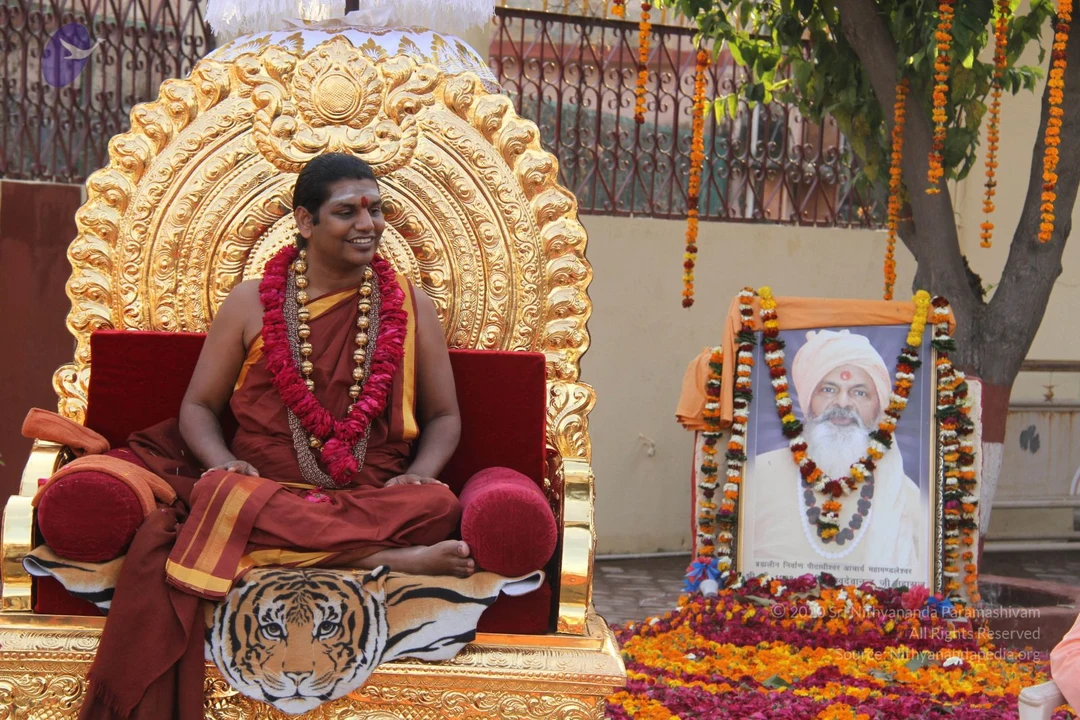
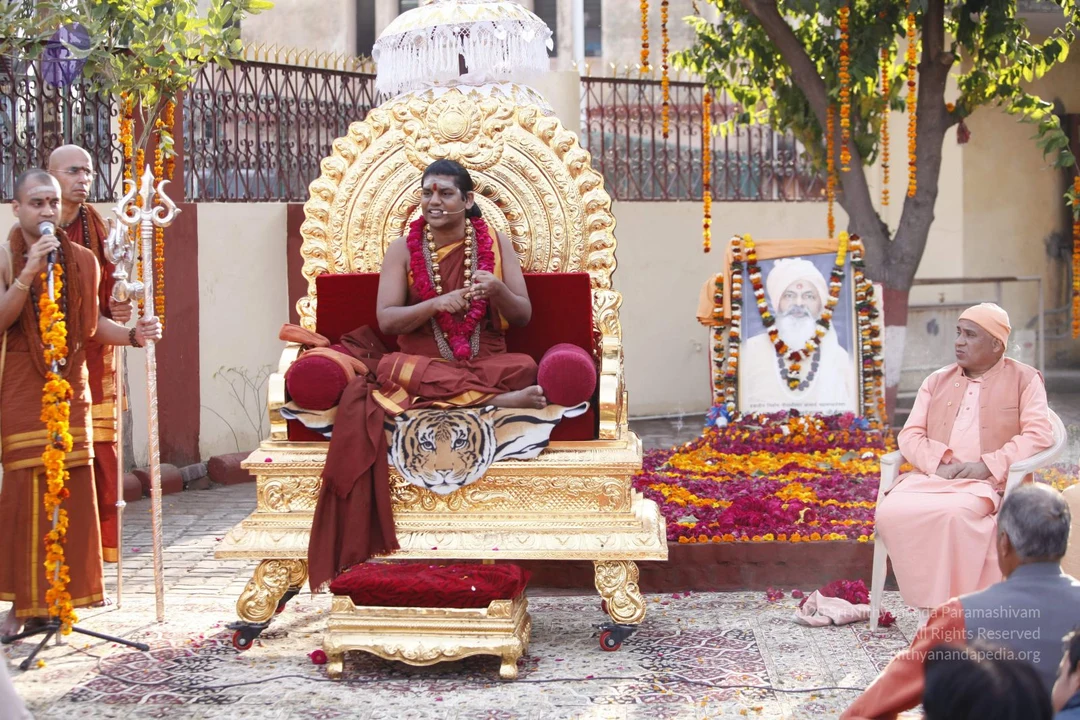
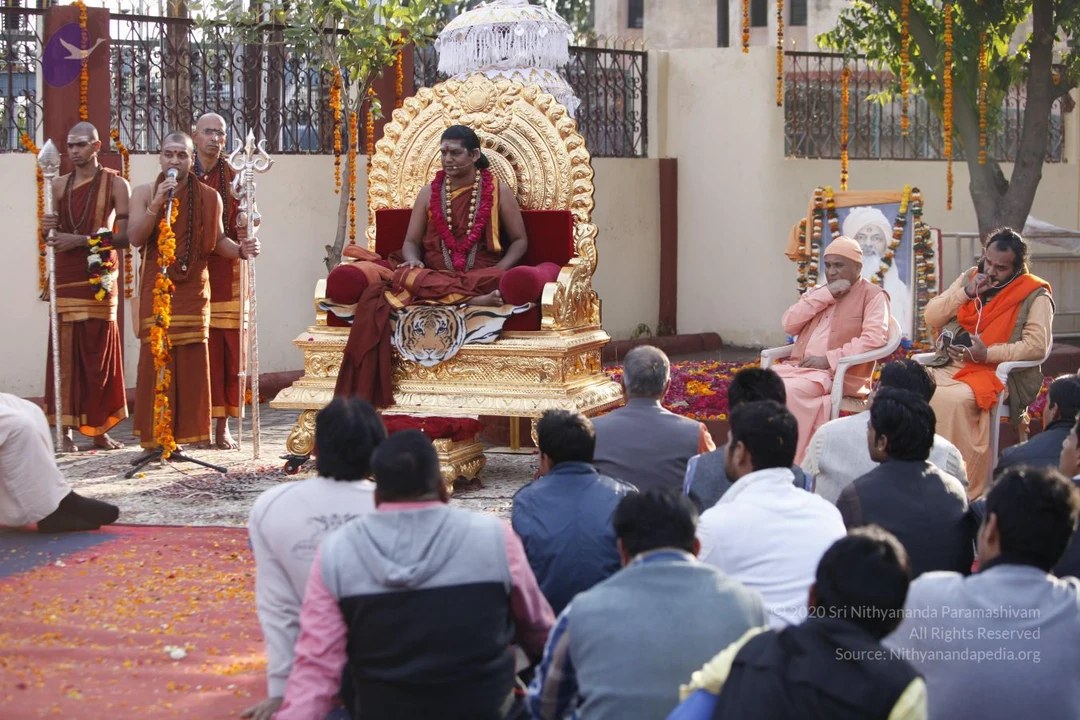
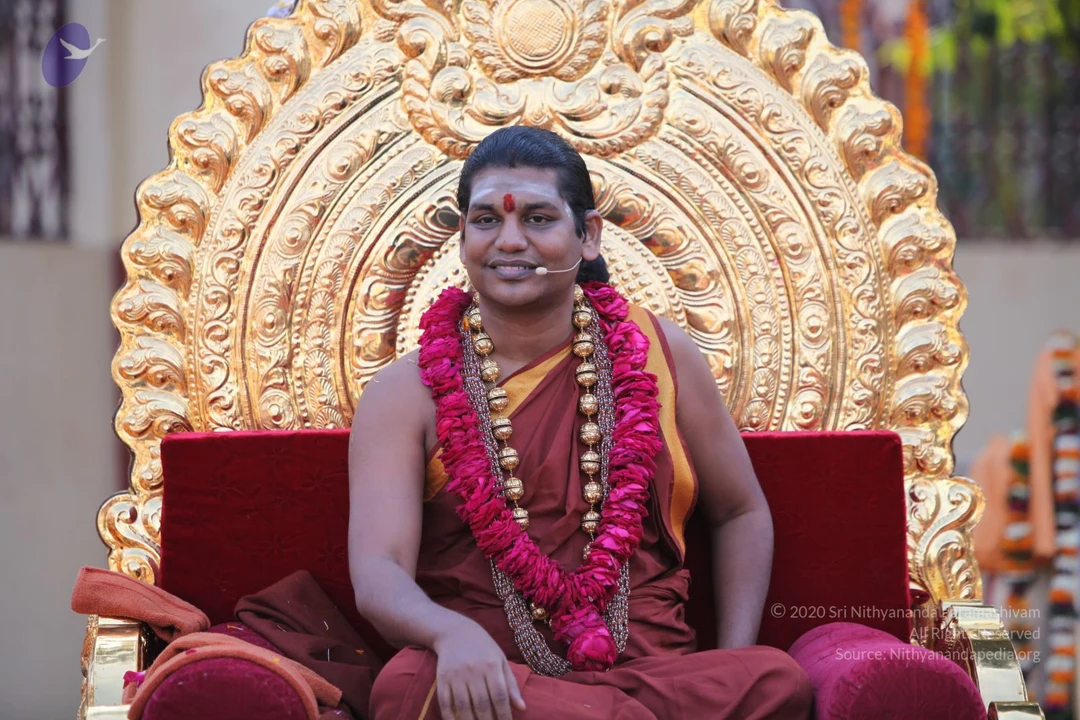
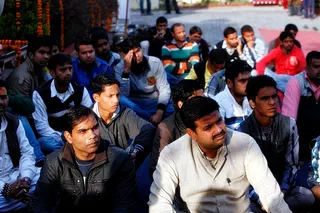
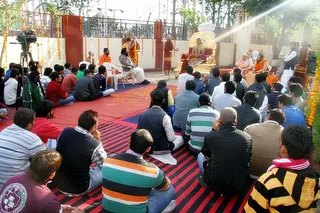
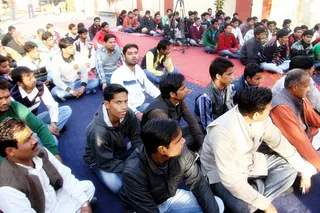
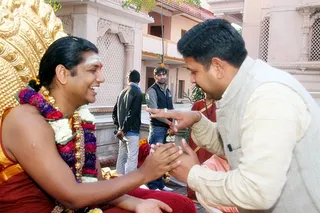
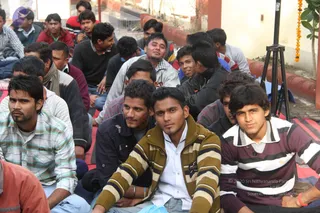
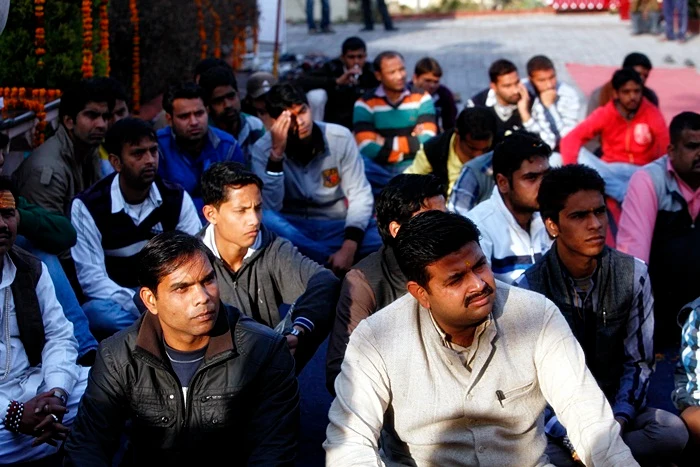
Photograph of a large outdoor satsang gathering, with many men seated closely on a paved ground in front of a marigold garland decorated area. In the foreground a man in the front centre wears a light cream-coloured jacket over a white shirt, and a man in front left wears a black padded jacket; both look forward attentively. Behind them rows of men wear jackets, sweaters and striped tops in blue, grey, red, green and white. A few men at the back hold a hand to their face or chin. No speaker or dais is clearly visible in this frame; the setting appears to be a devotee assembly listening to a discourse.Outdoor satsang on a red and black striped mat under a courtyard with orange marigold garlands strung along the walls. On a gold ornate throne at the back, a seated figure in saffron-orange robes with a crown-like headpiece and ornate gold necklaces sits beside a standing attendant in orange holding a long staff. Several seated devotees in front of a dense audience of men in casual clothes sit cross-legged on the mat, with a video camera on a tripod filming at the left edge. Around 40 people are visible, mostly seated men in shirts and jackets.A large outdoor satsang gathering of men seated on a blue mat over a red carpet, facing forward toward an unseen speaker. Many wear jackets, sweaters, jeans and collared shirts in grey, black, white, red and green. A man at left wears white kurta clothing and a vertical tilak mark on his forehead, and an older man at right wears an orange jacket. Microphone stands and a small cluster of cables stand at the back, with a dark wall and a red pillar behind. The seated attendees are the physical people in view, and the scene shows a devotee satsang setting.A photograph of an outdoor courtyard scene with ornate pale stone architecture and a golden carved throne at left. A man with long dark hair, a white tilak on his forehead, and a multicolour flower garland with white blossoms sits on the throne wearing an orange-and-red shawl; he smiles broadly with palms pressed together. Facing him, a man in a cream kurta and grey sleeveless vest leans forward, extending his hands in greeting. Behind them, a man in a dark jacket and another in a blue vest stand in the background, and a red-clad figure with a rudraksha mala is partly visible near the right edge, surrounded by marigold offerings. The seated man is a probable Swamiji by appearance cues including long swept-back hair, a ceremonial floral garland and a saffron-toned shawl, while the others are devotees and attendants. Total visible people: four to five.A seated man on an ornate gold throne with a red cushion and a tiger-skin footrest receives a garland. He wears a reddish-maroon dhoti-style garment and has multiple garlands of white, orange and yellow flowers around his neck. A man in a dark jacket and blue jeans stands at right, lifting a flower garland toward him. Behind them, several people in saffron and orange robes sit on white chairs in a courtyard with ornamental temple architecture, and a sannyasi in orange stands at the upper right. The throne and the figure on it carry a clearly distinctive presentation, but the seated man's face and features are too uncertain to confirm identity, so he is described by role only.Outdoor photo of a pale pink temple with a stepped shikhara and an arched entrance, its facade bearing a yellow-and-red banner in Devanagari script. On the left, a seated figure in a red-and-orange robe wears a red floral garland and has long dark hair swept back; a golden ornate throne or seat frames the left edge. Beside the steps, a man in a dark blue vest over white shirt stands near a black speaker, and a monk in orange robes stands on the steps. Several other people in light and dark clothing stand around the temple grounds, and a man in a dark jacket stands at the right edge.

Kalabhairava Darshan

7 photosSource gallery
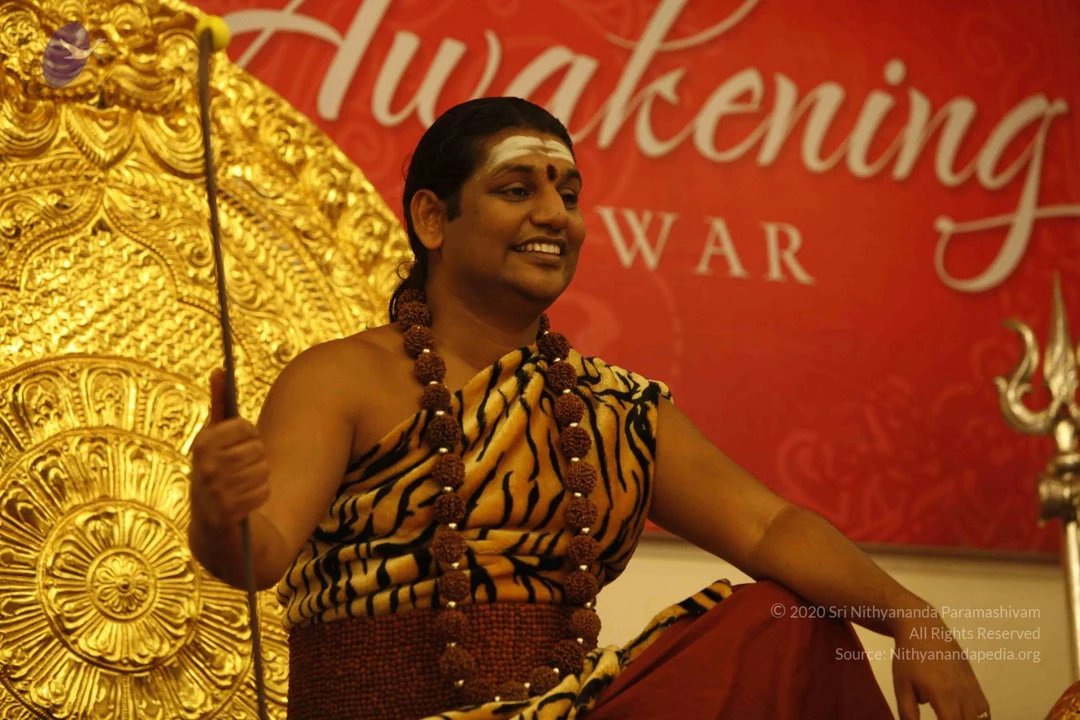
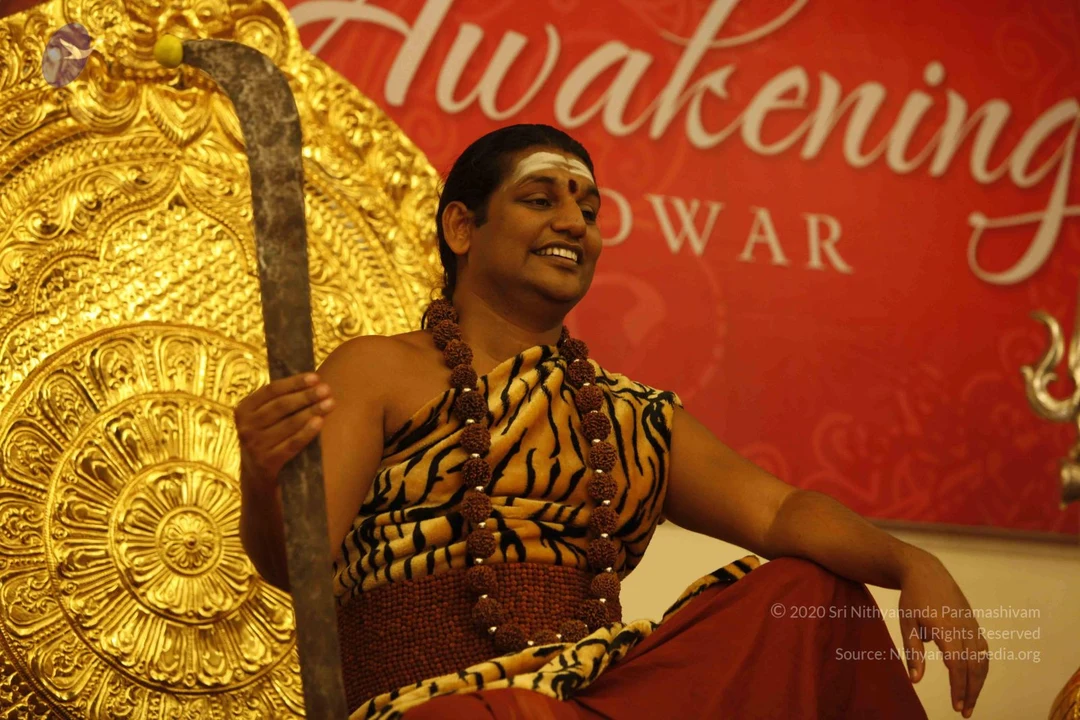
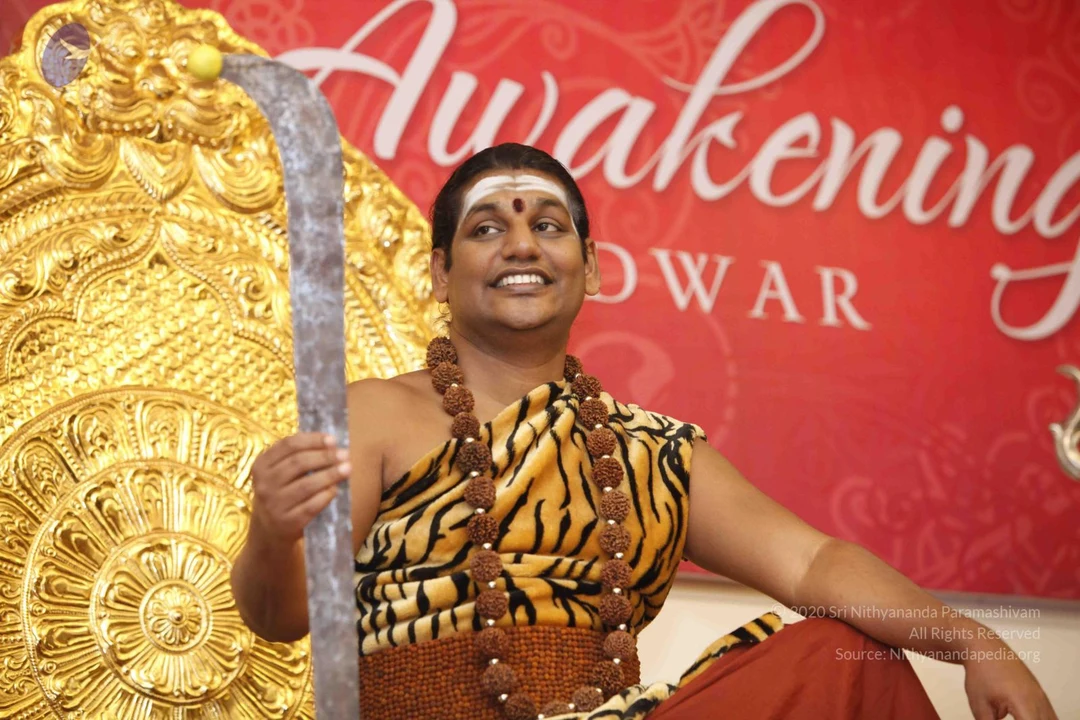
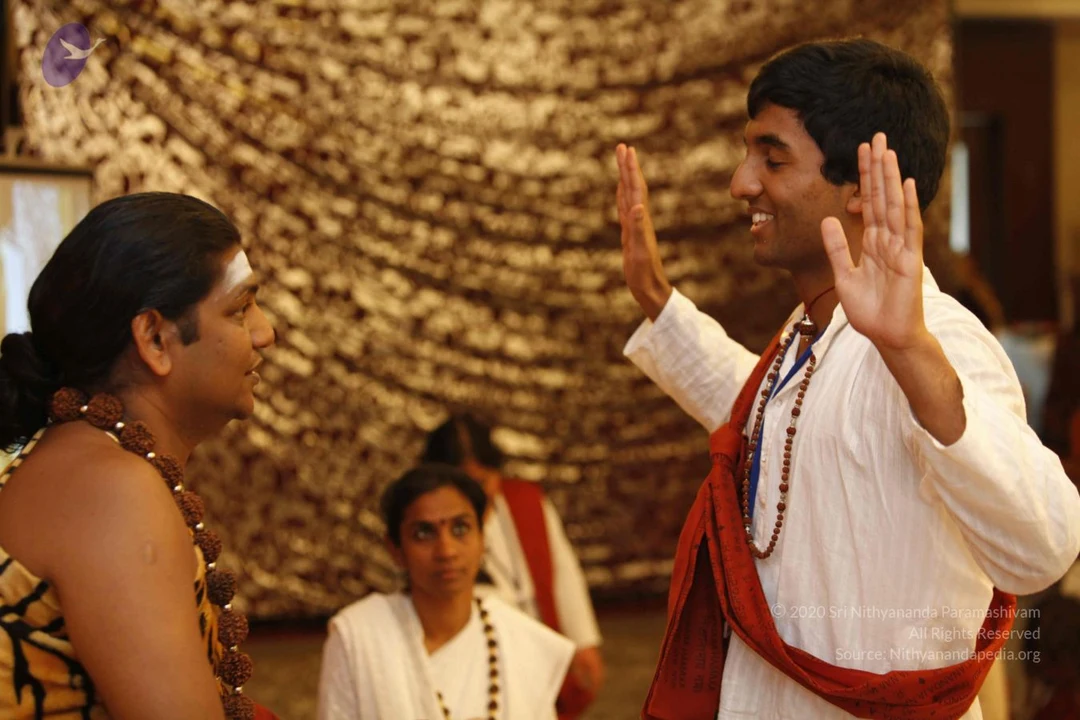
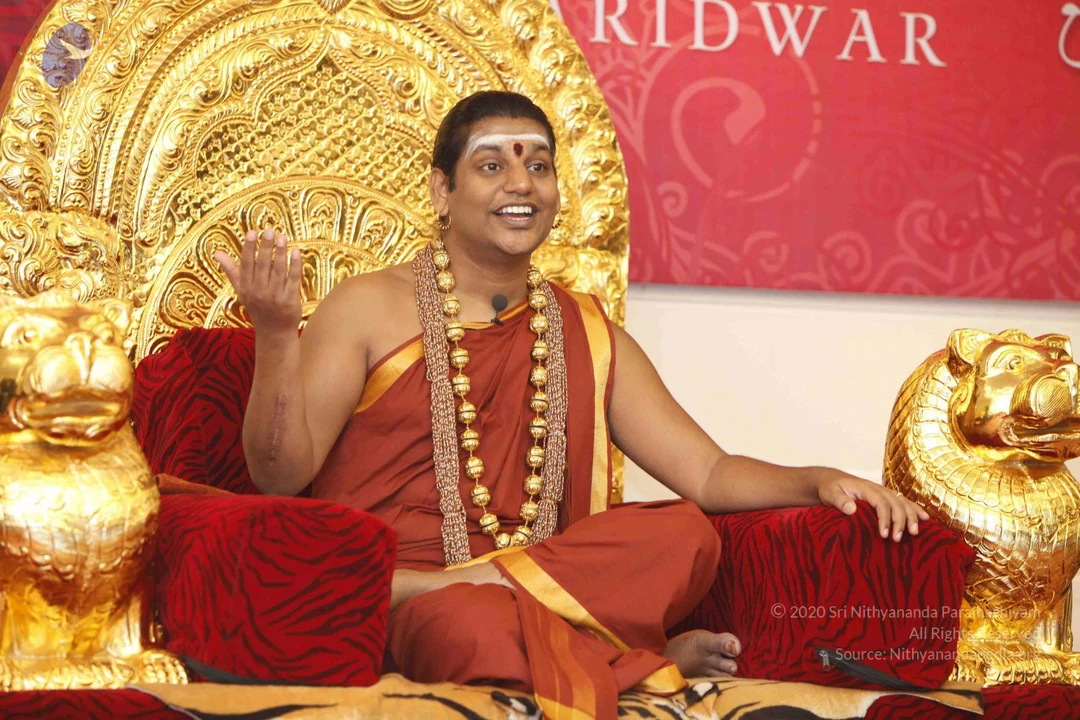
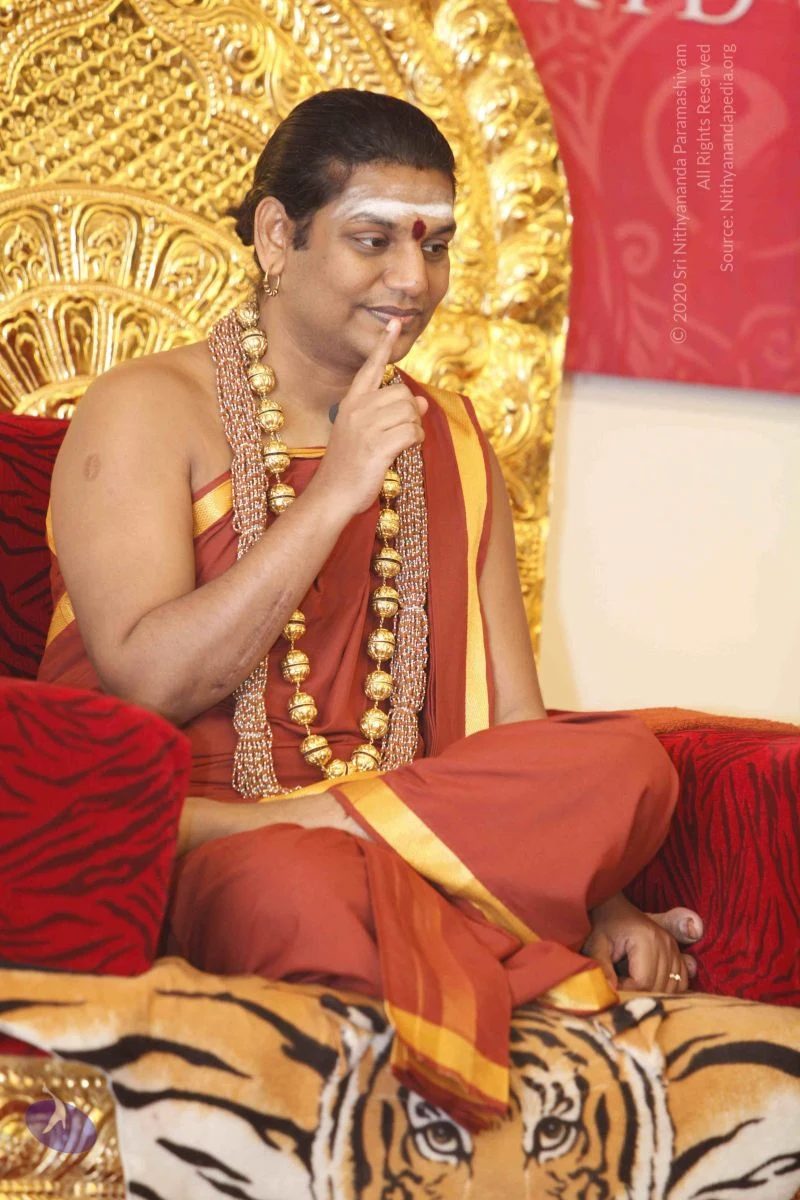
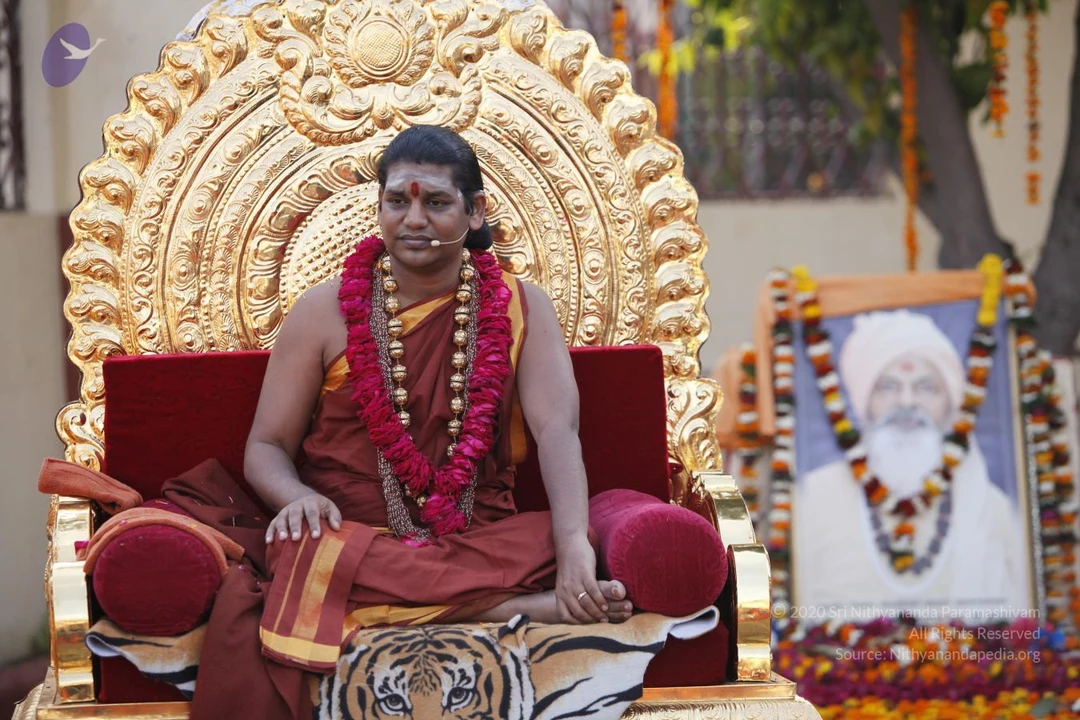
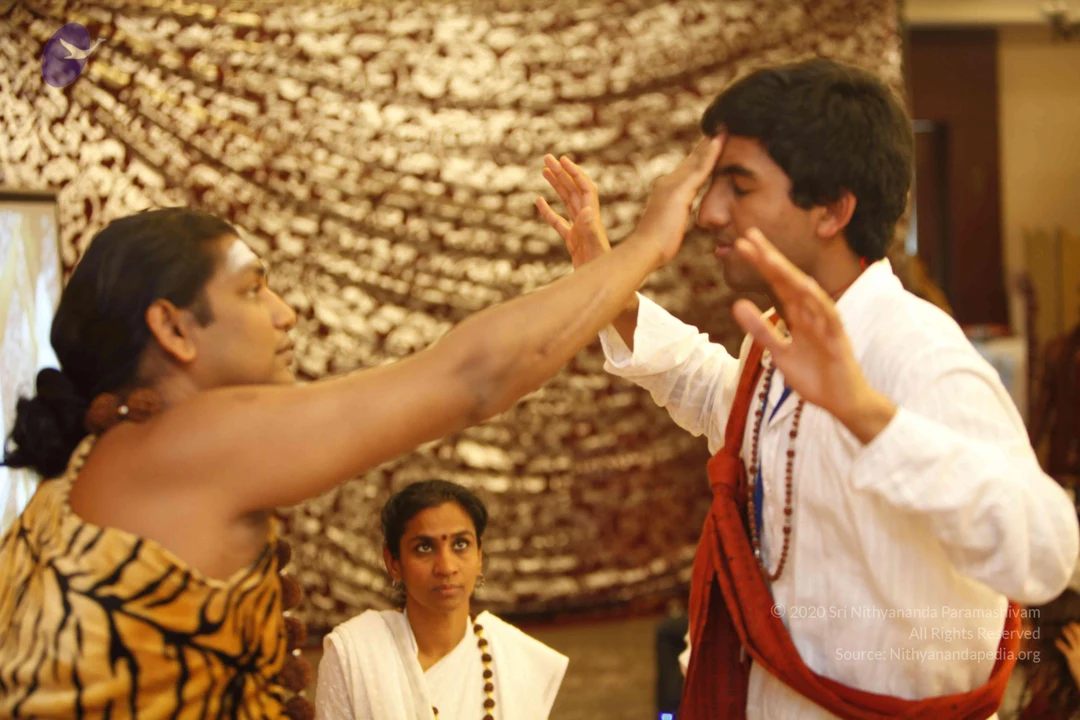
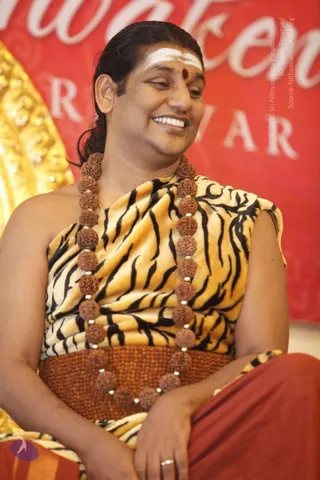
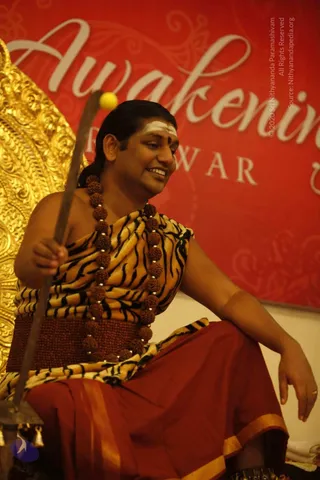
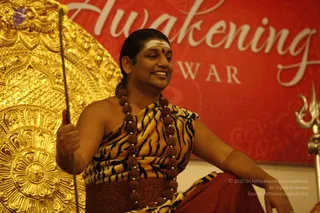
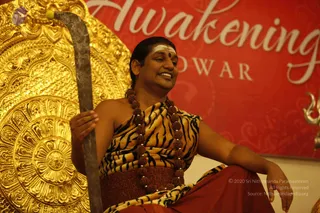
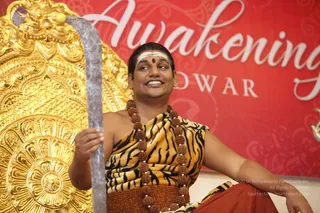
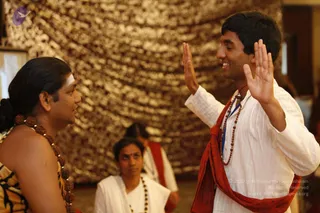
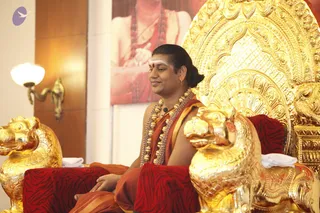
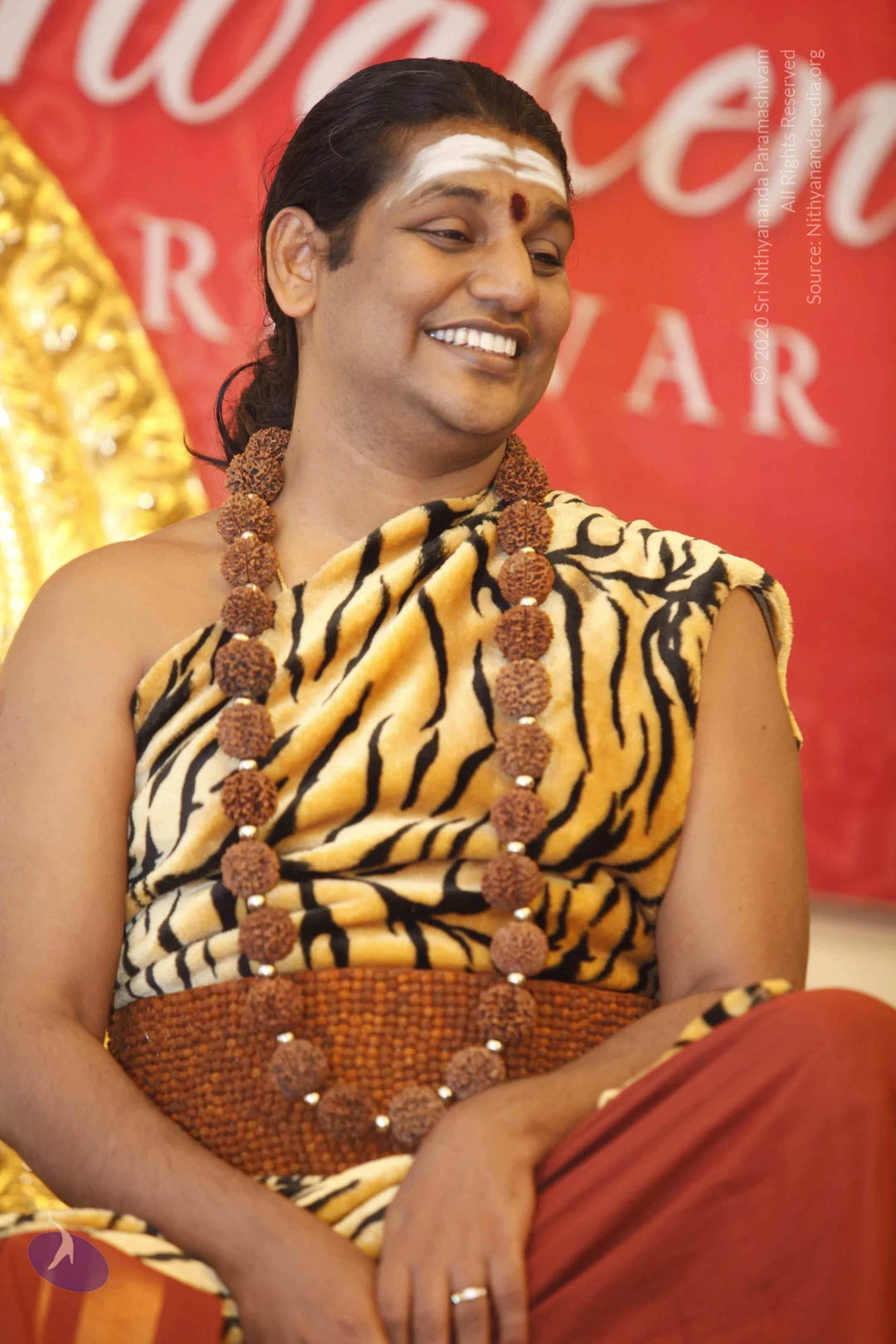
A smiling man sits on a golden throne-like seat in front of a red banner with large white lettering, partly legible. He wears a tiger-striped golden-yellow and black shawl over his bare shoulder, a long rudraksha mala with silver spacers across his chest and waist, and a rust-red dhoti. He has a white tripundra mark and a red dot on his forehead, with dark hair tied back. Appearance-based, a person is seated in the satsang setting, described with his role as the seated speaker. One person is visible.A seated man on a gold ornate throne in front of a red banner reading "Awakening" in white script. He wears a tiger-striped orange and black shawl over a bare shoulder, a red-brown rudraksha mala and a rudraksha belt, and a red dhoti with gold border. A white and red tilak marks his forehead, and he holds a tall staff topped with a yellow ball in his right hand while smiling.A man seated on a gilded golden throne with ornate floral relief, holding a long slender staff. He wears a tiger-striped orange and black garment draped over one shoulder, a thick multi-strand rudraksha mala with large brown beads, a red waist cloth, a white vertical tilak and red kumkum dot on his forehead. A trident is visible on the right edge. Behind him a red banner reads Awakening.A seated man in a tiger-striped saffron-and-black wrap with a dark red lower cloth sits on an ornate gold throne-back, holding a dark wooden ceremonial staff in his left hand. He wears a long rudraksha mala over the shoulder and across the chest, a white vibhuti horizontal mark with a red dot on the forehead, and smiles while looking to his left. Behind him a red banner bears large white script reading Awakening and partial word Swawar, with a silver trident at the right edge.A photograph of a smiling man seated on an ornate gold throne with carved floral and lion-head motifs, gripping a tall grey staff with a yellow ball finial. He has a white vibhuti horizontal band and red kumkum dot on his forehead, a long rudraksha mala, and a bare-shouldered tiger-striped saffron and black wrap over reddish-brown cloth. Behind him is a red backdrop with a floral pattern and large white script lettering. a person: the seated man in the golden throne scene wears rudraksha malas and a tiger-striped wrap, matching the cues for a person, shown in person at a satsang.A photograph of a satsang setting with a gold-sequined textured backdrop. On the left, a man with long swept-back hair, a white tilak on his forehead, a bare chest and a tiger-striped yellow wrap, wears a long strand of rudraksha beads. Facing him on the right, a smiling young man in a white kurta with a red shawl and rudraksha mala raises both palms toward him in a playful high-five gesture. Behind them, two people in white and red sit, one a woman with a red bindi.

Nithya Satsang
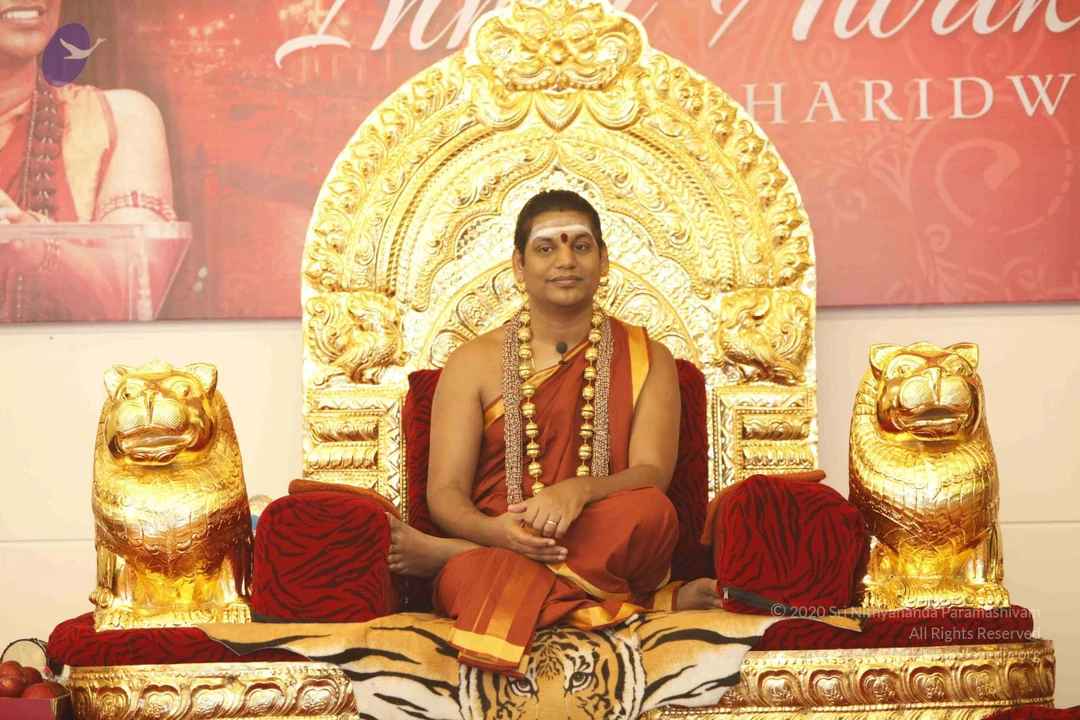
37 photosSource gallery
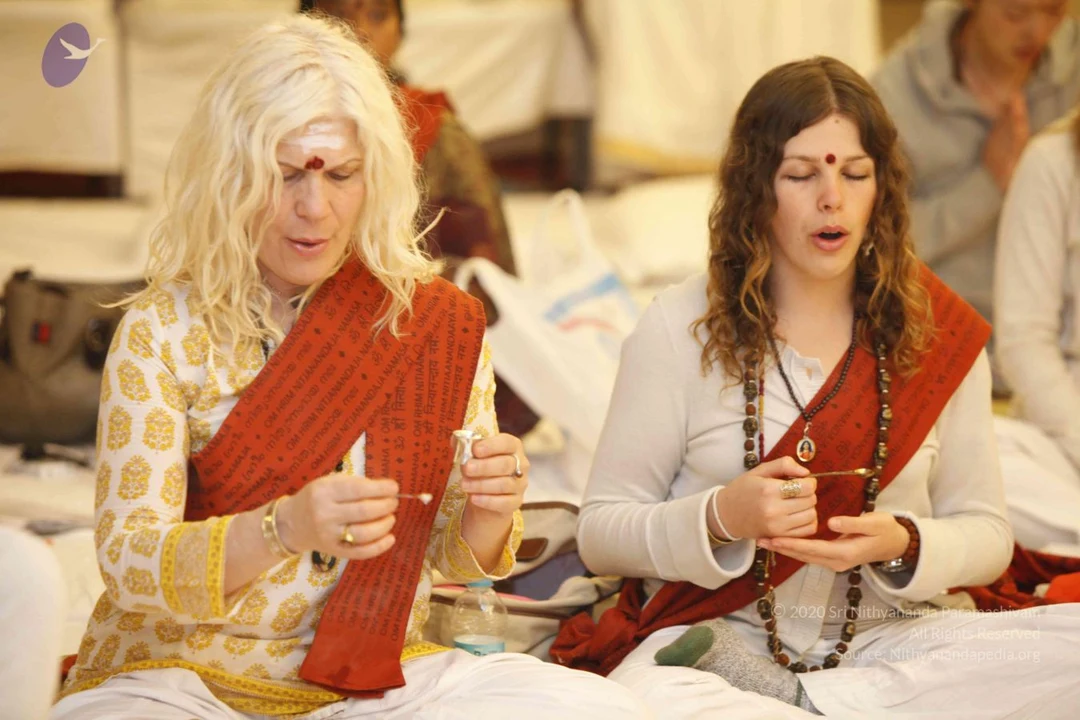
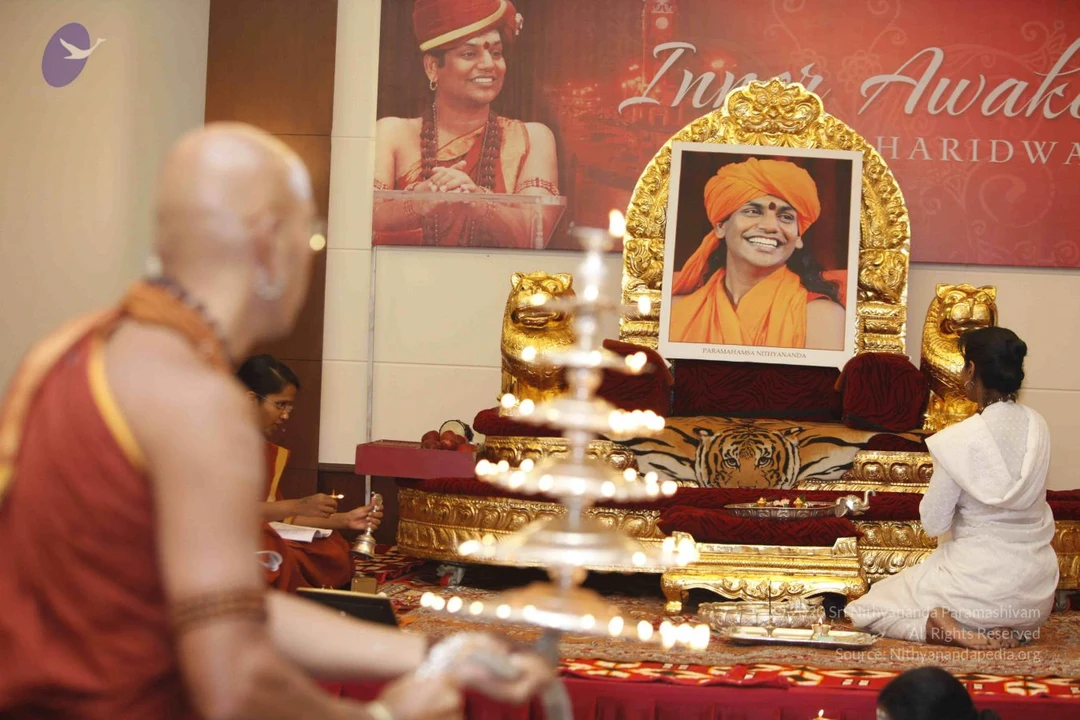
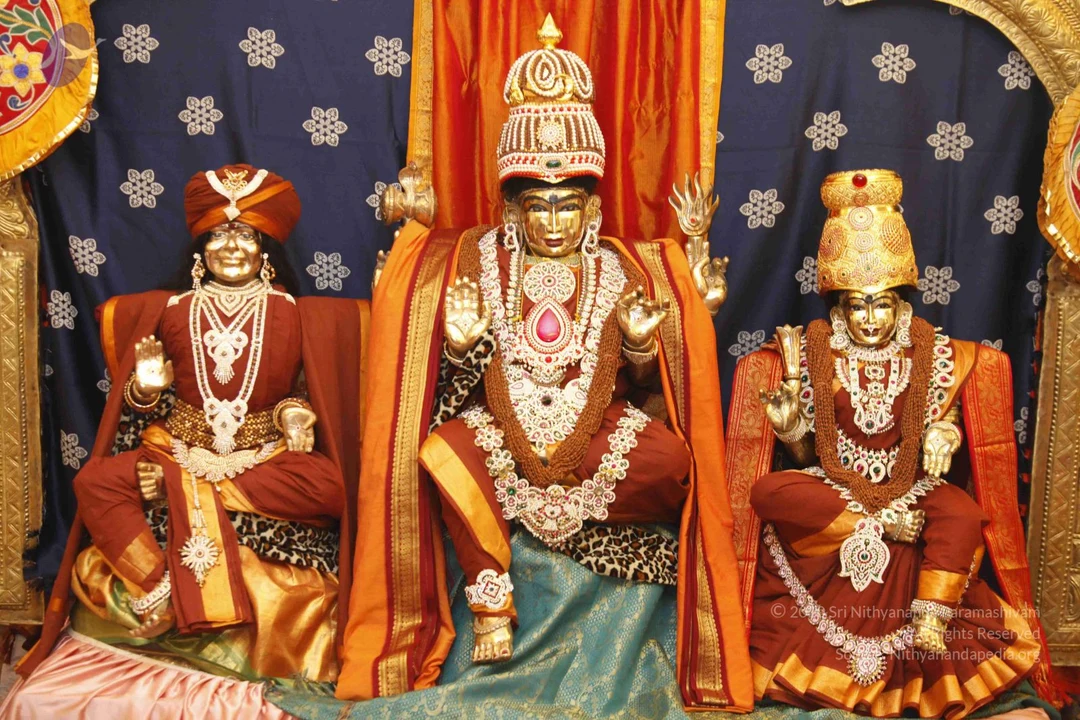
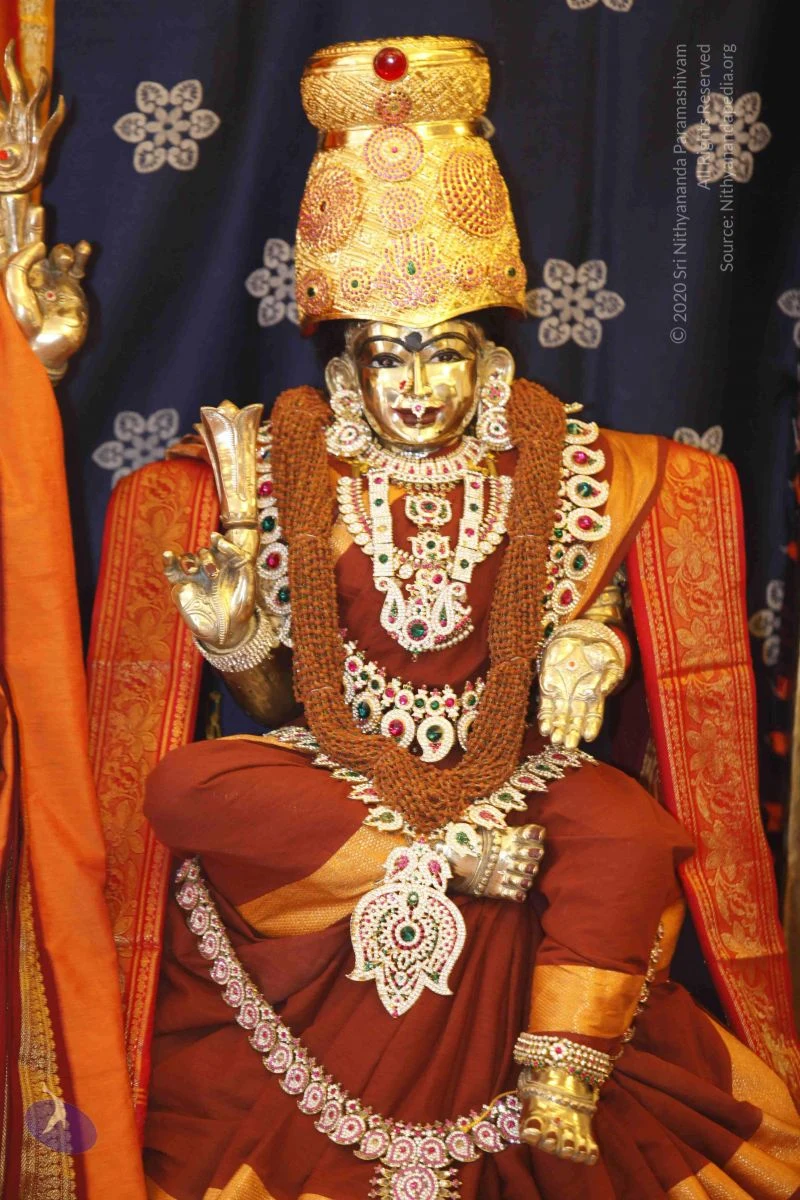
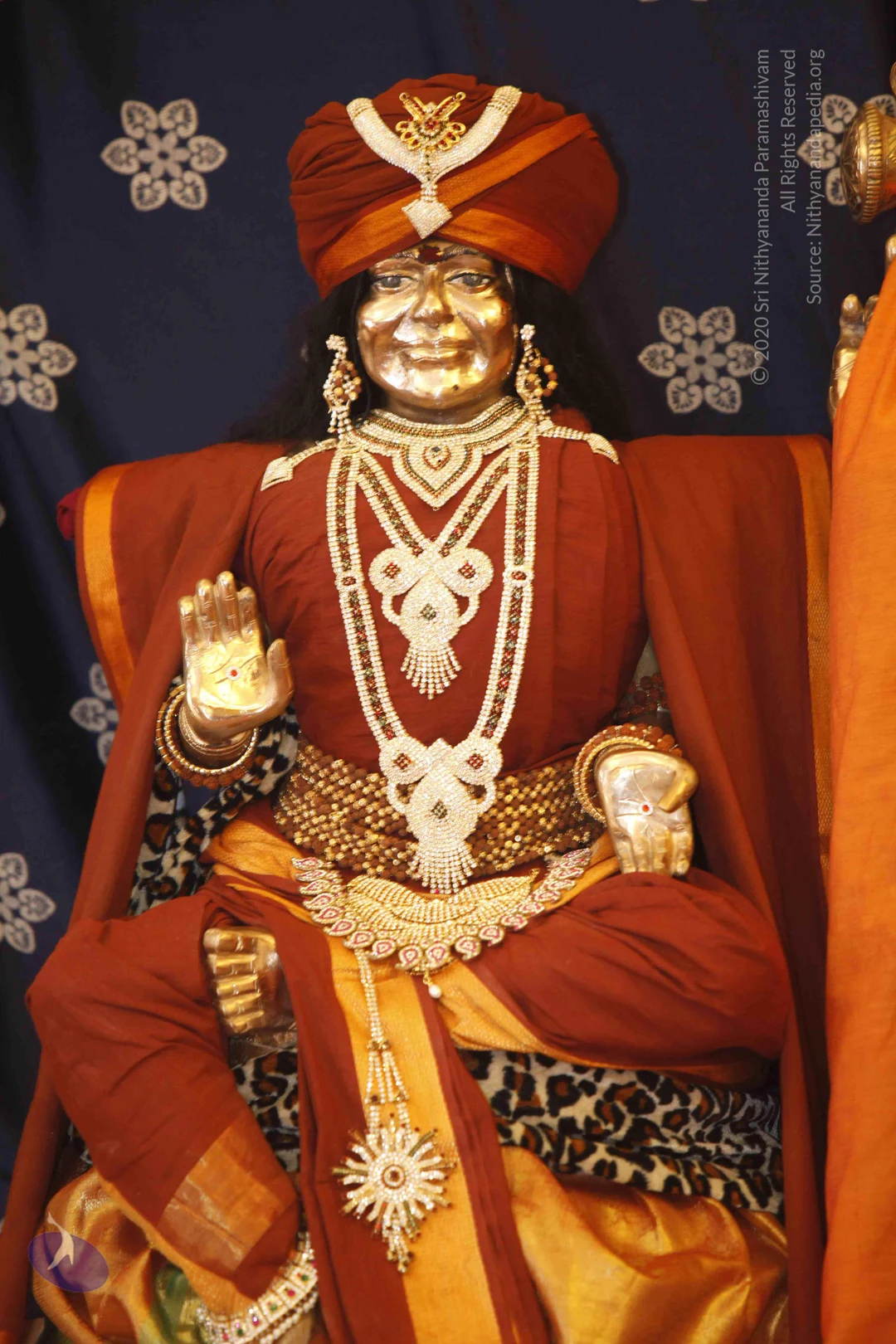
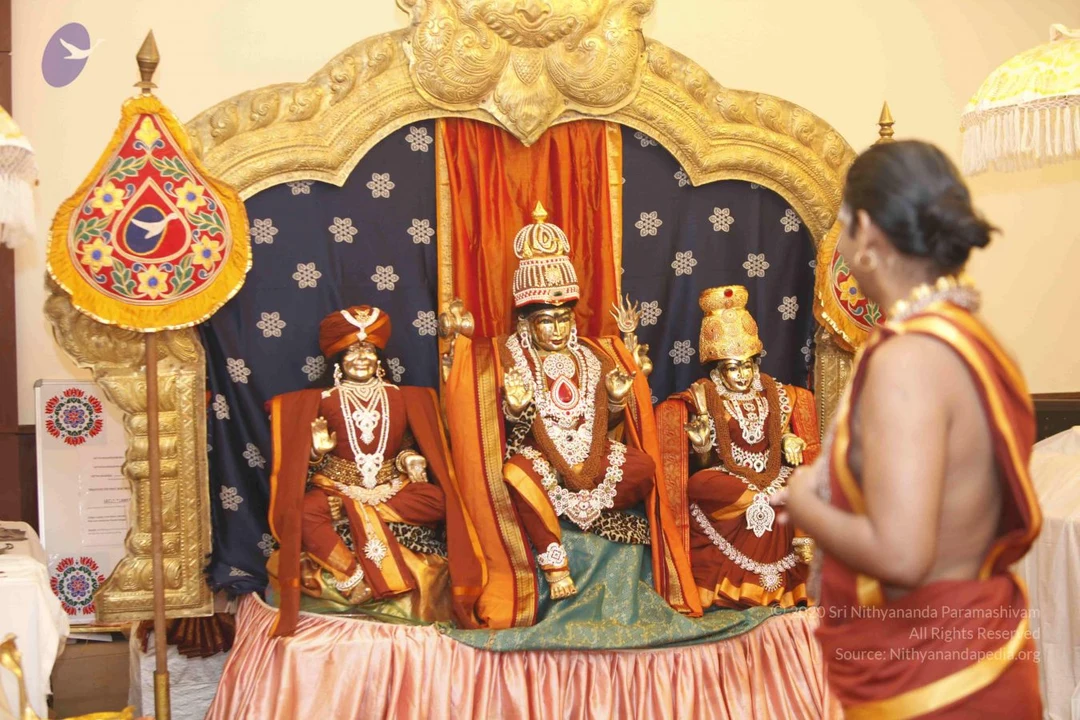
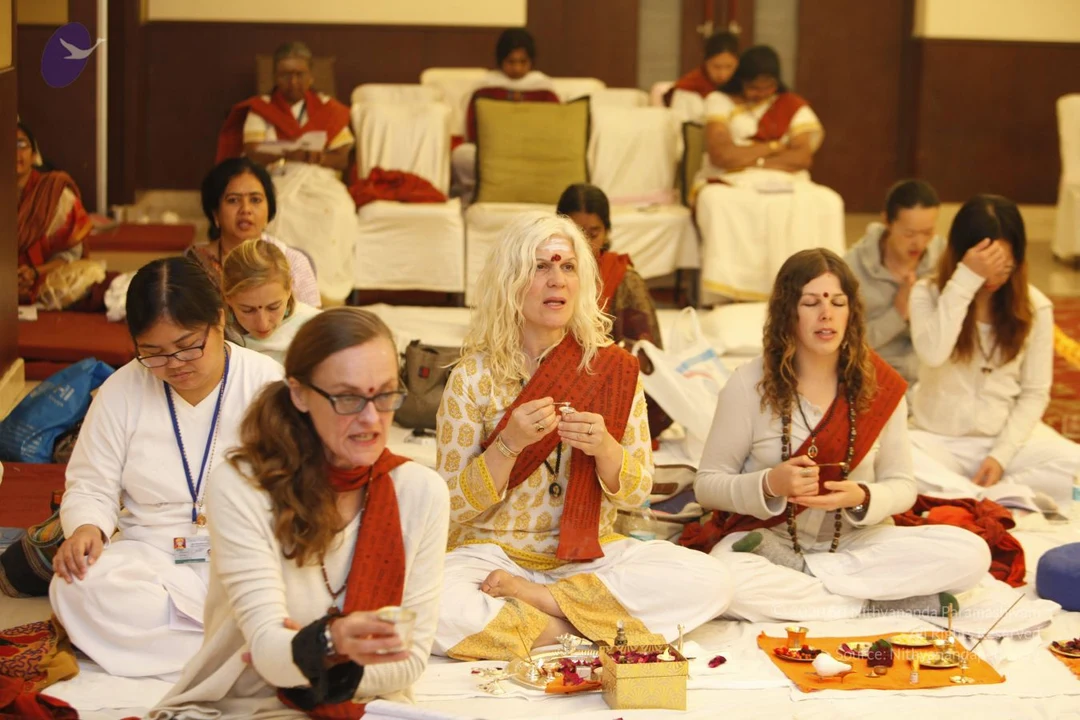
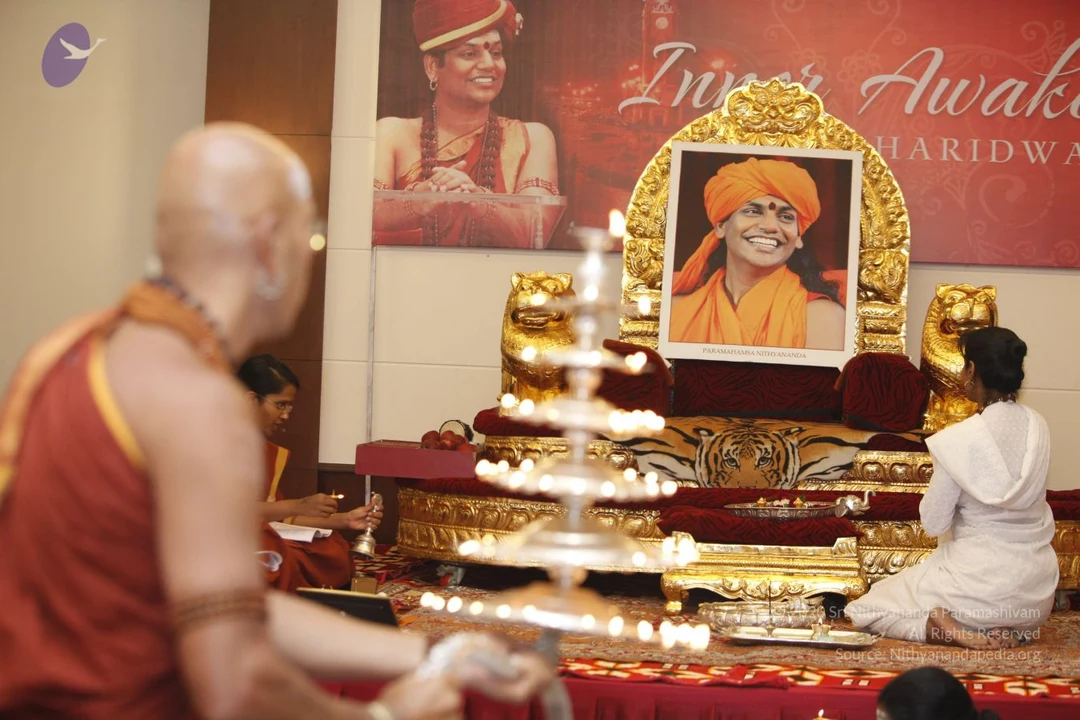
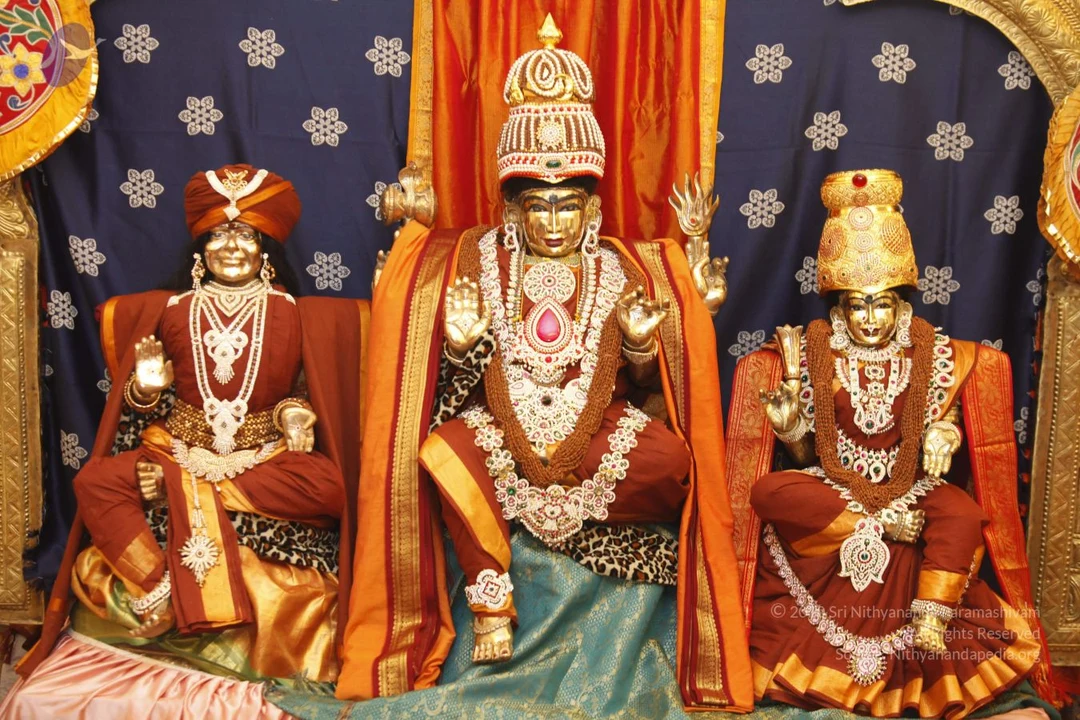
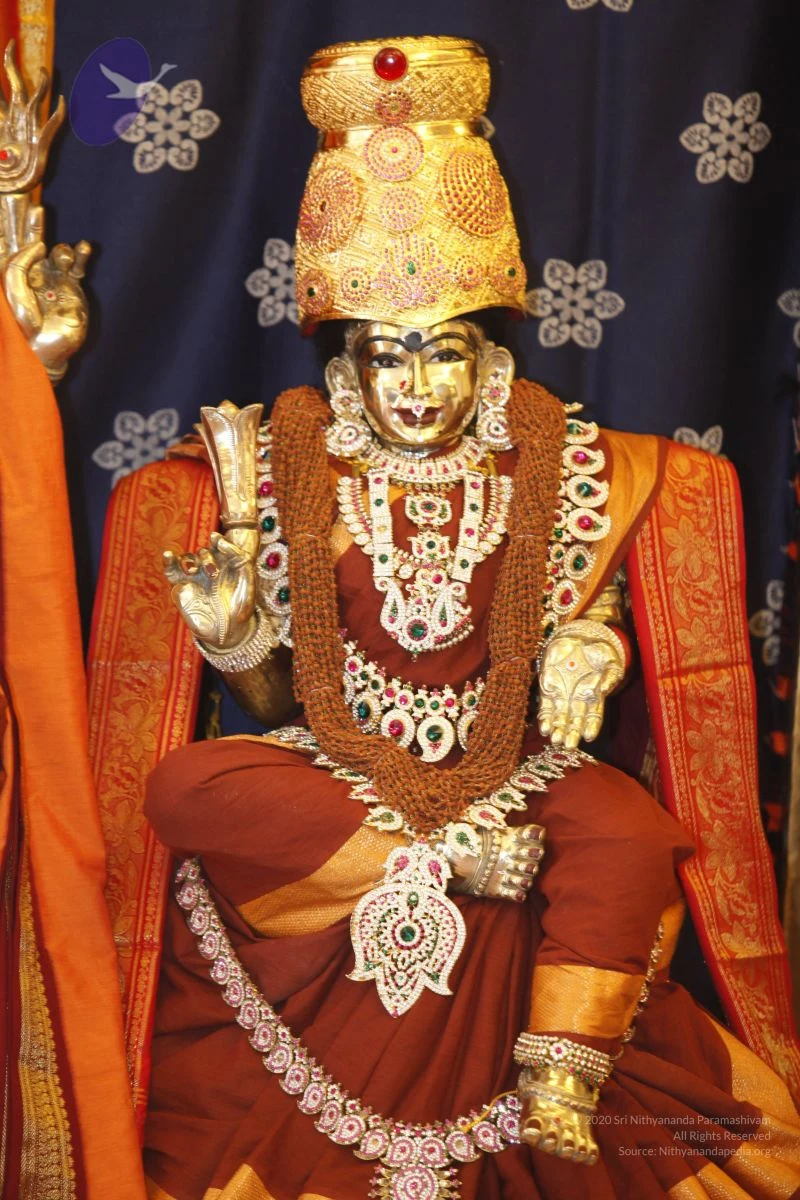
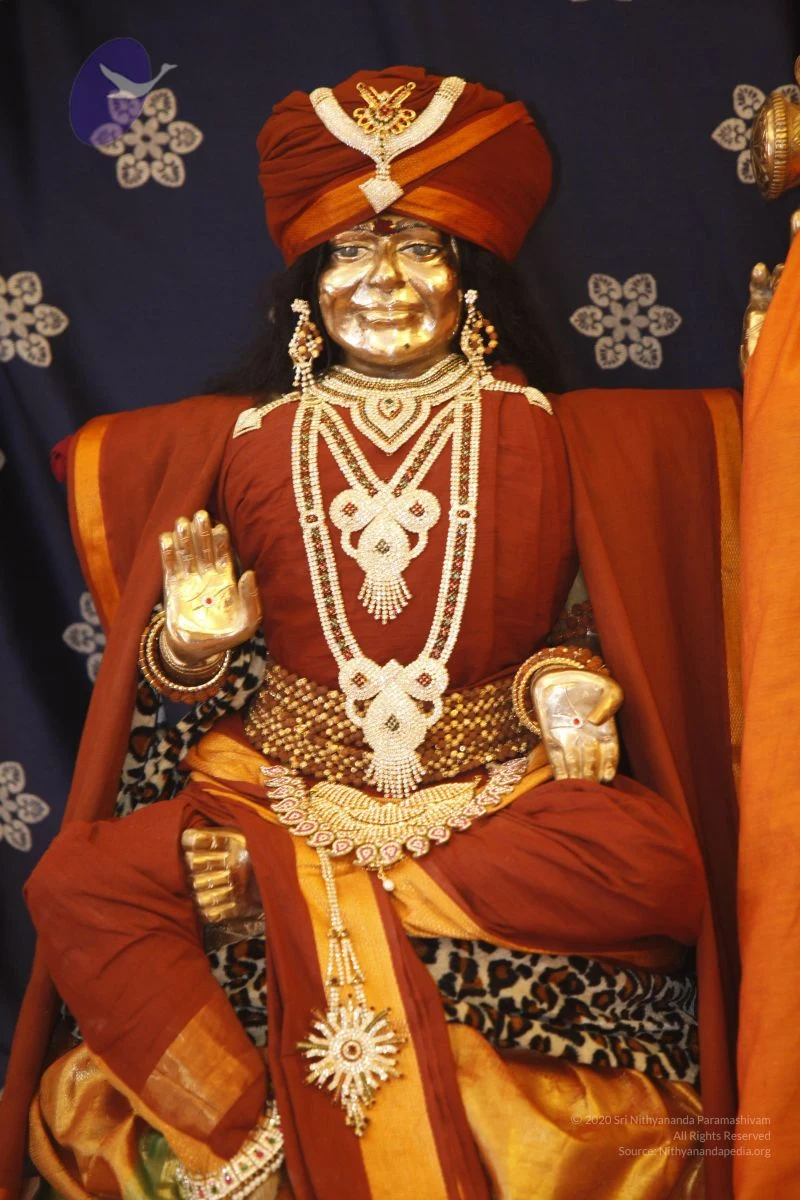
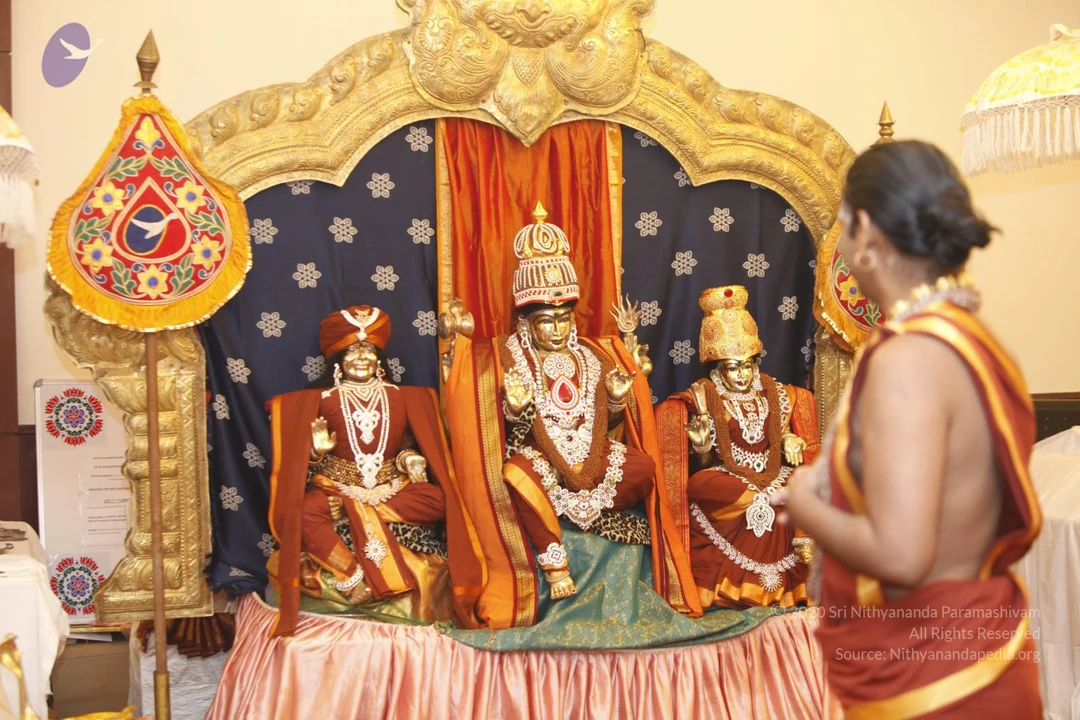
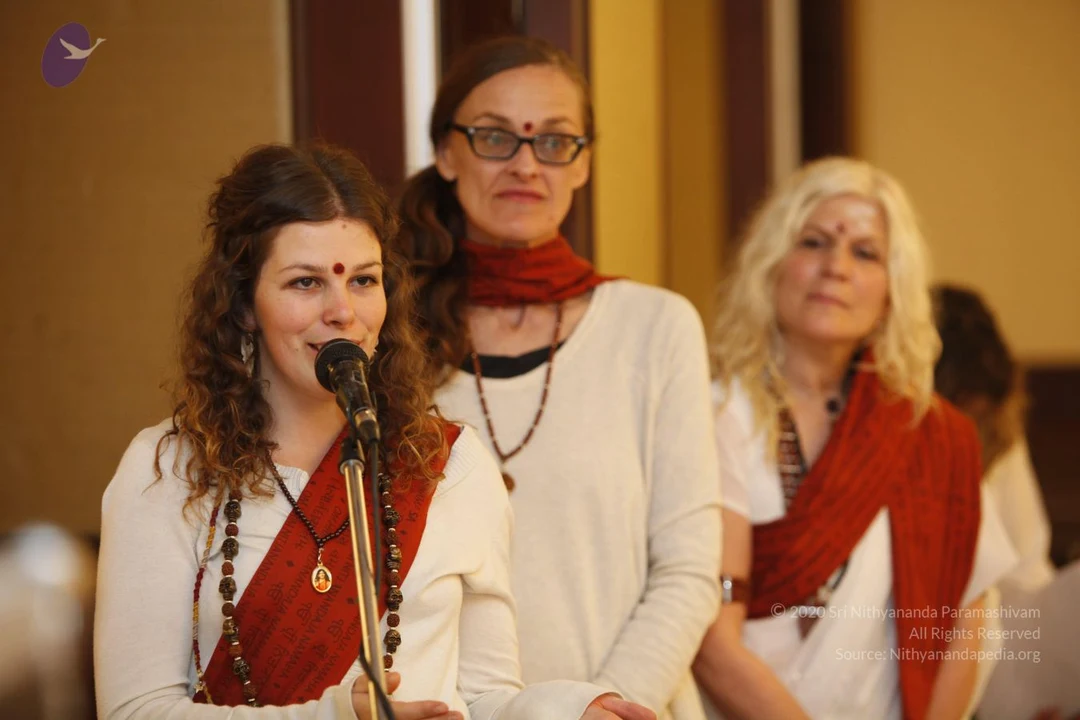
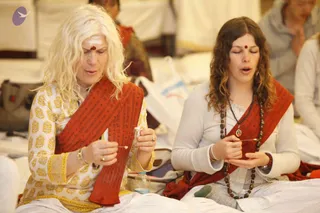
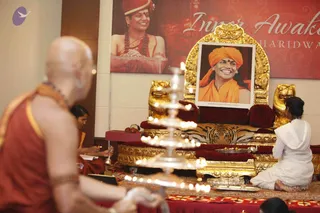
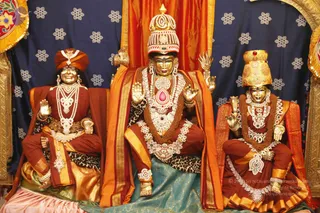
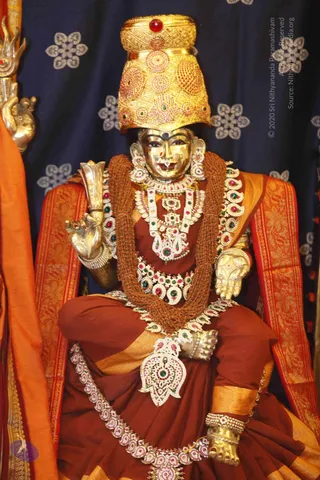
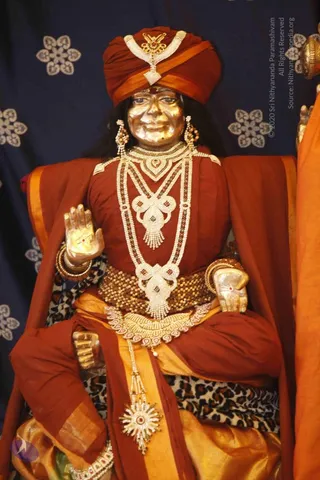
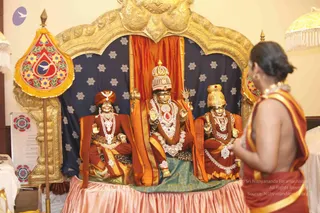
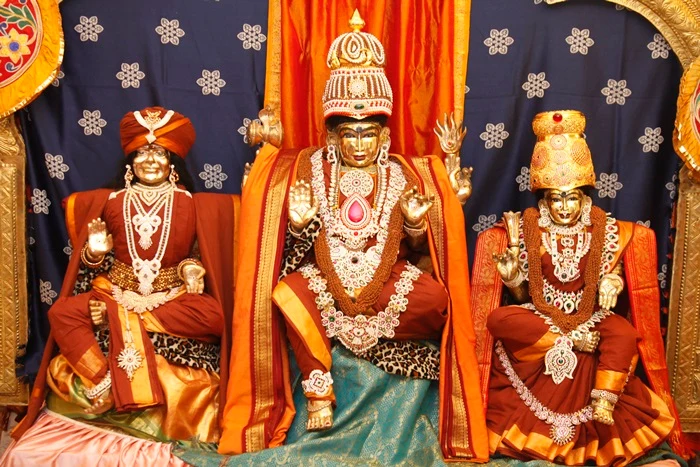
Photograph of two people seated on the floor in a tent-like hall during a group satsang. The person on the left has long, swept-back white-blond hair, a red bindi and a white vibhuti line on the forehead, and wears a yellow-patterned white kurta with a red shawl printed in script. The person on the right has long curly brown hair, a red dot on the forehead, a white top, rudraksha beads and a red shawl, and holds a small brass object. Both have eyes closed and appear to be chanting. Other seated devotees are visible behind them. a person cues: the left figure's long swept hair and ornate yellow-patterned clothing with red printed shawl.A photograph of a puja at an event with a banner reading Inner Awakening and HARIDWAR behind a golden throne. On the throne is a framed portrait labelled PARAMAHAMSA NITHYANANDA, showing a smiling figure in an orange turban and orange robe. A tiger-skin cushion and gold lion-head armrests frame the throne. A shaven-headed priest in orange-red robes sits in the left foreground, facing a multi-tiered silver aarti lamp with many lit oil lamps. A woman in white sits to the right of the throne, and another woman in orange-red sits near the left back. Red and gold cloth covers the floor, with brass offering plates on the low table.Three golden figures seated together on a dark navy backdrop with white star-flower motifs and orange drapery. The central figure sits on a throne with a tall ornate gold-and-white crown, multiple beaded necklaces, a red gem pendant and an orange-red shawl over a rust-brown garment, one hand raised in a blessing gesture. Flanking figures wear rust-red and orange garments with heavy white and gold jewellery; the left wears a red-orange turban, the right a tall gold crown with red stone. These appear to be statues or murtis rather than living people, shown in an ornate shrine-style display.A gilded deity murti seated on an orange-and-red brocade throne against a dark navy backdrop with white floral motifs. The figure wears a tall golden crown set with a red stone, a brown rudraksha-style mala, layered gold and jewelled necklaces with green and red stones, bangles, and a deep red-brown sari with gold border. One hand is raised in a blessing gesture. Orange cloth hangs at the left edge and a gold hand-shaped object appears at the top left. No physical people are visible.A seated golden statue of a figure in a rust-red turban with a jewelled ornament at the front, wearing layered pearl and gemstone necklaces, a beaded waist belt, bangles and a rust-red and gold garment with a gold border. The statue's right hand is raised in blessing and its left rests on the lap, set against a dark navy backdrop with white floral motifs and a leopard-print cushion.A woman with her hair tied back, wearing a red and gold sari, stands at the right edge in front of an altar. Before her is a golden arched canopy framing a dark blue backdrop with white floral motifs. Three life-sized golden statues sit on a pink draped platform: a central figure in a gold crown and red cloth with a trident-like staff, flanked by two seated figures in red turbans and ornate white garlands. A decorative saffron and yellow canopy hangs at left and a yellow fringed umbrella at upper right. A small printed poster with a red floral circular emblem stands to the left.

Sri Yantra Mandir

82 photosSource gallery
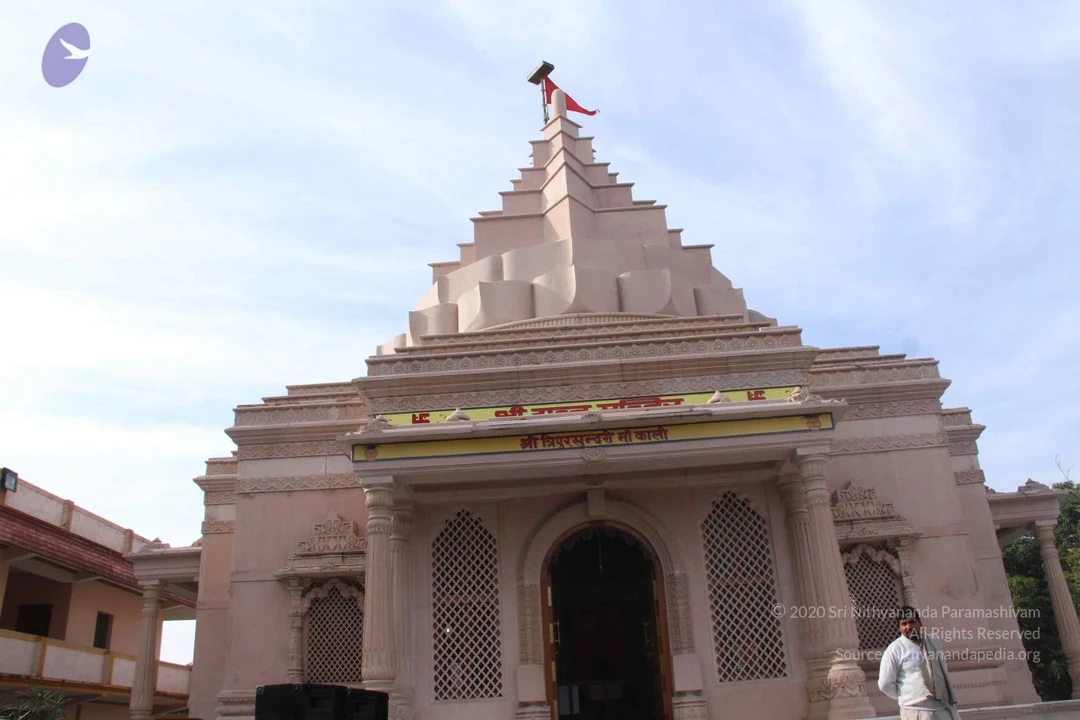
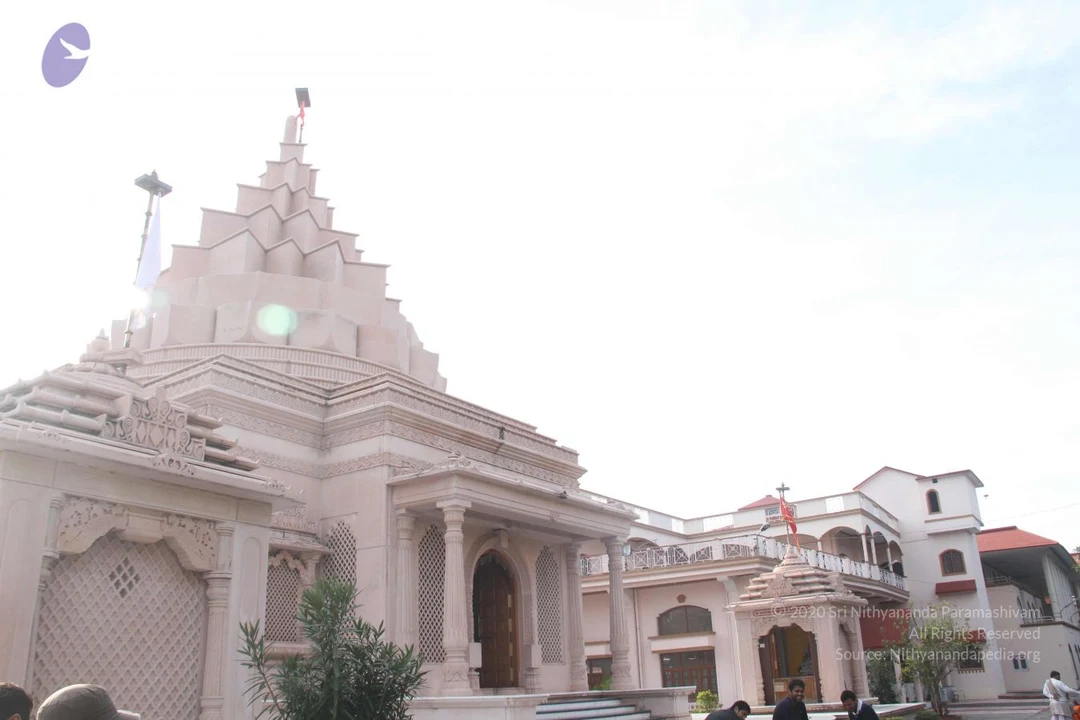
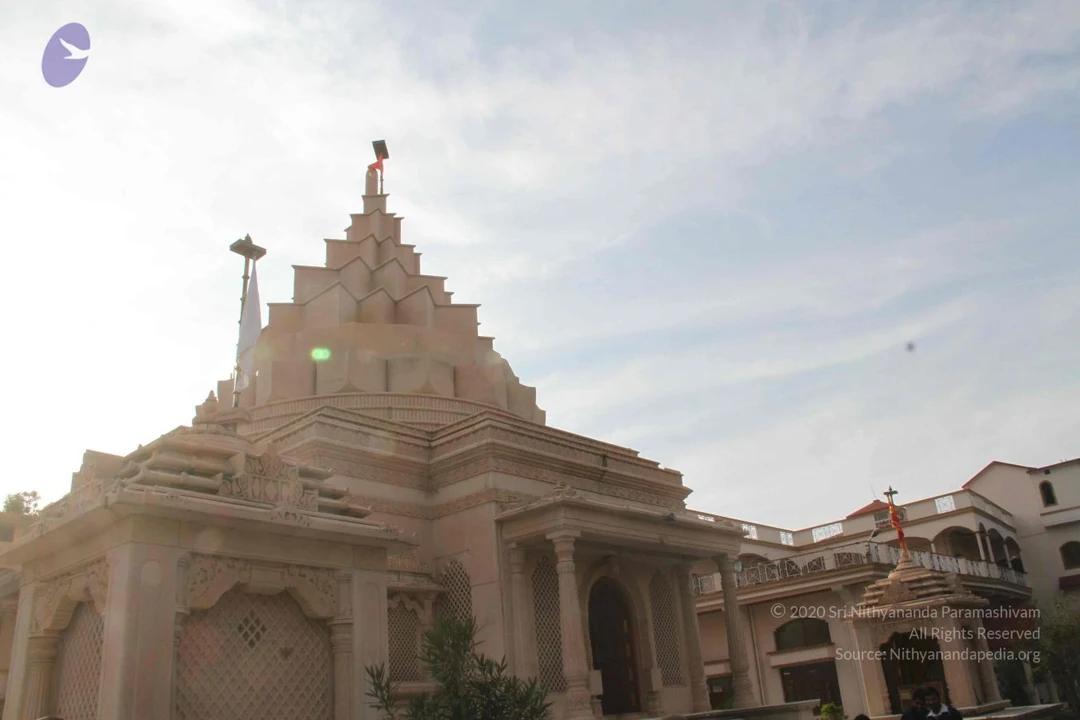
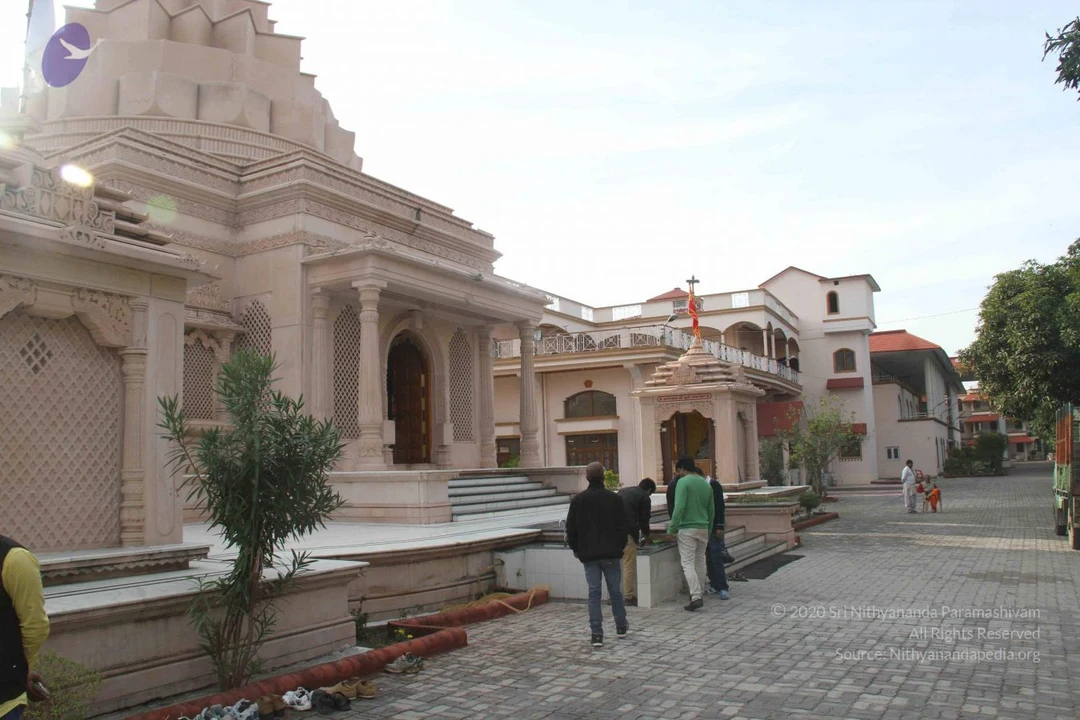
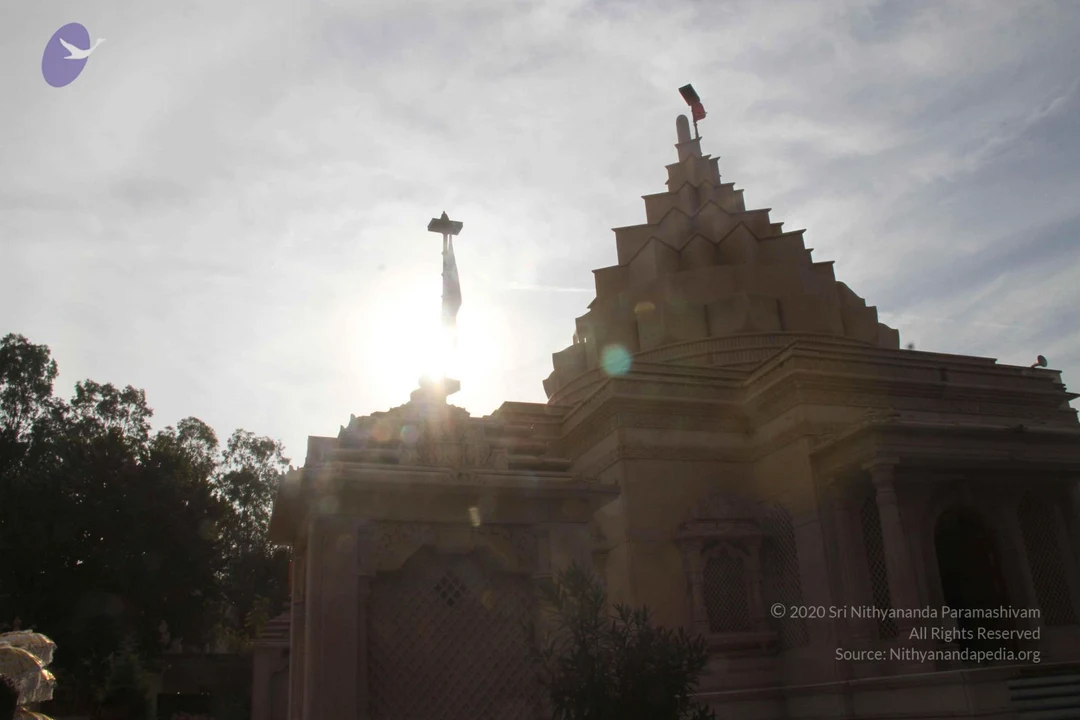
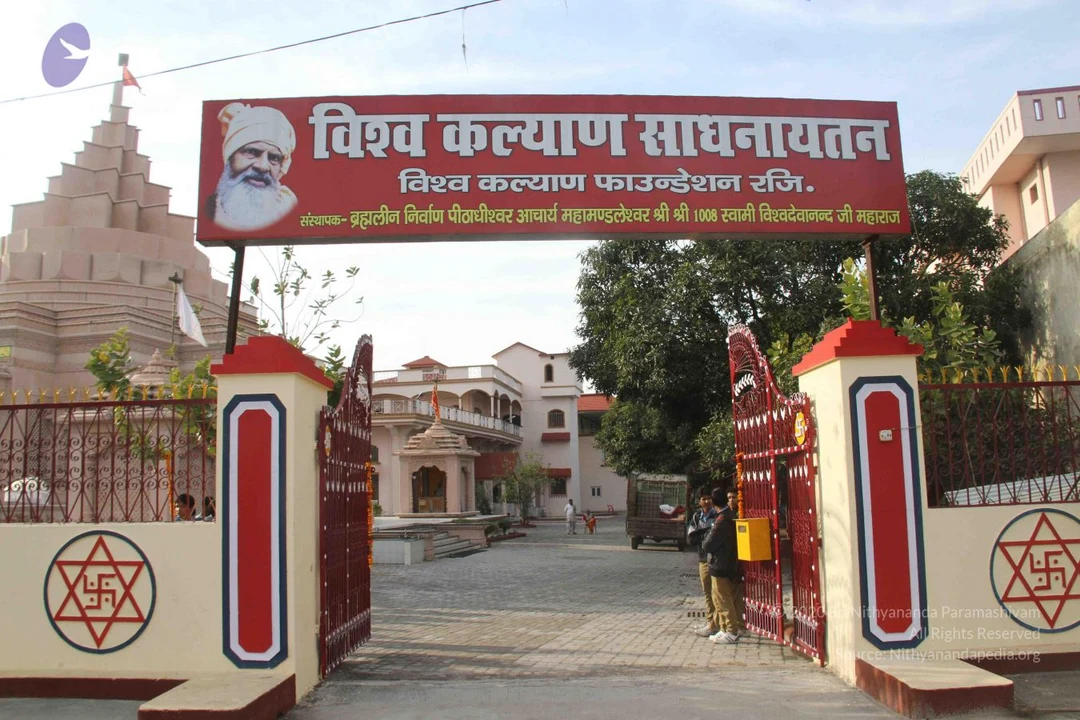
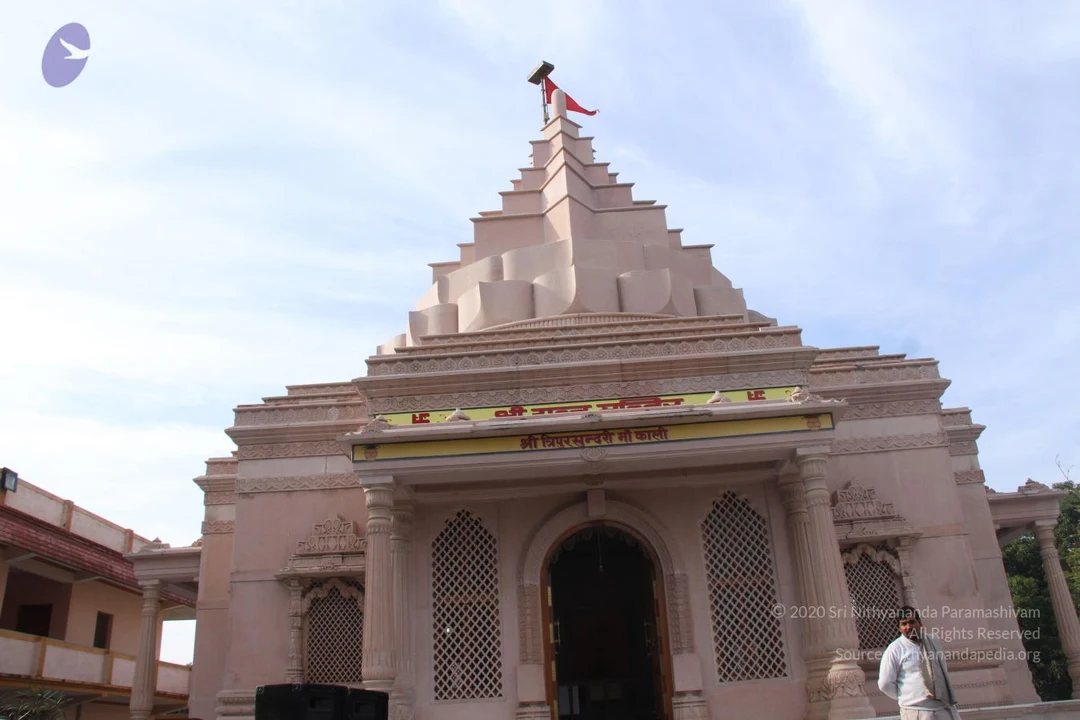
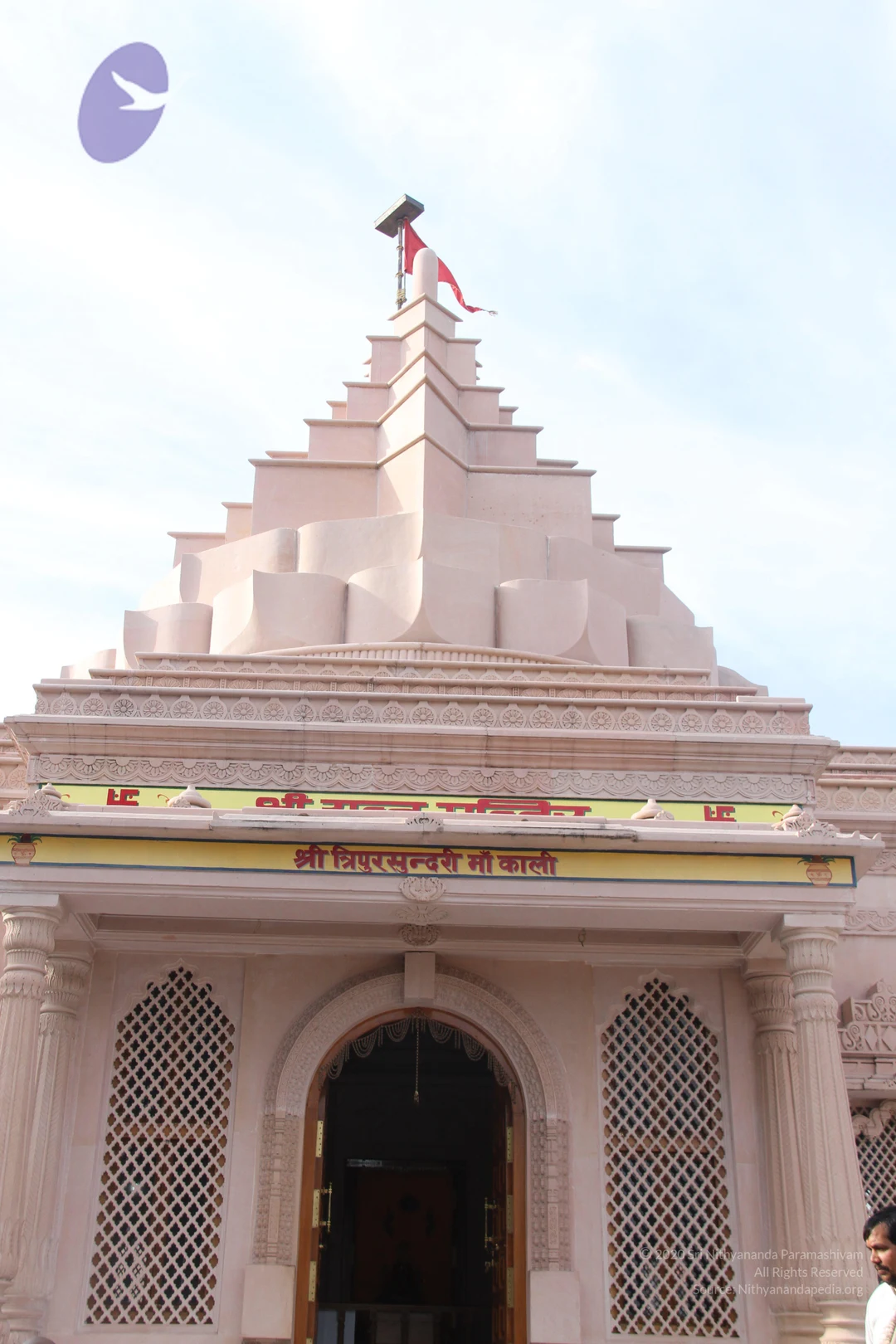
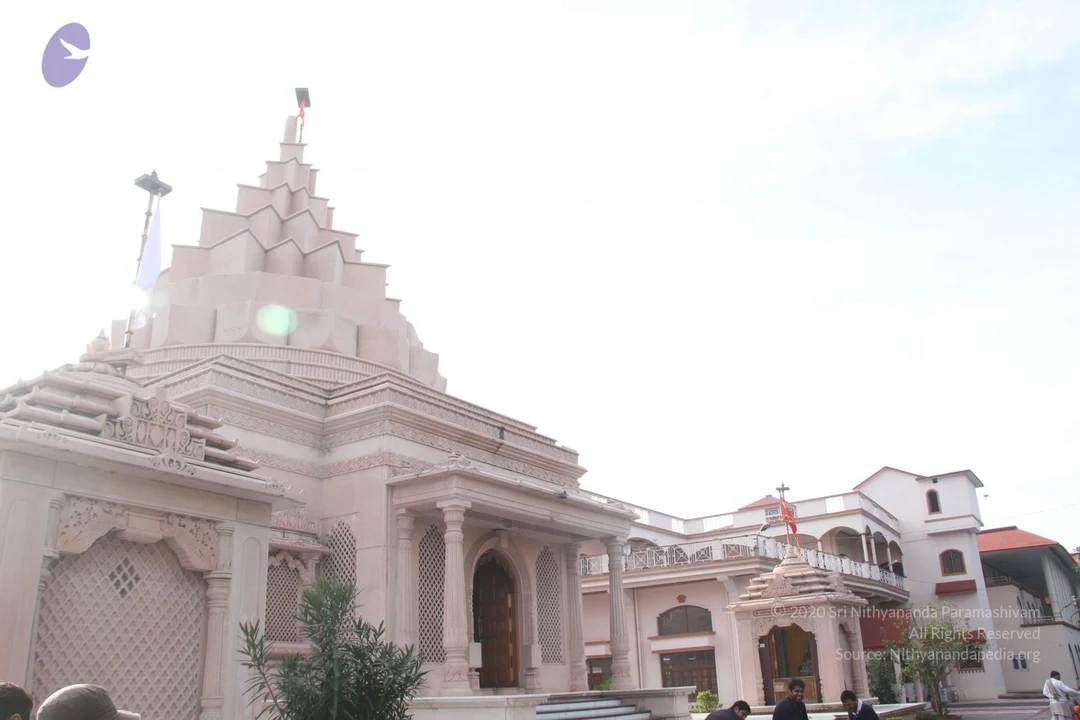
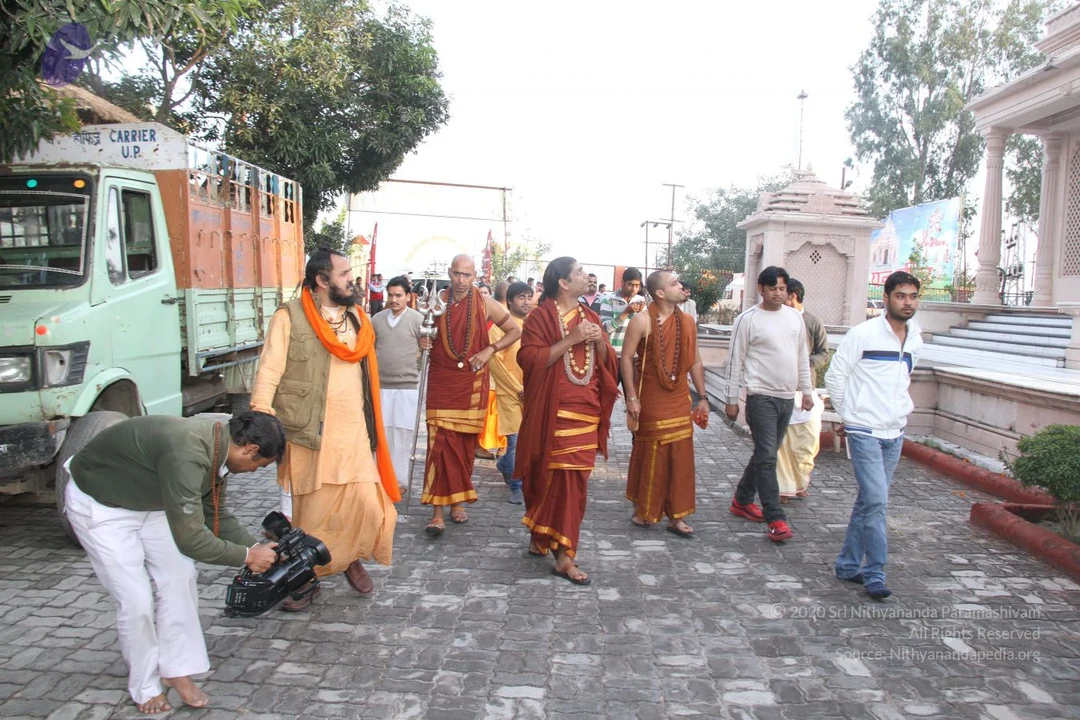
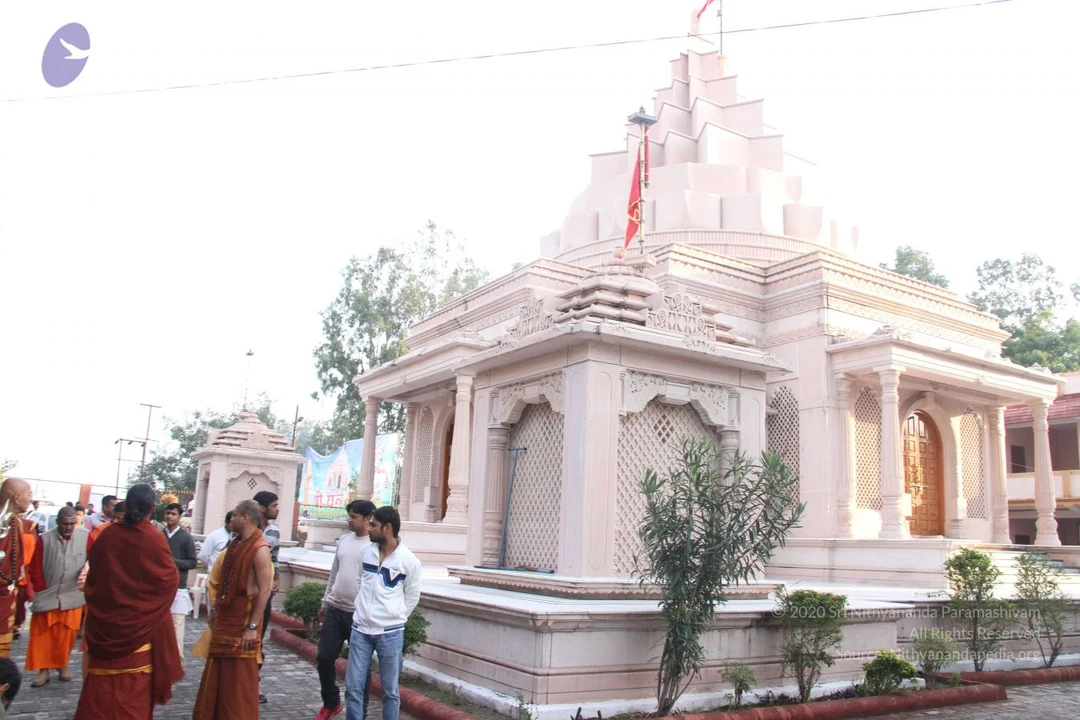
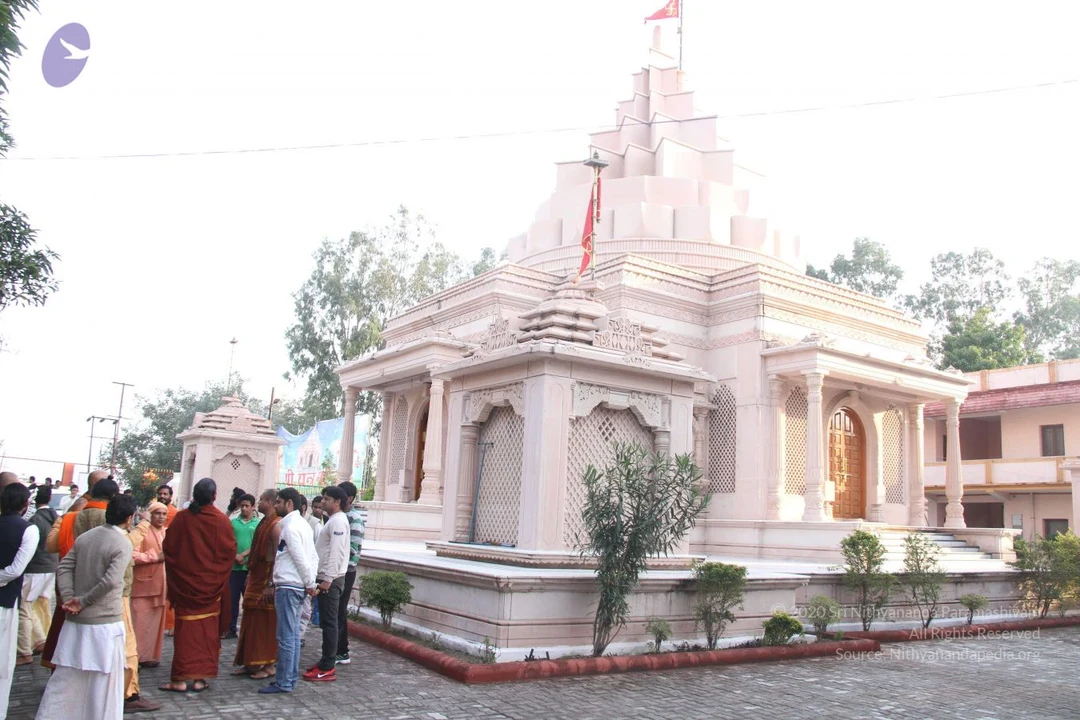
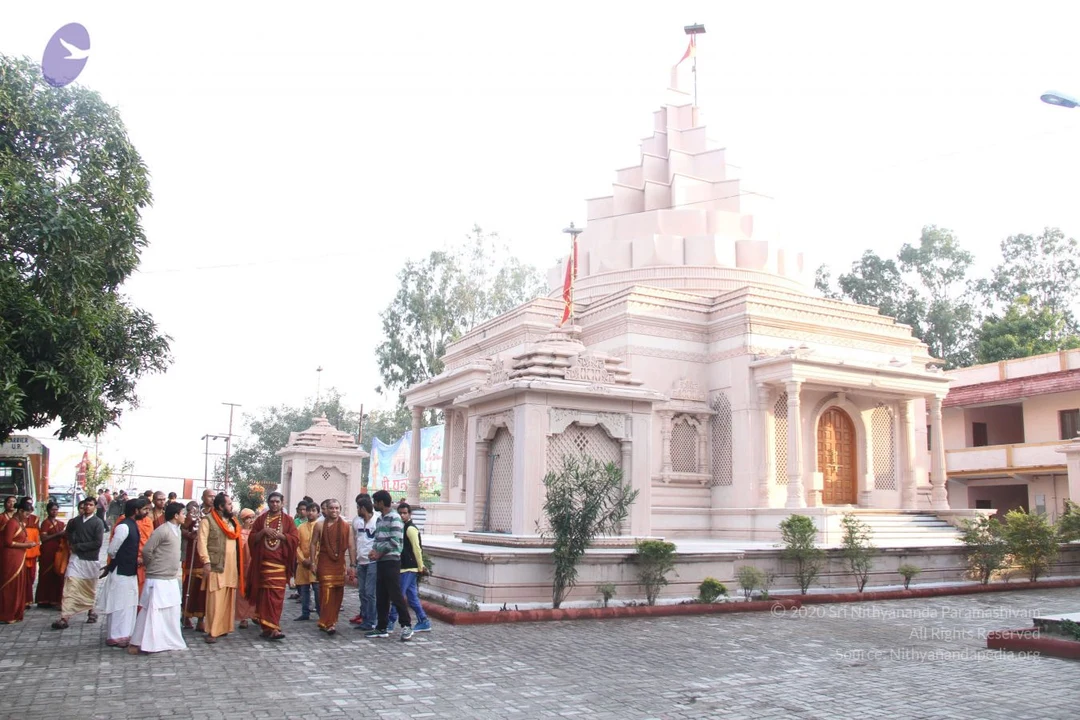
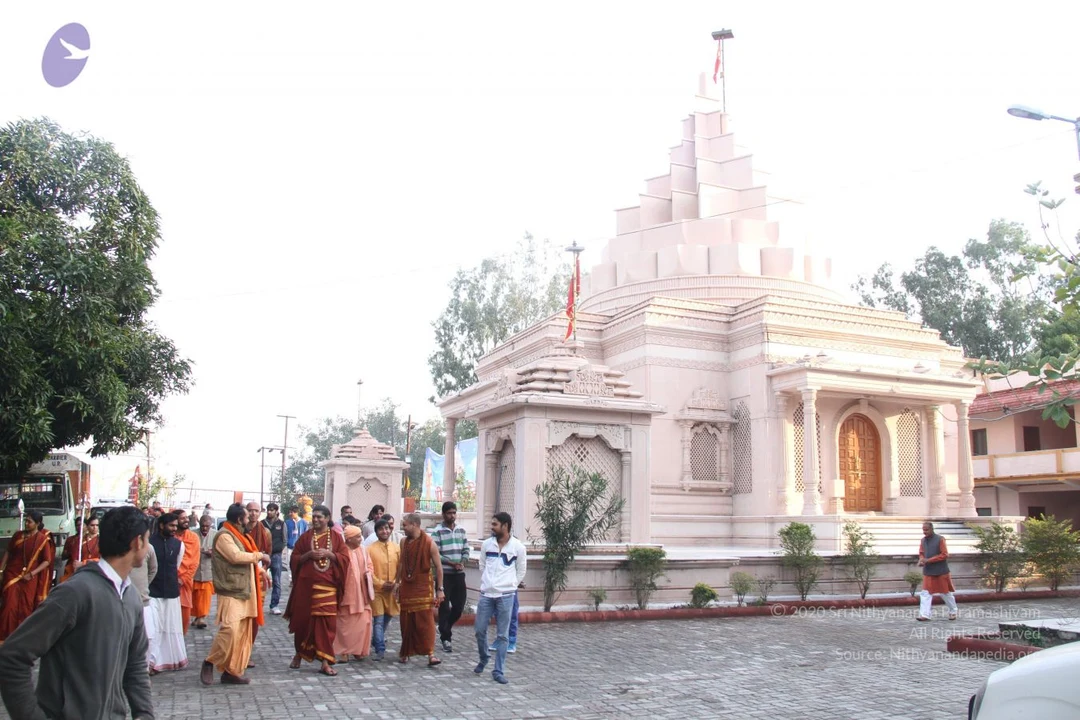
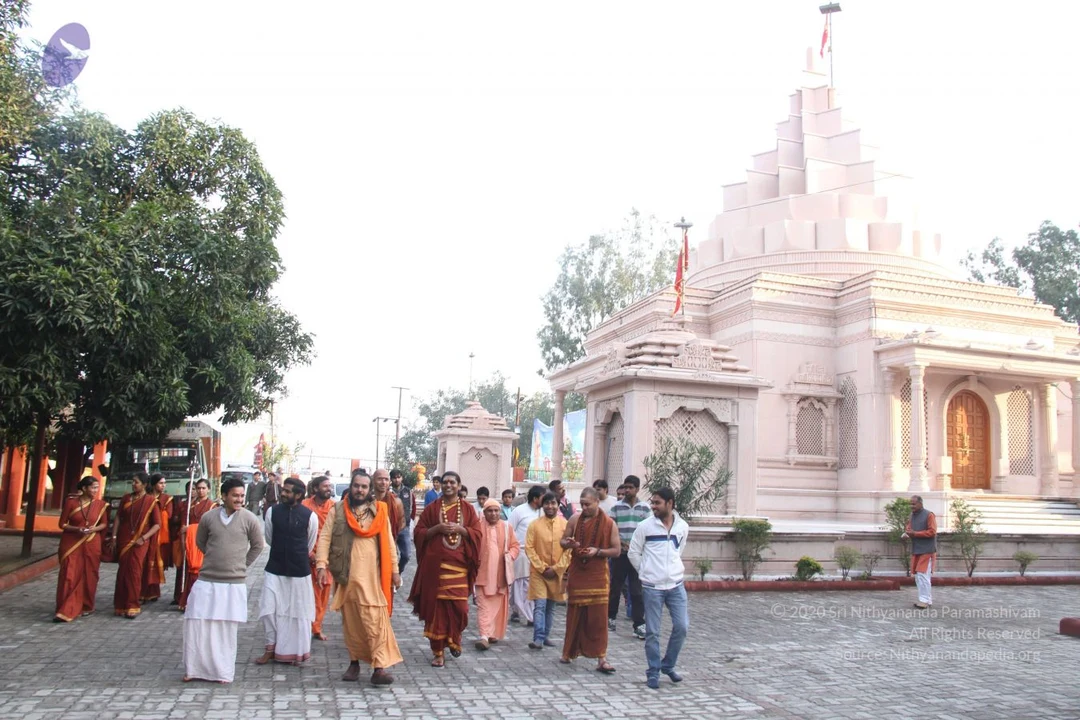
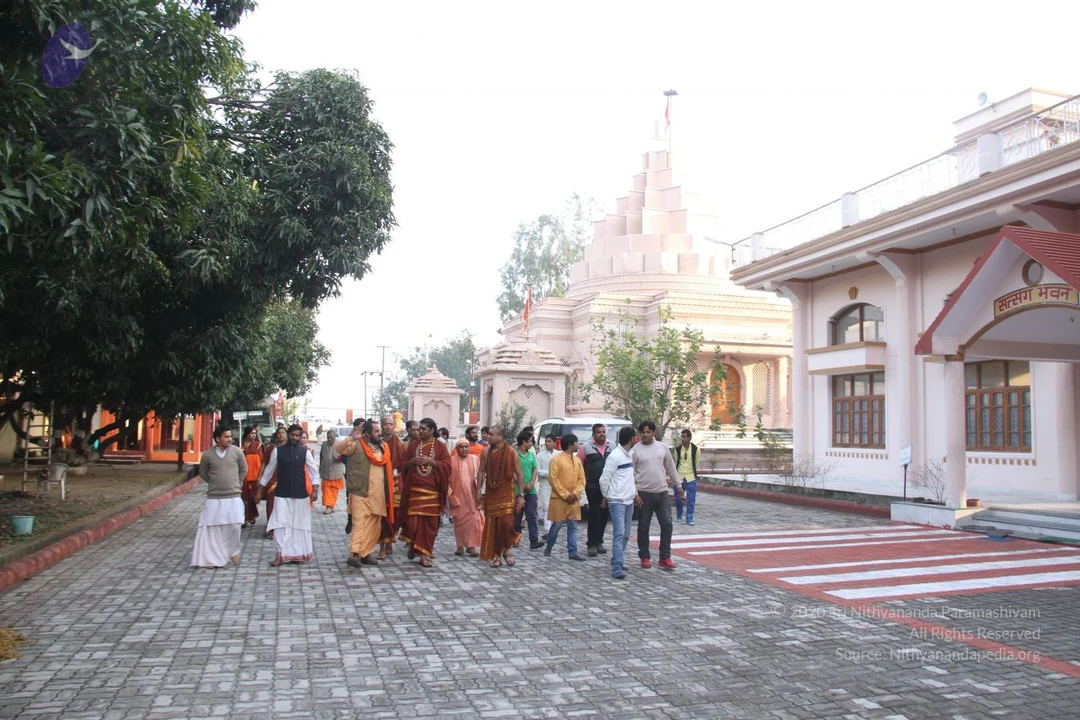
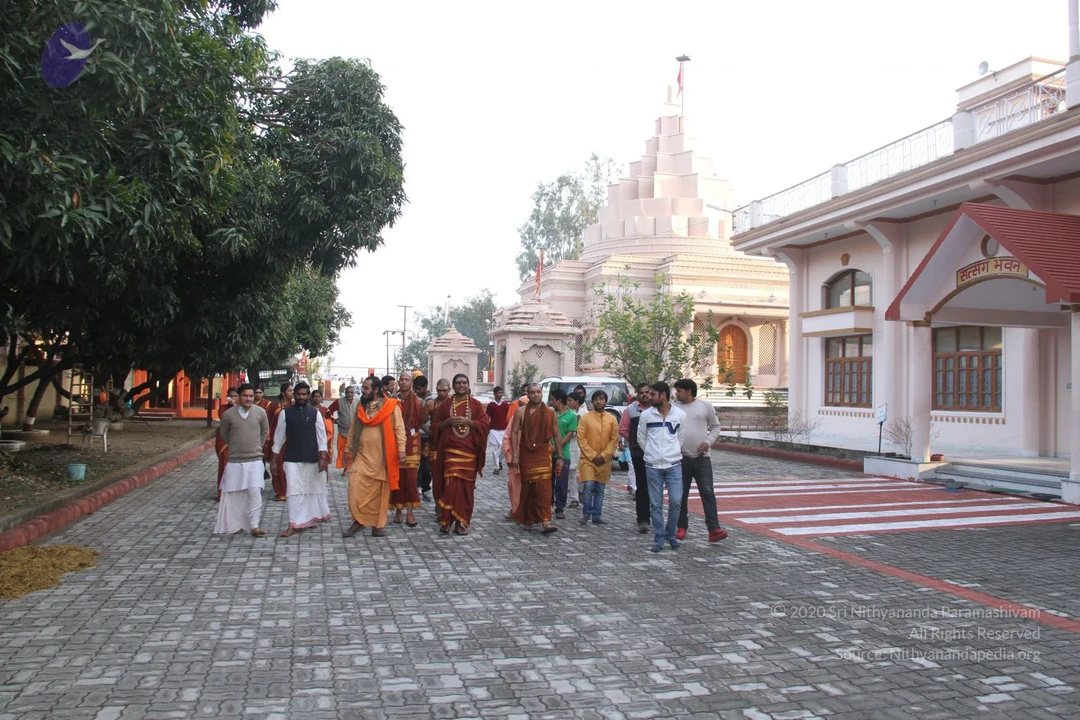
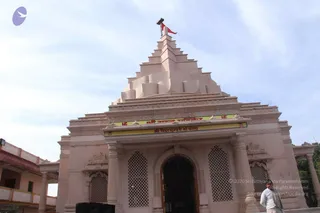
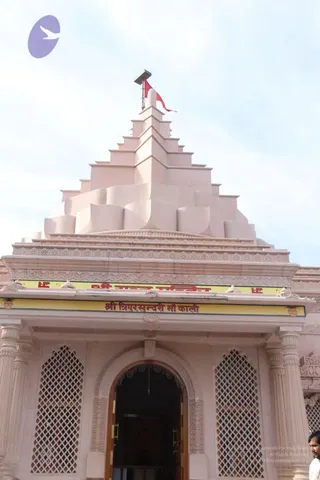
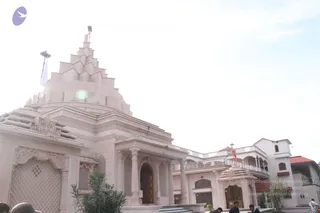
Exterior of a pale sandstone temple with a stepped, tiered shikhara tower topped by a small red and white flag on a pole. Above the arched entrance are two horizontal signboards, a green-yellow band reading a Hindi temple title and a yellow band reading a Sri Mirjon-style goddess name, with the lettering in red. The doorway is framed by carved pillars and jali lattice screens. At the lower right, a man in a white shirt and light trousers stands near the steps, carrying a bag. Blue sky with thin clouds fills the background, and a building with a tiled roof stands at the left edge.Exterior view of a pale sandstone temple tower with stepped shikhara profile and carved lattice window screens, photographed rotated sideways. A tall vertical yellow banner with red Devanagari lettering runs down the left side of the facade beside an arched doorway. A red flag flies from a pole at the top right against a pale sky. At the bottom left edge, a partially visible person in white clothing stands near the entrance.A large floral rangoli-style arrangement of red rose petals and orange and yellow marigold garlands covers the courtyard floor in a circular pattern with a symmetrical design. Behind it stands a framed portrait on a stand, decorated with marigold and multicolored flower garlands, showing an elderly bearded man in a white turban and white robes. The portrait is printed, not a physical person; no living people are visible. A small caption is printed on the frame. Pale paved tiles, a cream wall and a potted plant frame the scene.A large circular floral design of marigolds and pink-red rose petals covers the paved ground in a courtyard. A framed portrait of an elderly bearded man in a white turban and white robes stands at the top, garlanded with orange and yellow marigold strands and a red-and-gold garland, set on an orange-draped structure. The portrait is a printed picture, not a physical person. No people are visible in the scene.Exterior photograph of a pale sandstone temple with a stepped, pyramidal shikhara tower topped by a small red flag and a finial. Carved lattice screens and pillared arches line the lower facade, with a balcony walkway and a smaller shrine structure to the right. A white flagpole stands at the left edge under a hazy, partly cloudy sky. No people are clearly visible in the scene.Exterior view of a pale sandstone temple complex on a paved courtyard in the morning. A tiered stepped spire and carved lattice screens stand on the left, with arched doorways and pillared porch. A small shrine with a saffron flag on a pole sits near white and beige buildings with balconies. Four men in casual jackets and jeans walk or stand on the paving, one in a green jacket and white trousers near the shrine steps, and a distant figure in white and an orange-clad child stand further back. Shoes are left at the base of the steps and a green truck is parked at the right edge.

Satsang
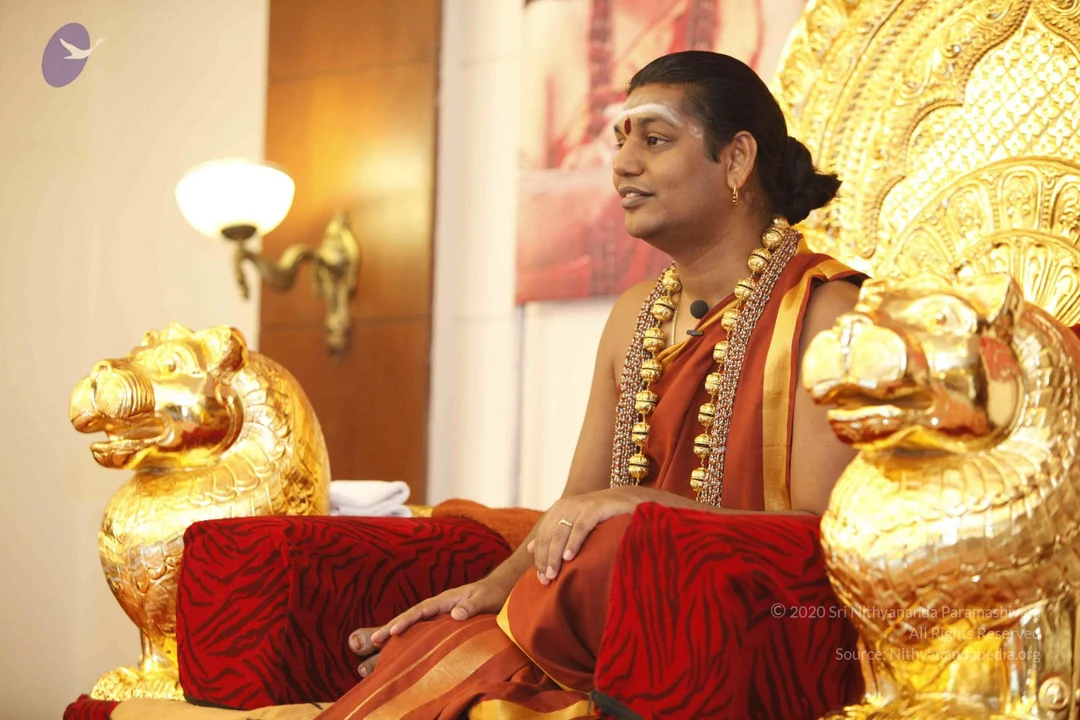
34 photosSource gallery
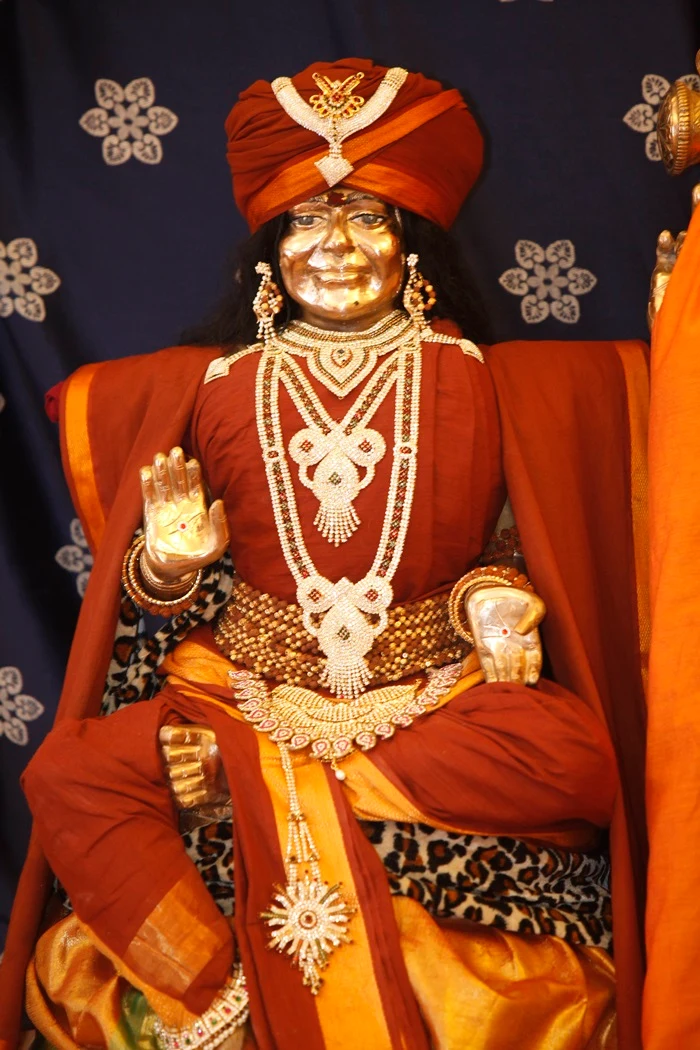
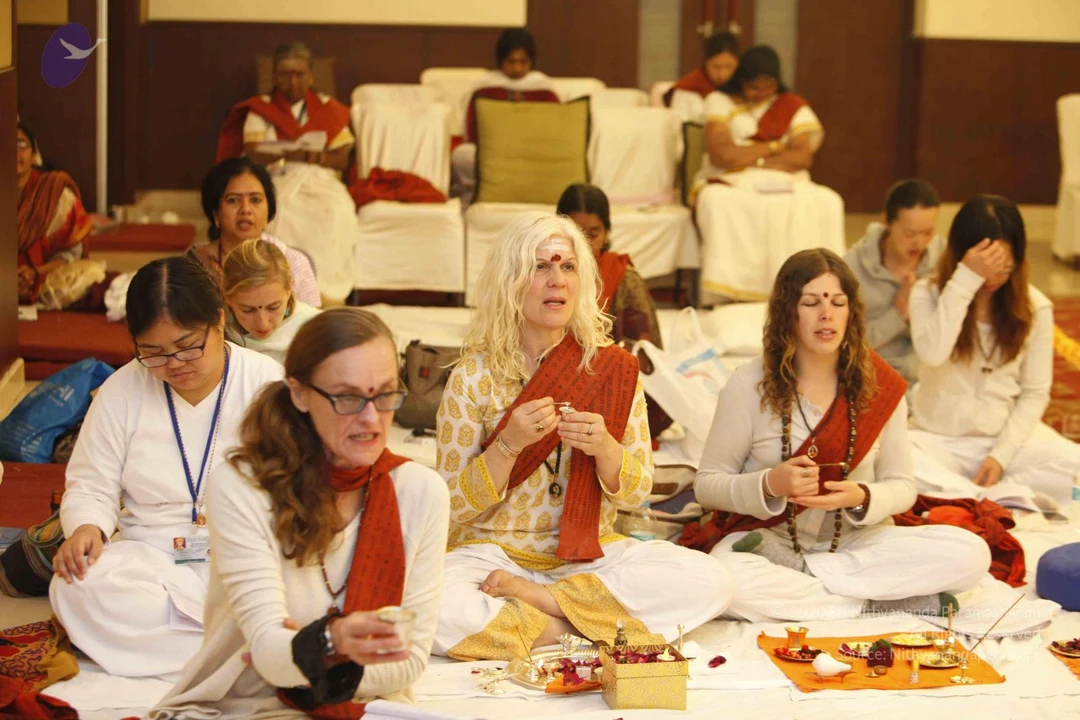
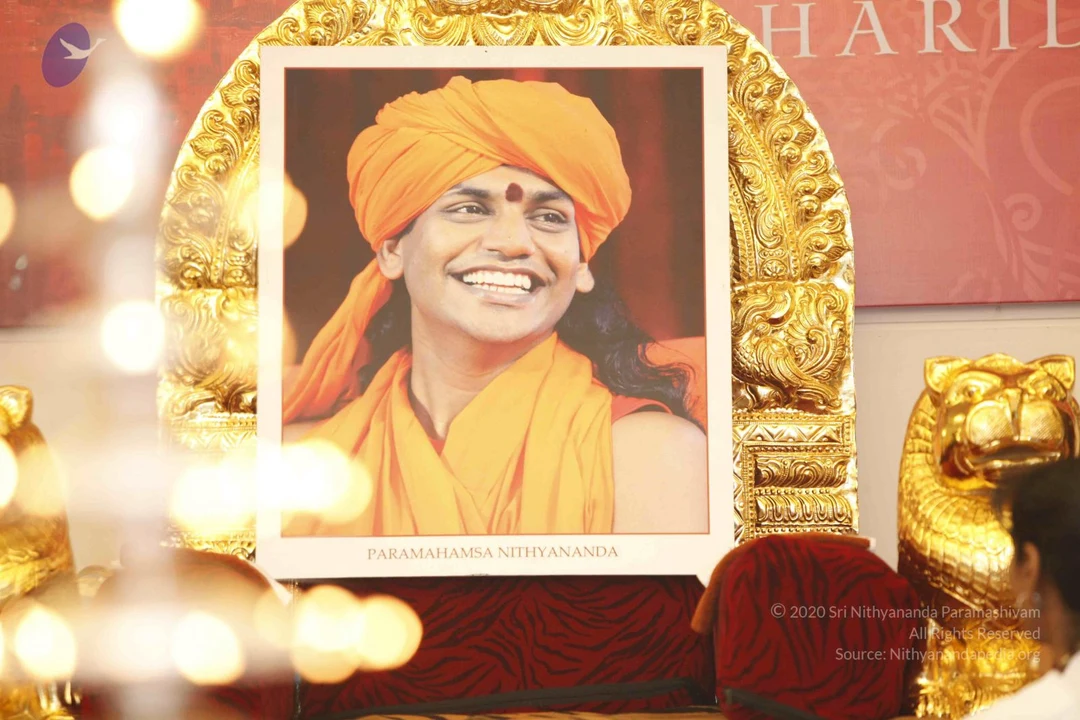
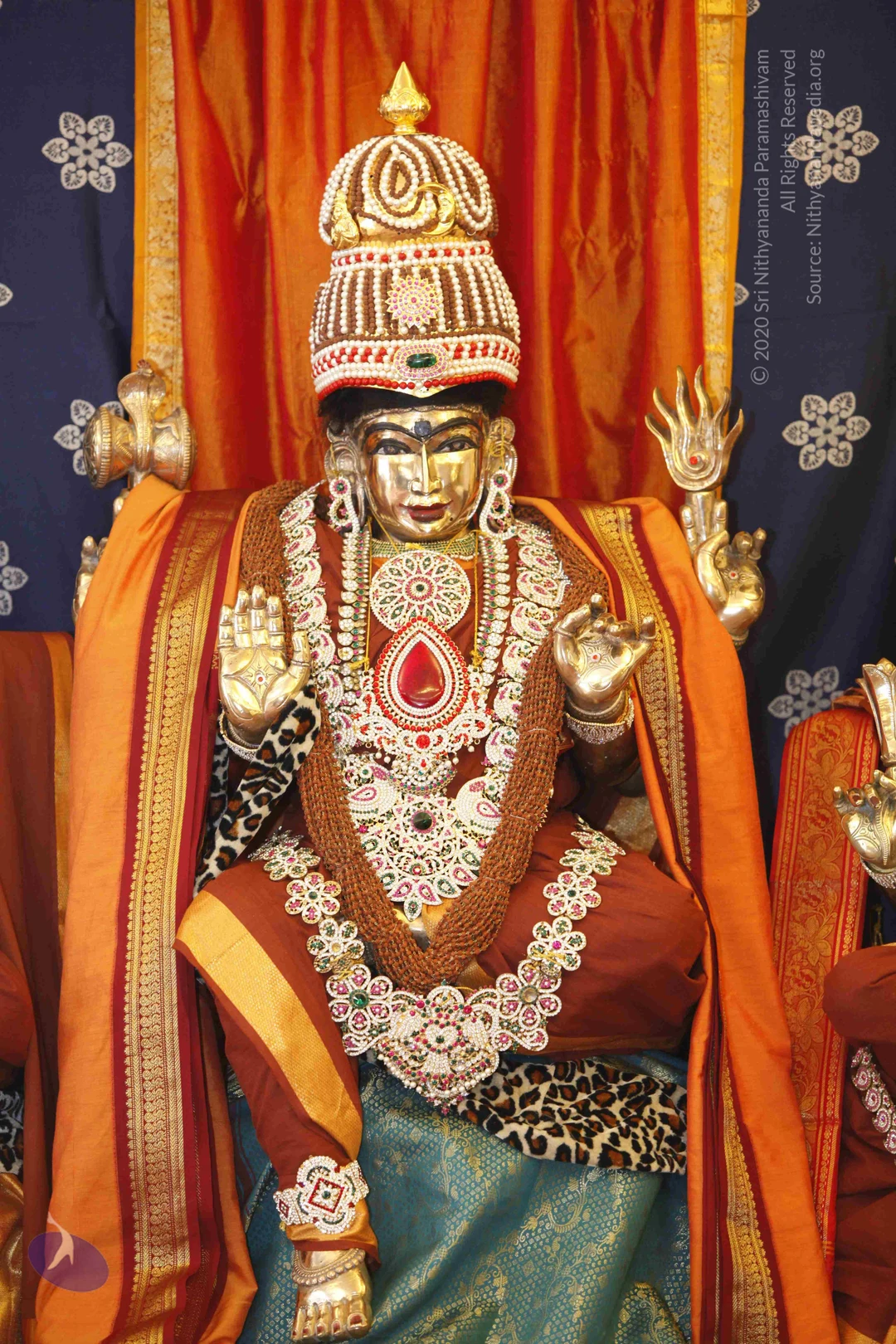
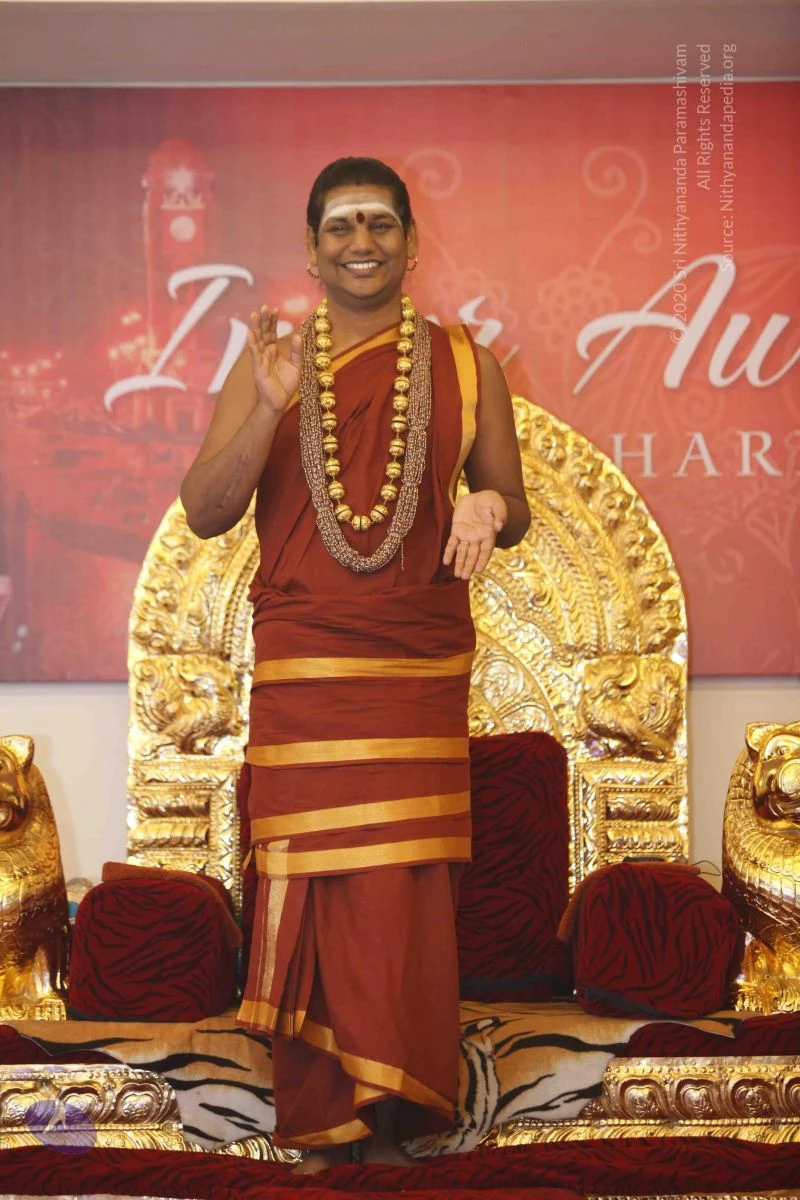
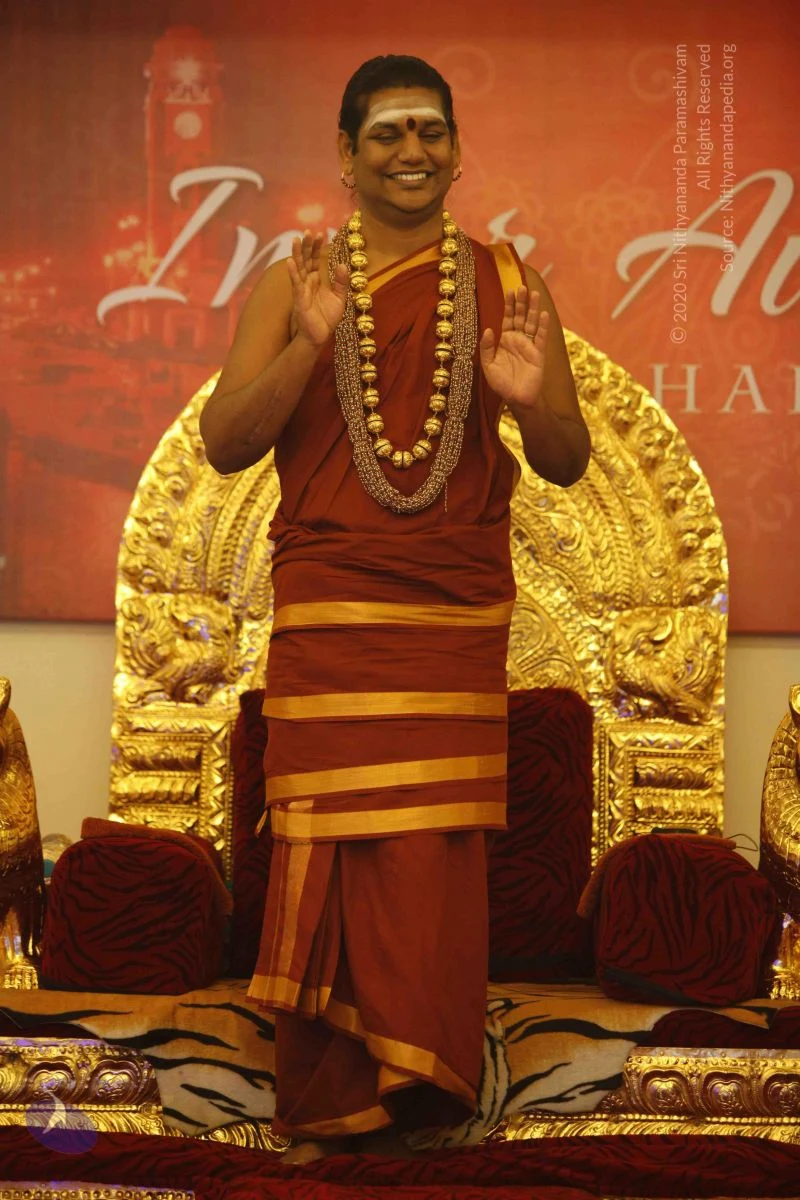
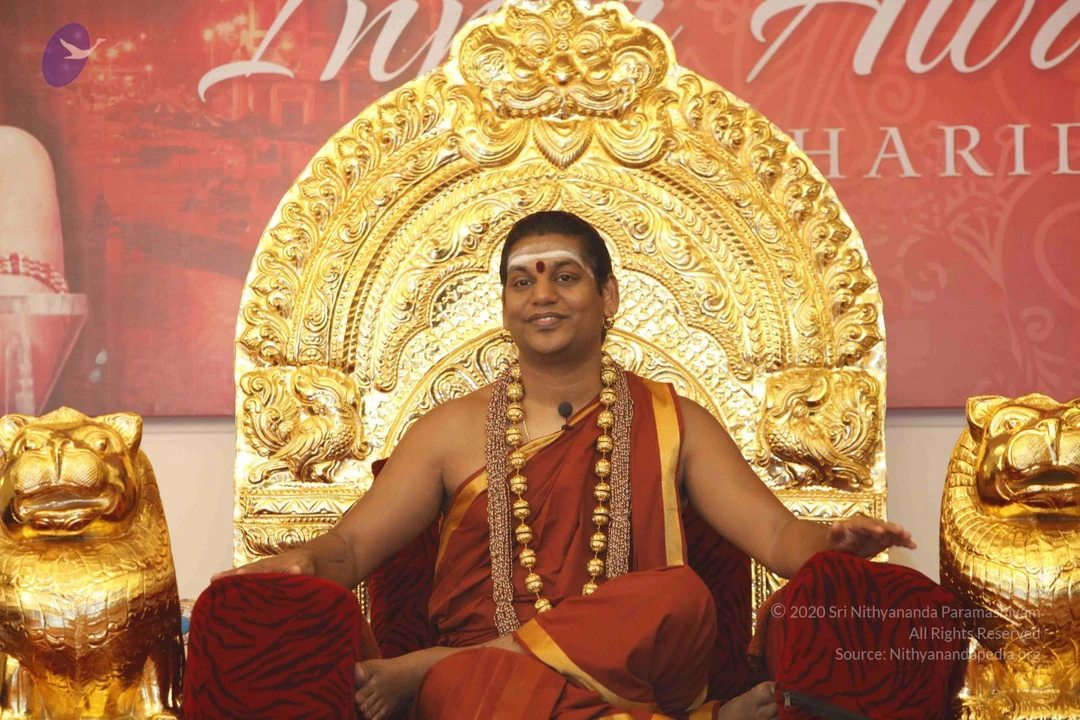
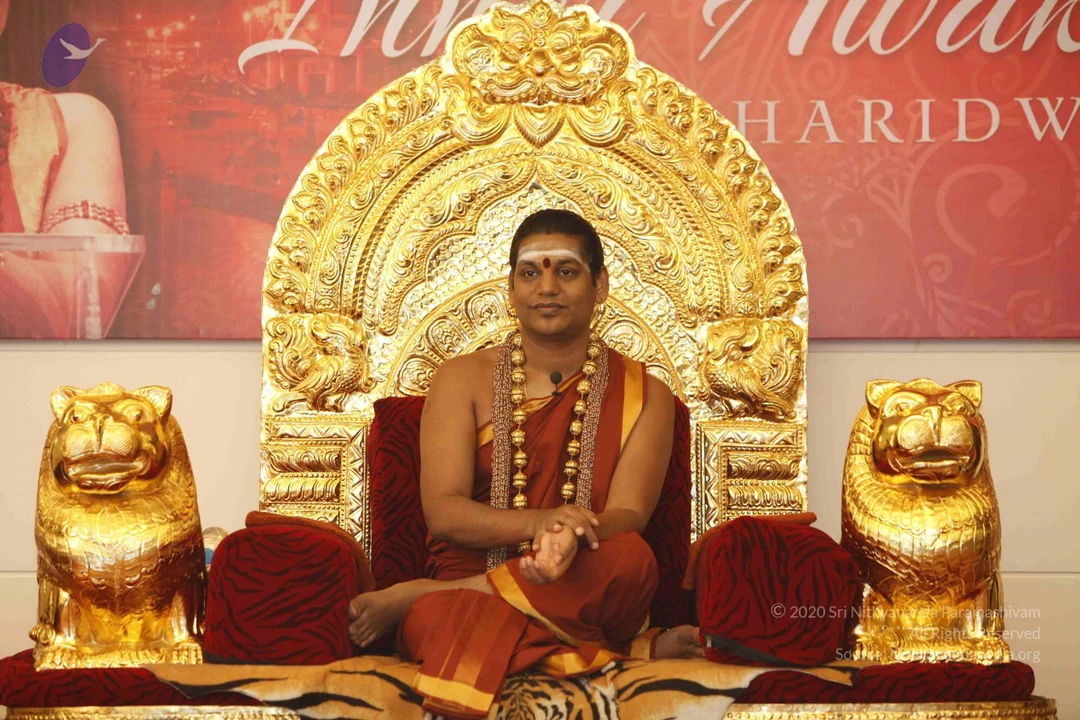
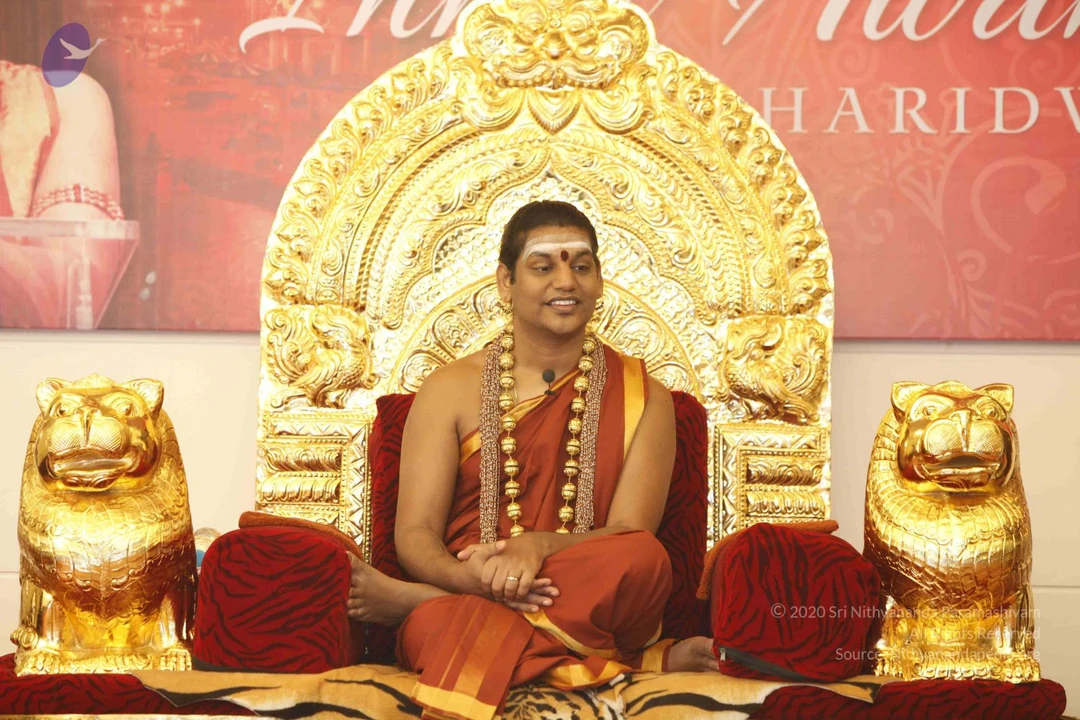
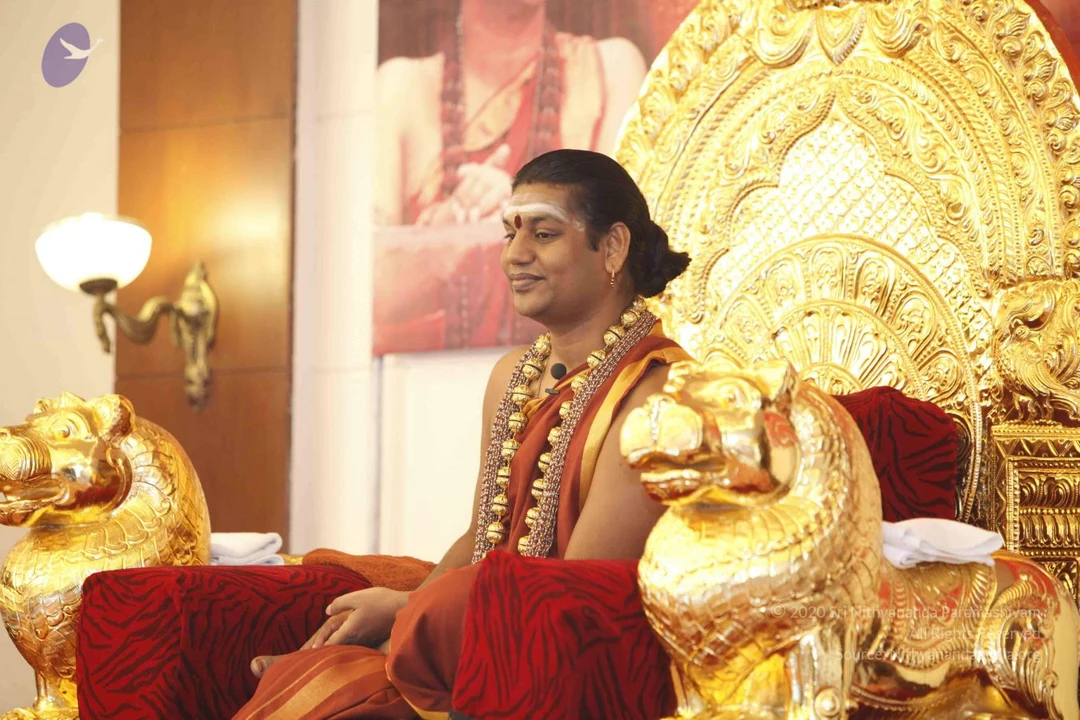
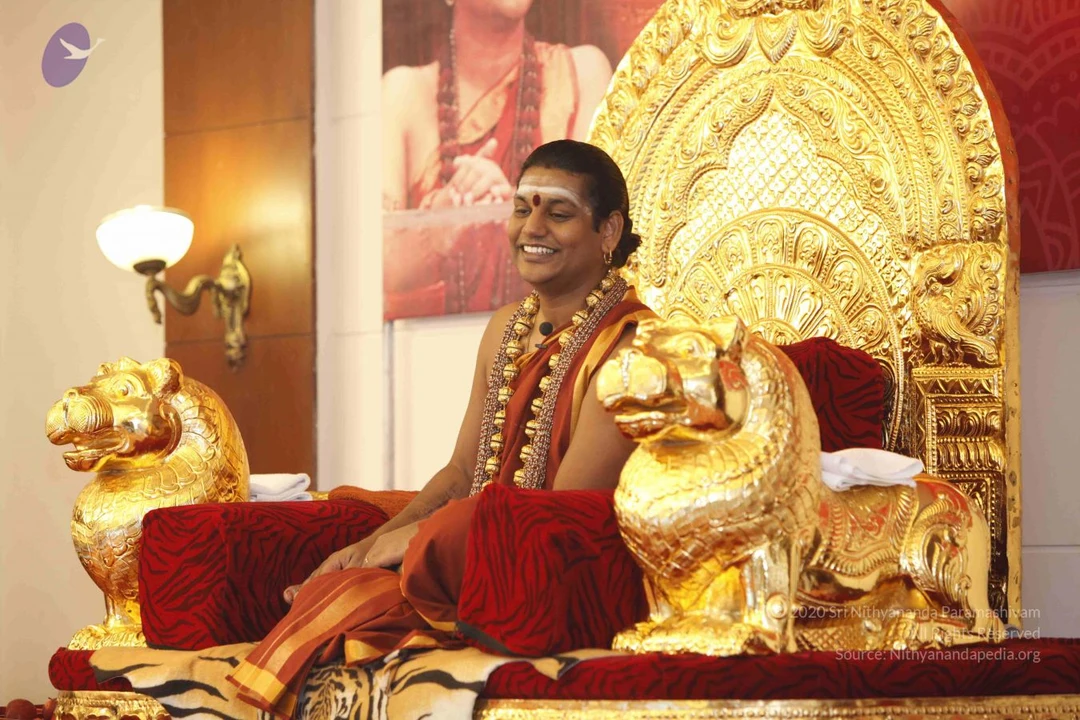
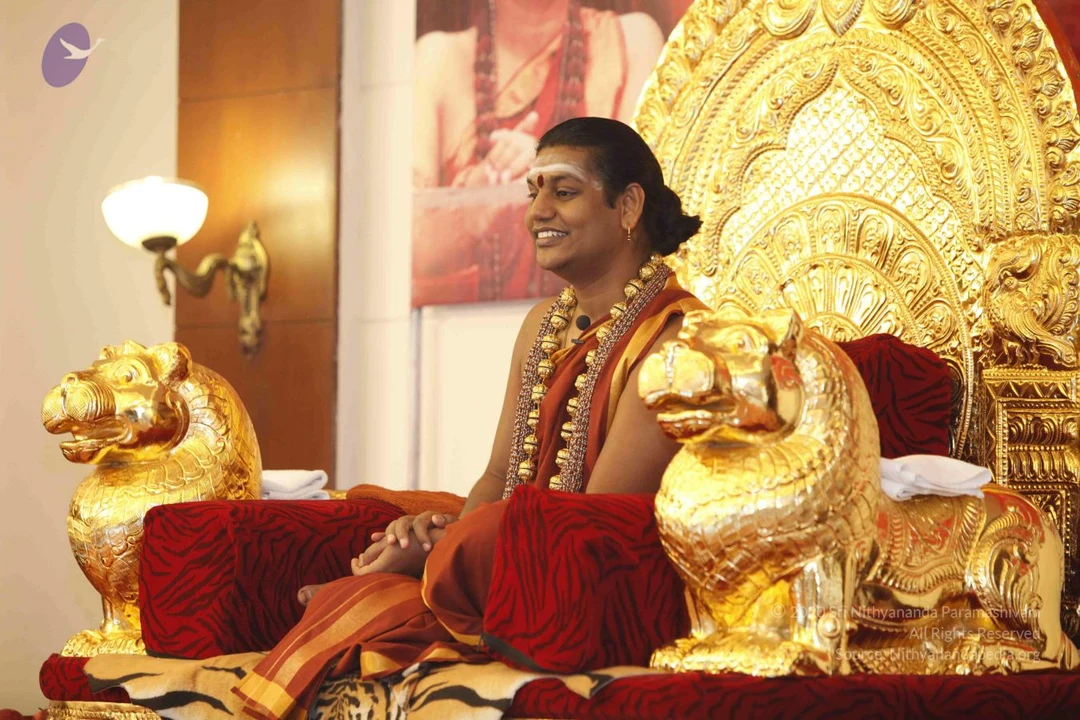
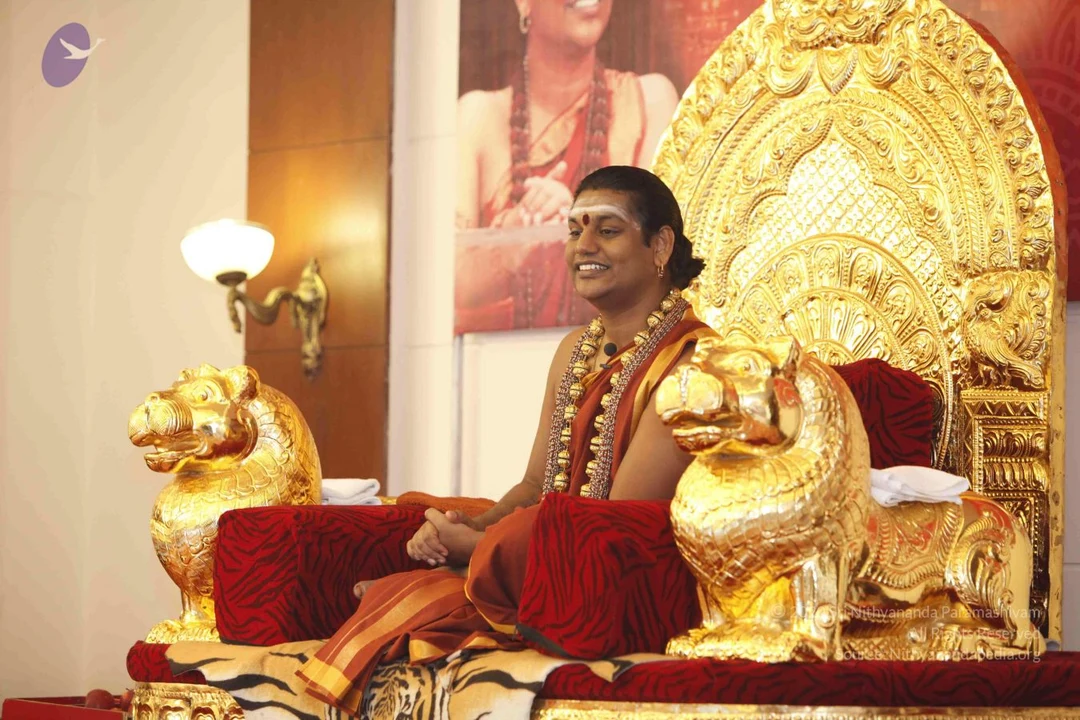
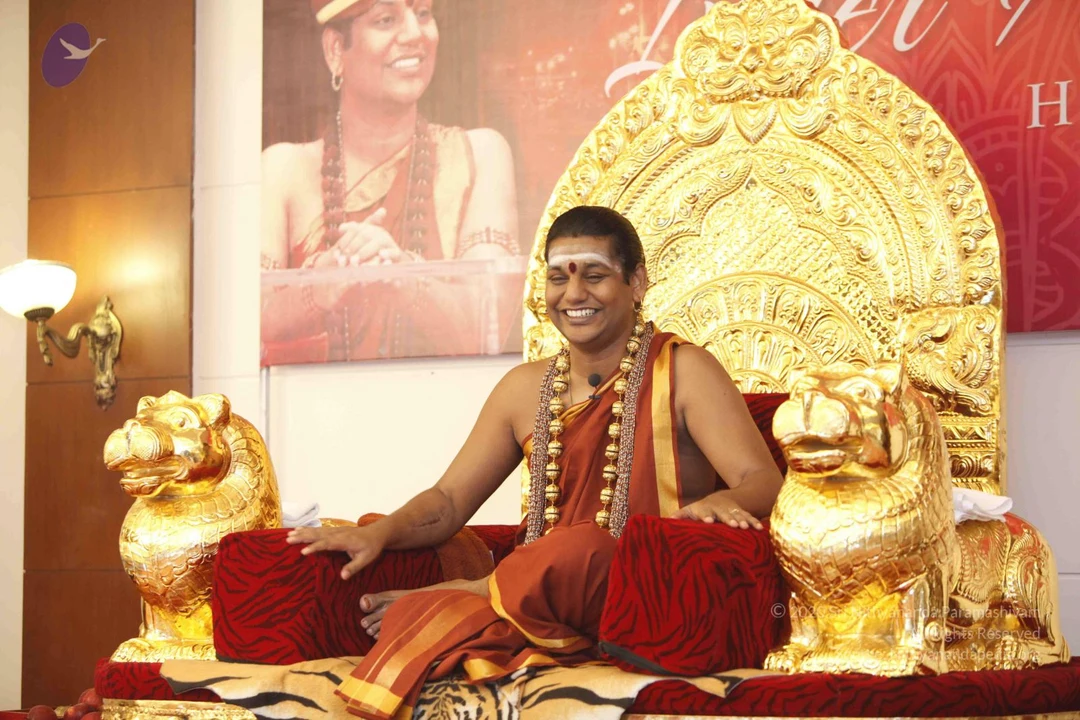
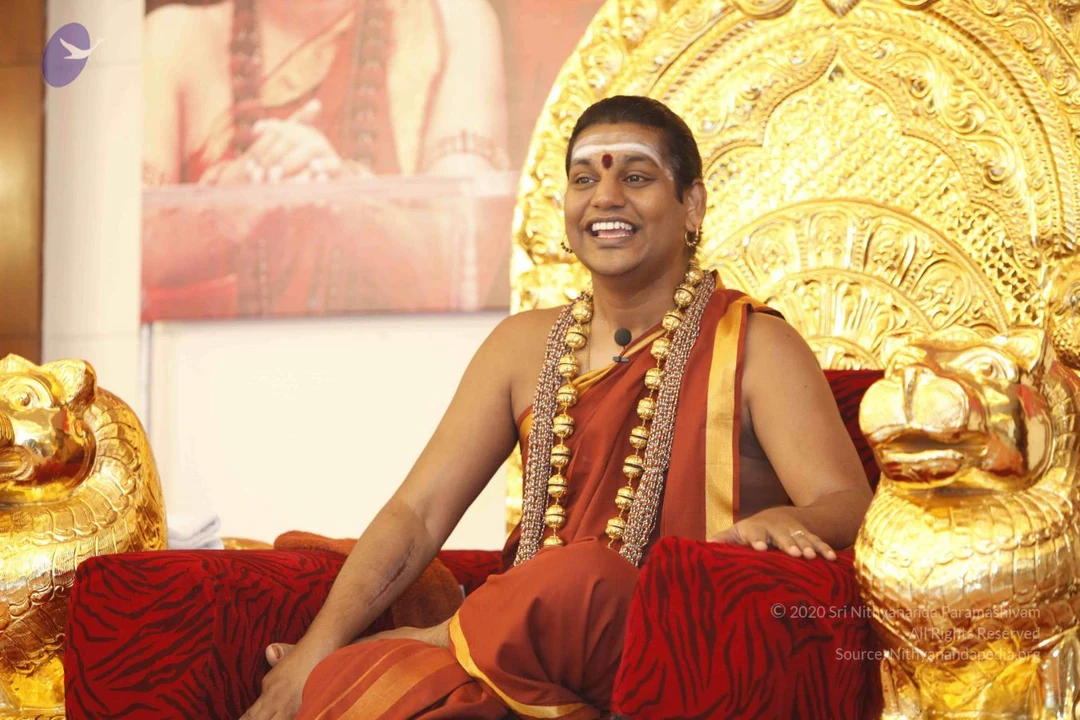
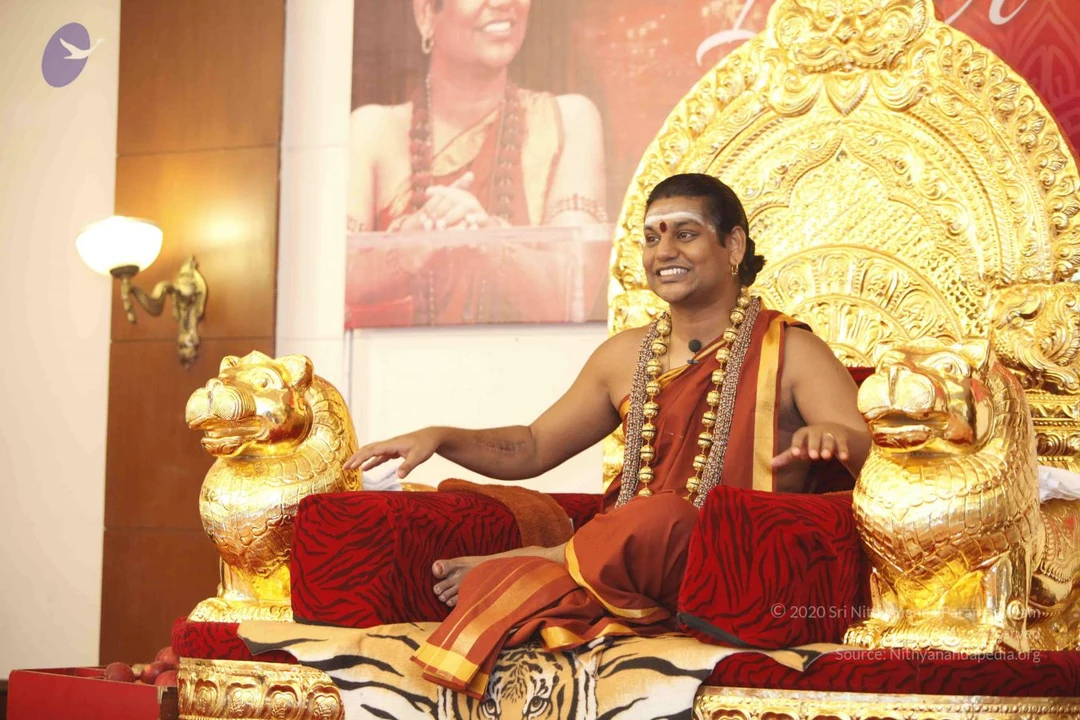
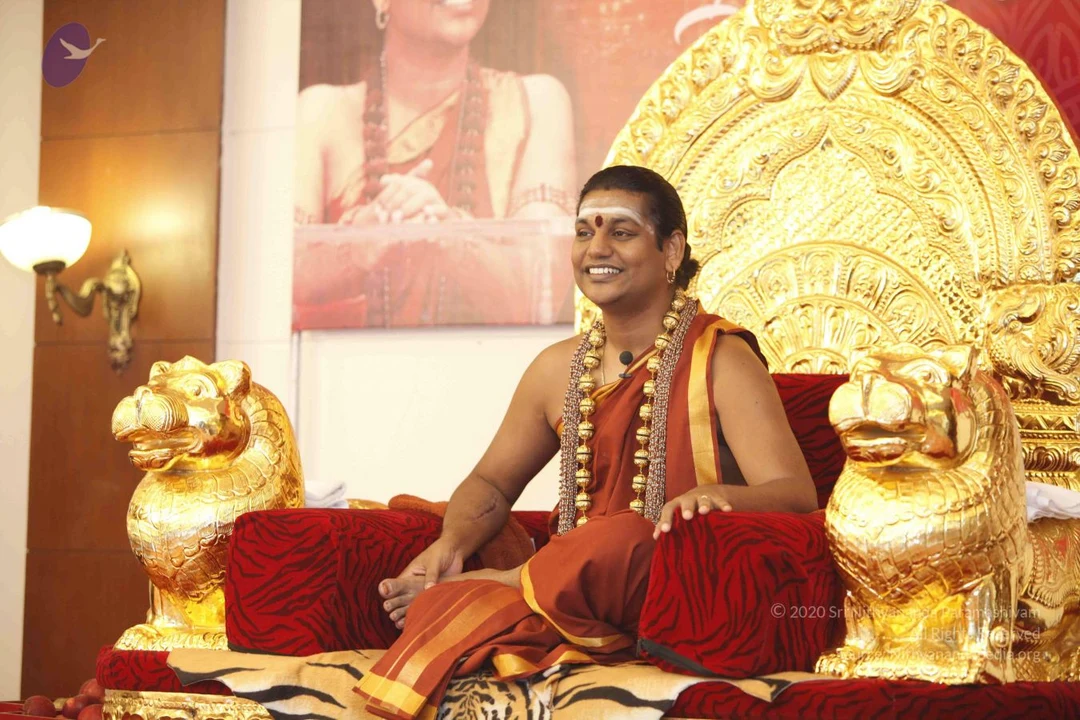
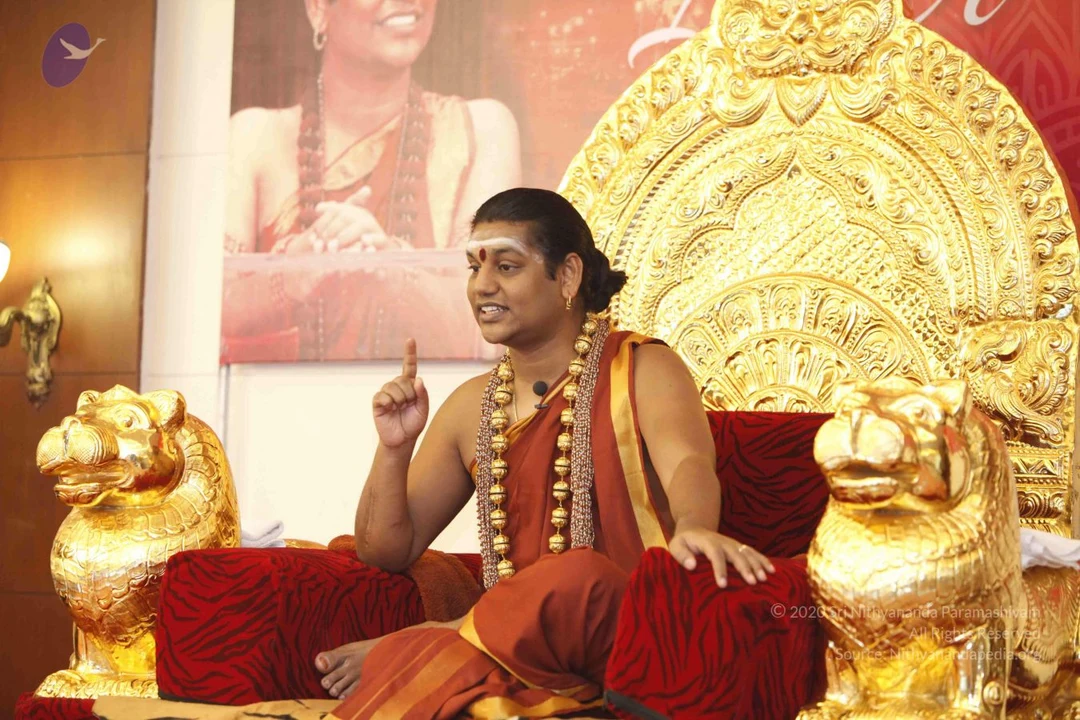
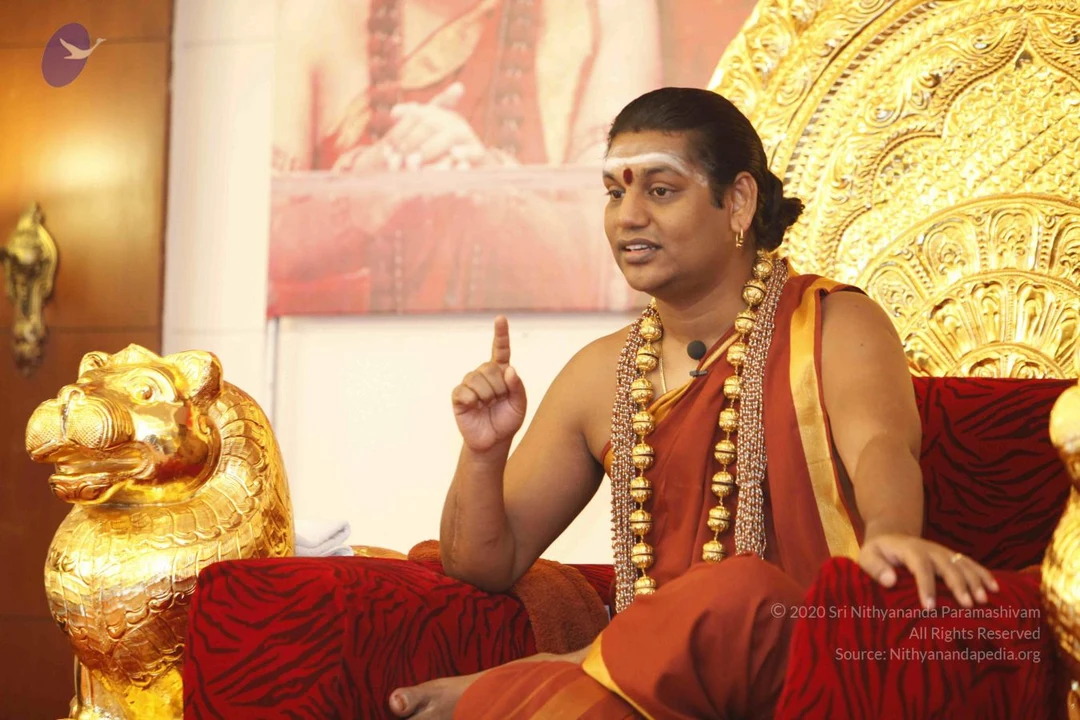
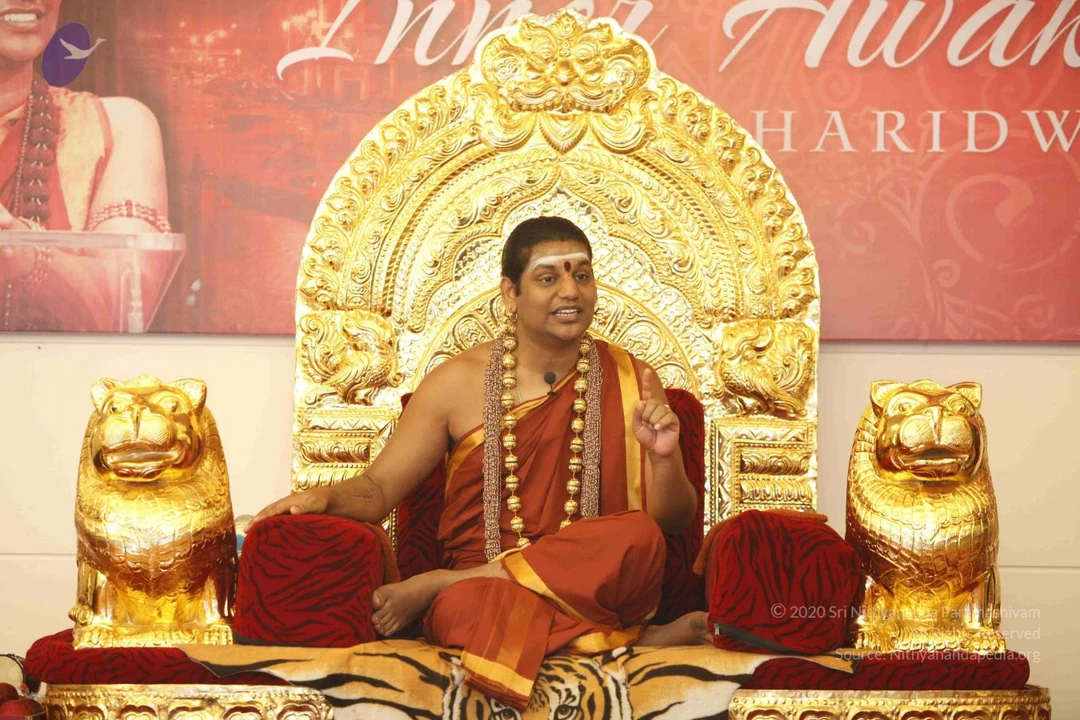
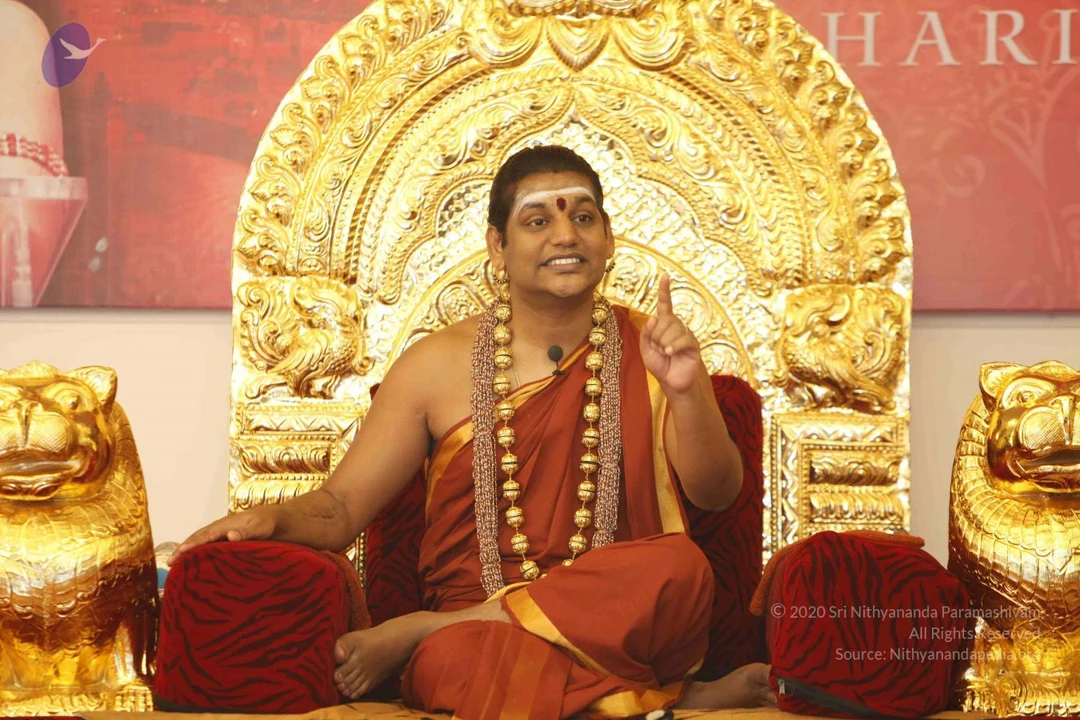
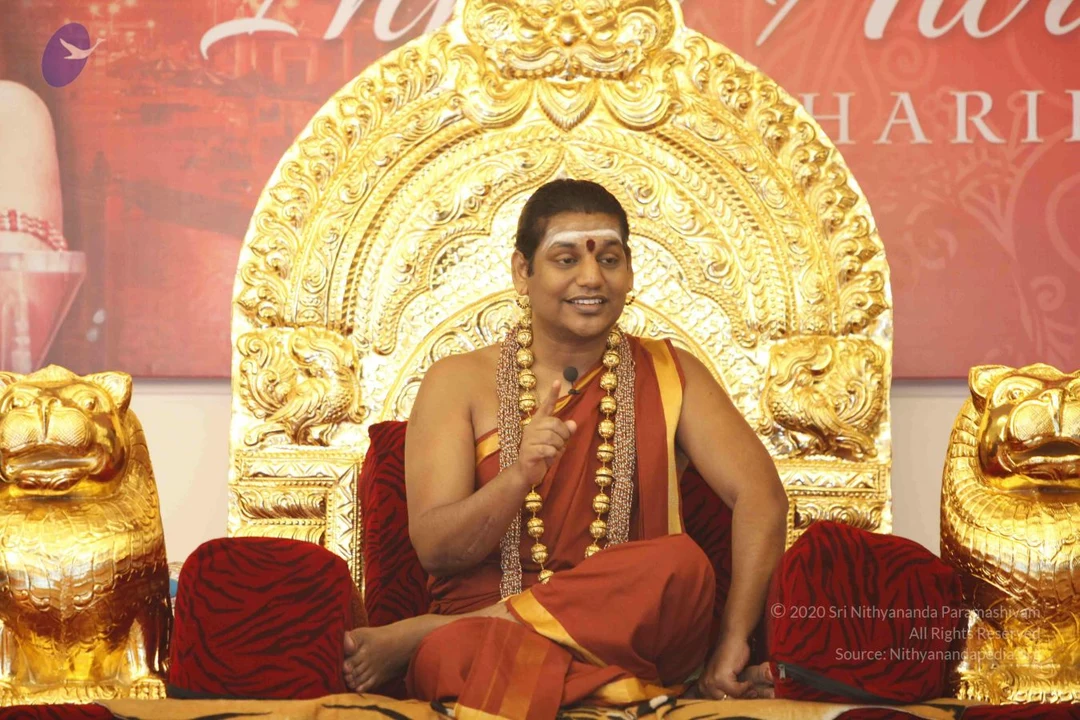
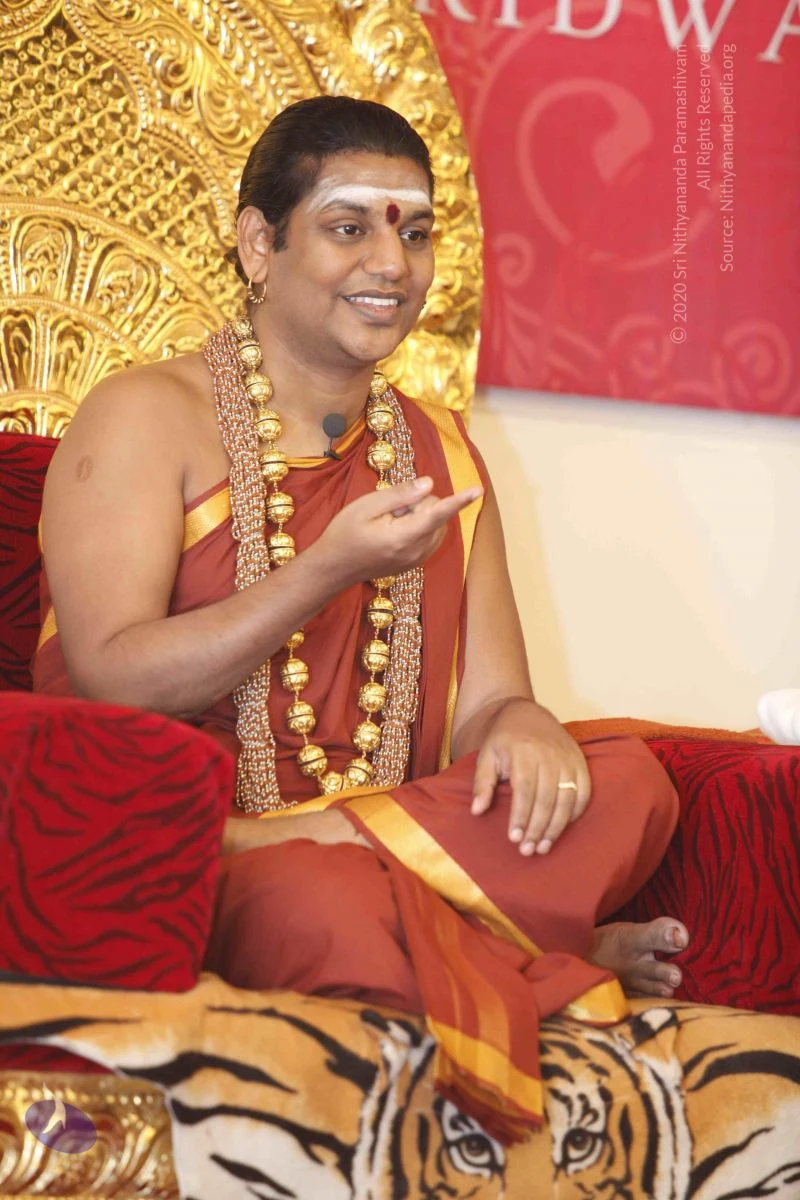
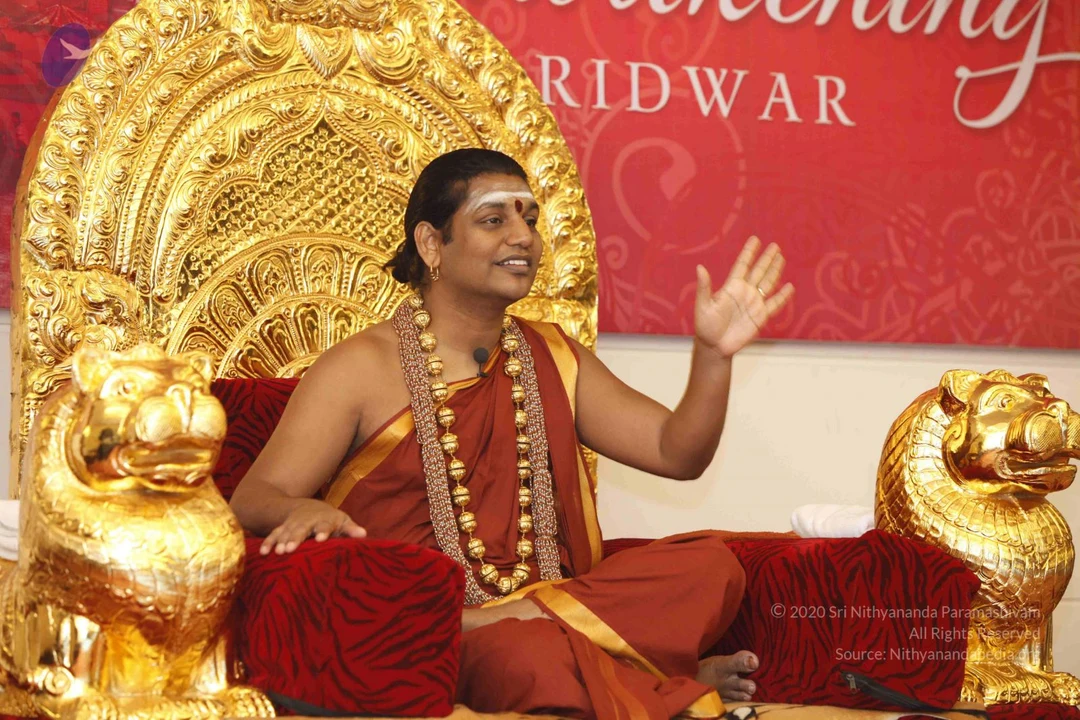
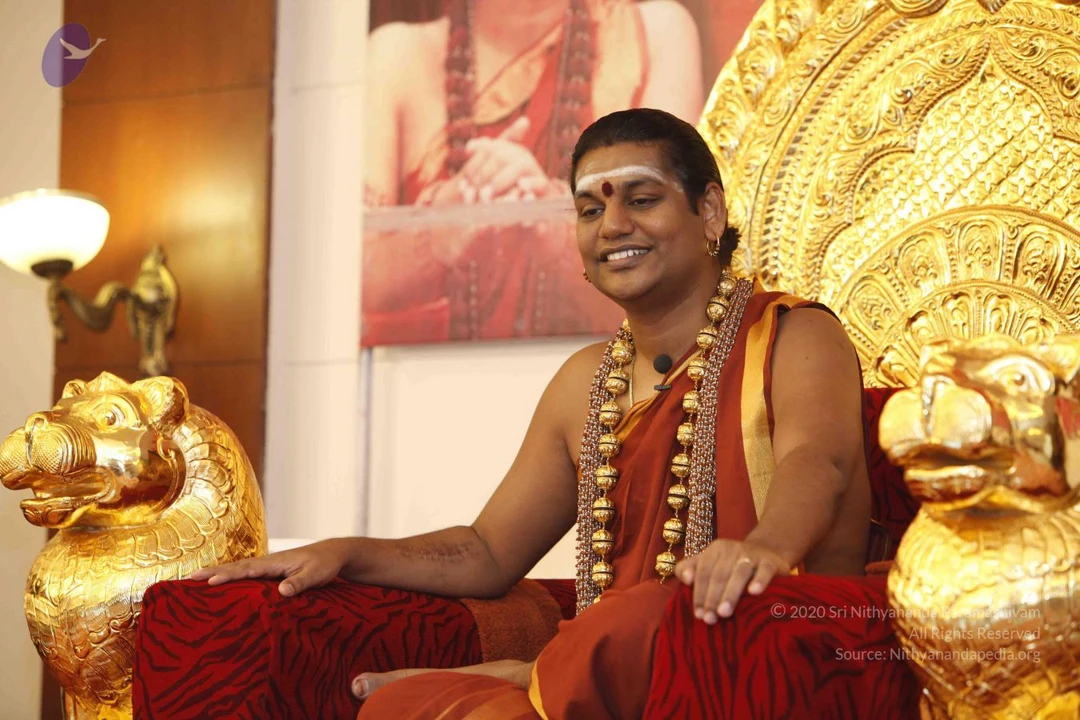
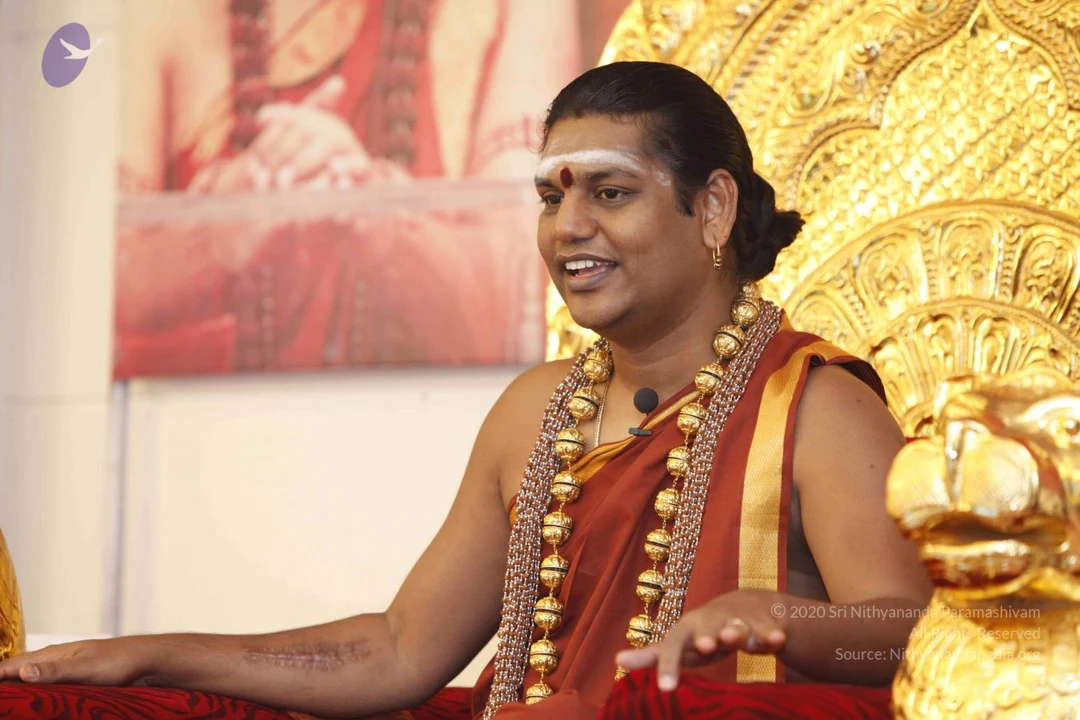
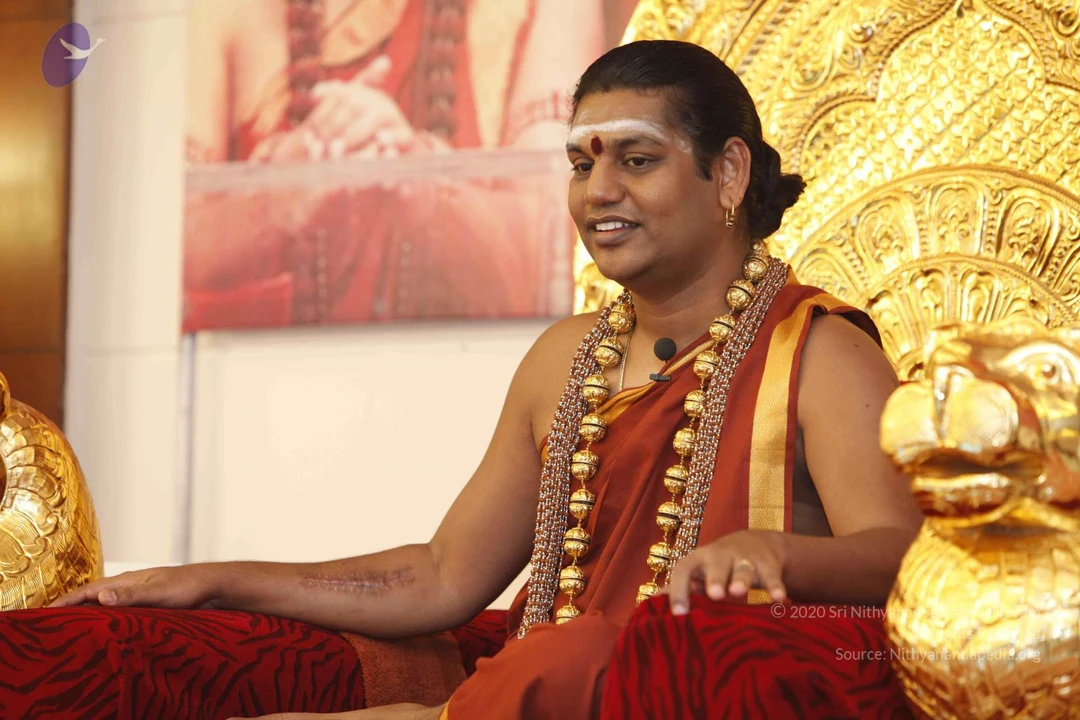
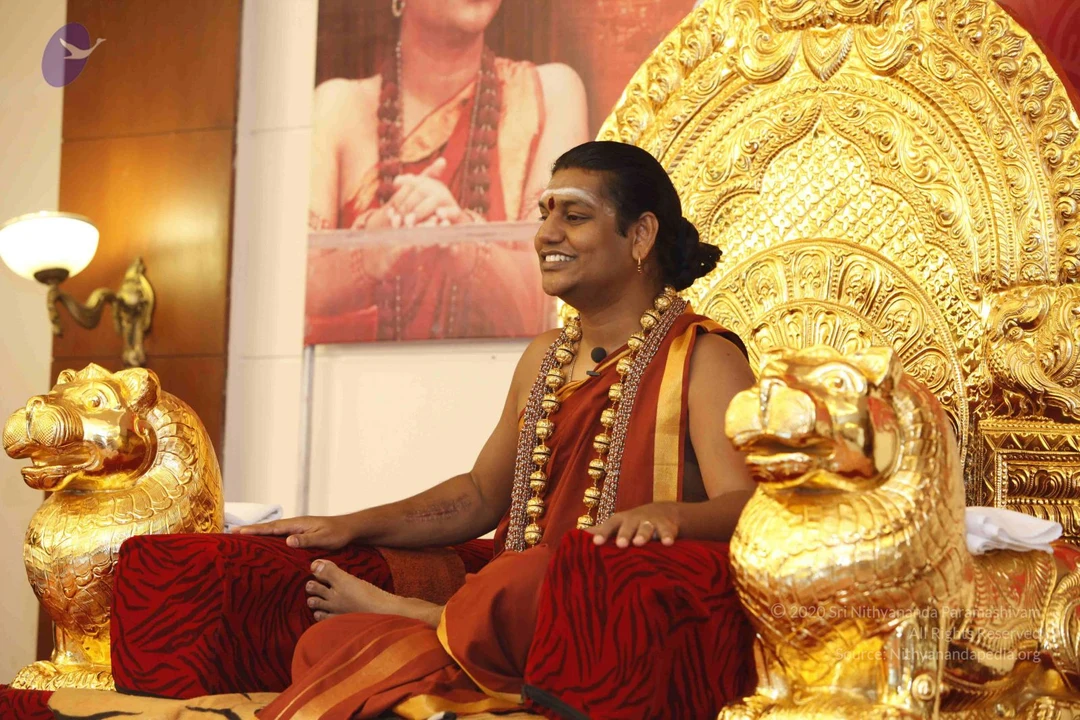
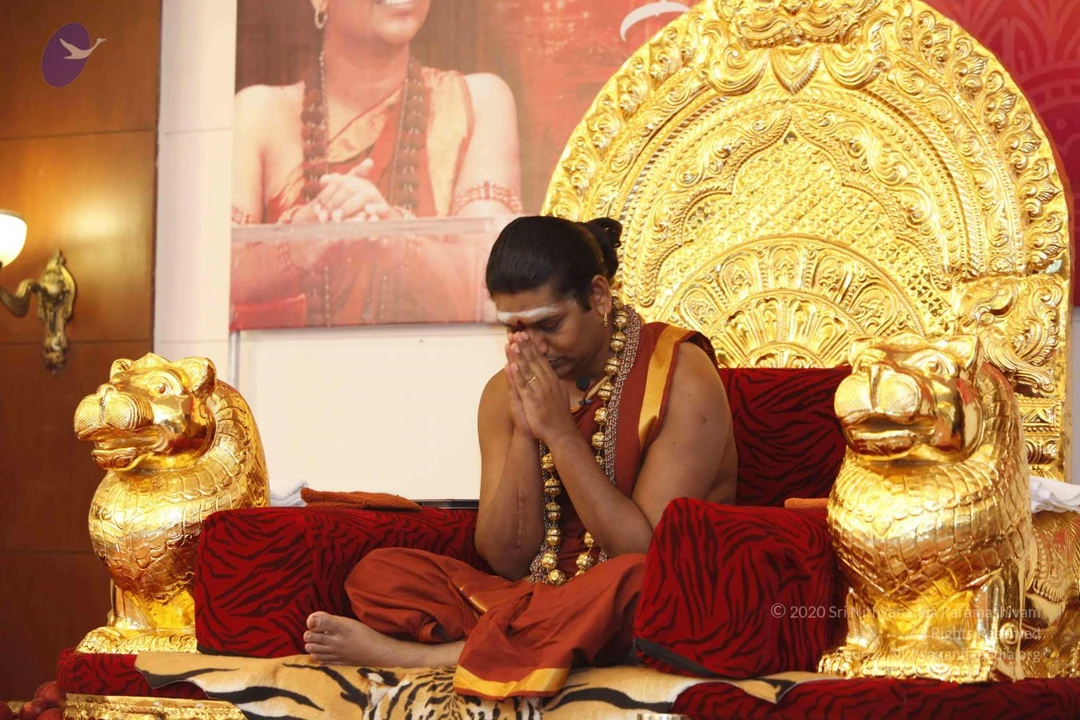
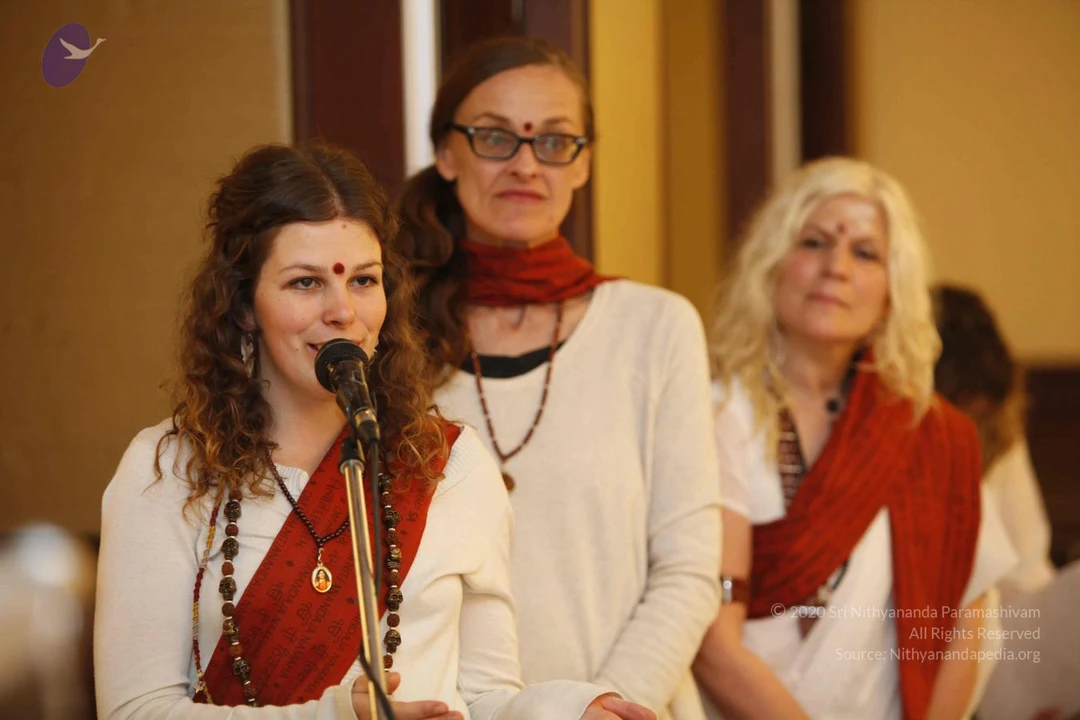
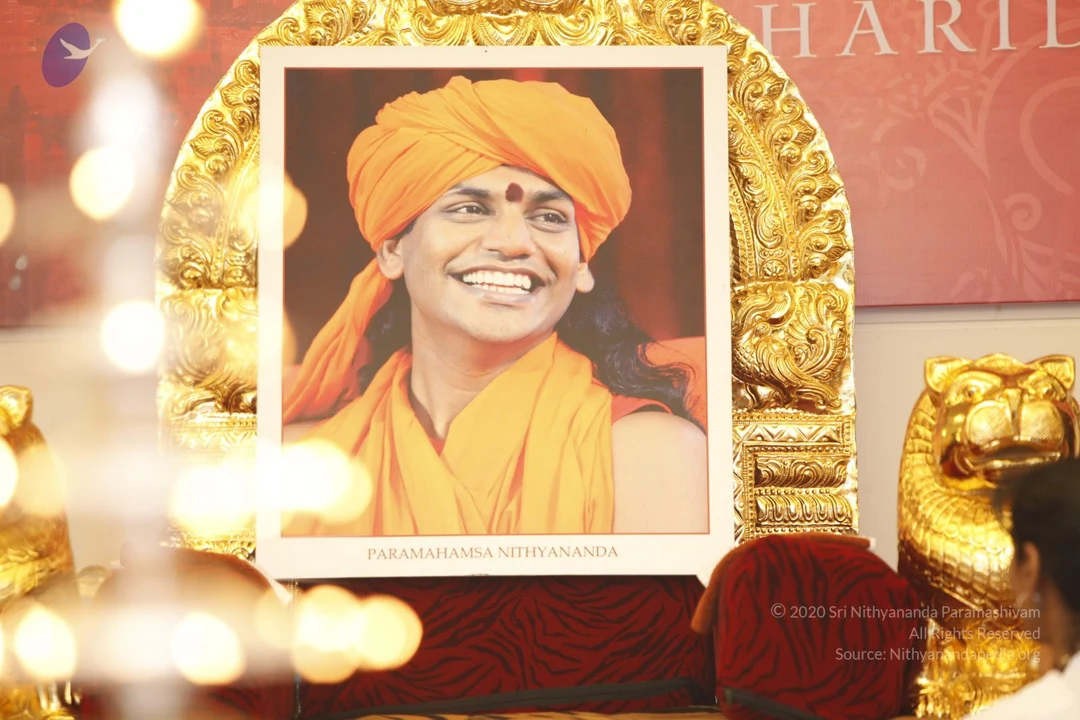
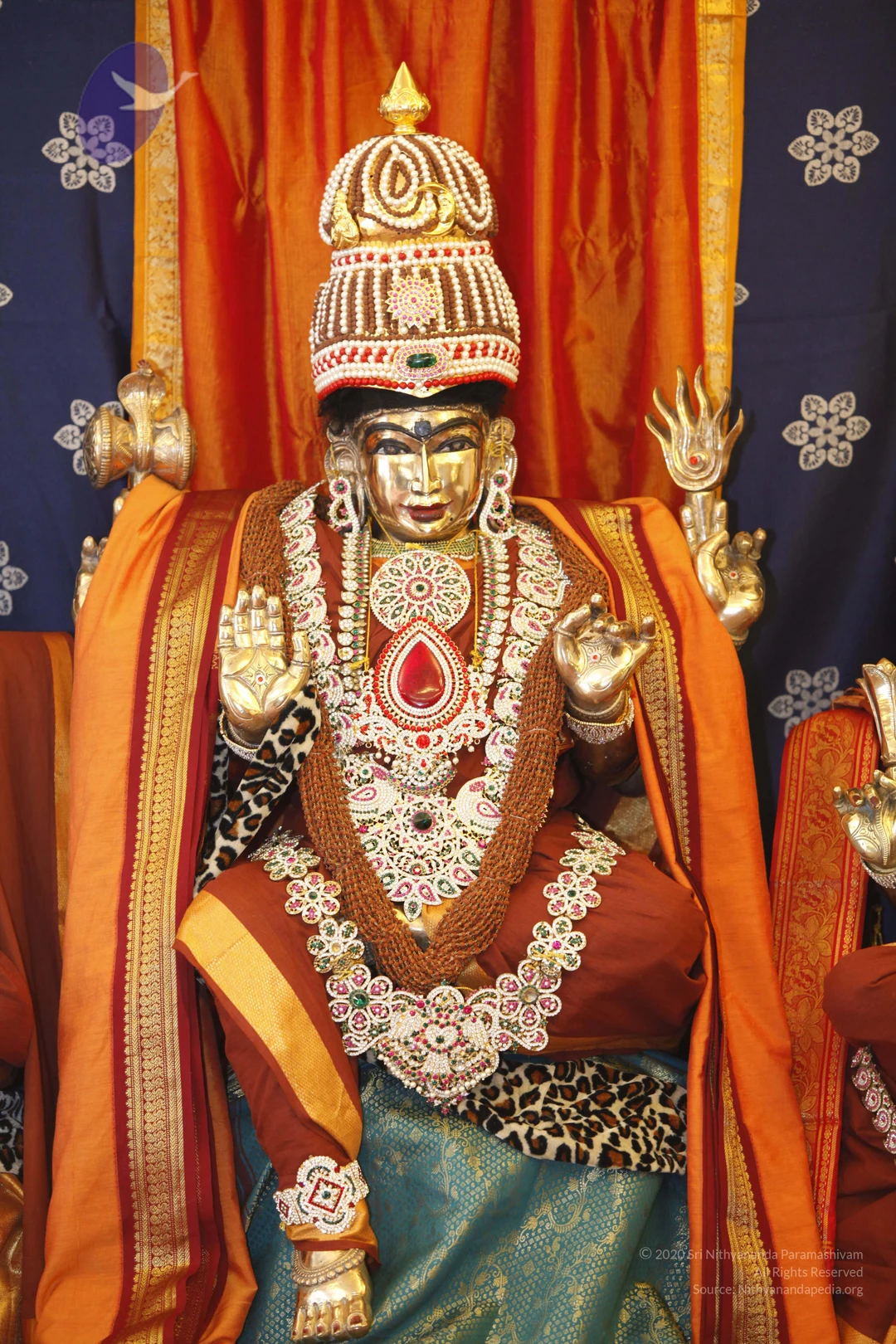
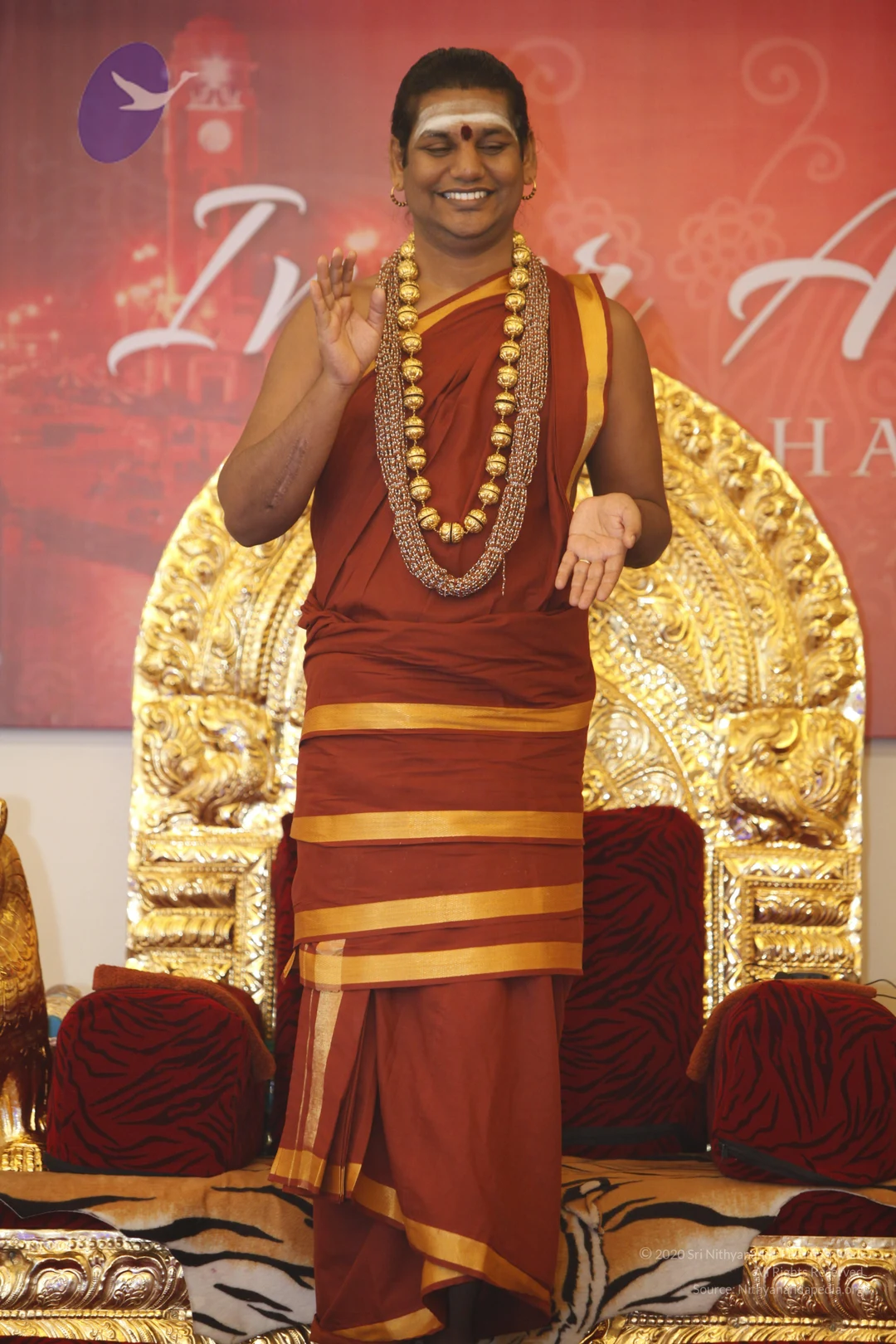
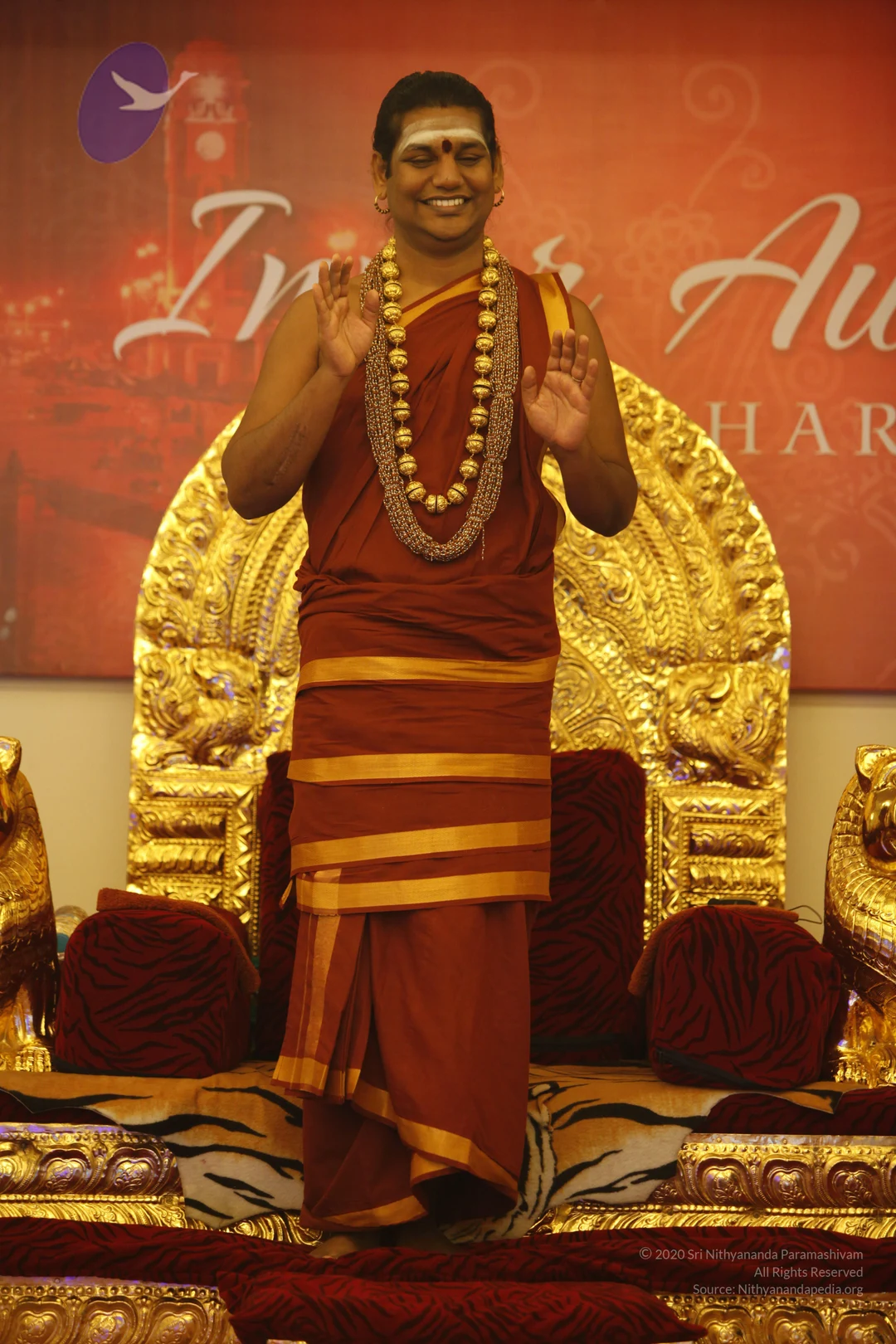
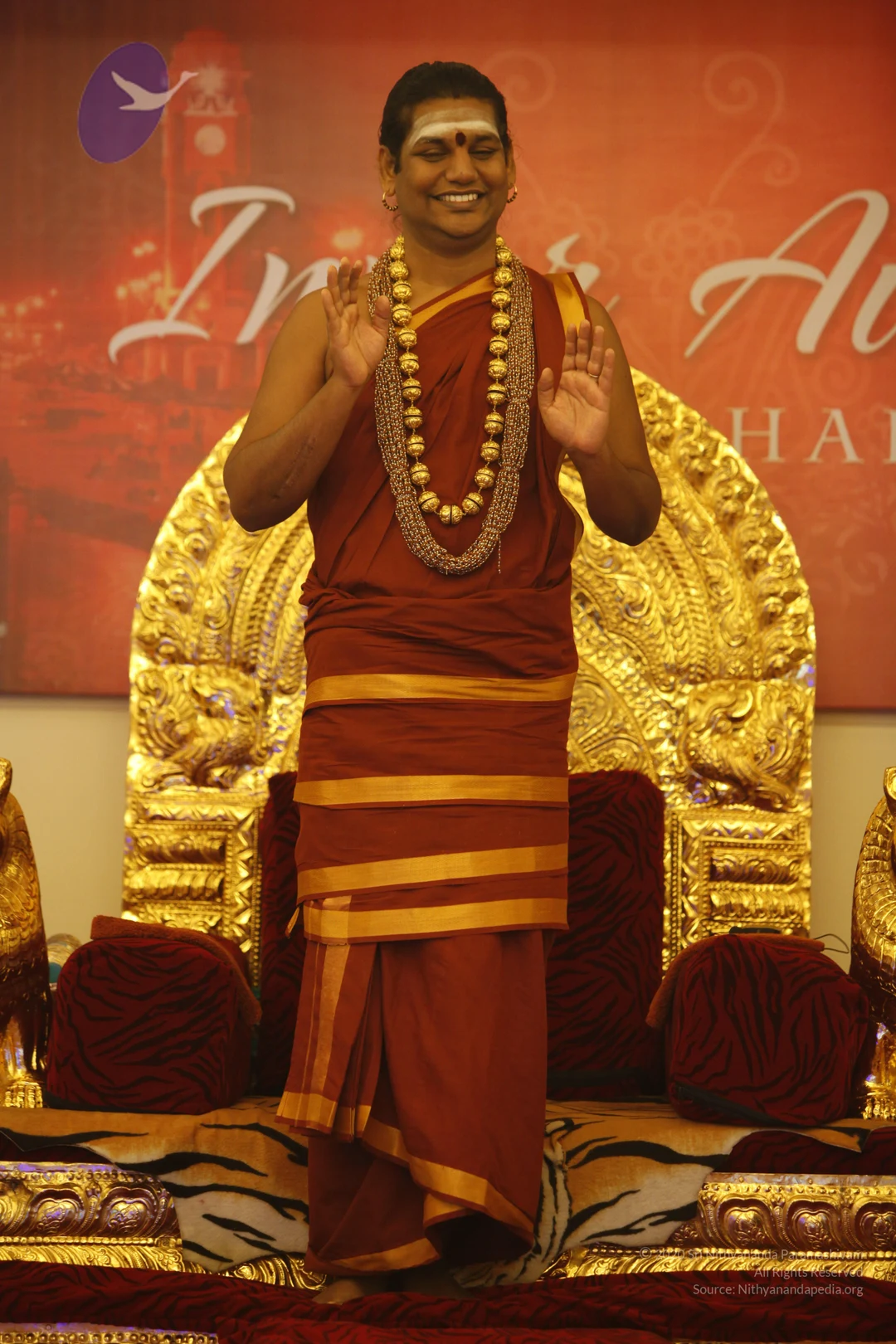
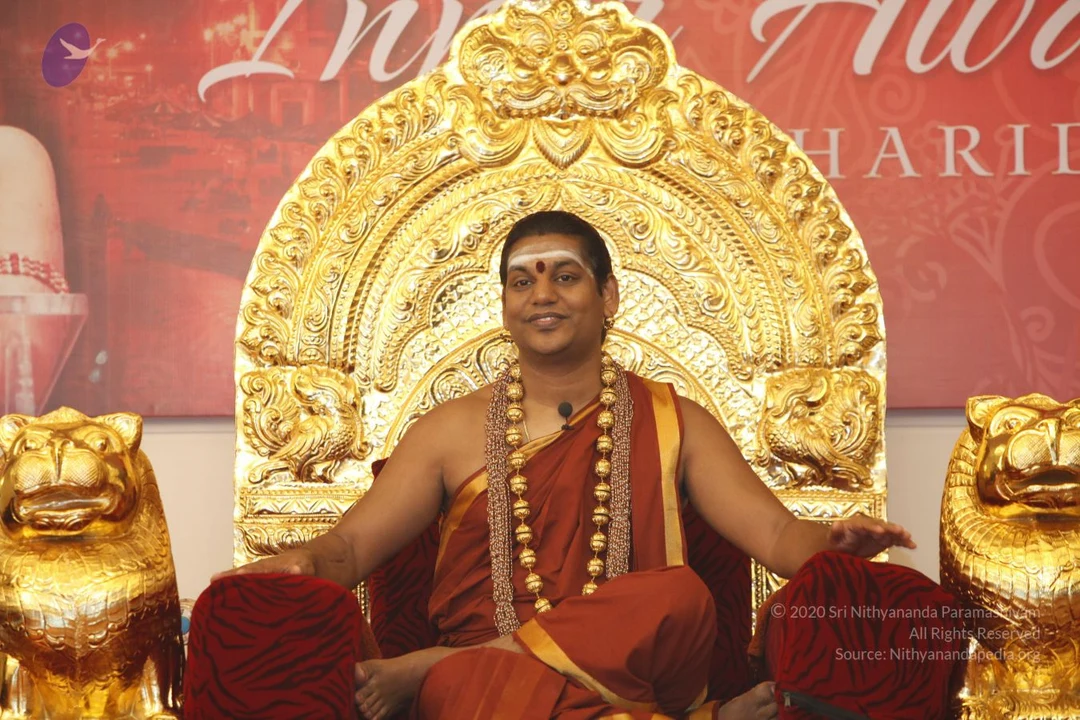
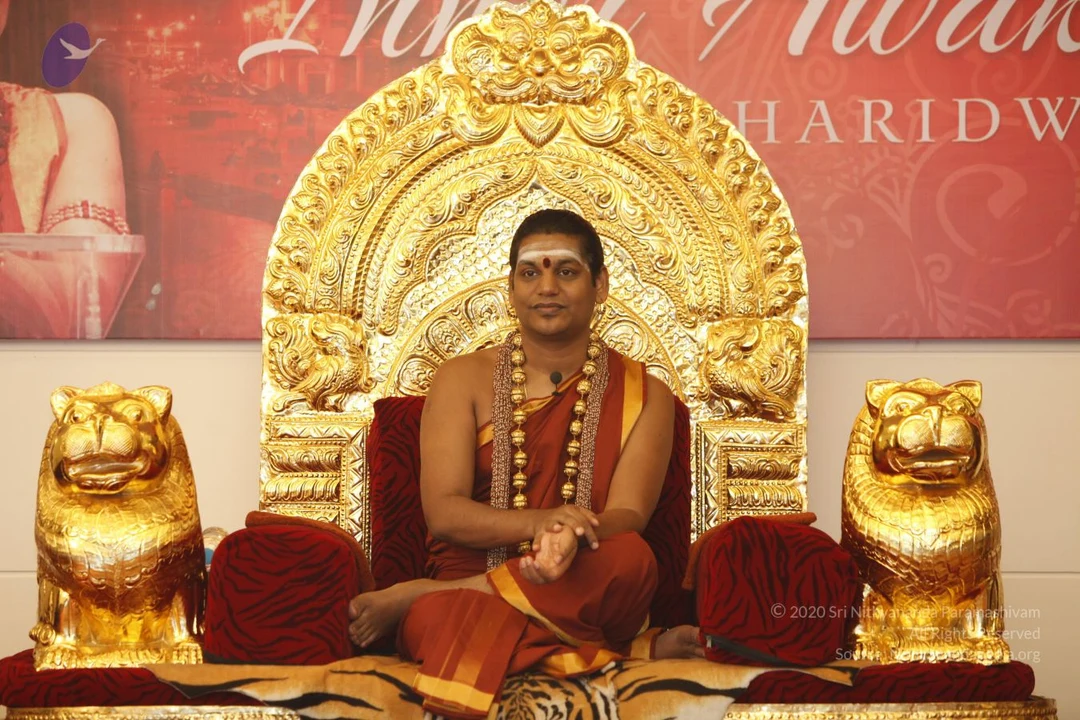
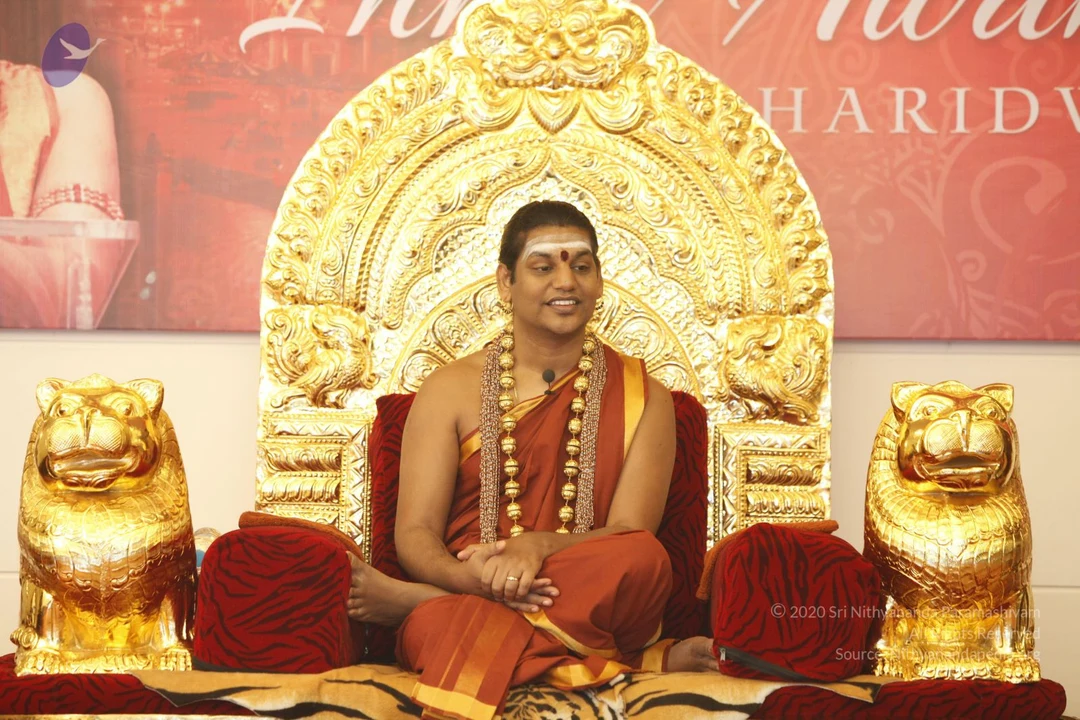
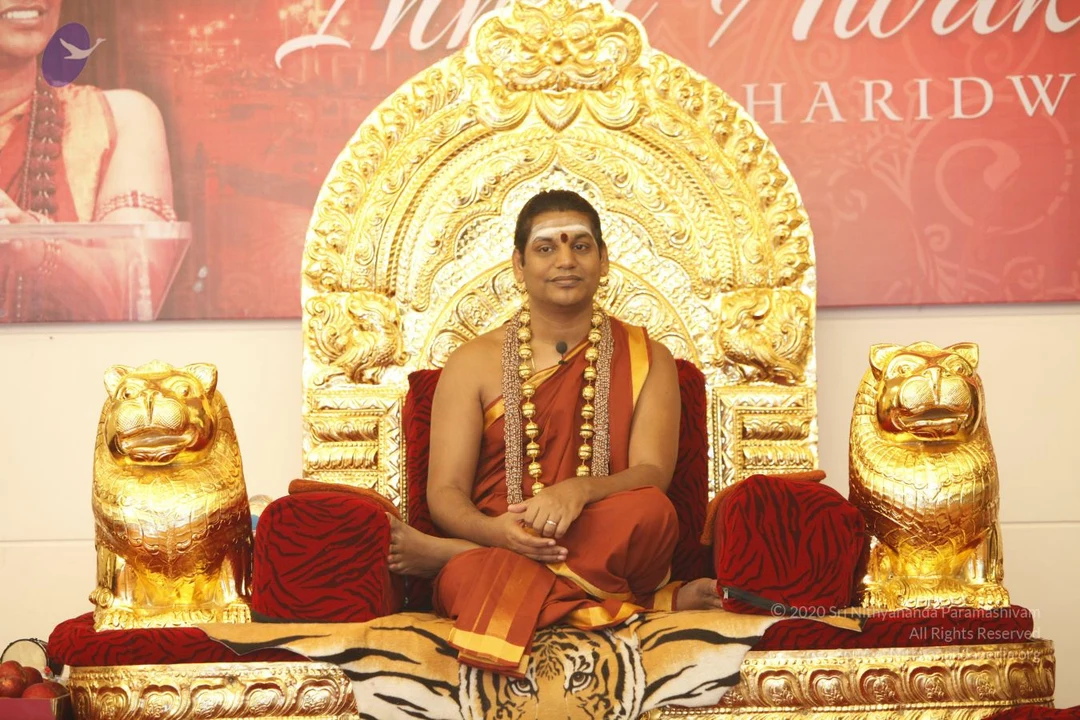
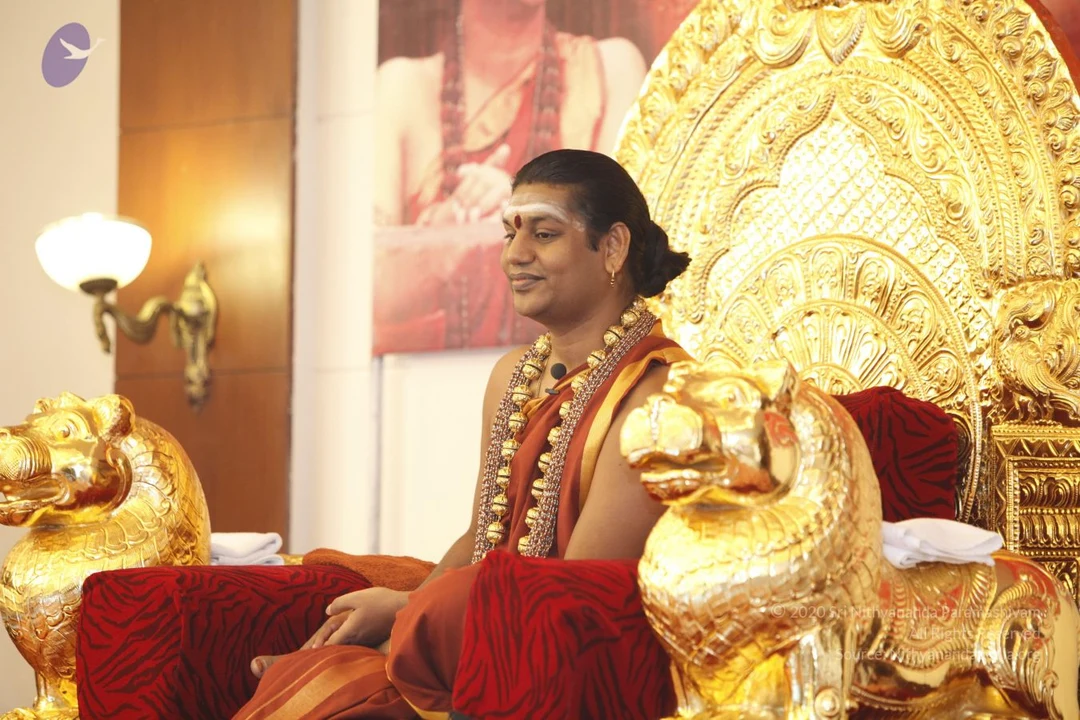
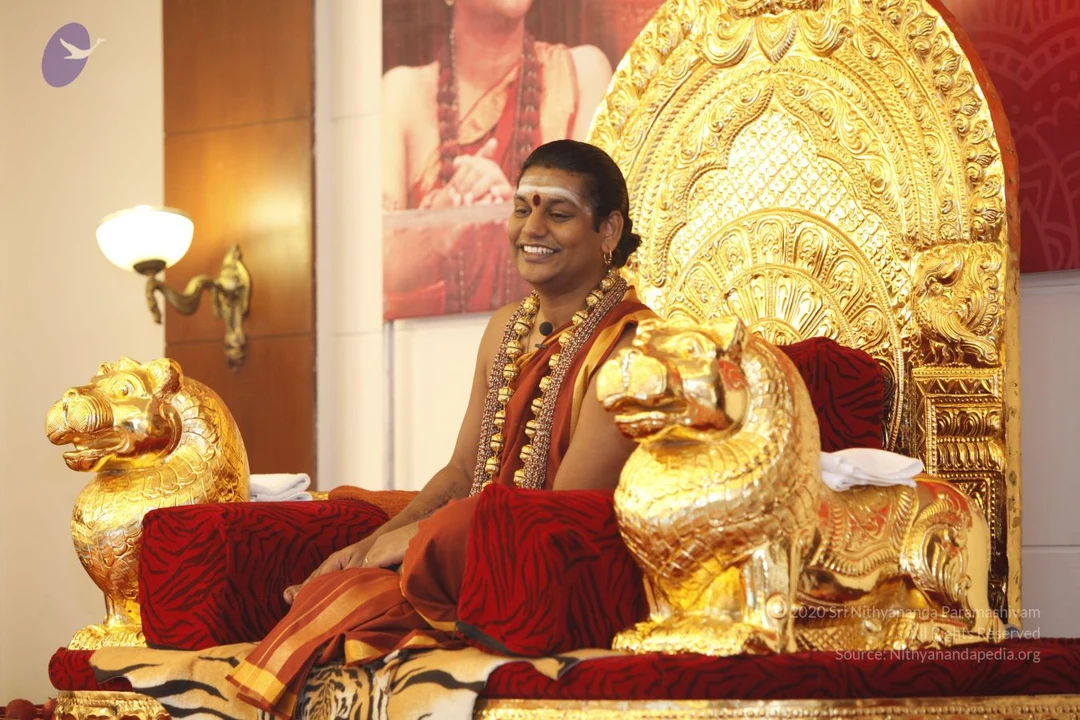
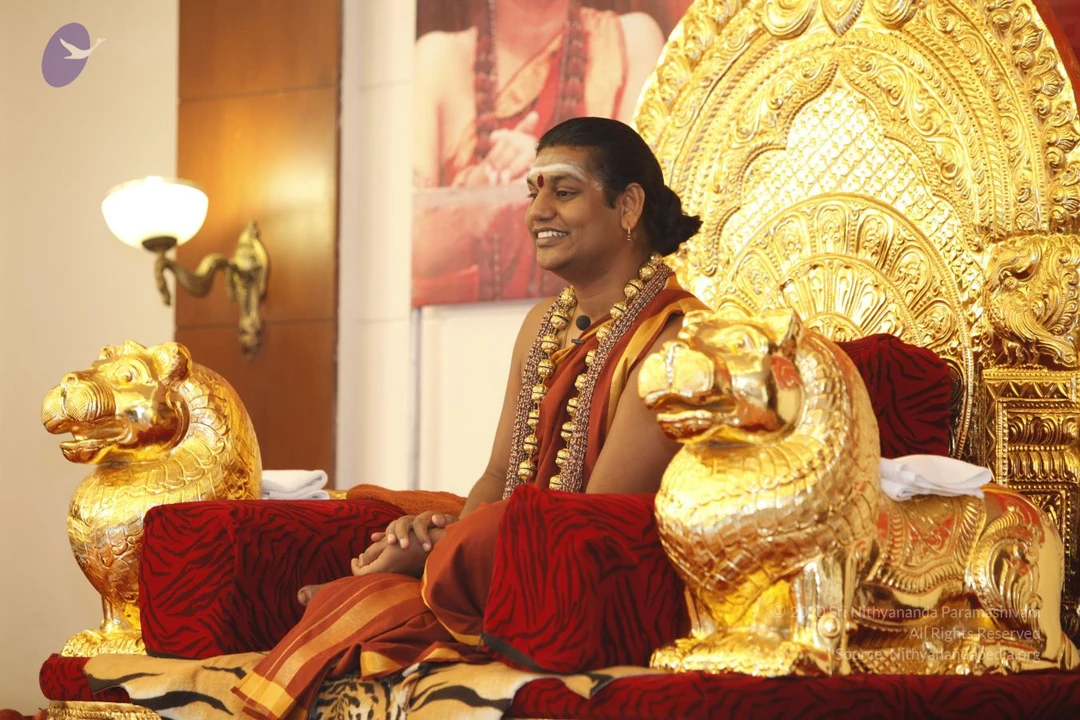
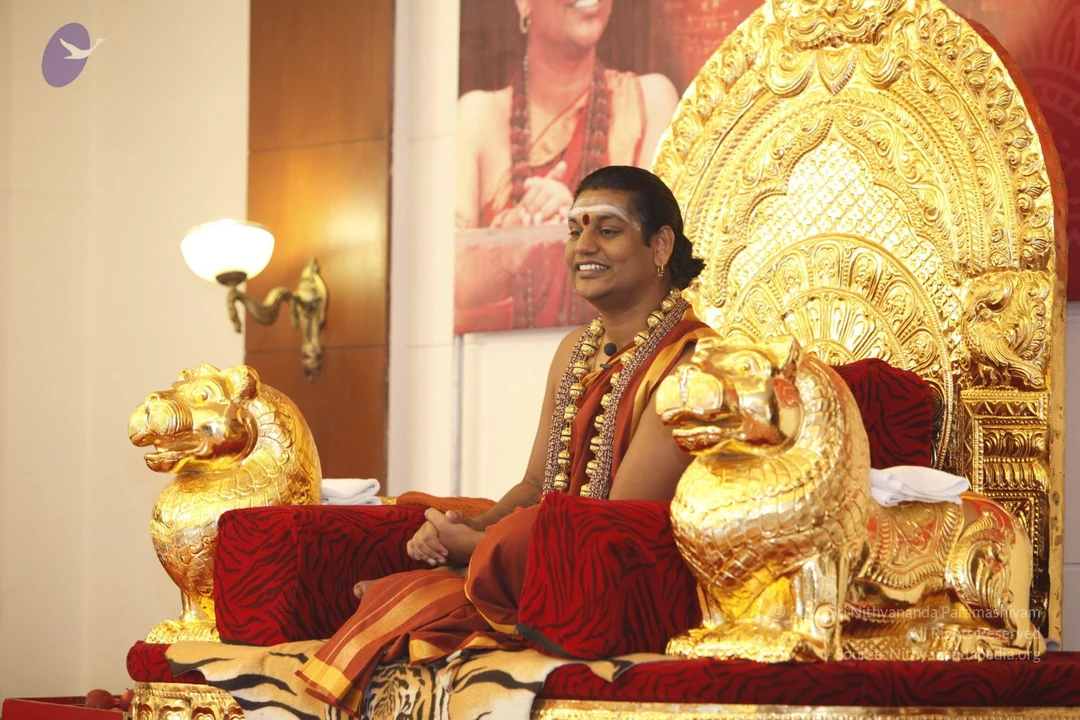
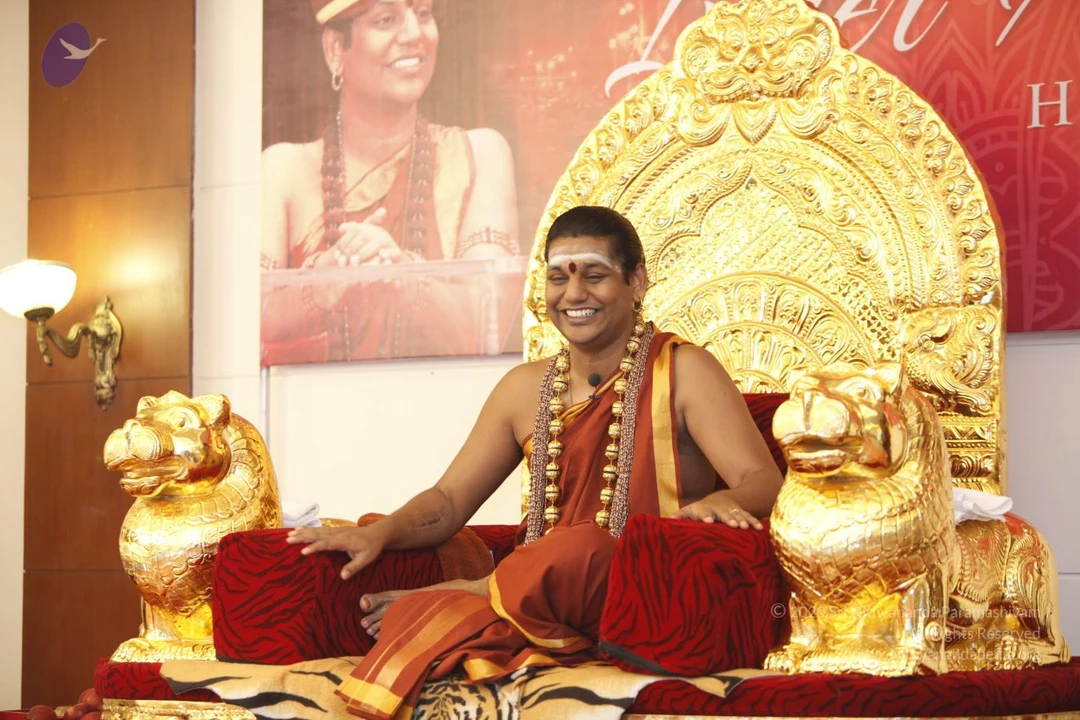
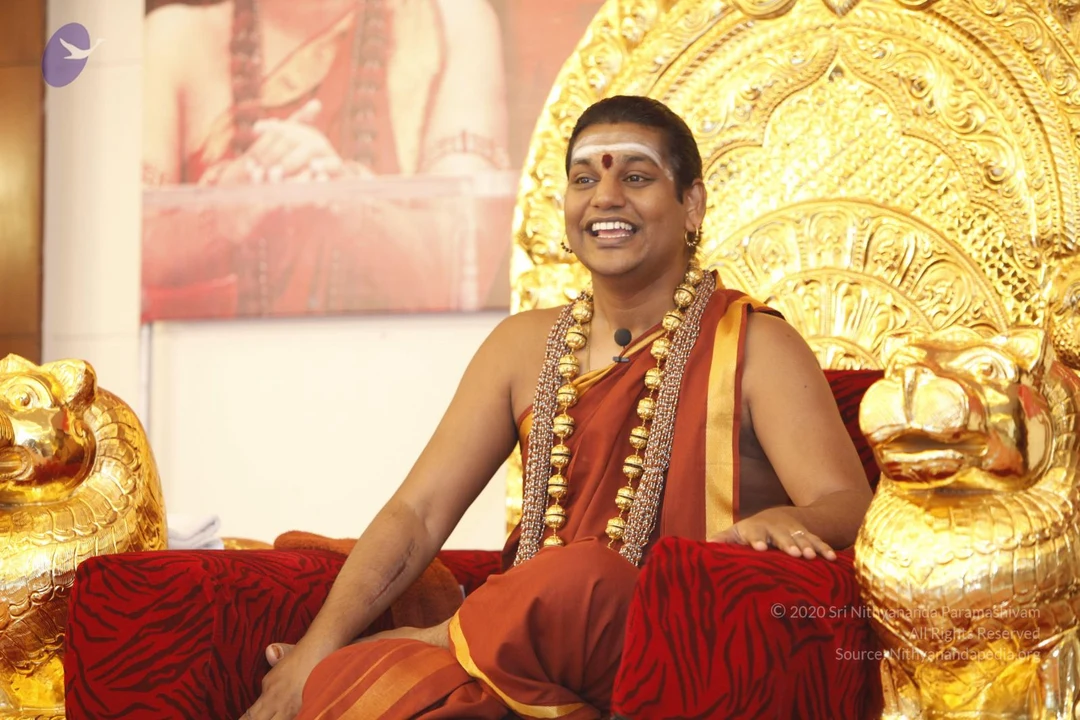
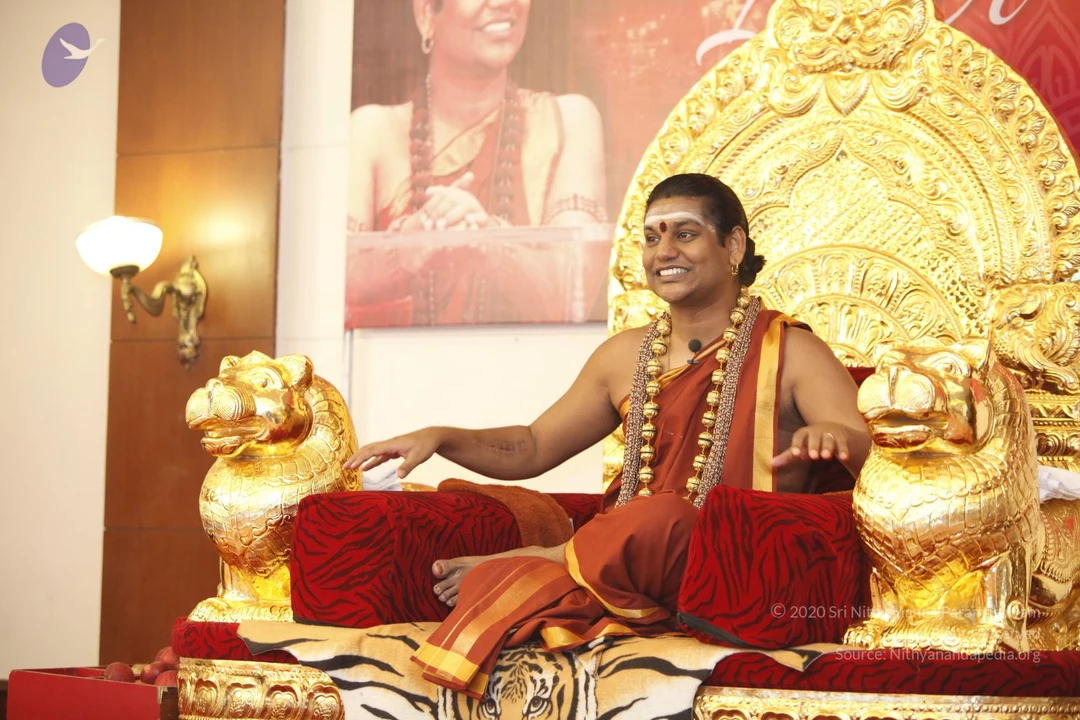
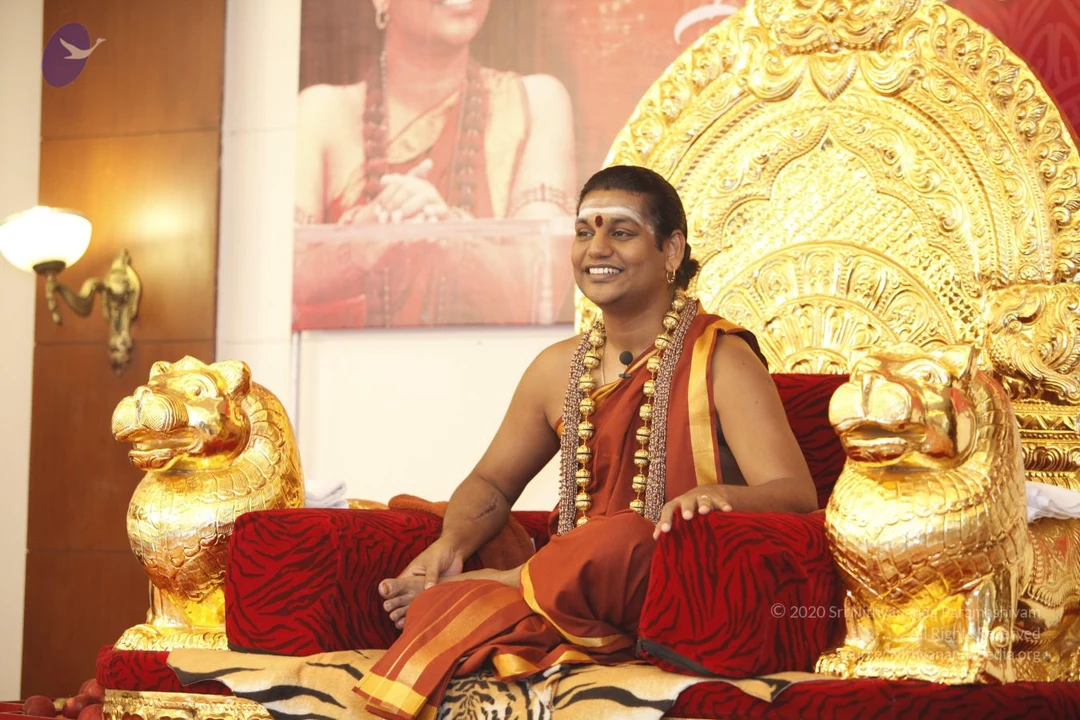
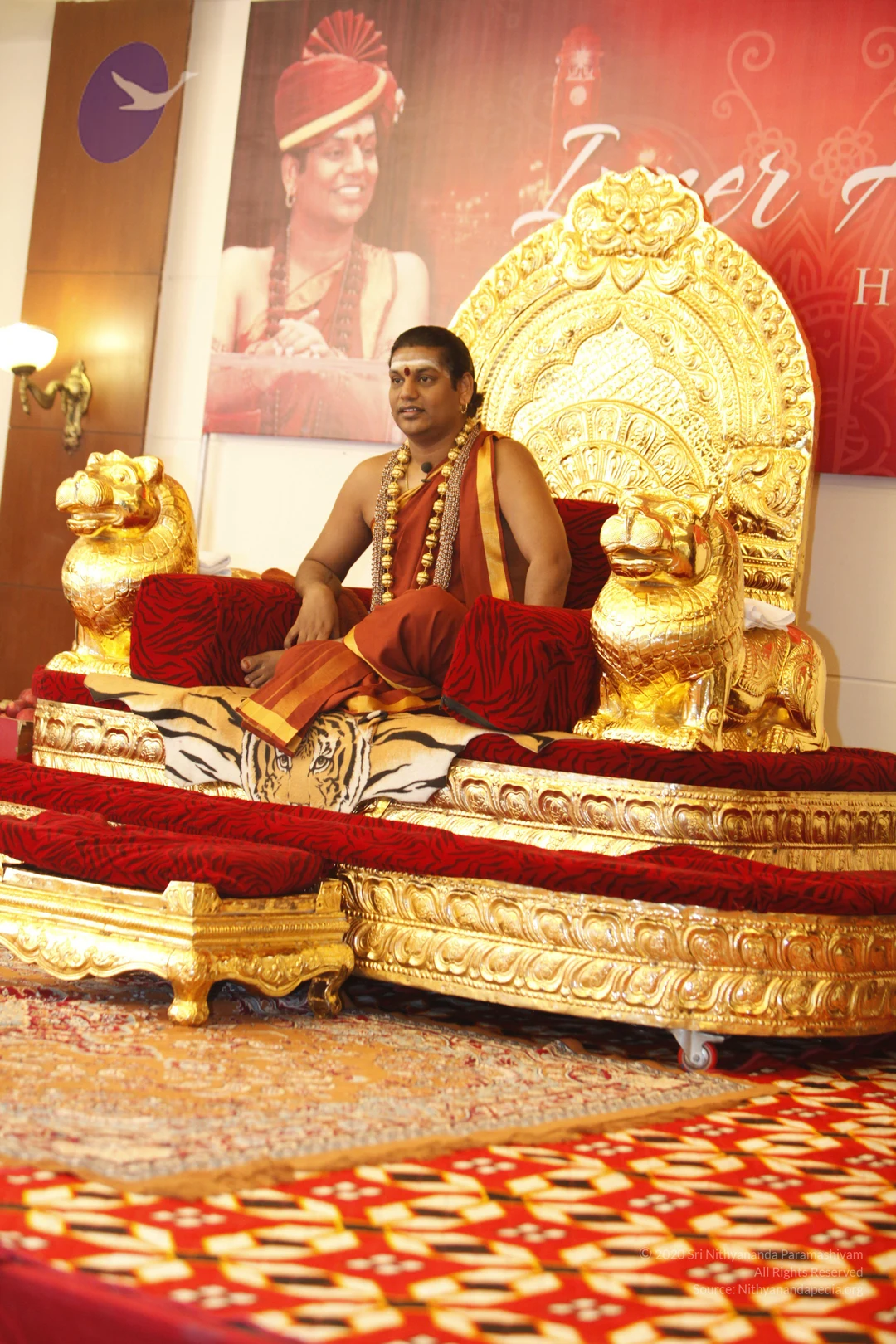
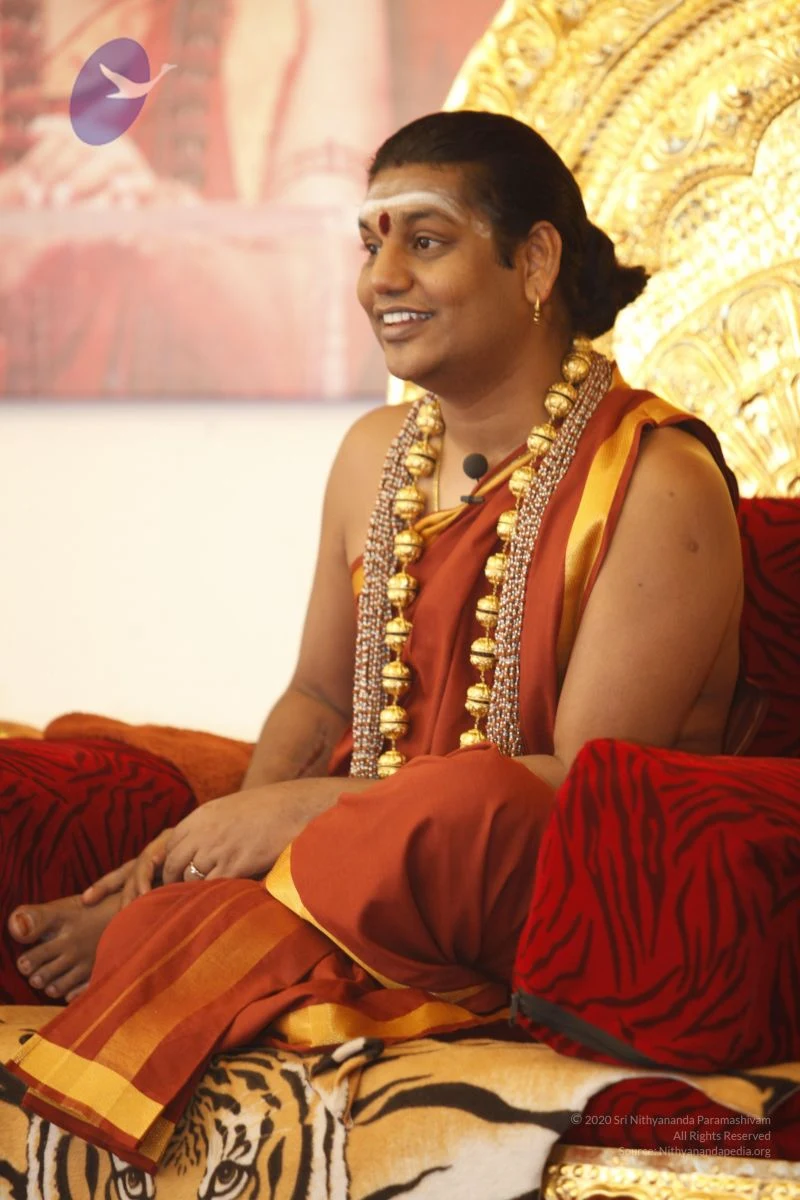
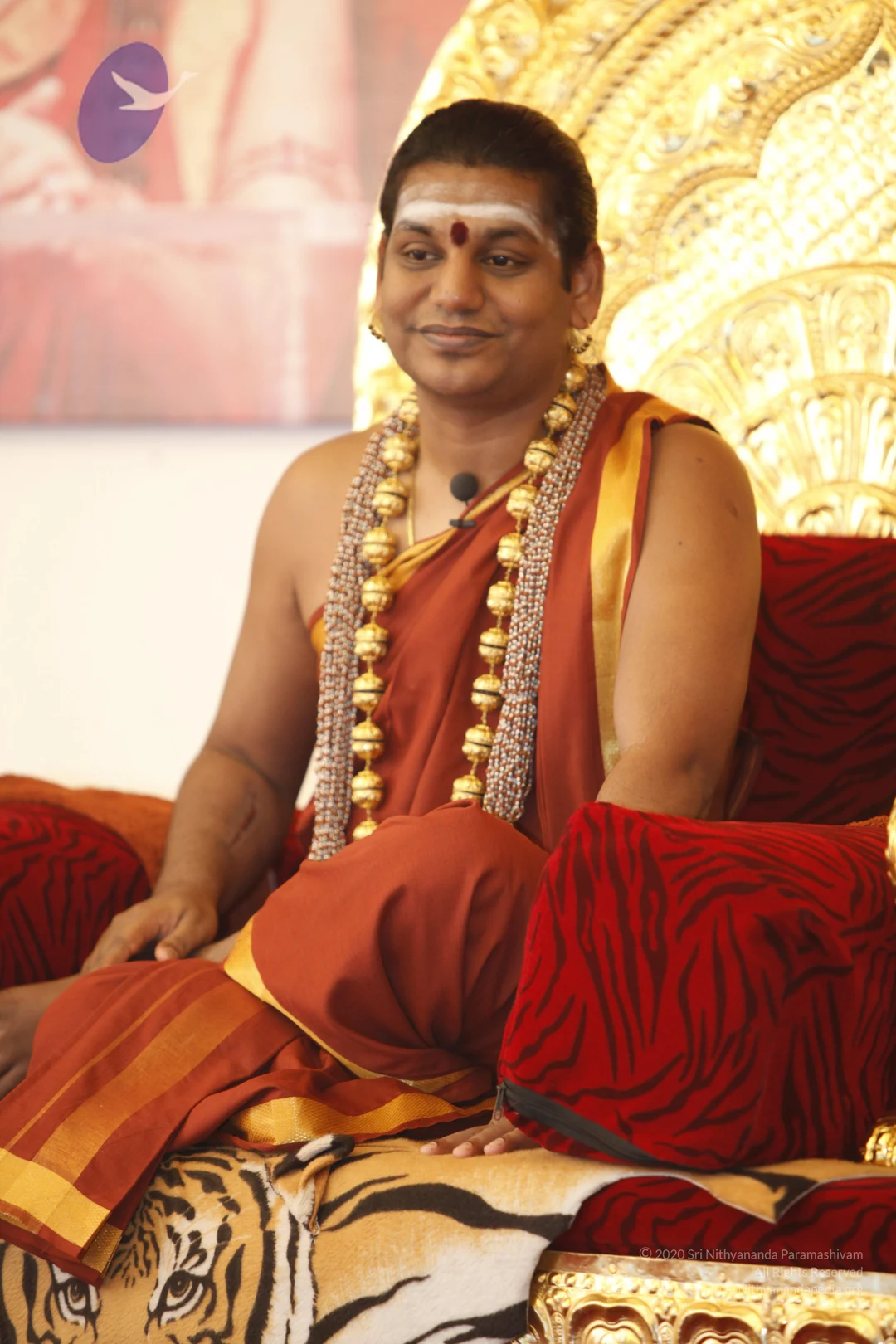
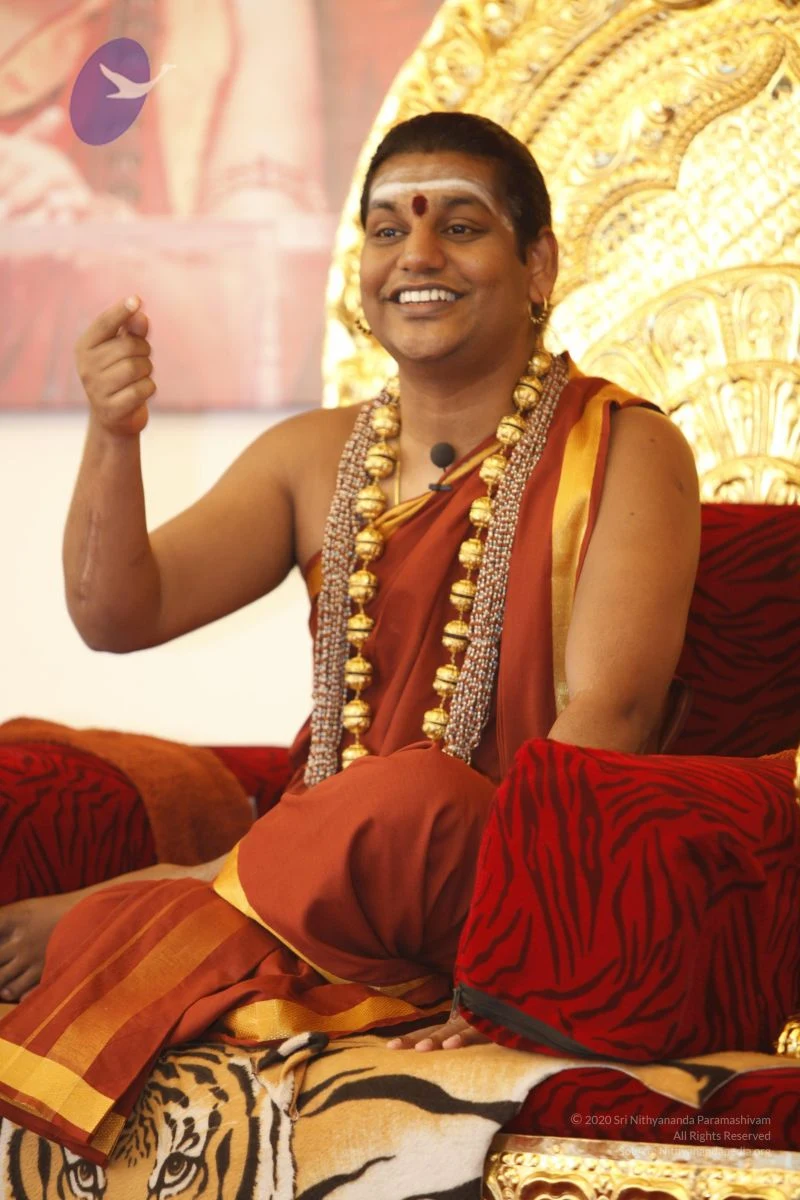
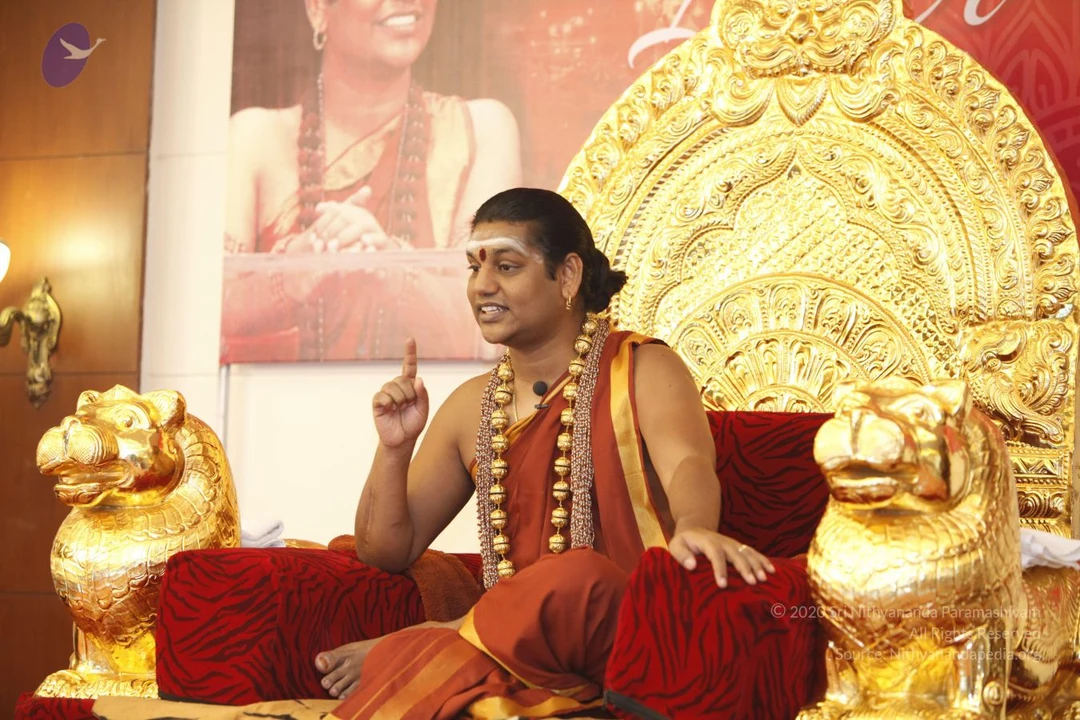
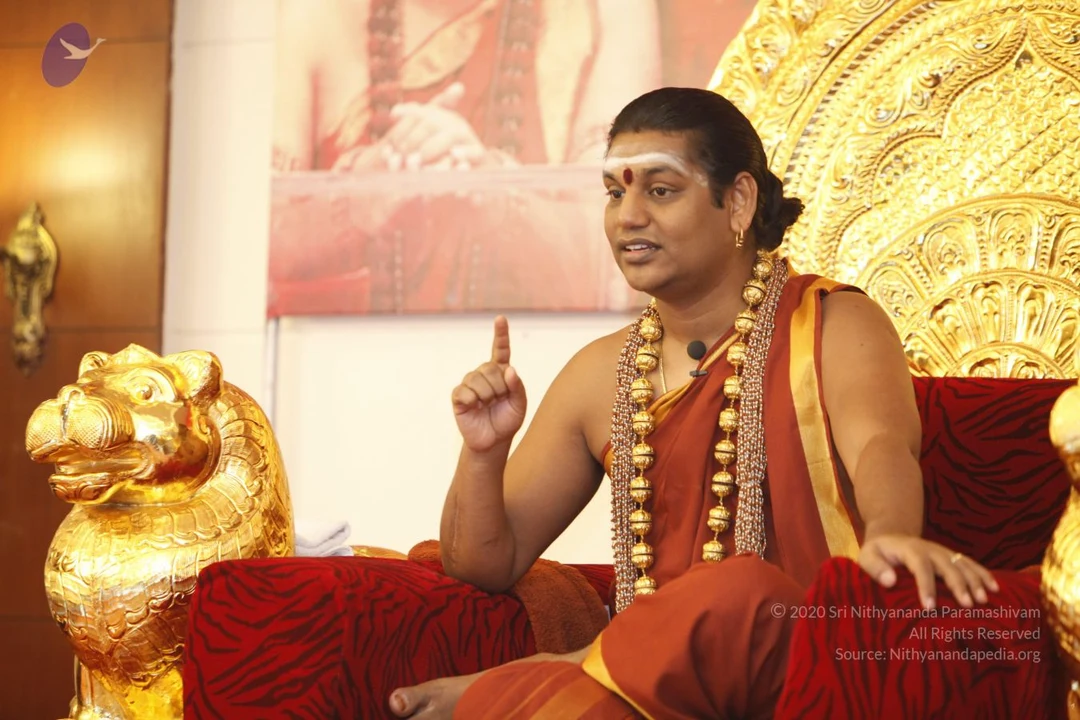
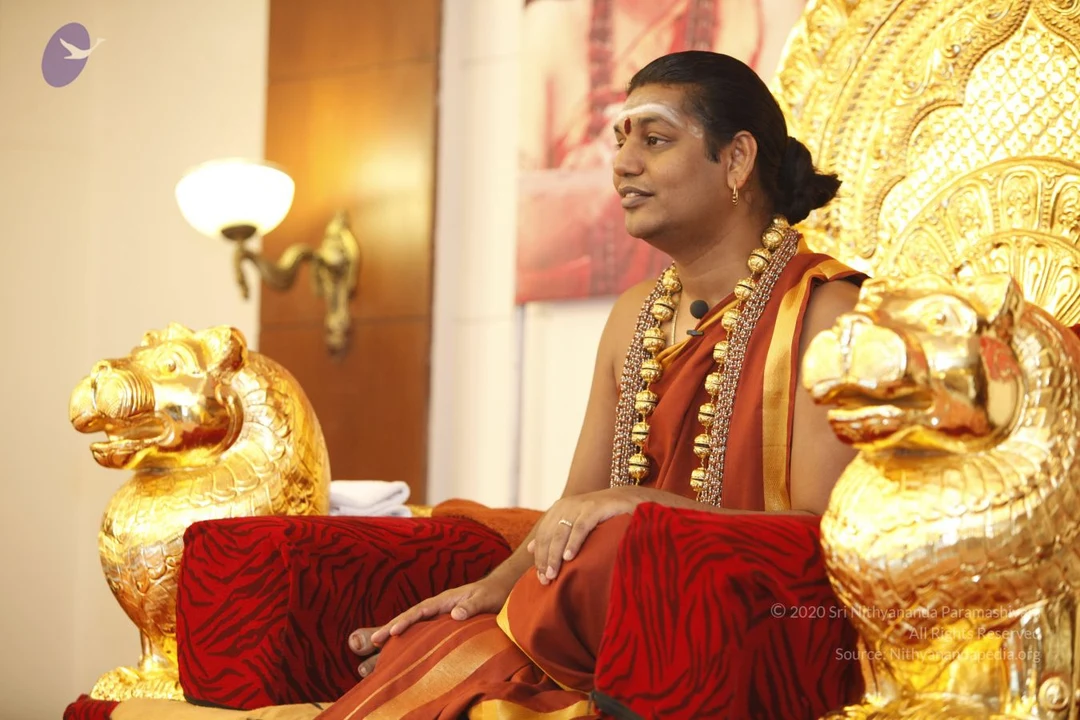
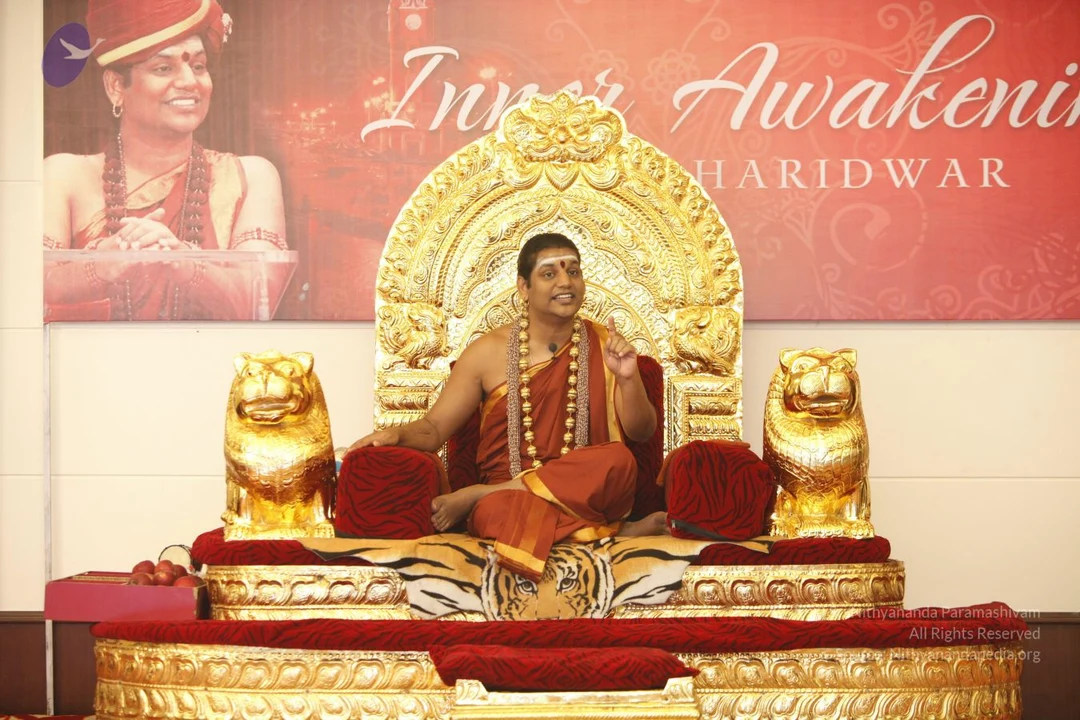
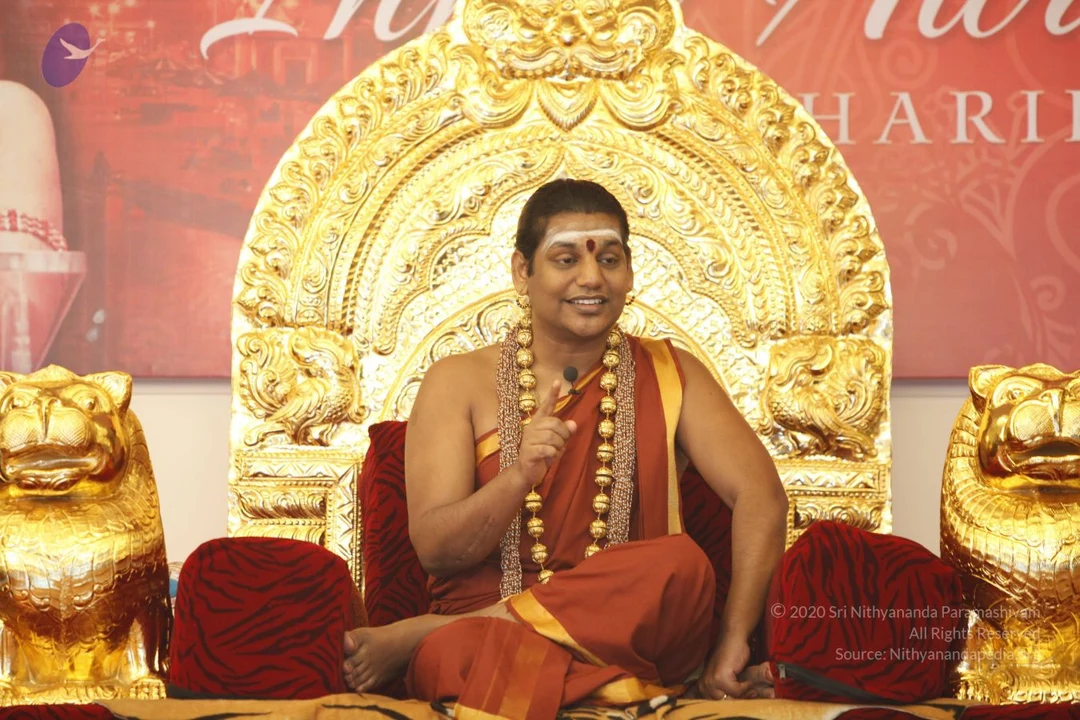
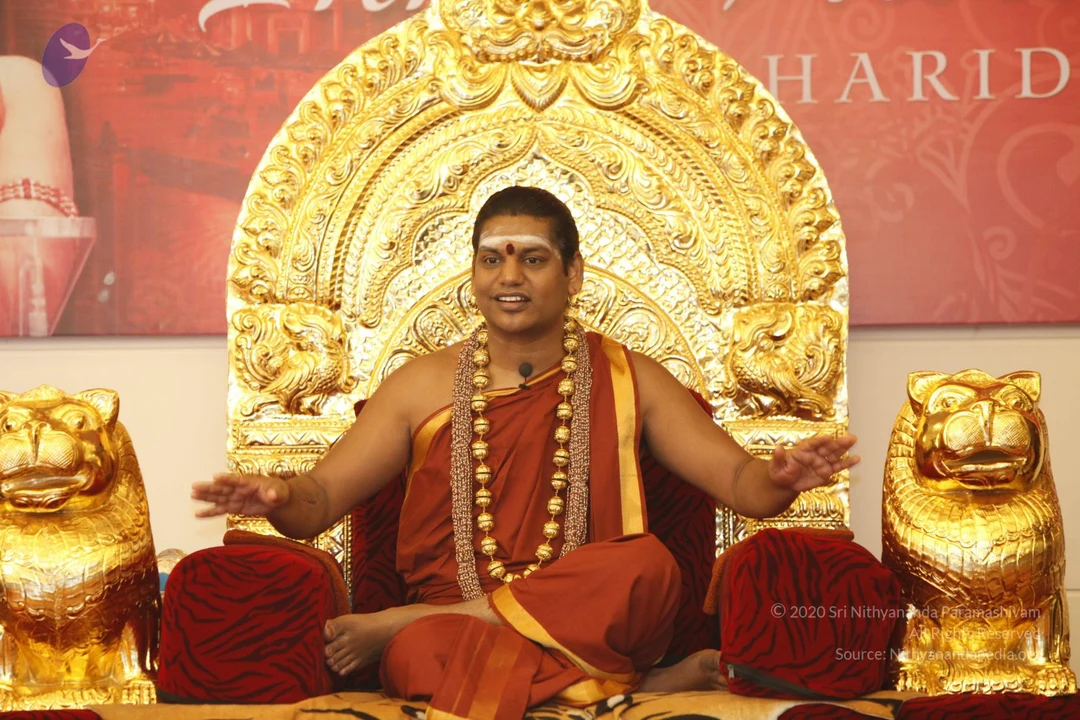
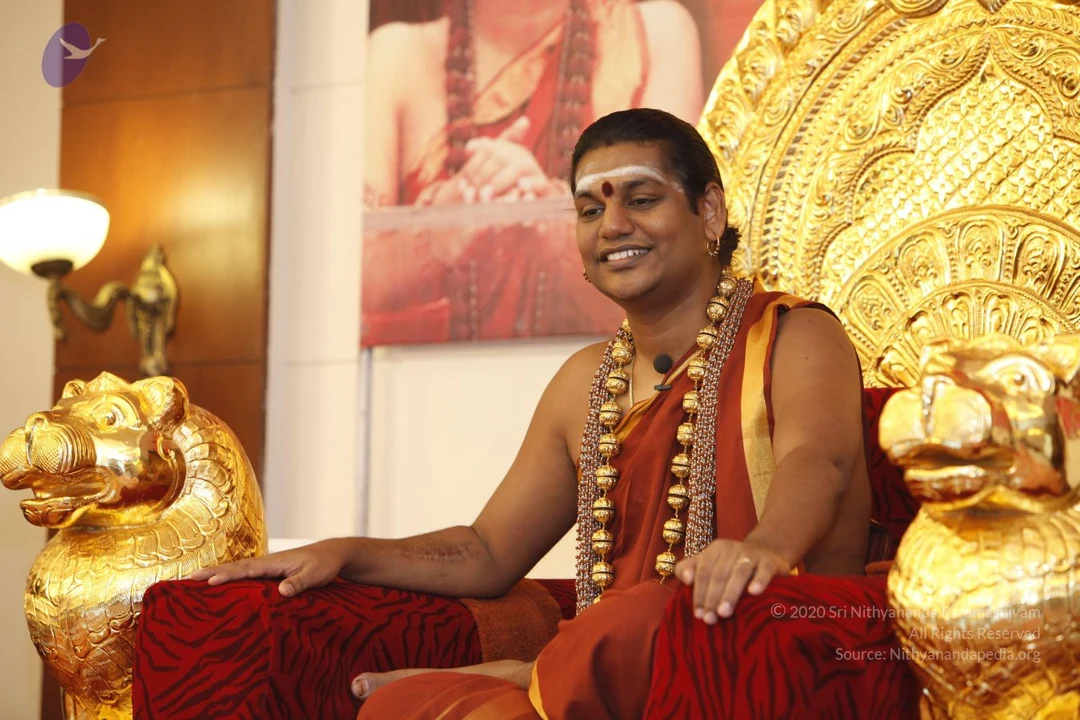
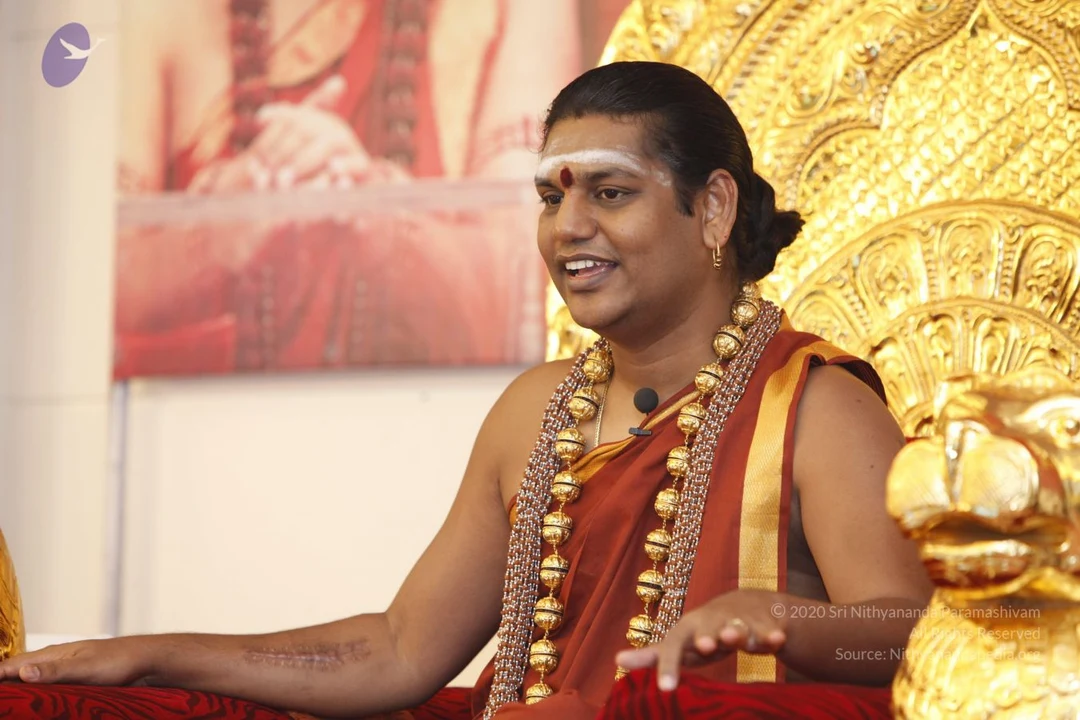
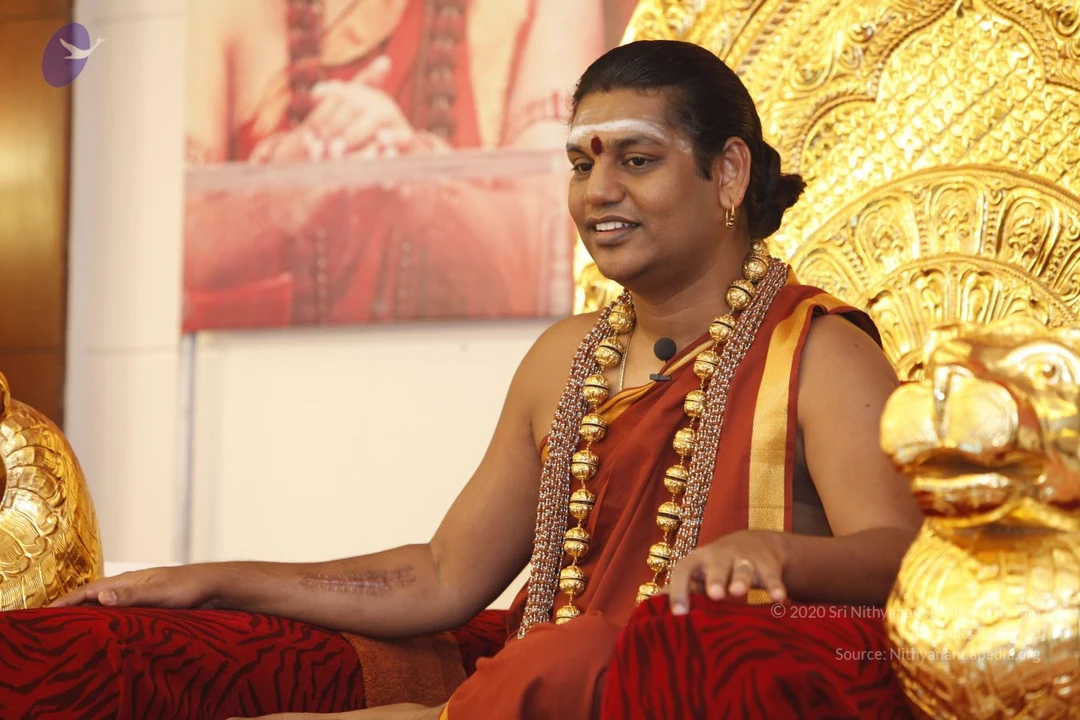
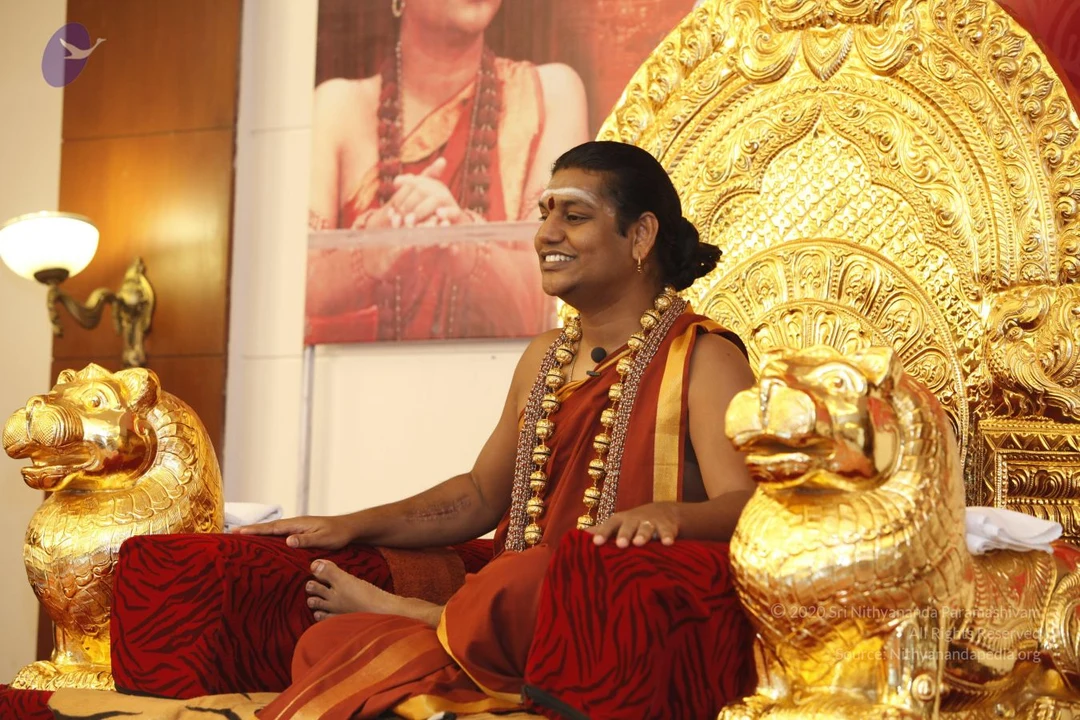
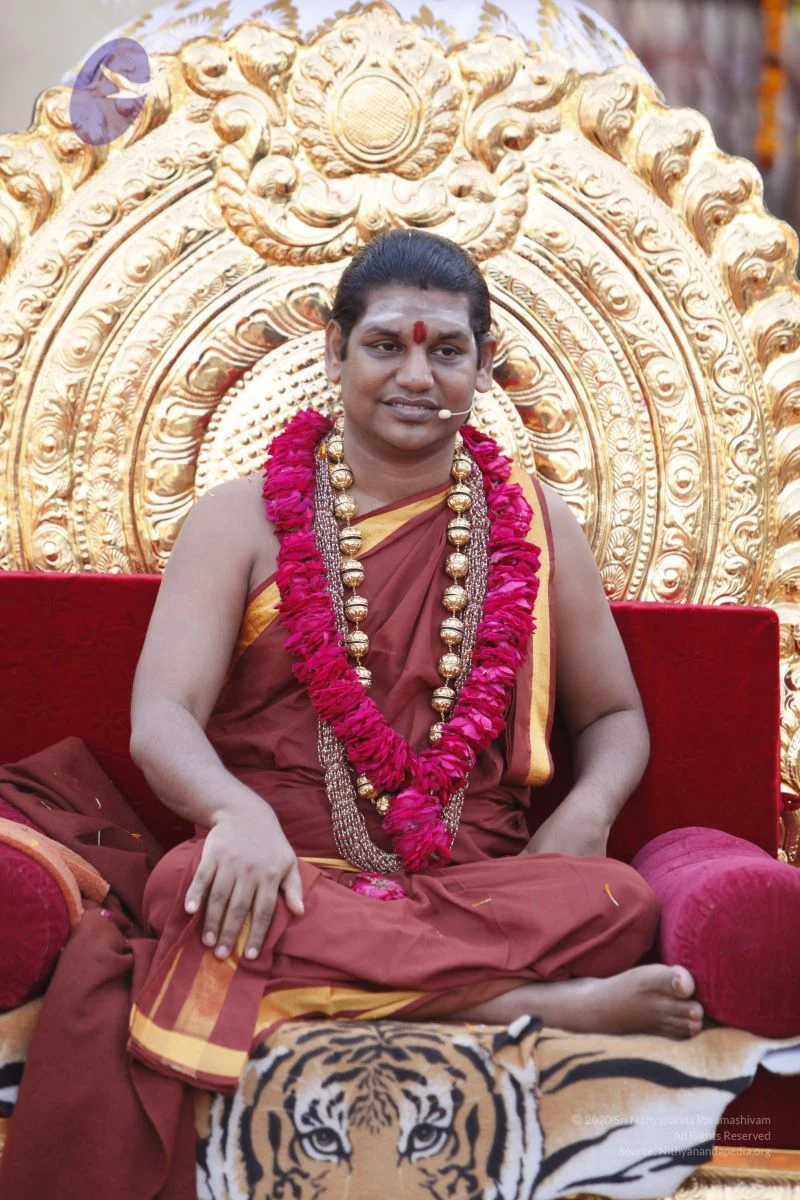
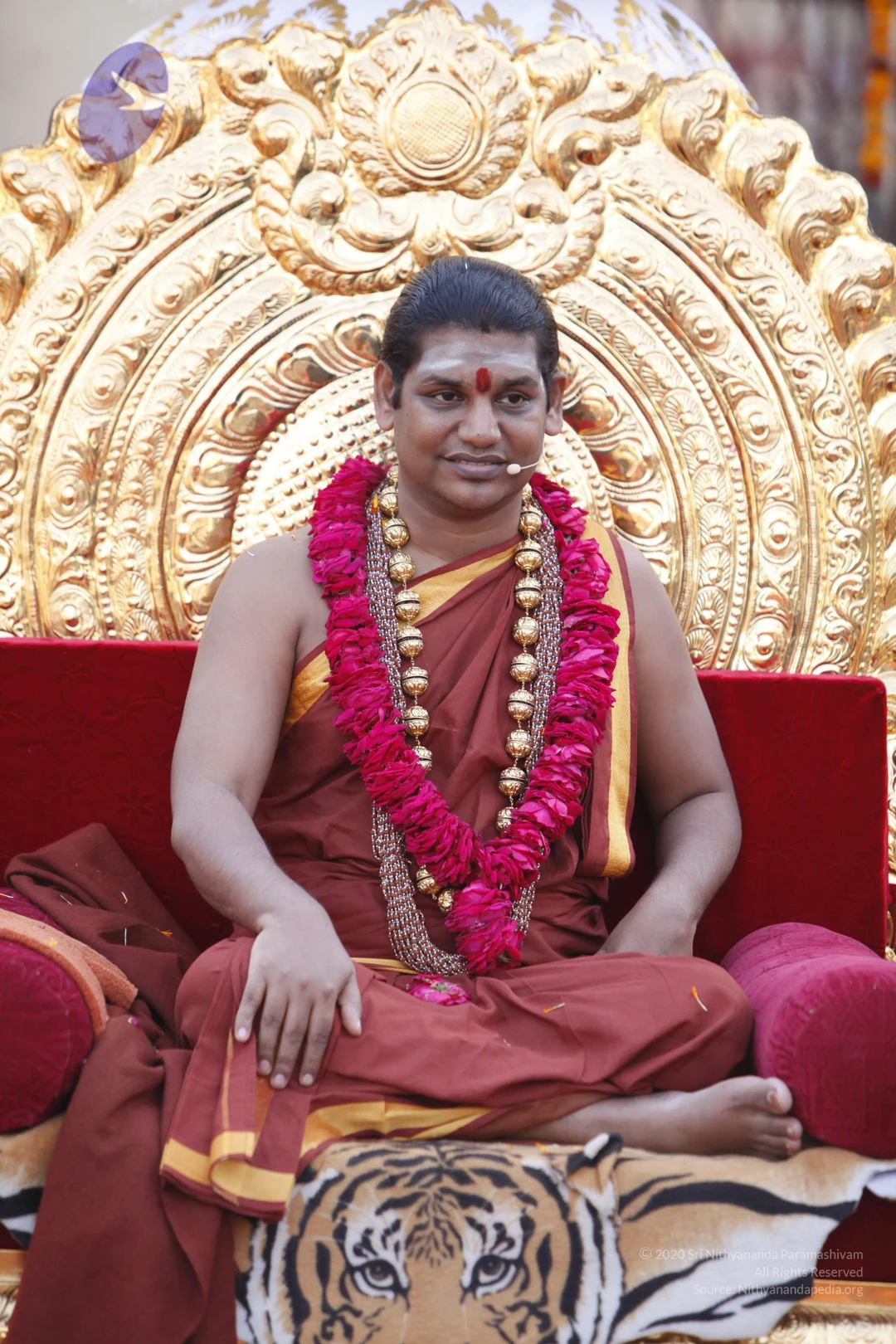
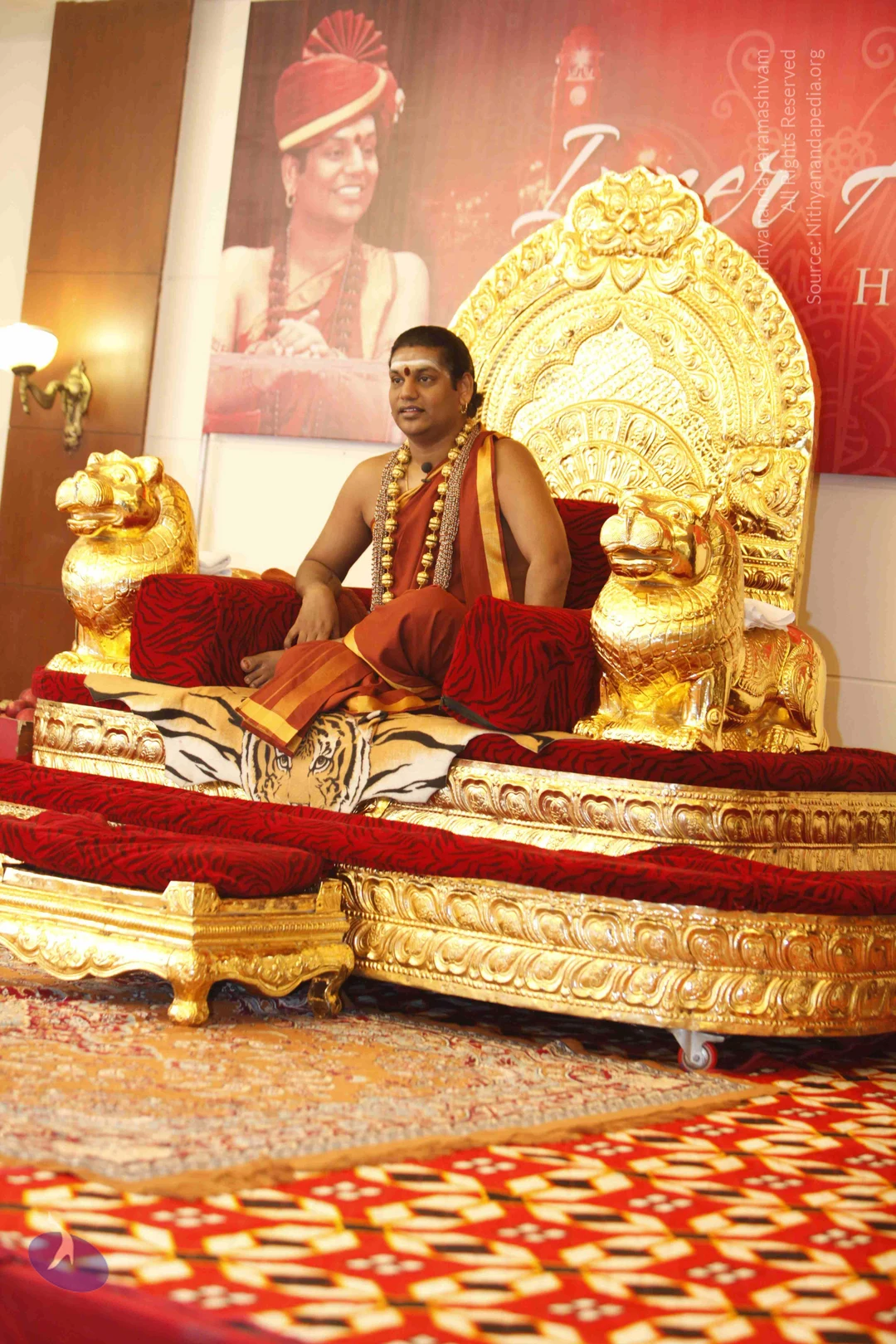
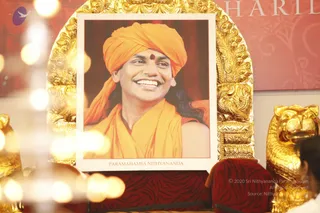
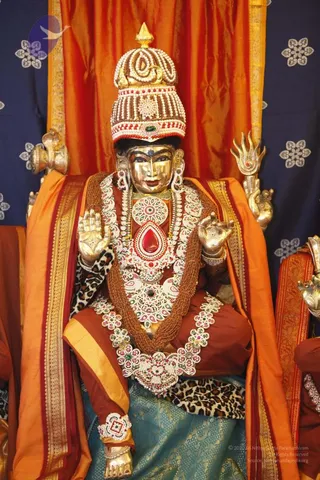
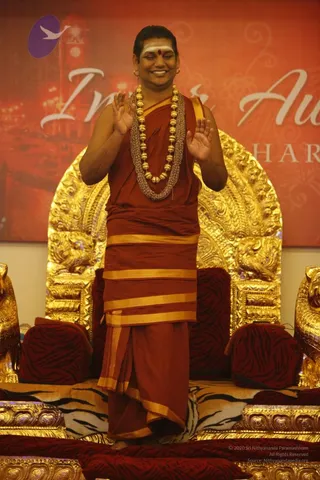
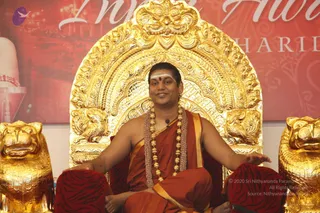
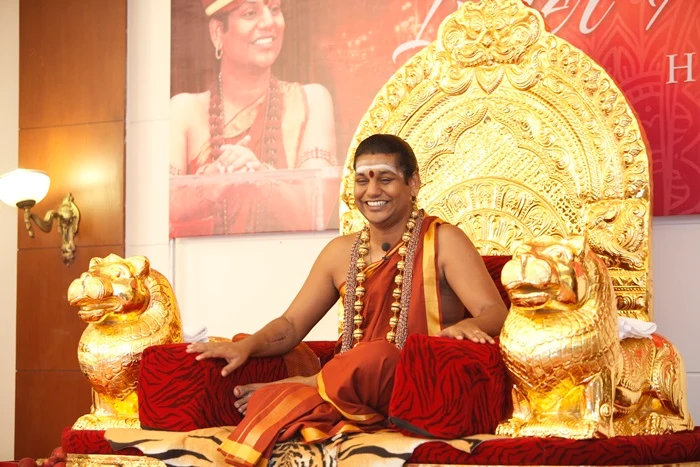
A photograph of a seated satsang or puja gathering in a carpeted hall with white chairs. In the foreground, a woman with long wavy blonde hair, a yellow and gold printed kurta and a red-orange shawl sits cross-legged, holding a small brass item and a flower near a tray. A white tilak is on her forehead. Beside her, a woman in white with glasses and a red shawl holds a small object. Other devotees in white and red shawls sit with eyes closed or heads bowed behind them. A low orange cloth holds brass puja plates, flower petals, a small kalasha-like vessel, and a brass box with offerings. The woman in yellow may be a person candidate, with a distinctive flowing hairstyle and gold-patterned ceremonial clothing, but the appearance is uncertain. Several people sit in the background among white chairs.A framed printed portrait of a smiling man in an orange-saffron turban and orange robe with a red bindi, displayed on a gold ornate arched stand flanked by gold lion-headed carvings on red zebra-striped cushions. A photo of a person ceremonially honoured at a satsang stage. The portrait is captioned with the printed name "PARAMAHAMSA NITHYANANDA" beneath it, and a blurred foreground of bokeh lights and a partially visible seated figure at the right edge. a person appears only as the printed portrait, a depiction.A golden statue of a seated deity murti, shown in a close frontal view against orange draped fabric and a navy backdrop with white floral motifs. The figure wears a tall pearl-and-red-beaded crown with a gold finial, layered jewelled necklaces with red and green stones, a red teardrop pendant, and a rudraksha-style brown beaded mala. The gold hands are raised in mudra gestures, one holding an object near the chest, and a leopard-print cloth is draped over the seat. A teal patterned skirt and gold anklet are visible at the base. The statue is an image, not a physical person, and no devotee or priest is visible in the frame.A smiling man in a rust-red sannyasi robe with gold-bordered wrap stands with palms raised in front of an ornate gilded throne with lion-carved armrests, draped with red and tiger-striped cushions. He wears a long multi-strand gold bead necklace, a white vibhuti line with a red kumkum dot on his forehead, and gold earrings. Behind him a red backdrop reads Inner Awakening and the word Har partially visible. The image is a photo of an event stage. Appearance-based candidate: a person, shown in person with ornate rust-and-gold ceremonial dress, gold beaded mala and a golden throne.A seated man in saffron-red robes sits cross-legged on an ornate gold throne carved with scrolling foliage, flanked by two gold lion sculptures. He wears a long gold bead necklace, a silver-toned mala, a white tilak with a red bindi on his forehead, and a small lapel microphone; his arms are open to the sides. Behind him hangs a red banner with large white and gold script. The setting is a stage or satsang hall. Appearance suggests a person from long-swept hair absent here, but saffron robes, rudraksha-style beaded mala and ceremonial gold necklaces are present, and the page identifies him as a person at this event.A seated man in orange and rust-coloured robes sits on an ornate gold throne with carved golden lion-head armrests and red striped cushions. He wears a rudraksha-style mala with gold beads, a white tripundra mark on his forehead, and a small microphone clipped to his robe. A framed red portrait of a robed figure hangs on the wall behind him, and a golden wall lamp is visible on the left. Swamiji (probable): long dark hair swept into a bun, ornate gold necklace and orange-saffron robes, seated in a satsang setting.

Sriyantra-Mandir

92 photosSource gallery
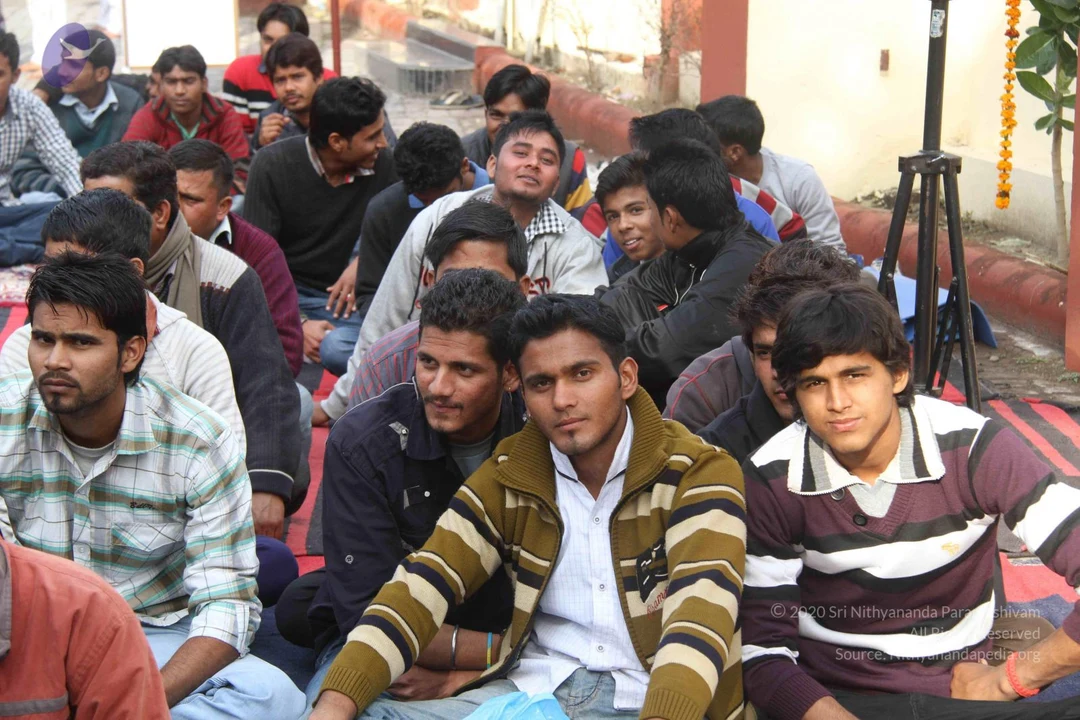
Exterior of a pale pink sandstone temple shrine with a stepped, tiered shikhara tower topped by a red flag on a metal pole. The arched entrance has a dark wooden door and carved pillars, with yellow signboards in red Hindi lettering above. Lattice jali windows flank the doorway. A small figure in white clothing stands at the right edge of the frame. The sky is pale and overcast.Exterior photograph of a pale pink sandstone temple complex under a bright, overcast sky. A stepped, tiered shikhara tower rises at left, topped by a small flag on a pole, with carved lattice screens and pilasters on the facade. A pillared entrance with a wooden door stands at centre, and a tiered white balcony runs across the upper level of the building to the right. A small ornate shrine with a red-and-white flag sits at the base of the right wing. A few people are partly visible at the bottom edge, one in white clothing. Shrubs and a potted plant frame the foreground.A large group of young men sit closely together on red and dark mats in an outdoor courtyard, facing toward the camera side. In the foreground a young man in an olive and cream striped zip jacket over a white collared shirt looks ahead, and beside him a young man in a maroon and white striped sweater looks to the right. Behind them other men wear sweaters, jackets, plaid shirts and scarves. A black tripod stand with a camera rises at right, and a string of orange marigold garlands hangs from a tree branch, beside a red-tiled wall. No portrait or figure identifiable as a person is visible in the image.Outdoor photo of a floral rangoli-style design made of pink, red and orange rose petals and marigold blossoms laid on the ground in front of a pale temple building with latticed windows and a wooden door. A man in an orange kurta holds a microphone and speaks, and a man in a red-ochre robe with a rudraksha mala stands with hands joined in namaste at right beside a gold-coloured ceremonial item. Other men in white, grey and red clothing stand around, a plant and marigold garlands hang nearby, and a red cloth covers a platform at left.A photograph of an outdoor courtyard where a large circular floral design of red, pink and orange-yellow flowers, with marigold borders, covers the paved ground. Along the right, a framed portrait of a bearded man in a white turban and white robes, garlanded with marigold and red flower garlands, sits on a small red-trimmed platform. Two white decorative parasols stand at left. A man in a maroon-red robe with a gold-coloured garland around his neck holds a red flower garland near one parasol, while another man in a white jacket and jeans stands at the left edge. Marigold strands hang along a cream wall with red pillars behind, and a tree and iron railing stand beyond.Outdoor photograph of a welcoming moment at a temple courtyard with a gold-coloured ornate structure at the right edge. In the centre, a bald man with a white forehead mark wears an orange-brown dhoti and shawl, a rudraksha mala around his neck, and holds a brass plate with flowers and offerings. Facing him from the right, a bare-chested man with a red-and-gold shawl and a fresh marigold garland stands with hands folded. On the left, a man in a grey waistcoat over a red sweater bows with palms joined, and a man in a peach-coloured kurta and orange wrap stands beside him with palms together. Several onlookers in white and grey clothes stand behind them, and a large marigold garland hangs from the plate-holder's arm.

Kalabhairava Darshan - To be edited

1 photoSource gallery
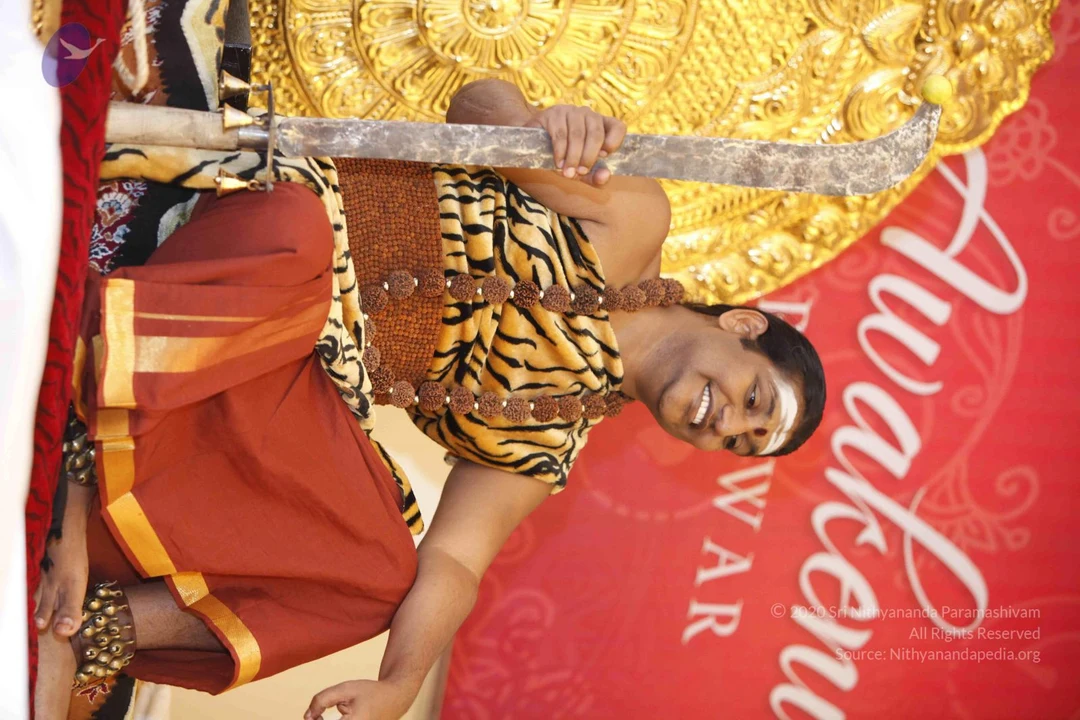
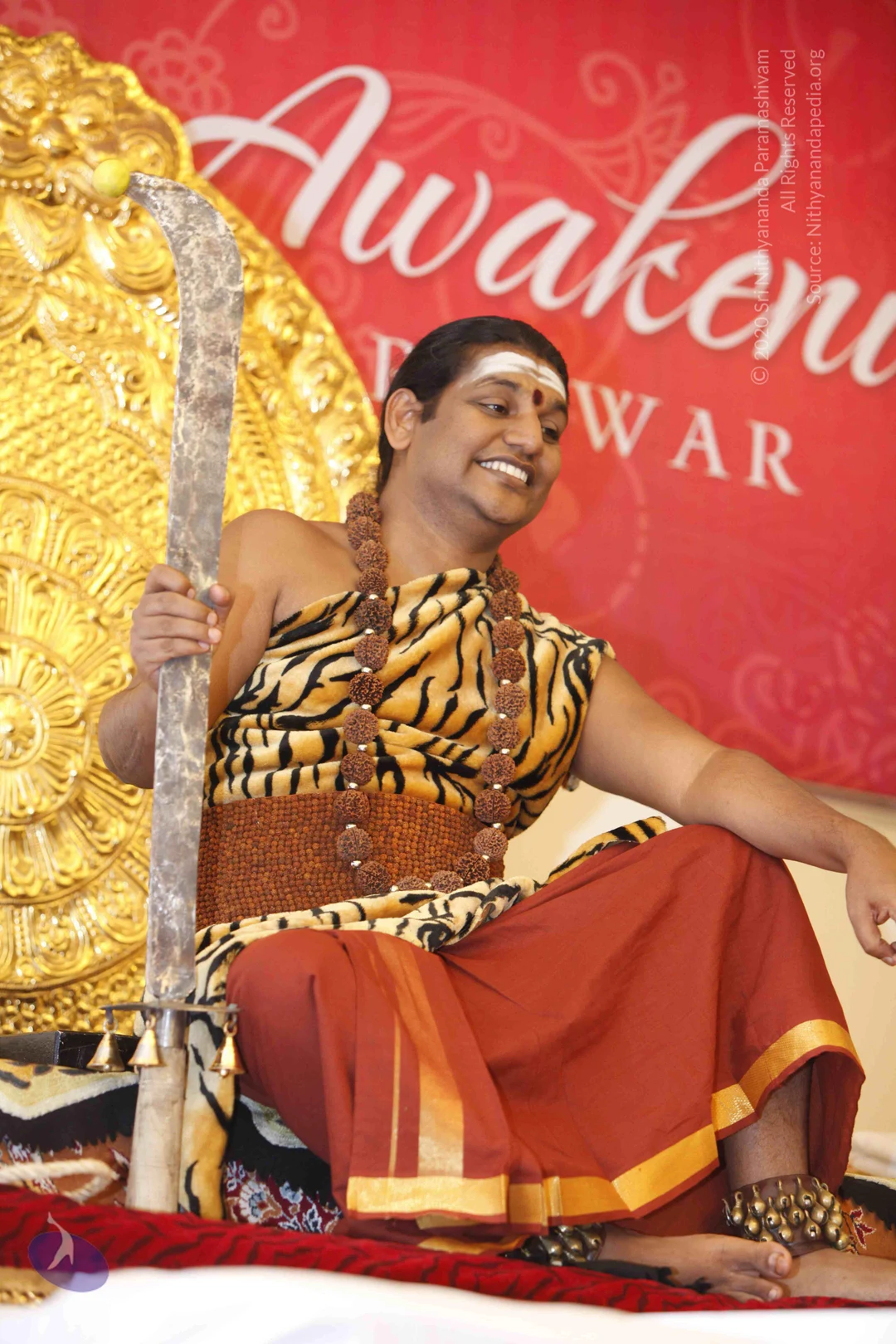
A smiling man in a tiger-striped yellow and black garment stands with a long curved sword held across his chest, its blade rising diagonally. He wears a thick rudraksha mala across his torso, a white vertical forehead mark, and red-orange dhoti with gold borders and ankle bells. Behind him is a large golden ornamental backdrop and a red banner with large white lettering. The image is rotated sideways.

Sri Yantra Mandir.-TO BE EDITED LATER

5 photosSource gallery
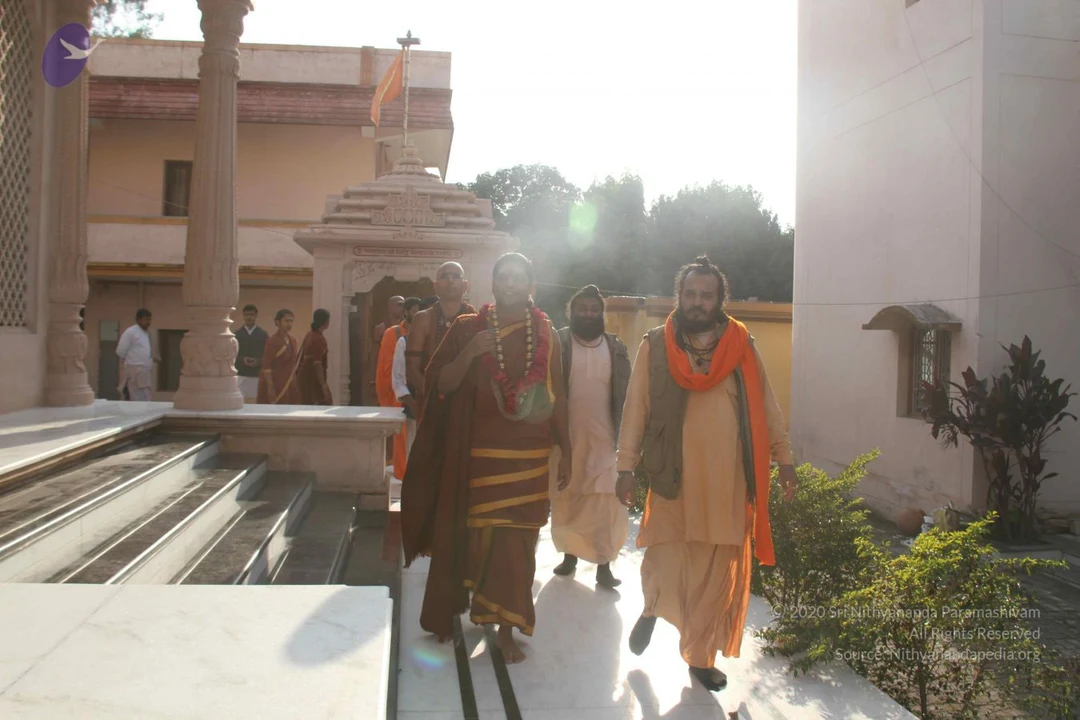
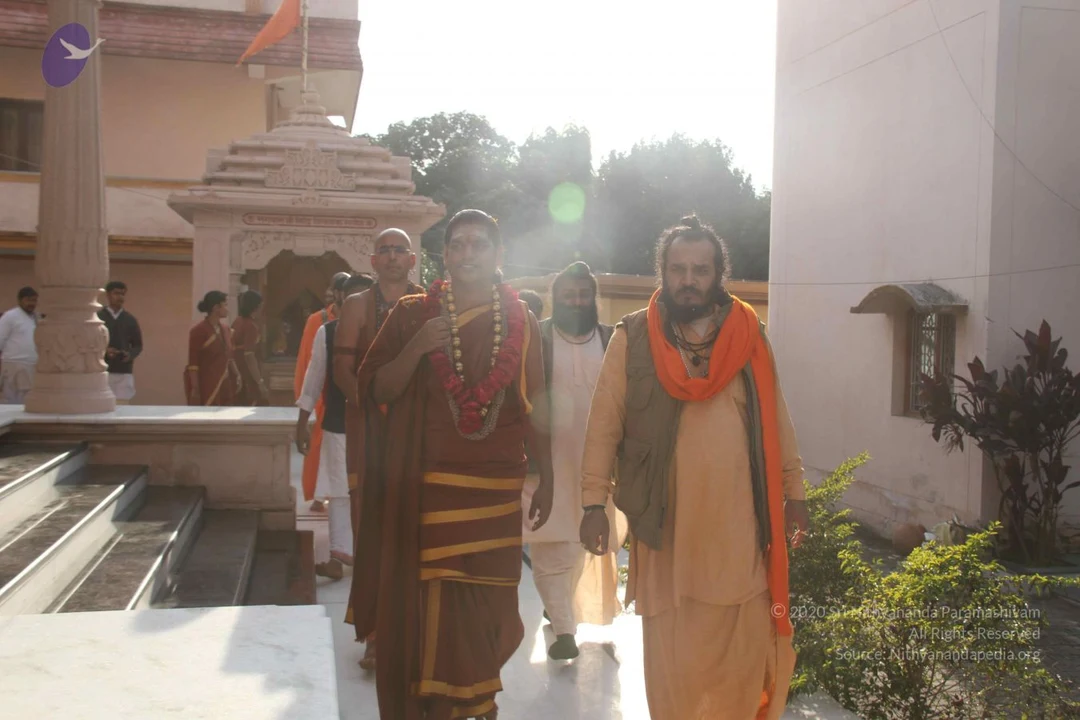
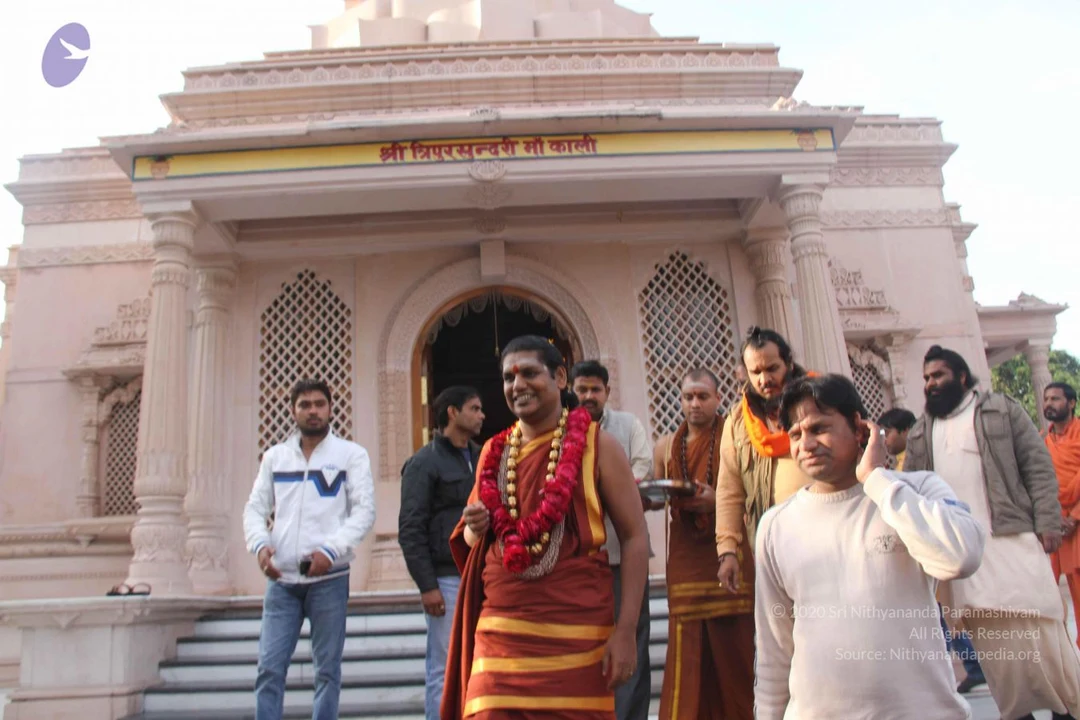
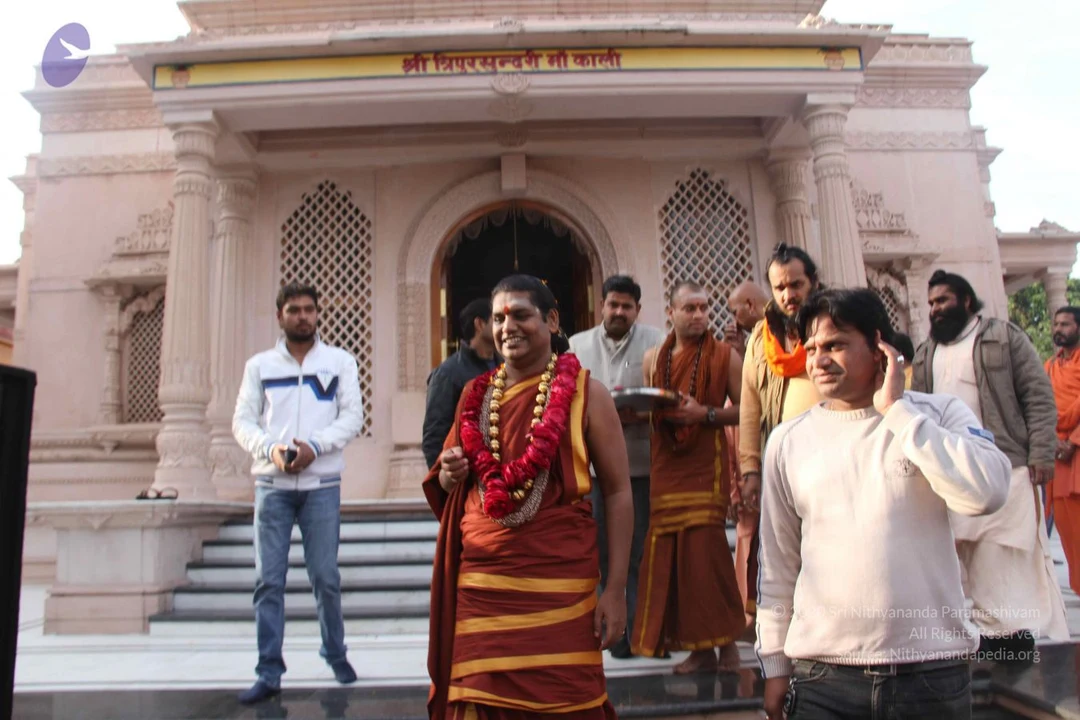
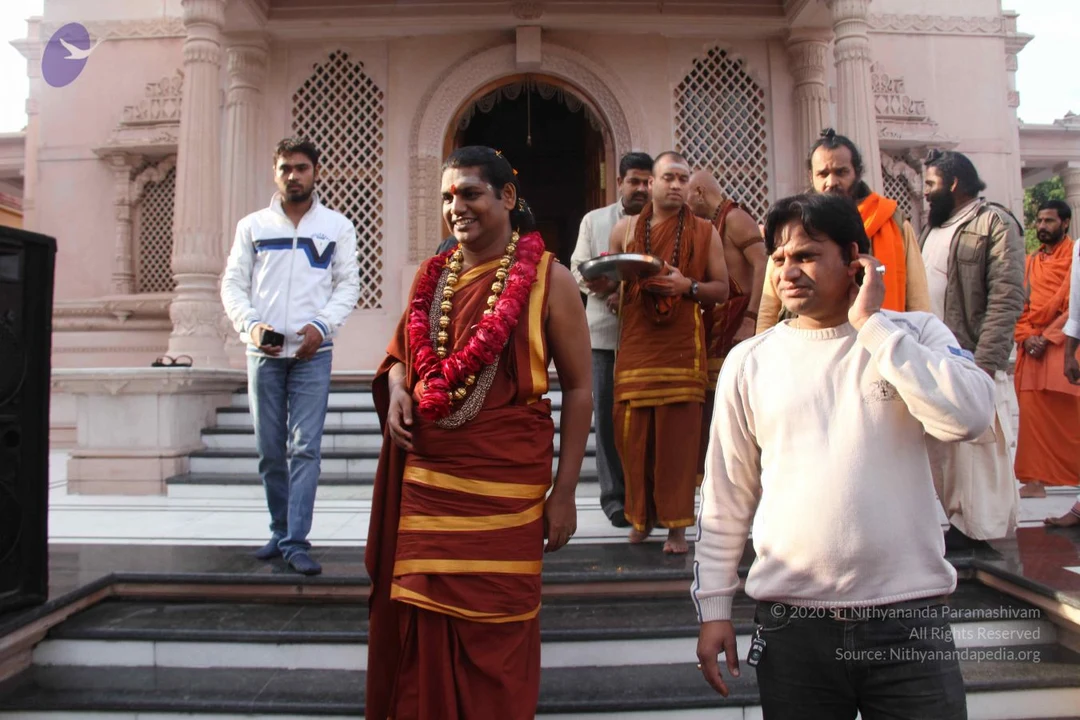
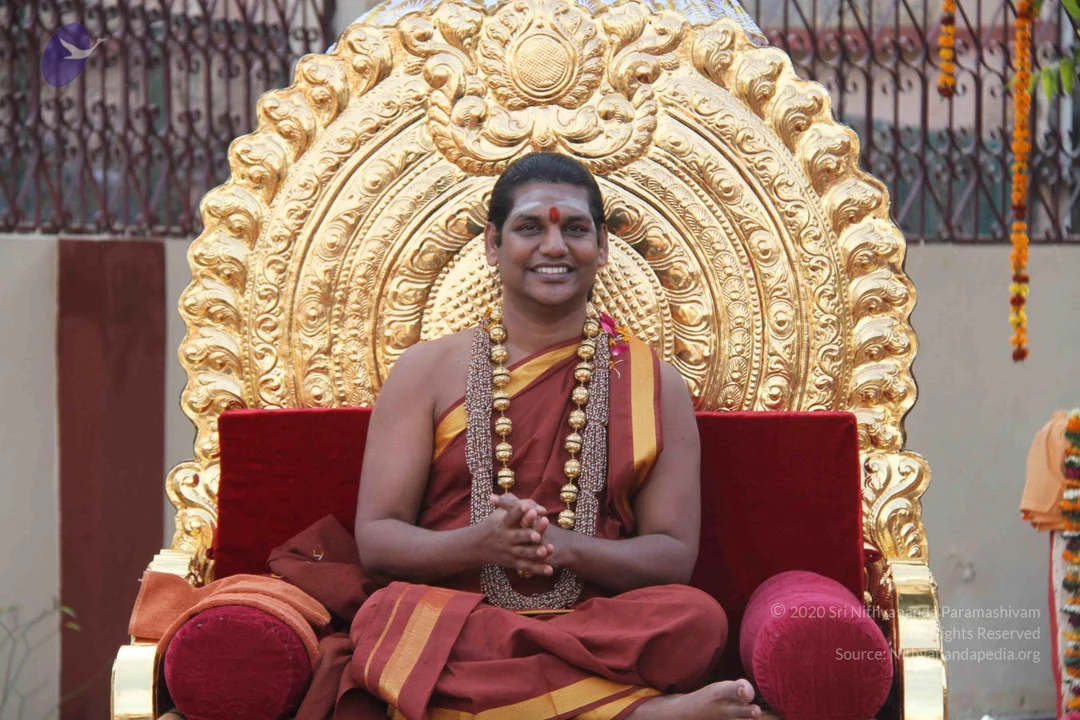
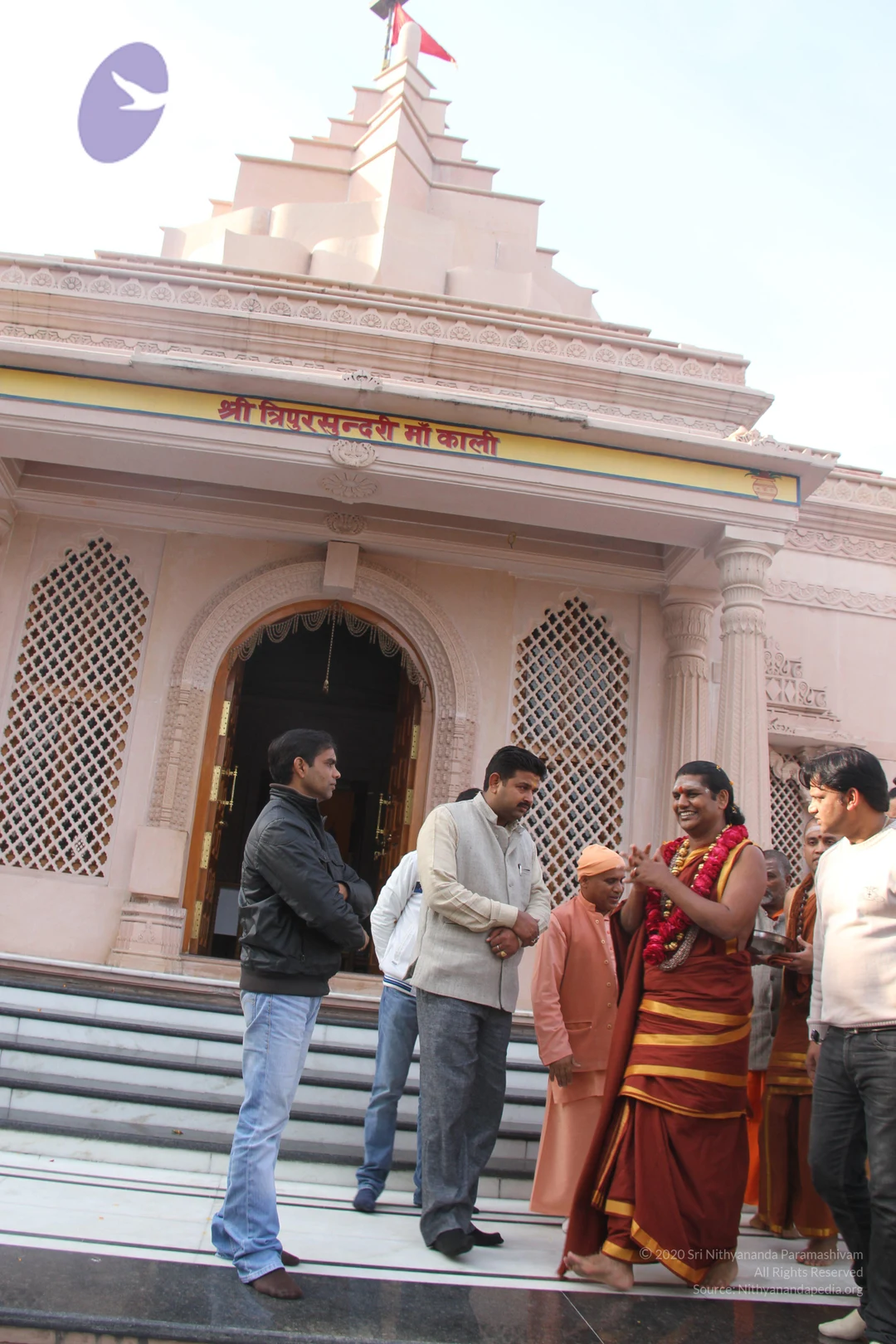
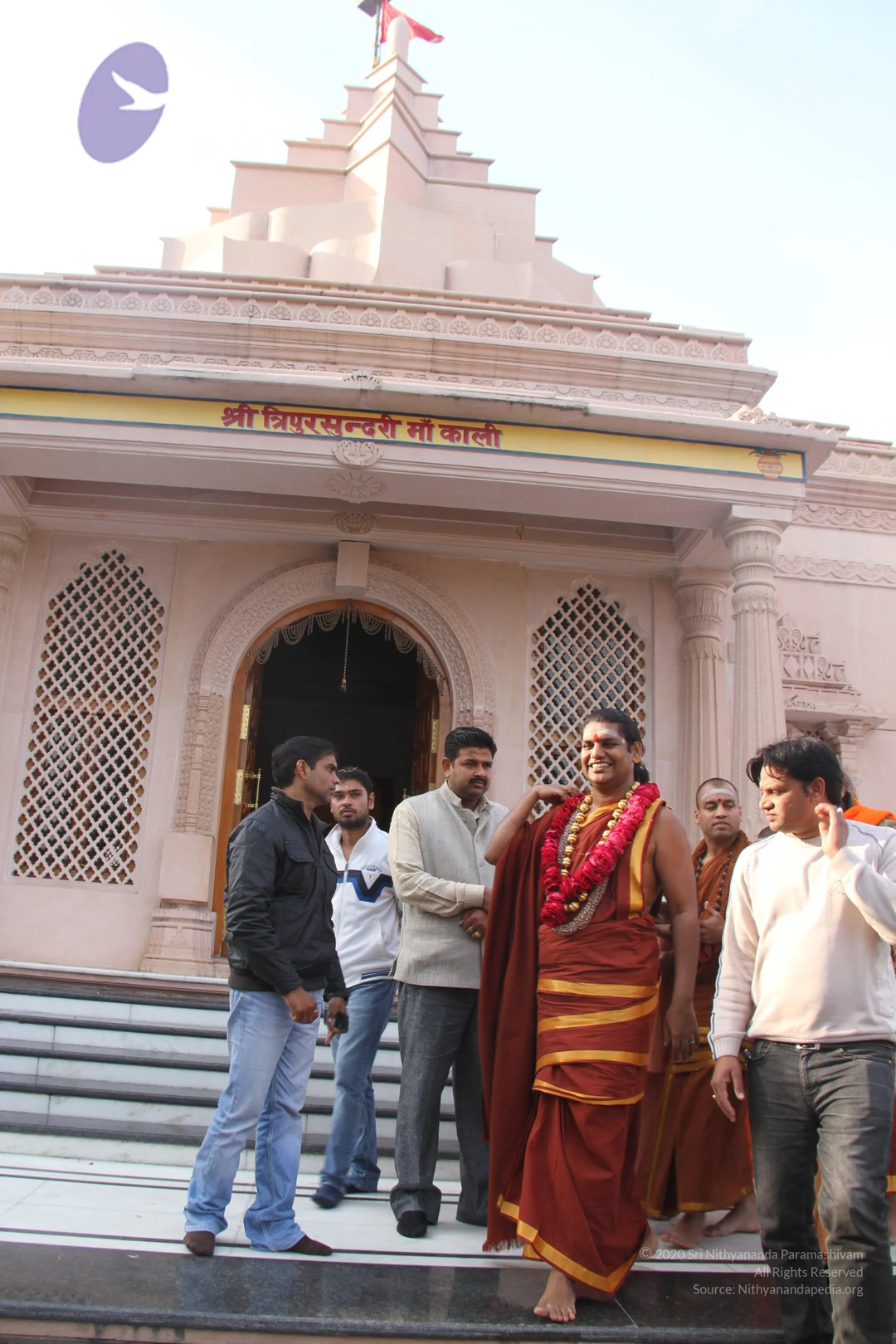
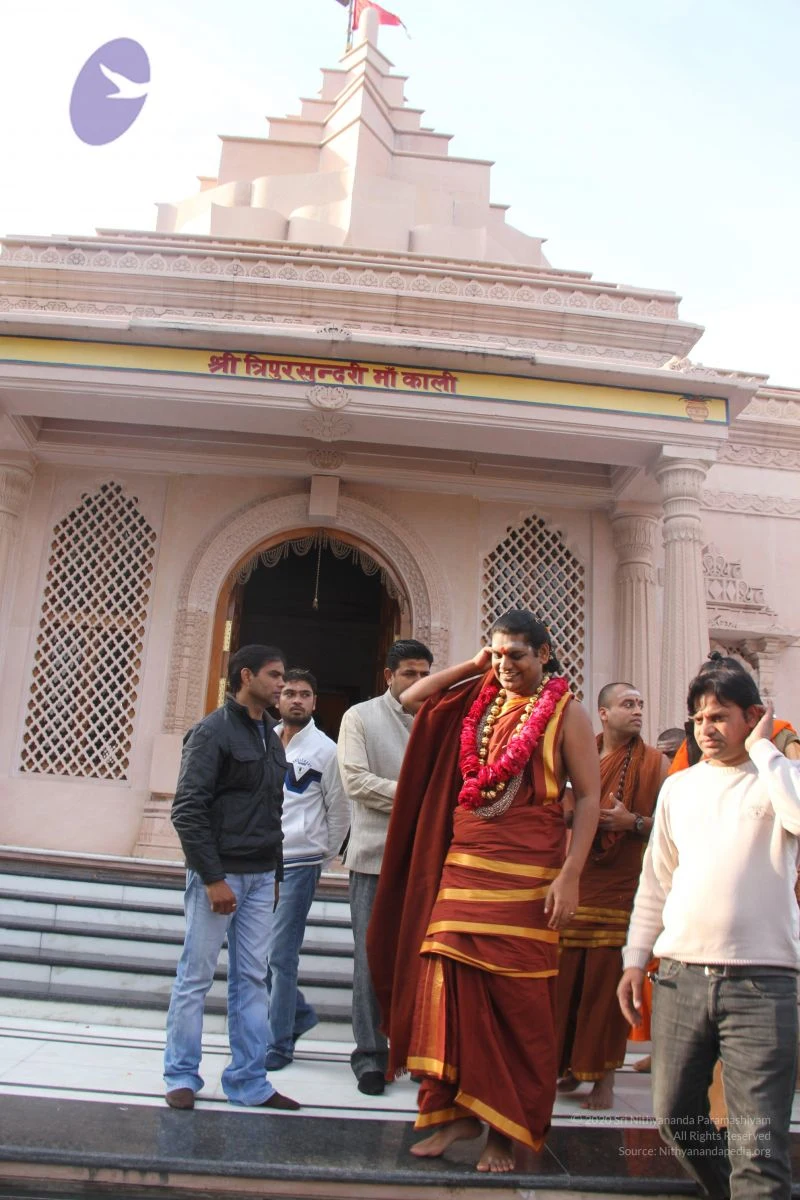
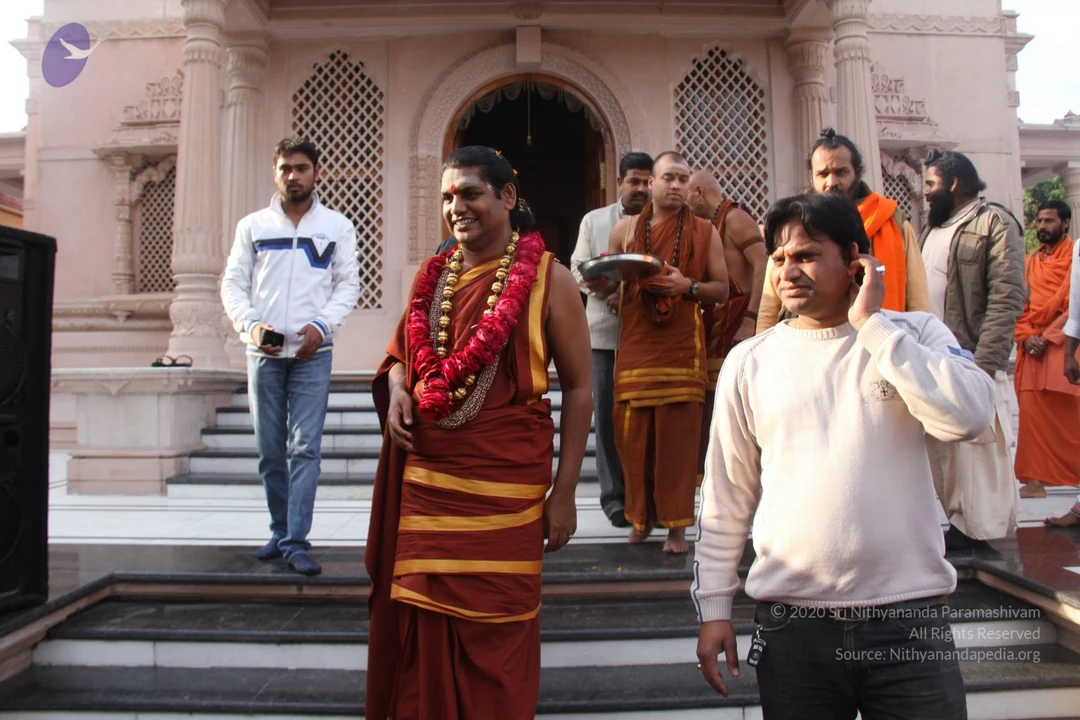
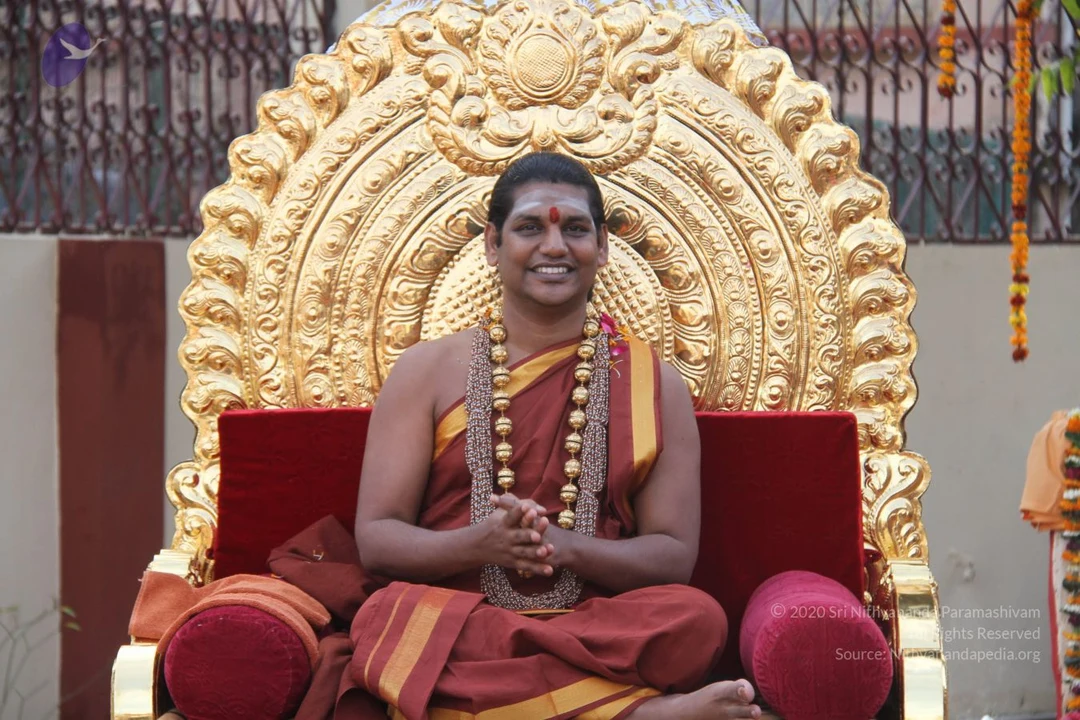
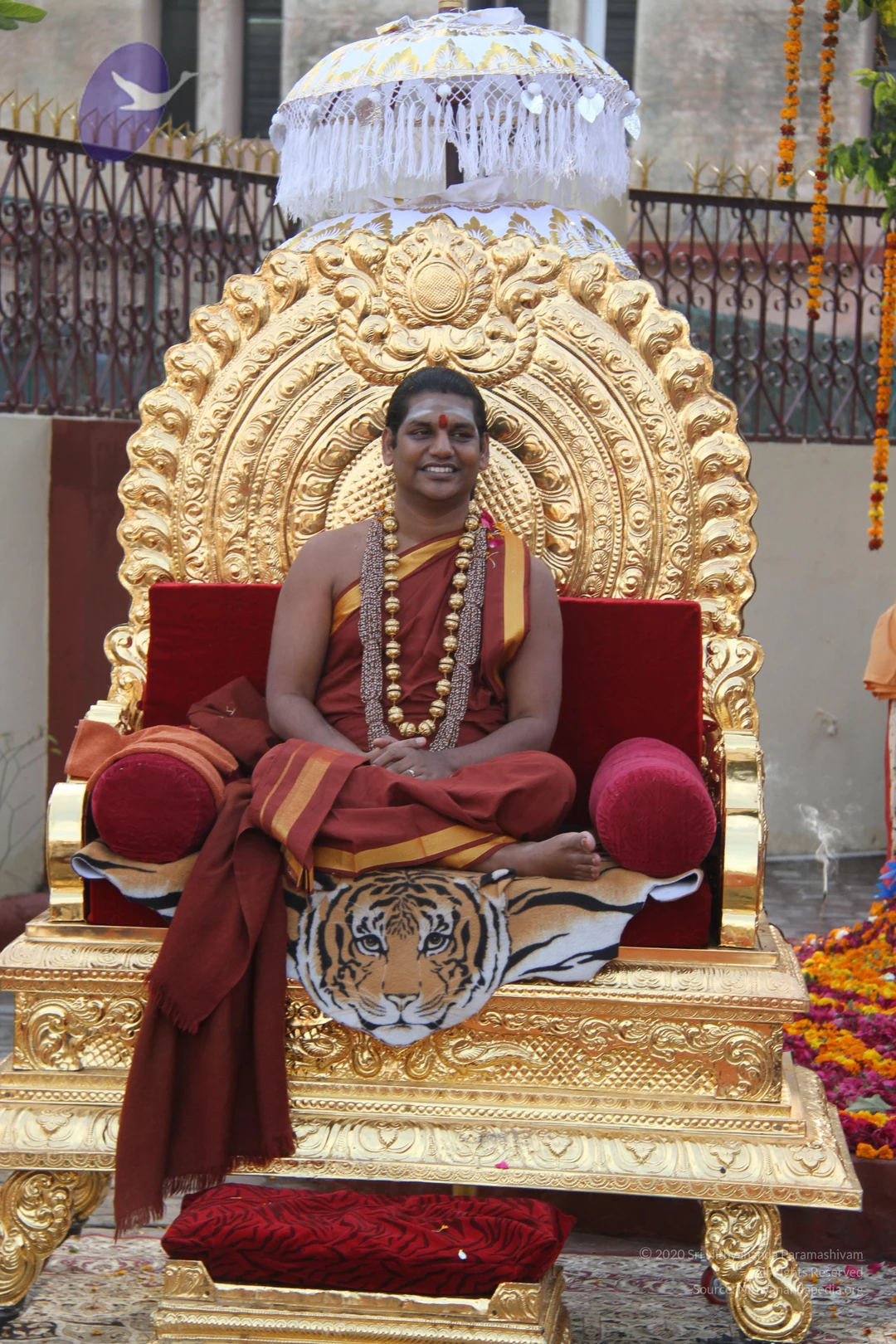
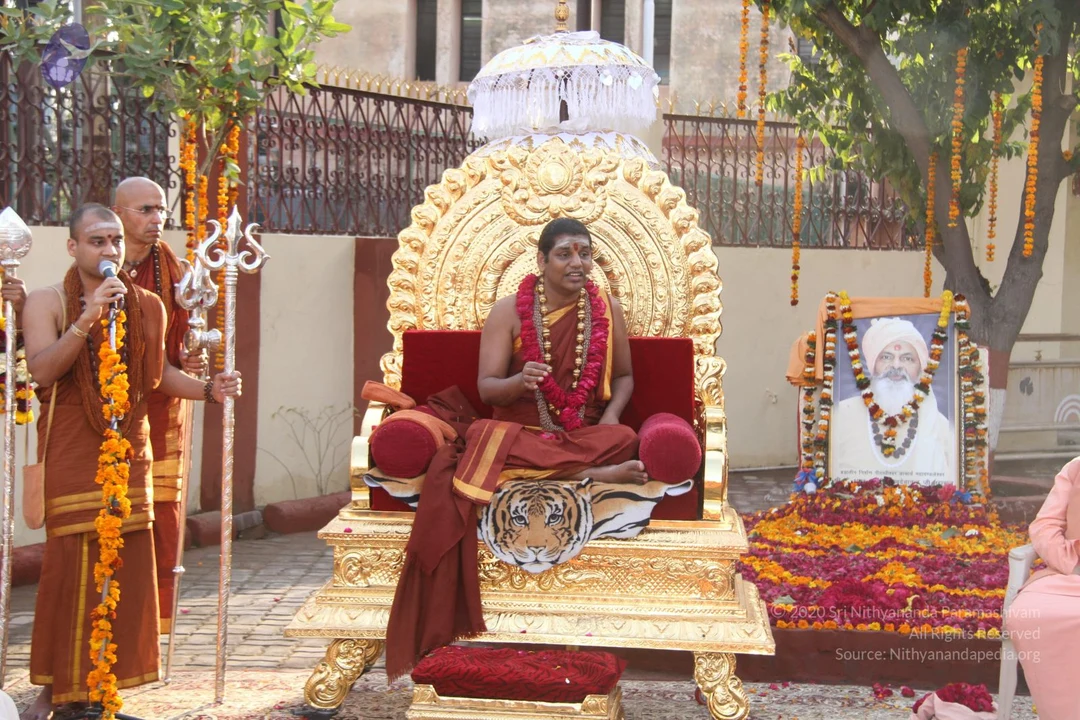
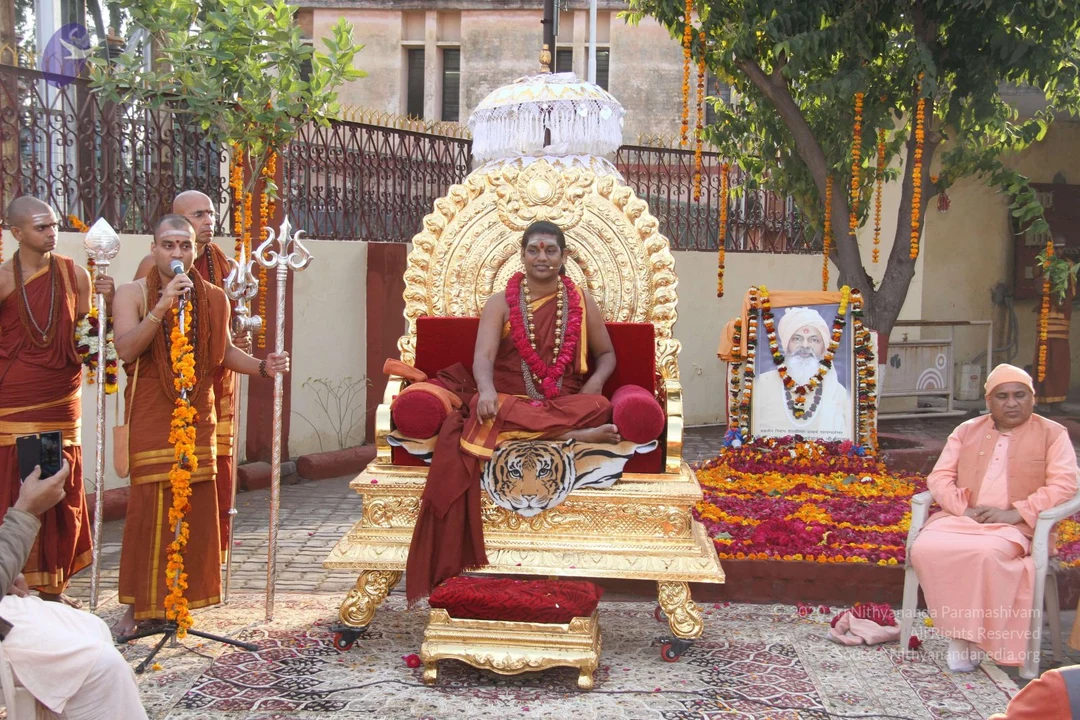
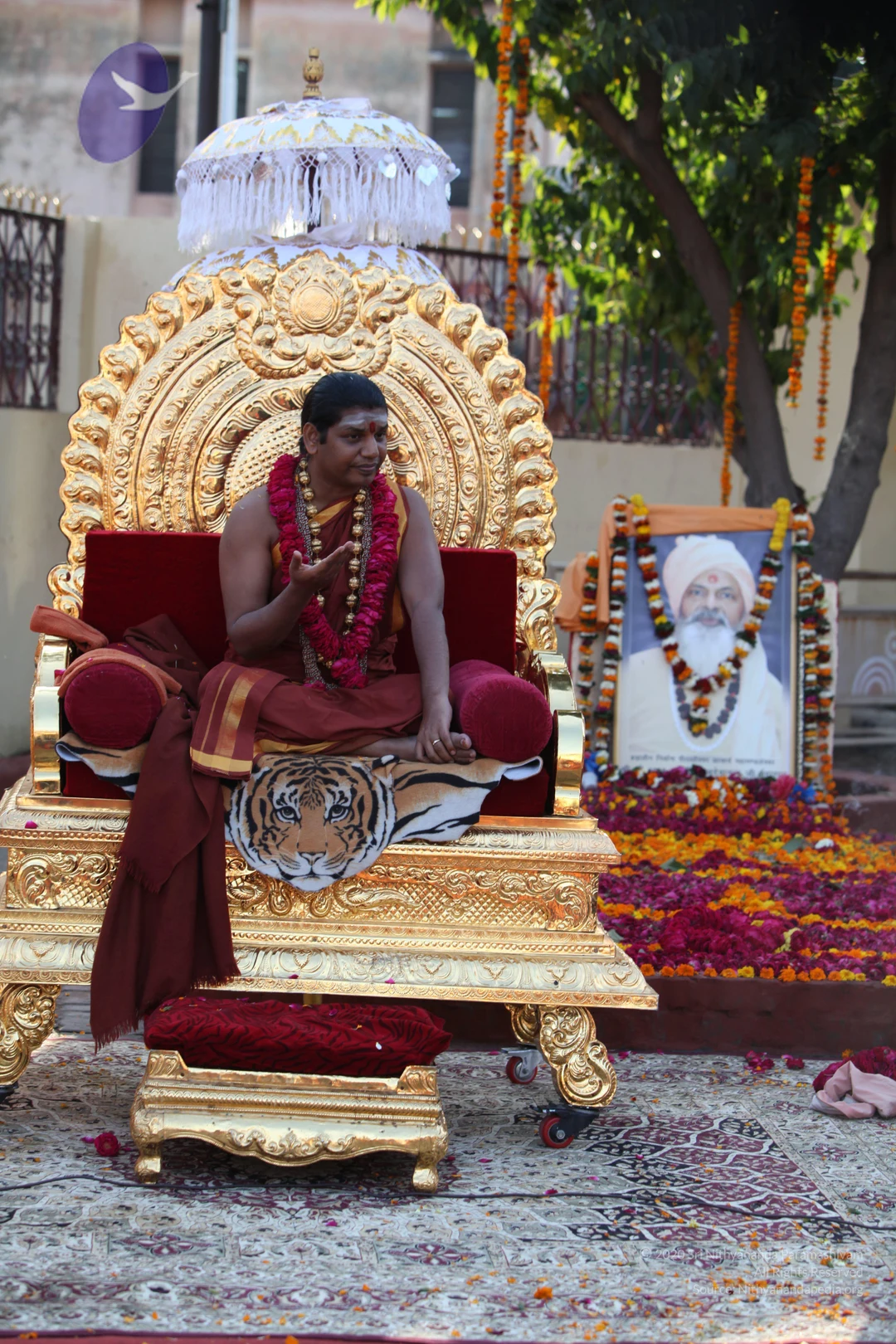
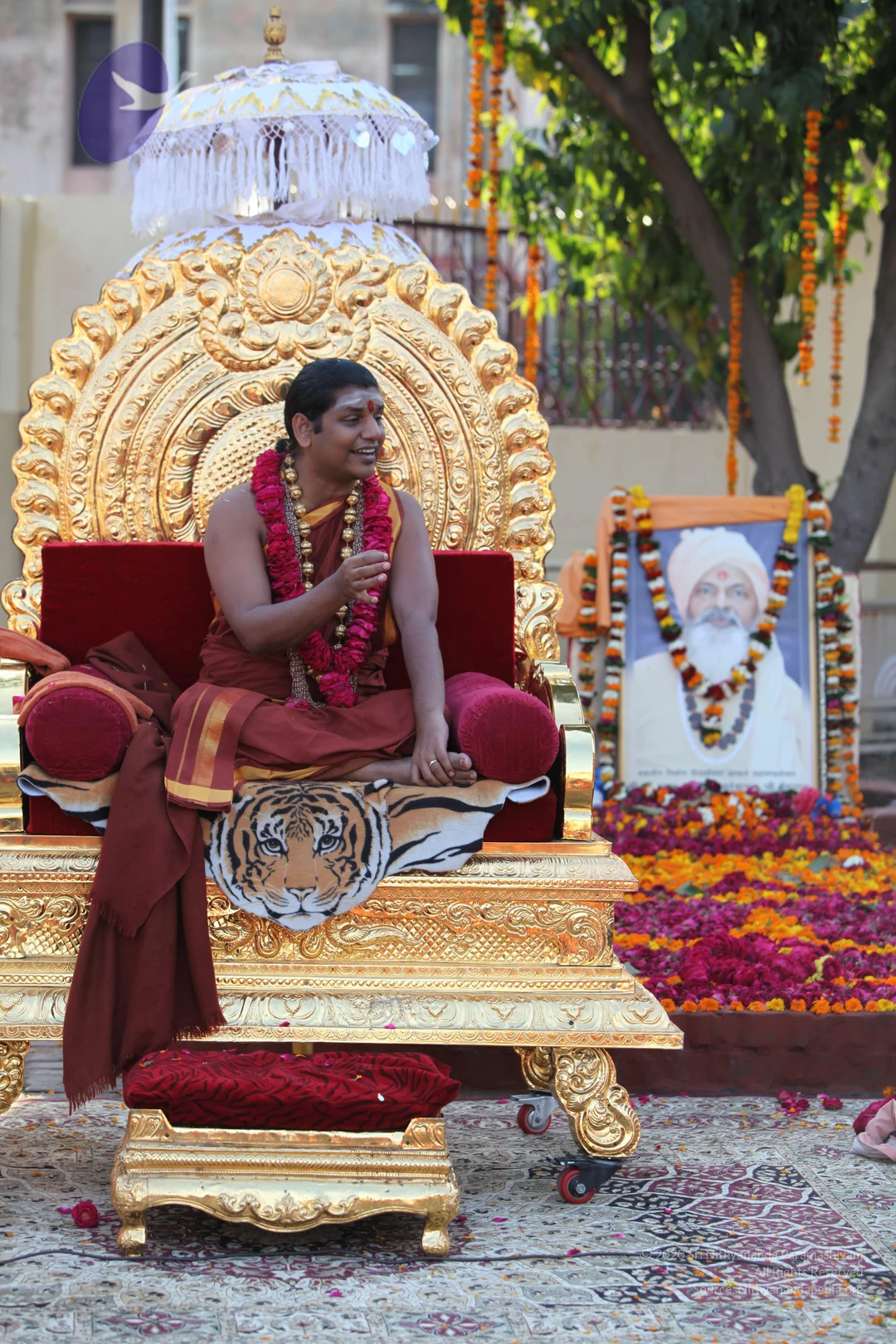
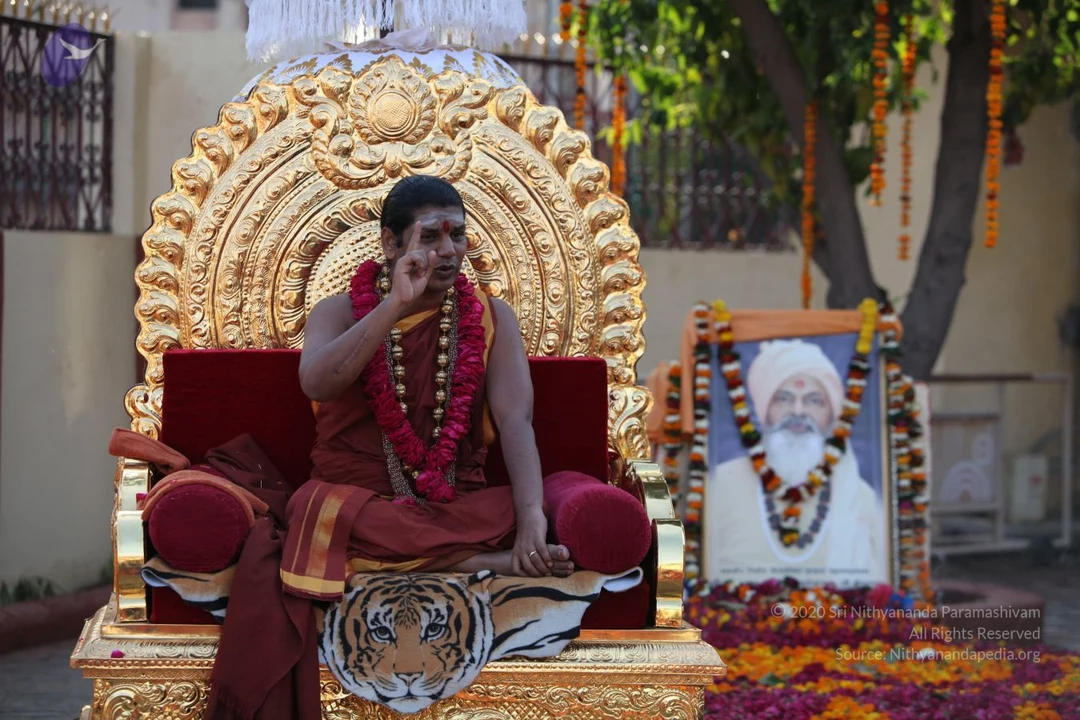
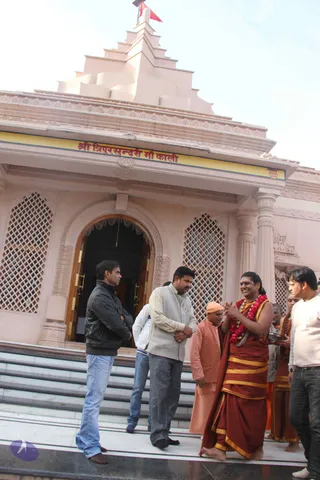
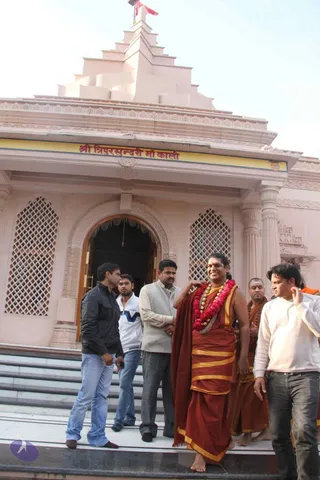
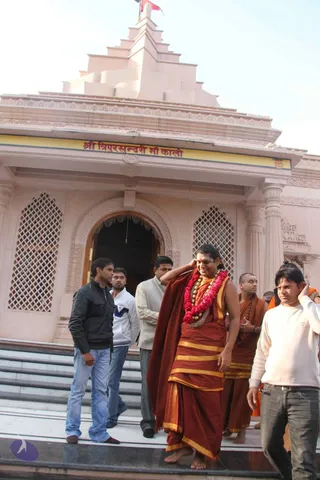
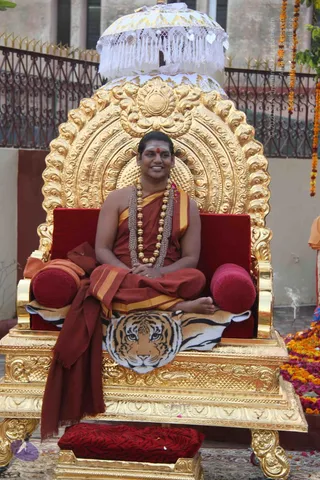
Photograph of a pink sandstone temple entrance with a carved arched doorway and lattice windows, topped by a stepped spire with a red flag. A painted sign above the door reads Shri Tripursundari Maa Kali. On the marble steps, a man in a rust-red dhoti and shawl with a red flower garland and beaded necklace stands smiling with hands folded in greeting, while a monk in pale orange robes and turban stands beside him. Four other men in casual or light jackets and trousers stand near them, and a man in orange robes with a tray is partly visible at the right. Six people are visible in total.A photograph outside a pink sandstone temple entrance with a carved arched doorway and lattice windows. Above the door is a yellow signboard reading "श्री त्रिपुरसुन्दरी माँ काली". A man in saffron-orange robes with a red flower garland and gold beaded necklaces stands smiling on the marble steps. Behind him a second robed man in orange and several men in casual clothes stand nearby, including one in a dark jacket and jeans and another in a grey vest. a person is the robed man with the red garland and long hair, in an appearance-based label only.Outdoor photo at a pink sandstone temple entrance with a sign reading श्री त्रिपुरसुन्दरी माँ काली. A man in a saffron-and-gold dhoti, bare-chested under a maroon-brown shawl, wears a pink and red flower garland and a beaded necklace, and smiles while touching his hair. Behind him a monk in orange robes and another man in white stand near the steps, with several men in casual clothes including jeans and jackets. a person: long swept-back hair, saffron-and-gold ceremonial dress, garland and beaded necklace.A seated man sits on an ornate gilded throne with a richly carved arched backrest and a white fringed canopy overhead. He wears a rust-red and orange-gold dhoti and shawl, a long beaded necklace of wooden beads and a silver-toned ceremonial necklace, and a red bindi on his forehead. A tiger-striped cloth covers the throne seat, with red cushions on either side and a red footstool below. Marigold garlands hang from the canopy and orange and yellow flower petals are scattered on the ground. The background shows a wrought-iron fence and a building wall.A framed portrait of a bearded elder in a light peach turban with a red tilak on the forehead, a white shawl and a white beaded necklace, set on a grey-violet backdrop. The frame is draped in an orange cloth and hung with marigold and rose garlands with a dark rudraksha-style mala, and fresh marigold and rose petals cover the ground in front. A printed caption at the bottom reads in Hindi as a Brahmaleen Nirvana Peethadhishwar Acharya Mahamandaleshwar tribute. The image is a photograph of a portrait, with no physical people present.

1-Kalabhairava Darshan

13 photosSource gallery
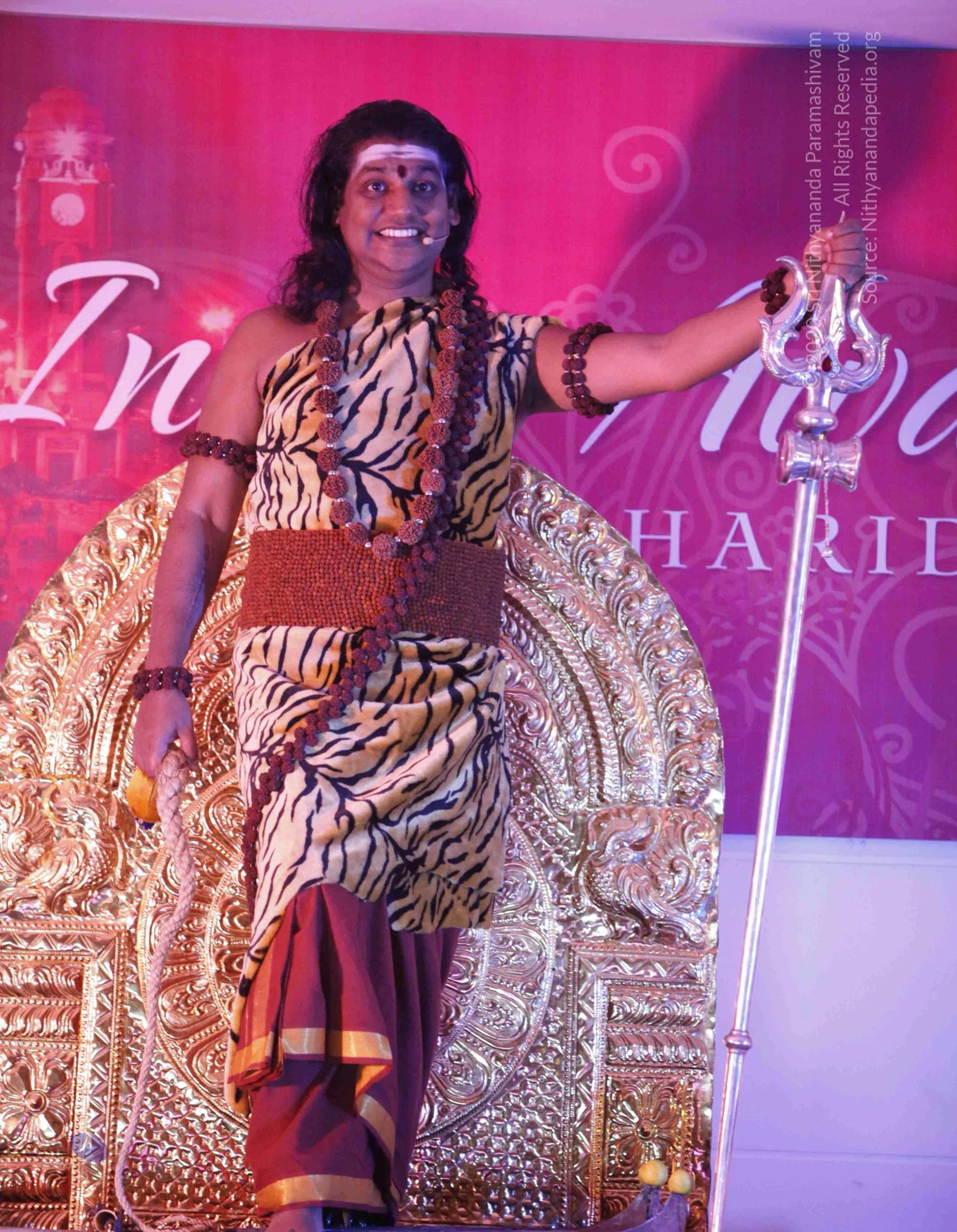
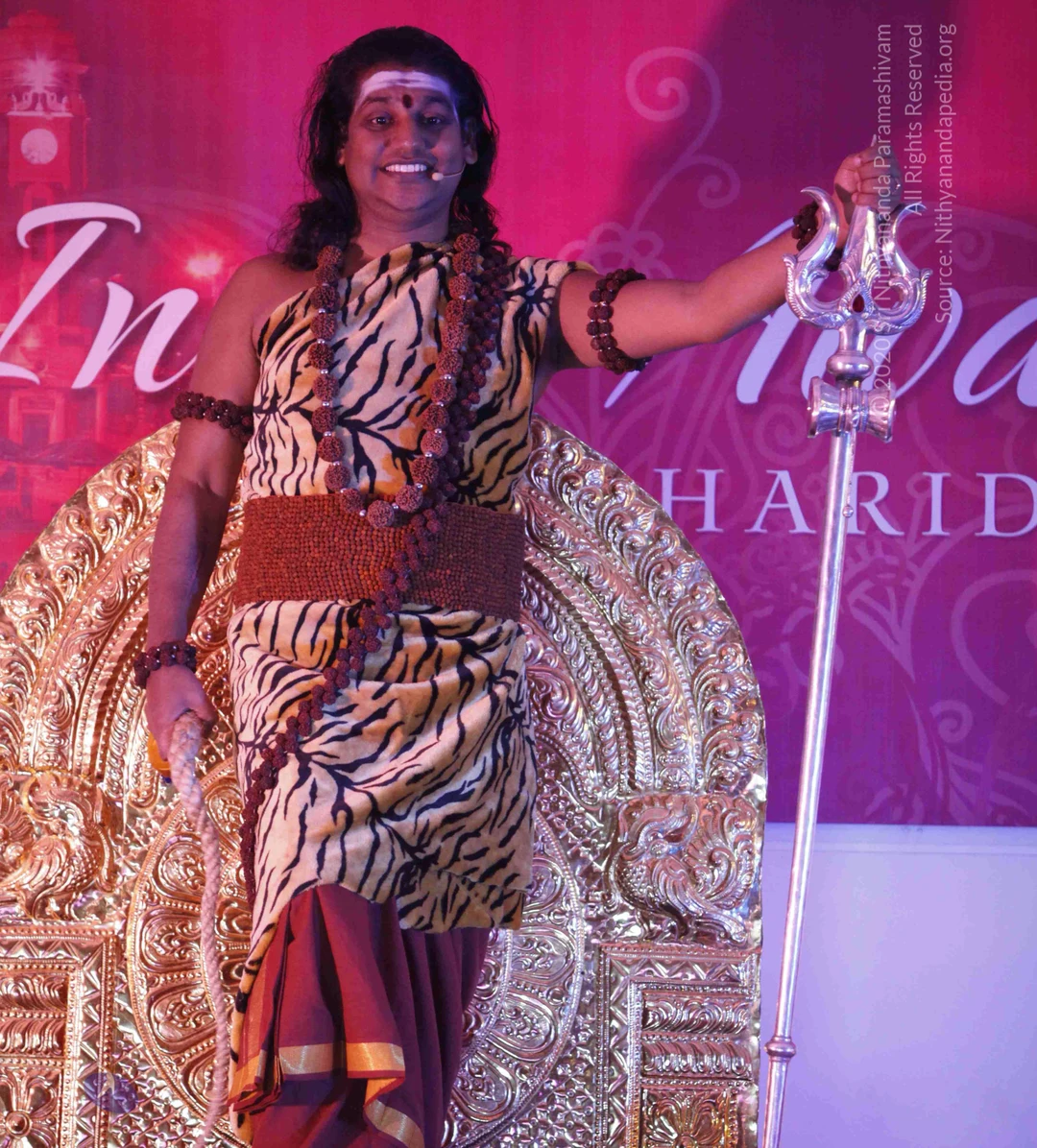
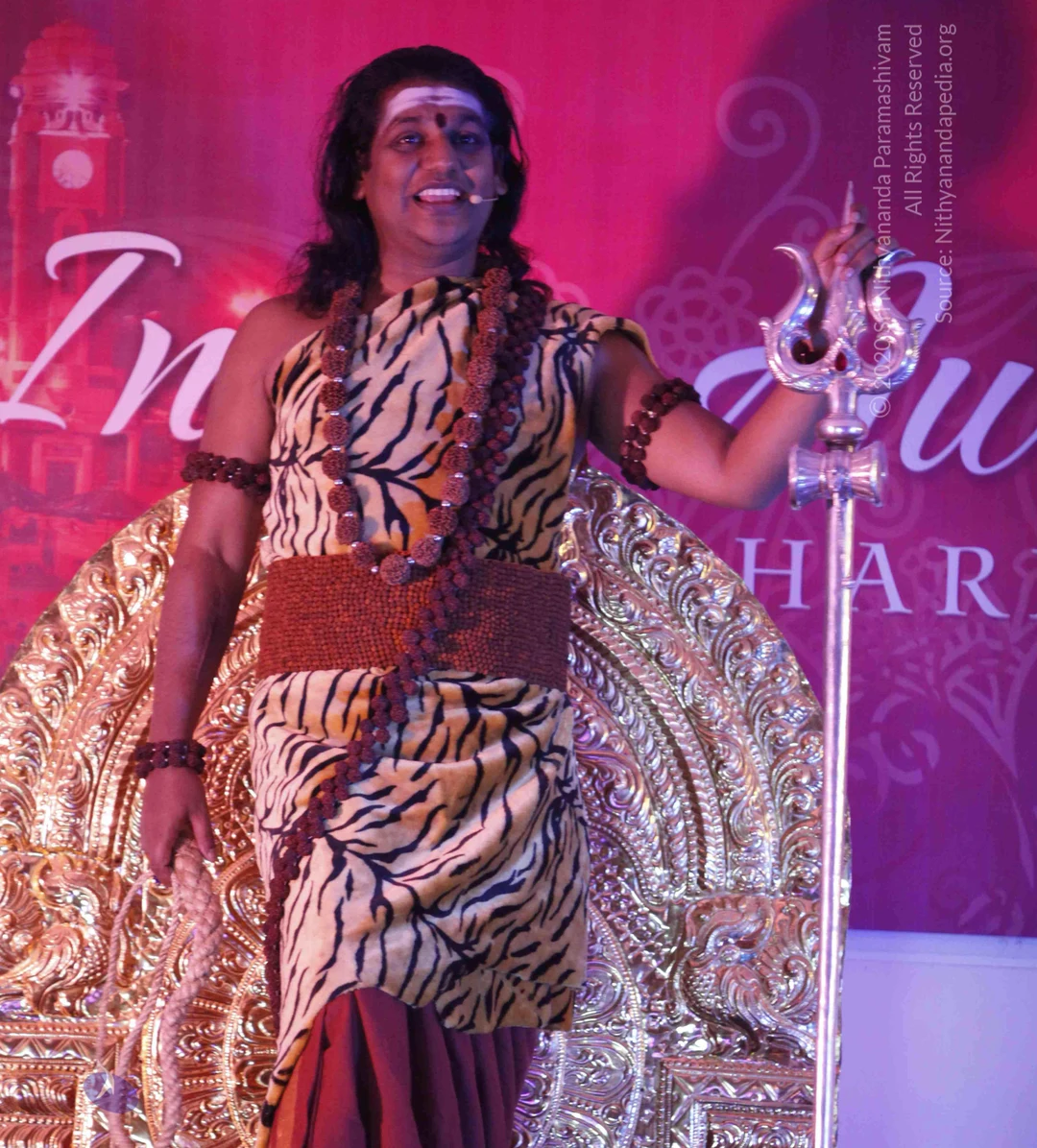
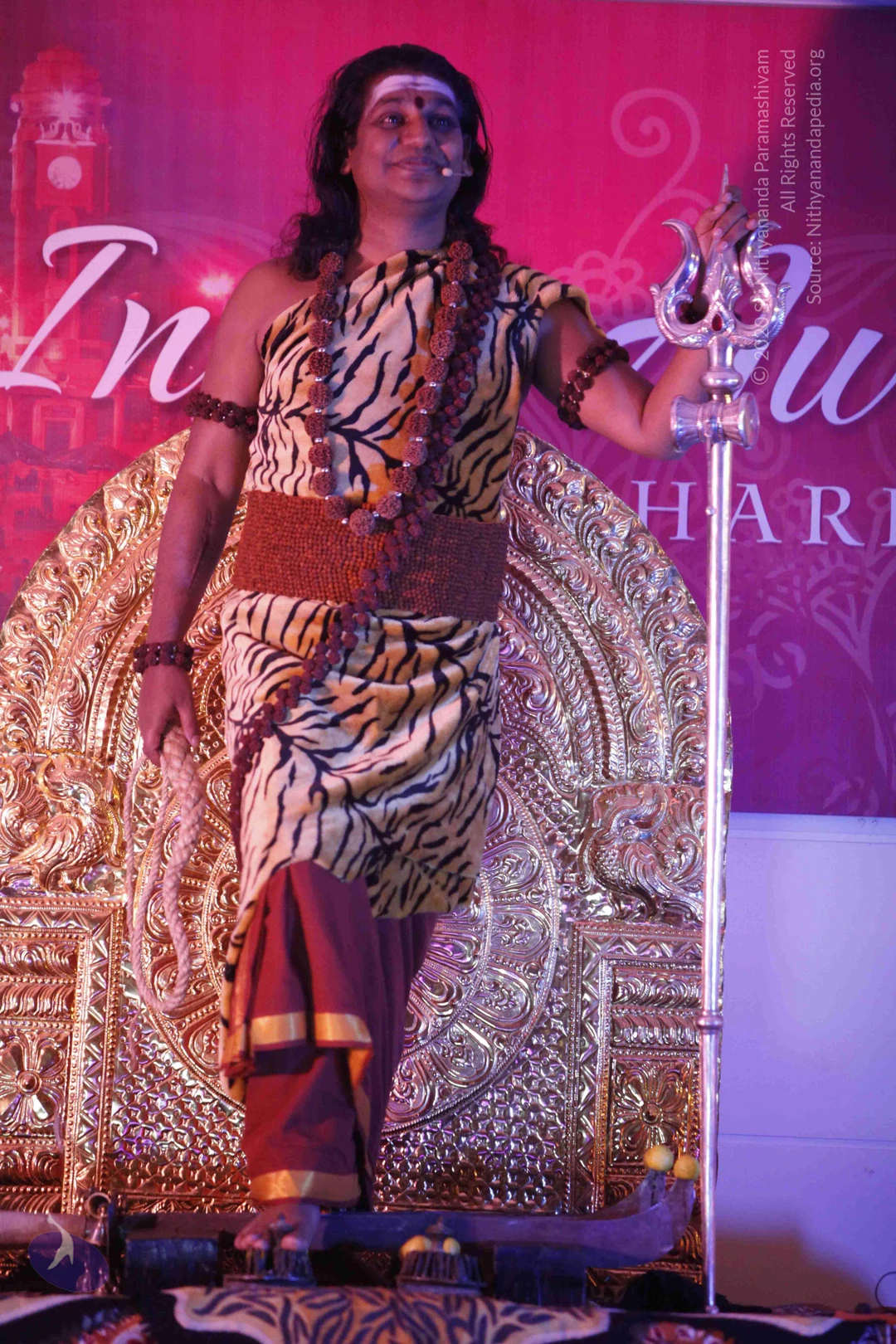
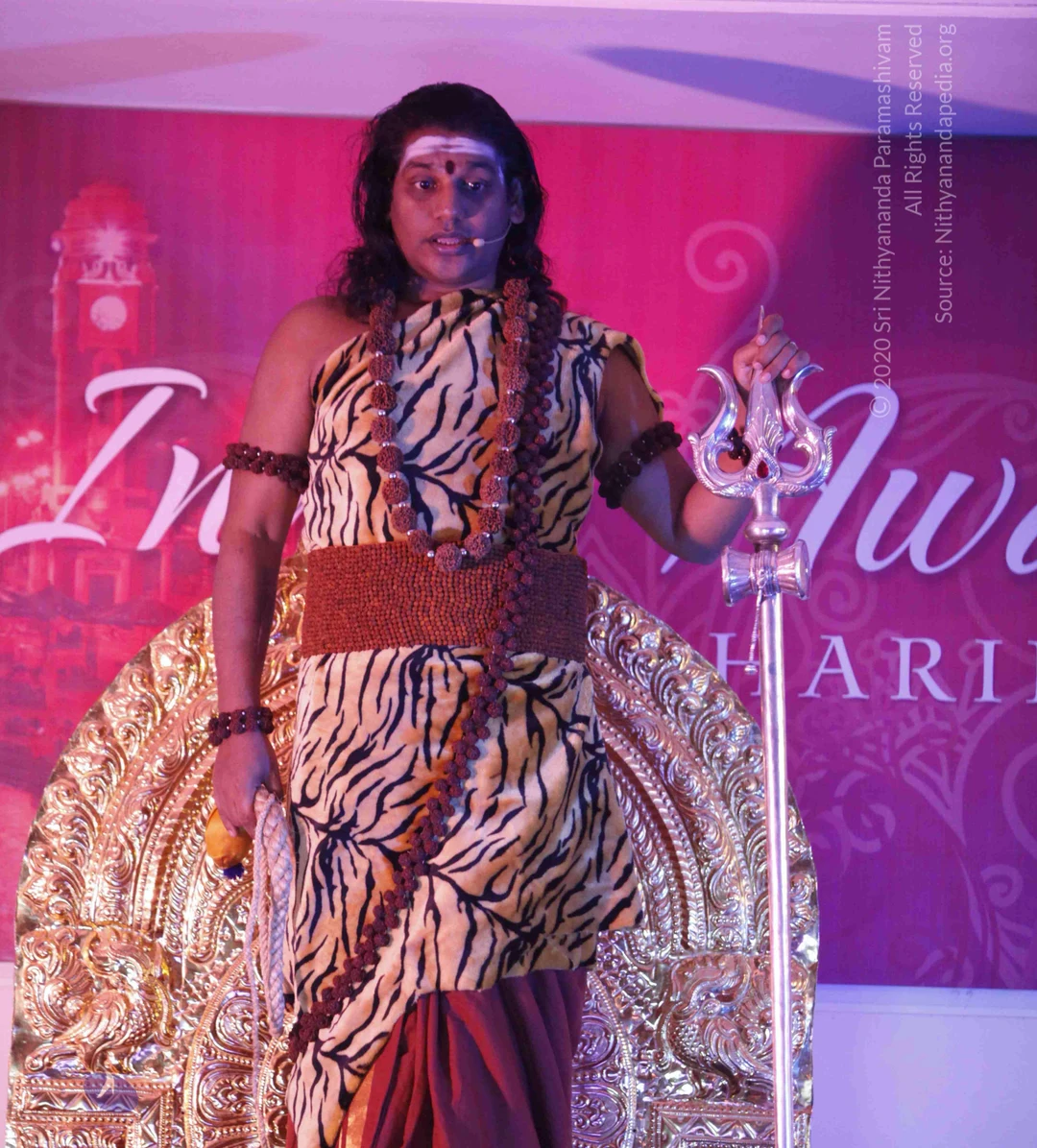
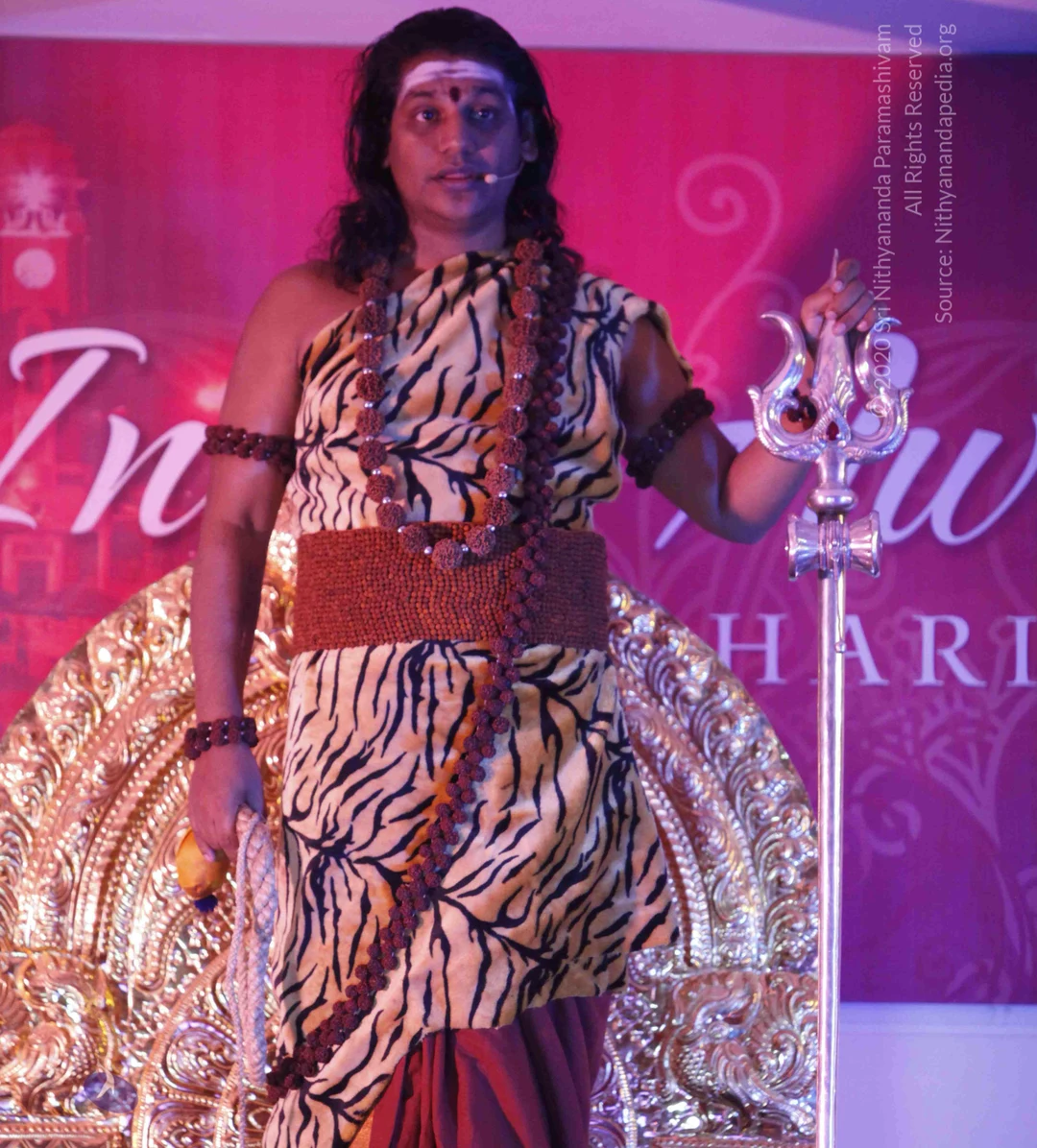
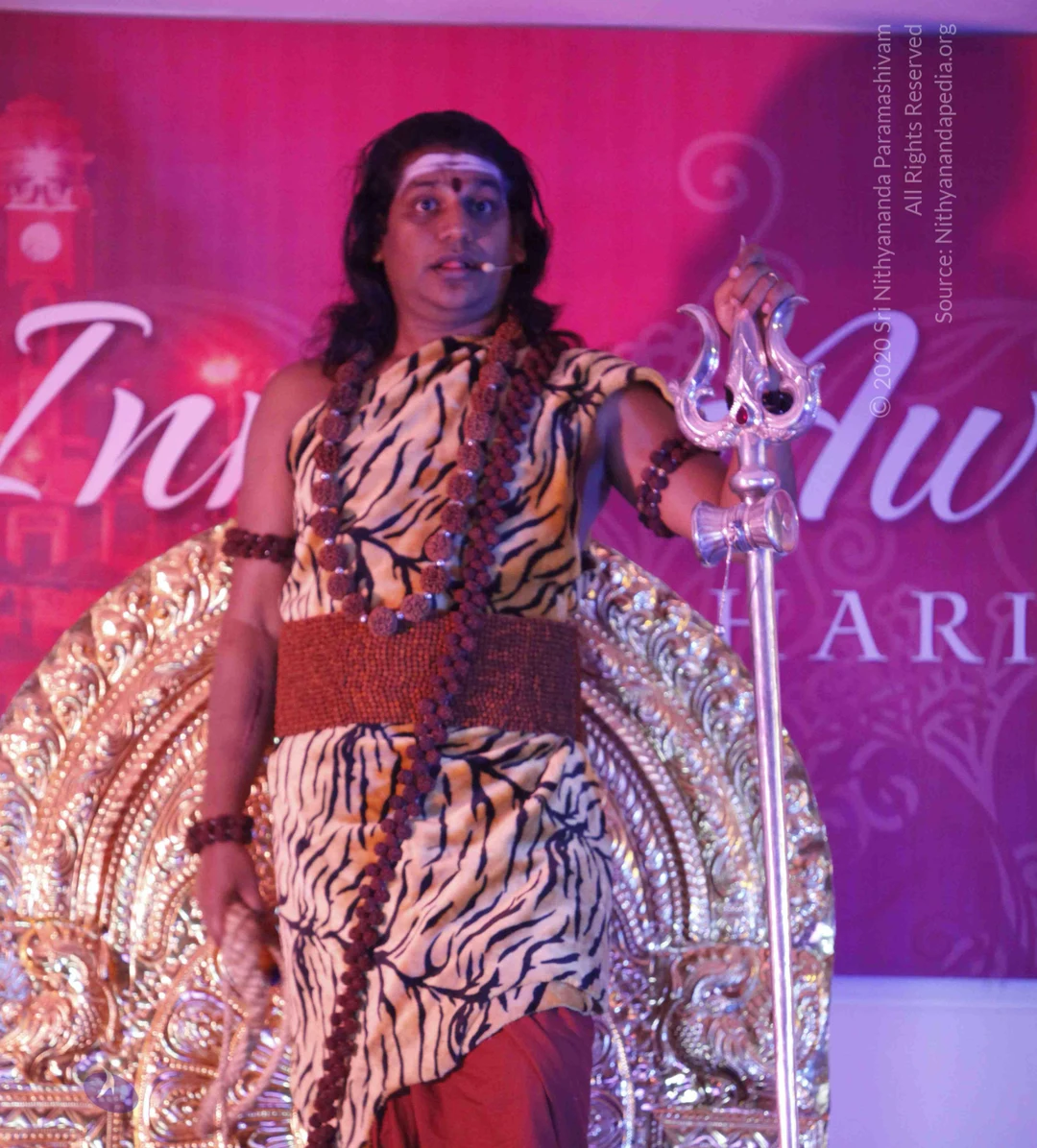
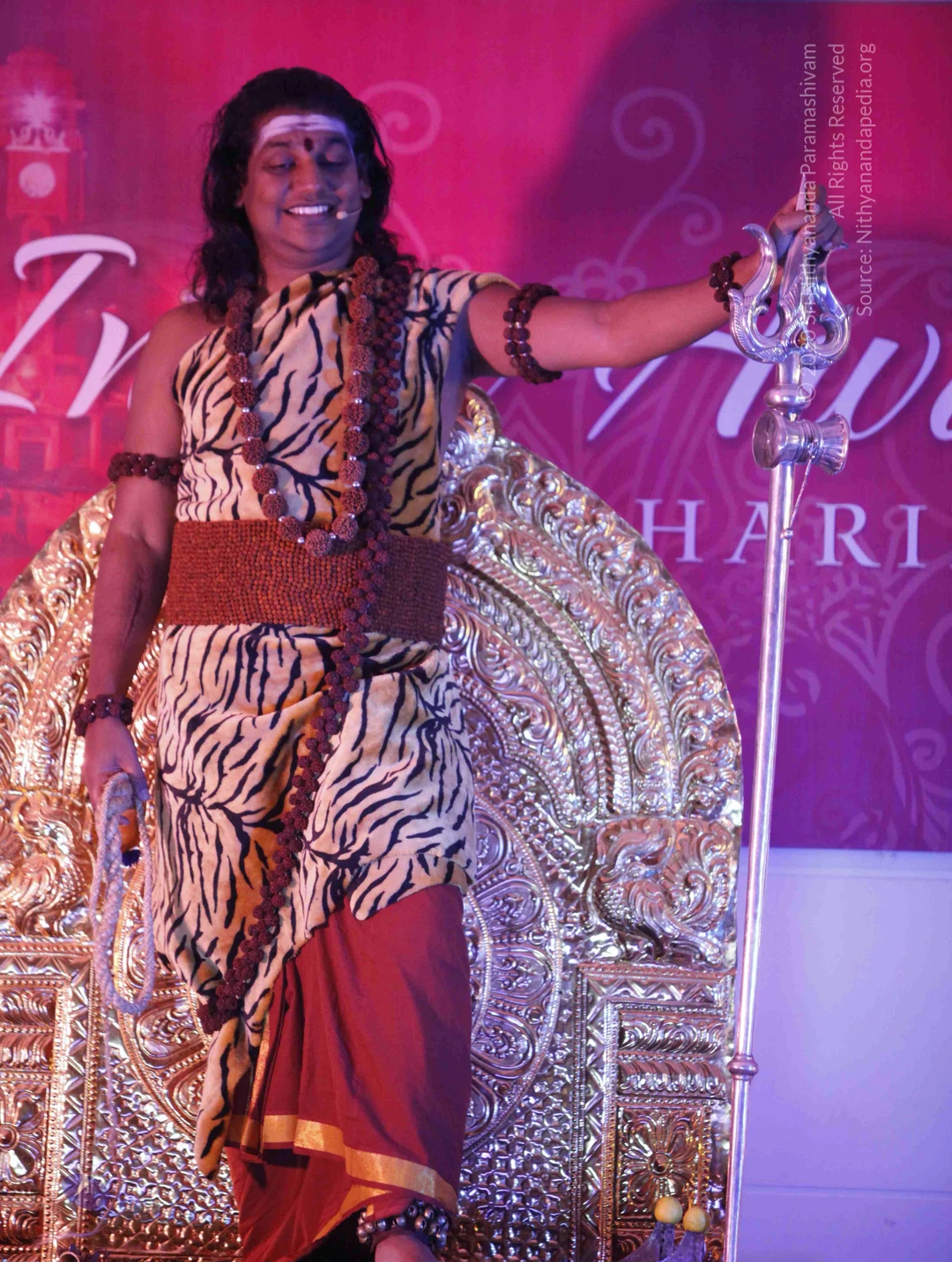
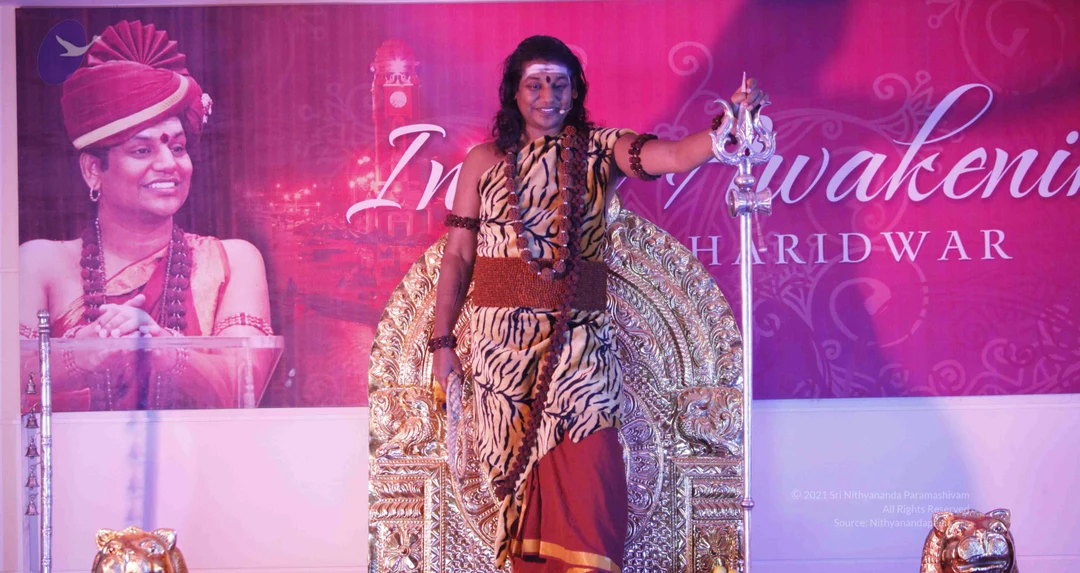
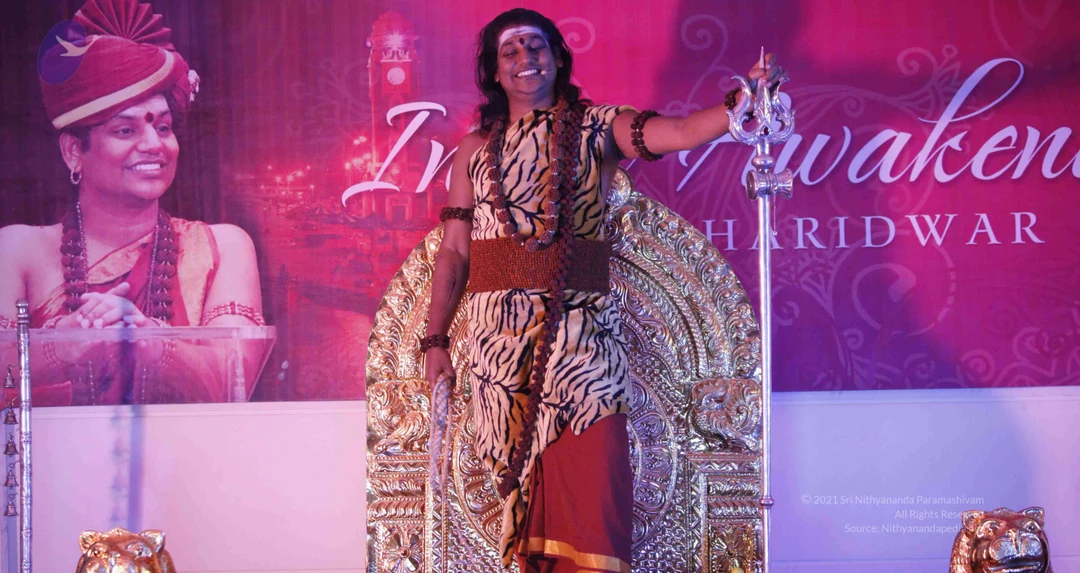
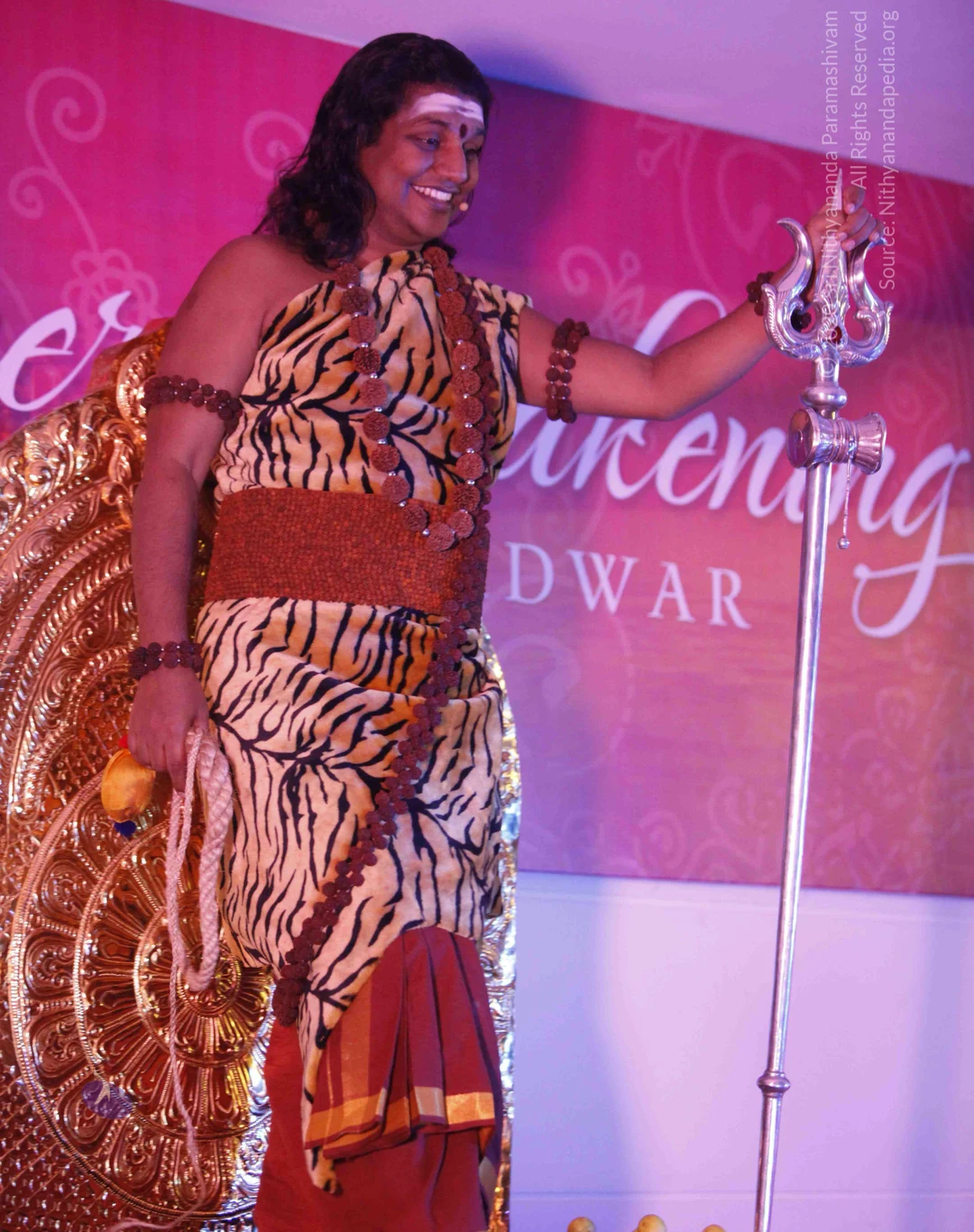
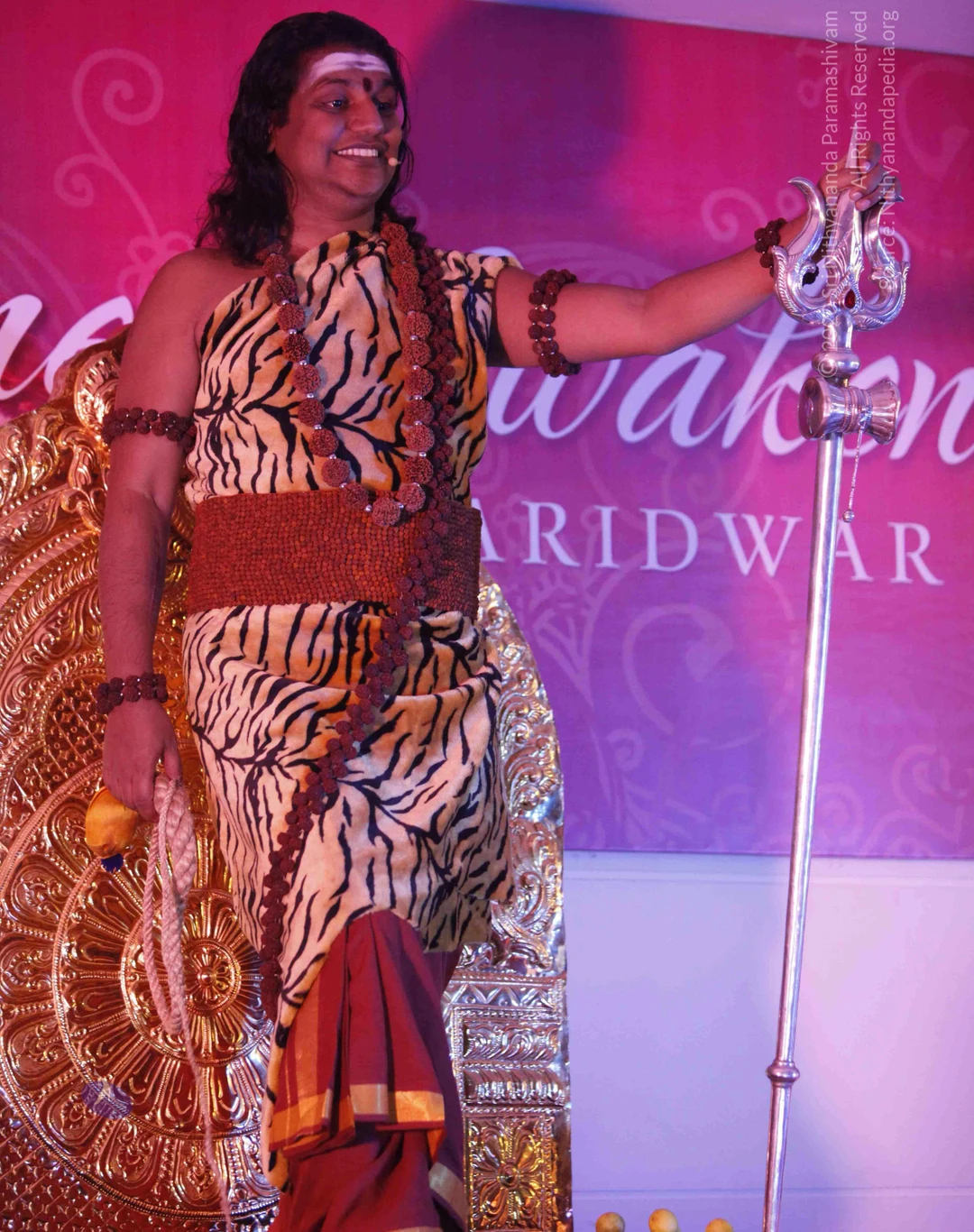
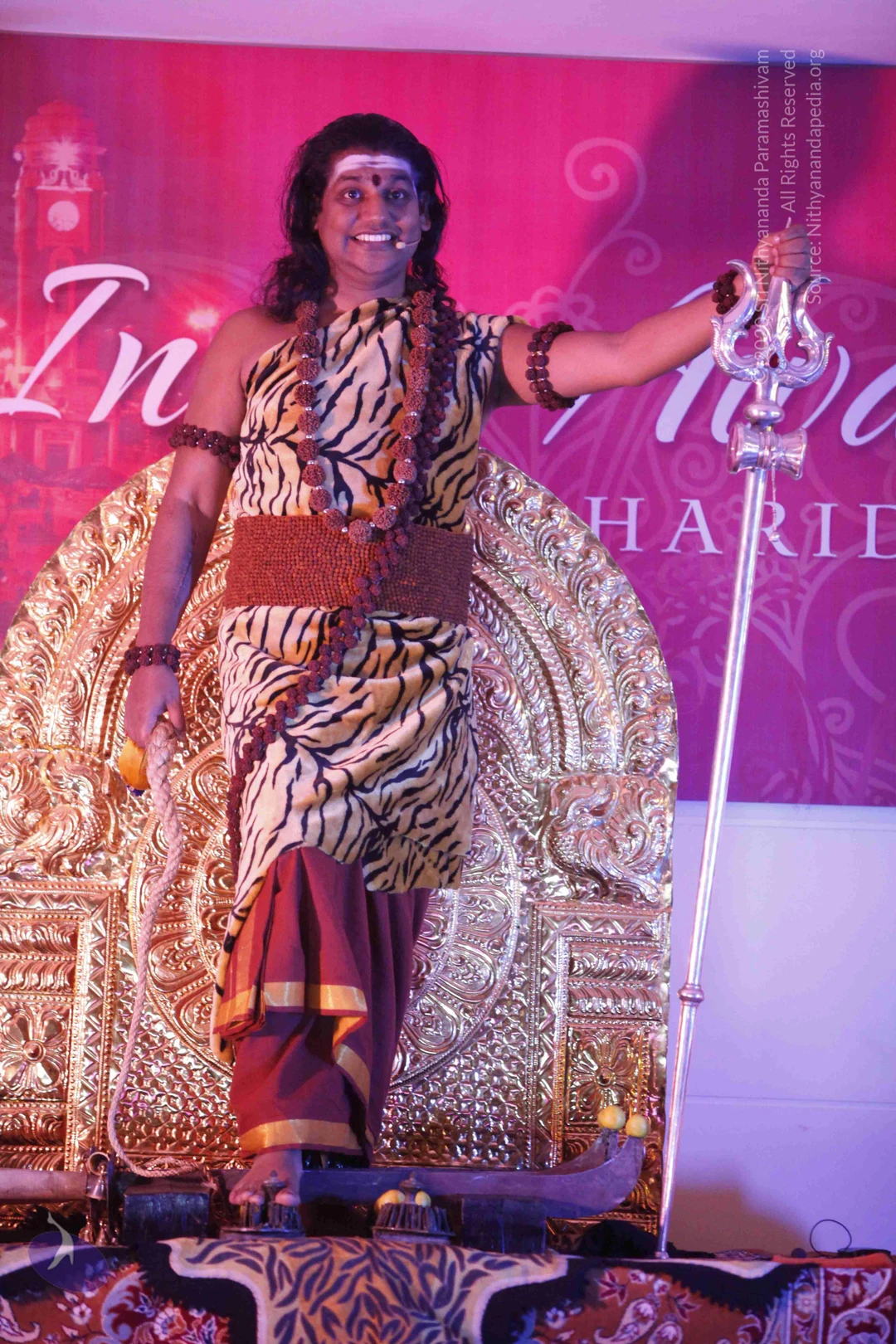
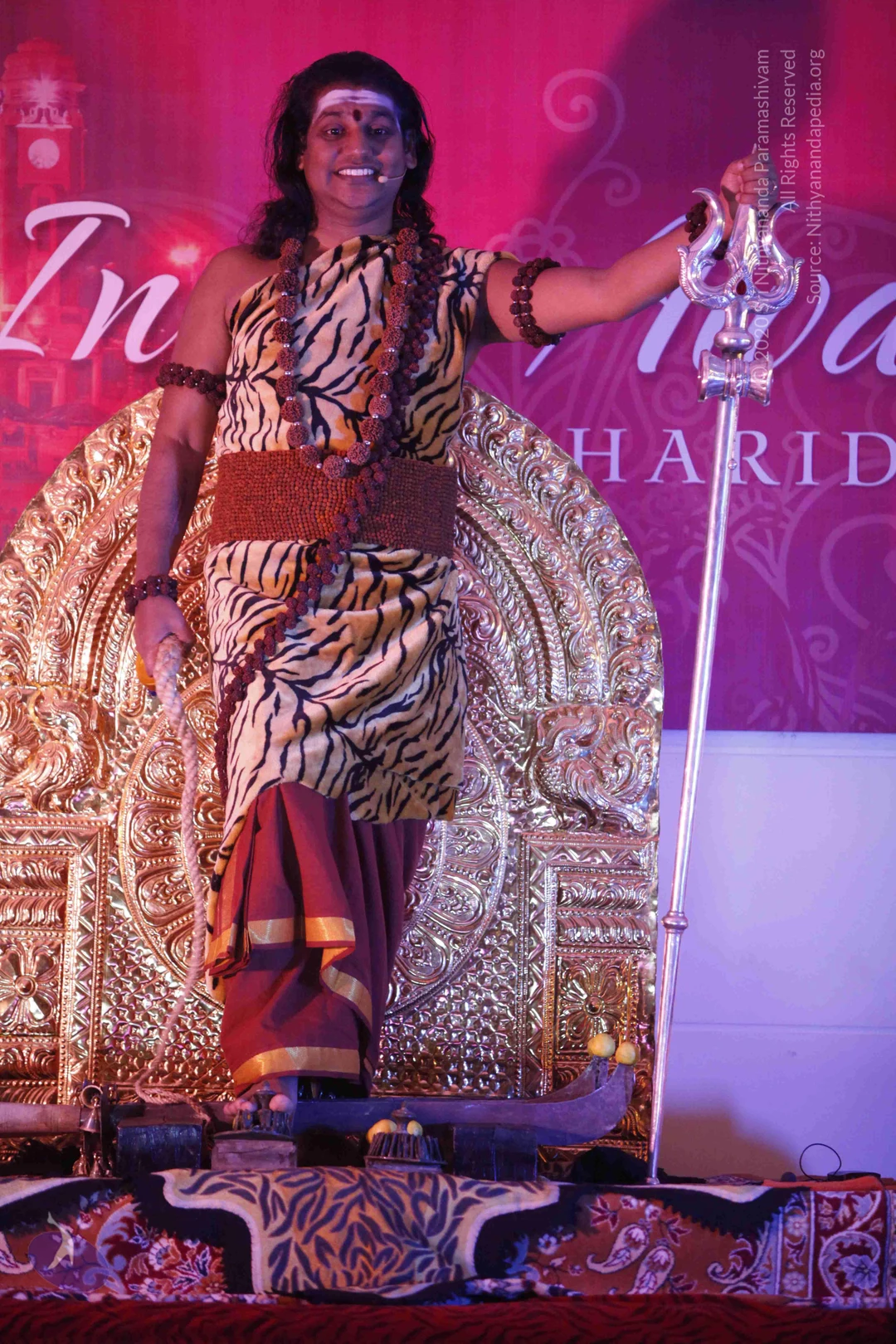
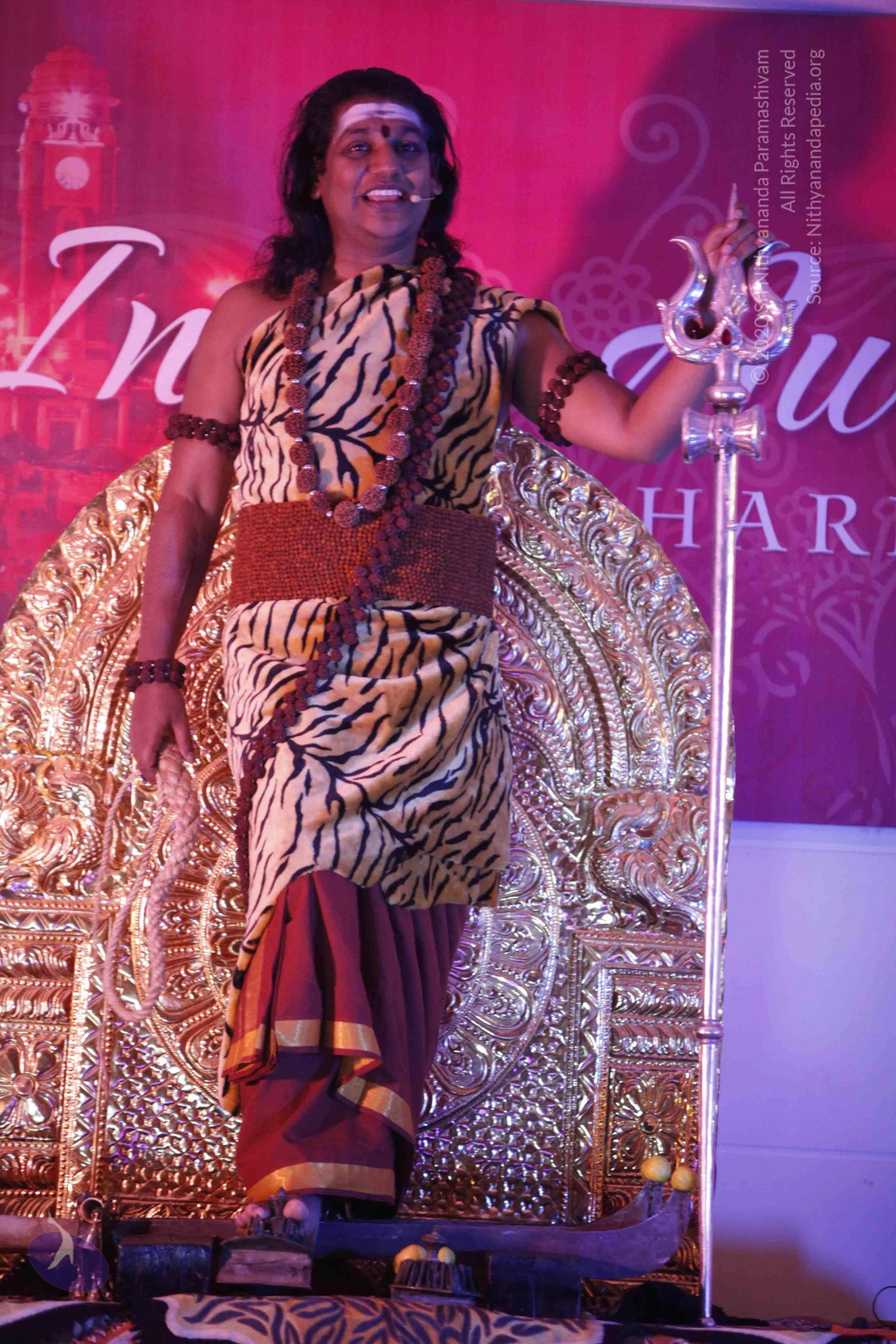
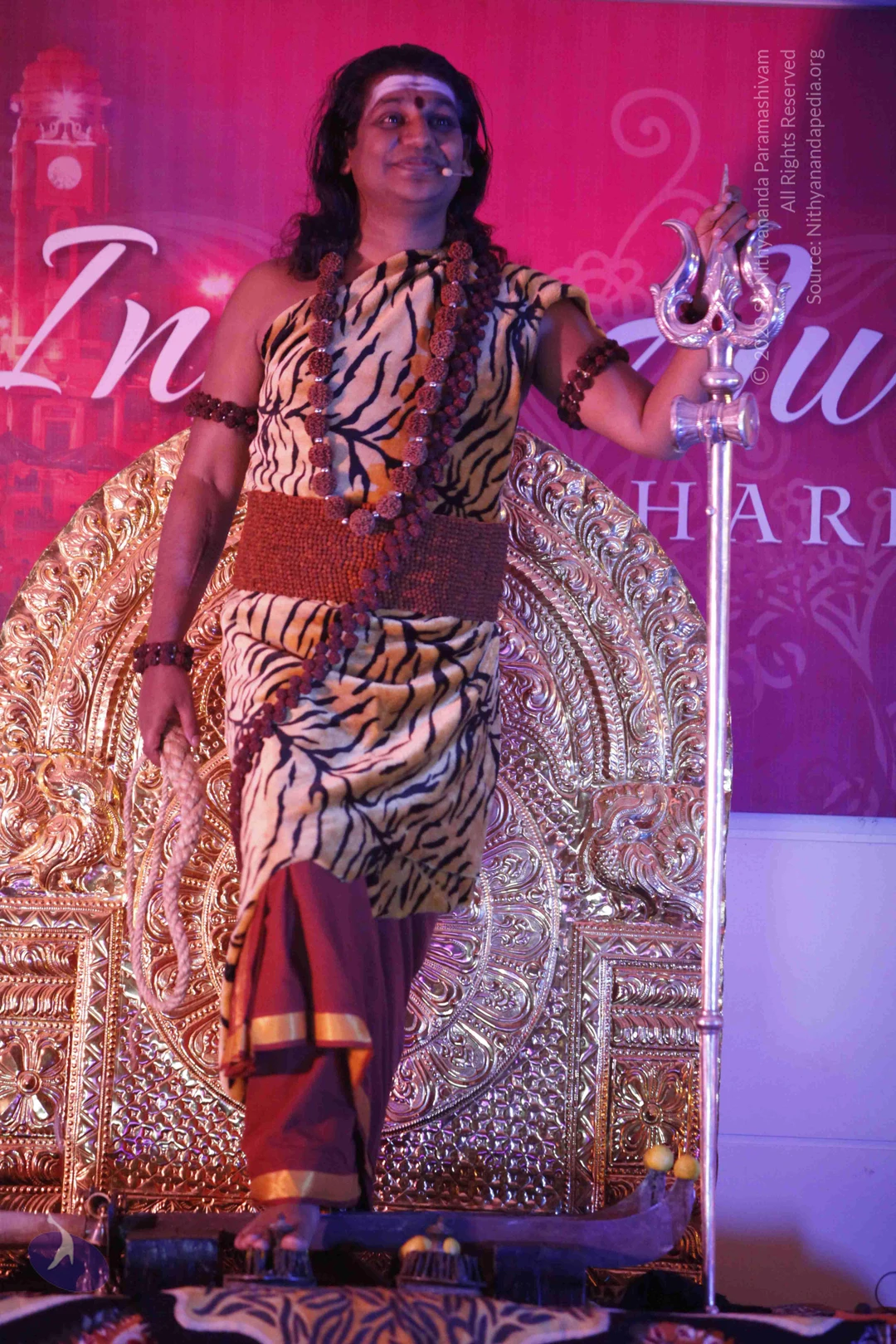
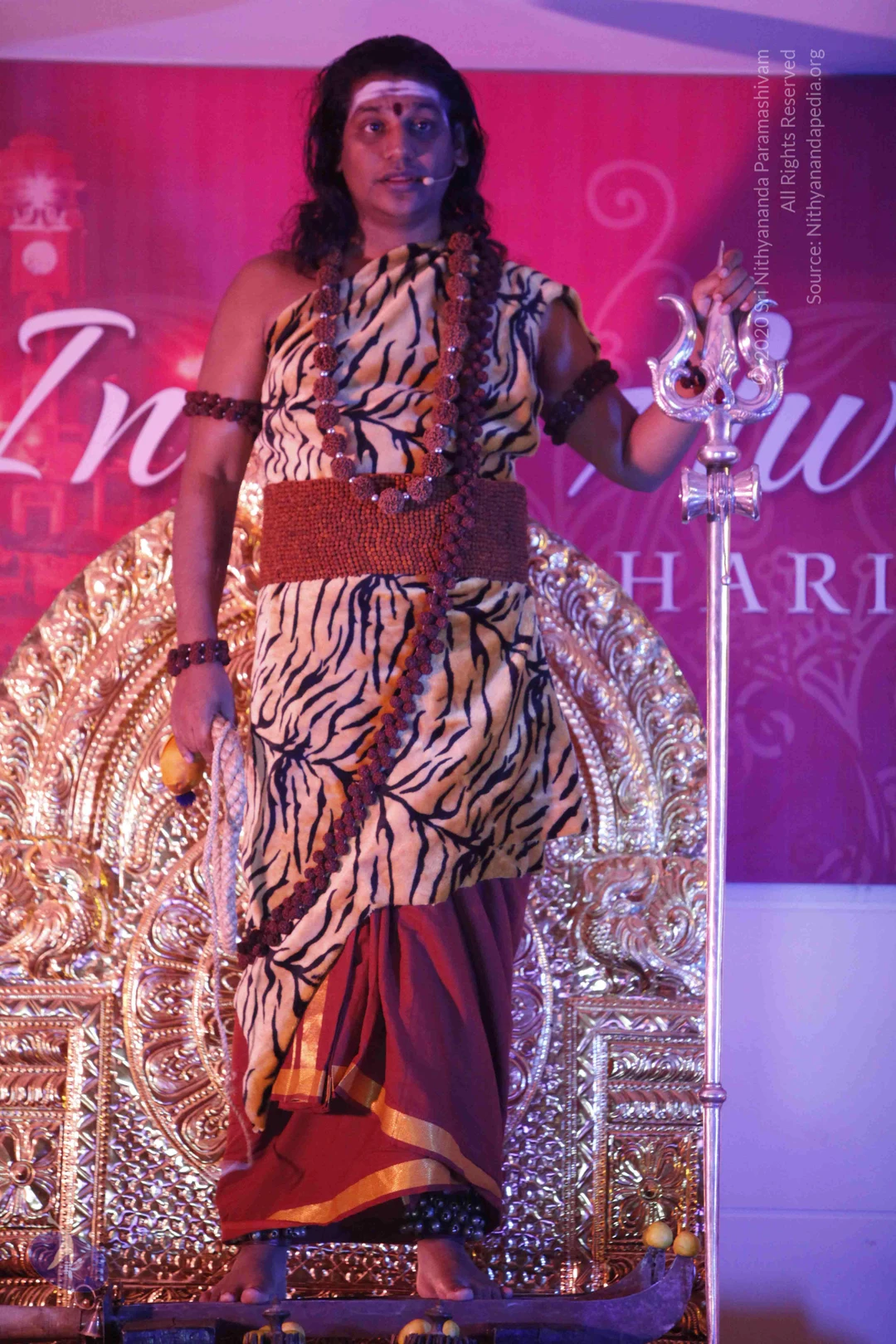
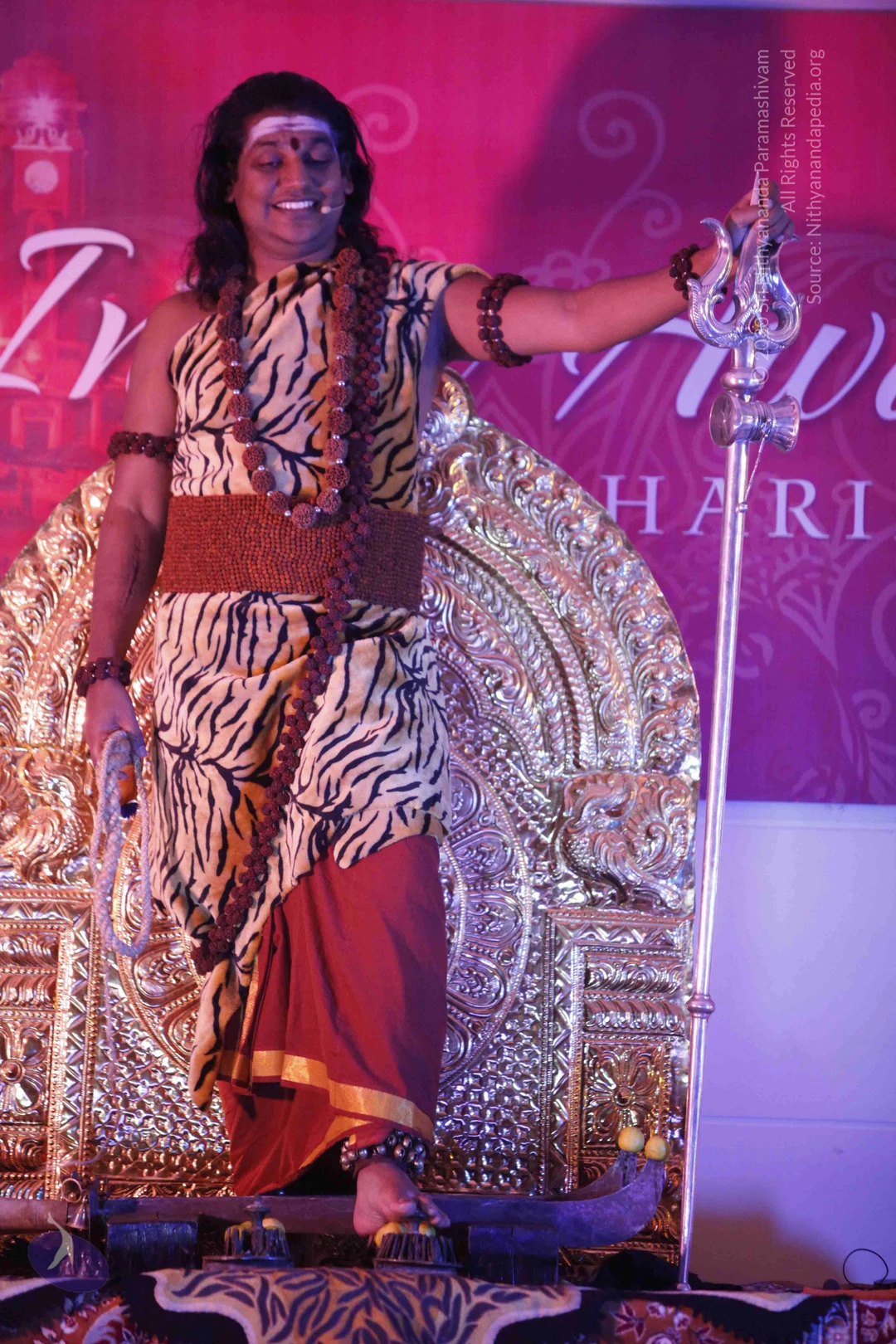
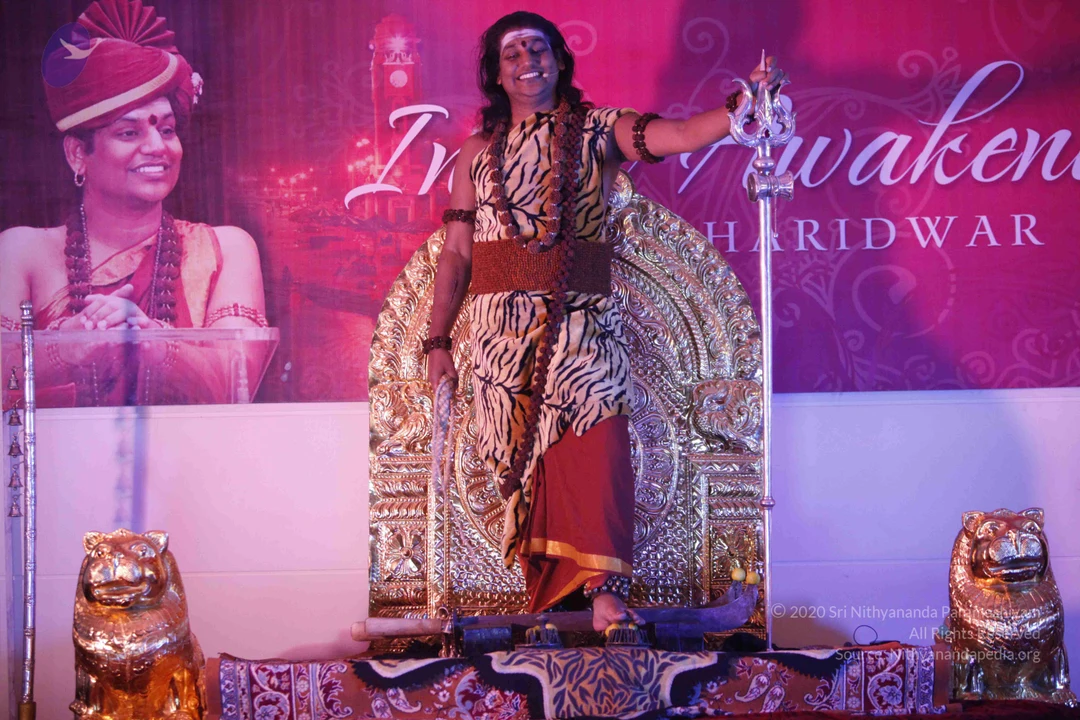
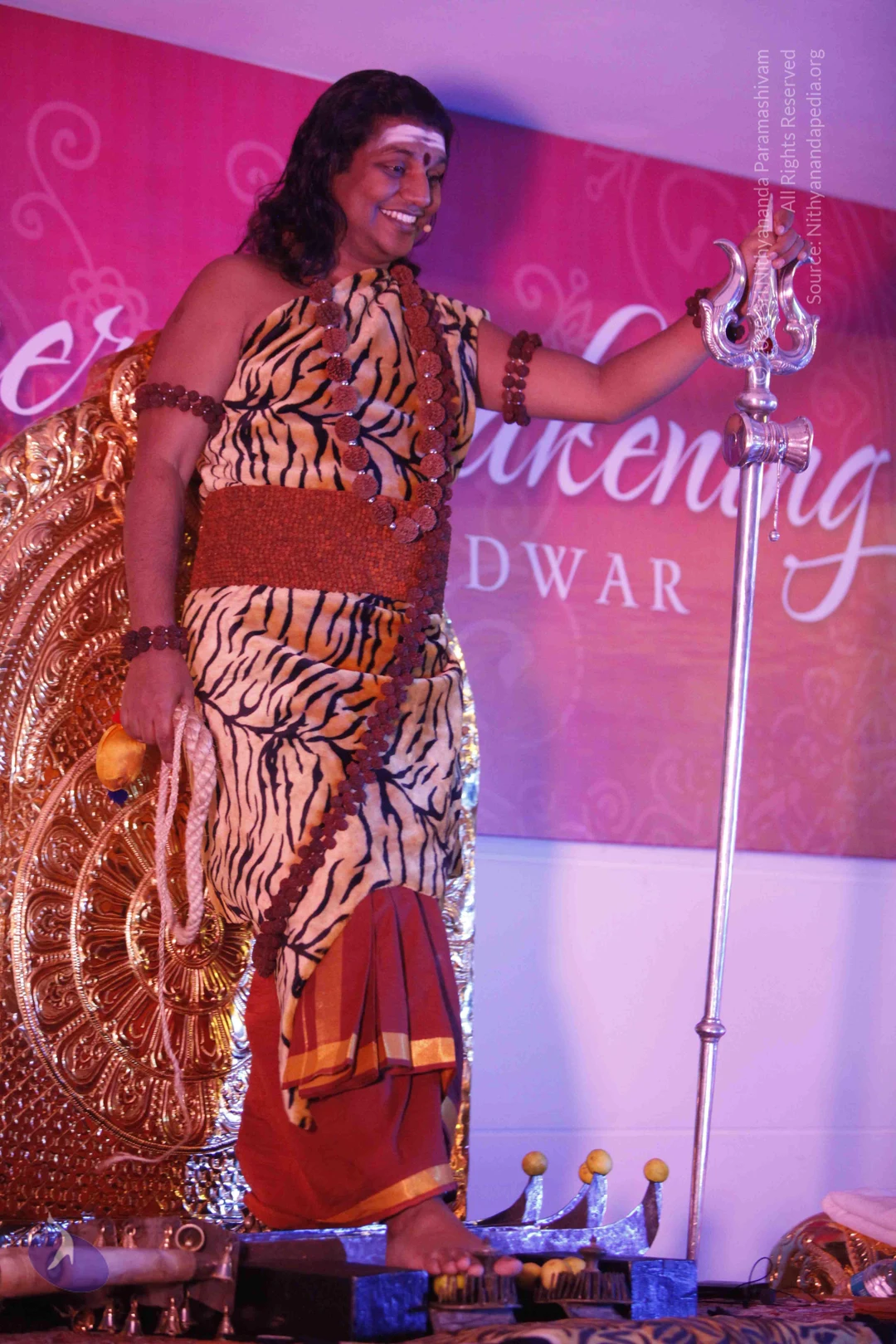
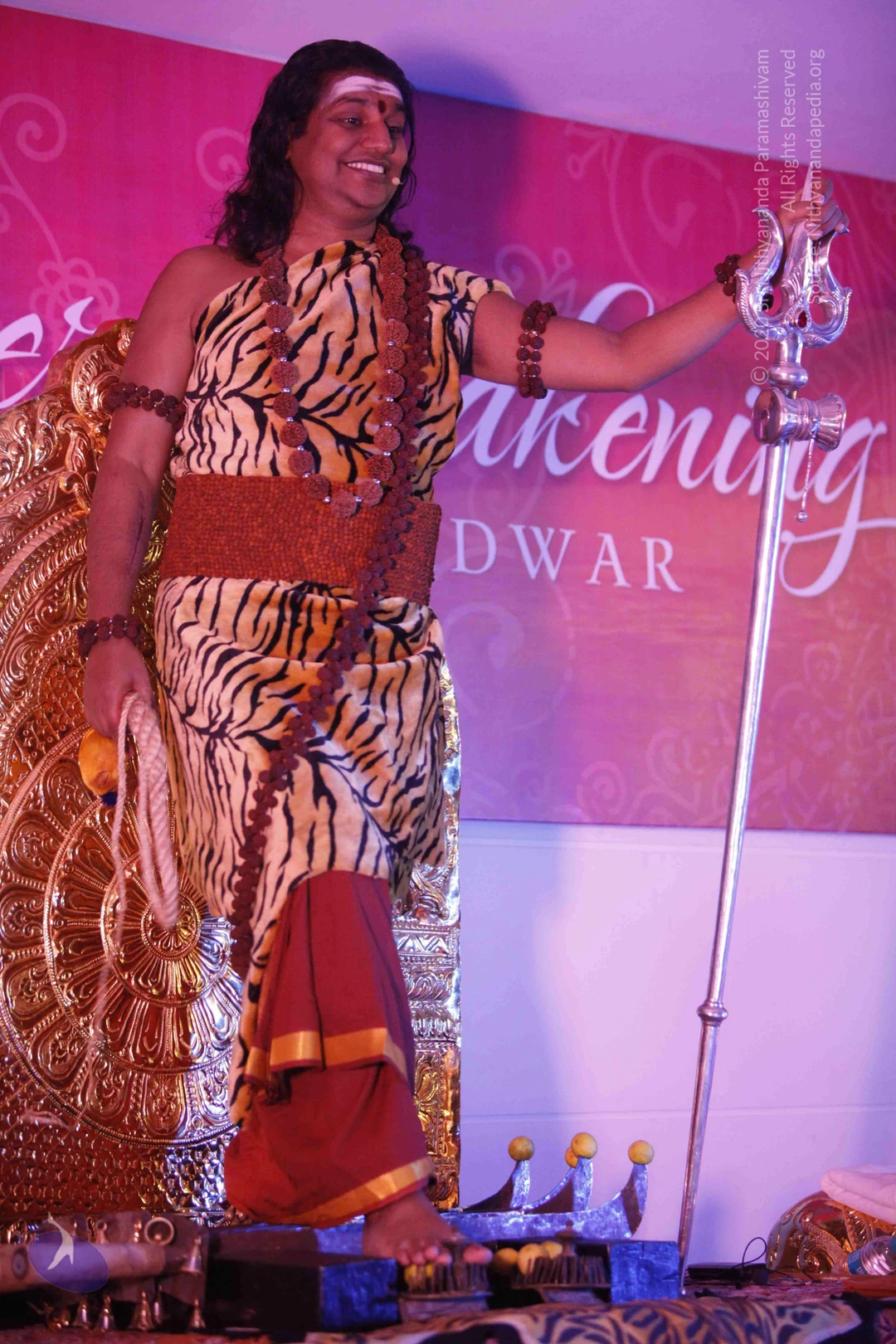
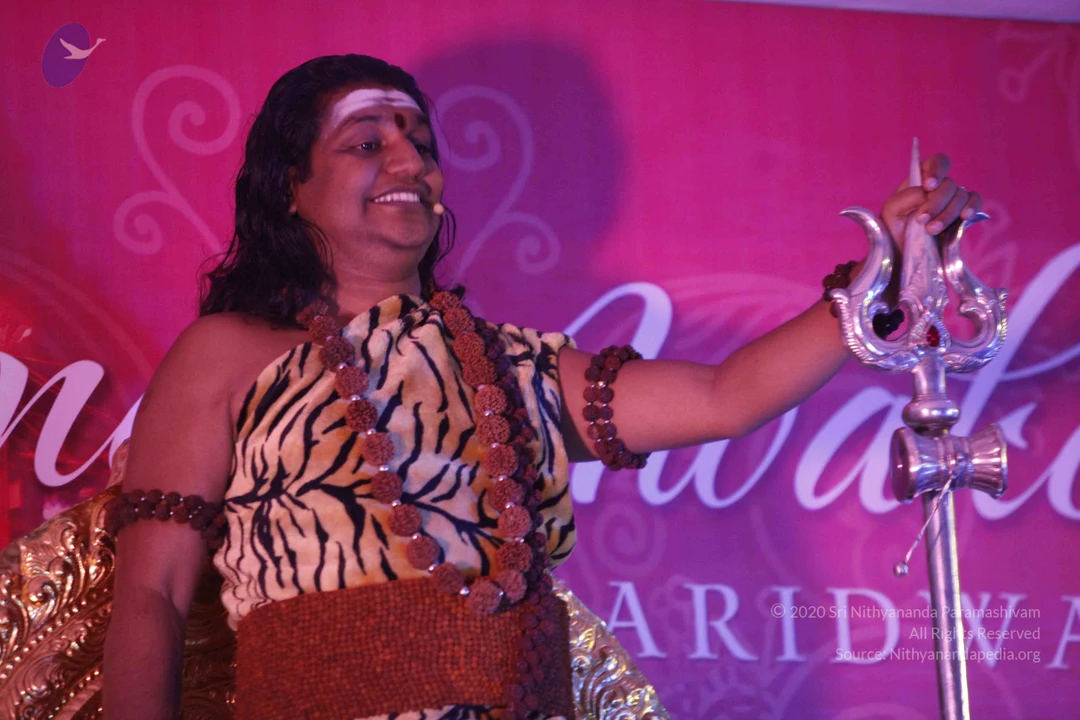
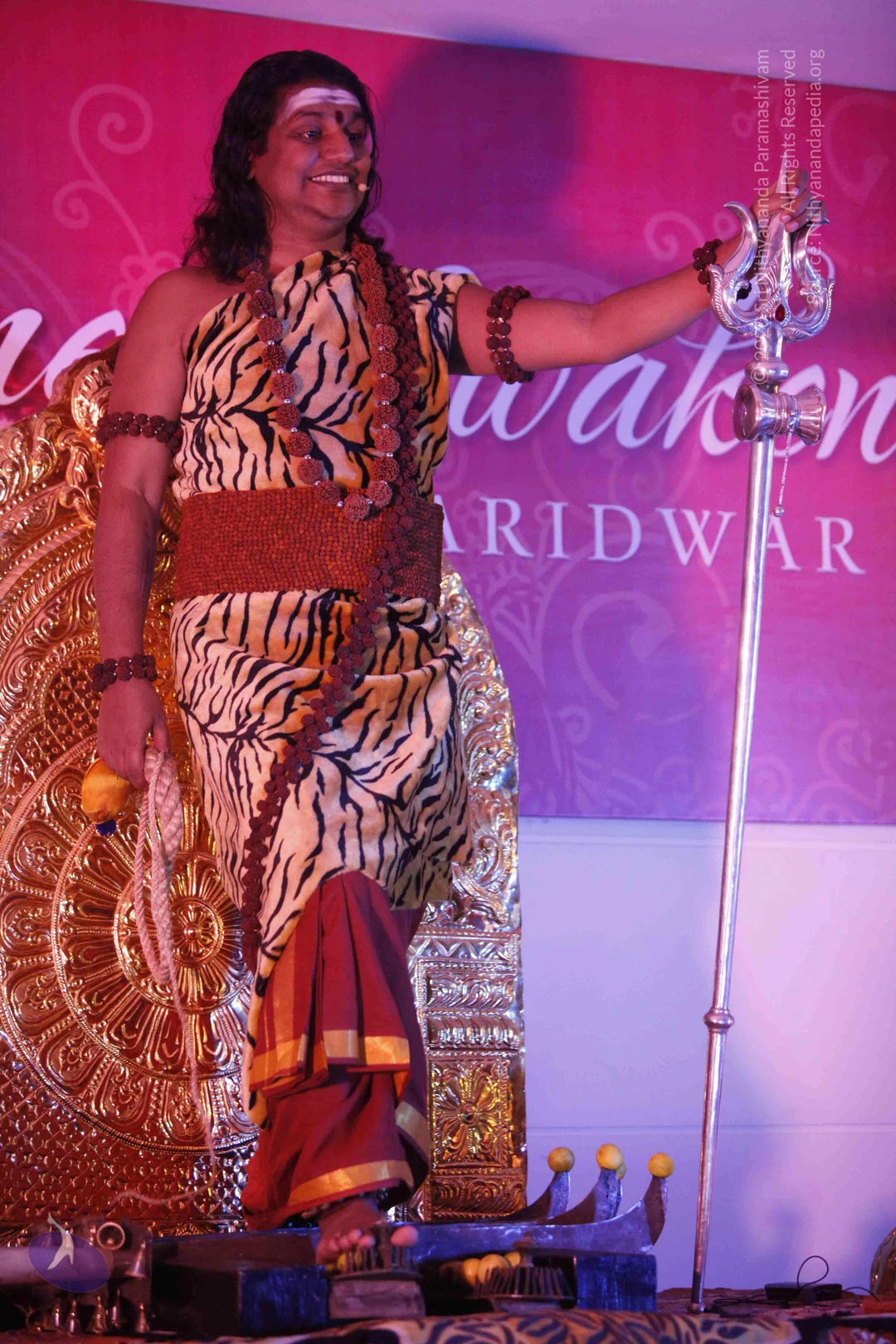
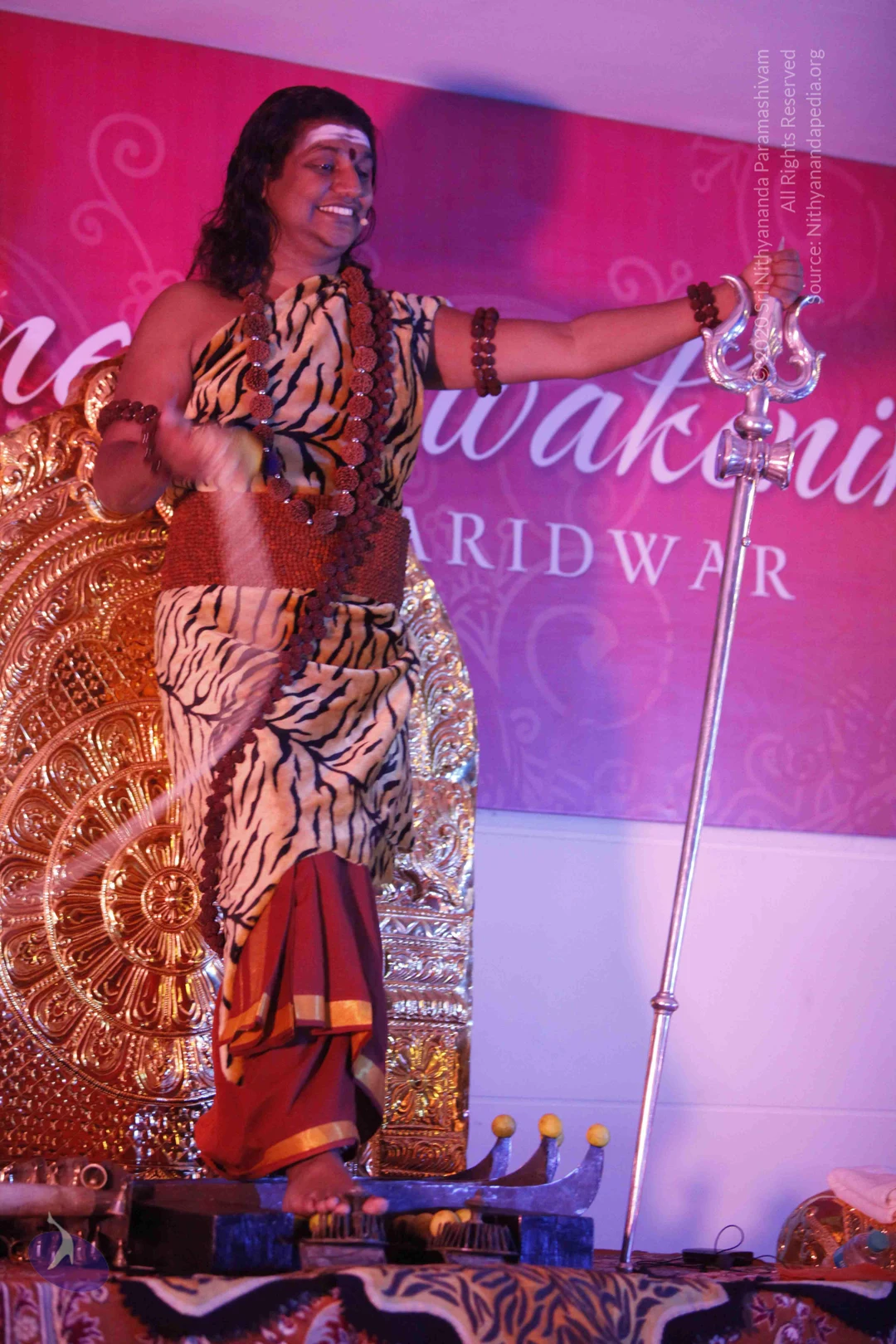
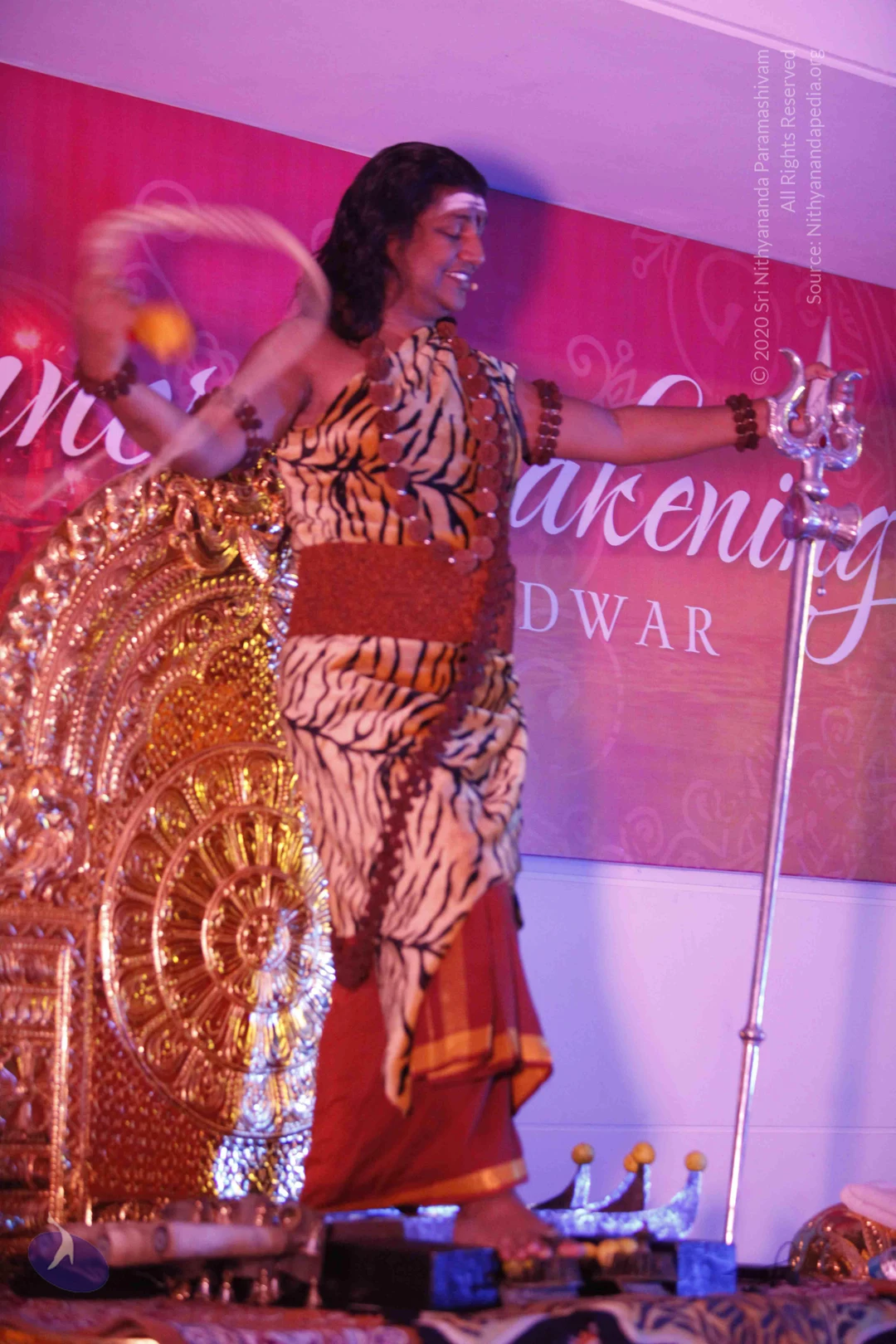
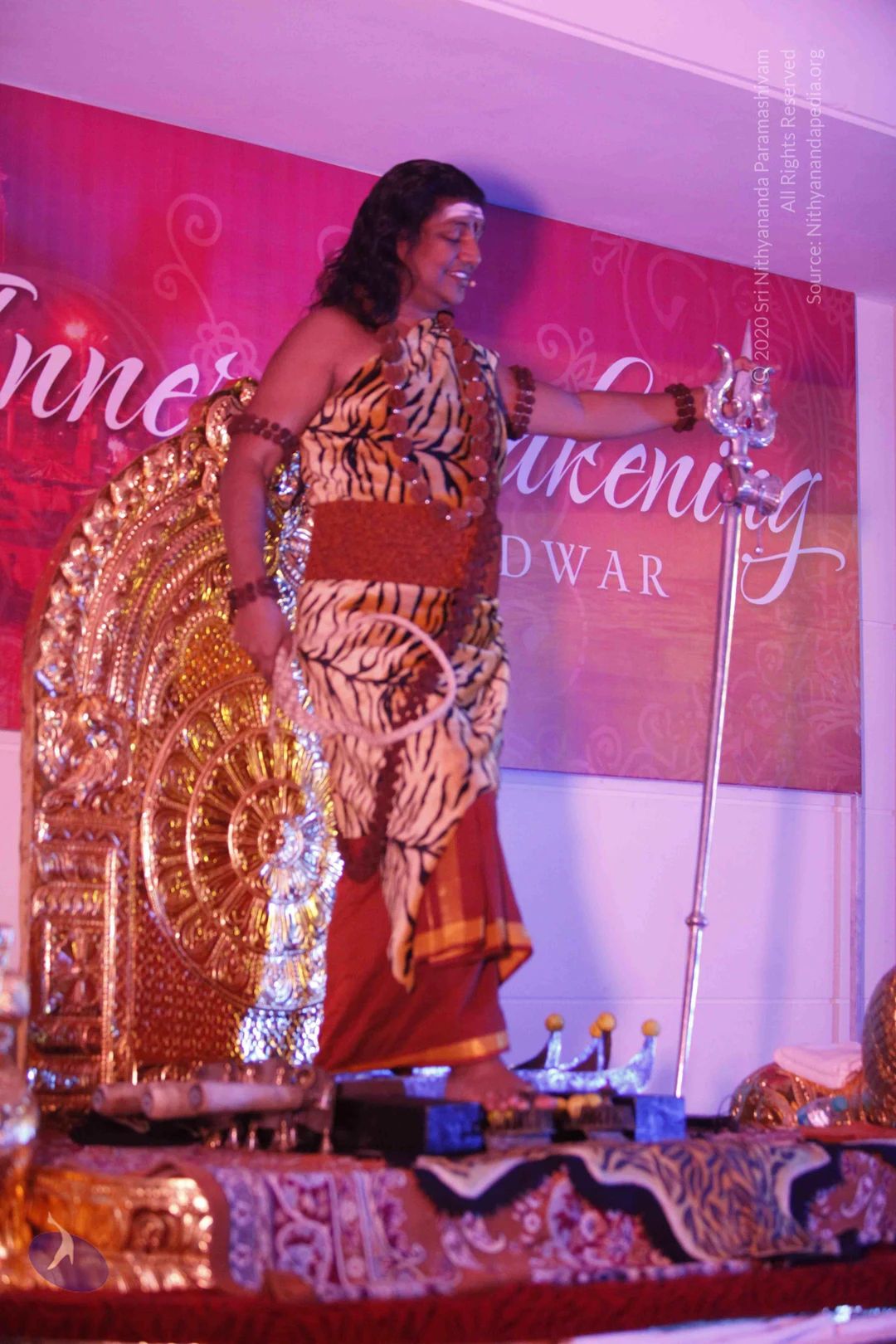
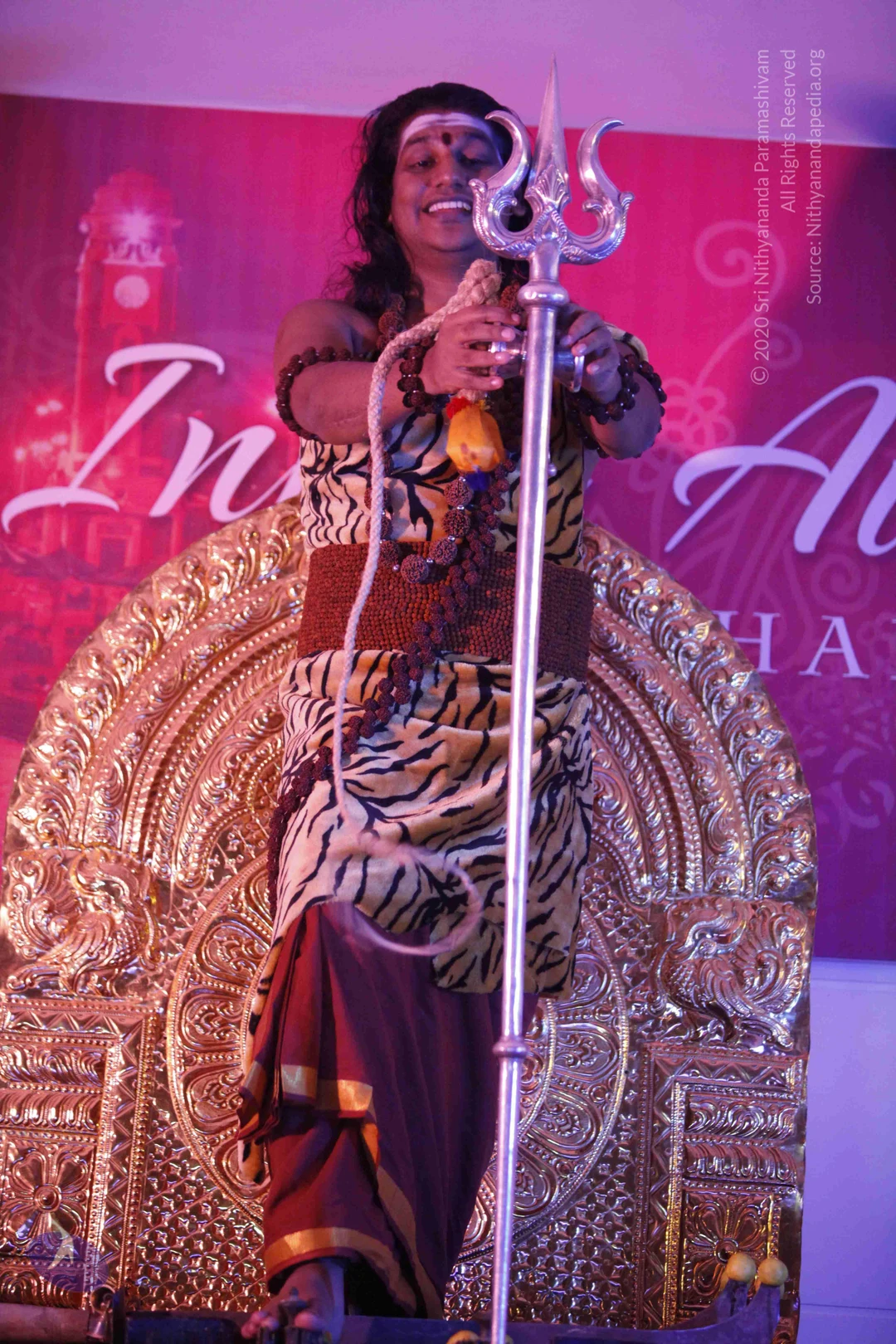
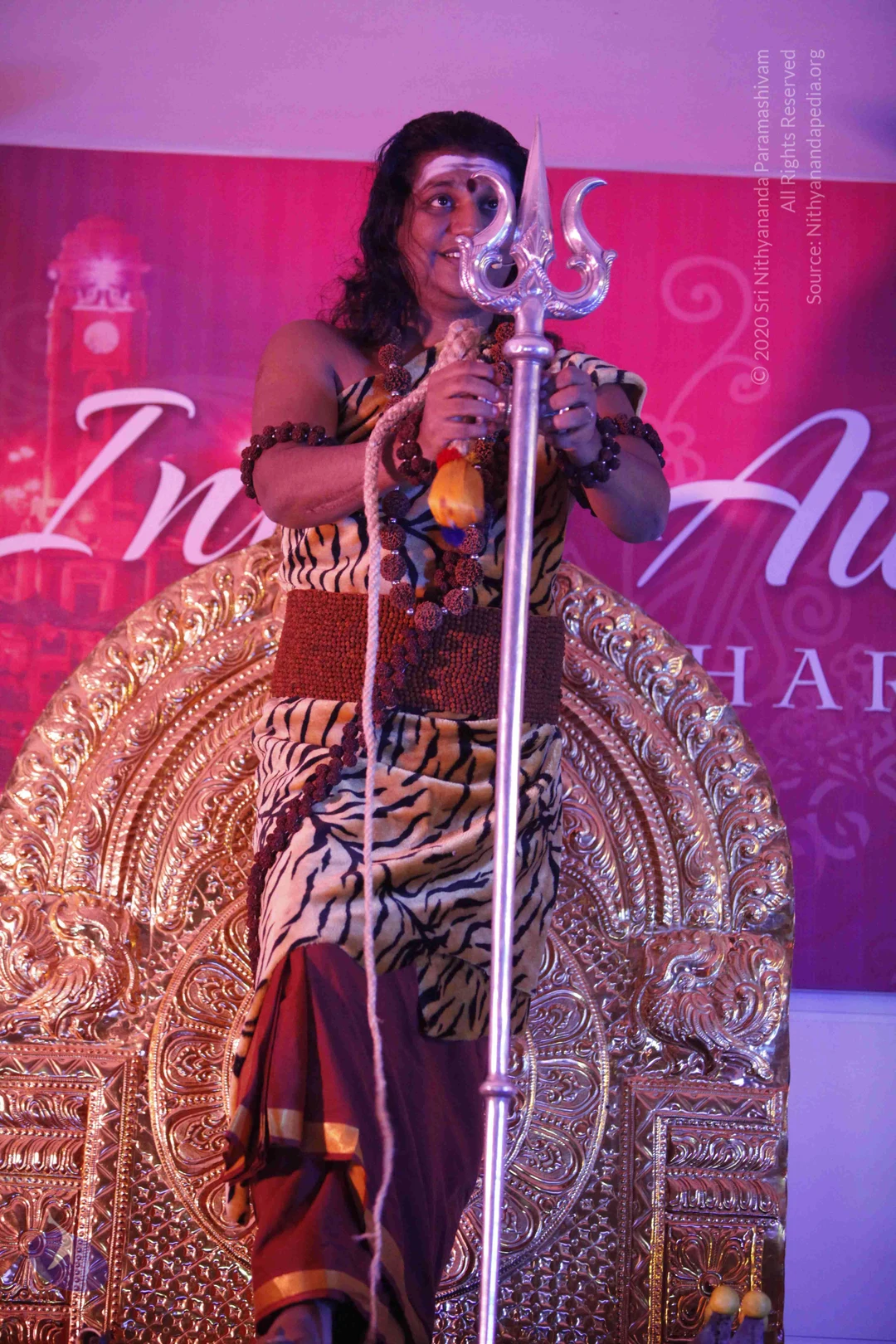
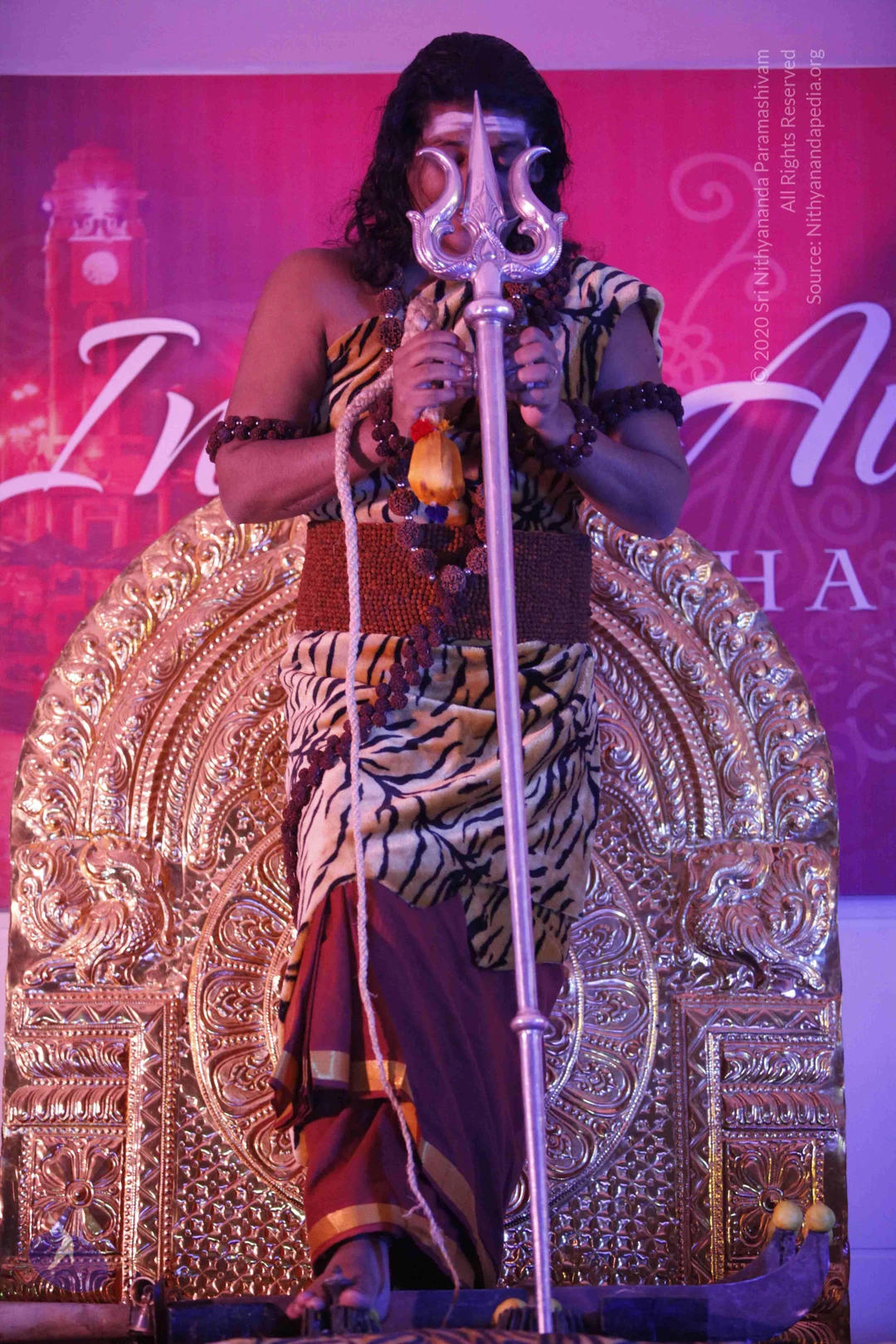
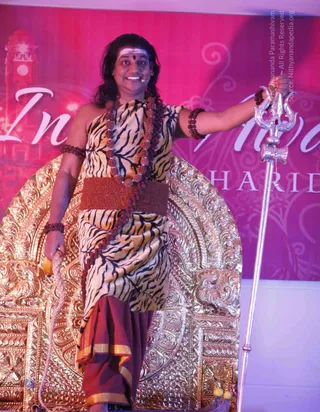
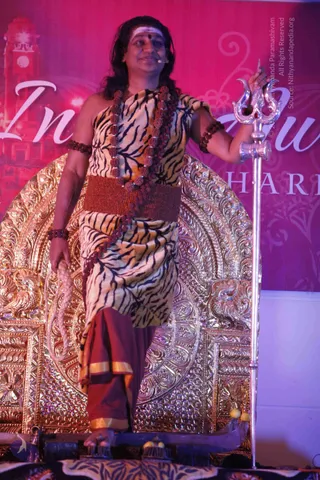
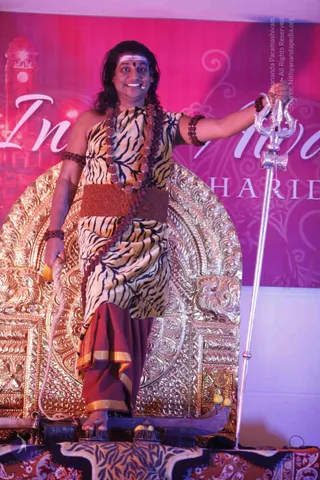
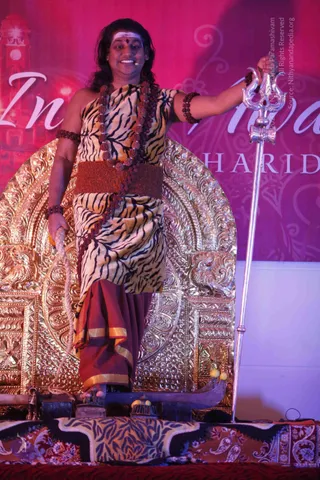
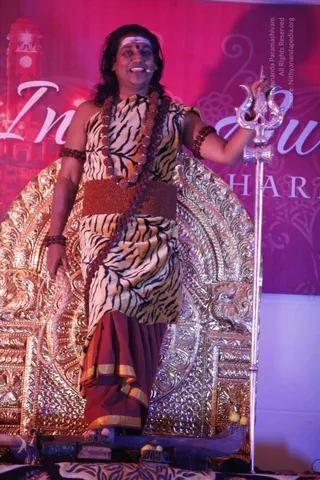
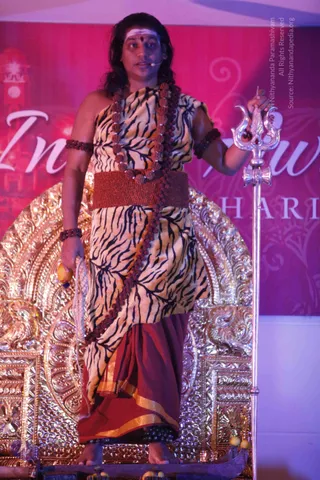
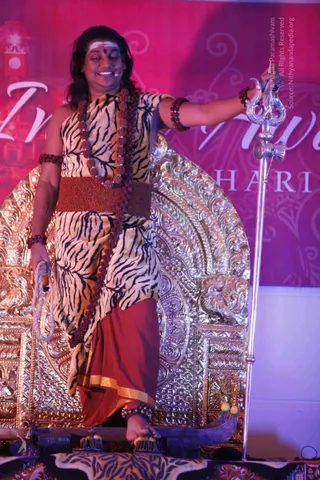
A man stands on a stage before an ornate gold throne-like chair, holding a silver trident in his right hand and a rope in his left. He wears a tiger-striped garment, a maroon dhoti with a gold border, multiple rudraksha malas and matching rudraksha bracelets, and a white and red forehead marking. Behind him is a pink backdrop with large white lettering and a clock tower graphic. Swamiji (probable): the figure wears long swept-back hair, rudraksha malas and a distinctive tiger-print garment, consistent with the page's description of the event. The setting appears to be a public discourse or event stage.A man stands in front of an ornate silver-and-gold throne backdrop on a stage with a magenta banner bearing the partial word 'Haridwar' and a stylised ornamental design. He wears a tiger-striped wrap over a maroon lower garment with a golden edge, many rudraksha beads as a long mala, a wide rudraksha waist band, and rudraksha bracelets on his wrists and upper arm. He has long swept-back dark hair, a white vibhuti forehead mark with a red kumkum dot, and a small headset microphone. He smiles while holding a silver trident in his raised right hand and a rope in his left hand. Swamiji (probable): the long swept-back hair, rudraksha mala and bracelets, and tiger-print attire are distinctive presentation cues for this candidate on stage.A man stands on a stage in front of an ornate gold-and-silver throne, speaking into a headset microphone while raising a silver trident in his right hand. He wears a tiger-striped garment draped over one shoulder with a rust-red wrap at the waist and a thick rudraksha bead belt, with long rudraksha mala necklaces and rudraksha bracelets on his arms. He has long dark hair and a white forehead mark with a red bindi. Behind him a pink-magenta backdrop carries large white script and a faded city skyline graphic. a person is visible with distinctive long swept hair, rudraksha malas, a tiger-print garment and a trident, presenting a satsang discourse.A man stands on a raised stage before an ornate silver-embossed throne-like backdrop with a pink banner behind him. He wears a tiger-striped yellow and black garment draped over one shoulder, a maroon waist sash and maroon lower cloth with gold border, and multiple rudraksha malas around his neck, arms and wrist. He holds a tall silver trident in his right hand and a braided rope in his left, with a white tripundra on his forehead and a small lapel microphone visible. Swamiji (probable): the long swept-back hair, rudraksha malas and ornate ceremonial dress match the page's claim, though the face is not used for identification.A standing man on a stage in a tiger-striped garment with a rust-coloured bead sash and layered rudraksha malas across the chest and wrists. He has long dark hair, a white forehead band with a red dot, and a headset microphone, and holds a silver trident in one hand and a rope in the other. Behind him is a gold ornate throne with carved lion figures, in front of a magenta backdrop with a clock-tower illustration and large white script lettering. a person: the long swept hair, rudraksha malas and ornate ceremonial setting are consistent with the page's a person claim, so the in_person label applies to the central speaker on stage.A man stands on a stage in front of an ornate silver-gilt throne and a magenta backdrop with large partial lettering reading "In" and "HARI". He wears a tiger-striped garment with a rudraksha belt, long rudraksha mala necklaces, and rudraksha bracelets, with a white tilak and red bindi on his forehead. He holds a silver trident-shaped staff in one hand and a rope in the other, and a headset microphone is visible on his face. Swamiji (probable) appears as the figure at the centre, identified by the visible long swept-back hair, rudraksha malas and distinctive tiger-print dress.

2-Satsang
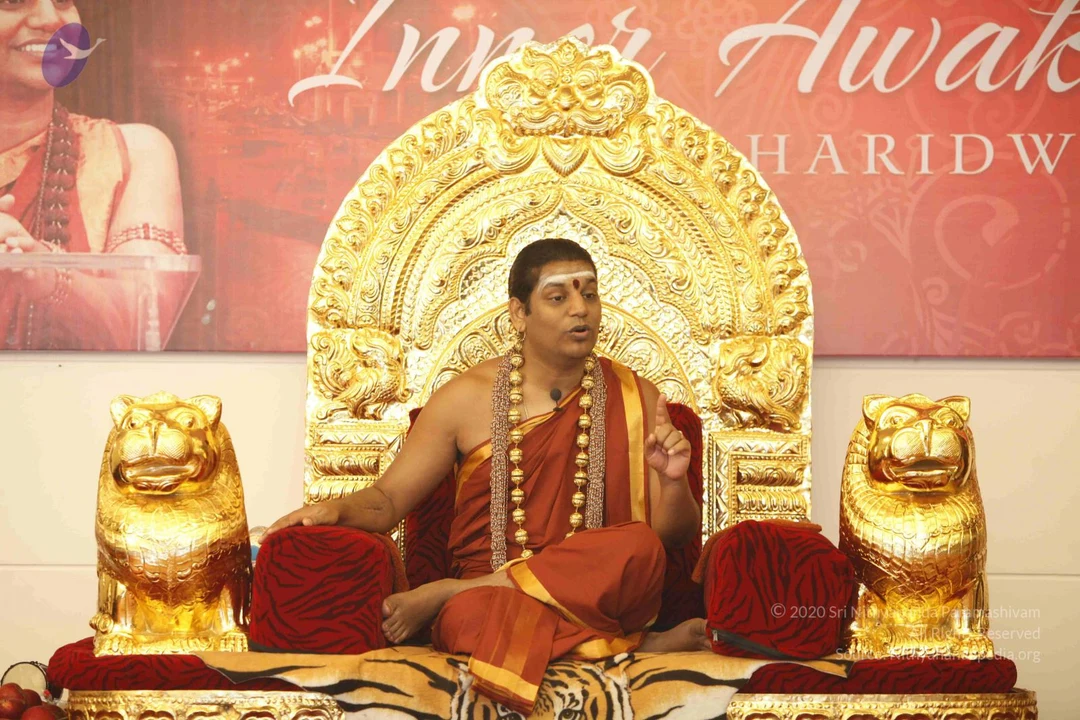
1 photoSource gallery
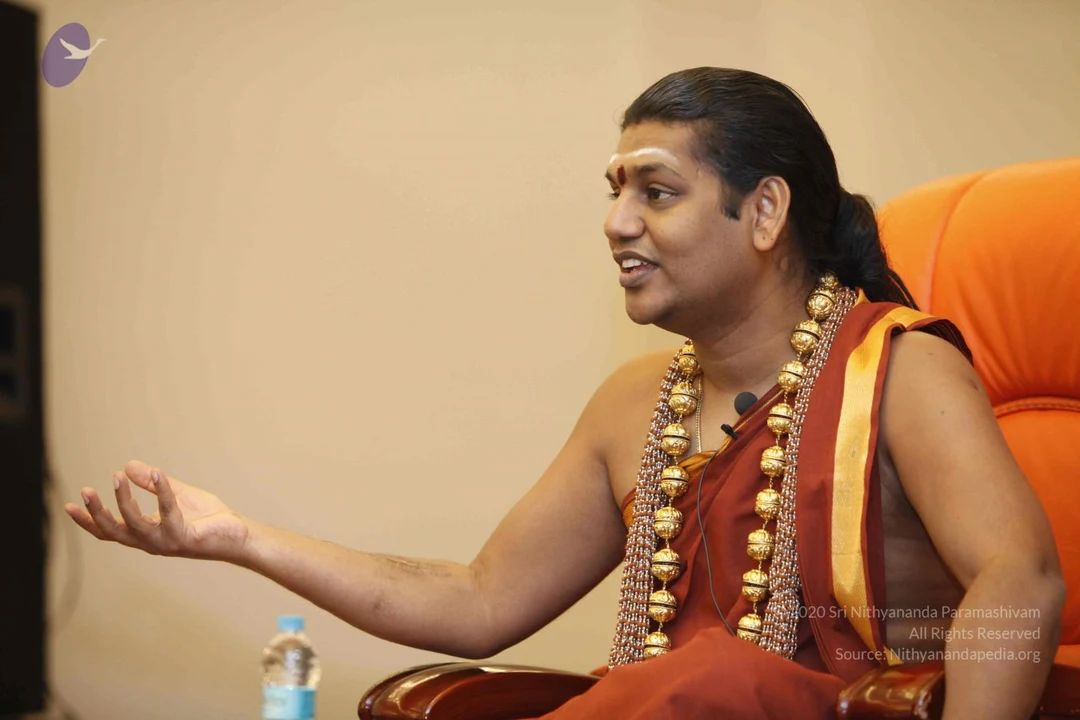
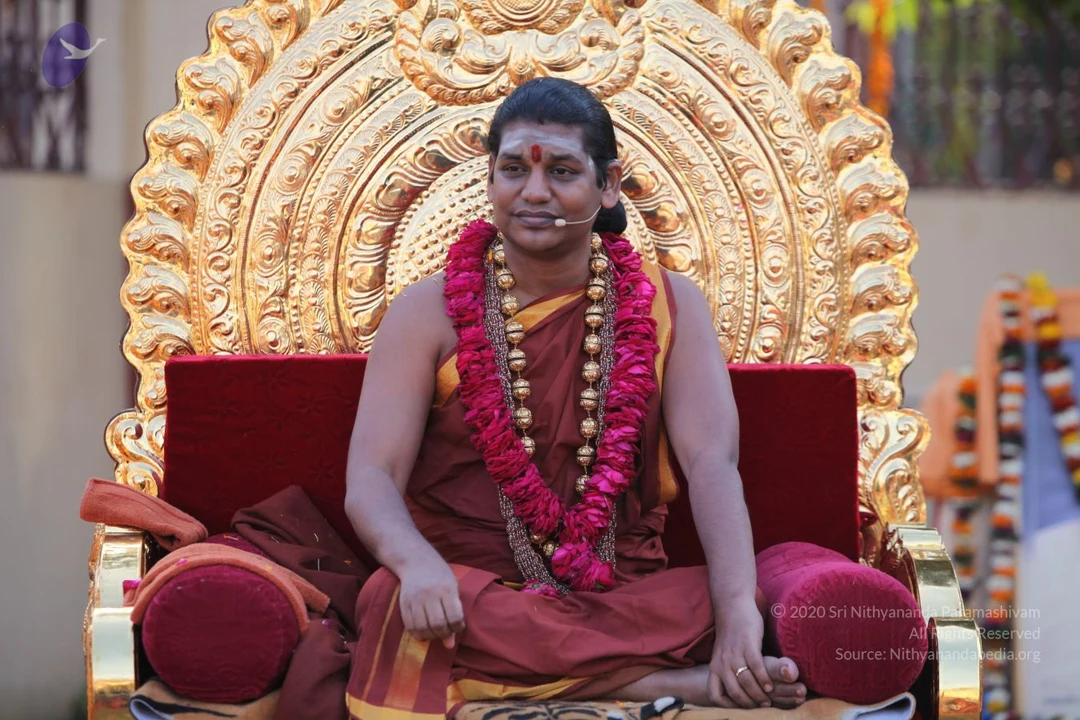
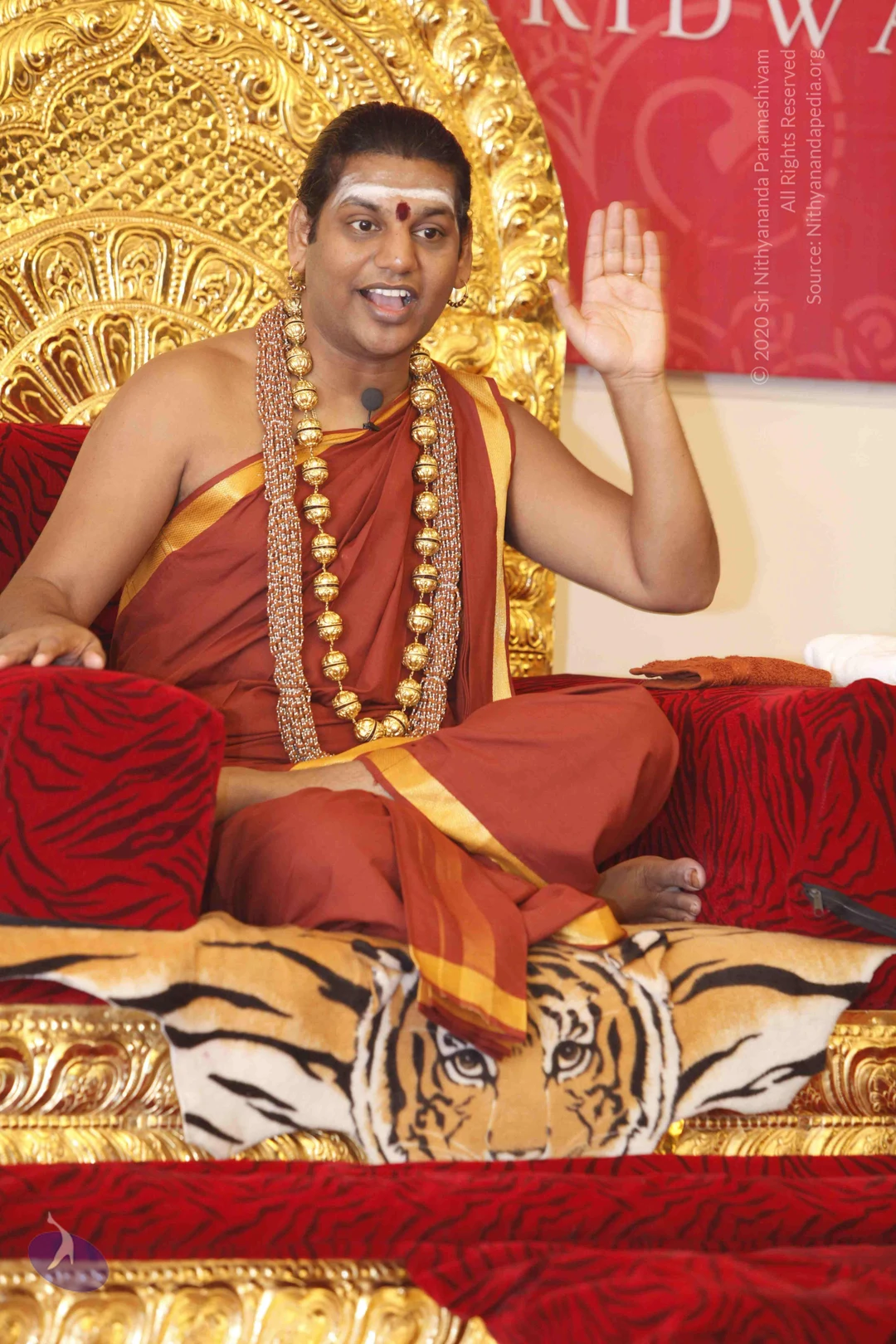
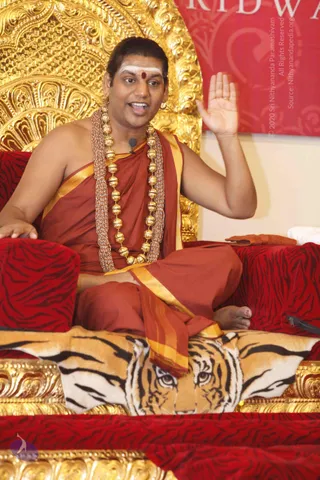
A seated male teacher in a rust-red robe with gold border and a shawl draped over one shoulder speaks while raising his right hand. He wears layered gold bead and silver chain necklaces, a red bindi and white vertical tilak on the forehead, and sits on a red tiger-striped cushion over a tiger-print mat in front of an ornate gold throne. Behind him hangs a red banner, and a small lapel microphone is clipped to his robe.
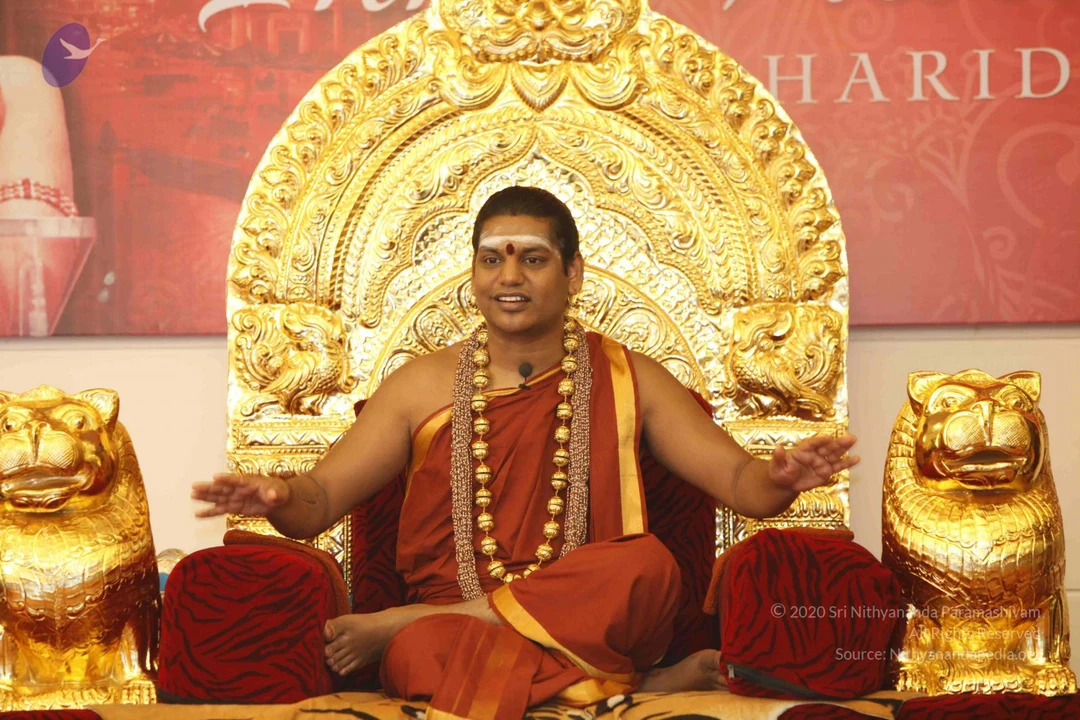
01-Kalabhairava-Darshan

19 photosSource gallery
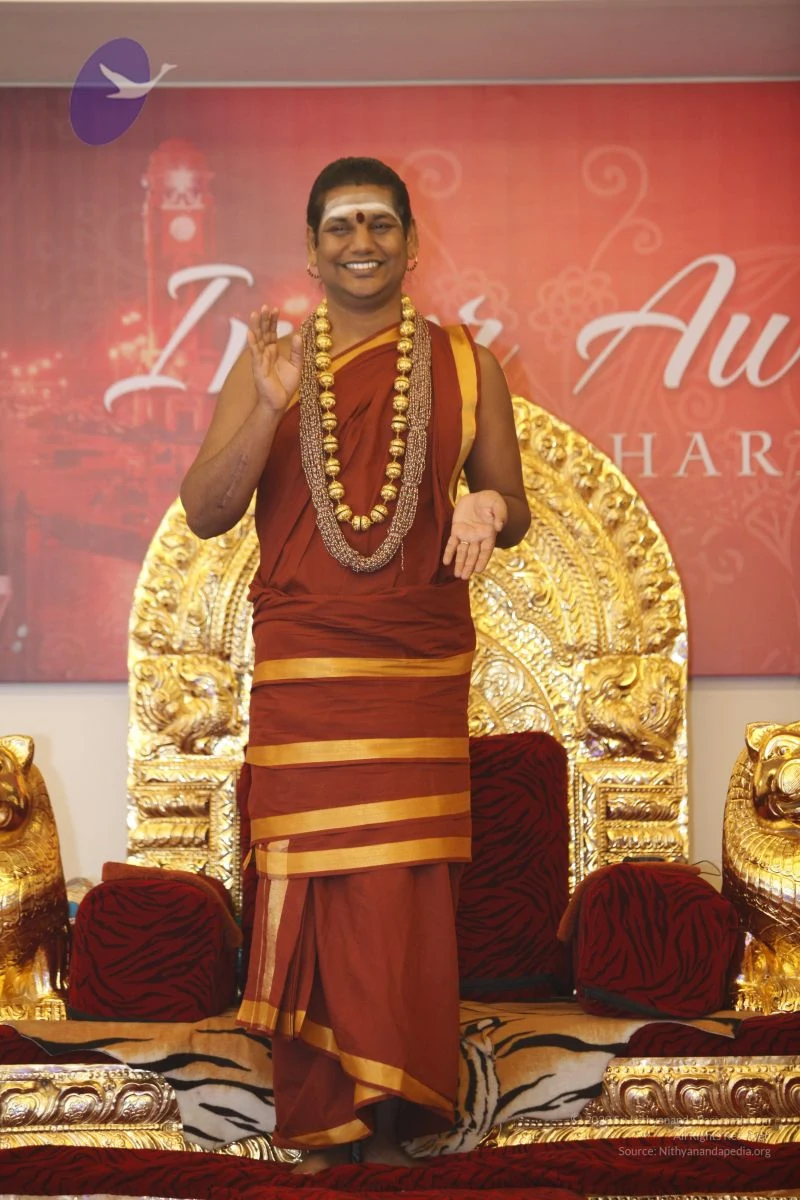
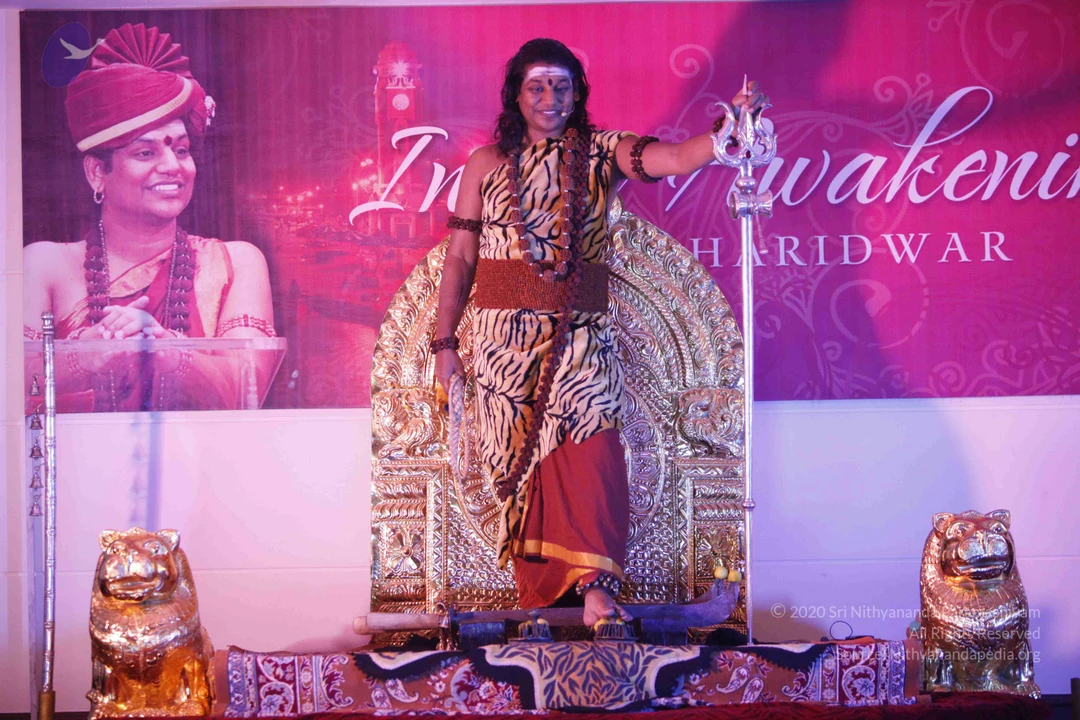
A man stands on a low wooden platform in front of an ornate gilded throne-like backdrop with a pink banner behind him. He wears a tiger-striped shawl over a maroon dhoti with gold border, multiple rudraksha mala necklaces, rudraksha bracelets and a rudraksha belt. He has long dark hair, white forehead markings and a red bindi, and holds a silver trident in his raised right hand while a rope is in his left. A small microphone is visible near his face. The banner shows partial lettering reading 'In' and 'HARID'. A decorative patterned cloth covers the platform below. Swamiji (probable): long swept-back hair, rudraksha malas and a tiger-print shawl with a trident, matching the page's claim of his presence, but the appearance cues are not conclusive.A man stands on a raised wooden platform on a stage, smiling and holding a tall silver trident (trishul) aloft in his right hand while his left hand grips a rope. He wears a tiger-striped wrap over his shoulder, a maroon dhoti with gold borders, a broad rust-coloured beaded waist band and multiple rudraksha malas across his chest and arms, plus a white vertical tilak with a red bindi on his forehead. Behind him stands an ornate gold repoussé throne-like backdrop with a magenta banner. Probable Swamiji by visible cues: long swept-back hair, rudraksha malas and ornate stage attire with trishul, shown in person on stage. Vertical overlay text reads copyright and archive credit.A man stands on a stage in front of an ornate gold-toned throne with carved floral and scroll patterns. He wears a tiger-striped shawl over a maroon lower garment with a gold border, multiple rudraksha malas across his chest and arms, and a thick rudraksha waist belt. He holds a silver trident with his right hand and a rope in his left, with a white tilak and red bindi on his forehead. Behind him a magenta banner reads partial lettering.A man stands barefoot on a raised platform before an ornate silver-embossed throne-like backdrop and a magenta banner. He wears a tiger-striped shawl over his shoulder and torso, a maroon dhoti with a gold border, and layers of dark rudraksha malas across his chest, waist and wrists. He holds a silver trident in his right hand and a small rope or cord in his left, with a white tilak and red bindi on his forehead. Partial banner lettering reads Inf... and HARI. The presentation, adornments and setting fit the page's a person label, so this is a person in person, appearance-based only.A man stands on a raised stage wearing a tiger-striped saffron-and-black garment with a wide rudraksha waist belt, long rudraksha malas across the chest, rudraksha bracelets, and a white forehead mark. He holds an ornate silver trident in one hand and a rope in the other, smiling while standing near a large ornate silver throne with repoussé floral and peacock motifs against a magenta backdrop. A kalabhairava darshan style stage performance is suggested by the trident and sacred regalia; the backdrop shows partial lettering. a person is indicated by the long swept hair, rudraksha malas and saffron-toned ceremonial dress, presented in a stage setting.A person stands on a raised stage in front of an ornate silver throne flanked by two gilded lion sculptures, holding a silver trident in the right hand and raising the left arm. The figure wears a tiger-striped saffron and orange garment with a red-orange waist sash, a rudraksha mala with multiple strands, and a bindi-marked forehead, with long dark hair. A large backdrop behind shows a printed portrait of a smiling man in a red turban and orange garment, a clock tower, and the words Inner Awakening Haridwar. Gold-trimmed cloth draped over a table with a sword lies in front of the throne. Swamiji (probable): the figure has long swept-back hair, a rudraksha mala and saffron-orange ornate clothing, and is positioned as the central speaker on a throne stage.
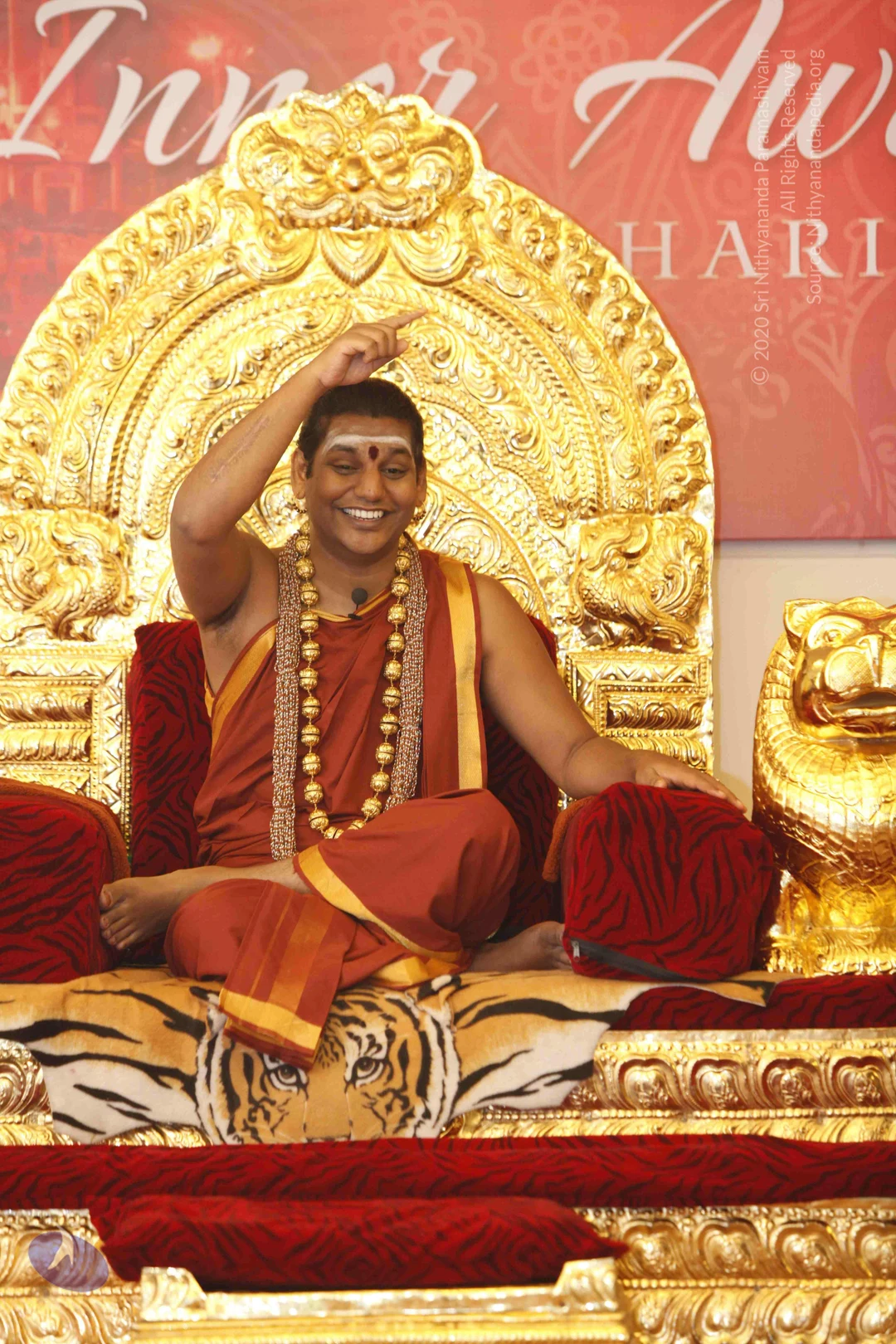
January 20 2014

1 photoView all
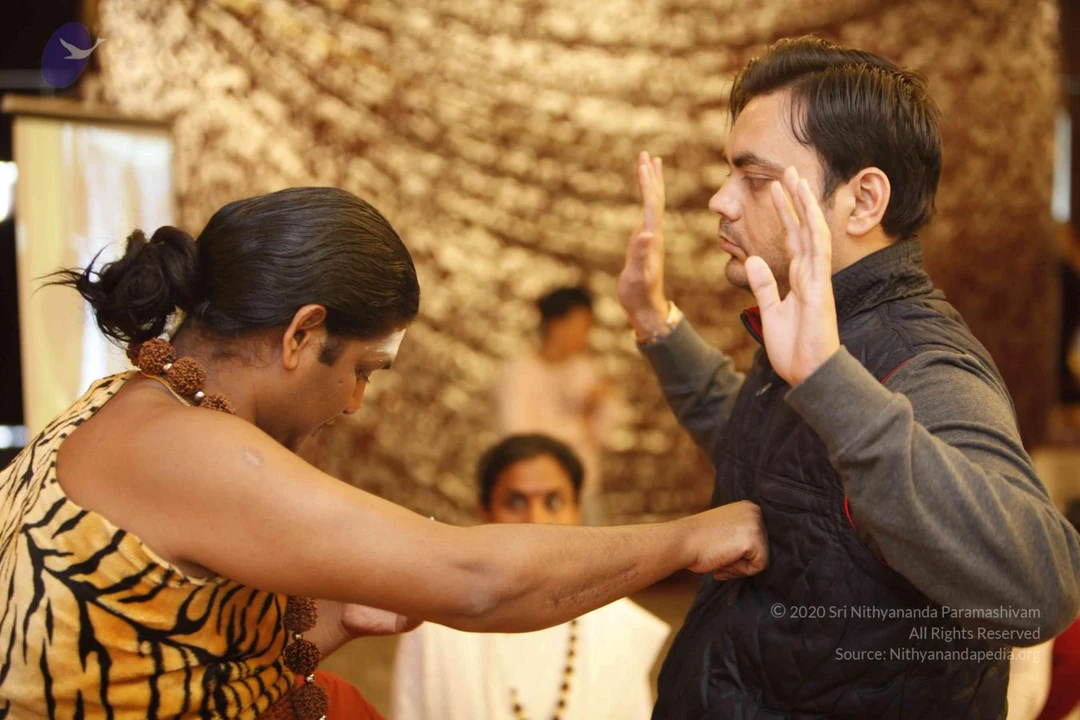
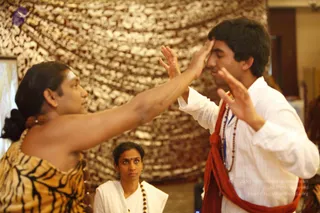
Photograph of an energy darshan moment indoors in front of a shimmering gold-and-bronze textured fabric backdrop. A bare-shouldered man with long dark hair tied up, wearing a yellow-and-black tiger-striped cloth and rudraksha beads, extends his arm to place his palm on the forehead of a young man in a white kurta with a red shawl and rudraksha mala, who holds his own hands up in response. A woman in white with a mala sits behind them watching. Swamiji (probable): the man in the tiger-striped cloth has long hair swept back, rudraksha malas and distinctive ceremonial clothing, consistent with the page's reference to Swamiji.