Skip to content
Monday

3 June 2013

Supreme Pontiff of Hinduism HDH Bhagavan Nithyananda Paramashivam

Dated photos
348
Source pages
1
Media
2
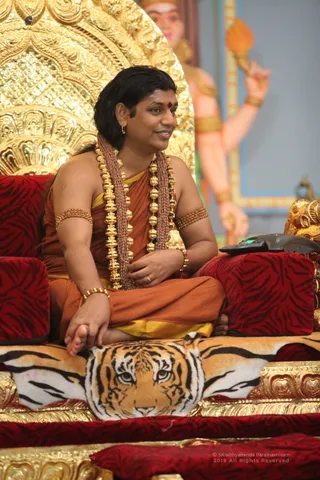
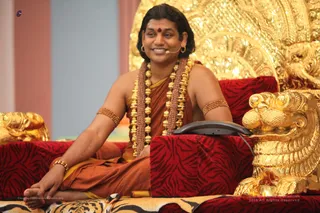
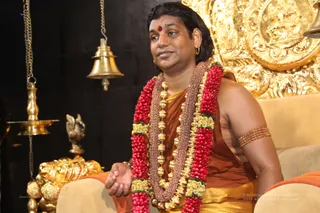
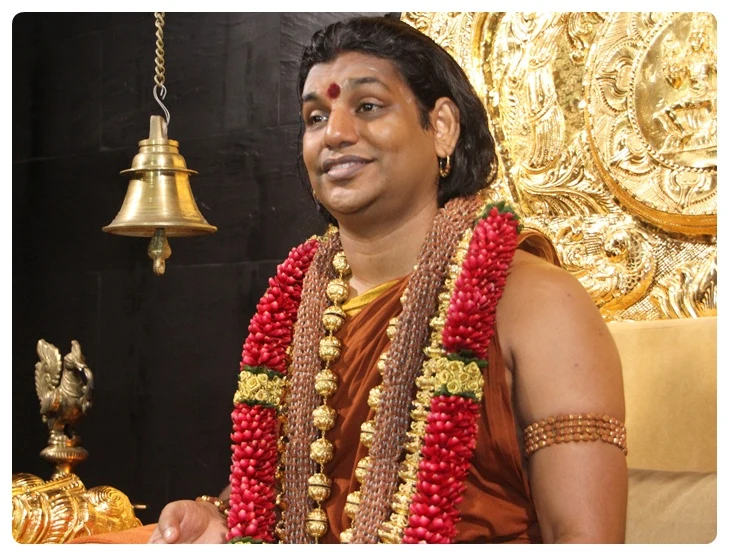
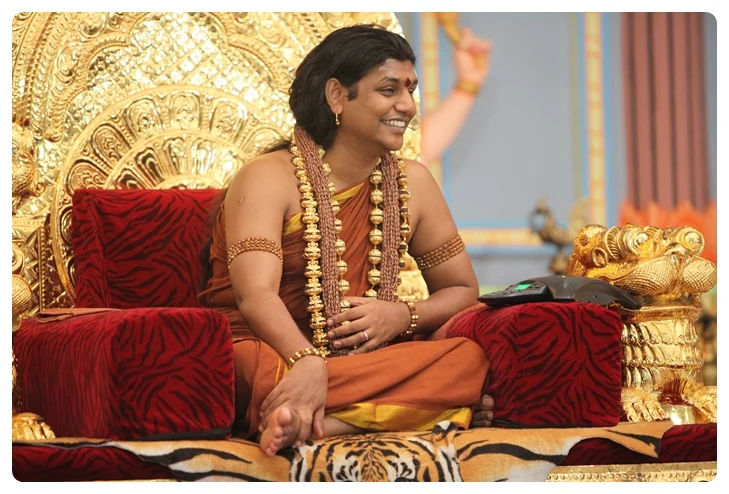
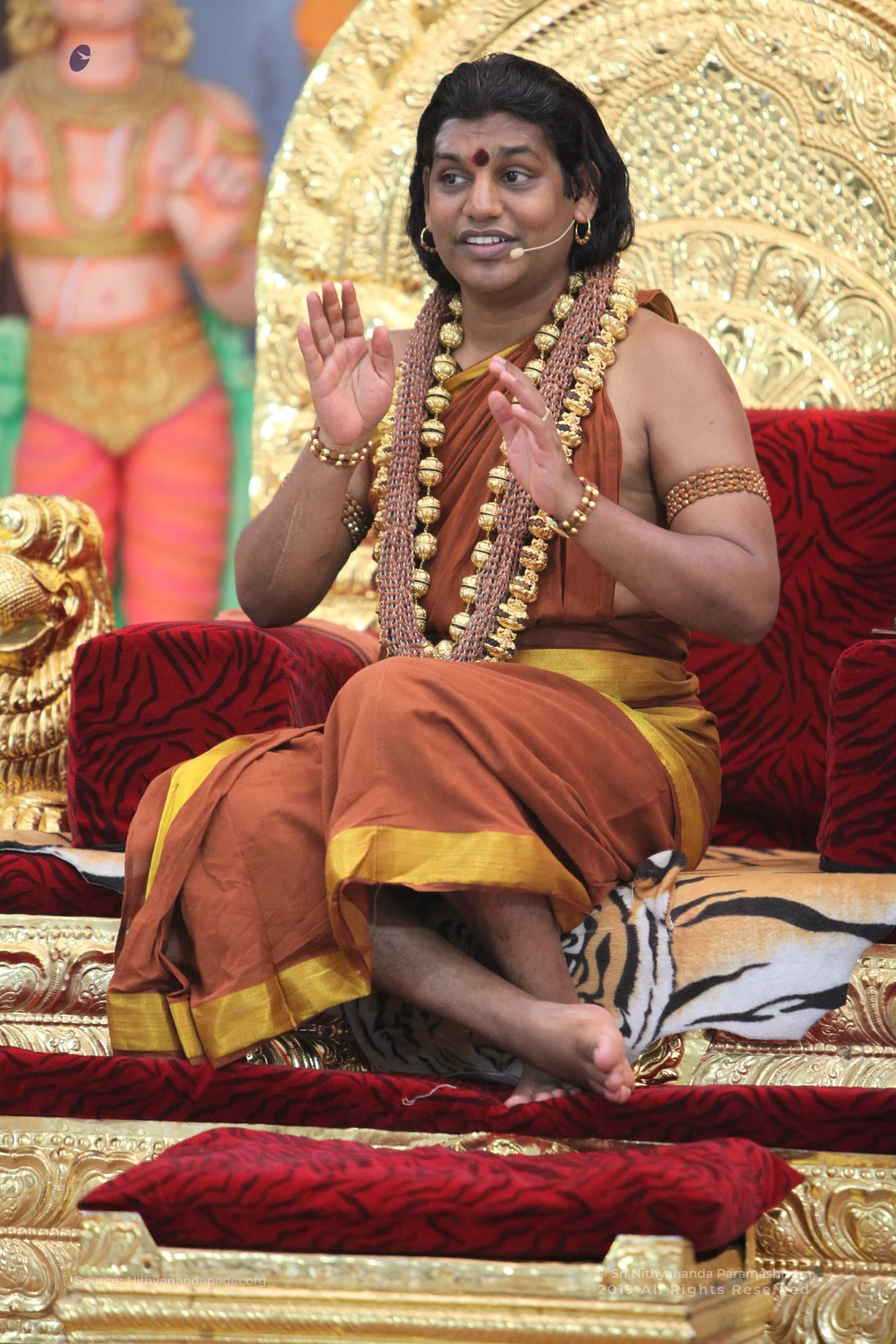
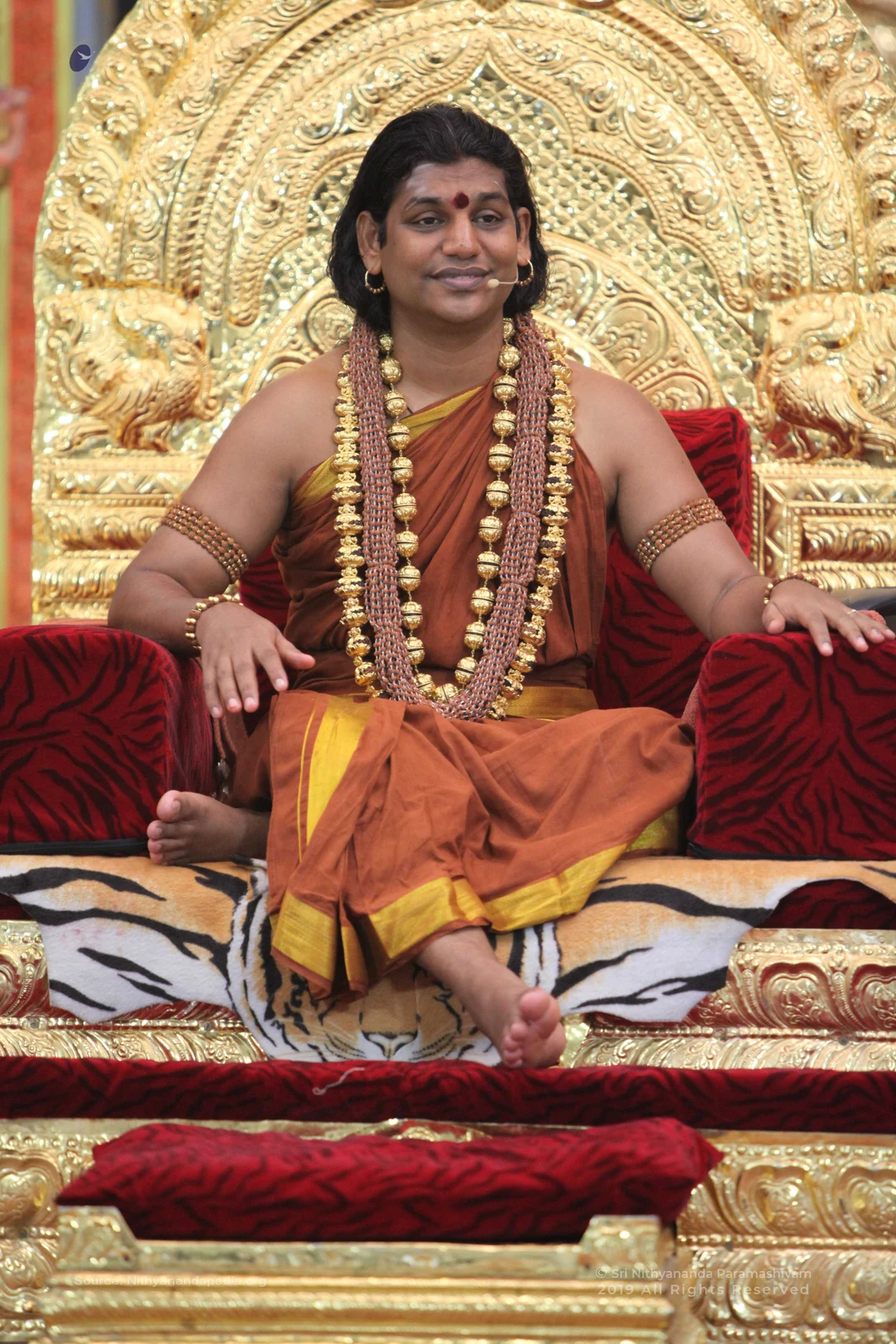
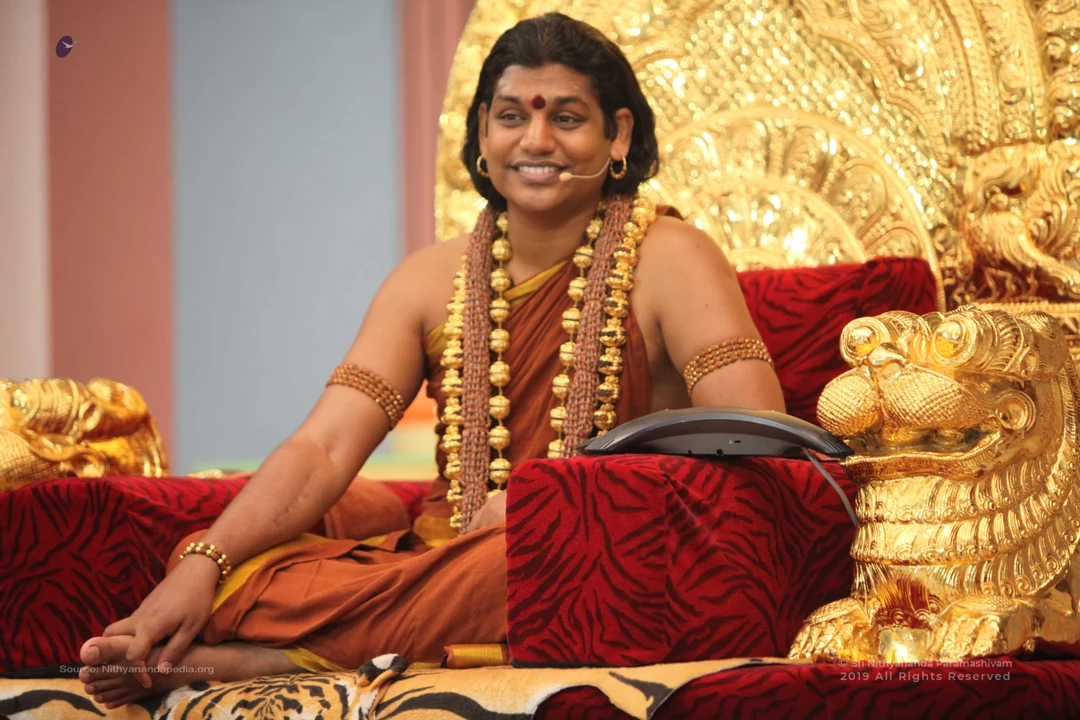
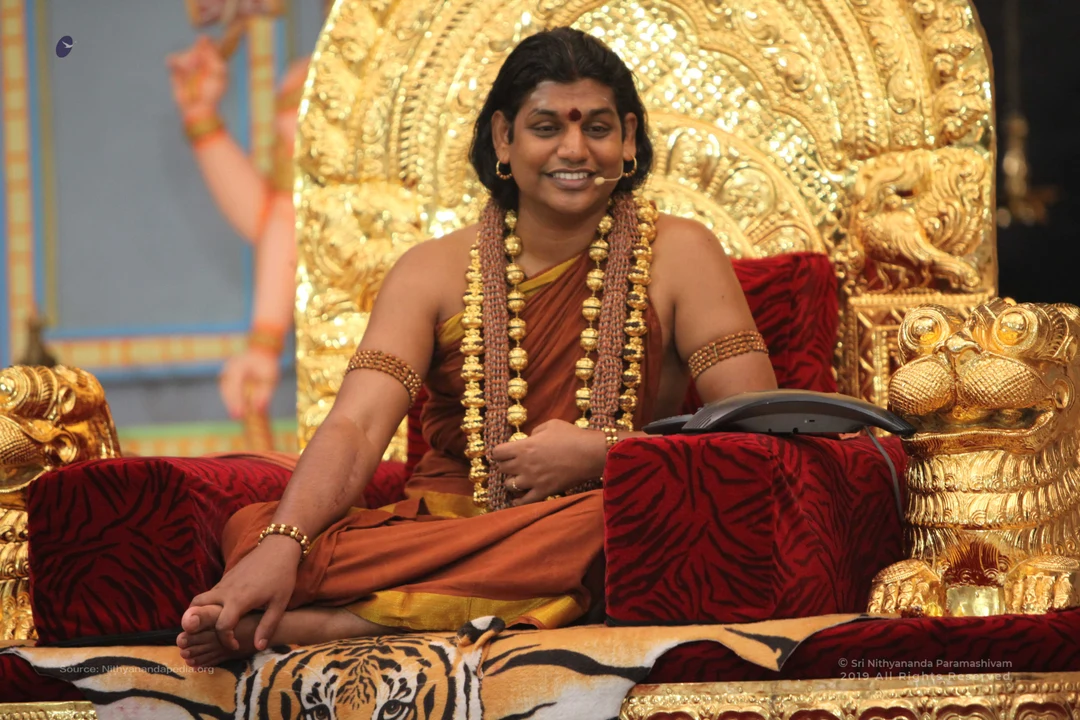
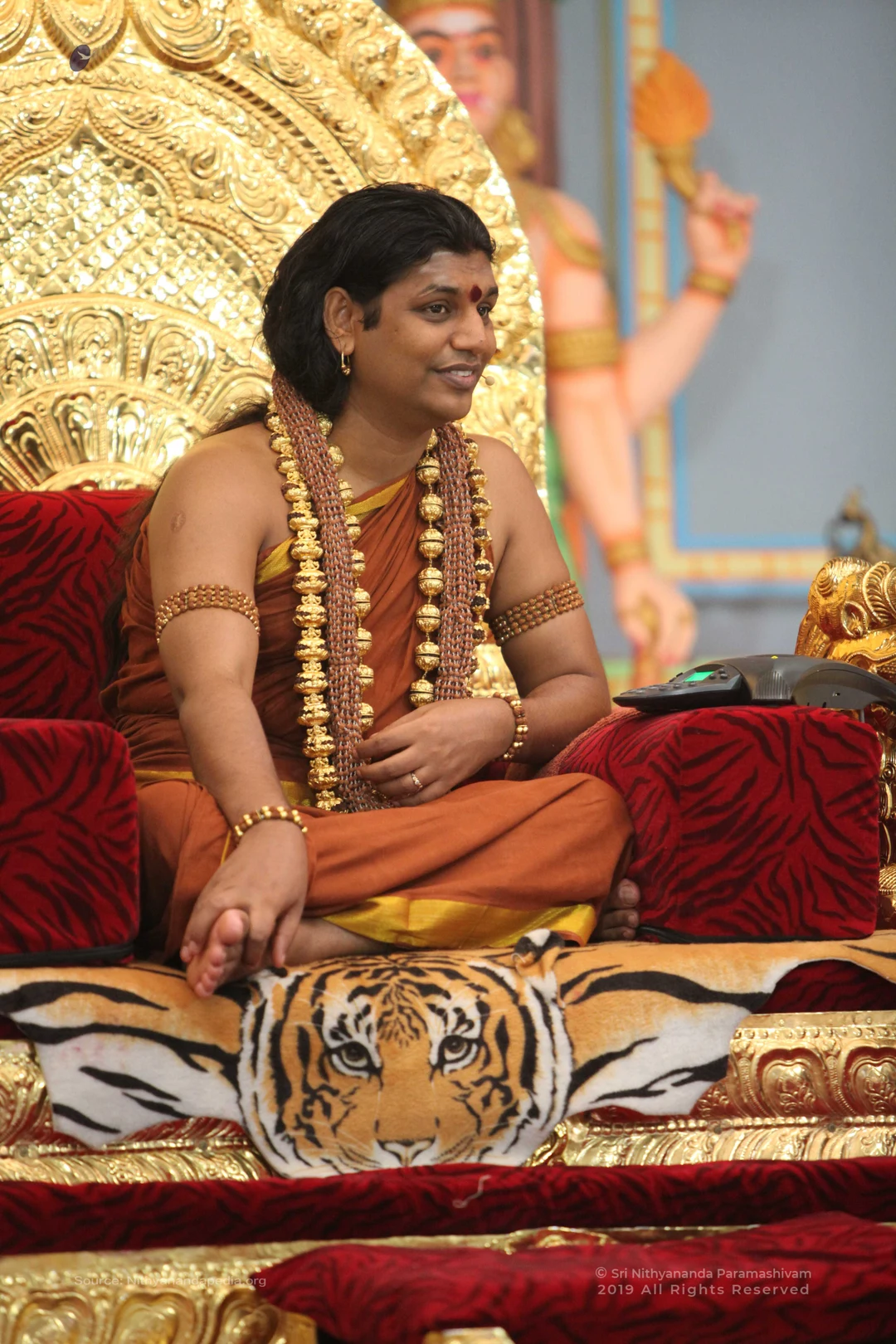
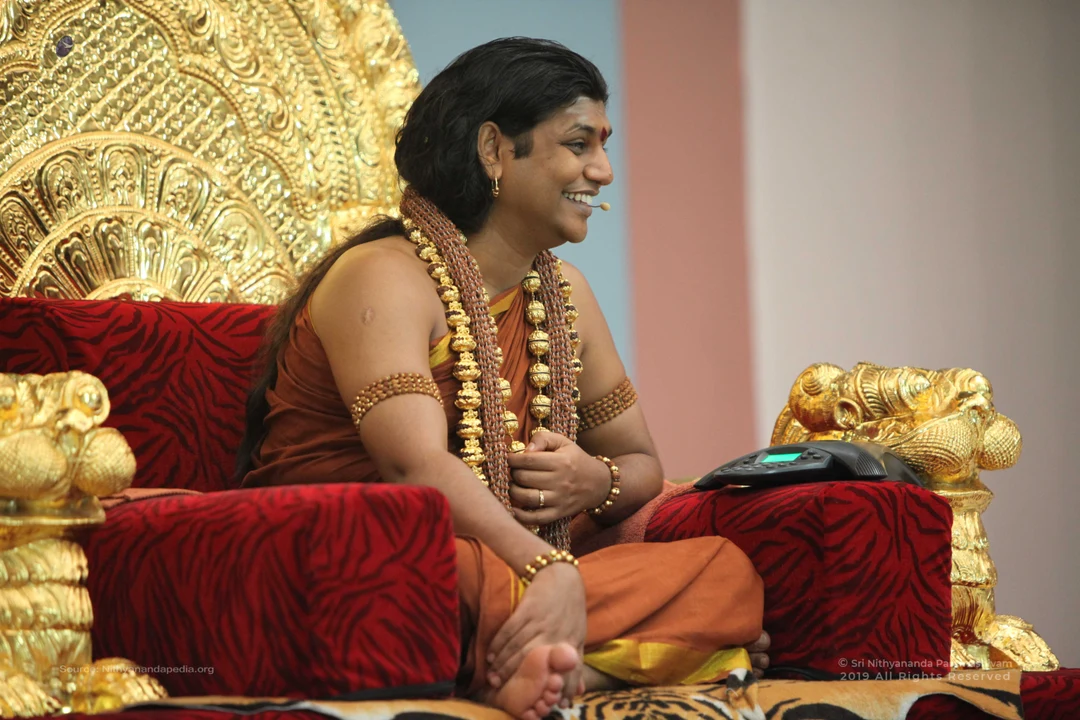
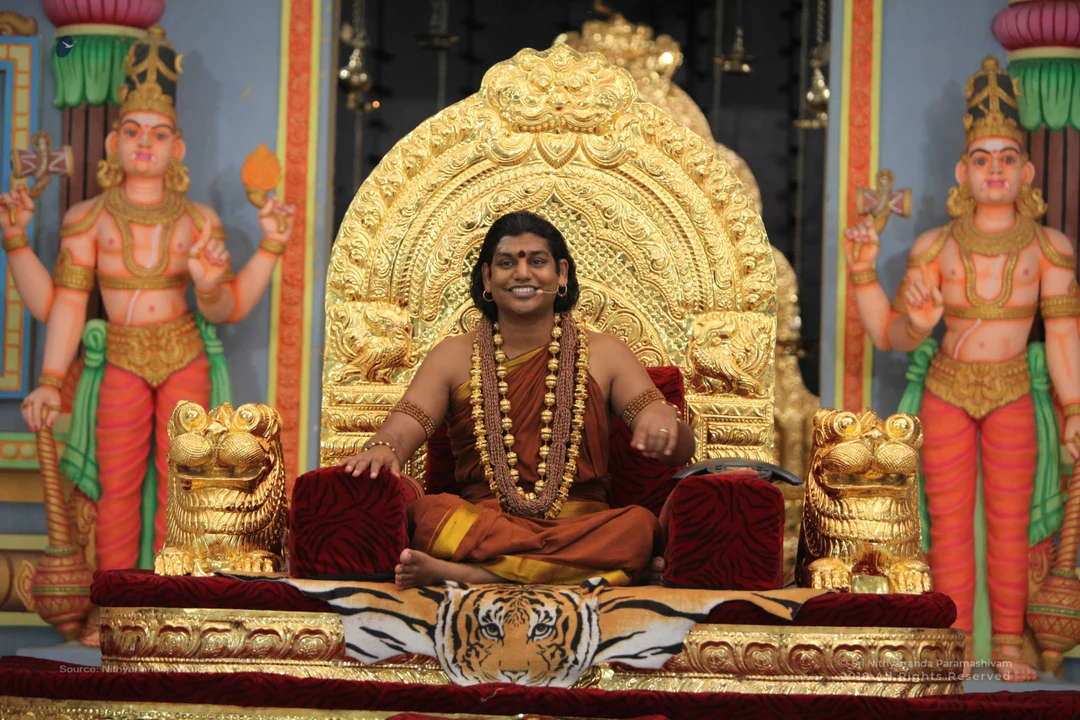
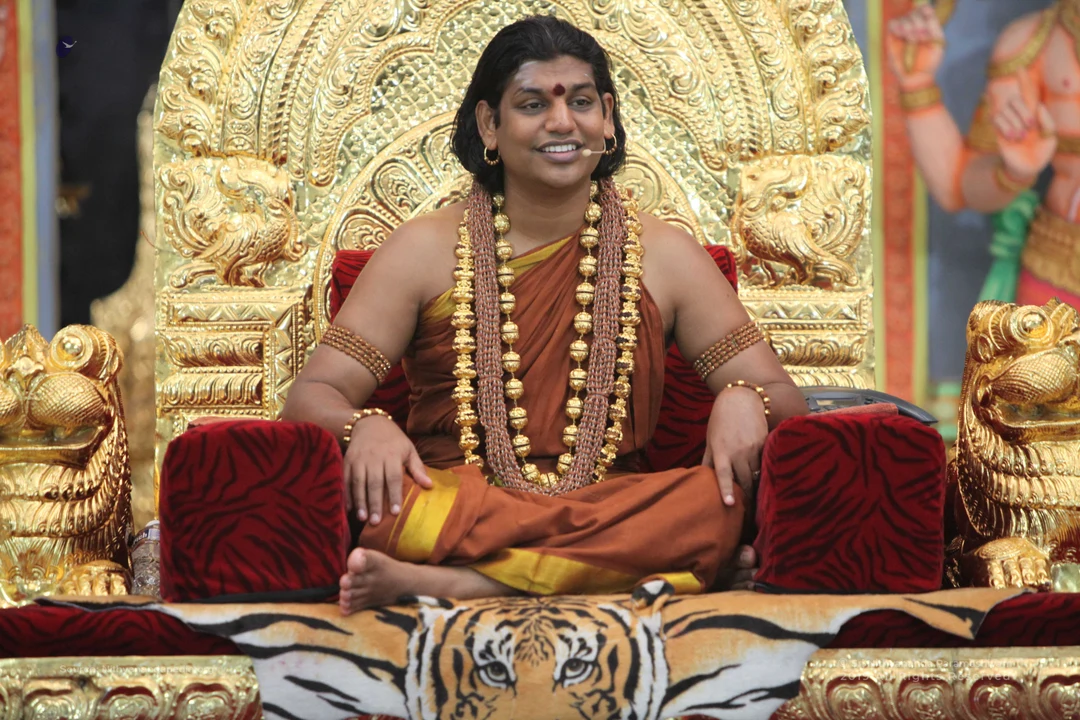
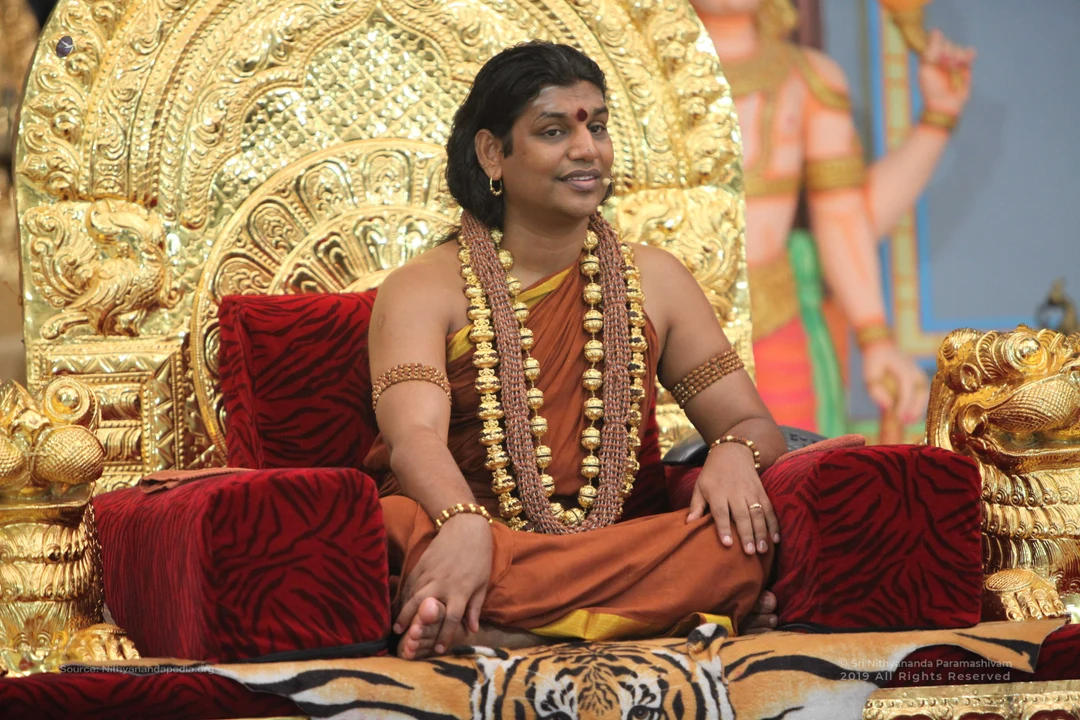
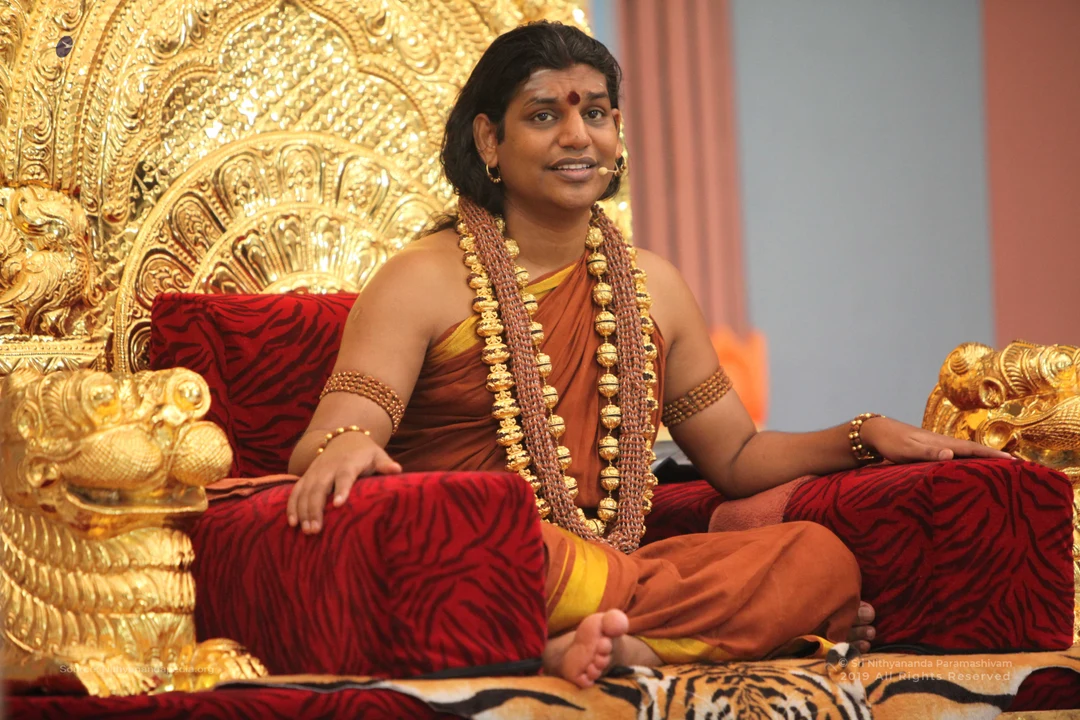
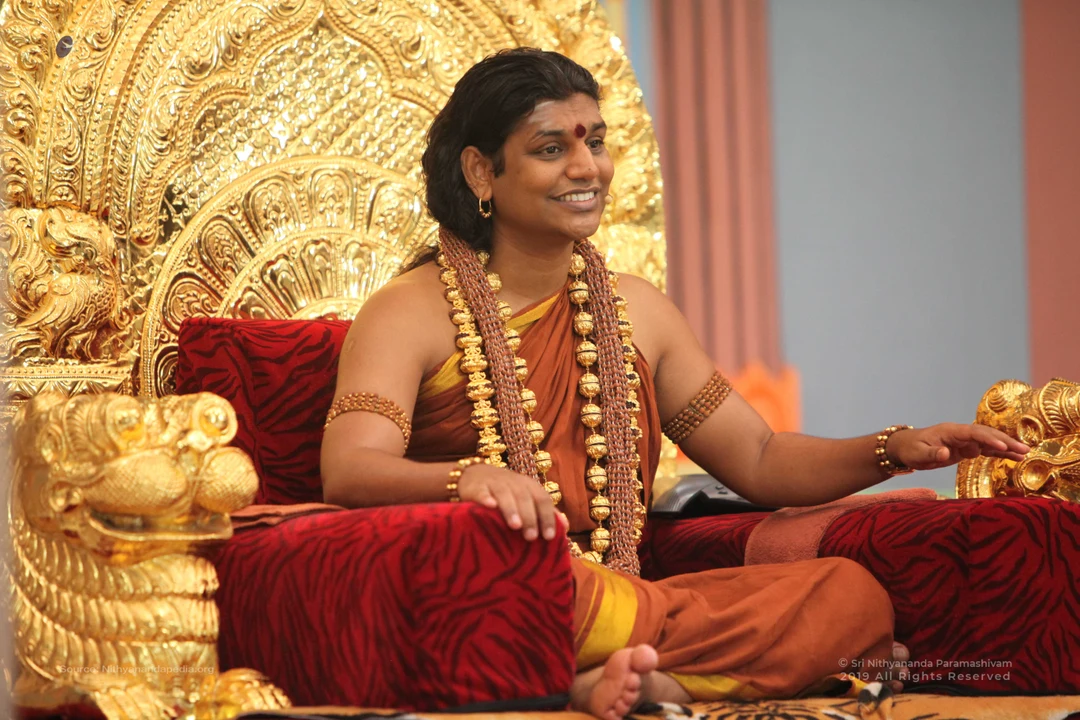
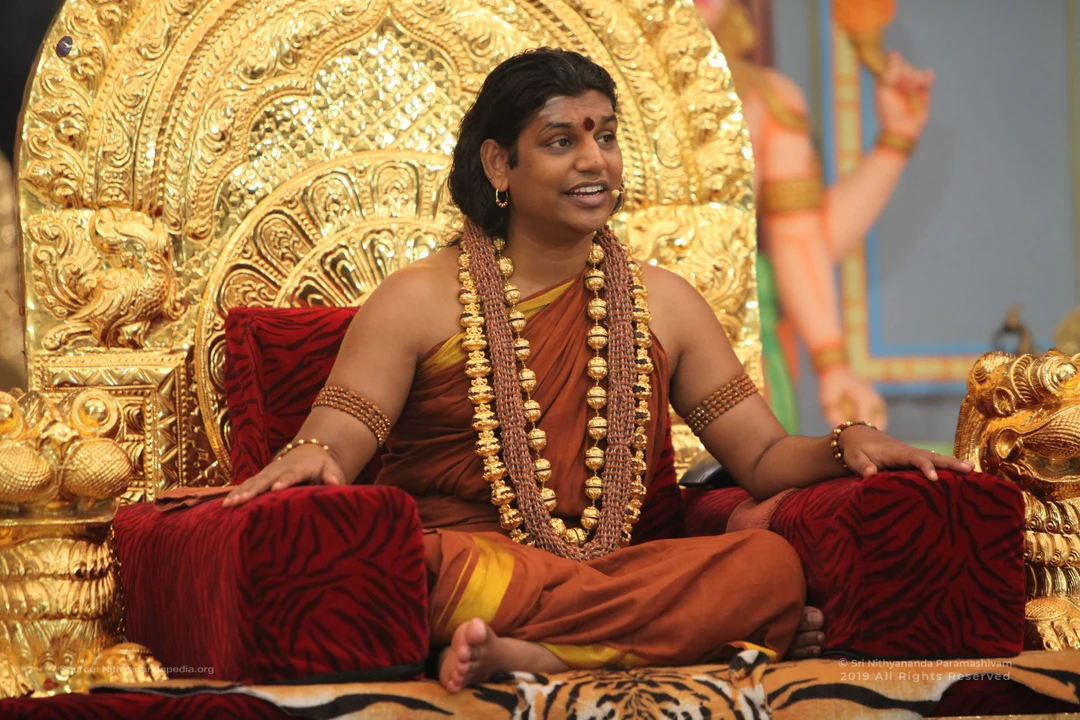
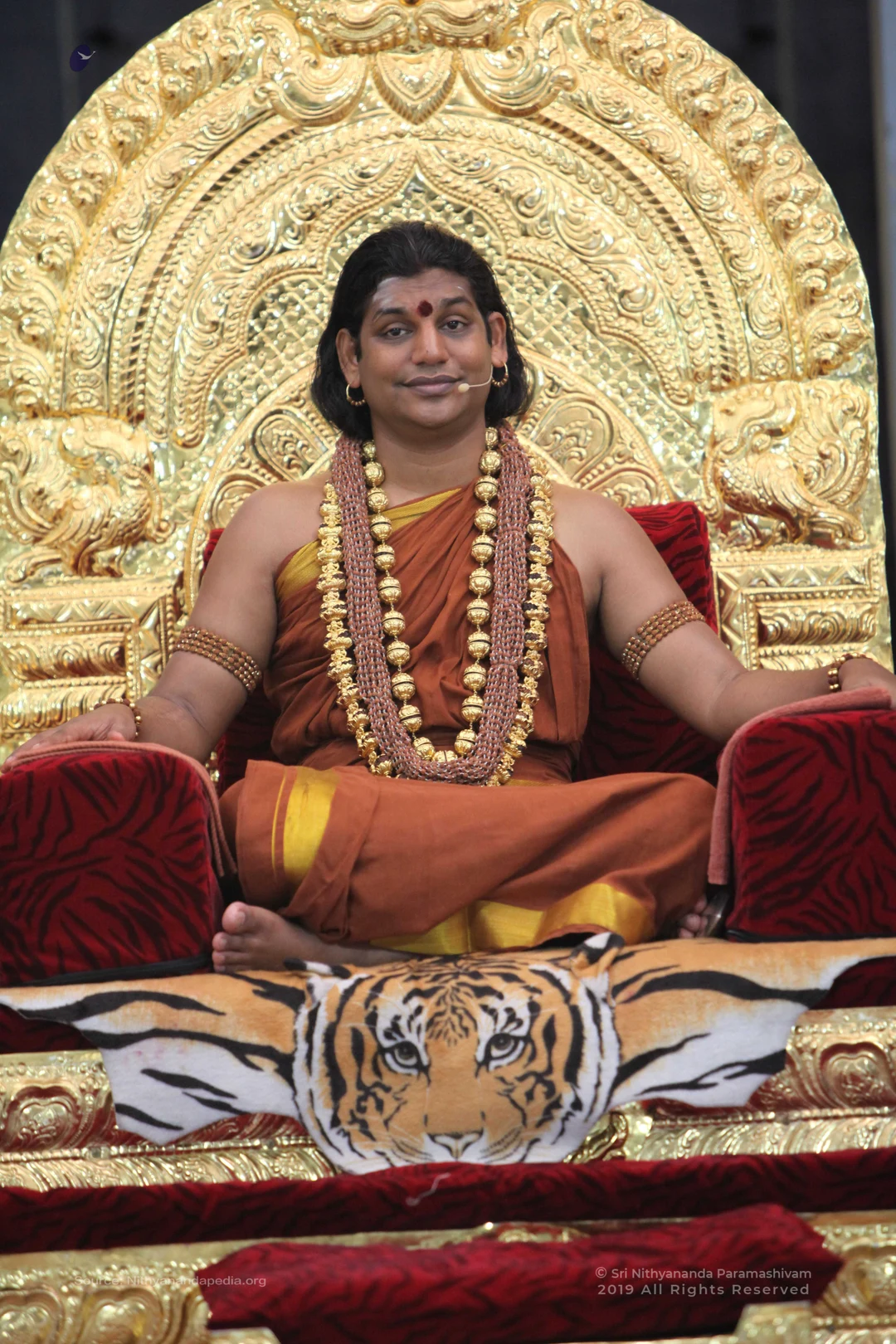
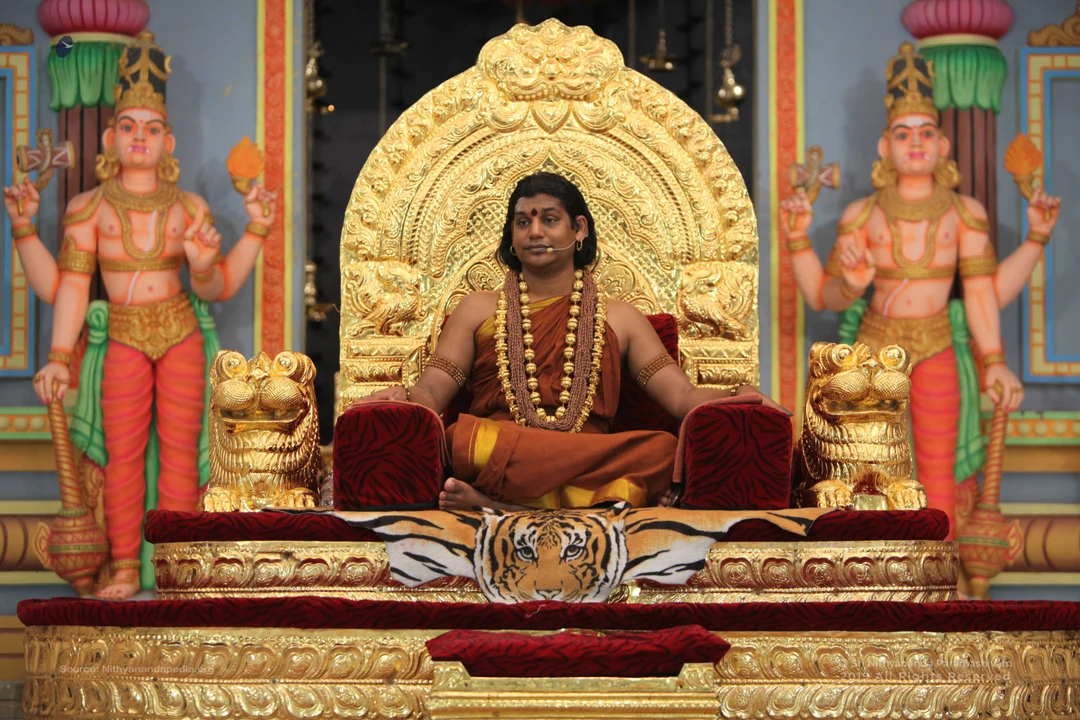
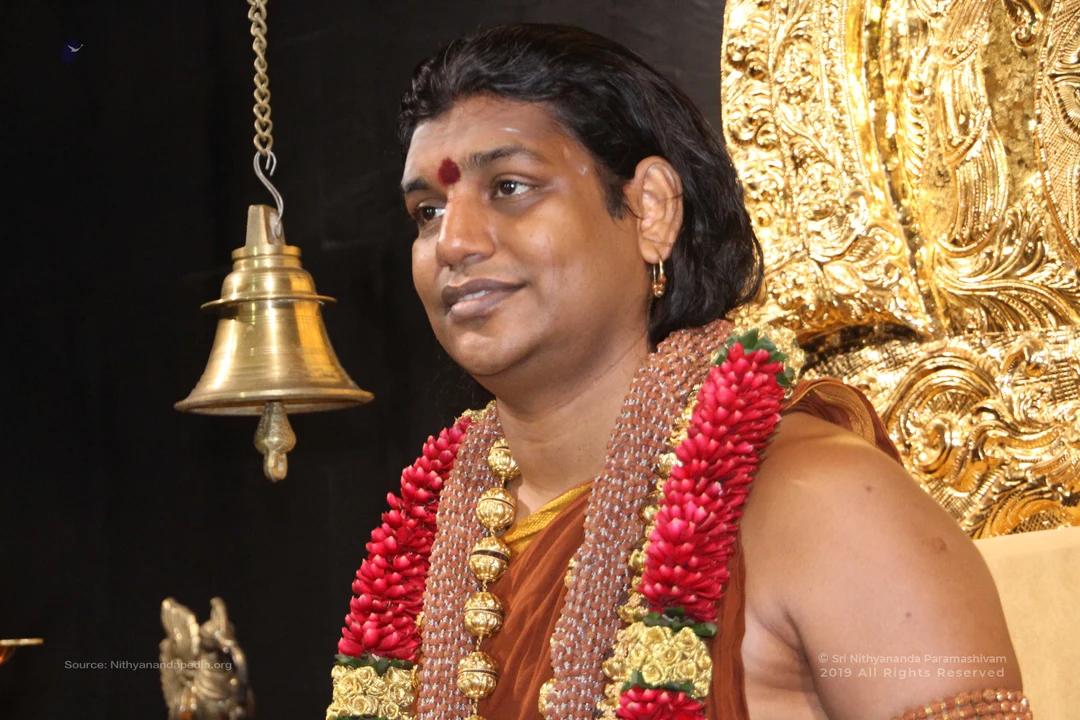
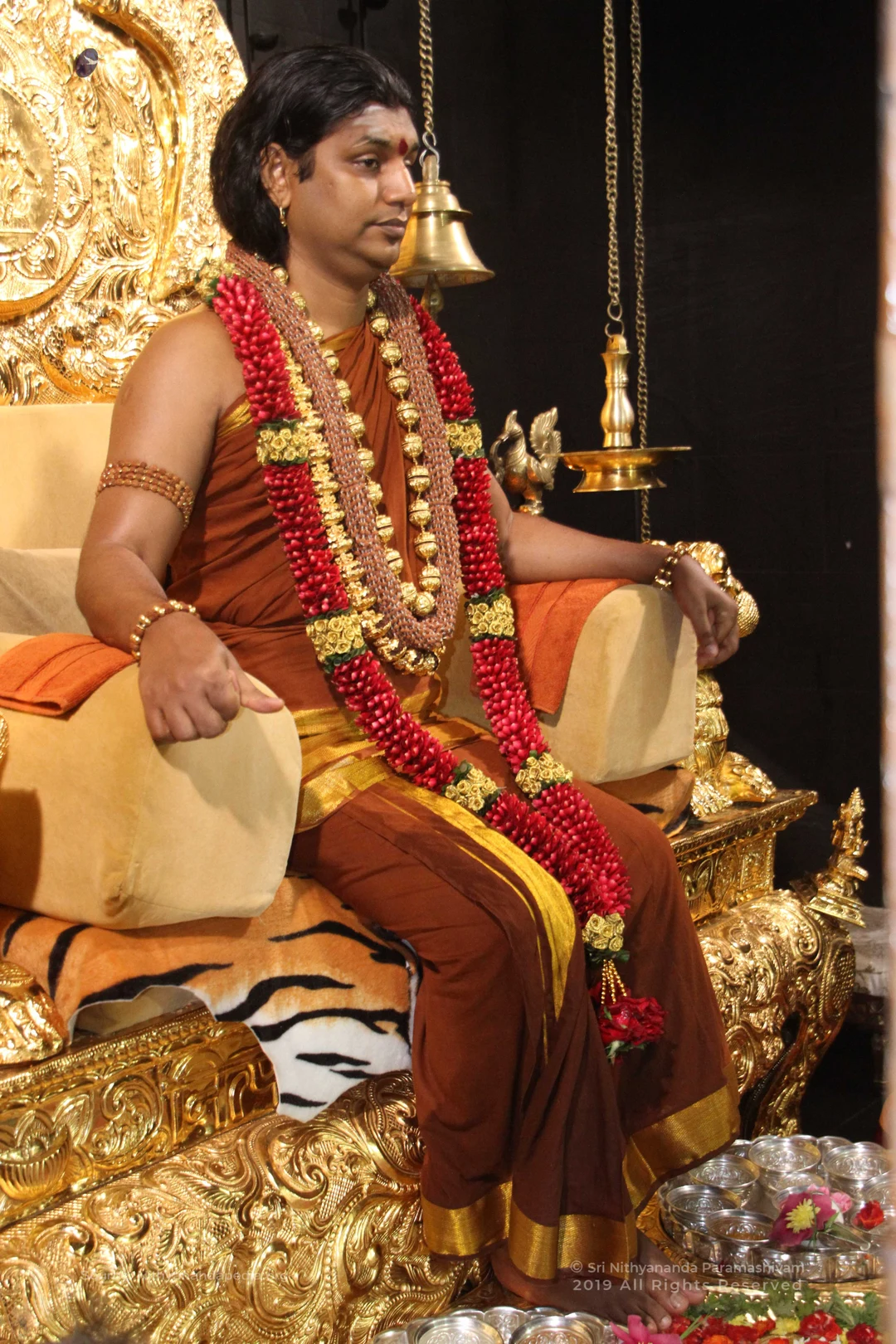
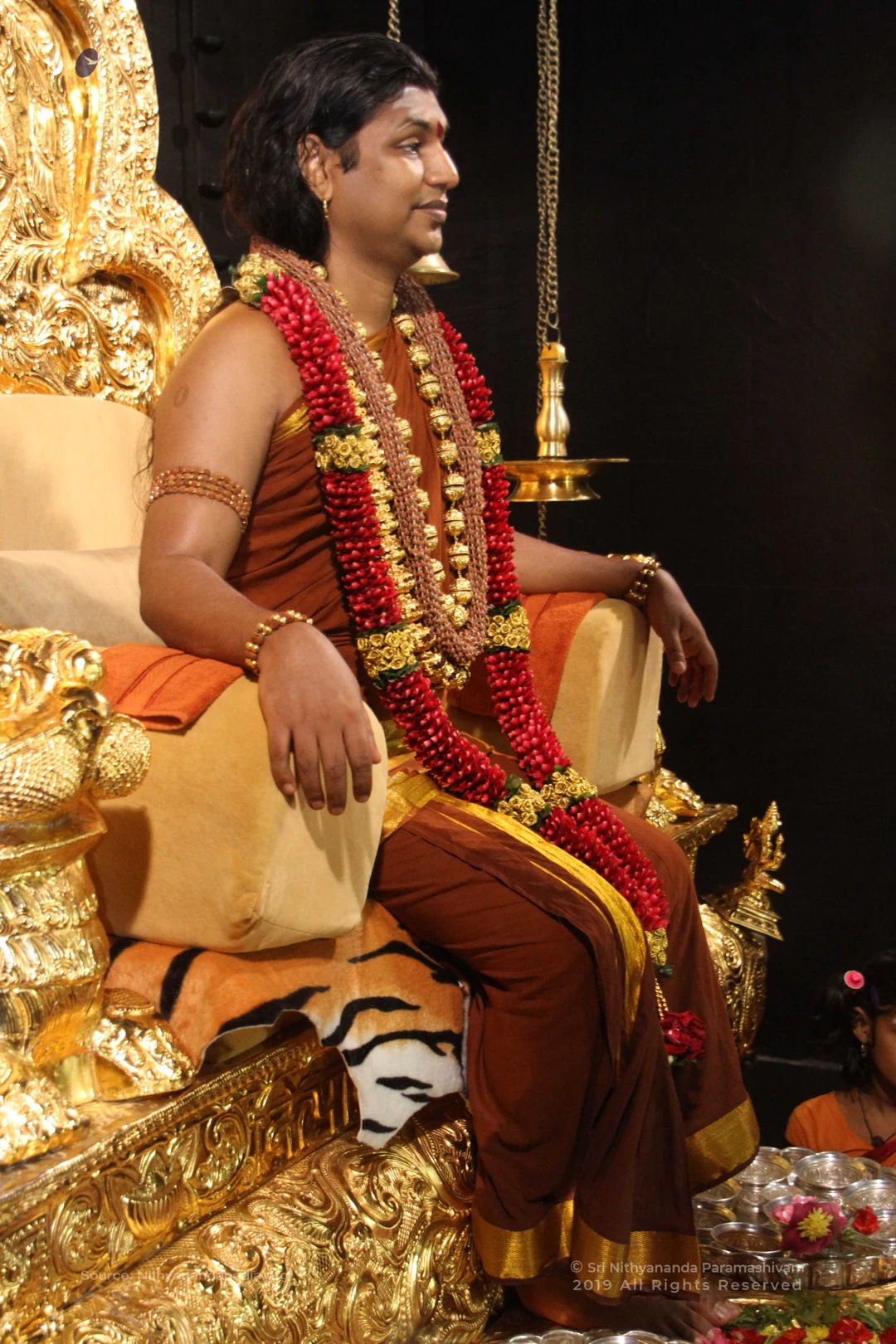
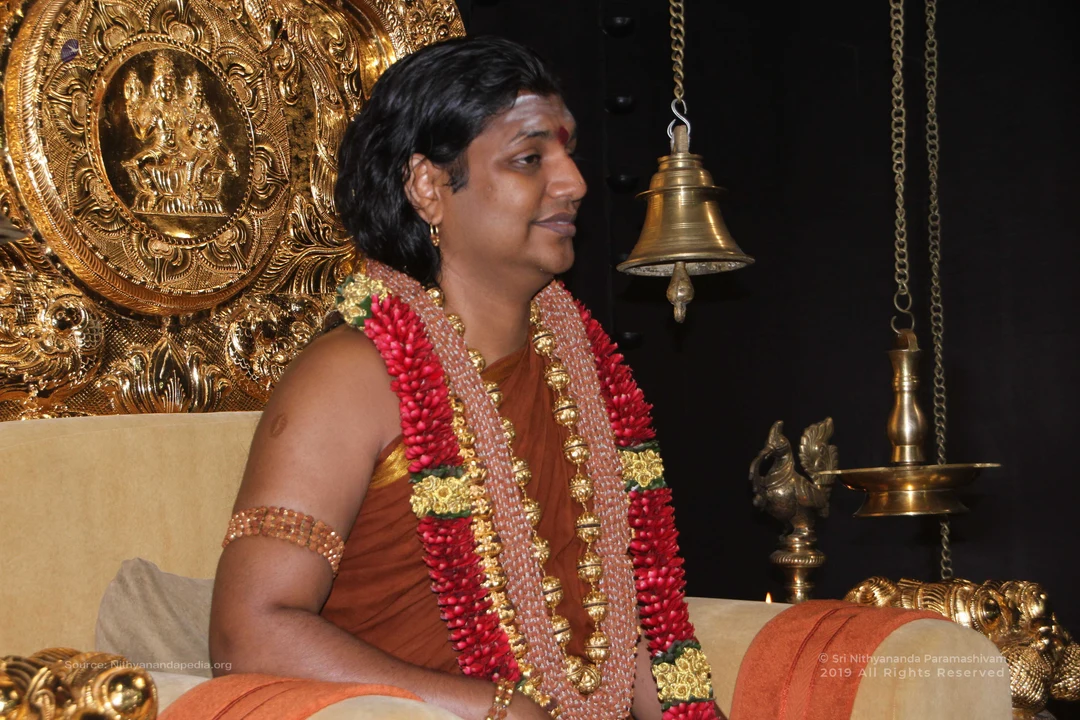
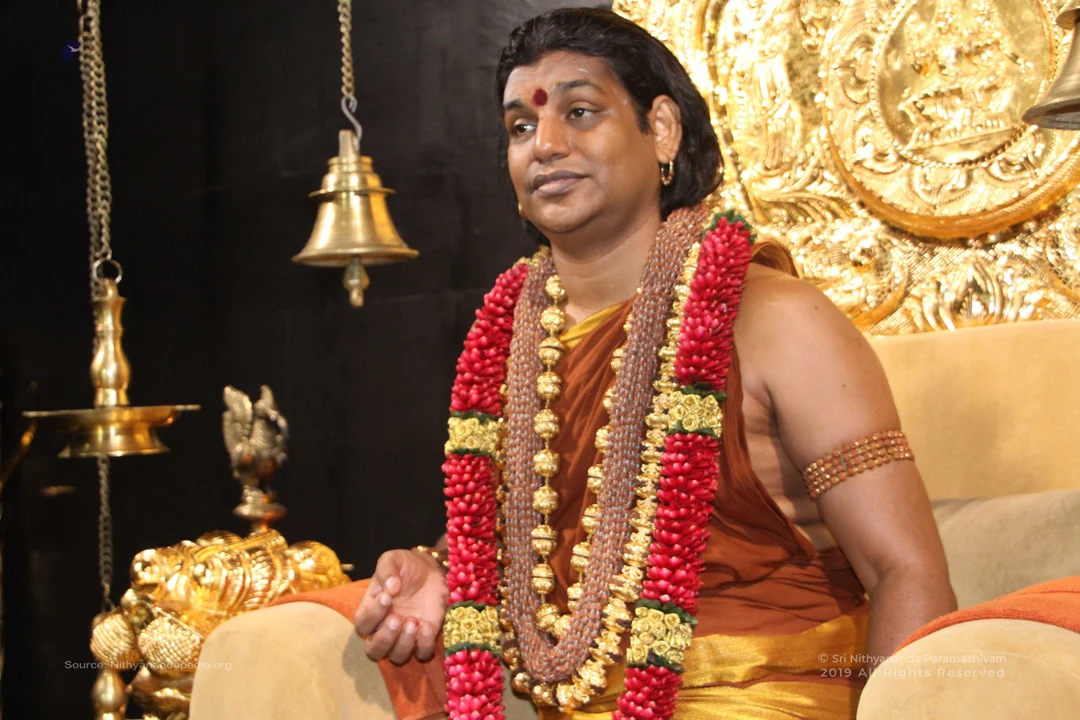
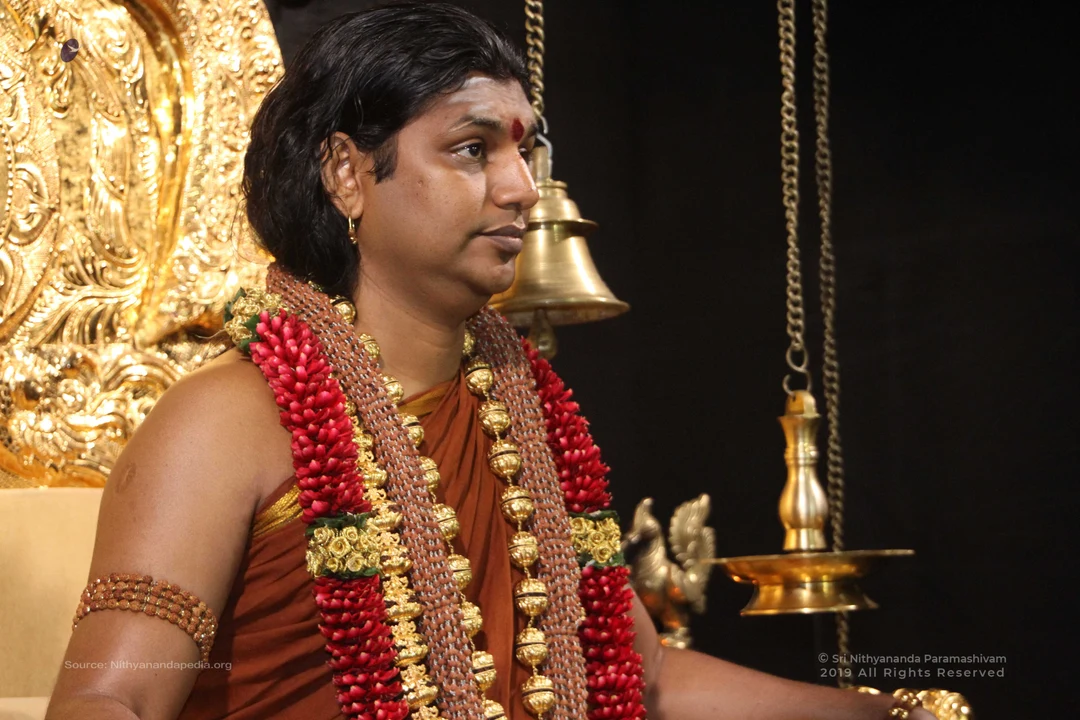
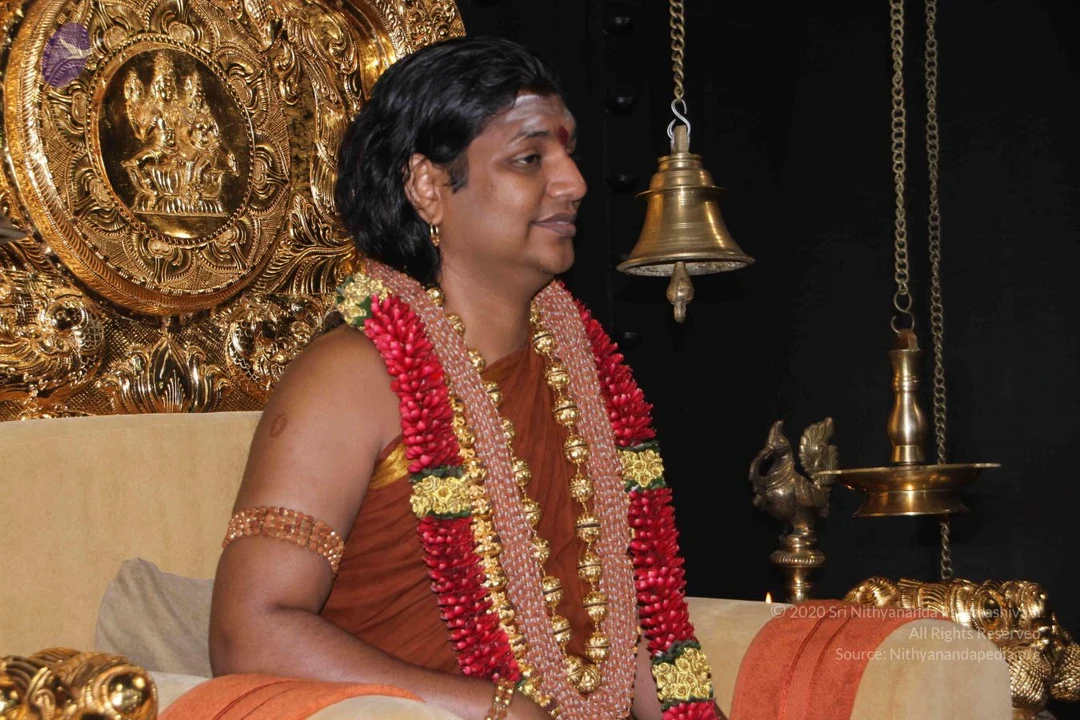
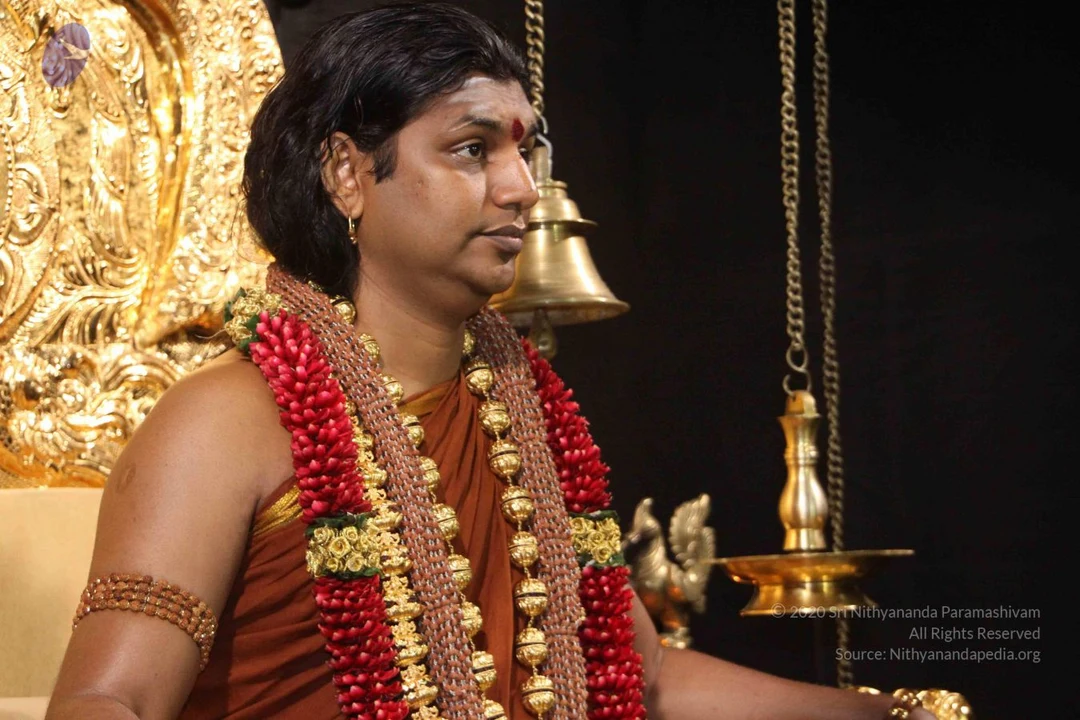
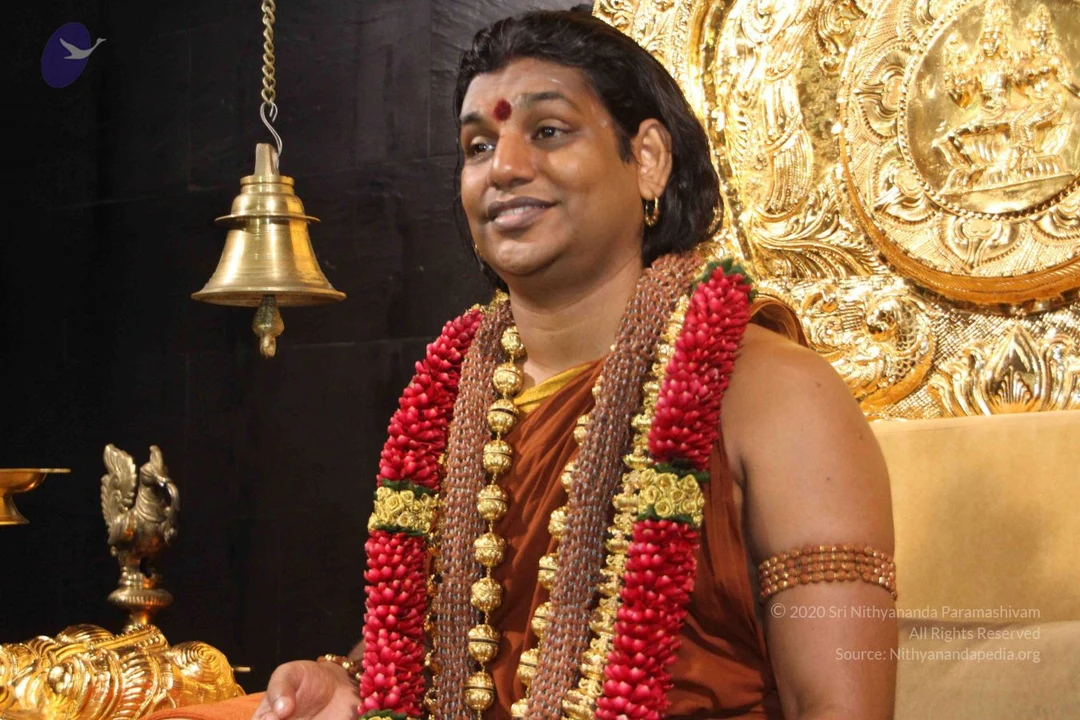
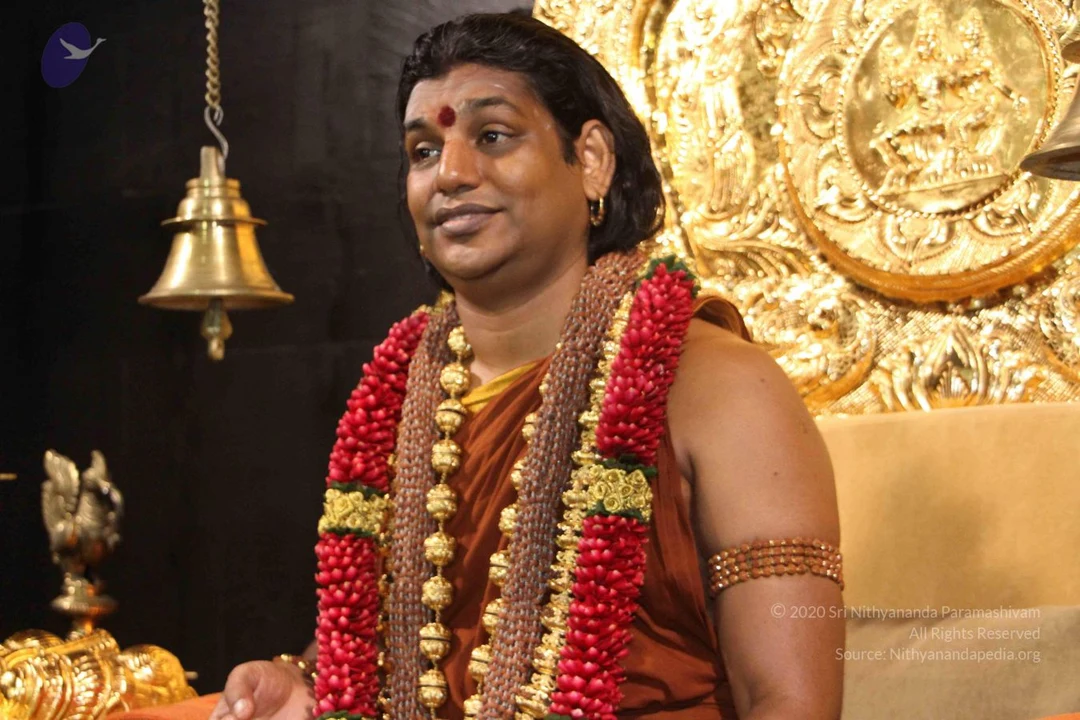
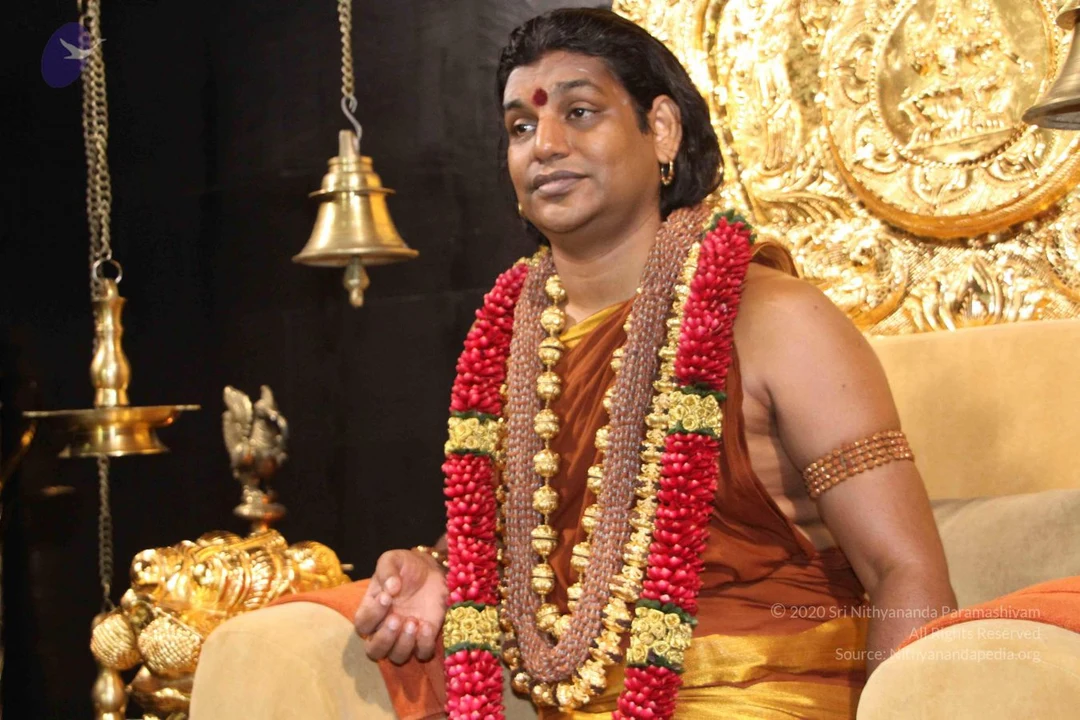
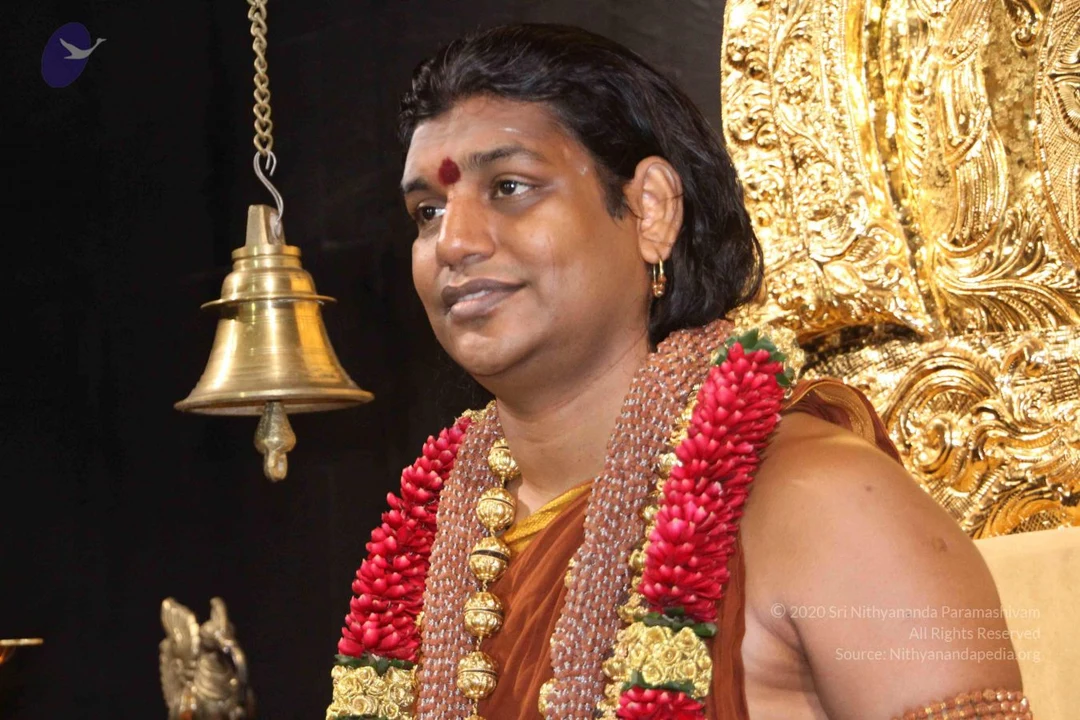
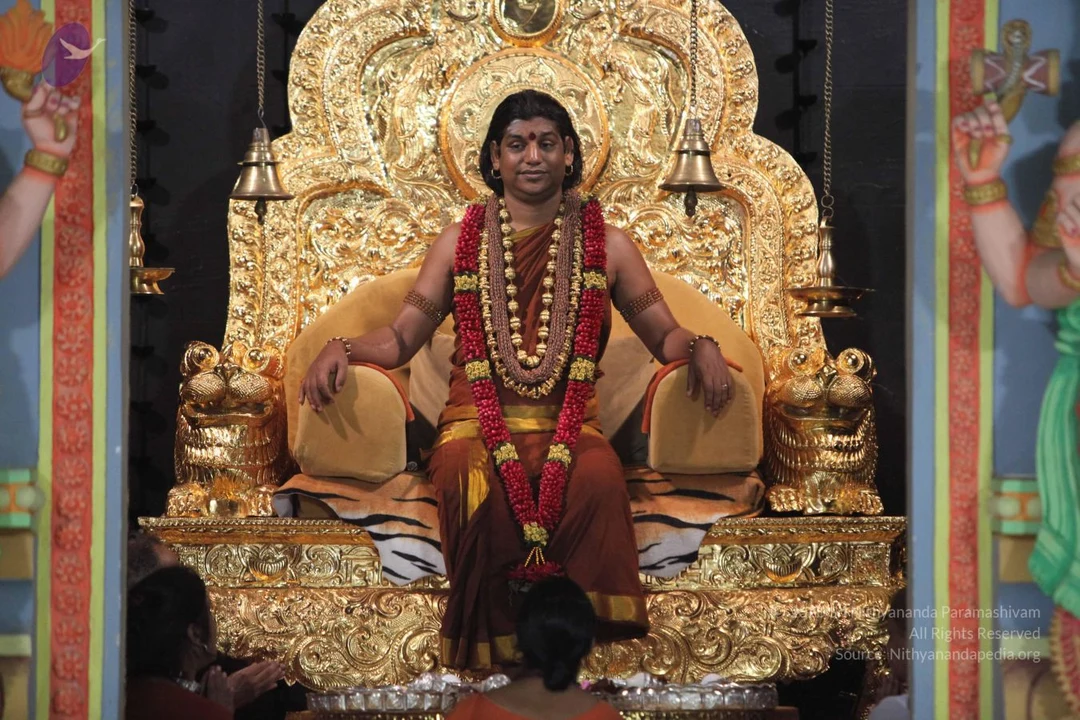
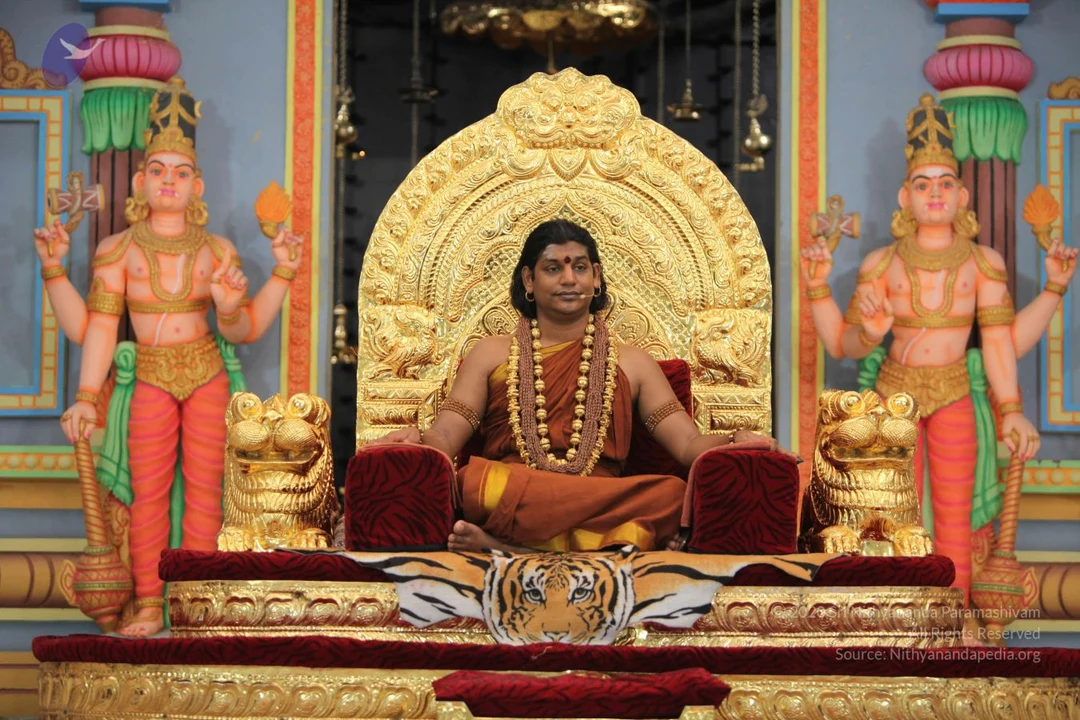
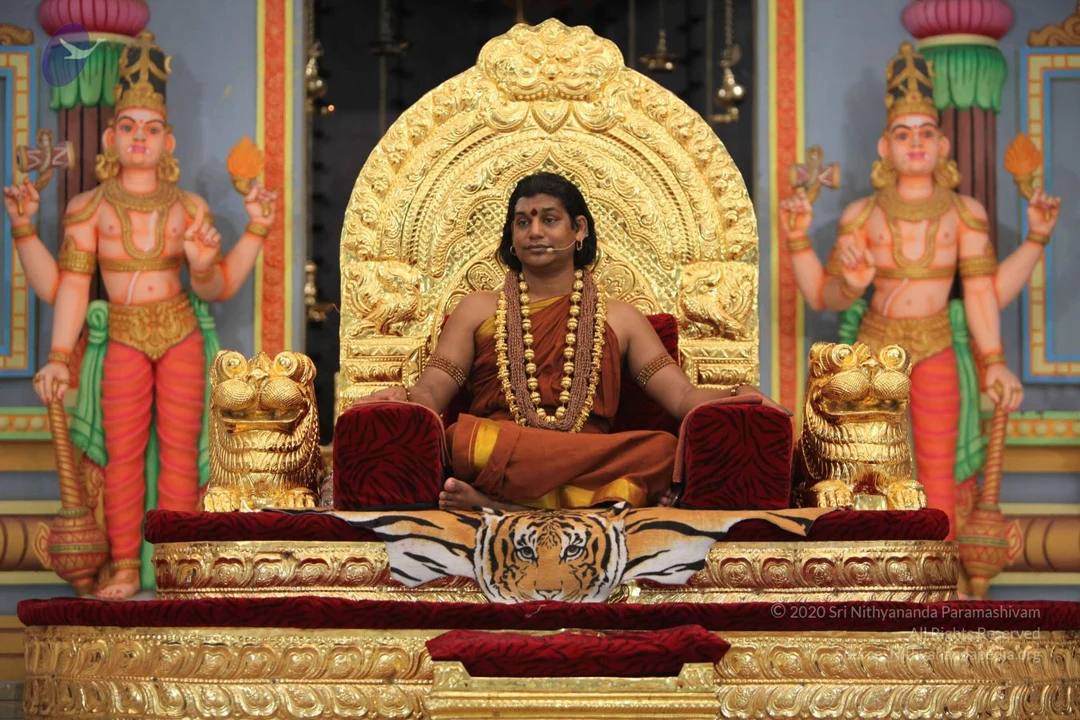
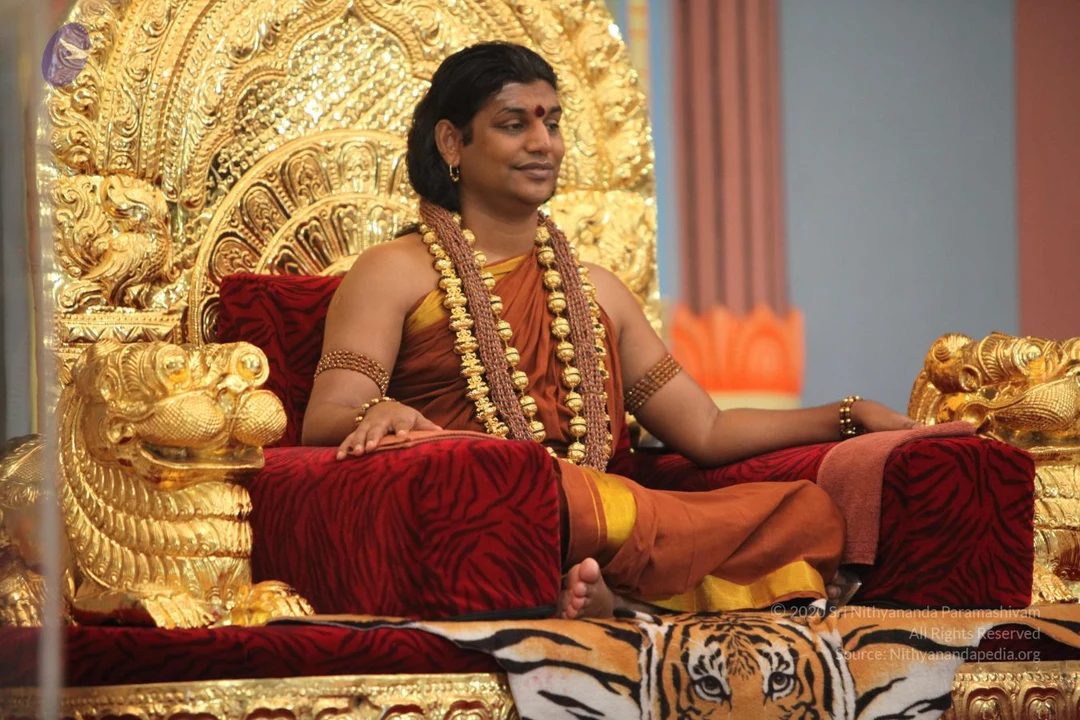
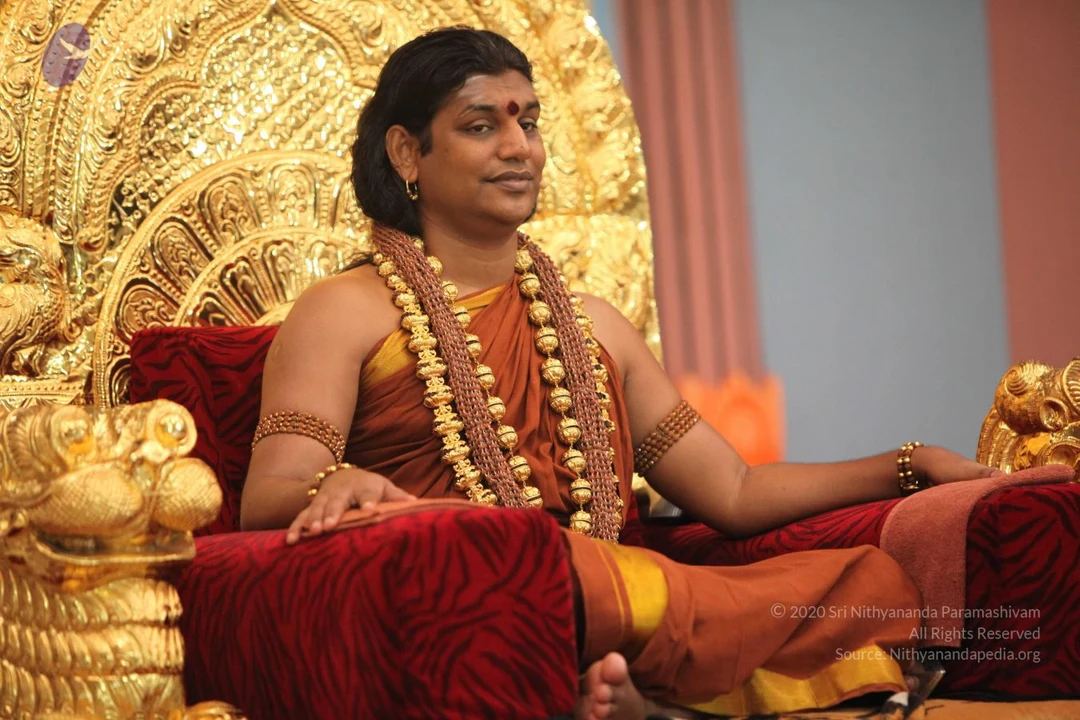
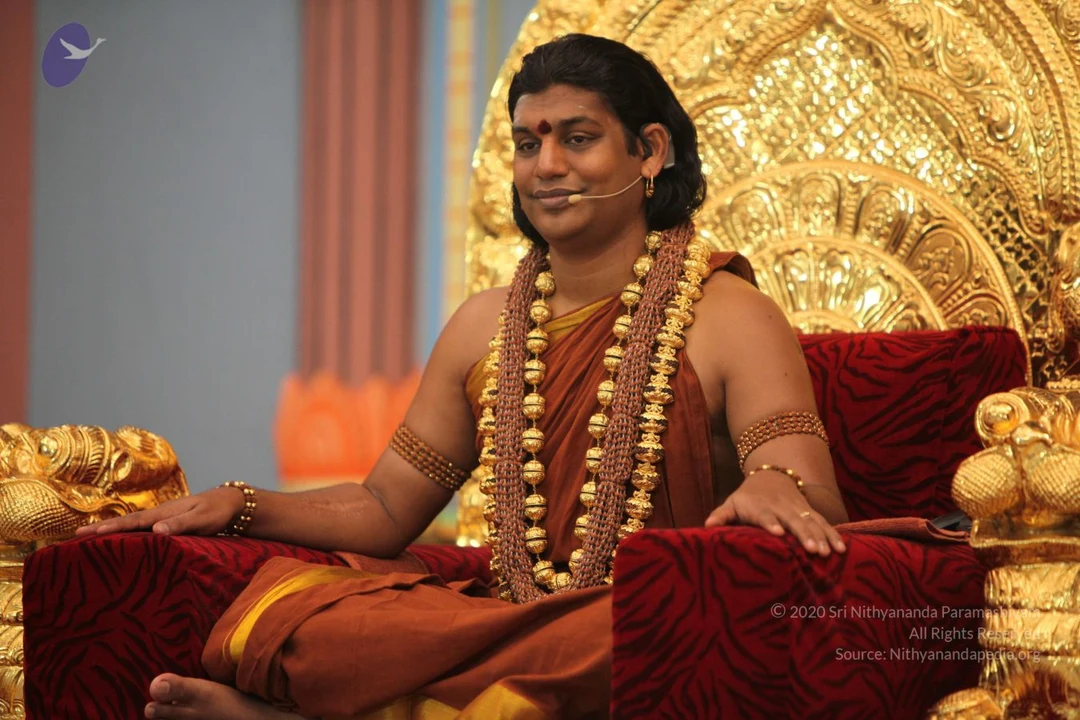
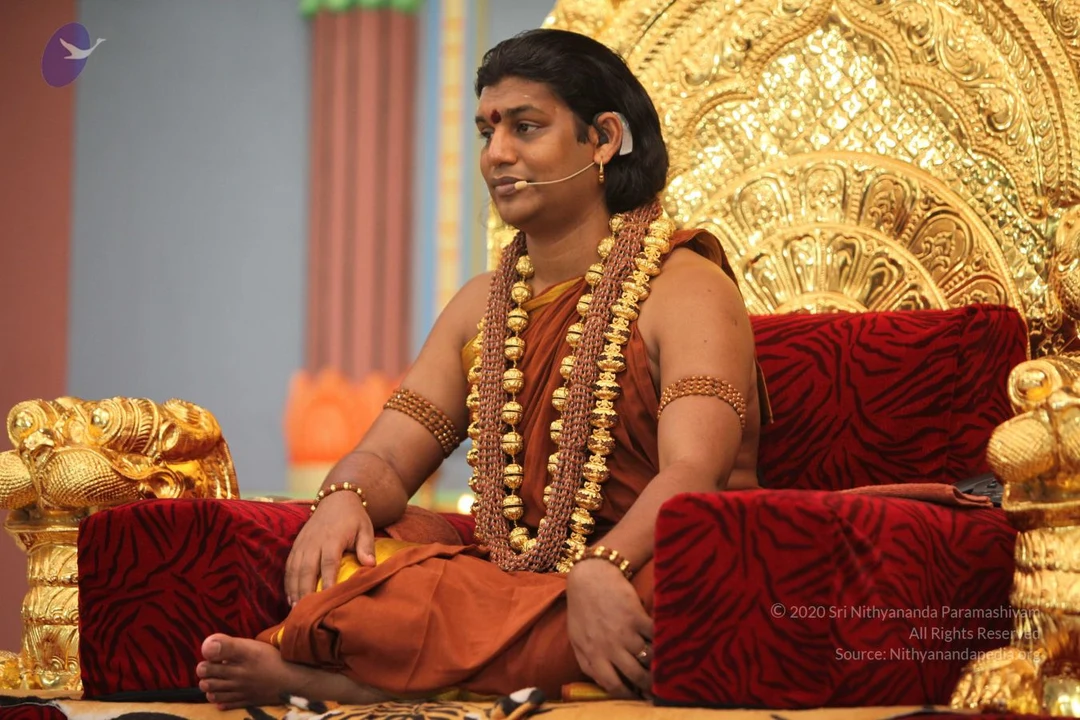
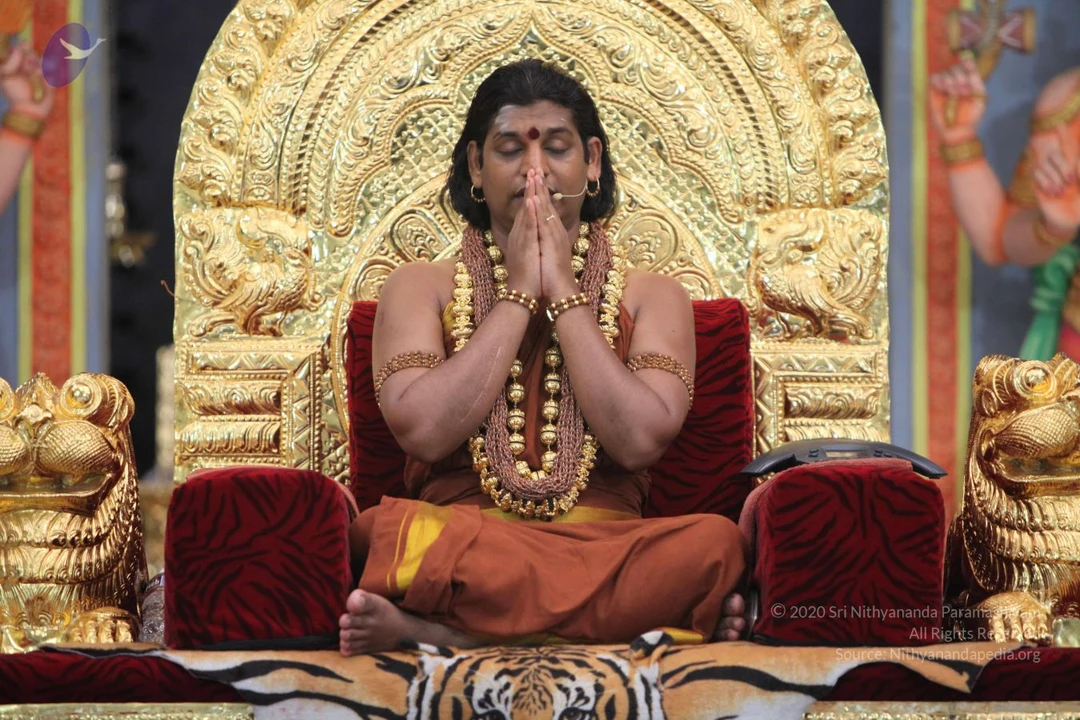
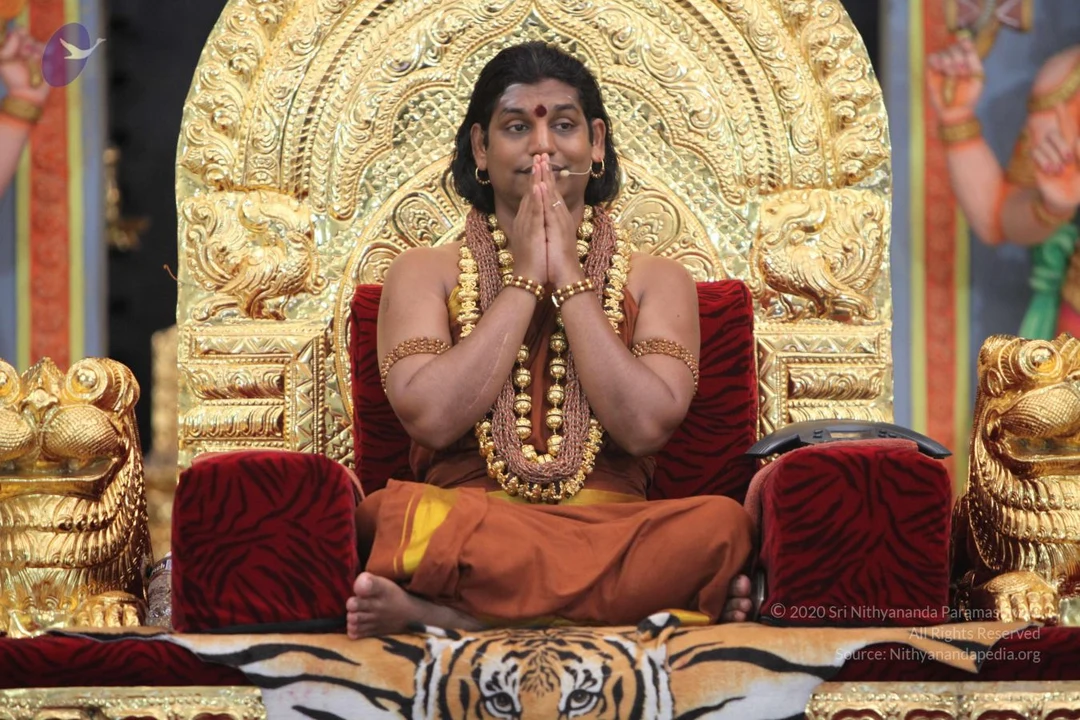
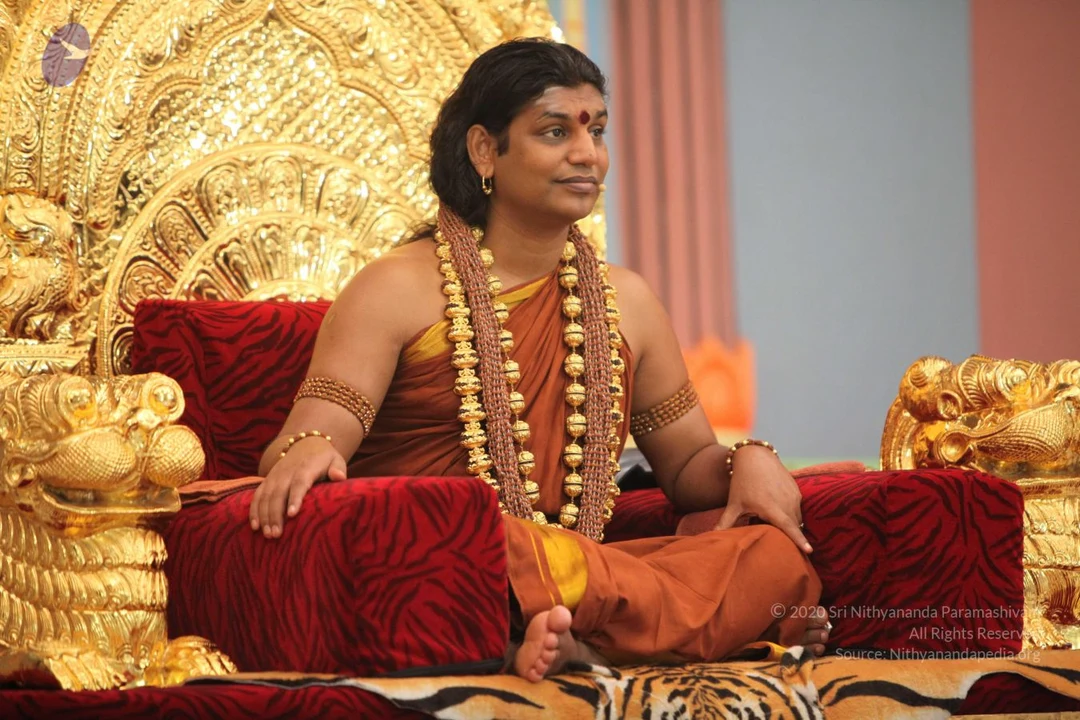
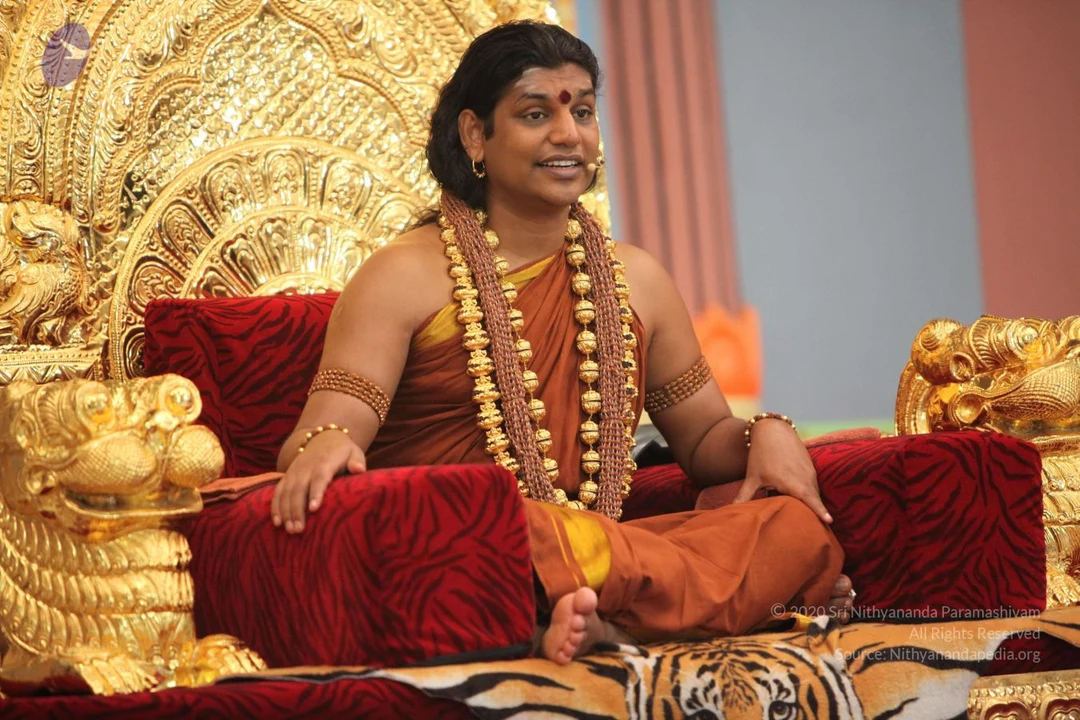
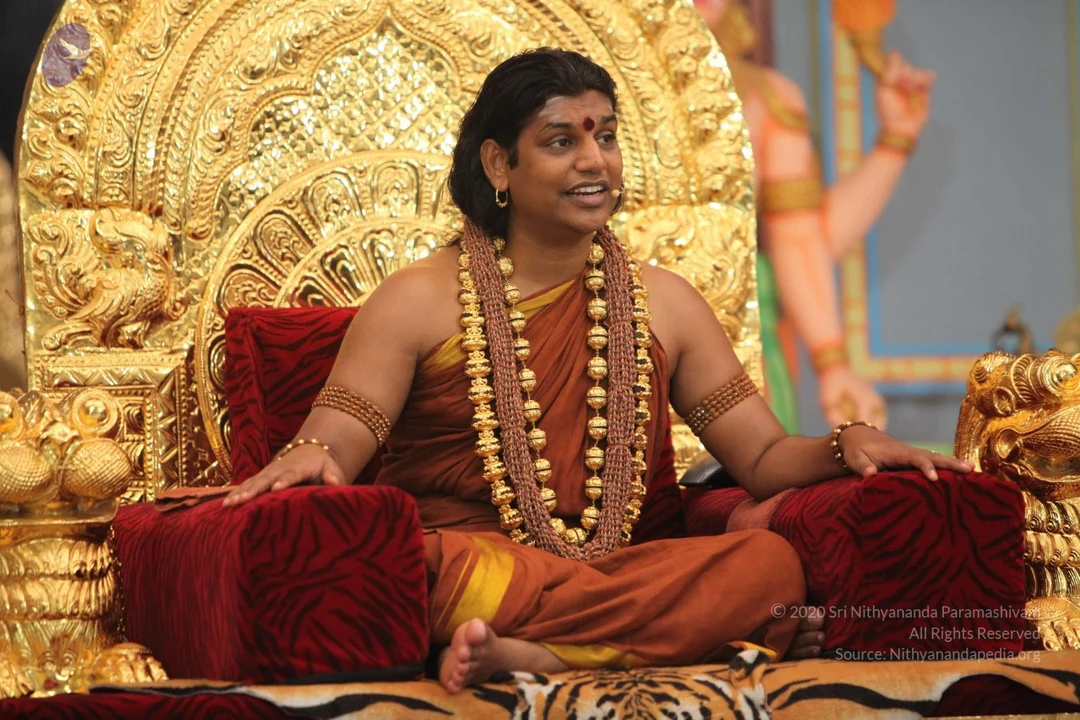
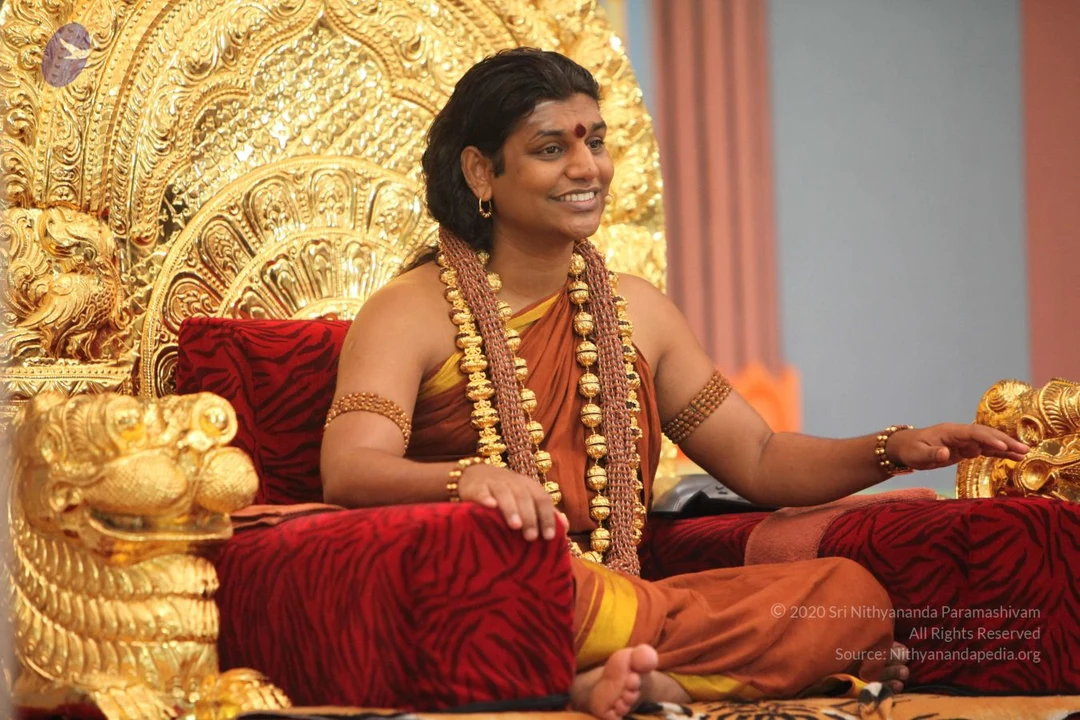
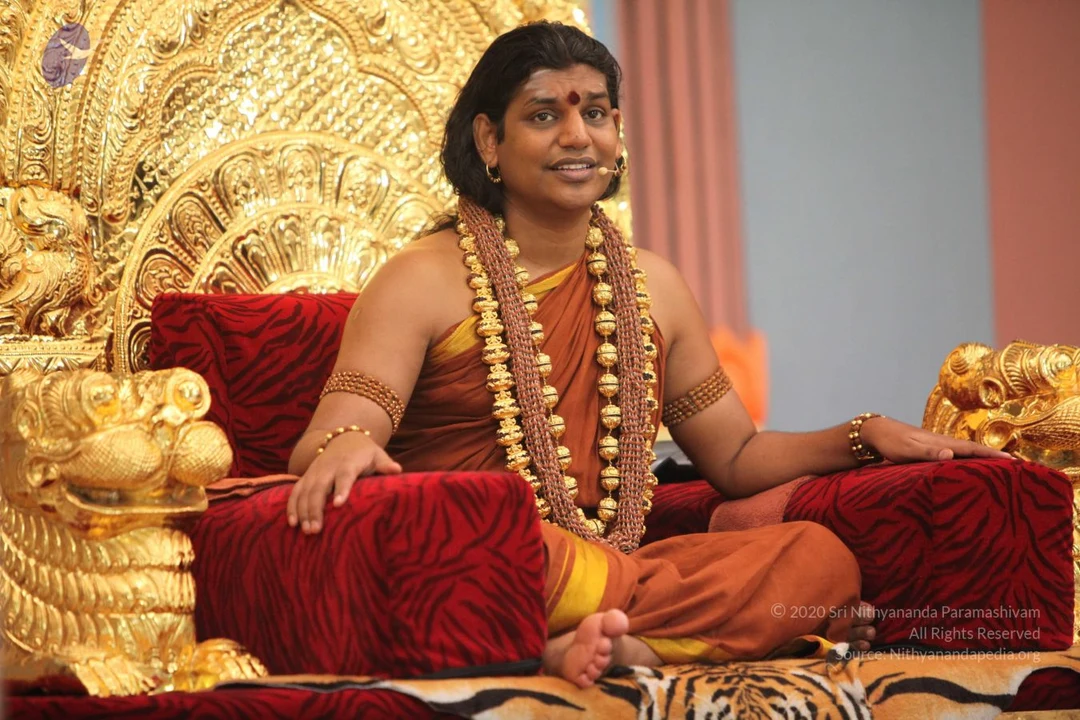
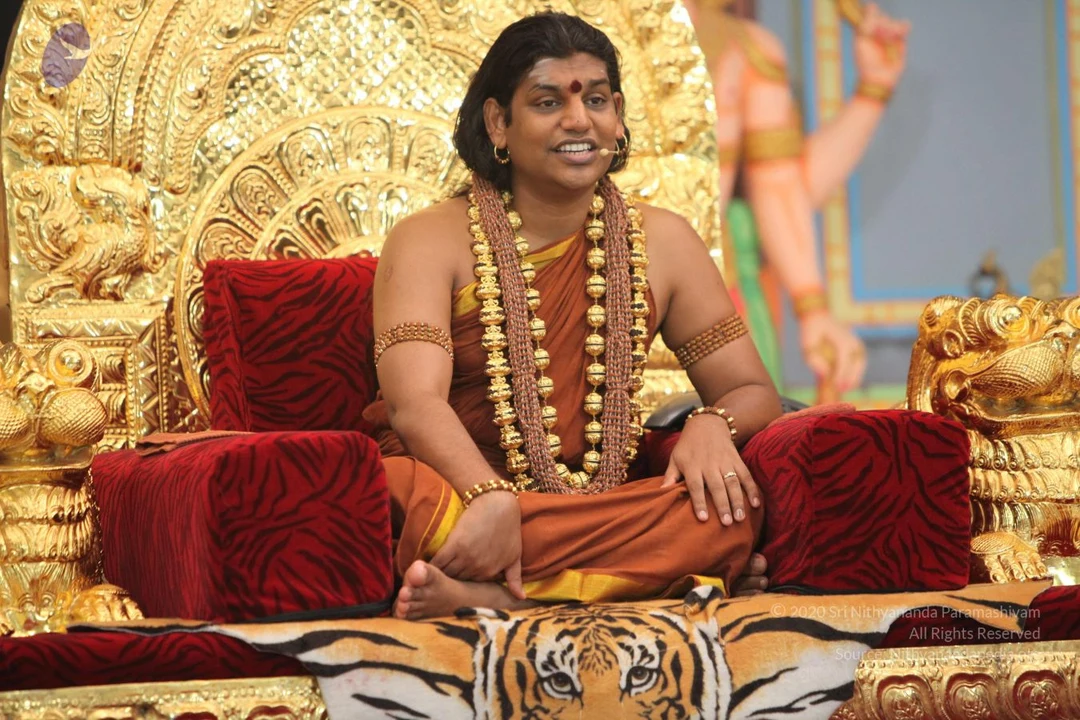
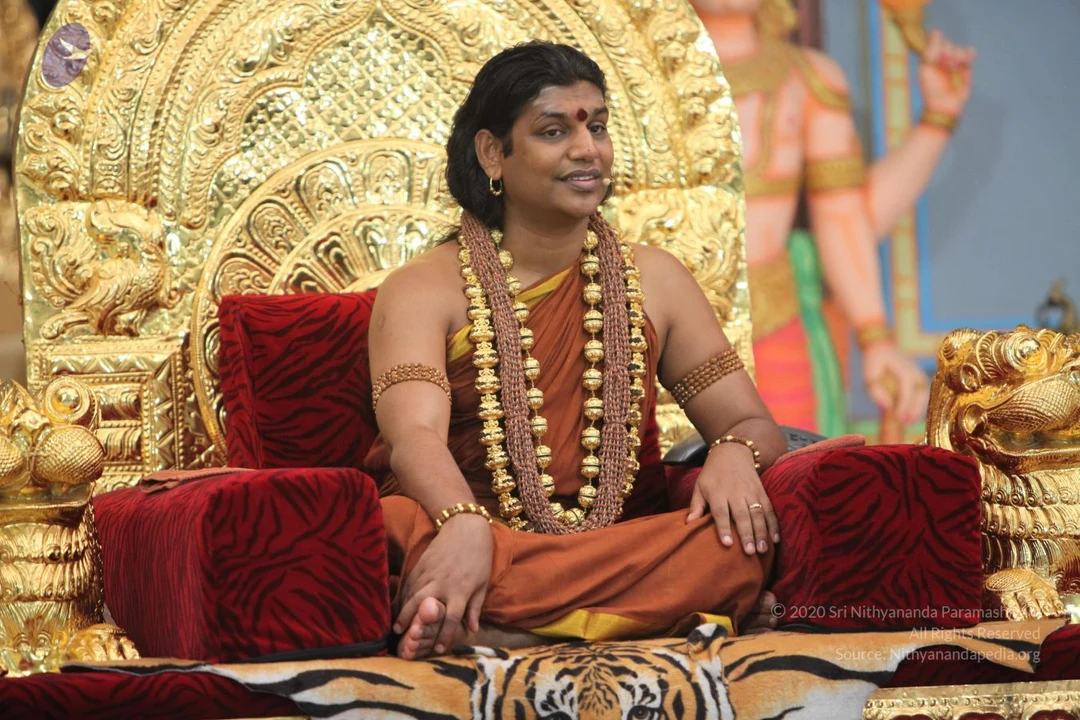
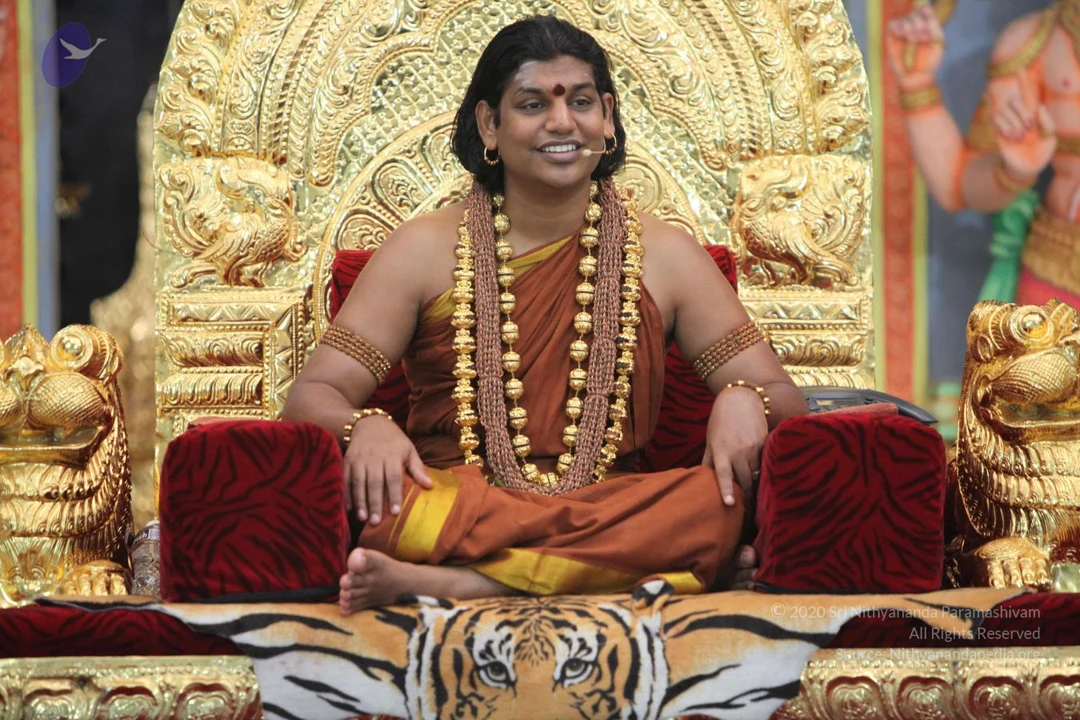
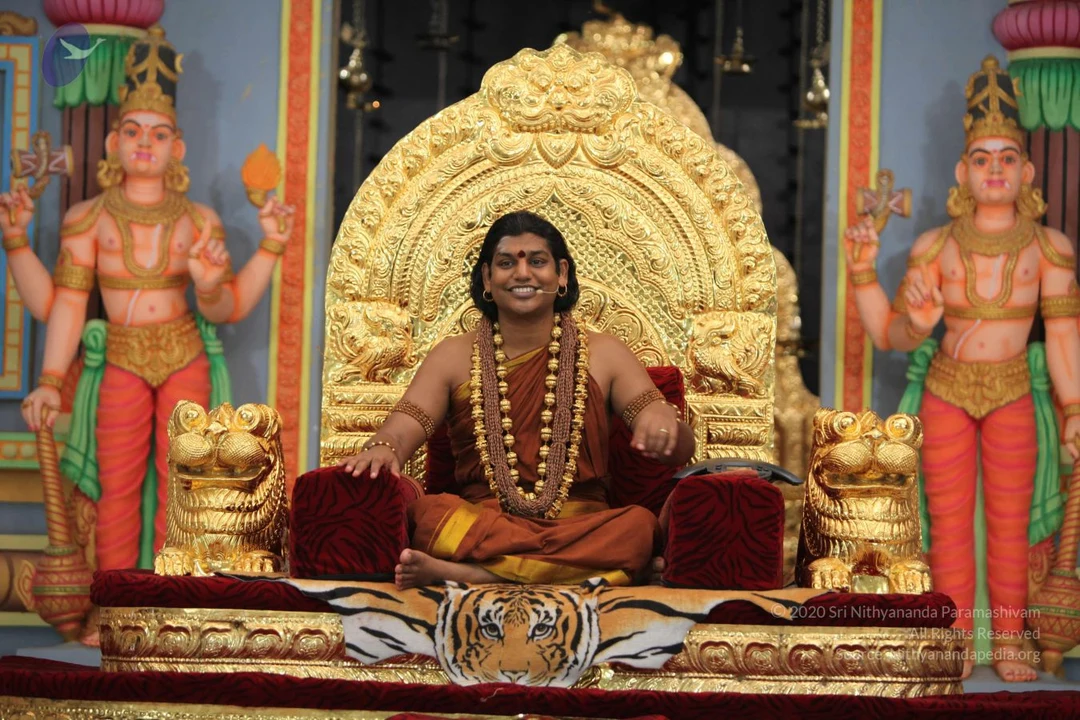
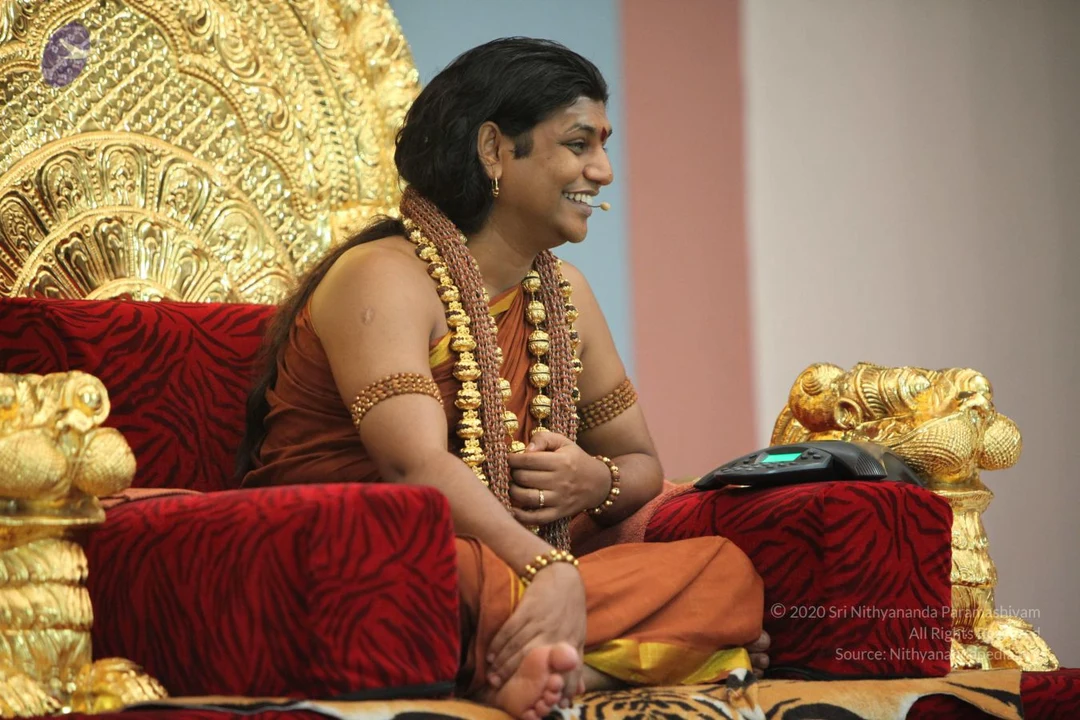
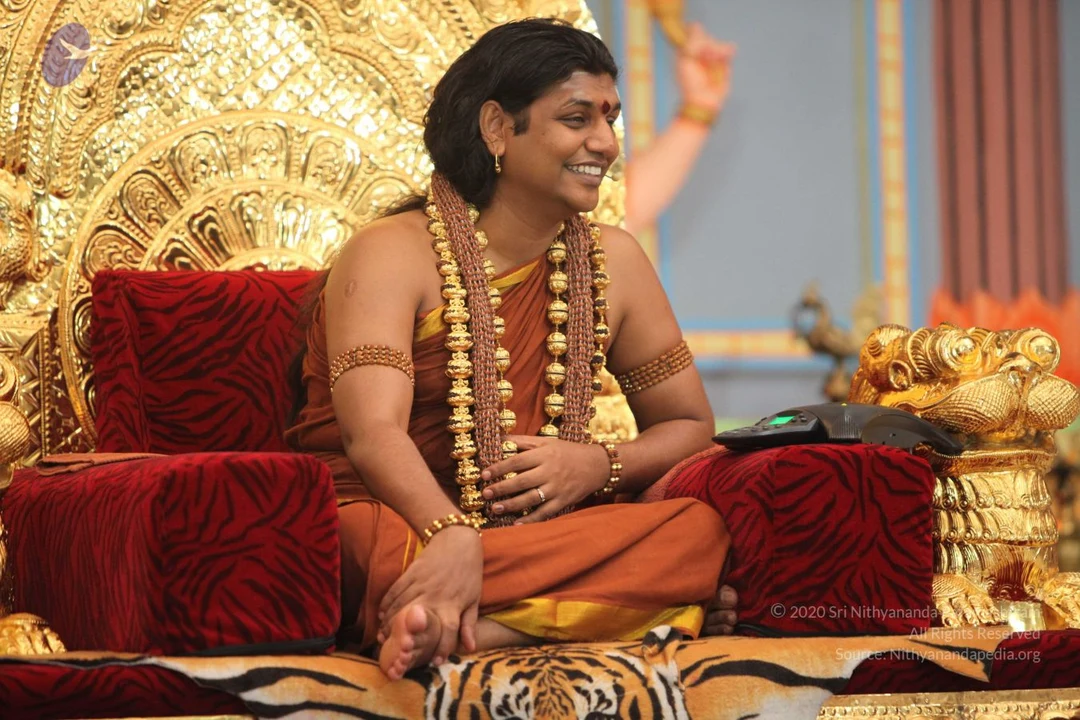
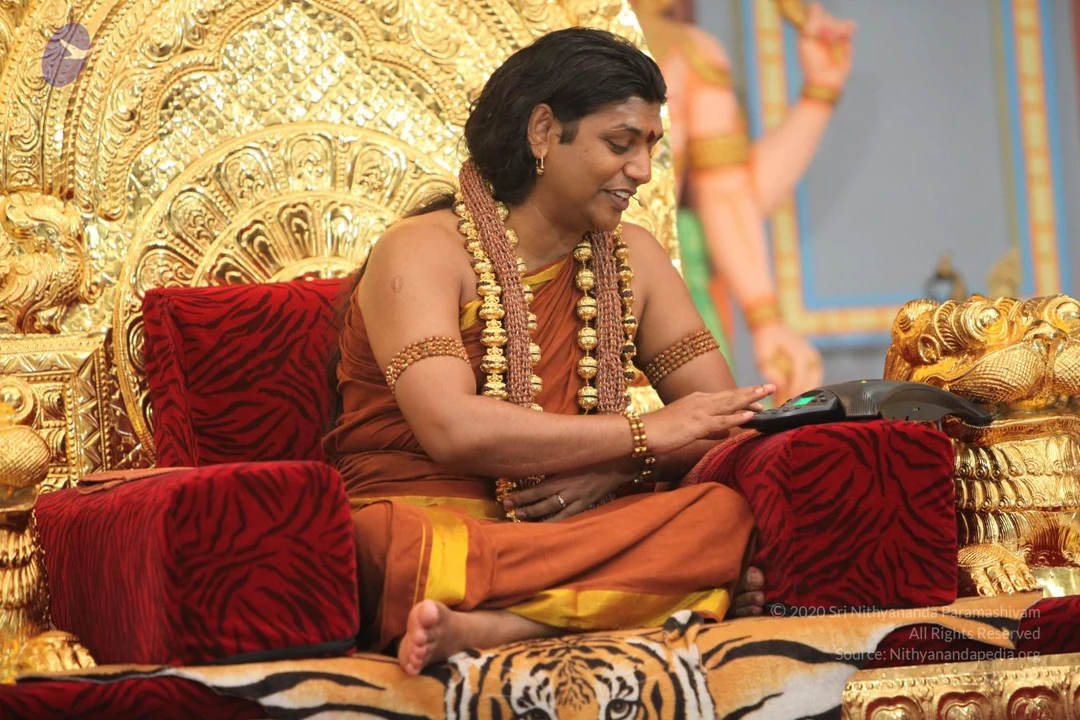
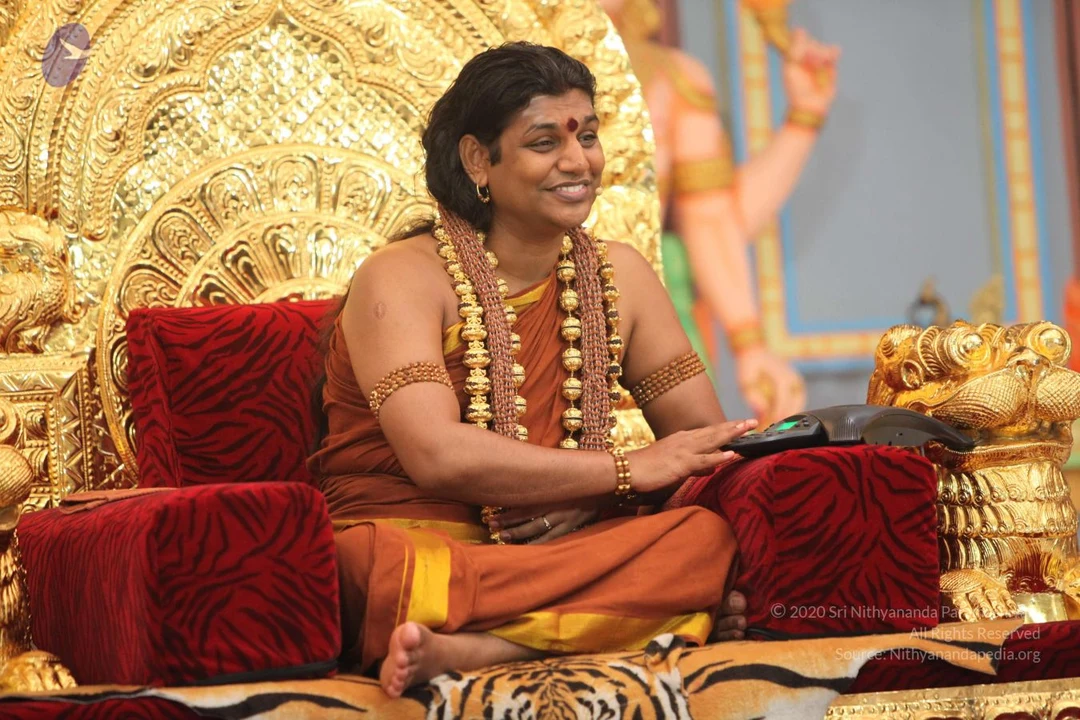
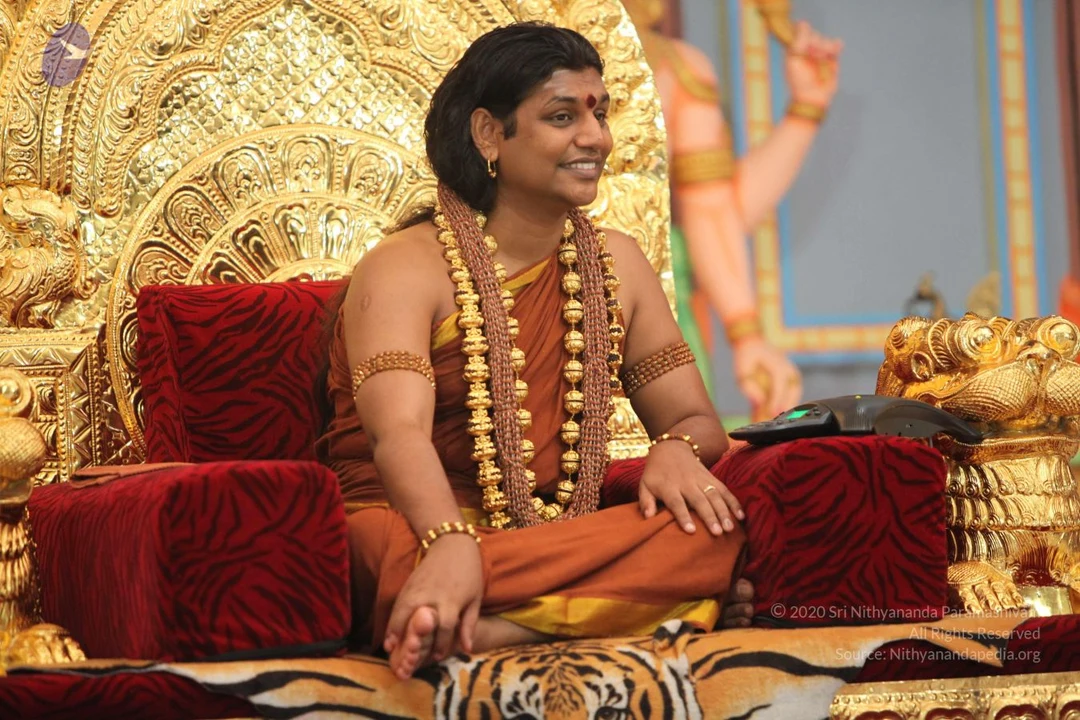
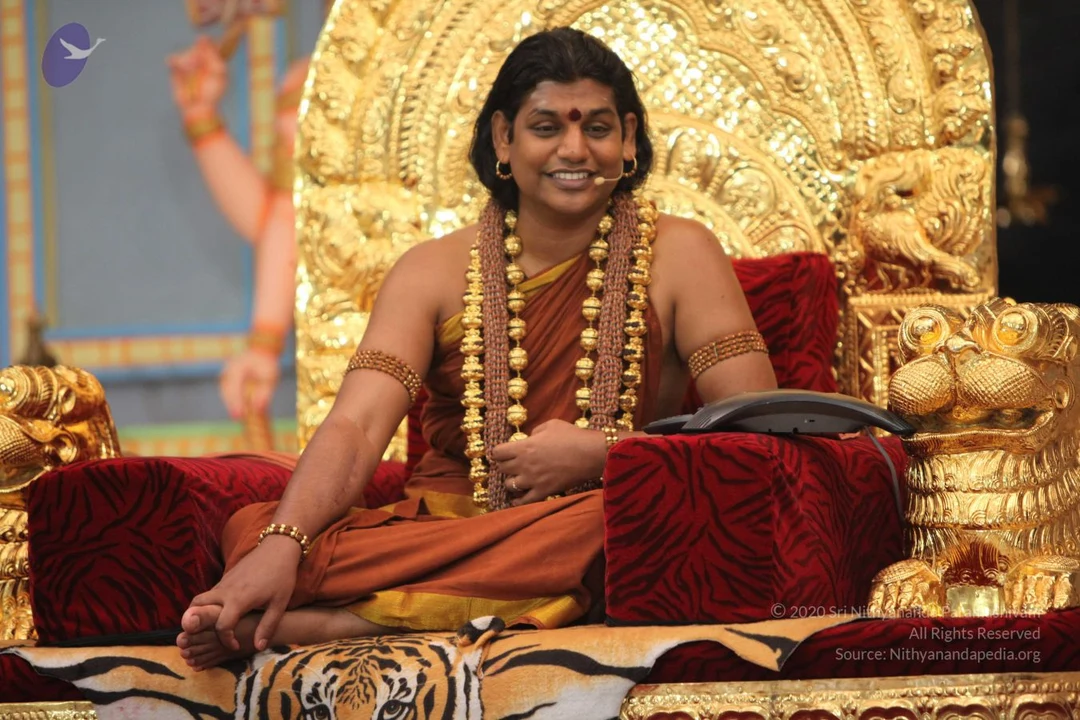
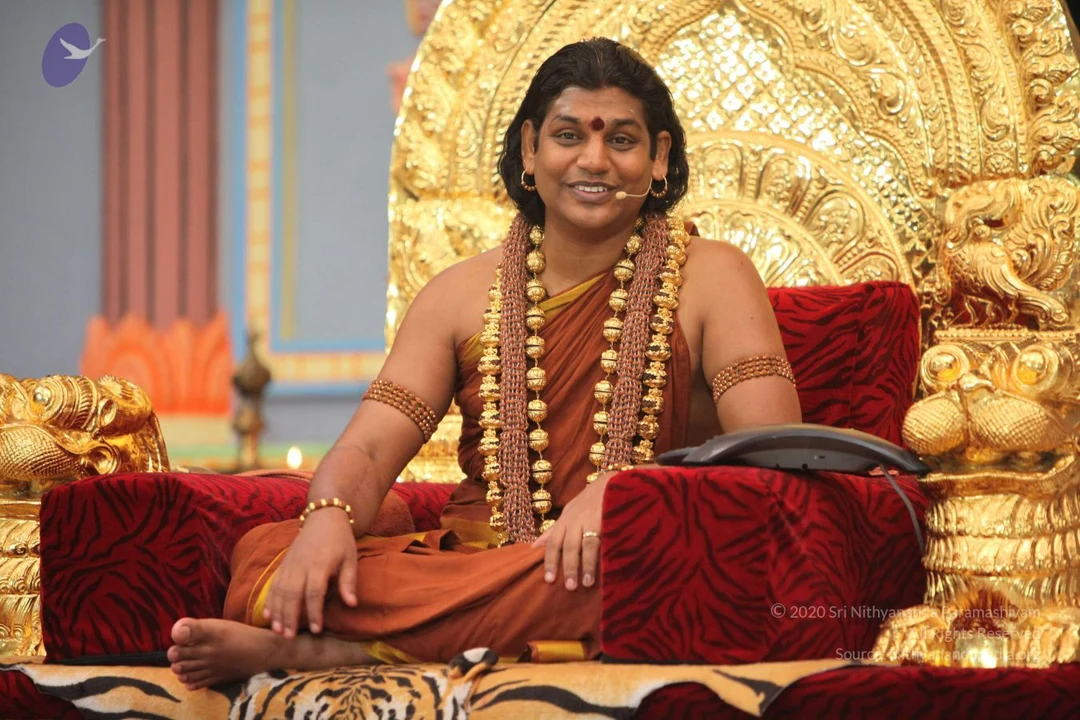
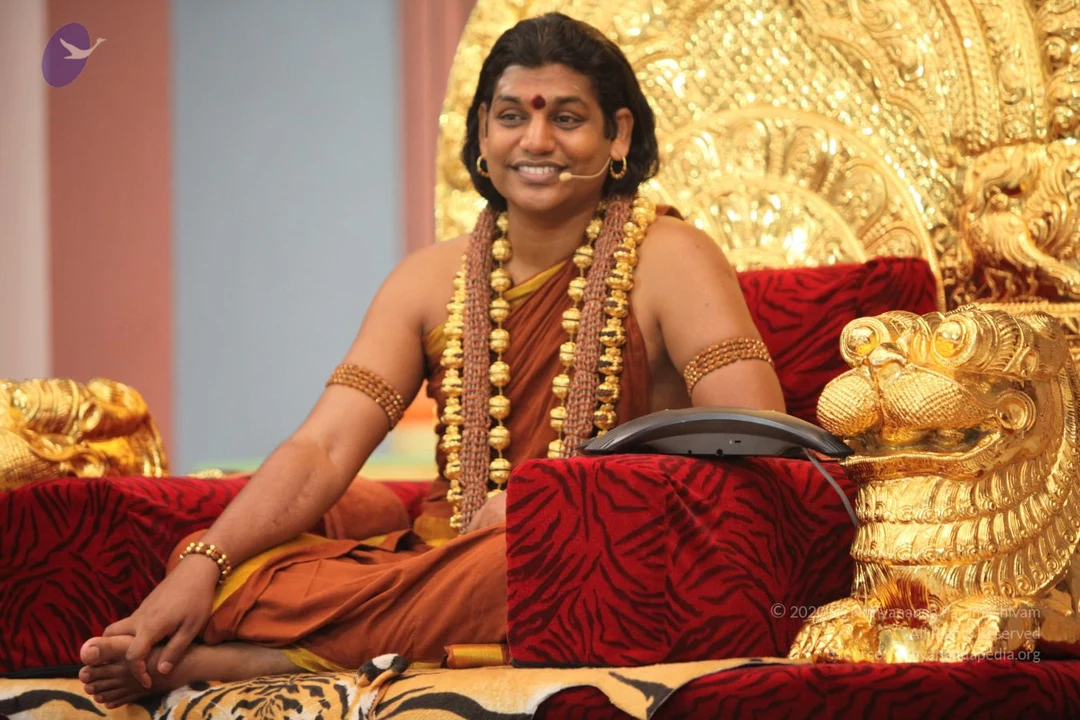
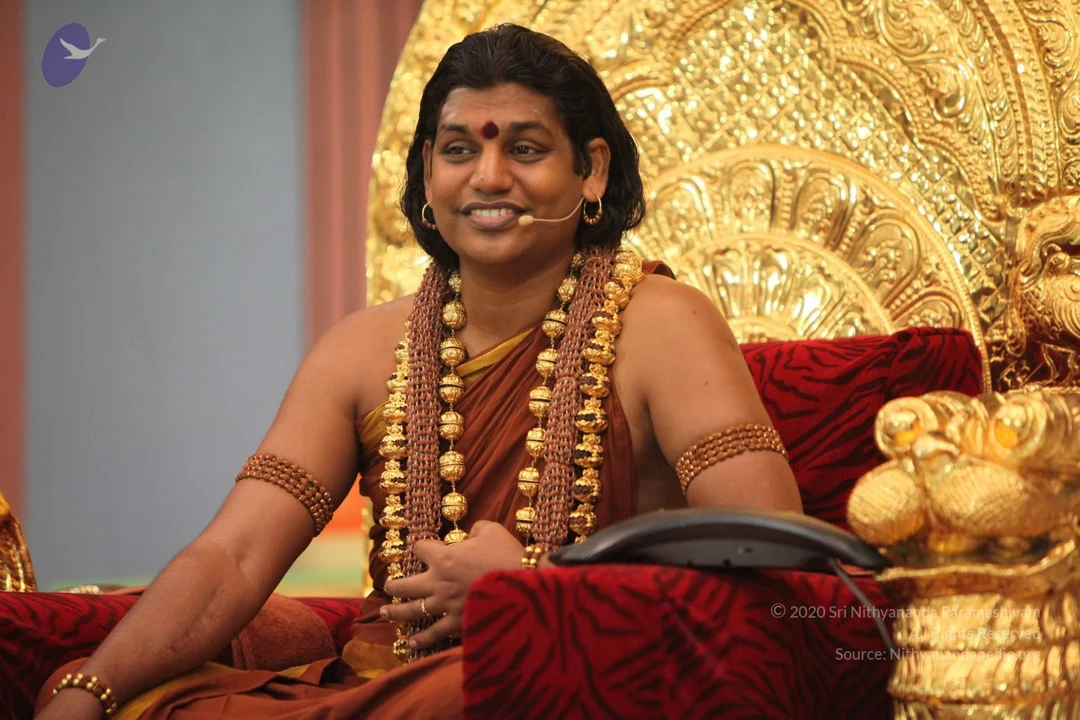
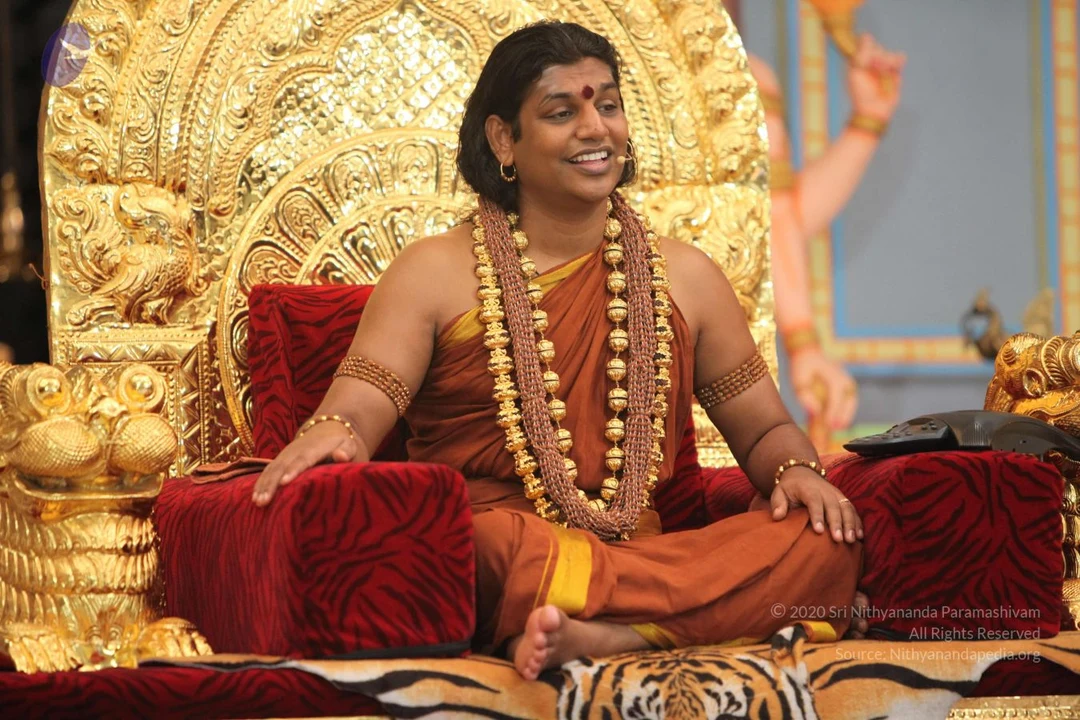
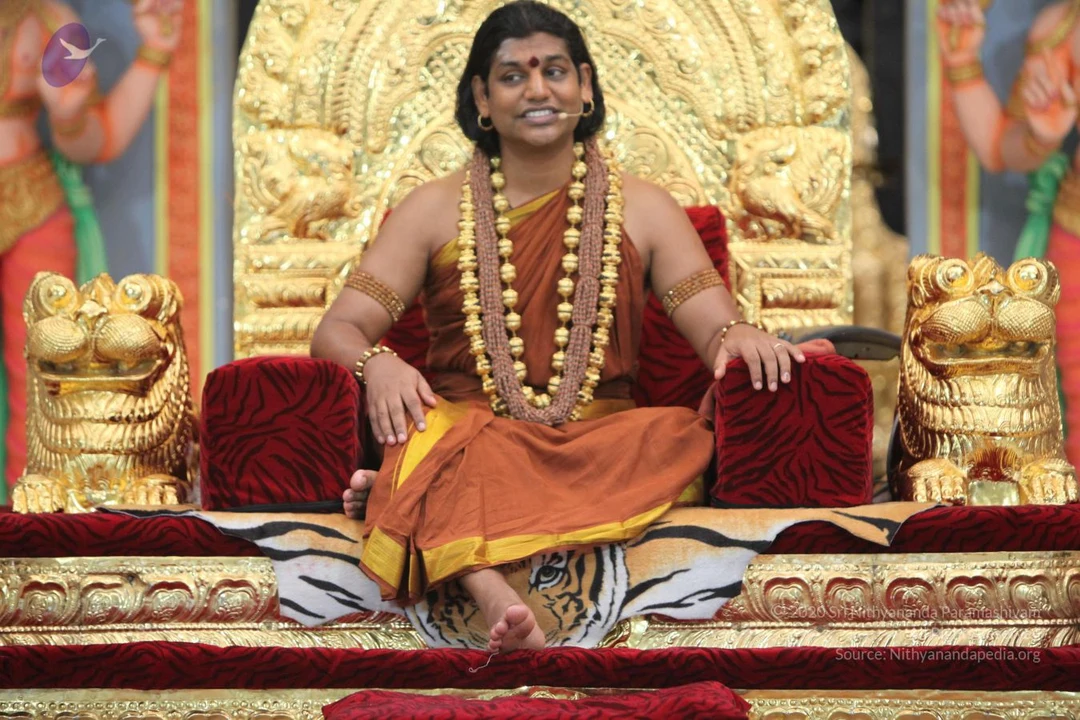
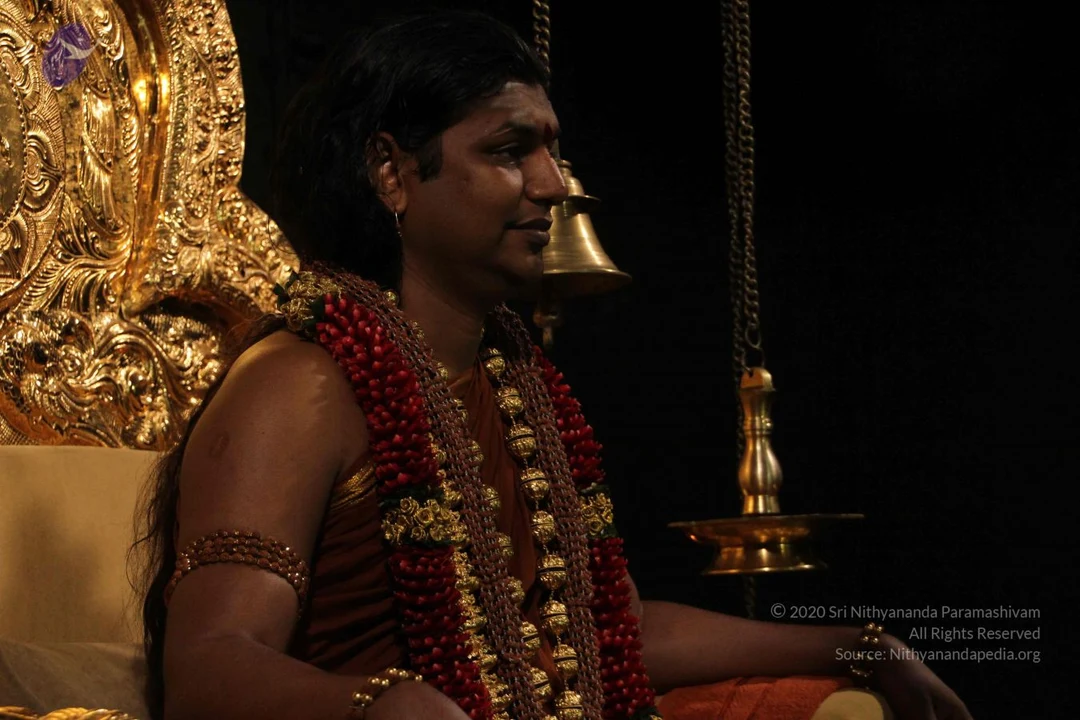
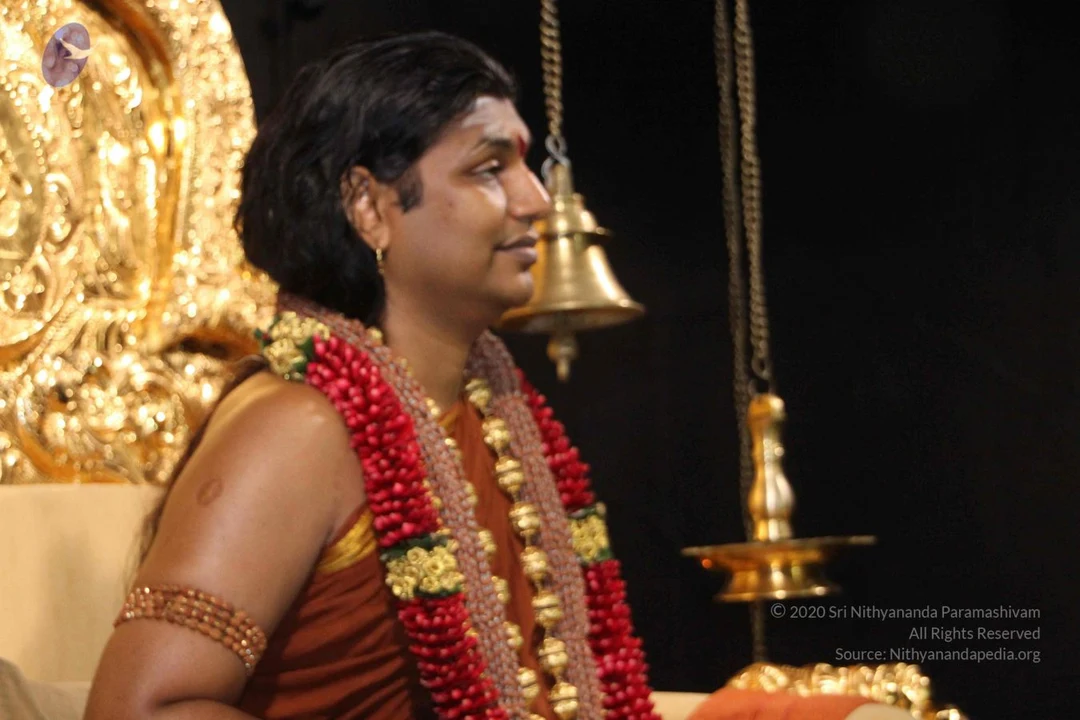
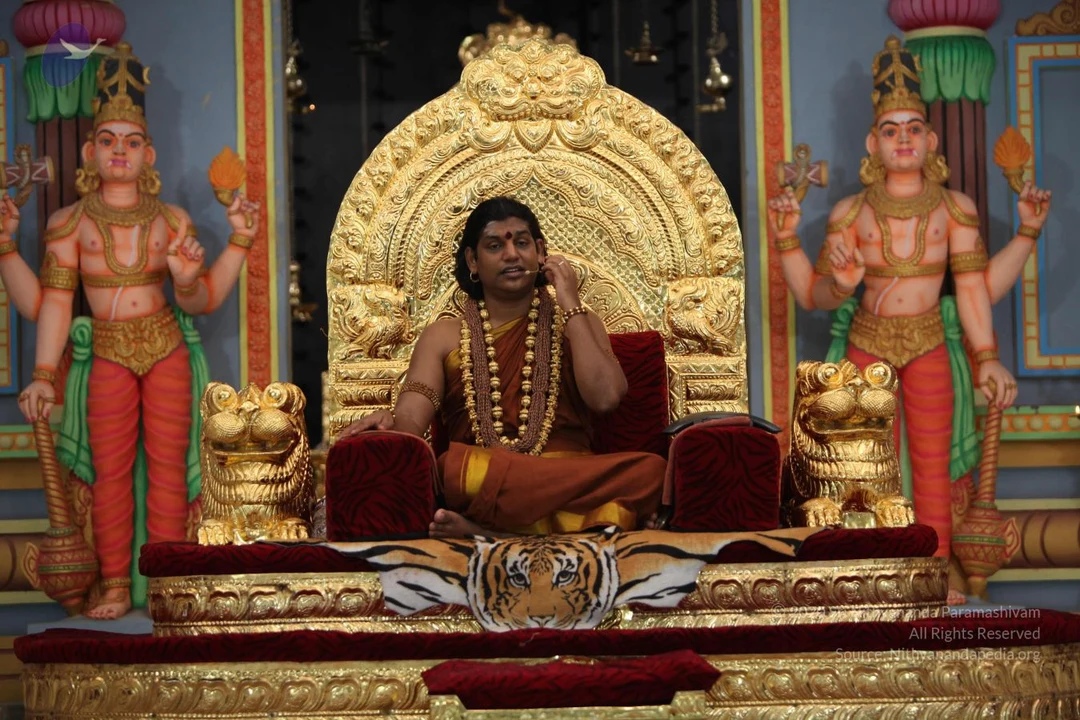
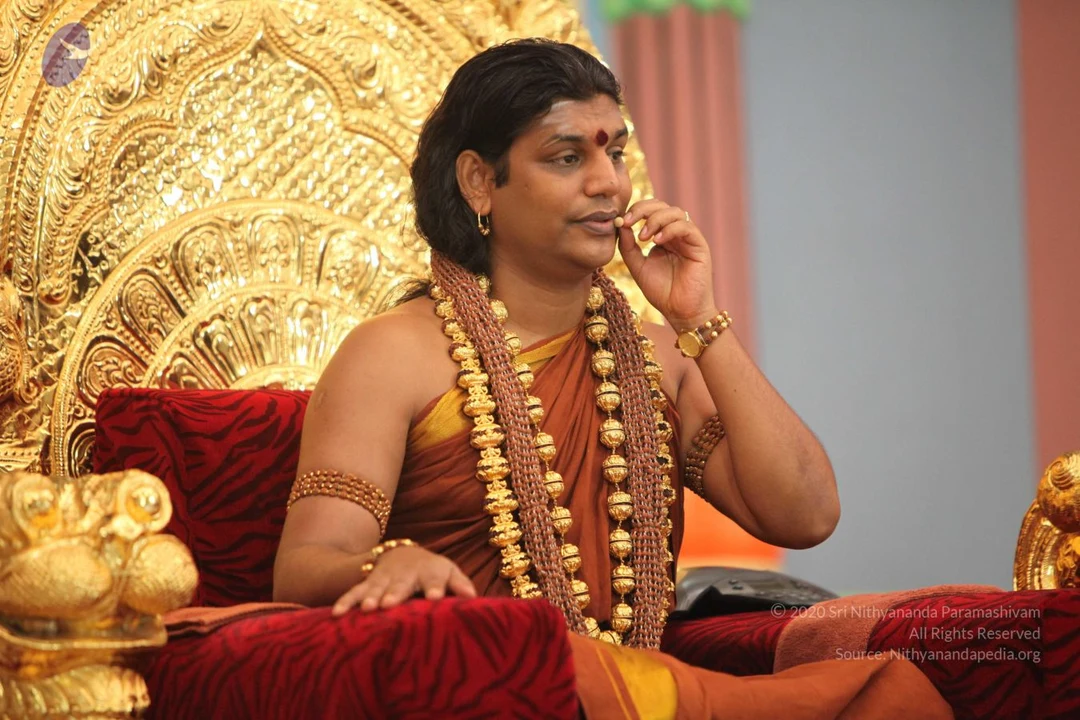
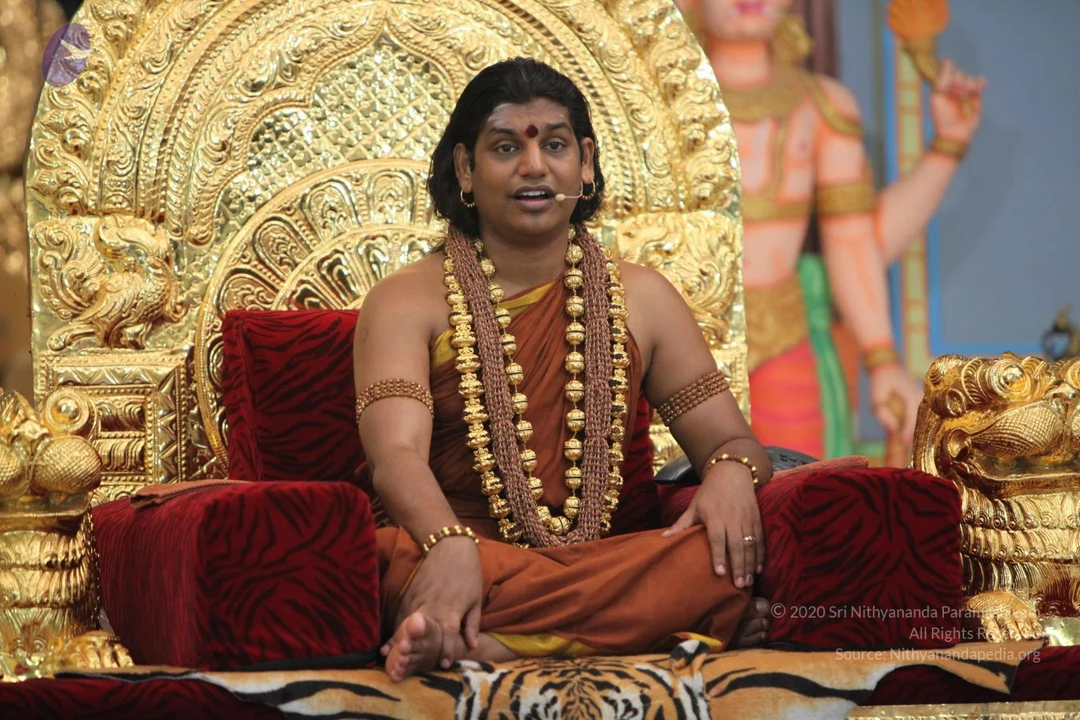
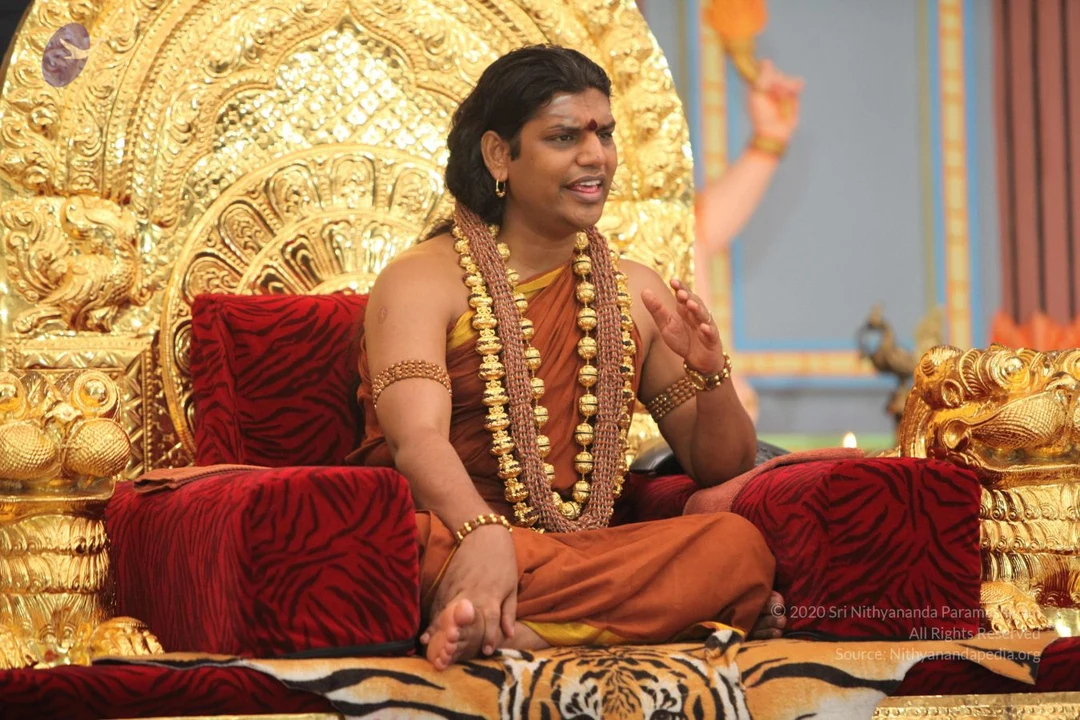
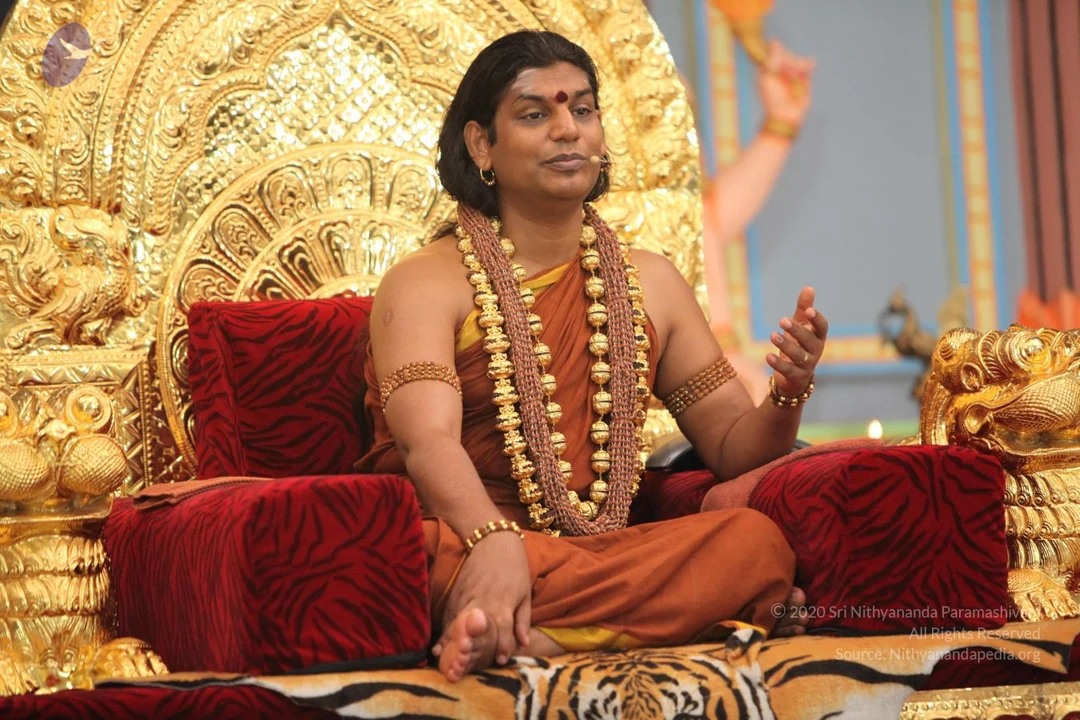
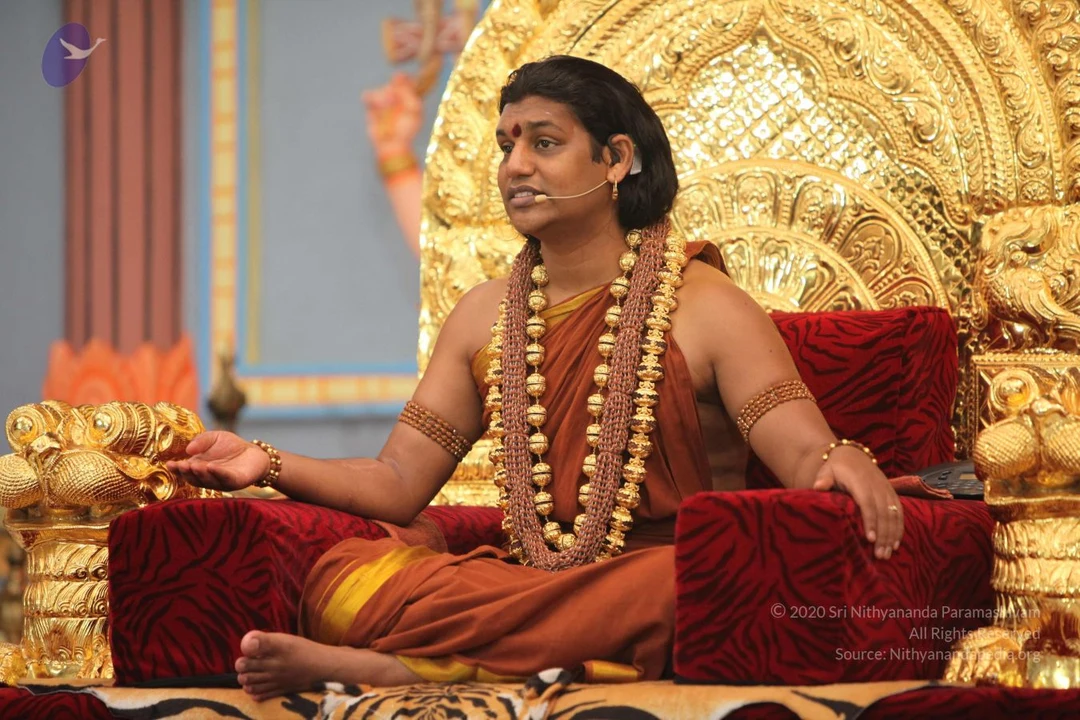
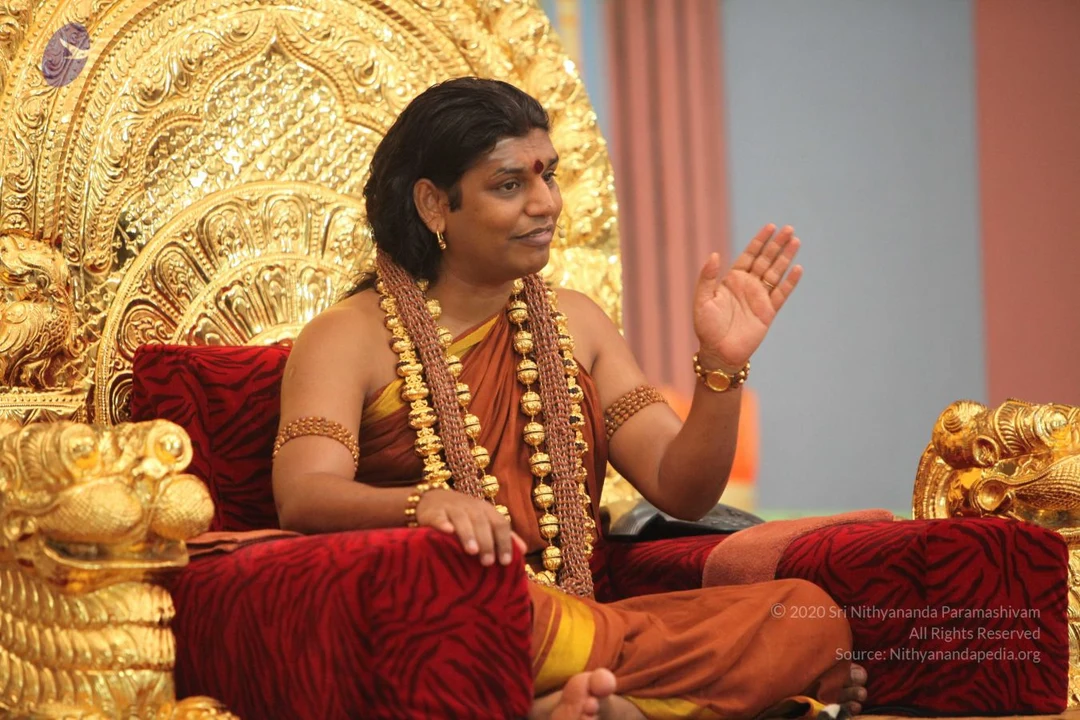
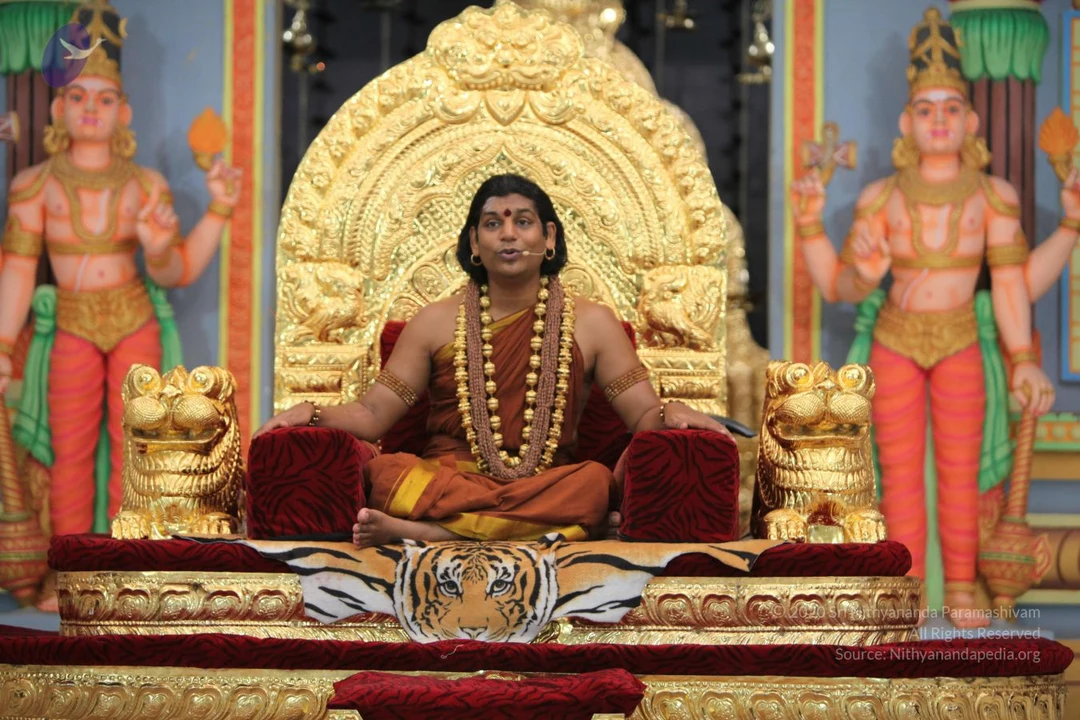
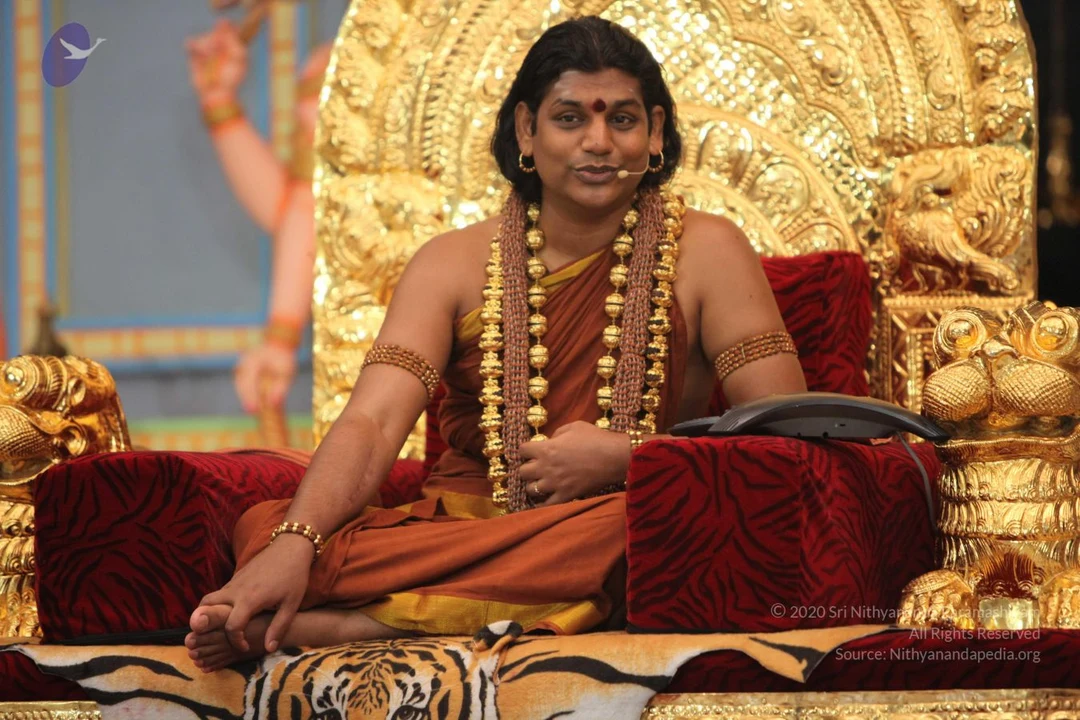
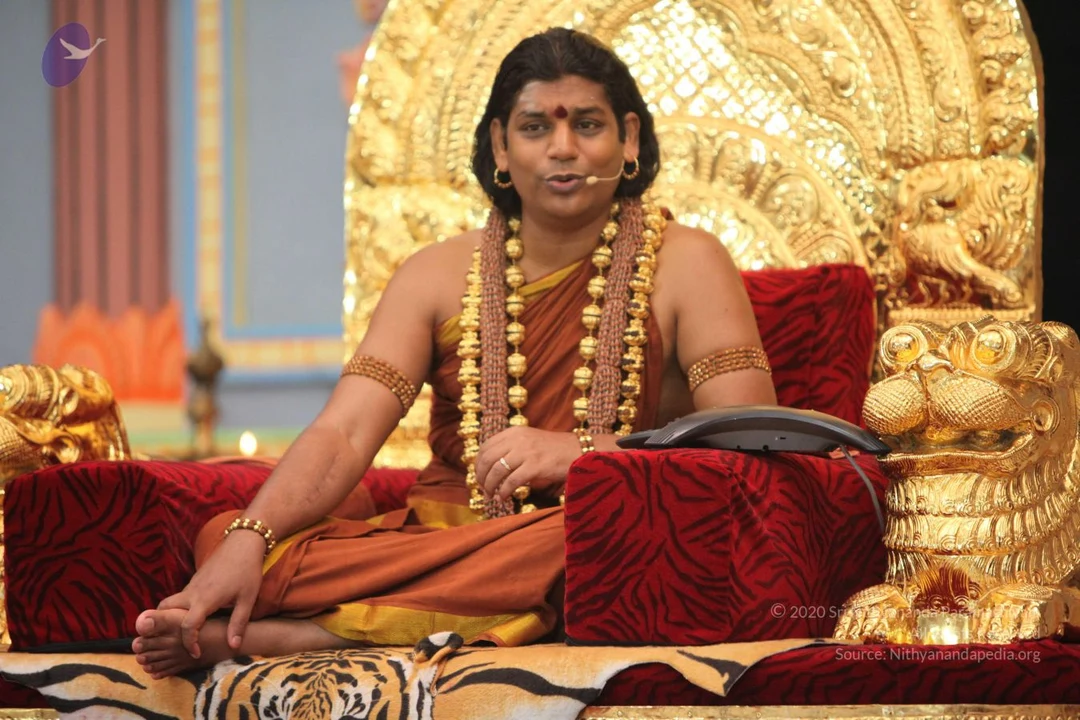
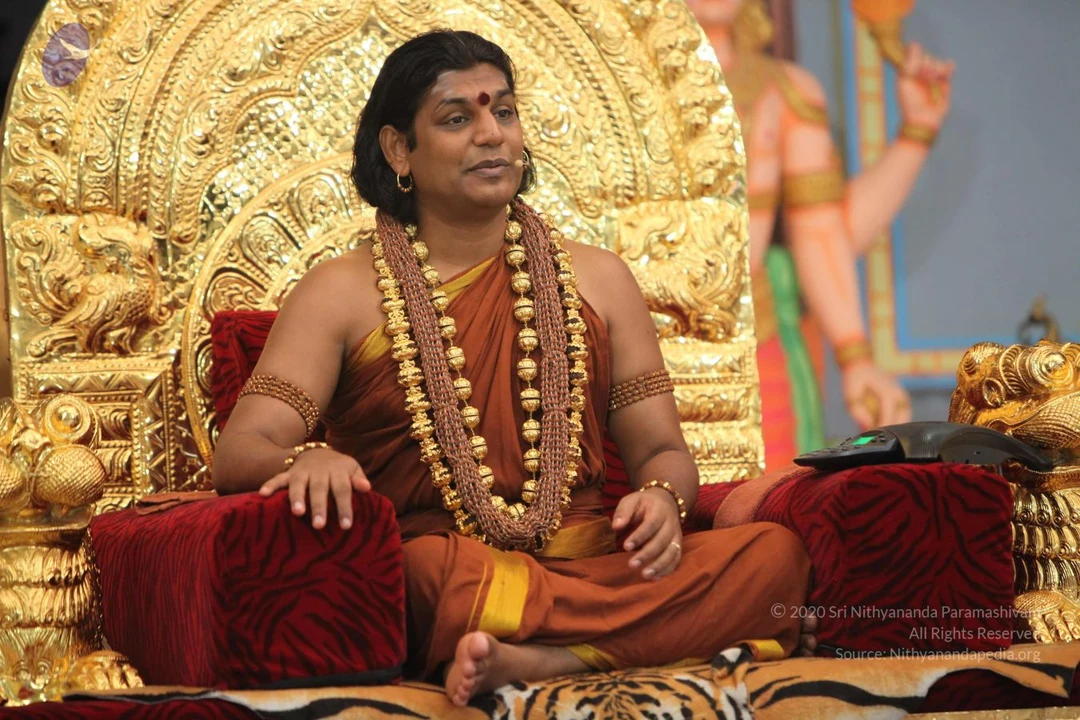
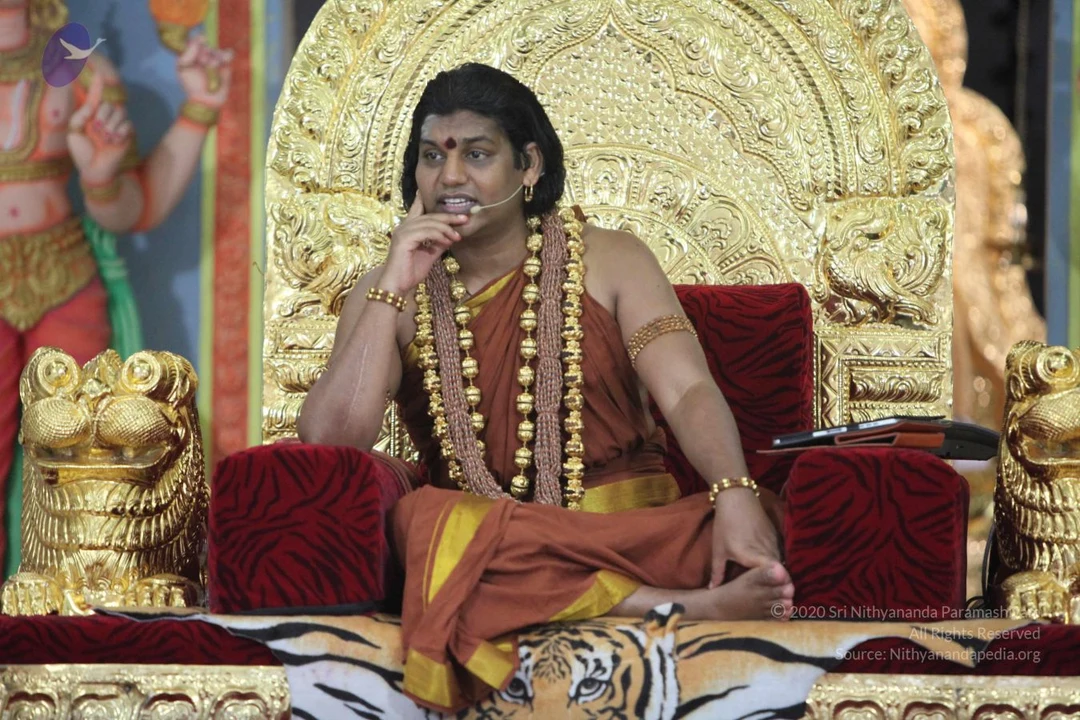
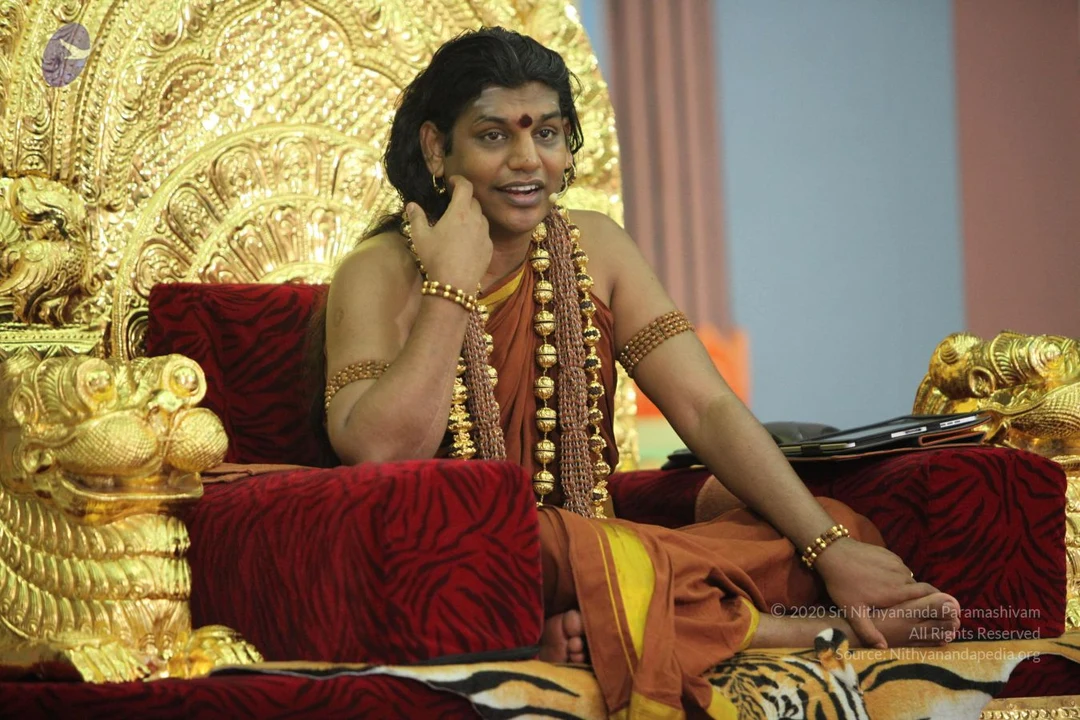
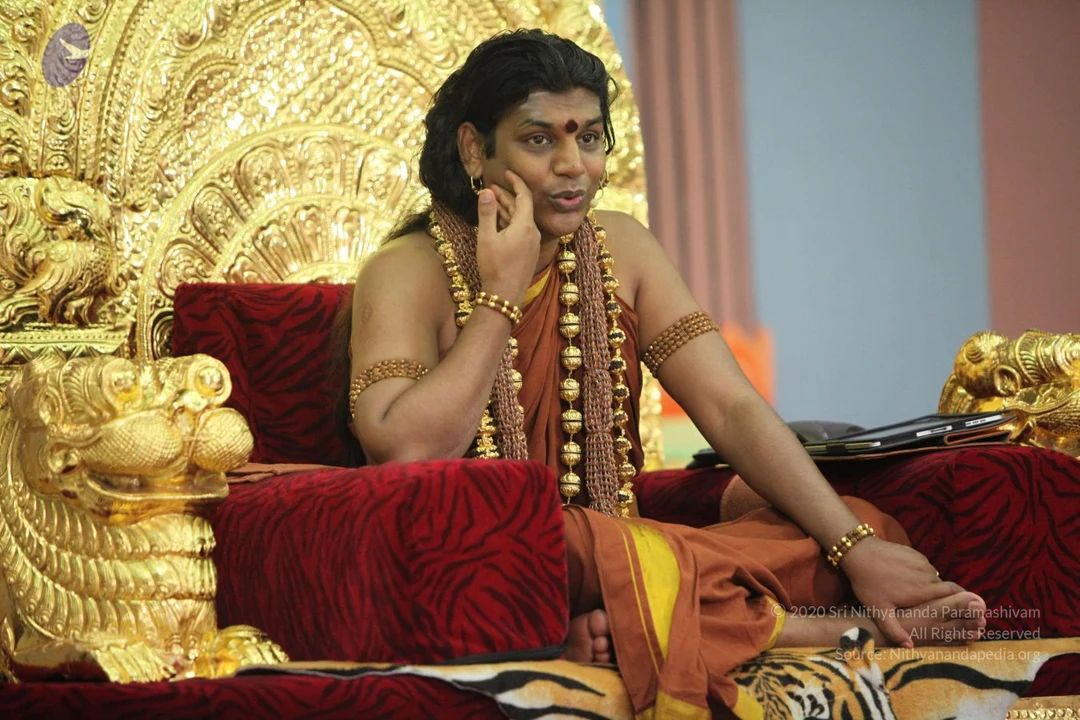
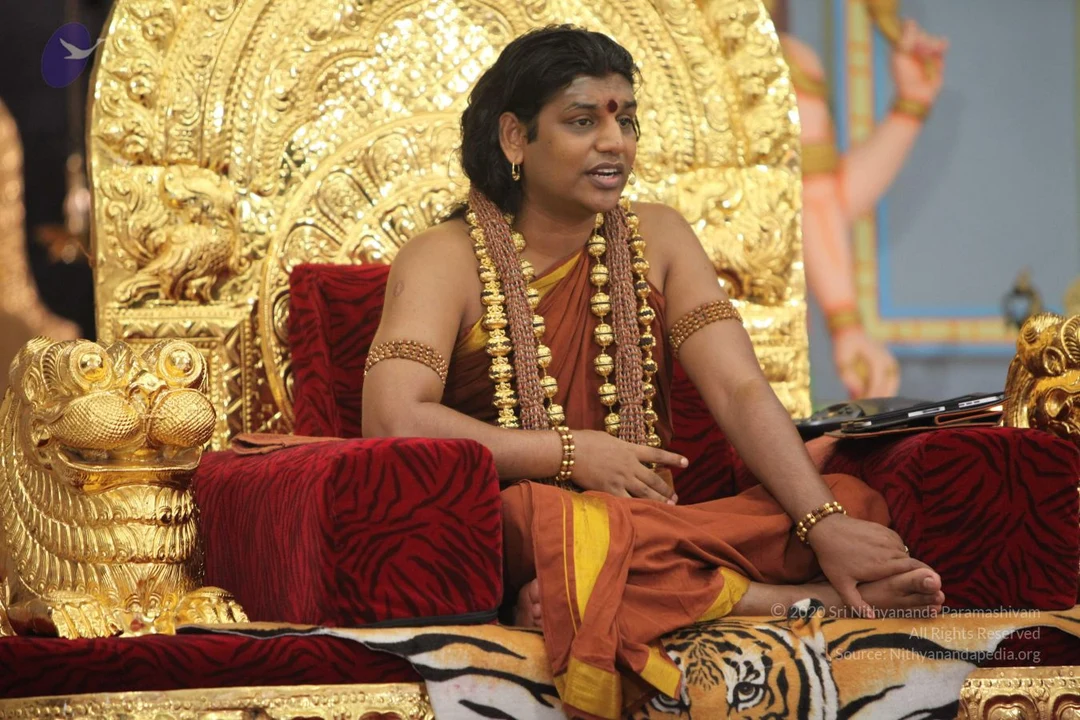
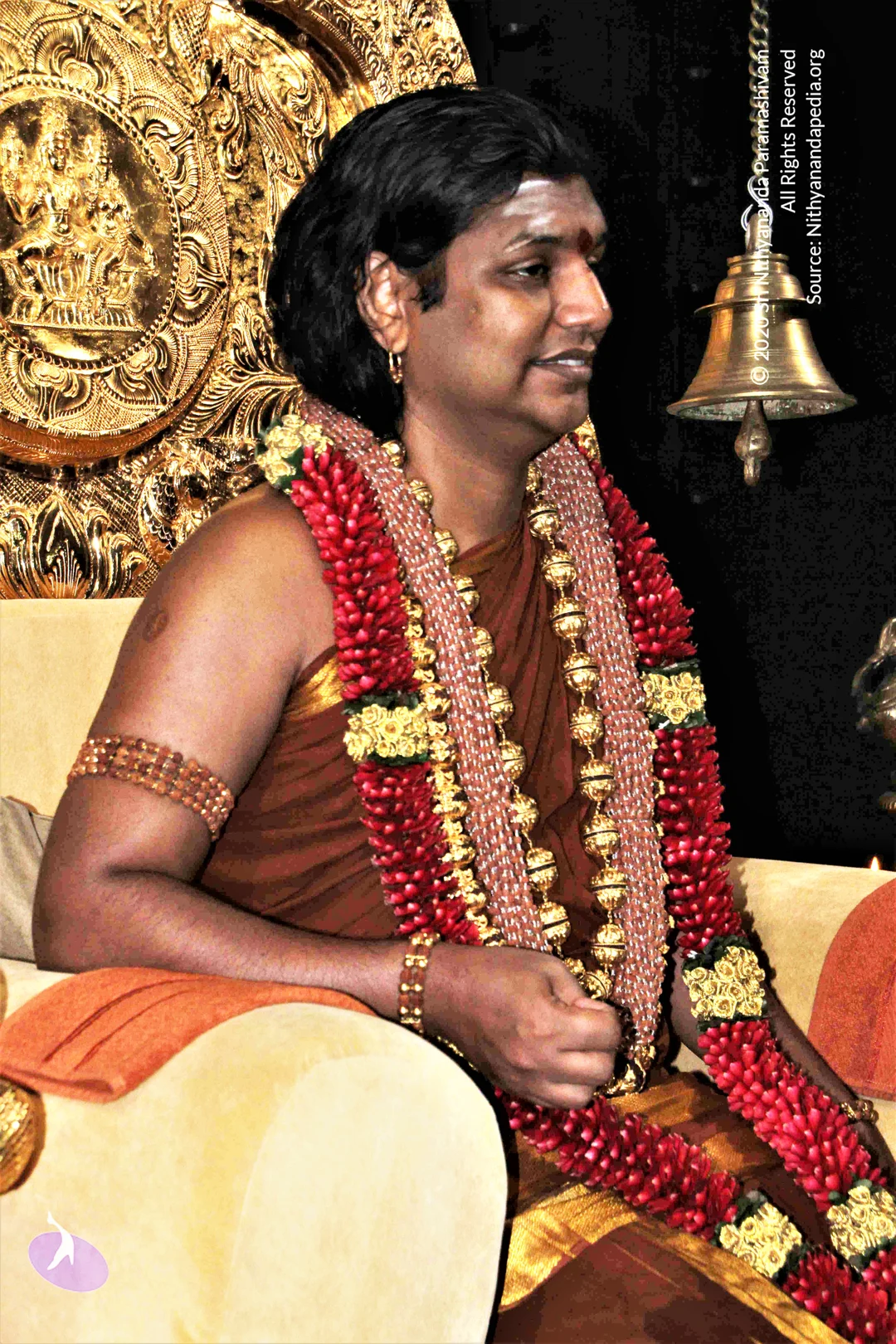
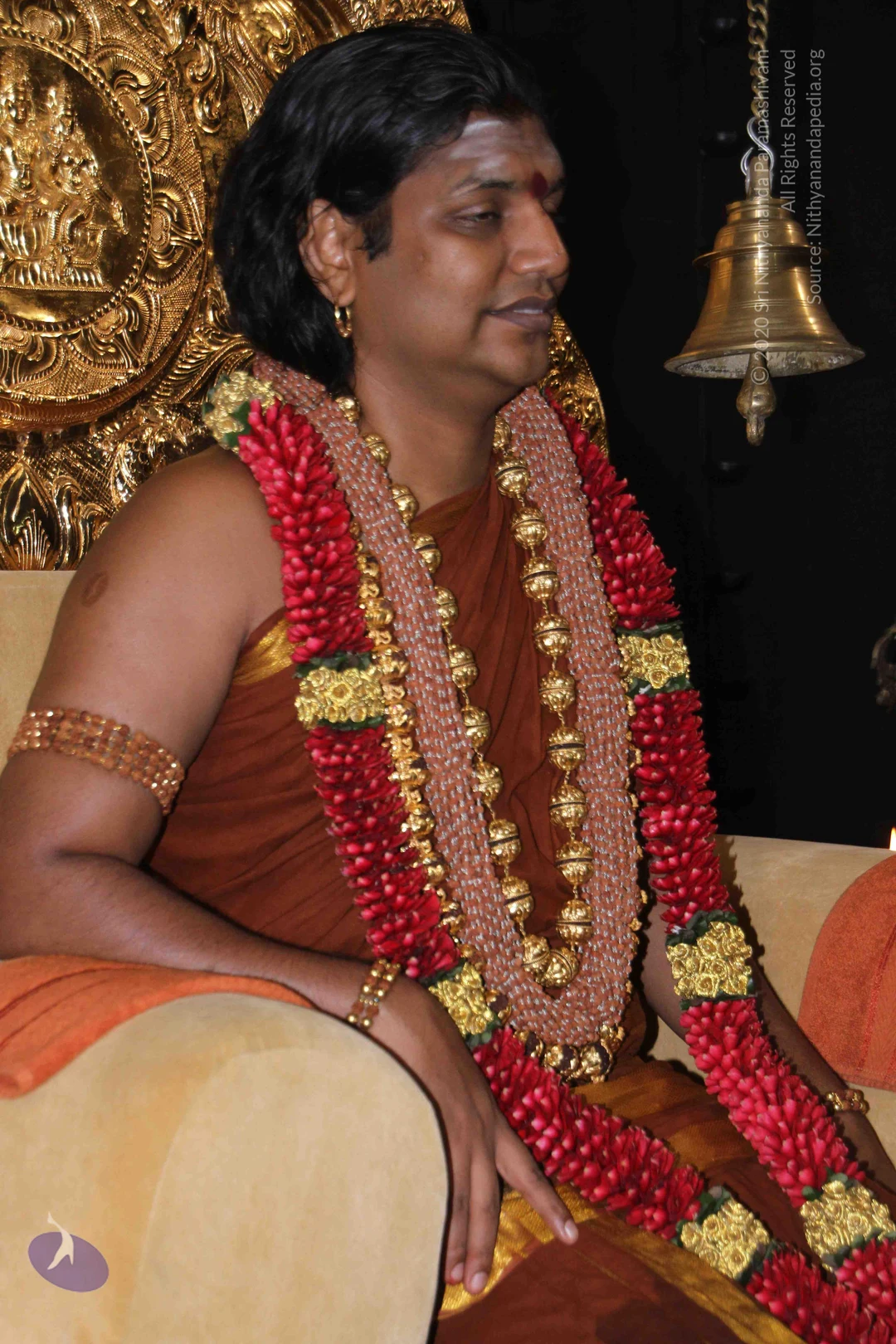
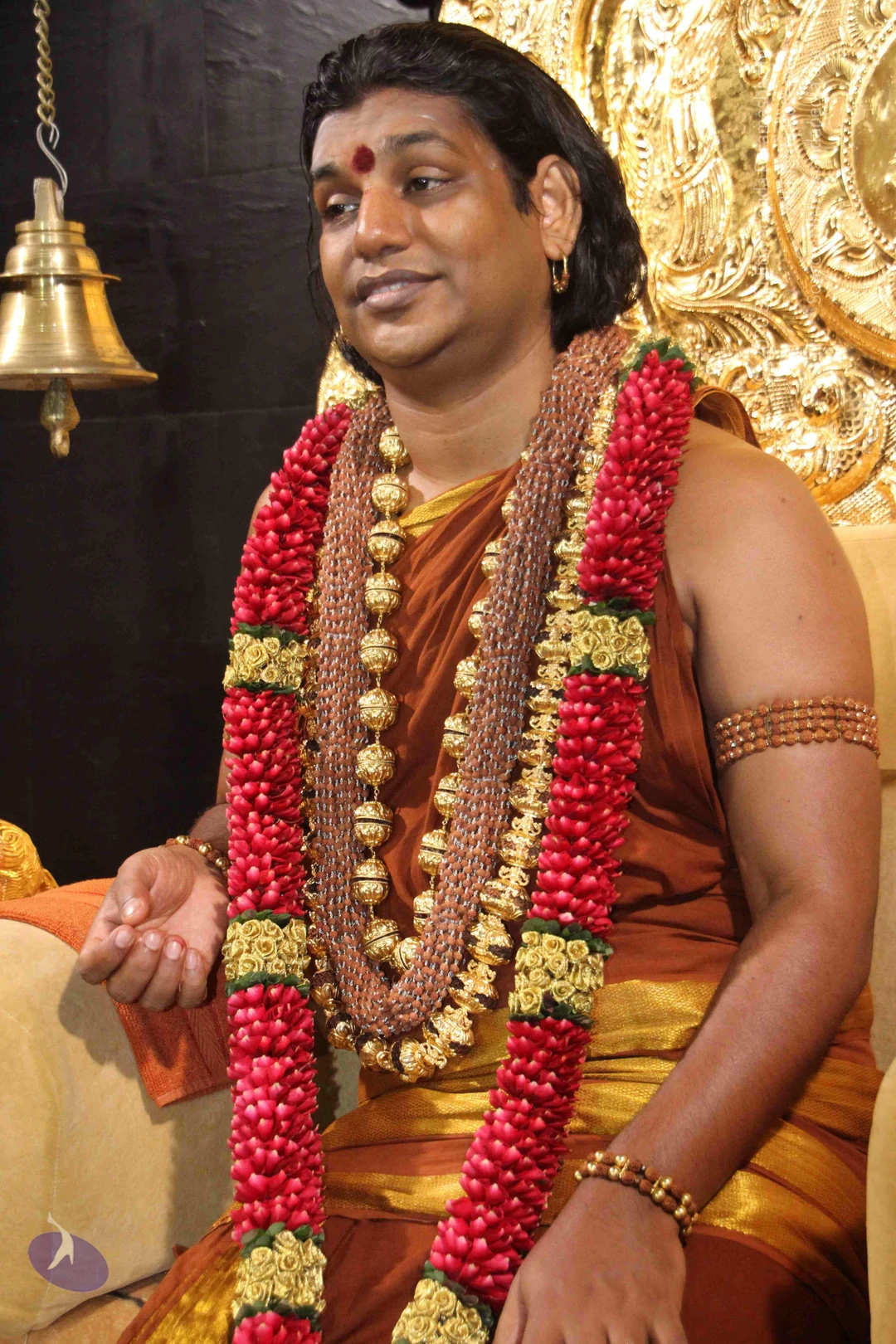
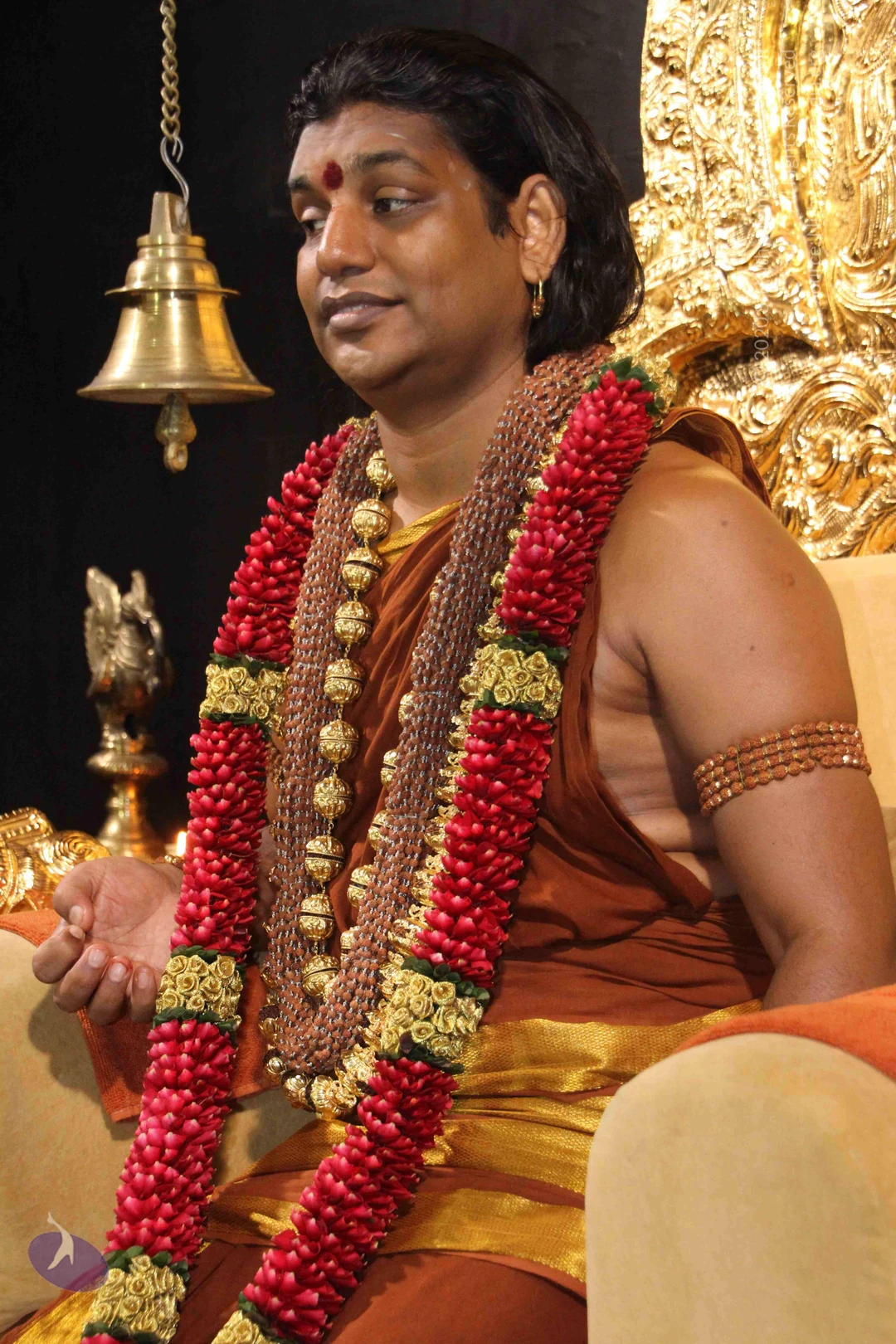
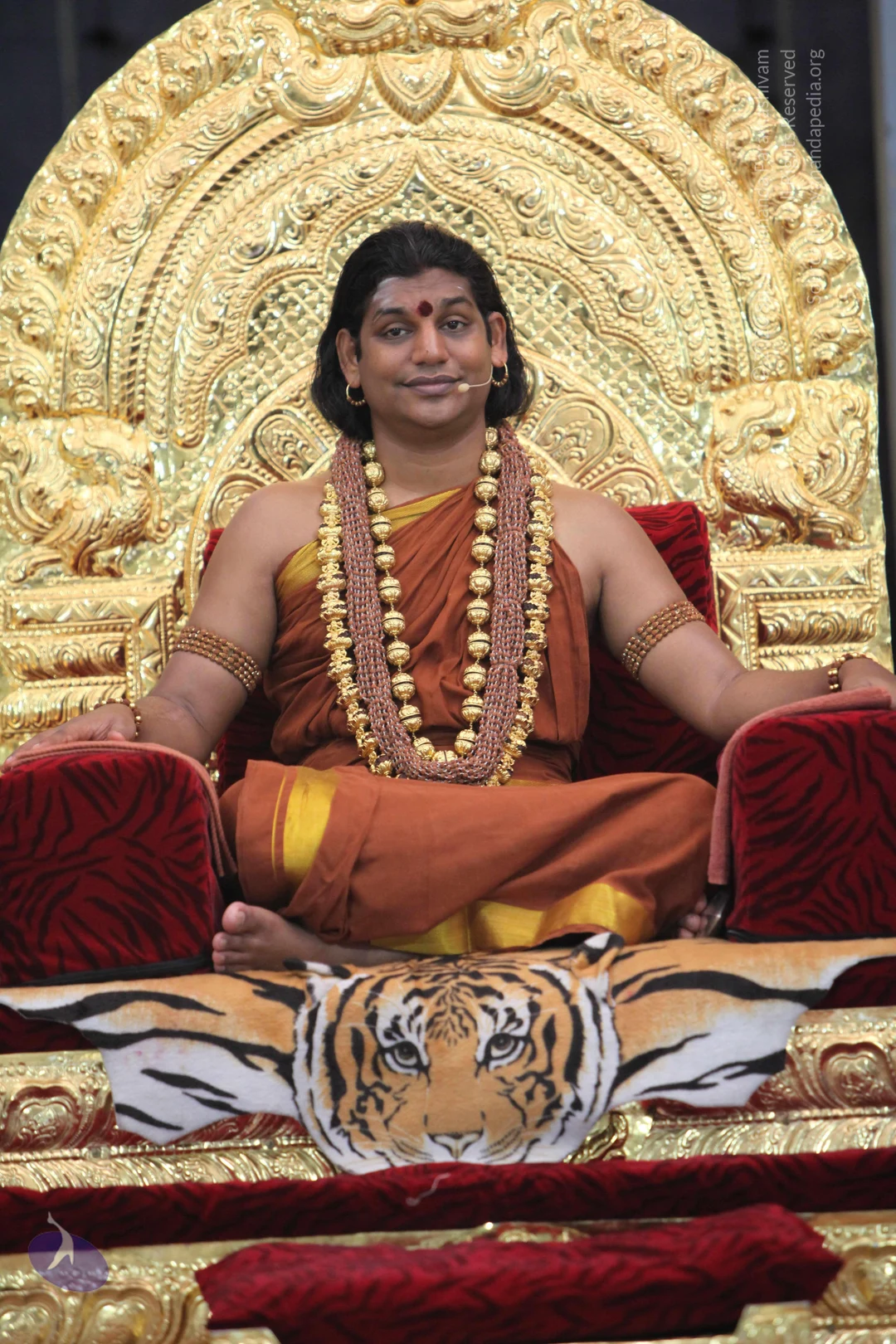
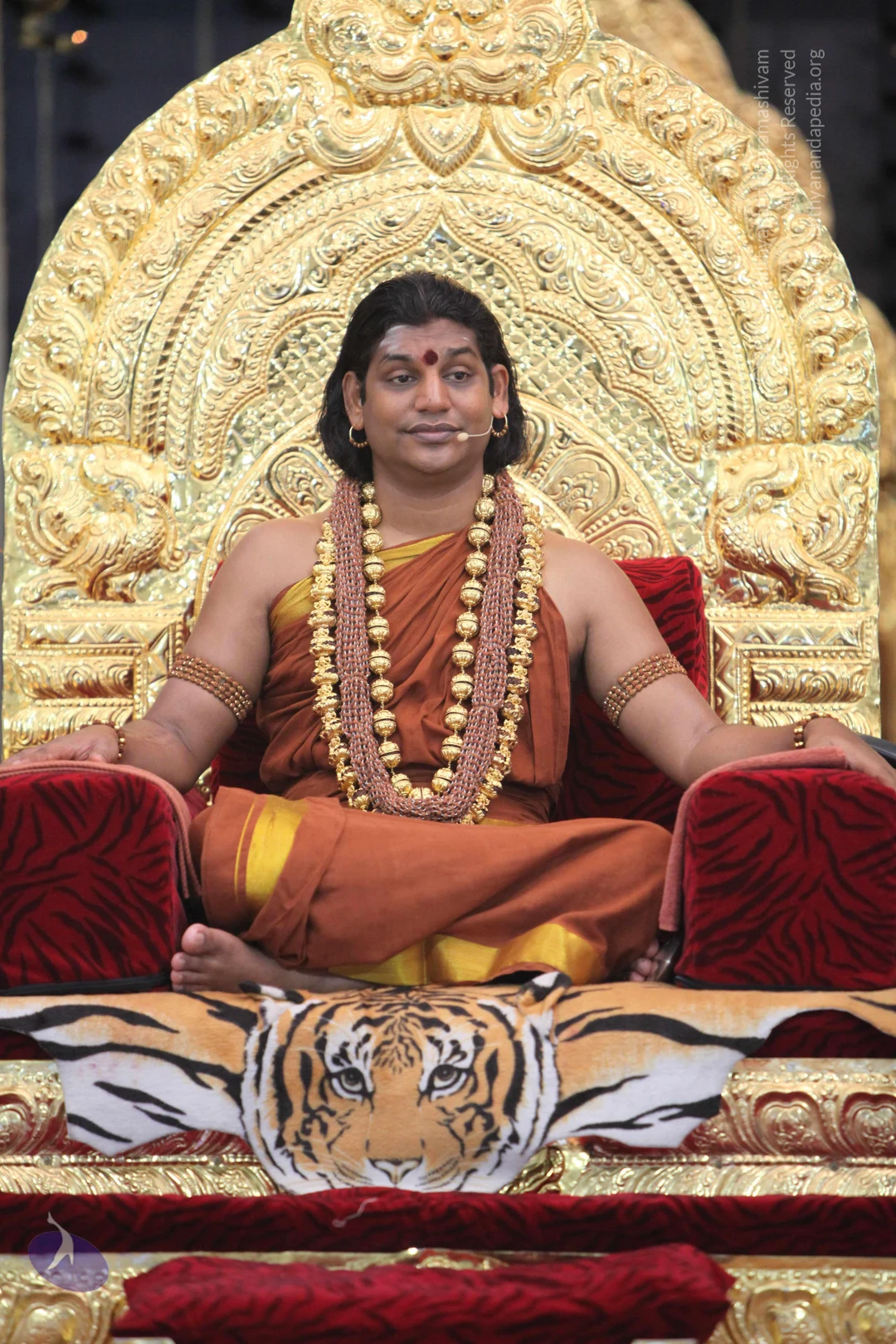
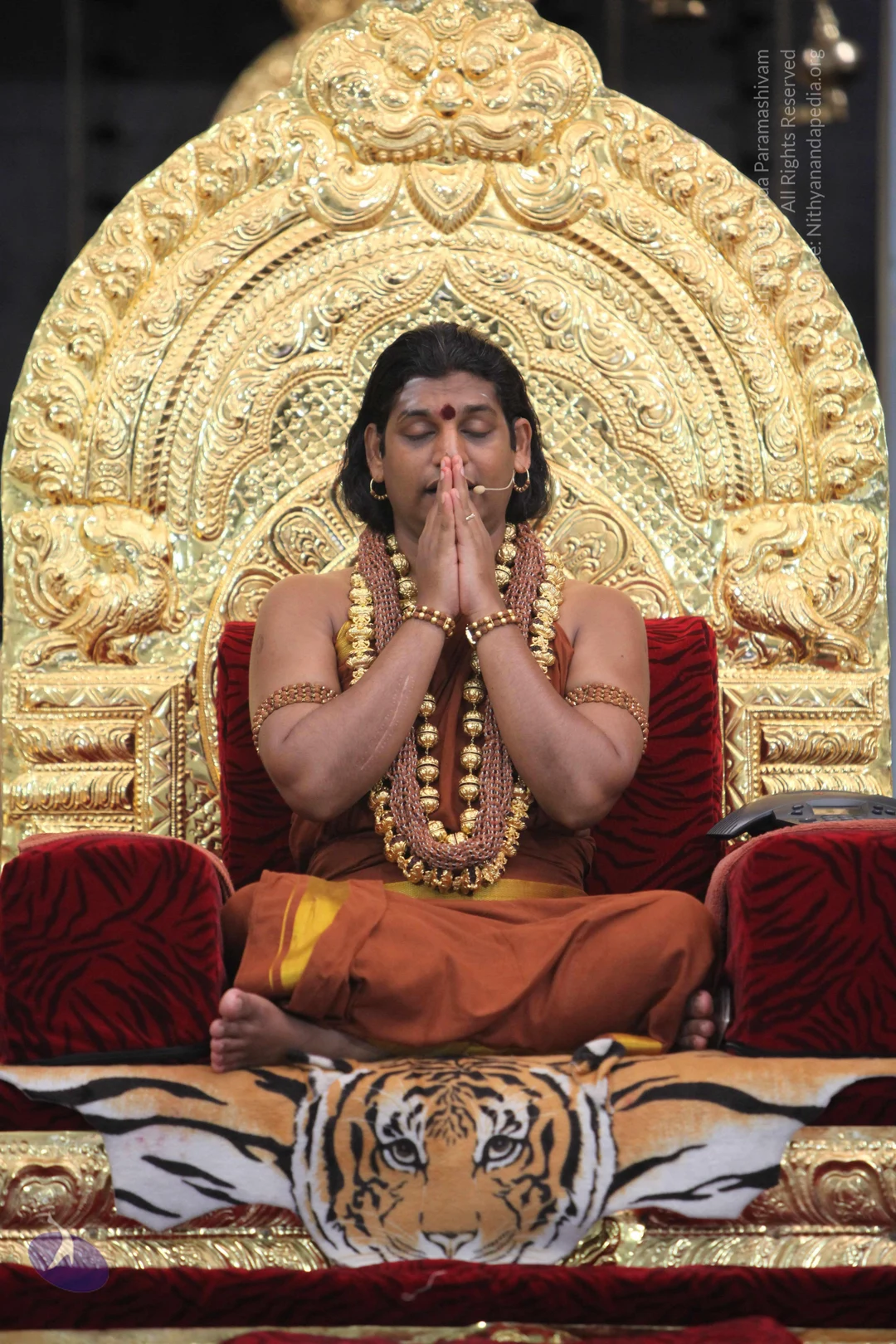
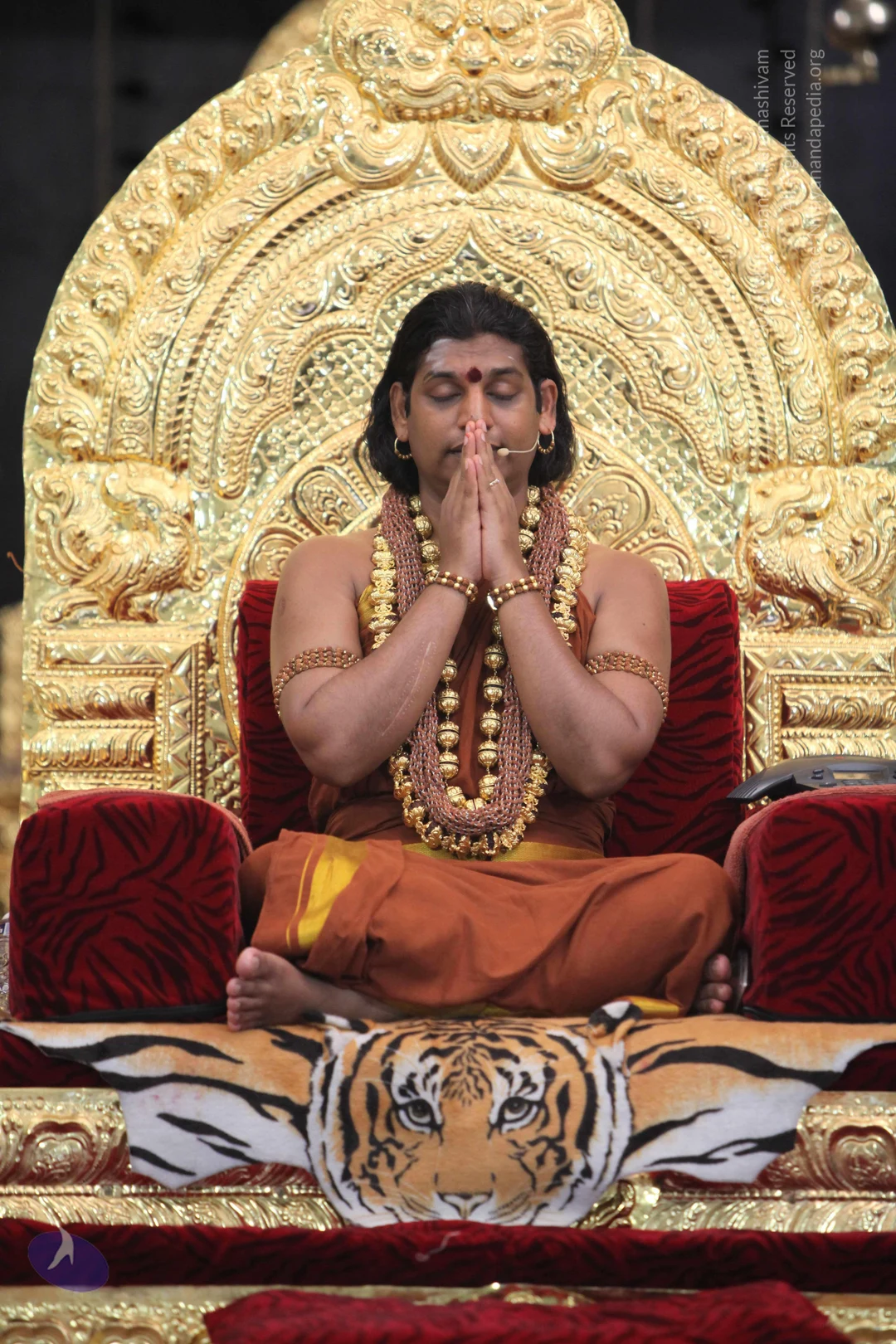
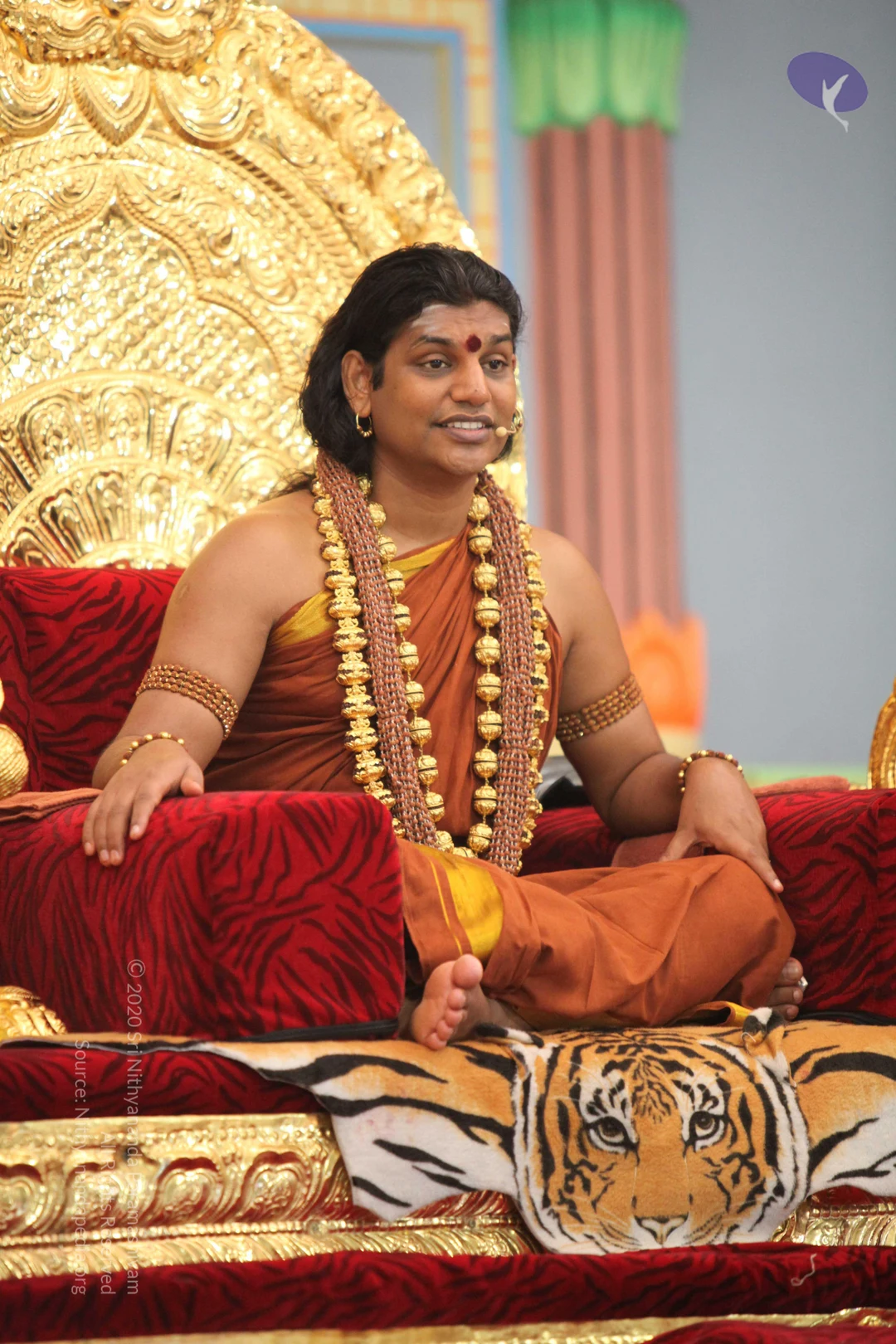
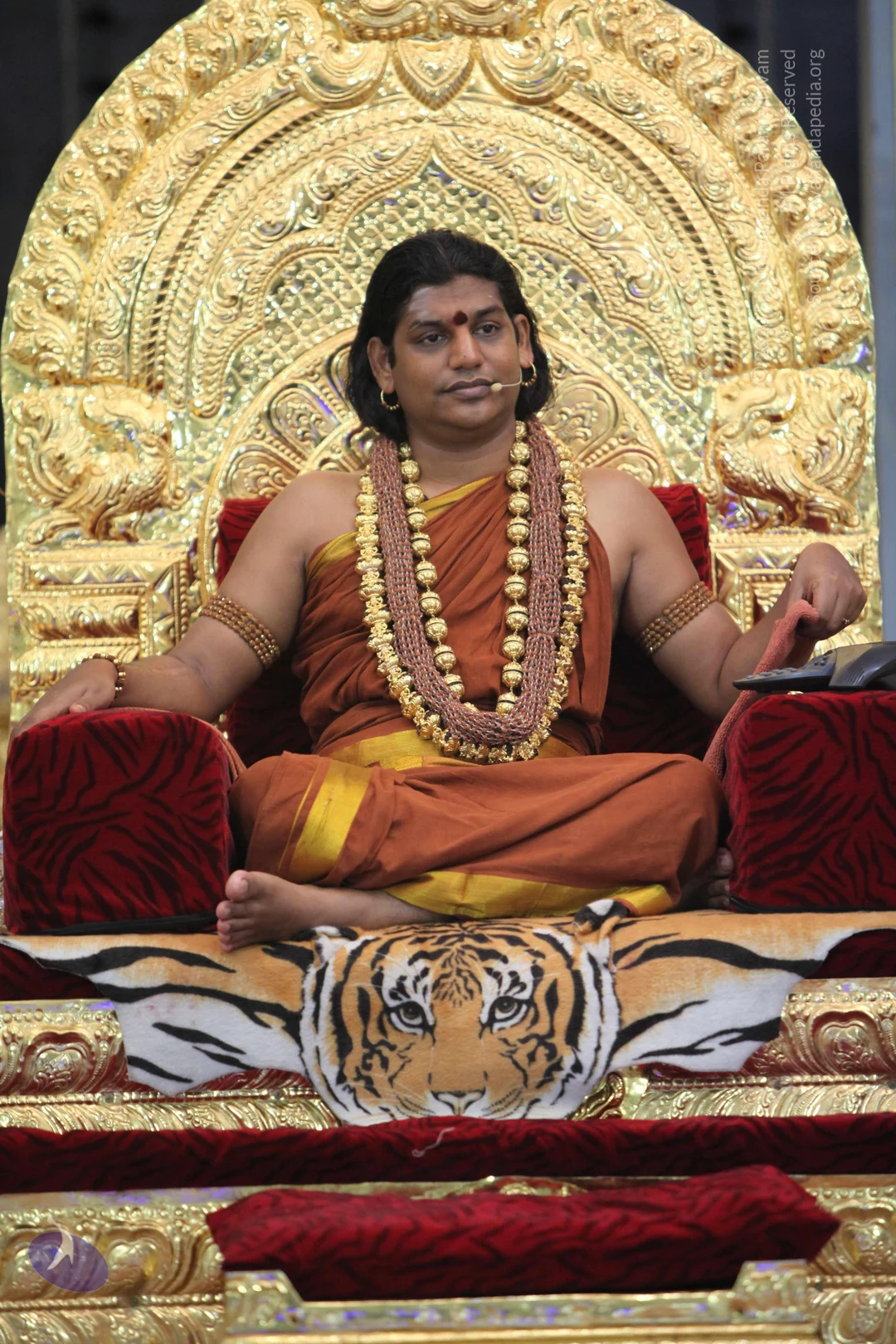
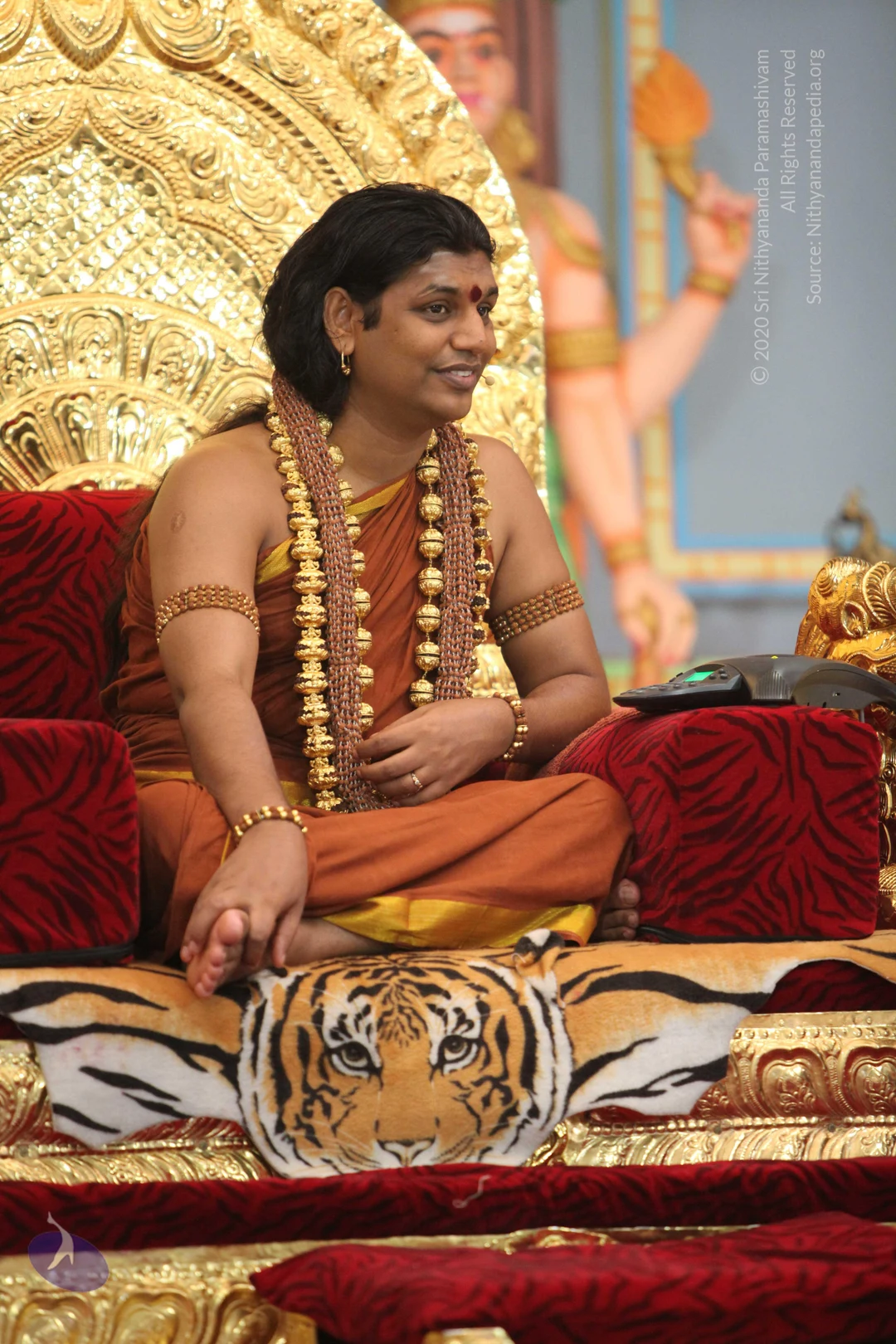
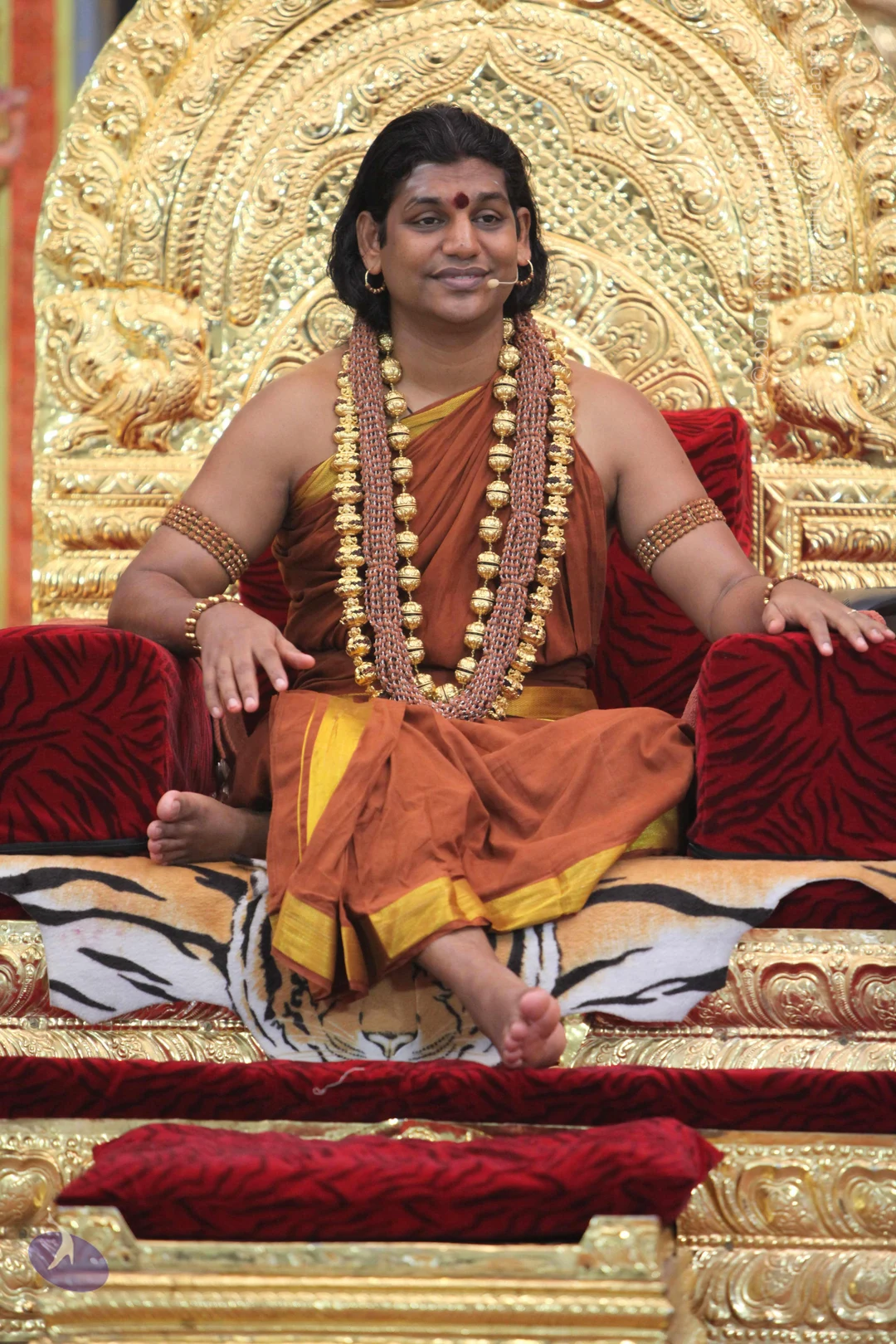
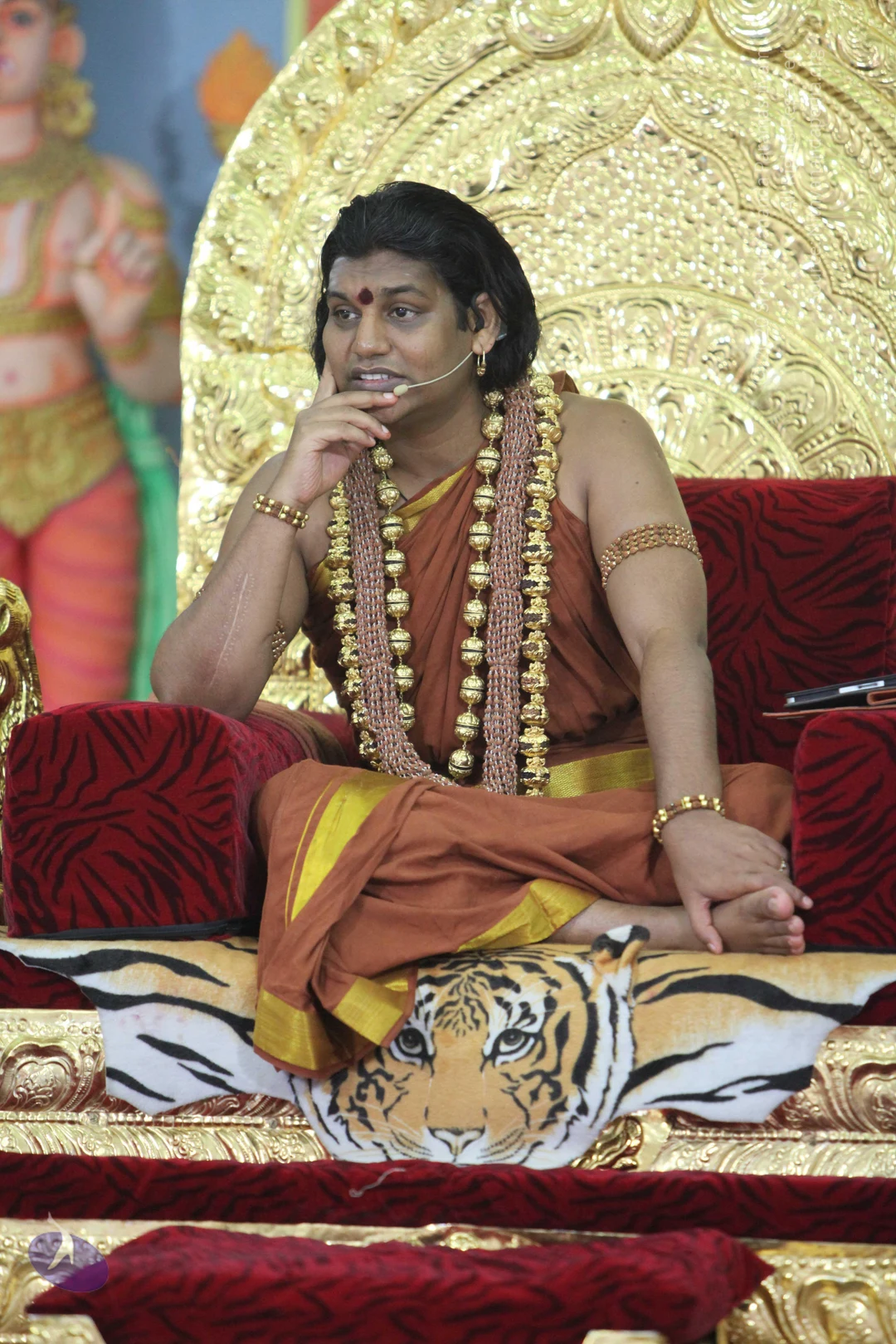
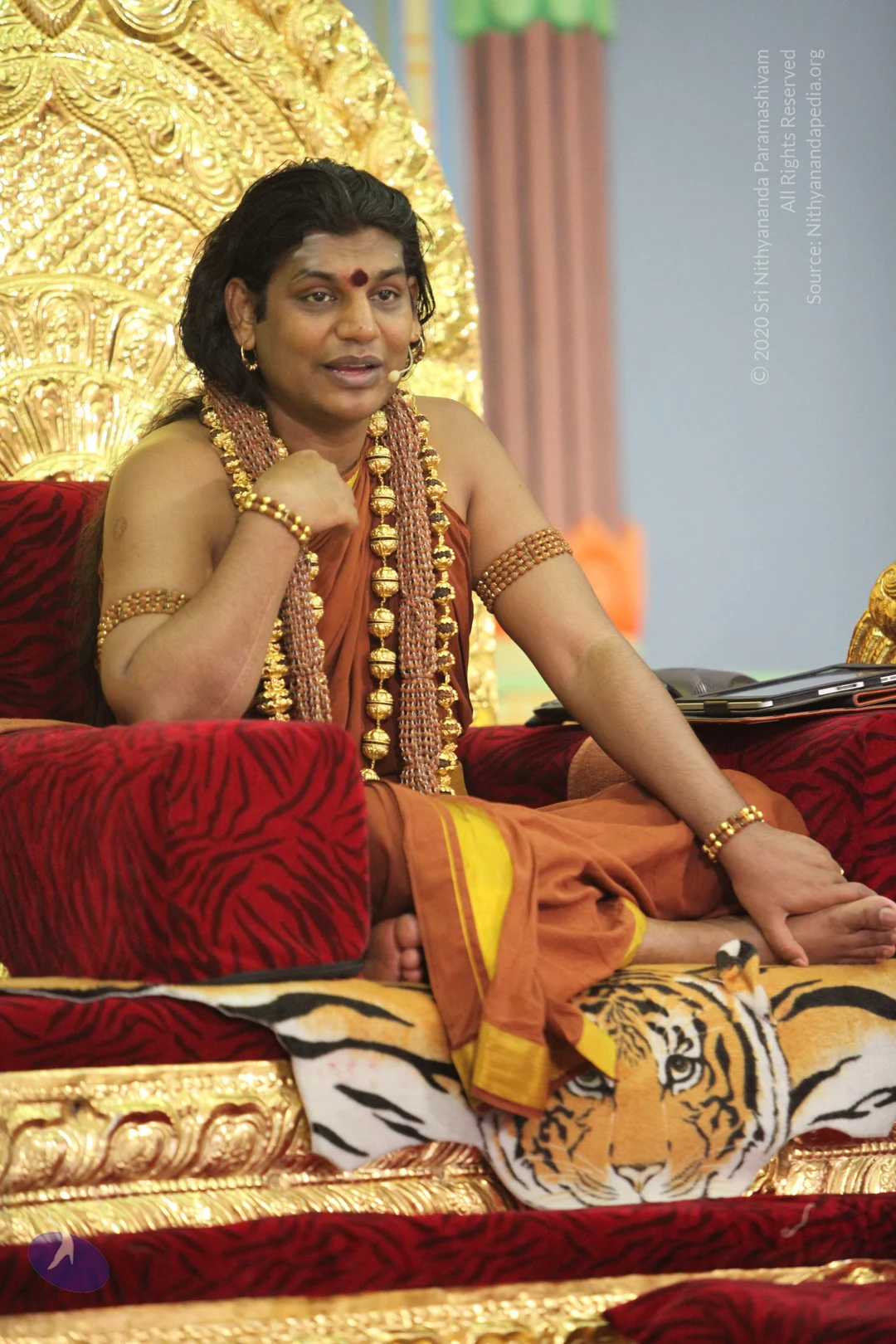
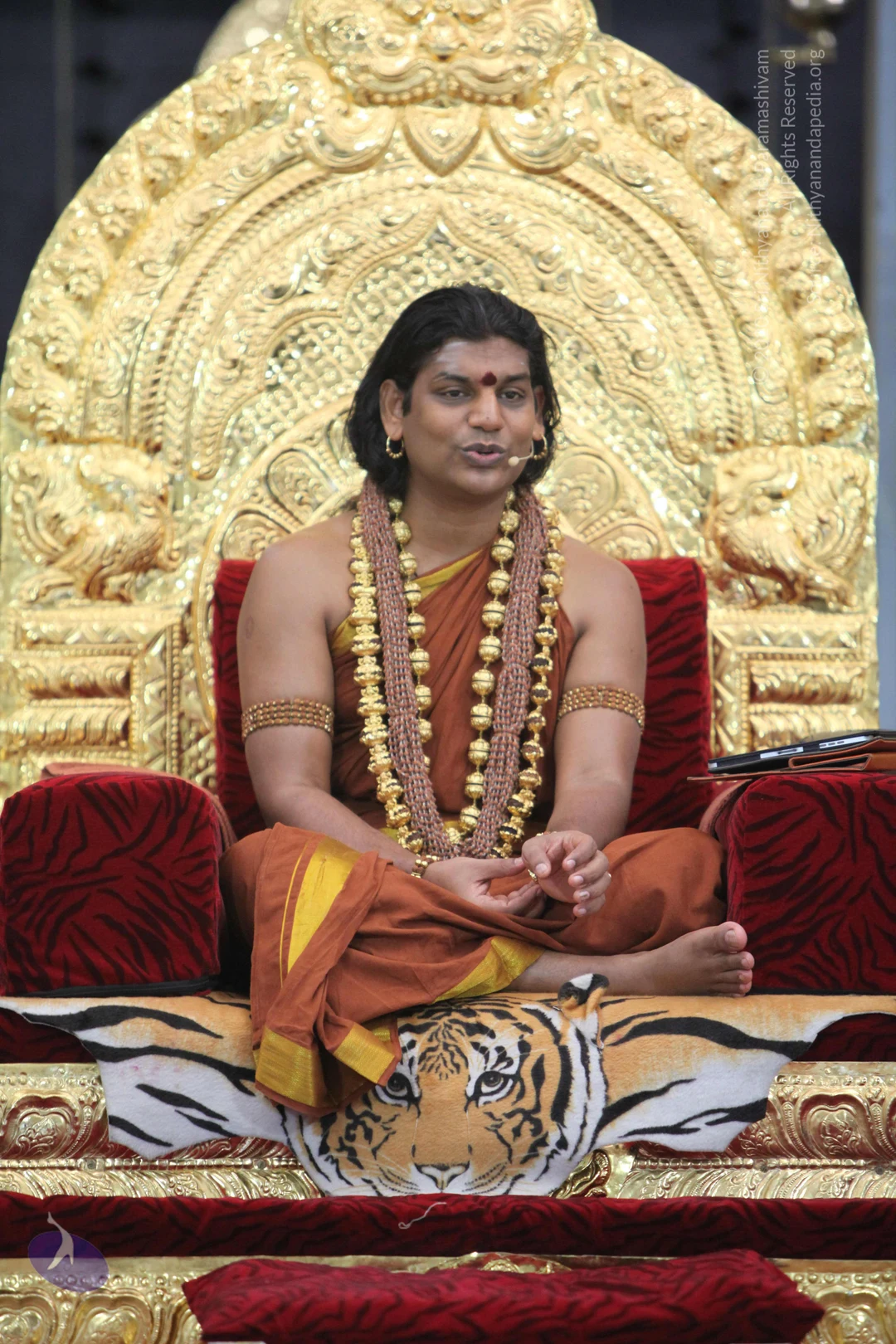
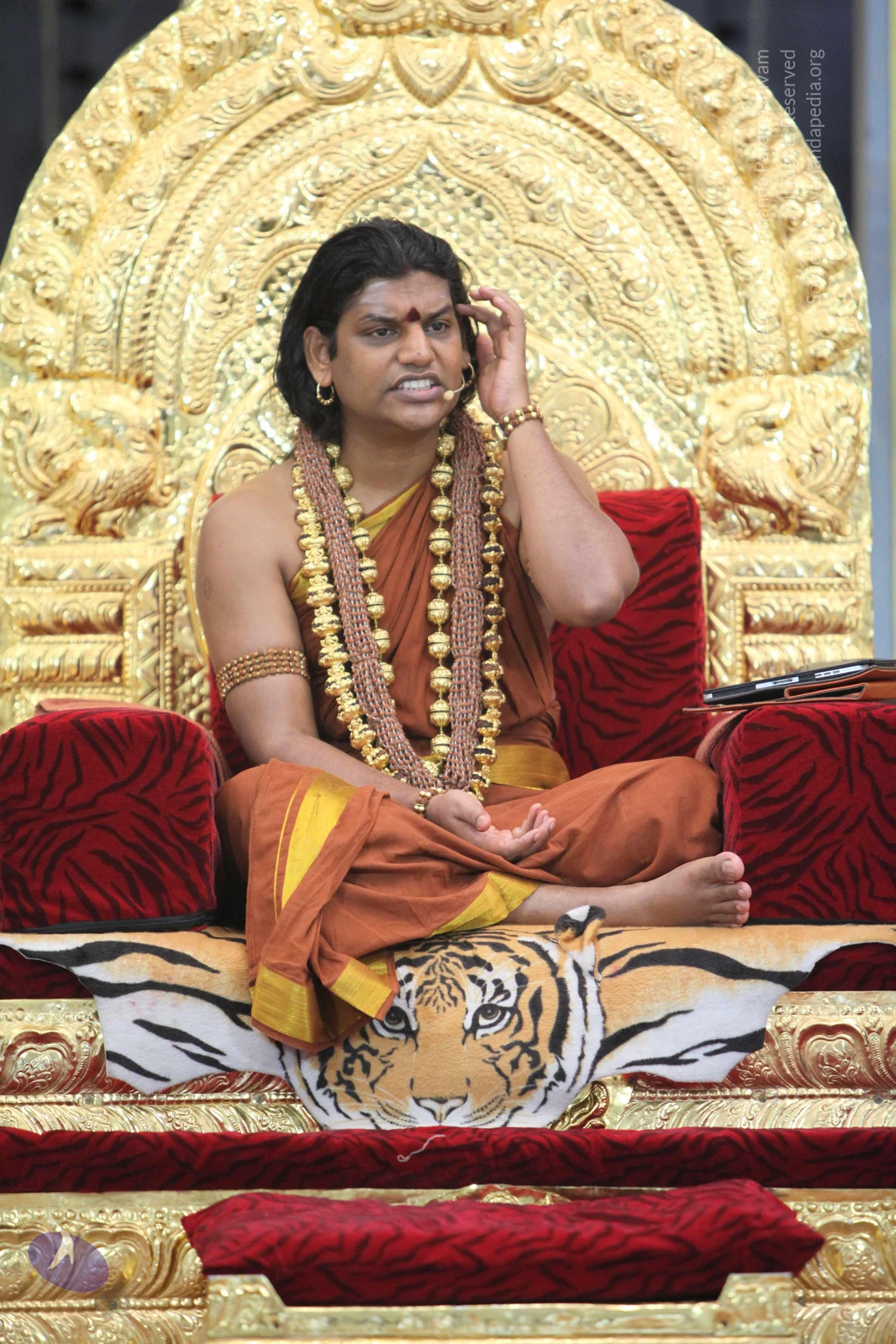
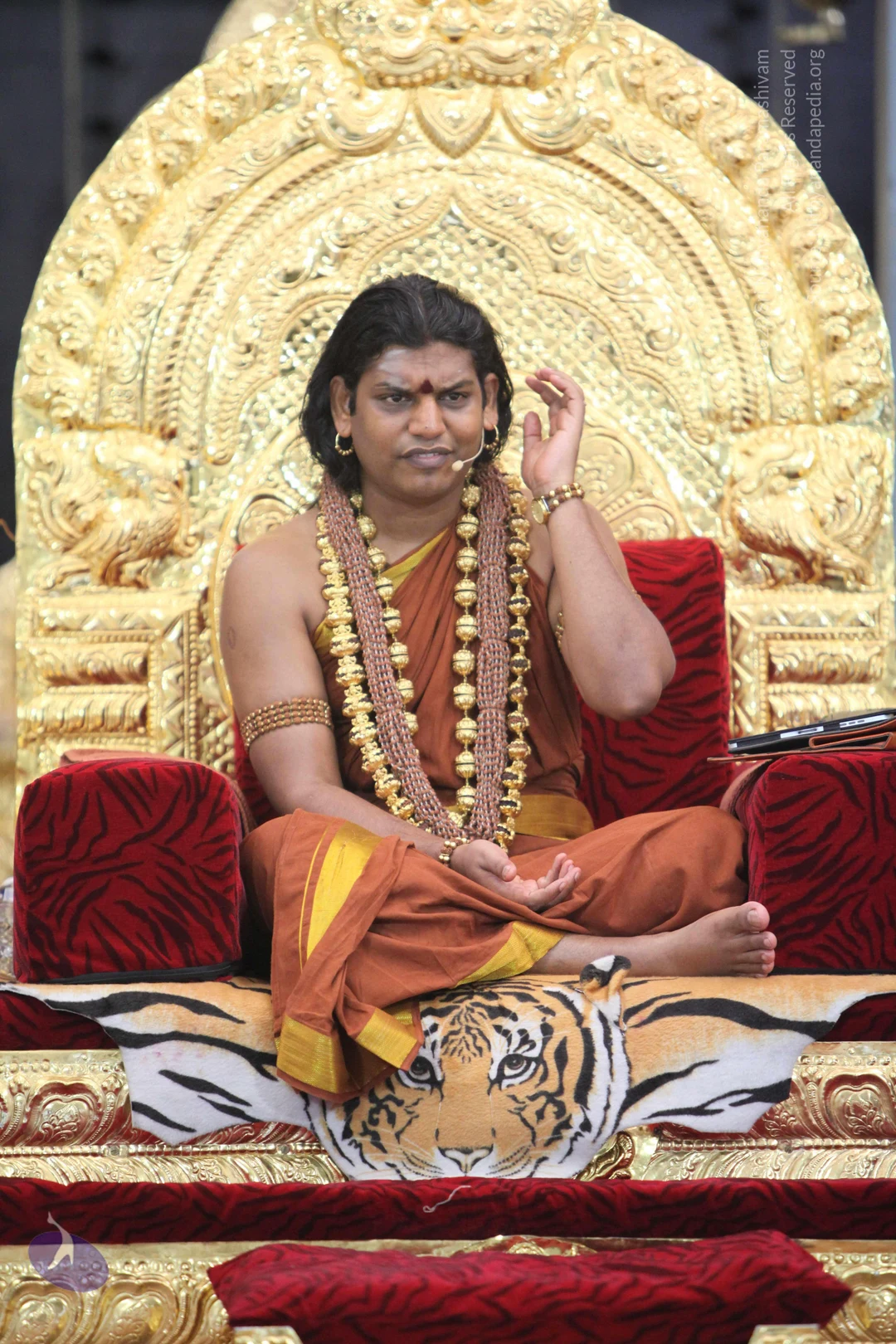
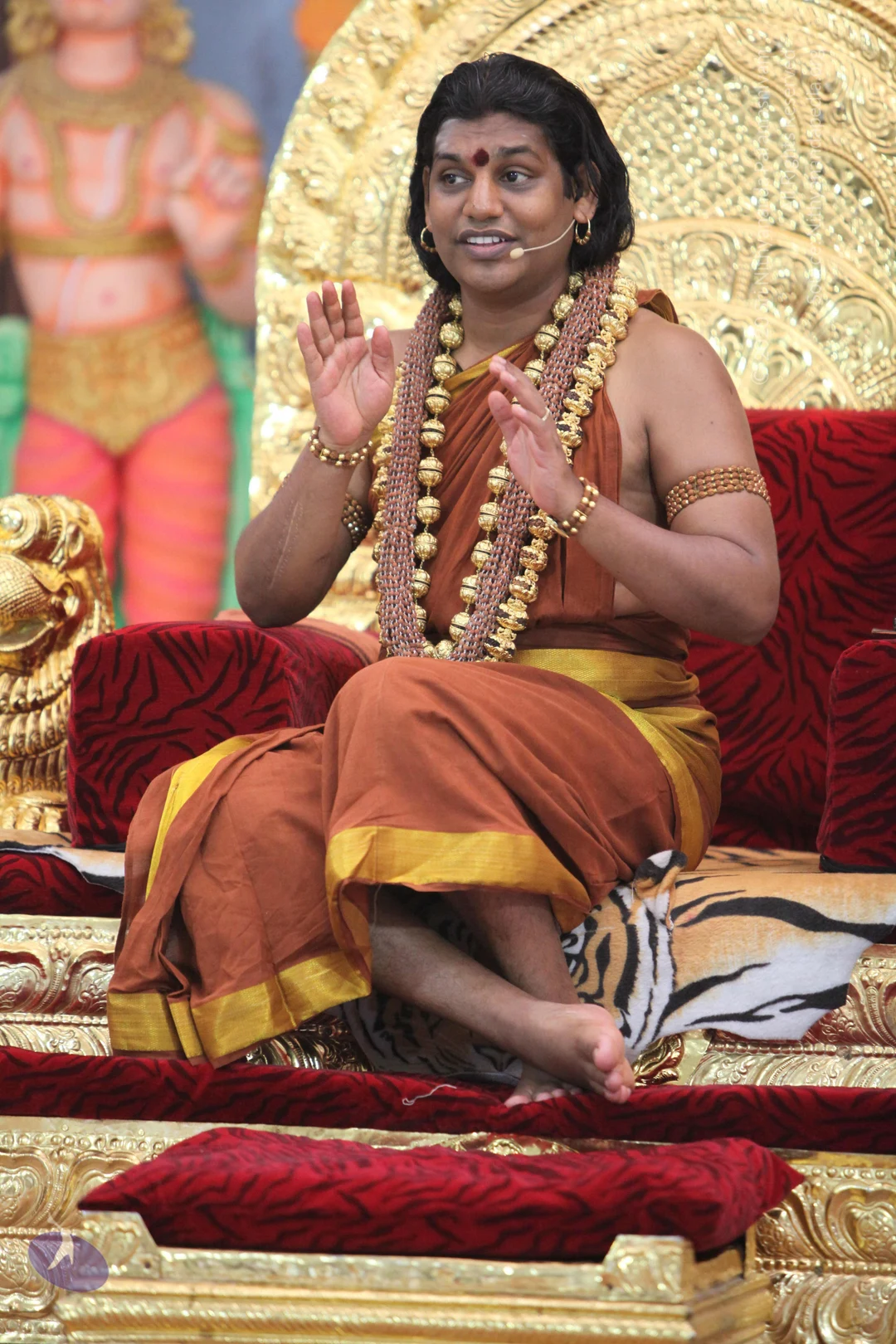
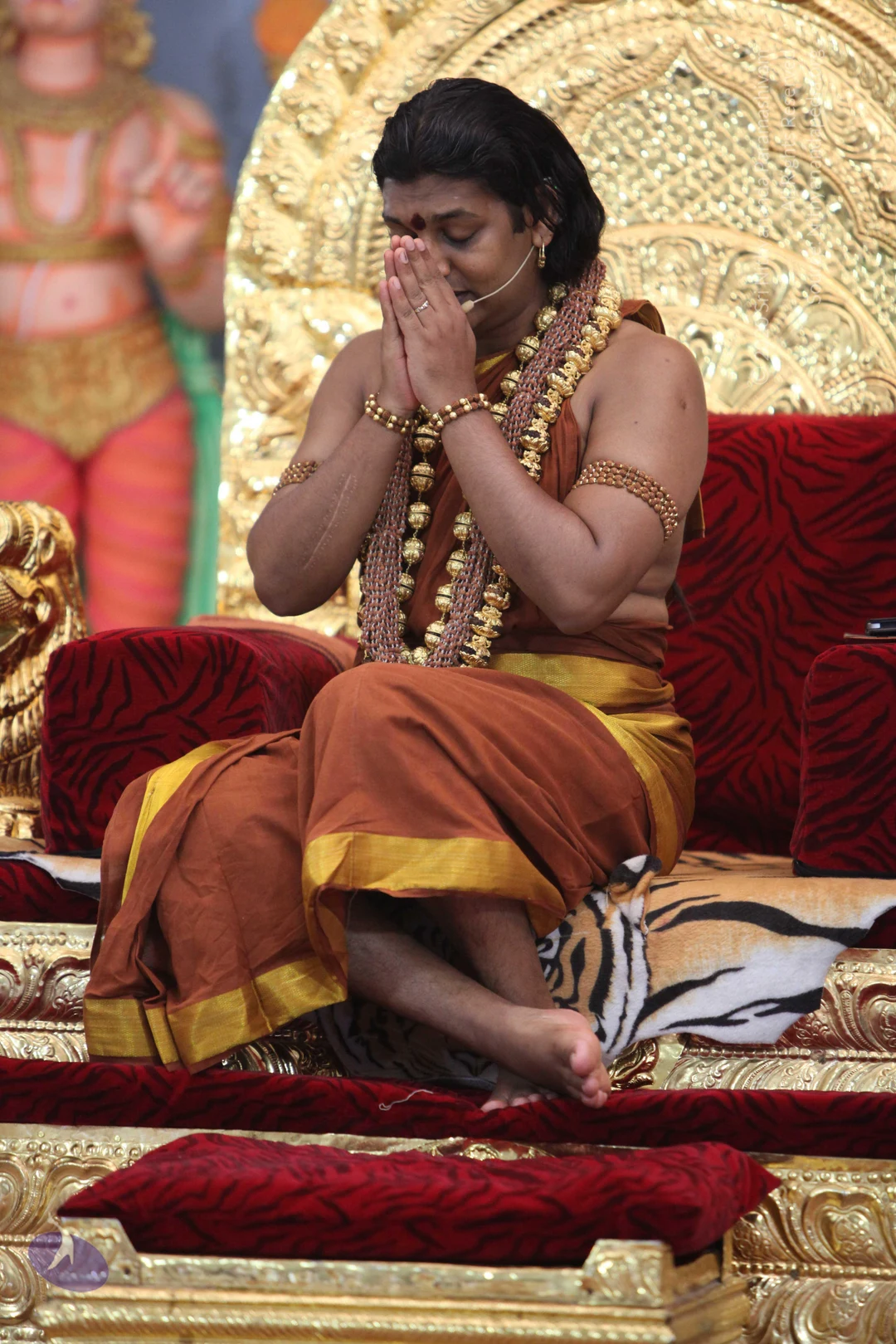
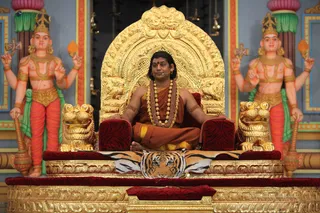
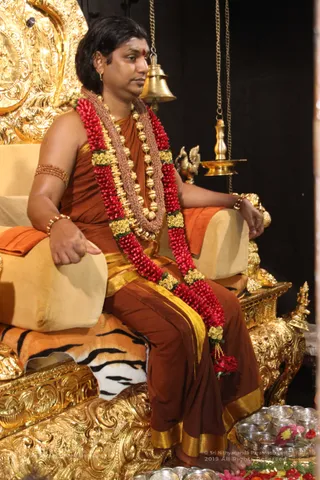
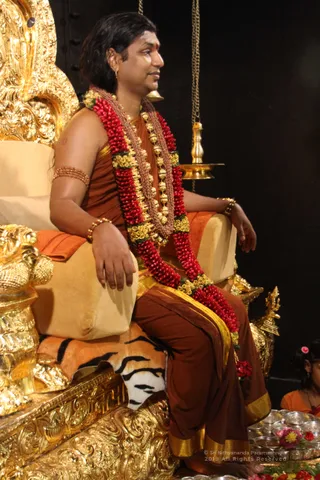
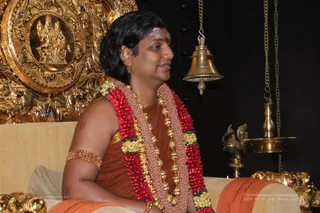
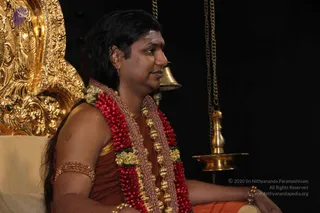
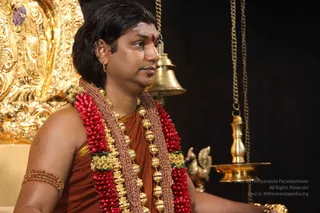
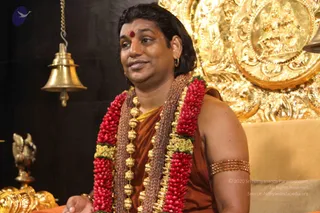
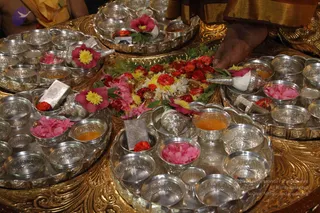
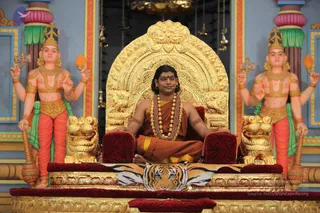
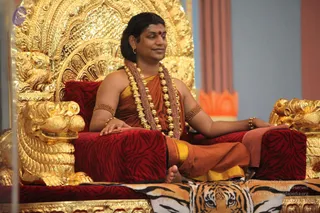
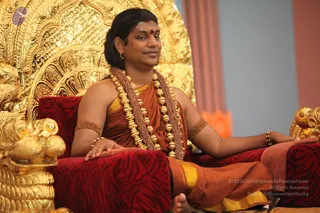
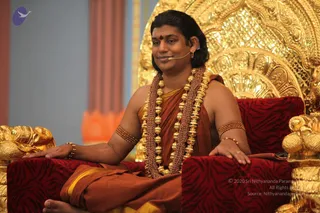
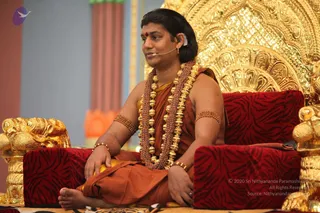
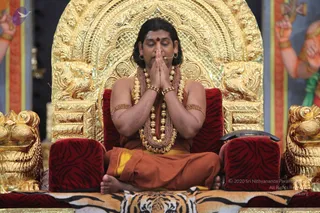
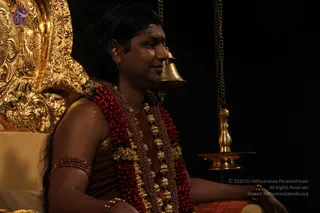
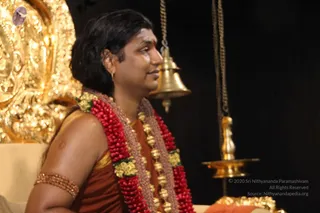
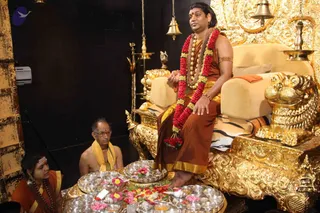
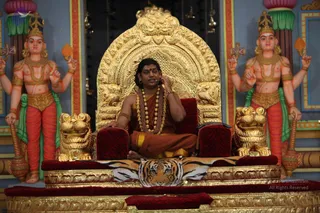
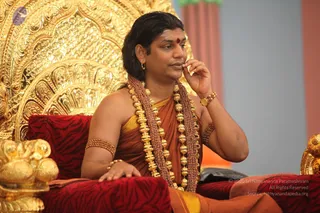
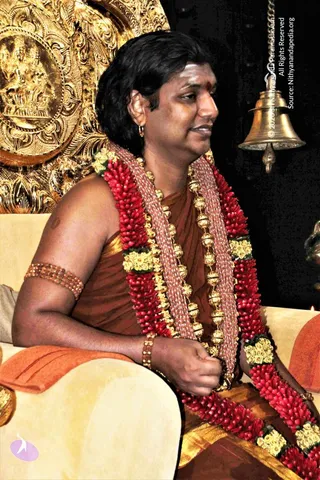
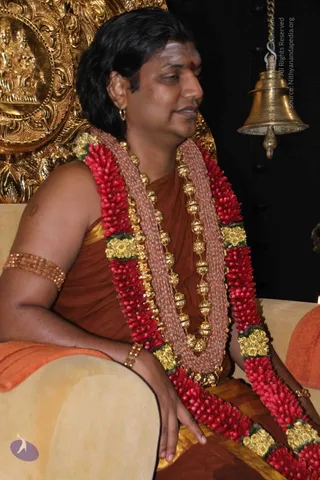
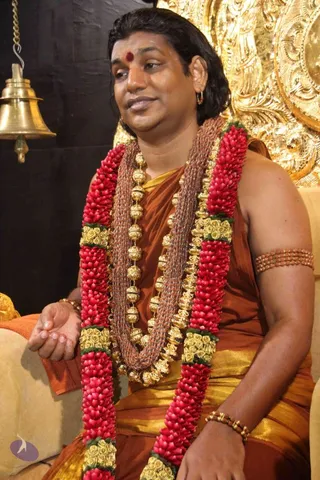
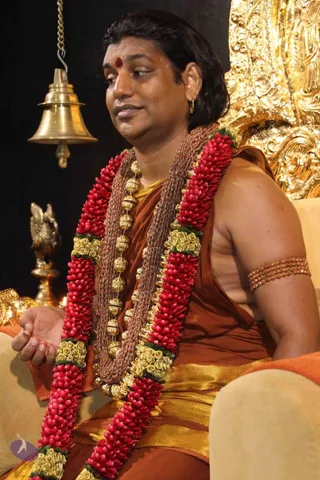
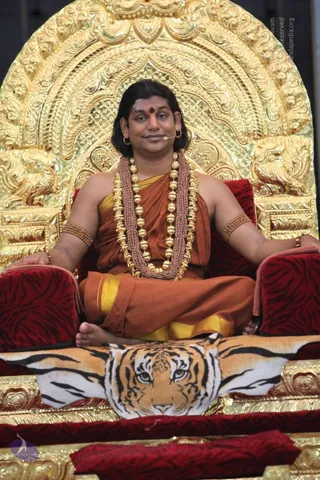
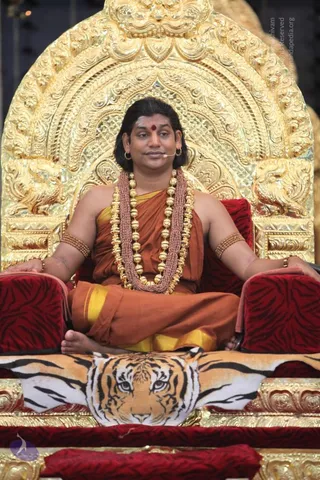
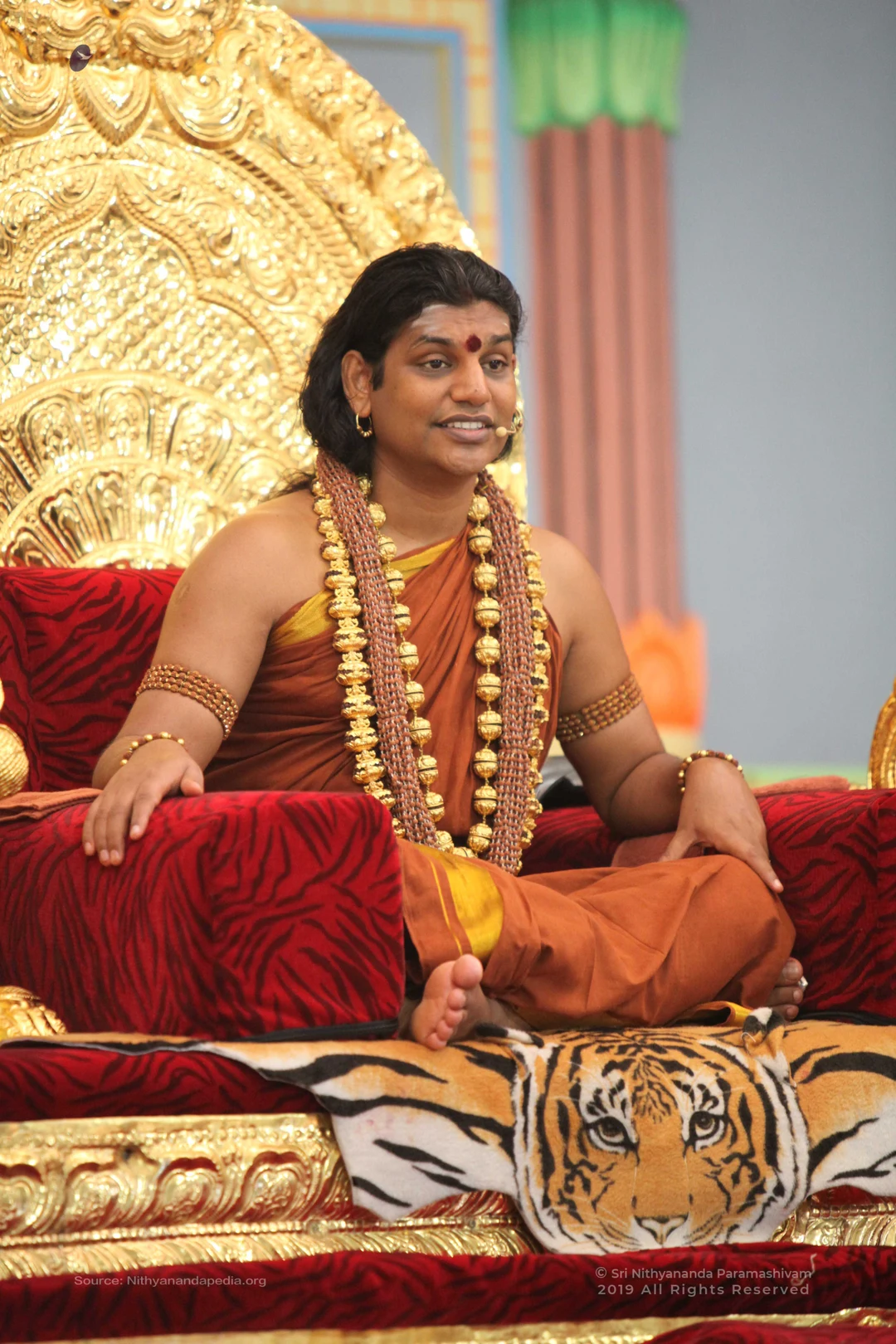
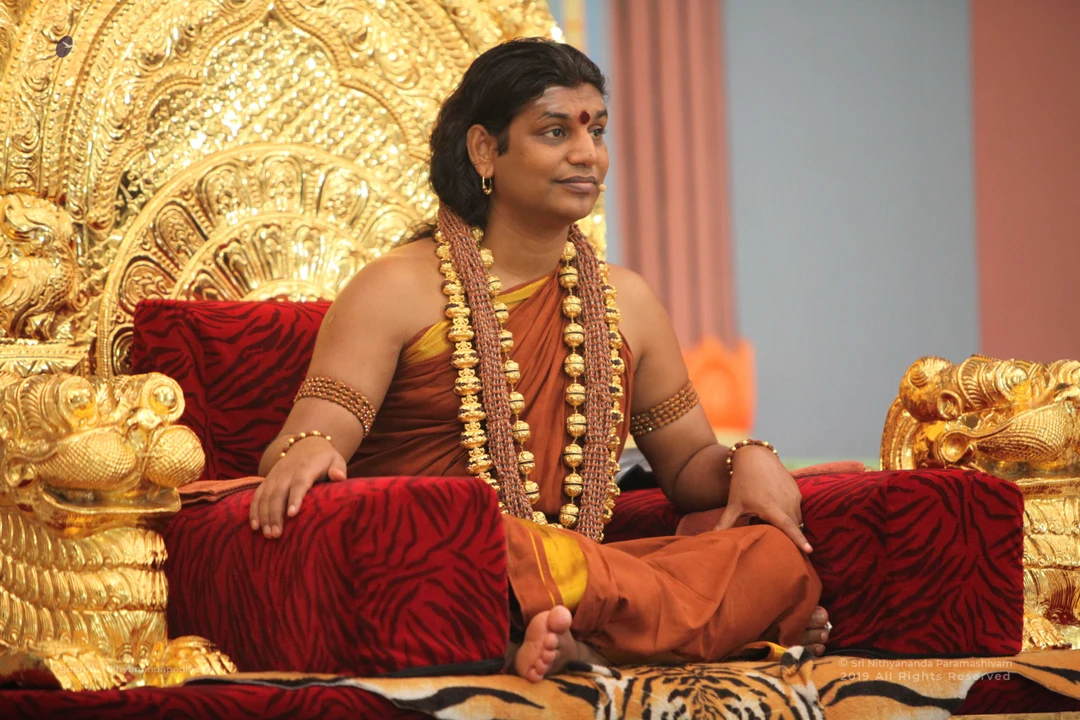
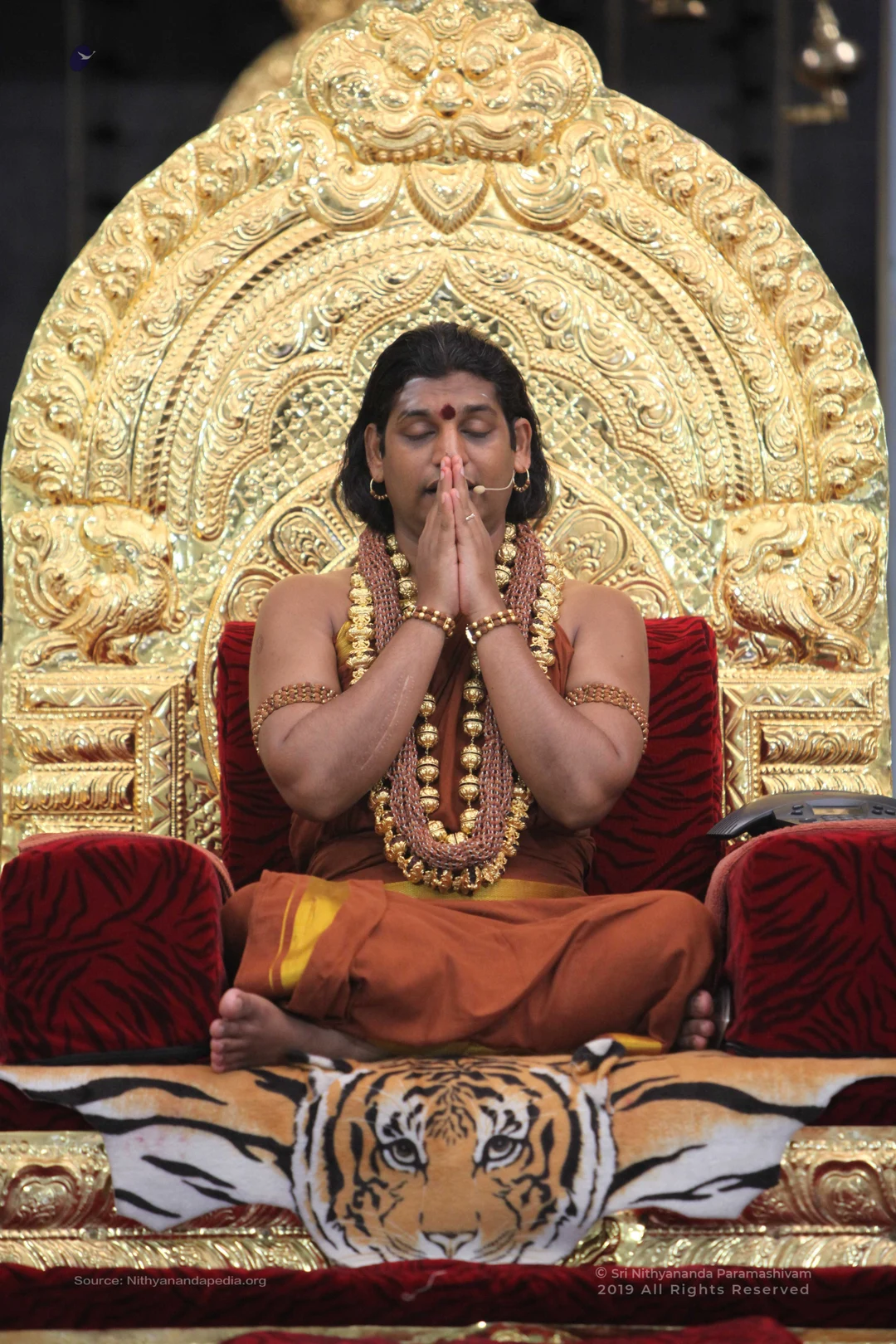
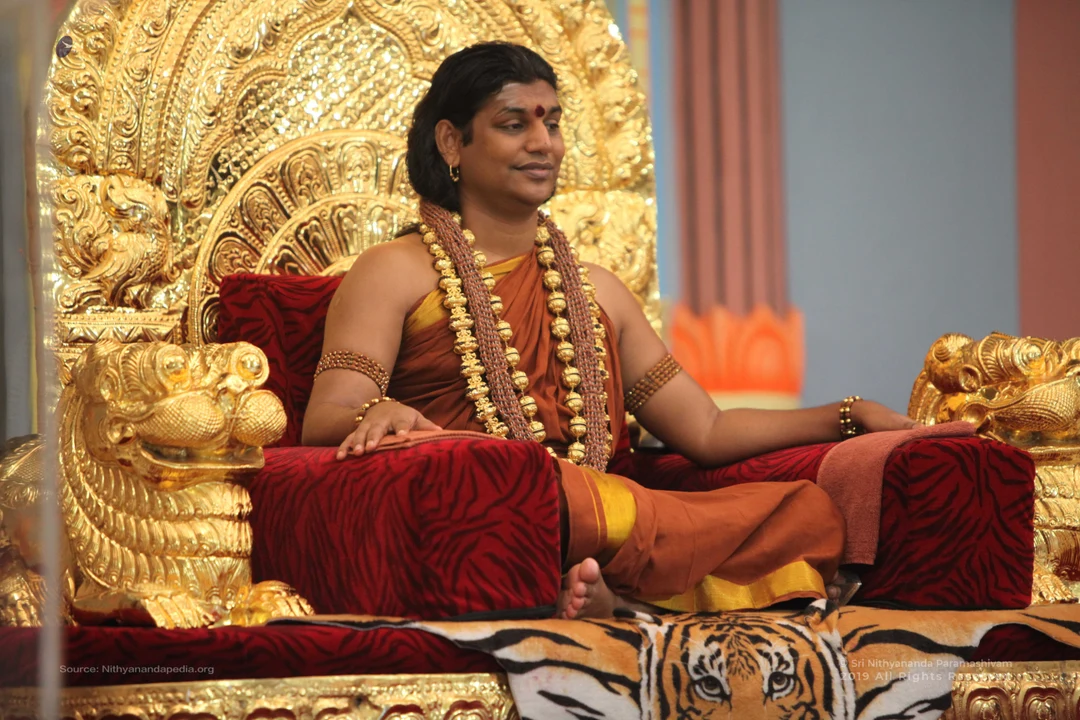
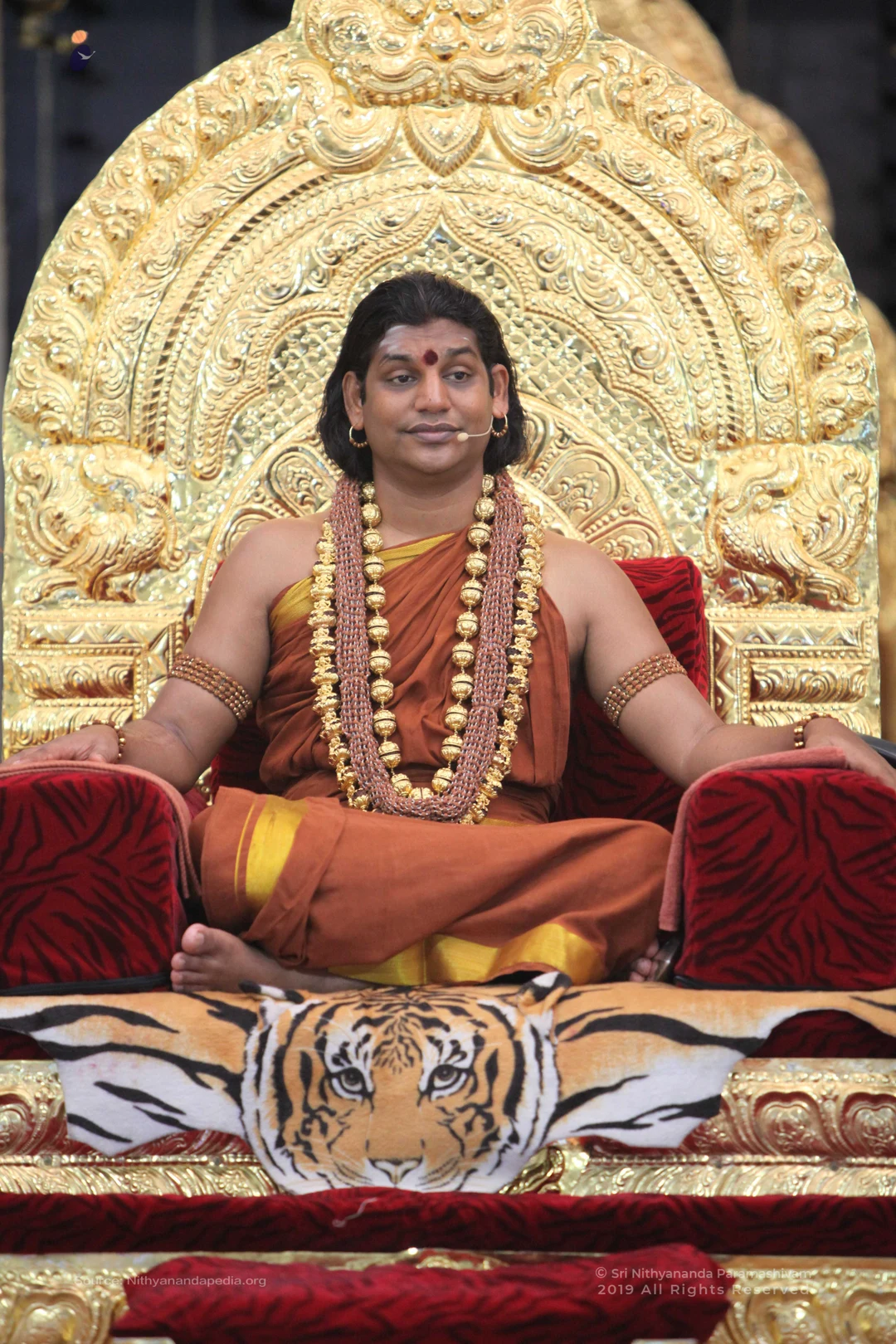
A seated man in an orange-saffron dhoti and shawl with a gold-yellow border sits cross-legged on a red and black zebra-striped velvet throne cushion, placed over a tiger-face rug. He wears long layered gold bead necklaces with rudraksha-style strands, gold armlets, beaded bracelets and a ring, with a red kumkum mark on his forehead. He has long dark hair swept back and looks to his right with a slight smile. Behind him is a large ornate gold throne backrest and a painted deity murti with a raised arm holding a staff. A small conference microphone sits on the armrest. Appearance-based candidate: Swamiji (probable), seated on a throne in saffron clothing with long hair, ornate gold necklaces and rudraksha-style beads.A smiling man sits cross-legged on a red and black striped cushioned seat in front of an ornate gold throne with a carved lion-head armrest. He wears an orange-saffron dhoti and shawl, bare-shouldered, with long swept-back dark hair, a red bindi, gold earrings, a headset microphone, a multi-strand gold and rudraksha-style bead necklace, and gold armlets. A tiger-striped cloth covers the floor beside him. a person is seated, speaking during a satsang setting.A man with long swept-back dark hair and a red bindi sits on a cream upholstered chair in front of a gold embossed wall panel. He wears an orange-brown robe over a gold-trimmed garment, a long layered garland of red flowers and gold-toned beads, a rudraksha-style mala, a gold armband and a gold necklace. His right hand is raised in a gesture while he speaks. Behind him hang a brass bell and a brass oil lamp on chains, with a gold ornamental object on the left. Swamiji (probable): long swept-back hair, saffron-orange robe, rudraksha mala and ceremonial gold necklace, seated as a speaker during a satsang.

June 03 2013

Original wiki page
Contents

Title:

Supreme Pontiff of Hinduism HDH Bhagavan Nithyananda Paramashivam

Description

On this Day Supreme Pontiff of Hinduism HDH Bhagavan Nithyananda Paramashivam Delivered a Satsang with the title 'Collective Responsibility of Living the Four Principles'

Link to Video:

VideoAudio

Transcript

0:20 Nithyanandeshwara Samaarambhaam Nithyanandeshwari Madhyamaam |
Asmath Aachaarya Paryanthaam
Vandhey Guru Paramparaam ||


I welcome you all with my love and respects. I welcome all the devotees, disciples, samajis, satsangis sitting with us around the world.

Today I will expand on the COLLECTIVE RESPONSIBILITY OF LIVING THESE FOUR PRINCIPLES. Please understand, listen, I request all of you to come to the space of listening.
The Collective Responsibility; when you feel you are responsible for the whole group, you become part of Collective Responsible team.

Listen. Whenever you think, ‘each one is responsible for their life, I am responsible for mine’, you will not experience Collective Responsibility in others’ life and you will not have the benefit of Collective Responsibility, you will neither understand what is Collective Responsibility. Get it!  I will expand on this concept of Collective Responsibility from various dimensions. Understand. In teamwork, the word ‘Collective Responsibility’ means everyone has to be responsible. In the Cosmos, the word ‘Collective Responsibility’ means the Whole is responsible. Get this word rightly. 
Listen. Come to the space of listening.
When you think everyone is responsible, I tell you, no one will be responsible. When you think you are responsible for everyone’s responsibility, everyone will respond with so much of responsibility. Responsibility is a spontaneous possibility. 
Listen. Whether it is your health or wealth or relationships or life, anywhere you are feeling powerless and you want to become powerful, anything, any situation it may be. Today morning a very strange situation: one person, one family who did Pada Puja, she came and asked me that, ‘I want to quickly leave the body peacefully.’ Usually people only come and ask for long life. She asked, ‘I should leave the body quickly, peacefully!’ So, anything can be your situation, anything can be your need. I tell you, anything can be your need or the situation, the decision to take the Responsibility, decision you are responsible, makes everything possible.   5:24 I tell you, I go to the step further and I tell you, you don’t even need to work; even if you just cognize you are responsible, things happen! Even if you cognize you are responsible, the cognition of Responsibility rolls life.

Most of the time I only cognize my Responsibility, nothing else need to be done; simply things happen! I give you one of the important secret today. Even when somebody comes to me for healing or expecting some miraculous support, help, whether in the health or the family business or a job or a profession, some field, when they expect me to intervene – the divine intervention – and cause a miracle, I tell you, I do only one thing; I do not do any japa or mantra or meditation or create a space, nothing; I just feel I am responsible for him! That’s all. Immediately I see the responsibility cognition opens a door, cosmic energy just enters in, supports, causes the miracle, makes the divine intervention happen! When you feel you are responsible, the divine intervention, the divine intervention, miracles. When you decide you are responsible, the very cognition that you are responsible makes society, the whole society to stand by you, the whole society to live by you. Not just human society, I tell you, all the extraordinary powers of the Cosmos supports you! People ask, ‘How to see if we are authentically feeling responsibility? How do we differentiate that with inauthenticity and laziness of just feeling and not doing?’

Listen. Don’t carry so much of self-doubt. Even if you start with inauthentic, lazy, only feeling responsible but not doing anything, that feeling cannot go as a dead idea in your brain. Any feeling, any thought will not be dead. Any feeling, any idea will not be dead.   Please listen. Even for the sake of faking, if you just every day tell, ‘I will be integrated. I will be integrated. I will be integrated. I declare from this moment completion. I declare I will be in Integrity from today’, even if you do it for faking, you do not know the power of these words. You will see, in a month or two, the whole, the whole, your whole being supports you and the Cosmos supports you. Your whole being supports you and the Cosmos supports you.   So, even for the sake of to fake it, even for that purpose if you start living, if you start thinking, if you start feeling, if you start cognizing Responsibility, I tell you, you need to know one thing; it is not that your whole personality is broken pieces, there is a bit in your control. If you are a 100 unit, may be 60 unit is broken to 5 unit, 10 unit, 20 unit like that. But at least 20 to 30 unit is in your hand. When you cognize Responsibility, that 20 unit will start becoming responsible.

11:18 You need to know, it is just like Indian Election. If one lakh is the total vote, you don’t need to get 50,000 for winning, because there will be 200 fellows competing. All of them will have 500, 600. Even if you get 10,000, you will be winning sometime. Less than 10% of the vote, you will be a winner! Because, the votes are completely divided. 100 fellows standing in the election, each one of them will be having 2,000, 3,000, 4,000, 5,000 . The whole vote total count is one lakh. You may get only 10,000, 10% only, but you will be the winner! I tell you, the same way, much of your part may be very disintegrated in a different, different, different way. But even that integrated part, when that cognizes Responsibility, you will see that part will start taking over your whole being. So, even cognizing Responsibility, deciding, I will operate from the space ‘I am responsible’, itself is a great awakening, fulfillment, completion.   (HINDI) 15:01 Why we don’t feel responsible? It is incompletions constantly makes you feel irresponsible. First, decide to move towards completion. Decide to move towards completion. It is your incompletion that is responsible for you not feeling responsible. If you start becoming responsible, incompletions will be healed, become complete. When you start completing with all the incompletions, you will become responsible. It is like a vicious circle. You carry so much of incompletions within you and with others; you are nothing but bunch of incompletions. If you carry so much of incompletions with others, you will never feel you are responsible for them, because you feeling you are responsible for them will come only when you have a deep love for them, when you have completion with them. I tell you, all my training happens because I feel complete with all of them, I feel responsible for them.   (HINDI)

Understand, the human-beings, when you carry incompletions with your subordinates, employees, boss, you will never be able to take Collective Responsibility; unless you feel complete. Listen, unless you feel complete, you are not going to neither feel responsible for you nor feel responsible for others. First thing every individual should do is finding your root-pattern and completing with you and completing with all the people who are involved in your life, bringing a completion.  (HINDI)
Listen. When you complete with you, when you complete with others, when you complete with the whole family, suddenly you will feel only when you take Responsibility for others you can even take Responsibility for you. When you can’t take Responsibility for others, you can’t even take Responsibility for you. I tell you, others are more closer to you than many fragmented parts of you. For example, you want to make something happen. If you take Responsibility for others, it is easy for you to convince them and make that done than convincing all parts of you and get that done! So, most of the time, you trying to take the Responsibility just for yourself without taking the Responsibility for others only leads to deeper and deeper discontentment and deeper and deeper suffering and deeper and deeper emptiness and incompletion.

(HINDI)

Why do you think people are so interested, feel teaching to others, preaching to others is so easy than preaching to themself? Because, taking Responsibility for others is easy than taking Responsibility for yourself! Others are more closer to you than you! You have gone too much away from you. I tell you, start doing the things easy first. When it comes to these four tattwas, start preaching first; then you will be able to practice easily. Start talking to people first. Discuss, discuss, discuss; I tell you, Patanjali says, ‘Yogasya prathamam dwaaram vaang nirodhaha |’. The first step in the Yoga is reduction in the speech. I tell you, with my own authority, in practicing these four tattwas first step is discussing, discussing, discussing, endlessly discussing about this four tattwas with others. Yes, reduction in the speech will come when the reduction in the thought happens. But the reduction in the thought will come only after the Integrity is practiced. Integrity will be practiced only after you start, understand, listen, only after you start discussing, discussing, discussing. Continuously discuss with others about these four tattwas. It will become reality in you.

(HINDI)

23:14 I tell you, start taking the Responsibility. Start taking the Responsibility. Continuously discuss with everyone about these four tattwas. You will see, you will see you are just able to elevate people and you are able to elevate you. When you teach others, only then many corners deep corners of you starts listening to you. When you take Responsibility for others, only then the unknown parts of you, you start taking Responsibility for it.   Your adamant son is nothing but adamant part of your ego. Your arrogant brother is nothing but the arrogant cognition you carry in you. Your controlling father is nothing but your controlling incompletions you carry. Your controlling mother is nothing but the controlling addictions you carry inside. So, everyone outside is nothing but the parts of you inside. When you can take Responsibility for them, only then you can take Responsibility for you completely. When you can’t take Responsibility for them, I tell you, you can’t convince that part of you in you.

(HINDI)

Take the Responsibility. Every character you see outside, however complicated they may be, they are nothing but the reflection of some parts of YOU. The enlightened being you see outside is the super conscious space of you inside. If you don’t have that dimension in you, even if you see an enlightened being, you will not recognize him! You will only see the gold he is wearing, not the golden being he is carrying!

(HINDI)

People who don’t listen to you outside – your subordinates, your workers, people working with you – are nothing but the reflection of your deep laziness and boredom you carry inside. If you can’t take the Responsibility for the non-listeners, you won’t take the Responsibility for the boredom you have inside. I tell you, people who take Responsibility for those who don’t listen to them outside will never fall prey to the boredom which is inside. I have always seen in my ashram, the Swamis who don’t take Responsibility for their subordinates who don’t listen to them, they will carry so much of boredom in their life, tiredness and laziness in their life, because non-listeners outside are nothing but reflection of your own boredom and tiredness. Every conflict you face outside is a reflection of a conflict which is inside. Every powerlessness you face outside is nothing but the contradiction, conflict which is residing inside. Anything you see outside, understand, there is some part of you inside about which you need to take the Responsibility.

(HINDI)

29:09 I can see very clearly, I am just trying to verbalize it; Your eternally contradicting, conflicting spouse is nothing but the reflection of your eternal conflict between the head and the heart! Your controlling mother-in-law is nothing but the reflection of your controlling, addictive patterns you carry inside. If you can’t take the Responsibility for your controlling mother-in-law, you can’t take the Responsibility for your controlling addictive patterns and solve it. Feeling powerless in front of your mother-in-law and feeling powerless in front of your controlling addictive patterns are one and the same; one and the same. When you look, you will understand. Continuously complete with all the patterns you are carrying. Whether it is addictive patterns inside or contradicting, conflicting patterns inside or the conflicts, powerlessness you feel outside; inside or outside, go on solving, solving, solving, completing, completing, completing. Completing with everything, complete with everything. I tell you, completing with everything will make you feel responsible for your inside and outside. When you feel responsible for others, that is when the Collective Responsibility starts. Listen. Only when you feel responsible for everyone, the space of Collective Responsibility starts around you.

(HINDI)

Listen. When you are ready to take the Responsibility even for the flowing river, you will be able to take the Responsibility for the blood flow in you. If you are ready to take the Responsibility for the Nature outside, there will be nothing uncontrollable inside for you. You will be able to take Responsibility for all the extraordinary powers inside. It is Integrity, Authenticity, Responsibility and Enriching, all the four put together is called Samyama. Samyama is the tool, weapon to harvest extraordinary powers.  This Guru Poornima we will be launching, we are inaugurating a Samyama Hospital in Bidadi. On different Samyamas, Kriyas, for different Samyamas, Kriyas, practices, we will be having a Hospital here.

(HINDI)

Listen. Using the power of Samyama, you can easily attain Ashta Mahasiddhis, you can bring health to you, wealth to your life, joy to your life, bliss to your life. You can do everything. You can do everything. Anything can be achieved just through the power of Samyama! I am creating an Academy and Hospital just for that. Just for that. (HINDI) 36:00

Photos
https://nithyananda.org/sites/default/files/photo-gallery/IMG_3772-2-06-13-41.JPG?1370293129

Photos Of The Day:
Rudra-Abhishekam-Swamiji

PratyakshaPadaPuja

NithyaSatsang_Swamiji

SarvaDarshan

Photos Of The Day:
RudraAbhishekam-Swamiji

PratyakshaPadaPuja

NithyaSatsang-Swamiji

SarvaDarshan

Photos Of The Day:
RudraAbhishekam-Swamiji

NithyaSatsang-Swamiji

Photos from this day
View all 348 photos
Photos
6 photosSource gallery
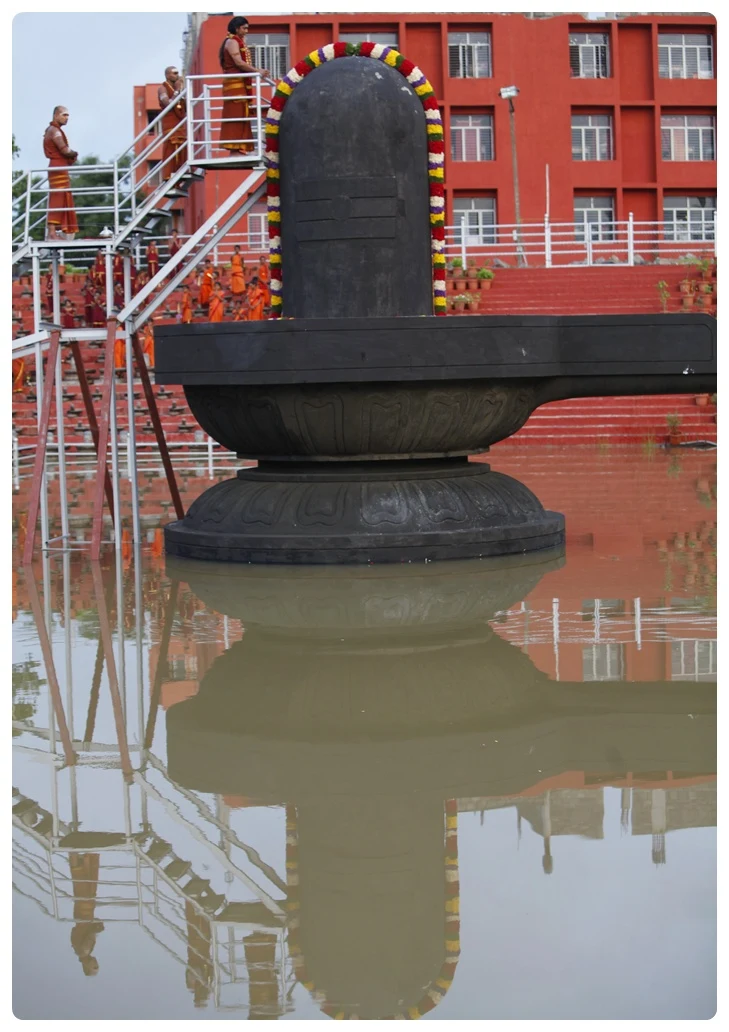
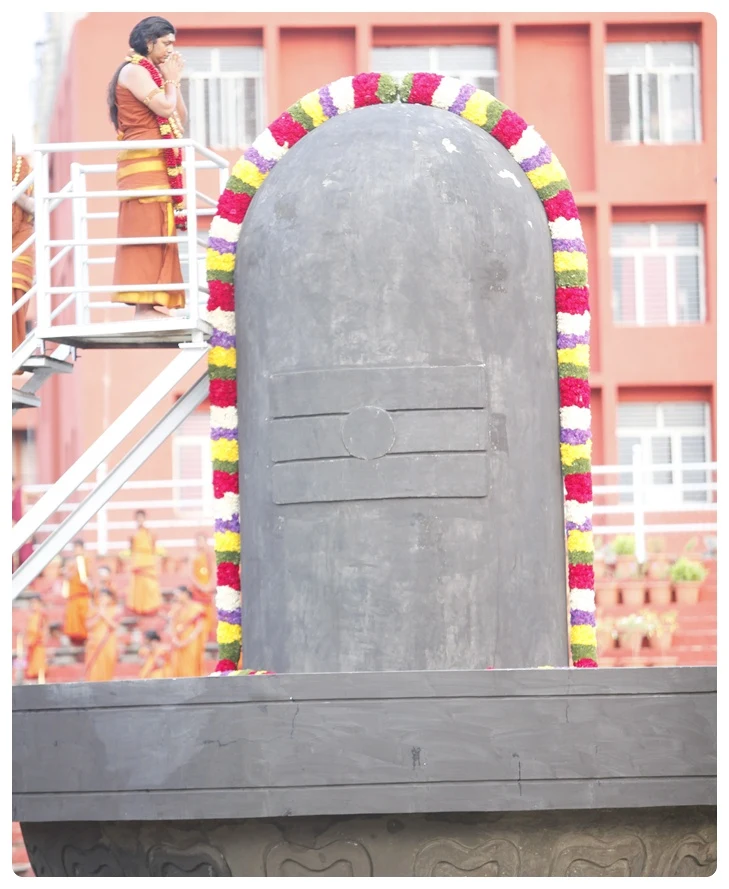
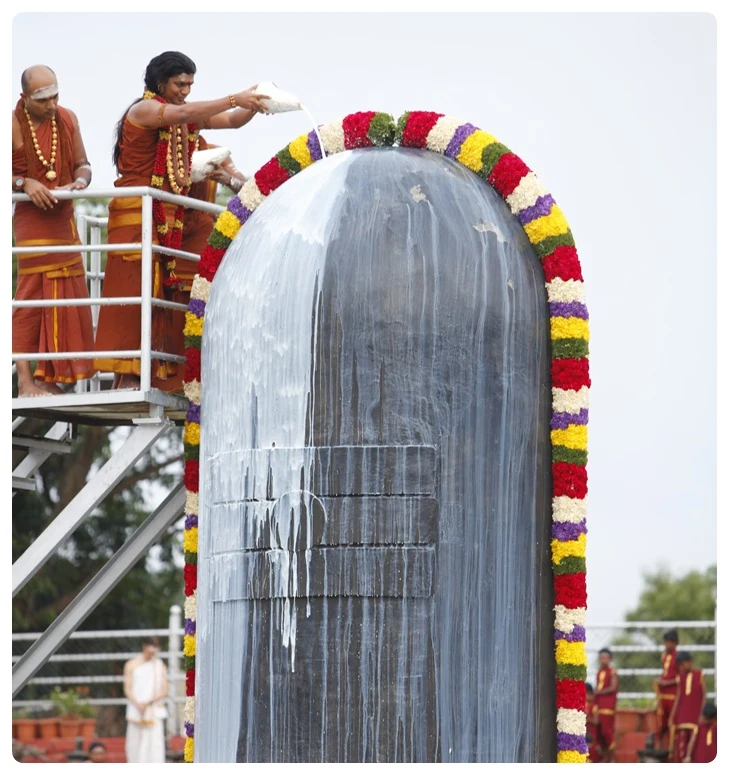
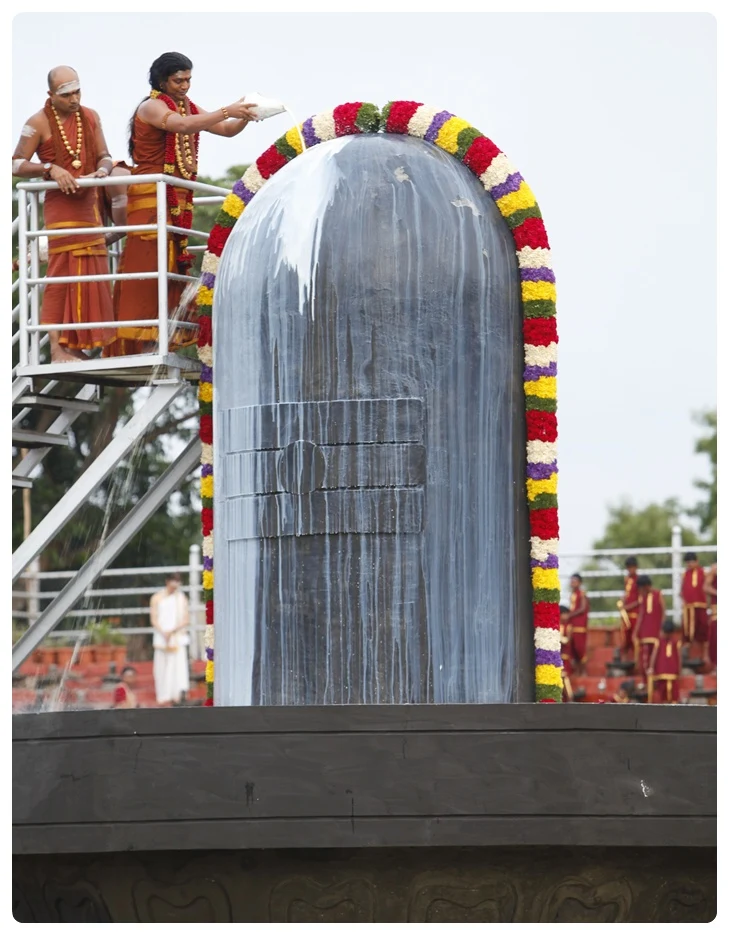
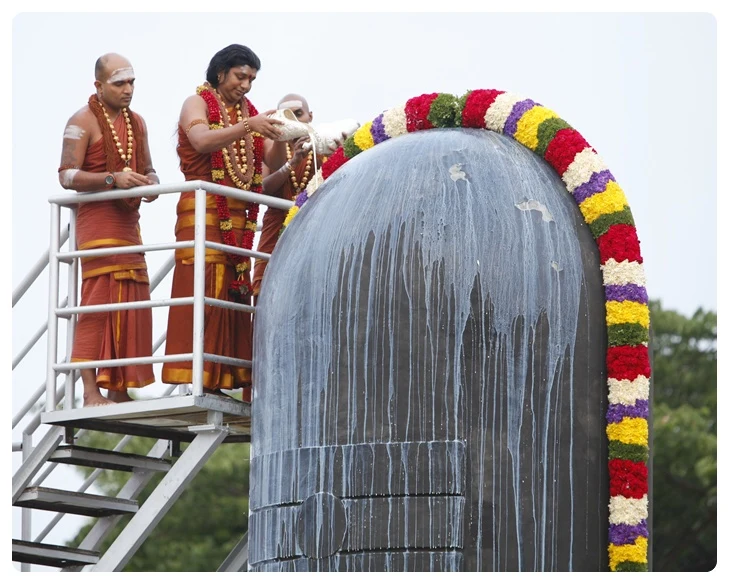
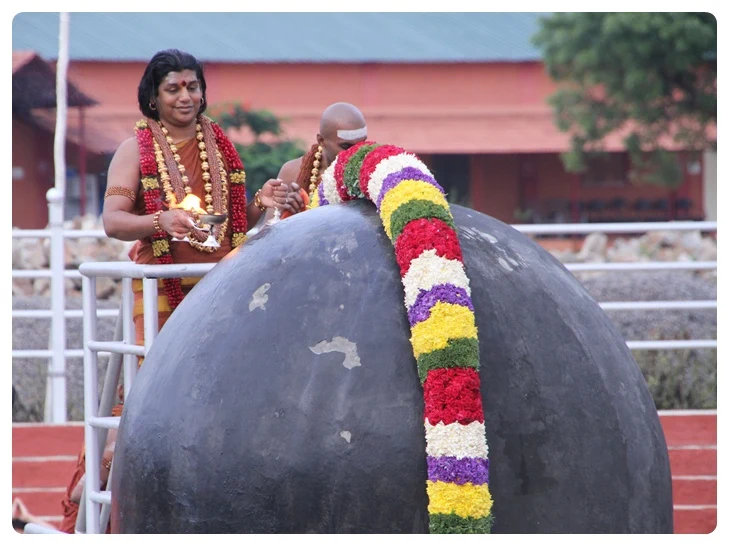
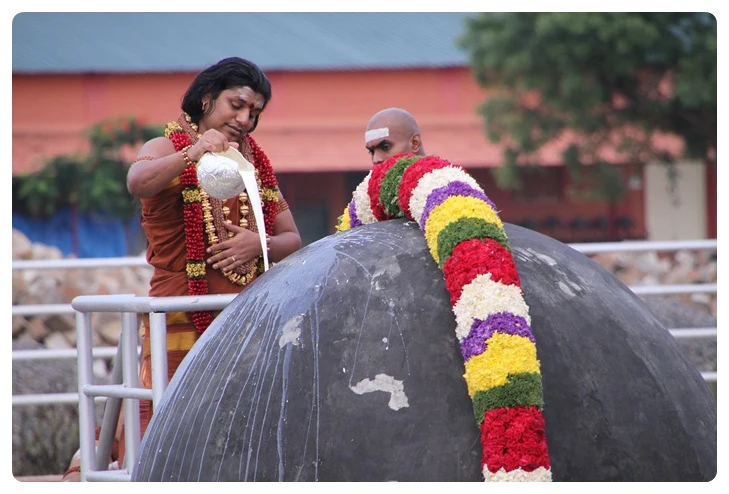
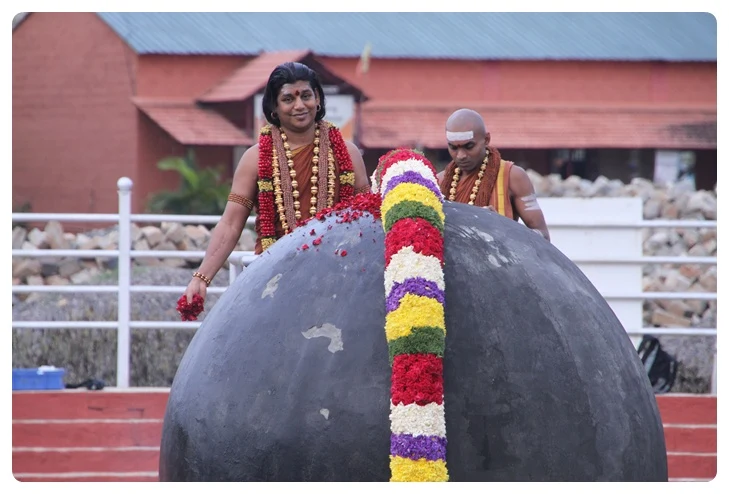
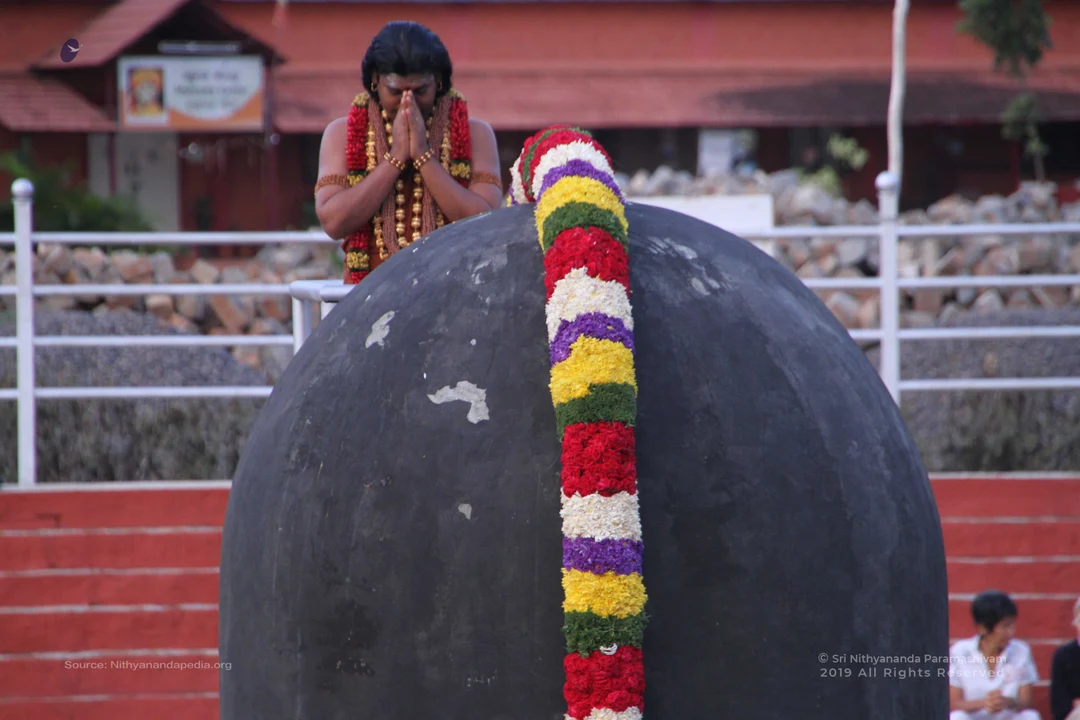
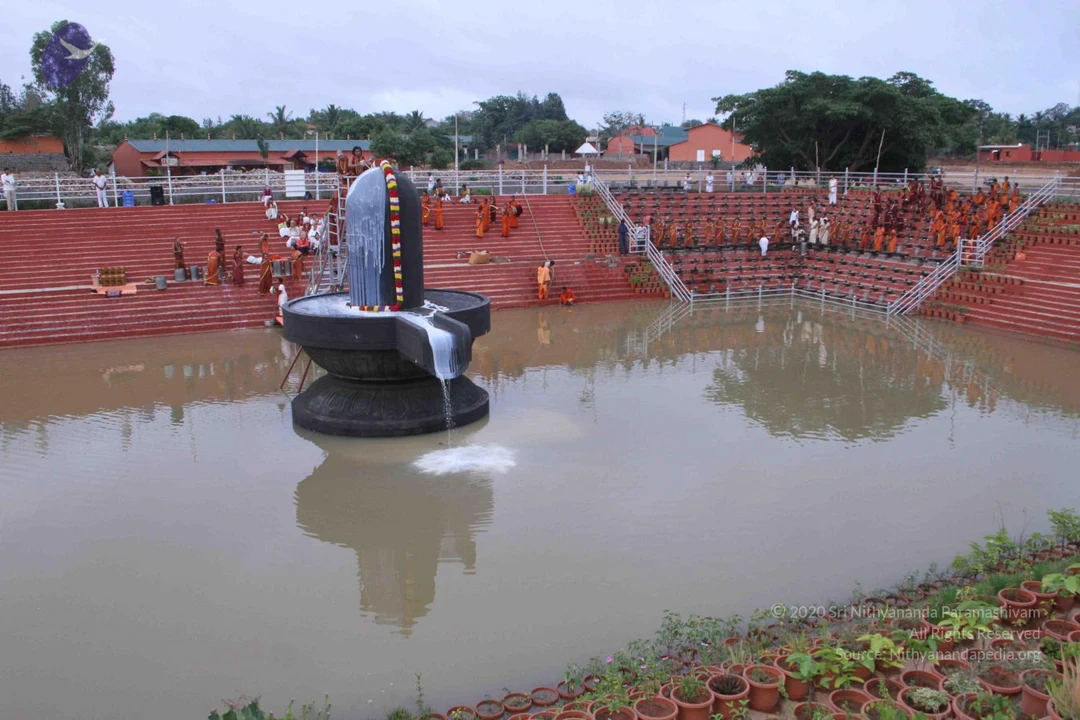
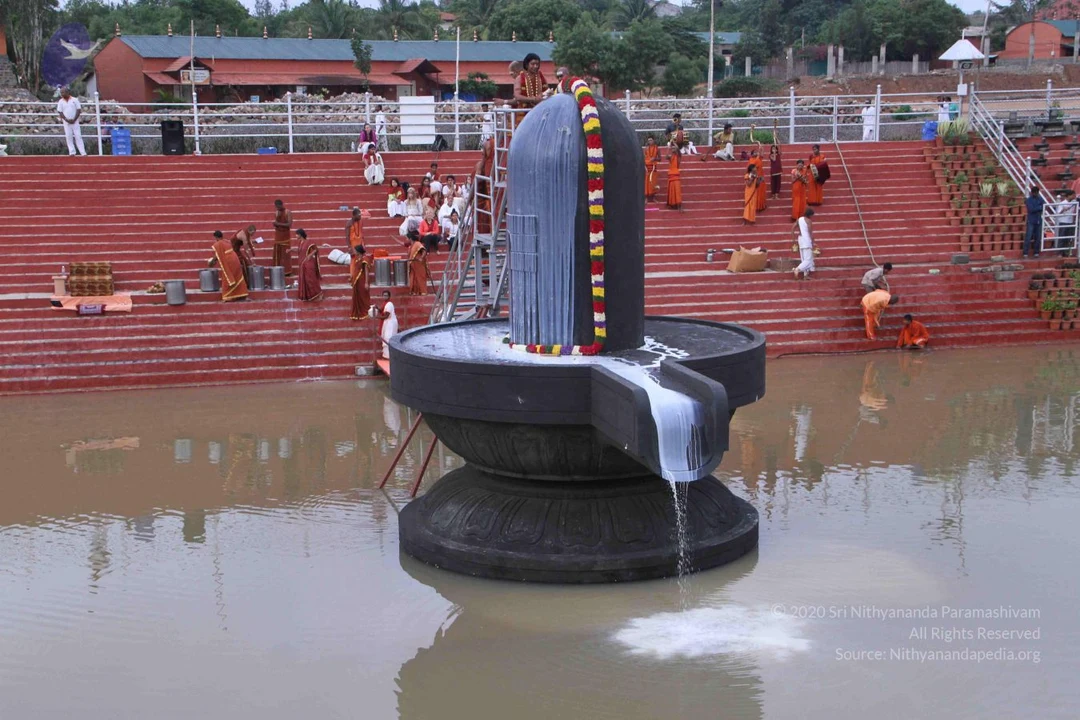
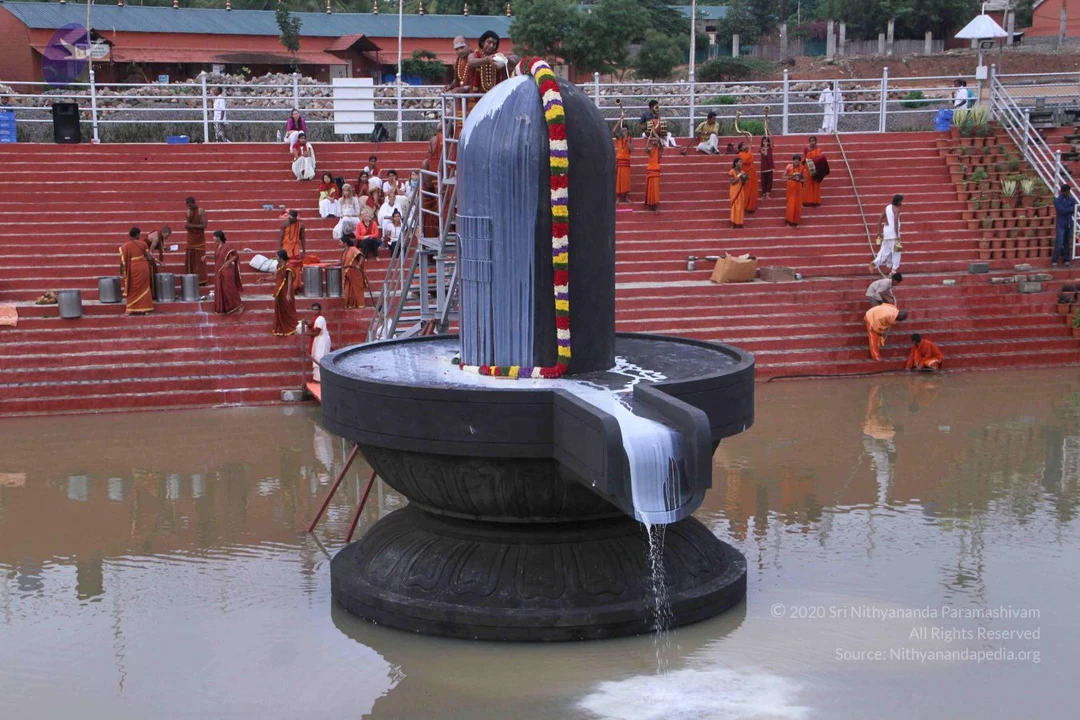
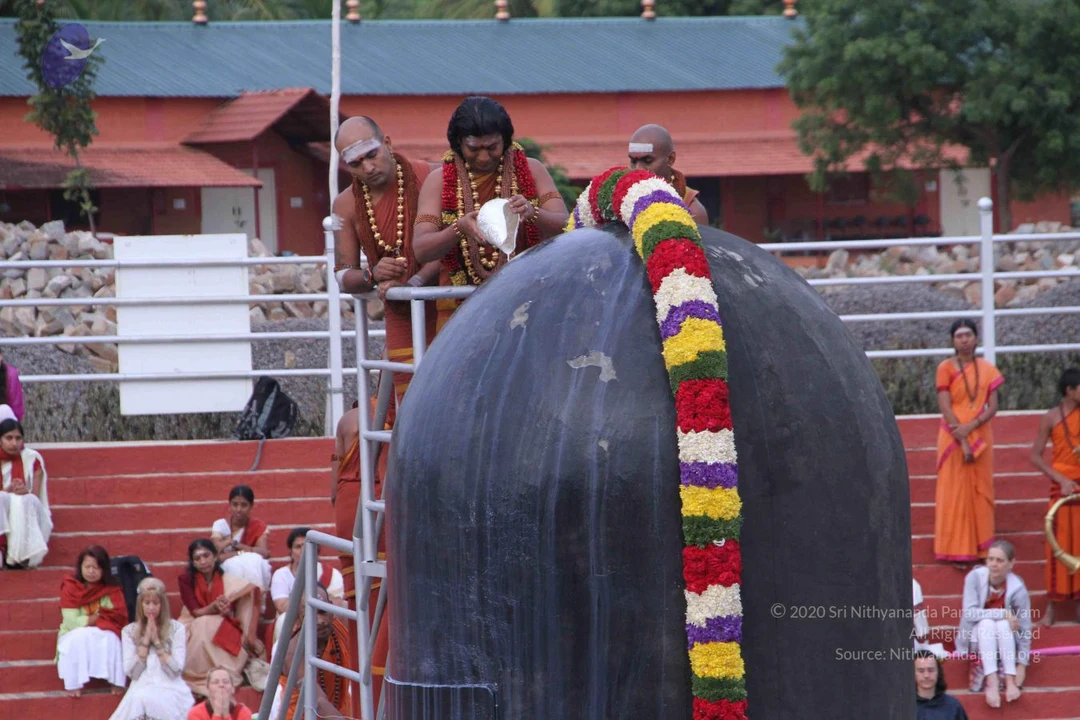
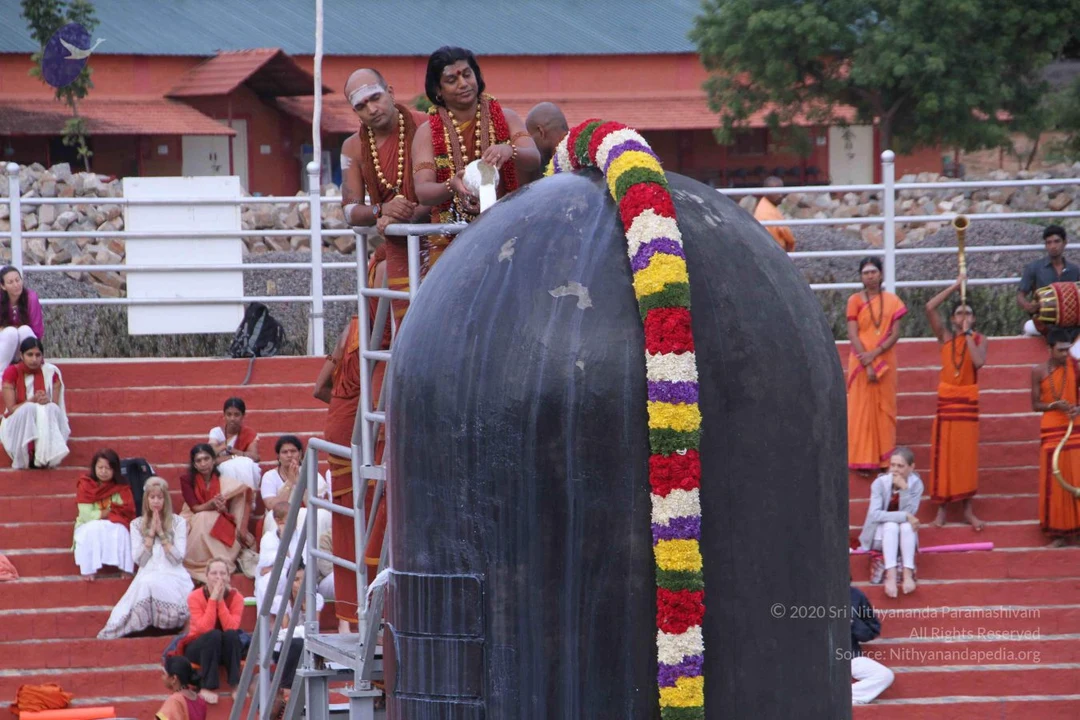
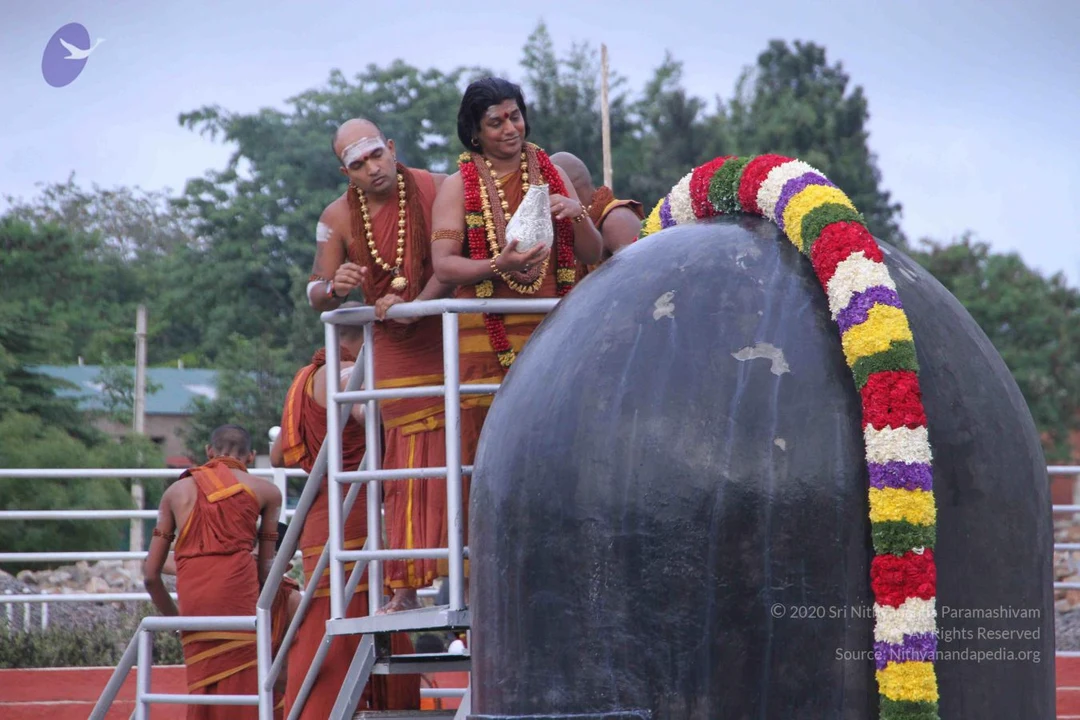
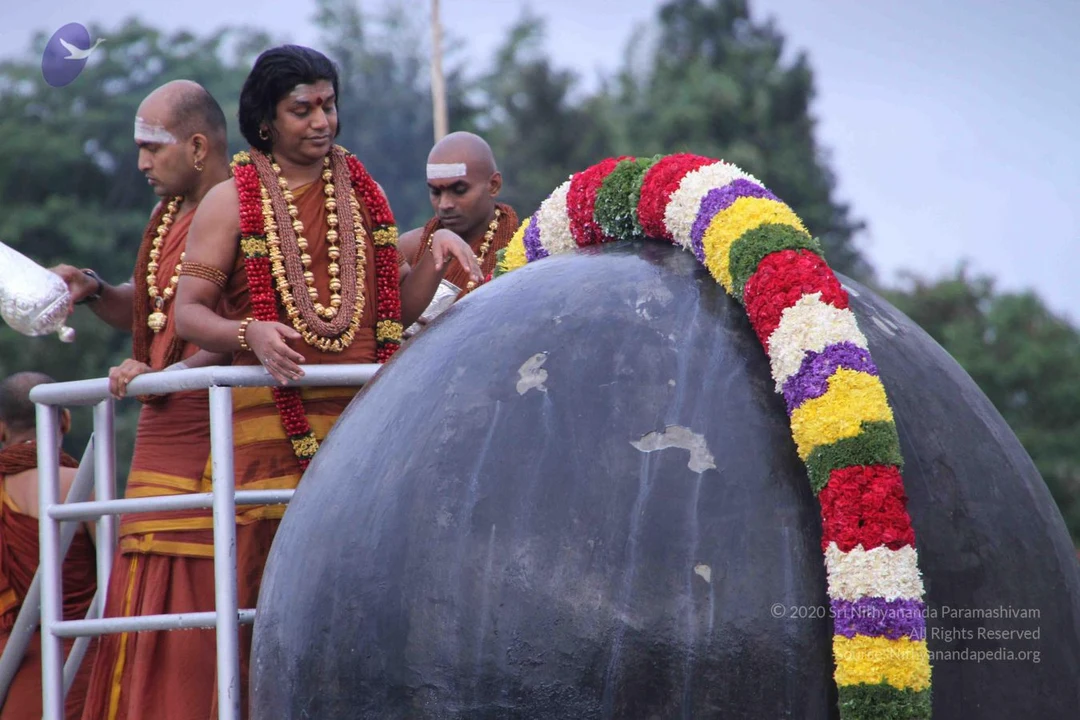
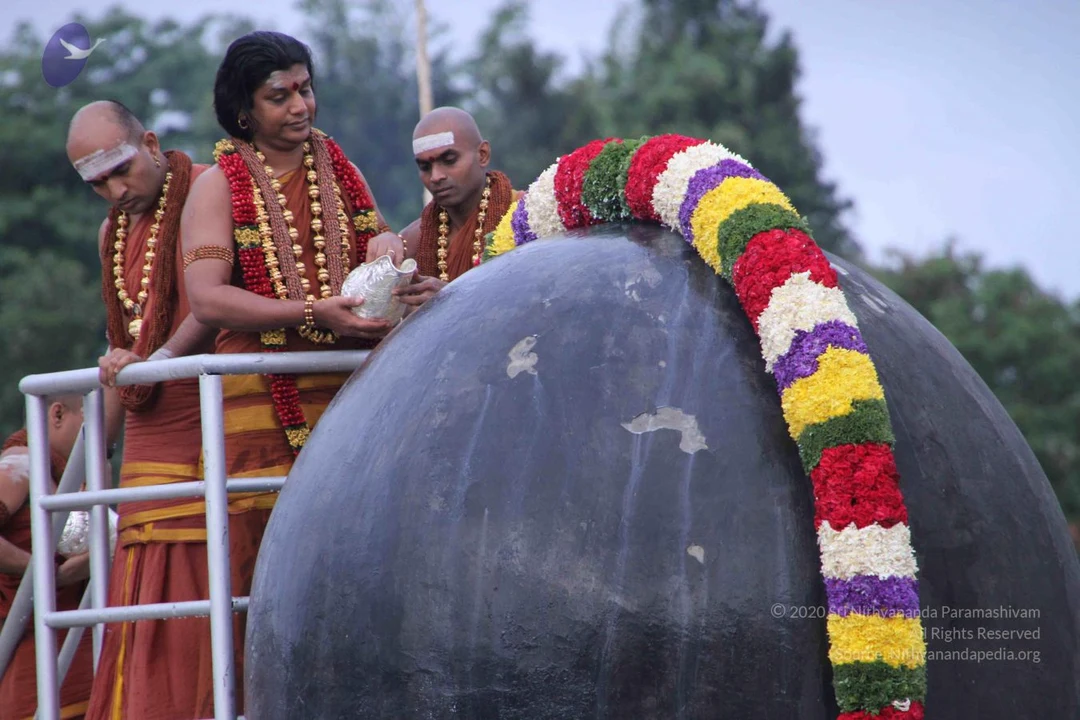
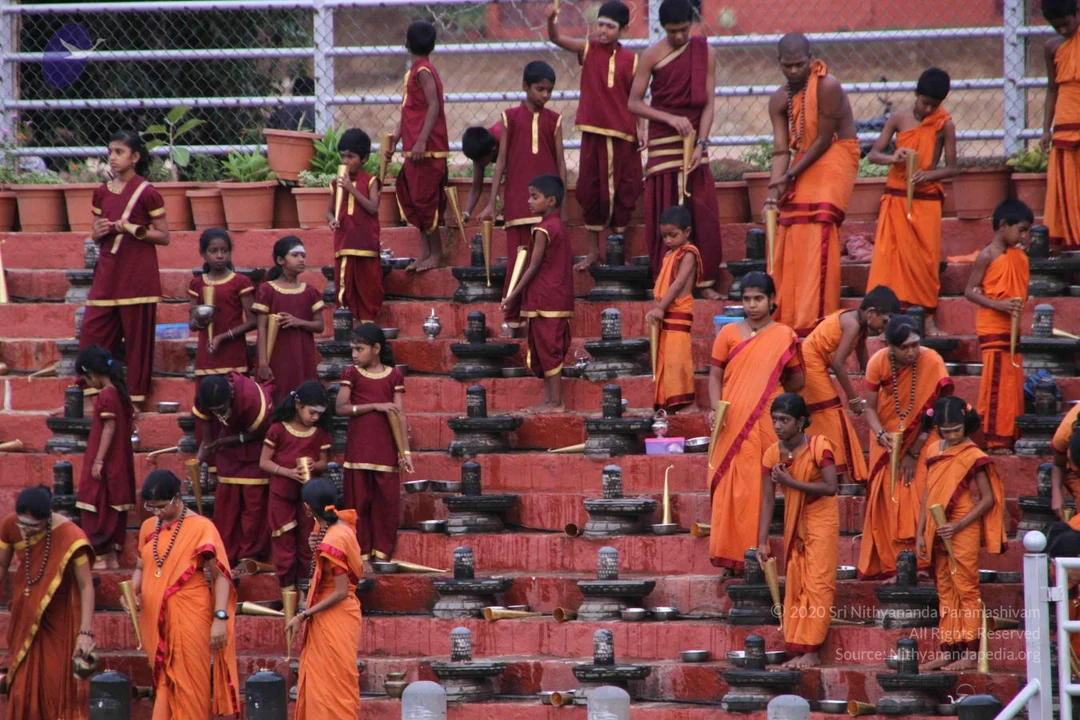
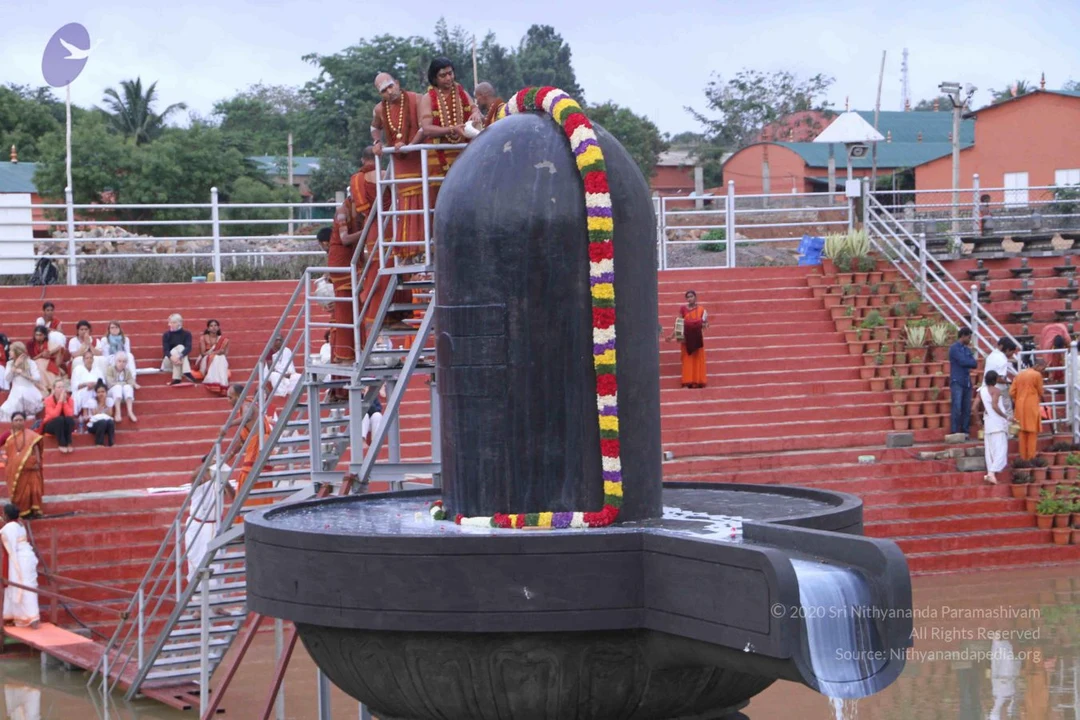
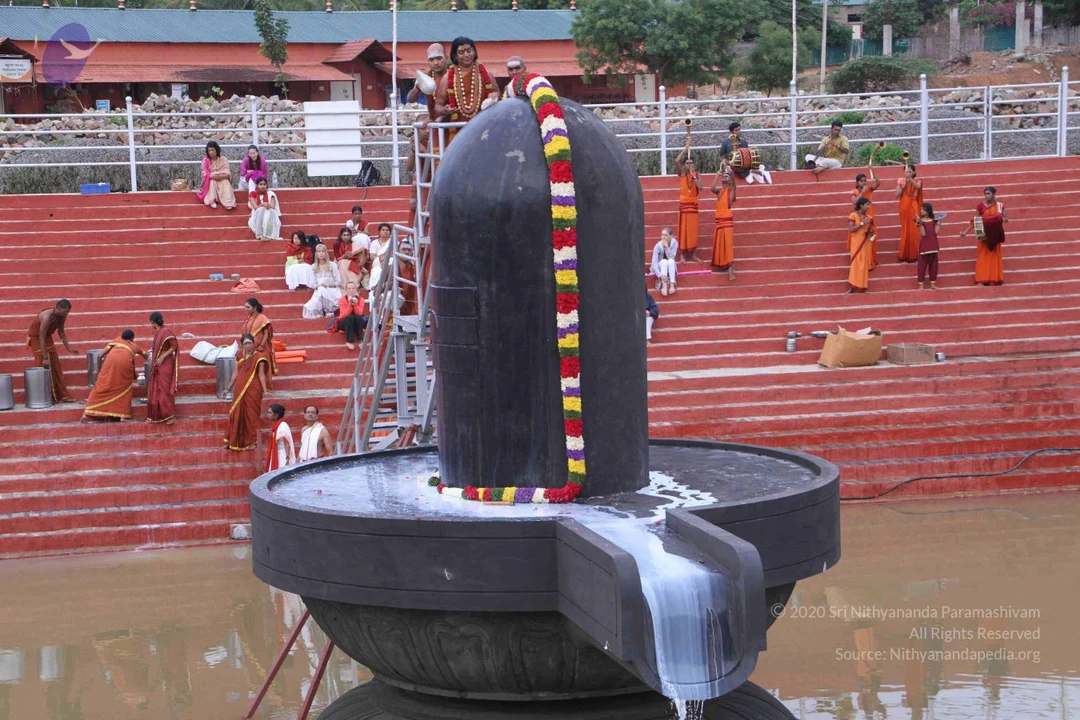
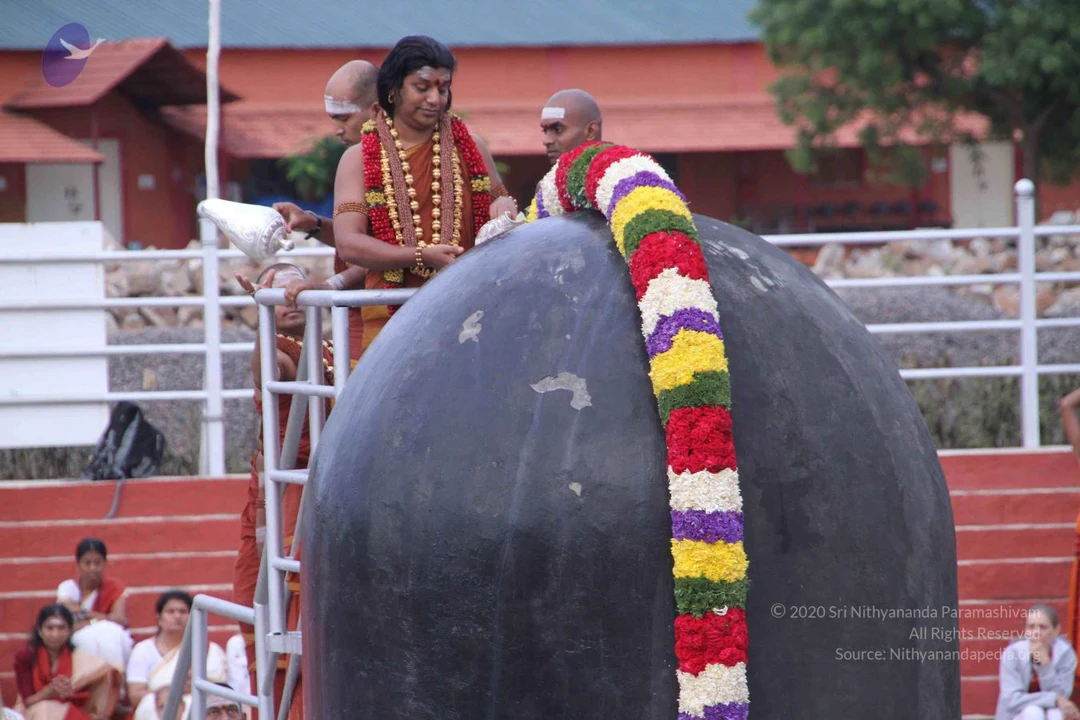
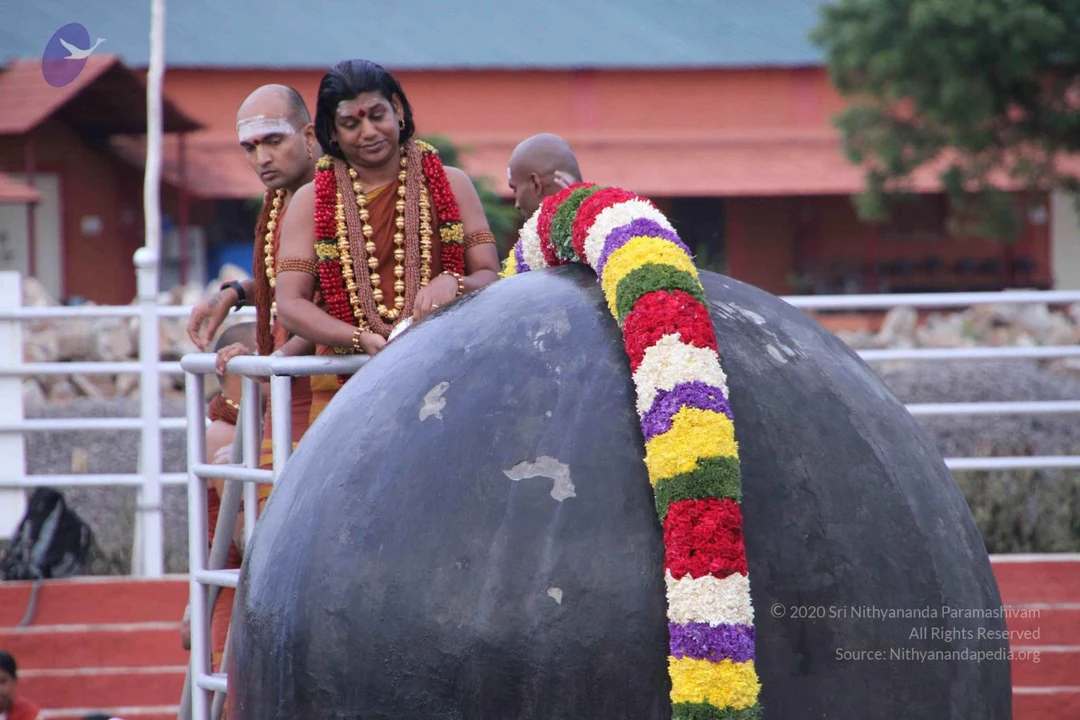
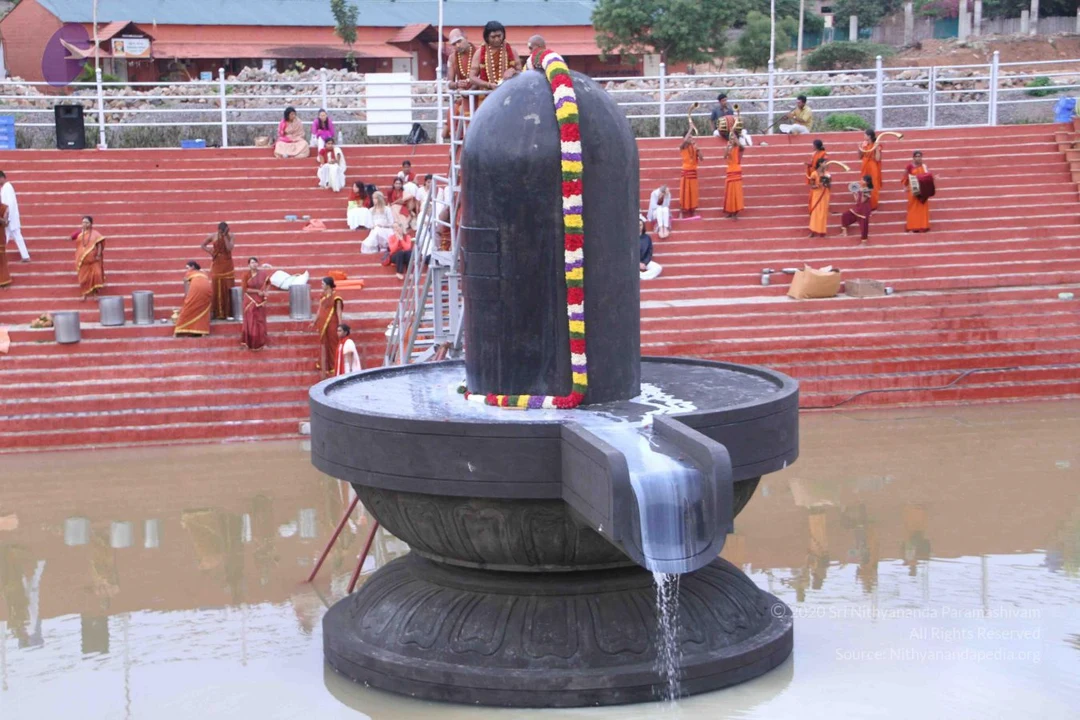
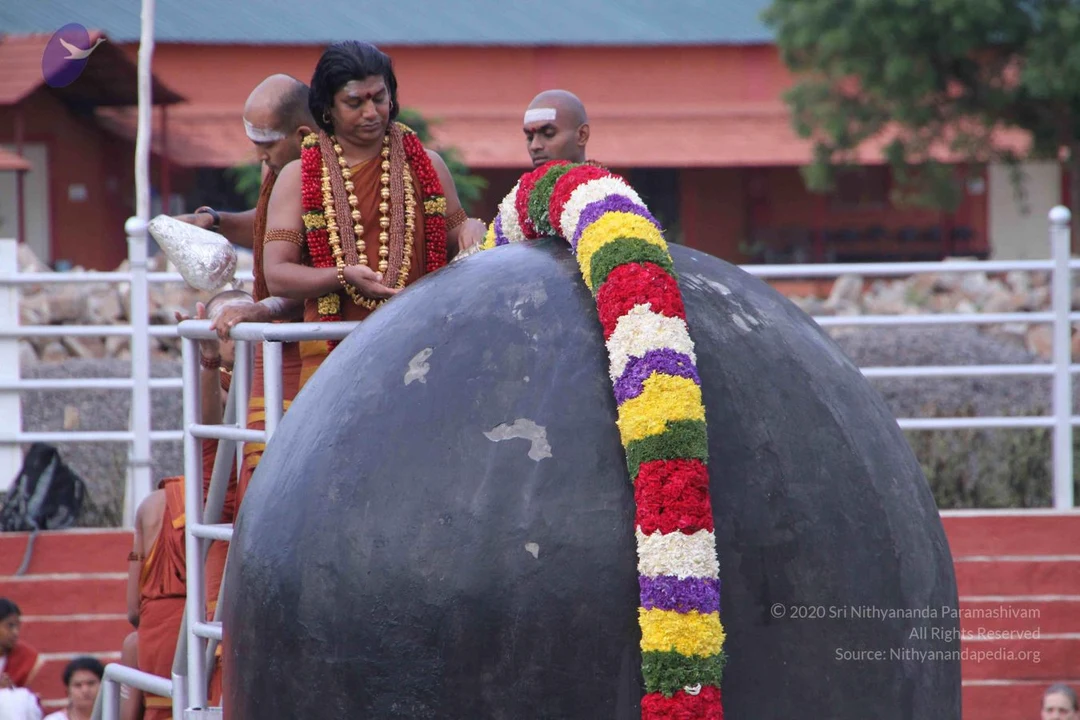
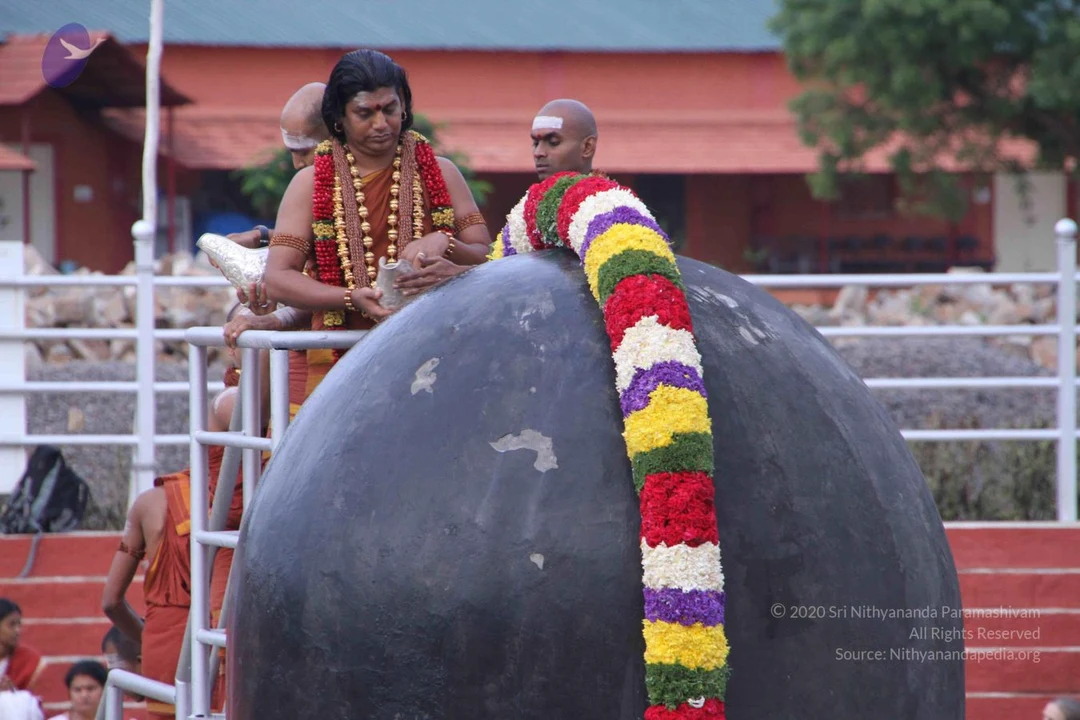
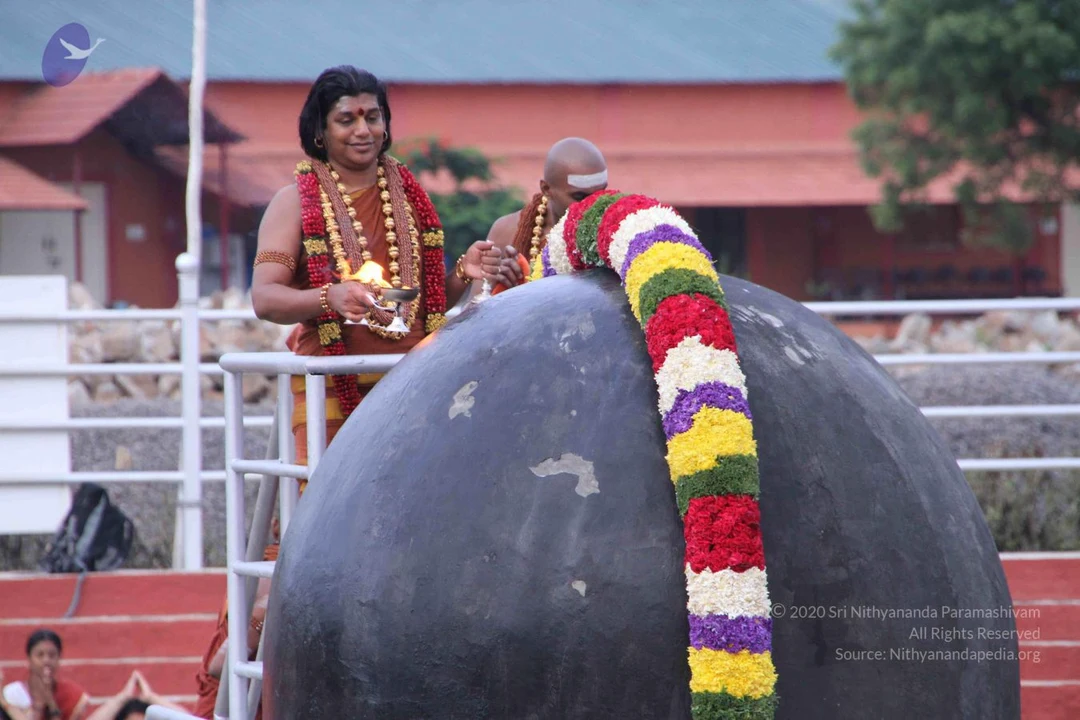
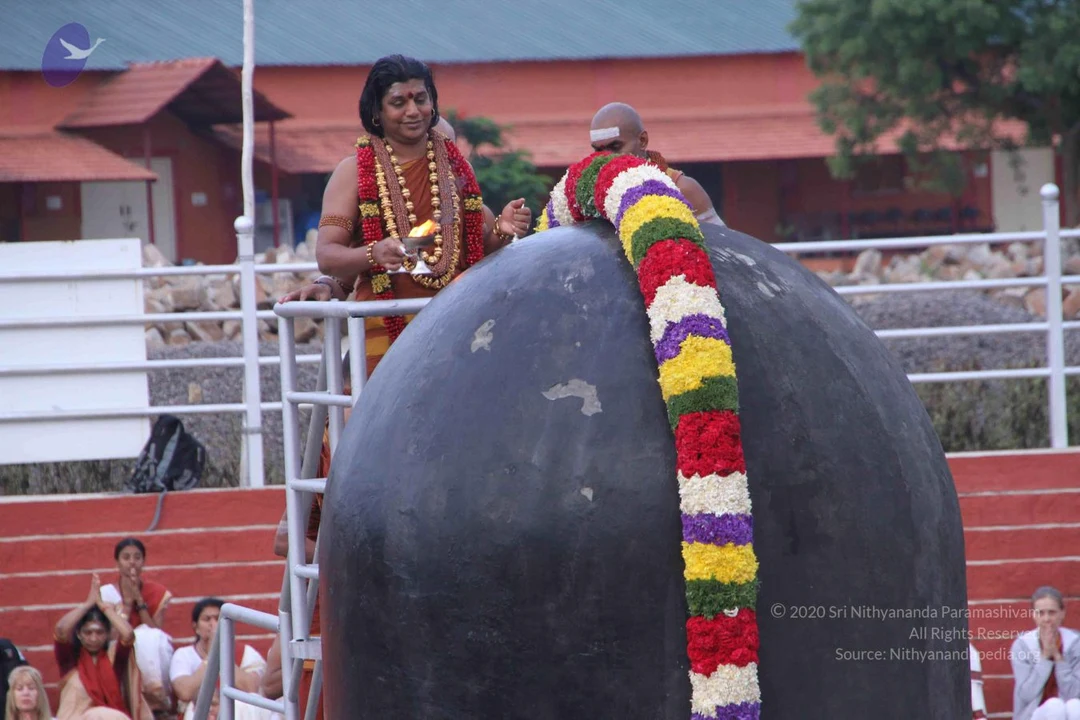
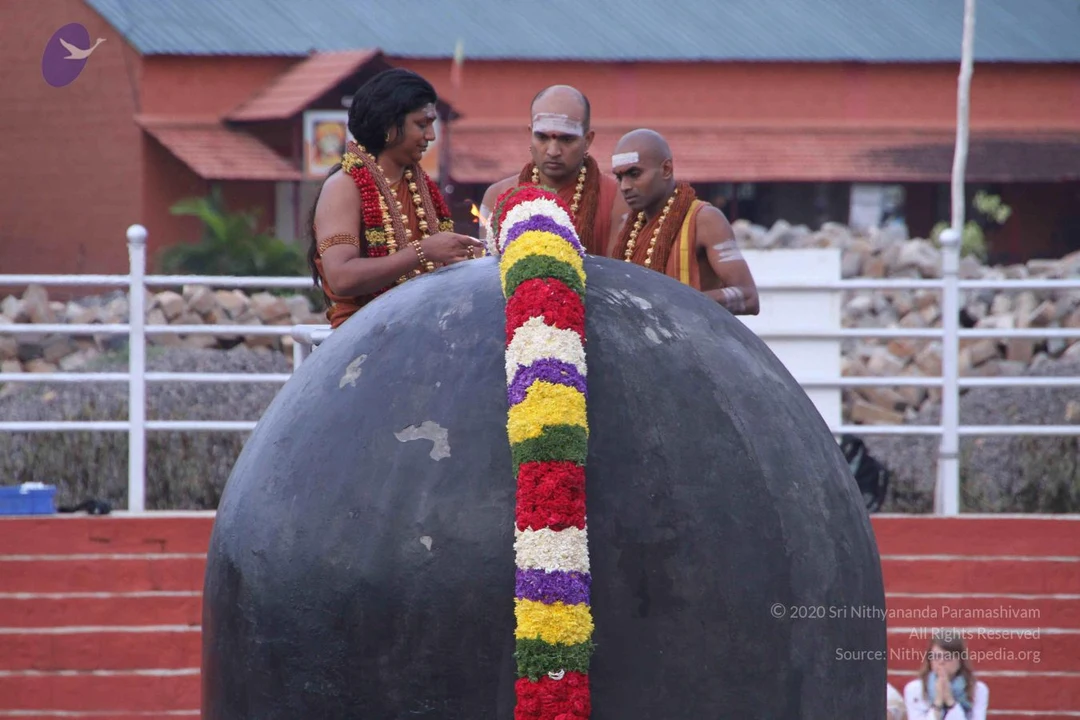
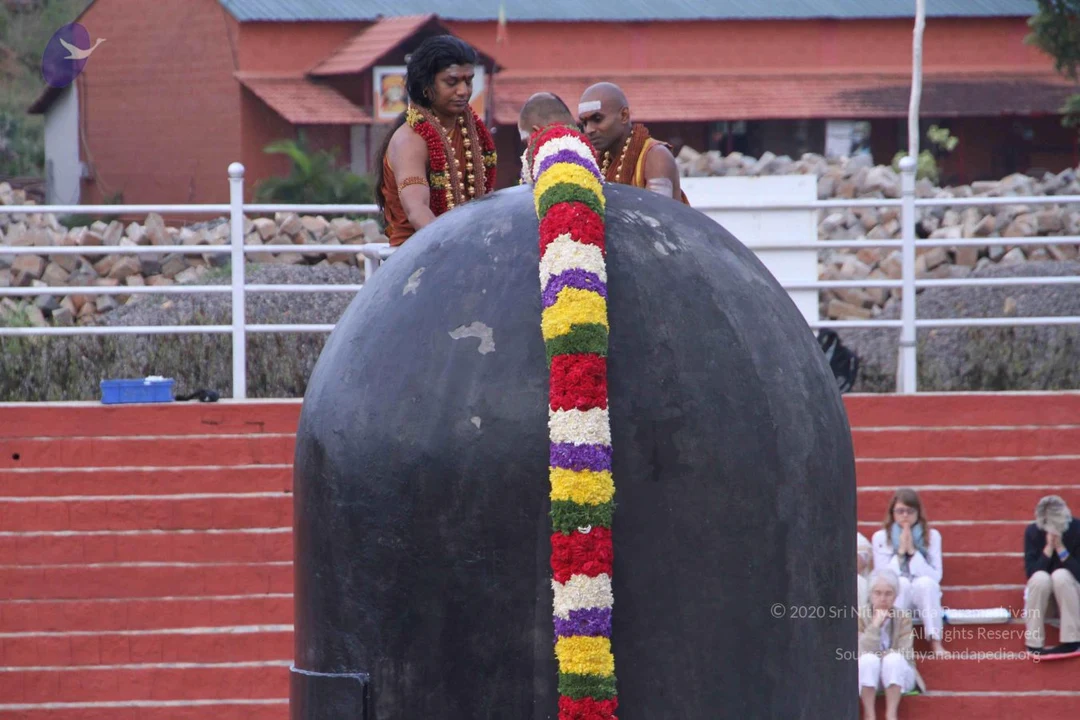
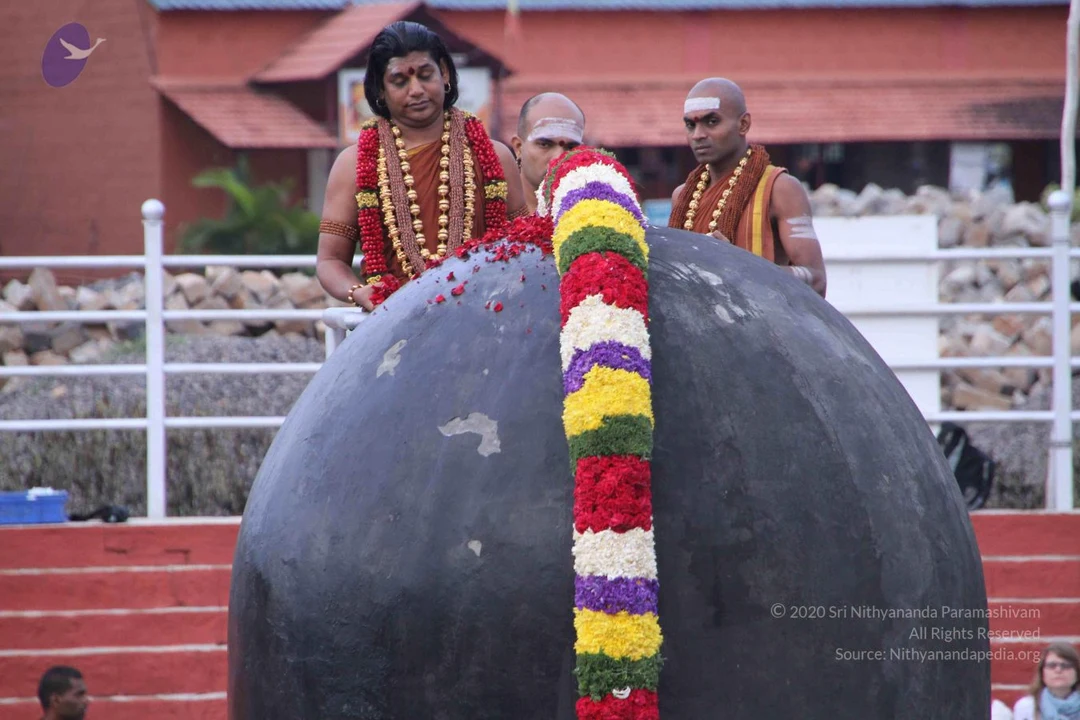
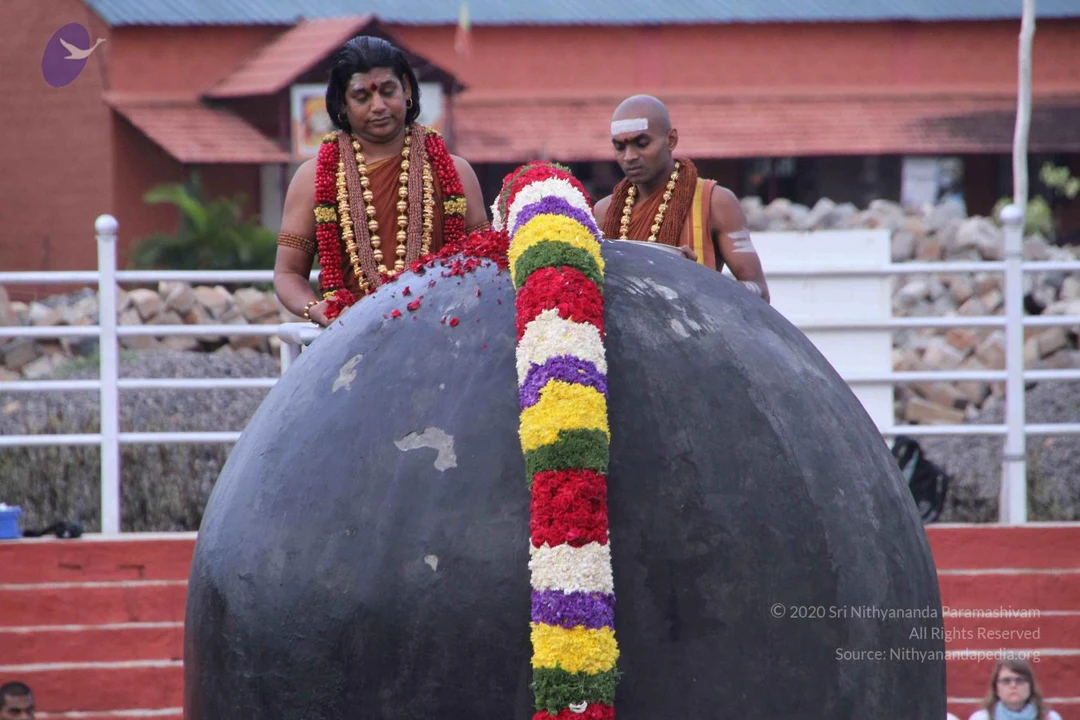
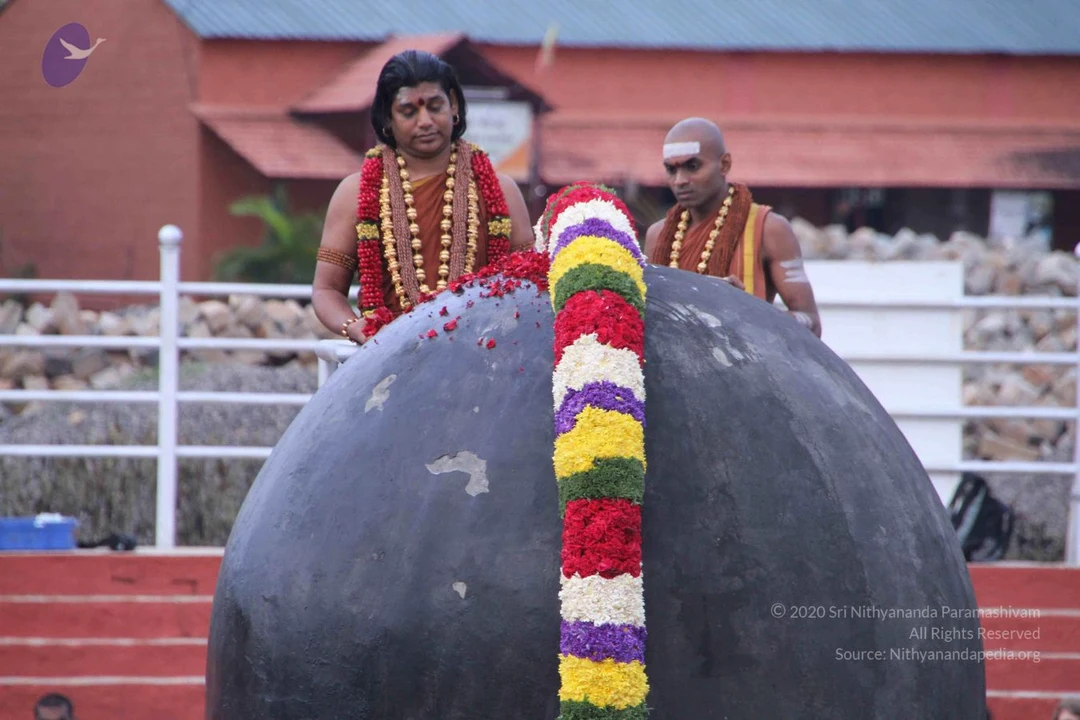
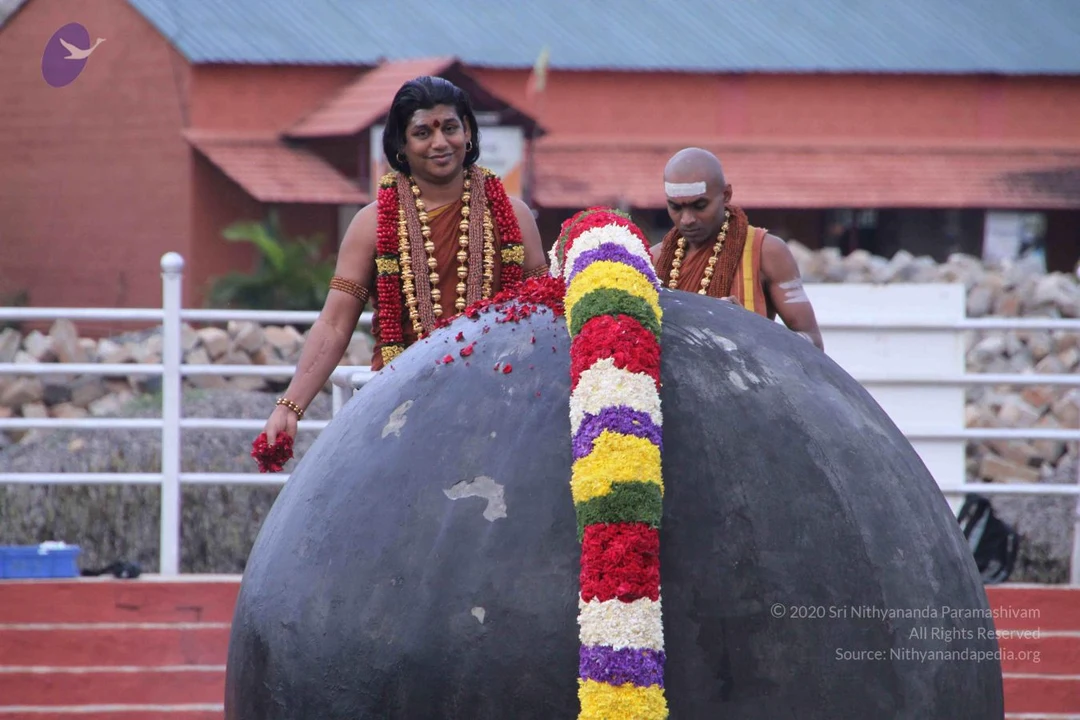
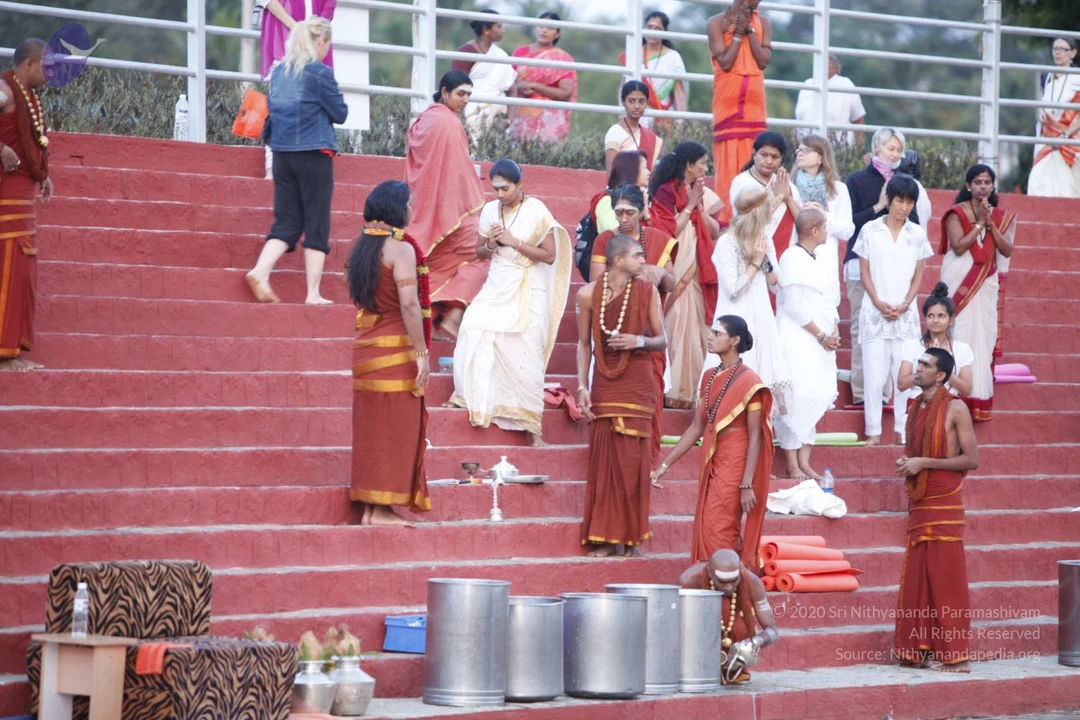
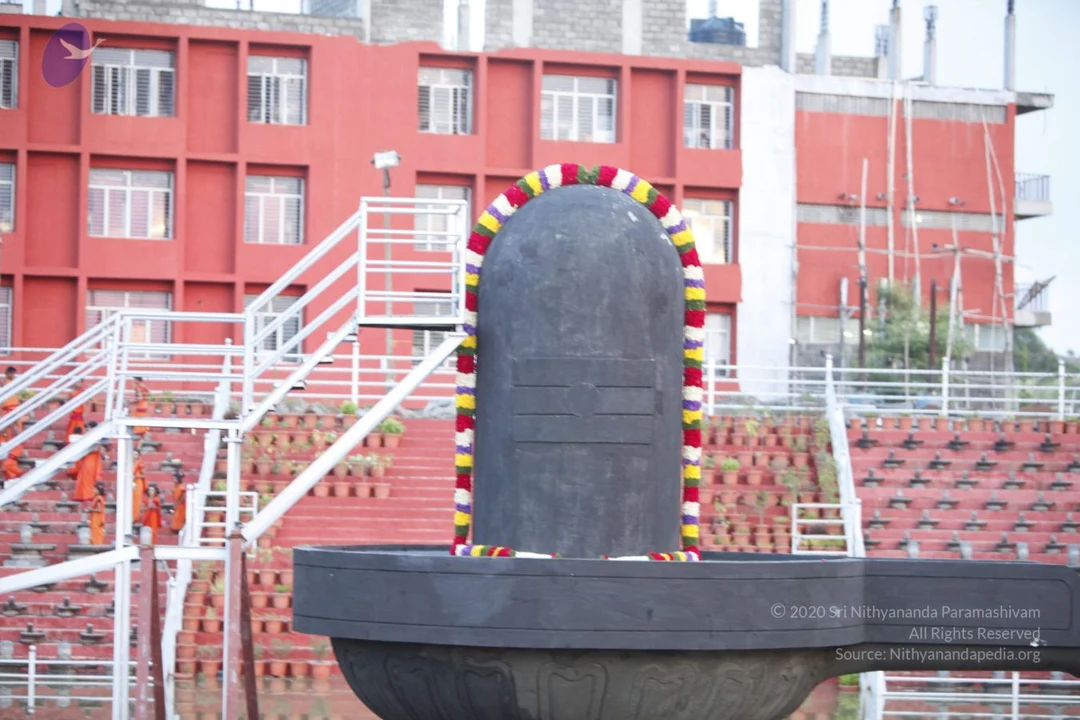
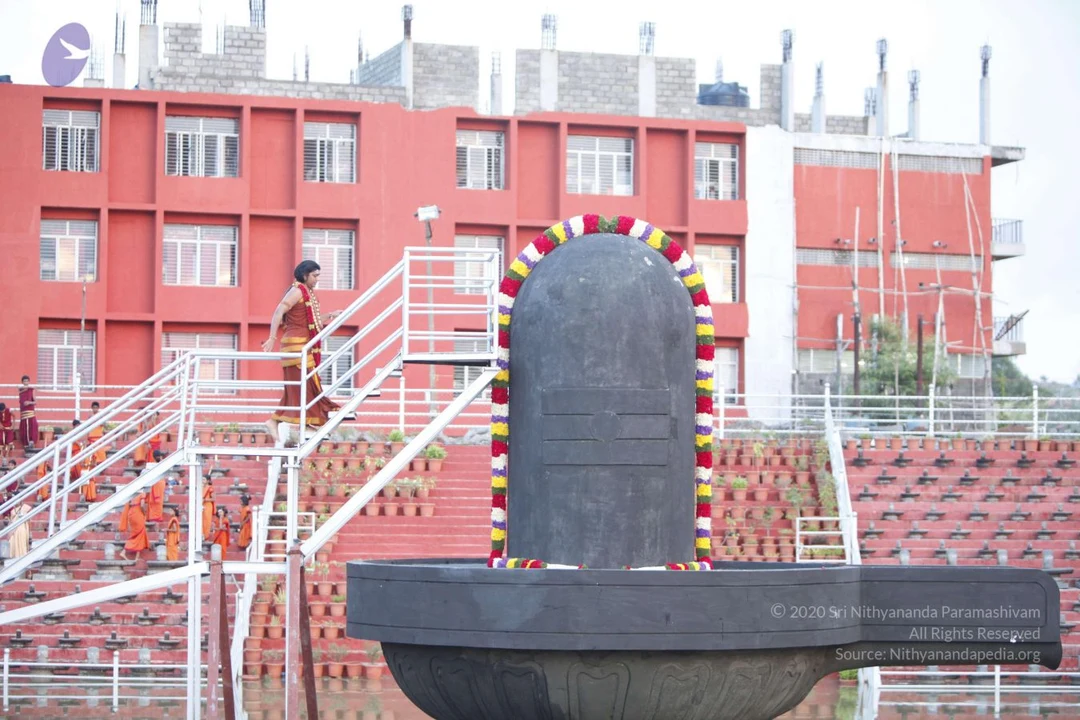
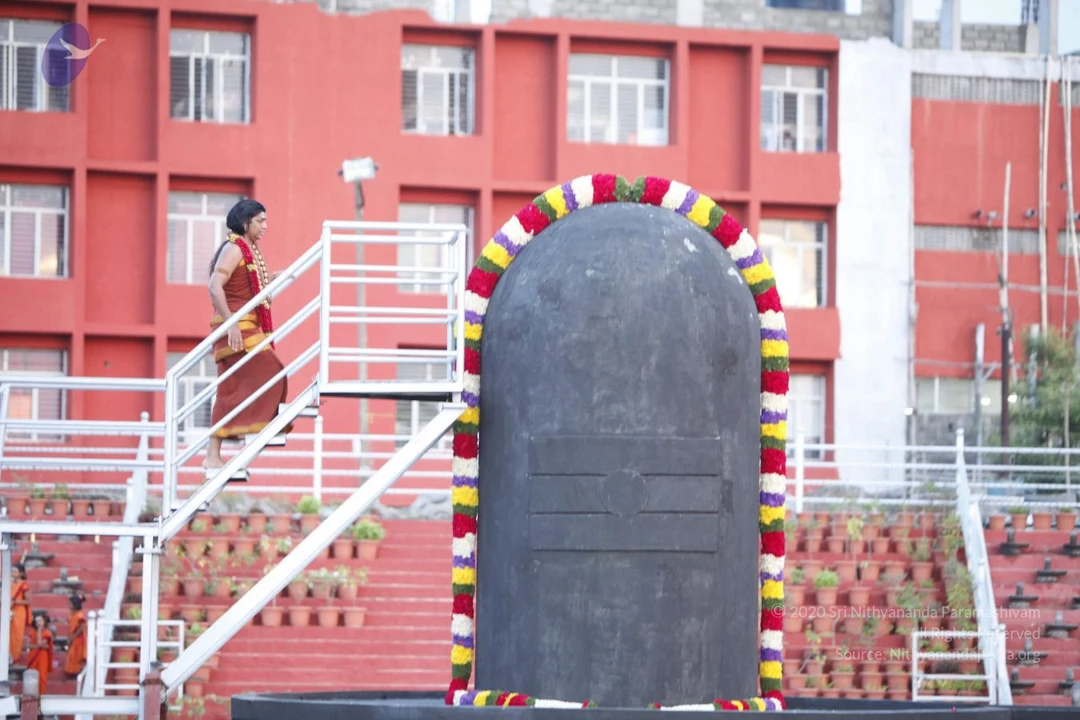
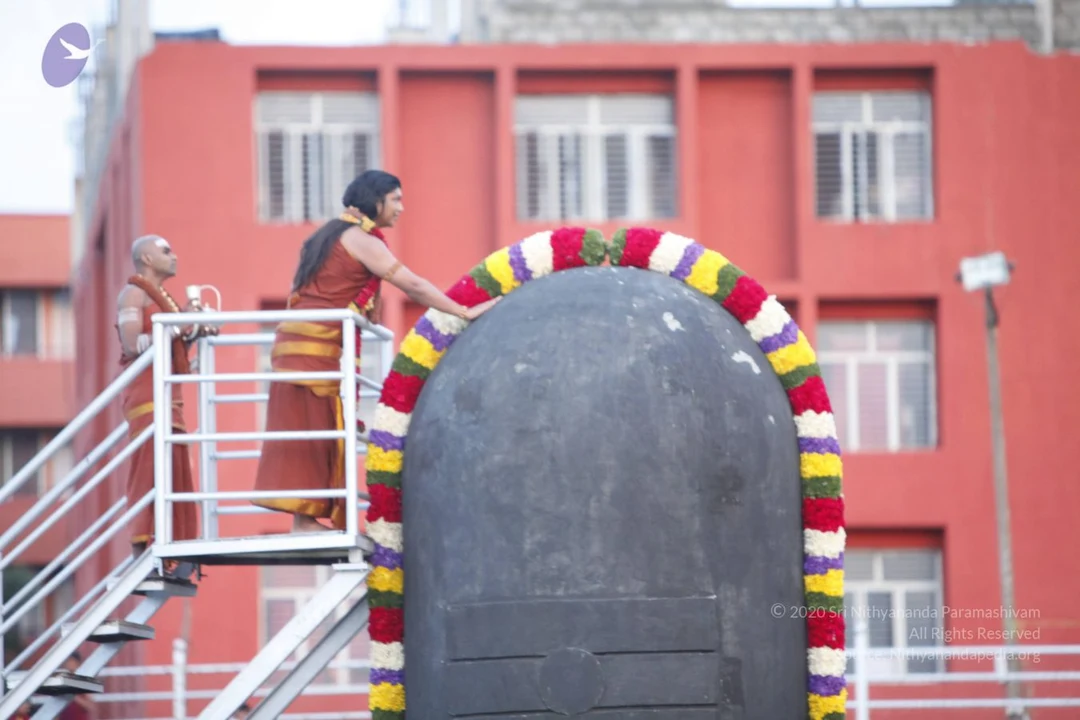
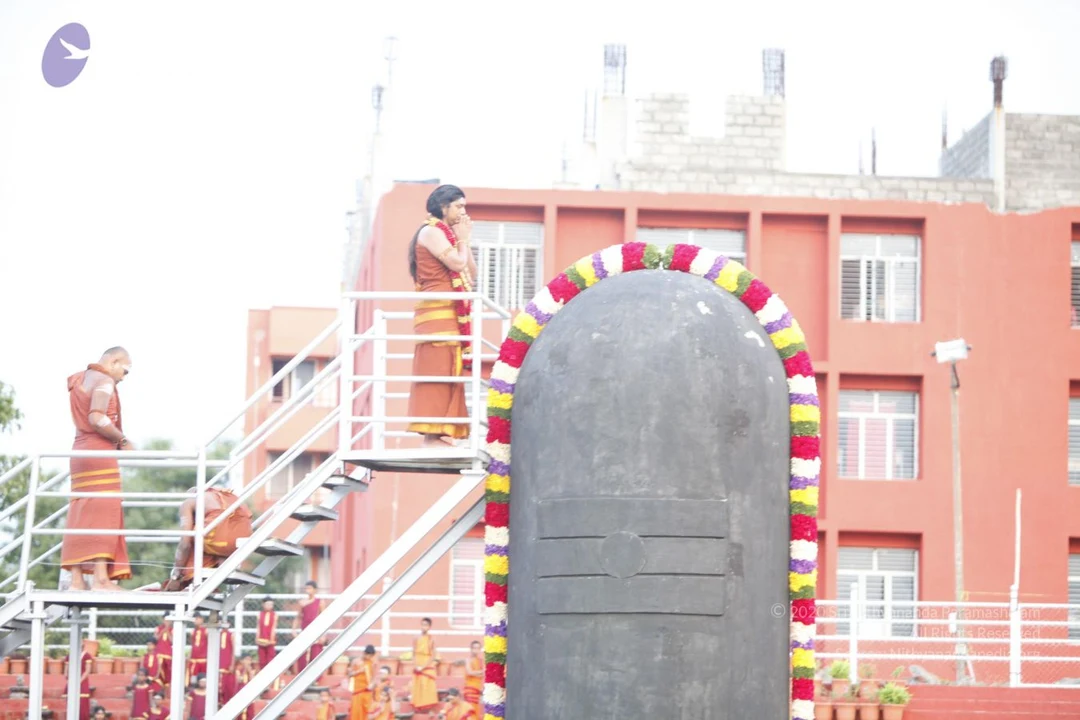
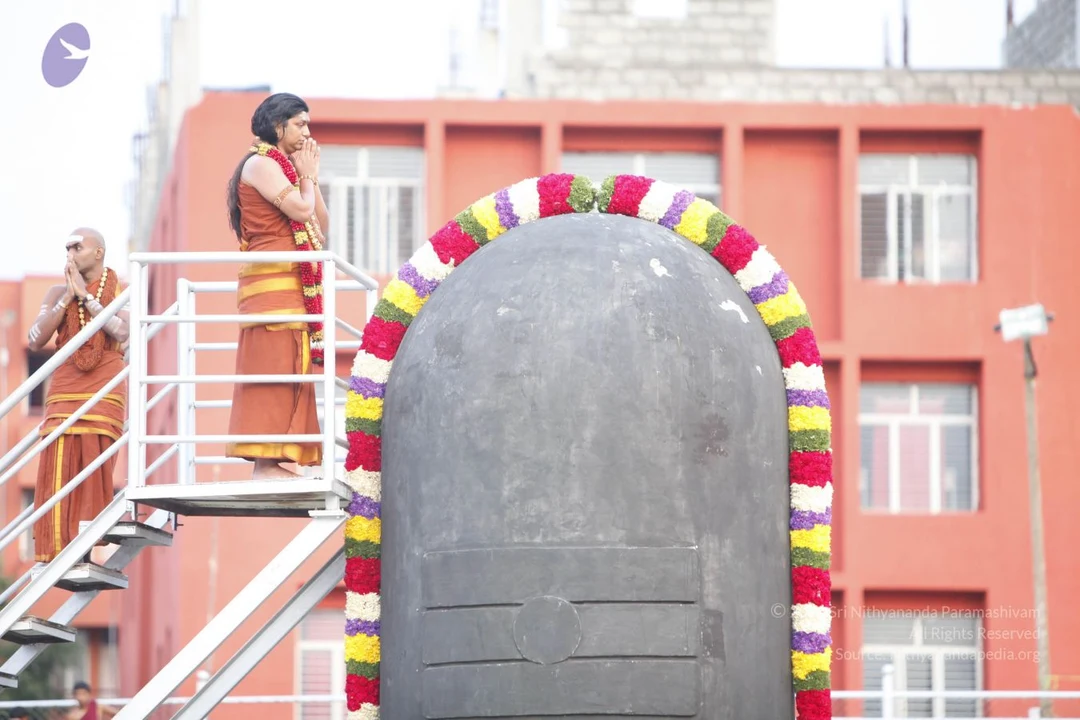
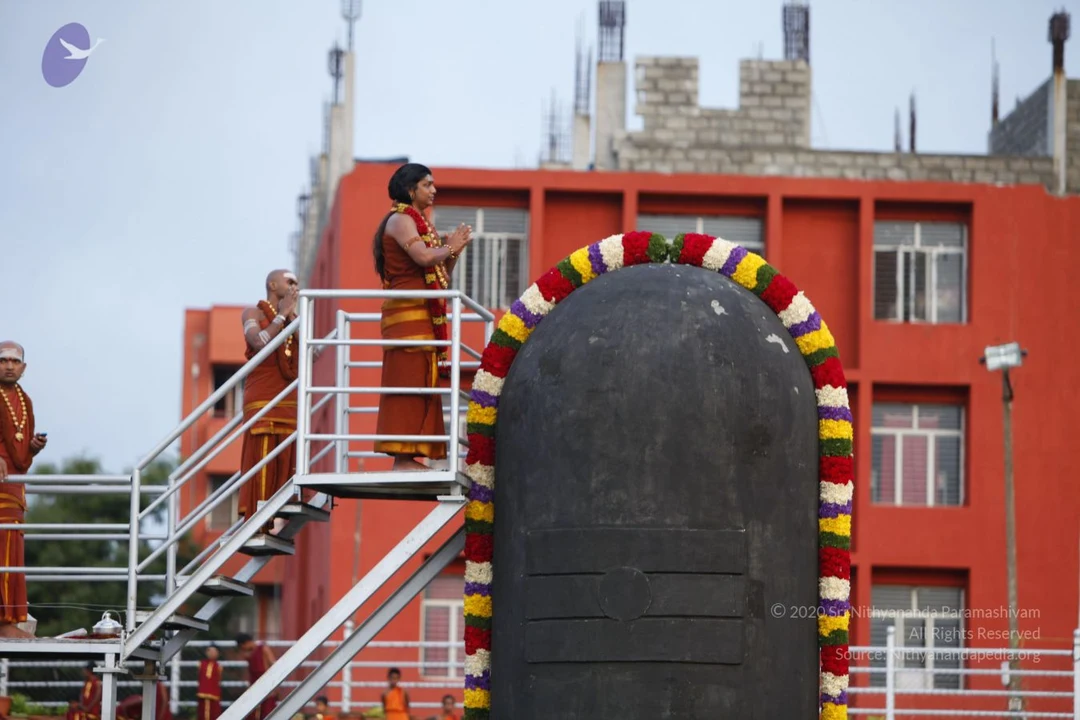
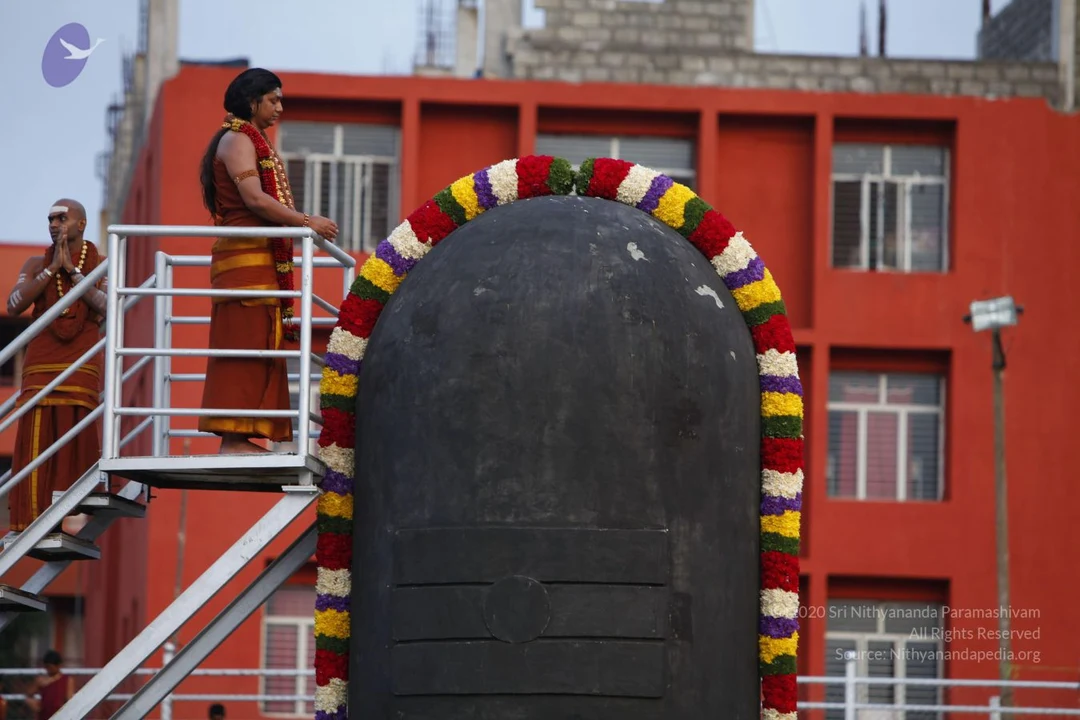
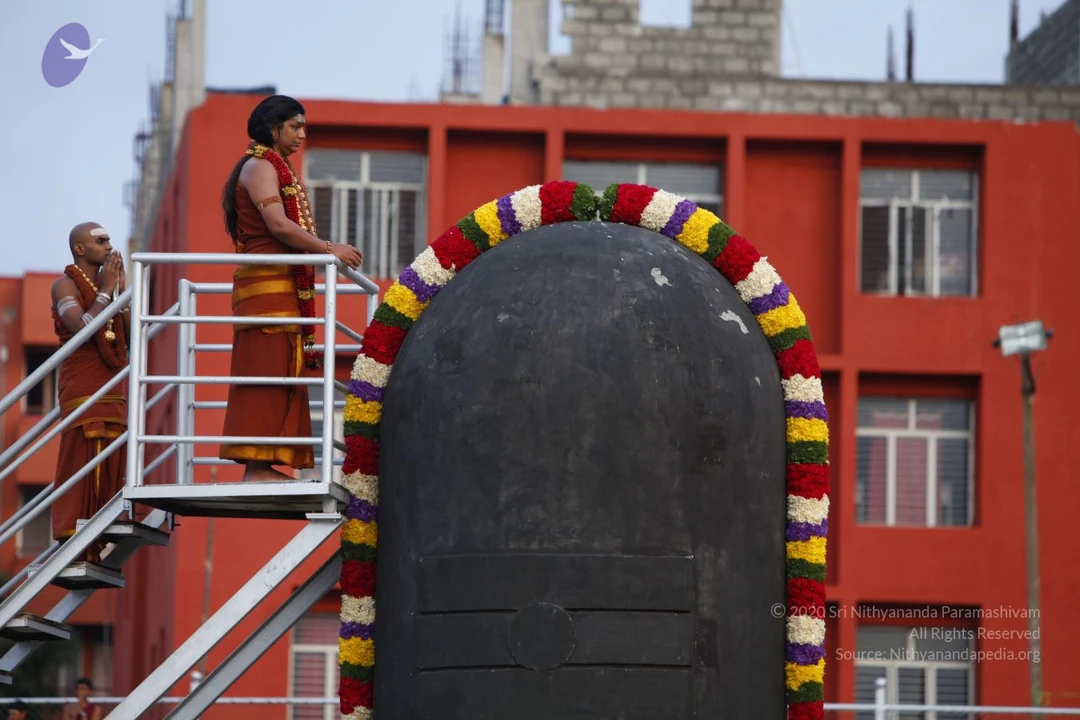
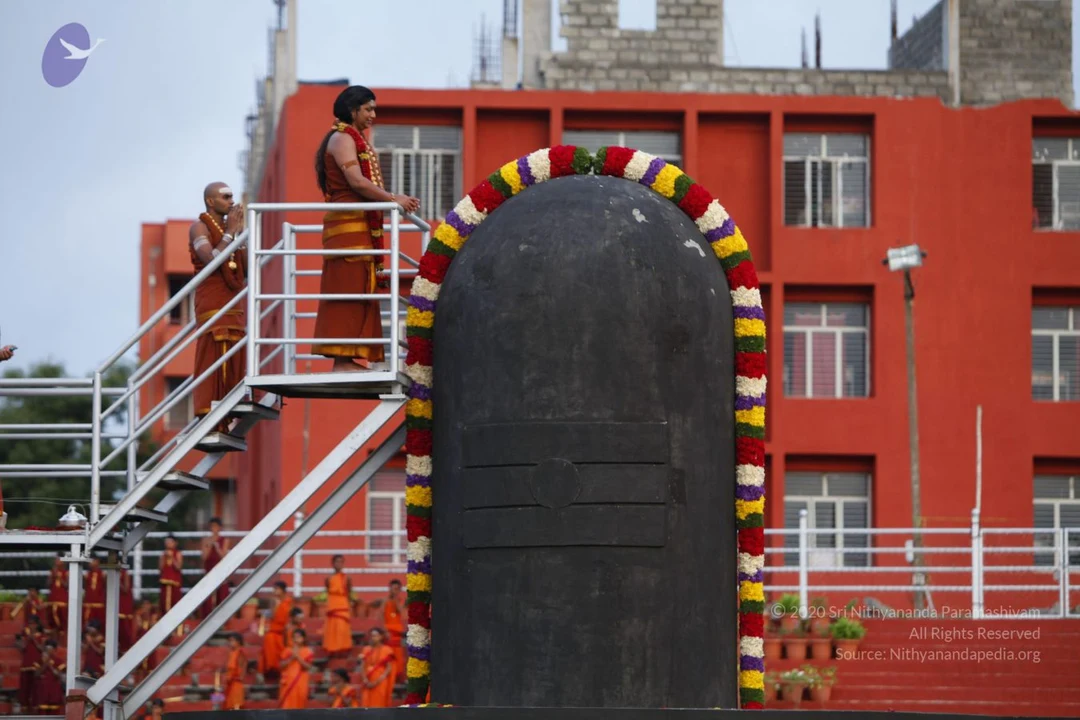
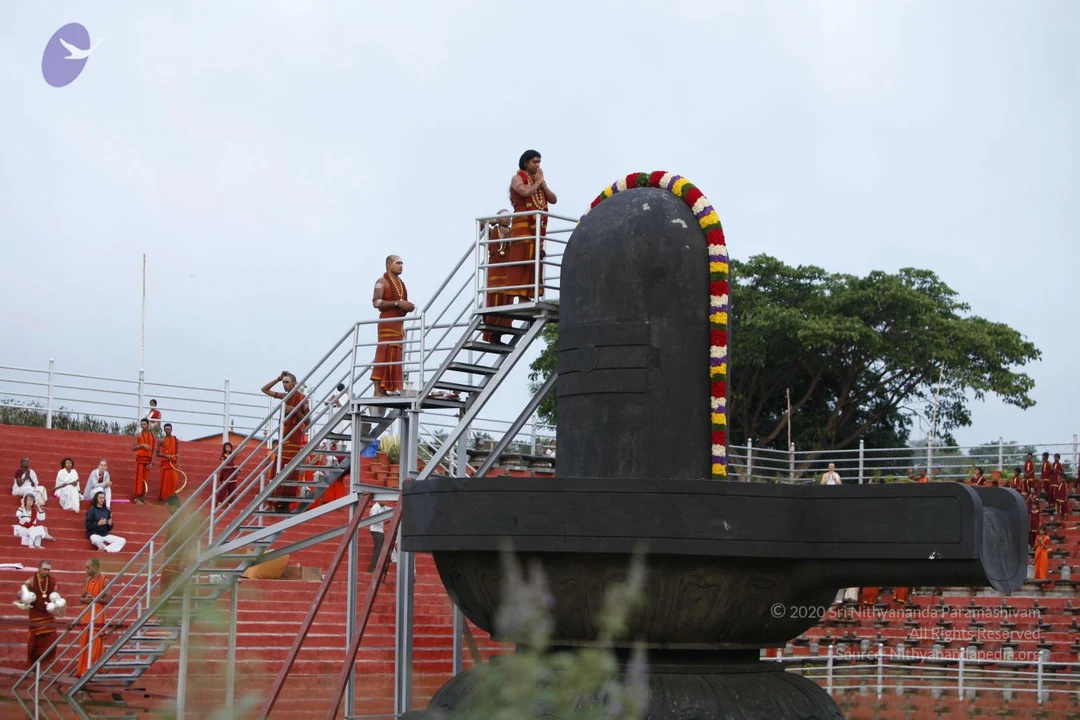
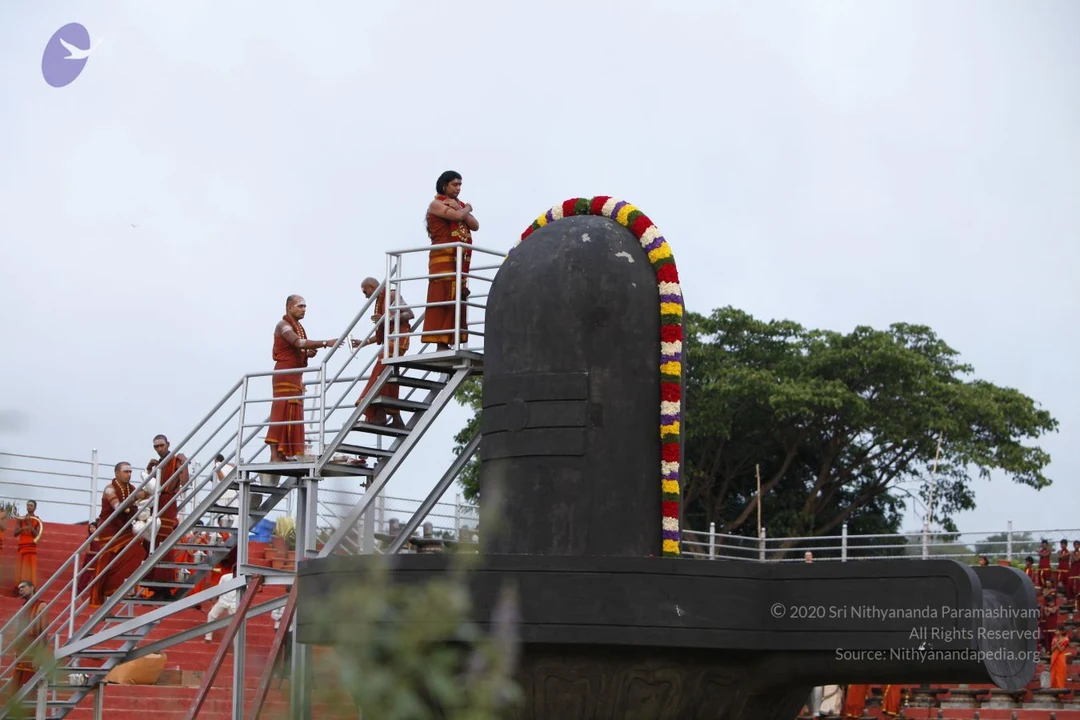
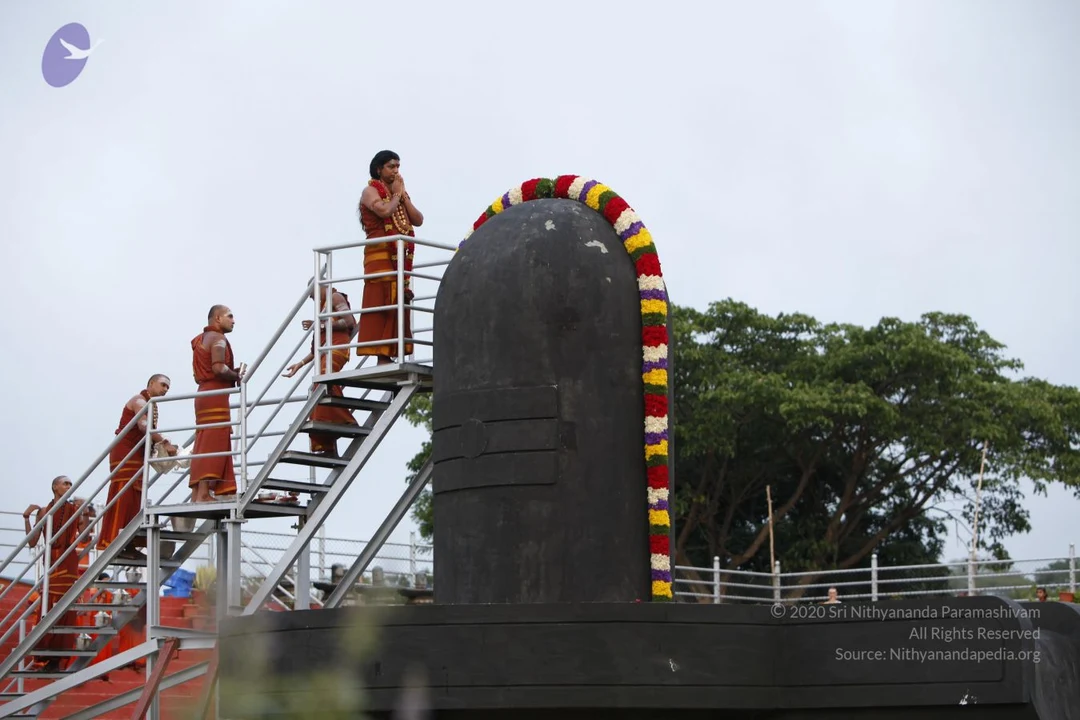
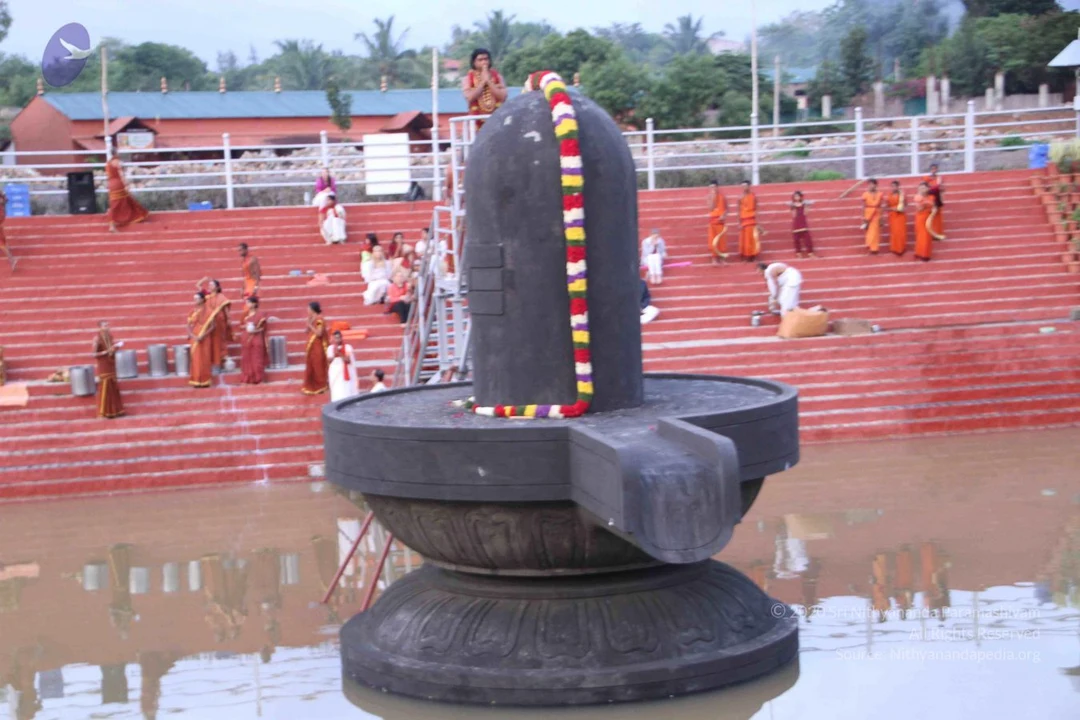
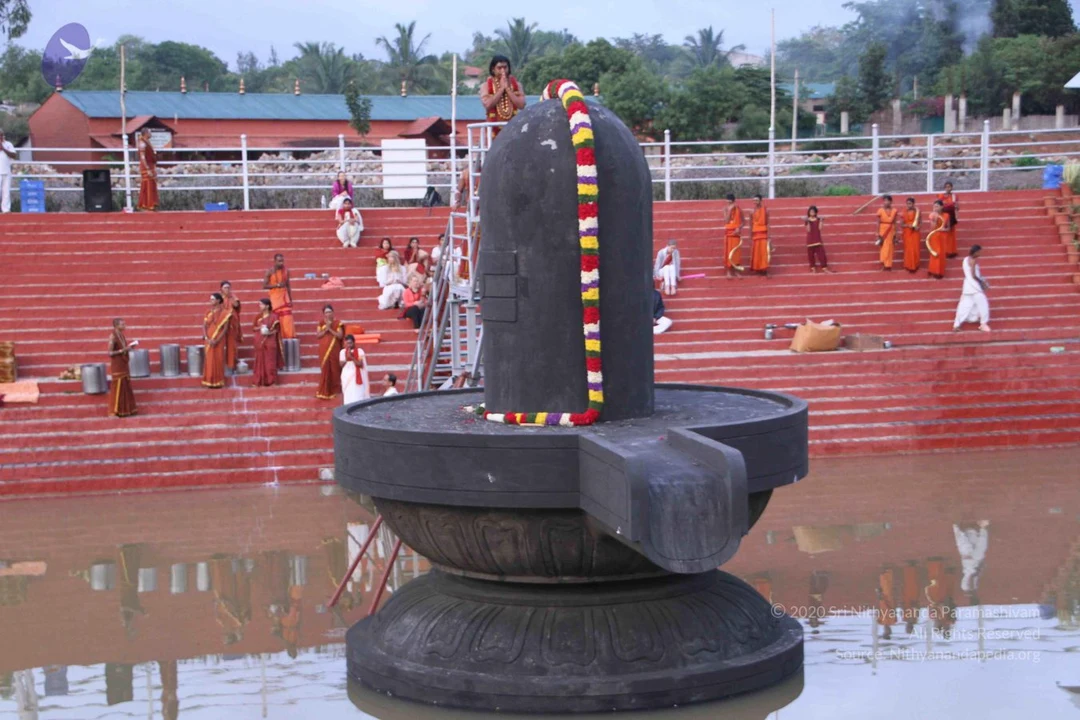
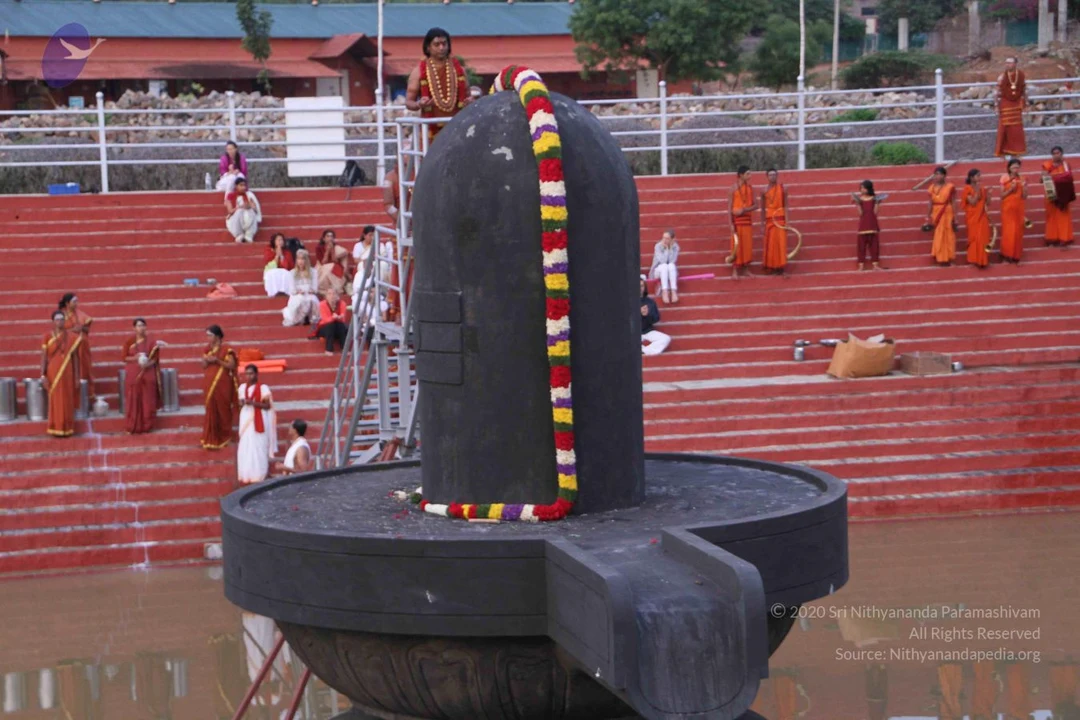
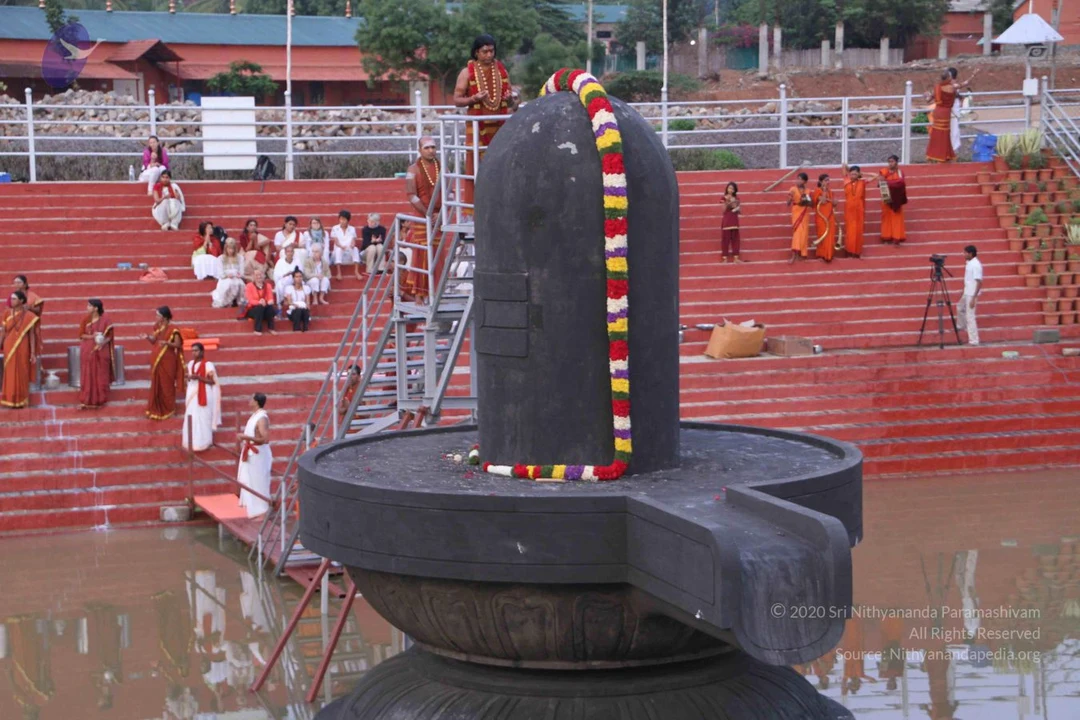
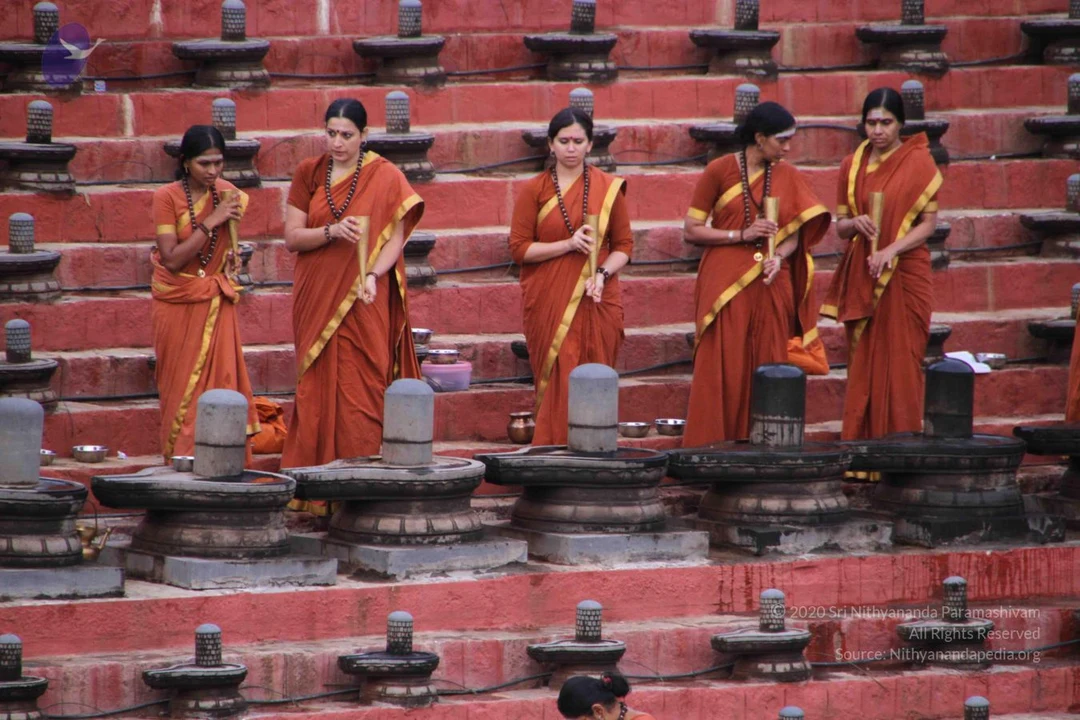
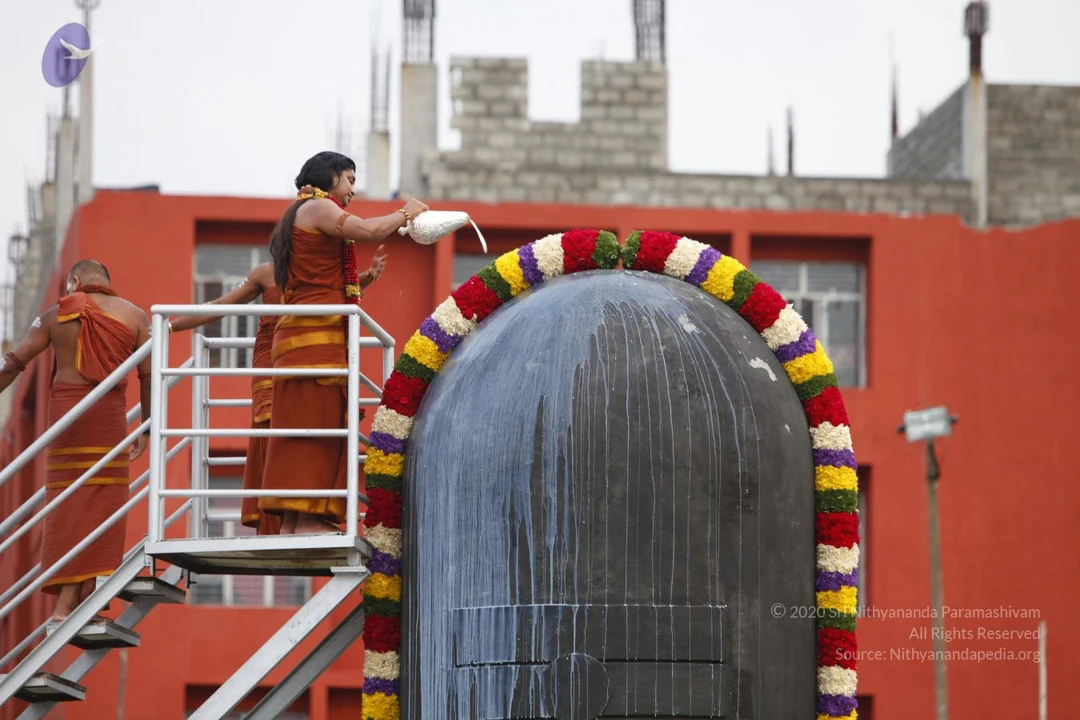
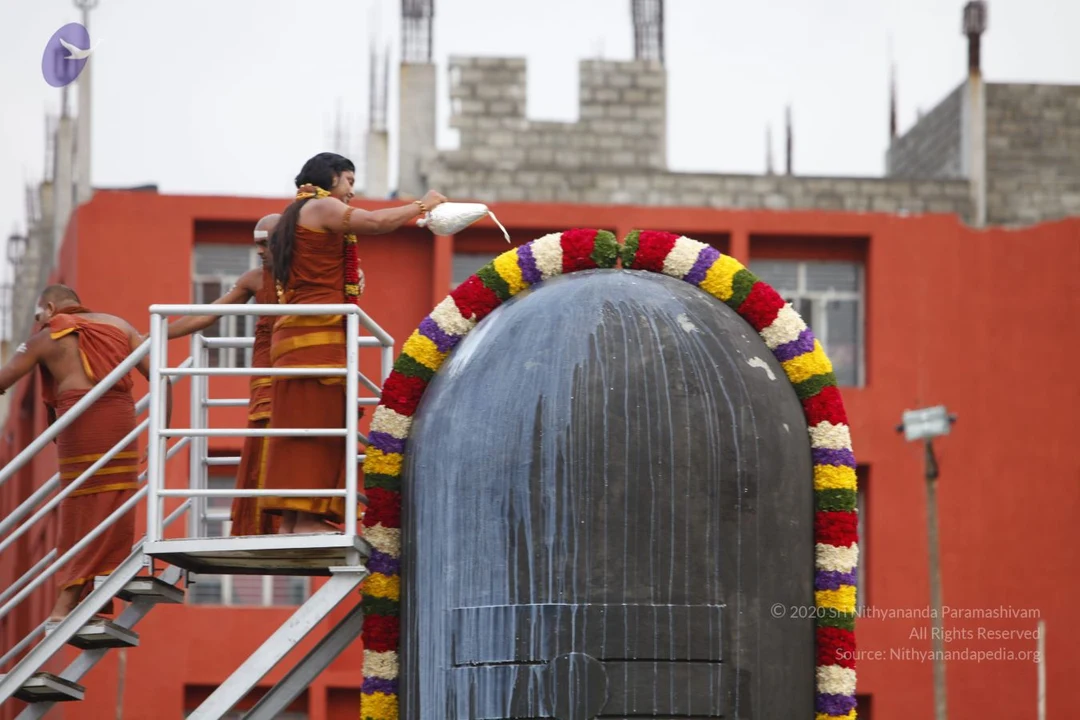
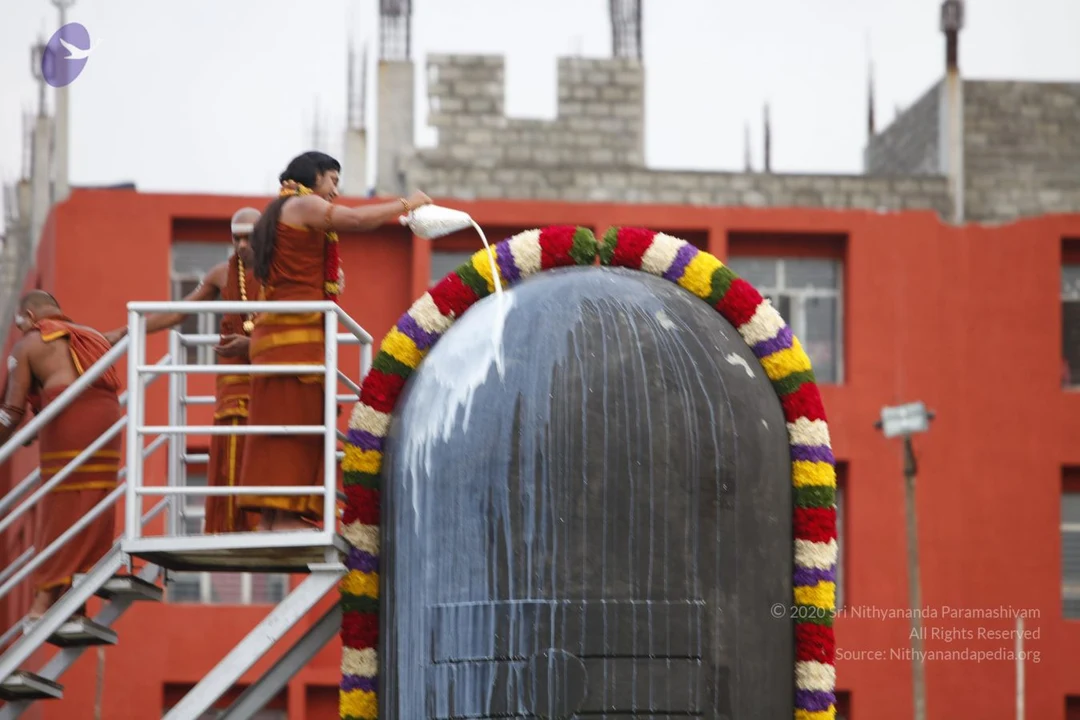
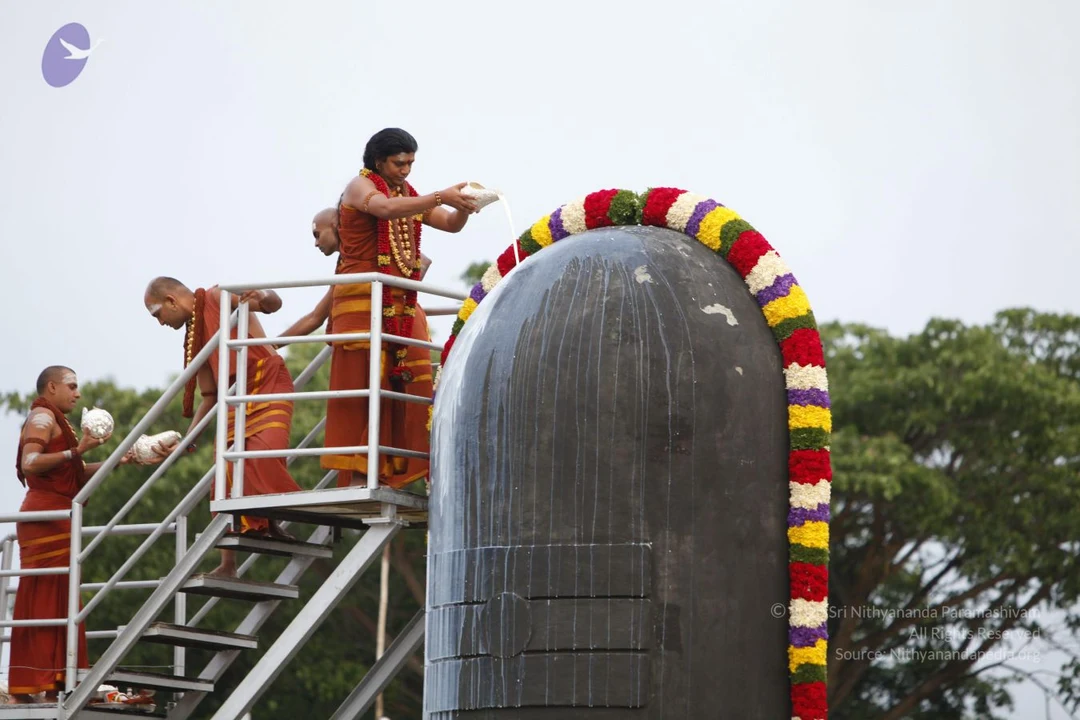
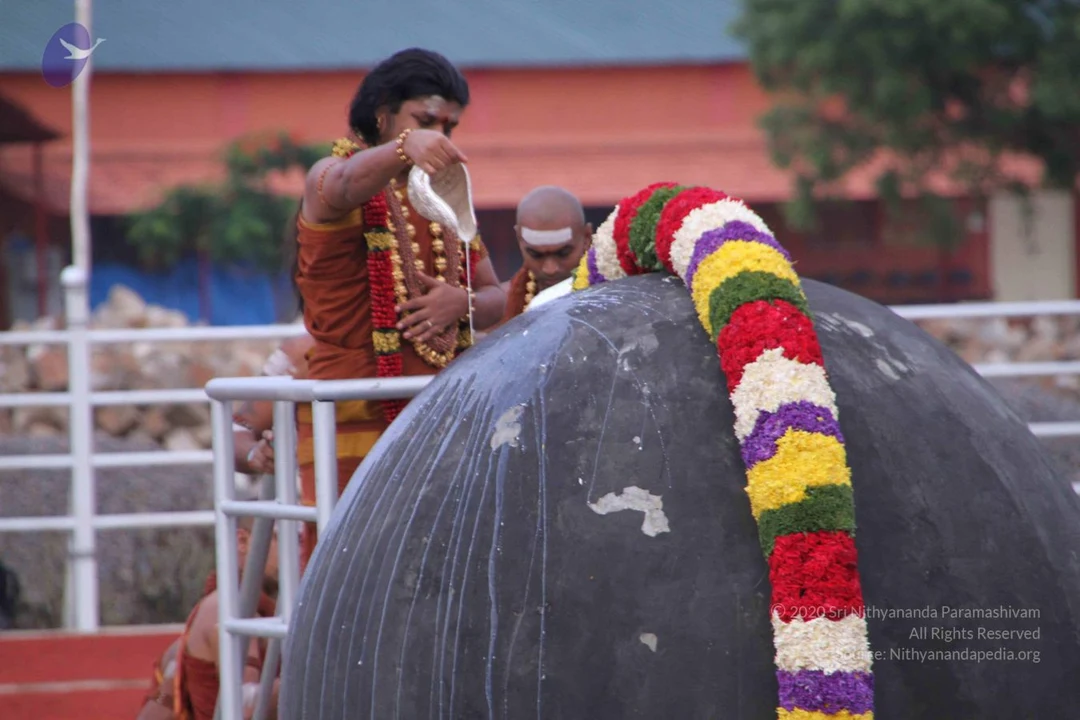
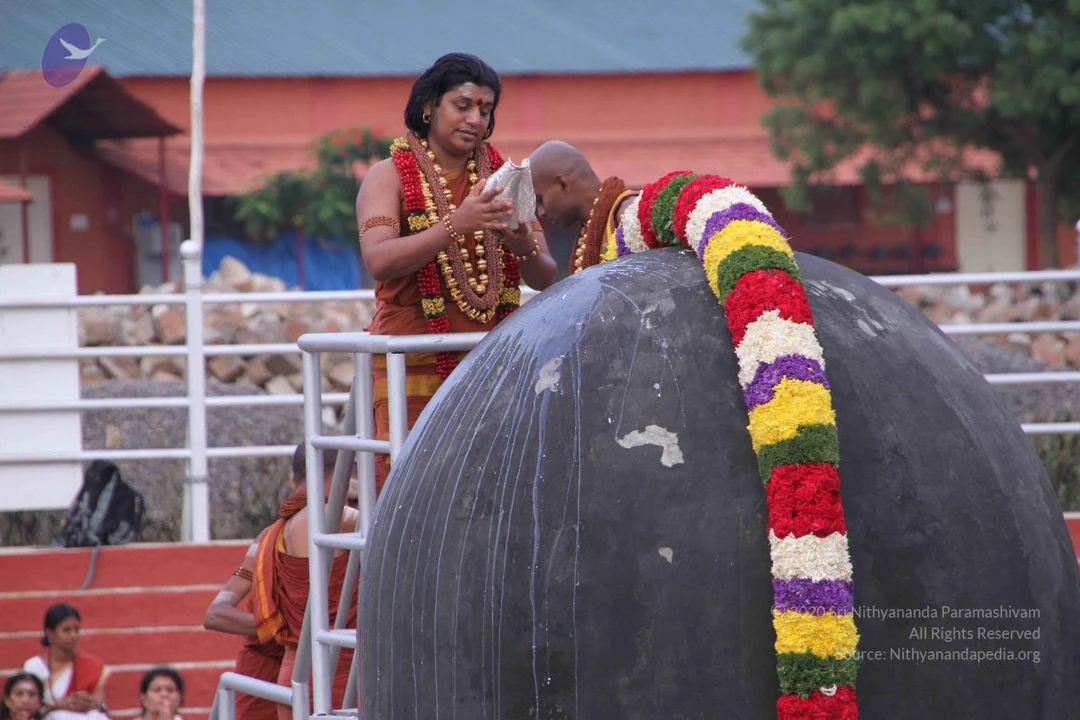
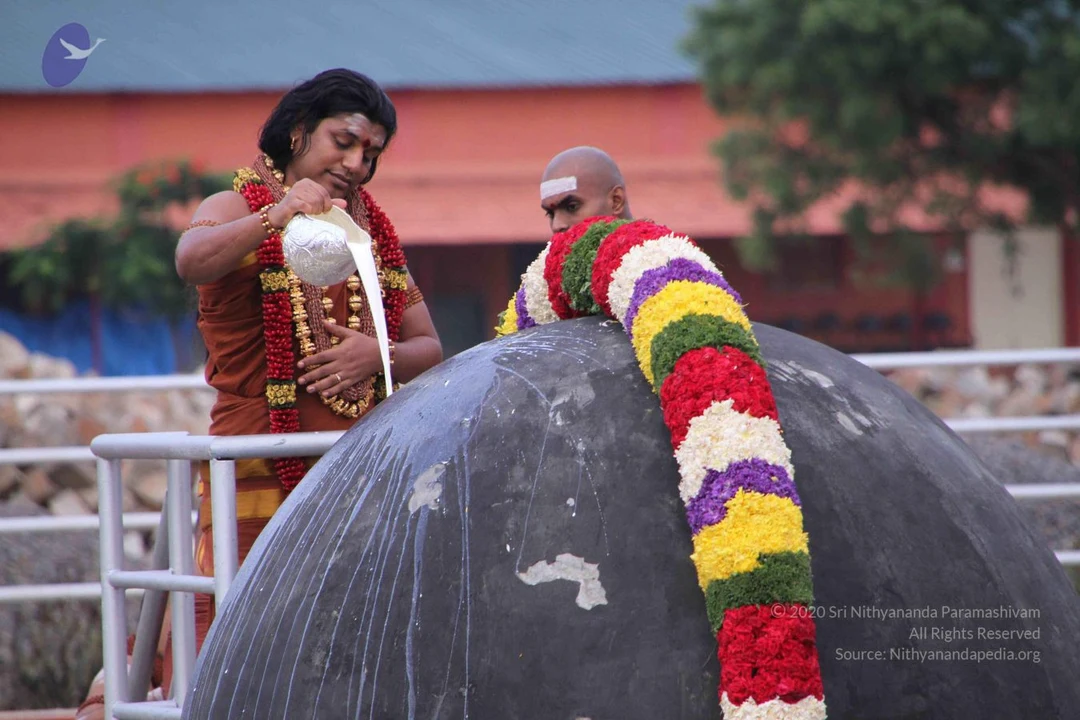
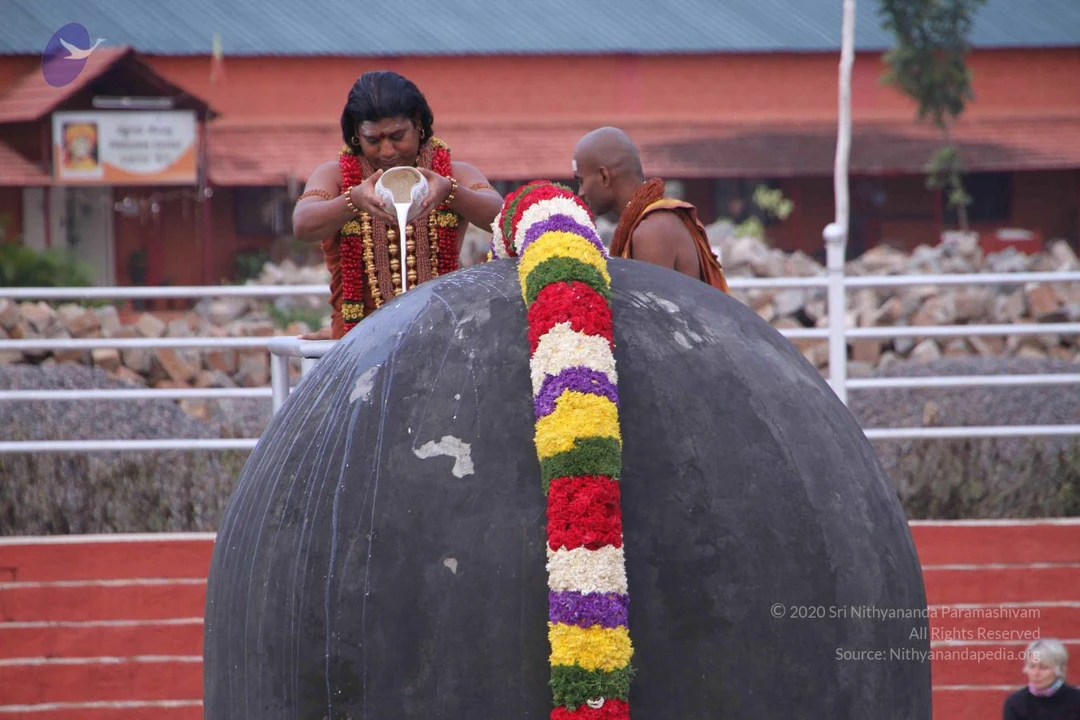
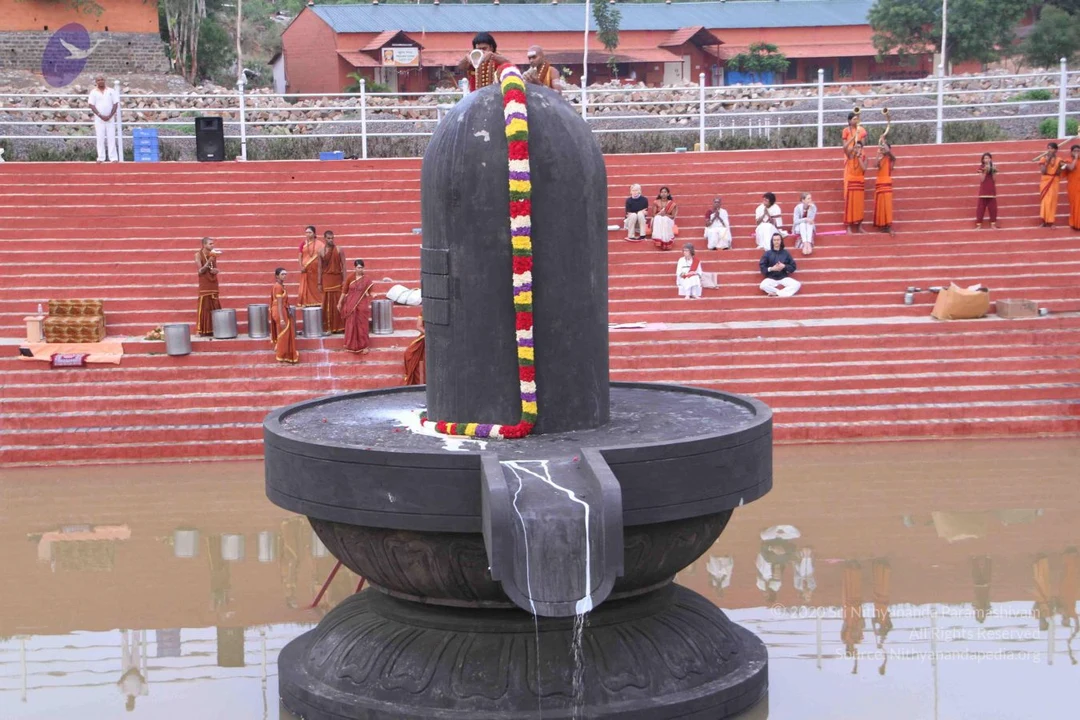
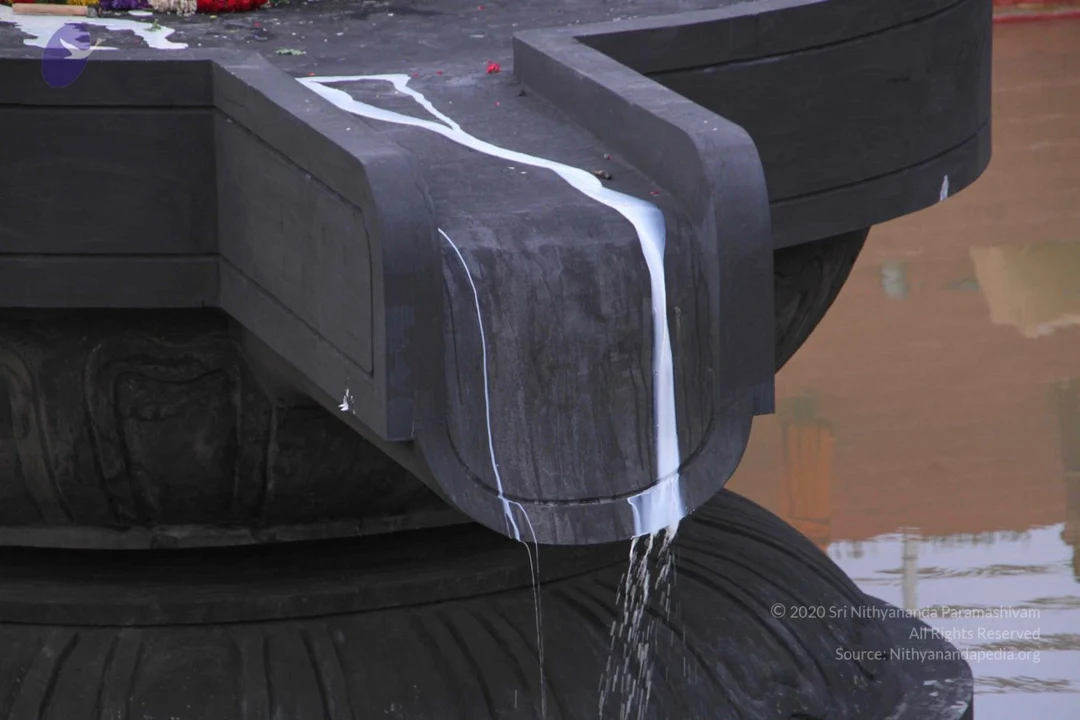
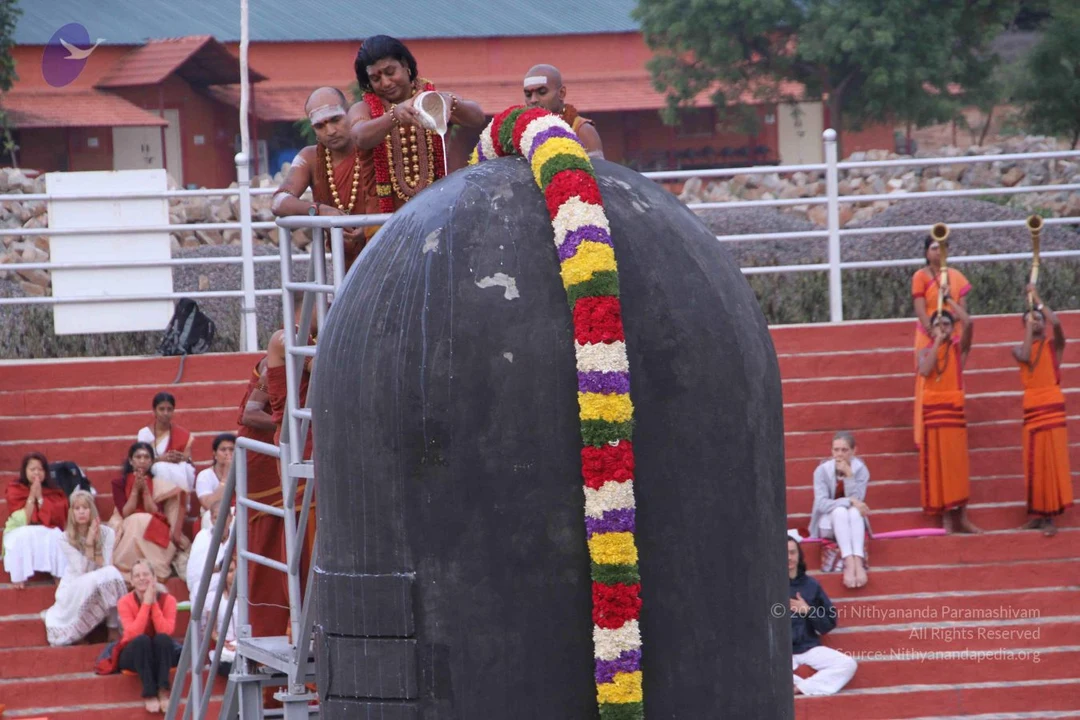
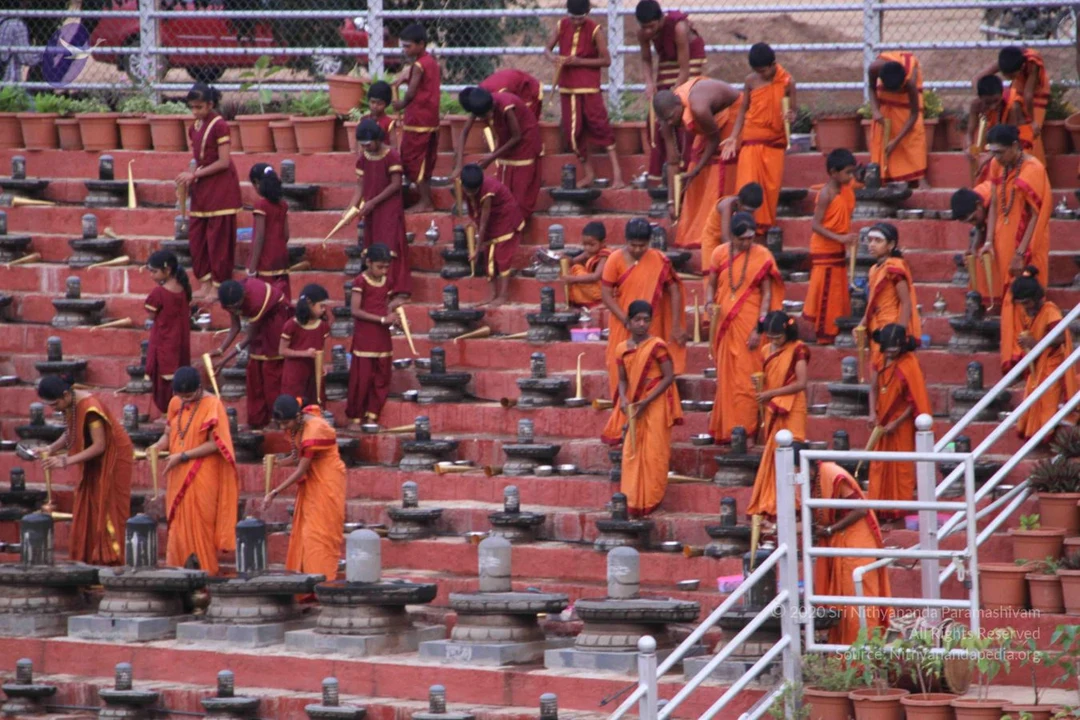
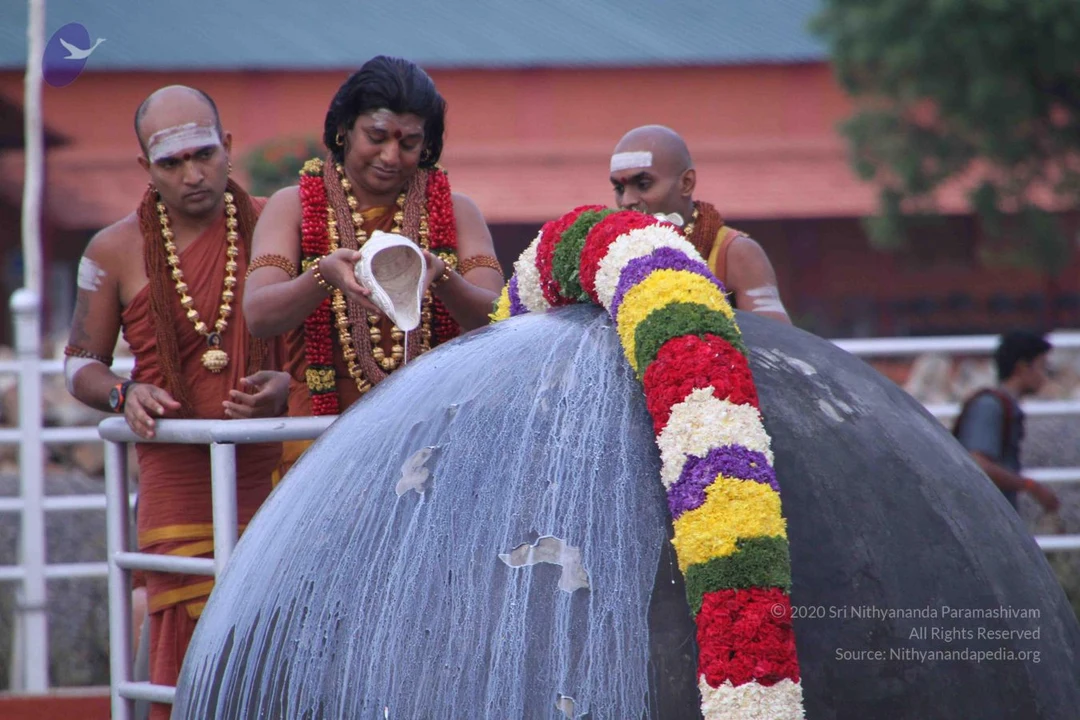
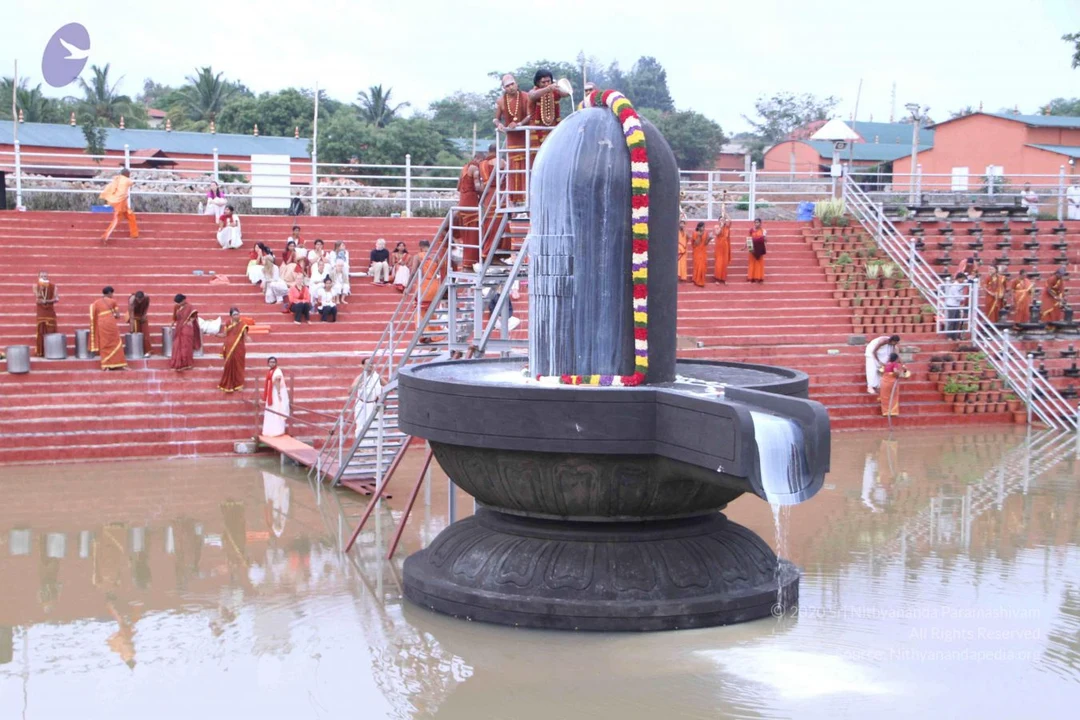
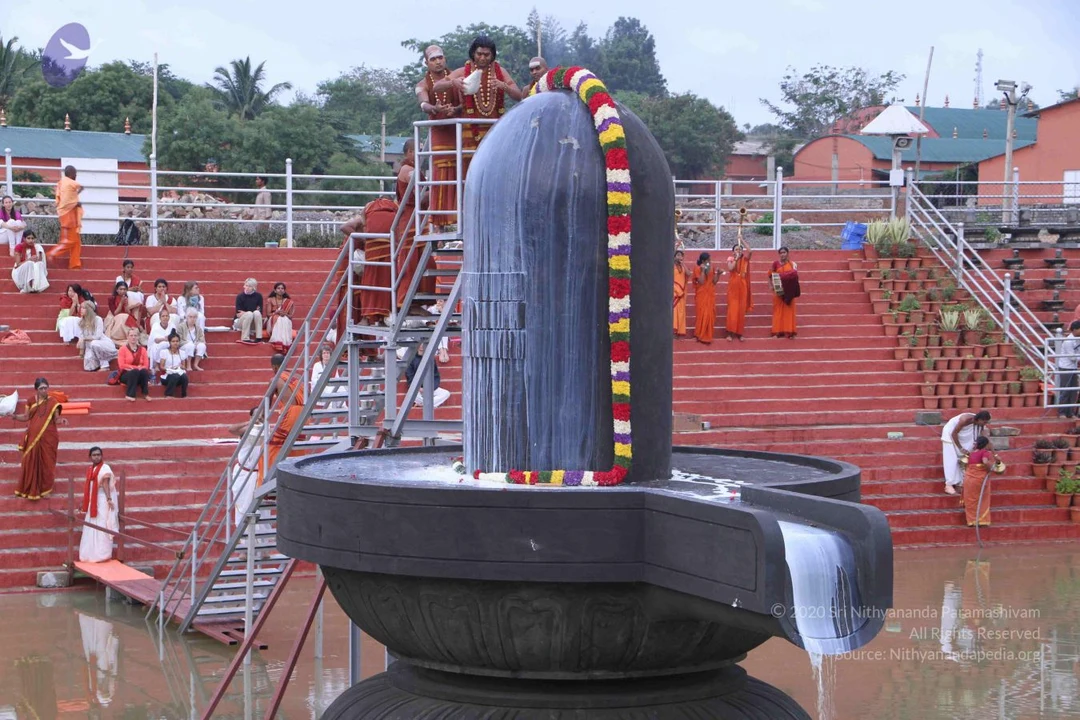
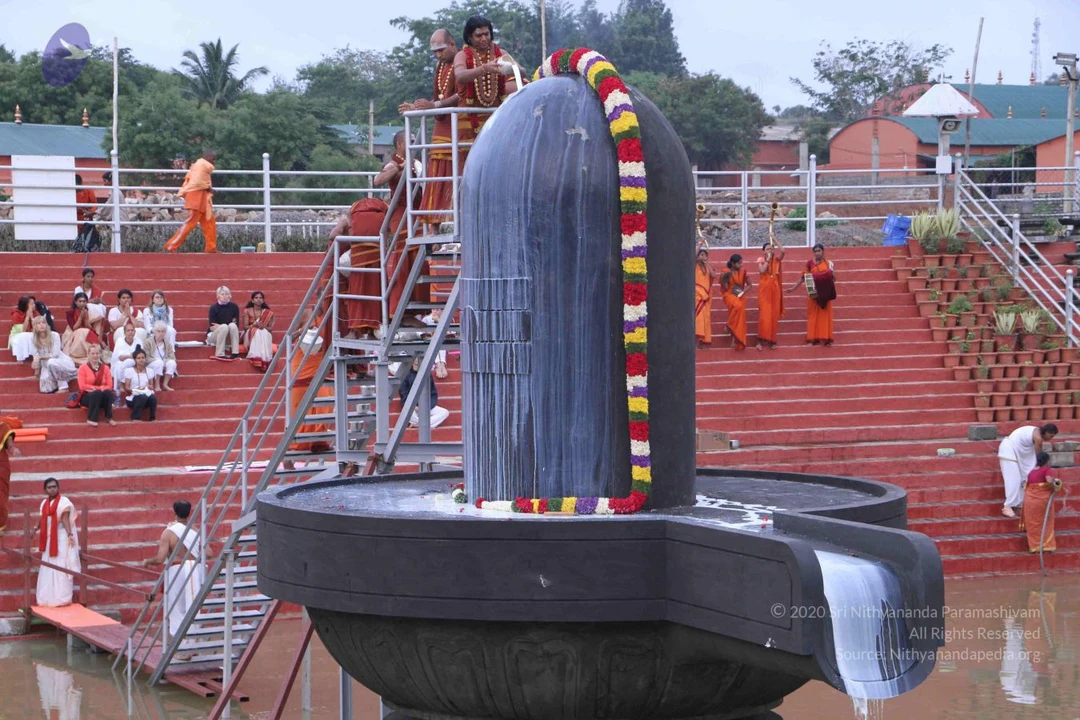
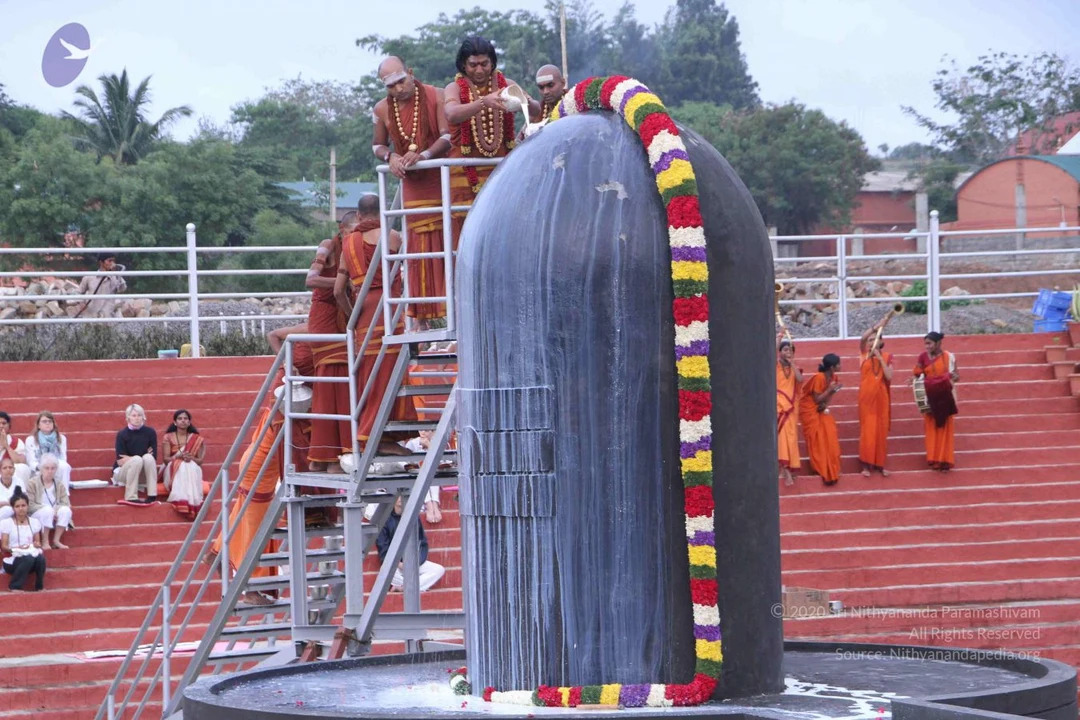
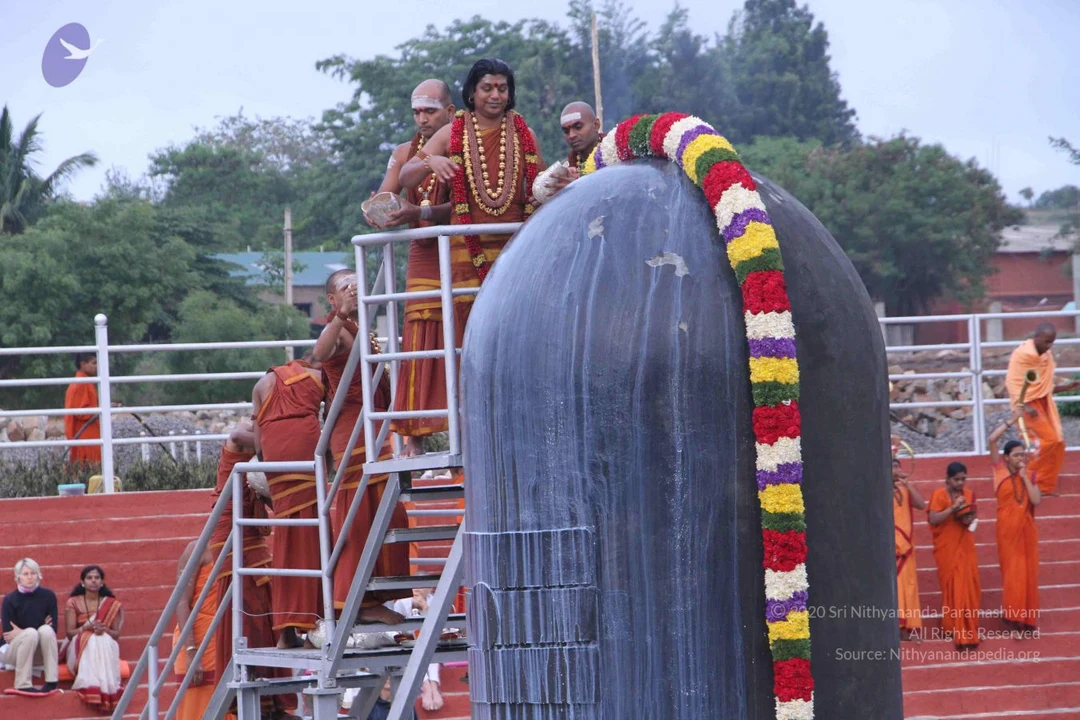
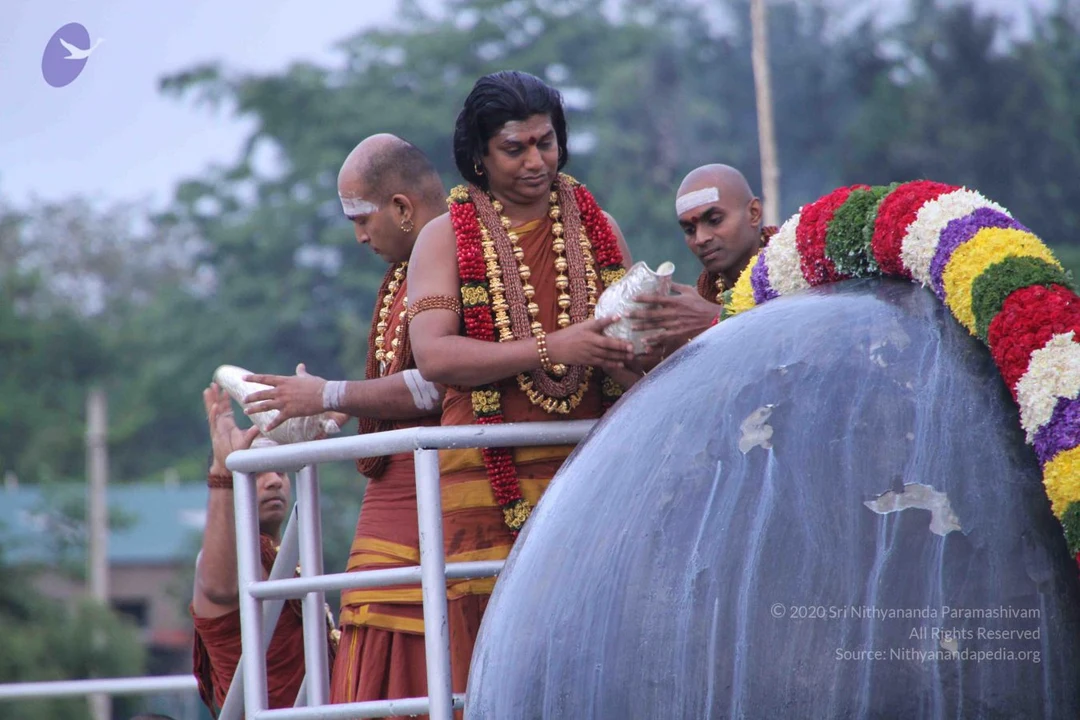
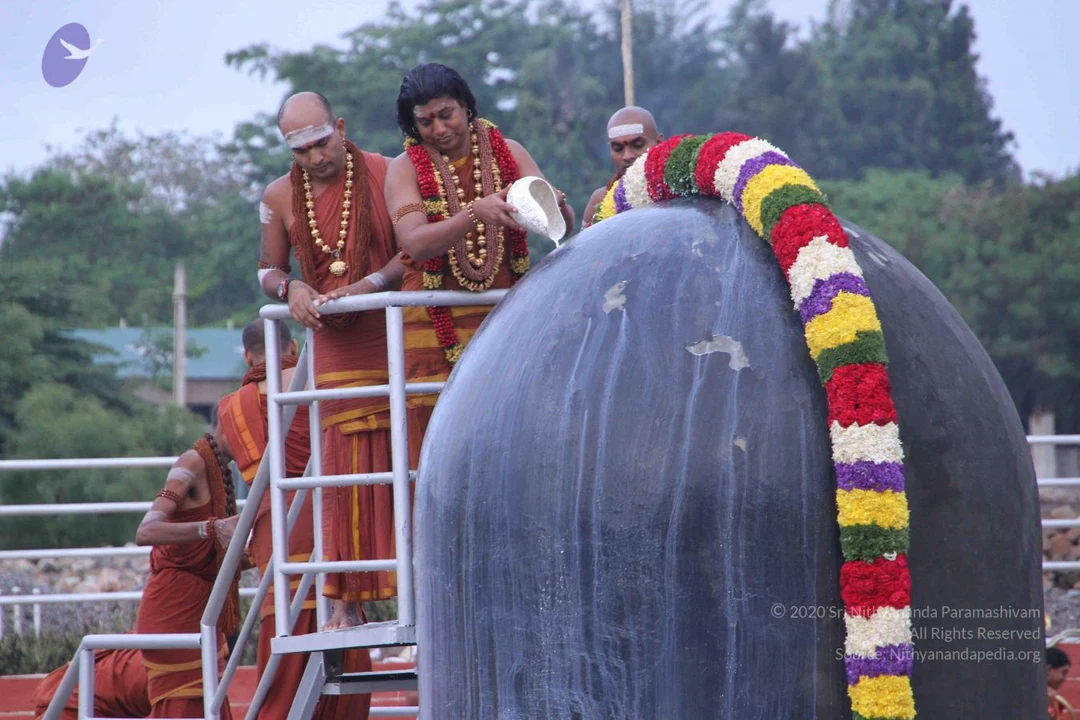
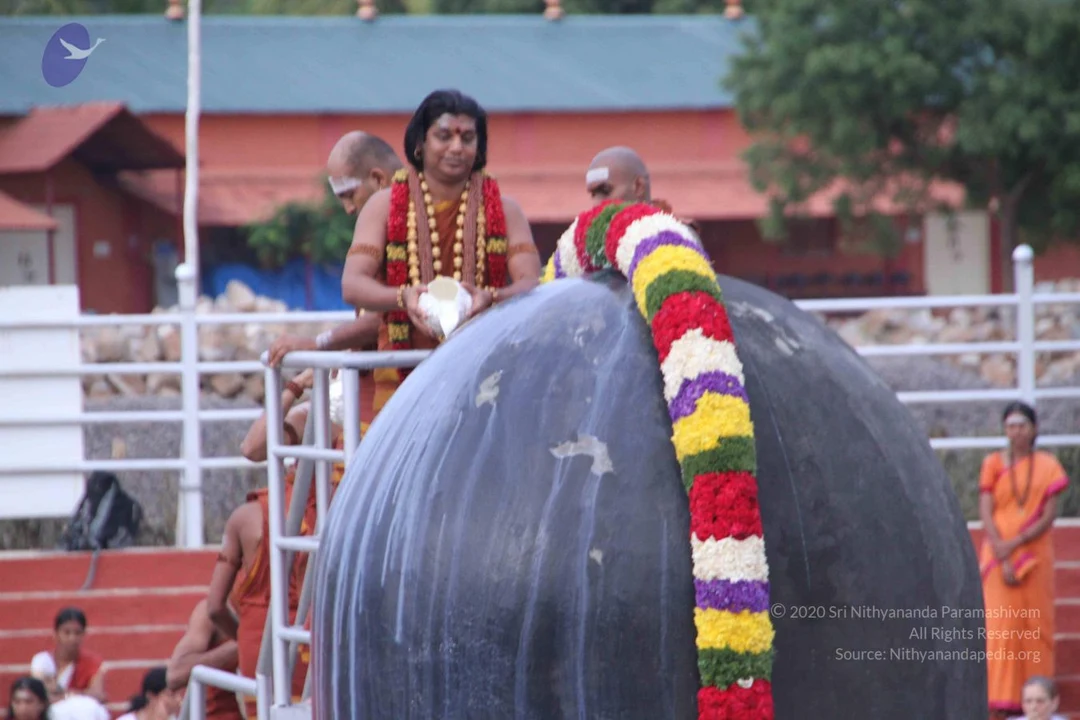
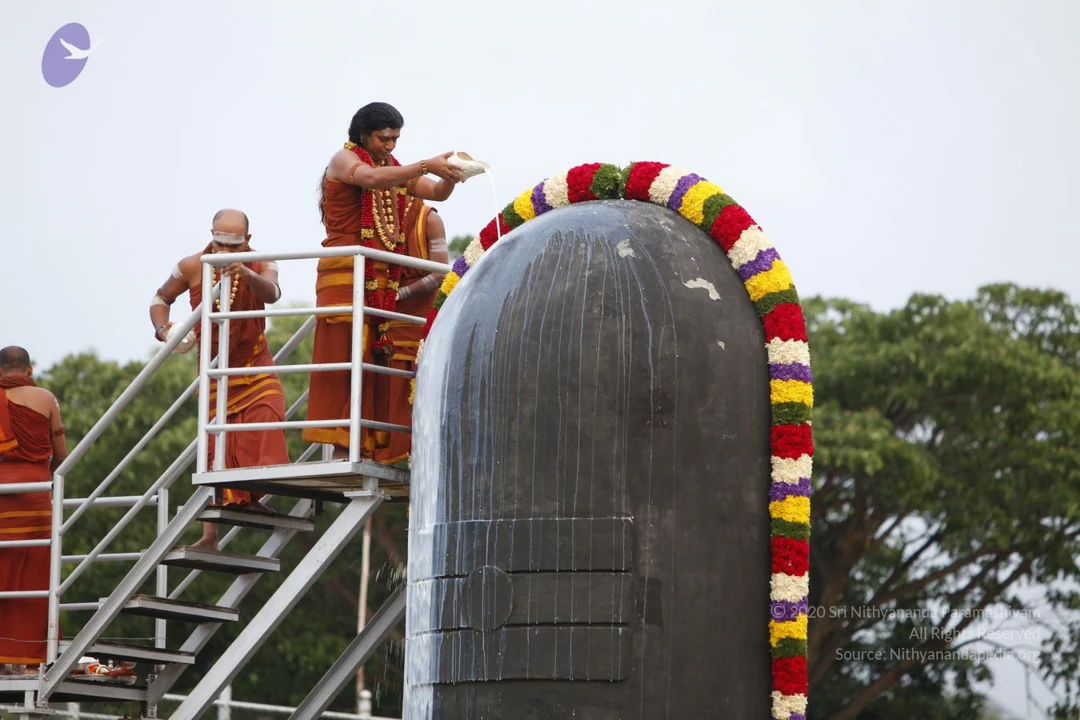
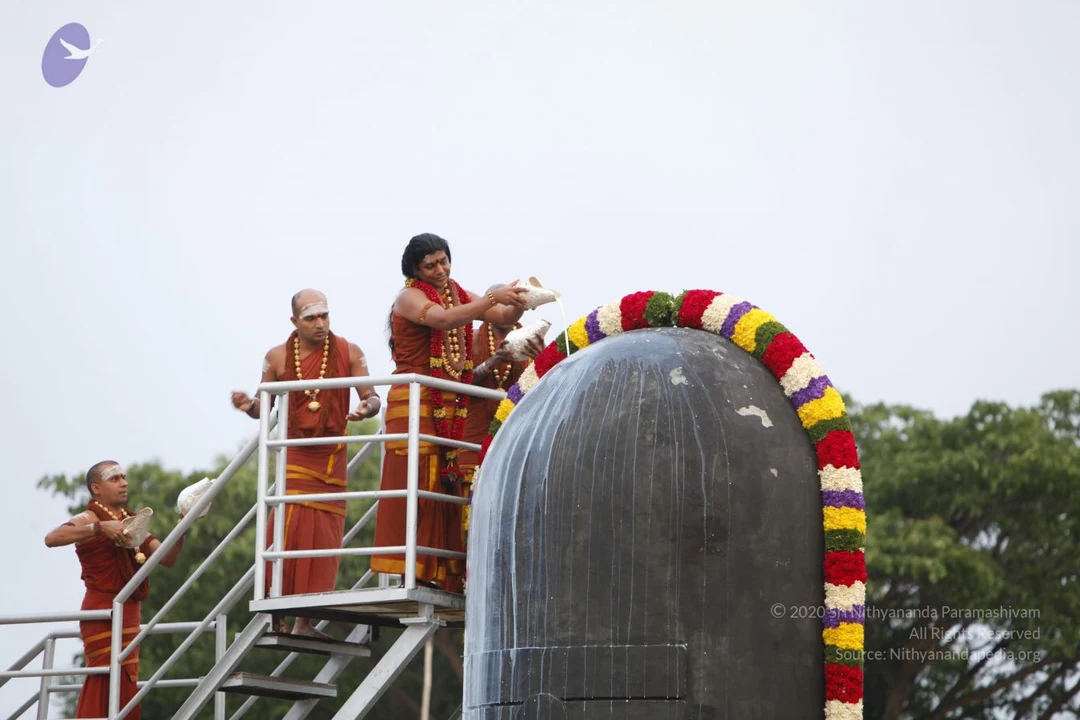
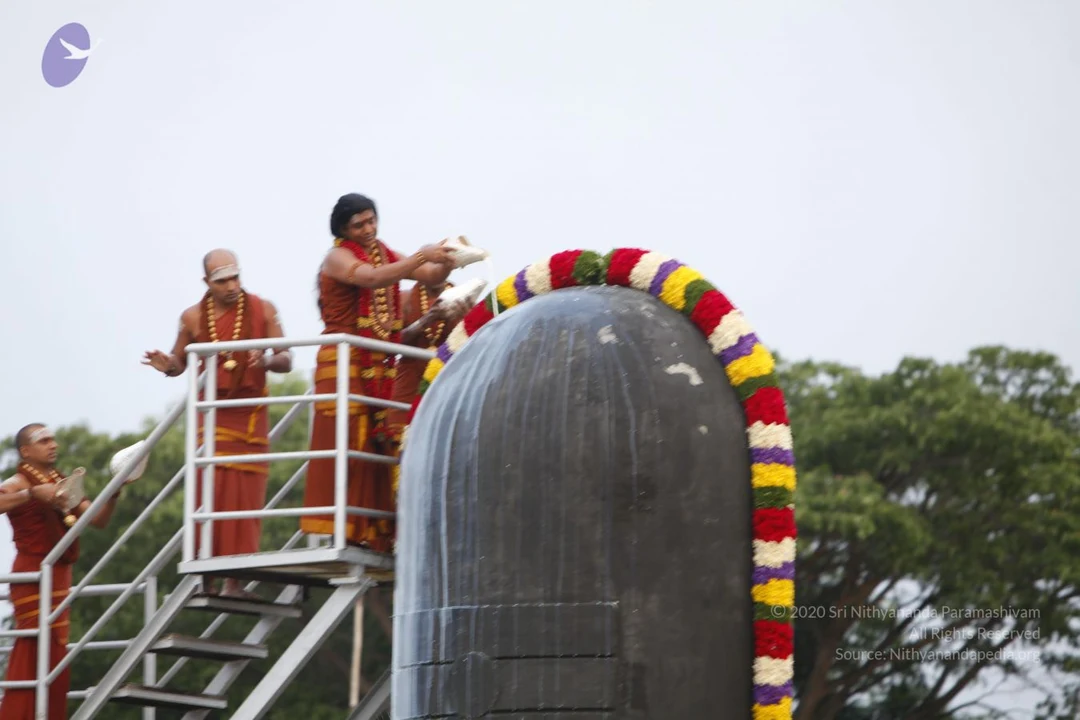
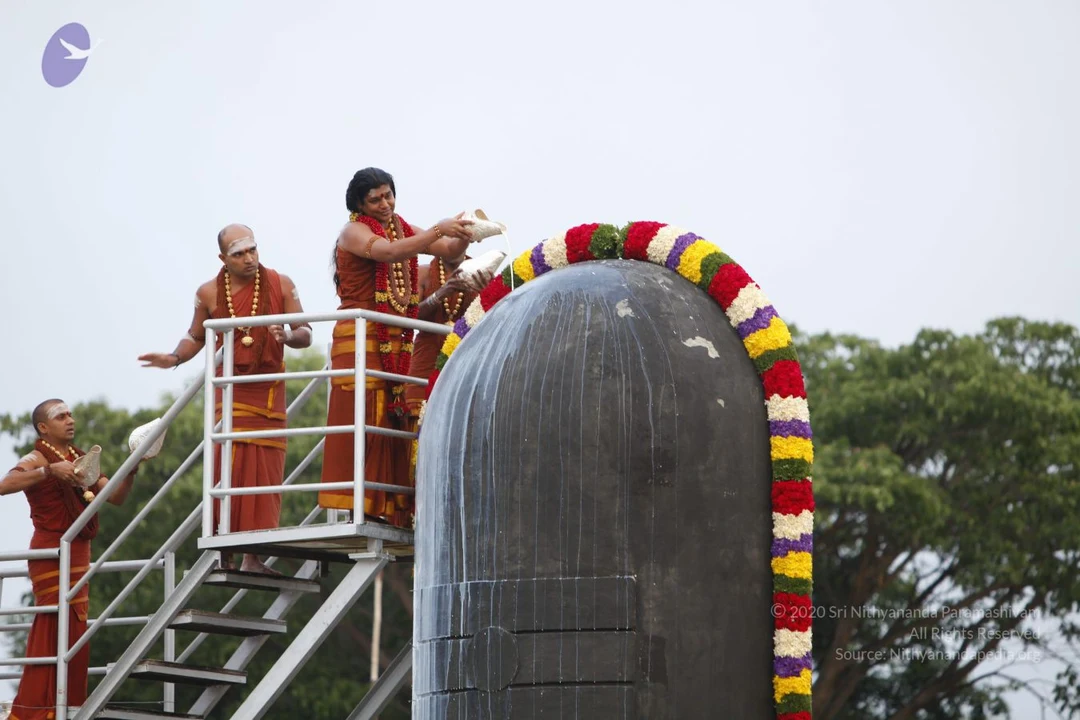
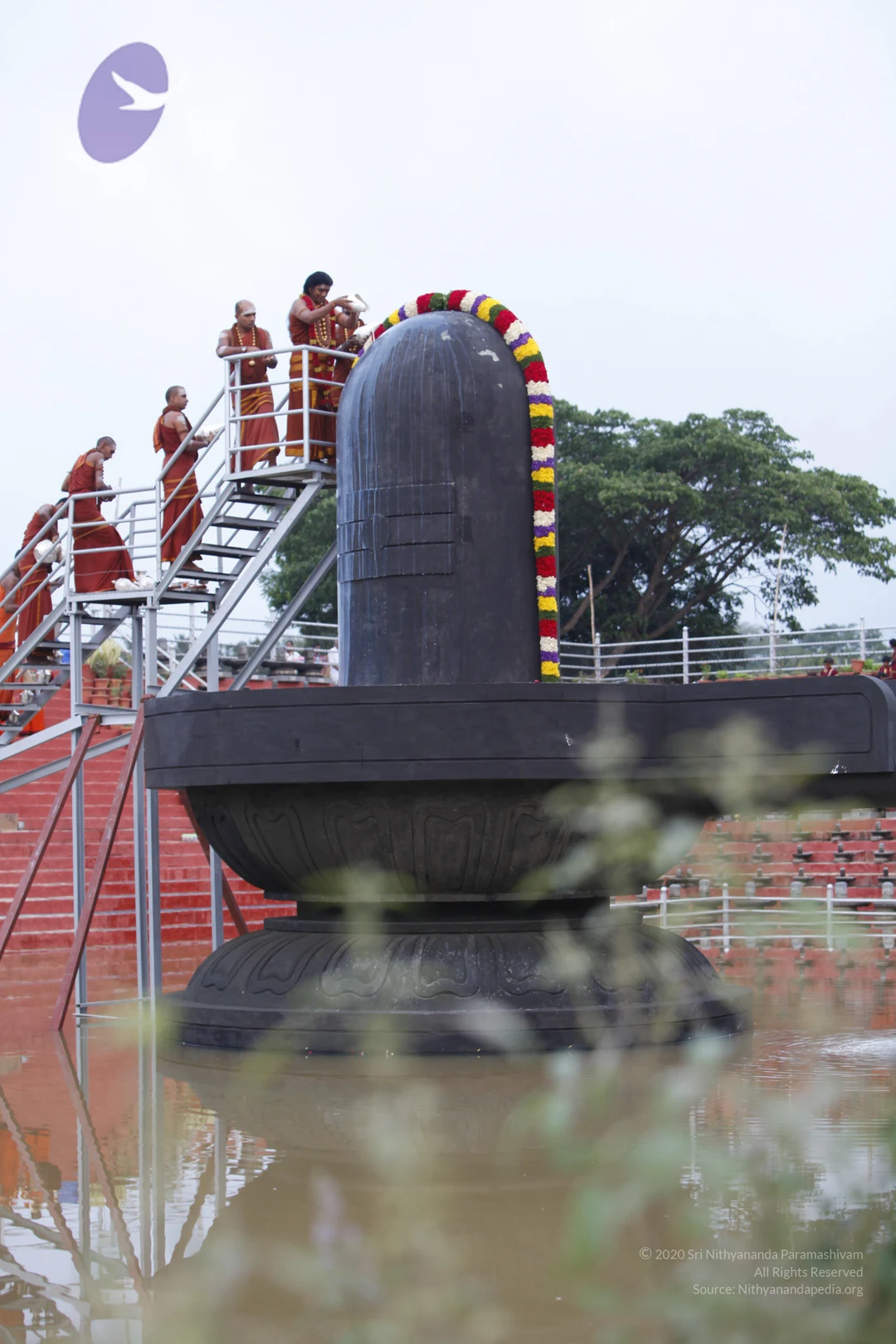
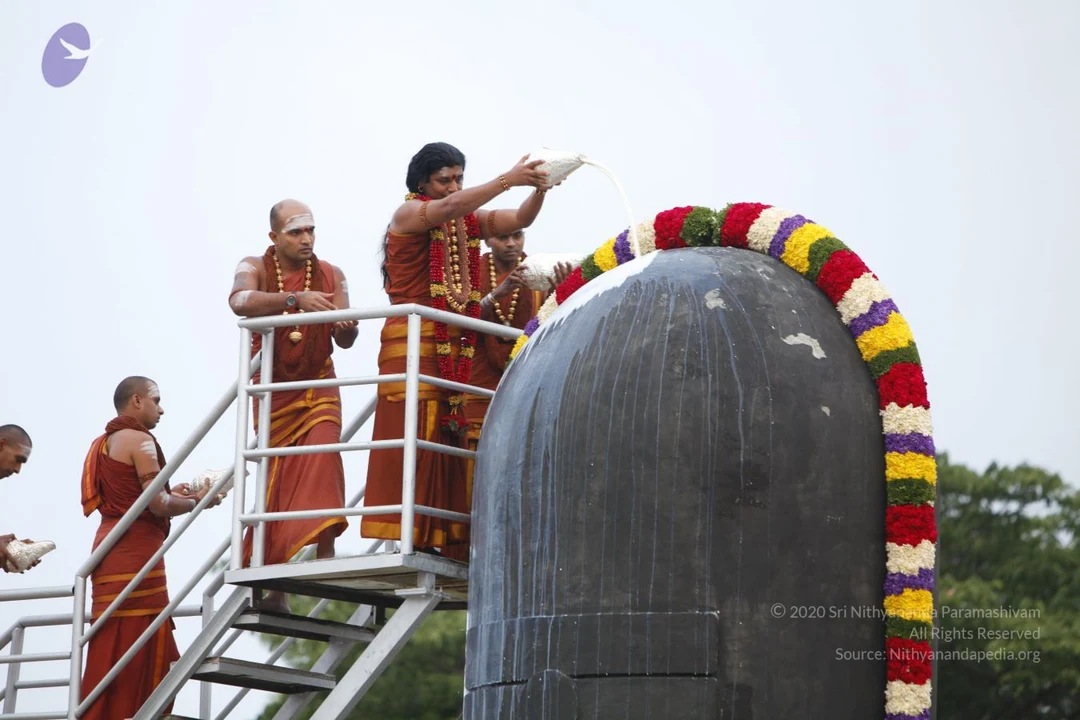
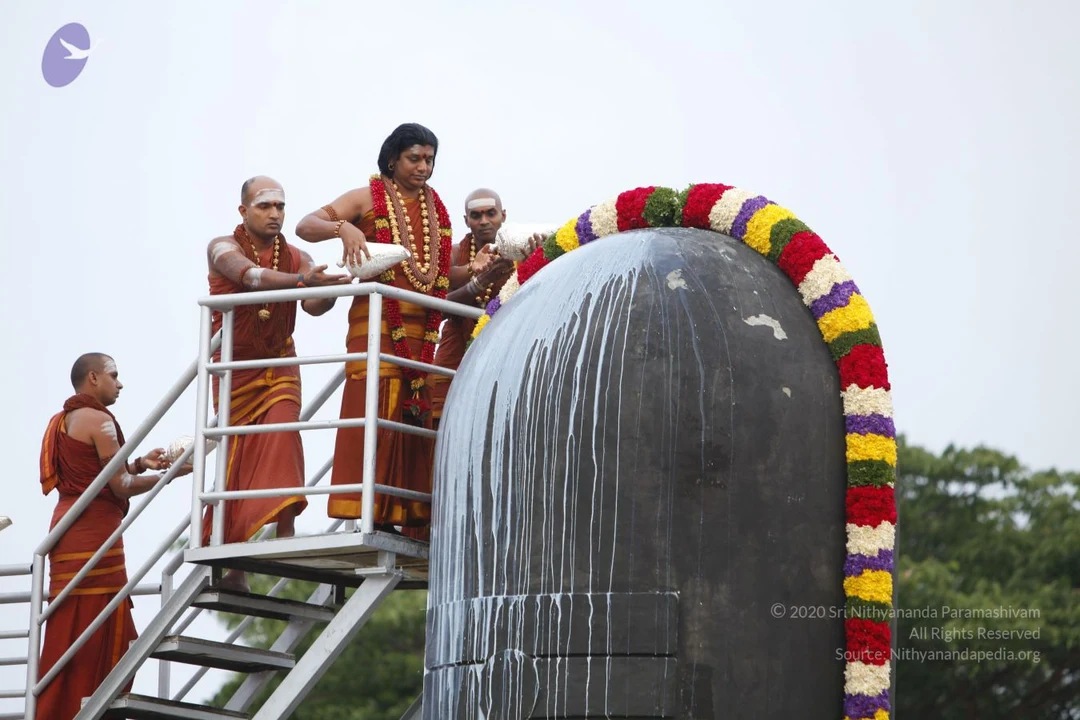
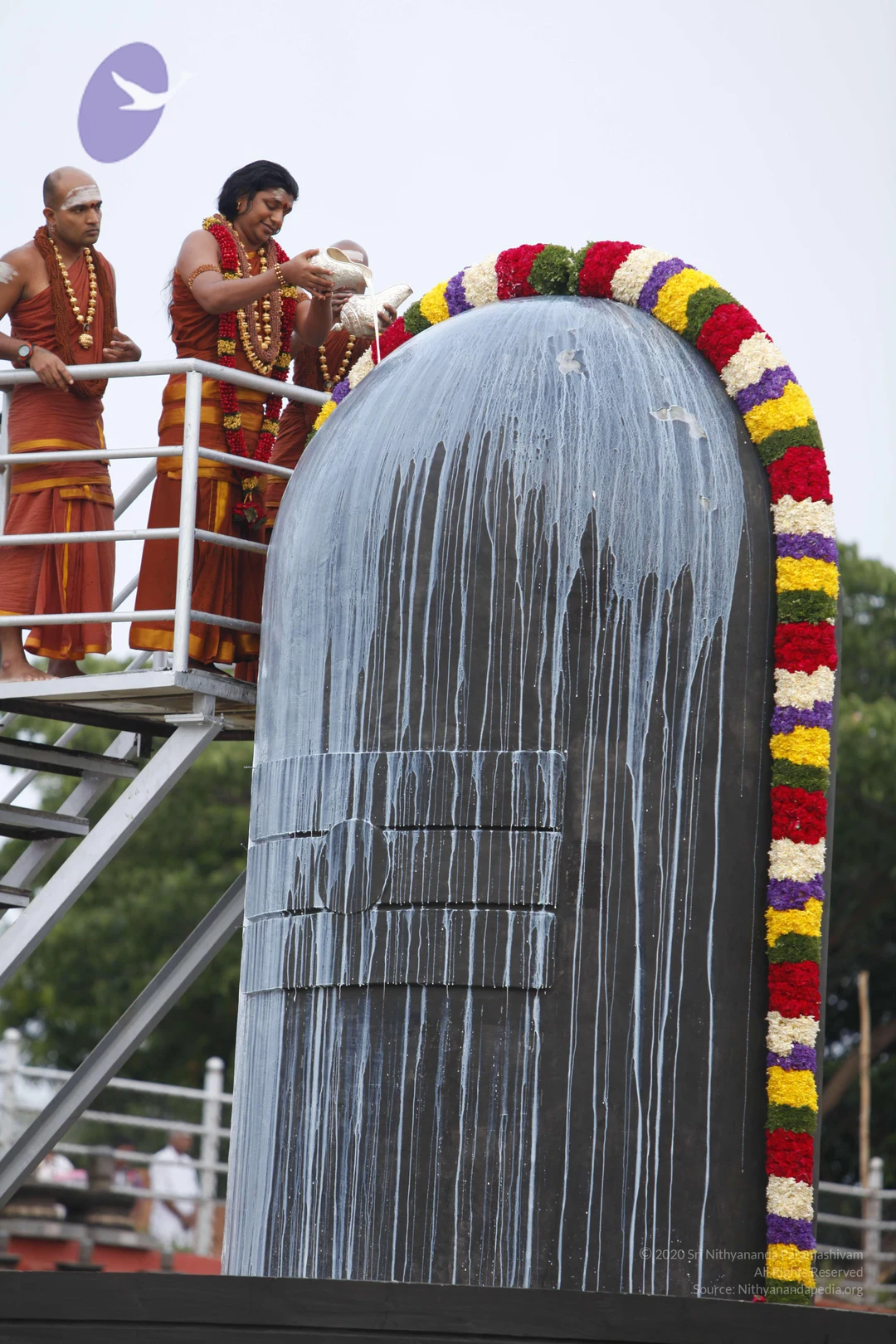
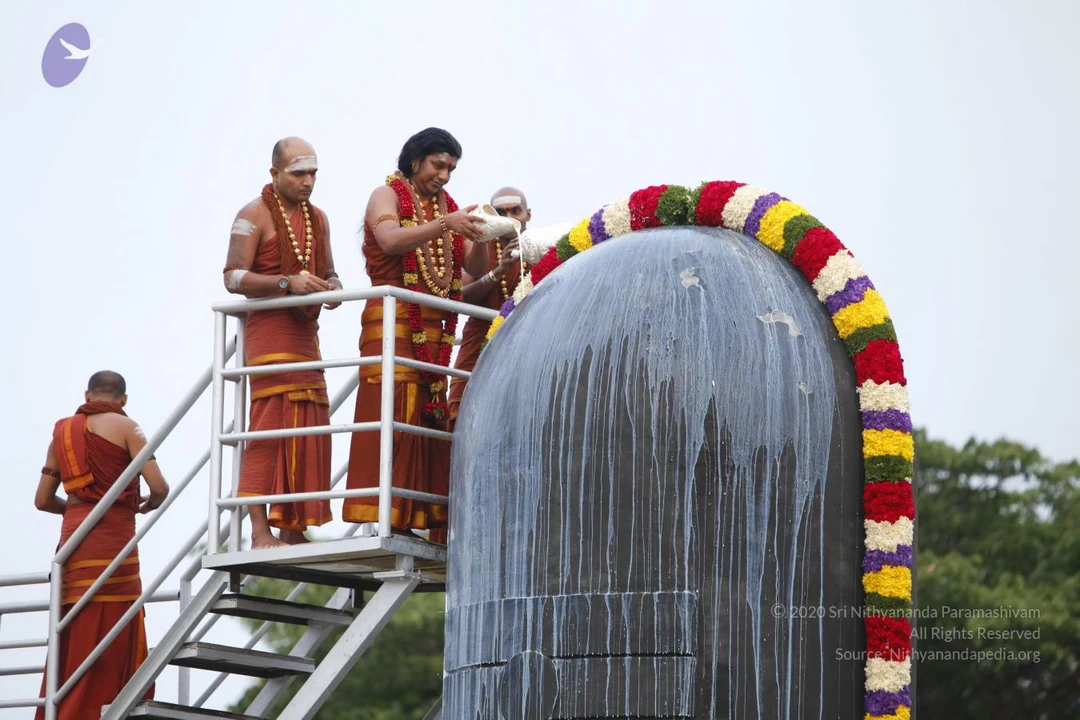
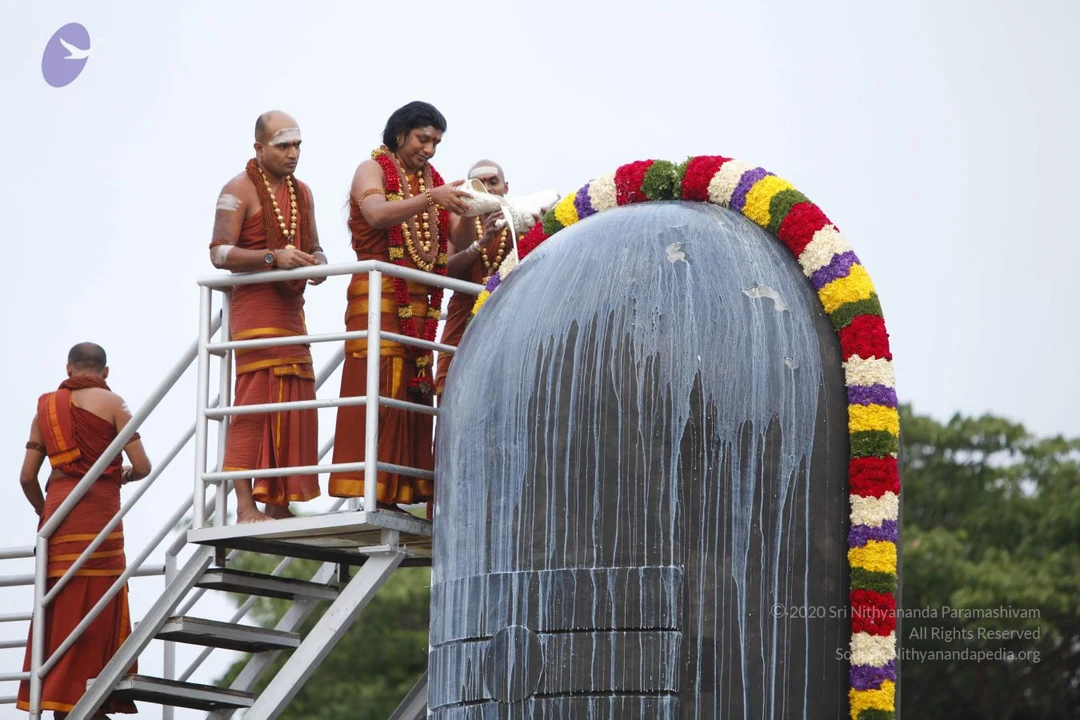
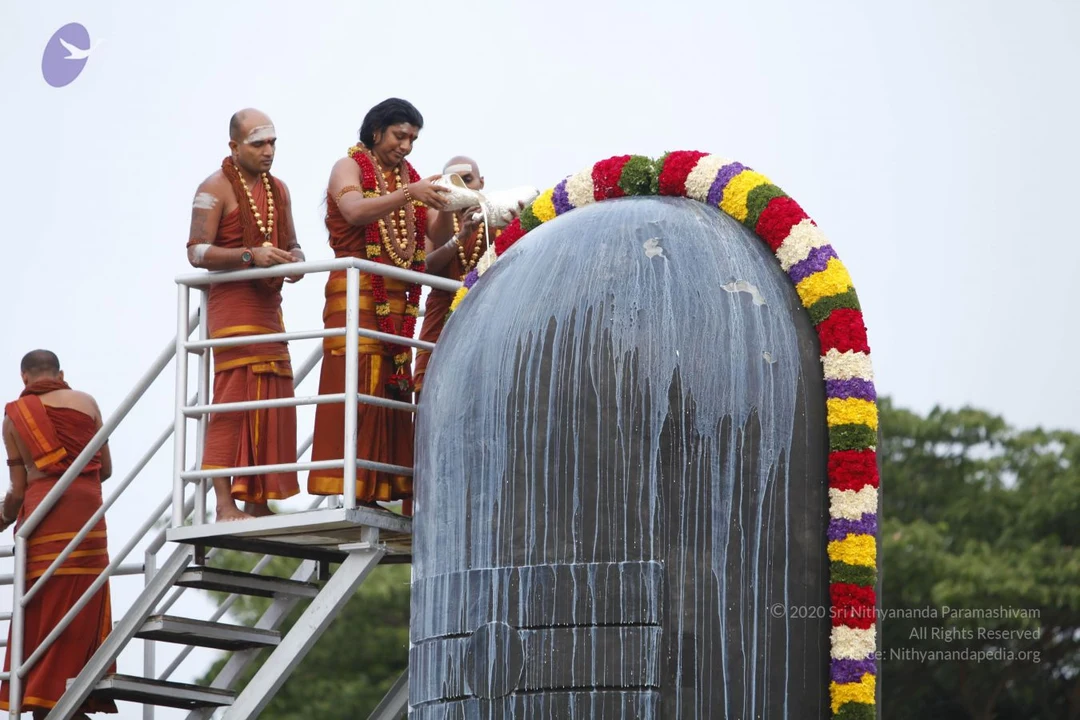
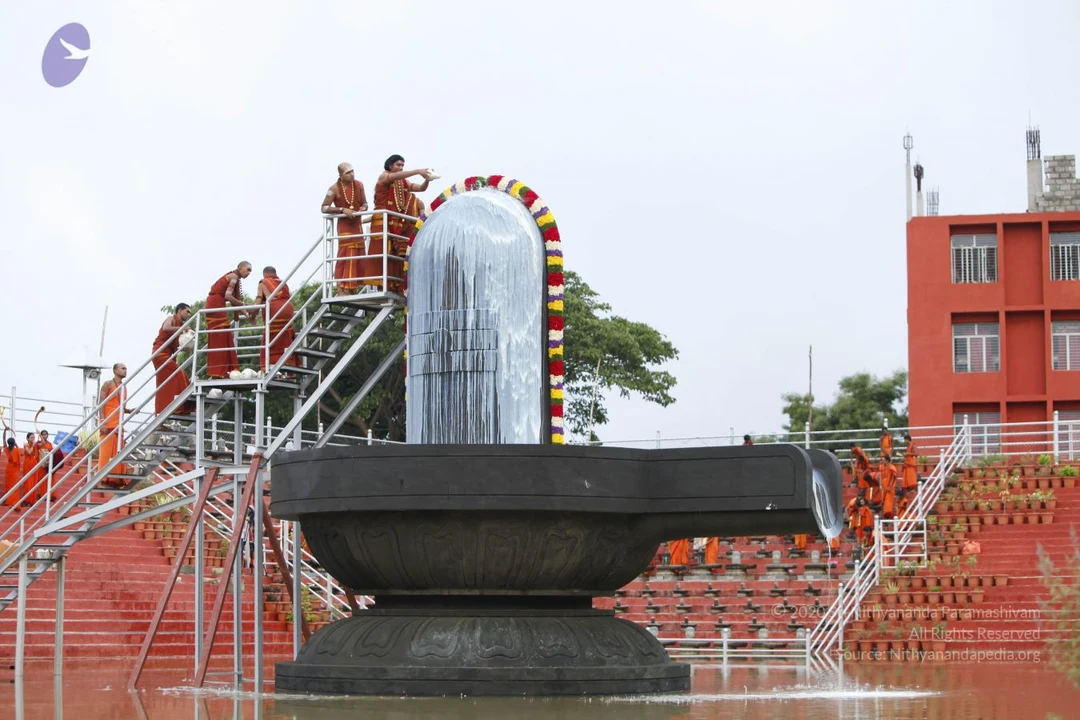
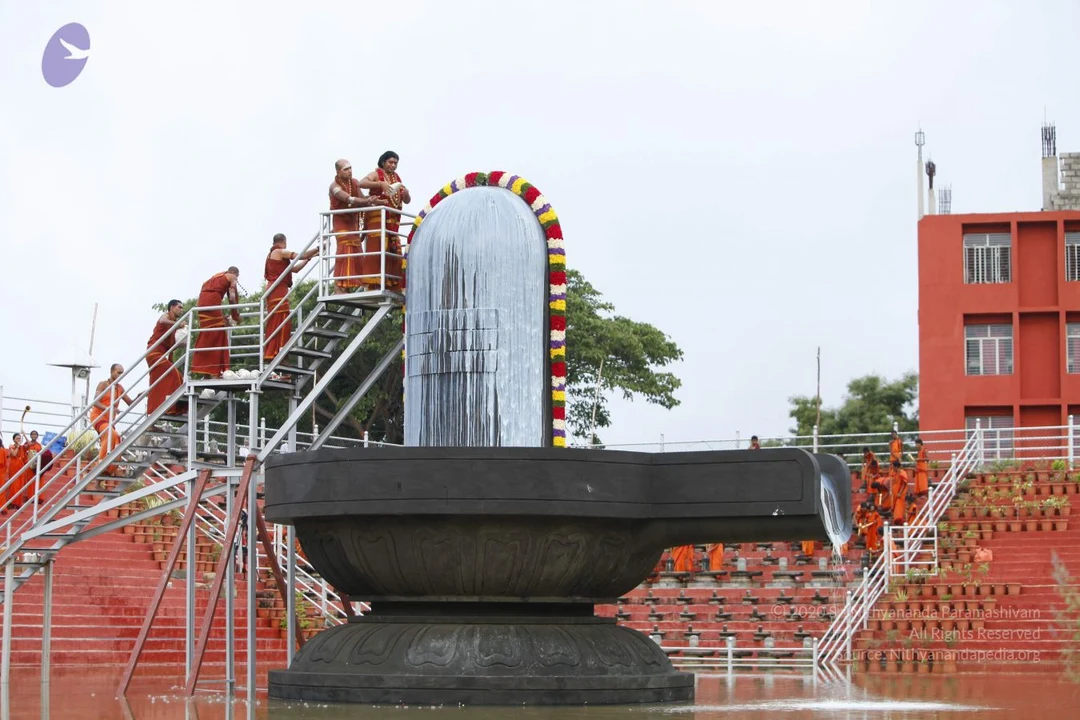
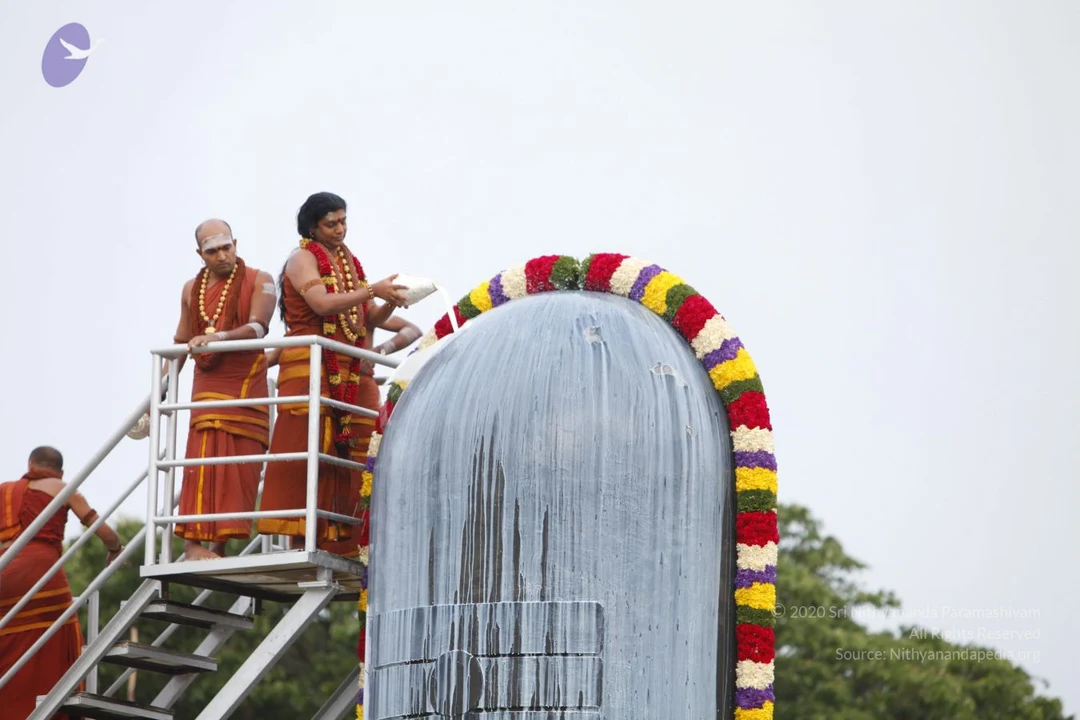
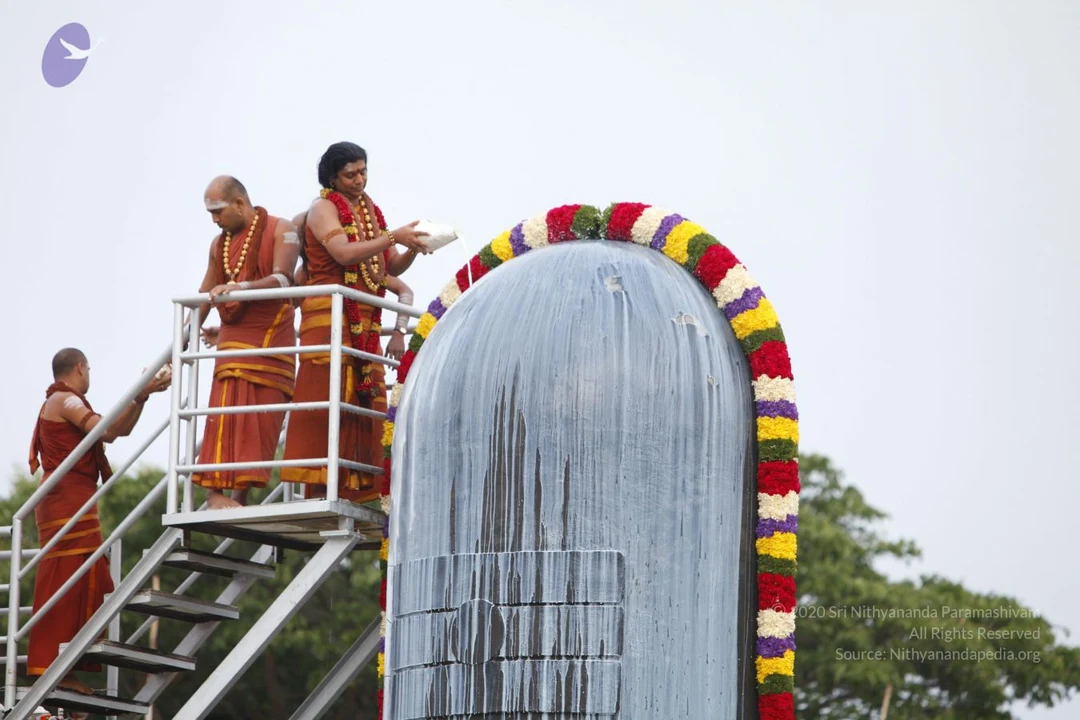
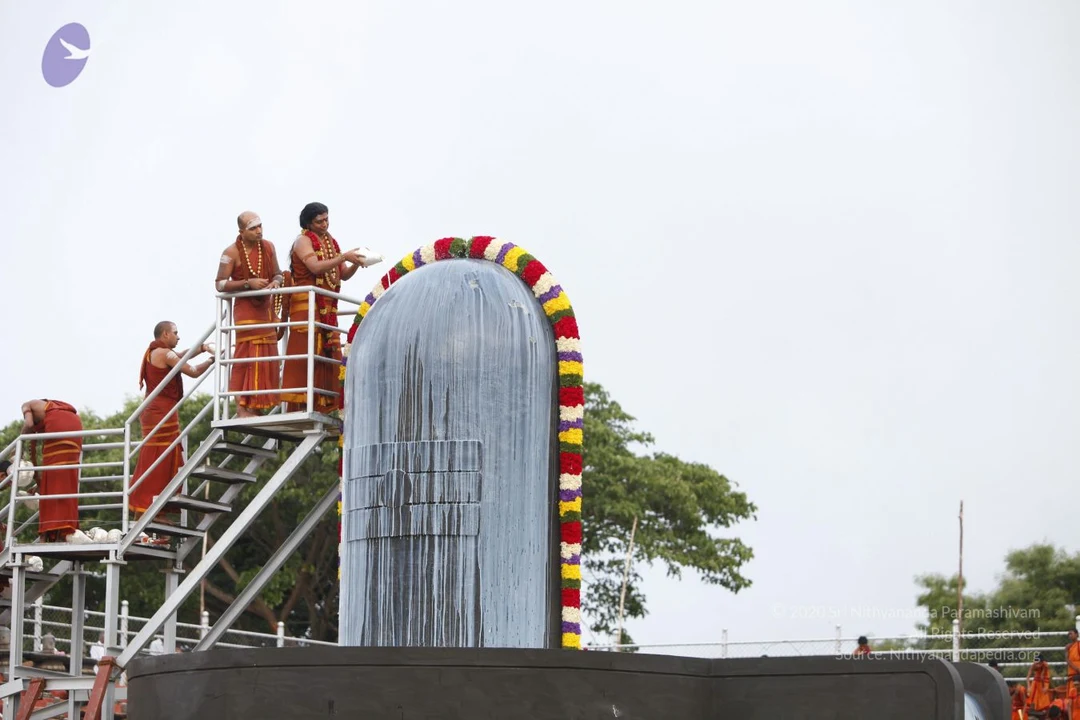
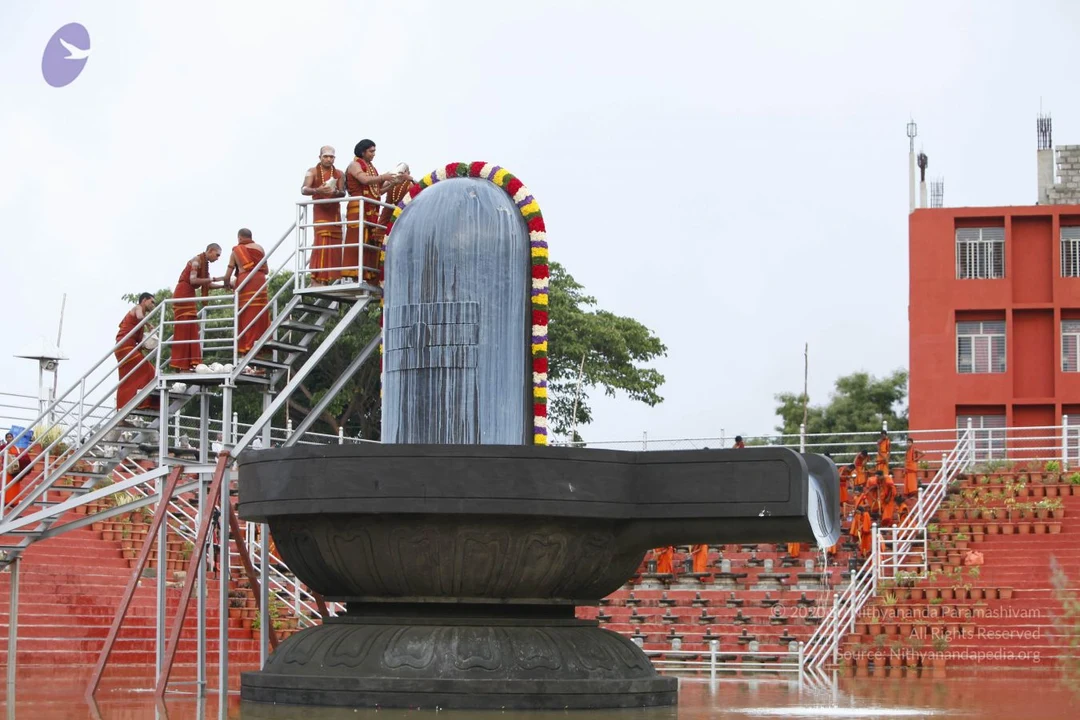
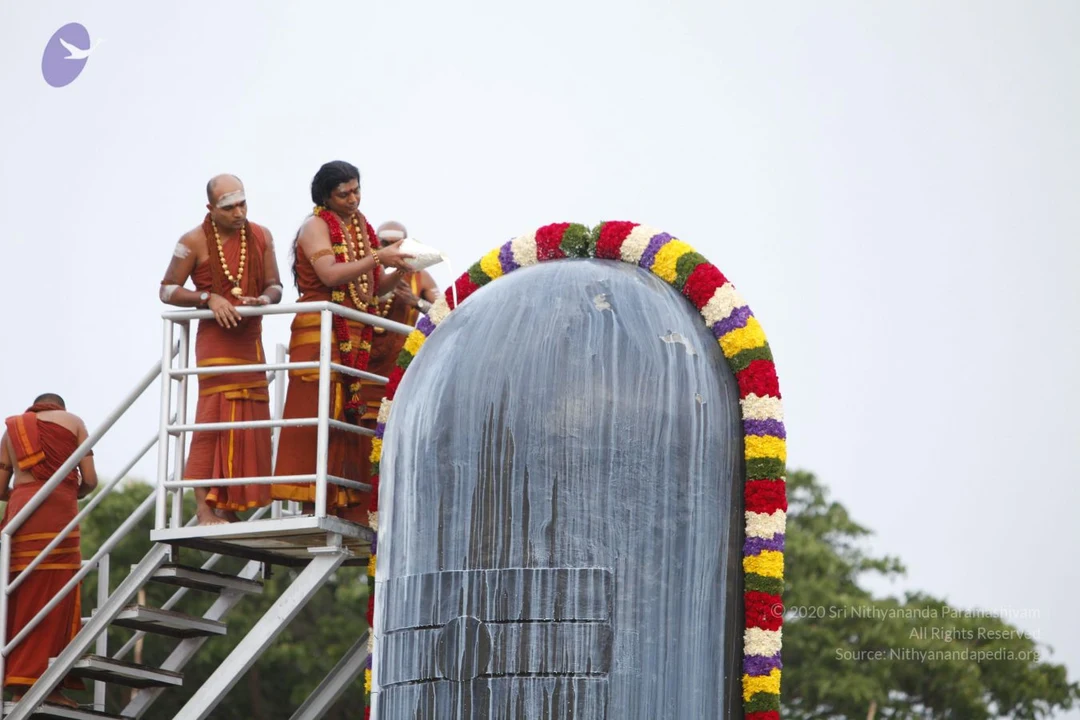
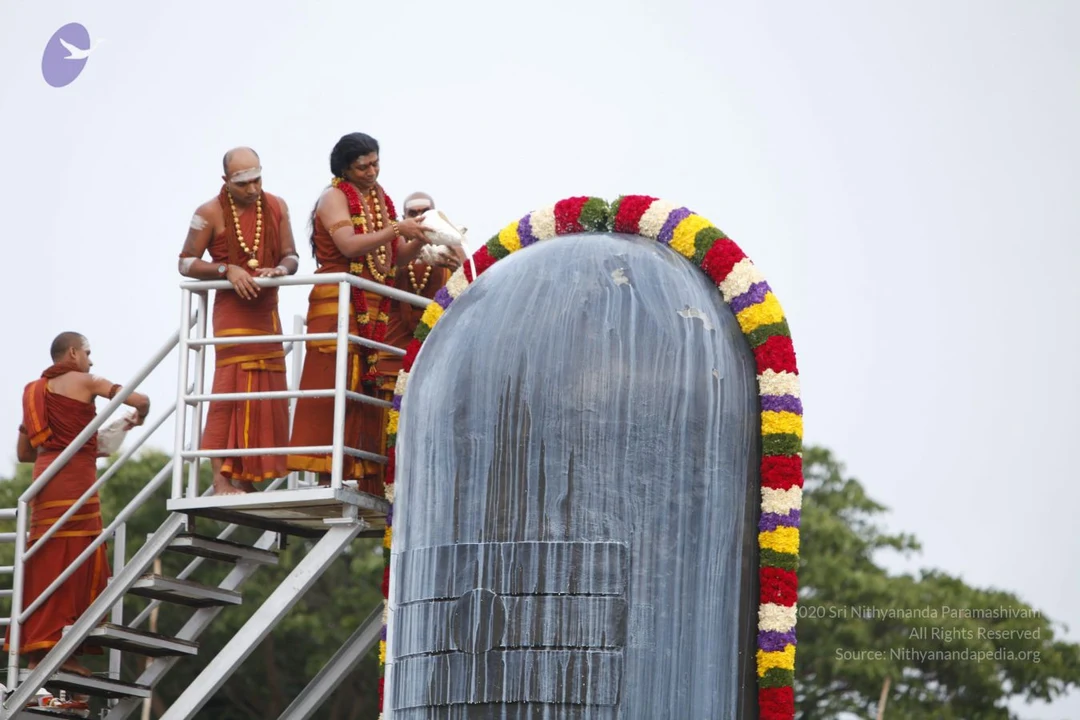
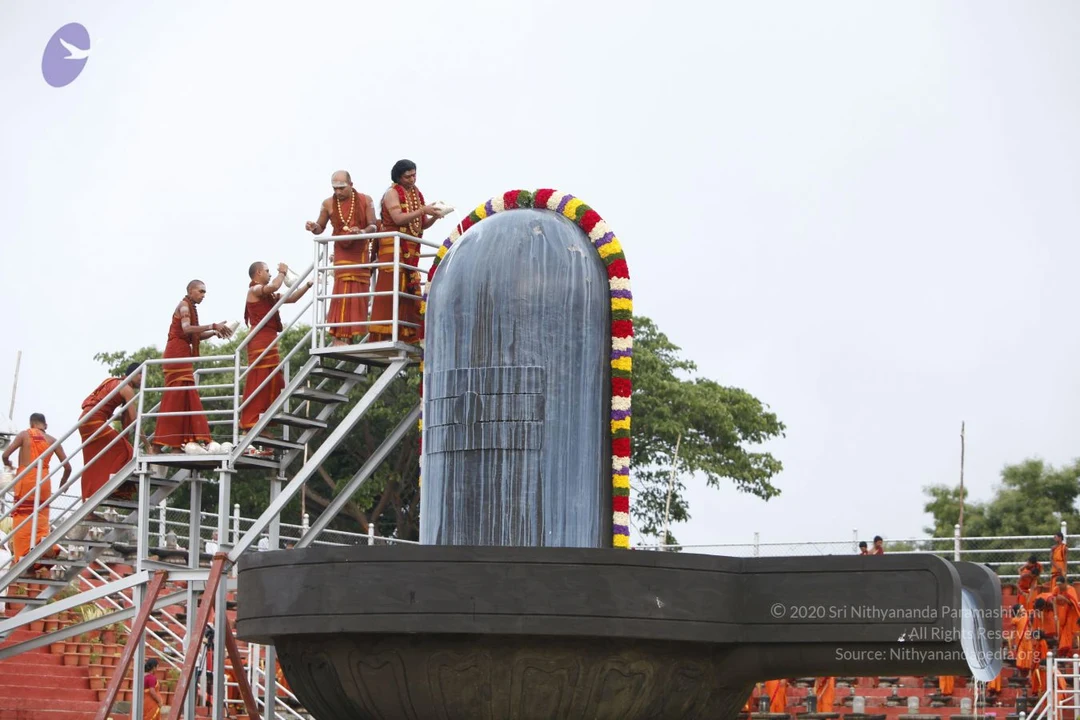
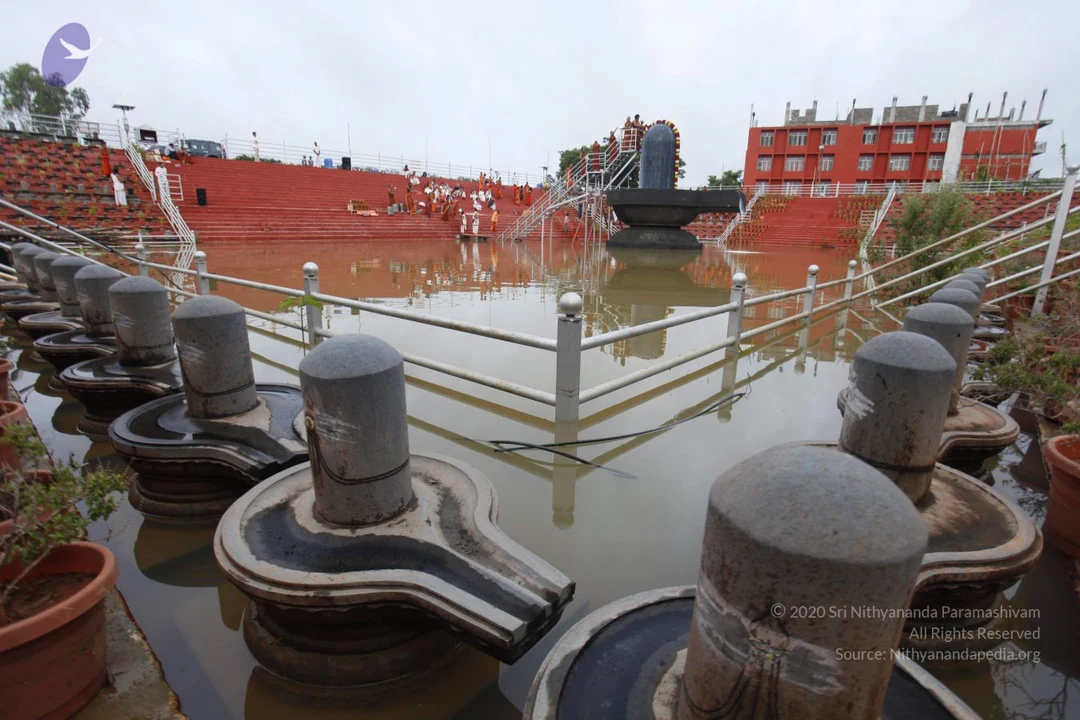
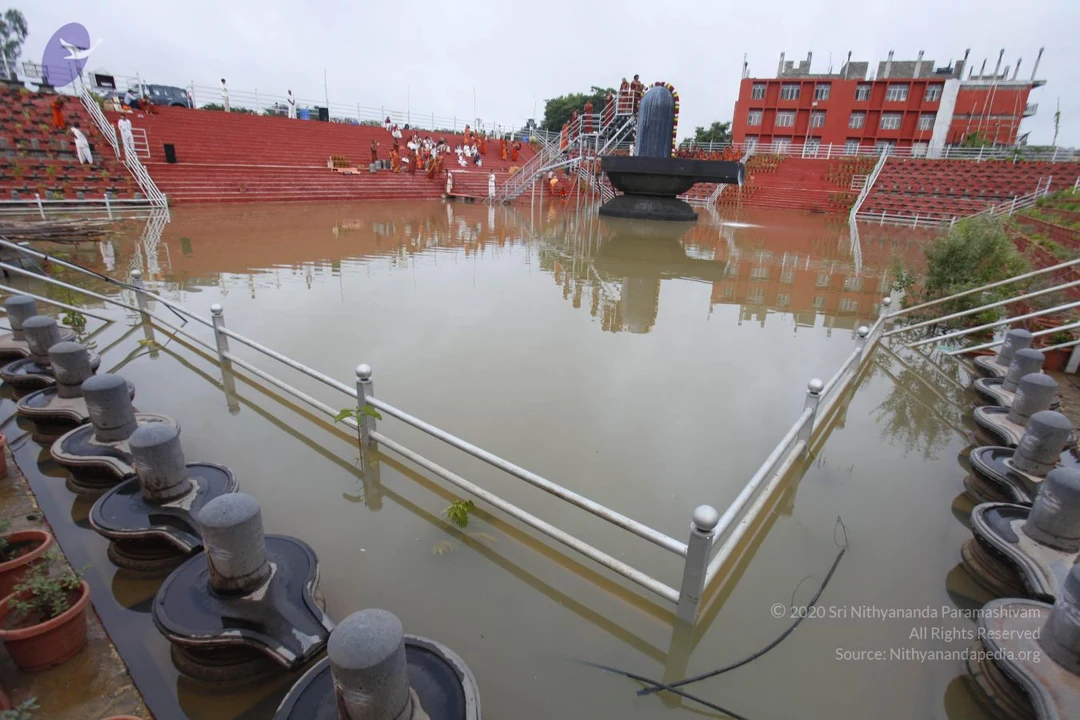
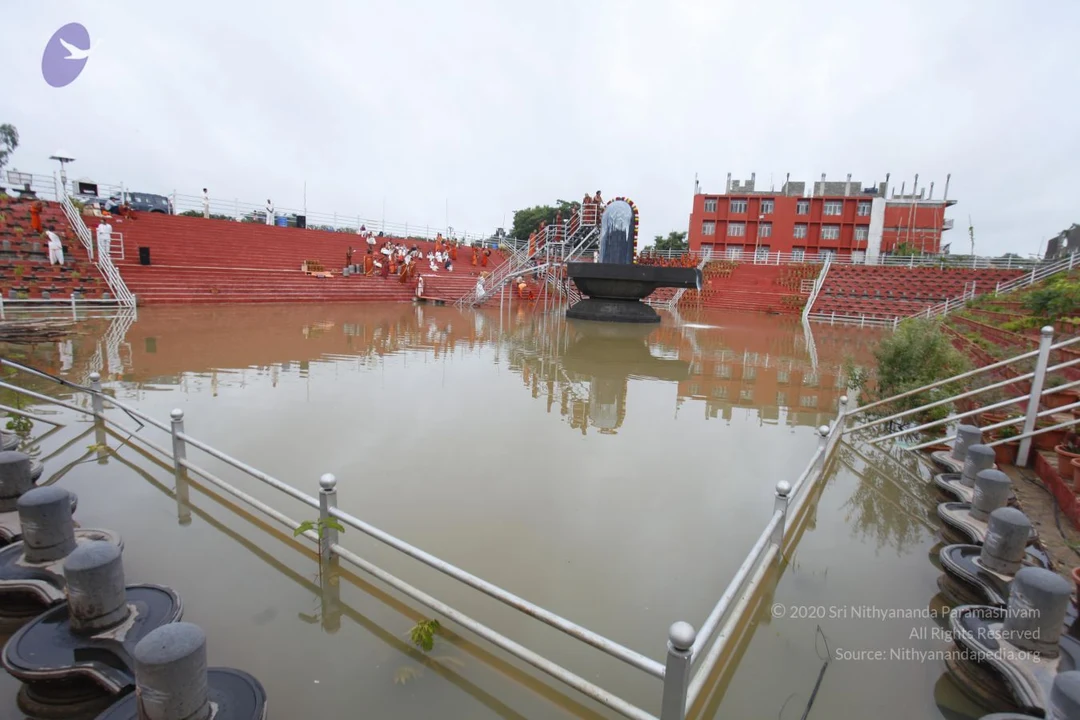
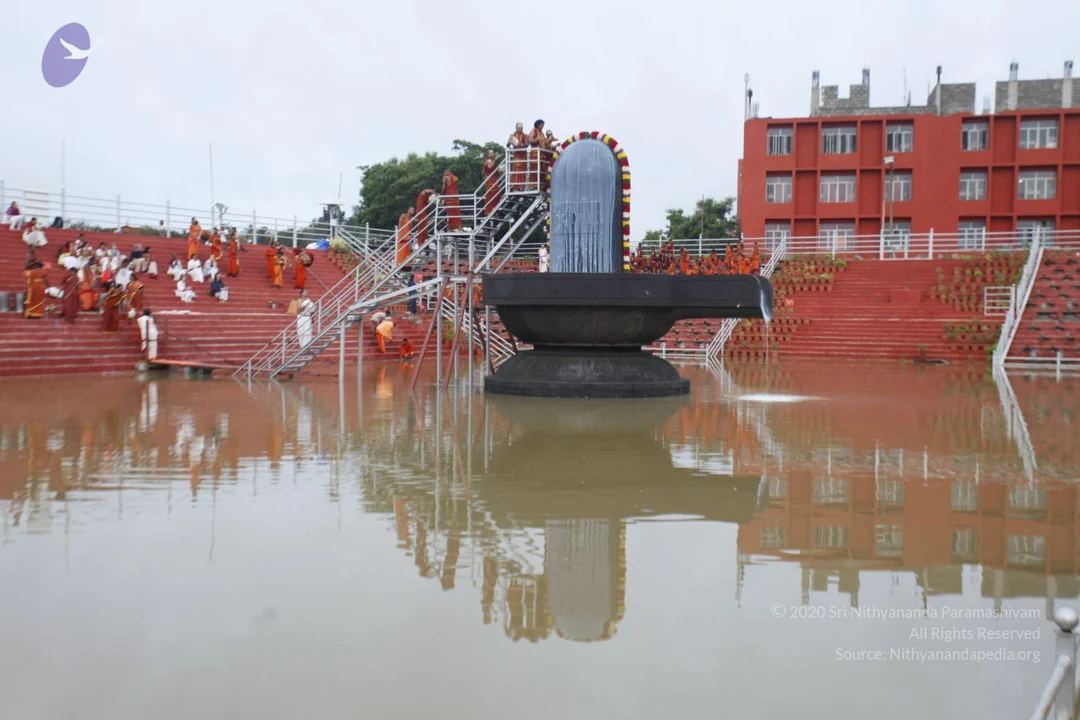
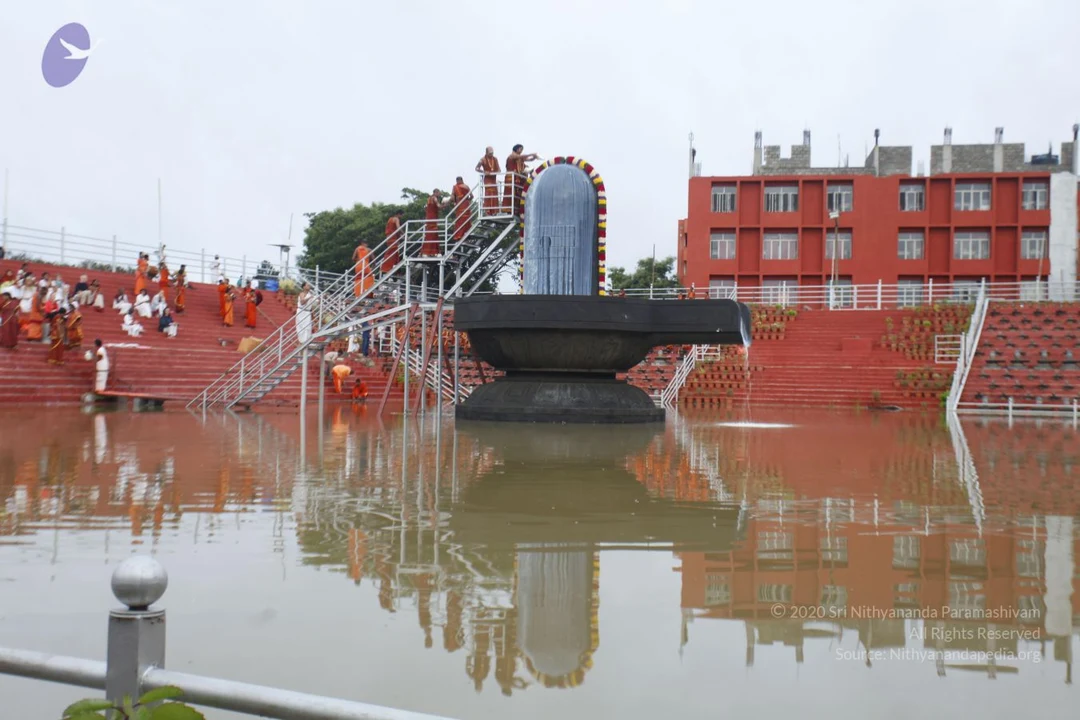
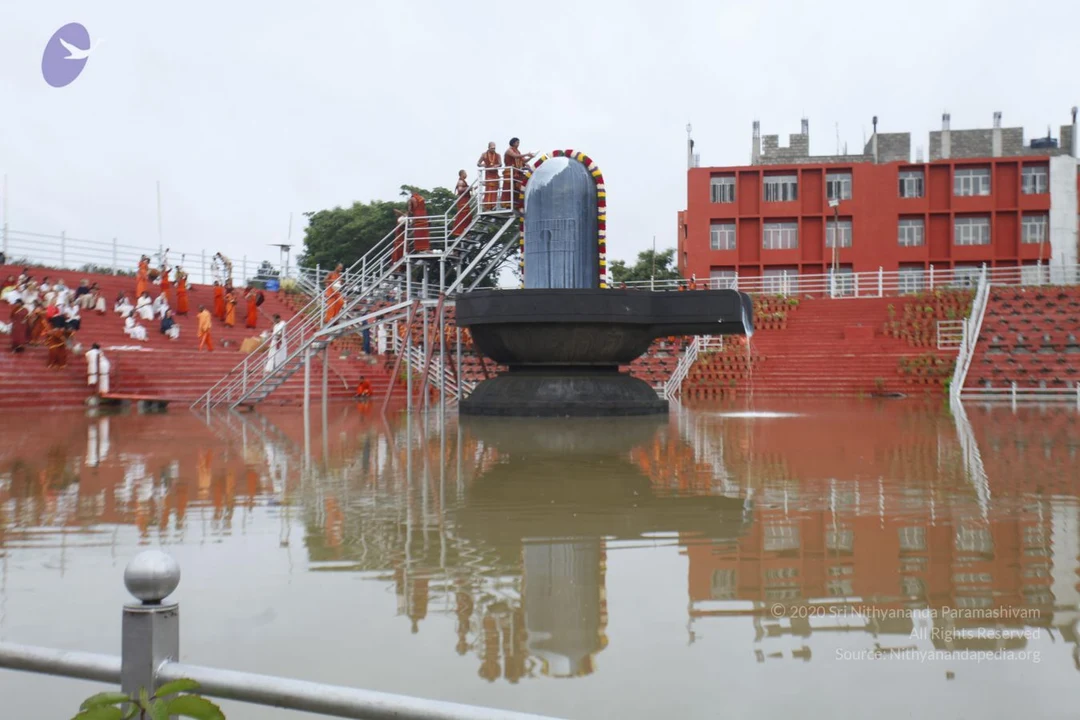
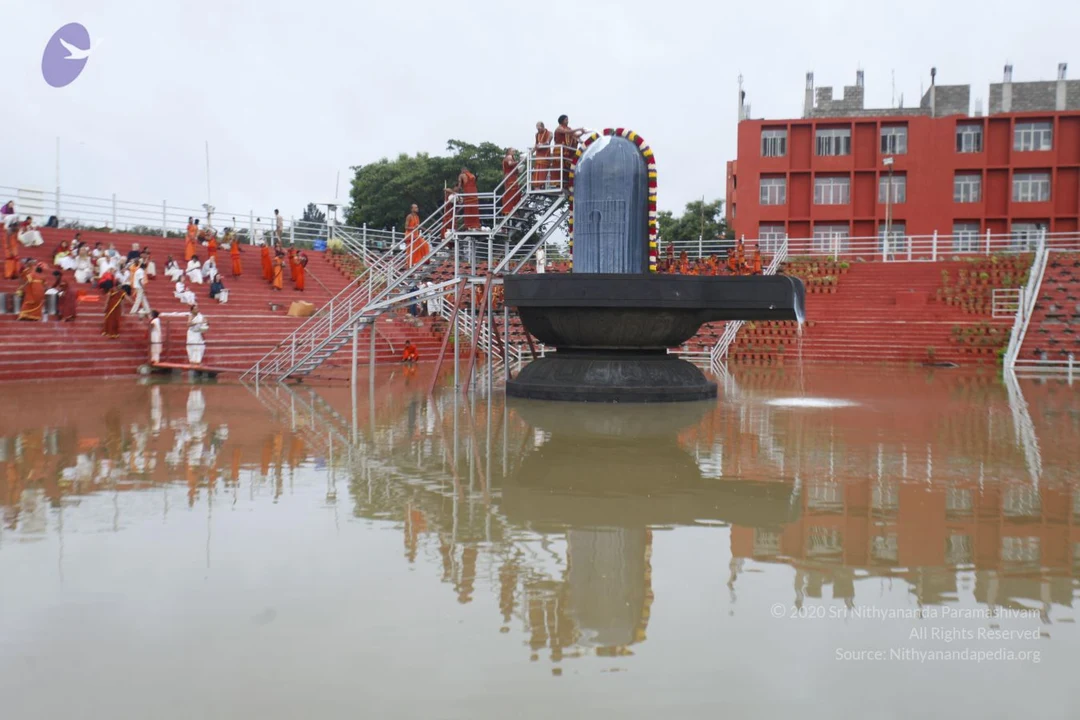
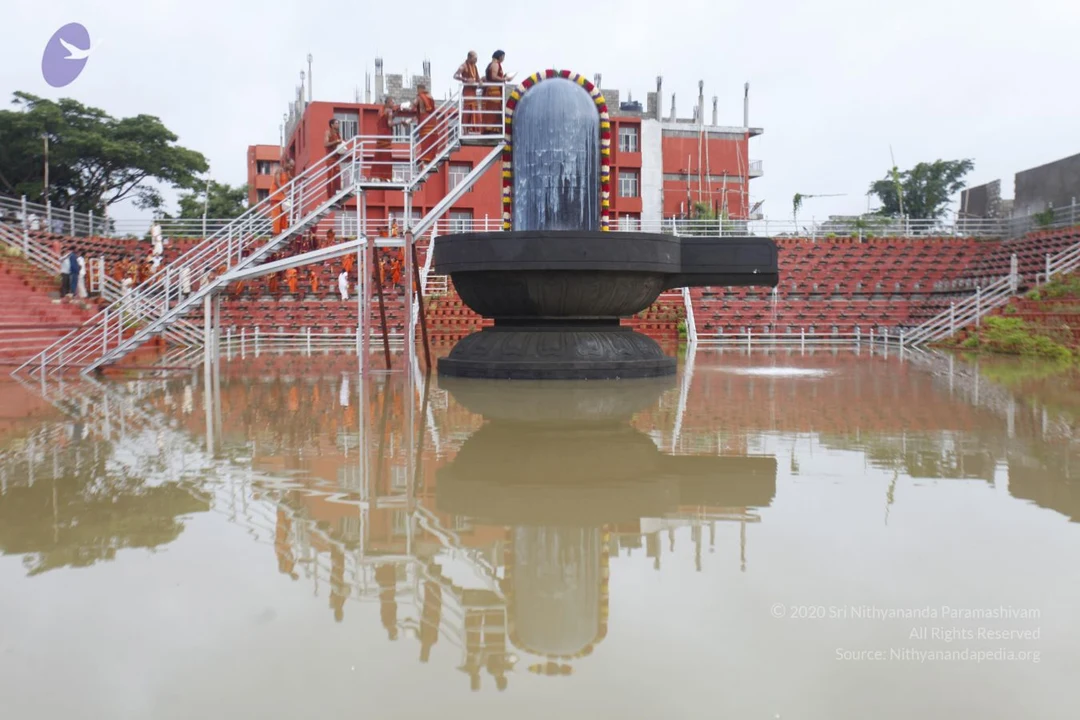
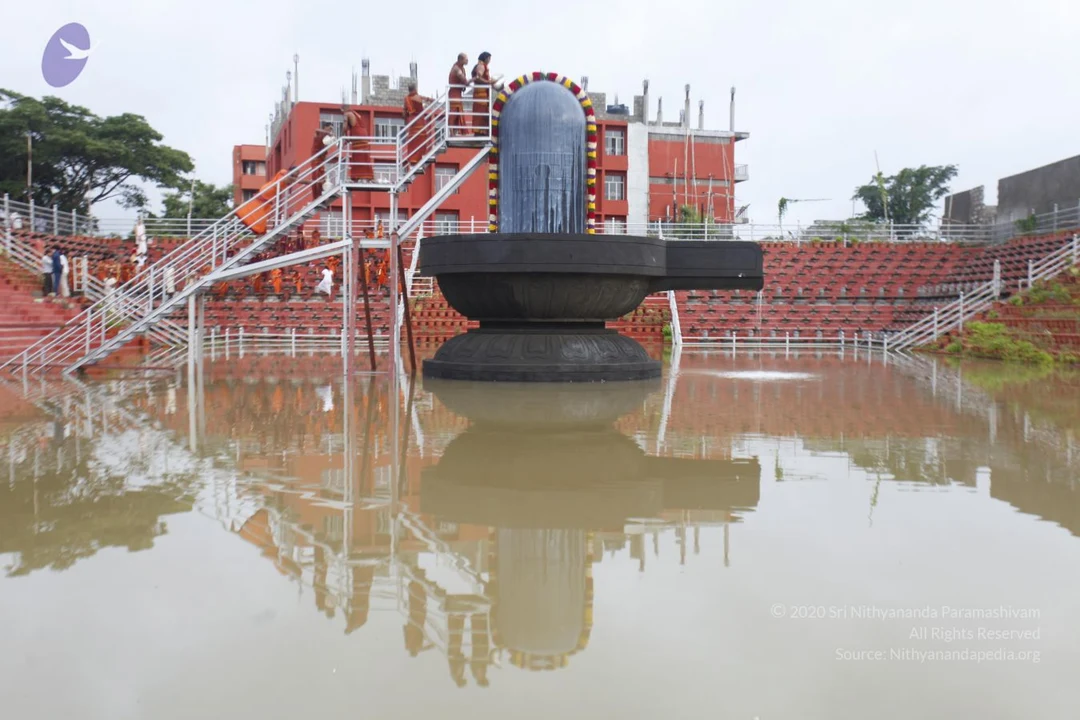
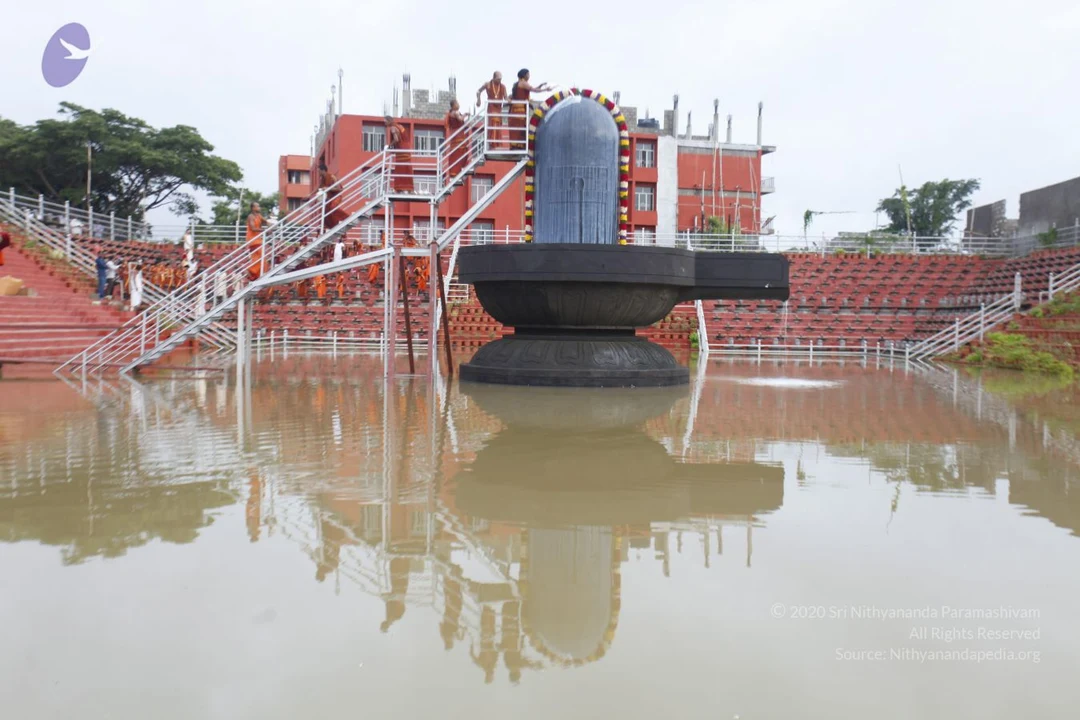
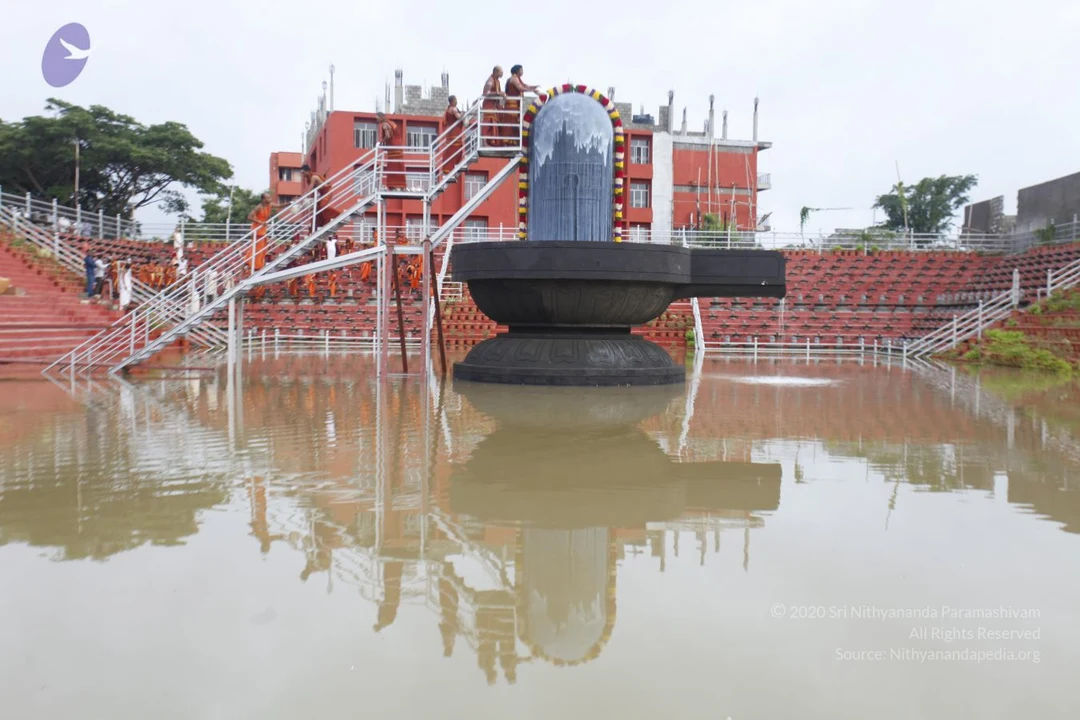
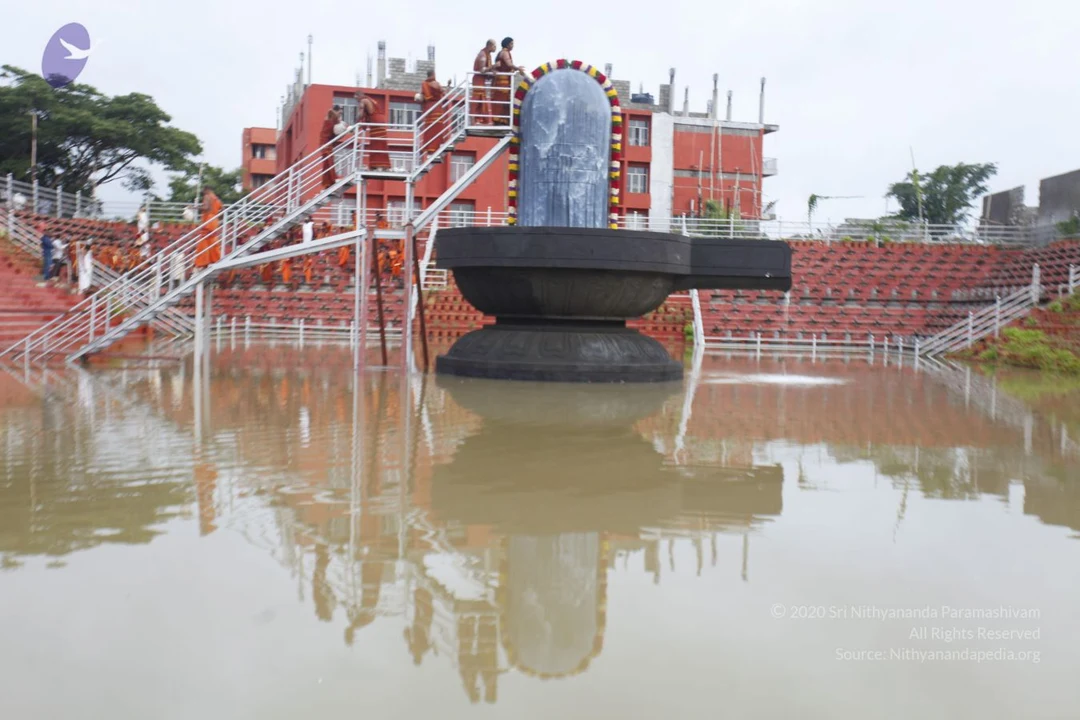
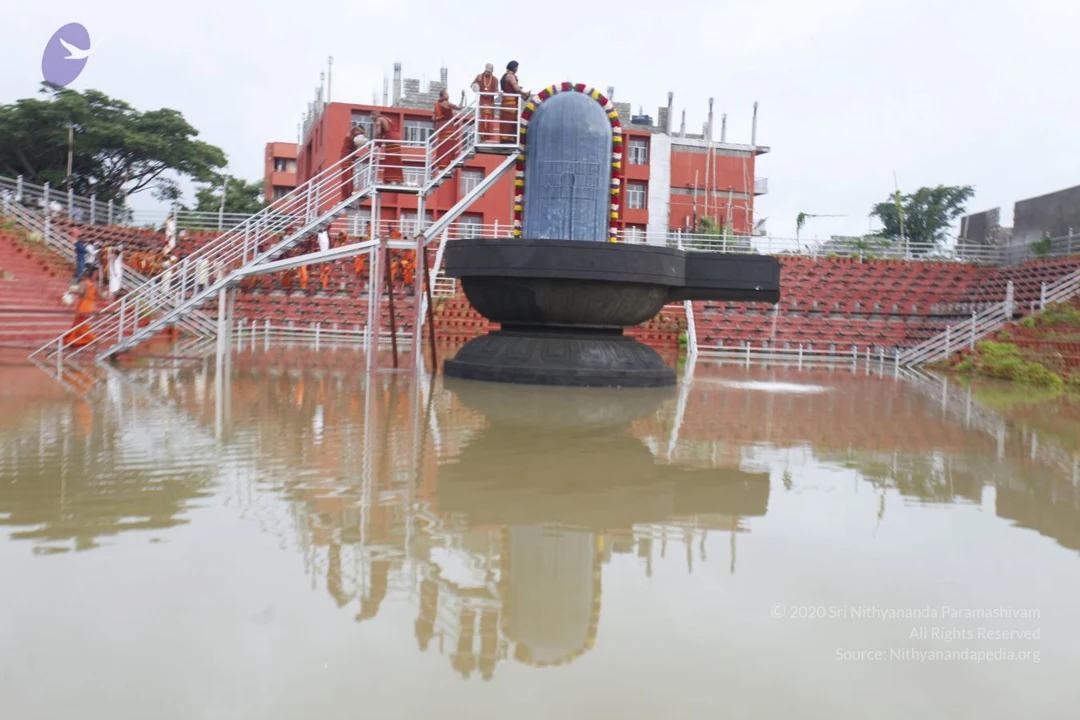
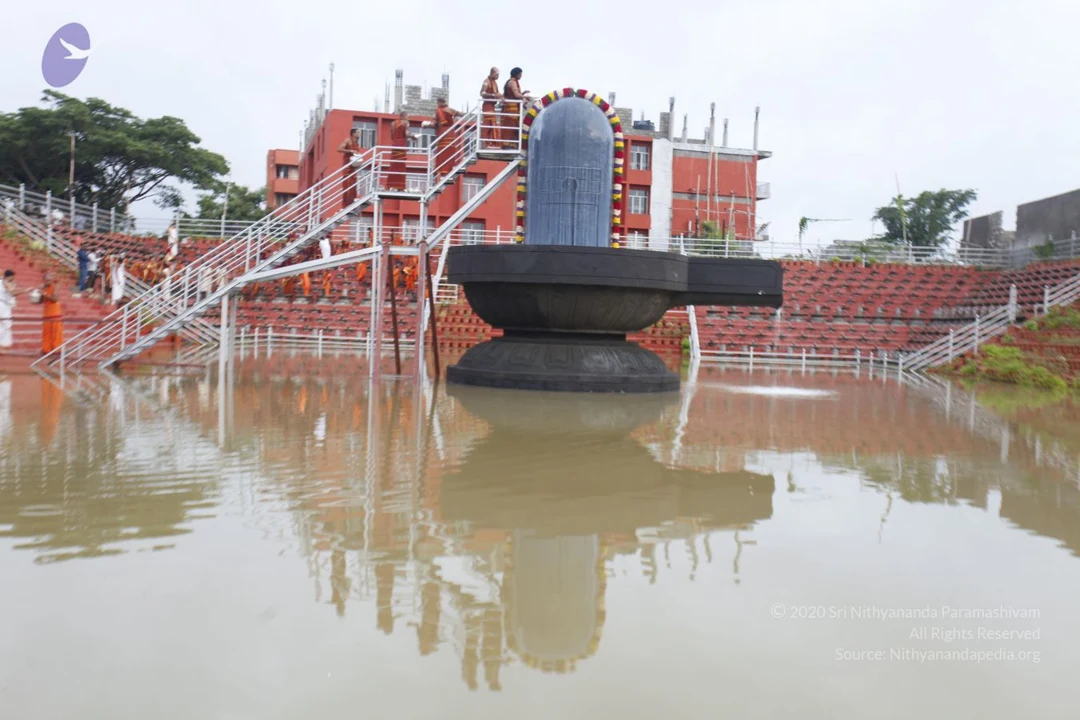
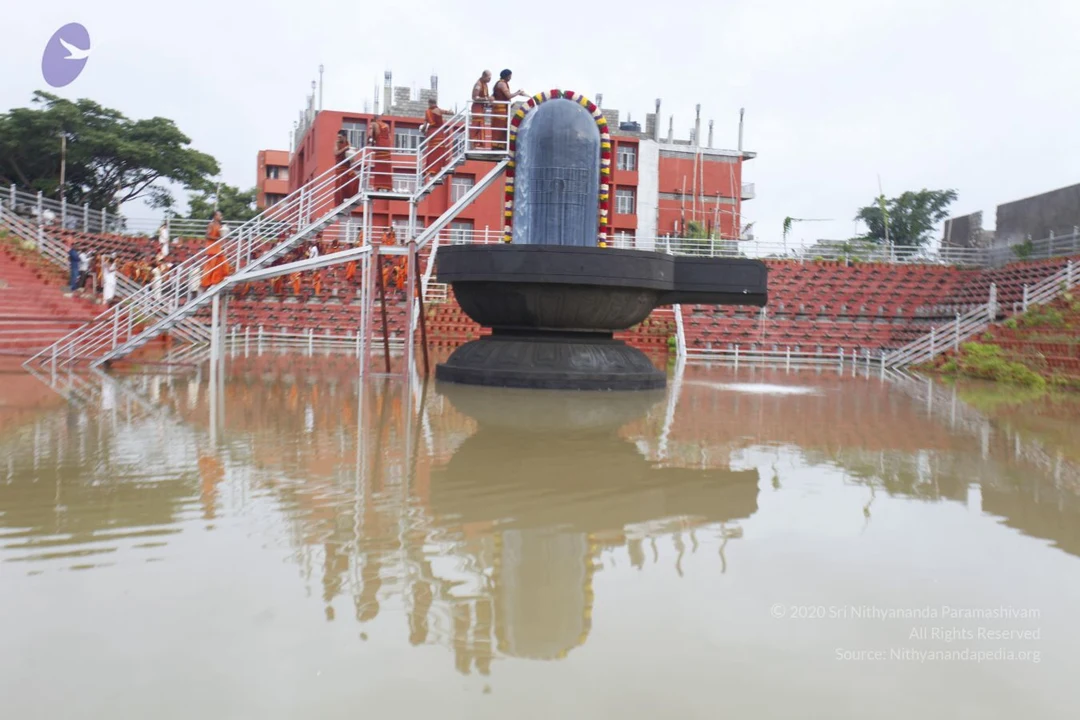
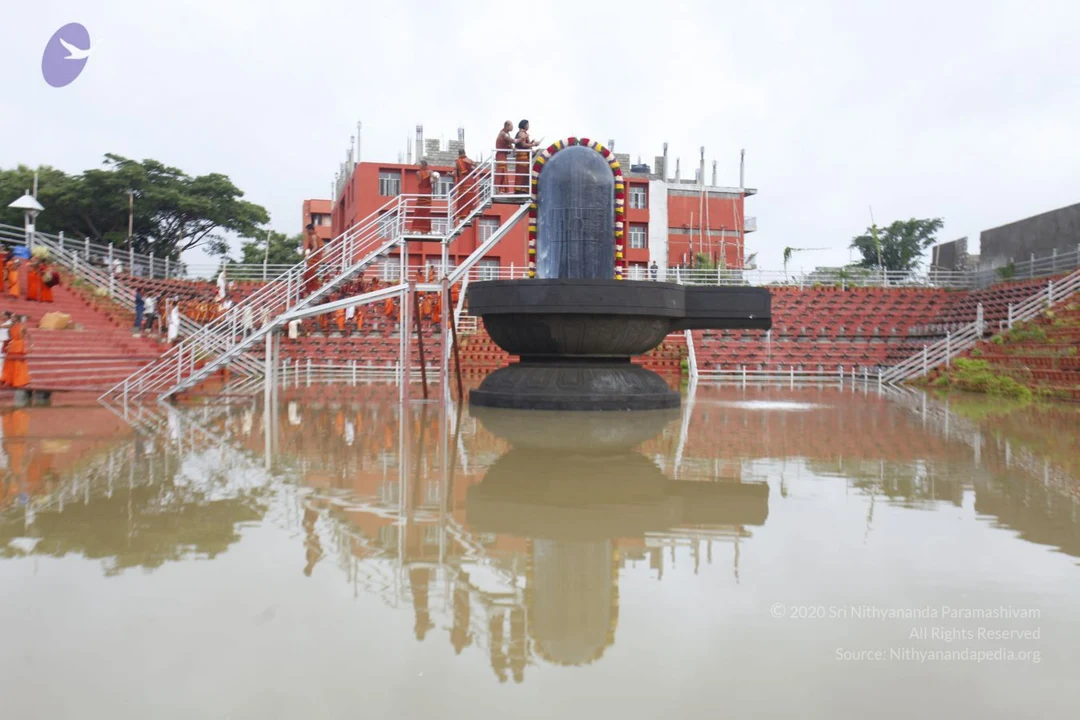
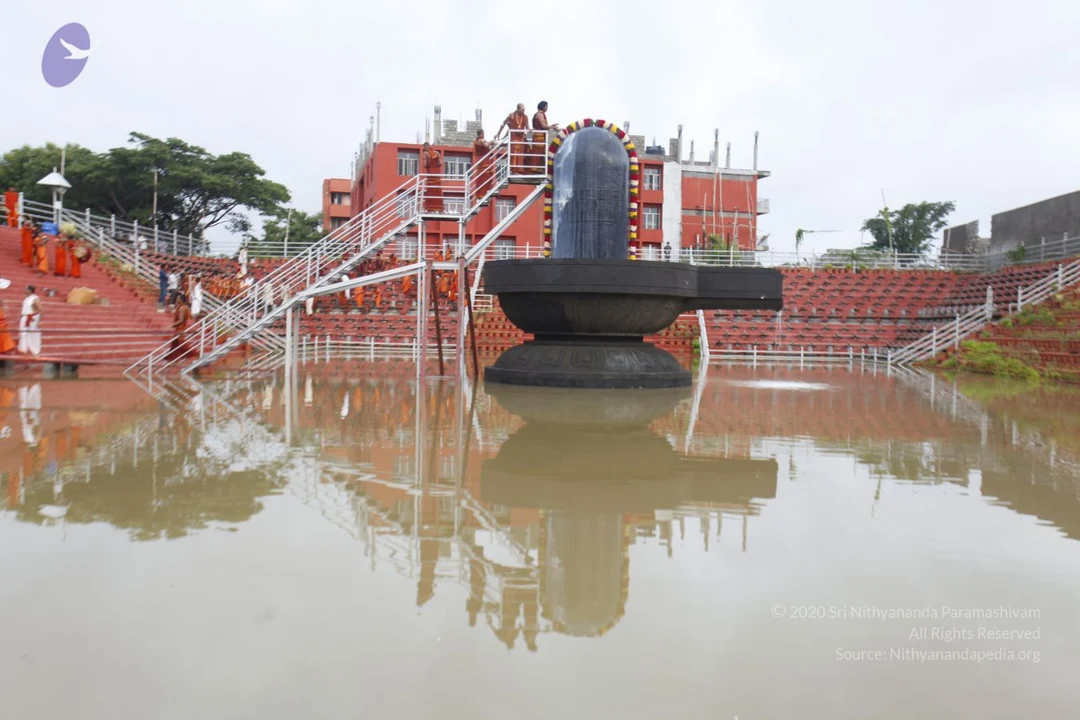
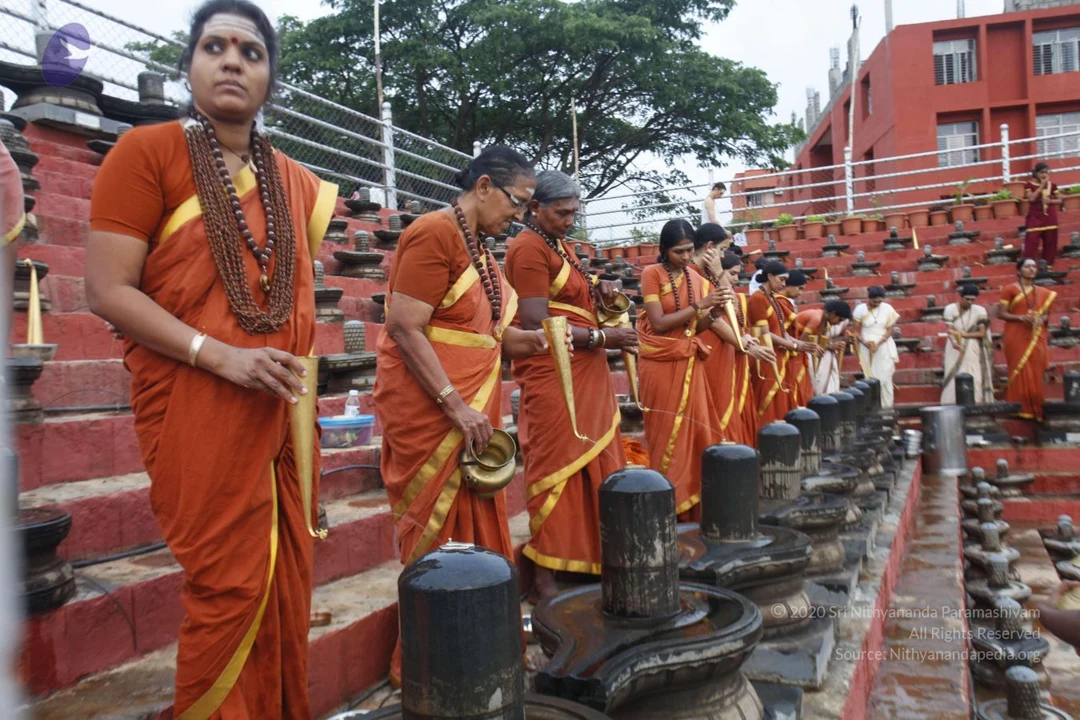
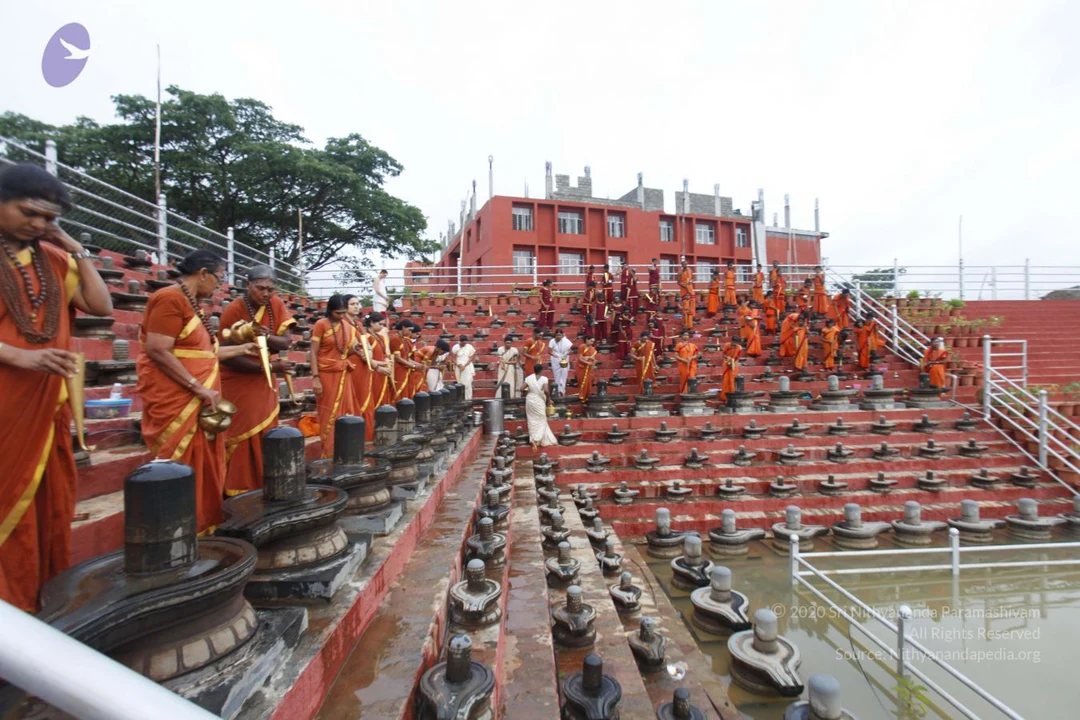
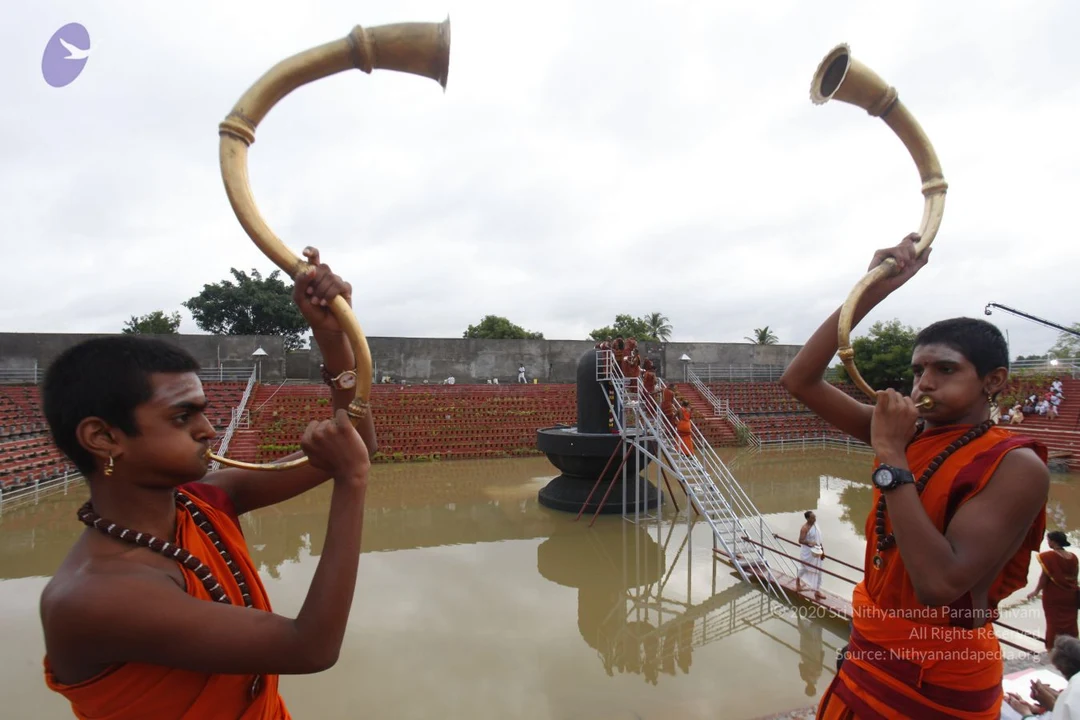
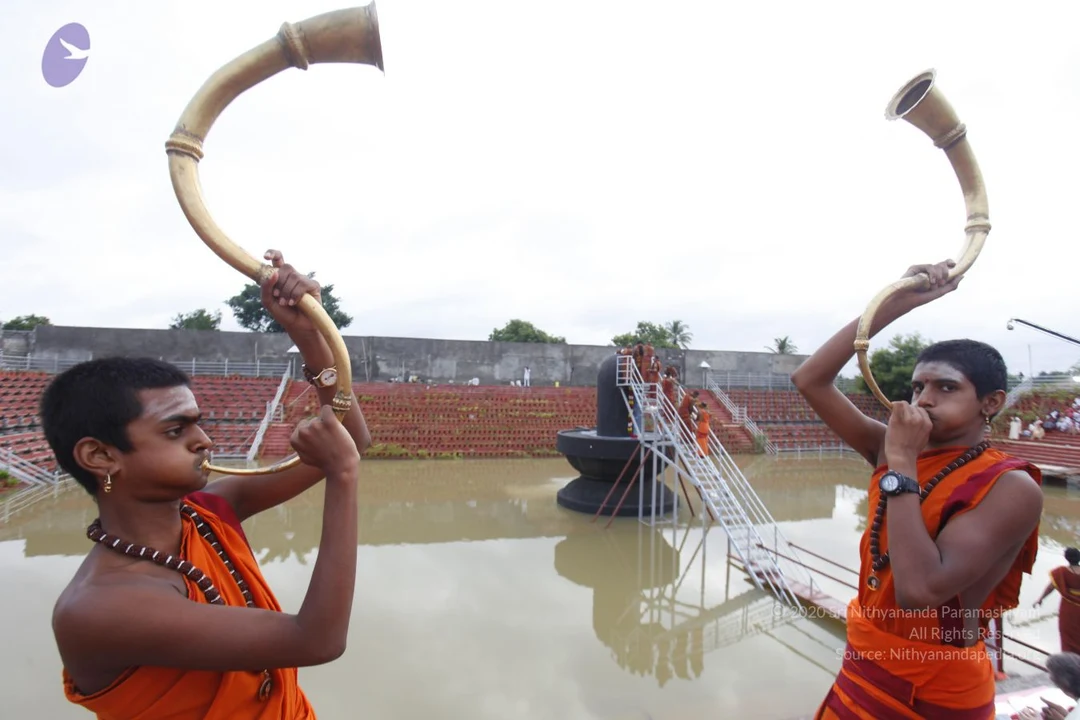
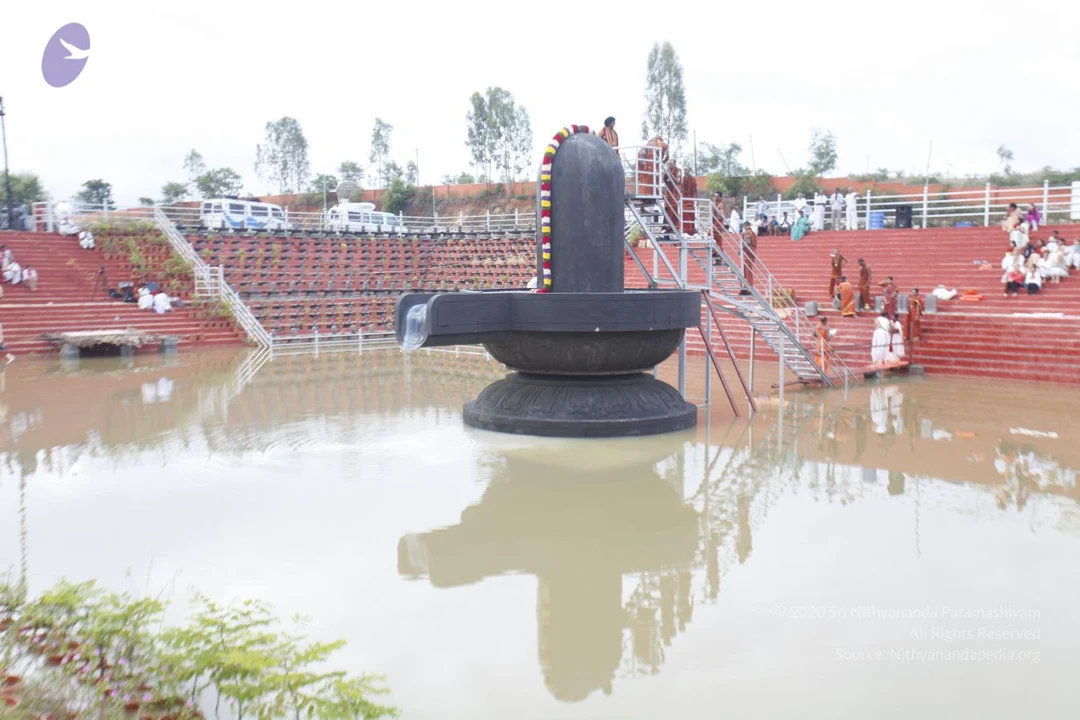
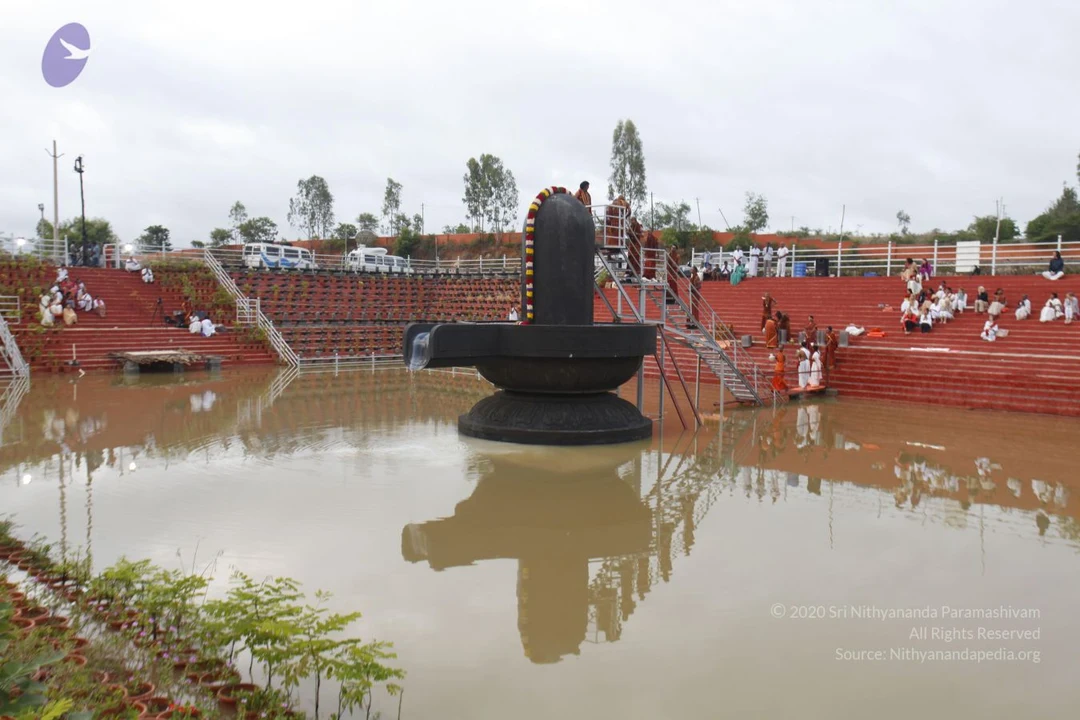
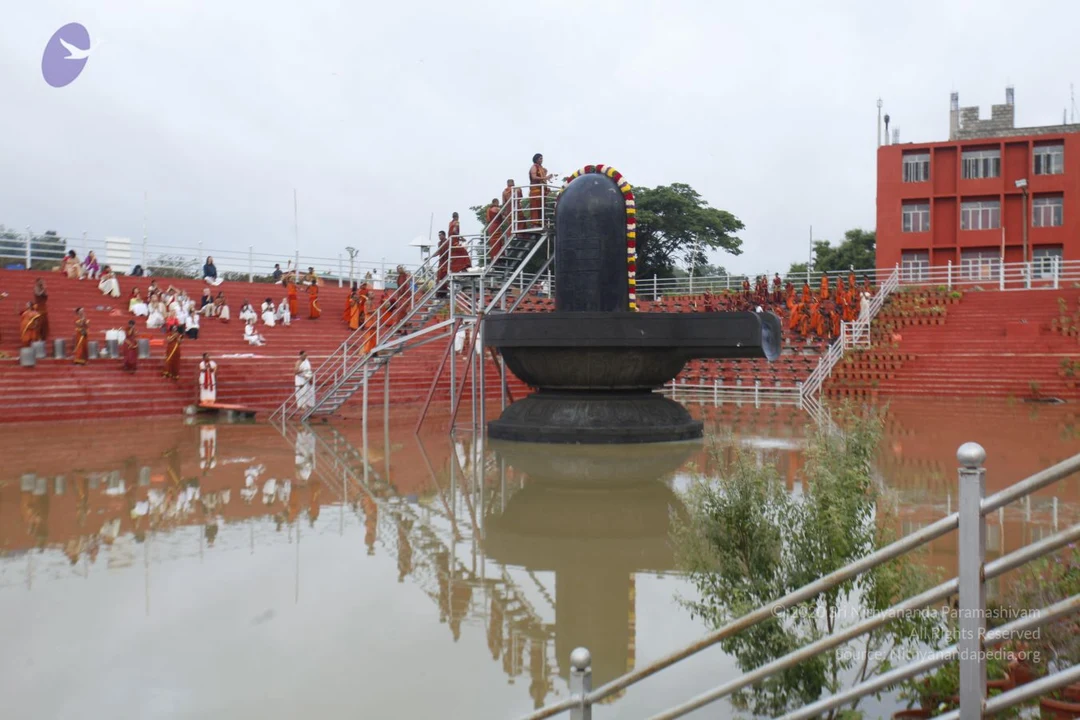
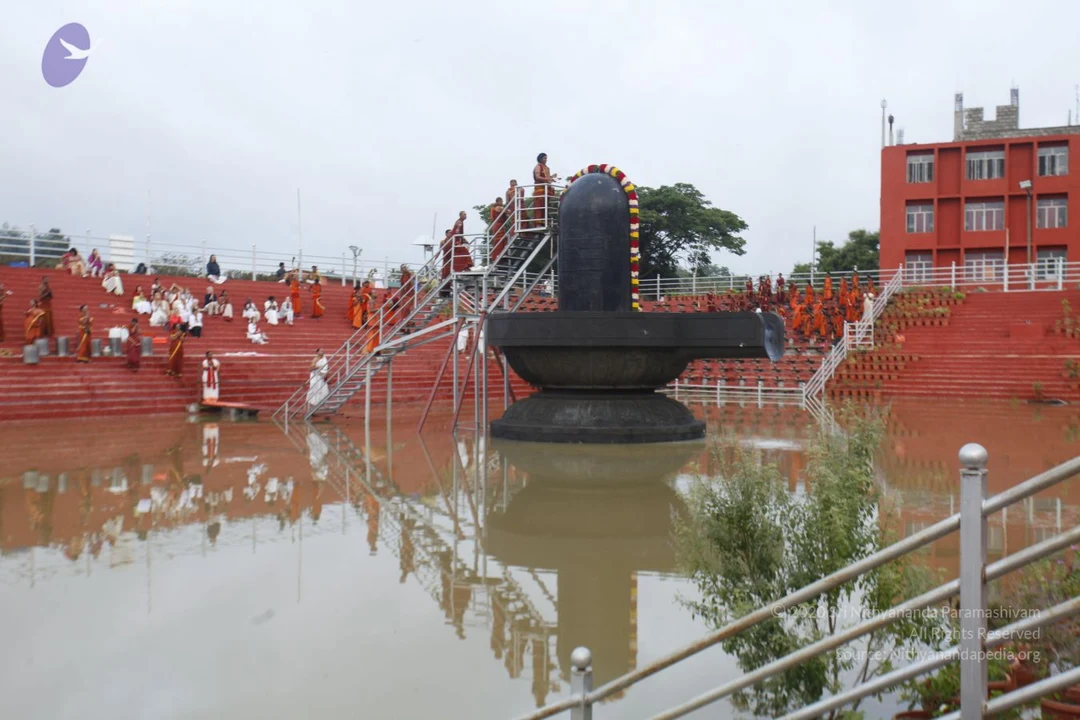
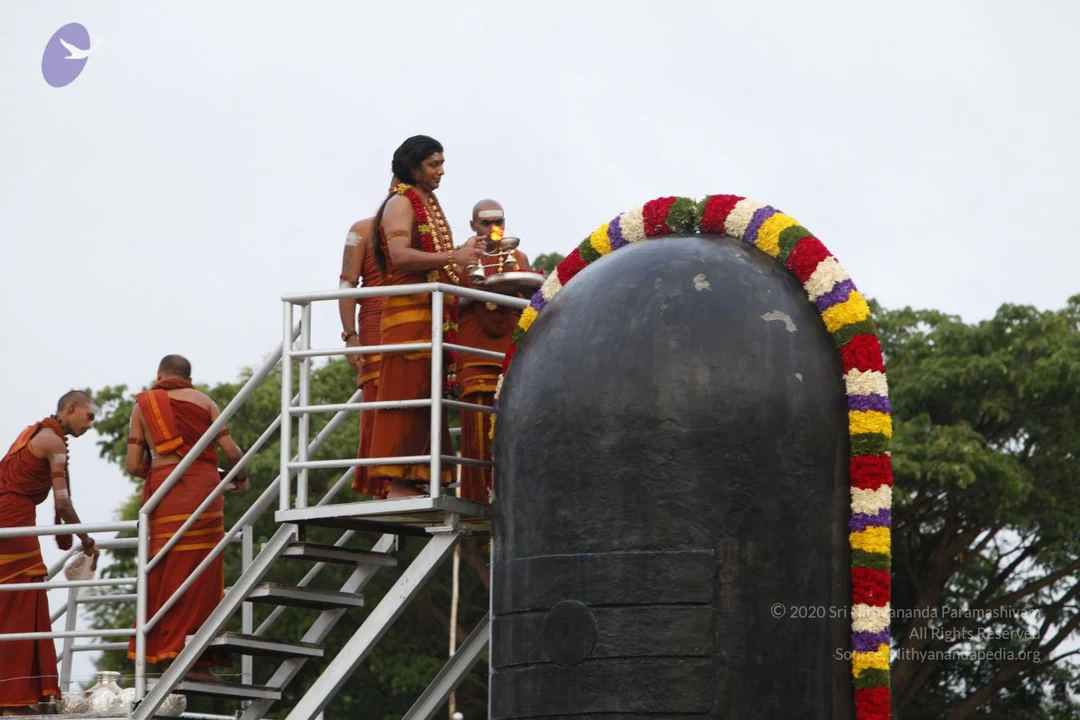
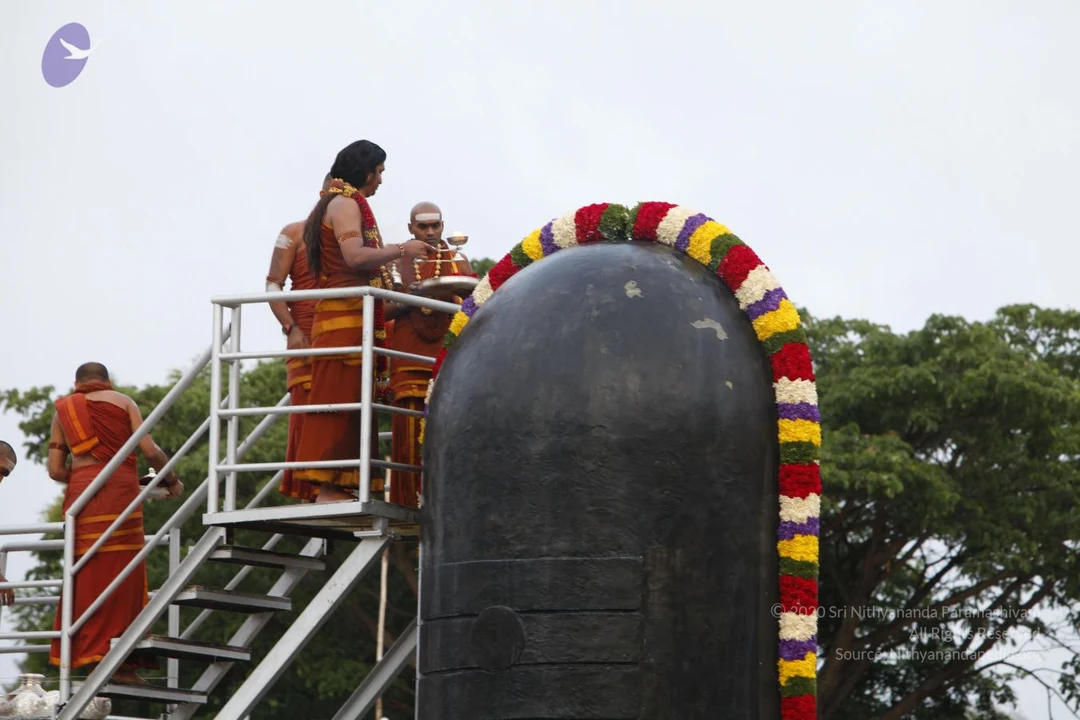
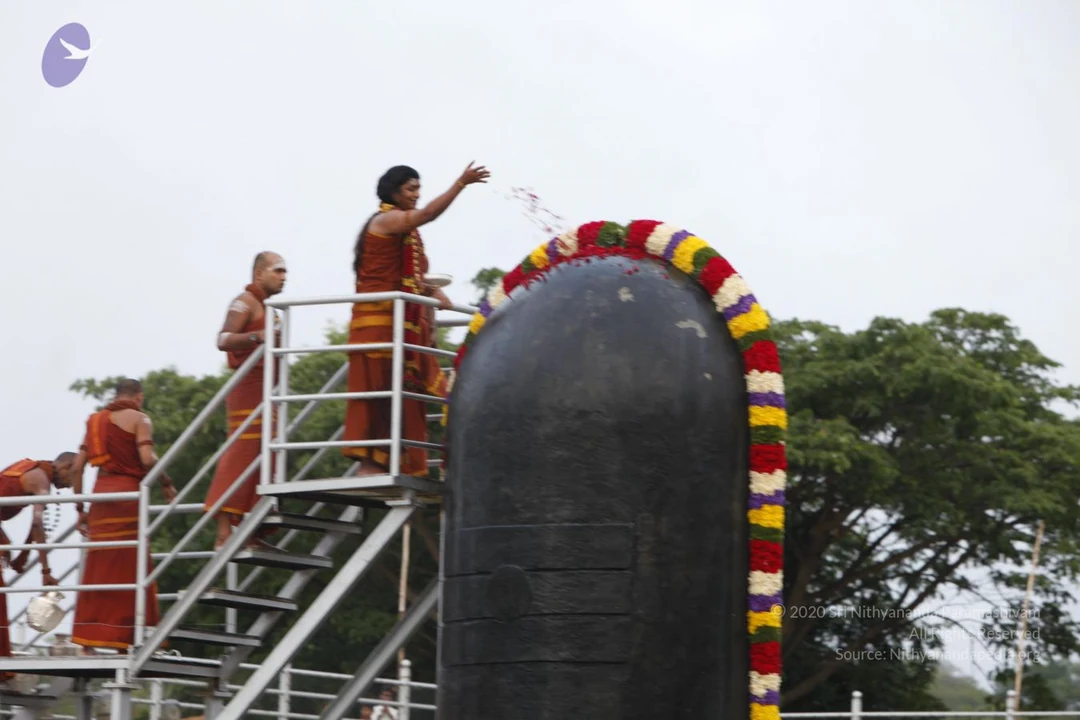
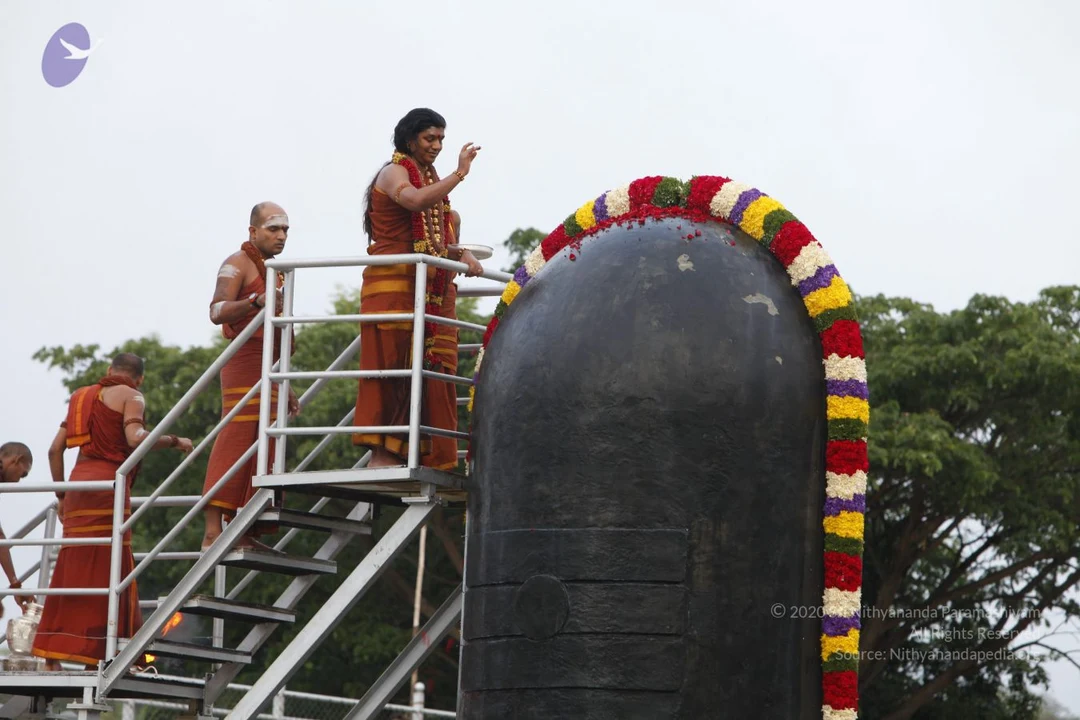
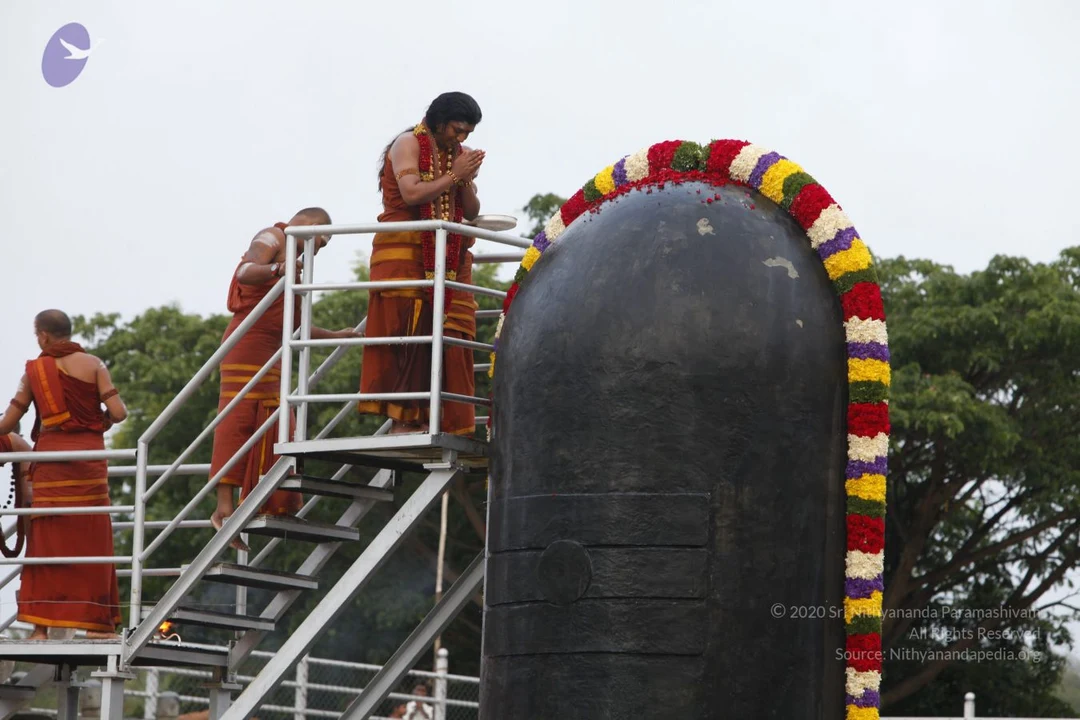
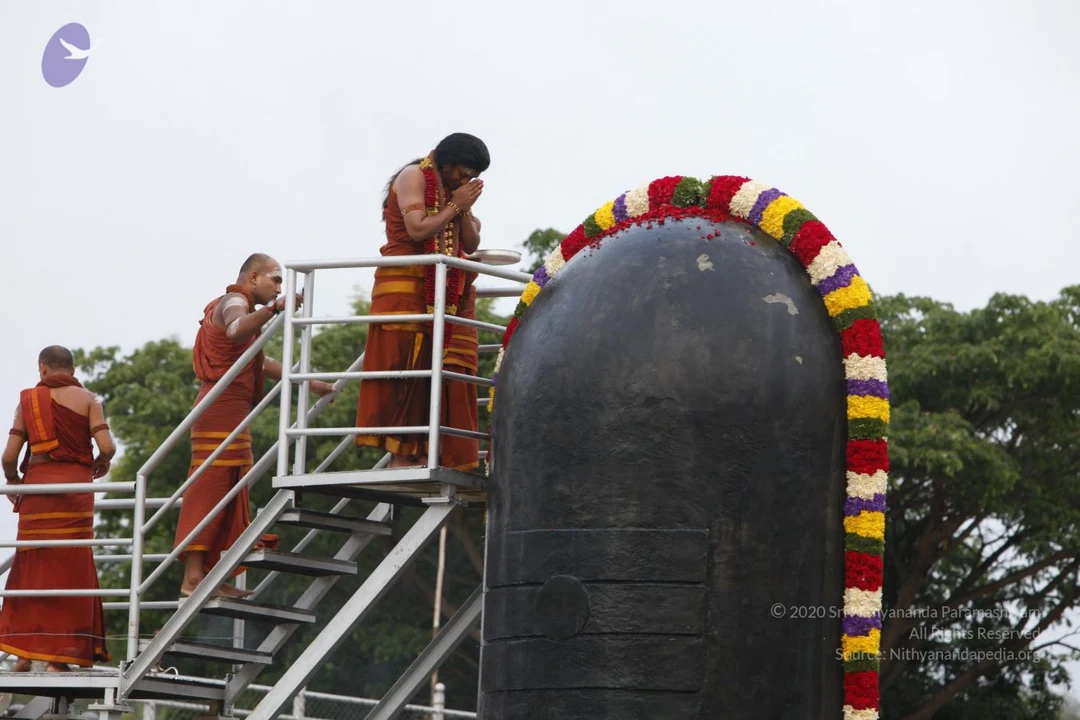
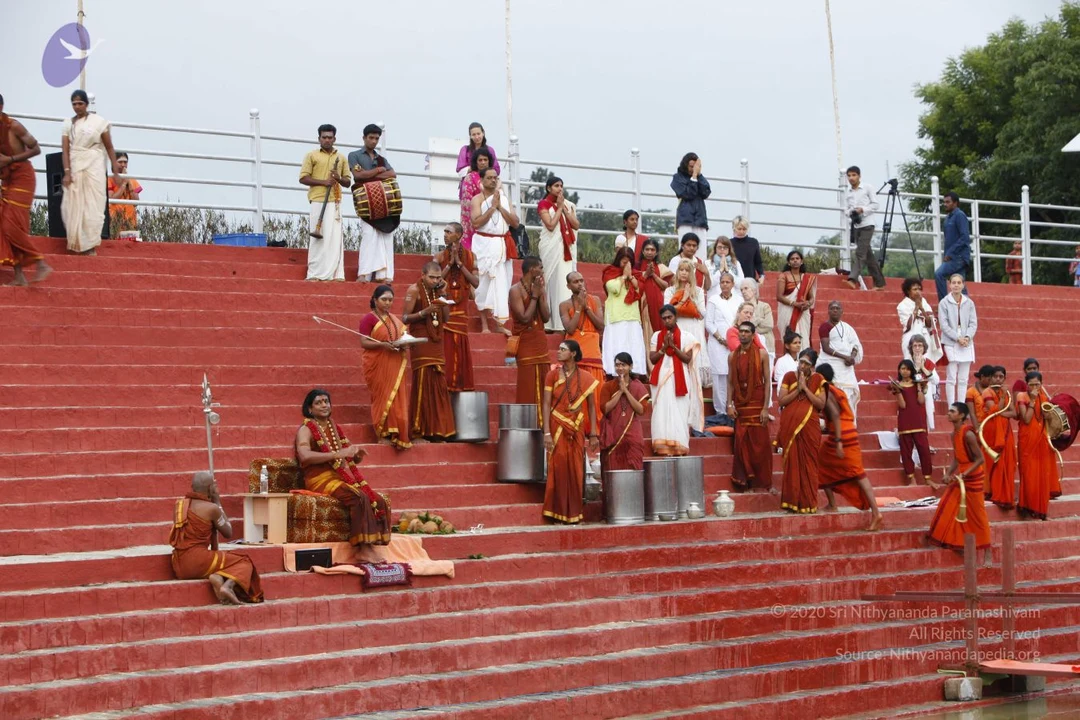
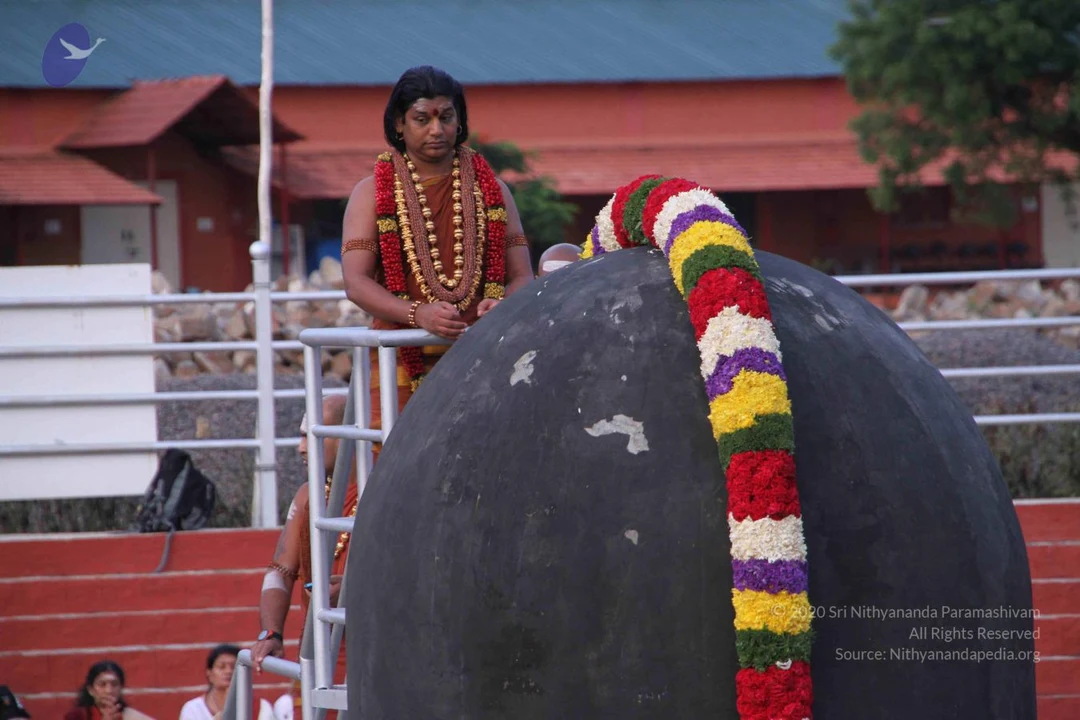
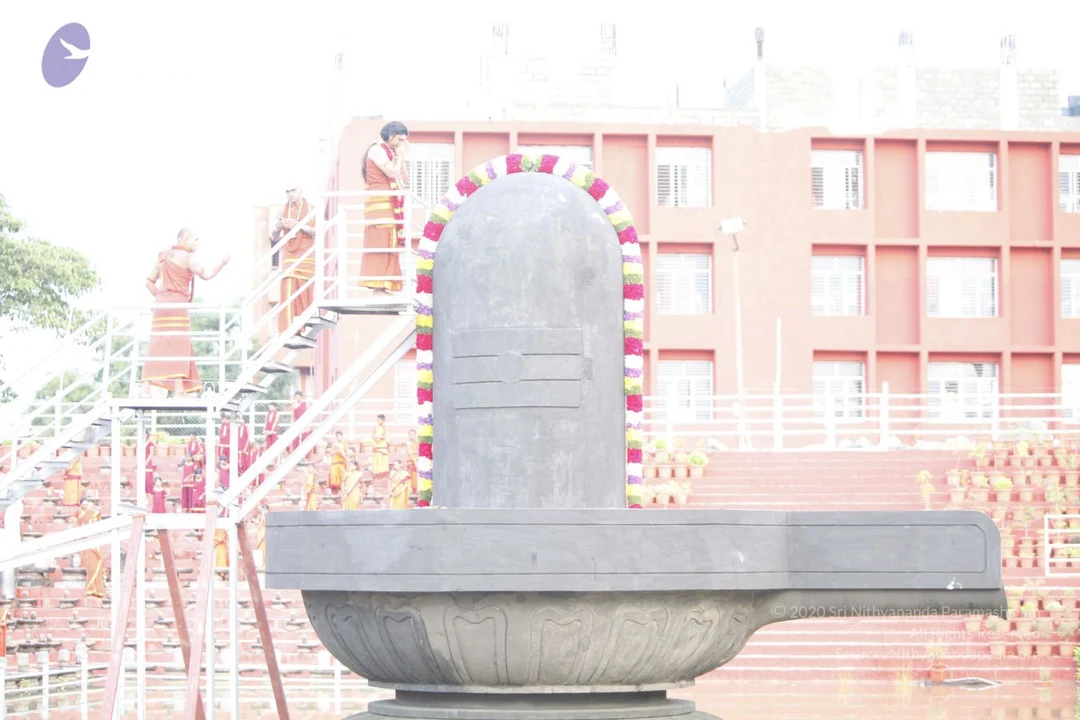
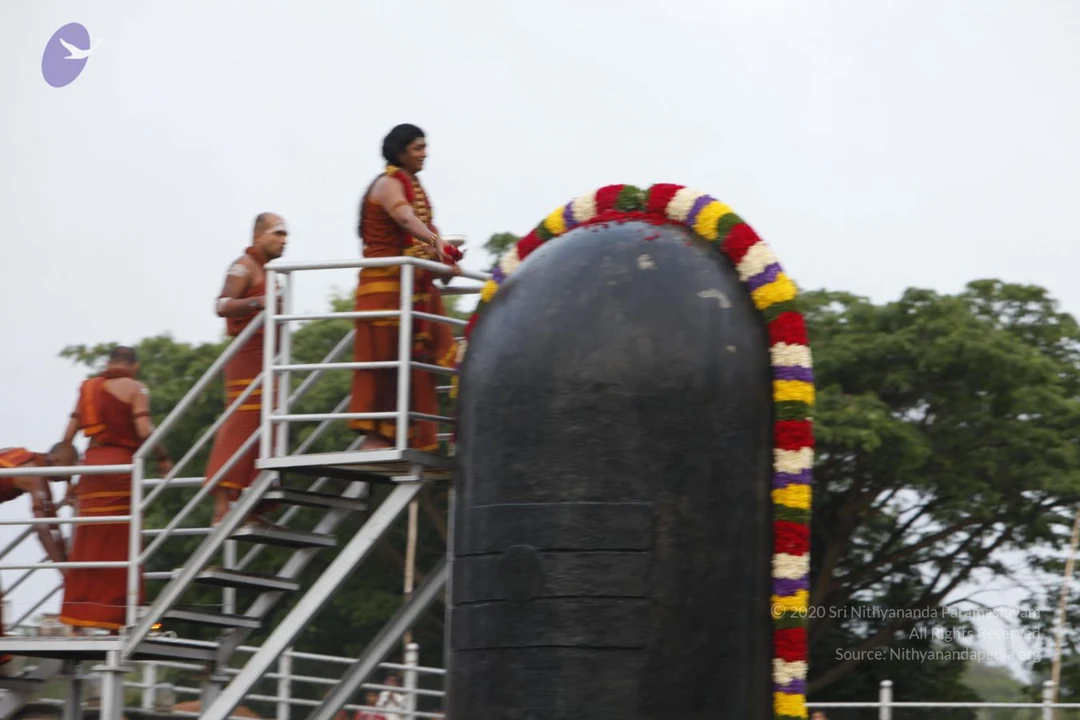
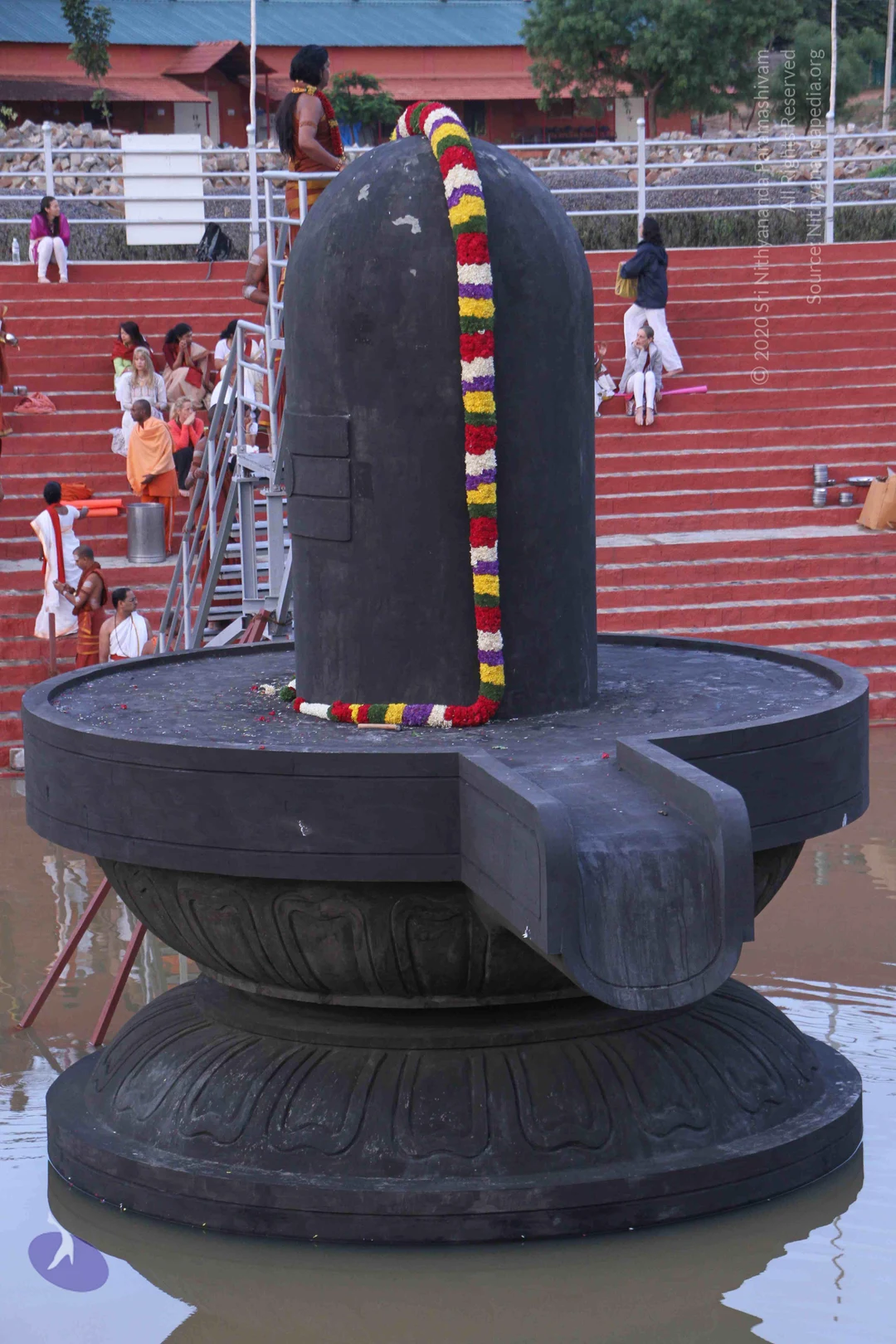
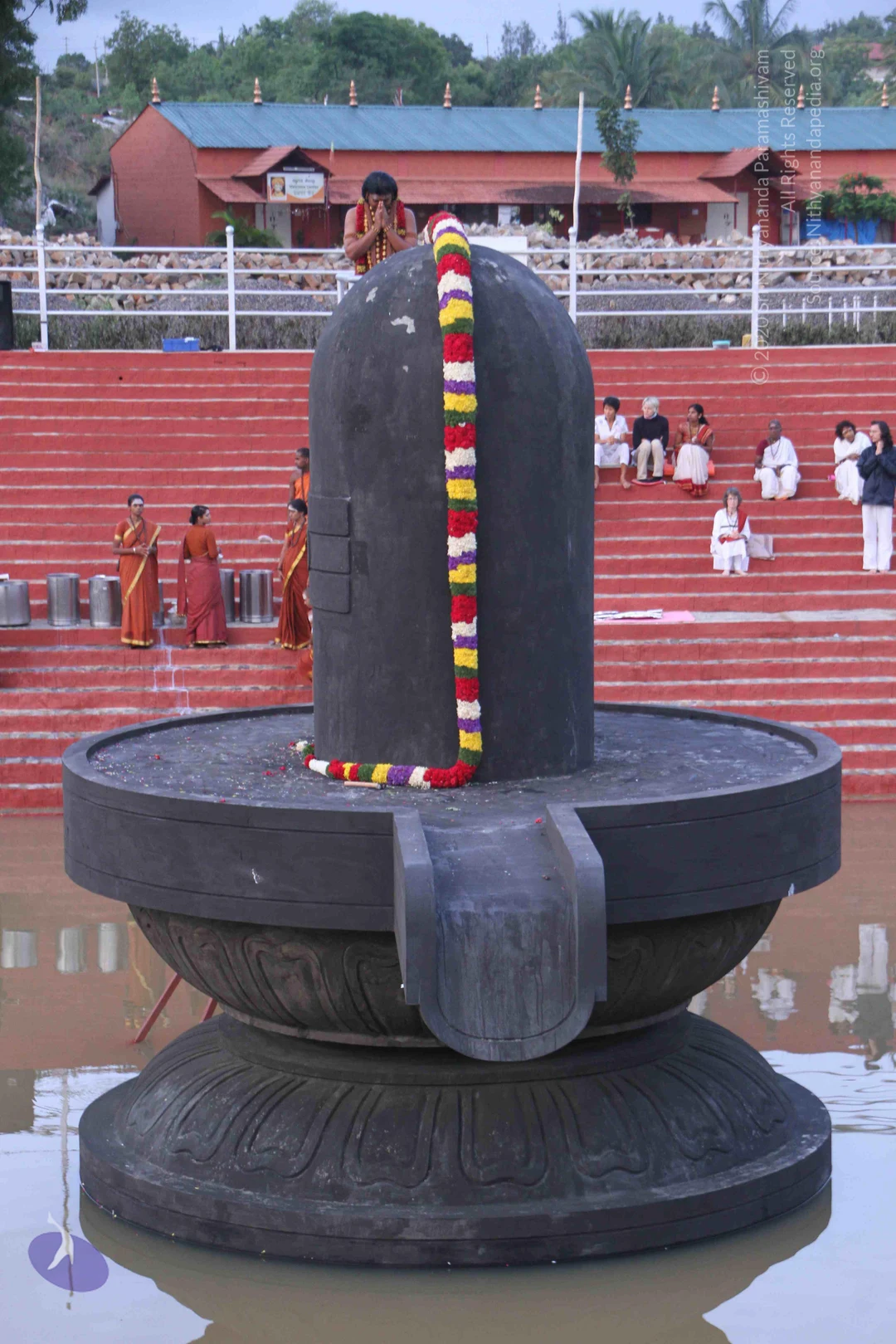
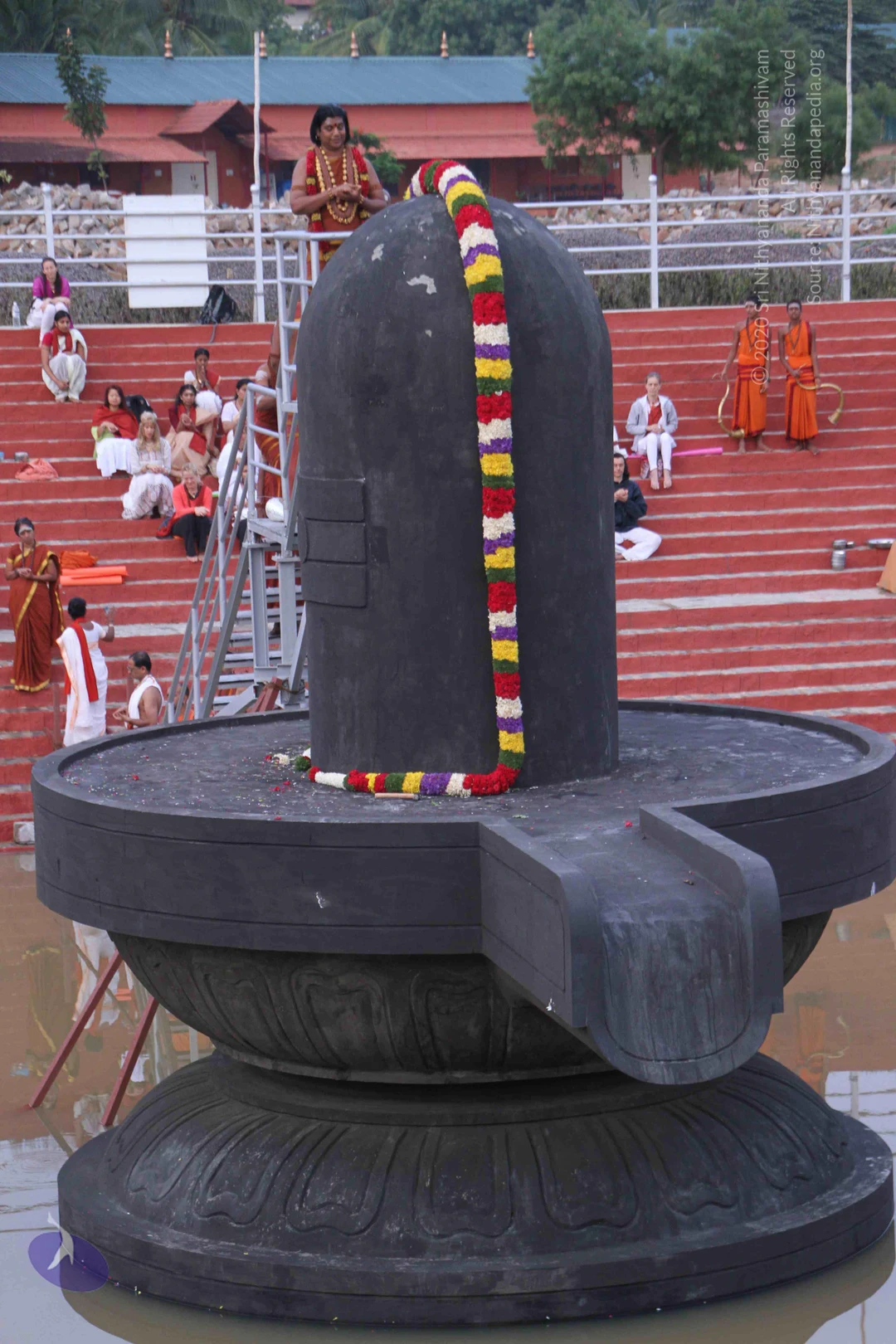
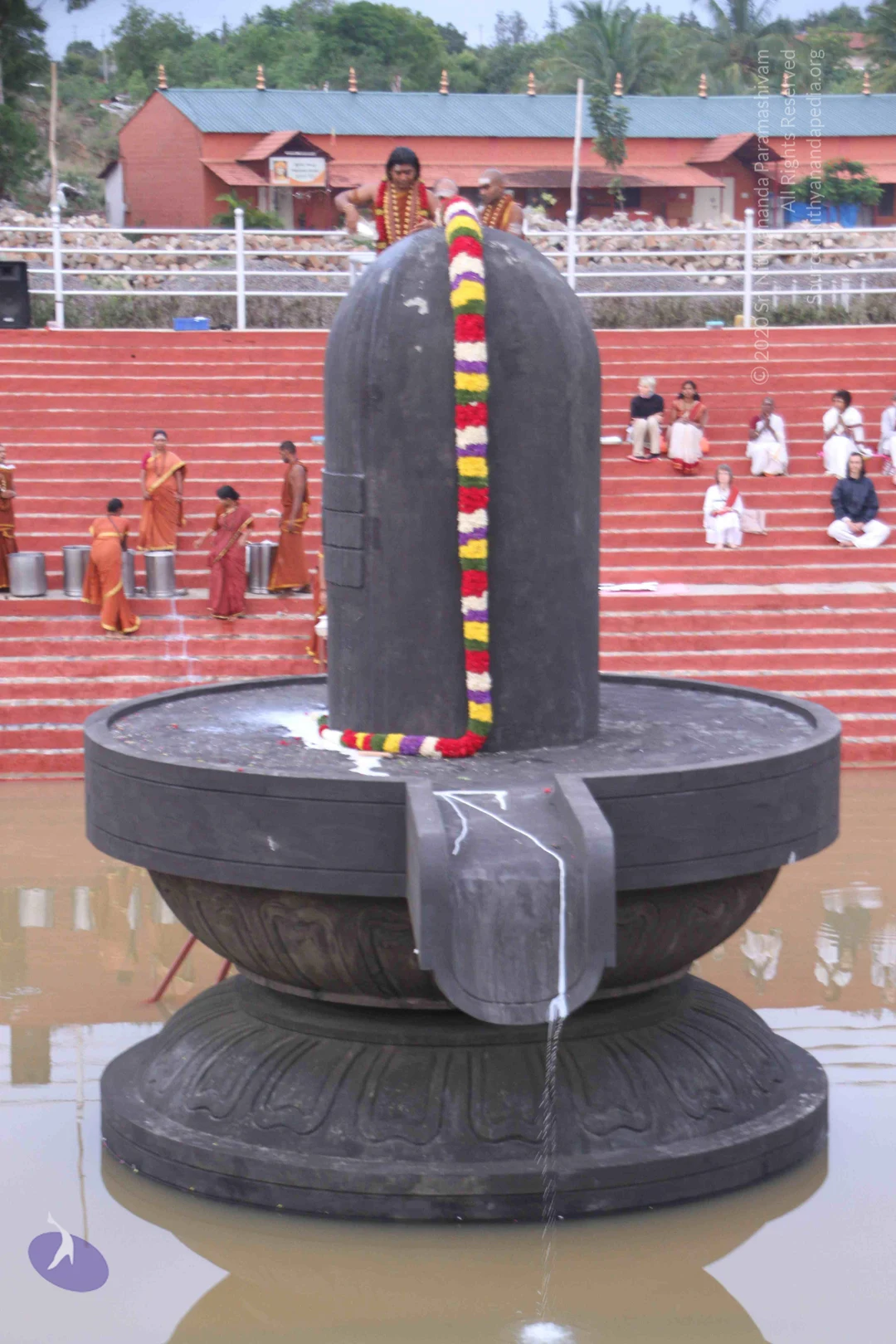
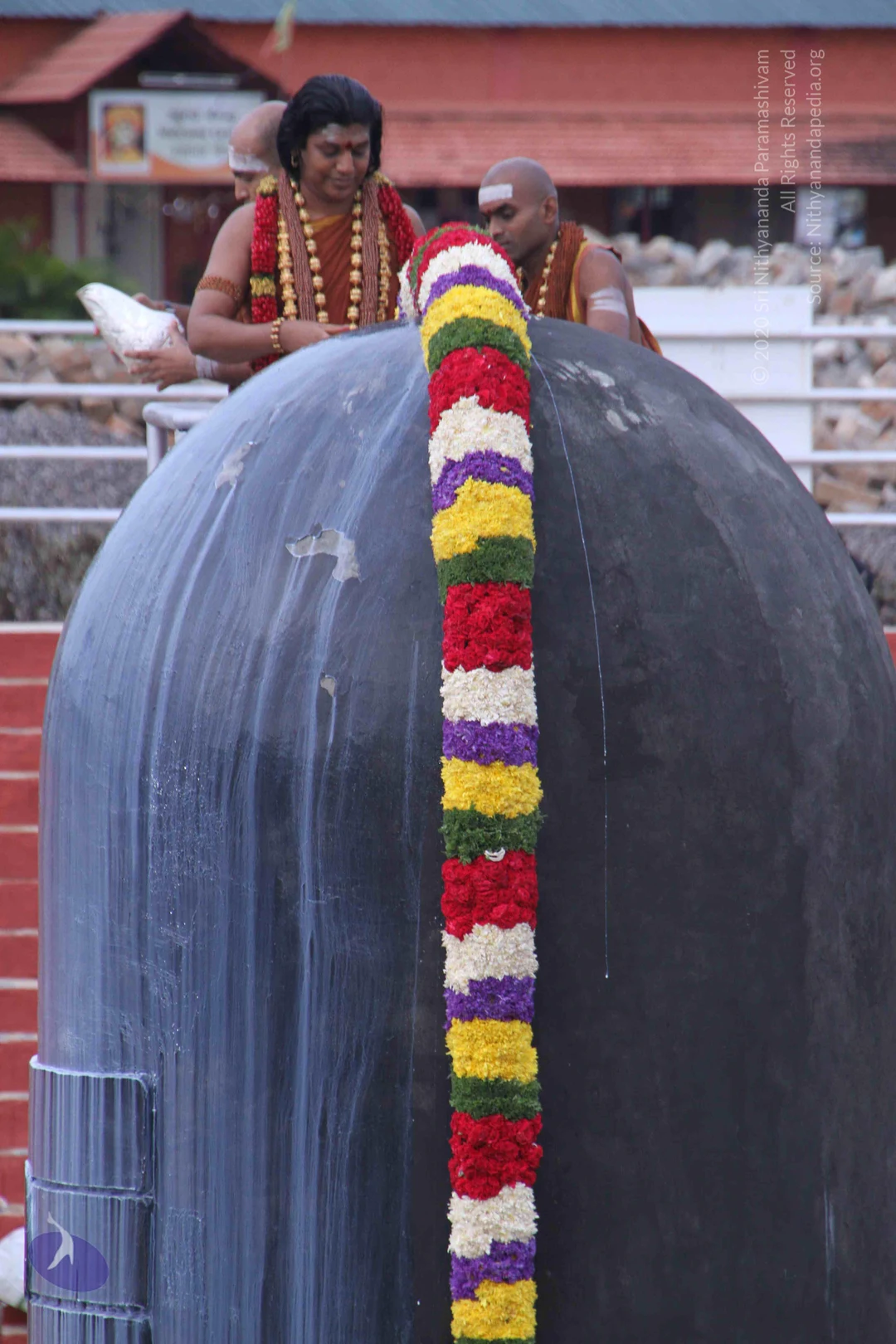
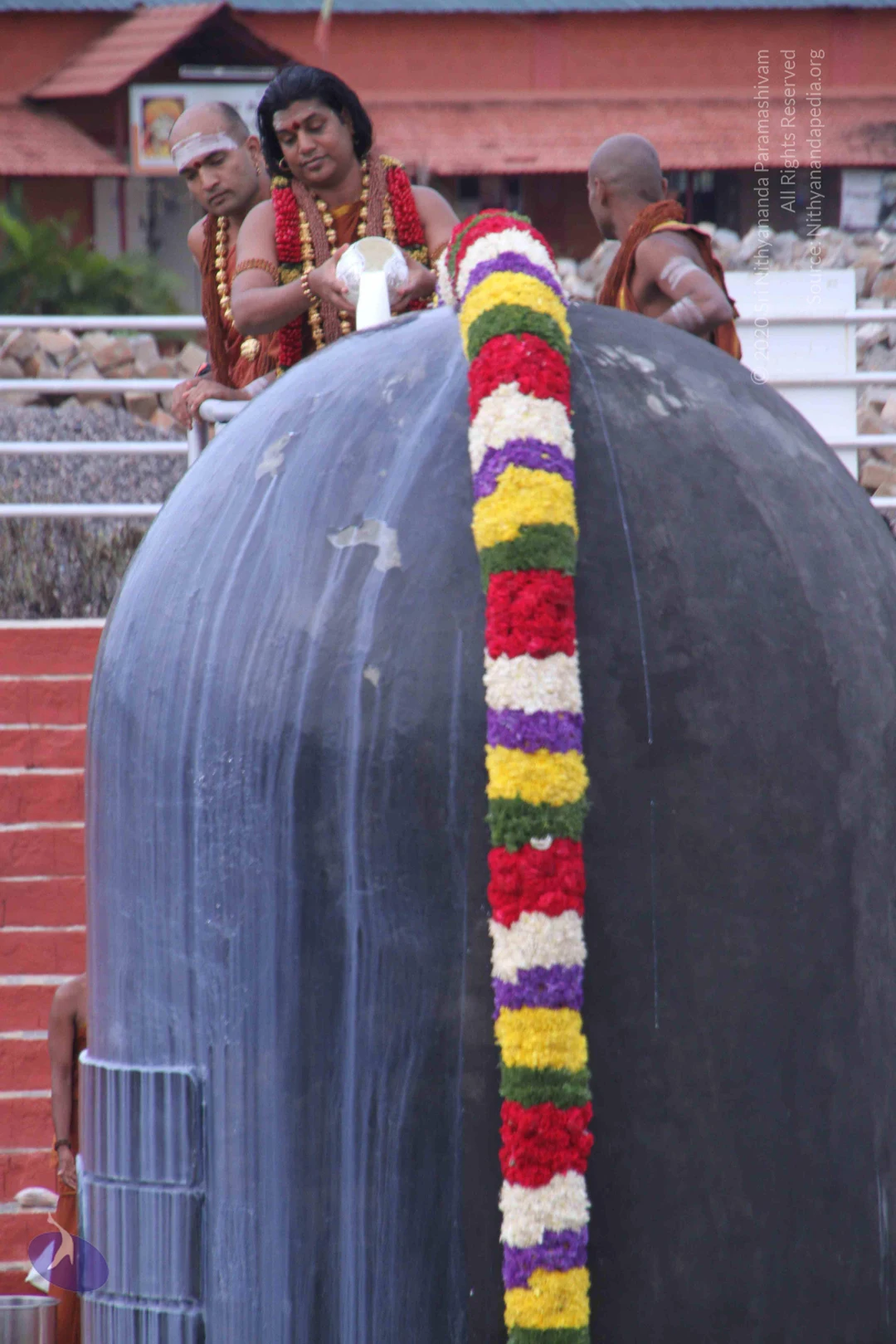
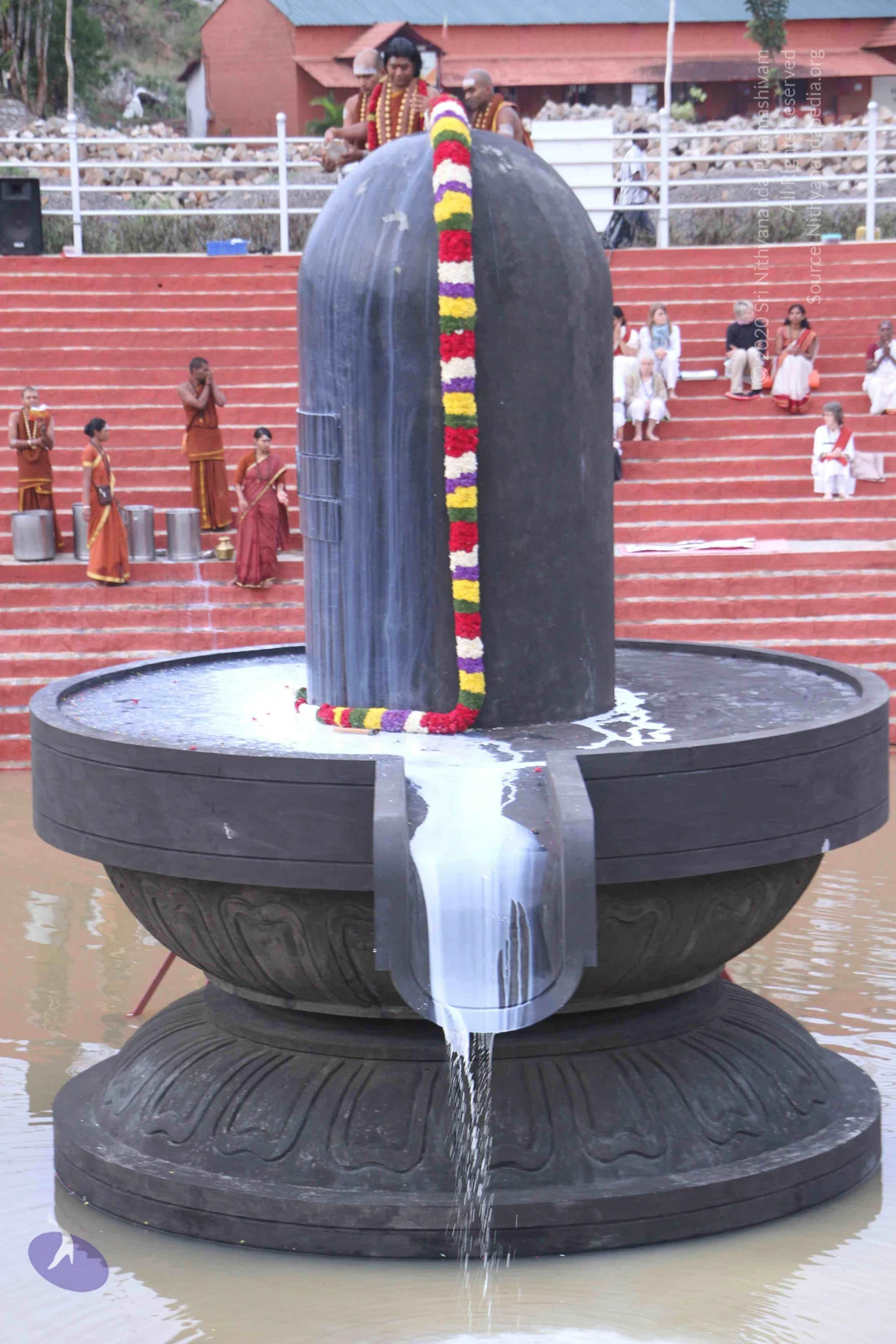
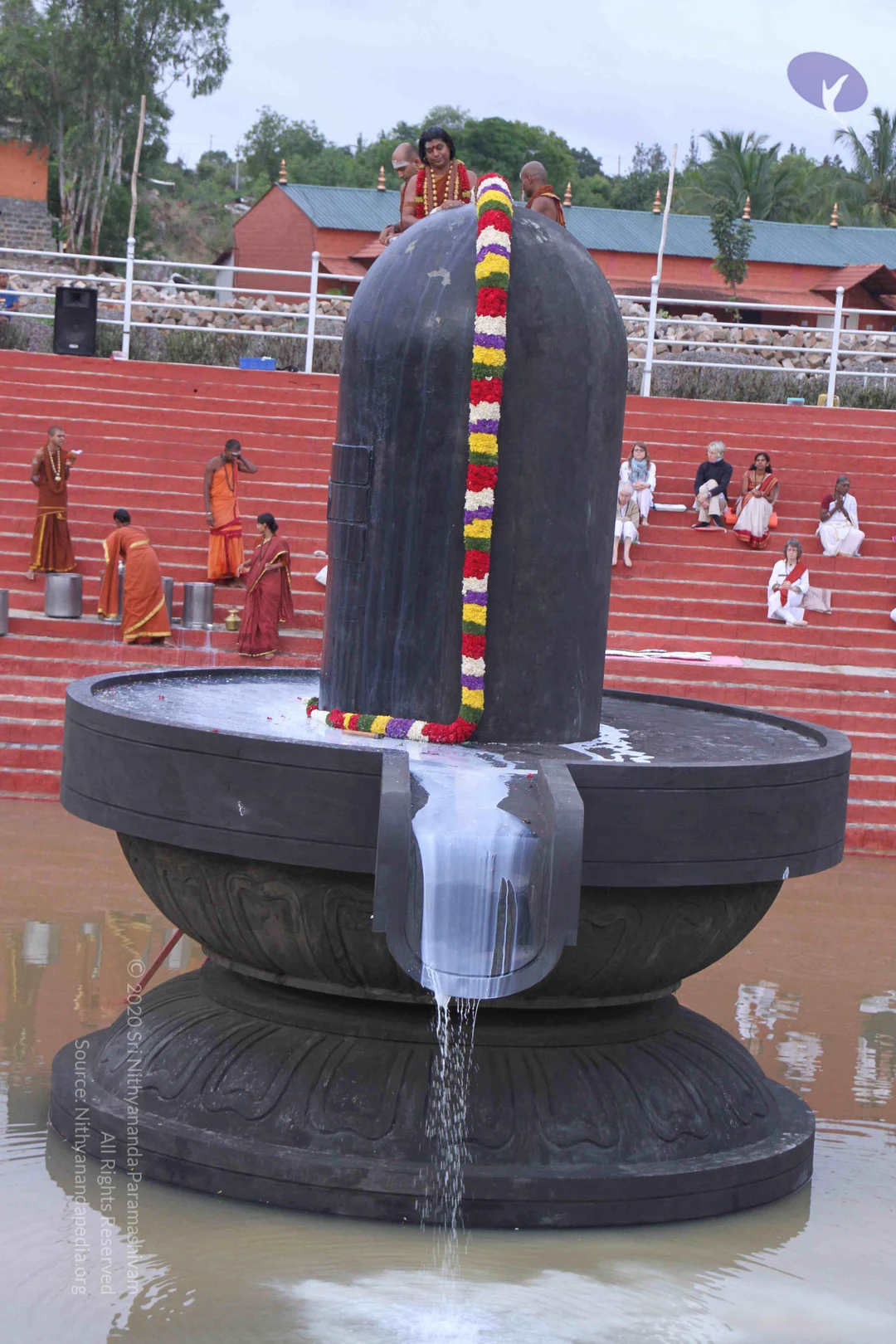
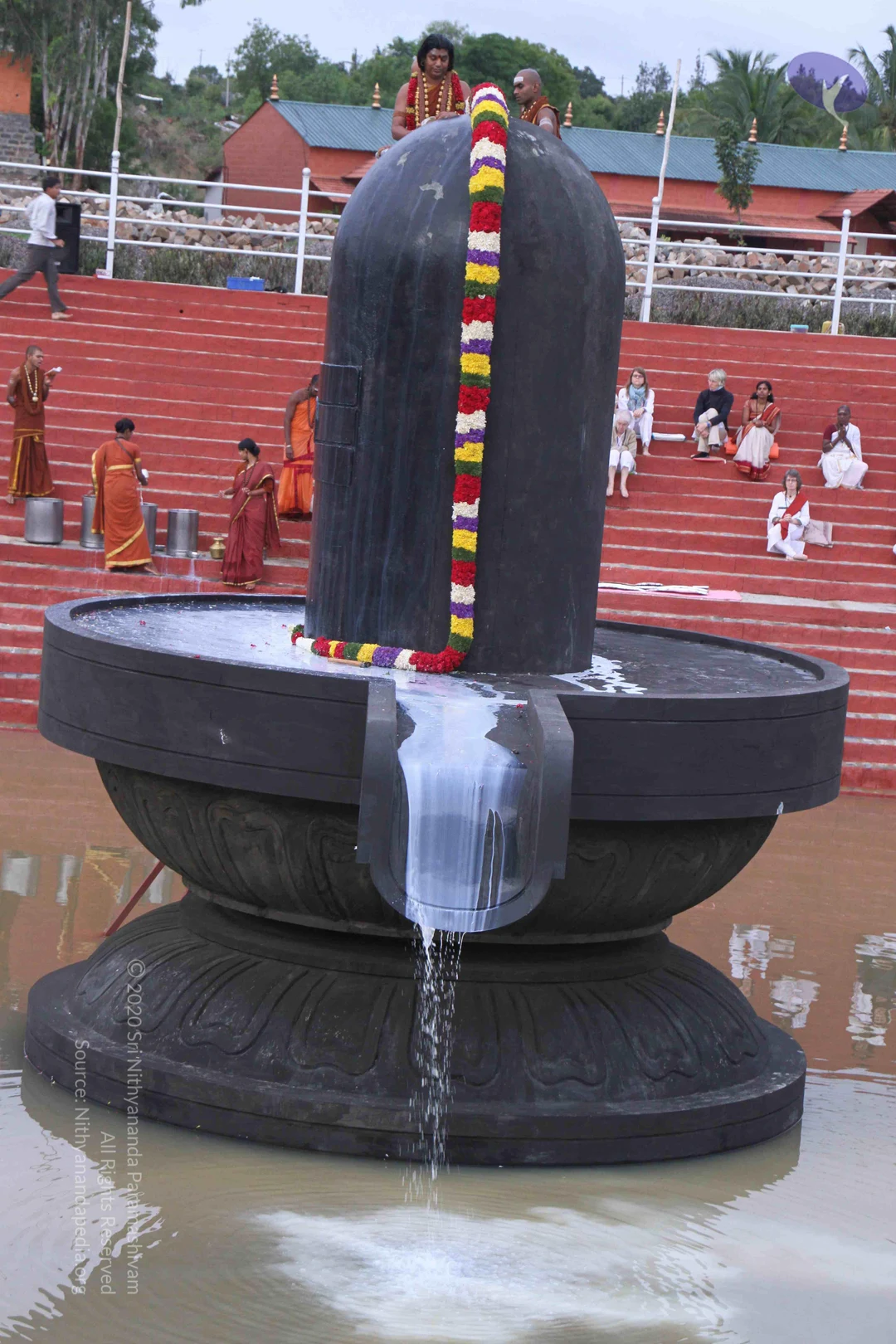
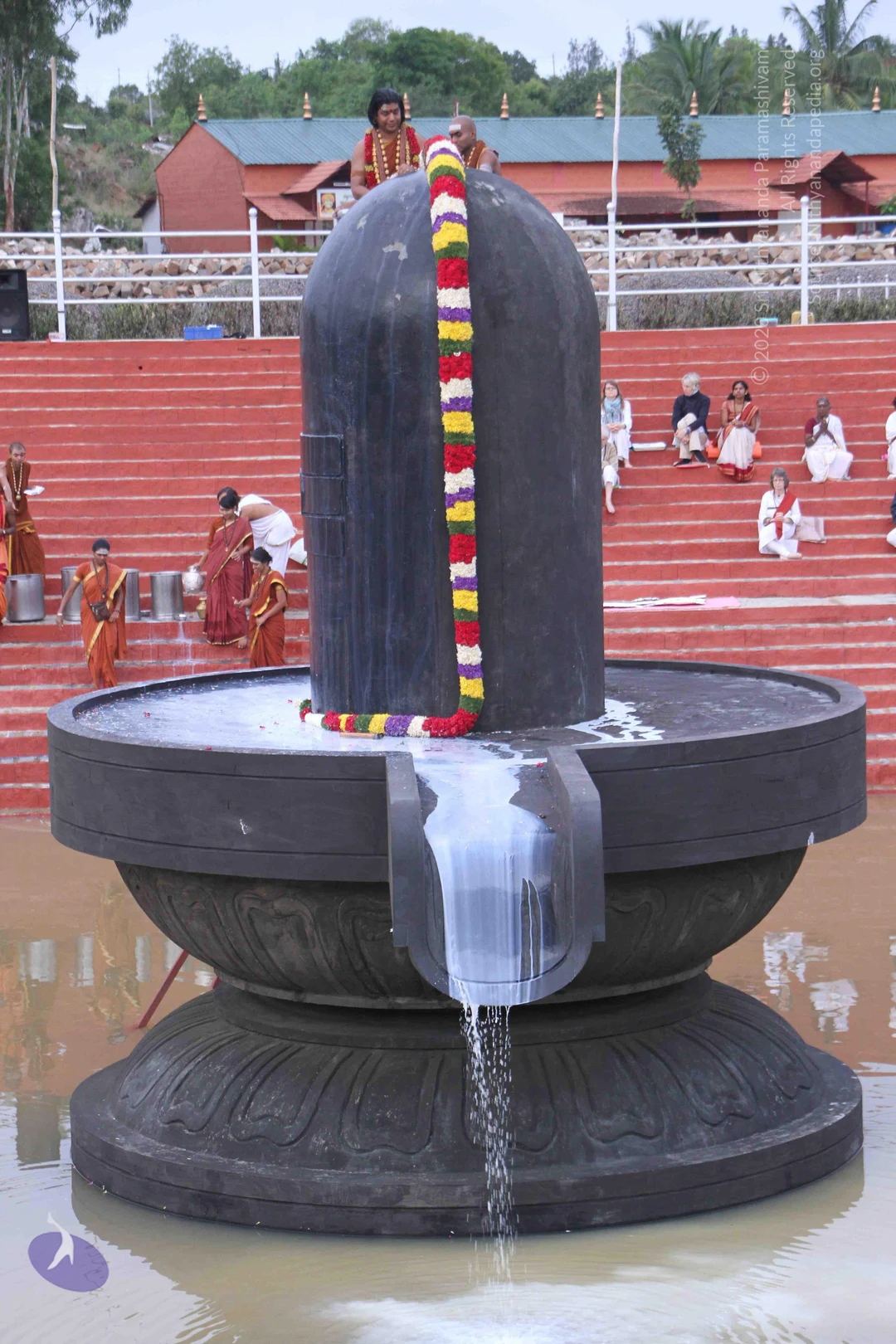
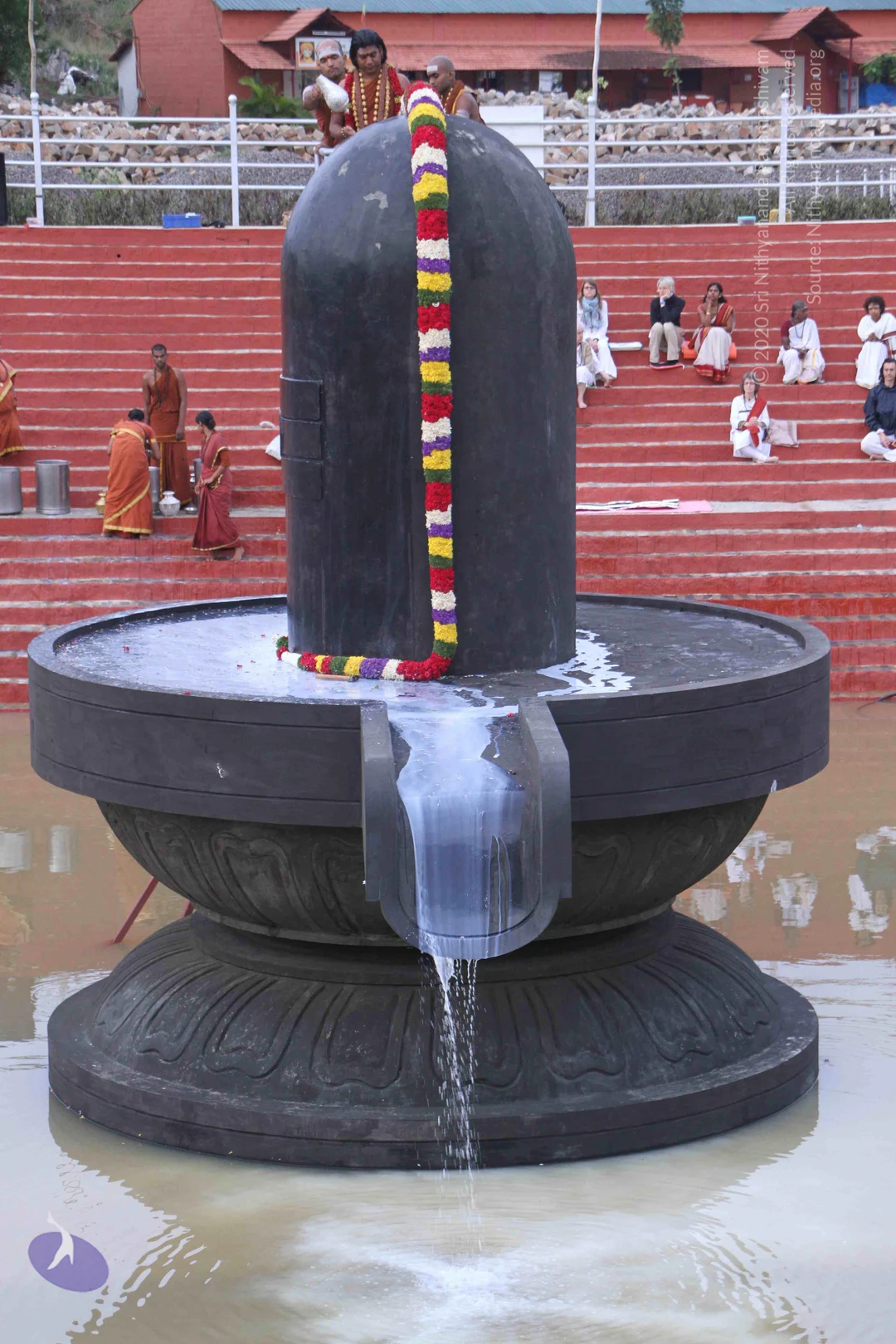
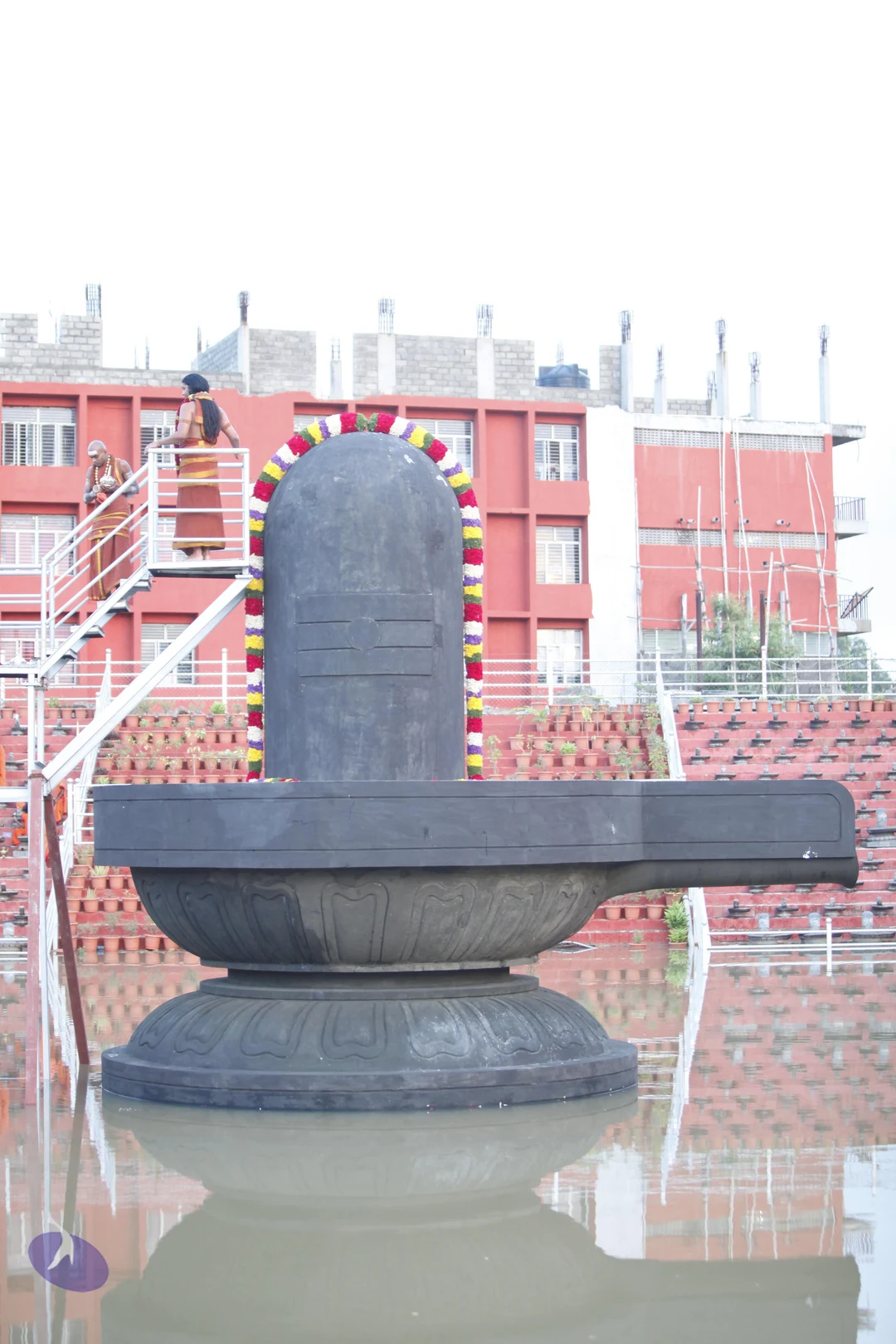
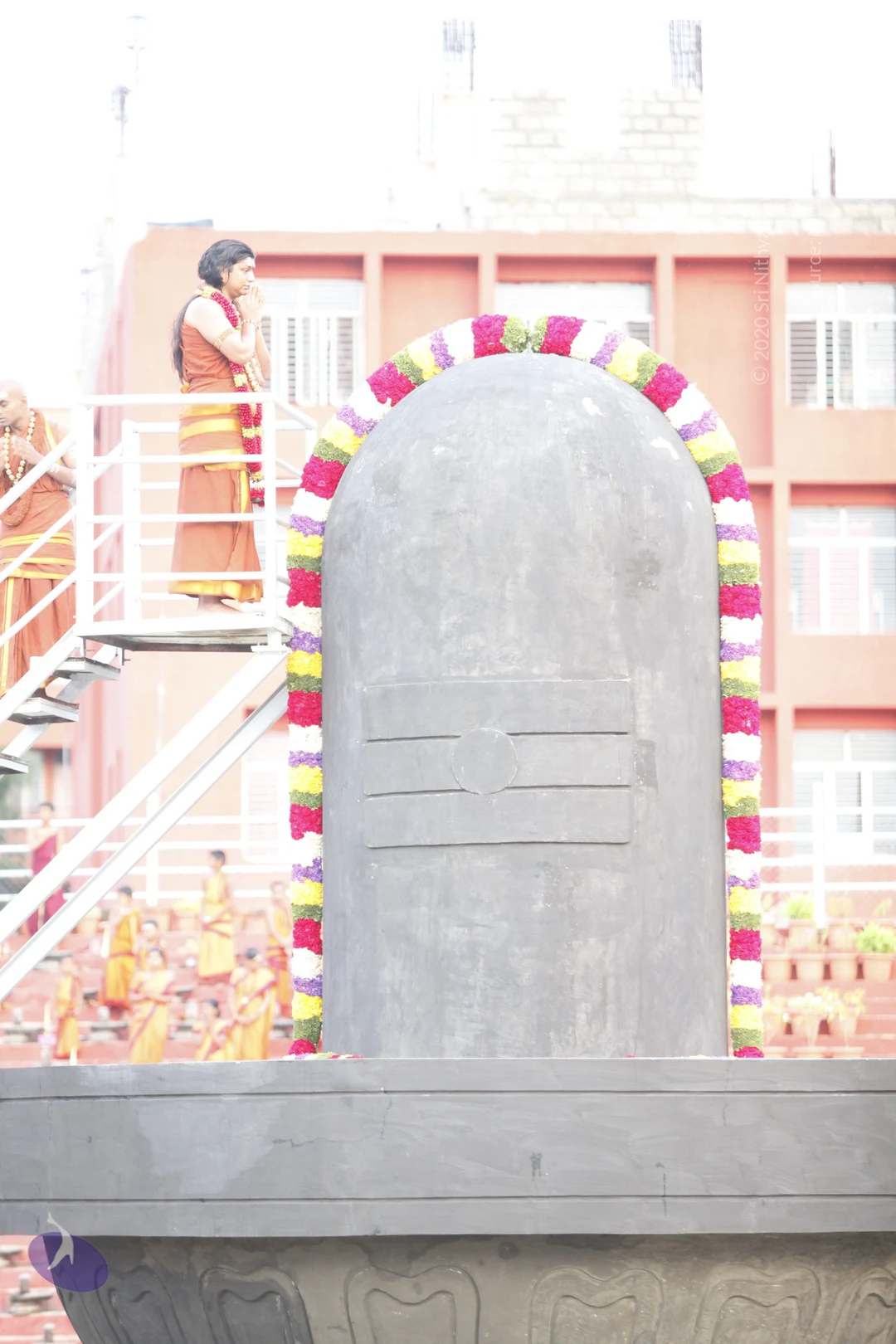
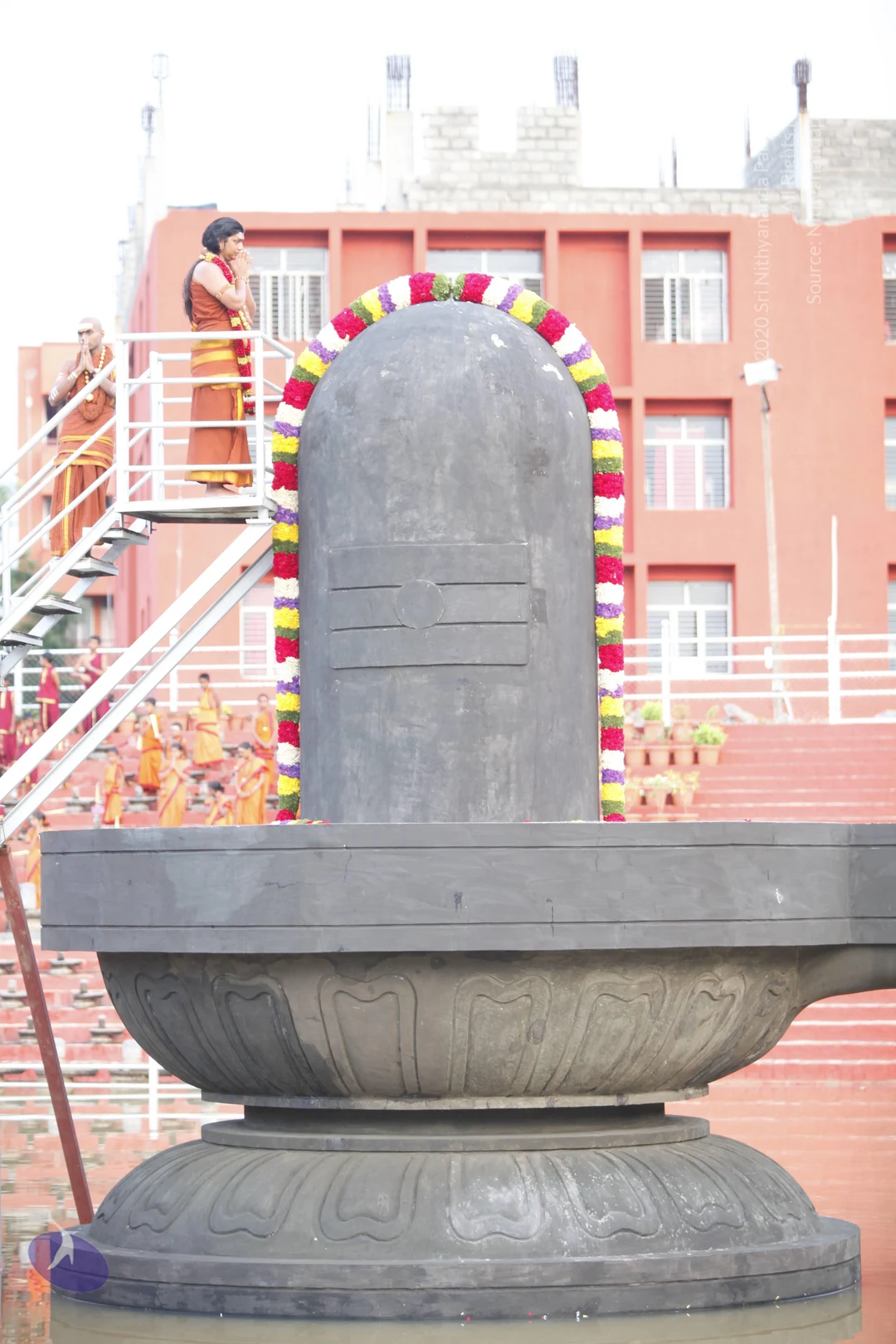
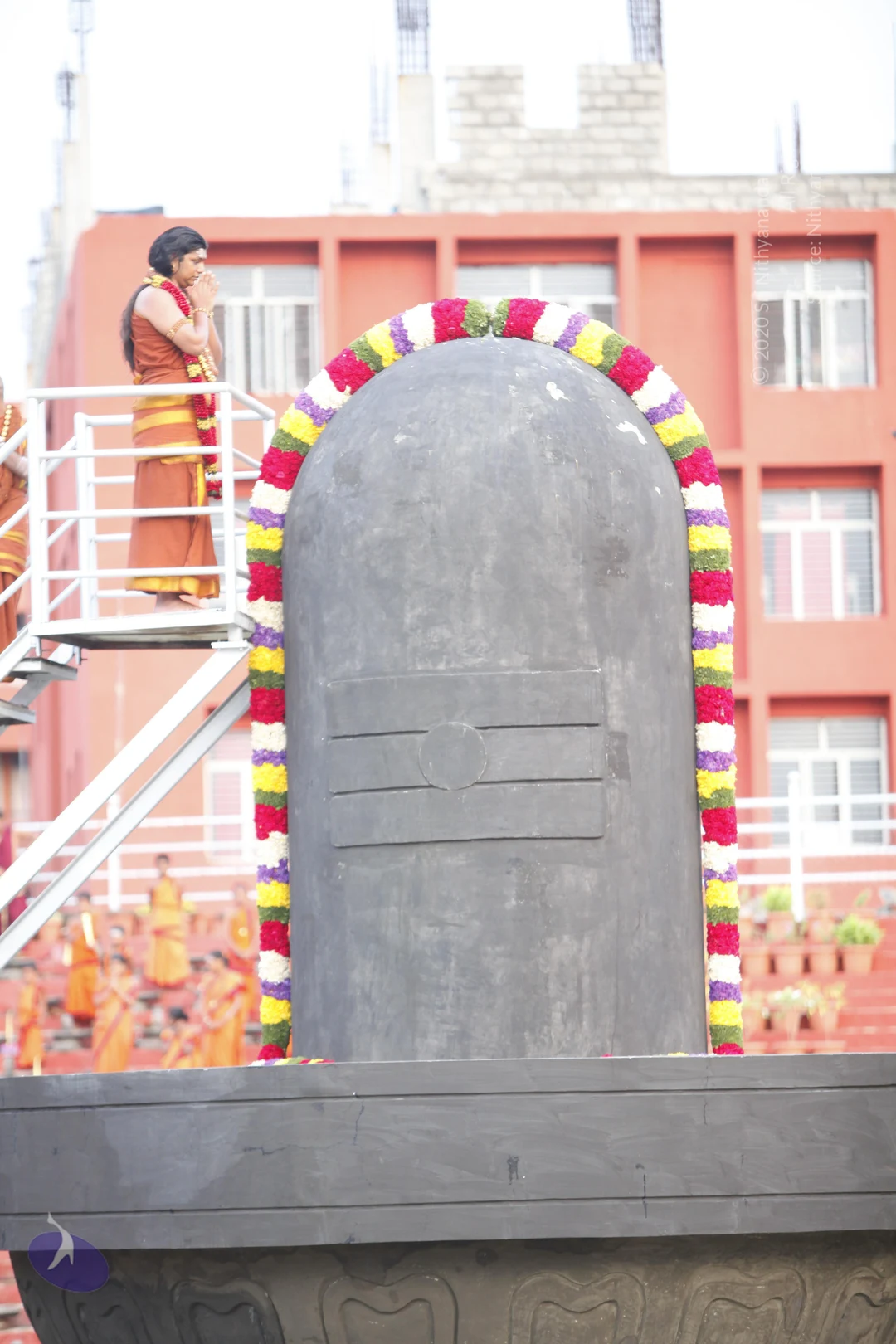
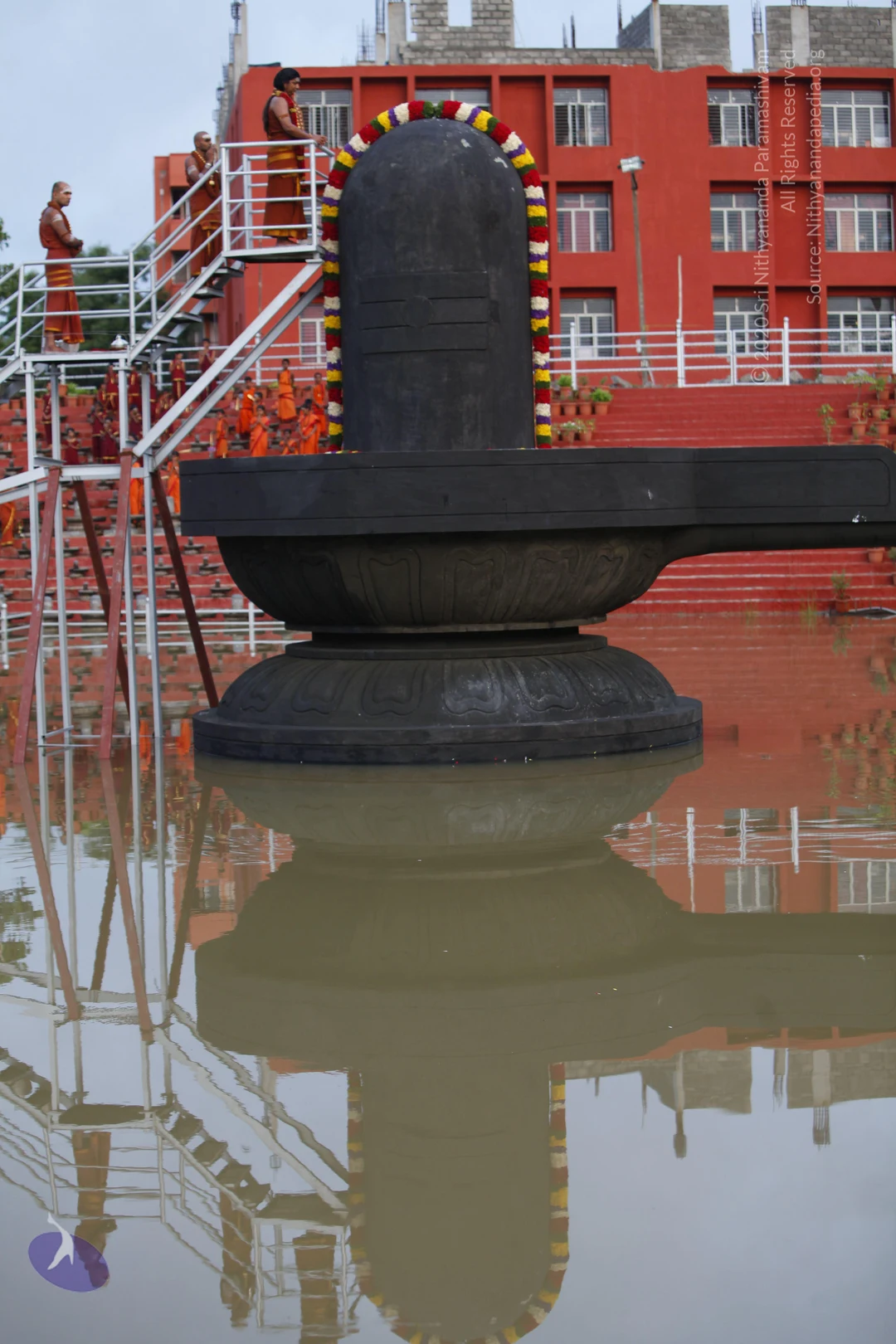
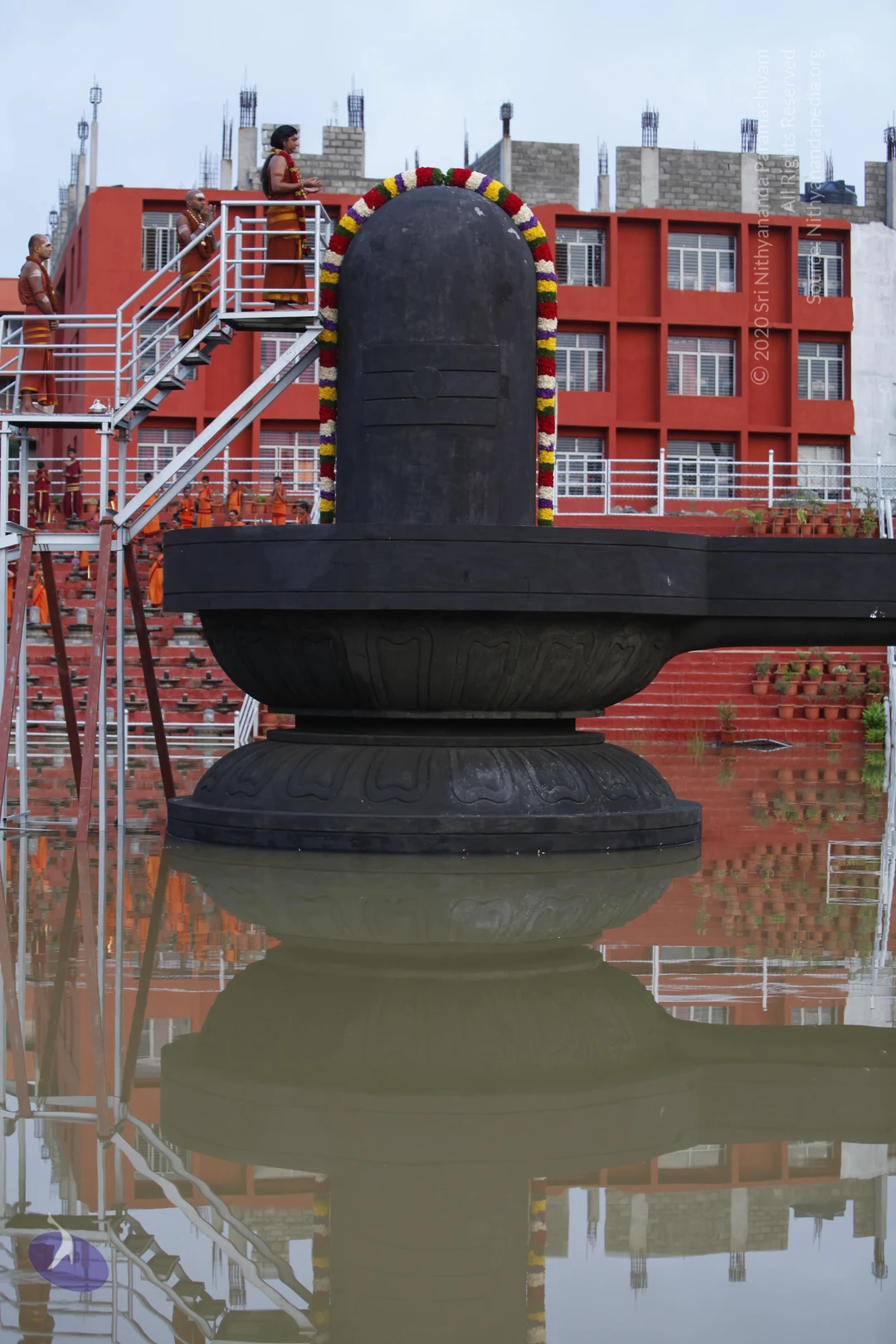
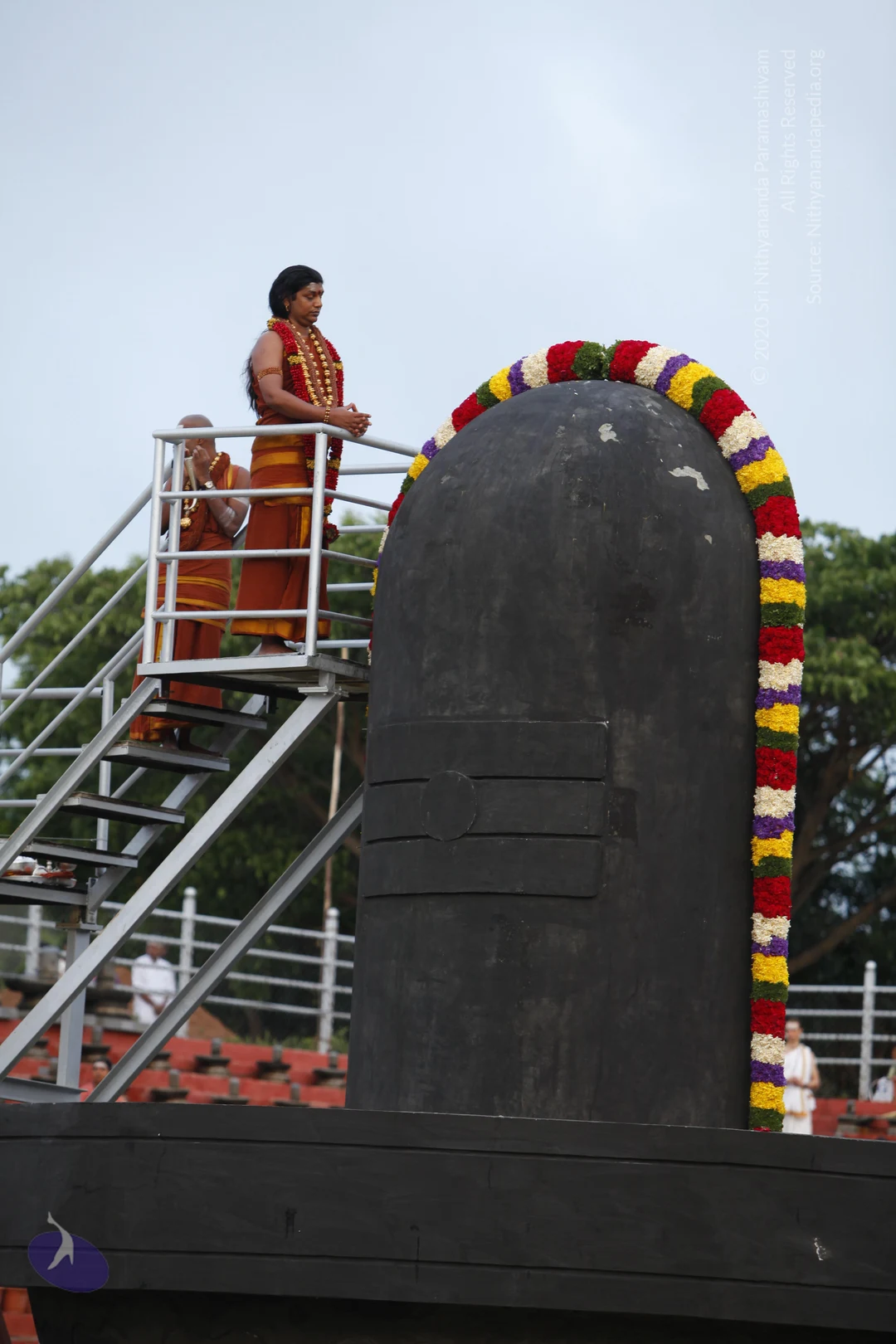
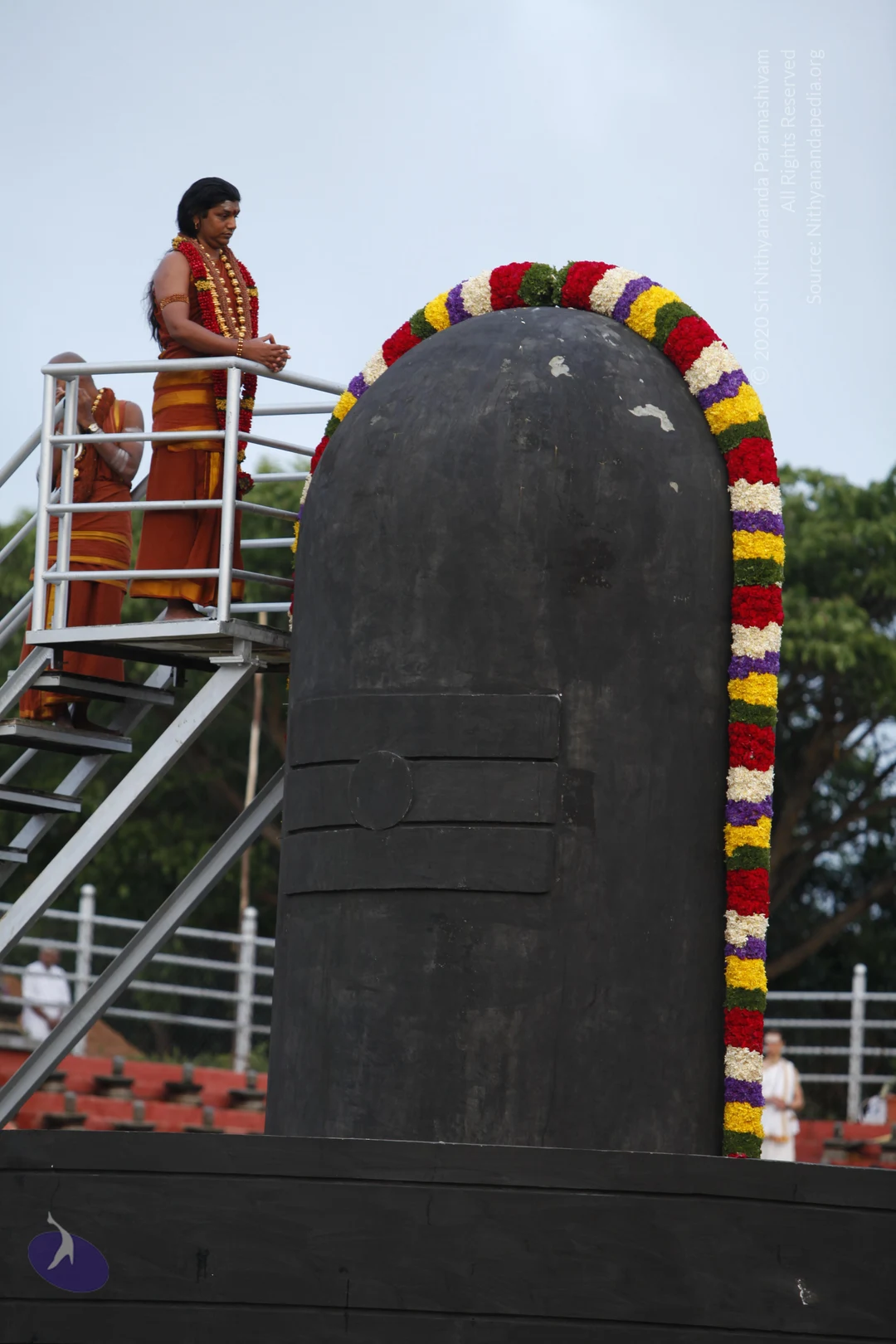
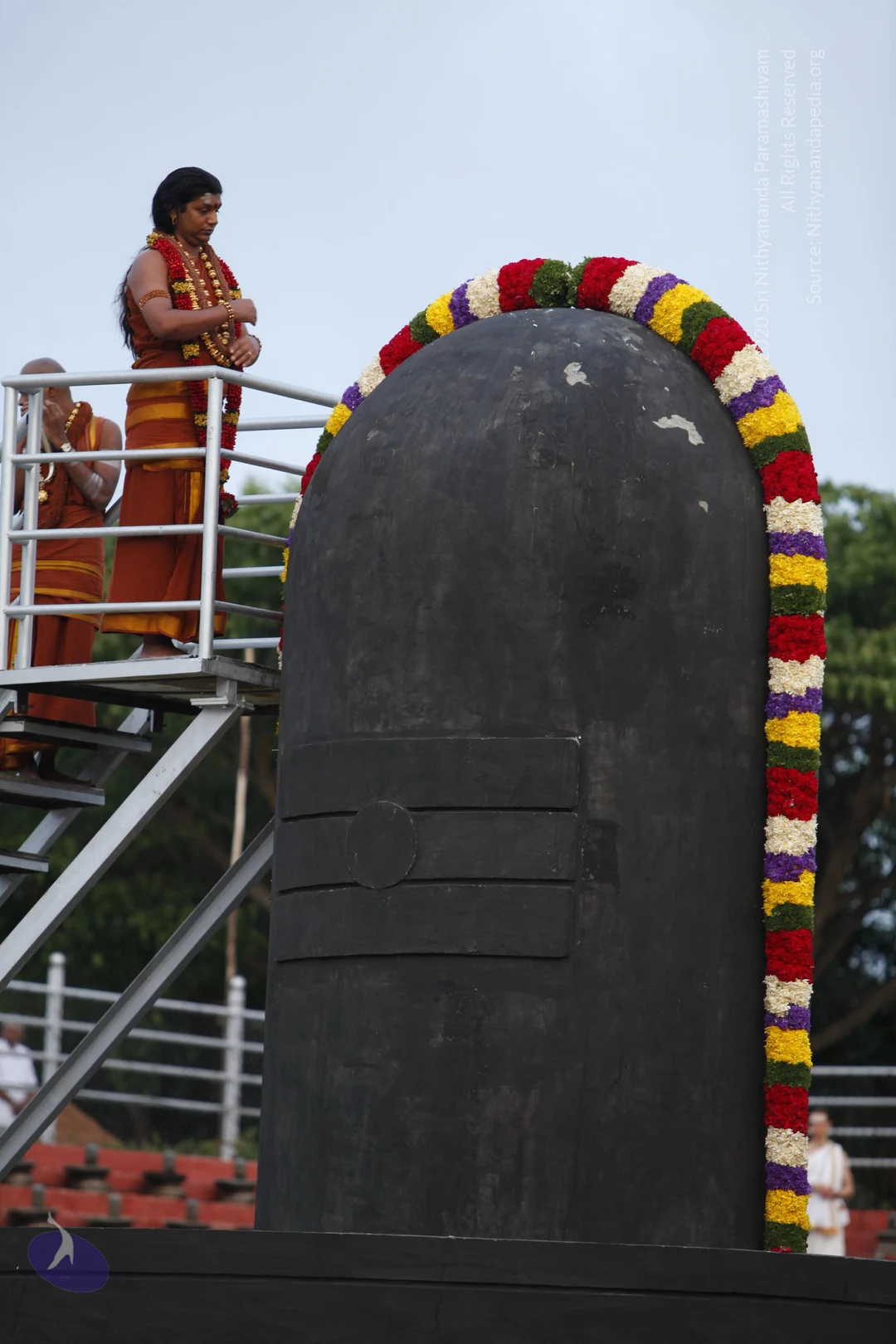
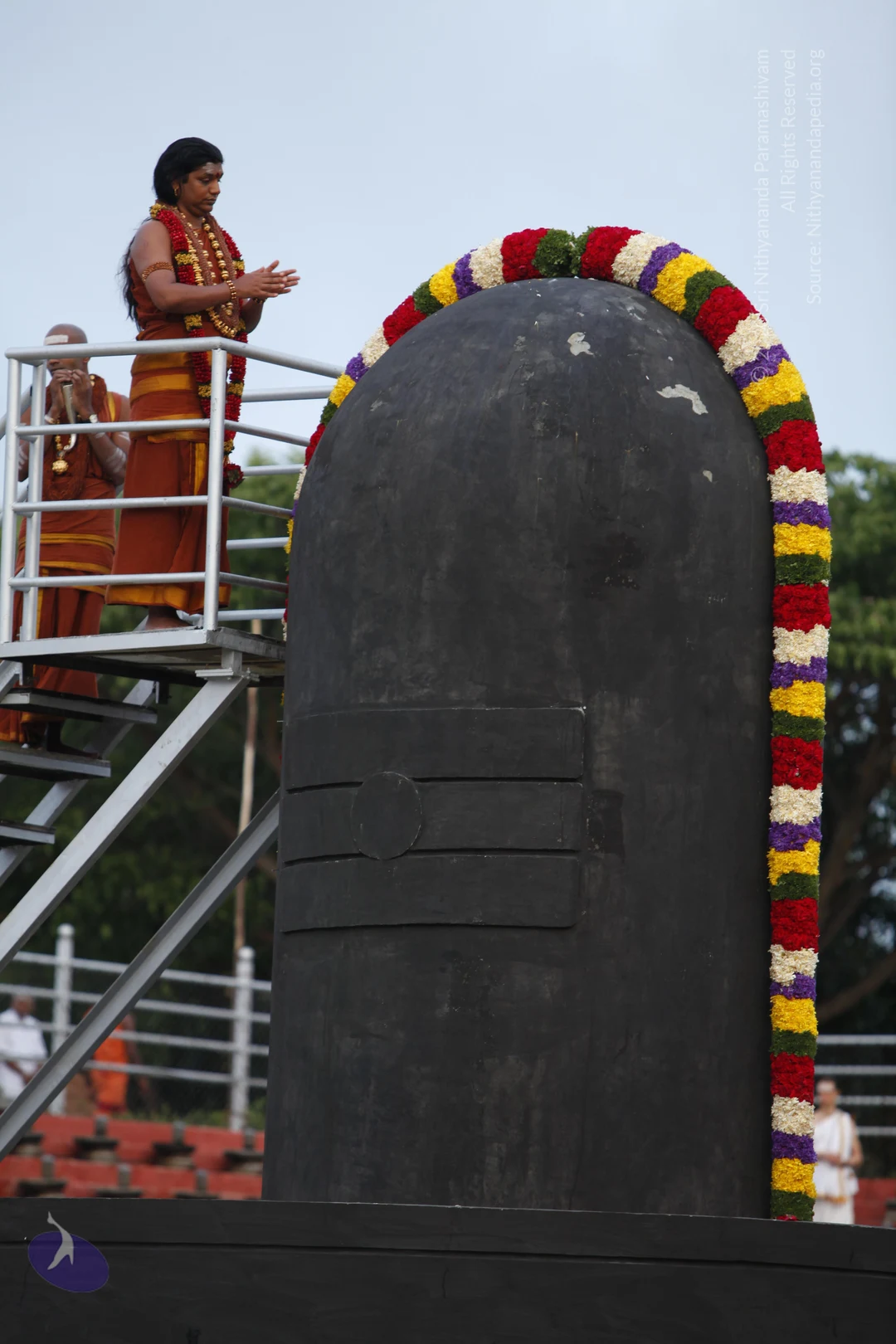
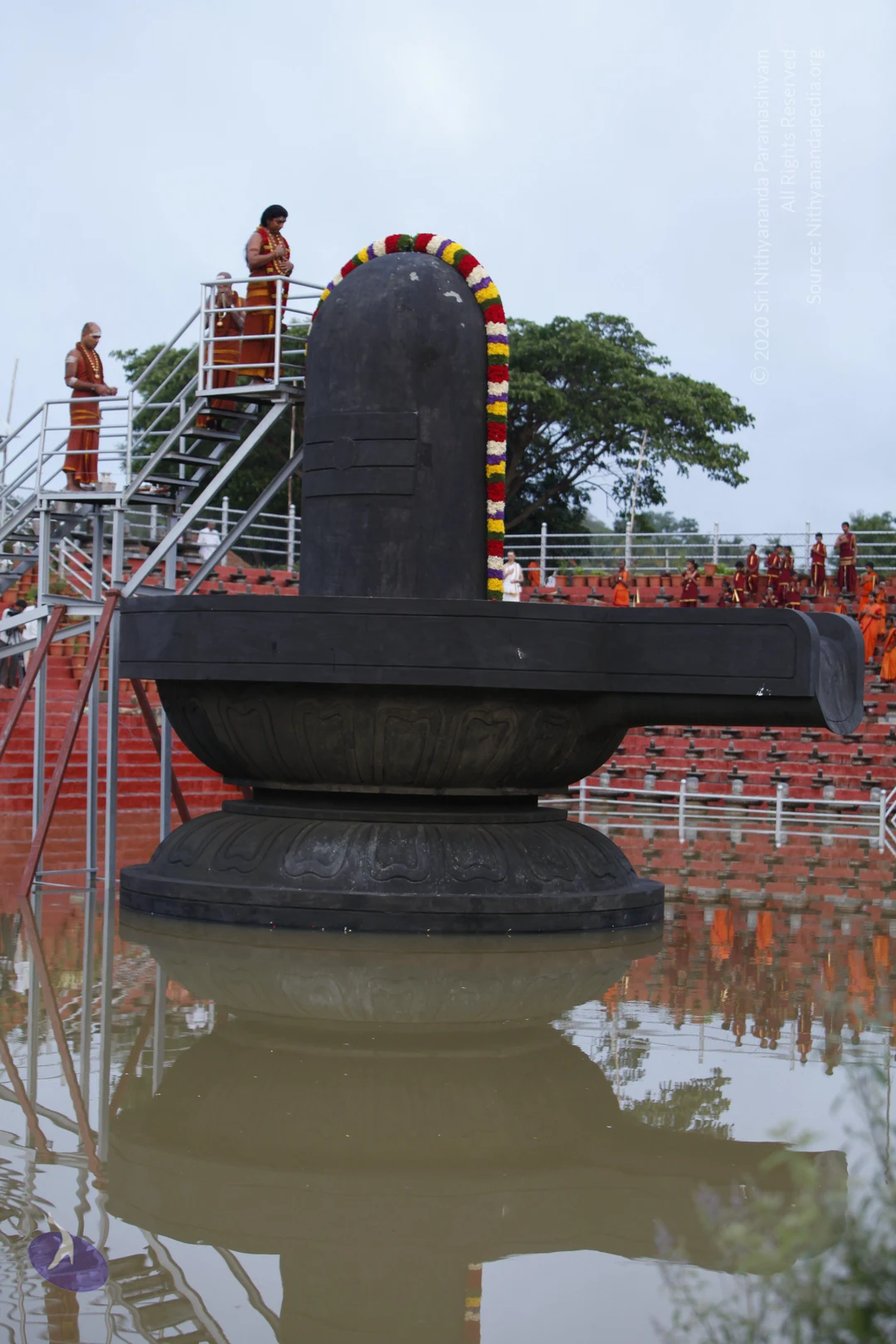
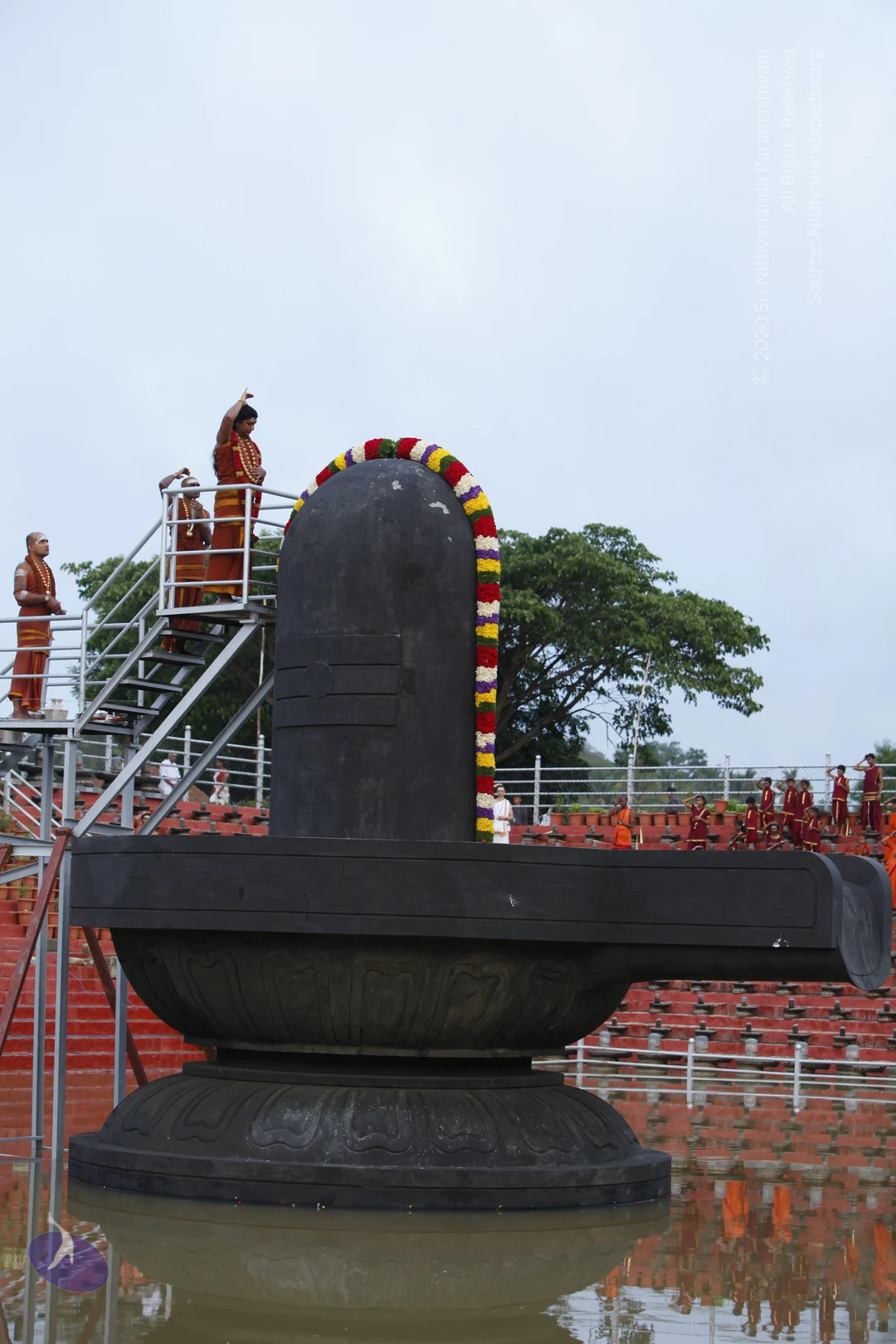
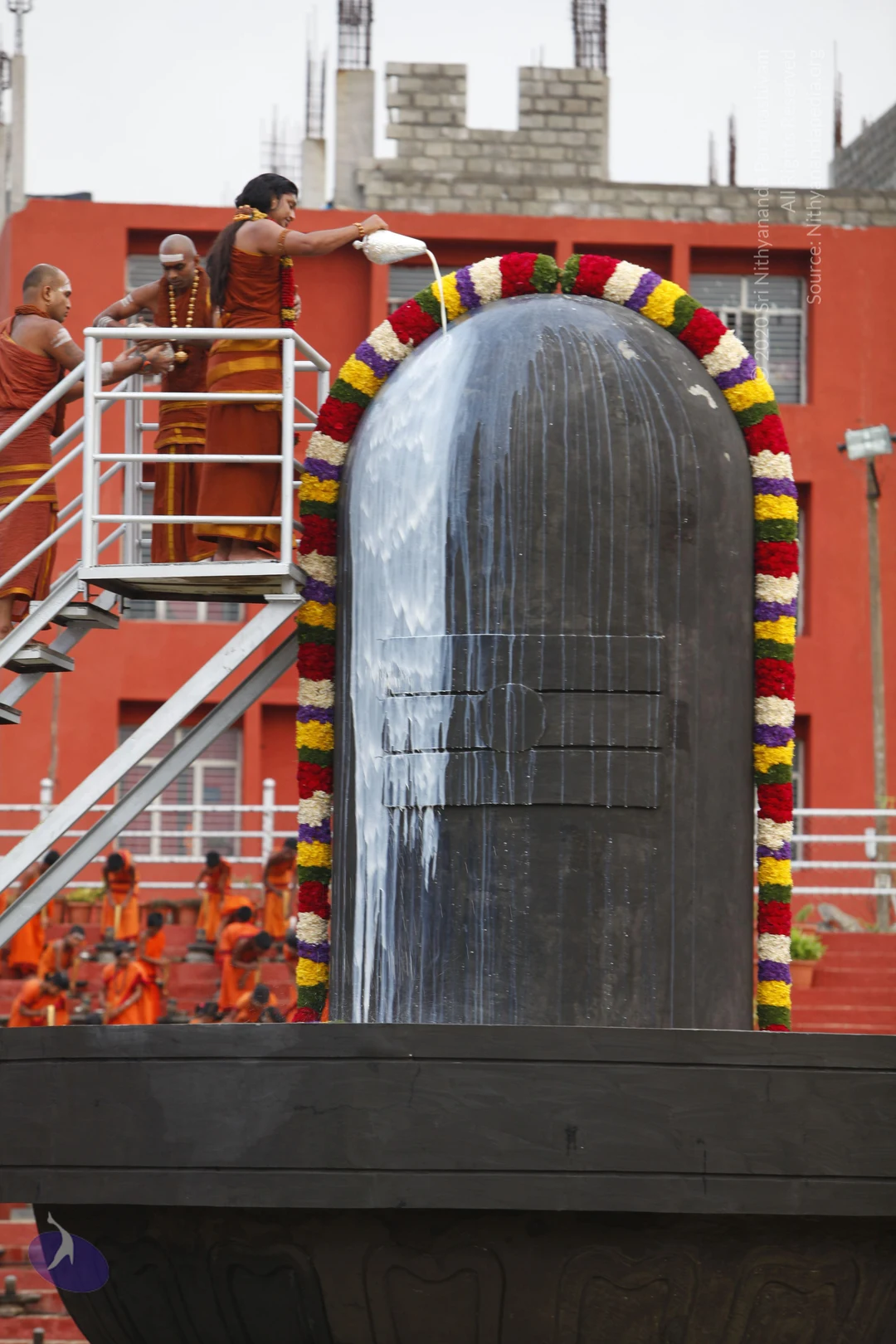
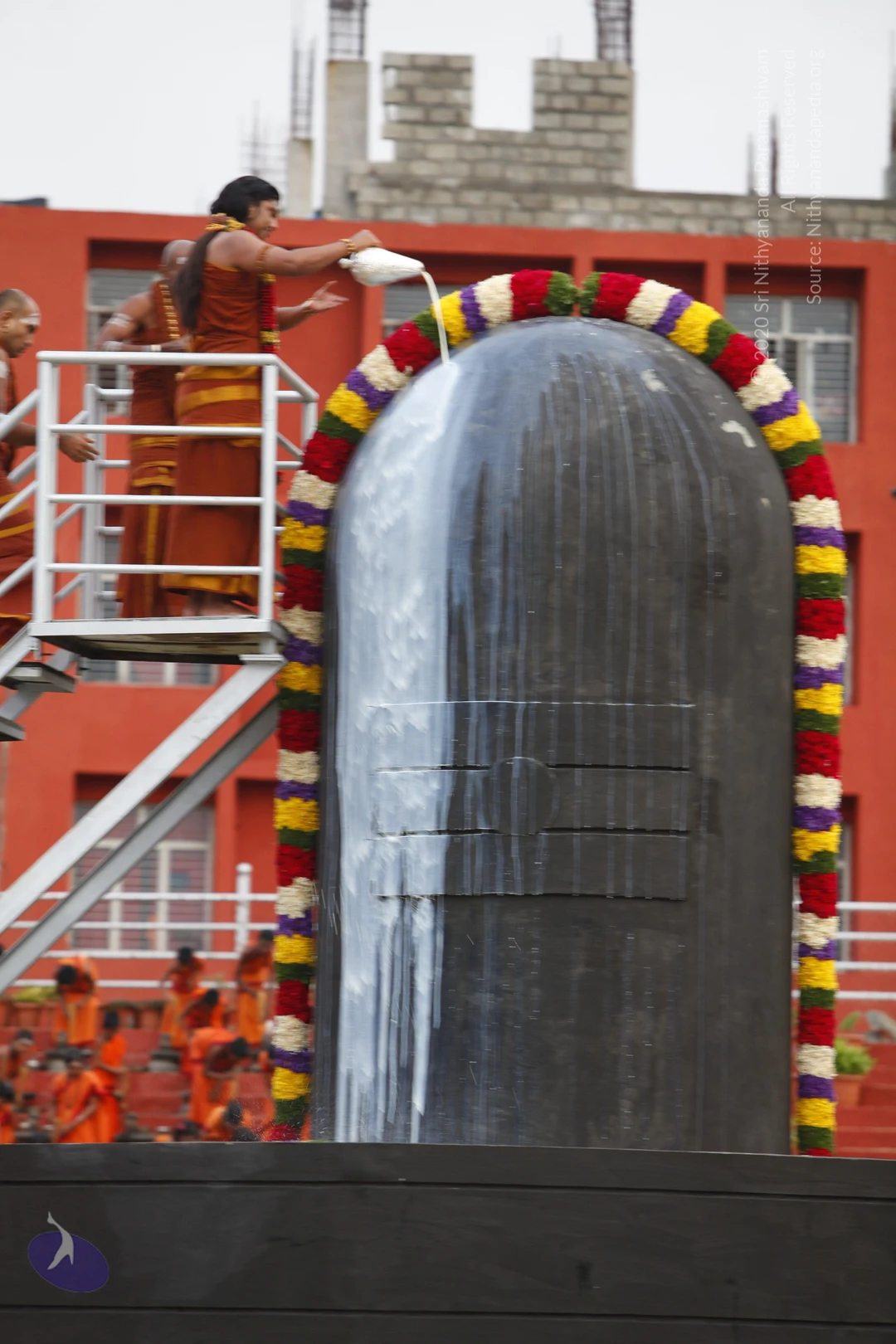
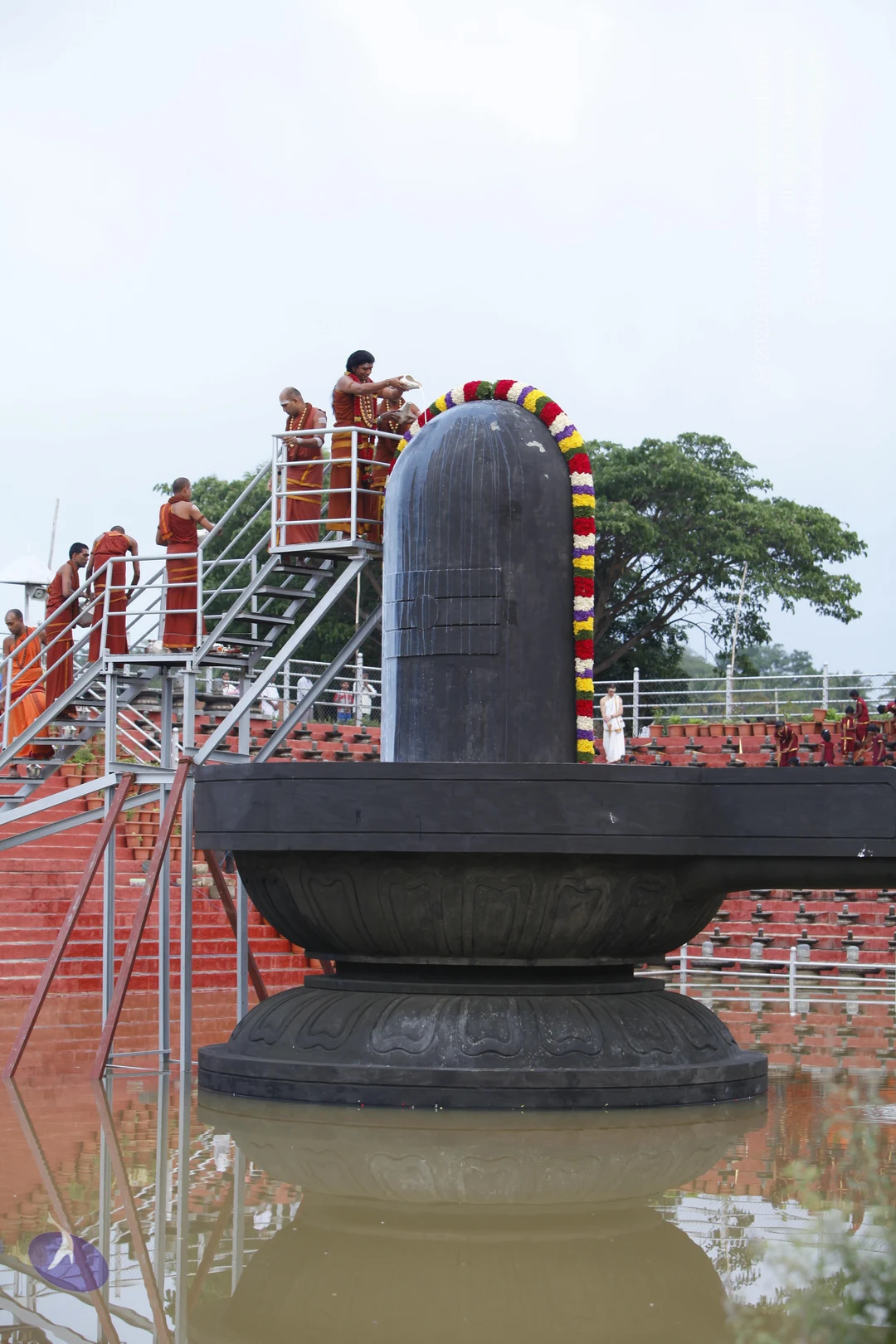
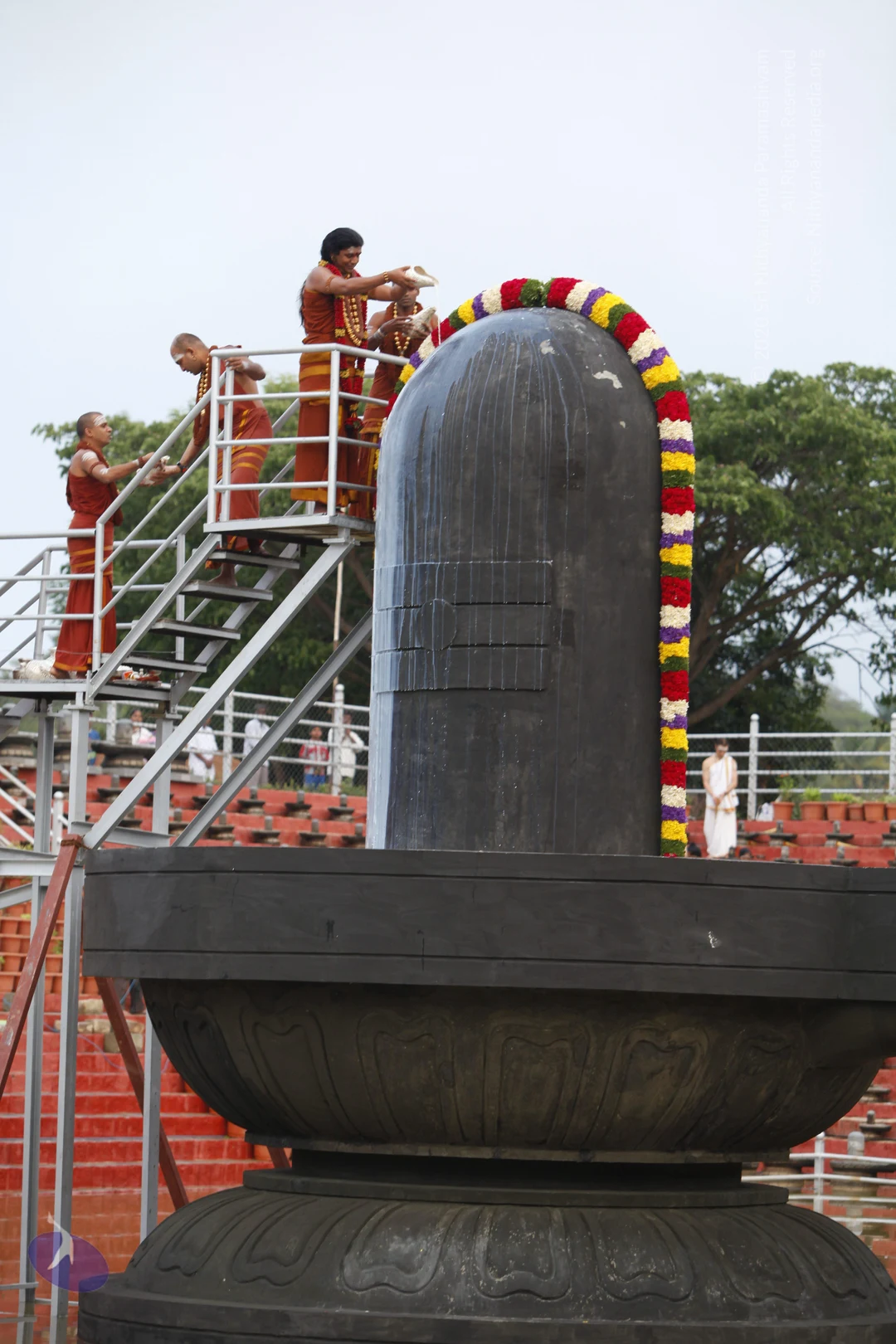
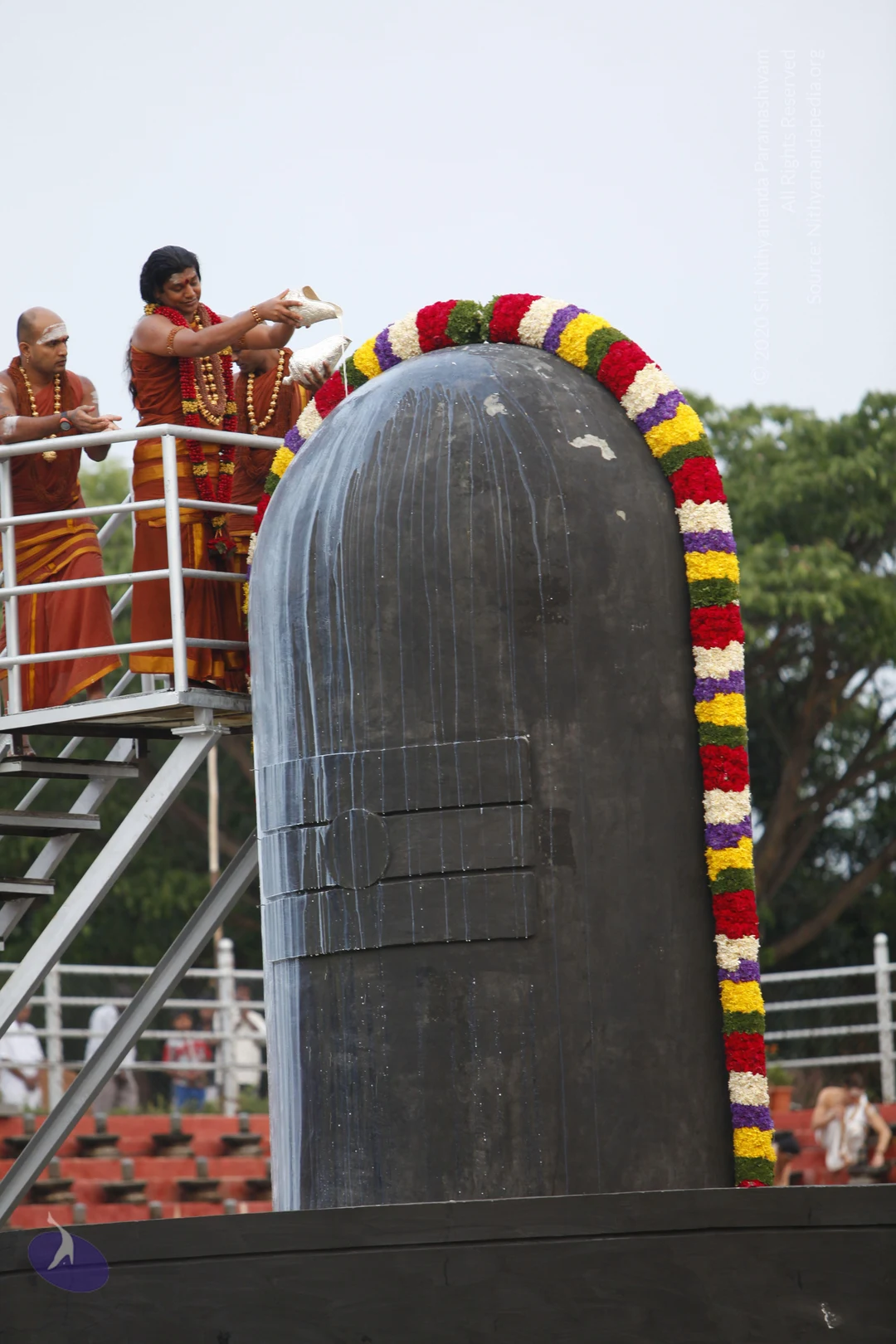
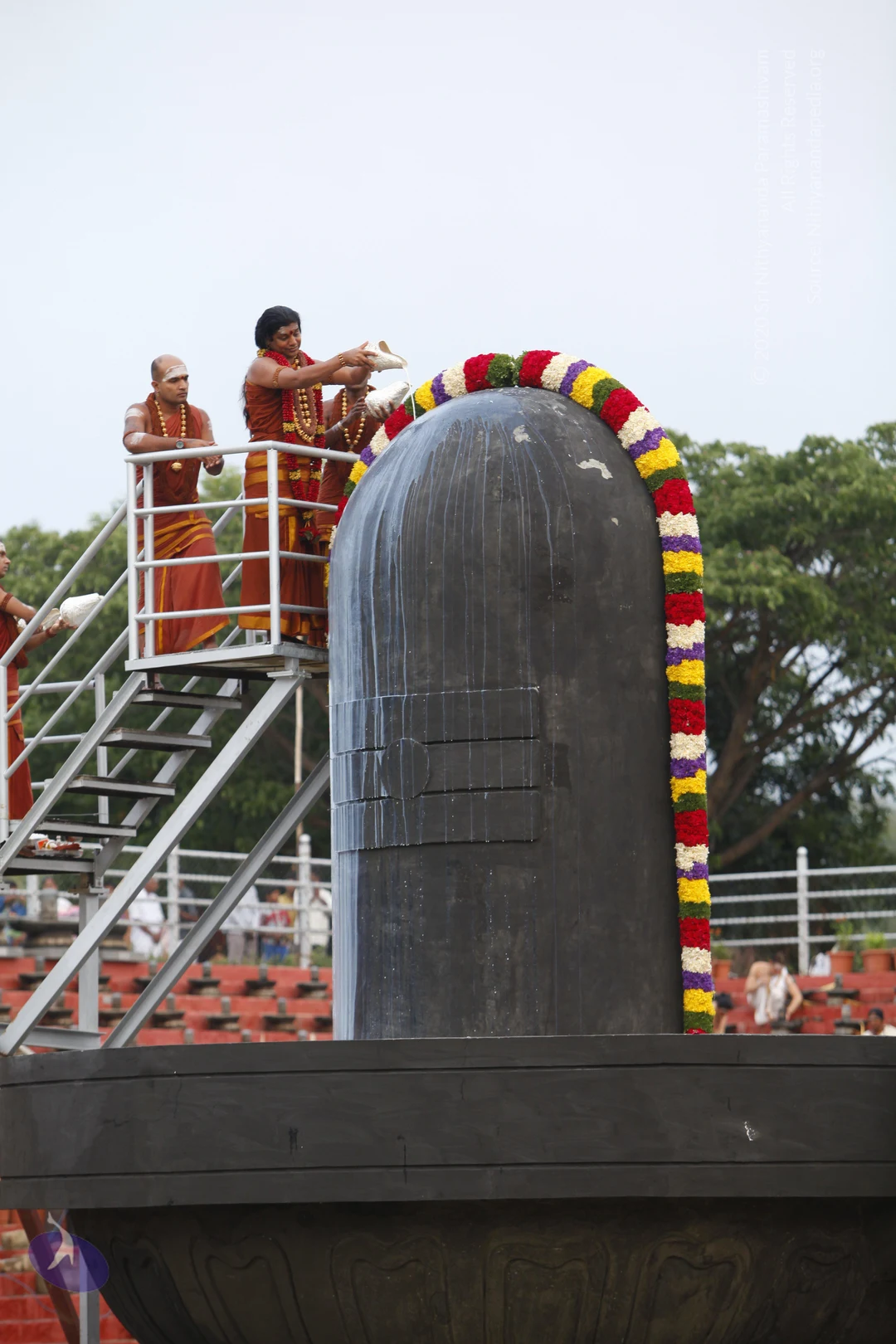
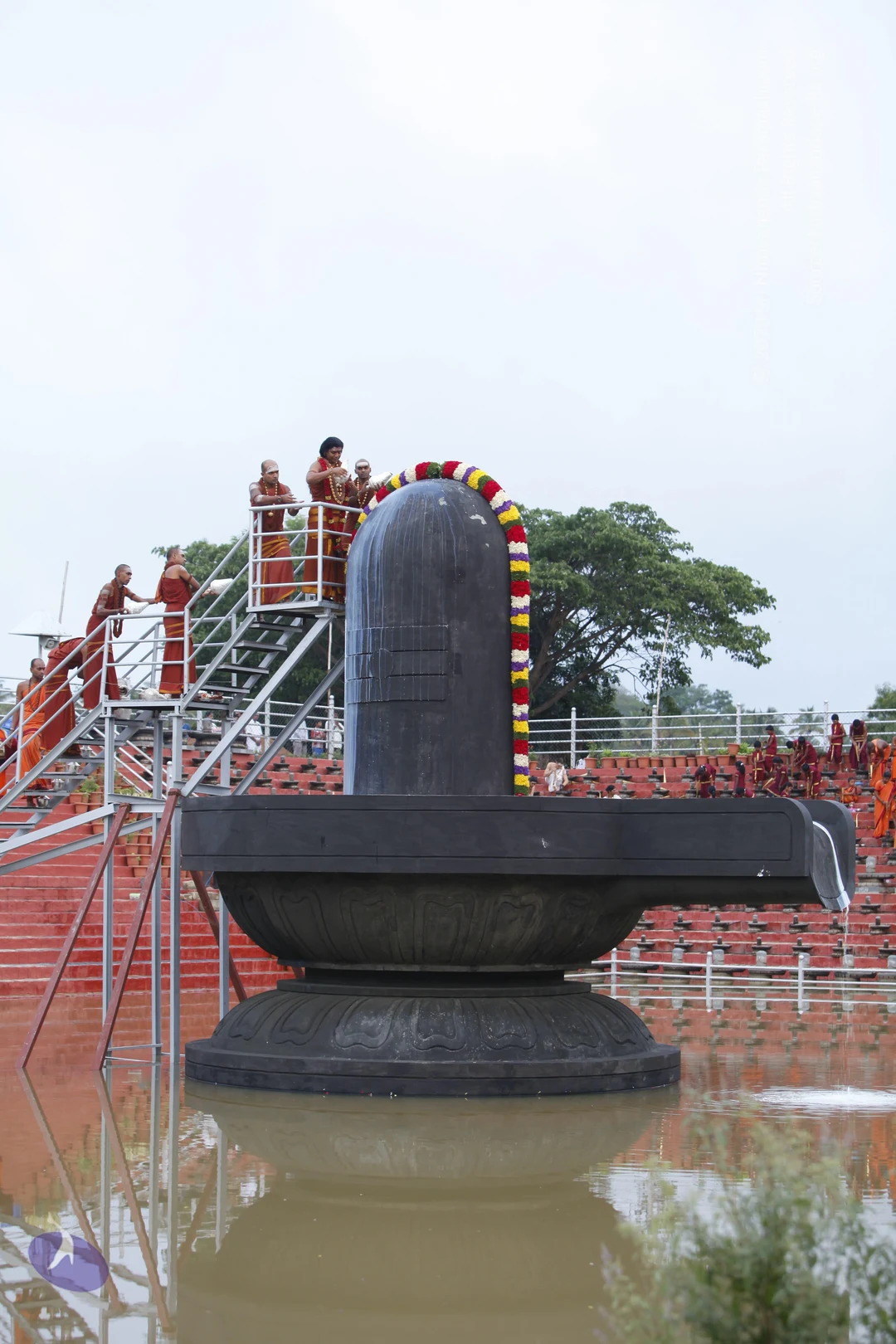
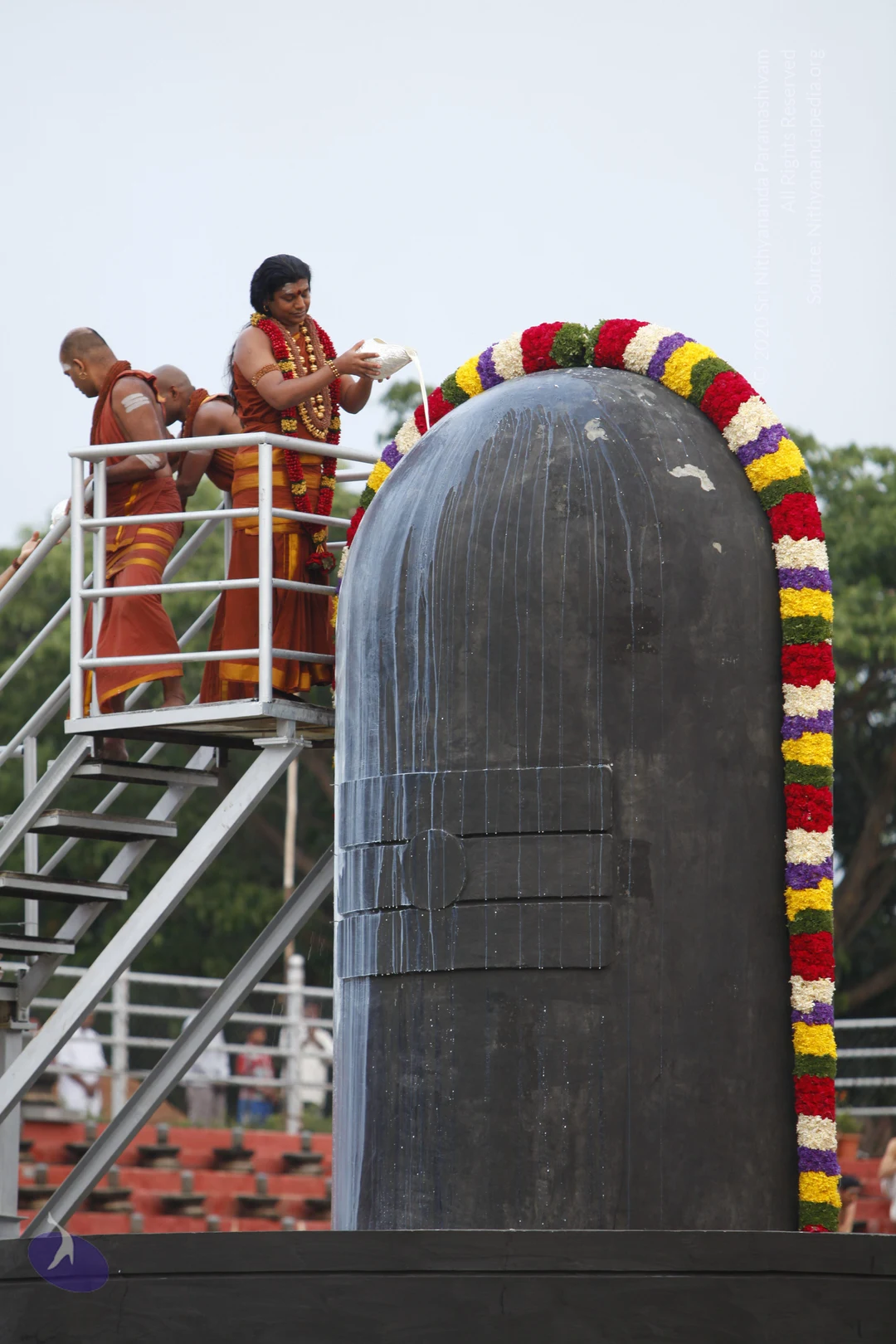
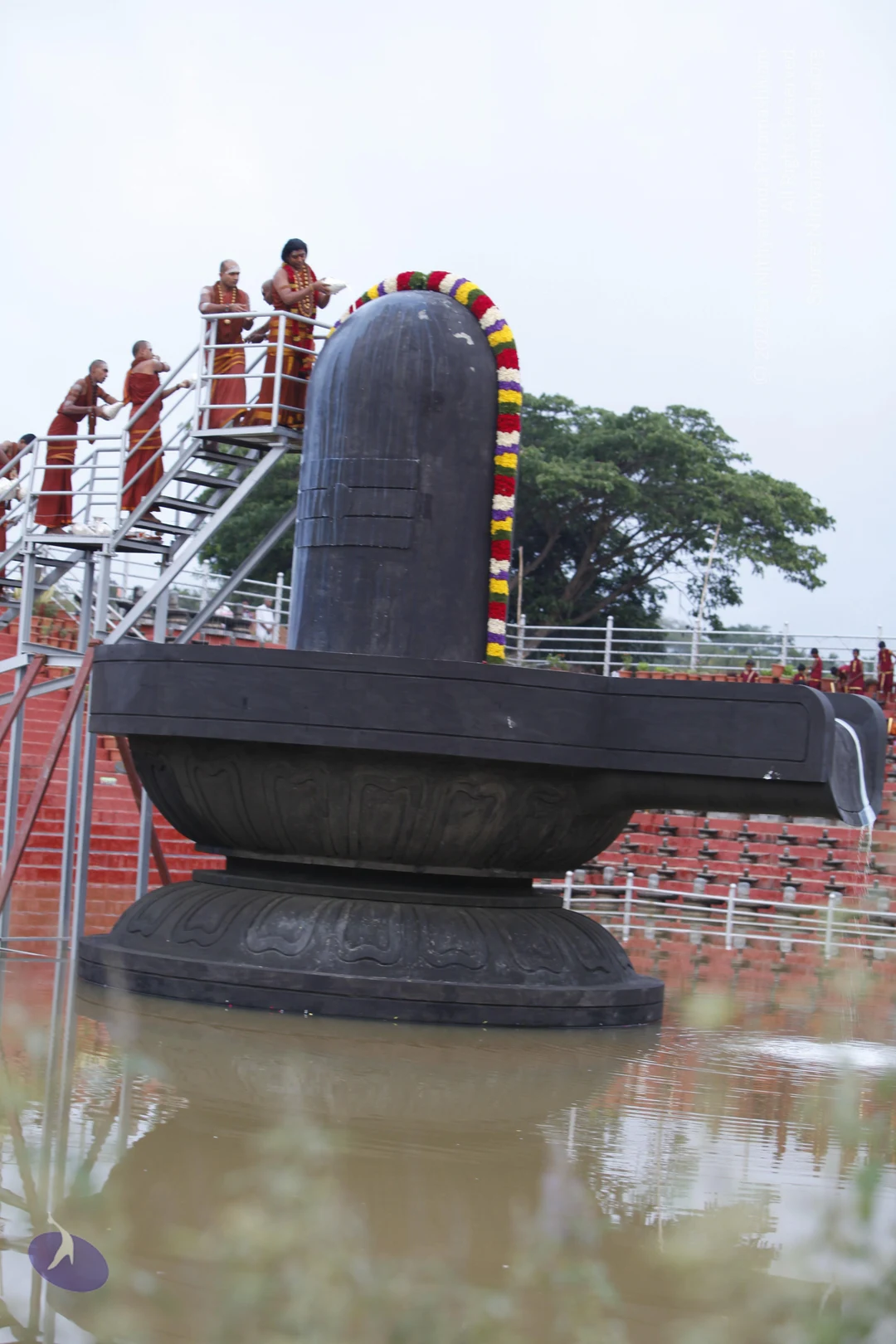
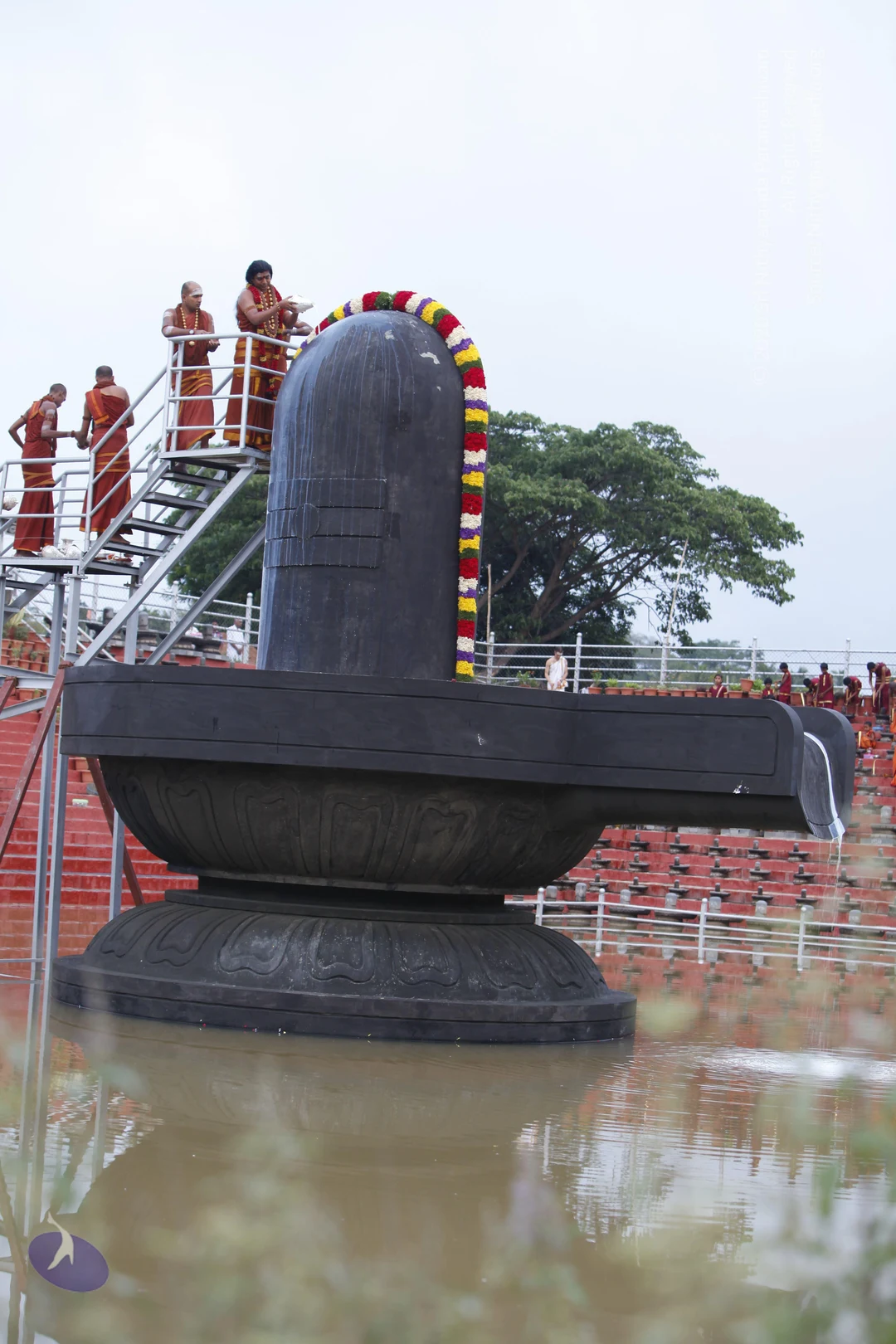
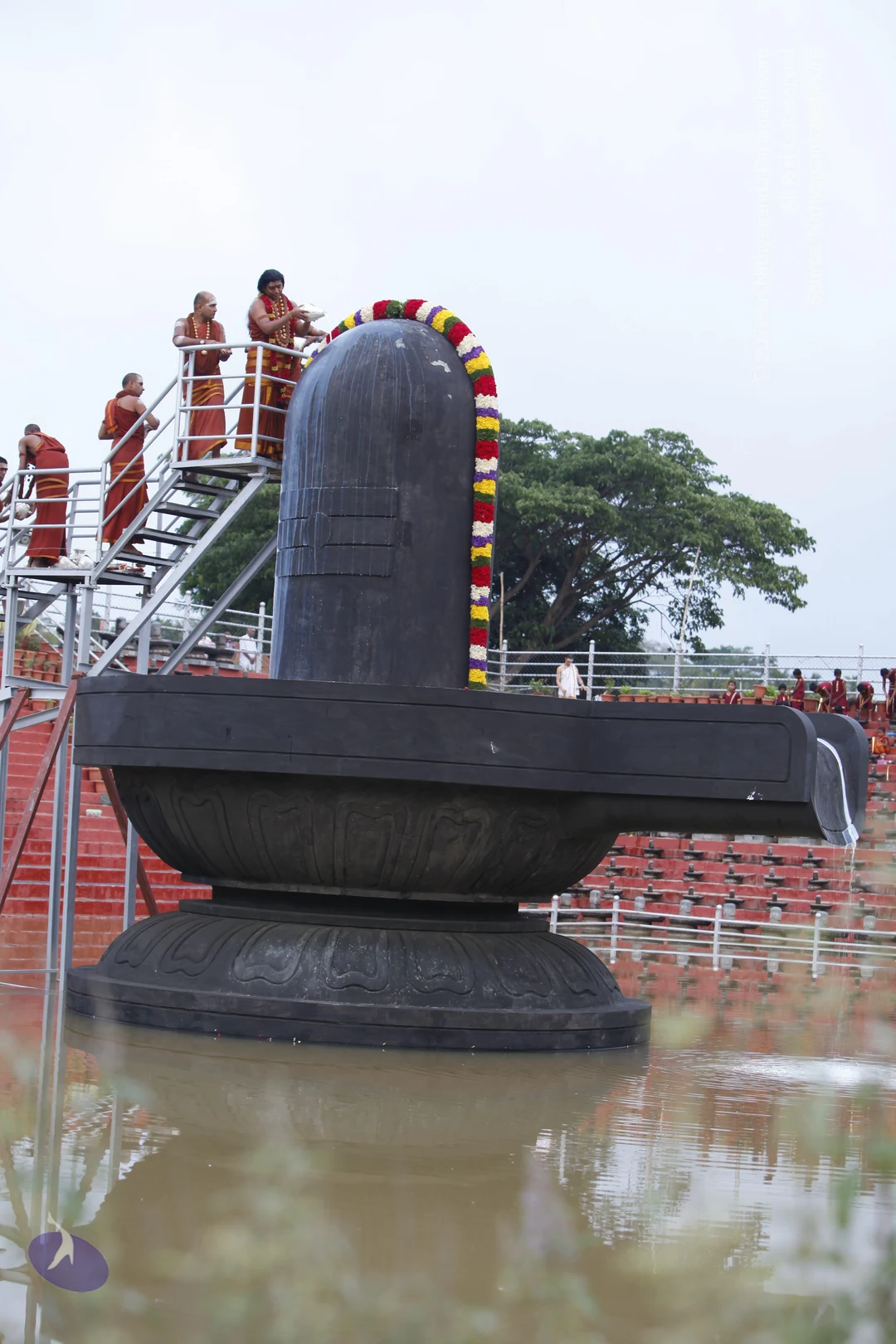
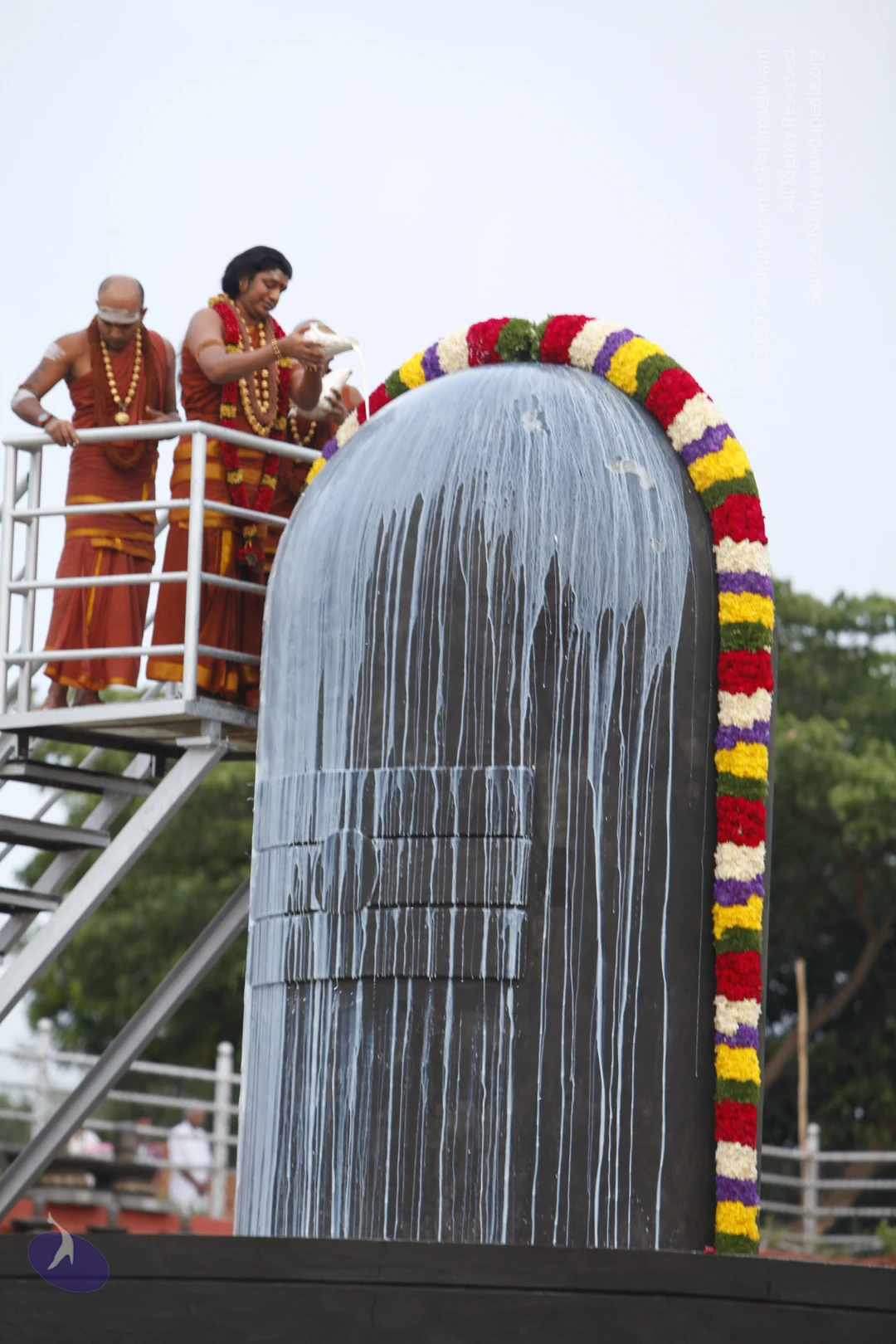
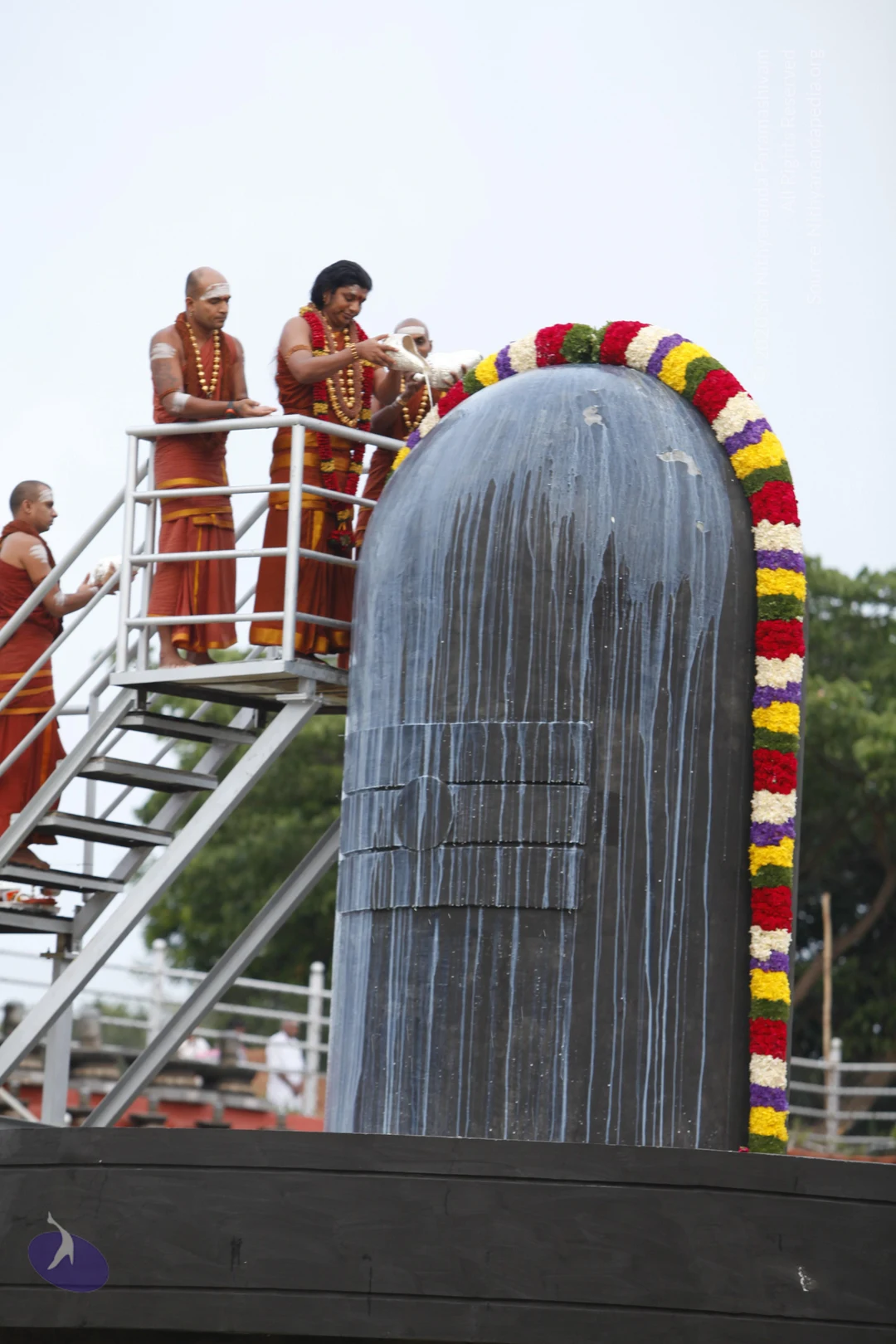
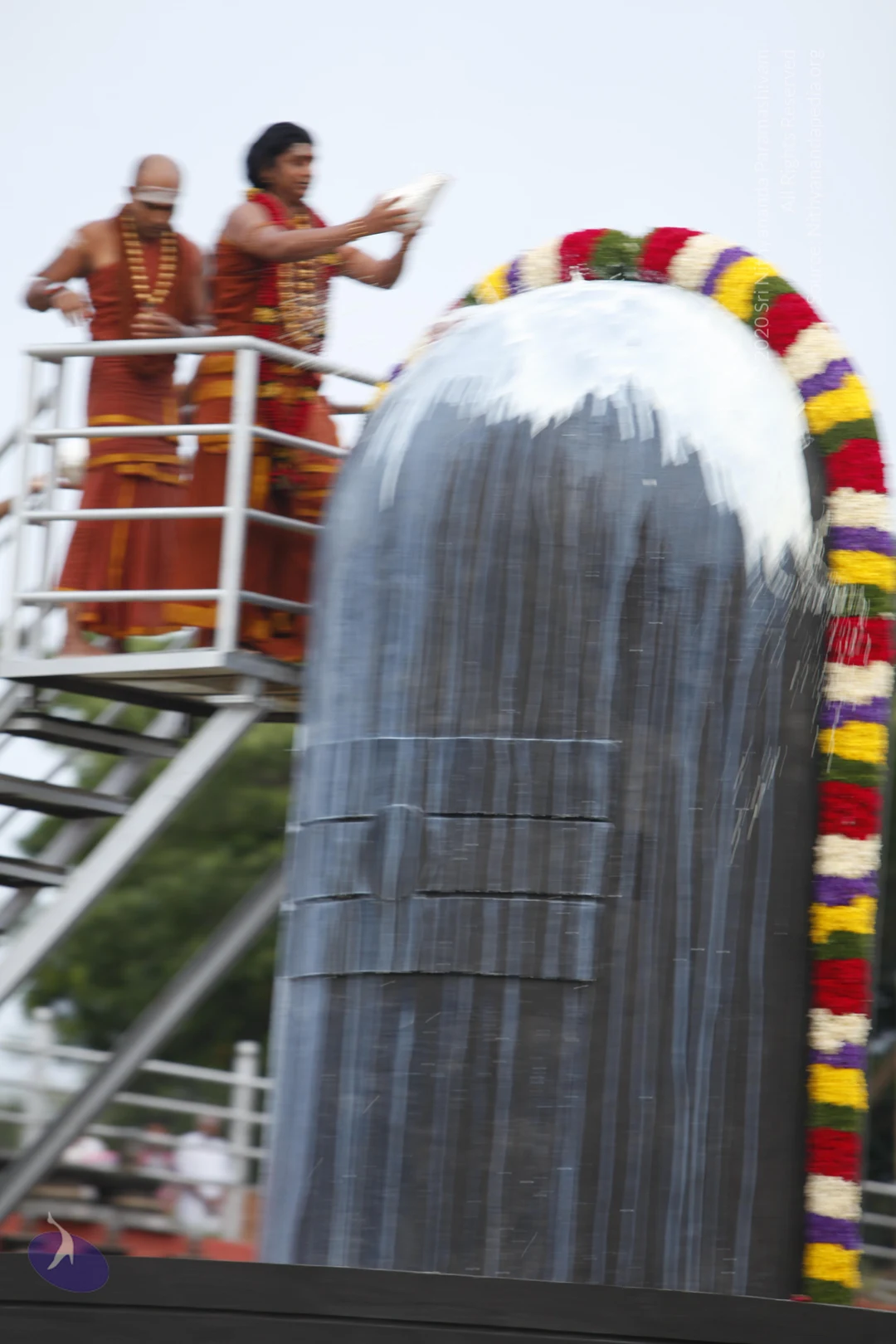
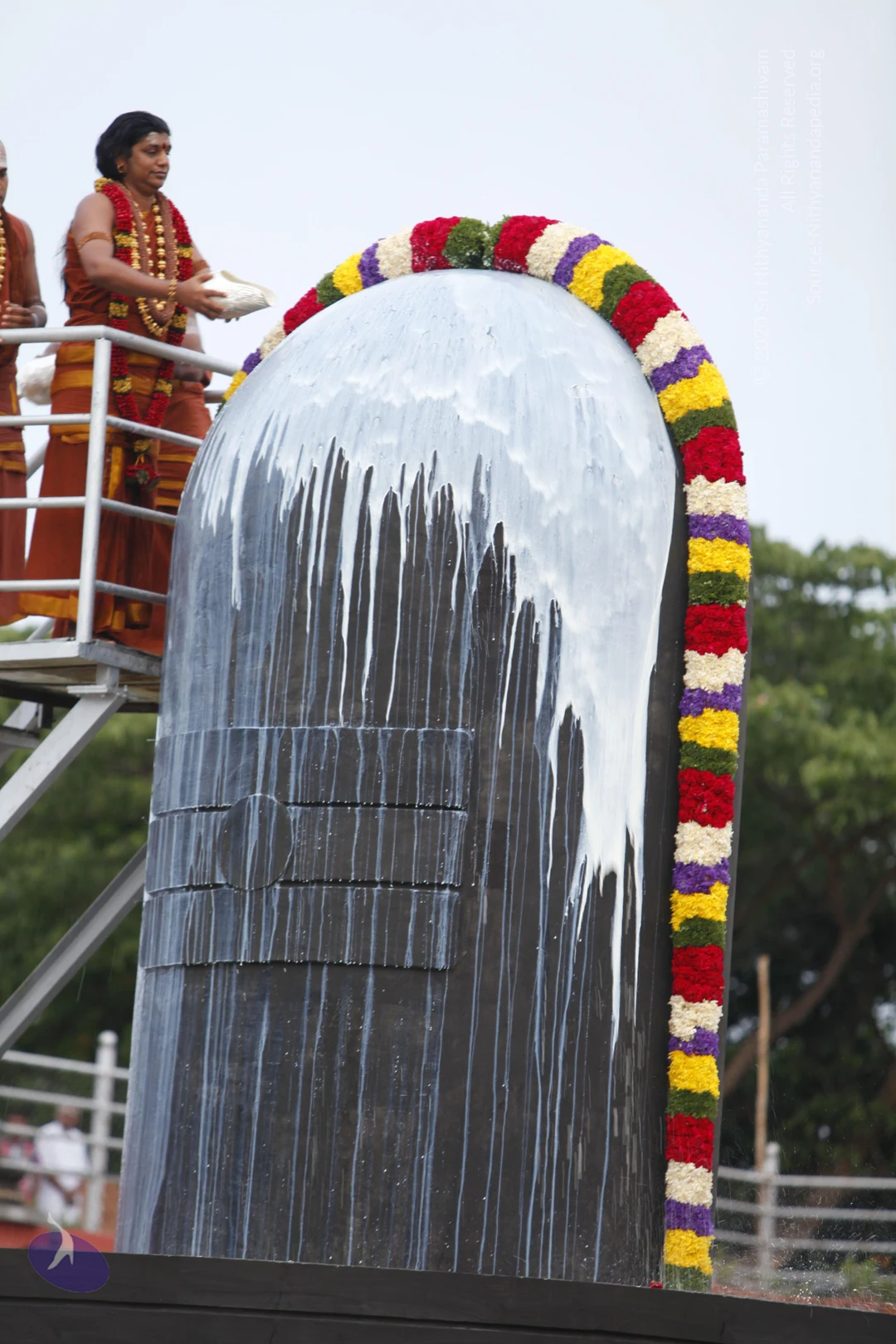
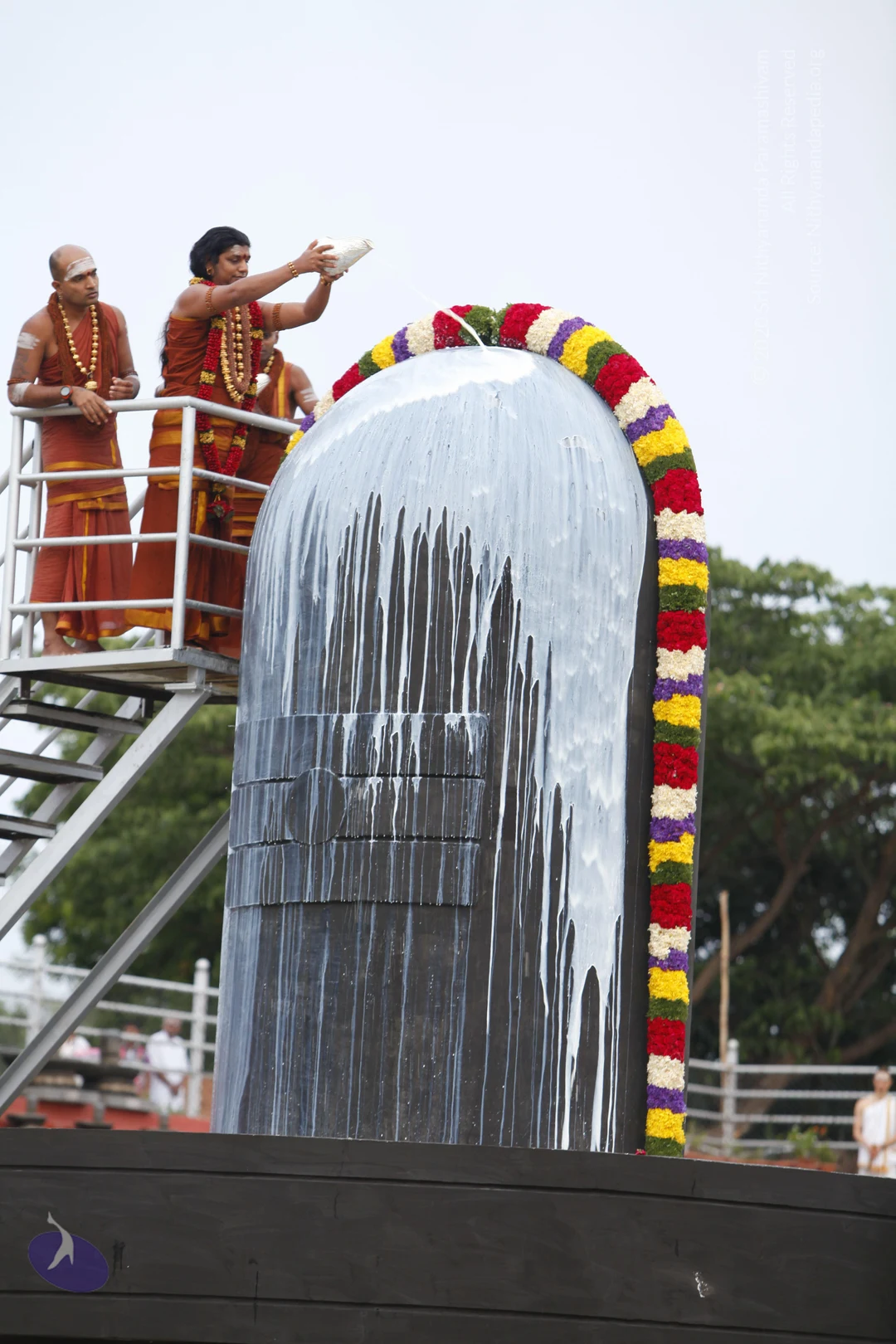
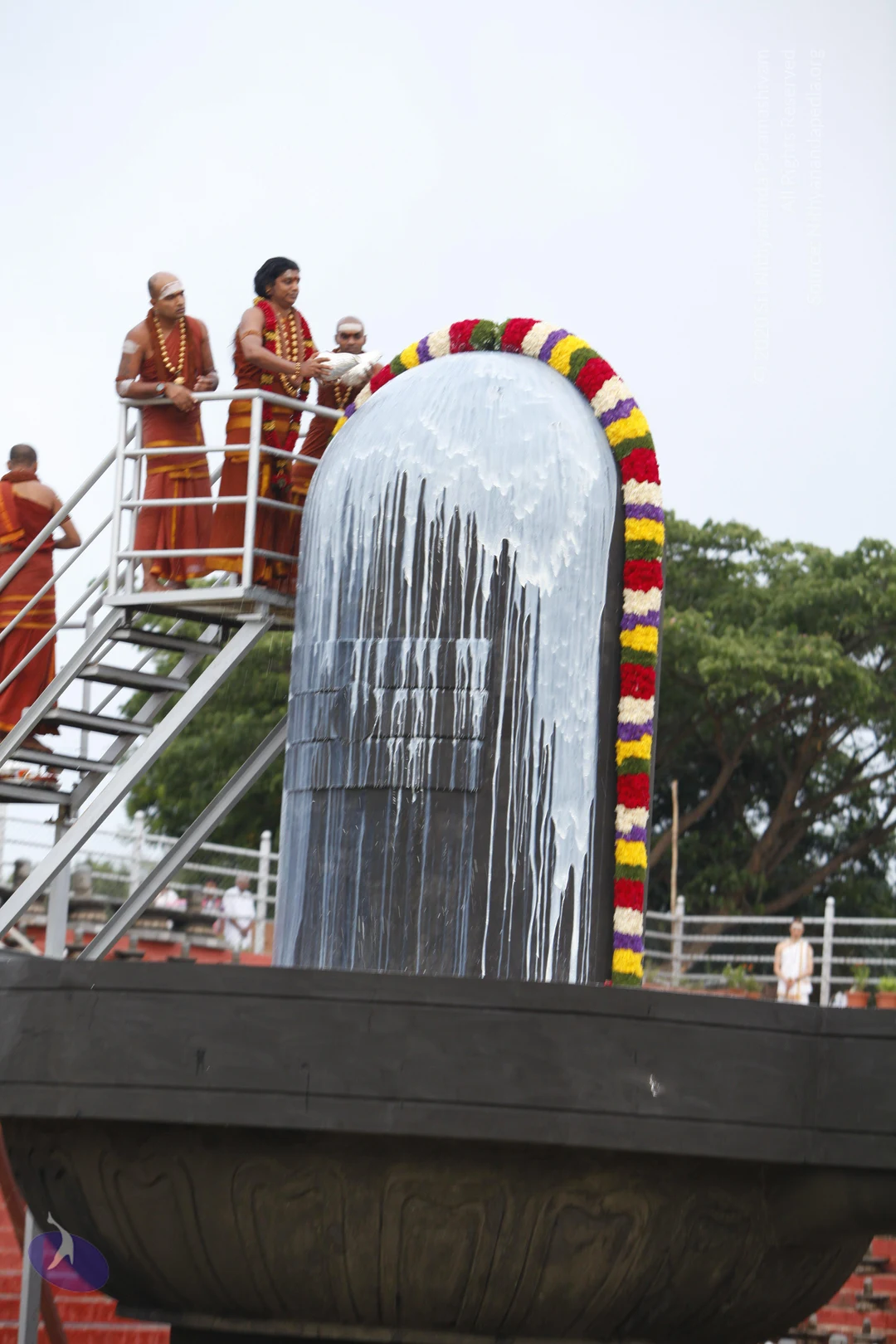
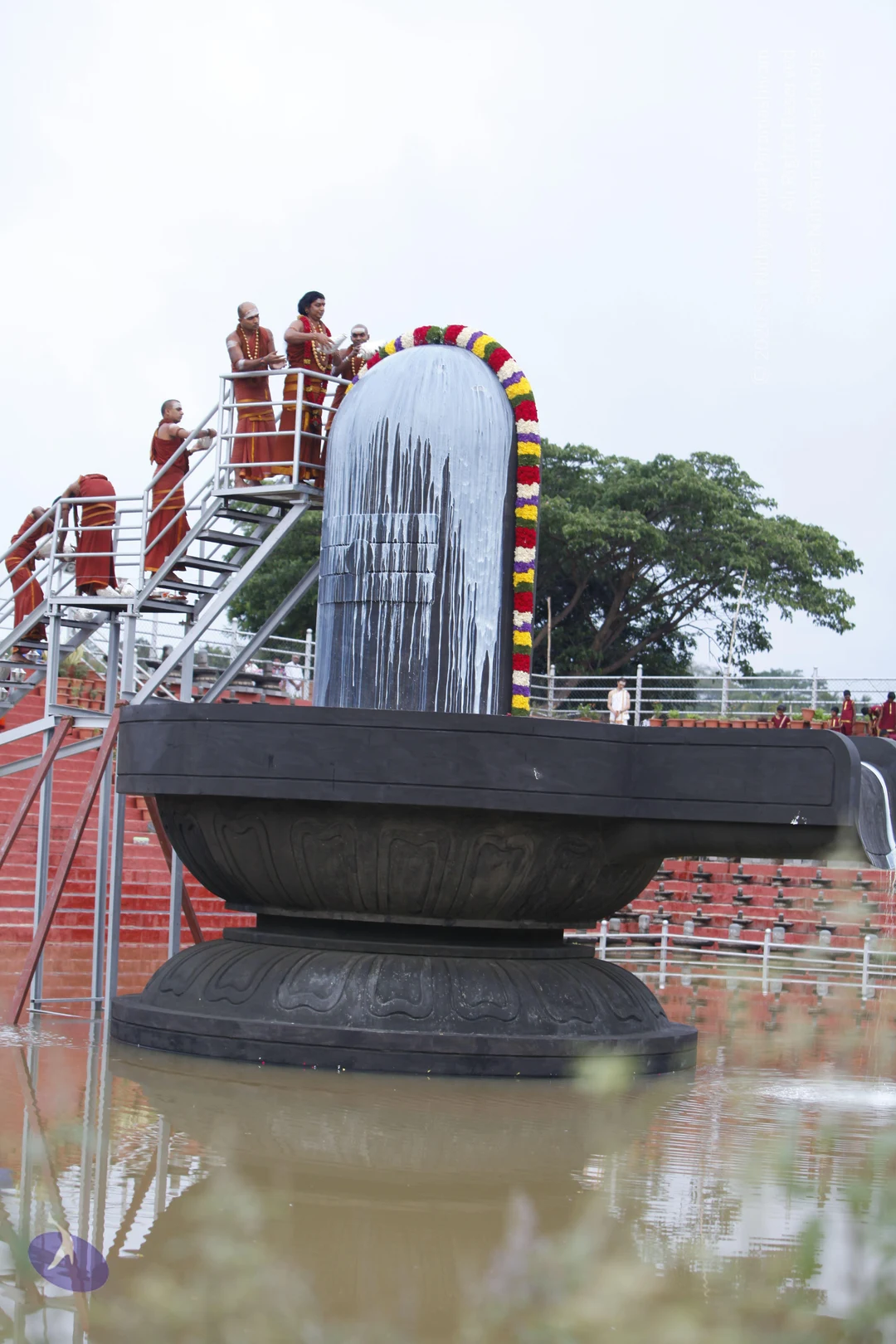
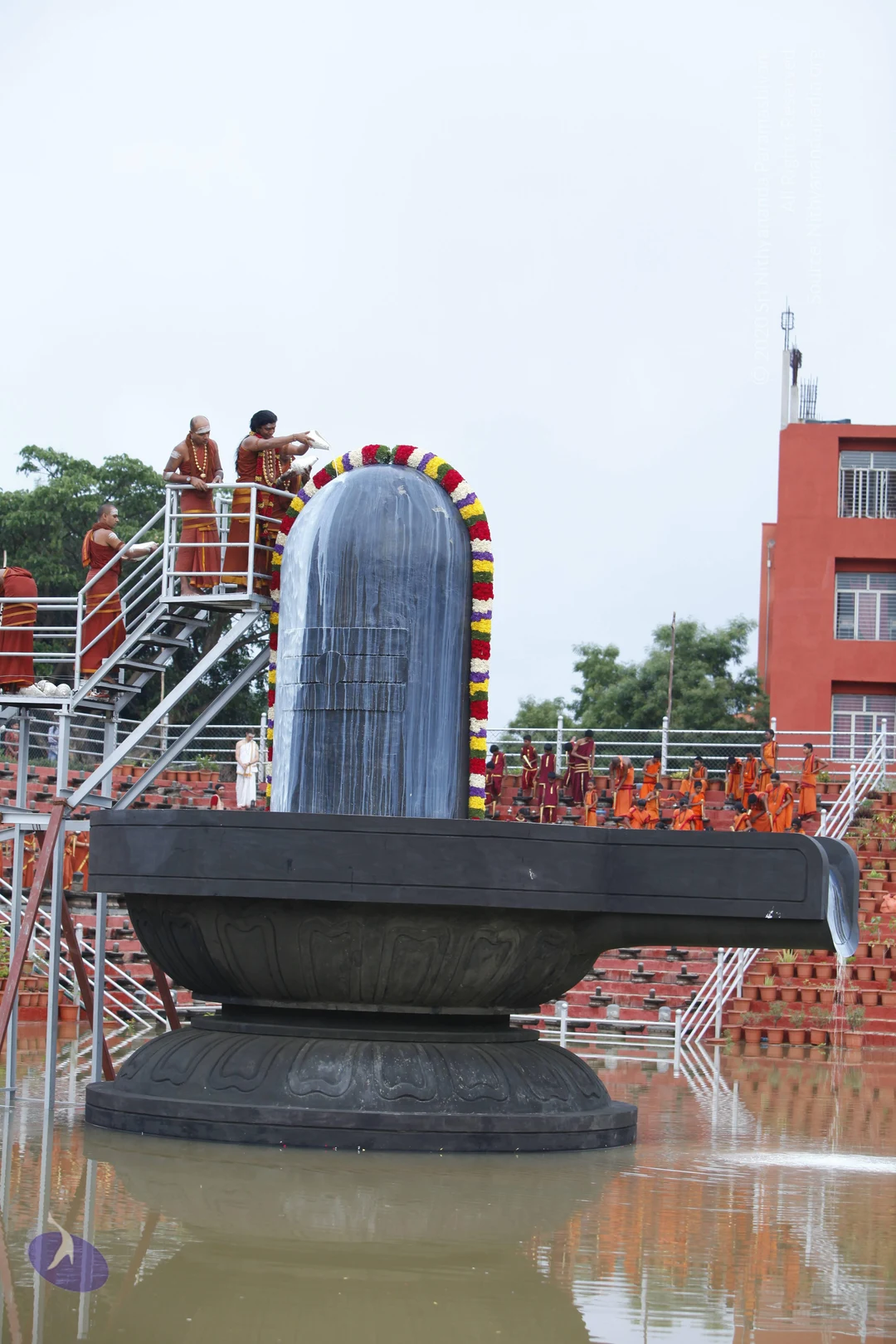
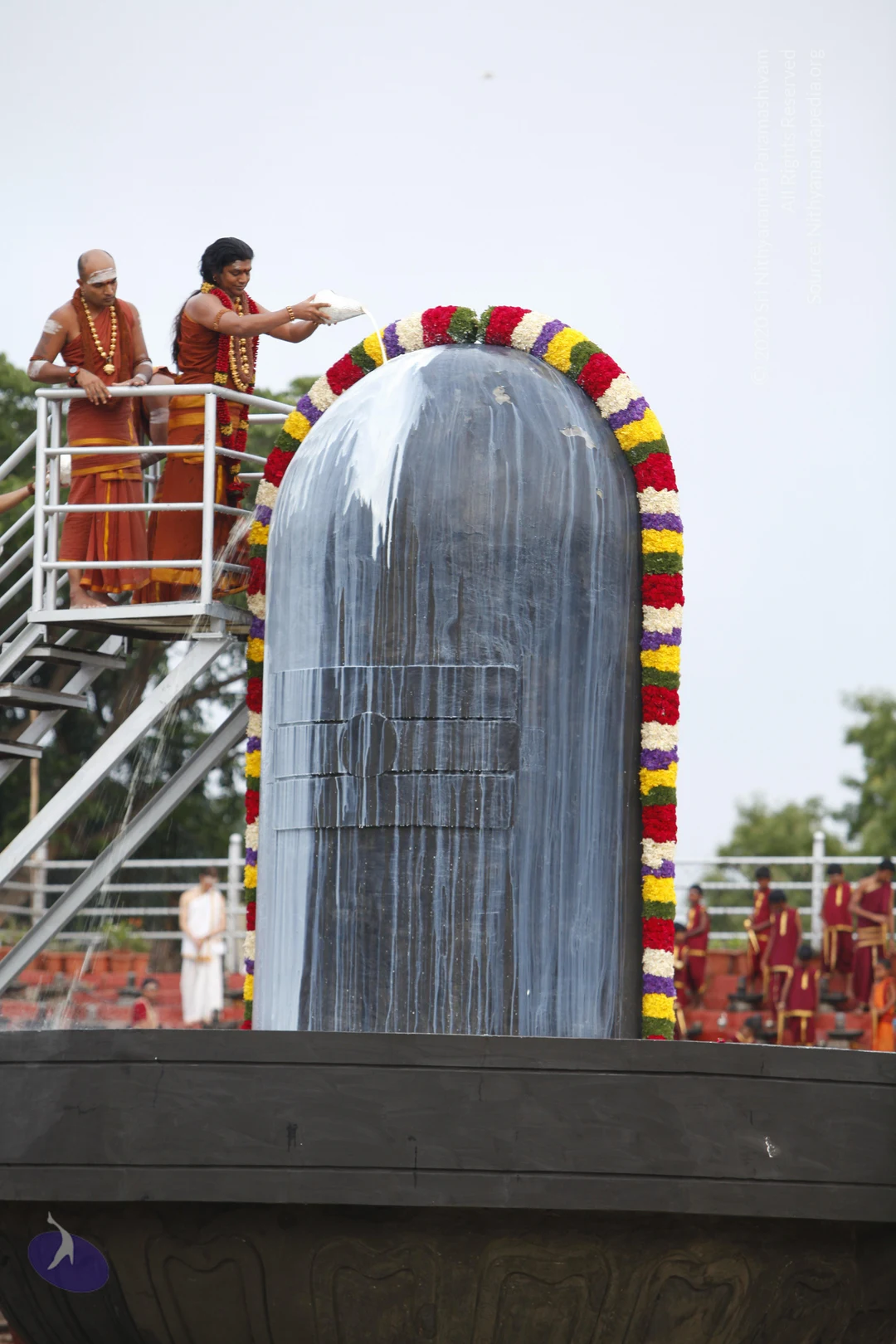
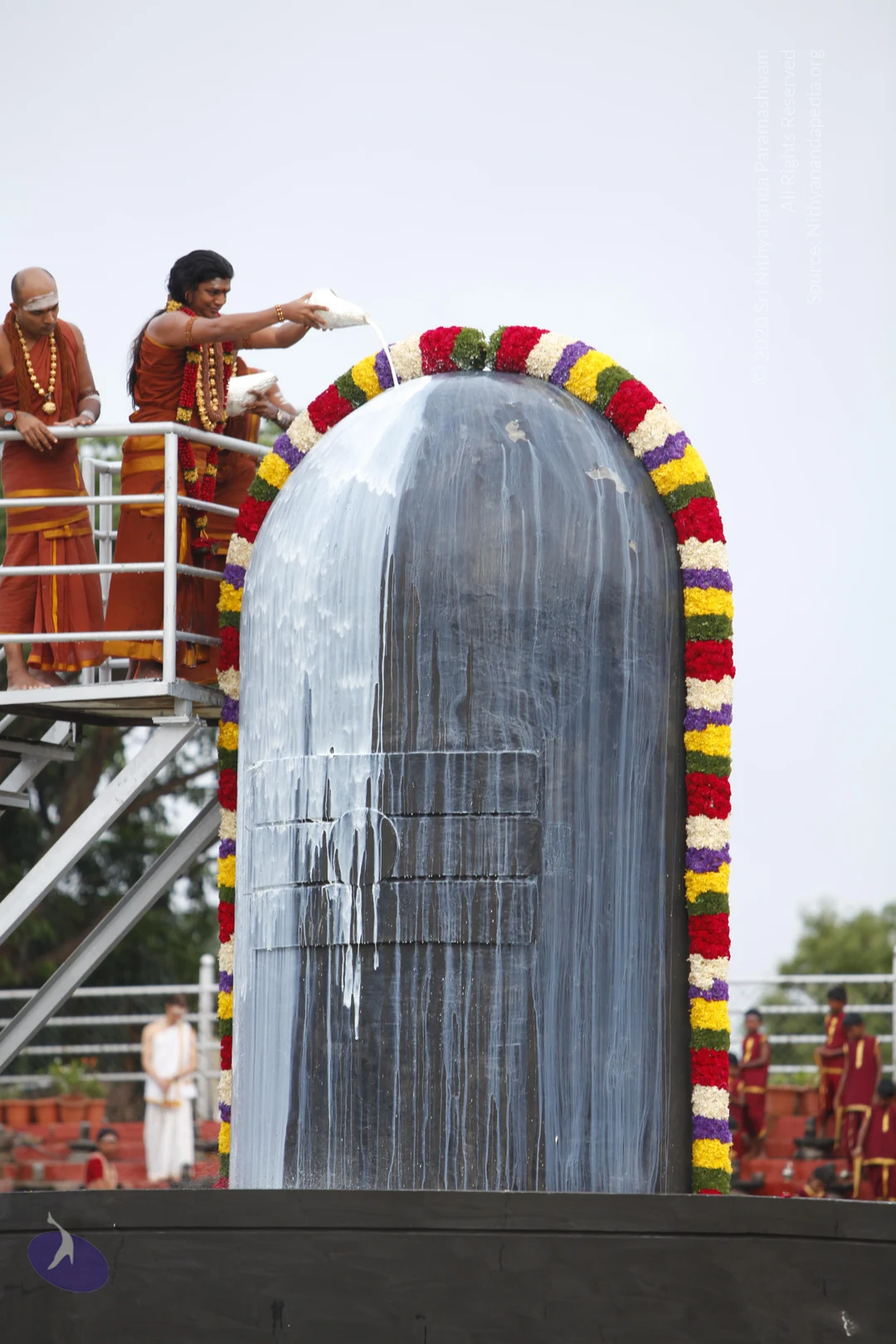
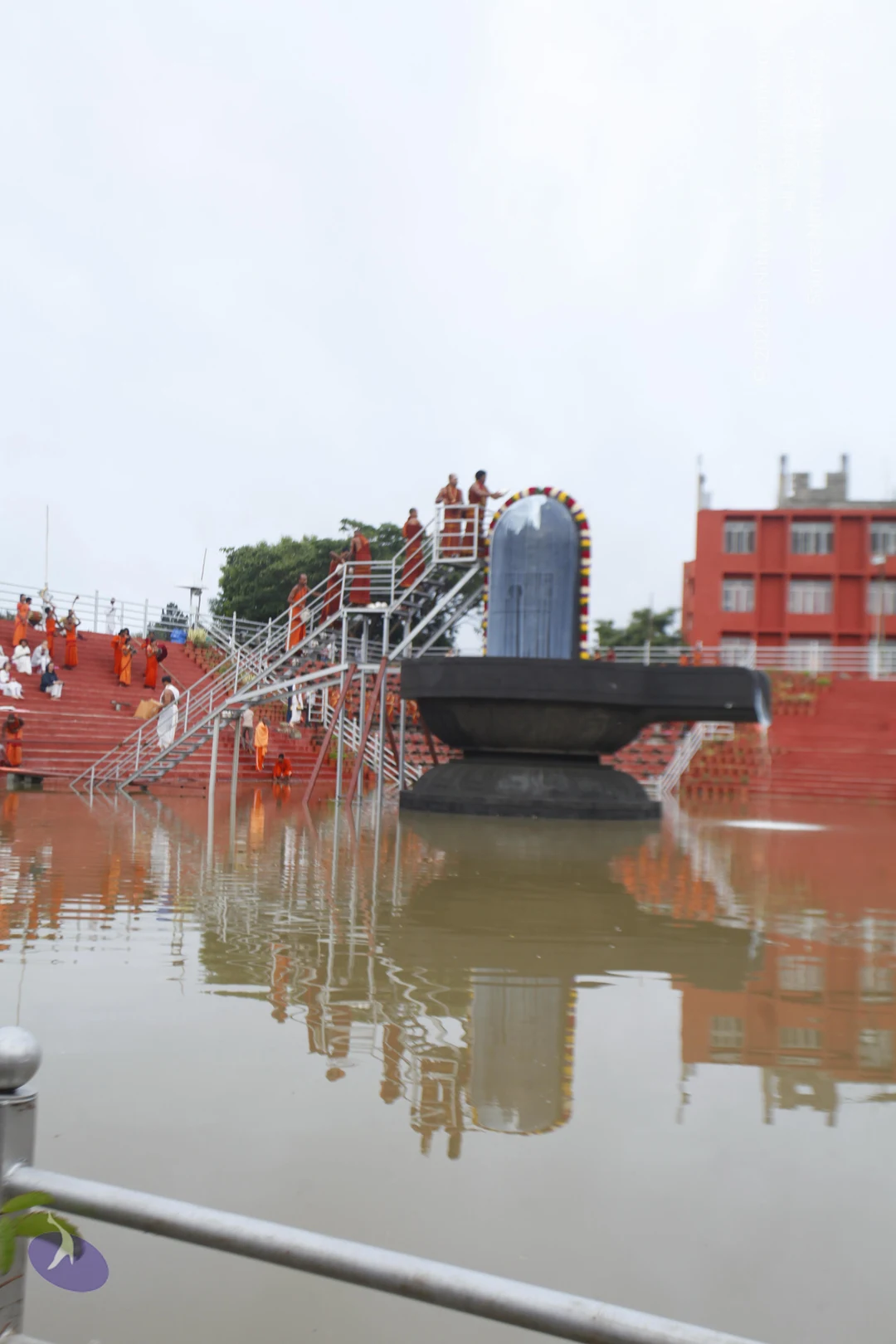
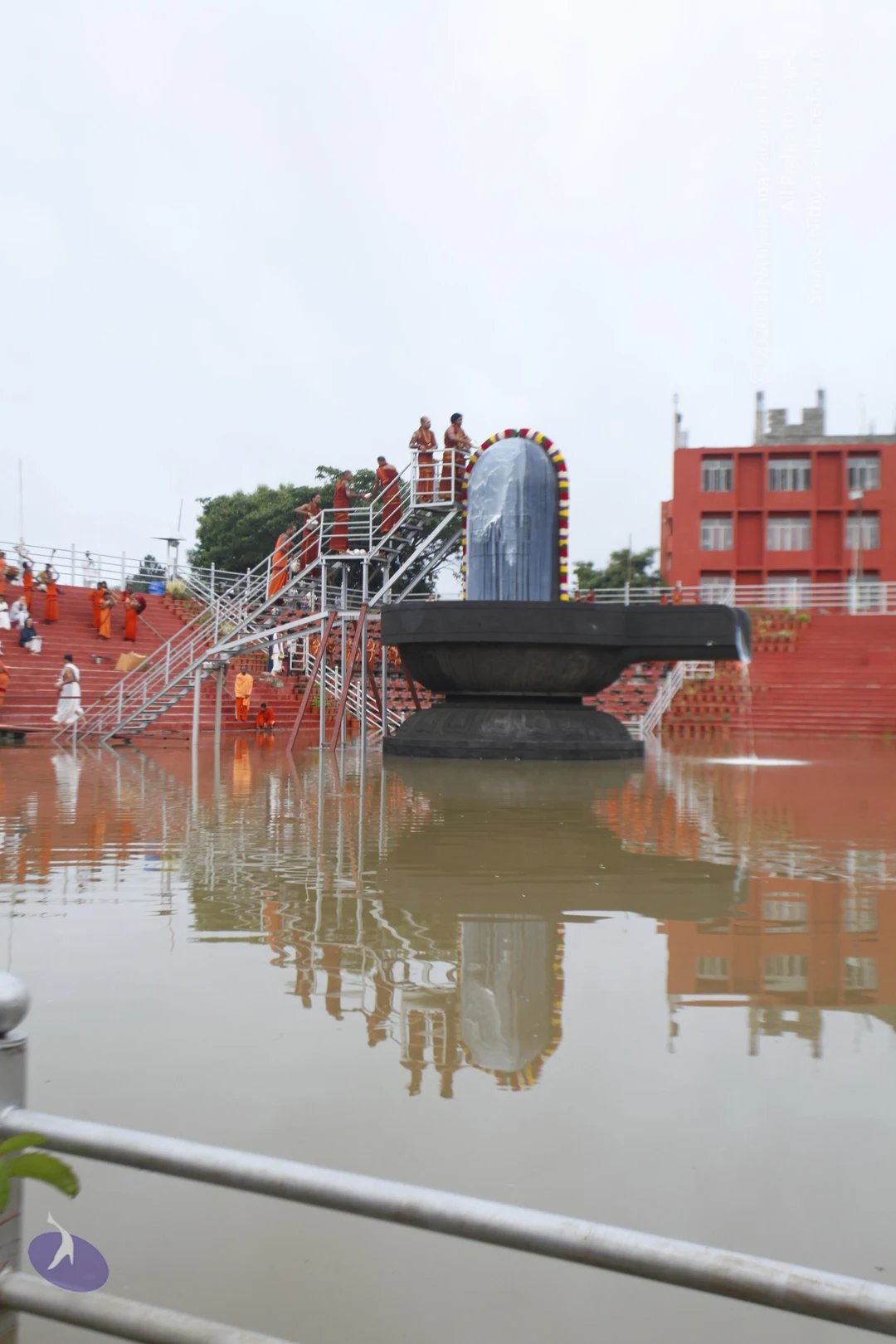
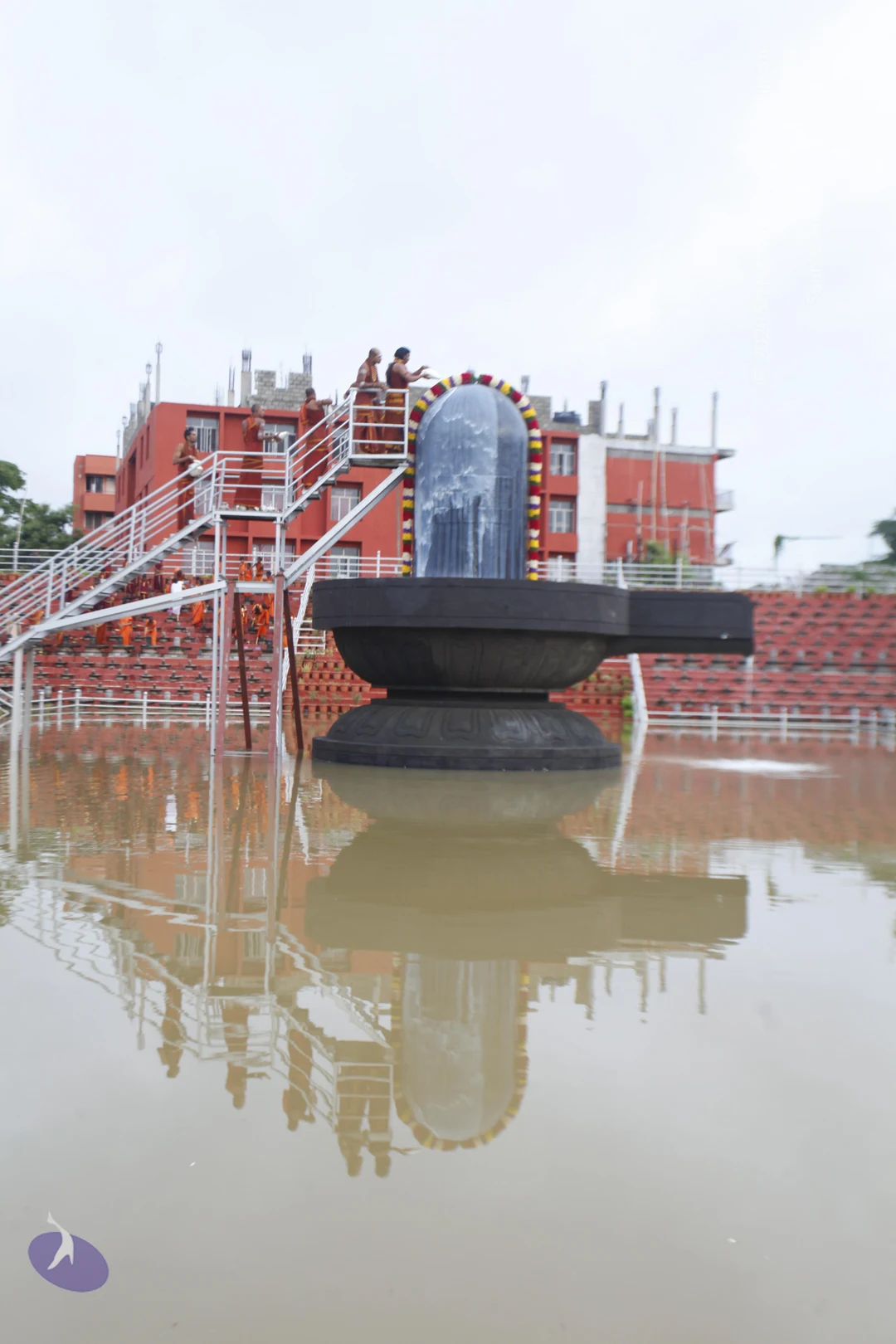
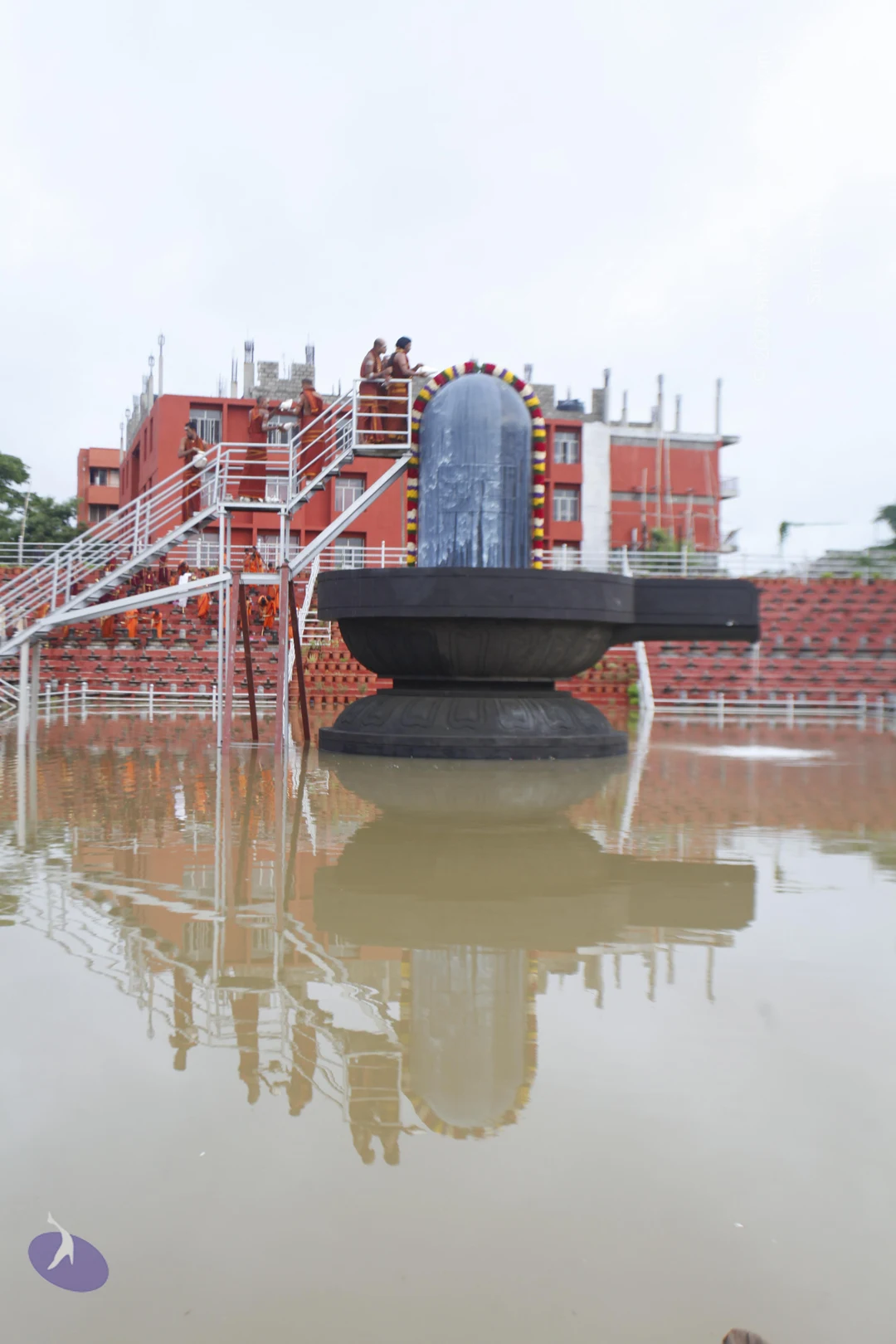
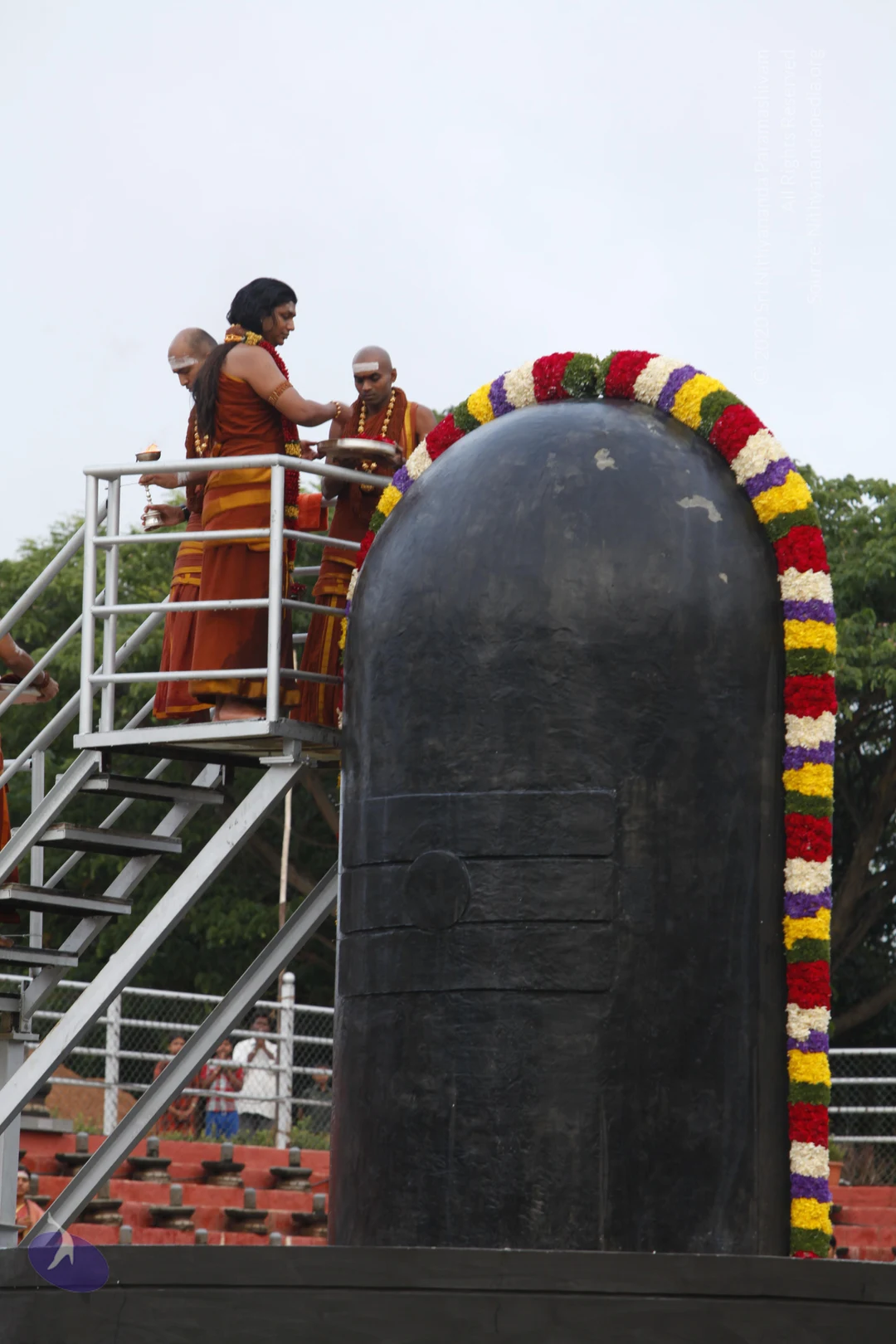
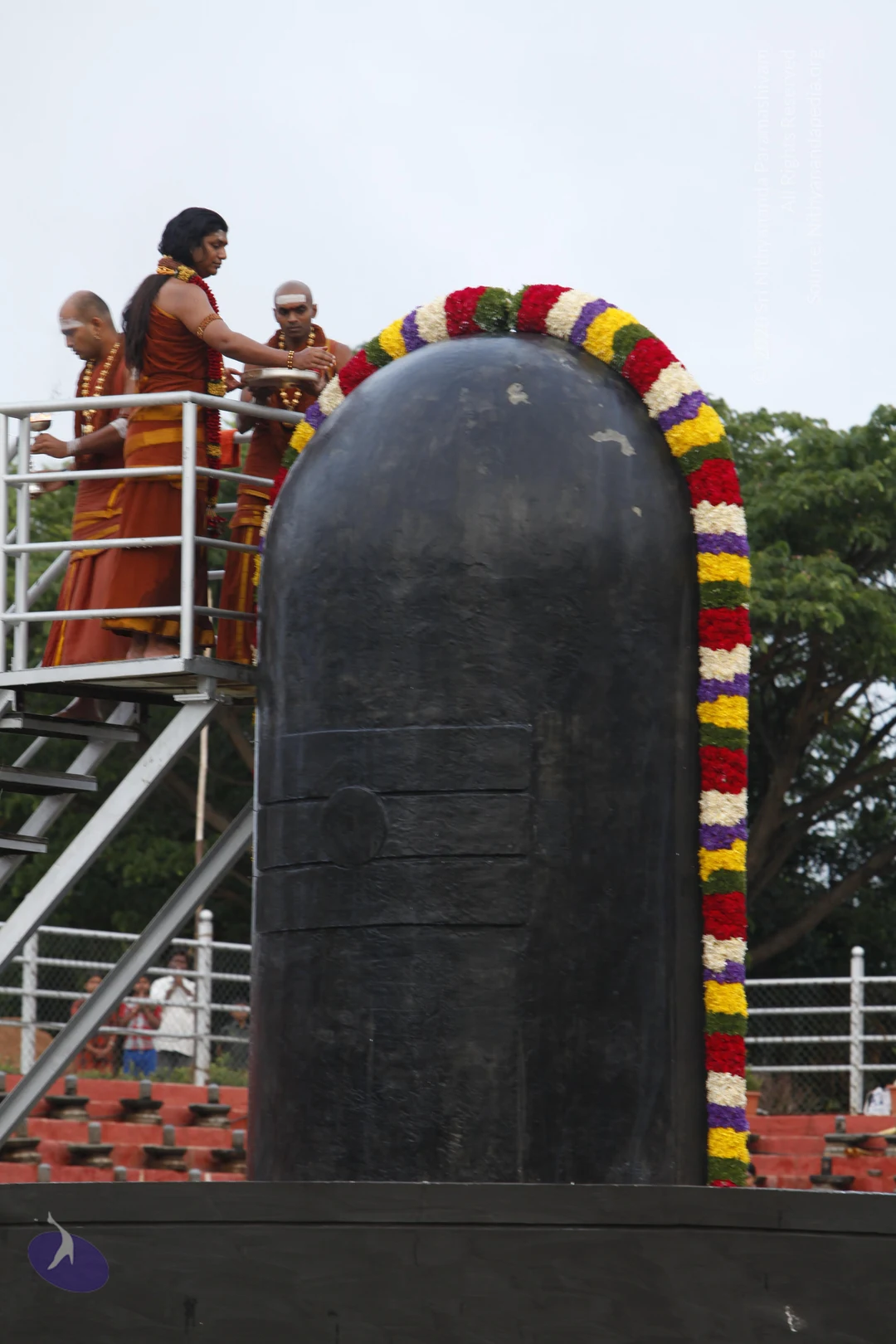
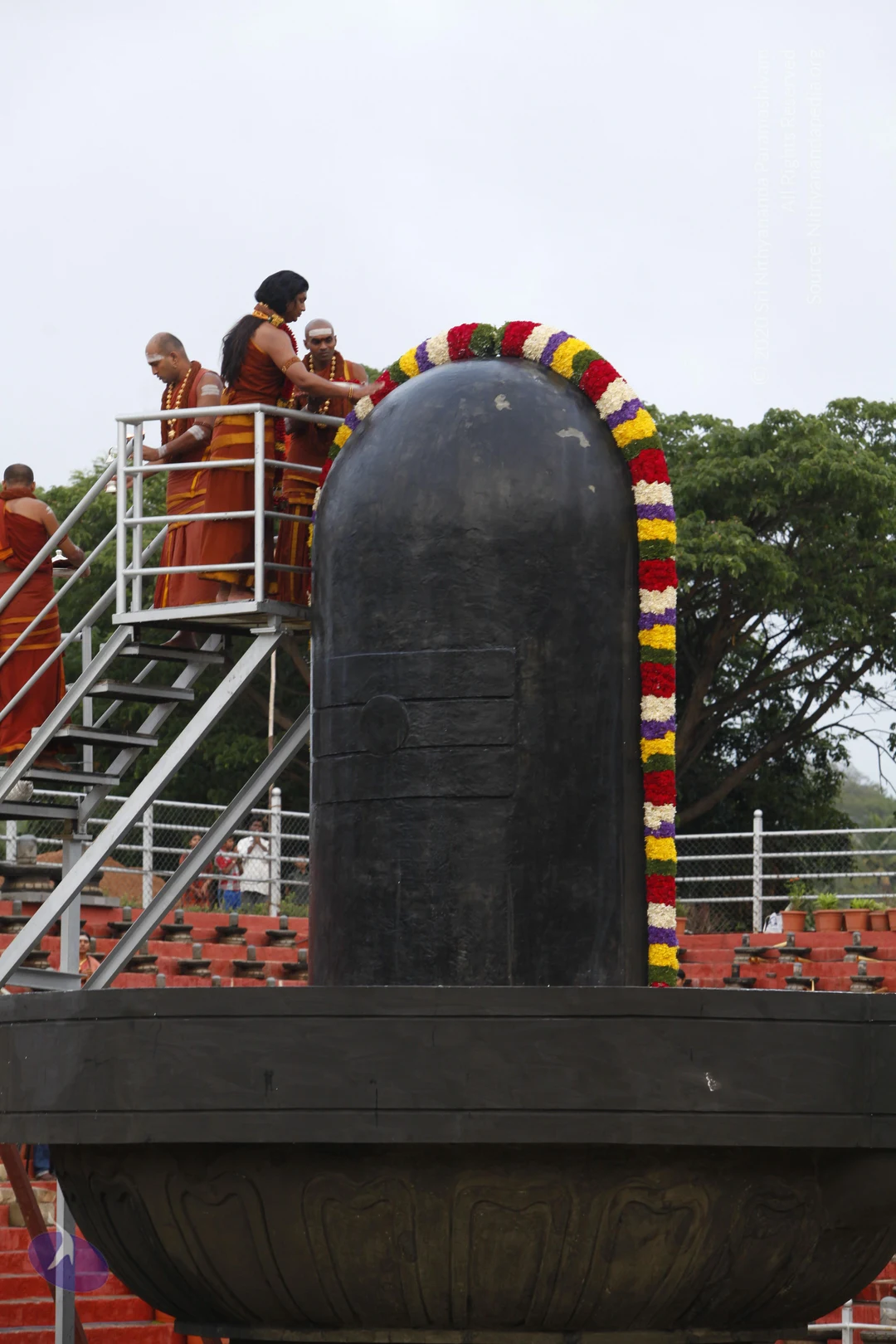
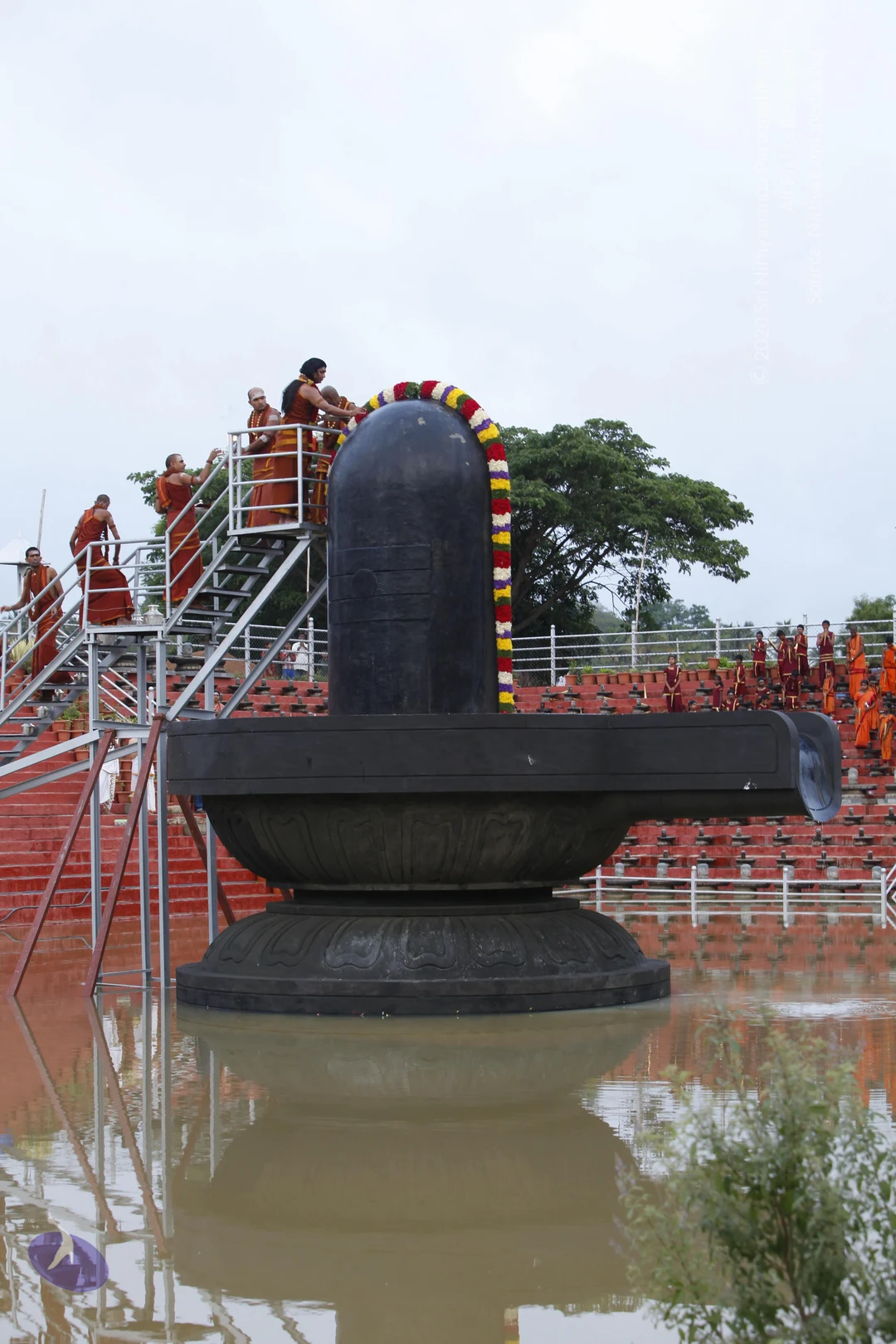
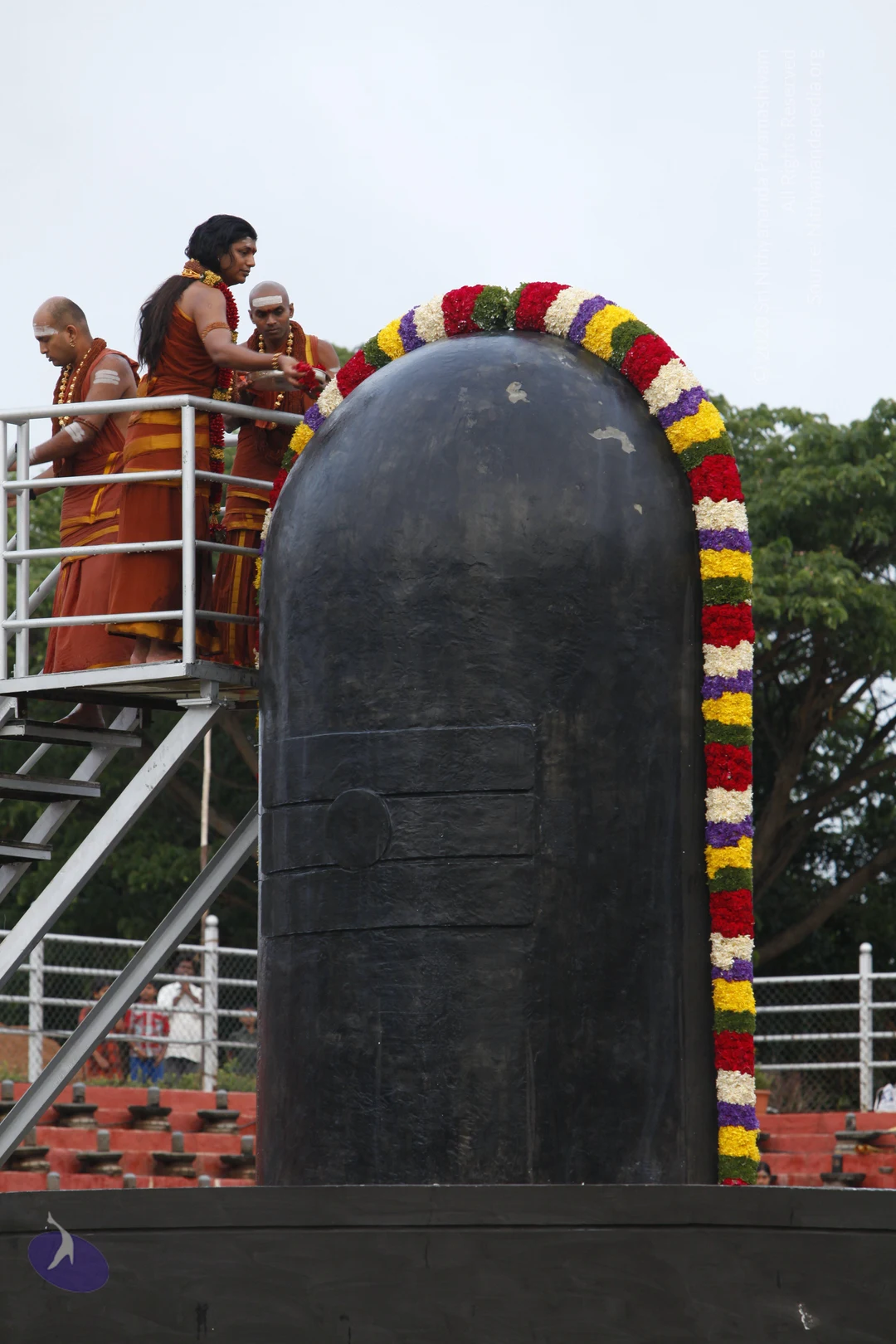
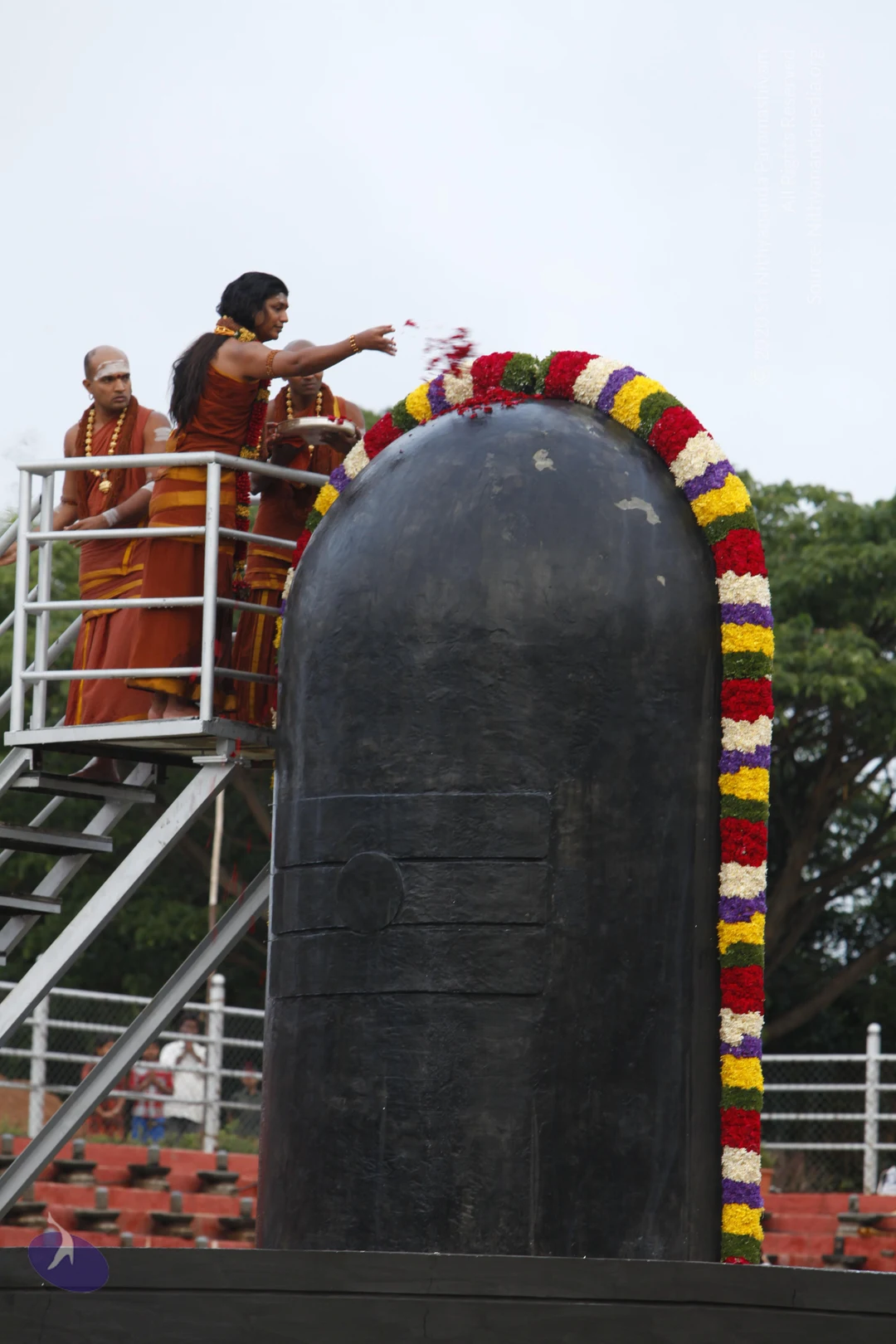
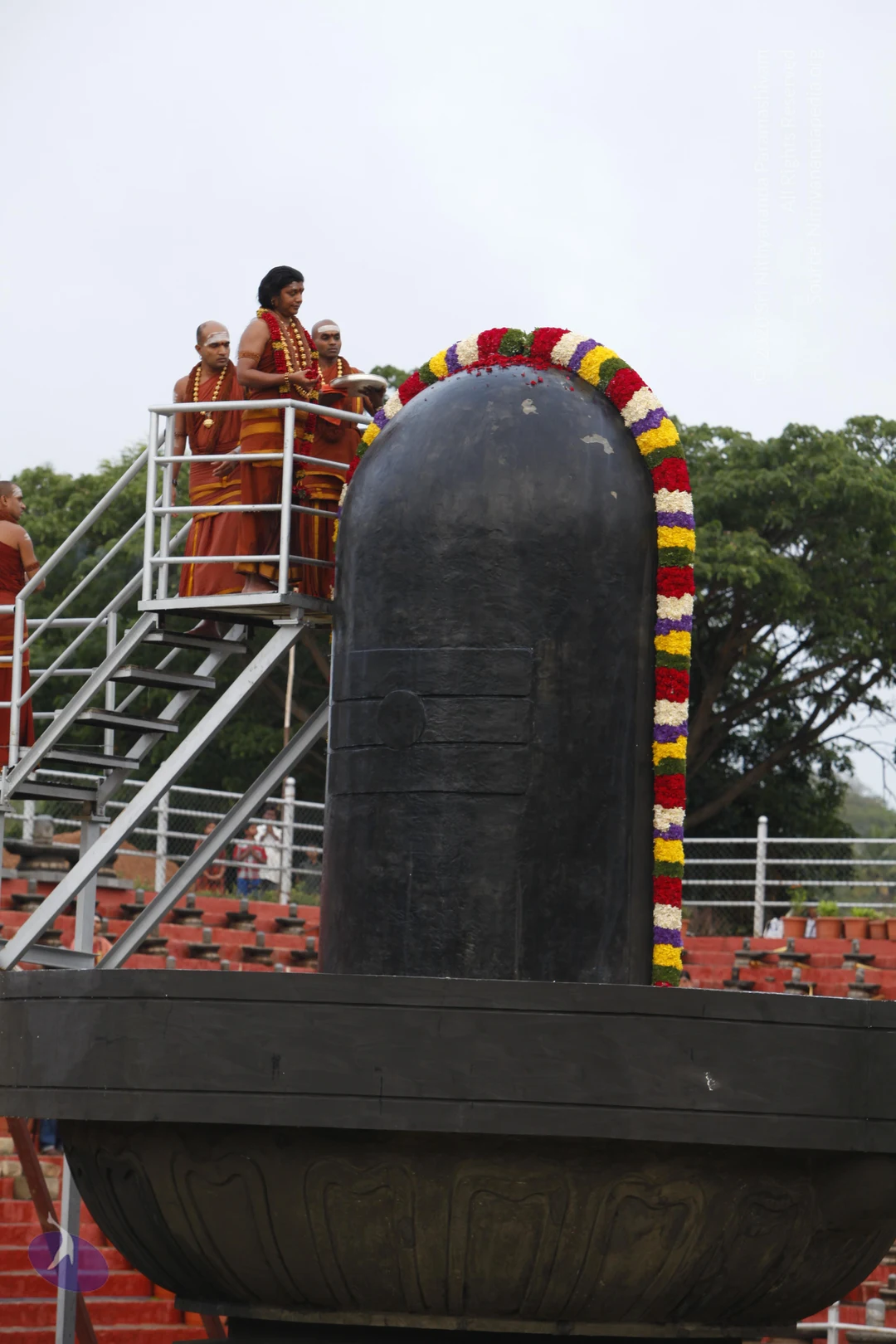
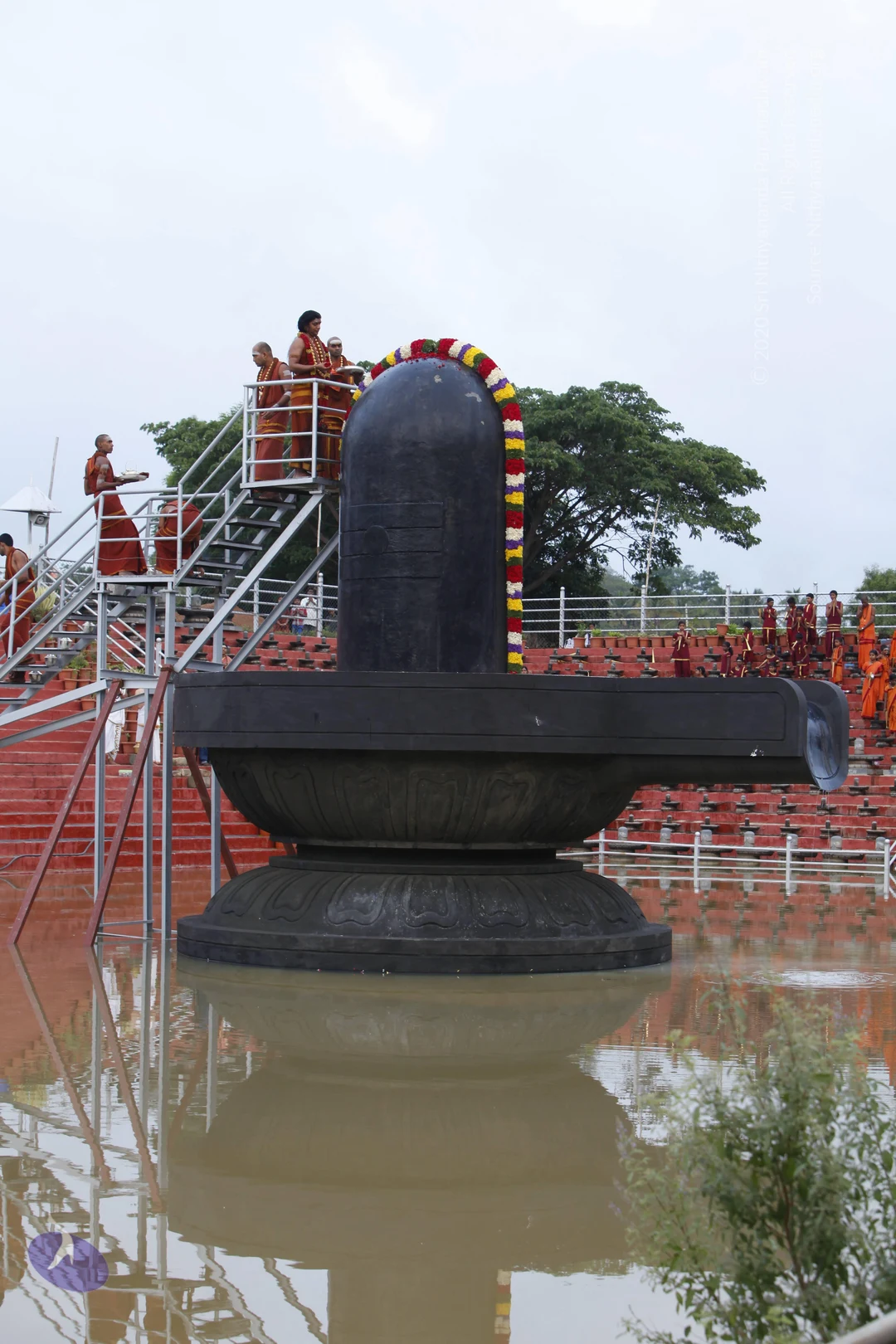
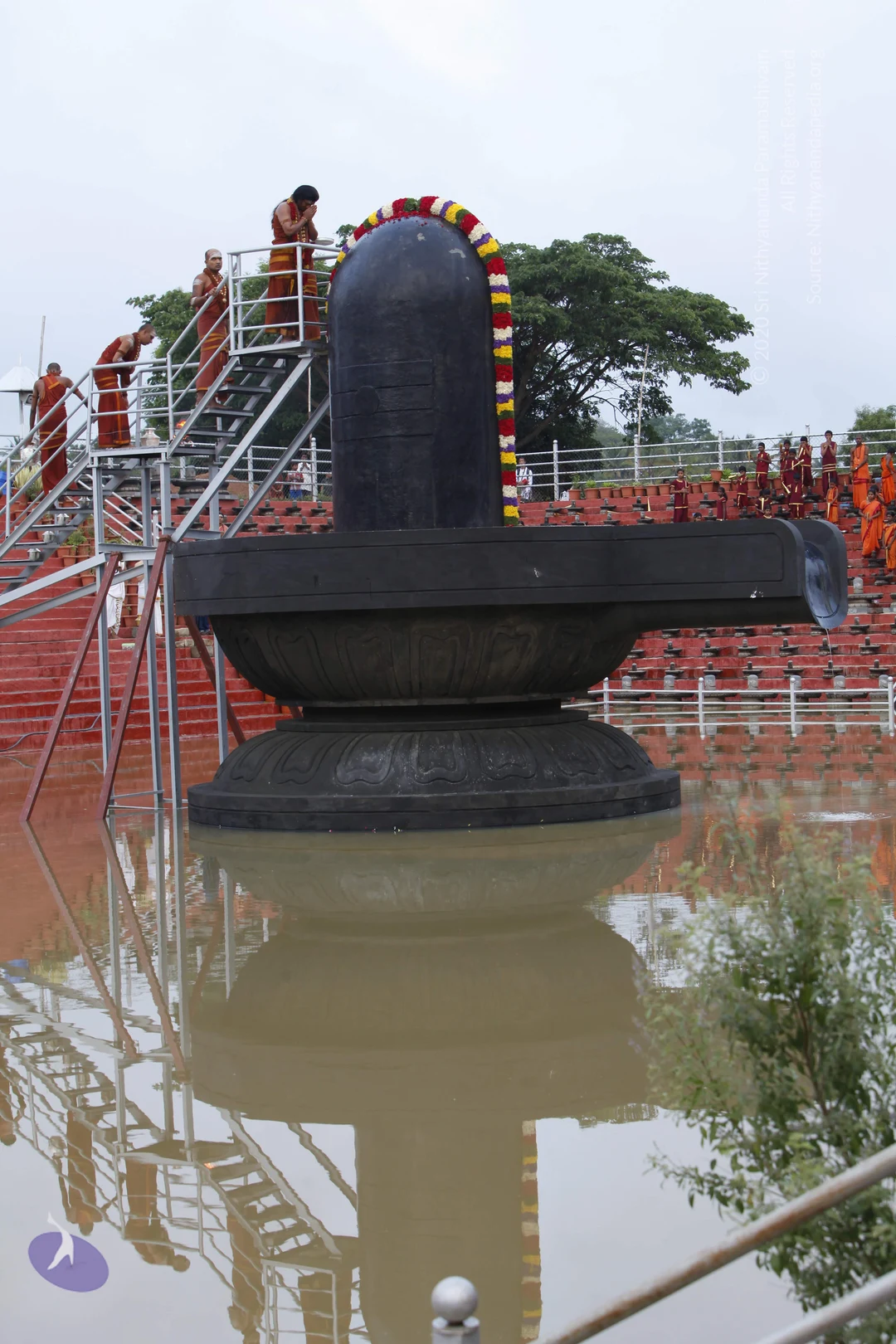
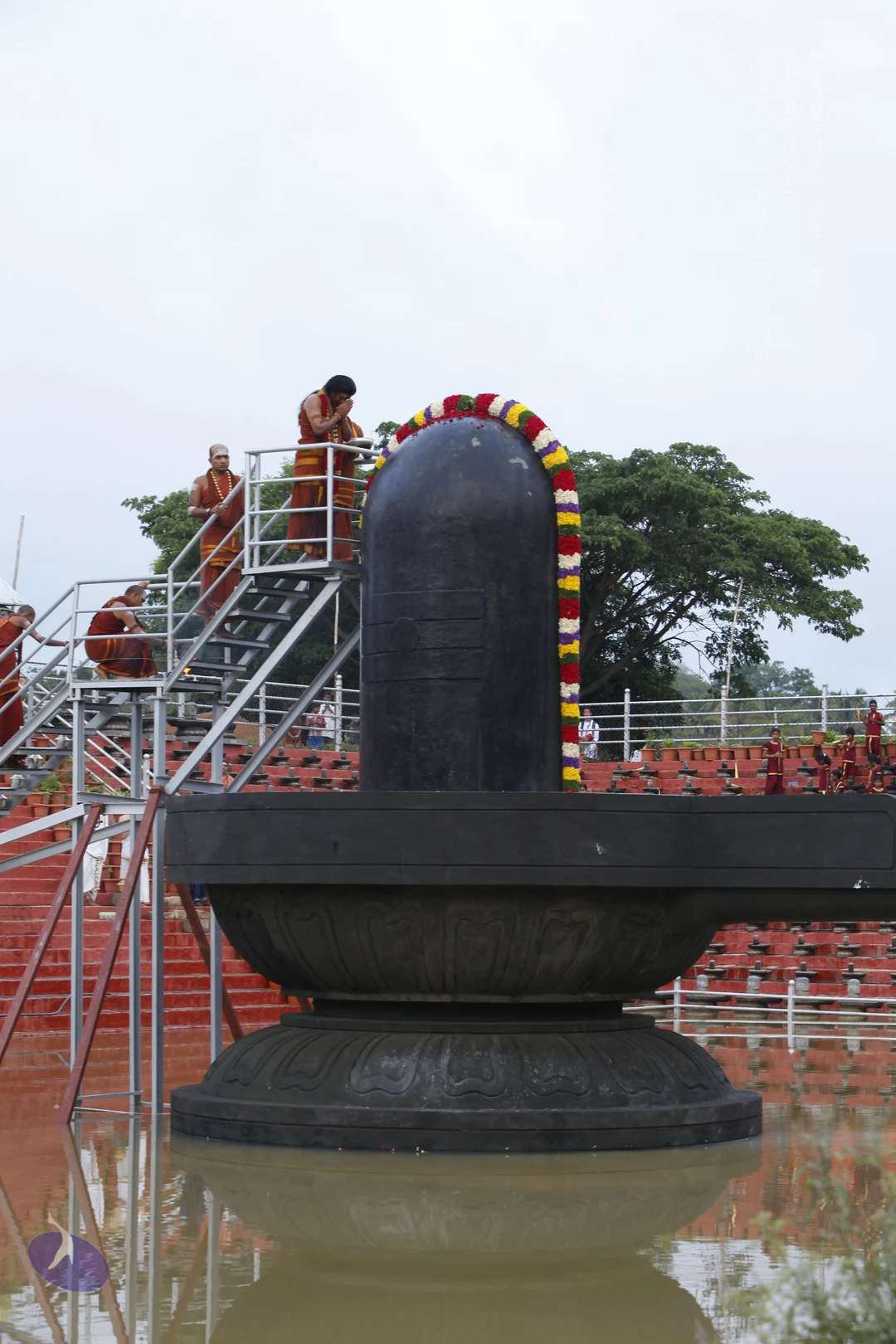
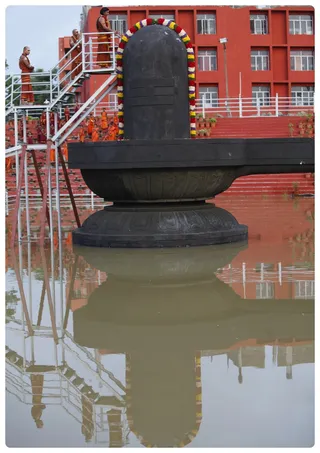
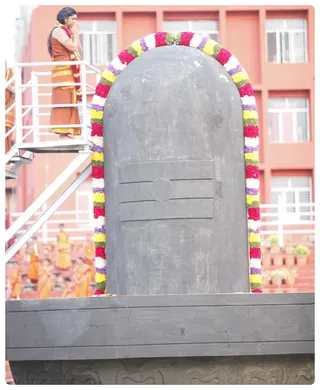
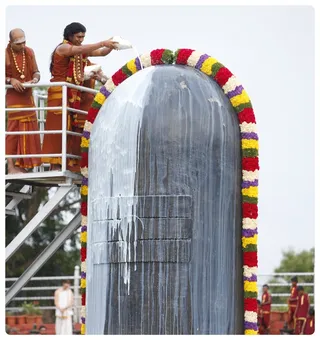
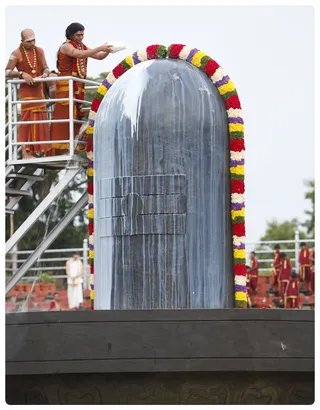
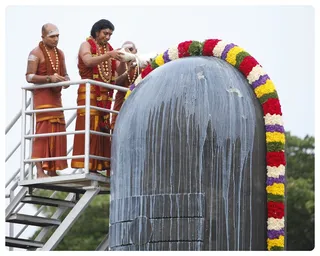
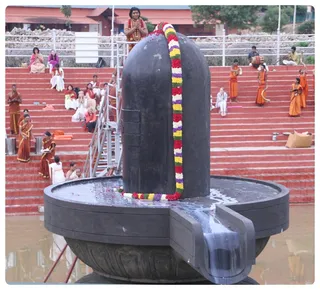
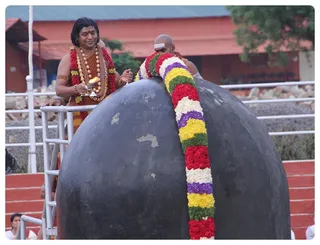
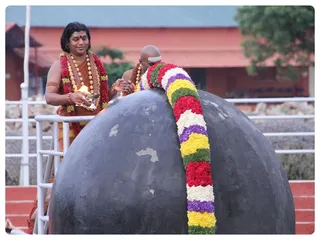
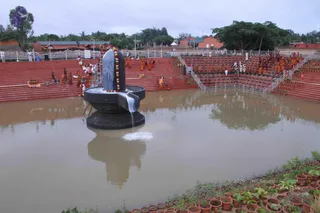
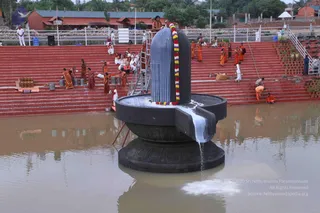
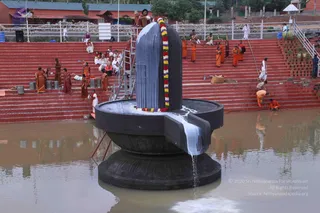
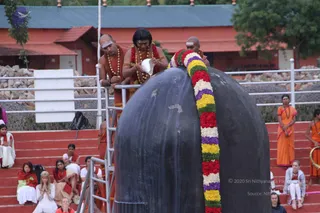
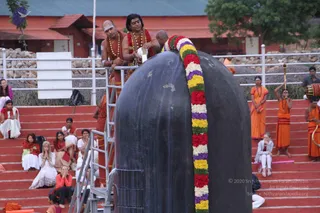
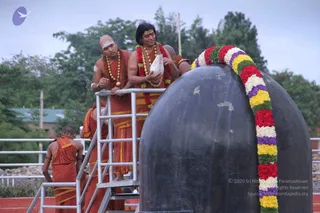
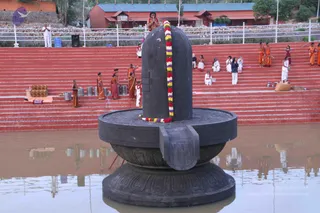
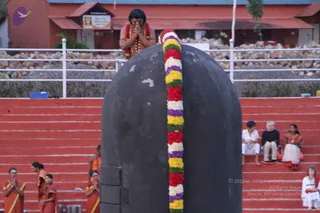
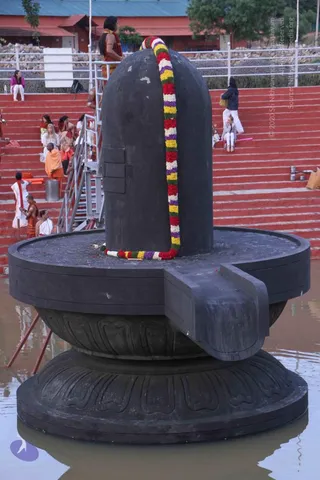
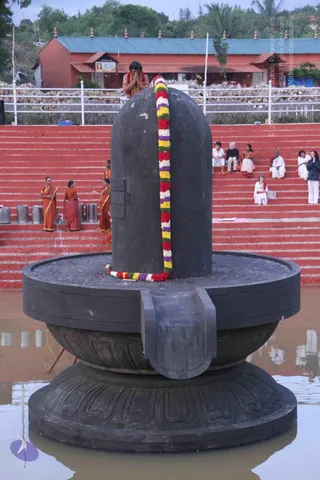
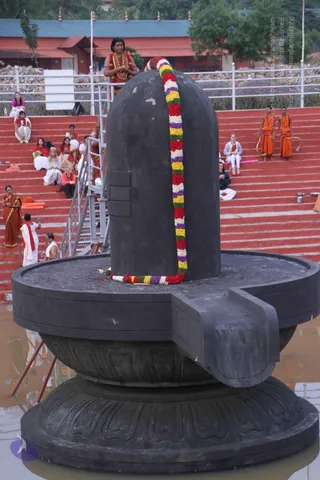
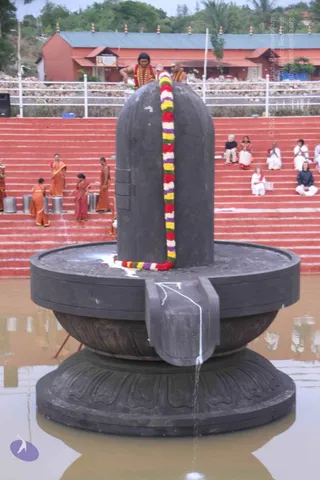
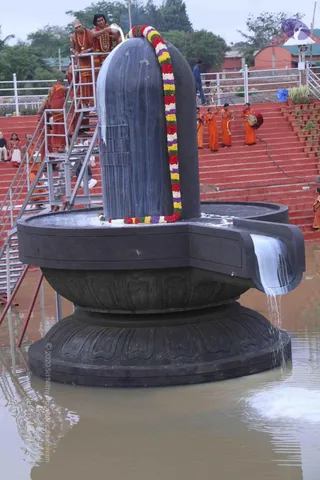
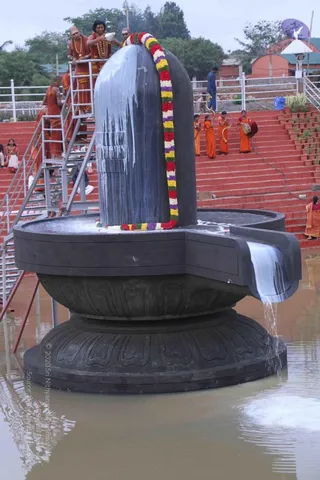
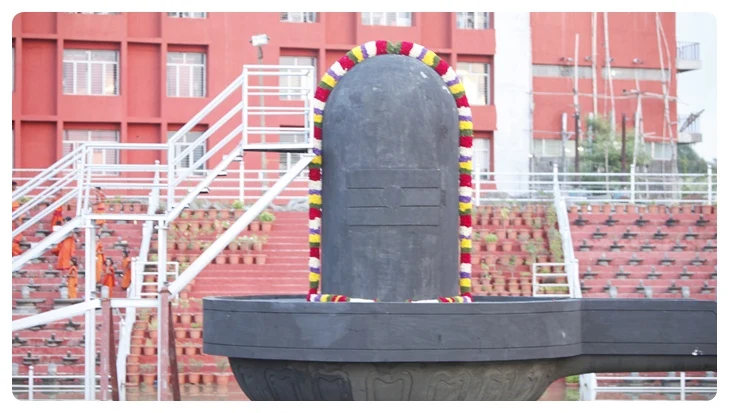
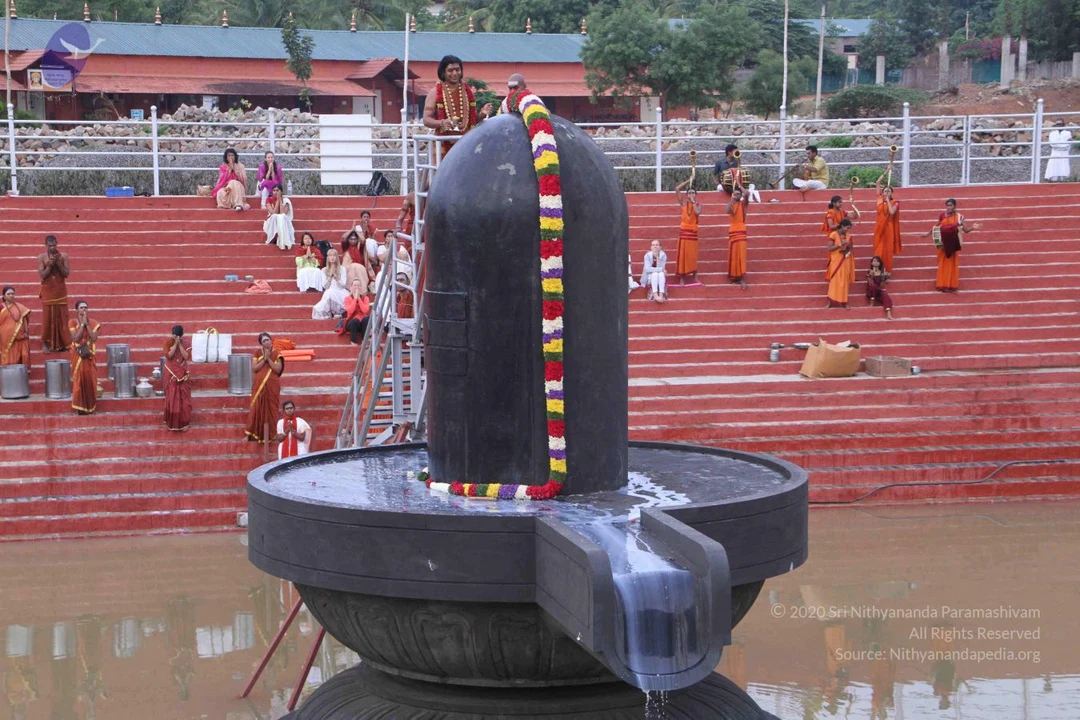
A large dark grey stone Shivalinga stands on a black circular yoni-peetha base, decorated with a multicoloured floral garland arch in red, yellow, white and green. Behind it, a red multi-storey building rises, with white metal railings and stairways. Stepped rows of terracotta pots line the red stepped platform on the right. Several saffron-robed figures are partially visible at the left edge near the railing, appearing small and distant, with no clear facial details.A large black stone Shivling stands in shallow water, its base reflected in the still surface, with a multicoloured flower garland draped around its upper half. Behind it, saffron-robed sannyasis stand on a metal staircase and platform at left, and more saffron-robed figures stand on the red-tiled steps at the lower left. A tall red building with white-framed windows rises in the background. A woman in a red and gold outfit stands at the top of the stairs near the upper figures. The scene reads as an outdoor abhishekam setting at an ashram.A large grey stone Shivalinga, its rounded top wreathed in a garland of marigolds in red, yellow, white and purple, stands in the foreground on a dark base. Behind it, a man stands on a white metal railed platform at the top of a staircase, hands pressed together in anjali, wearing an orange robe with a saffron-yellow shawl and a red-and-white flower garland around his neck; his long hair is swept back, and he has a rudraksha mala. Below, several people in orange and saffron robes stand on the steps of a red-brick building. The scene suggests a public Shiva puja or satsang event.A large black lingam is draped with a flower garland of red, yellow, white, green and purple blossoms, while white milk pours down its surface. On a raised metal platform at left, two men in saffron-orange dhotis and shawls pour liquid from white vessels onto the lingam; the man in front has long dark hair and wears a rudraksha mala and gold necklace. A bald priest in white with a white forehead band stands beside them, and white-clad figures stand at the lower left. Robed attendants in maroon and red stand in the background at right.A large dark grey lingam is being bathed with milk on a raised stone platform, with a garland of marigolds in red, yellow, white and purple arching over its top. Two priests stand on a white metal railed platform at upper left; the nearer one wears a white shaved head with tripundra marks, orange-saffron dhoti and a rudraksha mala, and the other, with long dark hair and an orange dhoti and shawl, pours a white liquid from a vessel onto the lingam. Milk streams down the stone. Another orange-clad figure in white dhoti stands lower left, and a few red-robed attendants stand in the background at right near a fence and trees. Abhishekam ritual.Outdoor abhishekam at a large dark grey Shiva lingam draped with a garland of red, orange, yellow, green, white and purple flowers. Three priests stand on a white metal railed platform with steps behind the lingam. The central priest in a saffron-orange robe with a rudraksha mala and a garland pours white liquid from a vessel over the lingam, which streams down its surface. Two other priests in orange robes and sacred ash on their foreheads stand beside him, and trees and a pale sky frame the scene.
Photos

13 photosSource gallery
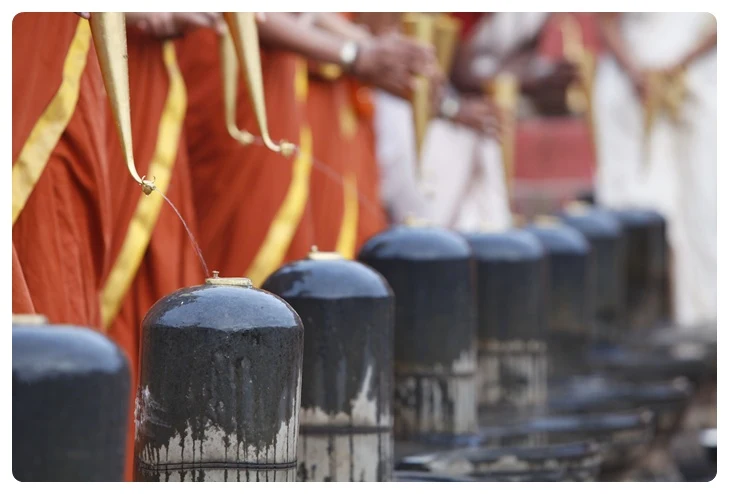
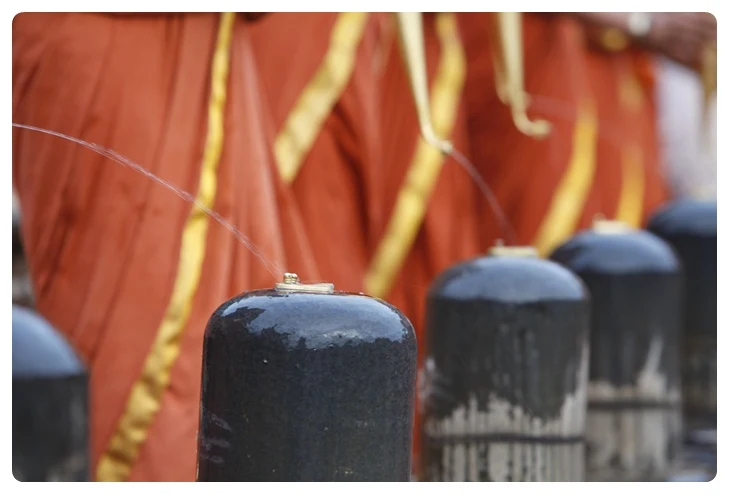
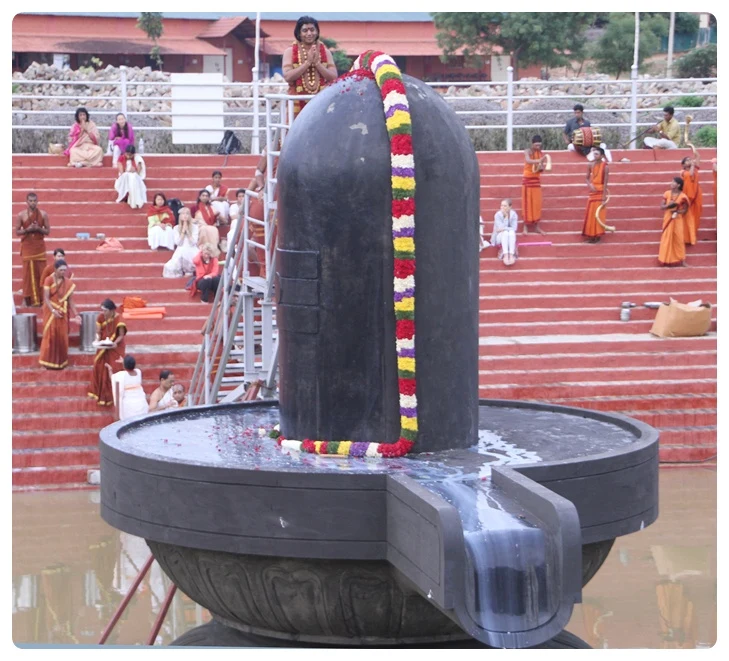
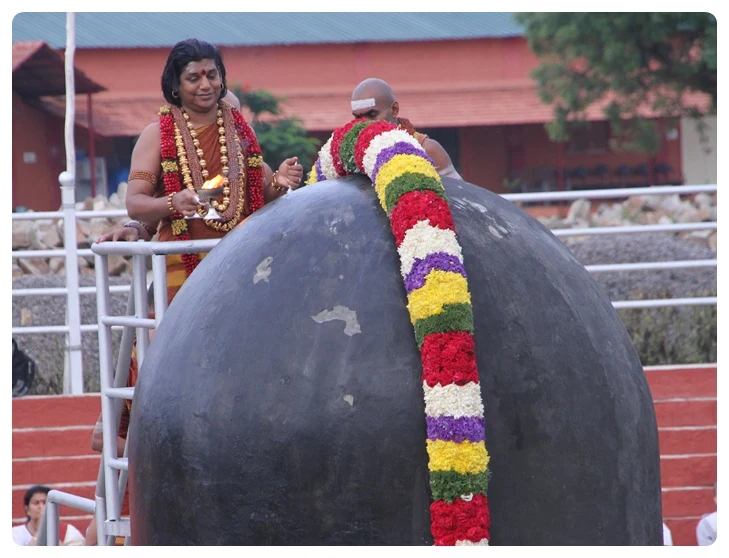
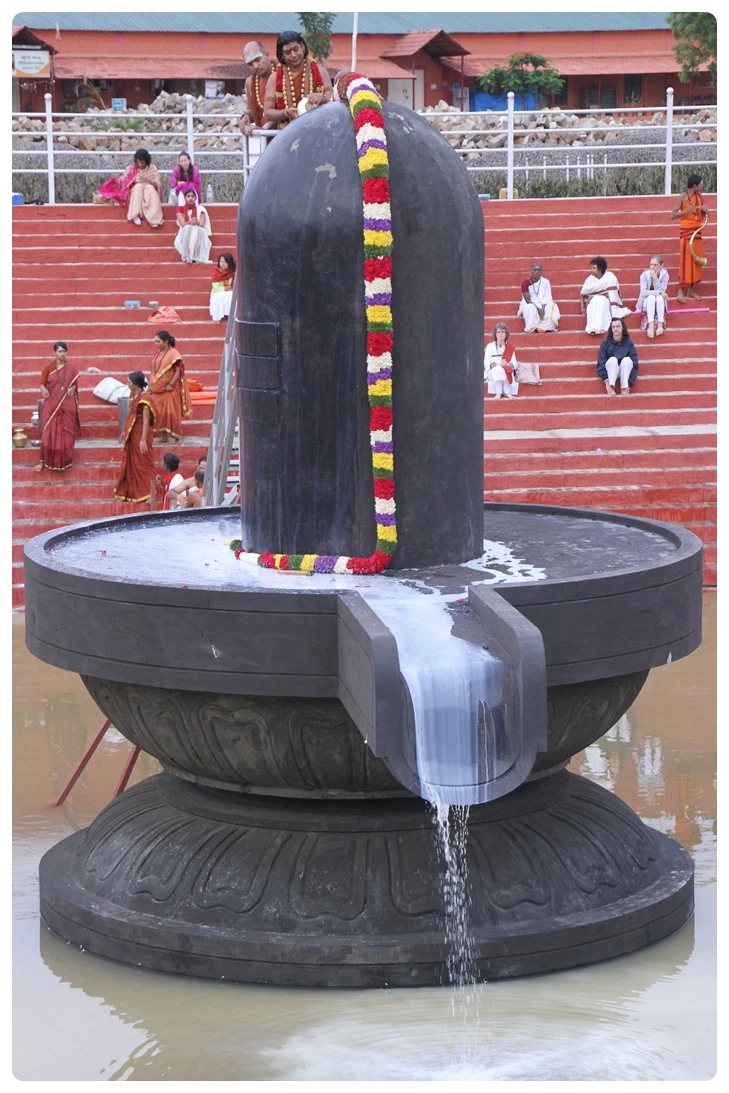
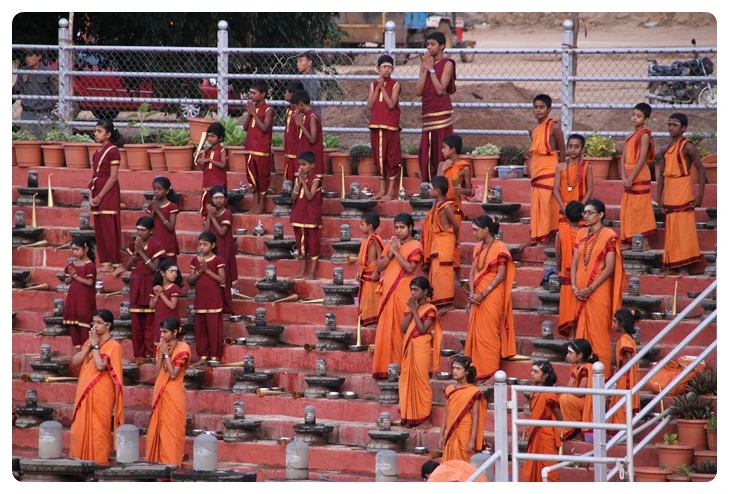
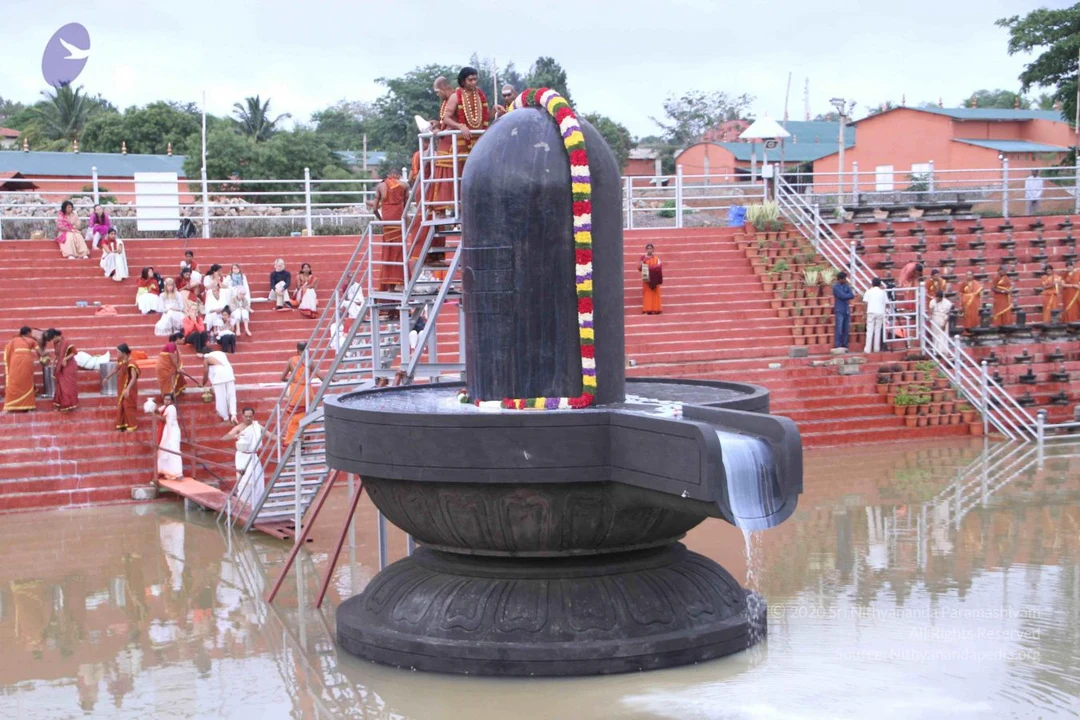
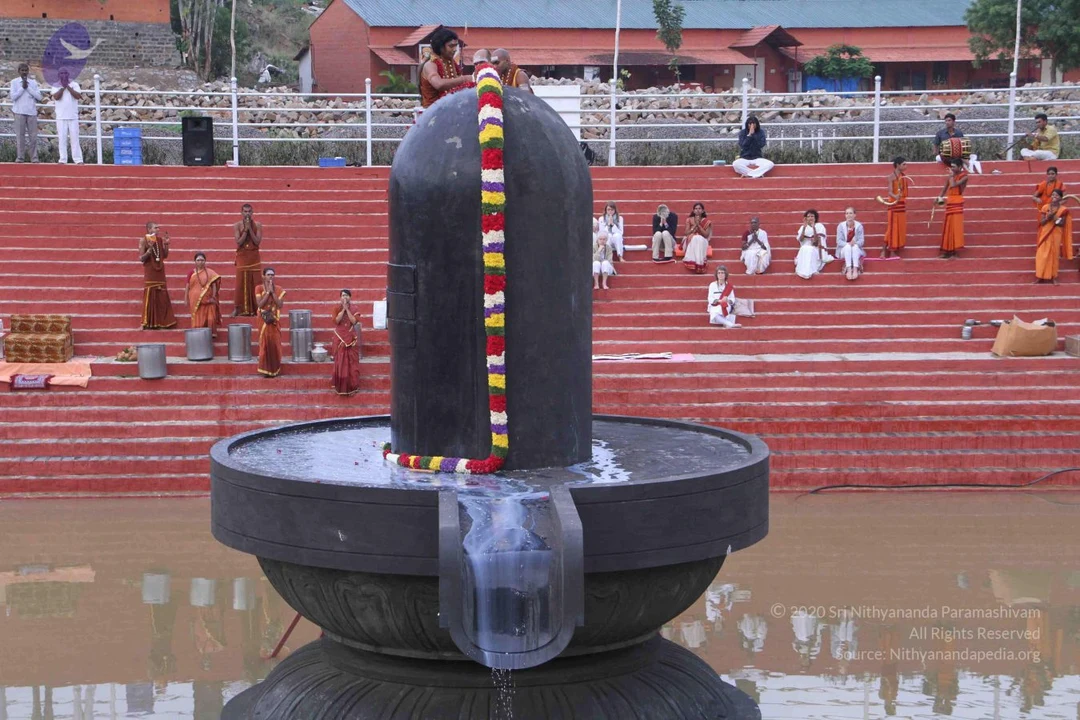
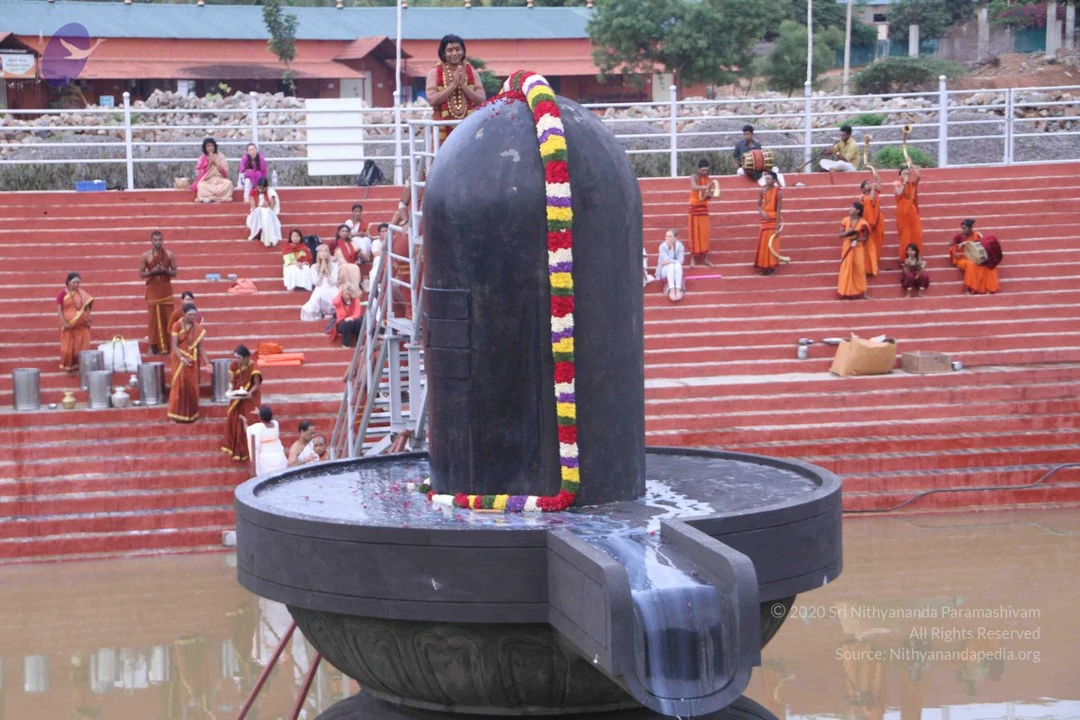
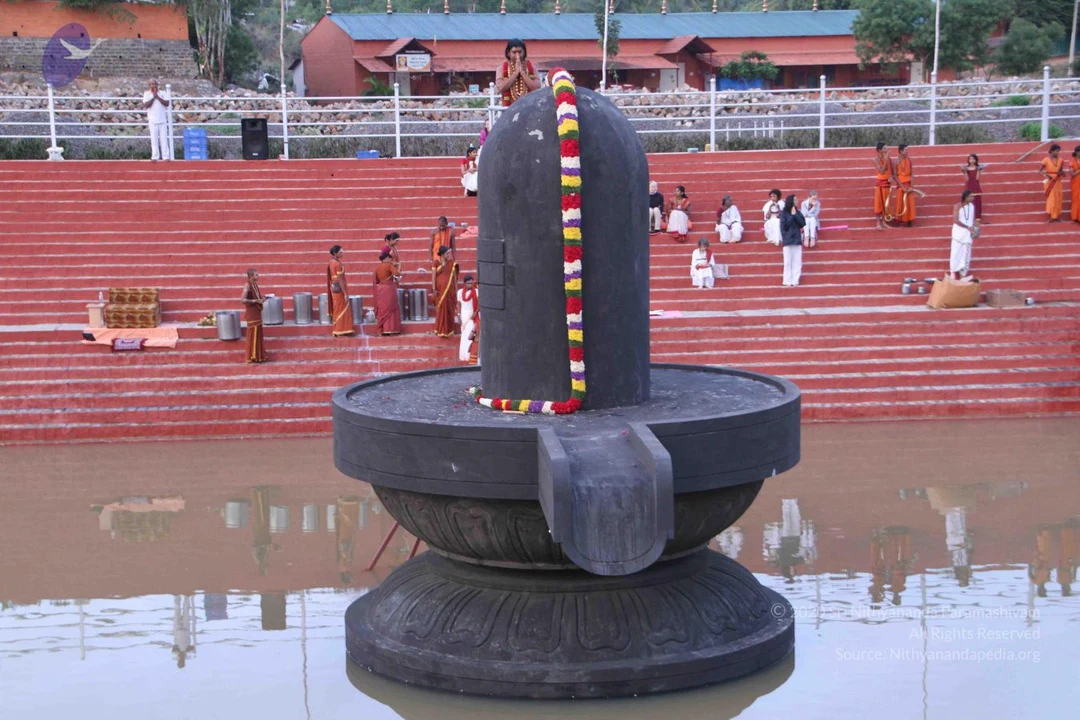
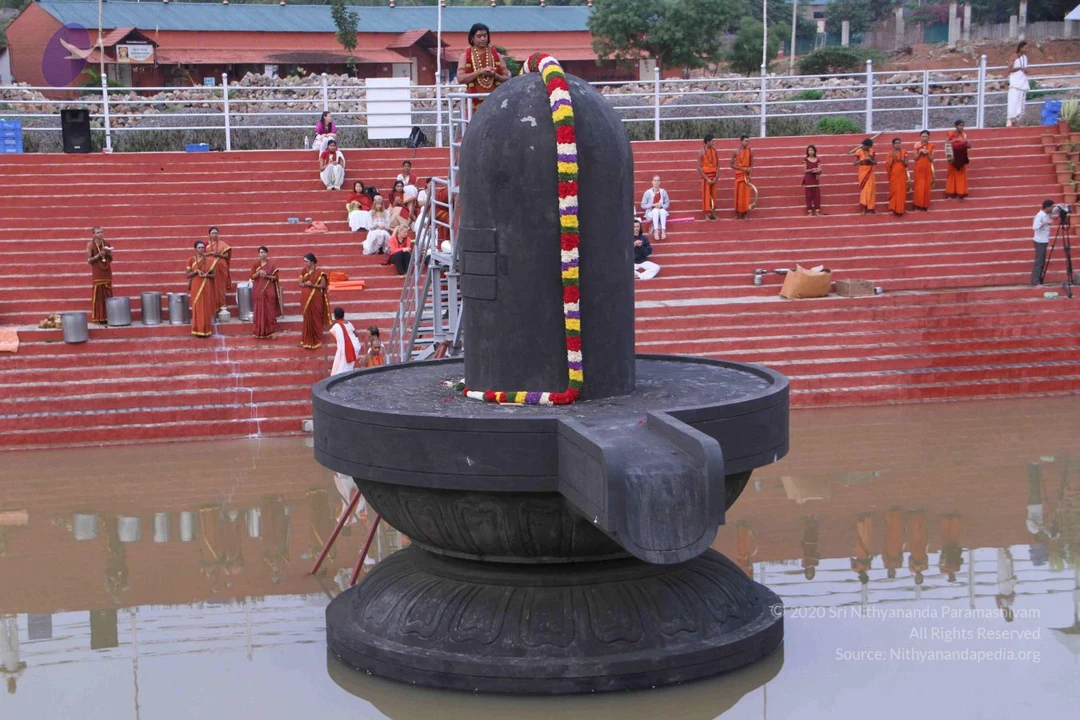
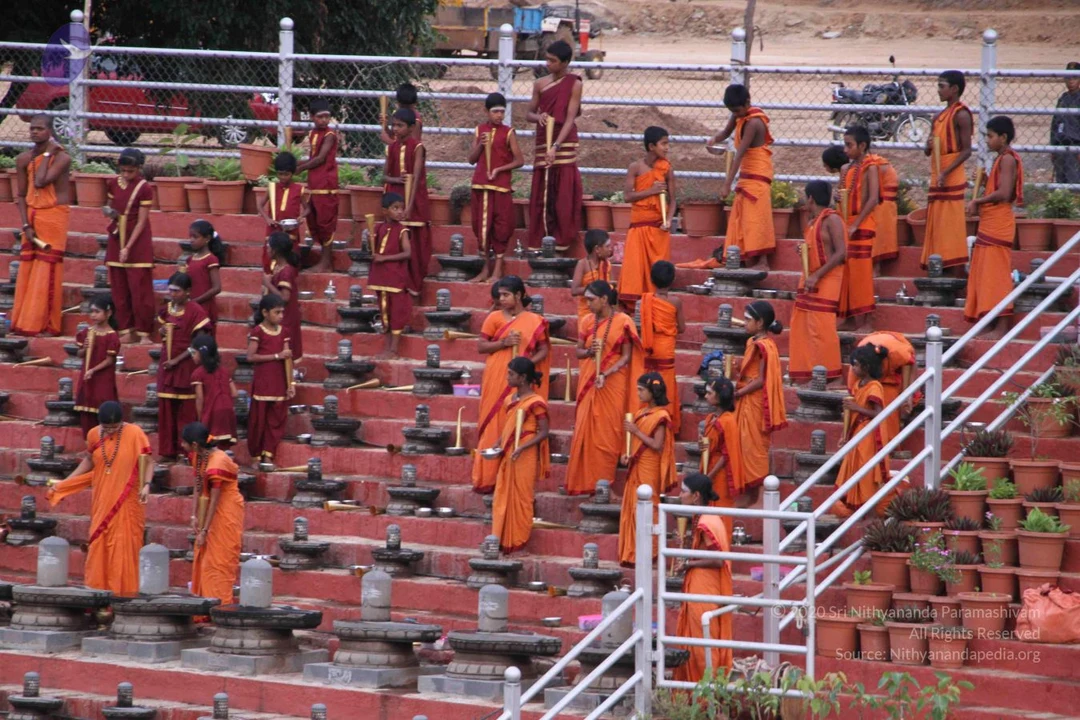
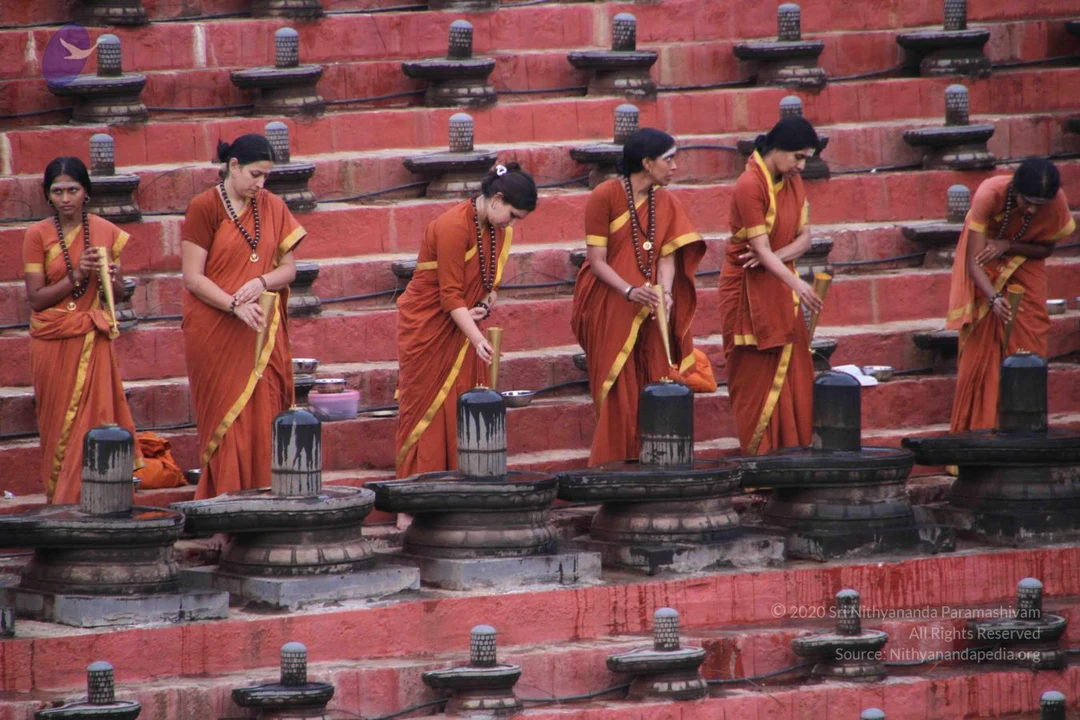
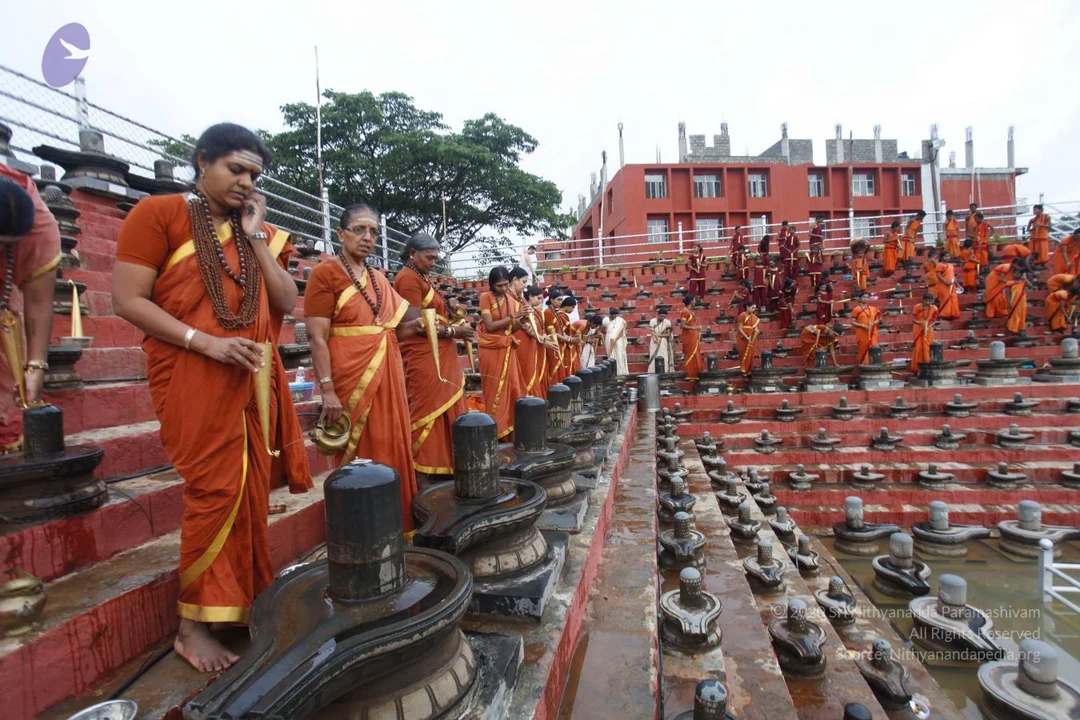
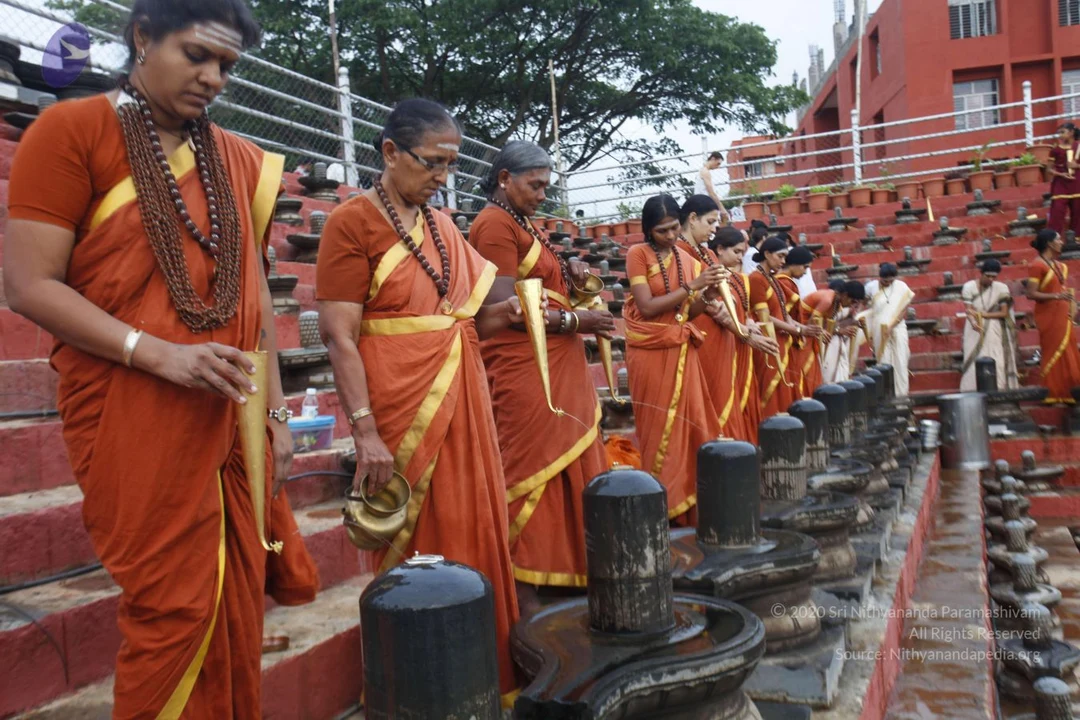
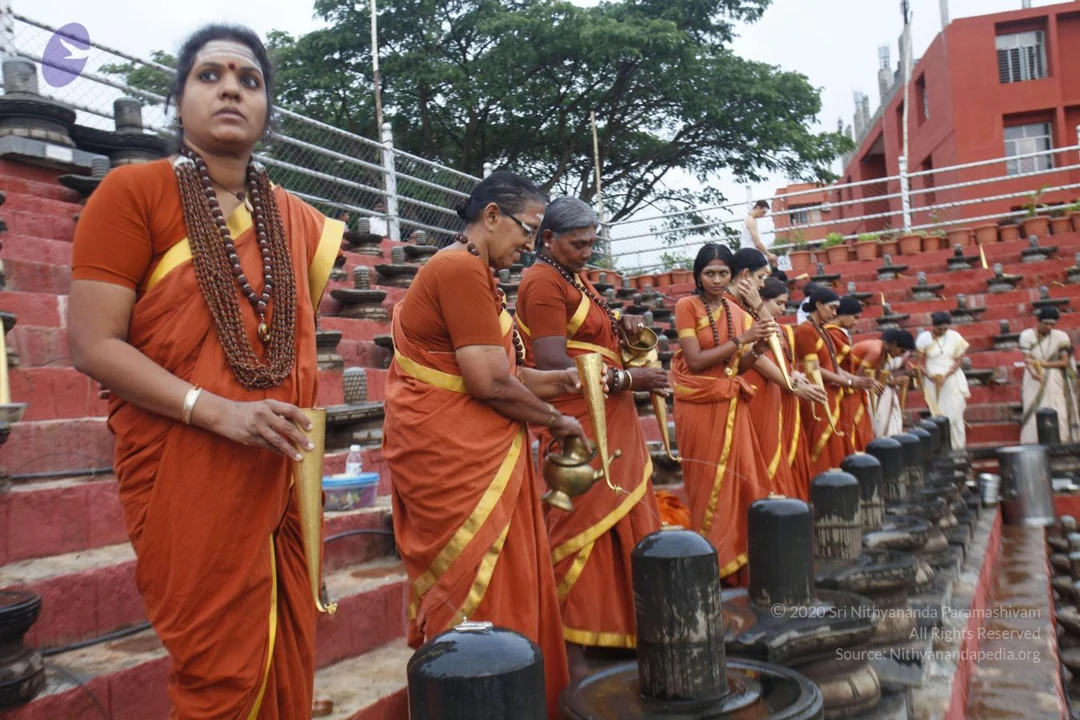
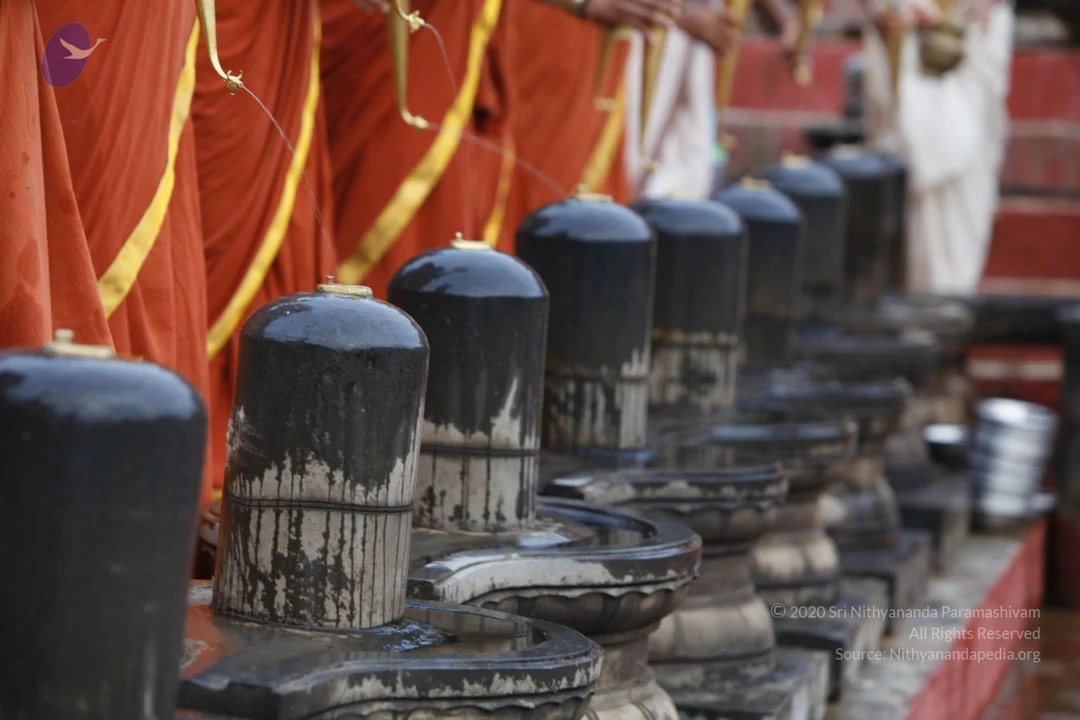
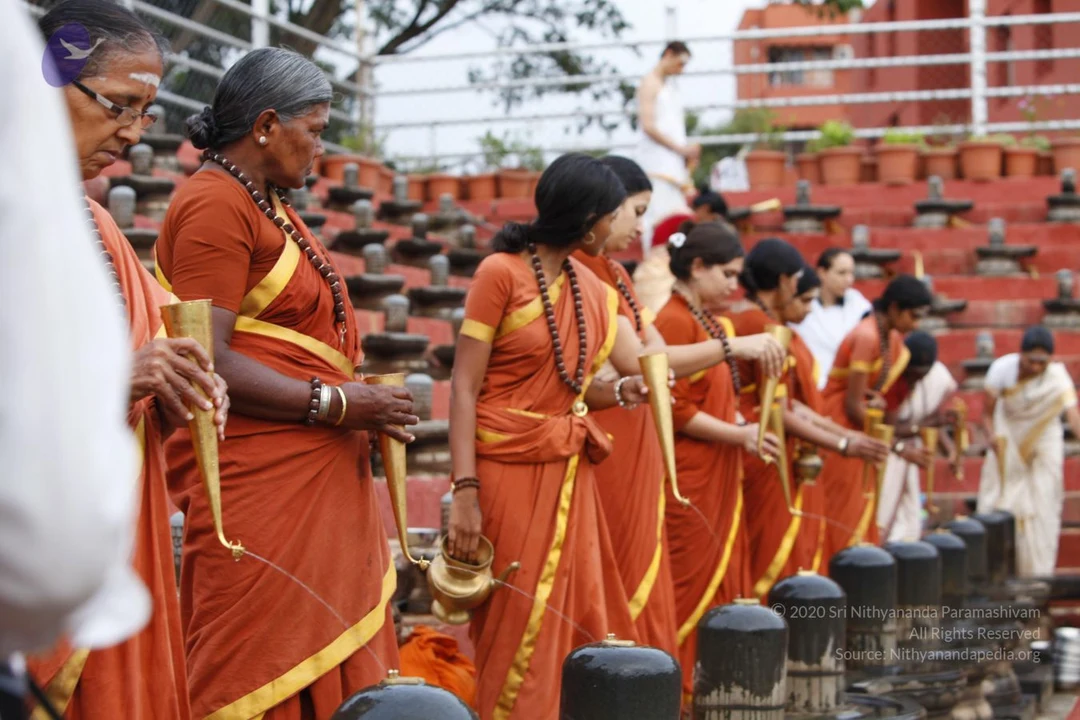
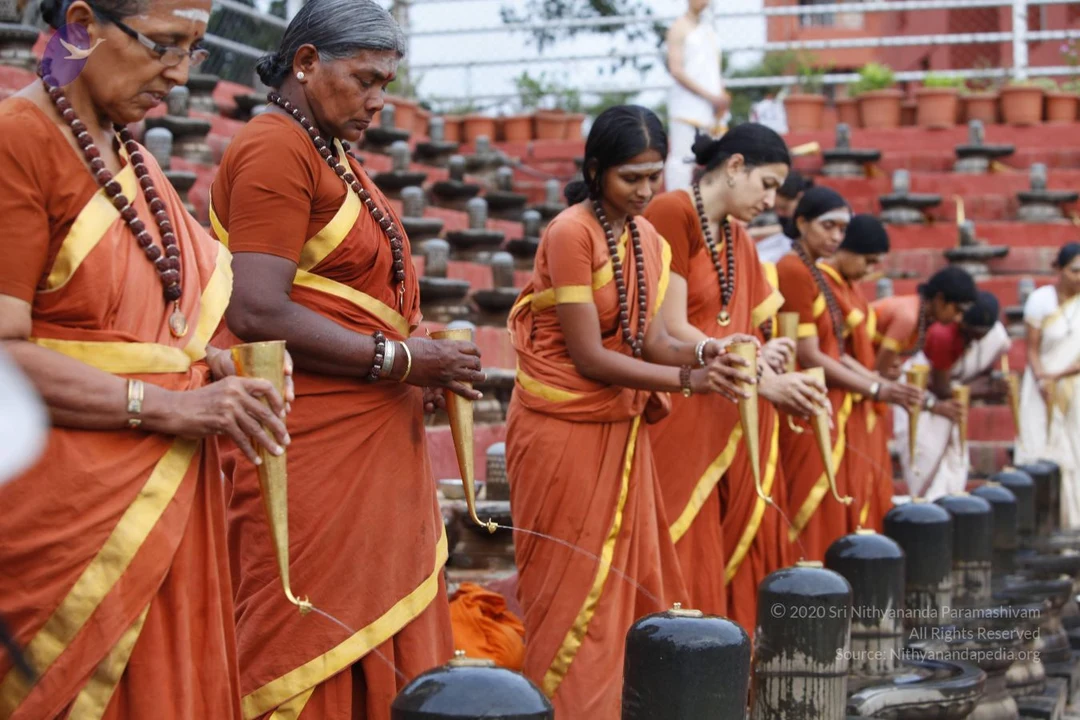
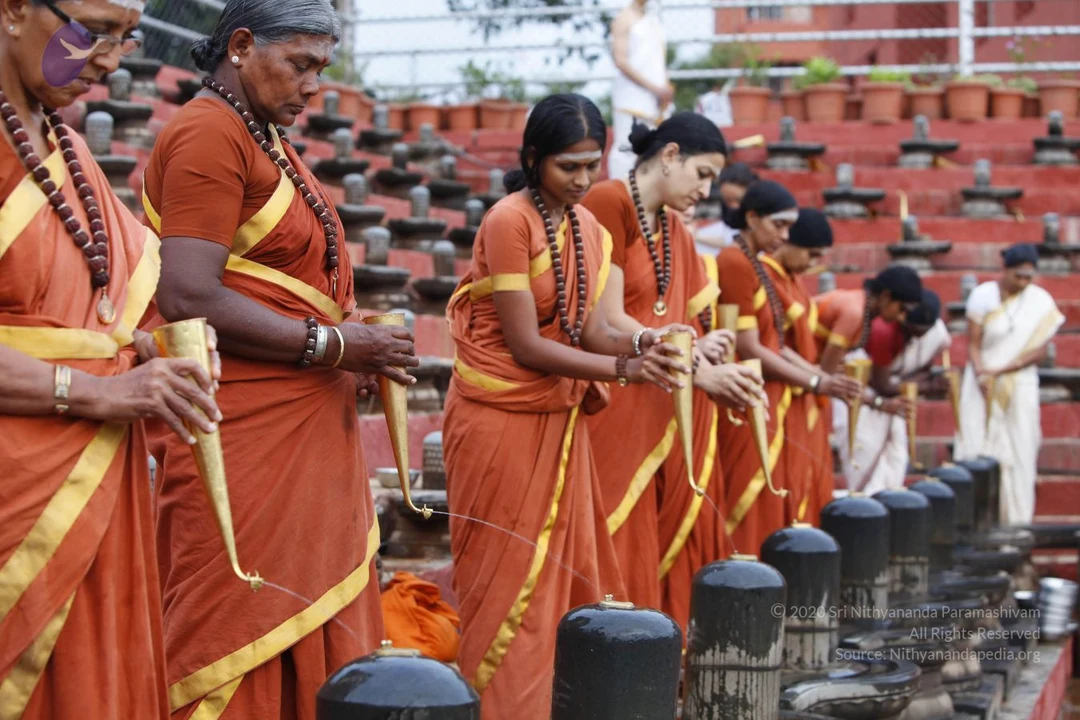
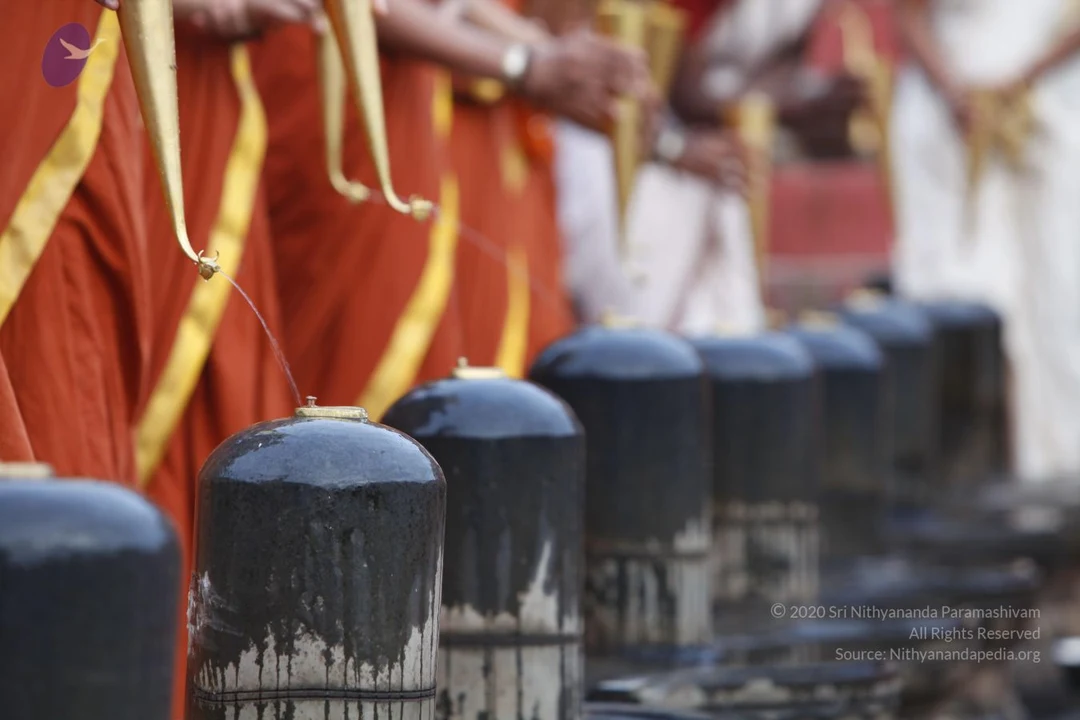
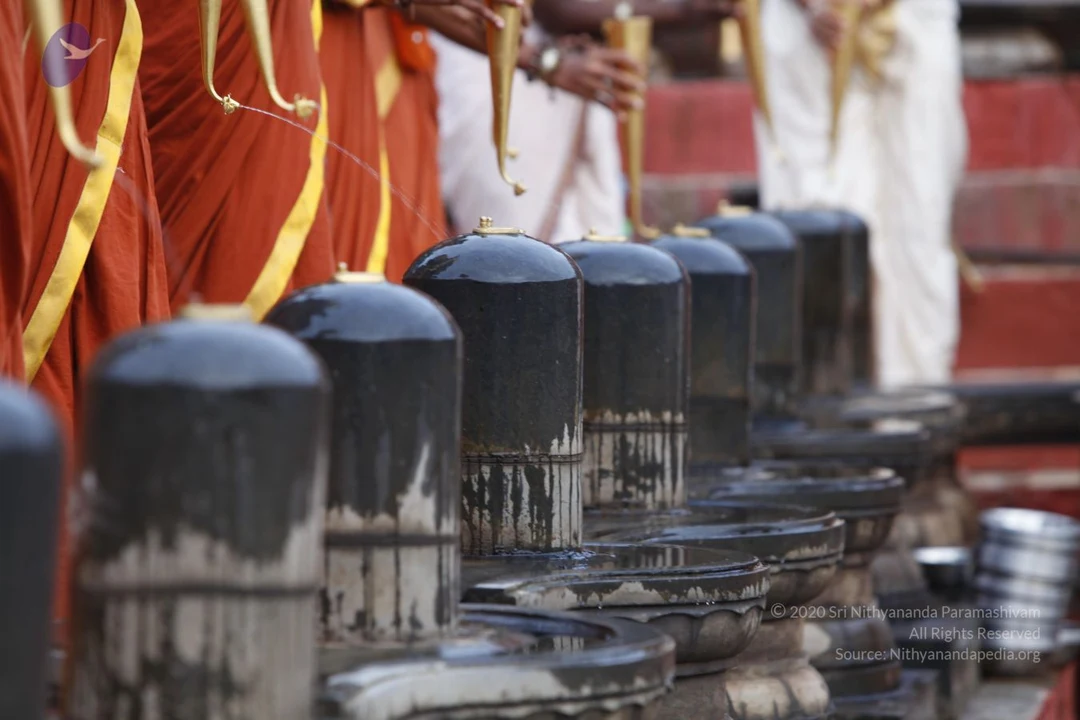
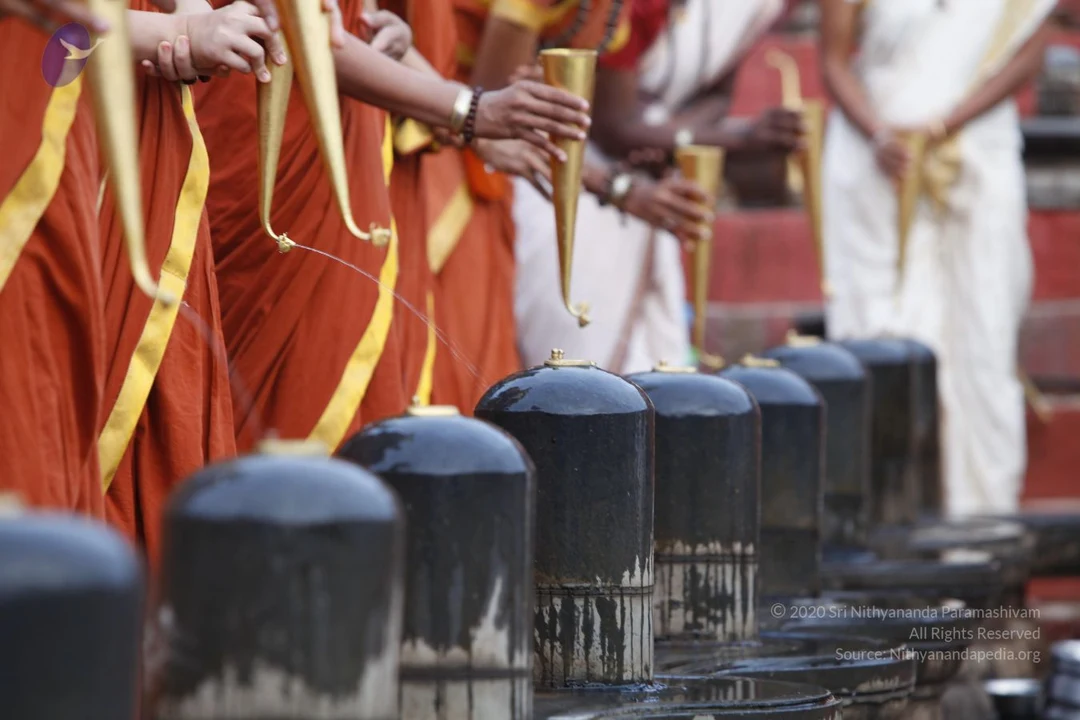
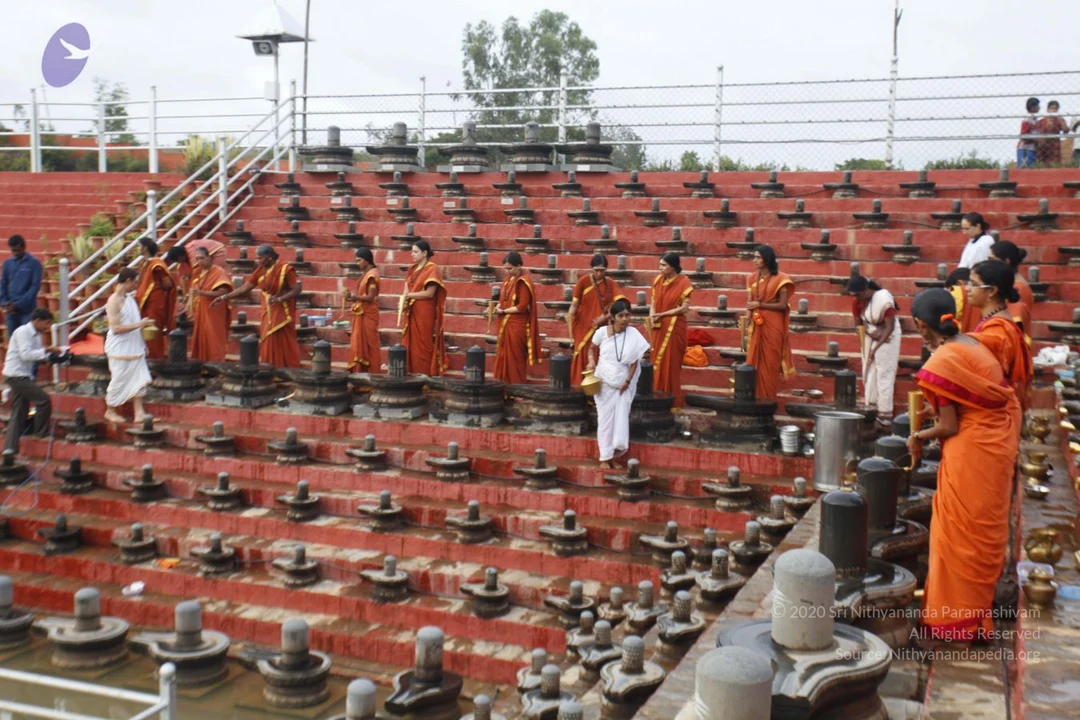
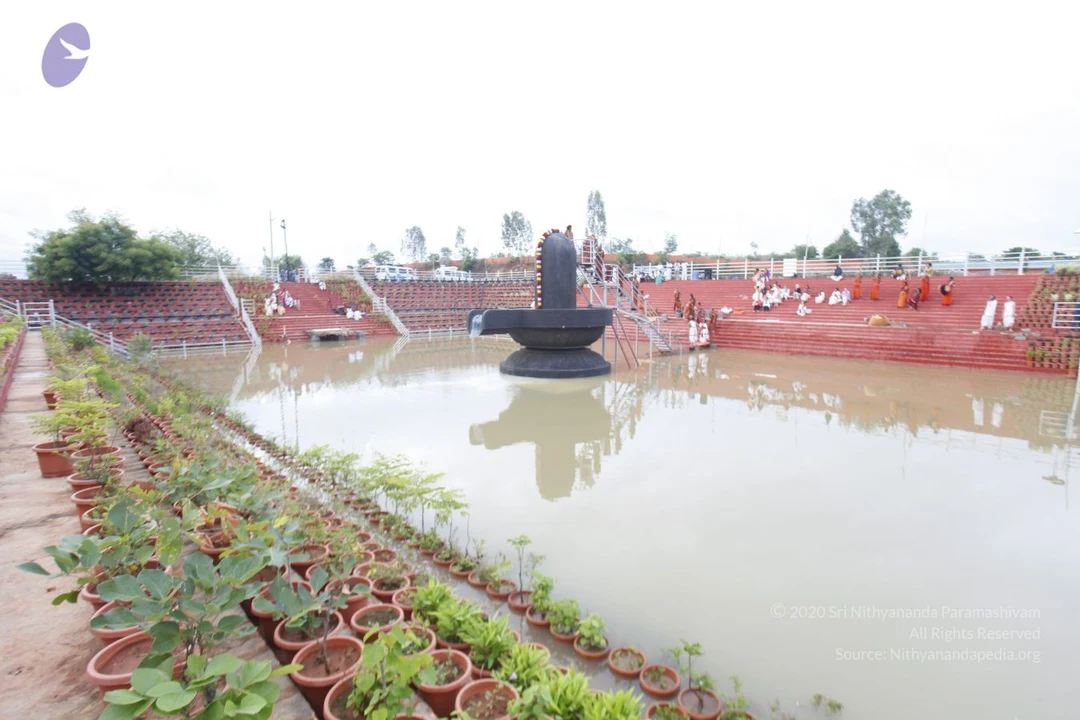
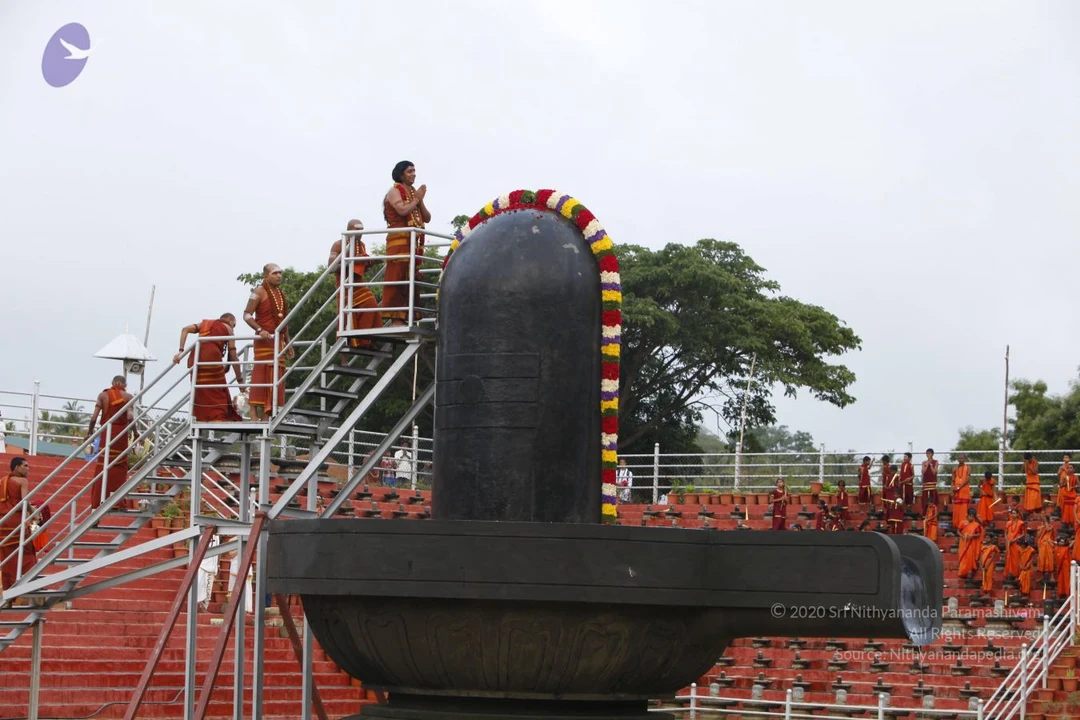
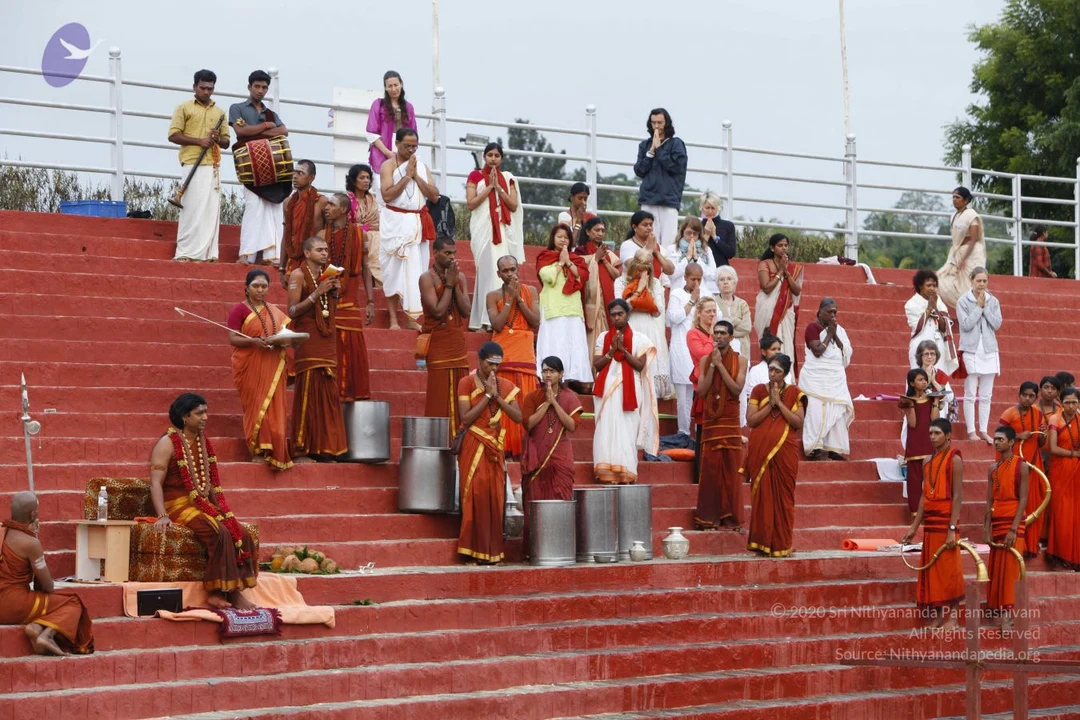
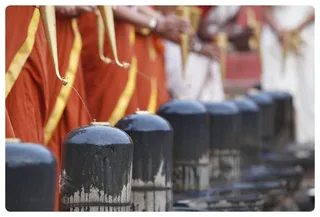
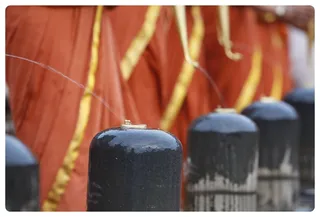
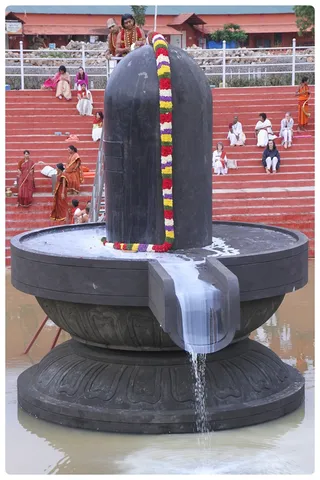
Photograph of a row of black stone Shiva lingams set on a yoni-style base, each topped with a small gold kalasha-like cap, being poured over with water from golden vessels. Several people in saffron-orange robes with yellow borders stand behind the lingams, holding gold pouring vessels in their hands, with their arms extended toward the stones. The background is blurred, with a white-clad figure visible at the right edge. The scene suggests a lingam abhishekam ritual performed by sannyasi-clad participants in an ashram setting.Close photo of several black stone Shiva lingams in a row, each capped with a gold-coloured top, with water or milk streaming down from above onto the nearest lingam. Behind them, robed figures in saffron-orange garments with gold borders stand blurred, their hands partly visible at the top right. The scene suggests an abhishekam ritual. No face is clearly visible and no individual can be picked out as a person from appearance.A large black stone Shivling stands in a shallow water basin with a flower garland of red, yellow, white and purple blossoms wrapped around it, and water pours over the spout. A figure in a red top with a rudraksha-style red and orange necklace stands on a metal platform beside the lingam with hands folded in namaste. Behind, red stone steps are filled with seated and standing people in saffron and orange robes and white clothing, some holding small brass vessels, and a drummer plays near the top. Trees and a red-roofed building sit in the background. Roughly twenty-five people are visible, mostly in the steps area.A photograph of a large black polished stone lingam being adorned with a long multicolour flower garland in red, yellow, white, green and purple. A woman with long dark hair, wearing an orange-saffron garment, red and gold garlands and a gold necklace, stands at the left holding a lit oil lamp and a flower in her hands, while a shaved-headed man in orange-saffron clothing with a white band on his head is partly visible behind the lingam. The setting is an open outdoor ritual area with grey stone floor, red-brick steps, a white metal railing and a red-roofed building behind. Abhishekam-style garlanding of a shivalingam.Outdoor photo of a large black polished stone lingam draped with a multicolour flower garland in red, yellow, green, white and purple. A woman in saffron-orange clothing and a red floral garland holds a lit oil lamp beside it, her hair long and swept back, with rudraksha beads and gold necklaces. Behind her, a shaved-headed man in orange robes stands with hands joined. Background shows a red-walled building, a green-roofed structure and white railings on a stepped platform.A large black stone Shivling stands in shallow water on a polished black yoni-shaped base, with water flowing from its spout into the pool. A multicoloured flower garland with red, yellow, white and purple blossoms hangs around the lingam. Behind it, a man in an orange-saffron garment and a red-and-white garland stands at the top of the lingam's edge, beside another person in a red garland and dark clothing. Red tiered steps behind hold a row of seated people in white, orange and red clothes, including women in saris and a person in an orange robe on the right. Red-roofed buildings and a white railing line the background.

Photos

7 photosSource gallery
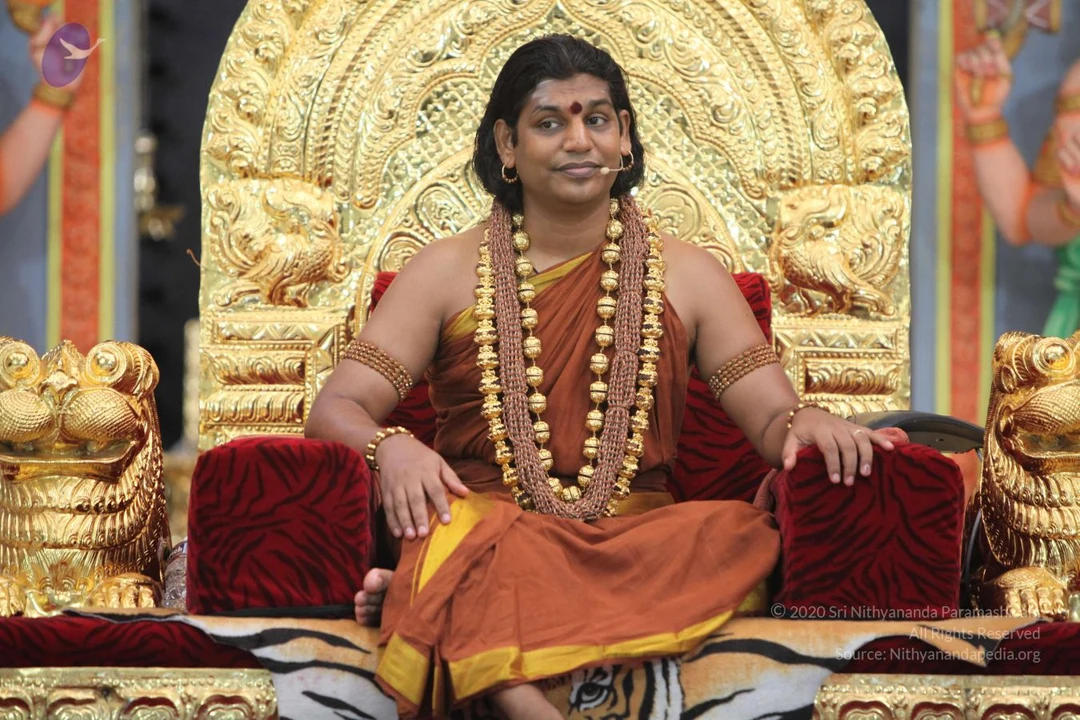
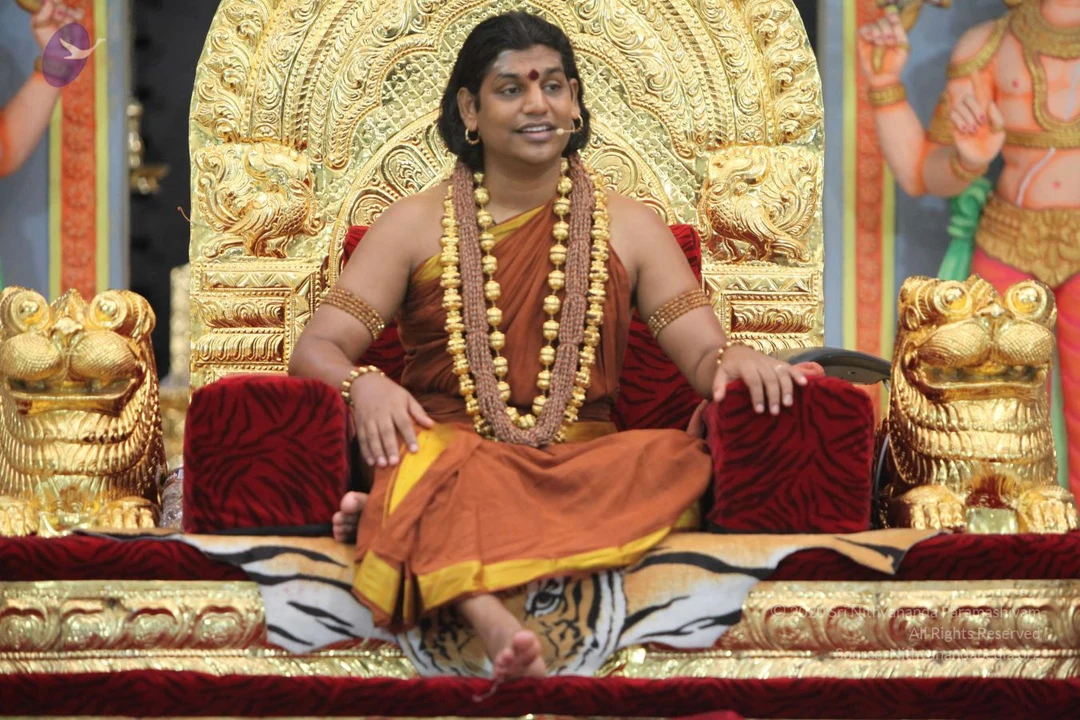
A smiling man sits cross-legged on a red and black striped cushioned seat in front of an ornate gold throne with a carved lion-head armrest. He wears an orange-saffron dhoti and shawl, bare-shouldered, with long swept-back dark hair, a red bindi, gold earrings, a headset microphone, a multi-strand gold and rudraksha-style bead necklace, and gold armlets. A tiger-striped cloth covers the floor beside him. a person is seated, speaking during a satsang setting.A seated man in an orange-saffron dhoti and shawl with a gold-yellow border sits cross-legged on a red and black zebra-striped velvet throne cushion, placed over a tiger-face rug. He wears long layered gold bead necklaces with rudraksha-style strands, gold armlets, beaded bracelets and a ring, with a red kumkum mark on his forehead. He has long dark hair swept back and looks to his right with a slight smile. Behind him is a large ornate gold throne backrest and a painted deity murti with a raised arm holding a staff. A small conference microphone sits on the armrest. Appearance-based candidate: Swamiji (probable), seated on a throne in saffron clothing with long hair, ornate gold necklaces and rudraksha-style beads.A seated man in a gold-framed throne sits on a red cushioned platform draped with a tiger-skin rug, flanked by two gilded lion statues. He wears an orange-saffron dhoti and shawl, a long gold beaded necklace, a rudraksha mala, gold armbands and a red bindi, with a small microphone at his ear. Two large painted deity murti stand on either side, one with multiple arms holding a trident, a mace and other implements, set against a blue and green temple backdrop with hanging brass lamps above. Gold ornamental panels frame the scene.A man sits on an ornate gold throne draped with an orange and white tiger-striped cloth, wearing a rust-brown robe with gold border and a red vermilion dot on his forehead. He wears a long red and yellow flower garland with gold beads, multiple gold and rudraksha-style necklaces, bangles and an armlet, and a gold-hued shawl across his shoulders. A brass bell and a brass oil lamp hang beside him, and silver plates with flowers sit at his feet. The man appears to be seated and in profile, with a person appearance based on the visible saffron-brown ascetic robes, rudraksha-style beads and ceremonial gold ornaments on a throne setting.A man seated on an ornate gold throne with a tiger-skin cushion, wearing a rust-brown garment with gold border, multiple red and gold flower garlands, a rudraksha-style bead necklace, gold bangles and an armlet, and a red bindi on his forehead. He sits with long swept-back hair and looks to the side. A brass oil lamp hangs at the upper right, and at the lower right a girl in orange clothes stands beside a tray of silver bowls with flowers. Appearance-based candidate: Swamiji (probable), based on long hair, rudraksha beads, ceremonial gold necklaces and saffron-toned clothing on a throne.A photograph of a man seated on a cream cushioned seat in front of an ornate gold-embossed panel showing a deity murti. He wears an orange-saffron cloth draped over his shoulder, layered red and white flower garlands, and multiple gold-coloured bead necklaces, with a rudraksha bracelet on his upper arm. A red tilak mark is visible on his forehead. To his right hang a brass bell and a brass oil lamp on chains, with a brass figure of a bird beside them. The man has shoulder-length dark hair and looks to the side.

Rudra-Abhishekam-Swamiji
165 photosSource gallery
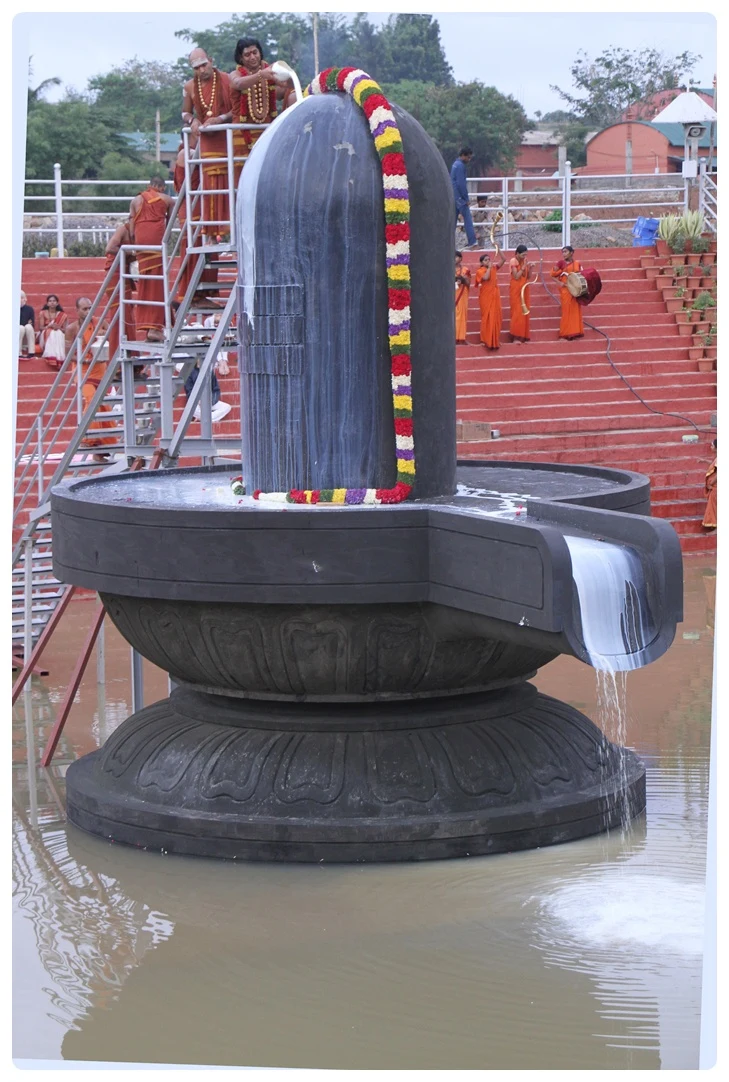
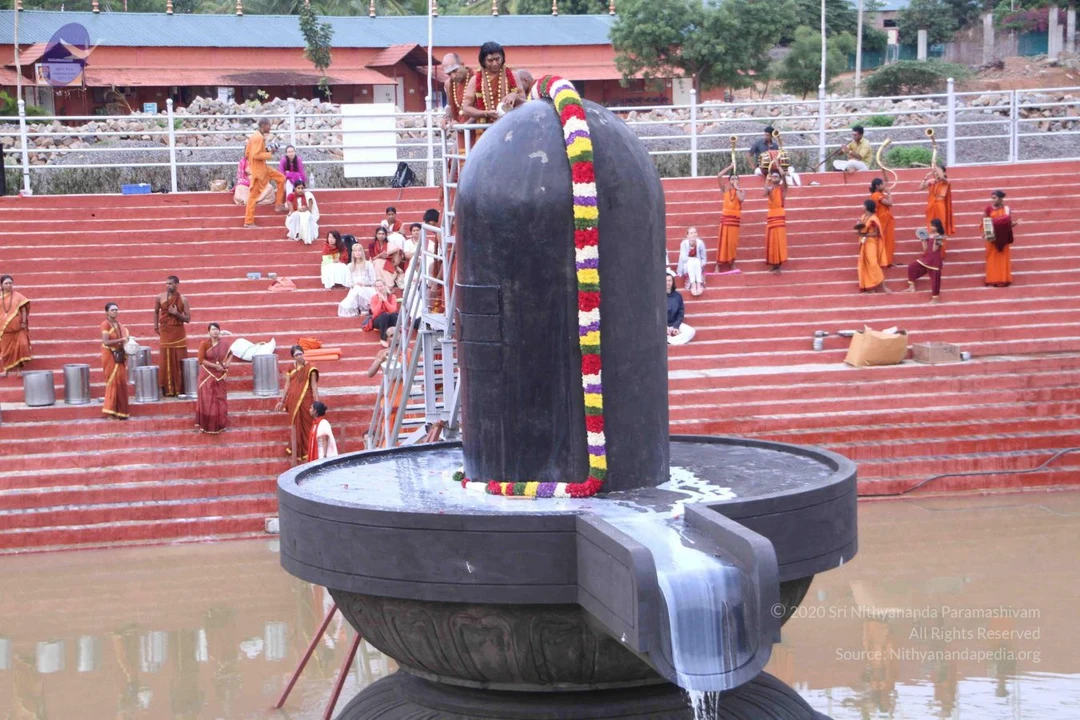
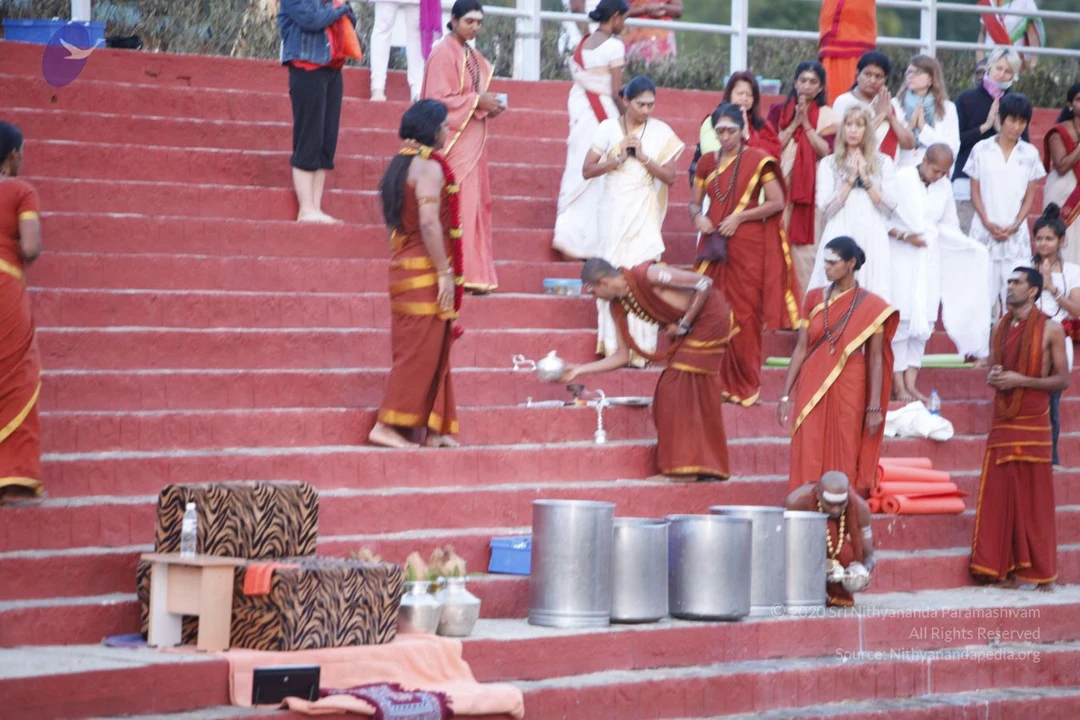
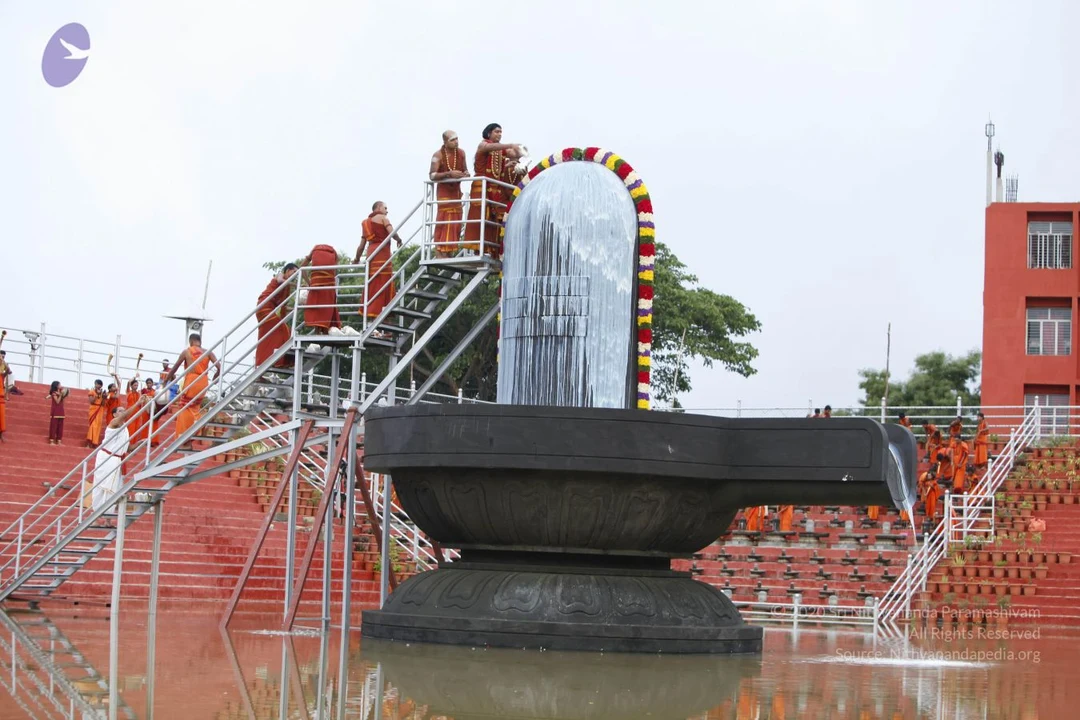
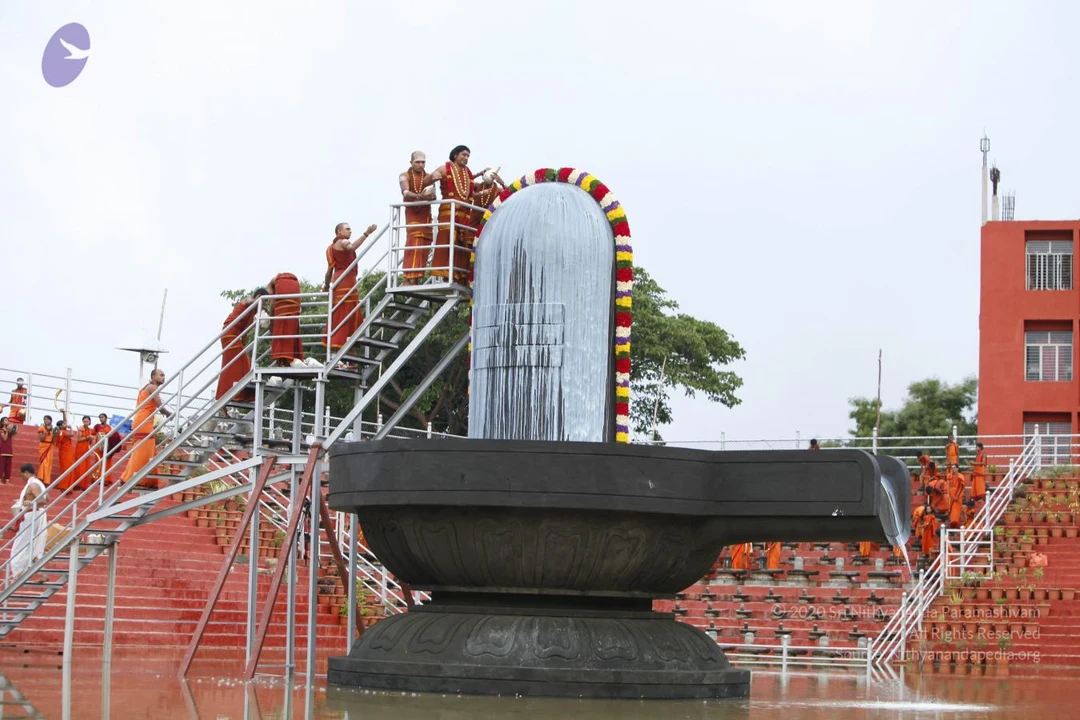
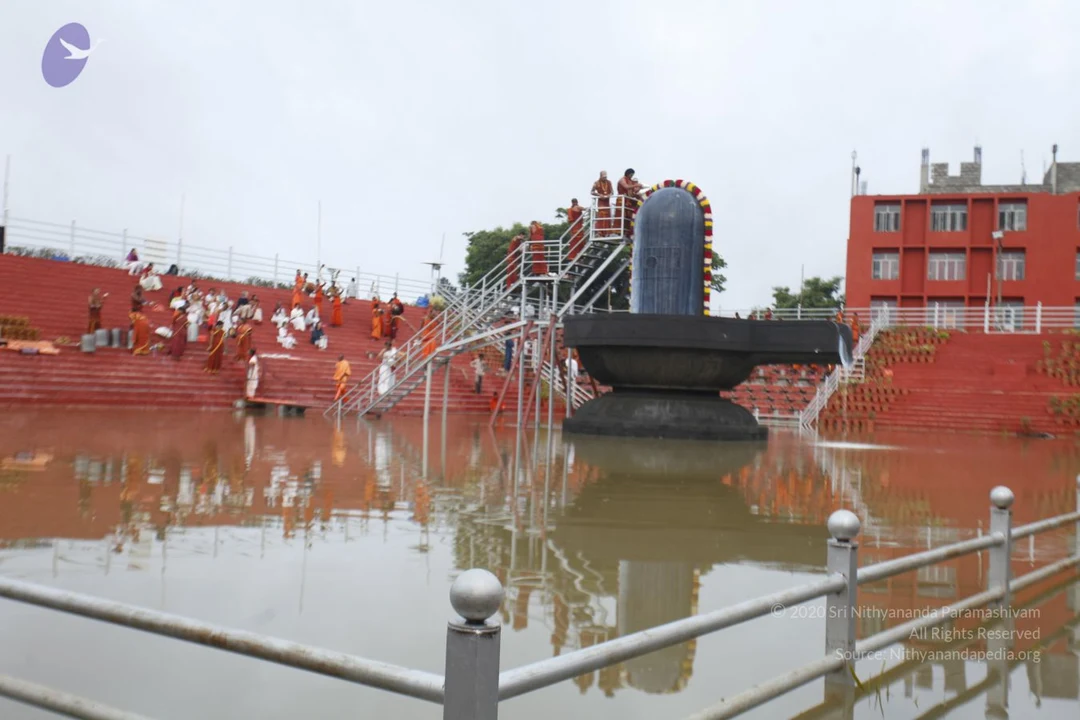
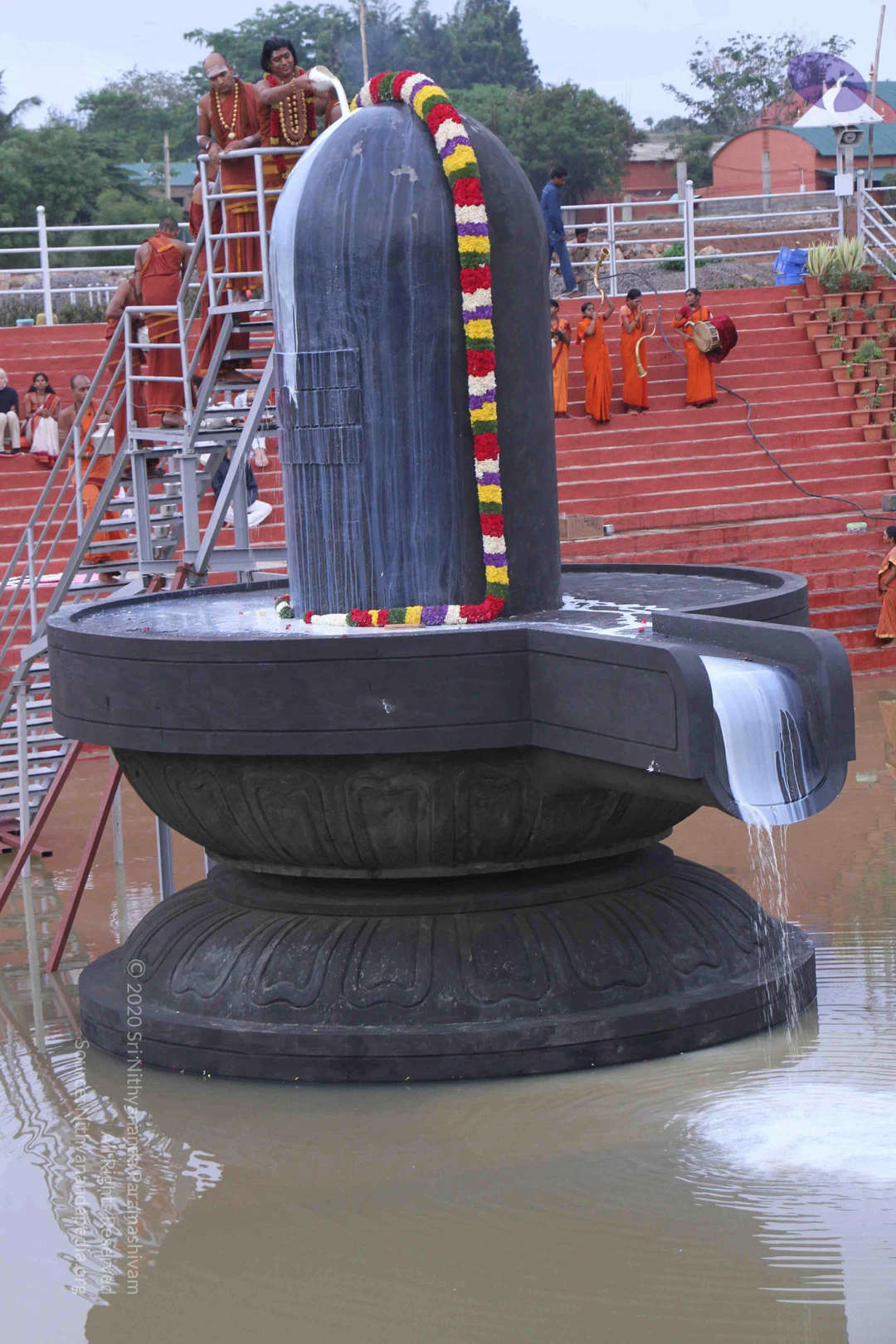
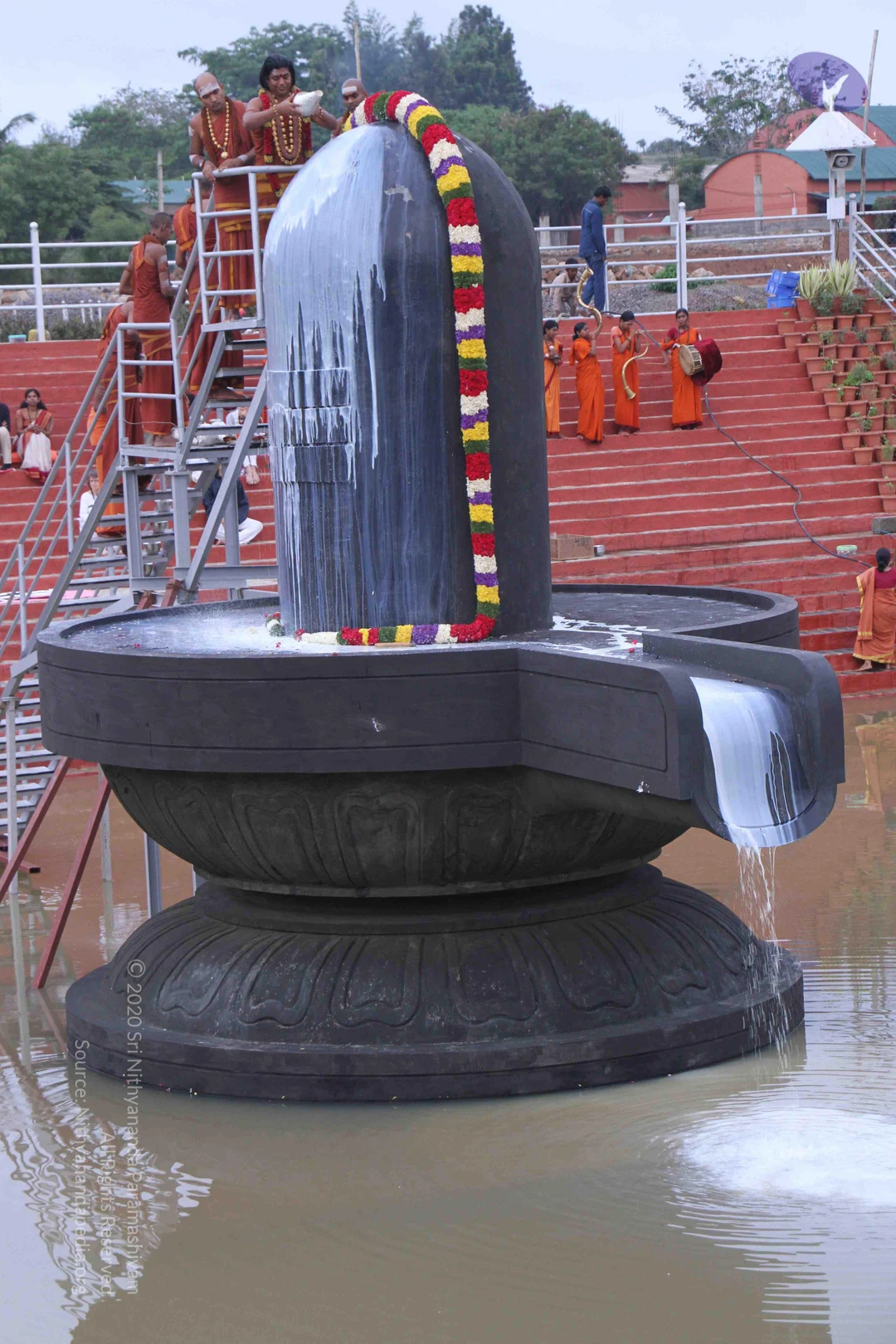
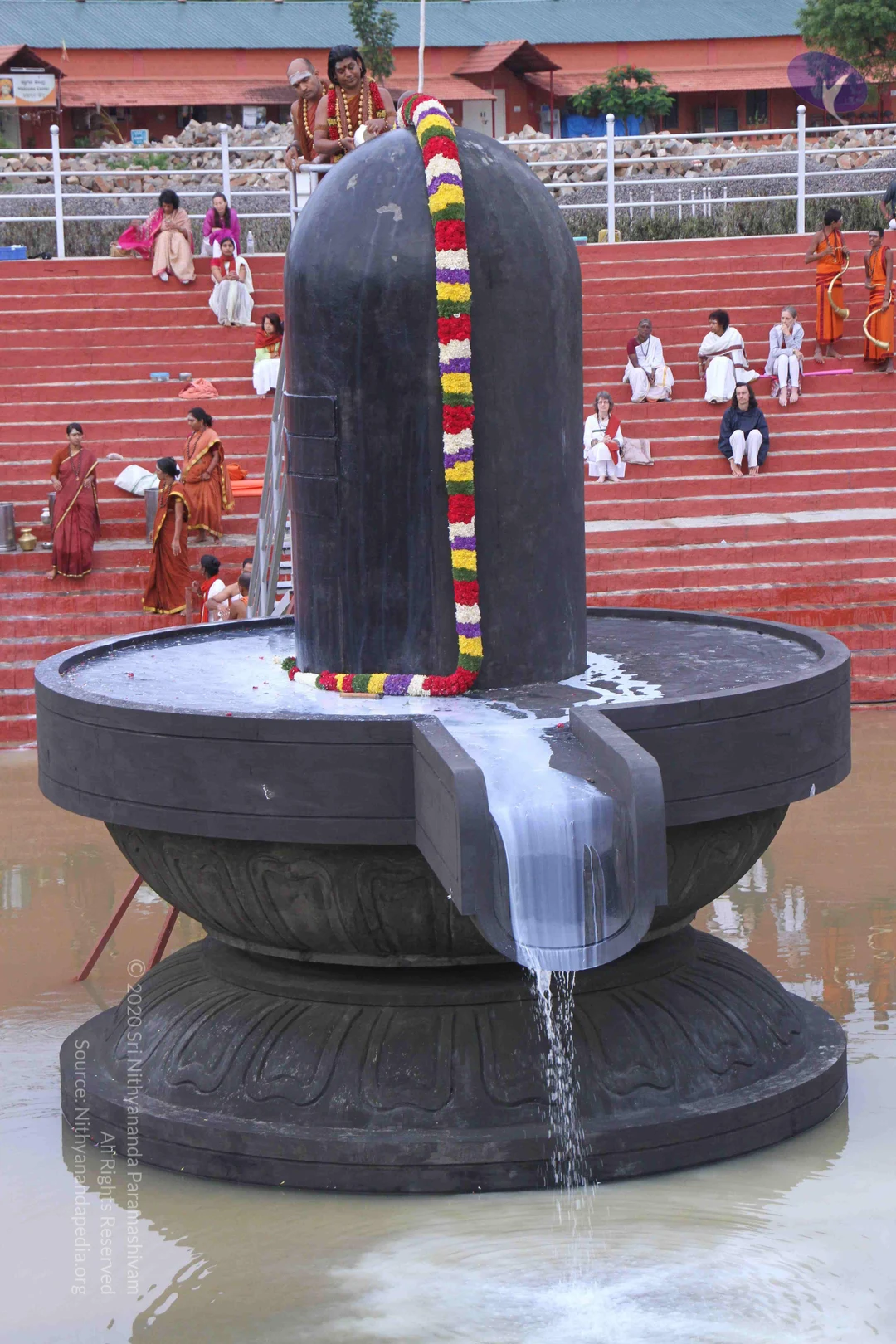
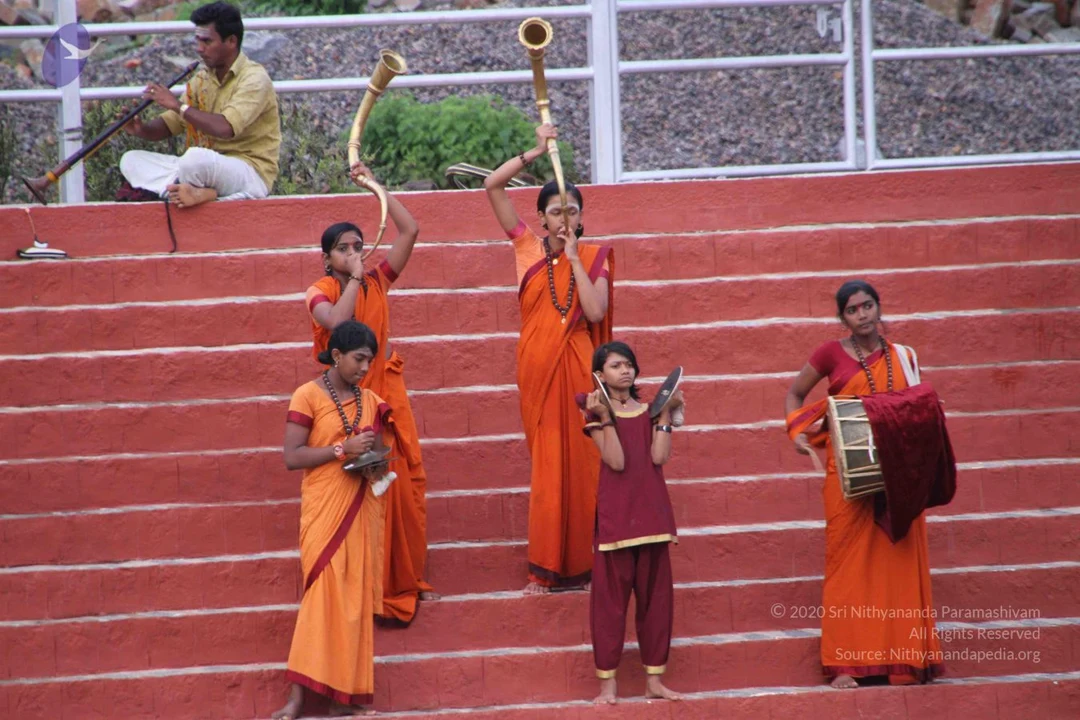
A large black Shivalinga stands in the middle of a flooded tiered pit with red stepped seating, water cascading down its face and pooling around its base. A garland with red and yellow flowers hangs on the linga. Dozens of people in orange and saffron robes stand on the red steps and along the terraces, with a few white-clad figures on the side walkways, apparently taking part in an abhishekam at this water-filled ceremonial site. Potted plants line the near edge of the water and a fence and red-roofed buildings sit beyond.A large black stone Shivalinga rises from a circular basin of water, garlanded with a multicoloured floral garland, while white water streams down its surface and spills over the basin's edge. Red-brown stone steps behind the lingam are lined with saffron-robed priests and white-clad devotees performing abhishekam, some pouring liquid from metal vessels. A man in a white shirt stands at the right. Trees and a red-roofed building appear in the background.A large dark stone Shivalinga on a black yoni-pitha base stands in shallow brown water, with milky-white liquid pouring down its face and spout, a garland of multicoloured flowers wrapped around its shaft, and a metal ladder leaning against it. Red stone steps behind it hold several people in saffron and orange robes, some carrying brass pots and others pouring water, while a few people in white and seated devotees watch from the steps.Outdoor temple ritual at a large black stone Shiva linga draped with a long garland of red, yellow, white, purple and green flowers. A bald priest in orange cloth with white tilak stands on a metal stair beside it, and a man with long dark hair, orange-and-saffron shawl, rudraksha mala and gold necklaces stands atop the stair holding a white cloth over the linga, while another priest in orange with a white tilak stands behind him. Seated devotees in red and white saris and orange robes line red steps behind a white metal railing, and a woman in orange sari stands at right. Red-roofed ashram buildings and green trees form the background.Outdoor abhishekam at a large black stone lingam decorated with a multicolour garland of red, yellow, white and purple flowers. Two men stand on a metal ladder beside it: one with a shaved head, white tilak and orange robe, and a taller man with long dark hair, rudraksha mala and gold necklace in orange clothing, holding a small white vessel. Seated devotees in white, red and orange on red steps watch, hands folded; orange-clad attendants stand at right, one playing a long brass horn. Red-roofed buildings and a white railing are behind.Outdoors, a figure with long swept-back dark hair, orange-saffron dhoti and shawl, multiple rudraksha malas and gold necklaces stands on a metal railing platform beside a large dark black shiva lingam draped with a multicolour flower garland of red, white, yellow, purple and green blooms. He holds a small silver vessel over the lingam. Beside him stands a shaved-headed priest in orange robes with white tripundra markings on the forehead, and another orange-robed attendant is partly visible. Trees and a pale sky form the background. a person is the figure with the swept hair and ornate jewellery, shown in person.

PratyakshaPadaPuja

8 photosSource gallery
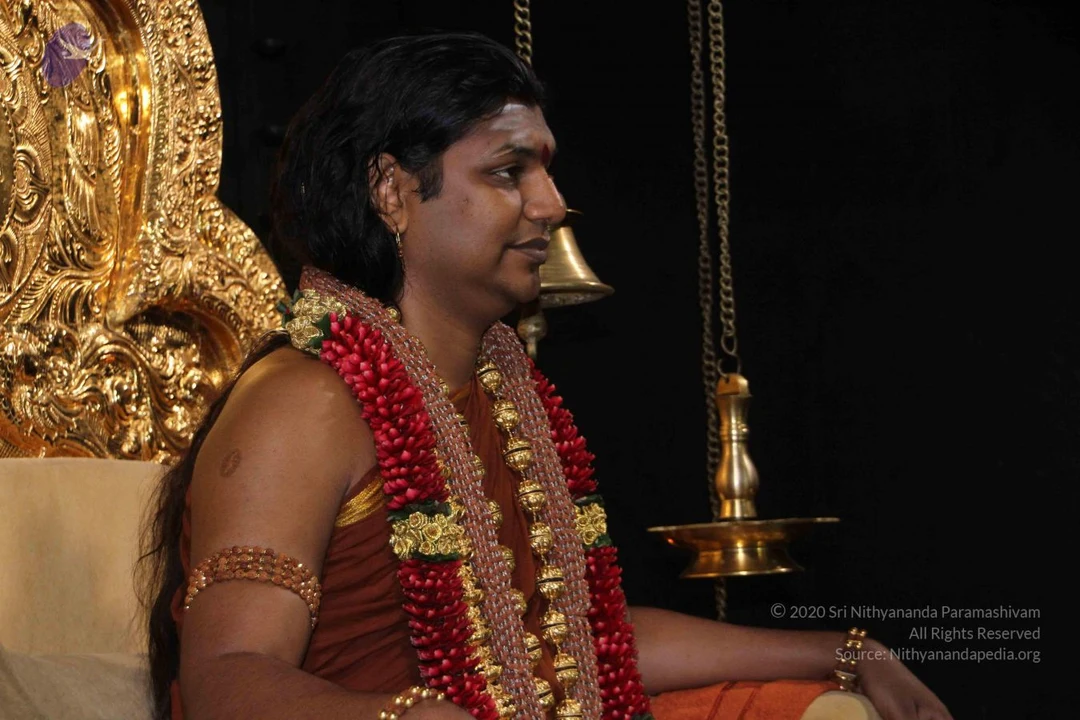
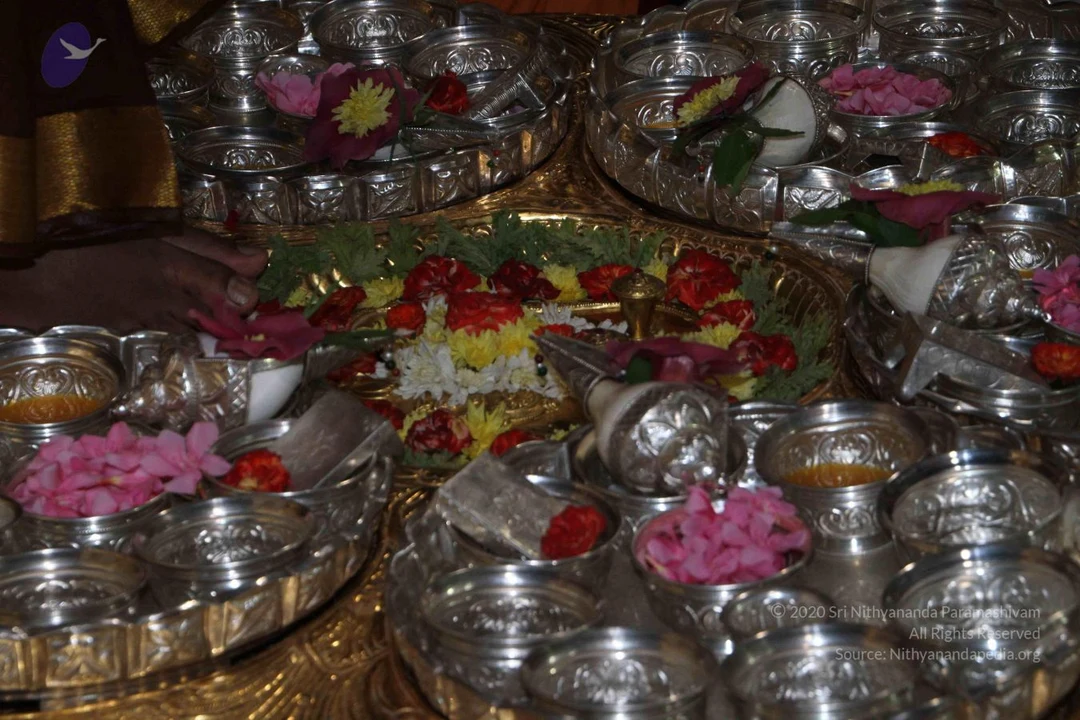
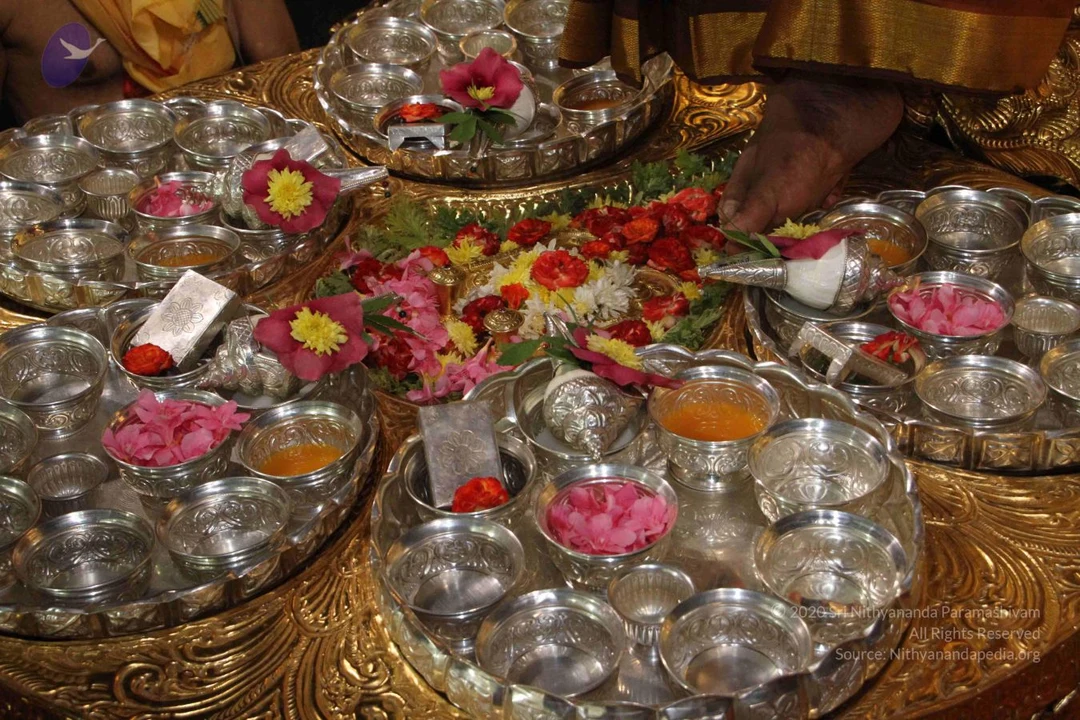
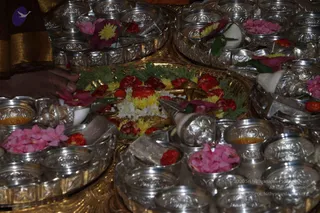
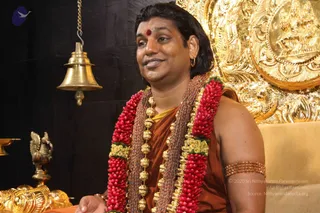
A man seated in profile on an ornate gold throne against a black background, wearing a rust-orange cloth, a long red and white flower garland and a gold-toned bead necklace, with a sandalwood-coloured armband and a red tilak on his forehead. Long dark hair falls past his shoulders. A hanging brass bell and a brass lamp stand sit beside him. Appearance-based candidate for a person, seated in a satsang setting, with the page noting a satsang event on 2013-06-03.A close view of a ritual puja arrangement on a polished brass tray. Many ornate silver bowls and small silver vessels hold pink, red, yellow and white flower petals, and a larger silver kalasha-like vessel with a silver spout stands among them. A garland of green leaves, red and yellow flowers frames the central offering. A hand in a gold-bordered maroon garment reaches toward the bowls at the left edge, and small dishes of orange-yellow liquid or powder sit among the petals. No people are fully visible beyond the hand and sleeve.A seated man in saffron-orange robes wears red and white flower garlands and a thick gold-bead necklace with a braided rudraksha-style cord. He has a red kumkum mark on his forehead, a rudraksha bracelet on his arm, and gold bangles. Behind him is an ornate gold throne carving. To the right a brass bell hangs on chains beside a brass oil lamp, and a brass bird-shaped ornament is visible. Swamiji (probable): long swept-back hair, saffron robes, rudraksha bracelet and ceremonial gold necklace, seated in a ceremonial setting.A man seated on a golden throne-like chair before an ornate gold-embossed backdrop, wearing an orange-brown robe with a bare right shoulder and arm, a red tilak on his forehead, and layered garlands of red flowers with gold beaded necklaces and a rudraksha-style mala. A brass hanging bell and a brass oil lamp sit to the left. The man is speaking and smiling, appearing to be giving a satsang discourse. Appearance-based: Swamiji (probable) seated in ceremonial dress with long swept-back hair and ornate gold necklaces, presiding as the teacher.A seated man in a saffron-orange robe sits before an ornate gold-embossed backdrop with relief carvings of figures. He wears long dark hair swept back, a red bindi on his forehead, a gold earring, and multiple long garlands of red flowers with gold-coloured beads over a brown rudraksha mala. A brass hanging bell and a gilded ceremonial object stand at left. A bangle-like band is on his upper arm. The scene suggests a satsang setting. Appearance-based label: a person, seated and speaking as a teacher.A photograph of a ritual arrangement on an ornate gold-patterned surface. Numerous silver bowls and trays hold pink rose petals, orange-yellow liquid, red and pink flowers, and yellow marigold-like blossoms. At the centre a bed of red roses, white and yellow flowers and green leaves surrounds small brass vessels. Above the arrangement a bare foot and the hem of a gold-bordered orange silk garment are visible. The scene suggests a puja or abhishekam preparation with flower offerings. No faces are visible.

NithyaSatsang_Swamiji

28 photosSource gallery
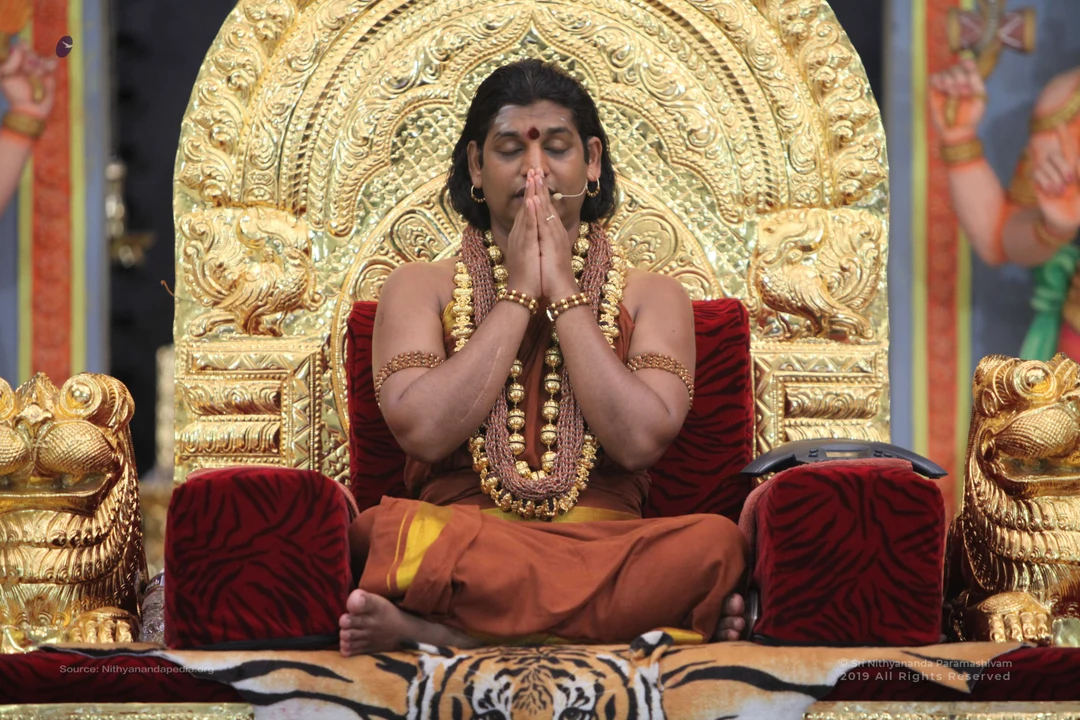
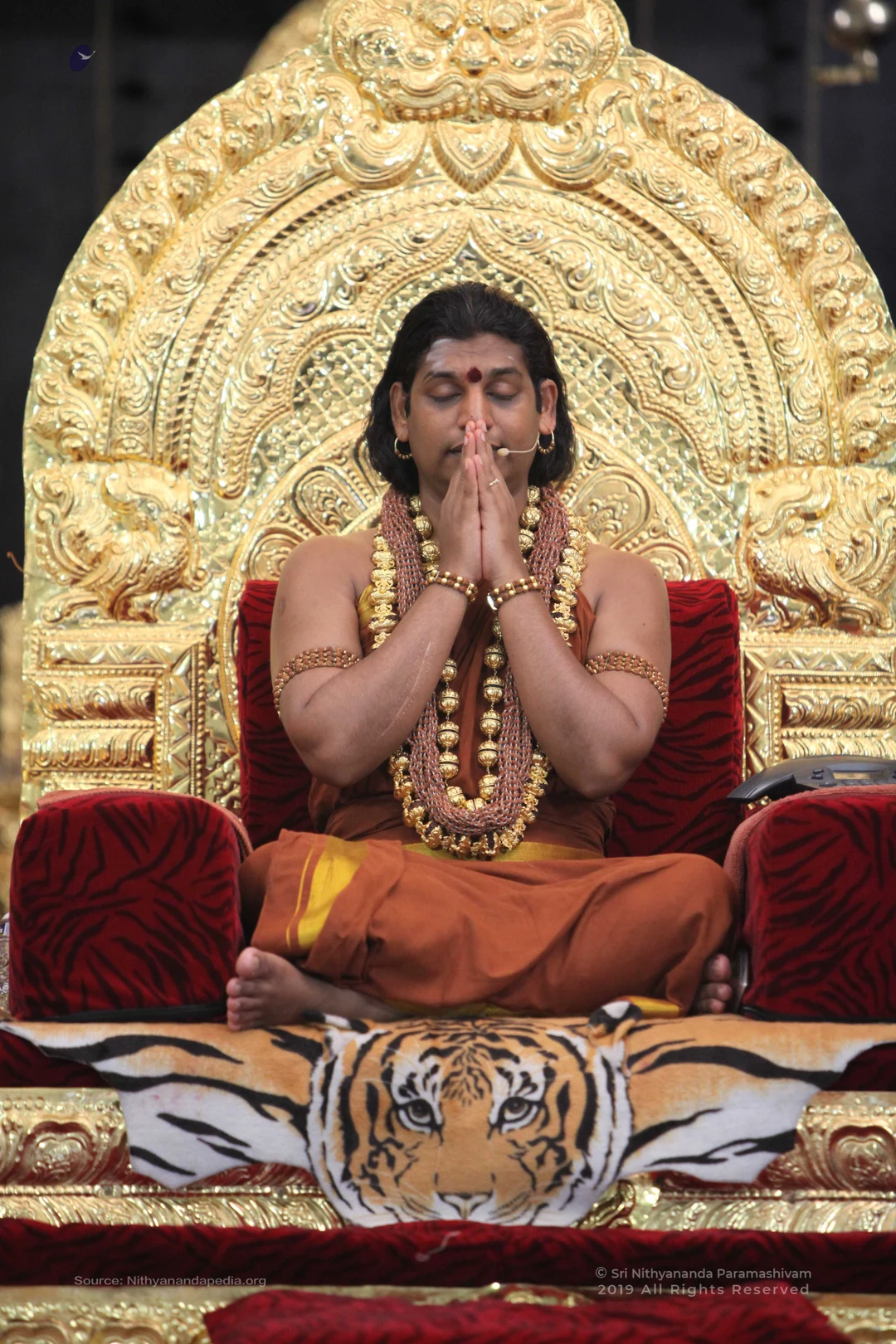
A man seated cross-legged on an ornate gold throne with a tiger-skin cloth draped over the seat, flanked by two gold lion figures. He wears an orange-saffron dhoti and shawl, a rudraksha mala and a gold ceremonial necklace, with a small red mark on his forehead and a microphone at his face. On either side stand large painted deity statues with four arms, golden crowns, gold jewellery and green sashes, holding ritual objects. Red velvet cushions and a gold-trimmed dais surround the throne, with a golden canopy and hanging bells above.A man sits cross-legged on an ornate gold throne with carved lion-head armrests and a large gilded back, upholstered in red velvet with dark tiger-stripe pattern. He wears a red bindi, saffron-orange robes with a gold border, layered gold and rudraksha malas, gold armbands and bangles, and small gold earrings. His long dark hair is swept back, and he rests one hand on the armrest while looking to the side. Beneath the throne lies a tiger-striped rug. a person, seated on the throne as the speaker at a satsang. A printed copyright line appears at the lower right.A seated man in saffron-orange and gold-bordered draped clothing sits on a red and maroon zebra-patterned cushioned throne with an ornate gold carved backrest and gold lion-head armrests. He wears layered rudraksha-style beaded malas with large gold beads, gold bangles on his upper arms and wrists, a red bindi on his forehead and small gold earrings. His hands rest on the cushions and he gazes toward the camera. Behind the throne are pink and orange drapes.A man with long swept-back dark hair and a red bindi sits cross-legged on an ornate gold-and-red throne with a zebra-striped red cushion. He wears a headset microphone and a saffron-orange garment, with a rudraksha mala and heavy gold bead necklaces, plus gold armlets and bangles. Gold carved lion-like armrests and a gilded backrest frame him.A seated man sits cross-legged on a red velvet throne with tiger-stripe cushions and ornate gold carved armrests and a gold backrest behind him. He wears an orange-saffron dhoti and shawl draped over bare shoulders, a long multi-strand rudraksha mala with large gold beads, gold bangles on his upper arms and wrists, and a small red tilak on his forehead. He wears a headset microphone and gazes ahead while seated, with a bare foot visible.A man seated on an ornate gilded throne with lion-head armrests, palms pressed together in a namaste gesture at chest level, eyes closed. He wears an orange-saffron dhoti and bare upper body with gold armlets and bangles, a large gold-beaded rudraksha-style mala with a pink-brown beaded necklace, and a red bindi on his forehead. The throne is backed by a large gold arched canopy, and a red velvet cushion with a tiger-striped fabric lies beneath him. a person seated in a formal satsang setting, with gilded deity figures visible at the edges. A single person is present.

SarvaDarshan

14 photosSource gallery
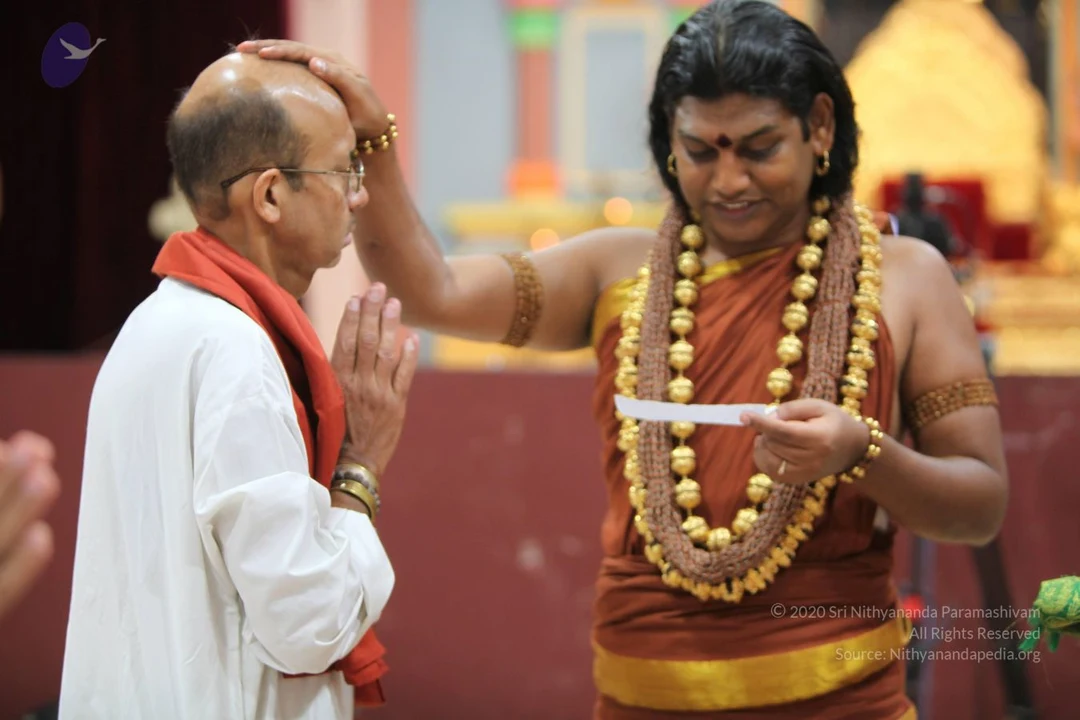
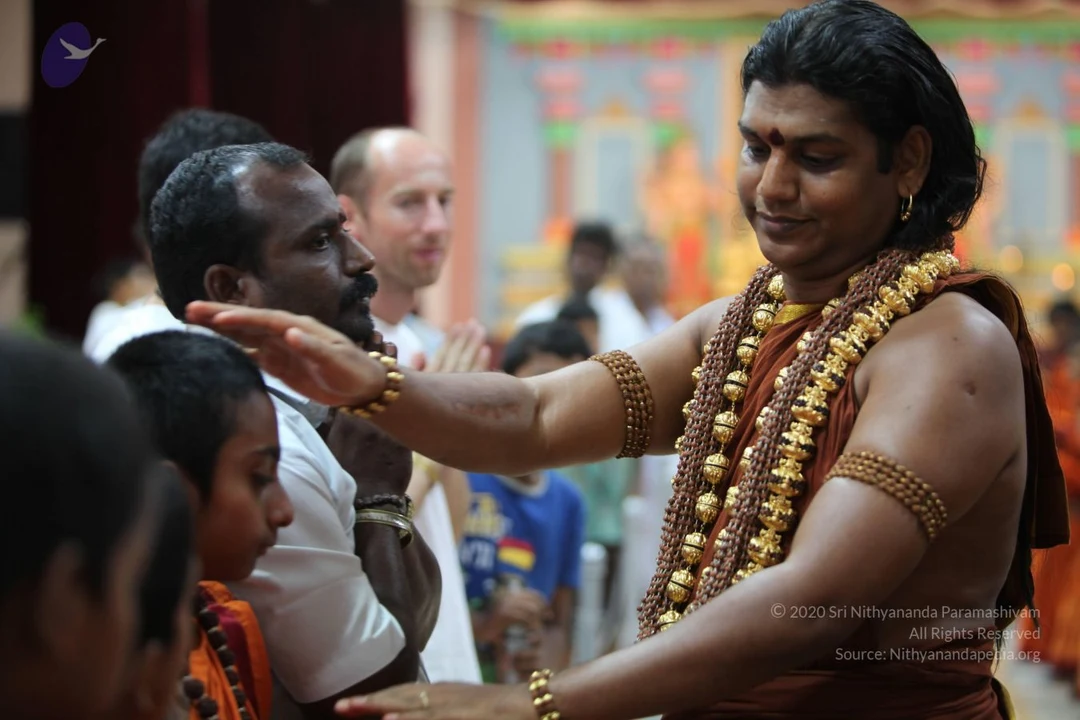
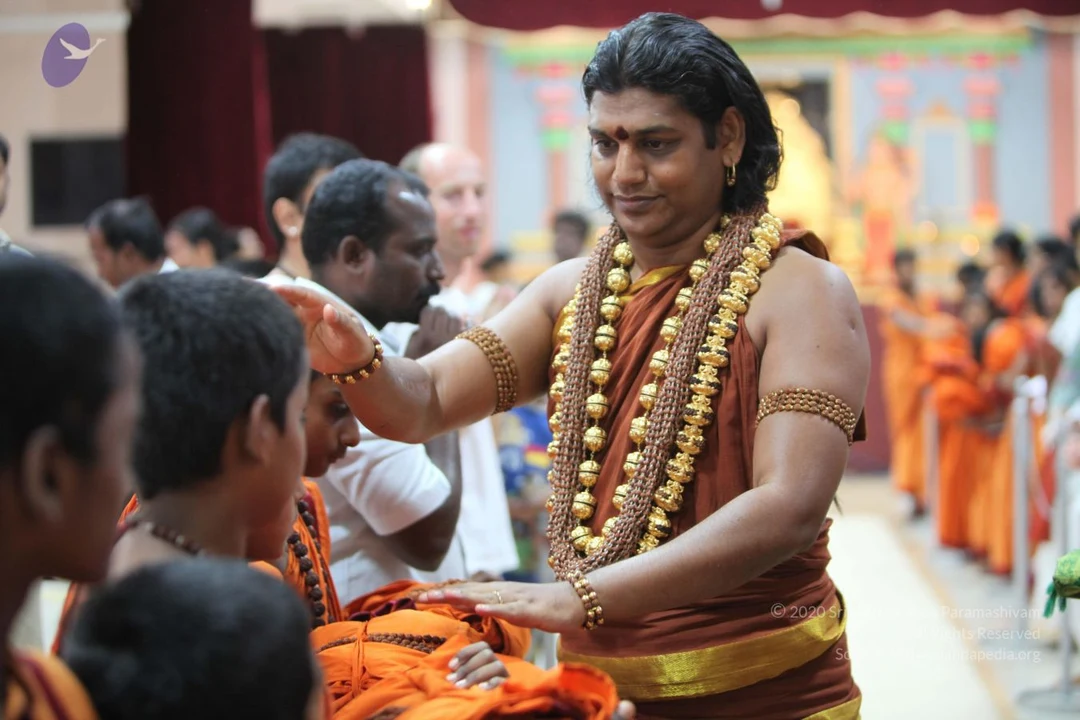
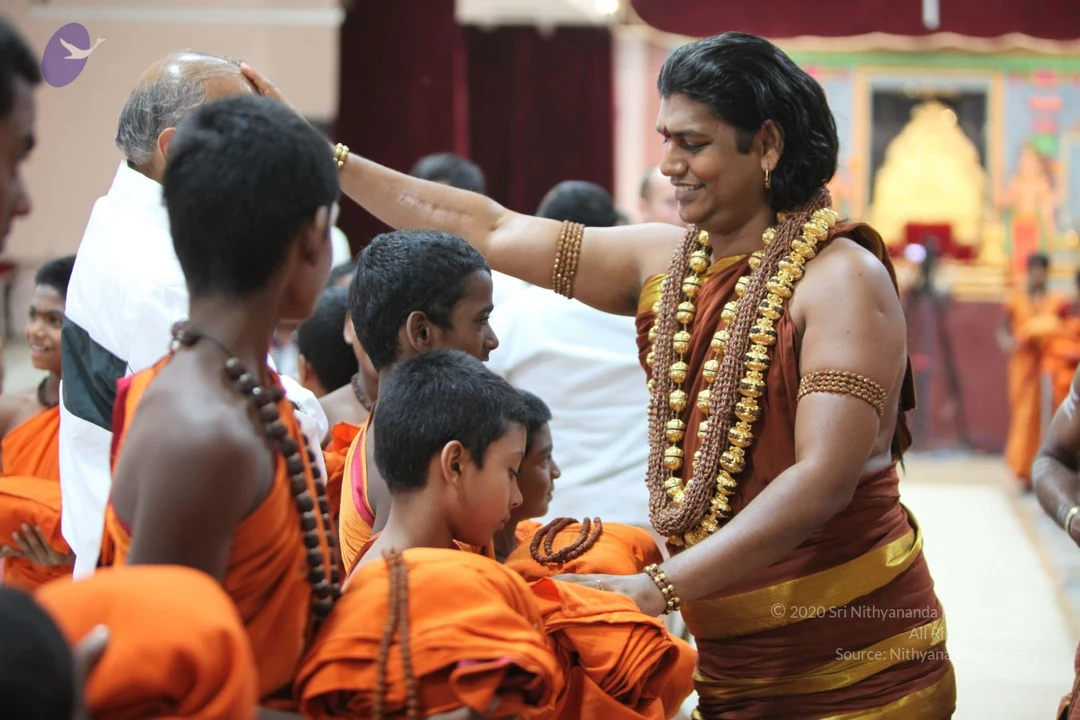
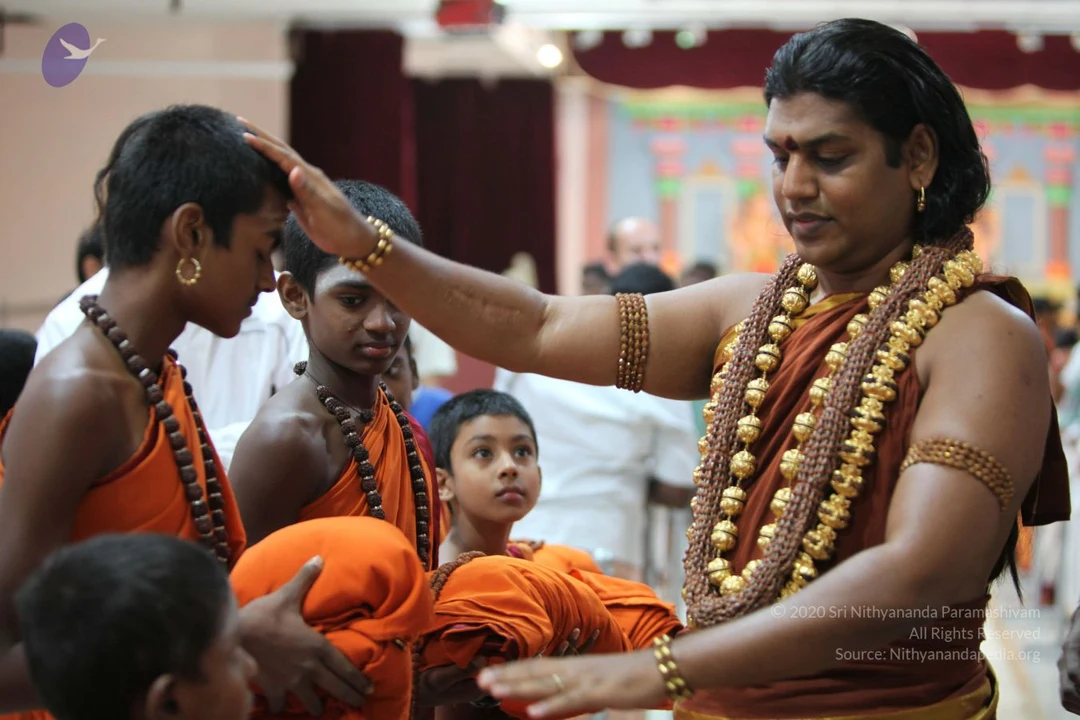
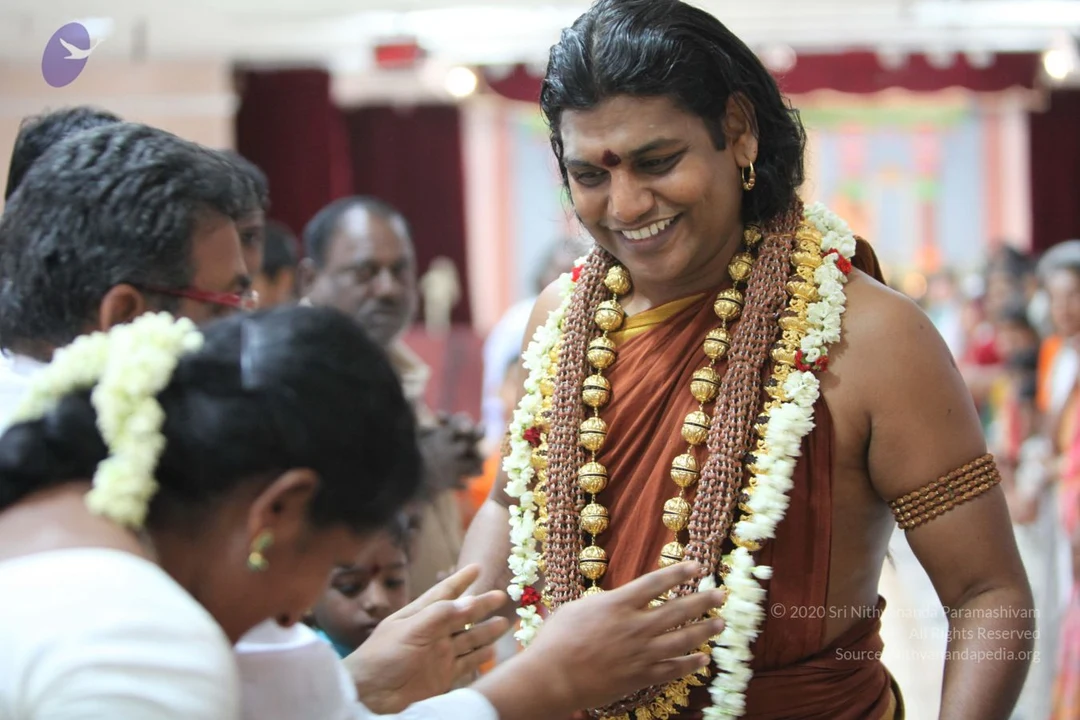
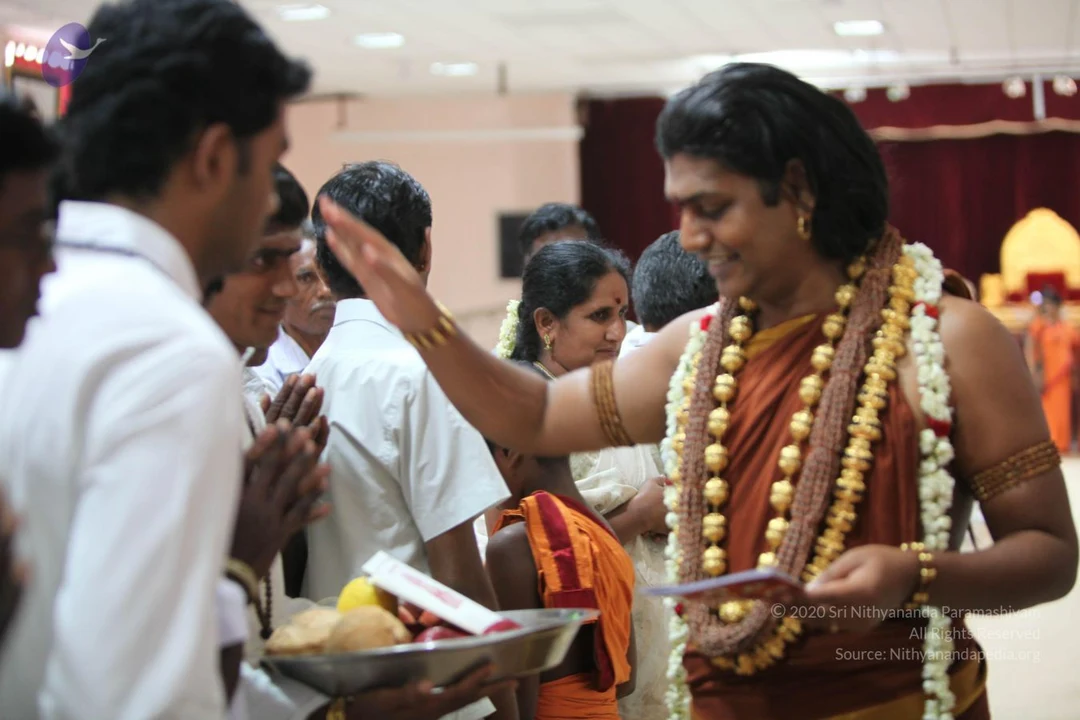
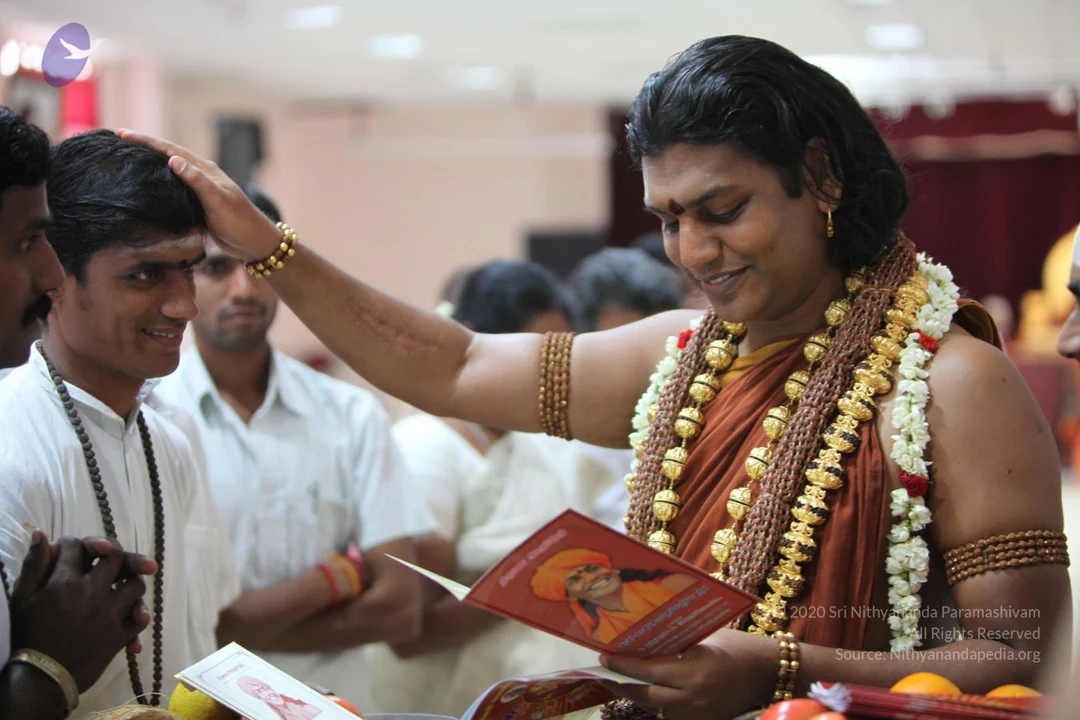
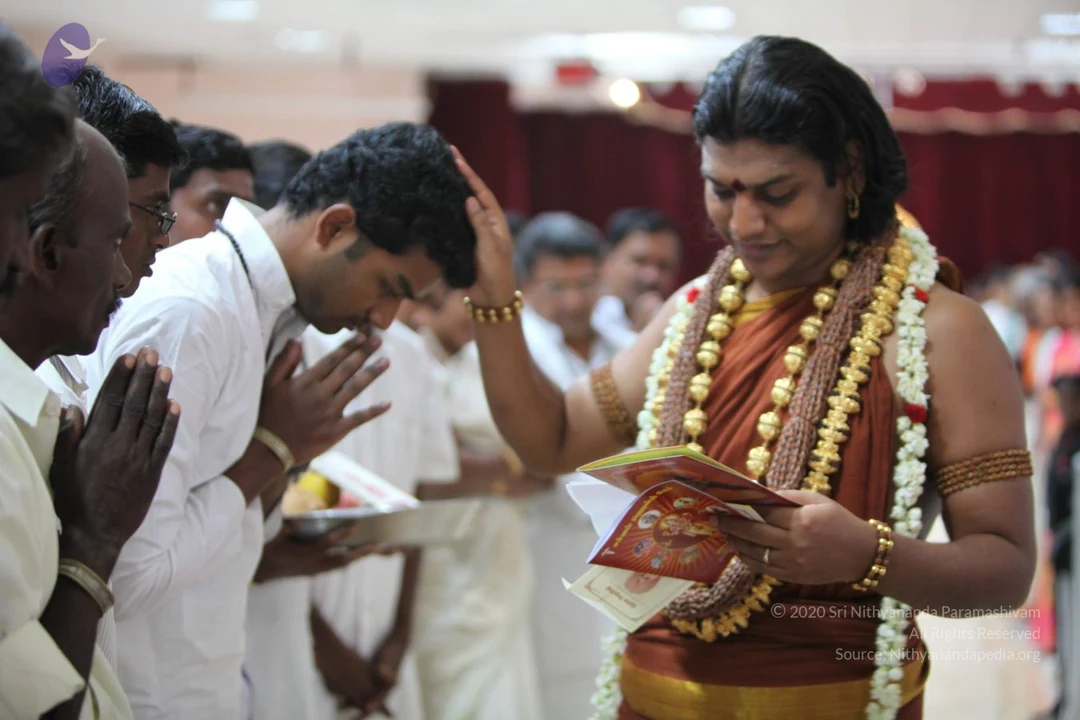
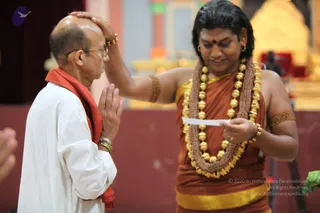
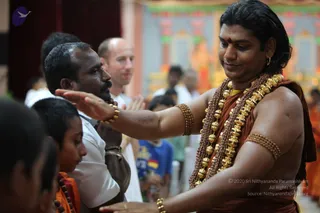
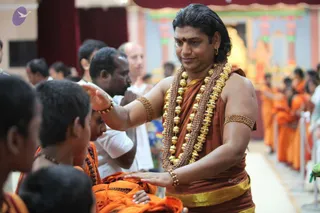
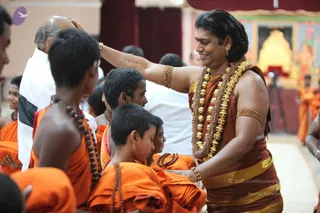
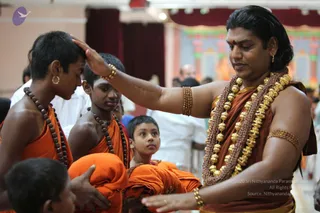
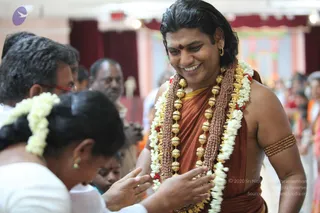
A photo of a satsang-style blessing. A man in a long-sleeved white kurta and wire-rimmed glasses, with his hands folded in namaste, bows forward while a figure in an orange-red saffron dhoti and wrap places a hand on his bald head. The blessing figure wears a rudraksha mala with a heavy gold bead necklace, gold armbands, a red tilak on the forehead and long swept-back dark hair, and holds a small white paper slip. Behind them a golden deity murti and red-and-gold decor are visible. Two people are visible, the blessing figure showing distinctive saffron clothing, rudraksha and gold necklace cues consistent with a person presence.A photograph of a central figure in a rust-brown saffron-toned garment, wearing layered brown-and-gold beaded rudraksha-style malas, gold bangles on the upper arms and wrists, a small red bindi, and gold earrings, with long swept-back dark hair. The figure extends a hand in blessing toward a seated boy in an orange top and a man in a white shirt, while a bald man and others stand behind. Blurred orange and gold temple decorations and people in the background suggest a satsang or darshan setting. Several people are visible, the central figure with distinctive ceremonial adornments and long hair, matching the page's reference to a person as an in-person presence.A man with long swept-back dark hair, a red tilak mark on his forehead, gold hoop earring, and multiple long gold-bead necklaces over a rust-brown and gold-bordered garment extends his right hand in blessing toward a line of seated young boys dressed in orange robes. Behind him, people in white and orange stand and sit in a hall with a golden deity shrine and colourful decorated panels. Probable Swamiji is wearing distinctive saffron-brown ceremonial dress with gold ornaments and long hair, shown in person in the act of blessing the boys, who may be students. Several other attendees are visible in the background.A photograph of a ceremony in a temple hall. A person with swept-back dark hair, a large ornate gold necklace of beads, rudraksha-like beads, a brown and gold wrap, gold armlets and bangles stands at right, smiling and placing a hand on the head of a young boy in saffron/orange robes. Several young boys in orange robes sit close together, one wearing a rudraksha mala. An older man in white clothing stands partly visible behind them. In the background a golden deity murti or shrine and red drapes are visible, with more robed people in orange nearby.A photograph of a man with long swept-back dark hair and a red tilak on his forehead, wearing a rust-orange wrap, dense gold-bead ceremonial necklaces, a gold bangle and an armband, placing his right hand on the head of a young boy in orange robes and rudraksha beads. Two other boys in orange robes with rudraksha malas stand beside him, one holding an orange cloth bundle, and a few onlookers in white are blurred in the background against a red-curtained hall with decorative panels.A smiling man with long swept-back dark hair and a red bindi stands at center, wearing an orange-brown saffron shawl draped over bare shoulders, a brown rudraksha-style mala with large gold beads, and layered white jasmine garlands with red flowers. A gold armlet is on his upper arm. He reaches toward people in white in the foreground, including a woman with white flowers in her hair and a man in glasses. Other devotees stand in the background of a hall with red drapes and a colourful banner. Probable Swamiji in person, with the cues of long swept-back hair, saffron shawl, rudraksha mala and ceremonial gold necklace.

RudraAbhishekam-Swamiji

170 photosSource gallery
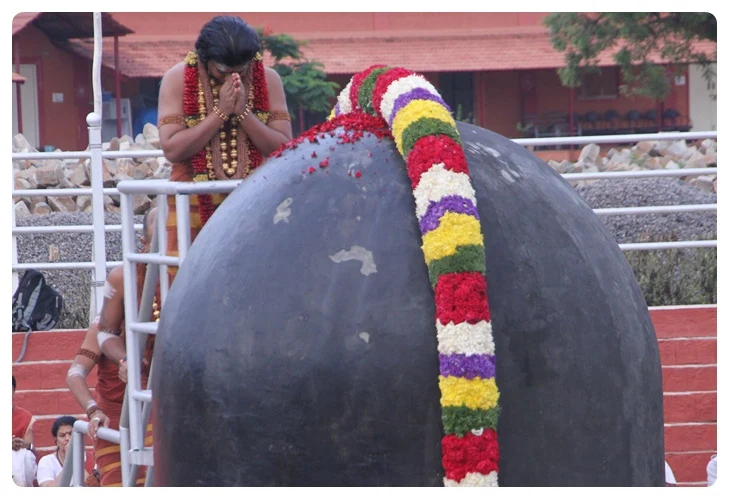
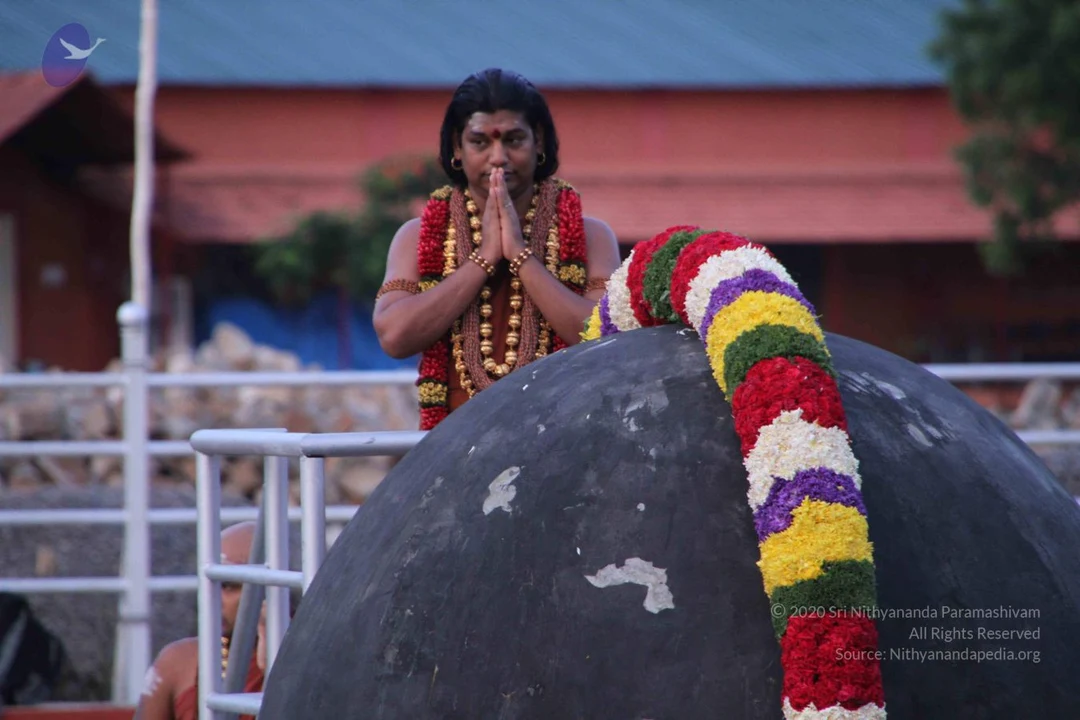
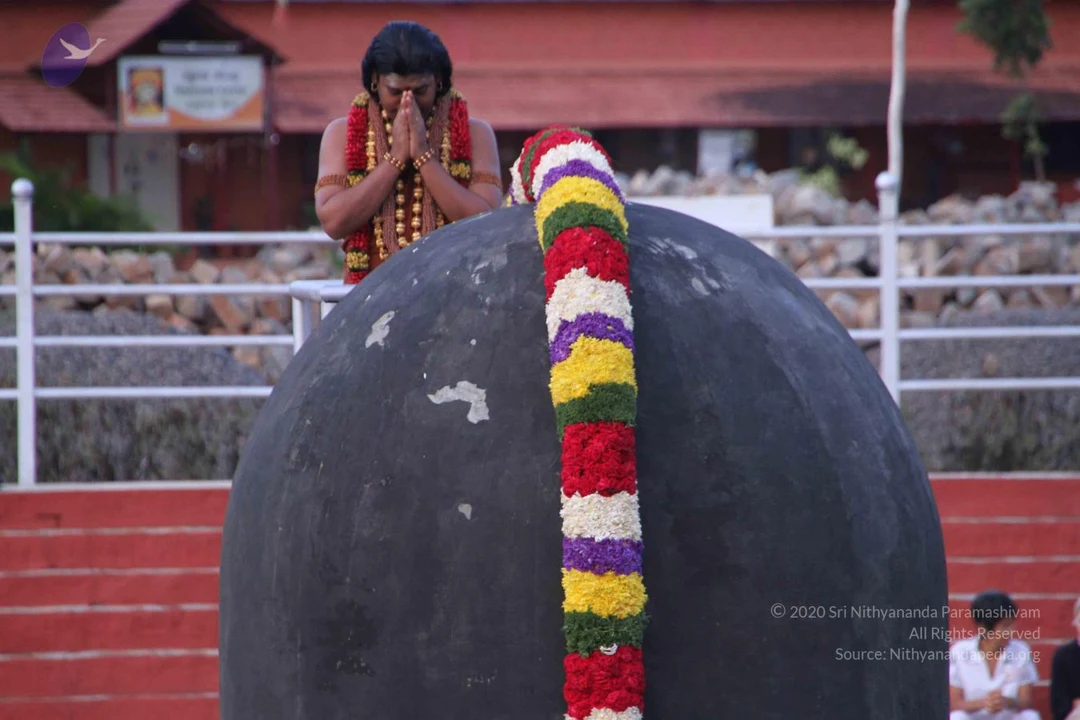
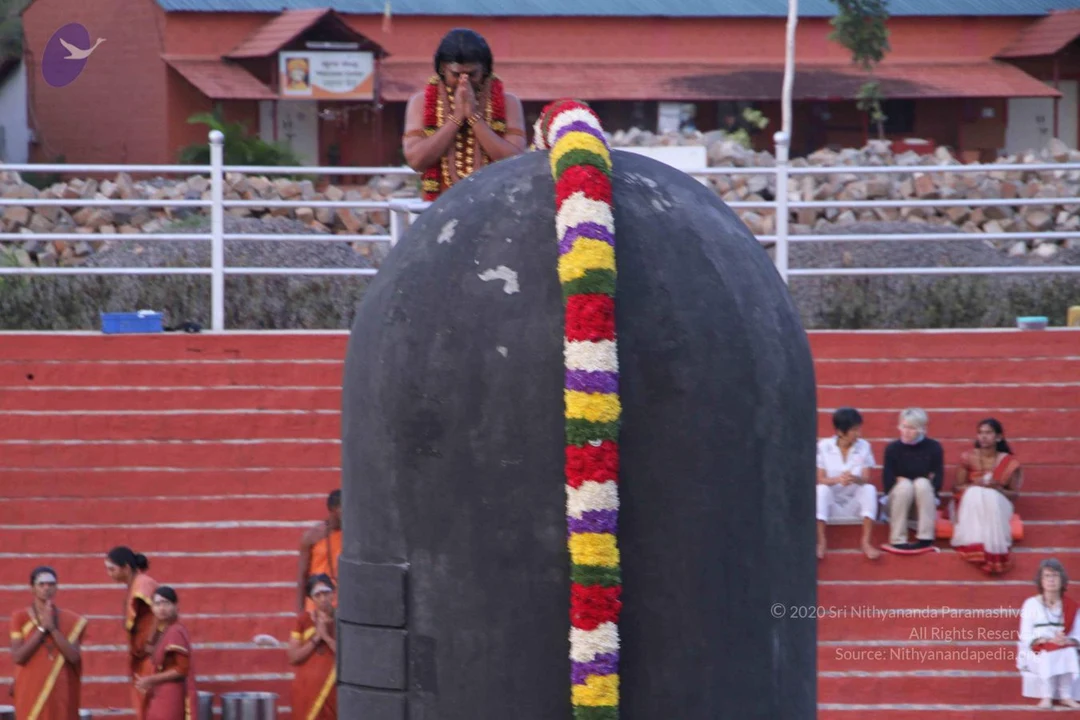
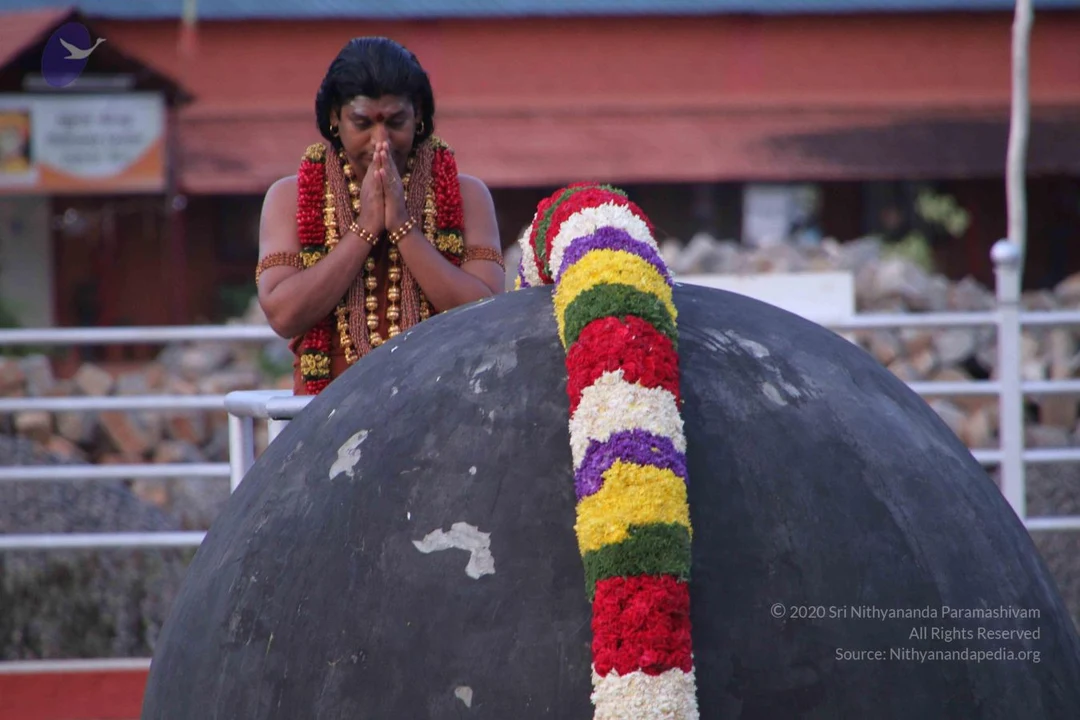
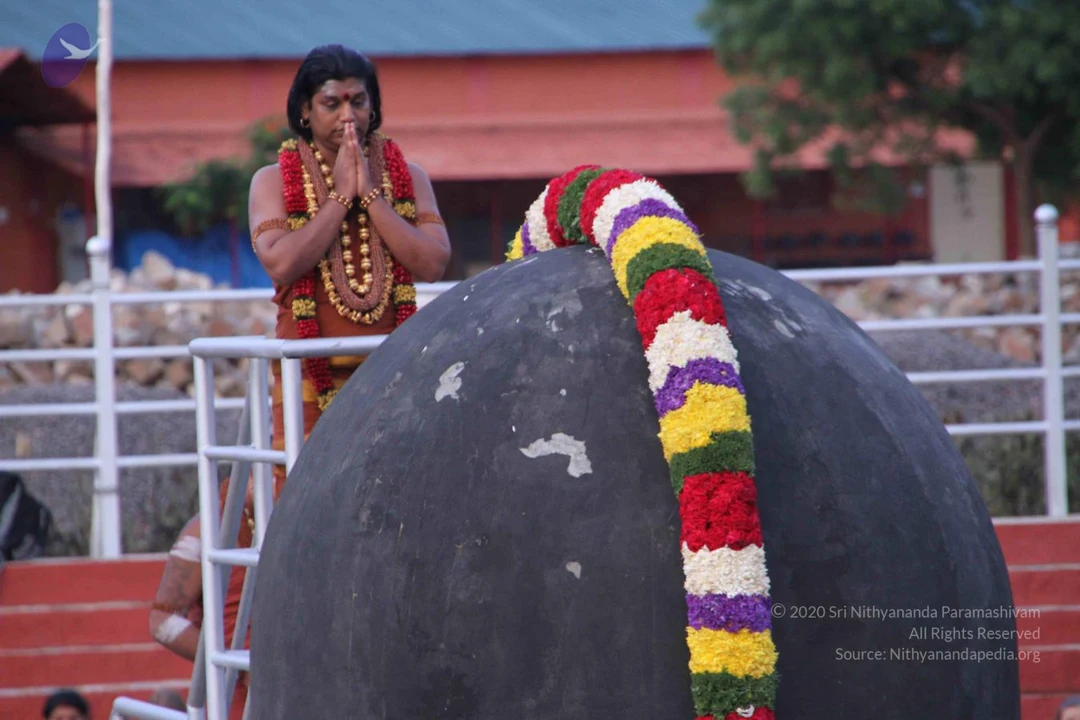
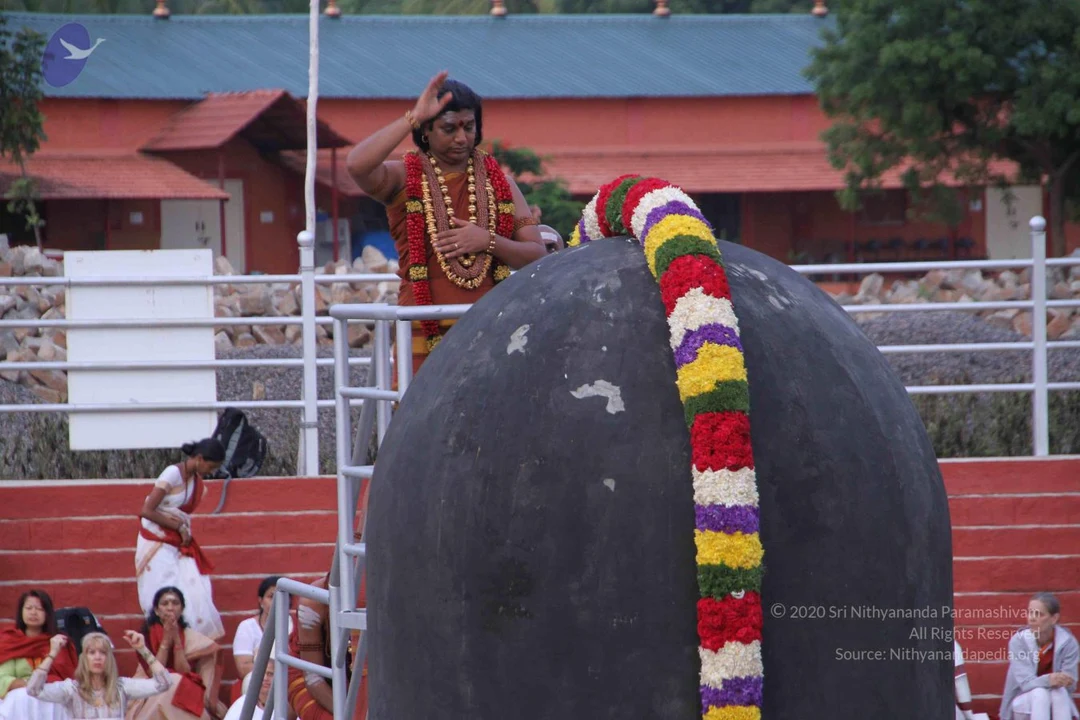
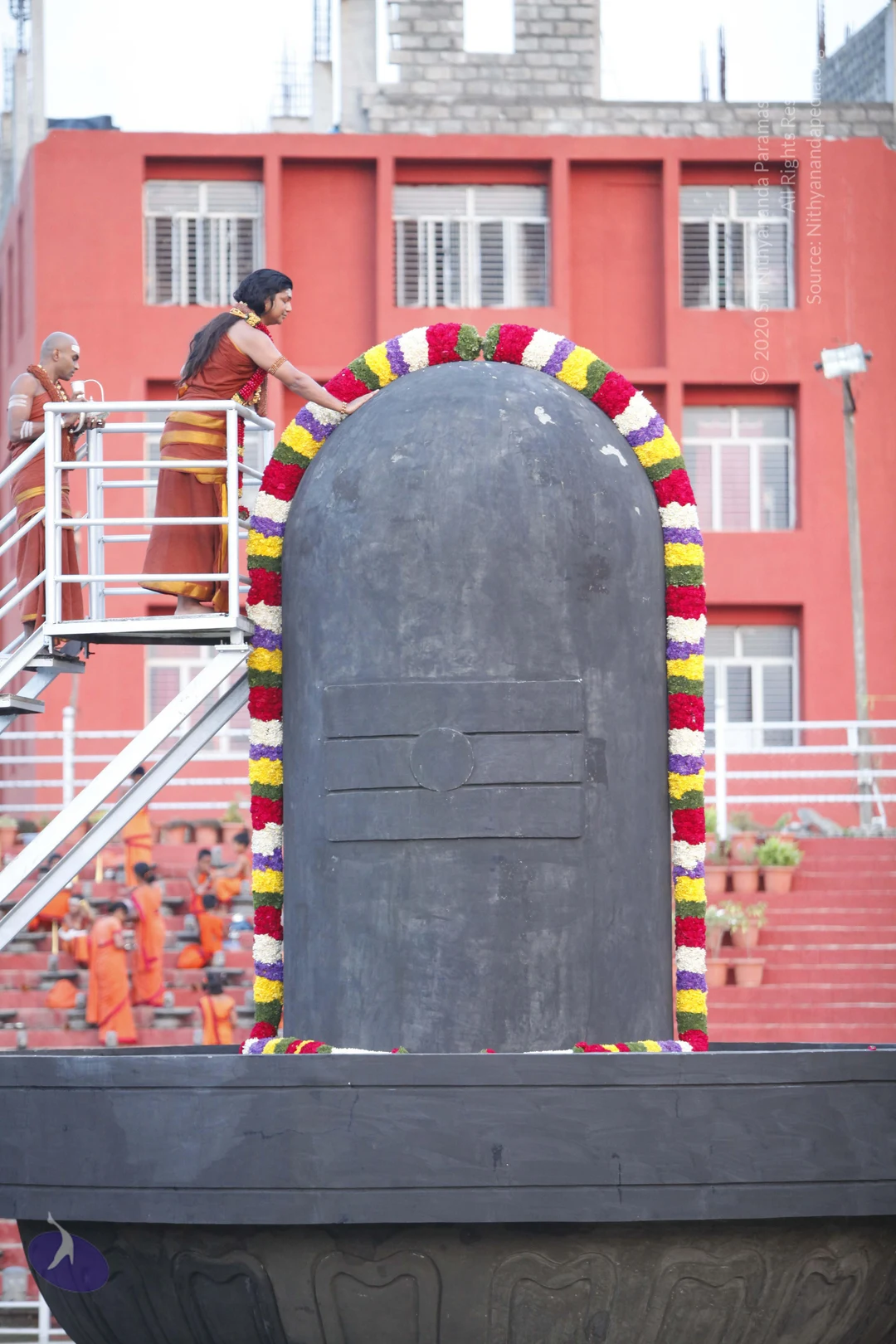
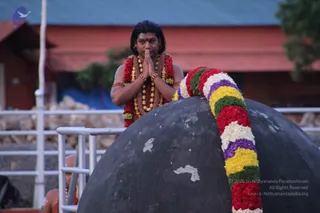
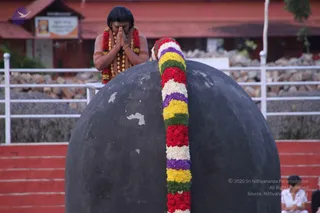
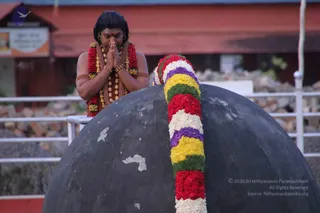
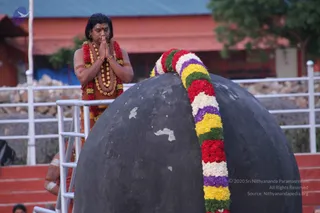
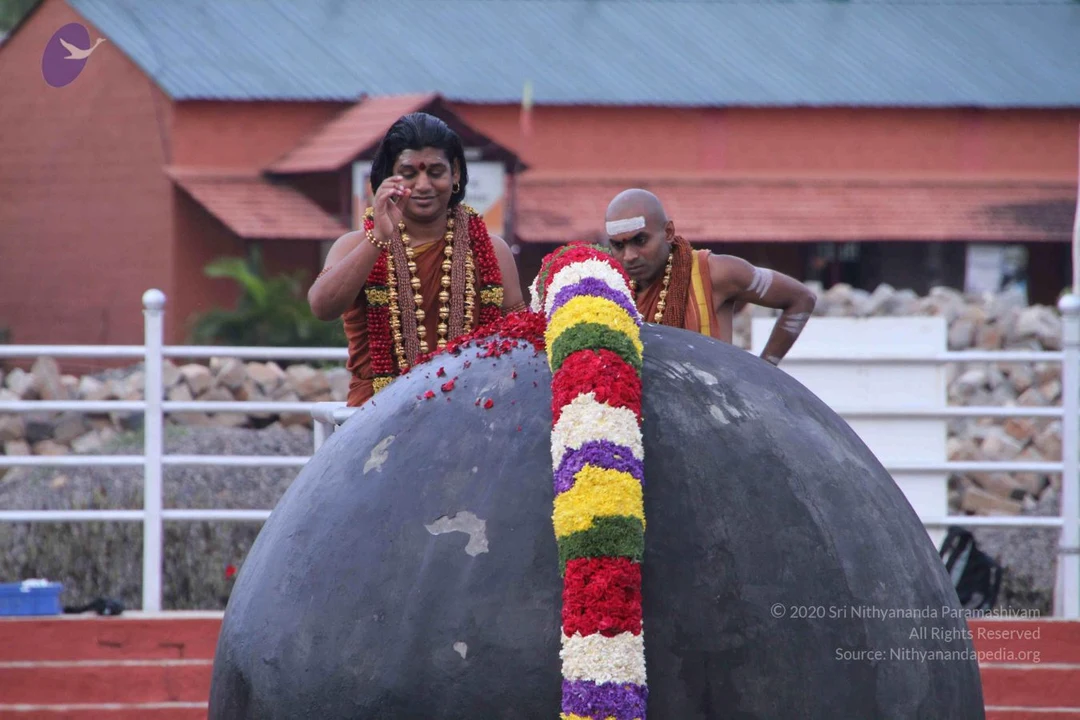
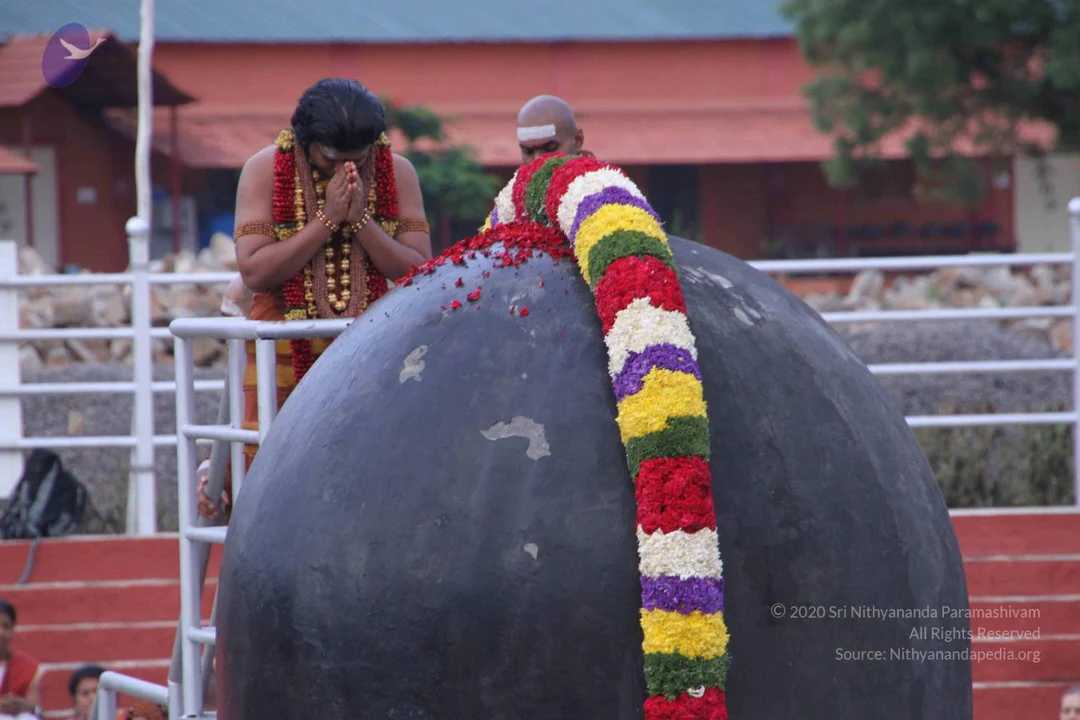
A photograph of a man standing in front of a large dark grey dome-shaped black stone, with his palms pressed together in namaste at chest height. He wears a rudraksha mala and several gold beaded necklaces, with a red-and-green beaded garland draped over his shoulders, and a red tilak mark on his forehead. A long multicoloured flower garland of red, white, yellow, purple and green blossoms is draped over the stone's top. Behind him are a white metal railing and a red-tiled building with a blue roof edge. A second person in a red-brown cloth sits partially visible at the lower left.A large black stone Shiva lingam stands in a shallow reflecting pool with a tiered red-brick and stone stepped platform behind it. A multicoloured flower garland with red, white and yellow blooms is draped around the shaft. Around the steps, several people in orange and saffron robes stand and sit, some with folded hands, while others in white clothes kneel or stand nearby. Steel vessels and a small wooden box sit on the steps. One woman in an orange sari stands at the top of the lingam with hands folded in prayer. A building with a red tiled roof and a white railing lie in the background.A bare-chested man with short dark hair stands with palms pressed together in namaskar before a large smooth black stone linga. A long garland of red, white, yellow, purple and green flowers drapes over the linga and around the man's neck, and he wears rudraksha malas and gold bangles. A red-roofed building with a framed sign stands behind, a white railing and stone wall separate the scene, and at lower right two people in white sit on red steps. The man's appearance does not clearly match the a person candidate cues, so the role is given as devotee and the identity is marked unsure.A large dark polished lingam stands in the foreground, draped with a long garland of marigolds and roses in red, white, yellow and purple. Behind it, a shaved-headed man in an orange-toned garment with a red-and-gold trim and a rudraksha-style necklace stands with hands folded in namaskar. Several women in orange and red sarees sit or stand on red stone steps to the left and right, some with hands folded, and a few people in white and dark clothes sit on the steps on the right. A red building with a small framed portrait sign and a rubble wall lie in the background.A shaved-headed man in a reddish-brown wrap stands with palms pressed together in namaskar, head bowed in prayer, beside a large smooth dark black stone sphere. He wears a layered rudraksha mala and gold beaded necklaces, with red and yellow flower garlands draped over his shoulders and arms, and gold bangles on his wrists. A long multicolour garland of red, yellow, purple, green and white flowers hangs over the top of the sphere. Behind him are a red-roofed building, a low white railing and a pile of grey stones. The appearance is not enough to confirm the a person candidate, so the figure is described by role as a devotee at the shivalingam-style stone in prayer.A photograph of a large dark black stone lingam draped with a multicoloured flower garland in red, white, yellow, green and purple. Behind it, a man in orange-saffron clothing with red and orange garlands and a long beaded rudraksha-style mala stands with palms pressed together in namaste, facing the stone. He has long dark hair and gold-toned bangles. A white metal railing and red-brown stepped platform surround the scene, with a red roofed building and rocks in the background.

PratyakshaPadaPuja

9 photosSource gallery
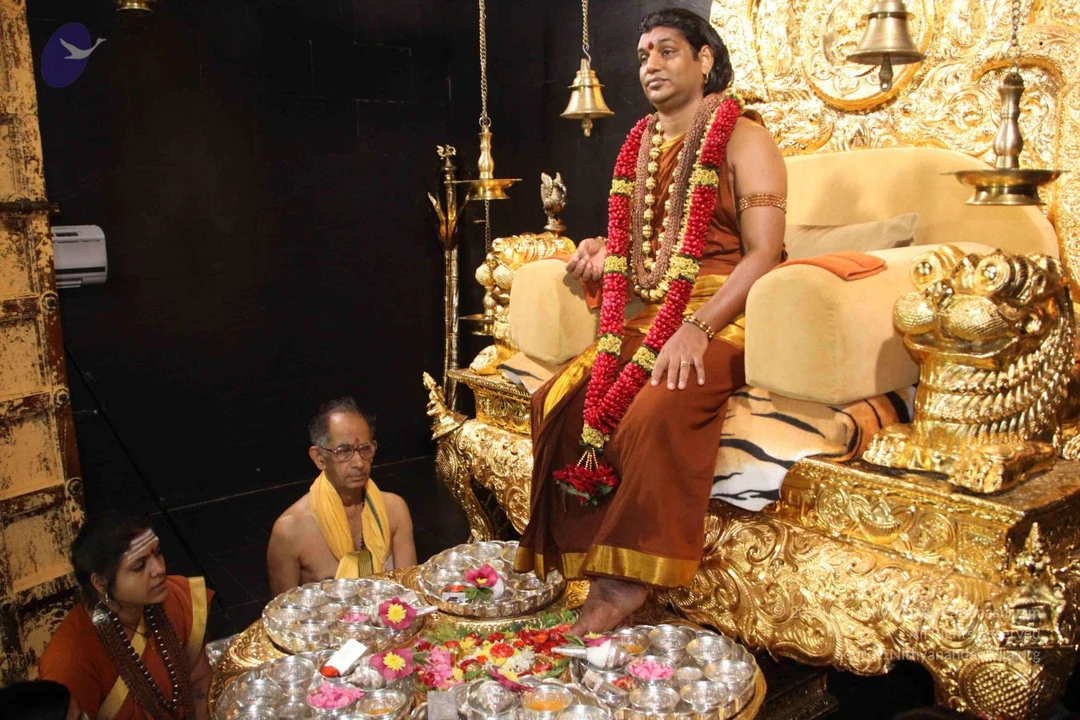
A photograph of a seated man on a golden ornate throne, wearing a rust-orange saffron-toned garment with a red and gold flower garland and a gold-and-bead garland of rudraksha-style beads around his neck, plus a beaded bracelet on his upper arm. Behind him hangs a brass bell on chains beside a brass oil lamp on a stand, against a dark background. a person seated in the speaker's seat, with the cues of long swept-back hair, saffron clothing and ornate garlands.A man seated in profile on an ornate gold throne against a black background, wearing a rust-orange cloth, a long red and white flower garland and a gold-toned bead necklace, with a sandalwood-coloured armband and a red tilak on his forehead. Long dark hair falls past his shoulders. A hanging brass bell and a brass lamp stand sit beside him. Appearance-based candidate for a person, seated in a satsang setting, with the page noting a satsang event on 2013-06-03.A close view of a ritual puja arrangement on a polished brass tray. Many ornate silver bowls and small silver vessels hold pink, red, yellow and white flower petals, and a larger silver kalasha-like vessel with a silver spout stands among them. A garland of green leaves, red and yellow flowers frames the central offering. A hand in a gold-bordered maroon garment reaches toward the bowls at the left edge, and small dishes of orange-yellow liquid or powder sit among the petals. No people are fully visible beyond the hand and sleeve.A photograph of a man seated in profile on a dais beside a large gilded deity murti with ornate metalwork. He wears a rust-orange sleeveless garment, a red bindi on his forehead, a red and white flower garland layered with rudraksha-style beads and gold-coloured ornaments, a beaded bangle, and a small gold earring. His hair is long and swept back. Beside him hangs a brass bell on a chain and a brass oil lamp stand against a black background. Swamiji (probable): the seated man has long swept-back hair, a red forehead mark, saffron clothing, a rudraksha mala and ceremonial garlands, a distinctive combination of cues, with the photo's satsang context. Visible people: one.A photograph inside a temple-like room with black walls and an ornate gold throne carved with lion heads and a tiger-striped cushion. A man in saffron-brown robes with a gold border, a red and white flower garland, a rudraksha mala and gold necklace sits on the throne with bare feet resting on a silver tray of offerings. Nearby, a bare-chested older man wearing a yellow shawl sits beside a silver plate, and a woman in orange clothing with a tilak and beaded mala kneels at the lower left. Silver plates hold flower petals, pink blossoms, fruit and small oil lamps. Brass bells and lamps hang above the throne.A man seated on a golden throne-like chair before an ornate gold-embossed backdrop, wearing an orange-brown robe with a bare right shoulder and arm, a red tilak on his forehead, and layered garlands of red flowers with gold beaded necklaces and a rudraksha-style mala. A brass hanging bell and a brass oil lamp sit to the left. The man is speaking and smiling, appearing to be giving a satsang discourse. Appearance-based: Swamiji (probable) seated in ceremonial dress with long swept-back hair and ornate gold necklaces, presiding as the teacher.

NithyaSatsang-Swamiji

44 photosSource gallery
A man sits cross-legged on an ornate gold throne with a deep red cushion, draped with a tiger-skin print, during a satsang. He wears a saffron-orange dhoti and shawl, a long gold-beaded mala and gold bangles, with a red tilak on his forehead, and holds a hand to his ear, apparently adjusting a microphone. Flanking the throne are two gilded lion sculptures and two large painted deity murti figures with multiple arms, crowns, gold jewellery and green sashes, holding weapons and lamps. The backdrop is blue and red with gold ornamentation. a person: the seated man wears saffron clothing, a gold mala and an ornate throne setting, though appearance is only partly distinctive.A man seated cross-legged on an ornate gold throne with a tiger-skin cloth draped over the seat, flanked by two gold lion figures. He wears an orange-saffron dhoti and shawl, a rudraksha mala and a gold ceremonial necklace, with a small red mark on his forehead and a microphone at his face. On either side stand large painted deity statues with four arms, golden crowns, gold jewellery and green sashes, holding ritual objects. Red velvet cushions and a gold-trimmed dais surround the throne, with a golden canopy and hanging bells above.A man sits cross-legged on an ornate gold throne with carved lion-head armrests and a large gilded back, upholstered in red velvet with dark tiger-stripe pattern. He wears a red bindi, saffron-orange robes with a gold border, layered gold and rudraksha malas, gold armbands and bangles, and small gold earrings. His long dark hair is swept back, and he rests one hand on the armrest while looking to the side. Beneath the throne lies a tiger-striped rug. a person, seated on the throne as the speaker at a satsang. A printed copyright line appears at the lower right.A seated man in saffron-orange and gold-bordered draped clothing sits on a red and maroon zebra-patterned cushioned throne with an ornate gold carved backrest and gold lion-head armrests. He wears layered rudraksha-style beaded malas with large gold beads, gold bangles on his upper arms and wrists, a red bindi on his forehead and small gold earrings. His hands rest on the cushions and he gazes toward the camera. Behind the throne are pink and orange drapes.A man seated on an ornate gold throne with a carved golden backrest and red patterned cushions, speaking while his right hand touches his cheek. He wears a rust-orange wrap over bare shoulders, layered gold beaded necklaces with a rudraksha-style mala, gold bangles and a gold wristwatch, a red bindi on his forehead and a small gold earring. His long dark hair is swept back. Swamiji (probable): the long swept-back hair, saffron-orange wrap, ornate gold necklaces and throne seating are the qualifying cues for a satsang speaker. The image is a photograph of a seated discourse with a gold throne and red cushions.A man with long swept-back dark hair and a red bindi sits cross-legged on an ornate gold-and-red throne with a zebra-striped red cushion. He wears a headset microphone and a saffron-orange garment, with a rudraksha mala and heavy gold bead necklaces, plus gold armlets and bangles. Gold carved lion-like armrests and a gilded backrest frame him.

SarvaDarshan

13 photosSource gallery
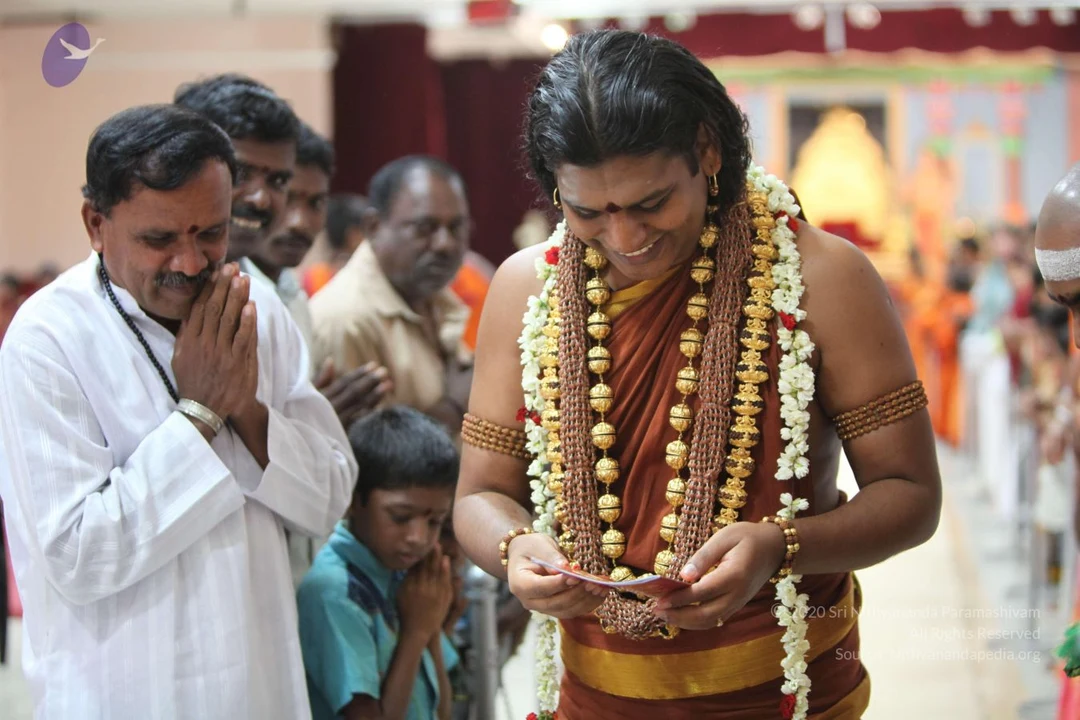
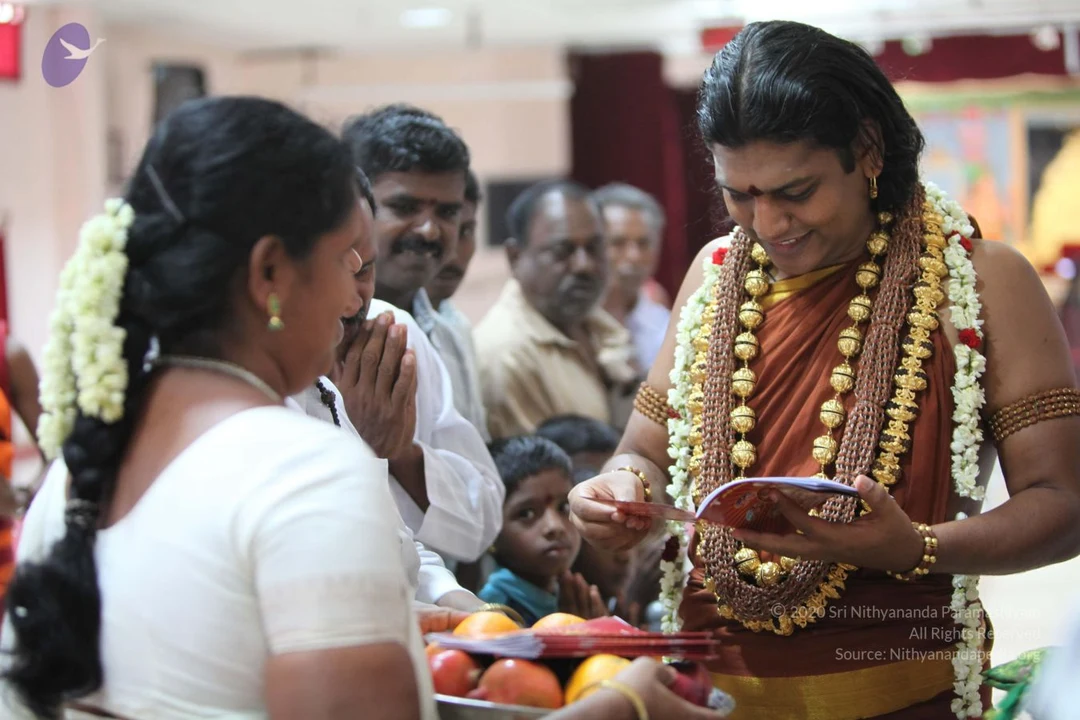
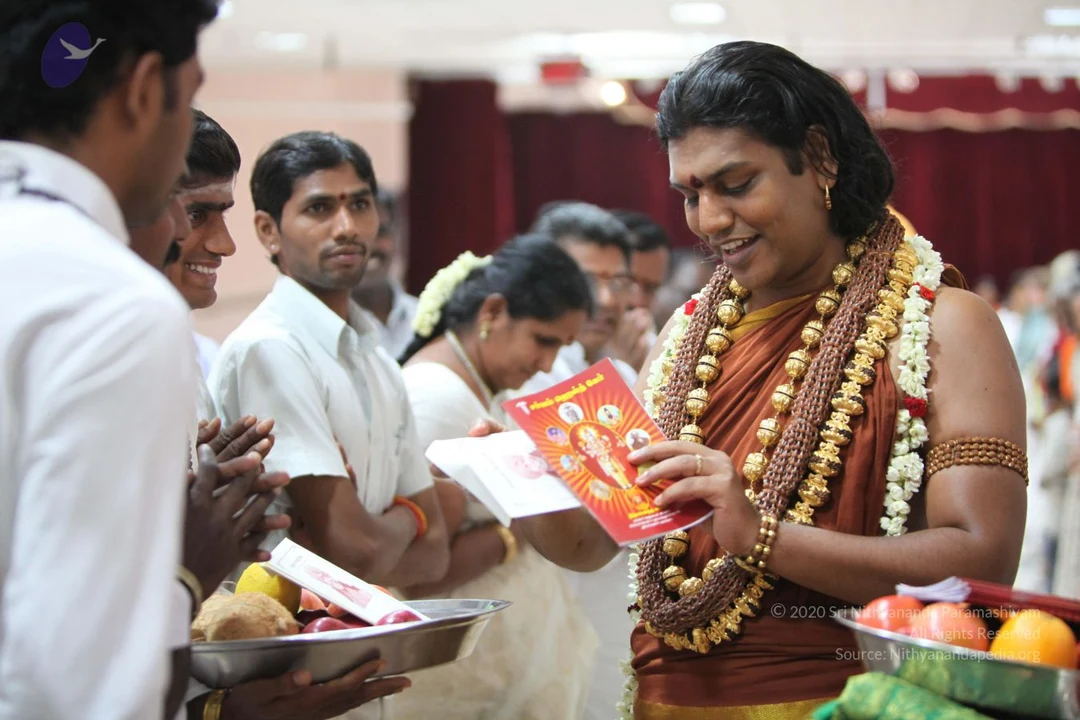
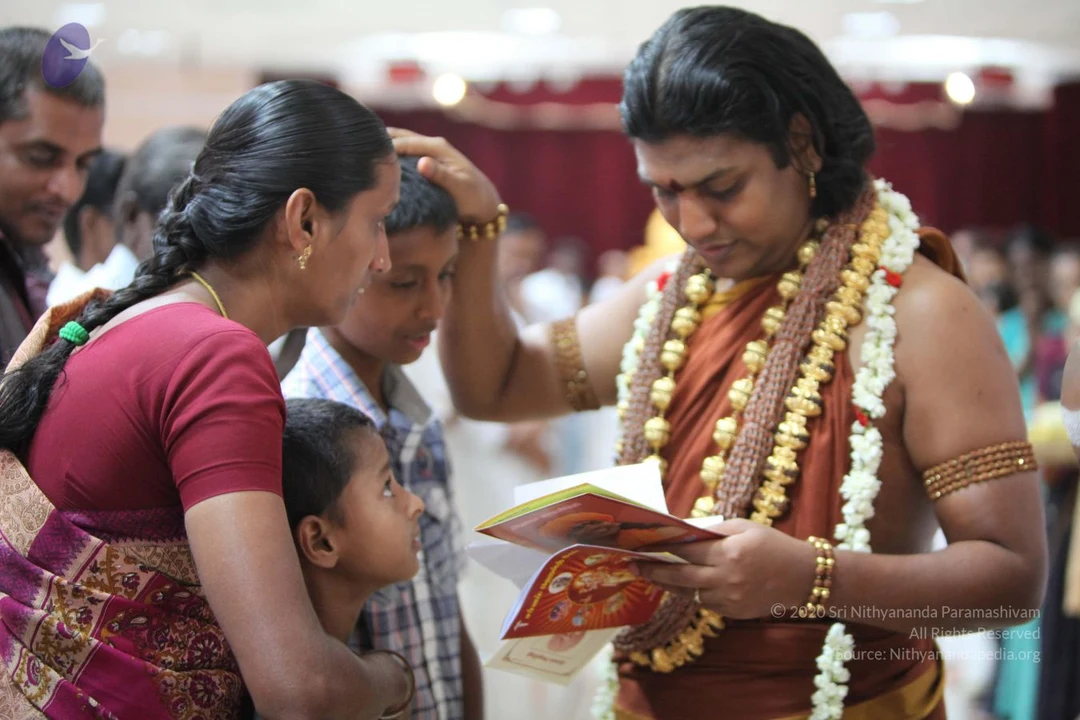
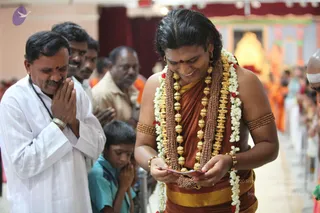
A photograph of a central figure in a rust-brown saffron-toned garment, wearing layered brown-and-gold beaded rudraksha-style malas, gold bangles on the upper arms and wrists, a small red bindi, and gold earrings, with long swept-back dark hair. The figure extends a hand in blessing toward a seated boy in an orange top and a man in a white shirt, while a bald man and others stand behind. Blurred orange and gold temple decorations and people in the background suggest a satsang or darshan setting. Several people are visible, the central figure with distinctive ceremonial adornments and long hair, matching the page's reference to a person as an in-person presence.A man with long swept-back dark hair, a red tilak mark on his forehead, gold hoop earring, and multiple long gold-bead necklaces over a rust-brown and gold-bordered garment extends his right hand in blessing toward a line of seated young boys dressed in orange robes. Behind him, people in white and orange stand and sit in a hall with a golden deity shrine and colourful decorated panels. Probable Swamiji is wearing distinctive saffron-brown ceremonial dress with gold ornaments and long hair, shown in person in the act of blessing the boys, who may be students. Several other attendees are visible in the background.A photograph of a ceremony in a temple hall. A person with swept-back dark hair, a large ornate gold necklace of beads, rudraksha-like beads, a brown and gold wrap, gold armlets and bangles stands at right, smiling and placing a hand on the head of a young boy in saffron/orange robes. Several young boys in orange robes sit close together, one wearing a rudraksha mala. An older man in white clothing stands partly visible behind them. In the background a golden deity murti or shrine and red drapes are visible, with more robed people in orange nearby.A photograph of a man with long swept-back dark hair and a red tilak on his forehead, wearing a rust-orange wrap, dense gold-bead ceremonial necklaces, a gold bangle and an armband, placing his right hand on the head of a young boy in orange robes and rudraksha beads. Two other boys in orange robes with rudraksha malas stand beside him, one holding an orange cloth bundle, and a few onlookers in white are blurred in the background against a red-curtained hall with decorative panels.A smiling man with long swept-back dark hair and a red bindi stands at center, wearing an orange-brown saffron shawl draped over bare shoulders, a brown rudraksha-style mala with large gold beads, and layered white jasmine garlands with red flowers. A gold armlet is on his upper arm. He reaches toward people in white in the foreground, including a woman with white flowers in her hair and a man in glasses. Other devotees stand in the background of a hall with red drapes and a colourful banner. Probable Swamiji in person, with the cues of long swept-back hair, saffron shawl, rudraksha mala and ceremonial gold necklace.A photograph of a devotional gathering in a temple-like hall. In the centre, a person with long swept-back hair, a red tilak, gold earrings, a thick gold-bead and rudraksha necklace with white flower garlands, and a bare upper body wrapped in a rust-orange cloth with a gold border holds a small card and smiles down at it. Arm bands of beaded gold adorn both upper arms. To the left, a man in a white kurta with a rudraksha mala presses his palms together in namaskar, and a young boy in a teal shirt also folds his hands in prayer. Behind them, devotees in white and orange stand along a barrier, and a golden decorated shrine or deity backdrop is visible at the back. Swamiji (probable) is identified by the appearance cues of long swept-back hair, ornate gold necklaces and orange clothing, shown in the centre receiving the card.

RudraAbhishekam-Swamiji
64 photosSource gallery
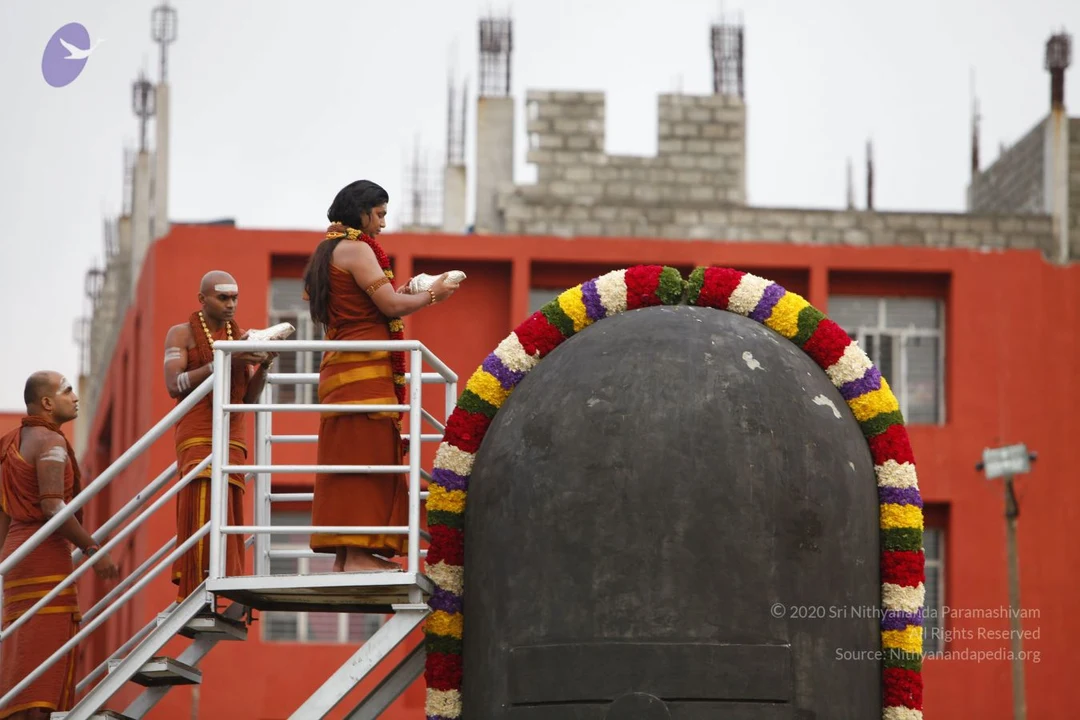
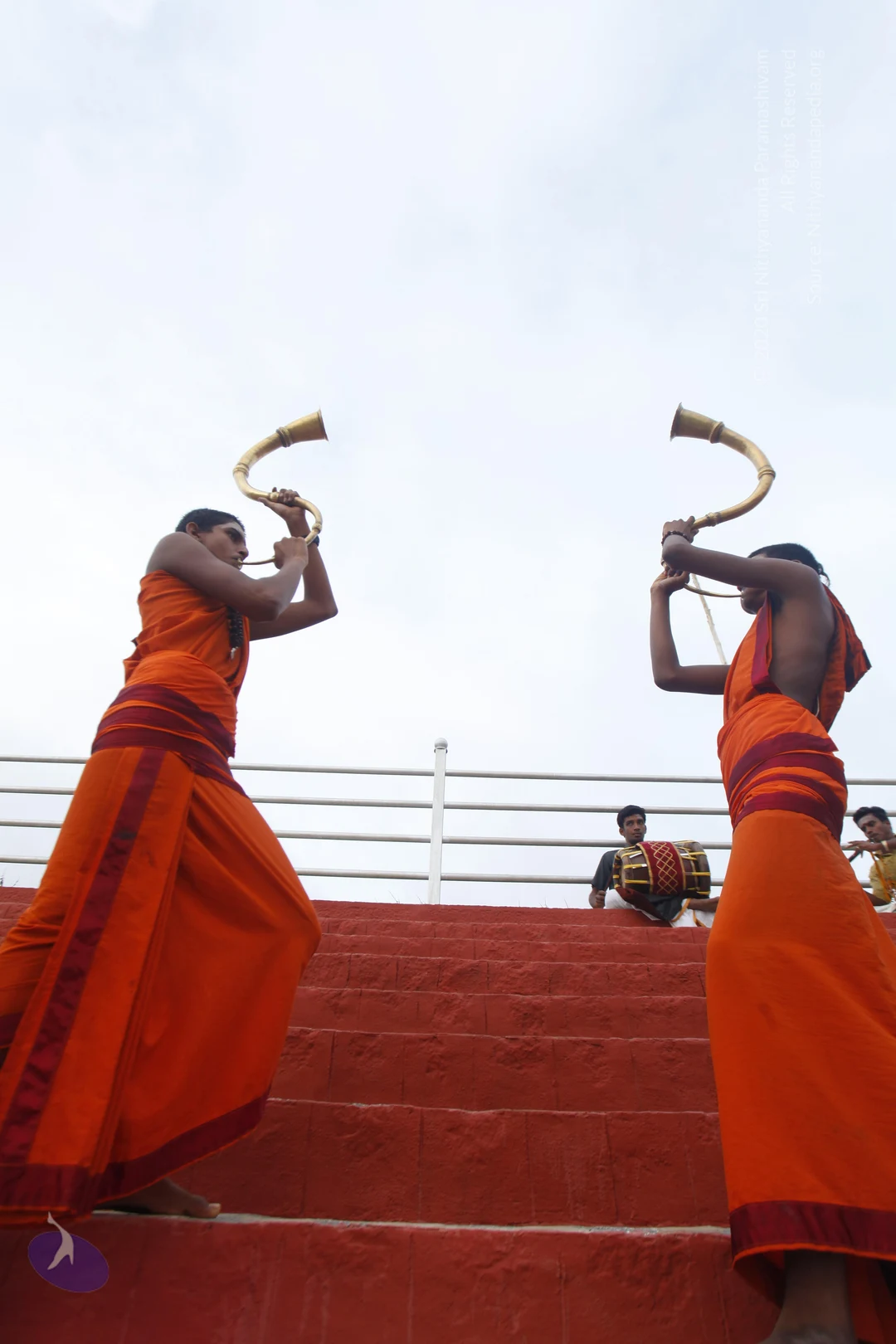
A large black stone Shiva lingam with a yoni-pitha base stands in water, garlanded with a multicoloured flower garland of red, white, yellow, green and purple blooms. Around it, a red stepped stone ghat leads down to the water. Several people sit on the steps: women in white and red clothing, a man in orange robes, and a monk in white with a red shawl. A woman in a red and gold sari stands on the upper steps near a railing. Scattered flower petals lie on the lingam's platform. The scene reads as a sacred water-side shrine with devotees gathered in worship.A large dark stone Shiva lingam with a circular yoni-style base stands in shallow water, draped with a long garland of red, yellow, white, green and purple flowers. Behind it, a man with hands pressed in anjali stands near the top of the lingam, wearing a red-and-white flower garland. Women in orange and red saris stand on red steps at left holding metal vessels, and several people in white clothes sit on the steps at right. A red-roofed building with a green tin roof and a palm tree appear in the background, with a framed portrait on the building's facade.A large dark stone Shiva lingam on a black yoni-pitha base stands at the center, draped with a long multicolored flower garland of red, yellow, white, green and purple blooms, with petals scattered on its platform. A man in a saffron-red garment with a multi-strand rudraksha-style mala and a red-and-gold necklace stands atop a metal staircase beside the lingam with hands joined in prayer, appearing to perform worship. Below, red stone steps hold seated devotees in white and red clothes and two saffron-robed sannyasis standing at right holding rods. A woman in a red sari stands at left. The scene is set against red-roofed buildings and trees.A large dark grey stone Shiva lingam on a circular yoni-shaped peetha base stands in a body of brown water, with a multicolour flower garland (red, yellow, white, purple) draped down its front and white milk-like liquid flowing from the spout. Behind it, red stone steps lead up to a red-roofed building. A man with long dark hair and a red-and-white garland stands on the lingam's top, with another figure in orange and white beside him. Several people in orange and red saris and dhotis carry metal vessels on the steps. Devotees in white sit on the steps at right, and a few people are seated in white clothes.A large dark stone Shivalingam rises from a black circular yoni-pitha base in shallow water, draped with a multicoloured flower garland in red, yellow, white and purple. Water pours over its surface and cascades from the spout of the base. On the red stepped ghat behind, men in saffron and orange robes stand in the background, one holding a horn, another playing a drum, while priests in orange dhotis with rudraksha malas stand on a metal staircase at the left, one pouring water over the lingam. Plants in pots line the steps at right.A large black stone Shivling is being bathed with water in an outdoor setting, with water cascading down its sides and over the spout of the yoni-pitha base. A multicolour flower garland in red, yellow, white and purple wraps the lingam. On a raised metal platform at the top left, a man in a saffron-orange robe with a rudraksha mala and a shaved-headed priest in orange stand pouring liquid from a vessel onto the lingam. Behind them, several people in orange robes stand on red steps playing long brass horns and a drum. Potted plants line the steps, and a satellite dish and red-roofed buildings are visible in the background. The scene reads as an abhishekam ritual.

NithyaSatsang-Swamiji
18 photosSource gallery
A seated man in a rust-brown robe sits on a cream upholstered seat before an ornate gold-embossed backdrop depicting a deity scene. He wears thick red flower garlands with gold floral accents, a gold-and-beaded necklace, a beaded armband and a red tilak on his forehead. A hanging brass bell and a brass lamp appear at right against a dark background.A seated man in an orange-brown robe wears heavy layered garlands of red flower buds and gold beads, with a rudraksha-style bead mala and gold-leaf ornaments. He has long dark hair swept back, a red bindi and a white forehead mark, and a gold armlet on his upper arm. Behind him a richly embossed gold panel with figures decorates the wall, and a hanging brass bell appears at right. The photograph is an appearance-based a person, seated in darshan-style honour with garlanded ornaments.A long-haired man seated before an ornate gold-embossed backdrop, wearing a rust-orange cloth draped over his shoulder with a gold border, a red kumkum dot on his forehead and a small hoop earring. He wears layered red and pink flower garlands with gold floral accents, a thick brown rudraksha-style mala with gold beads, and a beaded armband and bracelets. A brass bell hangs at left, and his hand rests on a cream cushion.A seated man with long swept-back dark hair and a red tilak on his forehead sits before an ornate gilded throne carved with floral and figural patterns. He wears a saffron-brown garment with a gold border, layered beaded necklaces of gold and rudraksha, and thick red and green flower garlands draped across his chest. A rudraksha bracelet is on his upper arm, and his right hand is raised in a gesture of teaching. A brass hanging bell and brass oil lamp stand beside him against a black backdrop. a person is shown in this photo, seated in a satsang setting with ritual objects.A photo of a man seated cross-legged on an ornate gold throne with red velvet cushions and a tiger-skin rug draped over the seat front. He wears an orange-brown robe with a gold border, a multi-strand gold and rudraksha-style necklace, gold bangles on the upper arms, small gold earrings, and a red dot on his forehead, and a small microphone is clipped near his mouth. Both hands rest on the armrests. Swamiji (probable): long swept-back dark hair, ceremonial gold necklaces and saffron-orange clothing, seated on a throne as a discourse speaker.A seated man in an ornate golden throne with a tall, intricately carved gold-leaf backrest and red tiger-striped velvet armrests. He wears a rust-orange shawl over the shoulder and bare chest, an orange-and-gold dhoti, and multiple thick gold bead necklaces with rudraksha-style beads. He has long dark hair, a red bindi on the forehead, gold hoop earrings, a headset microphone, and gold bangles on his upper arms and wrists. He sits cross-legged with bare feet on a tiger-face rug, hands resting on the armrests. A probable Swamiji is seated as a discourse speaker; the appearance cues are the long hair, ornate gold jewellery and rudraksha-style malas, with the orange shawl and throne.
June 03 2013

1 photoView all
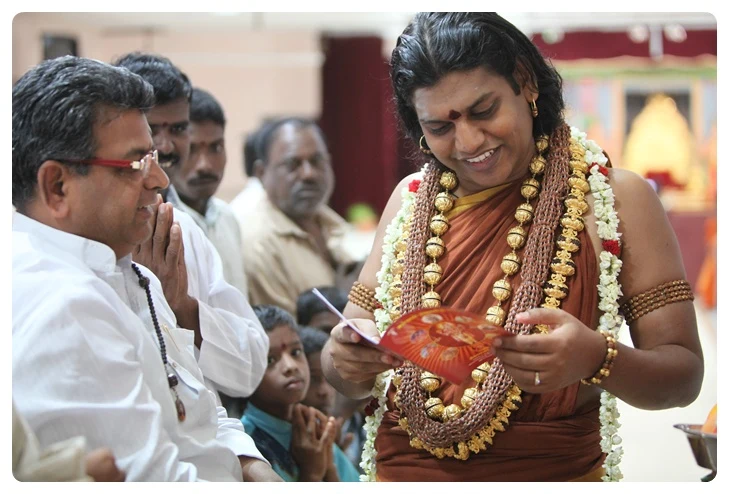
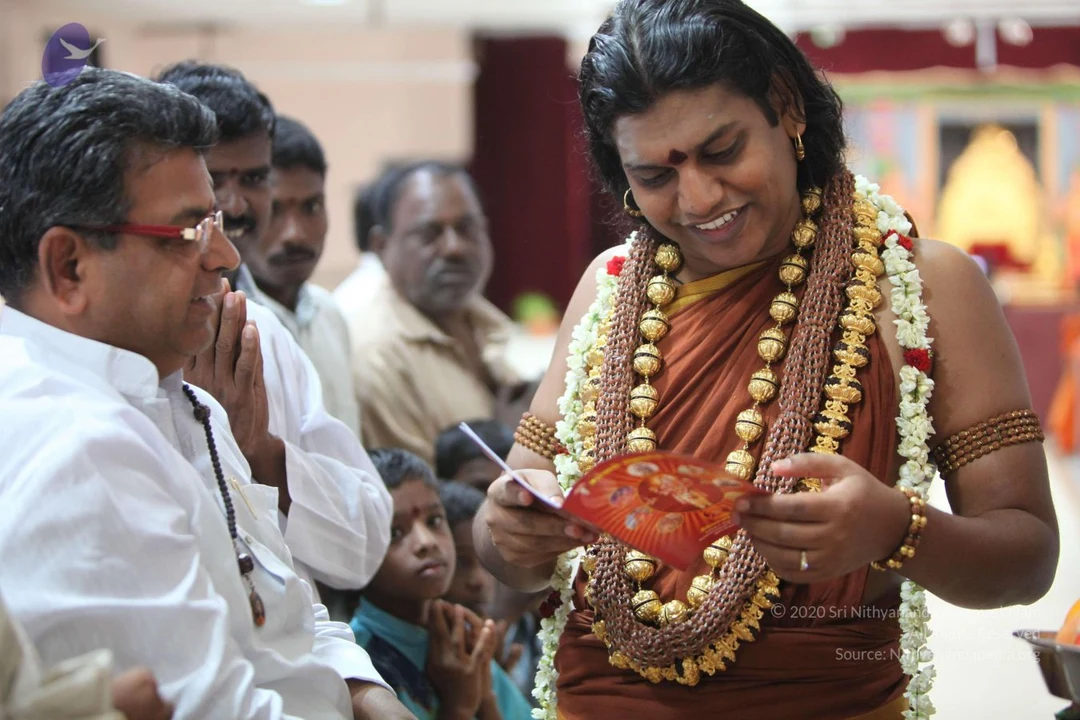
A photograph of a smiling person with long swept-back dark hair, wearing a rust-orange wrap and a heavy gold-bead necklace layered over a brown rudraksha-style mala, with white jasmine garlands and gold armlets. Holding a small red printed card with a deity image, they look down at it while a plate of offerings sits at the lower right. To the left, a man in white clothes with red-framed glasses and a beaded mala presses his palms together, and other seated men and children in the background watch. The person's distinctive long hair, ornate gold necklace and saffron-toned wrap are visible cues, so this is. A warm temple-like hall with a golden shrine behind.