Skip to content
Monday

1 April 2013

Dated photos
425
Source pages
1
Media
2
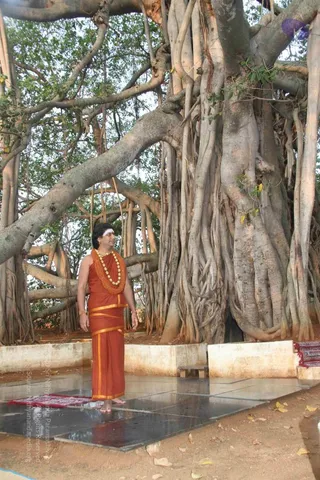
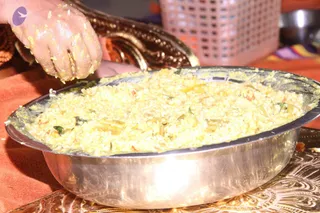
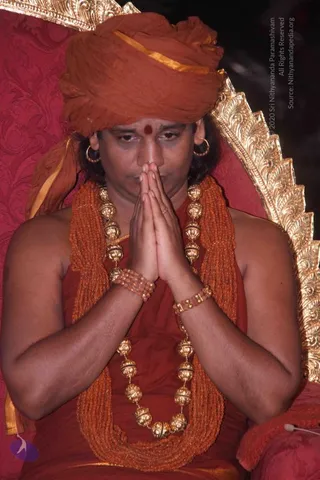
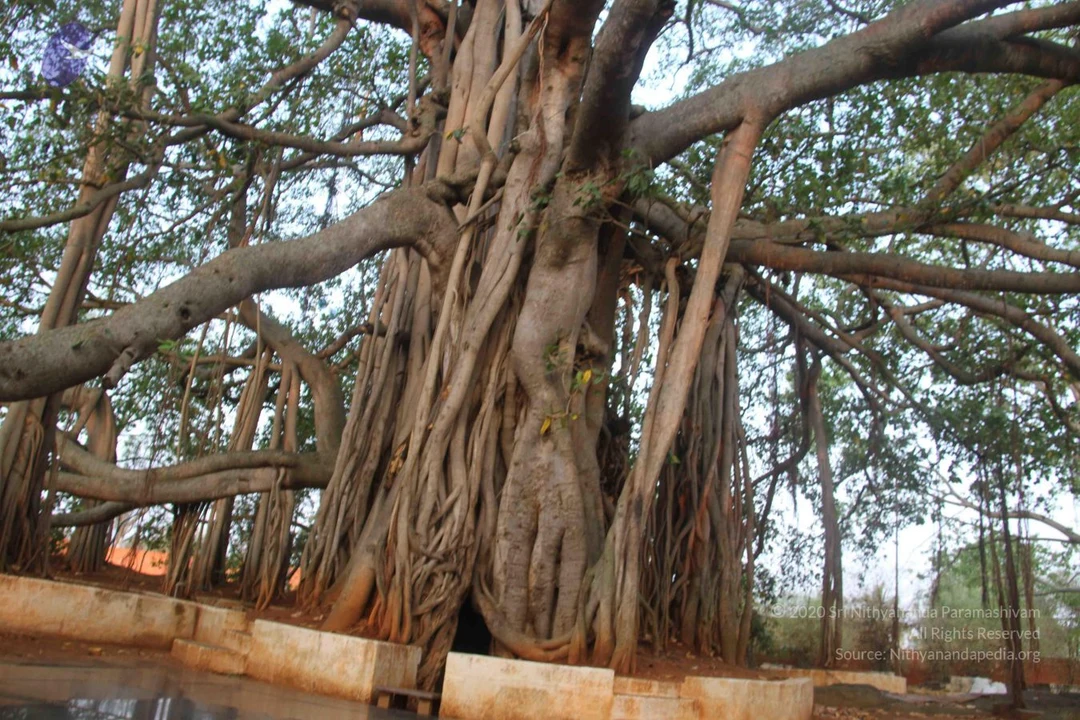
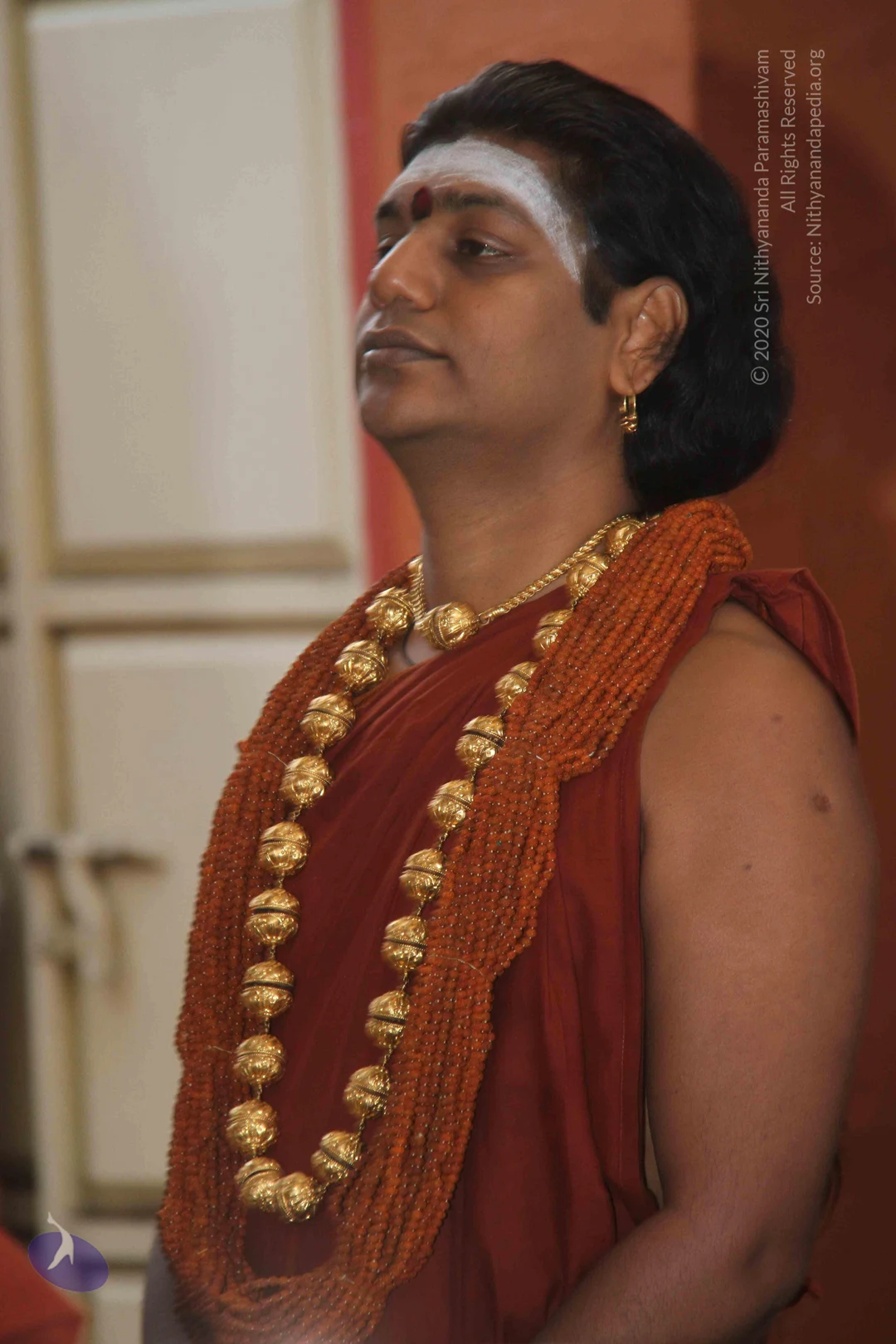
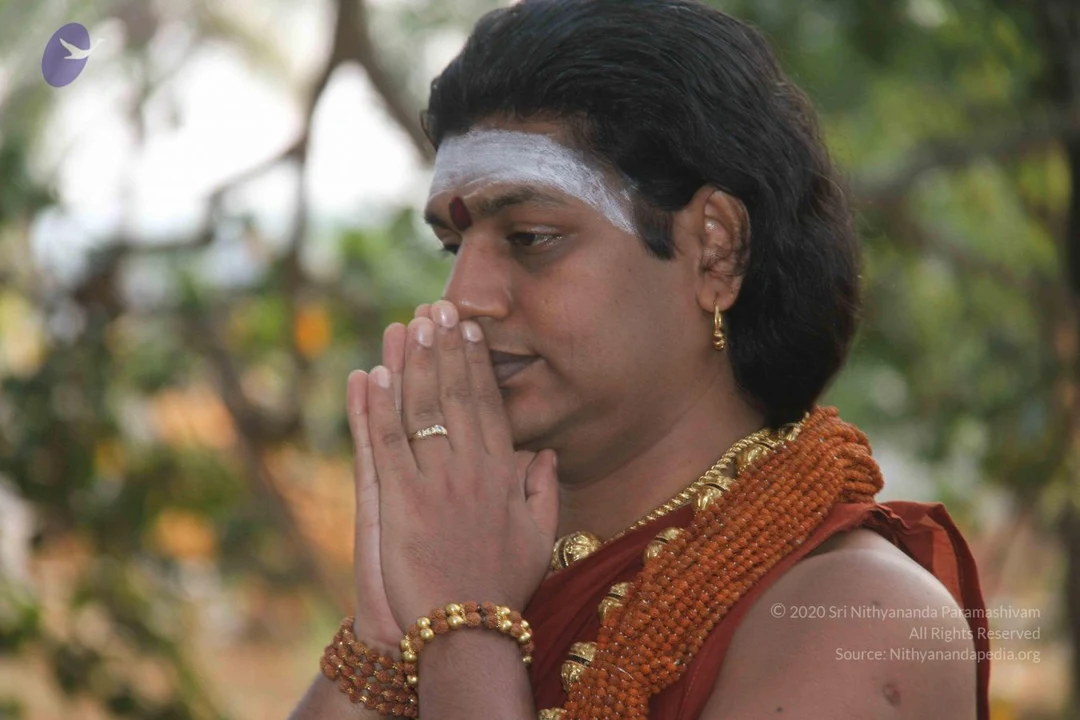
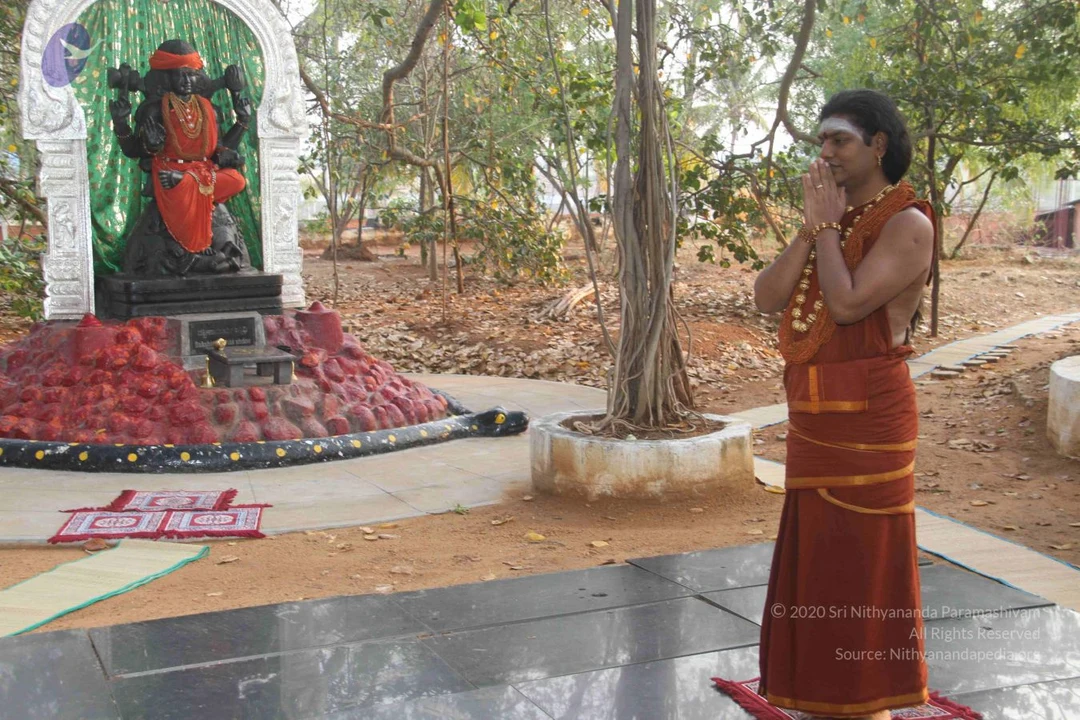
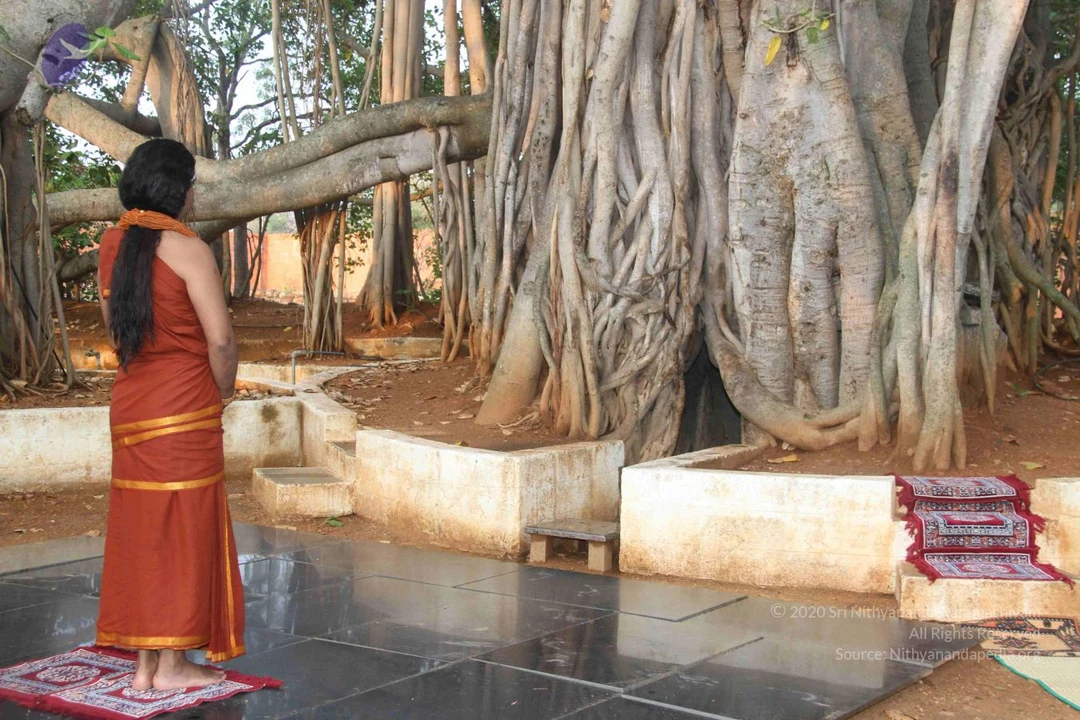
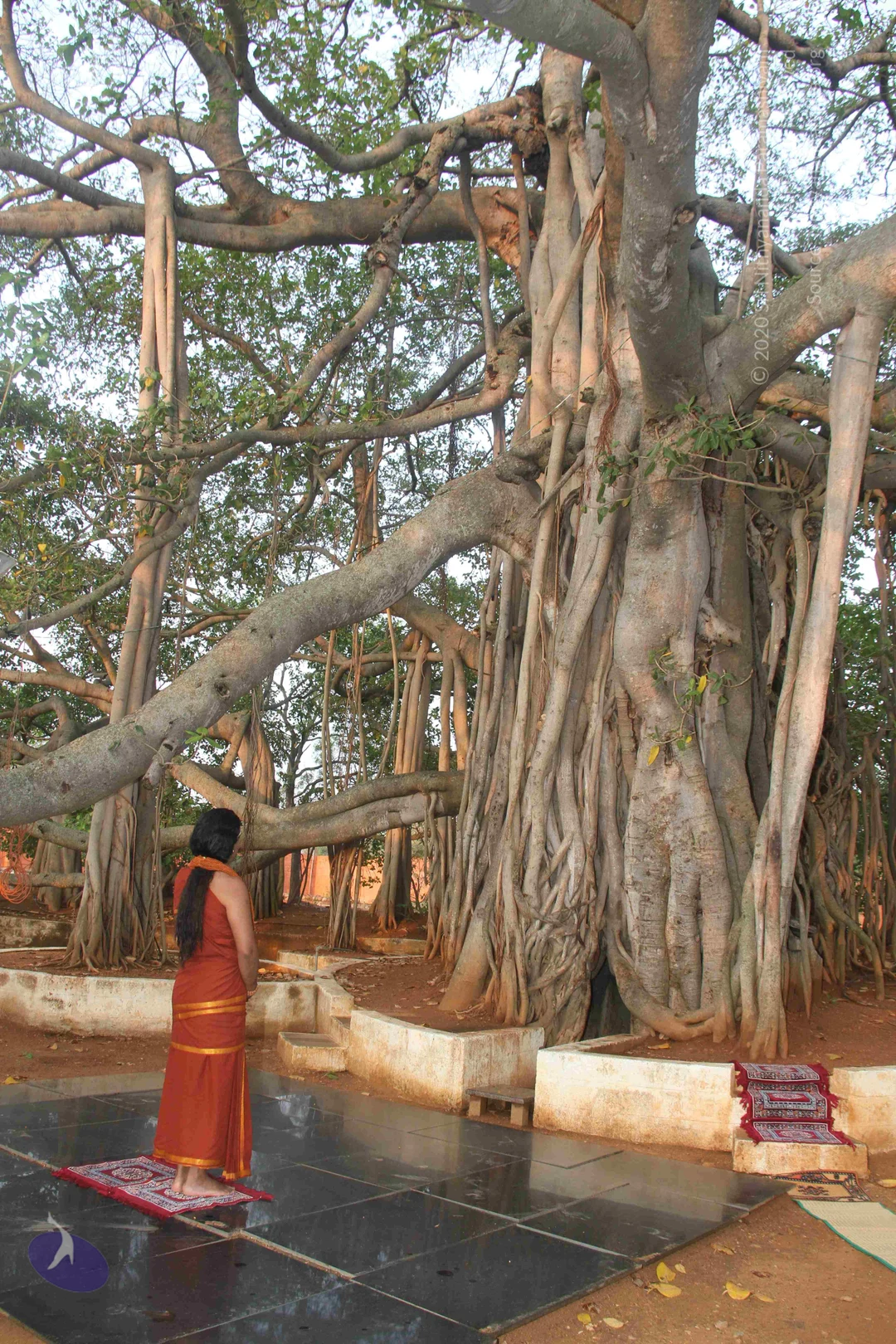
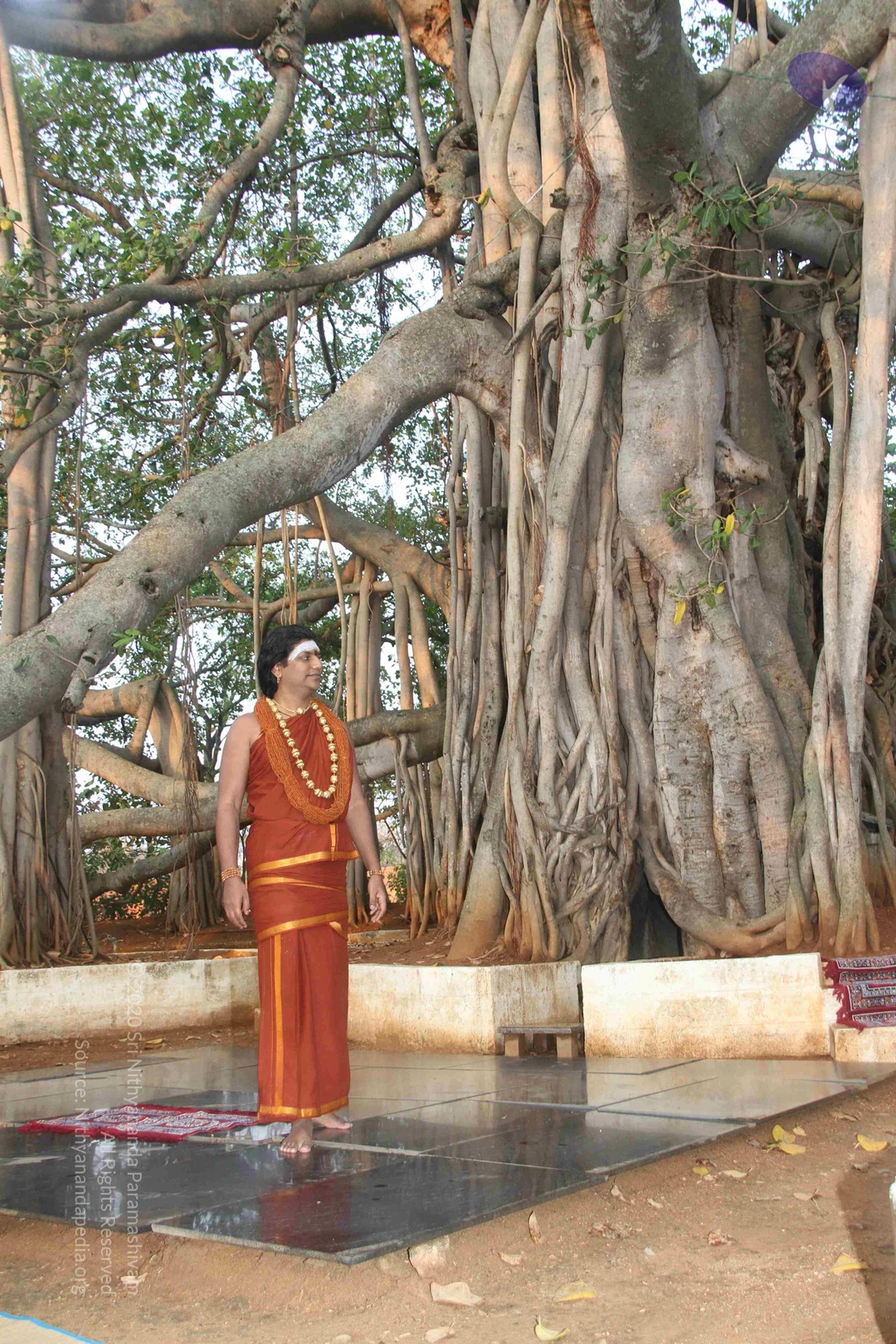
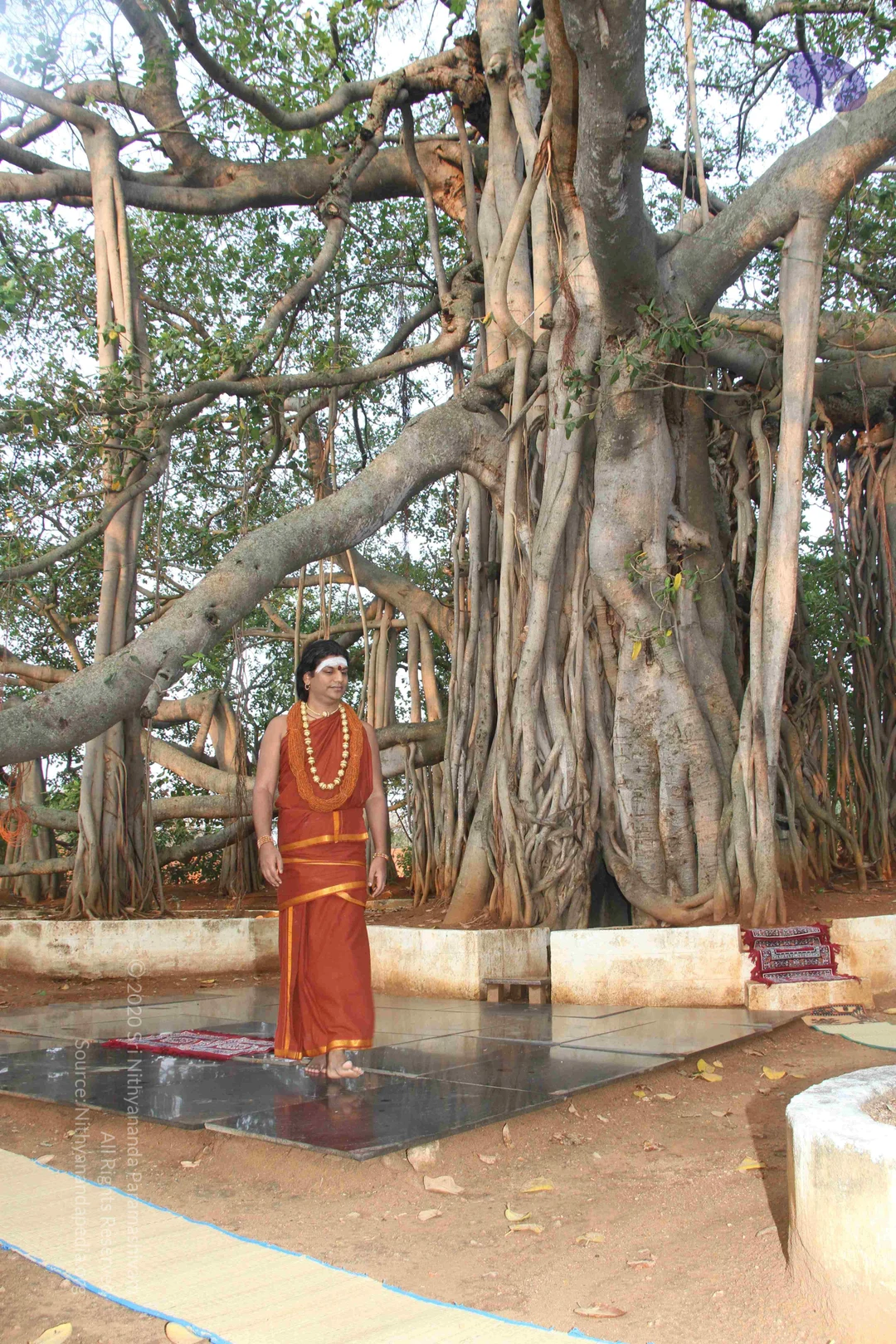
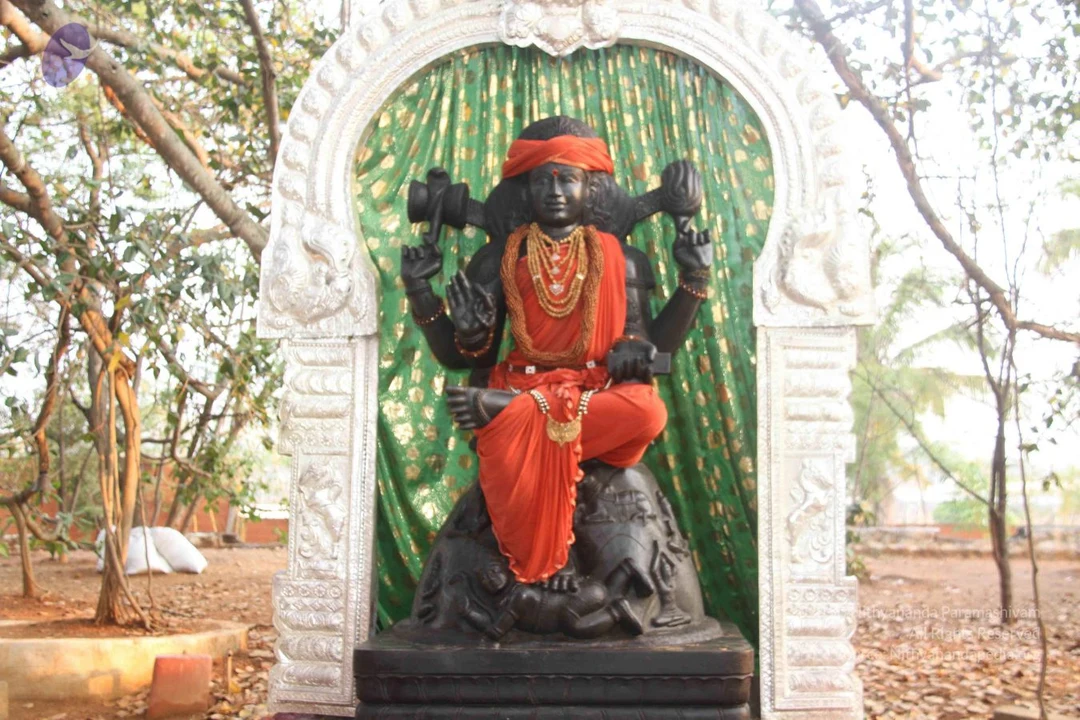
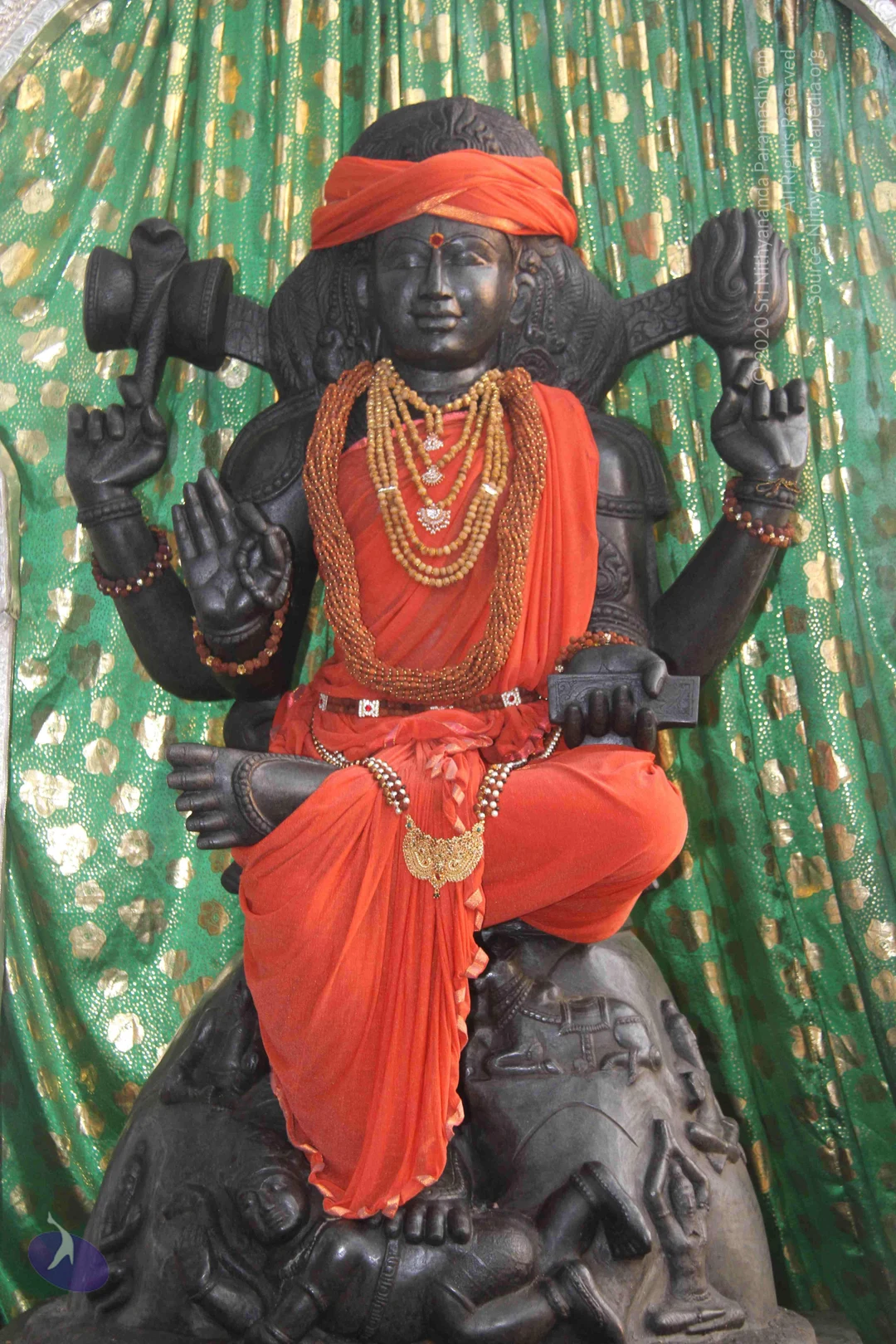
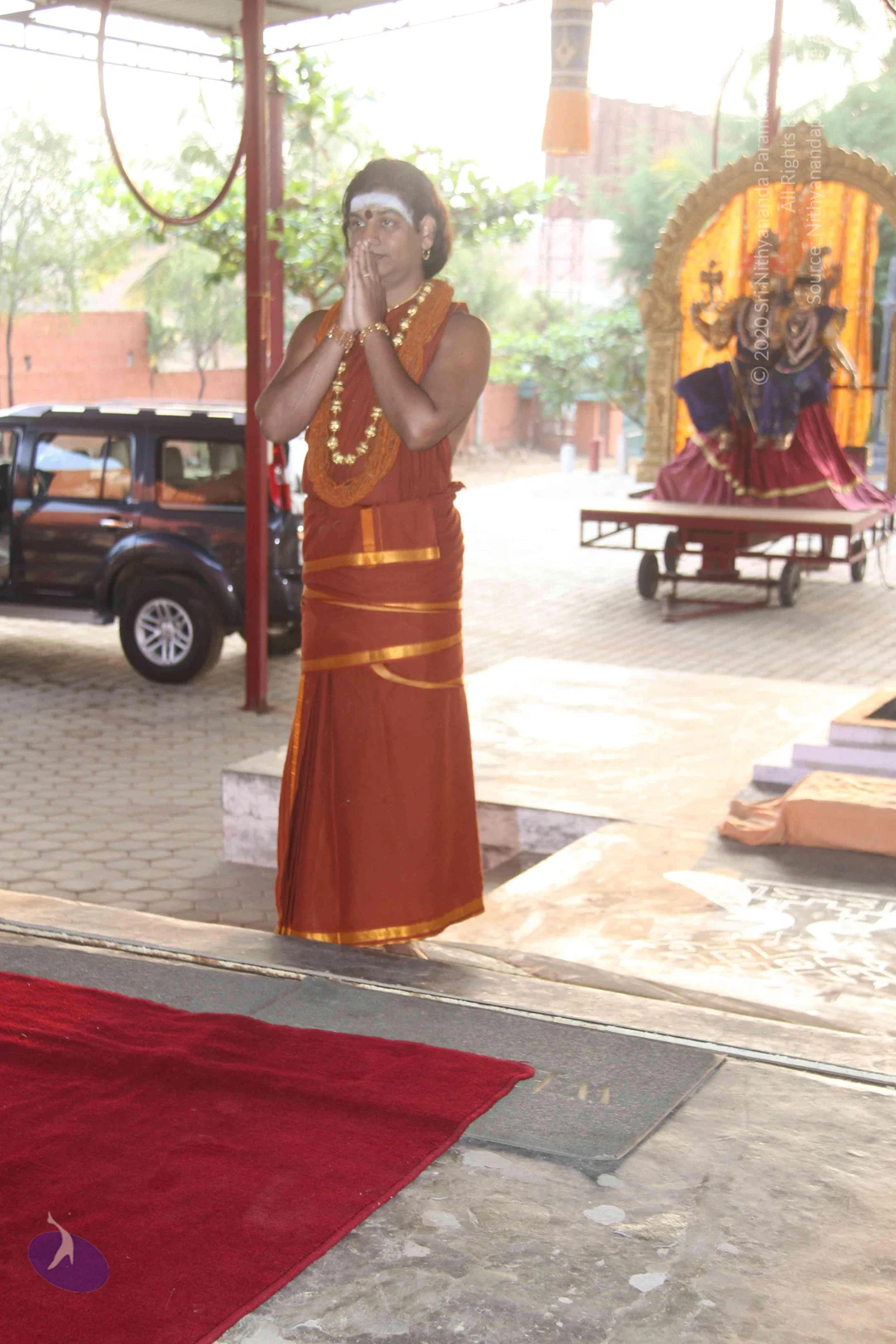
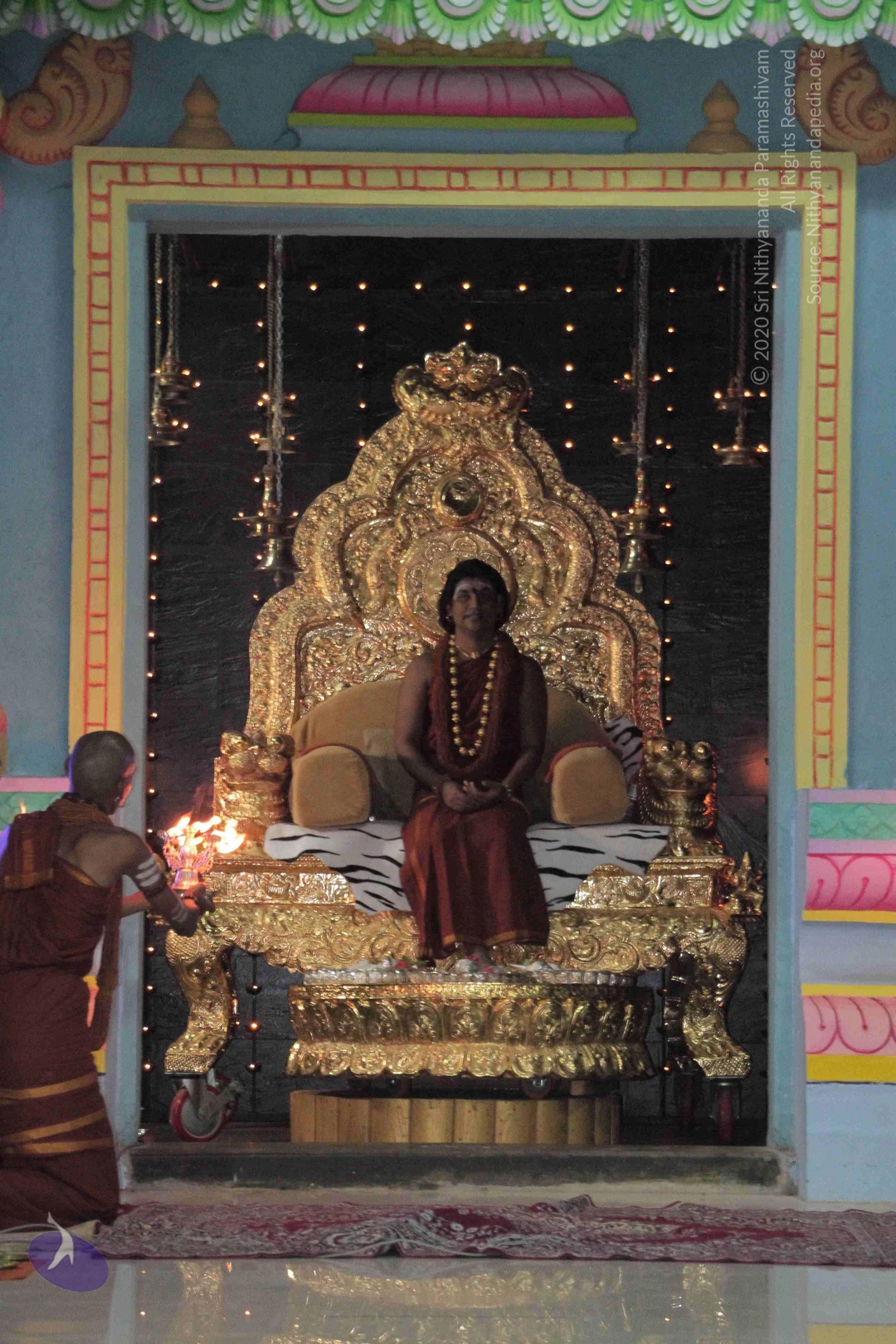
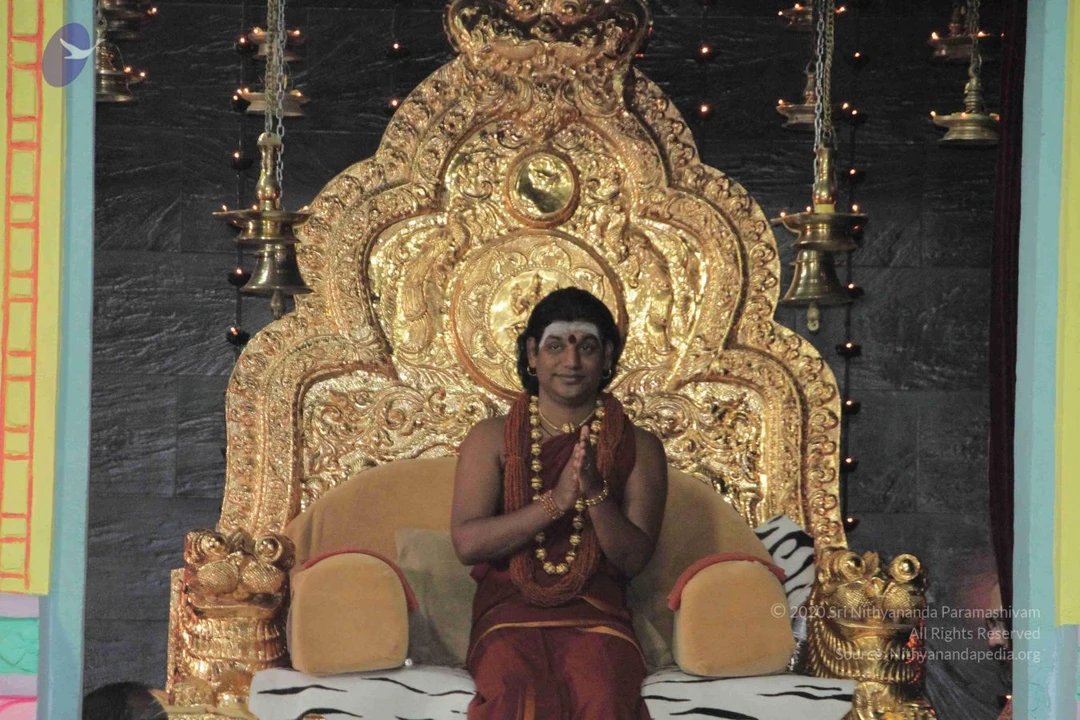
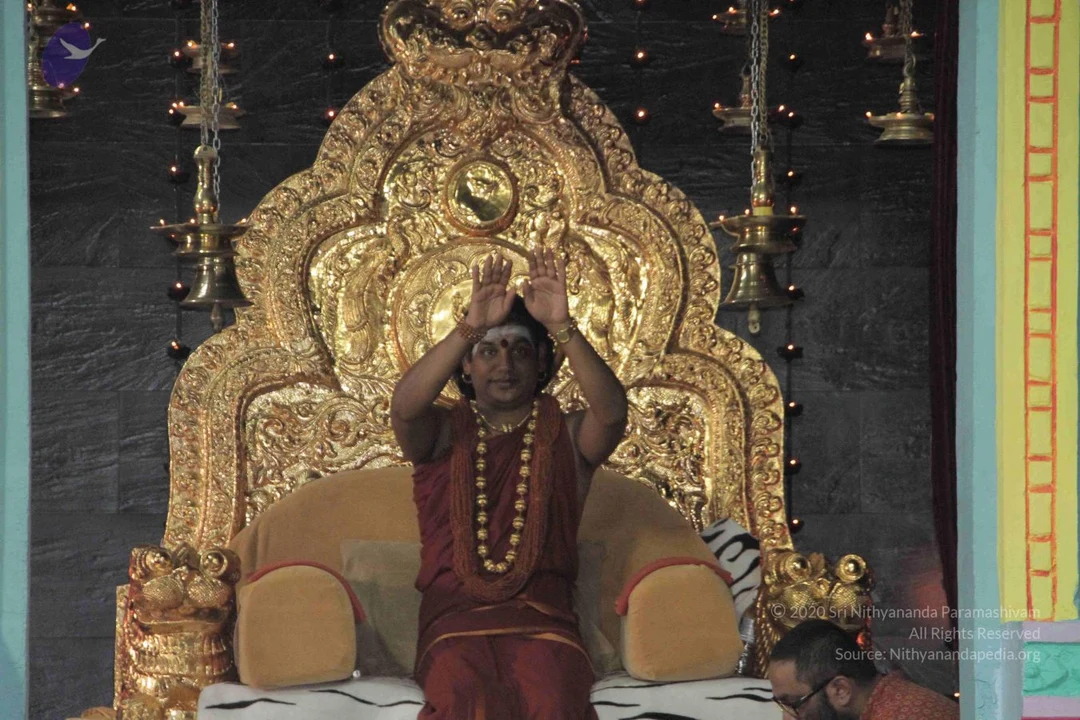
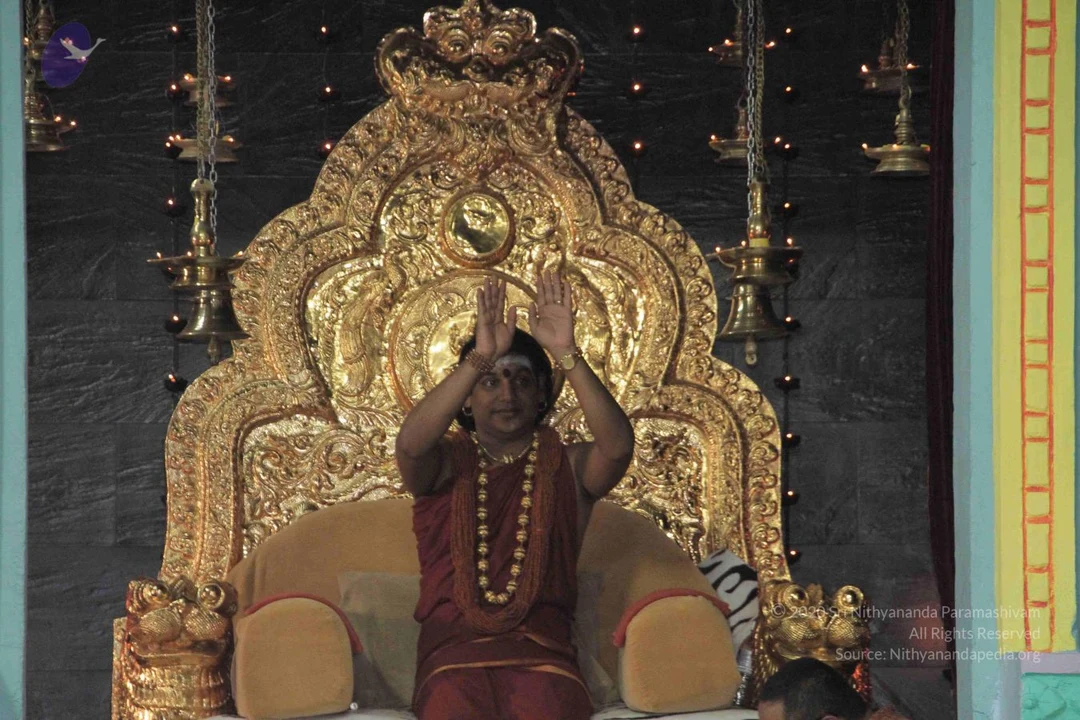
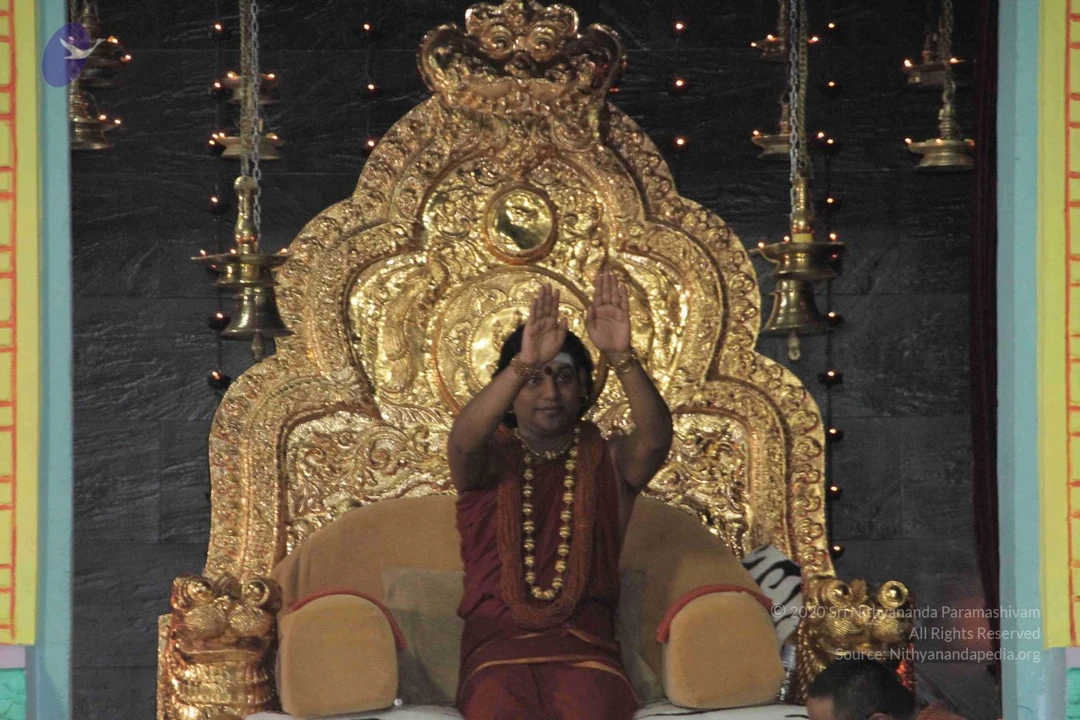
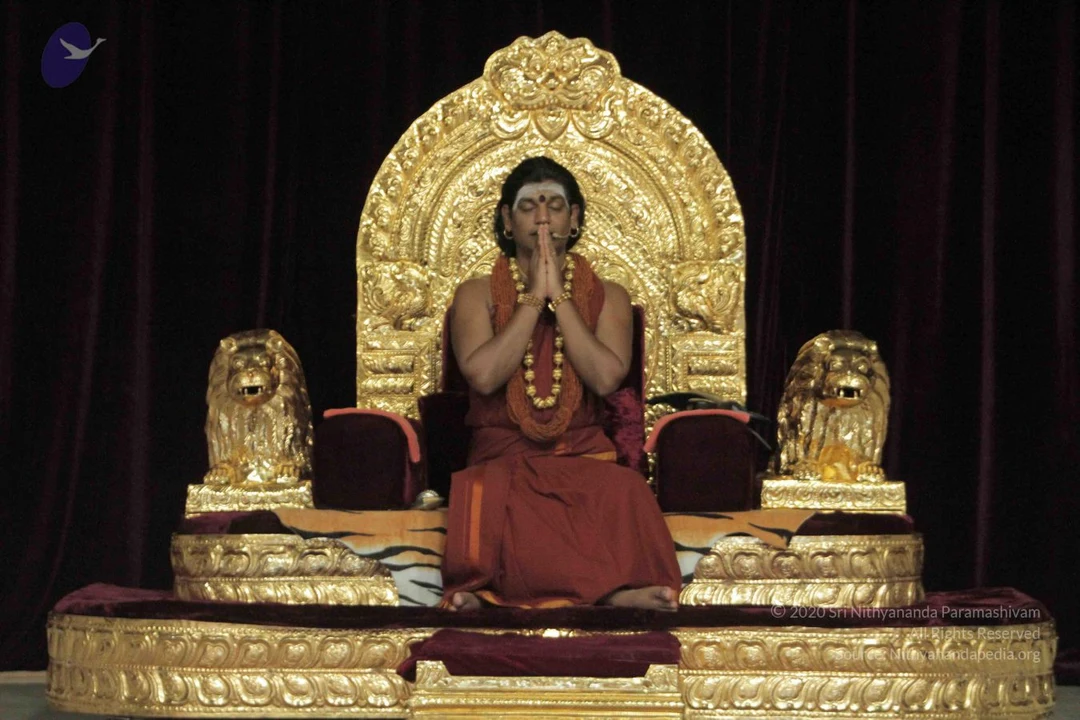
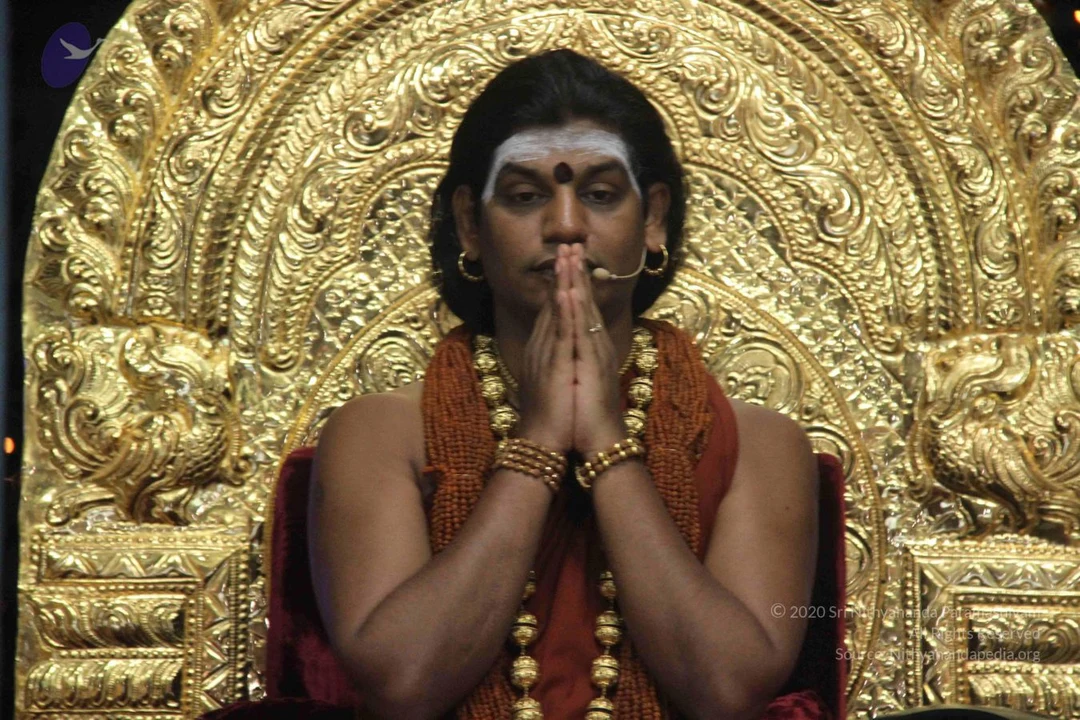
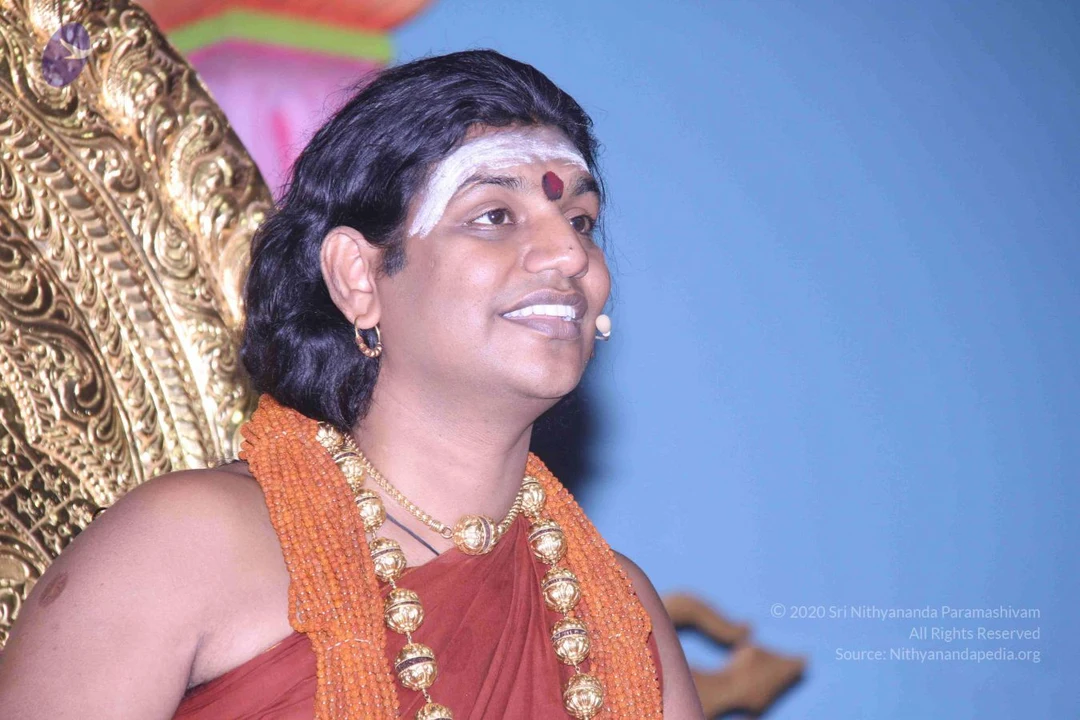
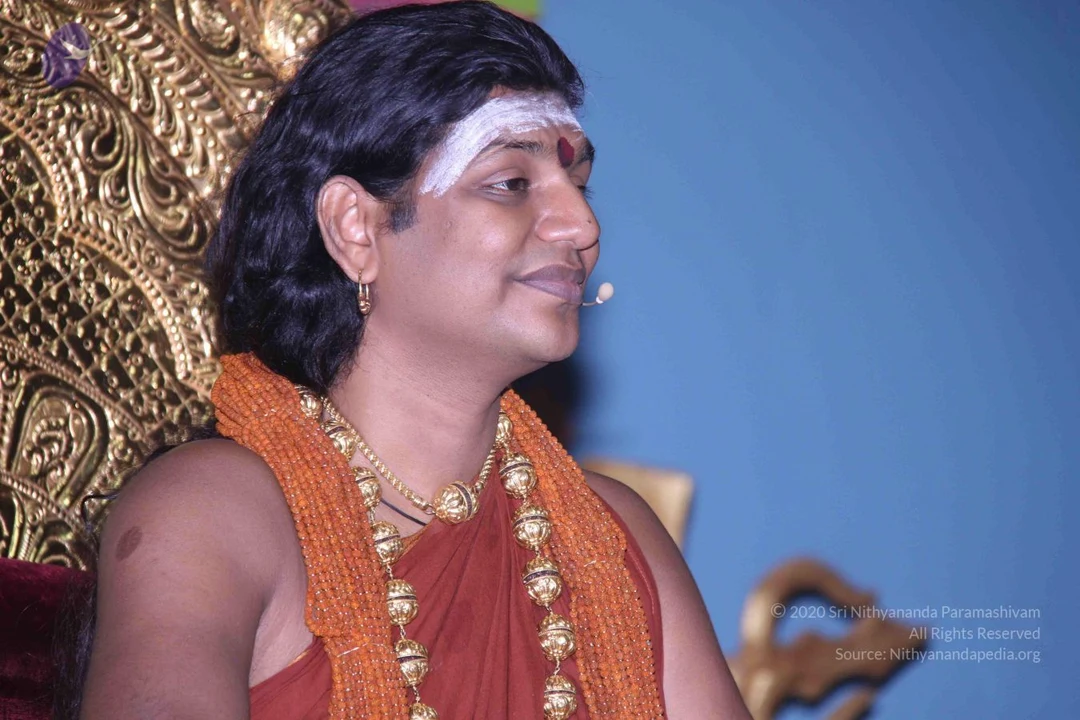
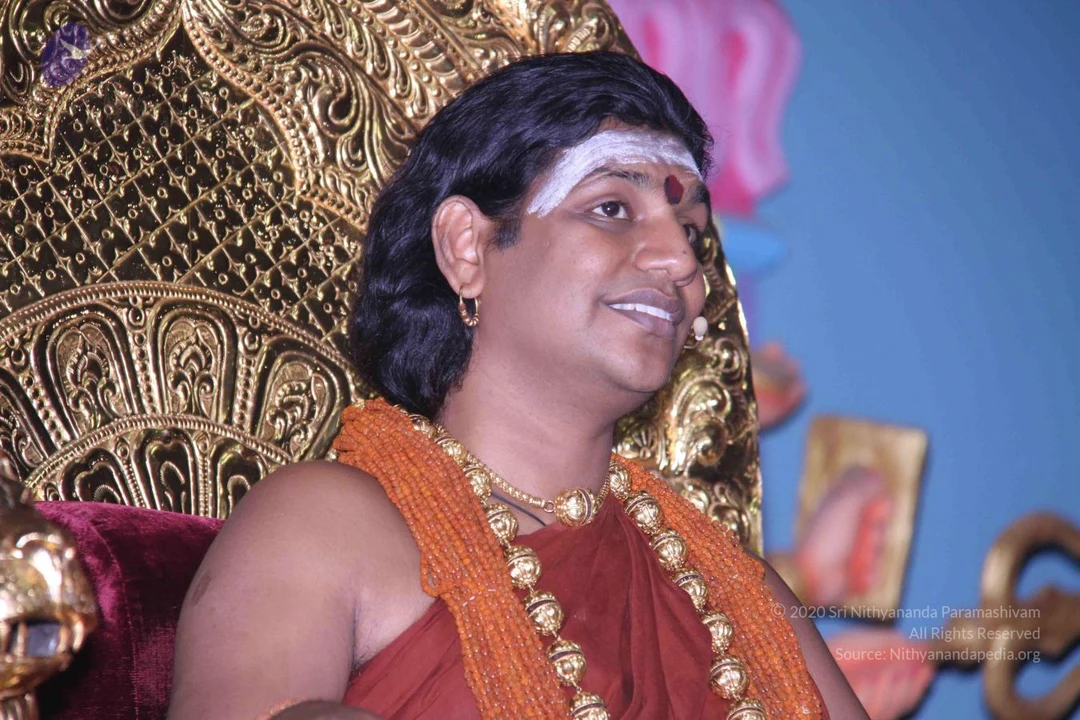
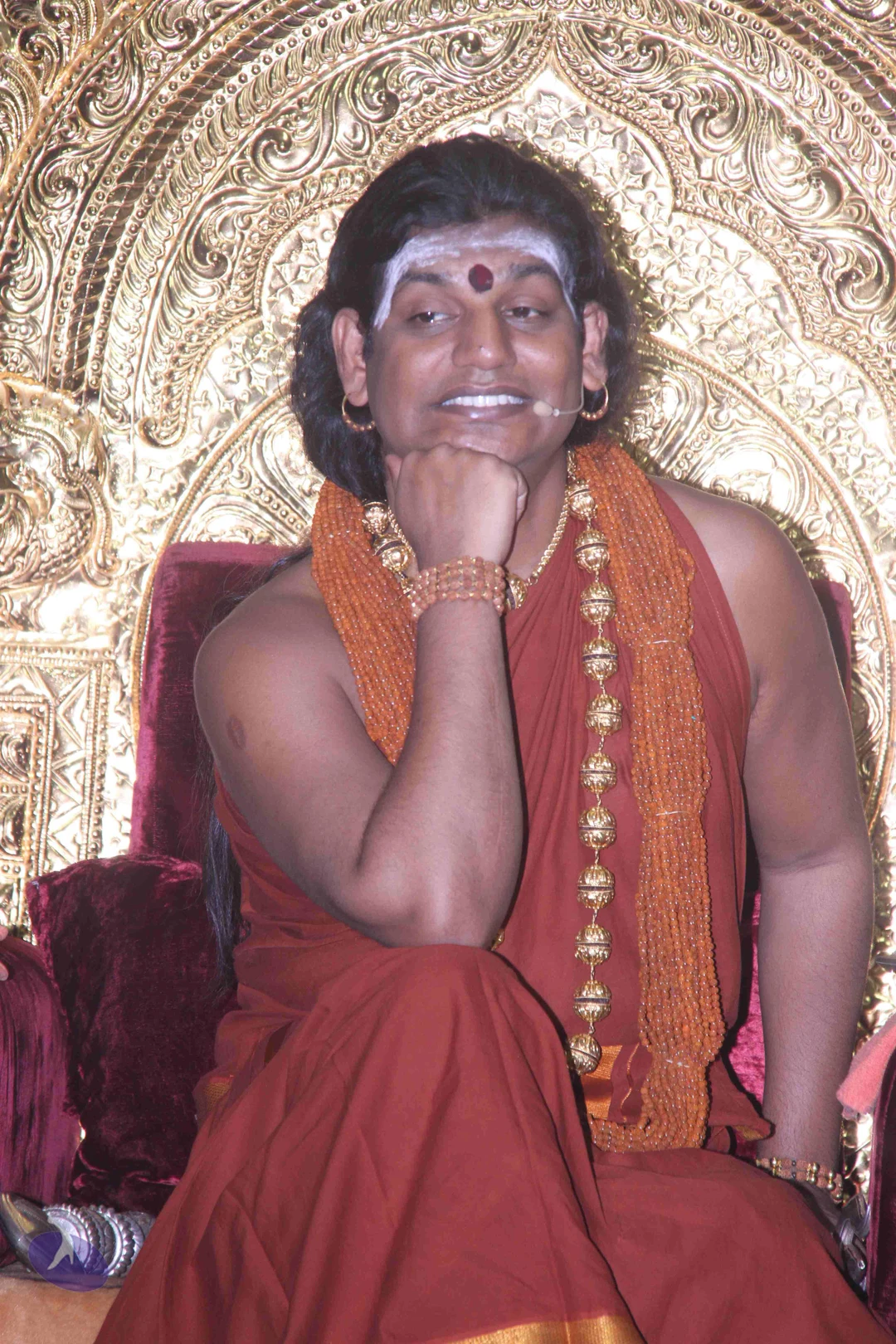
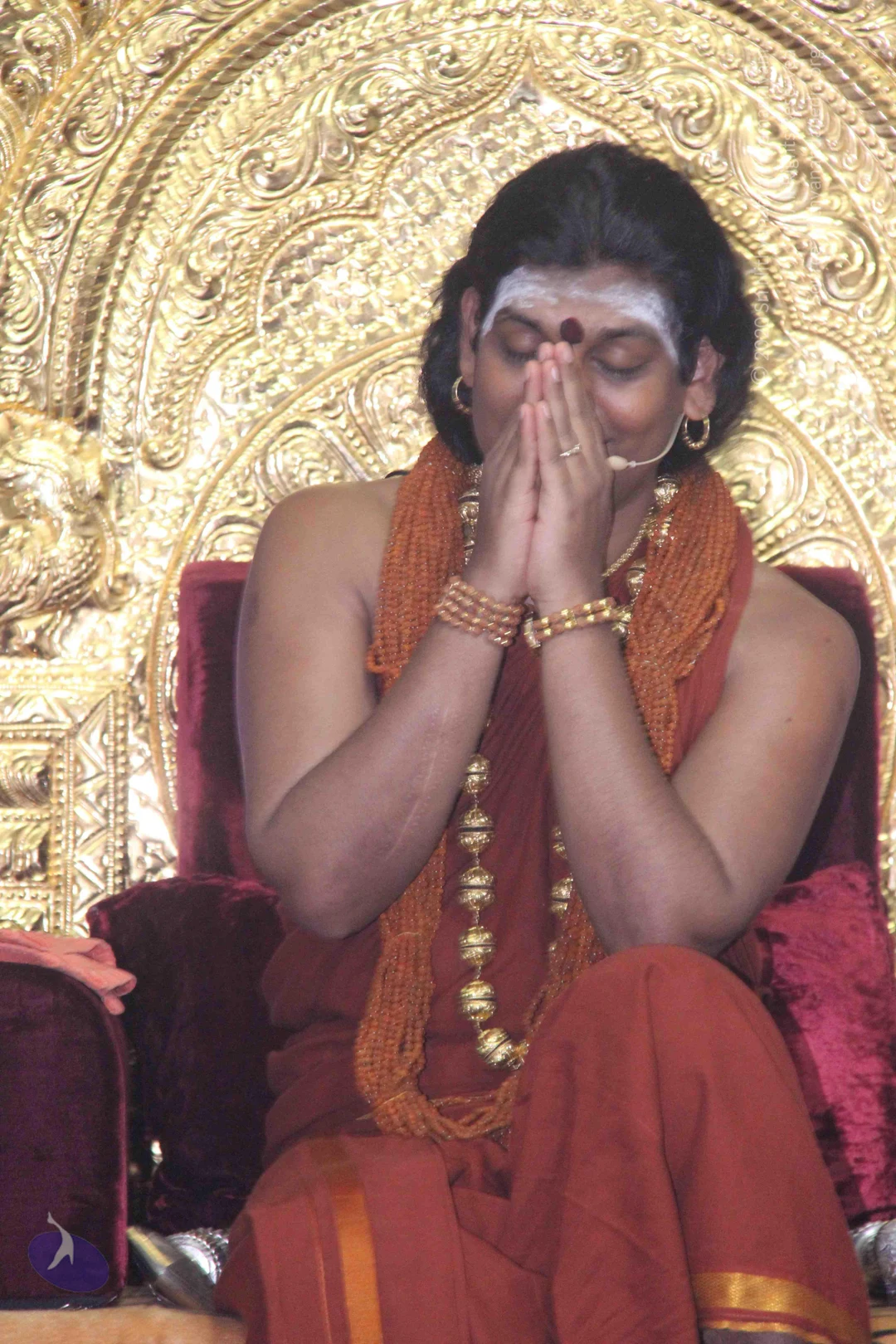
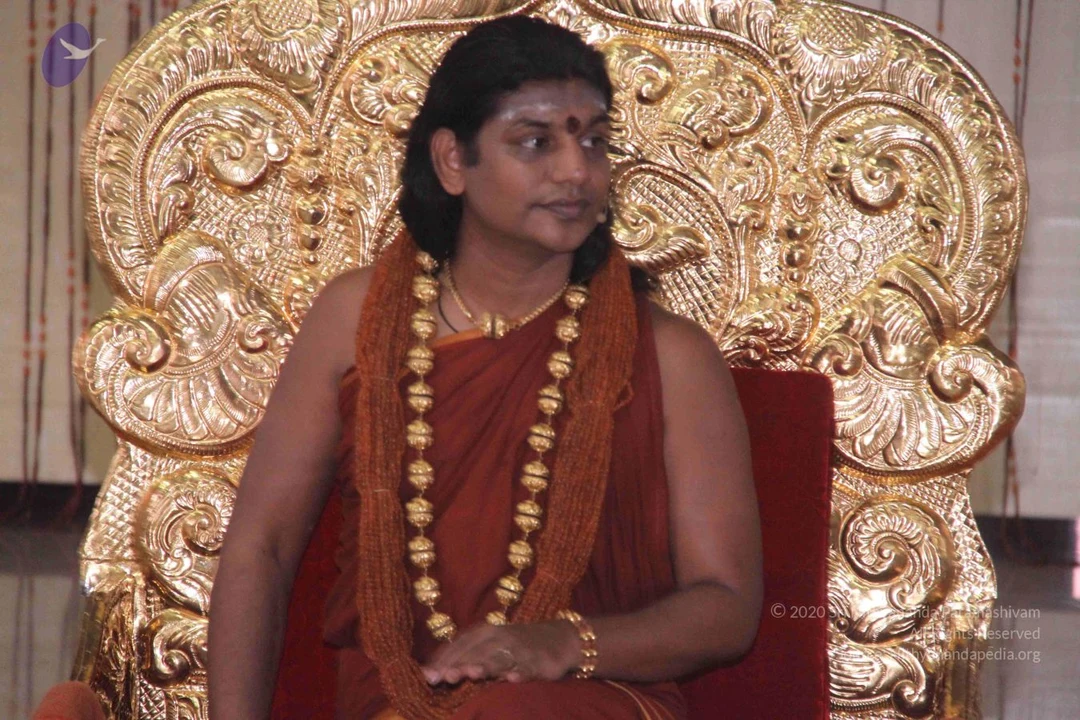
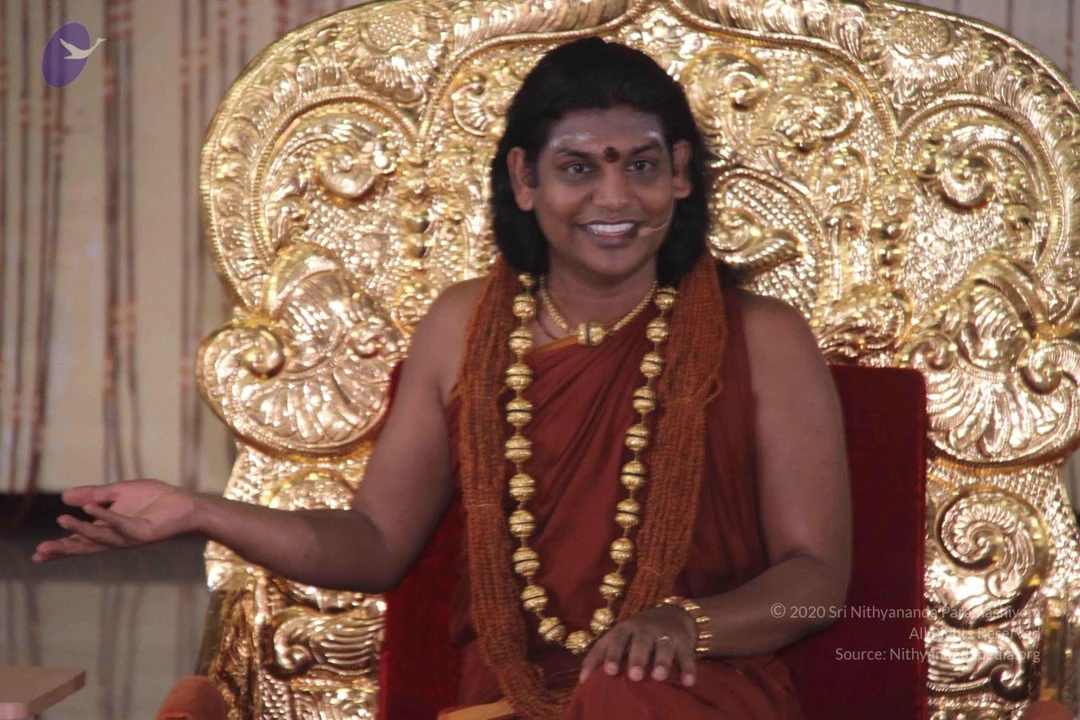
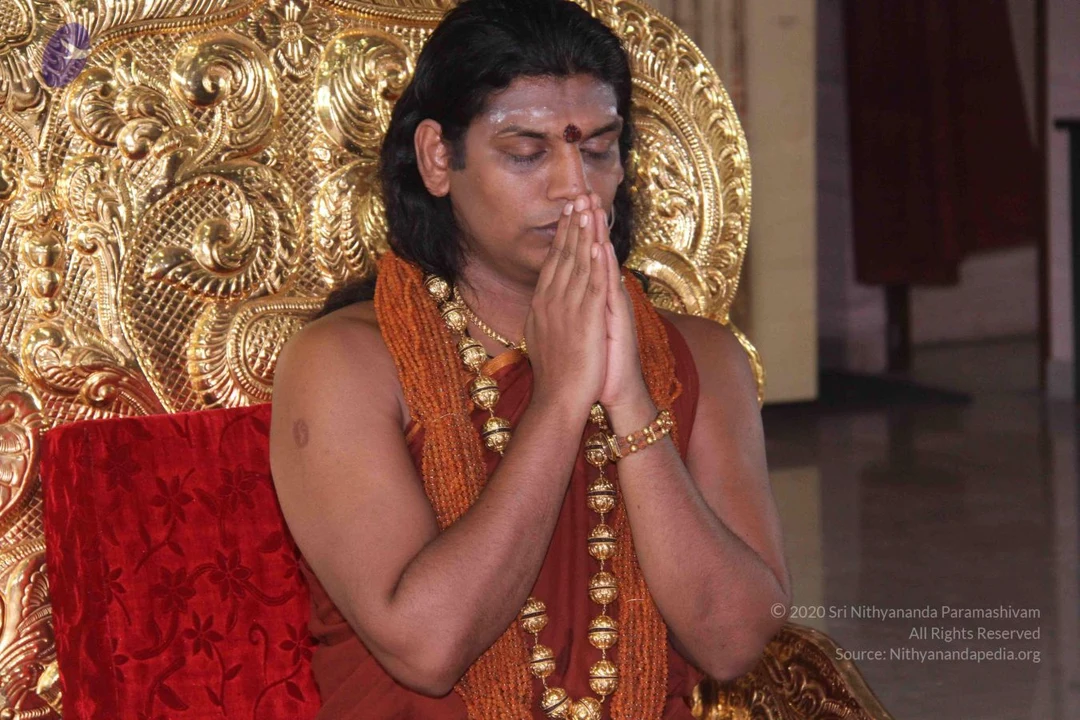
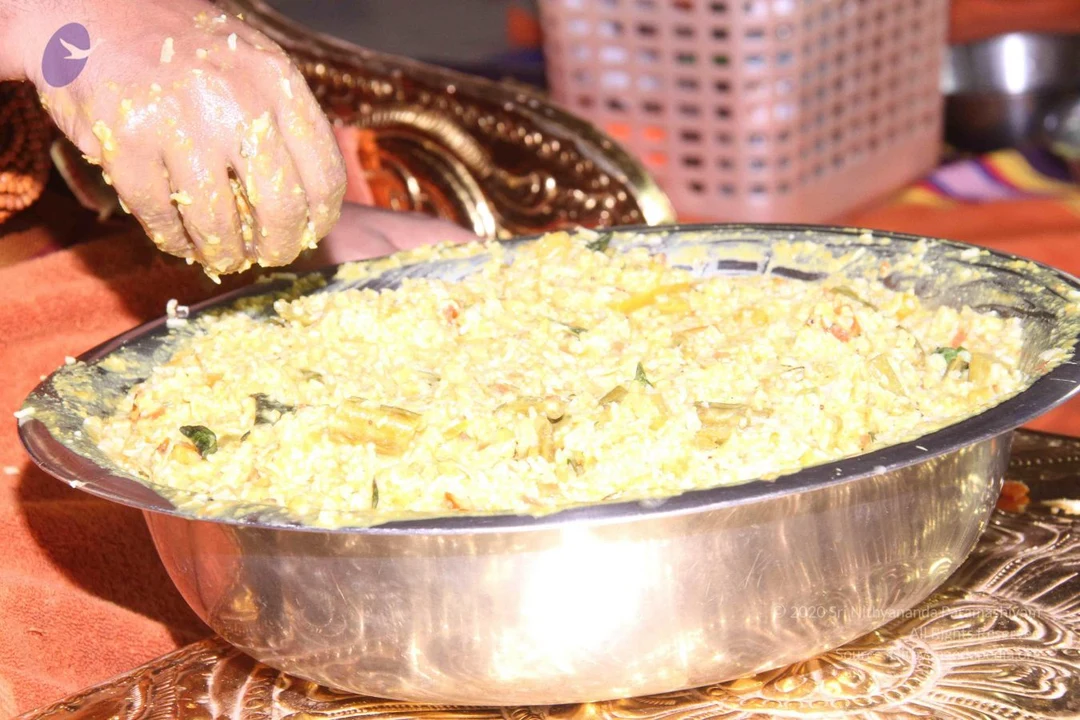
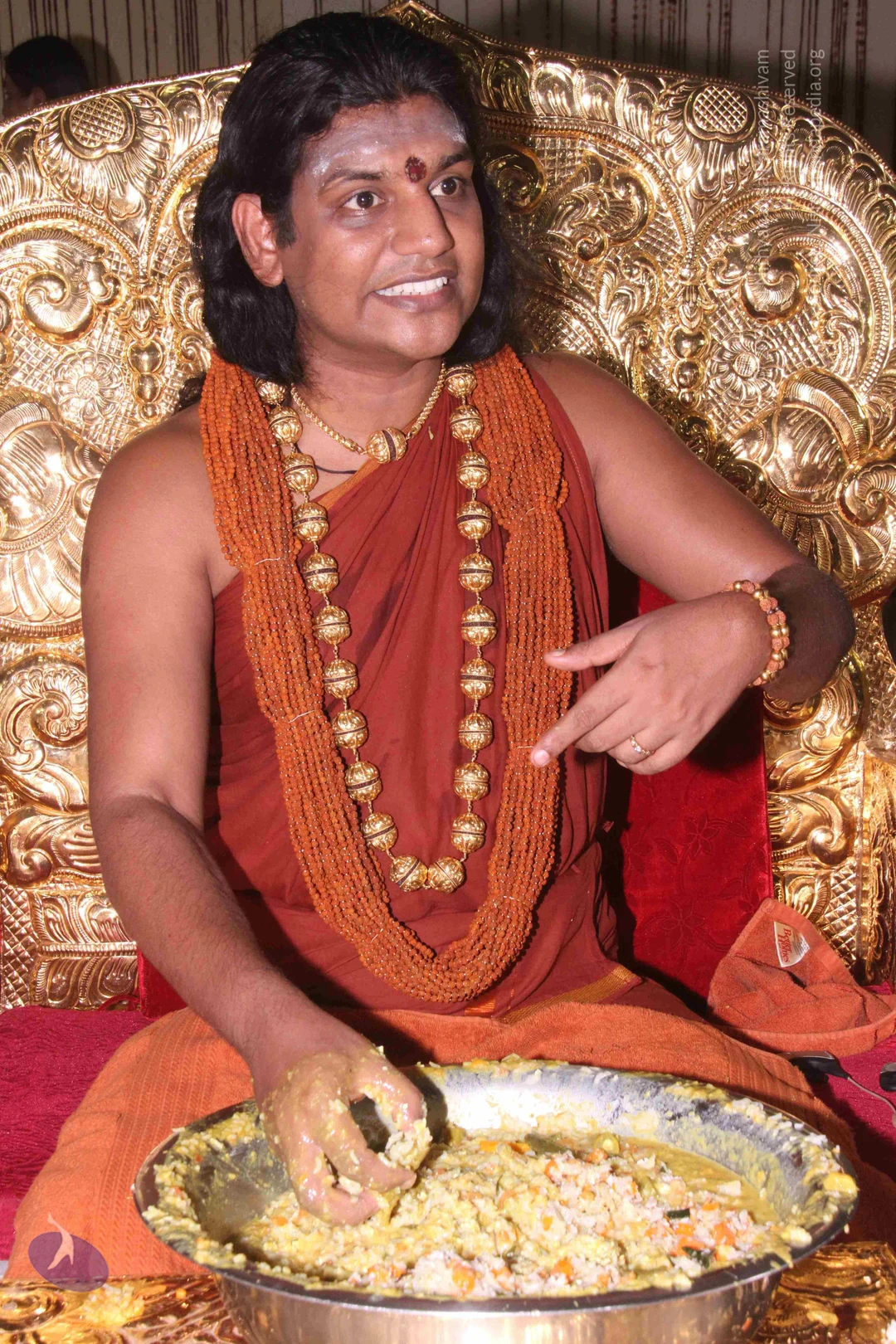
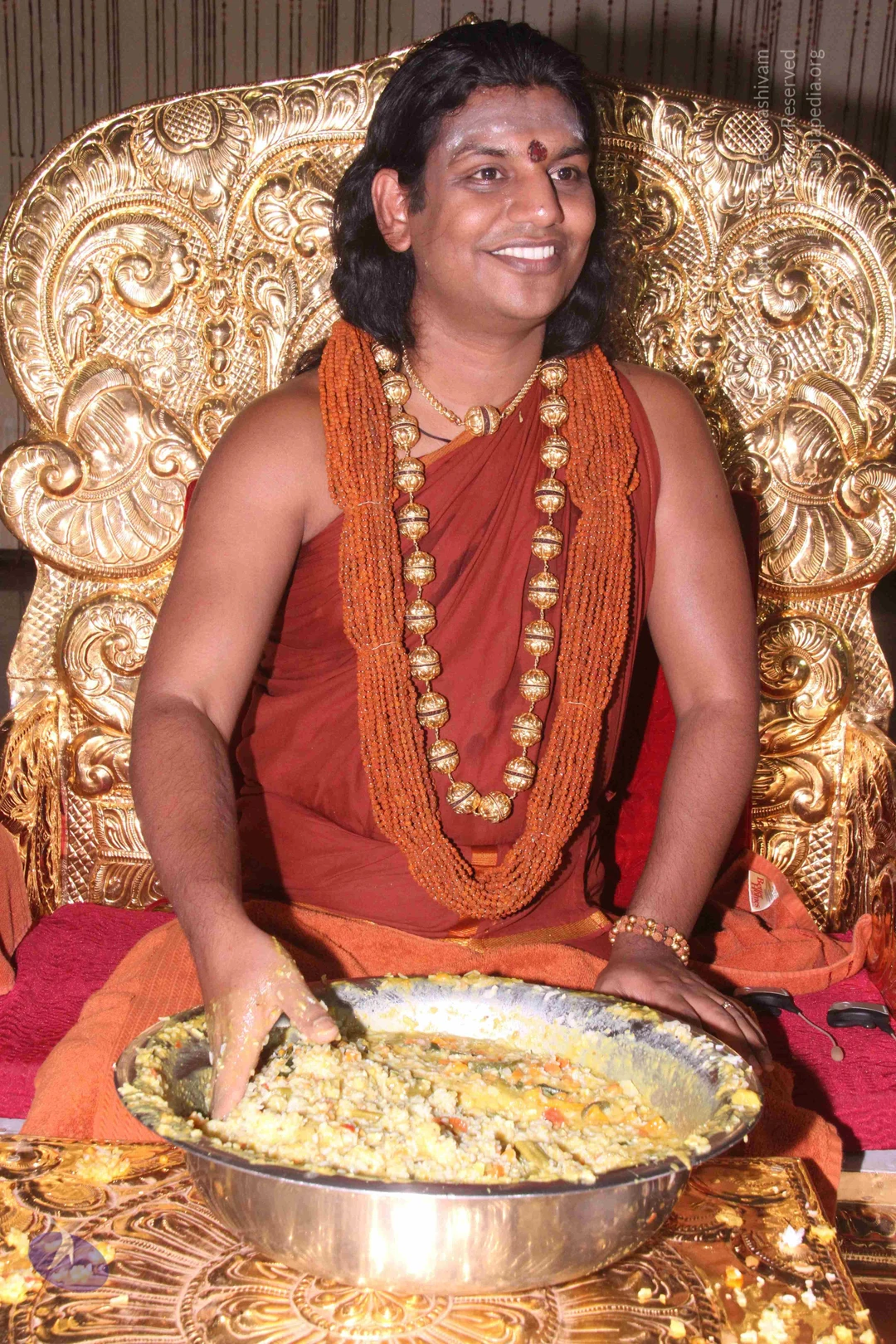
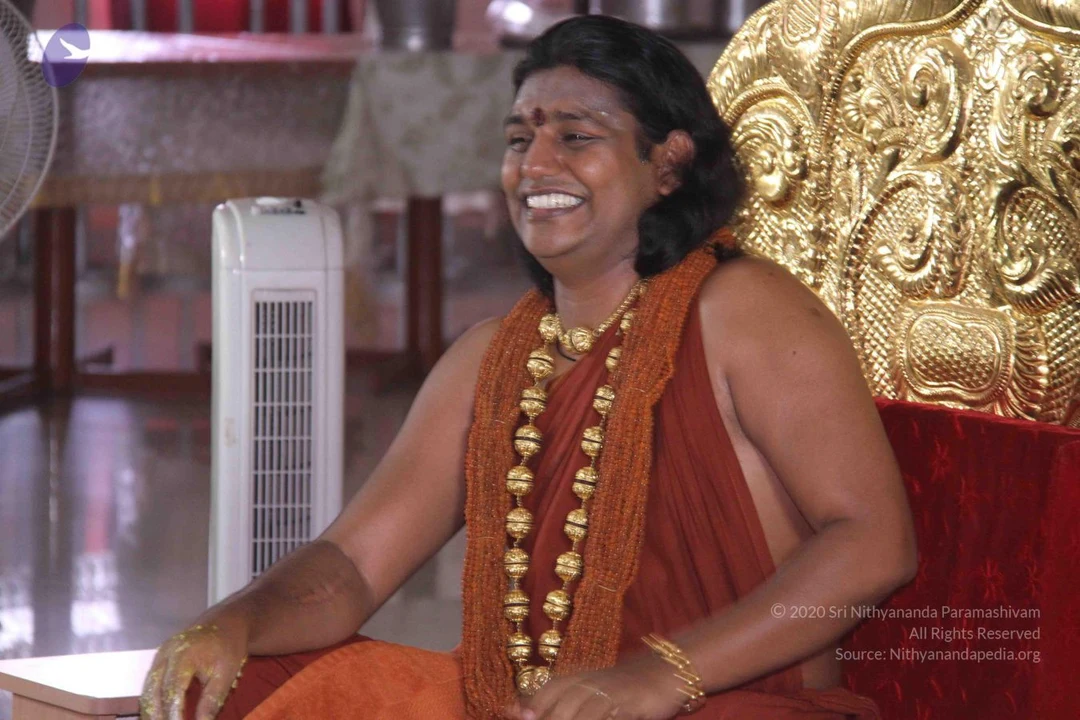
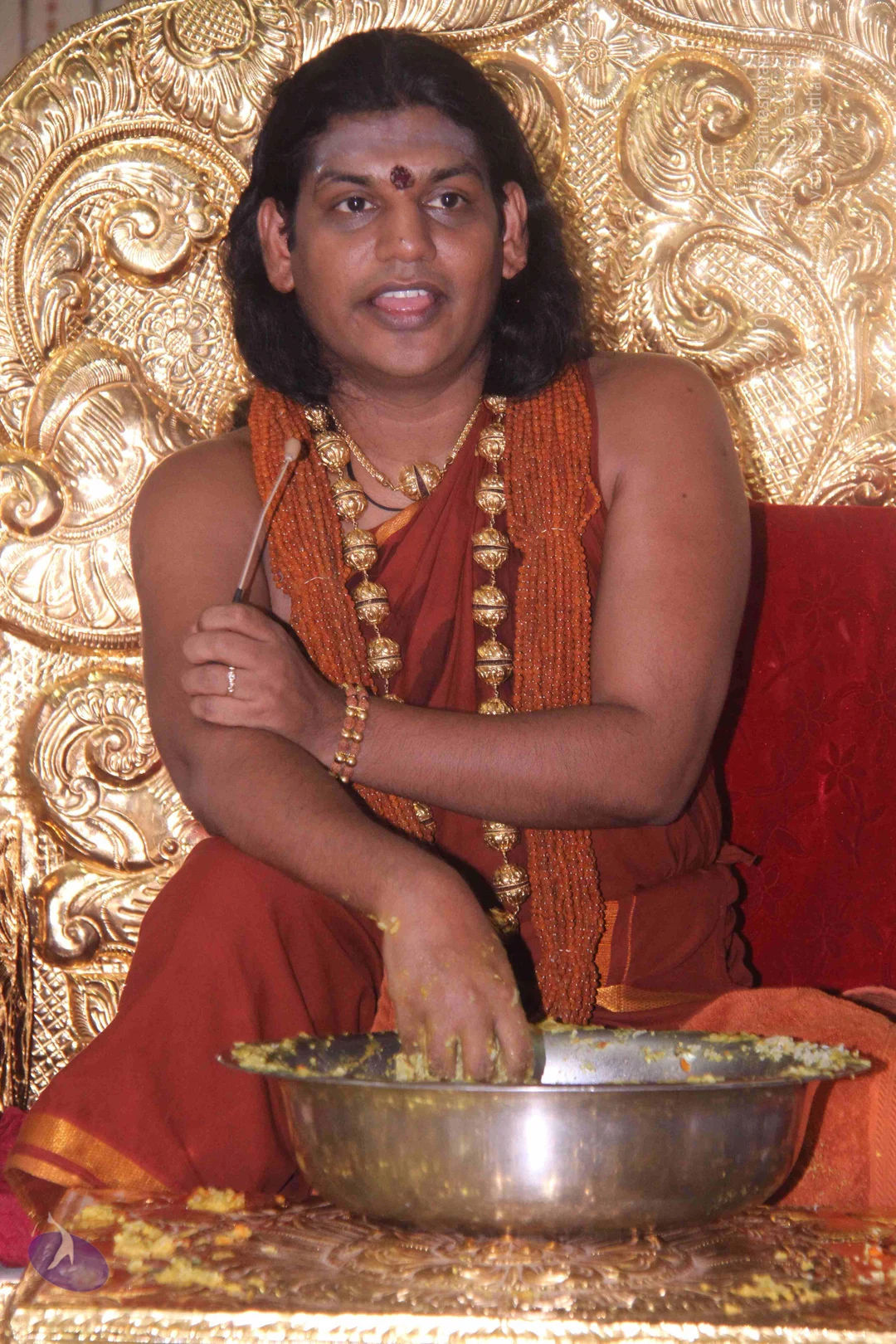
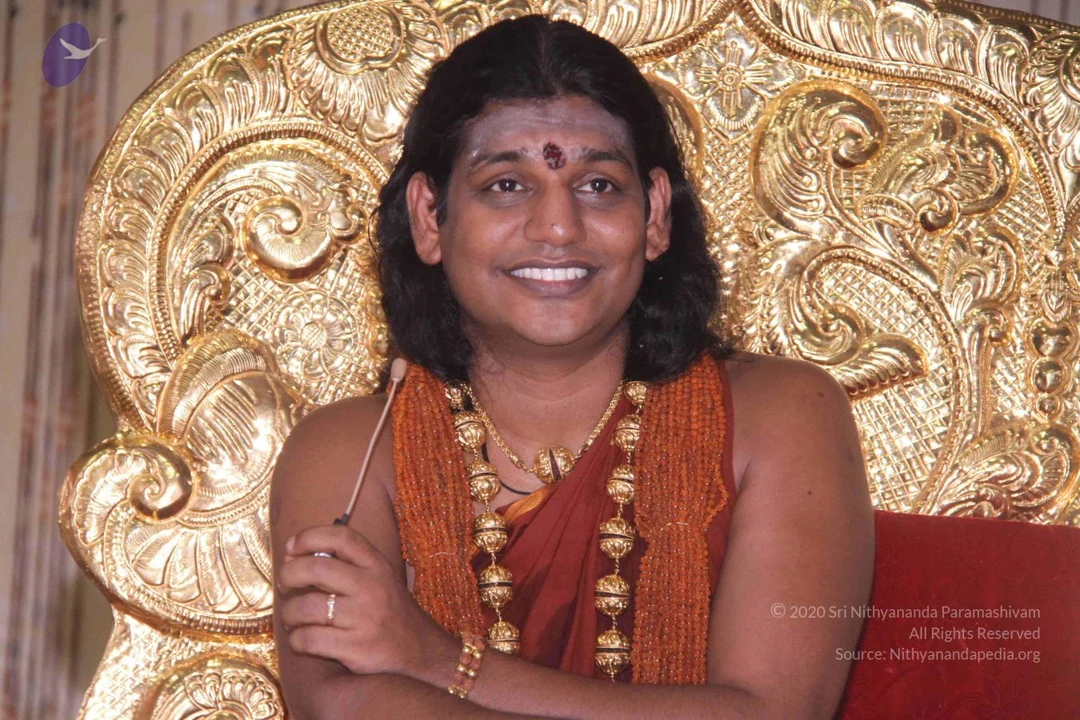
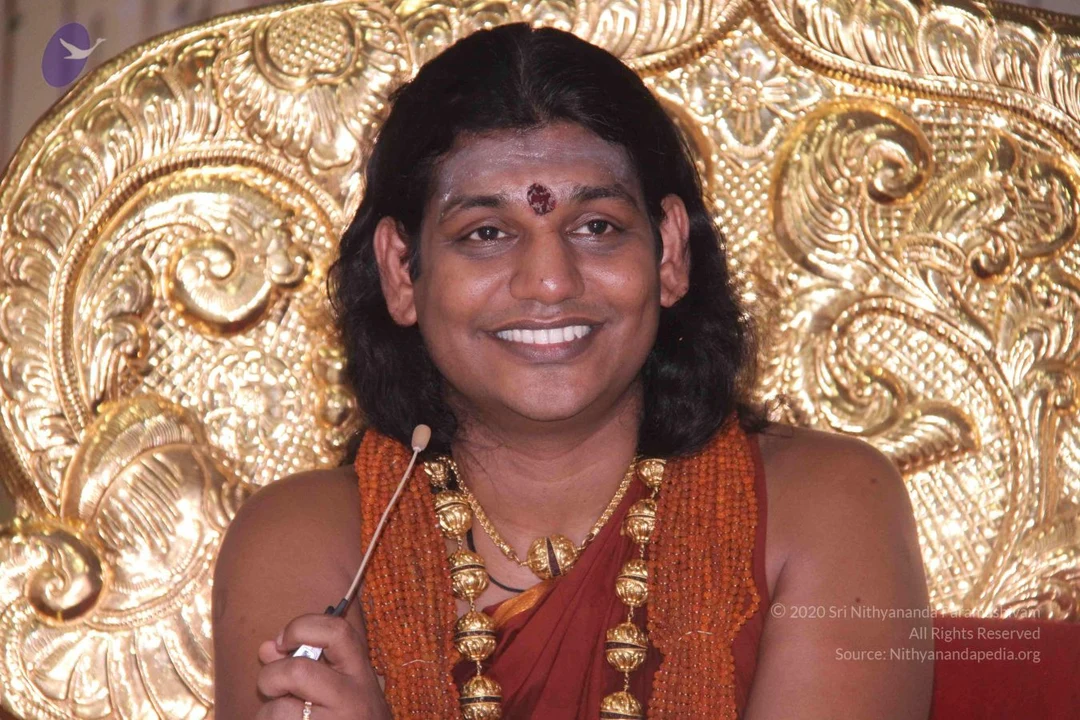
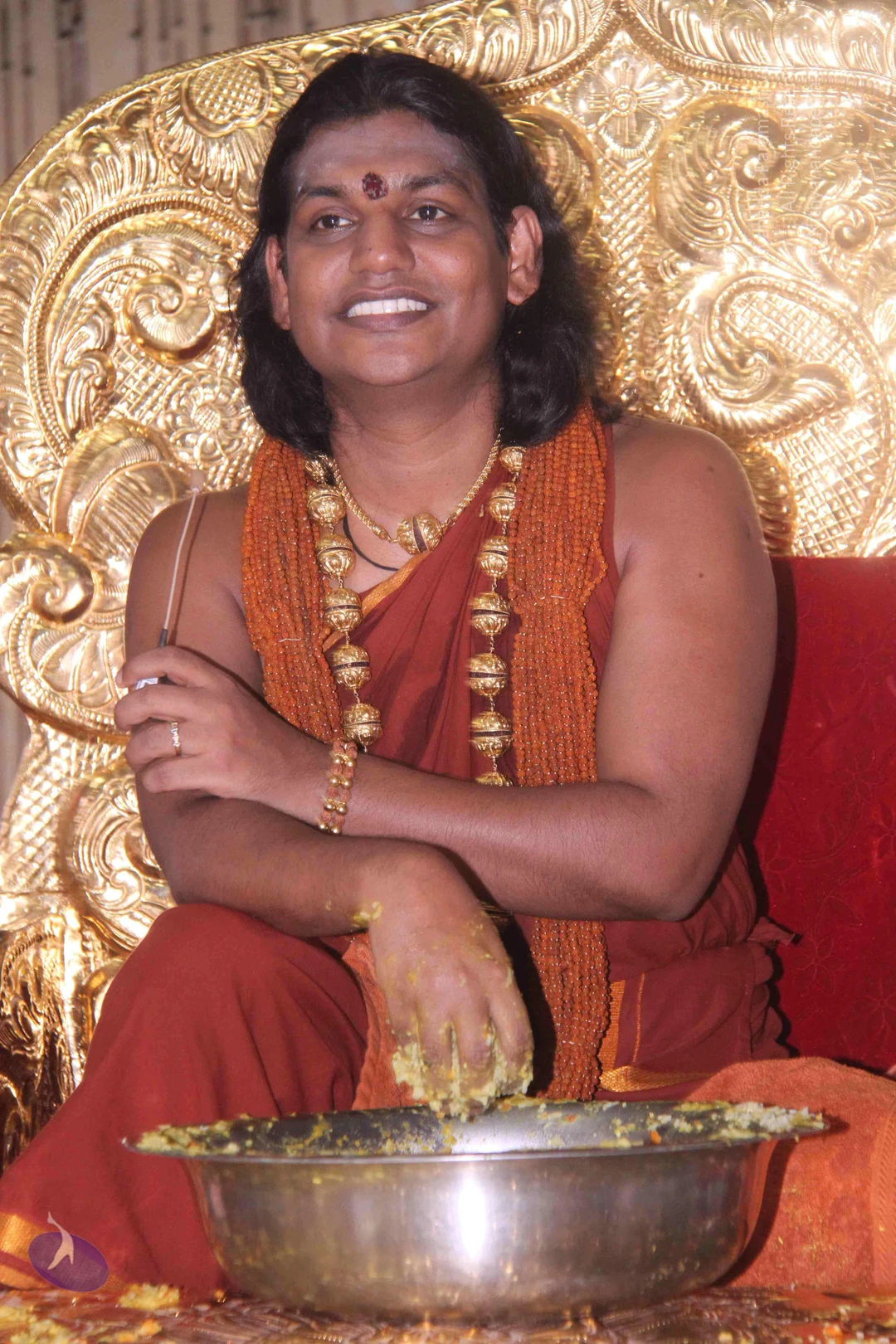
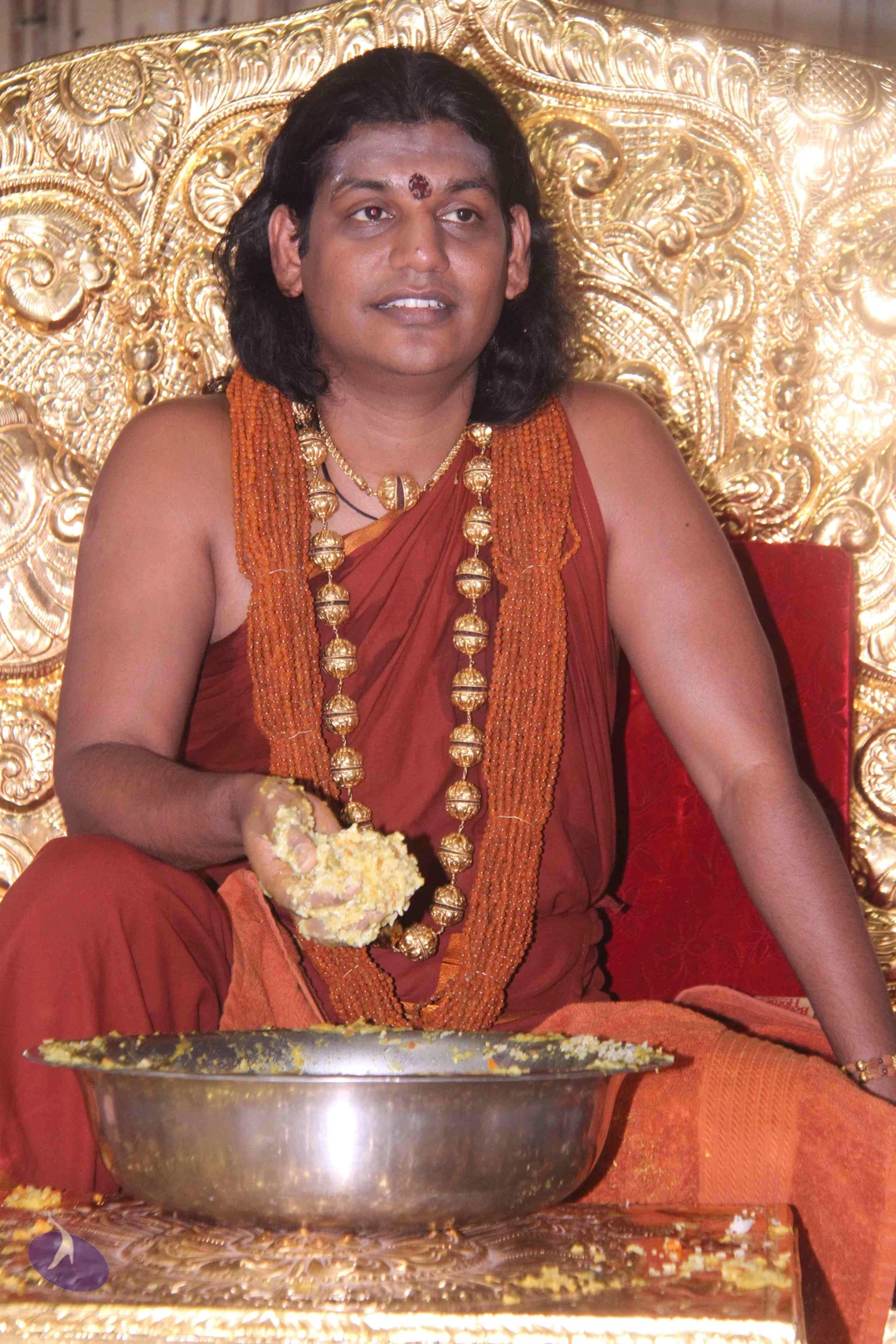
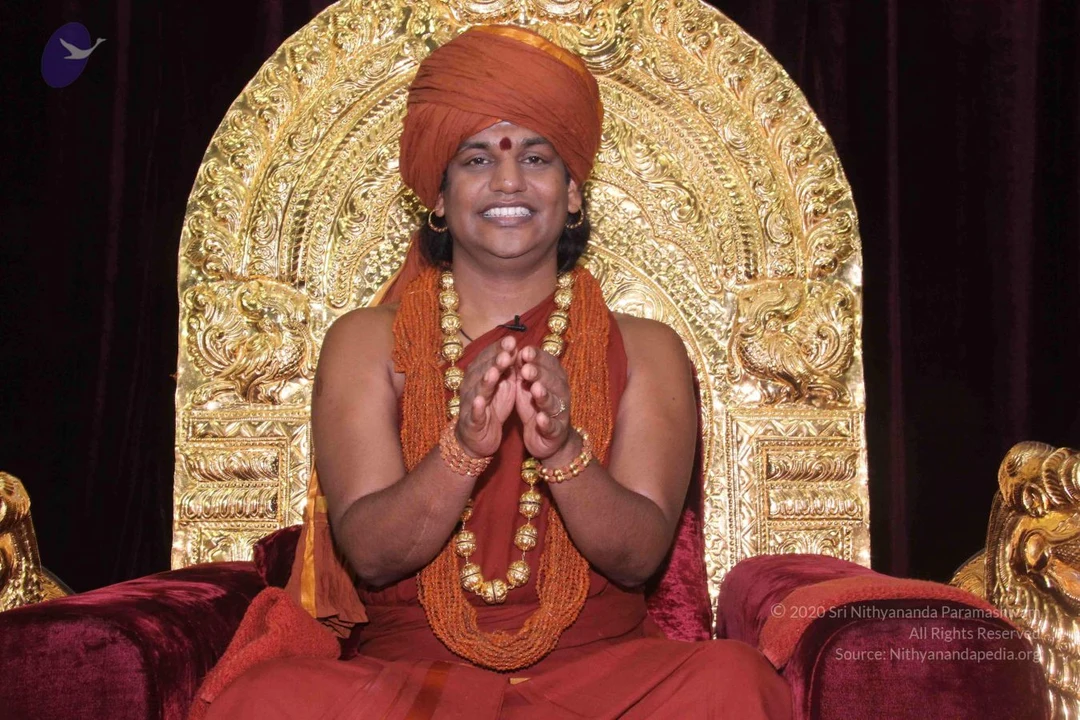
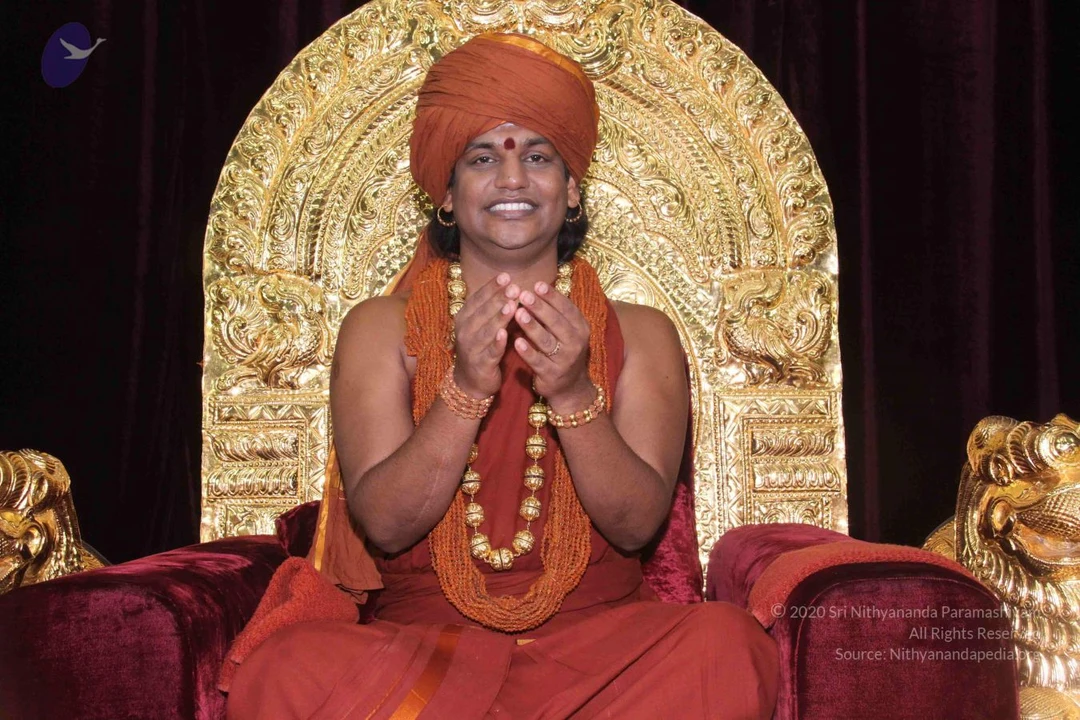
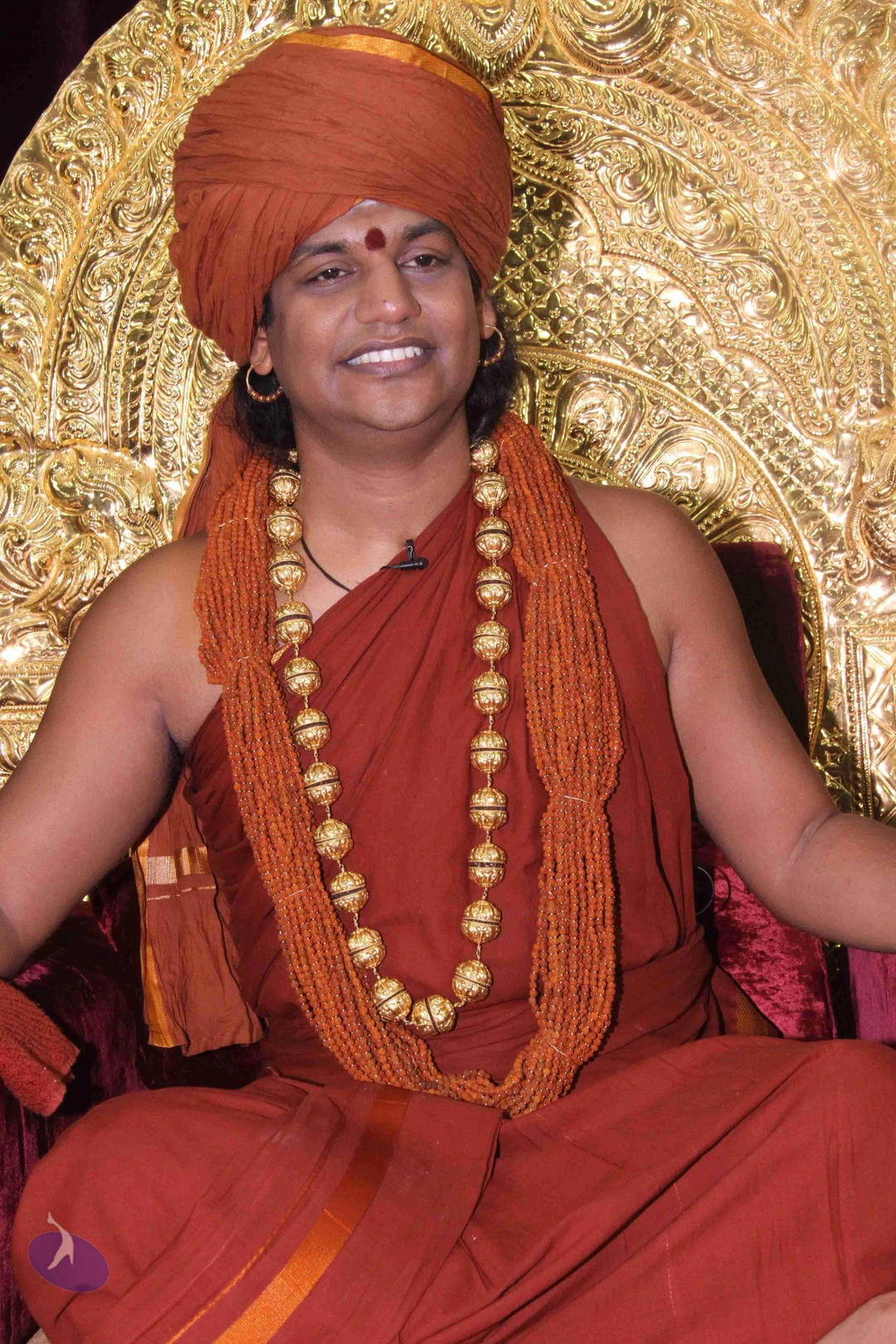
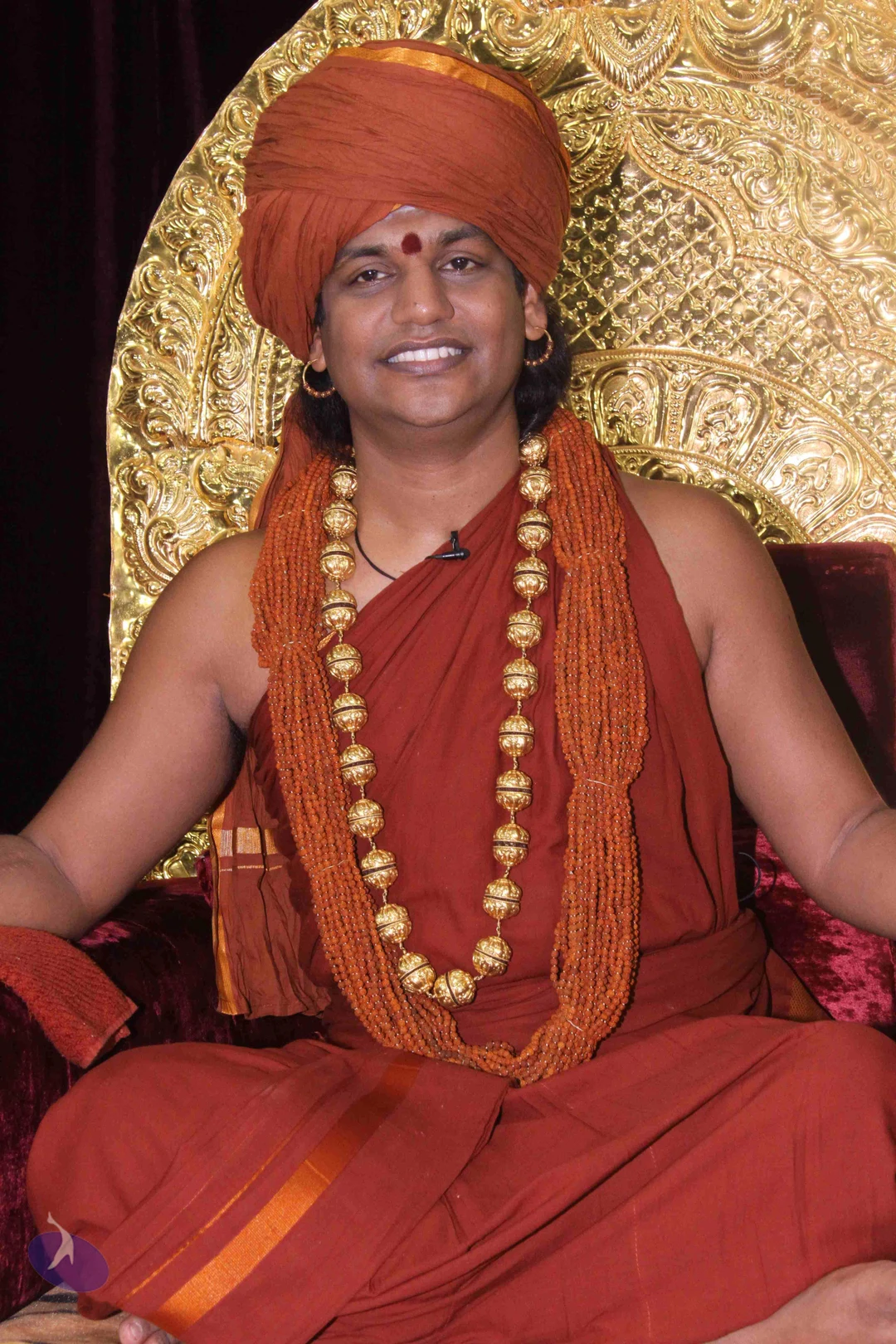
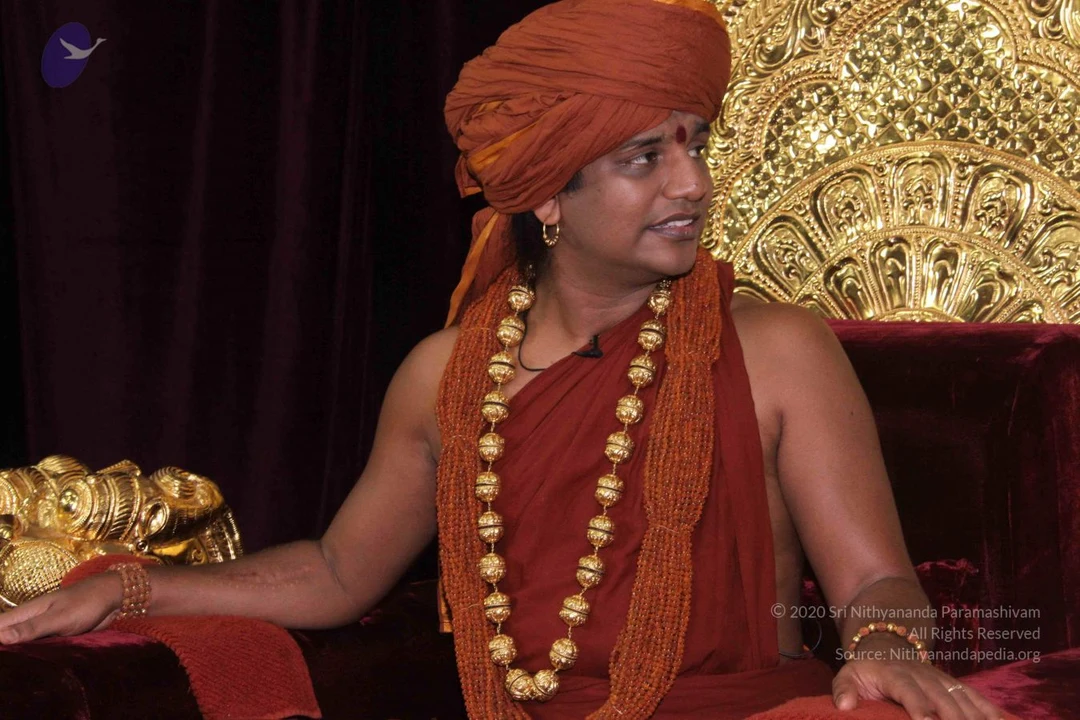
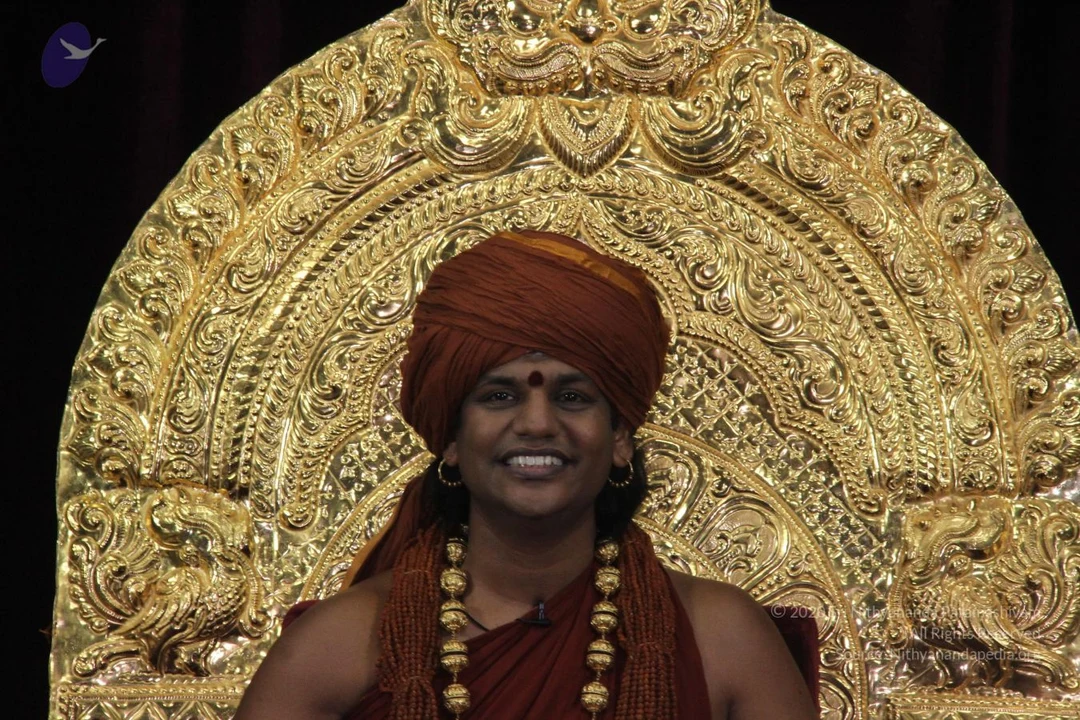
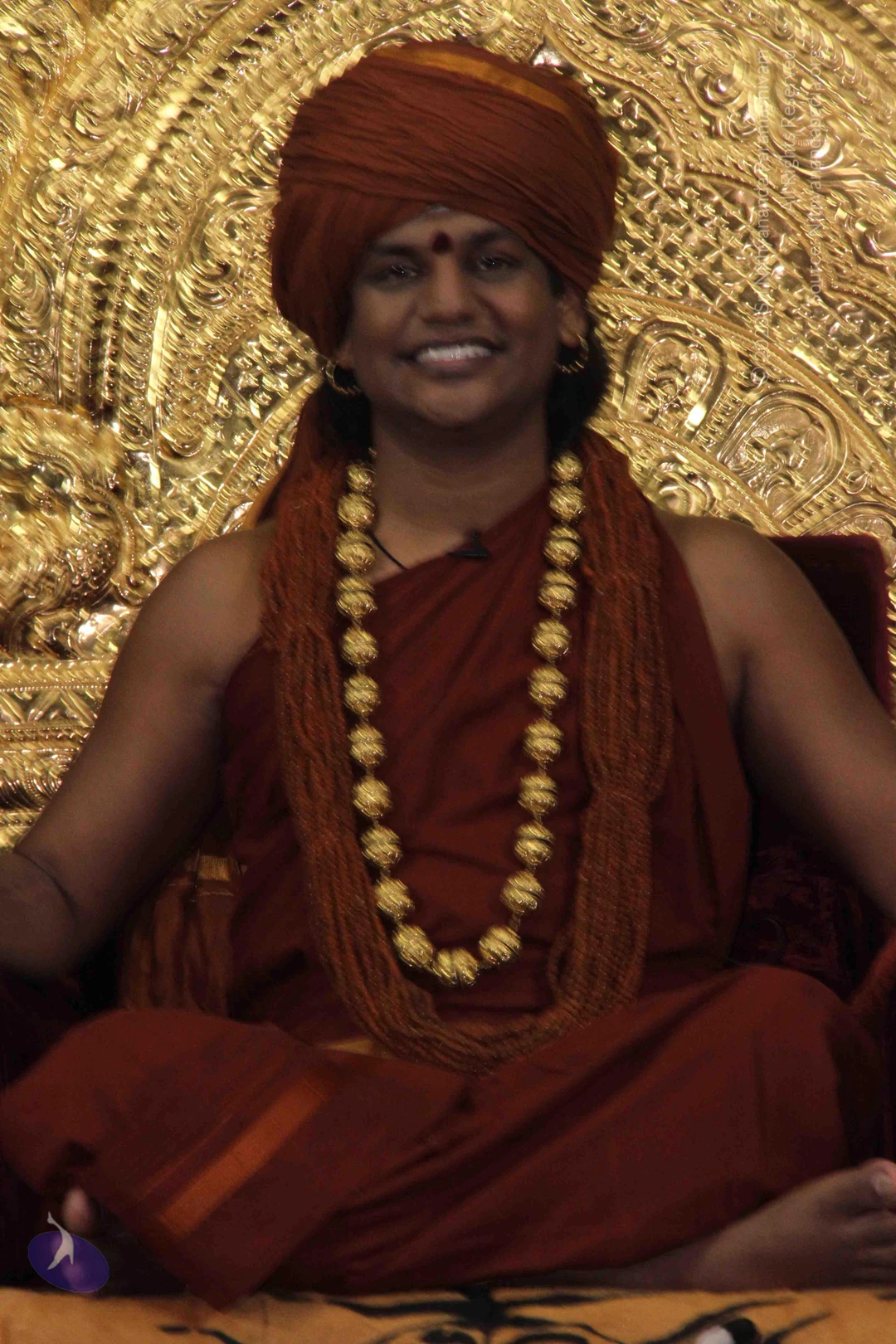
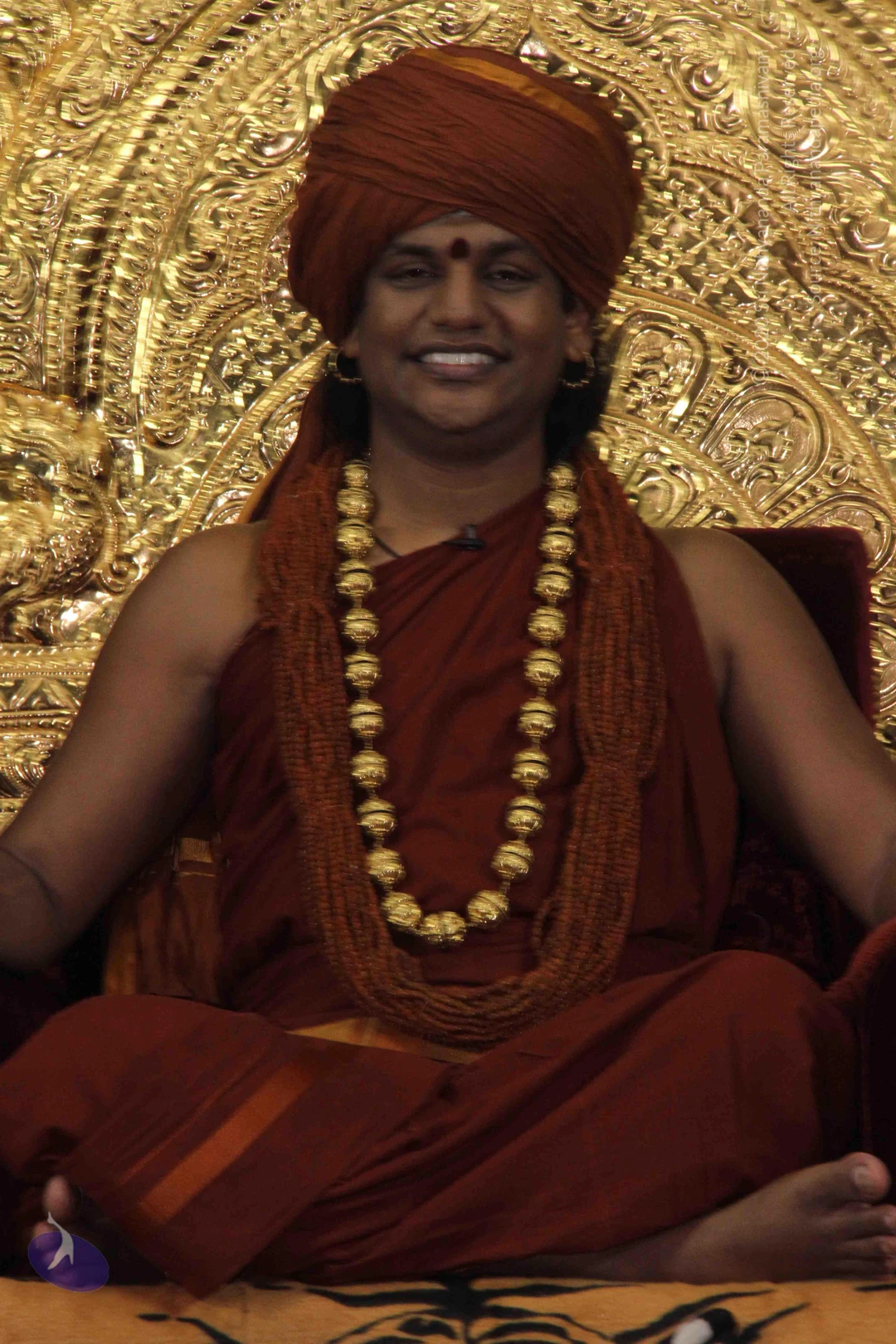
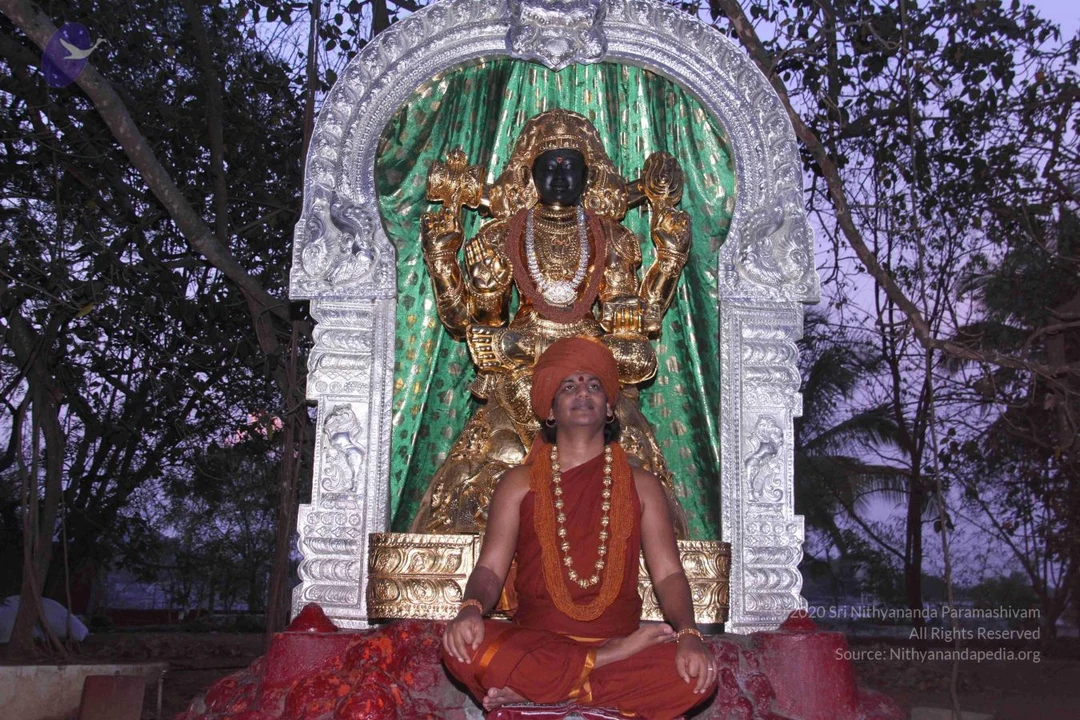
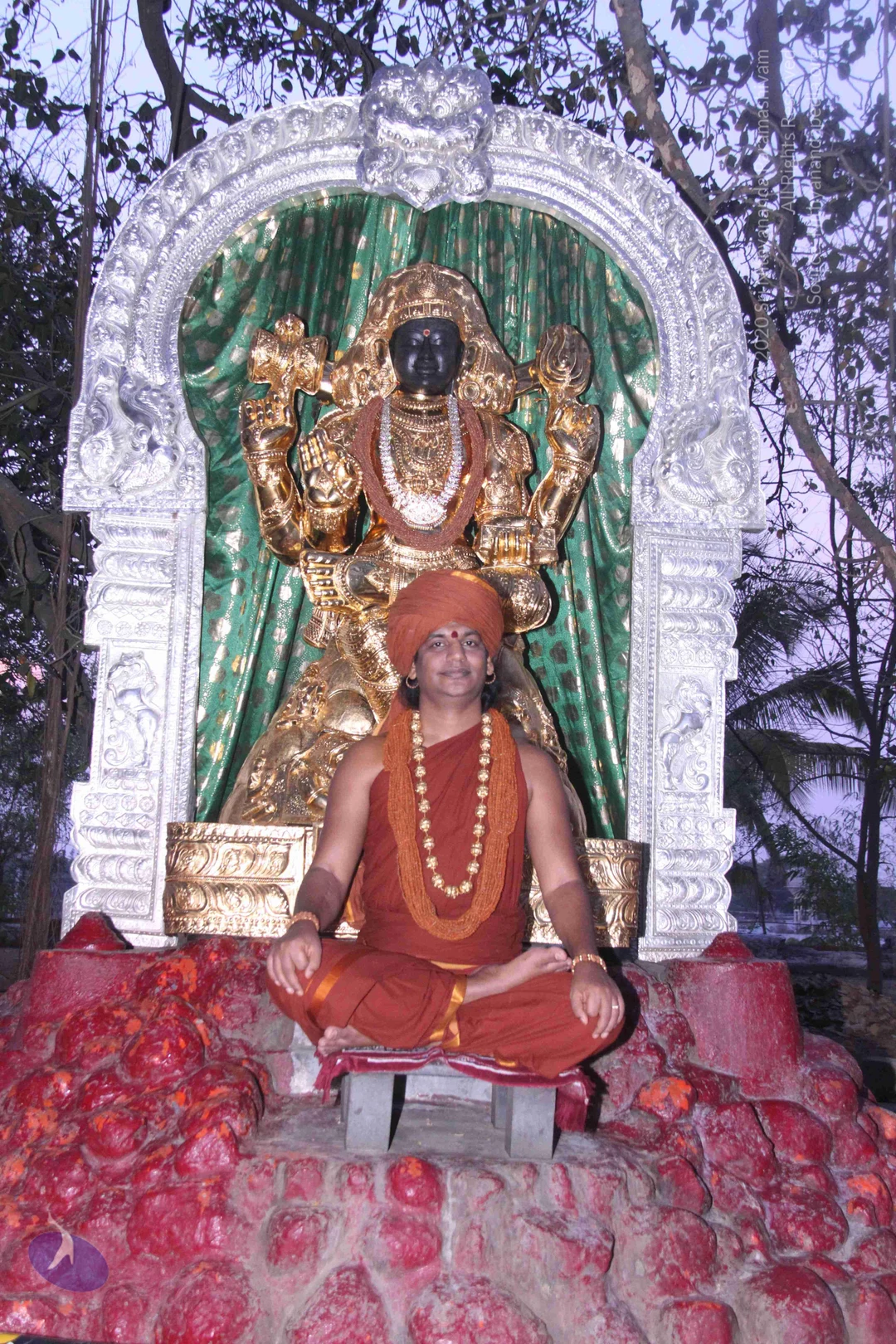
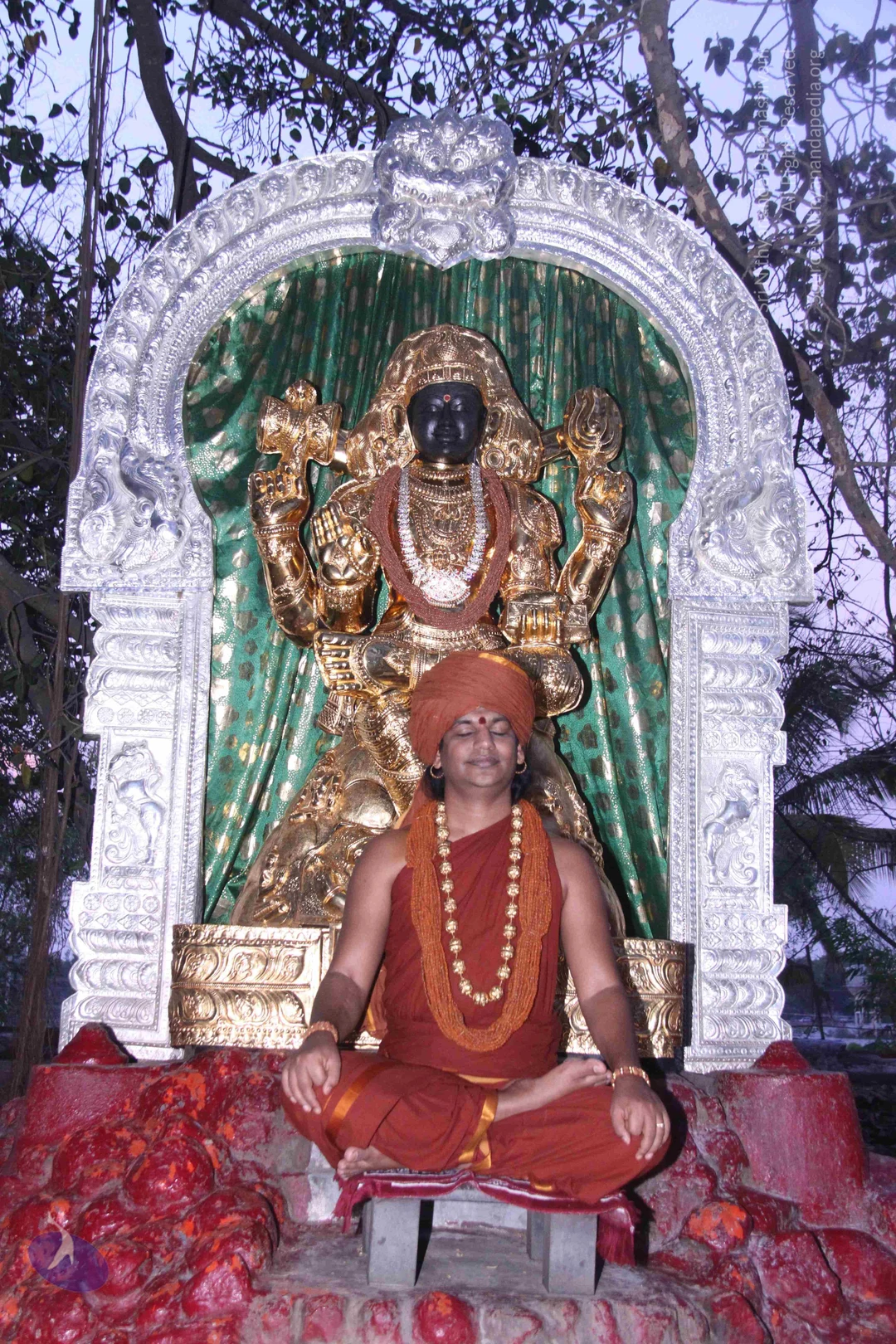
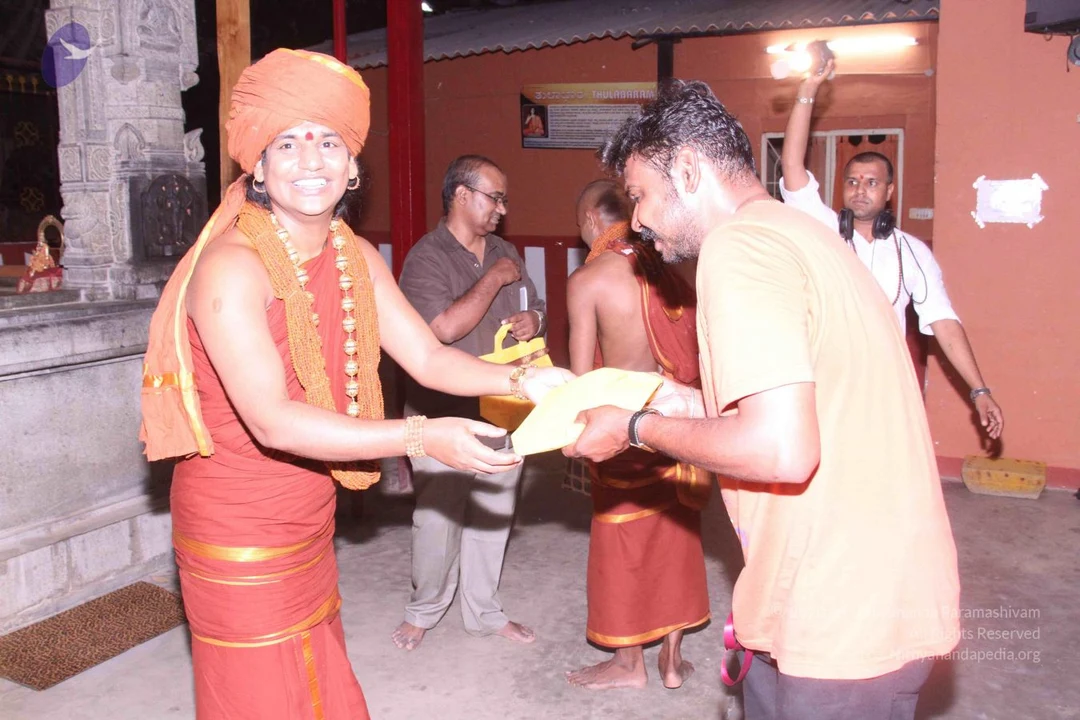
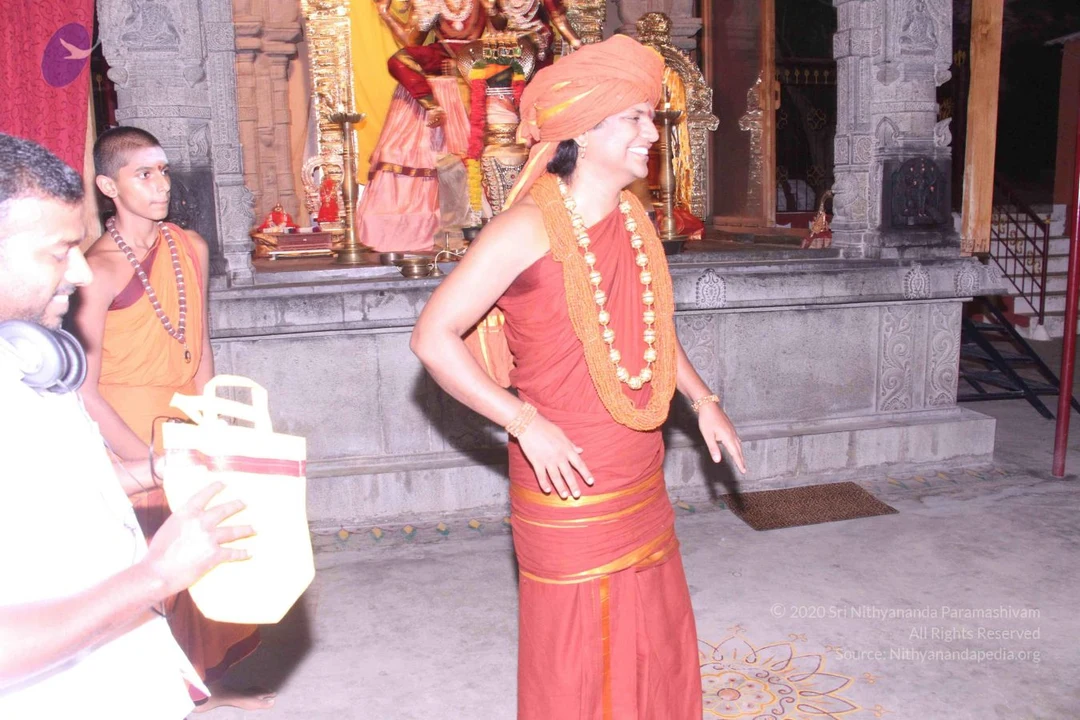
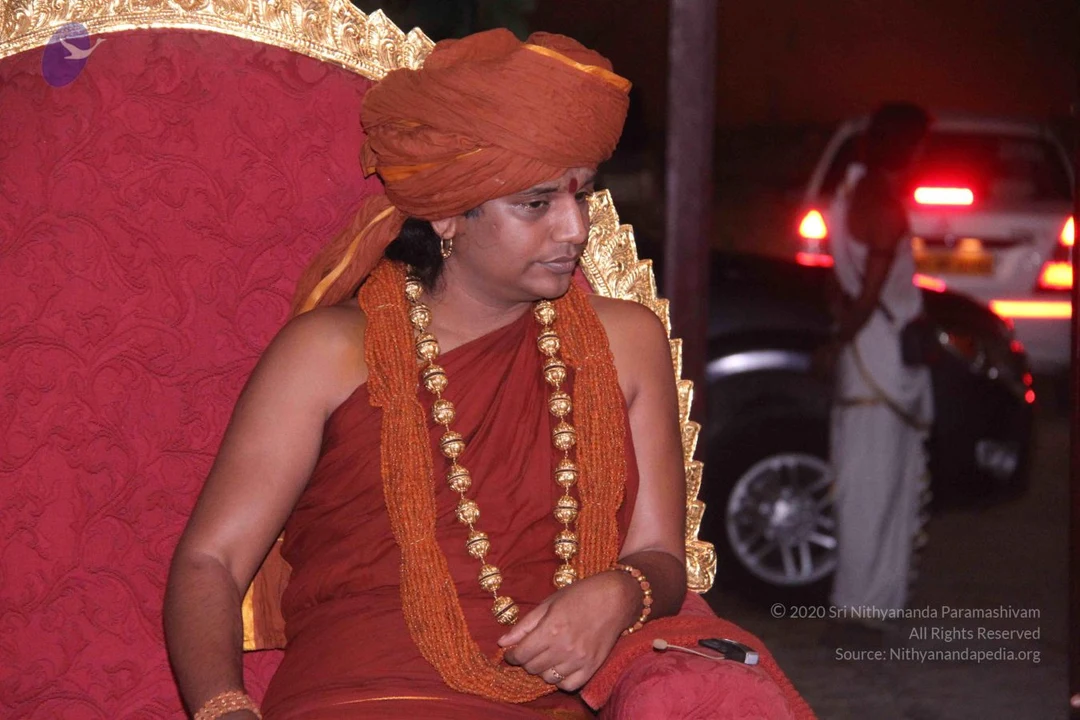
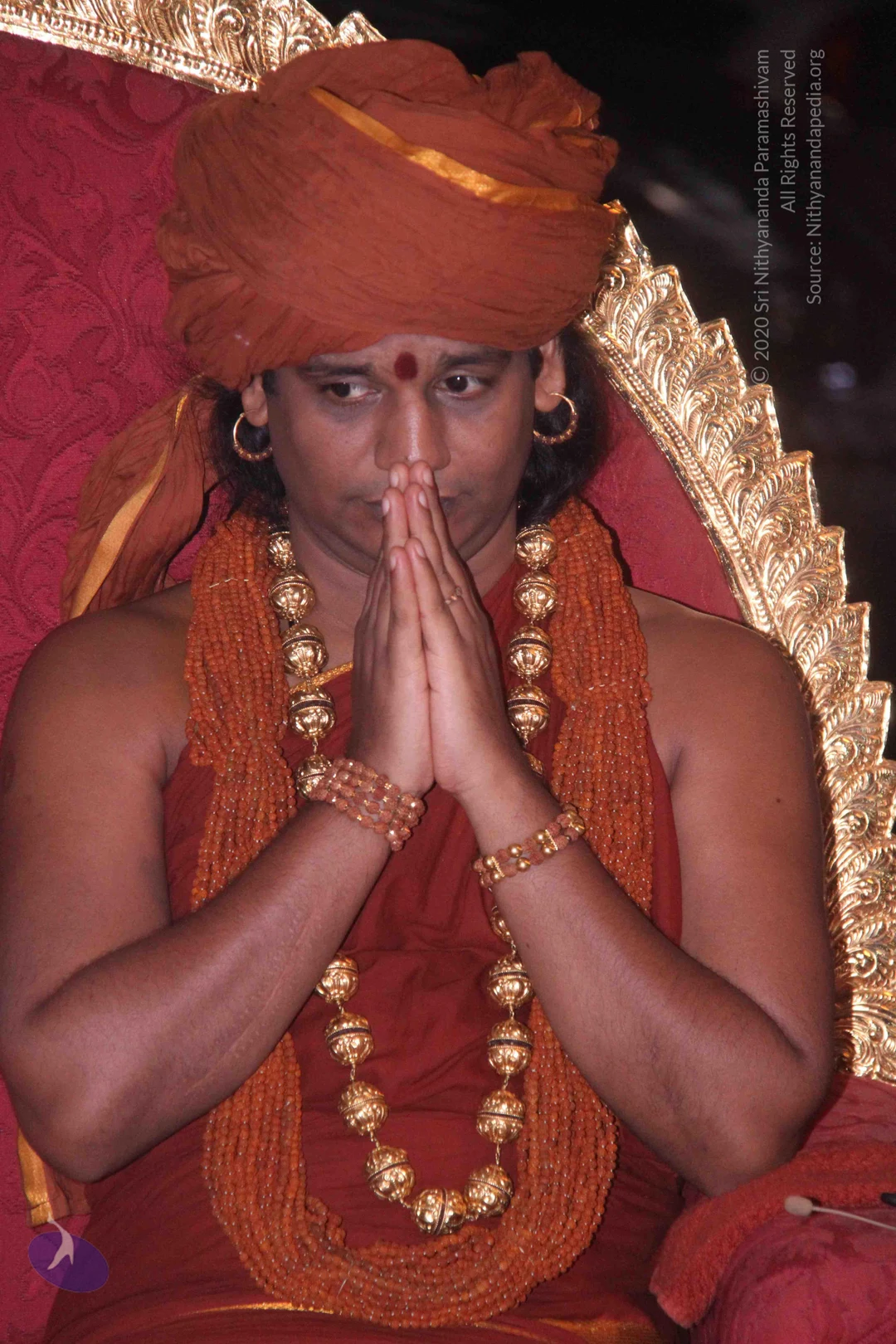
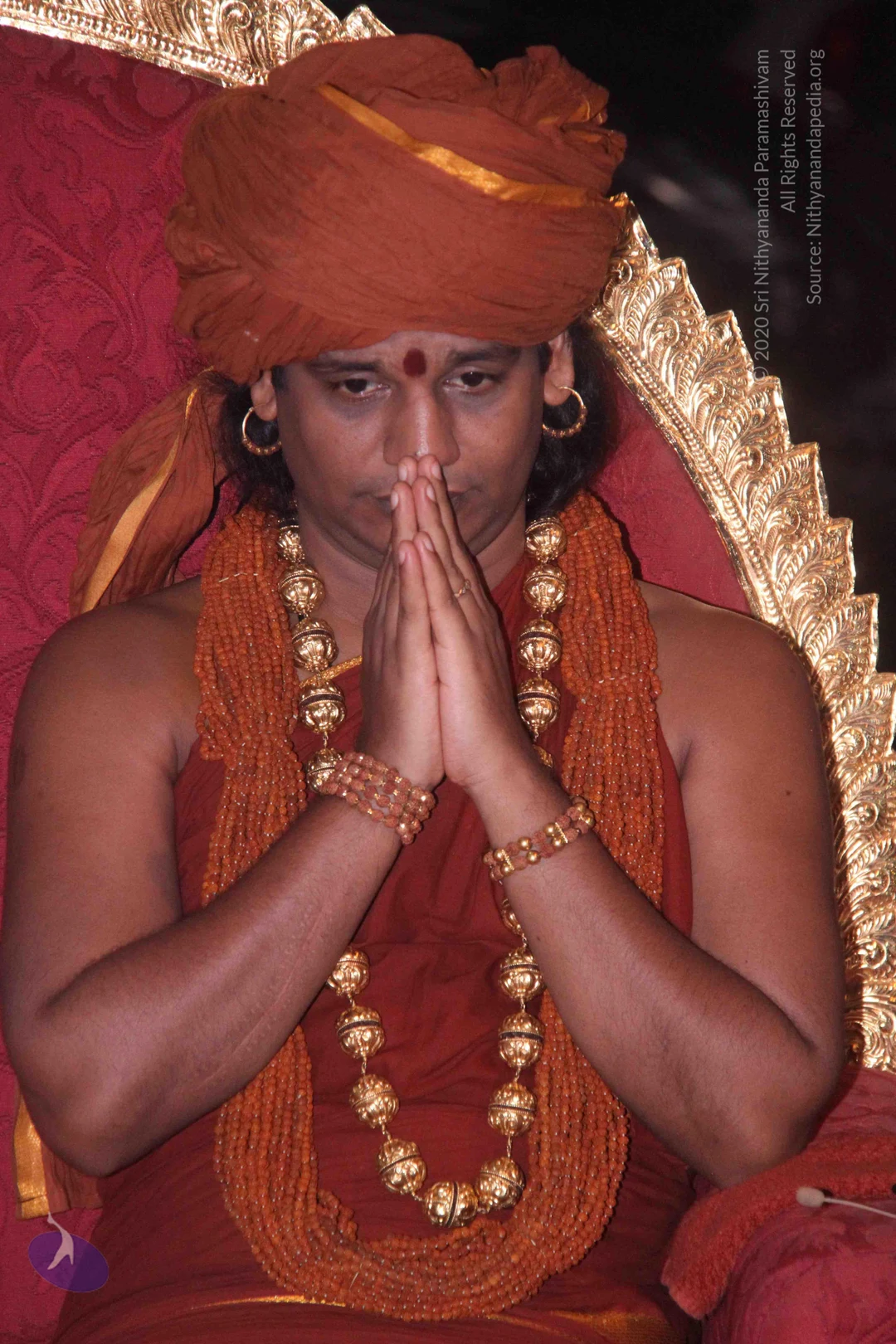
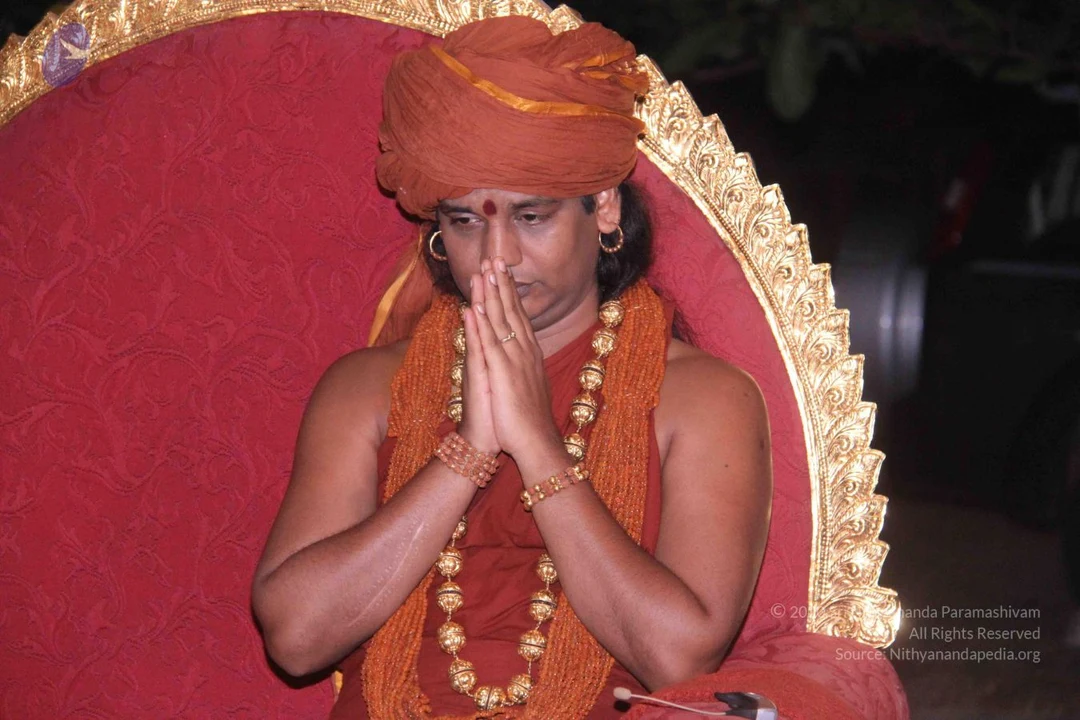
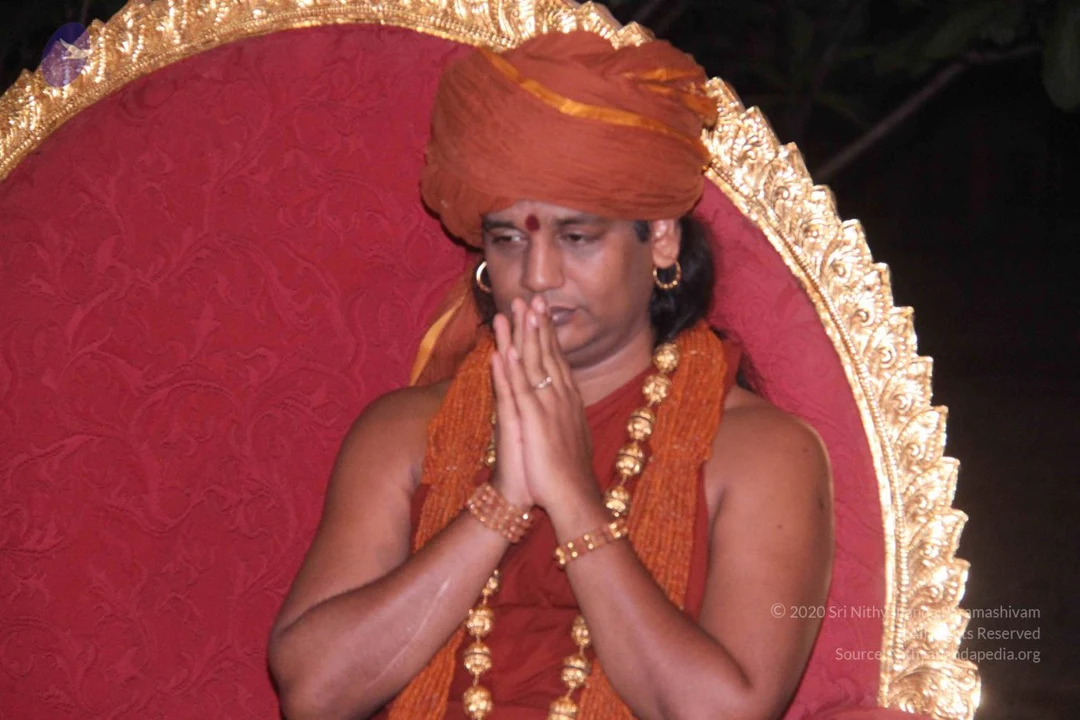
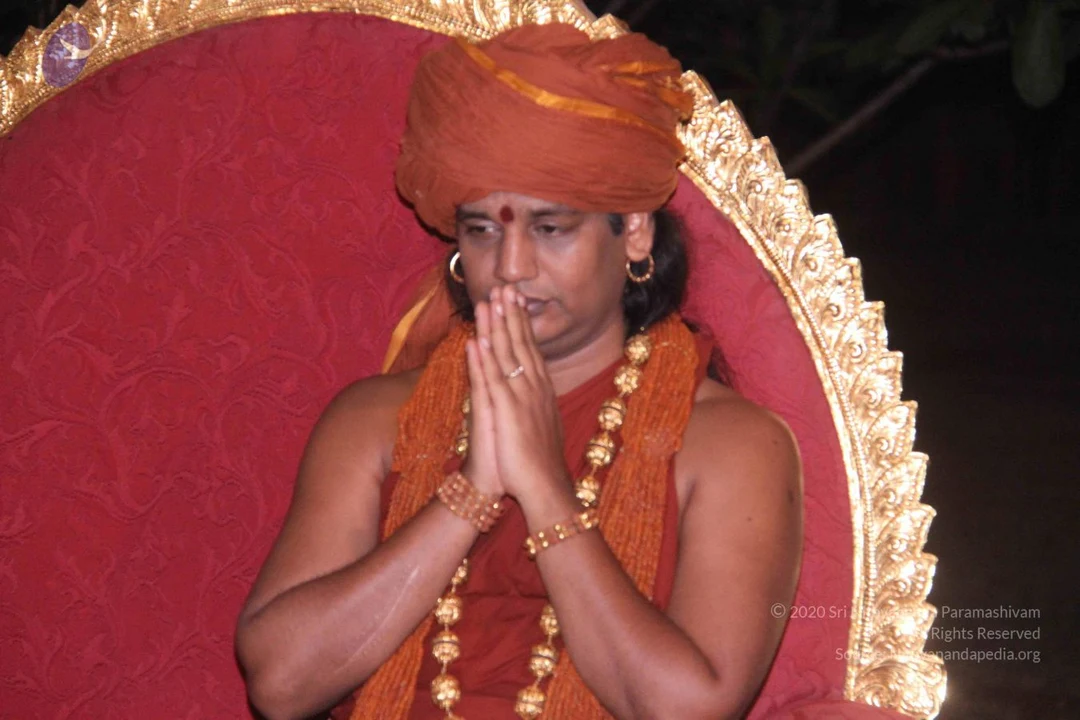
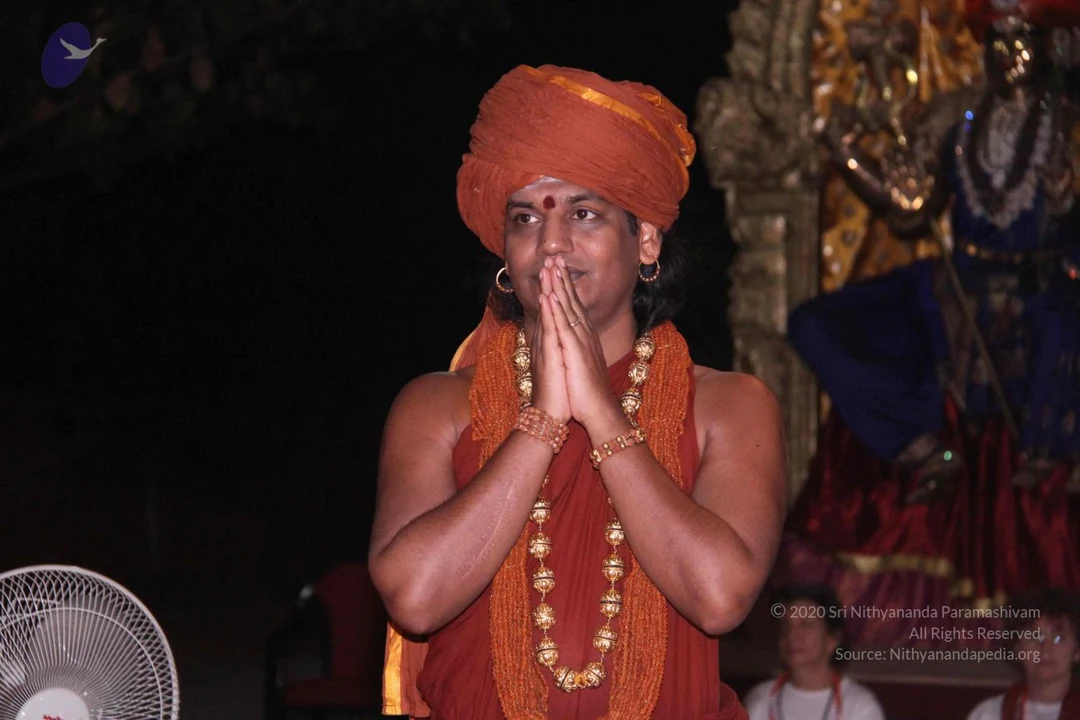
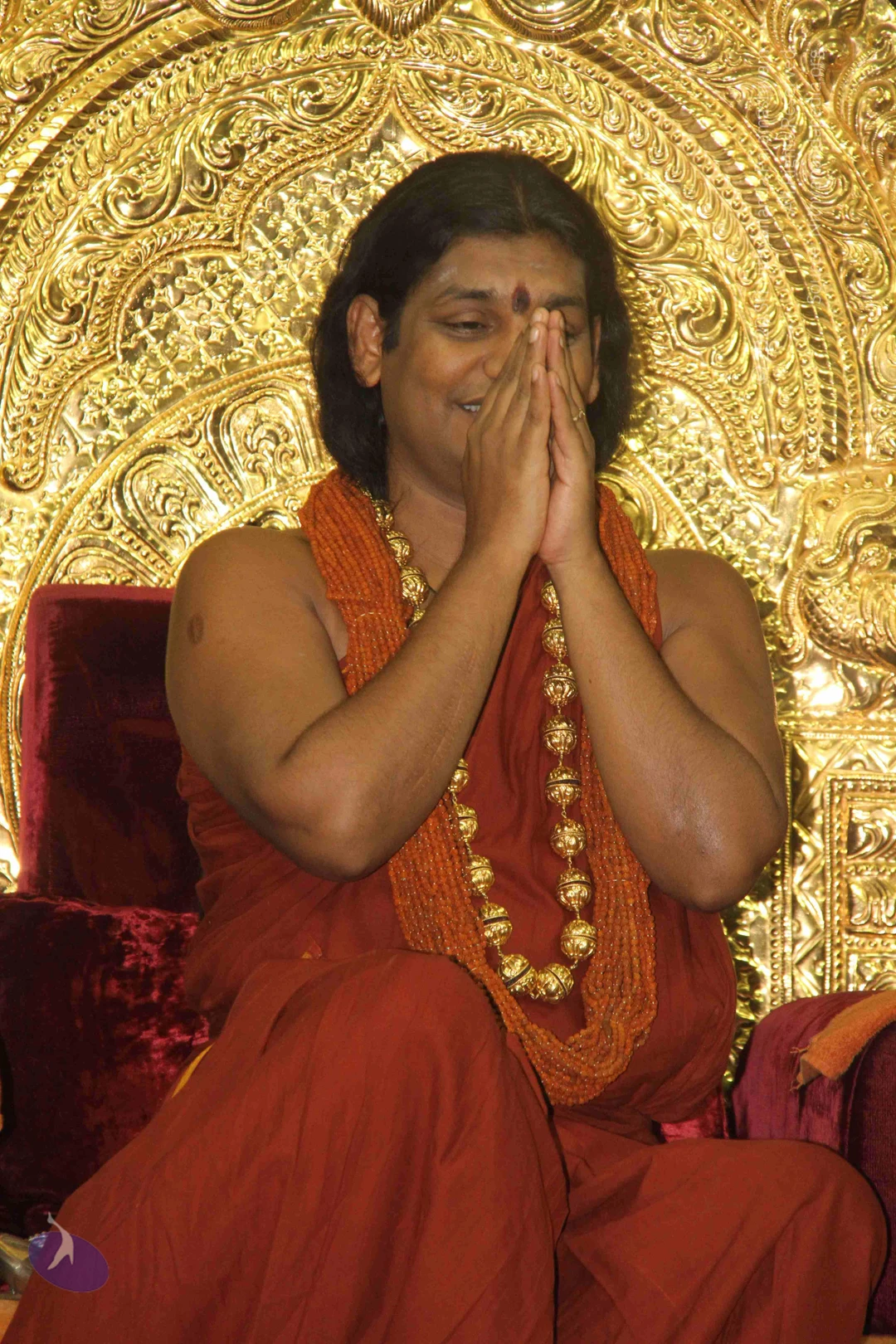
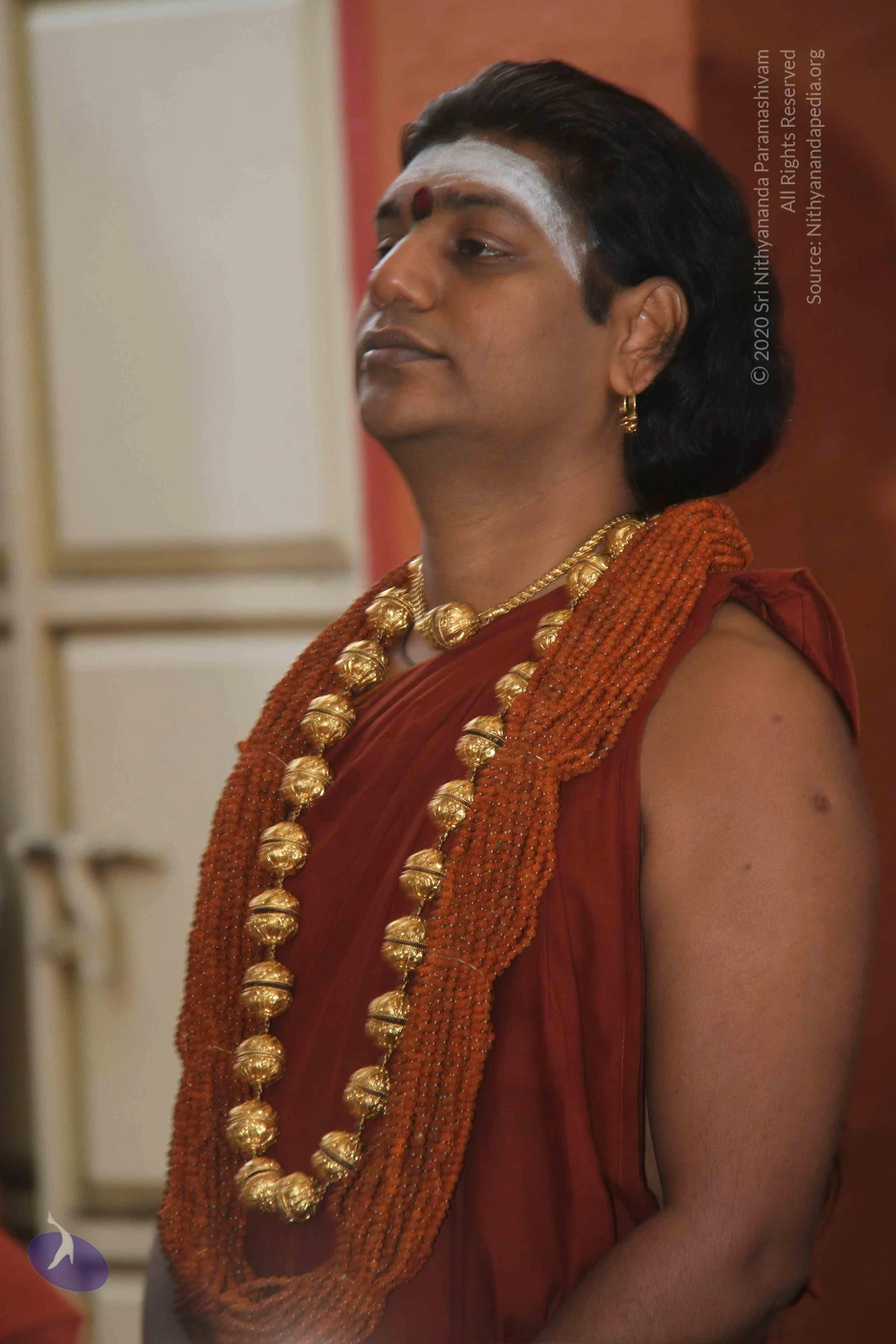
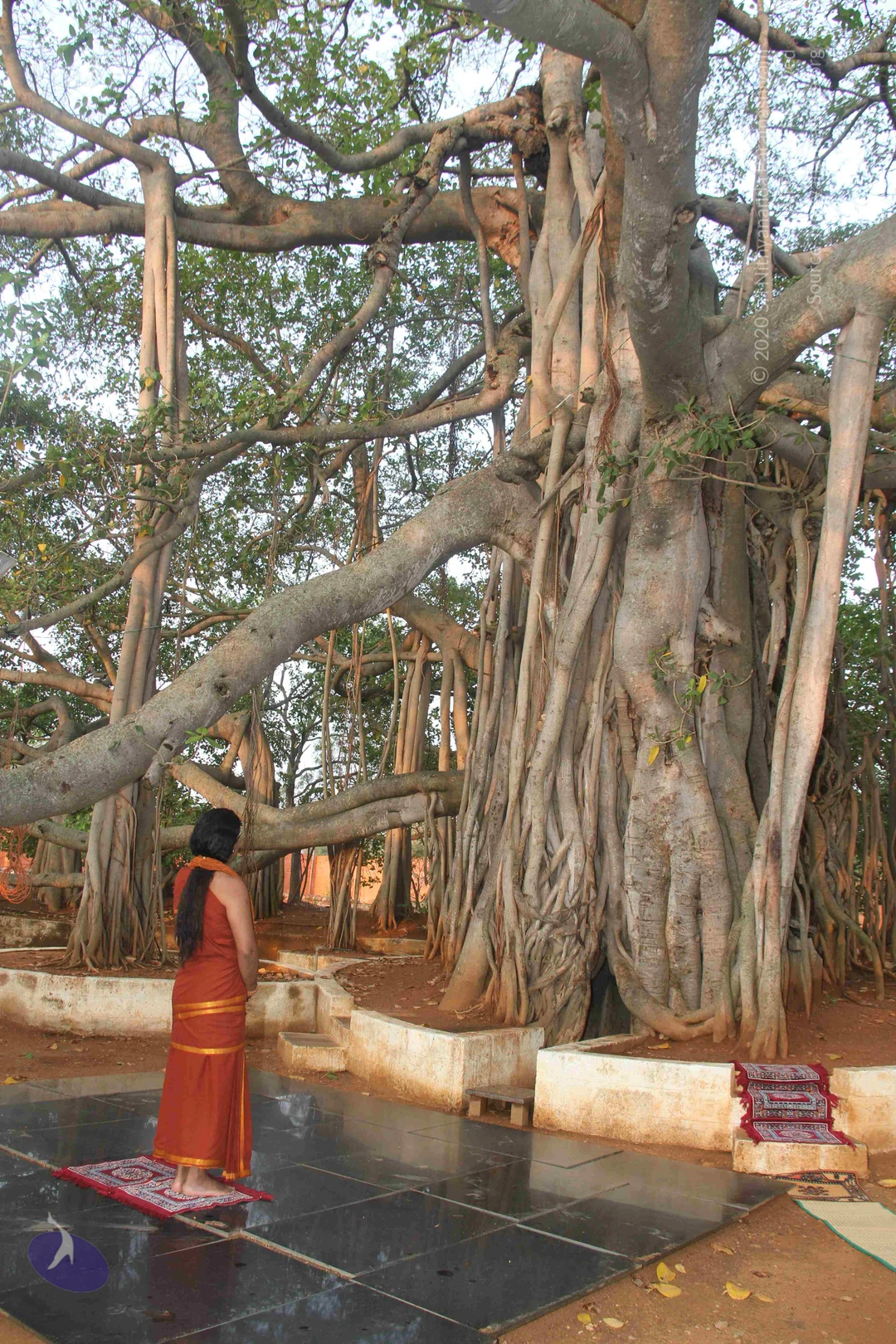
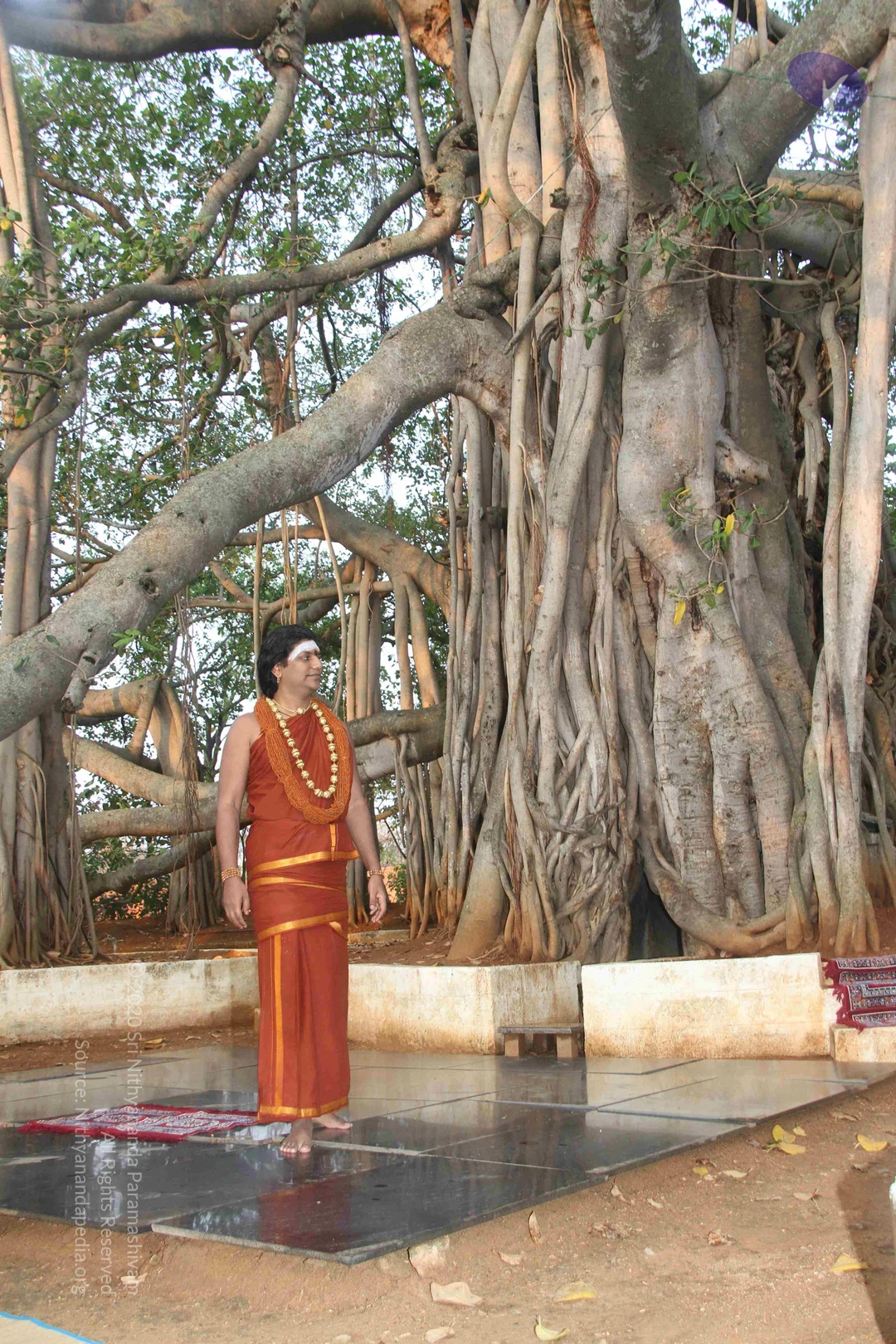
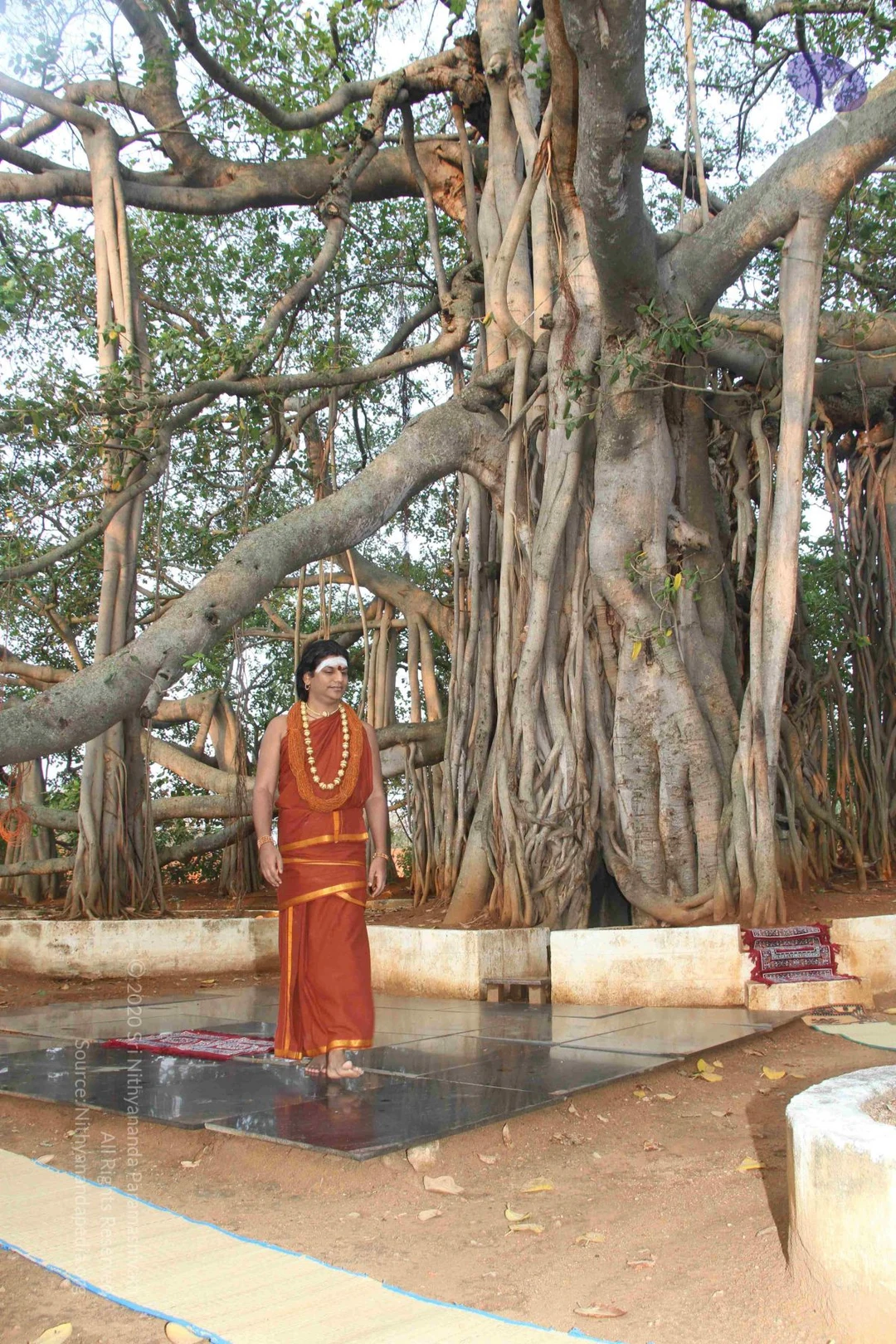
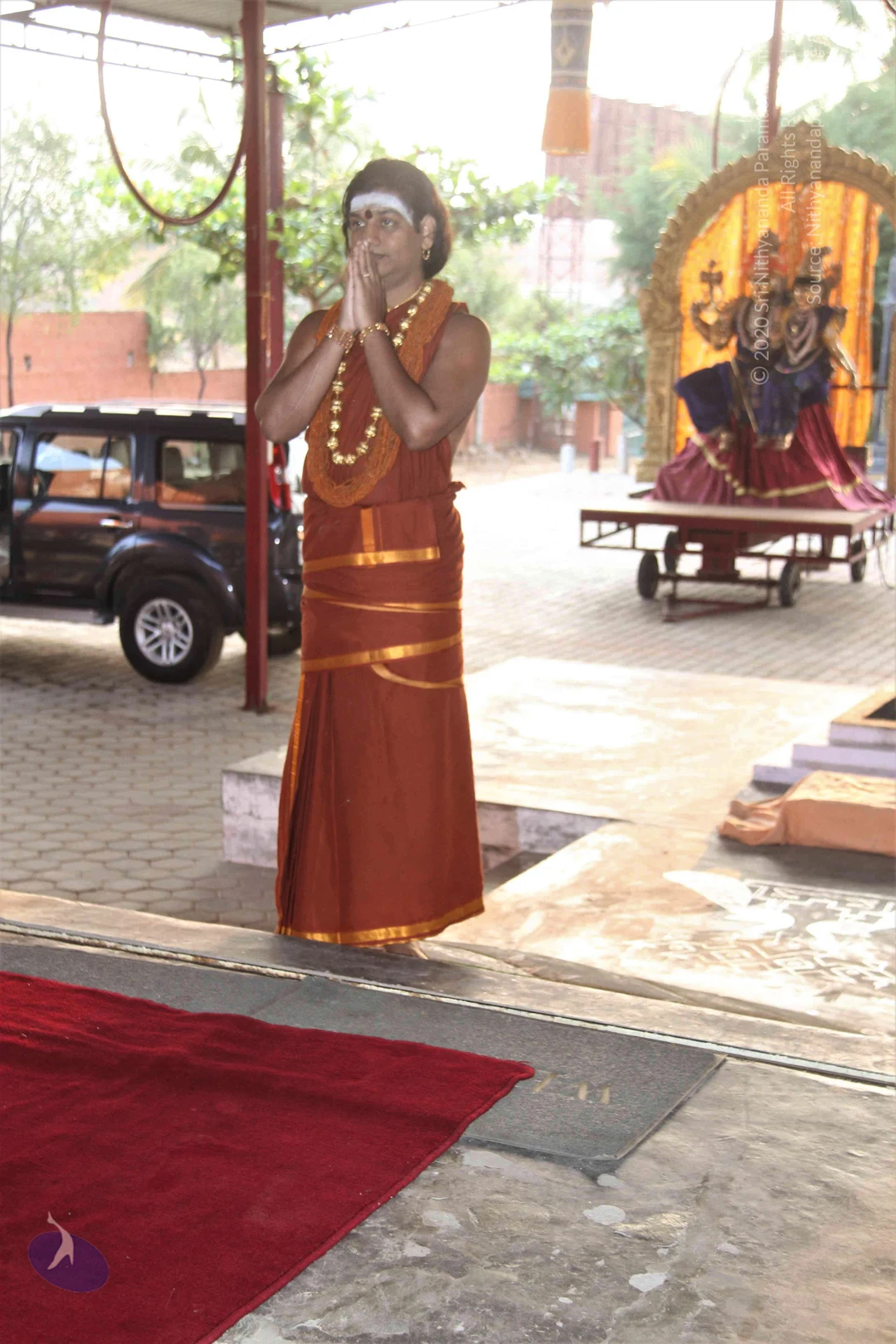
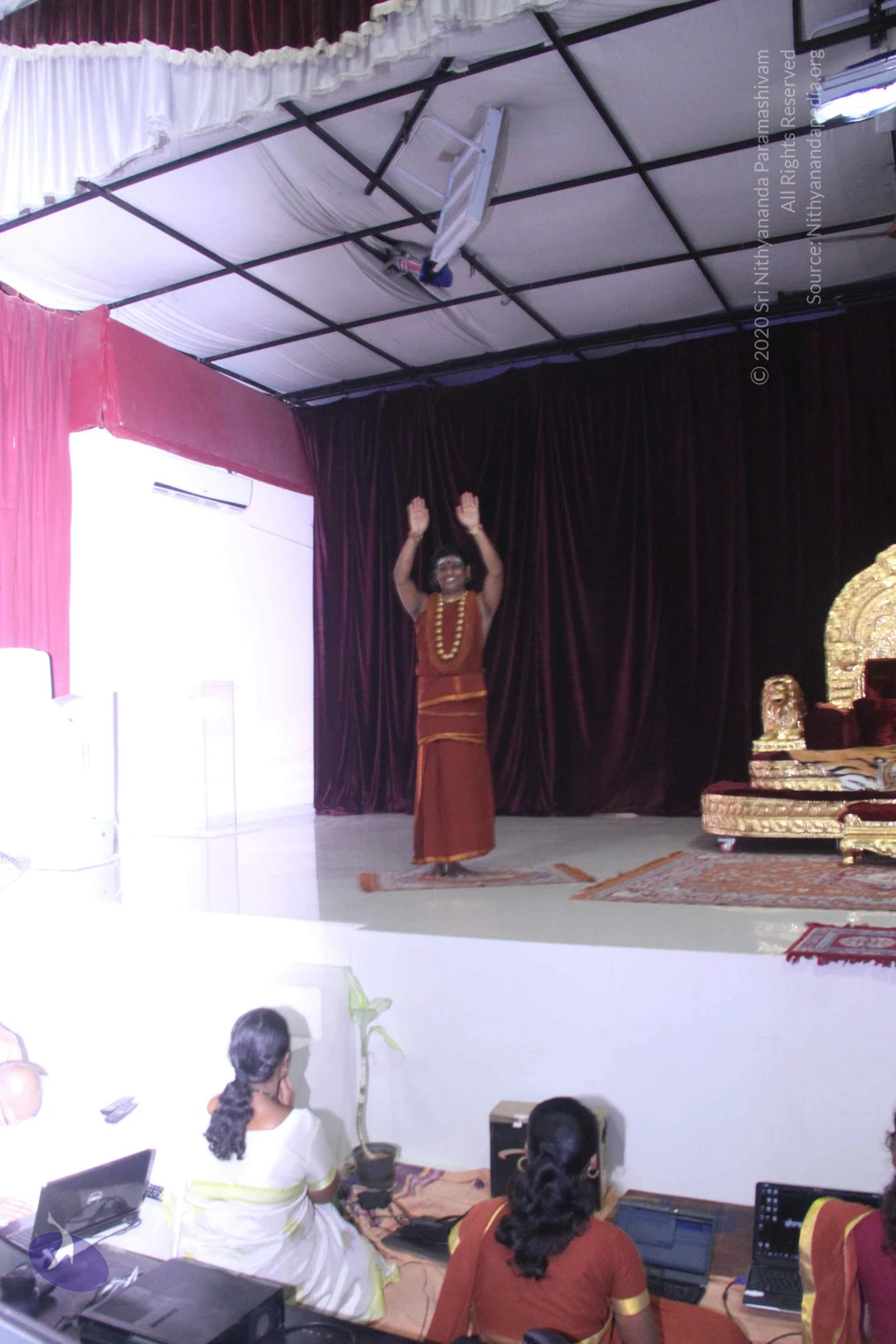
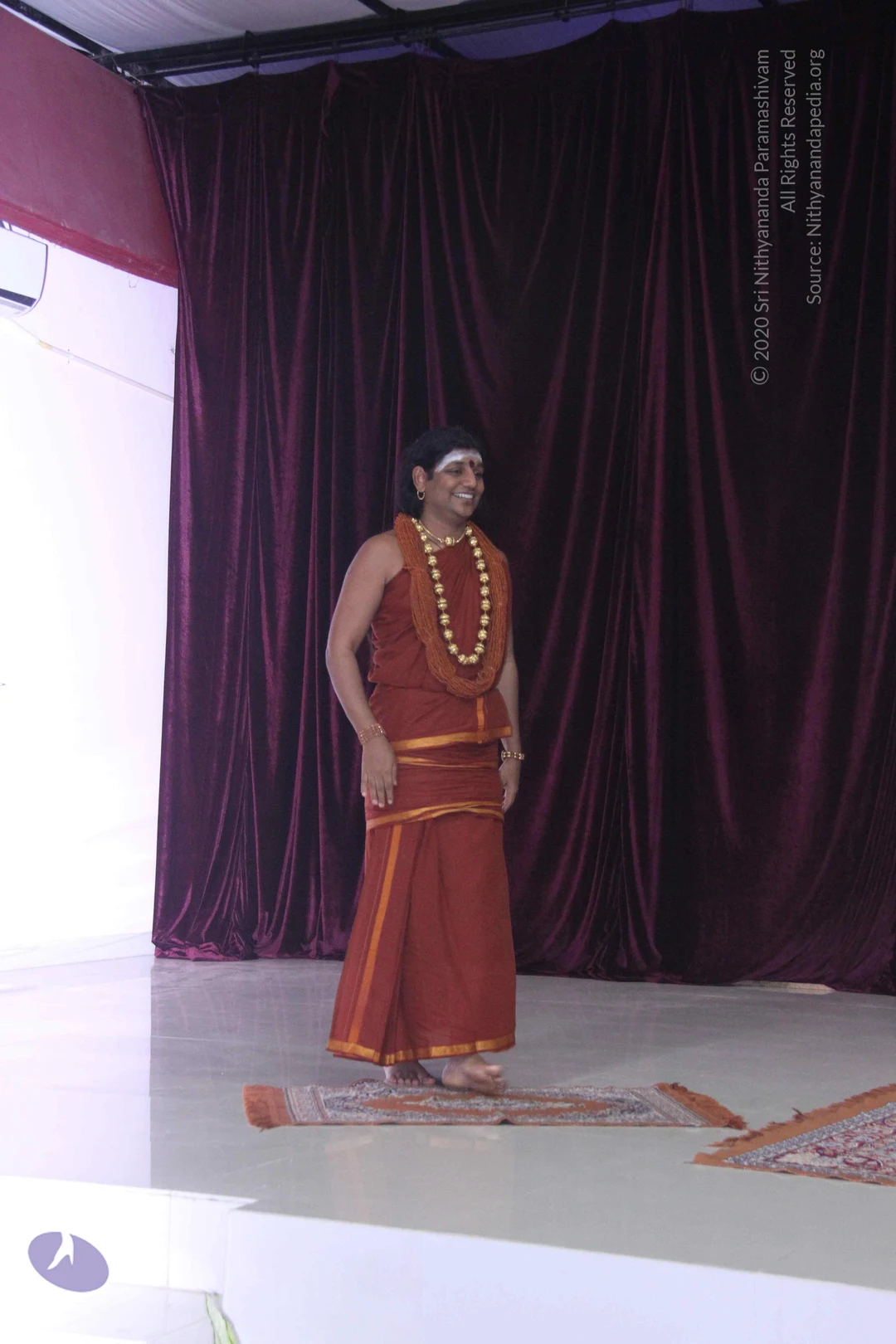
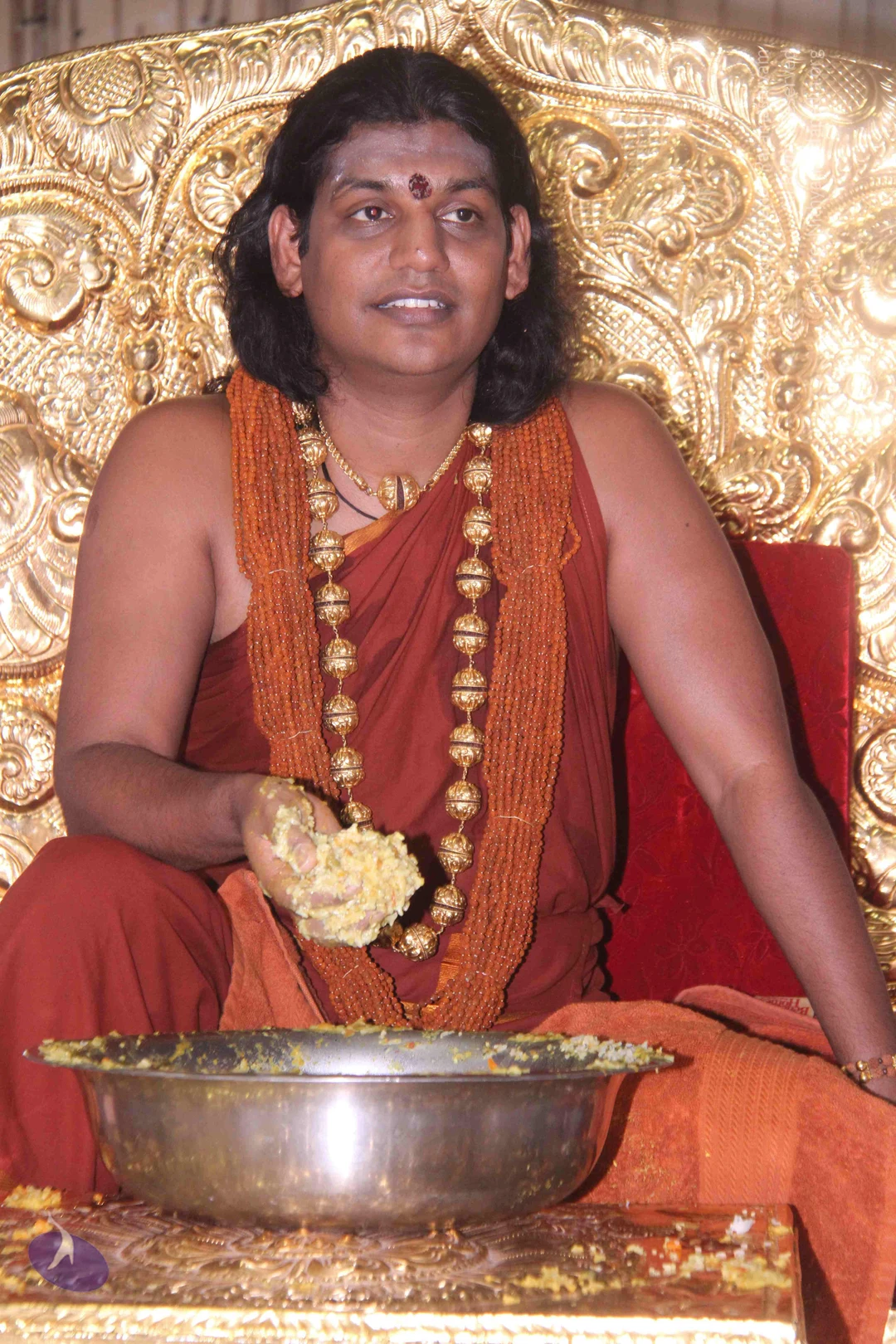
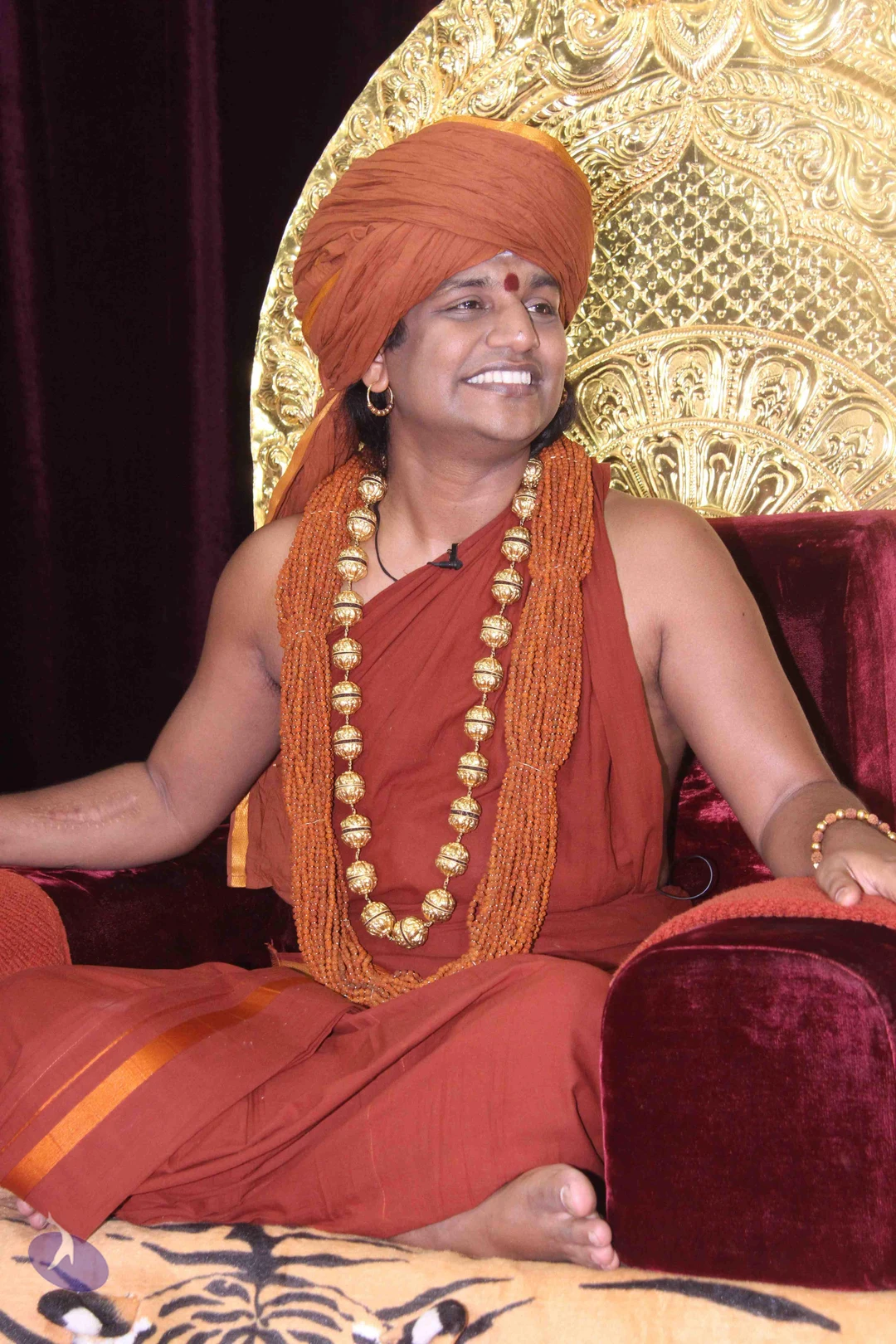
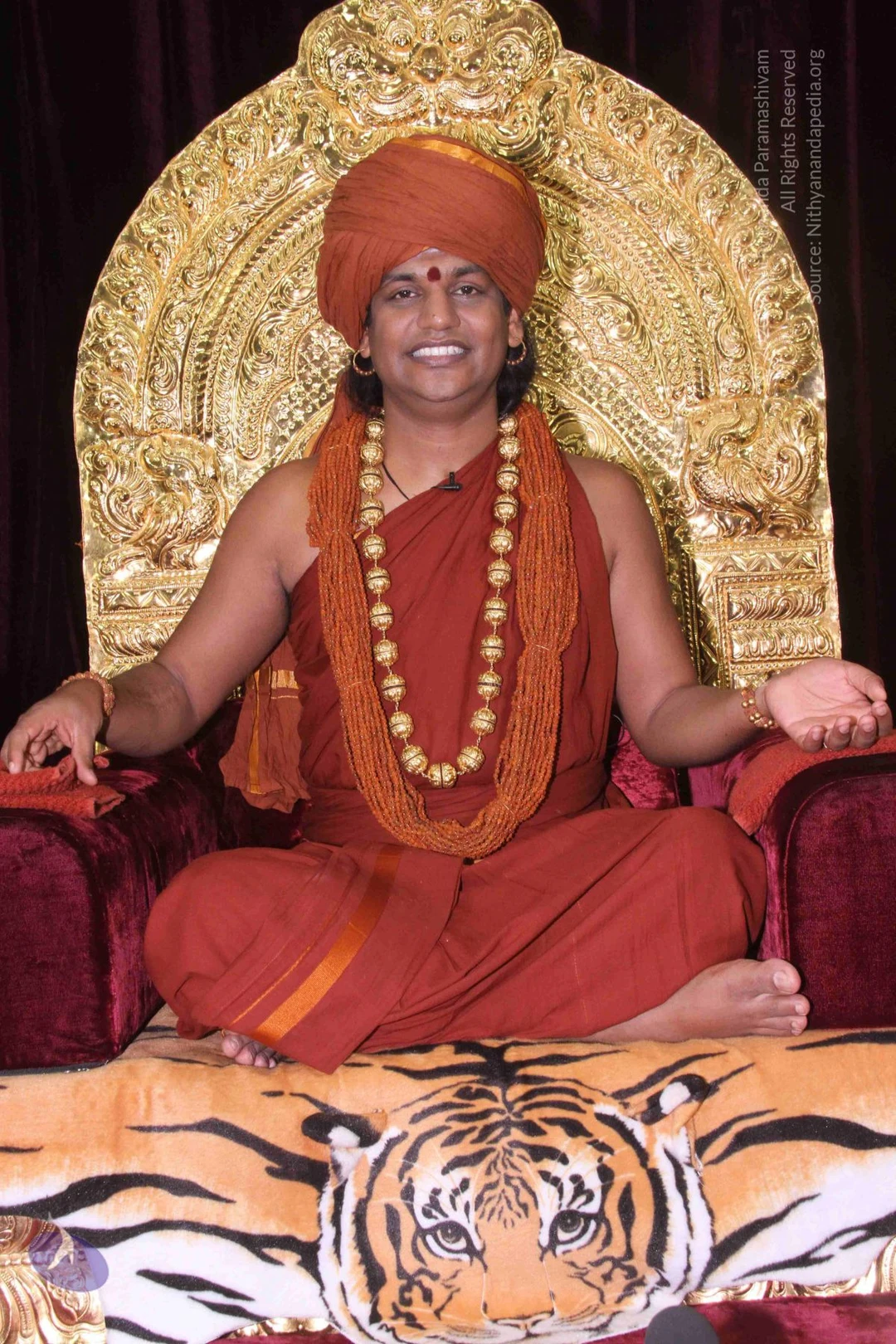
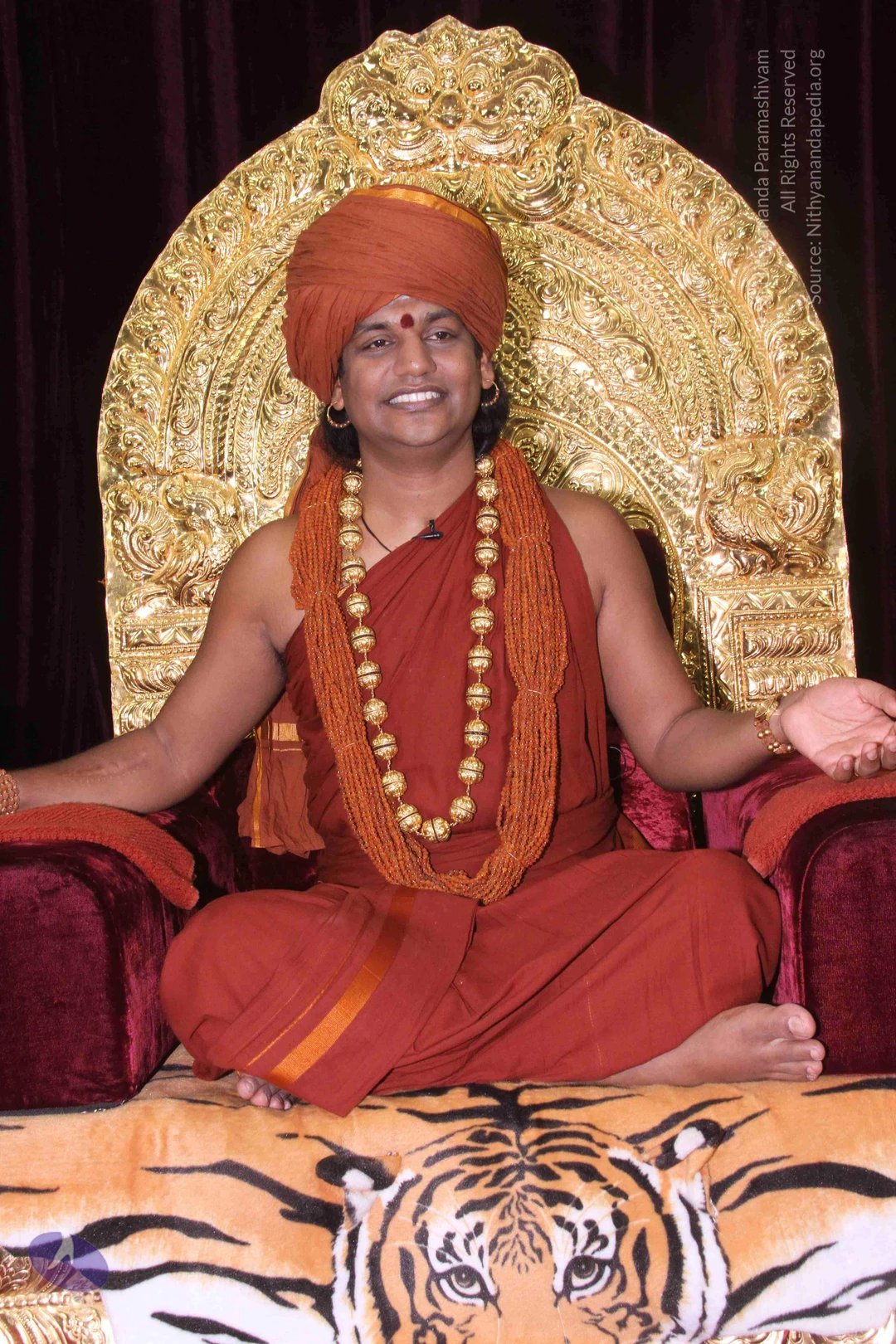
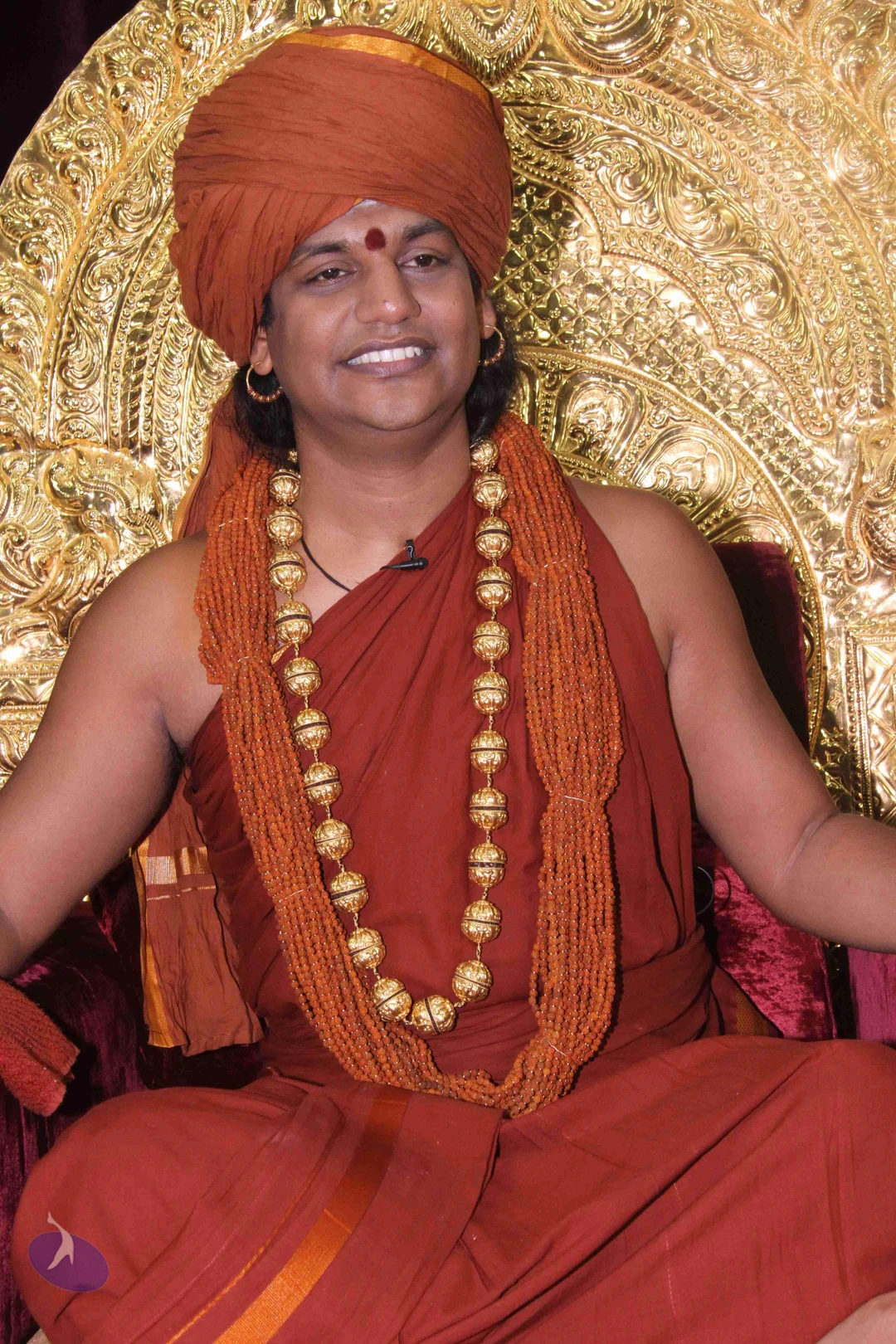
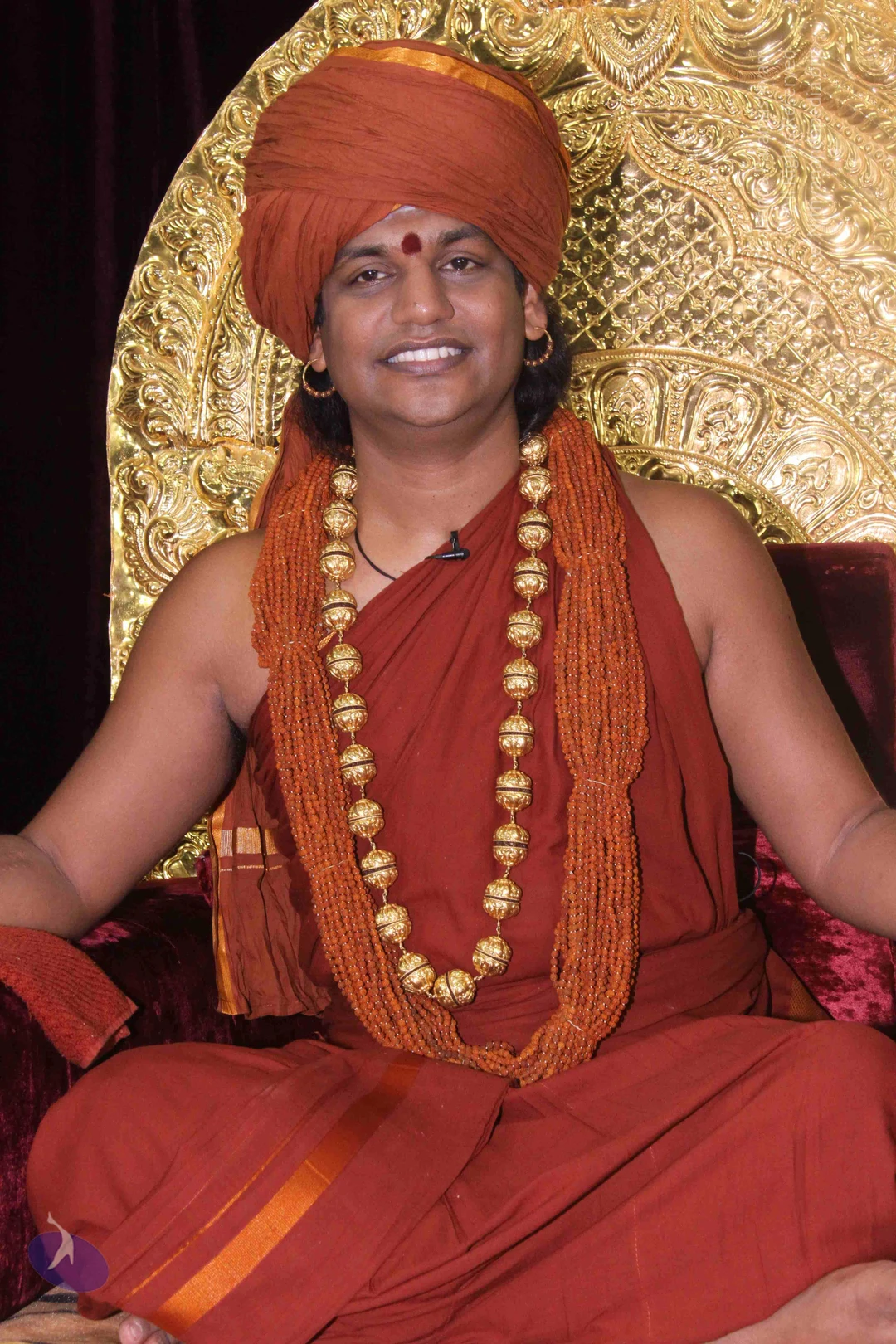
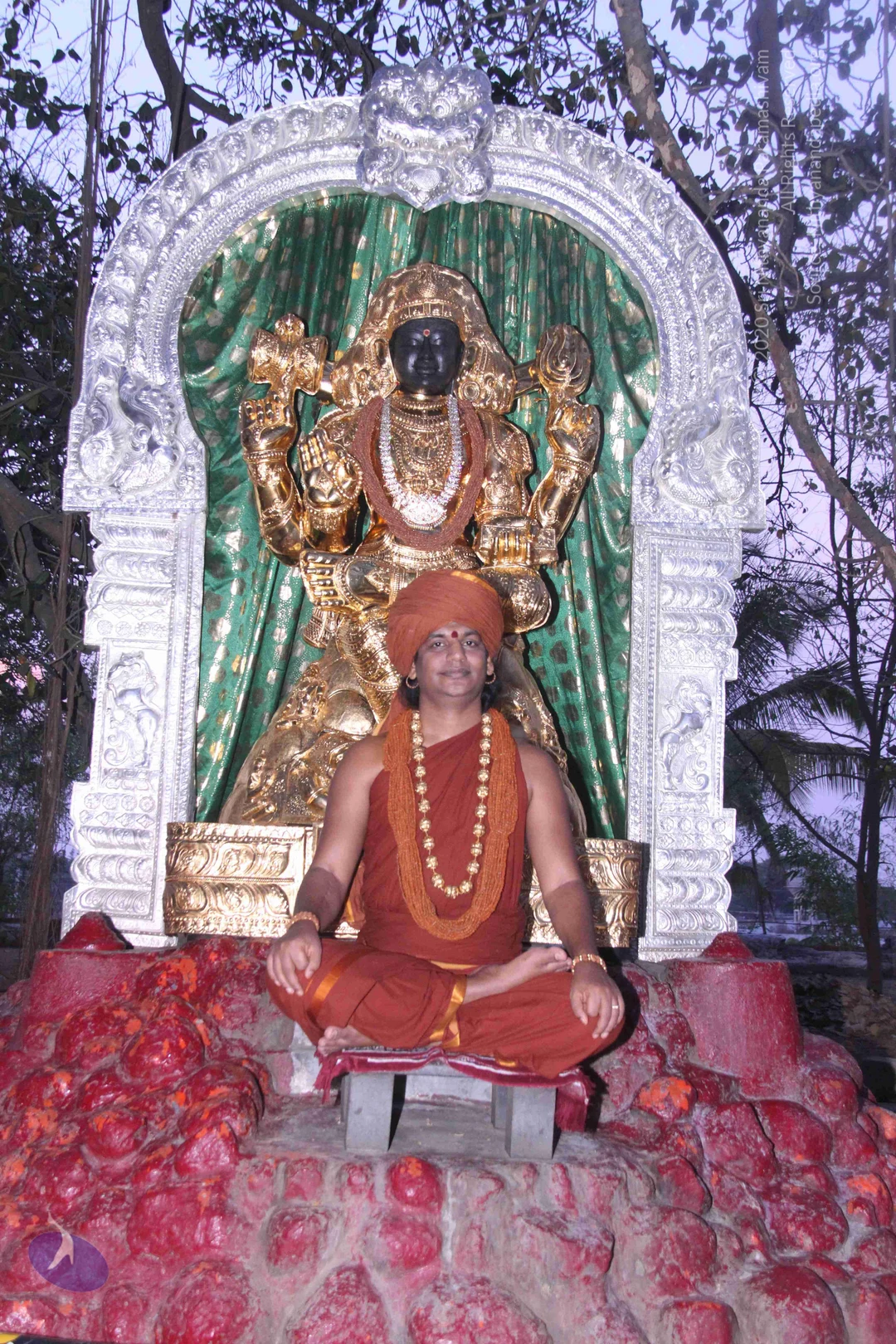
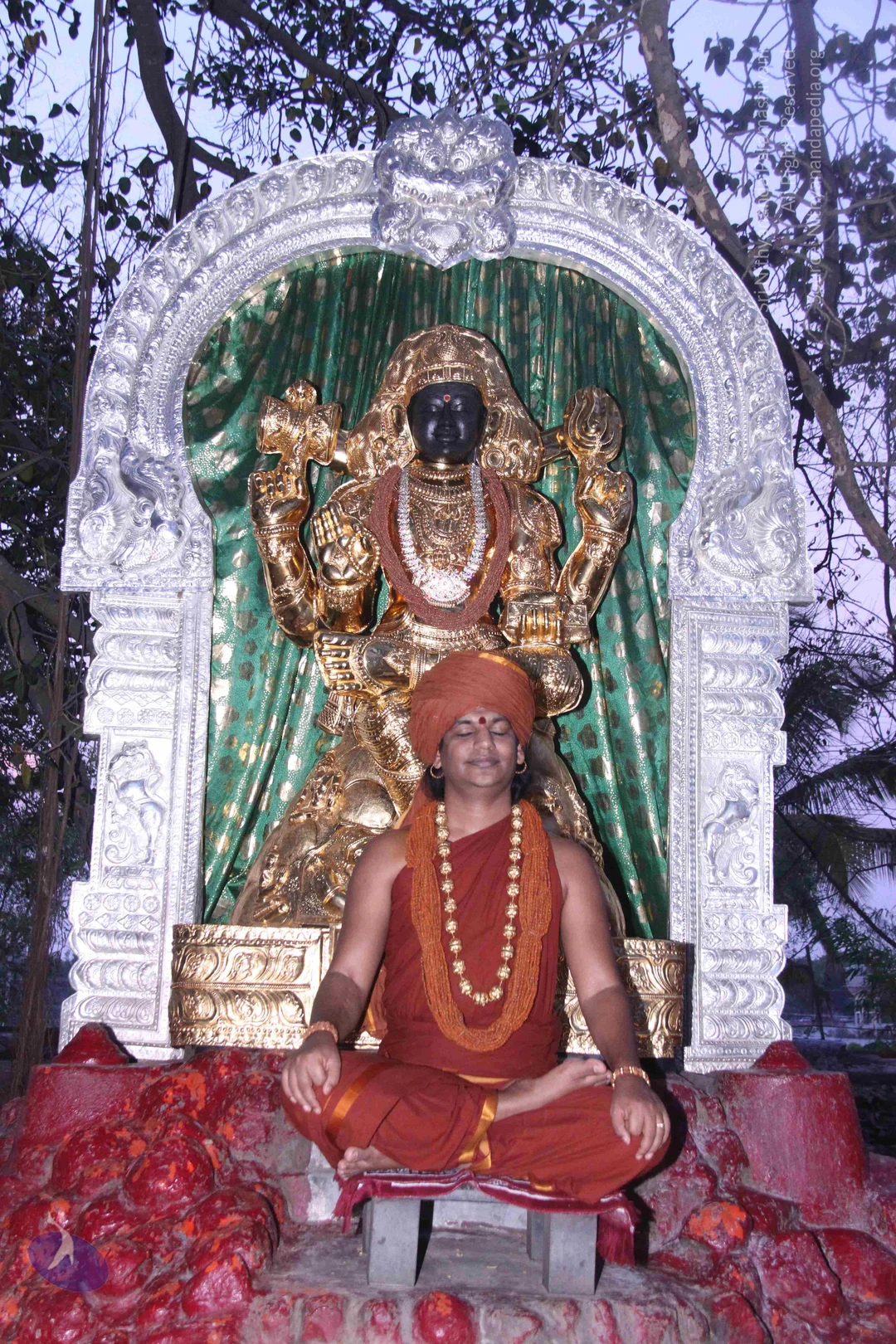
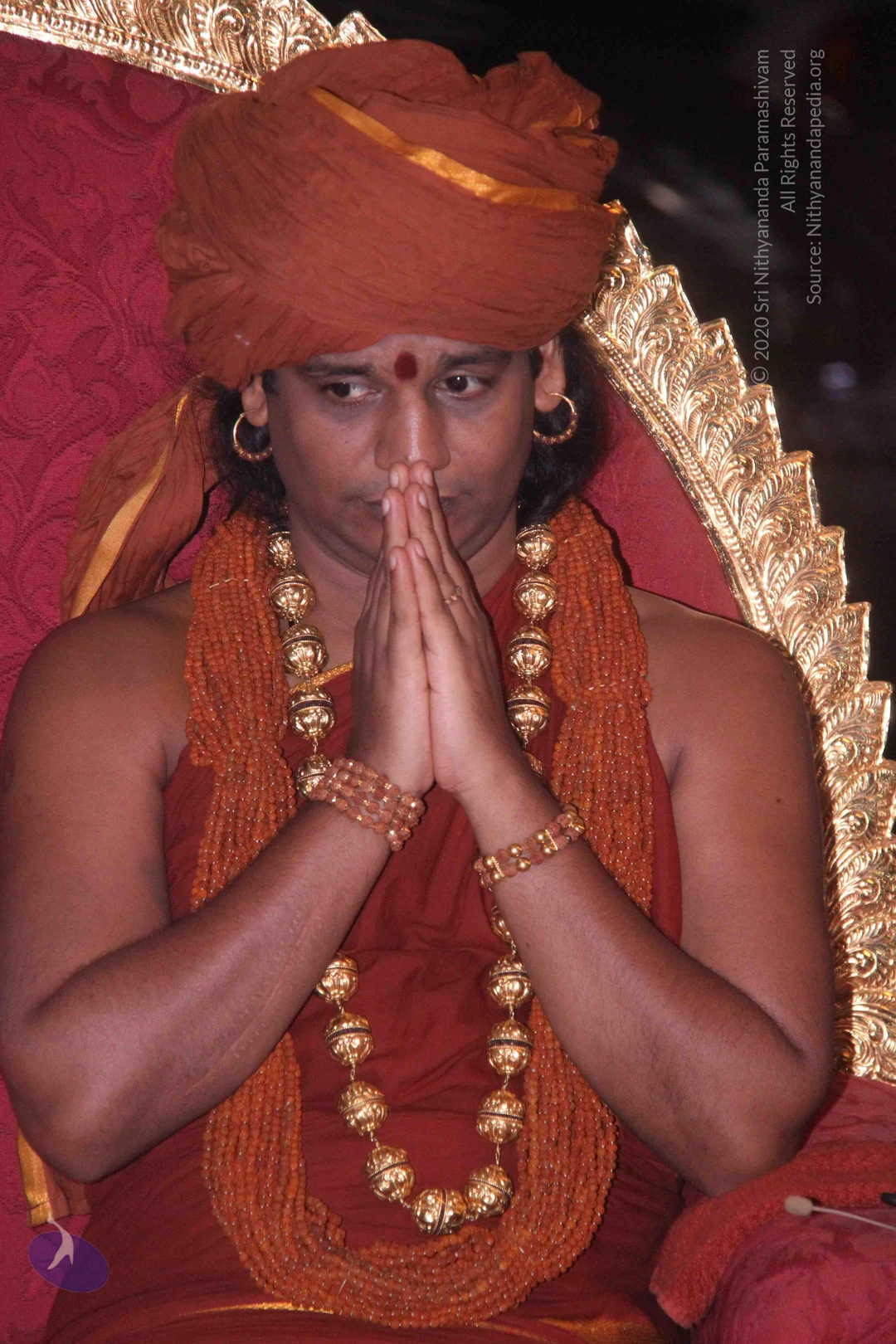
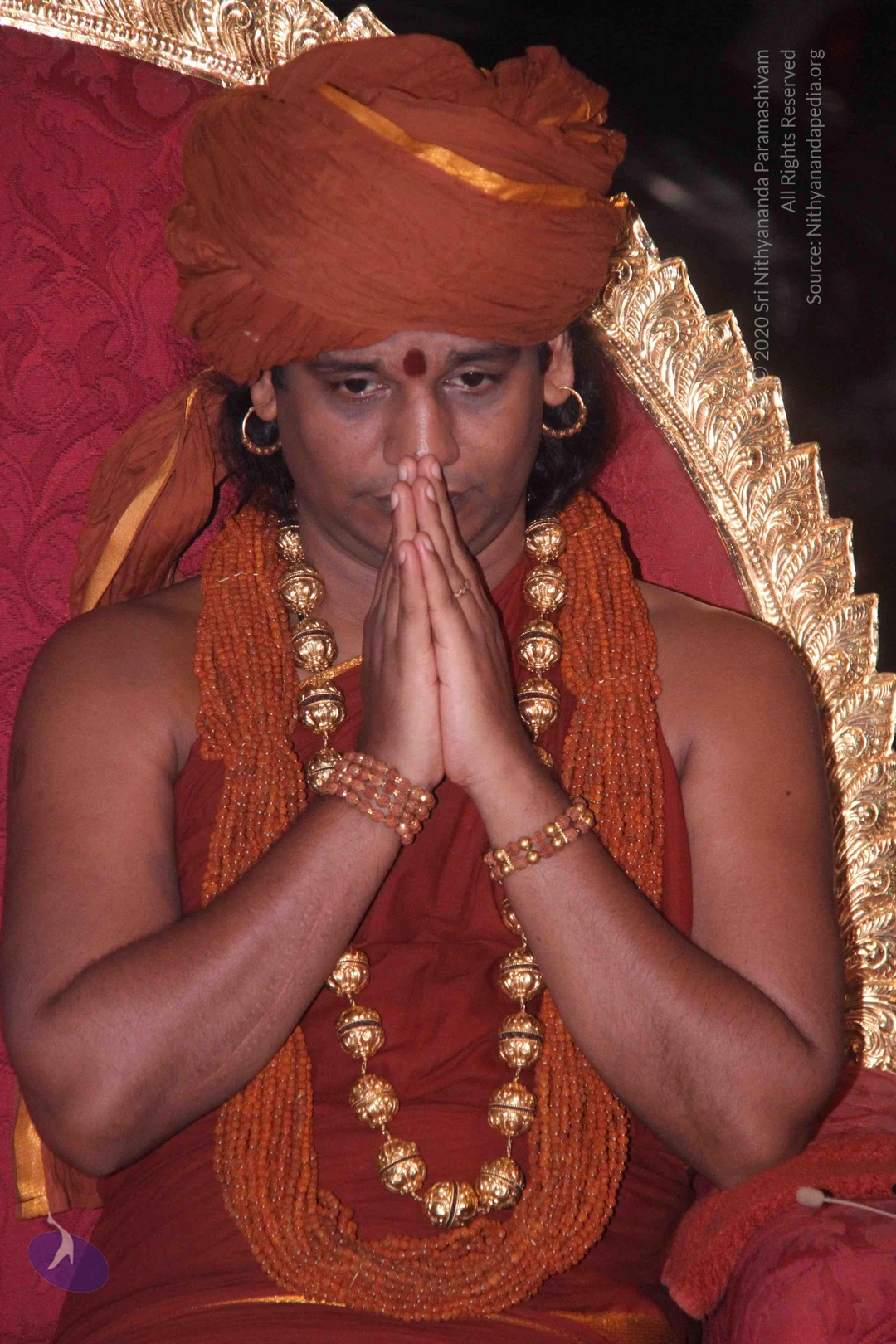
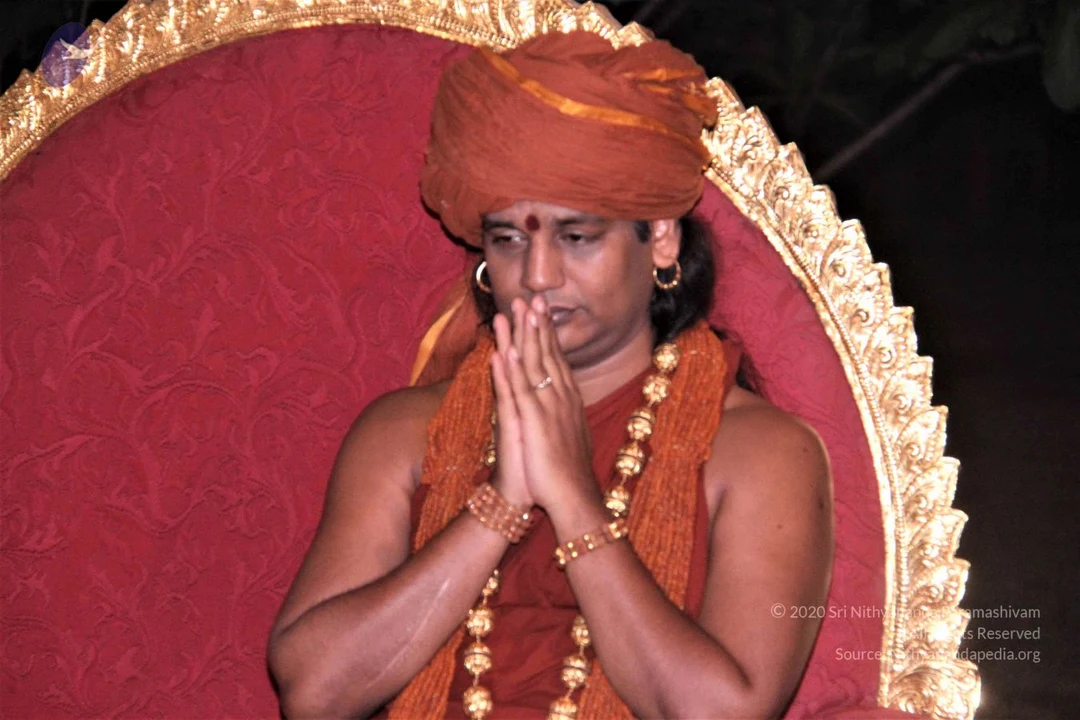
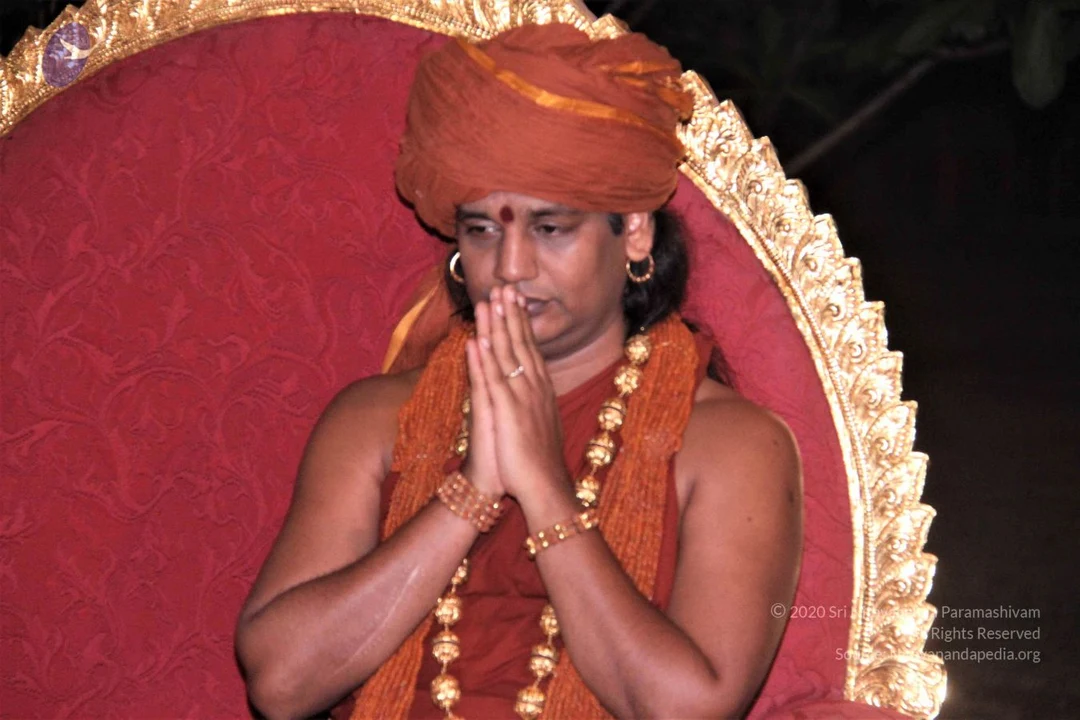
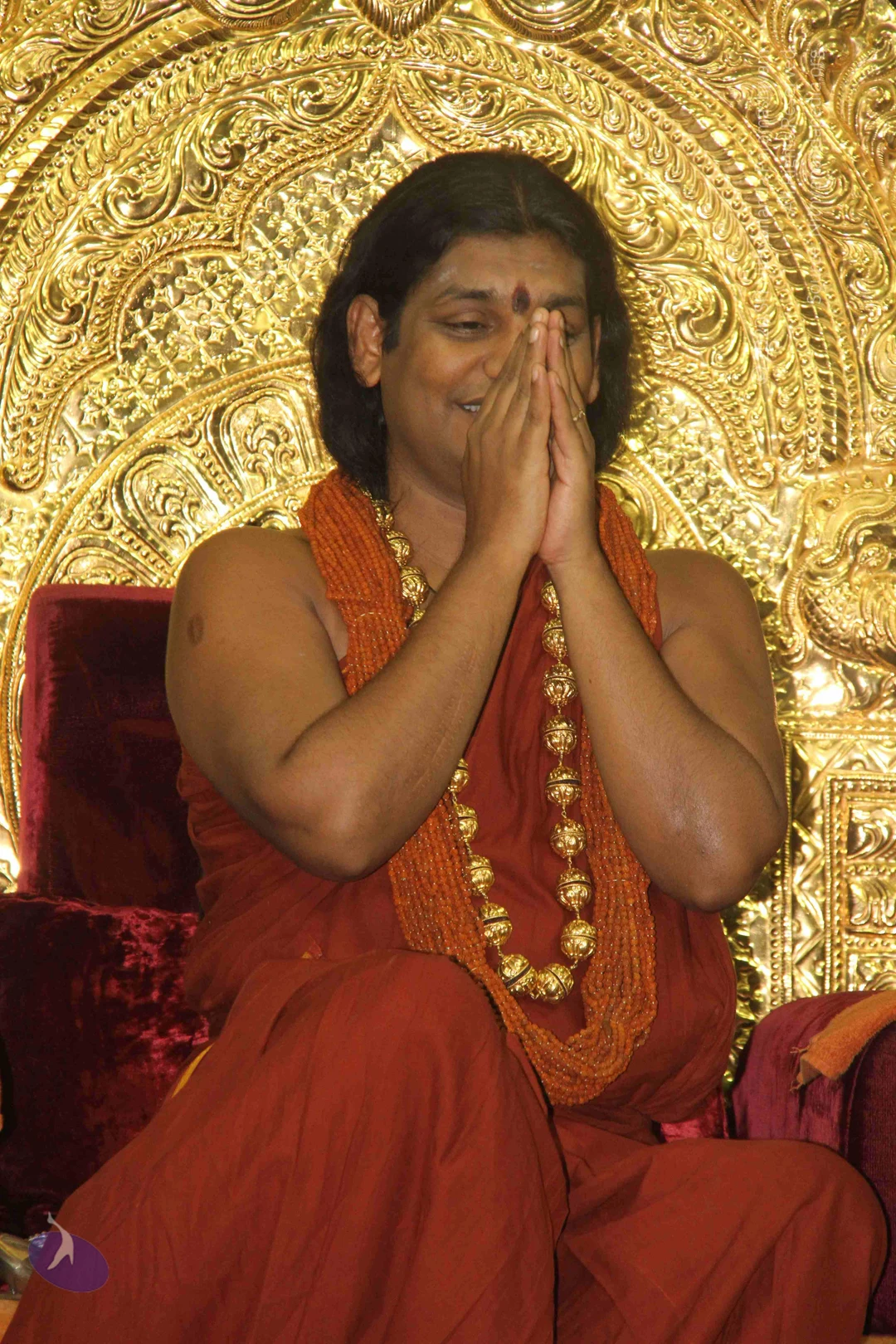
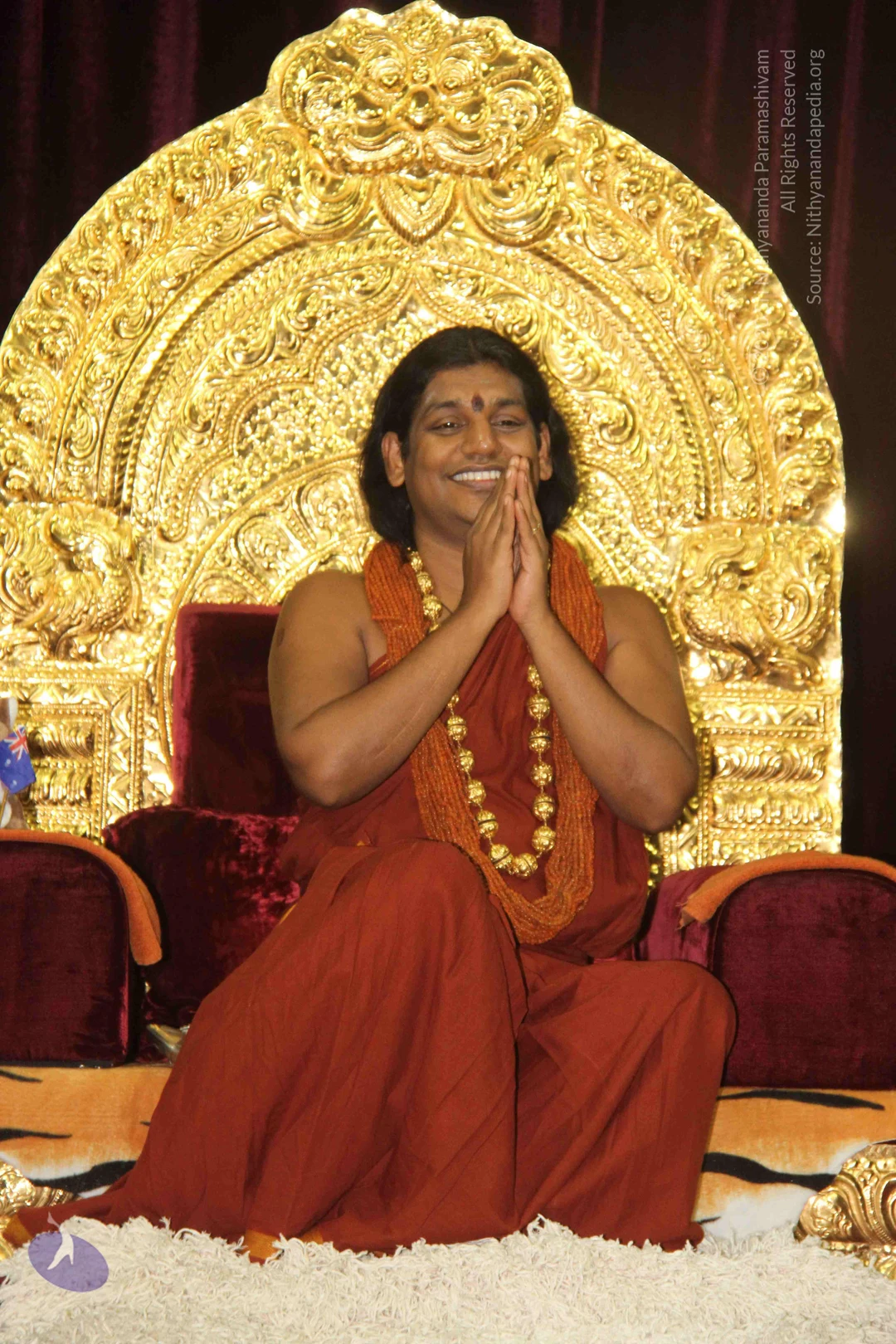
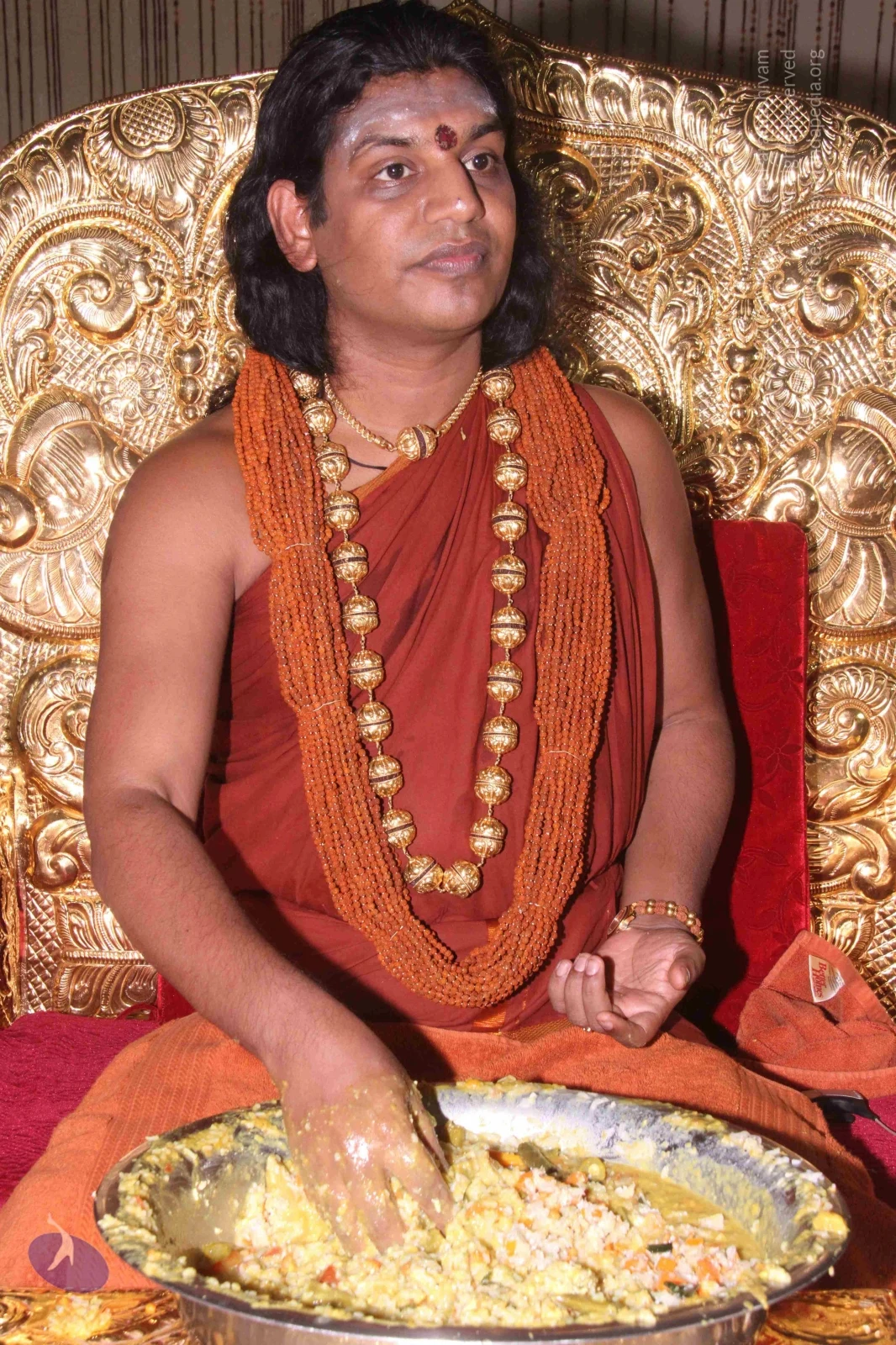
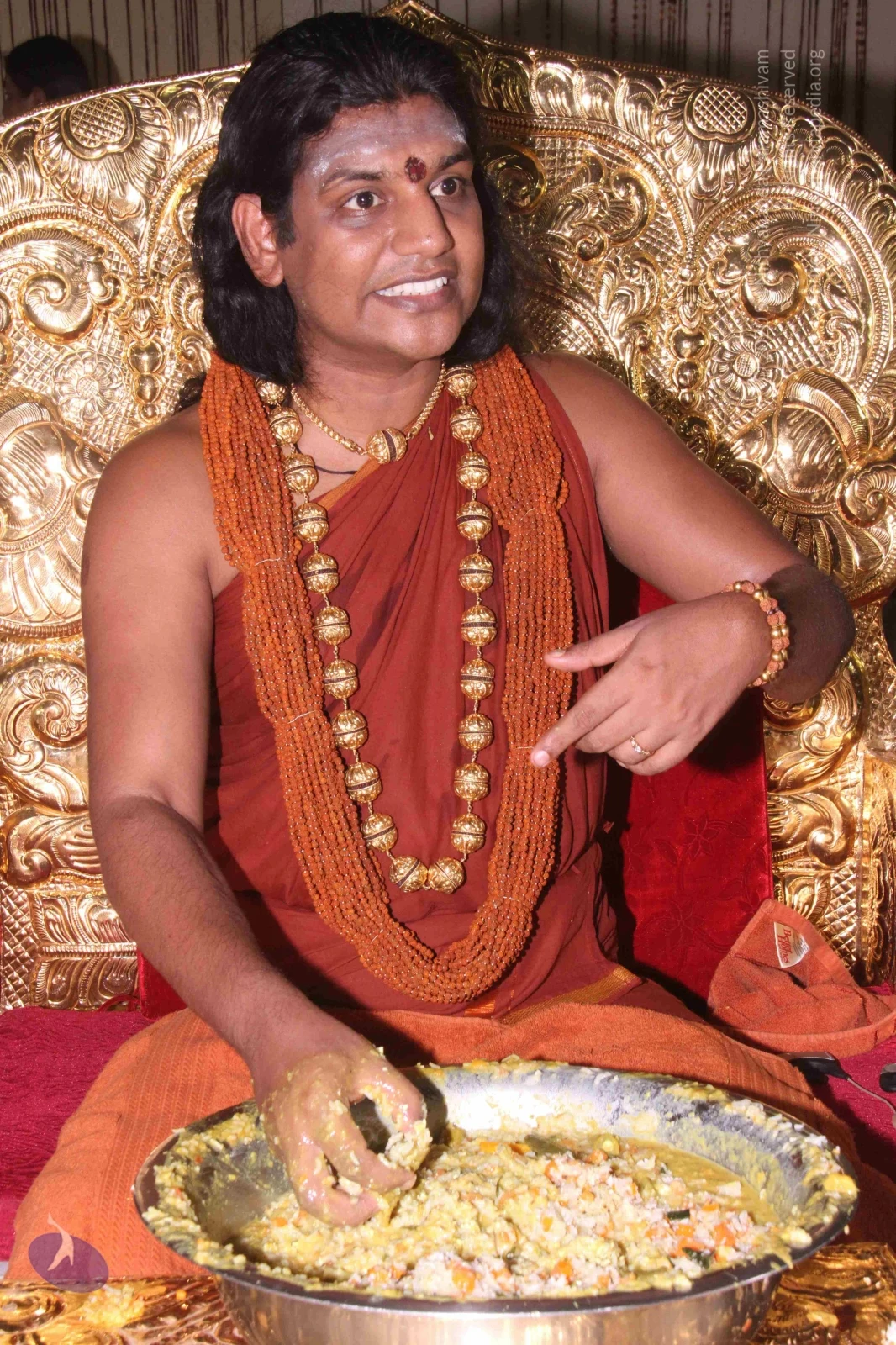
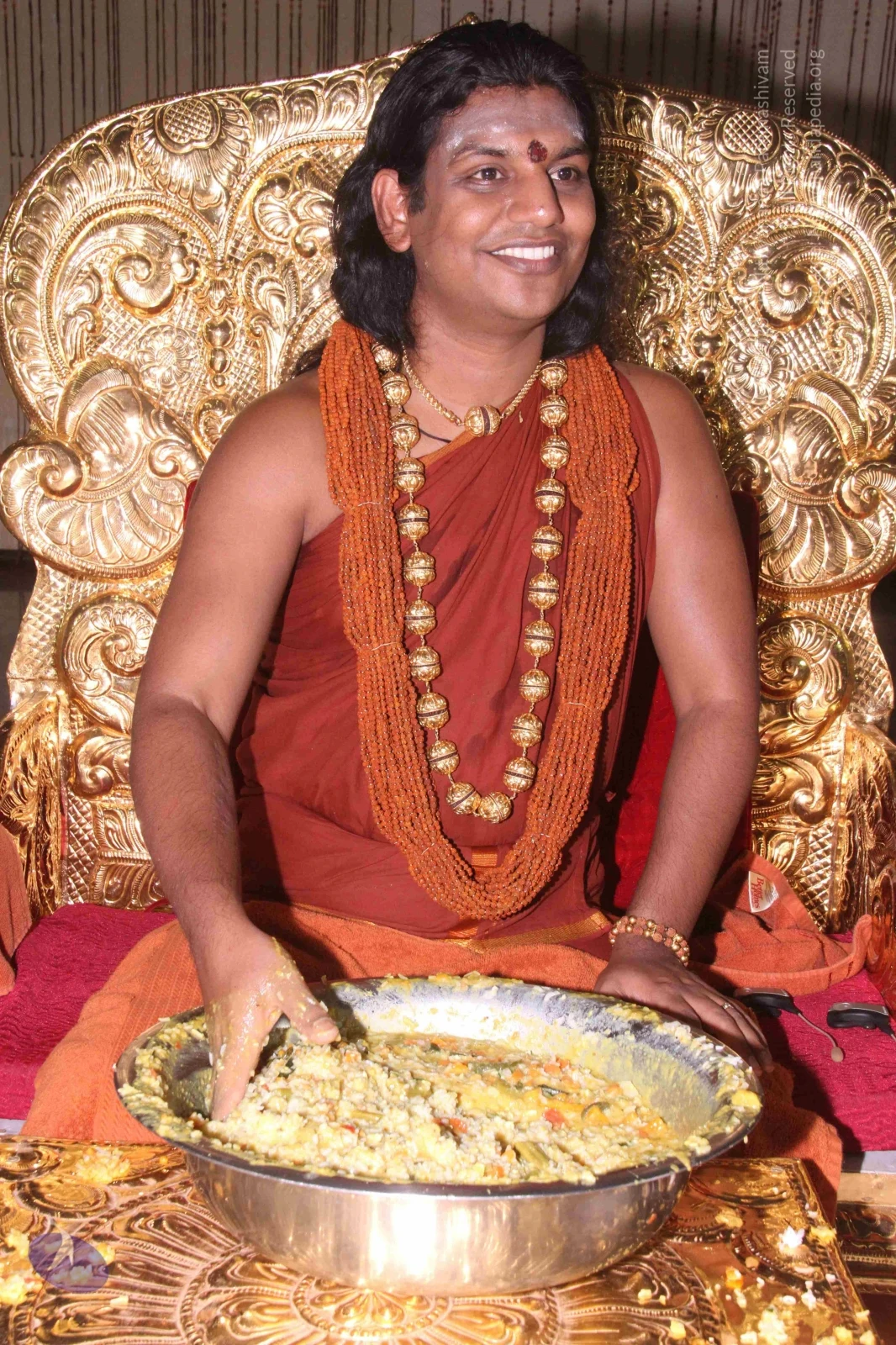
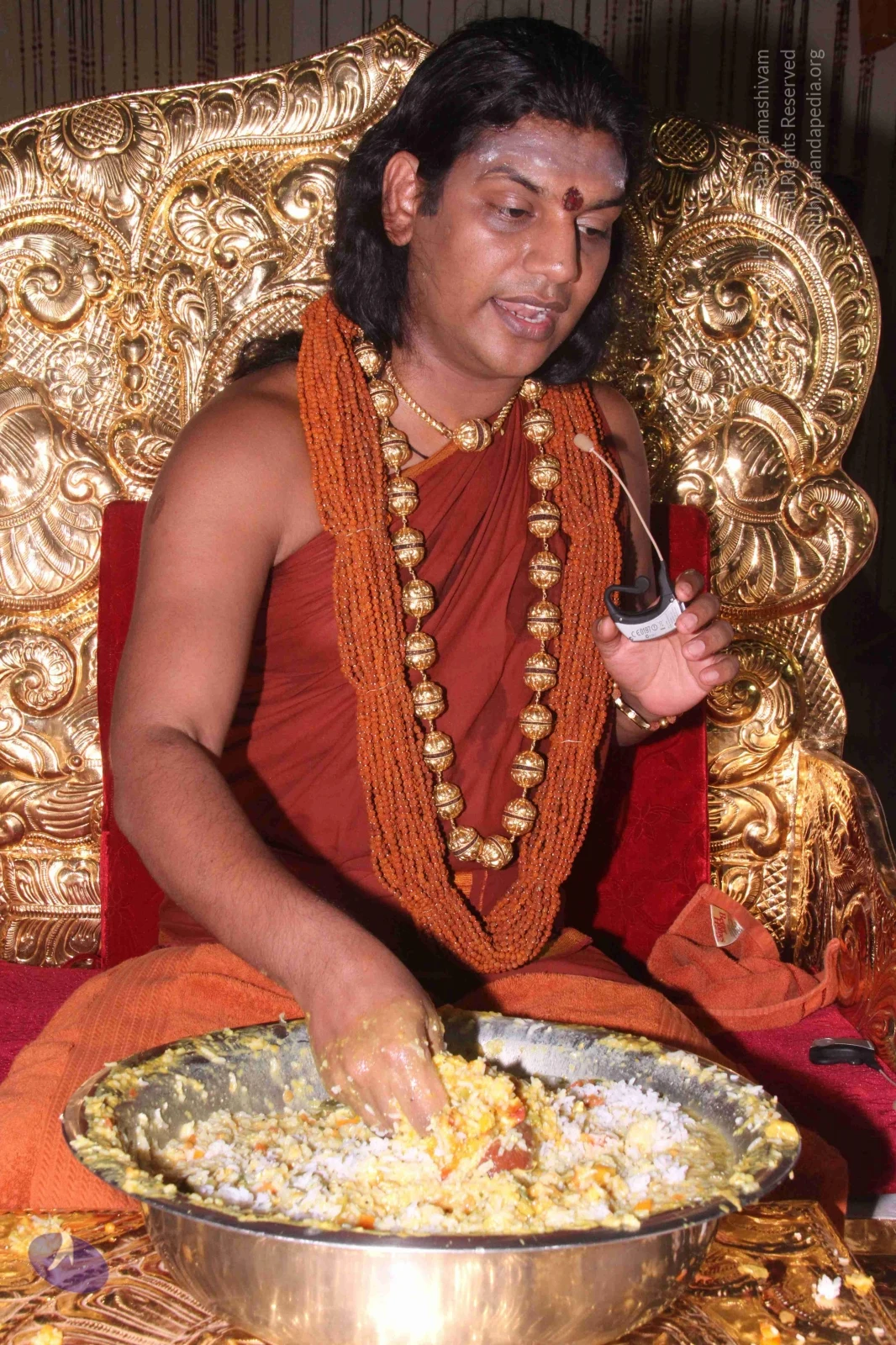
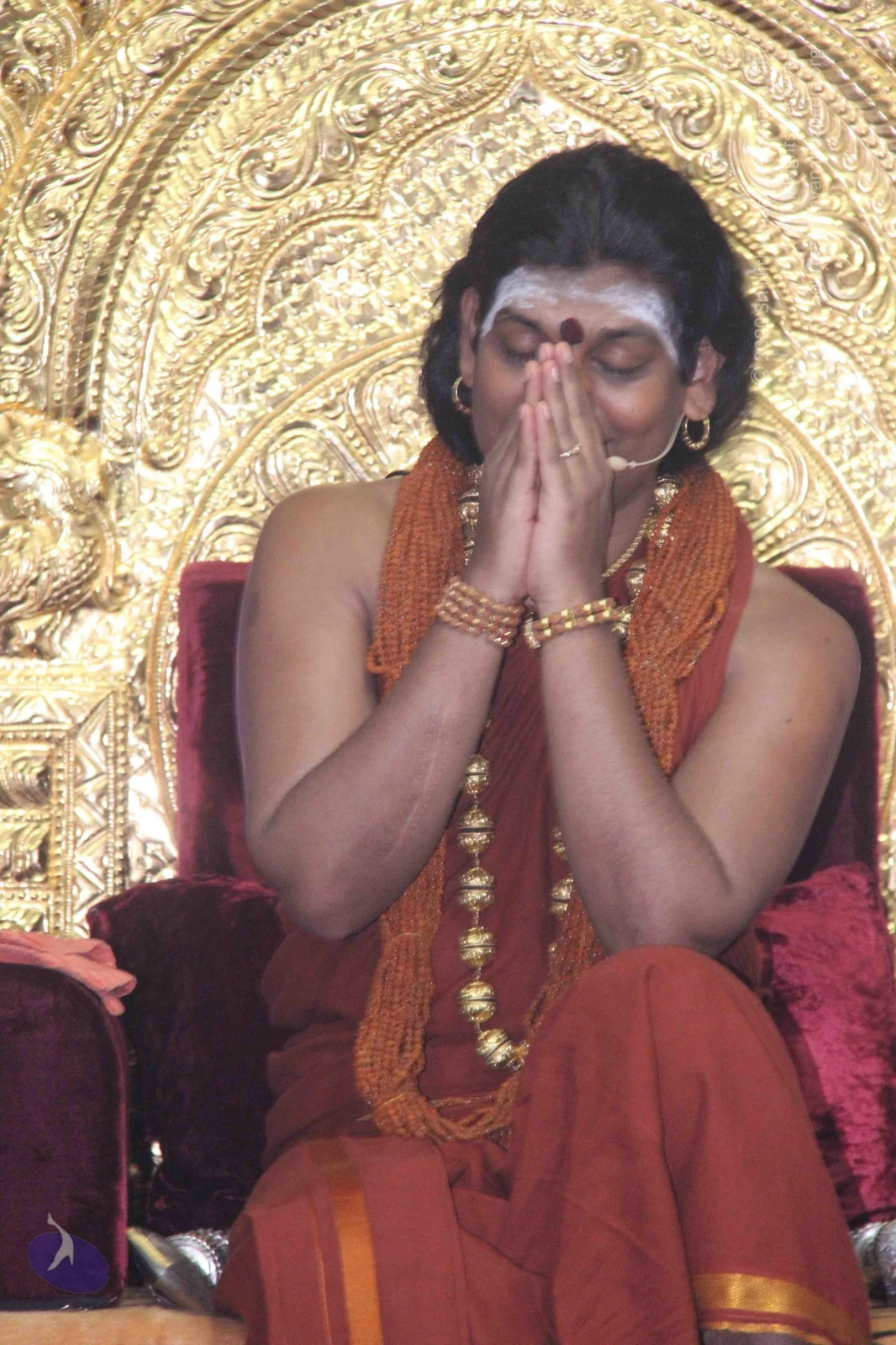
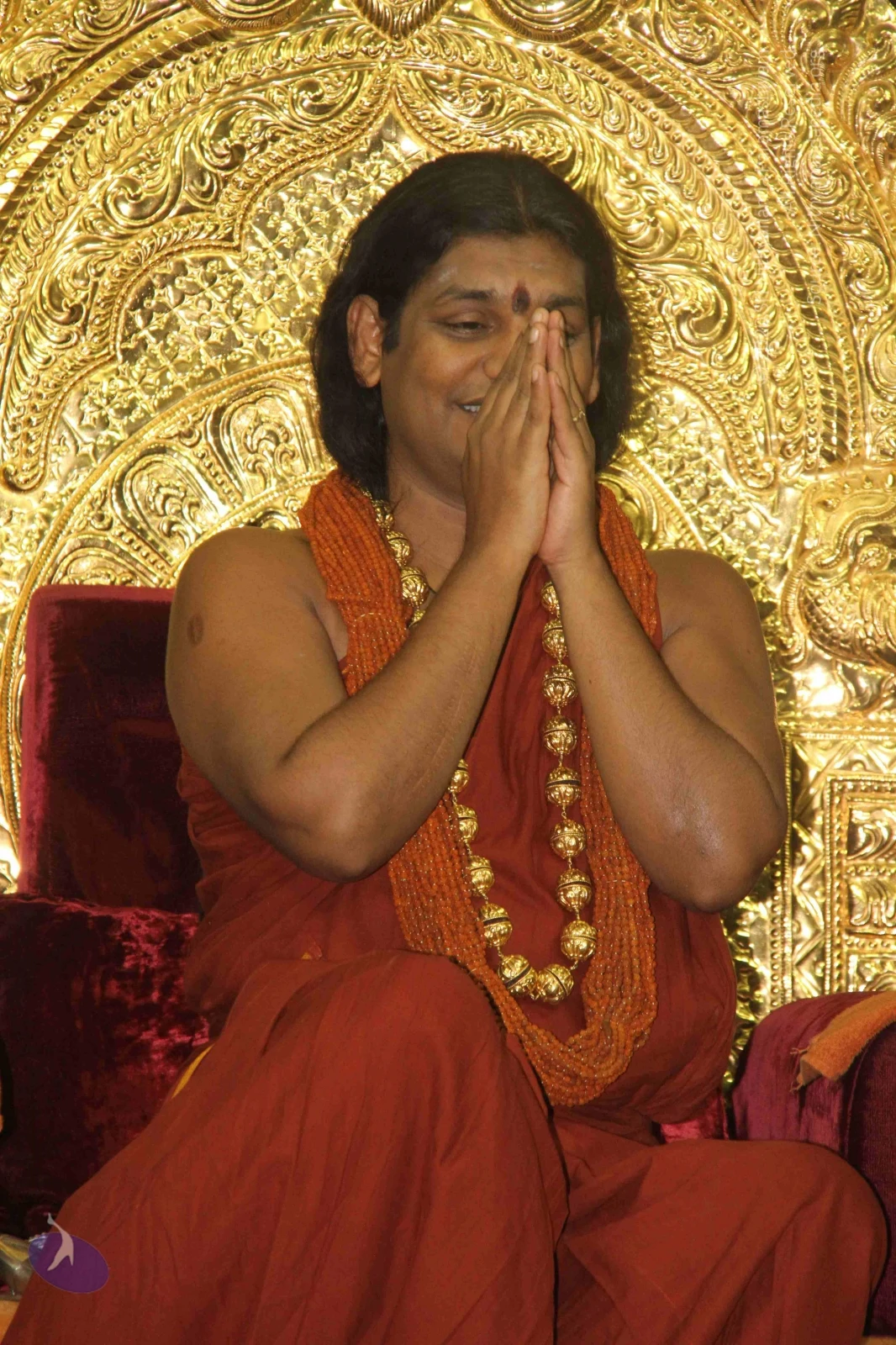
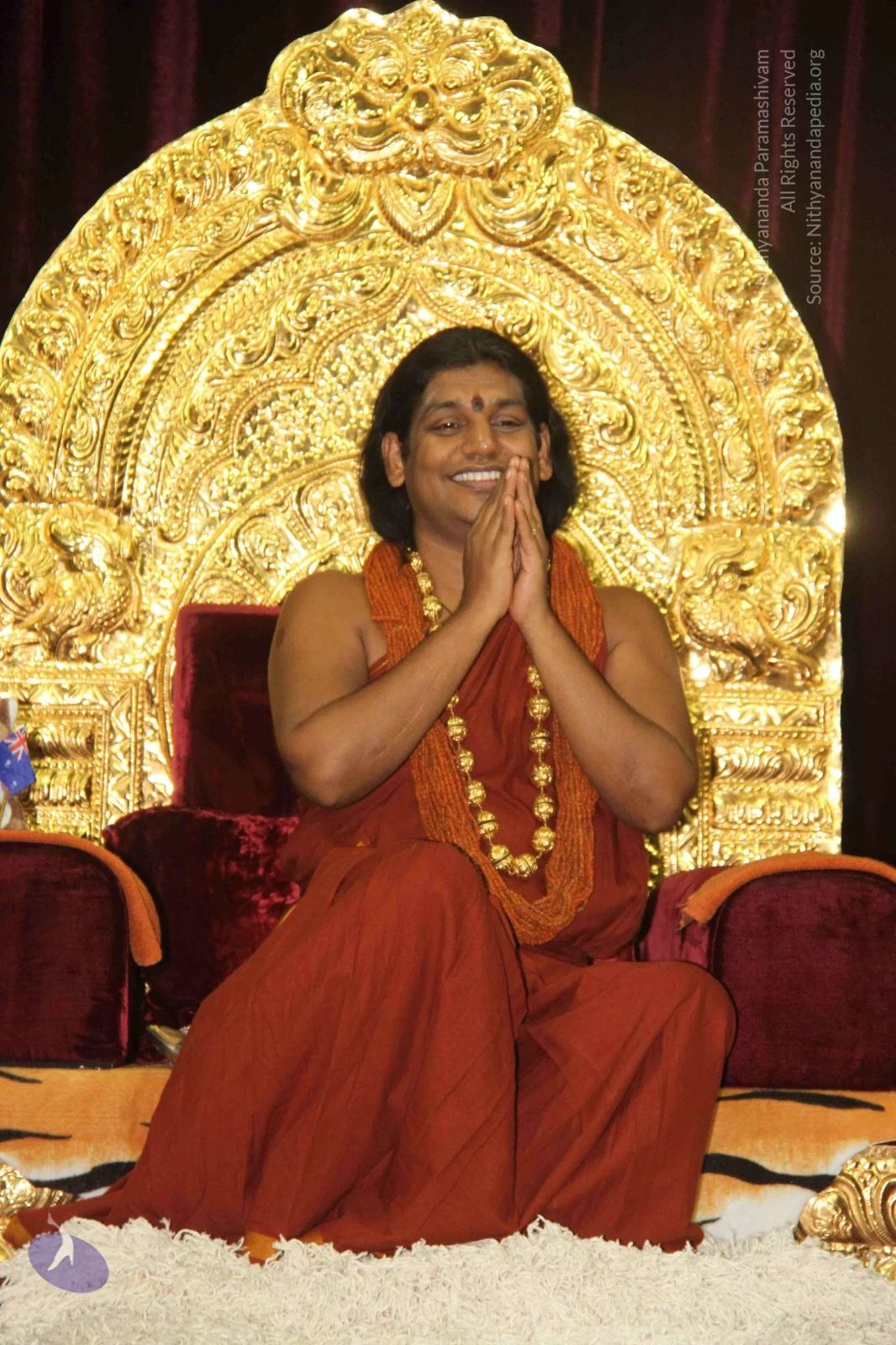
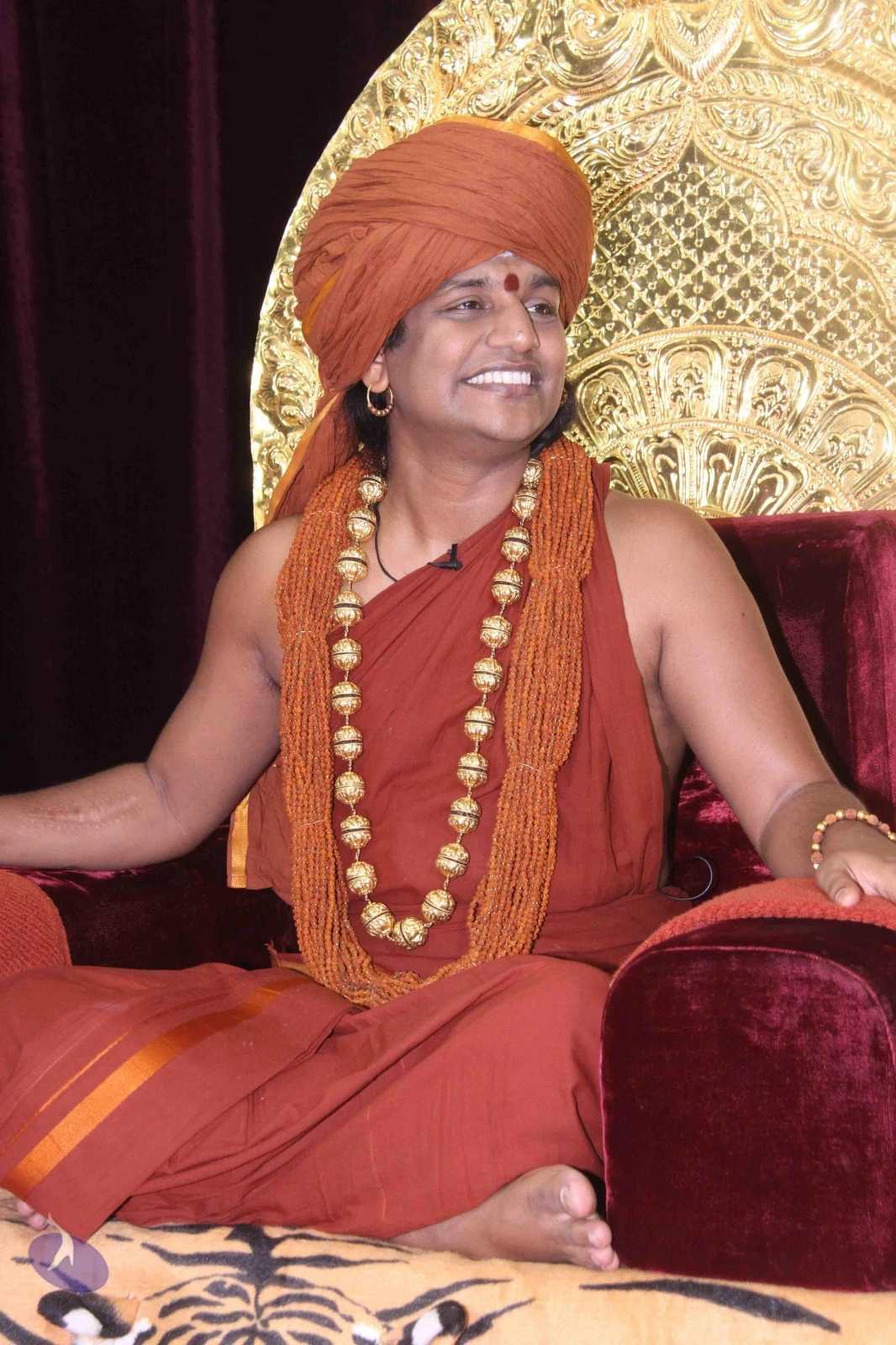
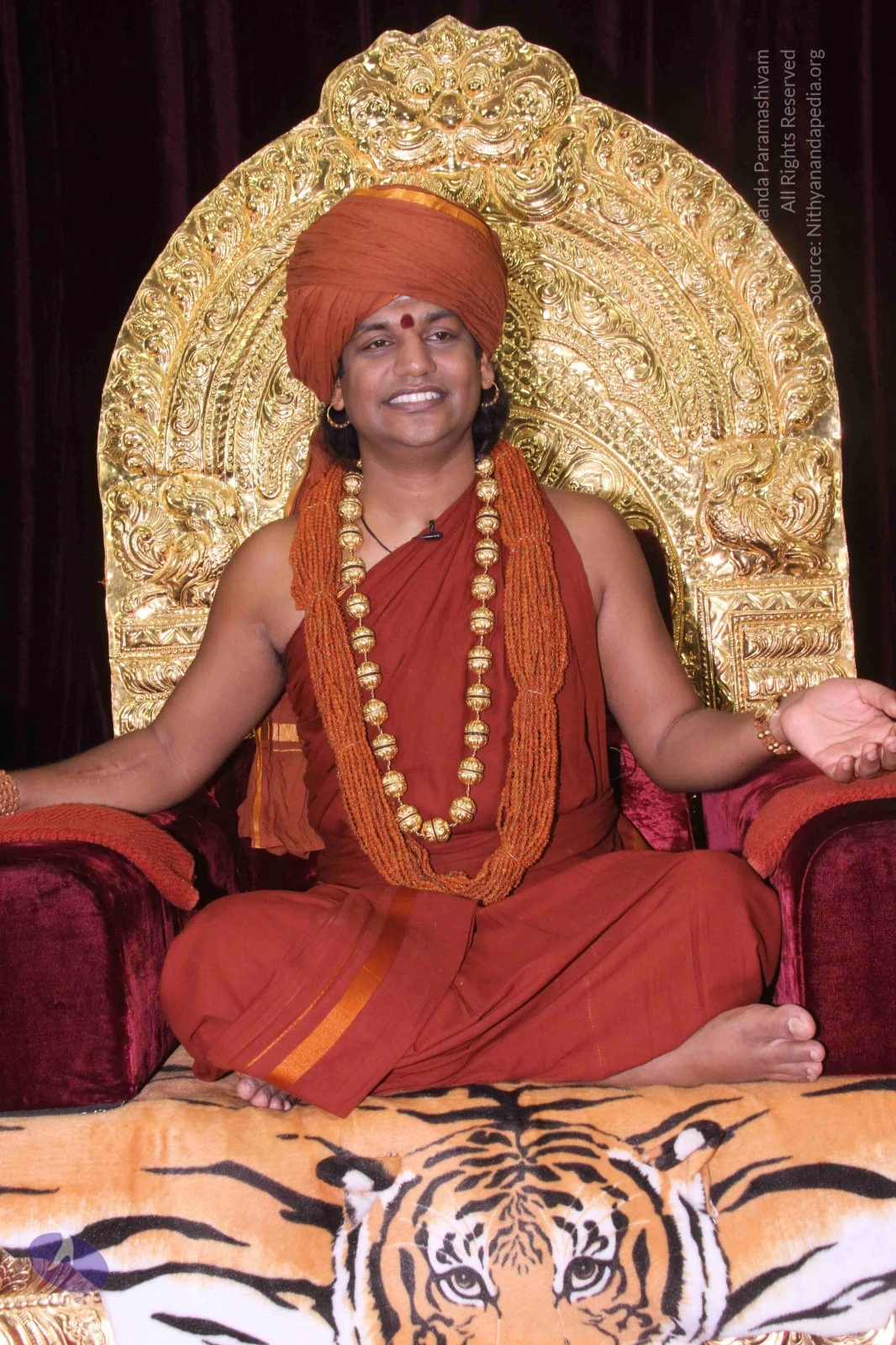
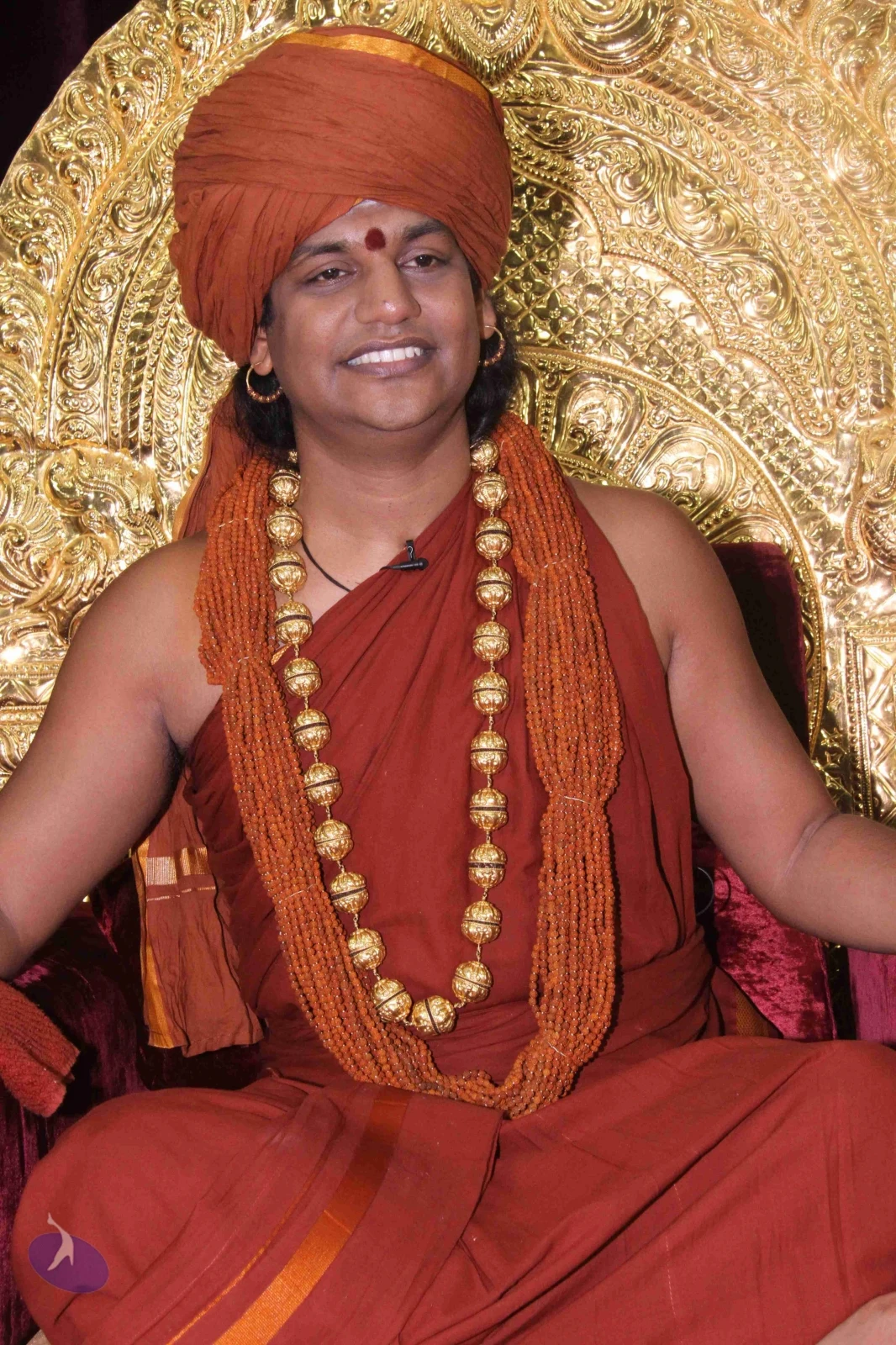
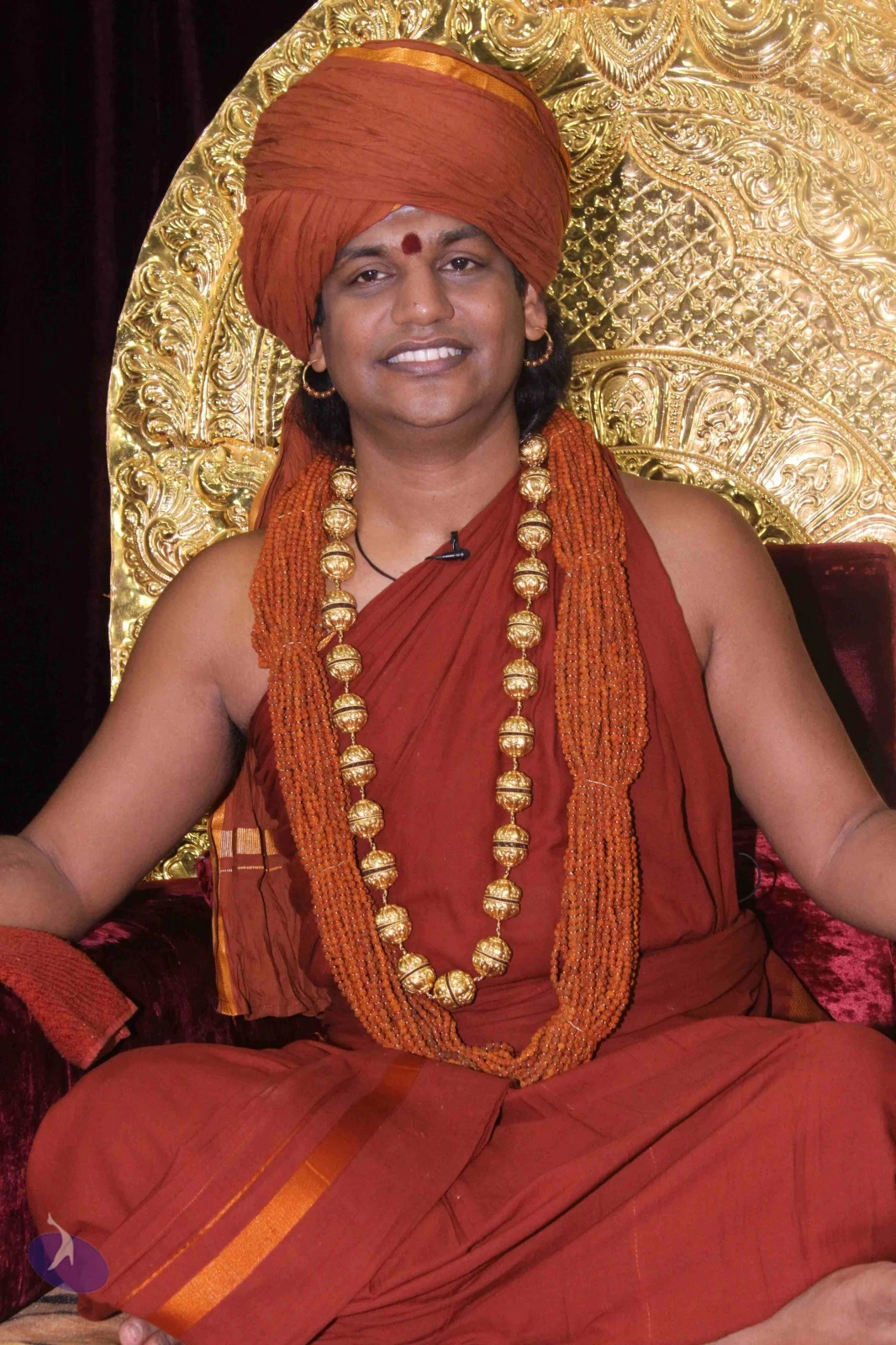
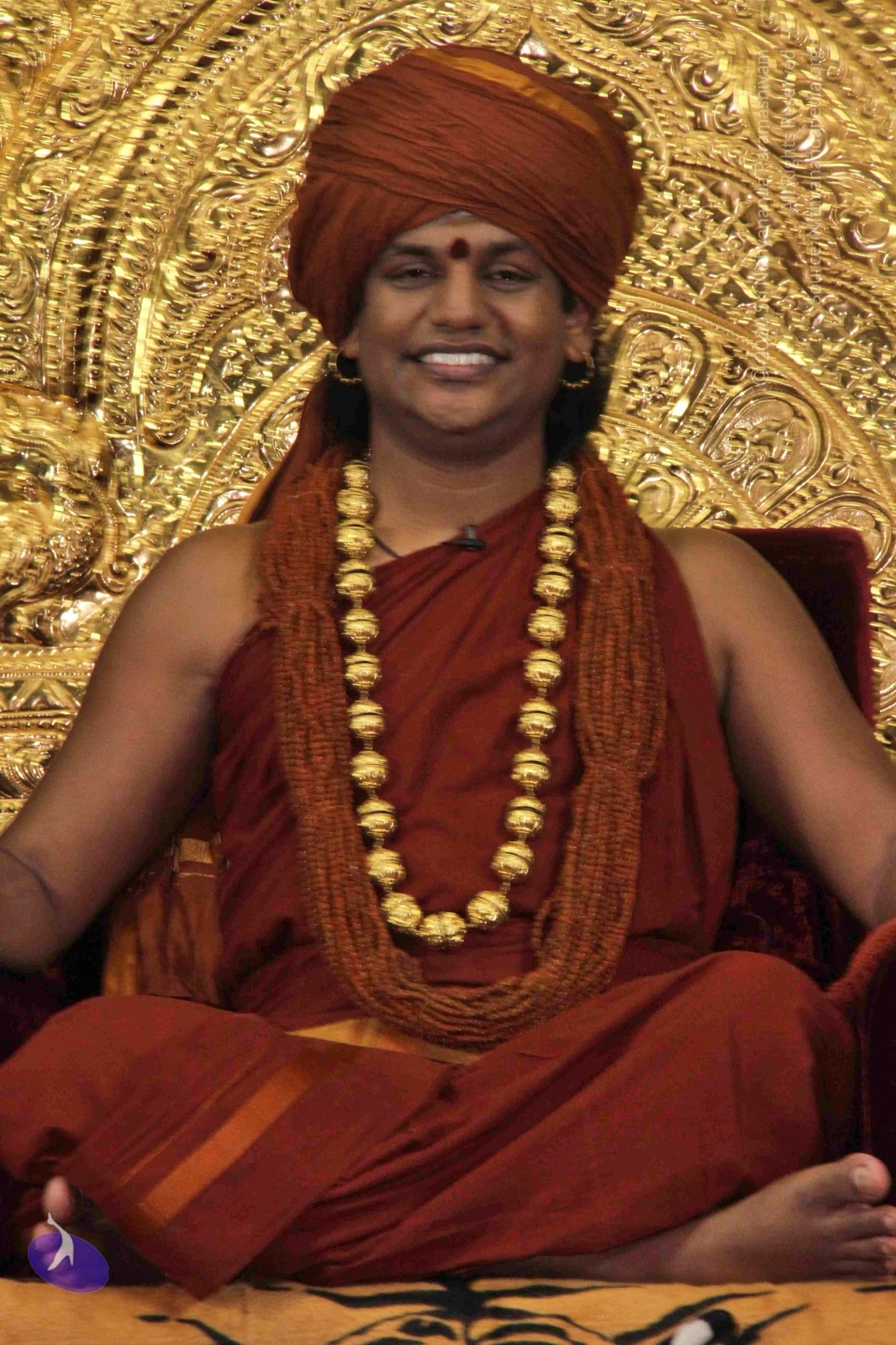
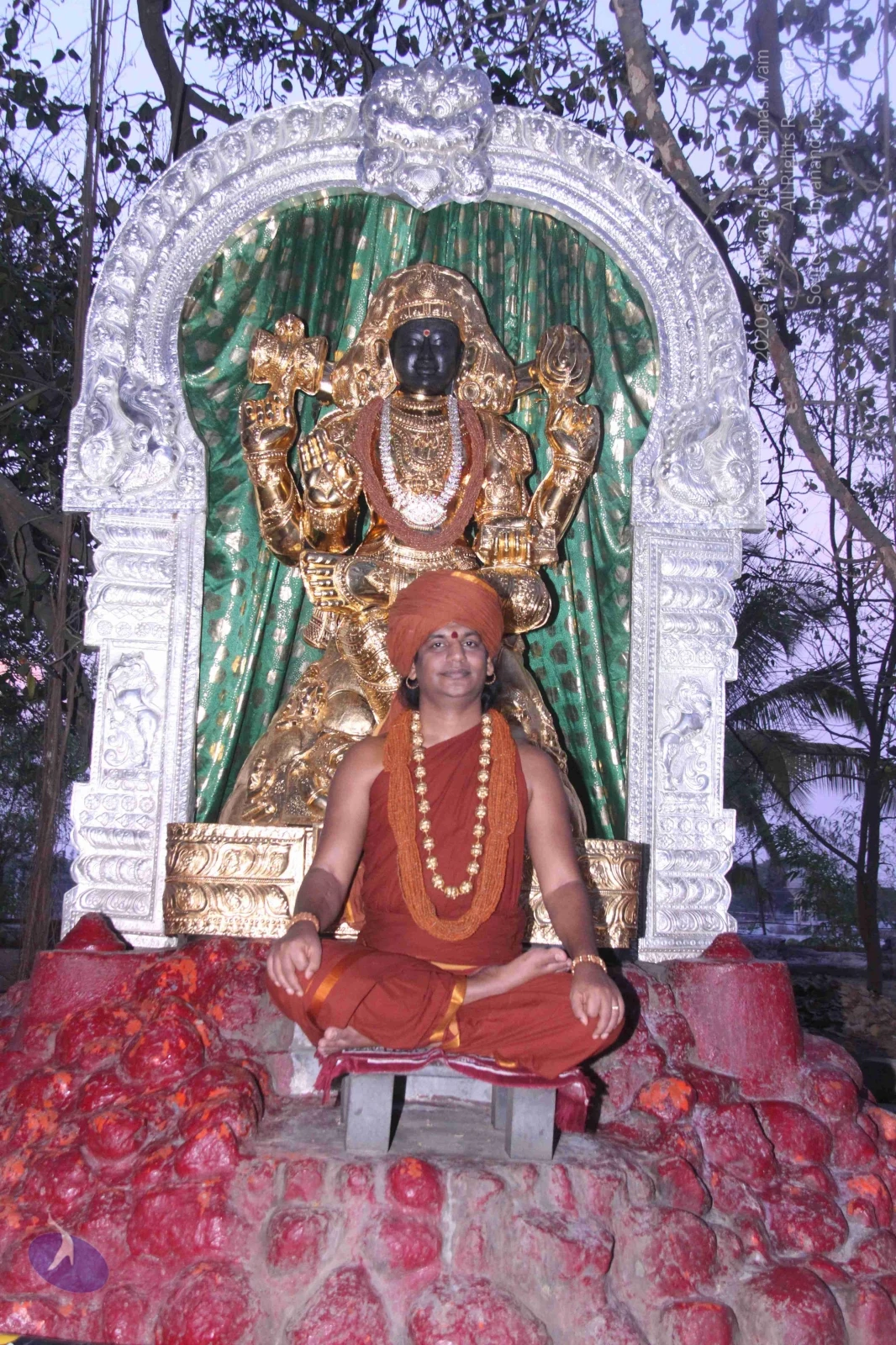
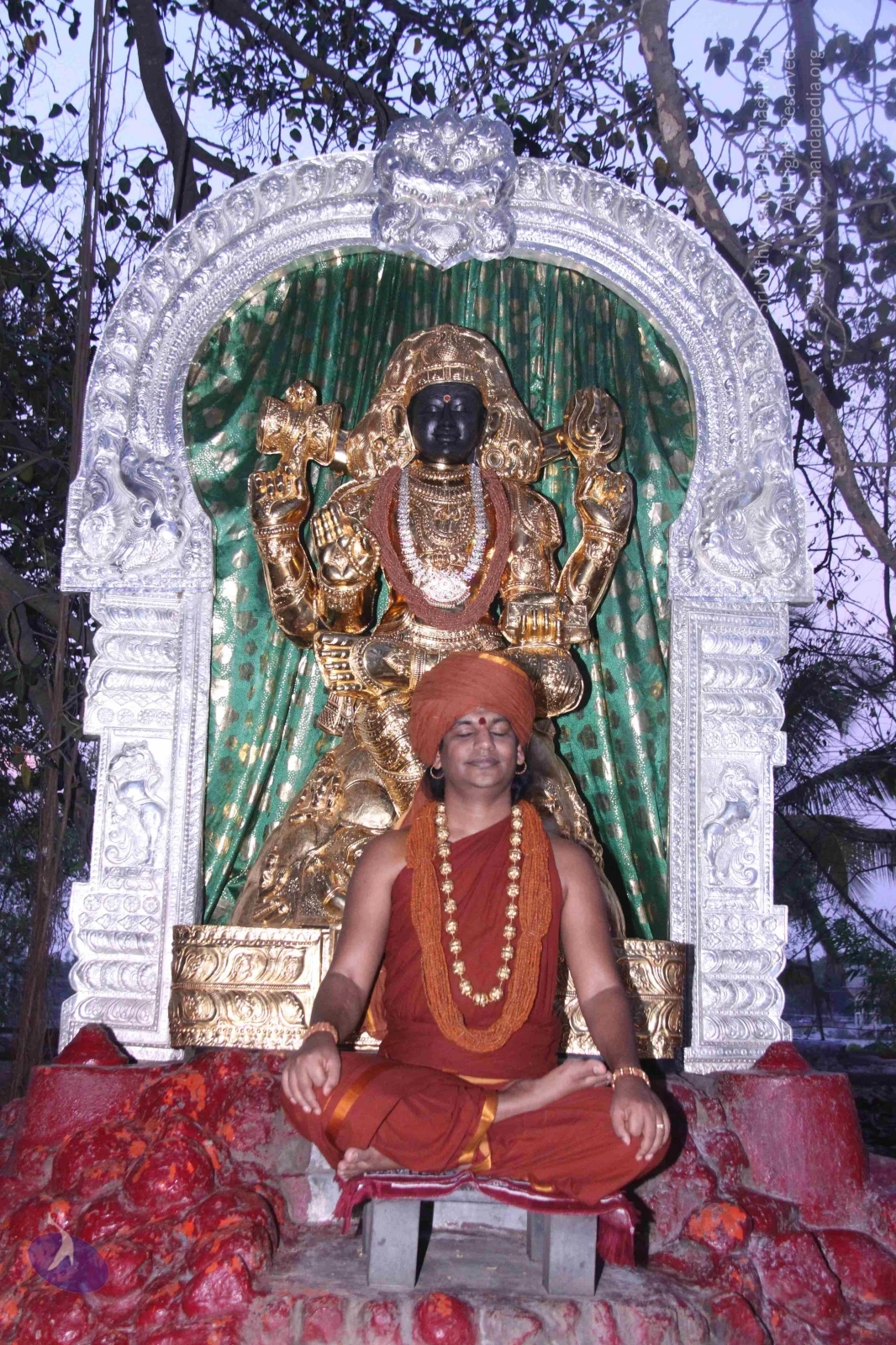
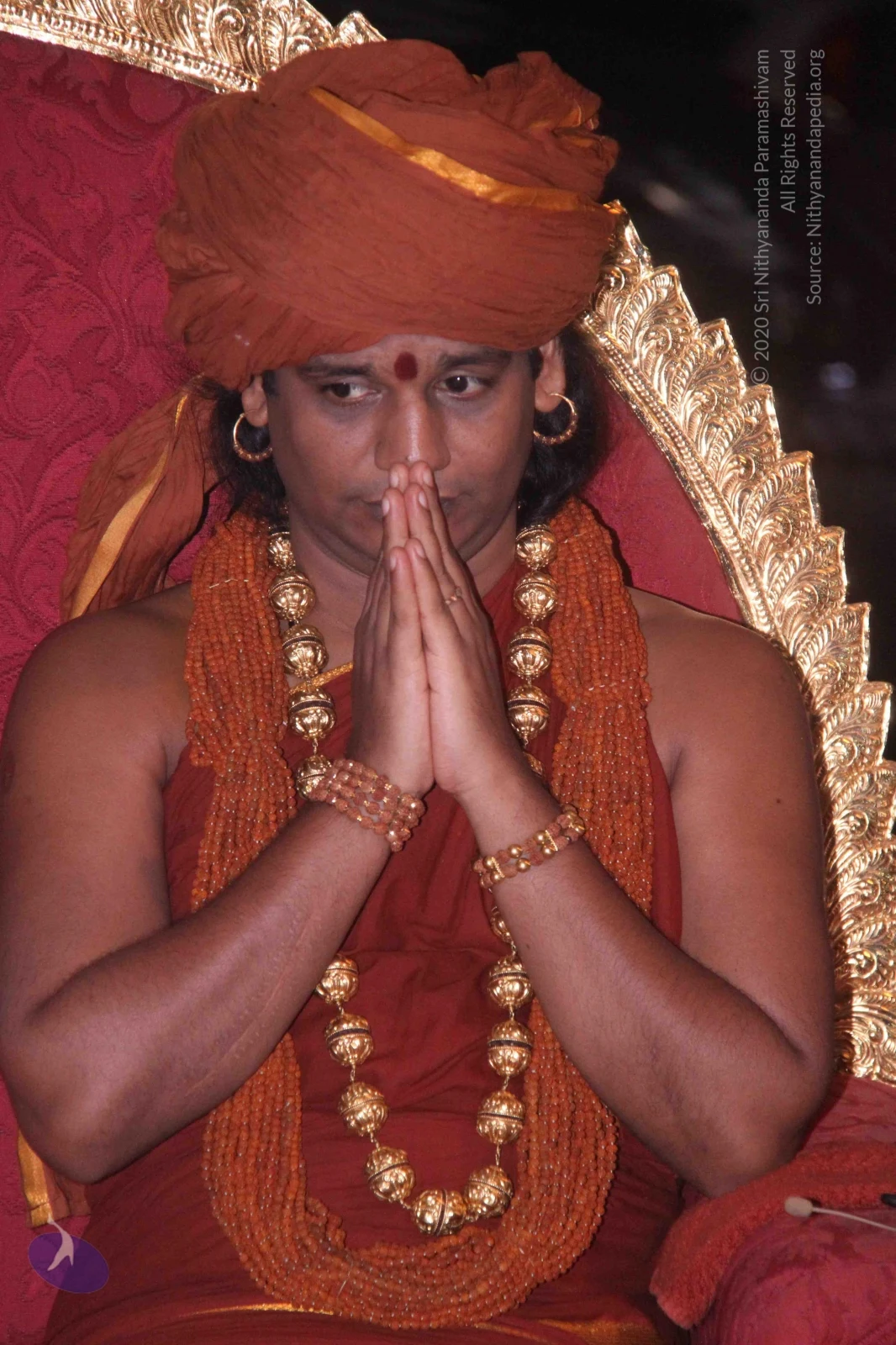
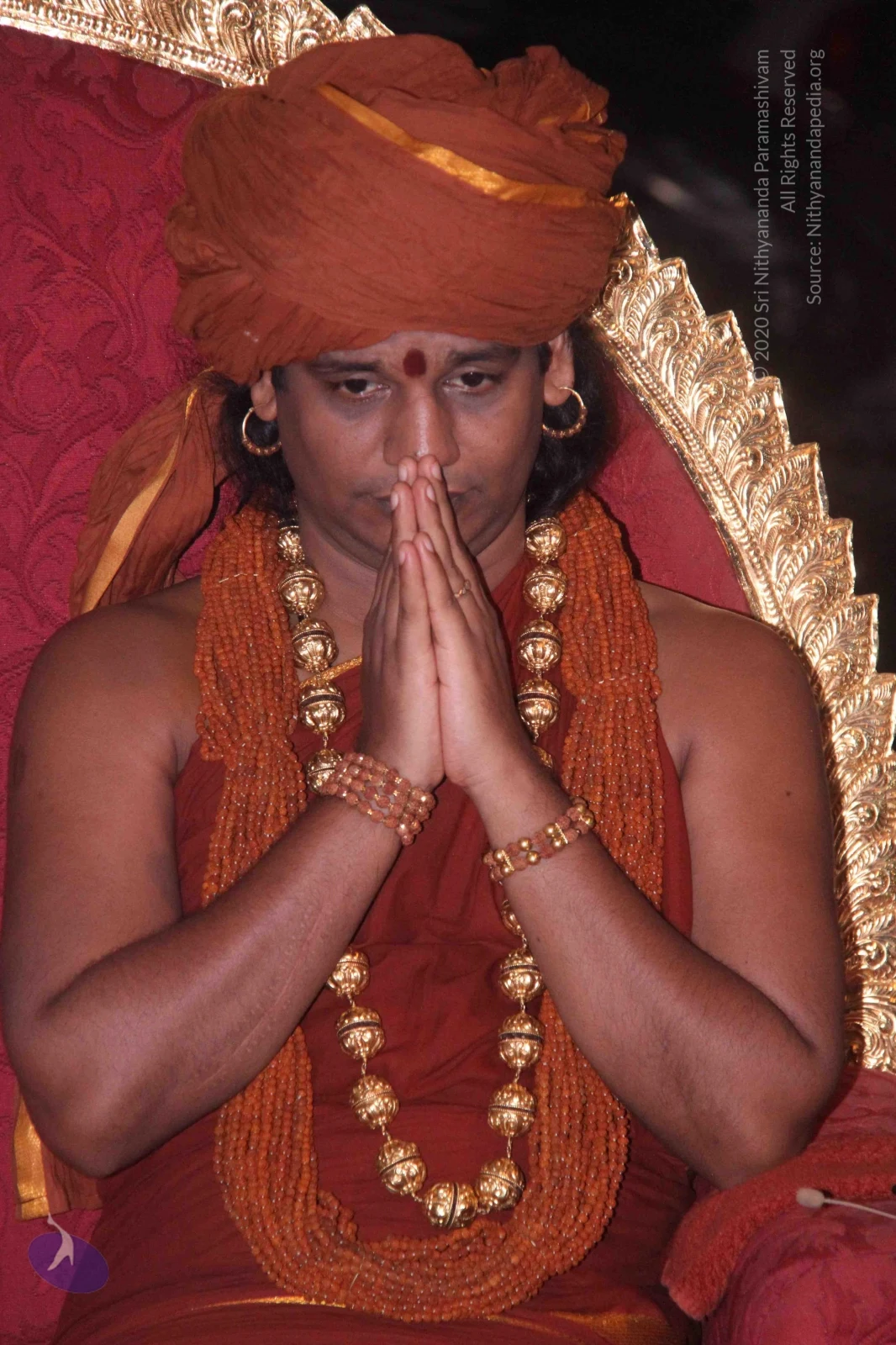
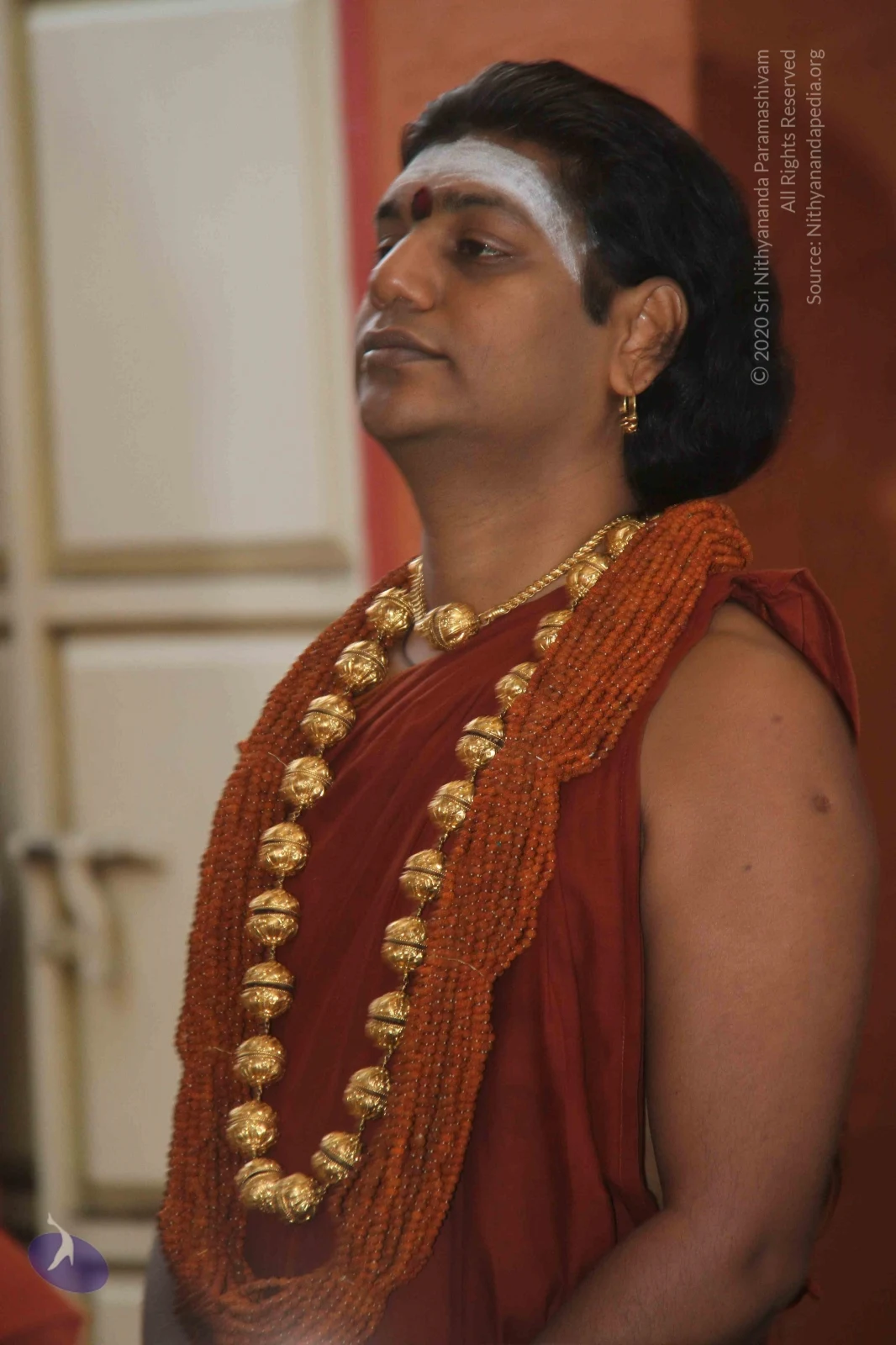
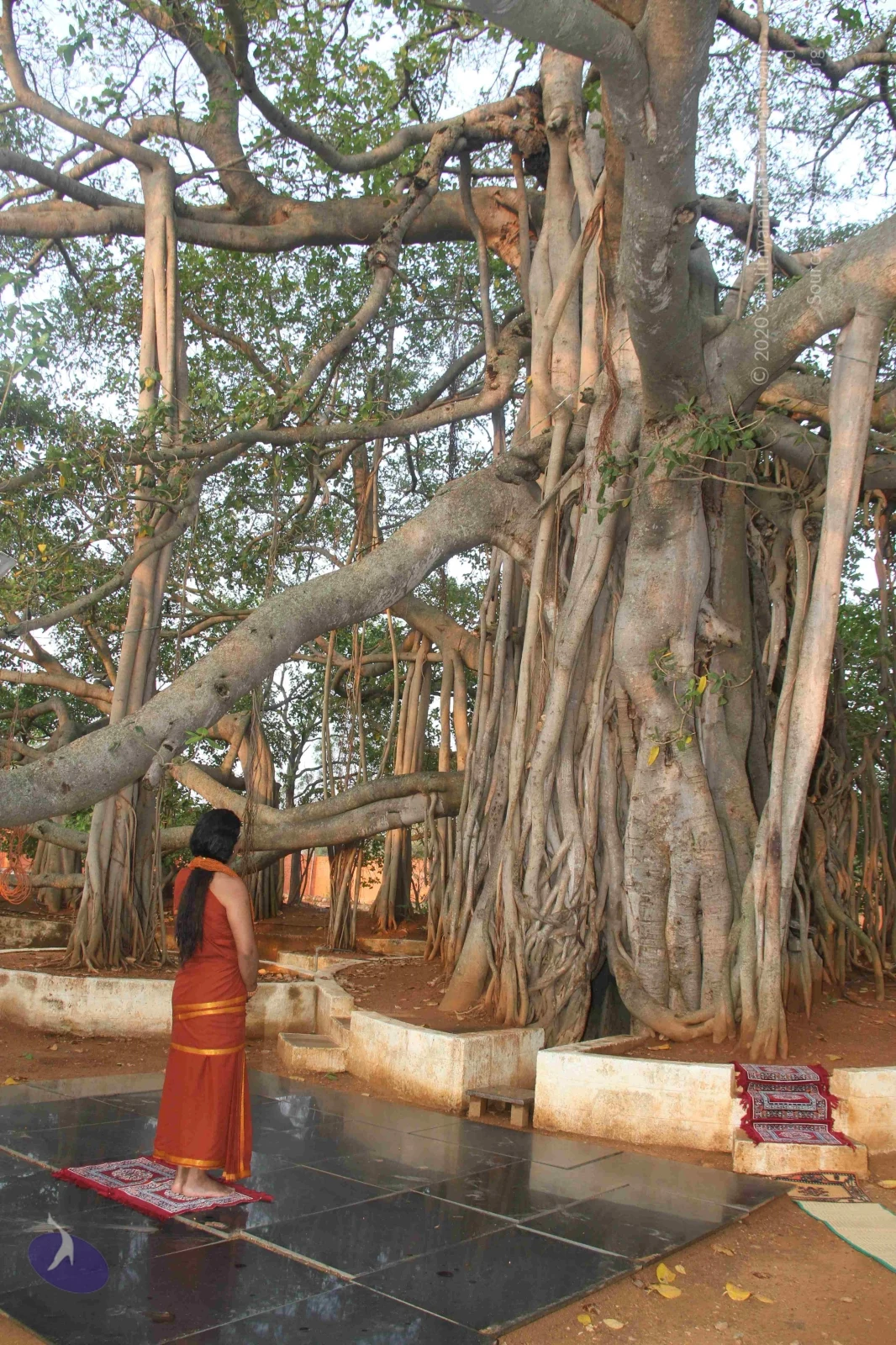
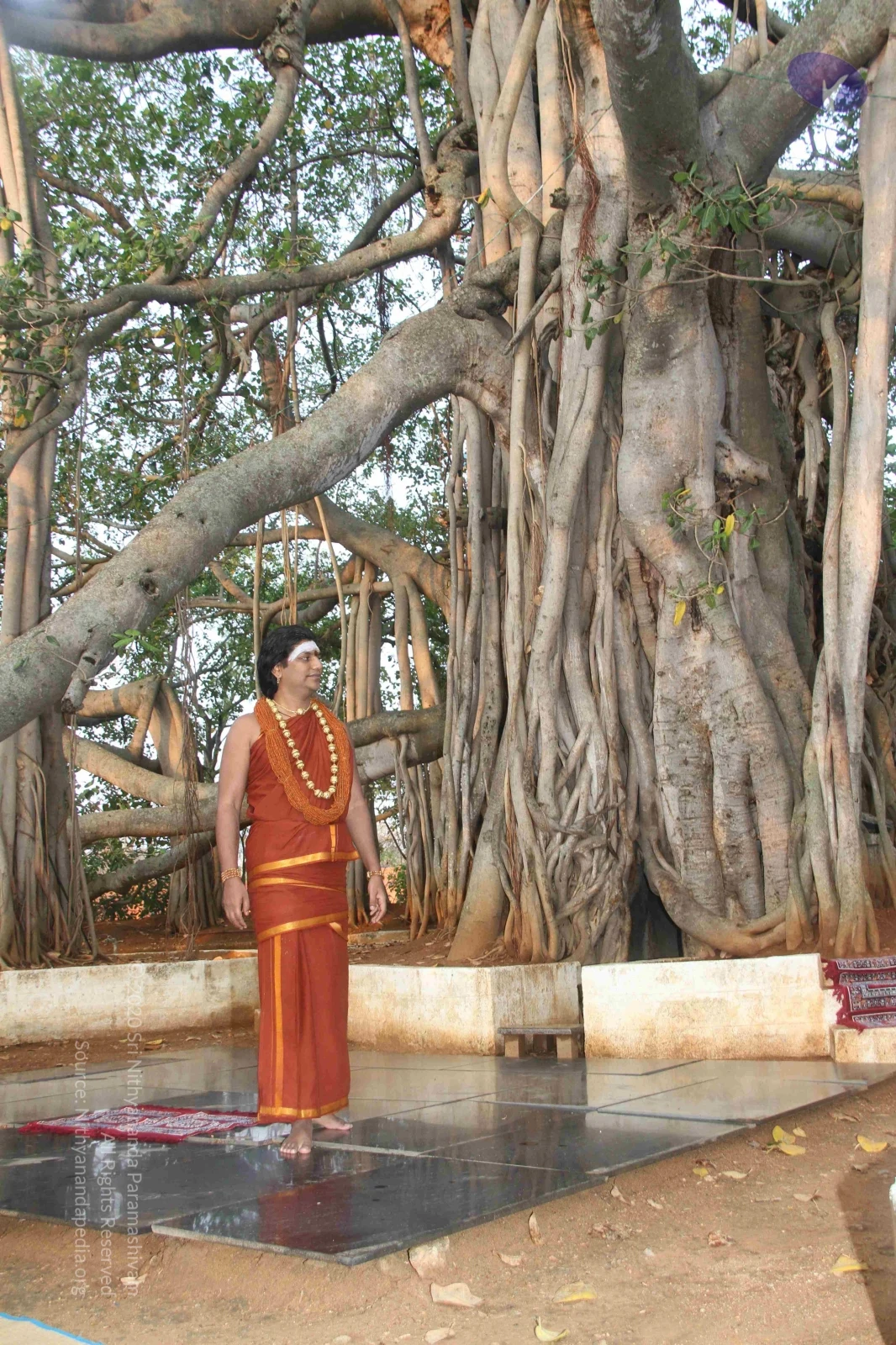
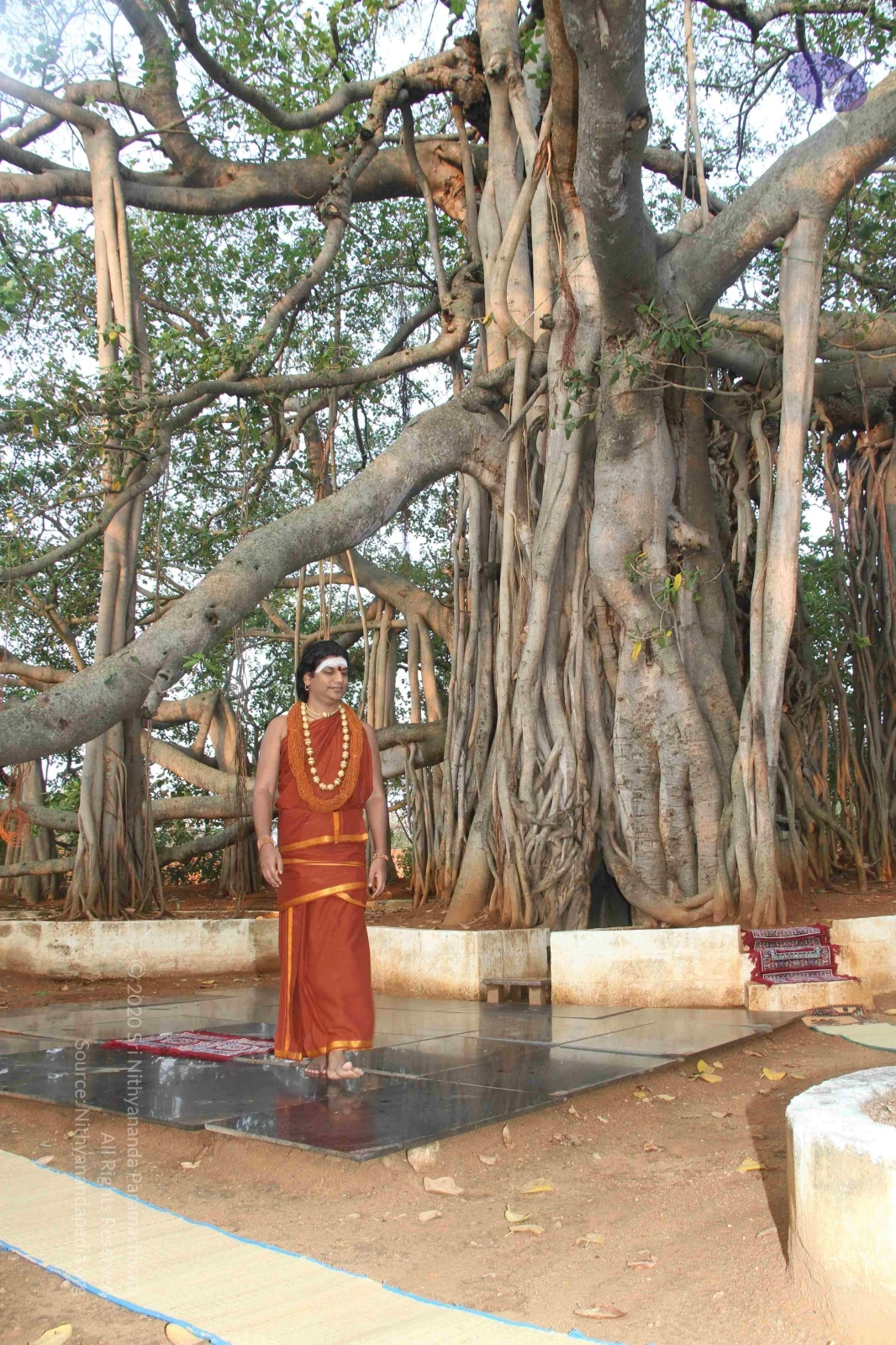
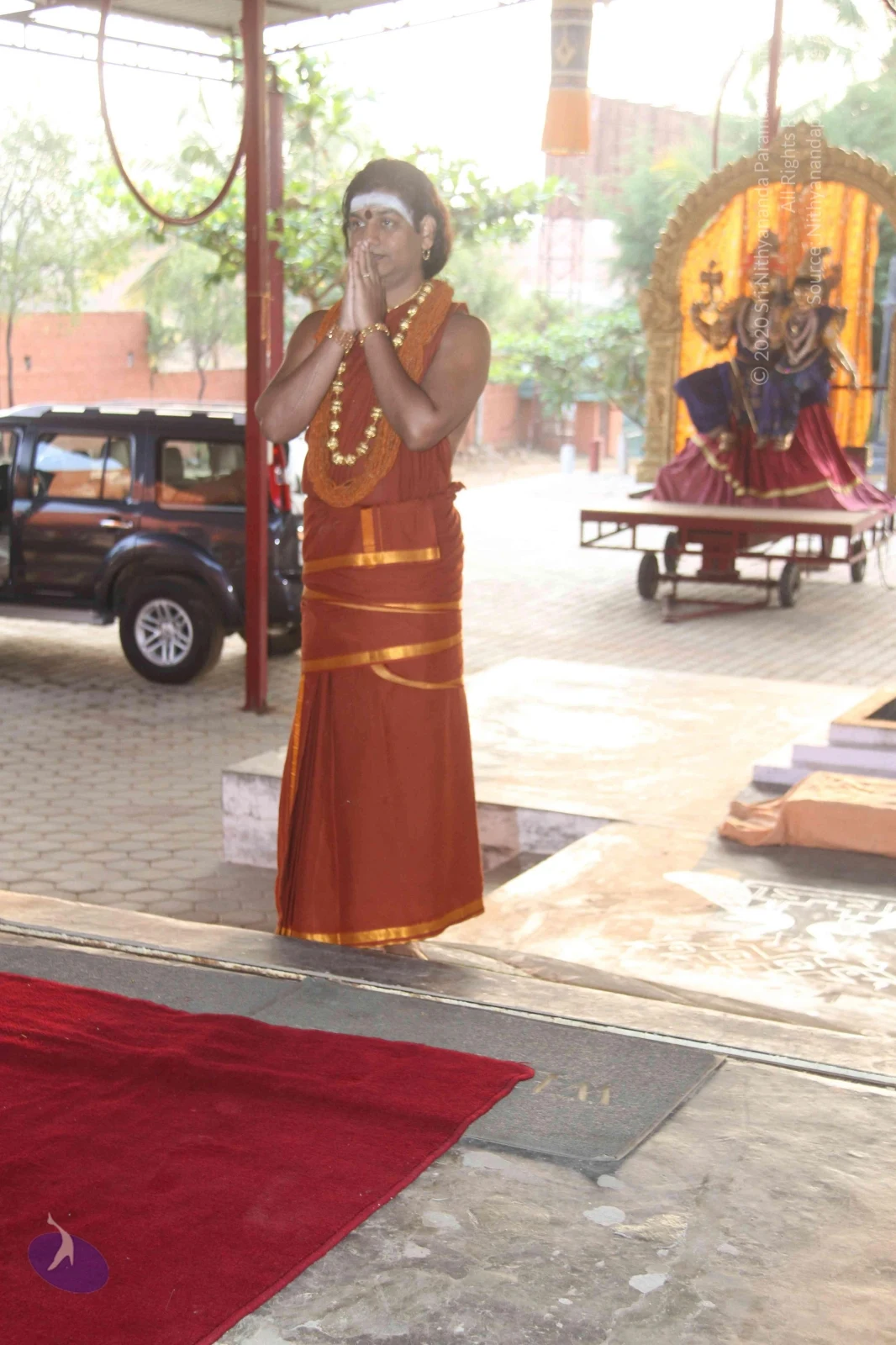
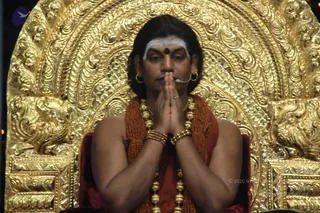
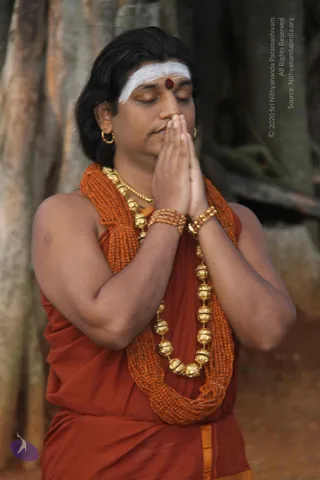
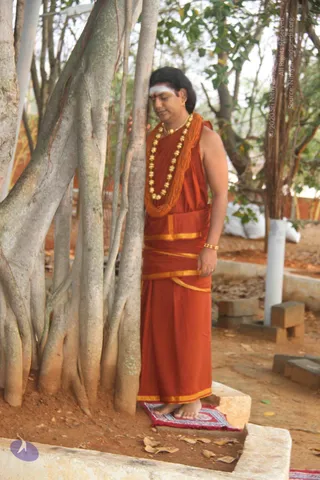
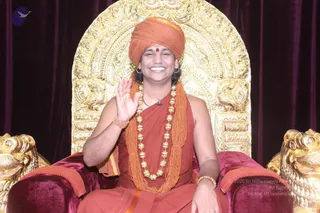
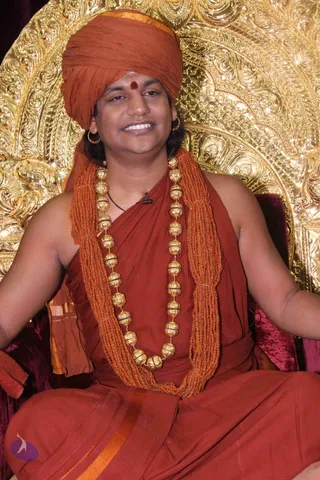
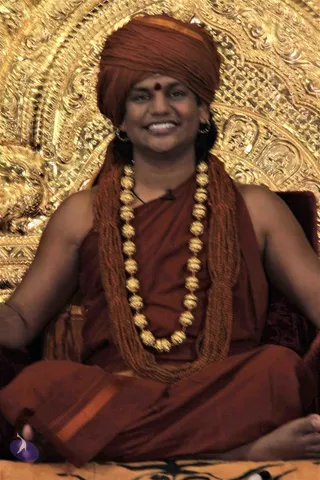
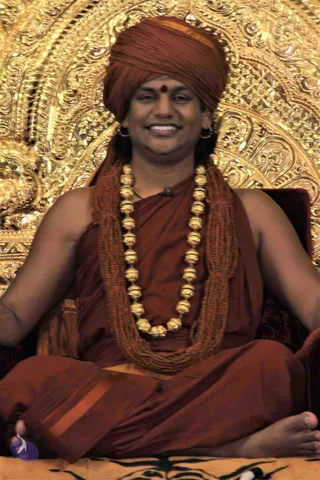
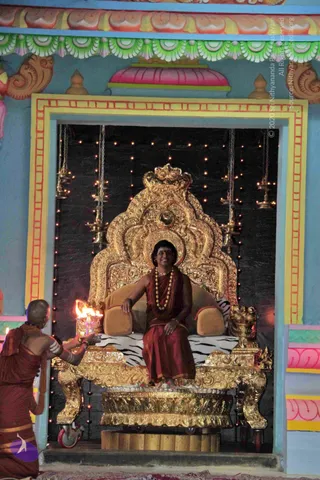
A standing man in an orange-red dhoti and shawl with gold-edged borders stands on a dark polished stone platform beneath a massive banyan tree with many aerial prop roots. He wears a multi-strand orange and gold bead necklace, gold bangles, and a white vertical tilak on his forehead; his head is bare with dark hair. He looks up toward the branches. A red and white patterned mat lies on the stone. Barefoot, he stands at the base of the large tree trunk while dry leaves lie on the ground. The scene appears to be an outdoor ritual setting near a sacred tree.Close photograph of a large oval stainless steel bowl filled with cooked yellow rice mixed with vegetable pieces and green curry leaves, set on an orange cloth over a metal tray. A partially visible hand, smeared with rice, is pressing or mixing the food at the upper left. A pink plastic basket and a brass vessel sit in the background. The scene suggests food preparation for an offering, but no ritual is clearly shown.A man seated on an ornate red-upholstered throne with gold carved trim, palms pressed together in namaste at chest level, eyes lowered. He wears an orange-saffron turban with a gold stripe, a red bindi on his forehead, gold hoop earrings, and layers of orange rudraksha malas with large ornate gold beads. He is dressed in orange-red robes and a small wireless microphone is visible at lower right. Swamiji (probable): long hair under the turban, saffron clothing, rudraksha malas and ceremonial gold necklaces, seated on a throne in a ceremonial setting.

April 01 2013

Original wiki page
Contents

Title

Are you Limiting your Expansion

Narration

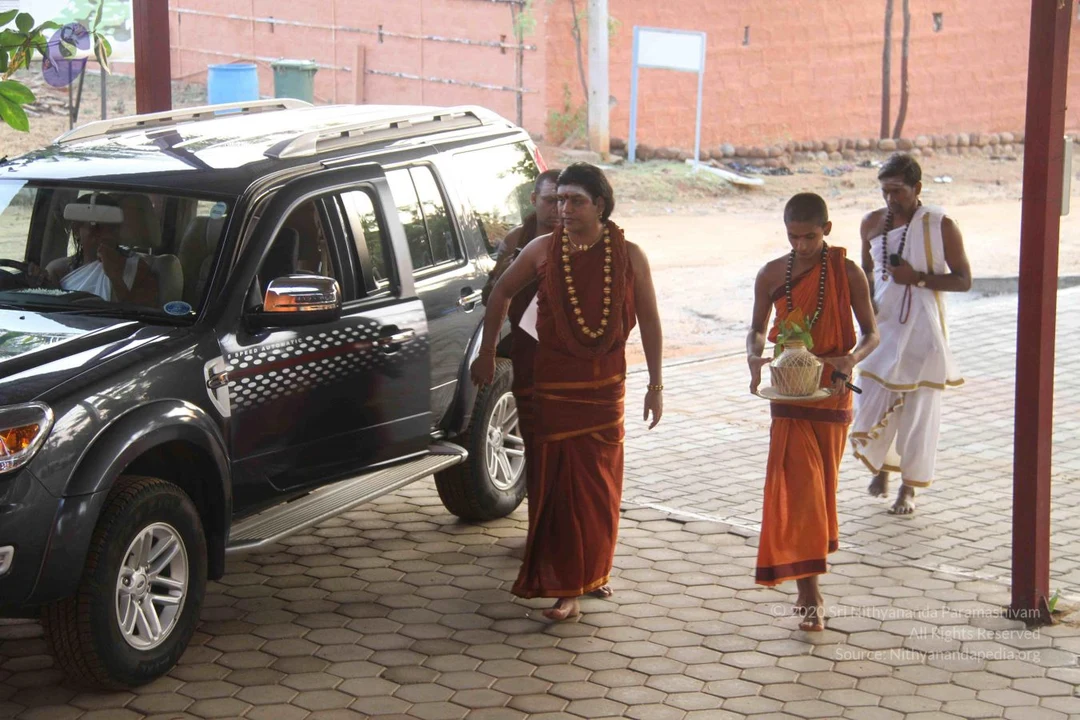
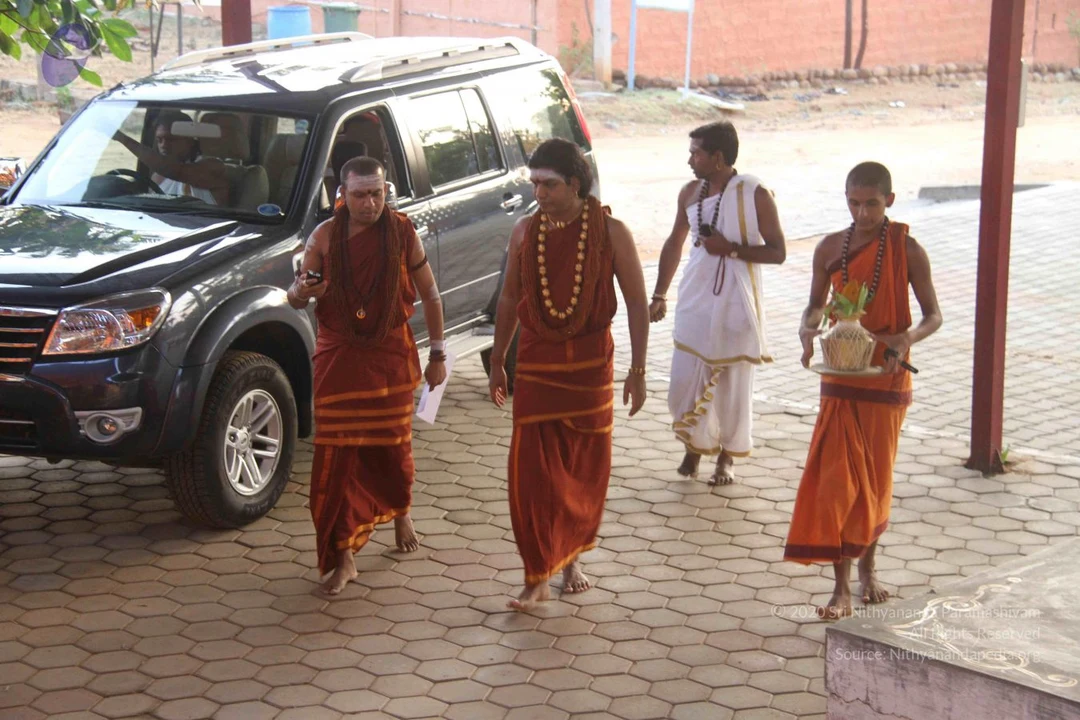
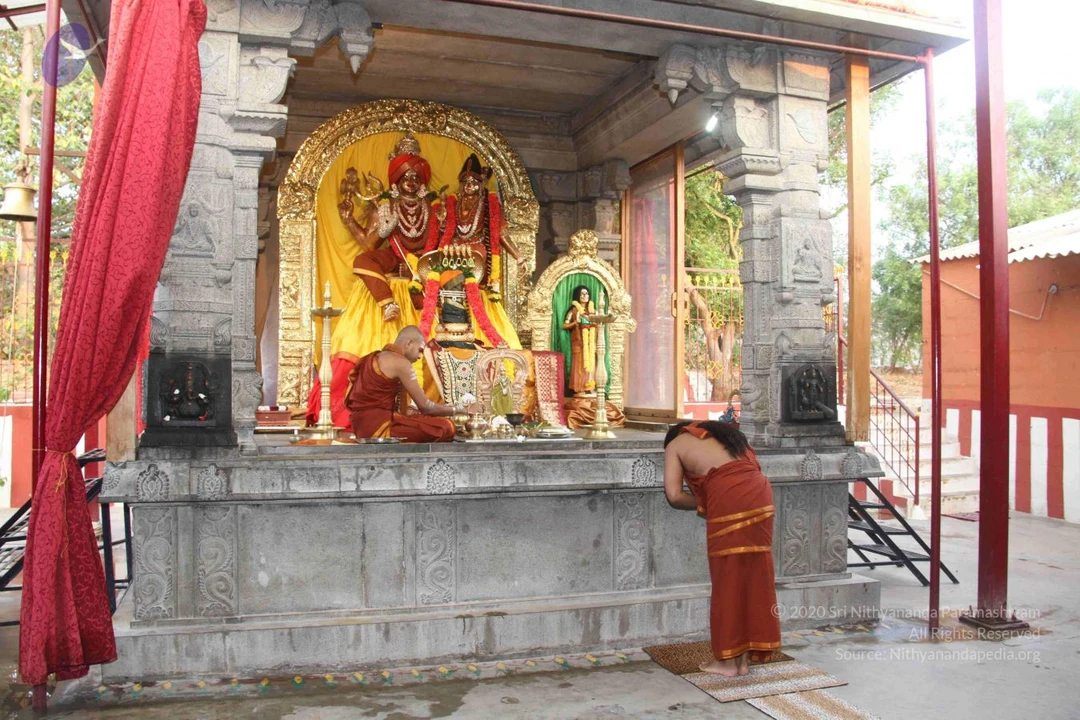
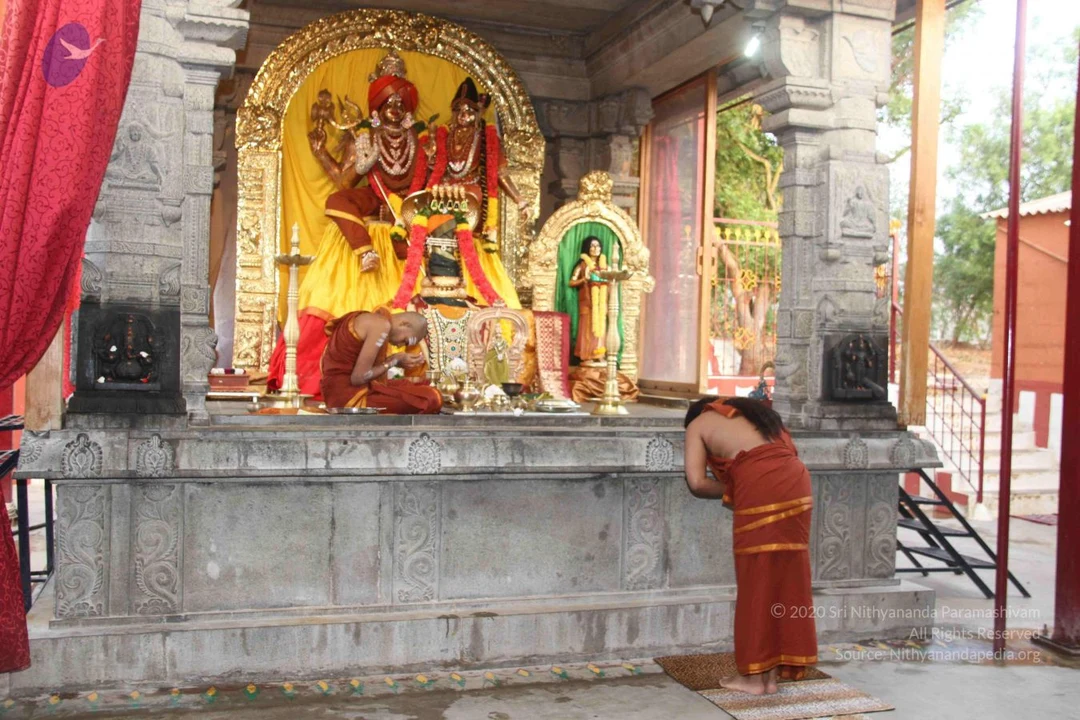
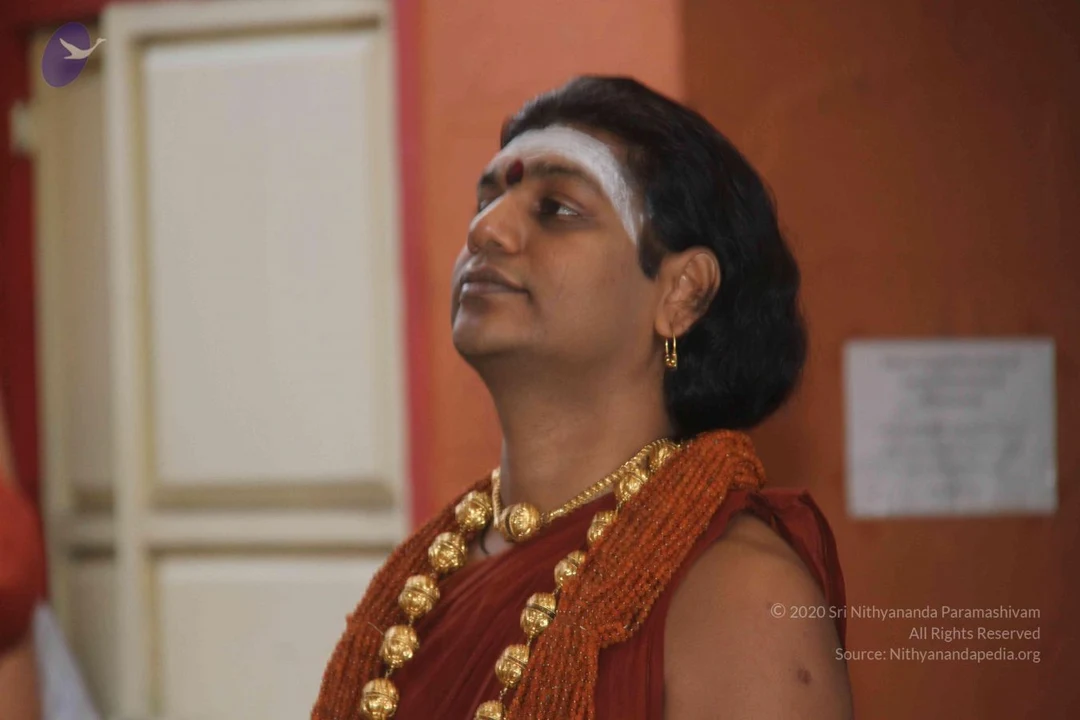
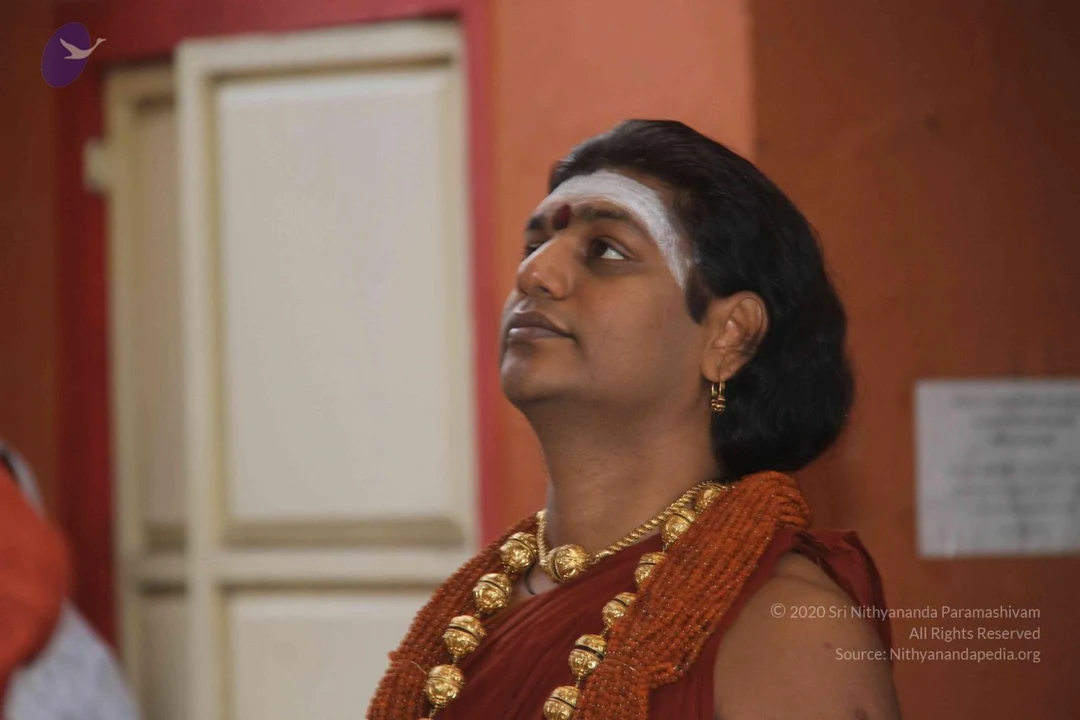
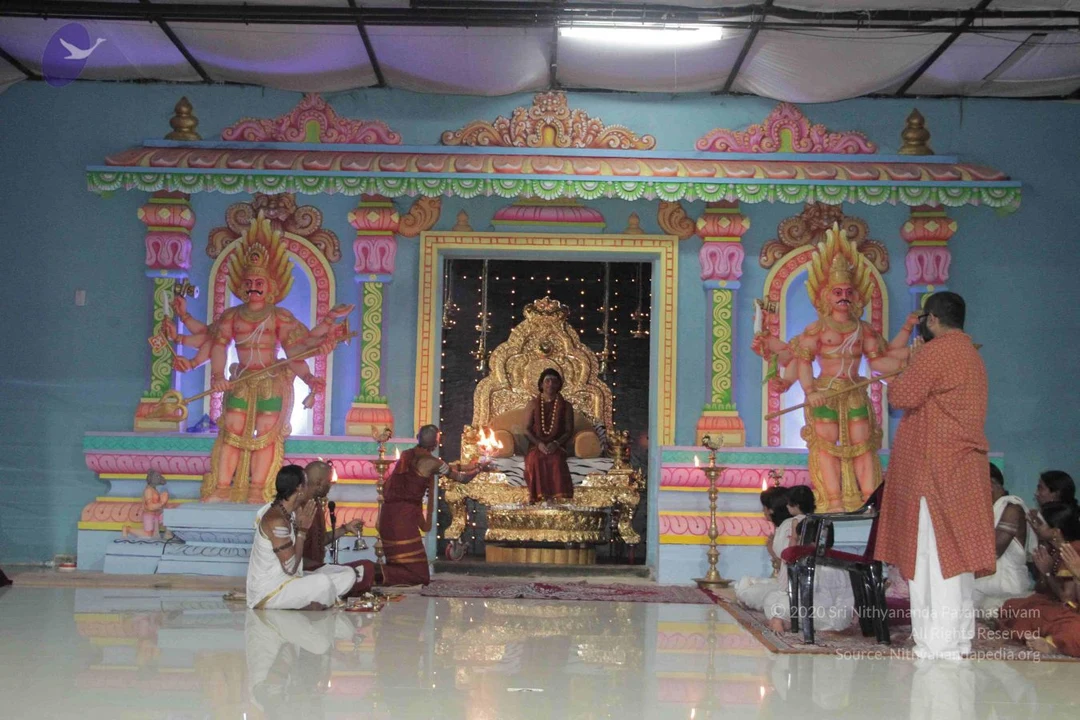
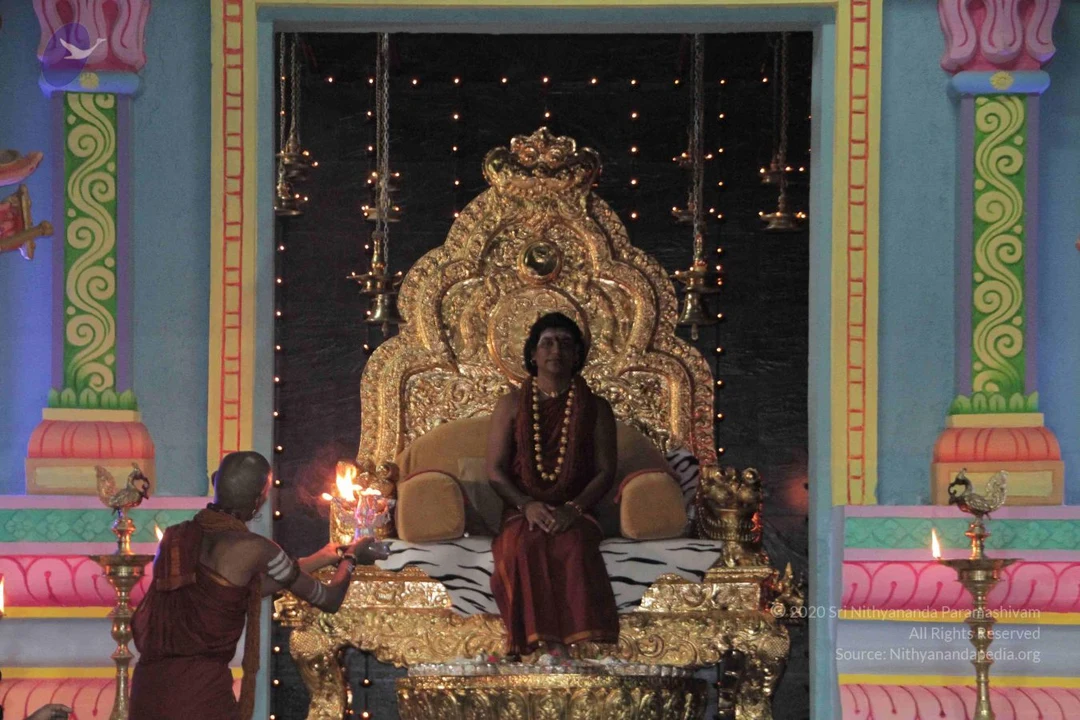
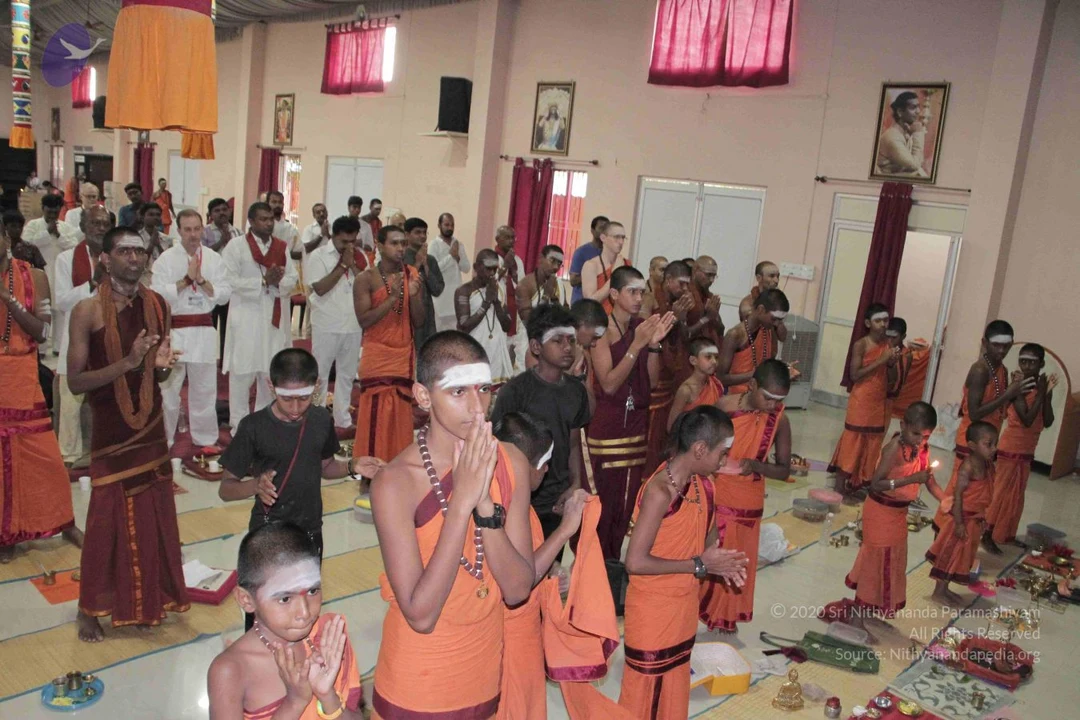
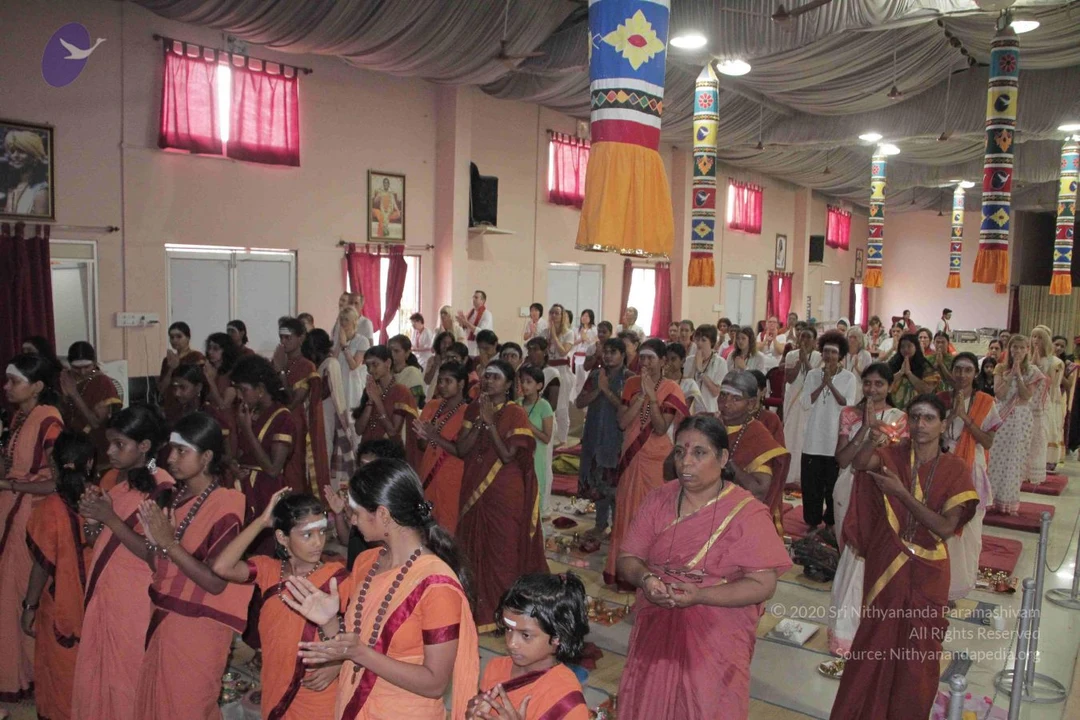
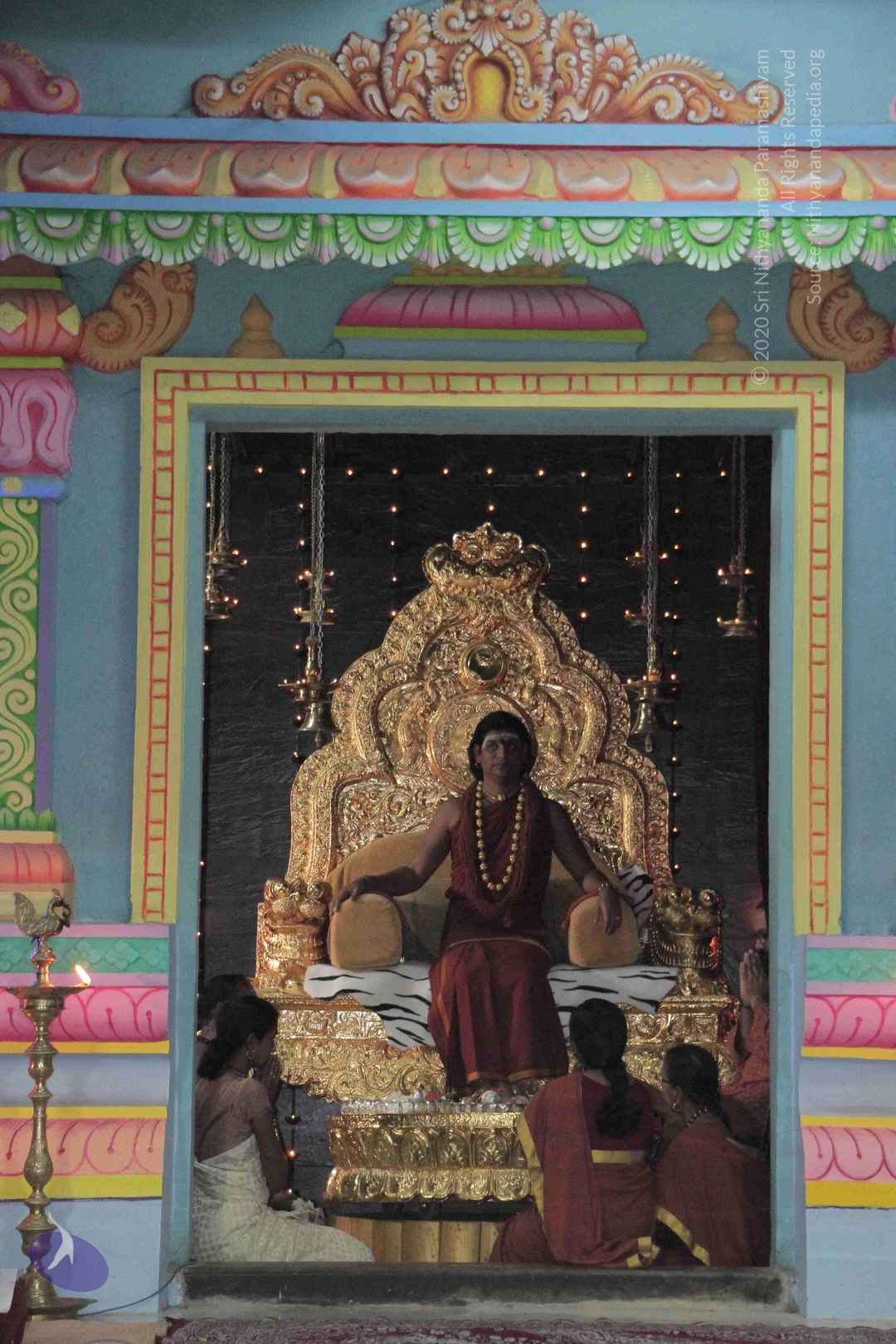
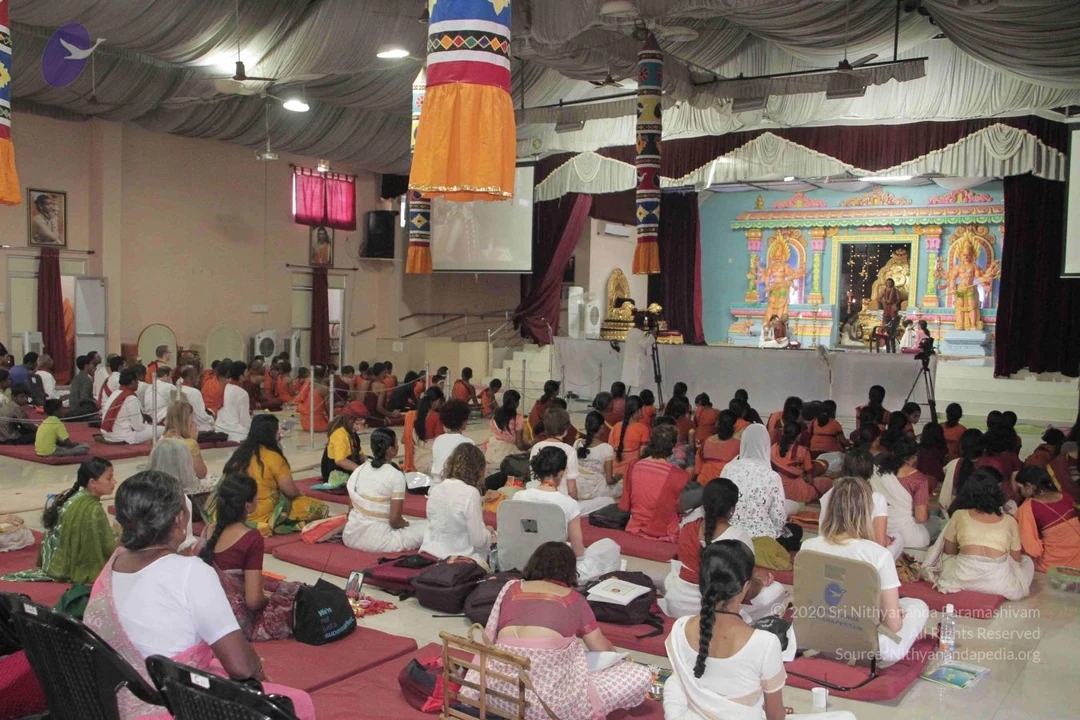
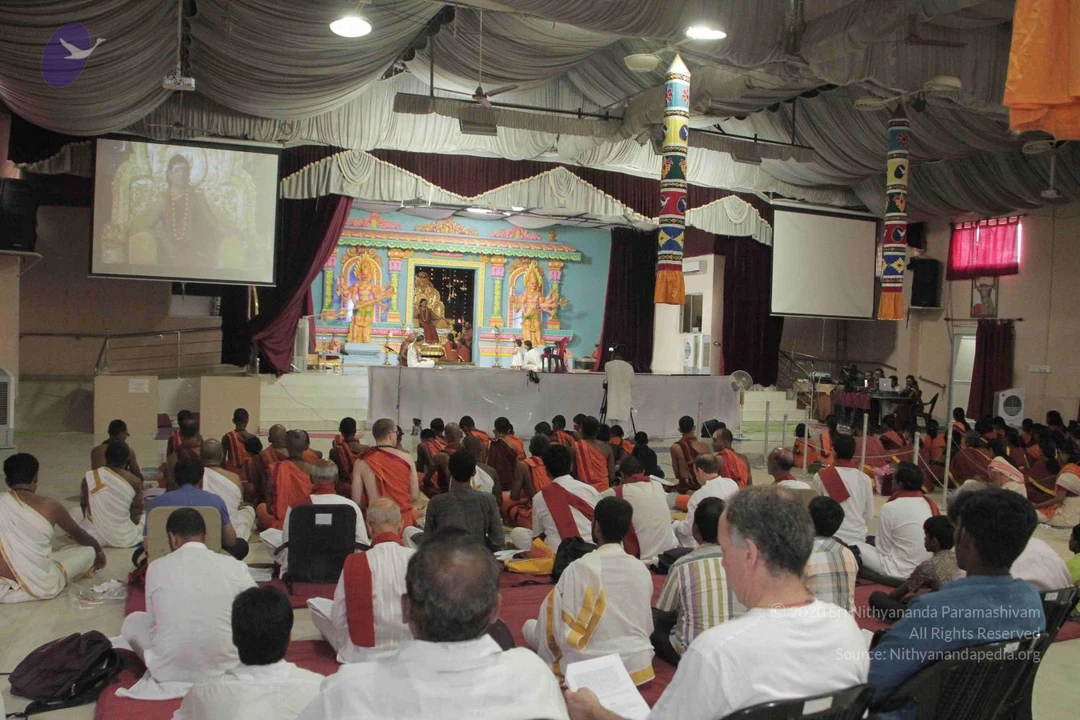
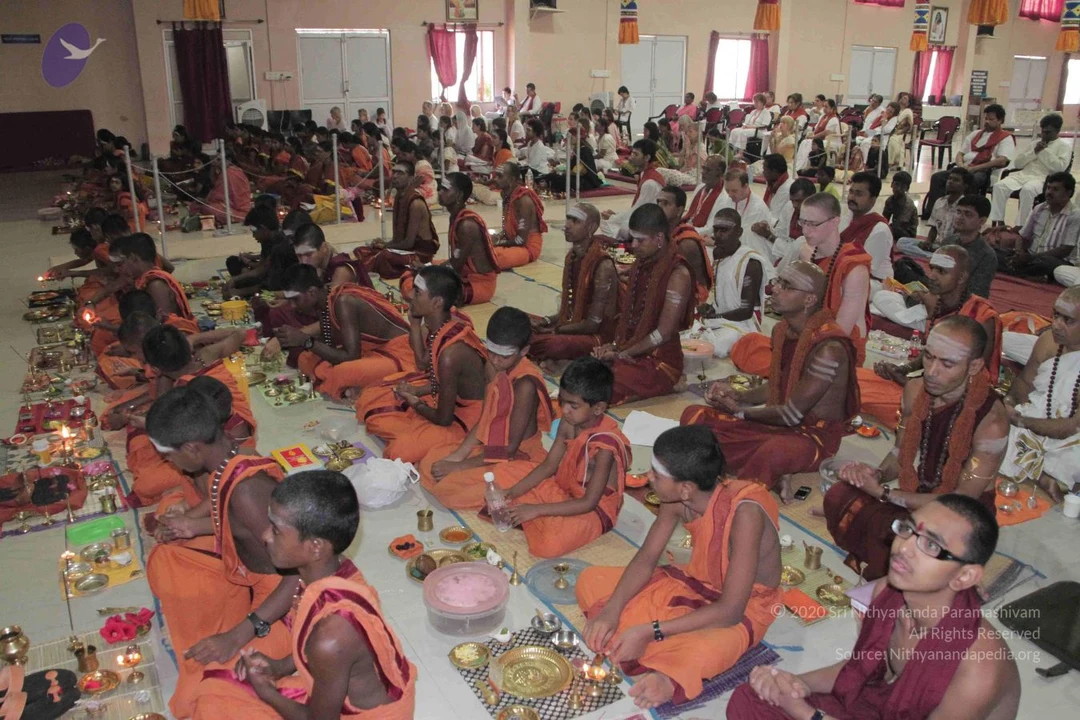
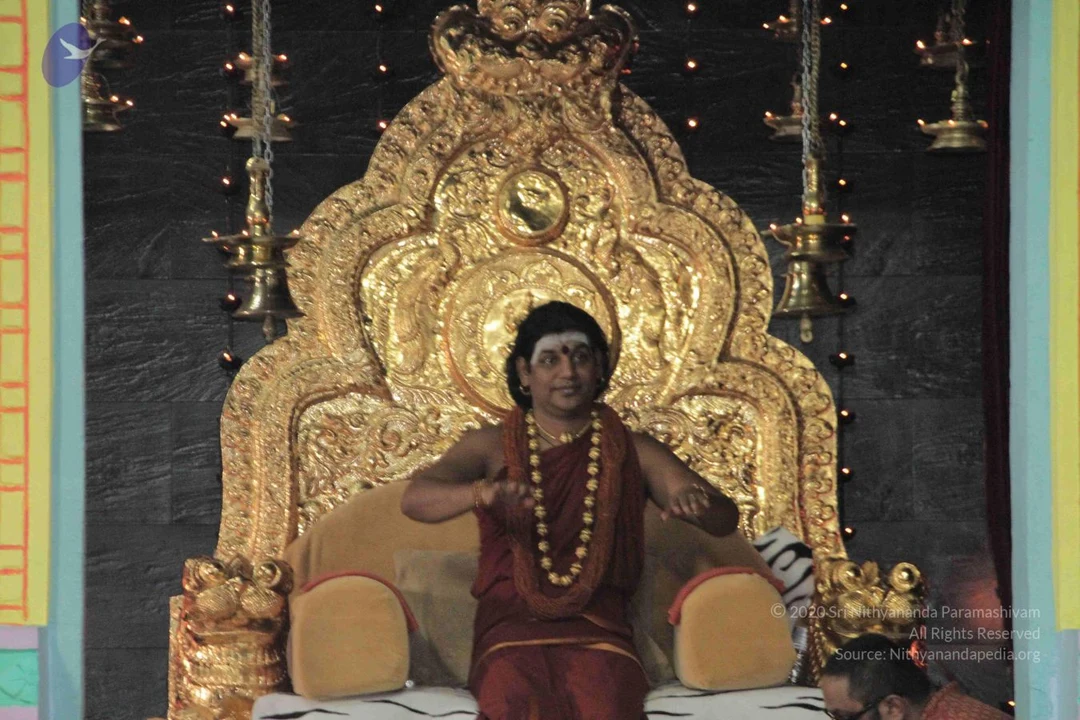
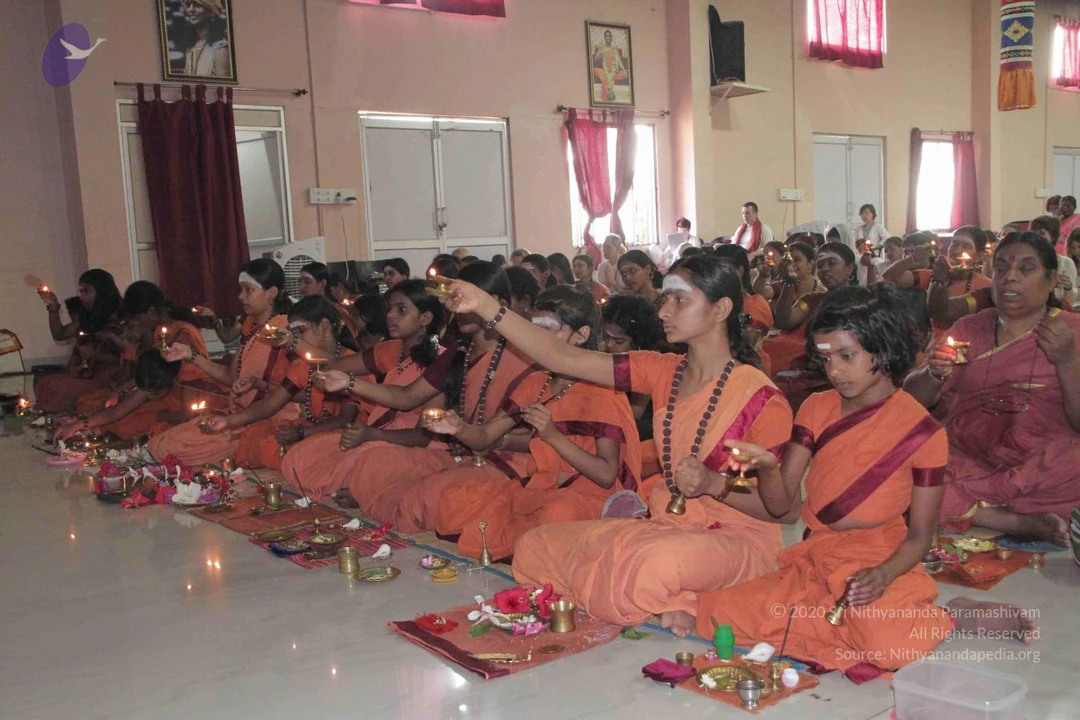
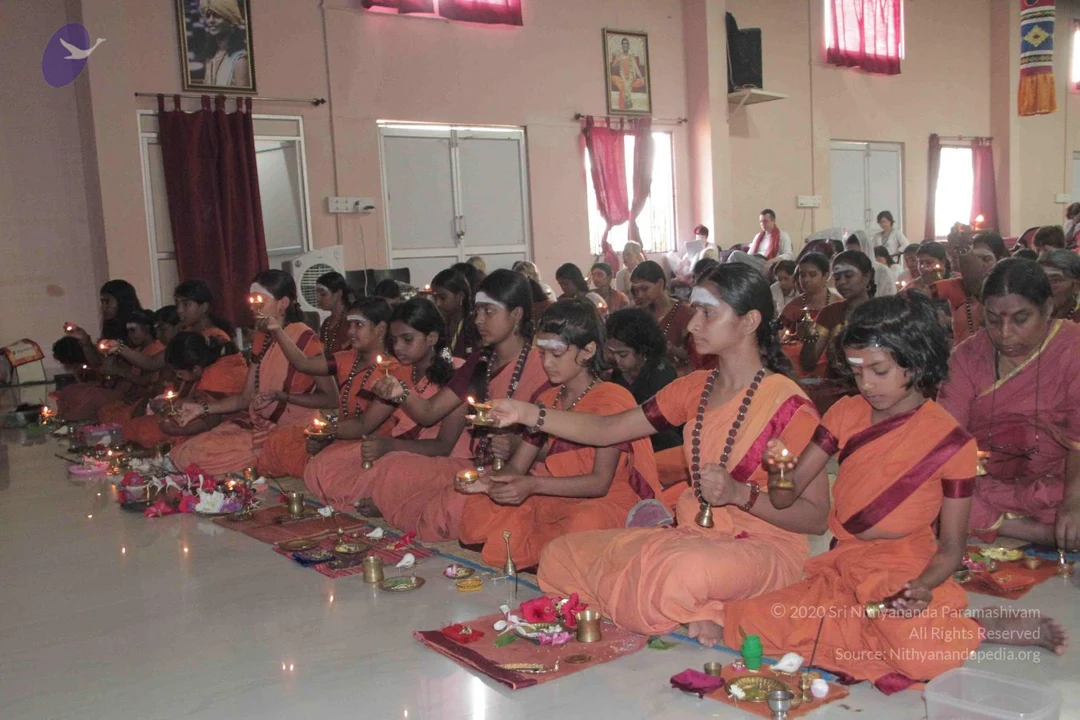
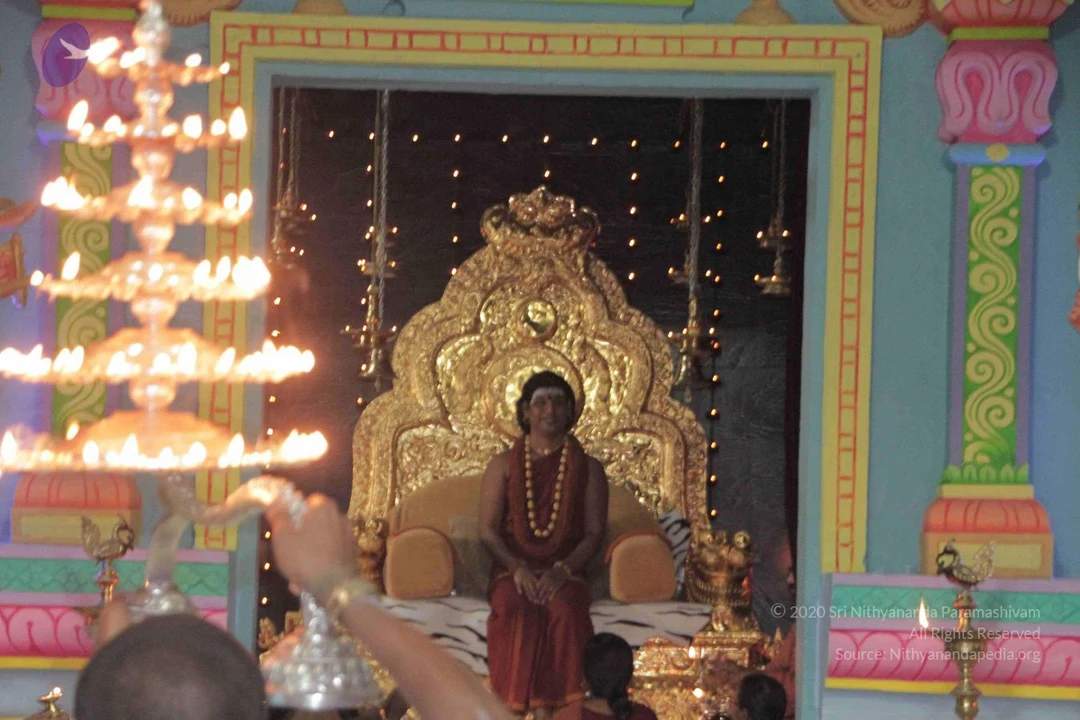
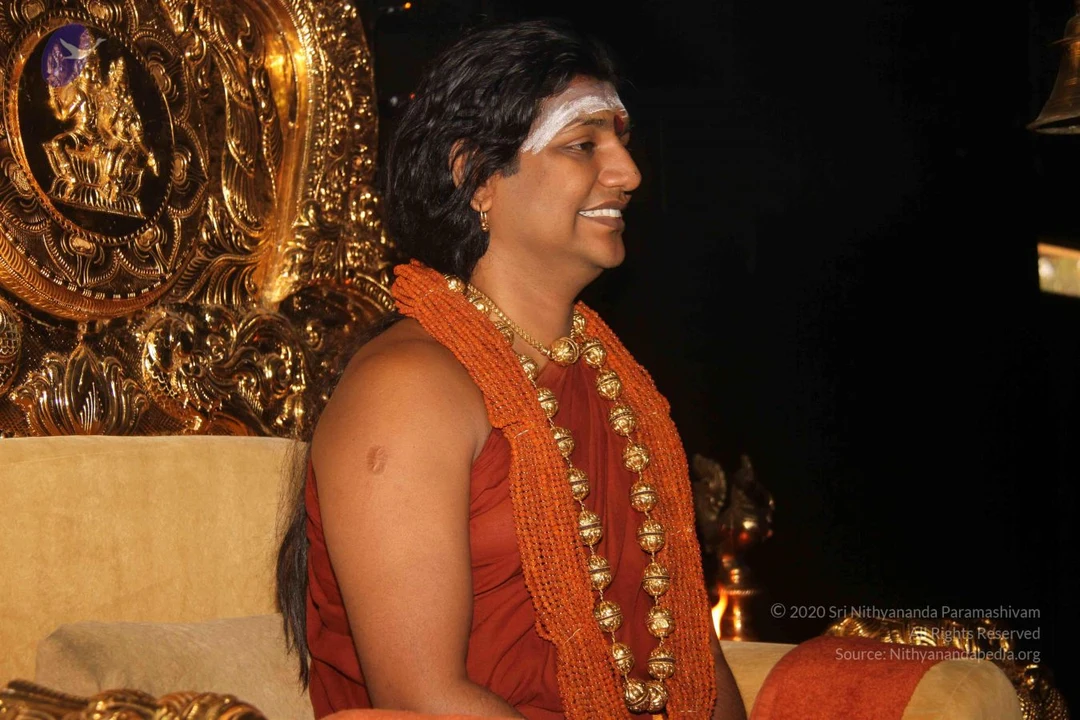
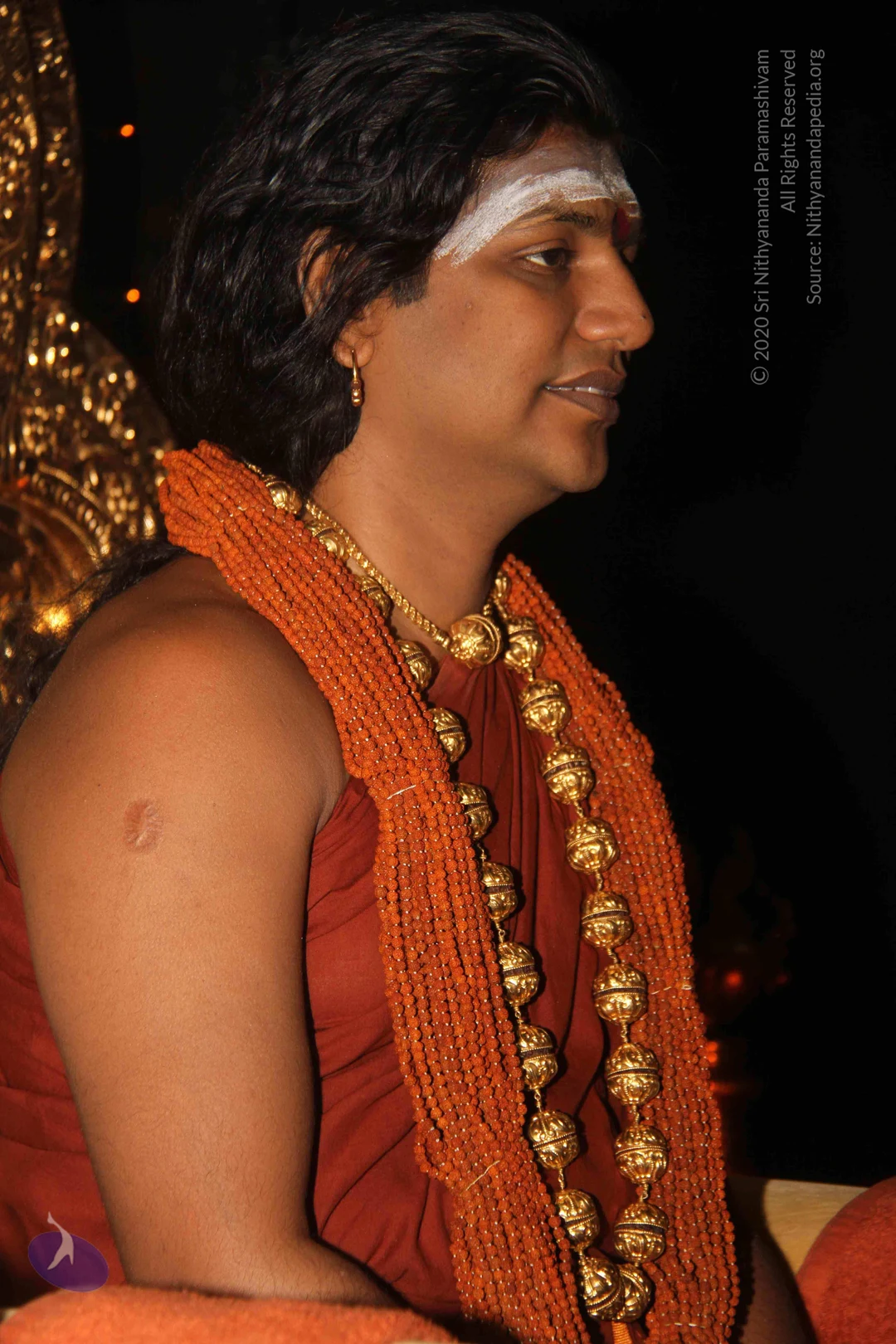
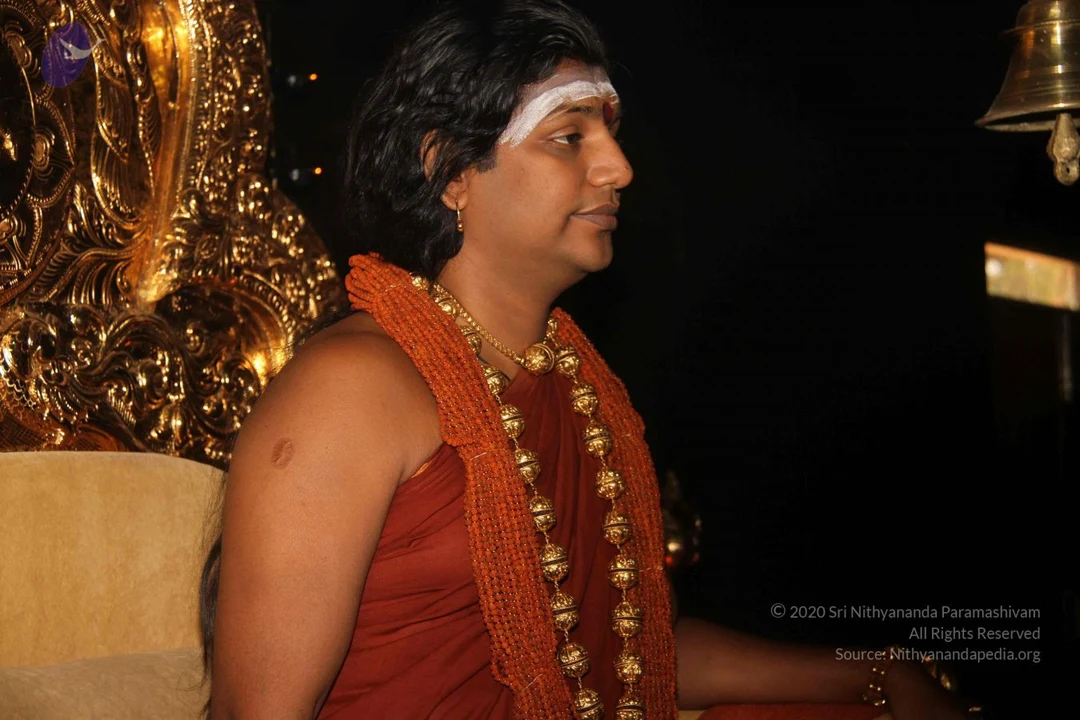
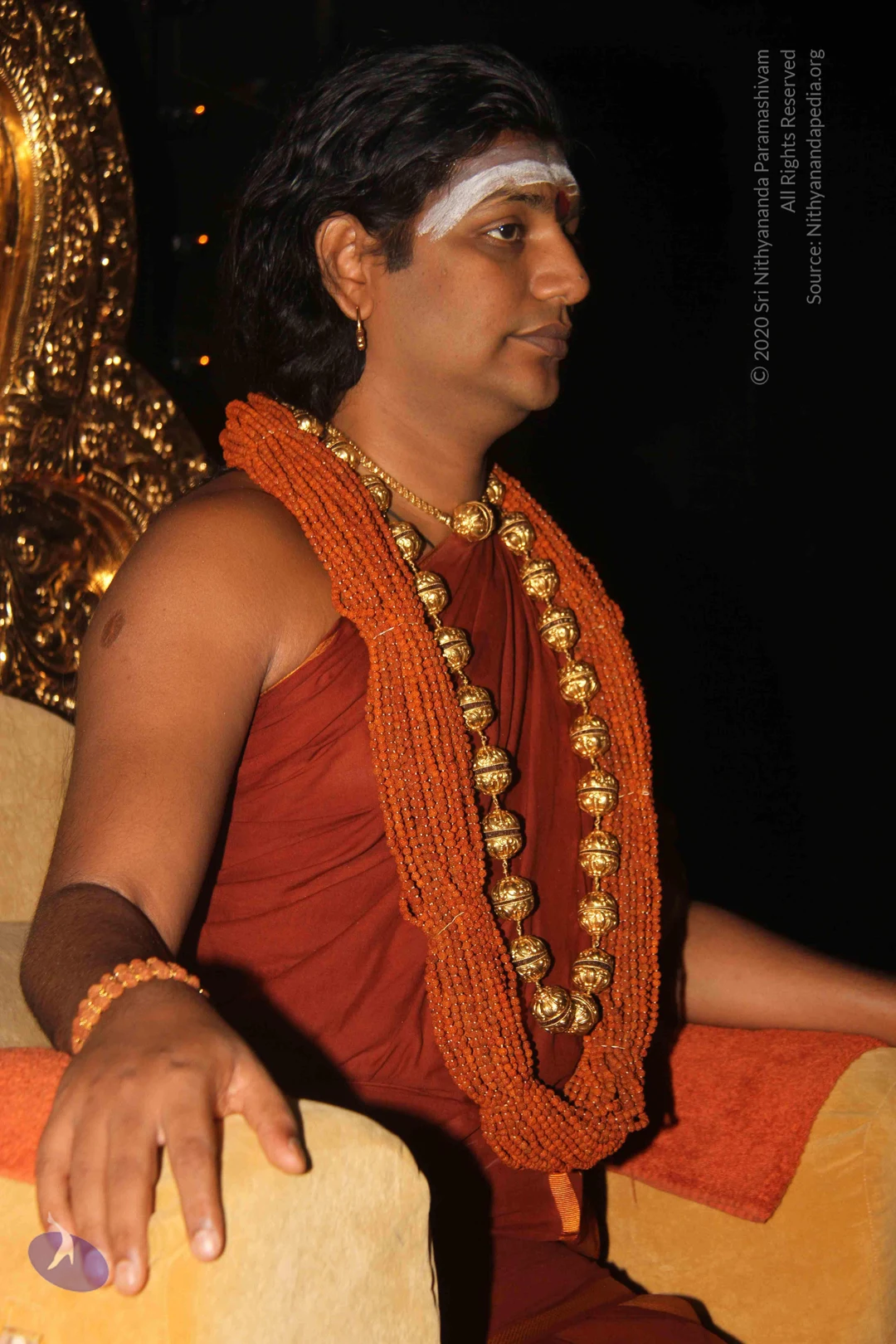
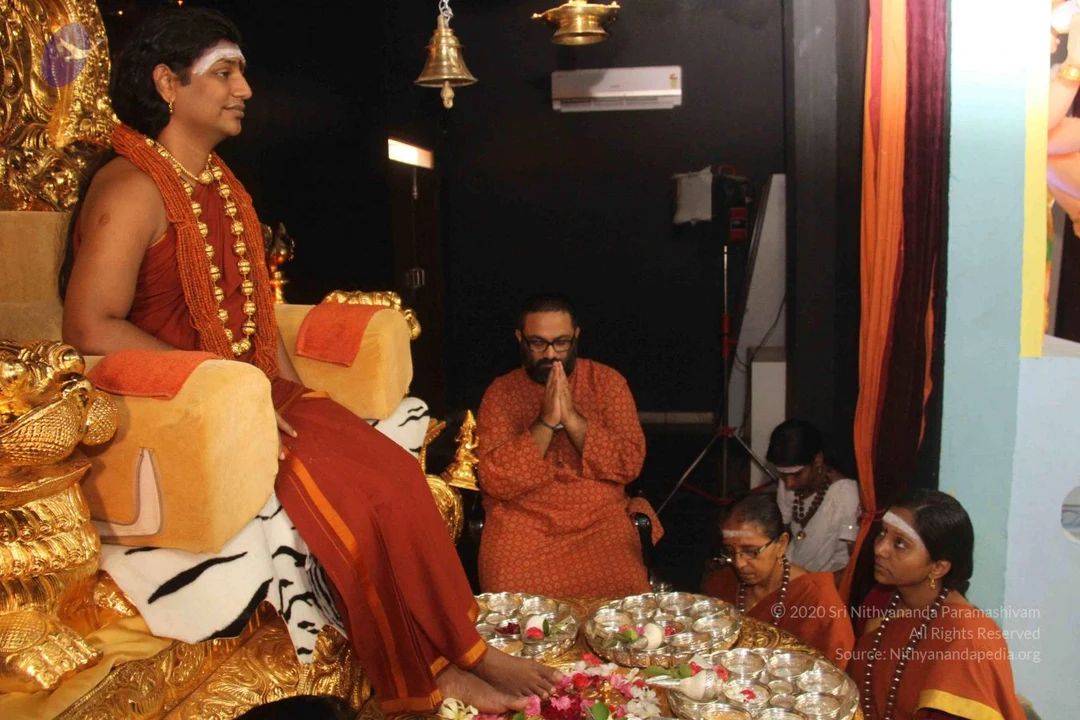
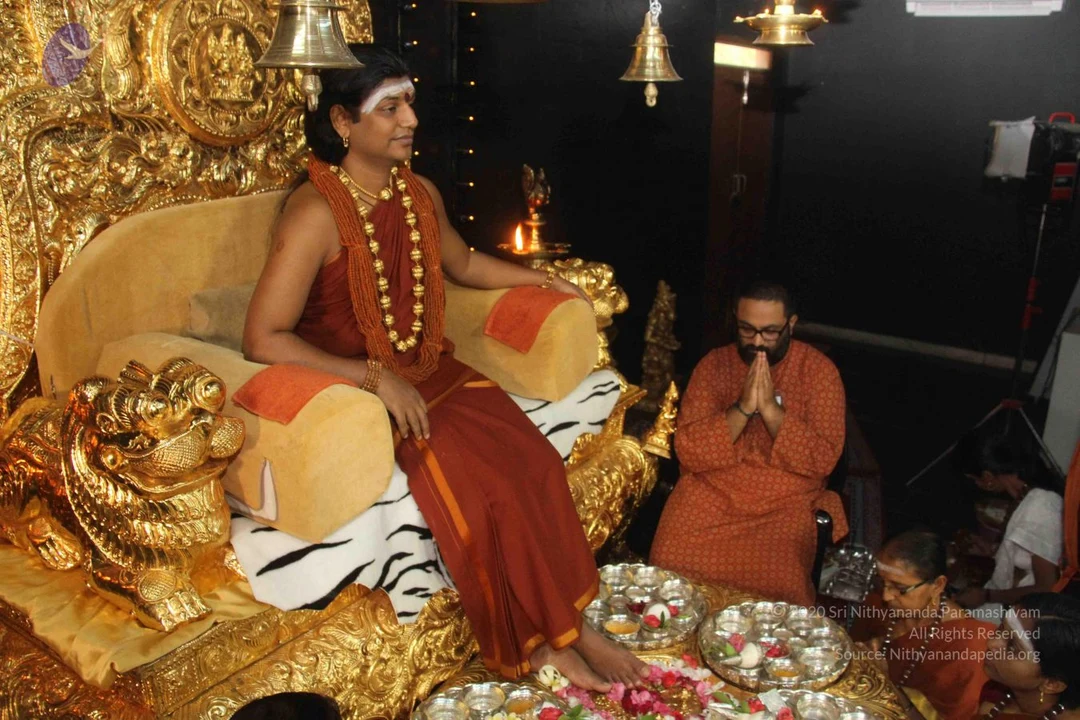
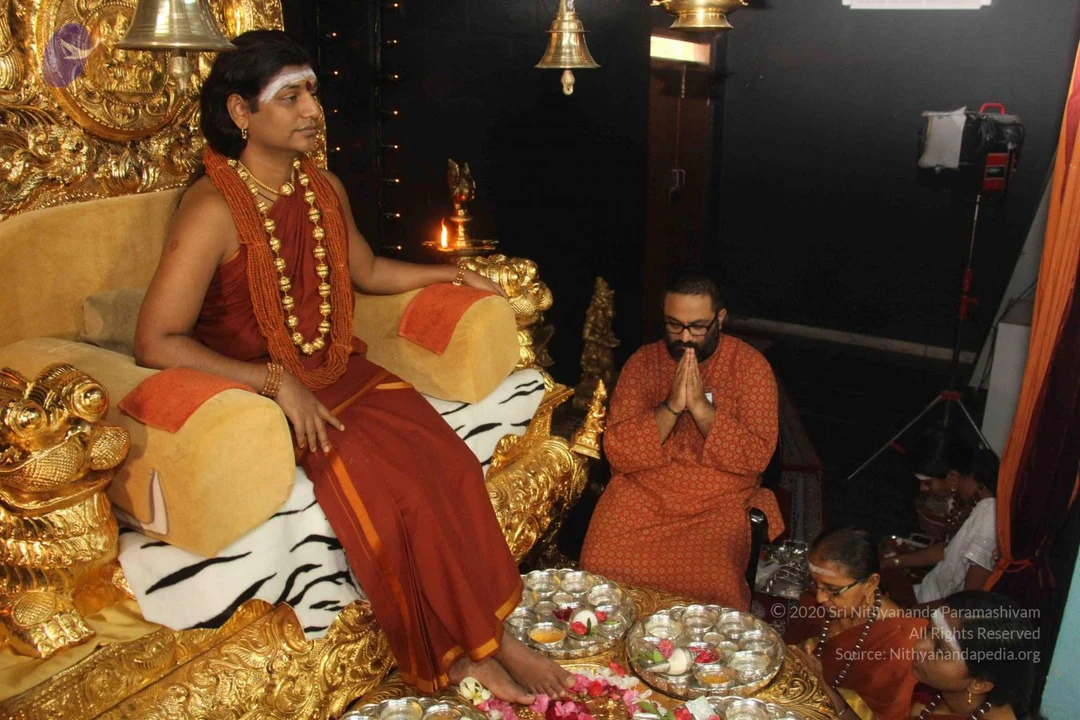
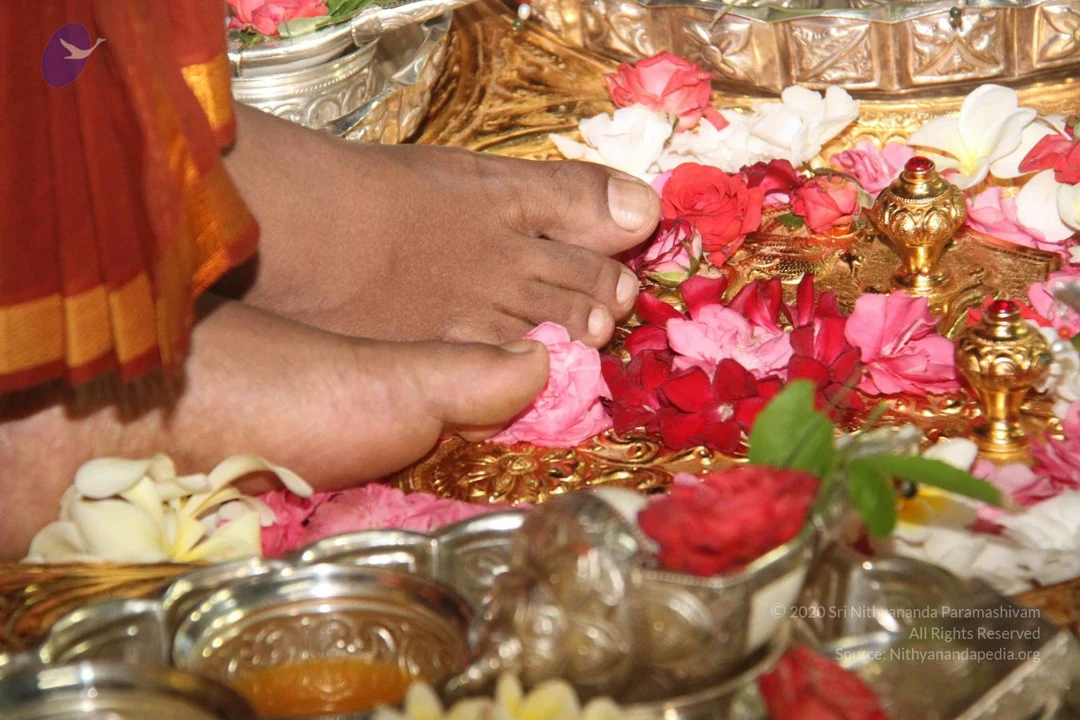
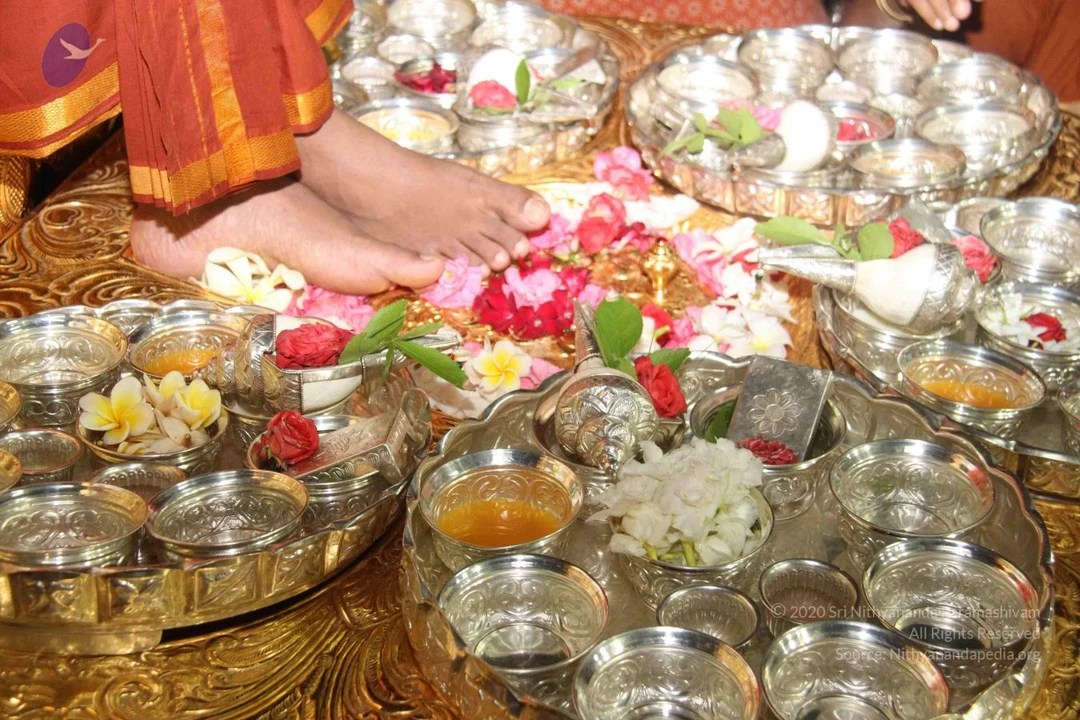
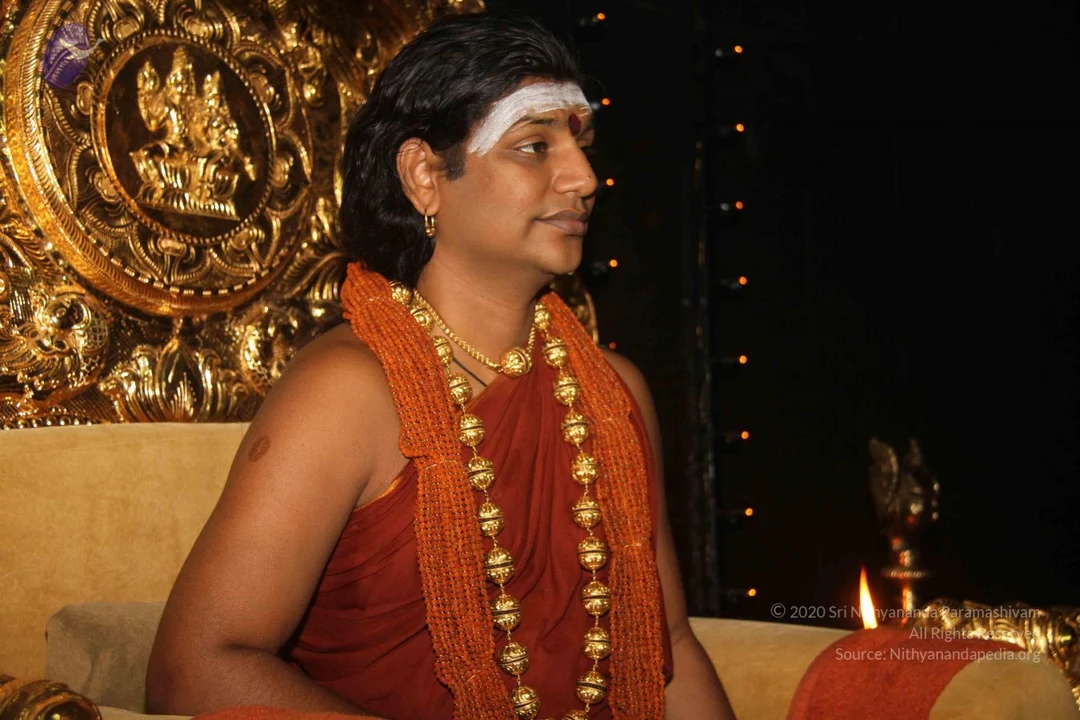
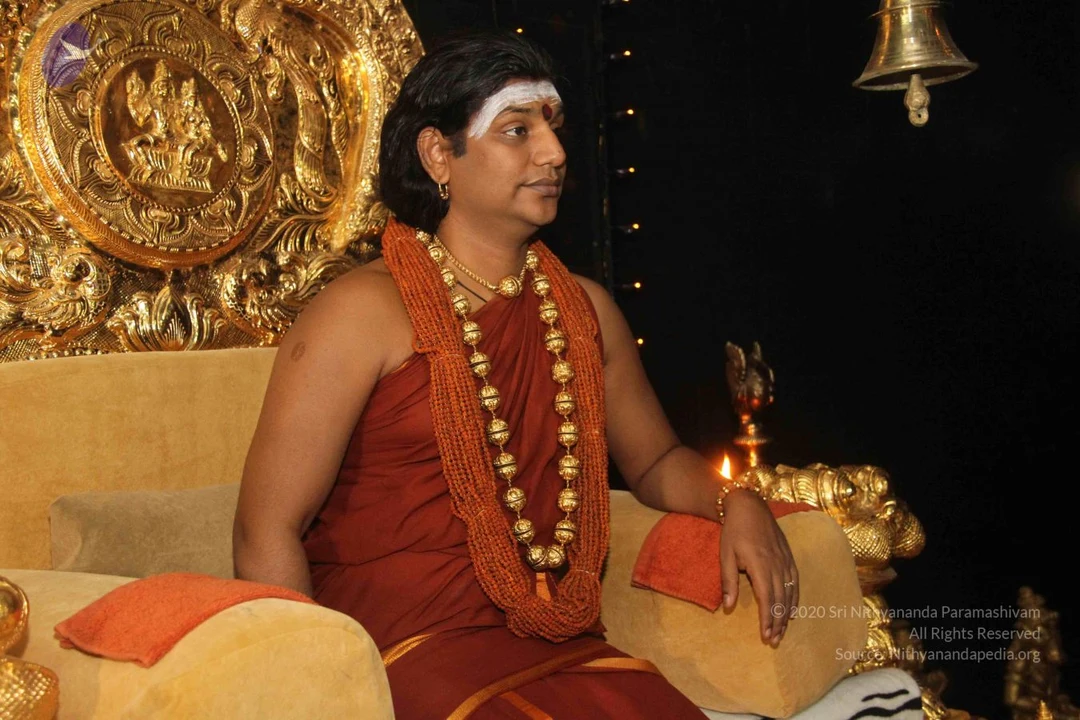
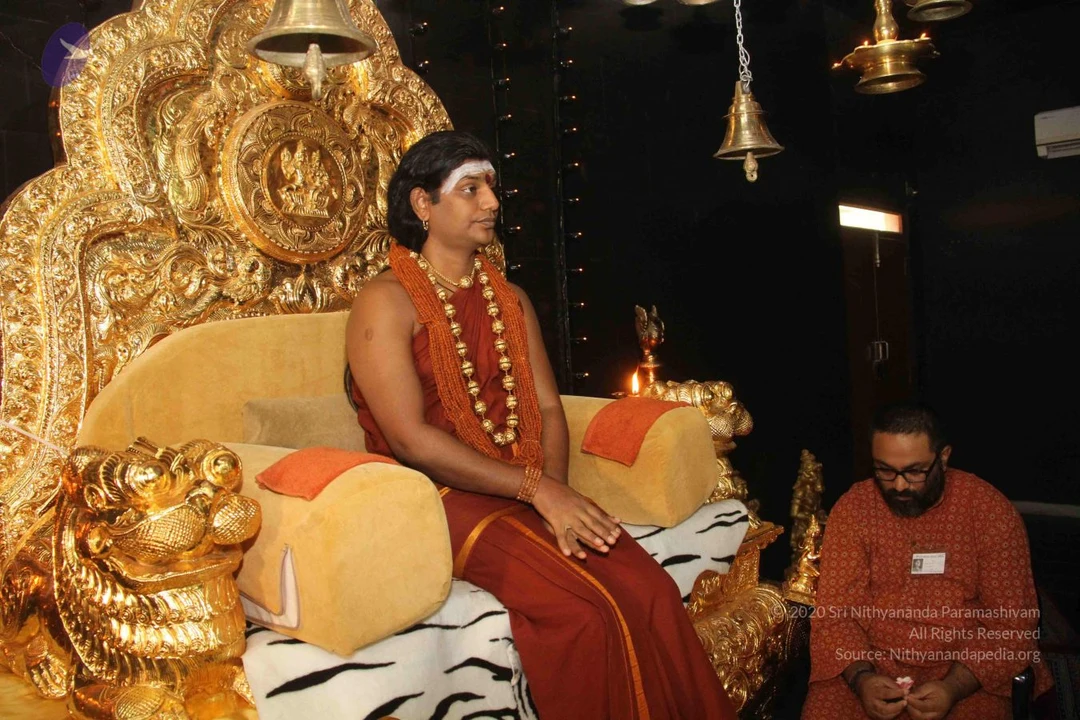
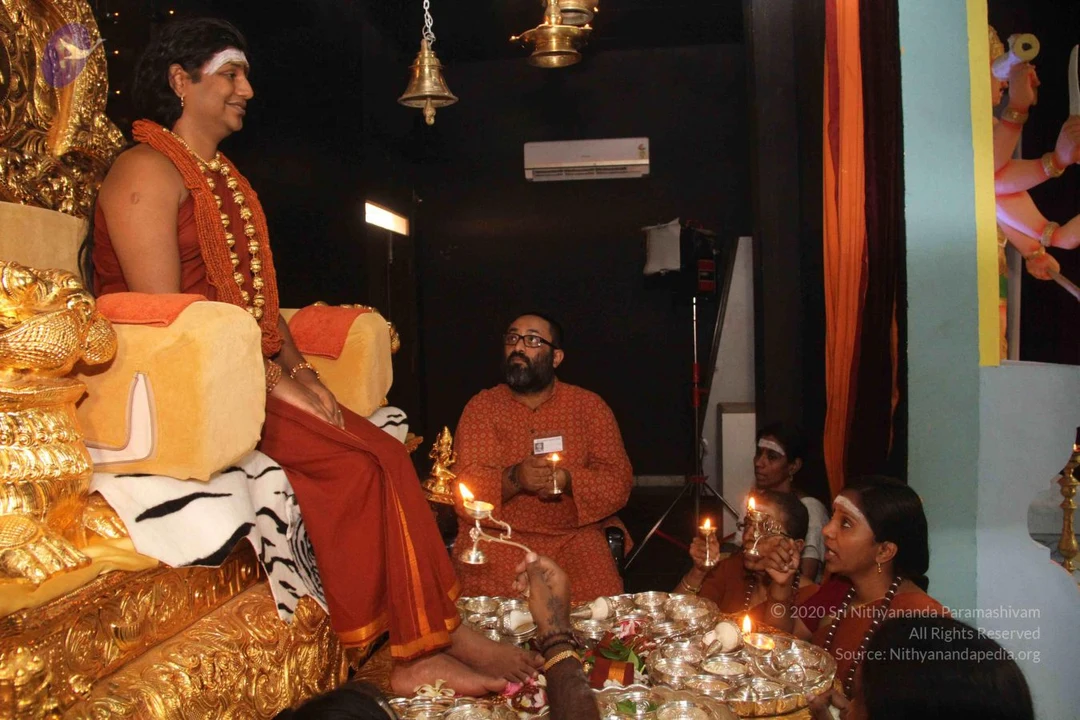
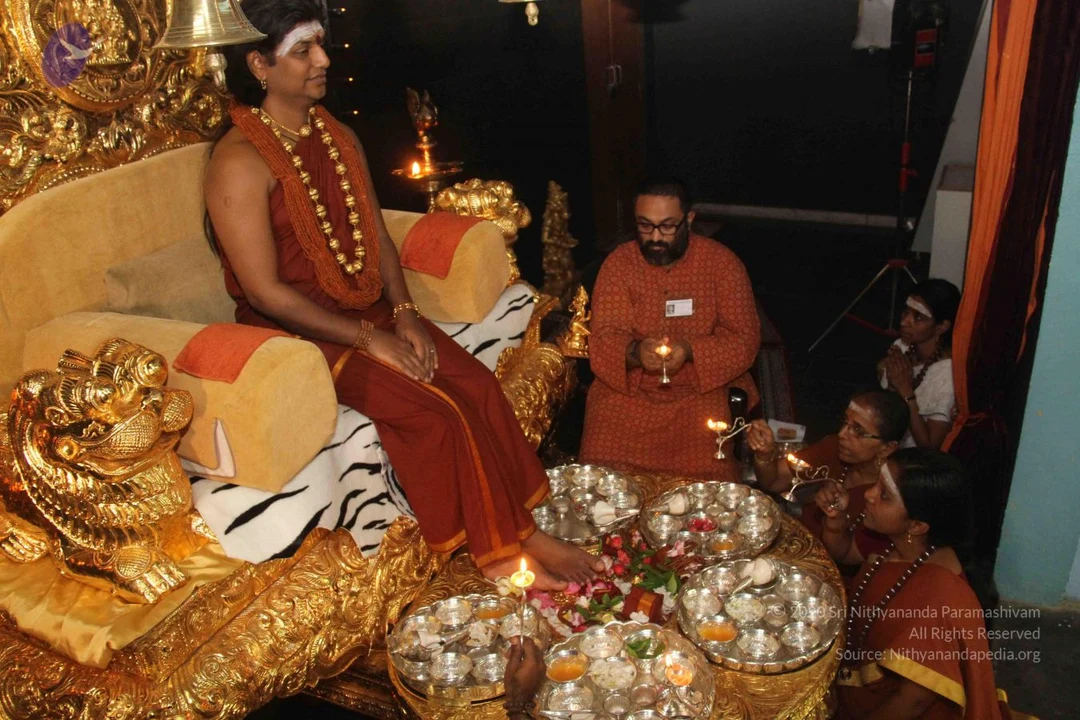
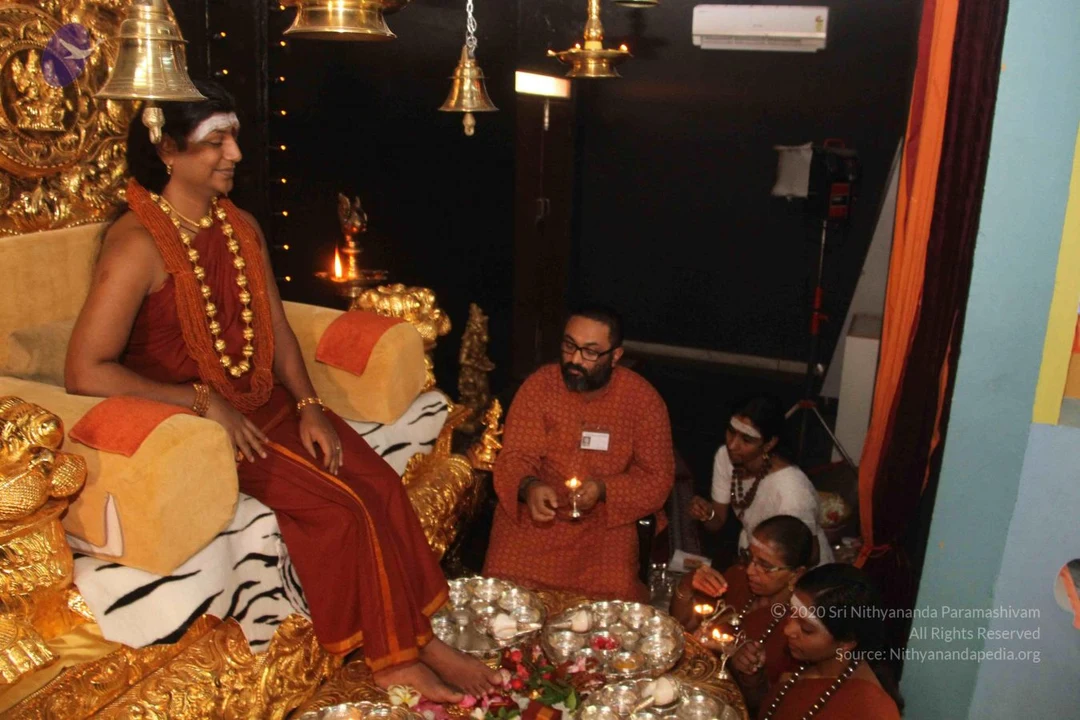
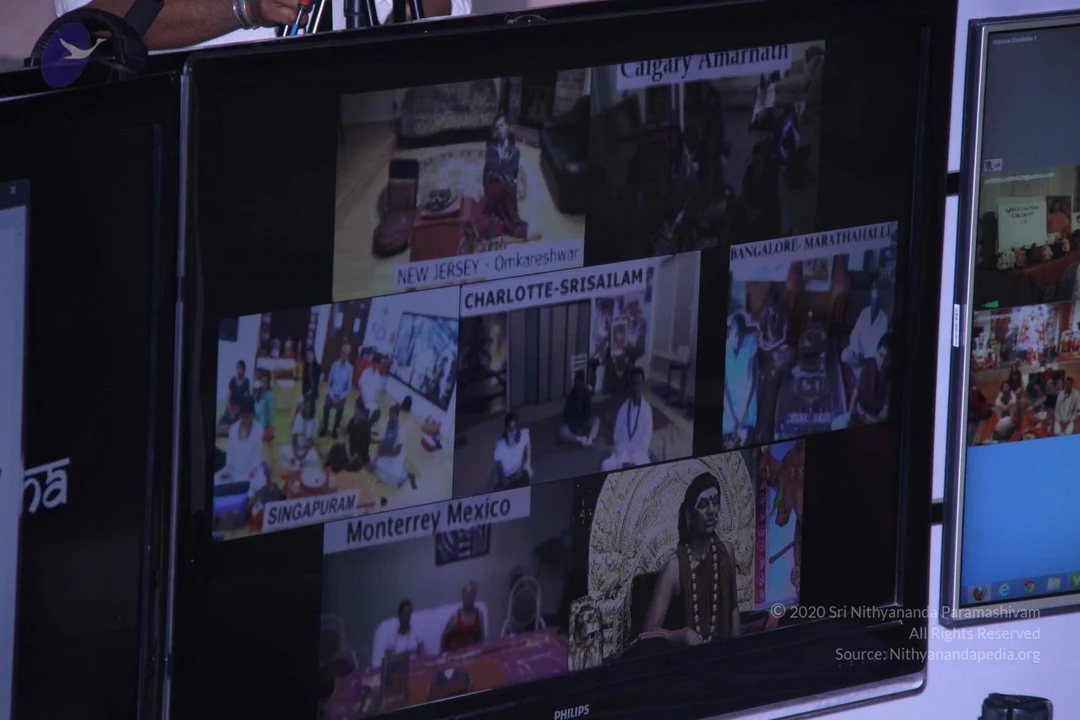
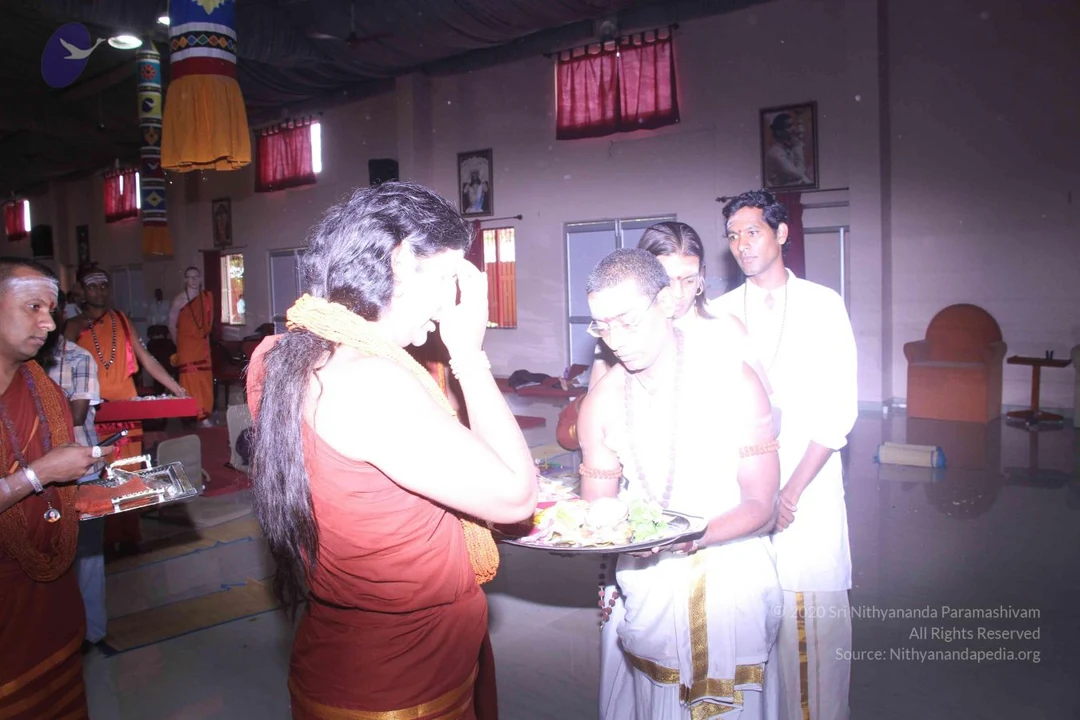
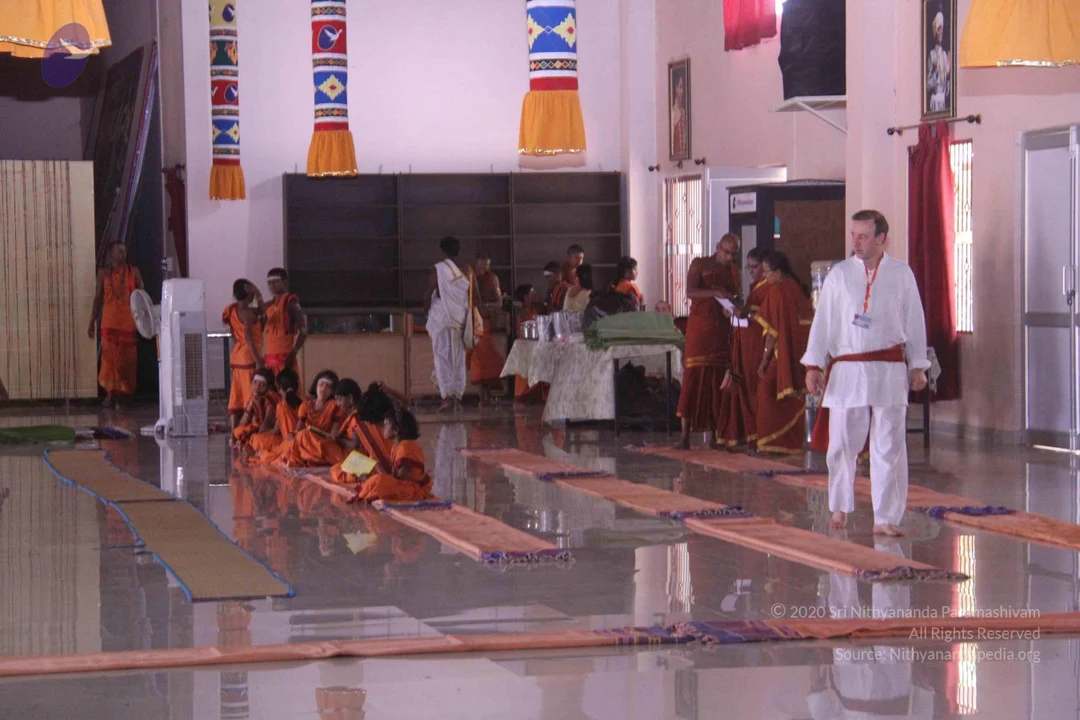
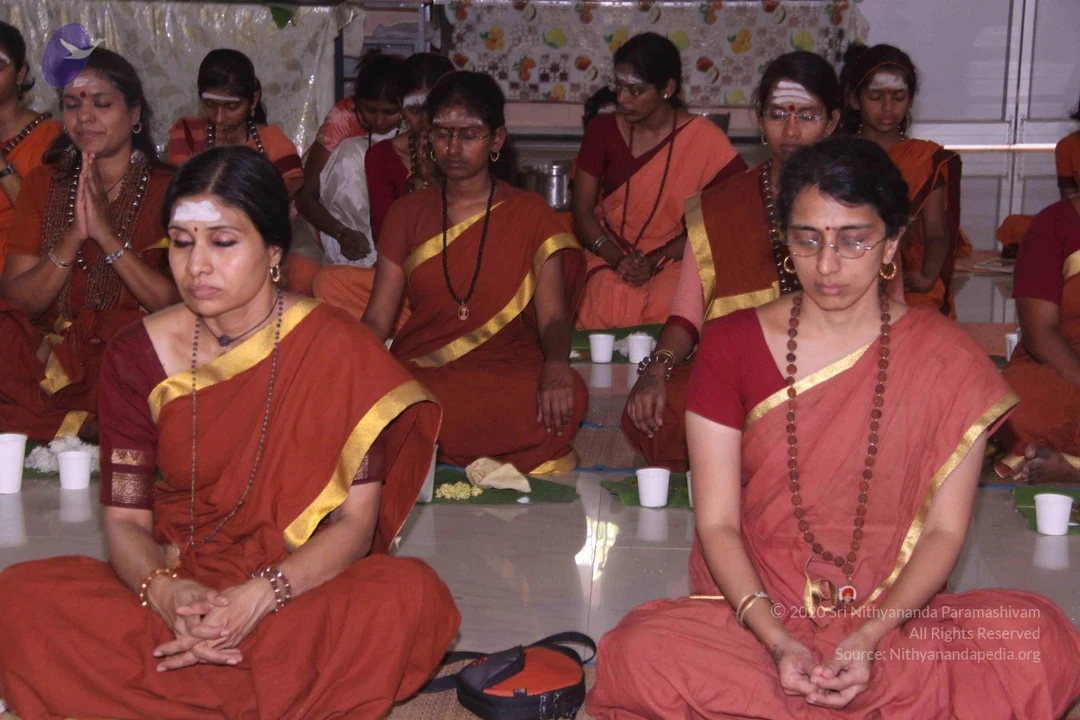
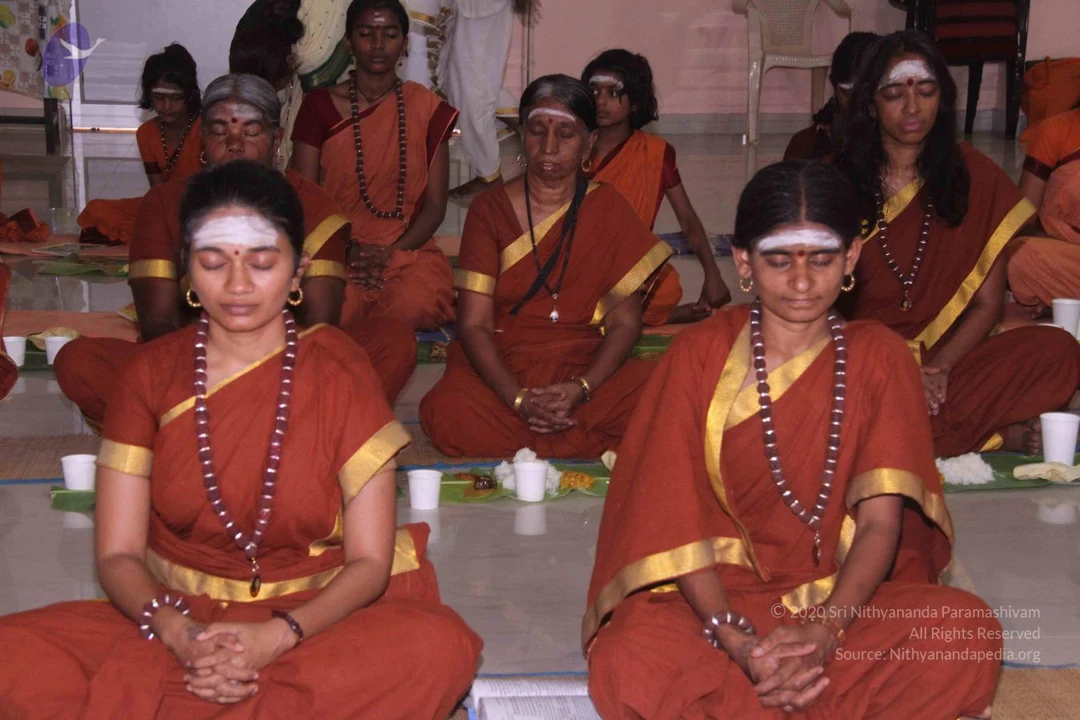
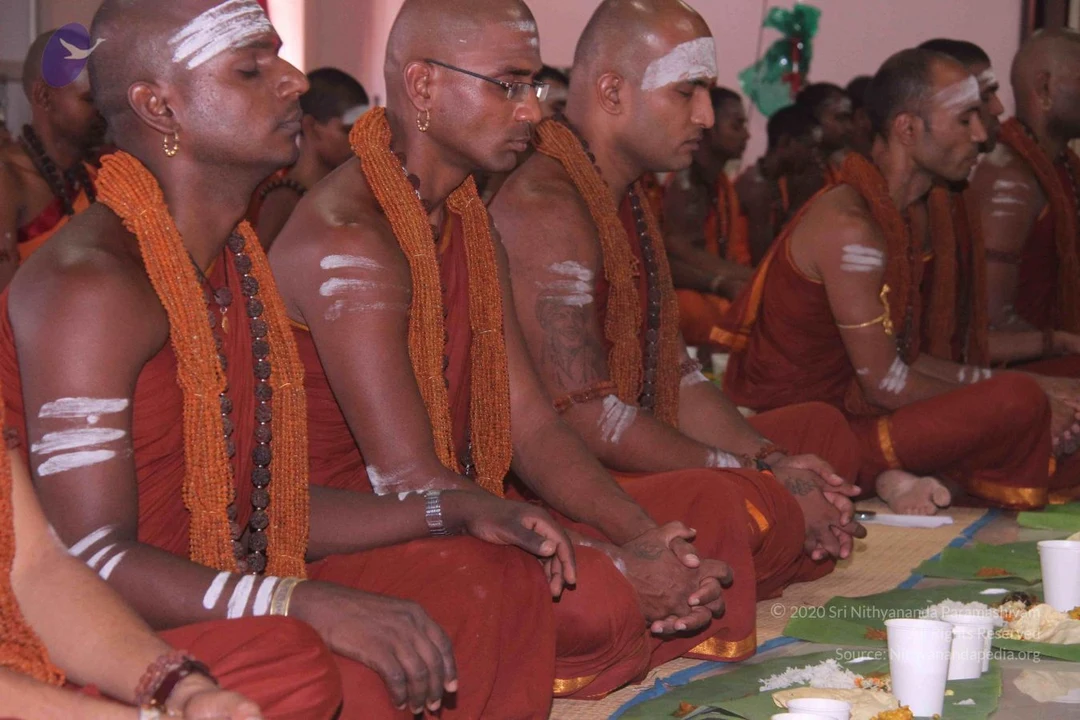
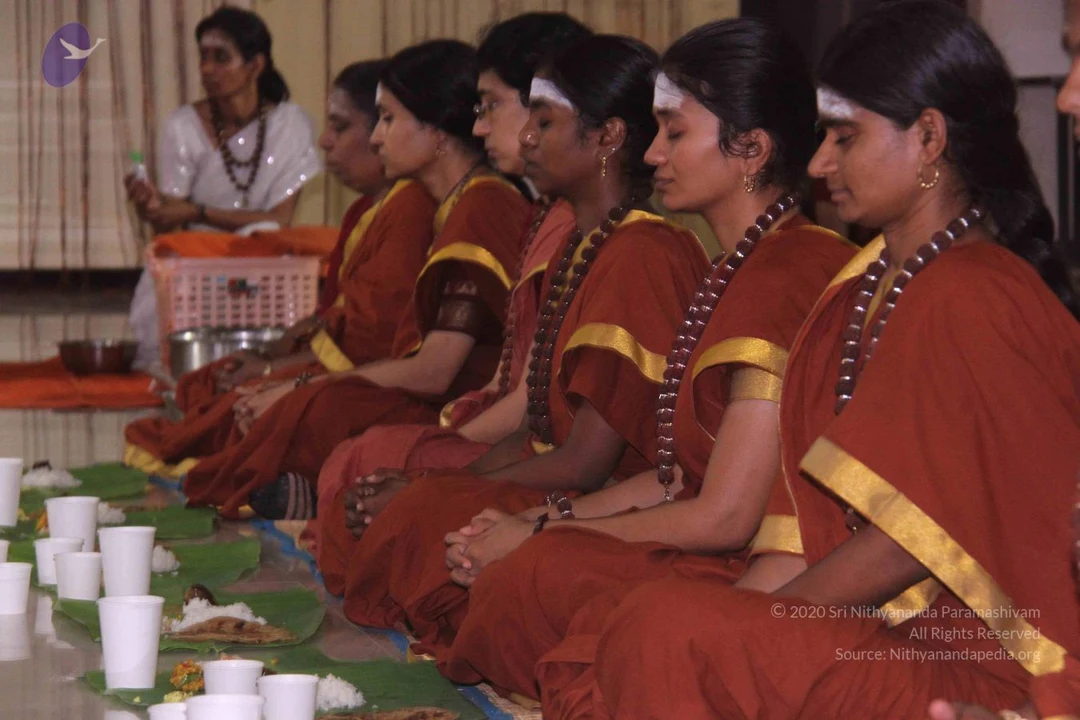
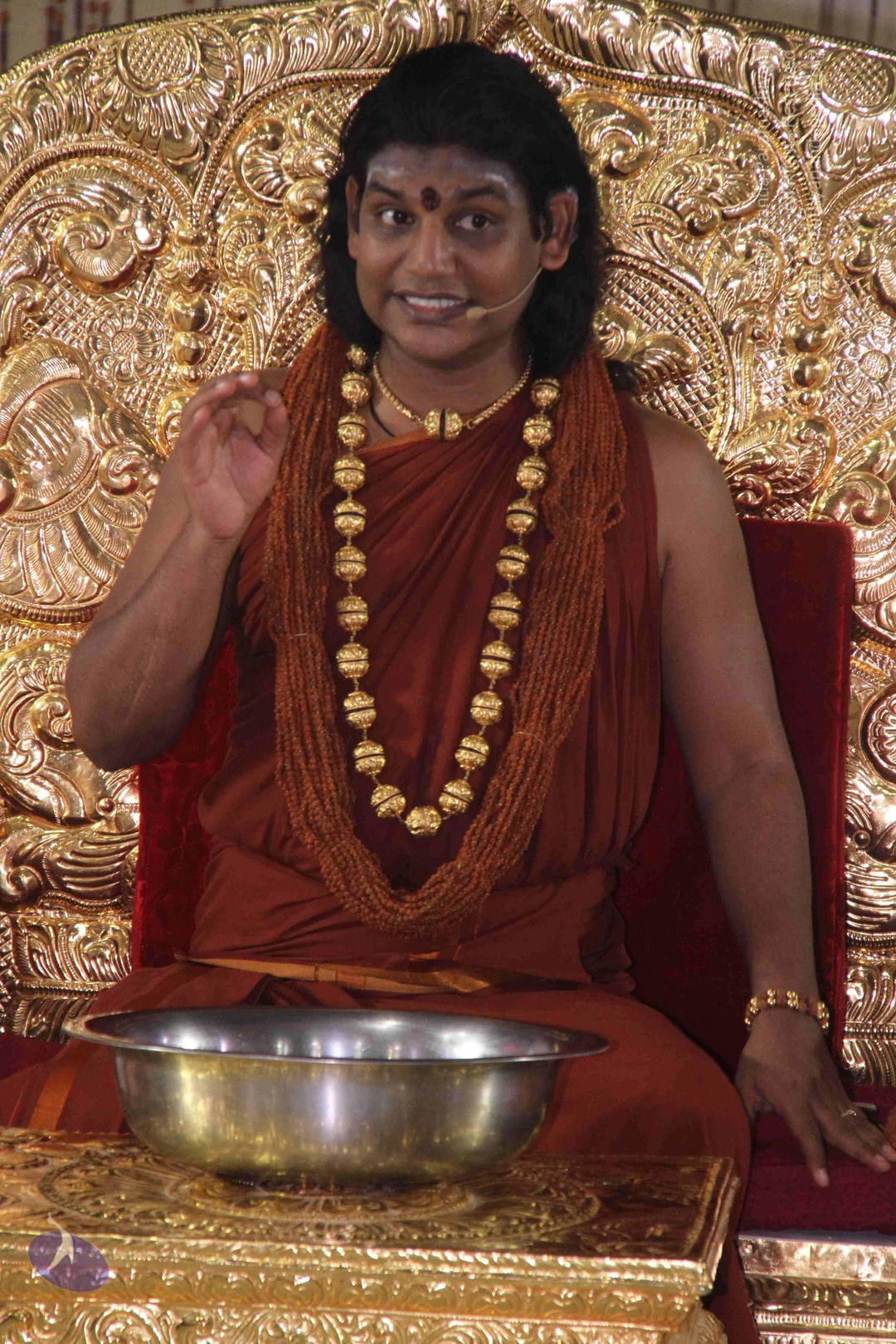
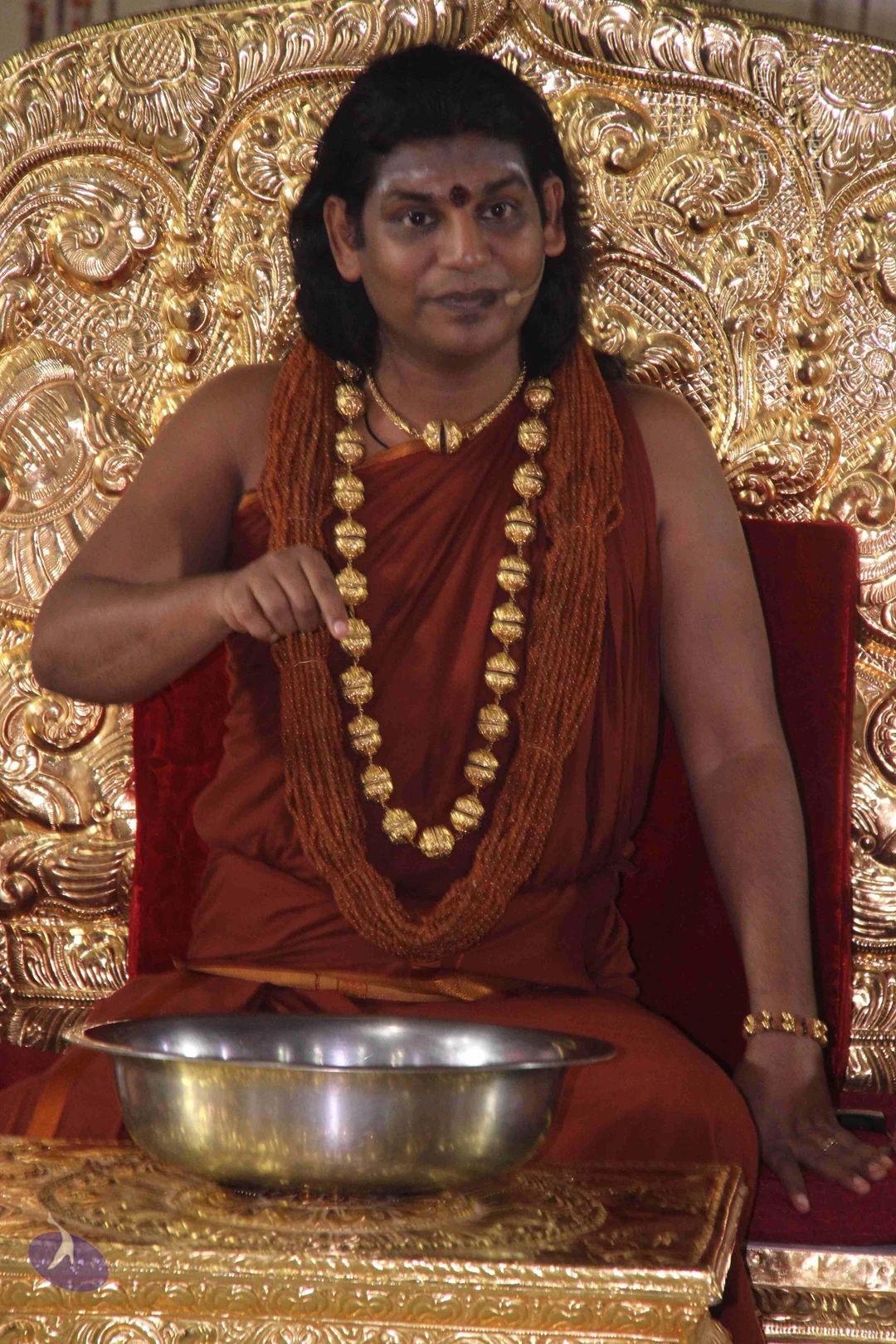
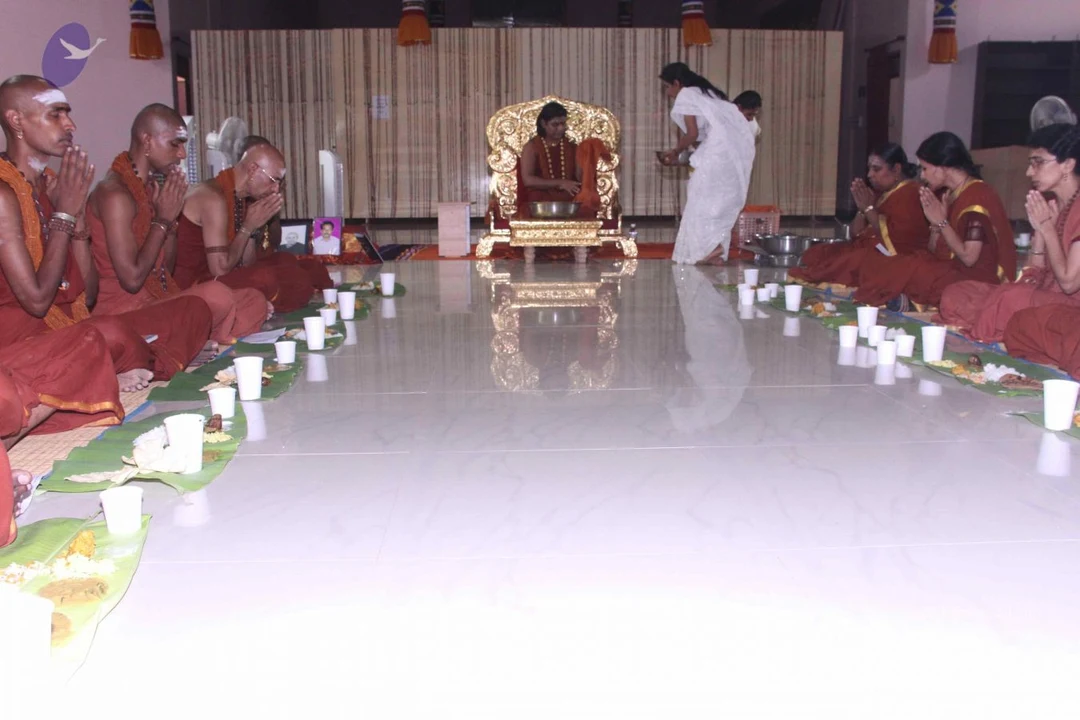
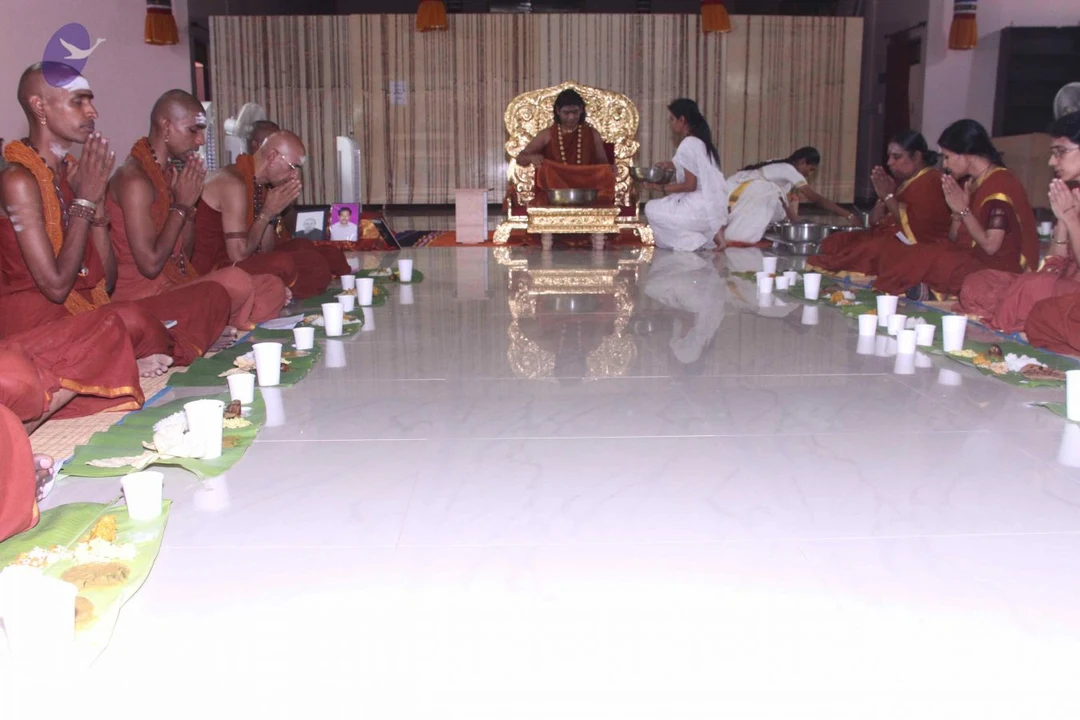
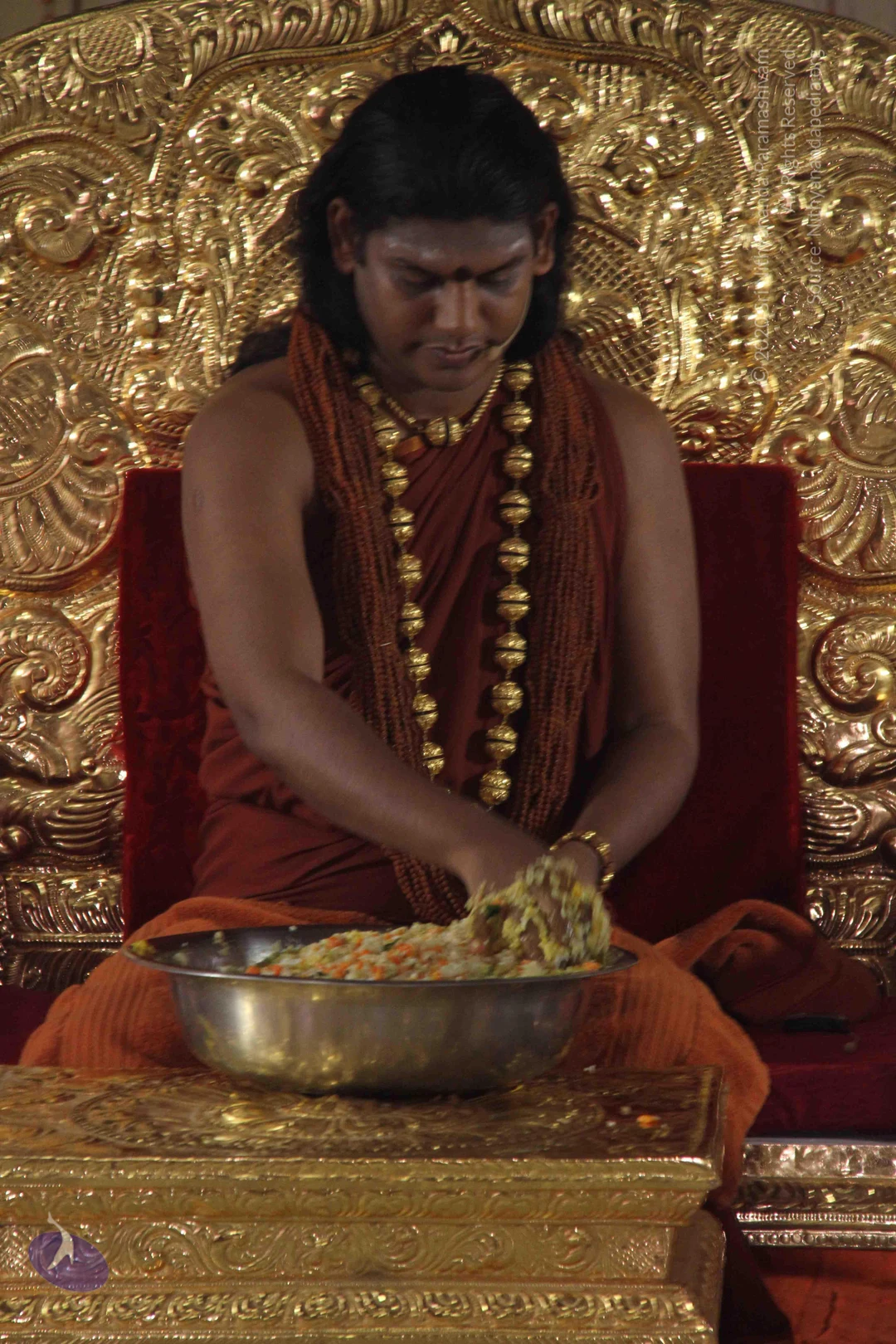
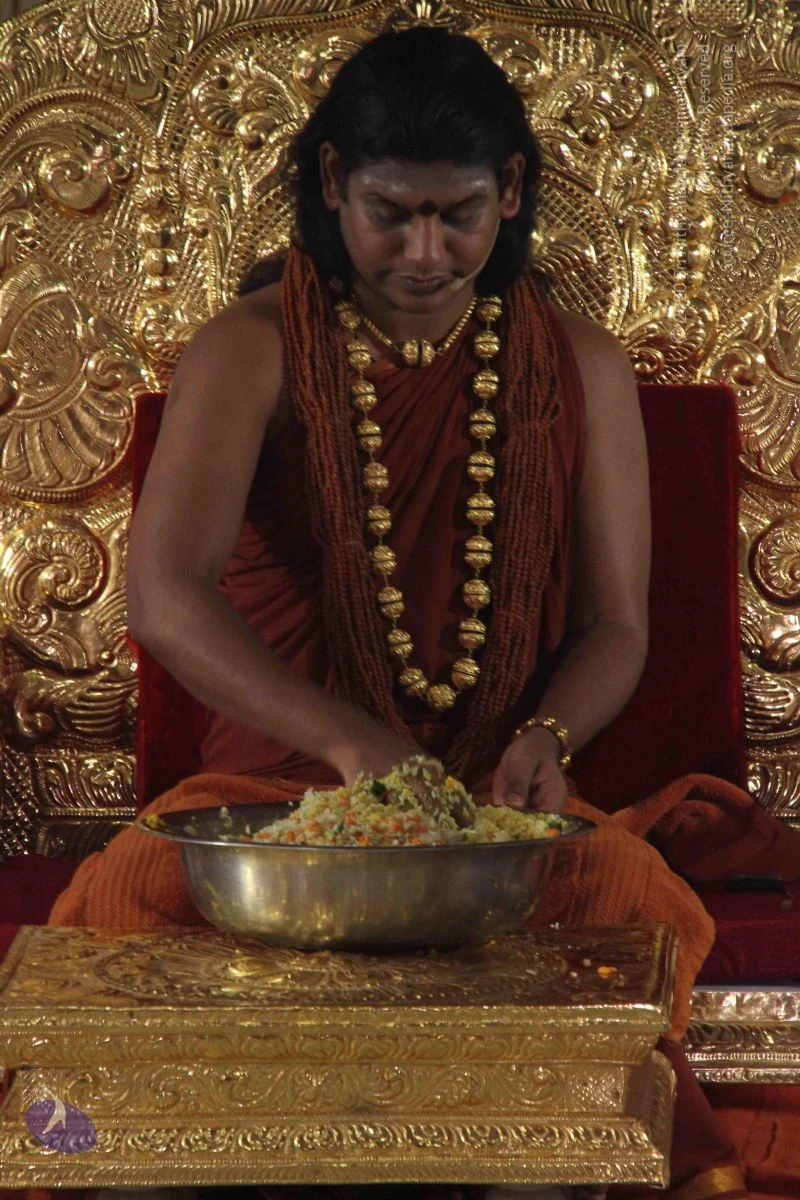
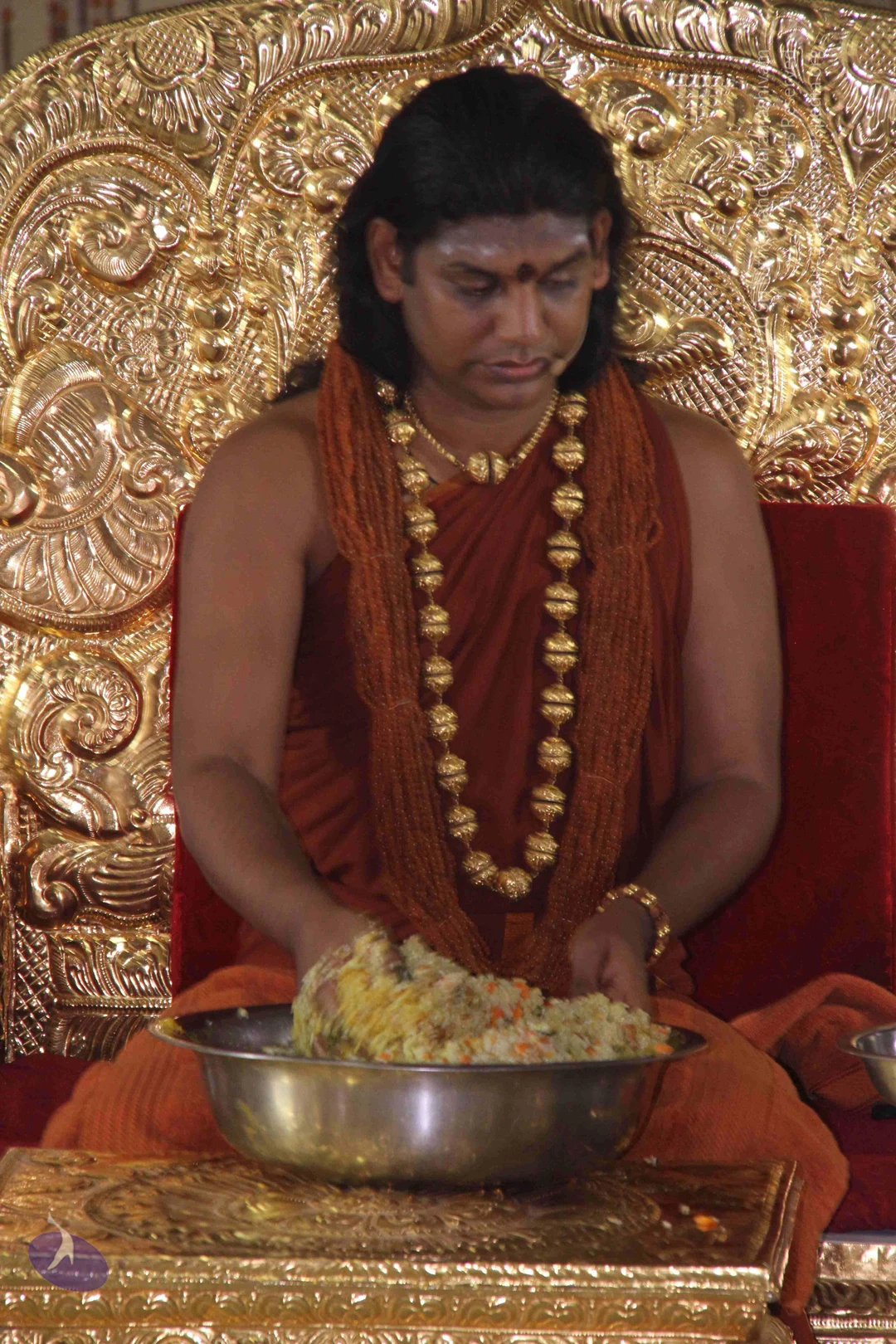
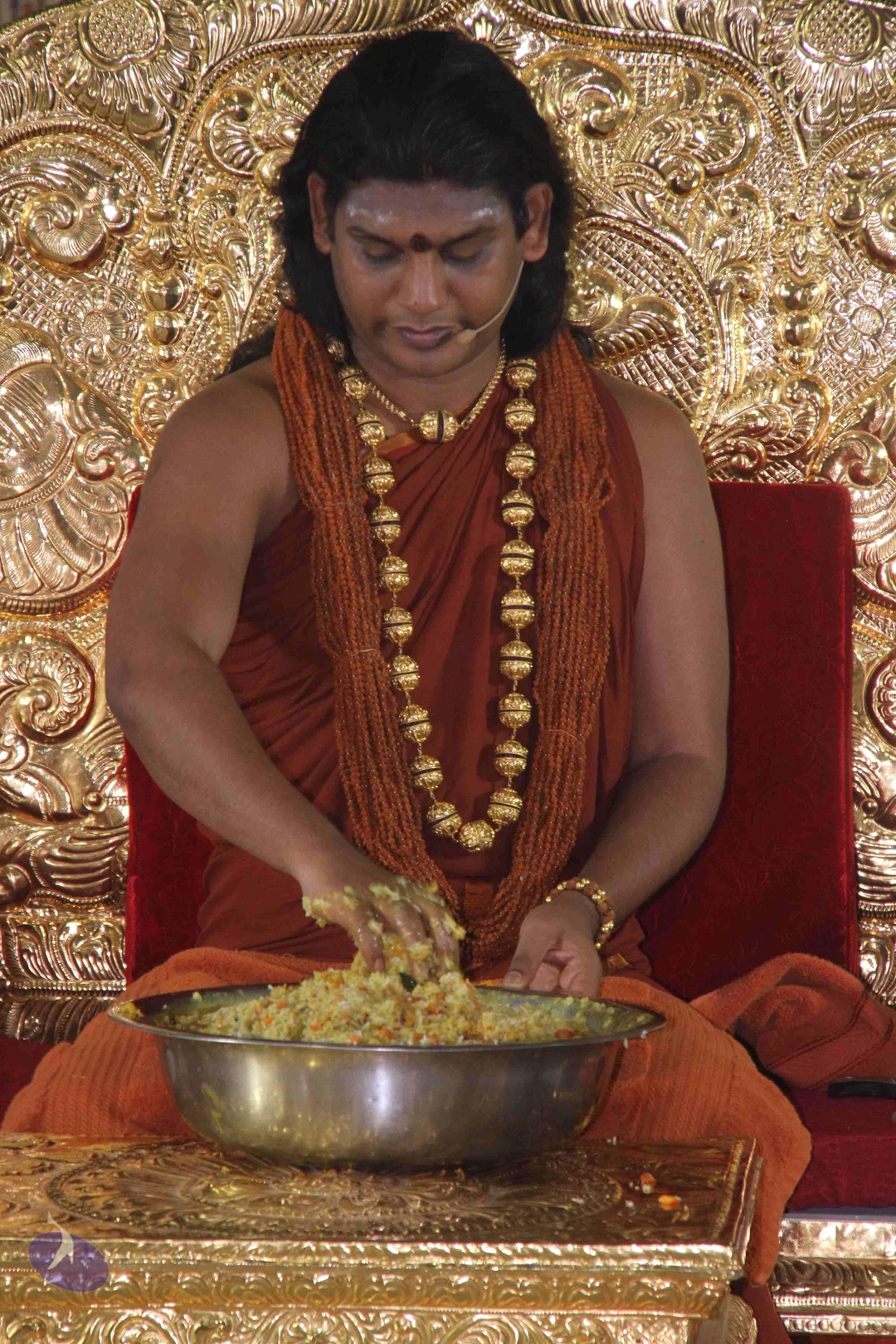
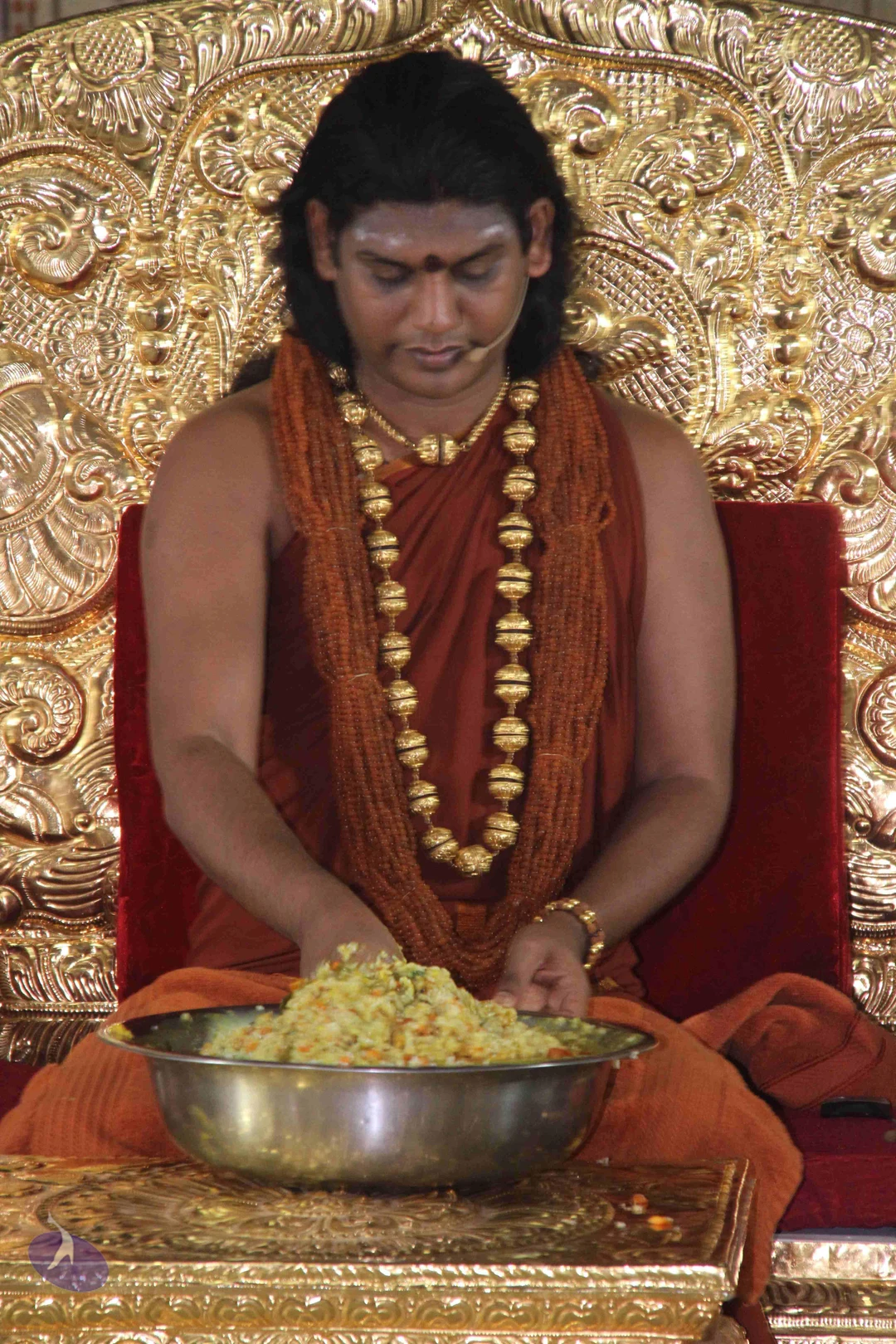
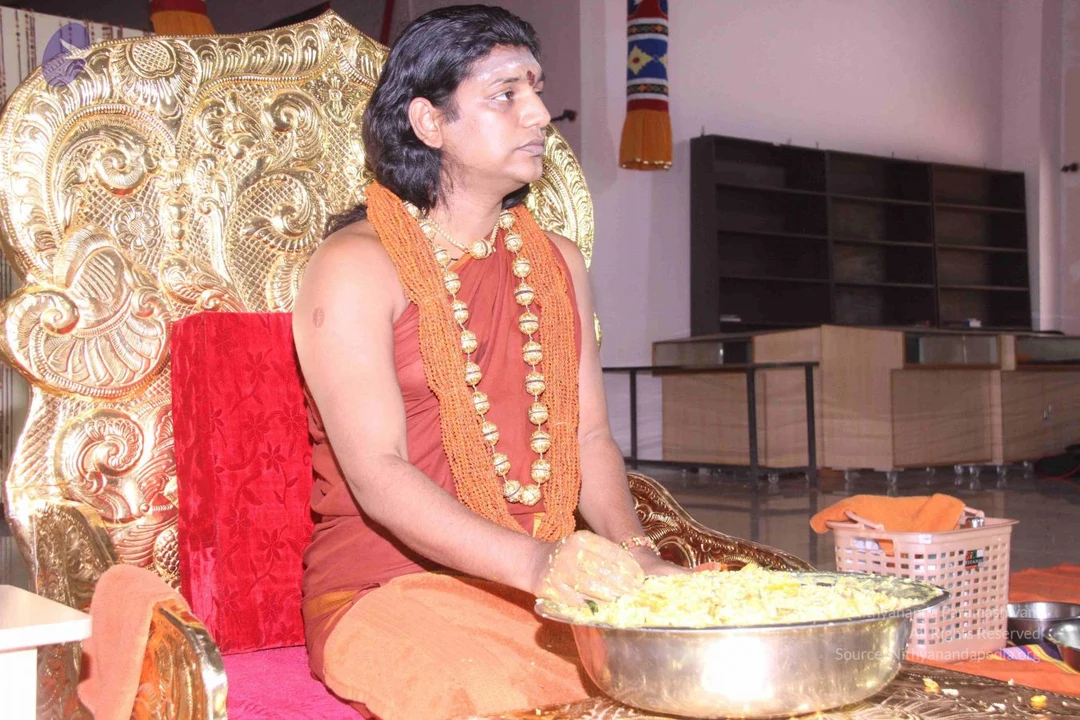
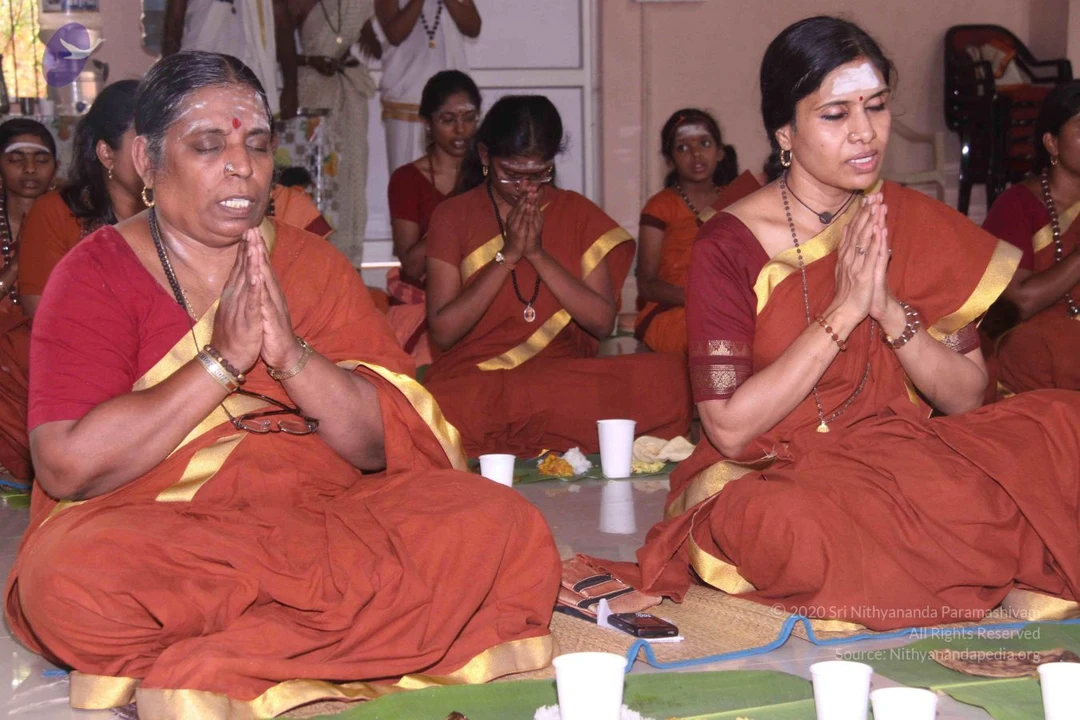
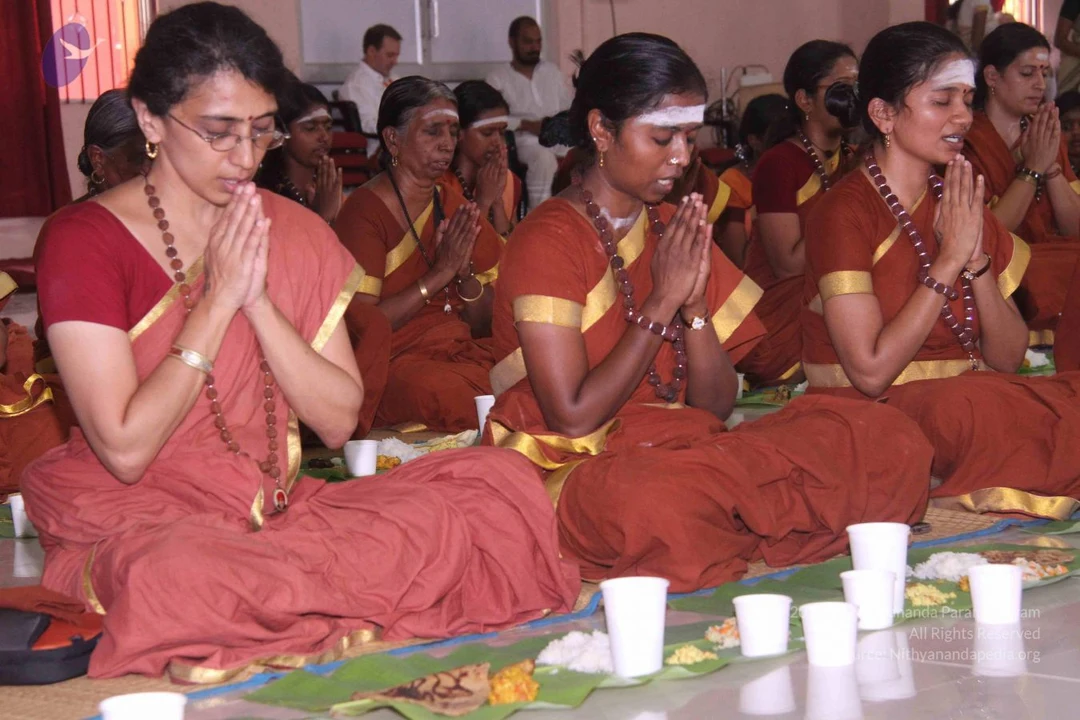
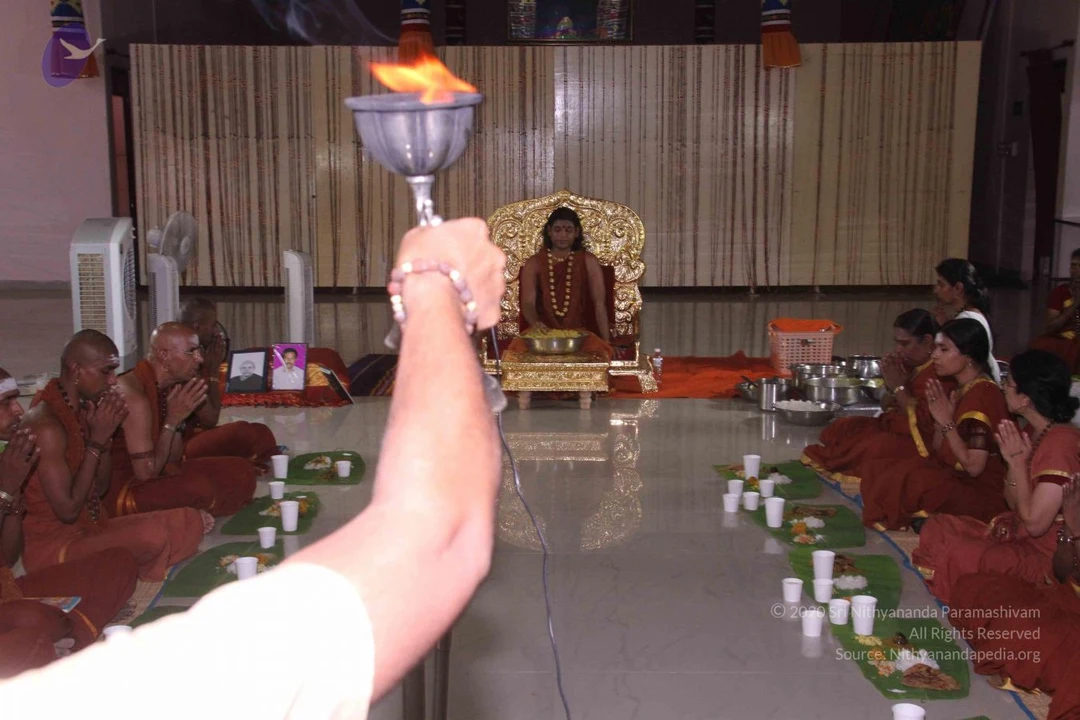
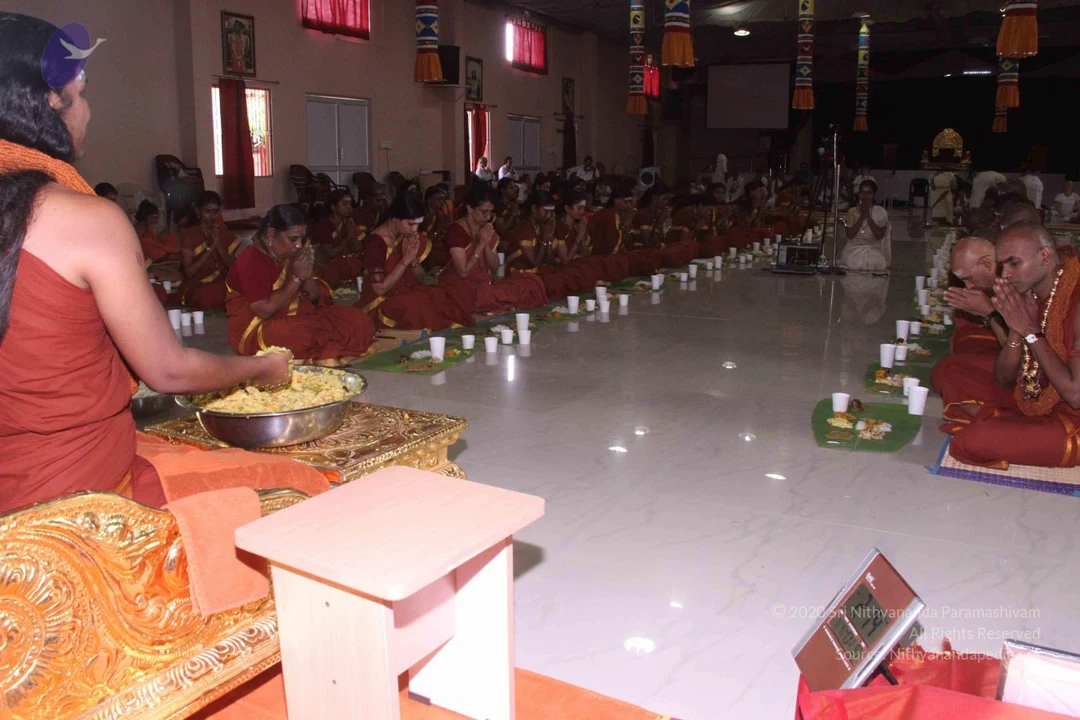
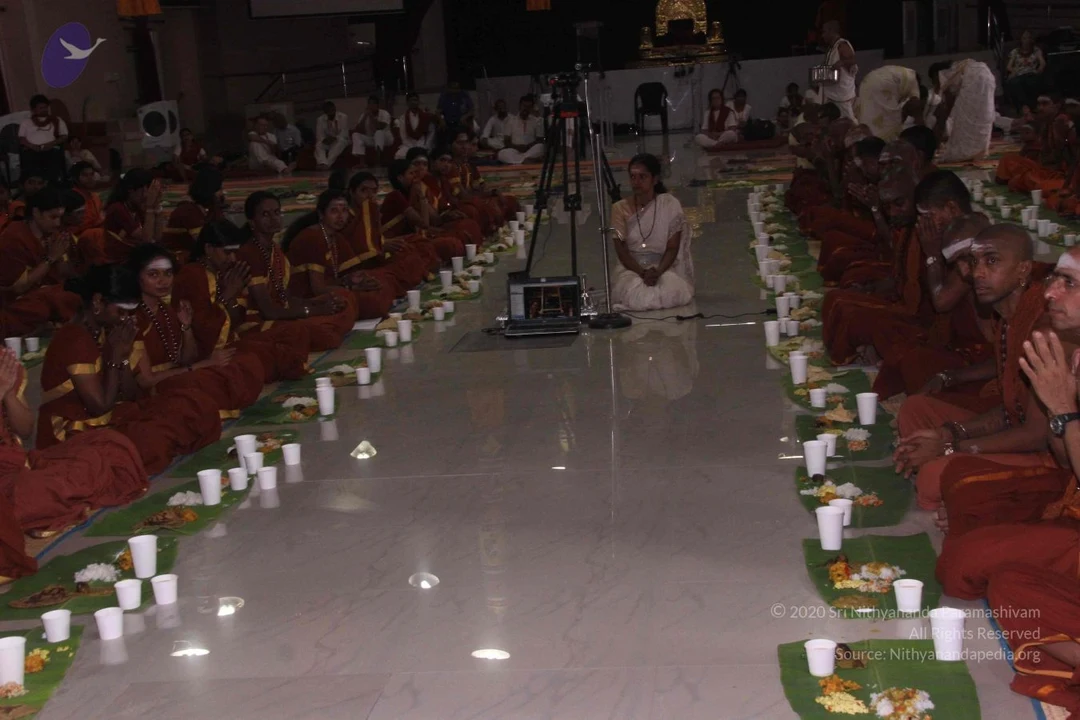
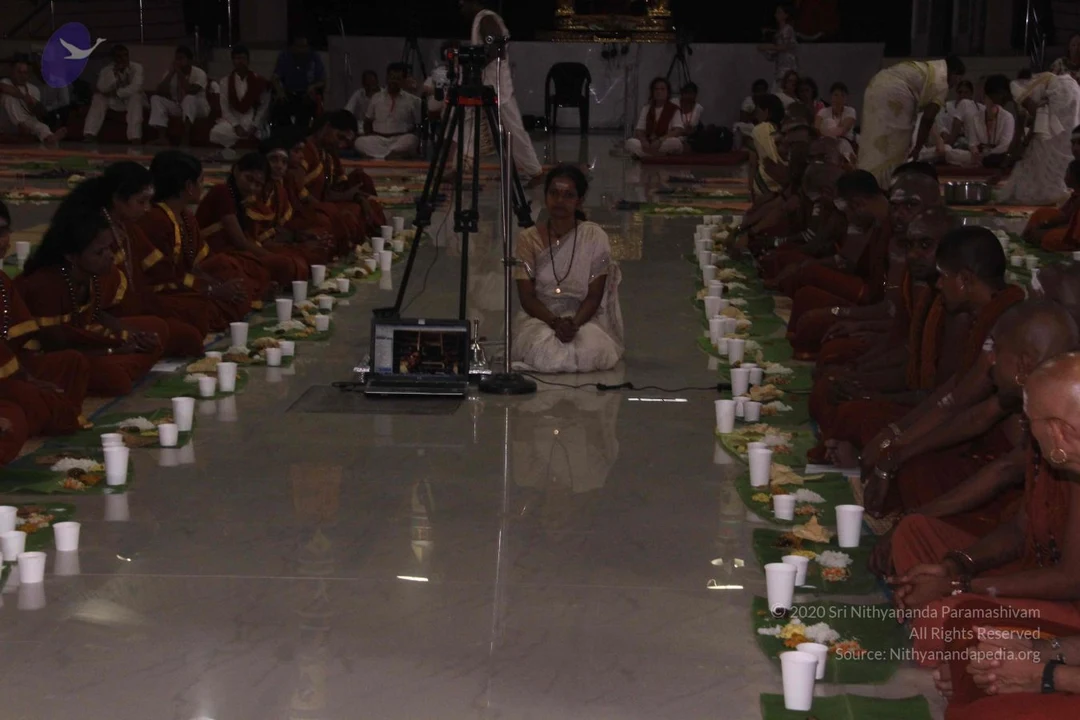
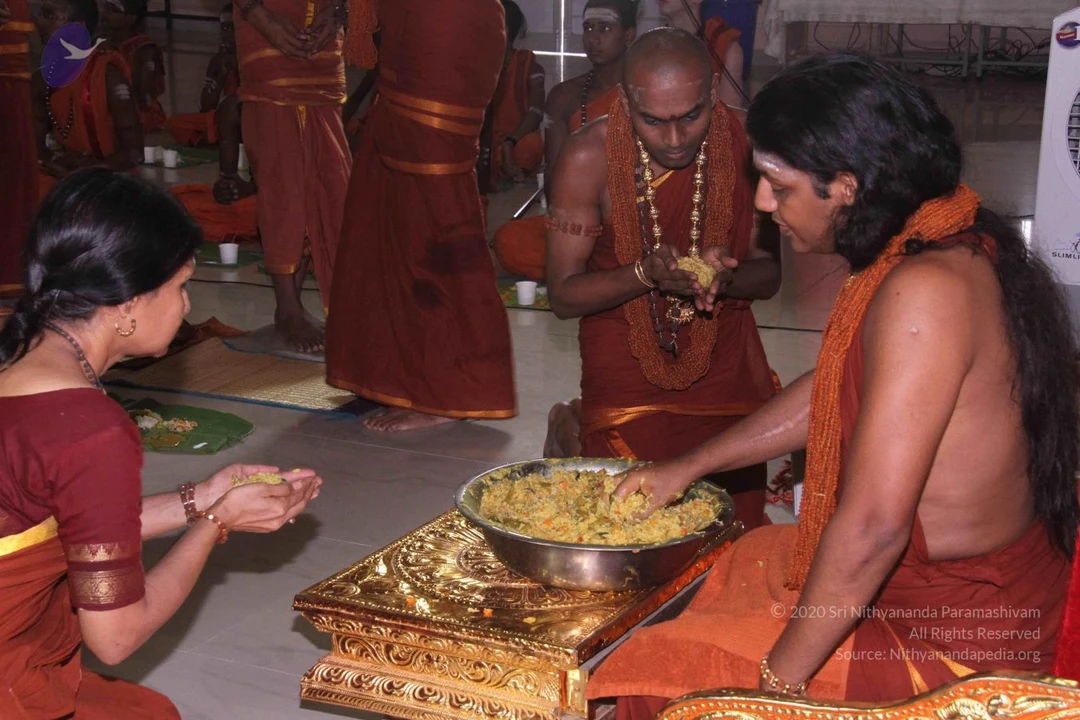
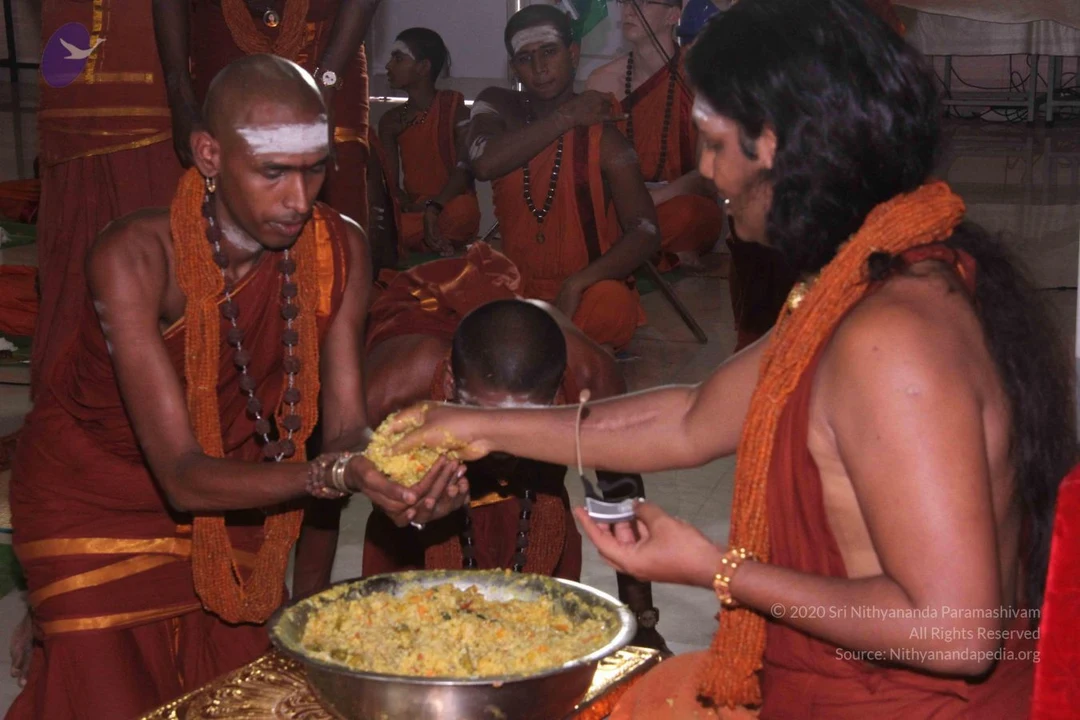
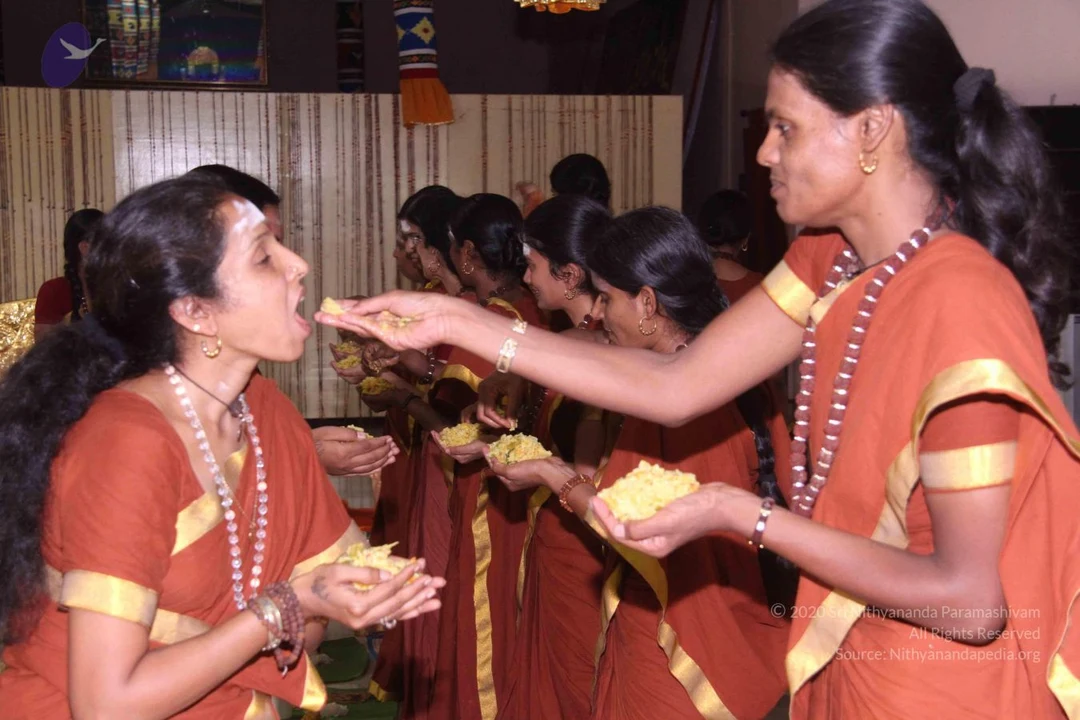
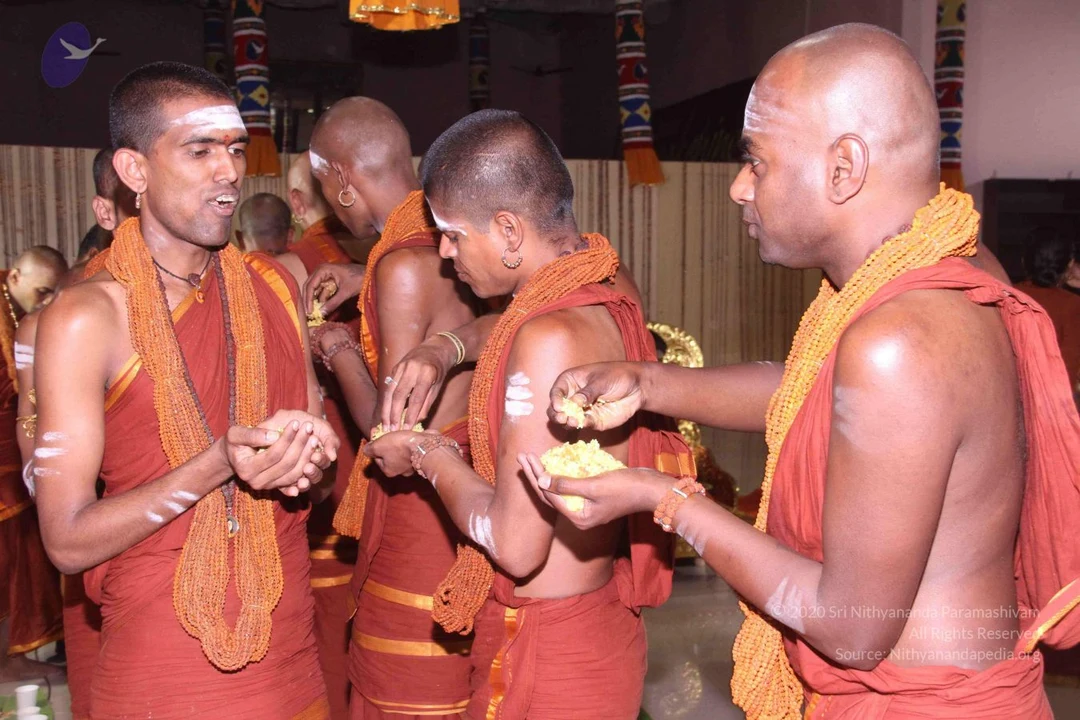
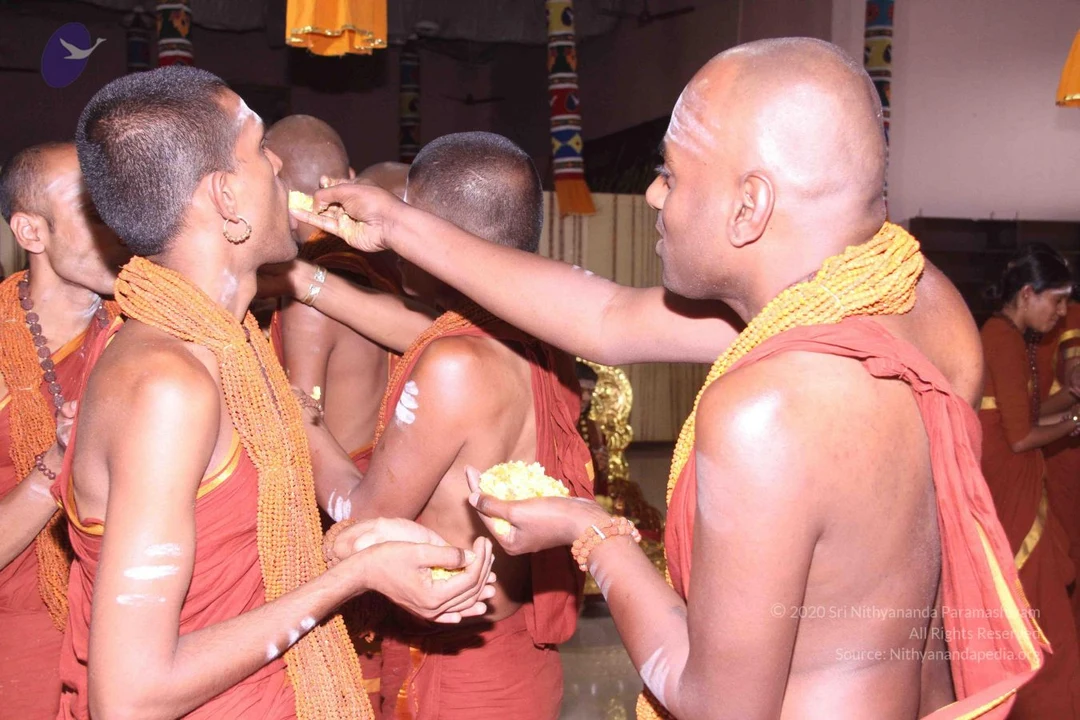
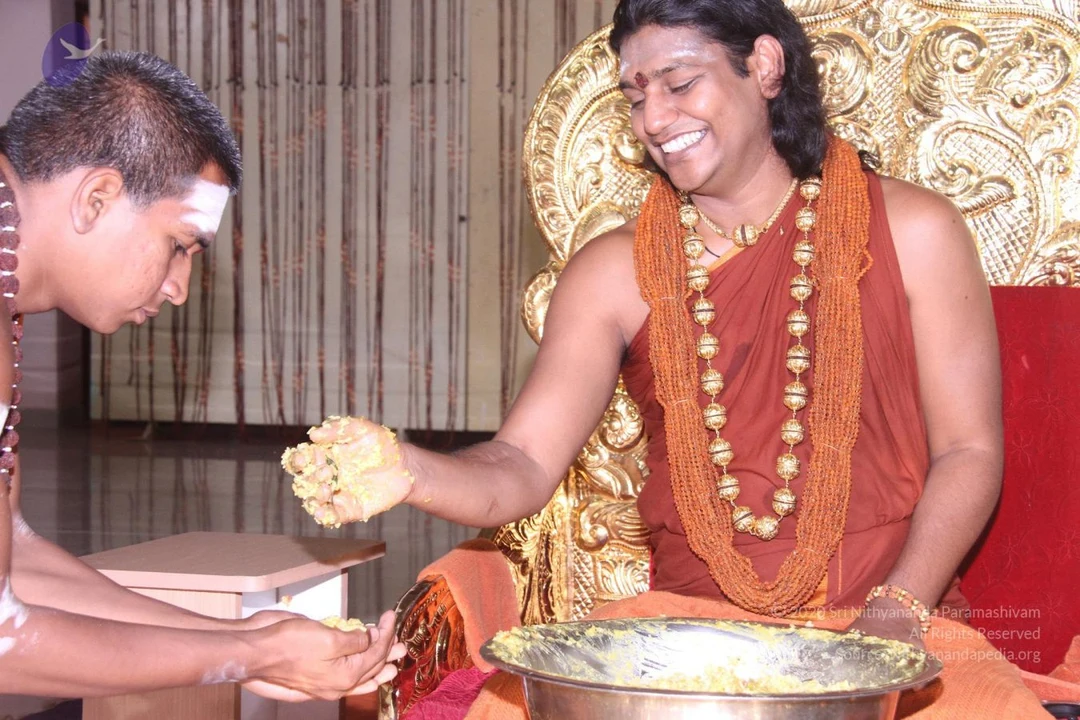
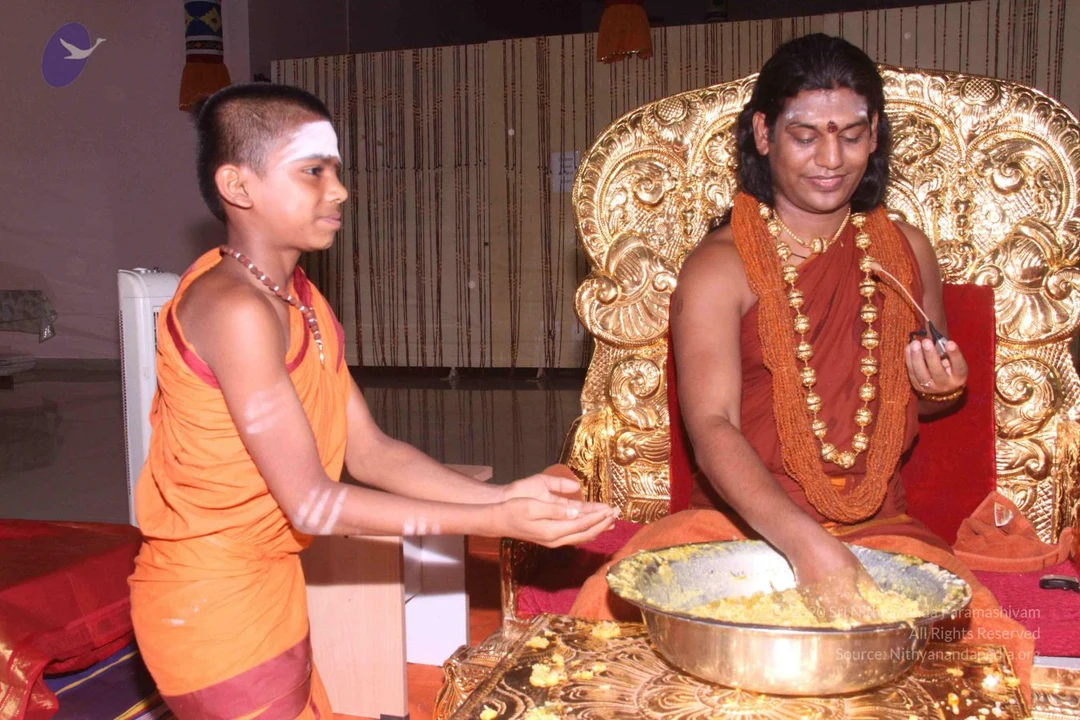
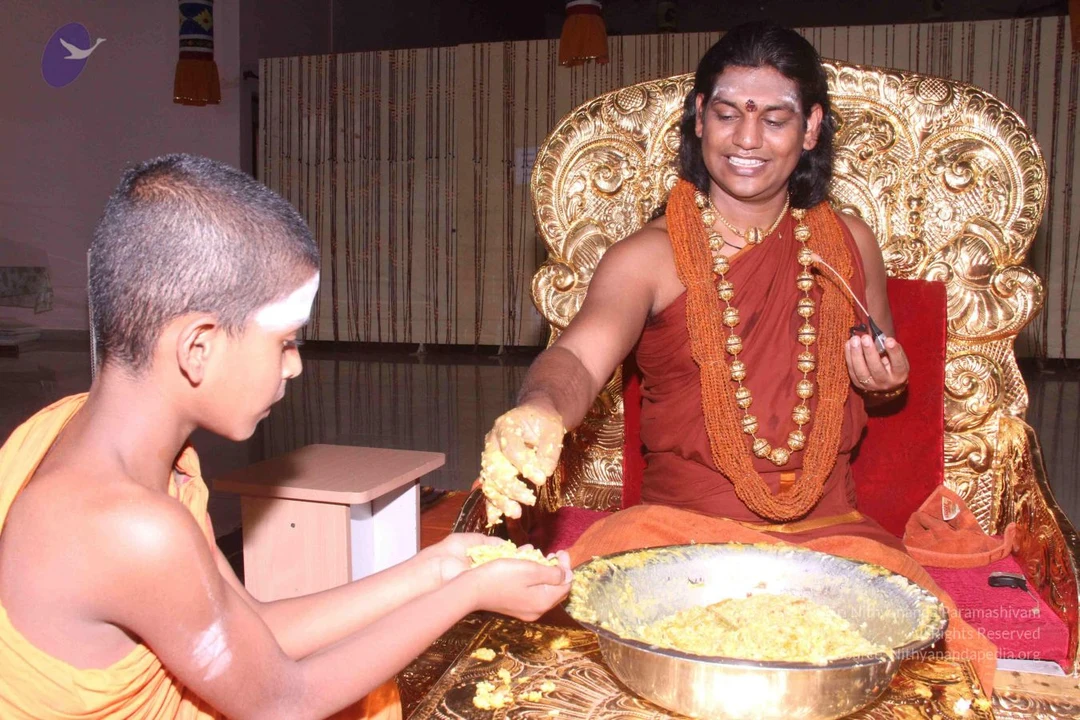
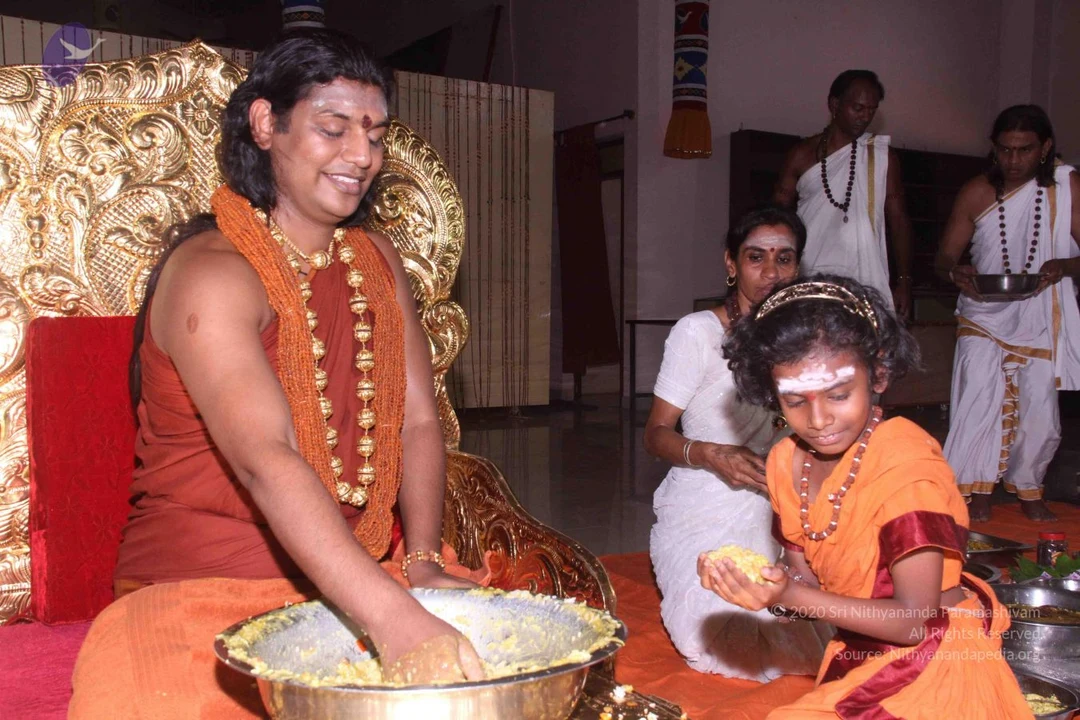
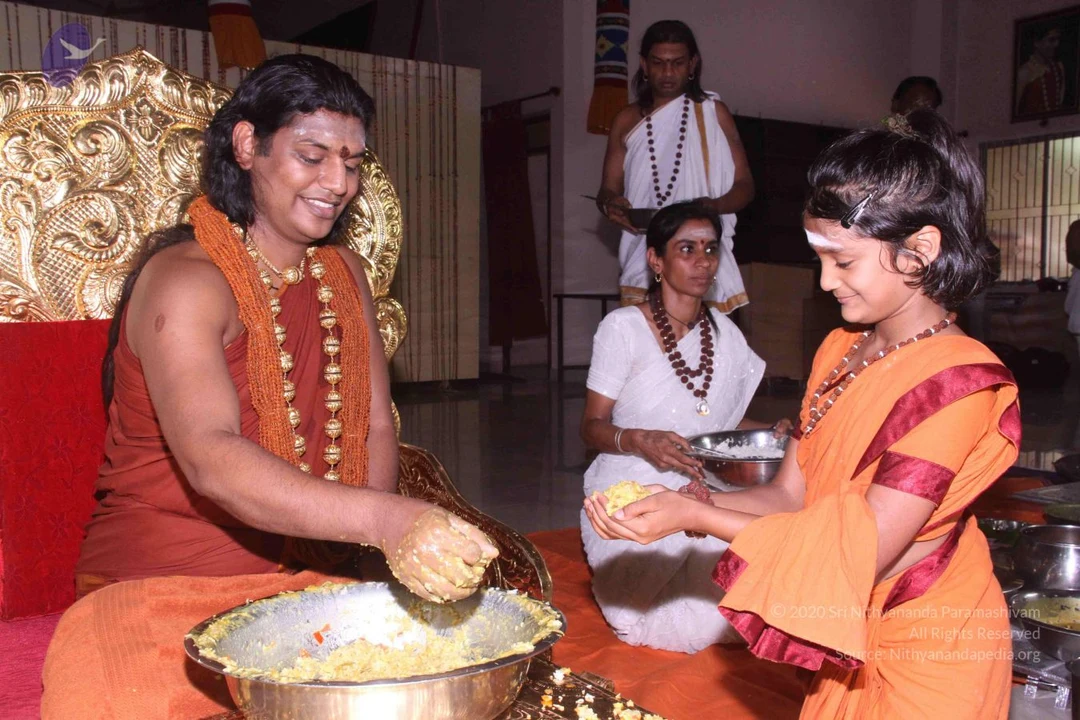
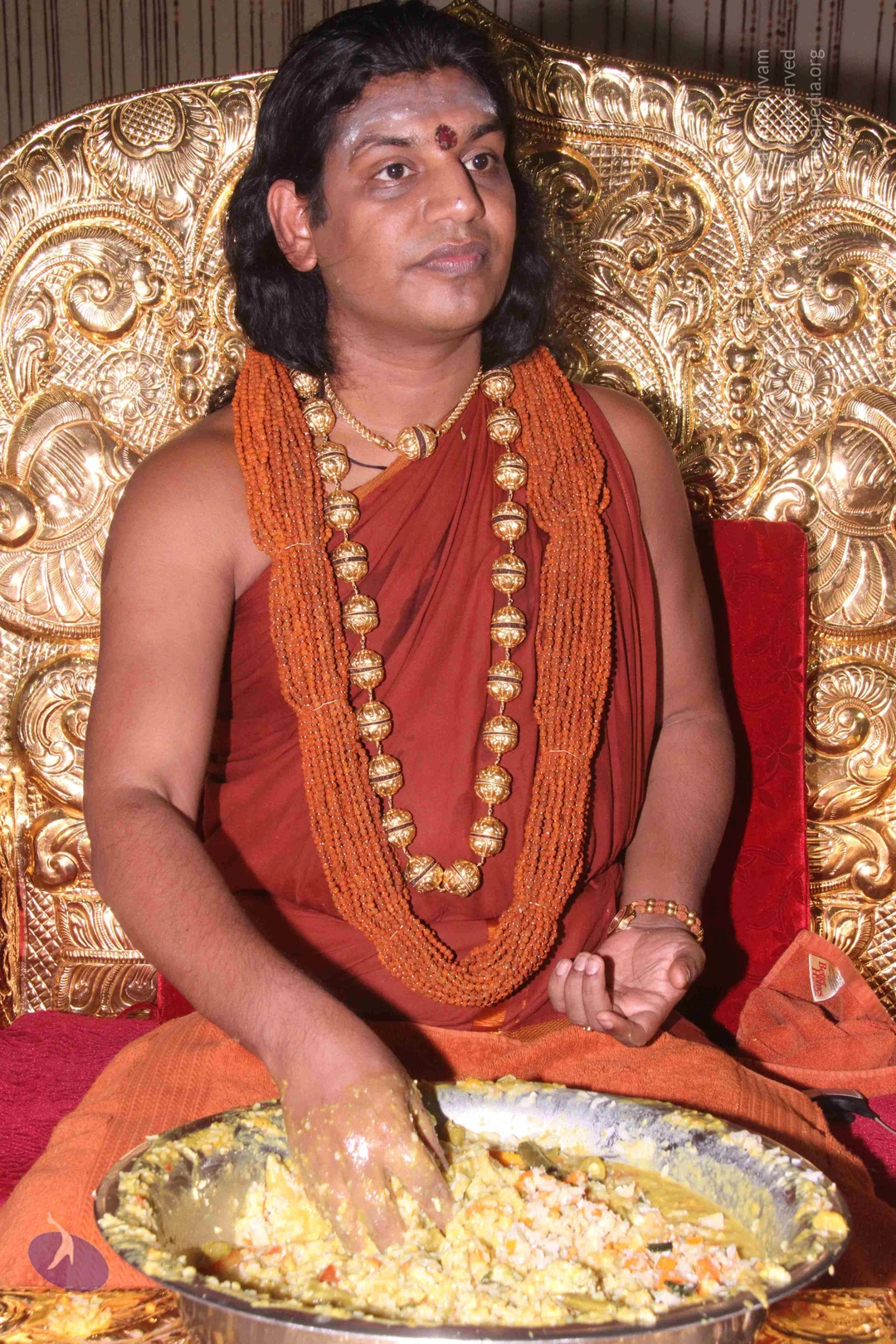
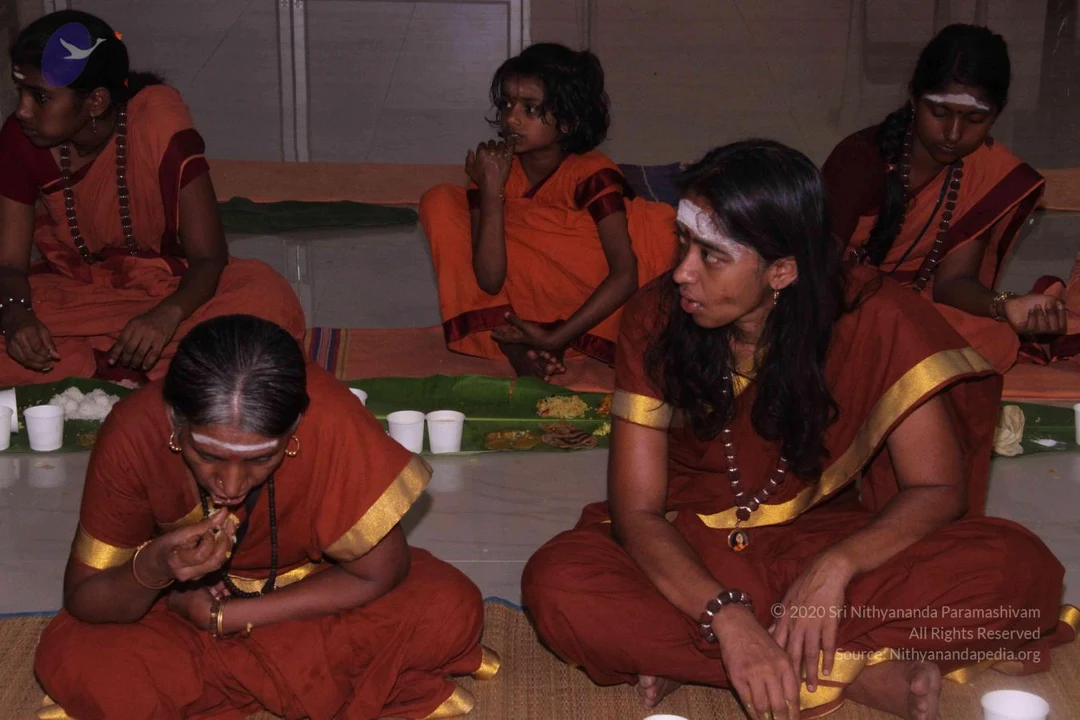
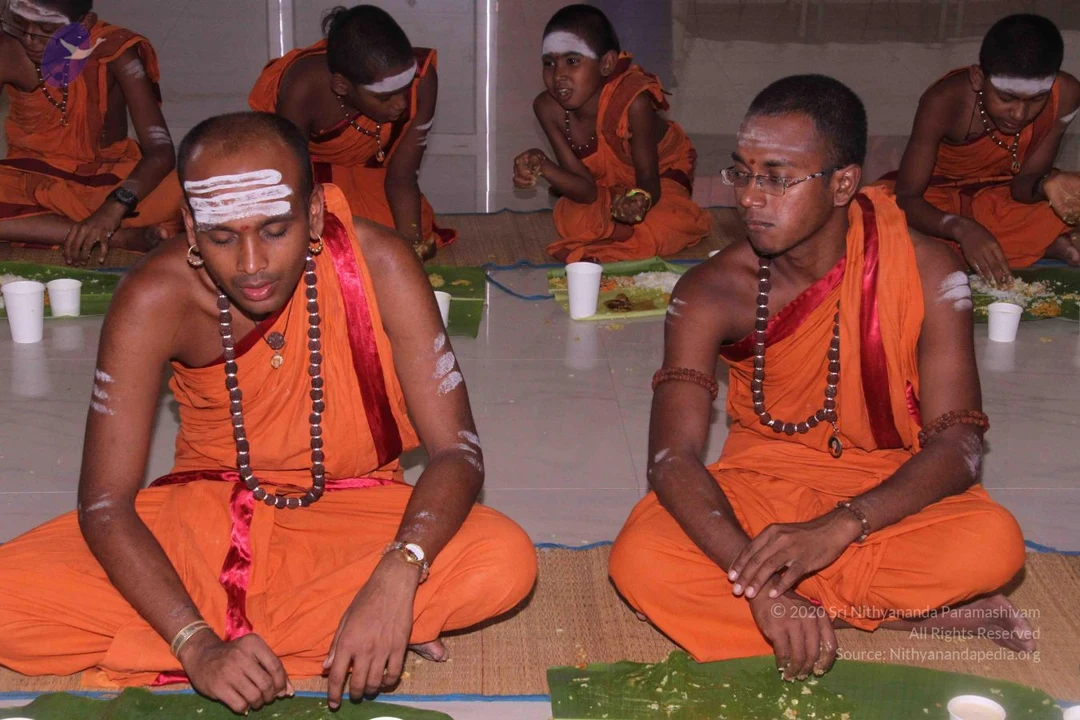
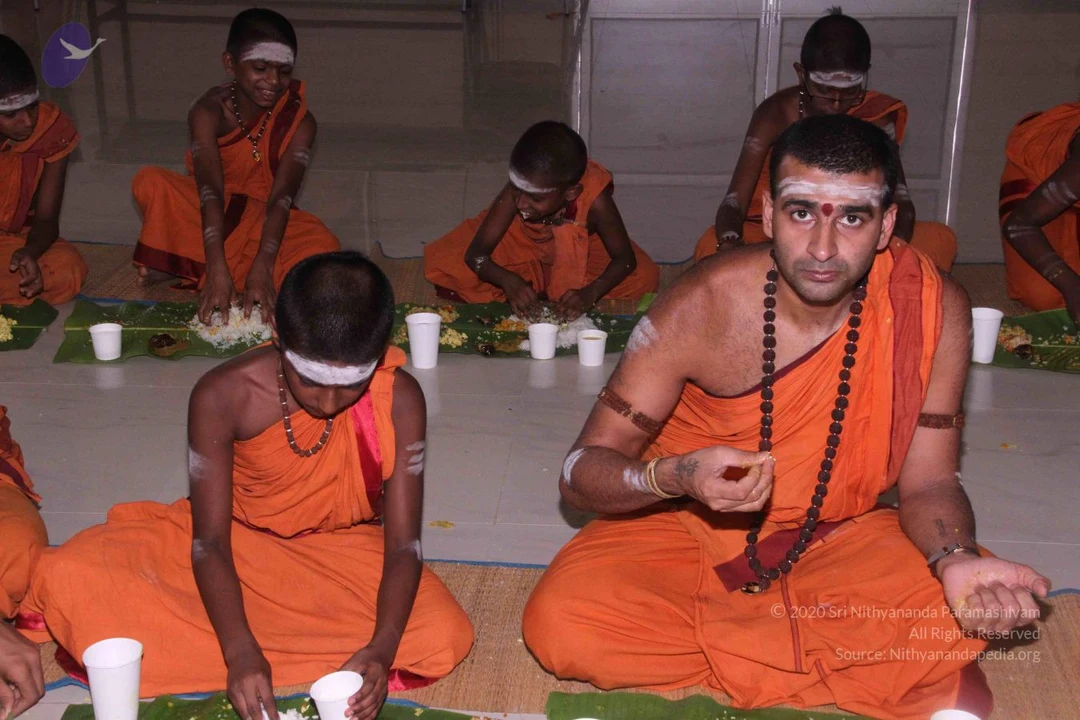
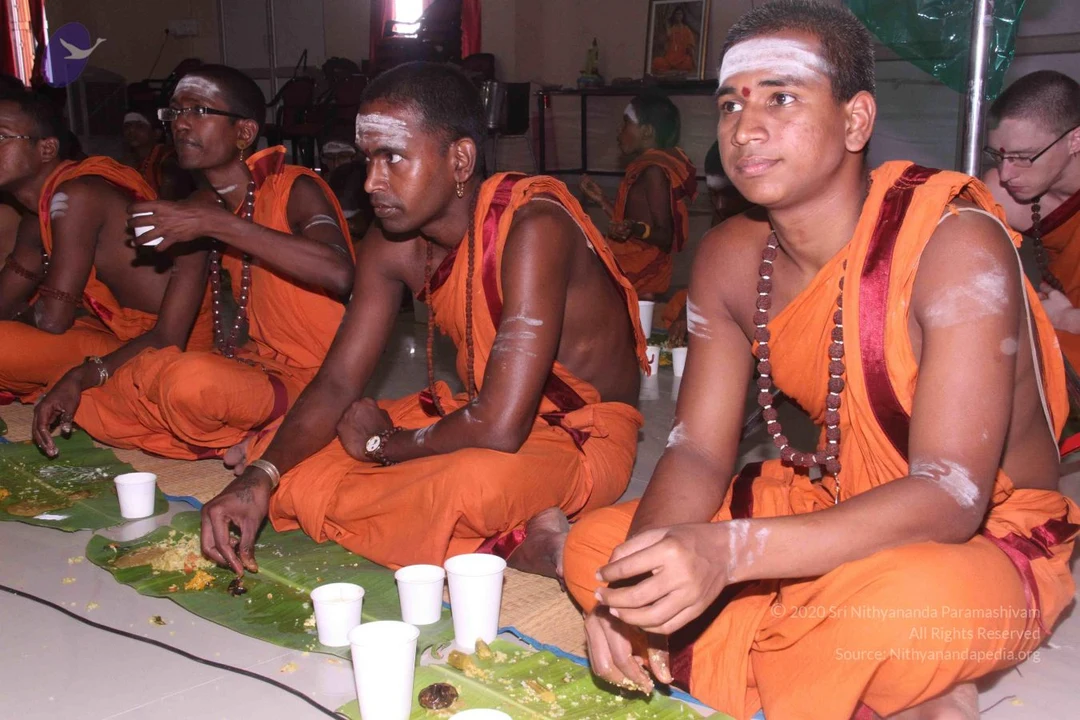
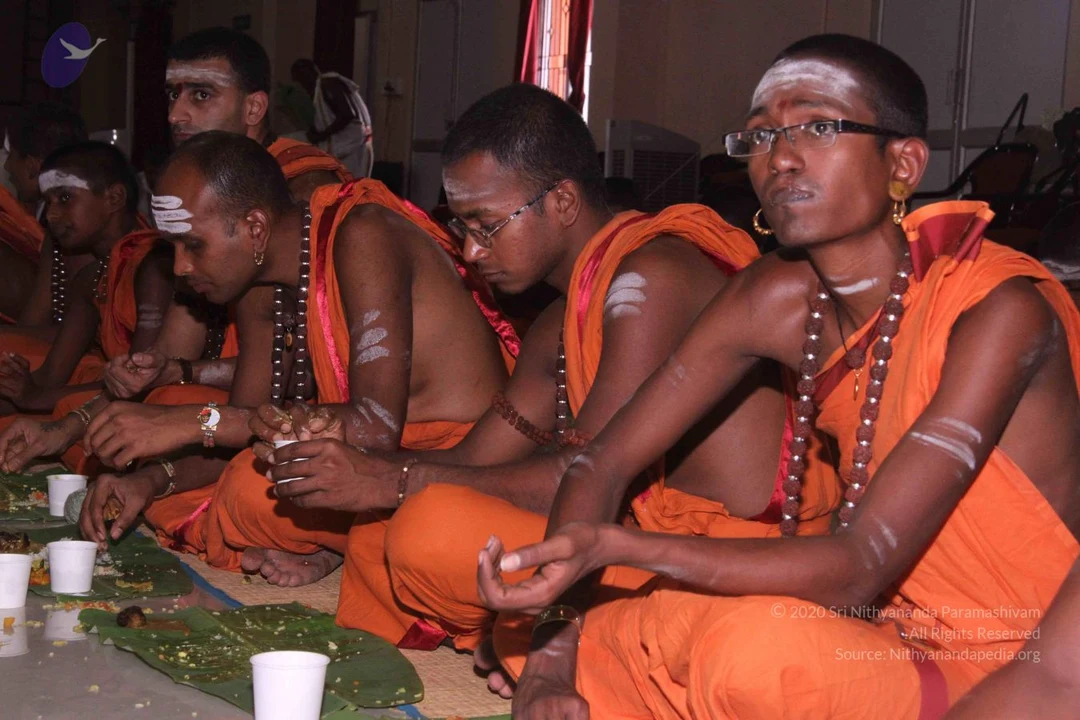
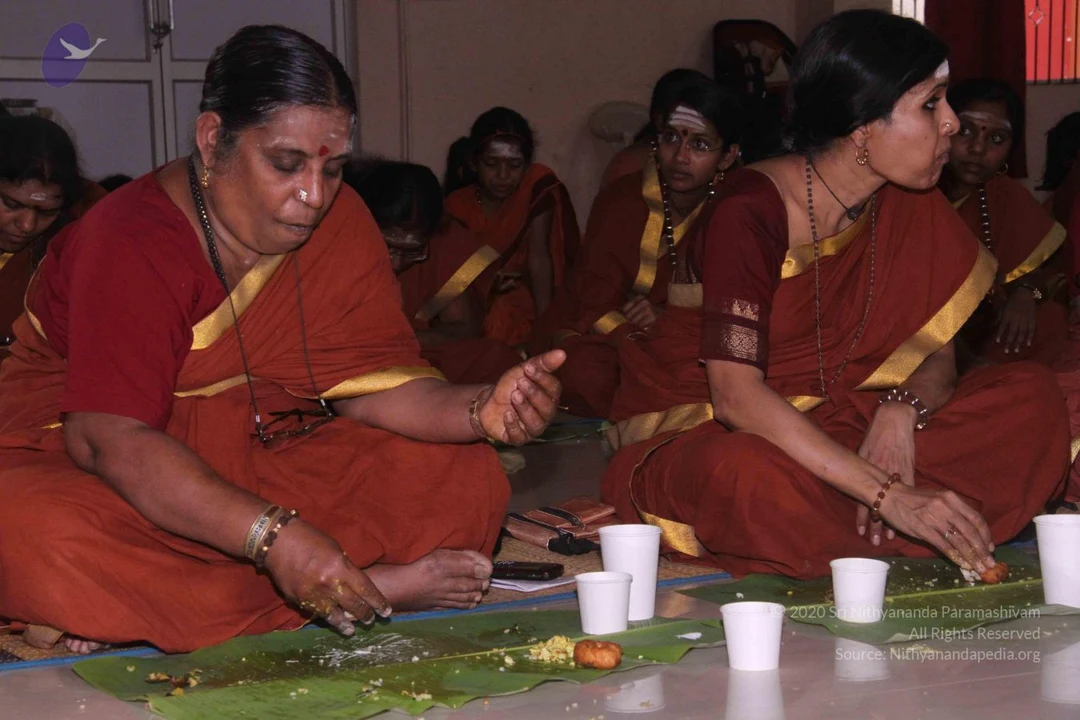
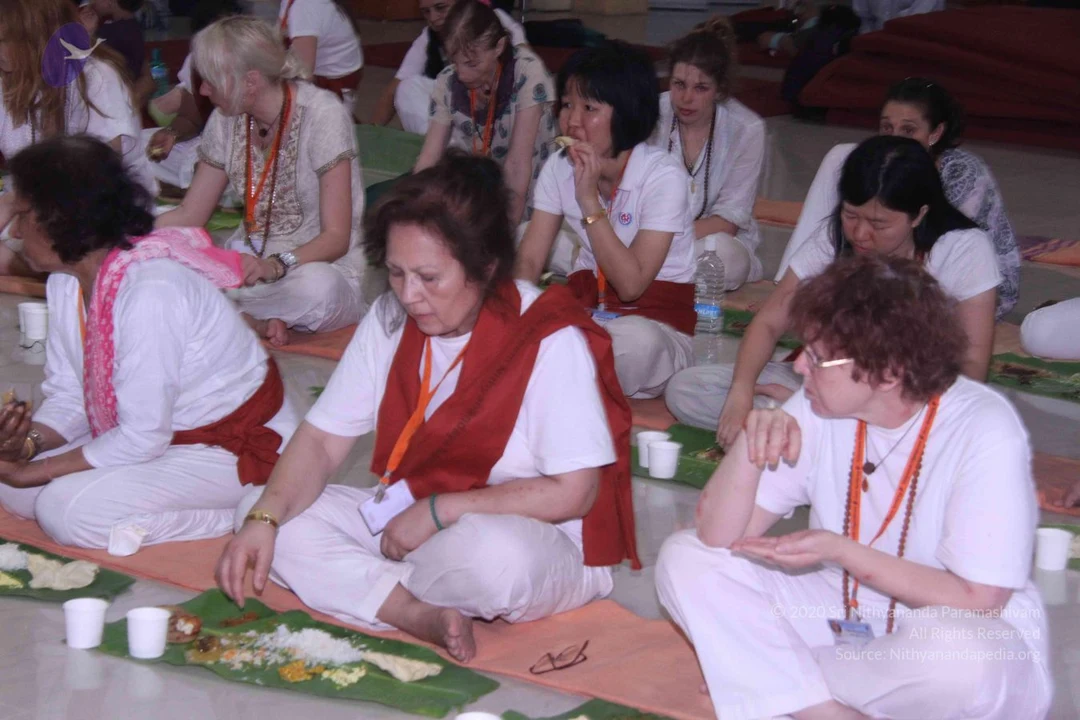
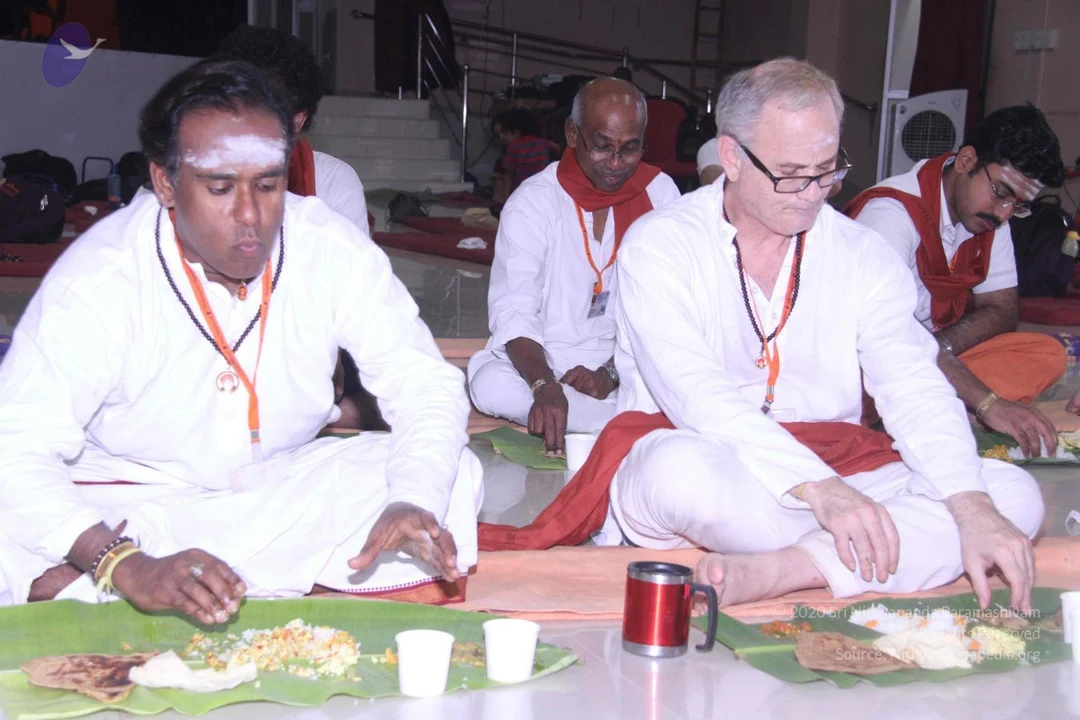
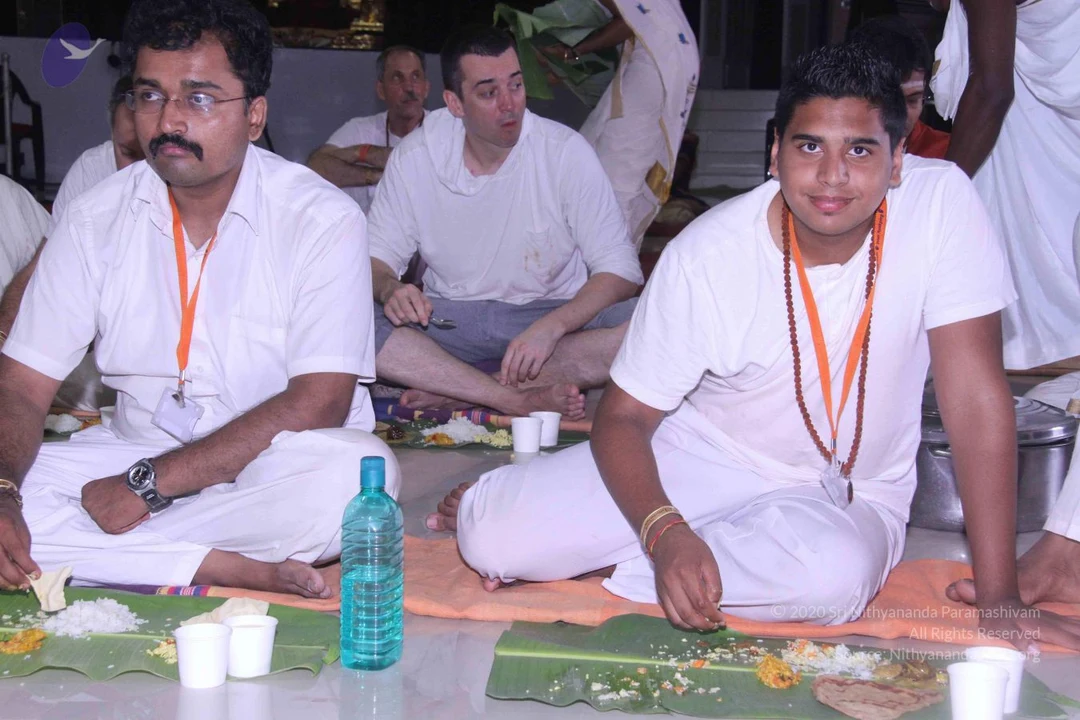
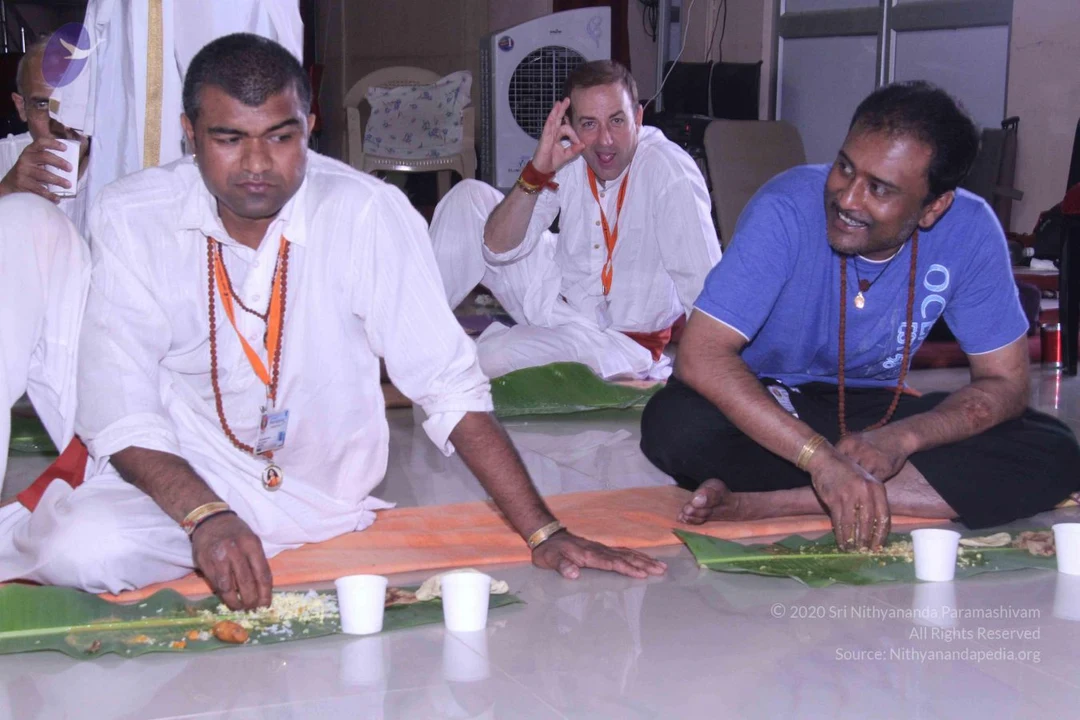
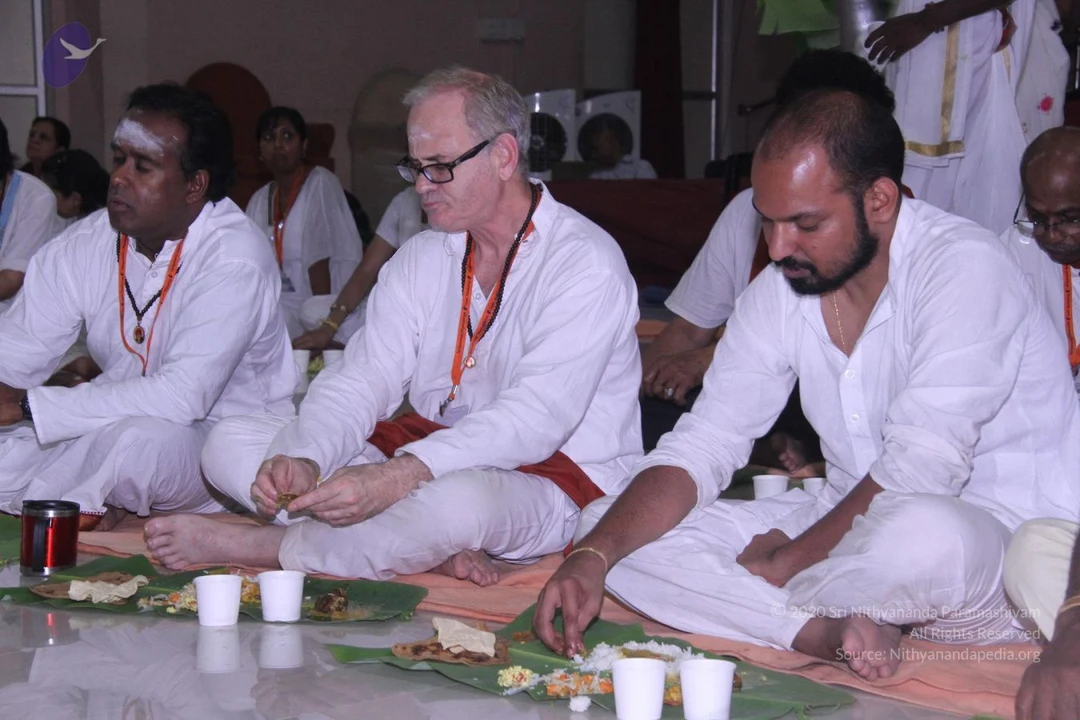
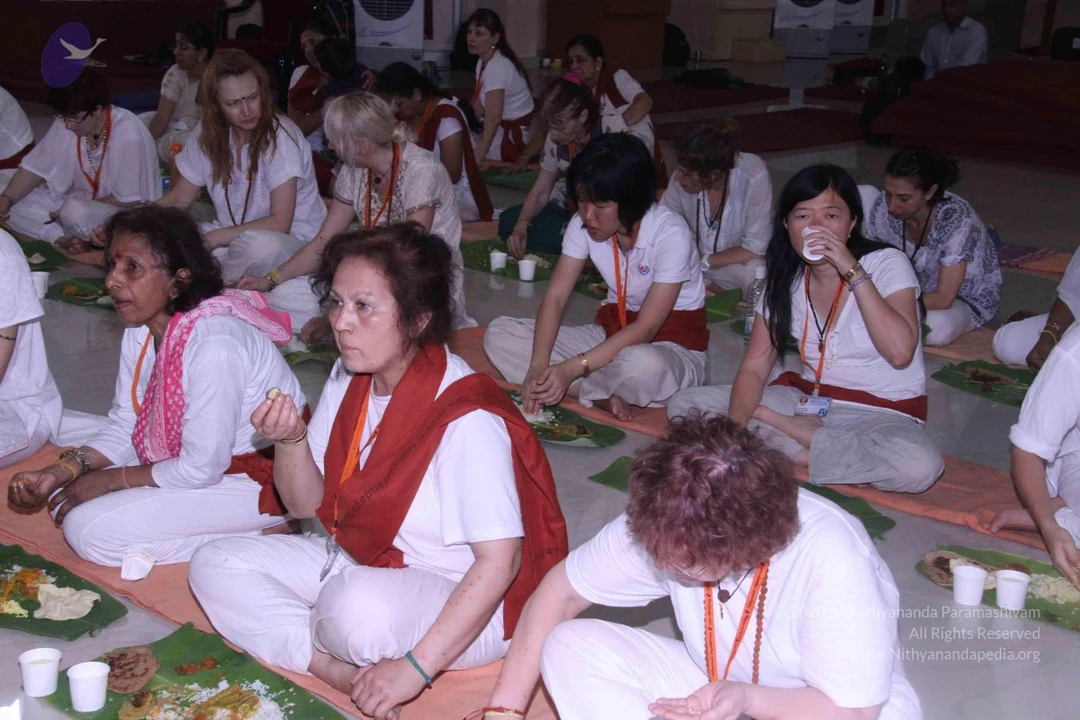
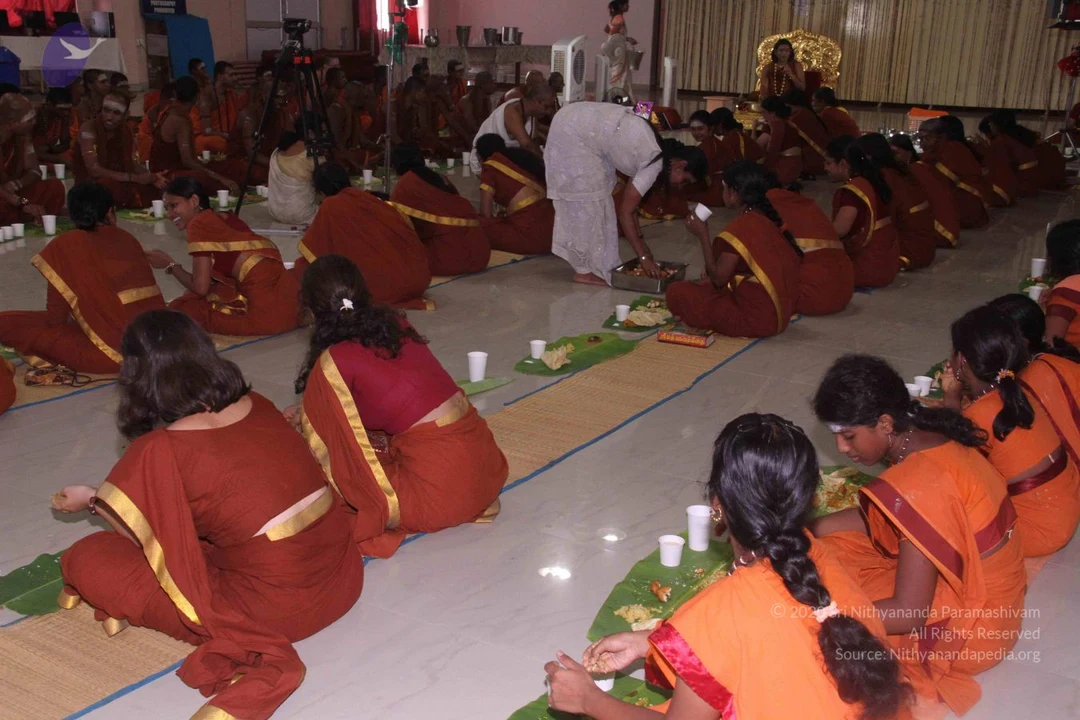
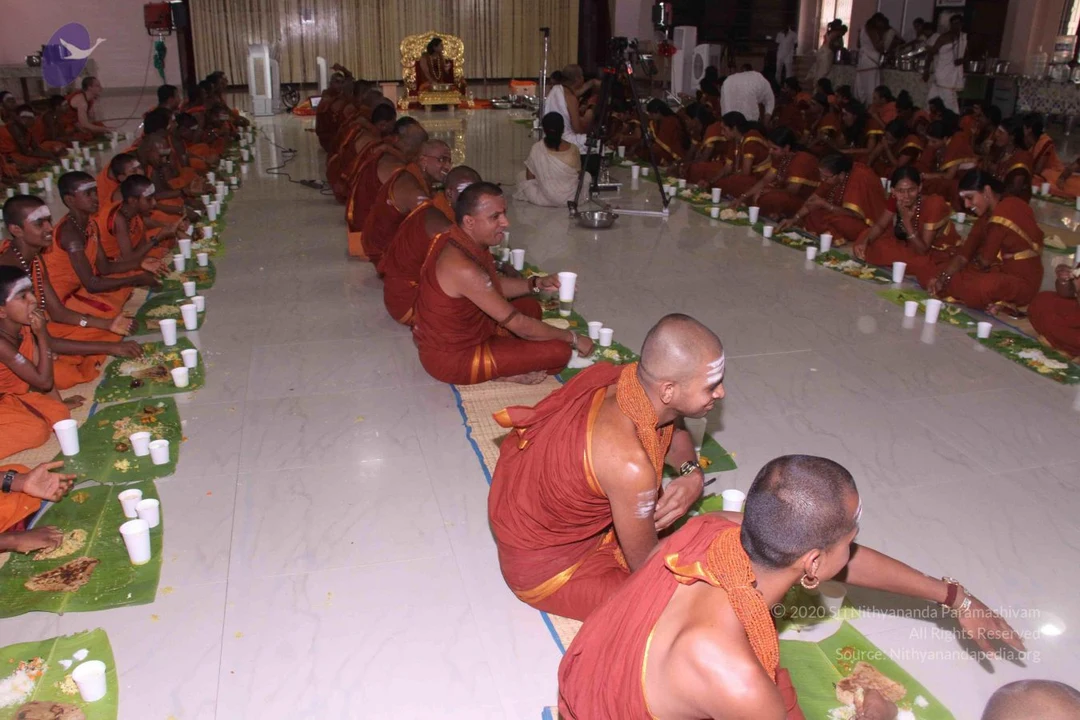
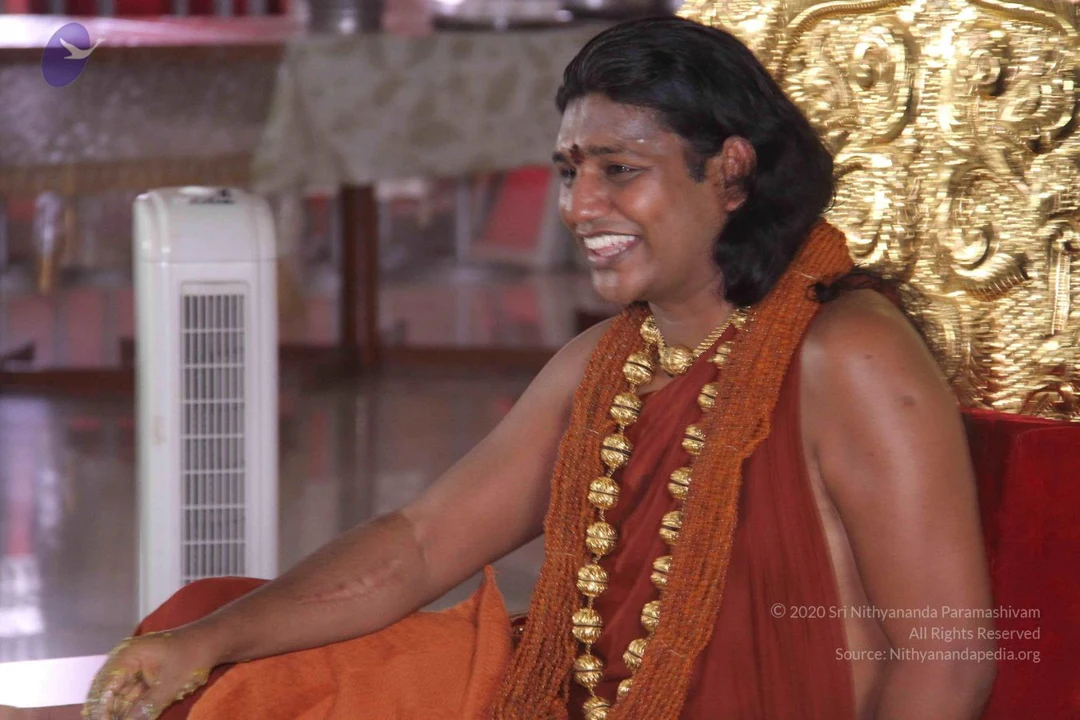
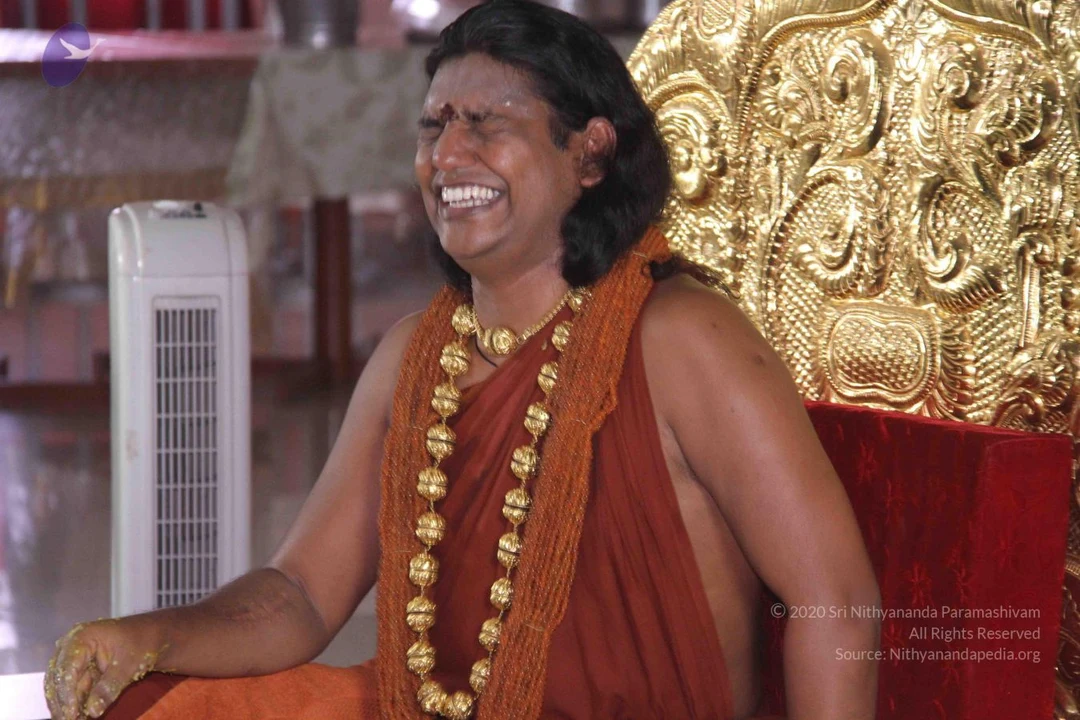
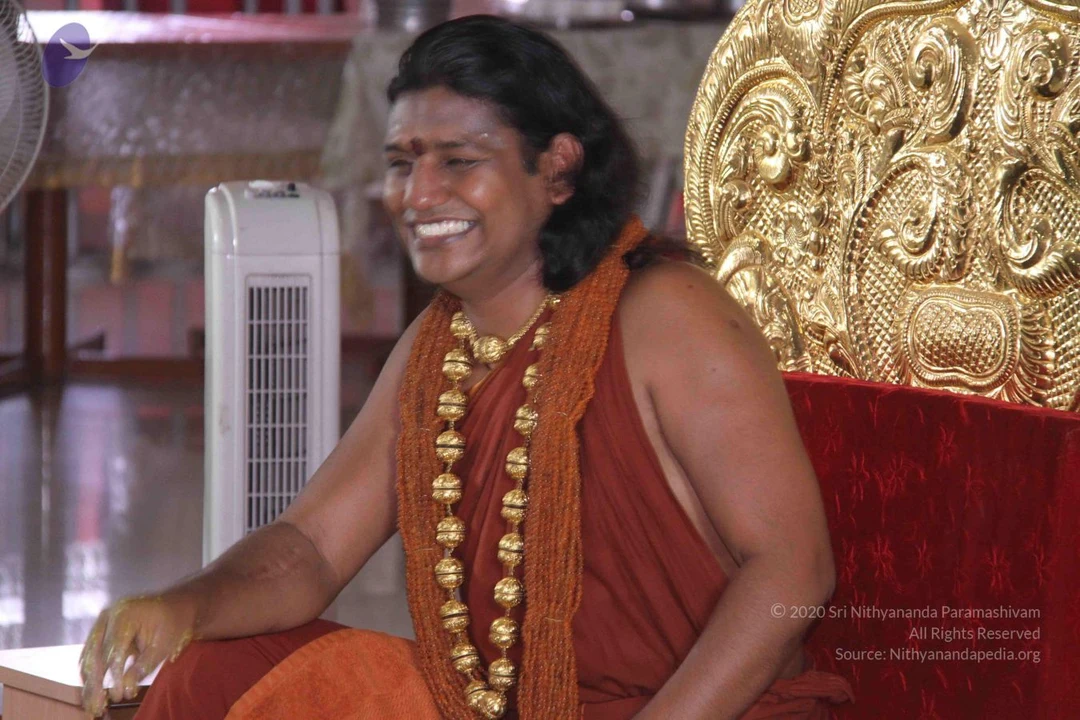
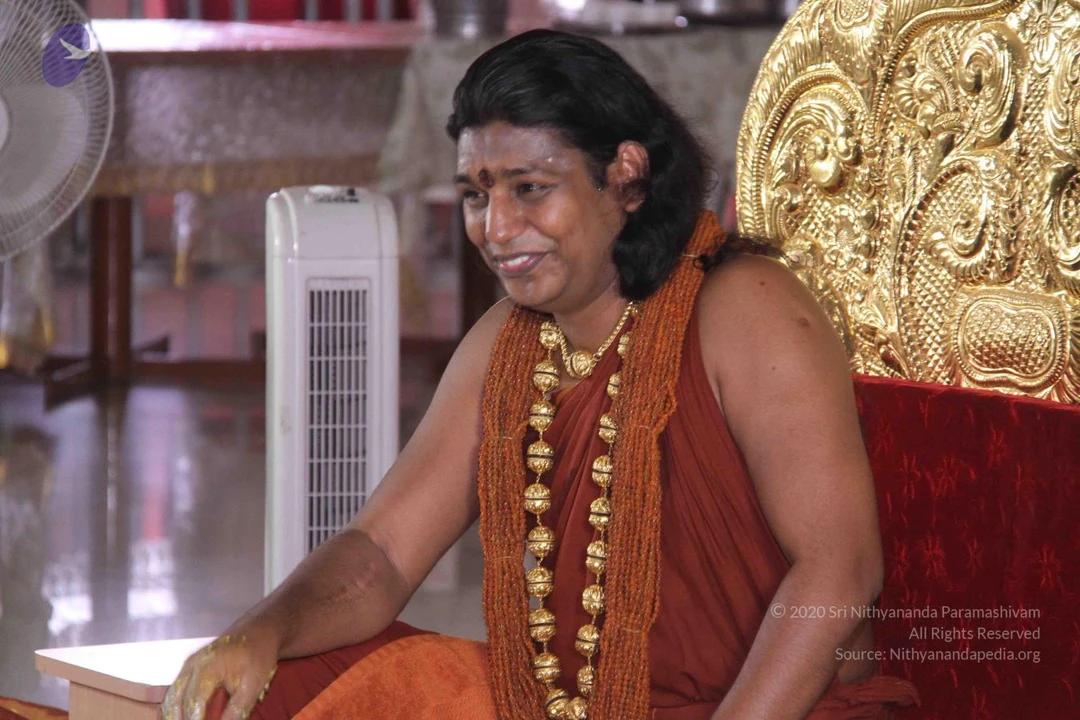
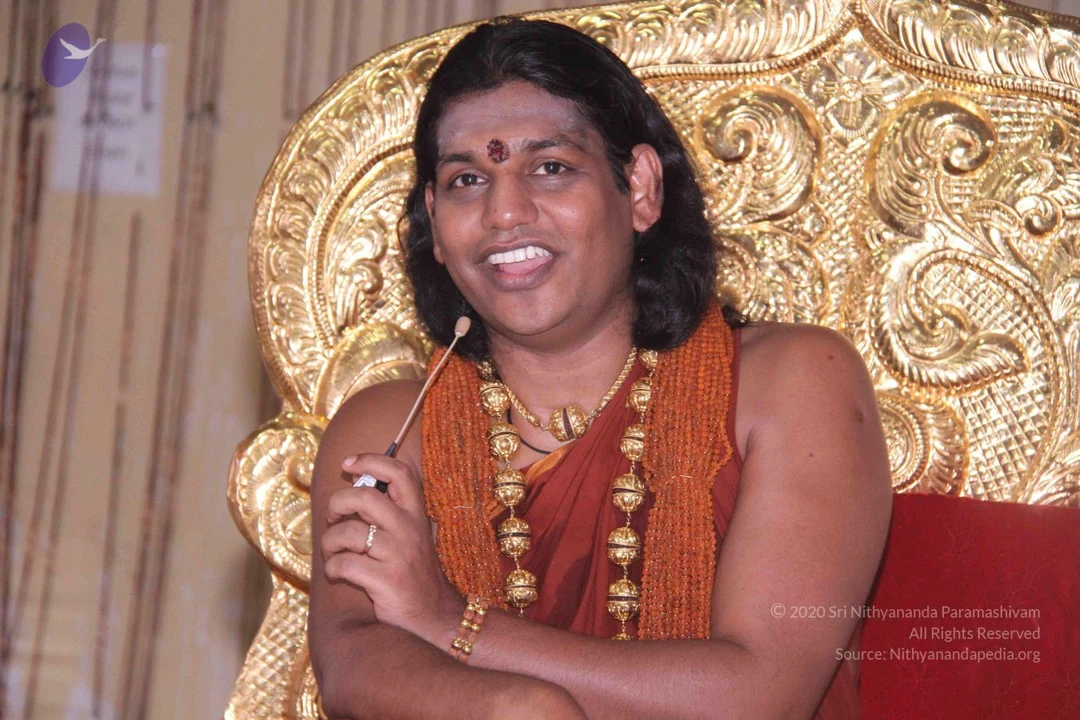
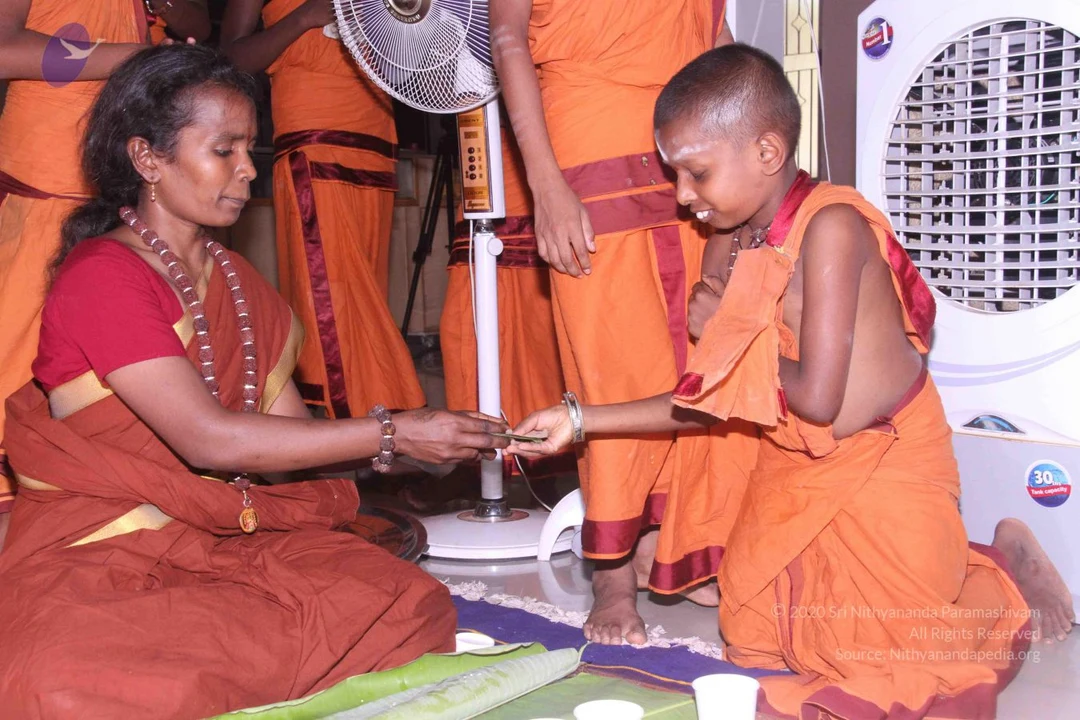
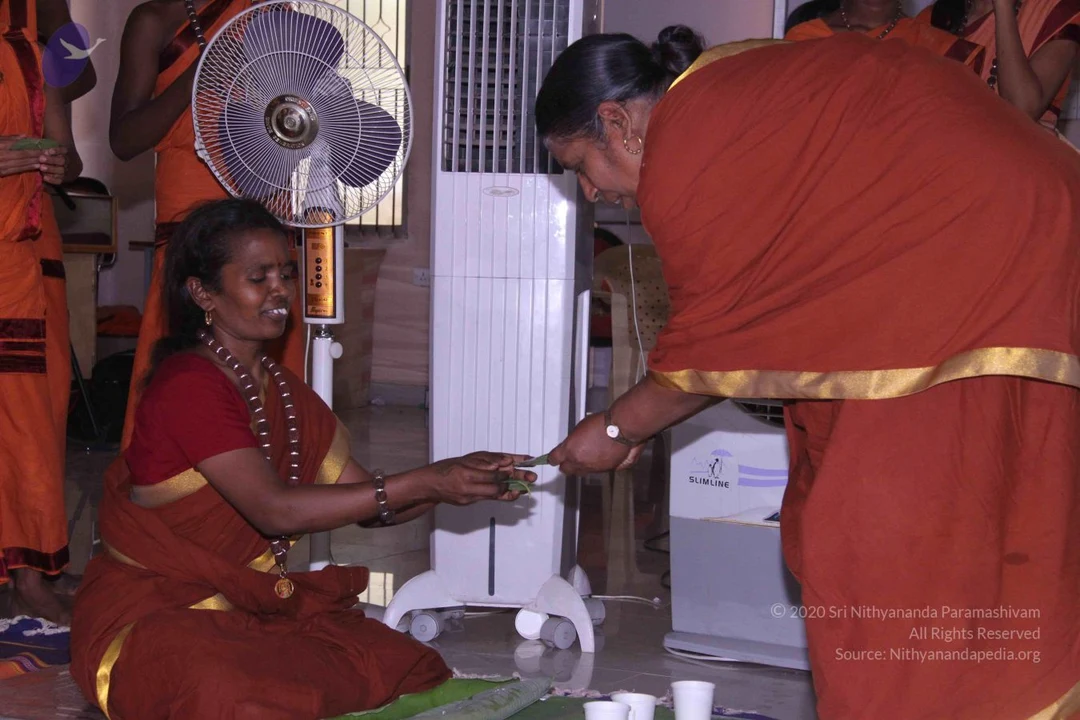
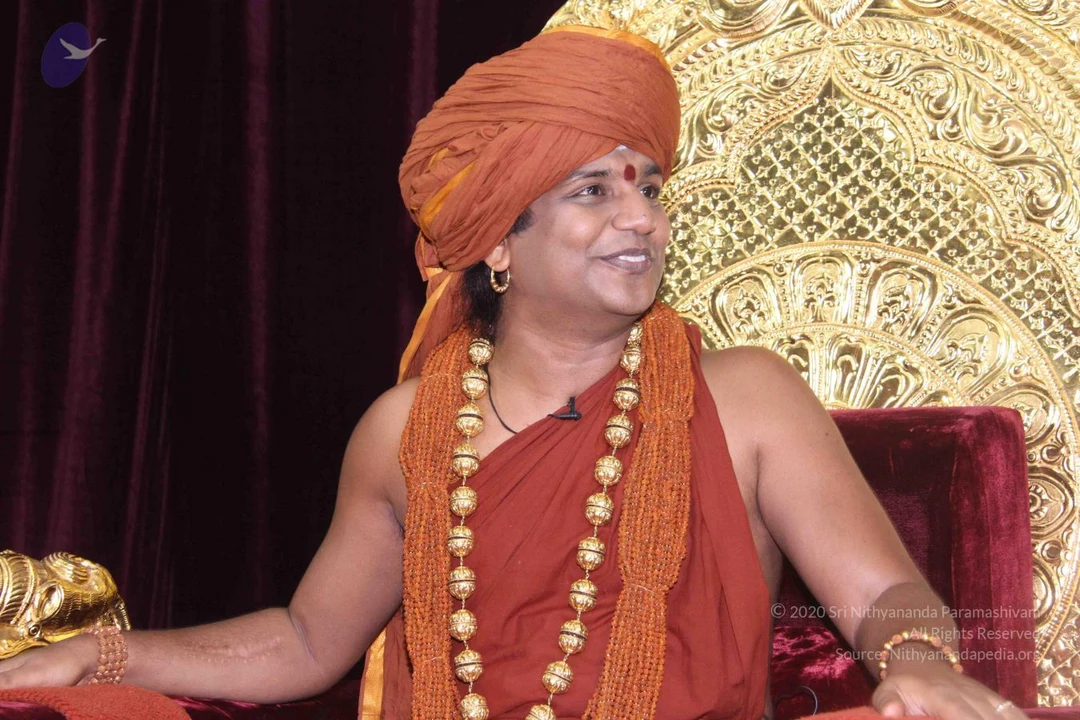
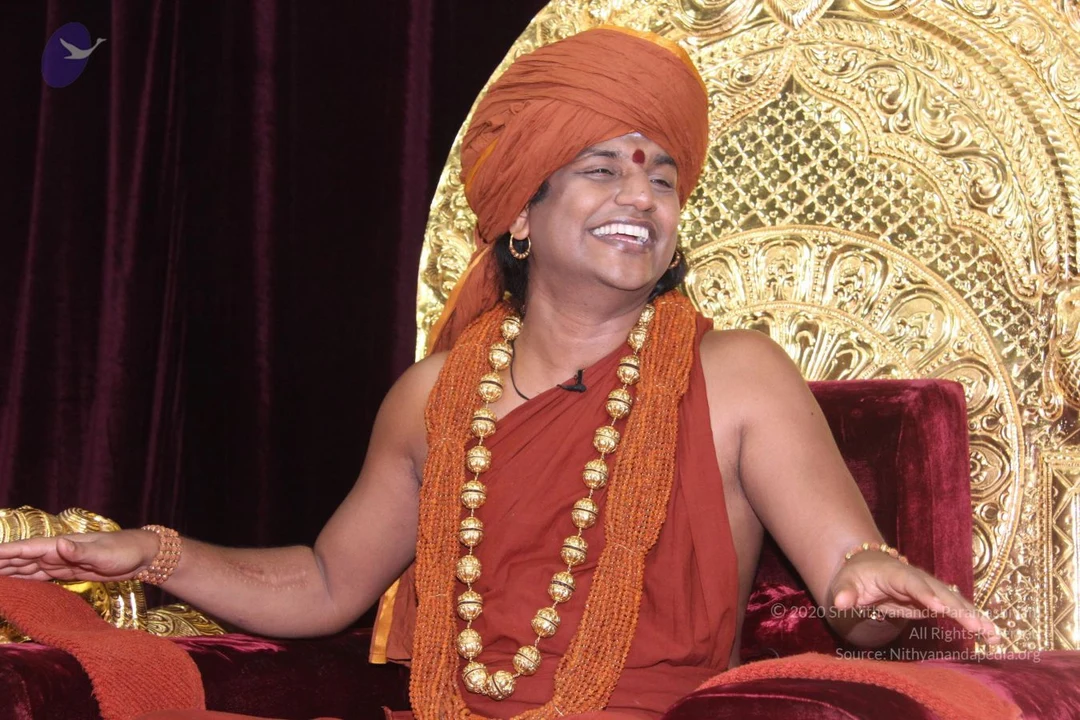
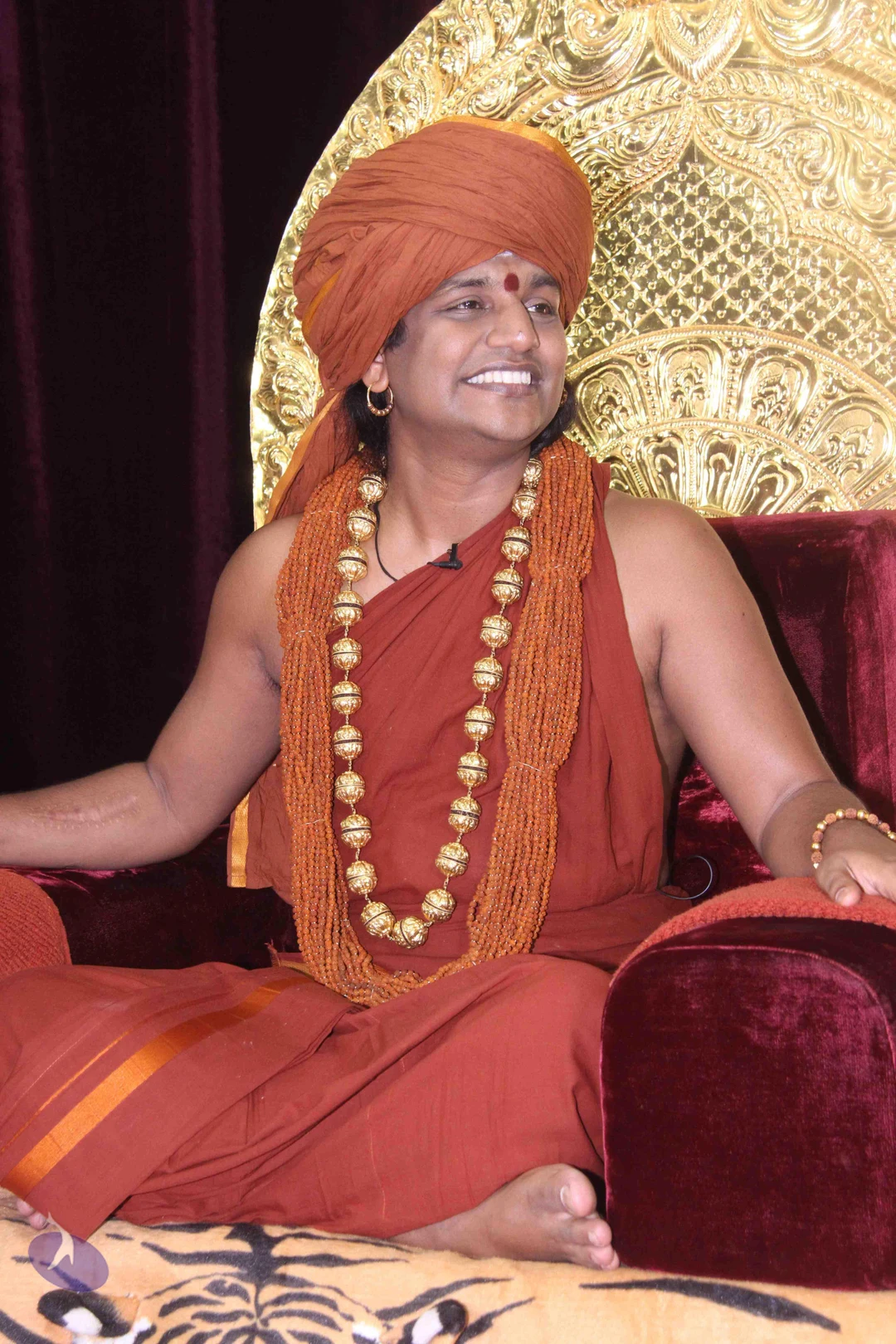
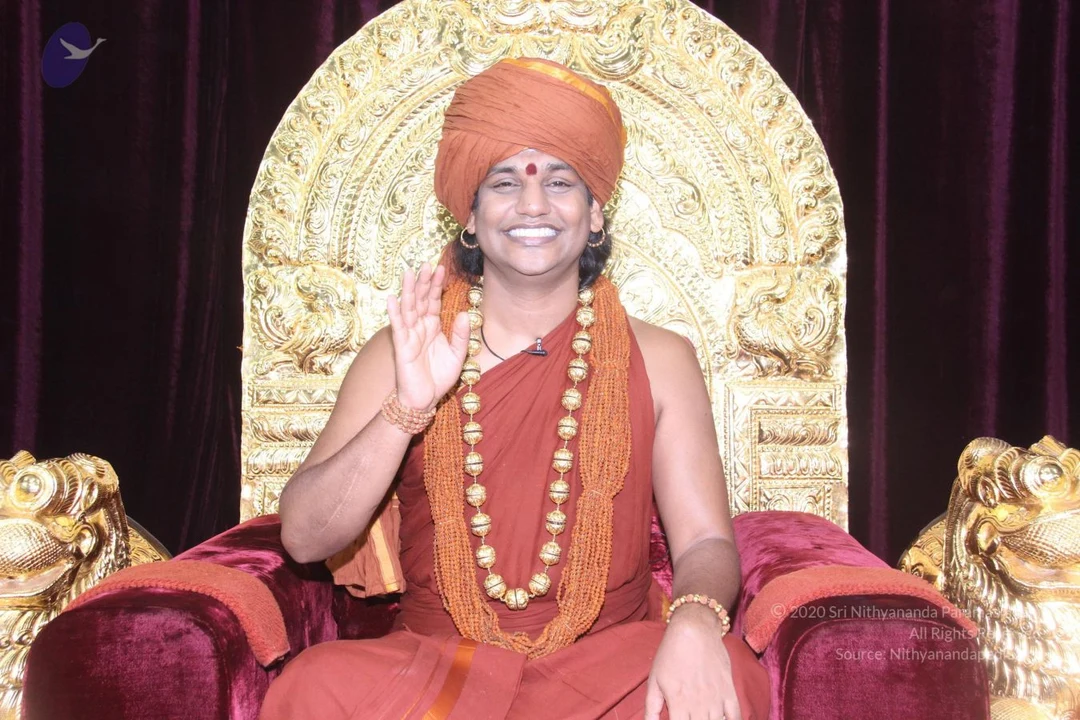
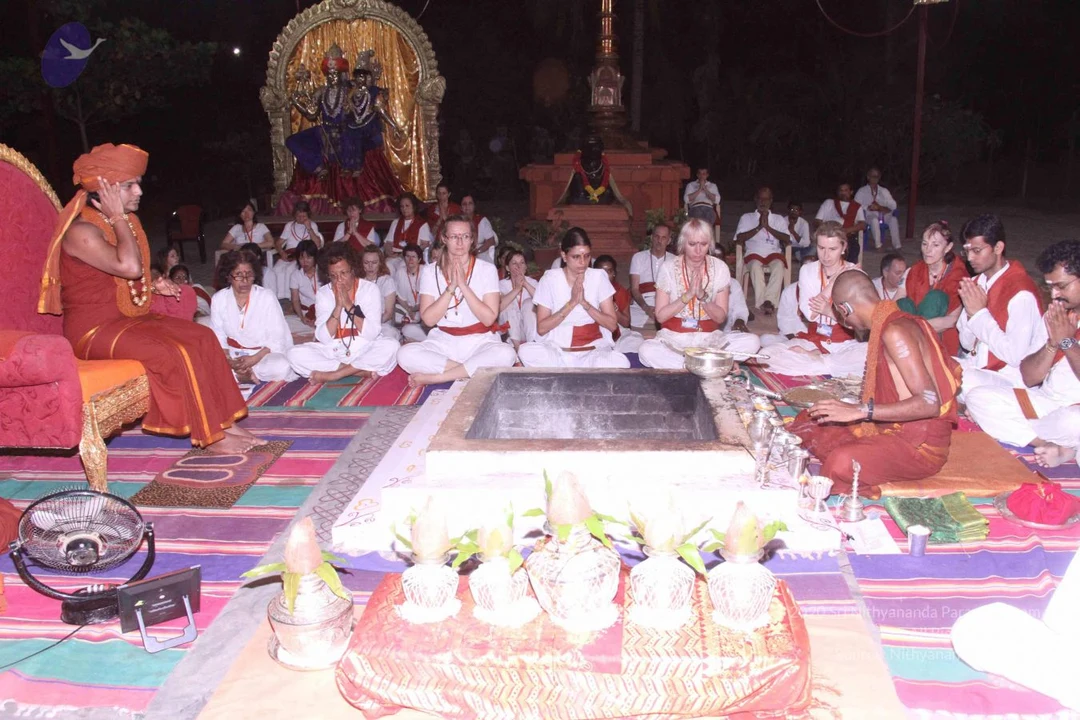
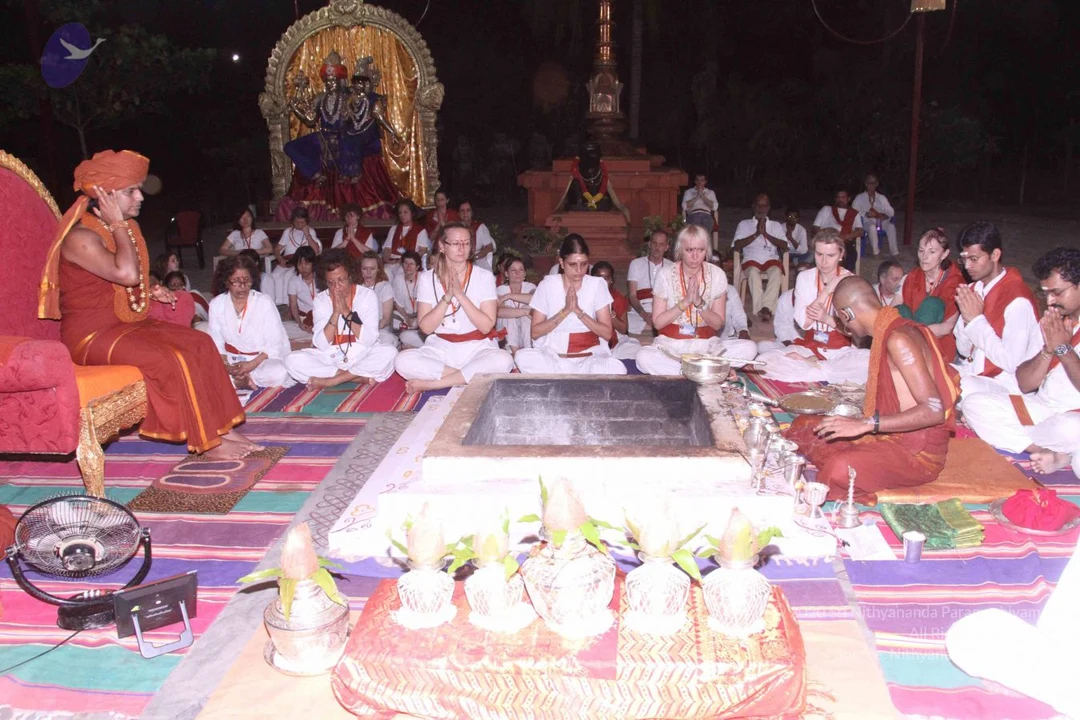
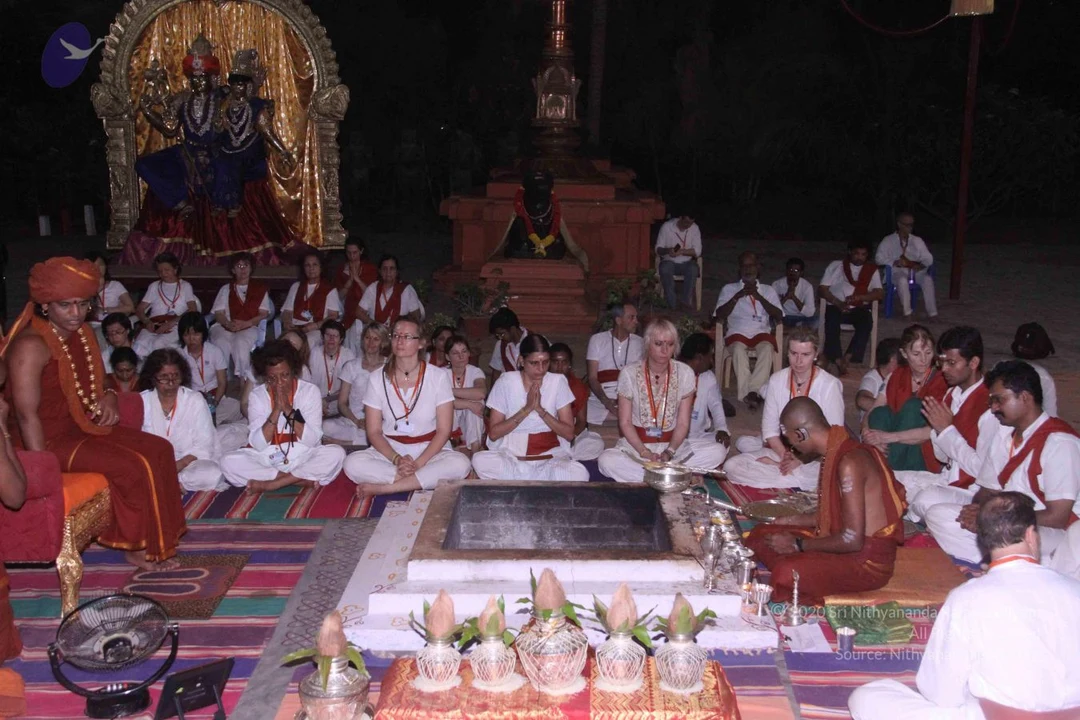
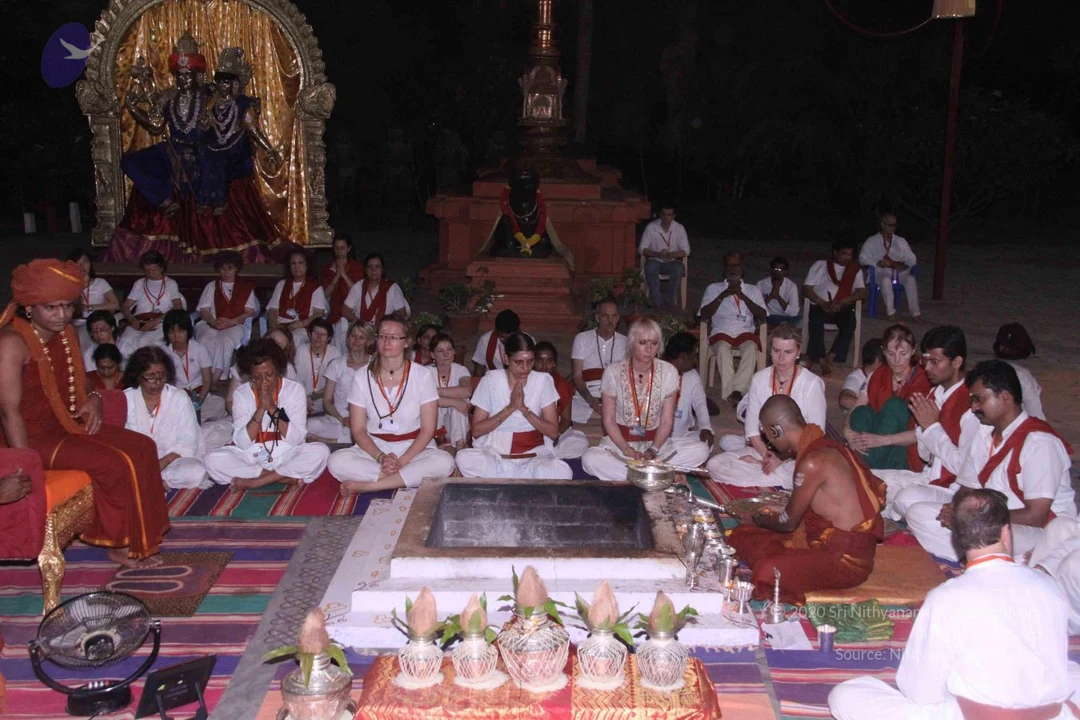
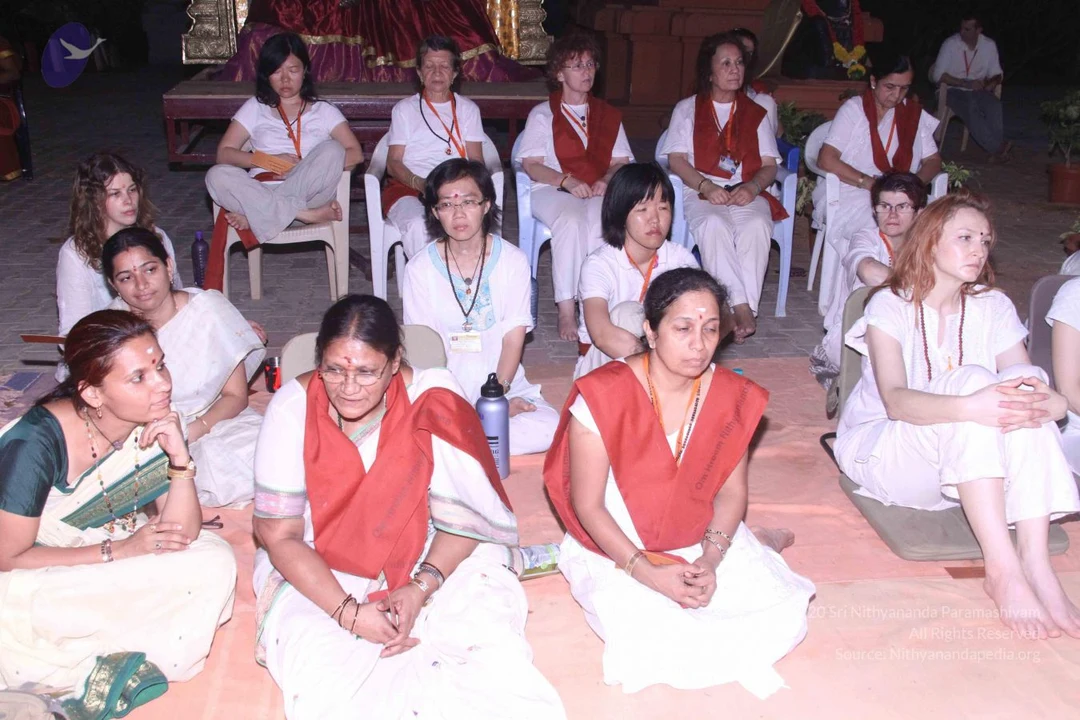
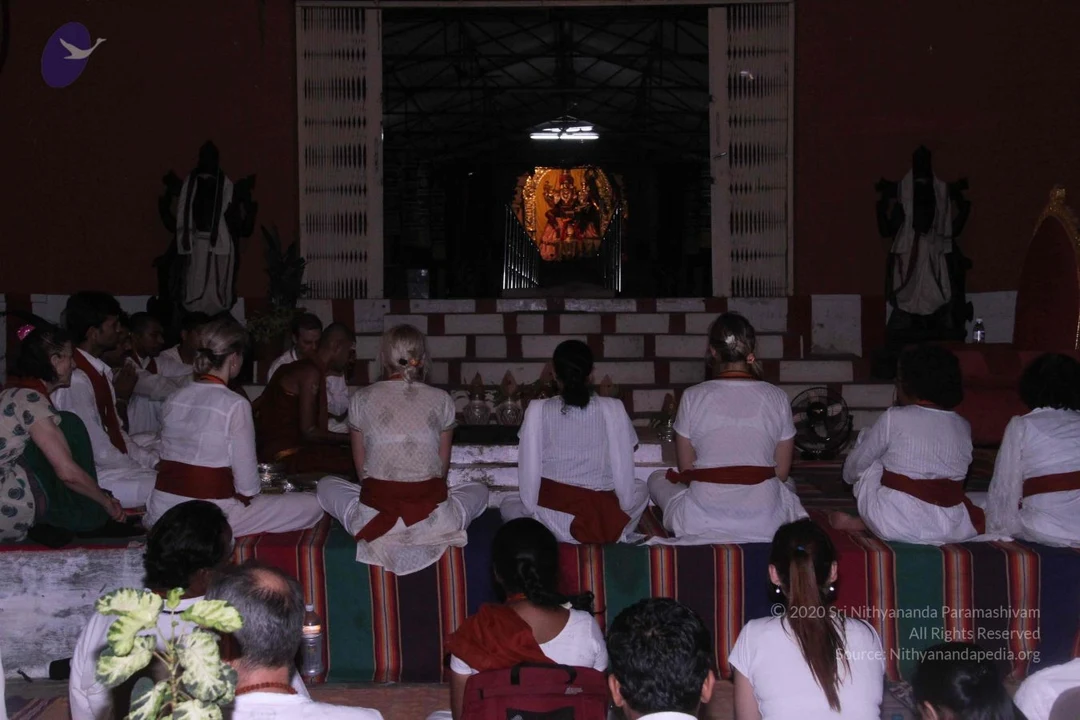
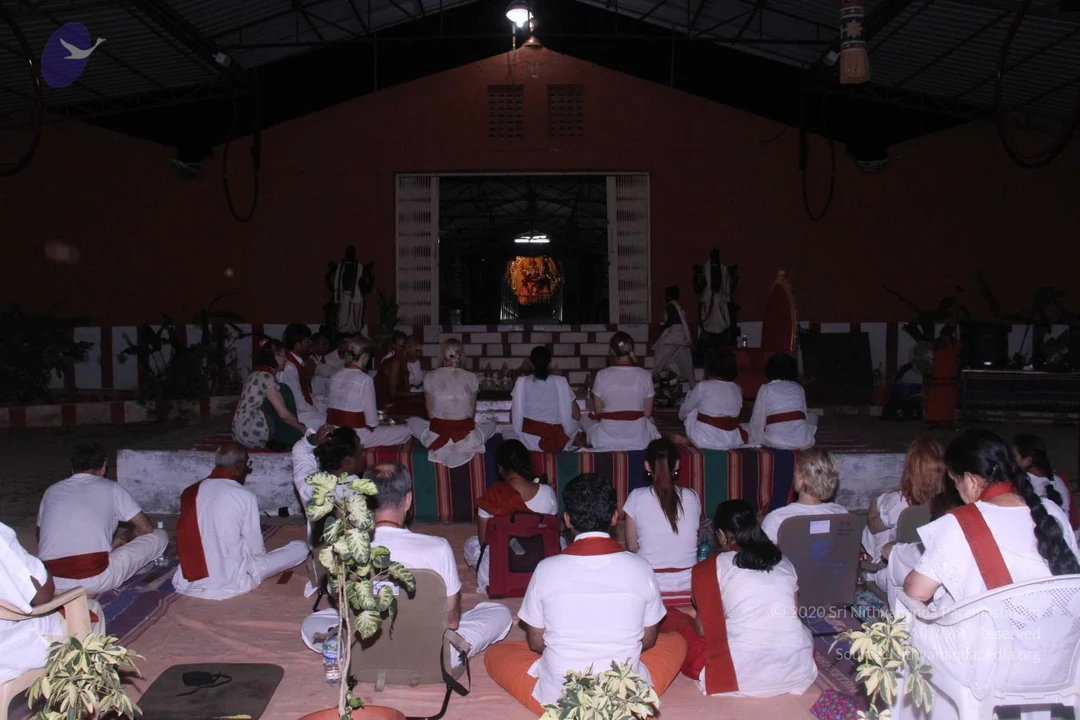
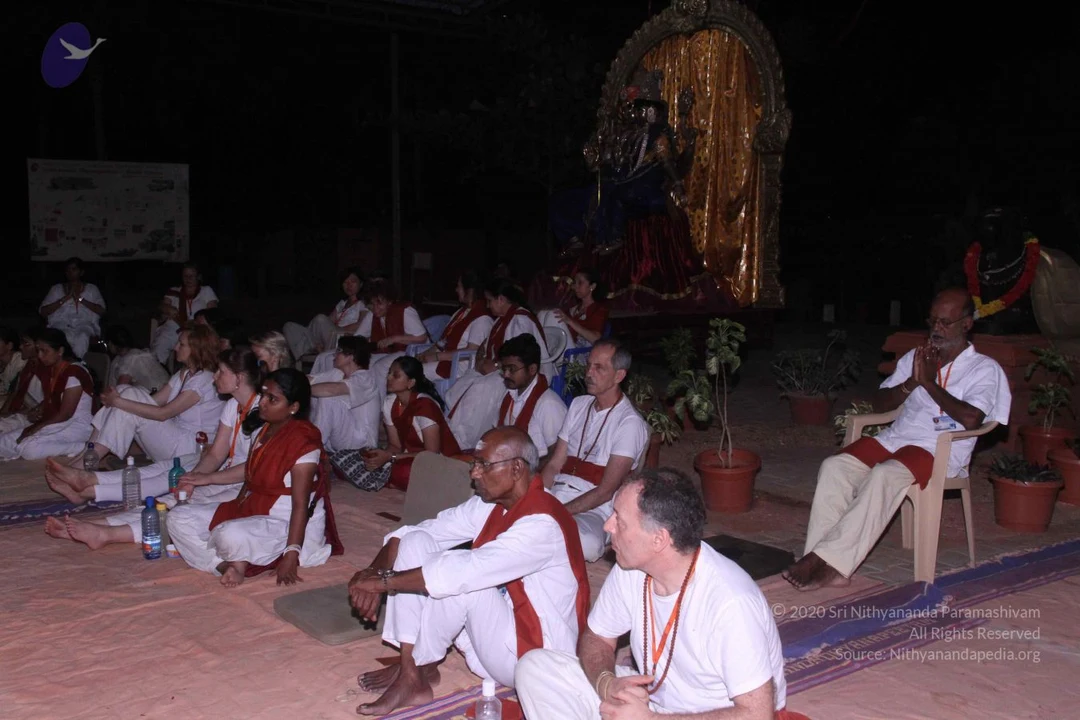
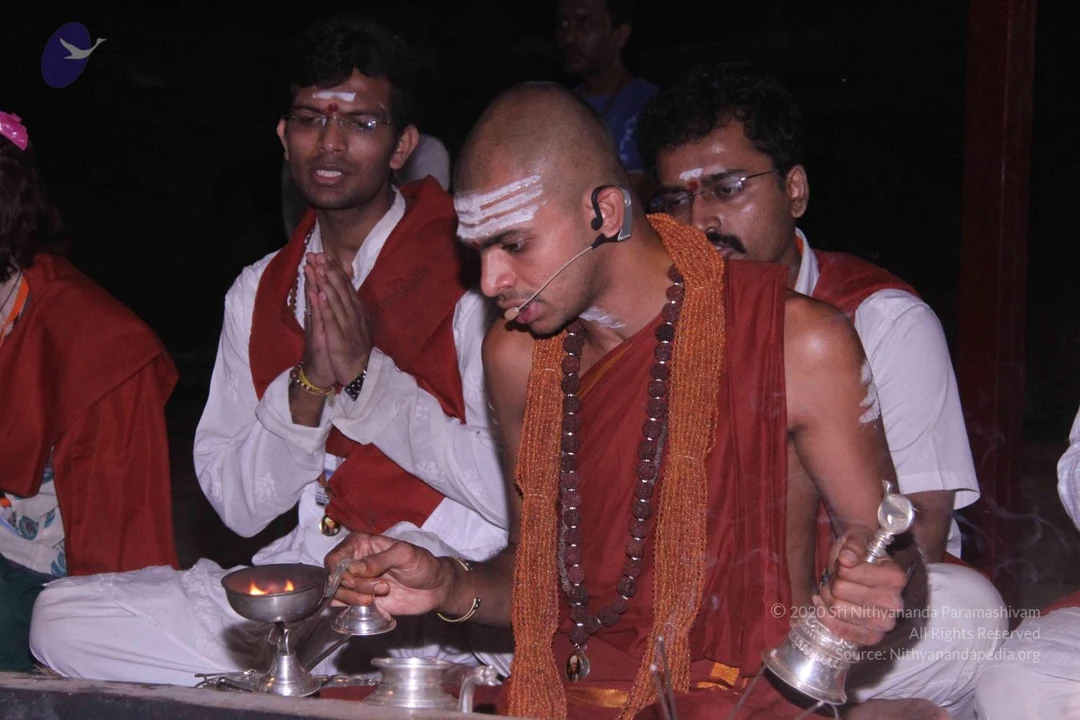
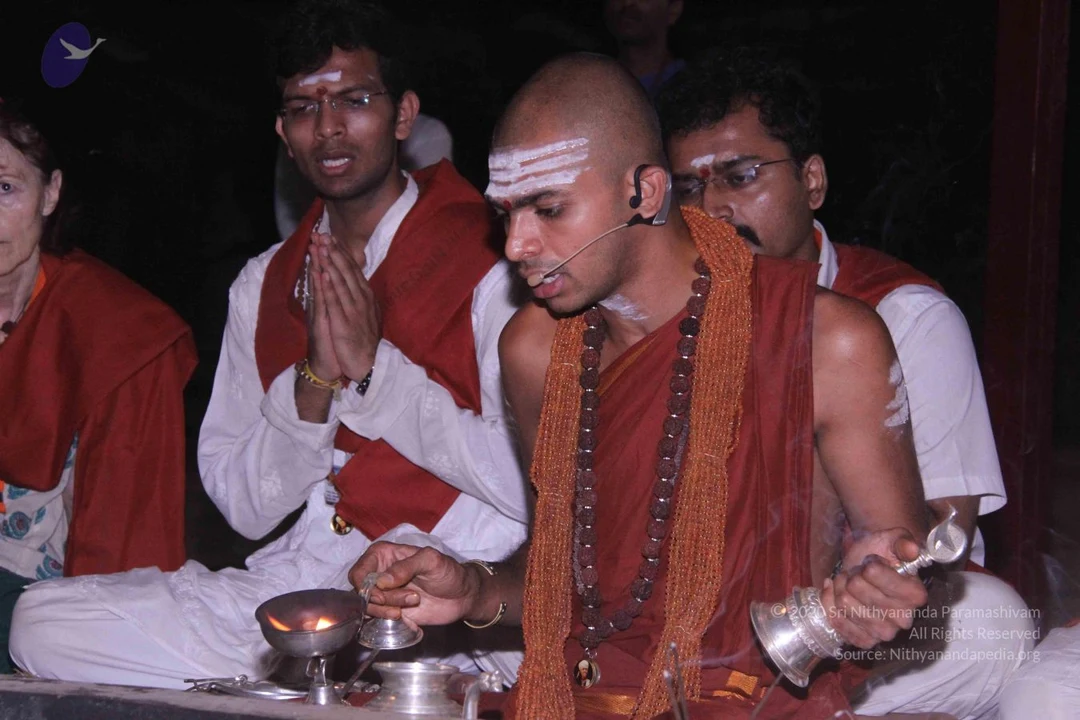
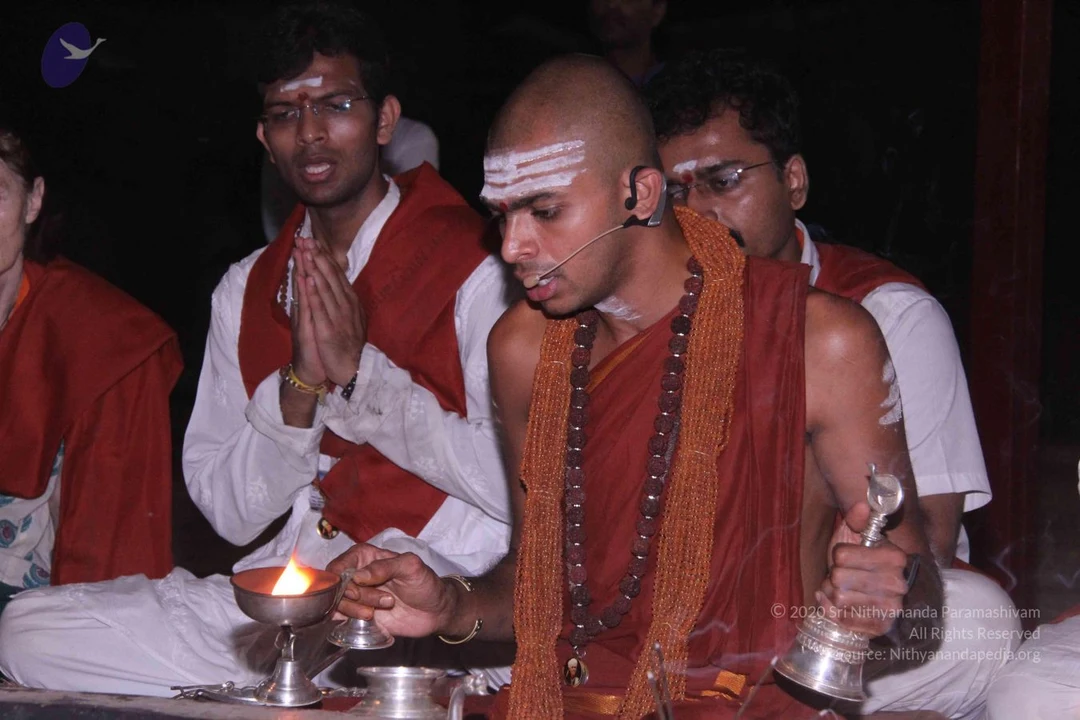
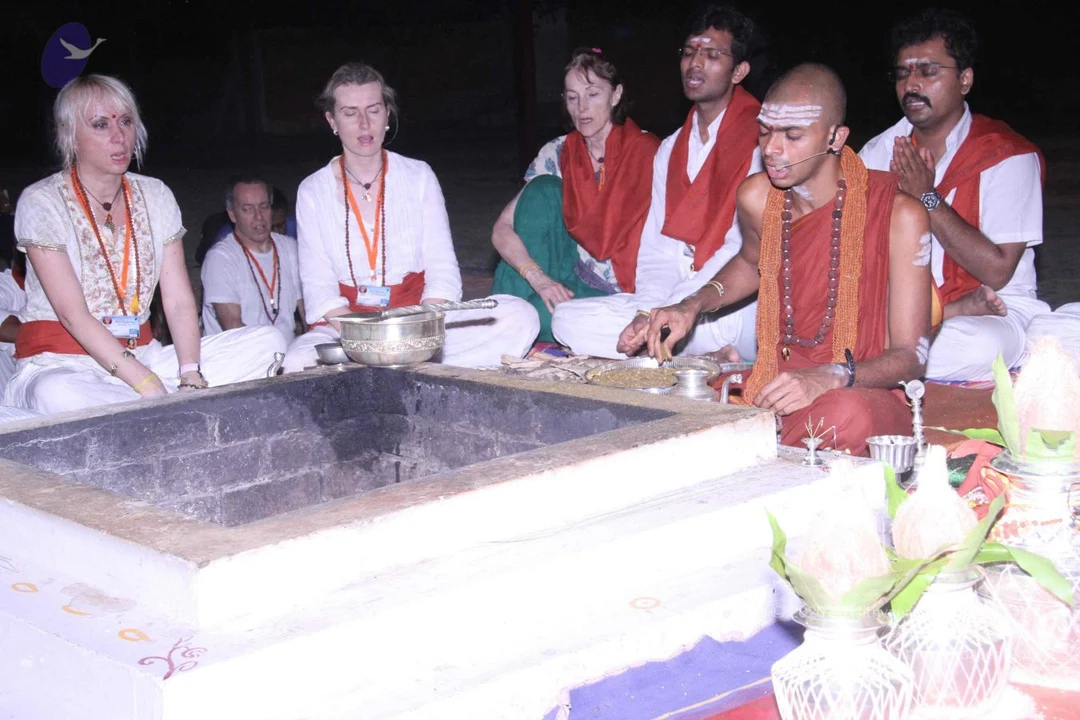
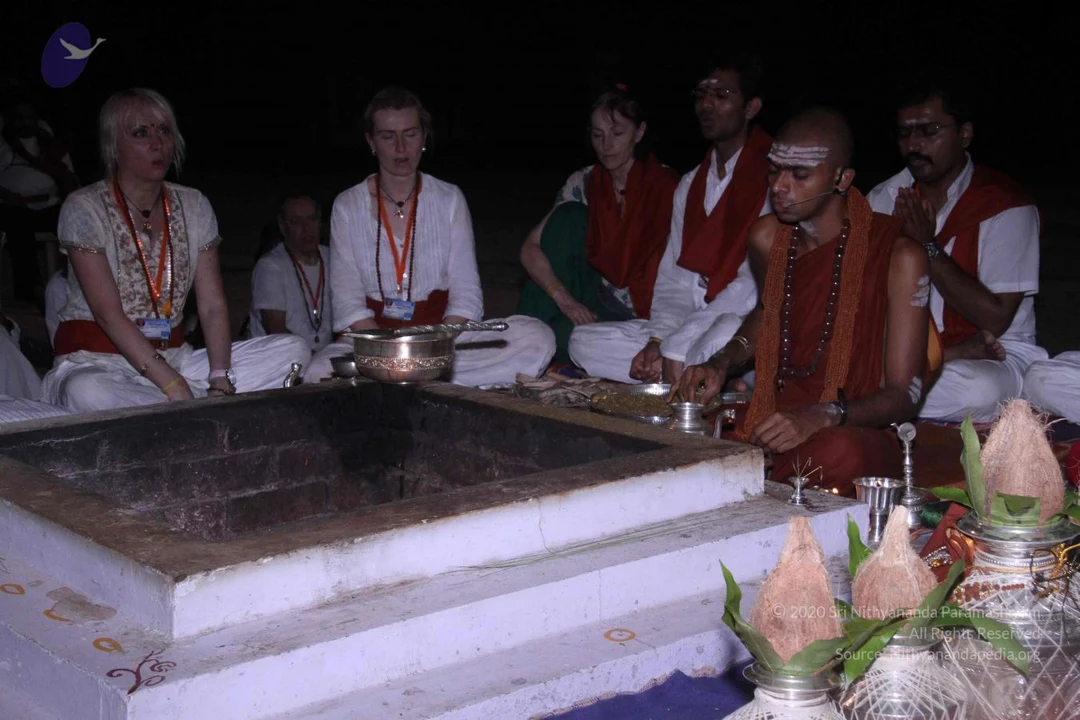
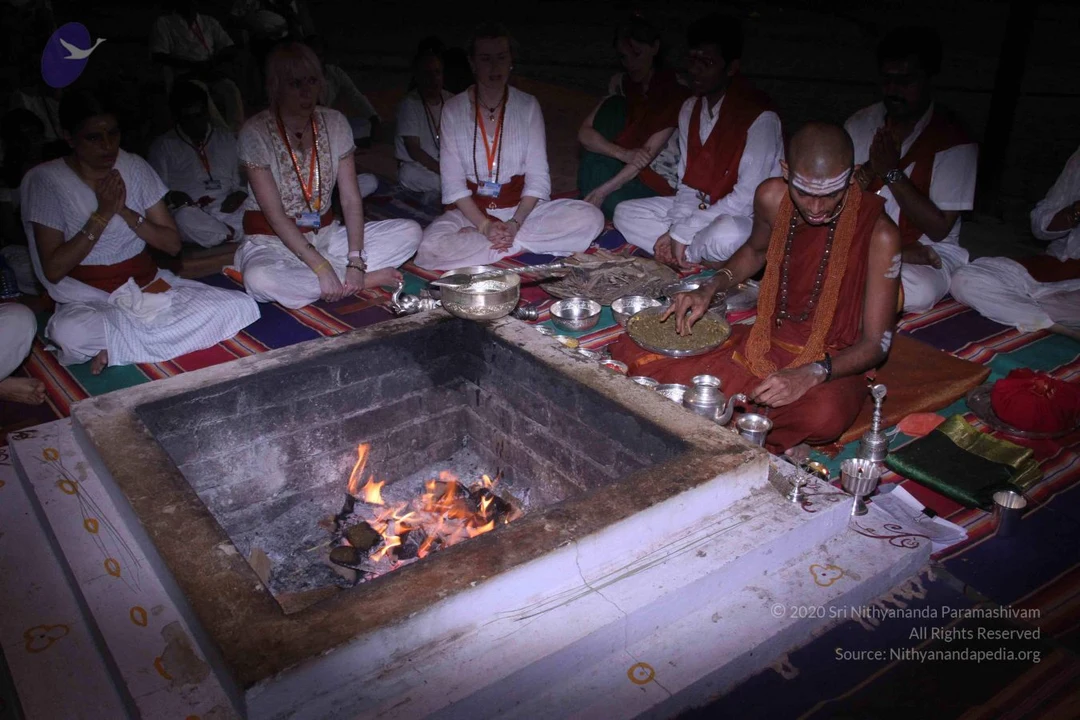
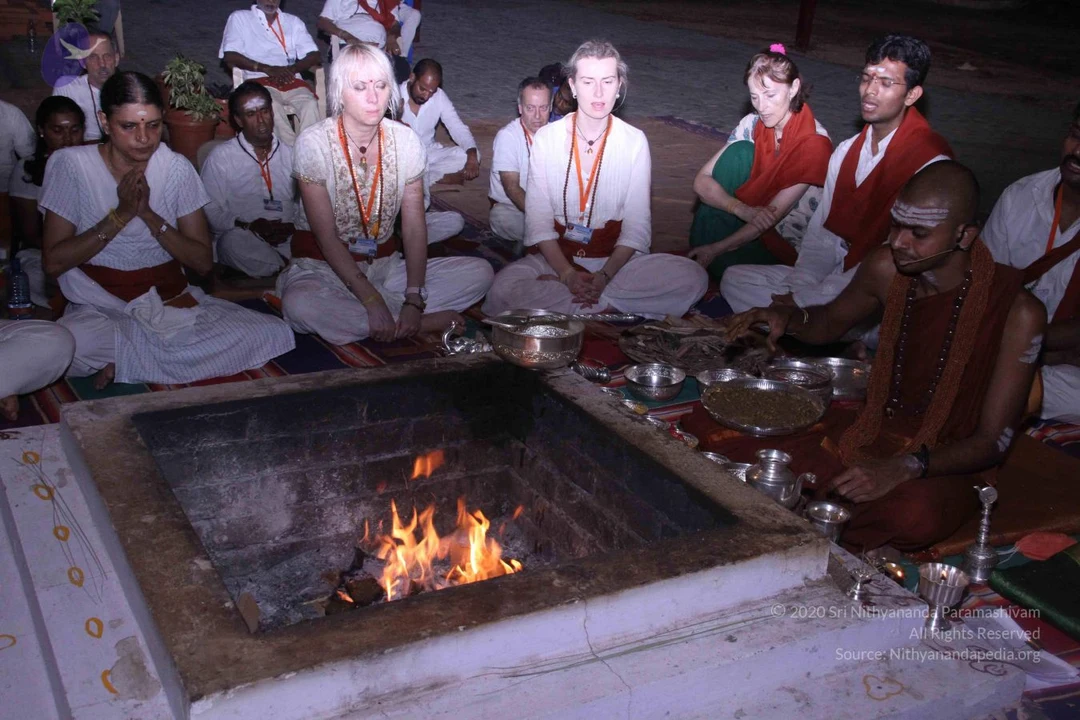
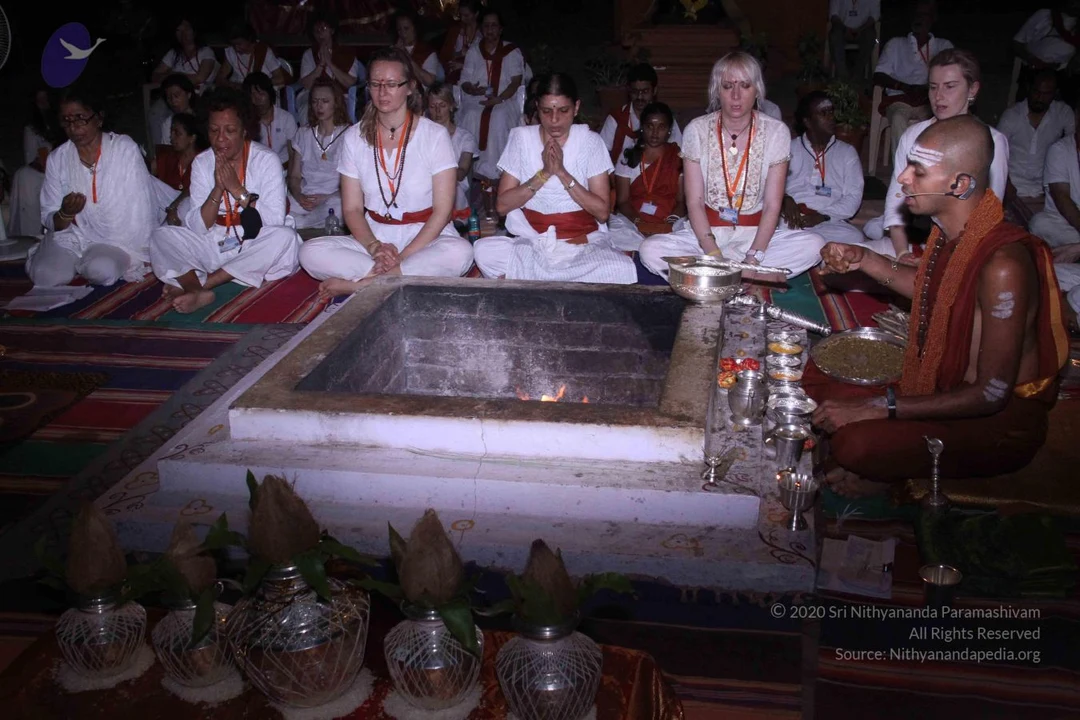
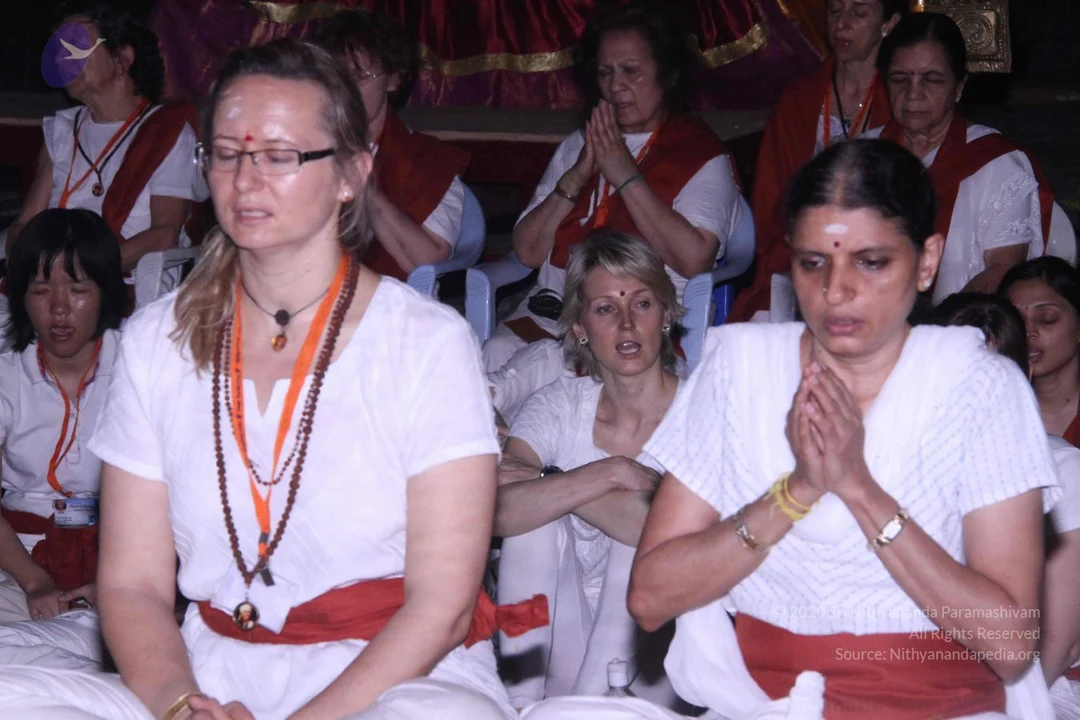
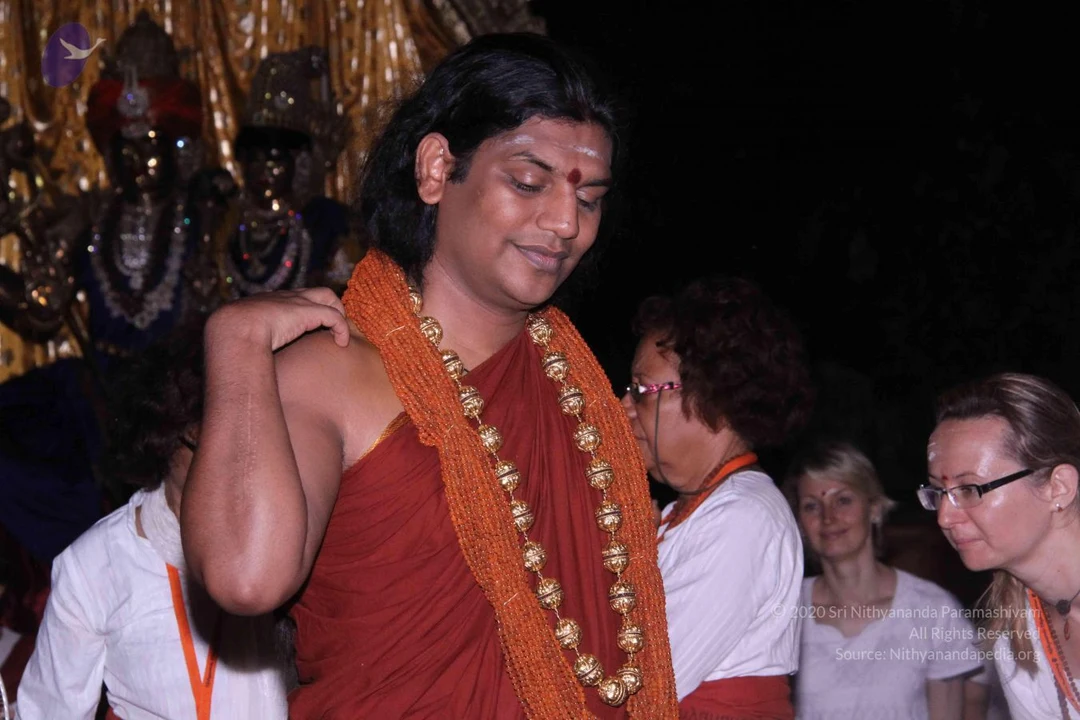
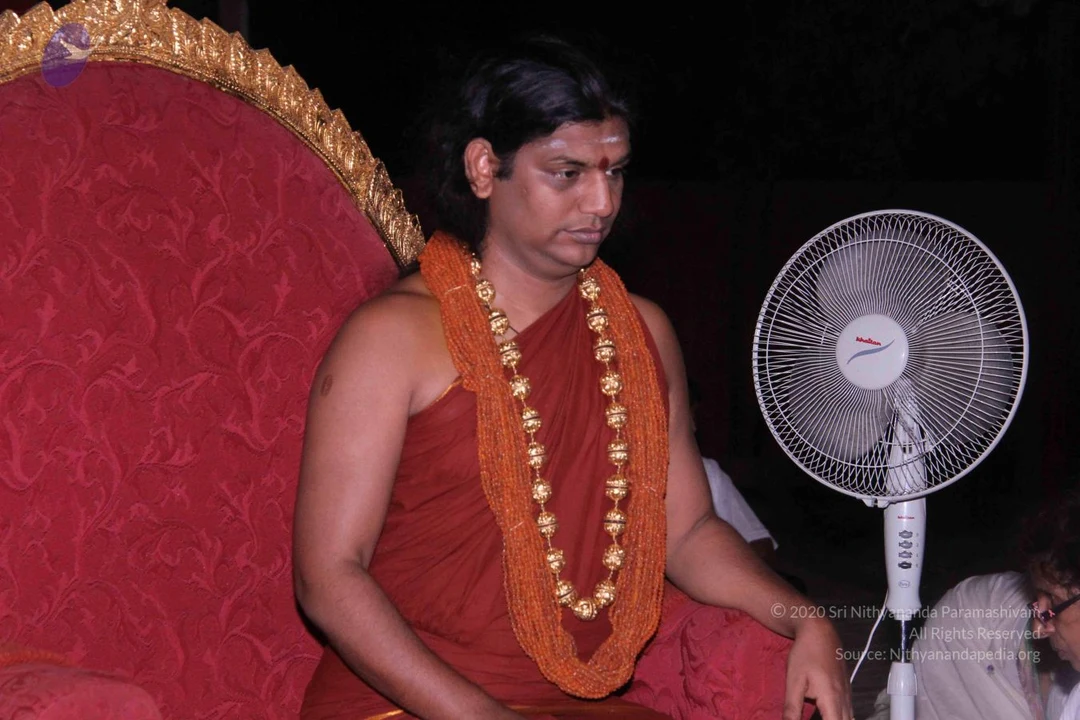
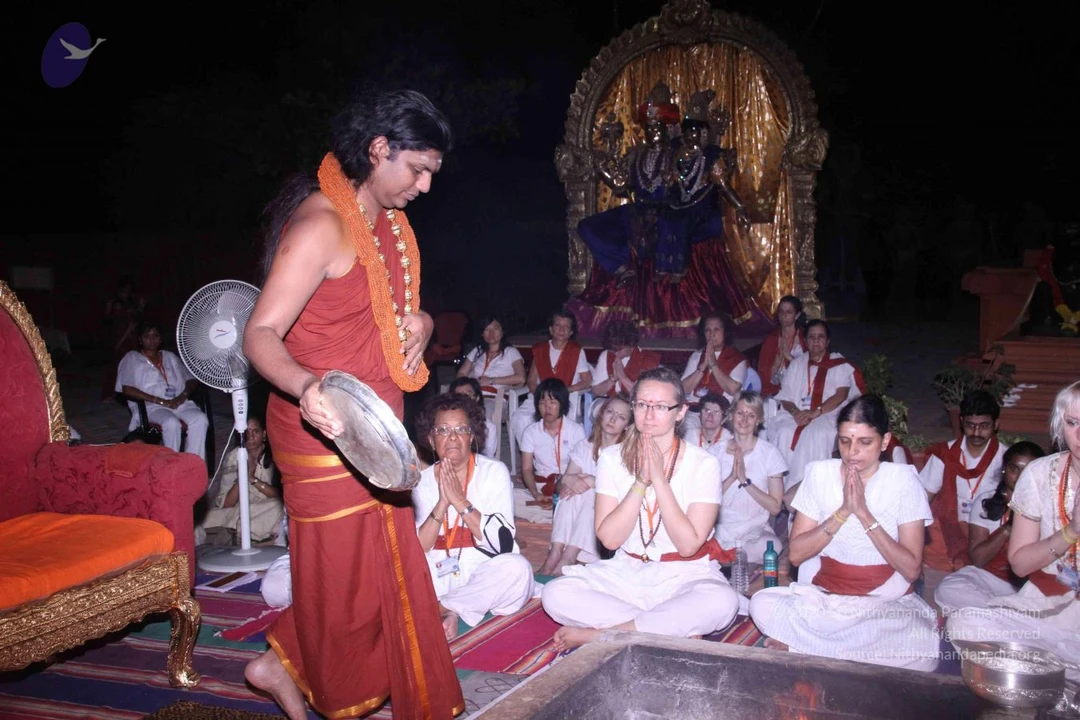
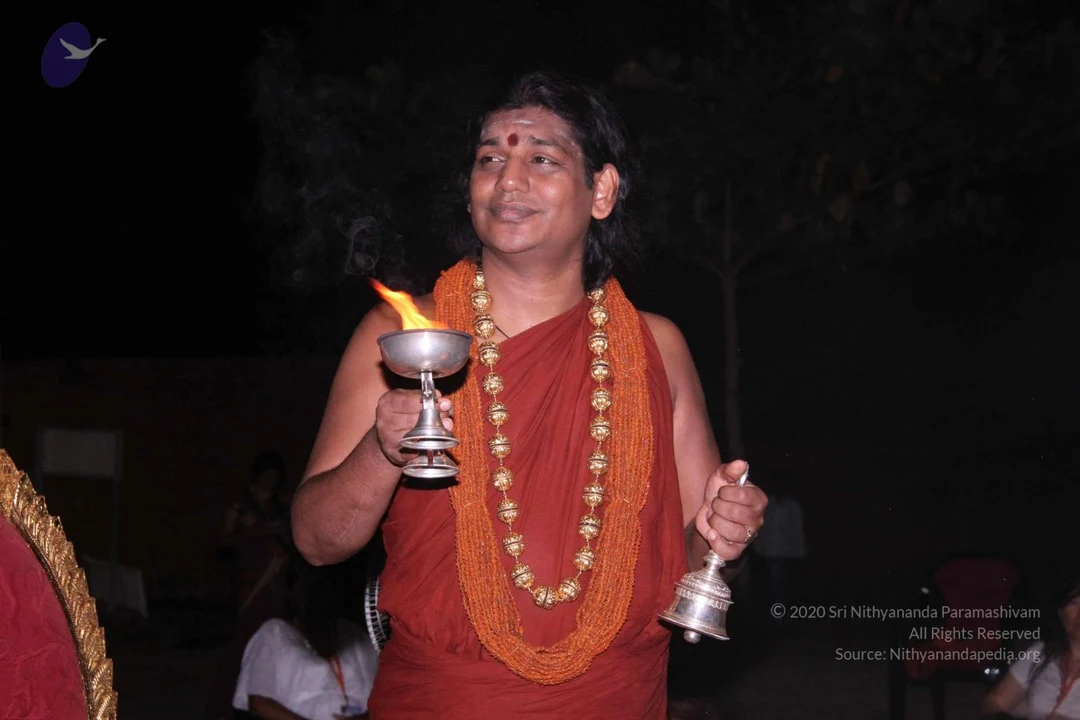
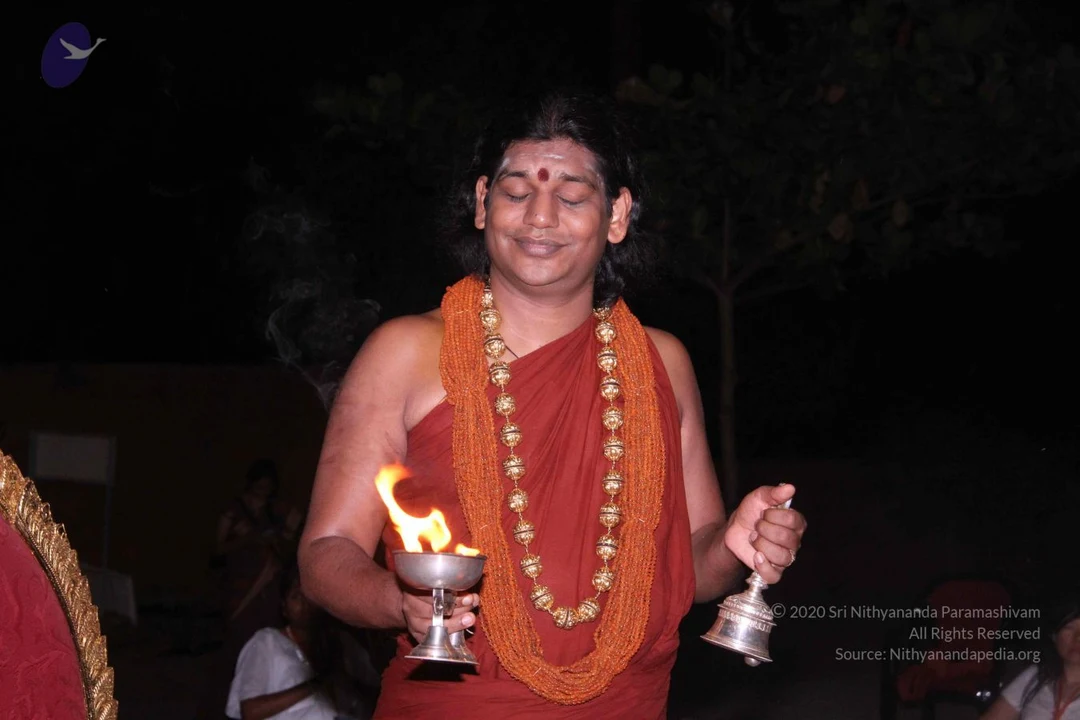
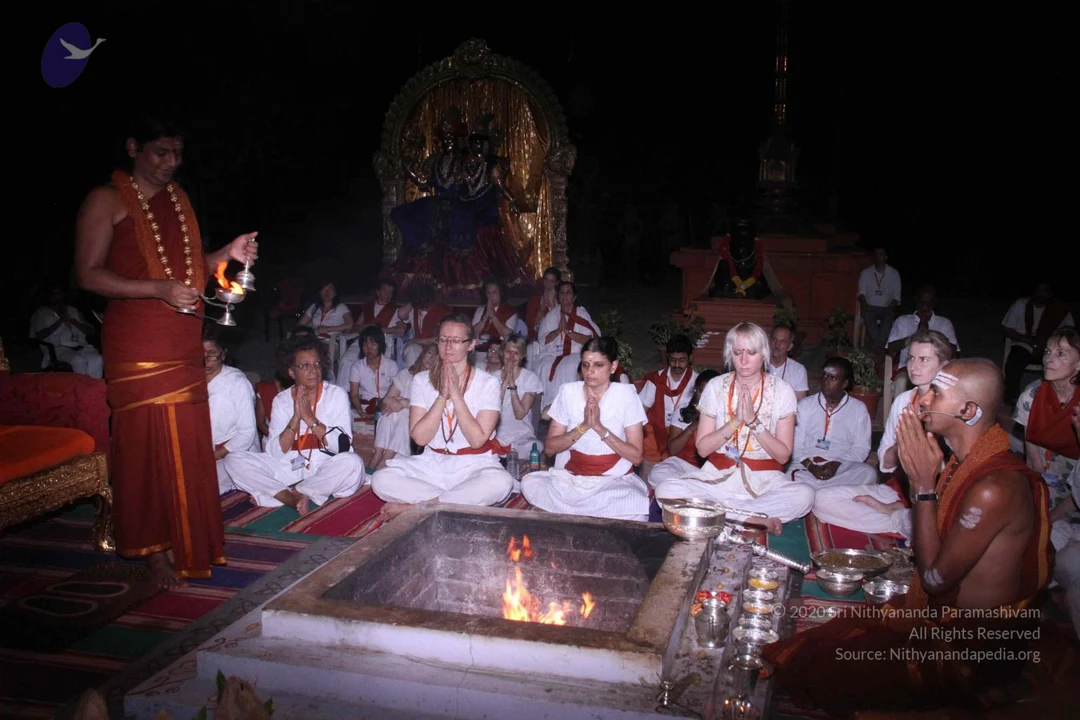
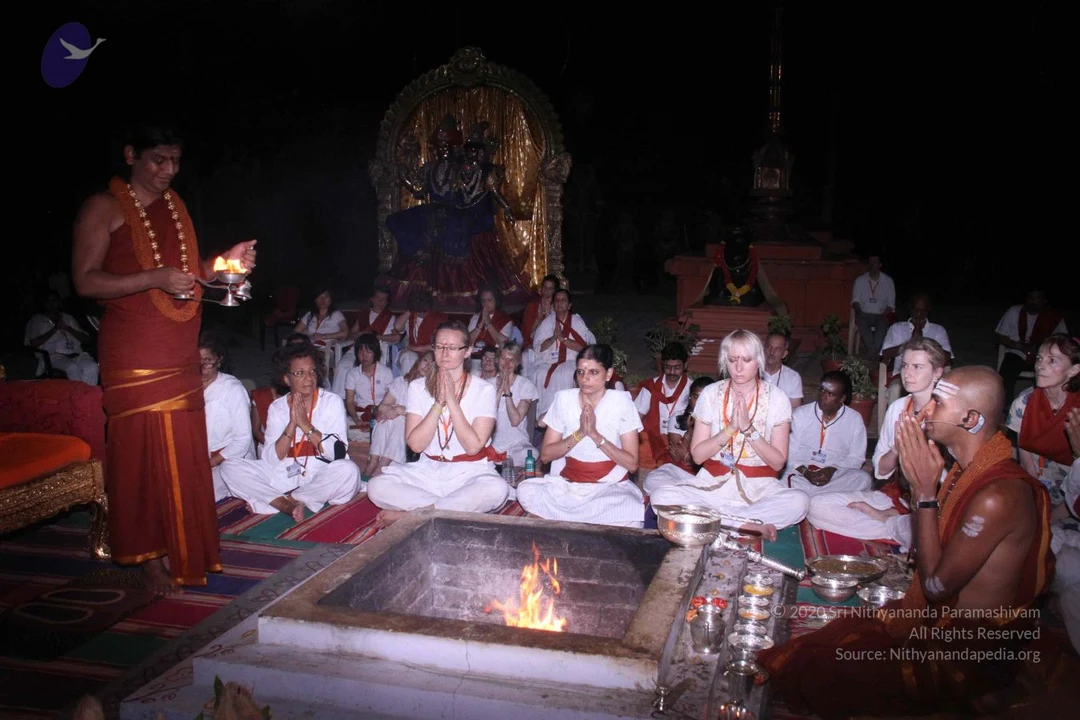
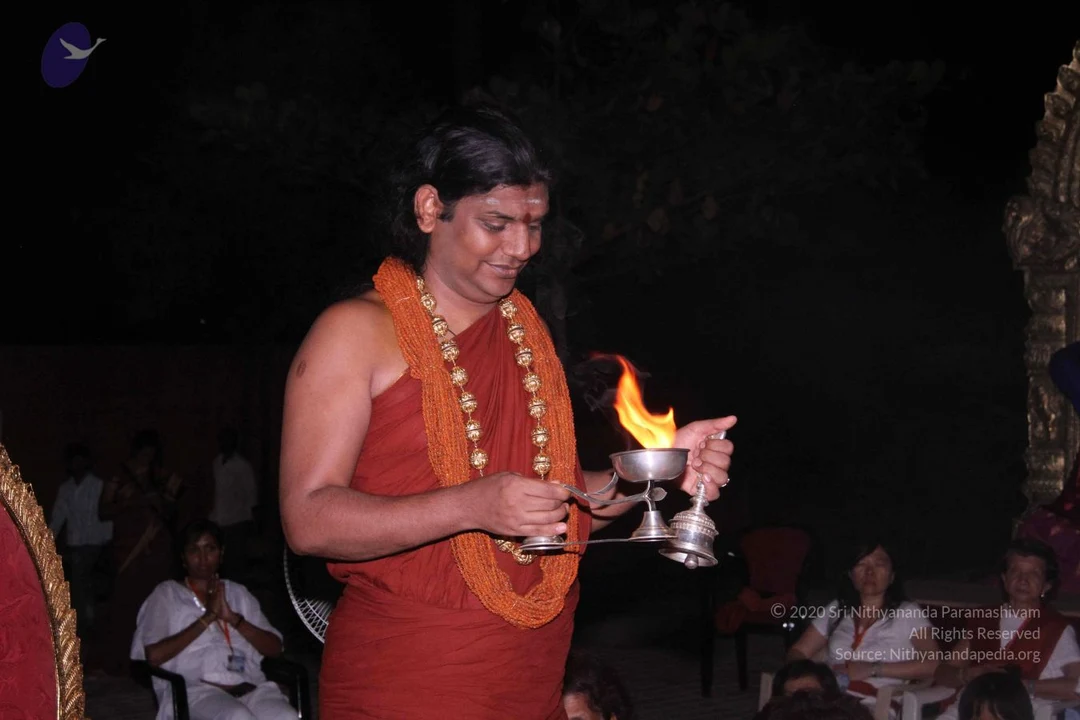
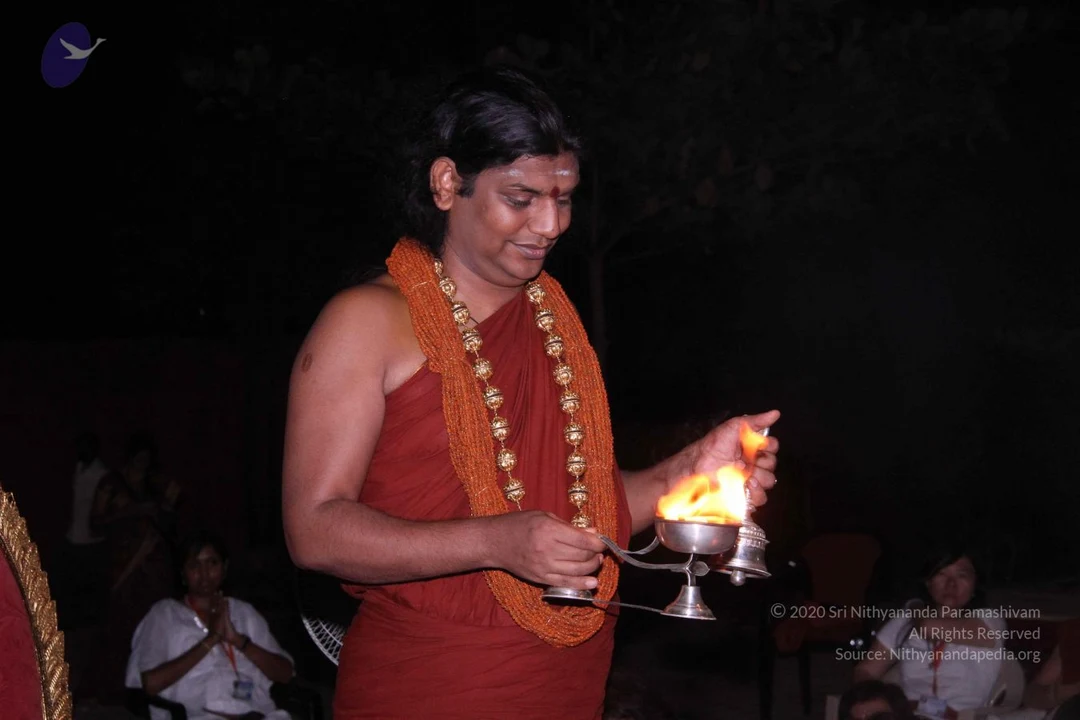
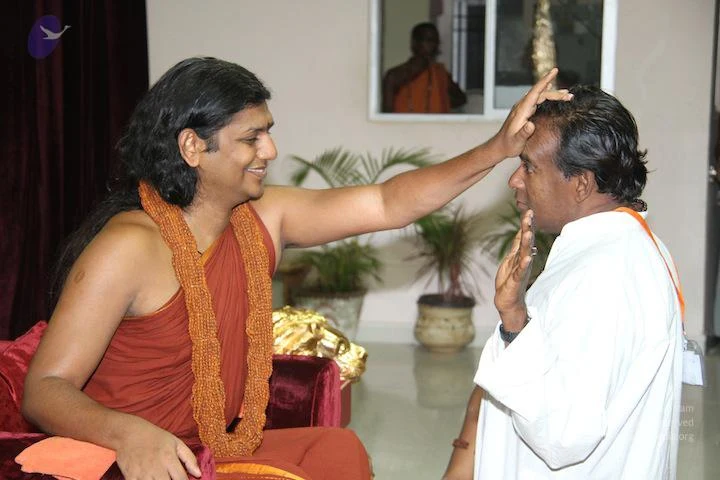
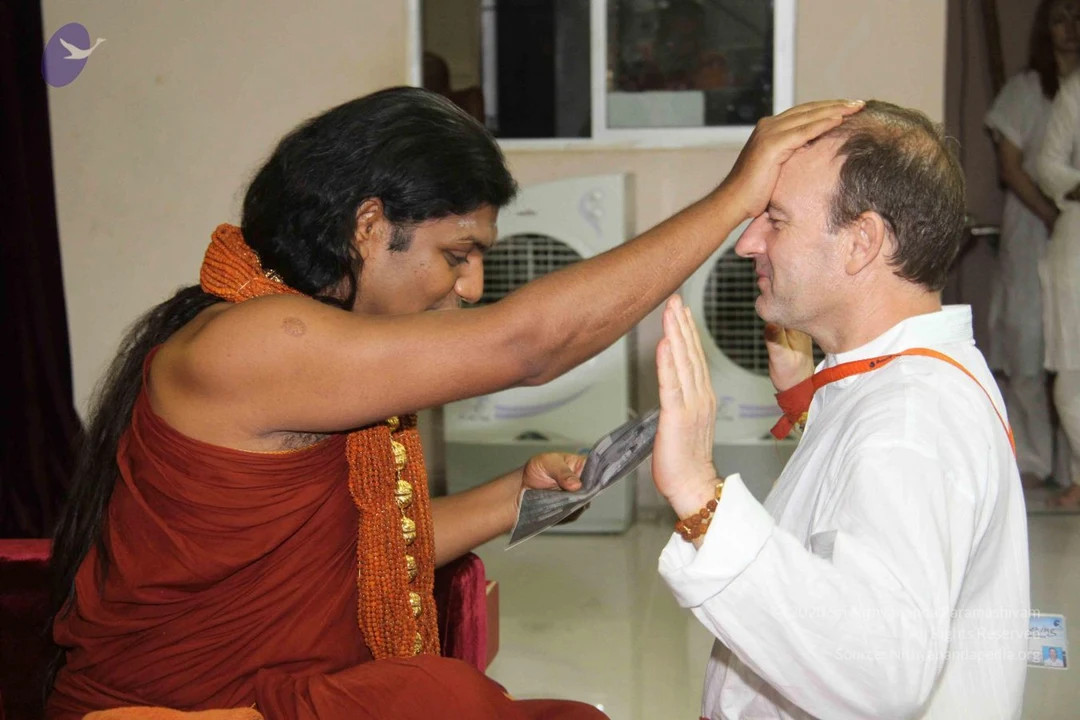
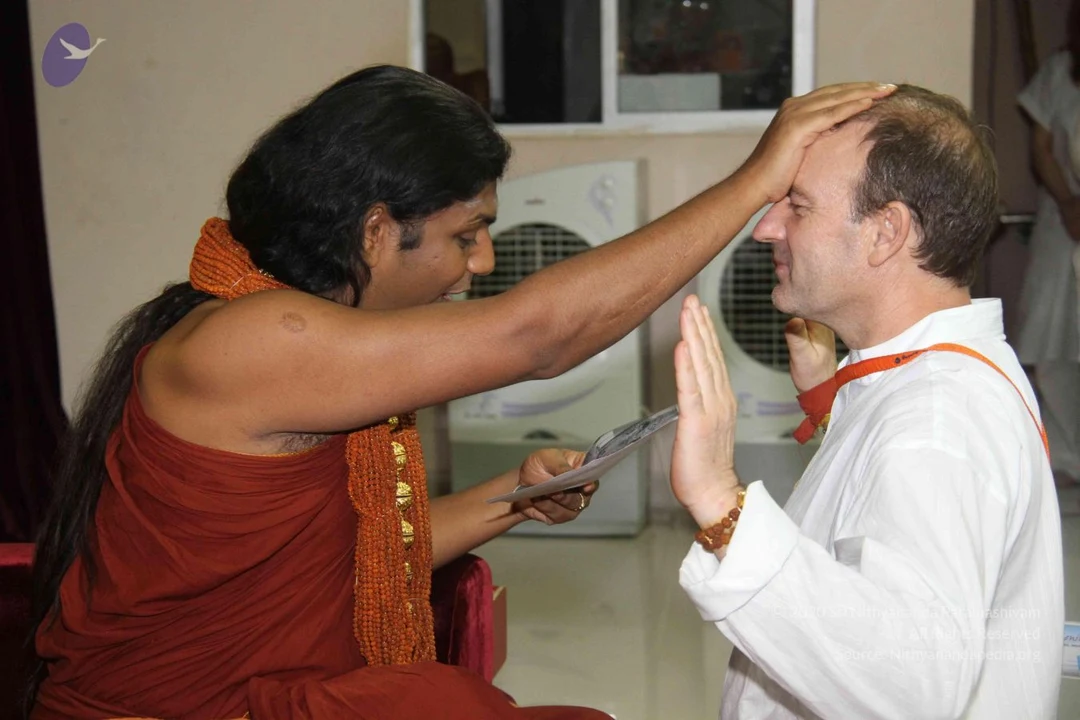
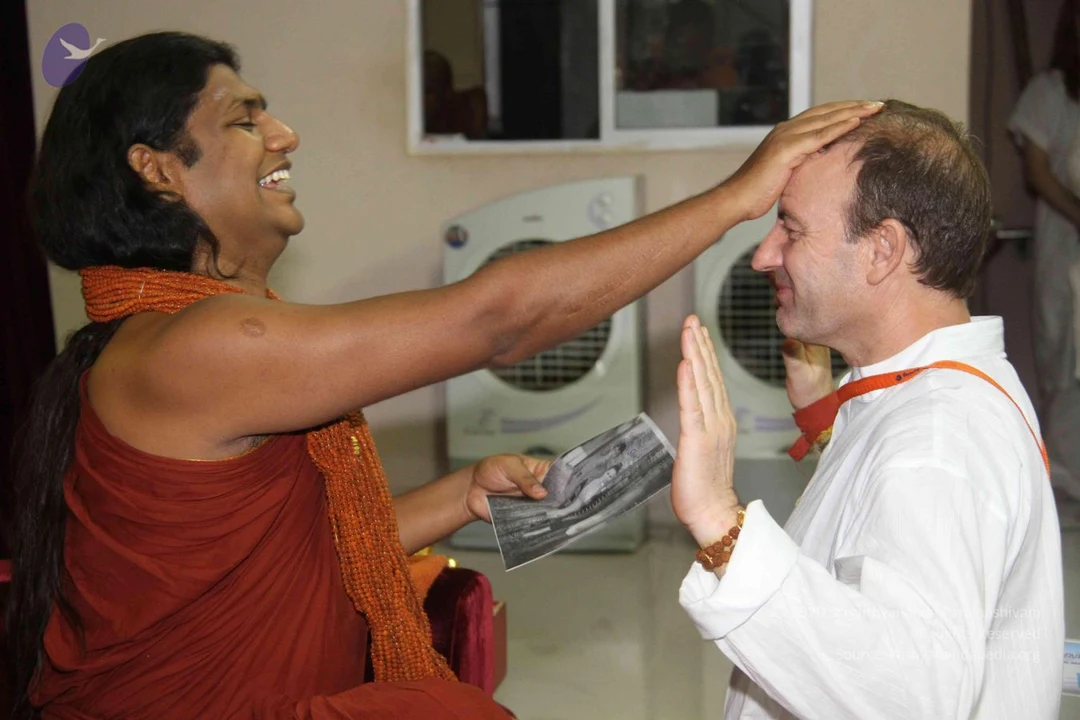
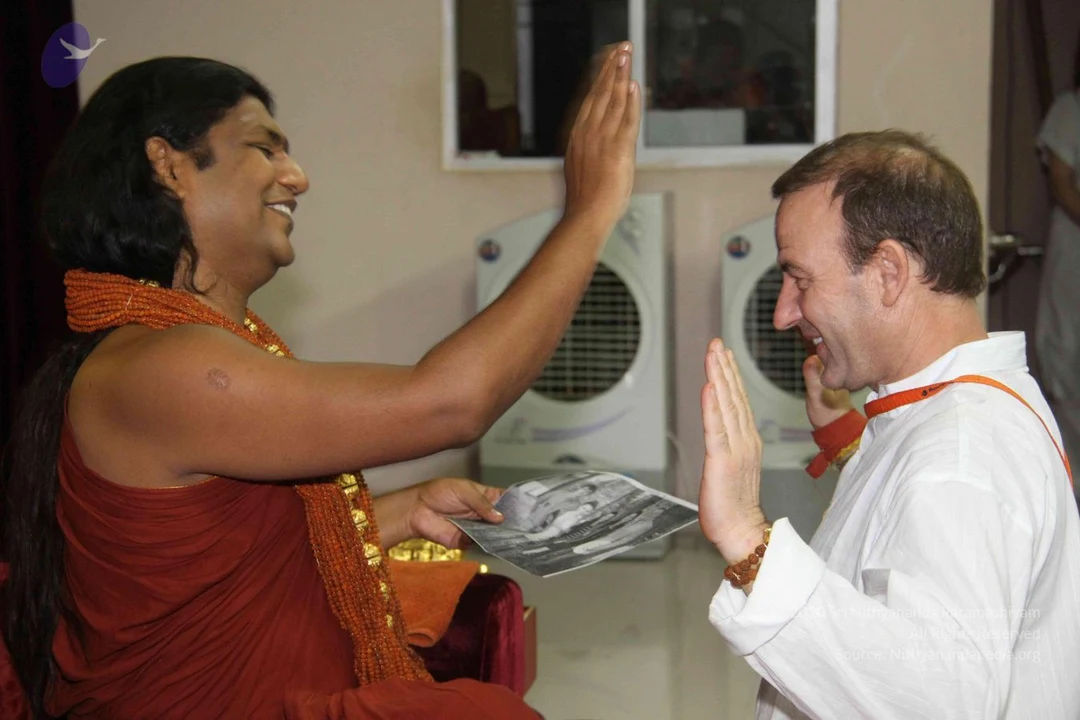
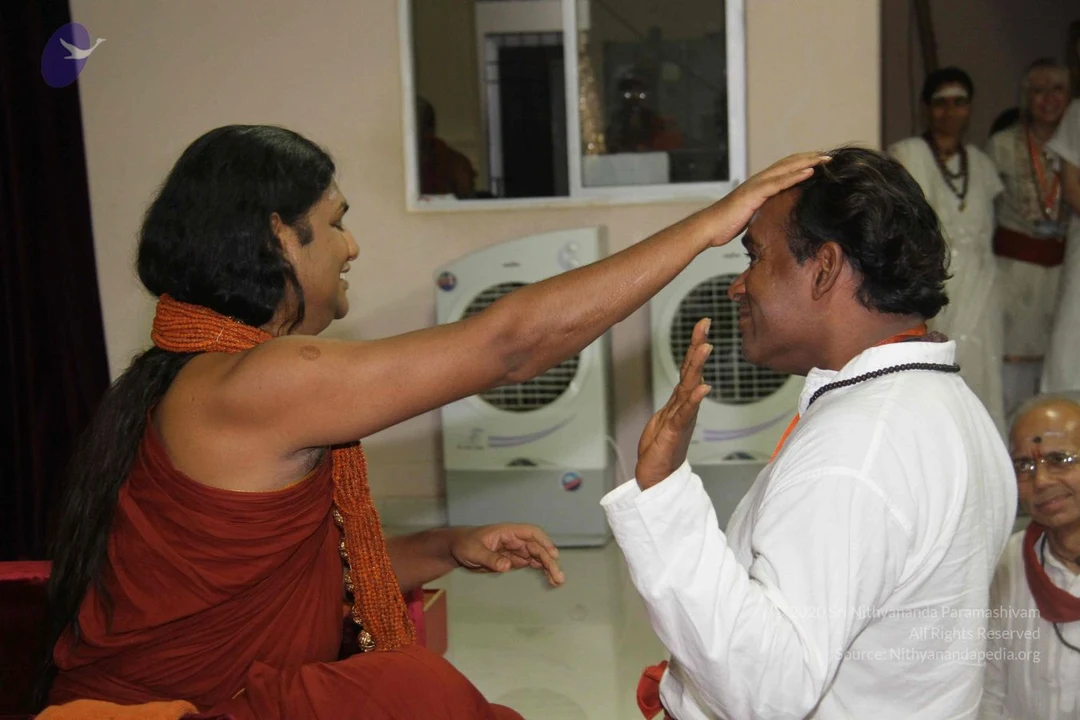
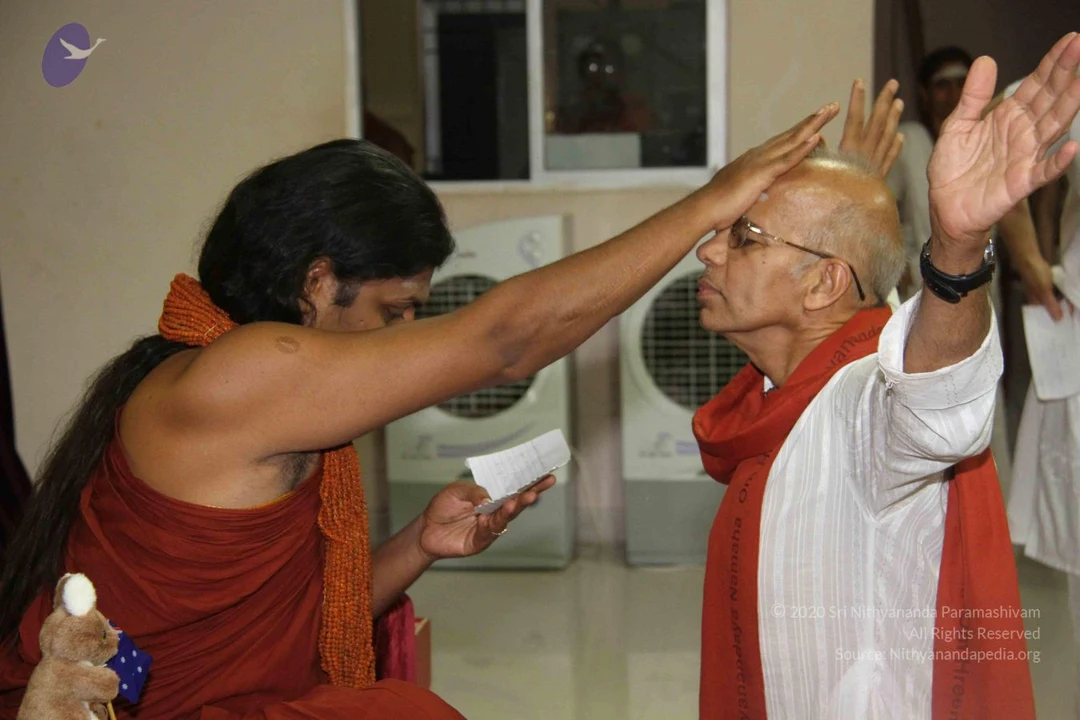
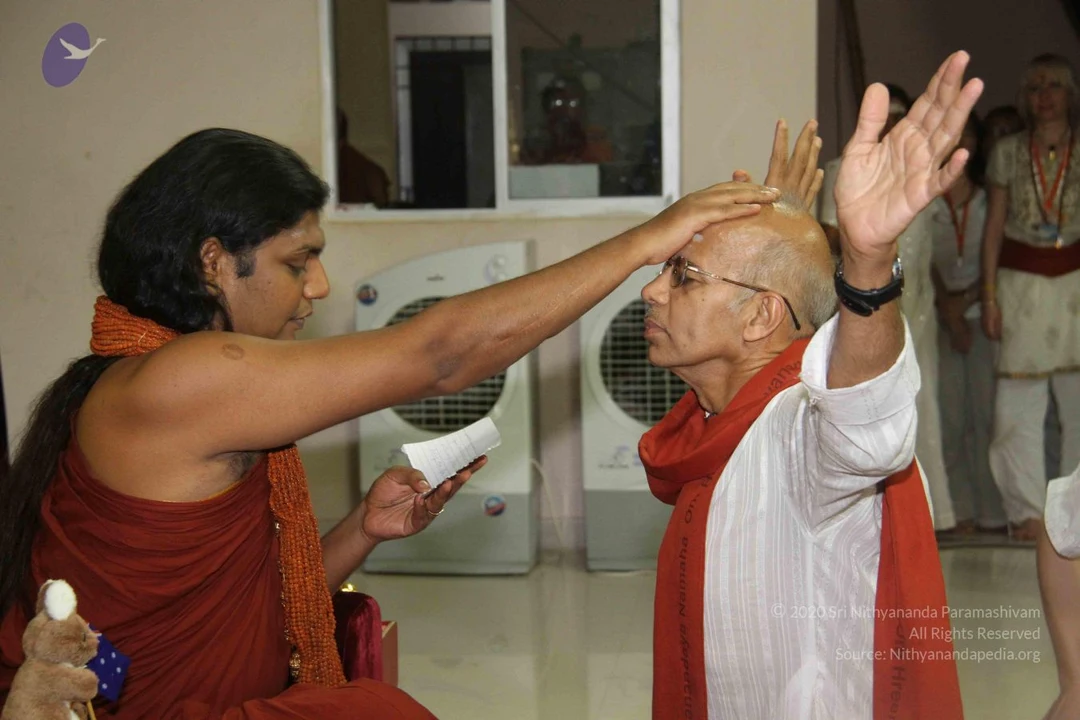
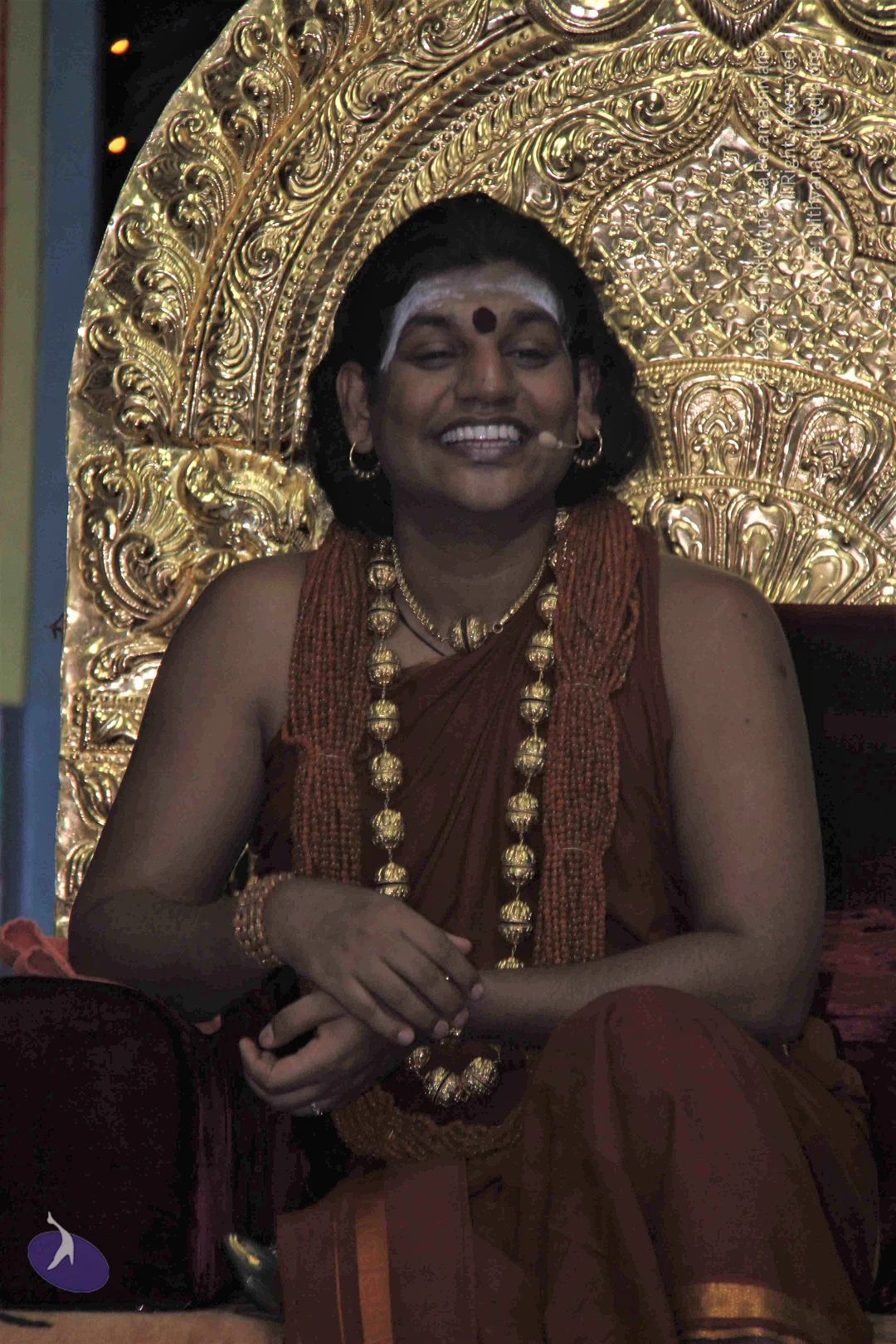
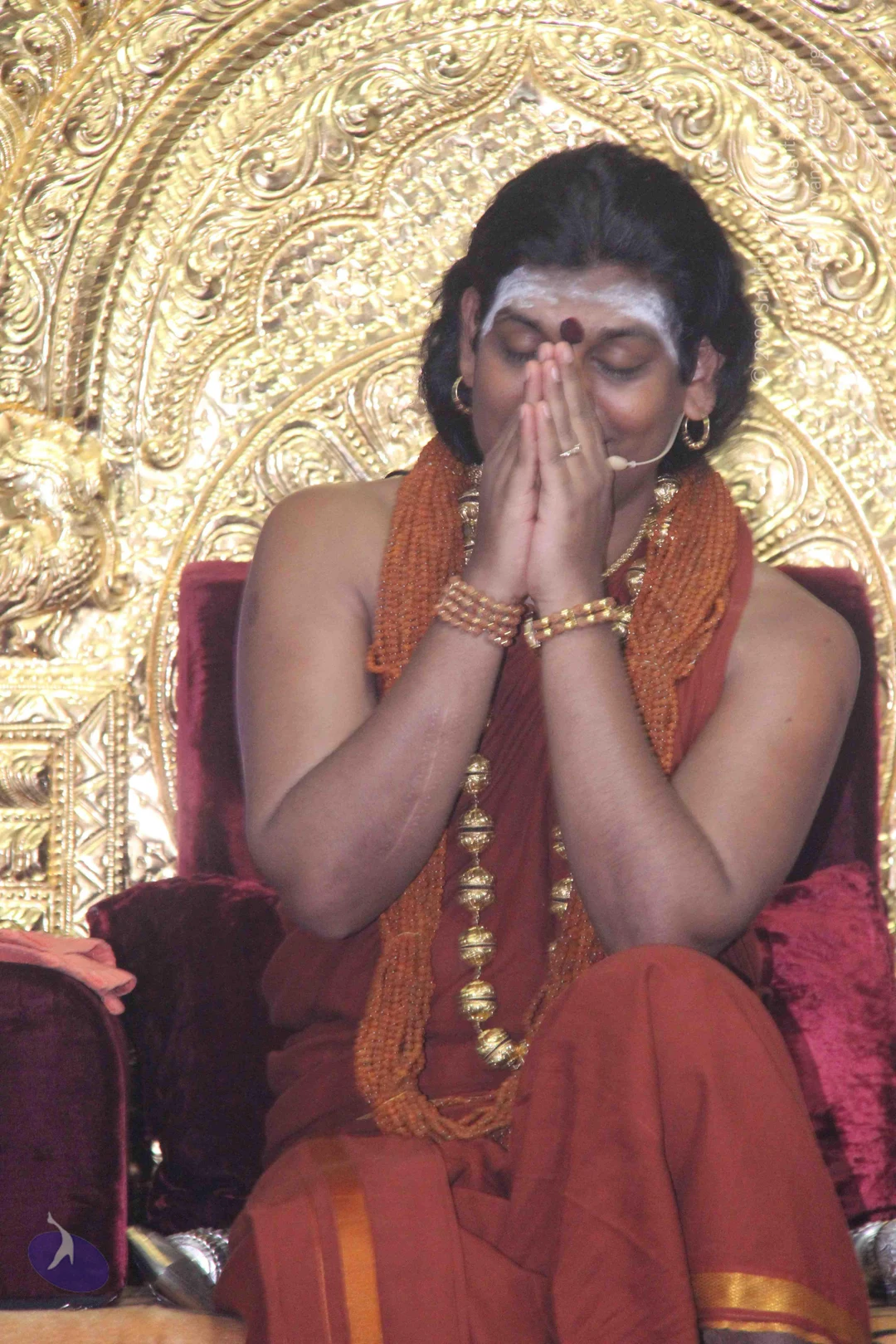
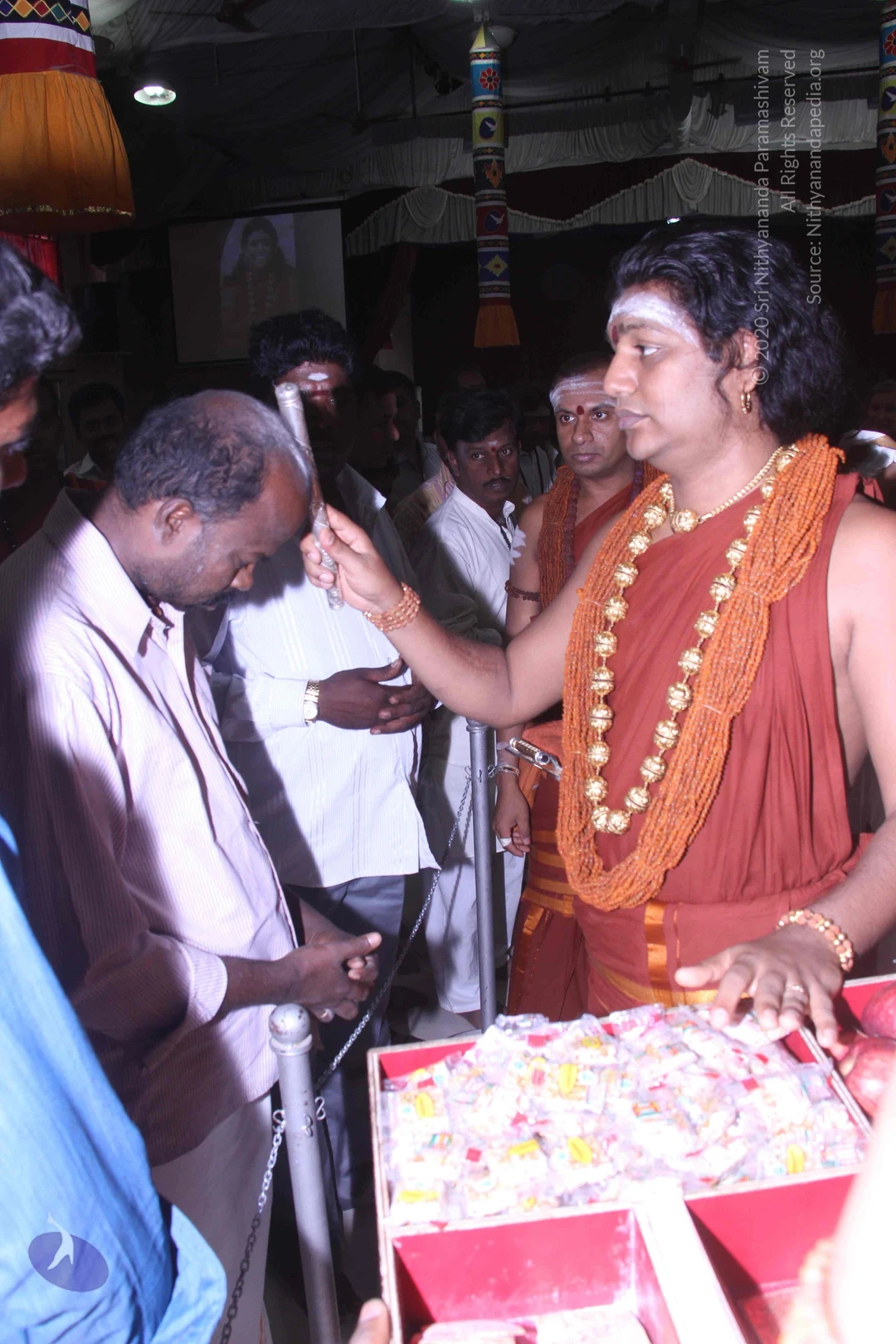
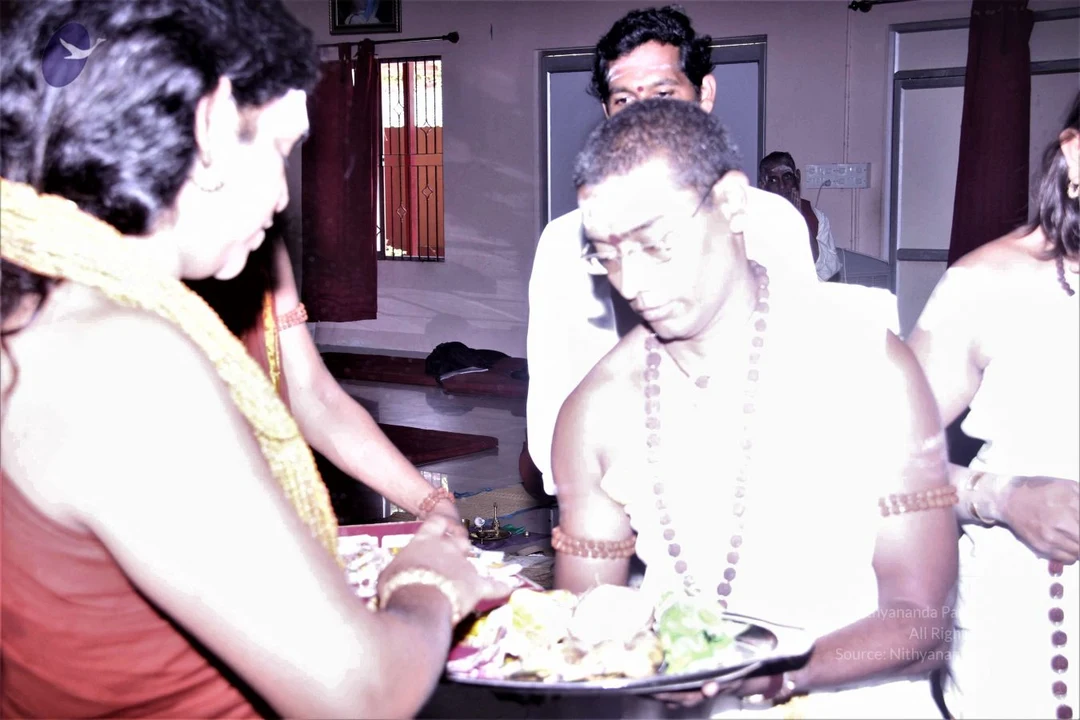
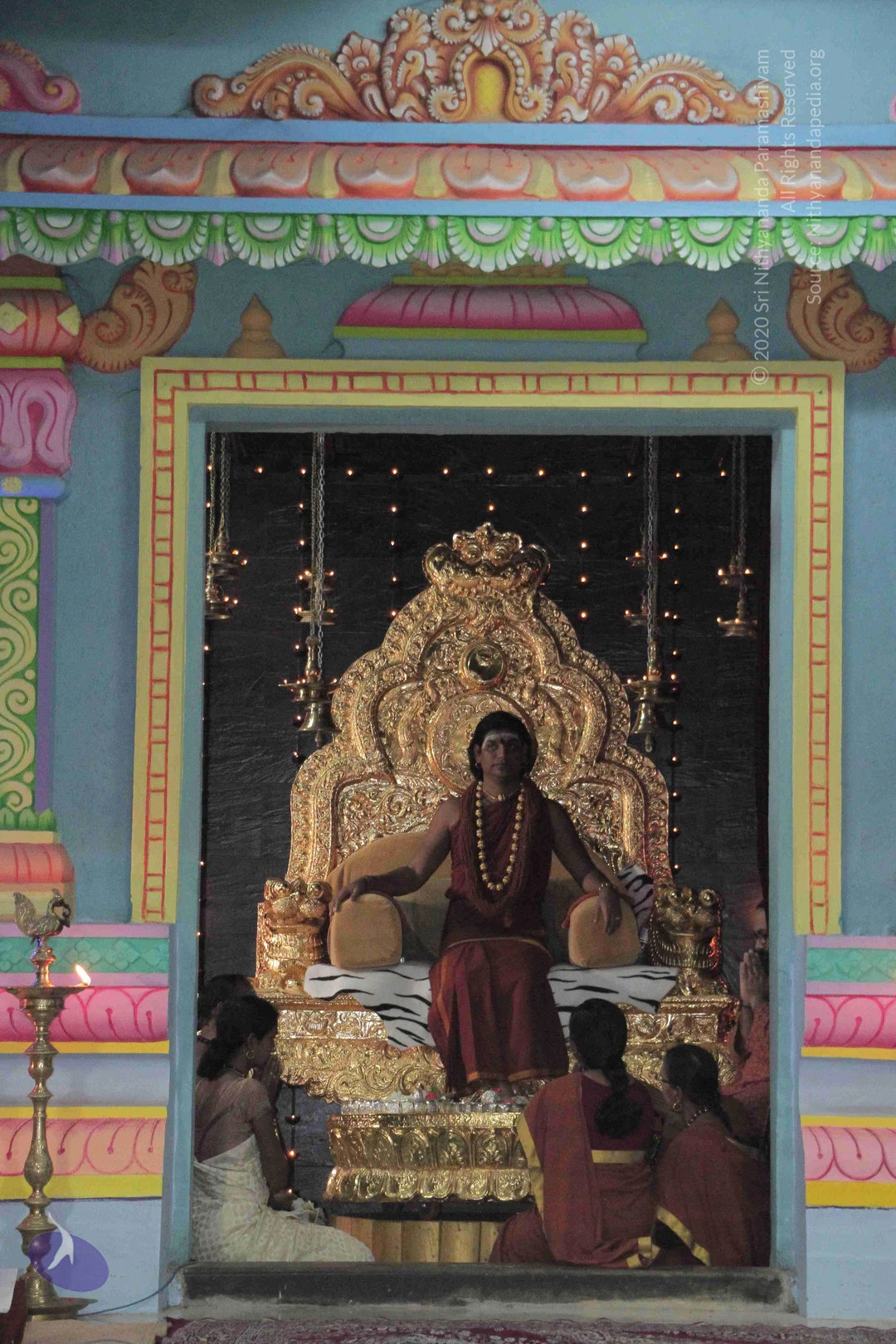
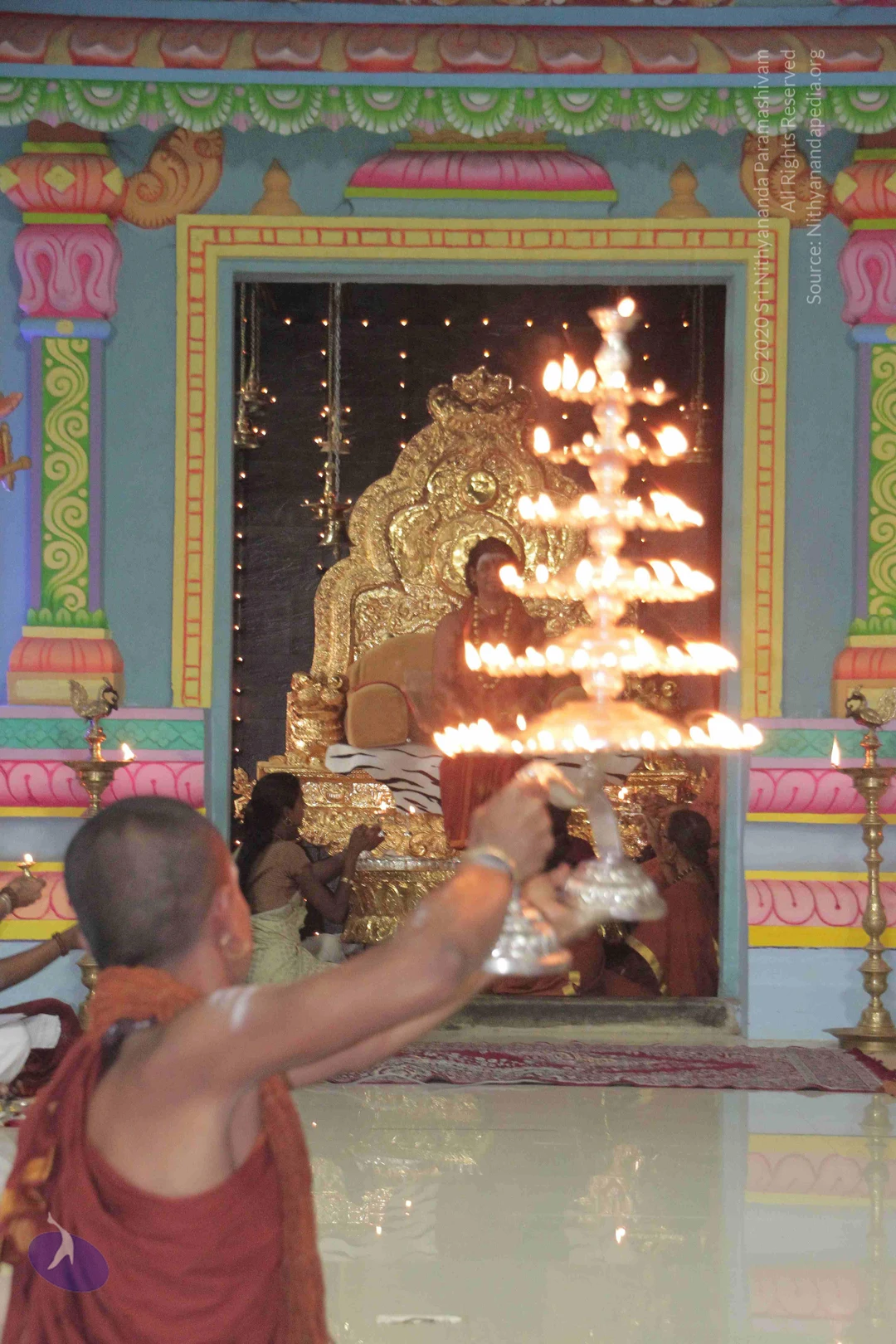
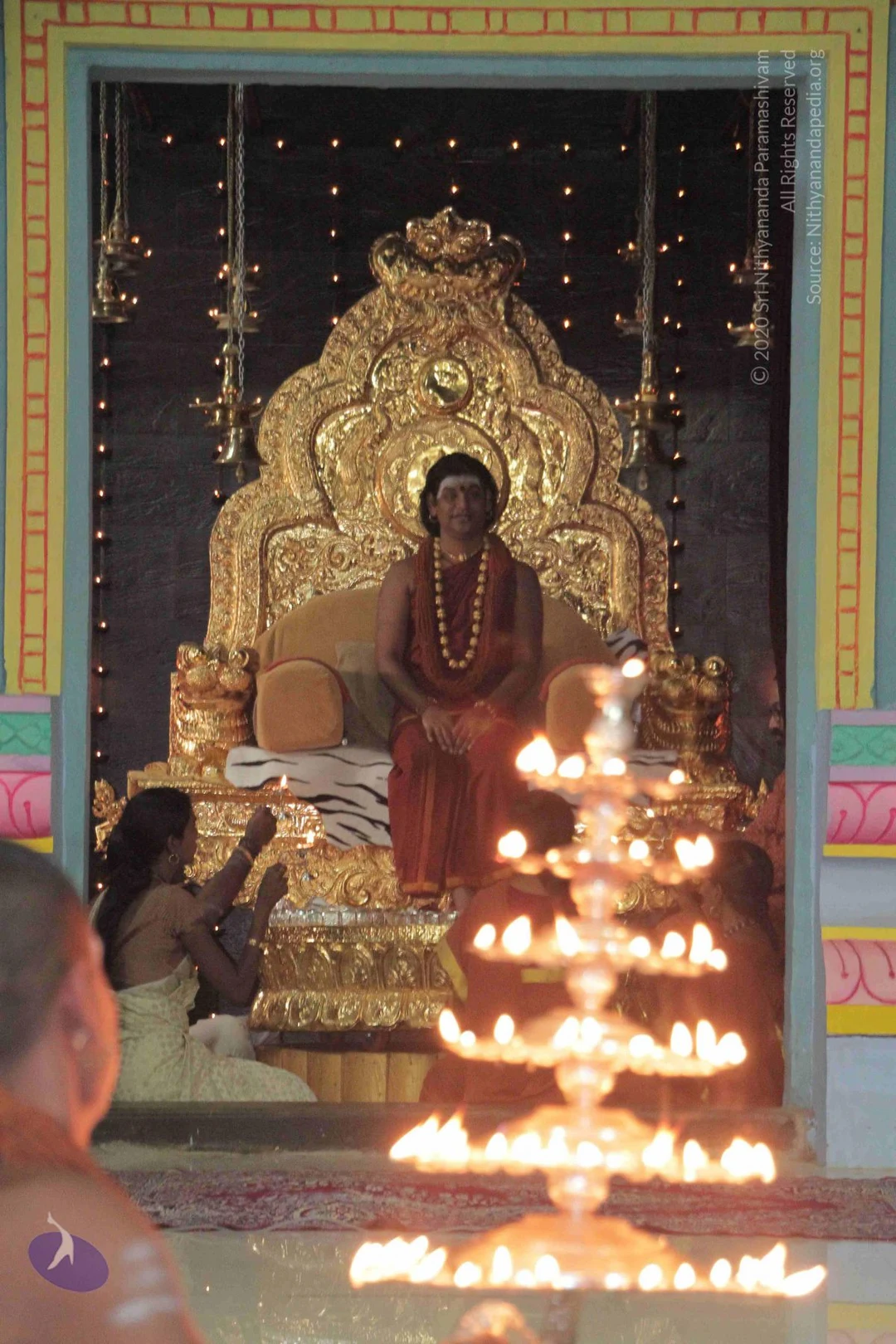
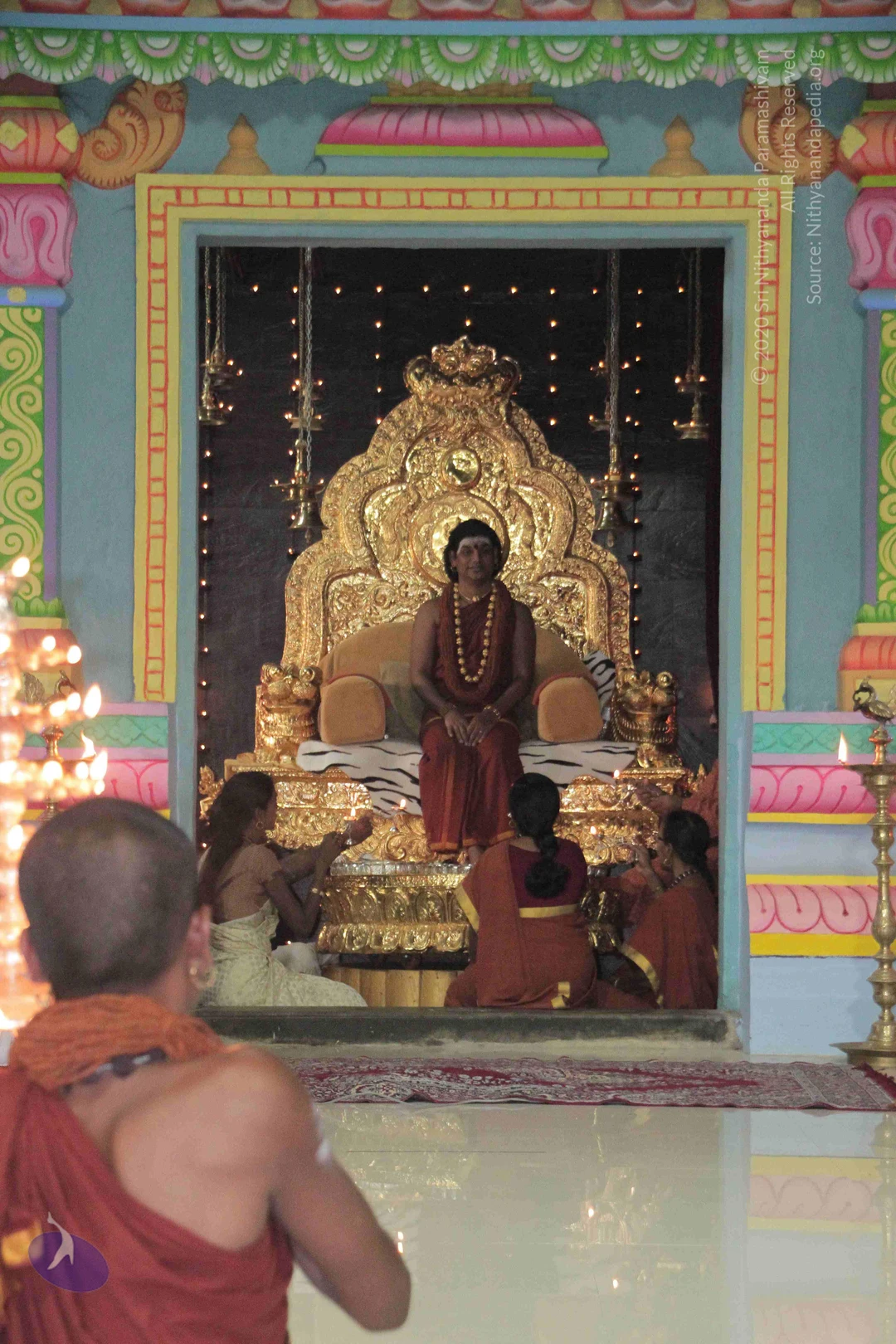
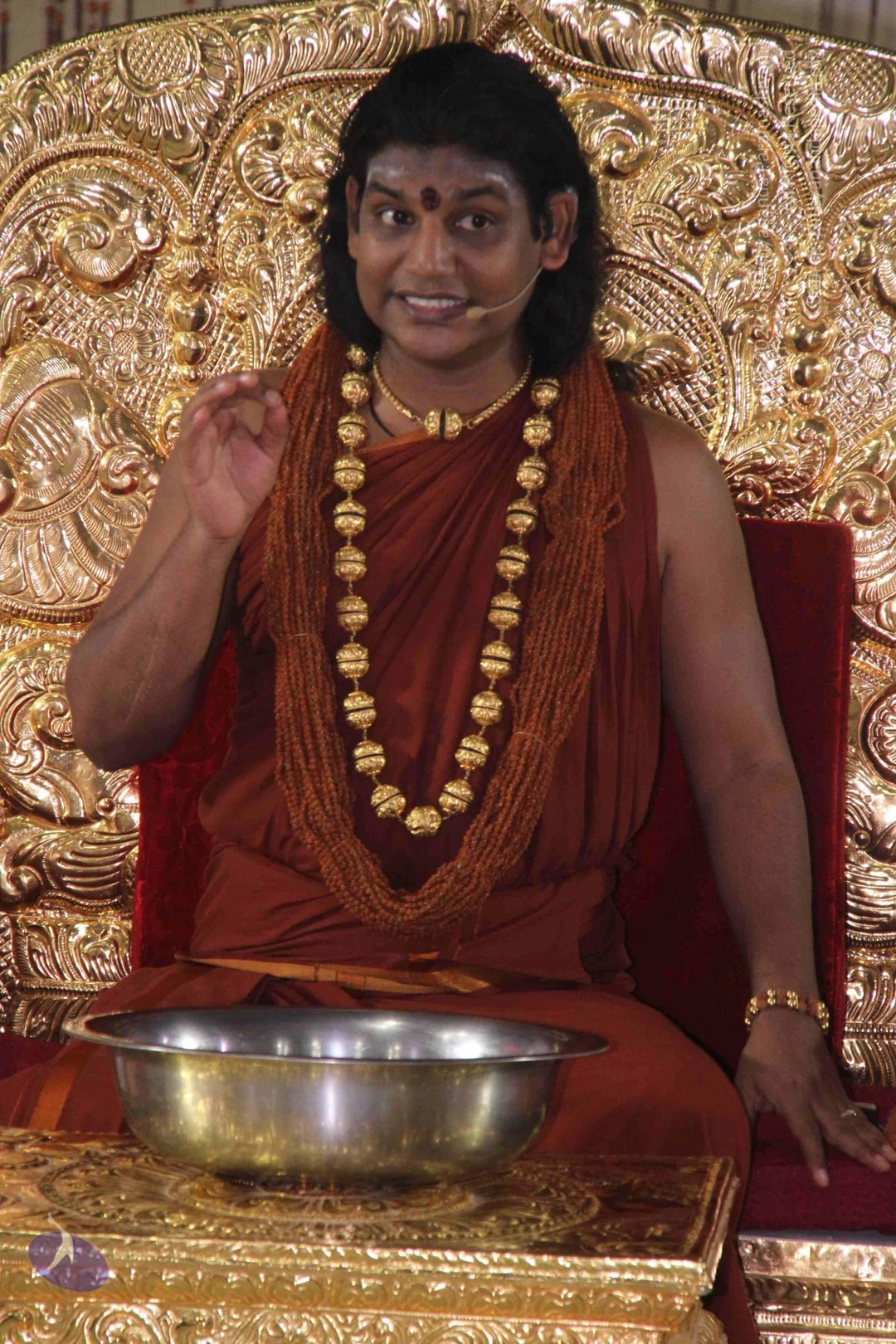
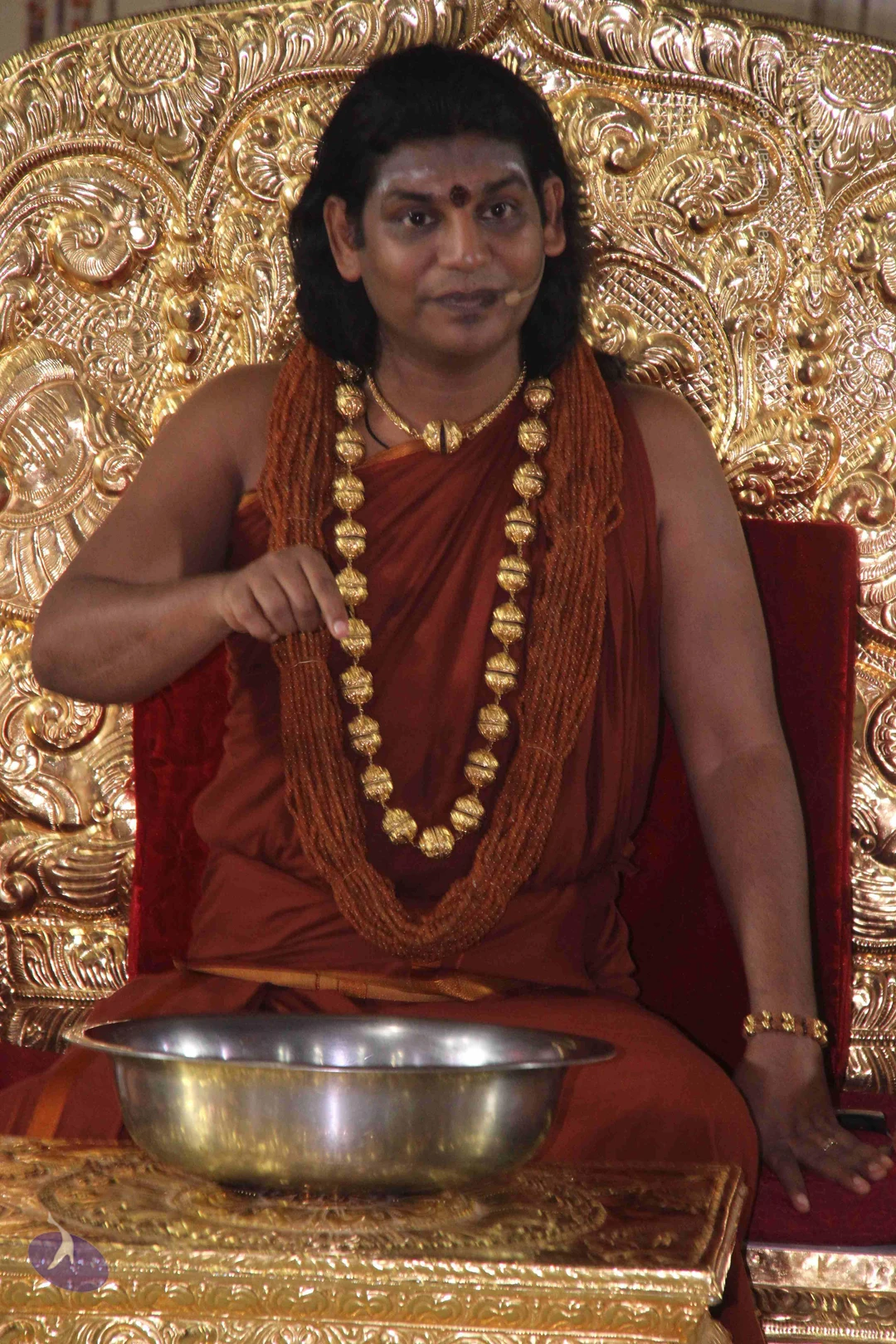
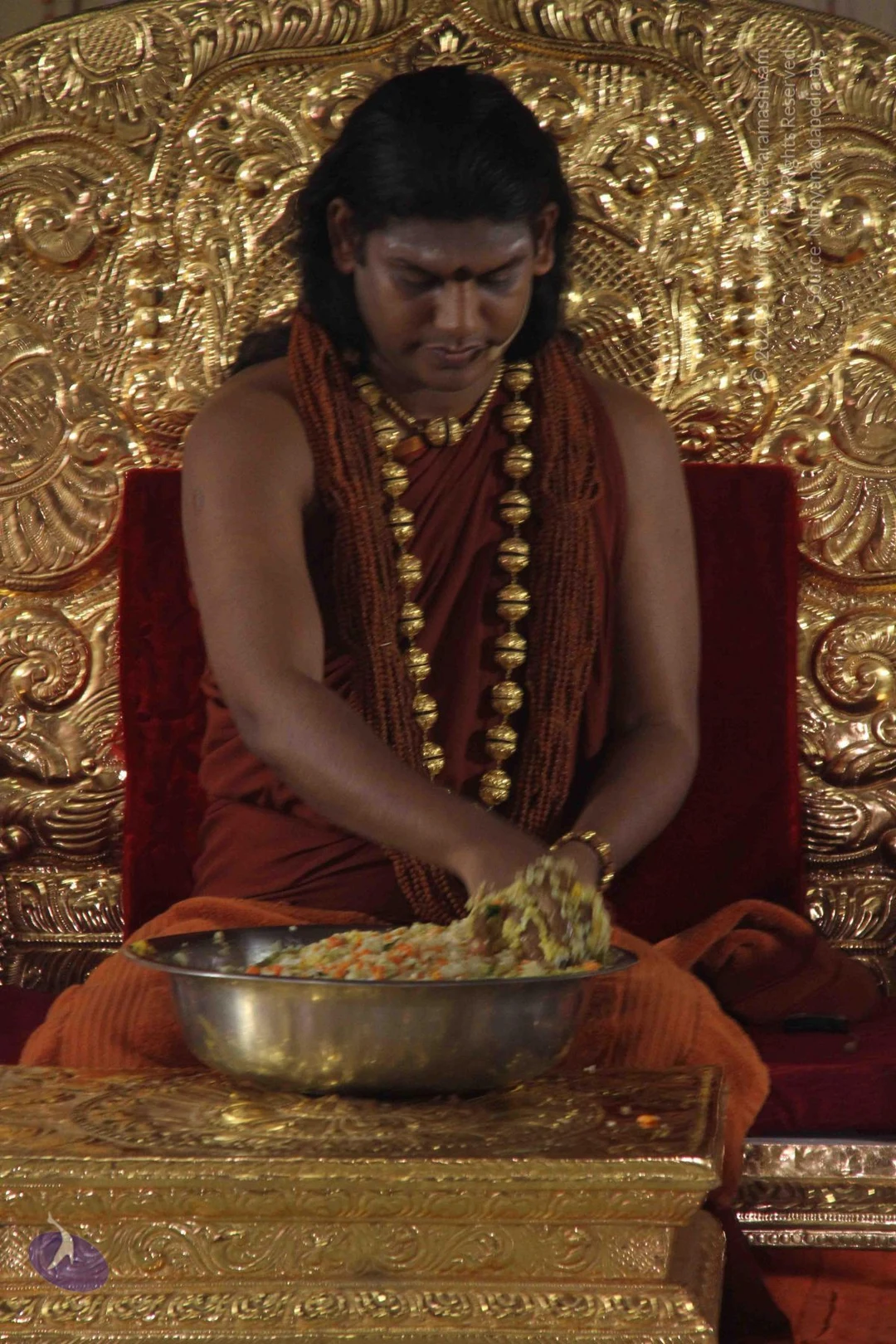
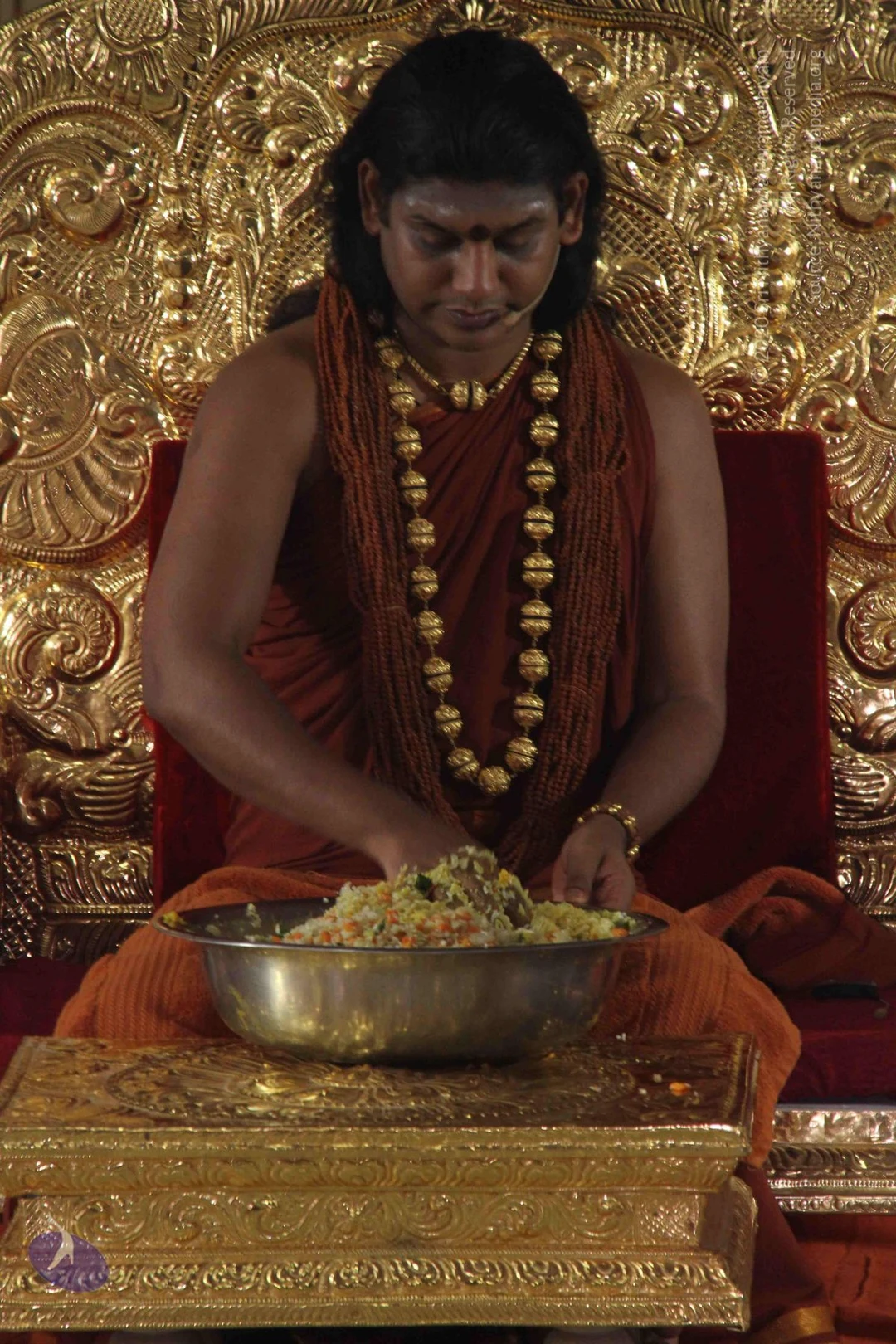
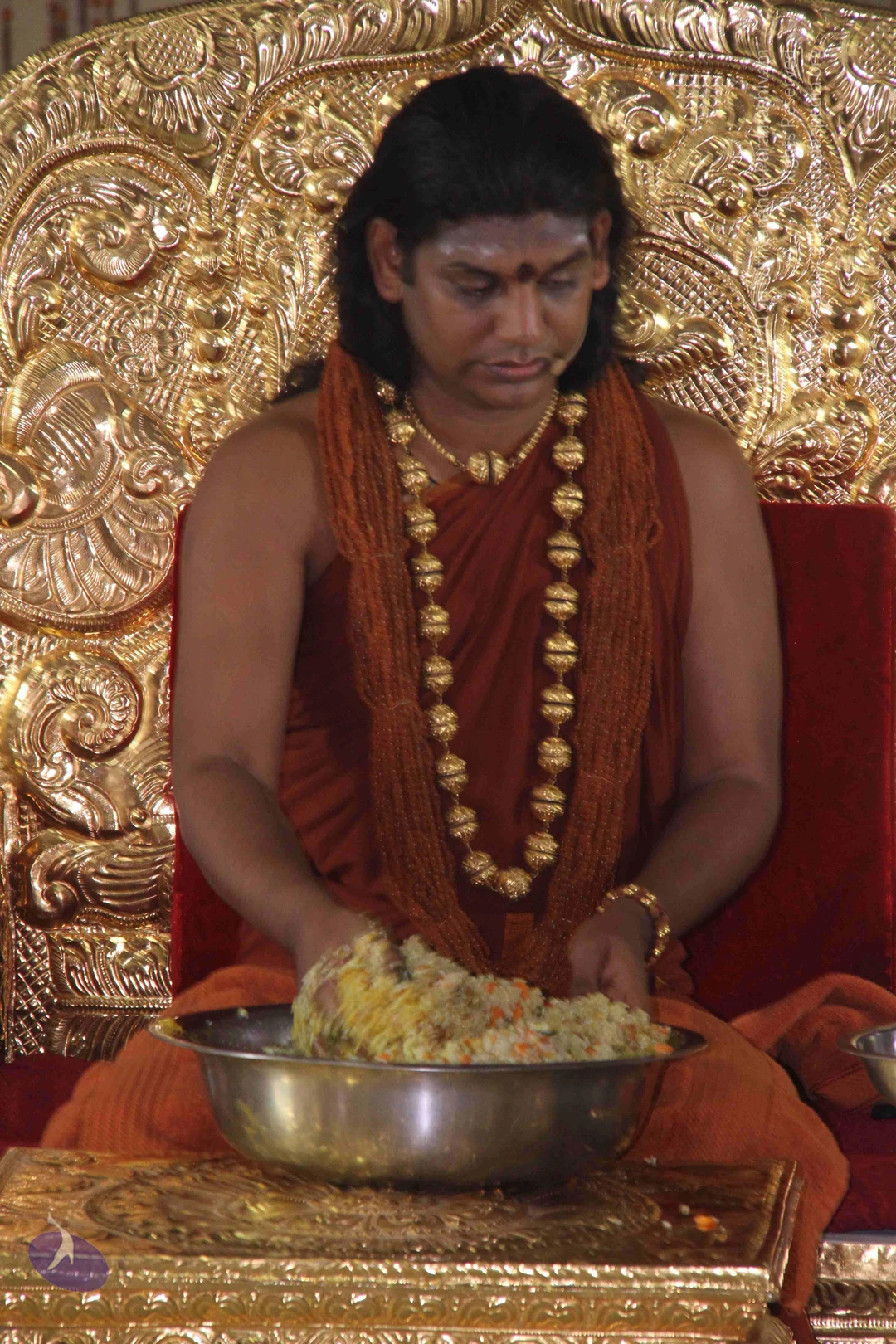
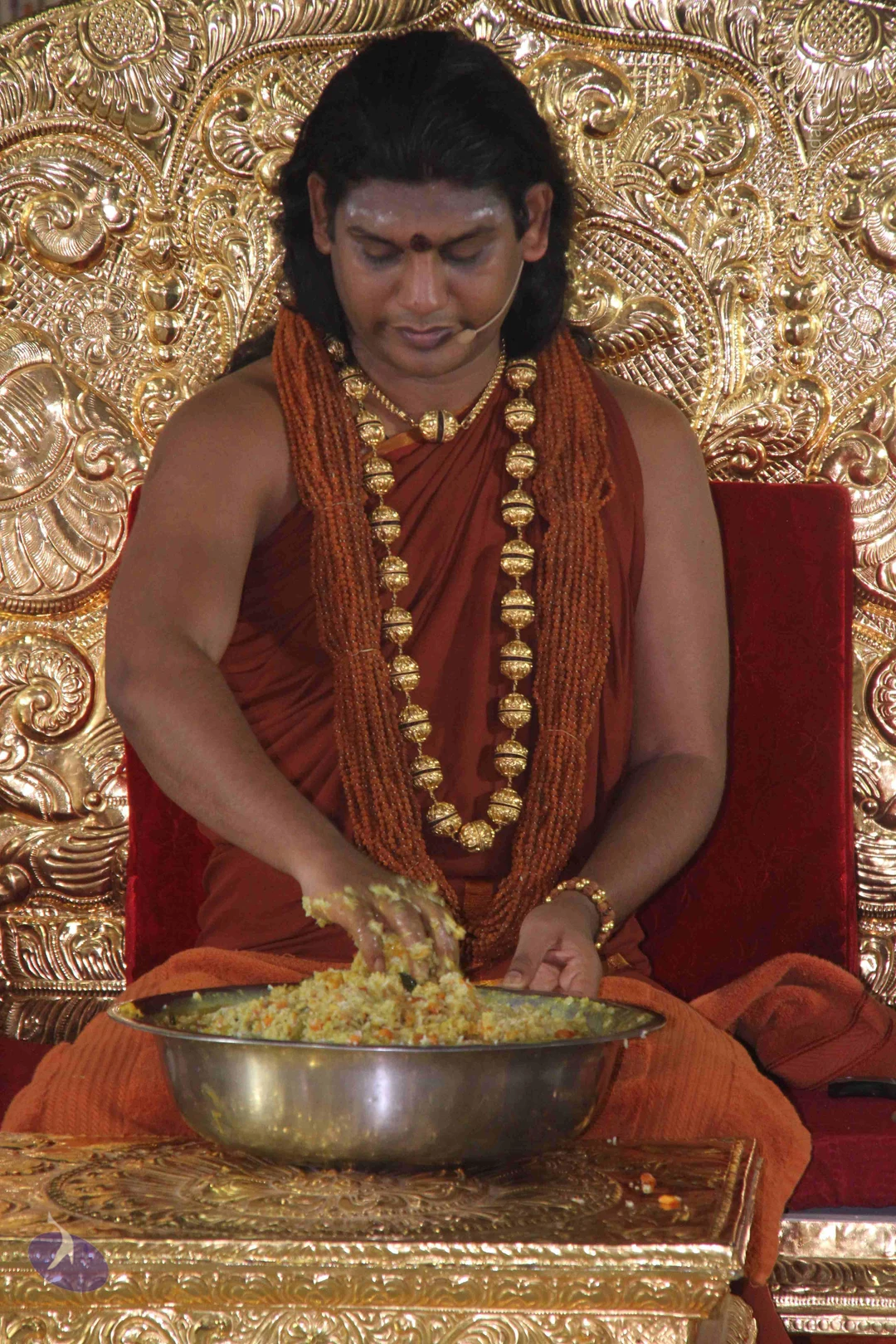
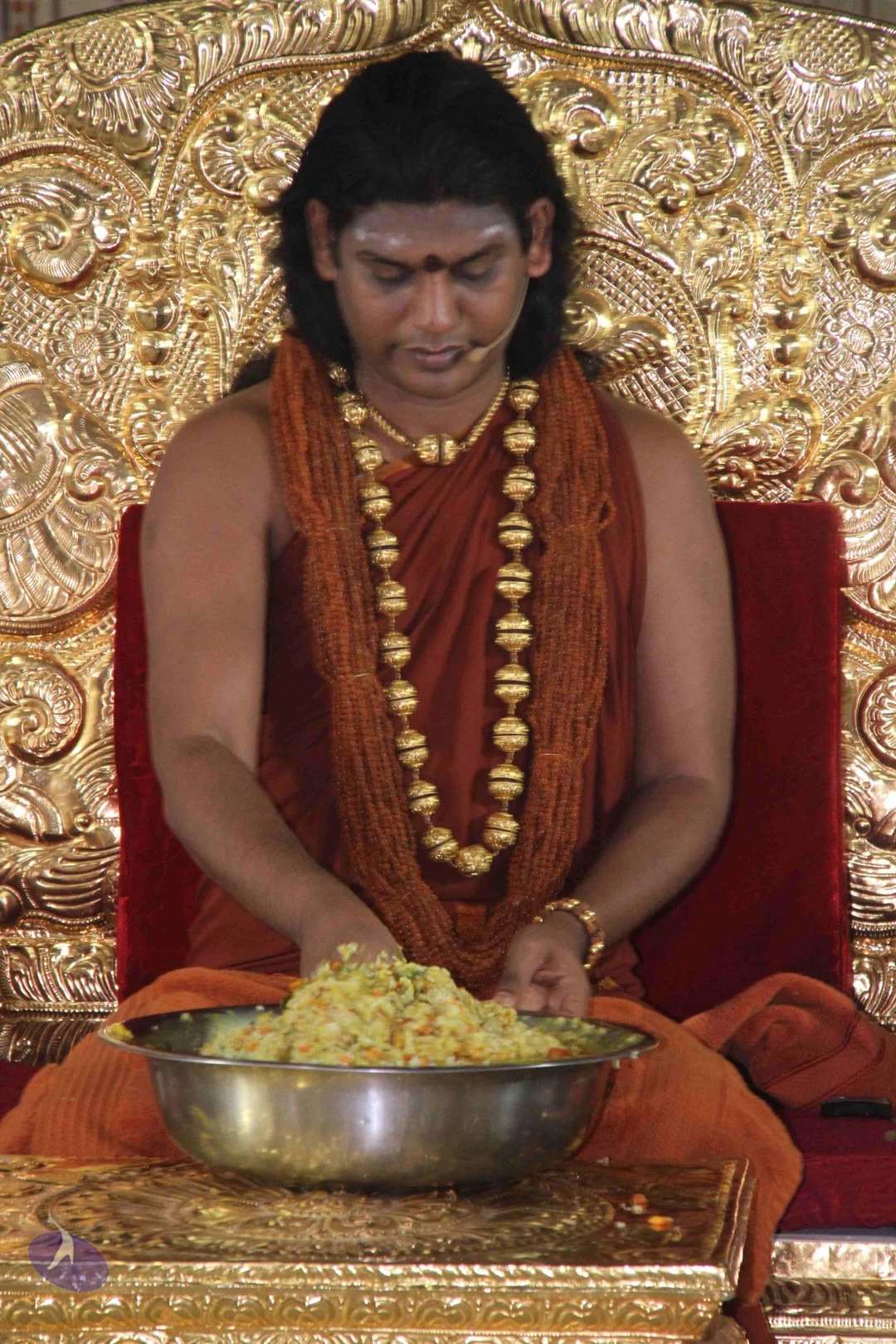
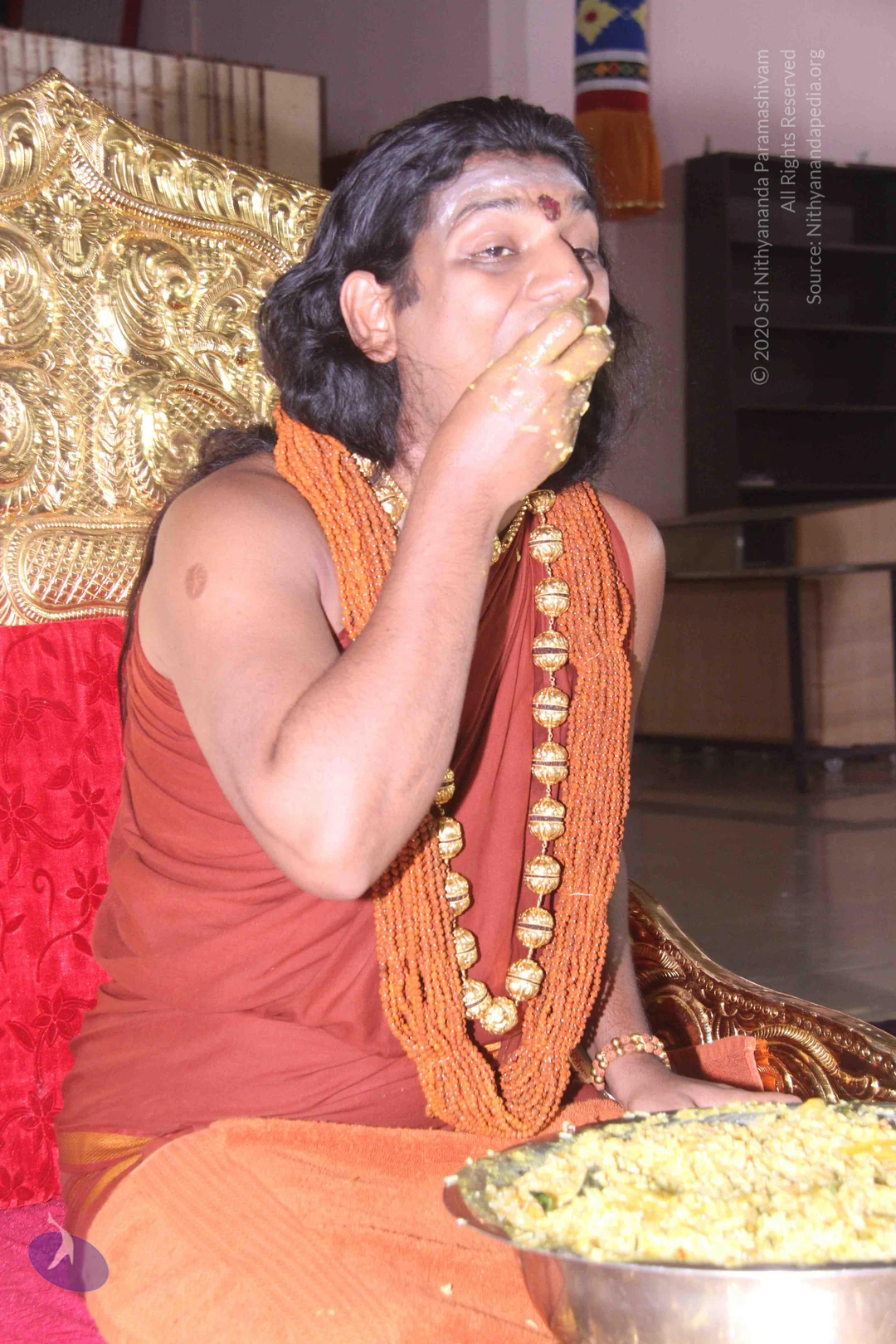
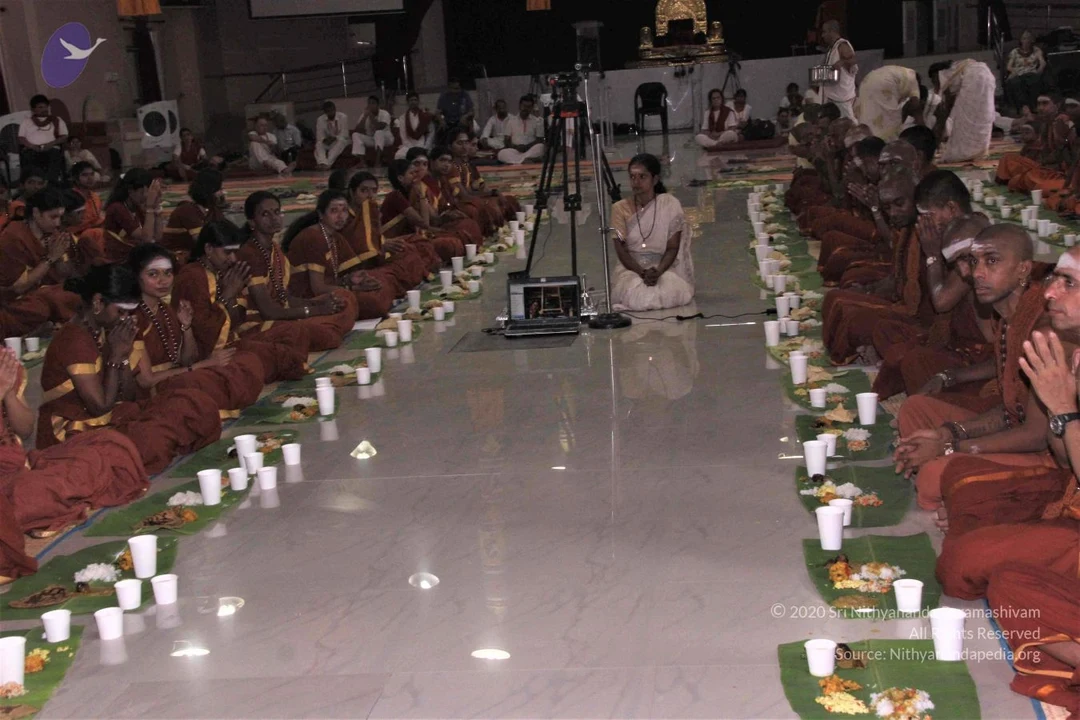
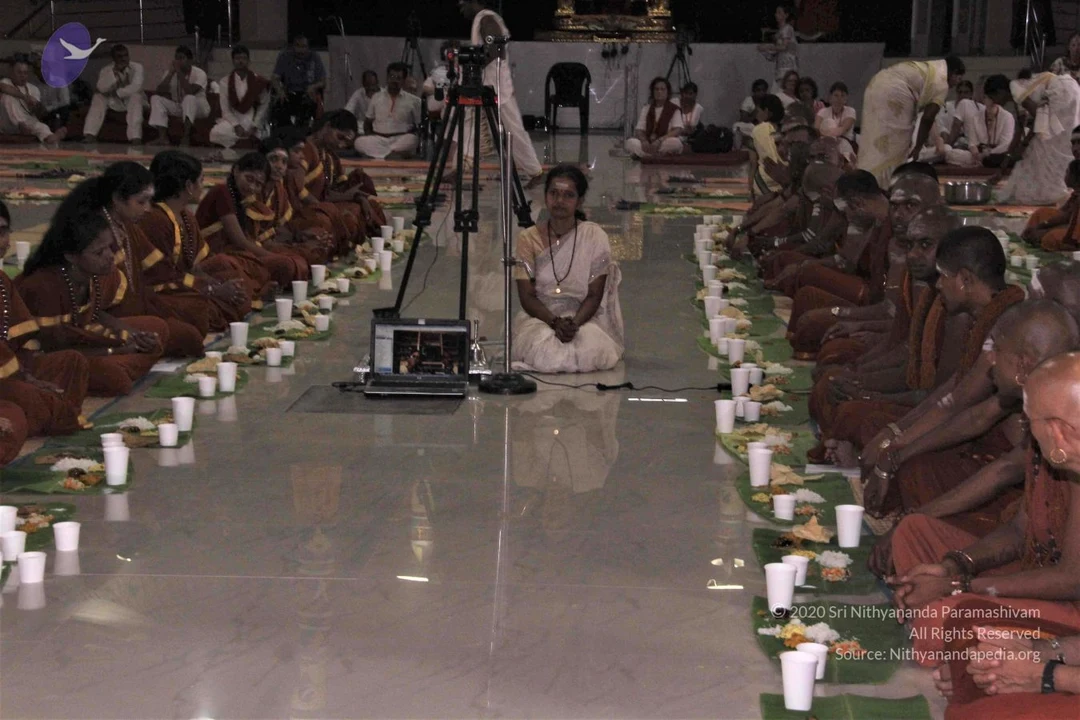
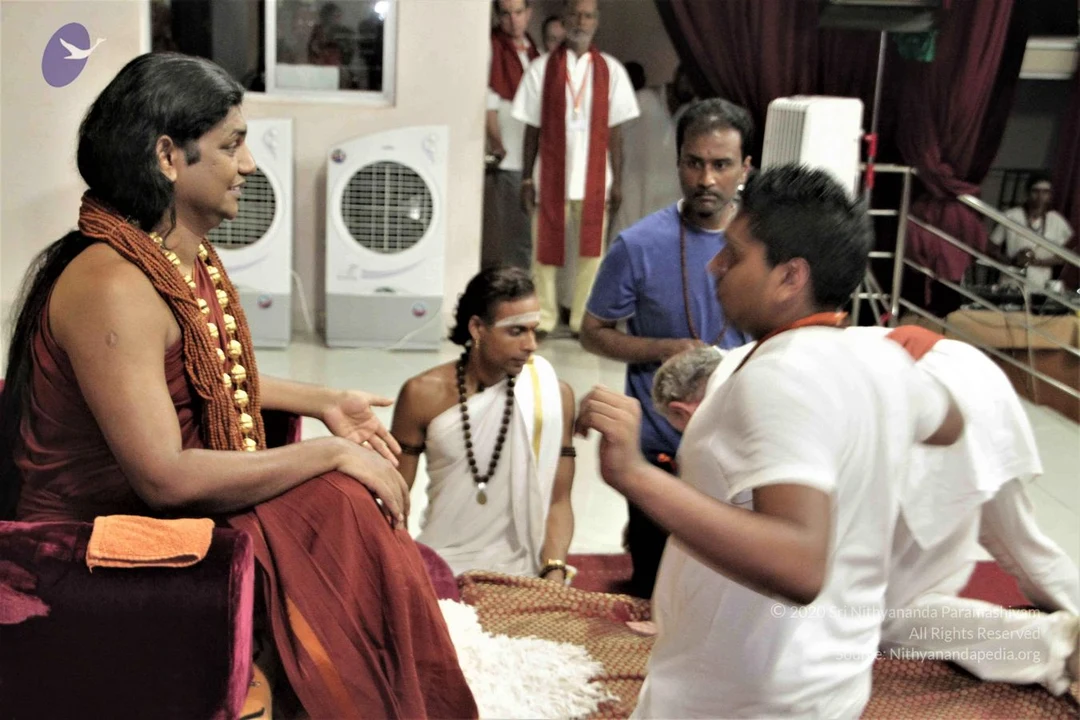
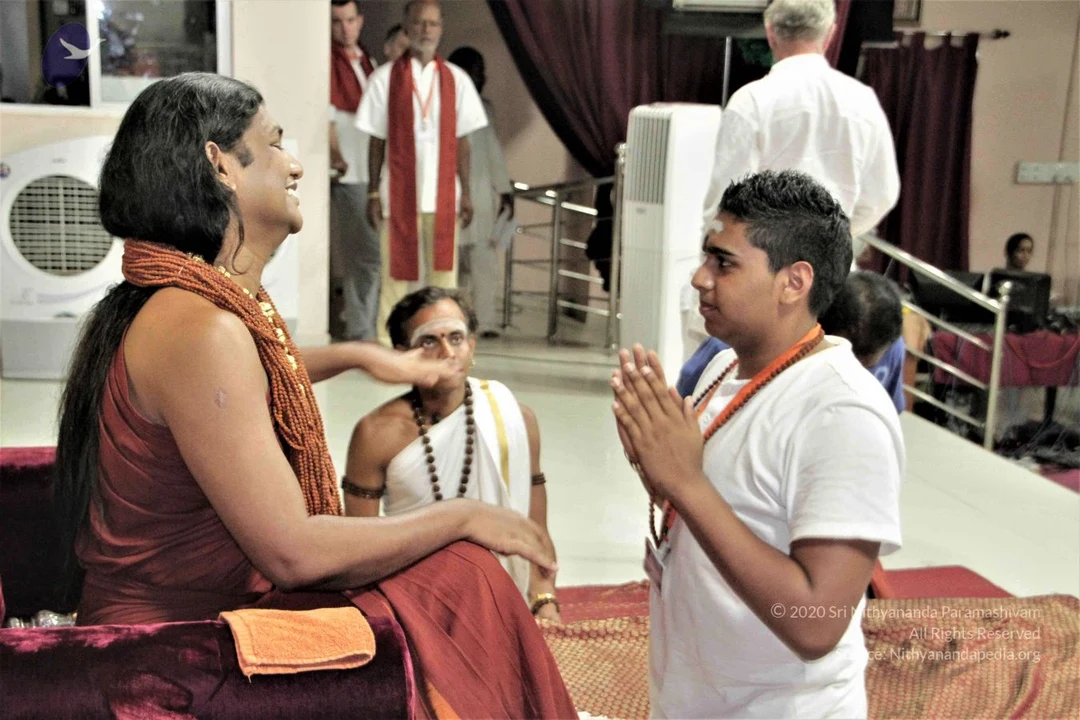
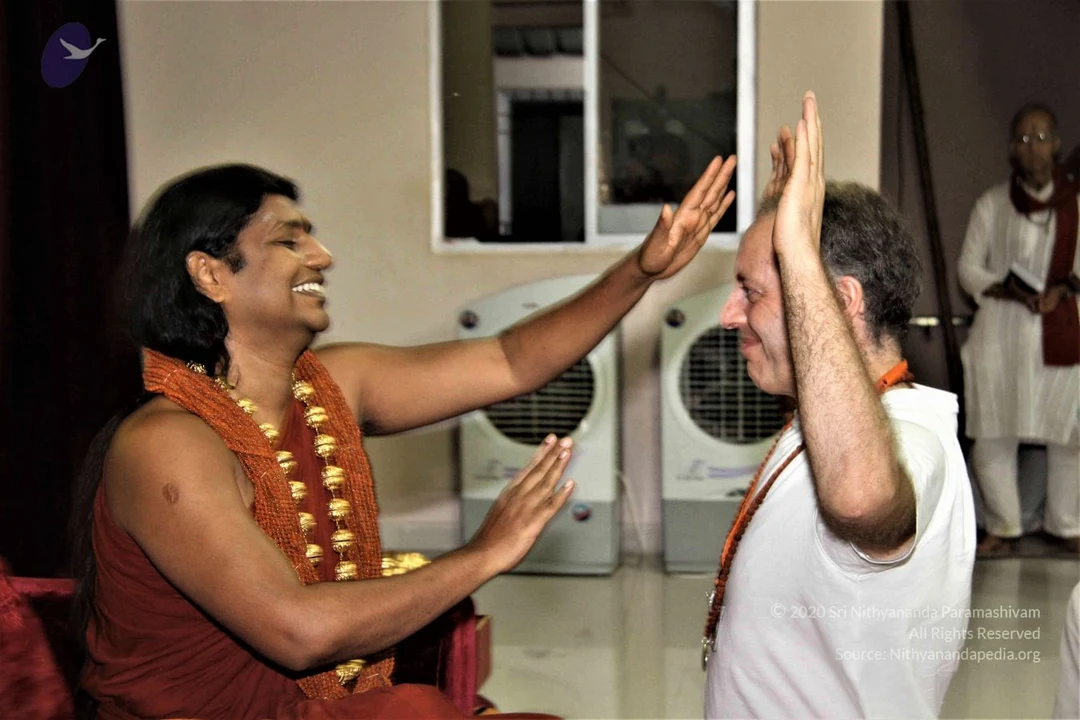
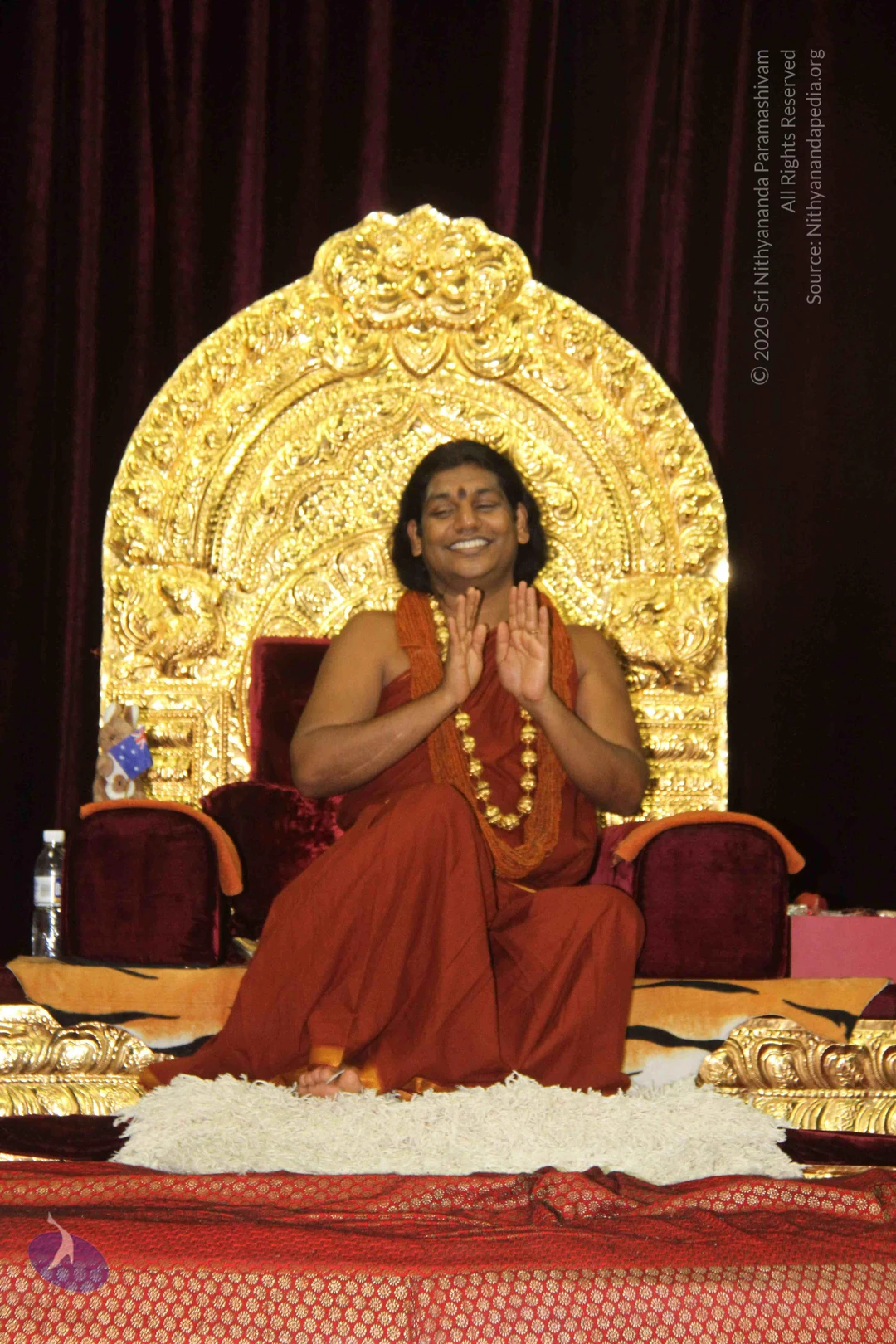
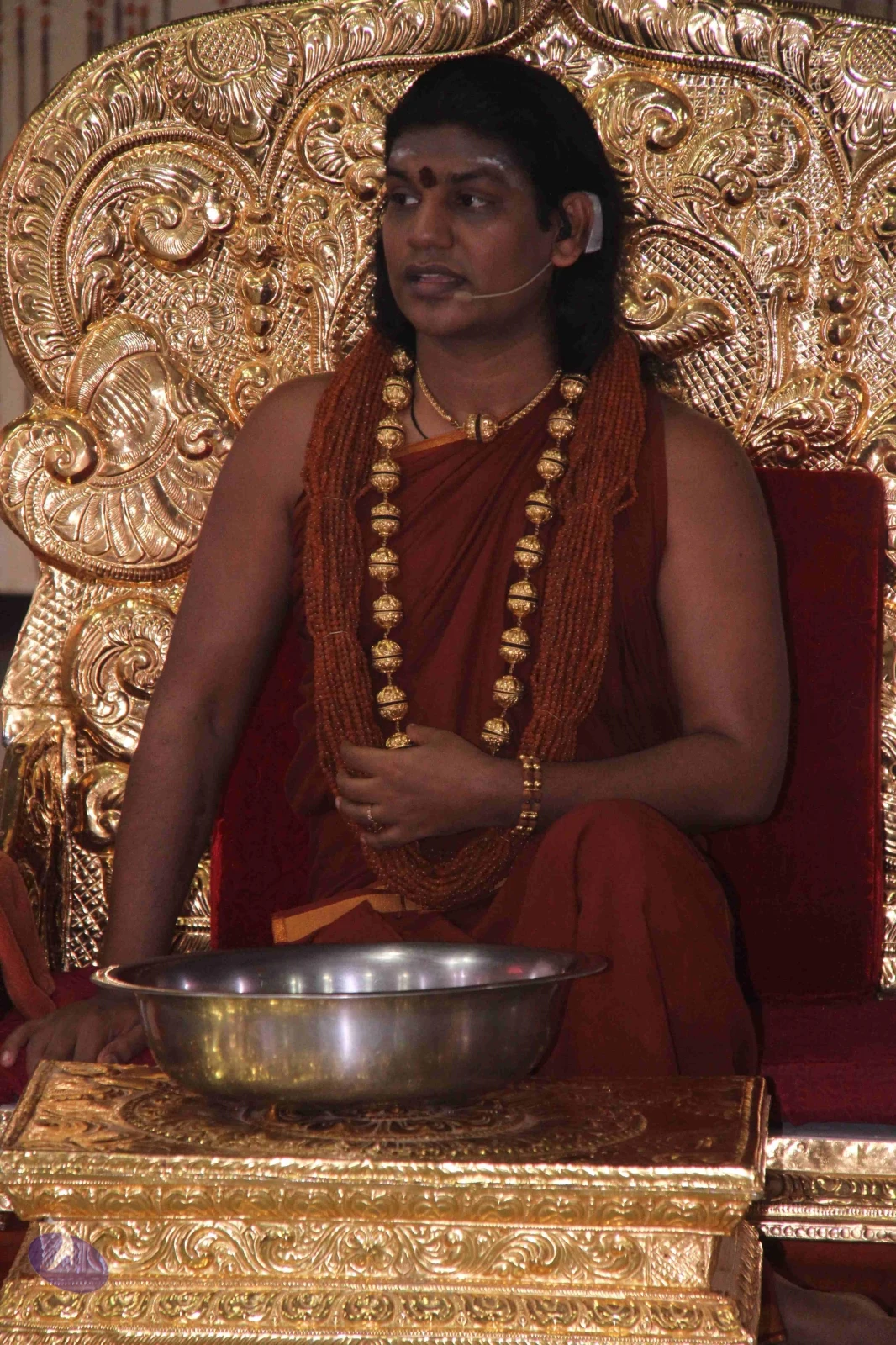
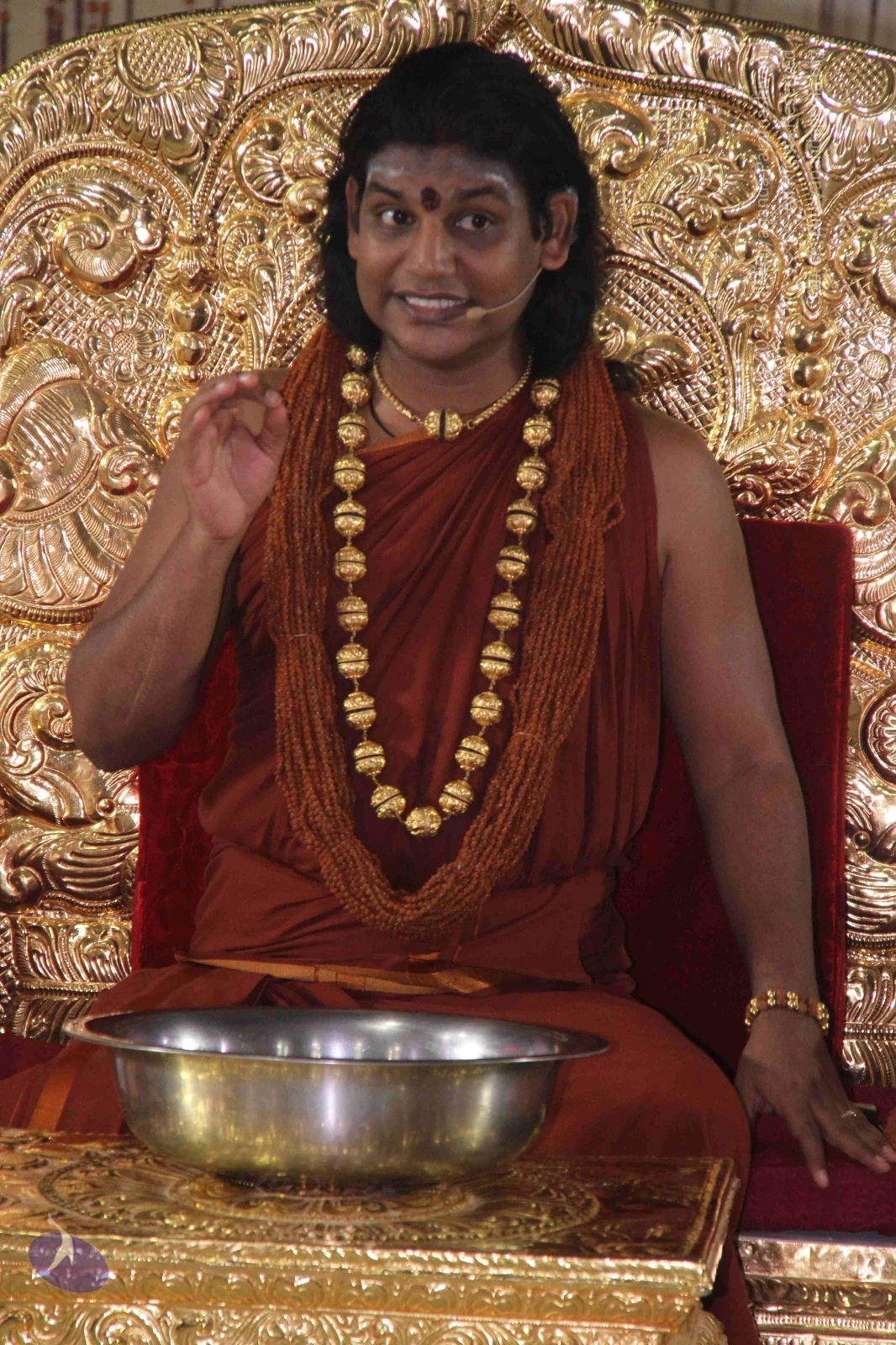
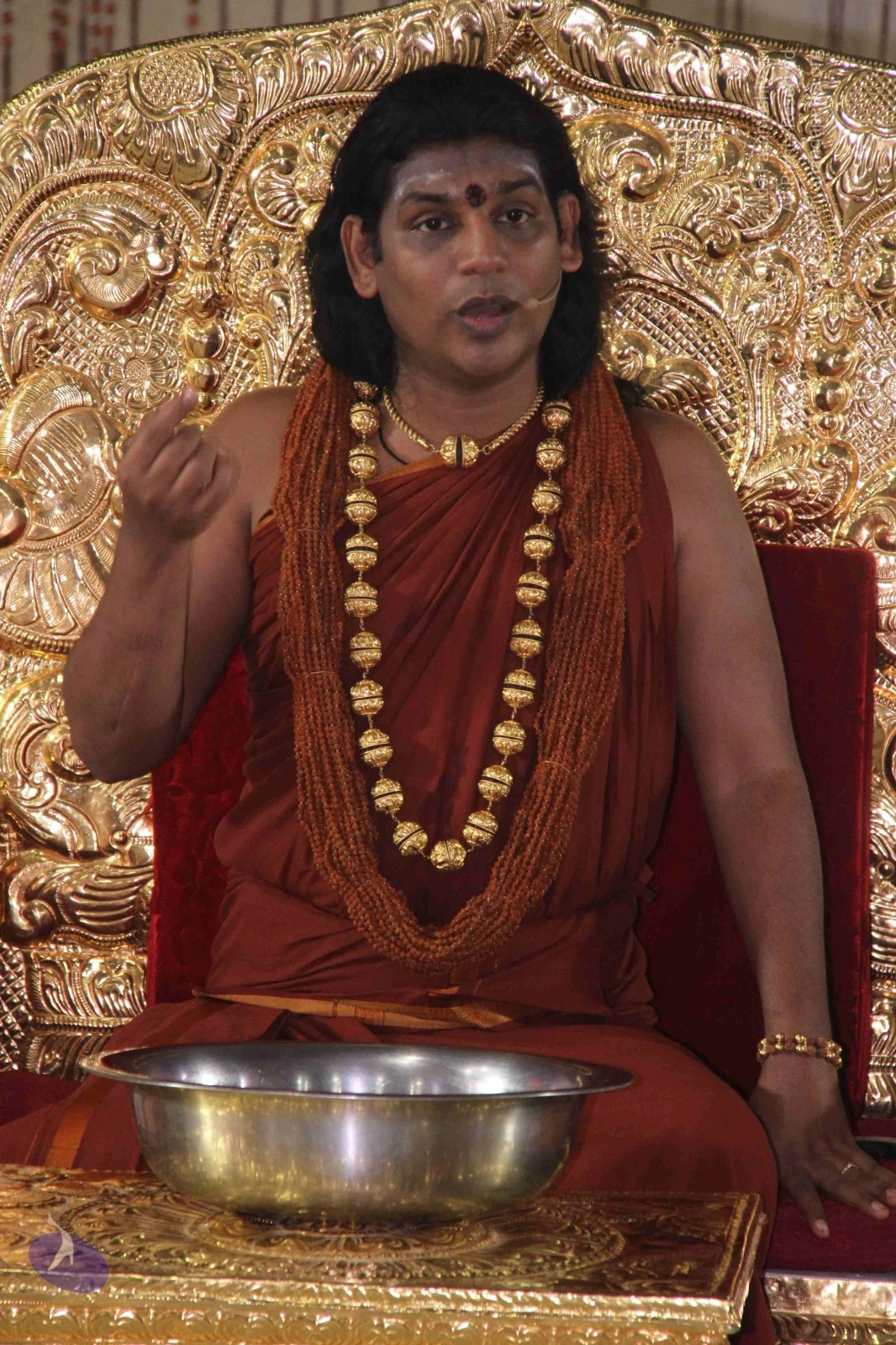
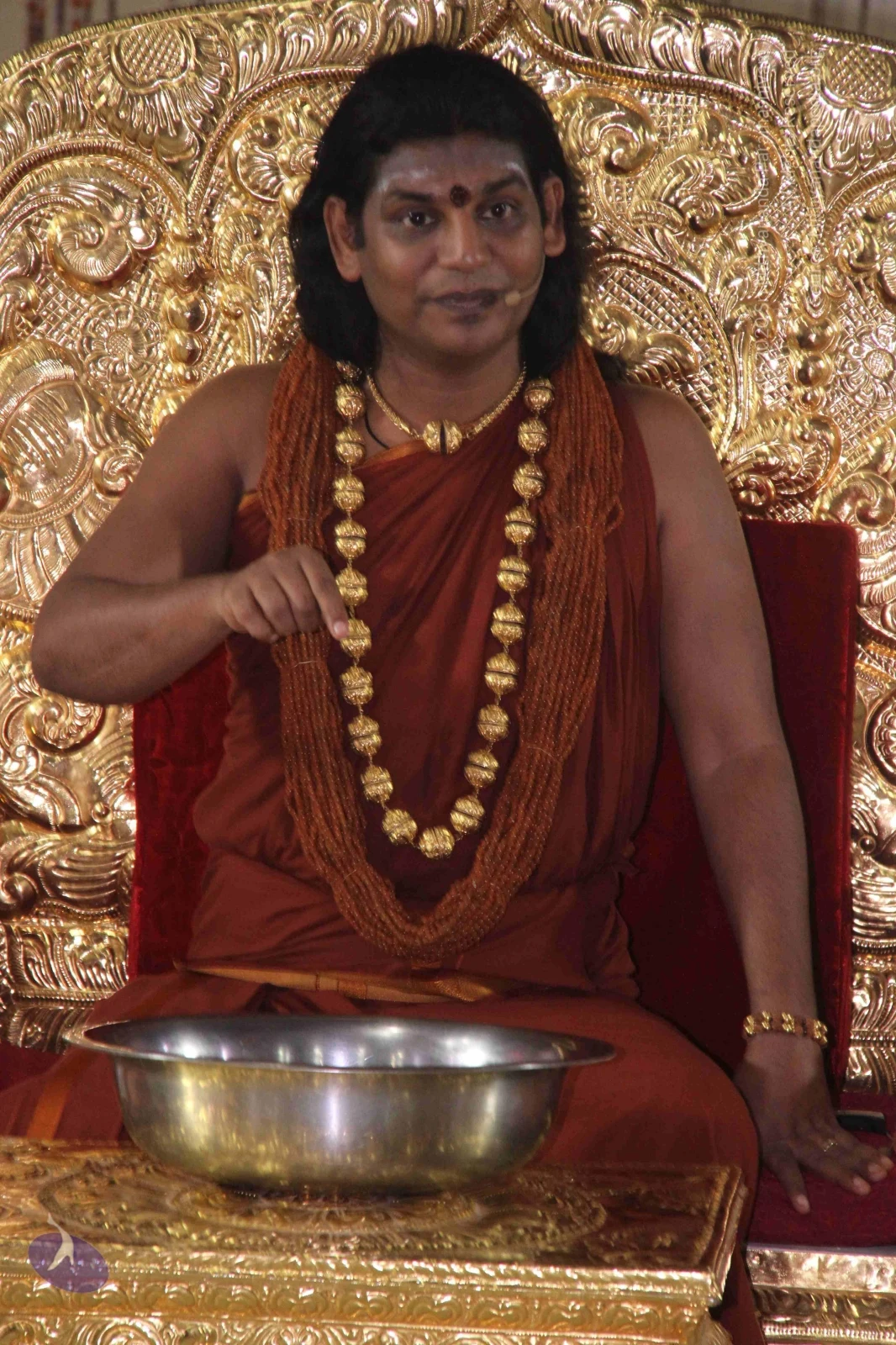
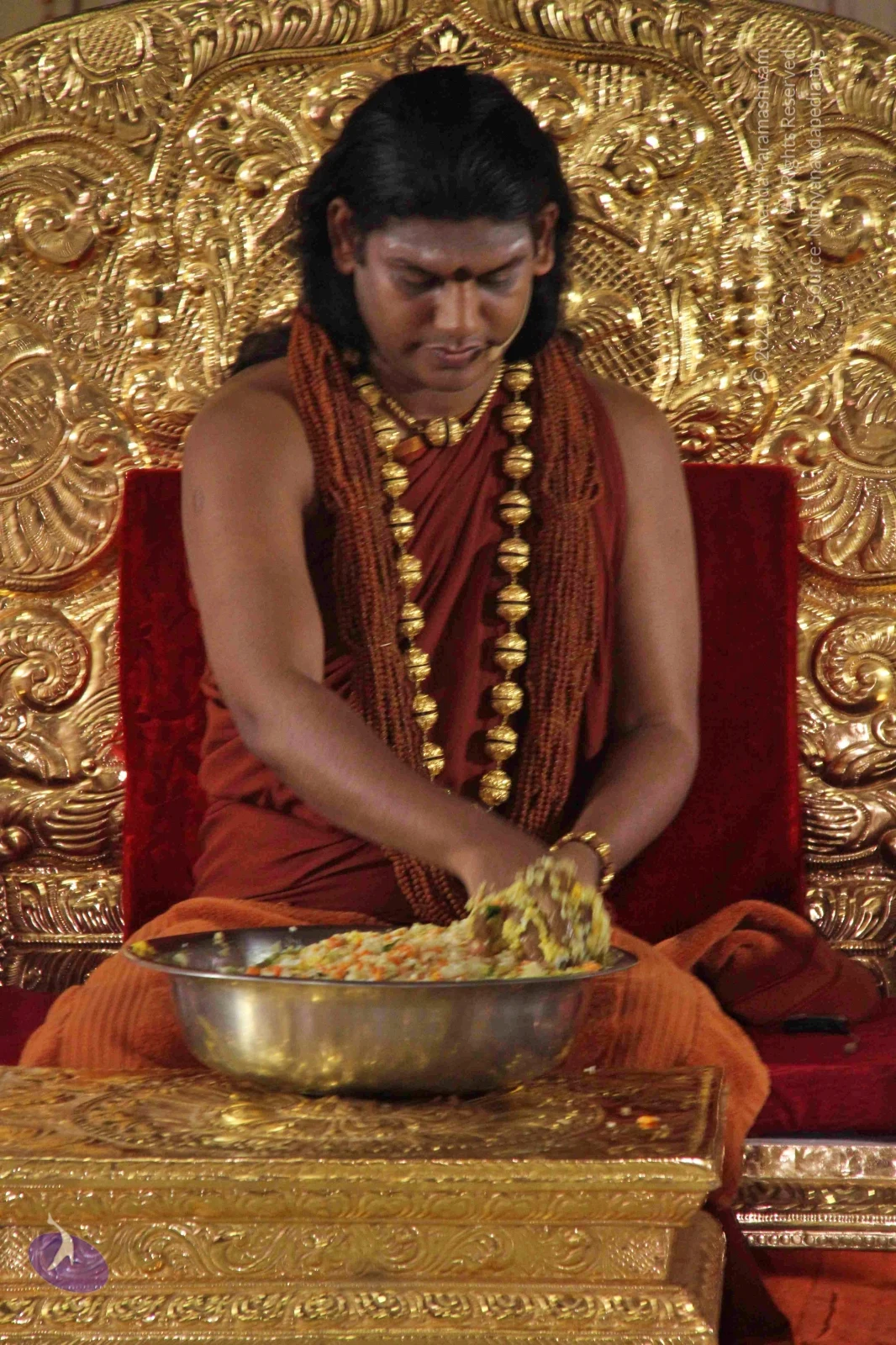
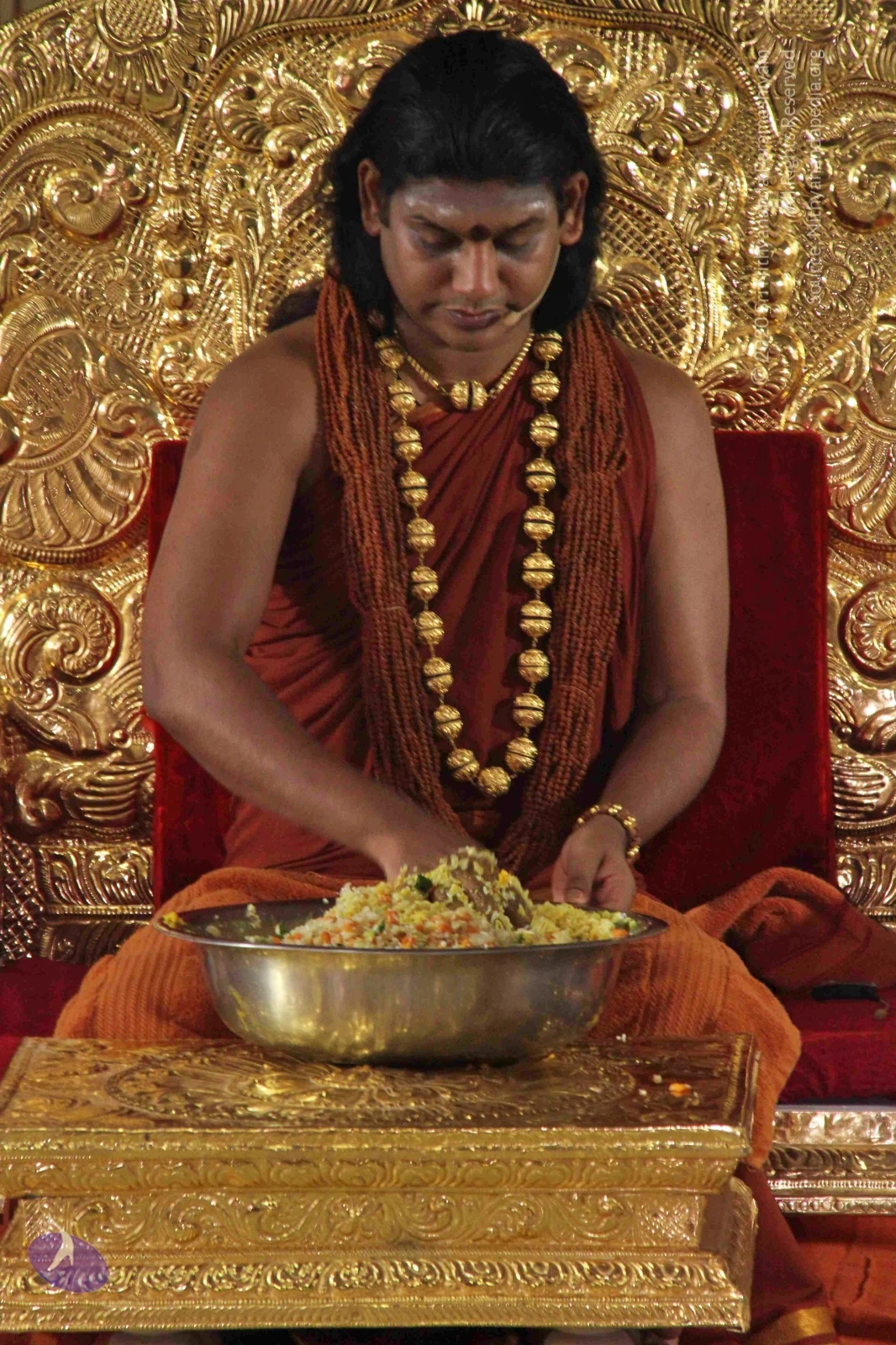
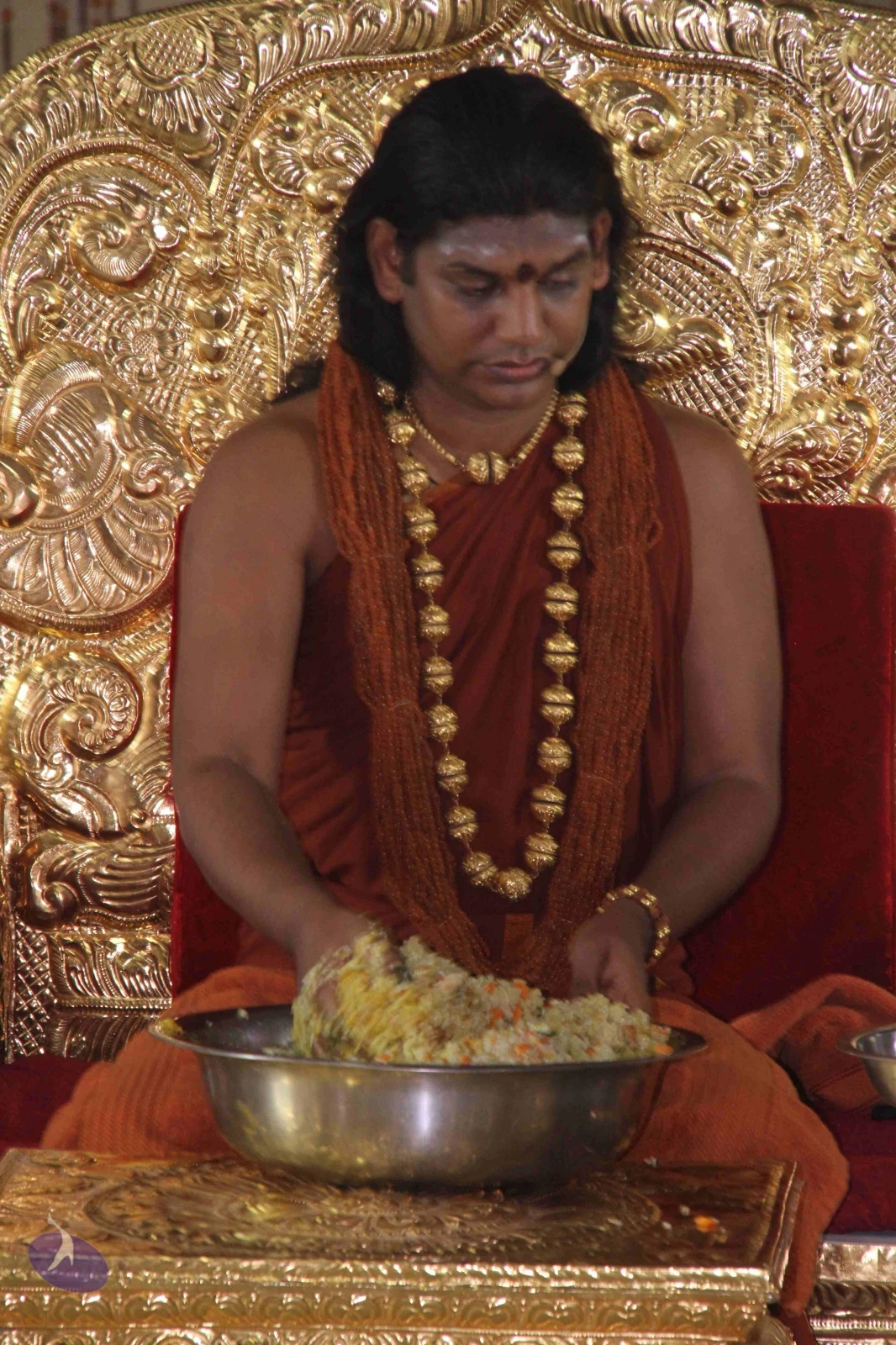
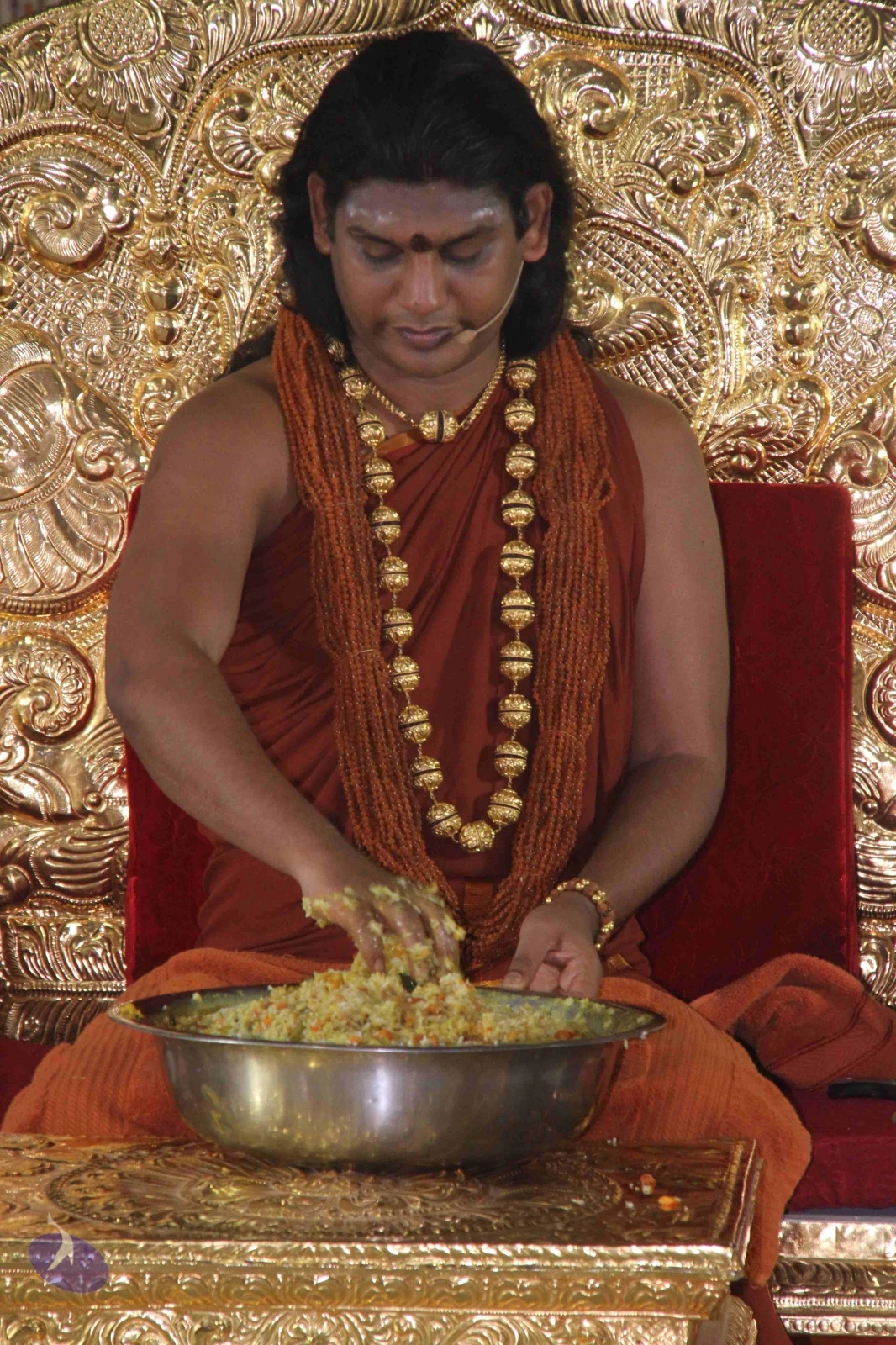
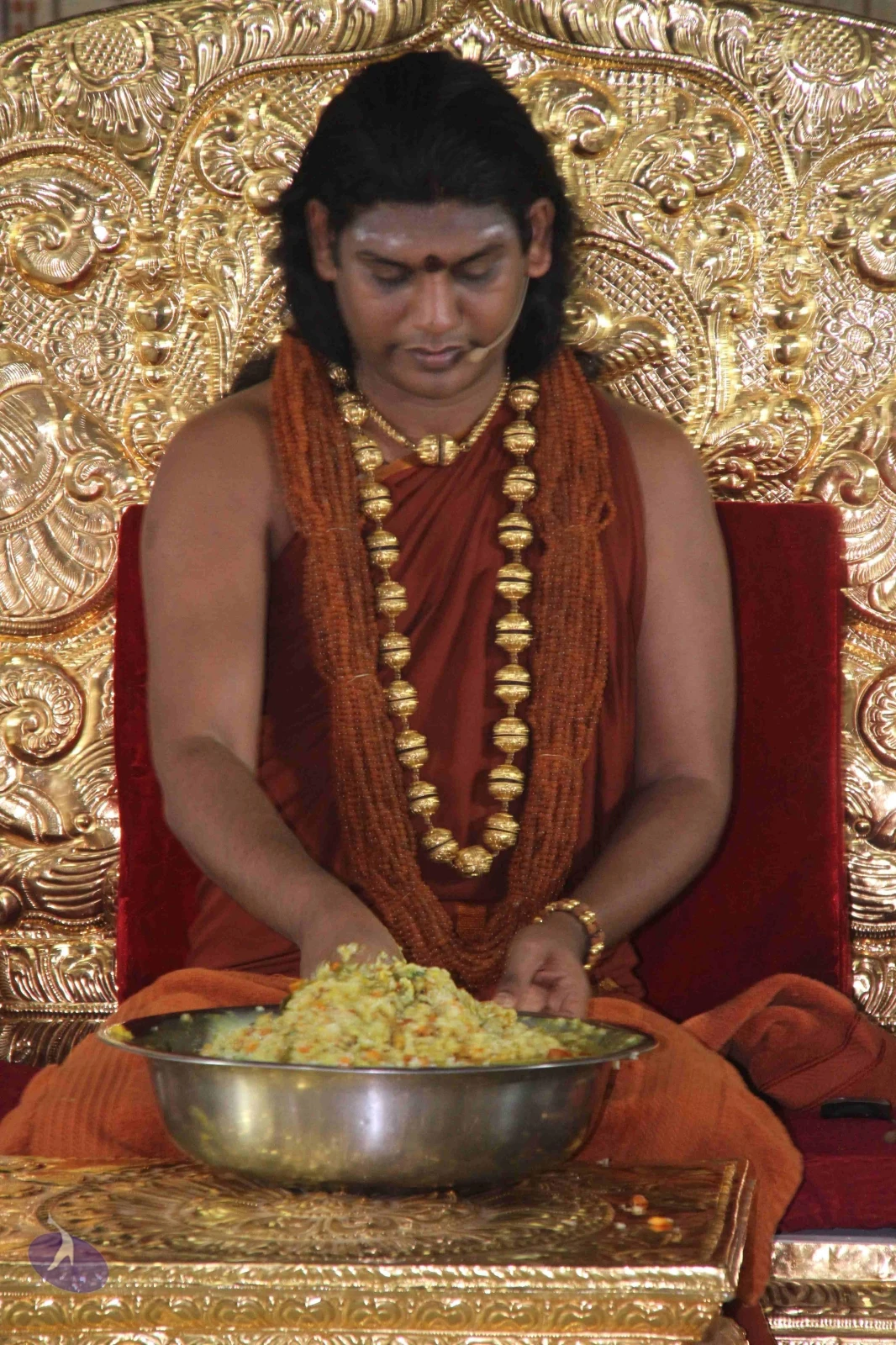
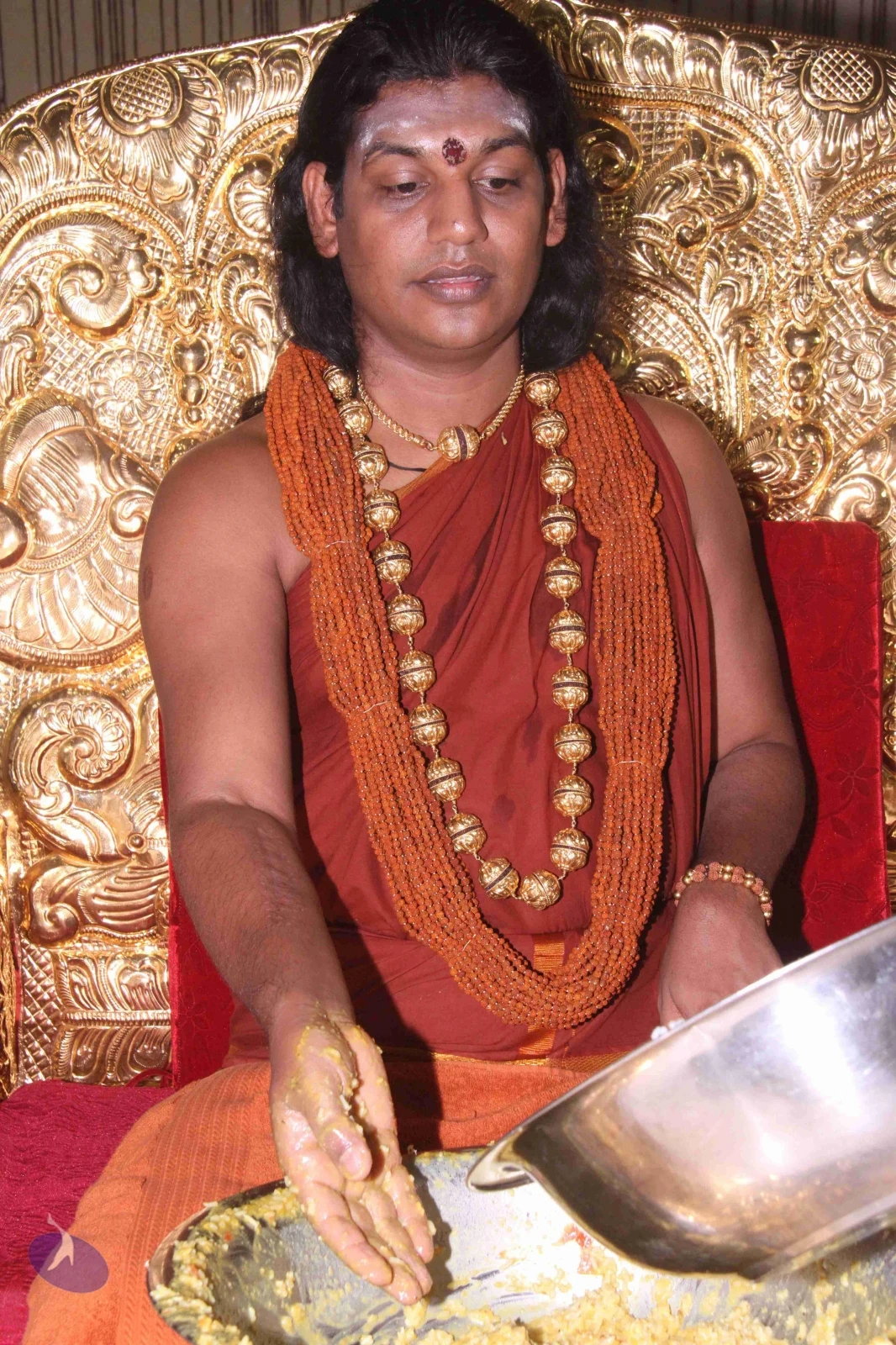
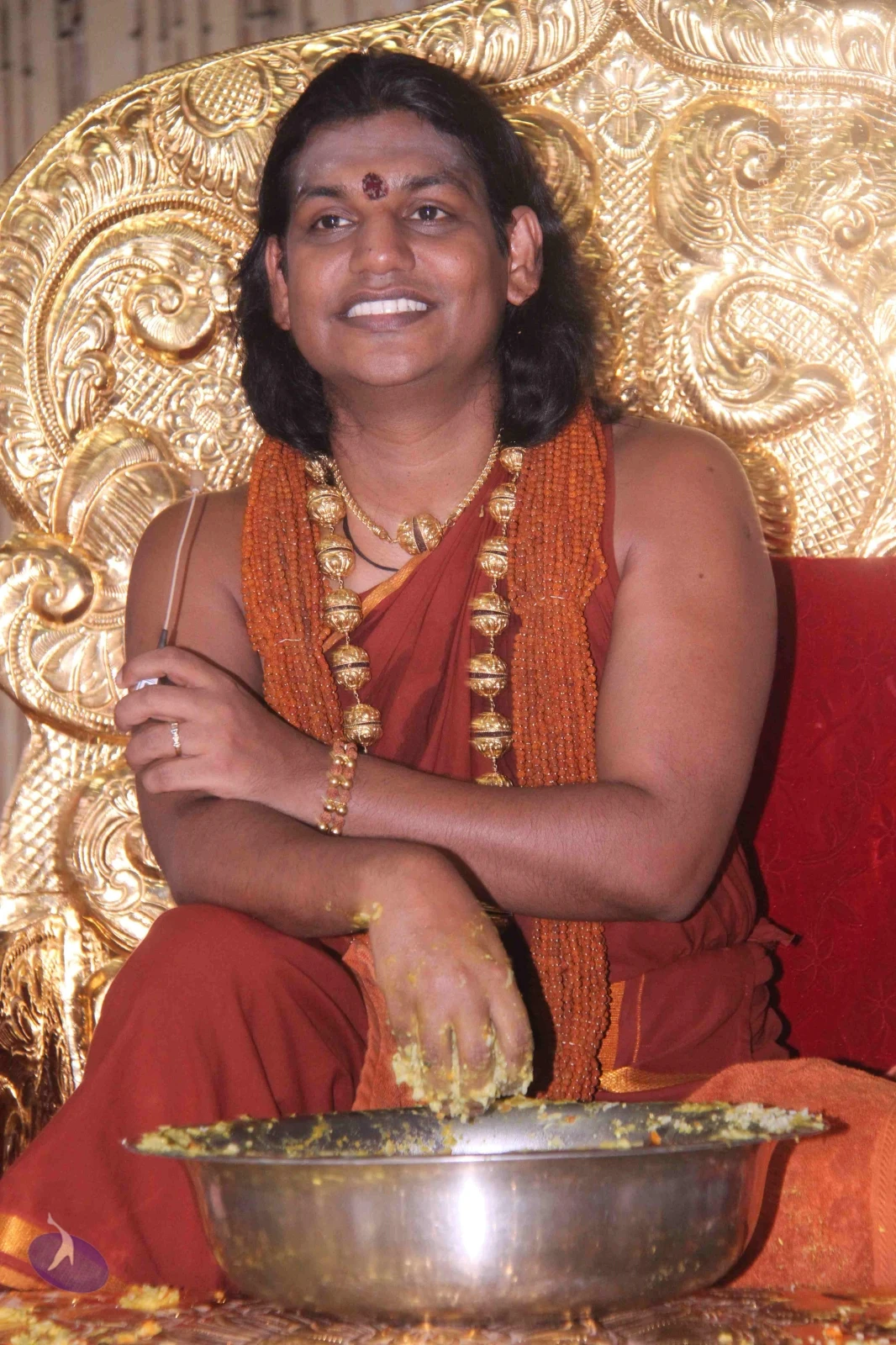
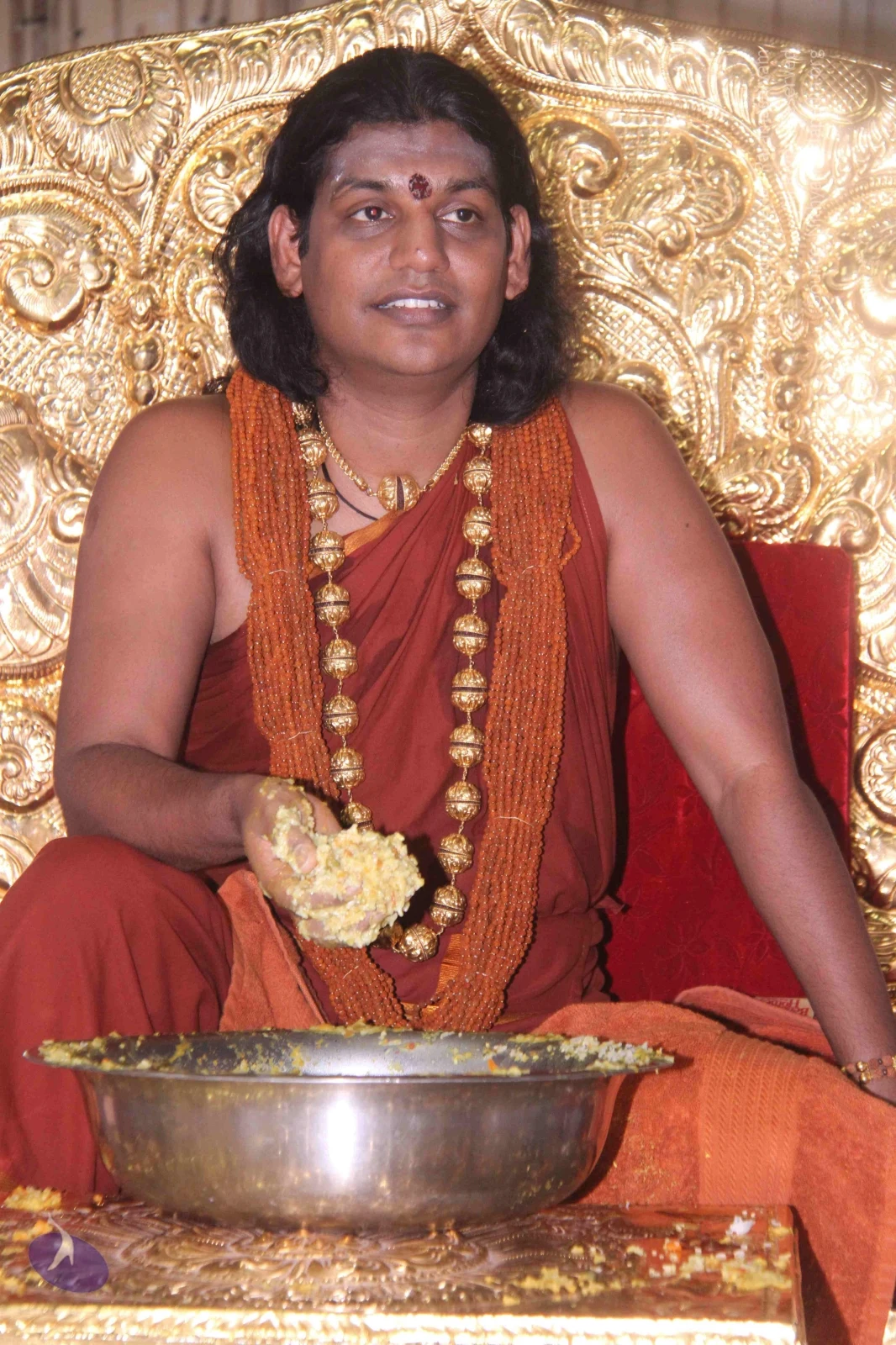
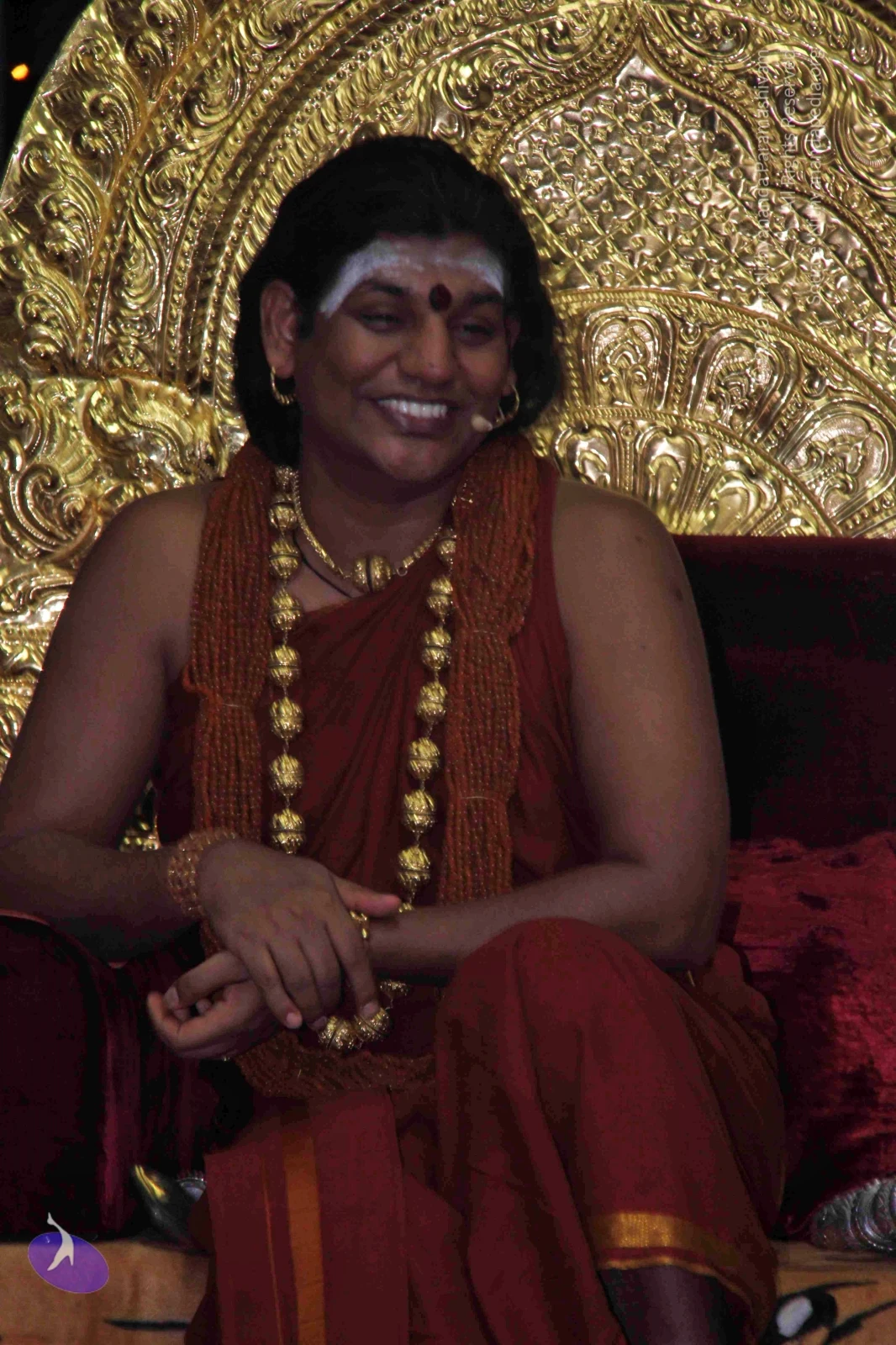
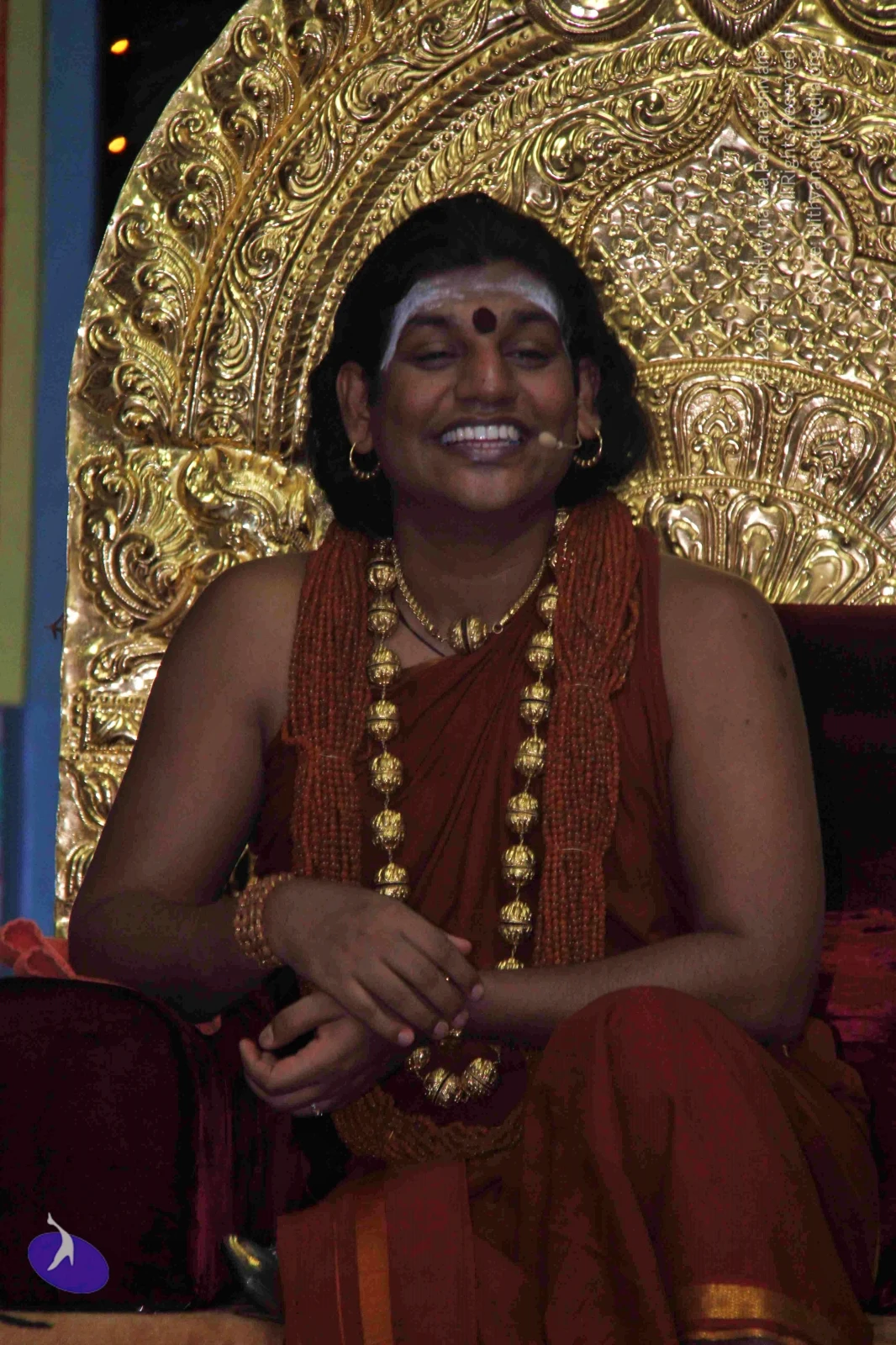
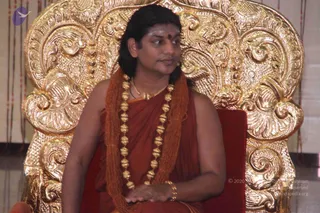
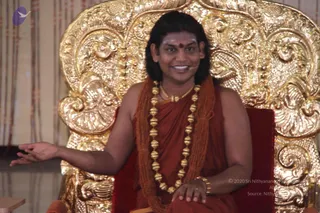
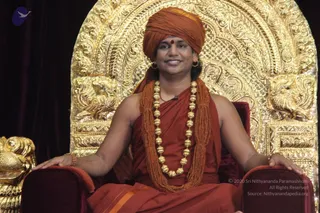
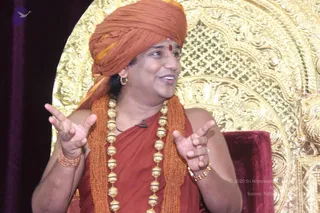
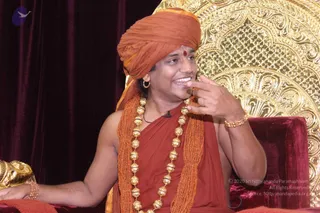
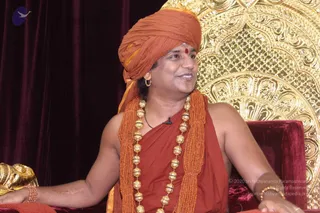
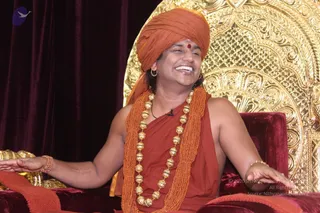
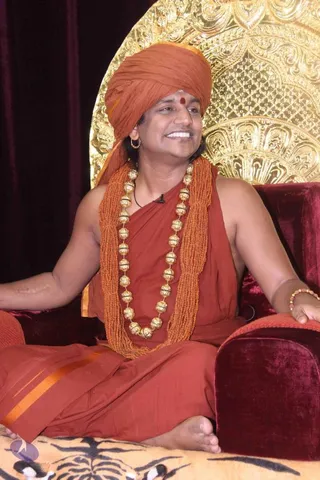
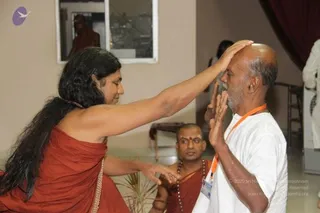
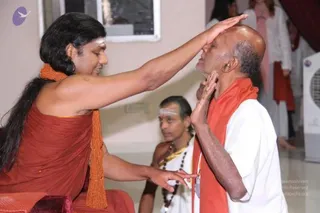
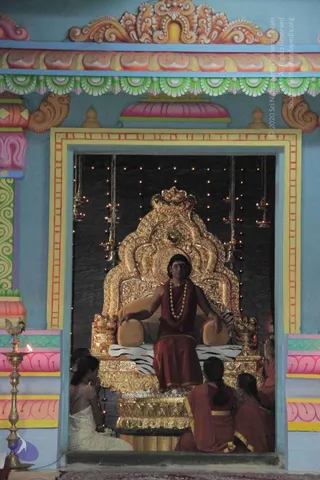
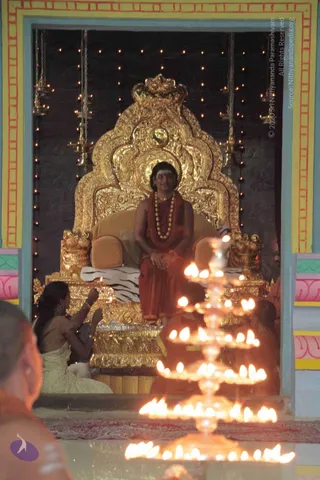
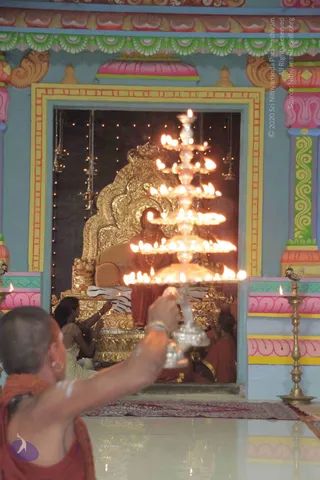
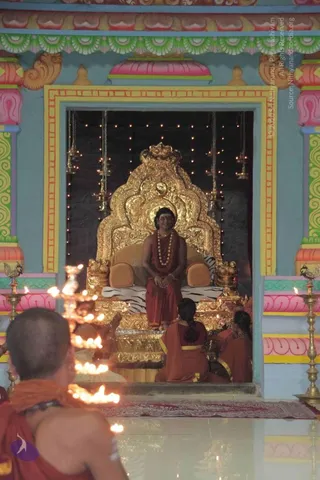
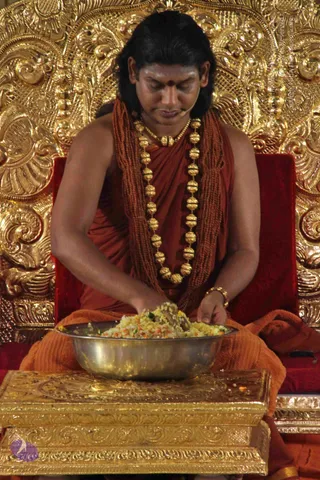
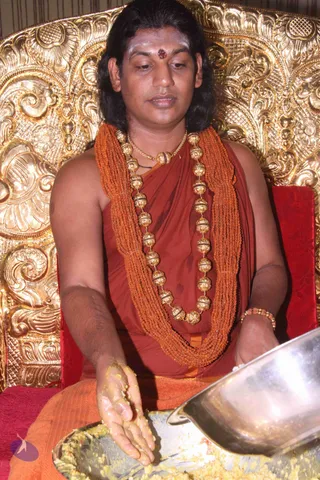
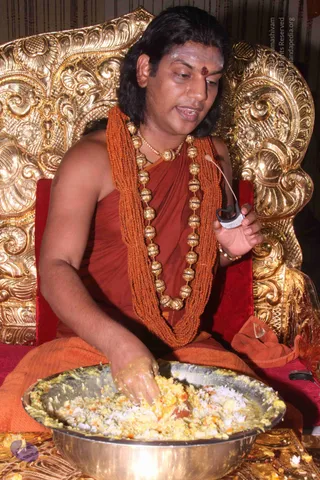
On this day , the Supreme Pontiff of Hinduism Bhagavan Sri Nithyananda Paramashivam conducted the Day-20 of the Inner Awakening Convention. During that day’s Presidential Address SPH expanded on how the principle of authenticity transforms the reality of life. What we experience as reality is only possibility. If we have a positive experience, it is a preview of better events yet to come. If we have a negative experience, that also shows the potential for worse events in the future. When we bring authenticity to our lives we open ourselves to the highest possibilities. Authenticity strengthens and rejuvenates us, blessing us with abundant energy and tirelessness. As part of the Inner Awakening SPH conducted of one of the most ancient Hindu rituals known as Maheshwara Puja, which is offered in the remembrance of a person who is no more, so that the departed soul rests in peace, the real peace that a soul can experience is the peace of Enlightenment.

That day’s Inner Awakening Convention was conducted by the Supreme Pontiff of Hinduism Bhagavan Nithyananda Paramashivam on 01 April 2013, in Adi Kailasa, Bengaluru, Karnataka, India.

Description:

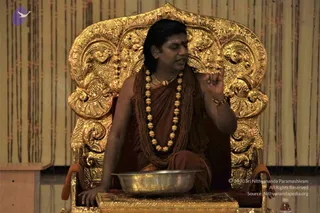
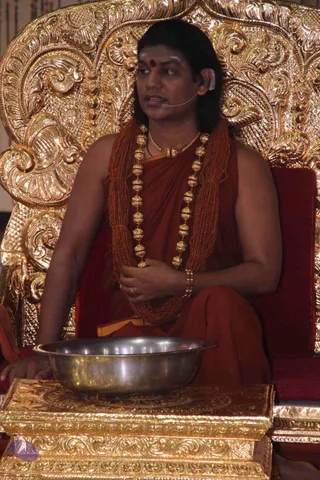
In today’s morning satsang, Paramahamsa Nithyananda expands on how the principle of authenticity transforms the reality of life. What we experience as reality is only possibility. If we have a positive experience, it is a preview of better events yet to come. If we have a negative experience, that also shows the potential for worse events in the future. When we bring authenticity to our lives we open ourselves to the highest possibilities. Authenticity strengthens and rejuvenates us, blessing us with abundant energy and tirelessness.

VideoAudio

Transcript:

(0:19)

Nithyanandeshwara Samarambham Nithyanandeshwari Madhyamam Nithyananda Paryantam Vande Guru Paramparam

Iss samay hamare saath upastith sabhi darshakon aur bhakton ka main prem evam aashirvad sahith swagath kartha hoon.

इस समय हमारे साथ उपस्थित सभी दर्शक और भक्तों का मैं प्रेम एवं आशीर्वाद सहित स्वागत करता हूं।

Aaj hum jeevan ka doosra tattva shraddha kaise aapke vaastaviktha ko parivartith kar sakthi hain uske baare mein baat karenge.

आज हम जीवन का दूसरा तत्व श्रद्धा कैसे आपके जीवन में बदलाव ला सकते हैं, उसके बारे में बात करेंगे।

I will expand on the second principle, how second principle, Authenticity, transforms the reality of your life. First line, first tattva, you need to know is whatever you experience as reality is only possibility.

Please listen, if you are experiencing your reality as rich, everything good, that is also only a possibility for great which is supposed to come. If you are experiencing your reality as bad, poor, suffering, suffocation - that is also is a possibility for the worst which is going to come.

(2:34)

Listen whatever you experience as reality is only possibility. If you are experiencing as good - the great possibility for better, if you are experiencing as bad - the possibility for worst. But do not ever think the reality you are experiencing is reality. No, it is just possibility.

If you are experiencing fear, be very clear, it is only a possibility for the greater fear which is going to come. If you experiencing courage be very clear, it is only the possibility for the greater courage which is going to come…. Everything you experience as reality is just possibility. Pehli jo baath aapko samajhni chahiye woh hai ki aap jobhi vaastaviktha ke roop mein anubhav karthe hain, vah keval ek sambhavna hai, aapka vastaviktha kevak ek sambhavna hai. Vah vaastav mein vastavikta nahin hai. पहली बात जो आपको समझनी चाहिए वह है कि आप जो भी वास्तविकता के रूप में अनुभव करते हैं, वह केवल एक संभावना है, आपकी वास्तविकता केवल एक संभावना है। वह वास्तव में वास्तविकता नहीं है।

(4:17)

As you are only a possibility not yet become reality, what you experience is also only a possibility not yet become reality. You realize your reality - anything you experience is not reality. As long as you remain as a possibility still need to be opened, experienced, explored, your reality also remains as possibility.

If you live authenticity you will strengthen the right possibilities to happen, if not, you will allow your unconscious possibilities to open. That’s all is life.

Understand the essence of life. Dhyan se suniye. ध्यान से सुनिए

You are only a possibility. Your experience is also possibility.

Jab tak aap apne astithva ka asli vaastaviktha se parichay nahin hothe hain tab tak aap keval ek sambhavna hai.

जब तक आप अपने अस्तित्व का असली वास्तविकता से परिचय नहीं हो पाते तब तक आप केवल एक संभावना है।

One of the biggest mistake you do in your life is you think you are still a possibility but your life is a reality. That is why you feel weak. Your life is not a stone wall already built. It is a wax model getting ready. The reality you experience is not a stone wall already built. It is only wax model getting ready. Authenticity is the intelligence to alter your possibility consciously in a right way. Listen, authenticity is great possibility to alter your life in a right way.

(7:03)

Let Me expand on authenticity. Authenticity means the state where you are established in the peak of your capability, your possibility and you respond to life from who you perceive yourself to be, the inner image and peak in the outer image and establishing yourself in peak in others image about you. Whatever you perceive about you is only a possibility.

If you think you are a swami, good person, nice person; even that is only a possibility for the greater saint to happen. If you think you are filled with jealousy, dirt, junk and what not, disease, depression; that is also not reality. It is a possibility for a greater disease, greater depression, greater disorders to happen. Now almost all of us experience ourself as a mixture of both. How many of you cognize what I am saying? You experience yourself as a mixture of both - little health and little disease, little goodness and little badness, little joy and little depression, little reconciliation and little fight, and little wealth and little poverty. So you are a possibility for any extreme. In a way you are a possibility for any possibility. When you are in a state of possibility for any possibility you are called seeker.

Seeker is a person who is possibility for any possibility. If you already became sinner you can’t be a seeker. If you are already a saint you can’t be a seeker. If you are perceiving the possibility for both as a possibility in your reality, you are seeker; means do not know which side you are going to take, do not know what is going to be your life.

(9:47)

Aapke jeevan mein ho rahi sabse badi galathi yah hai ki aap sochte hain aap ek sambhaavana ho. Kinthu aapka jevan vaastav evam yataarth hain. Keval shraddha se hi aap apni vaastaviktha ko sahi disha mein parivartit kar sakte hain.

आपके जीवन में हो रही सबसे बड़ी ग़लती यह है कि आप सोचते हैं कि आप एक संभावना हैं। किन्तो आपका जीवन वास्तव एवं यथार्थ है। केवल श्रद्धा से ही आप अपनी वास्तविकता को सही दिशा में परिवर्तन कर सकते हैं।

Most of us experience ourself as a possibility for both possibilities and every possibility. I have seen even at the age of 60 planning to enter into politics and thinking that they will become Prime Minister. Of course in India anything can happen, that’s different. I have seen people at the age of 70 want to start some business and still imagining that they will become Ambanis or Birlas.

We all think we are a possibility for all possibility. Please listen, you yourself a possibility for many possibilities and your life is also possibility for many possibilities. Nothing is yet become reality. It is not yet become reality. But all your suffering is because you think life has become reality. It is not. Because still you are in the mode of trial and error, life is also giving you time, waiting. Authenticity is the right way of making your life’s possibilities.

(12:07)

Listen, if you have not yet built the building, you are just sitting, waiting. This land, empty land, is a possibility for any type of construction. This land can become a engineering college, hospital, school, ashram, temple, house, residential complex; it can become anything.

Empty land is a possibility. Same way your life is a possibility. Authenticity is the right architect. Understand if I can compare your life as a empty land, bring authenticity as the architect or the empty land will become waste land.

In Tamil we have the word ‘porambuk’. Bring authenticity as the architect so that empty land can become the ultimate possibility. Let it not become waste land.

Saadhak vah hai jo sambhaavana ki stithi mein har pal stapith hota hai. Shraddha sahi maarg hai jo aapke jeevan ki har sambhaavana ko vaastav mein parivartith kar sakey. Suniye, shraddha sahi maarg hai jo aapke jeevan ki har sambhaavana ko vaastav mein parivartith kar sakey.

साधक वह है जो संभावना की स्थिति में हर पल स्थापित होता है। श्रद्धा सही मार्ग है जो आपके जीवन की हर संभावना को वास्तव में बदल सकती है। सुनिये, श्रद्धा सही मार्ग है जो आपके जीवन की हर संभावना को वास्तव में परिवर्तित करा सके।

Agar aap shraddha ki antah stithi mein jeete hai aap sahi sambhavana ko khulne ke liye anumathi dethe hai. Anyatha aap apni achet mana stithi ko khulne ki anumathi dethe hain.

अगर आप श्रद्धा की अंतः स्थिति में जीते हैं तो आप सही संभावना को खोलने के लिए अनुमती देते हैं। अन्यथा आप अपनी अचेत मन स्थिति को खोलने की अनुमती देते हैं।

(14:32)

Listen! If you are feeling you are working more than last year, you are thinking more than last year, you are feeling more than last year, you are active more than last year, you are energetic more than last year - you are becoming younger. If you are thinking you are tired than last year, you are sick than last year, you are depressed than last year, you are not energetic than last year - whatever may be the age, you have started traveling towards death, you have started aging.

Aging can start happening even from 18 or anti-aging can start happening even at 90. Aging or anti-aging has nothing to do with the calendar. When number of years passing is not making you tired or retired you are kaala kaala.

Listen authenticity will make you better and better everyday passing. Every passing day will make you only better and better. Authenticity has so much power. Listen authenticity has so much power every third day you will feel you are becoming new, new, new. The new possibilities are opening, new experiences are happening. Authenticity will make you feel stronger and stronger every day, will make you experience the new, new possibilities. It will open up new, new possibilities continuously.

(17:01)

Agar yeh khali bhoomi hain us bhoomi ke kaii sambhaavanayen hain. us bhoomi mein ek building ka nirman ho sakta hai, us bhoomi mein ek hospital ka nirmaan ho sakta hai. Shraddha va upakaaran veh saadhana hain jise vah bhoomi ki koi bhi sambhaavna vaastaviktha me parivartith ho jaaye.

अगर ये खाली भूमि है तो उस भूमि के कई संभावनाएं हैं। उस भूमि में एक भवन का निर्माण हो सकता है, उस भूमि में एक अस्पताल का निर्माण हो सकता है। श्रद्धा और उपाकरण वह साधना है जिसकी वह भूमि है, कोई भी संभावना वास्तविकता में परिवर्तित हो जाए।

Bring the right architect. Bring authenticity. You will continuously expand. You will grow in your health, you will grow in your energy, you will grow in your possibility, you will grow in your thinking, you will grow in every level. So you will be growing younger. Authenticity is the direct technique for growing younger. Authenticity is nirahara samyama for your consciousness. How nirahara samyama makes you grow younger, authenticity makes you grow younger in your inner space because every day the way you think about you is expanding. The way you perceive you is expanding. The way you experience you is growing.

Shraddha aapko har din adhik aur adhik mazbooth banaathi hai. Shraddha aapko har din adhik aur adhik mazbooth banaathi hai.

श्रद्धा आपको हर दिन अधिक और अधिक मजबूत बनाती है। श्रद्धा आपको हर दिन अधिक और अधिक मजबूत बनाती है।

I have seen during the election, if the election is announced suddenly all the small local rowdies will become possibly MLAs and MPs. From the day election is announced till the result is announced each constituency will have at least 25 MLAs. These guys will be roaming around literally as MLAs…. Of course it is their fantasy not authenticity.

(19:42)

When authenticity happens to you, your possibilities continuously expand; your mamakara gets newly built. When the mamakara is newly built, possibility is completely new.

Shraddha ek seedha maarg hai jisse aap har din yuva ki sthiti mein reh sakte hain.

श्रद्धा एक सीधा मार्ग है जिसे आप हर दिन युवा की स्थिति में रह सकते हैं।

With authenticity, the very source, how you cognize you is transformed. How you cognize you - when it is growing you are growing younger. You become kalakala. Jab aap me shraddha hoti hai tab aapki sambhaavanayen lagatar badhti hain aapka mamakar ka navin roop se nirmaan hotha hain.

जब आप में श्रद्धा होती है तब आपकी संभावनाएं बढ़ती हैं, आपका ममकार का नवीन रूप से निर्माण होता है।

Authenticity has the power to continuously expand you. I can give you 100s of examples. Today how you perceive you, if you achieve something what you think you can’t achieve, again how you perceive you - it just completely transforms itself. When your perception about you is transformed, your possibility in the life is transformed. When the possibility in the life is transformed, possibility of everything is transformed.

(22:10)

Shraddha mein stith hone se aapke swayam ke baare mein aap ka jo samajh hain vah parivartith evam vistaarith ho jata hai.

श्रद्धा में स्थित होने से आपके स्वयं के बारे में आप का जो समझ है वह परिवर्तित एवं विस्टारिट हो जाता है

Just yesterday I was asking one of My sanyasini who is responsible for enriching temple, I was asking “how many people do you think will be enriched through the May Inner Awakening?”

She said “No, now I am very clear any number of people you say will be enriched; that’s all Swamiji. Because again and again everyday my cognition of possibility is broken to pieces. So now I know only one thing. Whatever you say will happen!” Listen when your cognition is broken to pieces from inside, life is happening. Life is happening! If it is broken from outside death is happening.

If you are inauthentic, listen, if a egg is broken from outside life is killed, it is death. If the egg is broken from inside life is happening, a new life is happening.

Listen if the life inside the egg is not authentic to life, even a breeze can roll that egg and break it from outside. Grass can beat that egg and break it from outside. The grass which is moving in the breeze can break the egg from outside; death will happen.

If the egg is authentic, if the life is authentic, from inside it will grow and break the shell and come out; then no grass no breeze can kill it.

It will eat the grass and walk through the breeze!!

(24:40)

Authenticity in your life, the amount of authenticity you carry in your cognition, makes the shell break from inside. Continuously new, new, new possibilities happen. Your old cognitions about you is broken for good.

Sometime your cognitions will be broken by failures then you are inauthentic, you are shrinking, you are getting destroyed. If your cognition is broken by goodness you are becoming authentic.

Jab swayam ke baare mein aapka vichaar dhaara parivartith evam vistaarith hothi hain tab aapke jeevan ka vaastaviktha bhi parivartith evam vistaarith hothi hain.

जब स्वयं के बारे में आपका विचार धारा परिवर्तन एवं विस्तार होता है तब आपके जीवन का विकास भी परिवर्तित एवं विस्तार होता है।

Agar aapke baare mein swayam ki vichardhara andar se Tootthi hai tab aapme jeevan vikasith hothi hain. agar aapke baare mein swayam ke vichaar dhaara aapke bahar se TooTthi hain tab aap mruthyu ka anubhav karthe hain.

अगर आपके बारे में स्वयं की विचारधारा अंदर से टूटती है तब आपका जीवन विकसित होता है। अगर आपके बारे में स्वयं के विचार धारा आपके बहार से टूटती हैं तब आप मृत्यु का अनुभव करते हैं

Umra ka badhna ya umra ka na badhna isska sambandh calendar ke saath nahin hain. Jab varshon ka beetna agar aapko thaka raha hain, ya nivritthi ki aur dhakel raha hain, dhyan se suniye, jab varshon ka beethna agar aapko thaka raha hain ya nivritthi ki aur dhakel raha hain, shraddha aapko din pratidin behtar aur behtar banaathi hain.

उमरा का बढ़ना या उमरा का ना बढ़ना इस्का संबंध कैलेंडर के साथ नहीं हैं। जब वर्ष का बिटना अगर आपको थका रहा है, या निवृत्ति की और ढकेल रहा है, तो ध्यान से सुनें, जब वर्ष का बिटना अगर आपको थका रहा है या निवृत्ति की और ढकेल रहा है, श्रद्धा आपको दिन प्रतिदिन बेहतर और बेहतर बनाती है।

Shraddha mein itni shakti hain har teesre din aap anubhav karenge aap naye naye naye ban rahe hain, nayi sambhavanayen khul rahi hai, nayi anubhav ho rahe hain.

श्रद्धा में इतनी शक्ति हैं हर तीसरे दिन आप अनुभव करेंगे आप नए, नए बन रहे हैं, नई संभावनाएं खुल रही हैं, नया अनुभव हो रहे हैं।

(27:43)

Inauthenticity is the corruption can happen in your soul. Don’t allow. A corrupt official takes away your confidence on the whole system. A corrupt politician takes away your confidence on the whole country. A corrupt leader takes away your confidence on the society. Corrupt Consciousness takes away your confidence on life itself. Don’t allow the worst corruption which can happen on Consciousness which is inauthenticity. Ashraddha aapki aatma ka bhrashtachar hai.

अश्रद्धा आपकी आत्मा का भ्रष्टाचार है।

Listen if you don’t bring authenticity, inauthenticity is waiting to take over you…. Because you trained yourself for so many years with inauthenticity, inauthenticity is waiting to take over you.

Agar aap shraddha ki sthiti ko nahi laathe hain ashraddha aapke andar aajayegi. Agar aap shraddha ki sthiti ko nahin laathe hain ashraddha aapke andar aajayegi.

अगर आप श्रद्धा की स्थिति को नहीं लाते हैं आश्रद्धा आपके अंदर आ जायेगी। अगर आप श्रद्धा की स्थिति को नहीं लाते हैं आश्रद्धा आपके अंदर आ जाएंगी।

Bring Authenticity continuously. Expand how you feel about you, how you project to others and how others experience you. Go on expanding, go on expanding. Authenticity is the possibility of life in you.

(30:13)

When you don’t bring authenticity, listen, it is authenticity constantly opens the possibilities in you. New, new, new doors of life, opens in your wealth, health, relationships. Whatever form you perceive your life – power, energy, how many ever forms you perceive your life, how many ever forms you measure your life - Authenticity brings life into everything!!

Lagaatar apne andar shraddha ko layiye.

लगातर अपने अंदर श्रद्धा को लाइये।

Authenticity literally makes you being with many hands, many heads; Sahasra sheersha purusha sahasraksha sahasrapaad; being with 1000s of eyes, heads, legs, hands. Authenticity can make your life with so much of possibilities. In every step, when your cognition about you changes, the way you project yourself to others changes and way you fulfill others expectation about you changes.

Lagatar aap swayam ke baare mein jo aap mehsoos karthe hain, anya logon ke samne jo swayam ko prastuth karthe hain, evam anya log jo aapse apeksha rakhthe hain, in teeno vishay mein shraddha laayiye. Tab aapki jeevan sambhaavanaayon se bhar jaayegi. Tab aapki jeevan sambhaavanaayon se bhar jaayegi.

लगतार आप स्वयं के बारे में जो आप महसूस करते हैं, अन्य लोगों के सामने जो स्वयं को प्रस्तुत करते हैं, एवं अन्य लोग जो आपसे अपेक्षा रखते हैं, तीनो विषय में श्रद्धा लायीये। तब आपकी जीवन सम्भावनाओं से भर जायेगी। तब आपकी जीवन सम्भावनाओं से भर जायेगी।

(32:52)

What is Authenticity? Bringing your perception about you to peak, bringing the way you show to others to the peak, fulfilling in a peak the way others want you to be for them. Shraddha ka paribhasha punah suniye. Jab aap apni uchchatam kshamatha mein stith hokar apni jeevan ki sabhi pratikriya karthe hain us sthiti se jo aap swayam ko swayam ki drishti mein samajhte hain, jo aap swayam ko anya logon ke saamne prastuth karthe hain, aur jo aapse anya log apeksha rakhthe hain tab aap shraddha mein stith hain.

श्रद्धा का परिभाषा पुन: सुनिए। जब आप अपनी उच्च्तम क्षमता में स्थित होकर अपने जीवन की सभी प्रतिक्रिया करते हैं तो स्थिति से जो आप स्वयं को स्वयं की दृष्टि में समझते हैं, जो आप स्वयं को अन्य लोगों के सामने प्रस्तुत करते हैं, और जो आपसे अन्य लोग अपेक्षा रखते हैं तब आप श्रद्धा में स्थित हैं।

Without Authenticity life is dangerous, with Authenticity you are dangerous even to dangers. No danger can come to you. With Authenticity death will say you are dangerous to him.

See that is what has happened in the case of Nachiketa. Death was folding the hands and standing ‘you take any boon you want but don’t torture me’. When you go to Prahlada’s level it is one step further. Death is killed.

If your cognition about you is broken by failures, your cognition is shrinking. If your cognition about you is broken by goodness your cognition is growing, expanding. Life is happening.

Agar aapki anubhoothi vifaltha se toot rahi hai, aap sankuchit ho rahe hai.

अगर आपकी अनुभूति विफलता से टूट रही है, तो आप संकुचित हो रहे हैं।

Agar aapki anubhoothi achche se toot rahi hain, aap ki shraddha mein vriddhi hoti hain.

अगर आपकी अनुभूति अच्छे से टूट रही है, तो आपकी श्रद्धा में वृद्धि होती है

Jab aap shraddha main rehte hain tab aapse mruthyu bhi bhaybheet ho jayega. jab ap shraddha mein rehte hain tab aapse mruthyu bhi bhaybheet ho jayegi.

जब आप श्रद्धा में रहते हैं तब आपसे मृत्यु भी भयभीत हो जाएगी। जब एपी श्रद्धा में रहते हैं तब आपस में मृत्यु भी भयभीत हो जाएगी।

(35:53)

How you perceive you, how you project to others, has to expand just like Universe. Listen, constantly Universe is expanding. Constantly it is expanding into expansion itself. It is not expanding into something else.

EXPANDING INTO EXPANSION!

You may say how can Universe expand? Then into what it can expand? Into what it can expand? It is expanding in the expansion. The expansion is the space it is expanding.

Listen either today or tomorrow the scientists who are doing research in this field will come to this conclusion. There are many conclusions Vivekananda delivered were proved later on in those fields of physics and psychology. Same way some day in future people who do research in this field will prove what I am saying, but now itself I am giving you the conclusion.

Universe is expanding into expansion itself. It is expanding in expansion. No separate space.

You don’t know where the things sucked into the Black Hole goes. It goes into the Black Hole itself. Black Hole goes into Black Hole; Big Bang explodes in Big Bang. Whatever comes out of Big Bang, from where it comes nobody knows. Whatever goes into Black Hole where it goes nobody knows. The whole Universe with their Big Bangs and Black Holes where they are expanding nobody knows.

I tell you it is expanding in expansion itself. It is expanding in expansion itself. In course of time scientists will prove what I am saying scientifically.

(38:57)

Expansion is a space in which expanding can happen. Listen! Authenticity is the space where life can happen. Here because of the air, the voice - the words I am uttering is traveling and reaching your ears. Listening is happening. The space of air makes listening possible. Space of expansion makes expanding possible. Space of authenticity makes life possible.

Lagaataar poora brahmaand apne andar hi vistaarith ho rahi hai. Black Hole Black Hole mein hi adrishya ho raha hai. Brahmaand ka har vasthu lagaathaar vistaarith hoke brahmaand me hi samaahith hoke adrishya ho raha hai.

लगतातर पूरा ब्रह्माण्ड अपने अंदर ही विस्तारित हो रही है। ब्लैक होल ब्लैक होल में ही दृश्य हो रहा है। ब्रह्माण्ड का हर वस्तु विस्तार होके ब्रह्माण्ड में ही समाहित होके अदृश्य हो रहा है।

Possibility of authenticity makes life possible. Continuously expanding you without any limit in front of your eyes is universal life.

If you see the end in front of you life you are atheist. If you see the end in front of your mental eye you are materialist. If you are able to see your end in front of your emotion, visualization, you may be called as seeker. If you don’t see the end, go on expanding with Authenticity your life is universal life. You are a Jeevan Muktha!

(41:36)

Bring this possibility of expansion in your cognition first about you; not as imagination or visualization.

I just know I don’t have death!! I have a guts to tell this in a national television, which is getting live relayed through the internet and seen by the people all over the world. I just know I don’t have death and I will go on expanding, doing for what I assumed this body. I will go on be delivering for what I assumed this body. I tell you this can become your experience also; just remove tiredness and boredom. Over!

Shraddha ki sambhavana jeevan ki sambhaavana ko har pal sambhav karta hai. Har kadam mein jab aapki swayam ke baare mein anubhoothi badalthi hain aap swayam ko kis tarah prastuth karthe hain vah badal jata hai aur aap doosron ki apekshaon ko kaise pura karte hai vah badal jaate hain.

श्रद्धा की संभावना जीवन की संभावना को हर पल संभव करता है। हर कदम में जब आपके स्वयं के बारे में अनुभूति बदलती है तो आप स्वयं को किस तरह प्रस्तुत करते हैं, वह बदल जाता है और आप दूसरों की अपेक्षाओं को कैसे पूरा करते हैं वह बदल जाता है।

It's loooong time since somebody openly comes out and declares the power of the Vedic truths which human beings need to listen. I tell you, even if you listen somebody declaring these Vedic truths your consciousness feels the sweet, the taste. The authenticity of the declaration does not even need to be verified. The very declaration brings so much of sweetness to your consciousness. The authenticity brings inspiration to your consciousness.

(44:16)

Vistaarith hona vistaarith hone ke antariksh mein hotha hain. jeevanth hona shraddha ke antariksh mein hotha hain.

विस्तारित होना विस्तारित होना के अंतरिक्ष में होता है। जीवंत होना श्रद्धा के अंतरिक्ष में होता है।

Shraddha ki sambhaavana jeevan ki sambhaavana ko har pal sambhav karta hai.

श्रद्धा की संभावना जीवन की संभावना को हर पल संभव करता है।

Bade lambe samay ke baad koi aaya hai jo hamaari vaidic sathya ke rahasyon ka ched kar raha hain.

बड़े लम्बे समय के बाद कोई आया है जो हमारे वैदिक सत्य के रहस्यों का छेद कर रहा है।

Shraddha, continuously connects you with you and your highest possibility. Life is for realizing the possibility. Life is for realizing the self. Life is for realizing itself. Tiredness and boredom are your enemies. Tiredness and boredom are your enemies which stops, listen, which stops authenticity happening in you.

Drop these two, bring Authenticity in whatever you are; how you feel you, how you project yourself to others and how others want you for them. In all these three bring yourself to your peak.

Jeevan swayam ko saakaar karne ke liye hain. Jeevan swayam jeevan ko saakaaar karne ke liye hain. Jeevan swayam ki yataarth ko samajhne ke liye hi hai.

जीवन स्वयं को साकार करने के लिए हैं। जीवन स्वयं जीवन को साकार करने के लिए है। जीवन स्वयं की यात्रा को समझने के लिए ही है।

(46:46)

Photos Of The Day:

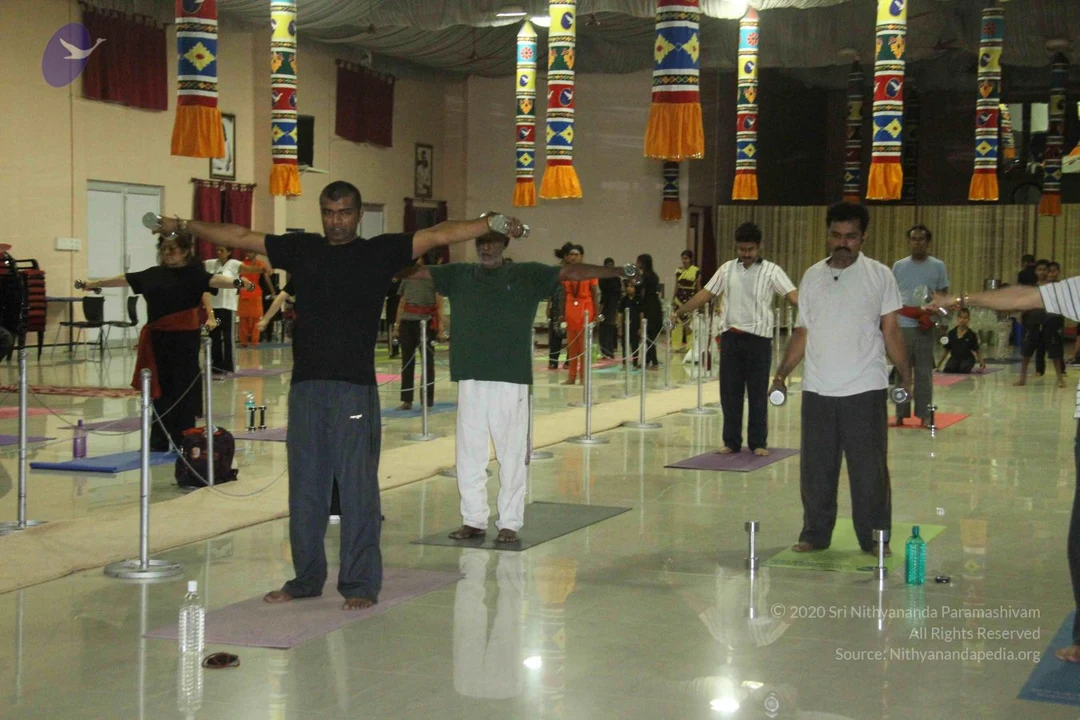
Nithya Yoga
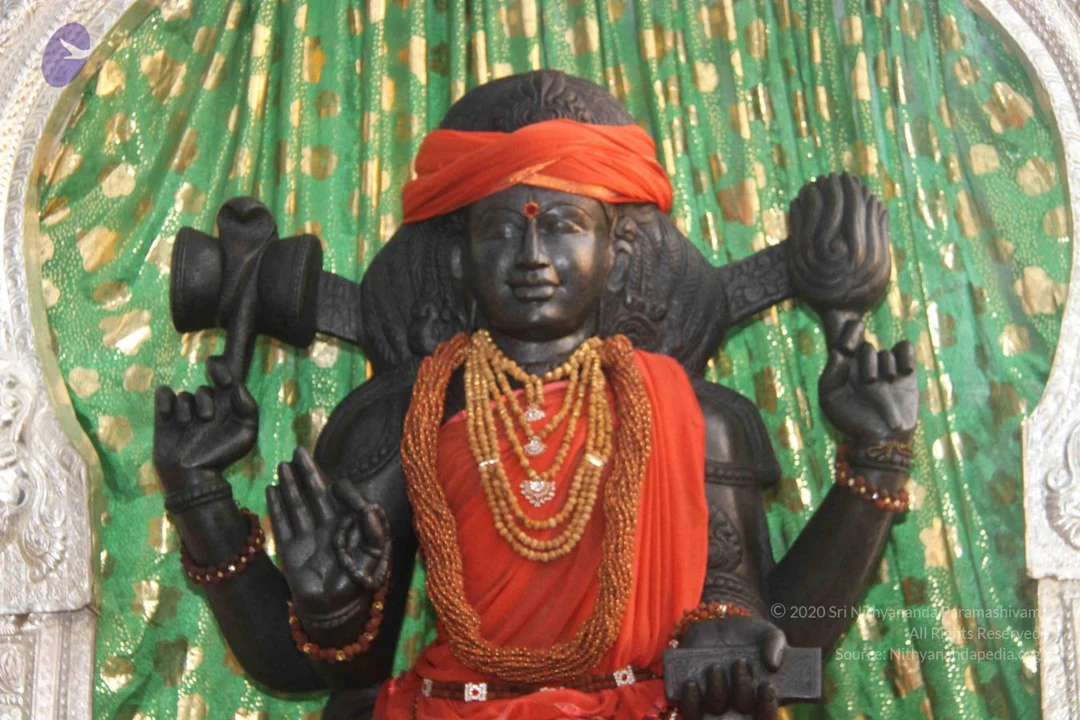
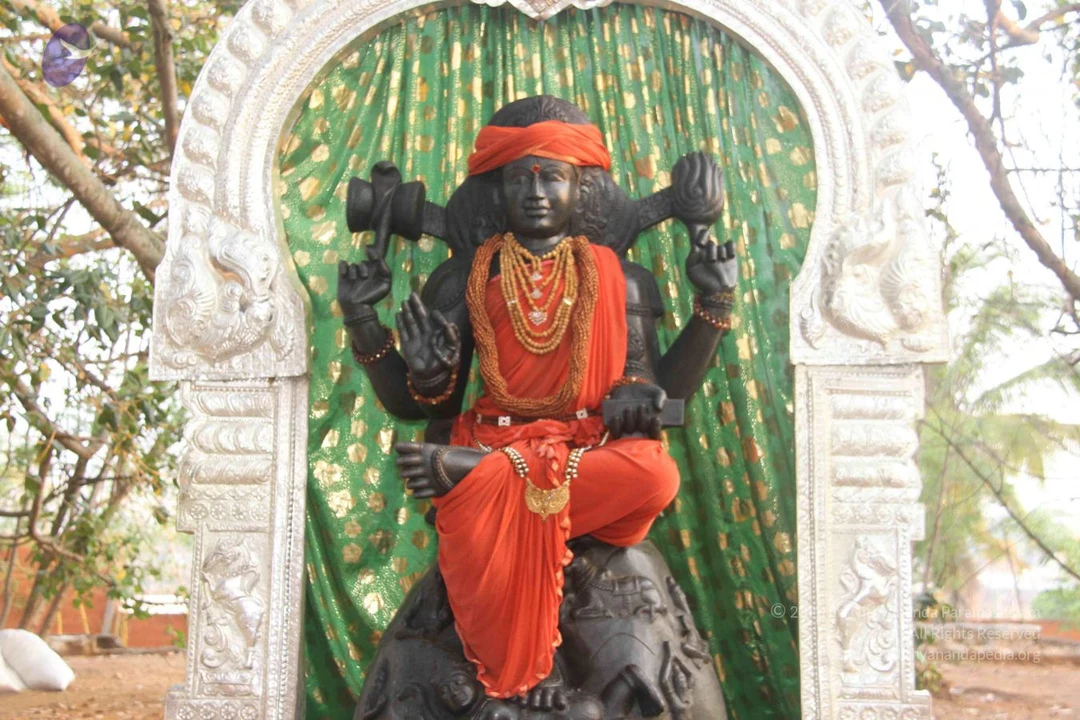
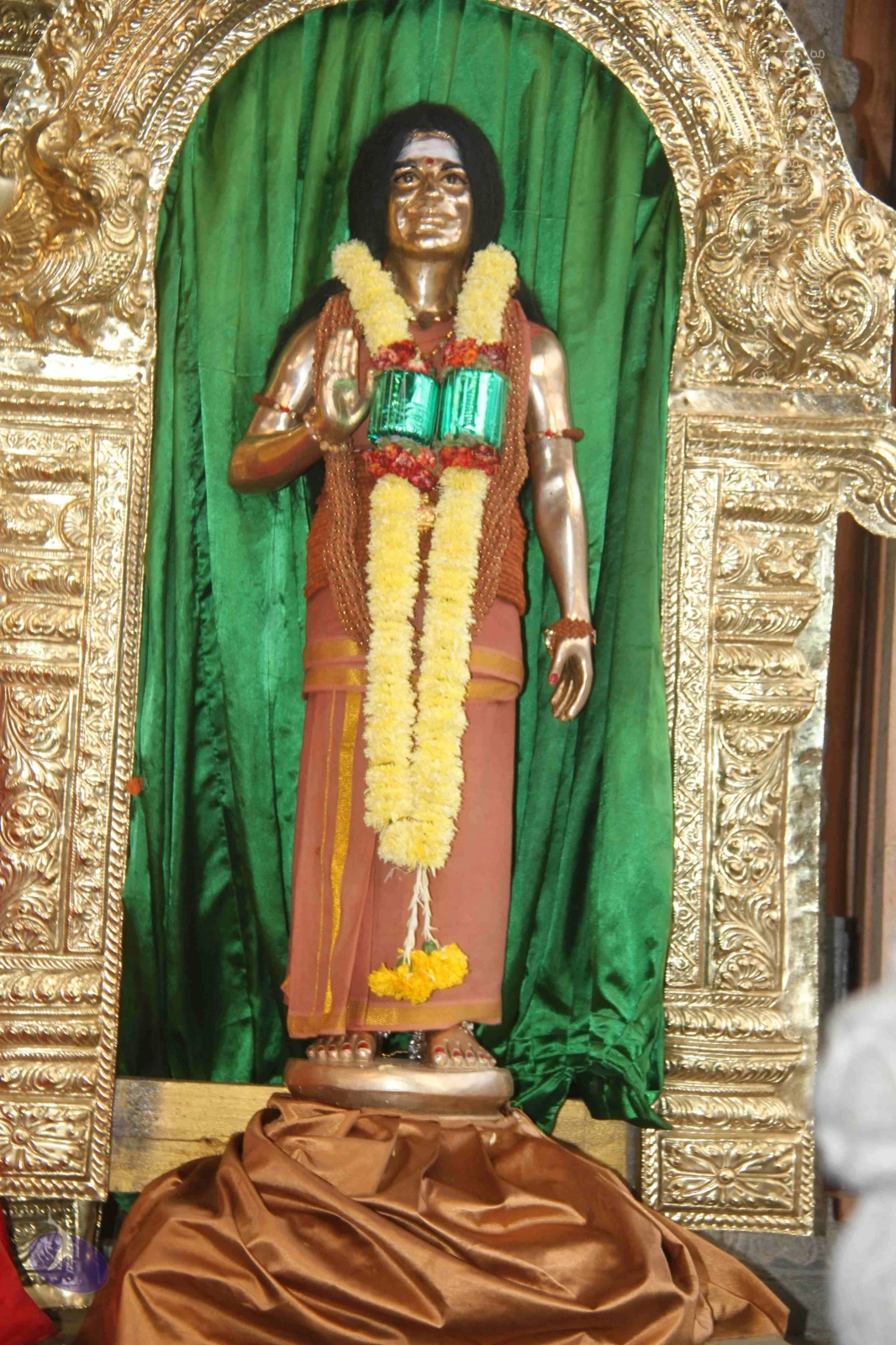
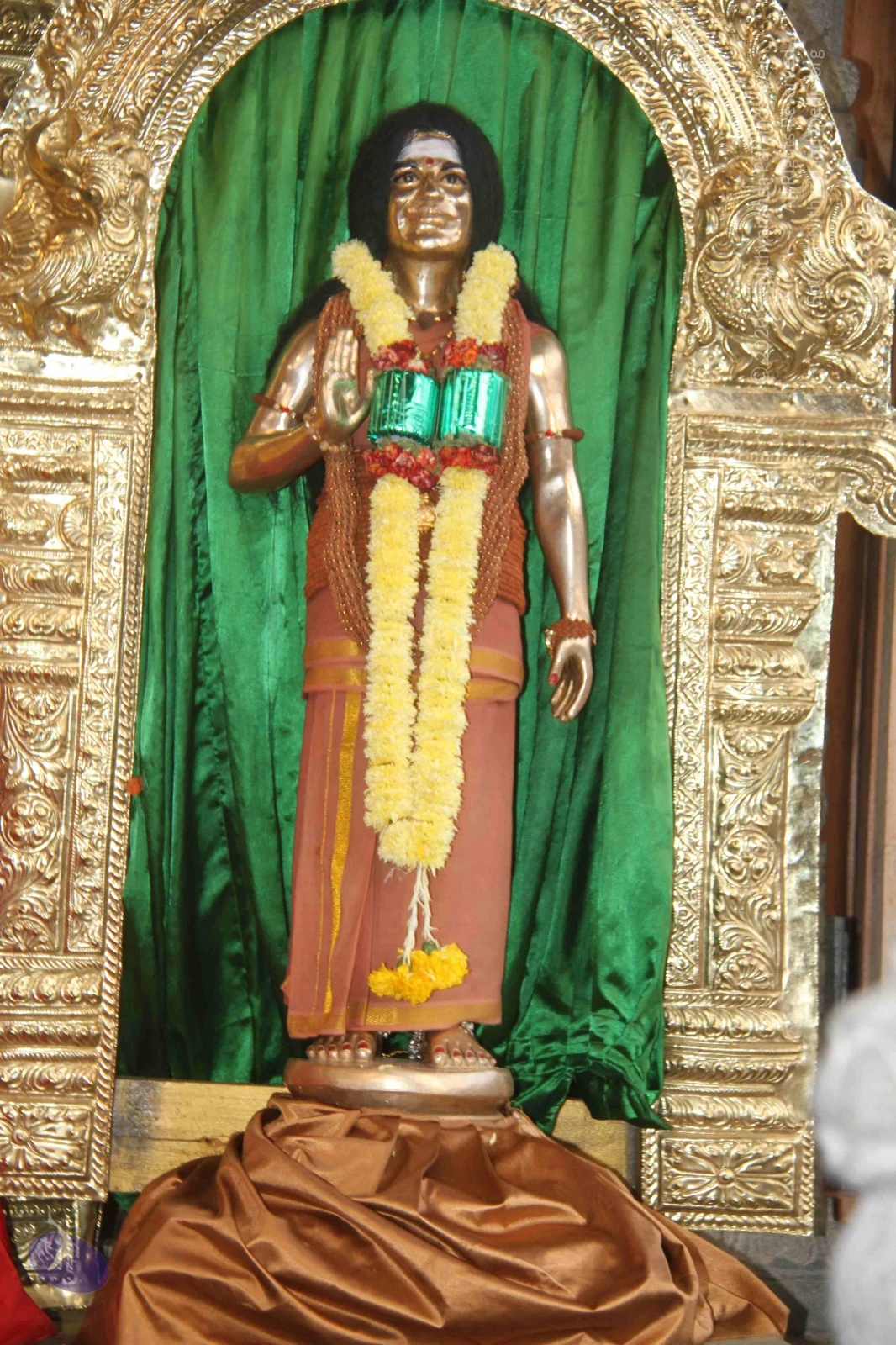
Temple-and-Sacred-Banyan-Tree
Pada-Puja

Nithya Satsang

Sarva-Darshan

Maheshwara-Puja

Nithyananda-Homa

Energy-Darshan

Photos Of The Day:

Yoga-Temple-Tour

Pada-Puja

IA-Session-Maheshwari-Puja

Thanti-TV

Darshan

Maheshwara-Puja

Nithya-Satsang

Nithyananda-Homa

Pada-Puja

Temple

Yoga

Photos from this day

View all 425 photos

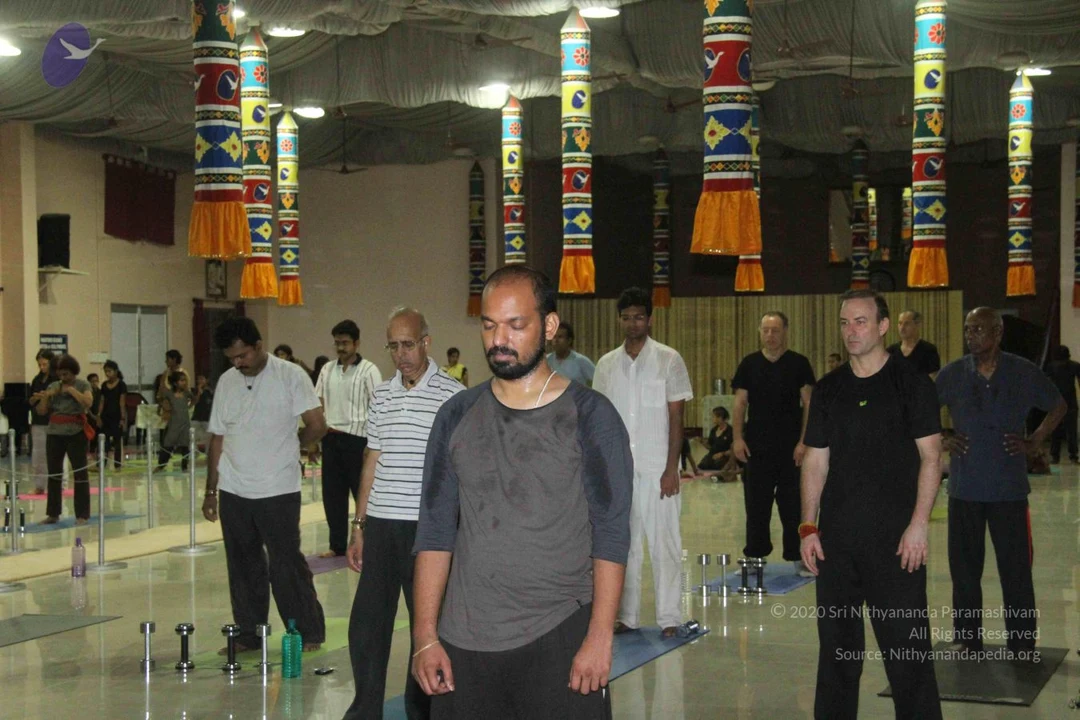
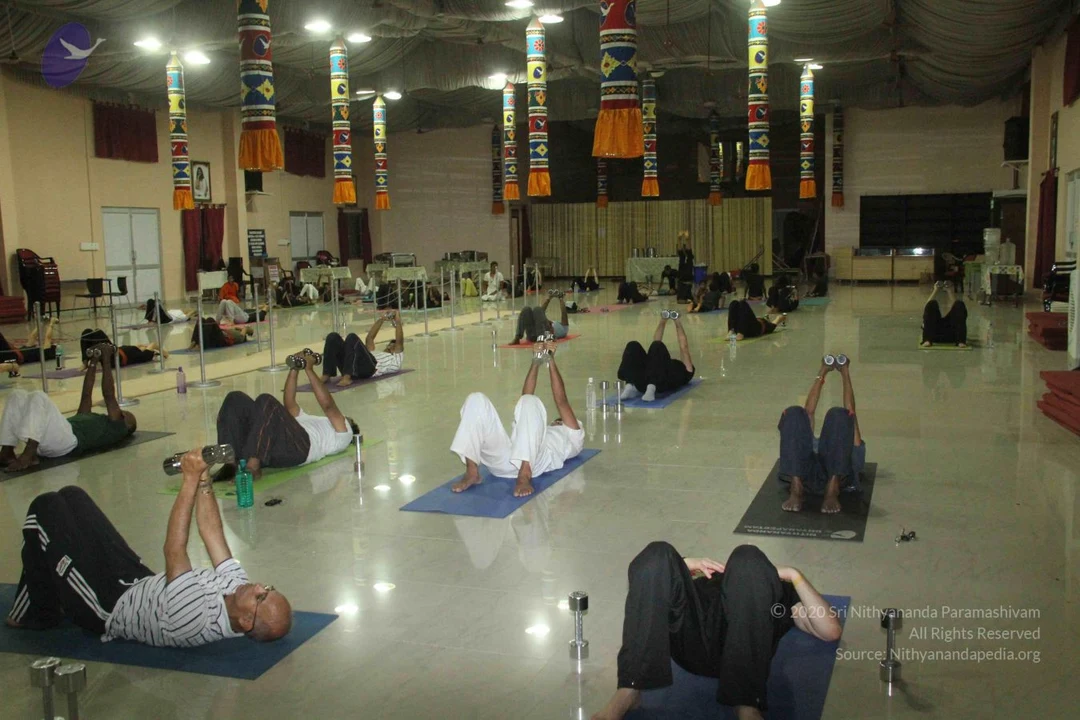
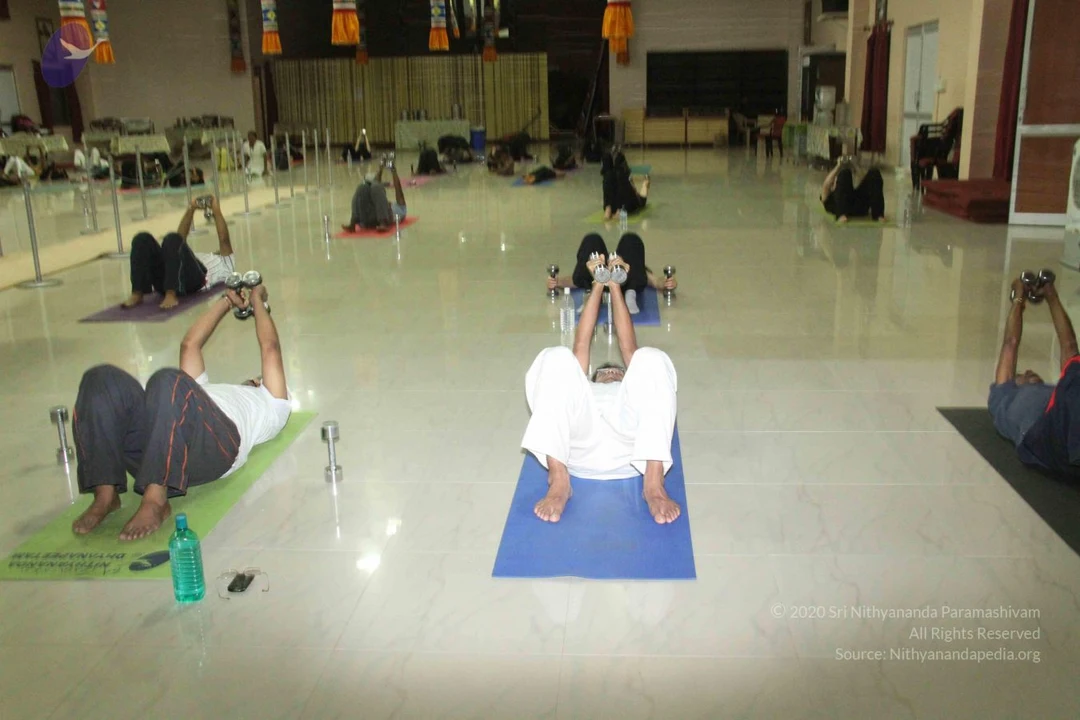
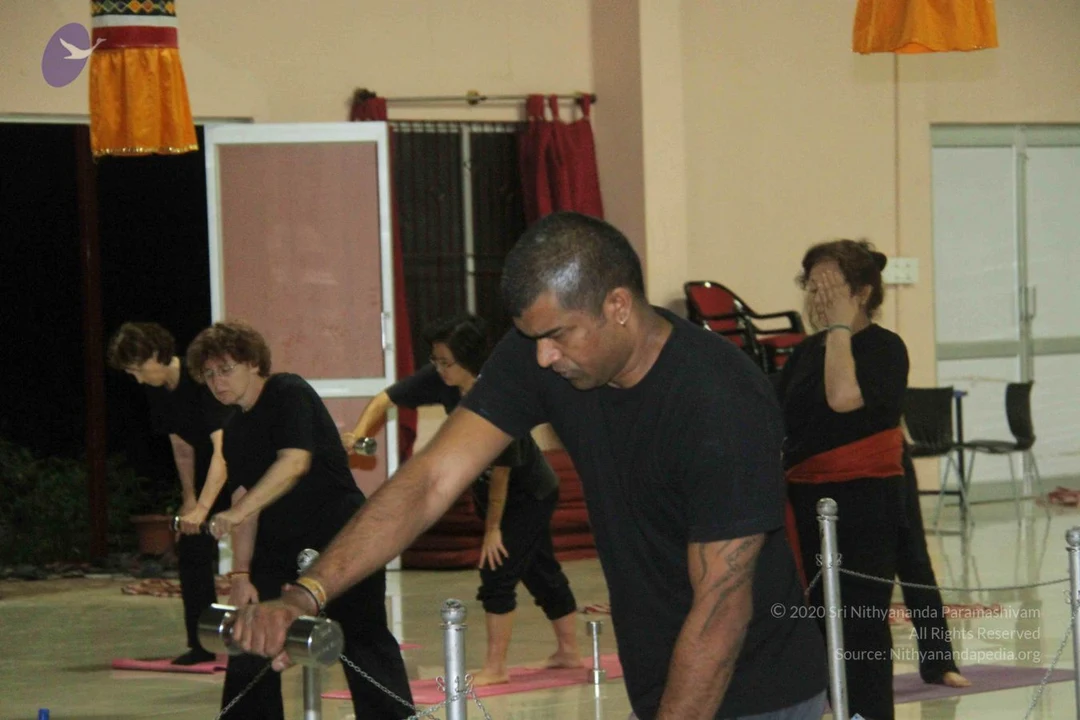
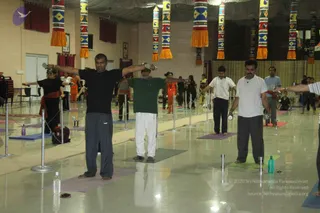
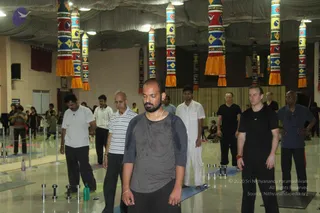
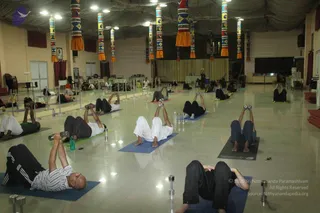
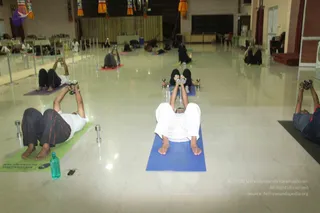
Nithya Yoga

9 photosSource gallery
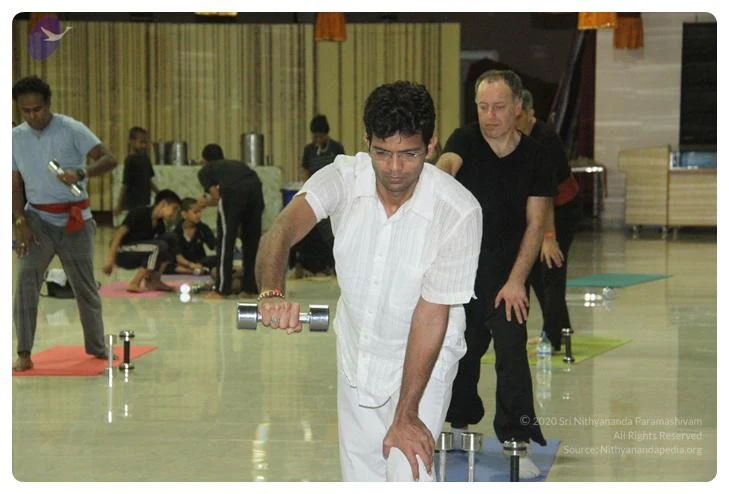
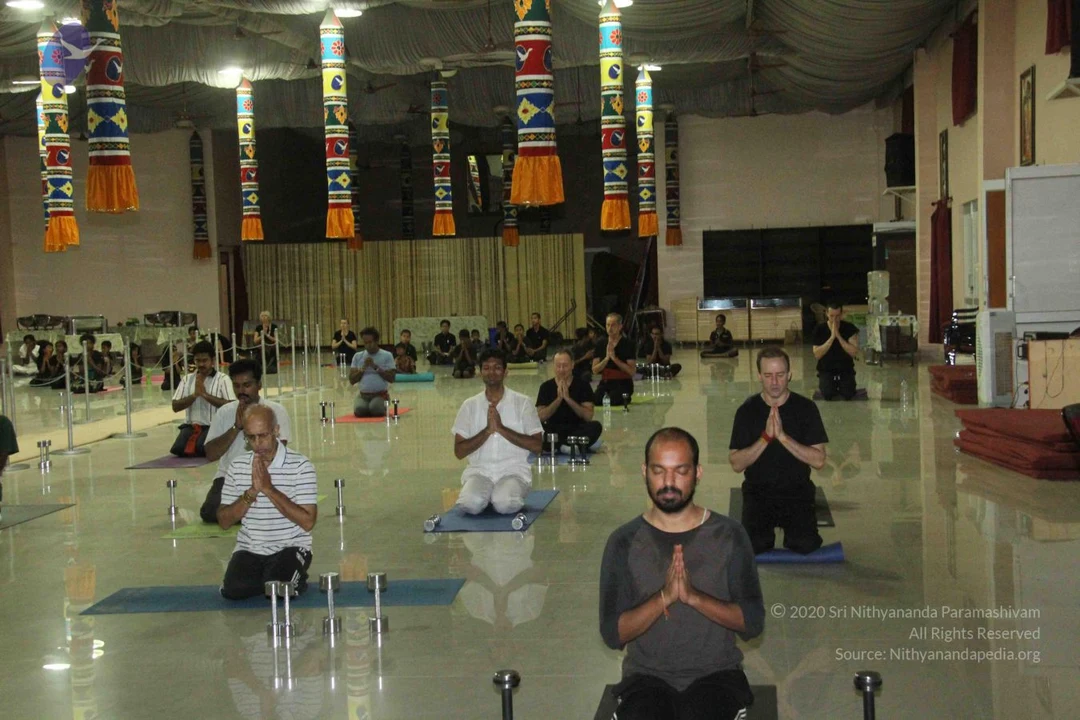
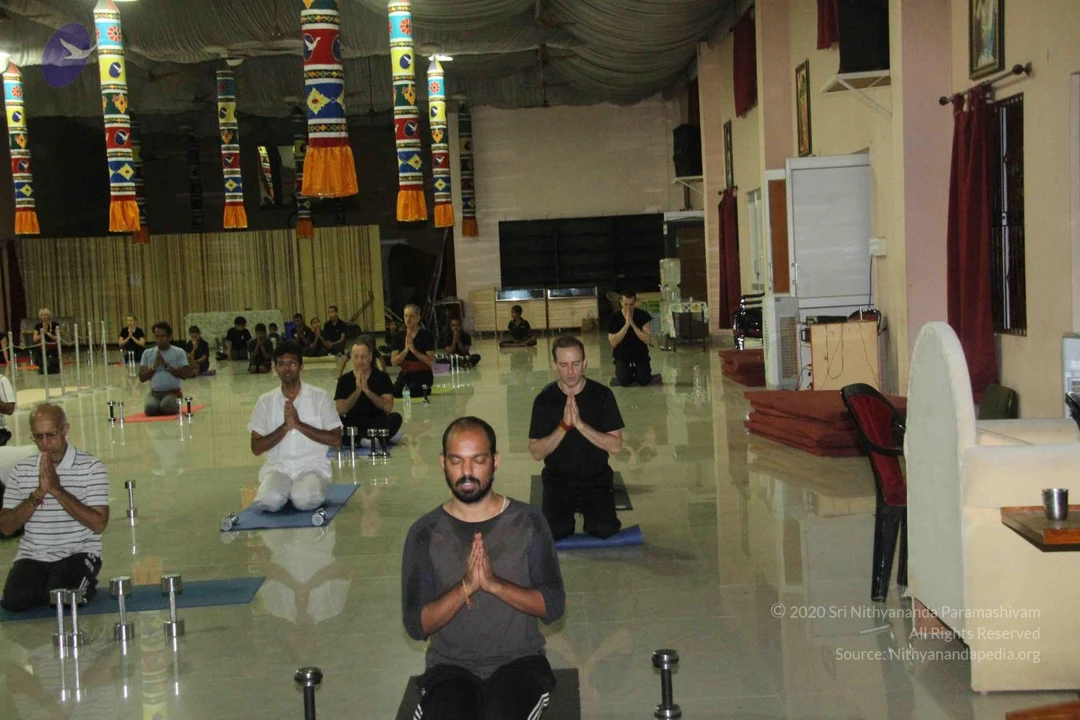
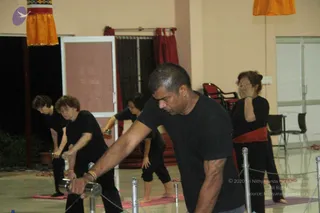
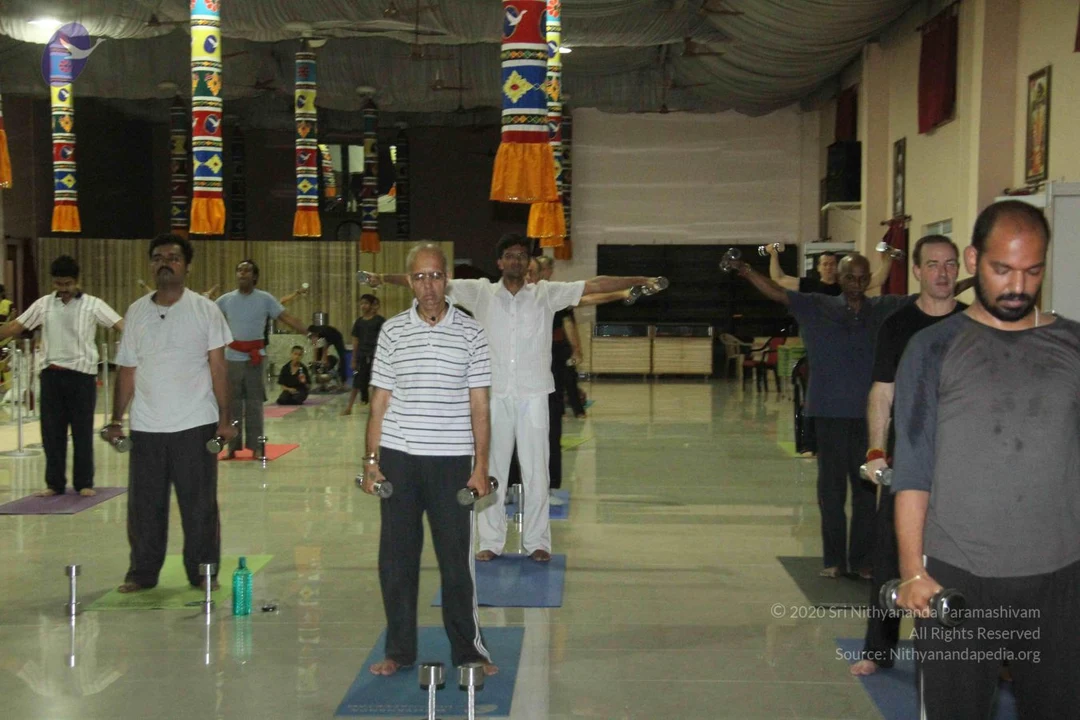
A photograph of a large indoor hall where a group of people stand on blue and green yoga mats performing arm exercises while holding small silver dumbbells. Several participants wear white shirts and dark trousers, others grey or striped t-shirts. Colourful striped pillars with orange fringed tassels hang from a draped white ceiling, and a glossy tiled floor reflects the room. A bottle sits on a mat in the foreground. No one is identified as a person in this image.Indoor photo of a yoga or sword-practice session in a large hall with a polished floor and hanging decorative cloth pillars in red, white and orange. Several students stand on mats with arms outstretched, holding small metal objects, while an instructor in a white shirt and grey trousers stands in the foreground right. Participants wear black, green, white and striped clothing. Metal stanchions and water bottles are visible on the floor.A photograph of a large hall with a polished floor where a group of people stand barefoot on yoga mats with eyes lowered, in a standing meditation or yoga posture. In the foreground a man in a dark grey long-sleeved top and dark trousers stands with head bowed, and a man in a white kurta stands nearby. Other men wear striped and dark t-shirts, black clothing and a blue shirt. Tall cylindrical decorative hangings in red, yellow, blue and white patterns with orange fringes hang from a draped ceiling. Stanchions and small weights line the floor, and a small water bottle sits near the front. Many people are visible in the background.A photograph of a large indoor hall with a polished floor where many people are lying on exercise mats doing supine exercises, lifting their legs and holding small dumbbells or weights overhead. Participants wear casual clothes: dark track pants, white shirts and white kurta-style trousers. Colourful patterned fabric pillars with orange tassels hang from a draped ceiling, and folding chairs and tables line the back of the room. Several participants sit or lie near the edges, and a few other people are visible at the rear. The scene resembles a group fitness or yoga session.A large marble-floored hall where practitioners lie supine on yoga mats doing exercises while holding small metal dumbbells overhead. The central figure wears white loose trousers and a white top on a blue mat; others wear dark grey trousers and white or blue tops on green, purple and red mats. Several more people in dark clothing are visible further back on mats, with chairs and tables along the sides, hanging yellow and orange tassel decorations above, and a green water bottle in the foreground.A group of people in black clothing performs an exercise session in a bright hall with cream walls, red curtains and orange hanging cloths. In the foreground a man with short hair and a black t-shirt, with a tattooed forearm, bends forward holding a silver dumbbell in each hand on pink mats. Behind him, several women in black tops and trousers, some with red sashes, bend and stretch in similar poses, while one woman on the right raises an arm to her head. Stacking chairs and a silver rope barrier stand along the right side.

Temple-and-Sacred-Banyan-Tree
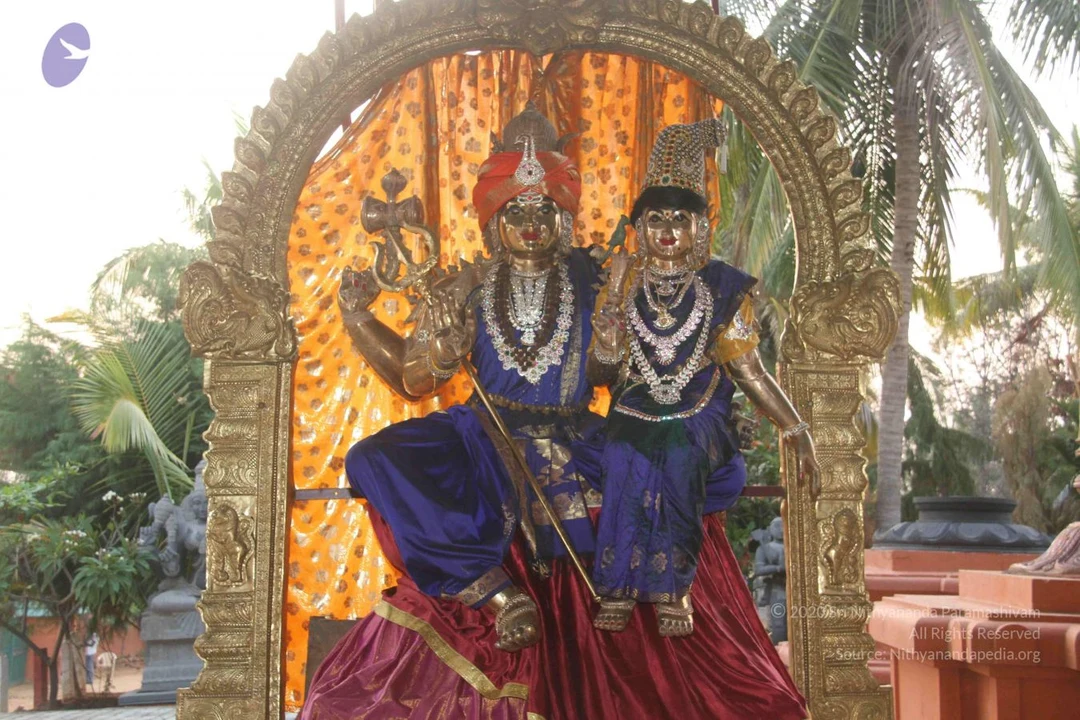
30 photosSource gallery
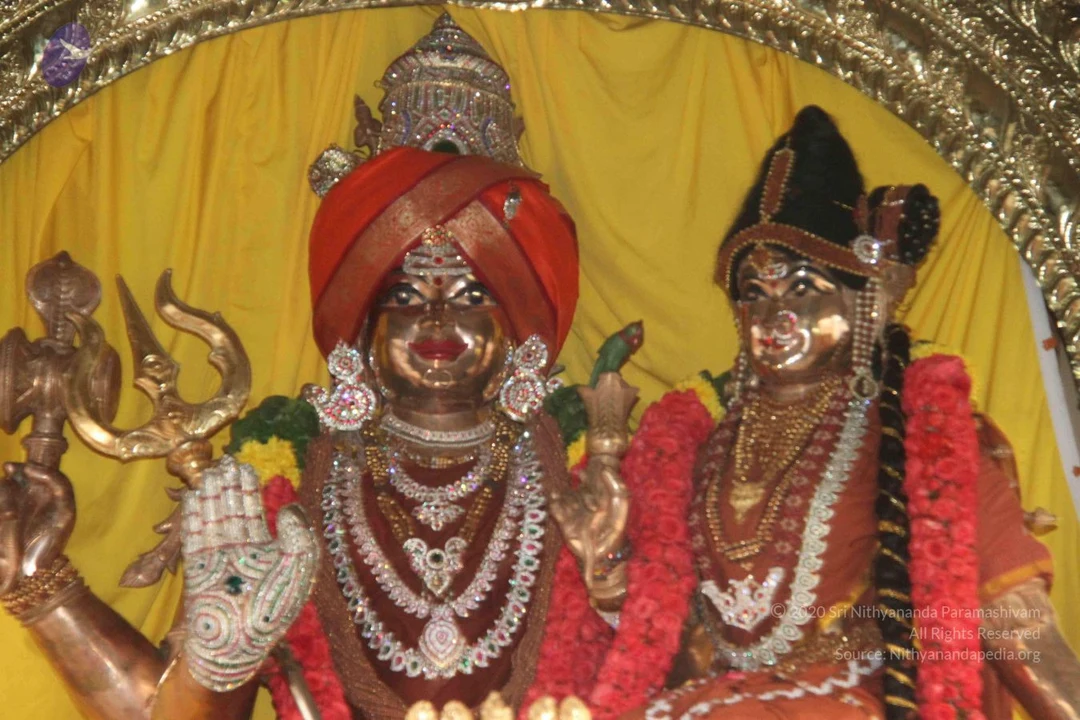
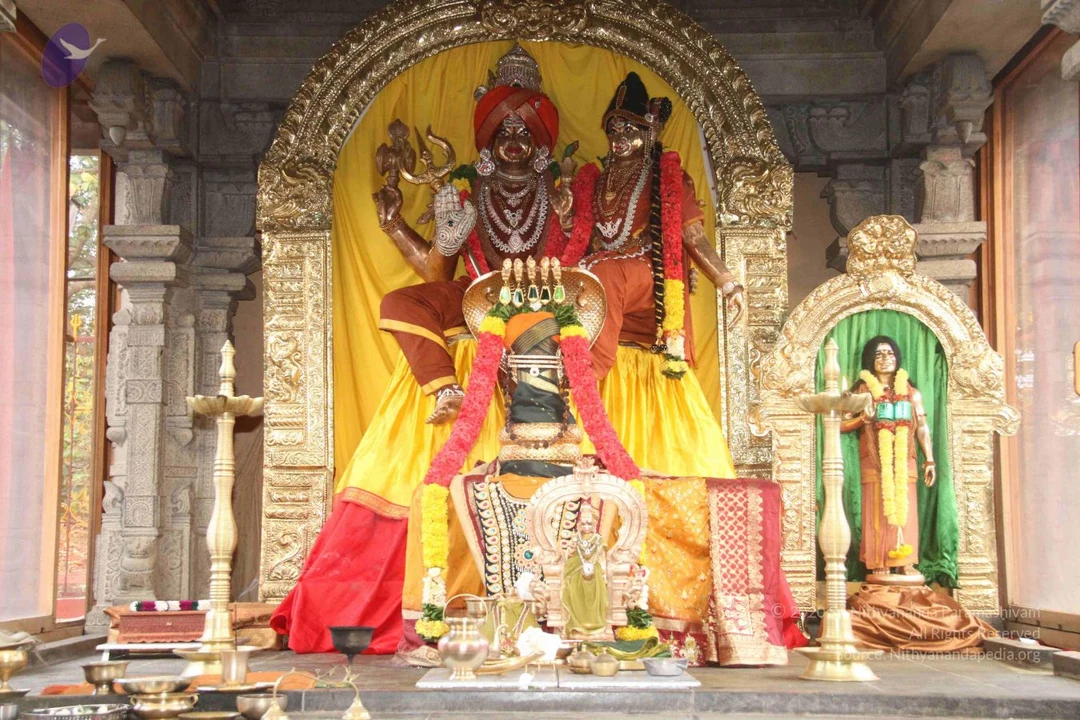
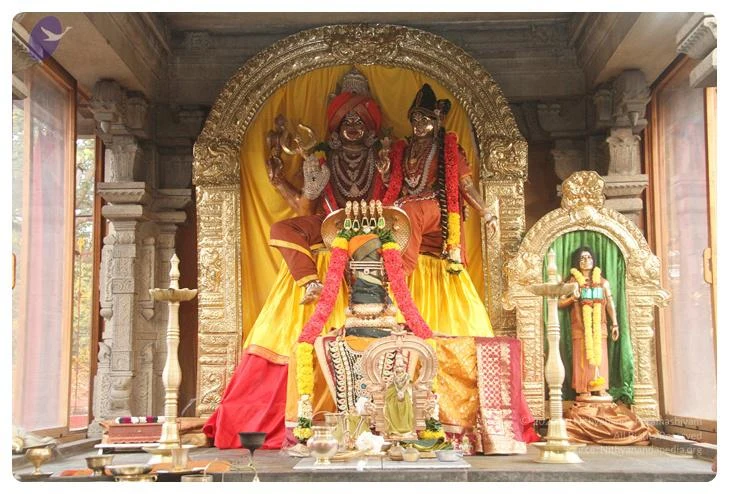
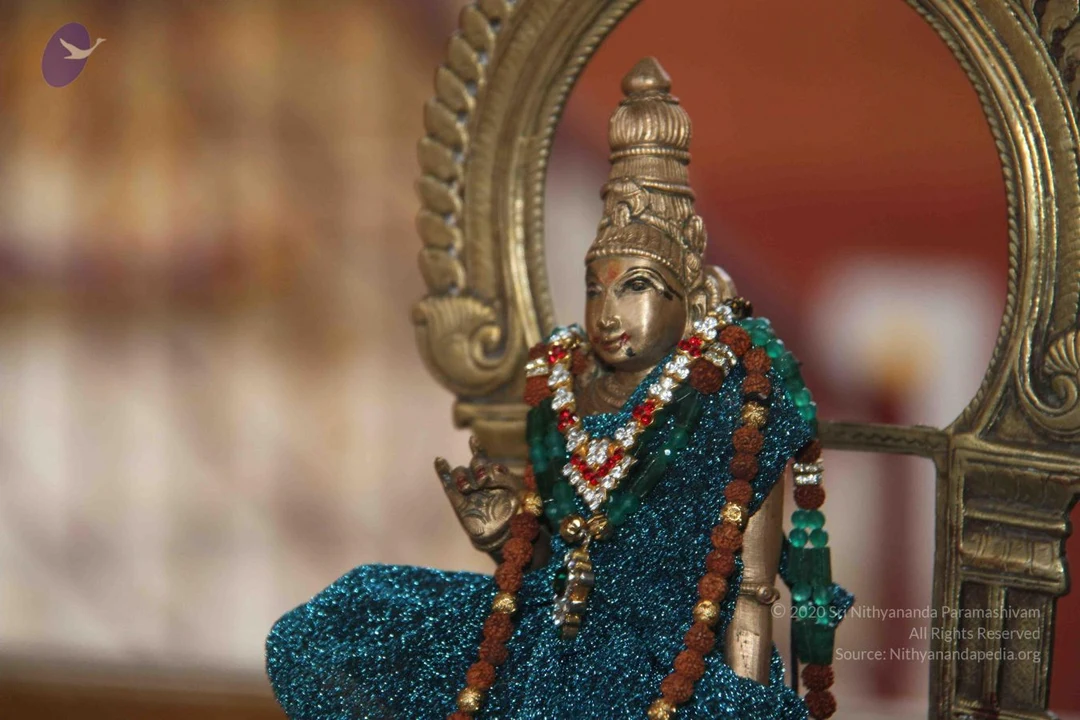
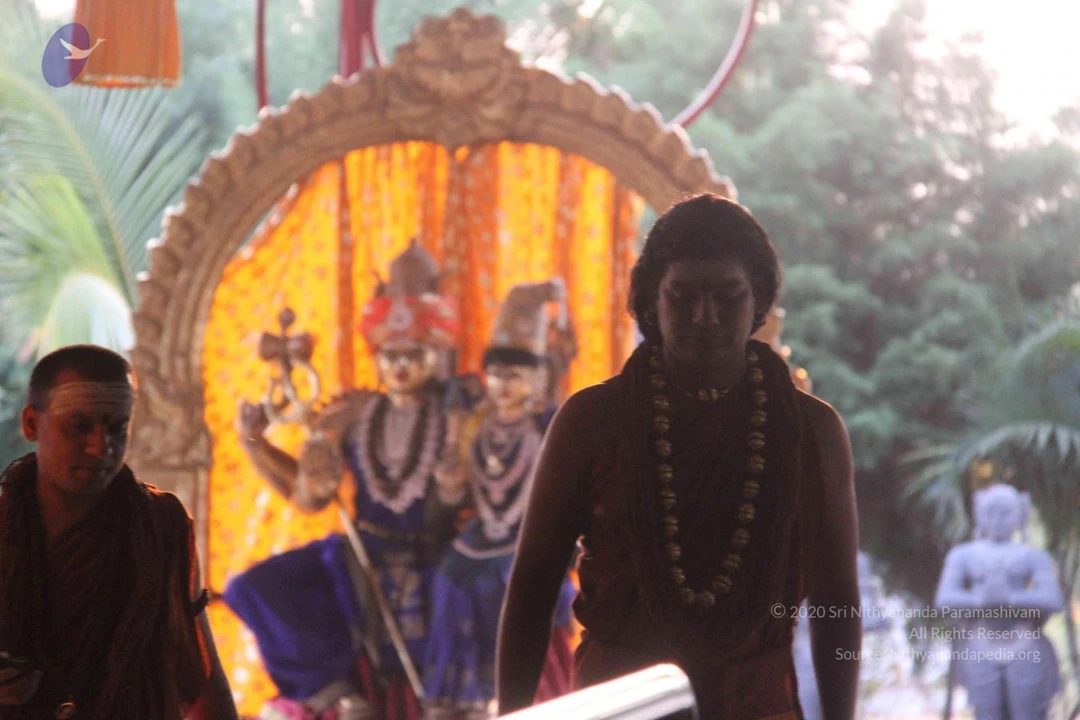
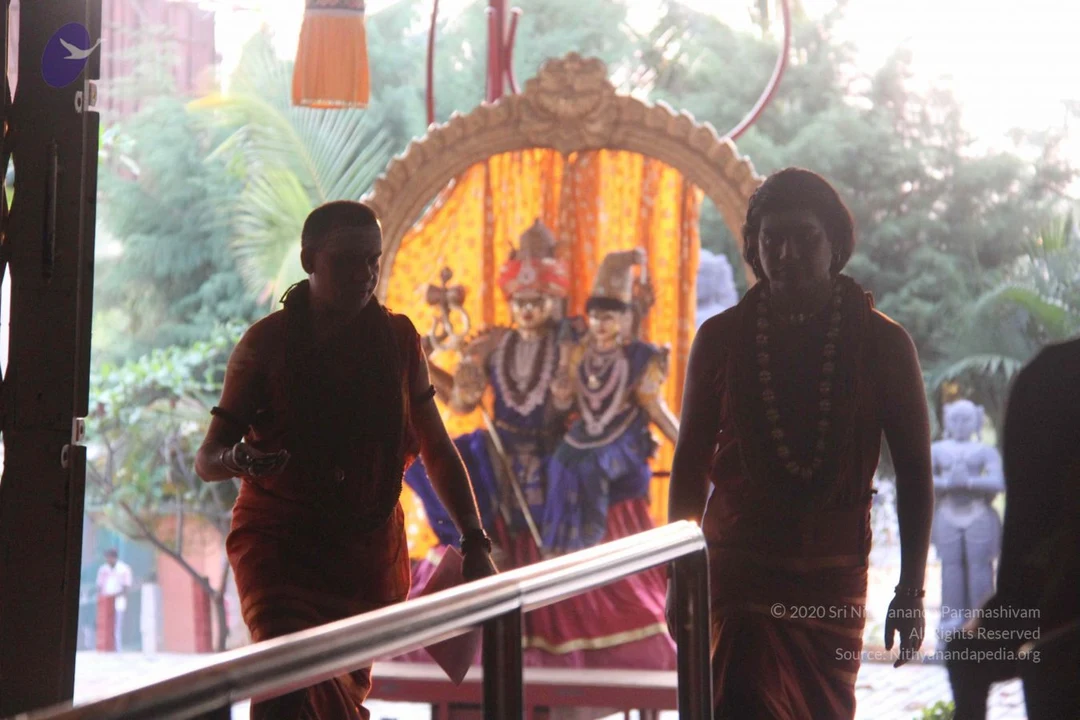
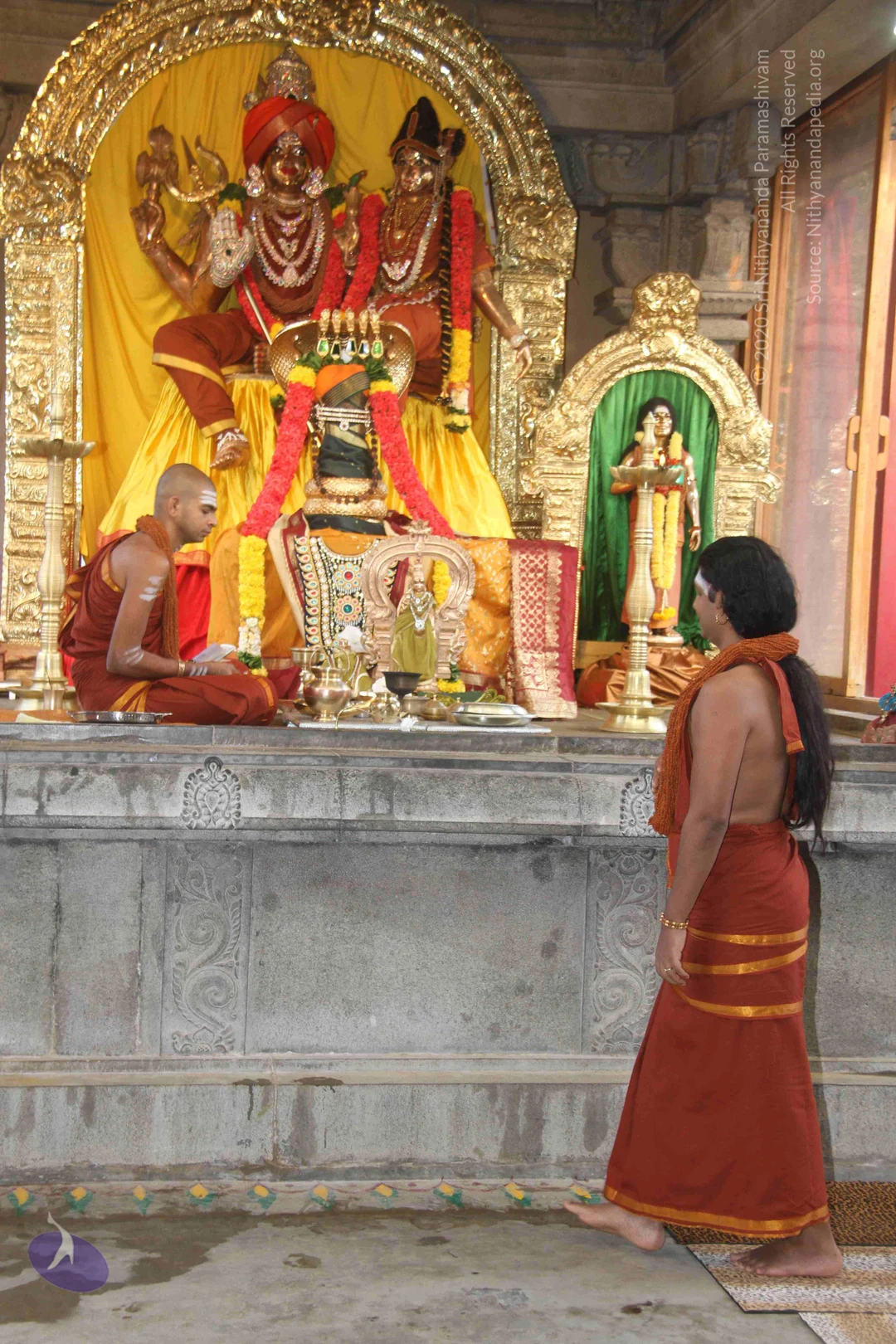
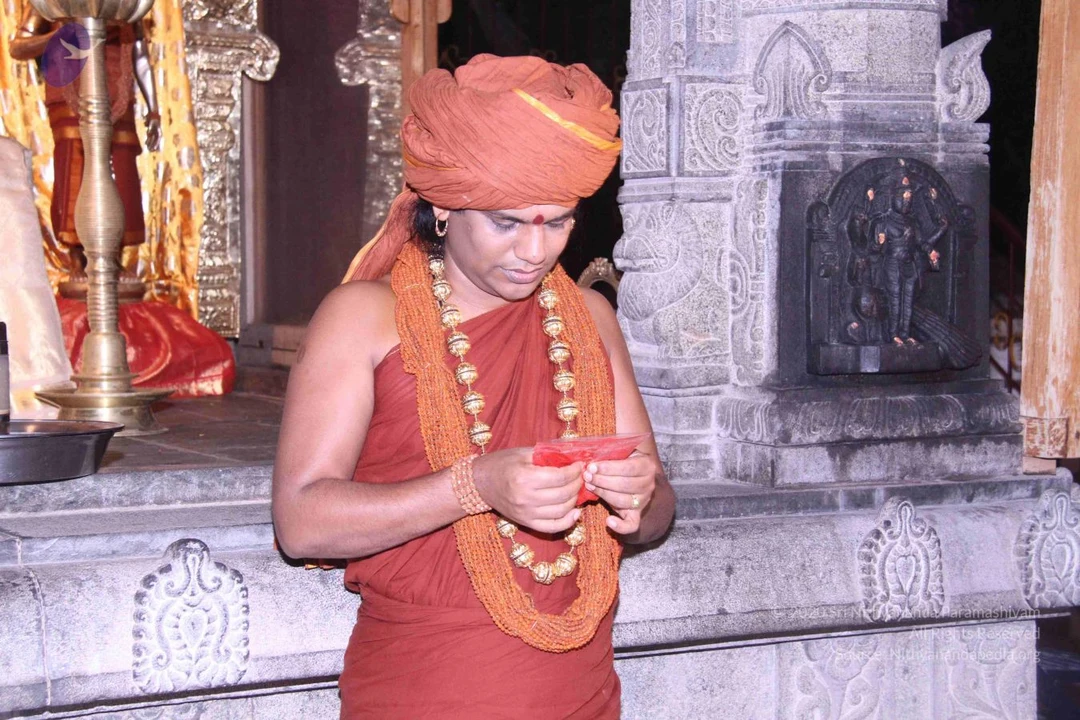
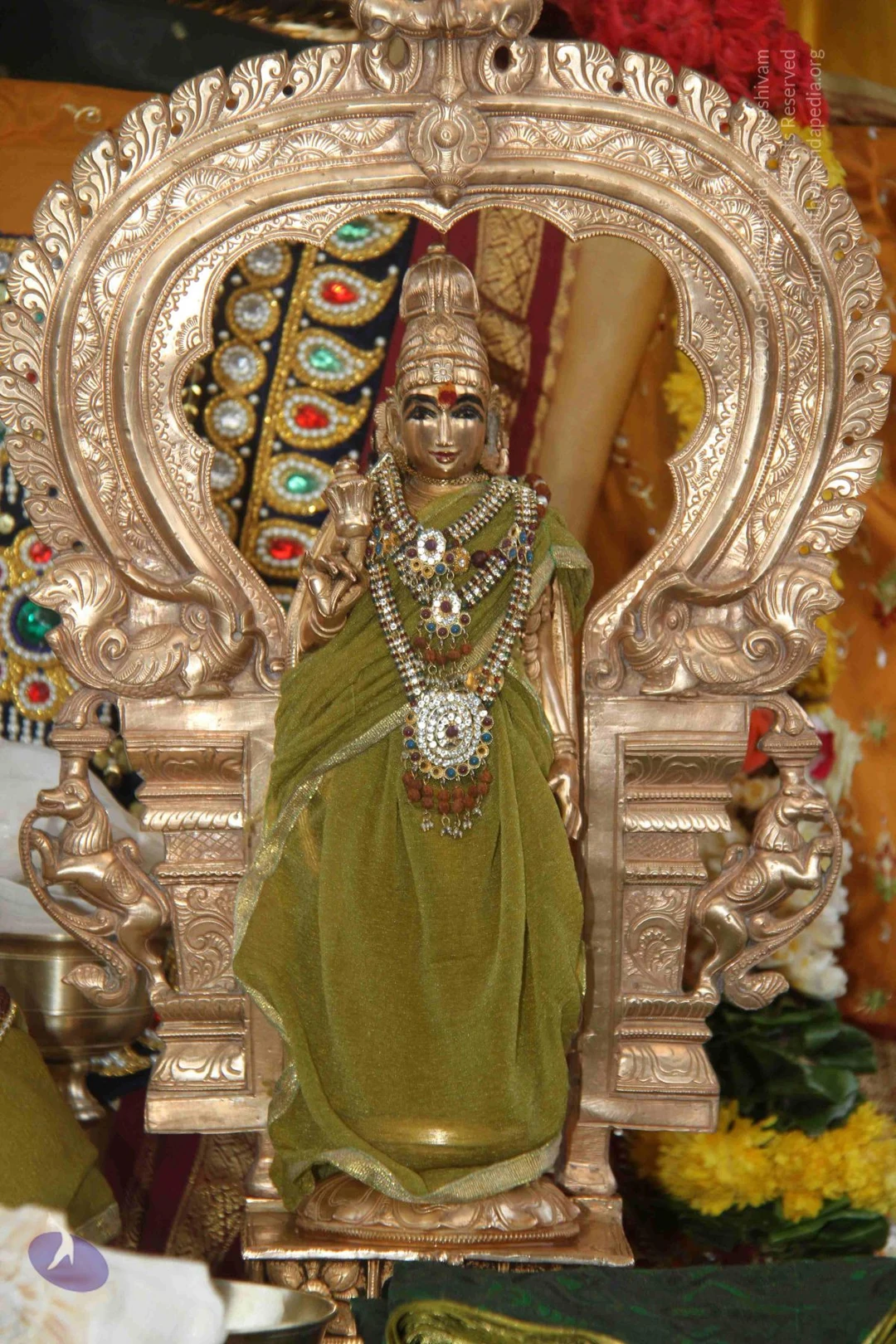
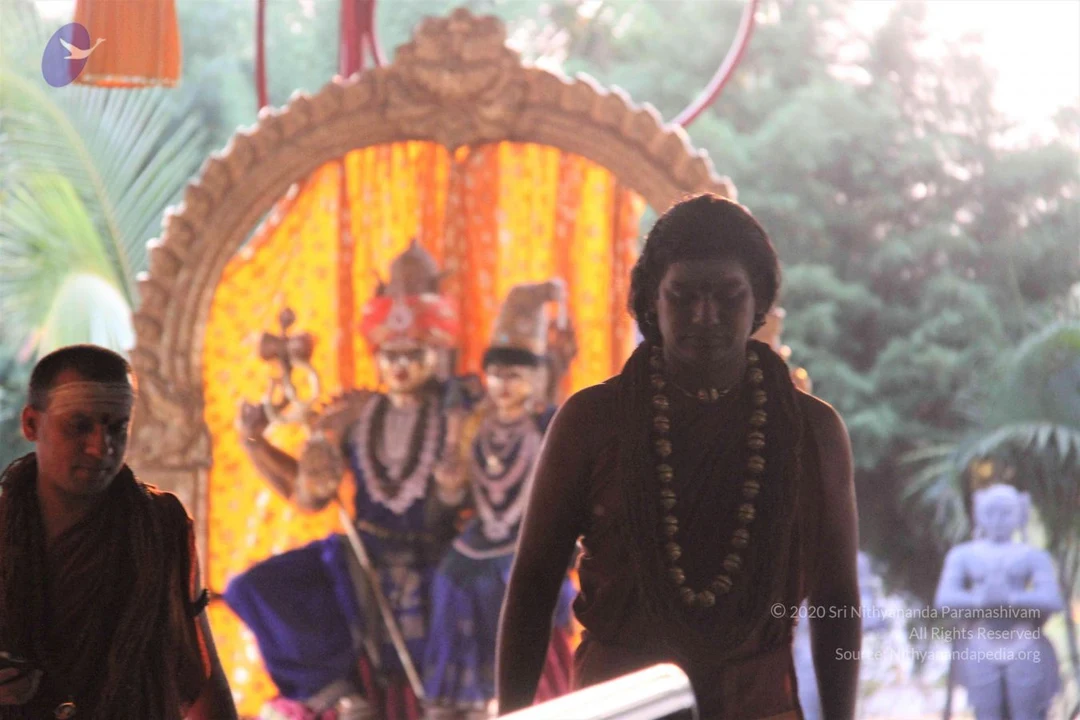
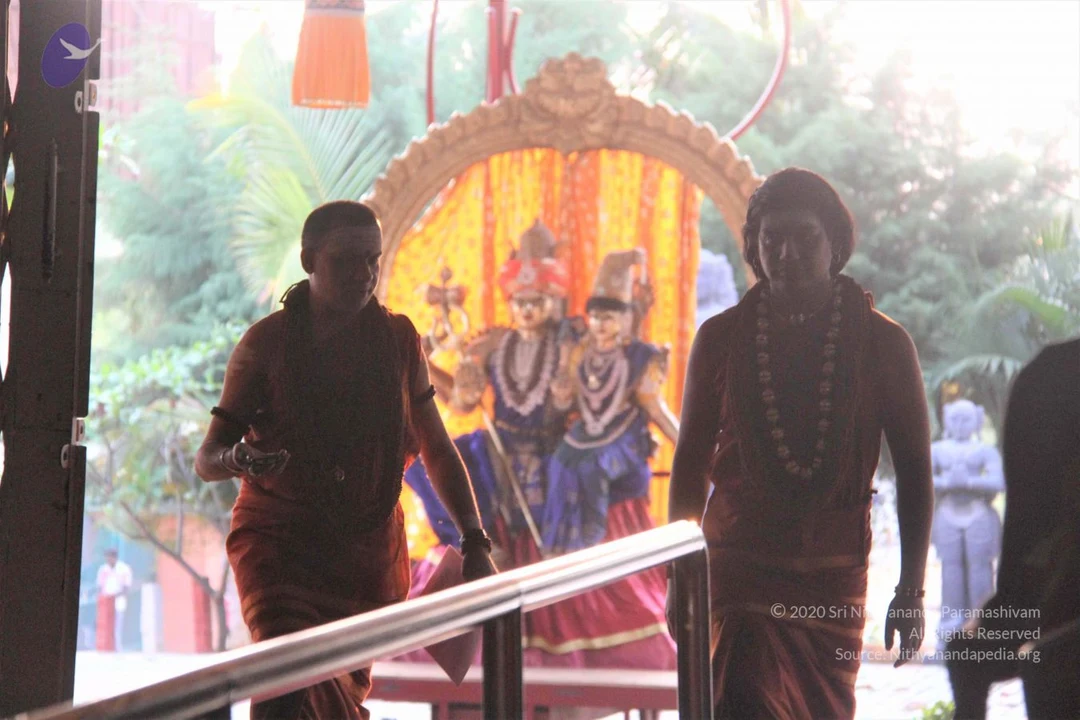
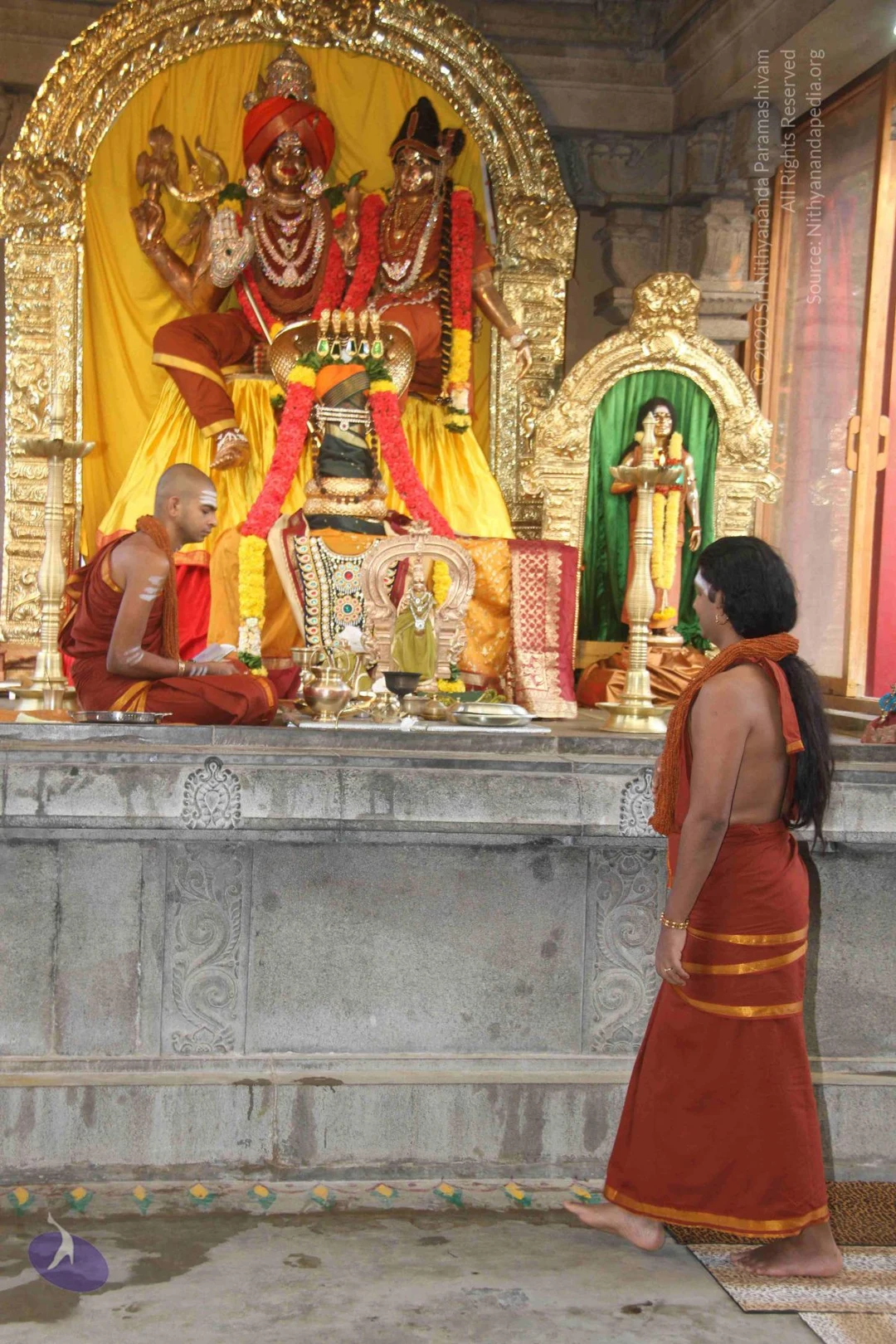
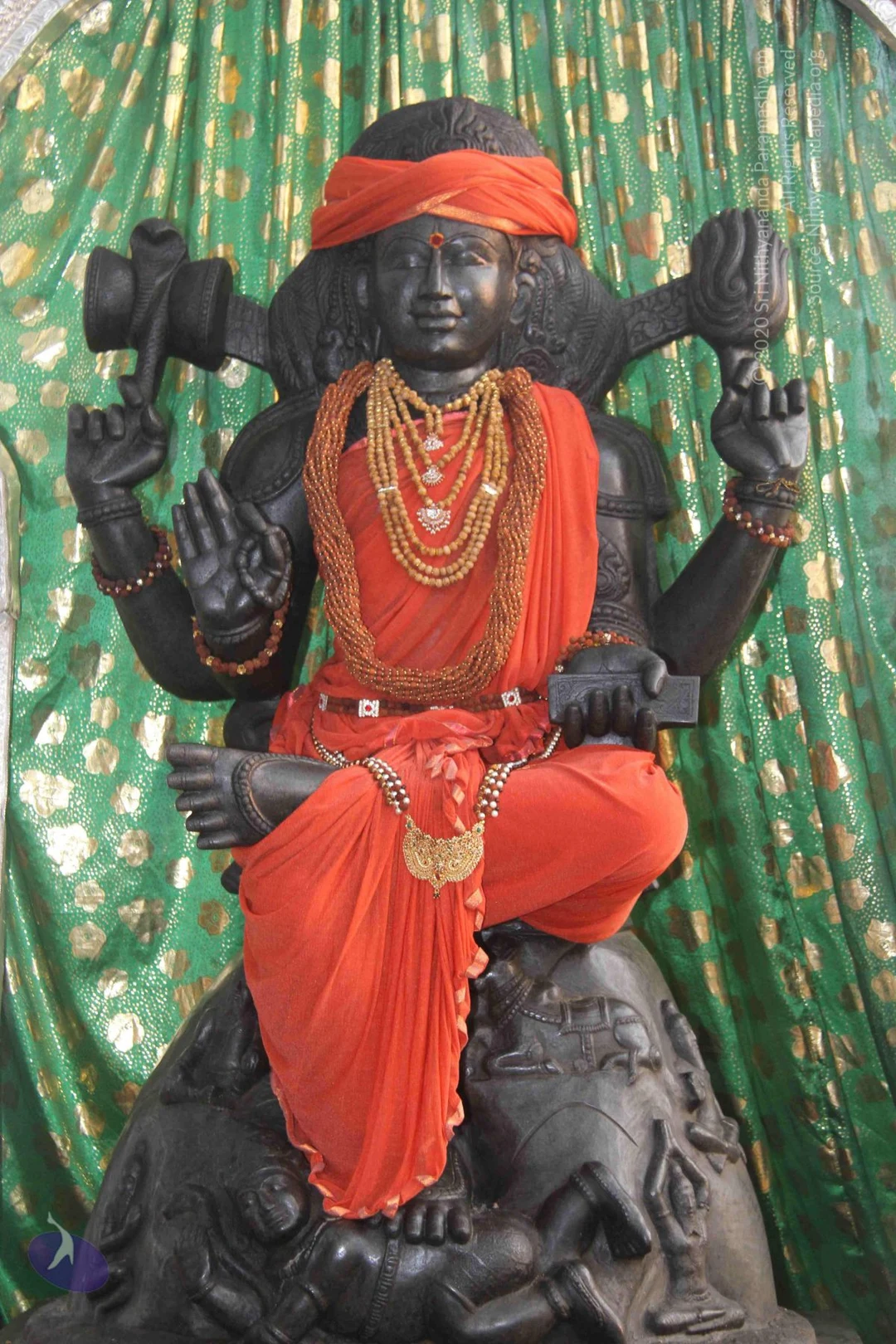
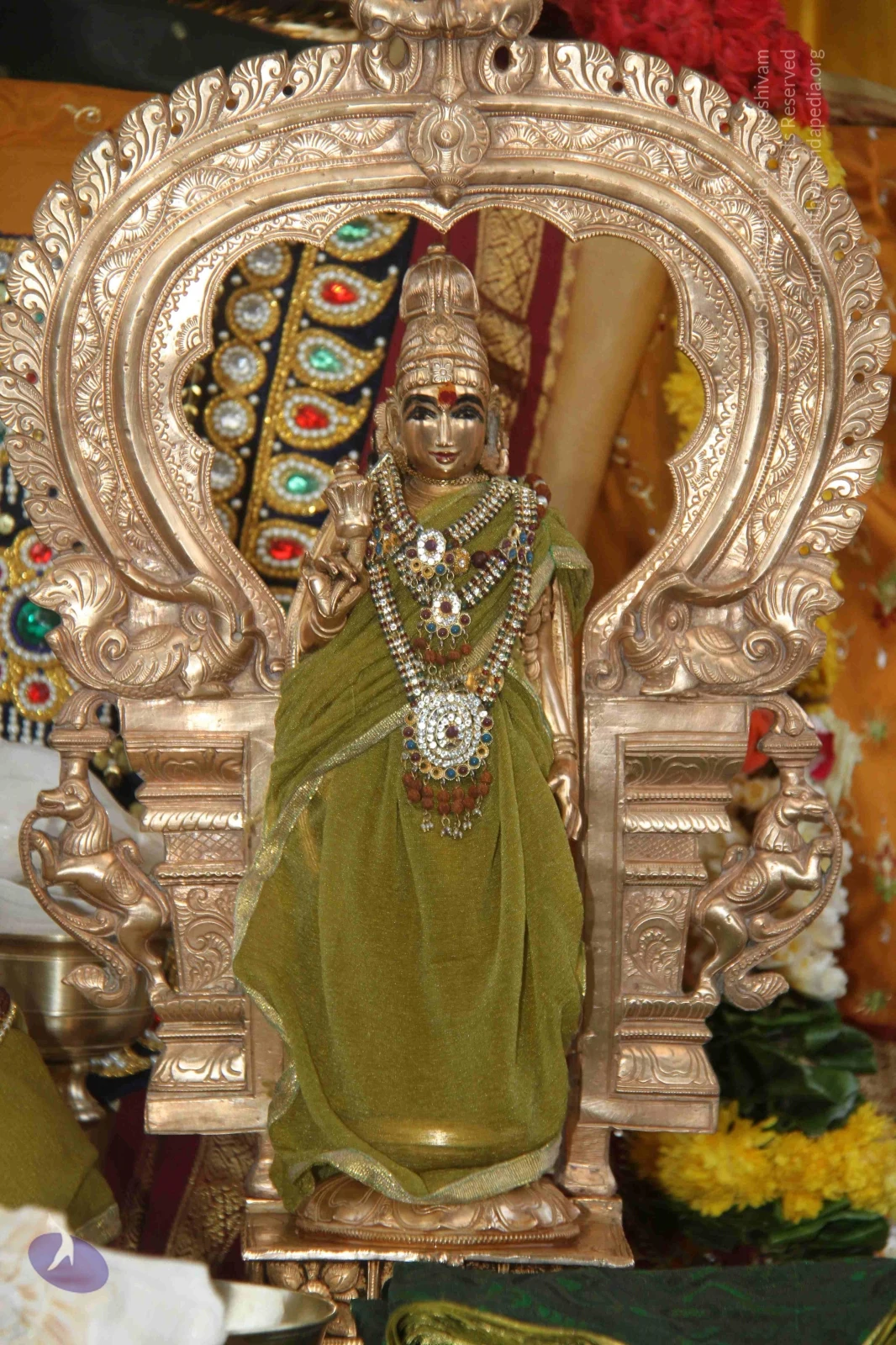
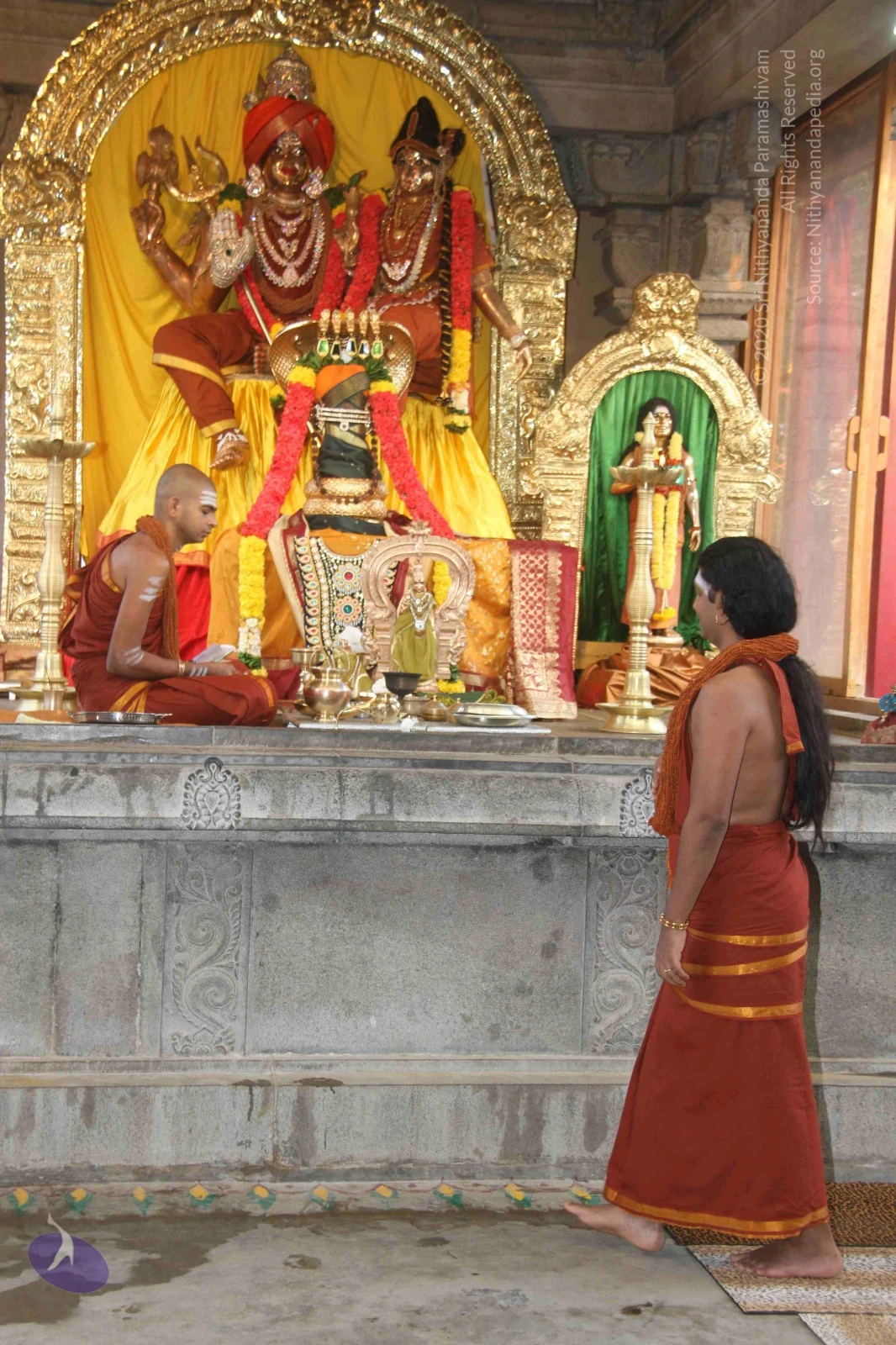
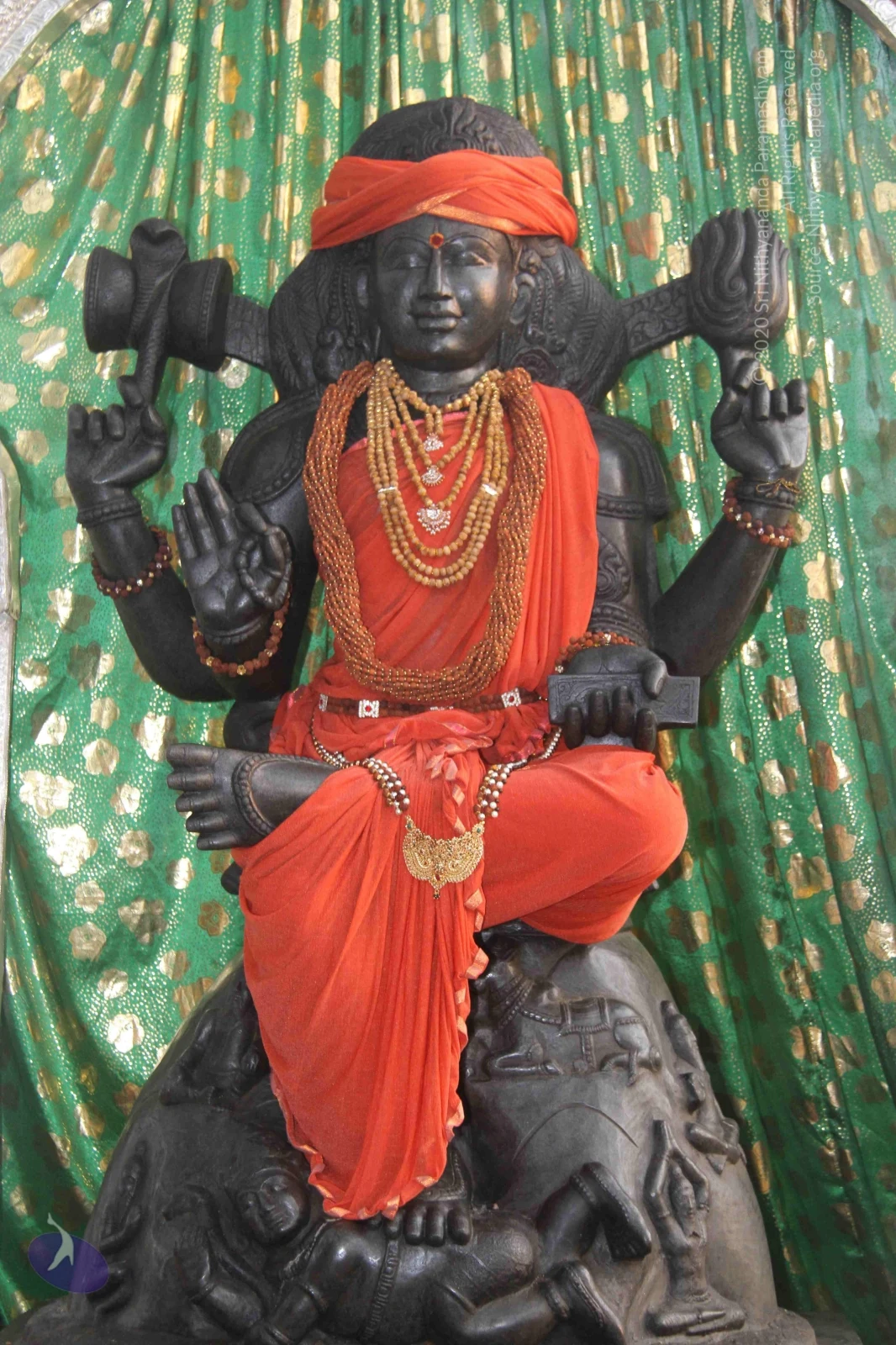
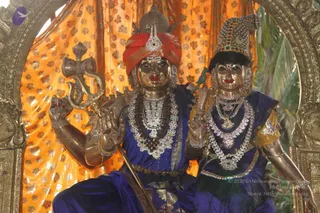
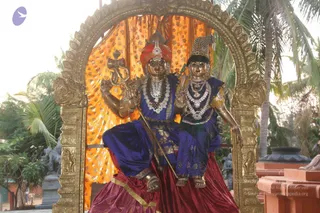
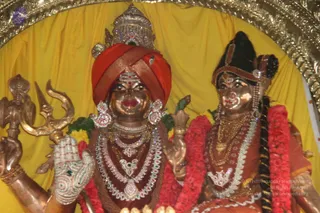
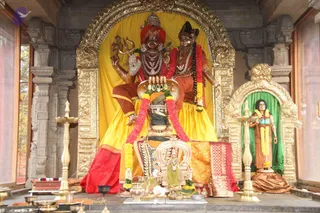
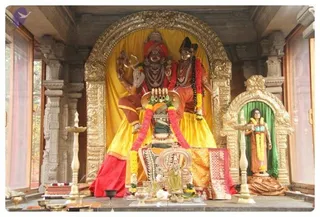
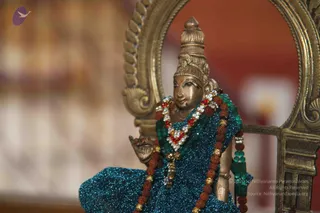
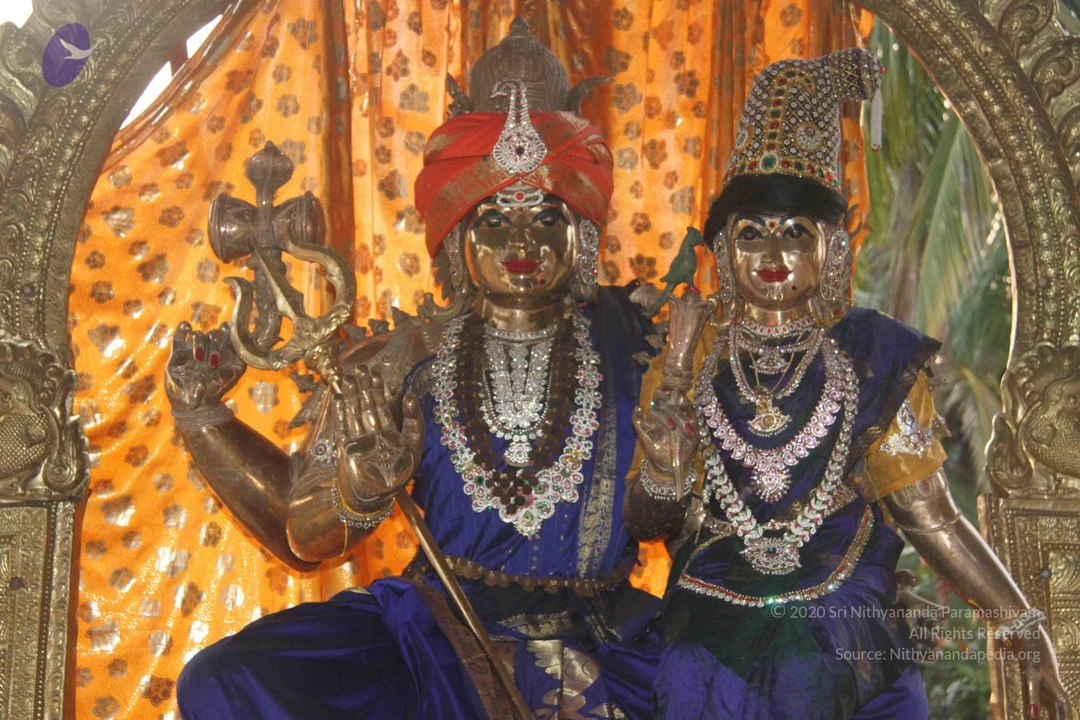
Two life-size metal deity murtis seated side by side against an orange and gold floral drape within an ornate gold arch. The figure on the left wears a red turban with a jewelled ornament, a blue garment, layered beaded and jewelled necklaces, and holds a trident and a raised hand in abhaya gesture. The figure on the right wears a tall jewelled crown-like headdress, a dark blue sari-style garment with gold border, and multiple jewelled necklaces. Palm fronds appear at the right edge. These are statues, not living people.A photograph of a large golden procession-style deity murti seated within an ornate gilded arch against an orange and gold patterned cloth backdrop, with palm trees and foliage around it. The figure on the left has four arms, a red and gold turban, a trident-like staff and layered silver necklaces, and is dressed in deep blue with a maroon lower garment. Beside it sits a companion figure wearing a tall decorated crown, multiple silver necklaces and a blue sari-style garment. Both statues are painted in lifelike skin tones.Two large metal murti statues of deities, not living people, are seated before a yellow draped backdrop framed by ornate gold arch work. The figure on the left has a red turban, a jeweled crown, and a silver-and-gold necklaces with embedded stones, raising a silver-patterned hand and holding a golden trident and a small drum-like object. The figure on the right wears a black crown with ornaments, gold necklaces, and a white beaded garland, with red and yellow flower garlands draped across both figures.A photograph of a temple sanctum showing a large golden-framed shrine with a yellow backdrop. Two large deity murtis sit on a raised platform, one with a red turban and many arms holding a trident and other implements, the other wearing a tall crown and garlands. A shivalinga with a silver-rimmed yoni base sits before them, draped with marigold garlands, with brass lamps, kalasha pots and offering bowls arranged in front. To the right stands a smaller statue in a green-curtained niche, wearing a garland and holding an object, identified only as a statue and not a living person. The scene contains no physical people.A shrine niche framed by an ornate gold arch shows two large painted or sculpted deity figures in yellow and red dress, one wearing a red and gold turban-style crown and the other a tall ornate headdress, both adorned with red and orange flower garlands and rudraksha-style necklaces. A central linga-like form sits on a golden base with a decorated yoni pedestal and a silver-toned altar in front. To the right, a smaller figure in a brown garment with a green-curtained niche stands beside a golden shrine arch. Brass oil lamps, a kalasha-style vessel, bowls, fruit and flower offerings sit on the altar. No living people are visible; this is a photograph of a temple deity display.Close photograph of a small brass deity murti seated within an ornate golden arched frame with leaf-scroll carving. The figure wears a tall crown, a teal glittering shimmer cloth draped over the shoulder and body, layered garlands of white, red and green beads, and a long rudraksha mala with gold bead spacers. One hand is raised in a mudra. The background is softly blurred with warm red and gold tones.

Pada-Puja
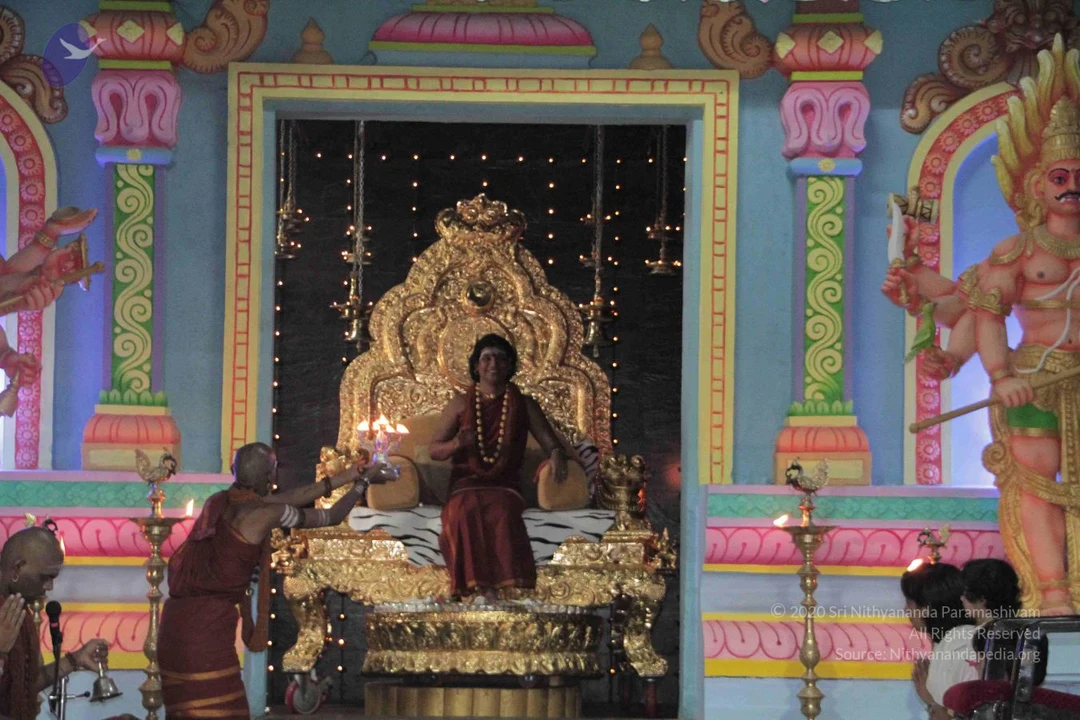
49 photosSource gallery
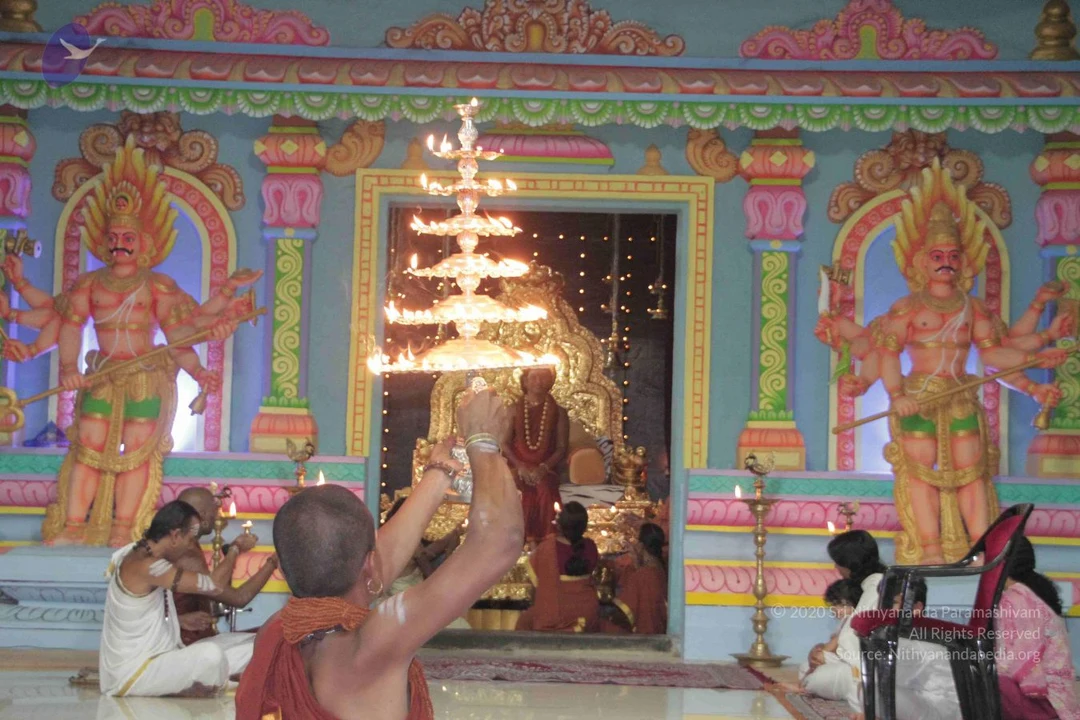
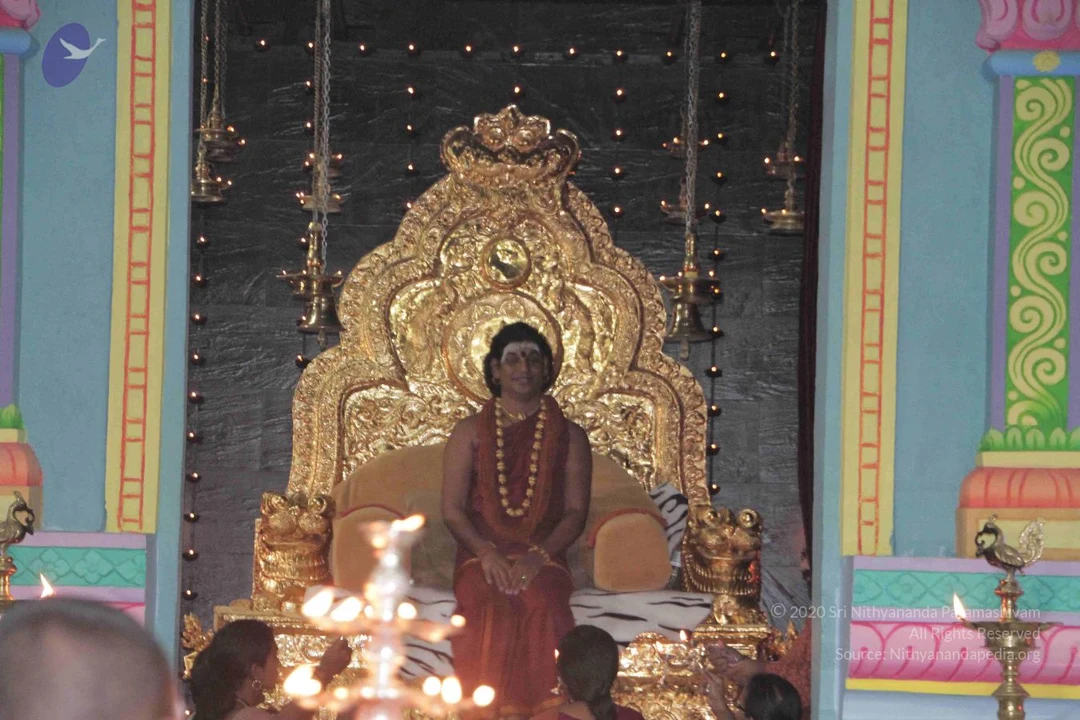
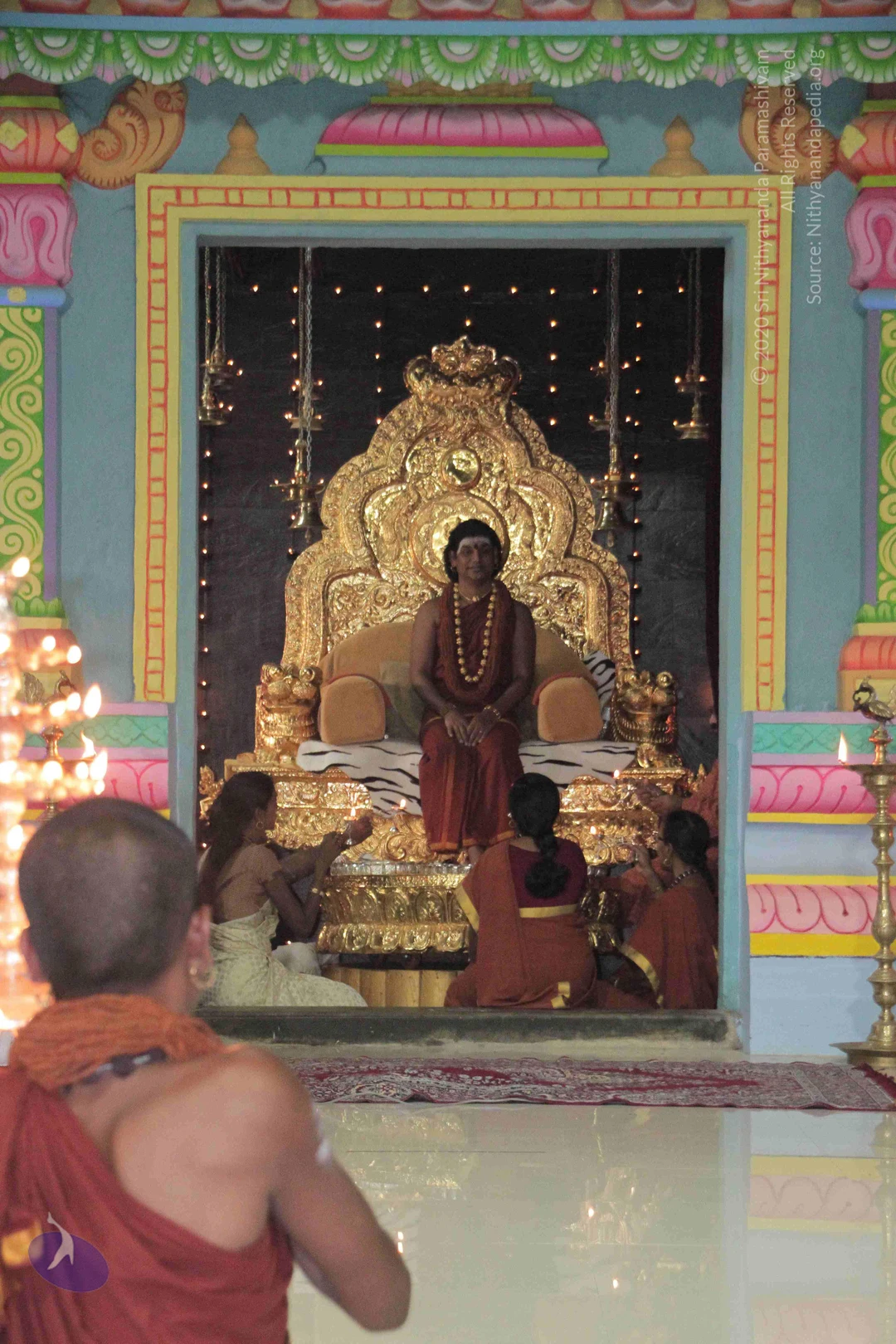
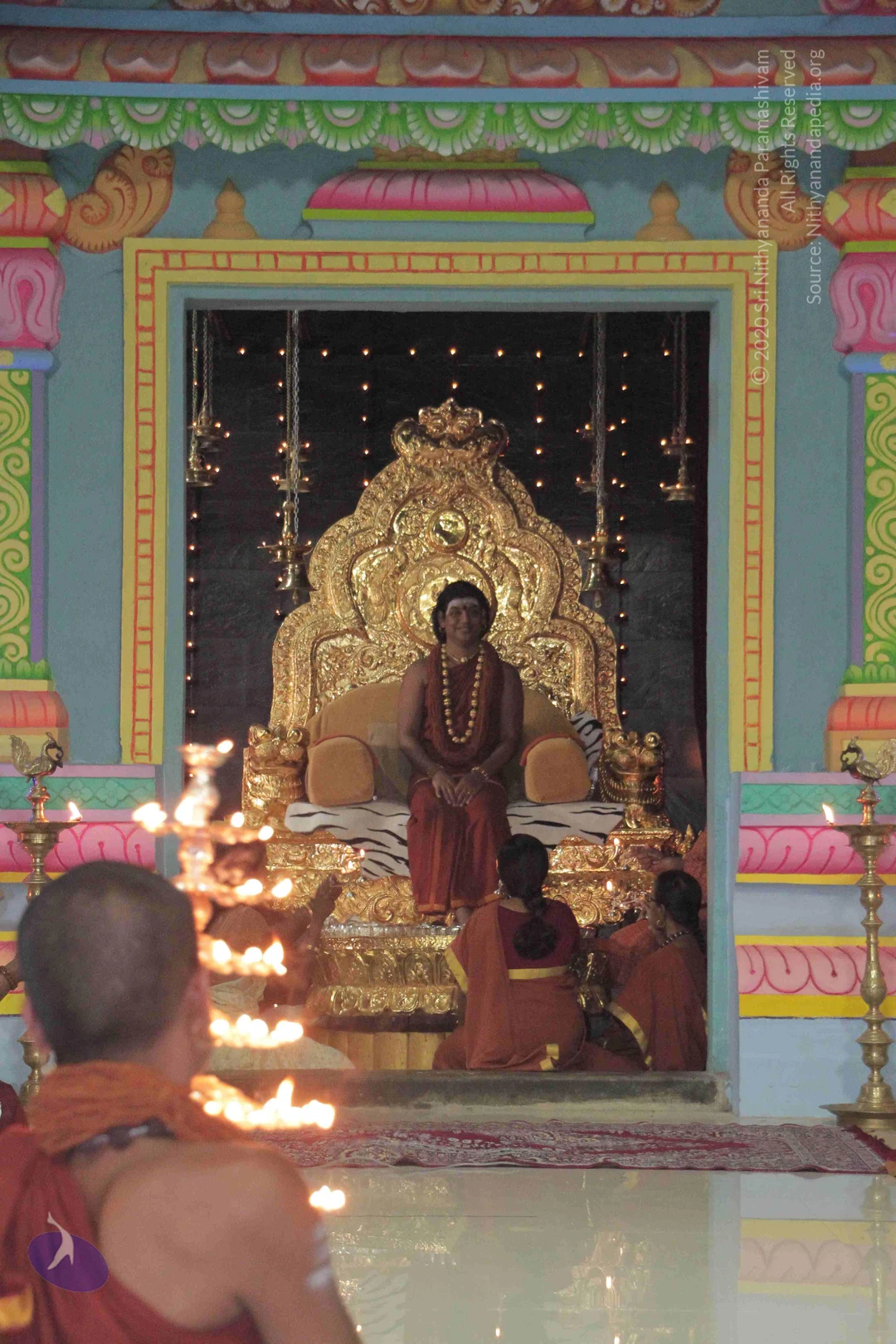
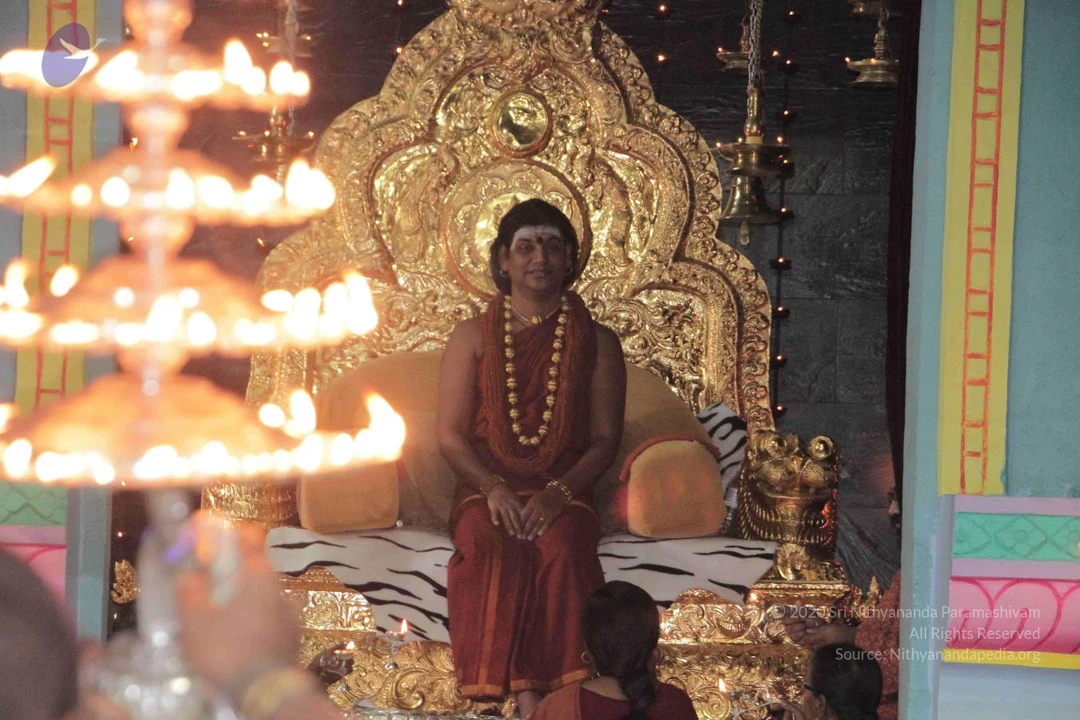
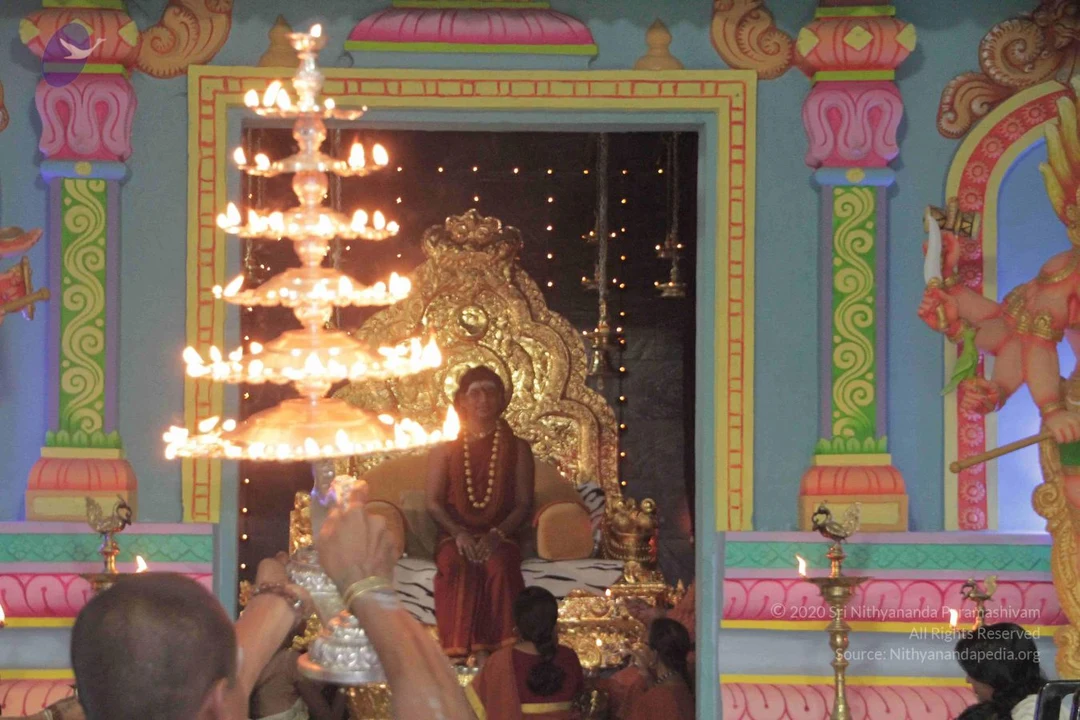
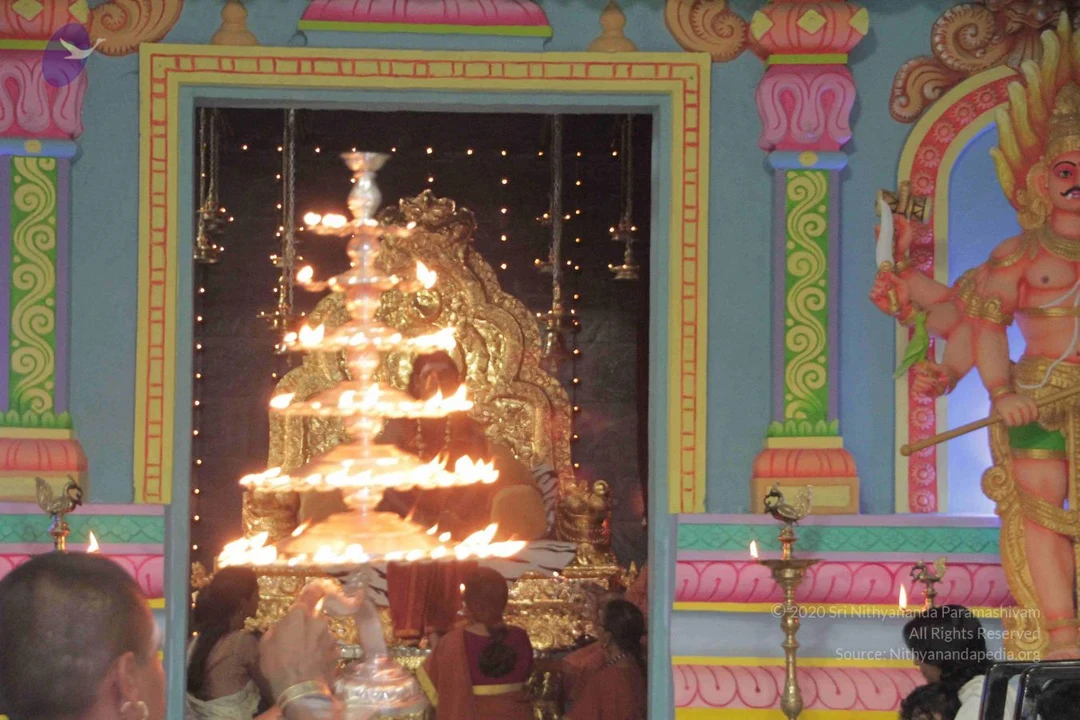
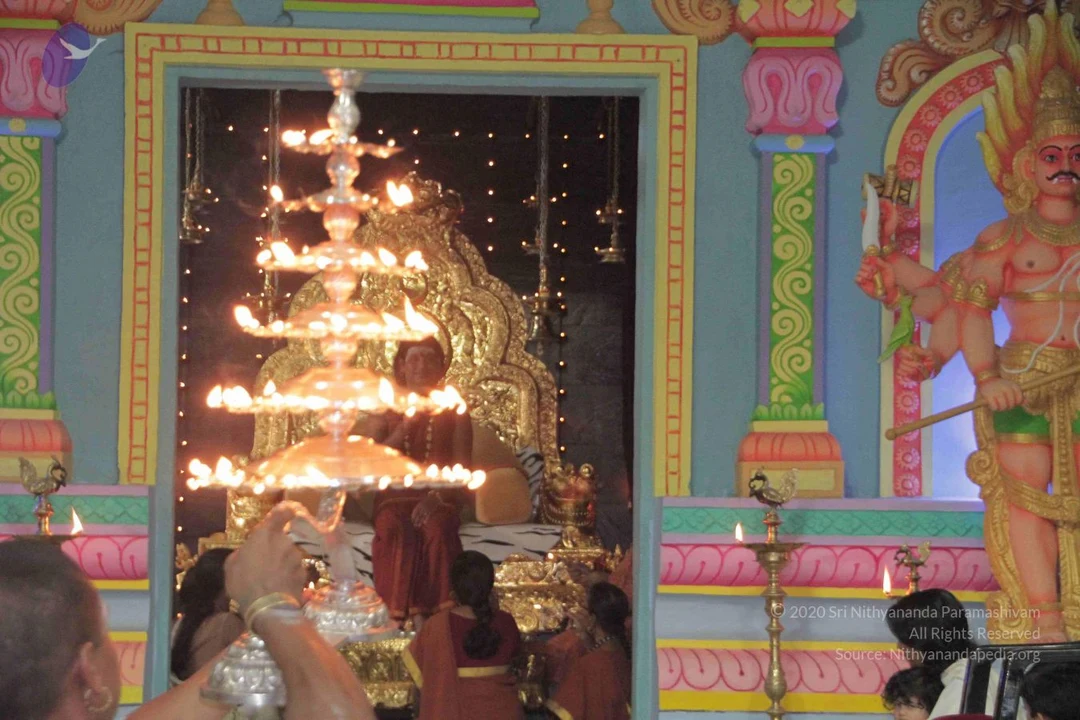
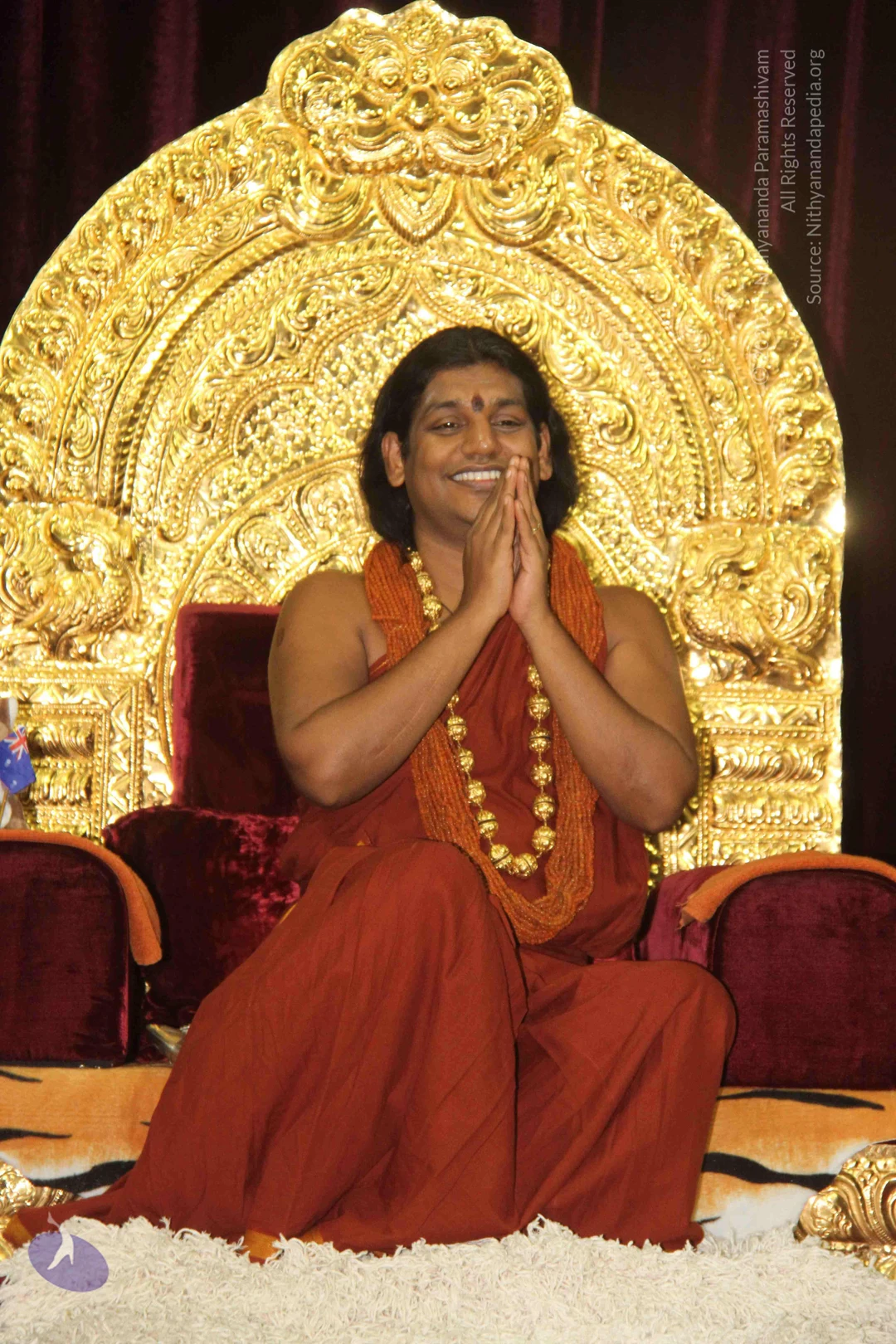
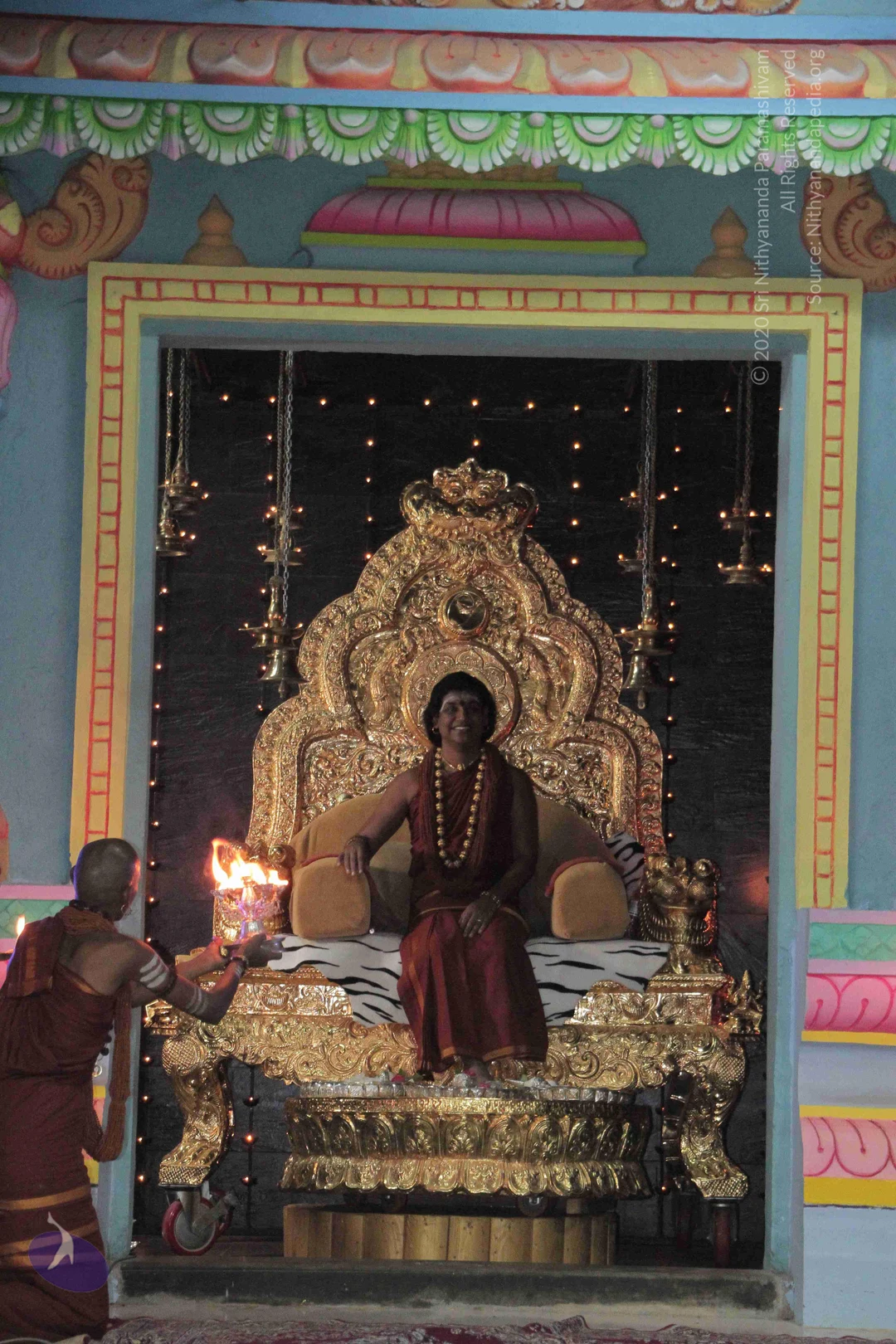
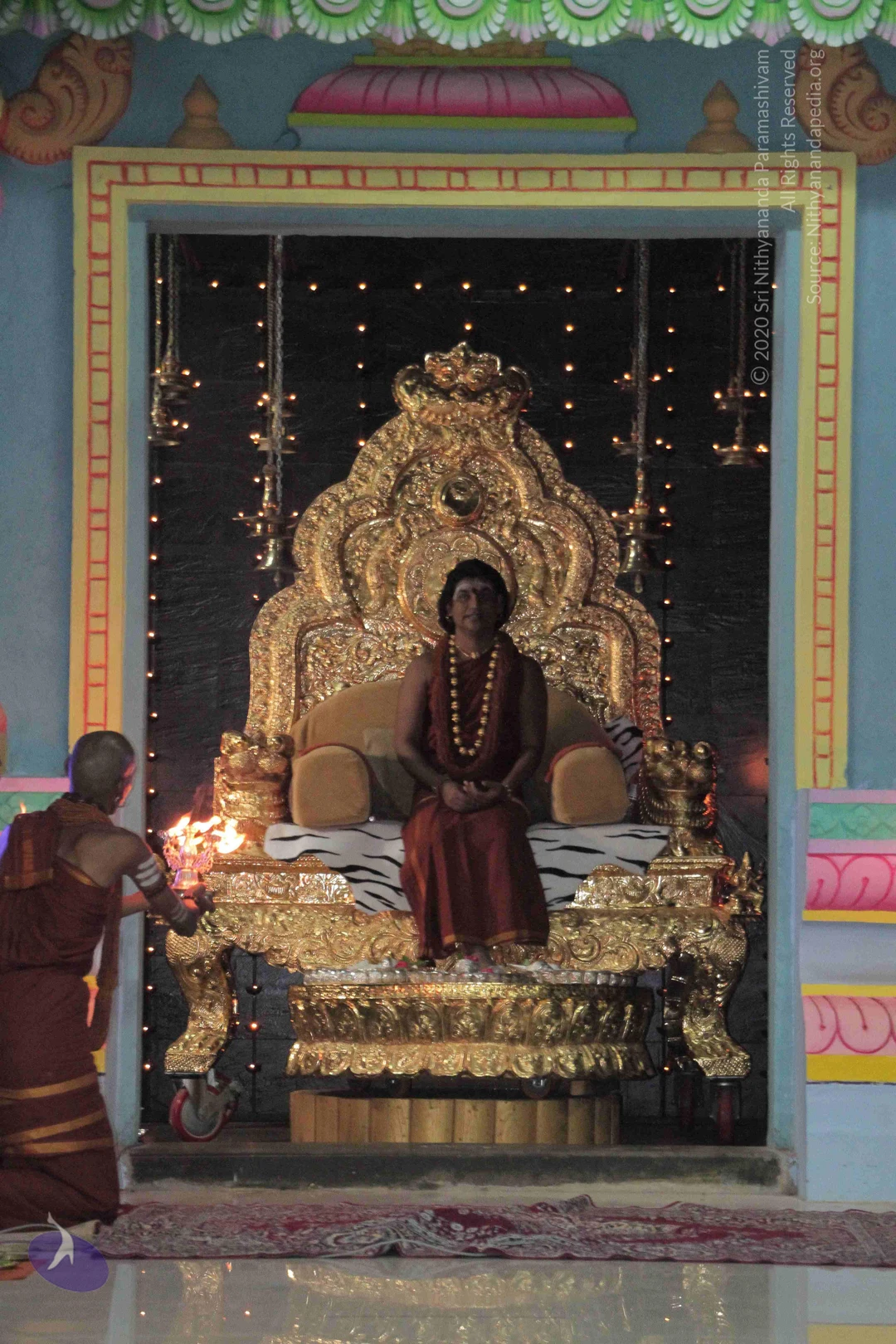
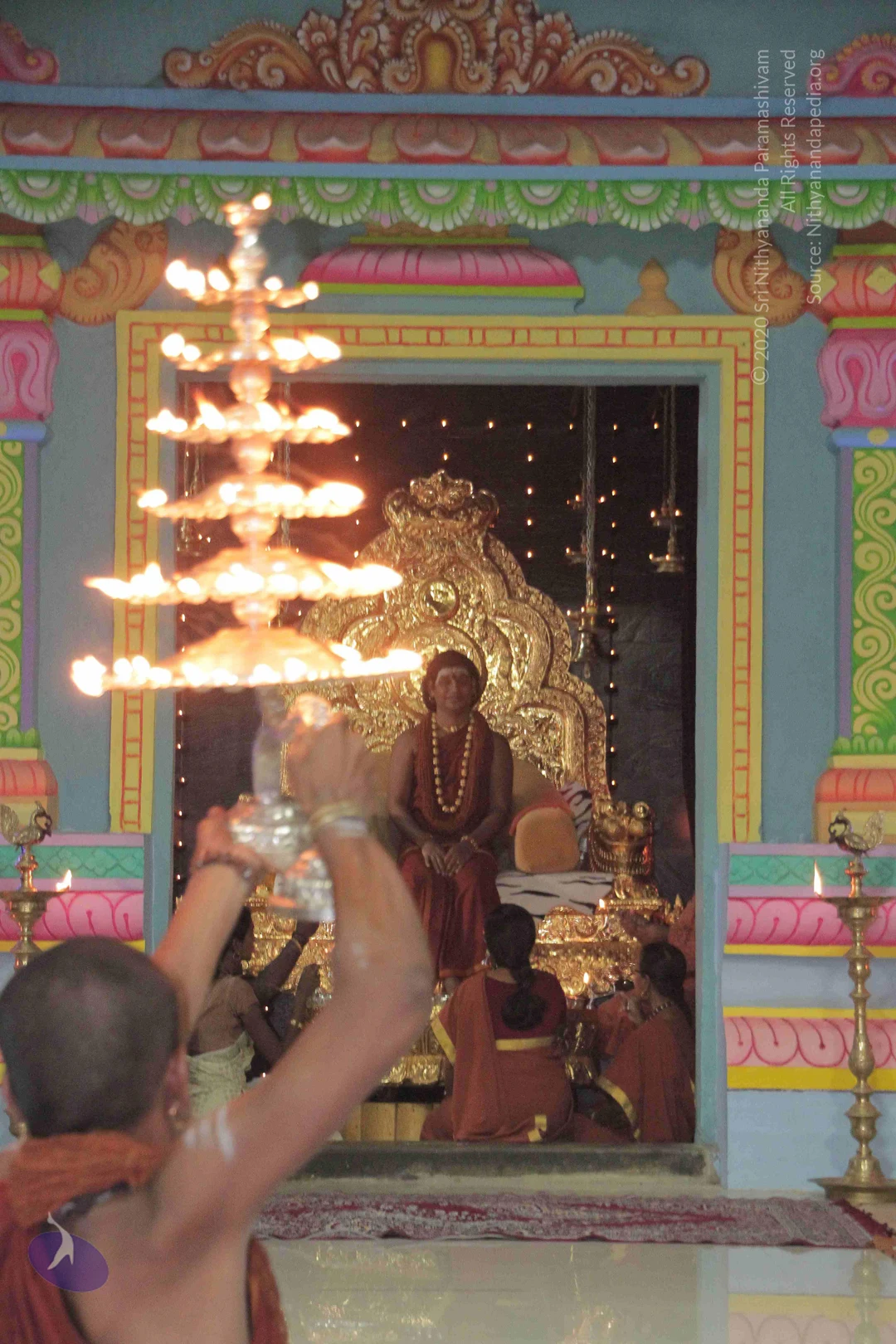
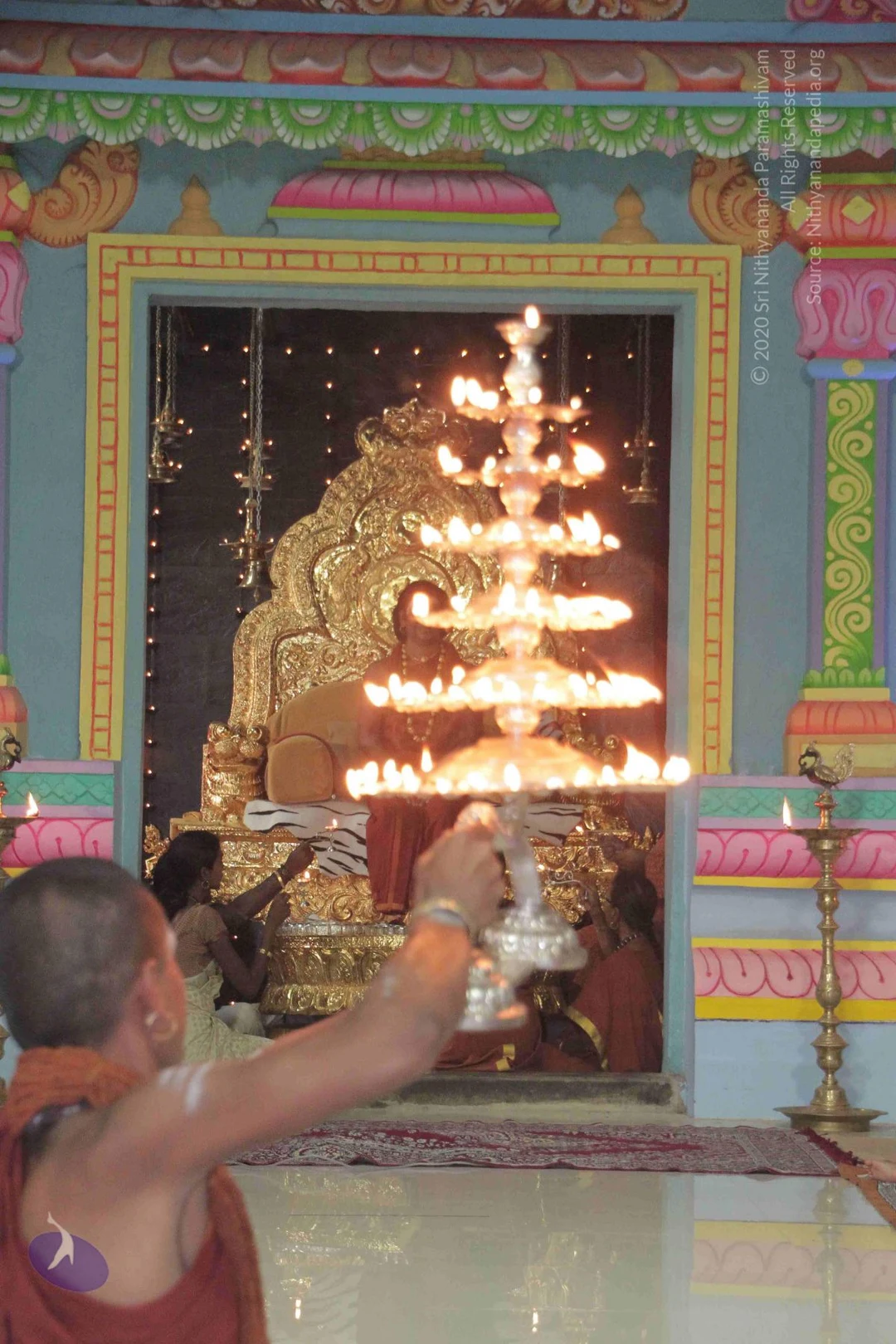
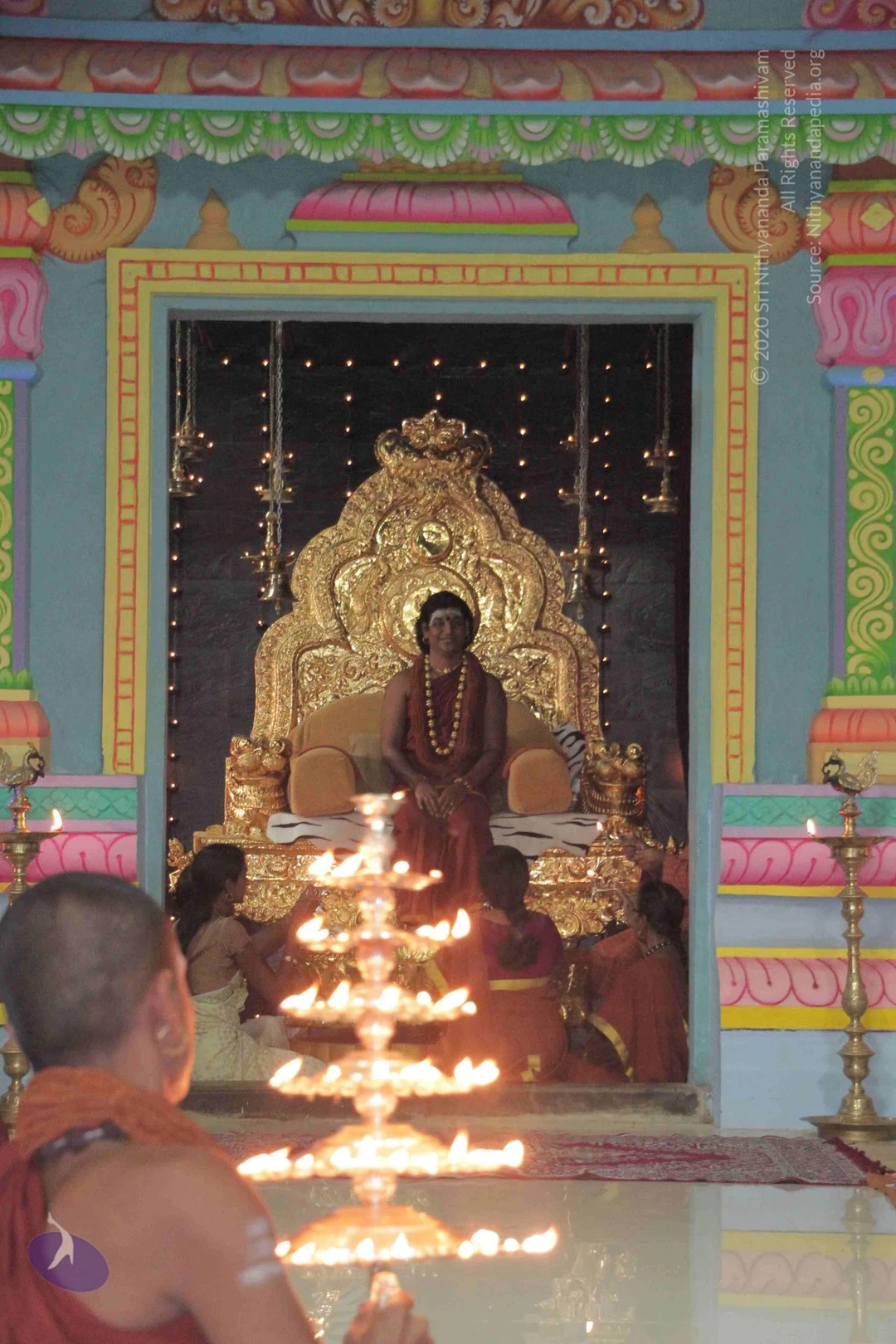
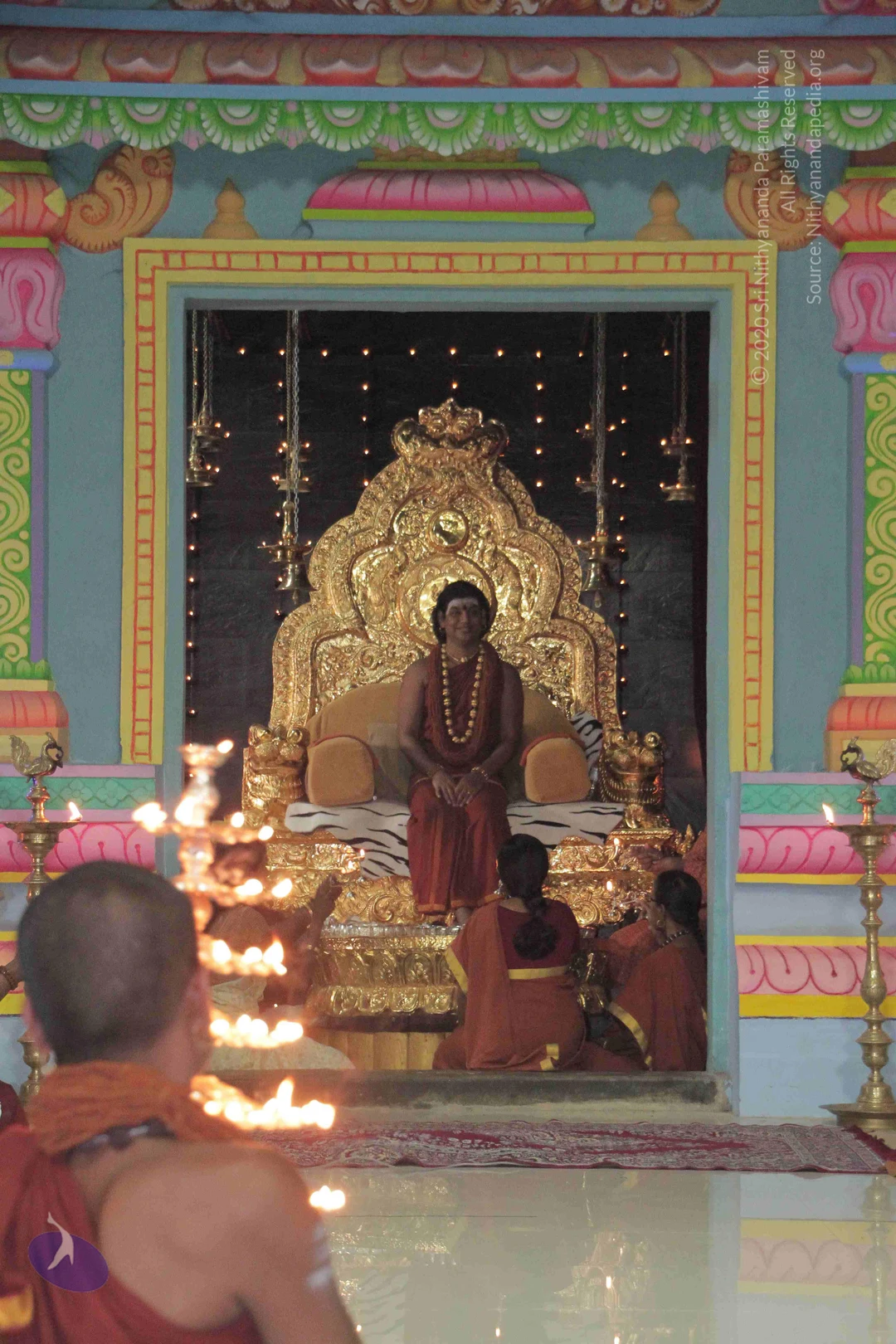
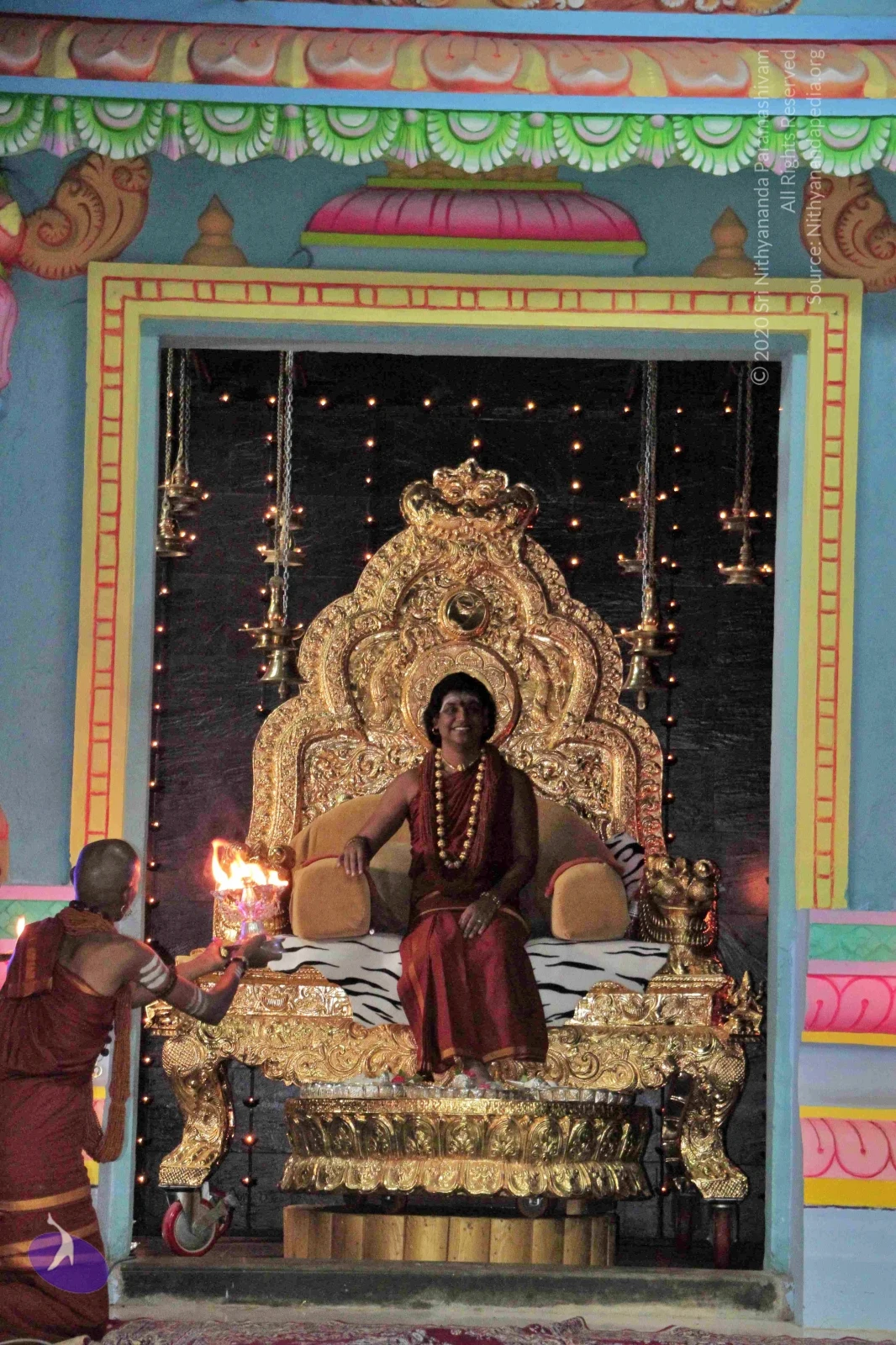
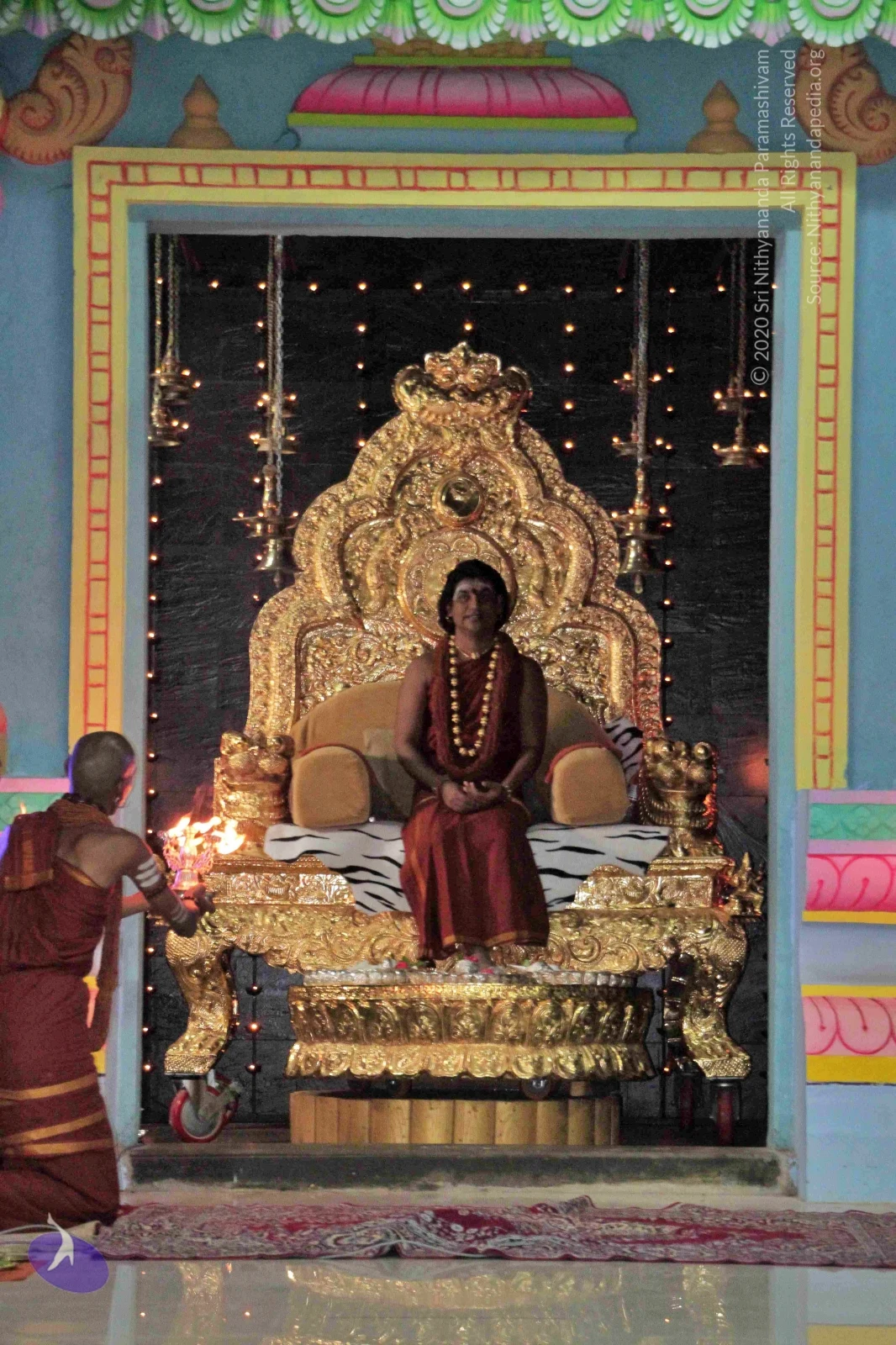
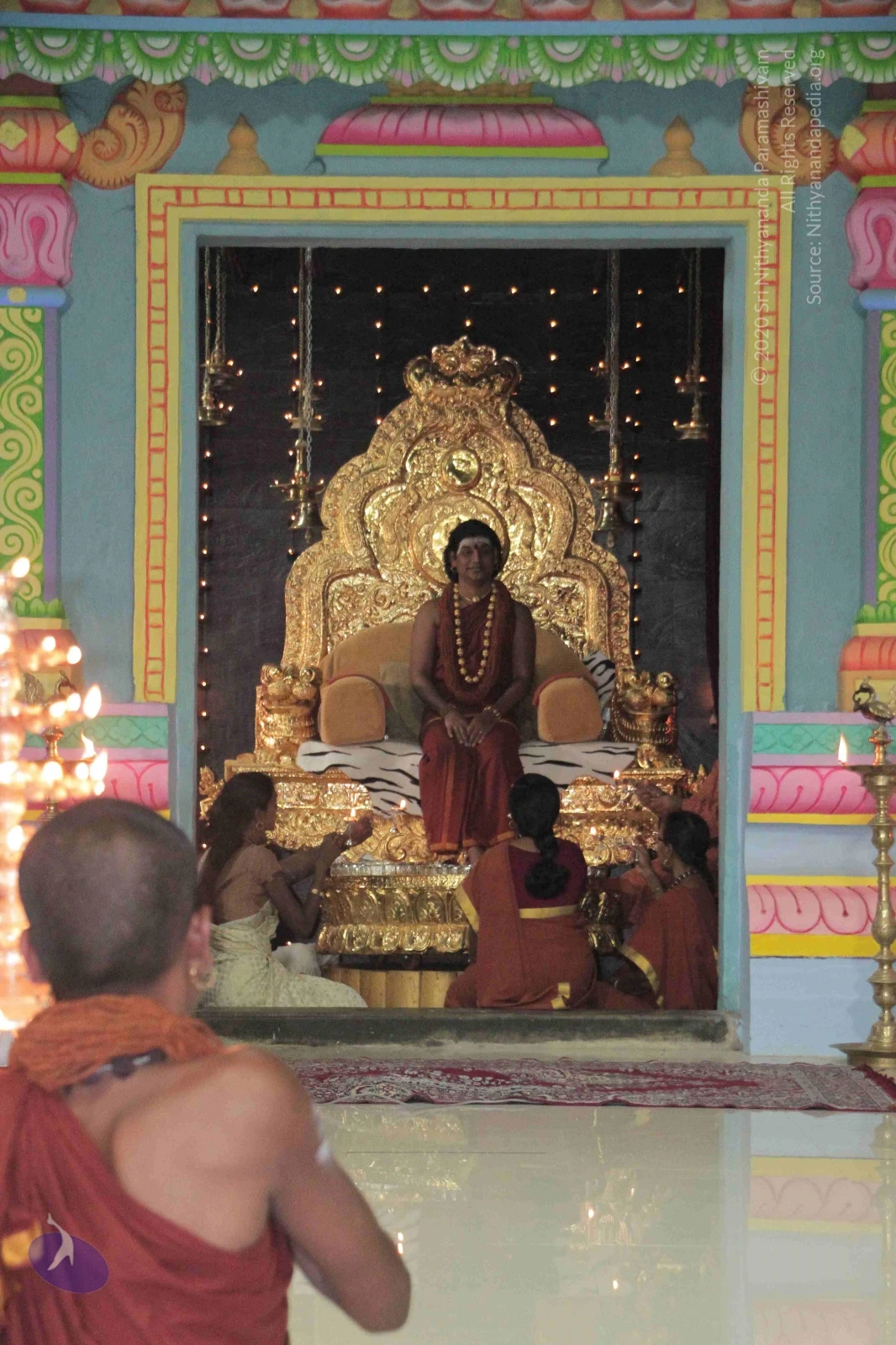
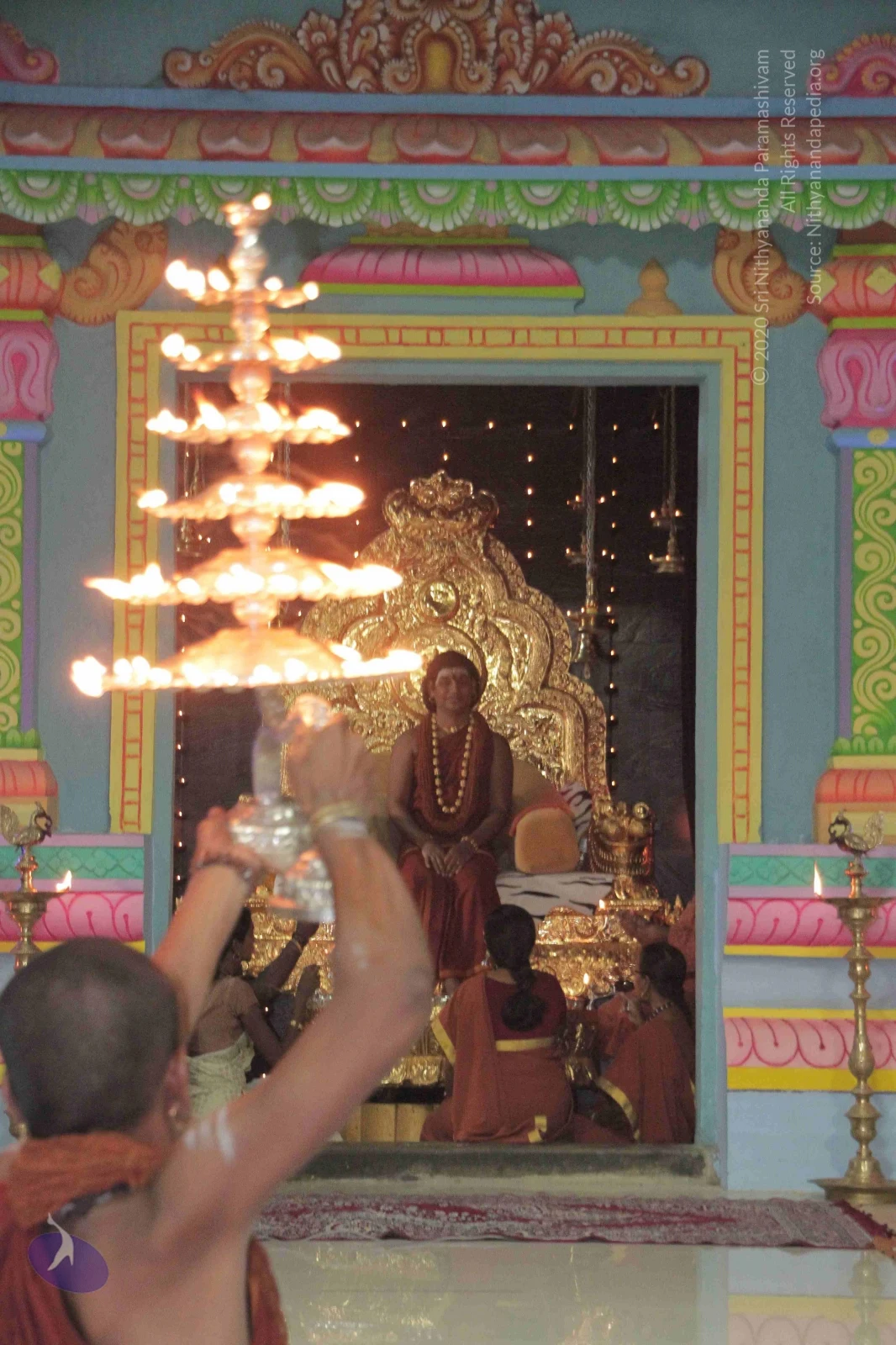
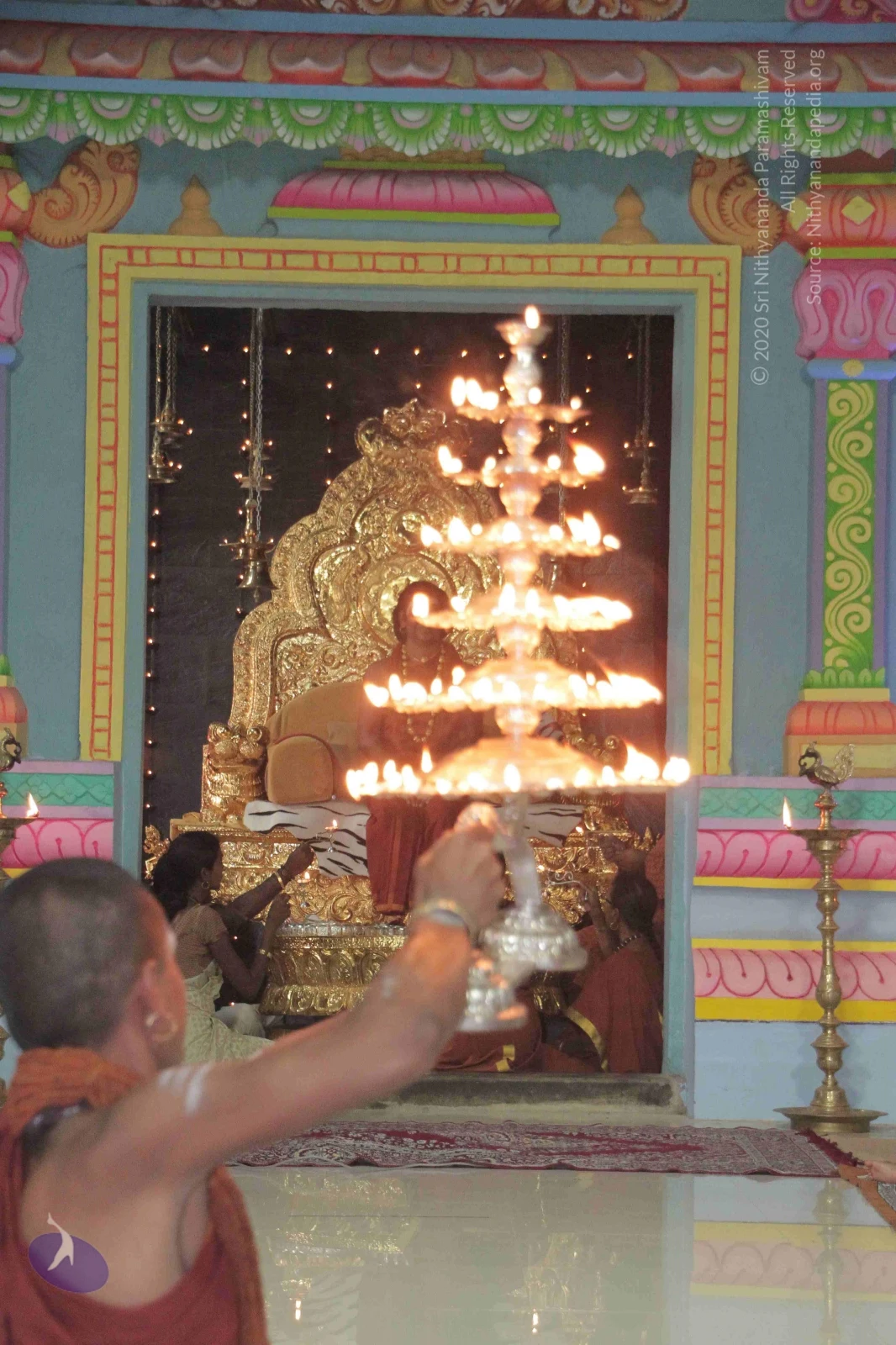
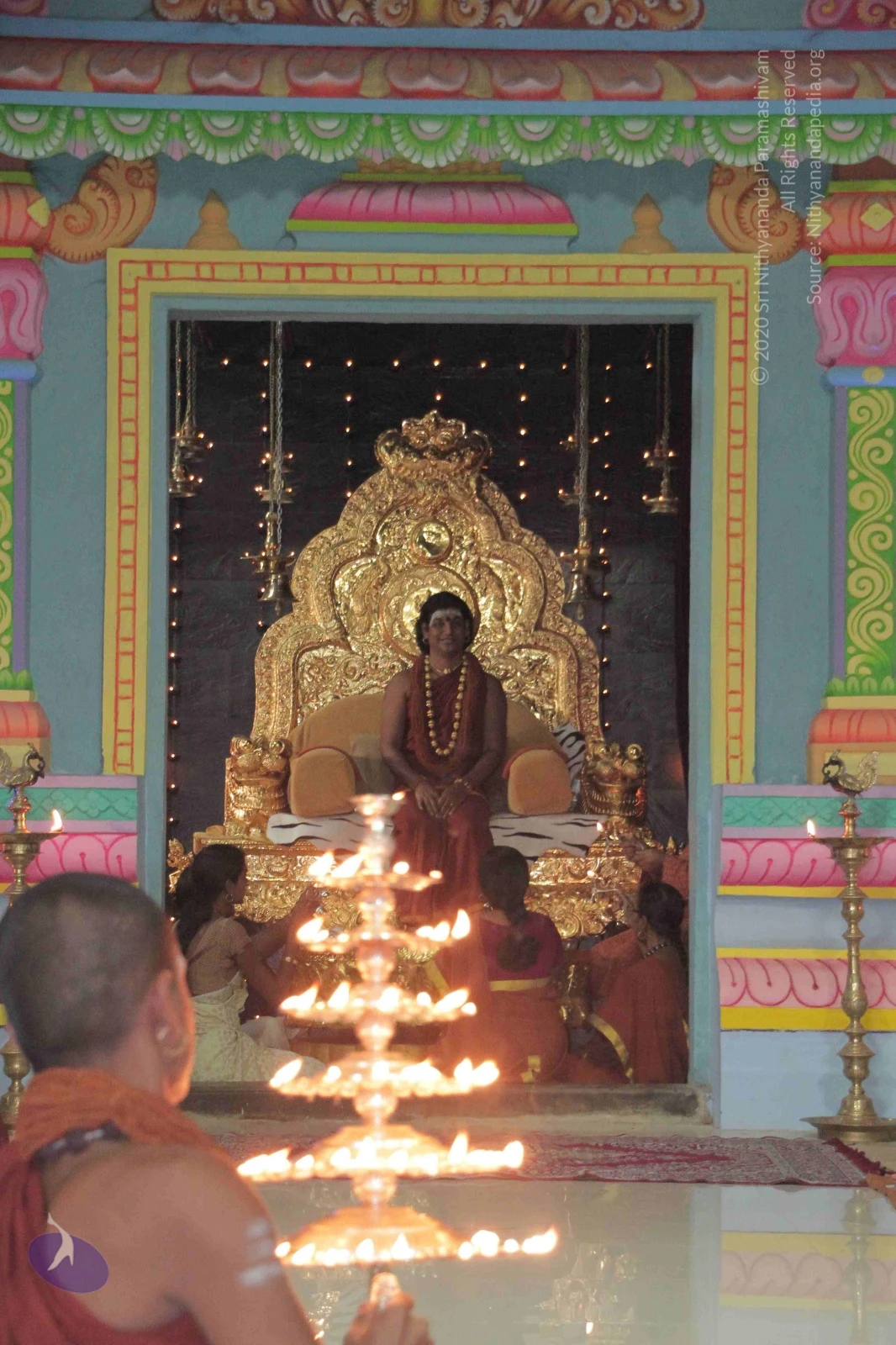
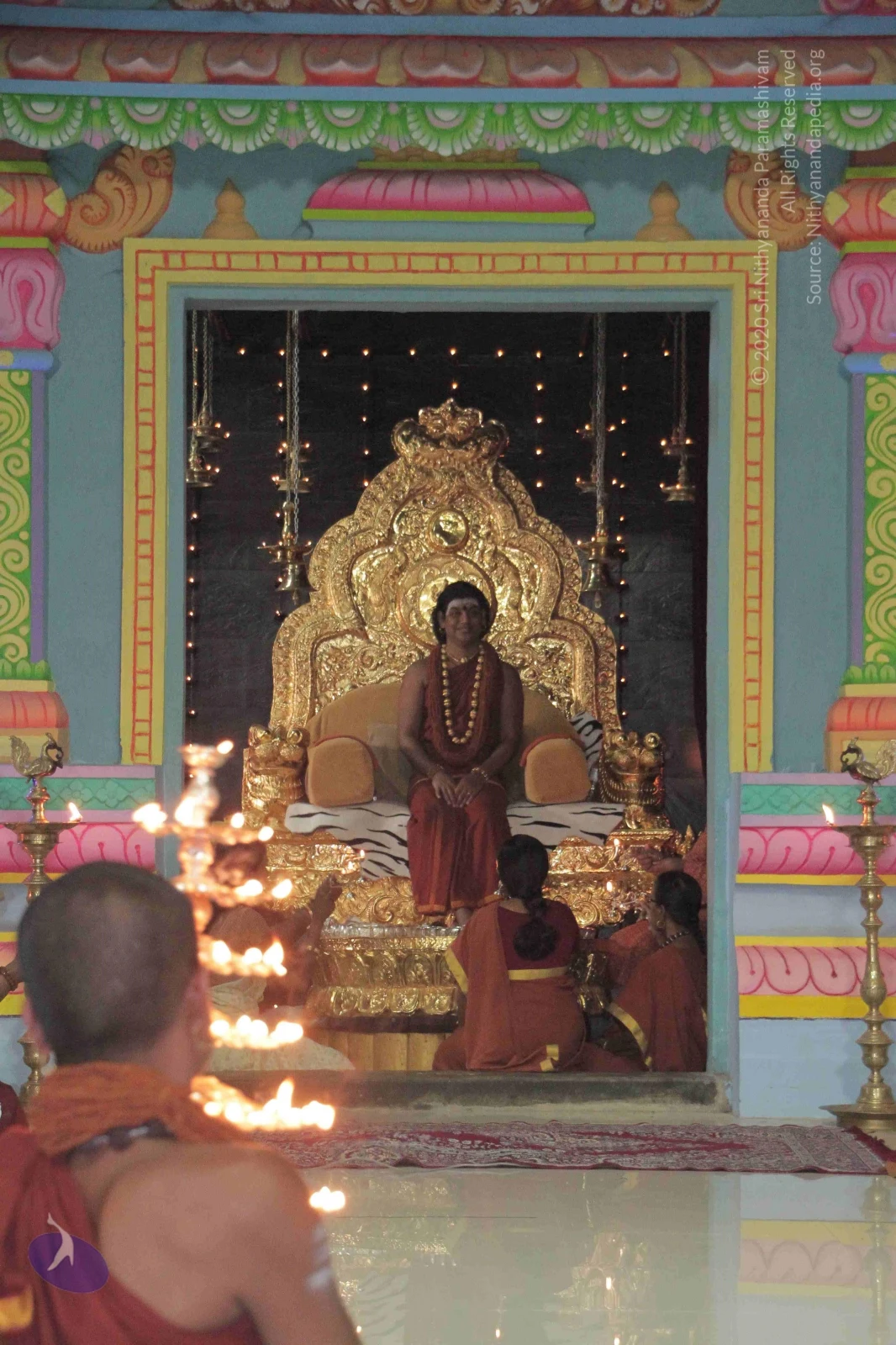
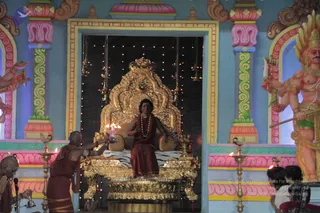
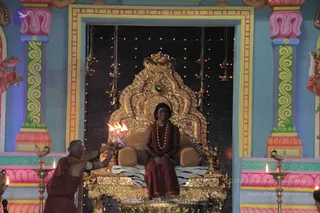
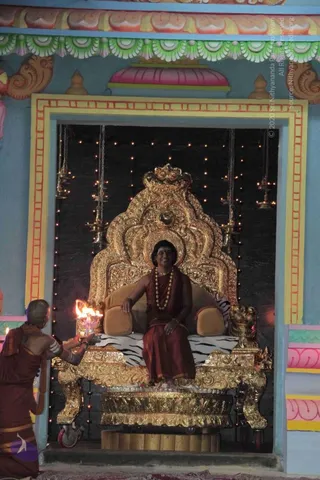
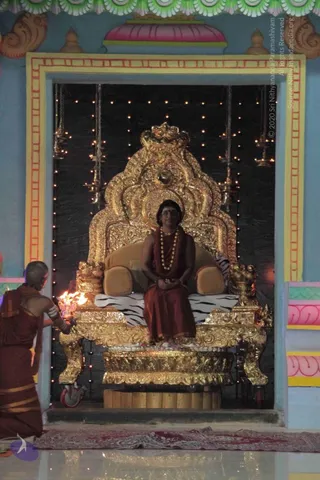
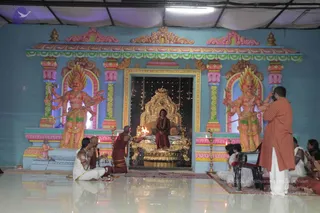
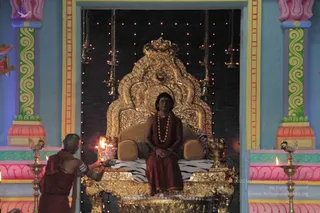
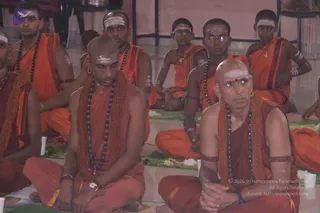
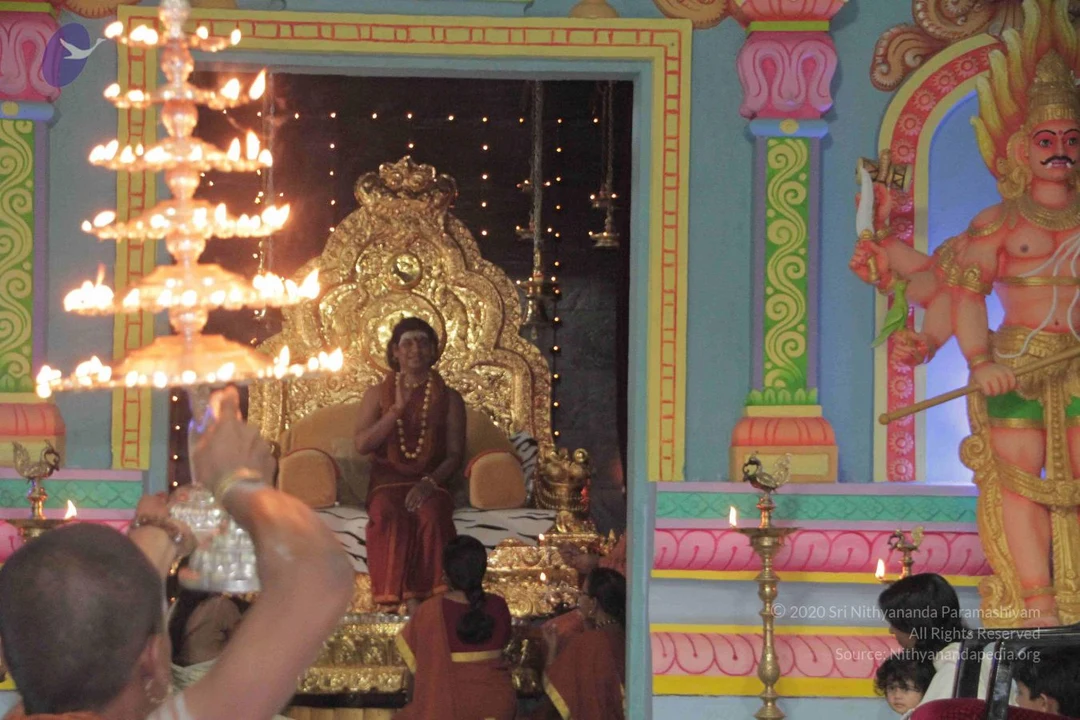
A seated figure on an ornate gold throne with a tiger-skin cushion sits centrally before a pink and blue temple-style backdrop with painted dvarapala guardian figures on either side. The seated figure wears a dark red robe and a beaded rudraksha-style mala, with hands in a gesture. A priest in a reddish-orange dhoti and shawl stands at left holding a lit lamp toward the throne, while a bald man in white with folded hands and a microphone stands at far left. Brass oil lamps with flames stand on the floor, and two women in red sit at lower right. Strings of small lights hang behind the throne. The setting is a ritual puja or aarti.A seated figure in a red-maroon robe and a long beaded rudraksha necklace sits on an ornate gold throne with a carved backrest and a striped cloth draped over the seat, in front of a painted blue and pink shrine with green-striped pillars and hanging oil lamps. A priest in a reddish-brown dhoti stands at left, holding a lit flame or aarti lamp toward the seated figure, while small brass lamps stand on either side. The seated figure appears to be a candidate for a person, identifiable by the throne and rudraksha mala, with the same appearance cues as described on the page, though the face is not clearly distinguishable. Gold and pink decorative figures of birds appear on the shrine edges. Aarti is being offered in a temple setting.A photograph inside a decorated shrine hall of a seated figure on an ornate gold throne with a carved arched back, draped with a zebra-striped cloth on the seat and cushions. The seated person wears a deep red-maroon robe and a long beaded necklace, with a dark mala-like strand, and sits with hands resting. Below and to the left, a priest in red-brown robes with white horizontal markings on his arms holds a lit oil lamp or flame vessel toward the throne. Brass oil lamps hang from chains and small lights are strung on the dark backdrop behind the throne. The walls have painted pink, green and gold decorative borders.A photograph of a seated figure on an ornate gilded throne inside a richly decorated hall with pink and yellow painted borders, a dark backdrop lit with small lamps, and brass oil lamps hanging on chains. The seated person wears a rust-orange robe, a long gold-beaded mala necklace and a dark bindi, with hands resting in the lap and a tiger-striped cloth draped on the seat. A kneeling attendant in orange robes and white horizontal marks on the arms tends a flame on a tray at the left. A patterned red carpet lies at the base of the throne. The throne is an appearance-based a person candidate with a mala and orange robe, though the face is small and the figure is partly obscured by shadow.Photograph inside a temple-like hall with pastel blue walls and large painted guardian figures flanking a golden throne-like seat. A seated figure in a dark red robe with a rudraksha mala sits on a gold throne at the centre, with a small flame burning before it. Two priests in saffron and white stand at the left, one in a red-brown robe holding an oil lamp toward the seat. At the left foreground a man in white kneels and joins his hands, and a man in an orange kurta with white dhoti stands at the right holding a fan-like object near a dark chair. Several devotees in white and cream sit with folded hands at the right. A line of brass oil lamps lies on the polished floor. Framed by pink and gold ornamental arches.A seated figure in a dark red-brown robe with a long rudraksha mala sits on an ornate gold throne with a tiger-striped cushion, placed in front of a black backdrop strung with small lights and hanging brass lamps. A shaved-headed priest in a maroon dhoti and white sacred-thread markings kneels at the lower left and tends a flame in a brass vessel beside the throne, with brass oil lamps in the foreground. Pink, blue and green painted pillars frame the scene. The seated figure's appearance matches Swamiji (probable), with long hair, rudraksha mala and ceremonial gold necklace, seated in a puja setting.

Nithya Satsang

27 photosSource gallery
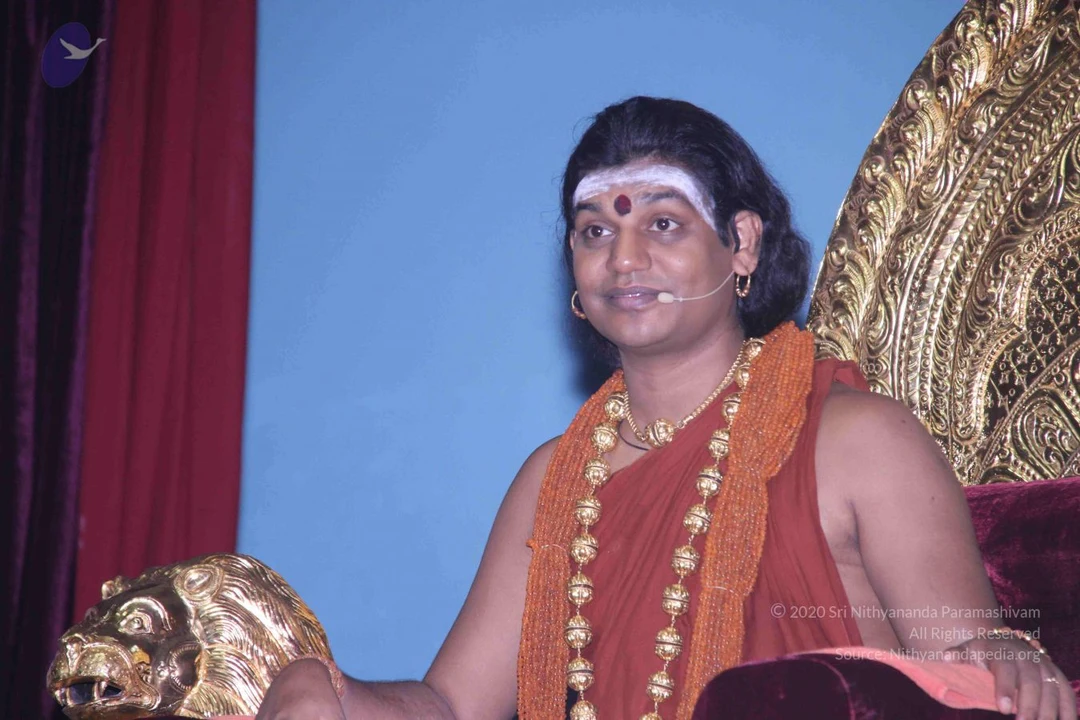
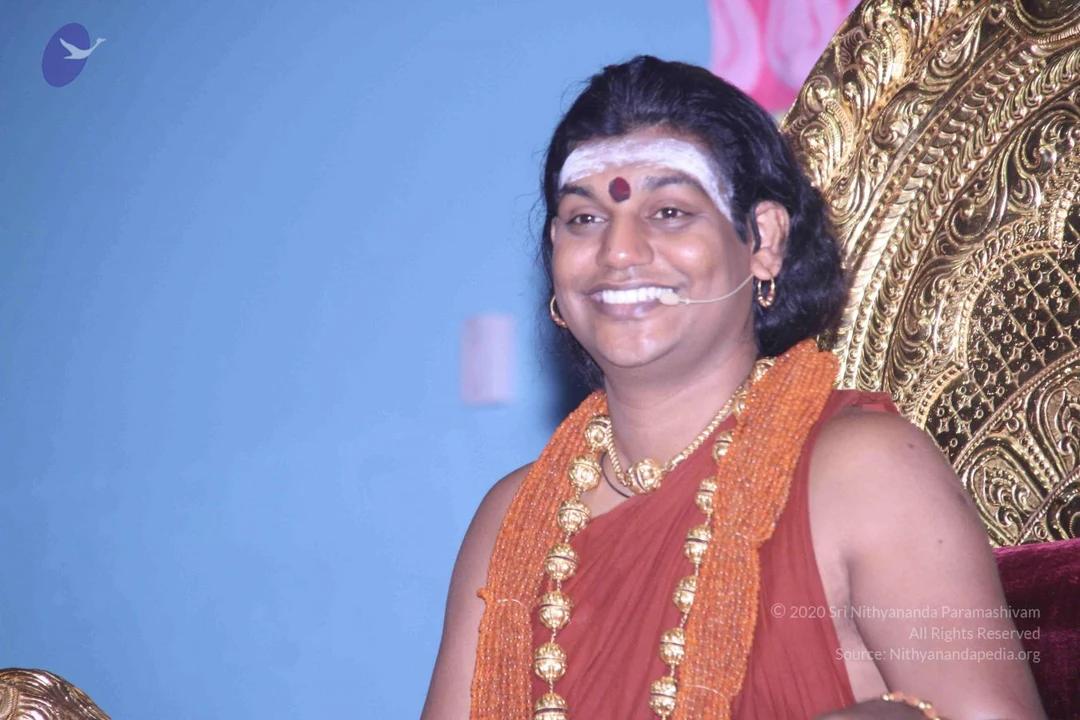
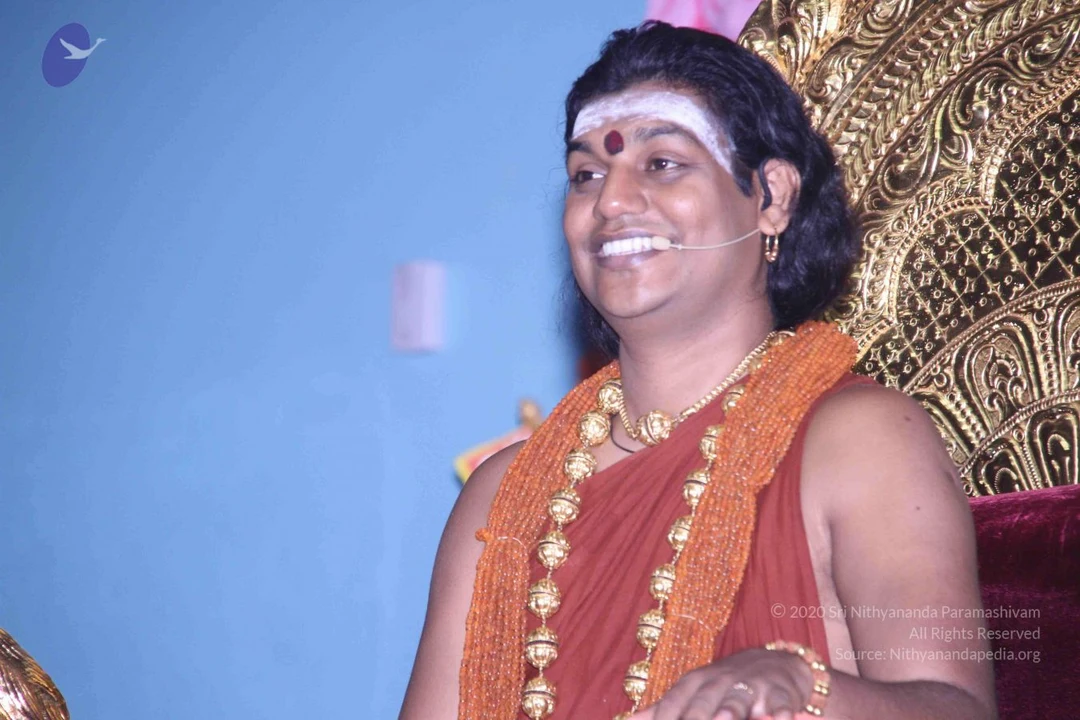
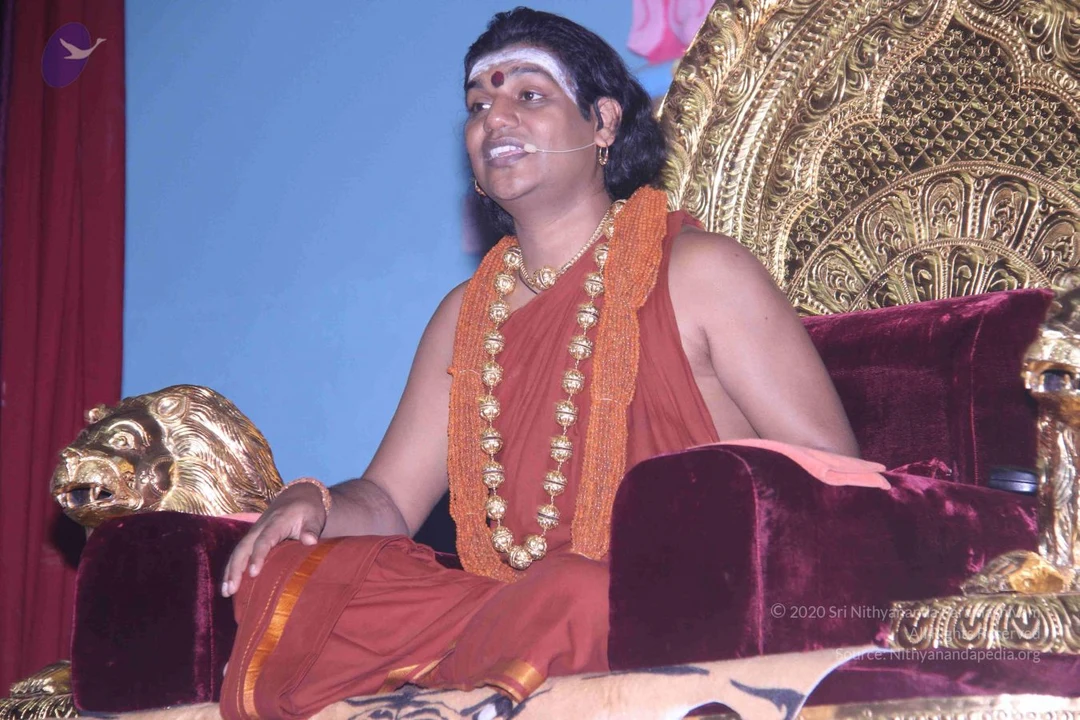
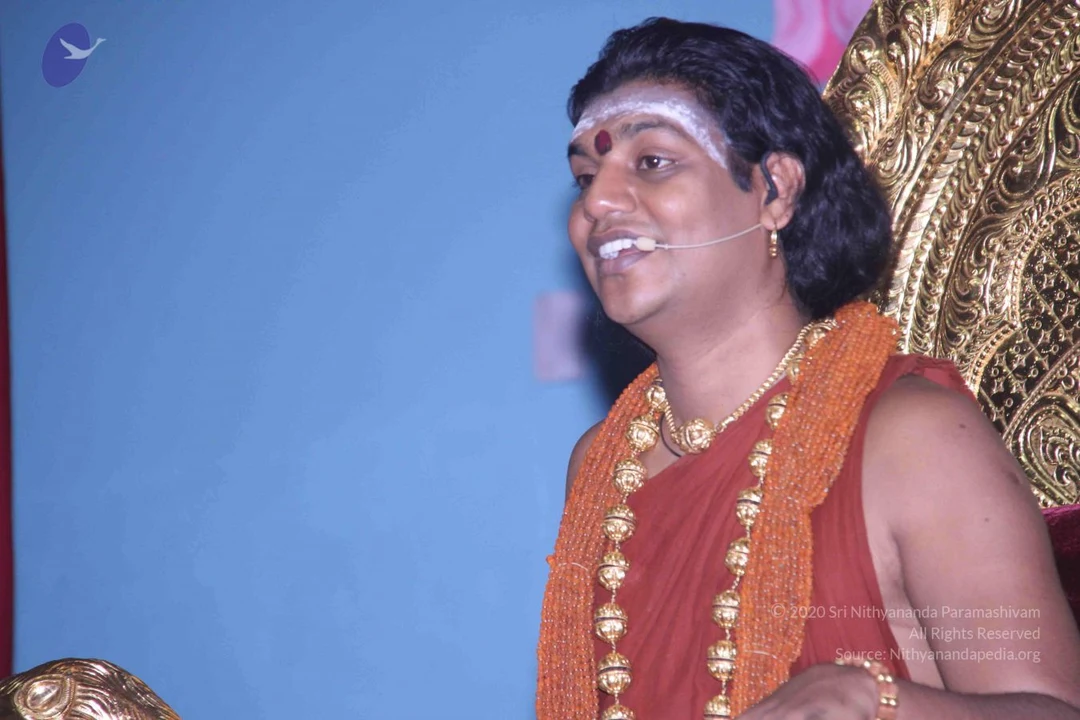
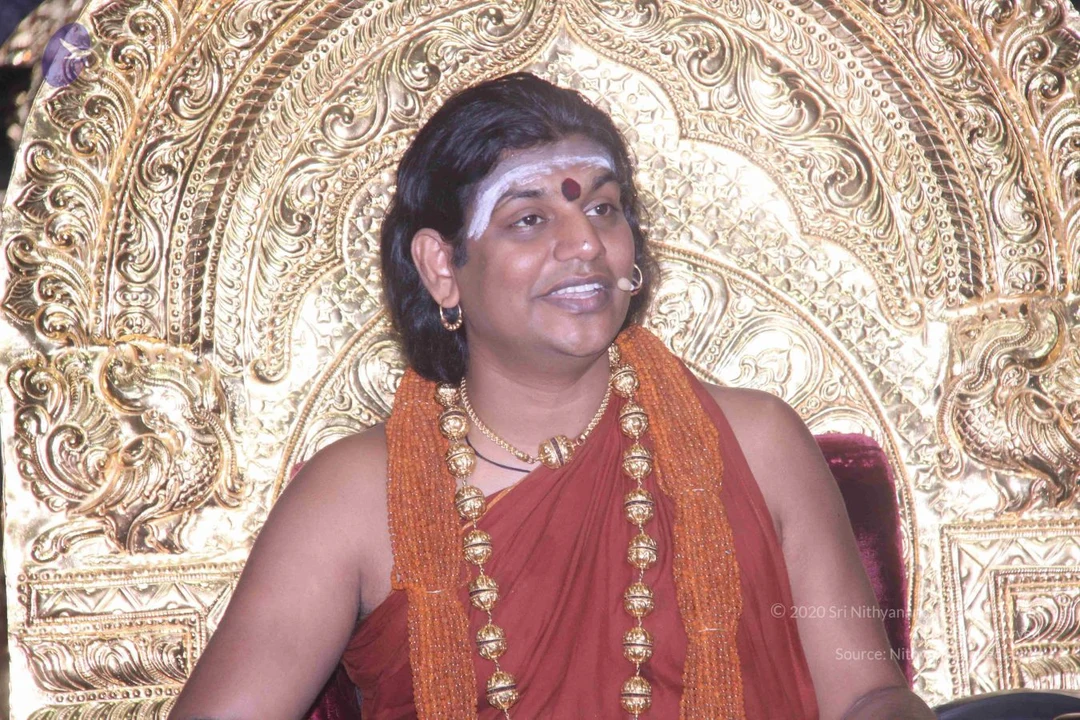
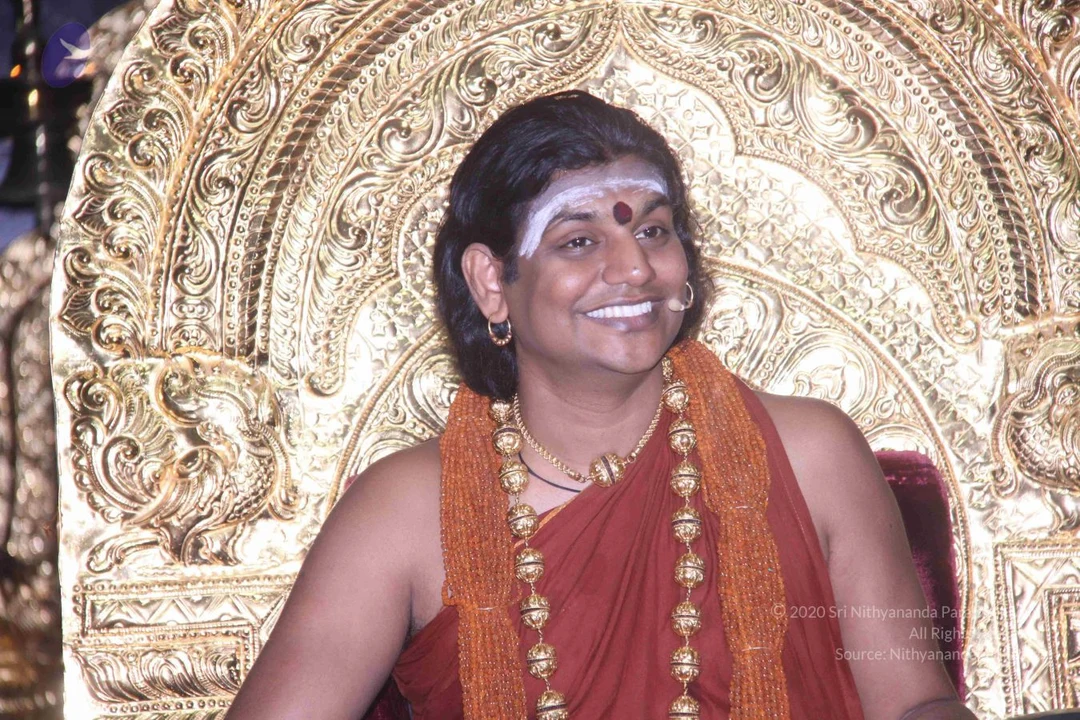
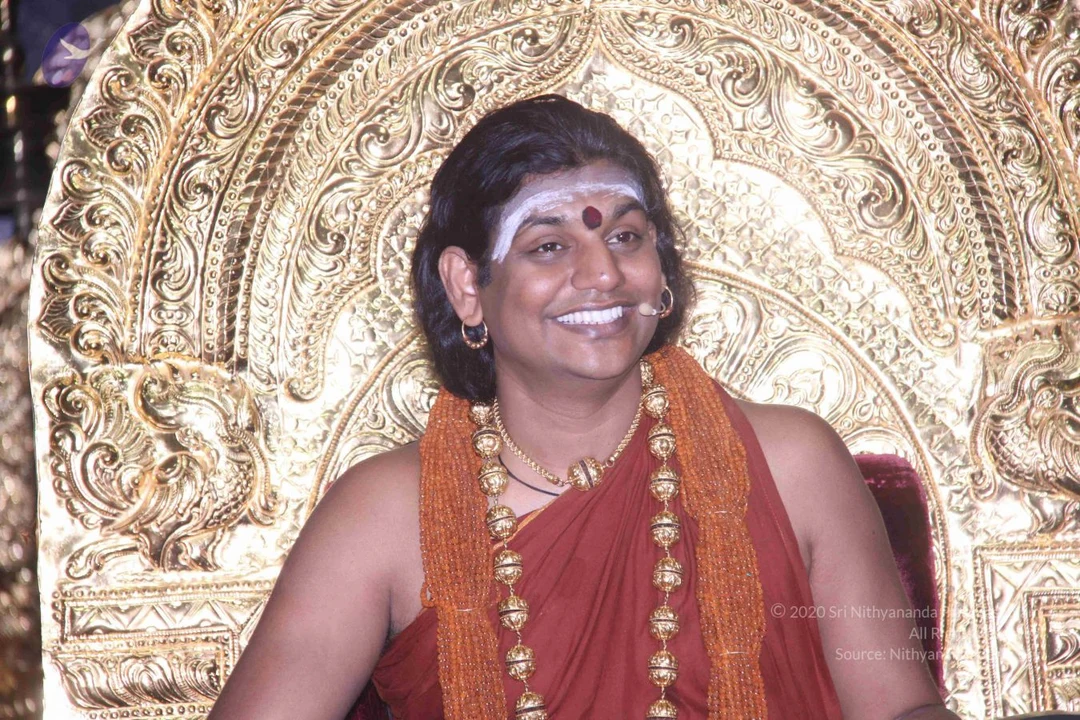
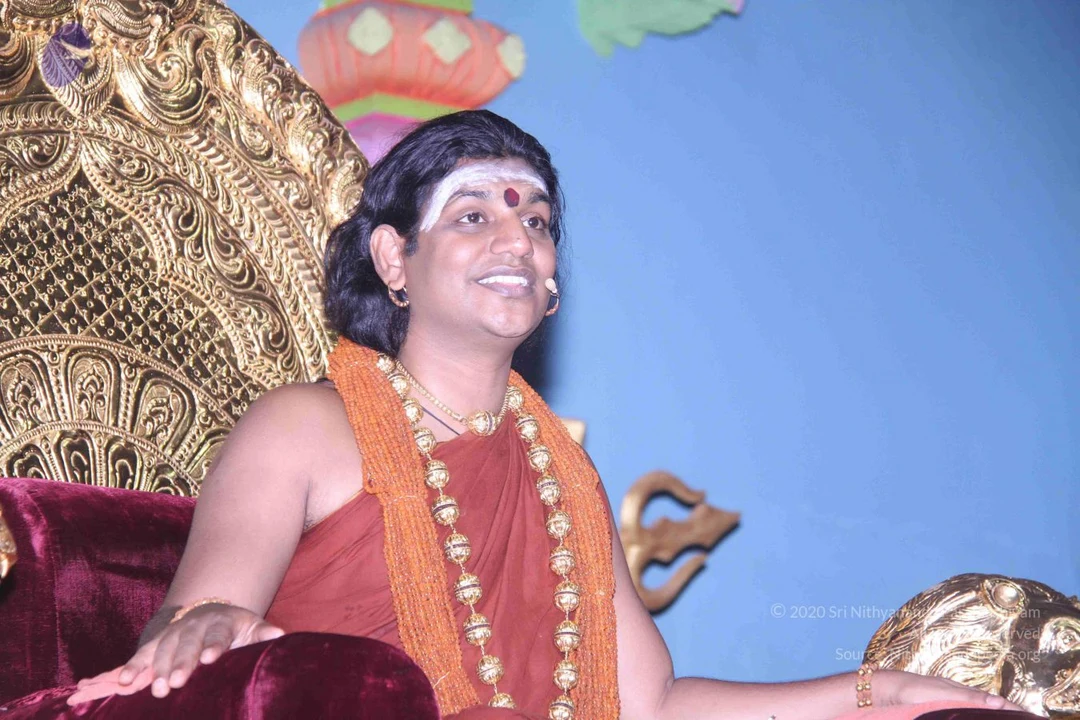
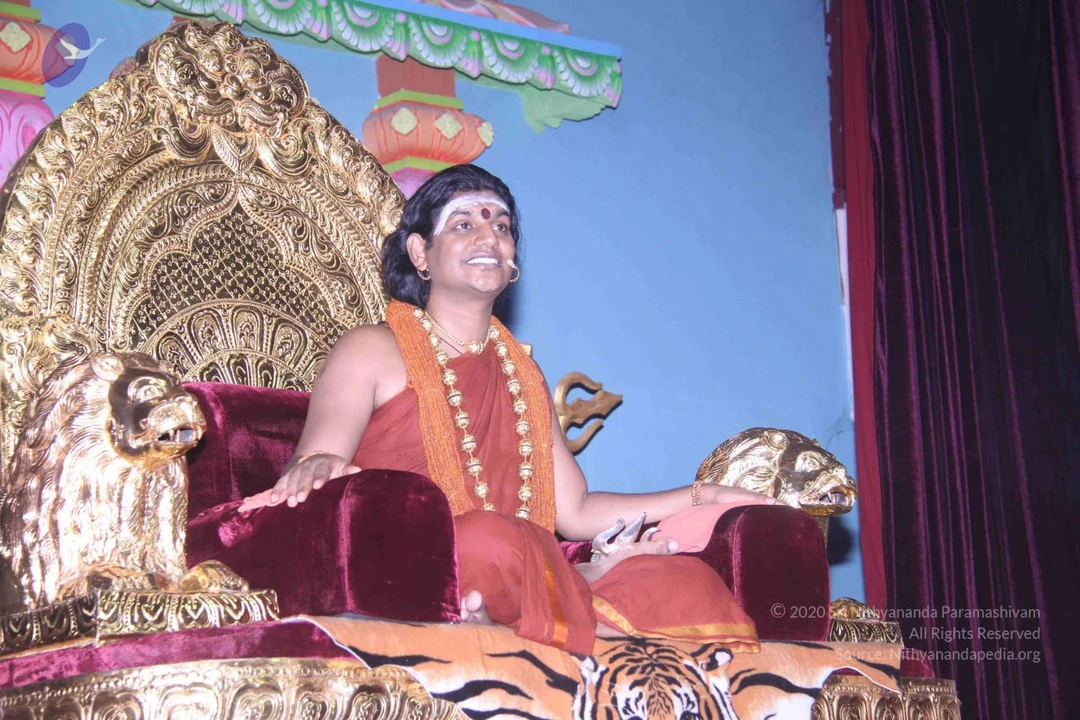
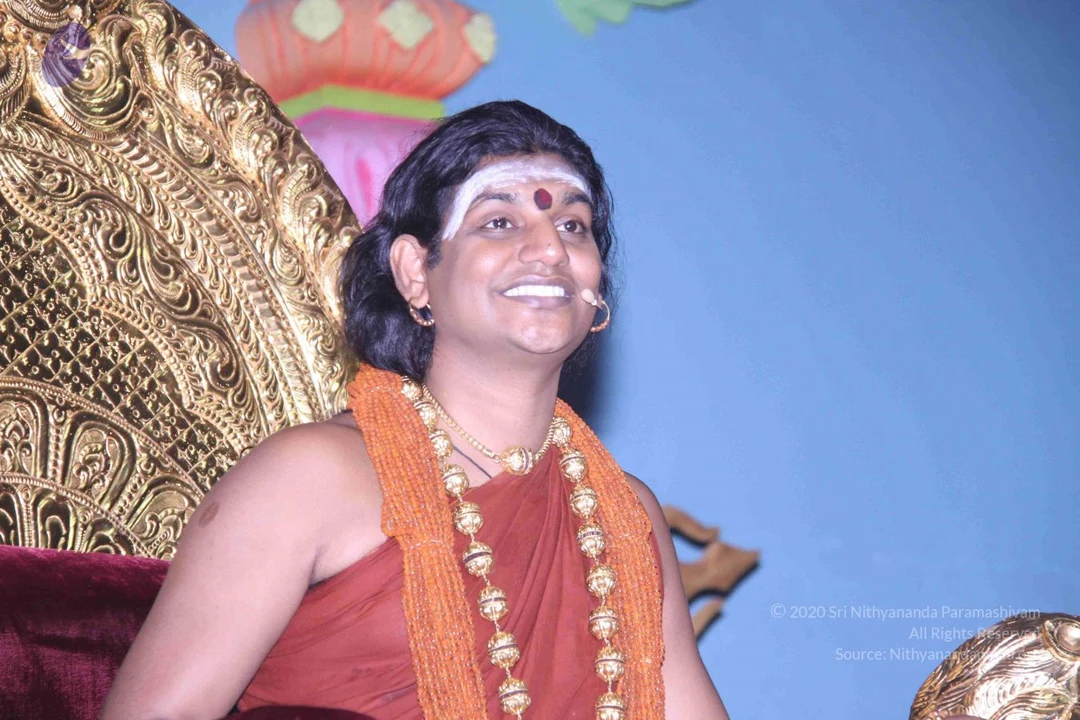
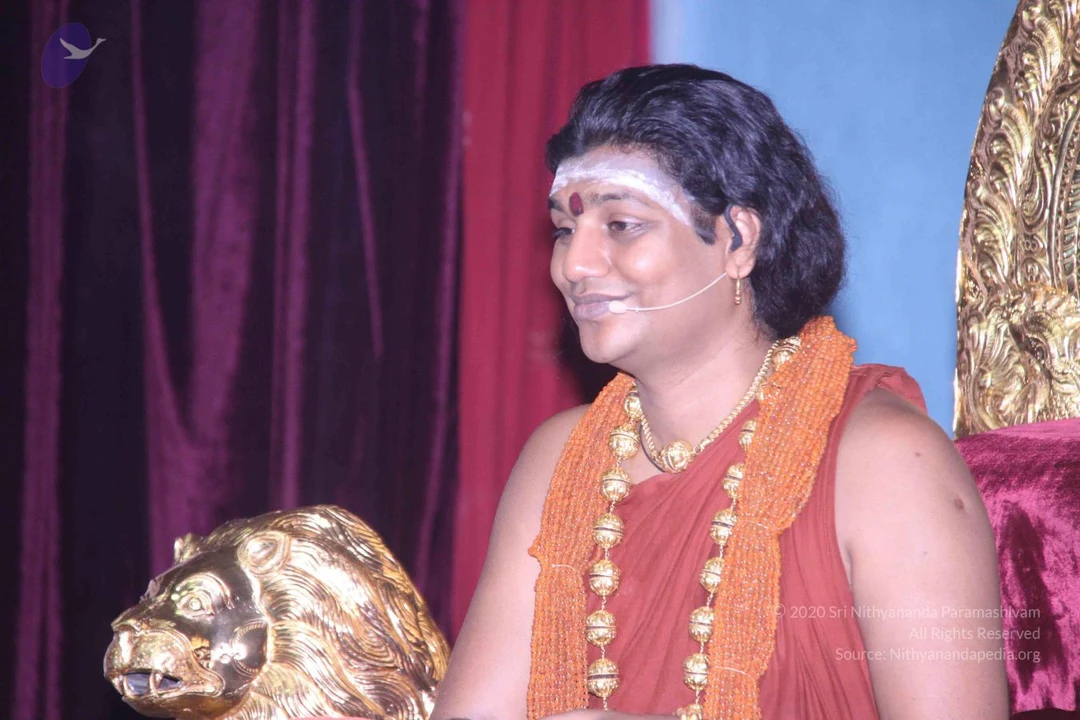
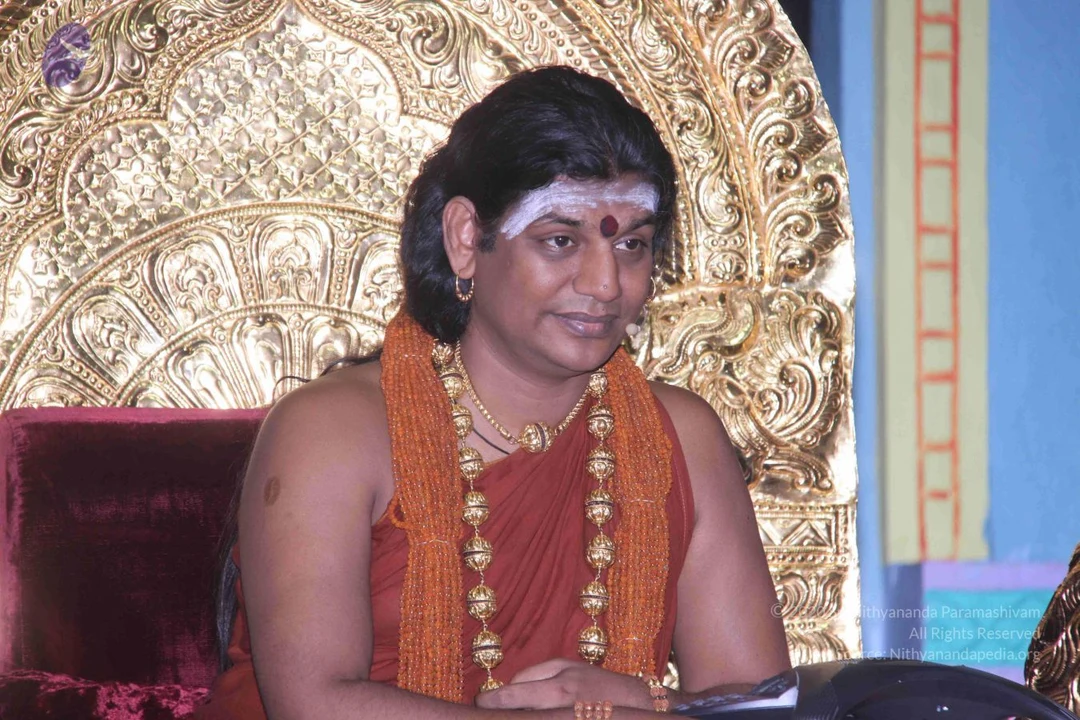
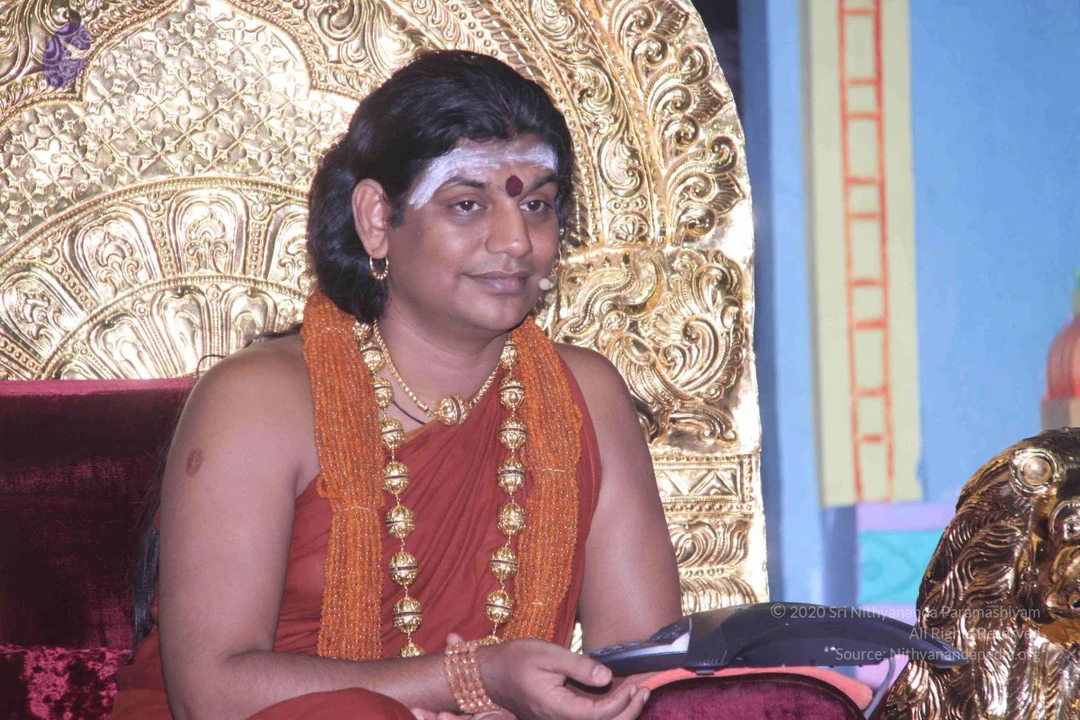
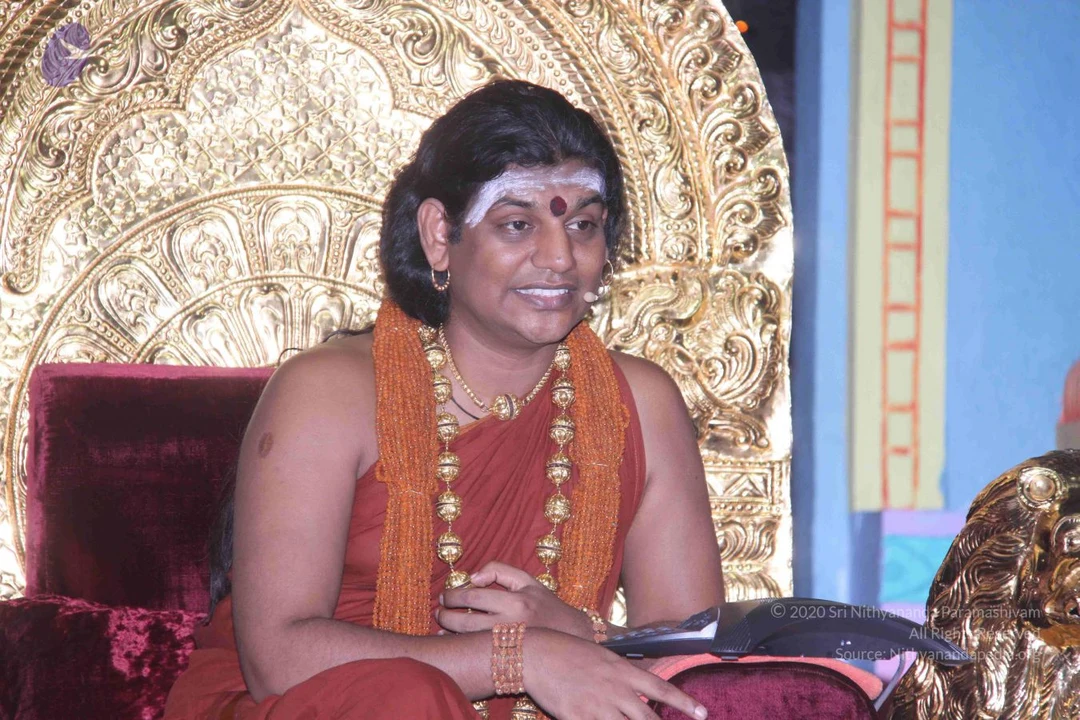
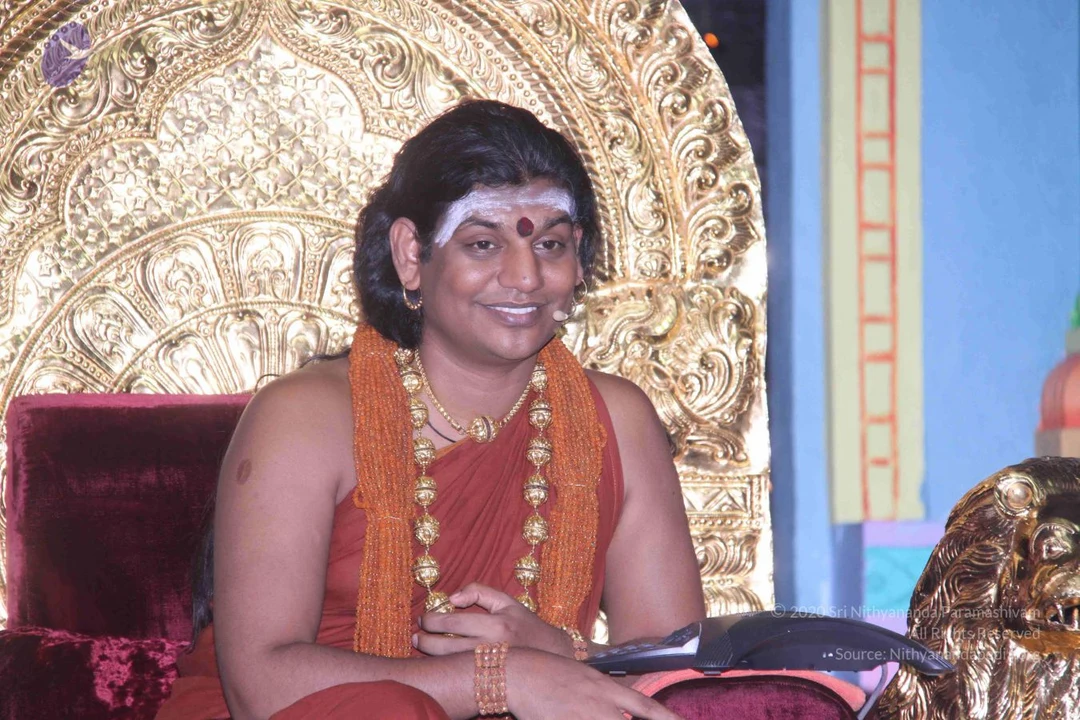
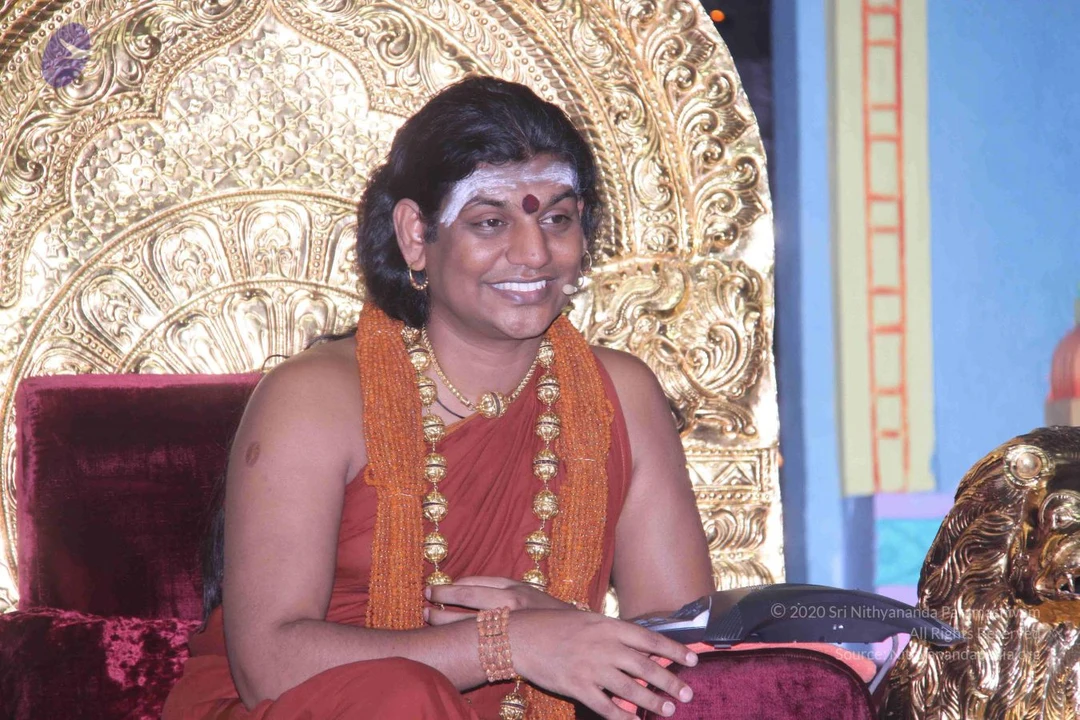
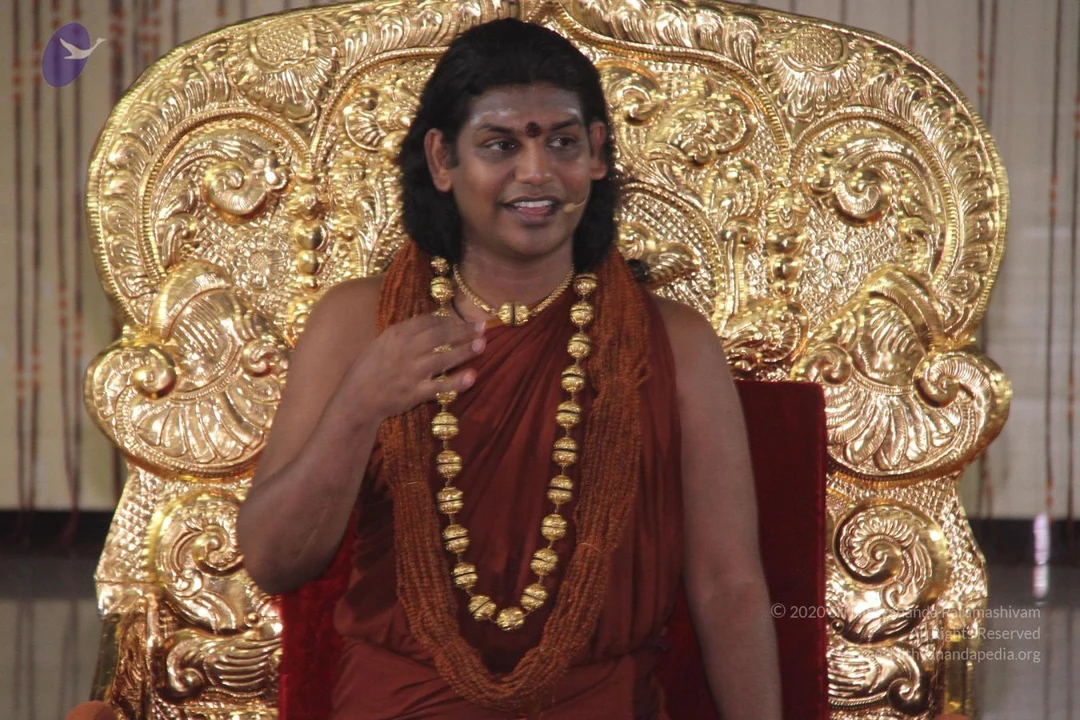
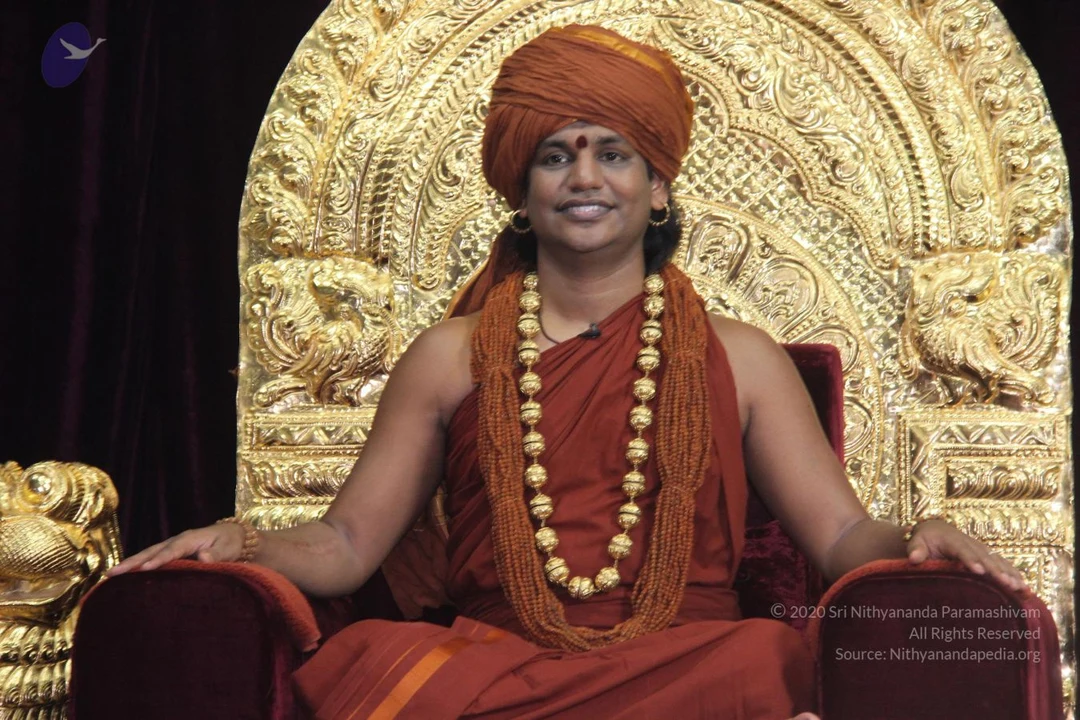
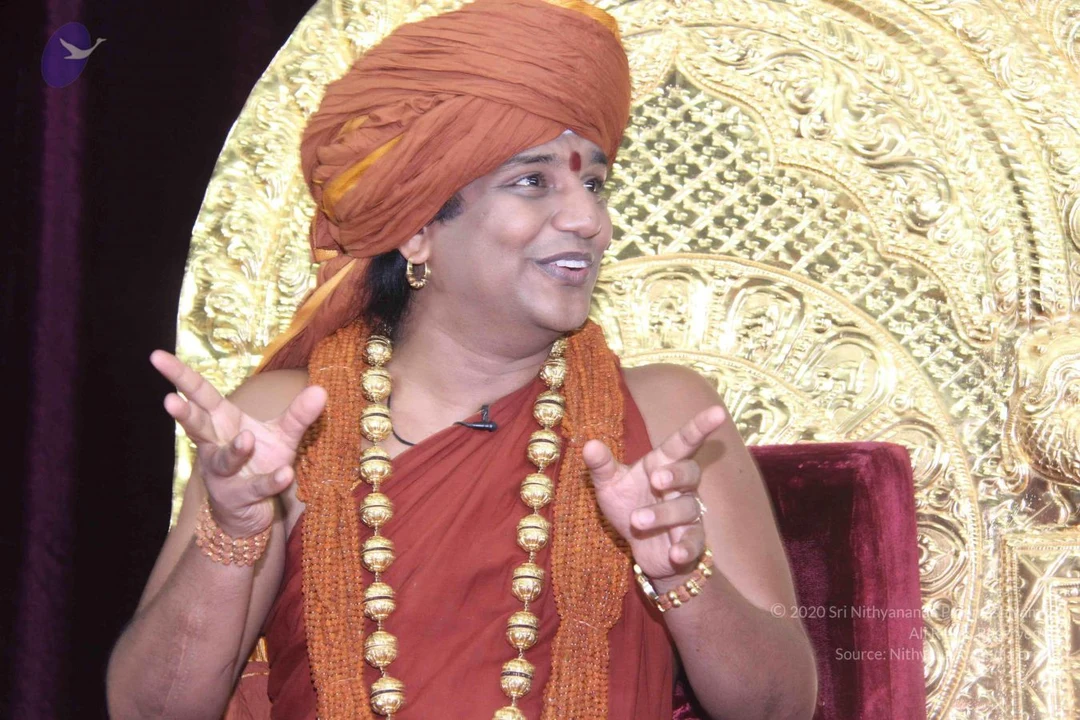
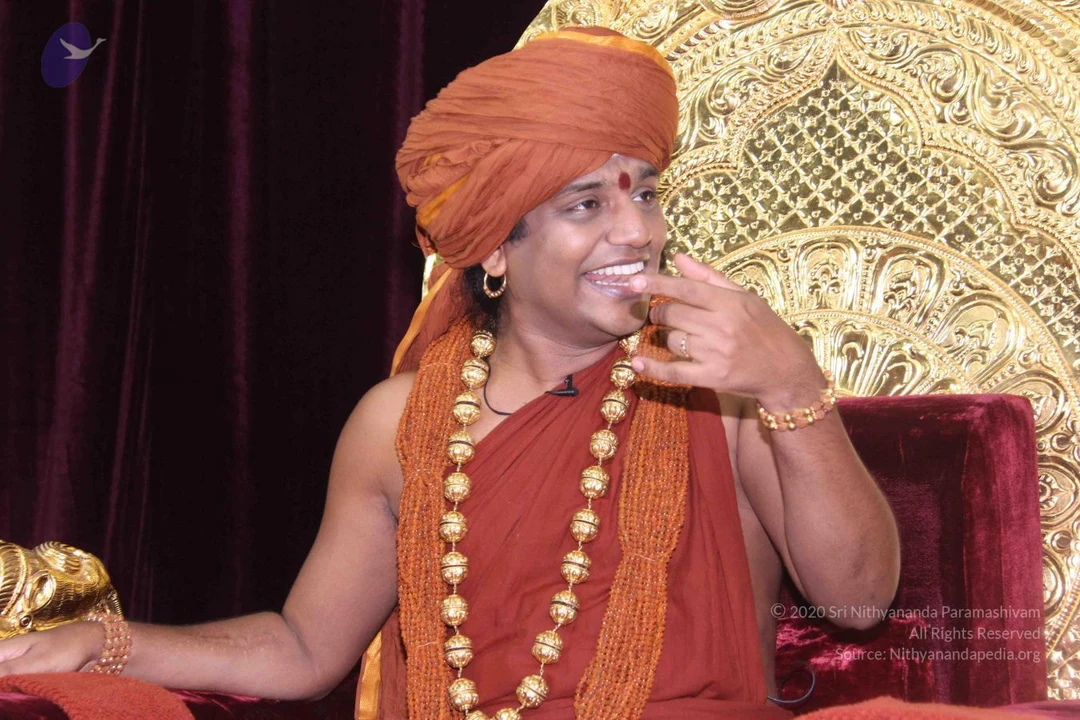
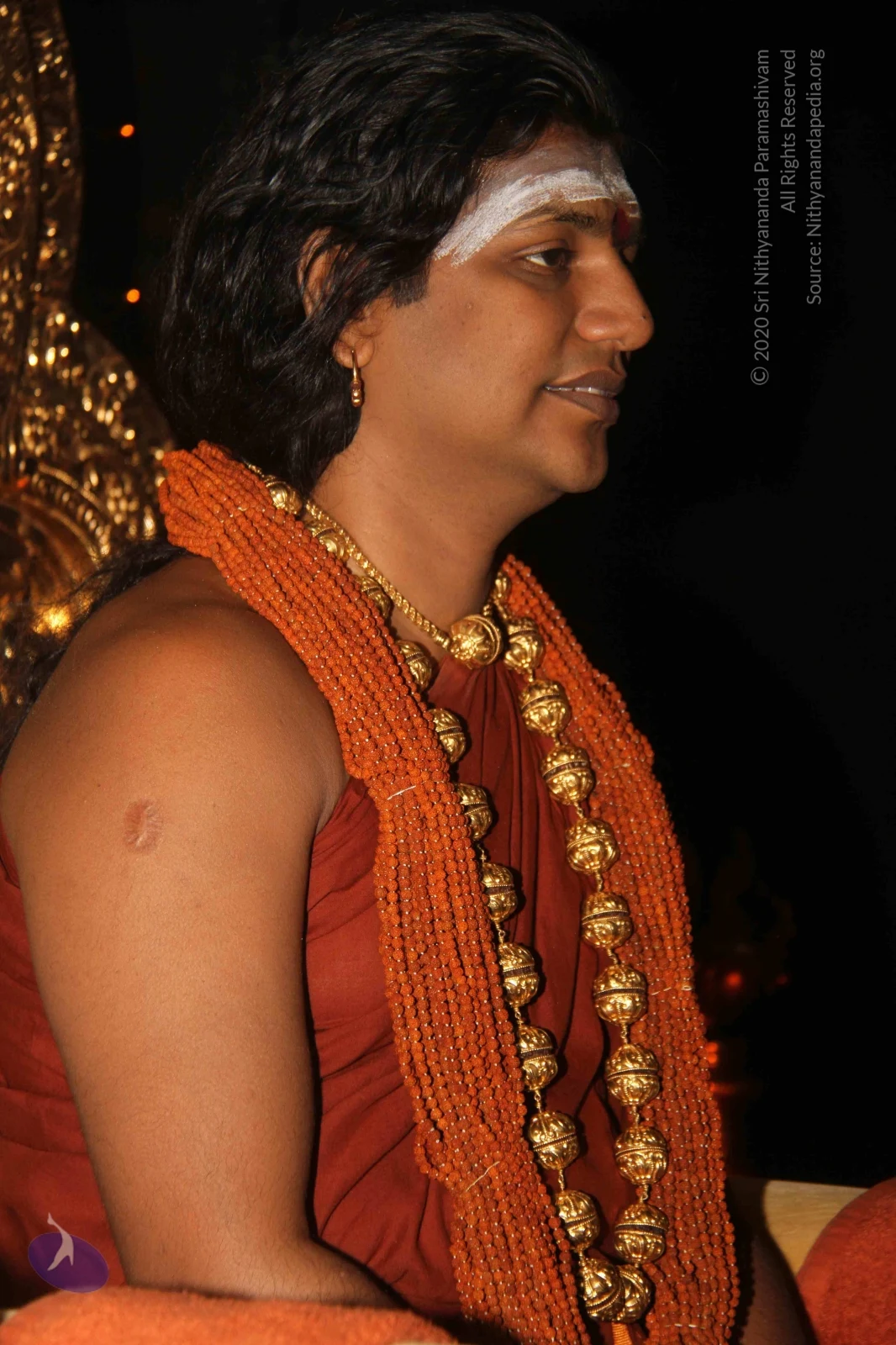
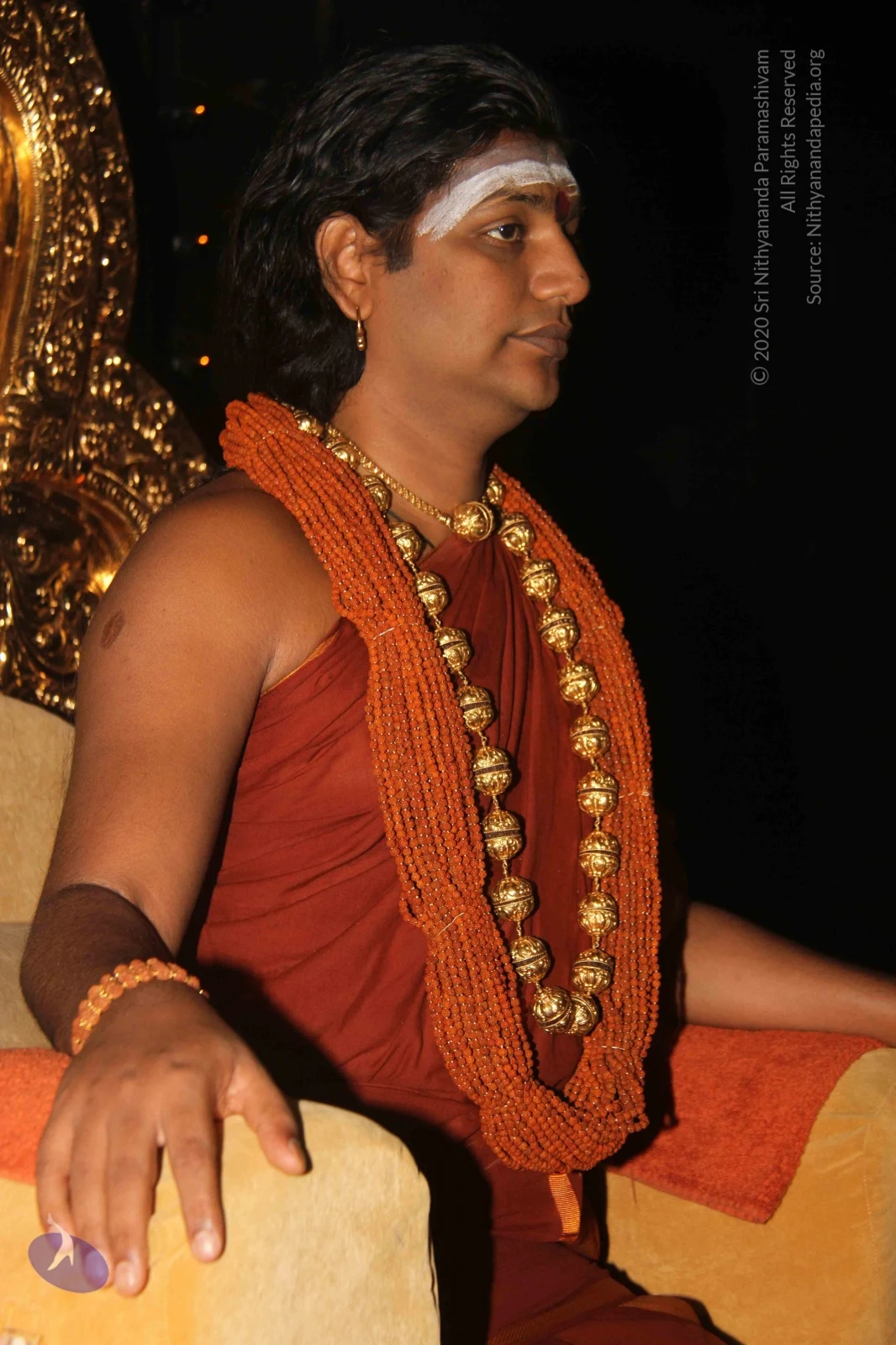
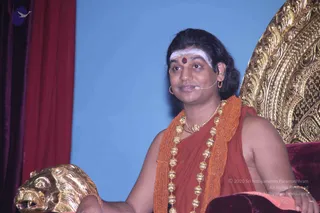
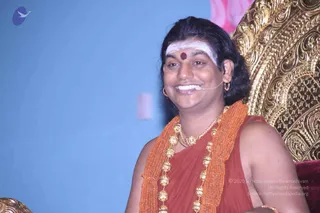
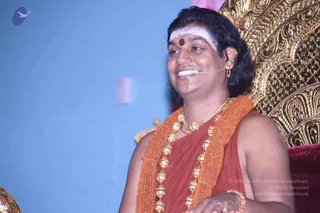
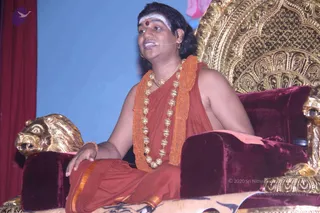
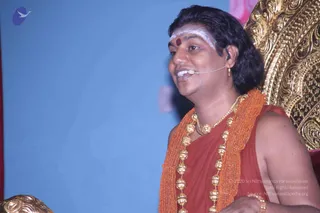
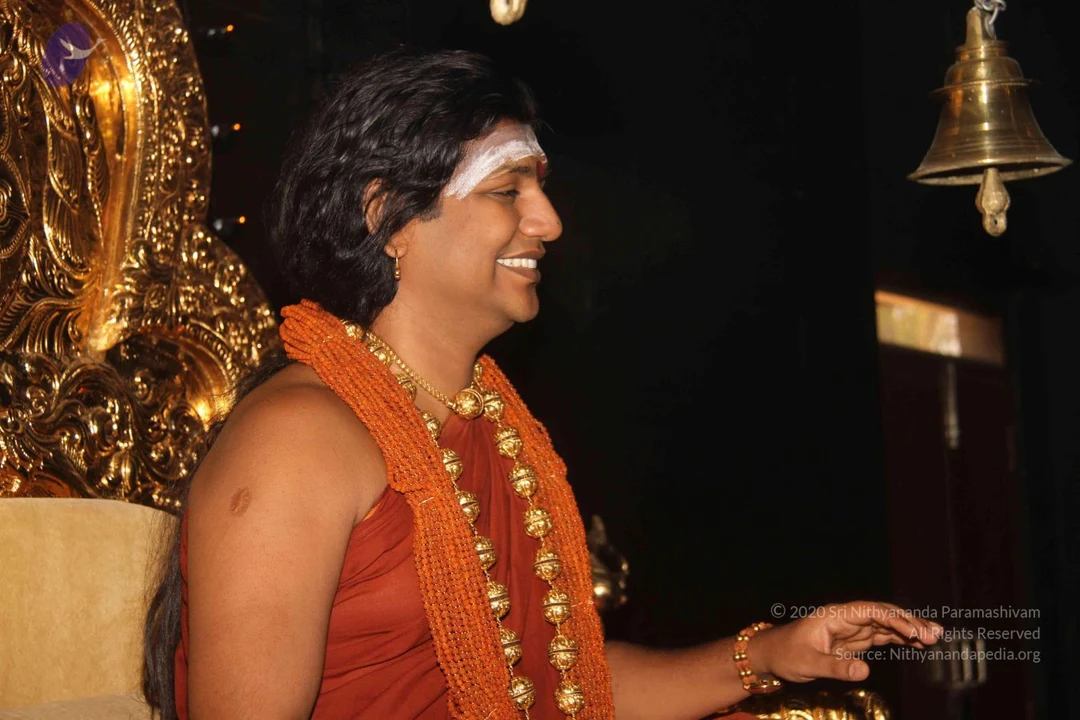
A man seated on a red cushioned chair in front of an ornate gold-leaf throne backdrop with carved scrollwork and dragon-like figures. He presses his palms together in anjali mudra, wearing a rust-orange shawl and orange robe, a long rudraksha mala with gold beads, gold bangles, and gold hoop earrings. A white vertical tilak and a red dot mark his forehead, and a small headset microphone is clipped to his face. Swamiji (probable) appears as the seated presenter, with the cues of long swept-back hair, ceremonial gold necklaces and saffron clothing.A man seated on an ornate gilded throne speaks into a headset microphone during a discourse. He wears a long-haired style, a white tilak with a red bindi on his forehead, small gold earrings, an orange-red shawl over a bare upper body, and layered gold beaded necklaces with rudraksha-style beads. A gold lion-head armrest sits in the lower left against a blue backdrop and maroon curtain. The image is an appearance-based a person seated as the speaker, with a sannyasi-style ceremonial look.A smiling person sits on an ornate gold-carved throne against a blue backdrop, wearing a saffron-orange wrap over a bare shoulder and layered orange and gold bead necklaces with a gold ceremonial pendant. The person has long dark hair swept back, a white tilak on the forehead with a red bindi, gold hoop earrings, and a small headset microphone. Swamiji (probable) in this presentation: long swept-back hair, saffron ornate clothing, rudraksha-style malas and ceremonial gold necklaces seated on a gilded throne. A blurred pink object is visible at the top edge. The photo is from a discourse setting.A smiling man with long dark hair sits on an ornate gold throne with carved floral panels against a pale blue backdrop. He wears a white vibhuti band with a red kumkum dot on his forehead, a headset microphone, an orange-red cloth draped over his bare shoulder, a long orange beaded mala with large gold ball beads, and a gold chain with a gold pendant. His hands rest together in his lap, one with a gold bangle. a person appears as the seated speaker, with cues of long swept hair, saffron-orange garments, rudraksha-style beads and gold ornaments; a small blurred pink object is visible behind him.A man seated on an ornate golden throne with a plush burgundy velvet cushion and carved golden lion-head armrest, speaking into a headset microphone. He wears a rust-orange dhoti and a matching orange shawl, a long multi-strand necklace of gold-toned beads, and a white vertical forehead mark with a red dot. a person — the figure has a swept-back long dark hairstyle, saffron-orange ceremonial clothing, a ceremonial gold necklace and rudraksha-style beads, and he is seated on a throne as the presiding teacher during a discourse. Behind him is a blue backdrop and a red curtain at the left edge.a person seated on an ornate gilded throne, speaking with a small headset microphone. He wears a saffron-orange draped shawl over a red-orange robe, with a long rudraksha mala of golden beads and an ornate gold necklace. He has a white vibhuti marking across his forehead and a red kumkum dot at the centre. A blue backdrop fills the left side of the frame, and his right hand is raised near the bottom edge.

Sarva-Darshan

22 photosSource gallery
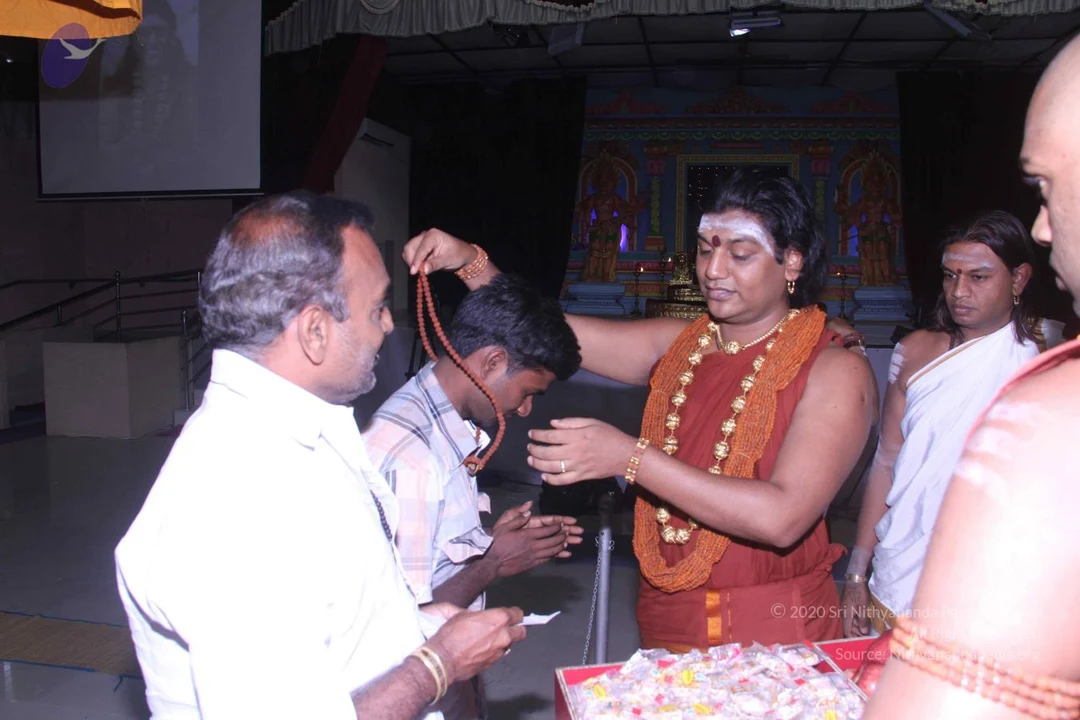
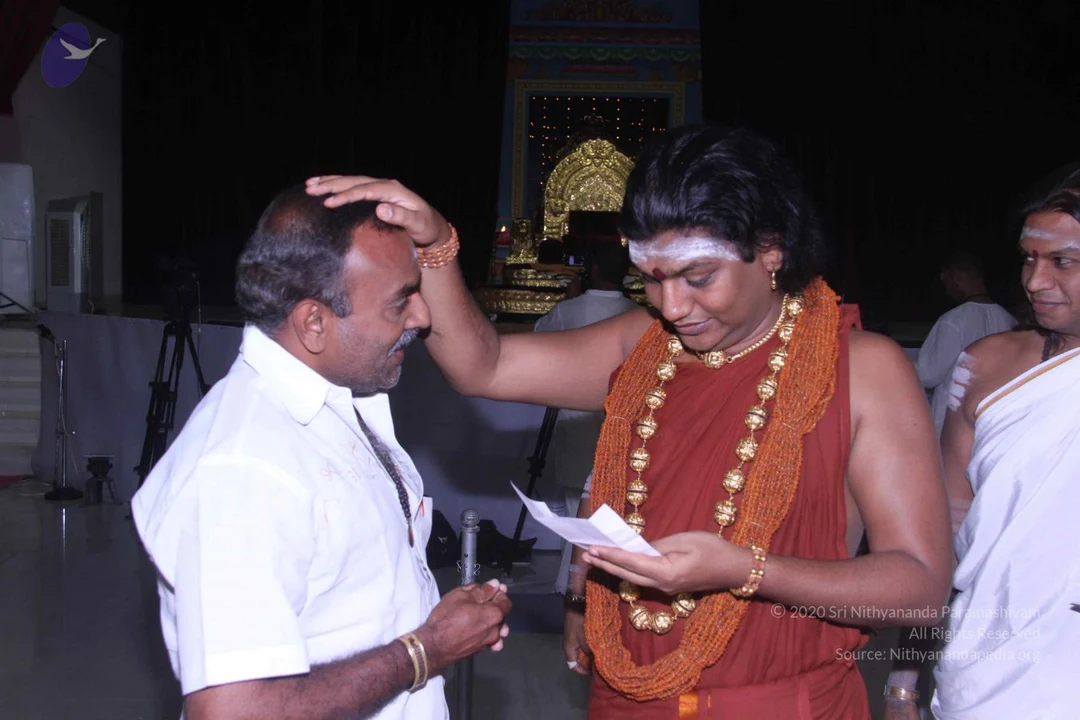
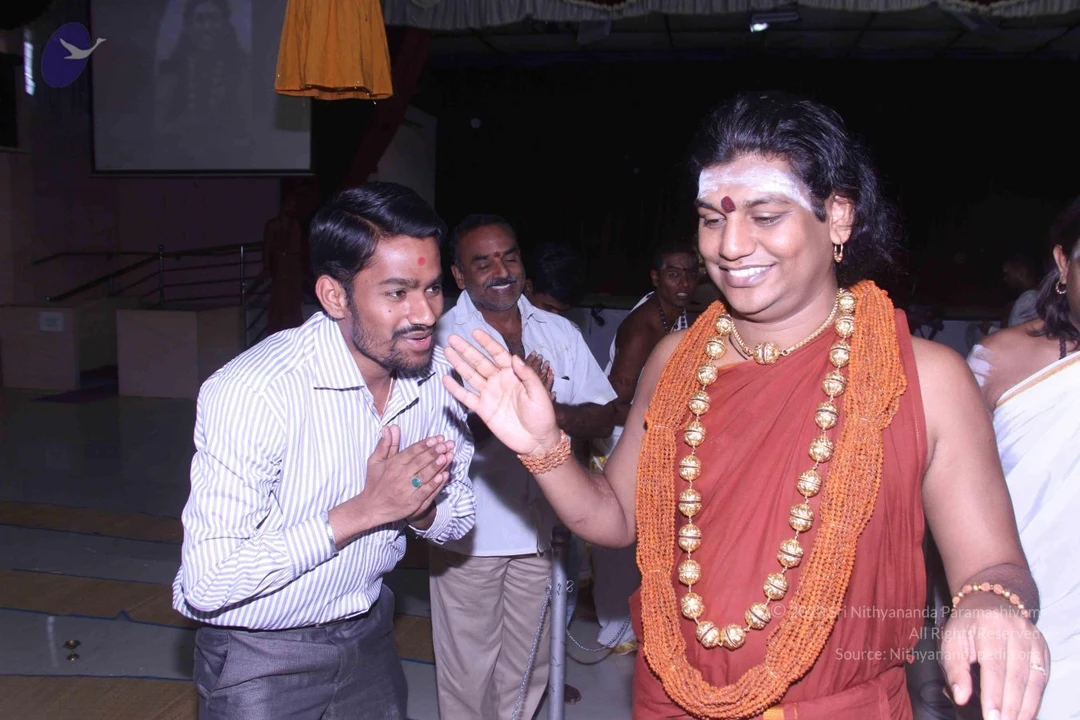
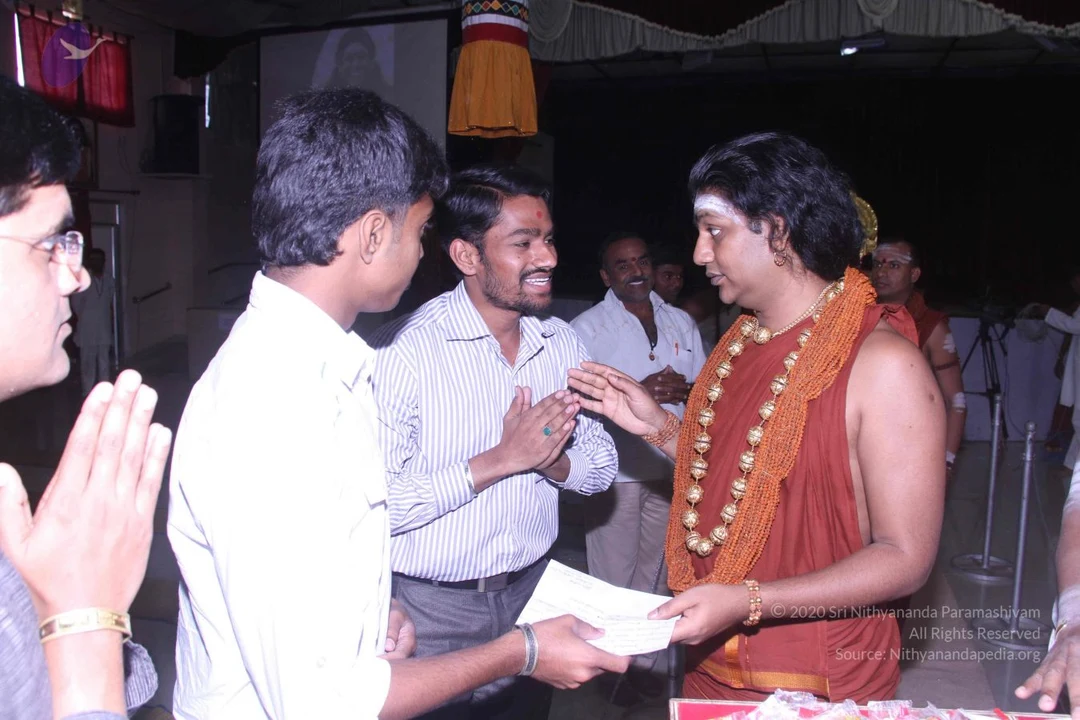
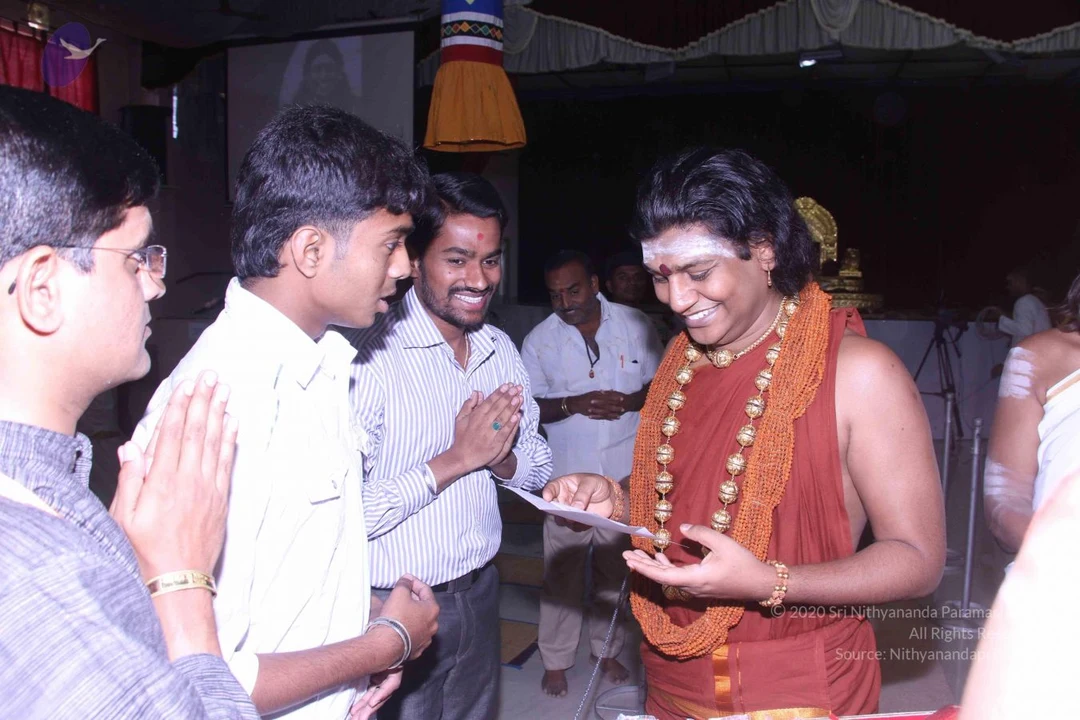
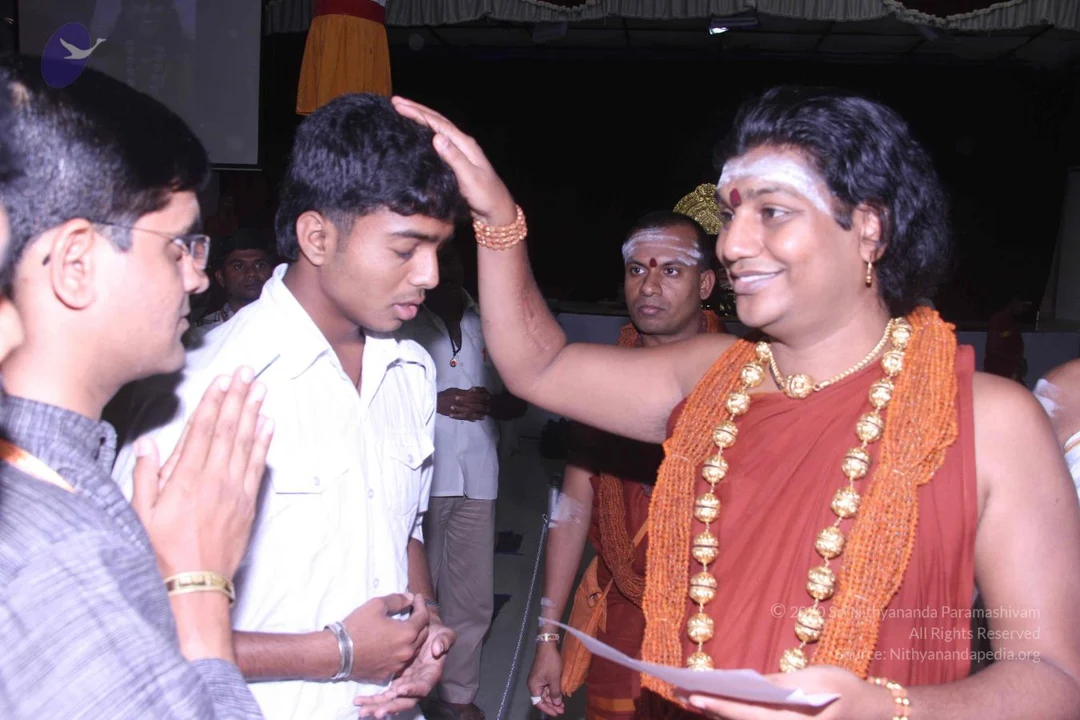
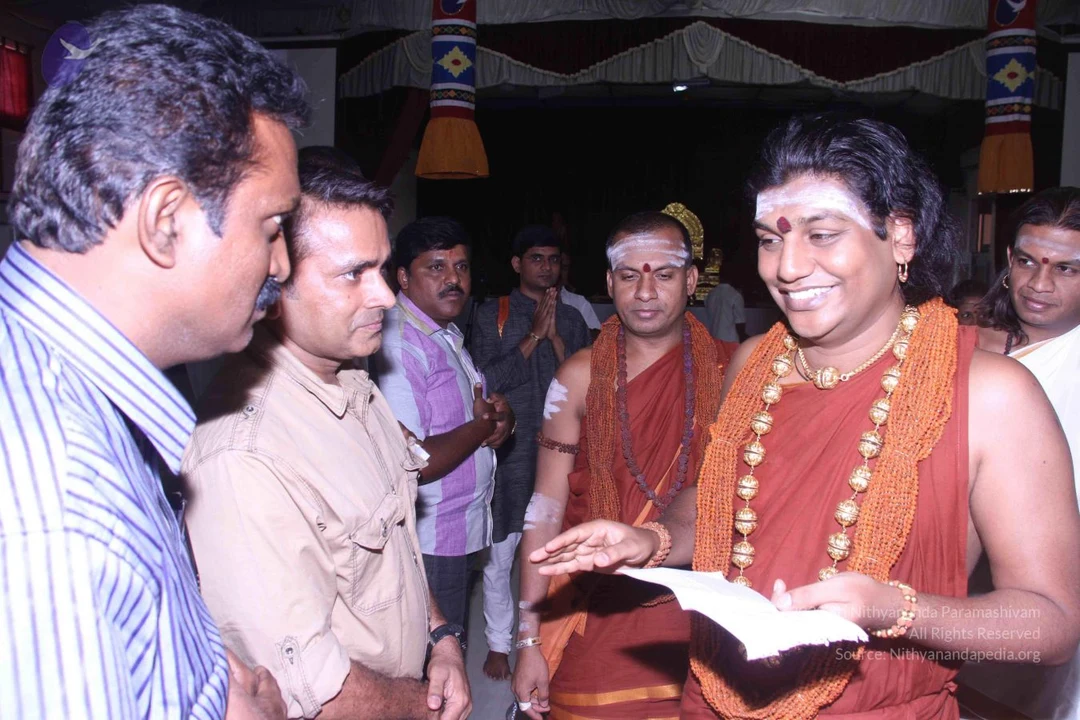
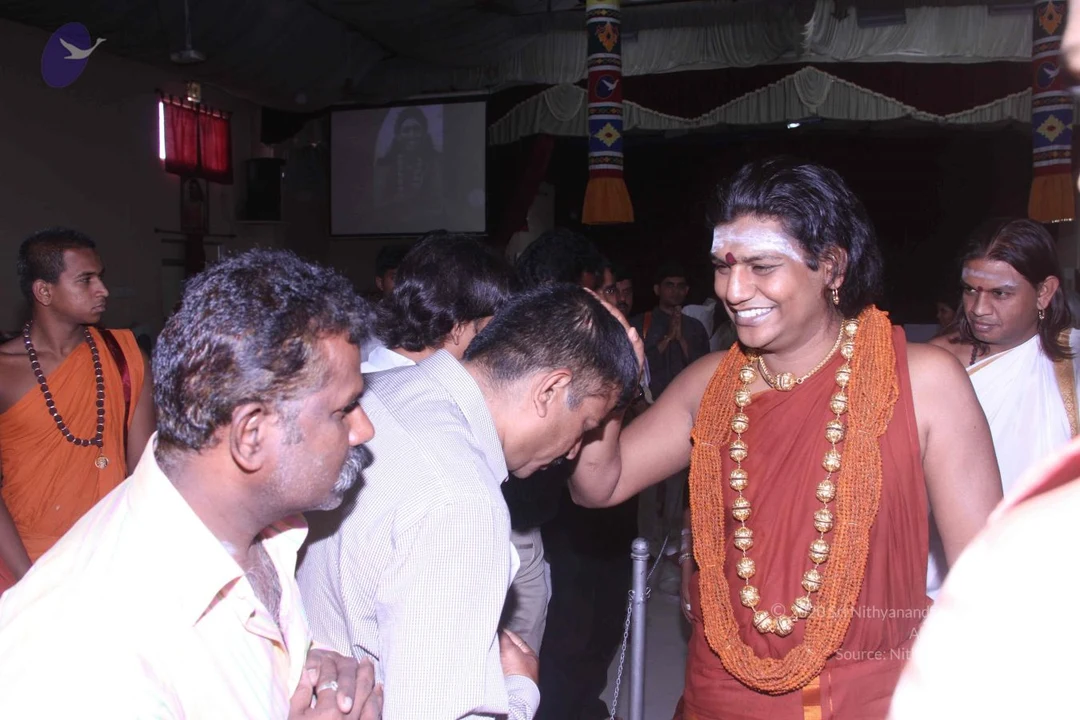
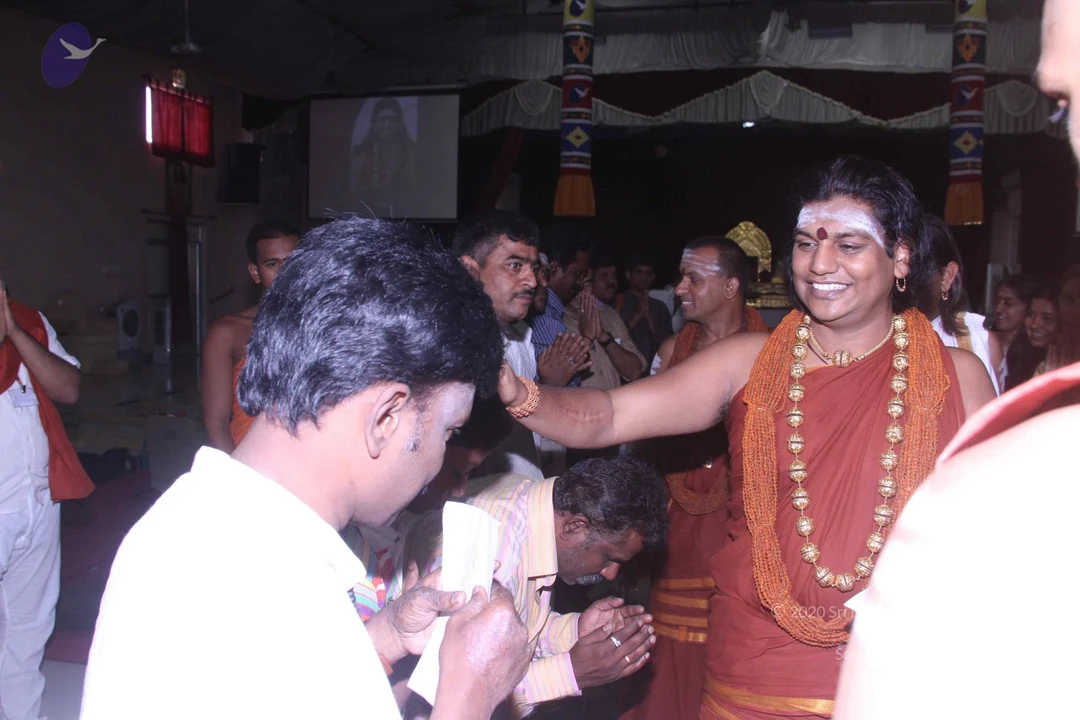
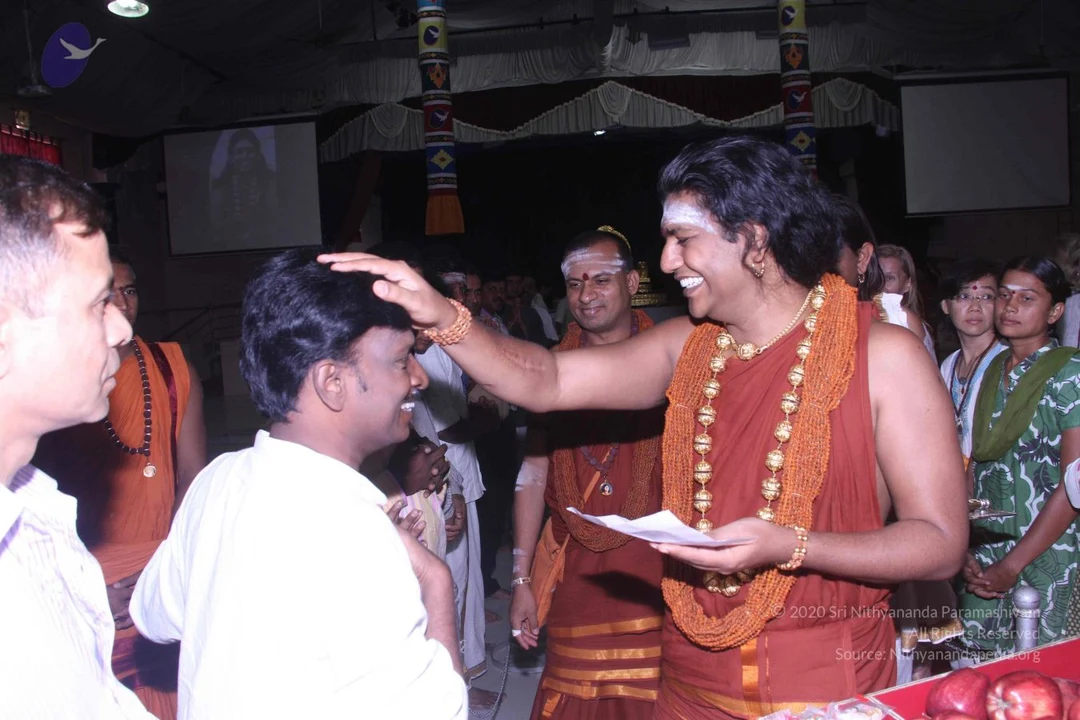
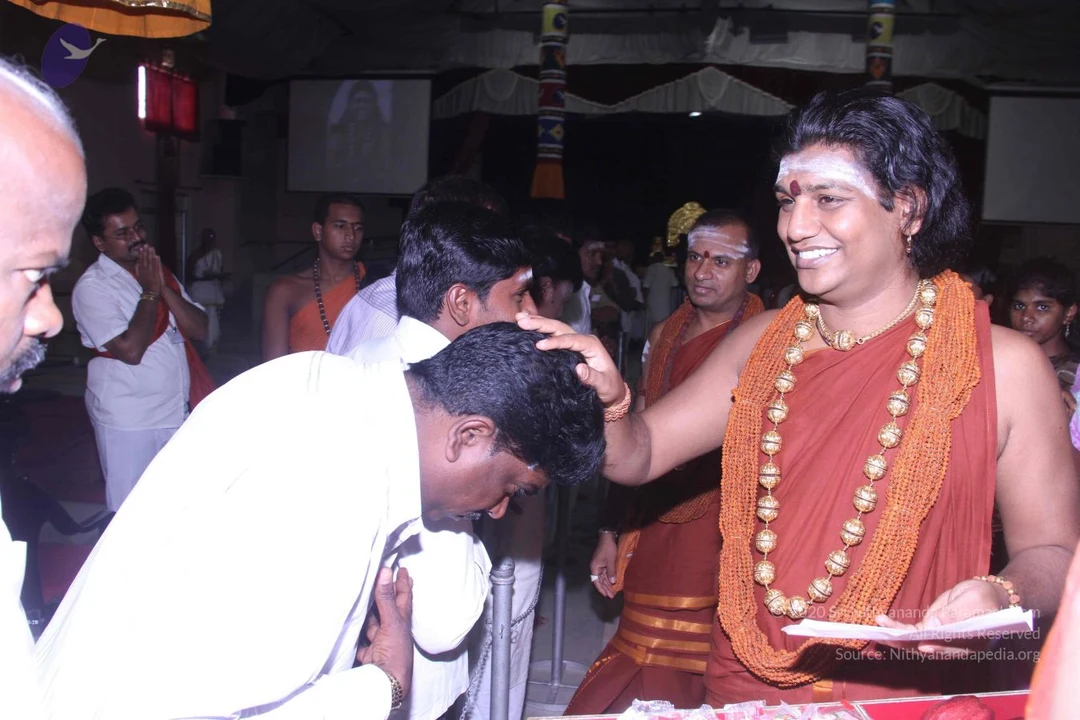
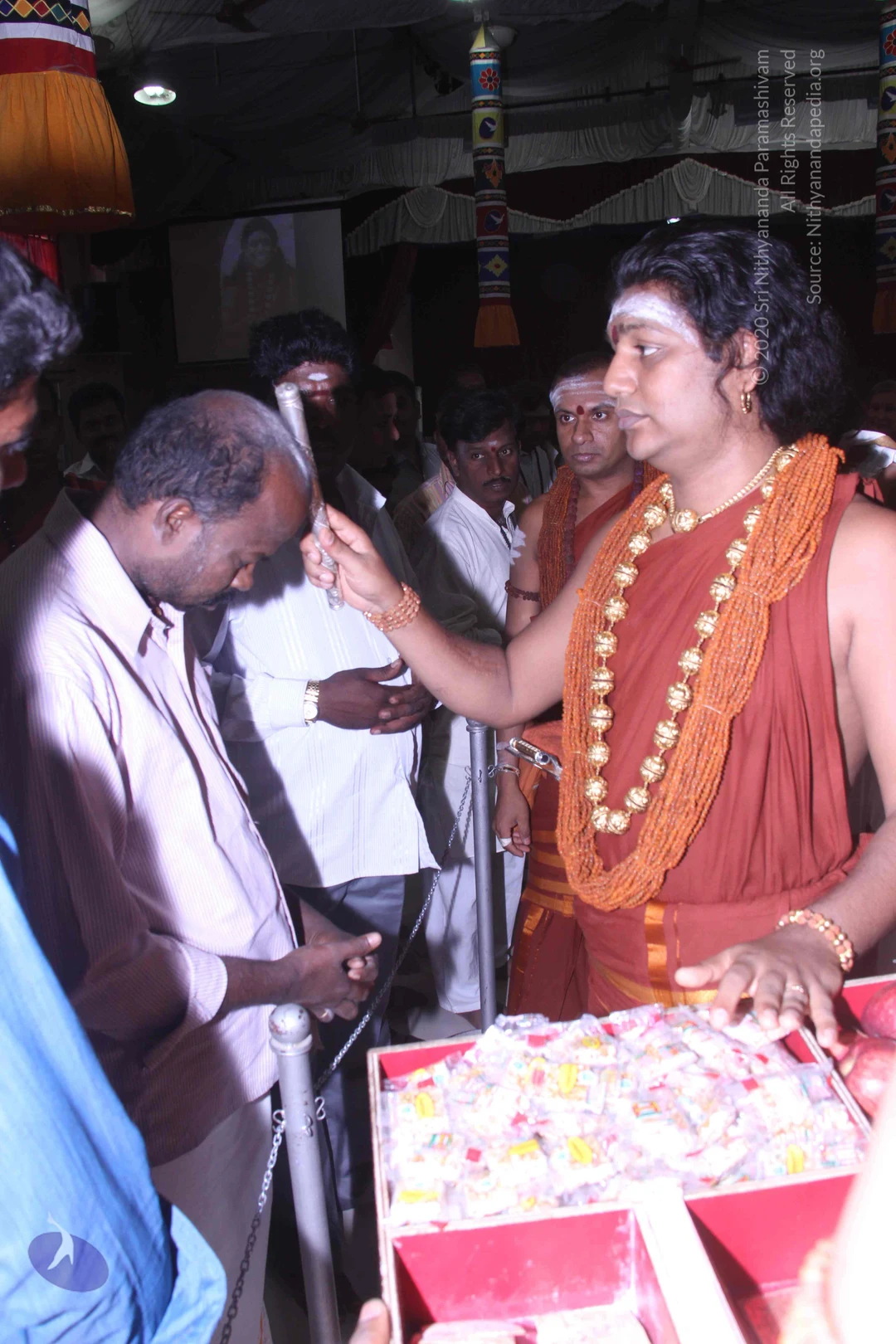
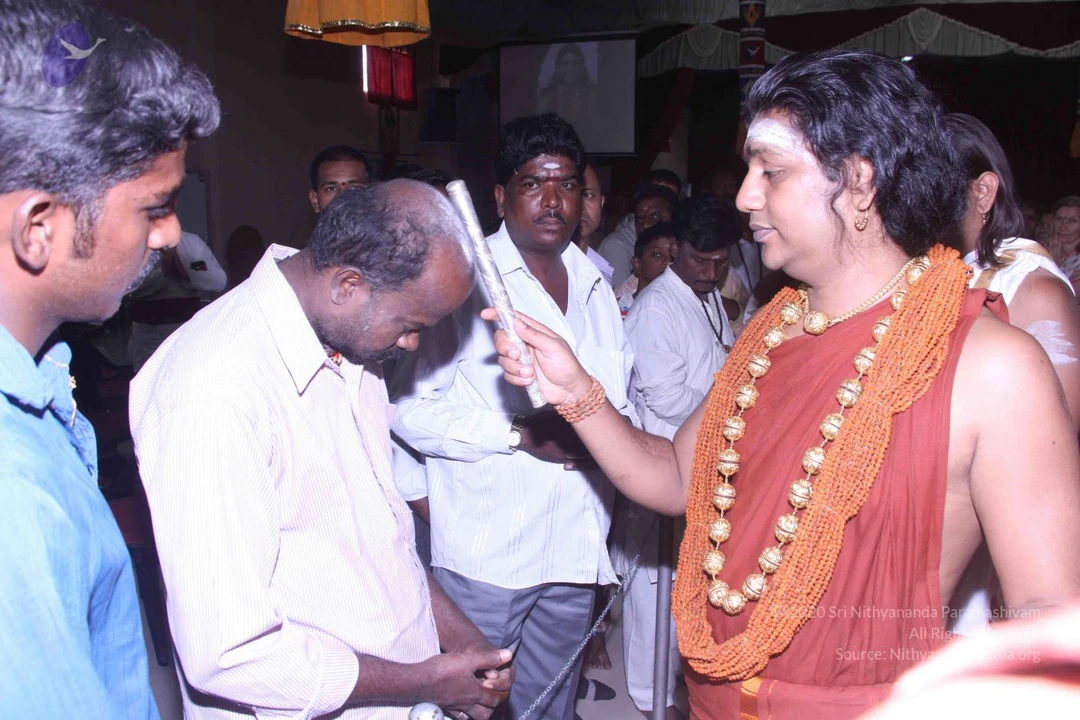
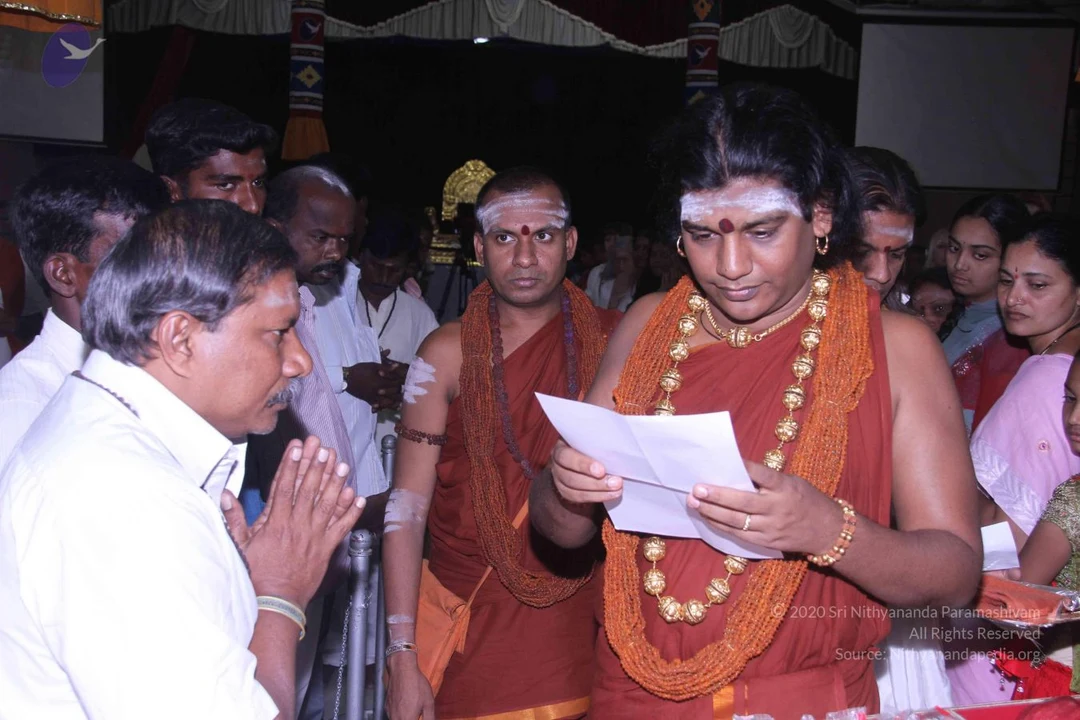
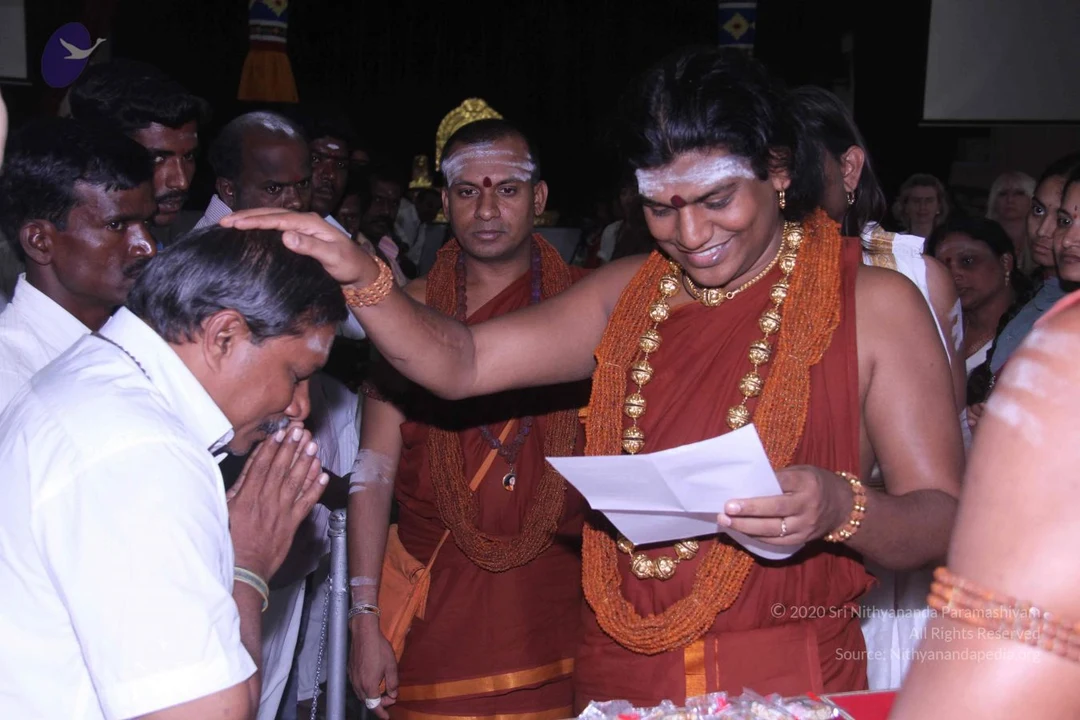
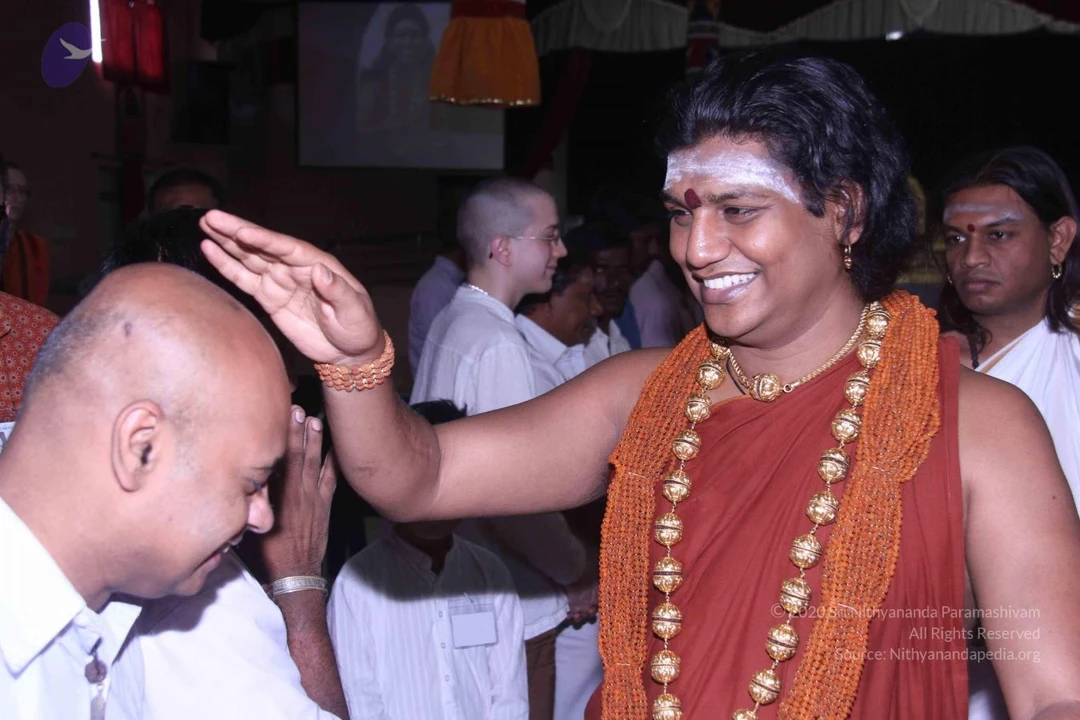
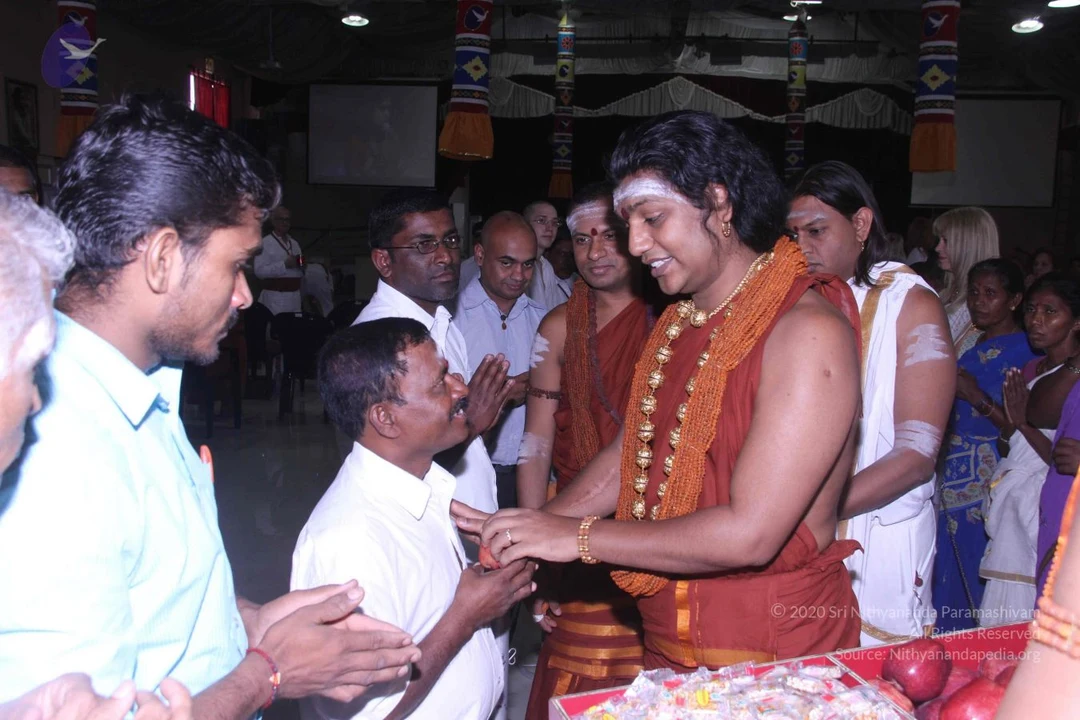
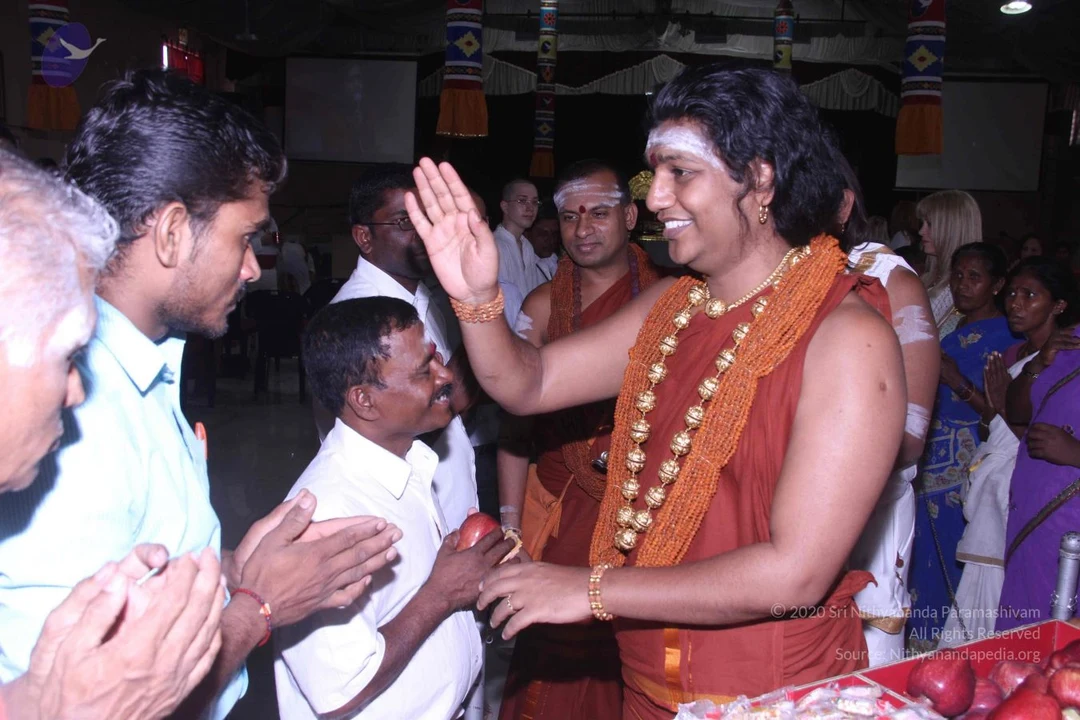
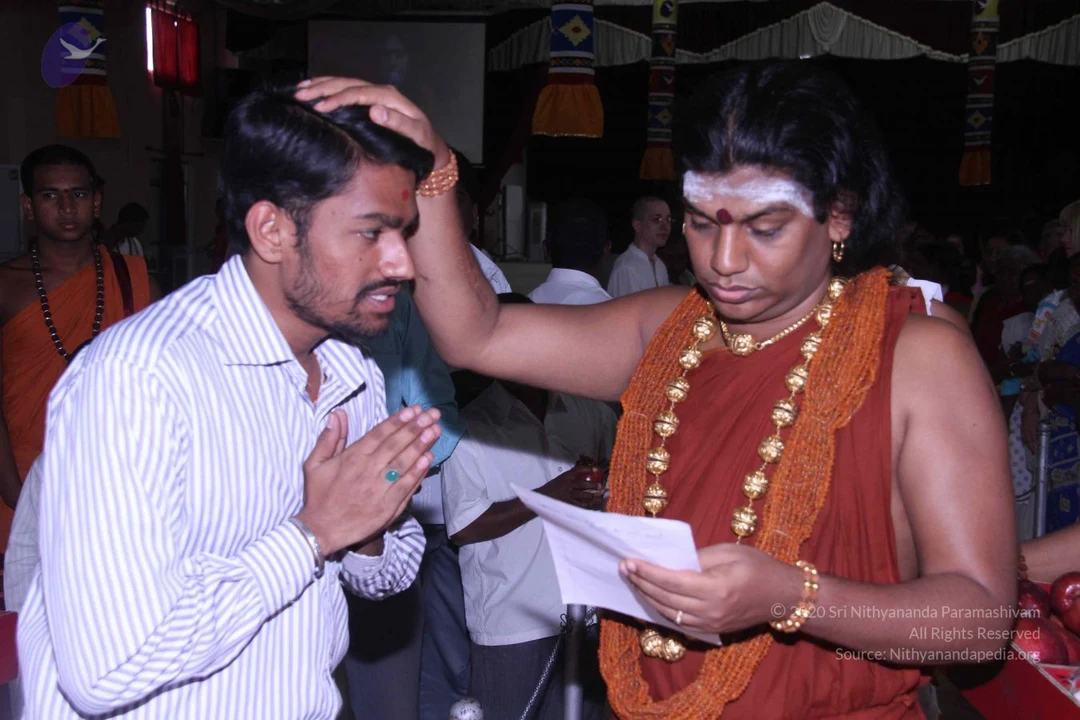
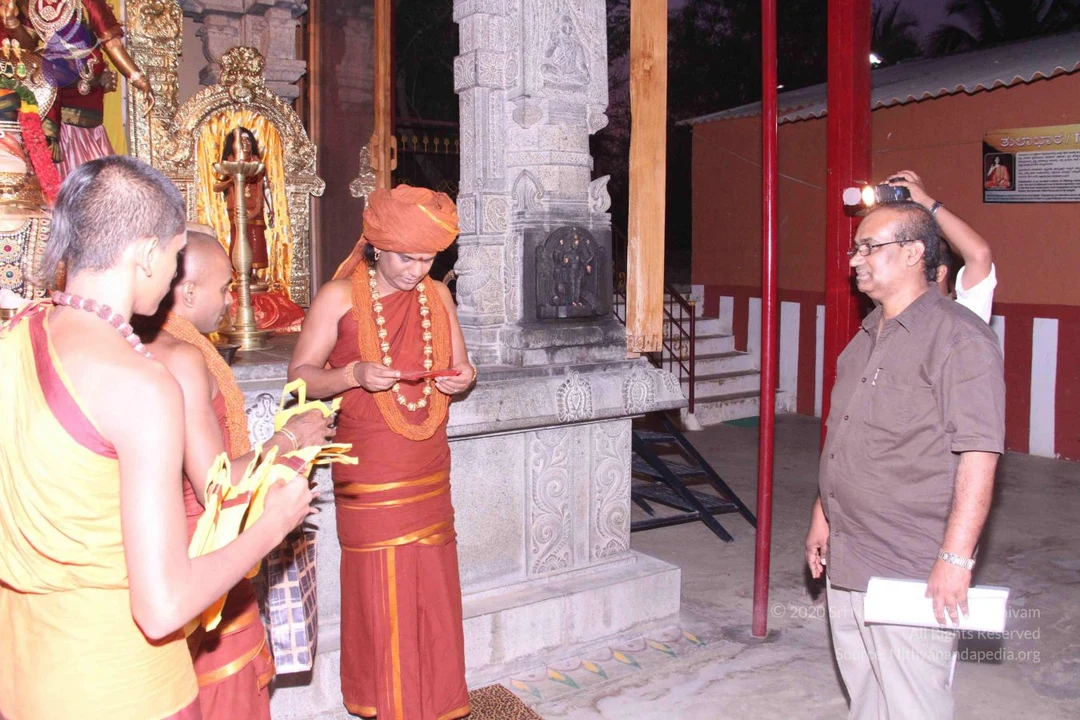
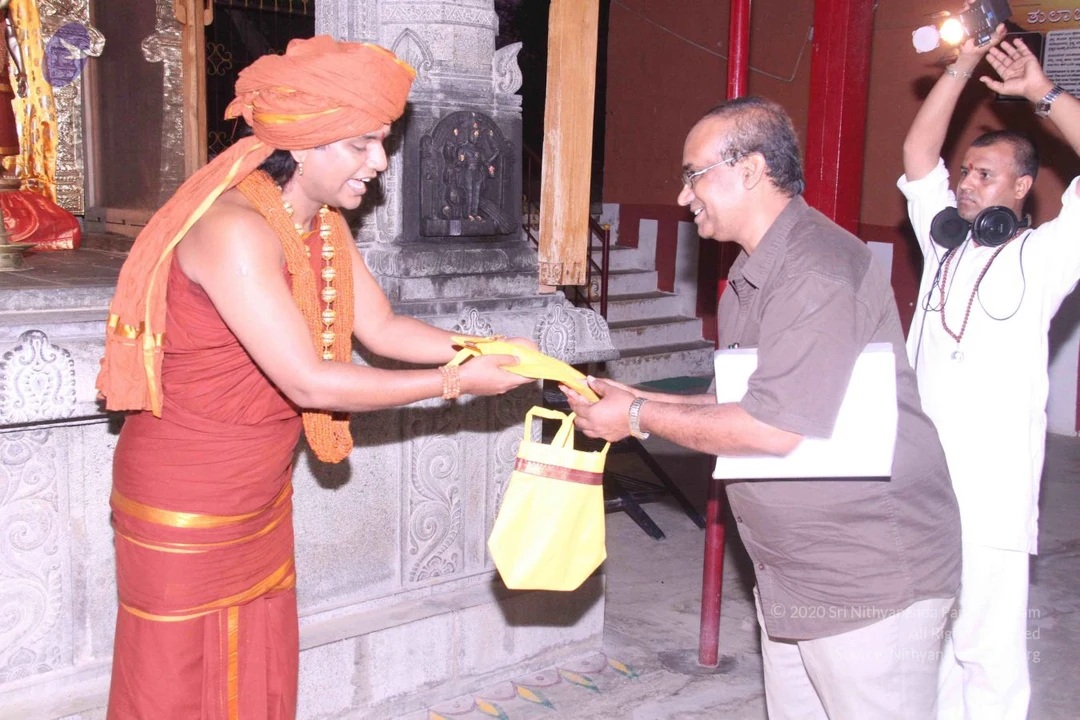
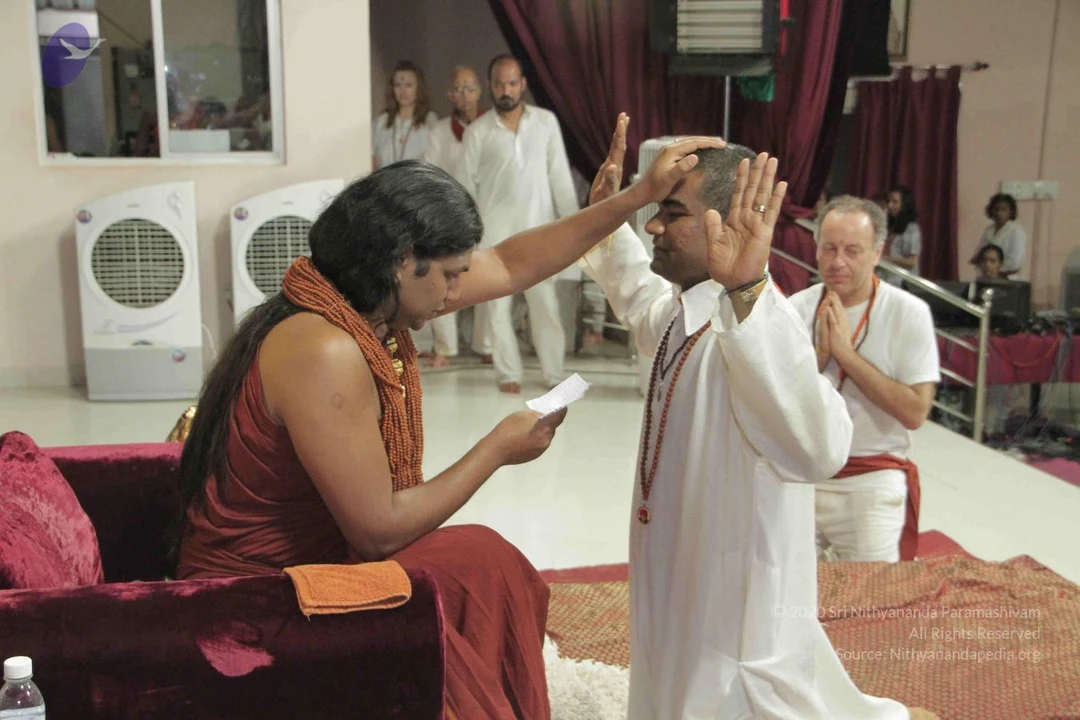
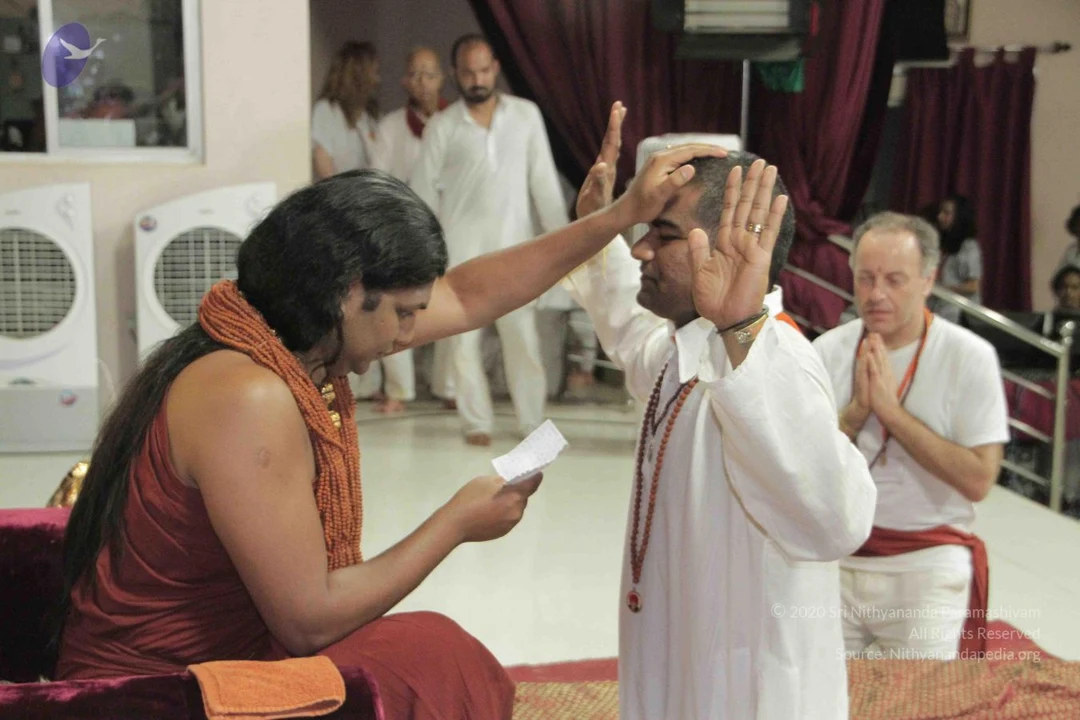
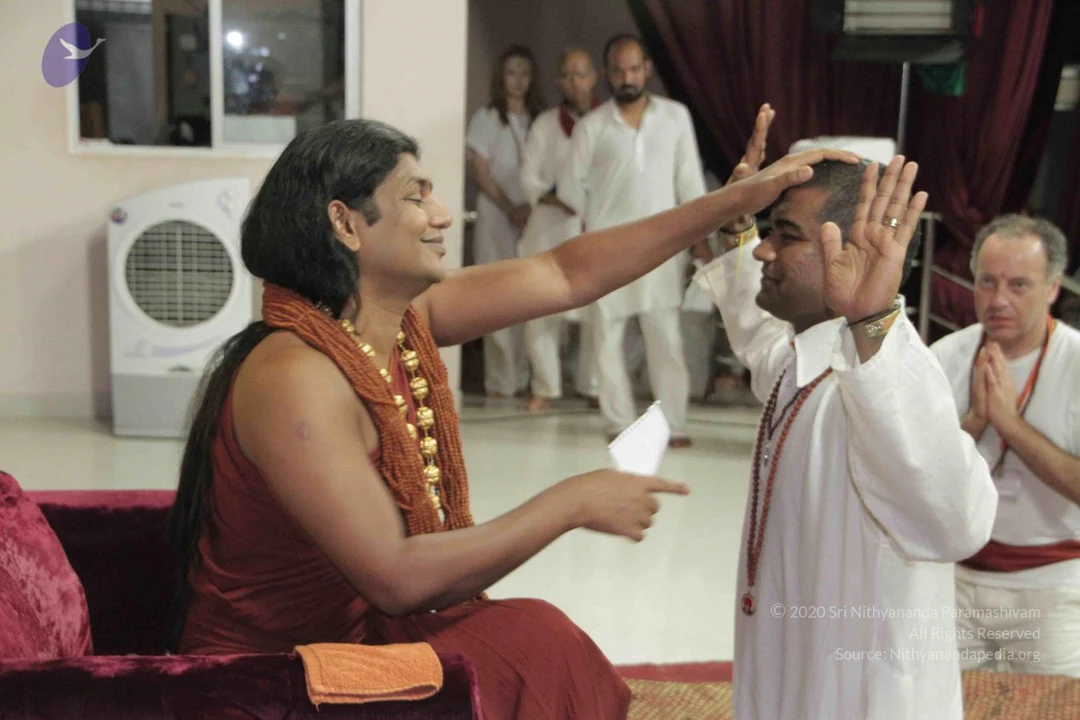
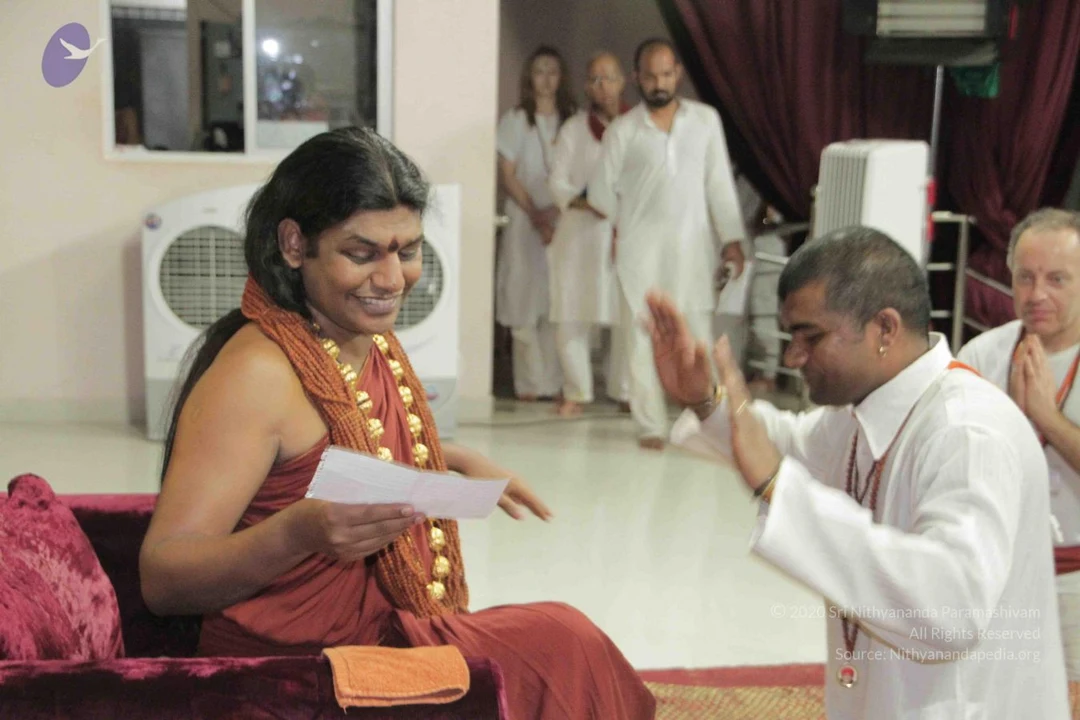
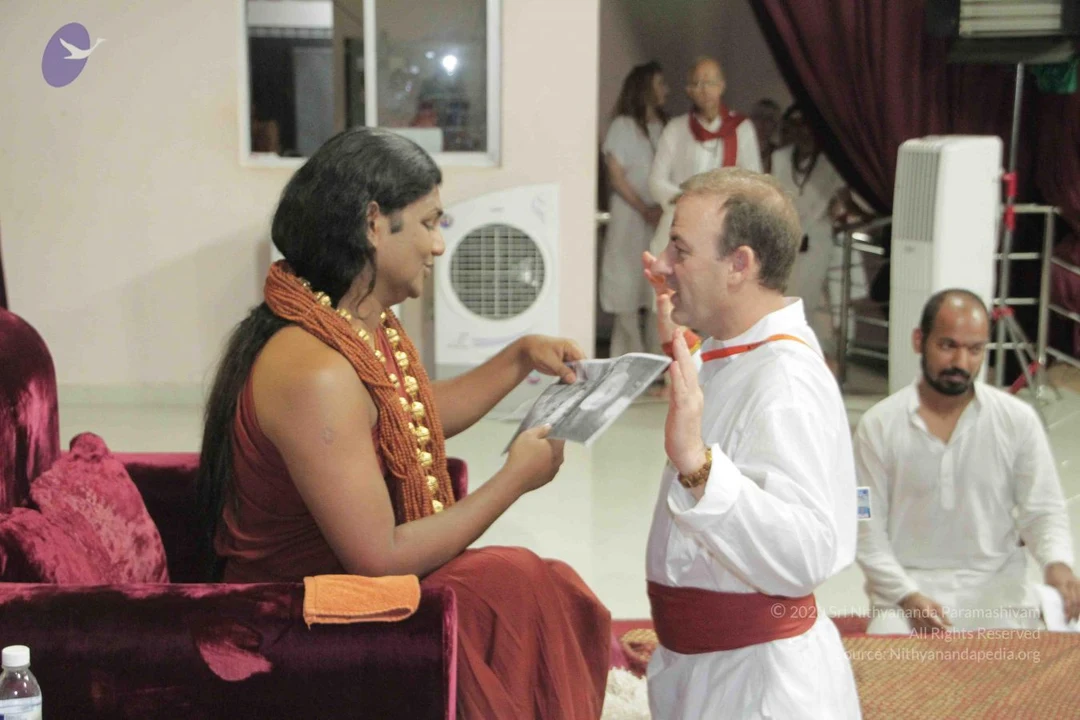
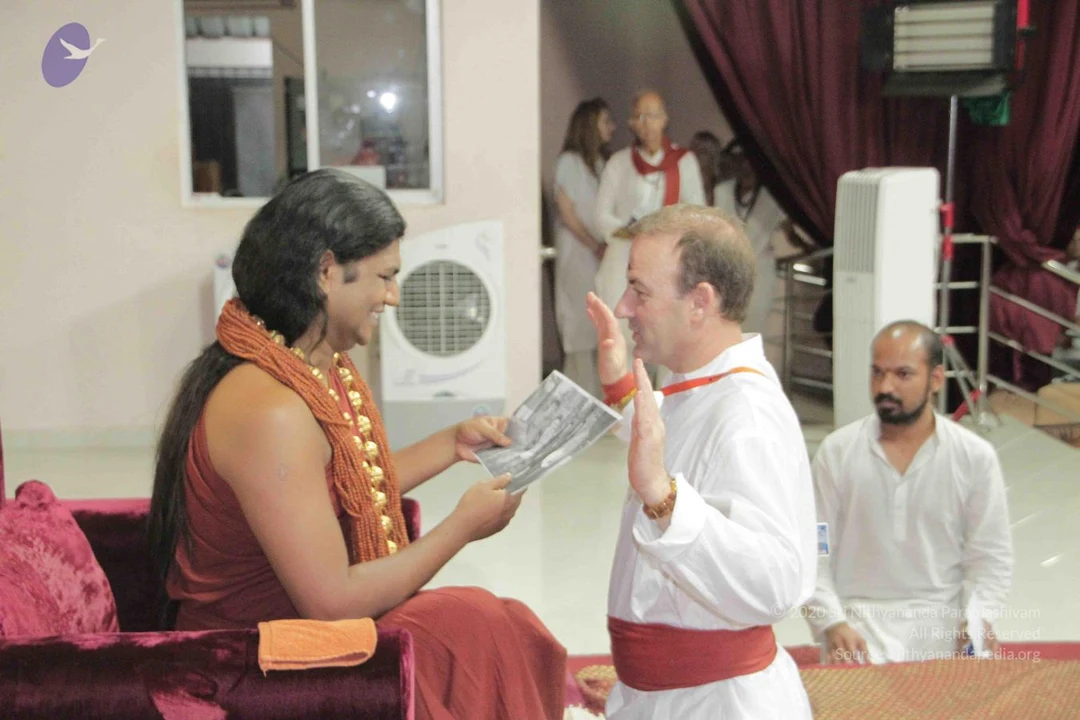
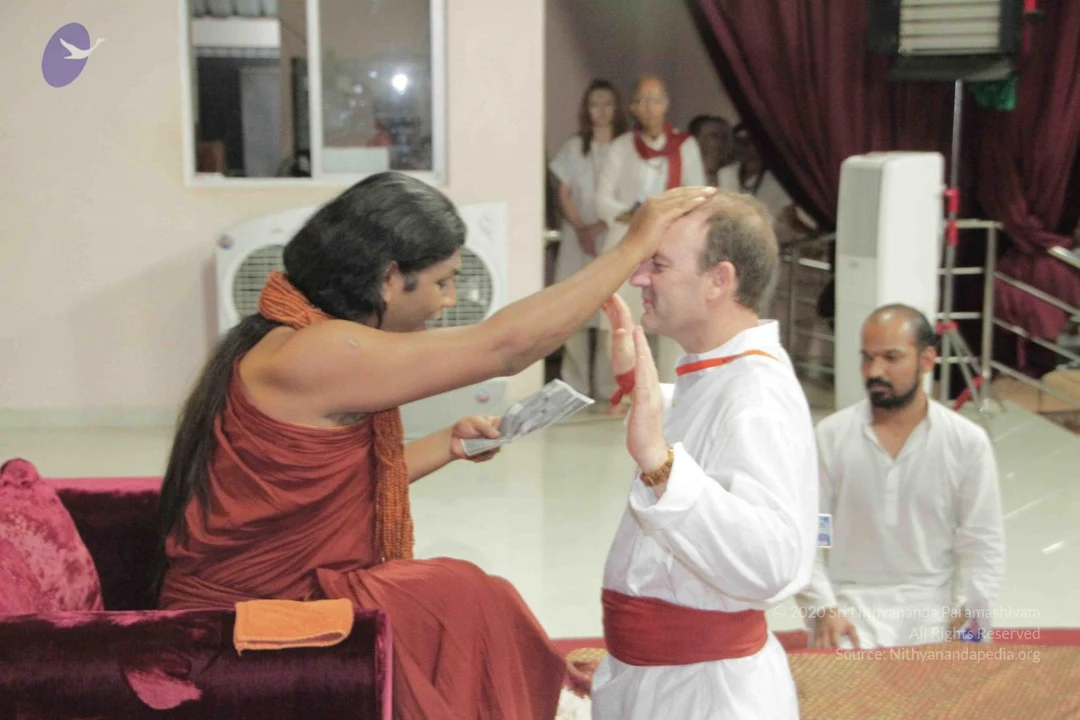
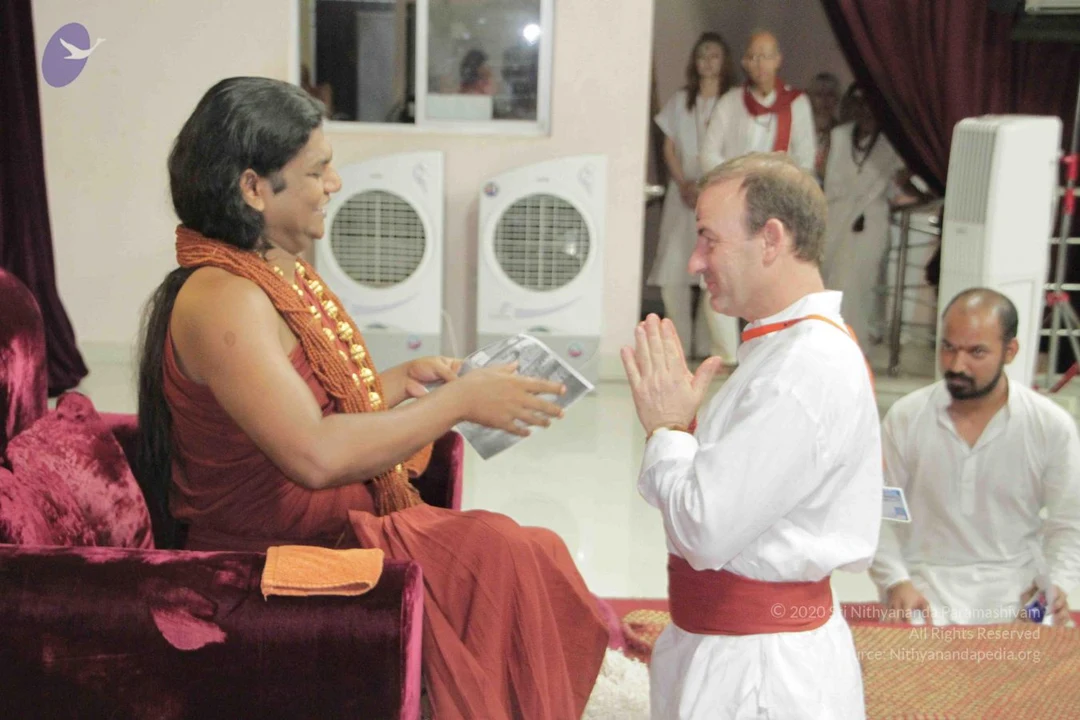
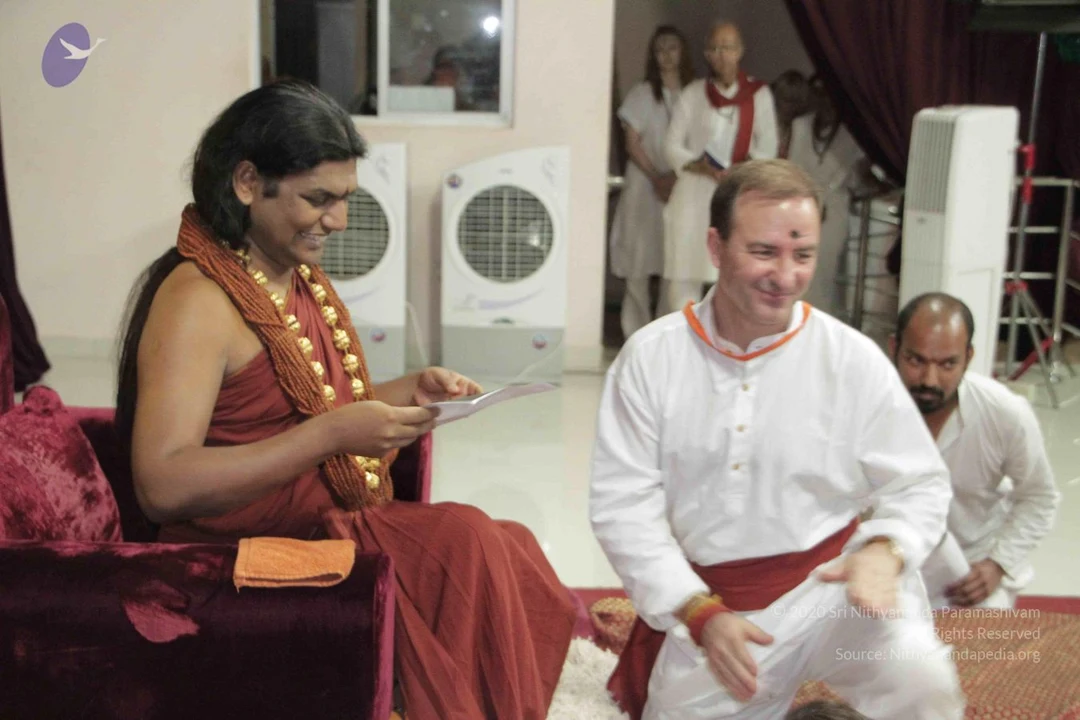
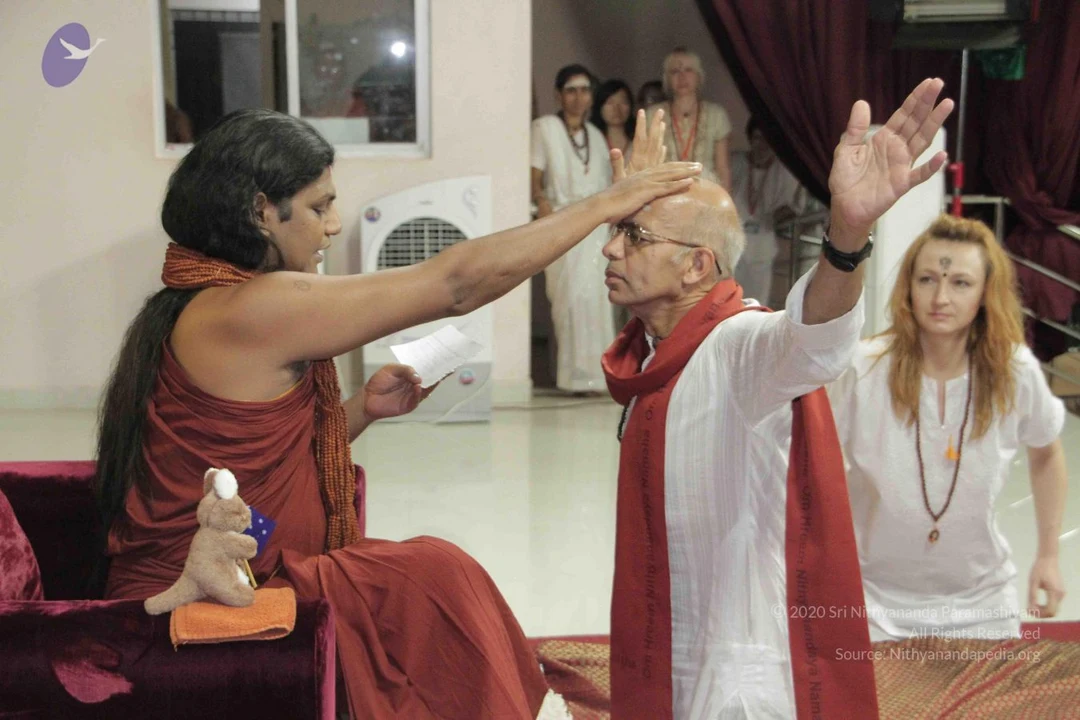
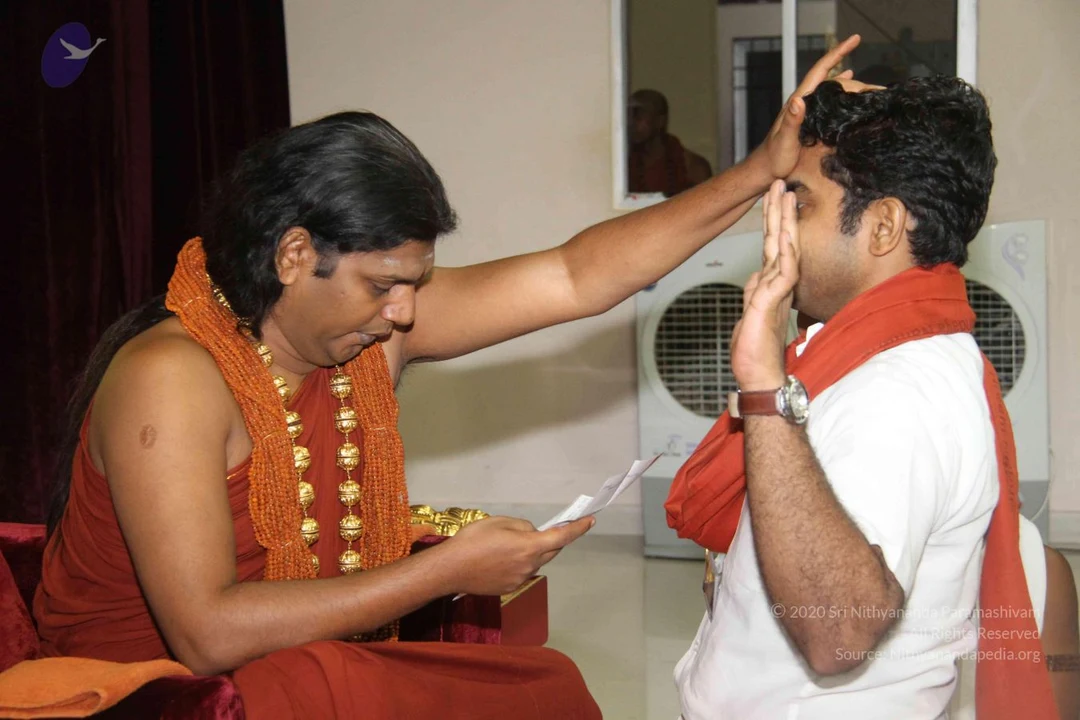
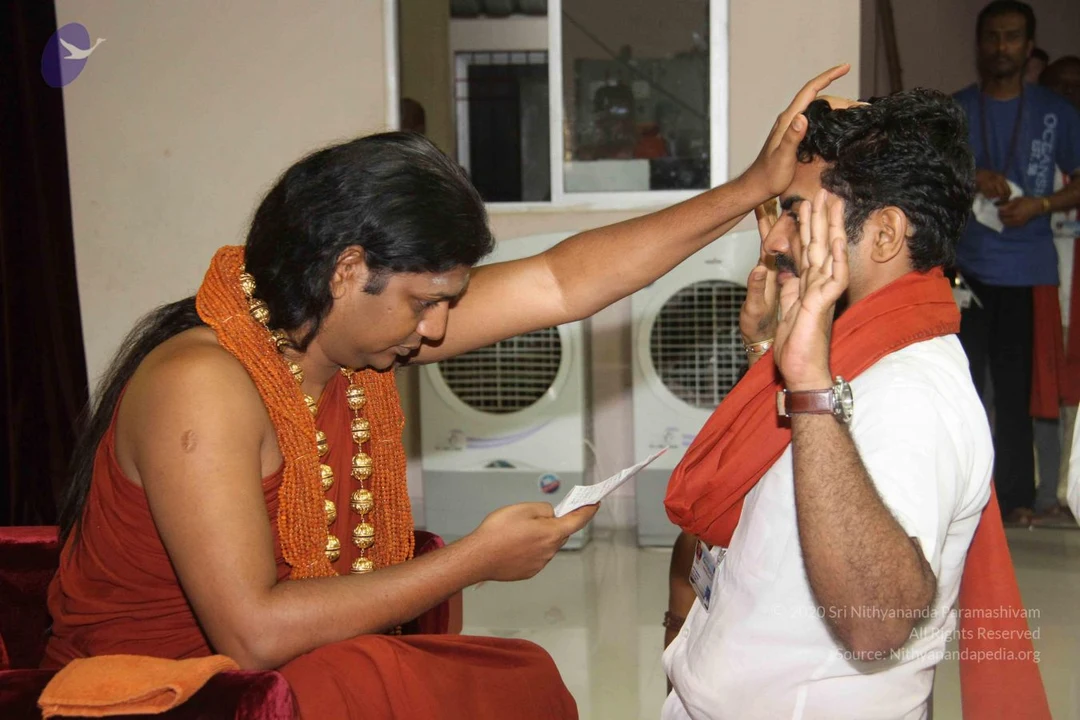
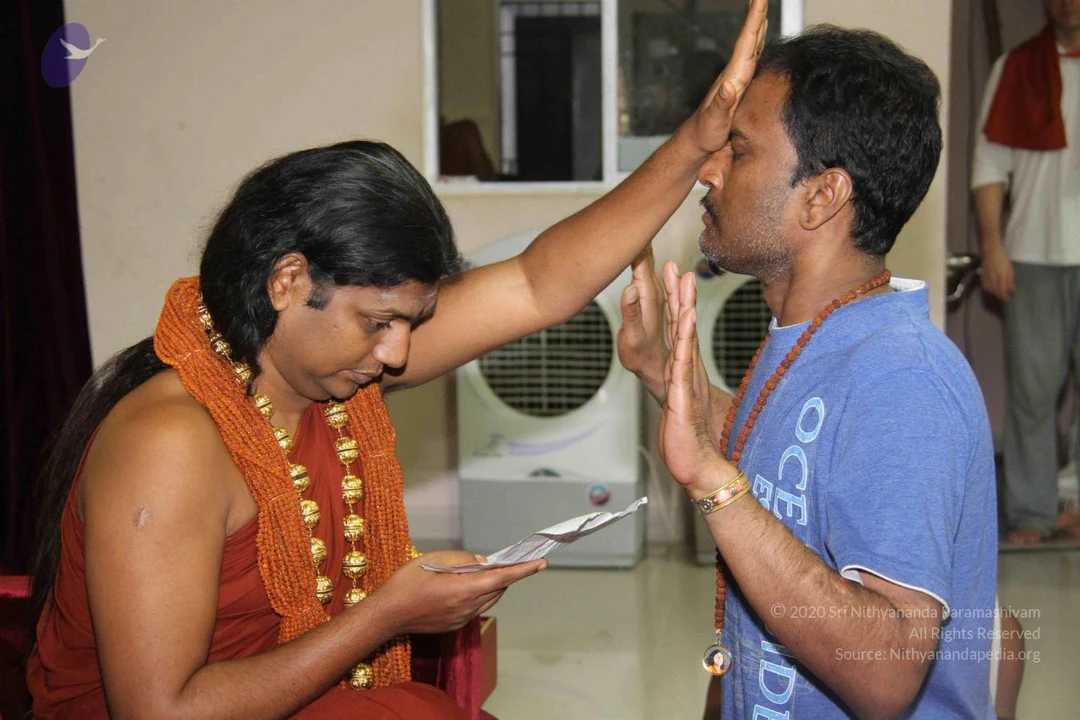
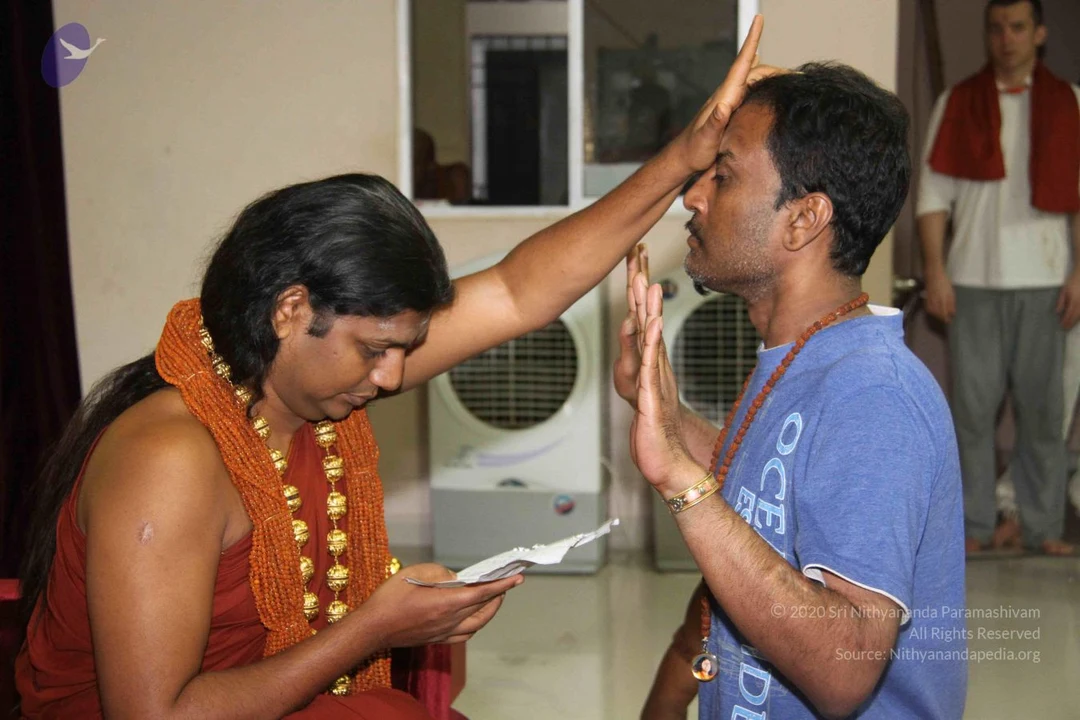
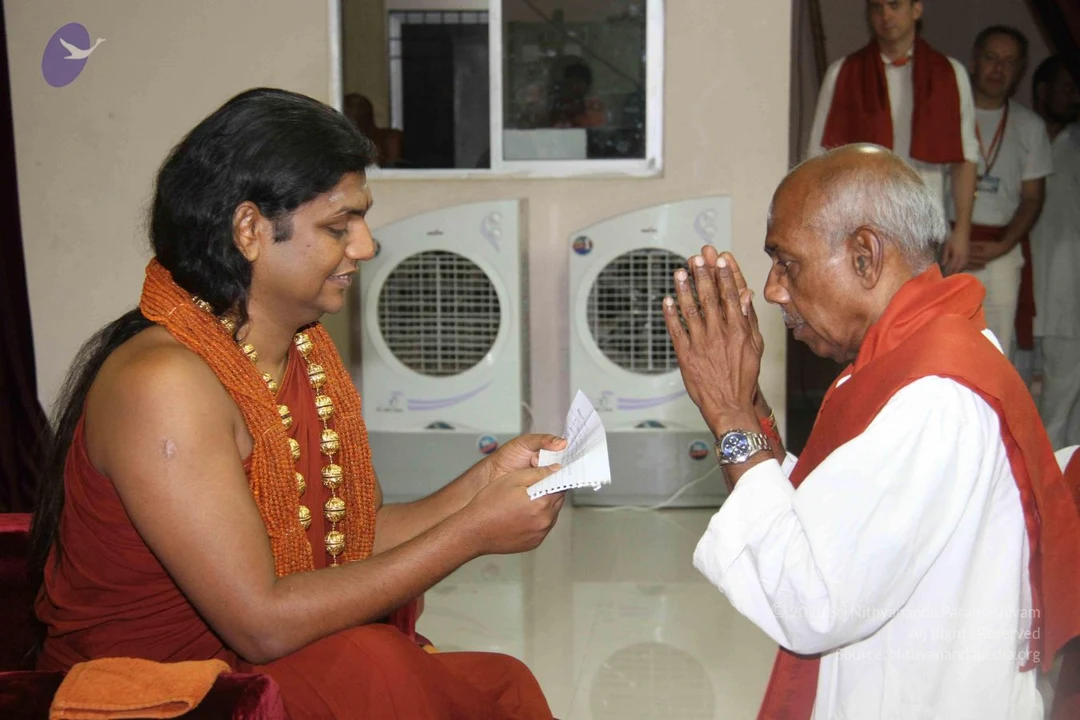
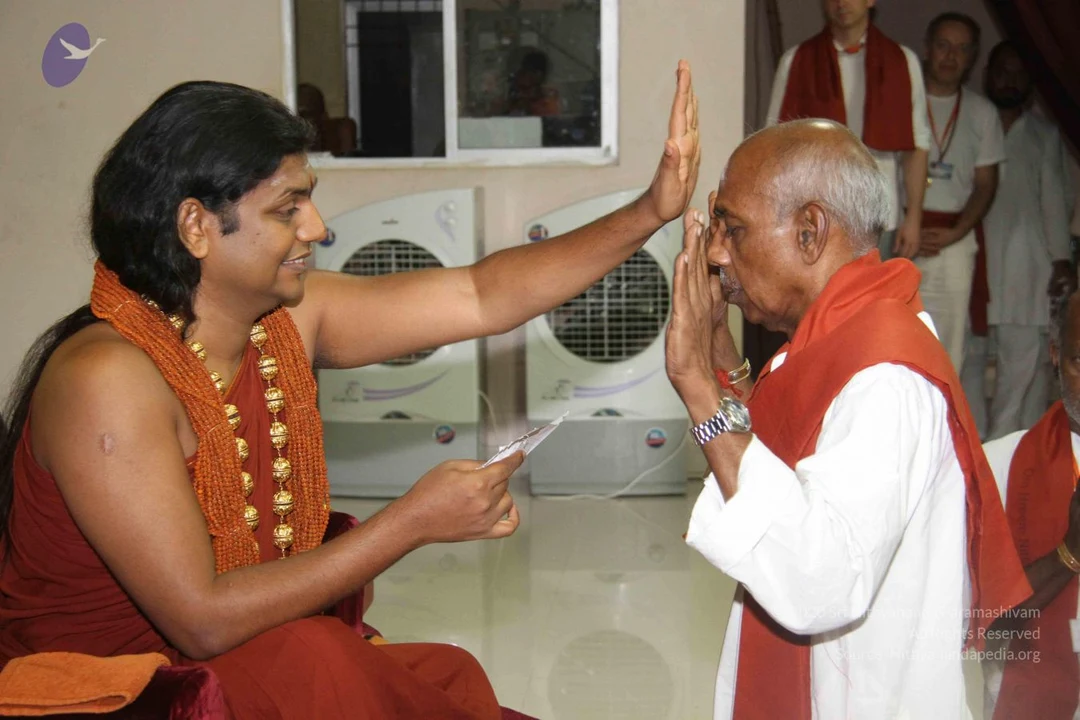
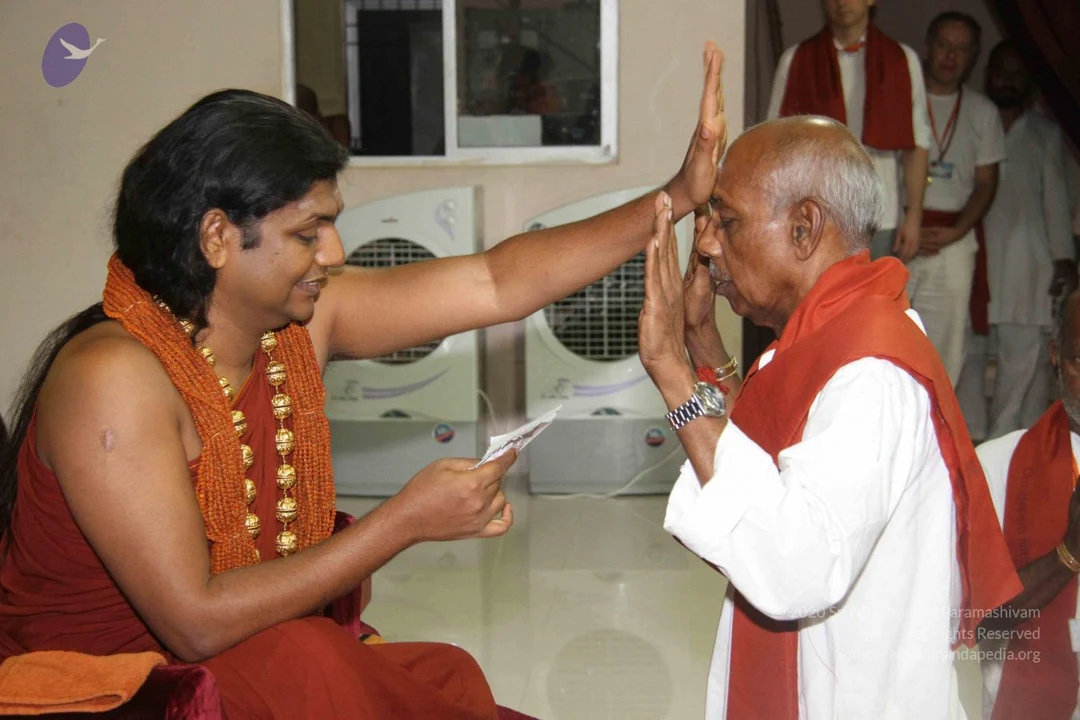
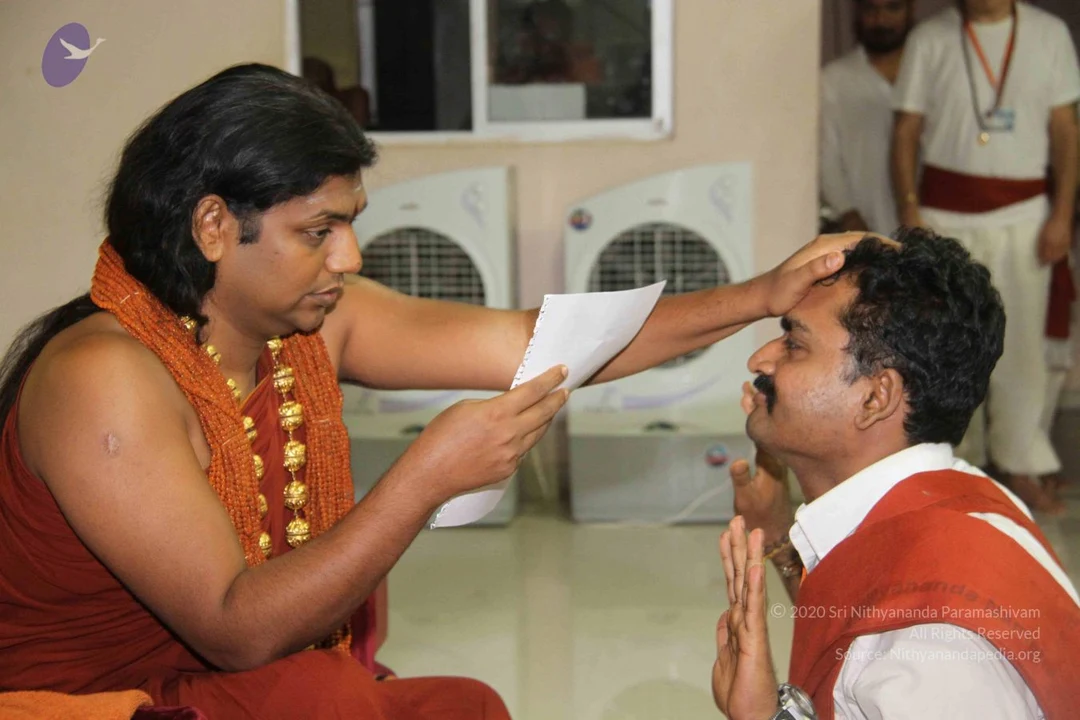
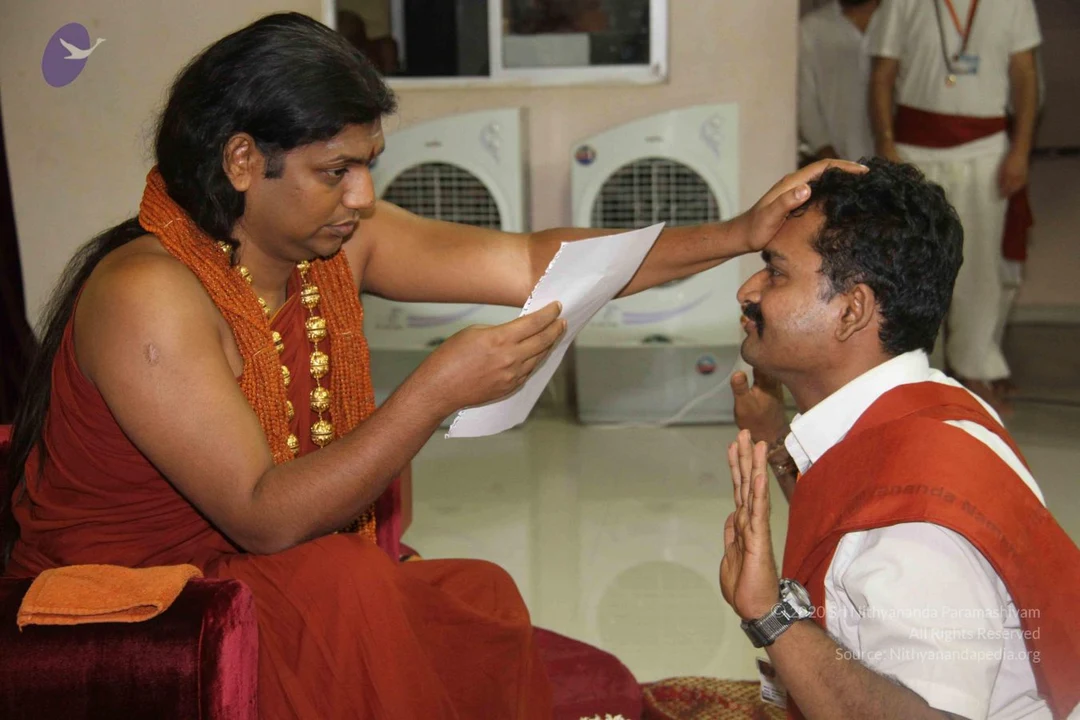
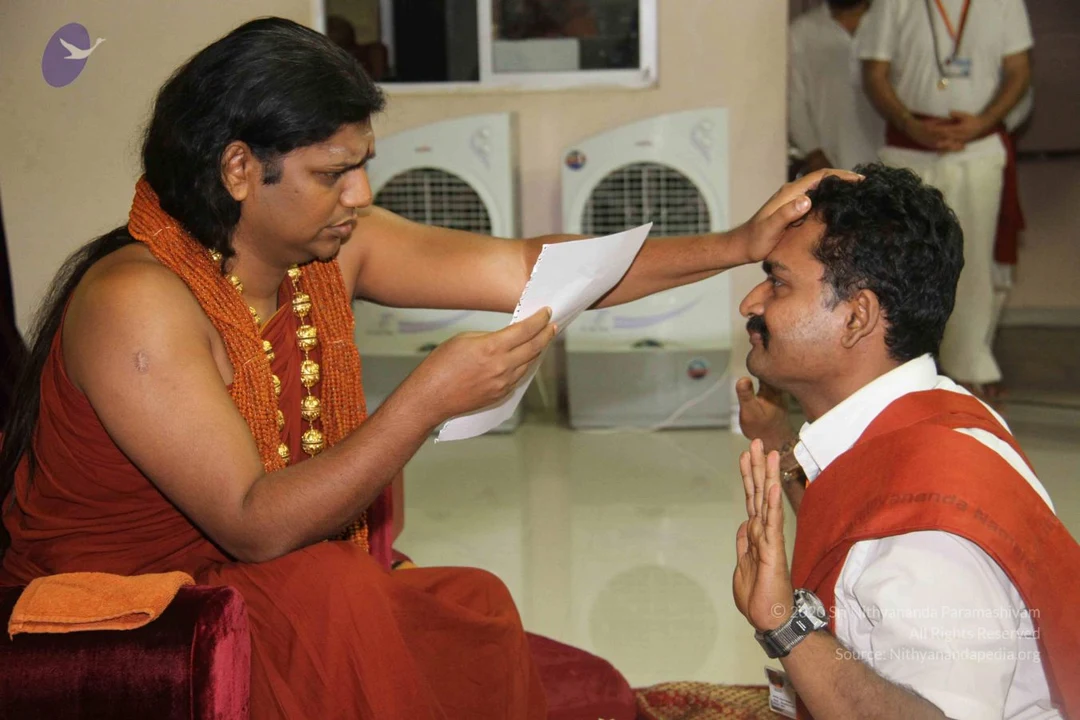
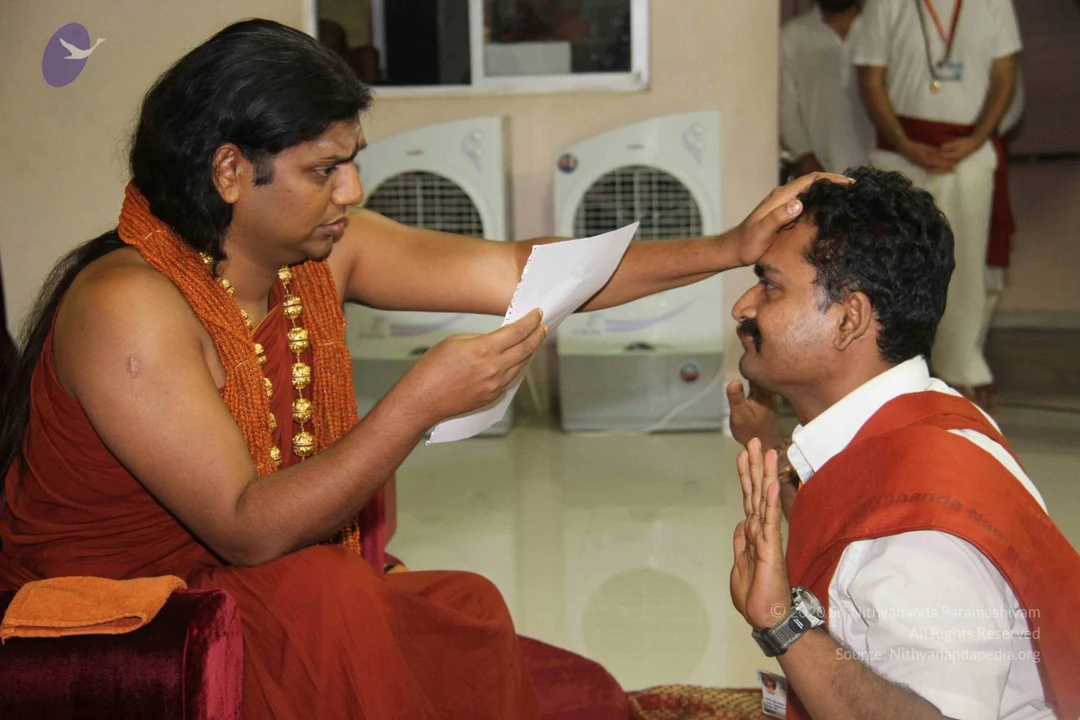
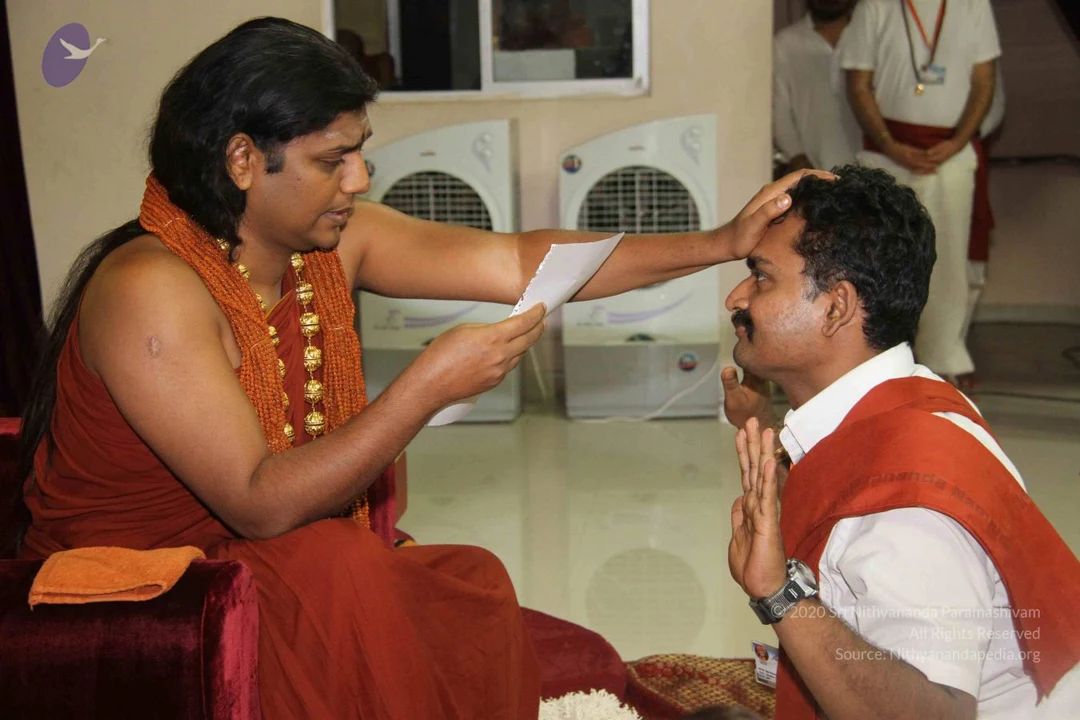
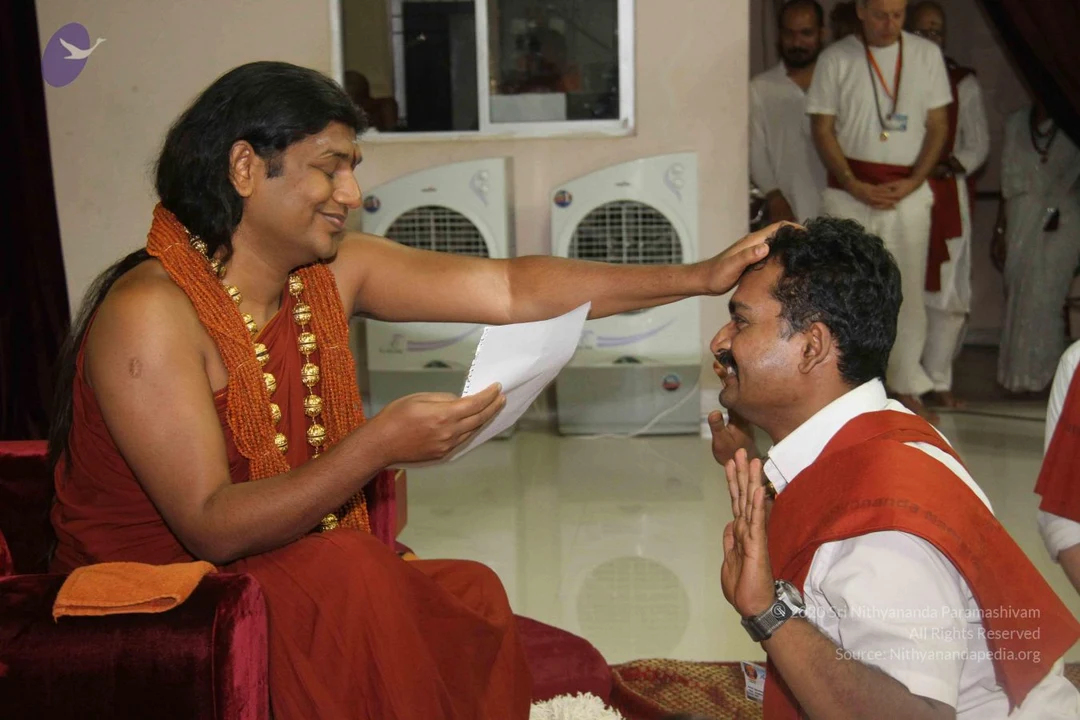
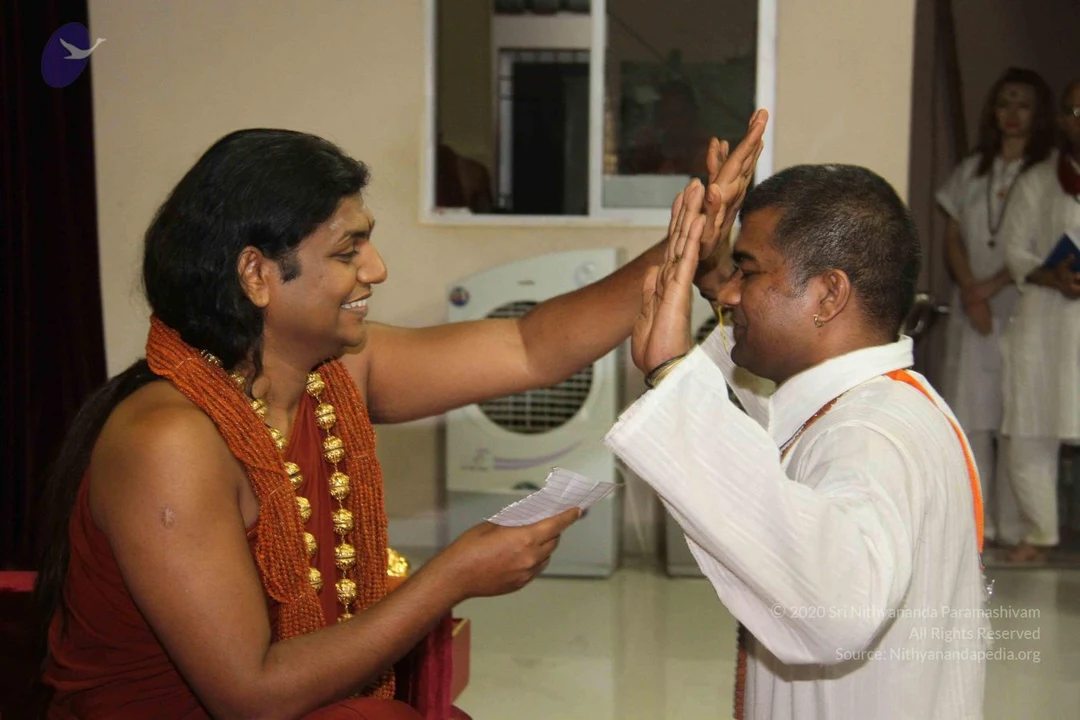
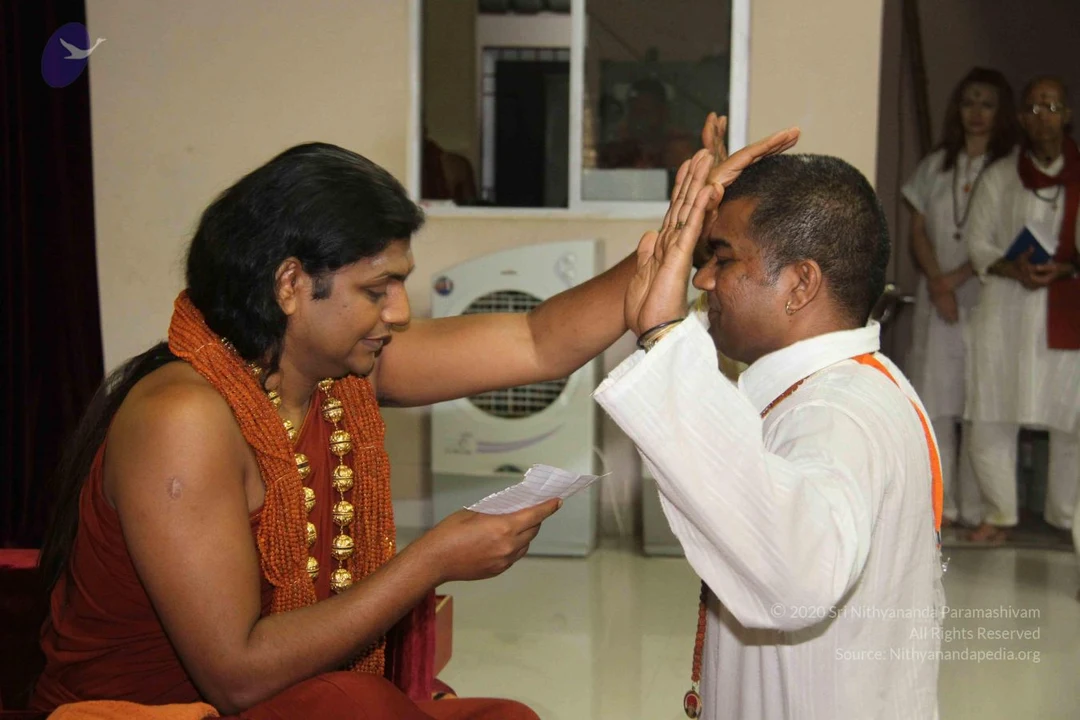
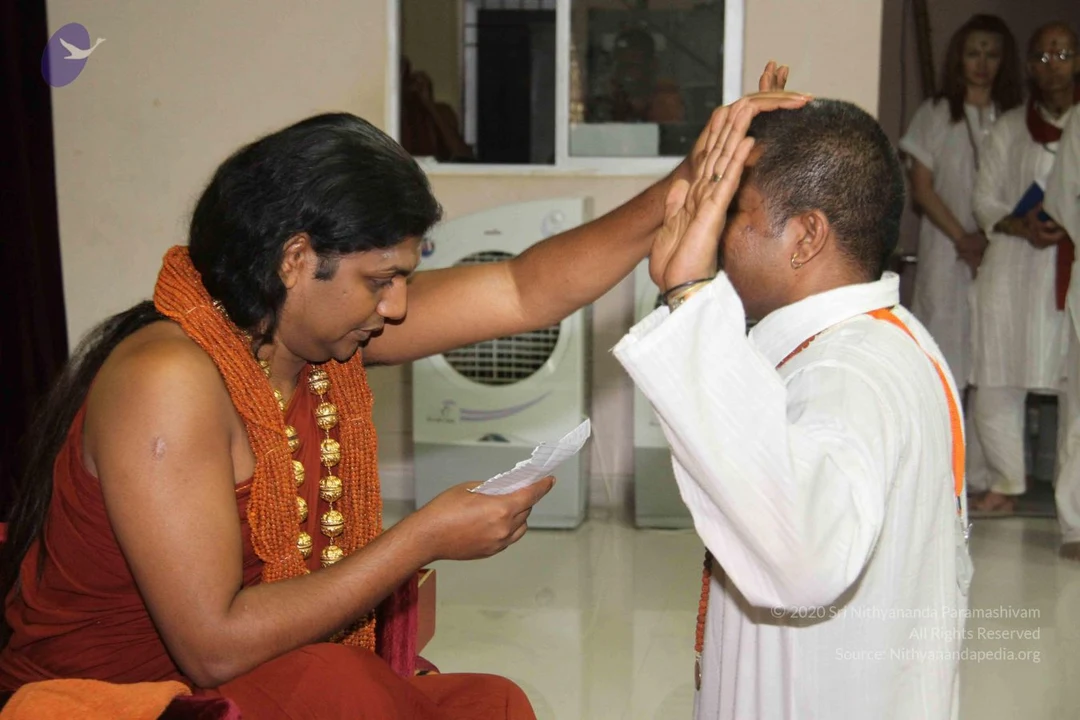
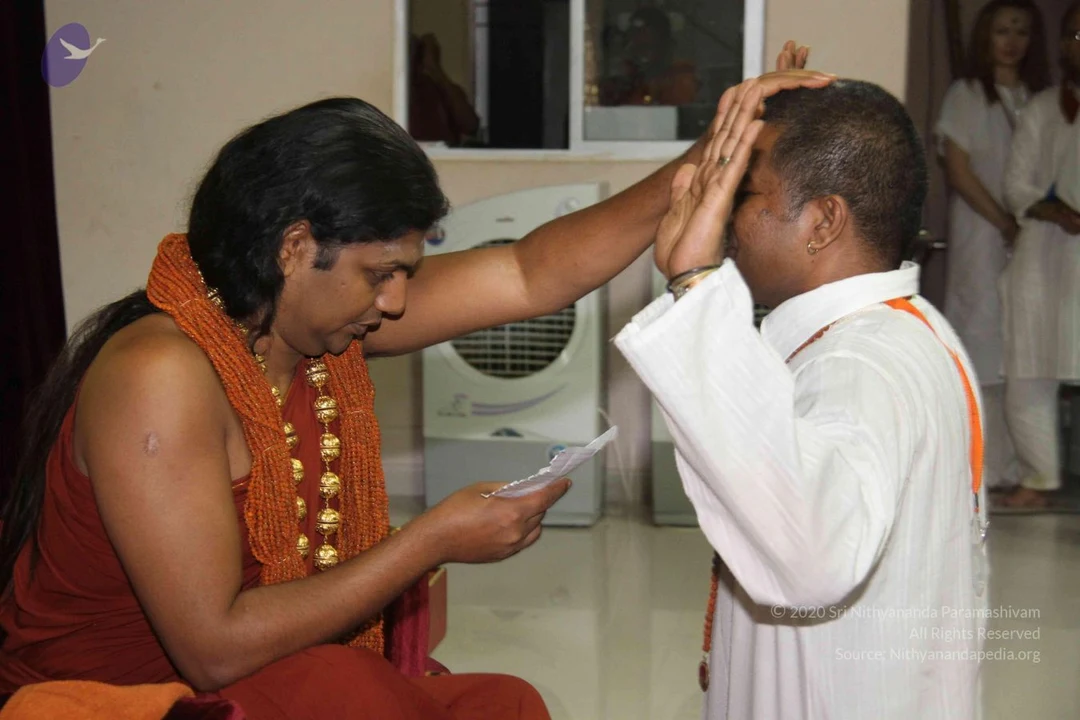
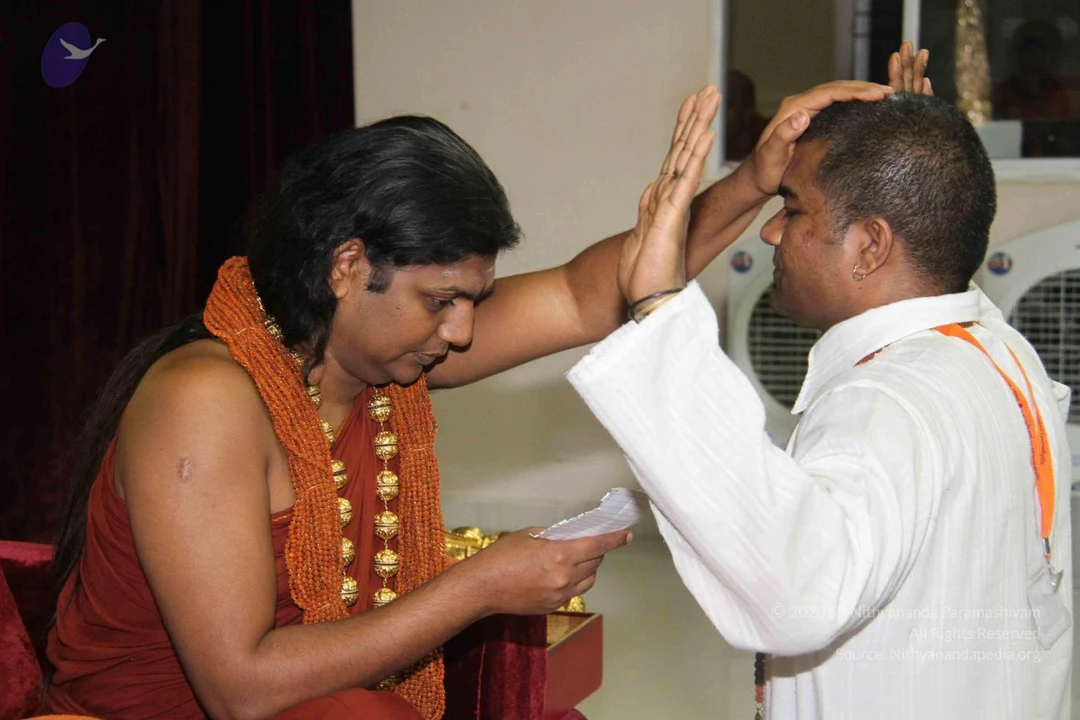
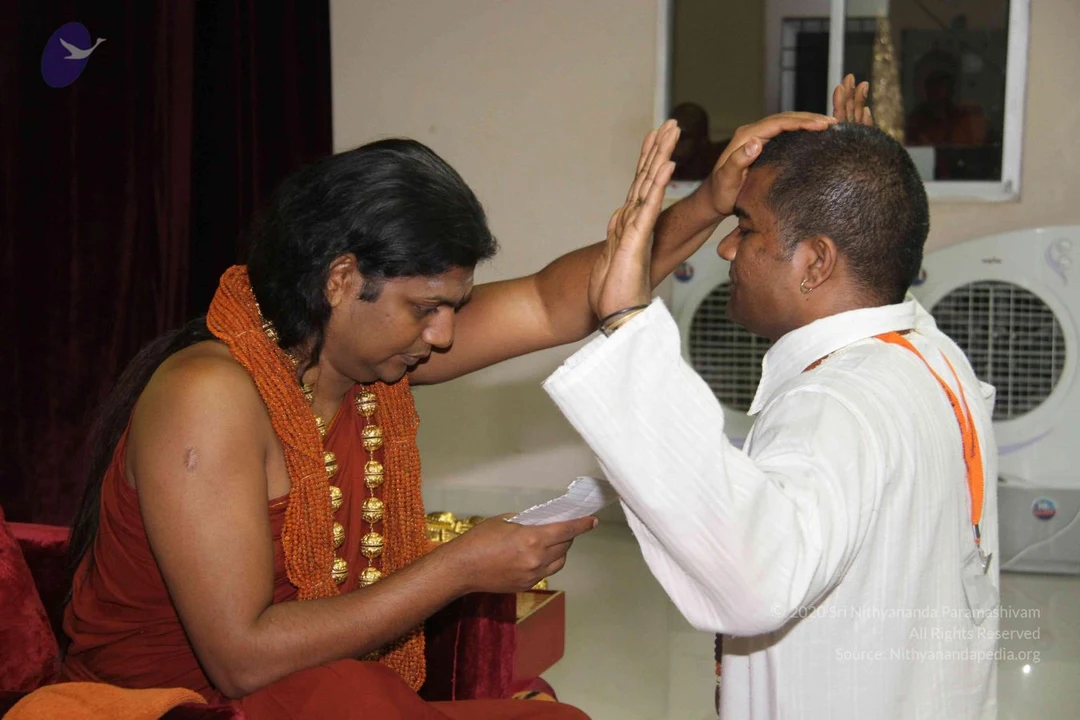
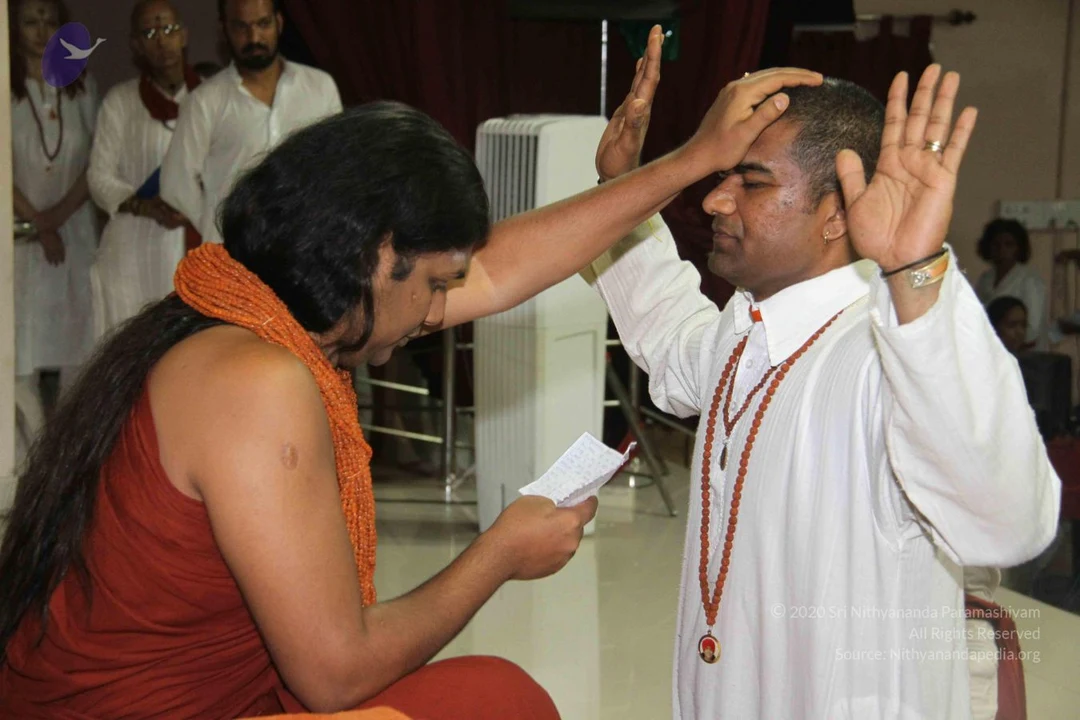
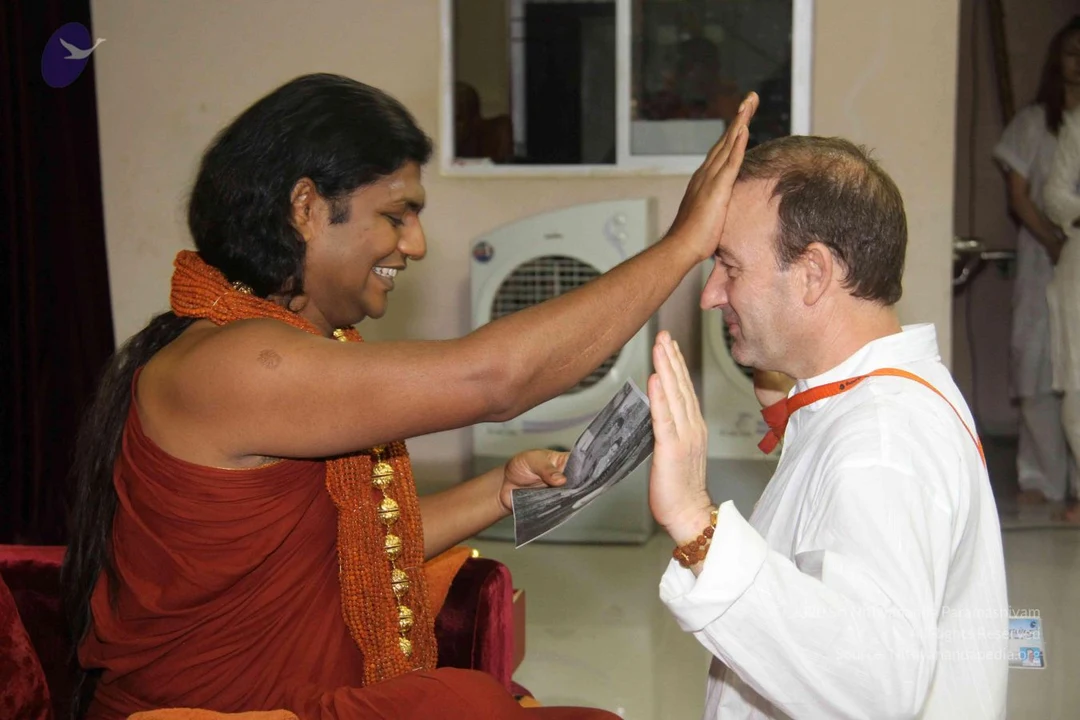
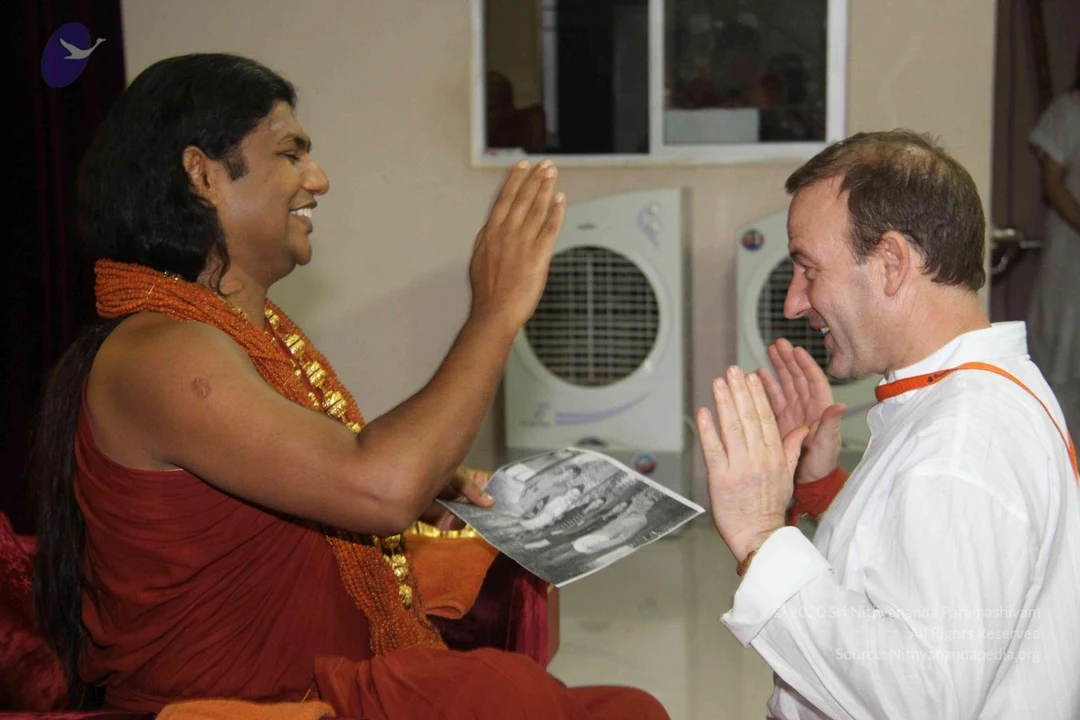
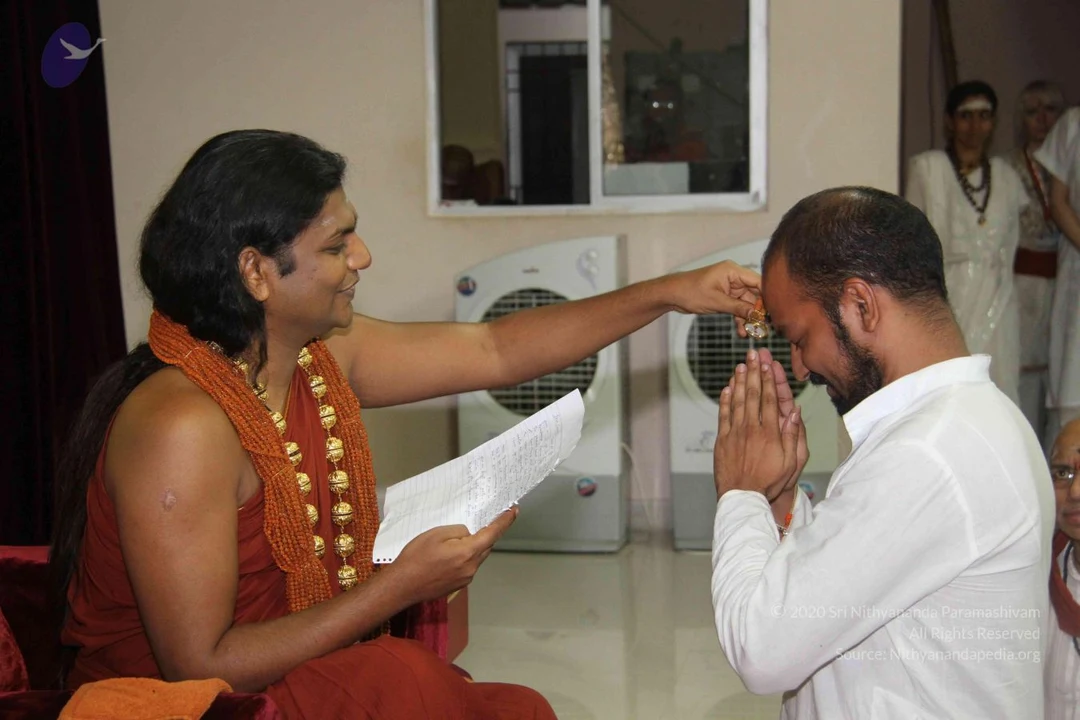
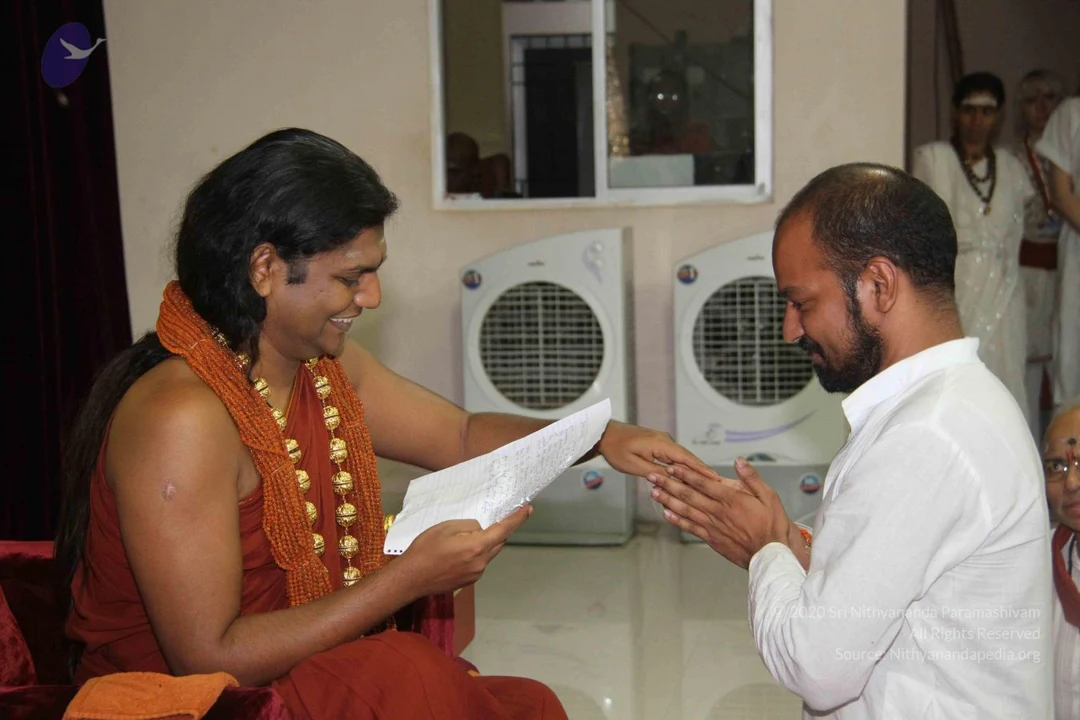
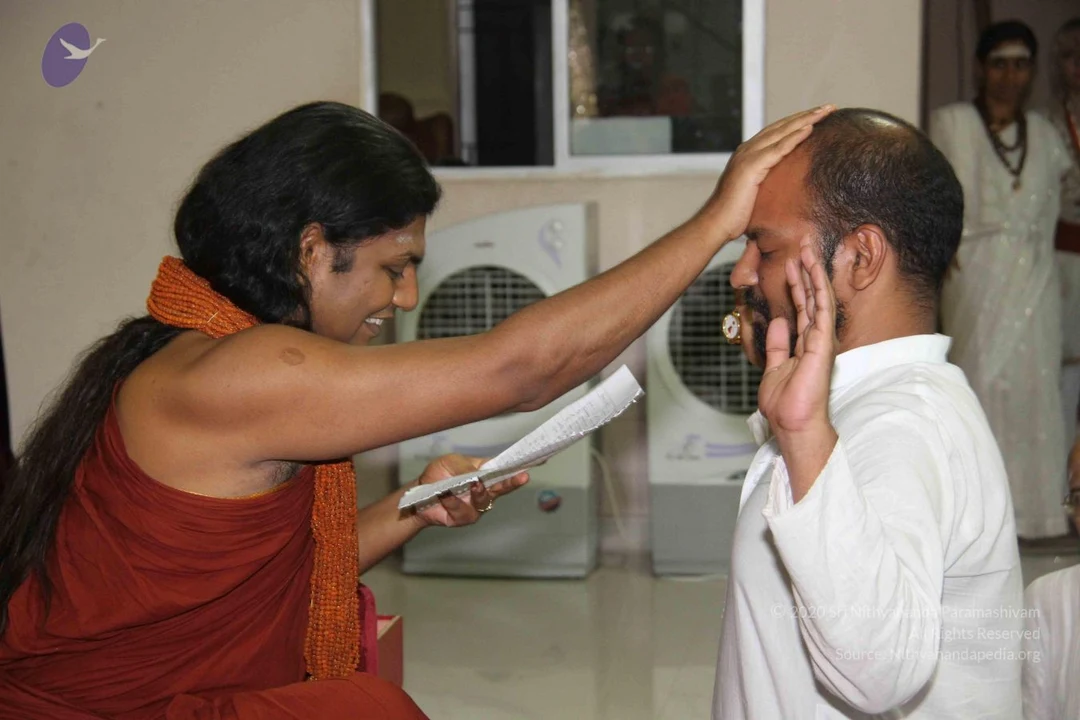
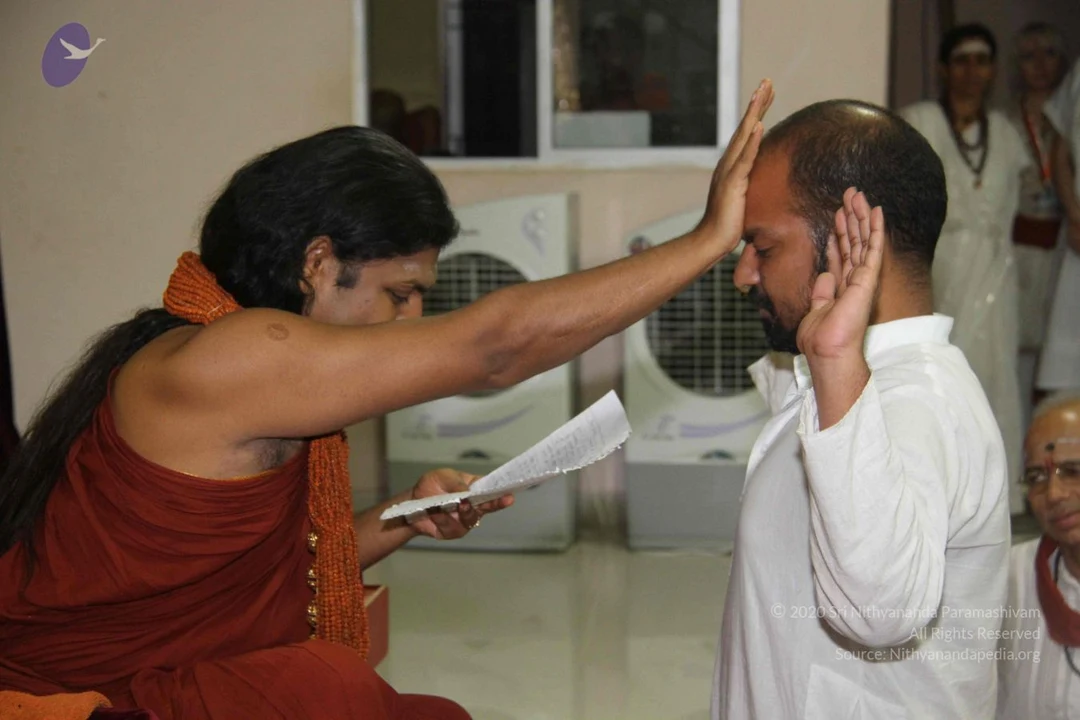
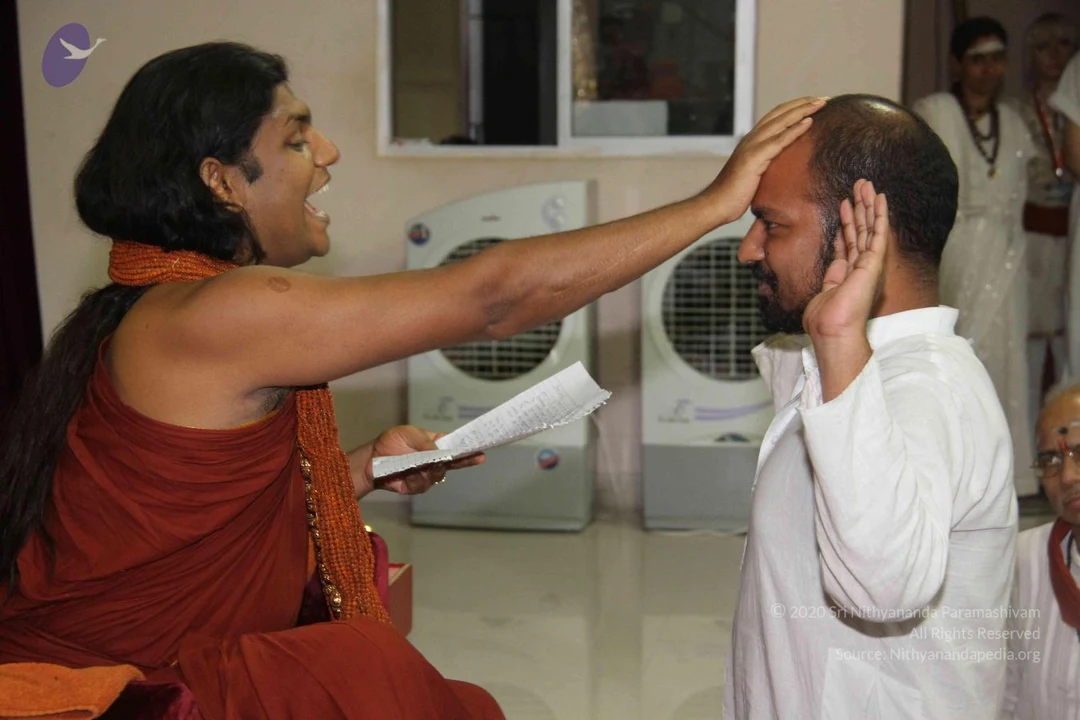
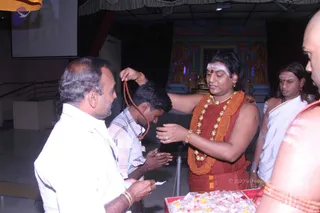
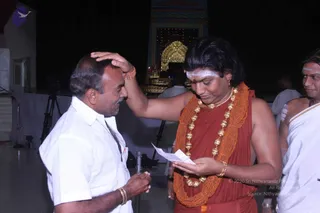
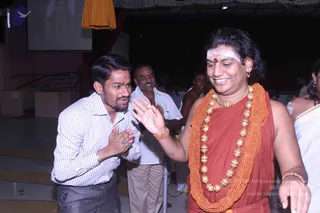
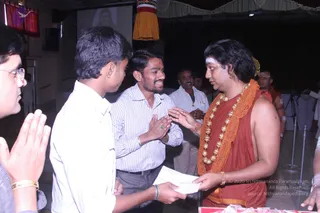
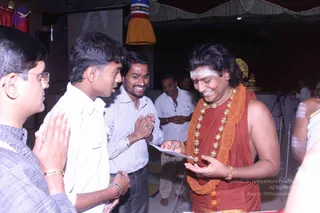
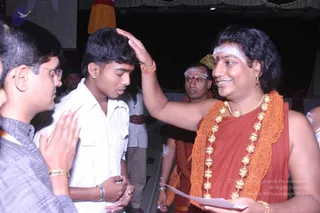
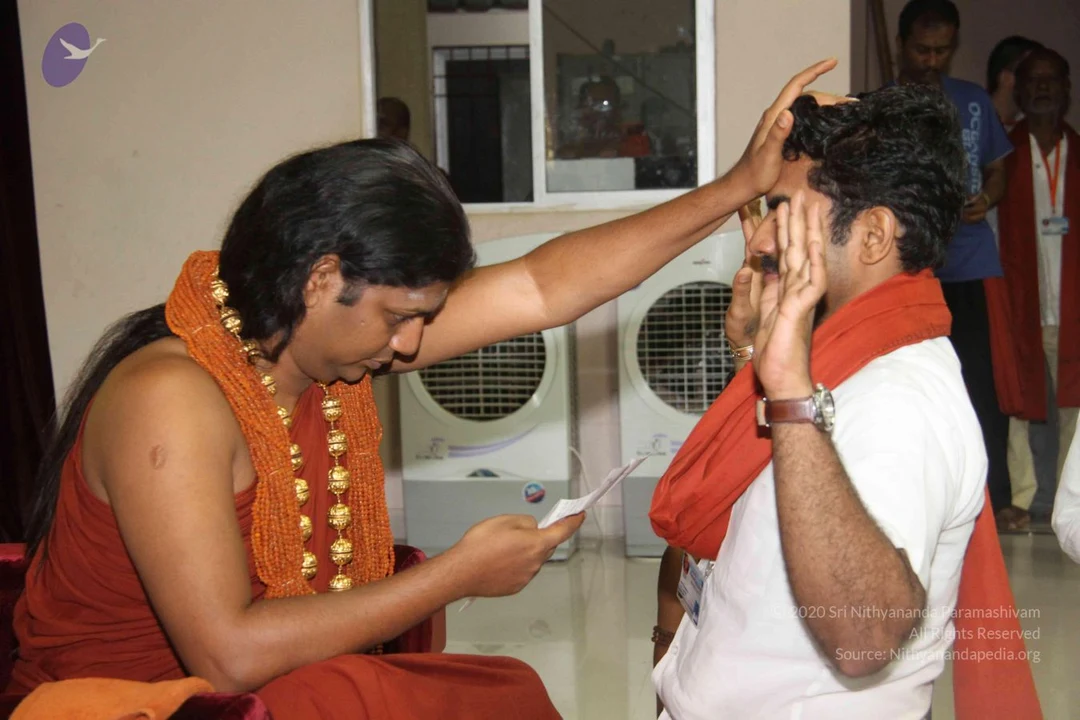
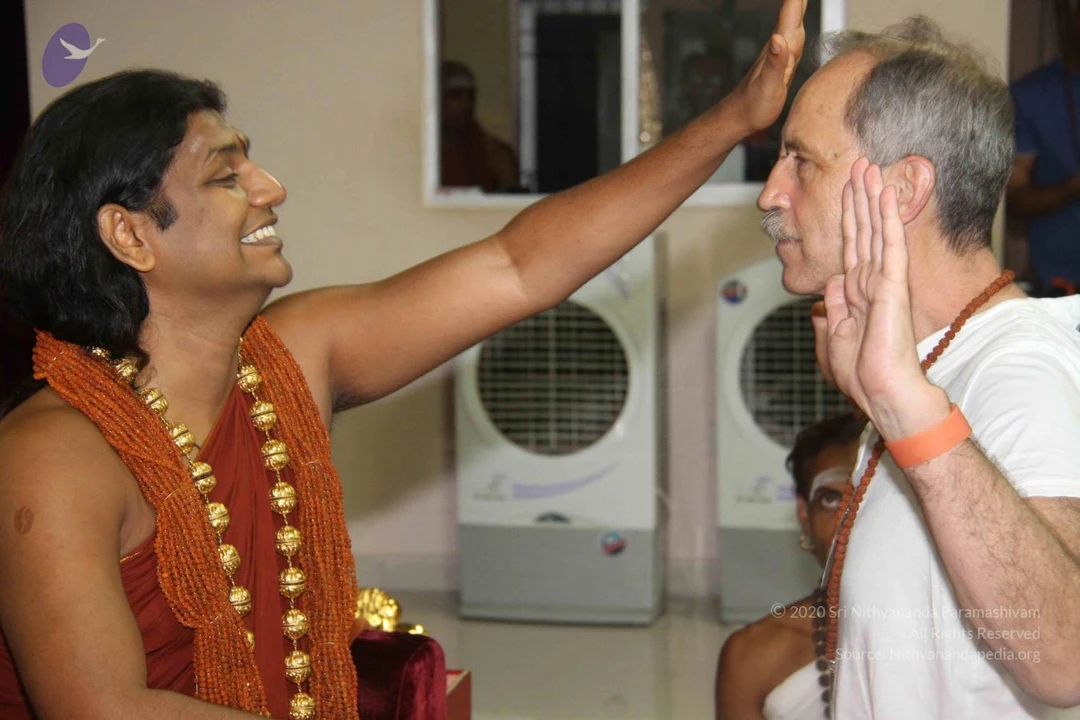
A photograph of a standing figure in a saffron-orange robe and long gold-beaded necklaces, holding up a rudraksha mala with both hands and placing it over a seated man in a checked shirt who has his hands joined. a person: the figure has long swept-back hair, white and red forehead markings and ornate gold ornaments, consistent with the page. To the left, a man in a white shirt holds a folded paper. In the right foreground another man with white markings wears a white dhoti, and a shaved-headed figure in orange stands at the edge. A tray of wrapped sweets sits in front, and a Hindu deity mural with a shrine lies behind in an indoor hall.A photograph of two men at close range in what appears to be an indoor hall. A man in a long-sleeved white shirt stands on the left, bald with a grey moustache, holding a folded paper while a second man places his right hand on his head in blessing. The blessing figure wears an orange-red robe, a long multi-strand orange bead mala, heavy gold bead necklaces, gold bangles and a white forehead marking with a red dot; he has long dark swept-back hair and holds a white sheet of paper in his left hand. Behind them stands a gold-framed ornate throne-like seat lit with small lights, and a man in white dhoti clothing appears at the far right. Probable Swamiji is the figure in the orange robe, identified by his distinctive orange mala, gold necklaces, swept-back hair and ceremonial garb while performing a blessing.A photograph of a man with long swept-back dark hair, white vertical tilak on his forehead with a red dot, gold ceremonial beads on an orange-red rudraksha-style mala, gold necklace and a red-orange shawl over a saffron-red garment, raising one hand in greeting while smiling. Swamiji (probable) is shown in an appearance-based label, with long swept-back hair, saffron-orange clothing and ornate gold and rudraksha adornments. Beside him a young man in a striped shirt and grey trousers stands with palms pressed together in respectful greeting, a red tilak on his forehead. A middle-aged man in a white shirt and beige trousers stands behind, with a bare-chested man and a woman in white in the background. A screen with a faint image is visible at upper left, and an orange cloth hangs from the ceiling.Indoor photograph at an evening event with a dark backdrop and a projection screen above. A man in an orange-red robe with a long gold-beaded necklace, orange-red shawl, long swept-back hair and a white forehead mark stands bare-armed on the right, receiving a folded white paper from a young man in a white shirt. A bearded man in a striped shirt presses his palms together in greeting beside them, and a man with folded hands stands at the left edge. Another man in white and a figure in orange-red robes are visible in the background, with a tripod and a small offering tray at the bottom right. The robed man has distinctive long hair, saffron-orange clothing and a rudraksha-style gold necklace, so this is a probable Swamiji (probable) in person receiving the paper.A man with swept-back dark hair and white ash markings on his forehead, wearing a rust-red wrap and a long orange-and-gold rudraksha-style bead mala with gold ornaments, smiles while receiving a folded paper from a devotee. a person is the central figure, holding the paper with his hands near a gold-trimmed red-orange cloth. Beside him, three men with palms pressed together in anjali stand at left and centre, one in a grey kurta, one in a white shirt, and one in a striped shirt; another man in a white shirt stands behind. The setting is an indoor hall with a red curtain, a hanging striped banner, a projection screen and a gold altar figure in the background.A photograph of a ritual blessing during an indoor event. A man with long swept-back hair, a red and white forehead mark, rudraksha-style beaded and gold ceremonial necklaces, and an orange-red robe with an orange shawl places his right hand on the head of a young man in a white shirt, who has his eyes lowered and hands folded. On the left, a man in glasses and a grey-blue shirt stands with palms pressed together in prayer. Behind them a priest in a white-marked forehead and orange garment stands nearby, and a paper sheet is held in the foreground. Probable Swamiji (appearance cues: long swept-back hair, ceremonial gold necklace and orange-red robe) is the presiding figure performing the blessing.

Maheshwara-Puja

64 photosSource gallery
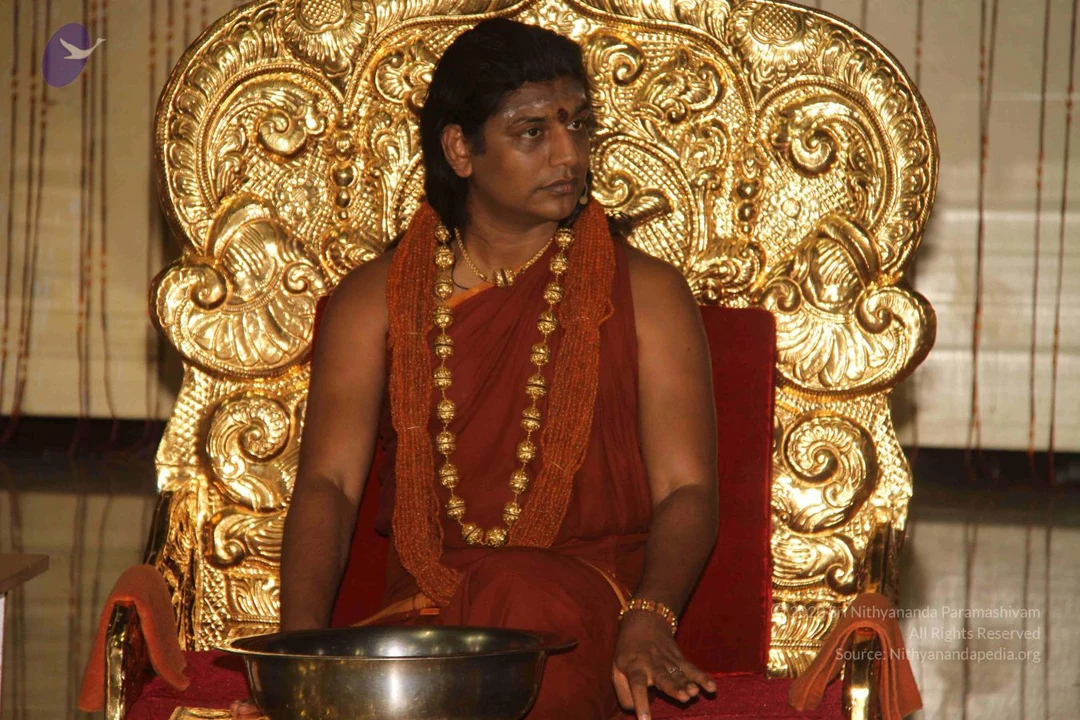
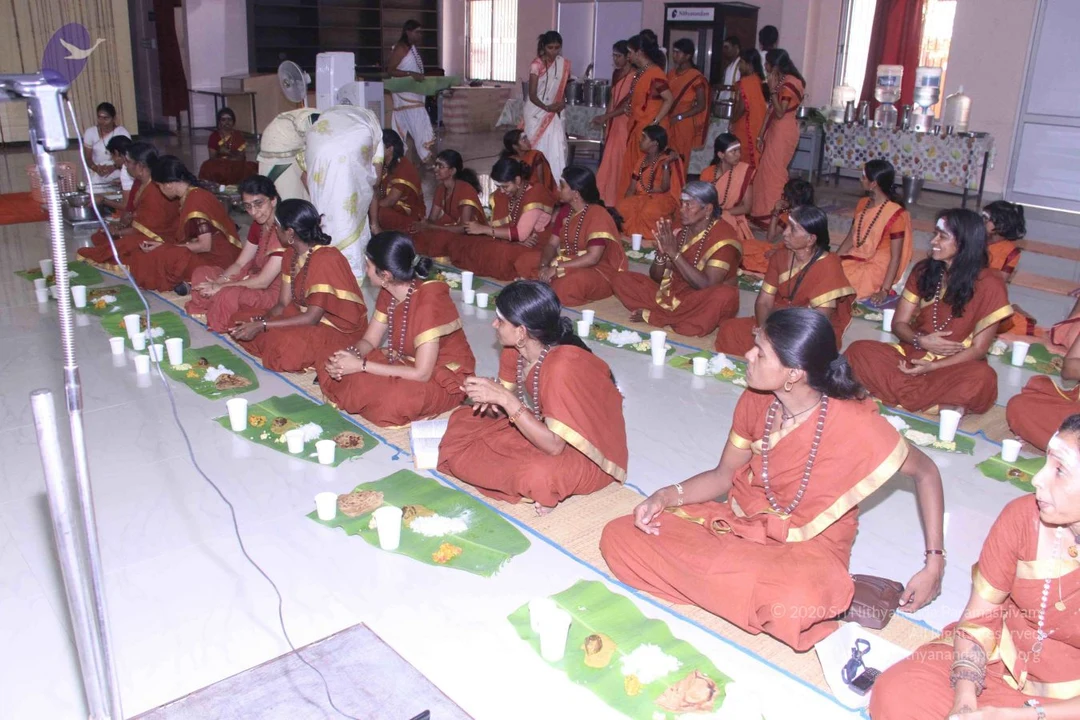
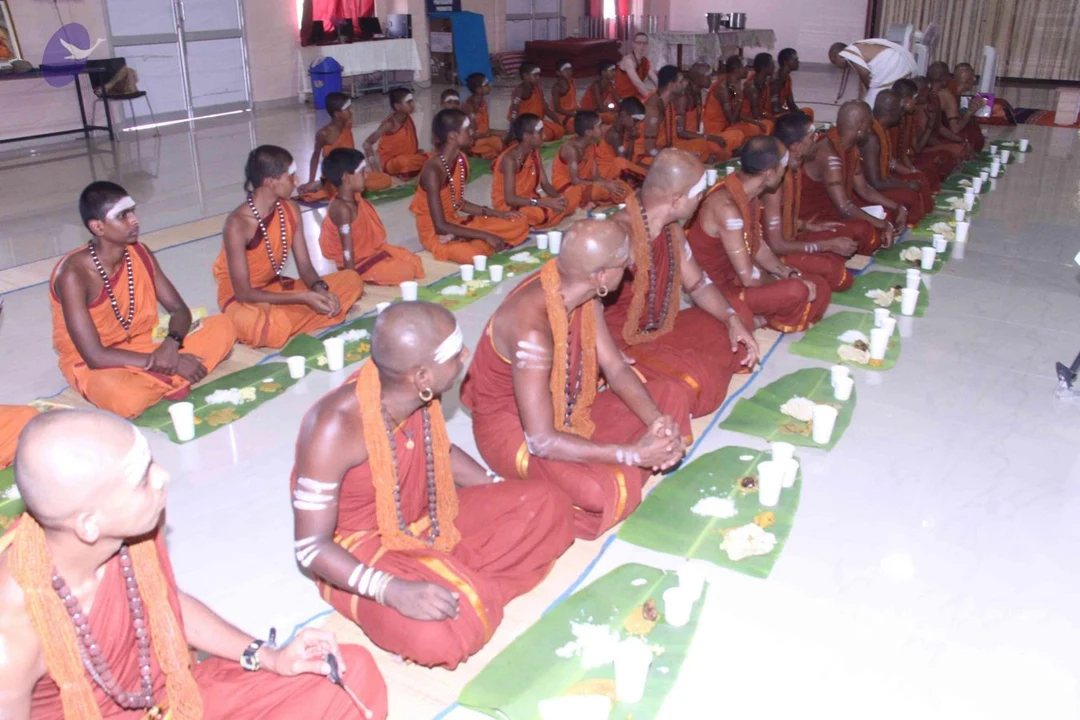
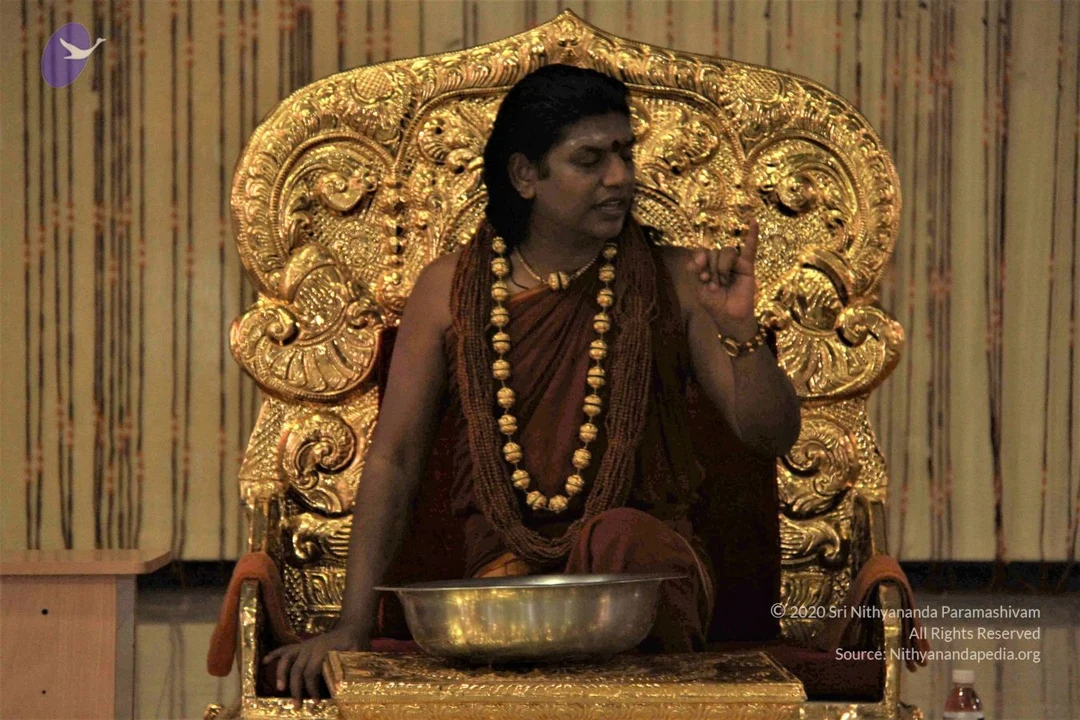
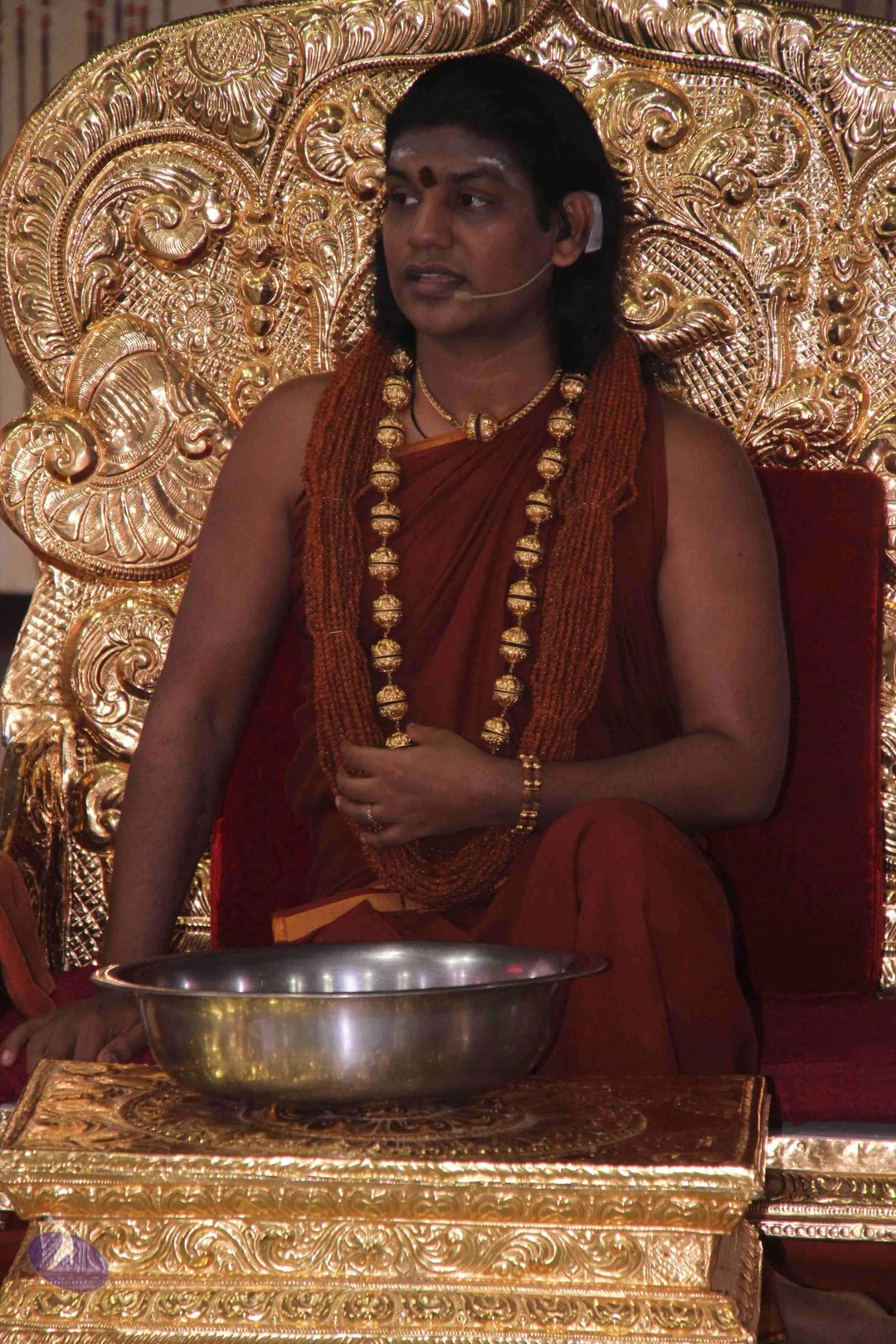
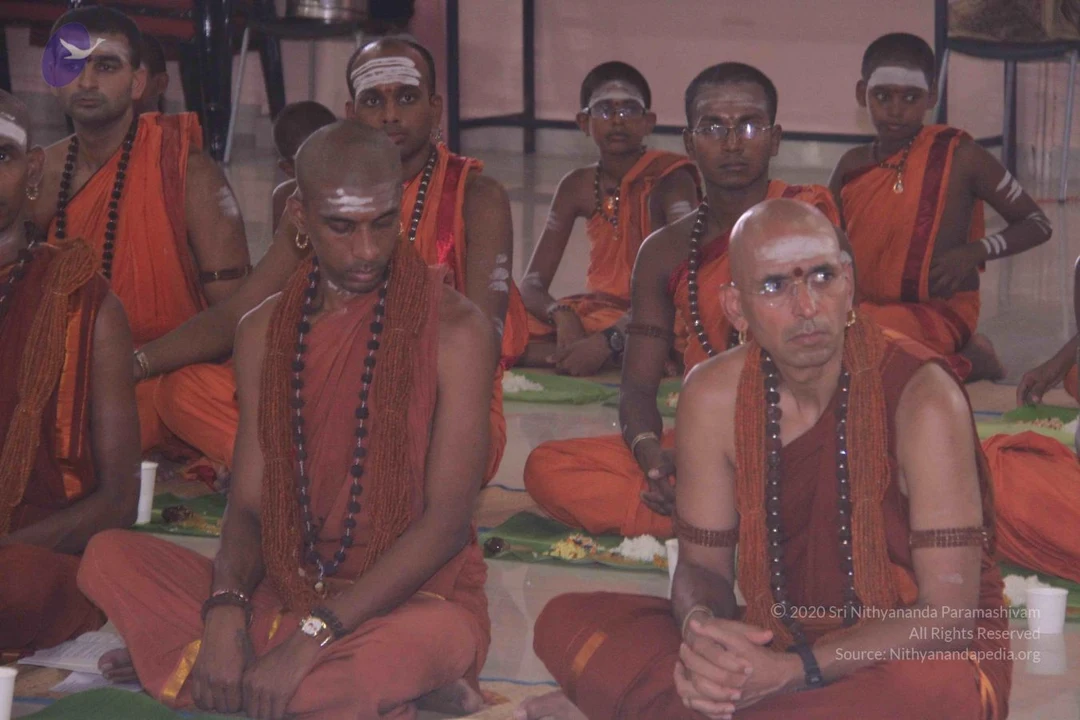
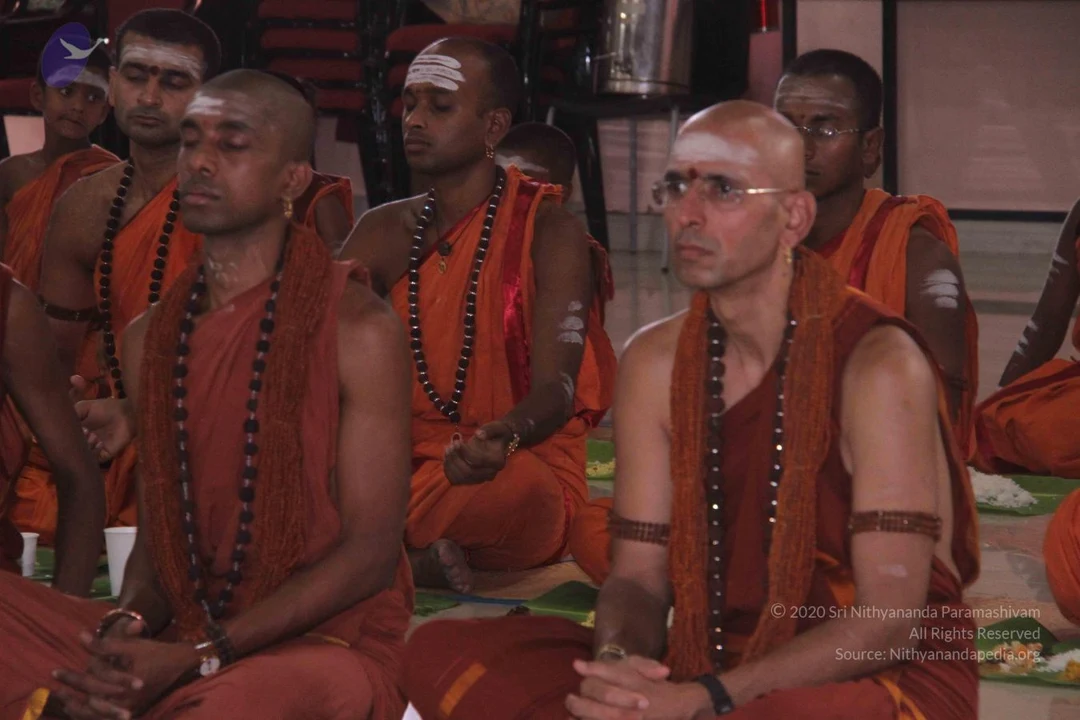
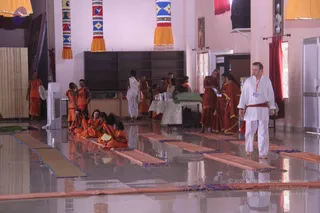
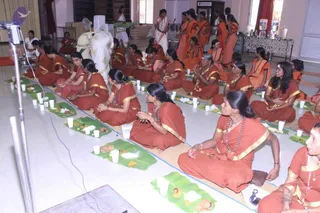
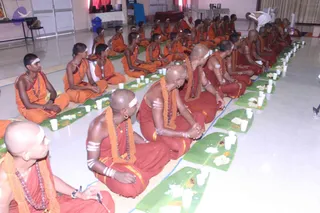
Indoor hall with a polished reflective floor and rows of thin orange-and-blue striped mats laid out in long lines. Several people in saffron and orange robes stand and sit along the left and center, some seated on the floor in a group. A man in a white kurta and white dhoti with a red sash walks barefoot on the right, wearing a lanyard. Behind them a table with a green cloth holds small items, and a shelf stands against the wall. Colourful striped ceremonial banners hang with yellow tassels, and a framed portrait hangs high on the right wall.A photograph of a seated man on an ornate gilded throne with a red velvet seat and back cushion. He wears a rust-red saffron-toned robe draped over one shoulder, a long rudraksha-style bead mala with gold beads, a gold chain necklace, a red bindi on the forehead and bangles on his wrist. His long dark hair is swept back and he rests one hand near a polished metal bowl on a red cloth-draped table. Golden carved scrollwork fills the background behind him and hanging beaded strands are visible at the edges. The appearance matches a person presence on a dais, based on the swept hair, saffron robe, rudraksha mala and gold ornaments.A photograph of a seated meal gathering in a tiled hall. Rows of women in rust-orange saris with gold borders sit cross-legged on mats before green banana leaves holding rice, papads and sweets, with white cups set between them. Many wear rudraksha malas and gold necklaces, and some have hair tied back. Several sit with hands folded in prayer. Standing figures in white and orange clothing move along the back of the hall near steel containers and a water dispenser, and a microphone stand is at left. The room has white walls, cabinets and a table with a floral cloth. No a person candidate is visible in the scene.Photograph of a seated group of saffron-robed sannyasis on a white tiled hall floor, sitting in rows on folded banana leaves set with rice, flowers and small offerings, with white paper cups beside each leaf. Many have shaved heads, white vibhuti or ash marks on forehead and arms, and rudraksha malas around their necks; some wear orange shawls. Several sit with hands joined or resting on their laps, and one in the foreground looks upward. Behind them a staff member in white attire stands near a table with a red cloth and equipment, and a few more seated participants are visible in the background.A seated person sits on an ornate gilded throne with heavily carved floral and scroll patterns. The person wears a saffron-orange draped garment, a long beaded necklace of gold-toned beads with a gold pendant, a red bindi and tilak markings on the forehead, and gold bangles on the wrist, with hands resting on the lap. The background shows a light cream wall and draped fabric.A man seated on an ornate gold throne with carved floral and scroll patterns, wearing a rust-red robe, a long rudraksha-style mala of gold-toned beads with a gold necklace, and a red-brown shawl over the shoulders. He has a red bindi and white markings on his forehead, a small headset microphone, and his right arm is extended outward as he speaks and smiles. Red velvet cushioning and a curtained backdrop are behind him. Appearance-based label: a person, seated in the role of speaker giving a discourse on the throne.

Nithyananda-Homa

57 photosSource gallery
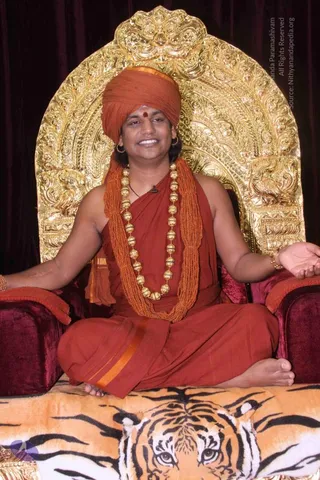
A photograph of a seated man on an ornate gilded throne with lion-head armrests and an elaborately carved golden arched backrest against dark velvet drapes. He wears a saffron-orange turban with a small red bindi, orange-red sannyasi robes, multiple strands of gold beads and rudraksha-style beads around his neck, gold hoop earrings, and a small lapel microphone. His hands rest on the red velvet armrests as he smiles.A man in an orange-saffron turban and matching saffron robe, wearing a large necklace of gold beads over an orange shawl and a small red tilak on his forehead, gestures with both open hands while speaking. A small clip microphone is pinned to his robe. Behind him stands an ornate gold-toned carved backdrop with a chair in deep red velvet at his right side. Swamiji (probable): the saffron turban, ornate gold bead garland and rudraksha-style presentation match the presentation cues for the page's named teacher, so the candidate is in person and speaking in a discourse setting.A photograph of a man seated on a plush red velvet chair in front of an ornate gold-embossed backrest, speaking with a smile and a raised hand gesture. He wears a saffron-orange turban with a red dot on the forehead, a saffron-orange robe, a textured orange shawl, a long necklace of gold beads and a rudraksha-style mala, gold hoop earring and beaded bracelets. A small lapel microphone is clipped to his robe. Dark maroon drapery forms the background and a gold ceremonial object sits at the left edge. Probable Swamiji by appearance: a distinctive saffron turban, ornate gold necklaces, orange robes and a throne-like seat, seated as the speaker at a discourse.A photograph of a man seated on a red velvet throne in front of an ornate gold-embossed backdrop. He wears an orange-saffron turban with a red bindi on his forehead, a saffron-orange robe draped over a bare shoulder, and a long strand of large gold beads with a matching orange knitted shawl across his chest. A small lapel microphone is clipped to his robe, and he gestures with a bare arm toward a golden object at left. A bracelet is visible on his wrist. a person is seated centrally, with a visible throne, saffron attire, turban and gold mala cues, consistent with a discourse setting.A smiling man sits on a plush red velvet seat in front of an ornate golden embossed backdrop, arms open in an expansive gesture during a talk. He wears an orange-saffron turban with a red bindi, orange-saffron robe draped over one shoulder, a thick orange beaded necklace with large gold beads, gold bangles, and gold hoop earrings. A small lapel microphone is clipped to his robe. Swamiji (probable) appears in this photograph, based on the saffron turban and robe, ornate gold necklace, and seated discourse setting.A seated man in a saffron-orange turban and reddish-orange wrap, bare-shouldered, wears long orange rudraksha malas and a heavy gold bead necklace, with a small red bindi on his forehead and a small gold earring. He sits cross-legged on a maroon velvet seat in front of an ornate gold repoussé backdrop, smiling and looking to the side, with a lapel microphone clipped to his chest. A tiger-striped cloth covers the platform.

Energy-Darshan

109 photosSource gallery
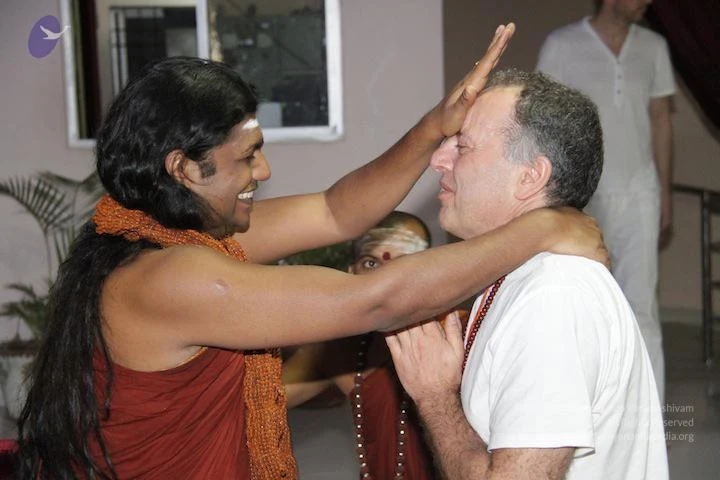
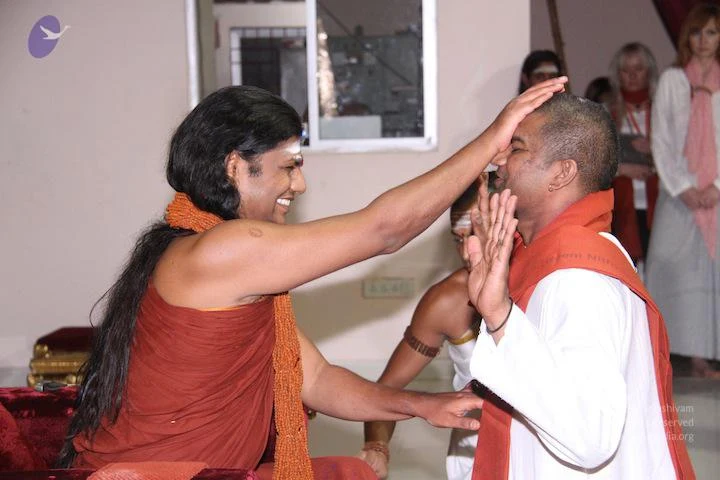
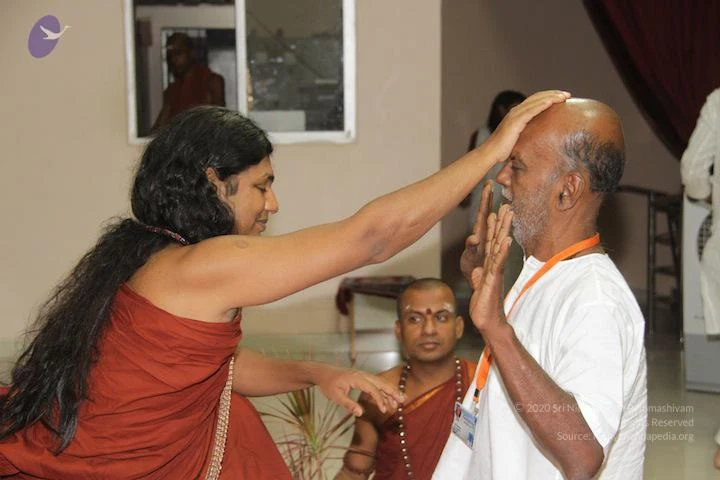
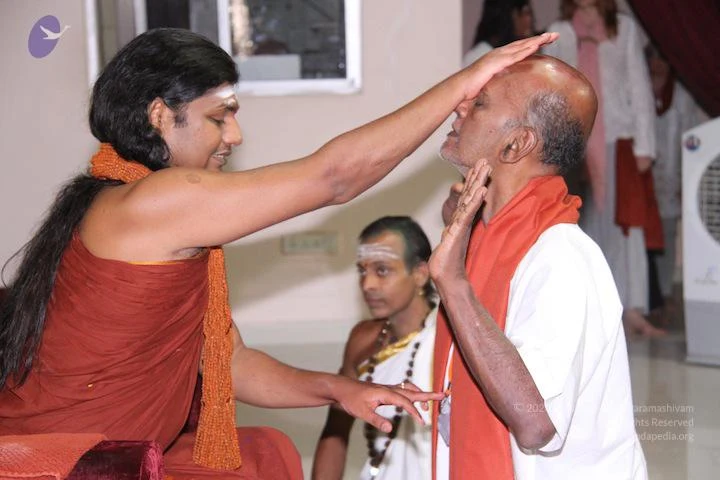
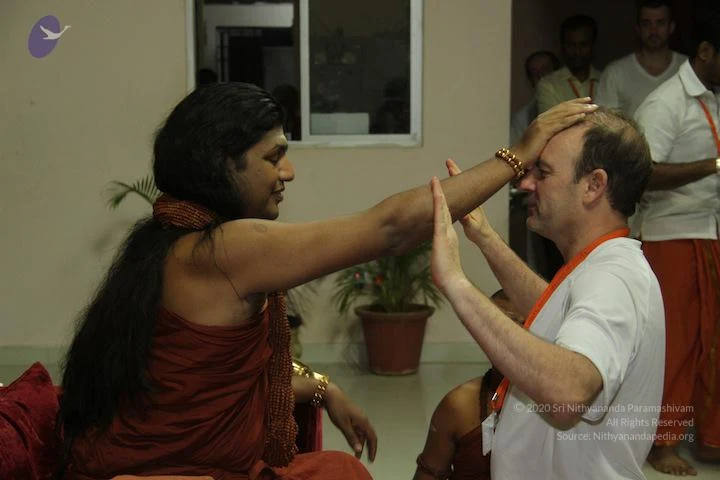
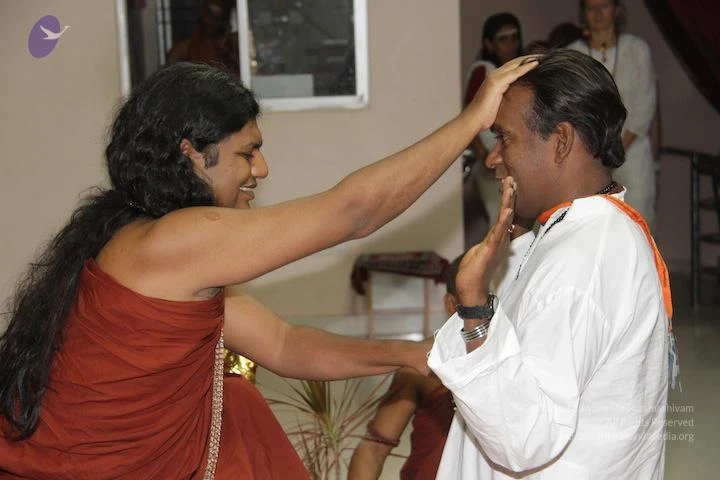
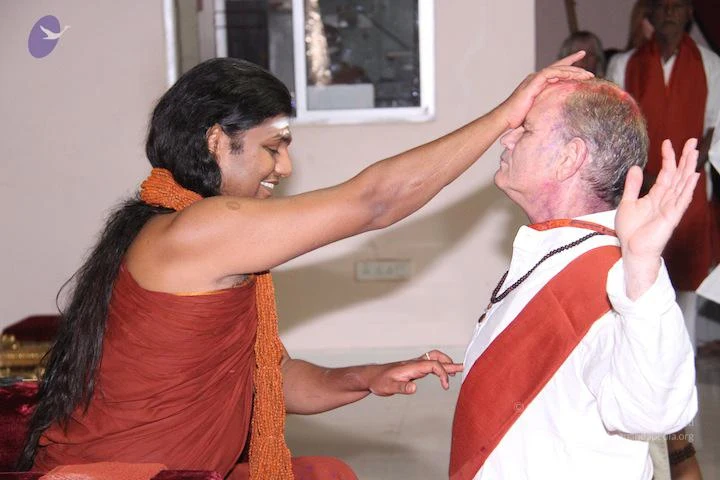
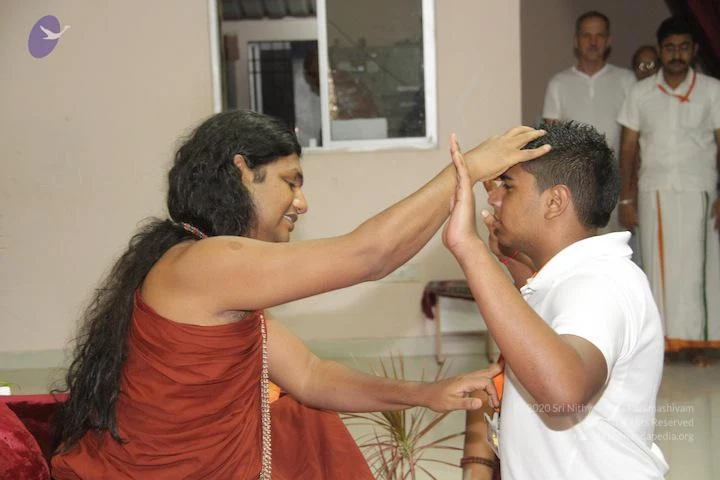
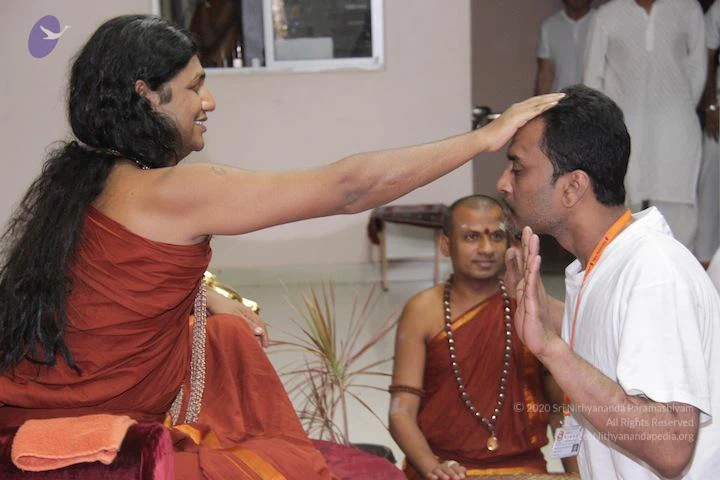
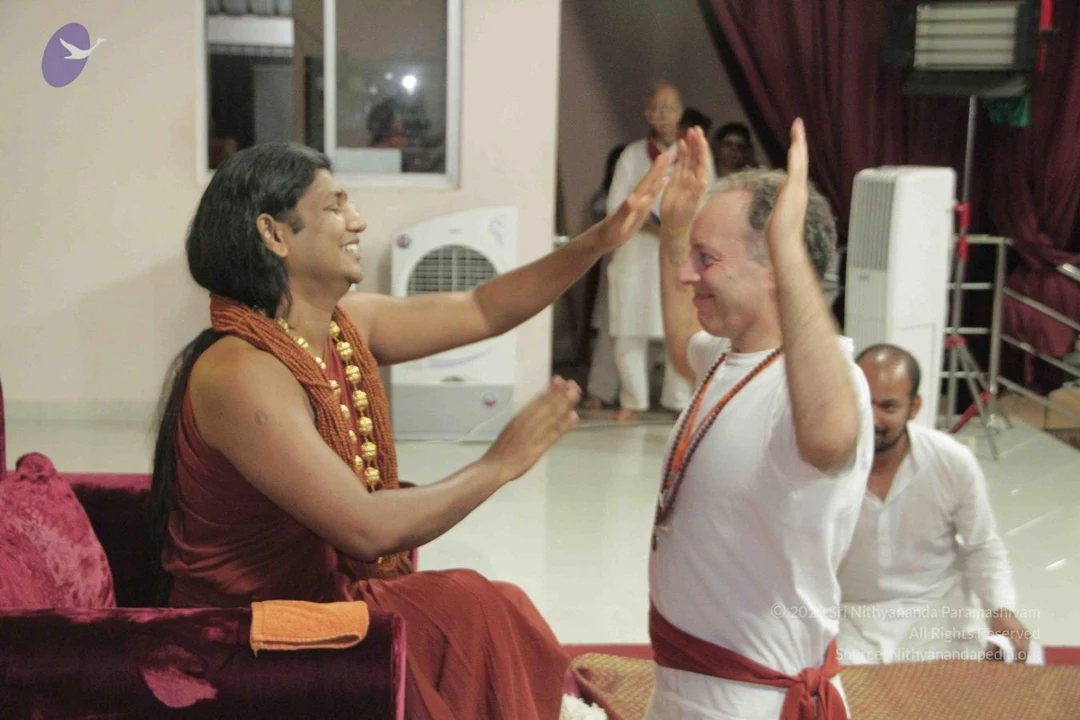
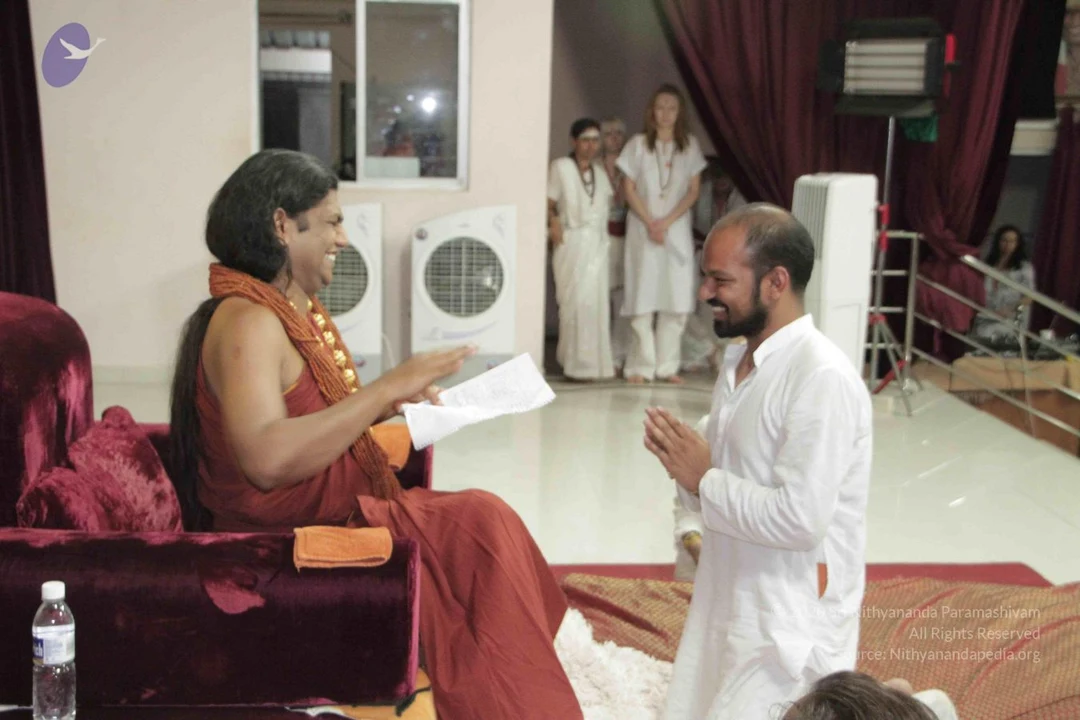
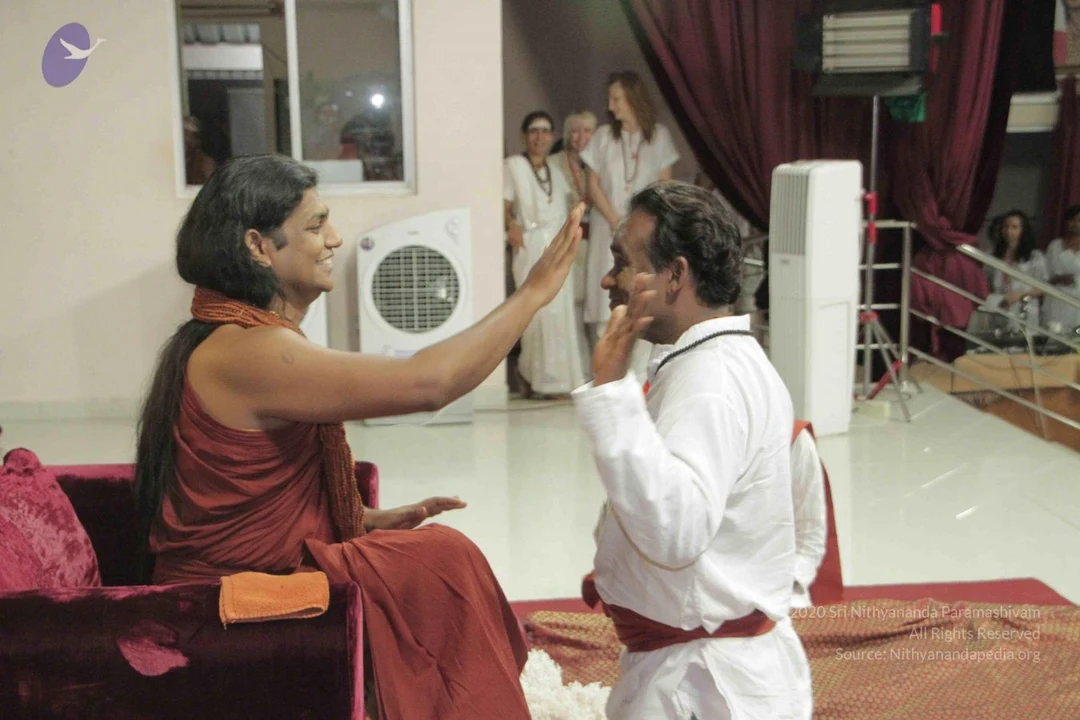
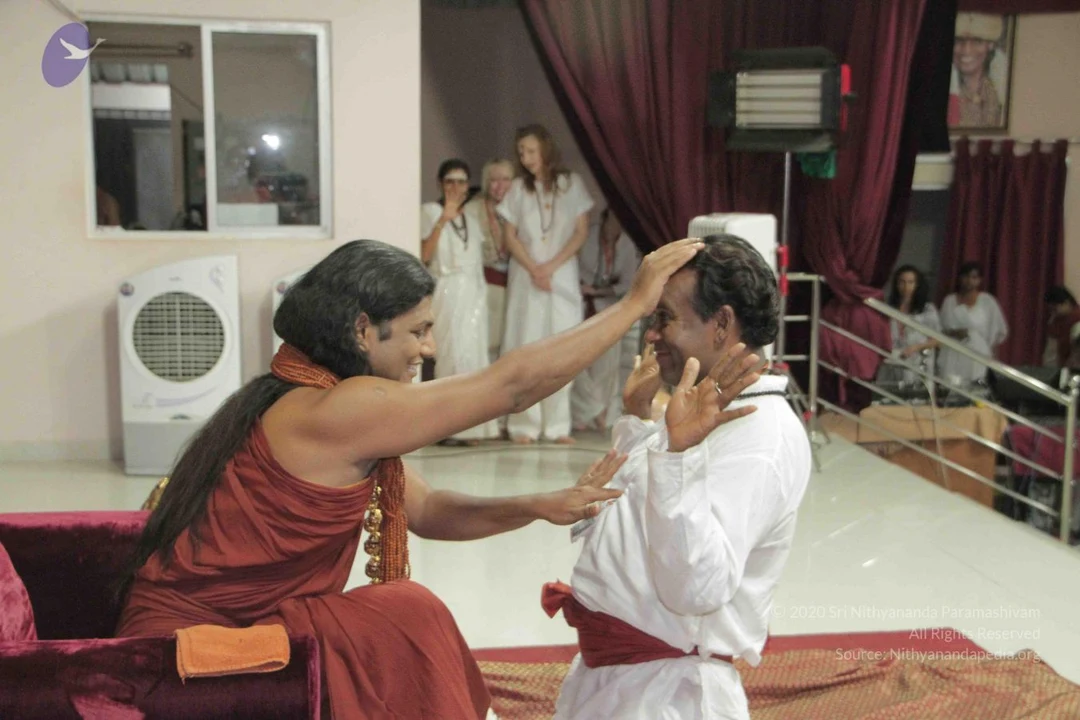
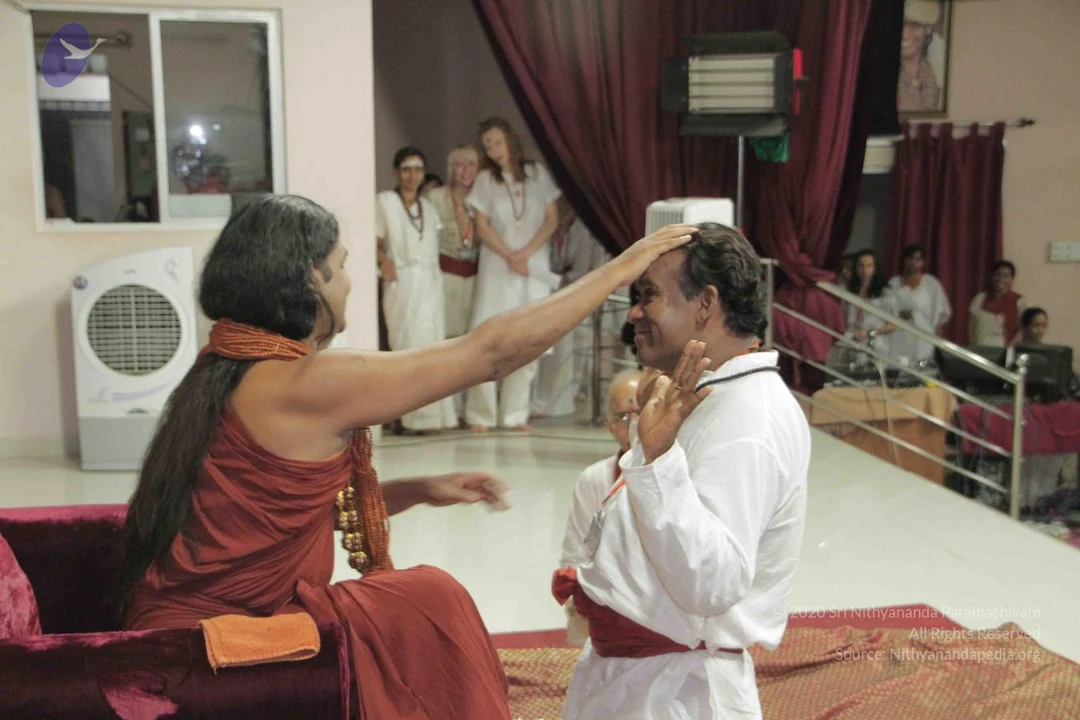
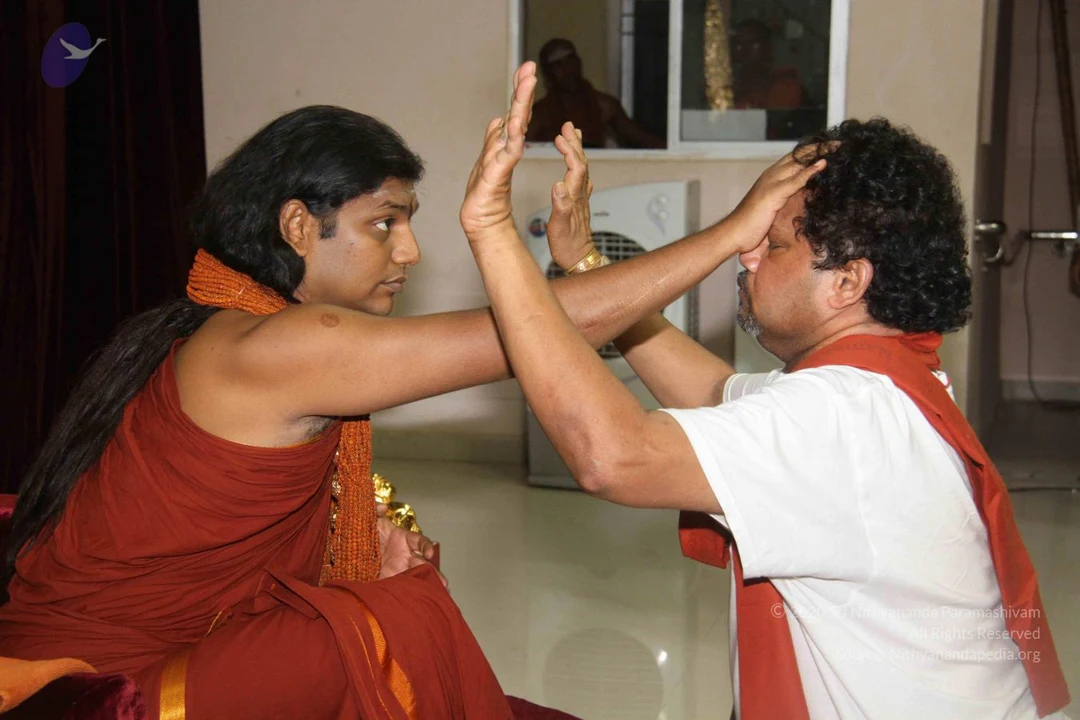
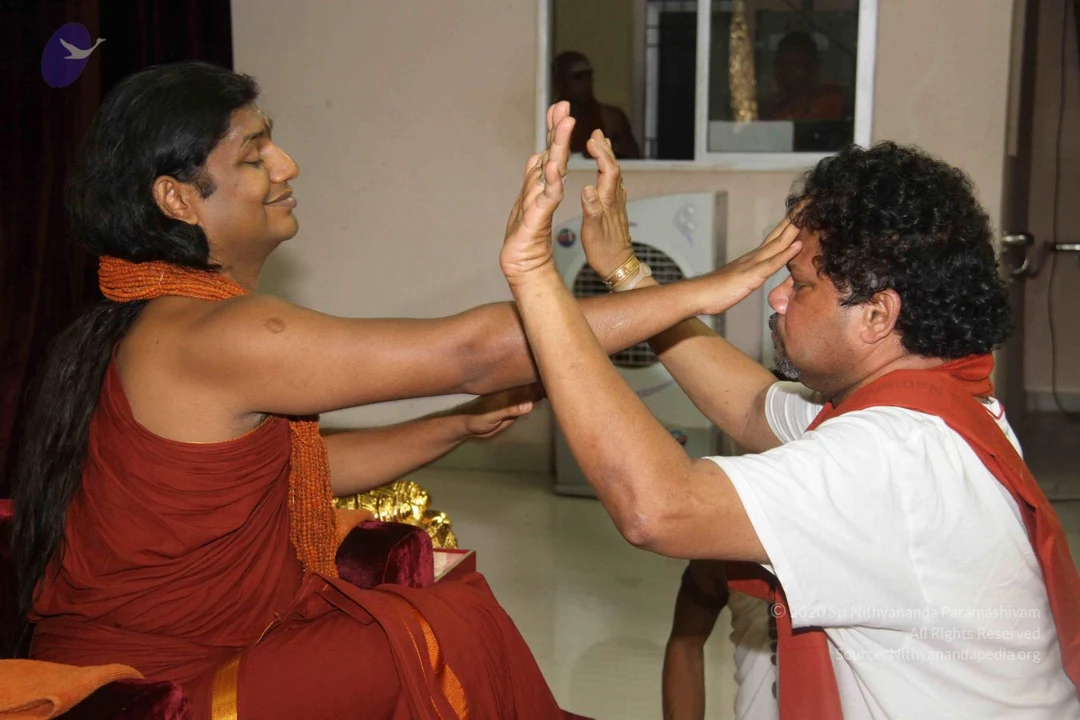
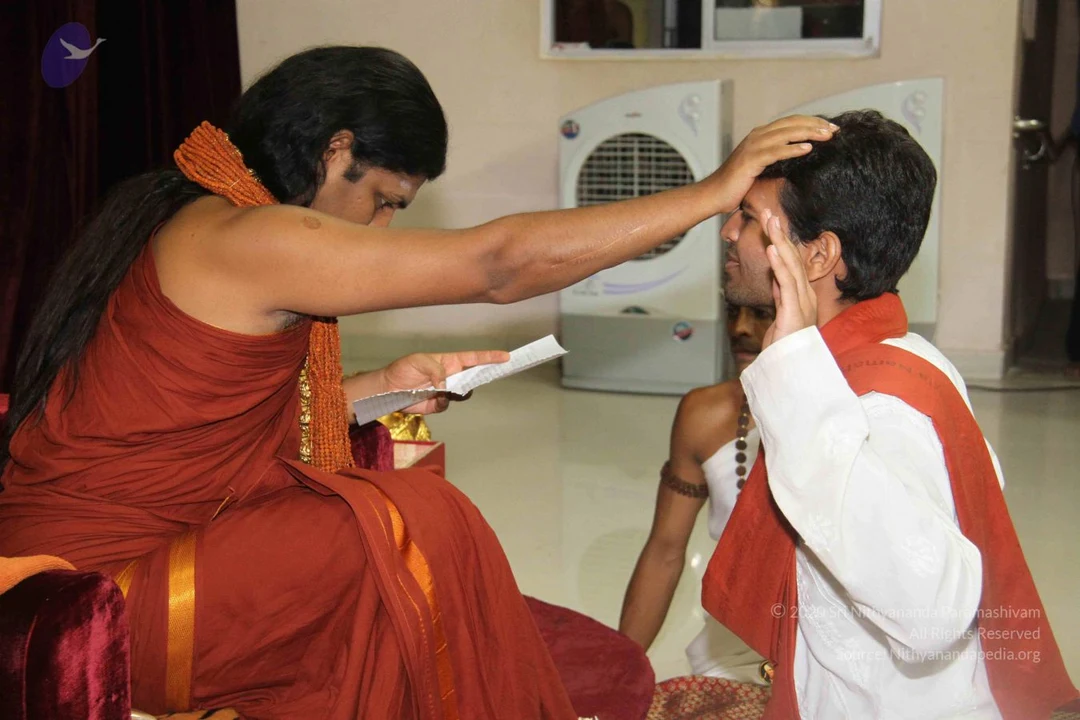
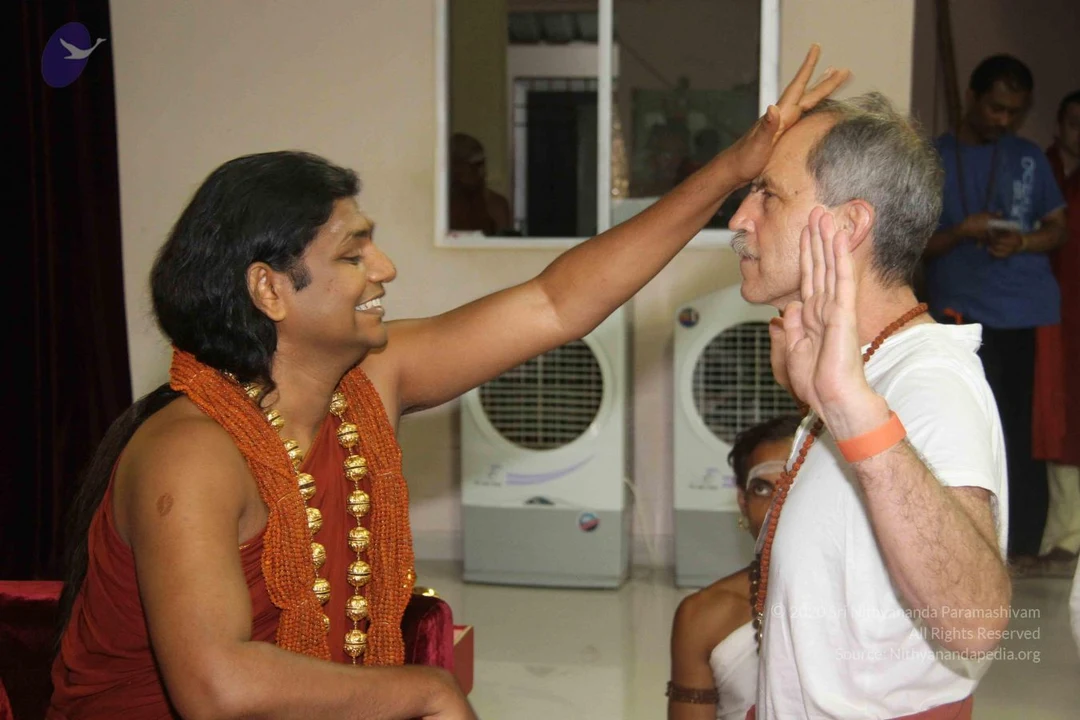
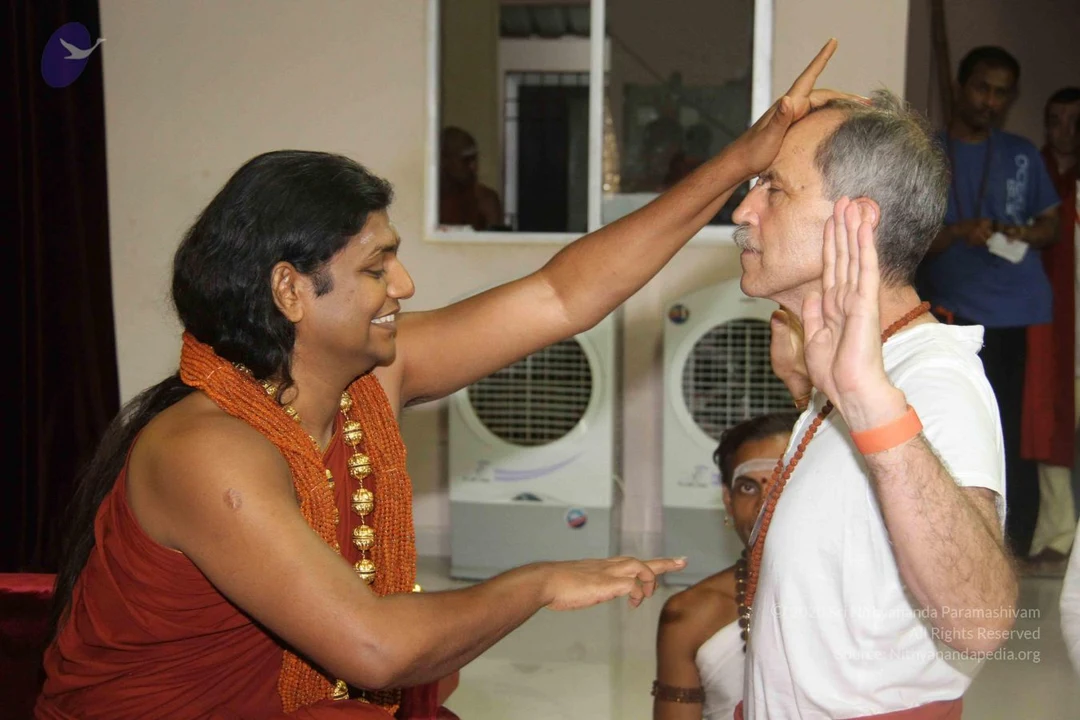
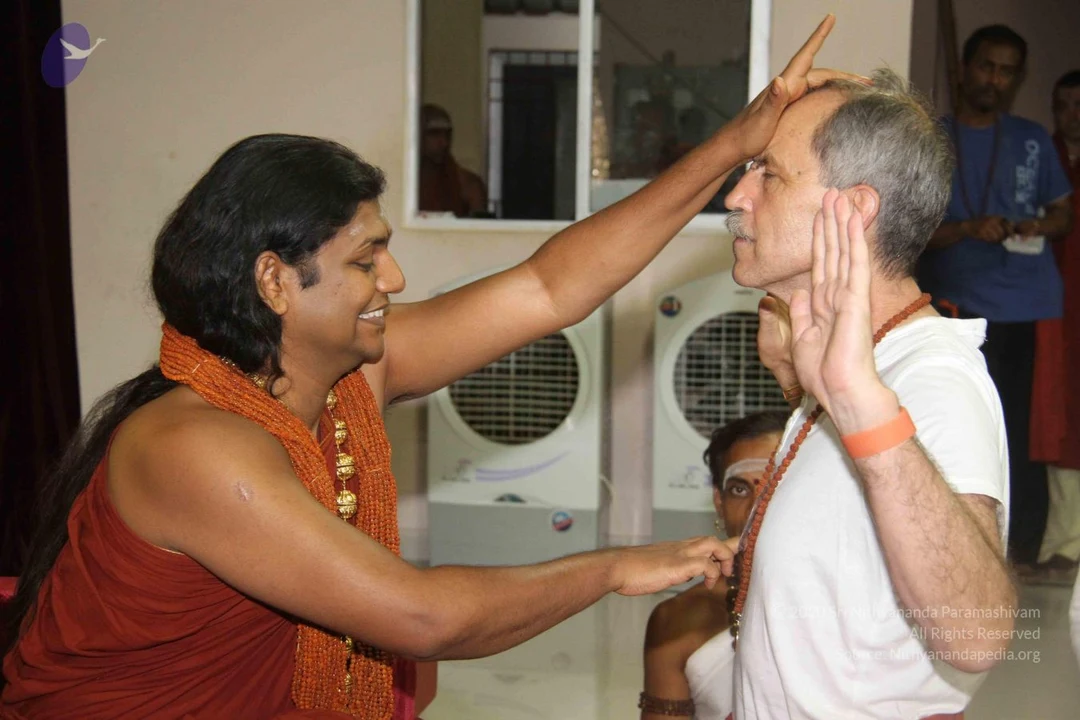
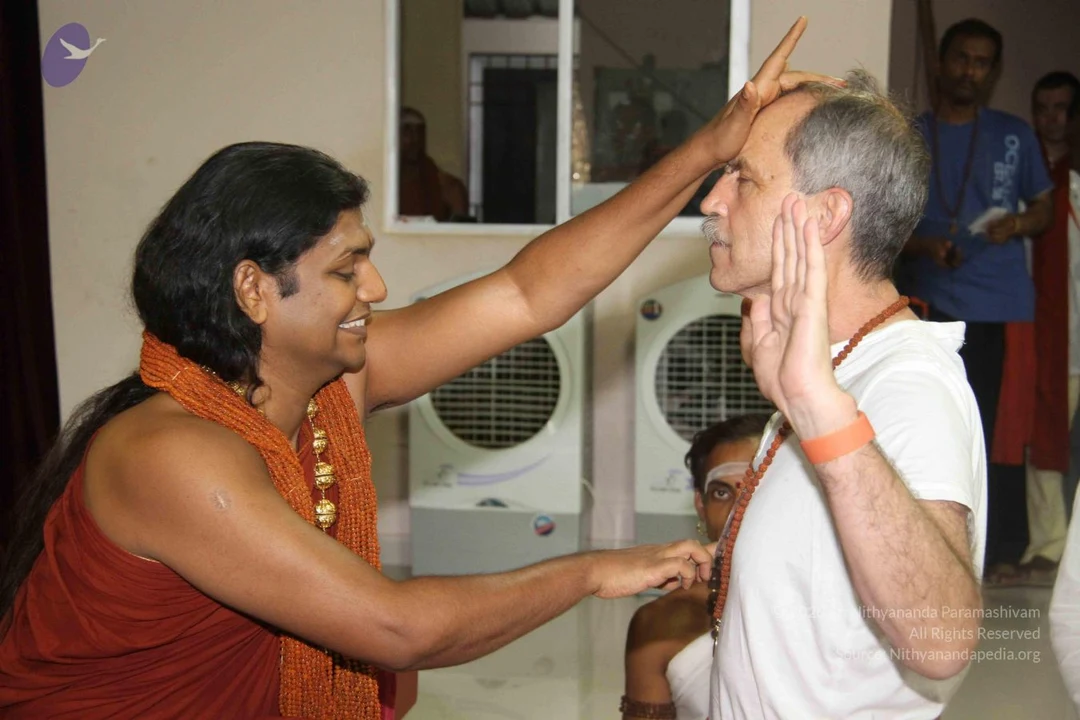
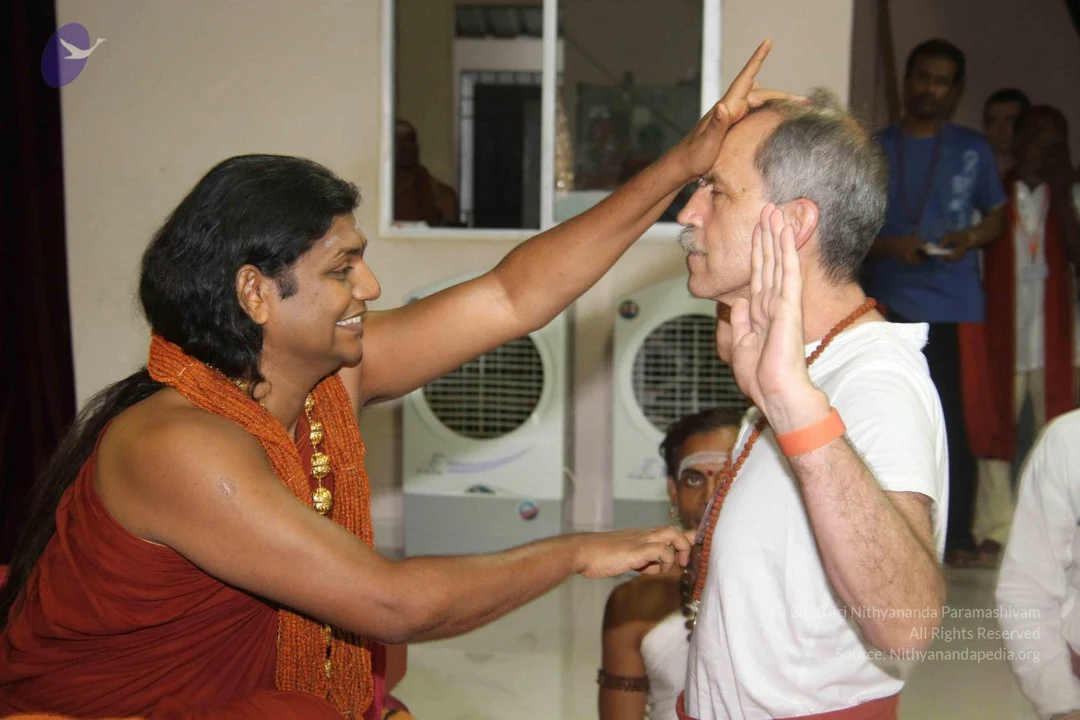
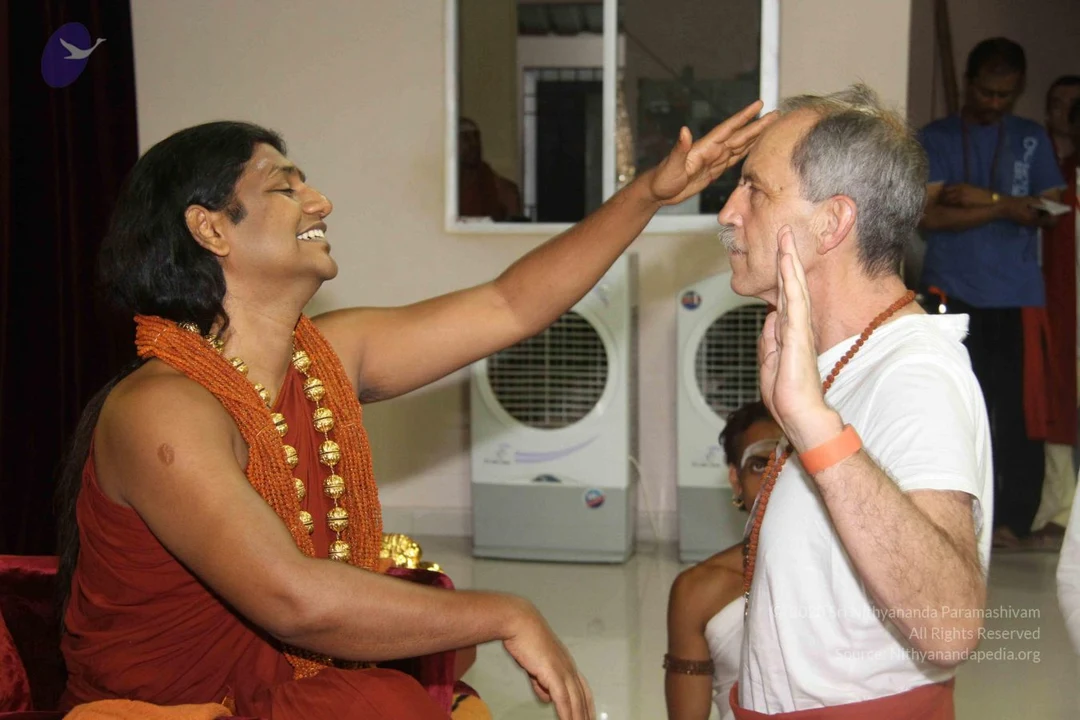
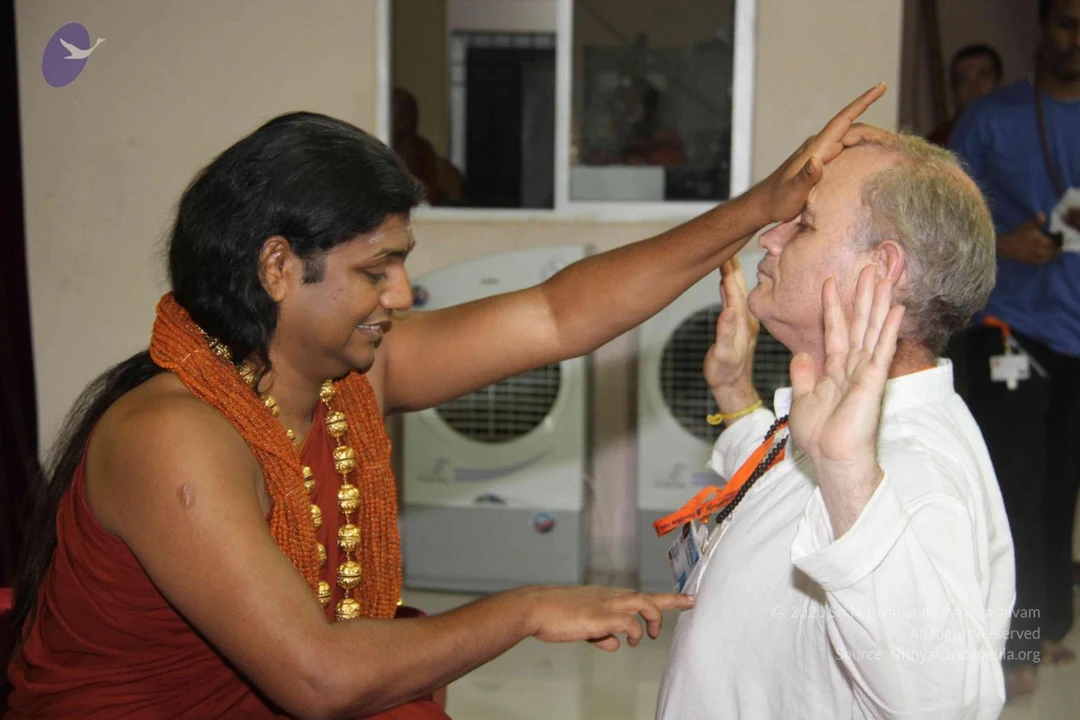
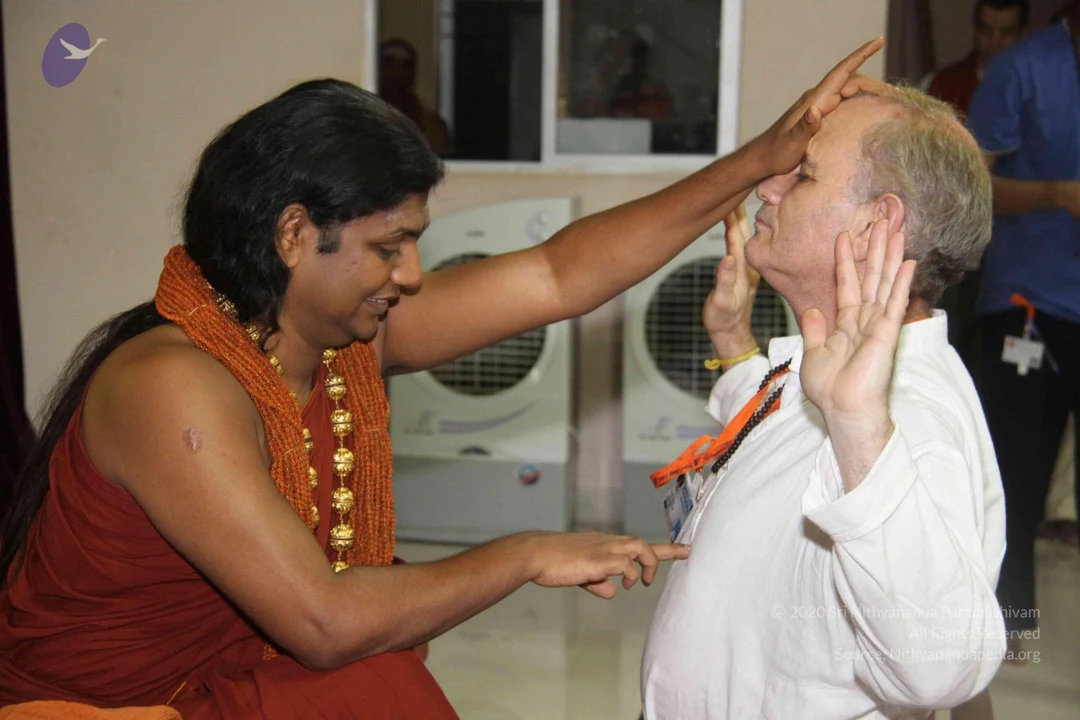
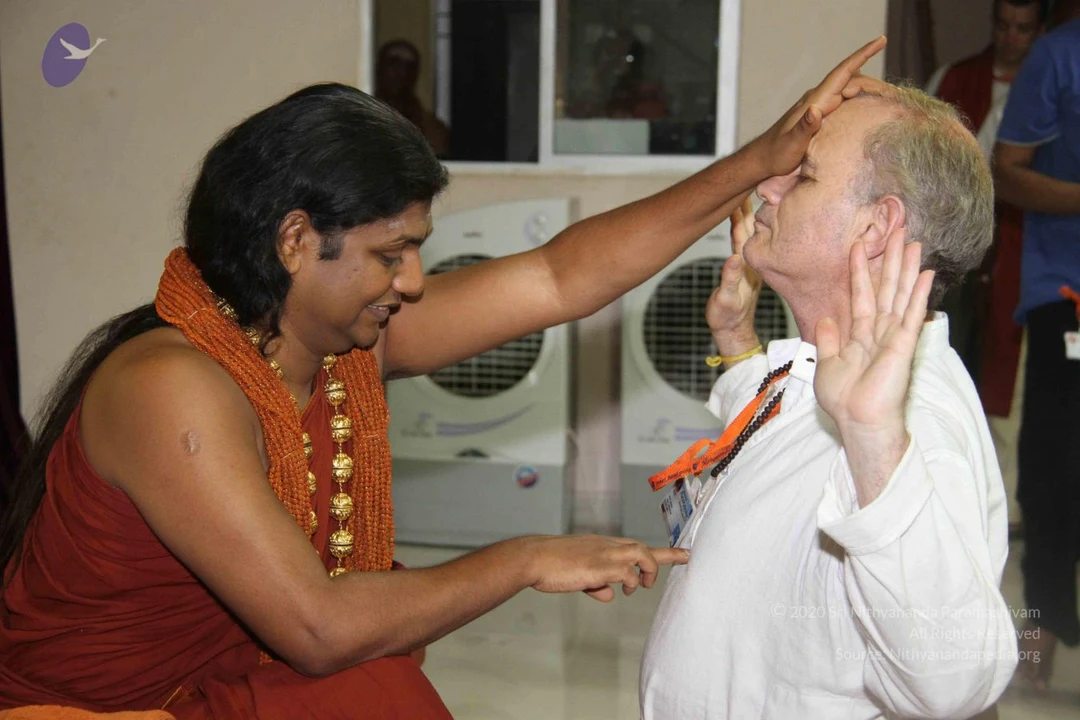
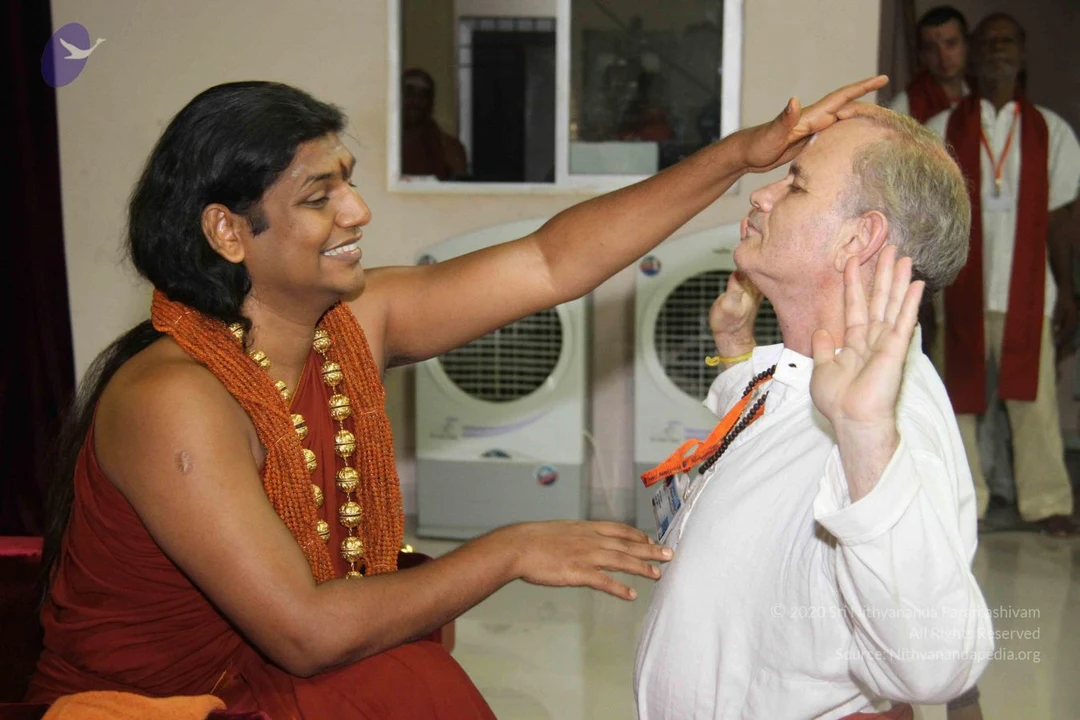
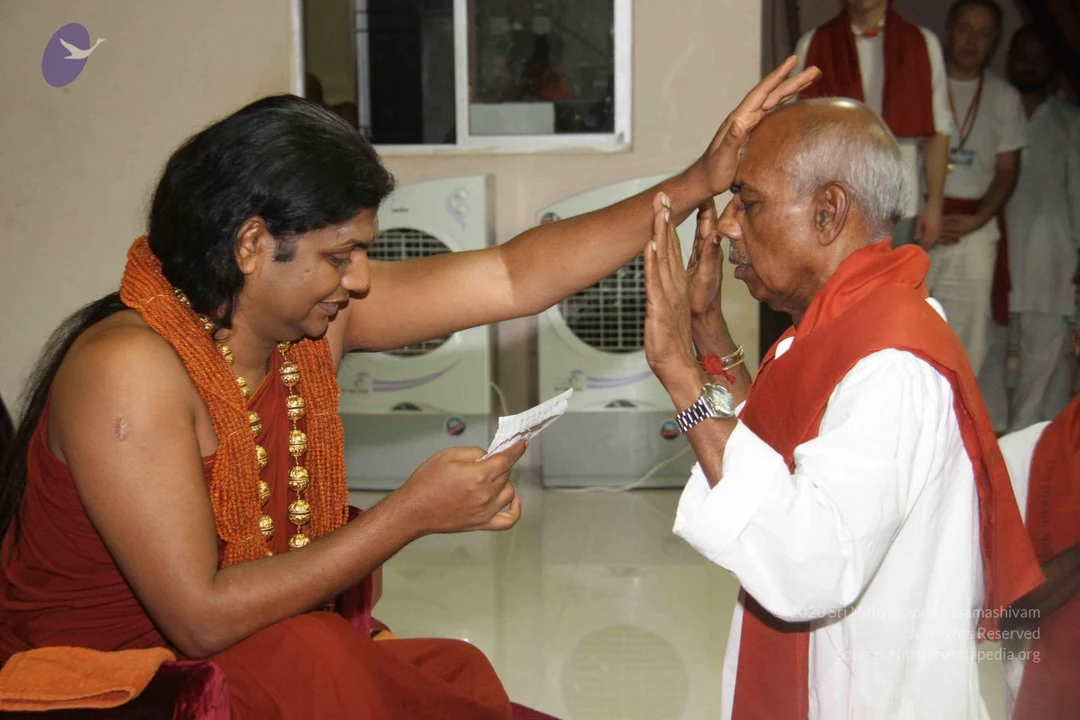
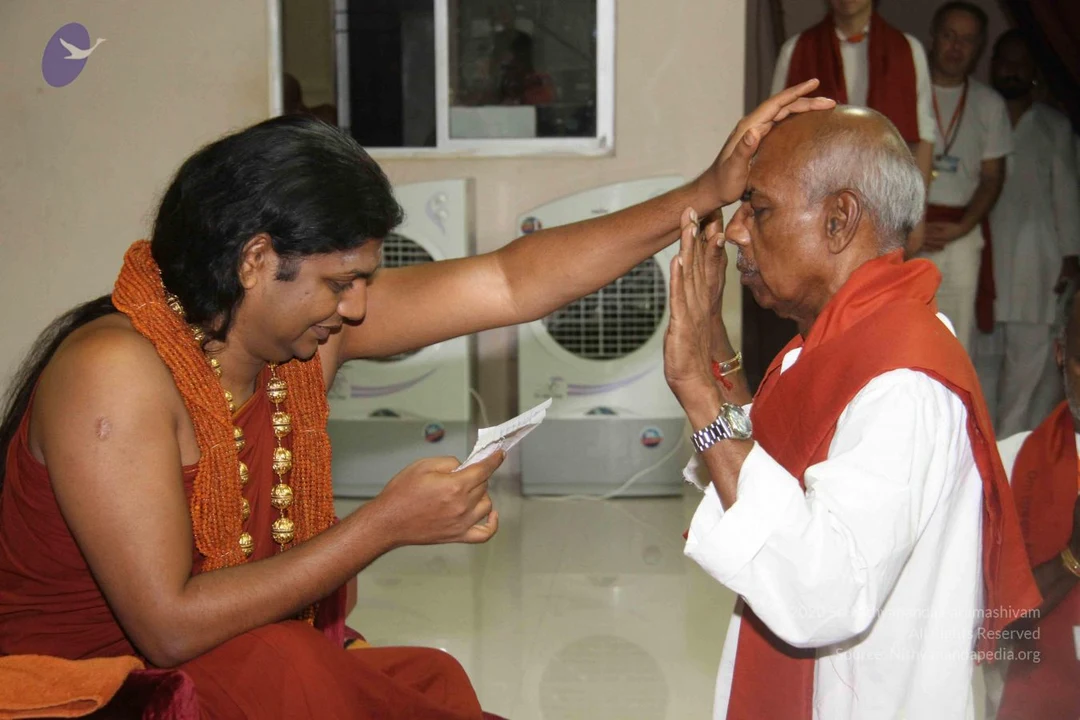
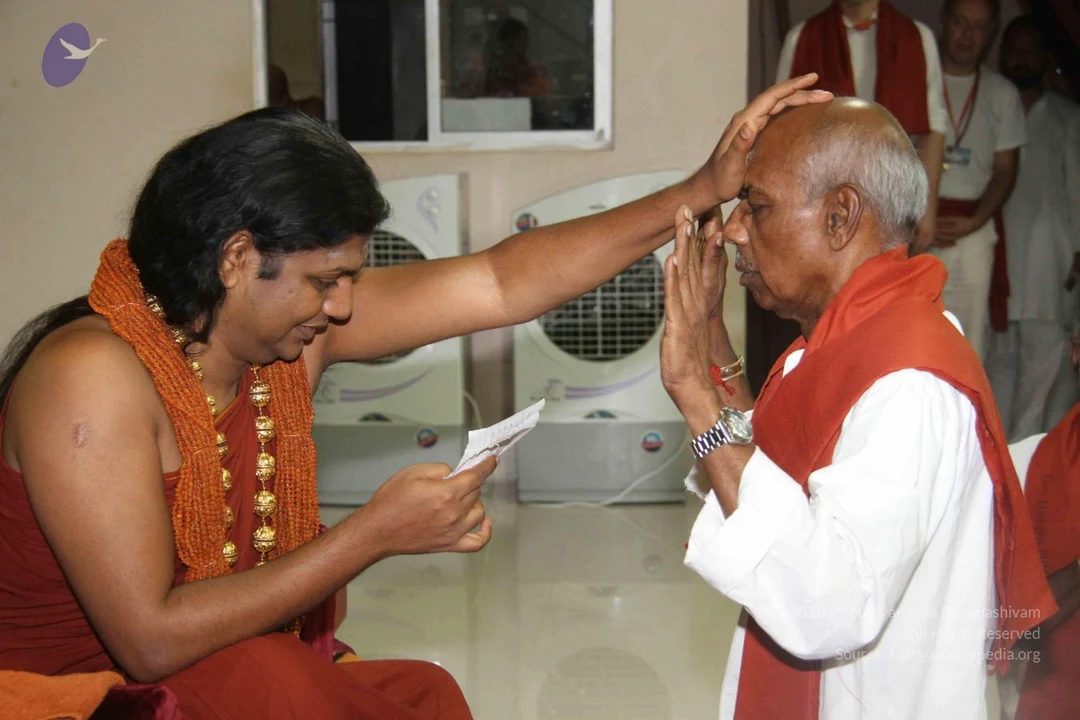
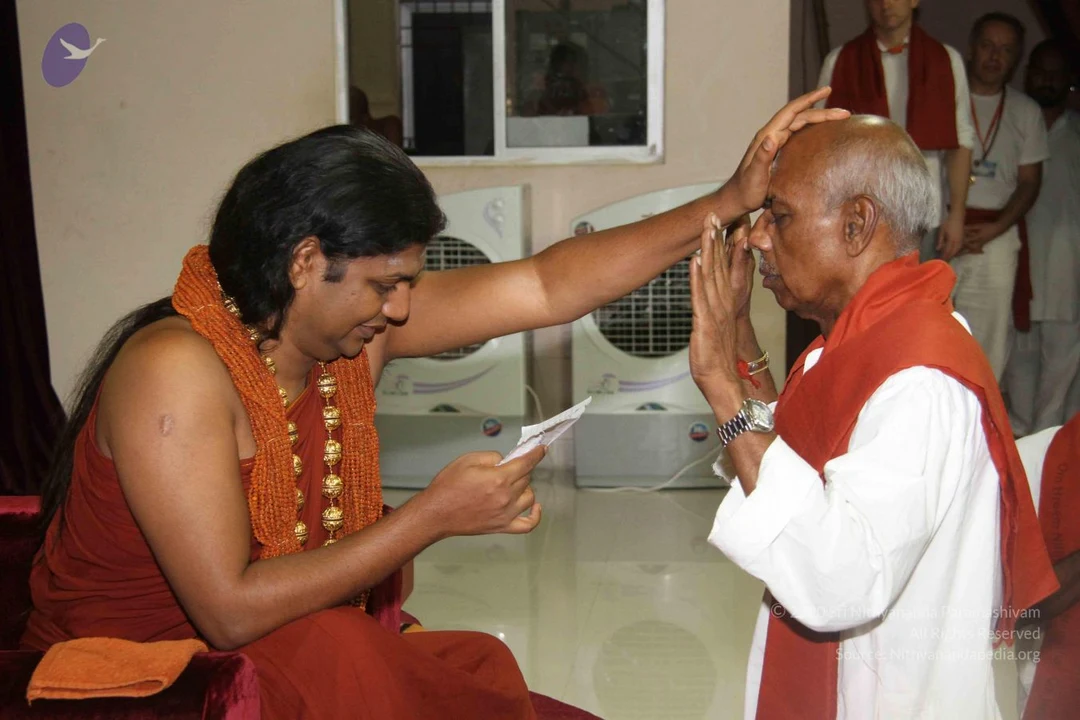
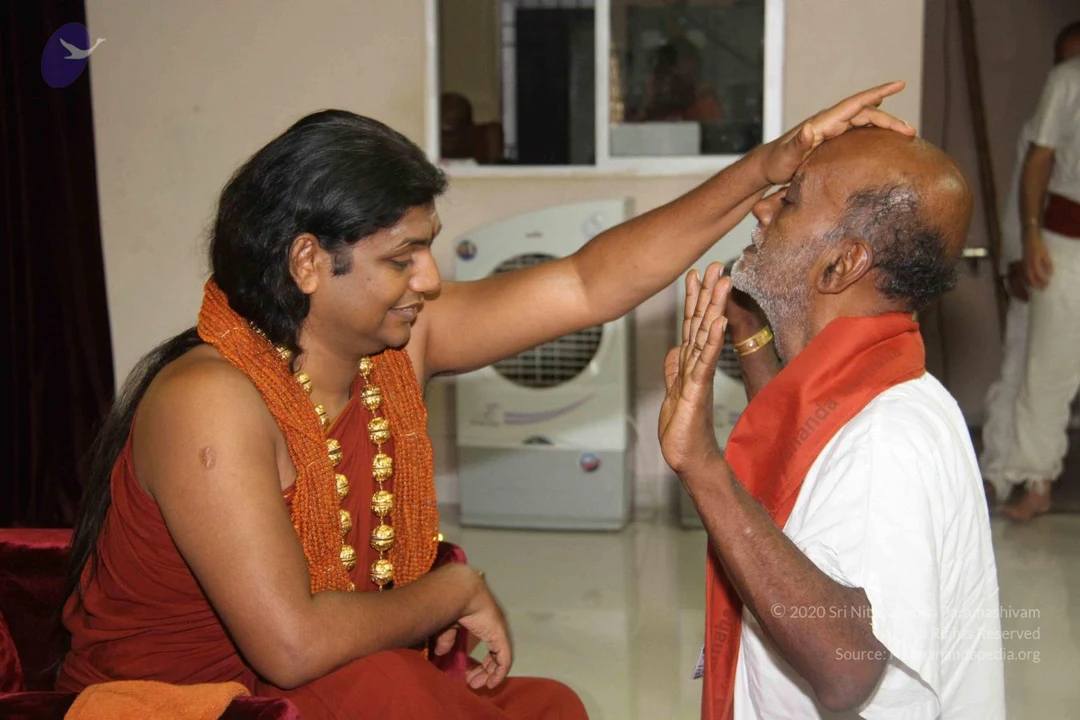
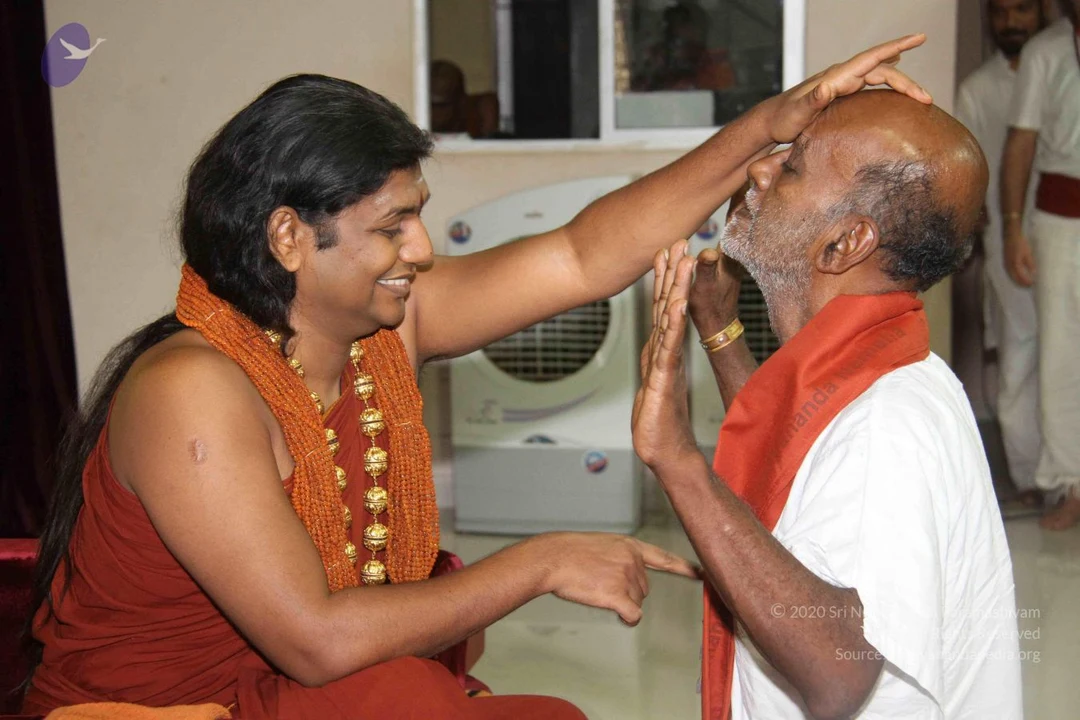
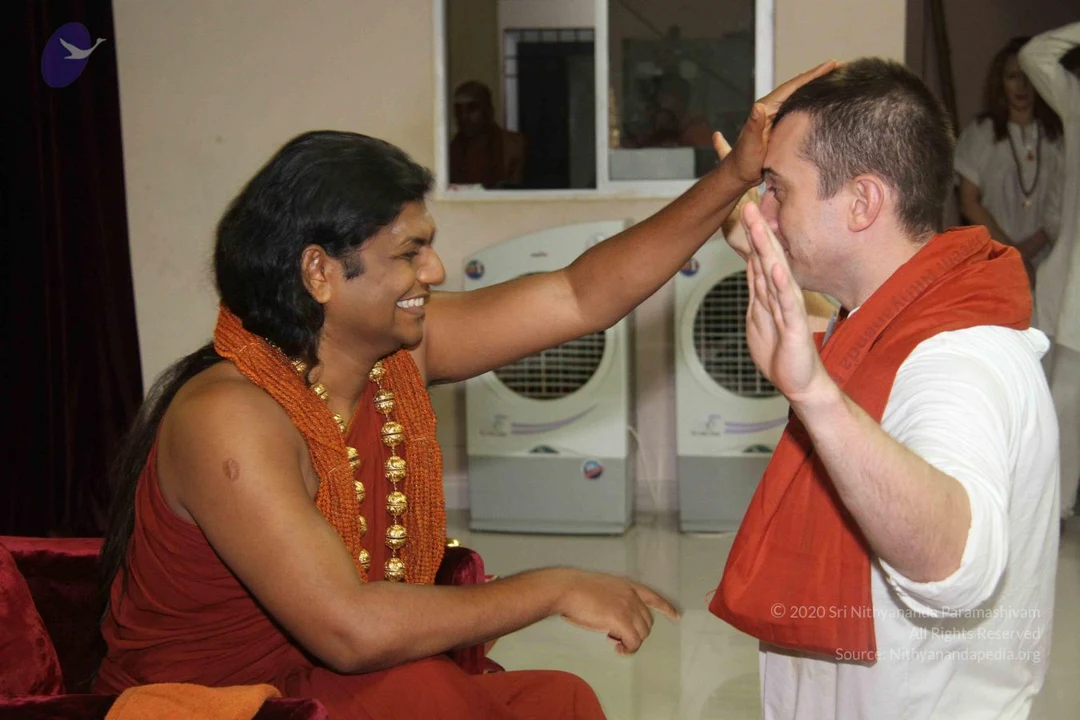
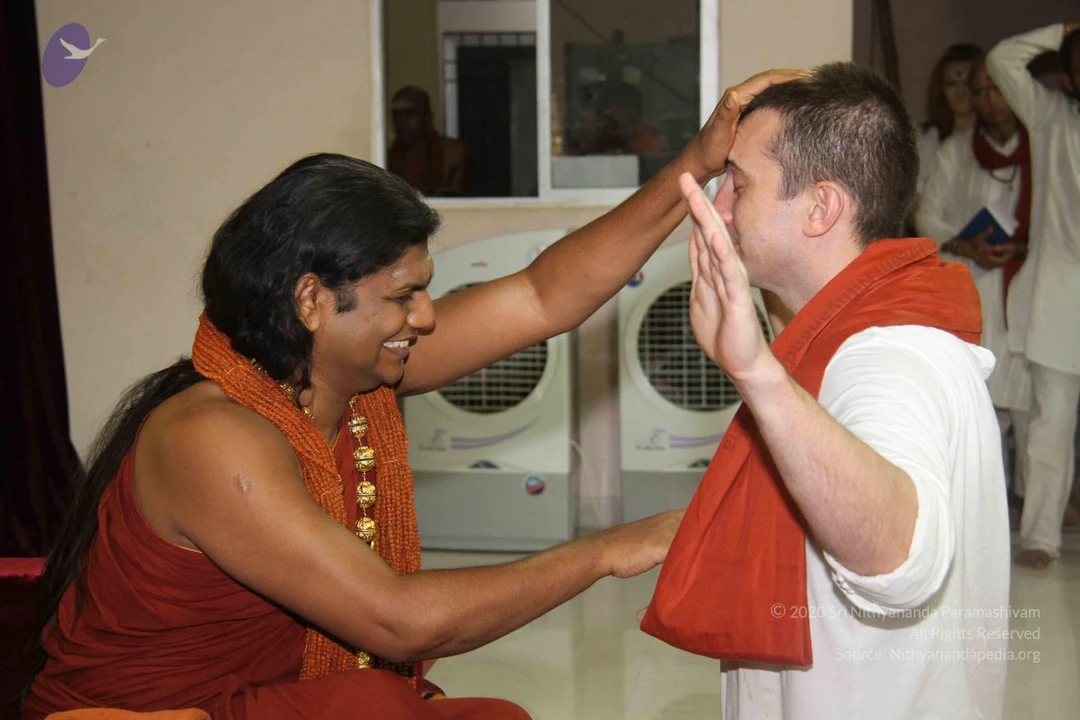
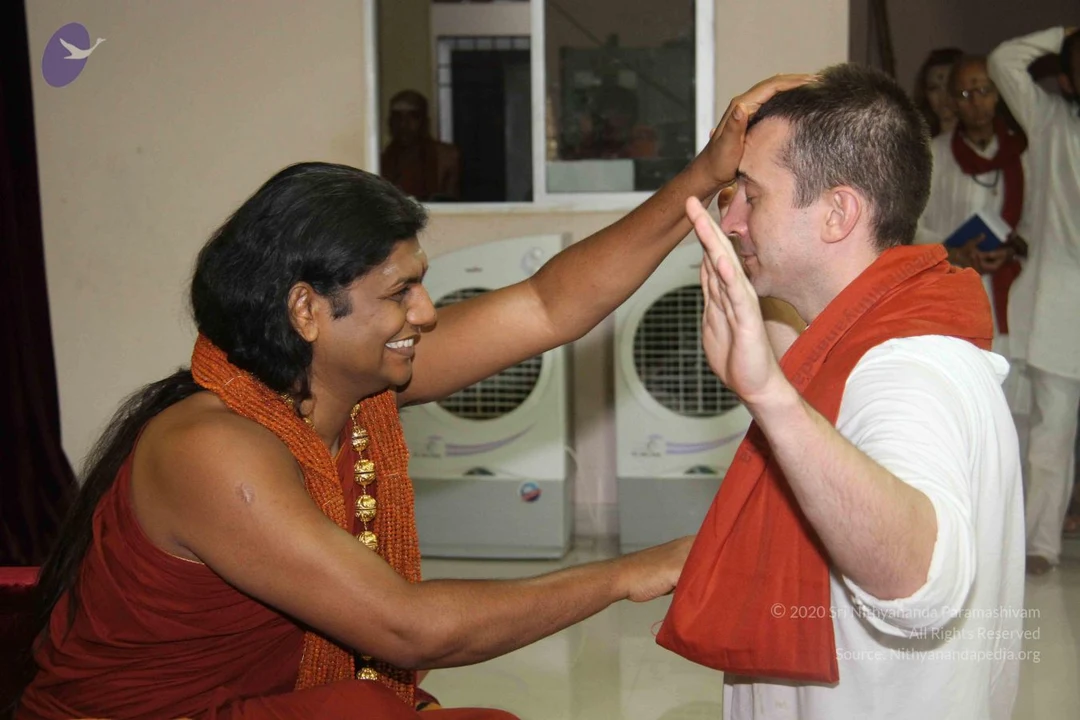
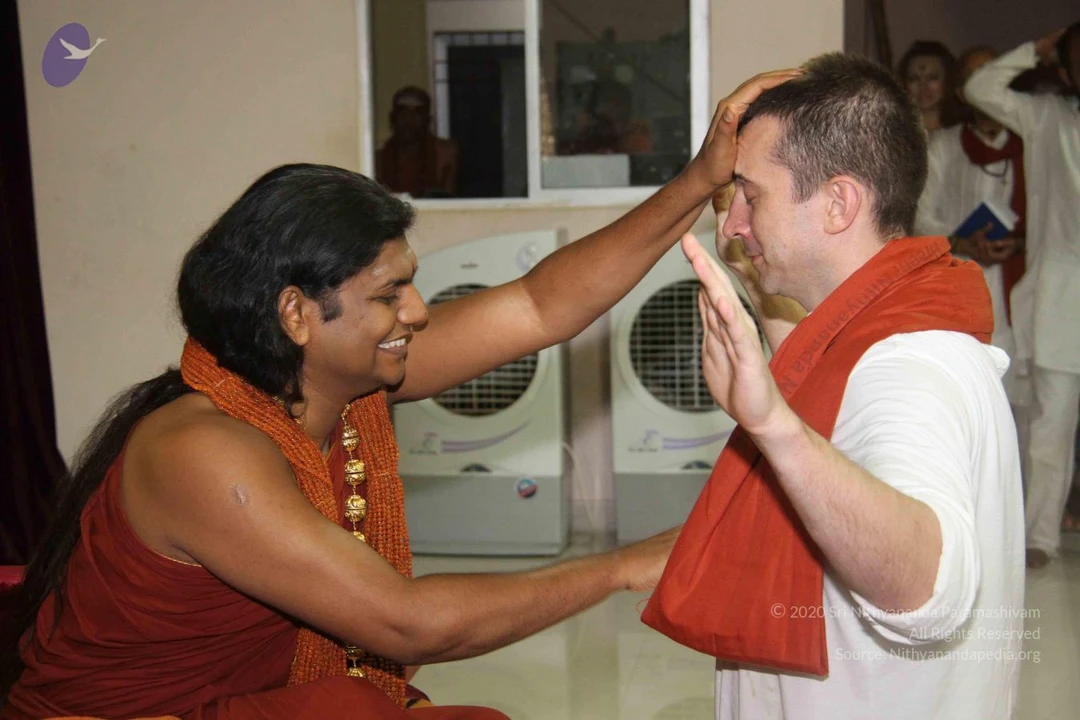
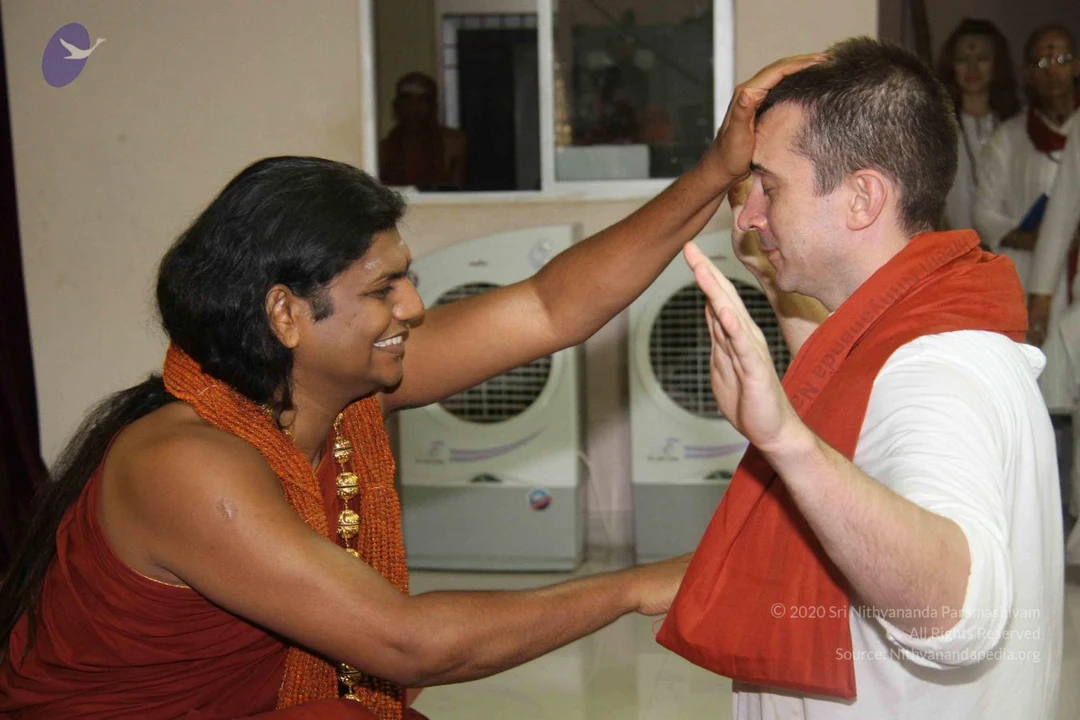
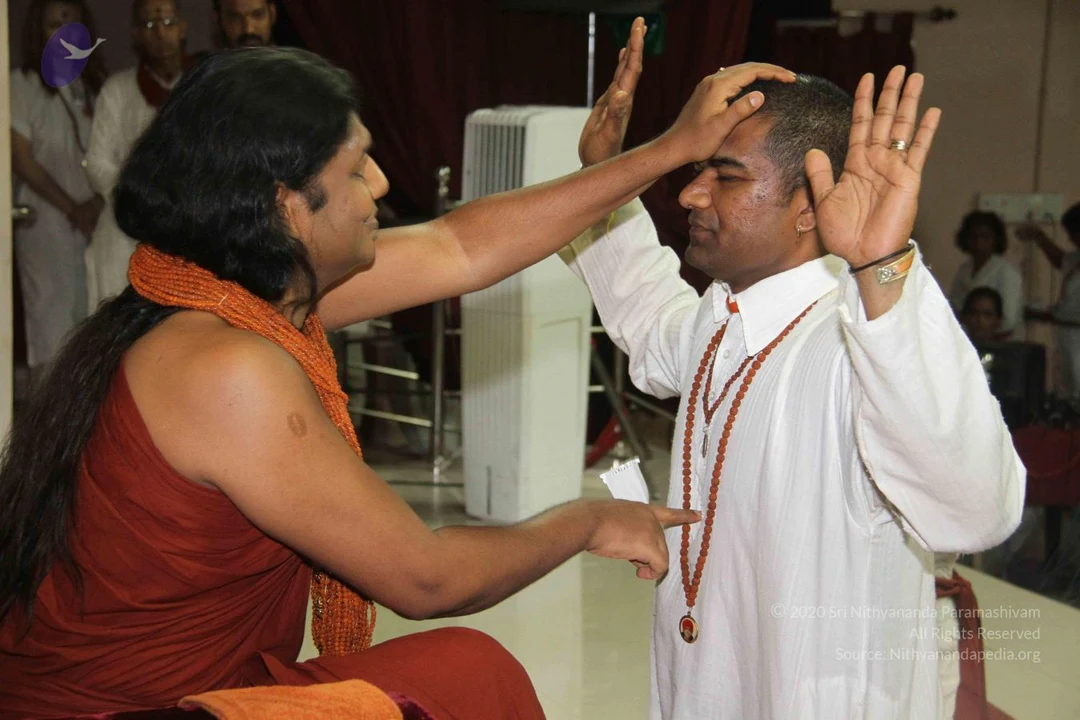
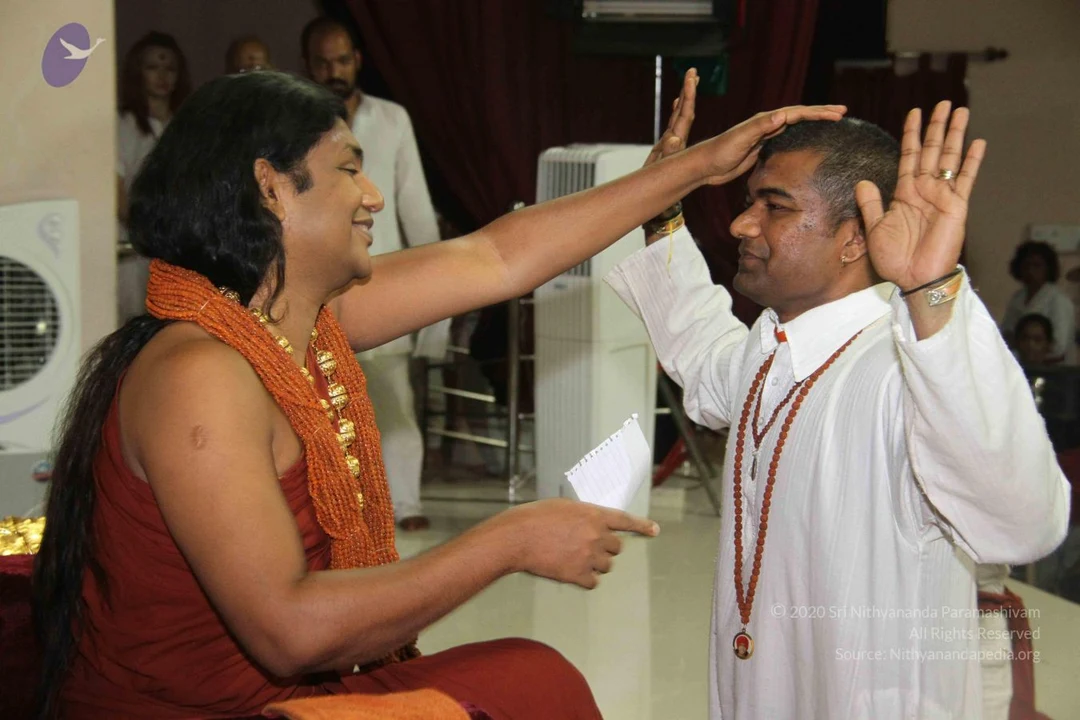
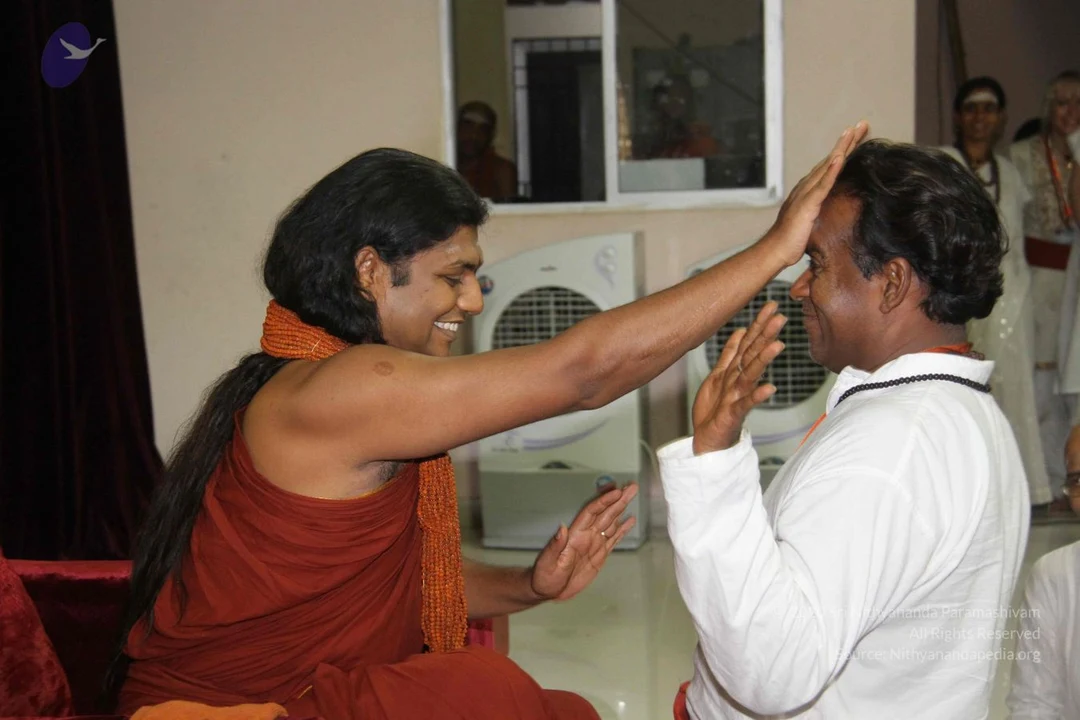
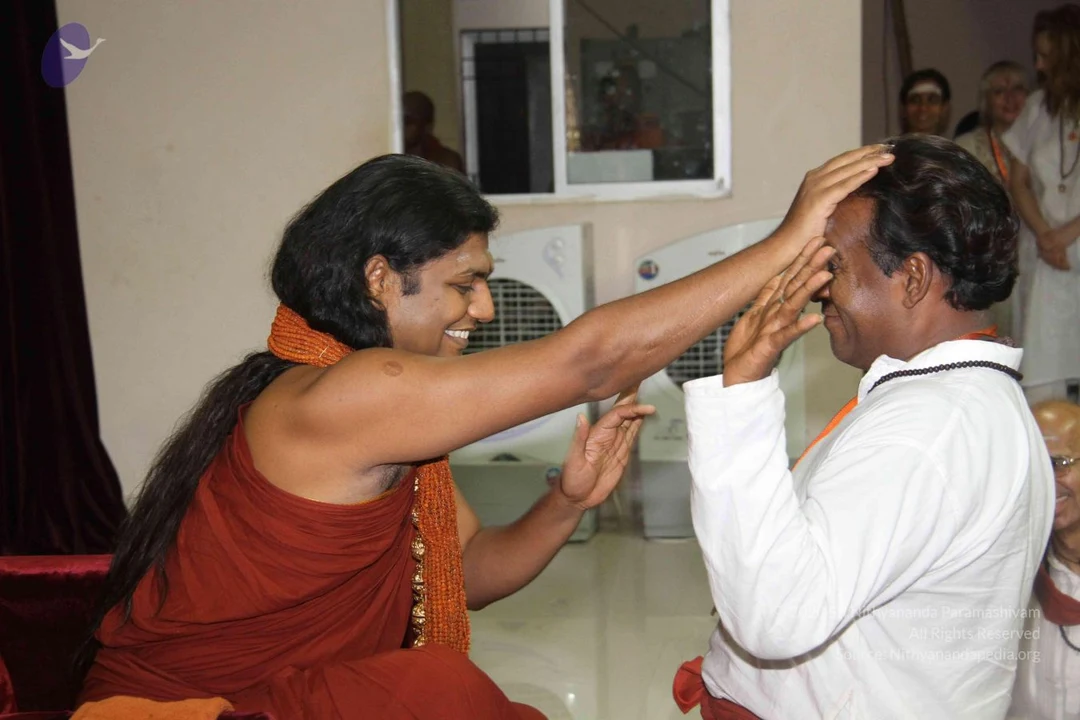
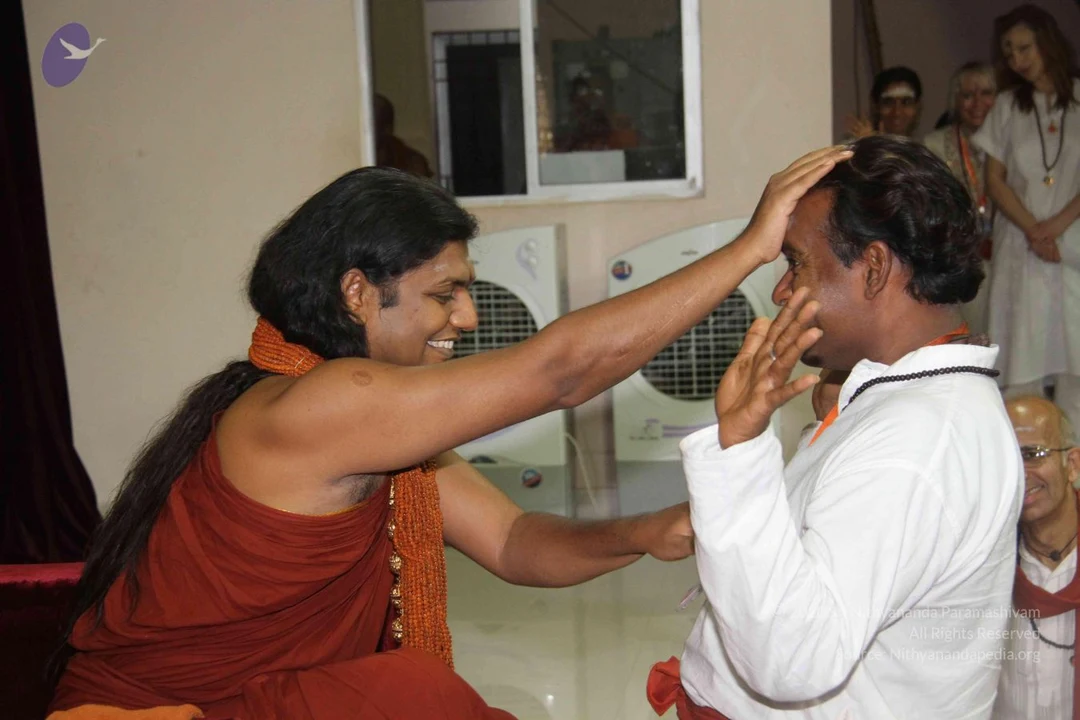
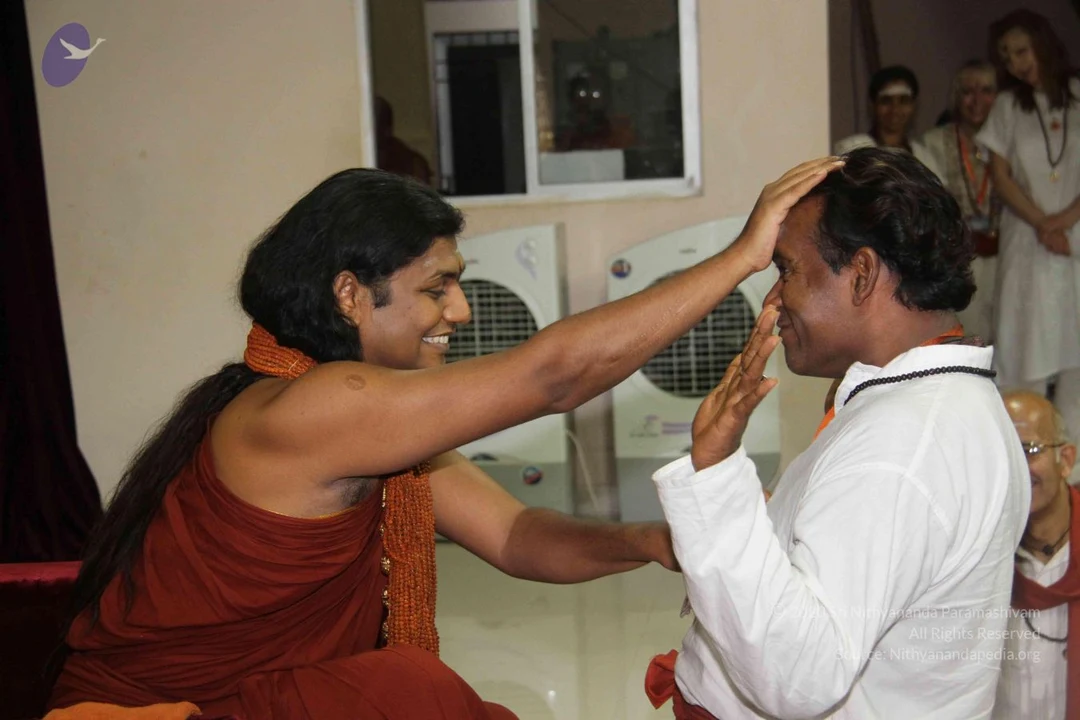
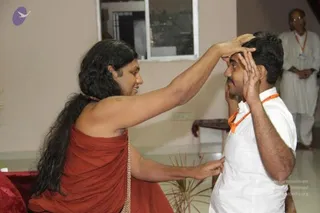
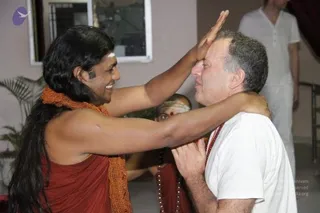
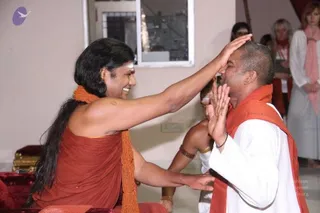
A photograph of a long-haired figure in a rust-red robe with a saffron-orange shawl and rudraksha-style beaded necklace seated on a red cushion, placing a palm on the forehead of a shaved-headed man in a white kurta and orange shawl who has his hands pressed together in respect. Another man in white sits behind them, and several onlookers stand in the background, including a woman in a white top with a pink scarf. A window and white walls are behind them. The seated figure may be a person, based on long hair, saffron shawl and beaded necklace; the blessing gesture is the visible action.A long-haired woman in a rust-red wrap, with a thin rudraksha-style necklace, reaches to press her palm on the crown of a bald older man in a white shirt and orange lanyard, who holds his hands up in a gesture of receiving blessing. Behind them a shaved-headed man in a rust-red robe with a rudraksha mala and a tilak stands in an indoor hall with a potted plant, a window and a mirror on the wall. The scene suggests a blessing or initiation moment.A photograph of a long-haired man in rust-red robes and an orange beaded necklace, seated on a red cushion, extending his right hand to bless the forehead of an older bald man in a white shirt and orange shawl. A younger man in white with a tilak sits behind them, and other people in white stand in the background of a bright hall. Swamiji (probable) is the seated man in red robes with long swept-back hair and an orange mala, giving a blessing. The blessed elder is receiving darshan with hands raised in namaskar. Other visible people include a white-clad attendant with a tilak and devotees in white.

Yoga-Temple-Tour

18 photosSource gallery
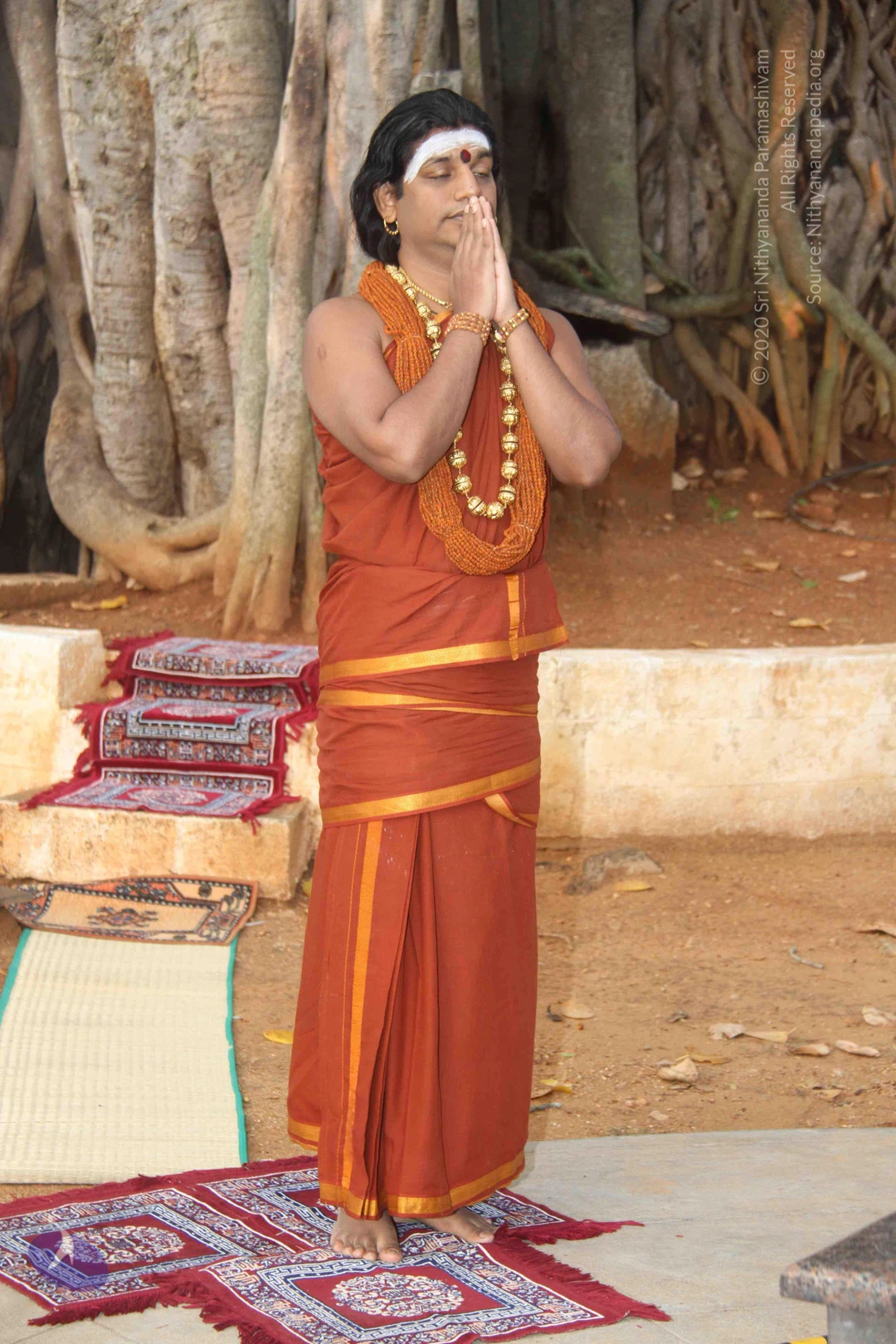
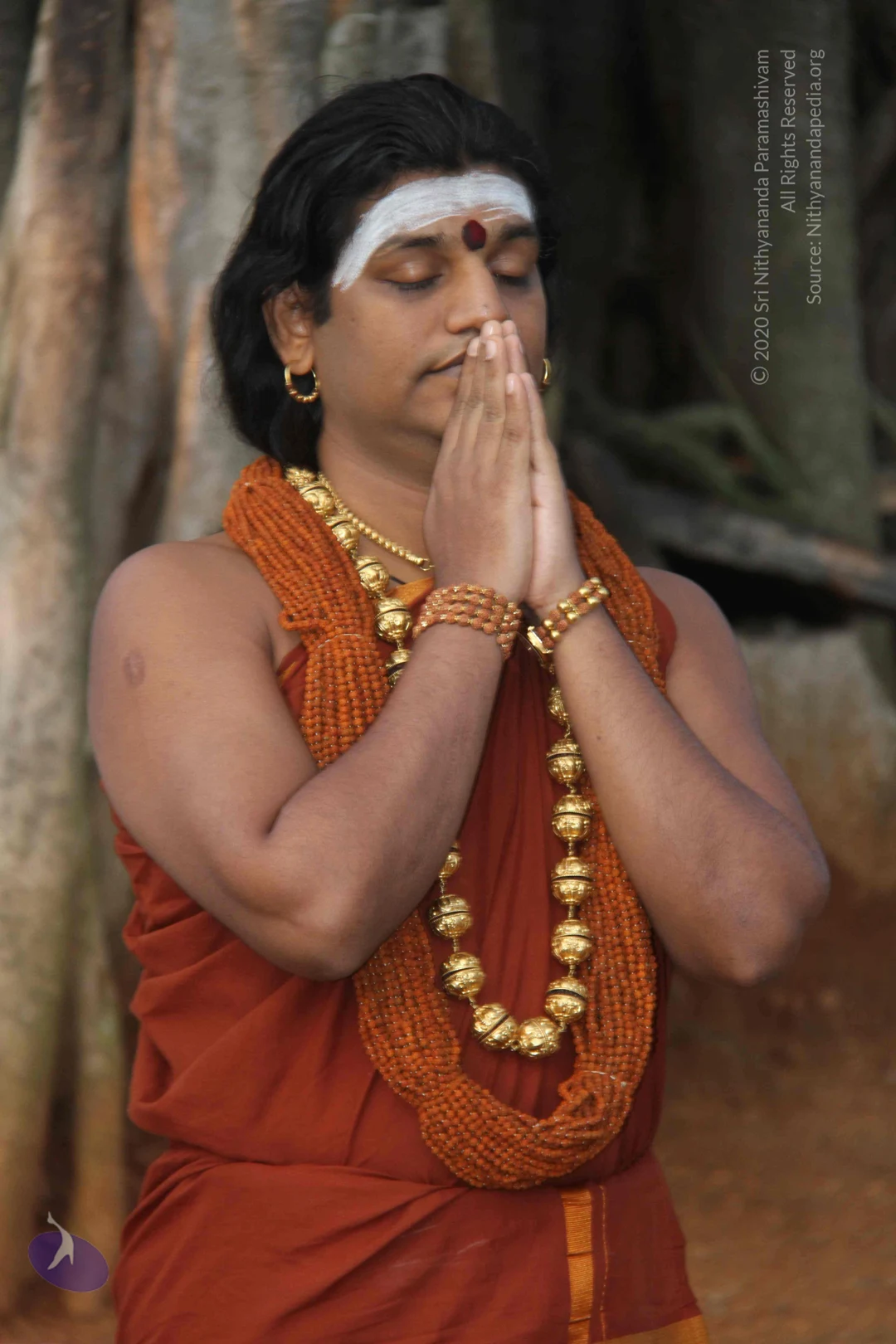
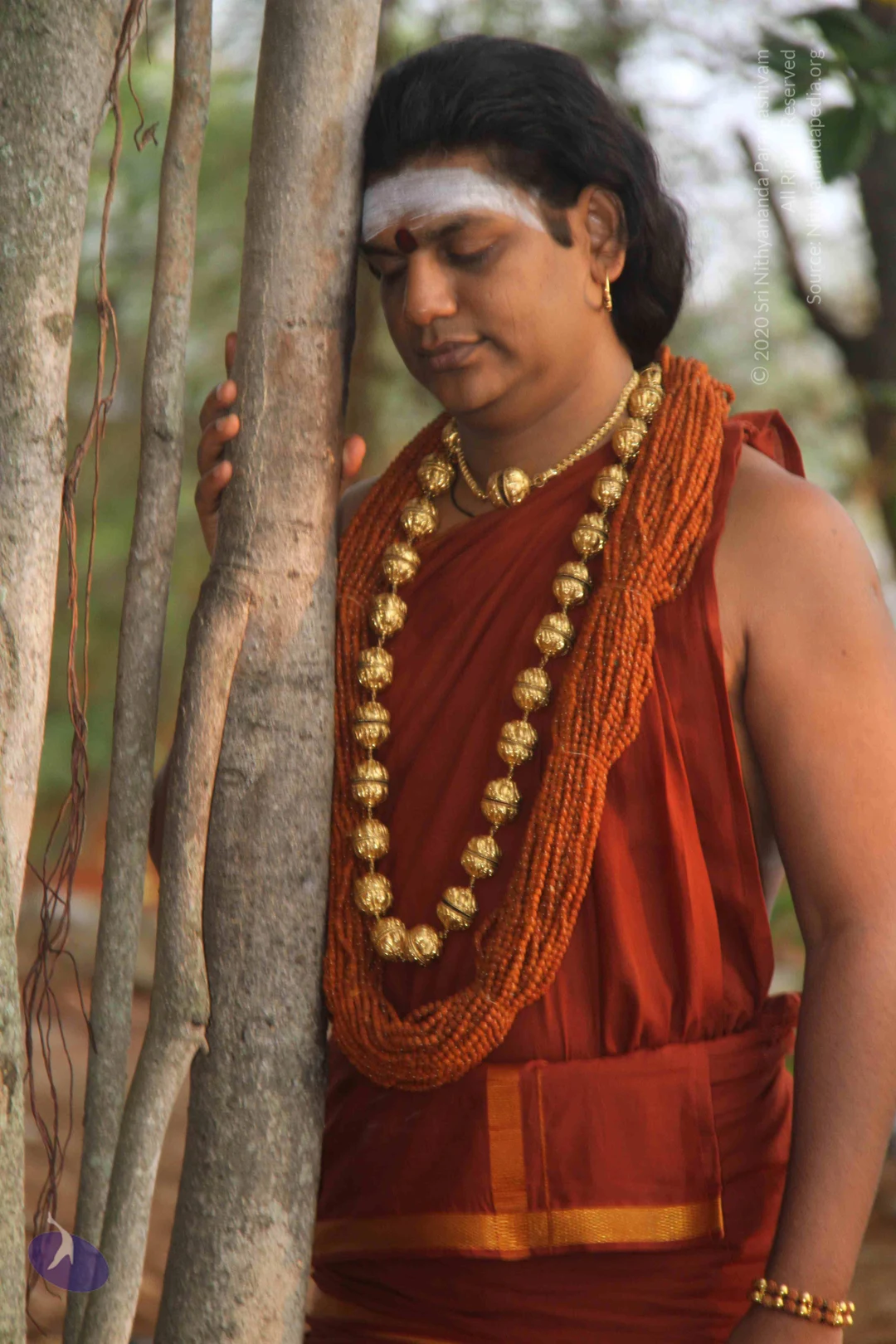
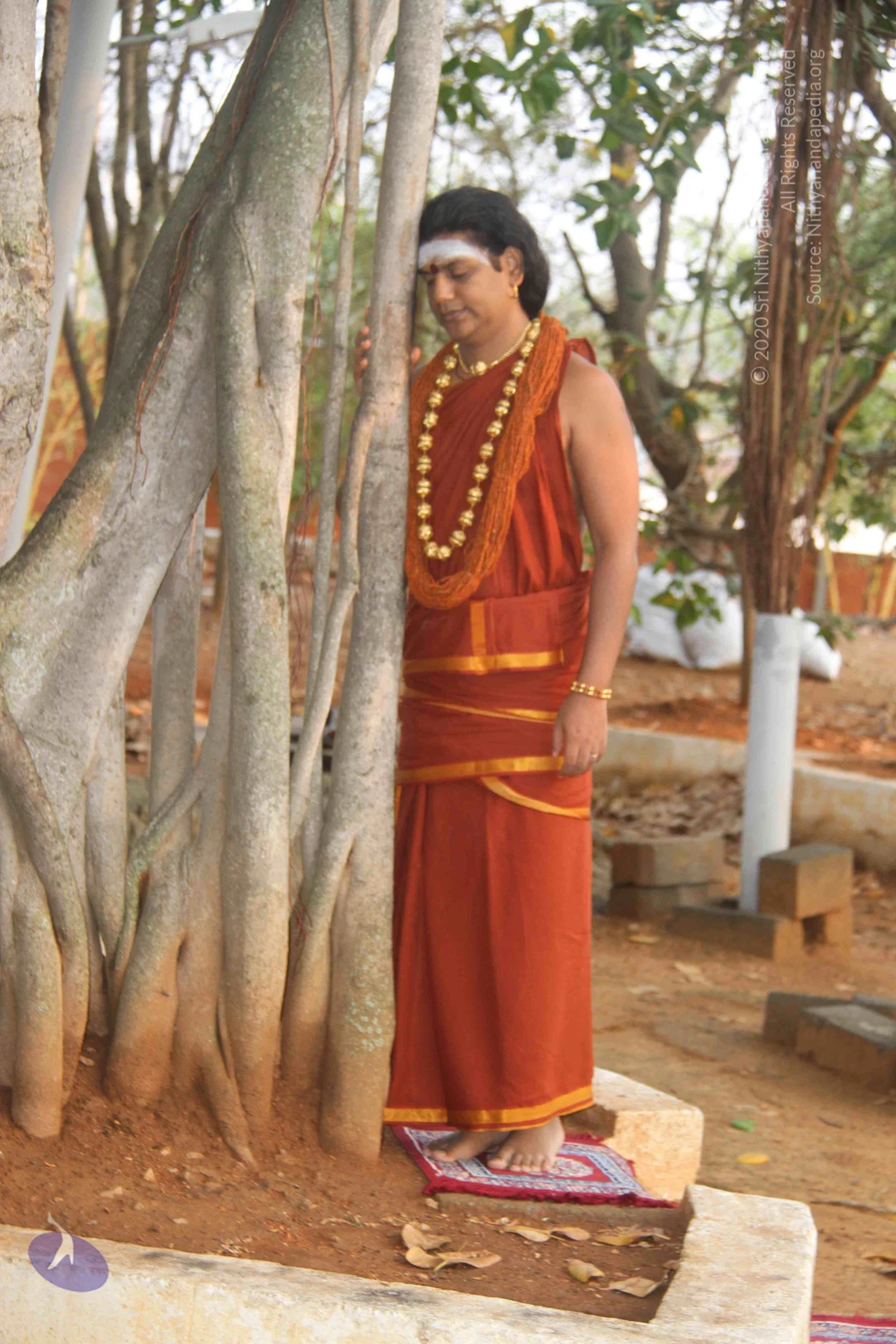
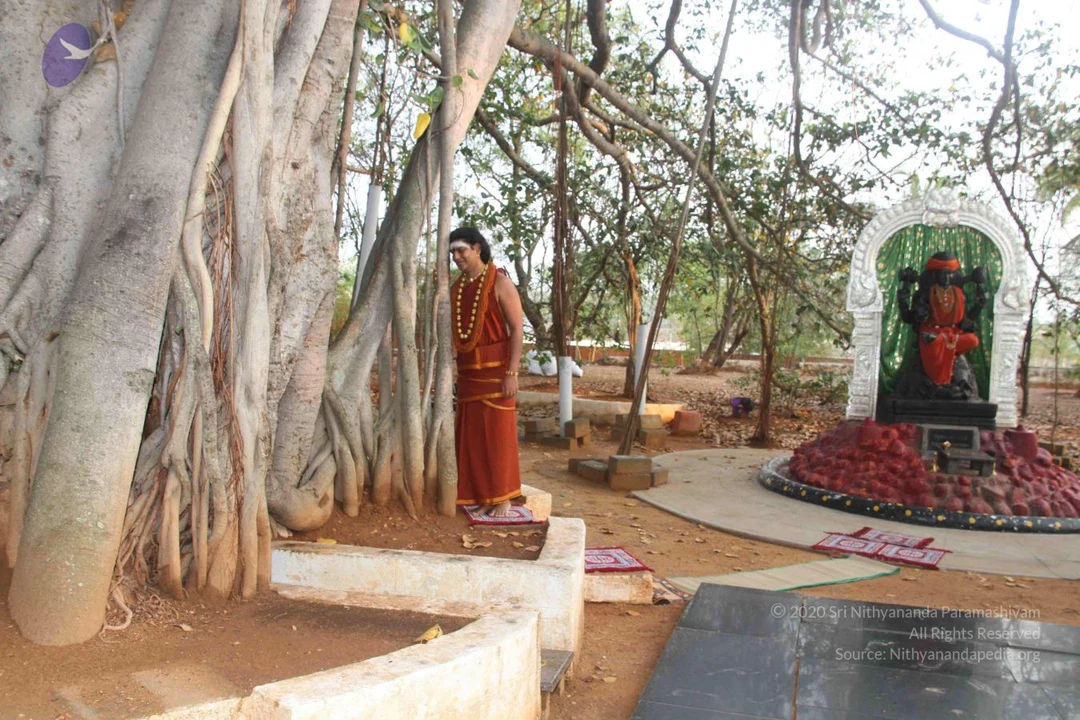
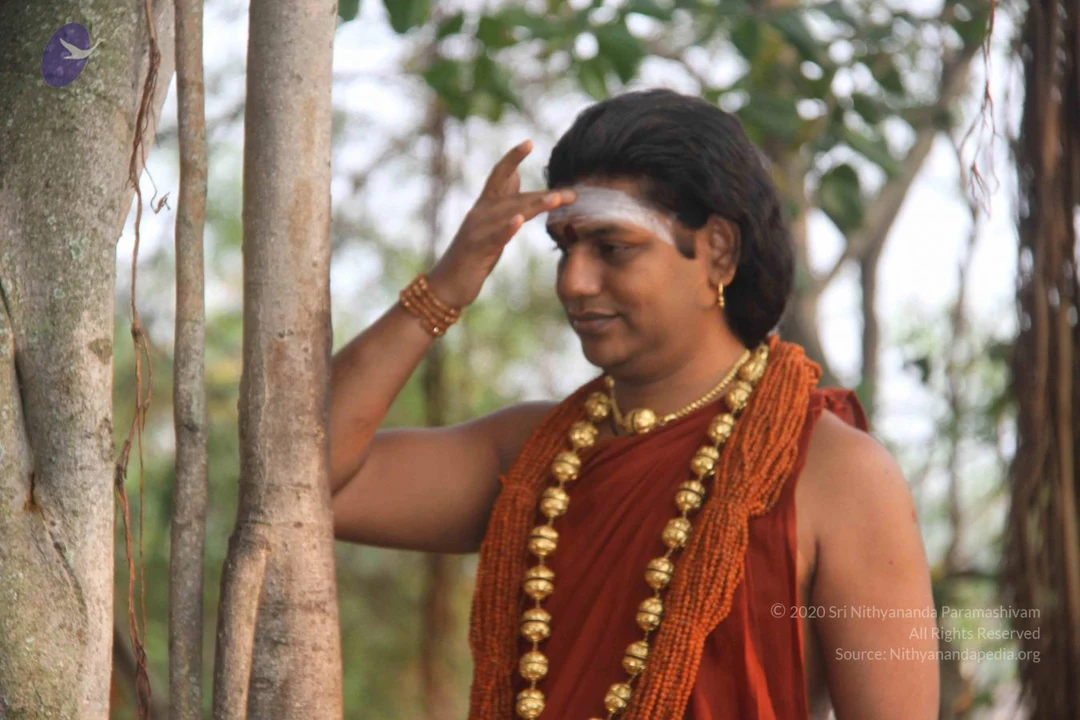
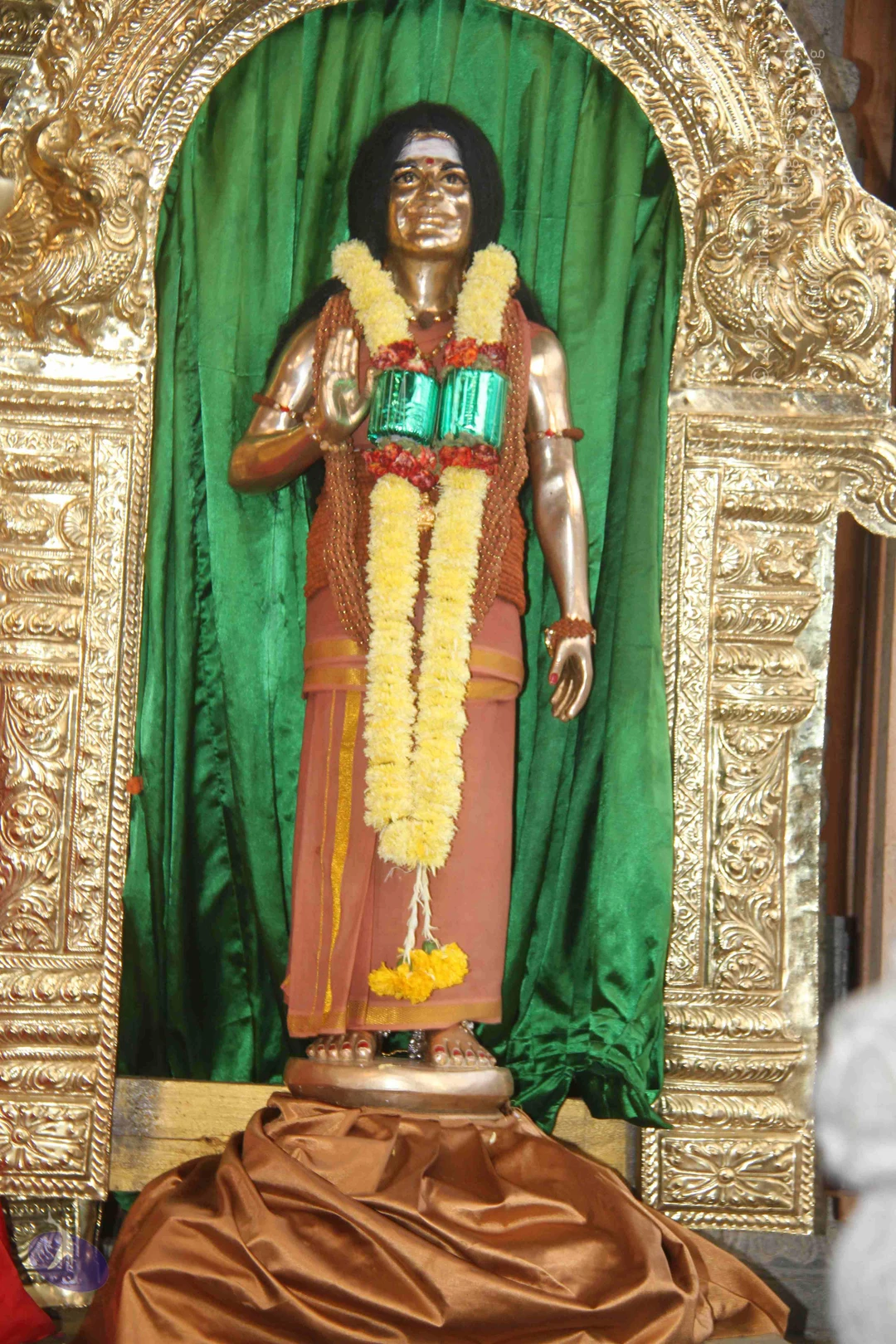
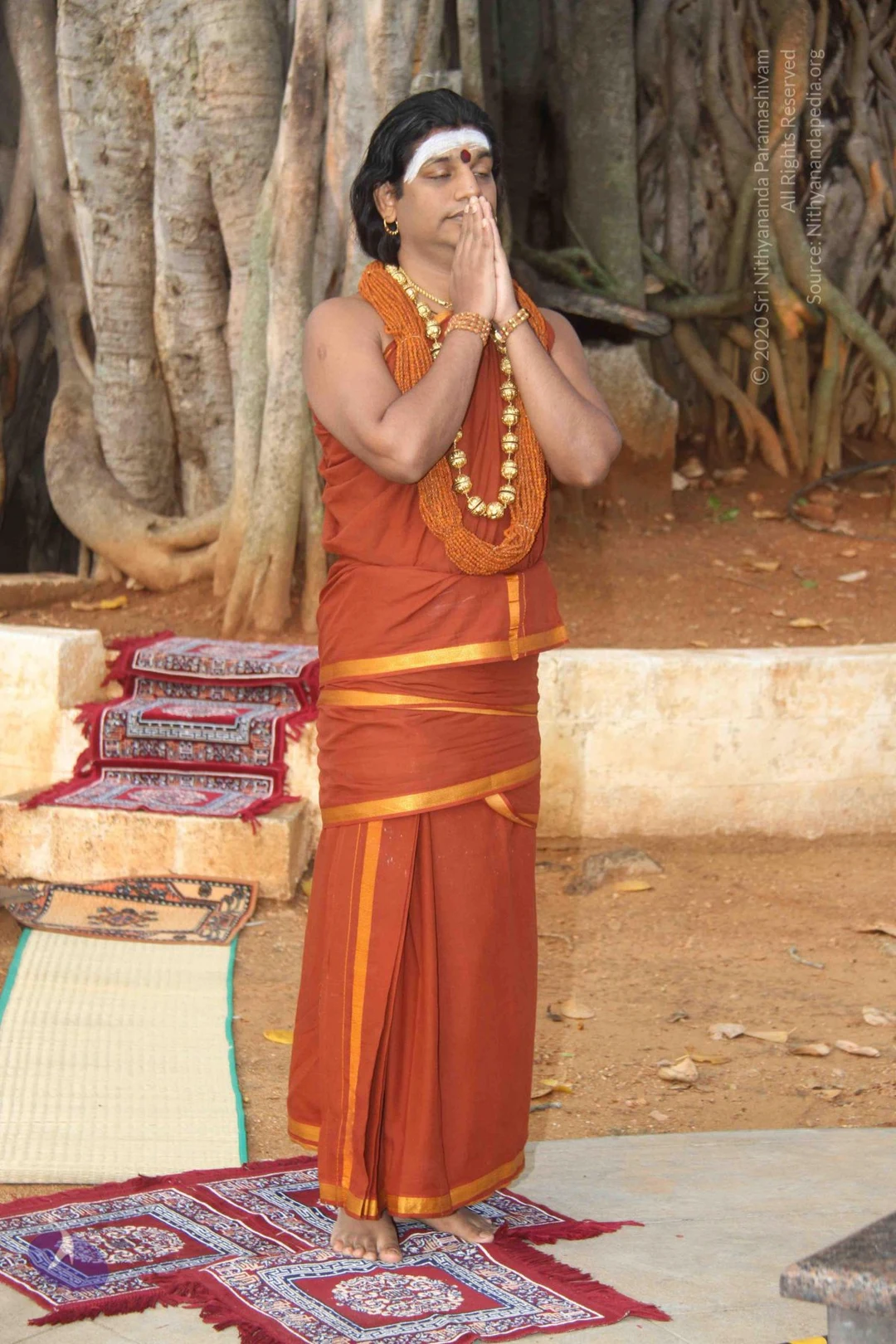
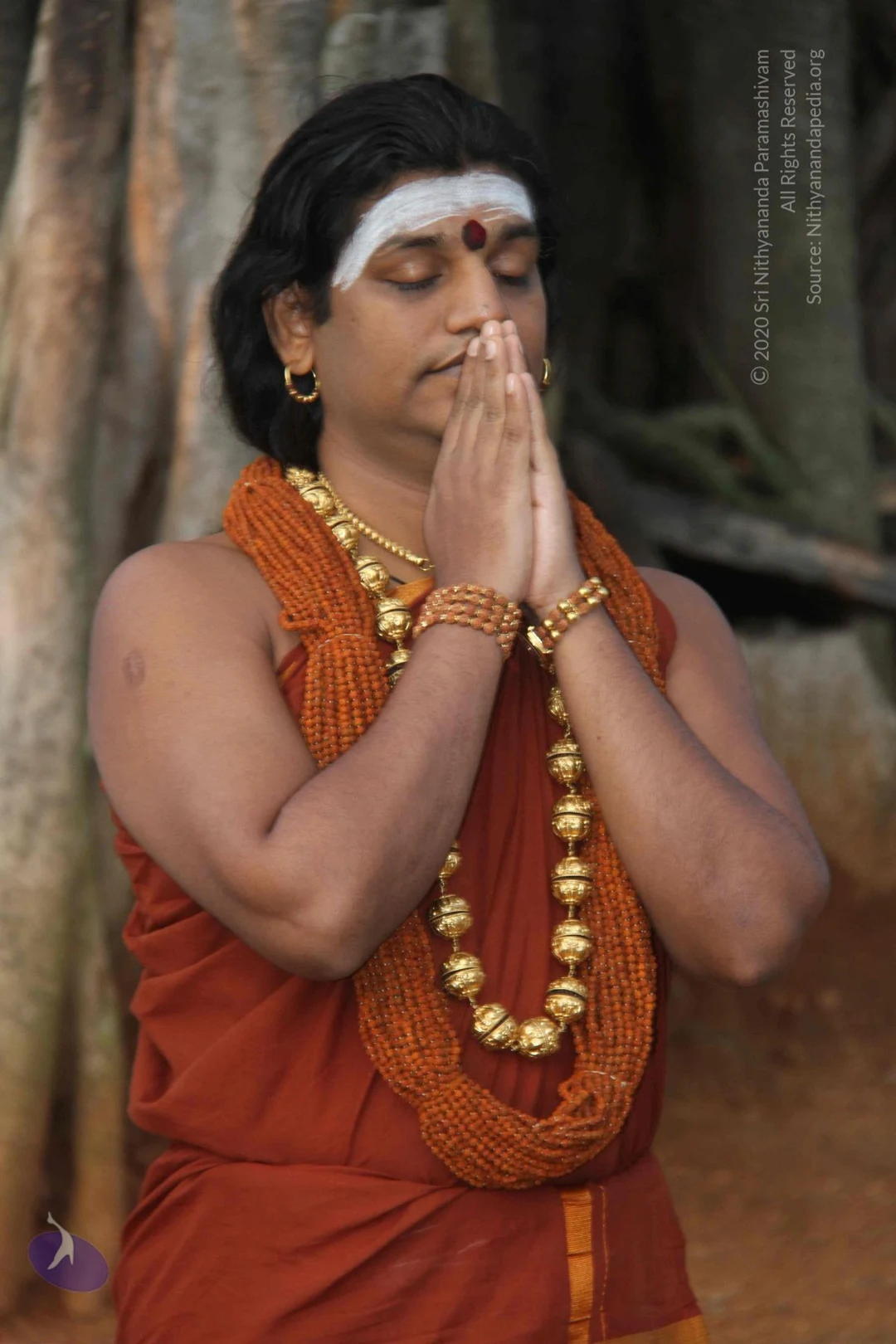
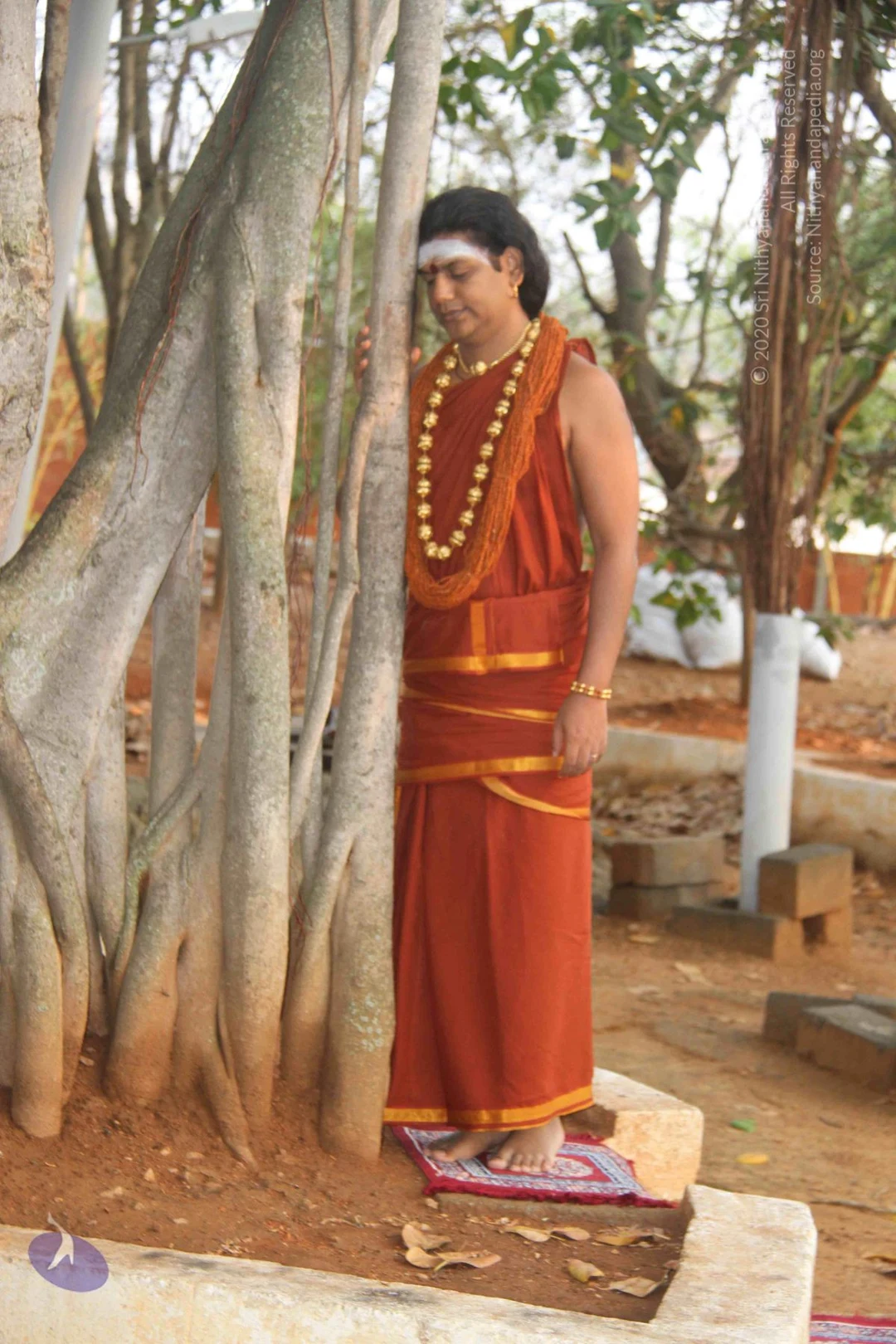
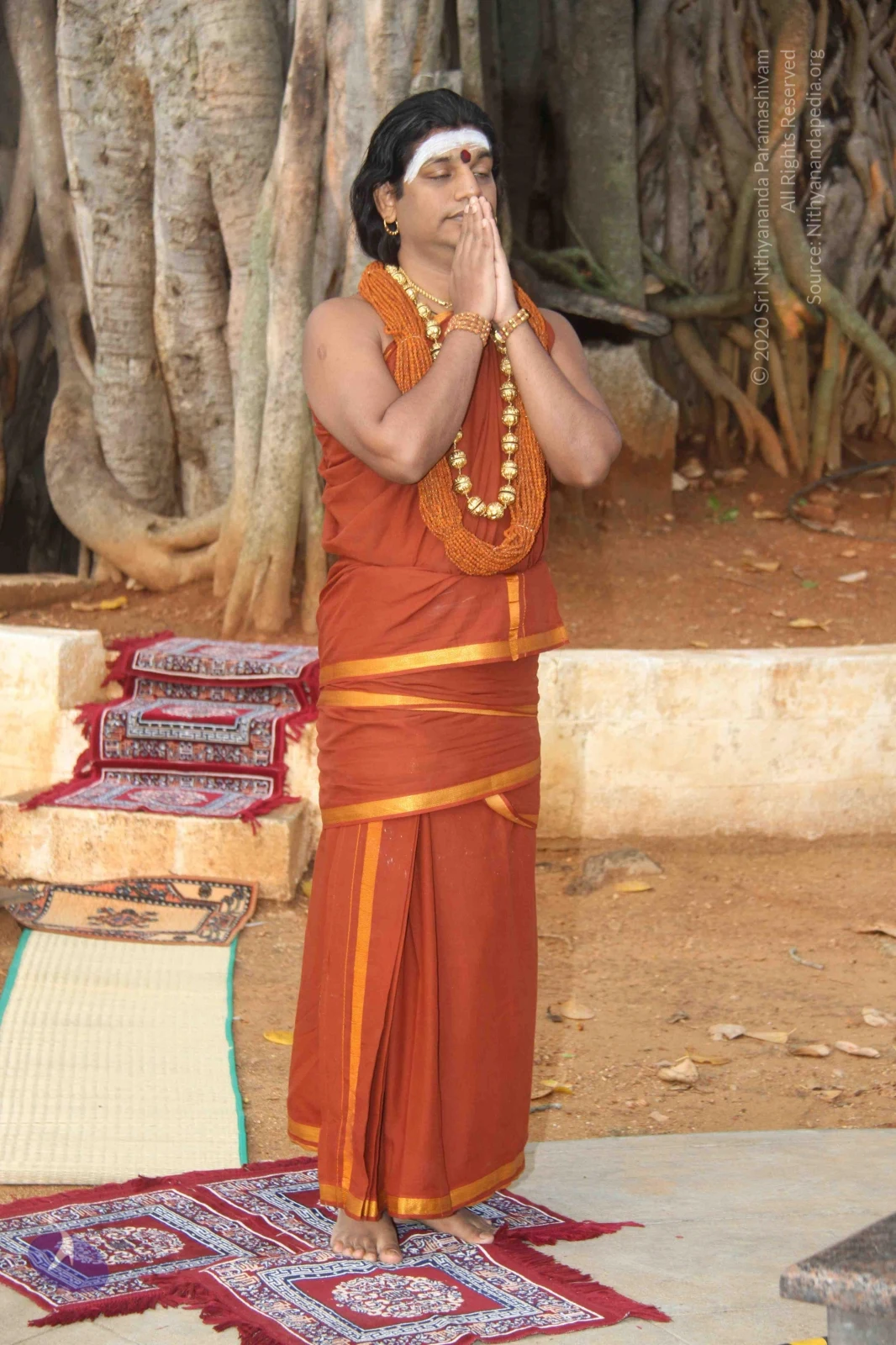
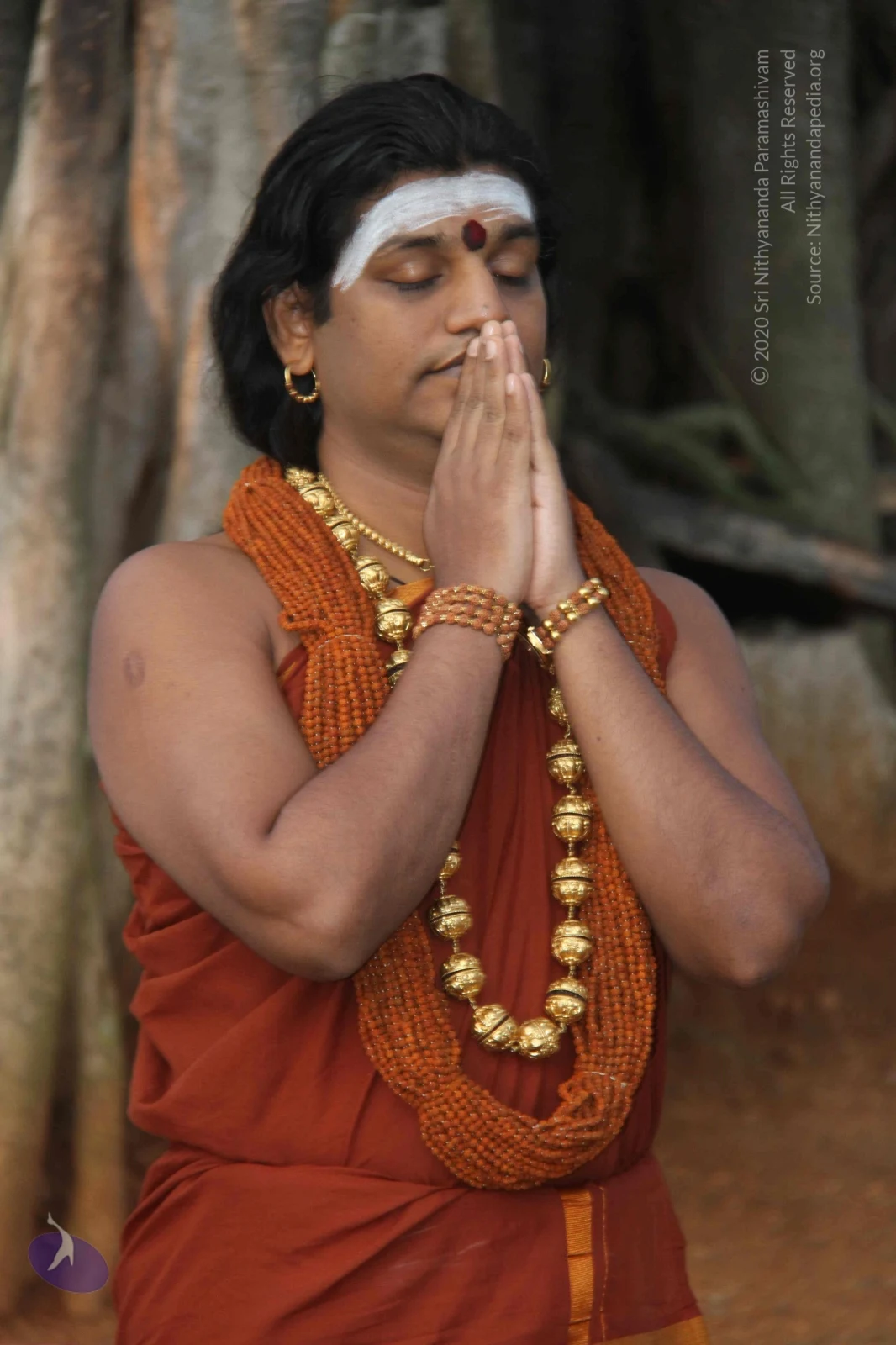
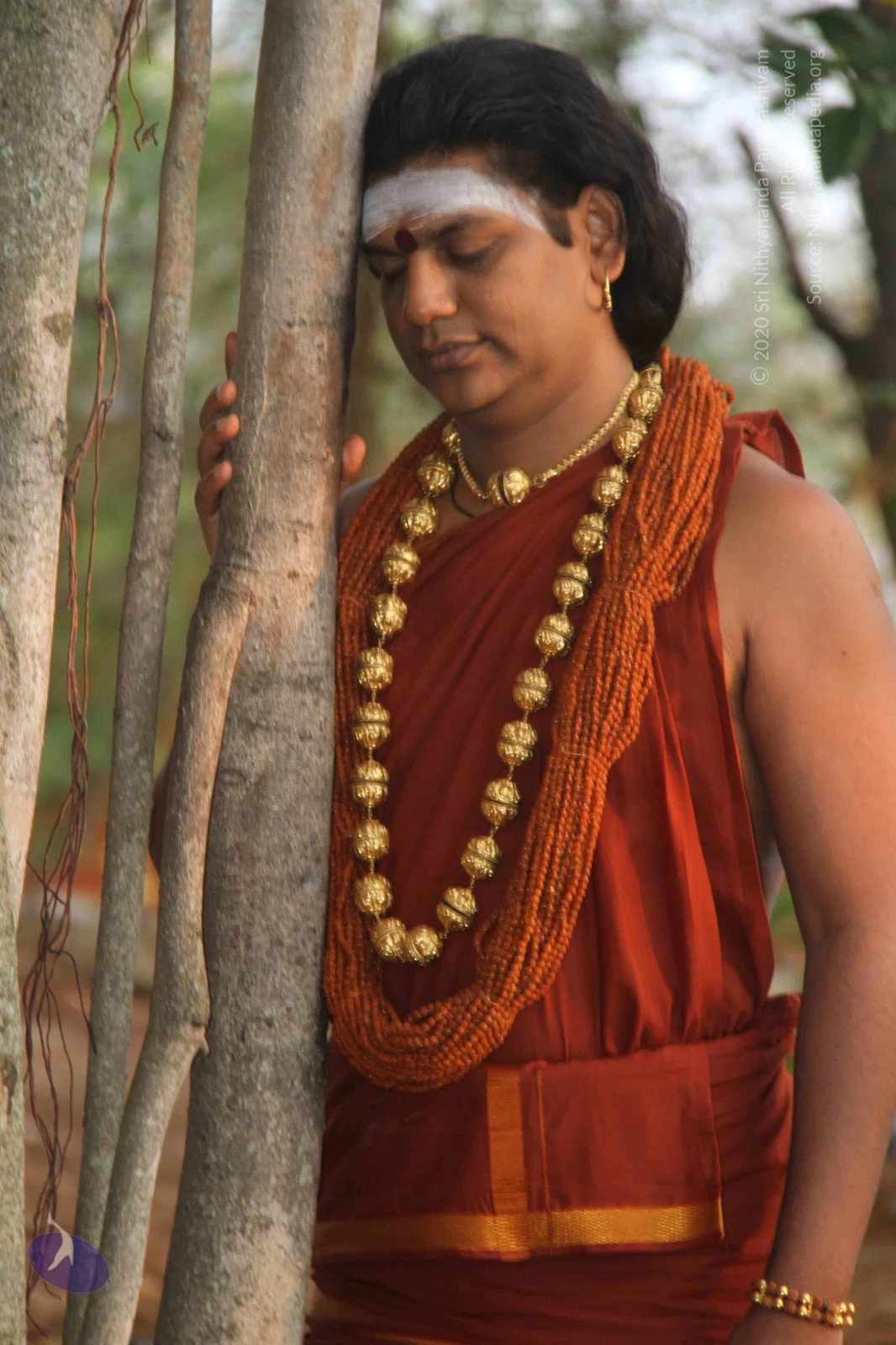
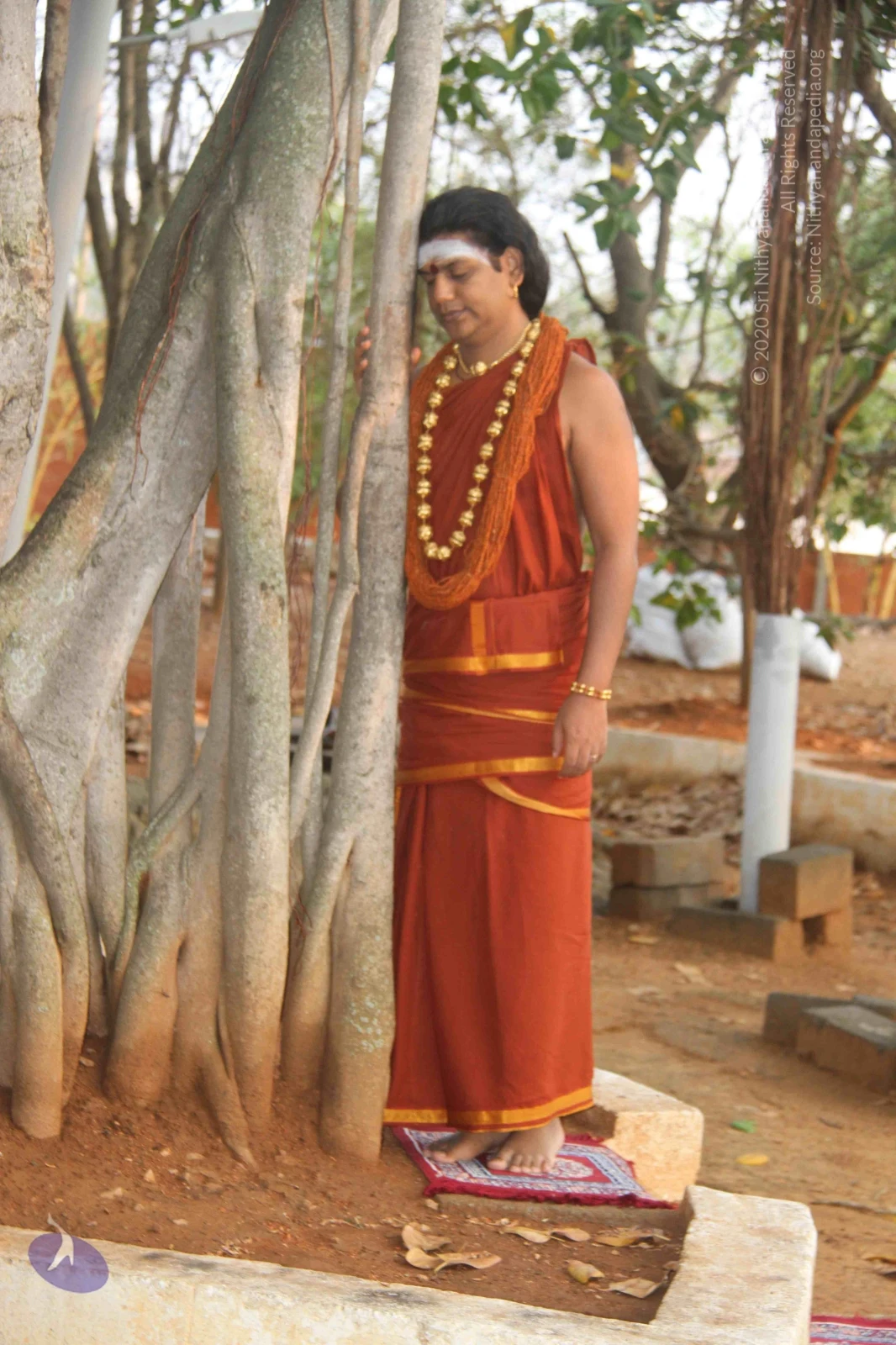
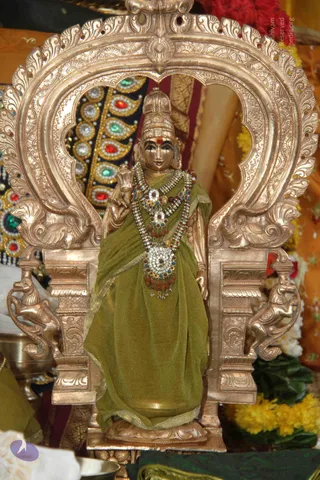
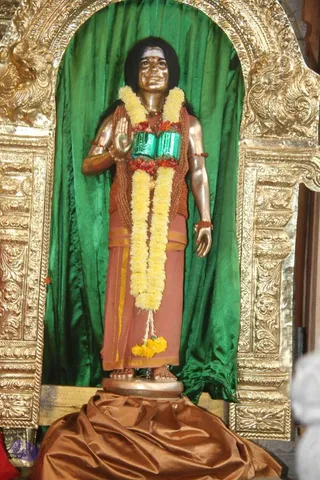
A photograph of a large indoor hall where a group of people stand on blue and green yoga mats performing arm exercises while holding small silver dumbbells. Several participants wear white shirts and dark trousers, others grey or striped t-shirts. Colourful striped pillars with orange fringed tassels hang from a draped white ceiling, and a glossy tiled floor reflects the room. A bottle sits on a mat in the foreground. No one is identified as a person in this image.A bronze-finished deity murti of a goddess stands within an ornate arched metal prabhavali with carved floral scrollwork and lion figures at the base. The figure wears a green sari with gold-thread border, layered jewelled necklaces with multicoloured stones and a large central pendant, and a red tilak on the forehead. One hand holds a small object at shoulder height. Yellow marigold garlands and a jewelled embroidered cloth appear behind the murti.A metallic statue of a standing male figure with long dark hair and a tilak on the forehead, shown in a gilded arched shrine framed by ornate repoussé gold-coloured metalwork. The figure wears a rust-brown shawl over a reddish-brown dhoti with a gold border, a long garland of yellow flowers with red blossoms hanging to the feet, and a rudraksha-style beaded mala around the neck. Its right palm is raised in blessing and the left arm hangs by the side, with red threads at the wrists. A green silk drape forms the backdrop and a brown silk cloth covers the base. No living people are visible.A man with long dark hair, a white forehead band and a red dot, eyes closed, palms pressed together in namaste at chest level. He wears a saffron-orange shawl and garment, multiple strands of orange rudraksha beads, heavy gold bead necklaces and orange-beaded bracelets with gold beads, and small gold hoop earrings. Behind him are large tree trunks with aerial roots. Swamiji (probable): the figure has long swept-back hair, saffron clothing, rudraksha malas and ceremonial gold necklaces; he is presented as a sannyasi in prayer.A man in a rust-orange sleeveless robe with a gold-bordered dhoti leans his head against a tree trunk with eyes closed. He wears multiple strands of orange-red rudraksha beads and a heavy gold ceremonial necklace with round gold beads, a small gold earring, a white tilak on the forehead with a red bindi, and beaded bracelets. Thin vines climb the tree beside him. The swami wears orange clothing and rudraksha malas, consistent with a person appearance, though the image is not clearly confirmed from appearance alone.A man in saffron-orange robes stands barefoot on a red and blue patterned mat beside a large banyan tree, leaning his head against a trunk with eyes closed. He wears a white forehead mark with a red dot, a shawl draped over the shoulders, a thick gold bead necklace, and gold bracelets. Dry leaves and sandy earth surround a stone platform, with trees and a white pipe behind him.

Pada-Puja
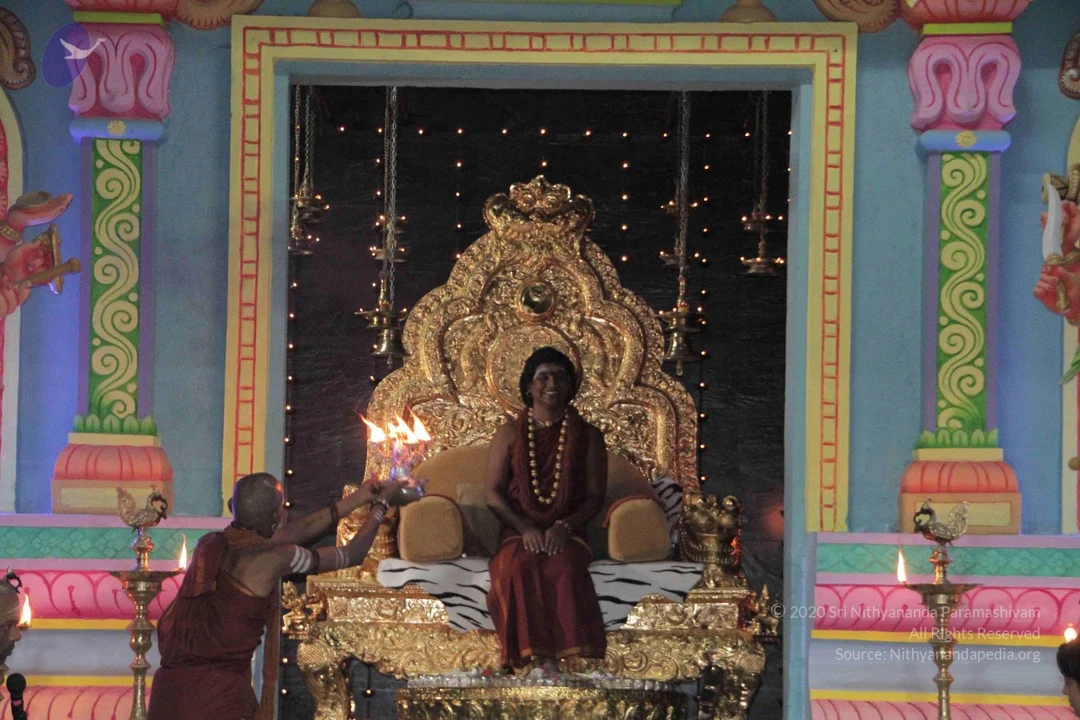
5 photosSource gallery
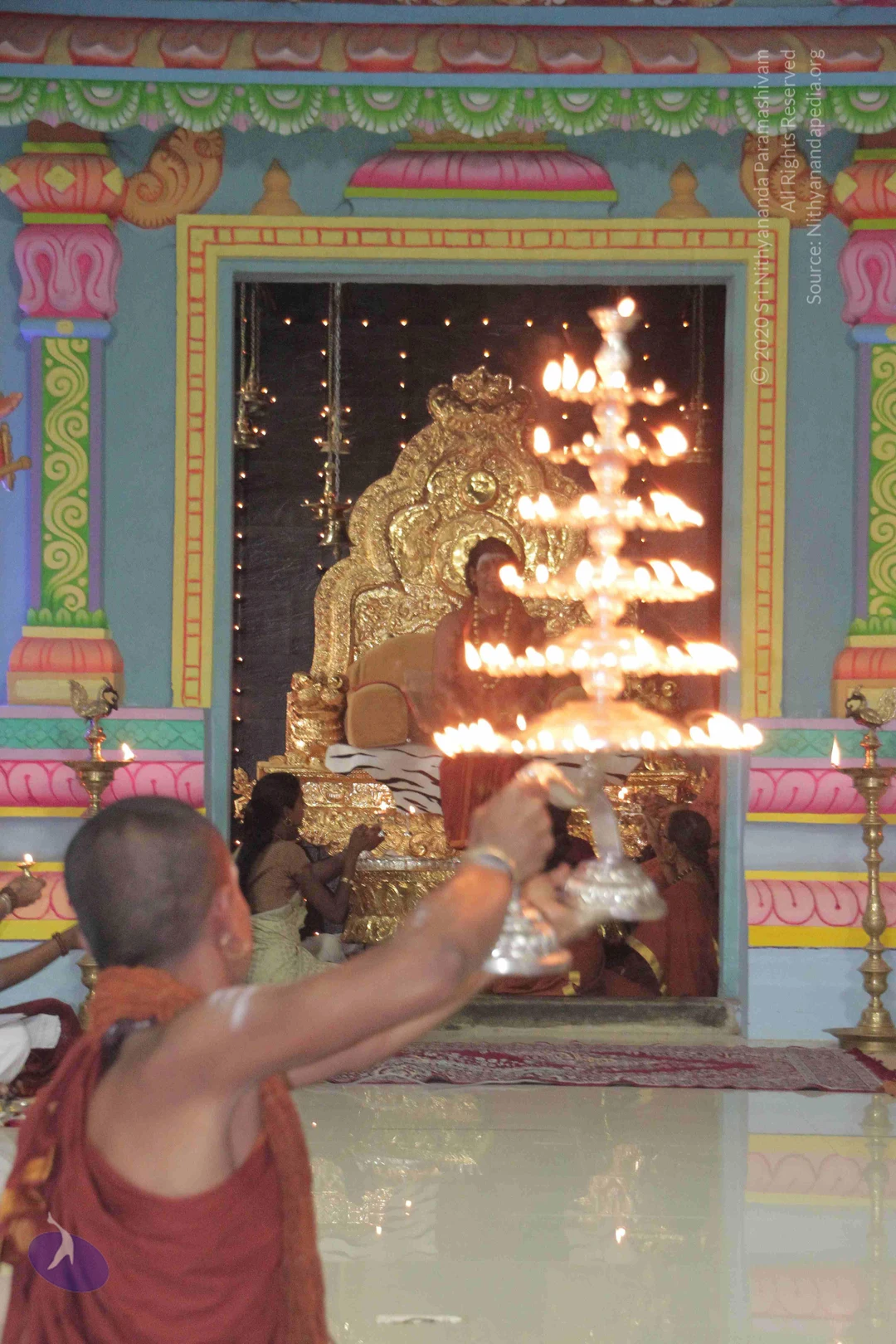
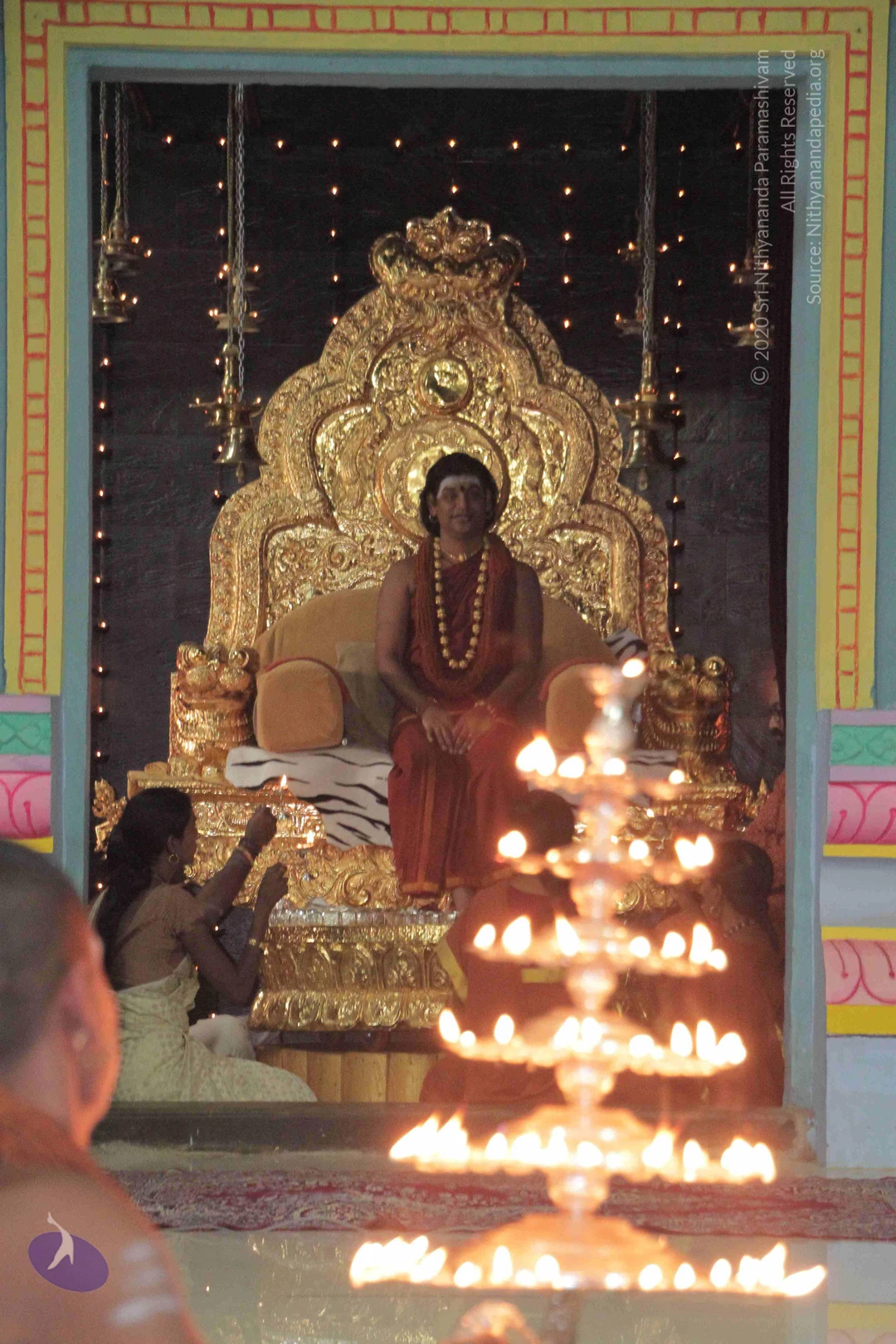
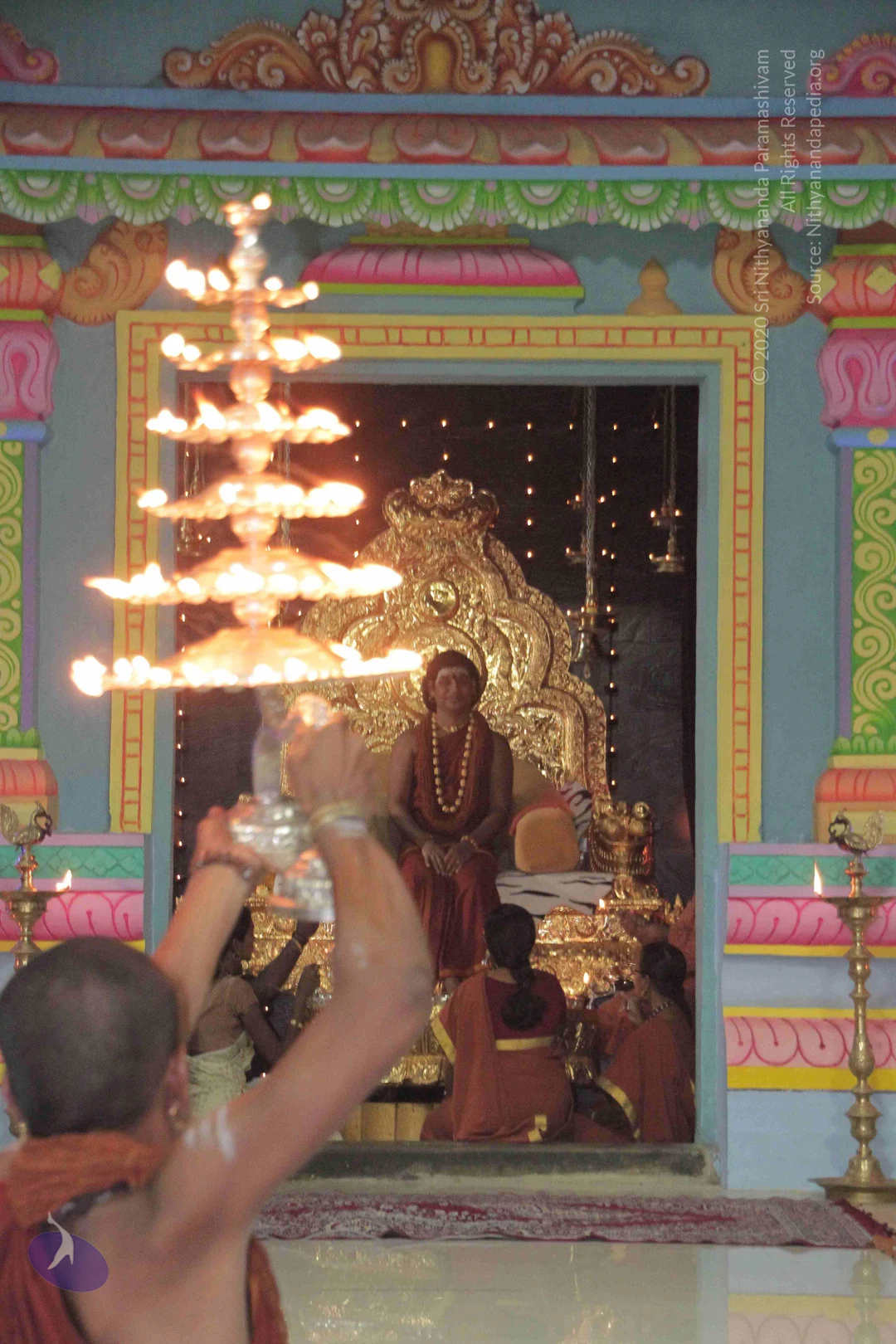
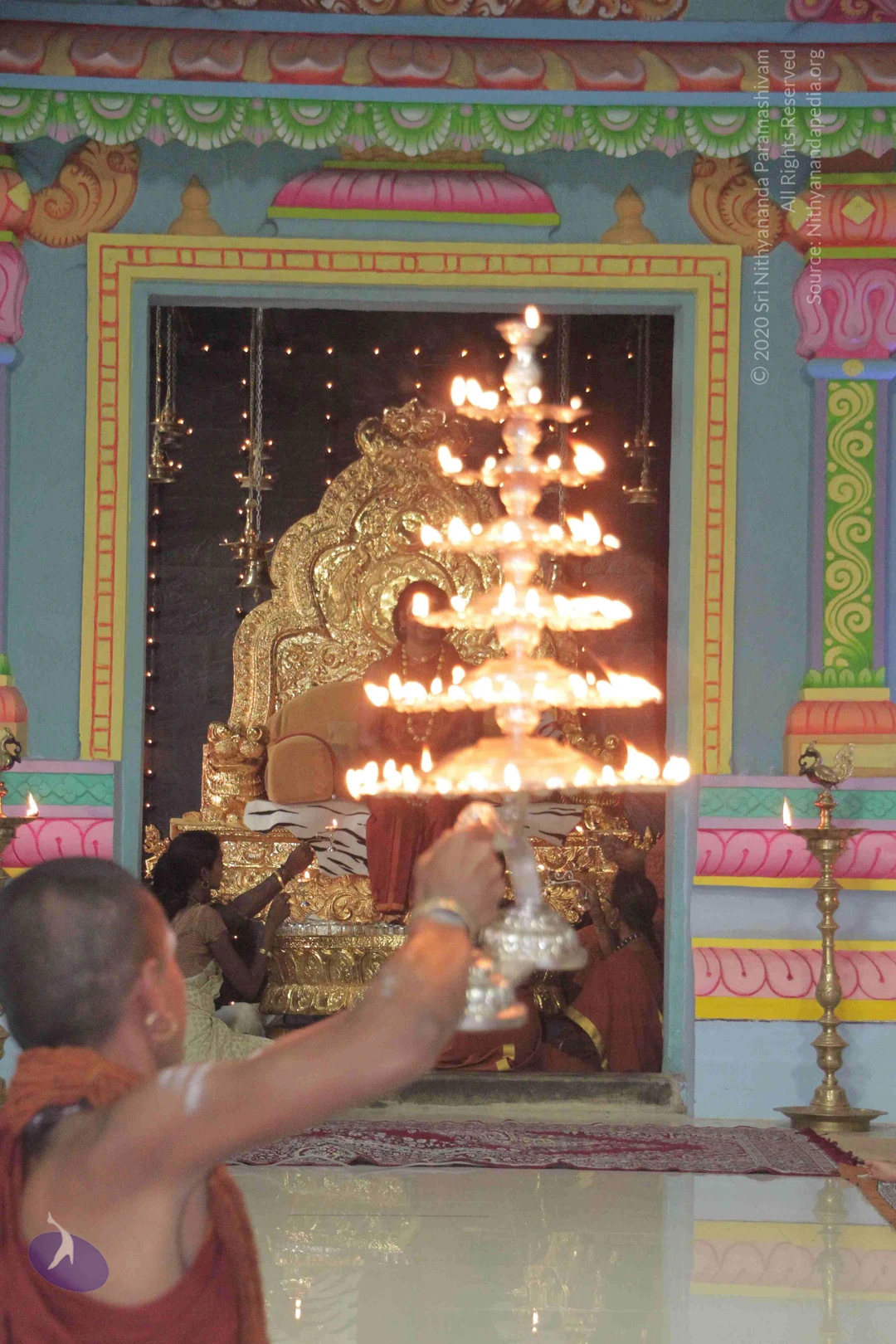
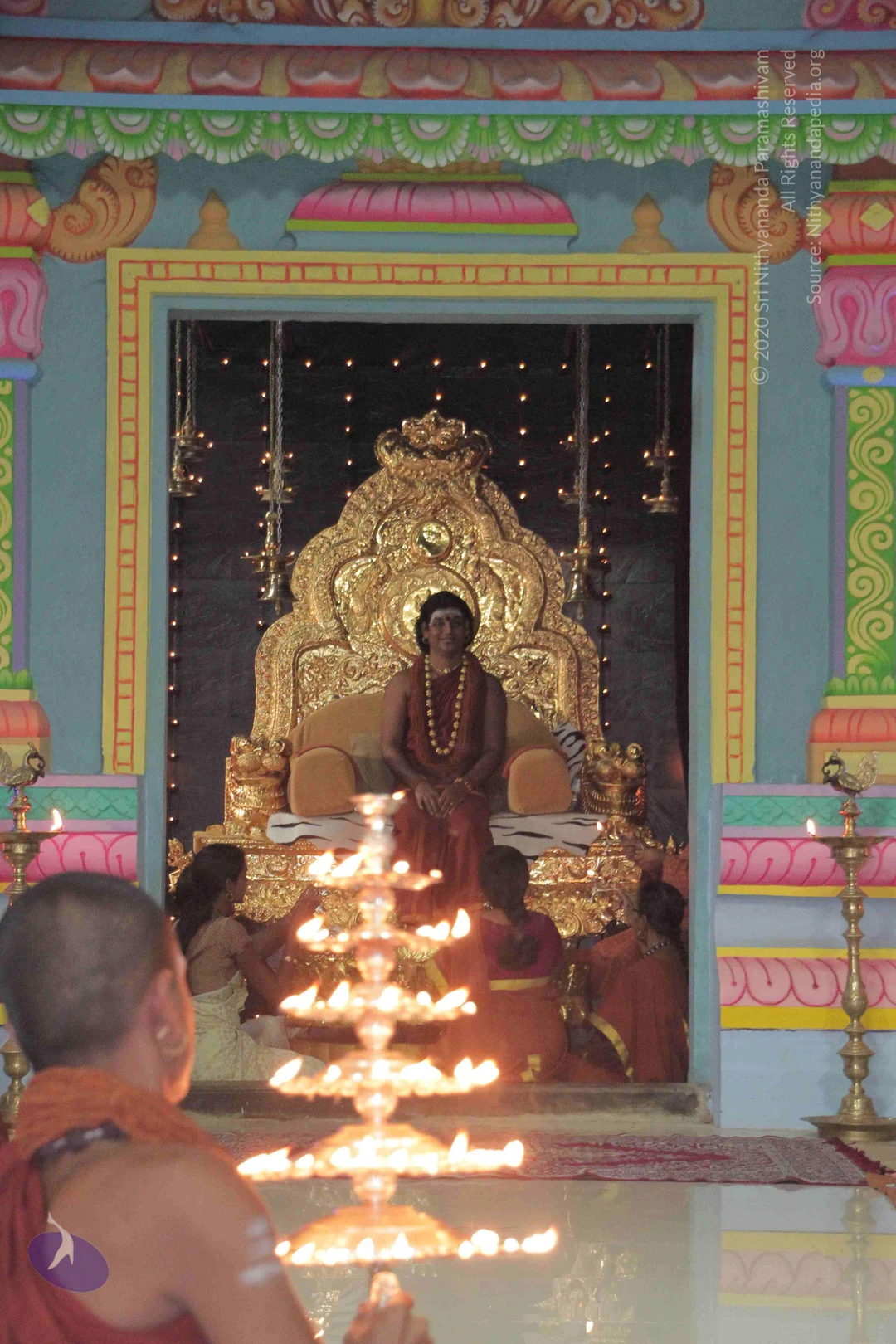
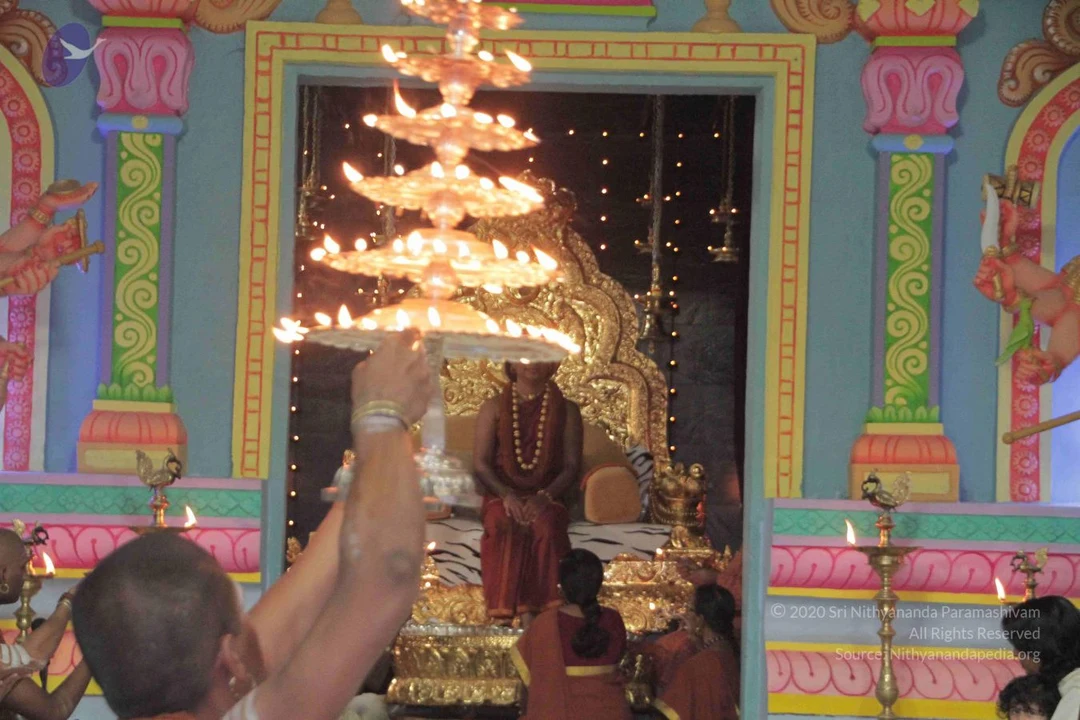
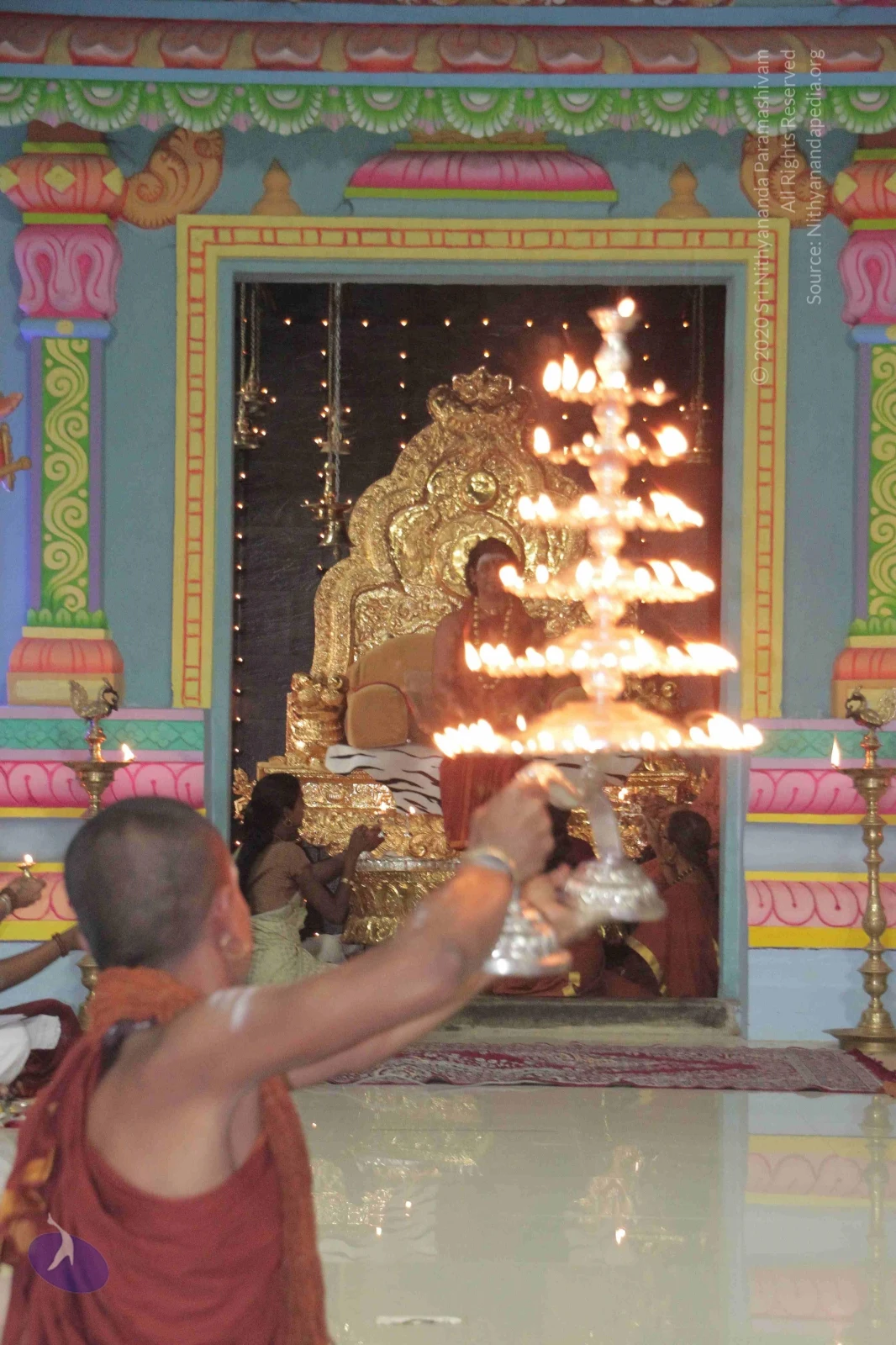
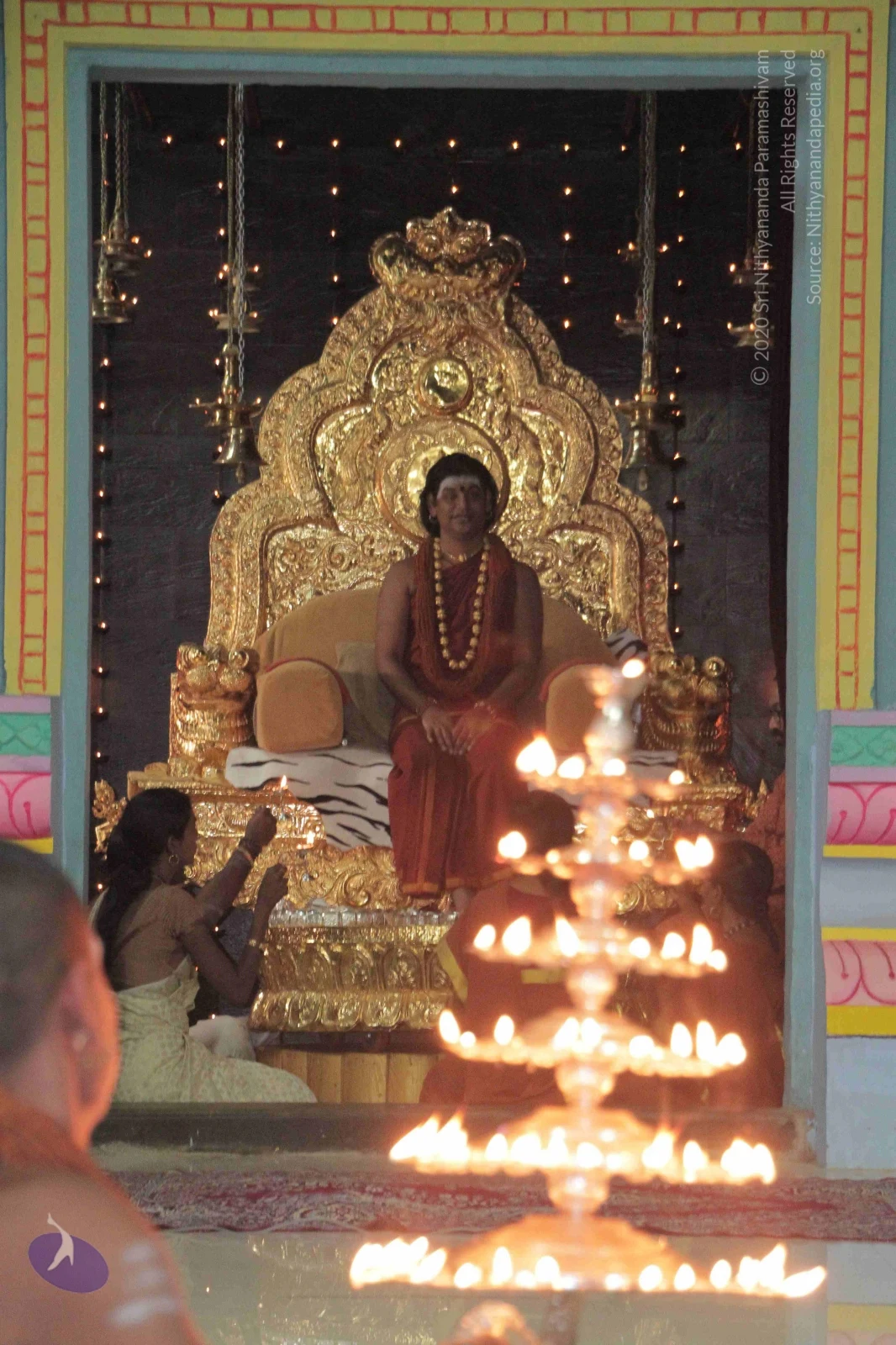
A seated figure on an ornate gold throne with a tiger-skin cushion sits centrally before a pink and blue temple-style backdrop with painted dvarapala guardian figures on either side. The seated figure wears a dark red robe and a beaded rudraksha-style mala, with hands in a gesture. A priest in a reddish-orange dhoti and shawl stands at left holding a lit lamp toward the throne, while a bald man in white with folded hands and a microphone stands at far left. Brass oil lamps with flames stand on the floor, and two women in red sit at lower right. Strings of small lights hang behind the throne. The setting is a ritual puja or aarti.A photograph of a seated man on an ornate gold throne (peetha) inside a painted temple hall with pastel pink, green and blue decoration. He wears a deep red-maroon robe and a long beaded rudraksha-style mala, sits with hands resting on the golden armrests, and gazes forward. The throne has a tiger-skin cloth draped on its seat and a golden crown-shaped backrest. Hanging brass oil lamps (lamps) with flames light the dark backdrop, and a brass oil lamp with a flame stands at the left edge. Three women in white, maroon and red saris sit in front of the throne with hands folded in devotion, and a woman in a pale sari sits at the lower left. a person appears as the seated figure on the throne, identified by the dark-red robe, rudraksha mala and ceremonial throne setting.A seated figure in an ornate gold throne with a carved crown-shaped back, draped in a tiger-skin cloth, dressed in red-orange robes and a beaded rudraksha-style mala. Behind him hang brass lamps and strings of small lights. In the foreground, a tiered brass lamp stand with many lit oil lamps dominates, and a woman in a pale yellow sari kneels at the left, tending a lamp near the throne. Two blurred figures in orange robes stand or sit at the edges, one partially visible at lower left. Probable Swamiji appearance: a long-haired figure with a crown-like throne and saffron/orange clothing with rudraksha mala and gold necklaces, seated on the peetha as a presiding teacher.A photograph of an aarti ceremony in a colourfully painted temple hall. In the foreground a shaven-headed man in an orange-saffron robe raises a tiered silver aarti lamp with many burning flames toward the shrine. Behind him, a figure in orange-brown robes sits on an ornate gold throne with a gold-backed seat and a tiger-striped cloth, flanked by hanging lamps and brass oil lamps. Other people in saffron and white clothing sit nearby, and a woman in a pale green garment is at left. The walls are painted in pink, green and yellow patterns.A photograph inside a brightly painted temple-style hall. A figure in a rust-red robe with a rudraksha-bead mala sits on an ornate gold throne with a gold back-carved canopy, a striped cloth draped over the seat. Hanging brass lamps and rows of small lights glow behind. In the foreground a bald man in an orange shawl holds up lit oil lamps, and two seated devotees in red-orange garments kneel near the throne steps. Pink and green painted columns frame the scene, and a tiled floor reflects the lamplight. a person is seated on the throne as the presiding figure, wearing a rudraksha mala and red-orange robe.

IA-Session-Maheshwari-Puja

17 photosSource gallery
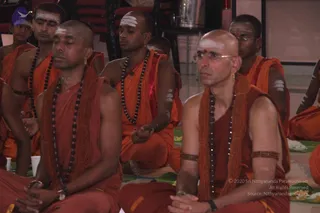
A man seated on an ornate gold throne with carved scrollwork and a high arched back, in front of a striped bamboo-style wall hanging. He wears a rust-orange wrap, a long beaded rudraksha mala with a ceremonial gold necklace, and has a red bindi. He raises one index finger while speaking, and a polished brass bowl sits on a gold stool before him. A small bottle is visible at the lower right edge. Swamiji (probable): the seated man has long swept-back hair, a rudraksha mala and ceremonial gold necklace, and a saffron-orange wrap on a throne.A man with long swept-back dark hair sits on an ornate gilded throne with red velvet cushioning, speaking into a head microphone. He wears a saffron-orange draped garment, multiple strands of rudraksha beads, and a heavy gold ceremonial necklace with spherical gold beads, plus a gold bracelet. A red-orange kumkum or bindu mark sits on his forehead with white vibhuti markings. A polished silver bowl rests on a gold-covered pedestal in front of him. Visible at the left edge, a partially seen figure in orange clothing sits nearby. The setting appears to be a formal assembly hall.A seated person sits on an ornate gilded throne with heavily carved floral and scroll patterns. The person wears a saffron-orange draped garment, a long beaded necklace of gold-toned beads with a gold pendant, a red bindi and tilak markings on the forehead, and gold bangles on the wrist, with hands resting on the lap. The background shows a light cream wall and draped fabric.A man seated on an ornate gold throne with carved floral and scroll patterns, wearing a rust-red robe, a long rudraksha-style mala of gold-toned beads with a gold necklace, and a red-brown shawl over the shoulders. He has a red bindi and white markings on his forehead, a small headset microphone, and his right arm is extended outward as he speaks and smiles. Red velvet cushioning and a curtained backdrop are behind him. Appearance-based label: a person, seated in the role of speaker giving a discourse on the throne.Photograph of a seated group of saffron-robed sannyasis at an indoor ritual gathering. Men wear orange robes, rudraksha malas and white forehead and arm markings; the foreground man on the right has a shaved head, glasses, a red bindi and holds his hands folded. Others sit cross-legged on green leaf plates with rice and offerings before them, some with eyes closed. Plastic cups sit on the floor and a pink wall is behind them.A photograph of a seated group of men in saffron-orange robes and rudraksha malas, many with white vertical tripundra forehead markings and white marks on their arms, sitting with eyes closed in meditation on green leaf plates with white flower offerings. In the foreground, a bald man with glasses and an orange shawl sits with hands folded, while a younger man beside him sits with palms together. Behind them, rows of similarly dressed participants sit on the floor, with stacked red chairs and a white wall in the background.

Thanti-TV

10 photosSource gallery
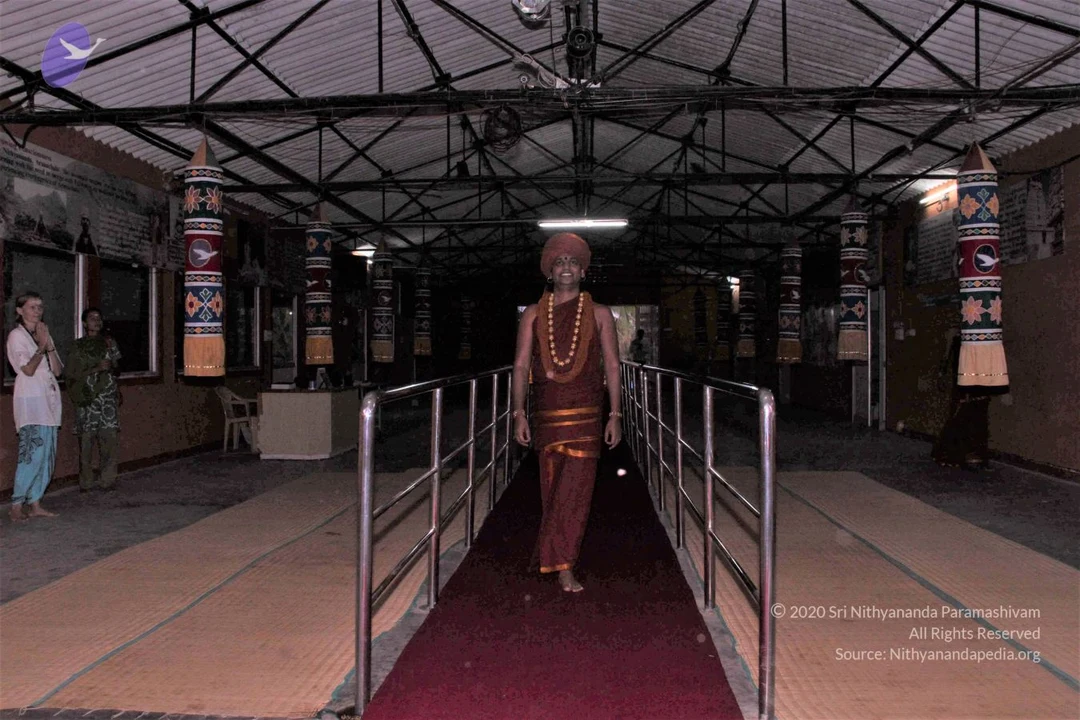
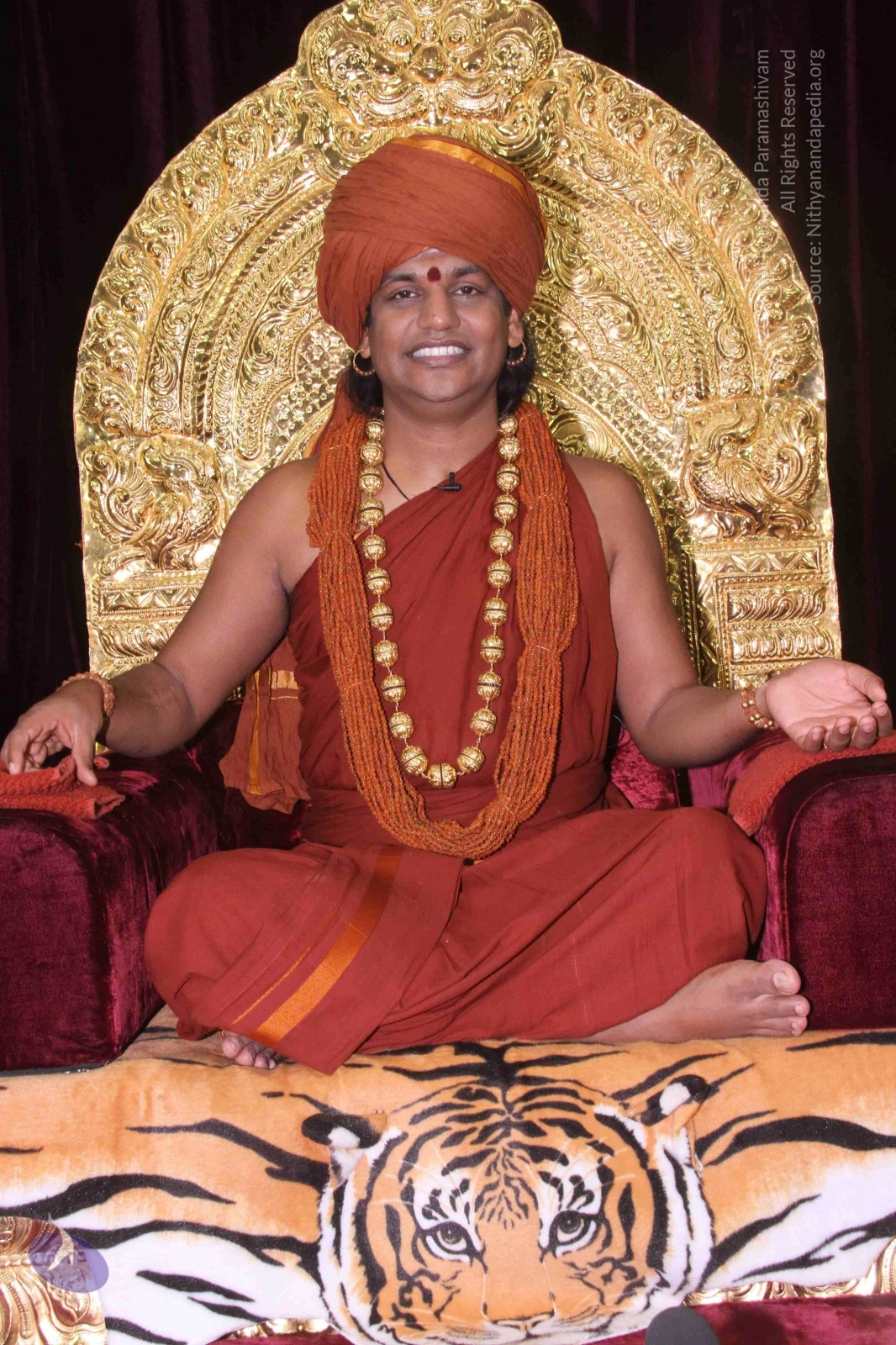
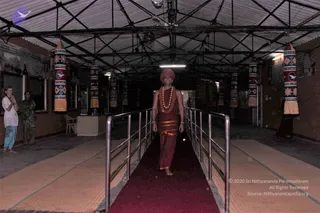
A photograph of a single person seated on an ornate gold throne with carved arched back and red velvet armrests, flanked by gold lion-head armrest ends and purple velvet drapes. The person wears an orange-red turban with a red bindi, an orange-red robe draped over the shoulder, a long orange-red beaded rudraksha-style mala with large gold beads and a gold chain necklace, gold bangles, and hoop earrings. The right hand is raised in a smiling wave. Swamiji (probable): a seated figure in saffron-orange ceremonial dress with a turban, rudraksha mala and gold necklace on a throne, consistent with the page's reference to Swamiji.A photograph of a seated man in an ornate gilded throne with a carved golden arch behind him. He wears an orange-red turban with a red bindi, orange-red sannyasi wrap and dhoti with a gold border, and layered orange rudraksha-style beaded necklaces with large gold beads. He sits cross-legged on a tiger-striped cushion with arms extended, smiling, with a small lapel microphone clipped to his clothing. Swamiji (probable): long-haired figure in saffron-orange attire with ornate gold necklaces and a turban, seated on a throne.A seated man in saffron-red turban and ochre robes sits before an ornate gold repoussé throne backdrop. He wears a long necklace of orange rudraksha-style beads interspersed with large gold ornamental beads, a red bindi on his forehead, and small gold hoop earrings. He holds his arms open and smiles toward the camera. Swamiji (probable): the saffron turban, rudraksha mala with gold beads and ornate throne match the page's Swamiji claim, and the visible cues are several and distinctive.A smiling man in a rust-orange turban with a red bindi sits cross-legged on an ornate gold throne with embossed floral and scroll carvings. He wears a rust-orange garment, a long multi-strand rust-orange cord, and a heavy gold bead necklace, with a small lapel microphone clipped at his chest. His bare feet are visible at the lower right on an embroidered cloth. Appearance-based cues including the turban, rudraksha-style cord and ceremonial gold necklace suggest Swamiji (probable) seated in person.A smiling man sits cross-legged on an ornate golden throne with embossed floral and arched relief patterns behind him. He wears a rust-red turban with a darker band, a rust-red shawl over one shoulder, and a red-brown rudraksha mala with multiple strands. A large ornate gold bead necklace hangs over his chest, and he has a red bindi on his forehead and gold hoop earrings. His bare feet are visible, and a lavalier microphone clips to his garment. Swamiji (probable): the man displays the saffron-toned turban, rudraksha mala and gold necklace cues on a throne, consistent with a seated discourse setting.A photograph of an indoor hall with a corrugated metal roof and exposed steel trusses. A man in a saffron-red robe with an orange turban and a long orange-beaded mala walks barefoot along a dark red carpet runner between steel handrails toward the camera. Two women stand at the left with palms pressed together in greeting. Tall cylindrical hanging banners with red, white and orange geometric patterns line the hall. Framed pictures hang on the walls.

Darshan

3 photosSource gallery
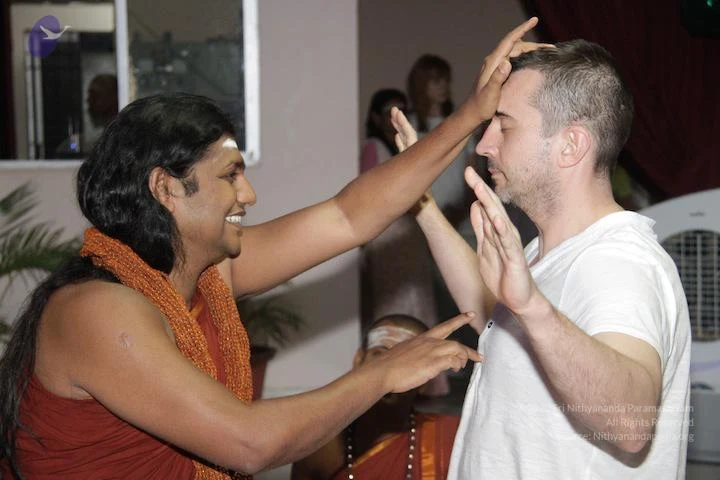
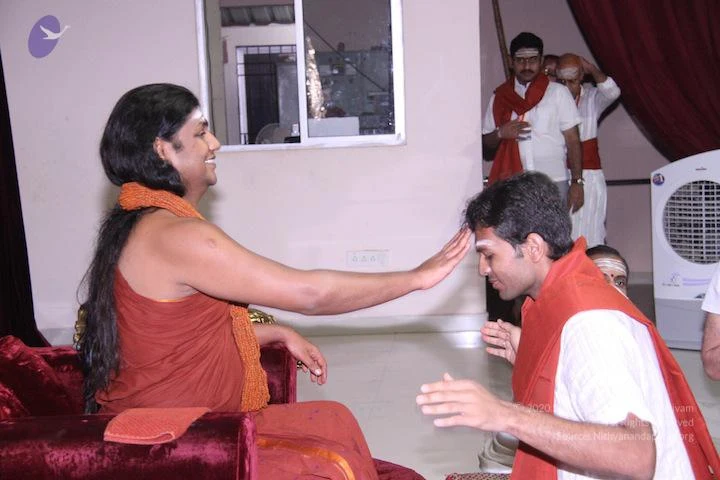
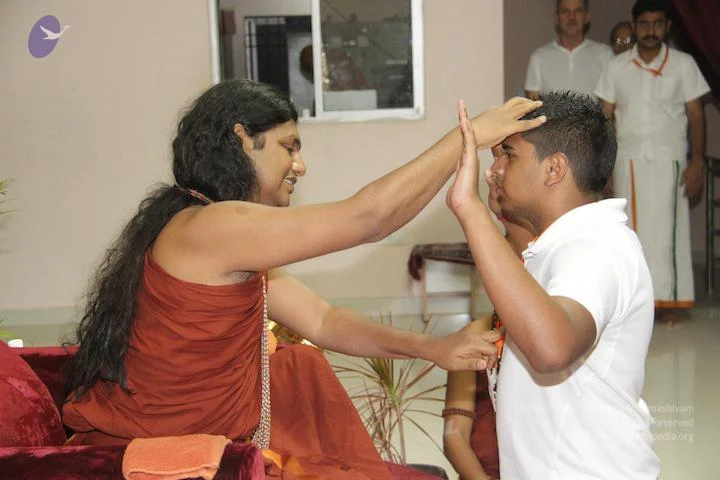
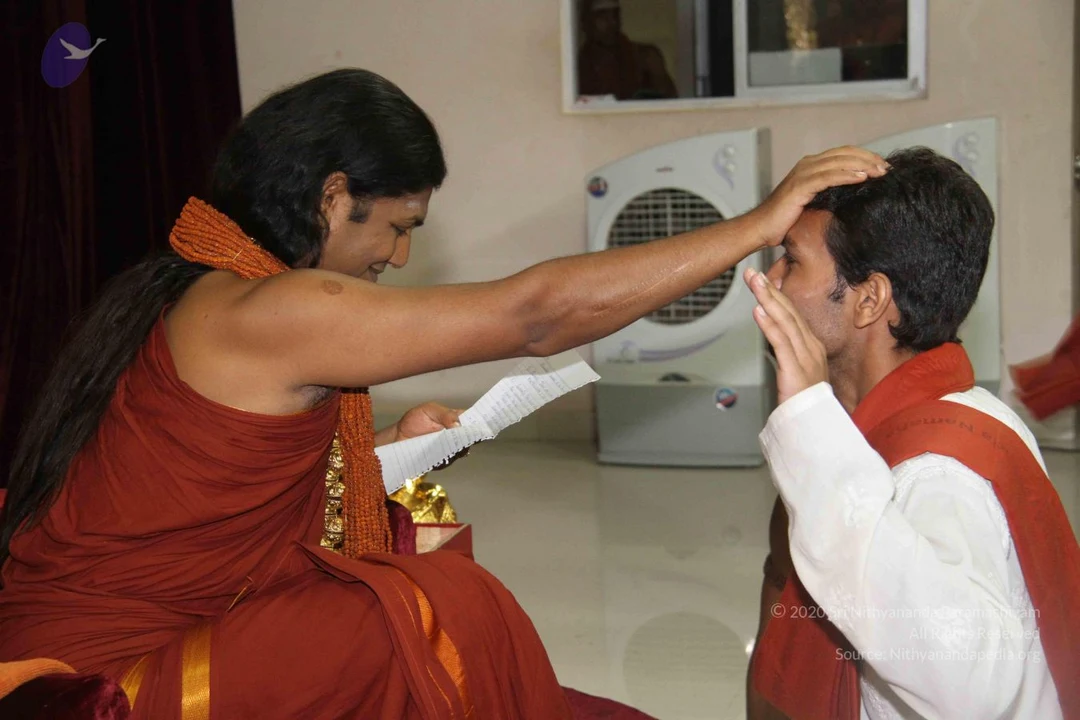
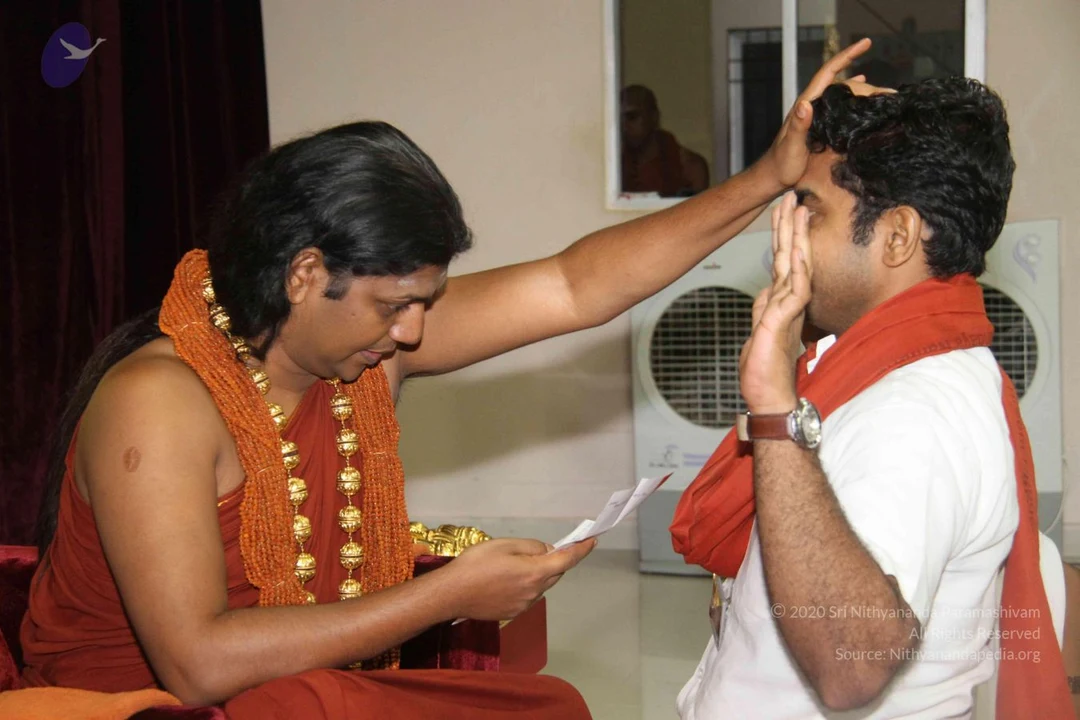
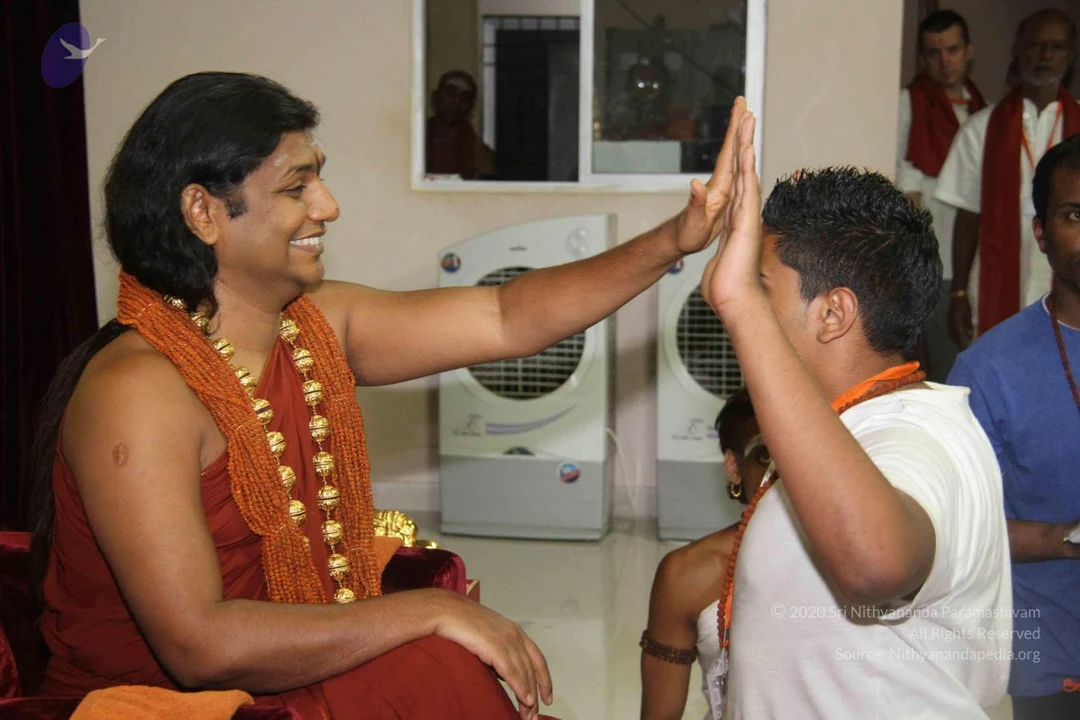
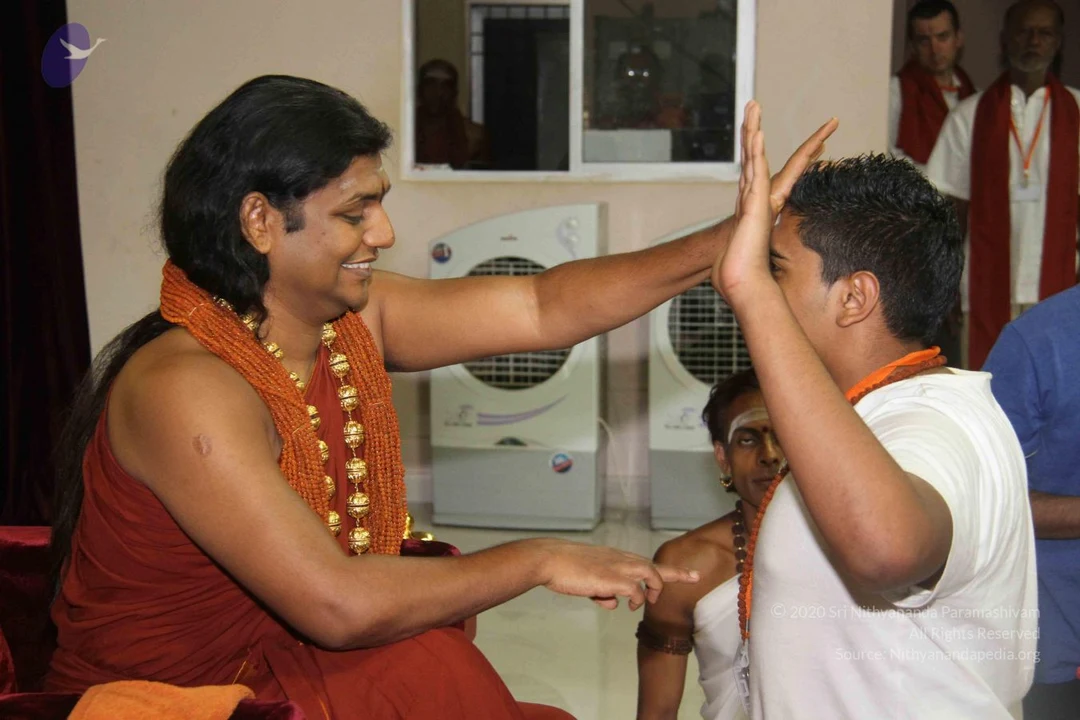
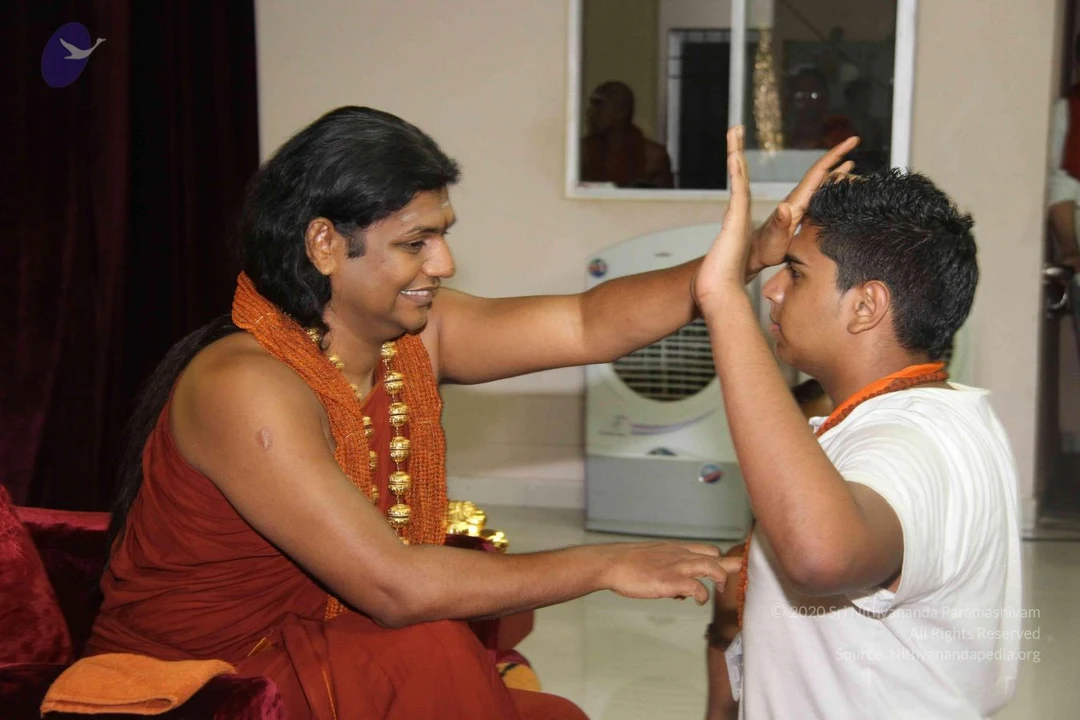
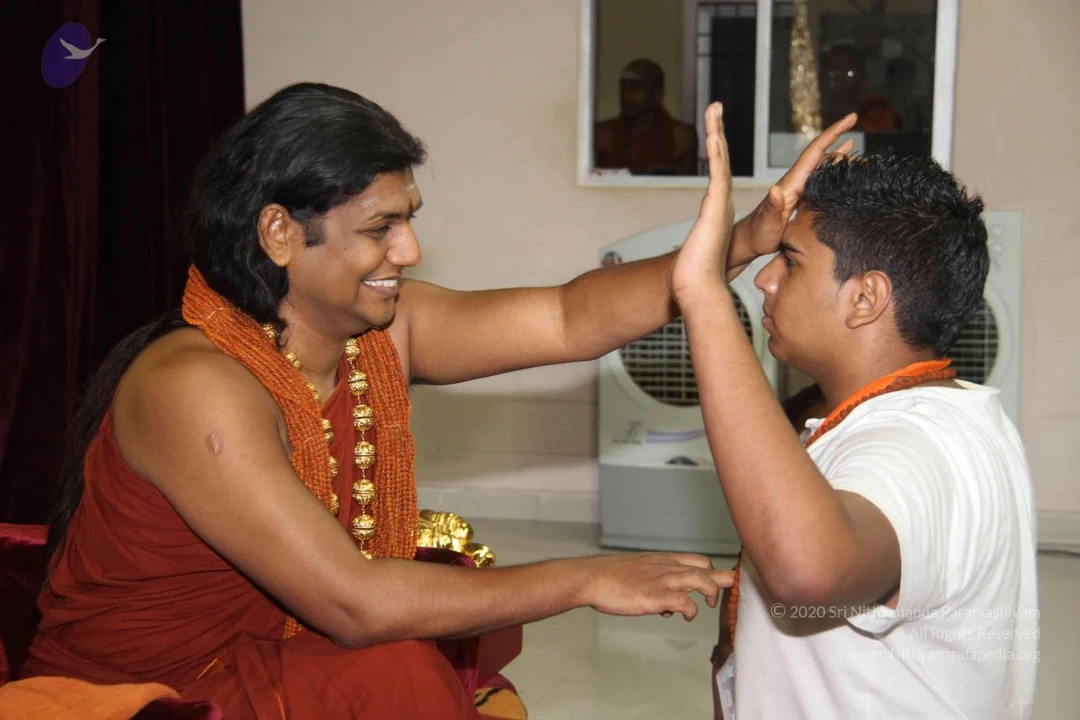
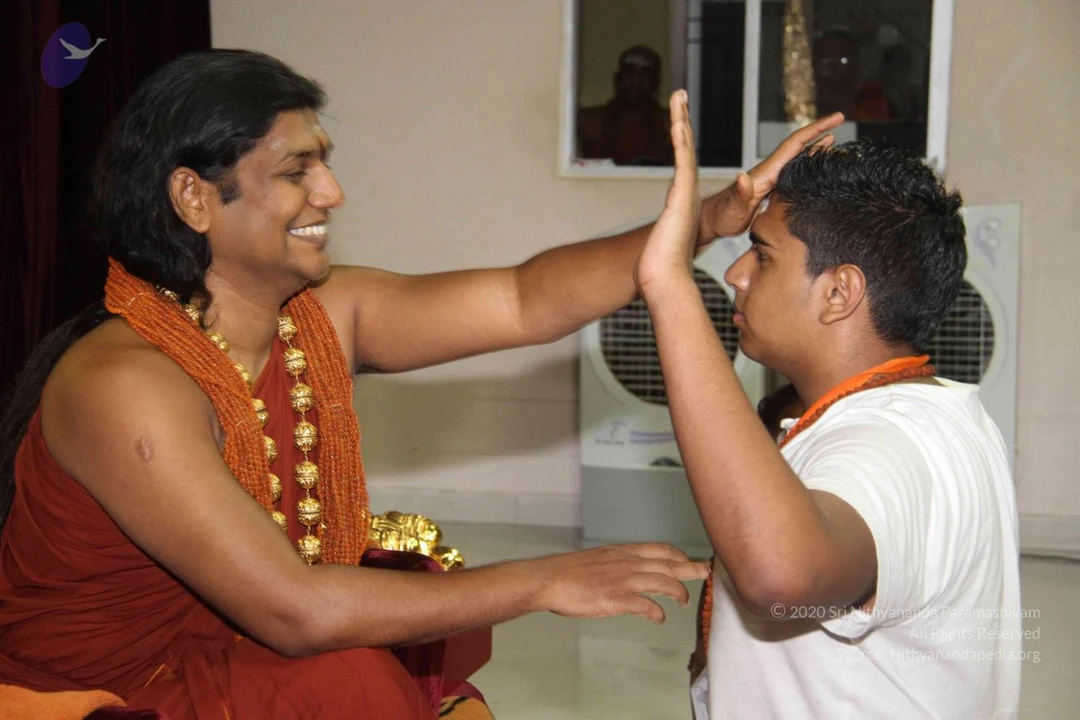
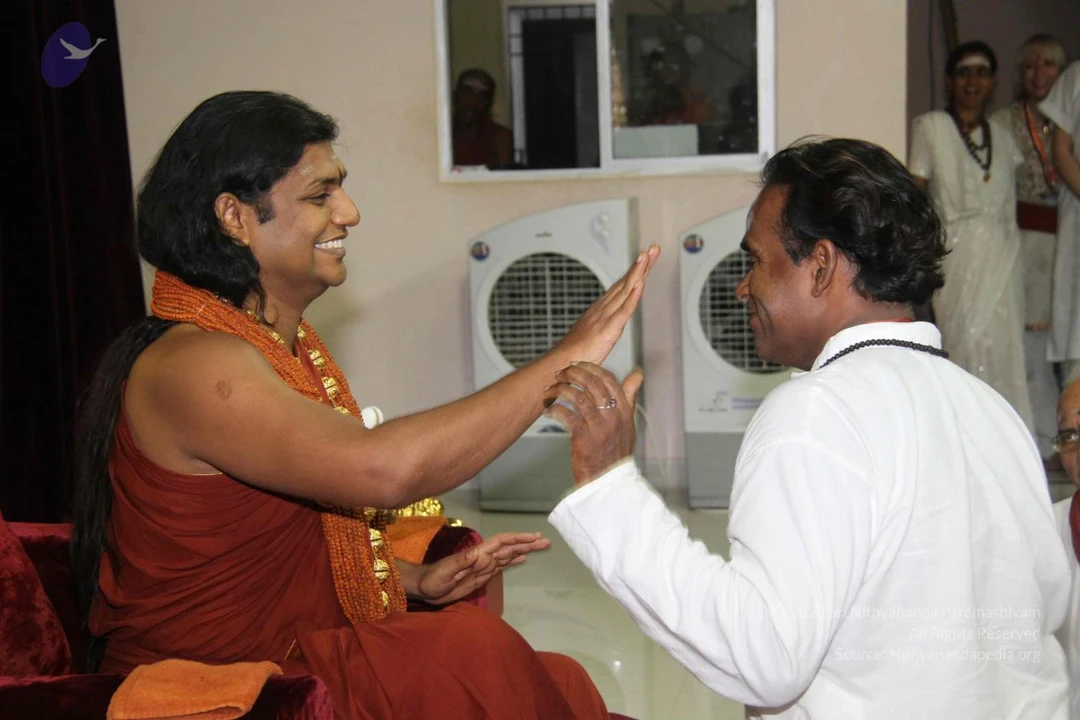
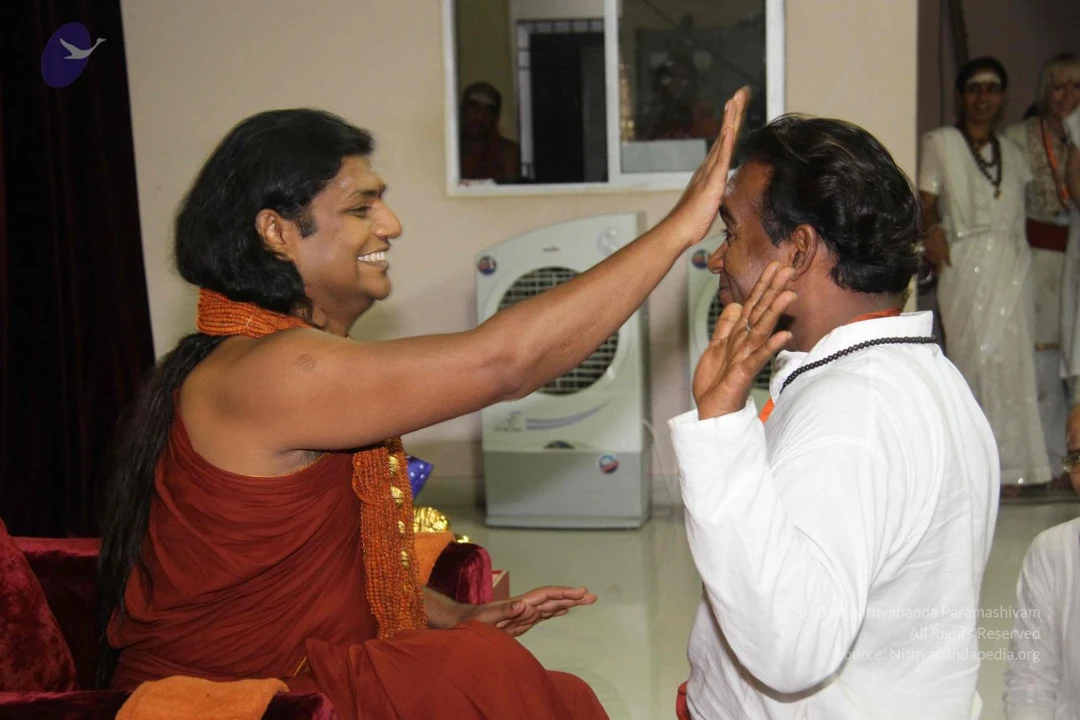
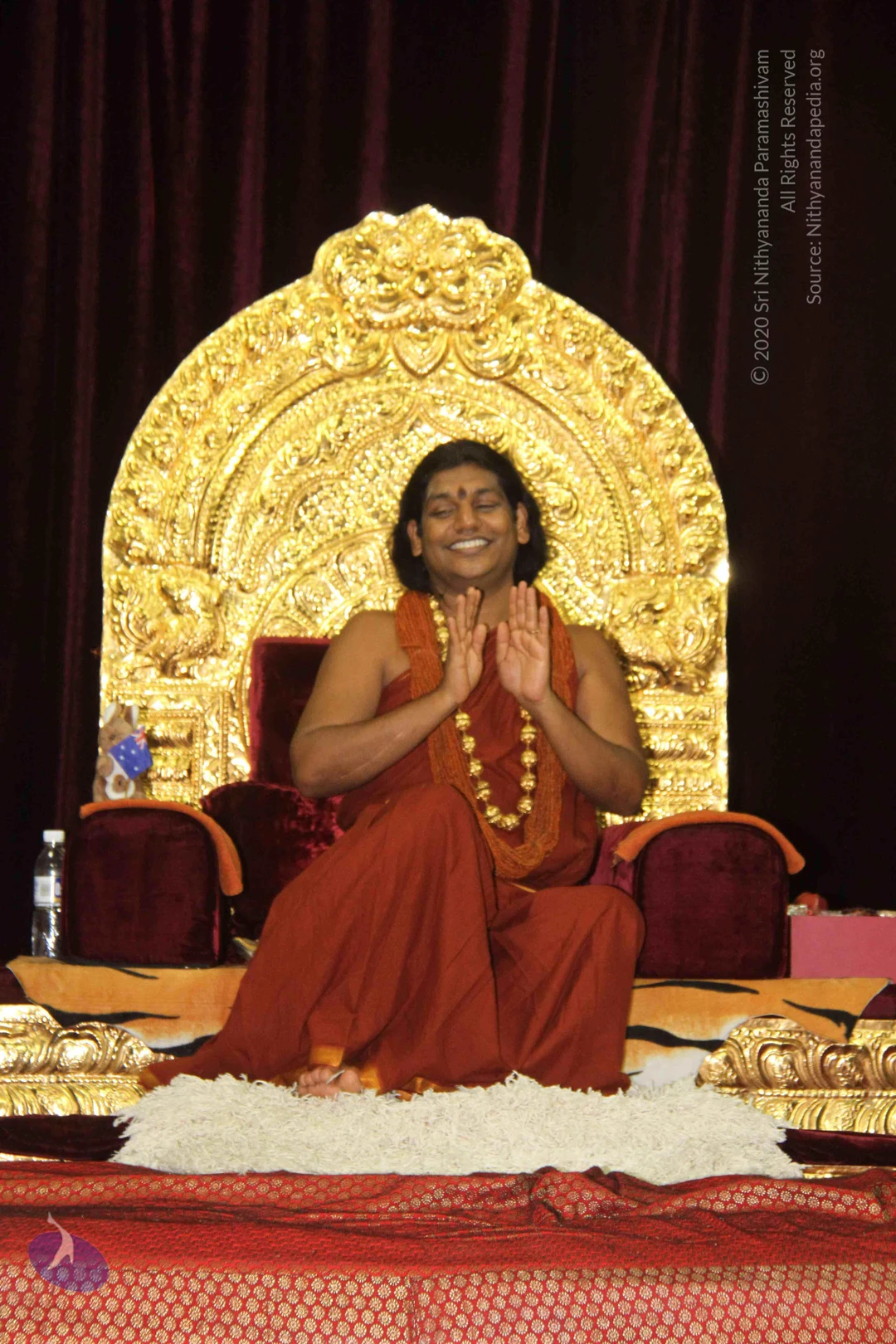
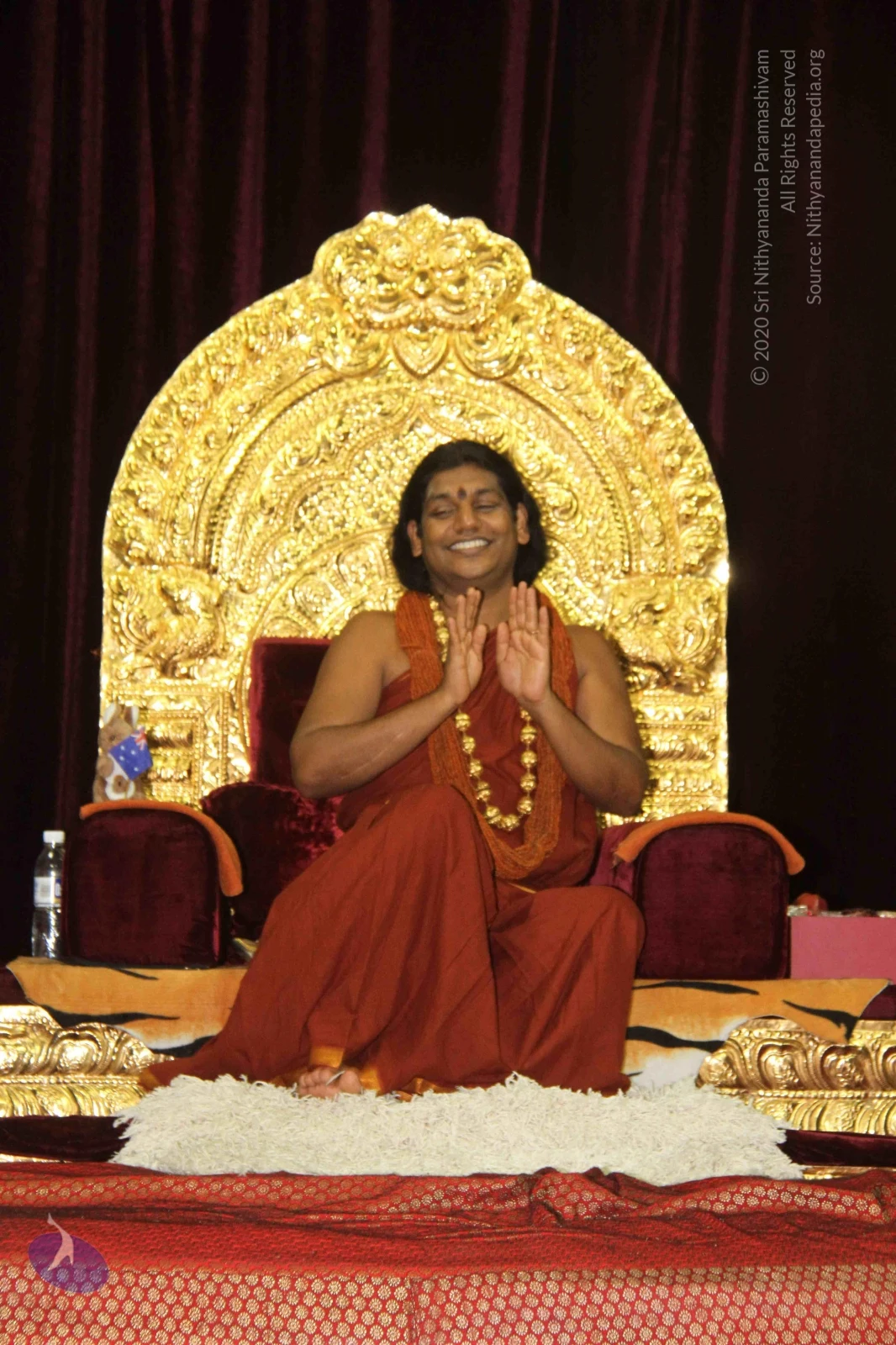
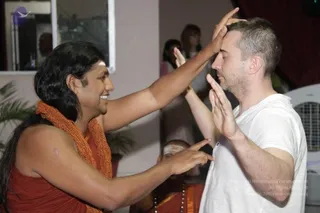
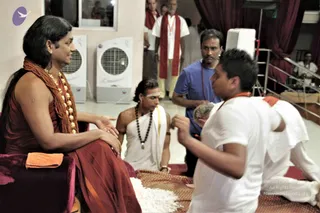
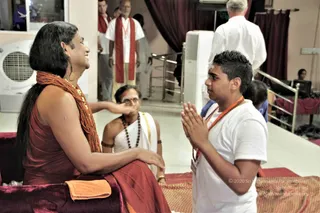
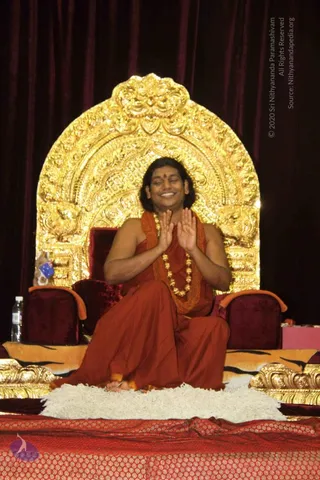
A photograph inside a hall with white wall-mounted coolers and maroon curtains. A figure with long dark hair, a rudraksha mala and a gold-bead necklace, wearing a maroon robe with a shawl, sits on a maroon cushioned seat with an orange towel and gestures with open hands while speaking. Beside him, a man in white dhoti with a white tilak and rudraksha mala sits on a patterned mat. In the foreground a man in a white shirt and an orange-red shawl leans forward gesturing toward them. Behind, a man in a blue t-shirt with a rudraksha mala stands, and another man in a red shawl and white kurta stands at the back. a person: the seated figure in maroon with long hair, gold-bead necklace and rudraksha mala.A photograph of an indoor satsang-style gathering in a white-tiled hall. A long-haired person in a maroon-red garment and a beaded rust-orange mala sits on a maroon cushioned seat, smiling and reaching out to touch the forehead of a young man in a white shirt and orange mala who stands with palms joined in namaste. Behind them a seated man in white dhoti and white shawl with a red-and-white stole sits with a vibhuti mark. A man in a red stole and white shirt stands in the background near a white air cooler and a railing, and a few other people are visible, including someone in white near the top right. A small orange cloth lies on the seat. Count of visible people is about six.A photograph of a single seated man on a raised stage before an ornate gold-leaf arched throne backed by deep maroon drapes. He wears a rust-orange robe with a matching orange shawl, a rudraksha-style bead mala and a gold necklace, with a red bindi on his forehead. His hands are pressed together in greeting and he smiles with eyes closed. The throne has gold cushioned armrests and sits on a tiger-striped rug over a red brocade cloth, with a white fur mat at his feet. a person seated in the Presidential Address setting, based on the robe, bead mala and gold necklace cues. A water bottle sits to the left.

Maheshwara-Puja

4 photosSource gallery
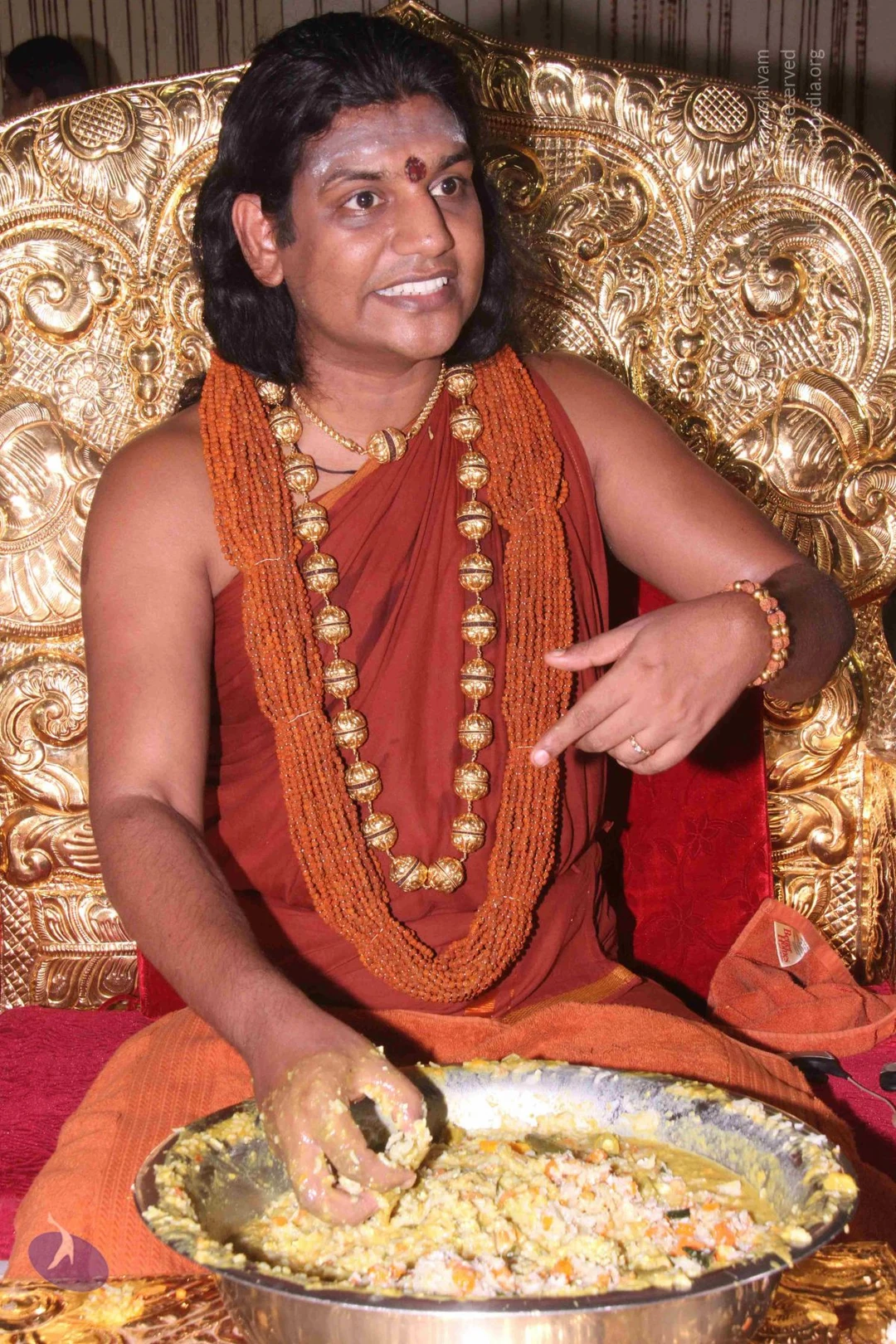
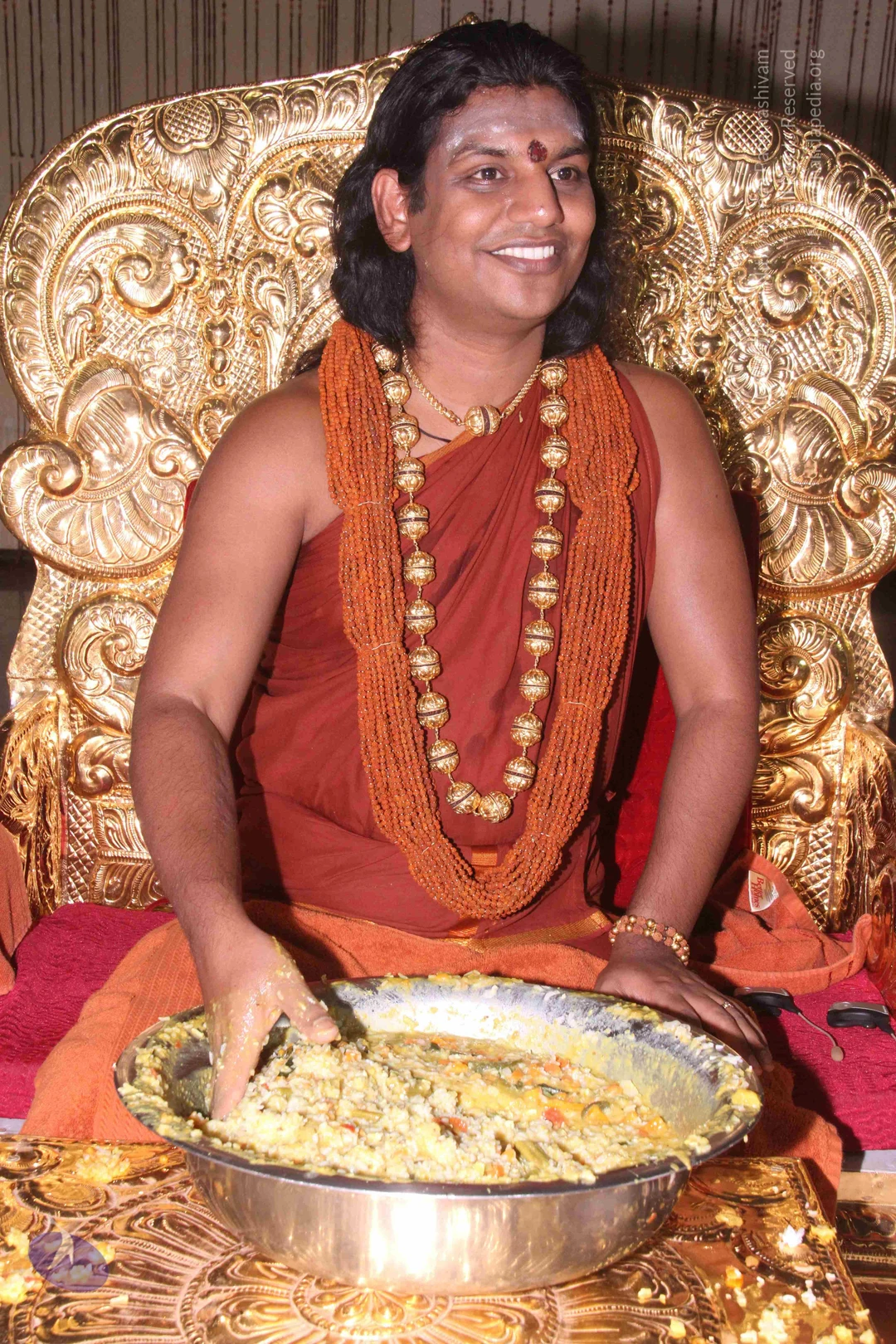
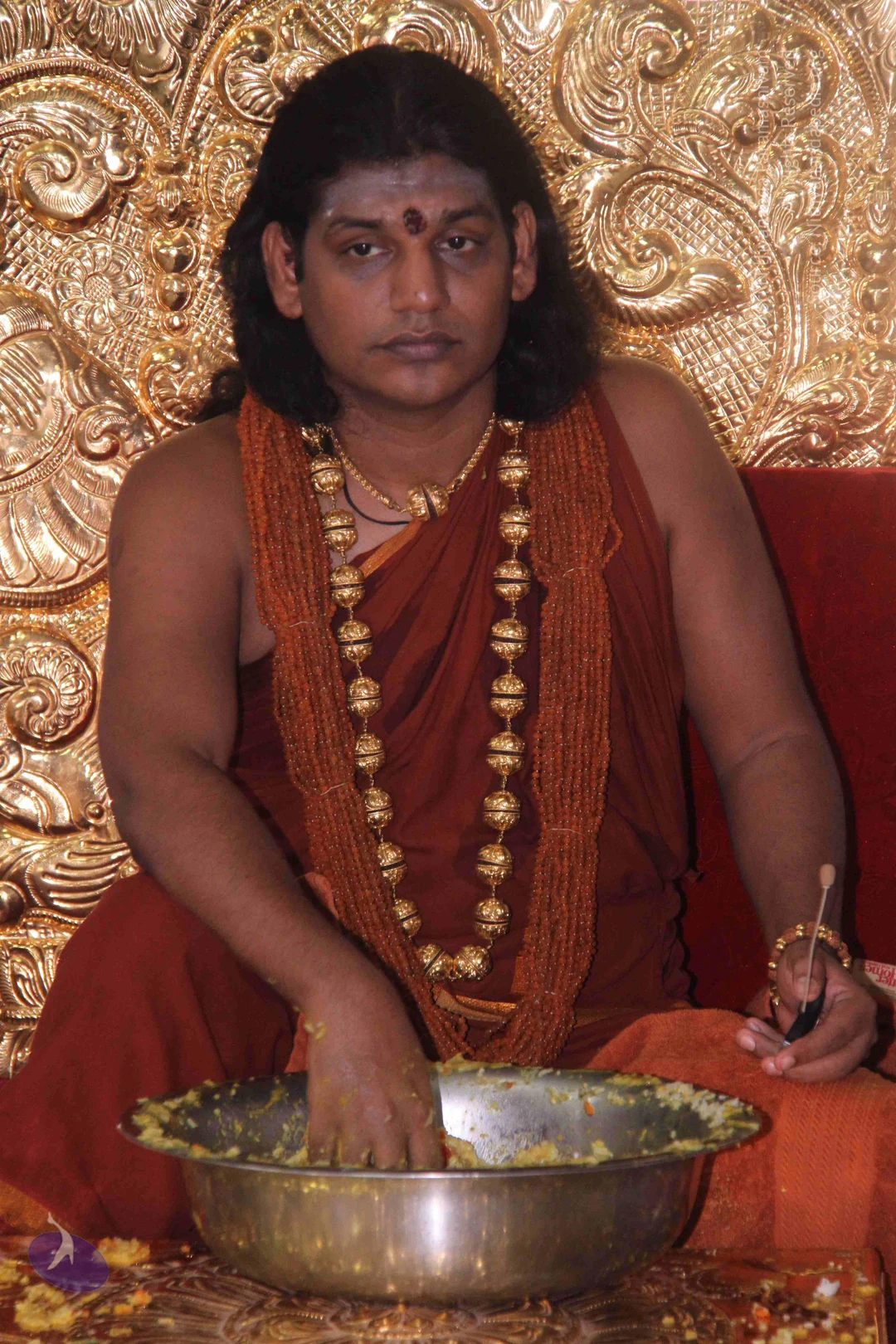
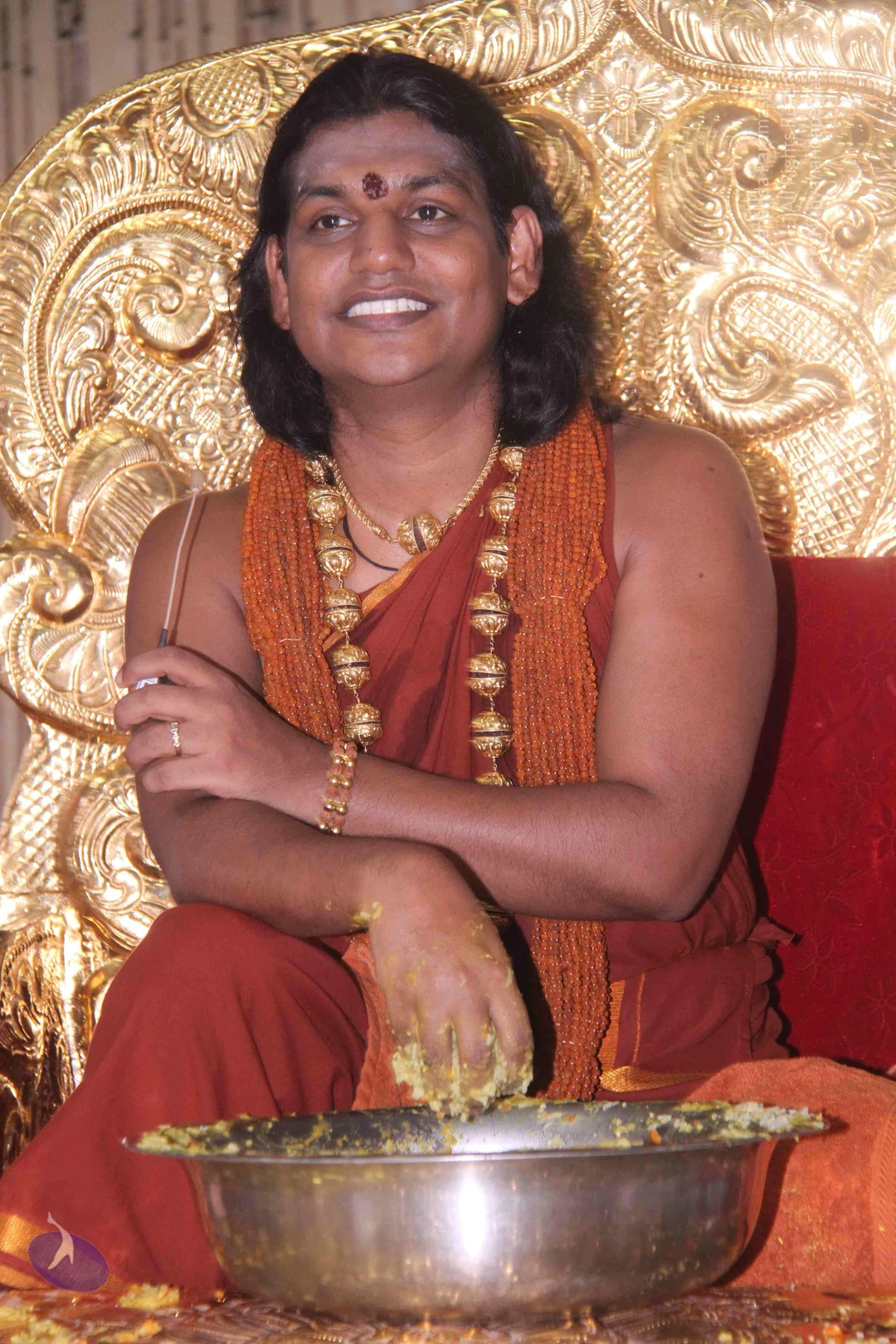
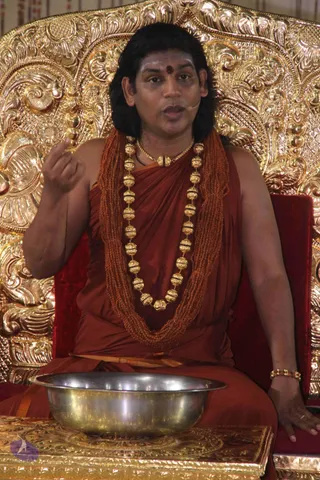
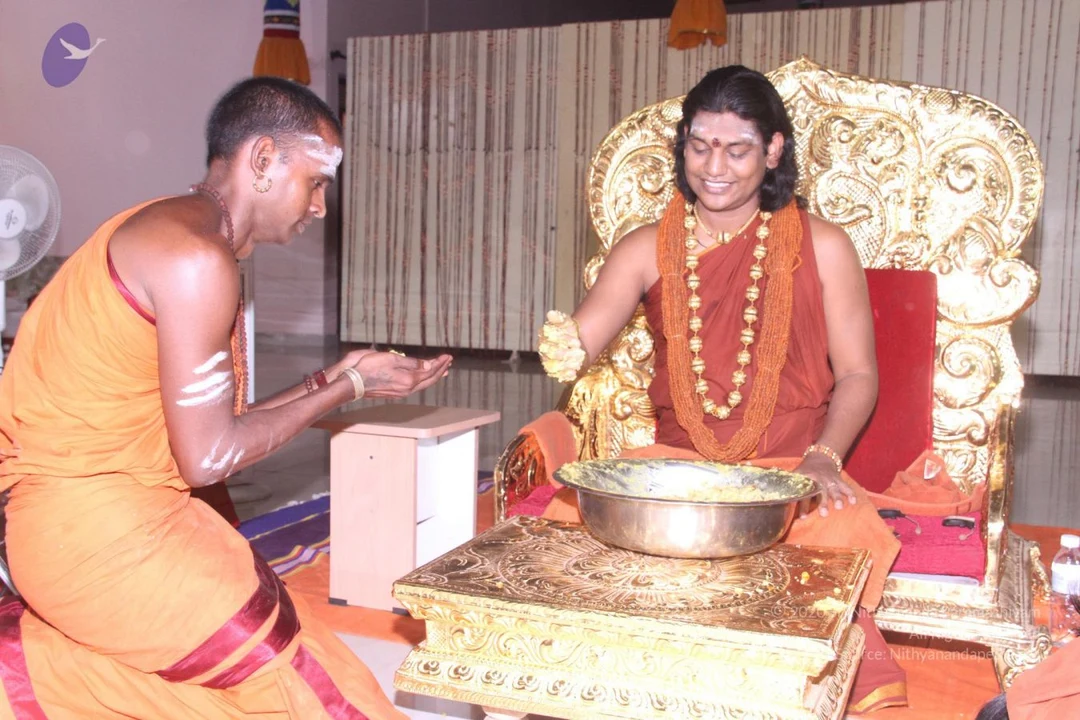
A photograph of a seated man in an orange-red ochre robe draped over one shoulder, wearing long multi-strand rudraksha malas and a heavy gold bead necklace, with a red tilak on his forehead and a small microphone at his cheek. He sits on an ornate gold-embossed throne with red velvet cushioning, one hand raised mid-gesture as he speaks. A polished silver bowl sits on a gold-embossed table in front of him. a person based on the ochre robe, rudraksha malas and gold ornaments, presiding in a teaching setting.A seated man in saffron-orange robes sits before an ornate gold-carved throne with red velvet cushions. He wears long swept-back dark hair, a thin white-and-red forehead mark, layered rudraksha malas and a heavy gold bead necklace, plus a gold bangle. He is mixing a steel bowl of rice with vegetables and yellow spice, with both hands, on a gold-carved stool. A small lapel microphone is visible. The appearance is consistent with the page's a person label, but the cues are not conclusive, so identity is marked unsure. Single person in an ornate ritual setting.A photograph of a seated man with long dark hair and white sacred ash with a red dot on his forehead, wearing a rust-red wrap, multiple strands of orange rudraksha beads and heavy gold bead necklaces. He sits before an ornate gold repoussé throne with red cushioning, mixing a yellow grain paste in a large silver bowl with his right hand, which is coated in the mixture. A rudraksha bracelet is on his wrist. The bowl's rim and the mixture are visible in the foreground. Swamiji (probable) in the appearance-based label, given the long hair, rudraksha malas and gold necklaces, while the page indicates his presence at a Maheshwara Puja.A photograph of a seated man in an orange-saffron dhoti and shawl wearing a long, multi-strand orange rudraksha mala and a heavy ornate gold bead necklace. He has long, swept-back dark hair and a red bindi with white markings on his forehead. He sits on a richly carved gold throne with red velvet cushions, mixing a steel bowl of cooked rice and yellow food with his right hand. In his left hand he holds a small handheld microphone clipped to his fingers. A bowl of rice dish sits on a gold-patterned cloth in the foreground. Appearance-based label: a person, seated and performing food preparation in the presence of a microphone, consistent with an offering or annadan in front of the throne.

Nithya-Satsang

1 photoSource gallery
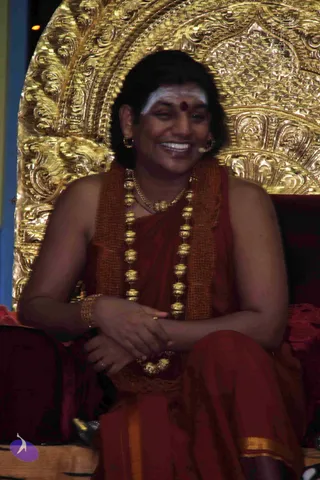
A seated man in saffron-red ascetic robes smiles broadly on an ornate golden throne with repoussé floral and arched carvings. He wears a thick gold bead necklace over a red shawl, a gold chain, a gold bangle, hoop earrings and a wireless lapel microphone. A white vibhuti line and red kumkum dot mark his forehead, and his hands rest clasped in his lap. The gold throne backdrop and red cushions suggest a stage setting. Whether the man is a person cannot be determined from appearance alone, so this is a seated devotee-style figure with ceremonial adornments.

Pada-Puja
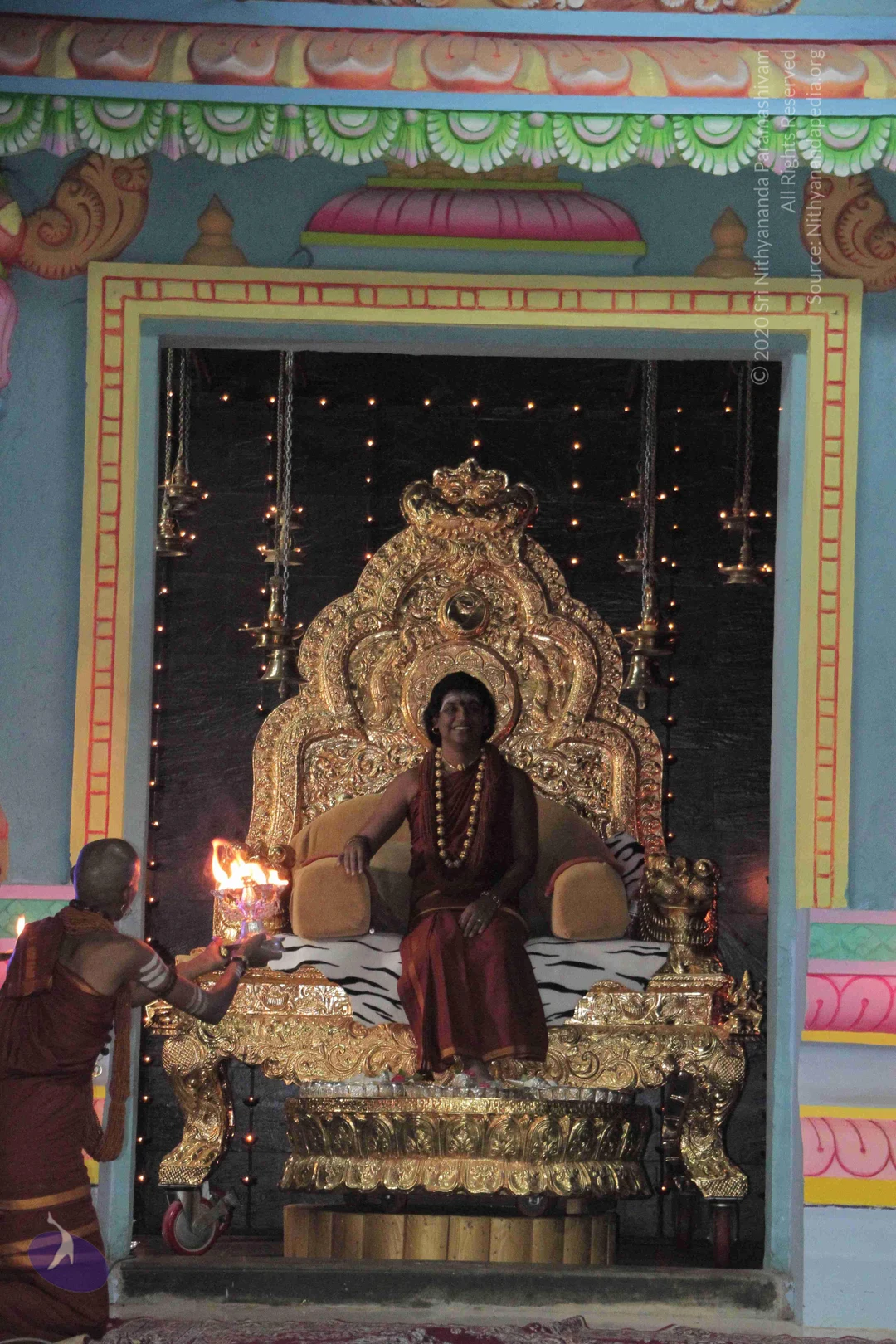
4 photosSource gallery
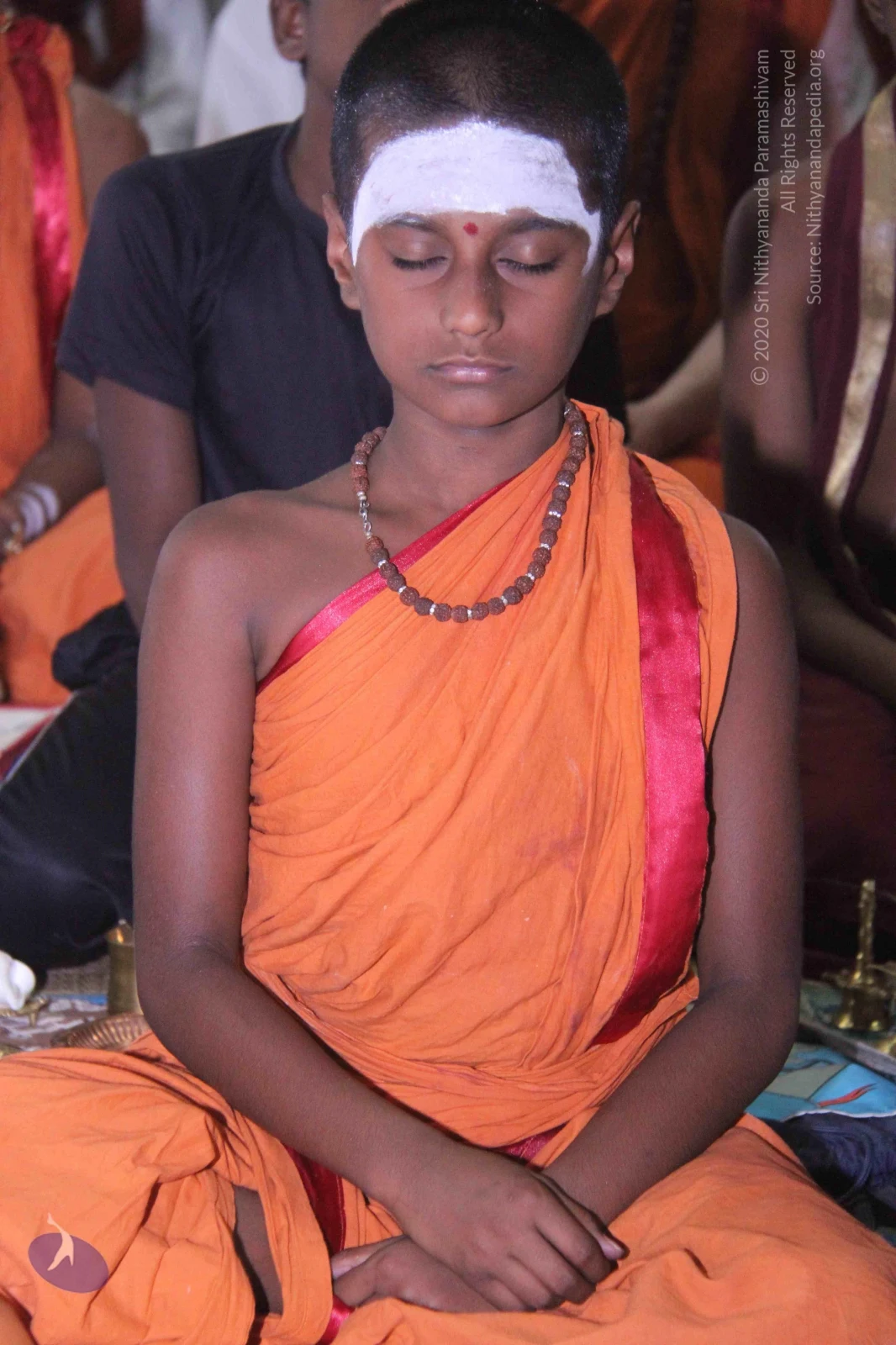
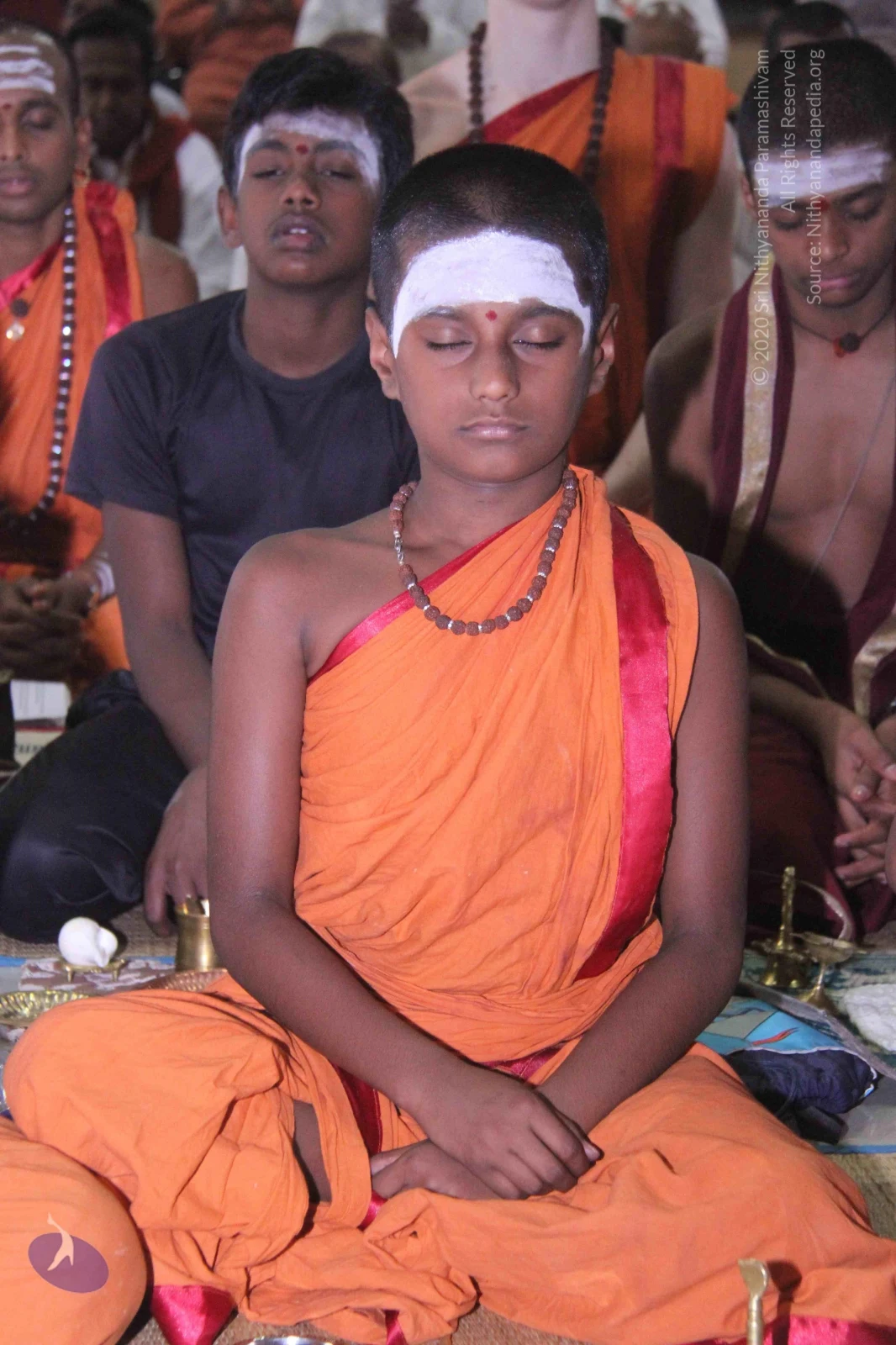
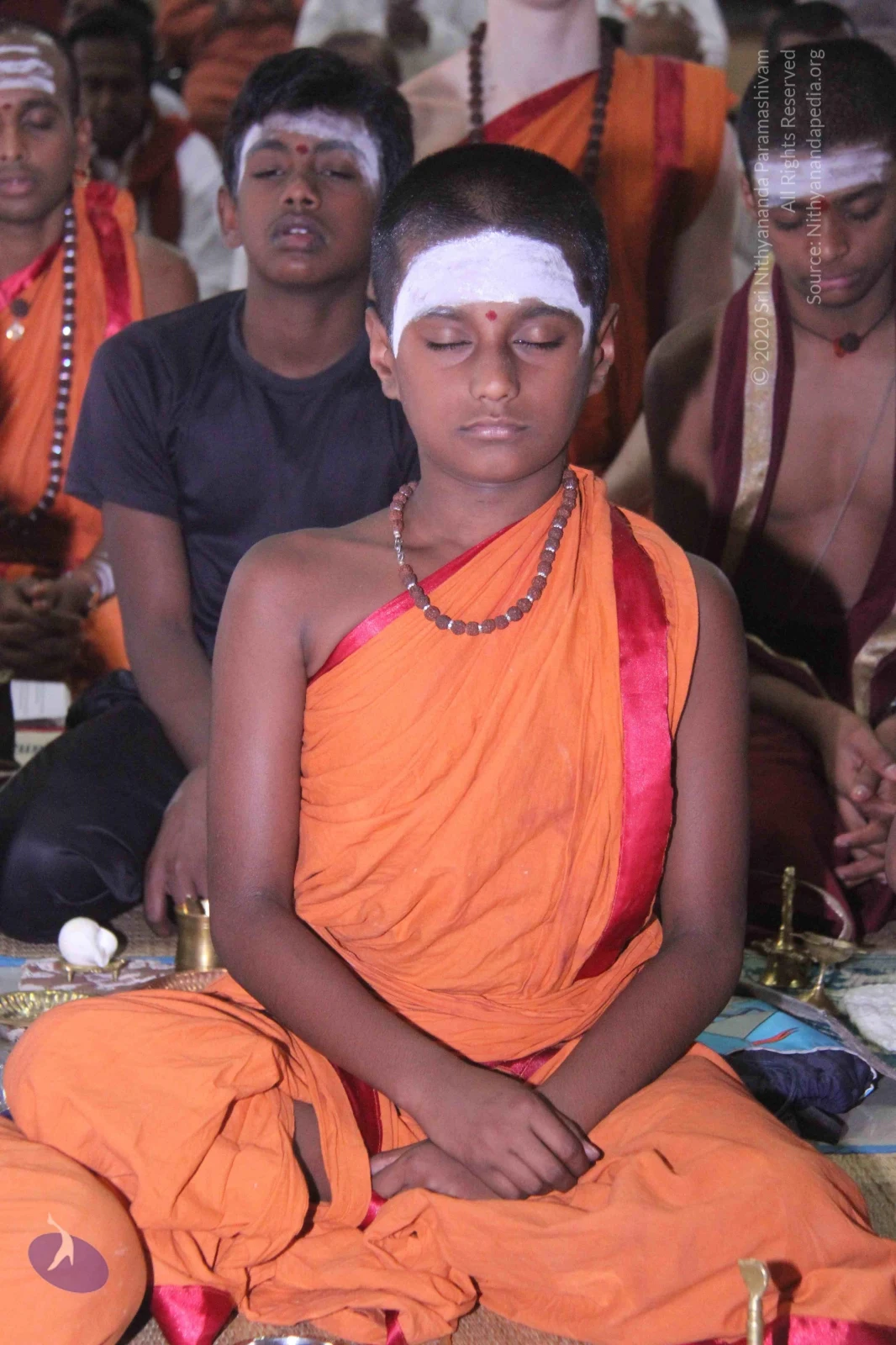
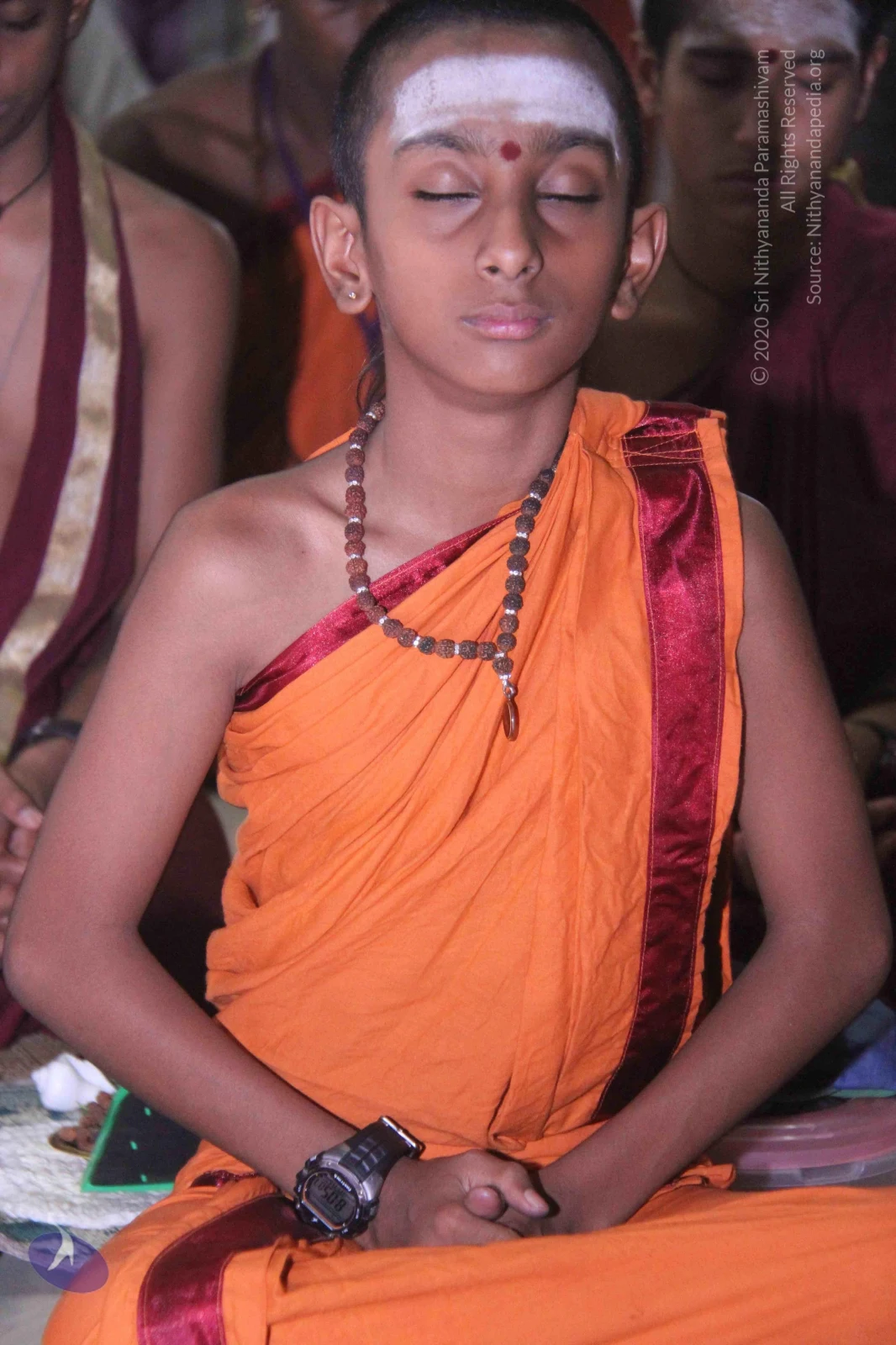
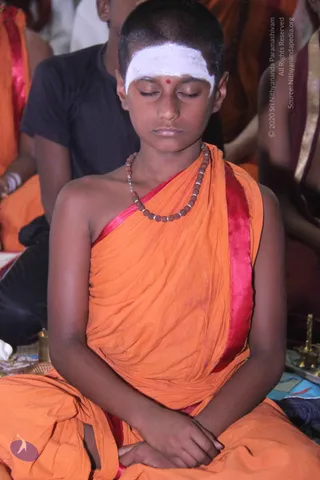
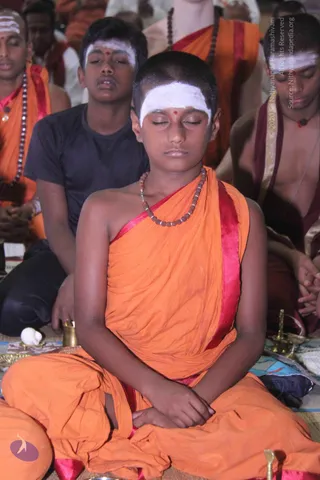
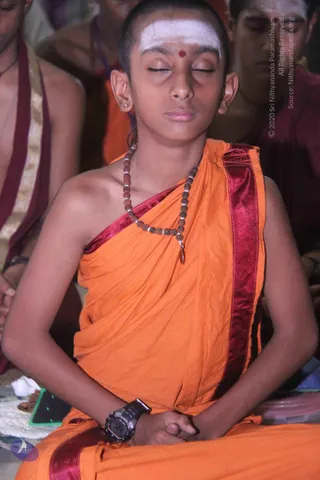
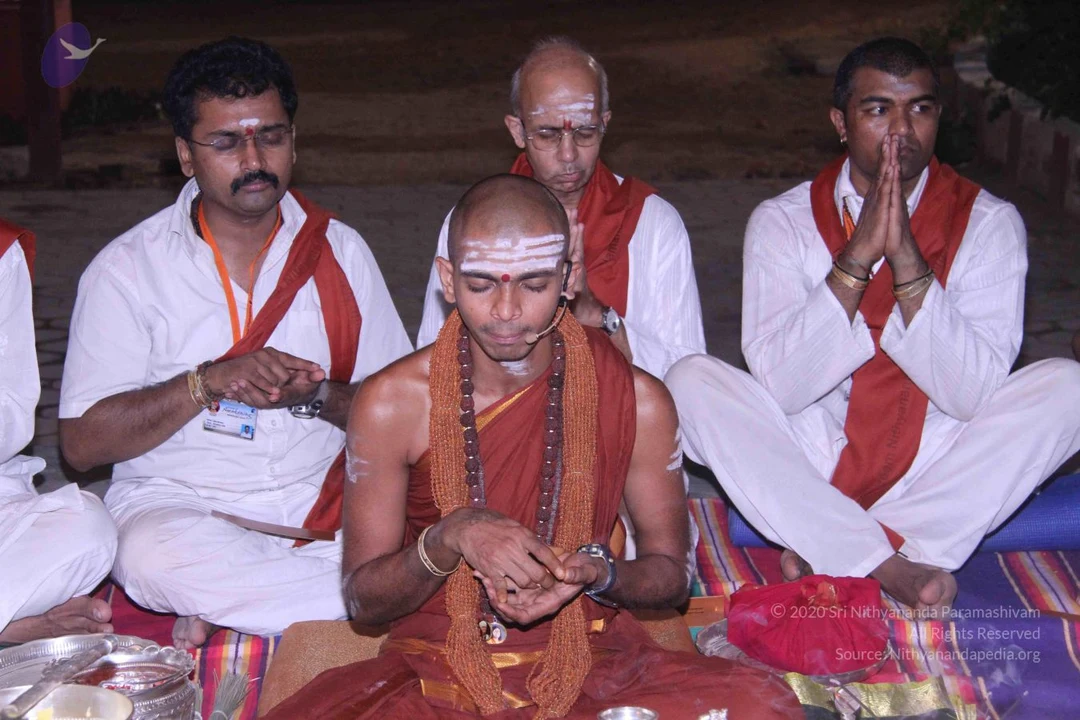
A seated figure in a red-maroon robe and rudraksha mala sits on an ornate gilded golden throne with a tiger-striped cloth draped over its seat, before a black backdrop strung with small lights and hanging brass oil lamps. A priest in a red-brown dhoti and shawl, with white ash markings on his arm, stands at the left holding a lit lamp or fire vessel toward the throne. Painted pink, green and yellow decorative borders frame the doorway. The seated figure has long swept-back hair and a crown-like golden backdrop behind the throne, a distinctive presentation that matches the page's description of a person, so the appearance-based candidate is probable. Two people are visible.A young boy with a shaved head and a white sacred ash band across his forehead with a red kumkum dot sits cross-legged with eyes closed in meditation. He wears an orange saffron wrap with red border and a rudraksha mala necklace. Behind him, other saffron-clad people sit, and brass ritual vessels are visible at the lower right. The scene suggests a seated meditation or puja setting.A young boy with a shaved head and white vibhuti band with red kumkum dot sits cross-legged with eyes closed in meditation, wearing an orange saffron robe with red border and a rudraksha mala. Behind him, other young men in orange and maroon robes with white forehead markings sit in rows, several with eyes closed or hands folded. A brass oil lamp and metal vessels sit on a mat in front.A close photograph of a young shaved-headed boy sitting cross-legged with eyes closed in meditation, wearing an orange saffron wrap with a maroon-red border and a rudraksha mala with silver beads around his neck. He has white vertical tilak marks and a red bindi on his forehead, and a black digital wristwatch on his left wrist, hands clasped in his lap. Other seated devotees in saffron and maroon garments are visible behind him, and a green mat lies on the floor. The scene reflects a satsang or meditation gathering.
Yoga

2 photosSource gallery
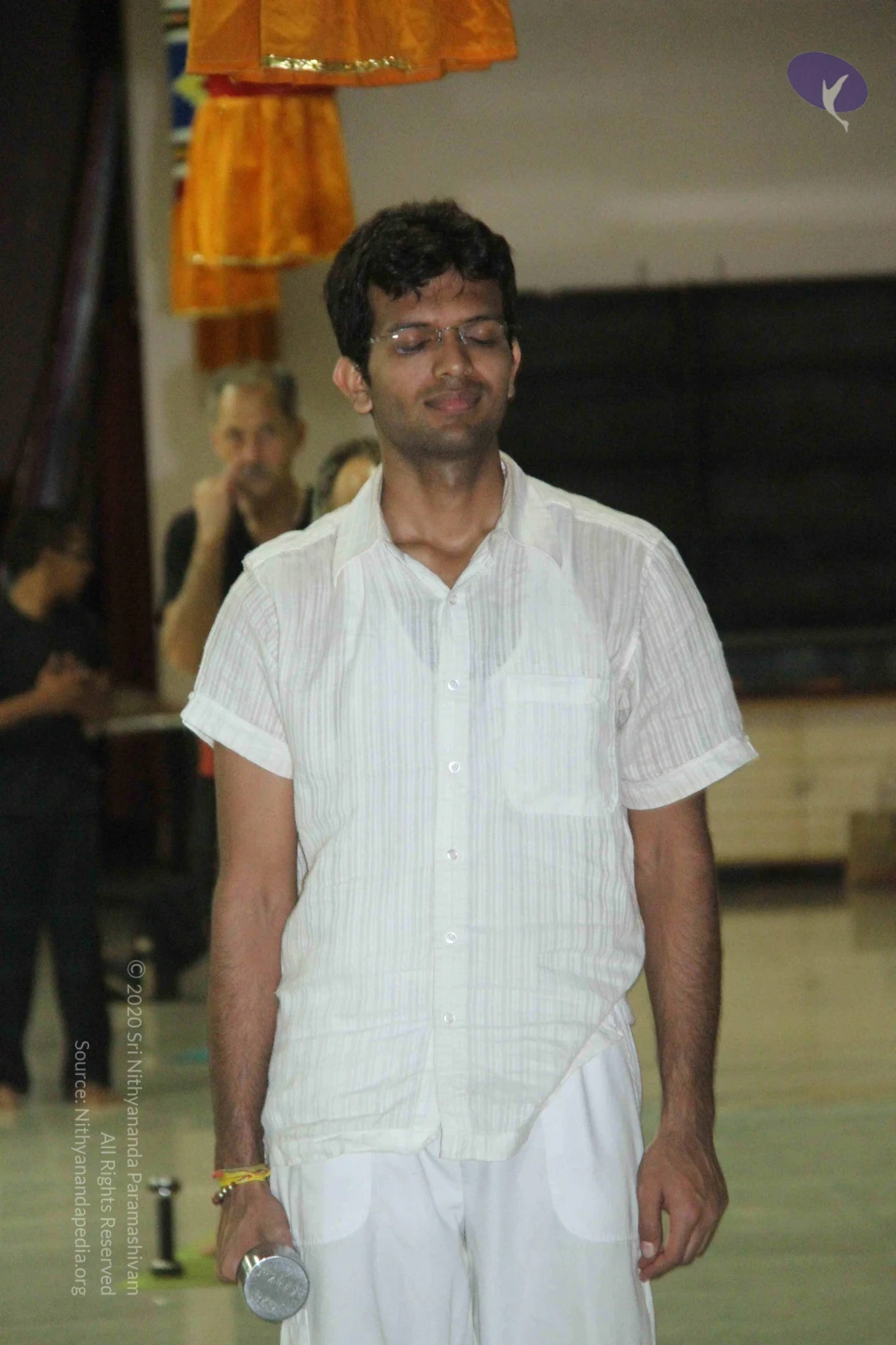
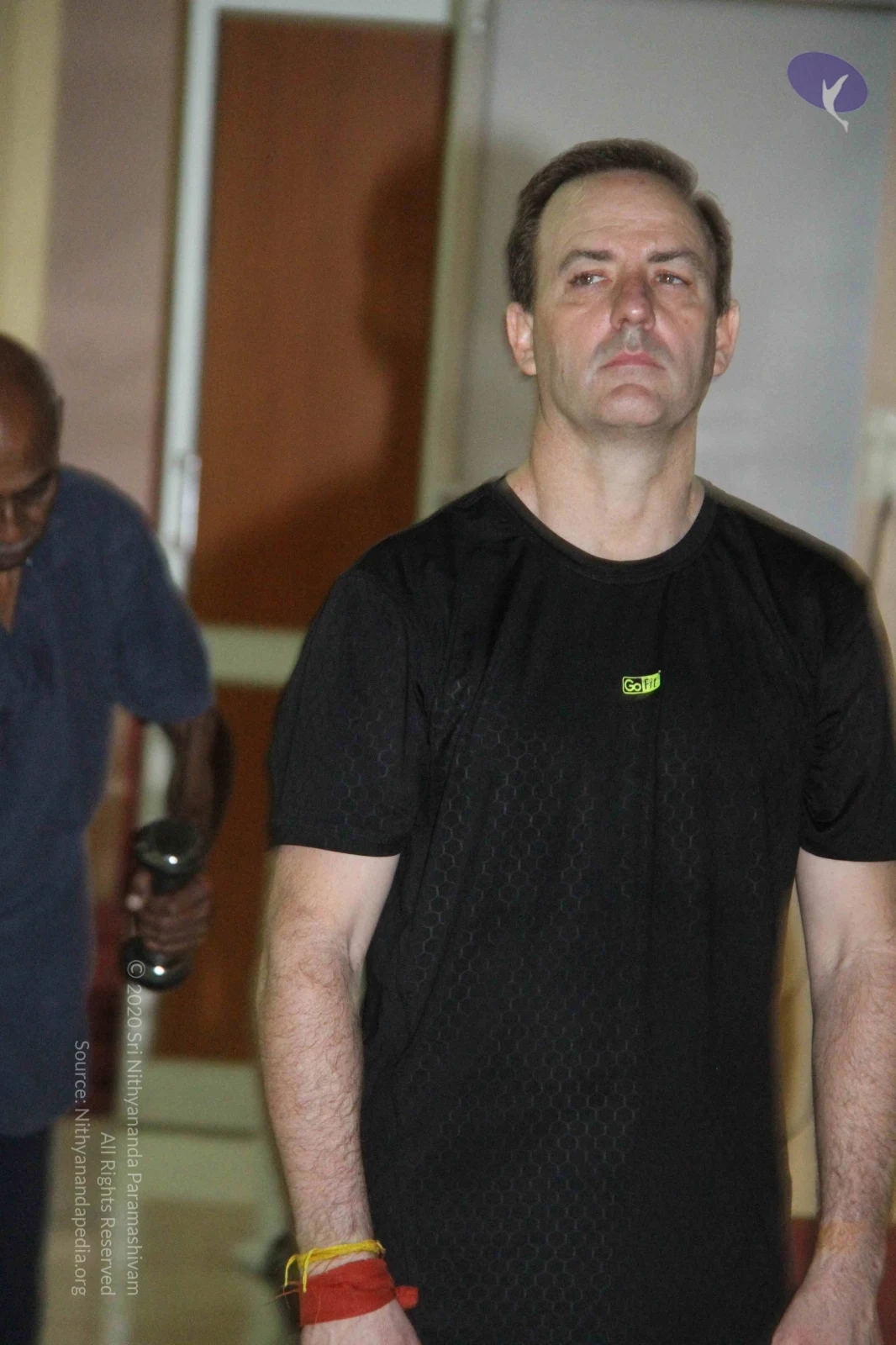
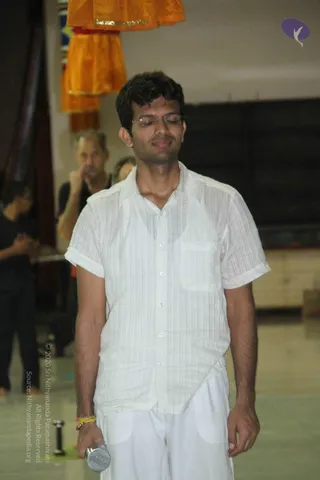
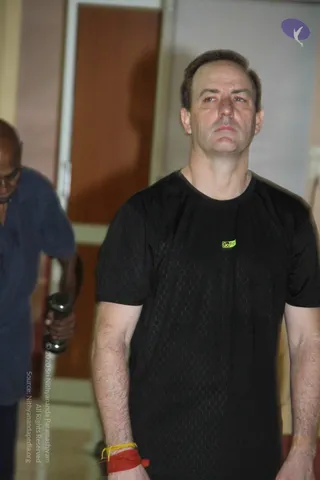
A young man with short dark hair and clear-framed glasses stands with eyes closed and a faint smile, wearing a white short-sleeved striped shirt and white trousers. He holds a small silver cylindrical object in his right hand and wears a red-and-yellow wrist thread. Behind him hang orange and saffron cloth drapes, with a blurred older man and another person in the background of a hall. No appearance-based a person candidate is clearly identifiable here, so the subject is described by role and attire only.Photograph of a middle-aged man in a black short-sleeved athletic t-shirt with a small green "GoFit" logo on the chest, standing upright with his arms at his sides and a red and yellow thread tied around his wrist. He gazes forward with a composed expression. Behind him on the left, a older man in a blue shirt stands partly visible, holding a metal ritual object. The background shows a brown wooden door, a white wall and a purple circular logo in the upper right corner. No one is identified as a person in this scene.