Skip to content
Saturday

2 February 2013

Authenticity Right Strategy for Success - Talks from Kathopanishad

Dated photos
246
Source pages
1
Media
3
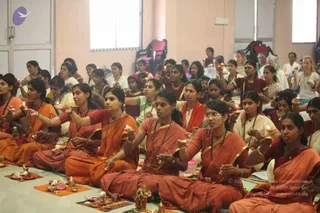
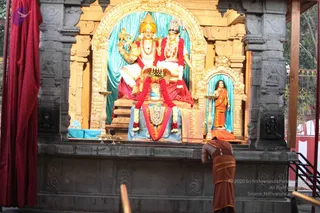
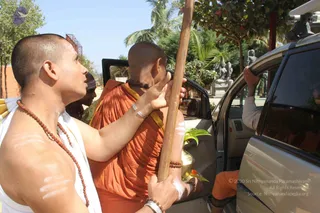
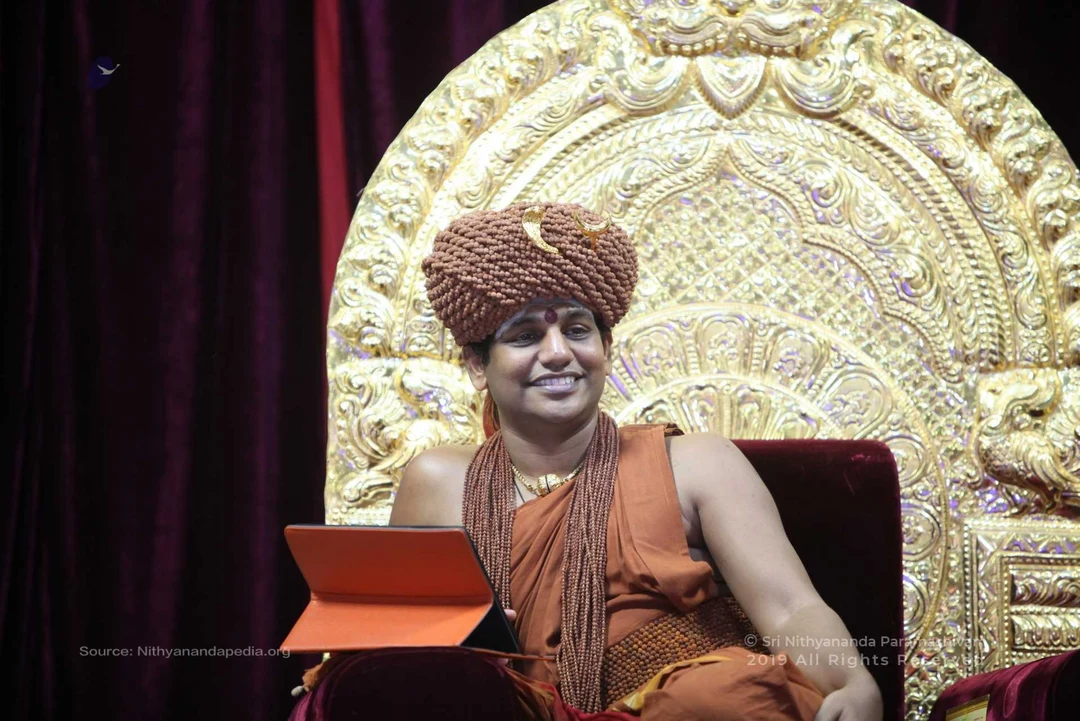
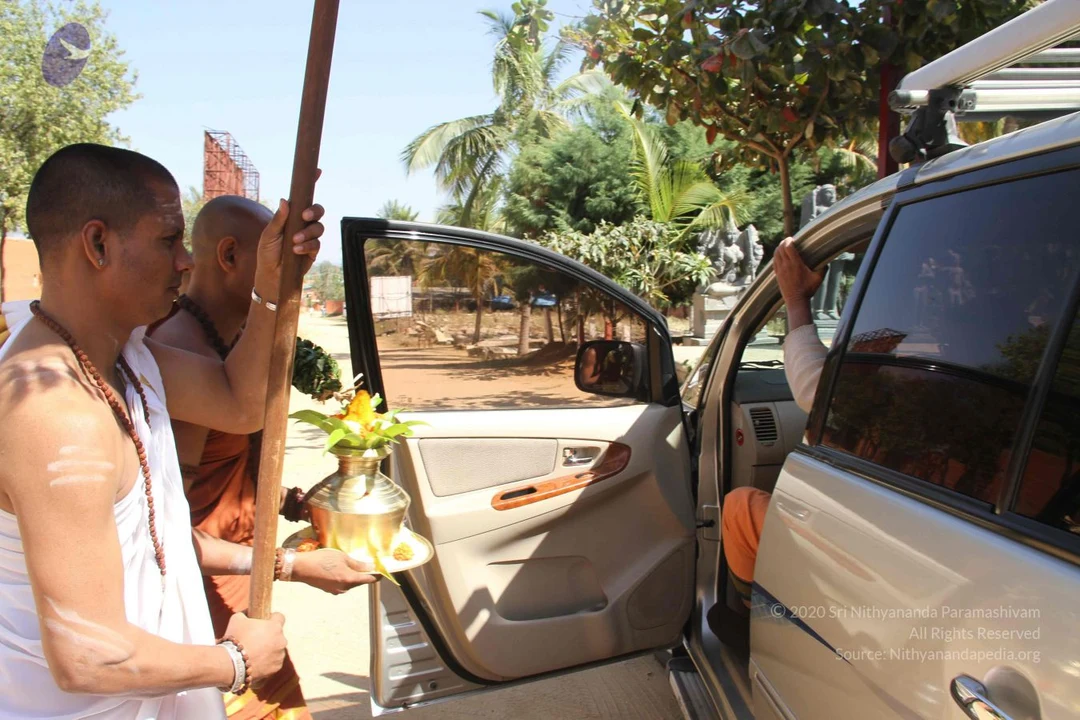
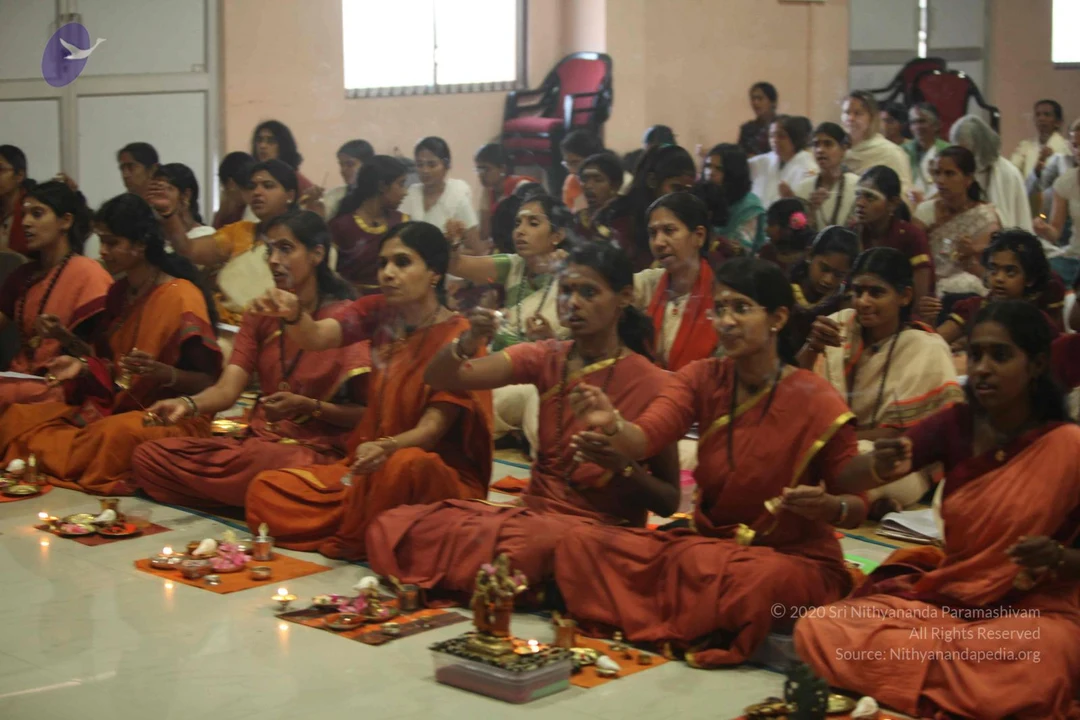
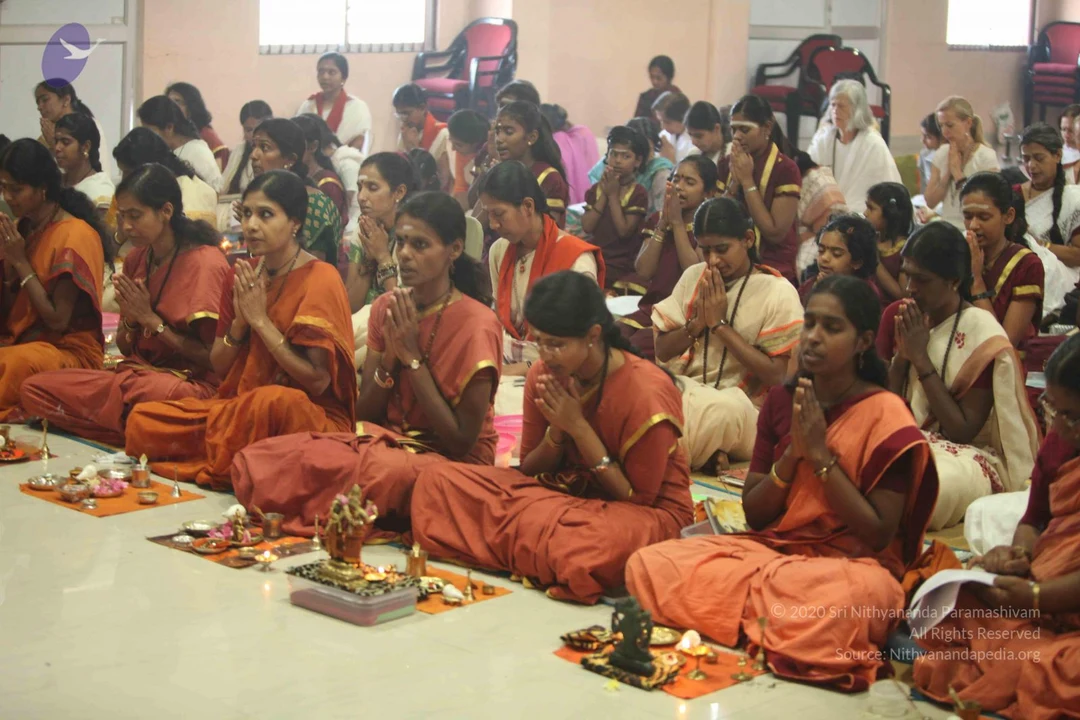
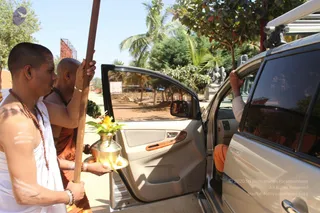
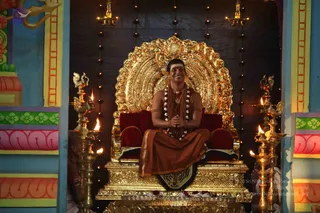
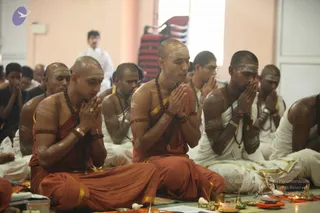
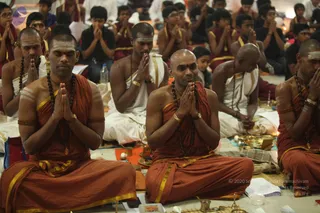
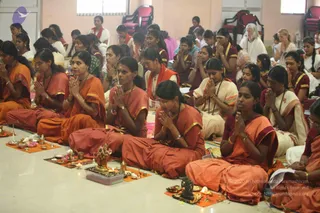
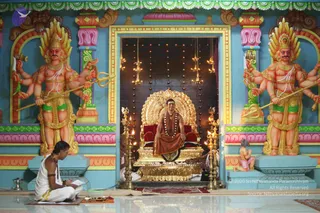
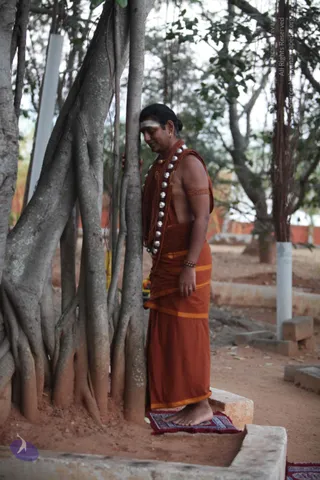
A photograph of a large seated group of women in a hall with pink walls and white windows, devotees holding small lit oil lamps in their hands. Most wear saffron, orange and maroon saris with gold borders and rudraksha malas; some wear white saris with maroon borders. Brass plates with flowers, a small brass lamp and offerings sit on orange mats on the floor in front of them. Behind them more seated and standing participants are visible, a few in white. Watermarked archive photo of a satsang-style devotional gathering; no leader is clearly visible in the frame.A photograph of an ornate stone shrine with a golden arch framing a seated deity murti pair, both figures crowned and adorned with white beaded necklaces and red garlands; one holds a trident-like staff. Red and blue fabric panels hang behind, with brass oil lamps and offerings in front on a dark stone platform. A standing devotee in an orange-brown dhoti and shawl bows toward the shrine at lower right. A red cloth hangs on the left edge.A photograph outdoors near a silver minivan with its side door open. In the foreground a shaved-headed man in a white dhoti and shawl wears rudraksha beads and white horizontal markings on his arms and chest, holding a long wooden staff. Beside him a monk in saffron-orange robes with a rudraksha mala stands at the open door, one hand on the vehicle, while another person in orange reaches in from the far side. A brass vessel with green leaves sits near the seat. Palm trees and a stone sculpture are behind them.

February 02 2013

Original wiki page
Contents

Title

Authenticity Right Strategy for Success - Talks from Kathopanishad

Description

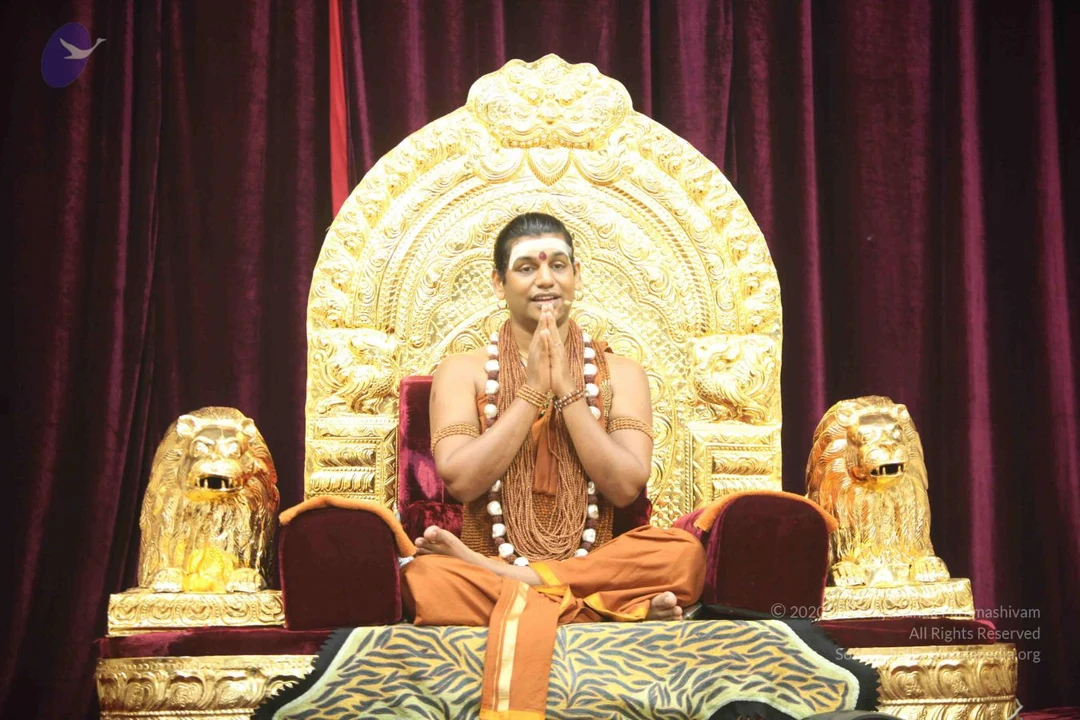
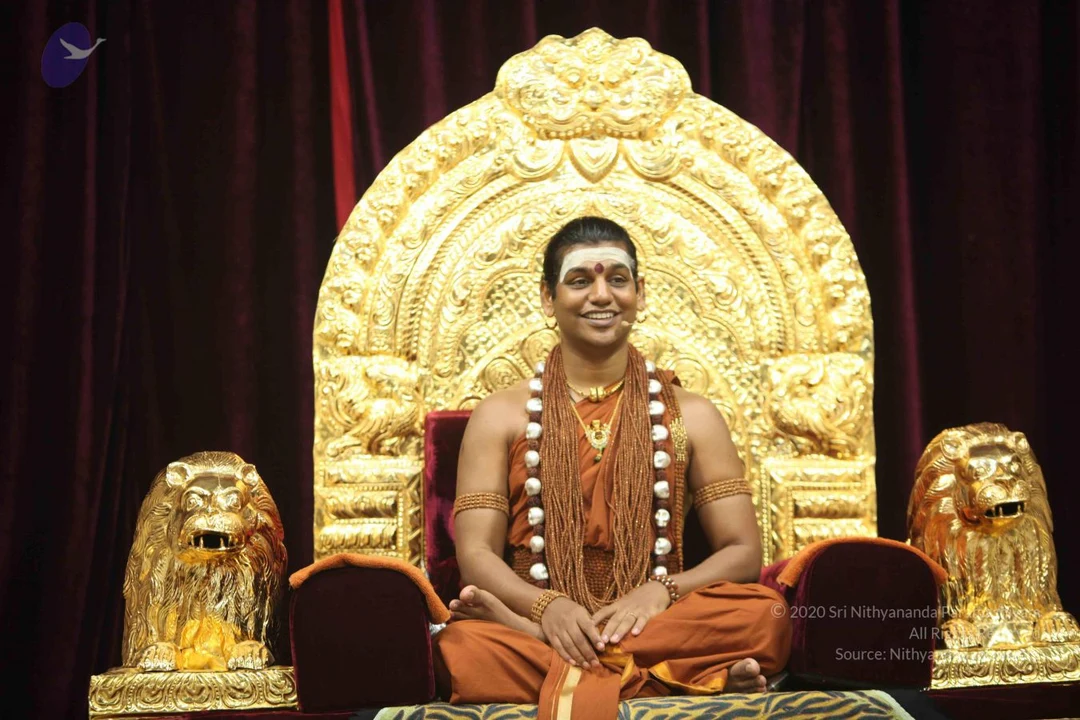
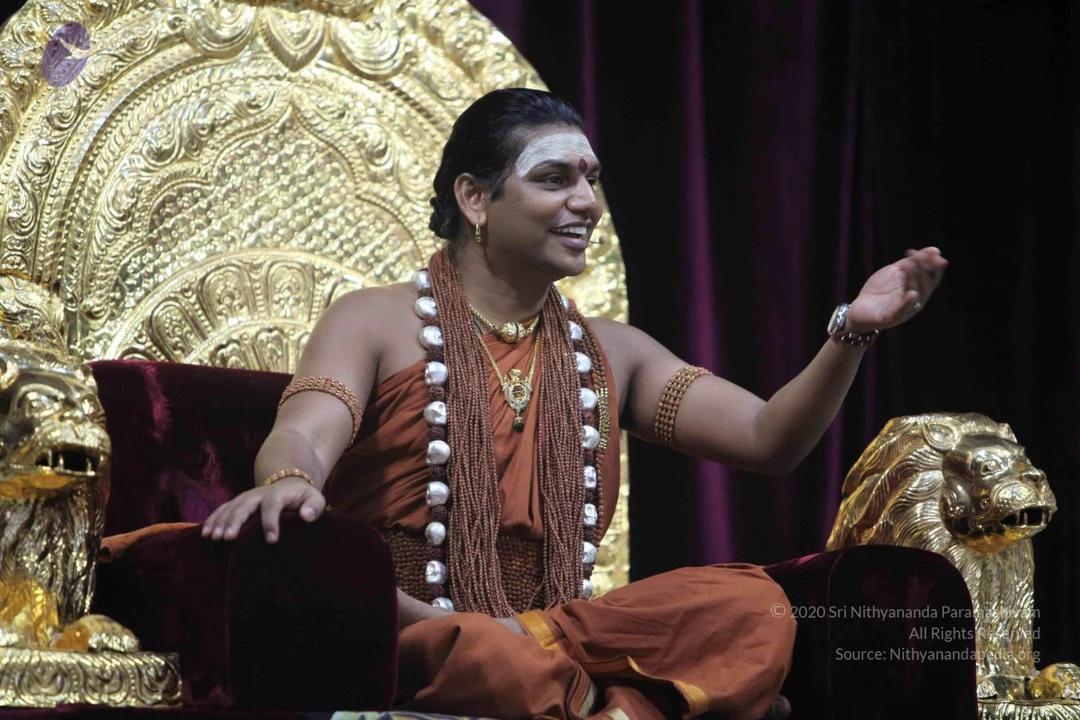
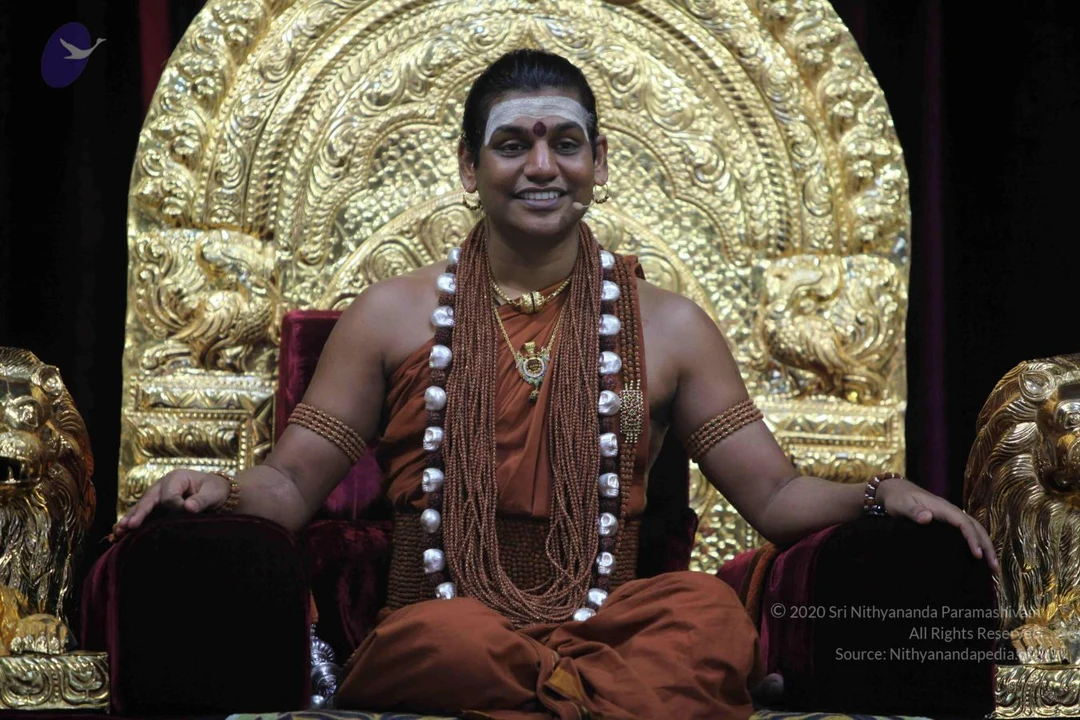
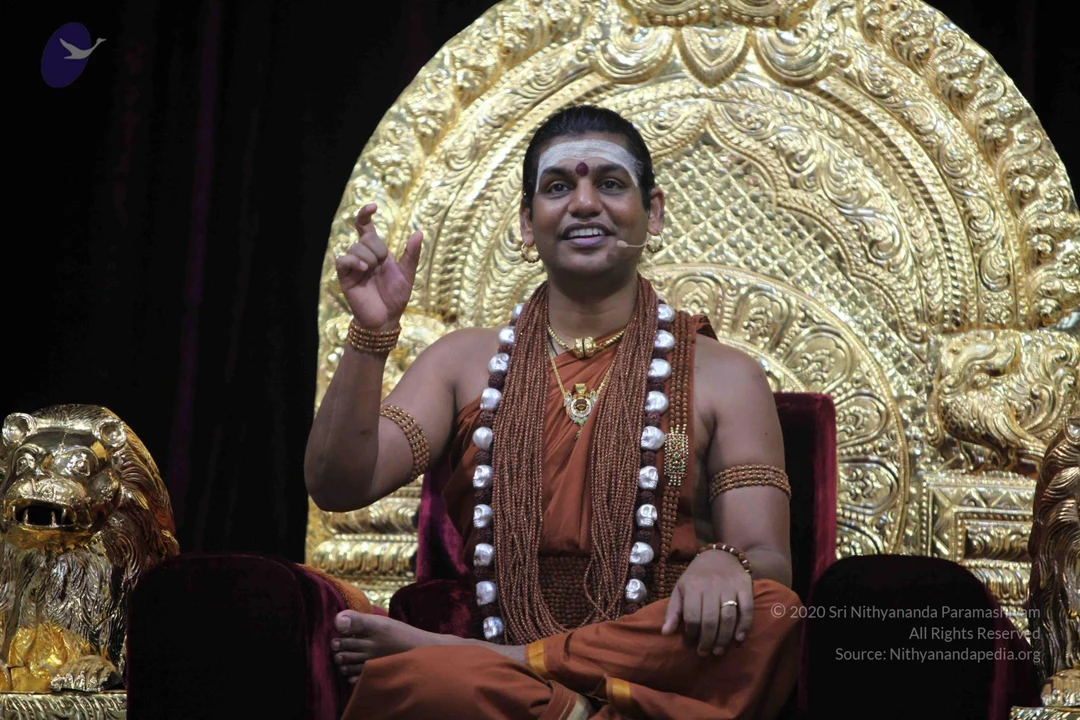
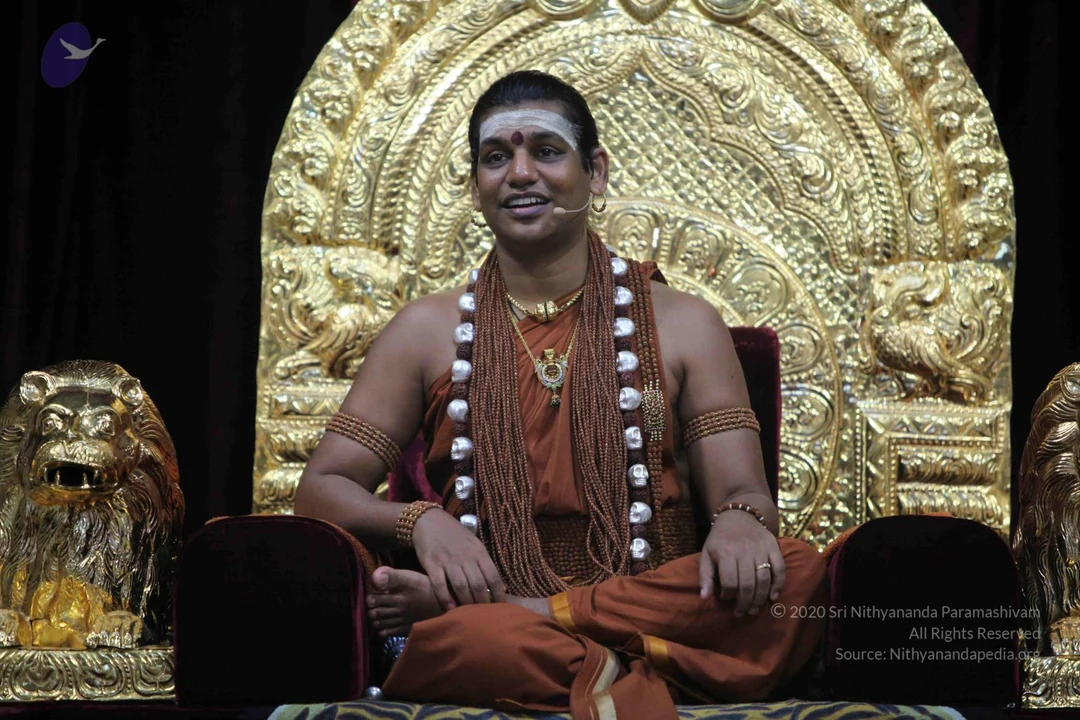
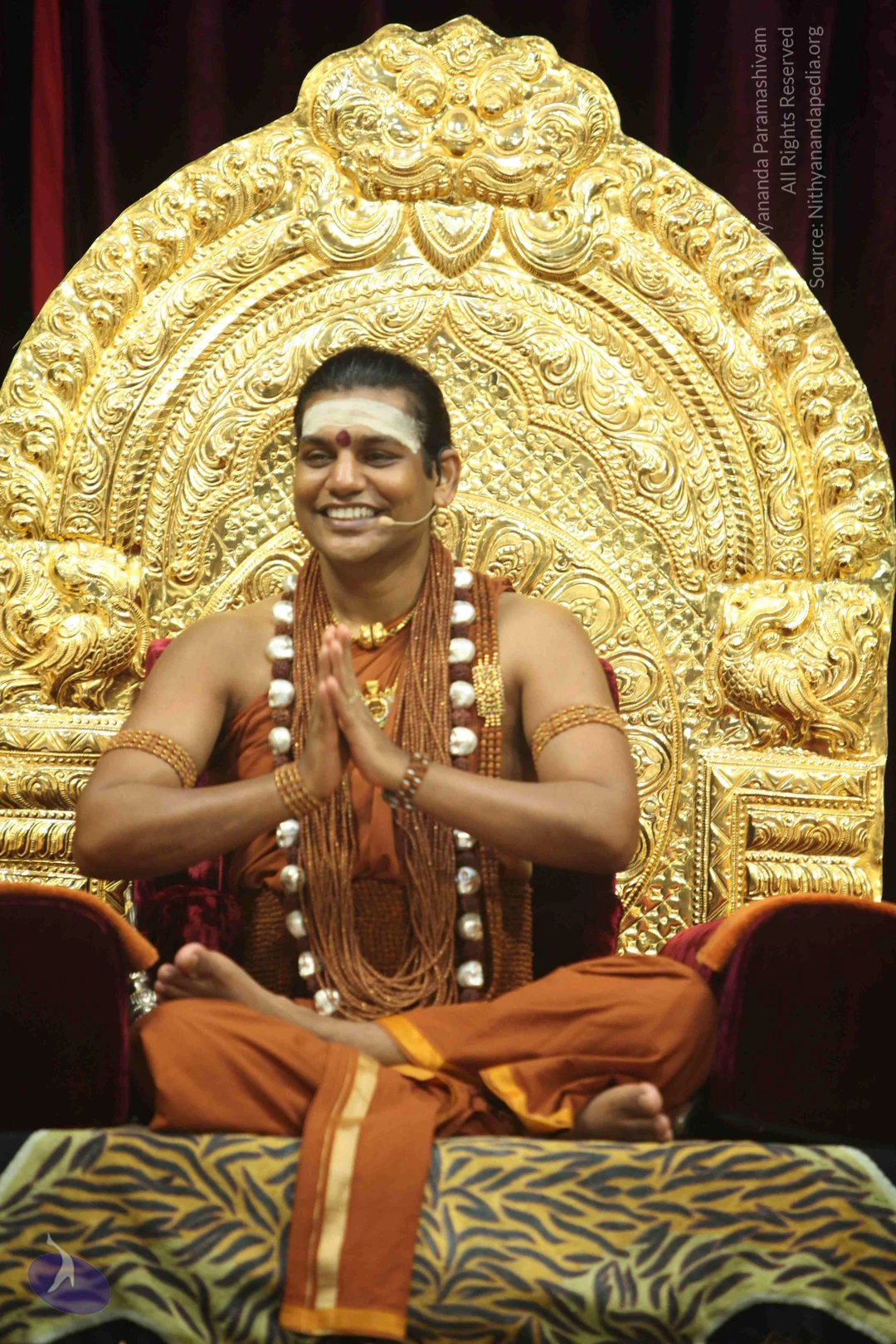
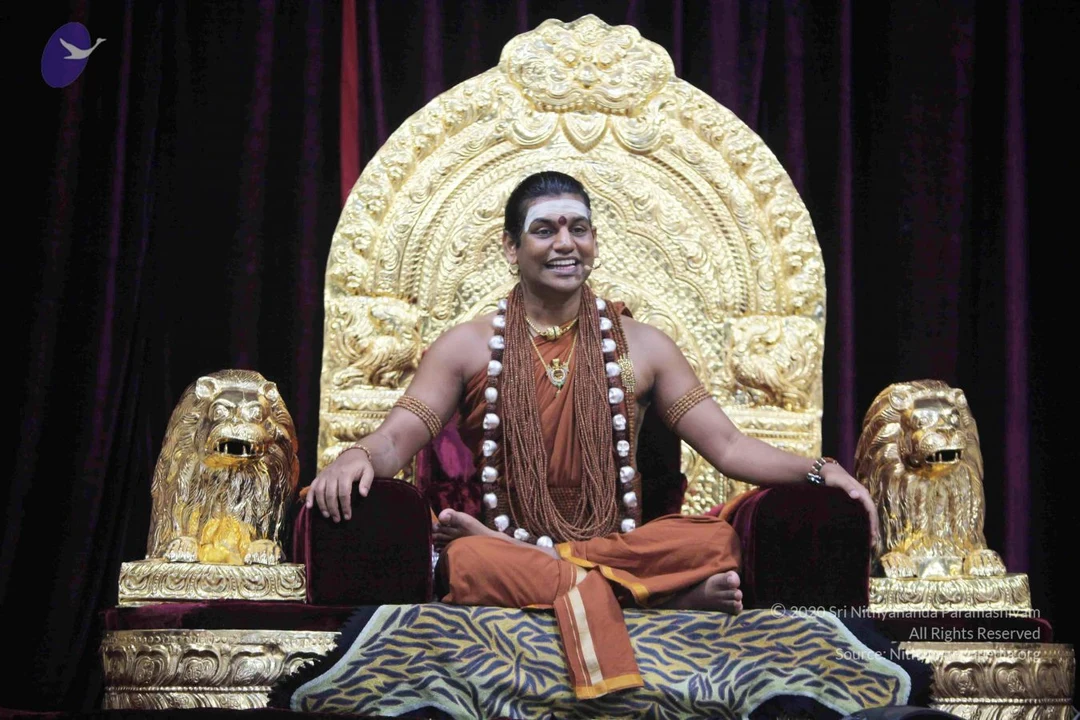
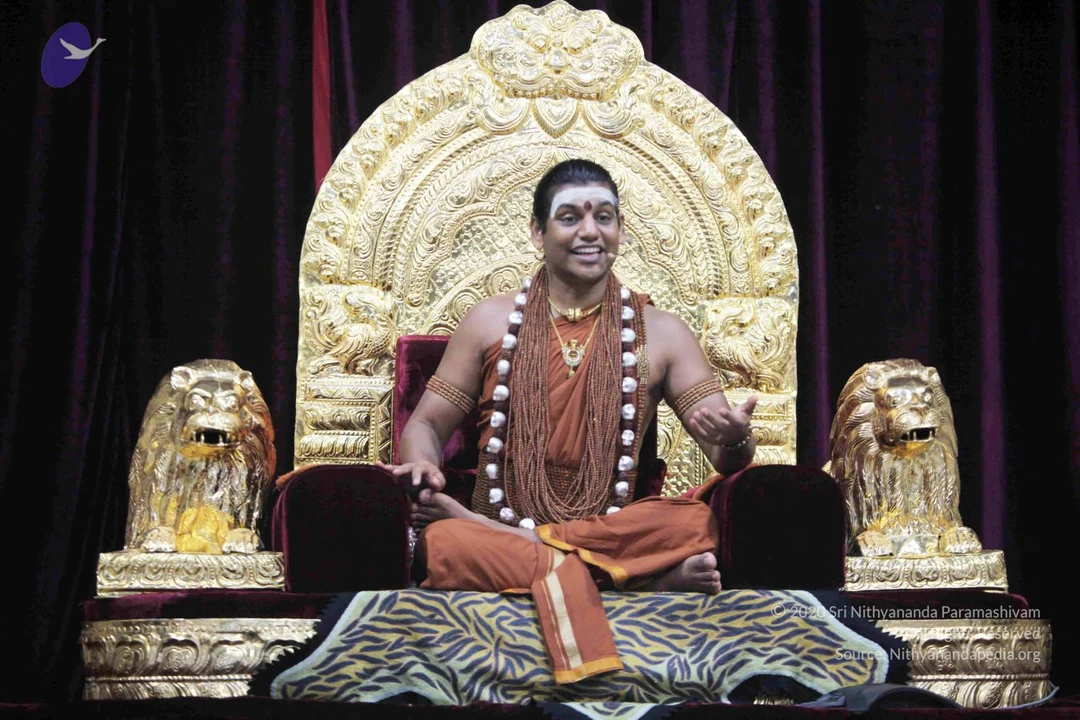
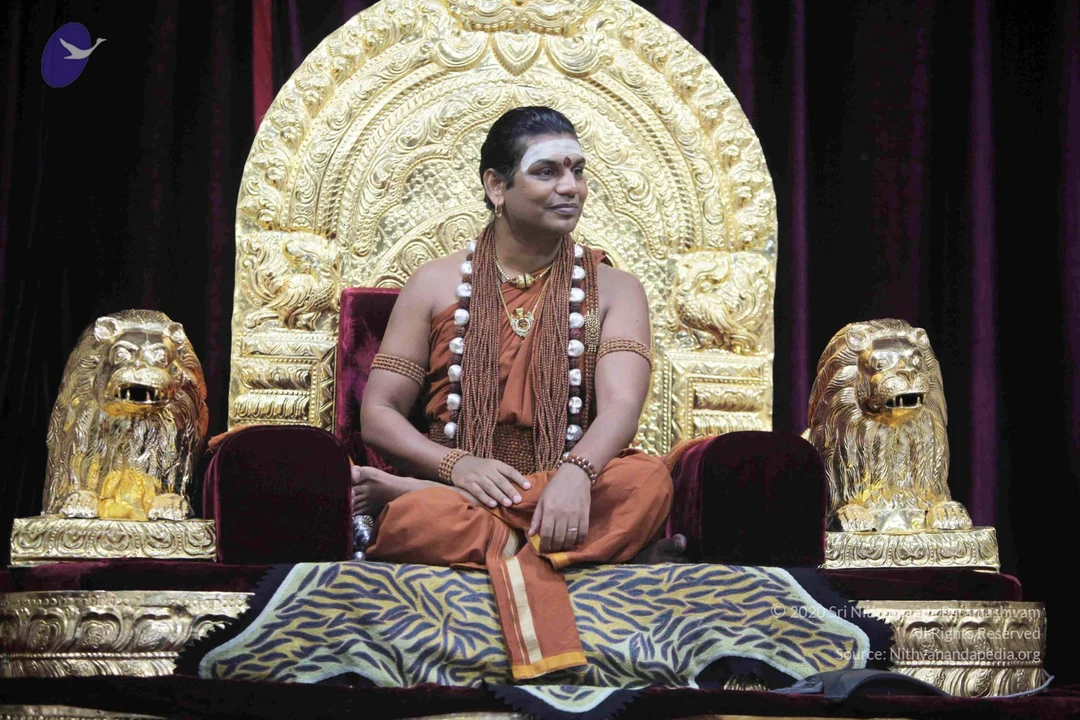
In today's morning satsang, Paramahamsa Nithyananda continues His revelations of the Katopanishad, explaining verse 9 of the 2nd chapter. When we live the tattwas, the four noble truths of being, we enrich those around us. Until we participate in them with full consciousness we continue to be inauthentic. In ancient Vedic tradition, all sounds had power. Even today, when we speak with authenticity our words create our reality. When we speak inauthentically we encounter blocks in our lives. Sanskrit is the language of power because it is phonetic -- it is based on pure sound. Those who wish to transmit the noble tattwas should use their Sanskrit names. Sampoorthi = Integrity; Shraddha = Authenticity; Upayanam = Responsibility; Apyaayanam = Enrichment.

Link to Video:

VideoAudio

Transcription

[00:00:25]

ll Sadāshiva samārambām Jnana sambandha madhyamām Asmadācharya paryanthām vande guru paramparām. ll

[00:00:51]

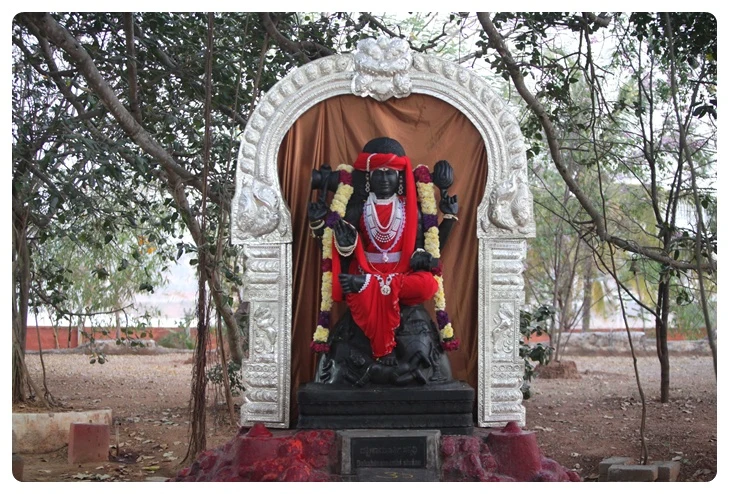
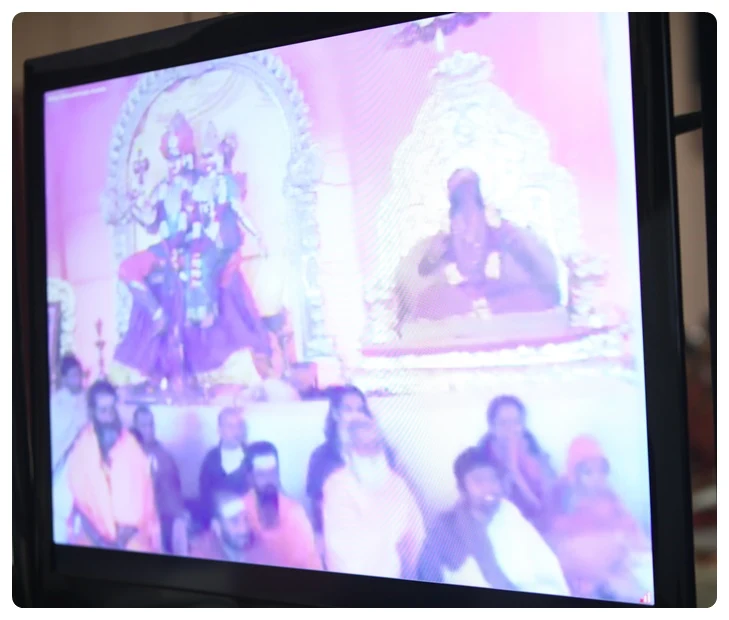
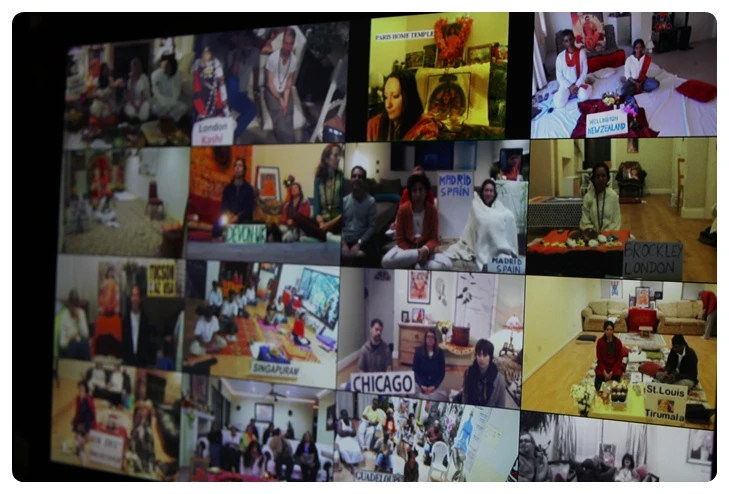
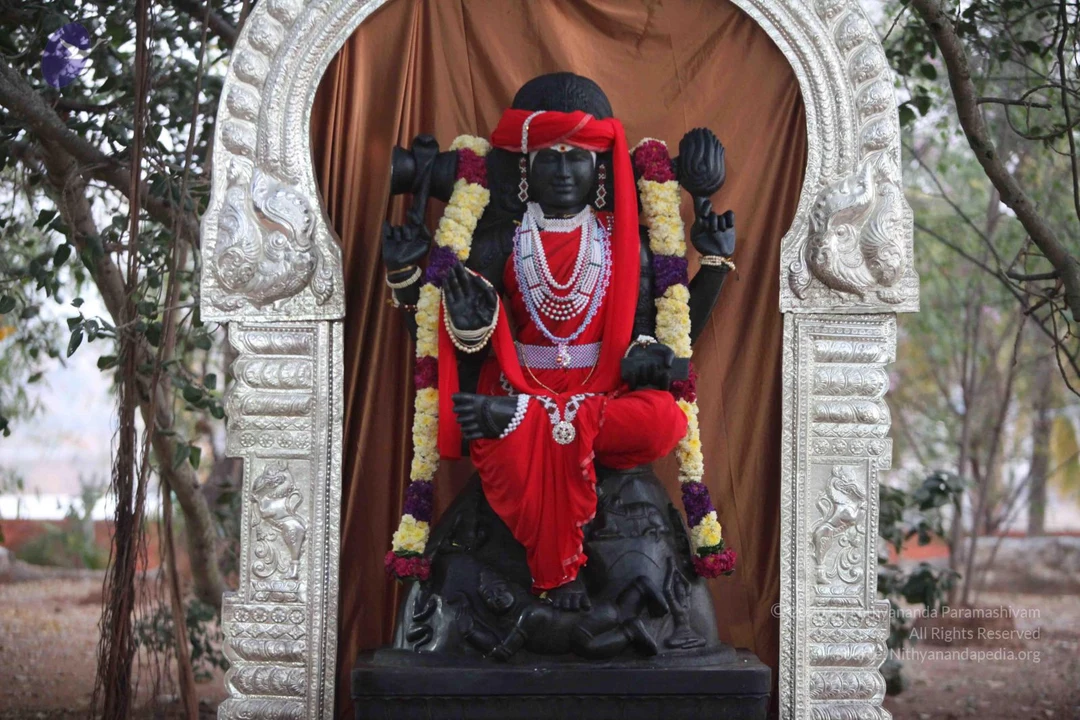
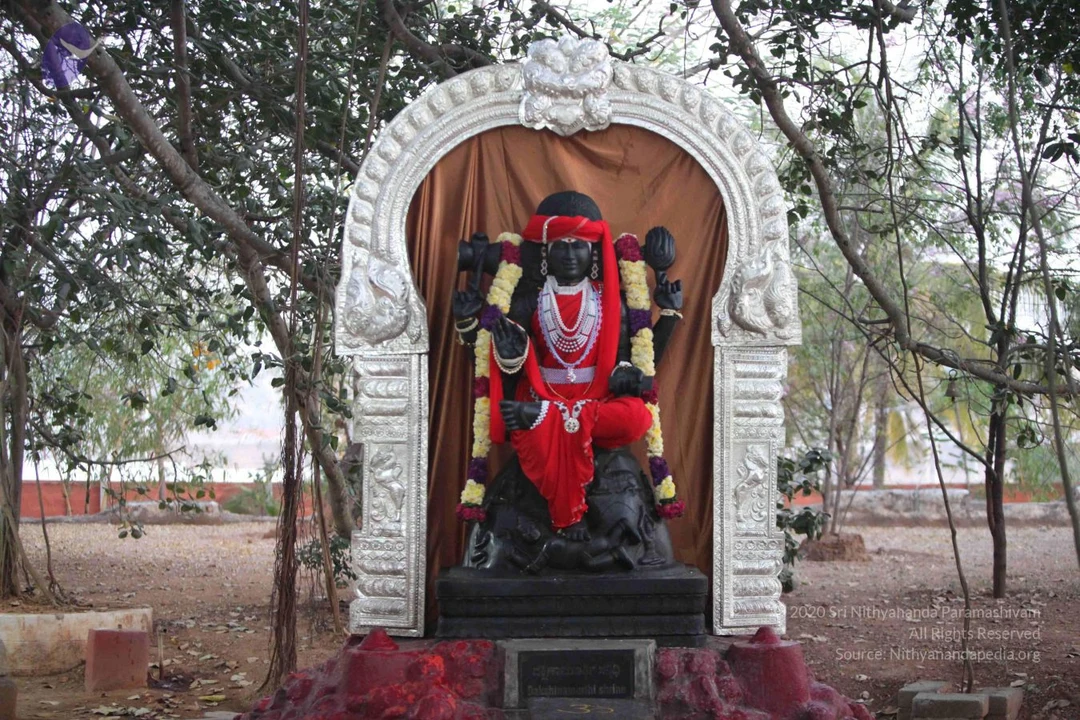
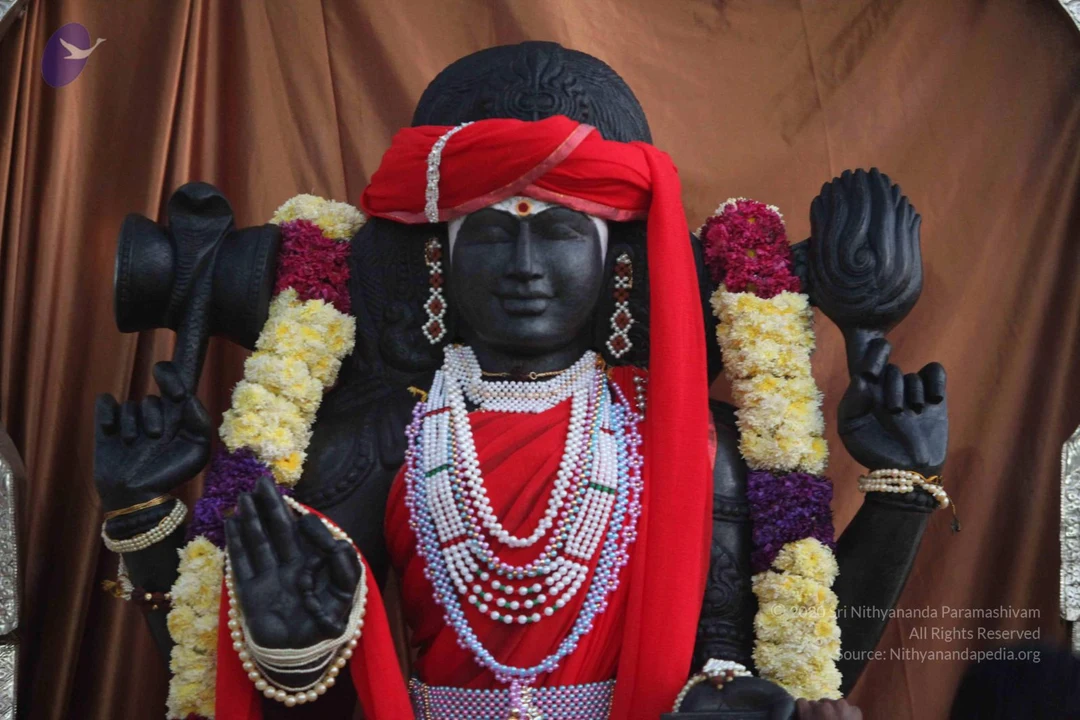
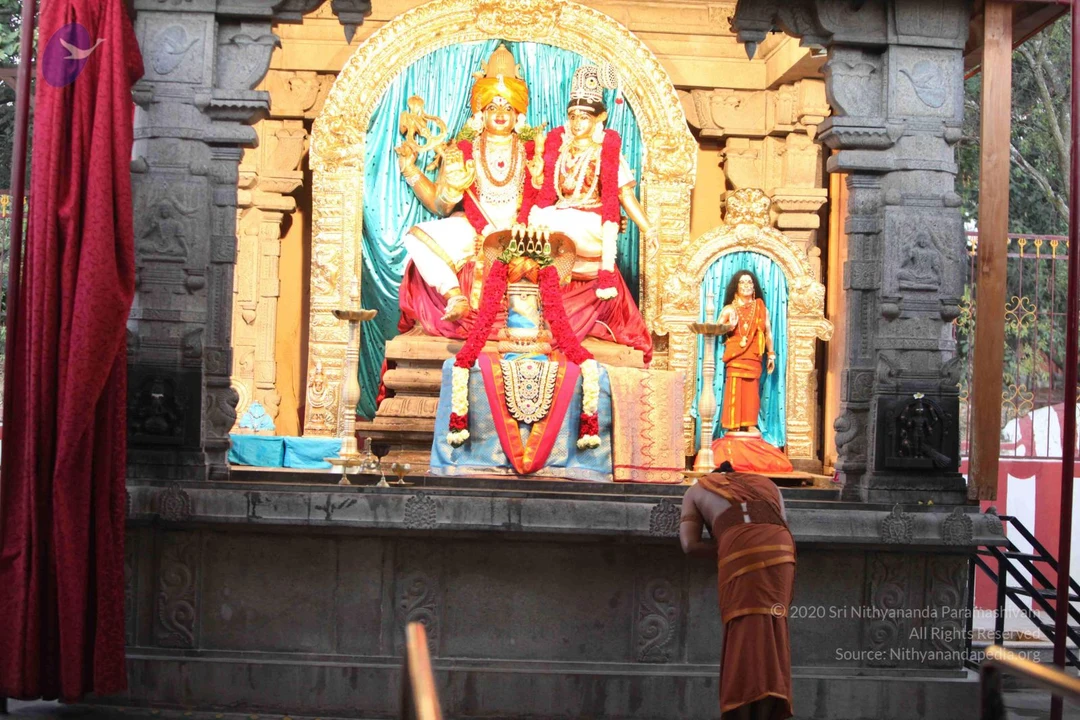
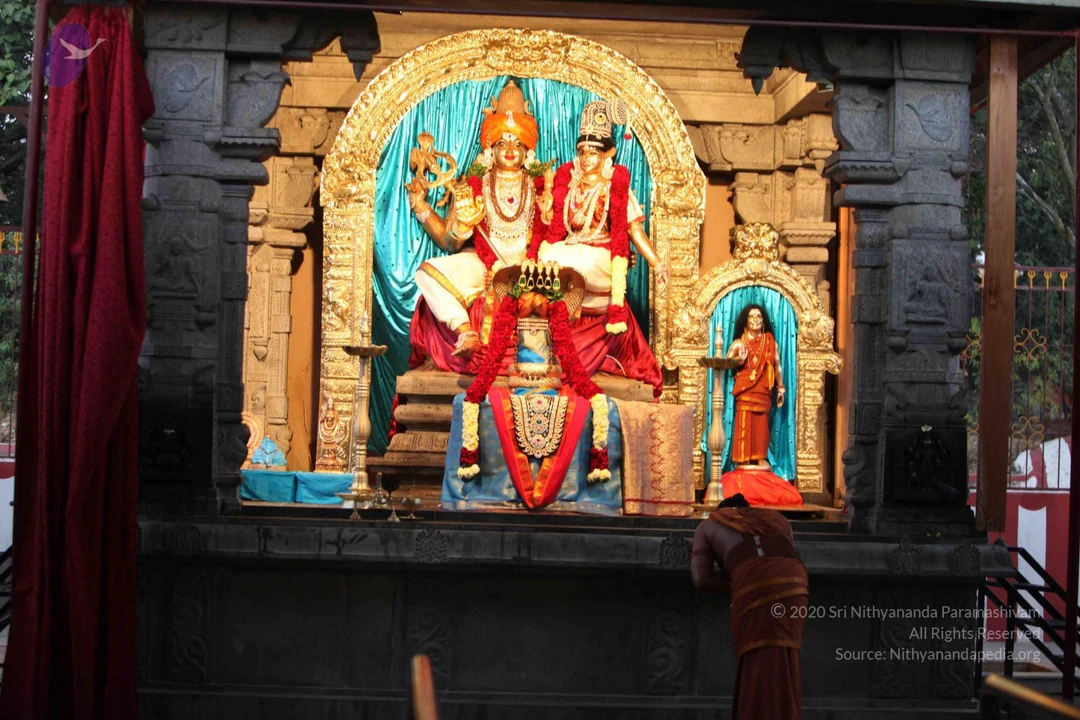
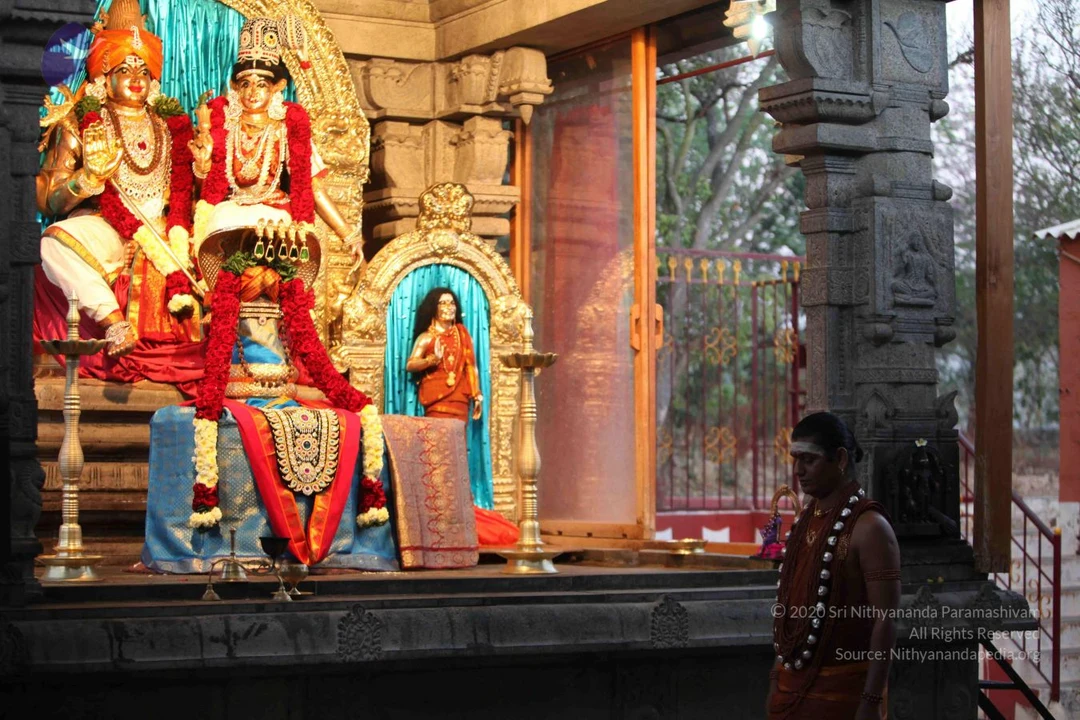
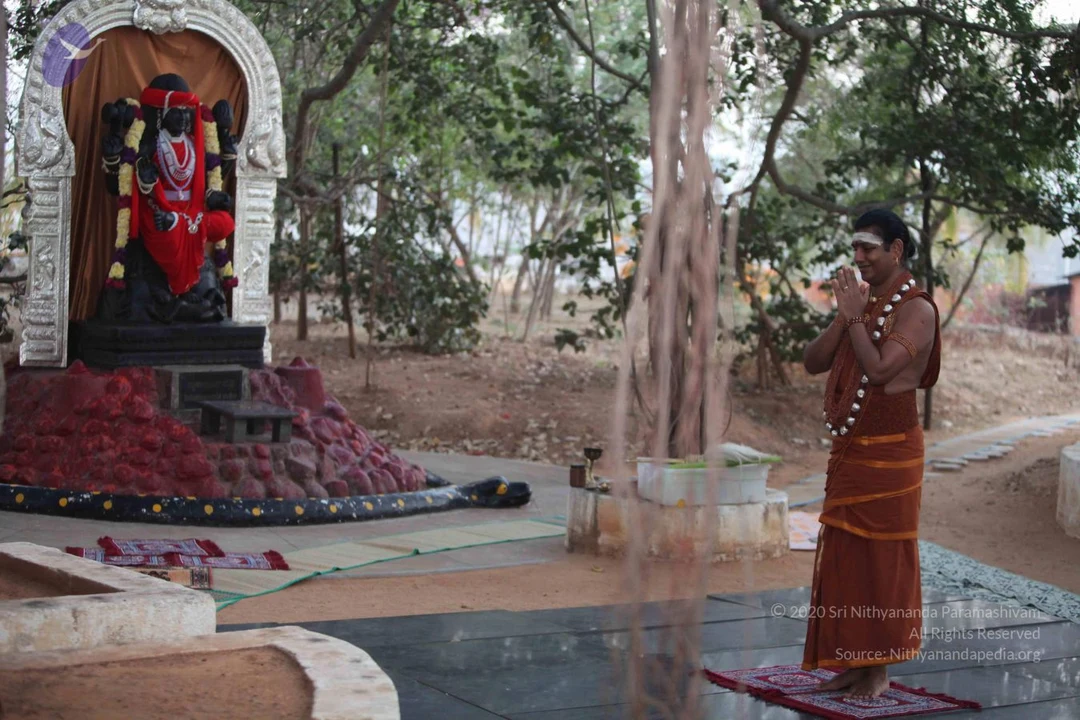
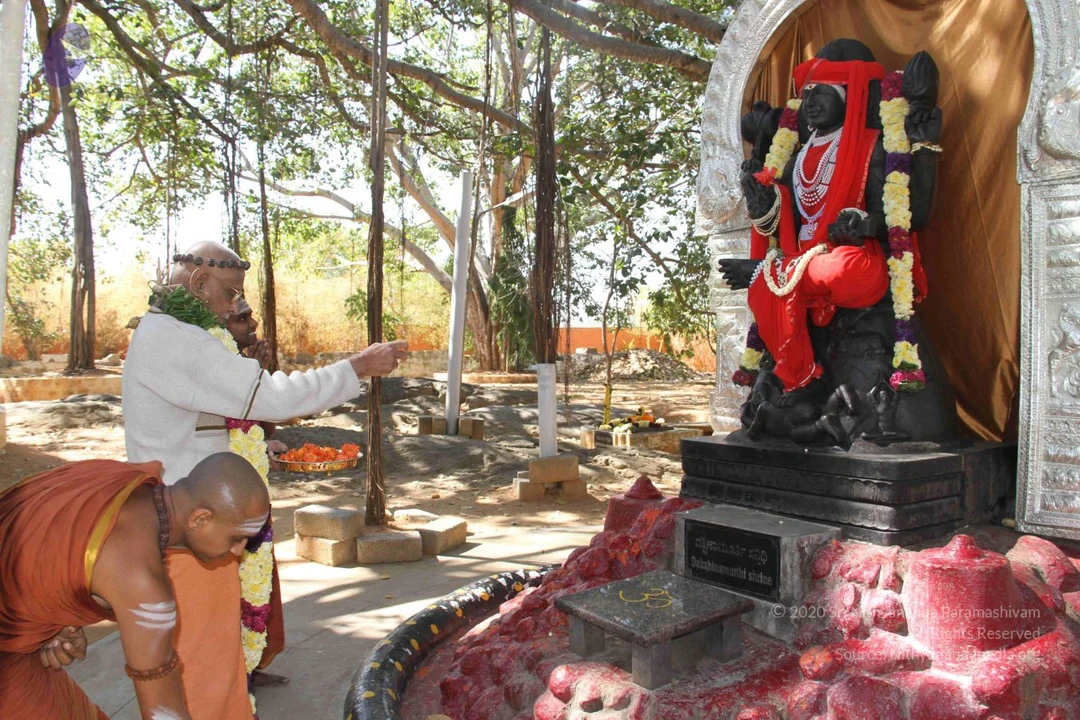
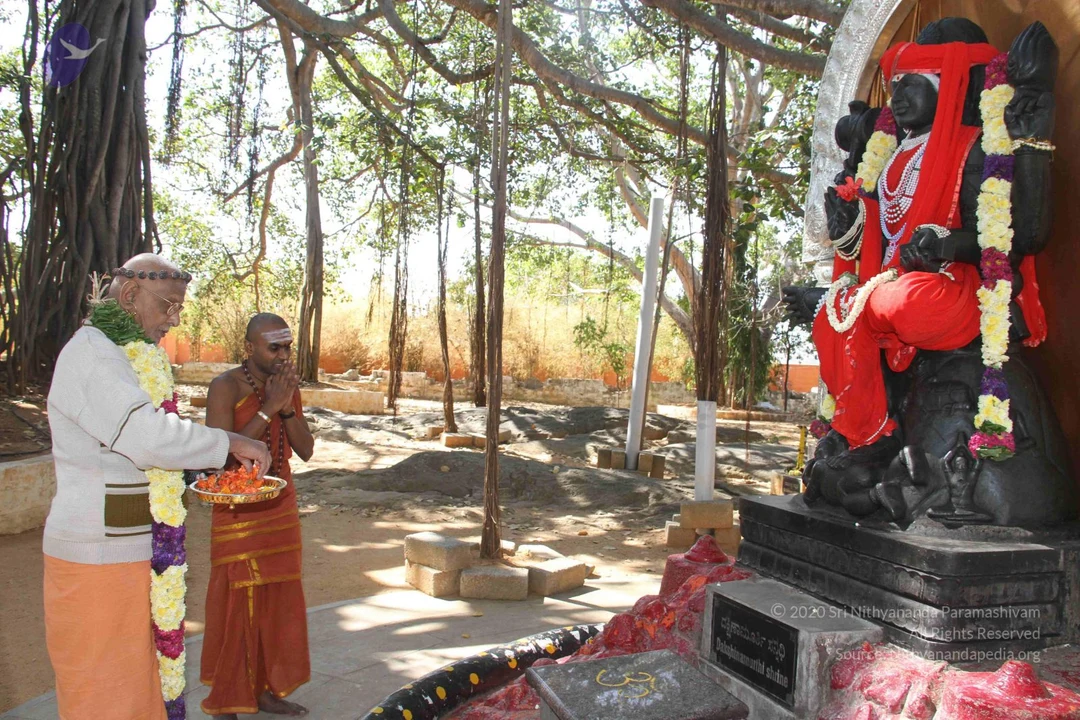
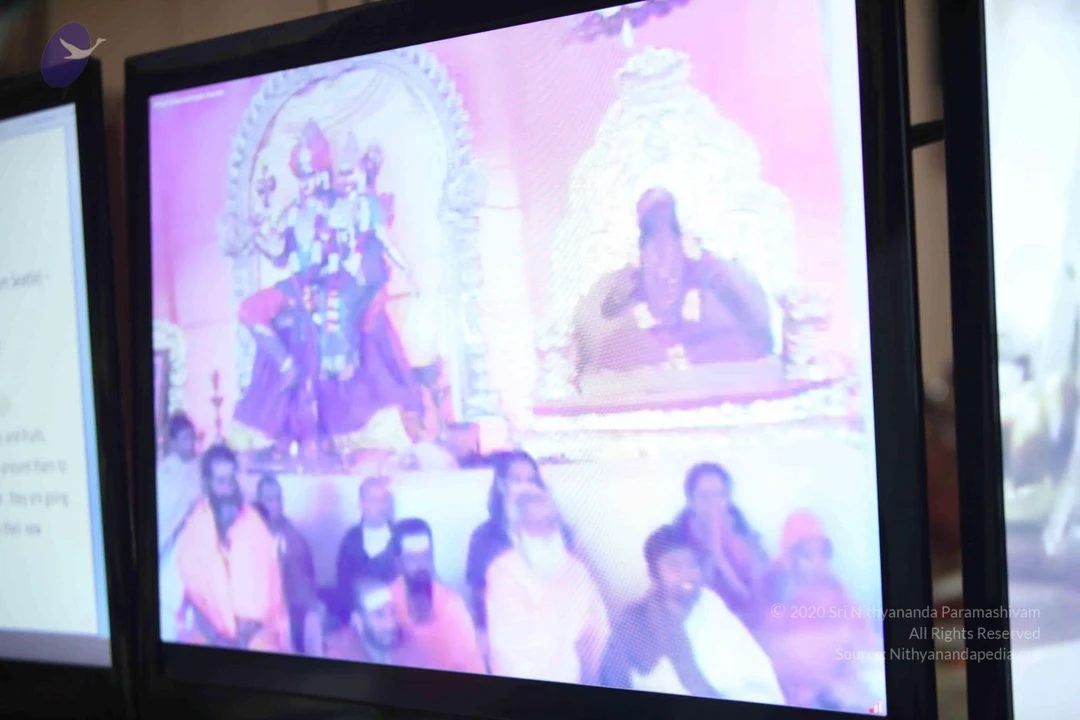
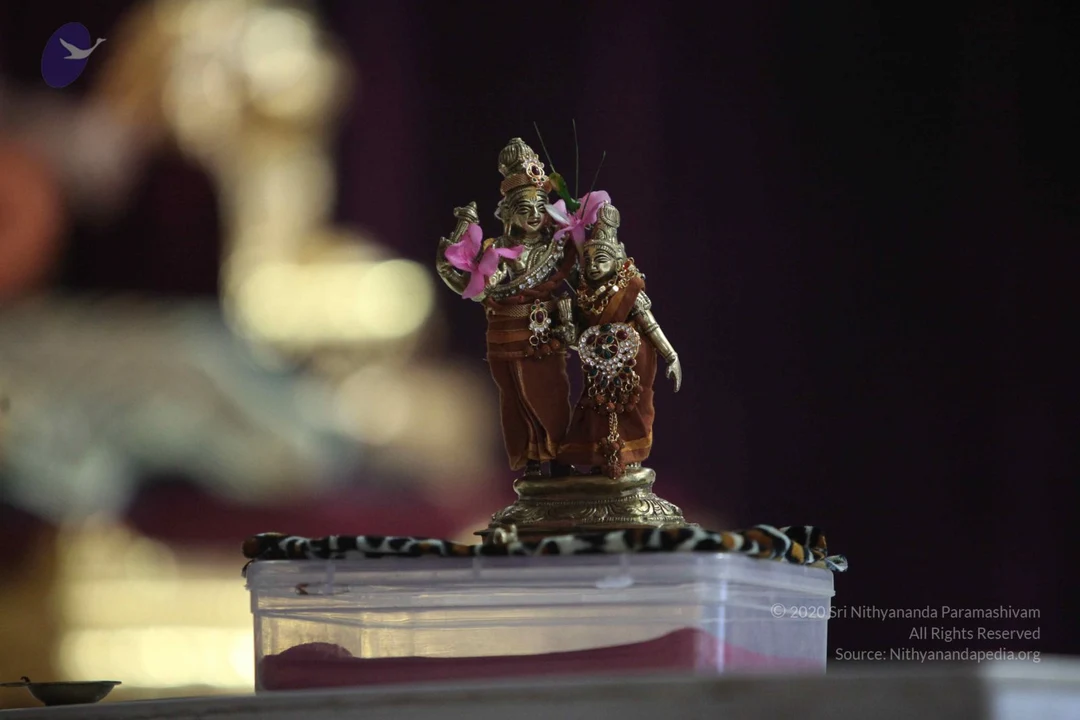
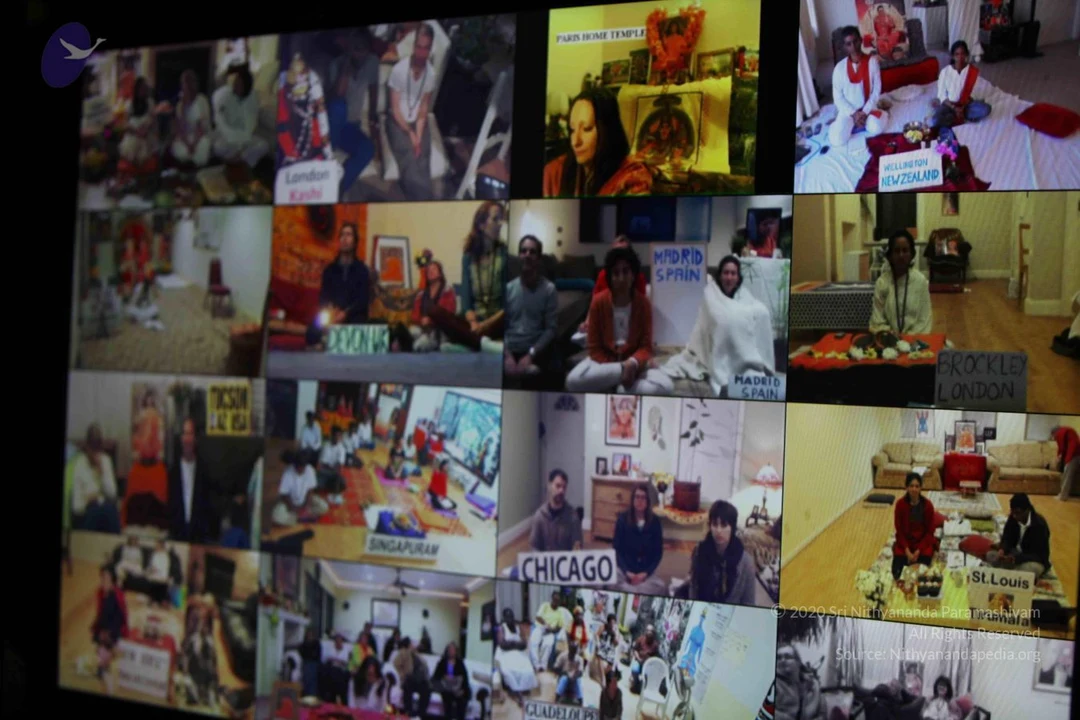
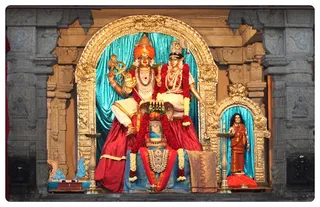
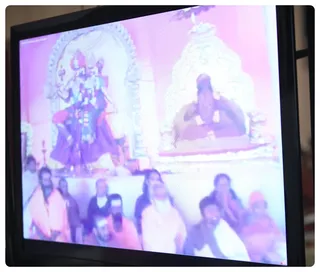
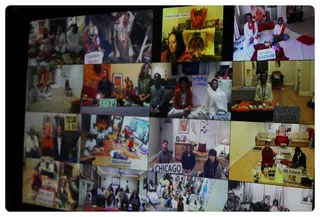
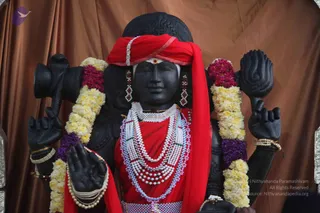
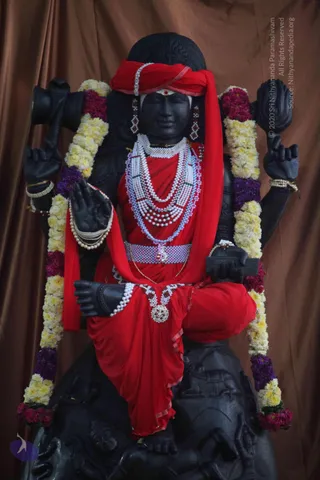
I welcome all with My love and respects. I welcome all the devotees, disciples, Samajis, Satsangis sitting with around the world at this moment in 381 places through Nithyananda TV, 45 places two-way video conferencing having Nayana Deeksha, in 200 cities and 23 countries around the world. Cities sitting with us in two-way video conferencing having Nayana deeksha: Los Angeles- Arunachalam, Vancouver -Puri, Bangalore North, Hyderabad - Bhagyanagaram, Seatle - Chidambaram, Toronto - Kailasam, Oklahoma - Somanatham, Ohio - Prayag, SanJose- Madurai, Phoenix - Kanchipuram, Charlotte- Srisailam, Atlanta - Ujani, Thiruvannamali, Oman - Sivagangai, Dubai - Thirukovilur, Scottsdale - Arizona, Black Diamond - Canada, City center - Pondicherry, Hyderbad Shree, London- Kashi, Kulim- Malaysia and Lawspet- Pondicherry, Chennai - Alvarpert, Tallahassee- Florida, Bangalore..sorry Mangalore or Bangalore, Worksop- UK, Hollywood- Los Angeles, Hongkong - Seerkazhi, Adyar- Chennai, Port Washington - New York, London - Kashi. London Kashi can you show the deity little close up through the camera? What is that deity? No, show the camera, closer. Let Me see what is the deity? Paris - home temple, Edge water - New Jersey, New Jersey- Omkareshwar, New York-Varanasi. What is the deity? Oh Kala Bhairava they made. No, show close up. Is it Kalabhairava? Wow, 😊 Hey tell them to show close up and project it. They have done beautiful job. 😊😊 No, just like Varanasi, Kashi Kalabhairava they made. Ask them how they made? Still it is not close up on the center. Tell them to show it close up on center. Hey show the whole deity. Edge water - New Jersey and what is the next? Oh New Zealand, Wellington- New Zealand, Brooklyn - London, Devon - UK, St Louis - Thirumala, Singapore - Singapuram, Monterrey - Mexico, Madrid- Spain, Guadalupe - Rameswaram, Chicago – I give the name.. spiritual name to Chicago – Srirangam. Chicago – Srirangam. We will have Ranganatha temple in Chicago, Tucson- Arizona, and Ma Kalabhairava only na? They made in what material they made? Ask, ask. Wow, they have done a good job. 😊 So just like Kashi Kala Bhairava they made him. Beautiful. 😊. They put the…..Did they get it from Kashi Ma? Ask them. Looks almost like Kashi Kalbhairava. They put the skull garland and all to him, Great! Namah Shivaya. I can see Thiruvottiyur now. Project Ma….project. Kashi Kalabhairava in London Kashi. 😊 Tell them to show the whole form. Yes. Ask them how they made or have they brought, have they bought from Varanasi or what is the material? Nice 😊 Ask all the details Ma. Hmm. Beautiful. Alright Ma. Now I can see Slovakia- Koschitze also. And Adayar - Chennai, Alwarpet - Chennai, Tallahassee- Florida, Hyderabad Shree and what’s the next center Ma next to Hyderabad Shree? Pondicherry City center and Kulim- Malaysia. Yes, Kulim - Malaysia also.

[00:07:00]

I welcome all of you with My love and blessings. Great! Oklahoma blessings to all the malas and fruits please offer it to Bhagawaan Swami Narayan. Today the Swami Narayan temple prana prathista is happening in Oklahoma. Tomorrow the prana pratista, all our devotees are going with all the offerings. Blessings. Oklahoma Blessings. Please go and offer everything and tell them also My respects and humble pranams to Swami Narayan, all the Swamis who come there. I don’t think Pramukh Swami is coming. He is not feeling well. But I think the next Swami’s will be coming. Tell them all My pranams and respects, great. And now I can see Maha Kumbh Puri- Prayag, Nithyananda Dhyanapeetam branch in Maha Kumbh Puri. Yes Maha Kumbh Puri Nithyananda Dhyanapeetam branch. Blessings to everyone! Great. It seems a lot of people are asking, “Do you guys have a mobile temple or what?” 😊 Beautiful.

[00:08:54]

Today Brahmanyam bahuputrataam happening successfully 8th day. It’s the first level. We have already completed two batches first level. Today the first level, sorry, today the first level second batch is getting completed. Second level dates are already announced, what are the second level dates? Second level two dates I have announced. April 3rd to 12th one batch second level. Then April 13th to April 22nd second batch. Means, please understand, first level two batch we did. Second level two batch date now I announced. People who already became ashramites have to do second level in any one batch. This time many people who want to be ashramites I have given them the option to be part of this first level. By… before you come to the second level you will completely finish all the completion and do all the homework. And then after the second level you can apply for second level if you are completely clear with integrity and authenticity you are making the decision to become ashramite, you can apply for second level. If you are called for the second level and you successfully complete the second level then you will be having the ashramite initiation. Already people who have become ashramites have to attend in this two any one batch the second level also.

[00:11:04]

Nirahara samyama first level second day today. Tomorrow we will be breaking the fast and then starting after two day break the second level. Great 8th batch successfully beginning. Sarah, Port Washington - New York – blessings. I accepted your pada puja and will bless you during Dial the Avatar. Blessings. 😊 Kevin blessings for the Kalabhairava deity. It’s really beautiful, it’s really beautiful, blessings. Ma volume kurai….Blessings So…. birthday blessings, Kaveena Ananda from San Jose, birthday blessings. Oh Ma Sunitha Hyderabad birthday blessings. Blessings, birthday blessings.

[00:12:52]

Let’s start today’s satsang in Kathopanishad, second chapter ninth verse on authenticity. Please start Kathopanishad, second chapter ninth verse, no book.

न एषा तर्केण मतिः आपनेया | प्रोक्ता अन्येन एव सुज्ञानाय प्रेष्ठ ।

यां त्वम् आपः सत्यधृतिः बत असि| तादृक् नो भूयात् नचिकेतः प्रष्टा ॥ 2.9|| naiṣā tarkeṇa matir āpaneyā, proktānyenaiva sujñānāya preṣṭha: yāṁ tvam āpas satyadhritir batāsi; tvādṛṅ no bhῡyān naciketaḥ praṣṭā. (9) In Kathopanishad, second chapter ninth verse once more; naiṣā tarkeṇa matir āpaneyā, proktānyenaiva sujñānāya preṣṭha: yāṁ tvam āpas satyadhritir batāsi; tvādṛṅ no bhῡyān naciketaḥ praṣṭā. (9)

naiṣā tarkeṇa matir āpaneyā, proktānyenaiva sujñānāya preṣṭha: yāṁ tvam āpas satyadhritir batāsi; tvādṛṅ no bhῡyān naciketaḥ praṣṭā. (9) The translation: State of enrichment not attainable by logical understanding. Only by the being living these truths can it be transmitted. Oh Nachiketa, you have attained through your steadfastness, Oh Nachiketa, you attained through your shraddha – sincerity, authenticity. Oh Nachiketa! Will another authentic seeker as you ever be found?

[00:15:26]

Thanks to Bhaktimaya for beautiful translation. Ma Baktimaya for beautiful translation, amazing. Ma now just adopt these few more rules – no negative word just like how we teach the Grukul kids the conscious cognisance – zero negative word. Even no negative word is not right. Zero negative word. Am I right? So, zero negative word first rule. Second all the diff….if there are ten words in each sutra, each word all the possible, available translation. Words should be made available in front of your eyes. And then authentically cognize, consciously cognize and see to it the maximum words appear in the translation to give a complete perspective of what the Rishi is trying to express and convey to a student. This should be the law of translation. And very easily you guys can pick up Sanskrit; it's not a big thing, very easily you can pick up. Every day if you memorize the mantra, sloka and I am reading out the translation here, you just know because if you are from Indian background 80% of the words any language you use is from sanskrit. And you just know, you can just match it and see the meaning.

[00:17:19]

naiṣā tarkeṇa matir āpaneyā, proktānyenaiva sujñānāya preṣṭha: yāṁ tvam āpas satyadhritir batāsi; tvādṛṅ no bhῡyān naciketaḥ praṣṭā. (9) May I request all the ashramites to close down their book and chant once. Please close down all the books, now start once more: chapter second ninth verse. naiṣā tarkeṇa…. Stop, I wanted Gopika and Baktika to chant, let Me see……..start, okay they were not here, alright, alright. You guys start then hm, hm. Start. naiṣā tarkeṇa matir āpaneyā, proktānyenaiva sujñānāya preṣṭha: yāṁ tvam āpas satyadhritir batāsi; tvādṛṅ no bhῡyān naciketaḥ praṣṭā. (9)

naiṣā tarkeṇa matir āpaneyā, proktānyenaiva sujñānāya preṣṭha: yāṁ tvam āpas satyadhritir batāsi; tvādṛṅ no bhῡyān naciketaḥ praṣṭā. (9) The state of enrichment not attainable by logical understanding. Only by the being living these truths can it be transmitted. Only by the being who enriched himself with these truths can transmit it. Can you alter the translation? Oh Nachiketa, you have attained through your authenticity. Oh Nachiketa, will another authentic seeker as you ever be found?

[00:19:35]

These tattvas becoming satya happens only by living. Please listen. Just today morning we were having a commitments and completion session with ashramites. The subject came up was non-participation. I was just scanning, why the non-participation? See, participation does not mean only picking up the mic and talking. Even in otherwise how you involve; how your body language is, how you are listening, how you are cognizing. Fortunately I can see what goes on in your mind 😃 maybe for you unfortunately for Me fortunately 😊😊. So, the cognizance, cognizance and the listening is also participation. So I was scanning why the non-participation? Why the non-participation? Suddenly I discovered the root, why the non-participation? When you have a different personalities and constantly try to engage them in a inauthentic way instead of integrating them. I gave an example: you have a lawyer friend from whom you need to have some help, you say, “I am going to become lawyer and become your junior” to appease him. Then you need some help from a doctor you say, “I am going to become a doctor and your junior, your assistant” to appease him. Then you find an engineer from whom you need a help “I am going to become a engineer and your assistant” you appease him. You find a IT job eh..consultant, “I am going to become IT engineer and assistant to you” and you find a spiritual Guru you want to appease him for some reason, “I am going to become your Brahmachari and sanyasi”. In the beginning you will have awareness you are playing this game for certain purpose.

[00:22:11]

Please understand. Second time, second time when you utter this you will lose the power over your consciousness, your integrity, you will start believing the words you utter. Please listen. Second time any word you utter is your declaration. First time if you say, “I am a criminal” it comes out of consciously it will not make any impact on you. But this word sits inside you as a seed, second time when you utter you are a criminal, over. Over. The word has creating its impact on you. Because the seed now is becoming alive. So, second time when you try to tell the lawyer, “I am going to be your junior”, you tell the Swami, “I am going to become your brahmachari”, you tell the doctor, I am.. you going to become your assistant, the multiple personality inauthentic disorder starts growing in you. It is very unfortunate. Please understand. You yourself will be in a terrible confusion, second: you will go on cheating everybody, third important thing: when you are in the lawyer office suddenly doctor comes and asks you, “What are you doing here you said you are going to become a doctor and my assistant”, you suddenly jump out of the room, lawyer office room and tell him, “Yes, yes, I am coming, I am not, I have just come here to see him, I am not going to become a lawyer and his junior. Don’t worry. I am coming there only.” And suddenly your engineer friend to whom you promised you are going to become a ..his assistant. He sees you when you are sitting at the feet of your Guru and he sees you and asks, “ What are you doing here in this ashram?” You say, “No, no, no I just came here for one or two days, I am just here don’t worry I am not going become brahmachari, I am not going to become ashramite. I am coming there, I am coming there as your assistant. Don’t worry.”

[00:24:38]

Understand. In every line what you created is destroyed the moment you make this statement. The moment you make a statement to a doctor saying, “No, no, no I am not doing anything with the lawyer. I am not going to be his assistant. Don’t worry.” It is whatever you studied or worked in that line destroyed. And then when you make the statement to your IT friend, “No, no, no I am not in the ashram. I am just staying here for one or two days. I am coming there, I am coming there. I am not going to be here. don’t ...I am not going to be here”. When you say whatever you learnt here from Me is destroyed. It is not going to be useful for you in your life anymore. It is like a Karna giving a false promise to.. false promise and hope to Parasurama and learning every vidya; finally Karna was use.. able to use that vidyas? No! Because these vidyas function on authenticity. It is the authenticity which gives life to these vidyas.

[00:25:52]

I tell you, just yesterday night I was working on the code: in Meenakshi’s time people used to have a stone slab in their houses which acted like a television. Only thing they will have to do is they will have to sit in that seat and create the sound vibration. And then immediately they will be able to have darshan of Meenakshi through that slab and talk to Her get instructions, anything they want. I was wondering why now it is not possible. If you reclaim, restore your authentic integrity, every sound you create will have result. Because you’ve out of integrity the sounds you create neither has affect on you nor has effect on others. Patanjali says, just chanting Om you are in samadhi. Ramanuja’s guru says chant om namo Narayanaya 108 times you will reach vaikunta. Ramanuja says chant only once you will reach Vaikunta. And Shankara goes to the extreme chant the name of Govinda once, drink one drop of Ganges water or read half sloka of Bhagavad gita you will be liberated. Then why all that is not happening for us? Then we start doubting maybe Patanjali is a liar or Shankara exaggerated. Ramanuja was hypnotized by the glory of Narayana. No. You have become inauthentic.

[00:27:48]

Integrity makes the sounds into reality. When you are in lack of integrity no sound can become reality. I tell you, especially this is the instruction to all the pujaris, priests of Dhyanapeetam: you have to maintain the highest standard of integrity. Only then your mantras will invoke gods and goddess either in the deity or in the fire, and the offerings you do will reach them and they will bless the person on whose behalf you are doing the offering. Only then the Vedic rituals will become science. All the priests of Dhyanapeetam, pujaris of Dhyanapeetam, this is the instruction for you. You have to retain high integrity and authenticity. And I also declare from today, till these pujaris reclaim, restore their integrity and authenticity to the level if they say, “Prana pratishta ayam aham karomi - I invoke this energy”, the energy has to be there. If you are in integrity and authenticity it will be there. It is the integrity and authenticity makes your sound, that sound vibration into reality. Till then I wanted Gurukul kids to conduct rituals and chant mantras. Because they have a highest level of integrity and authenticity. We will have some Gurukul kids trained. Especially the prana pratishta mantras where the deity is invoked either in the god or in the fire. If I am not physically available there it should be chanted by gurukul kids.

[00:30:17]

Only with highest integrity and authenticity the sound you create will become reality. Only with authenticity the Brahmastra will become reality. Brahmastra, everything, the pushpaka vimana, Brahmastra everything was operated based on the sound. Vedic tradition had everything we have now. They had the flight, they had helicopters, they had atom bomb. They had everything. It was operated on...through sound. In the modern western day we are operating everything through light energy, electricity. With vedic tradition we were operating through sound energy. Because we lost the integrity and authenticity the sound we create already gets twisted, distorted, destroyed before even it comes to the throat. The moment you say I will win, already ten times you said I am going to lose. How many of you feel before even you complete the statement ‘I will win’, already part of your fear, your being has declared, “No, no, no I will lose...I may tell but I never win”. How many of you cognize this truth? It means what? The destruction, distortion of the sound has already happened. How can it create a result? Now the cosmos does not know you want to win or lose what to give you. Cosmos is standing scratching the head, “What do you want?” “The Puspaka vimana is standing in front of you. You want to take off/get down? Right or left tell me.” Because before you uttered the word ‘right’, part of you has already said ‘left’. Before you uttered the word ‘up’ the part of you has declared ‘down’. Highest level of integrity and authenticity is required for making the highest energies into your reality as part of your reality. This is the exact way cosmos is standing in front of you. 😊 It doesn't know your instruction, it doesn’t know exactly what you want. 😊😊

[00:33:18]

You think you are manipulating the lawyer, engineer, doctor, your Guru and everybody. It is not. You are manipulating you. I tell you inauthenticity is not required for your success and joy, for your success and fulfillment. Only when you remem… when you realize inauthenticity is not required for your success and joy and fulfilment; whether you have strategy for inside or the strategy for outside you don’t need inauthenticity, that - that is going to bring success to you. That is going to bring Keerthi to you. Shreeyishcha, pustischa, keertinchan, hrnyatam; Brahmanyam bahu putrataam. It is going to happen to you only when you understand the inauthenticity is not required. We always think, “No, inauthenticity is not required for my internal enlightenment and growth, maybe for my external things I still need for sometime, some more inauthenticity because this fellow is inauthentic. My Lawyer is inauthentic, my doctor is inauthentic, my engineer is inauthentic, my Swami is inauthentic. So, I will retain my inauthenticity.” No. if they are all inauthentic, they are in hell. You want to be in the same hell? The whole world being in inauthenticity does not justify your inauthenticity. When you decide to become authentic you will create a right, authentic world around you. And you will simply go and get attracted to the authentic group and you will stay there.

[00:35:24]

Ramakrishna says very beautifully: ‘a fisherwoman who sleeps, lives whole day with the smell of the fish, cannot sleep in the flower shop.’ Every story of Ramakrishna is just extraordinary. He says very beautifully: Few fisherwomen went to sell the fish in the market. When they came back...when they were coming back to their village it became too late. So, they saw a small house on the way. They asked, “Can we sleep tonight here”. It was a flower shop owners house. The guy said, “No problem, please sleep here. All three of you. Tomorrow morning you can go.” So, all three of them lied down but they are not able to sleep. They were rolling, tossing, they were not able to sleep. They were not able to find the reason. Then one lady said, “I know the reason now, because the whole house was full of jasmine smell. He had lot of flowers stock. This lady went, her old fish basket and brought the basket and sprinkled little water. Fish basket if you put little water it will smell and they put it near their head all of them slept peacefully. 😊

[00:37:04]

If you are carrying inauthenticity in you will be naturally attracted to a society of inauthenticity. If you are, if you decide to live authenticity and integrity, you will simply be attracted to the community, society which lives authenticity. No one can stop you. Your husband may stop you coming to the temple or ashram but sitting in your bedroom you are attending two way video conferencing and you will be attending the satsang. I know there are so many...so many devotees where the husband or wife is not allowing them to go the ashram or temple. They sit in their house and attend the satsang. 😊 So, when you are carrying authenticity, nobody will be able to stop you, nothing can stop you. When you are carrying inauthenticity even living around Me will not help you. One thing I want to make it very clear understand – whether it is the success of inside - internal or success of outside, inauthenticity is not required. It is not going to be the successful strategy planning. Whether you want money or beautiful relationship like a husband or wife or the family or the health or wealth or success in the outer world or fulfillment in the inner world, enlightenment in the inner world, anything whatever you may want, inauthenticity is not right strategy. Non-integrity and inauthenticity is not going to be a successful strategy. So, I tell you inauthenticity was never a successful strategy… a successful strategy no, no, no. State of enrichment! “न एषा तर्केण मतिः आपनेया | प्रोक्ता अन्येन एव सुज्ञानाय प्रेष्ठ । naisa tharkena mathirapaneya prokta ne naiva jnanaya presta This State of enlightenment not attainable by logical arguments or understanding. Only by the being who enriched himself by these truths can enrich you with these truths. Oh Nachiketa, you have attained the state of receiving this truth through your authenticity. Will another authentic seeker like you can ever be found? No.

[00:40:55]

When you think for internal success I need authenticity but for external I’ll keep little inauthenticity but I know where I am keeping inauthenticity. How many of you cognize this truth, you are playing this game in your life? Raise your hand. You are in a big ditch. 😊😊 You are in a very big drainage 😊 and be very clear you got into the drainage and put the manhole cover on your head 😊. You are not intelligent to separate the poison and the milk continuously. You think I will keep little poison inside this same milk can, when I drink I will drink only milk, when I give it to my enemy I will give it with poison. How many of you think this is foolishness? Raise your hand. Then why do you think the other thing is intelligent? If you consider this is foolishness then why do you think the other thing is intelligent? You think “No, I know this lawyer is inauthentic cunning fellow, very intelligent. So, that is why he is successful. I will also play the same game and become successful.” Ba ba ...it doesn’t happen. Understand. It is again you making the mistake, “No, no, no, no, no I will keep the inauthenticity poison in this authenticity milk, when I drink I will drink separately only milk. When I share the cup to others, I will give with the inauthenticity poison and milk to the other person.” It’s like a, one fellow brings the milk and puts the poison. Poison is naturally heavy, goes and settles below. He gives the milk..the tumbler to the other person and says, “You drink half and then give me the remaining half.” Even if it’s heavy and settles down you think, the top glass milk….top half is not going to have the effect of poison? Or you drink the top half and give the remaining half to him. You think the top half is not going to have the poison effect?

[00:43:59]

I tell you, inauthenticity will in no way be a strategy for what you want in any level of your life. Because with inauthenticity you are in a terrible confusion and terrible anger, terrible feeling the life has cheated you, society has cheated you. Anybody you see, whom you see, you feel they have cheated you. You feel this lawyer has cheated me by expecting me to become his assistant. This engineer has cheated me by making me his assistant. This doctor has cheated me by wanting me to be his assistant. This Swami has cheated me by wanting me to become his brahmachari. Nobody wanted, you tried, you played the game. The terrible feeling of being cheated by society, the terrible feeling of being exploited, the terrible feeling of illogical anger which leads to your own destruction happens to you when you play with inauthenticity mixed with lack of integrity, mixed with irresponsibility. It is like snake poison, bald oil 😊 and some more variety, variety of poisons. All these poisons put together, you think at some time each poisons will cancel each other and become alright. No, it is not going to be alright.

[00:46:05]

naiṣā tarkeṇa matir āpaneyā, proktānyenaiva sujñānāya preṣṭha: yāṁ tvam āpas satyadhritir batāsi; tvādṛṅ no bhῡyān naciketaḥ praṣṭā. (9) It does not happen any justification of your lack of integrity. Understand. Arguments flourish only when there is a covered inauthenticity in both corners. When any one is ready to stand with the authenticity, the argument gets destroyed, stops. When Mandana Mishra was continued to hold on to his inauthenticity arguments went on and on and on with Shankara. The moment he saw that inauthenticities heat has made his garland wither away, he decided to face his inauthenticity. Then suddenly all the arguments melted, the transmission of knowledge started happening. How many of you had, when were doing the completion process, the heat, body pain and suffering. If there was a garland put on you it would have withered away. That is what was happening to Mandana Mishra. Shankara was just exposing the root thought patterns with which Mandana Mishra was suffering. Blessed is Mandana Mishra at least one point of time he decided to face his inauthenticity.

[00:48:22]

Only when you enrich yourself with these tatvas authentically, authentically authentic, deciding ‘for no strategy inauthenticity is going to help me. For no strategy inauthenticity is going to support me. For no achievement inauthenticity is going to enrich me. My inauthenticity may be enriching my innate fear patterns, the root thought patterns of suffering, but it may not be enriching and making my success happen.’ Please understand, no practical success is possible by inauthenticity. You think, “No, no for practical purpose I will keep little inauthenticity, little poison but I will not drink it. I will give it to others.” If you think you know where you are. Where you are? Inside the drain closing the manhole cover 😊 and the drain of a big cities like Calcutta… Why I said Calcutta you know… because when the ocean, when the sea comes inside the Ganges, the drainage water will come back to your house. All of you understand? See the drainage water gets drained into the Ganges but when there is a high tide ocean will come into the Ganga and because of that through the pipe pressure all the drainage water will come back to your house. I lived in Calcutta that’s why I am saying.

[00:50:38]

Especially the eastern edge of Calcutta where the Ganga is merging into ocean, that Ganga Sagar area, its actually a leela of …. leela between the ocean and Ganga. When the low tide is there, for seven kilometer of ocean the water will not taste salty. Understand. The power of Ganga seven kilometer you can take the water and drink. When Britishers bring their ships for seven kilometer inside the ocean they will take water for drinking and store it in their ship for when they travel. Seven kilometer Ganga goes inside during the low tide. During high tide, seventy kilometer ocean goes into Ganga. Seventy kilometer of Ganges the ocean gets into Ganga. Seventy kilometer Ganga will have a salt during the high tide. Ganga Sagar and Calcutta is really I think two hundred kilometer or something. I don’t know the exact distance. The end of this…this end of Calcutta but whatever the whole stretch will have the salt water. It is a leela between ocean and the Ganga. So, when the high tide, all the drainage water will come back to your house if you don’t do it properly.

[00:52:36]

If you think inauthenticity, it is time, it is time you integrate, complete and raise yourself in authenticity not inauthenticity. Nobody has cheated you, nobody has exploited you. Your idea somebody cheated, somebody exploited, some anger, some foolishness constantly makes you feel as victim. Even if you become a President or Prime Minister you will only feel I have become a victim by being put in this seat. I have seen many people sitting as a power center and feeling as victim, many people living a very normal life feeling complete. It has...and one more thing it is not that necessarily if you are a power center you always have to feel victim. It is not that necessarily if you are a normal man, you always have to feel completion. It has nothing to do with both. Please understand, sometime you start believing the opposite, ‘if I am power center, I will always be victim, incomplete. If I am normal man I will always be complete’. No. Usually what people believe ‘if I am in the as a power center I will be complete and happy.’ Sometime people start believing the other way also. If I am a power center I will be incomplete and unhappy. Both beliefs are wrong. So, completion is completely internal authenticity. Internal authenticity. It is the authenticity makes you feel complete and helps you live the completion.

[00:55:18]

Today I wanted to share the Sanskrit equivalent words for all the four tattvas. Listen, it’s like a initiation because in your conscious cognizance you are going to use these four words again and again and again. The first word for integrity – Sampoorthi: it’s from Chandogya Upanishad 5th canto, 3rd chapter, 3rd verse. Rig veda. Please all of you repeat. Sampoorthi. This is the word we are going to use for integrity. And next for authenticity – Shraddha: this is from Katha Upanishad, 1st canto, 1st chapter, 2nd verse. Shraddha please repeat. Third for responsibility, the word for responsibility – Upaayanam: this is from Brihadaranyaka Upanishad, 6th canto, 2nd chapter, 7th verse. And for enriching the word is - Aapyaayanam: This is from Kena Upanishad, Sama Veda. So, all of you are clear for the four word, Integrity - Sampoorthi, Authenticity - Shraddha, Responsibility- Upaayanam, Enriching - Aapyaayanam All four tattvas the Sanskrit root word – base word for these 4 tattvas. Sampoorthi, Shraddha, Upayanam, Apyaayanam. Clear.

[00:58:10]

So the second chapter, Katha Upanishad 10th verse, let's move to next verse. Please start the 10th verse. jānāmy aham śevadhir ity anityam, na hy adhruvaiḥ prāpyate hi dhruvaṁ tat tato mayā naciketaś cito’gnir anityair dravyaiḥ prāptavān asmi nityam. (10) Listen, just drop the books, others just put your finger on the mouth and let Me know you are not able to chant. Come on start. jānāmy aham śevadhir ity anityam, na hy adhruvaiḥ prāpyate hi dhruvaṁ tat tato mayā naciketaś cito’gnir anityair dravyaiḥ prāptavān asmi nityam. (10) Okay now I will take the responsibility for all...everybody's inauthenticity. From tomorrow I am not going to have notes. I’ll chant from My memory only those verses I will comment. All of you understand? Jnanatma, from tomorrow no notes of the verses only translation if you give that’s enough. Verse I’ll chant. Listen, all of us at one point of My life...our life decided ‘by hearting is difficult’. How many of you cognize this tattva. So, now today let’s take off and go to the root and complete that decision. Complete that decision we made ‘by hearting is difficult’. Like that day Atma was sharing english is difficult, how you made that decision. Sameway all of us at one point of our life we decided. So, today is dedicated for that. All of you will find the root when you decided by hearting is difficult. Complete that root, get out of that pattern by completion. Then naturally you are… you will be able to by heart. And I also take the responsibility for your inauthenticity and I will also come from tomorrow the any mantra I am going to comment, any sutra I am going to comment I will by heart and come here. I’ll chant...Jnanatma very clear, anyhow I don’t need your help also. So, it’s free… I am freed. 😊 So, I am also going to by heart and come here. Only I will chant from My memory, only for translation I will take the help of the monitor, teleprompter. Only if all of us are able to chant the verse, we will proceed further in Katho Upanishad. Till then we will dedicate our morning satsang time to find the root cause of why we decided by hearting is difficult, when we decided by hearting is difficult, and we will go to the root pattern and complete the pattern, liberate ourself from this idea, by hearting is difficult. No. It is not. It is not. Clear?

[01:02:52]

How many of you commit today? See alright….No, no, no how many of you kept your...no, no let Me ask this way. How many of you did not chant the katho upanishad sloka today with by heart, not able to chant. Okay in this group raise...keep the hands raised. I have not asked you to drop. How many of you commit that ‘By tomorrow I will find the root pattern why I started believing that by hearting is difficult and complete the pattern and regain my capacity to by heart and come here with the next few verses by heart.’ Raise the other hand also. Hm….no….. Again, again this is also inauthenticity. Ah okay, okay. See when you carry that space somehow you will find time. 😊😊 Okay, listen, listen, listen. Alright, now I got the commitment. Drop your hands. How many of you feel ‘Today I did not by heart but I don’t give...think I can give the commitment tomorrow I can come by hearting and healing means completing this pattern.’ Come on raise your hand. Hm come up, Ma we will have to support them. See that group please come up after the satsang. I will talk to you guys, we will find your root pattern and support in the BB first session. Ma, BB first session we will help these people to find their root pattern. So till we all authentically get out this root pattern of the anger, hatred towards by hearting from our system classes hold suspended. Only when all of us are able to get out of the pattern and chant freely this verse. See, every day hardly I take two or three verses not more than that.

[01:05:15]

And I still remember with all My gratitude Swami Guatamananda, he was head of the Chennai Ramakrishna mutt. Even now he is the head of the Chennai Ramakrishna mutt, Mylapore mutt. He is so particular, I studied Patanjali yoga sutras at his feet. Before starting the sutras the whole group, whole class will chant. Otherwise we will wait for the whole class to by heart the verse. You are not only learning for enriching you, you are learning to enrich others also. So, you need original verses not just sanskrit...sorry not just english translation and the ideas. Not just tattvas you need tattva moola also. Clear? Because I have committed to keep the tradition, Vedic tradition alive. You see if I have committed only to keep the spirituality alive, neither I need nor you need tattva moola. The original verse. But I have committed not only spirituality, Vedic tradition also to be alive. So, when I committed, indirectly you also committed. Am I right? So, naturally you also need not only tattva, tattva moola. So, all of you now logically understand why we need to by heart the original verses? A person who is watching this satsang one way, he is a devotee who wants only the solution for himself may not need tattva moola. So, even if he does not chant the original verse by heart I have no problem. But all My sanyasis who are sitting here, My Sanyasinis, My Ashramites who are sitting here, you are not only listening to enrich yourself you are listening to enrich others also. Hey, not just others. Others…(also) you are going to enrich you and others… [also]. Then you need tattva moola.

[01:07:56]

Ramakrishna says to commit suicide just a hair pin is enough. To kill others you need sword. Tattva is a hair pin, tattva moola is sword. You need….[tattva moola] So, all of you are logically clear why we need original verses. Am I right? Now you just have to find out when you decided by hearting is rock difficult or not required. Maybe when you started your two into two is four, two into three is six. Maybe when you started your tables, not even when you started your tables, when teacher or a mother put pressure on you to by heart the tables by today or tomorrow. So, now I am not going to put pressure on you guys to by heart this verse by tomorrow. No. Till we finish, complete with that pattern of by hearting and learn by hearting as a life style, the classes will be postponed. So, there is no compulsion or urgency that we have to start immediately. But we have to complete immediately. Clear?

[01:09:38]

So with this I request Mahakala to bless us all today itself to complete the pattern and heal the pattern of the hatred towards by hearting and learn to by heart. Tomorrow we will all come with that clarity and chant his original words- tattva moola as it is, and imbibe the tattvas into satyas. Clear? Everybody is cognizing what I said? May I have Yes from all of you as a commitment? [Yes.]....Yes. Yes...that is okay whoever is here. Let Me see if you are committing raise your hand. Great. We will move to next segment of the morning satsang – Dial the Avatar.

[01:10:59]

Photos
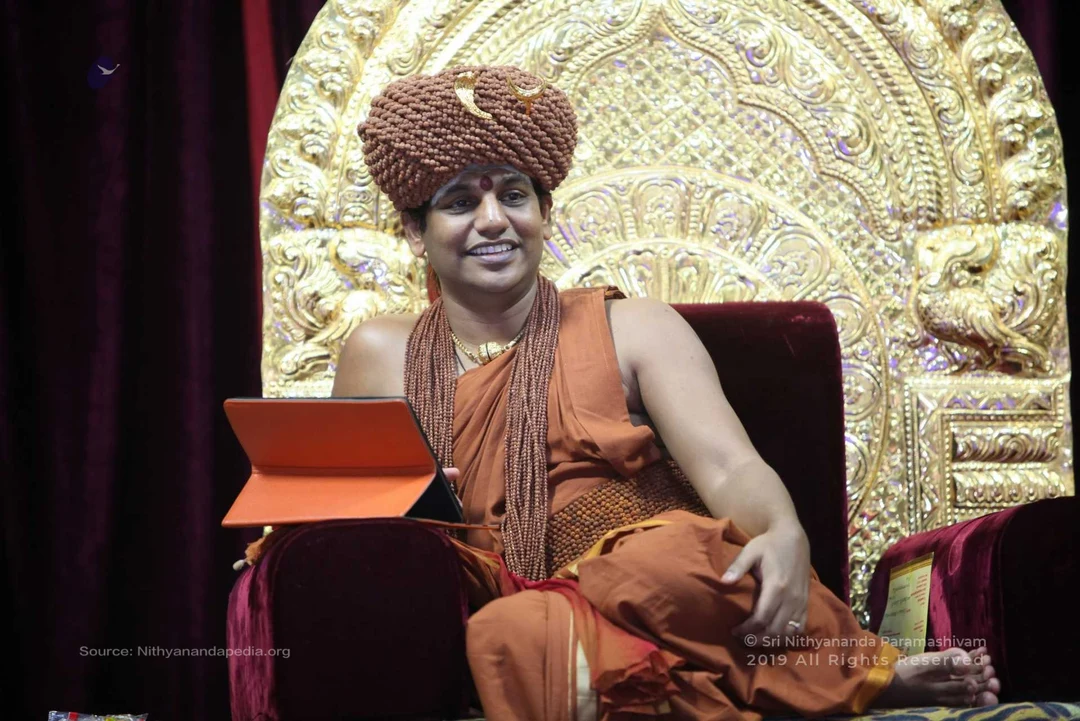
Link to Video:

Photos Of The Day:

TEMPLE
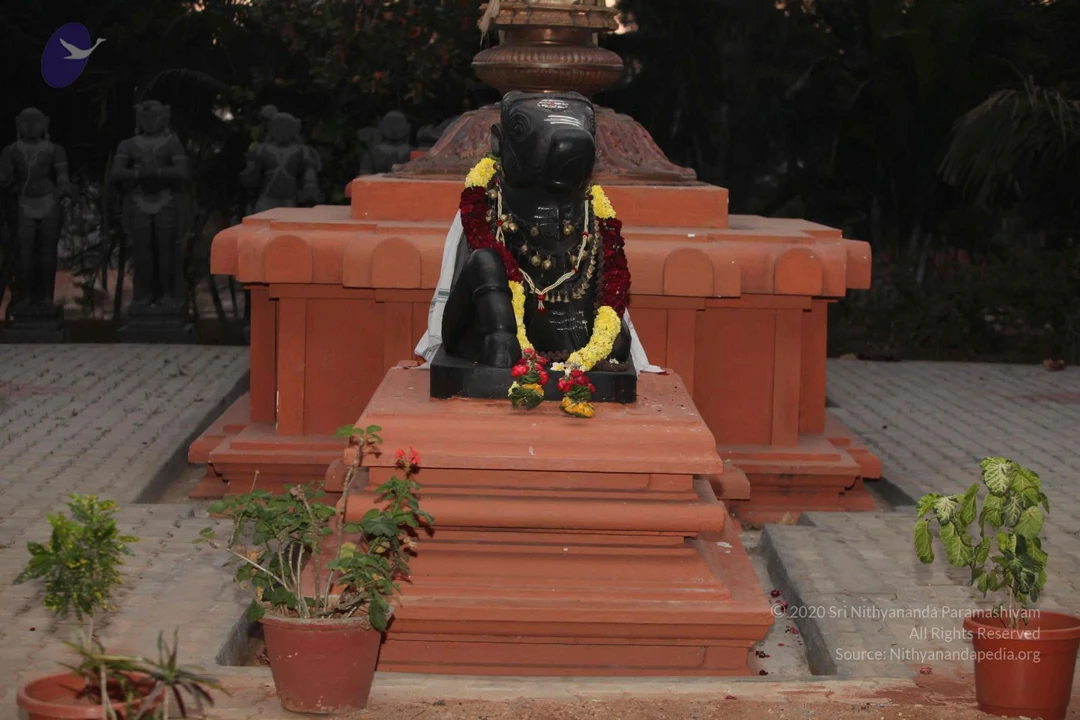
PADA-POOJA

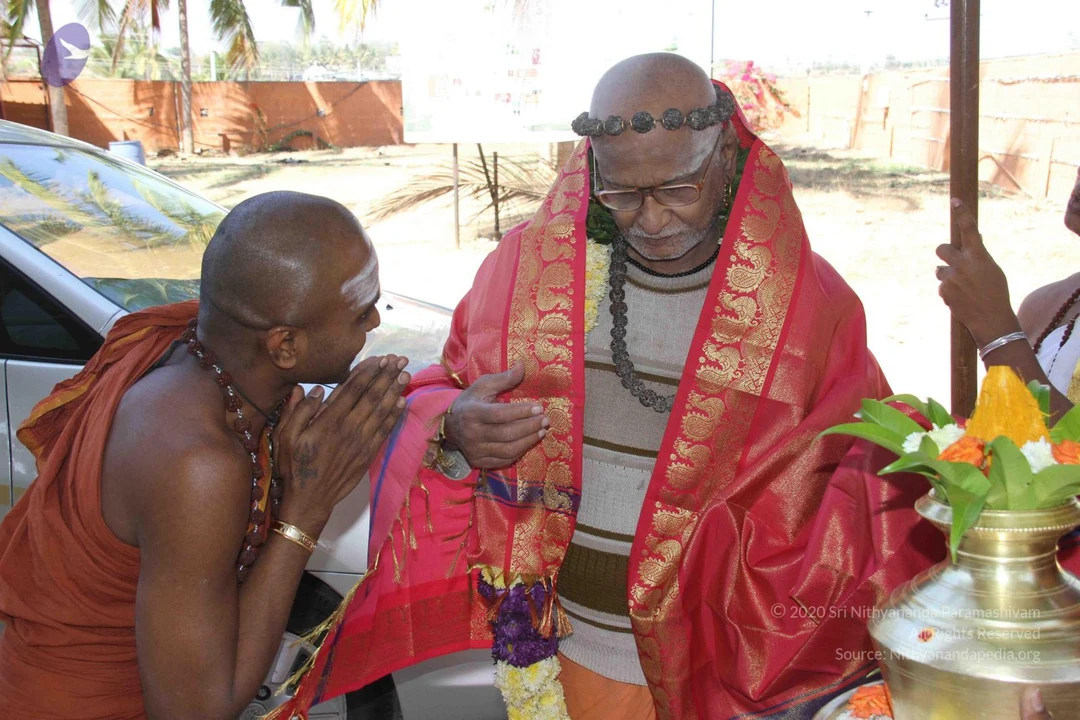
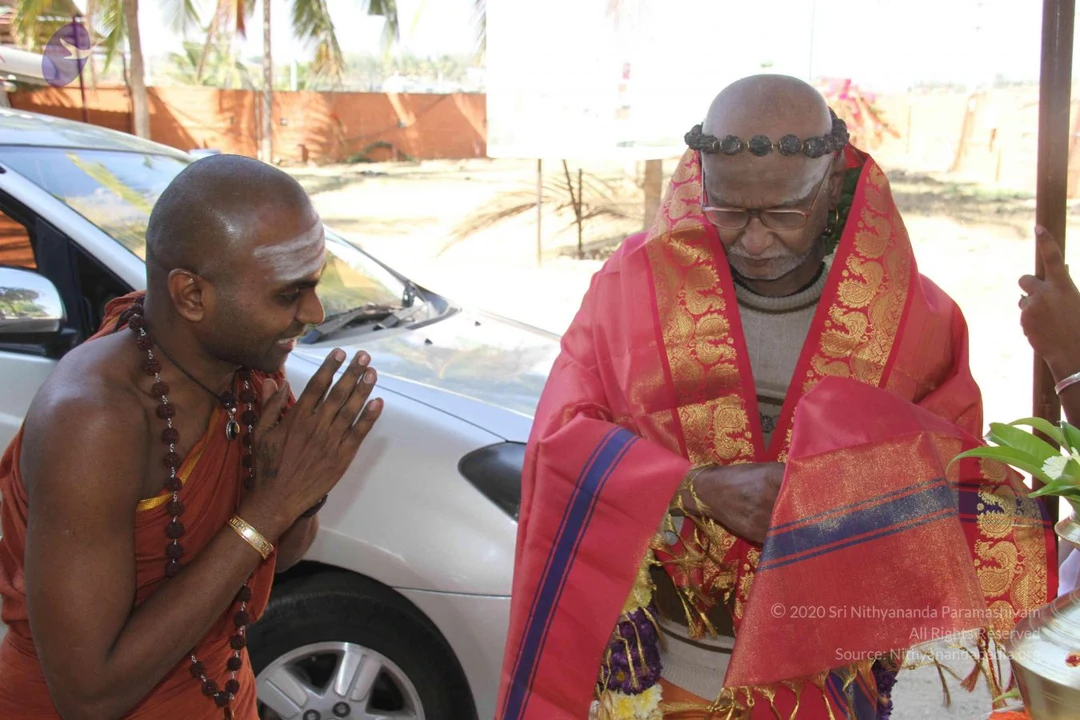
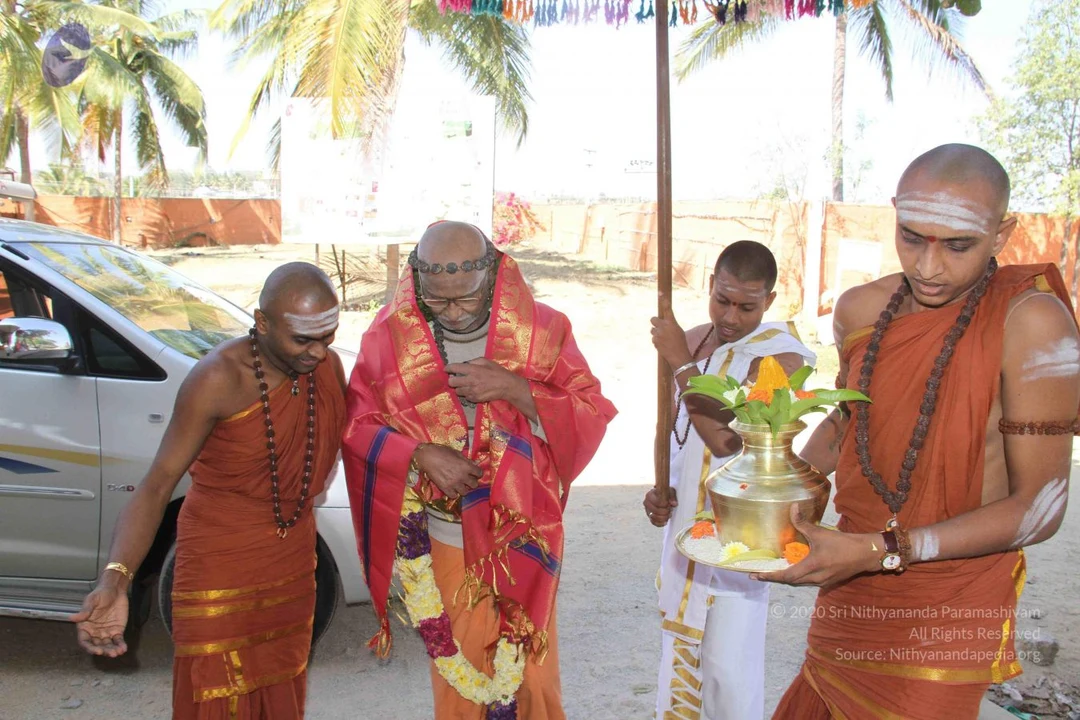
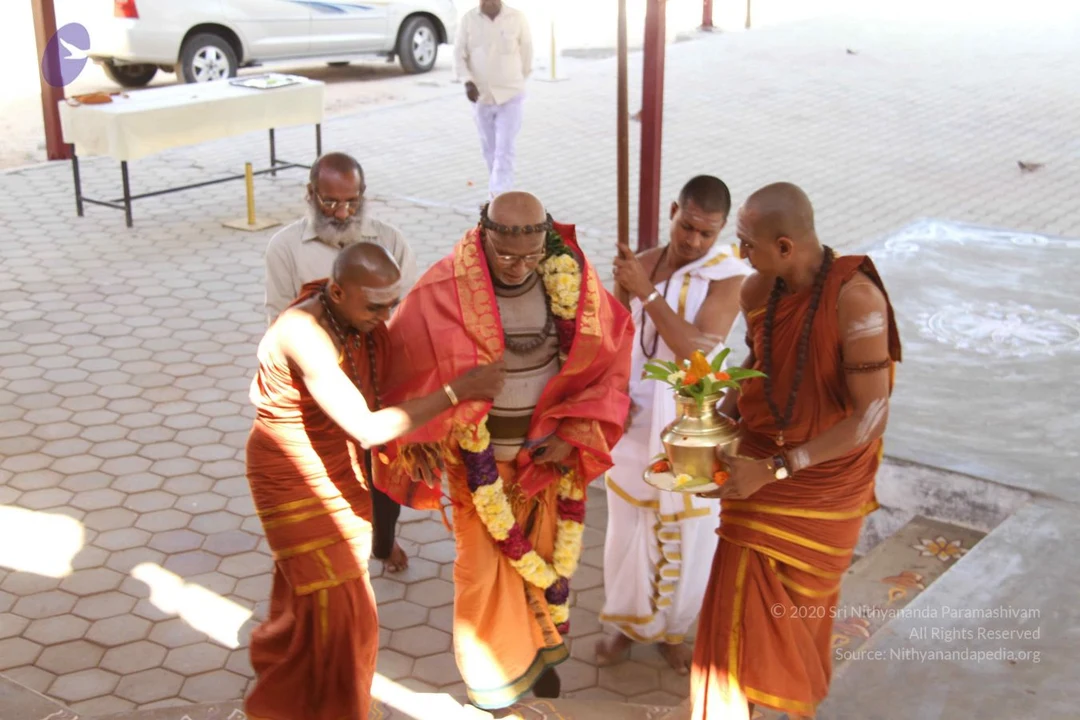
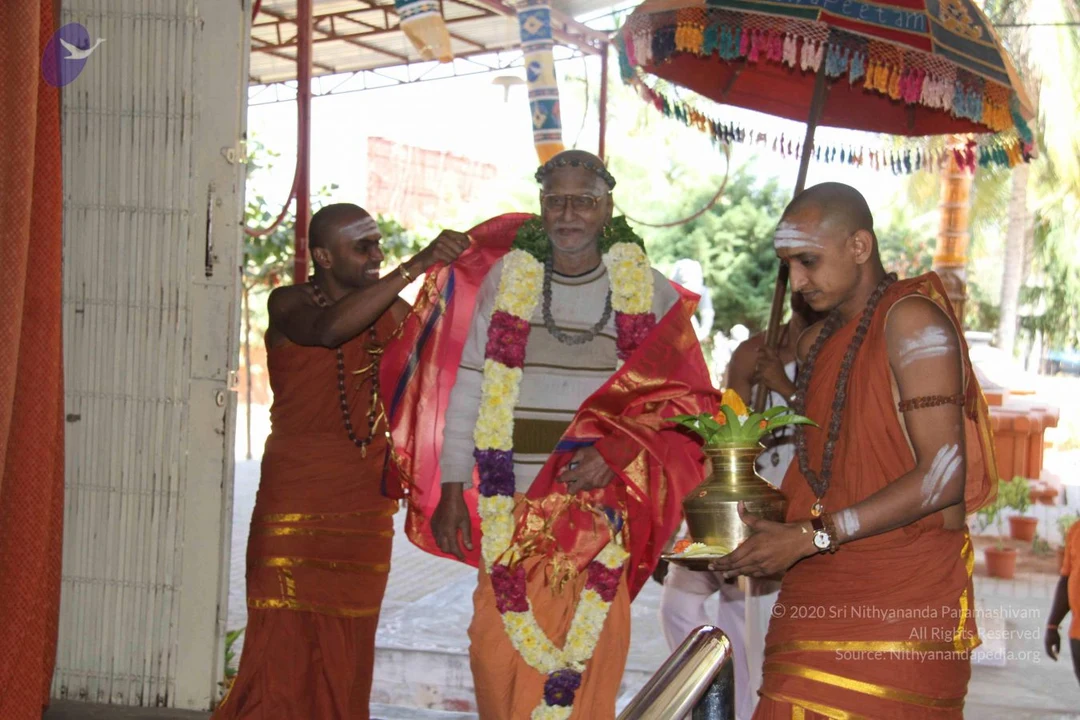
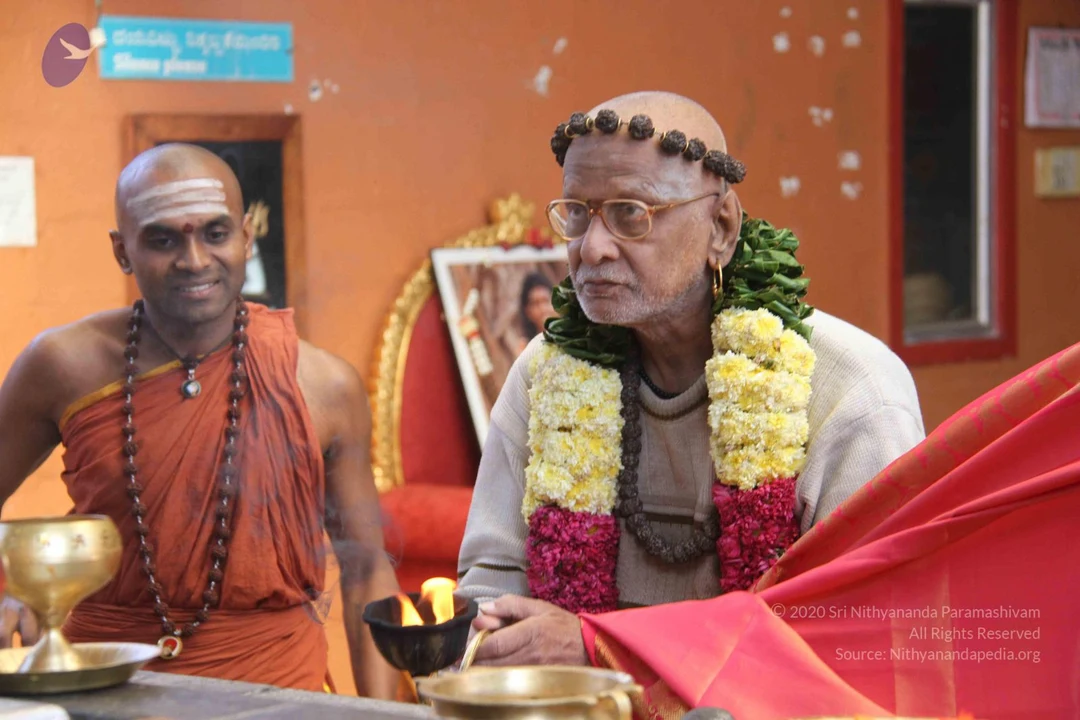
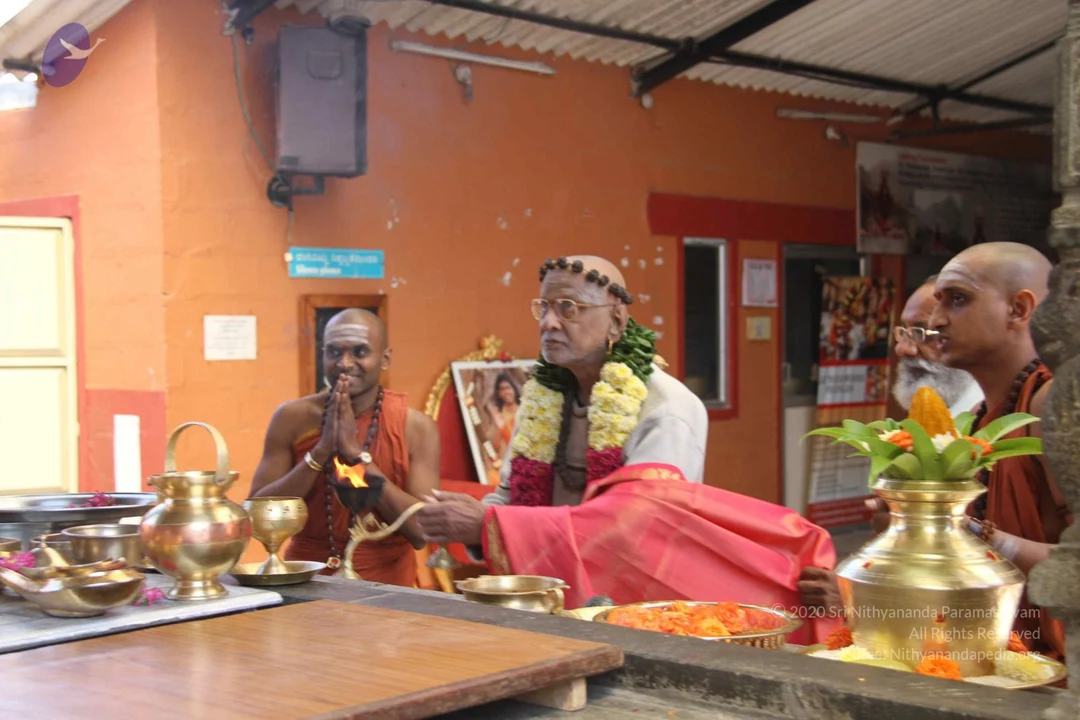
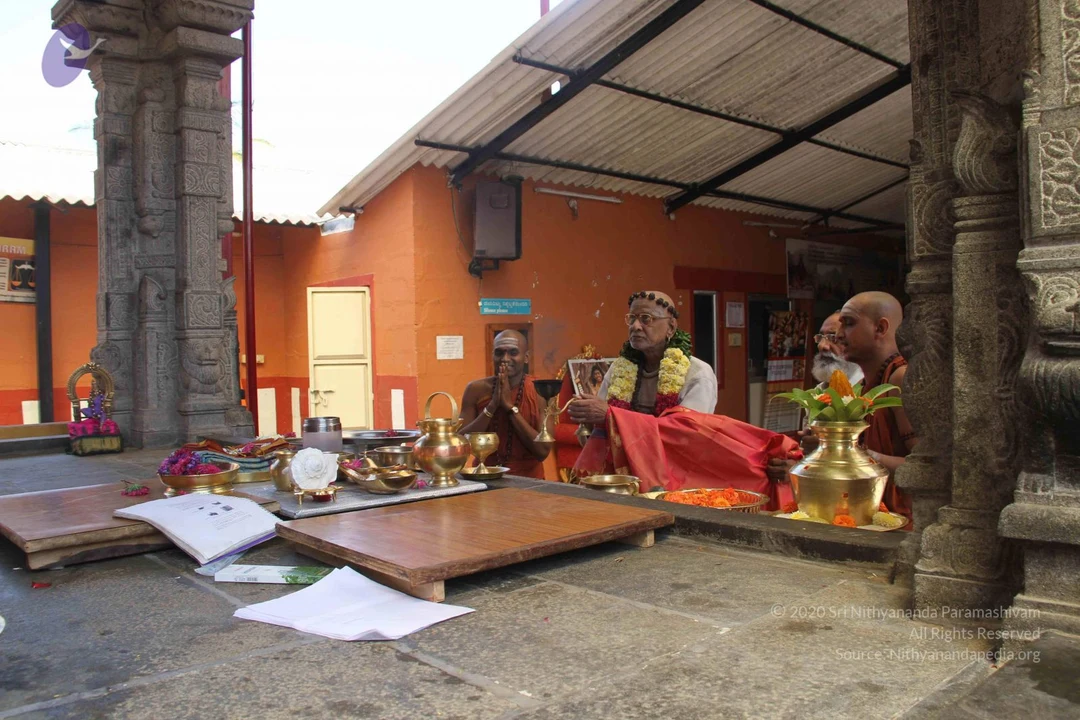
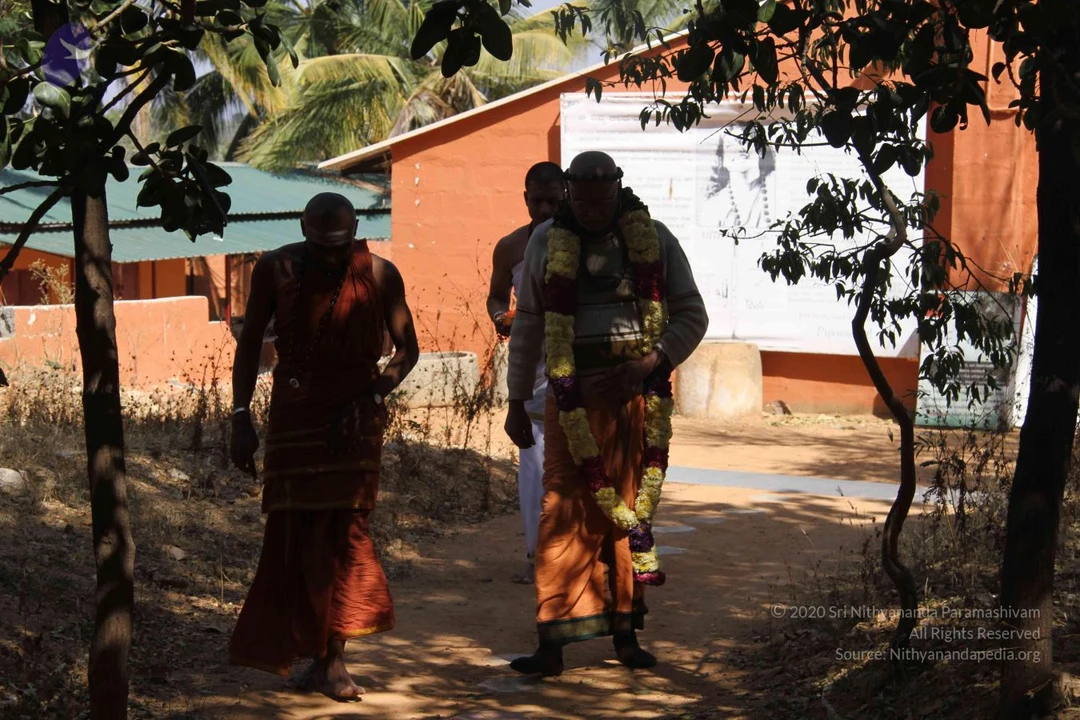
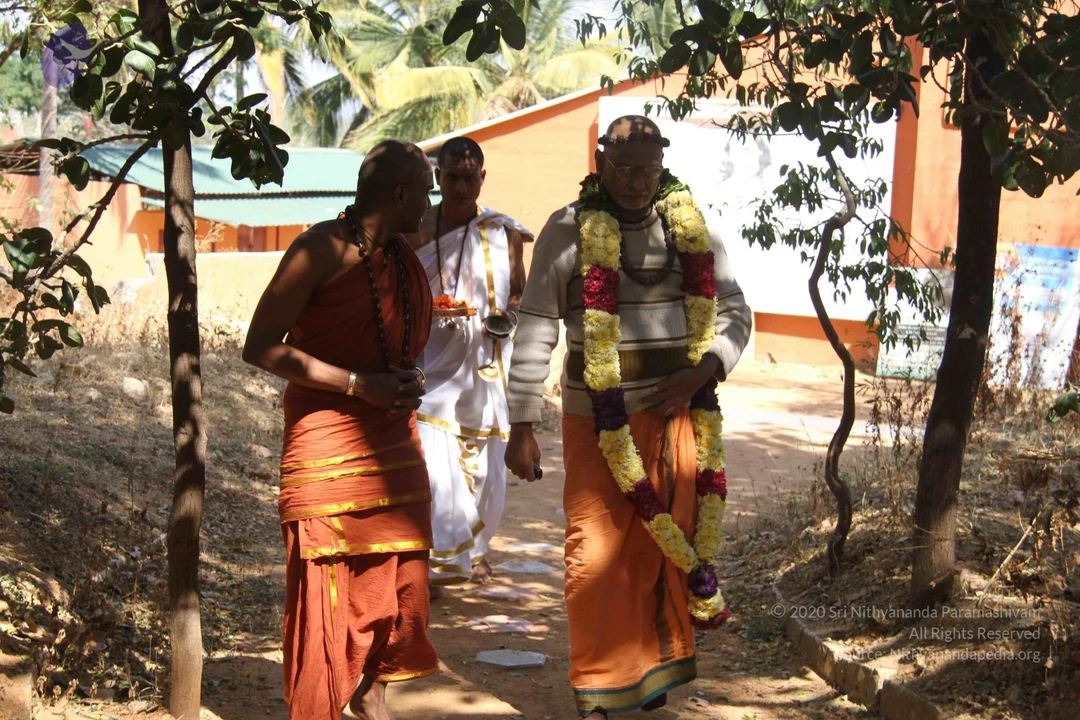
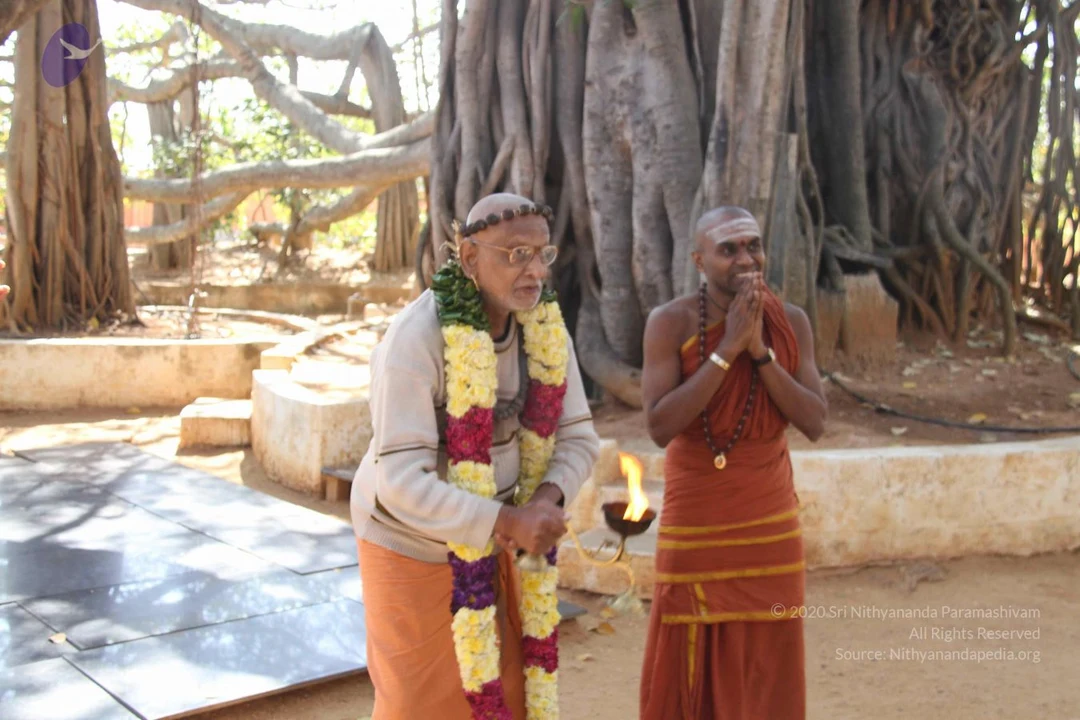
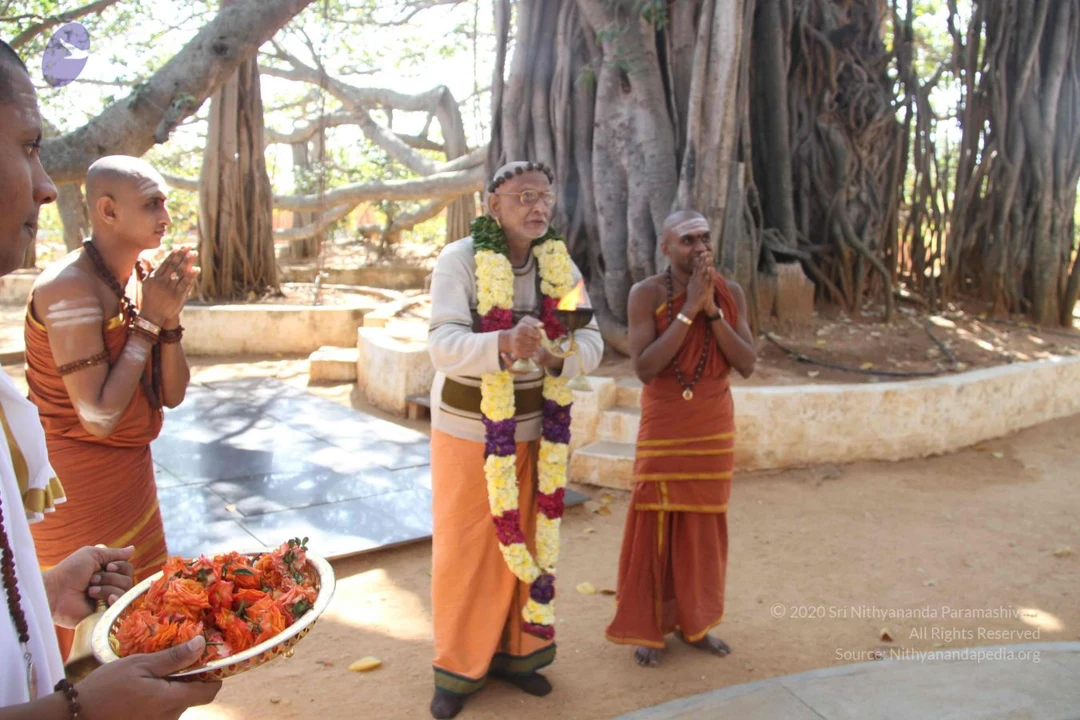
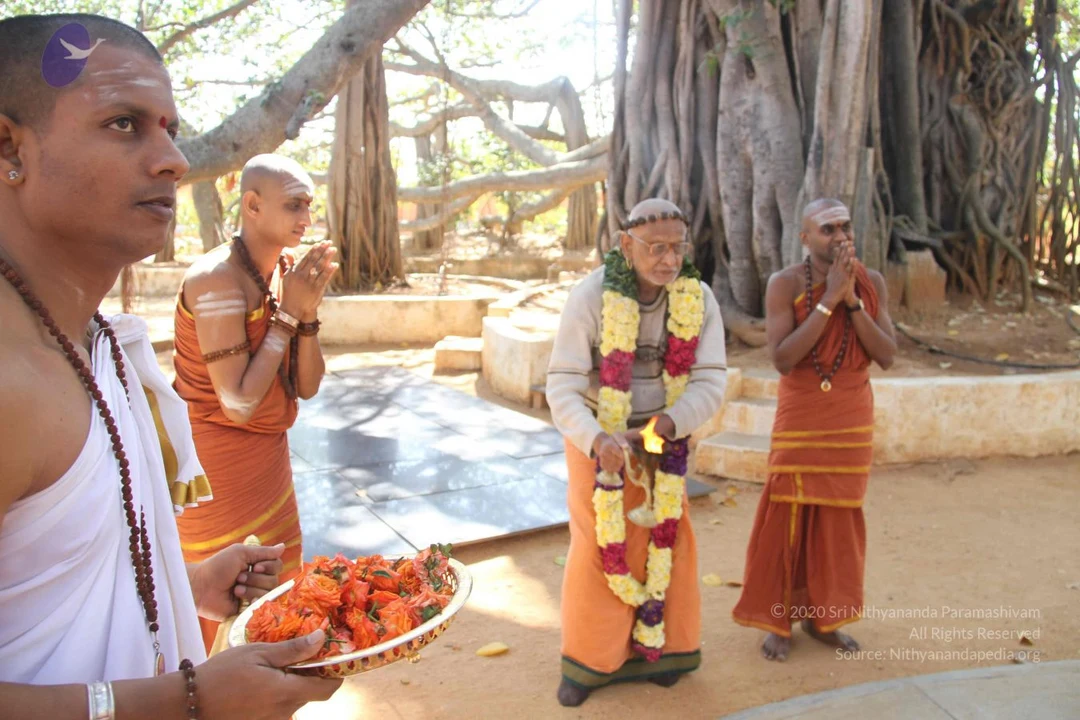
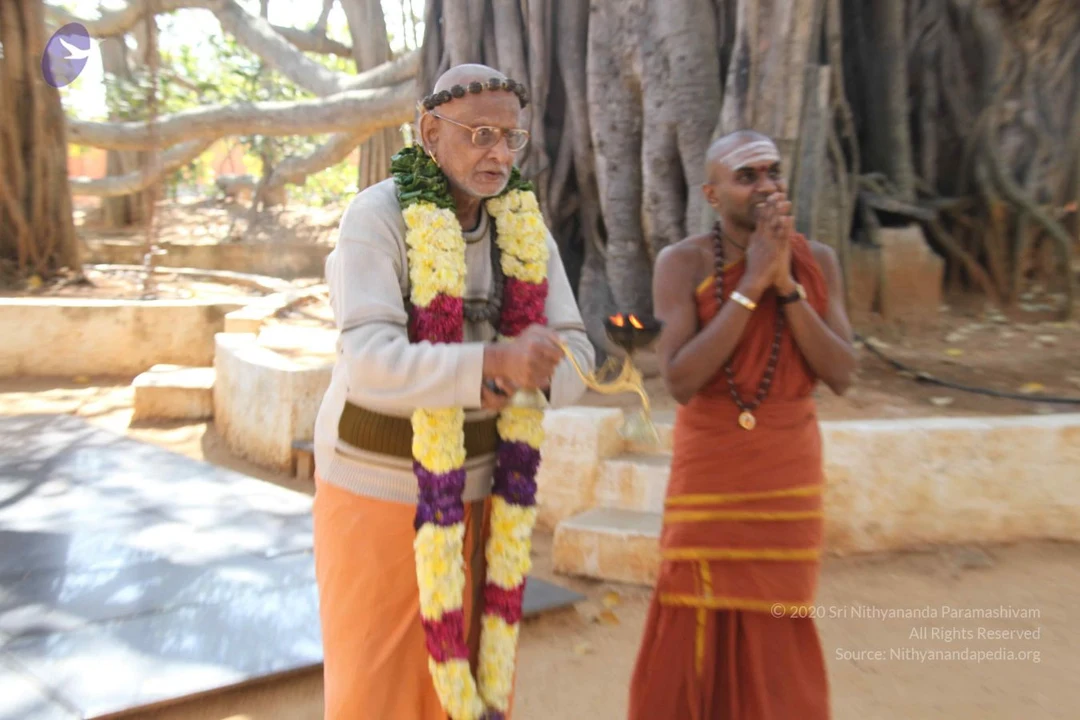
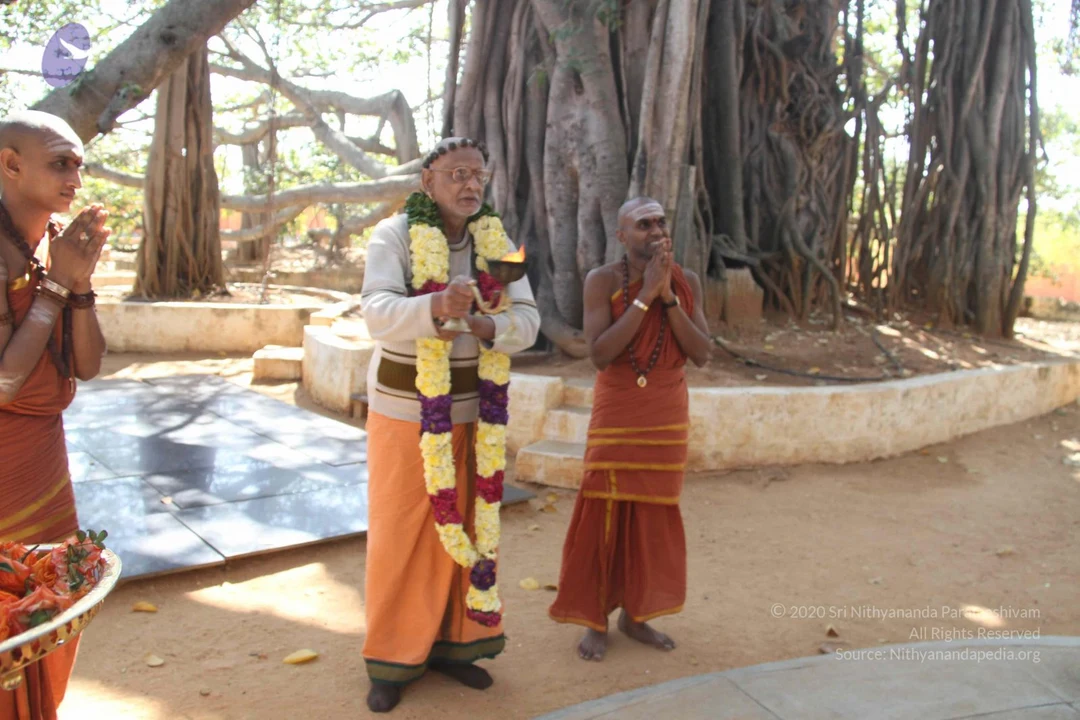
THONDAIMANDALA-ADHEENAM-GURU-MAHA-SANNIDHANAM-VISITS-BIDADI-ADIKAILASH

Photos Of The Day:

TEMPLE
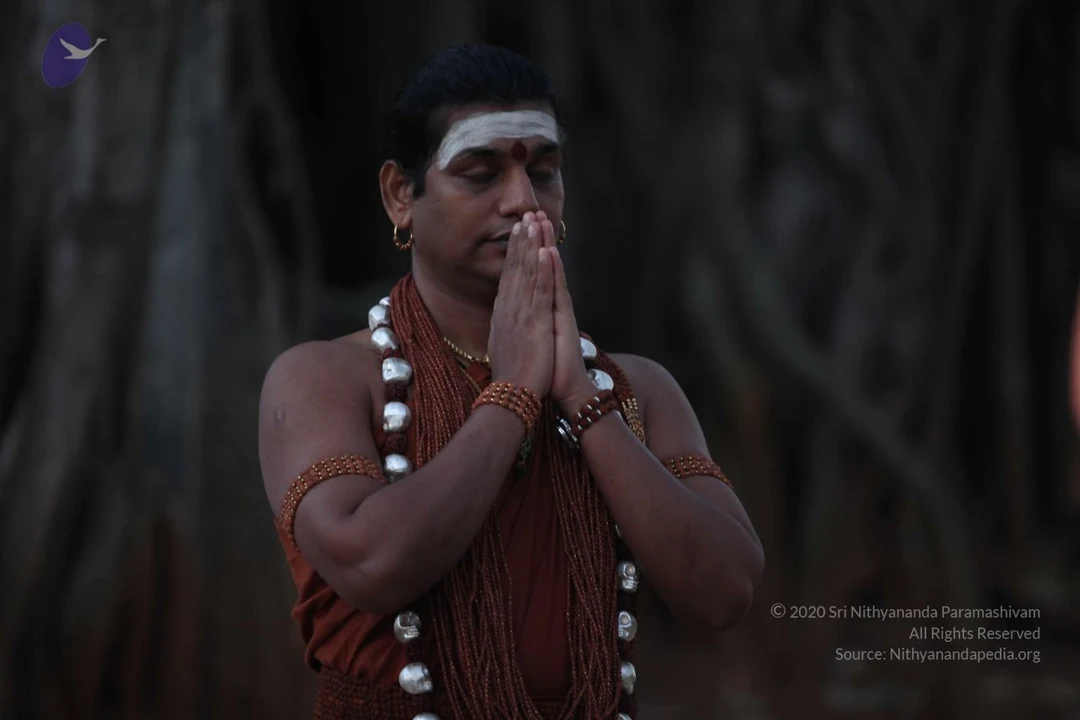
PADA-POOJA
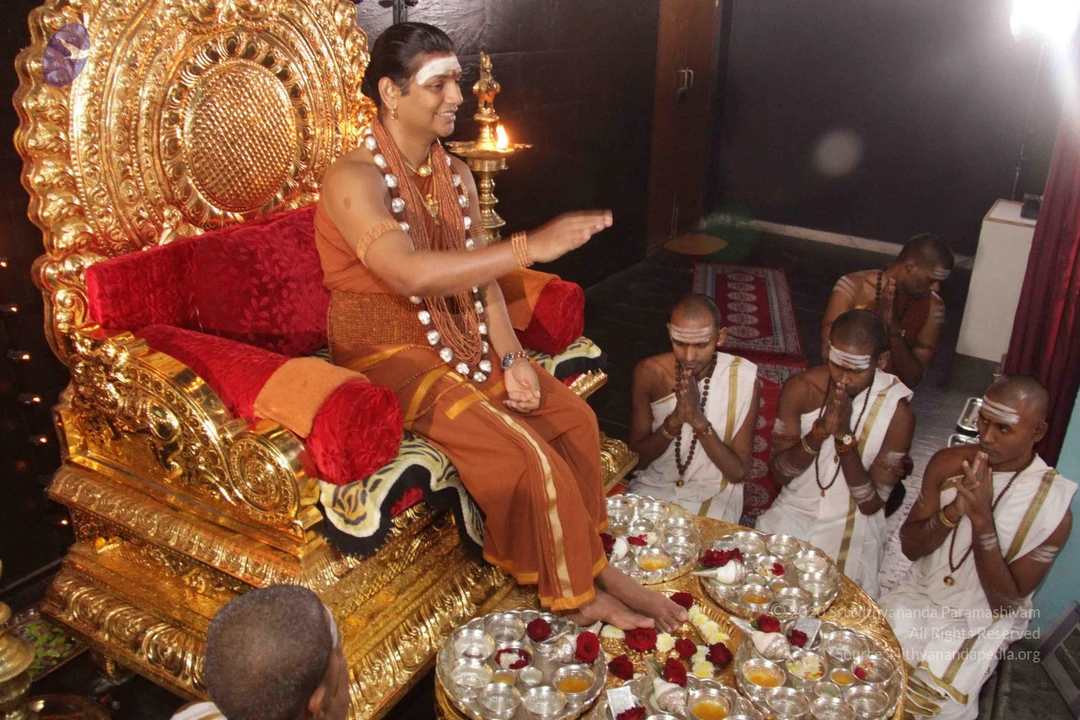
NITHYA-SATSANG

SARVA-DARSHAN

THONDAIMANDALA-ADHHENAM-VISITS-BIDADI-ADIKAILASA

Photos Of The Day:

Morning Satsang

VIP

Other

1-Bidadi-Temple-and-Thondaimandala-Adheenam-Mahasannidhanam-visit

2-Morning-Pada-Puja-Satsang-Blessing

Photos from this day

View all 246 photos

Photos

14 photosSource gallery
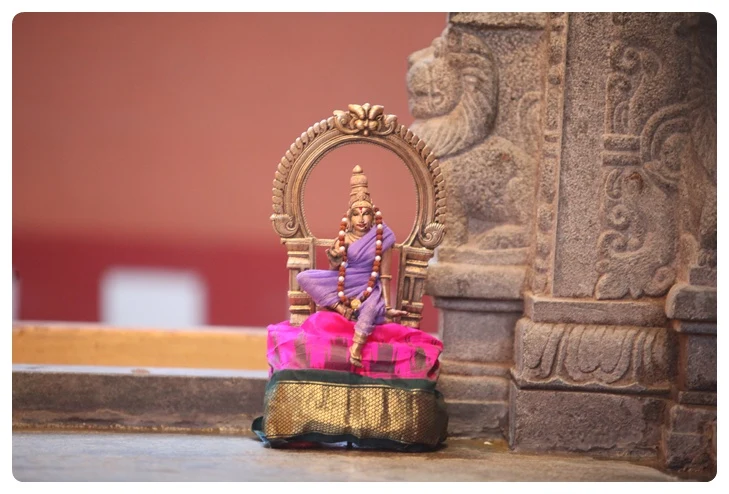
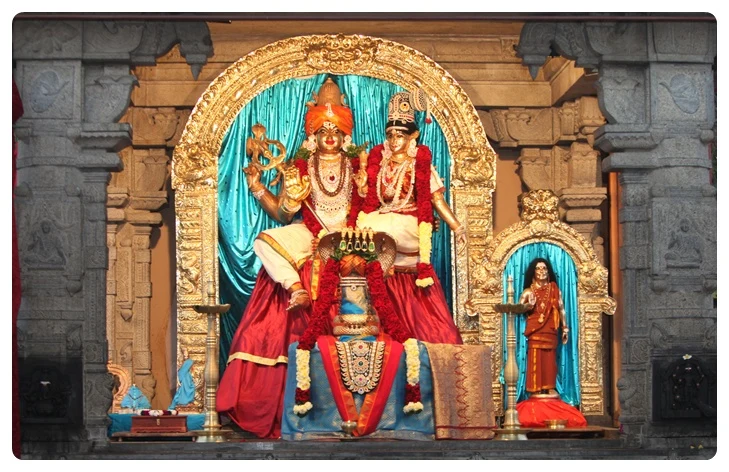
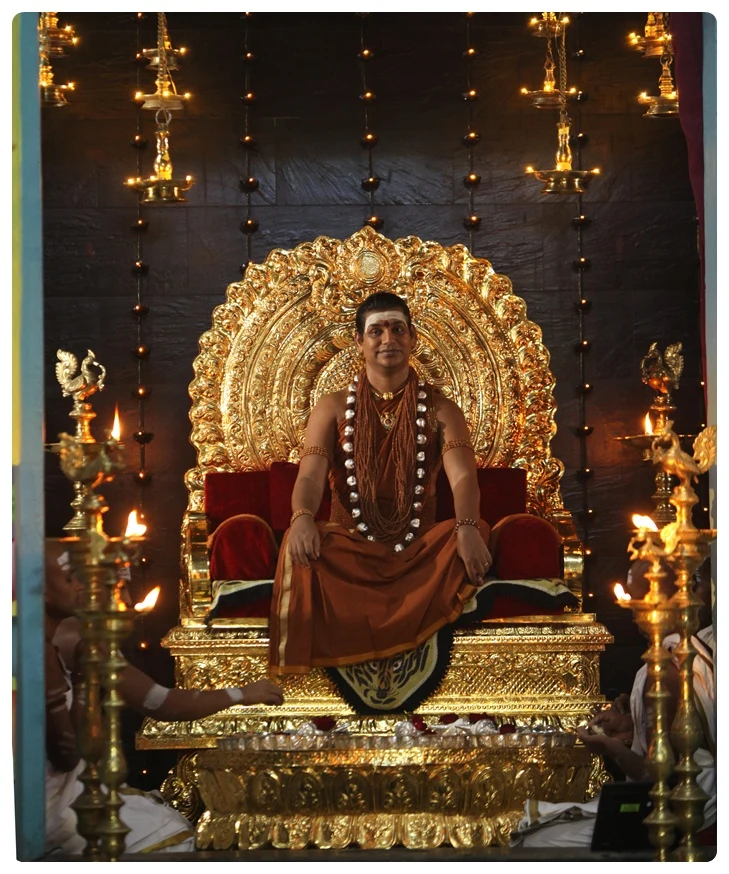
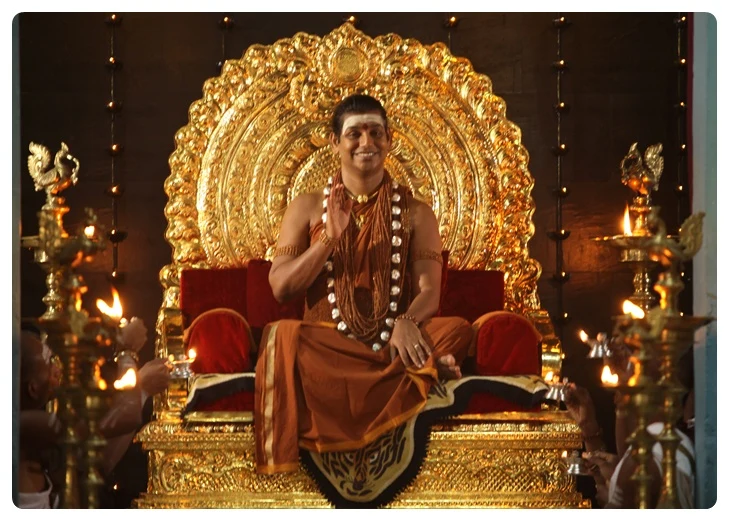
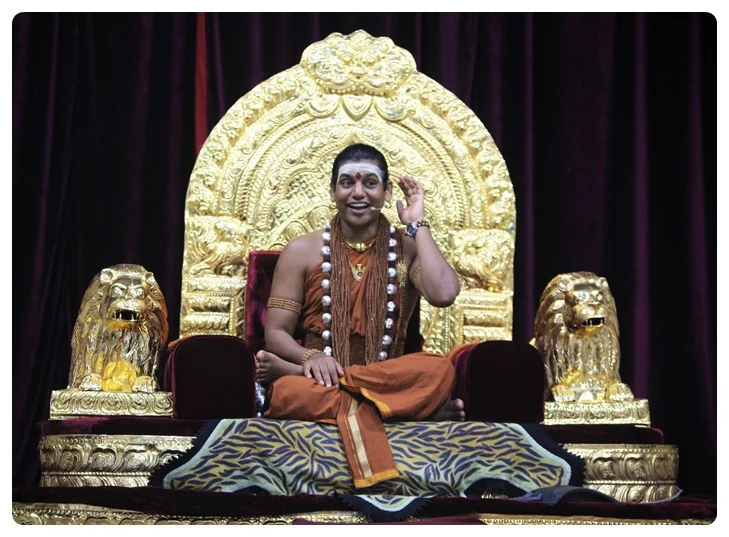
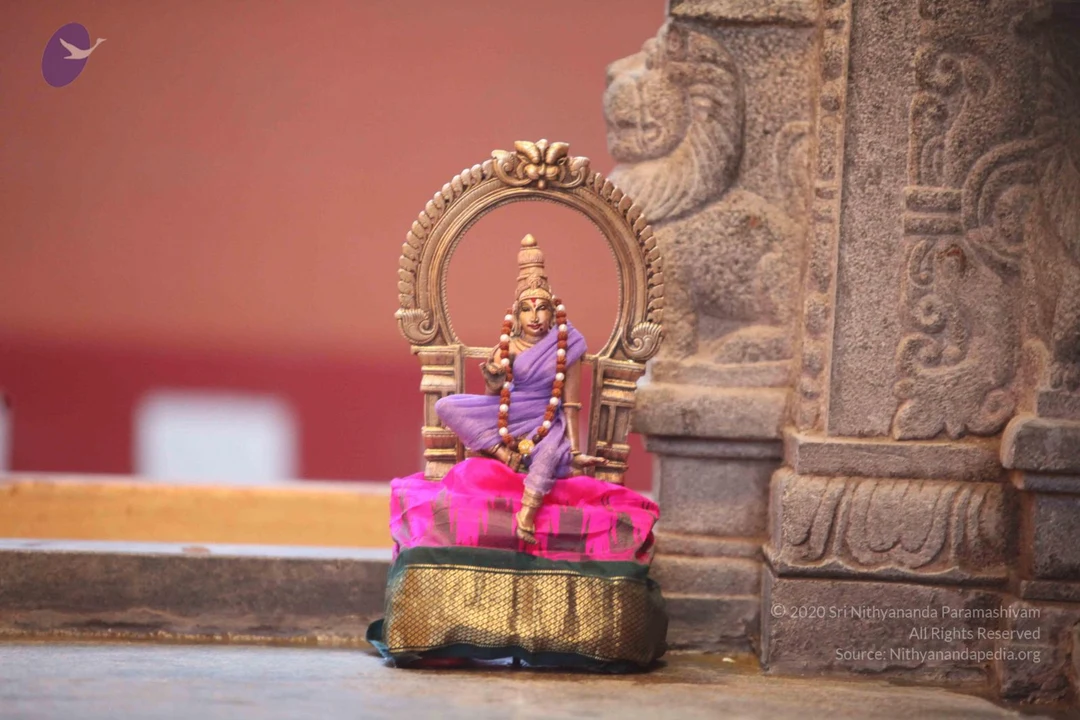
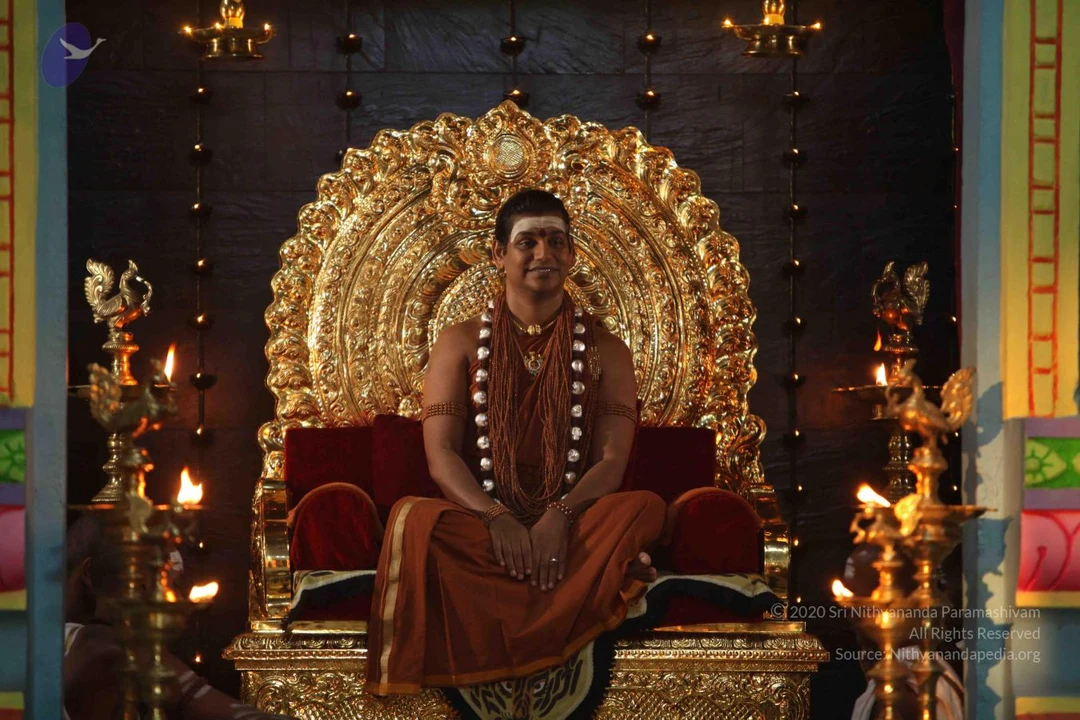
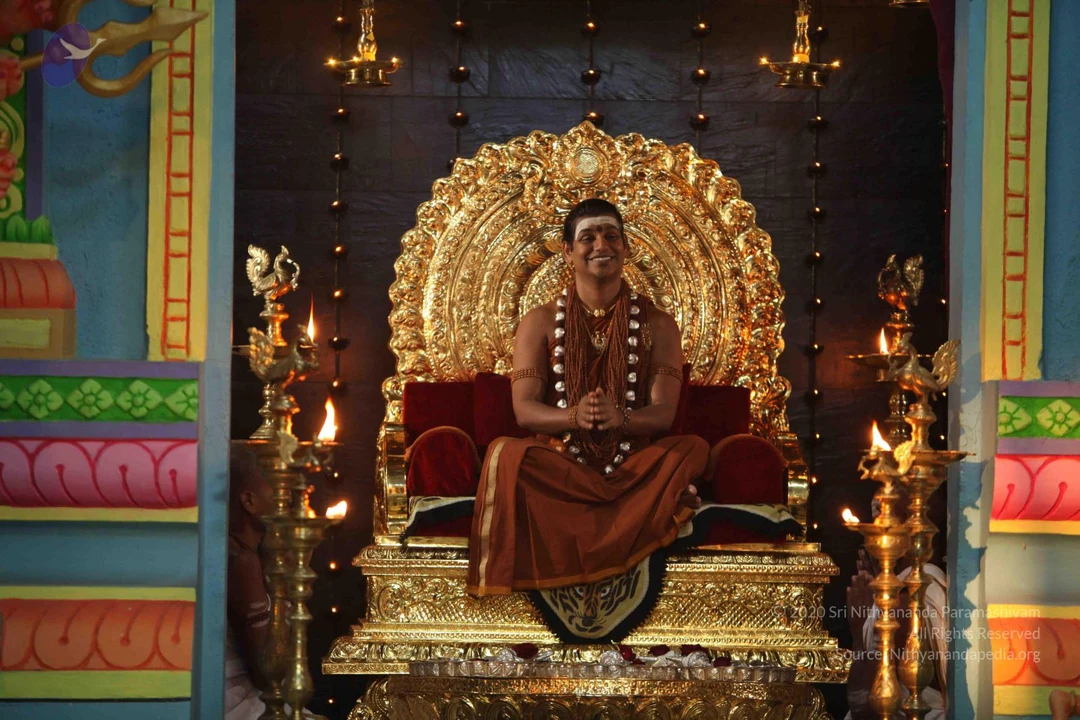
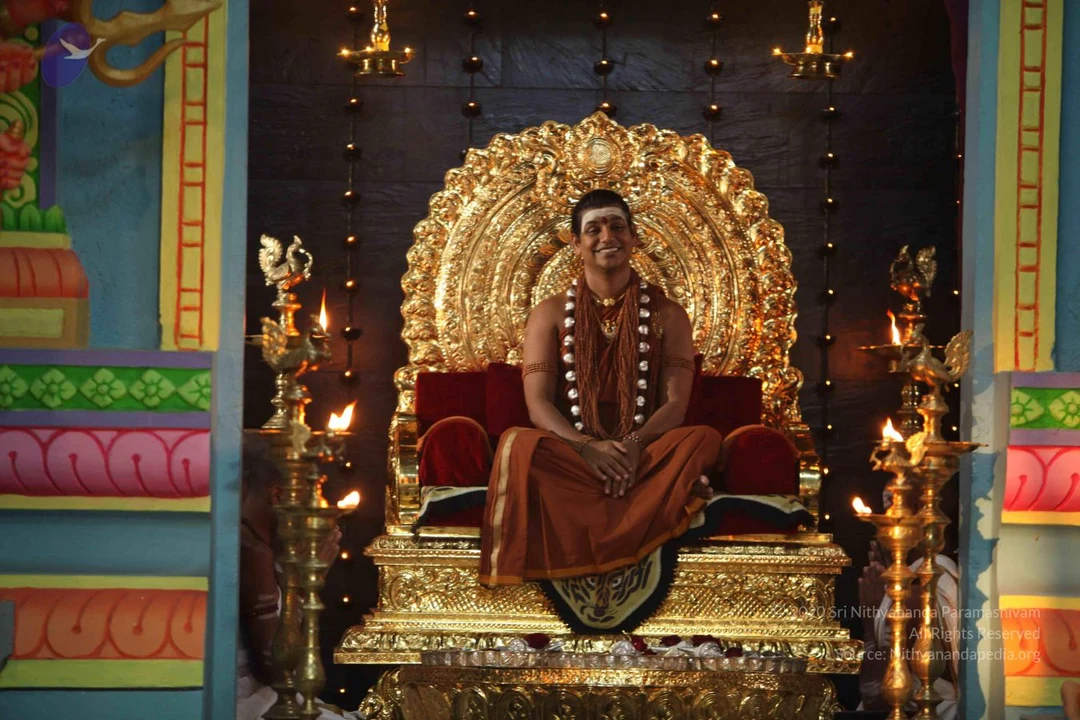
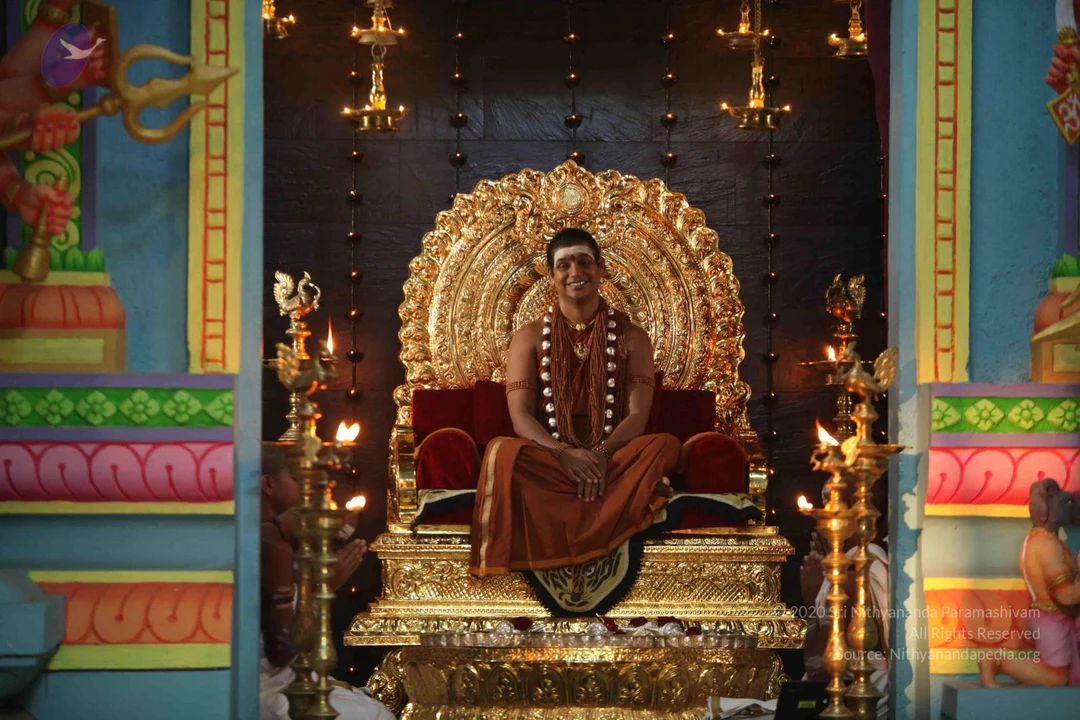
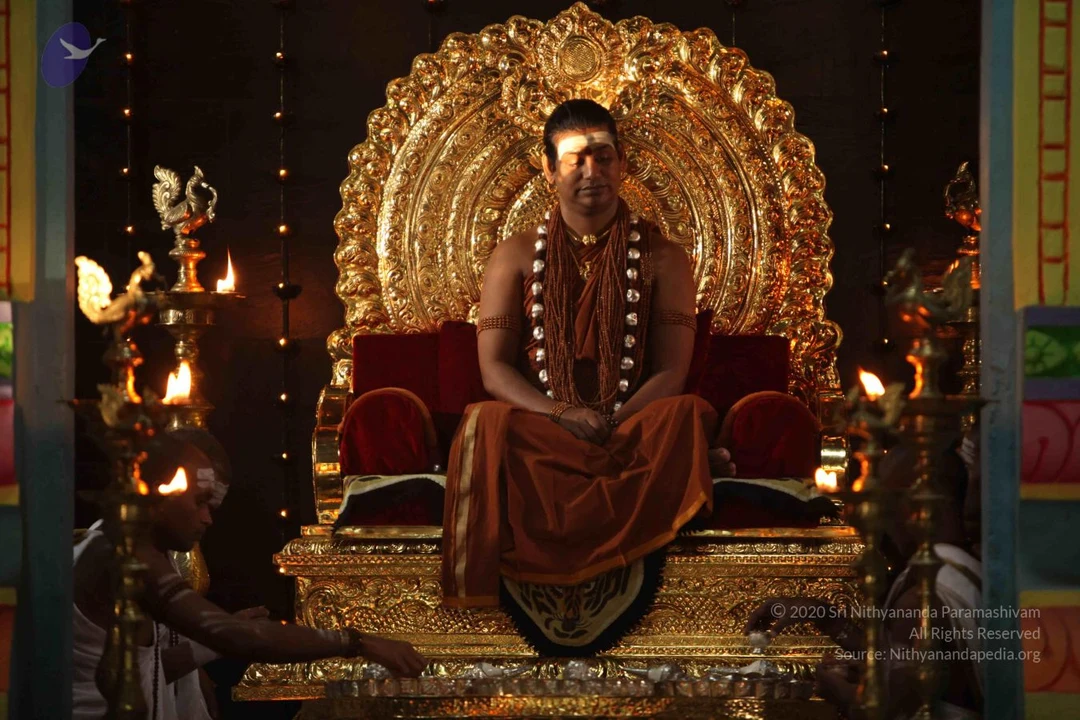
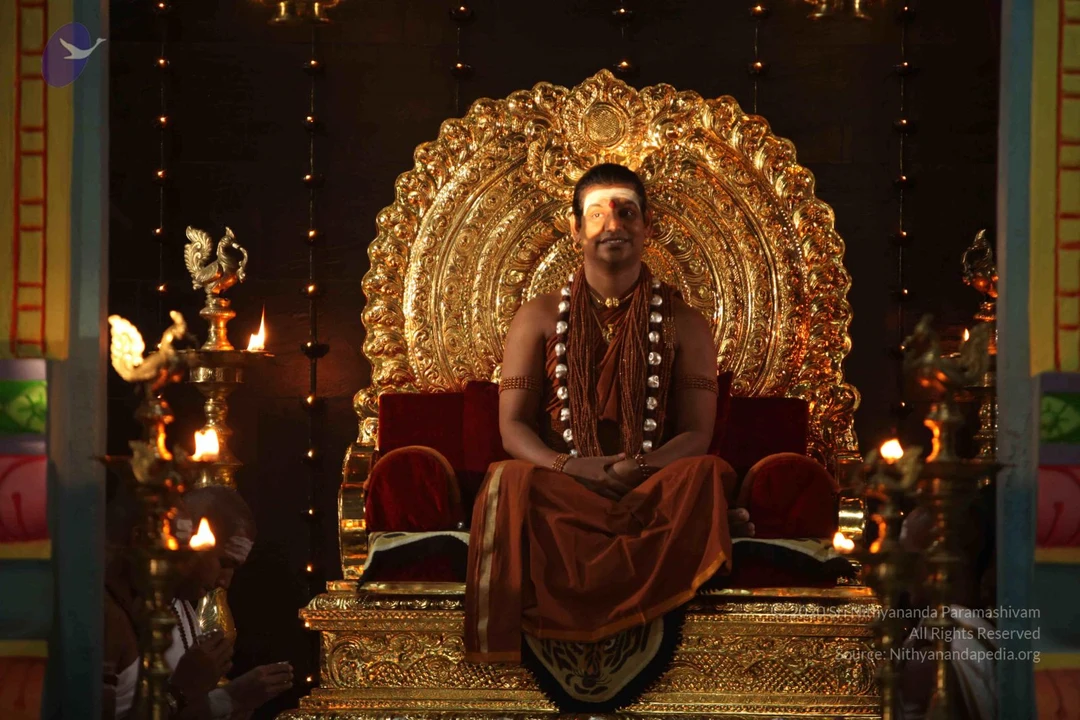
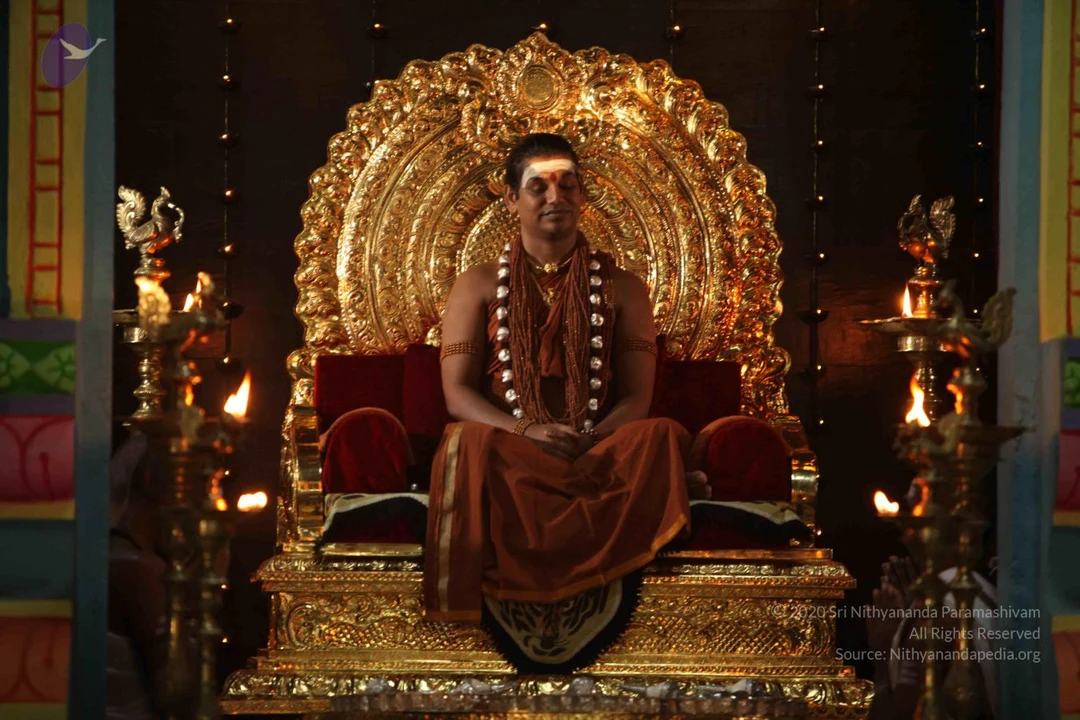
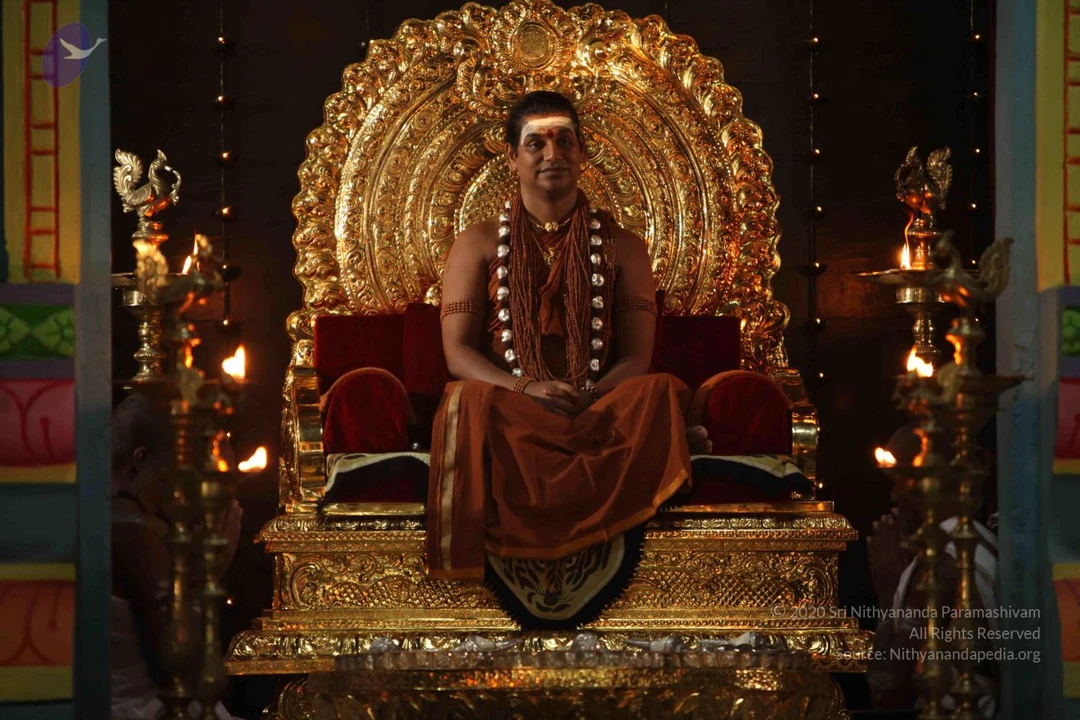
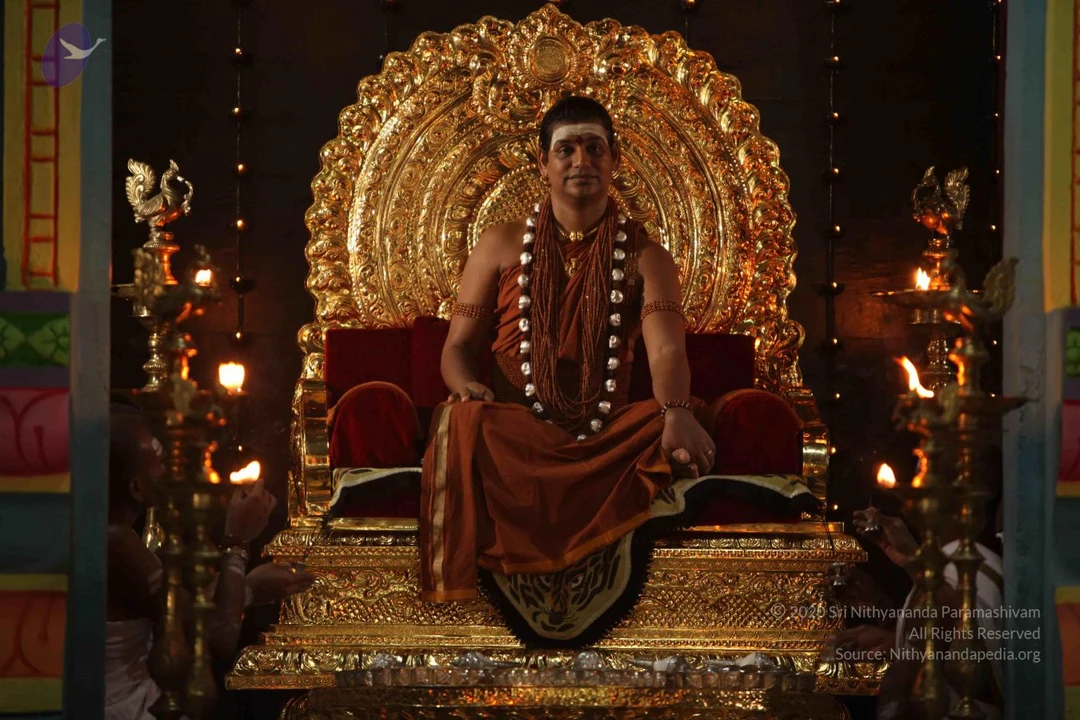
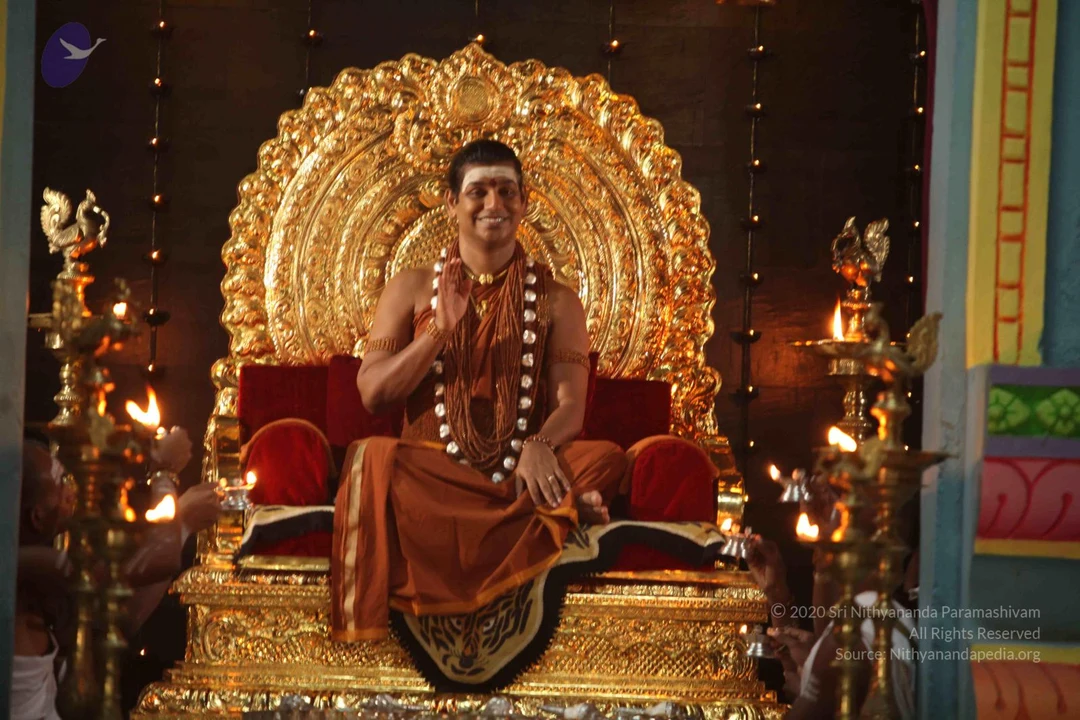
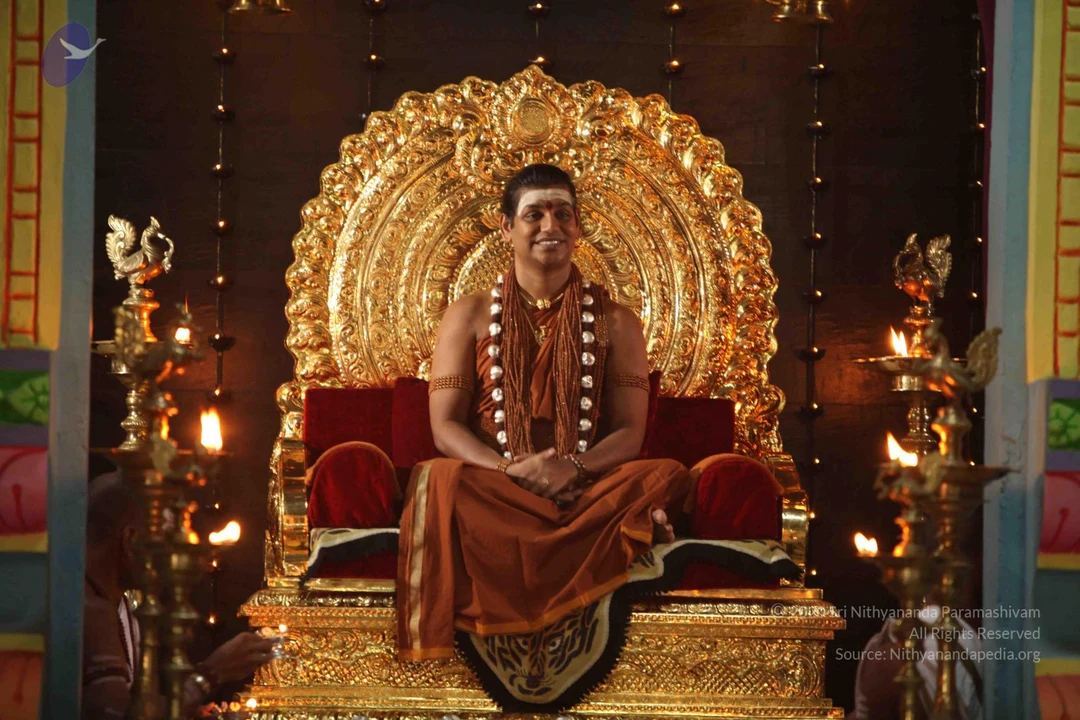
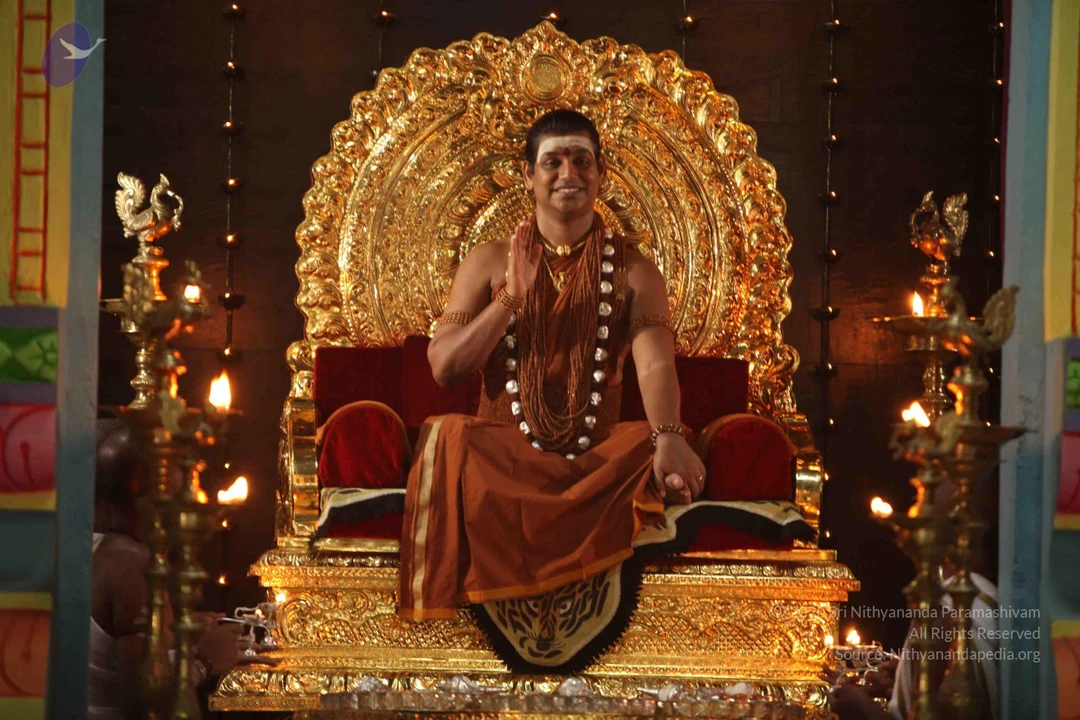
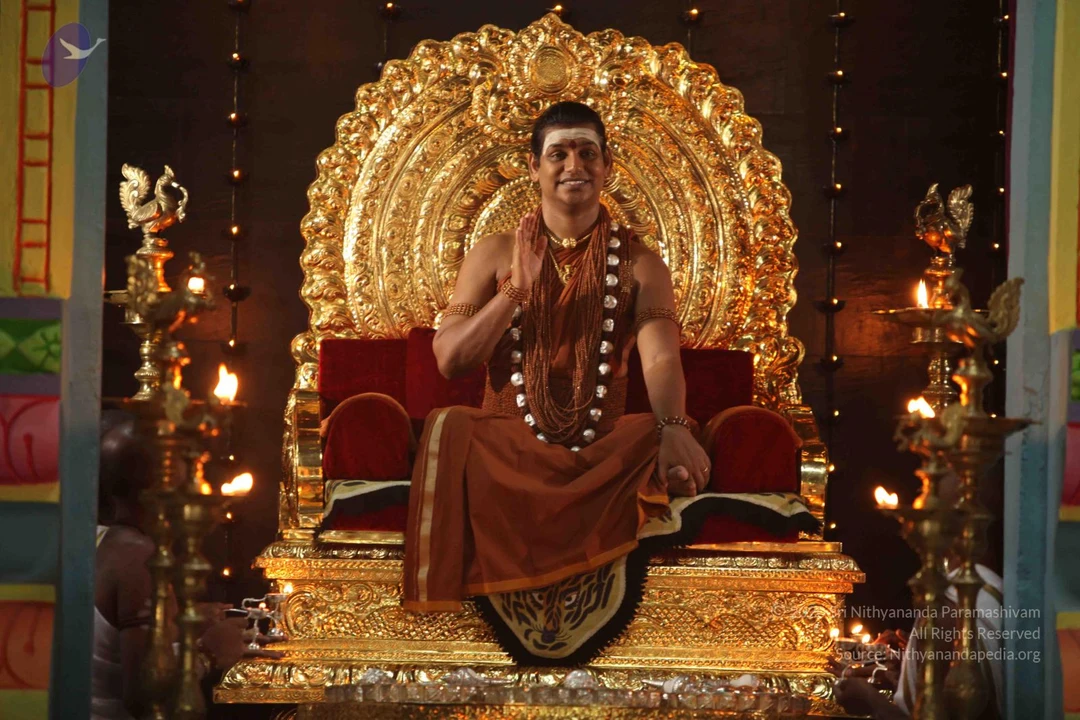
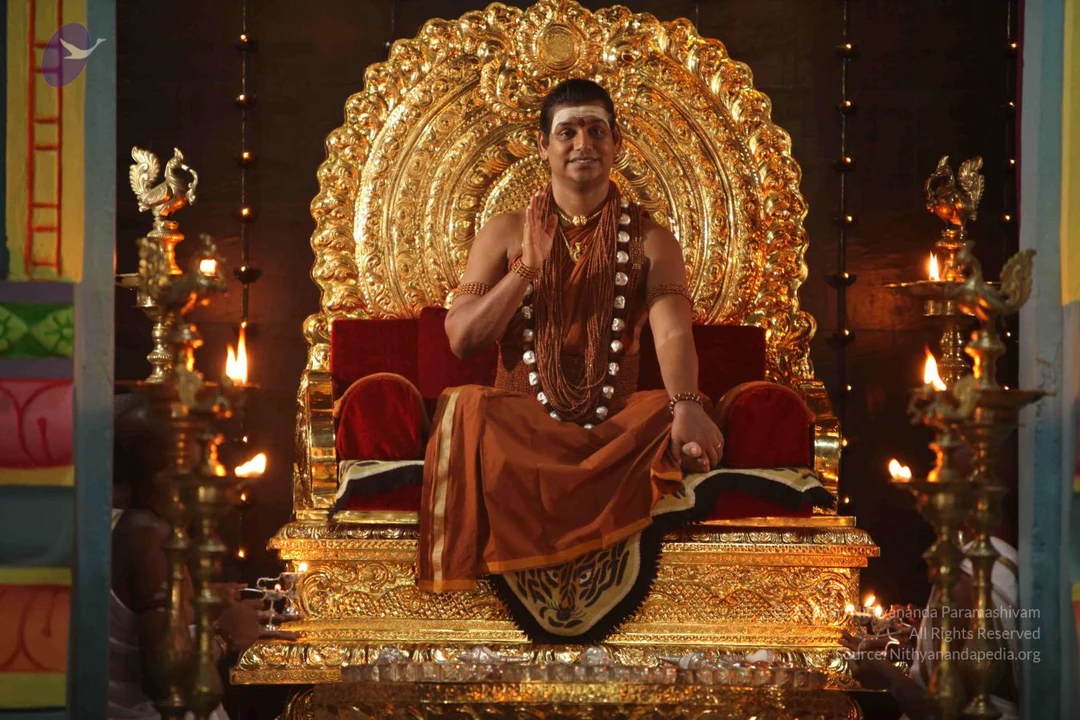
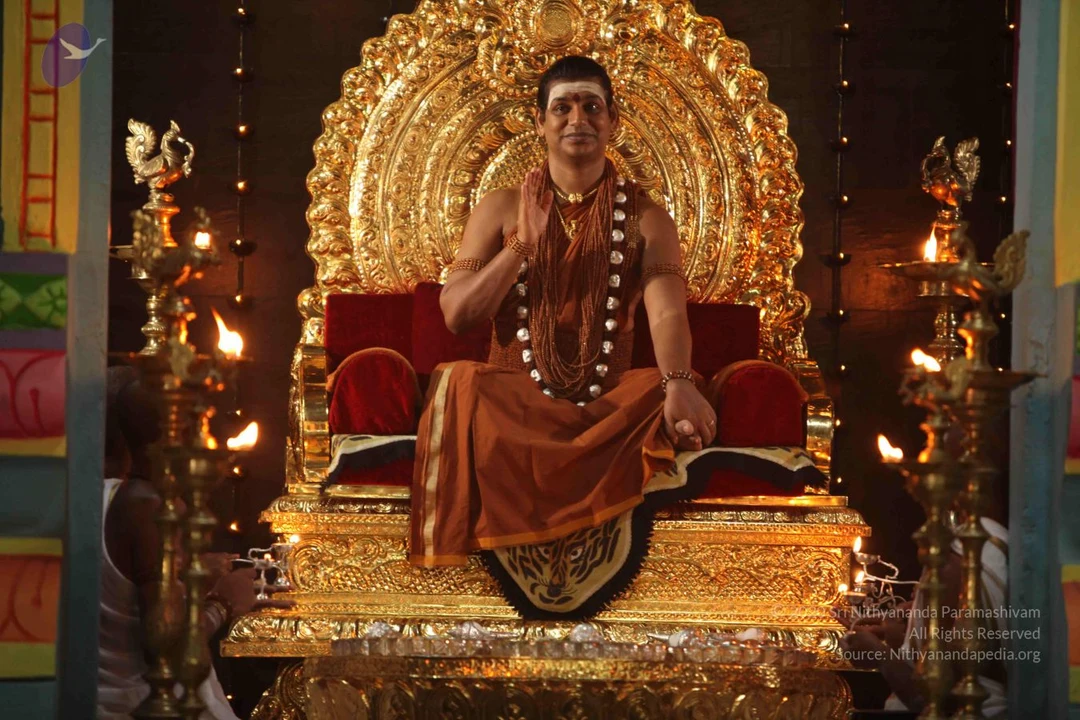
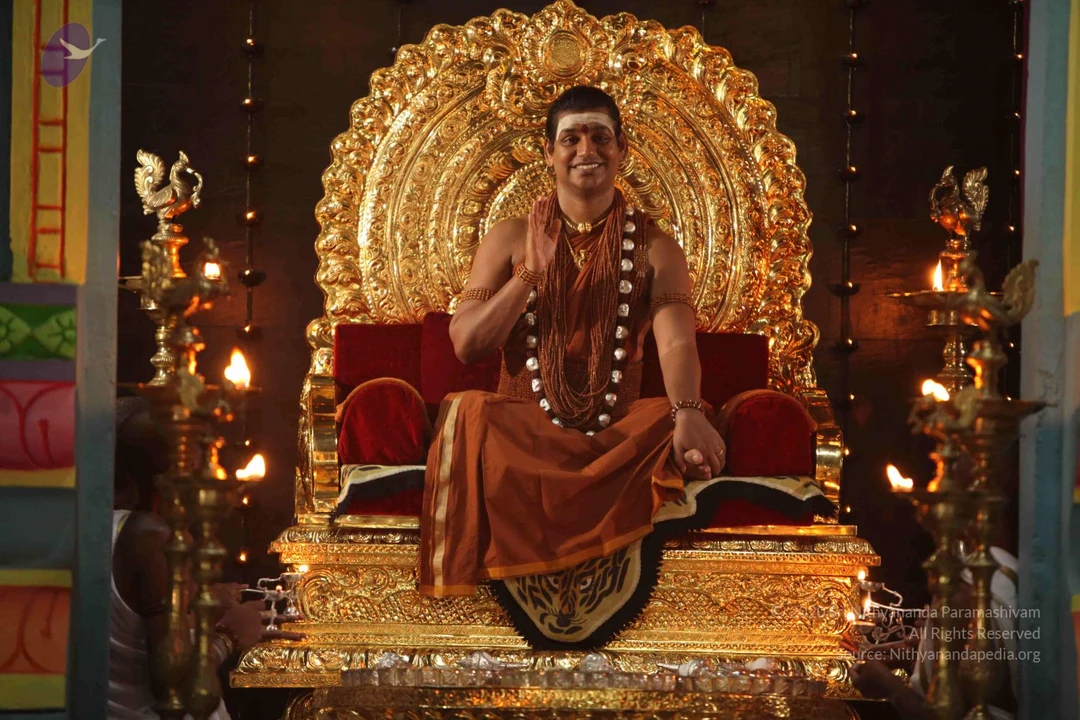
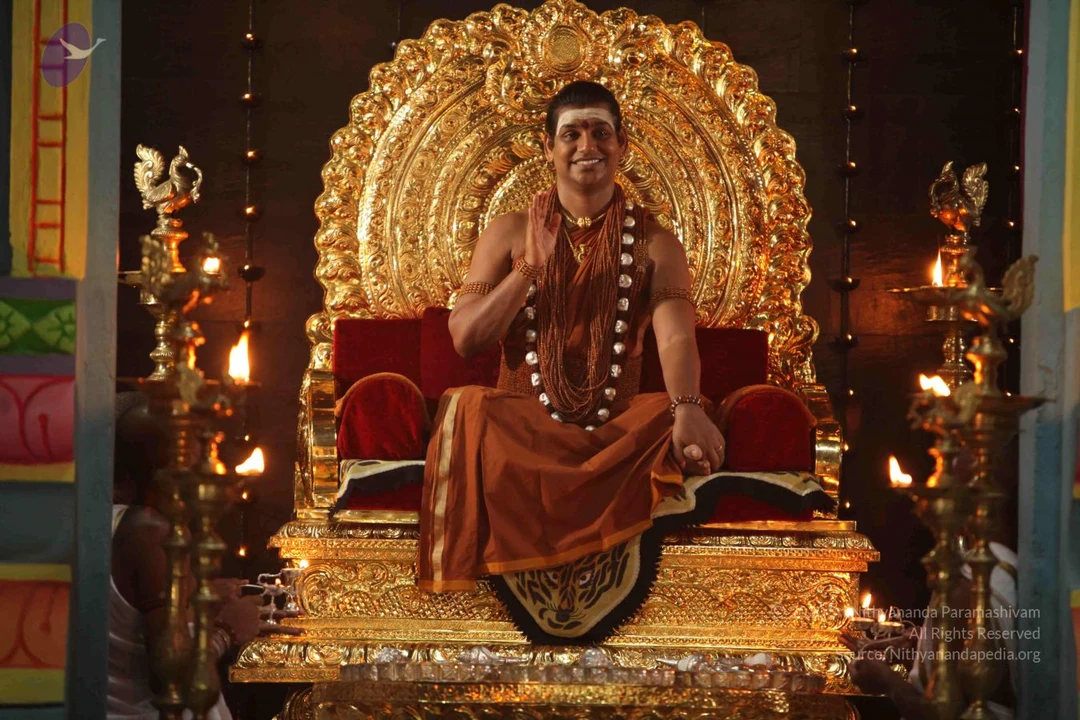
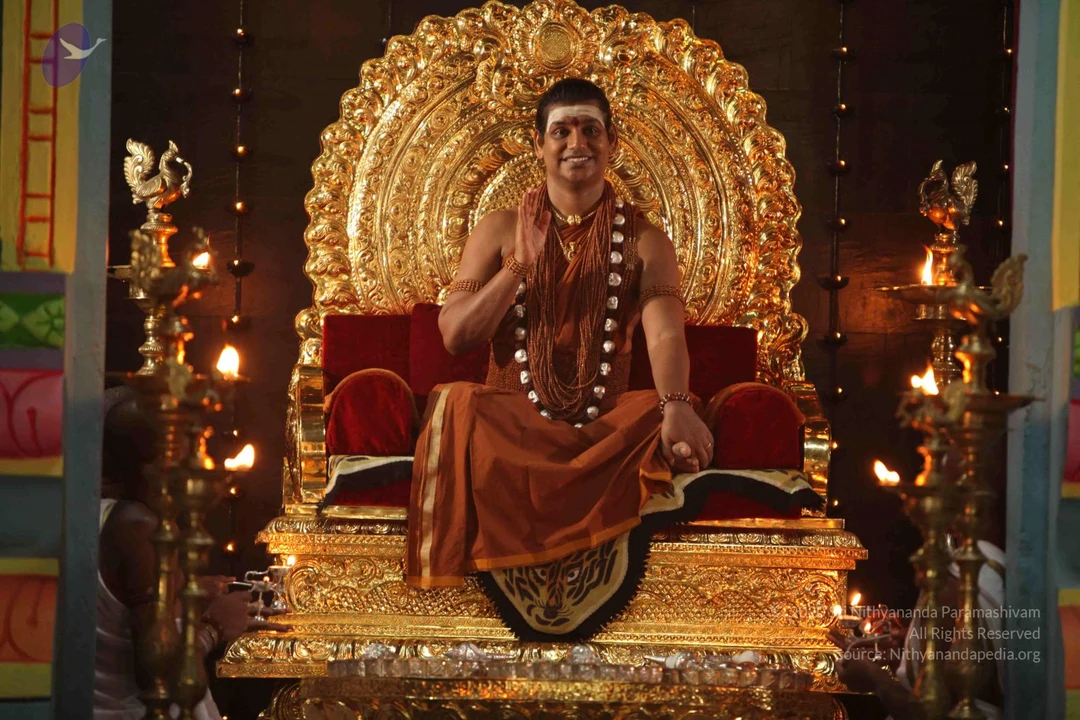
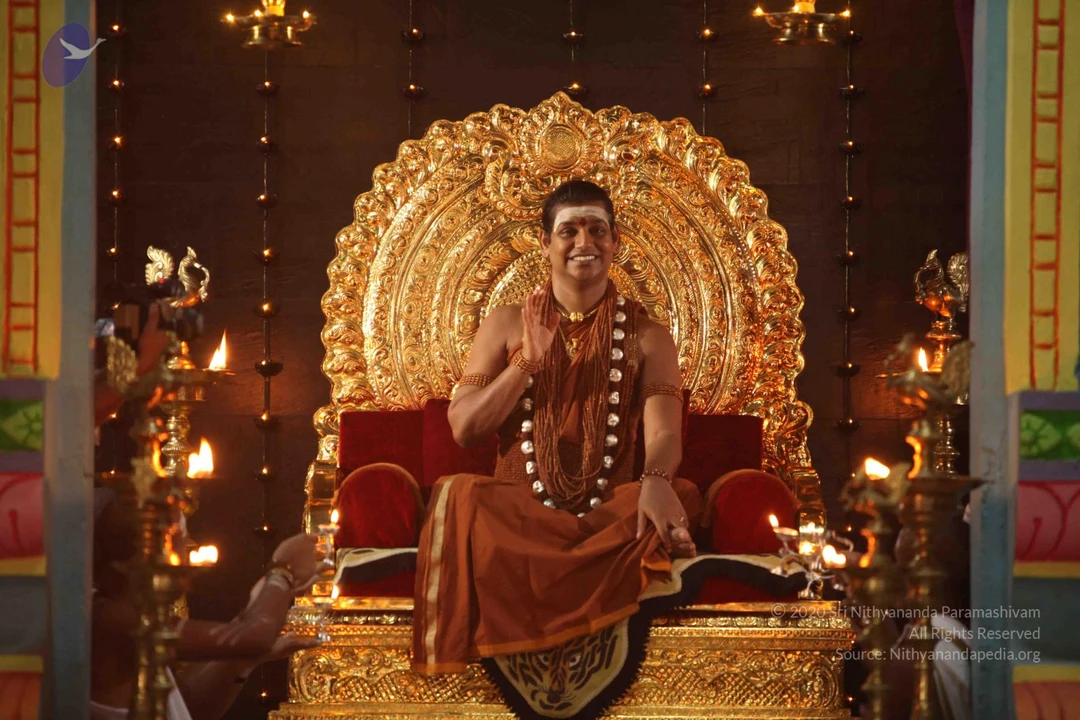
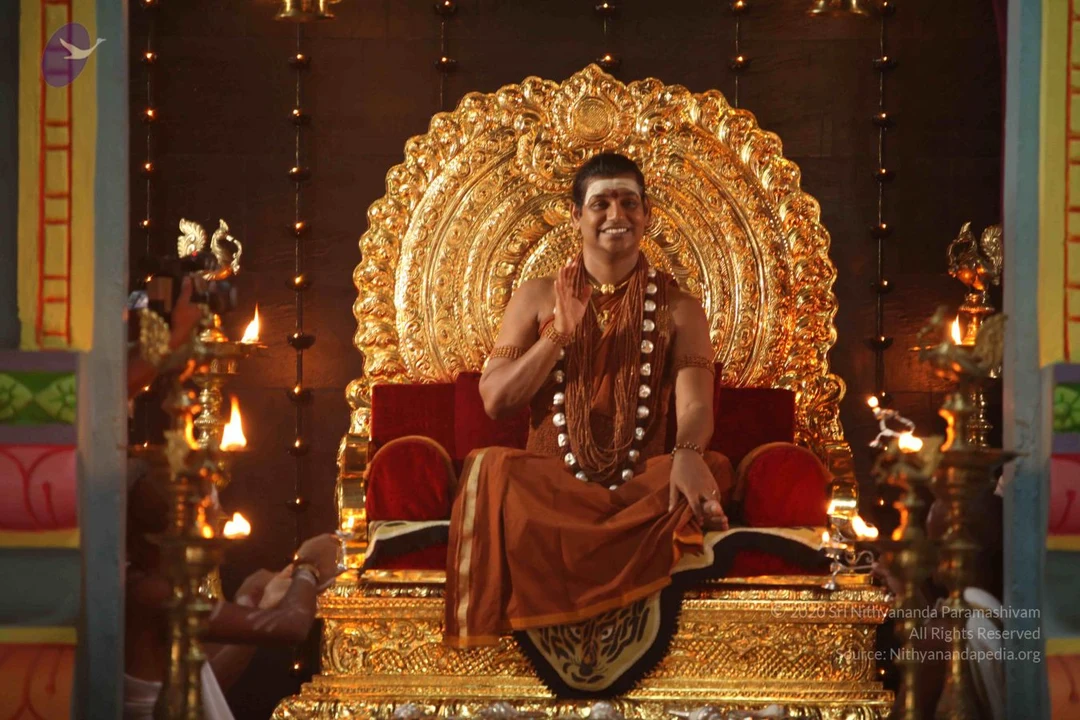
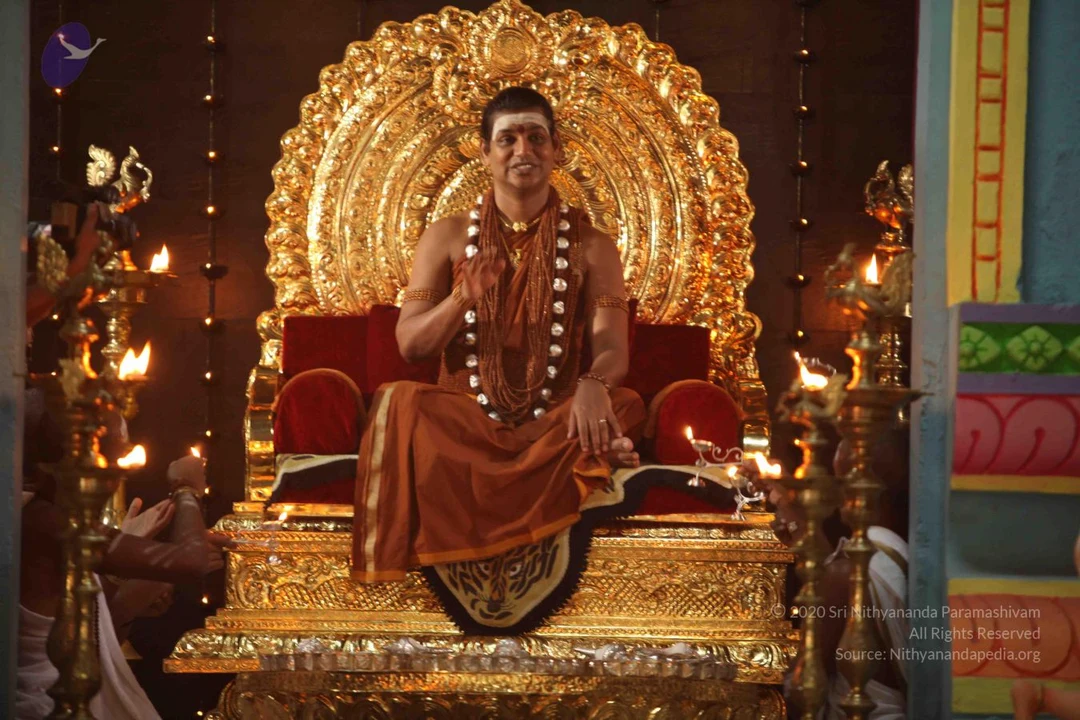
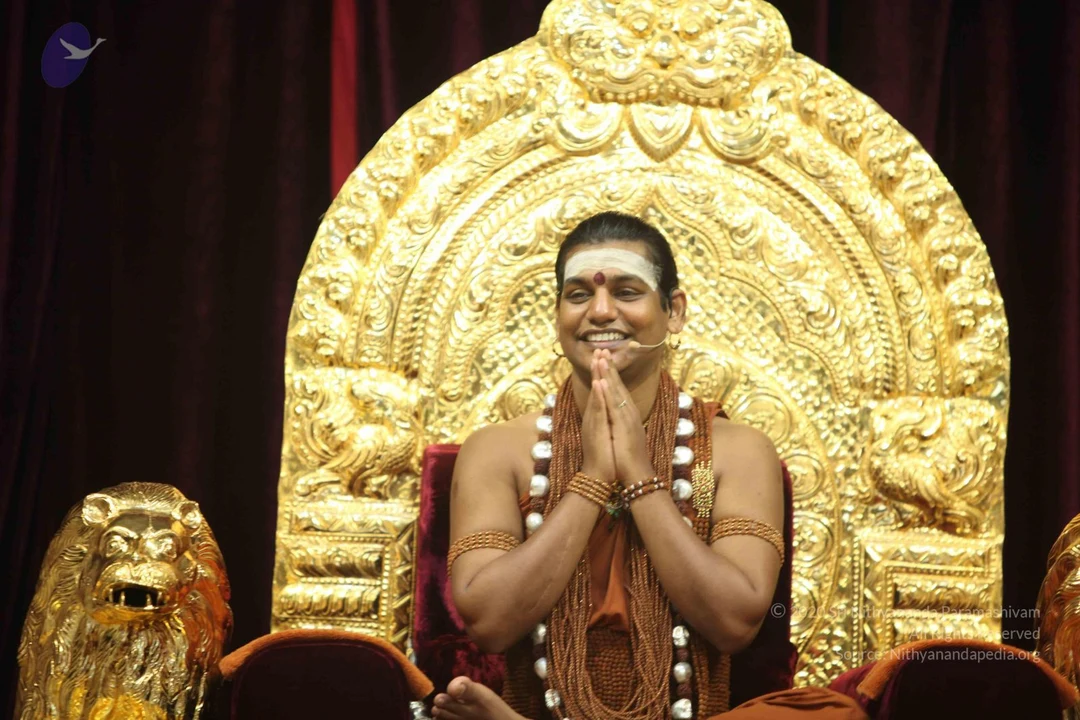
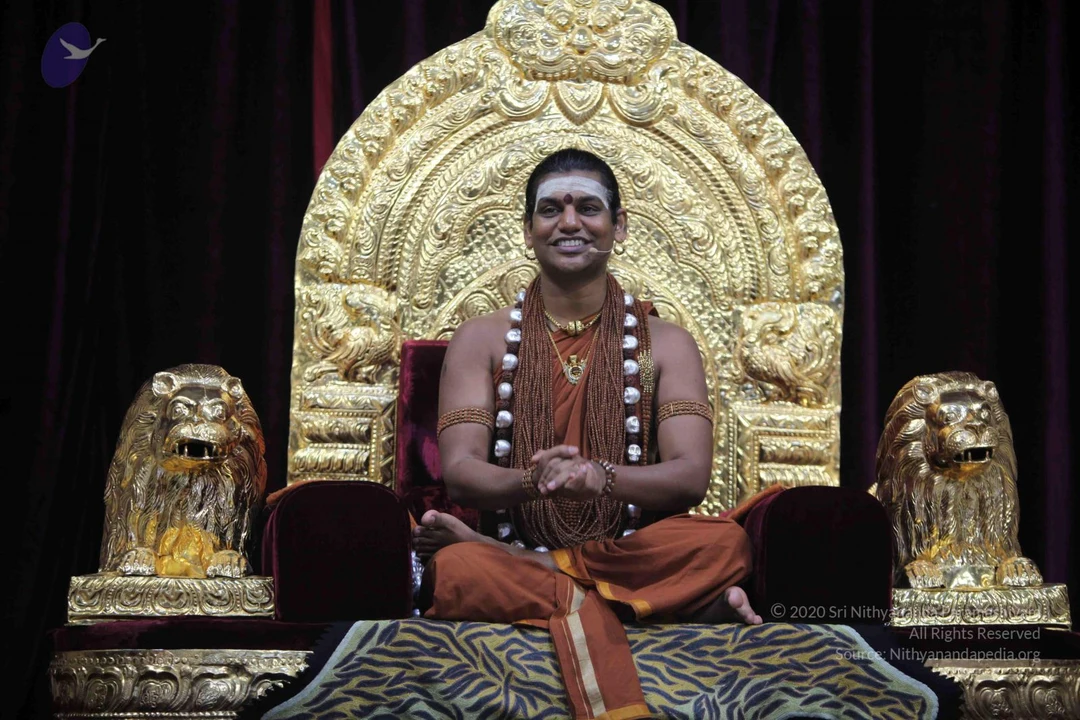
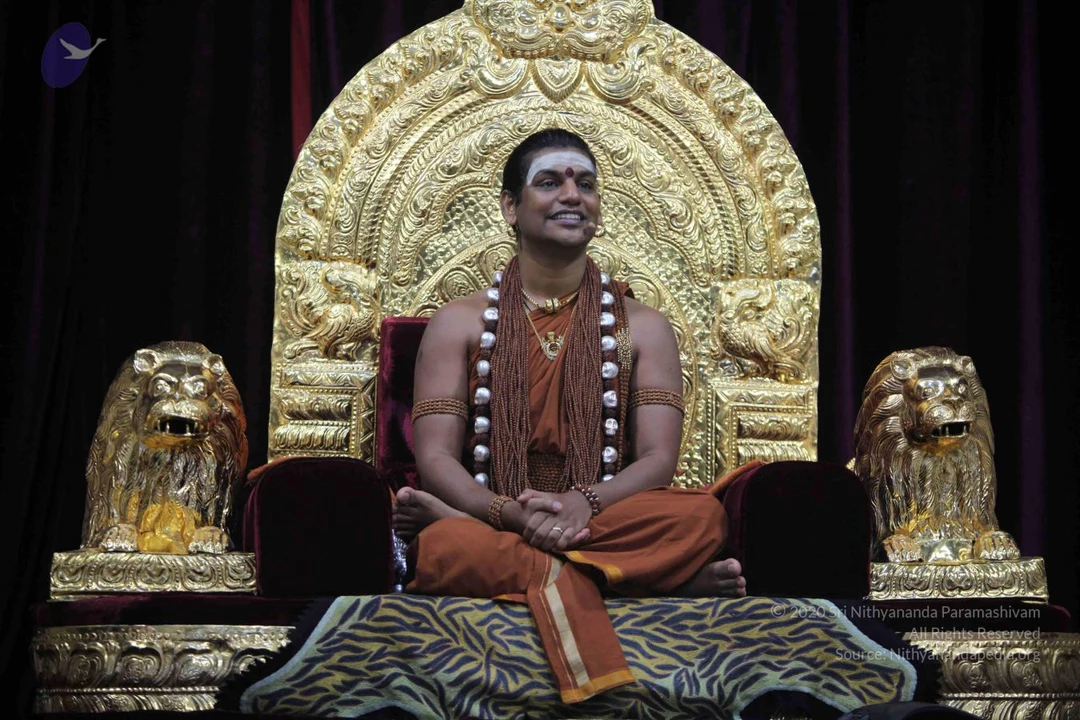
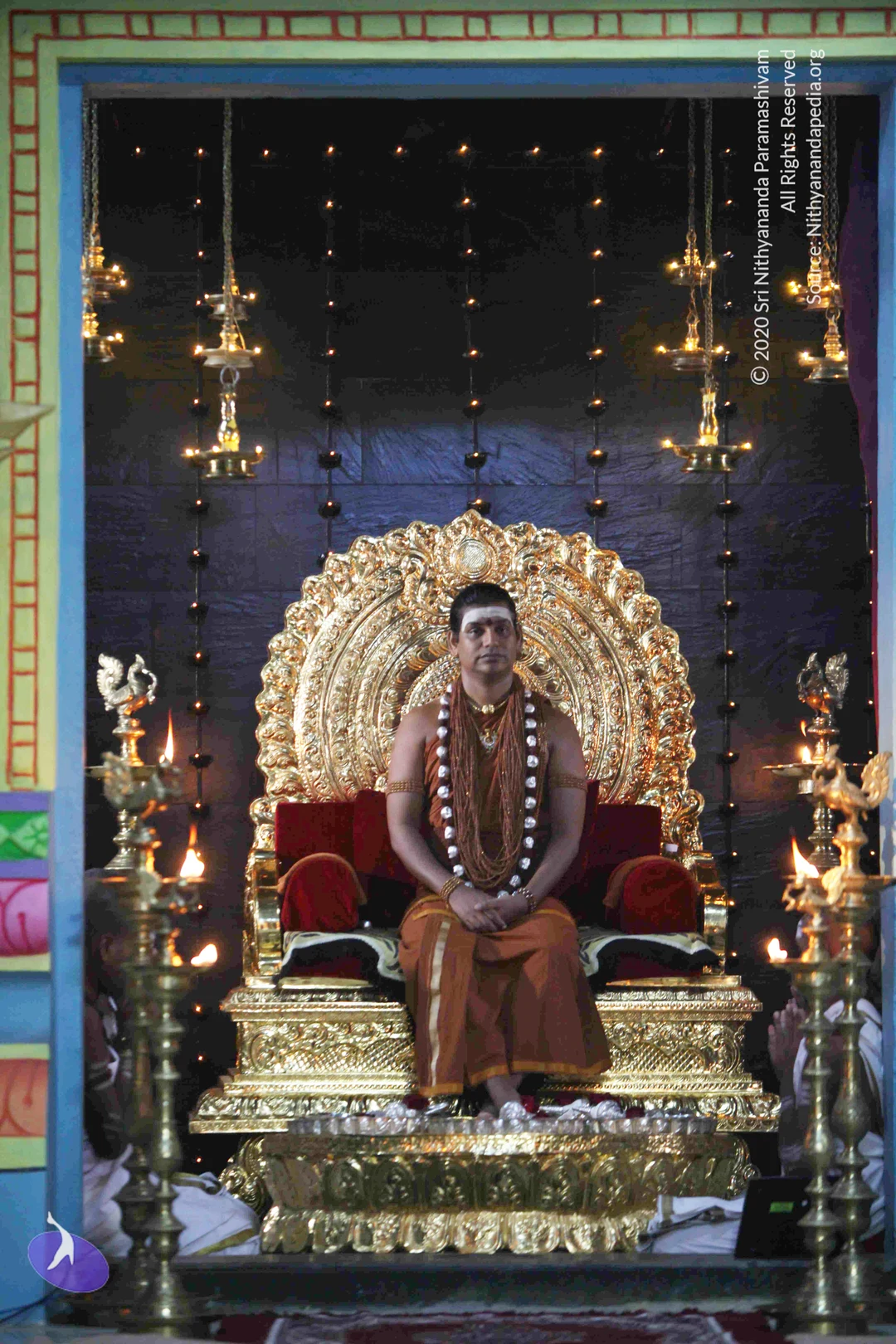
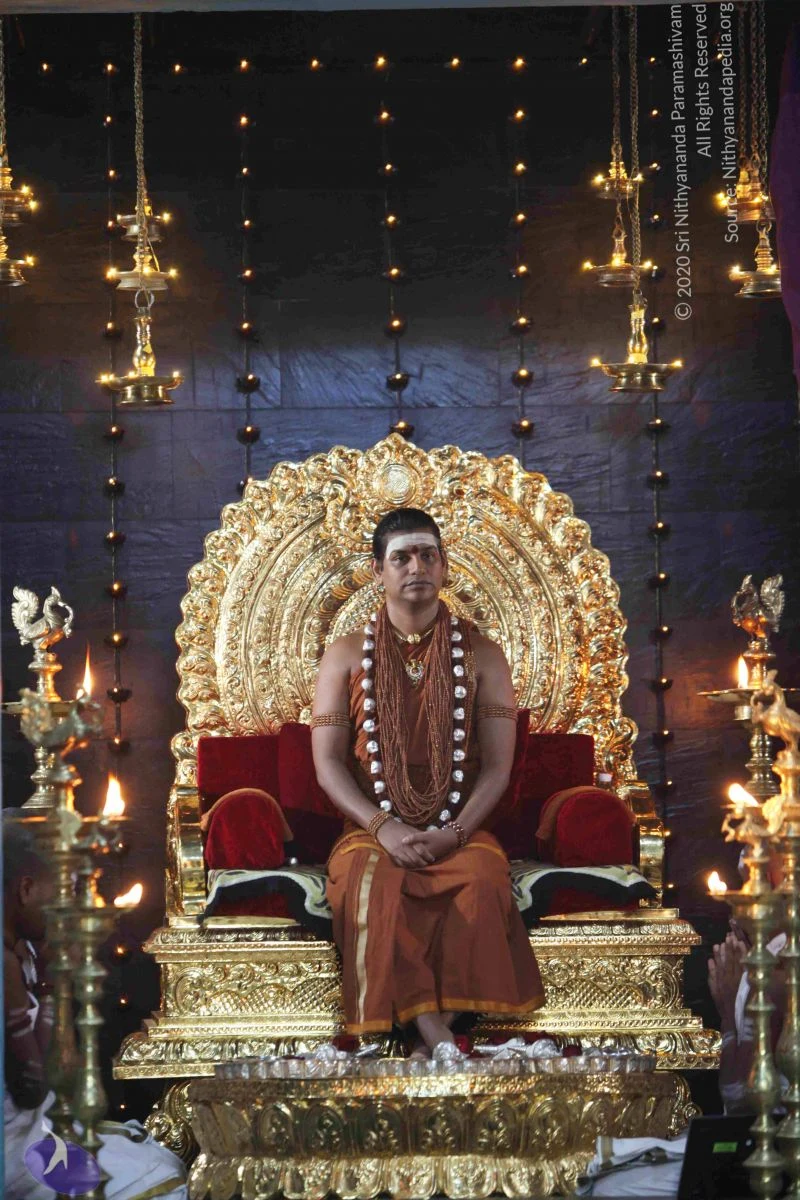
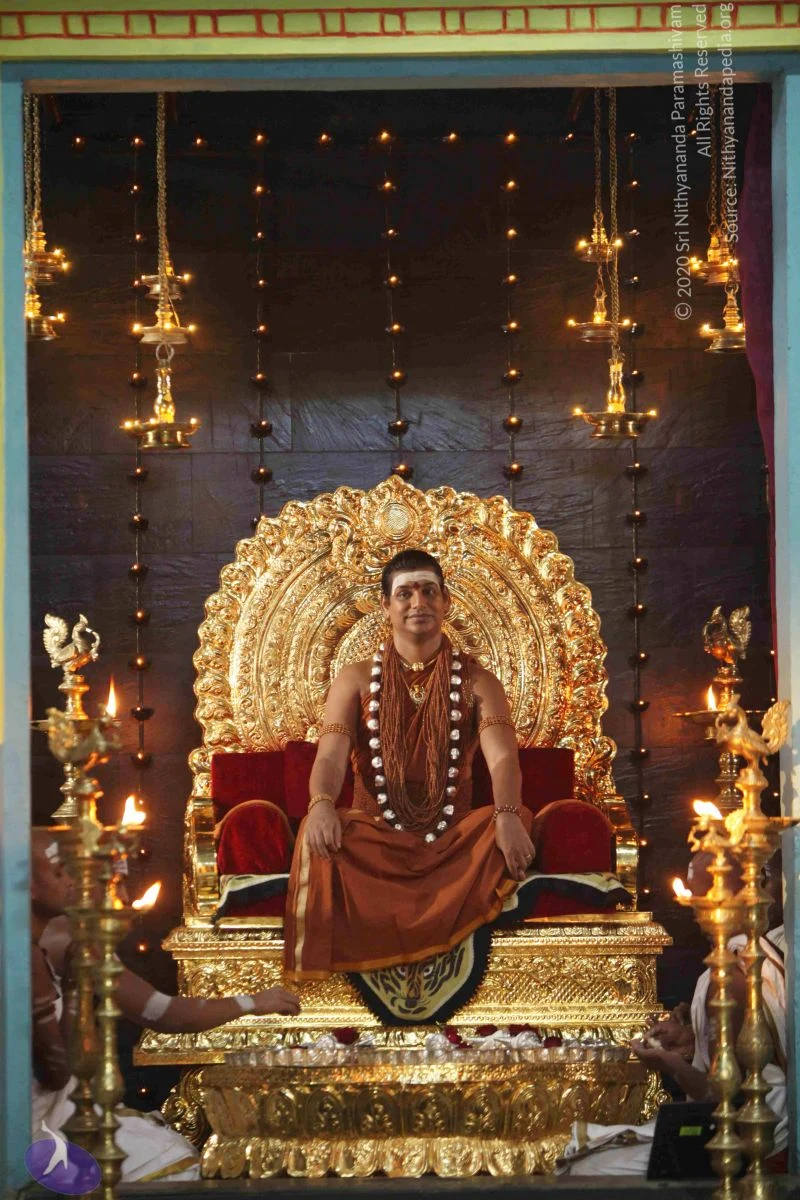
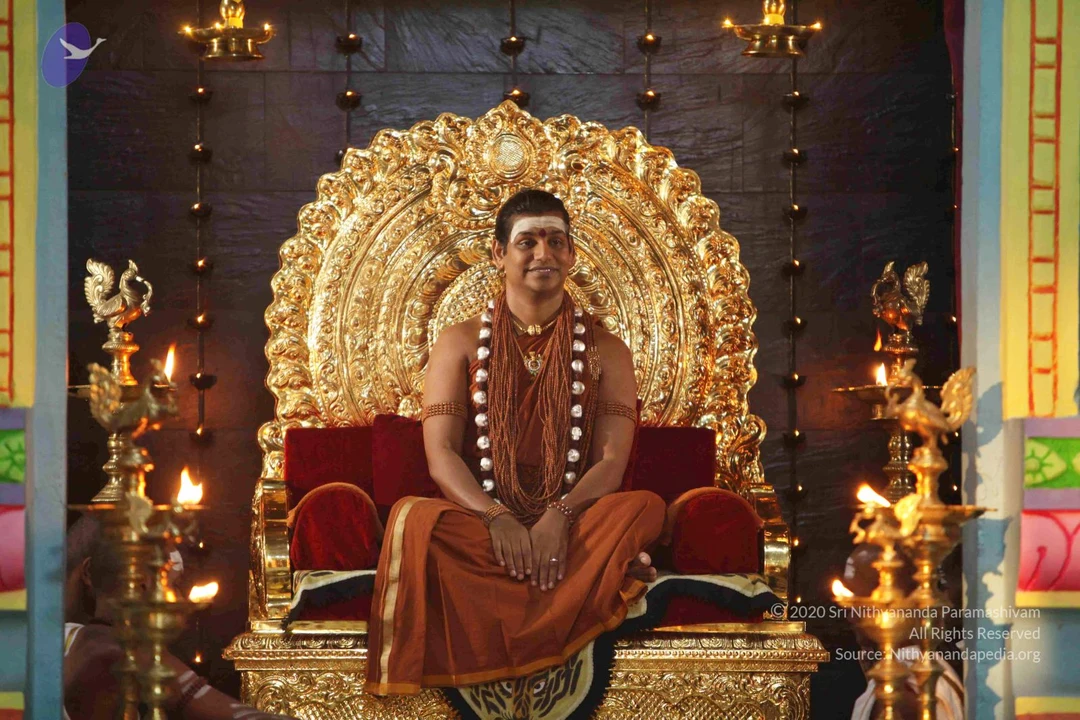
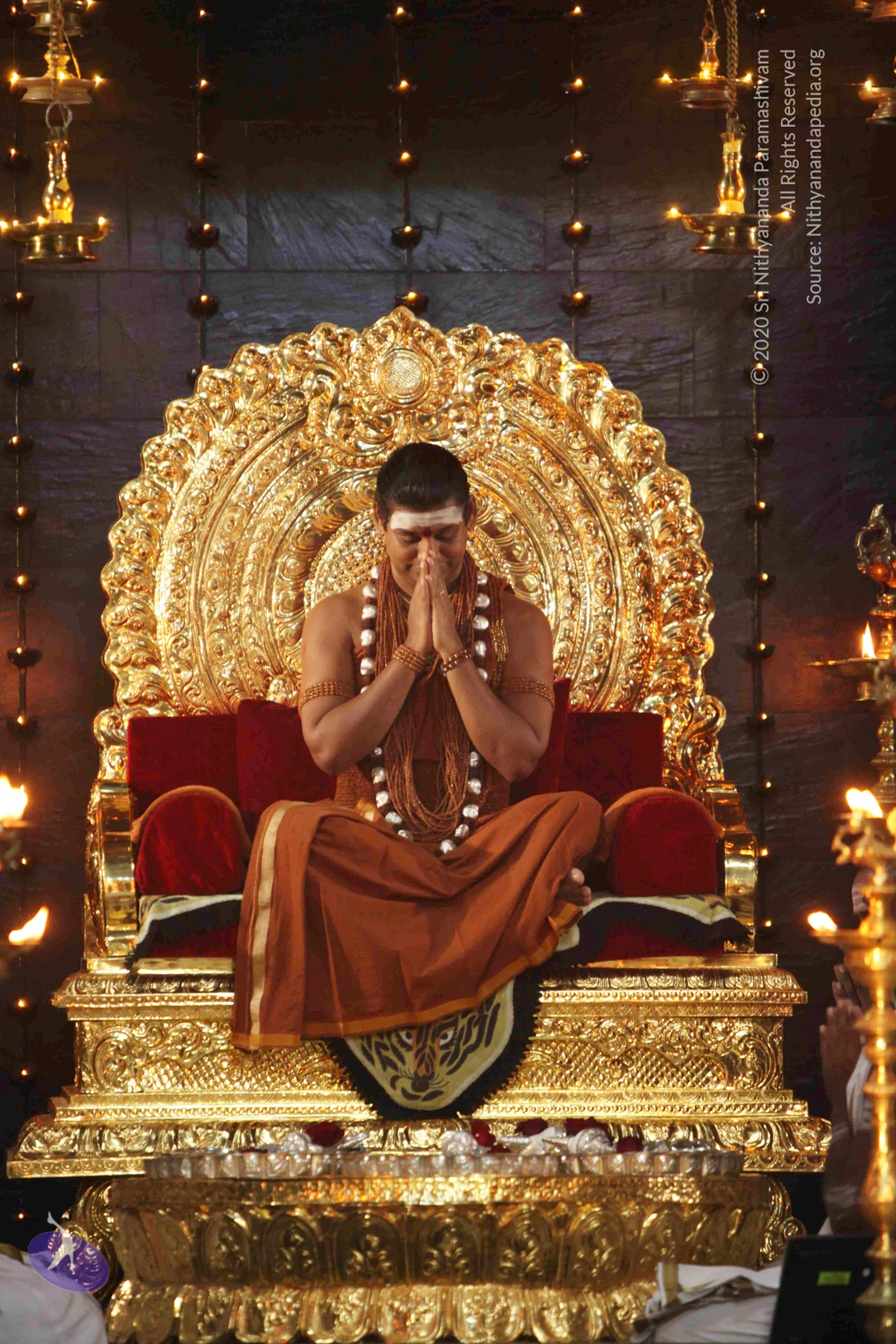
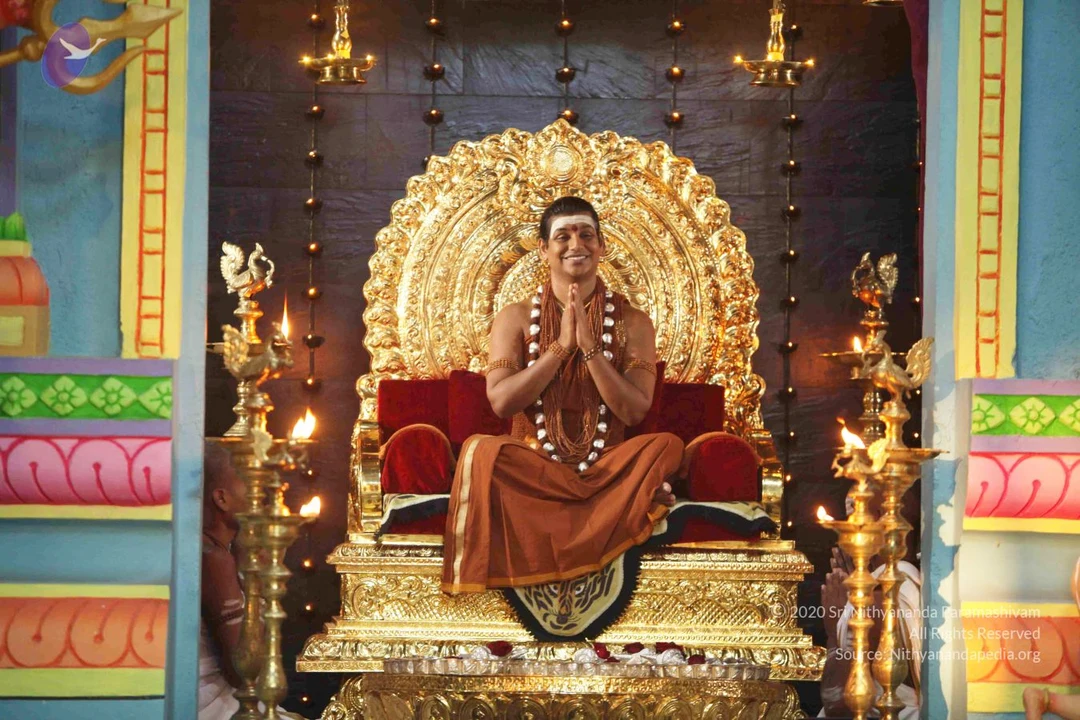
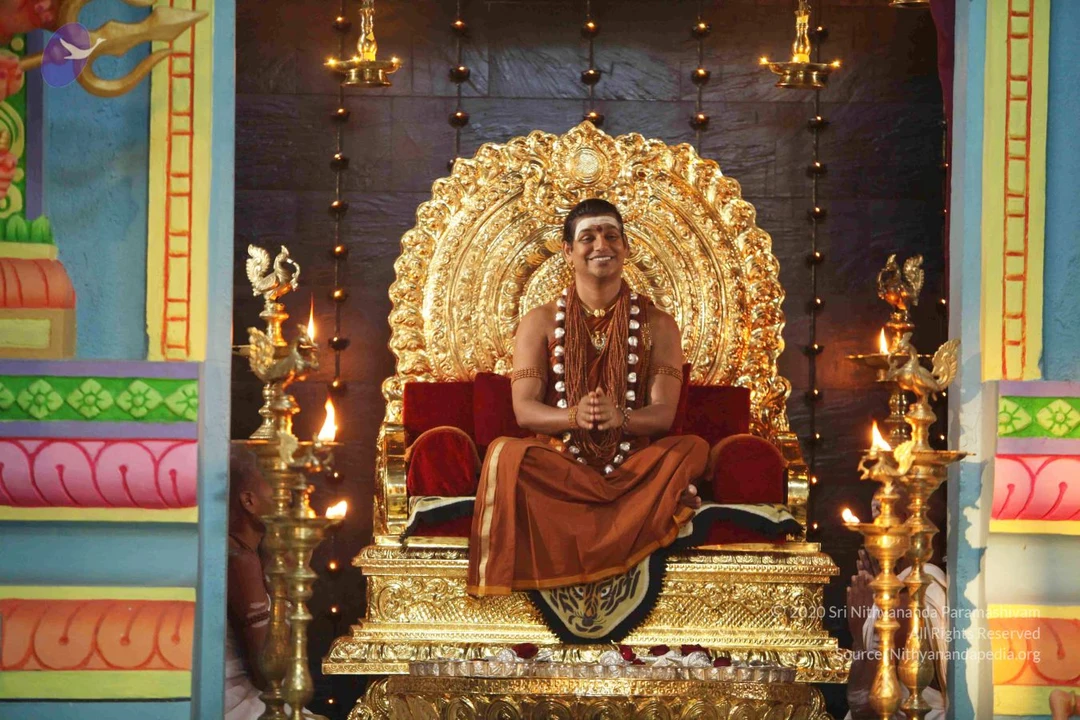
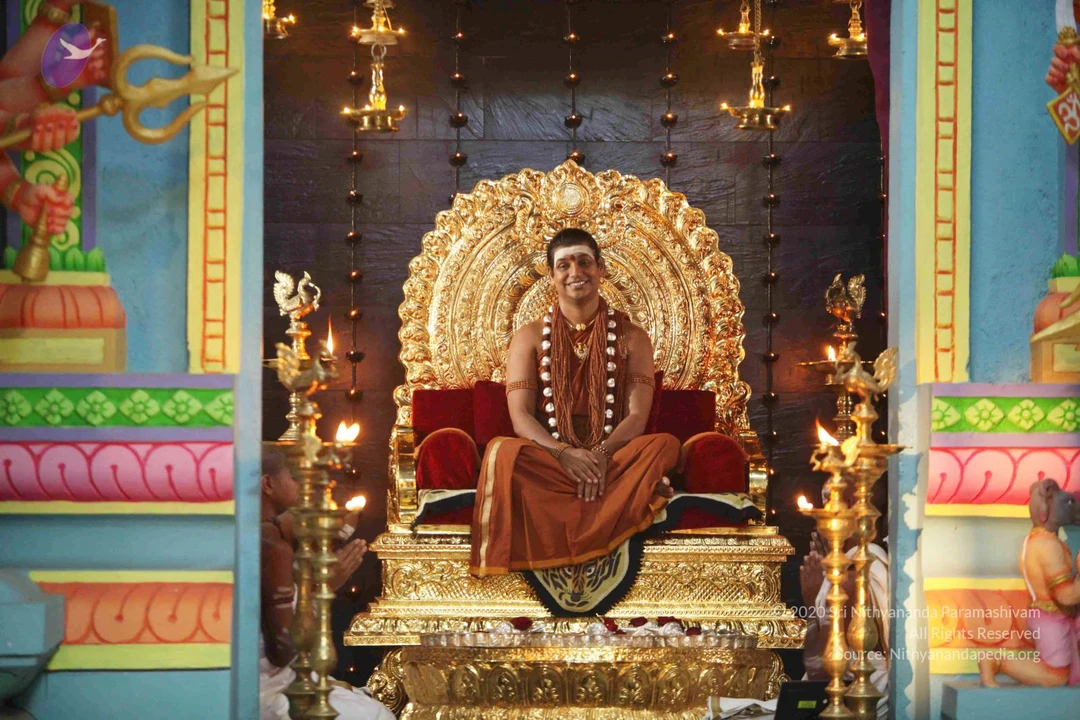
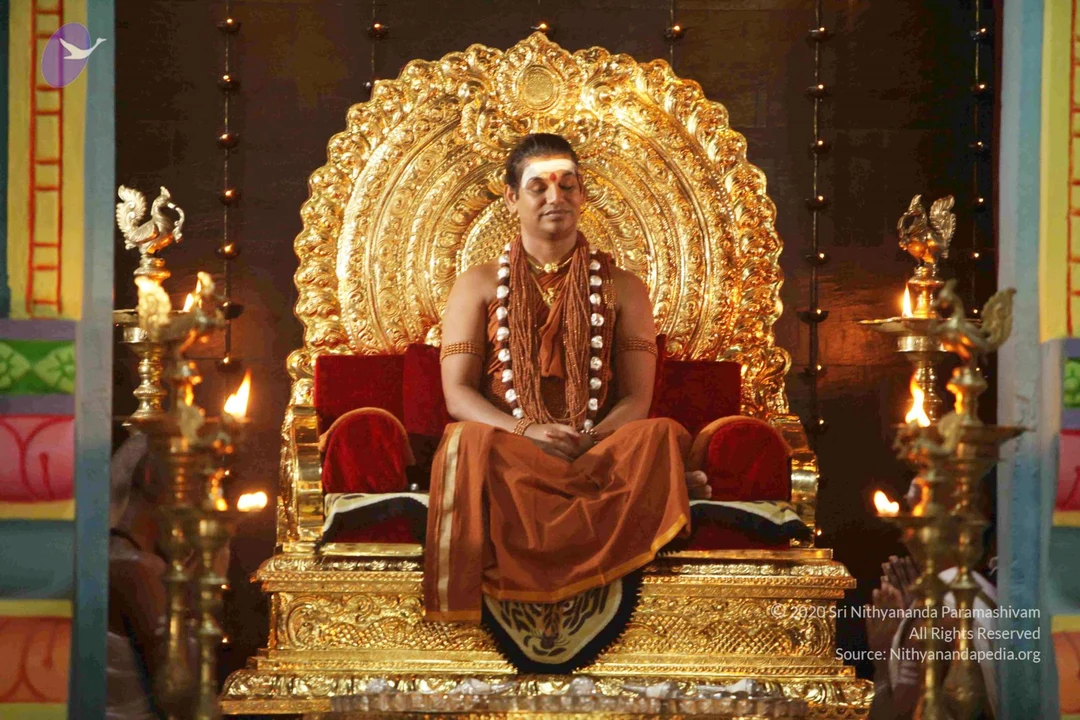
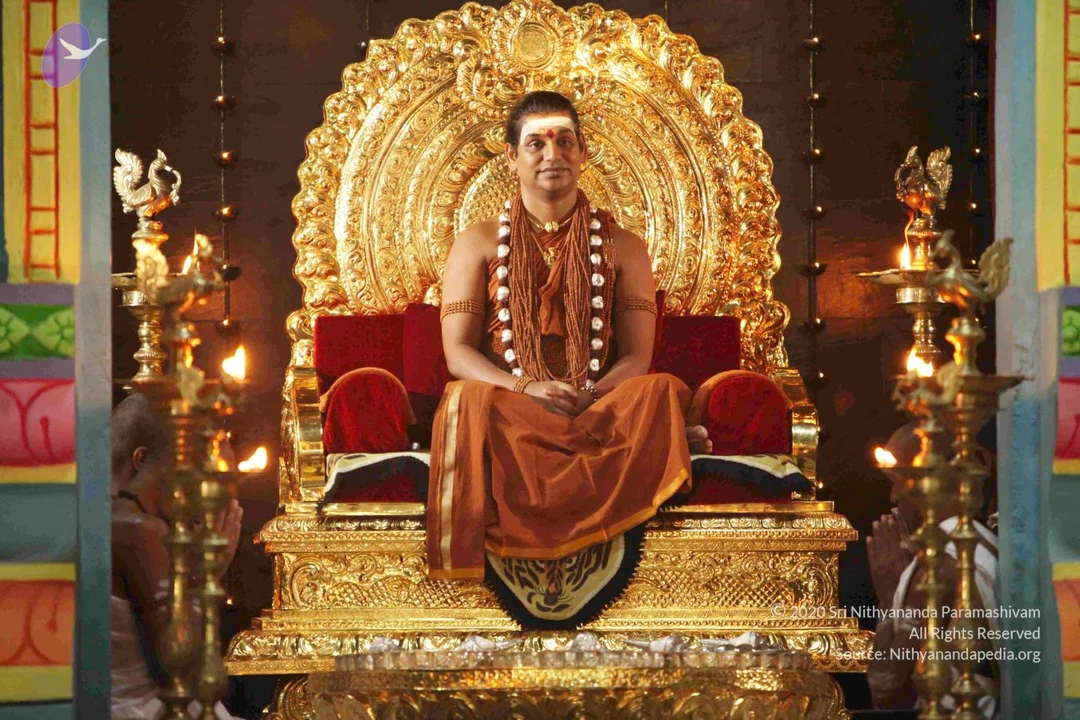
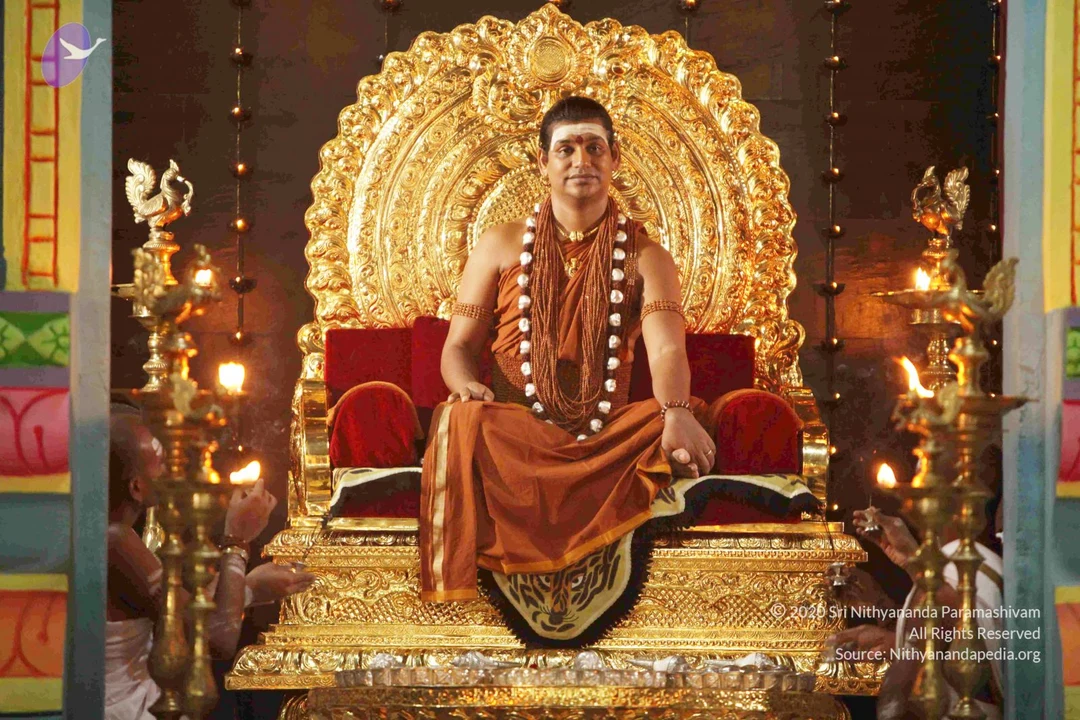
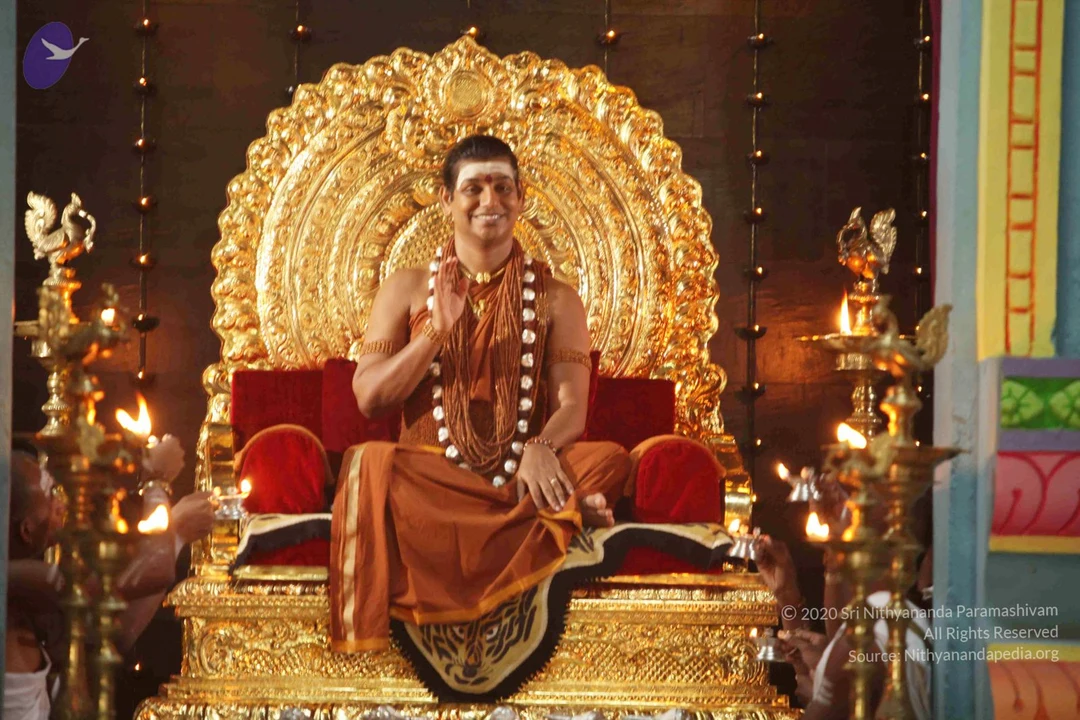
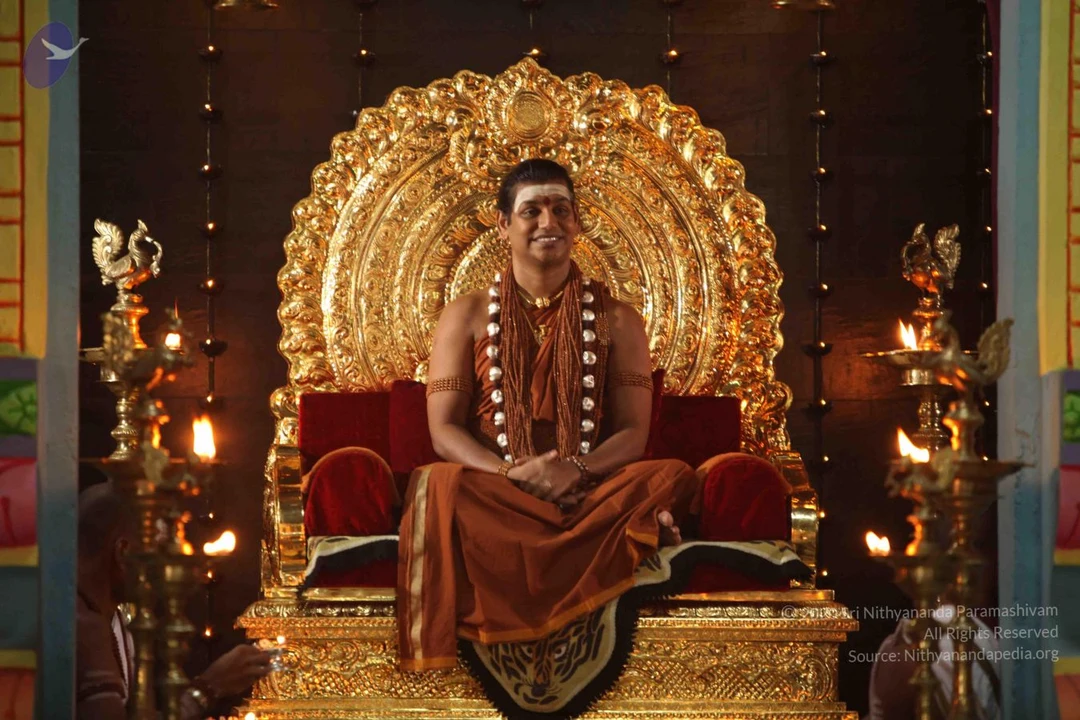
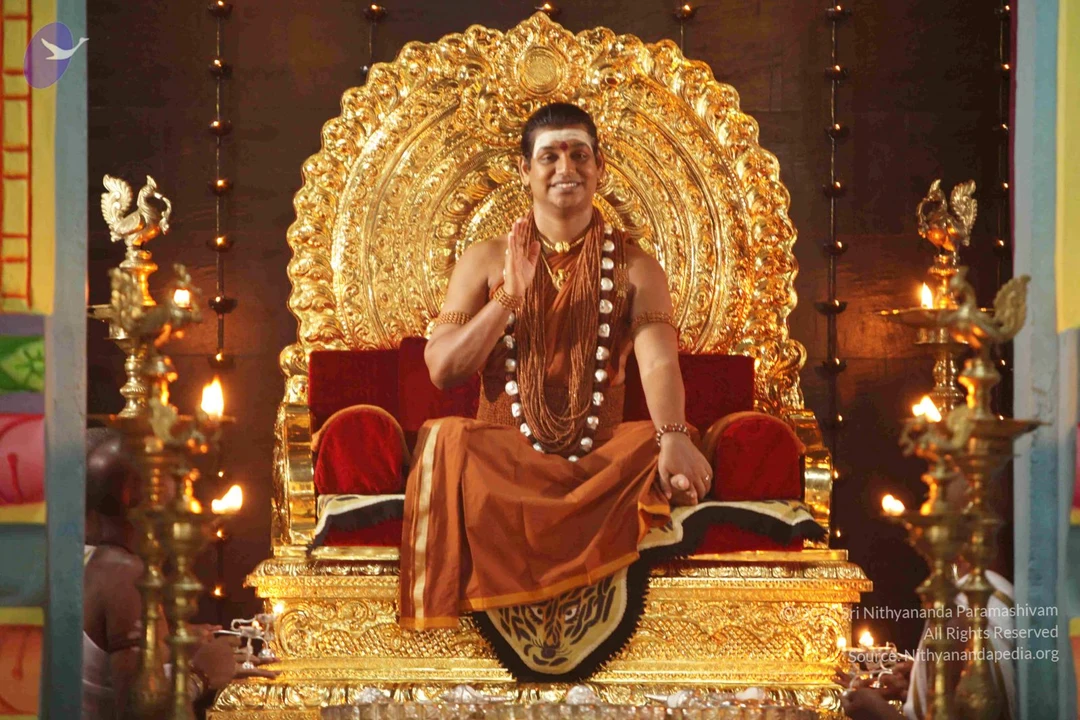
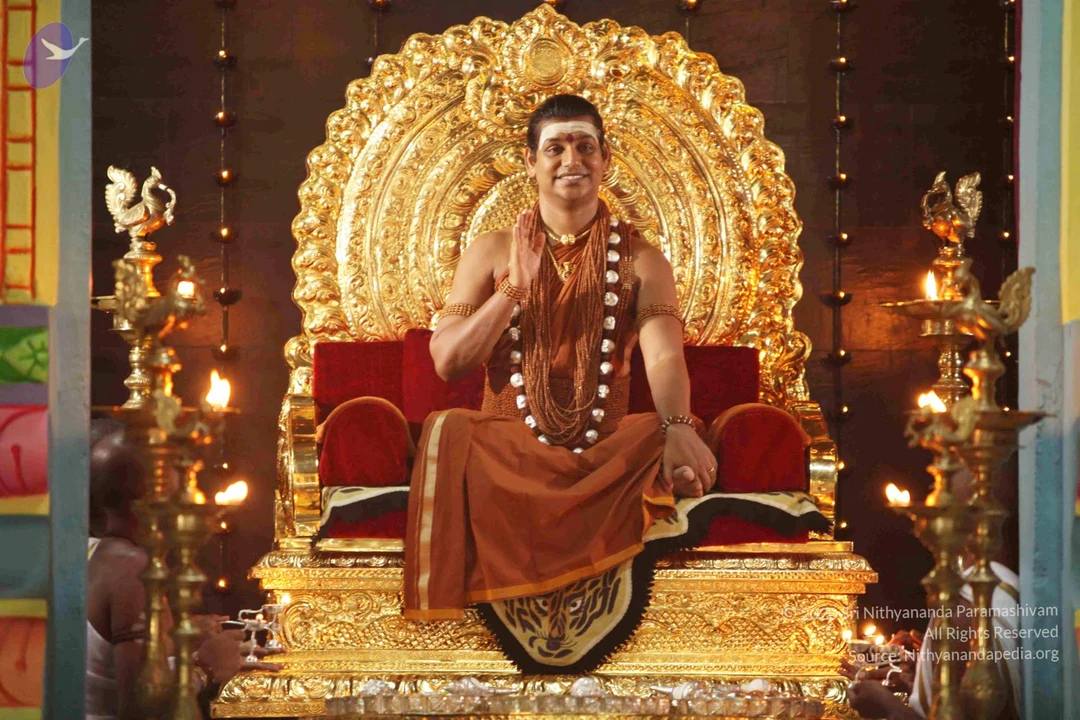
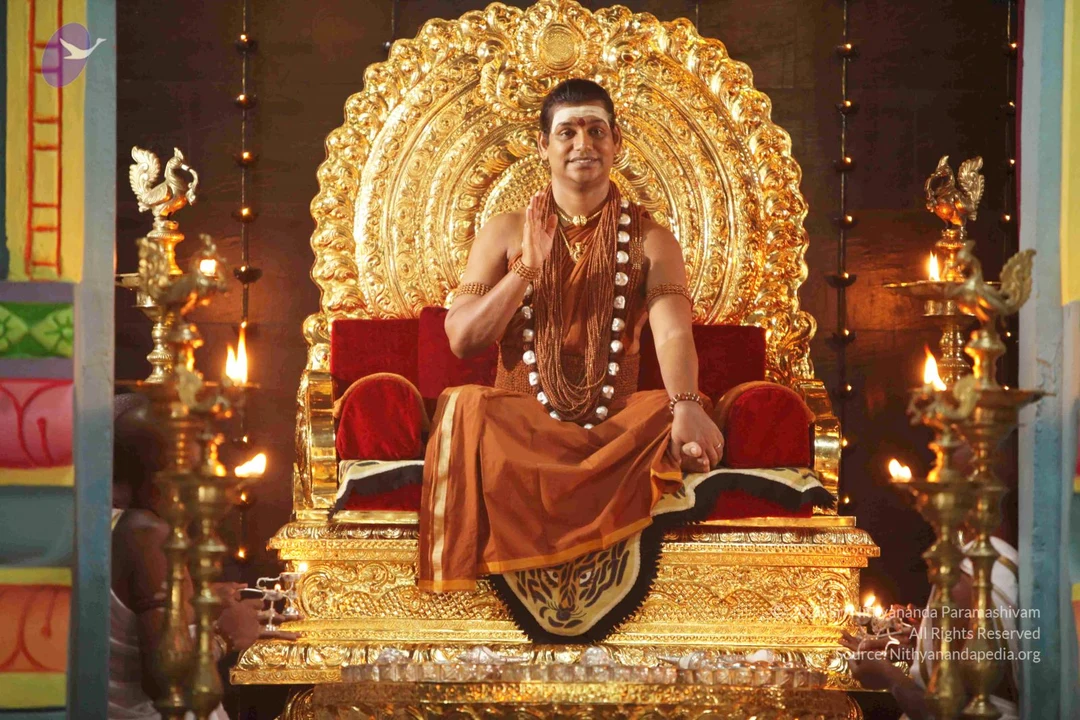
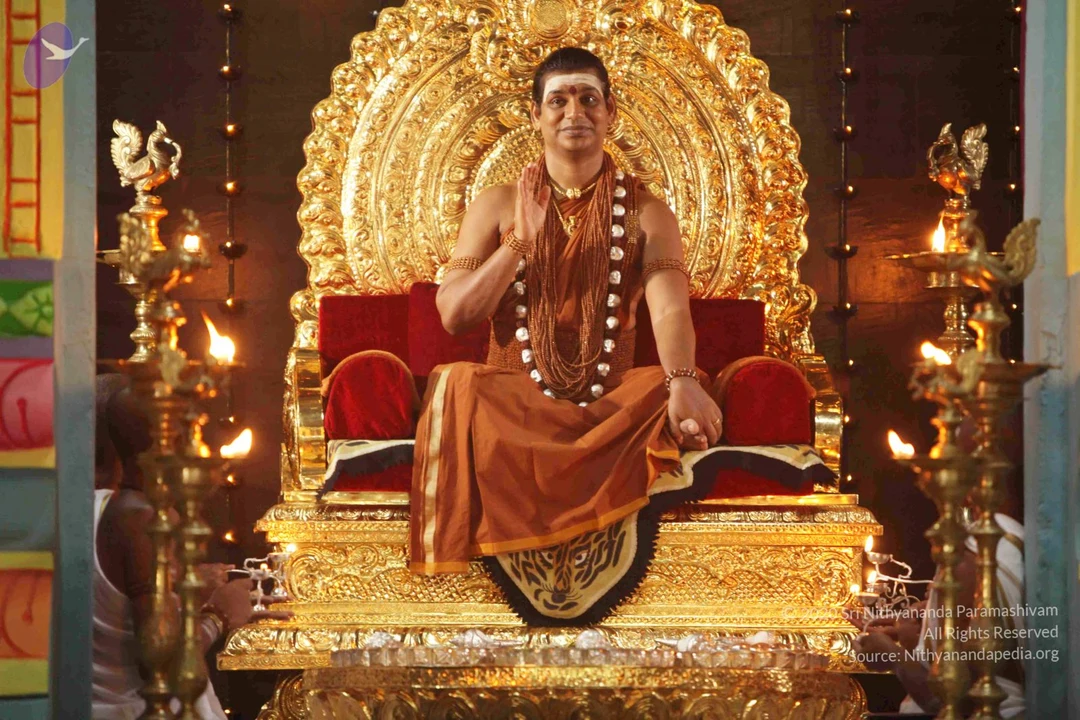
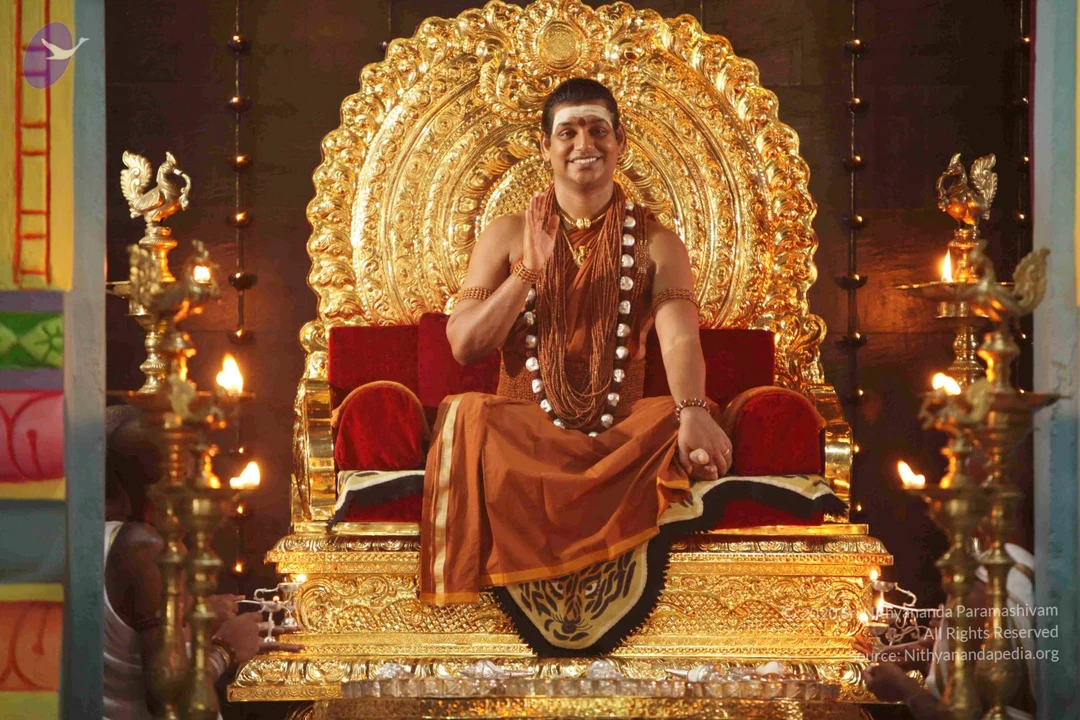
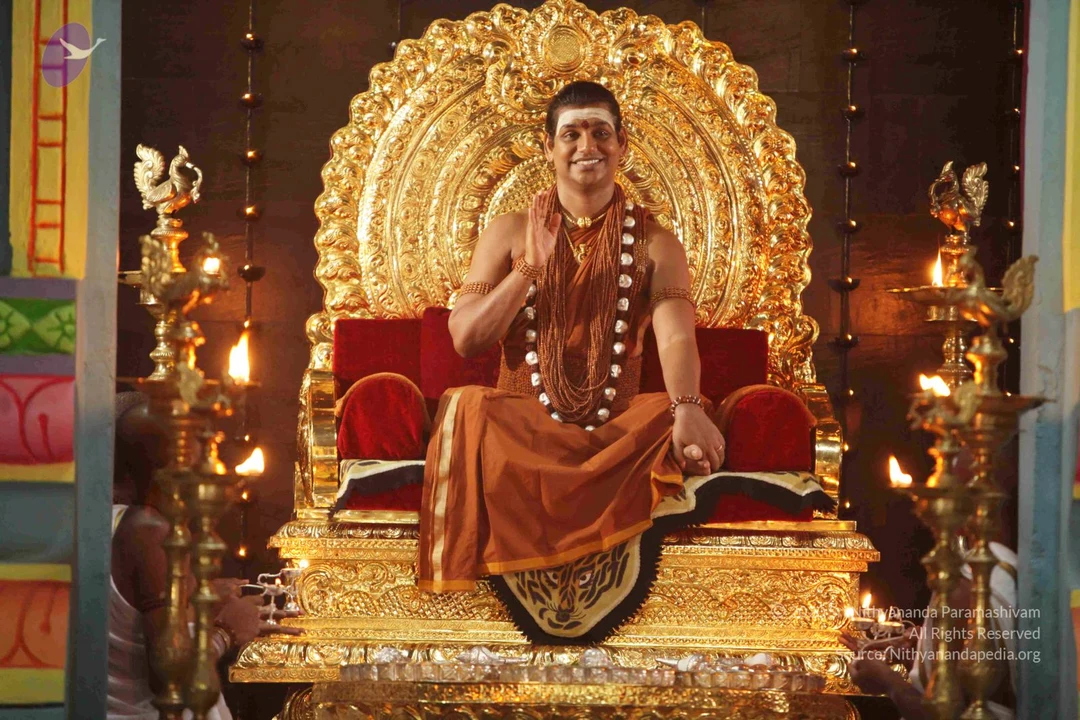
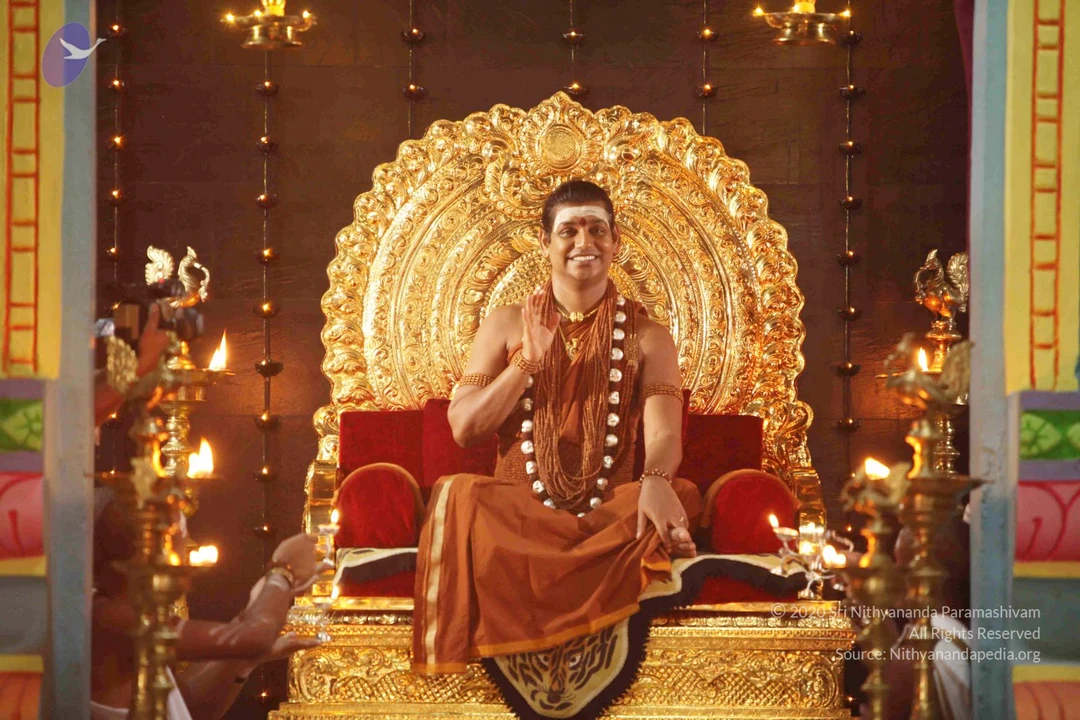
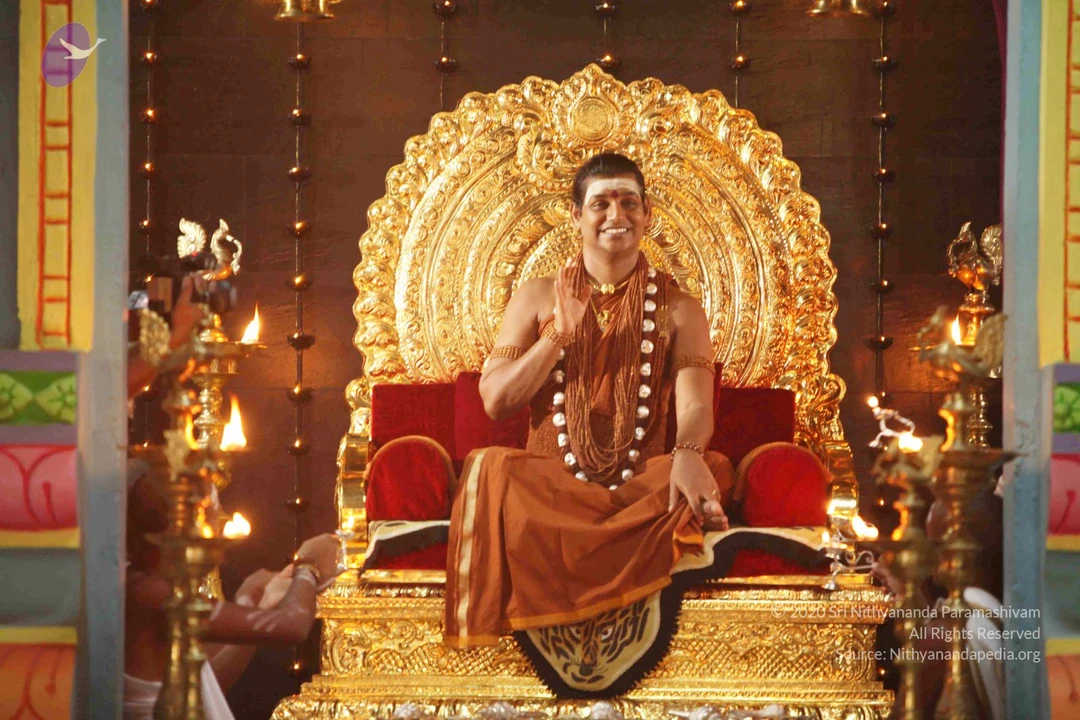
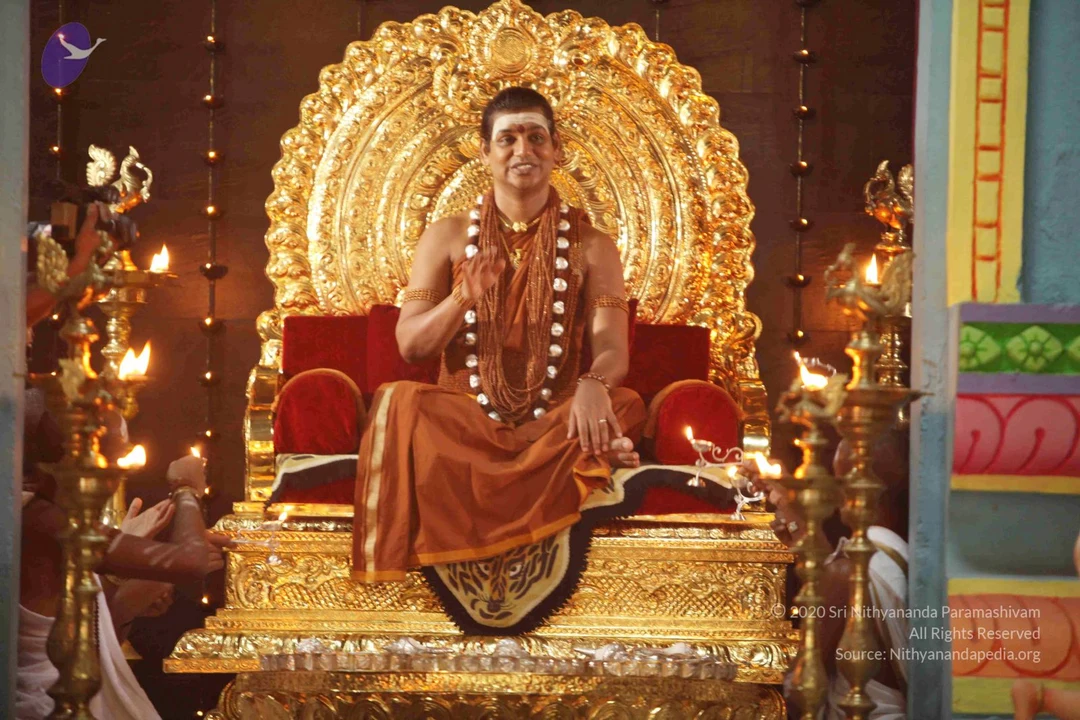
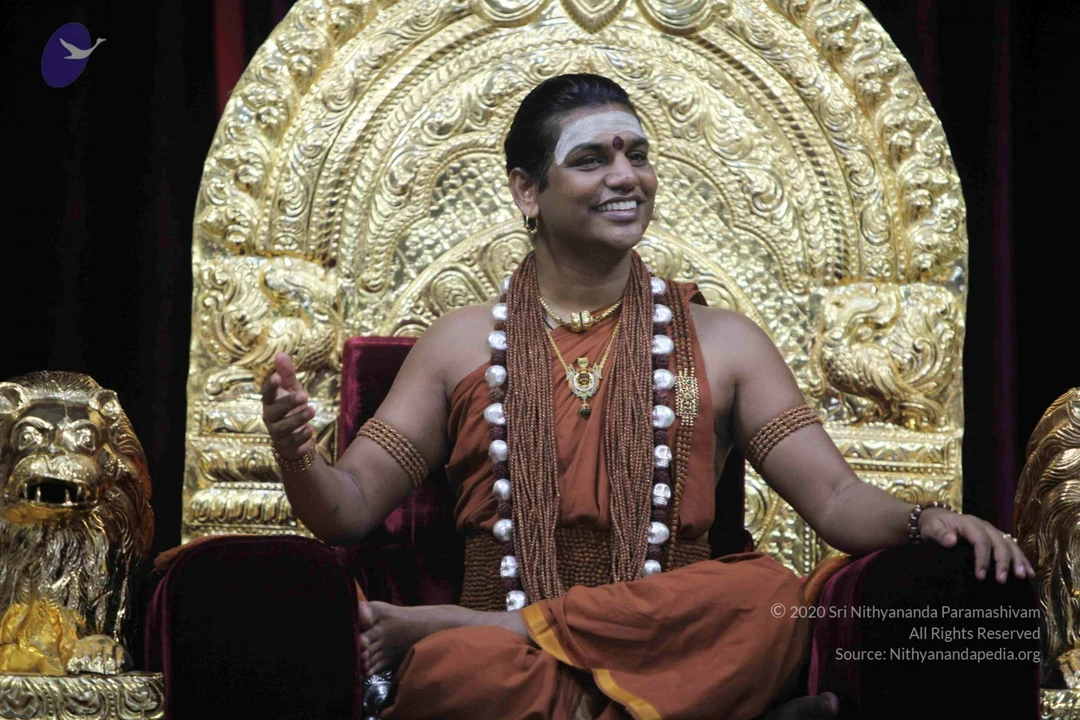
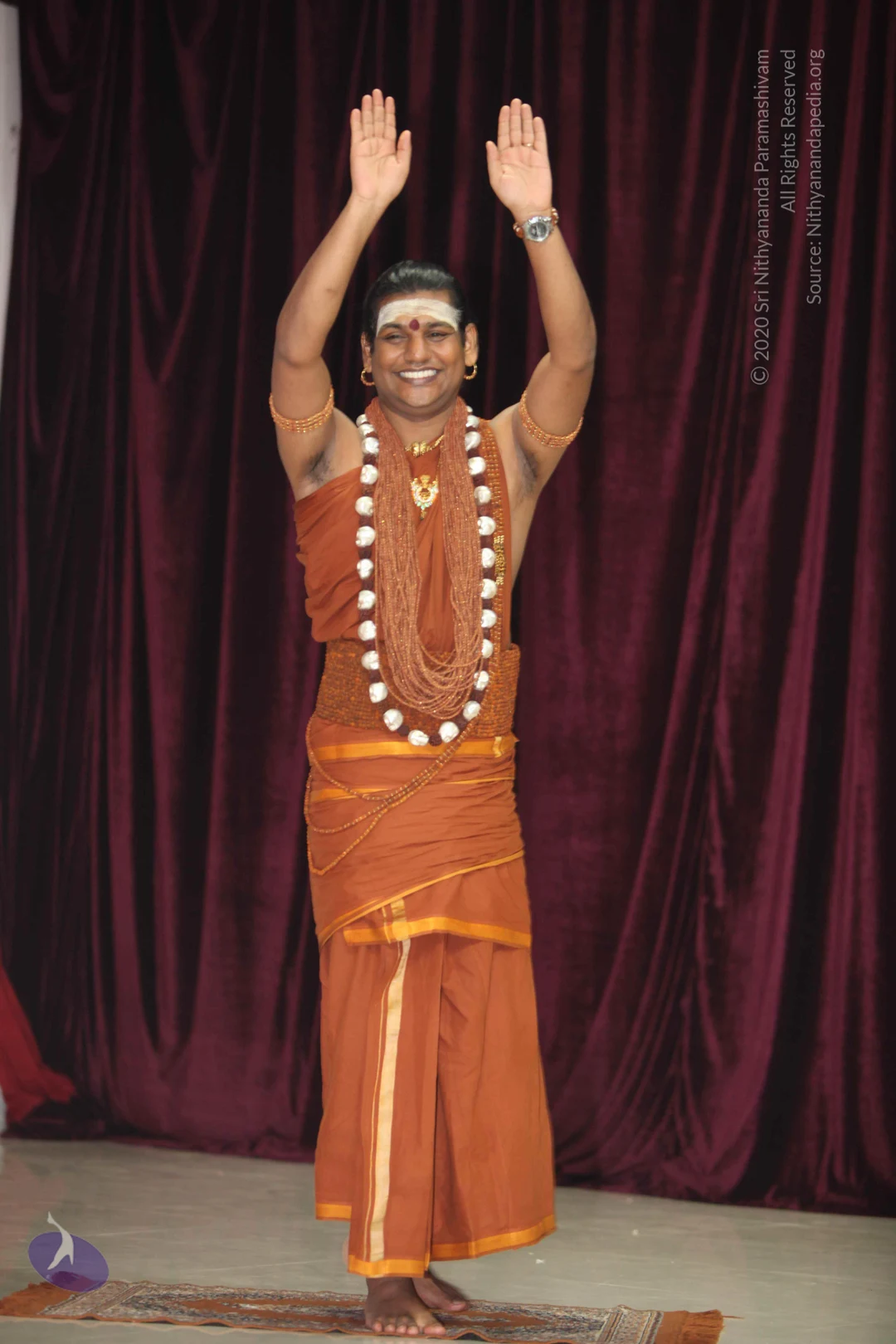
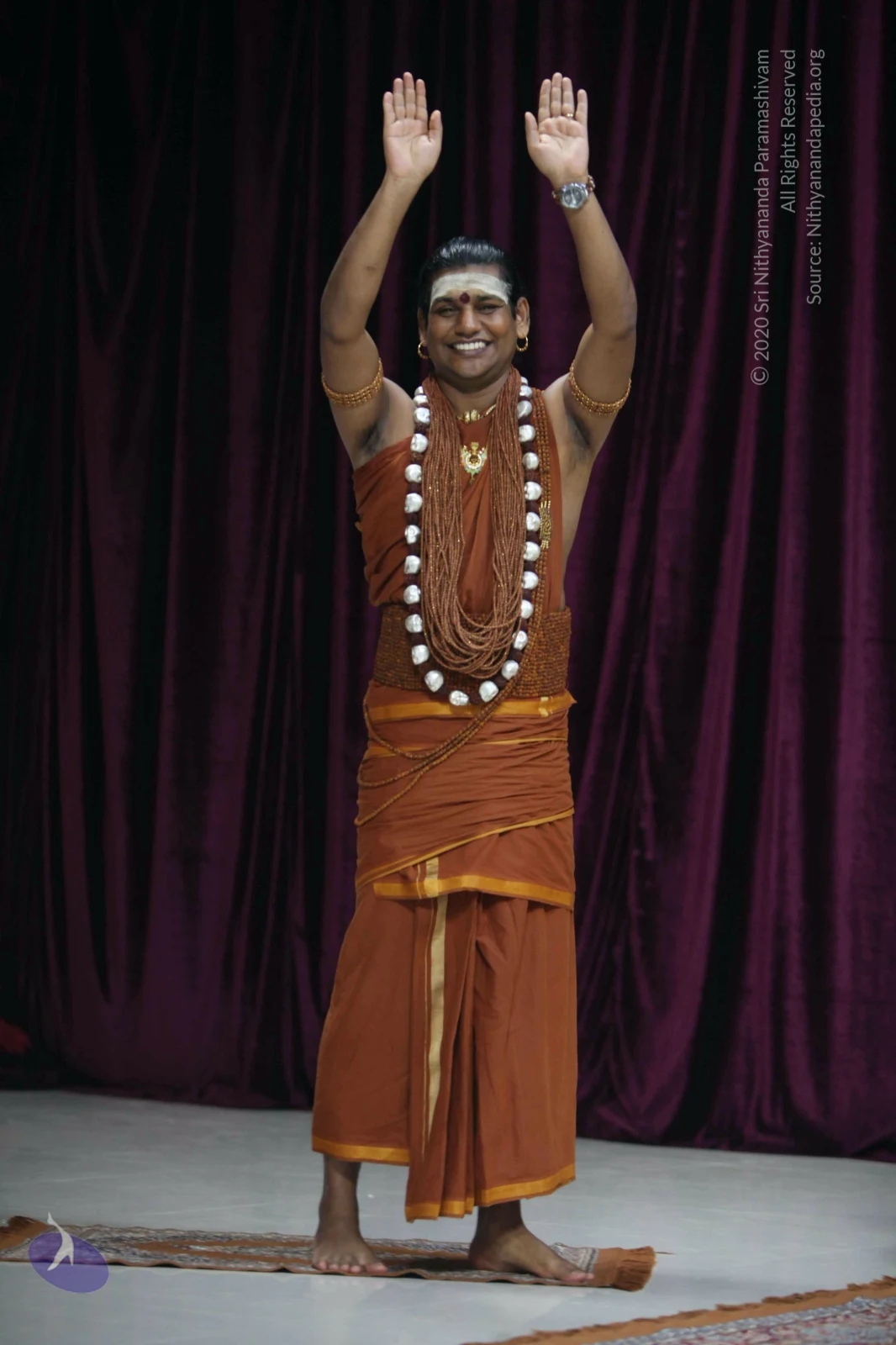
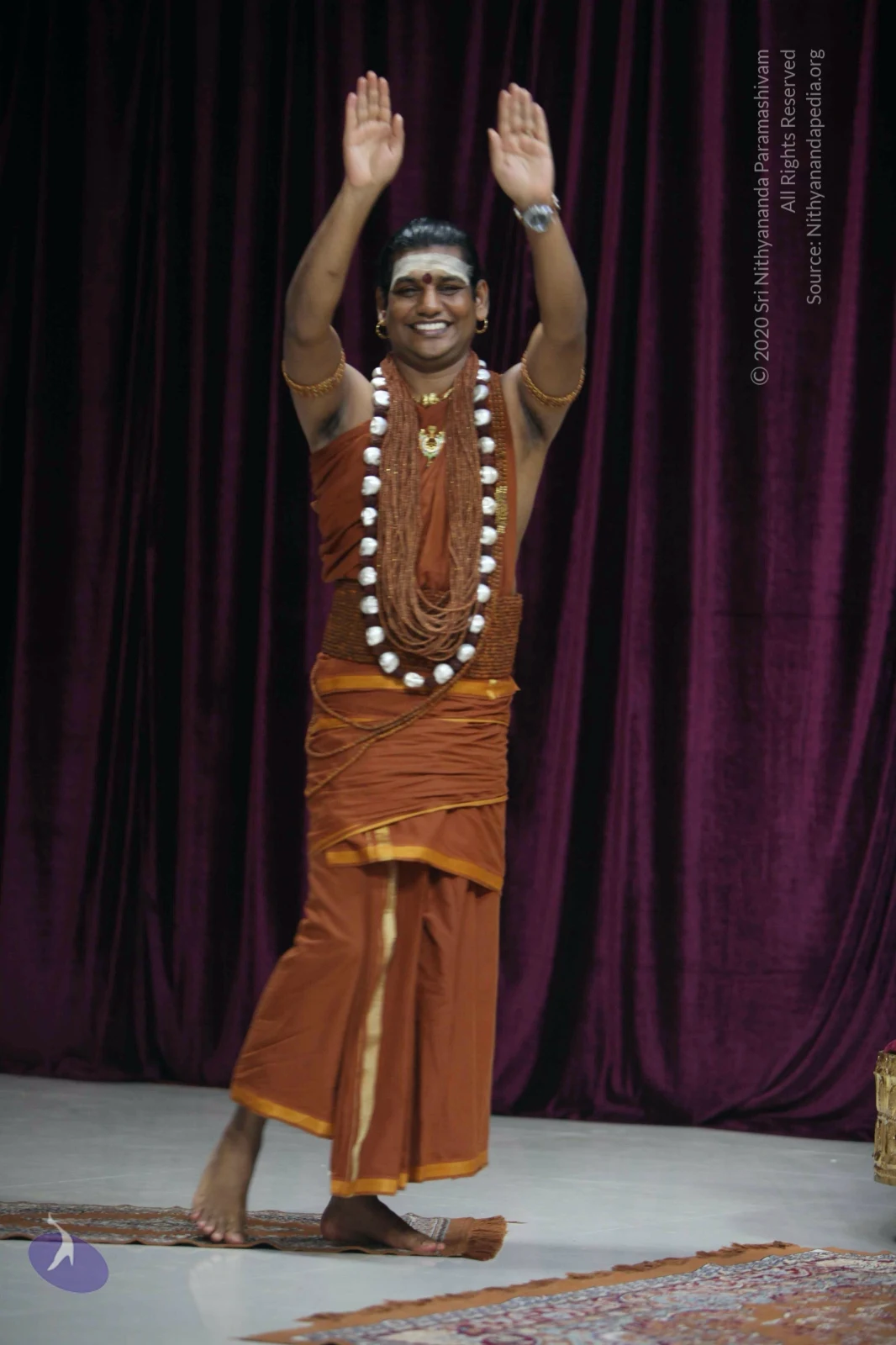
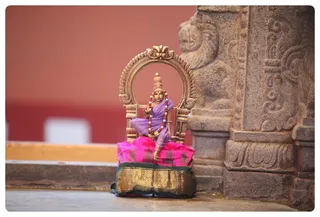
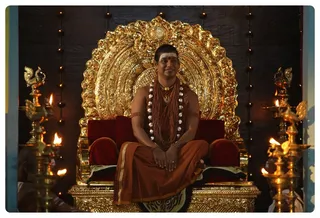
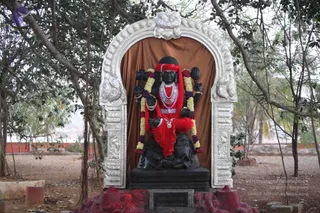
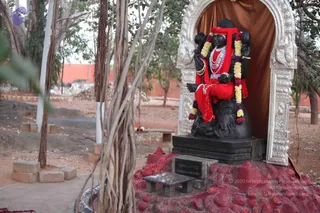
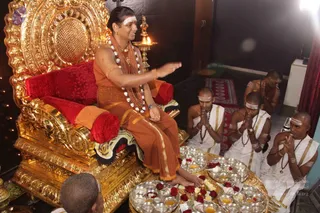
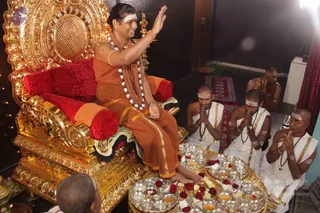
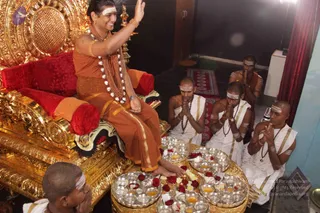
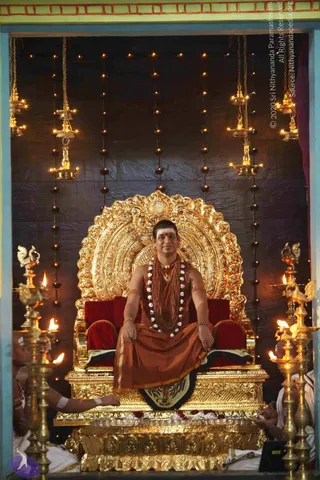
A black stone murti of a goddess stands in an ornate silver-coloured arch set against a brown cloth backdrop, outdoors among trees and bare earth. The deity has four arms holding weapons and is draped in a red sari with a red shawl, wearing a white beaded necklace, a red bead necklace, and a garland of white and orange flowers. She stands on a dark pedestal, and a red-painted base sits below with a small plaque beneath. No people are visible.A small metal deity murti is seated on a gilded throne with an arched backrest, wearing a purple draped cloth and a long beaded mala. It sits on a pink and green cloth with gold border, placed on a stone ledge beside a carved stone pillar with lion relief and floral scrollwork. The background is a warm red wall. No people are visible; this is a photograph of a murti and temple setting.A temple shrine with a gilded arch framing a pair of large painted deity murtis seated on a decorated throne. The figure on the left wears an orange turban, a red-and-gold lower garment and a trident-bearing hand; the figure on the right wears a tall crown and red garland. Both are draped in red marigold garlands and multiple beaded necklaces. In the centre sits a silver kalasha or vessel with a five-flame lamp, set on a blue cloth and flanked by blue drapes. A smaller figure in an orange-red robe stands in a side niche to the right, with oil lamps on stands. No physical people are visible; all figures are statues or murtis.A seated man sits on an ornate gold throne with a large golden arched backrest and red cushions, in front of a dark stone wall hung with rudraksha beads. He wears a rust-orange wrap over his shoulders and chest, a white and black bead garland, a rudraksha mala, gold bracelets and a gold necklace, with a tilak on his forehead. Tall brass oil lamps with lit wicks stand on both sides and a dark tiger-skin-style cloth drapes the throne's base. Two attendants in white clothing are partly visible at the lower edges, one touching the throne. Swamiji (probable): a central seated figure with long swept-back hair, saffron wrap and rudraksha malas, seated on the throne as the central figure of satsang.A photograph inside a room with a gold-framed red-cushioned throne. A man seated on the throne wears an orange-saffron robe with a gold-bordered shawl, a long rudraksha-style bead necklace with white and red garlands, and a tilak on his forehead. He raises his right hand in blessing and smiles. Around the throne, three shaved-headed men in white dhoti-style clothes with orange-yellow shawls sit with palms pressed together in namaskar, marked with white tilaks. In front of them, a gold tray holds many small silver bowls of offerings, red rose petals, white flowers and a few lit oil lamps. A partial figure sits at the bottom-left edge. A red-and-white cloth and a lit lamp are visible in the background. a person: the seated man wears saffron robes, a long rudraksha mala and a ceremonial golden-setting throne with a gold-edged backrest, in the role of the teacher receiving devotees.A seated man sits on an ornate gilded throne with a large golden arched backrest and red cushions, in front of a dark wall. He wears a rust-orange wrap over bare shoulders, a long rudraksha mala with a white bead necklace, a gold pendant, and arm bands. Two brass oil lamps with flames stand on either side of the throne. a person is shown on the throne; the appearance cues are the rudraksha malas, orange clothing and gold ornaments.

Photos

5 photosSource gallery
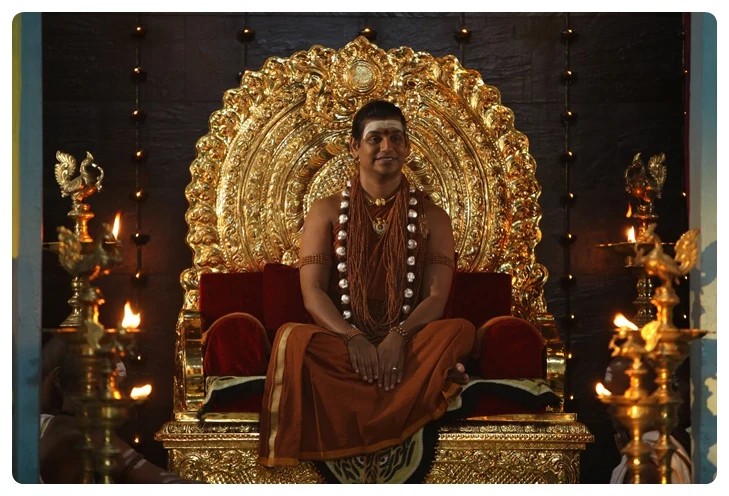
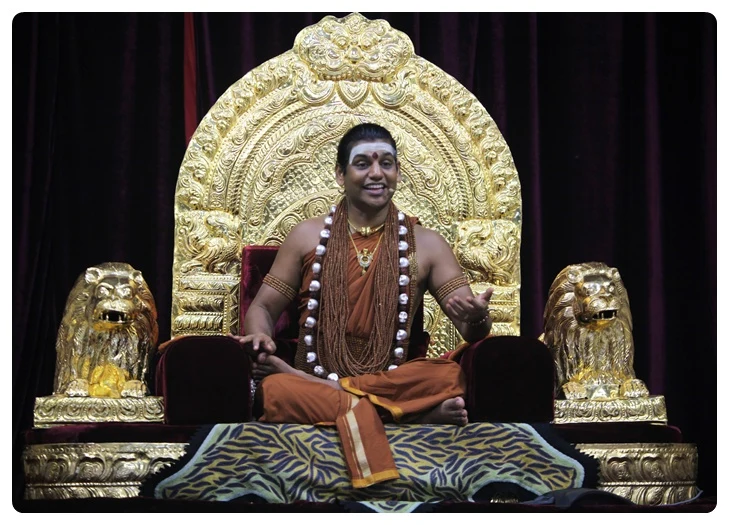
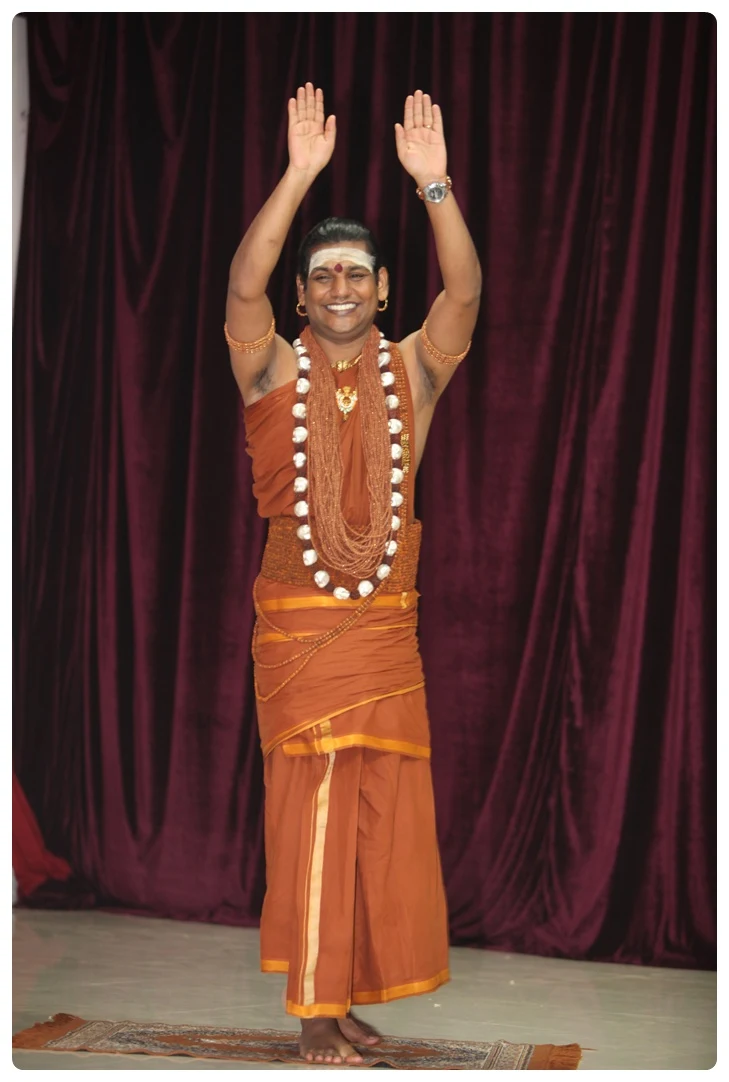
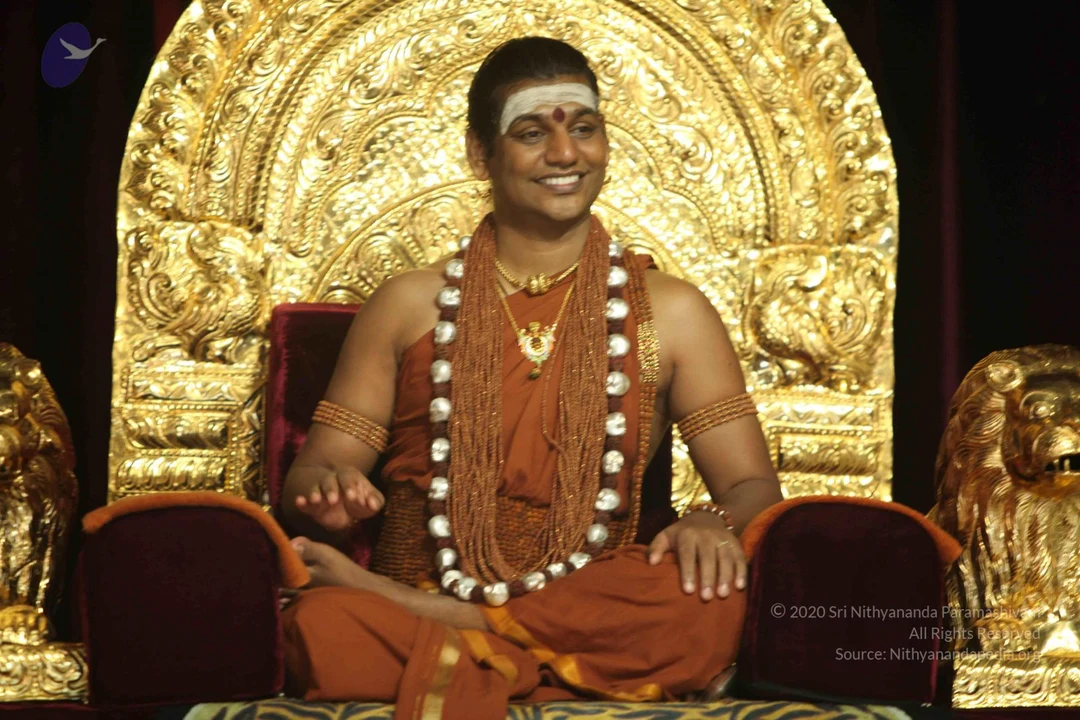
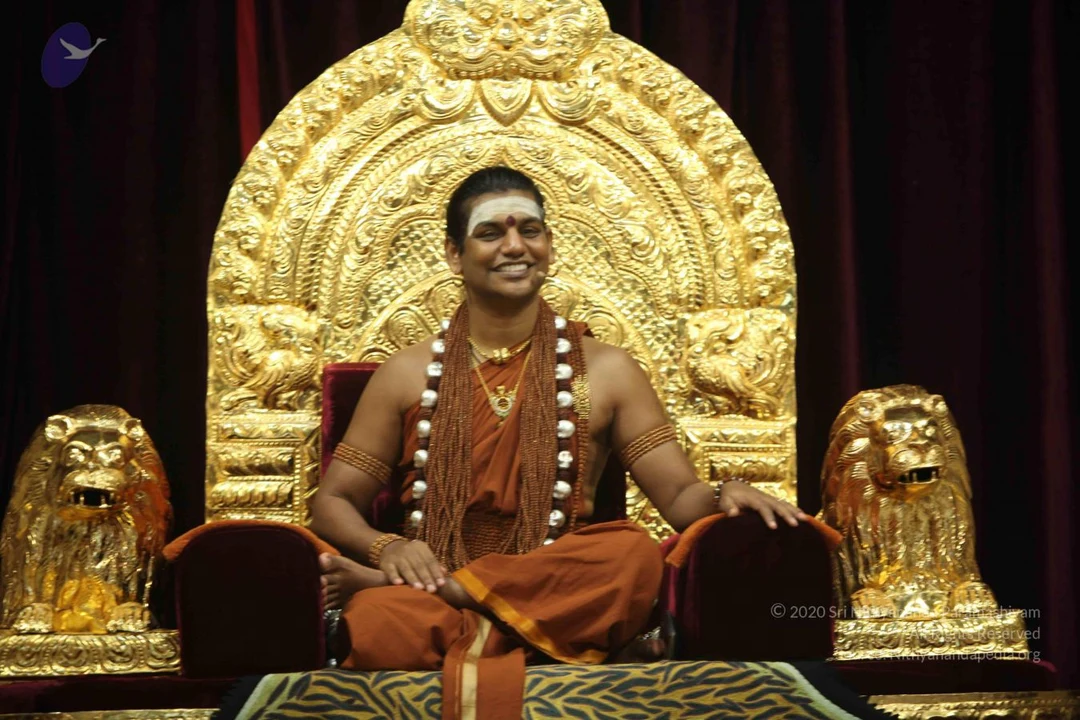
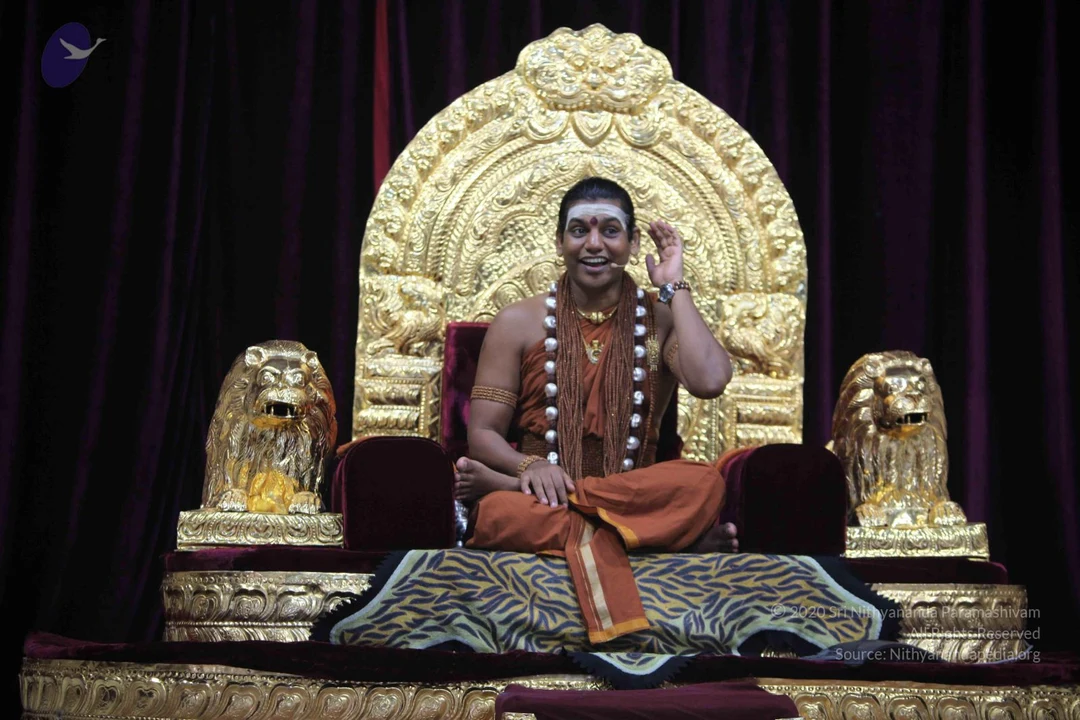
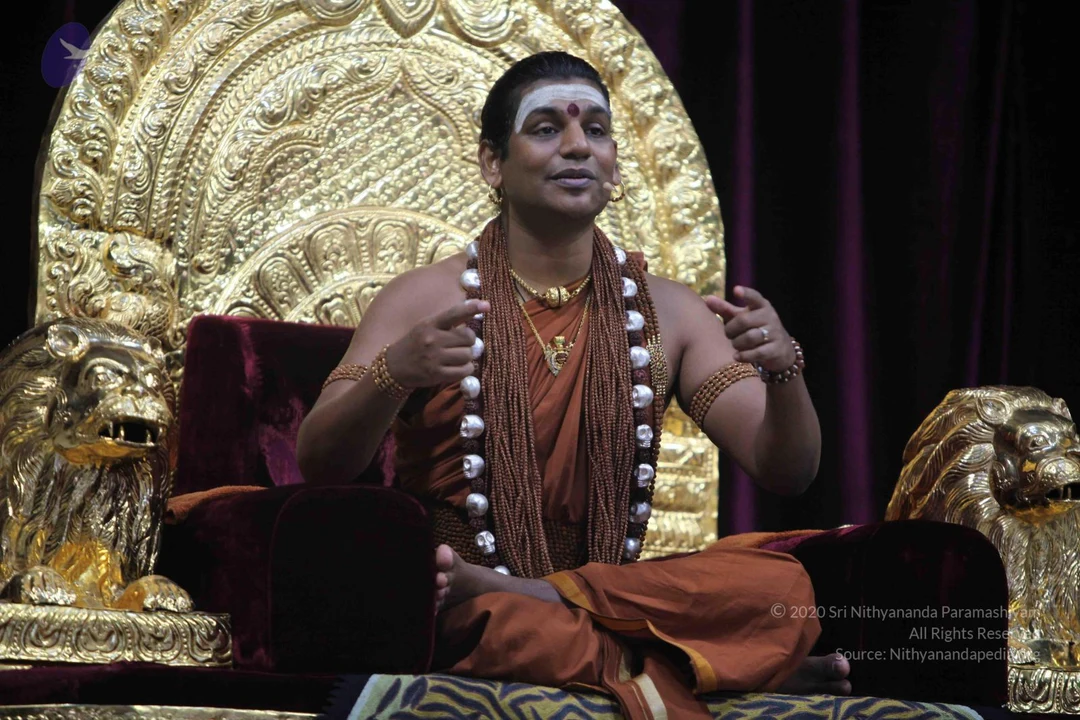
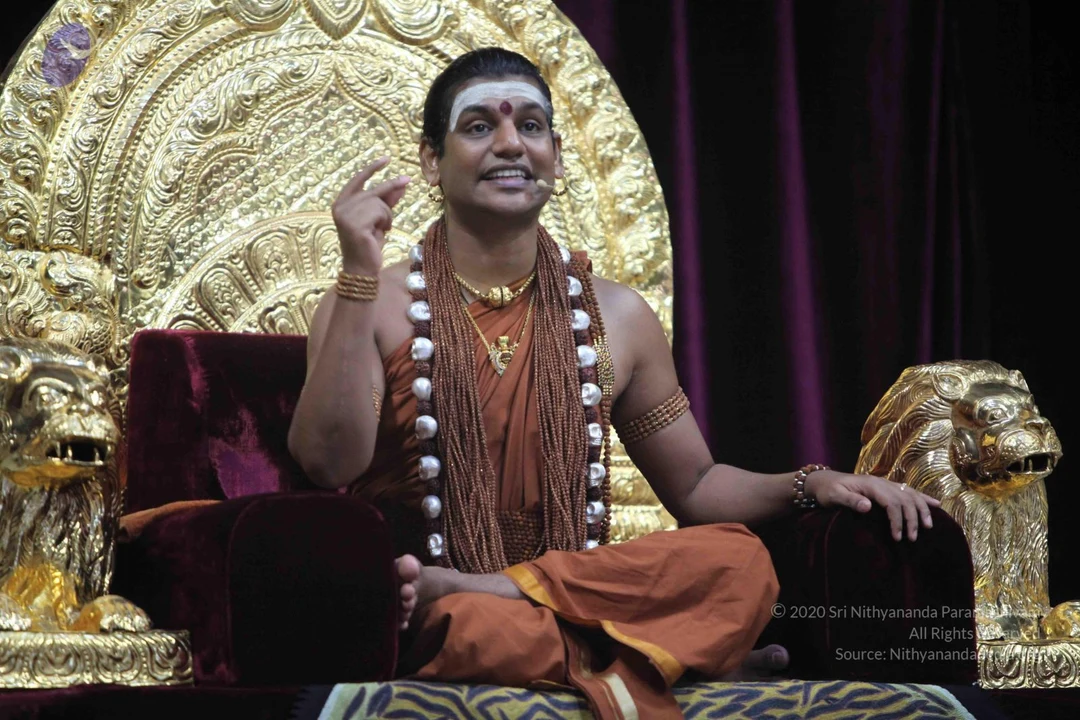
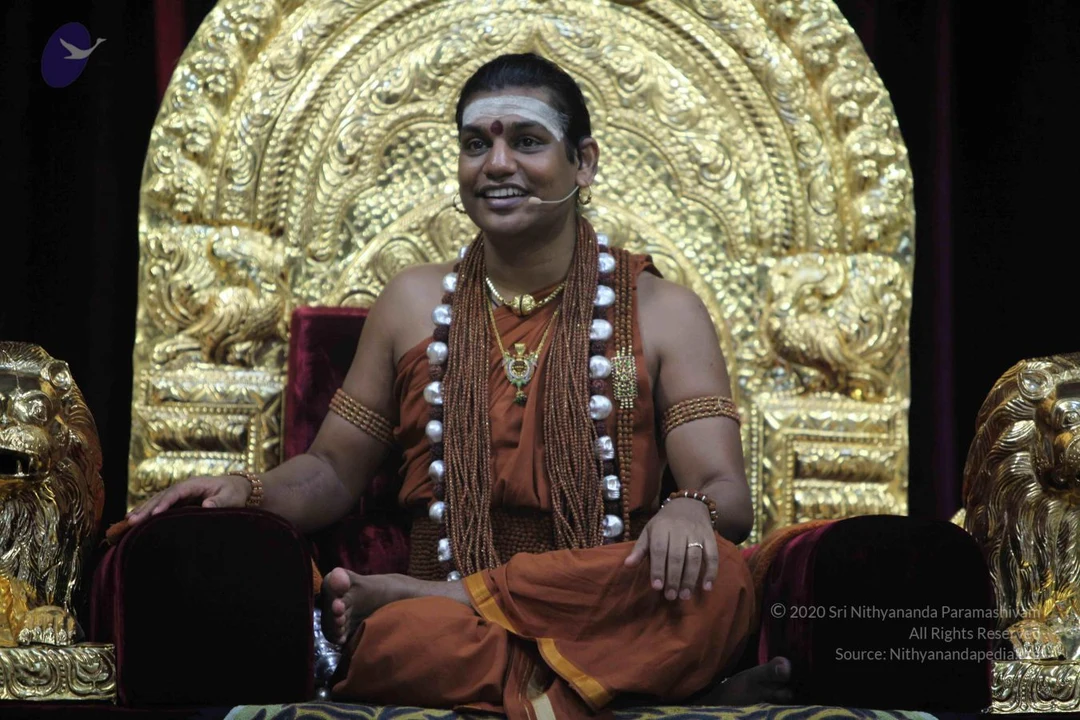
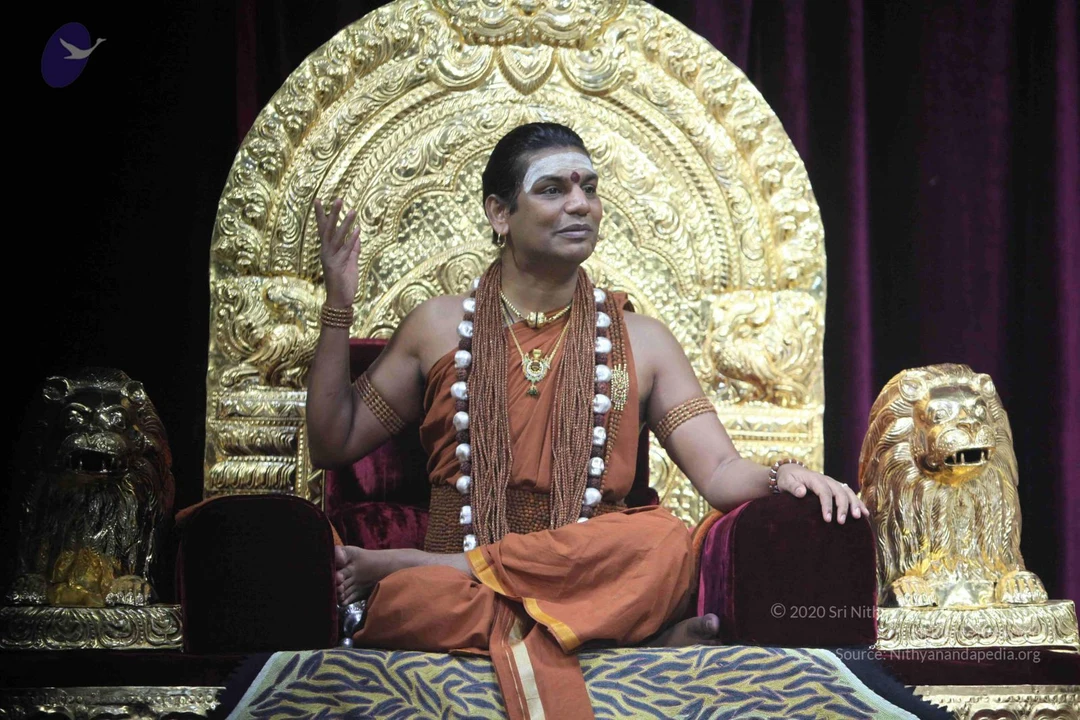
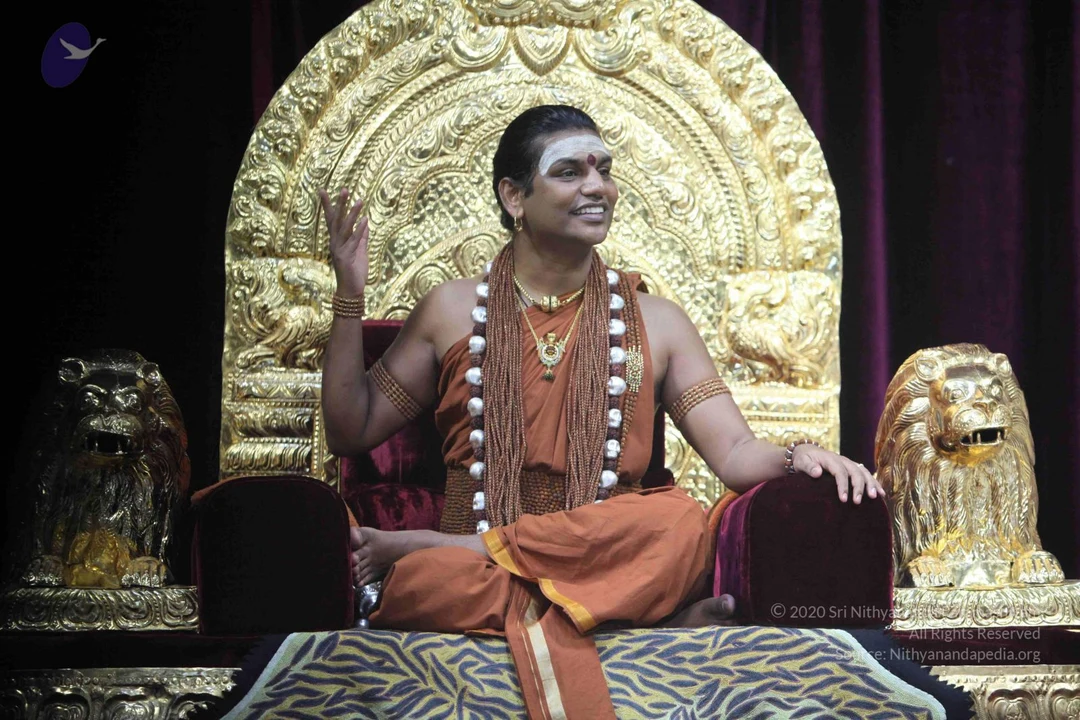
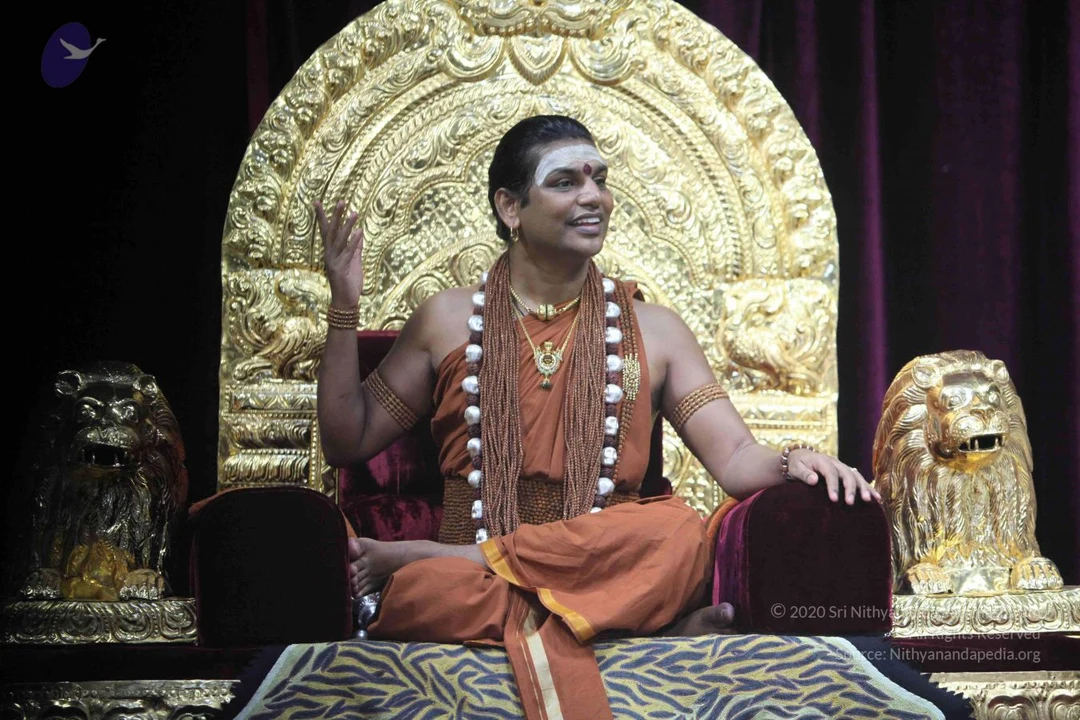
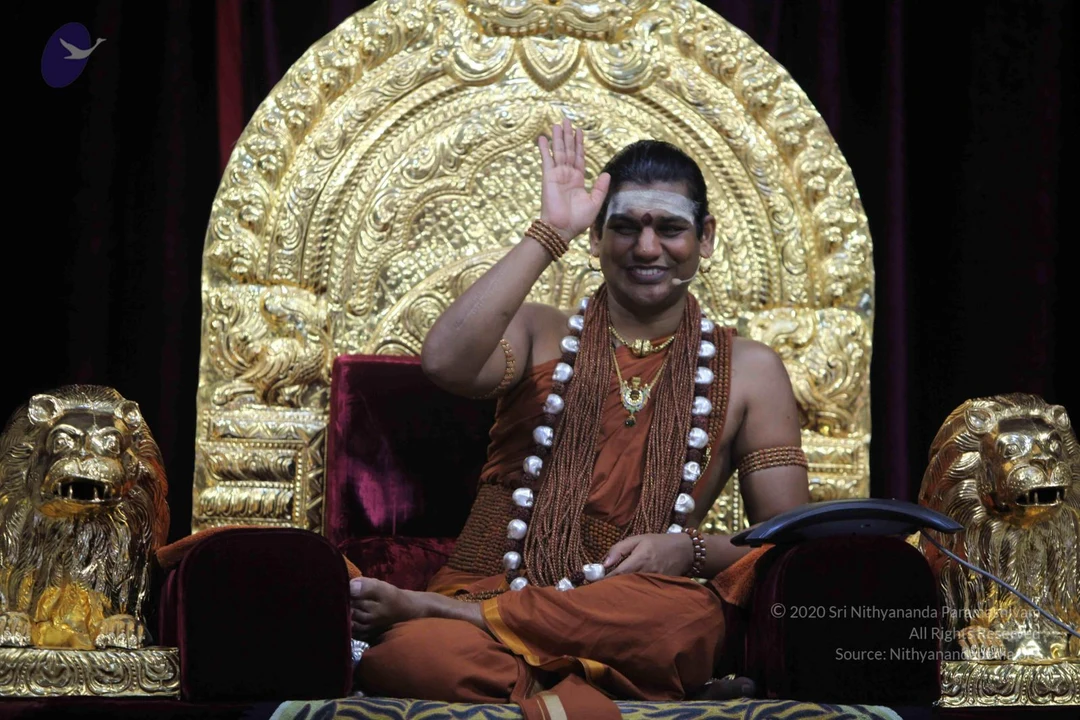
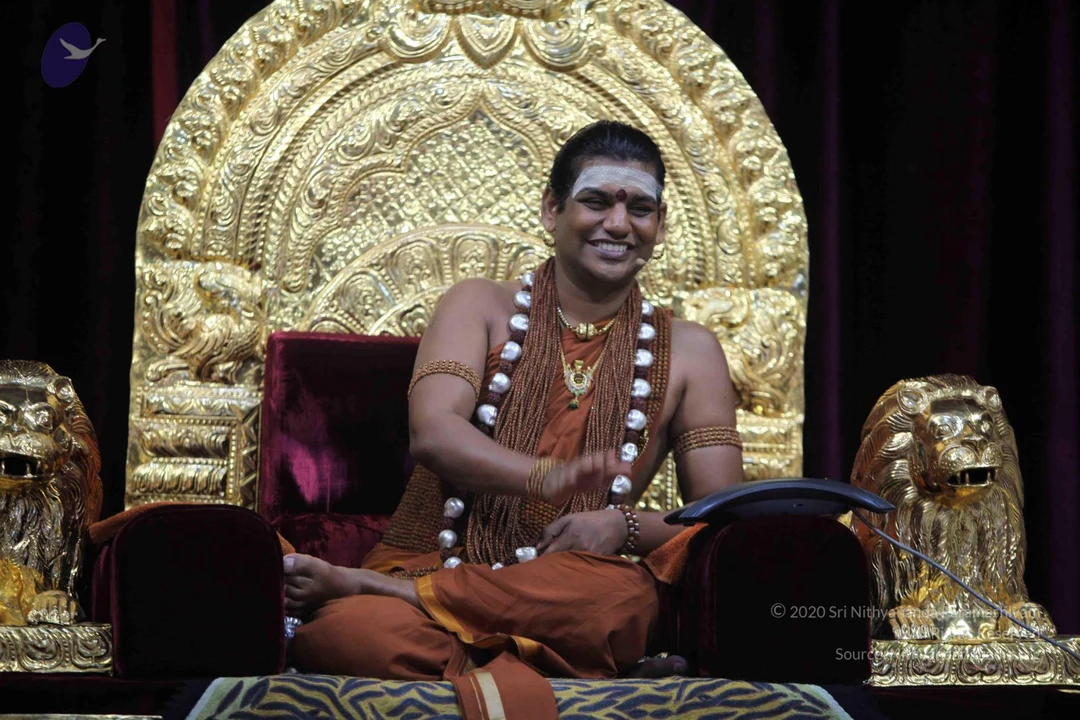
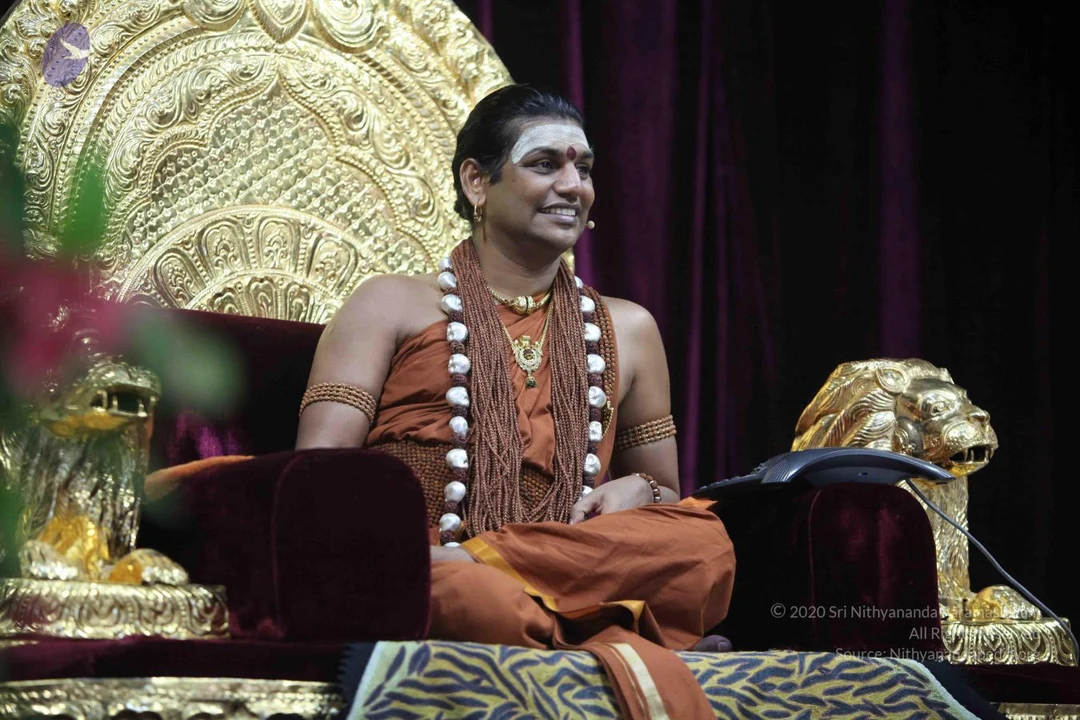
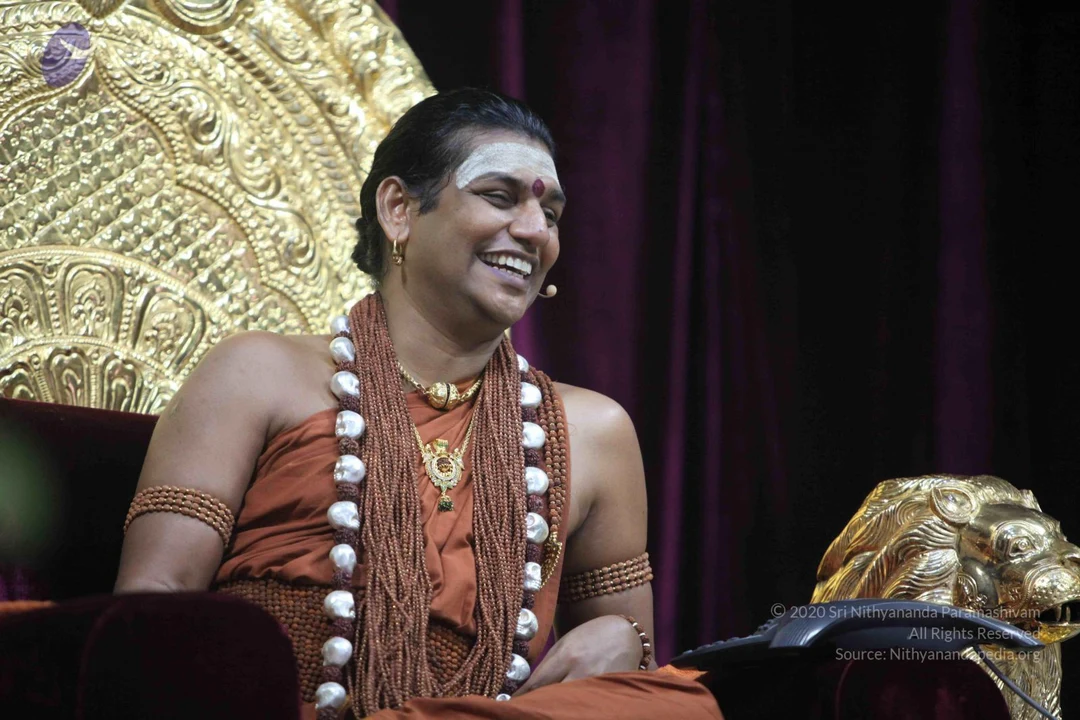
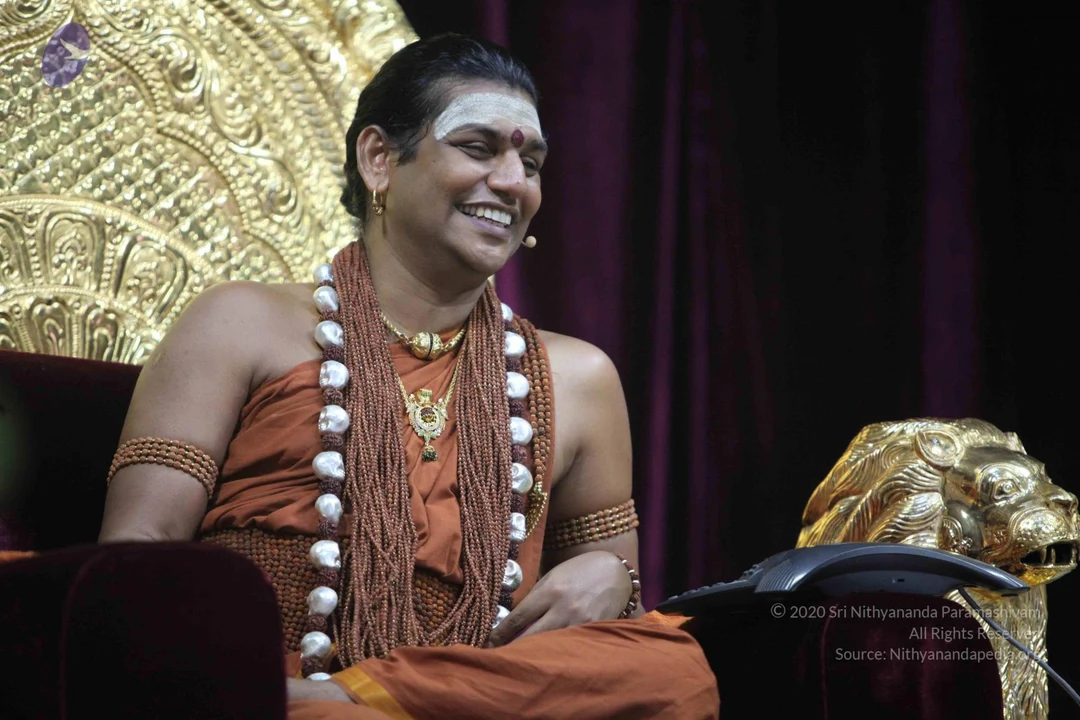
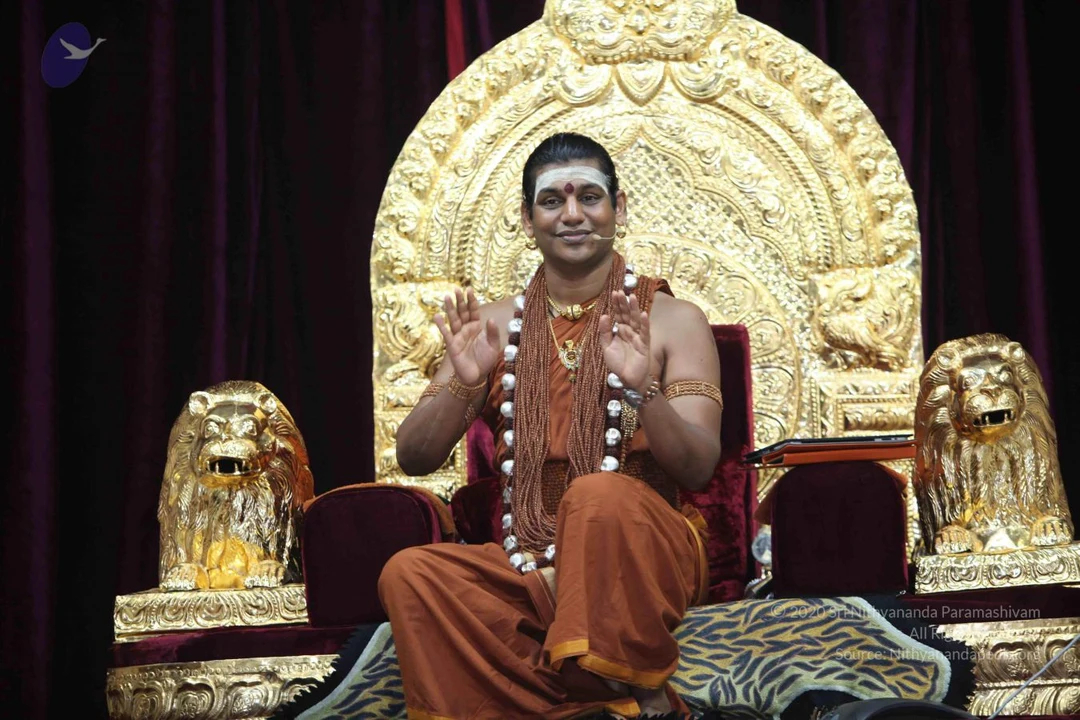
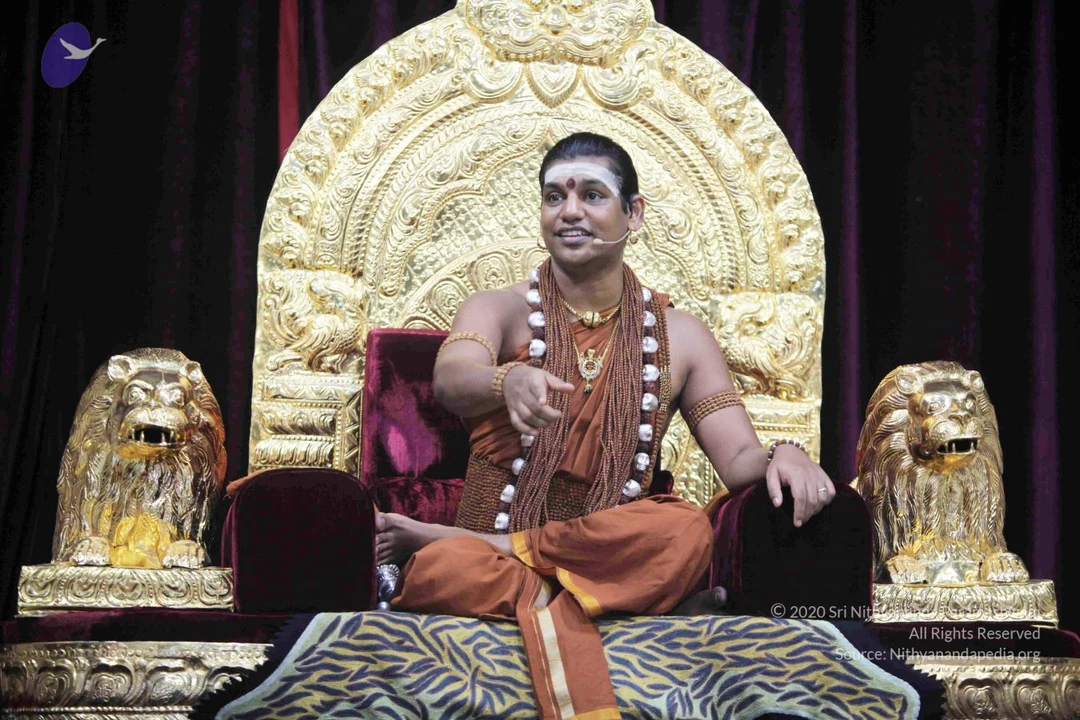
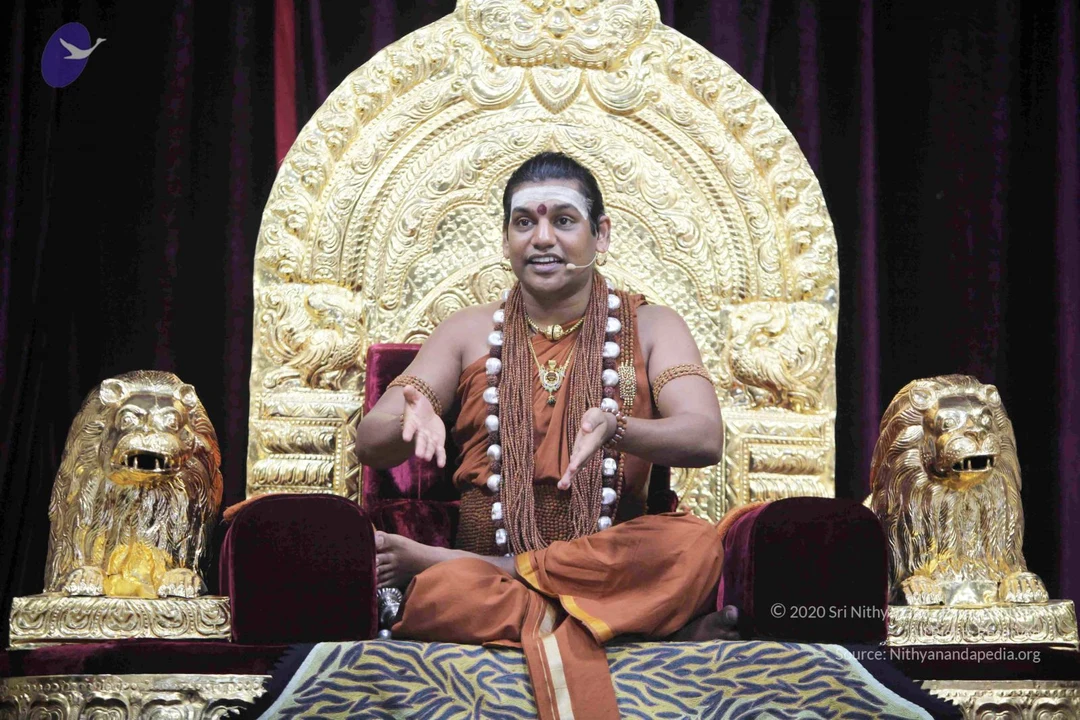
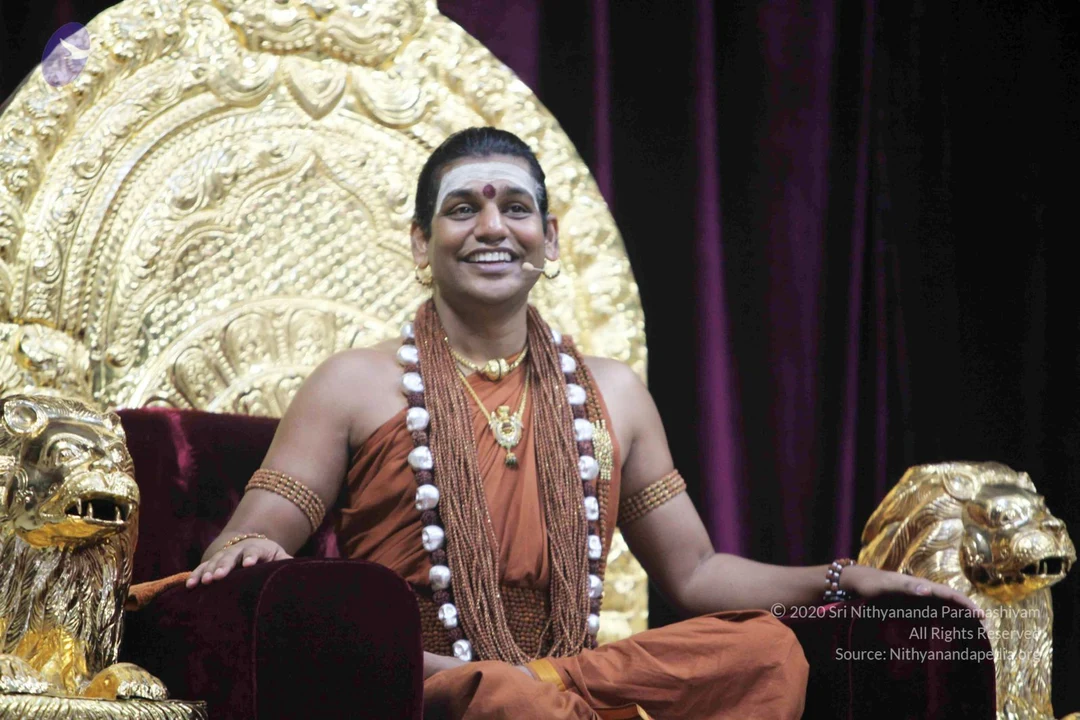
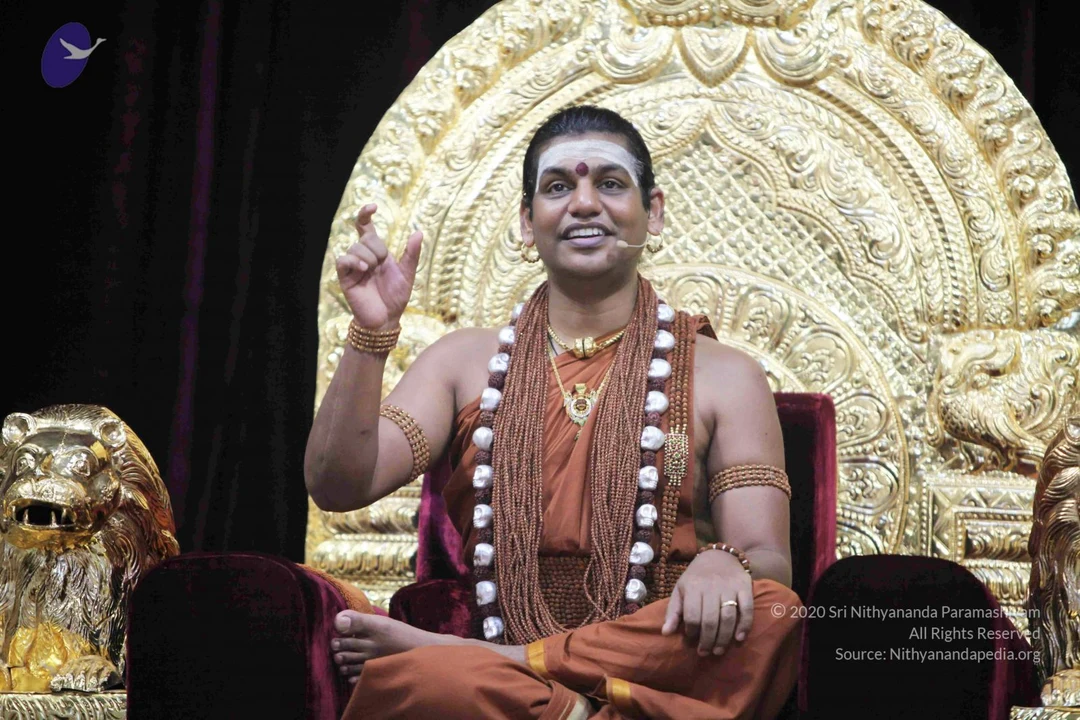
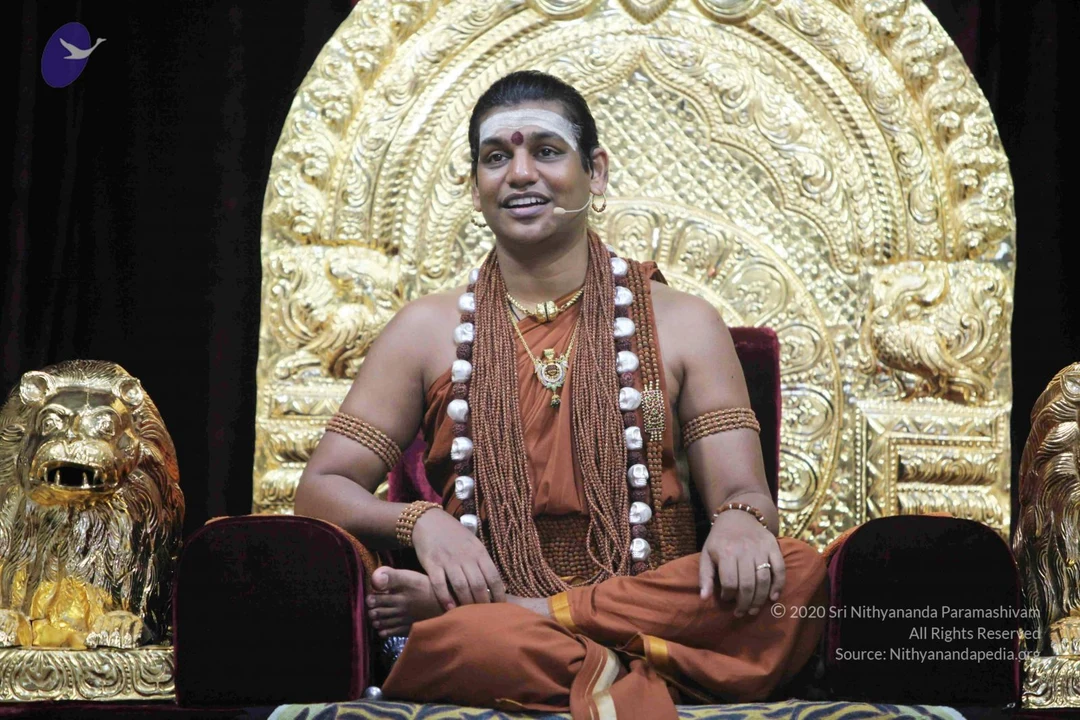
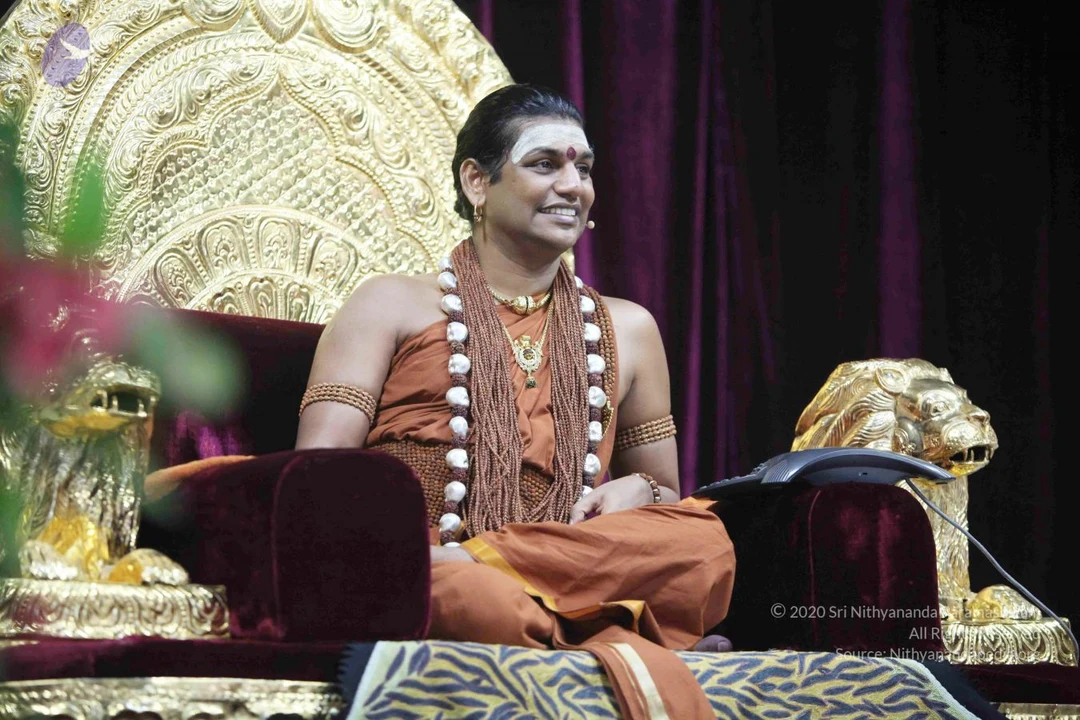
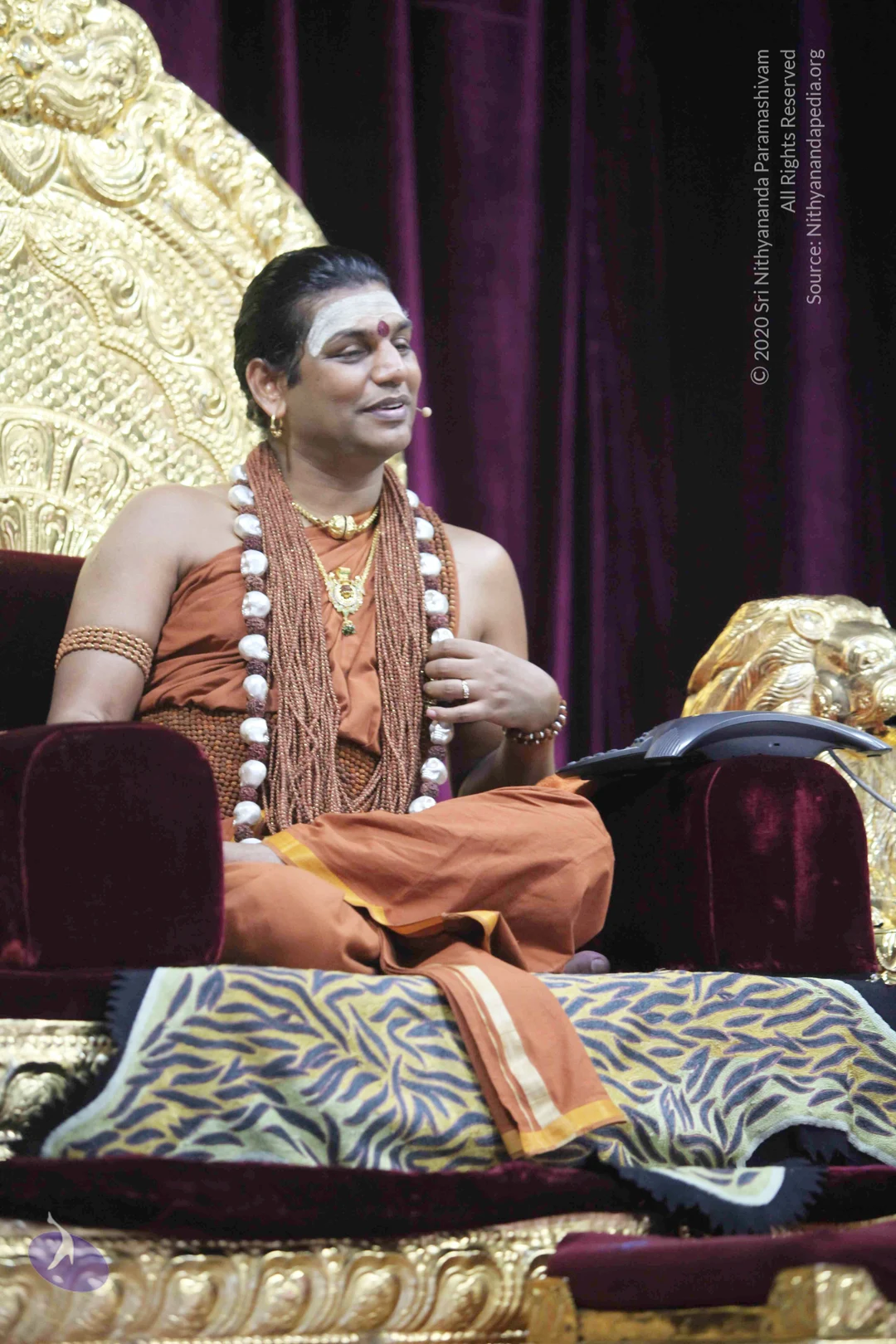
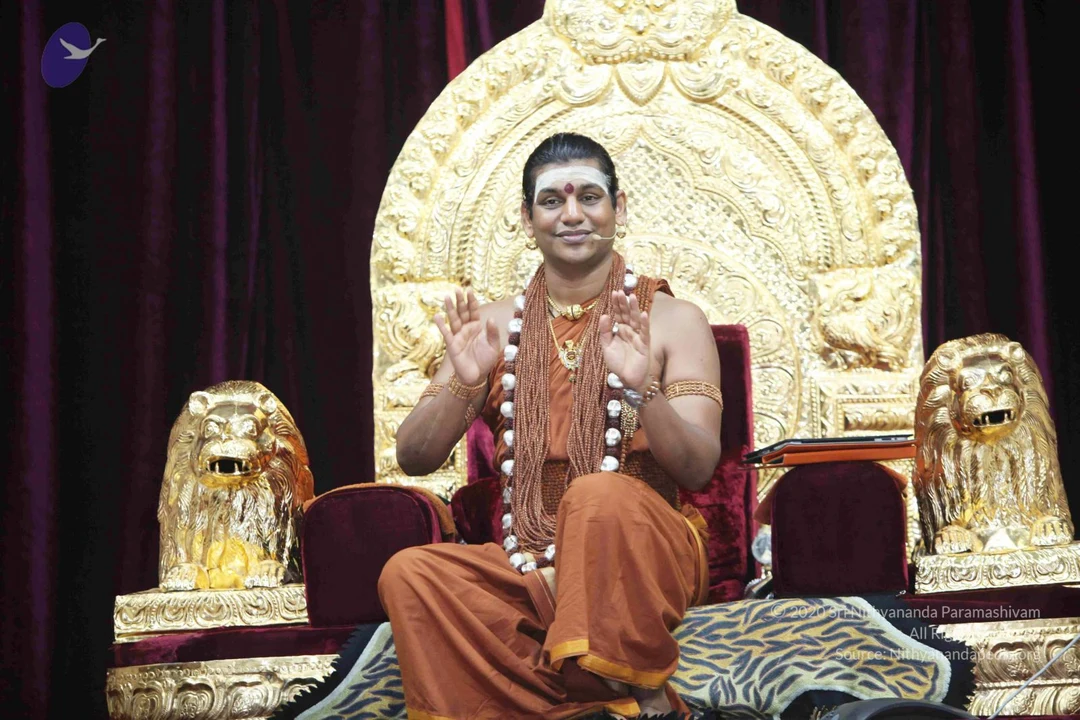
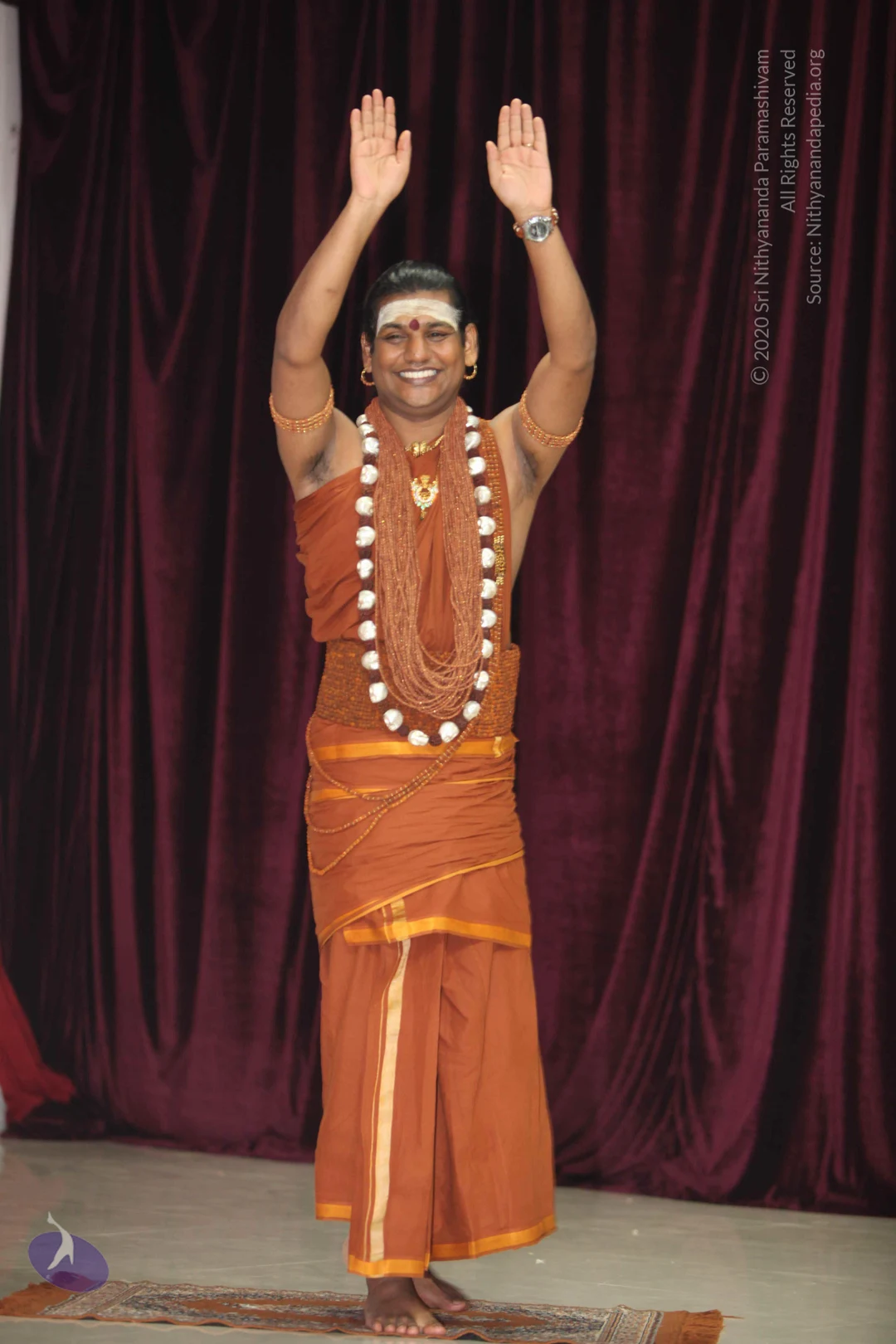
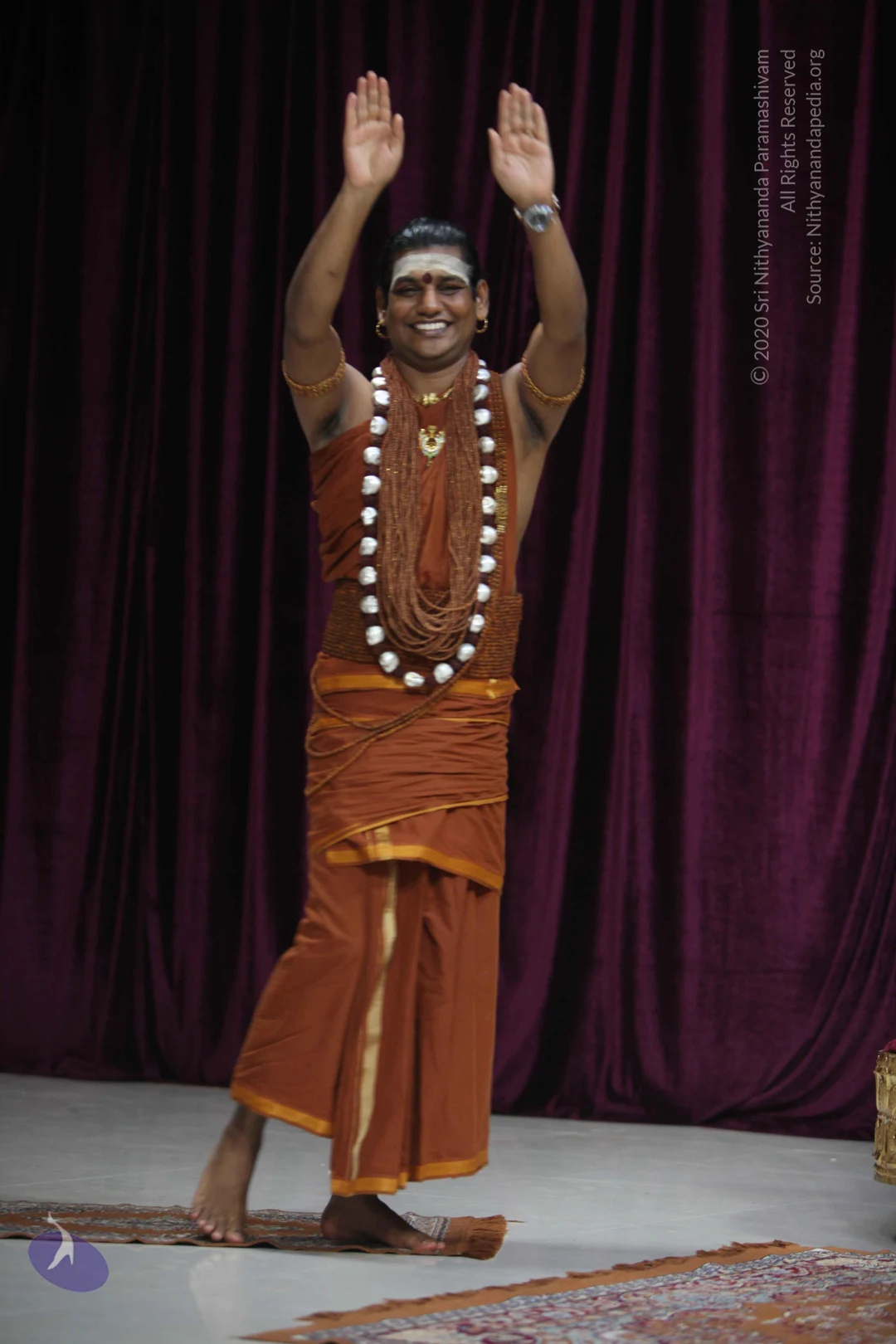
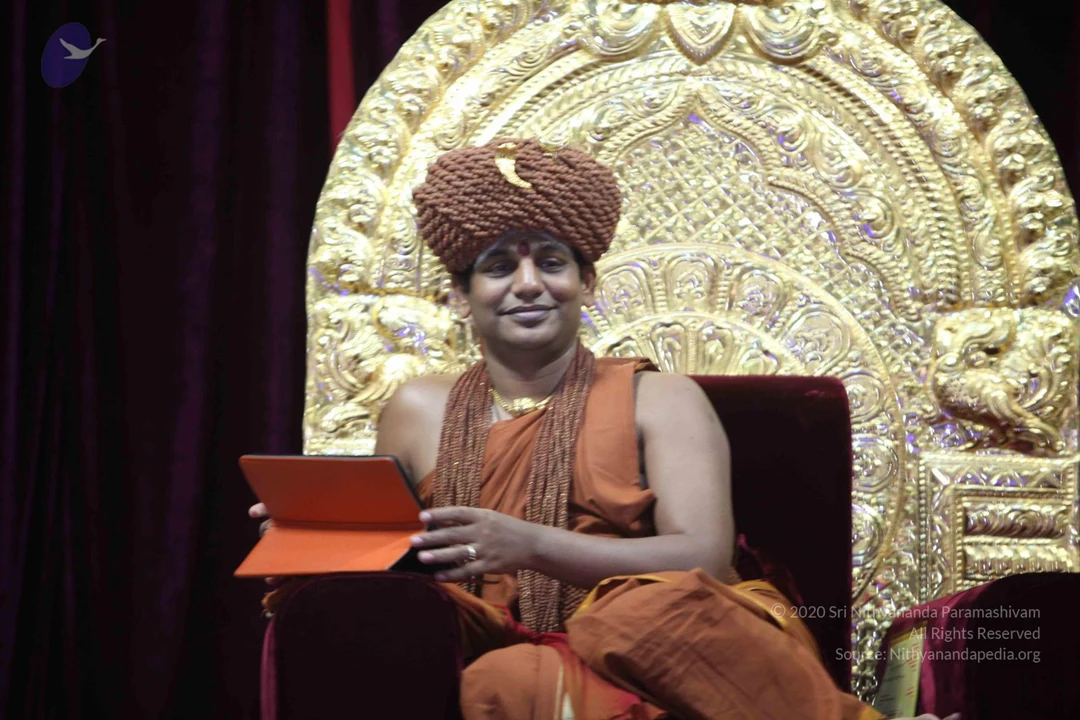
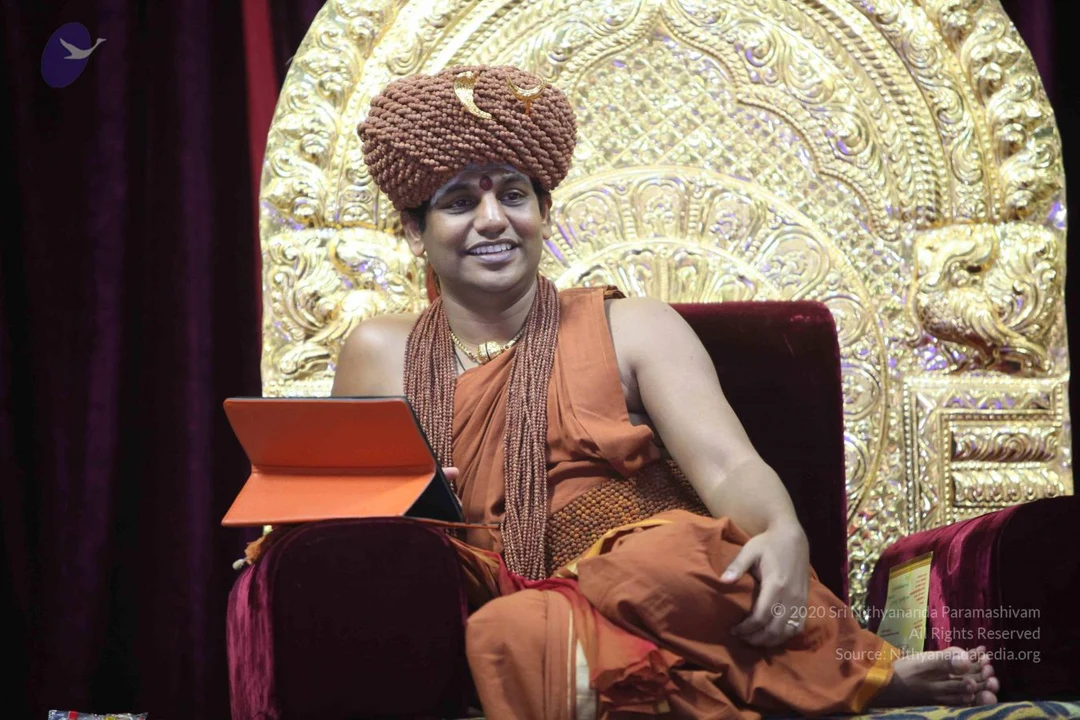
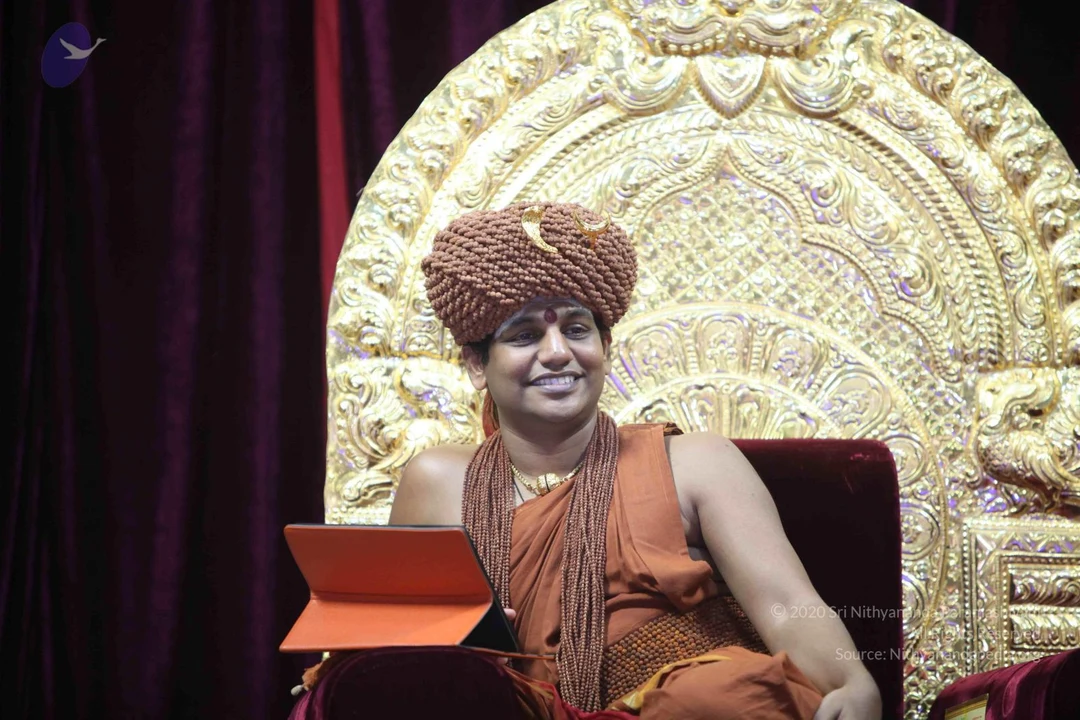
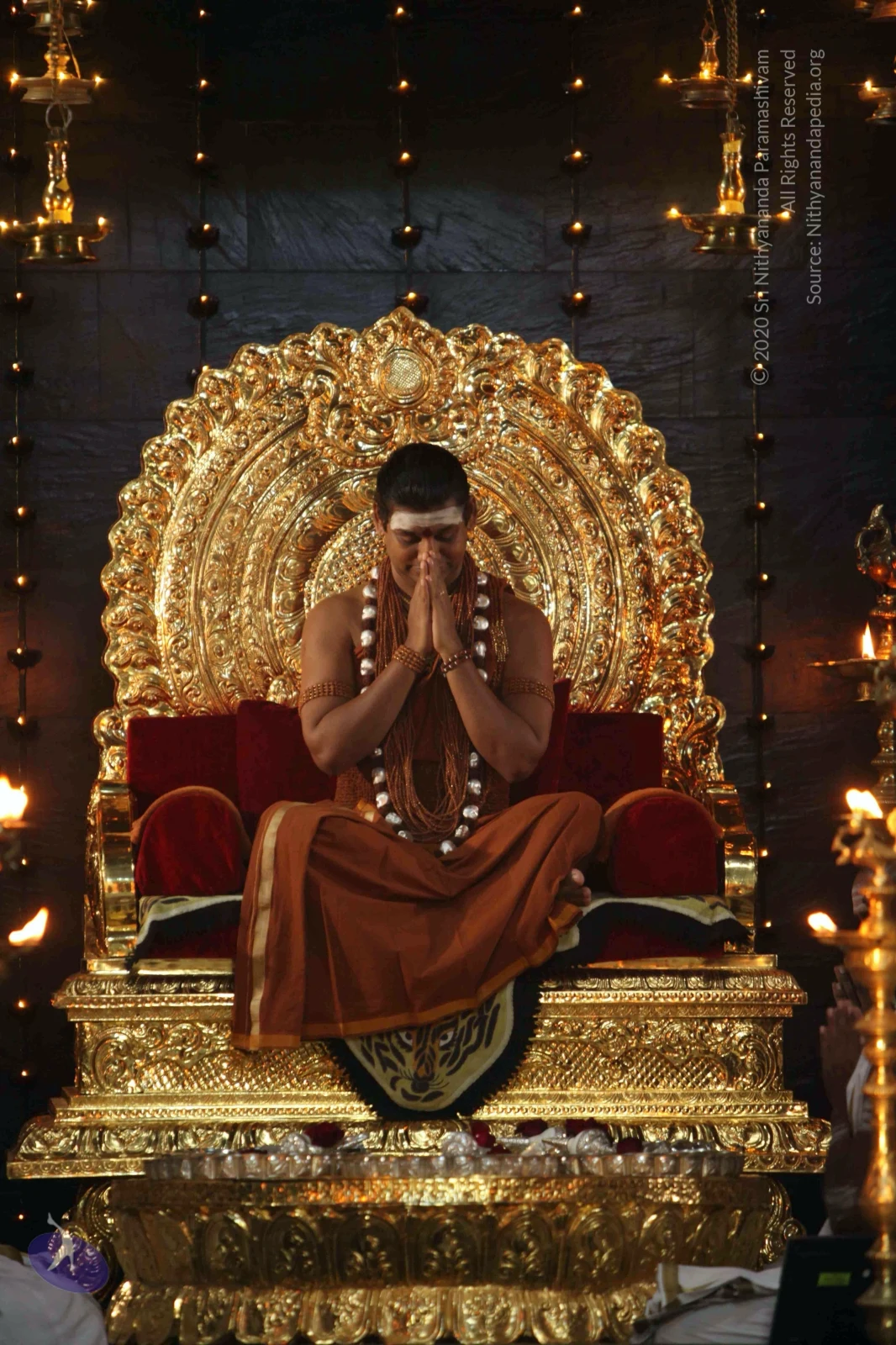
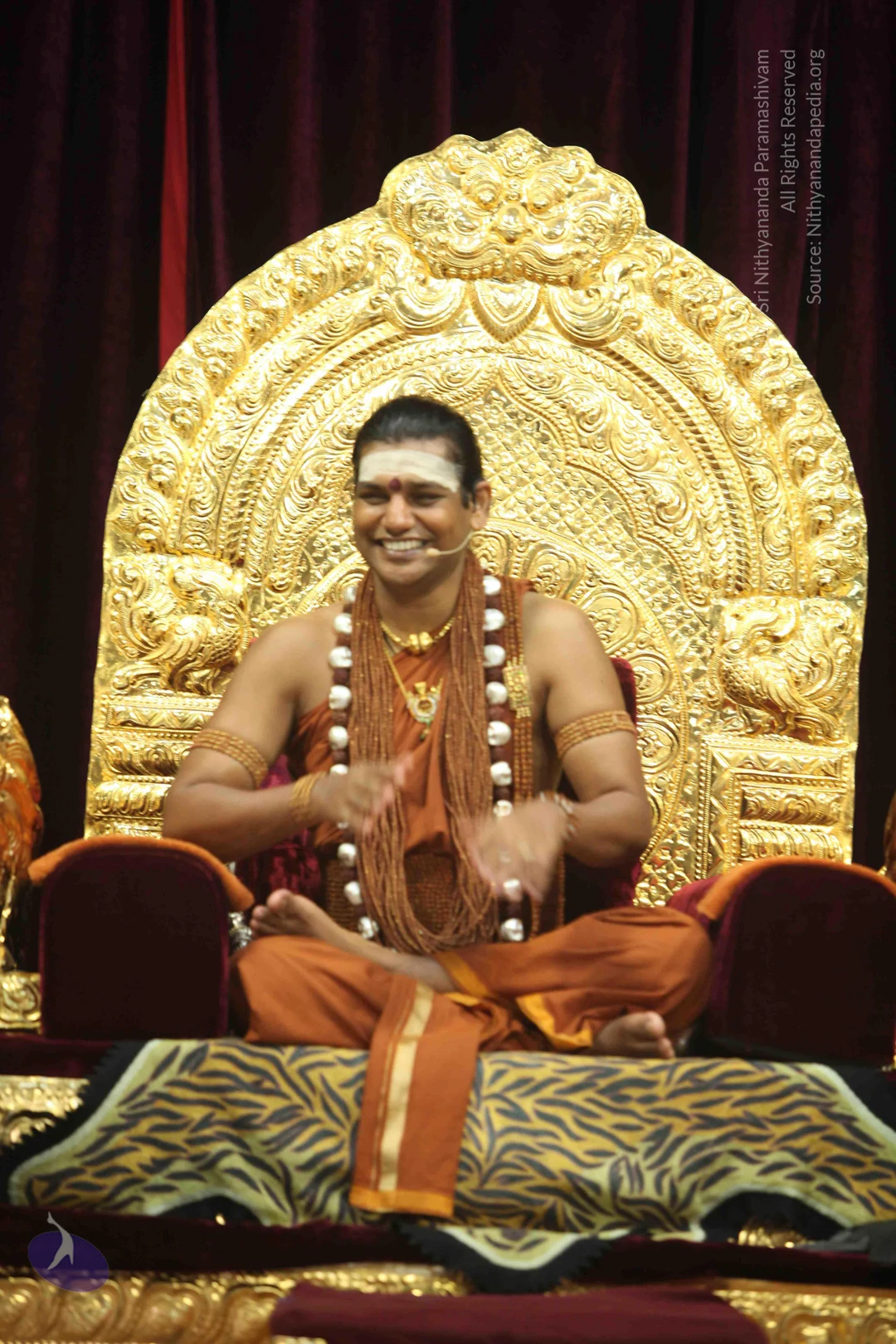
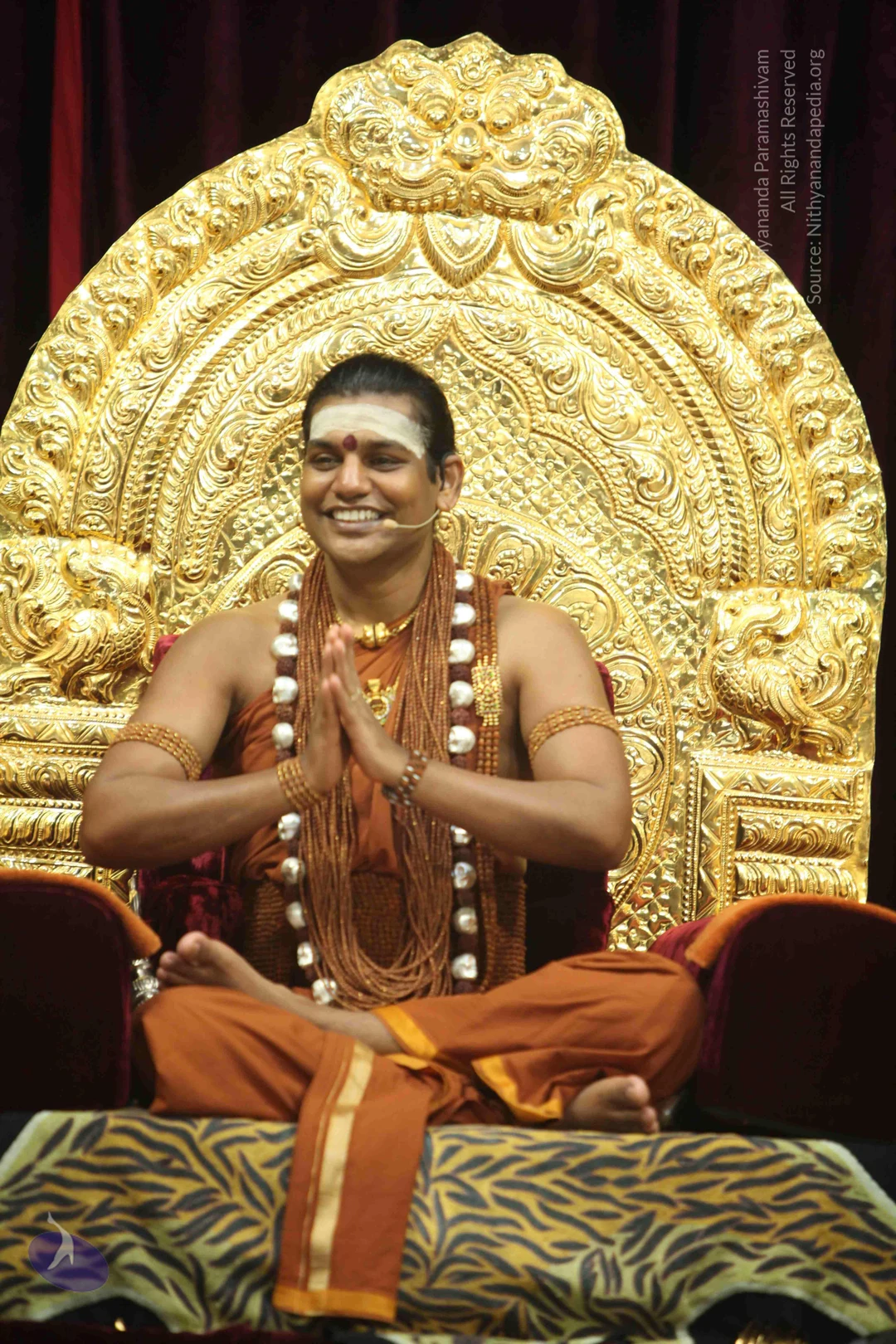
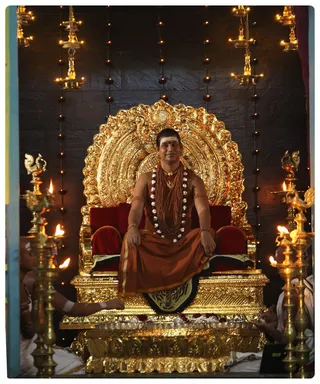
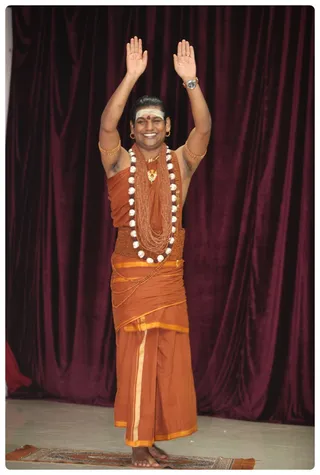
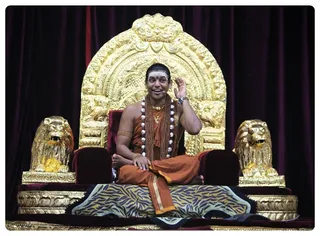
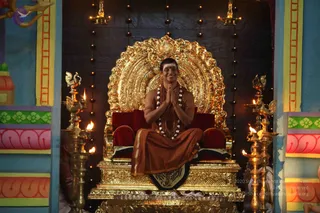
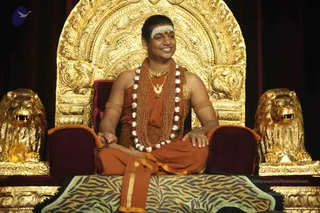
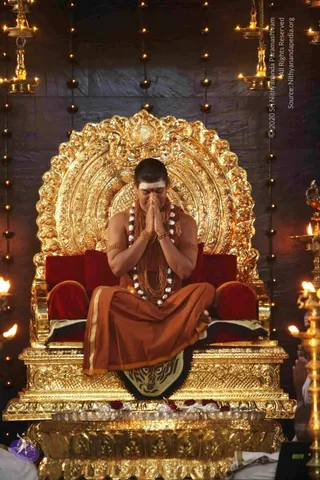
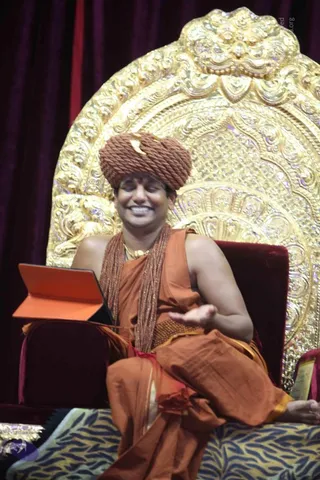
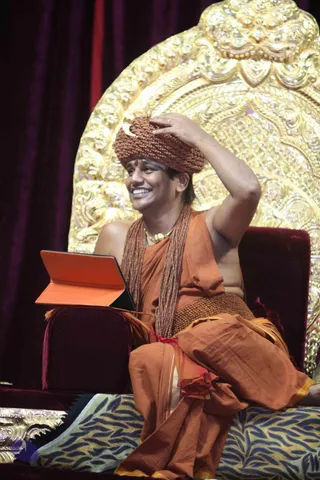
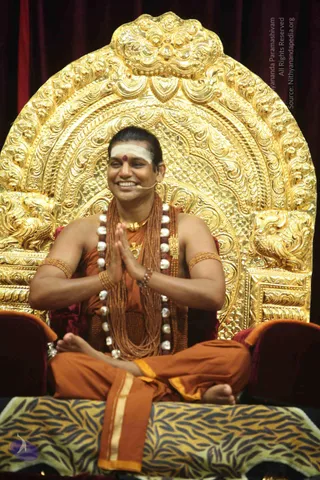
A seated man sits on an ornate gold throne with a large golden arched backrest and red cushions, in front of a dark stone wall hung with rudraksha beads. He wears a rust-orange wrap over his shoulders and chest, a white and black bead garland, a rudraksha mala, gold bracelets and a gold necklace, with a tilak on his forehead. Tall brass oil lamps with lit wicks stand on both sides and a dark tiger-skin-style cloth drapes the throne's base. Two attendants in white clothing are partly visible at the lower edges, one touching the throne. Swamiji (probable): a central seated figure with long swept-back hair, saffron wrap and rudraksha malas, seated on the throne as the central figure of satsang.A flat-screen monitor photographed at an angle shows a live satsang broadcast. On the screen, a deity murti in blue with multiple arms and a red cloth stands in a white ornate niche at left, while a seated figure in a dark robe with a white garland sits in a decorated niche at right. Below, several seated devotees fill the frame, including a man in a saffron shawl at lower left and a woman in white and a man in a red-orange wrap near the right. The people visible are on the screen, not physically present in the room.A photograph of a large video wall displaying a grid of live satsang feeds from many locations. Tiles show small groups seated on floors and sofas in homes and temples, many holding handmade cardboard labels such as Madrid Spain, Chicago, Singapuram, Rockville London, St. Louis, New Zealand and Paris Home Temple. Several tiles show people in saffron, red and white clothing beside altars with flowers, lamps and framed pictures. A visible bearded figure in white clothes sits in one tile, but on a screen, so this is a depiction and identity is uncertain. The camera captures the screen itself, showing a dense multi-location gathering.A standing man in saffron-orange draped clothing raises both hands overhead in a welcoming gesture on a small patterned rug before a deep burgundy velvet curtain. He wears a white vertical tilak with a red dot on his forehead, a white and red-beaded necklace, layered rudraksha-style beaded malas, a gold chain with a pendant, gold bangles on the upper arms, and a wristwatch. Hoops hang from his ears. He is smiling and barefoot on a bare stage floor. No text is visible in the image.A man with a shaved head and red tilak on his forehead sits cross-legged on a plush dark-red throne backed by an ornate golden arch with carved lions and flowers. Two golden lion sculptures flank the seat. He wears a saffron-orange garment with a gold-edged cloth, a long necklace of white beads and rudraksha, a gold chain, and a wristwatch. His right hand is raised in a gesture of address while he smiles, and a striped blue and gold mat covers the platform. Deep maroon drapes hang behind. The page identifies this as a talk session, and the figure's saffron clothing, bead malas and ceremonial gold necklaces match the a person cues, so the appearance is a probable match.

TEMPLE

25 photosSource gallery
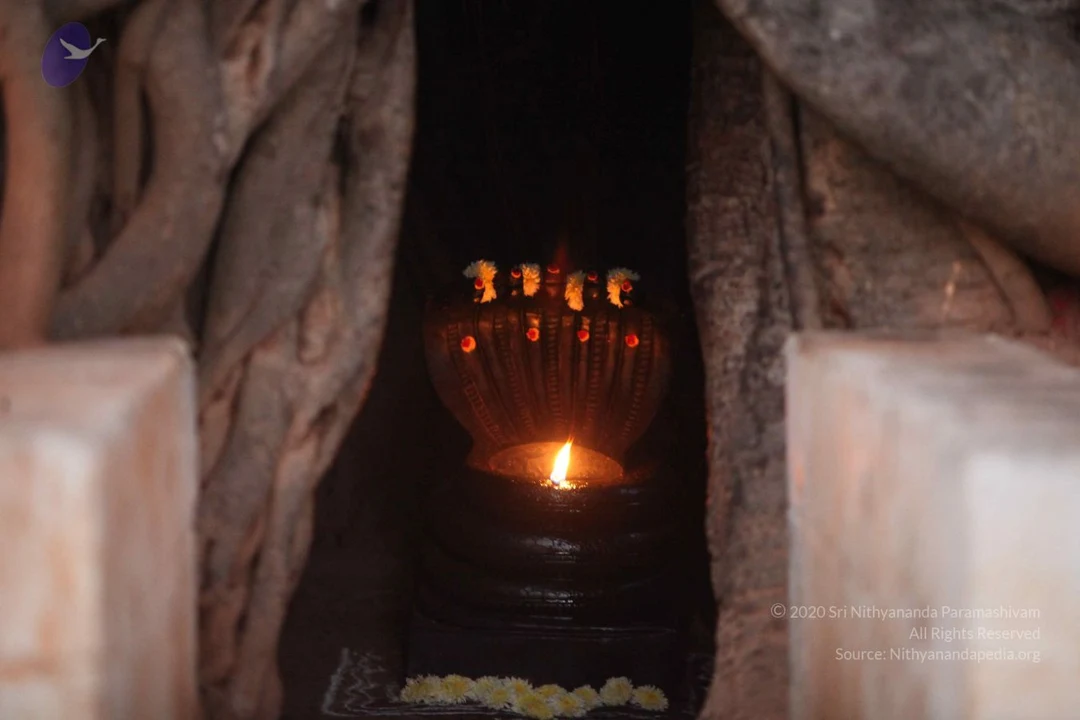
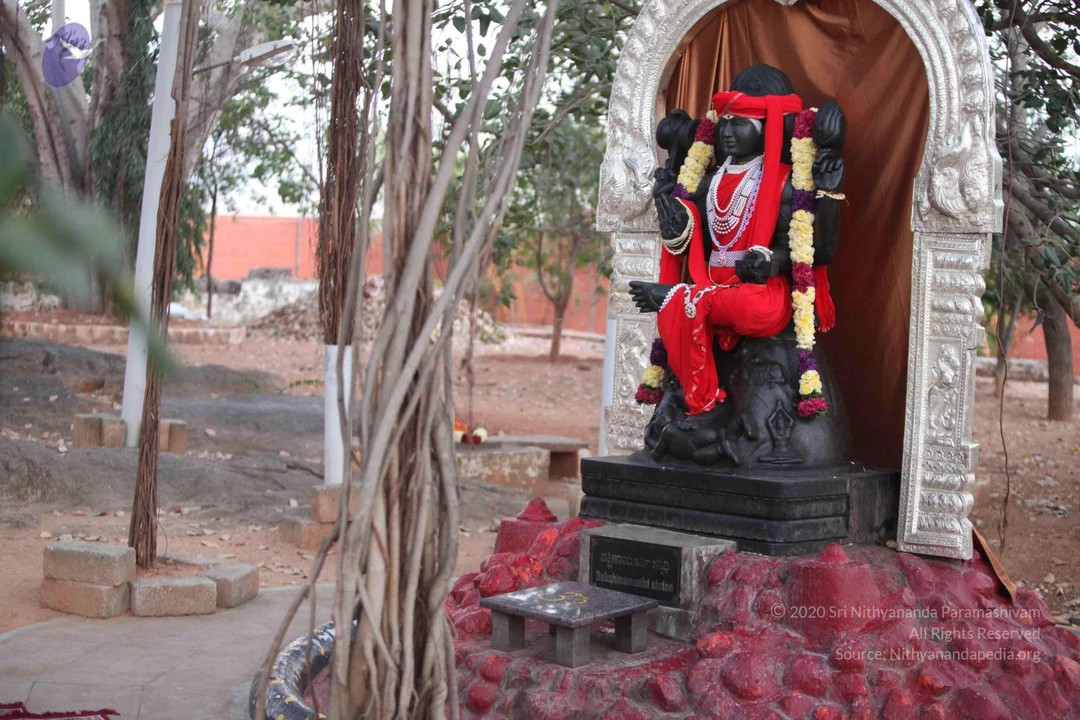
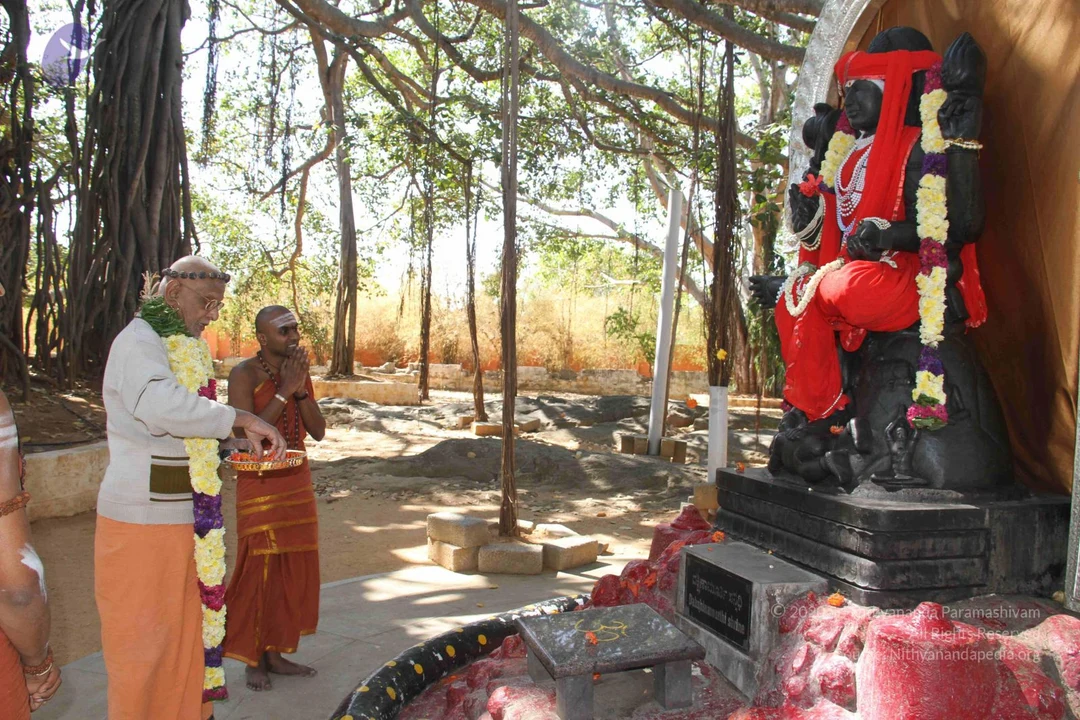
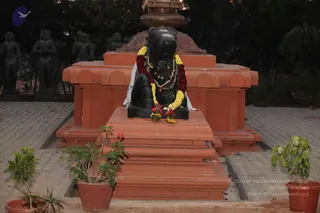
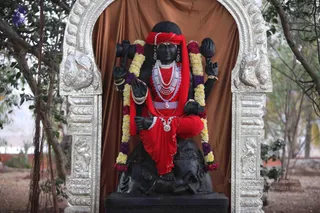
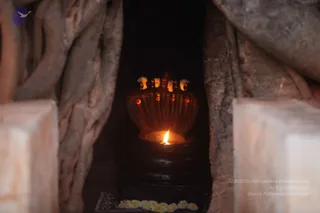
A black stone Nandi bull statue sits on a terracotta-coloured plinth outside, garlanded with yellow and red flower strands and draped with a white cloth. Its head and chest carry a necklace of beads and a bell-like ornament. Above, a copper kalasha-style vessel tops the shrine structure. Potted plants flank the base on a paved courtyard, and several grey stone figures stand in the background among trees. No living people are visible.A black stone murti of a four-armed deity seated in an ornate silver arch against a brown fabric backdrop, outdoors among trees. The figure wears a red dhoti-style garment, a red head cloth, layered white and pink beaded necklaces, a pendant, and bangles, with flower garlands in yellow, white and purple hanging on both sides. The stone base and seat show carved detail. No people are visible, and no a person depiction is present.A black stone deity murti stands in an outdoor setting beneath trees, set within an ornate silver arch with a brown satin backdrop. The figure wears a red cloth draped over the head and shoulders, a red skirt, layered white and pearl necklaces, and a silver-toned waist band. Yellow and purple flower garlands hang from the shoulders. Red-painted stone pedestal and a small black plaque sit at the base. No people are visible in the scene.A black stone murti of a four-armed deity is seated against a brown draped backdrop. The figure wears a red turban with a red-and-white band and a red vibhuti mark on the forehead, a red shawl over the torso, layered white, pink and blue beaded necklaces, a jewelled belt, and yellow and purple flower garlands draped over the shoulders. Its raised hands hold a sacred object and a flame-like item, and the other hands show mudras. The figure is a statue, not a living person, and no physical people are visible.A small dark stone shrine recess framed by thick twisting tree roots and a pale stone slab on each side. Inside, a black carved stone object shaped like a cobra hood, with a lit oil lamp flame burning on a bowl-shaped base in front of it. Yellow marigold flowers and red blossoms are arranged across the top, and a strand of yellow flowers lies on the ground below. No people are visible.Outdoor photo of a black stone murti of Dakshinamurthy seated in a silver-framed arched niche in a garden. The figure wears a red cloth over the shoulders and a red headband, with multi-strand white pearl necklaces, a red garland and a white-and-purple flower garland. A stone bench with a small tray stands in front, and red-painted stone pedestals with sindoor surround the base. Tree roots and bare trees frame the scene. No people are visible.

PADA-POOJA
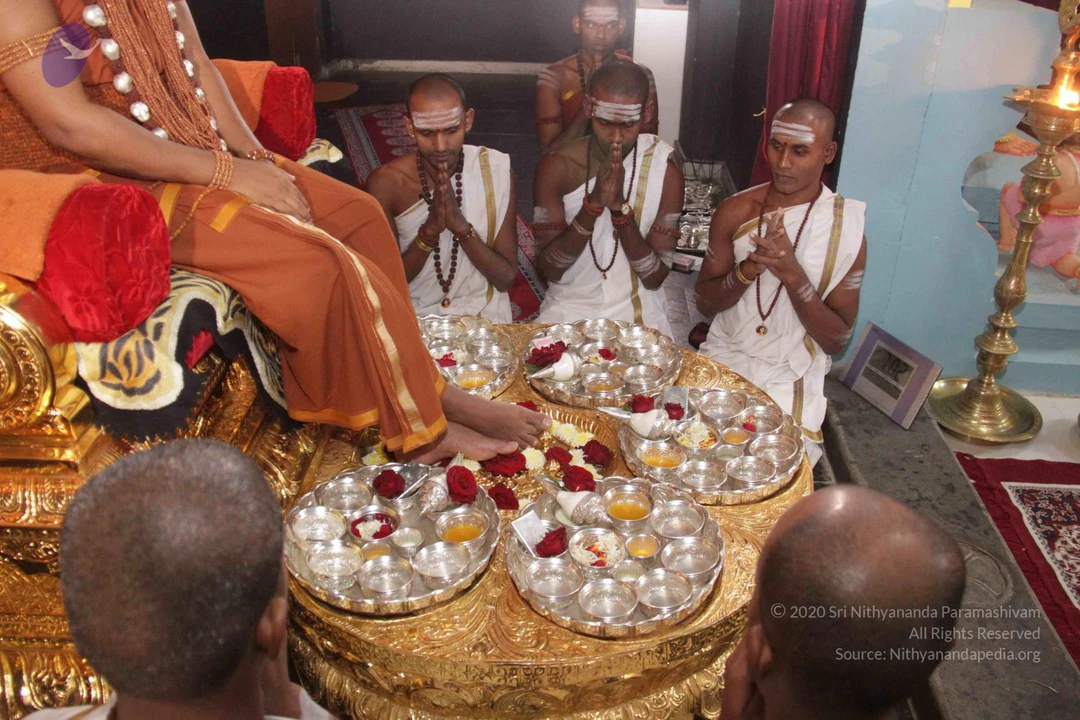
5 photosSource gallery
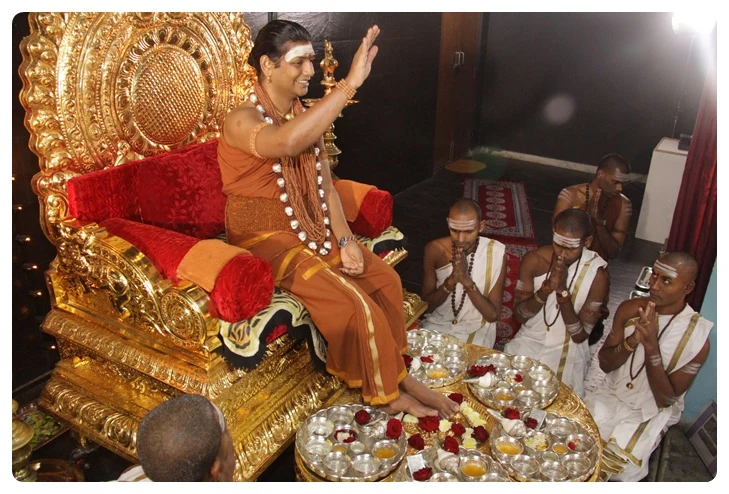
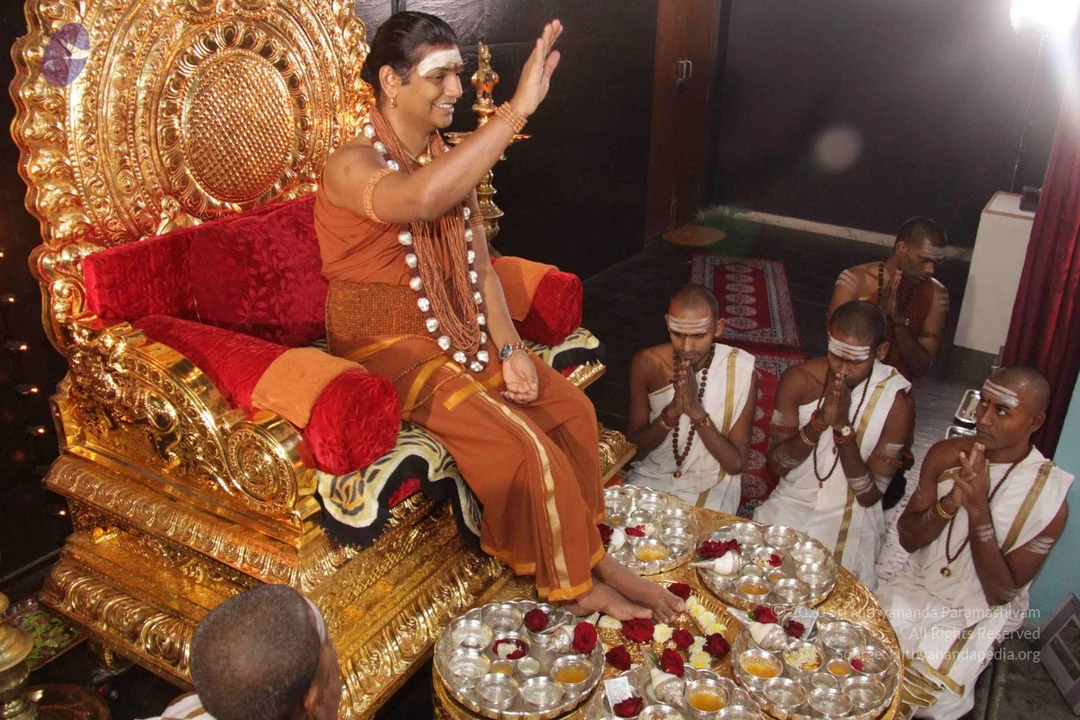
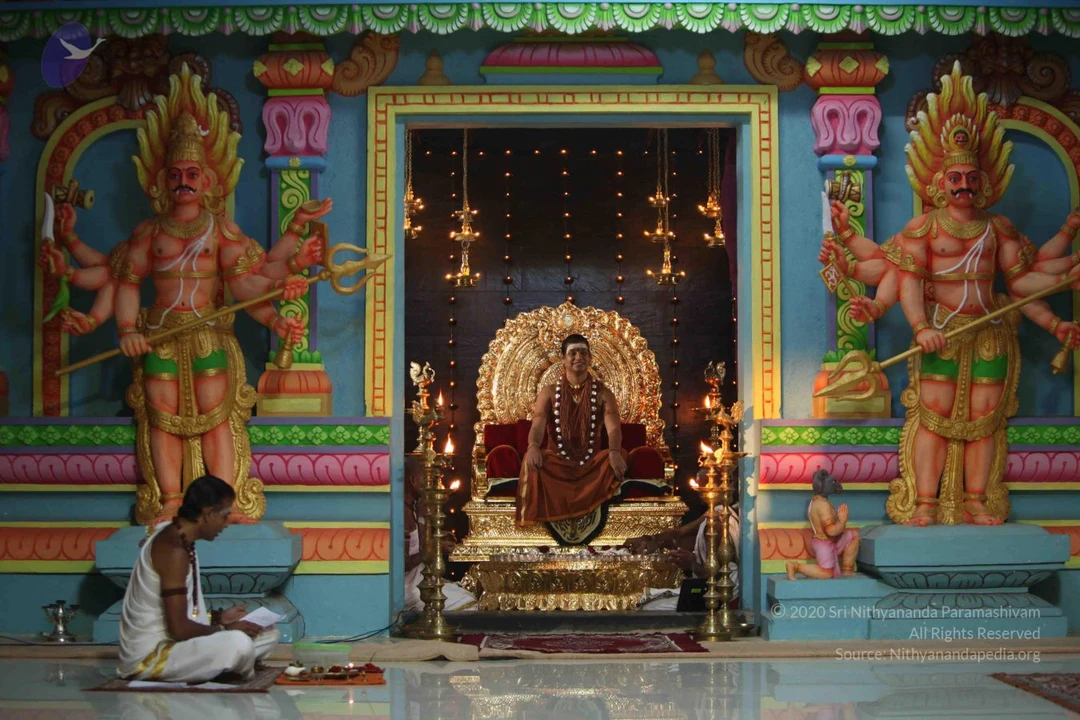
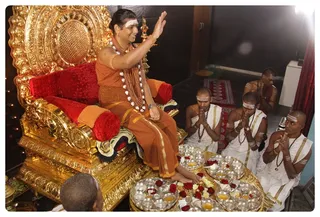
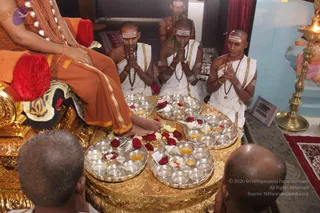
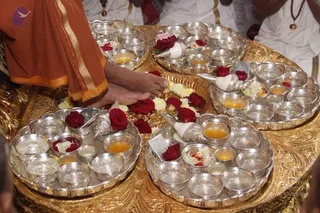
A man in orange and gold robes with a gold-embroidered orange sash and a red-and-gold wrap sits on an ornate gold throne with red cushions, his right hand raised in blessing. He wears long brown-orange beaded necklaces, a rudraksha-style mala, a white tilak on his forehead and a wristwatch. Beside him a brass oil lamp burns. In front, five people in white ritual clothes with gold borders sit cross-legged with palms pressed together, some with white tilak and rudraksha malas. A brass thali with rose petals, yellow flowers, betel-style offerings and small oil-filled lamps lies on a golden tray. A bald man is seen from behind at lower left. Ceremonial satsang setting with red and gold drapes behind.A seated man in saffron-orange robes and a rudraksha mala with a ceremonial white beaded necklace sits on an ornate gold throne with red velvet cushions, raising one hand in blessing. Before the throne, on a golden tray, devotees' silver plates hold oil lamps, red rose petals and white flowers. Four men in white ritual dhotis with white vibhuti horizontal tripundra marks and rudraksha malas sit with palms pressed in namaskar, one at right holding a lamp. A bald man's head is visible at lower left. The setting is a temple-style room with a red curtain and oil lamps.A photograph of a seated figure on an ornate gold-and-red throne, raising one hand in blessing while smiling. He wears an orange-saffron dhoti and shawl, a white tripundra on his forehead, and a long layered string of white and rudraksha-coloured beads with a bead necklace. His bare feet rest on a gold footstool before a tray of brass bowls with lamps, red rose petals and flowers. Five men in white dhotis and shawls kneel and sit nearby with palms joined in namaskar, several with white forehead markings and rudraksha malas. A brass lamp stands behind the throne beside a red curtain. Probable Swamiji's cues: long swept-back hair, saffron clothing, rudraksha and ceremonial bead necklaces, seated on a throne while receiving veneration.A padapuja ritual at a golden tray. A seated figure in orange and saffron robes with red-and-gold trim has bare feet resting on a tray of red roses, petals, and oil lamps in silver and brass bowls. Three shaved-headed men in white dhotis with gold borders, sacred thread, rudraksha malas, and white tripundra markings stand with palms pressed together in namaskar. A bearded man in a dark turban-like wrap stands behind them. Two heads of seated devotees are visible in the foreground. A brass lamp burns at right beside a deity murti and a framed photo.Close view of a pada puja: bare feet in an orange-bordered saffron garment rest on a gold-embossed platform among silver trays. The trays hold small silver bowls of yellow liquid, white flowers, red rose petals and kumkum-like powder, with silver ladles and pouring vessels. Rose petals and white blossoms are scattered over the feet. Beside the trays, people in white garments and rudraksha malas sit at the edge of the frame. The feet belong to a person in a saffron dhoti-style wrap; their identity is uncertain from the image alone.

THONDAIMANDALA-ADHEENAM-GURU-MAHA-SANNIDHANAM-VISITS-BIDADI-ADIKAILASH

44 photosSource gallery
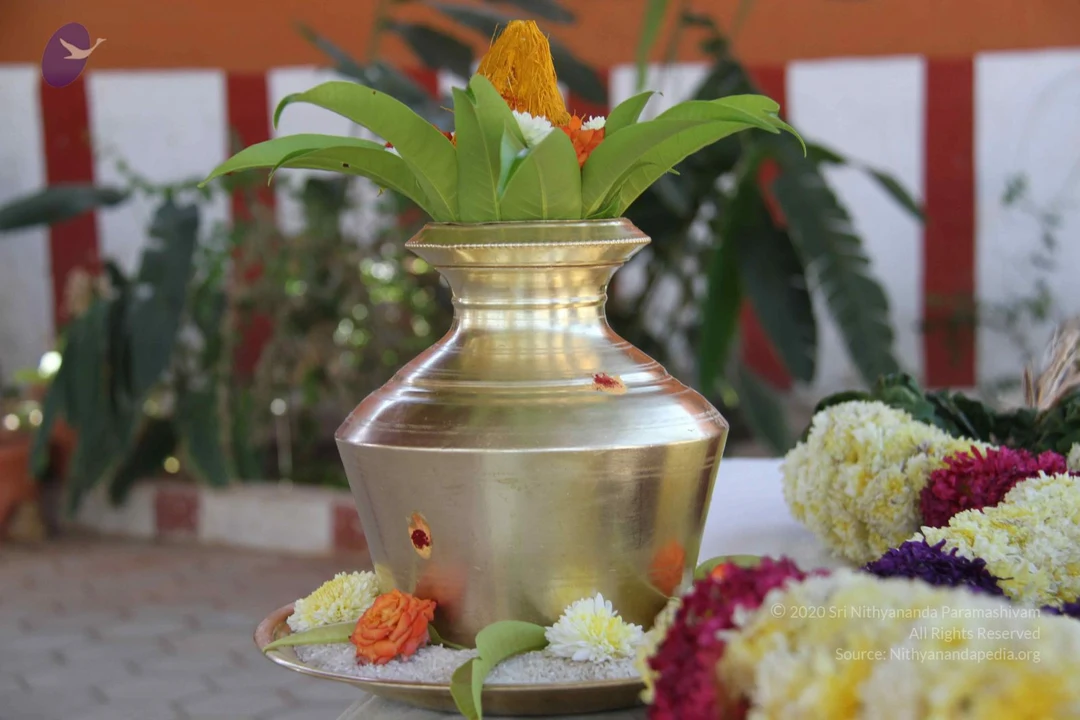
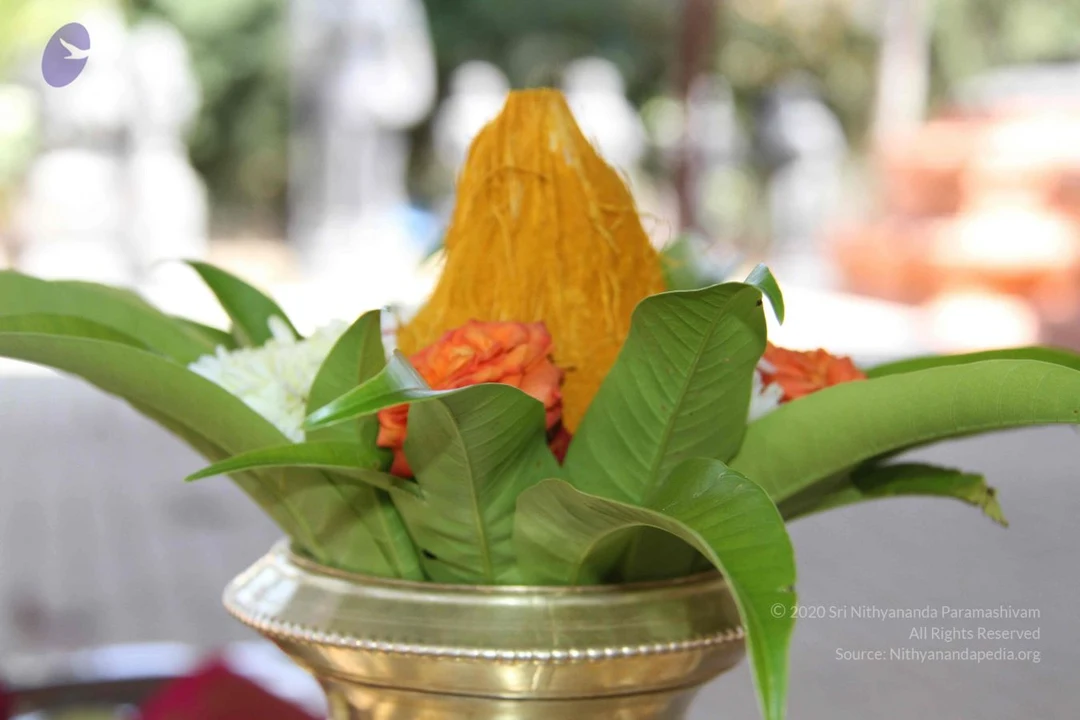
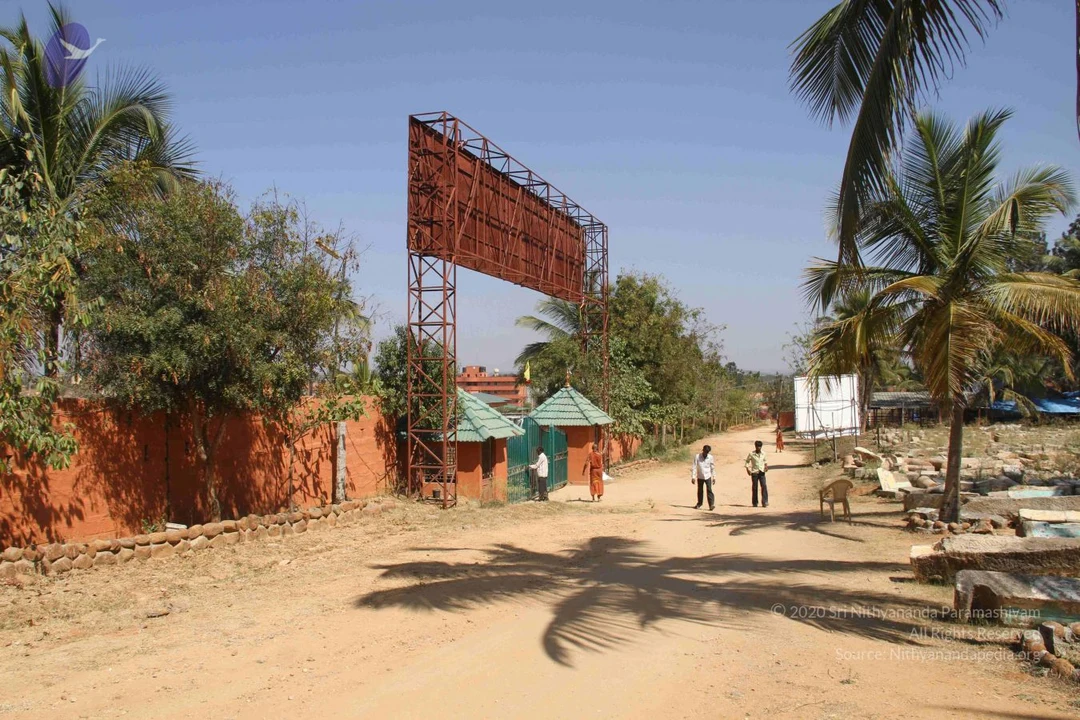
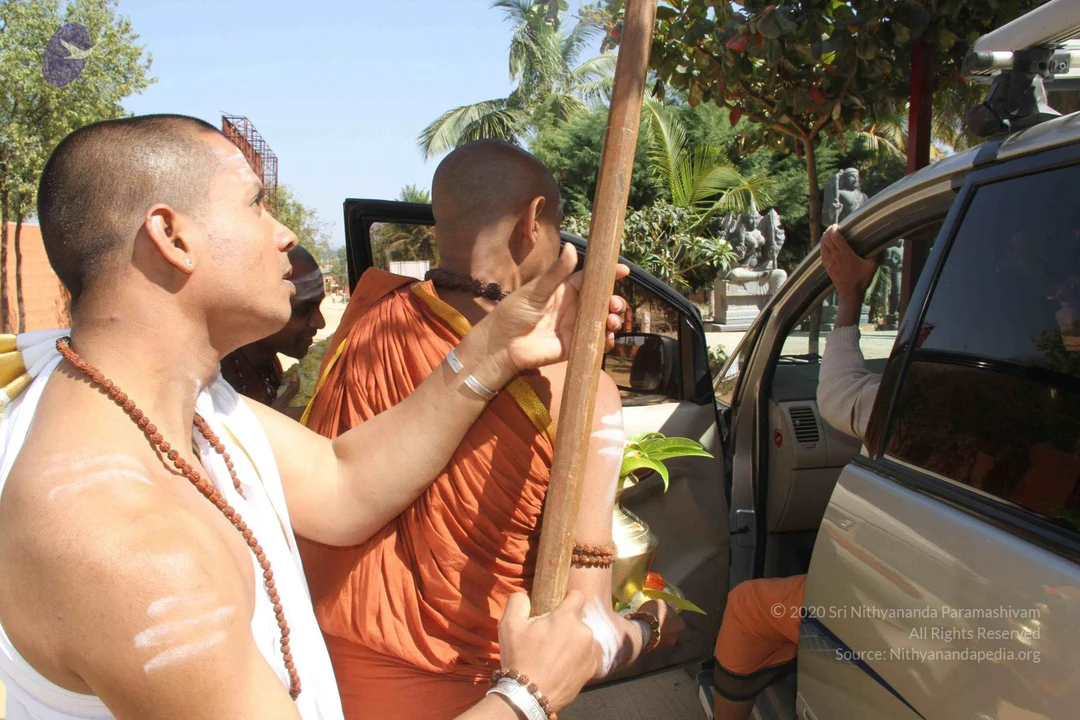
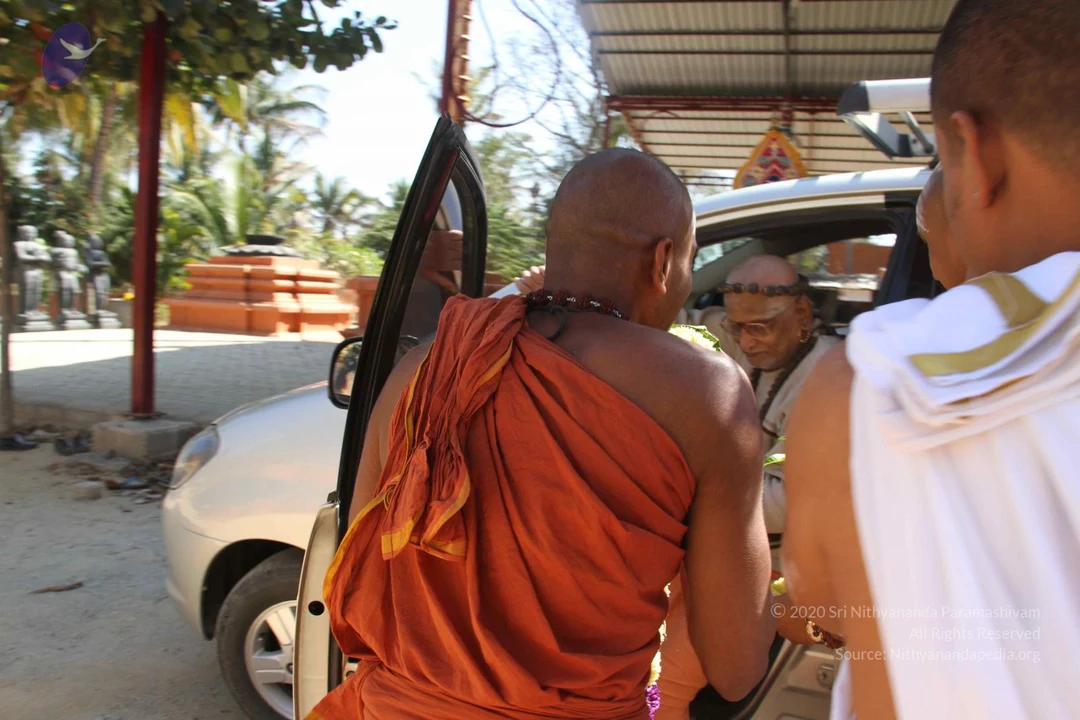
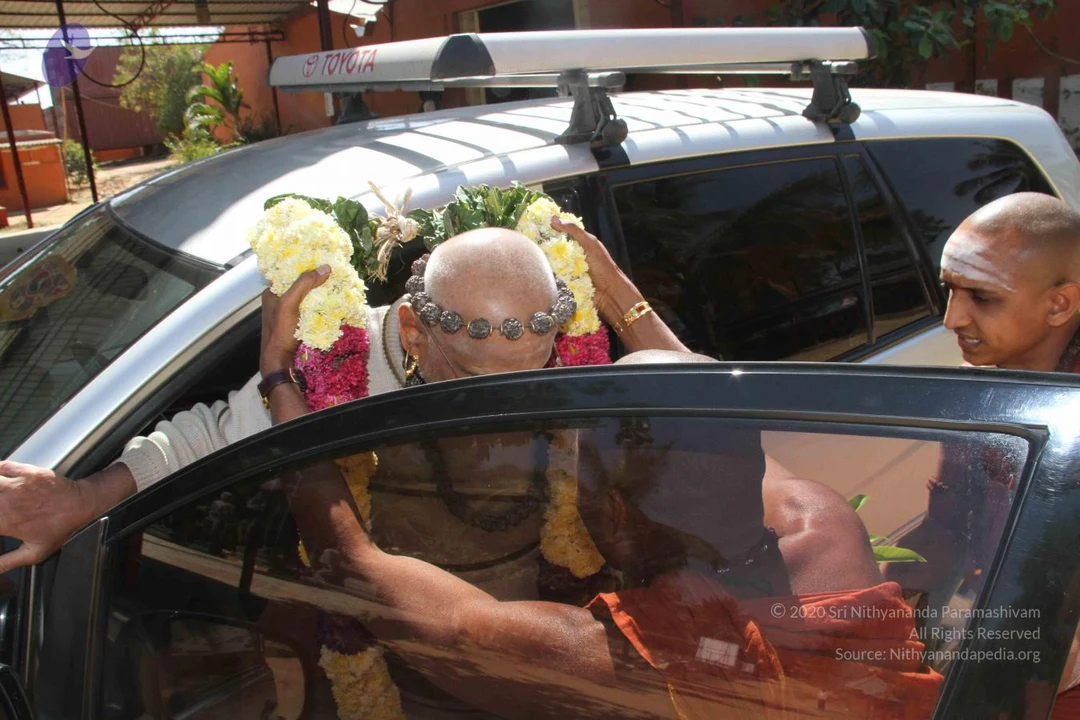
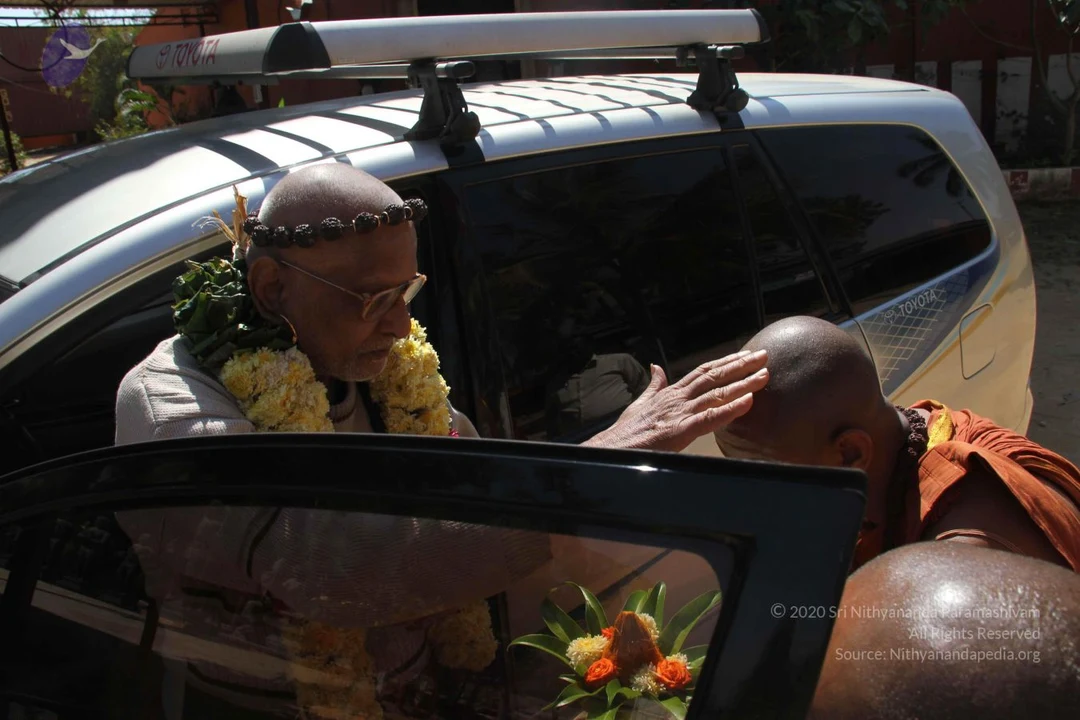
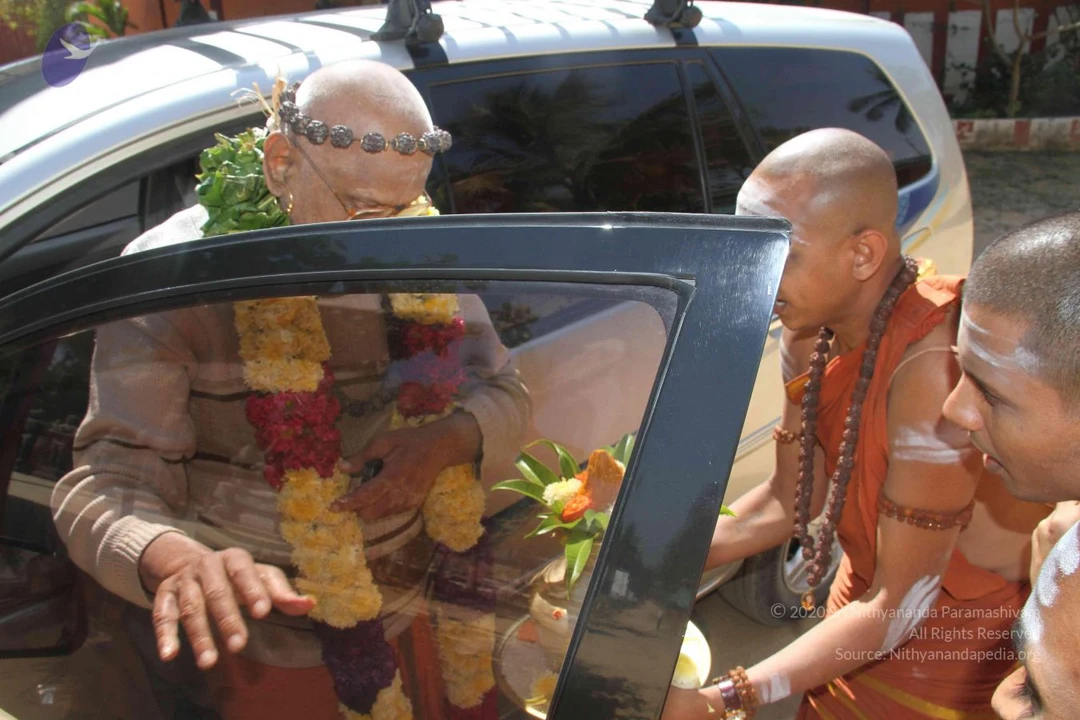
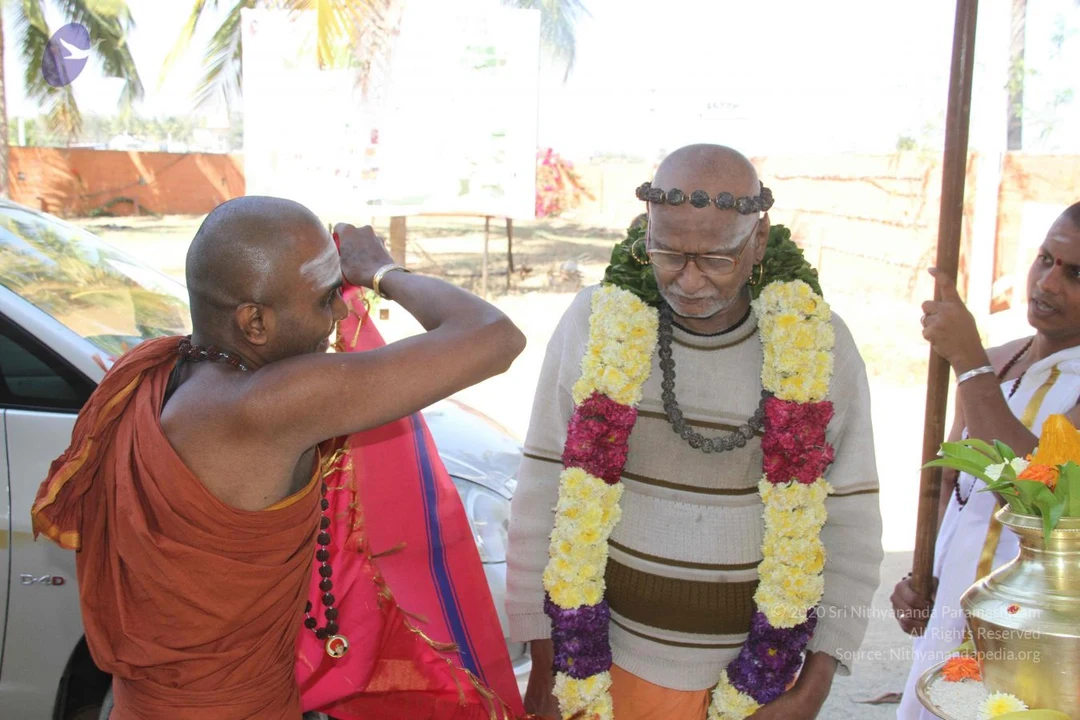
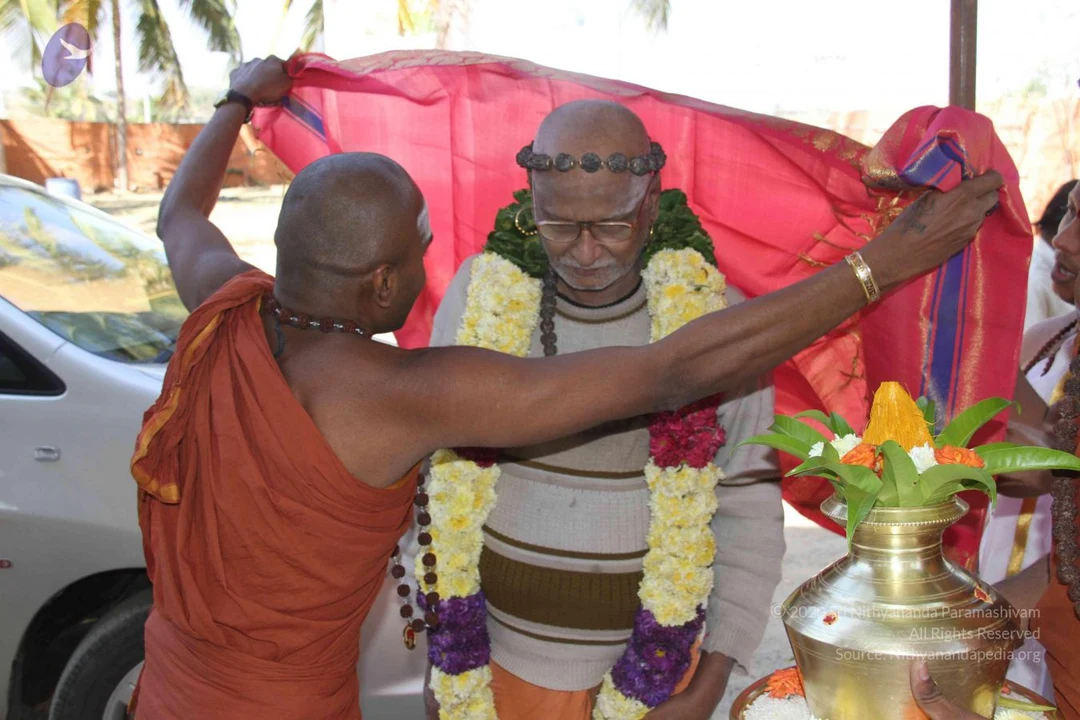
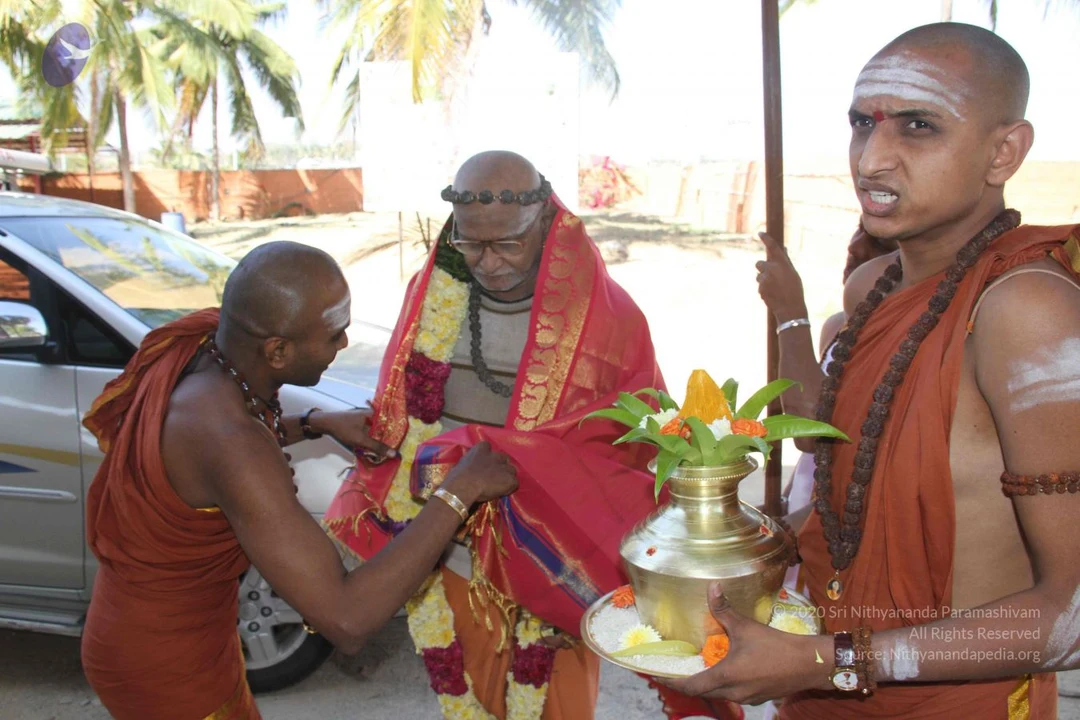
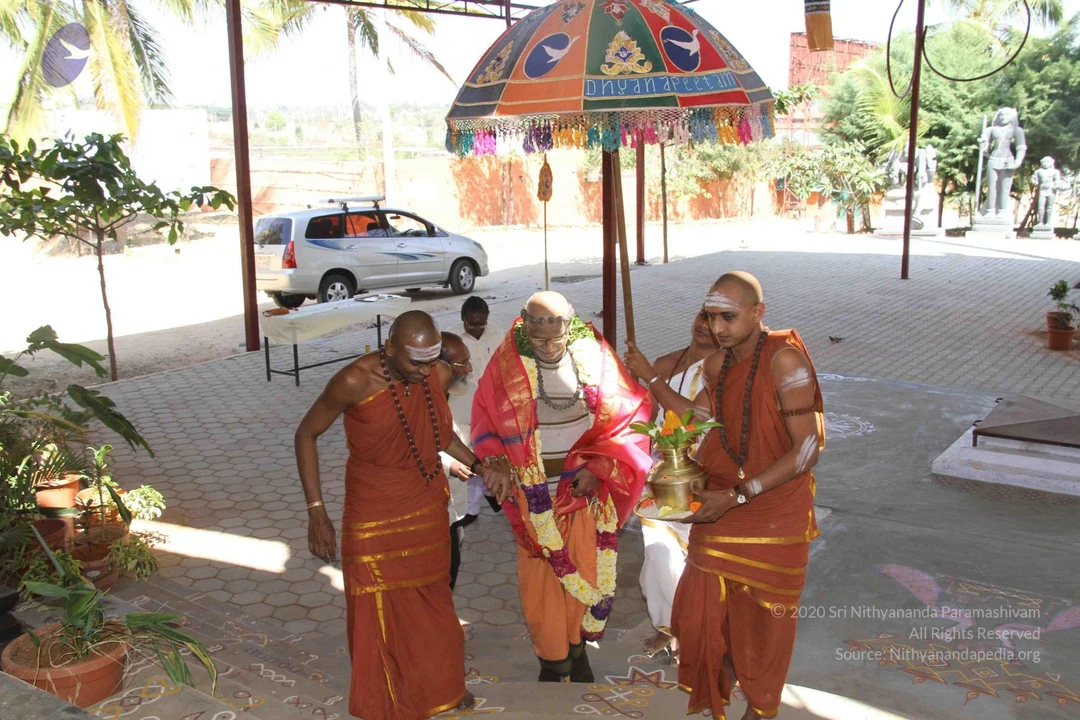
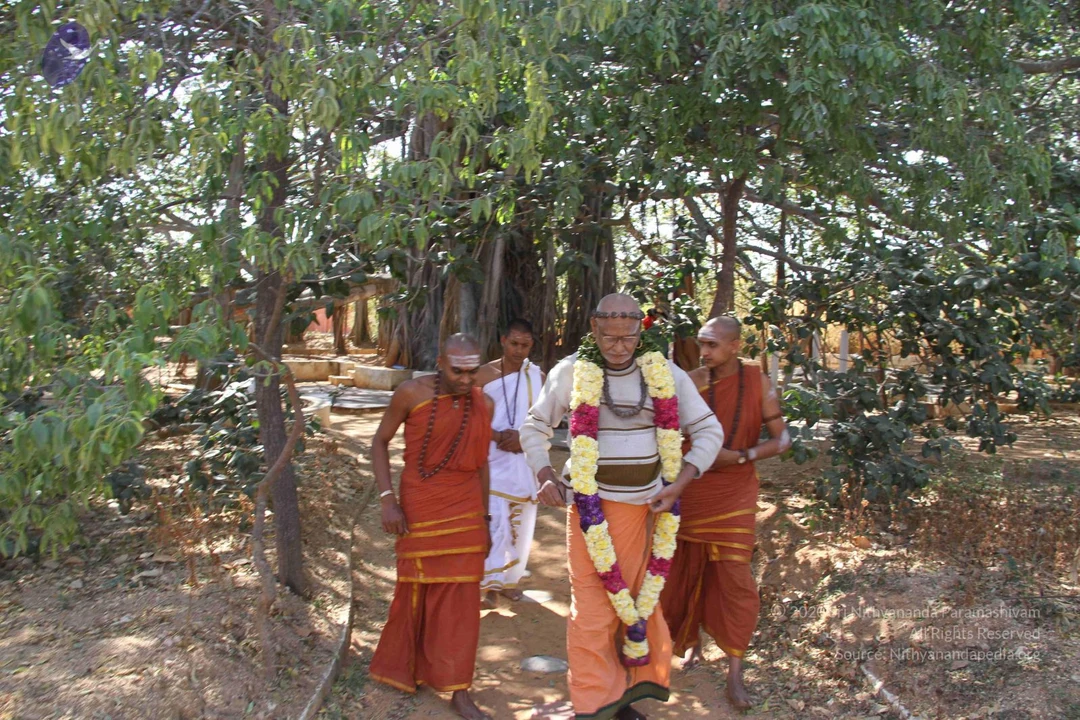
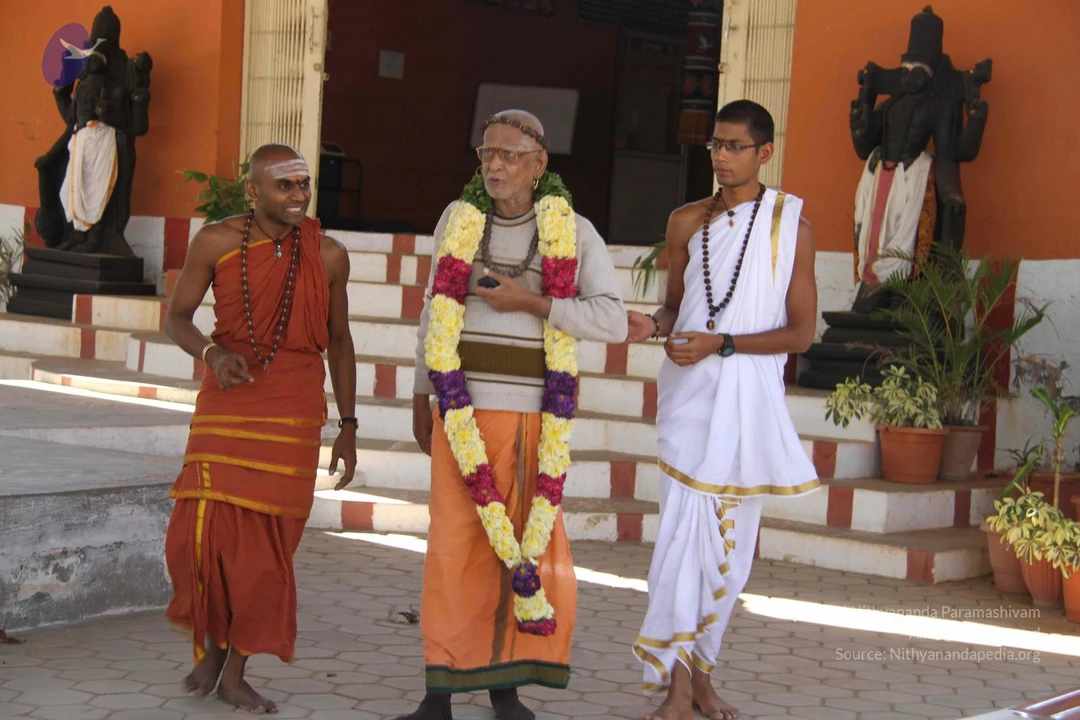
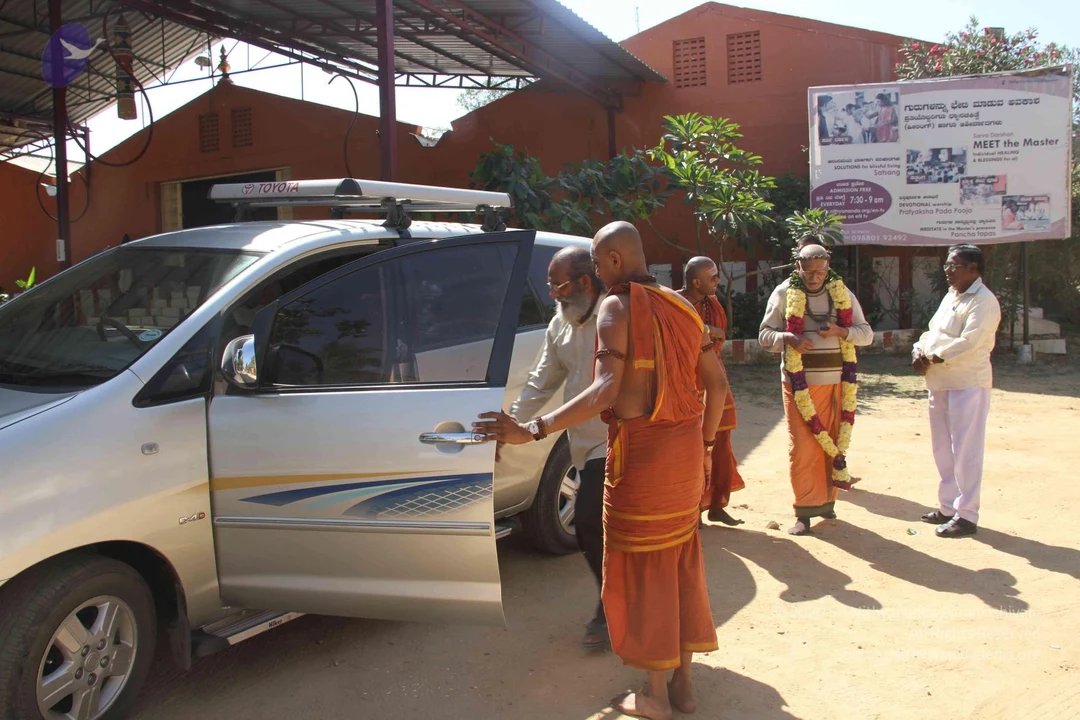
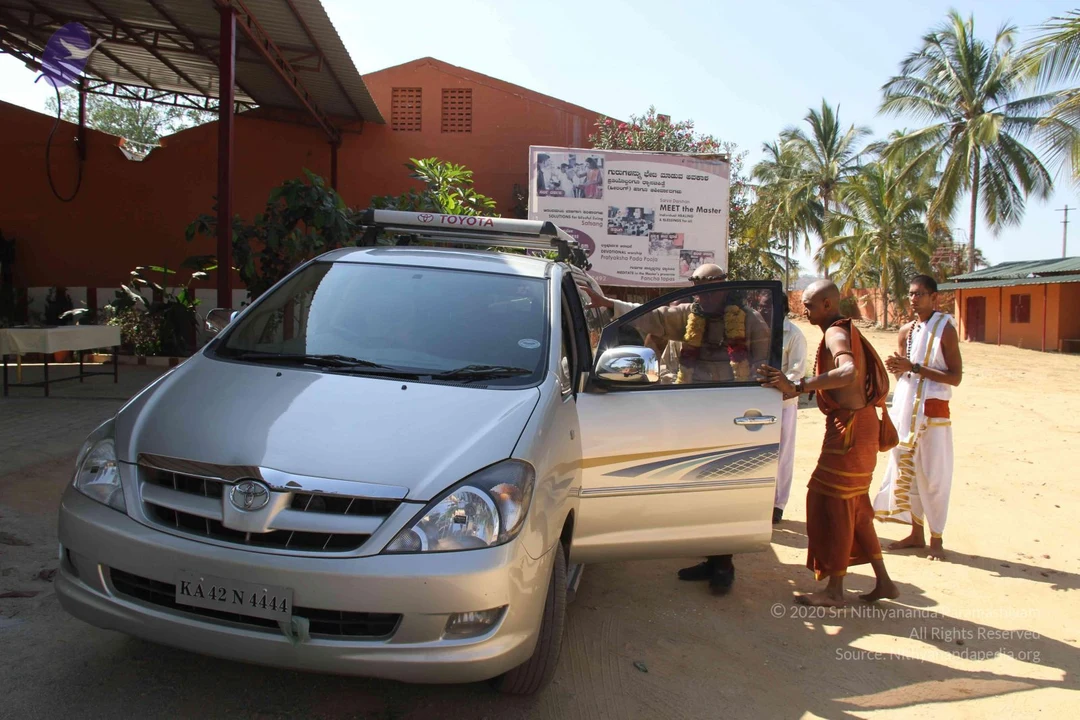
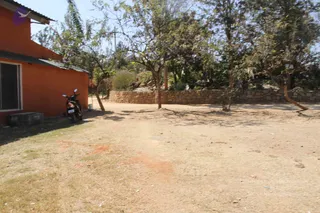
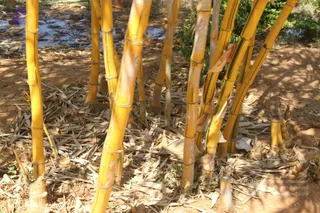
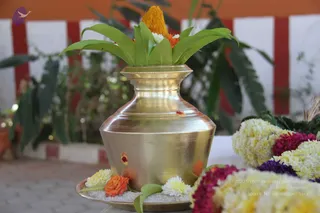
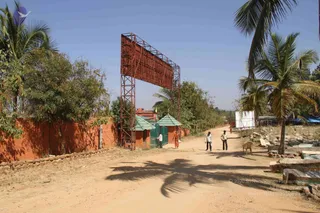
A dusty open yard beside an orange-painted building with a dark doorway and a parked black scooter. Several trees with sparse foliage stand across the dirt ground, and a low dry-stone wall runs along the back under bushes and trees. No people are visible, and no a person candidate appears in the scene.A close outdoor photograph of several tall yellow and green striped sugarcane stalks standing upright on dry brown soil, scattered with dry leaves and small sprouts at their base. Thin wrapping bands encircle the stalks at intervals. Shaded ground and a patch of water and green foliage appear in the background. No people or ritual activity are visible.A polished brass kalasha pot stands on a round brass tray filled with white grains, decorated with a mango-leaf bundle topped by a yellow tassel and white and orange flowers. Marigold and other flower garlands in white, yellow, magenta and purple lie on the table beside it, with orange and white flowers scattered on the tray. Behind are a whitewashed wall with red stripes and green foliage. No people are visible, and the image shows a ritual kalasha arrangement rather than an identifiable event.Close-up photograph of a brass kalasha pot filled with fresh green mango leaves, orange and white flowers, and a conical mound of yellow turmeric-coloured material on top. The pot has a beaded rim. The blurred background shows white and orange figures and structures. No people are visible.A dusty dirt road runs between an orange-red boundary wall on the left and palm trees on the right, leading toward a tall rusted steel lattice frame holding a large empty billboard panel. Two small green-roofed gatehouses with an open green gate stand beside the wall. Three people are visible on the road: one in a white shirt and dark trousers, another in a light shirt, and a figure in orange robes near the gate. Stone blocks and a few plastic chairs sit on the right, under a clear blue sky.A photograph of a car being welcomed outside an ashram on a sunny day with palm trees and a stone sculpture in the background. A bare-chested man in white dhoti with rudraksha mala and white sacred ash markings on his arms stands at left holding a long wooden staff. Beside him a monk in saffron robes holds a brass plate with a kalasha-style vessel, flowers and a yellow offering. A second person in saffron stands inside the open car door at right. a person's presence cannot be established from appearance here, so no candidate is named.

TEMPLE

25 photosSource gallery
A black stone Nandi bull statue sits on a terracotta-coloured plinth outside, garlanded with yellow and red flower strands and draped with a white cloth. Its head and chest carry a necklace of beads and a bell-like ornament. Above, a copper kalasha-style vessel tops the shrine structure. Potted plants flank the base on a paved courtyard, and several grey stone figures stand in the background among trees. No living people are visible.A black stone murti of a four-armed deity seated in an ornate silver arch against a brown fabric backdrop, outdoors among trees. The figure wears a red dhoti-style garment, a red head cloth, layered white and pink beaded necklaces, a pendant, and bangles, with flower garlands in yellow, white and purple hanging on both sides. The stone base and seat show carved detail. No people are visible, and no a person depiction is present.A black stone deity murti stands in an outdoor setting beneath trees, set within an ornate silver arch with a brown satin backdrop. The figure wears a red cloth draped over the head and shoulders, a red skirt, layered white and pearl necklaces, and a silver-toned waist band. Yellow and purple flower garlands hang from the shoulders. Red-painted stone pedestal and a small black plaque sit at the base. No people are visible in the scene.A black stone murti of a four-armed deity is seated against a brown draped backdrop. The figure wears a red turban with a red-and-white band and a red vibhuti mark on the forehead, a red shawl over the torso, layered white, pink and blue beaded necklaces, a jewelled belt, and yellow and purple flower garlands draped over the shoulders. Its raised hands hold a sacred object and a flame-like item, and the other hands show mudras. The figure is a statue, not a living person, and no physical people are visible.A small dark stone shrine recess framed by thick twisting tree roots and a pale stone slab on each side. Inside, a black carved stone object shaped like a cobra hood, with a lit oil lamp flame burning on a bowl-shaped base in front of it. Yellow marigold flowers and red blossoms are arranged across the top, and a strand of yellow flowers lies on the ground below. No people are visible.Outdoor photo of a black stone murti of Dakshinamurthy seated in a silver-framed arched niche in a garden. The figure wears a red cloth over the shoulders and a red headband, with multi-strand white pearl necklaces, a red garland and a white-and-purple flower garland. A stone bench with a small tray stands in front, and red-painted stone pedestals with sindoor surround the base. Tree roots and bare trees frame the scene. No people are visible.

PADA-POOJA
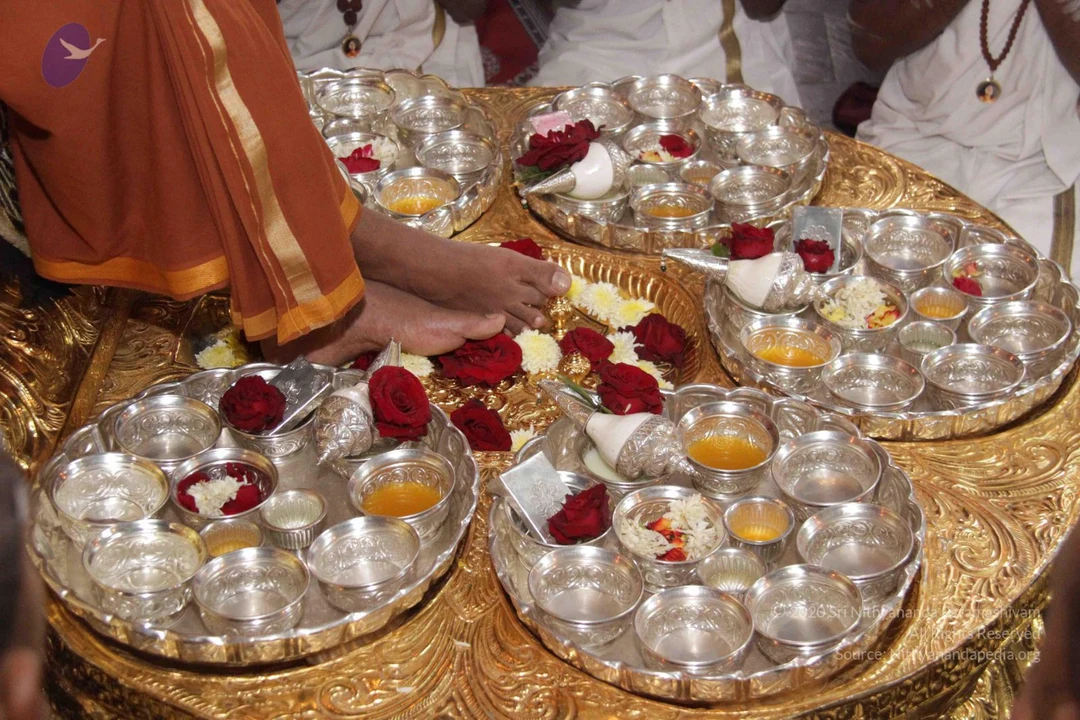
28 photosSource gallery
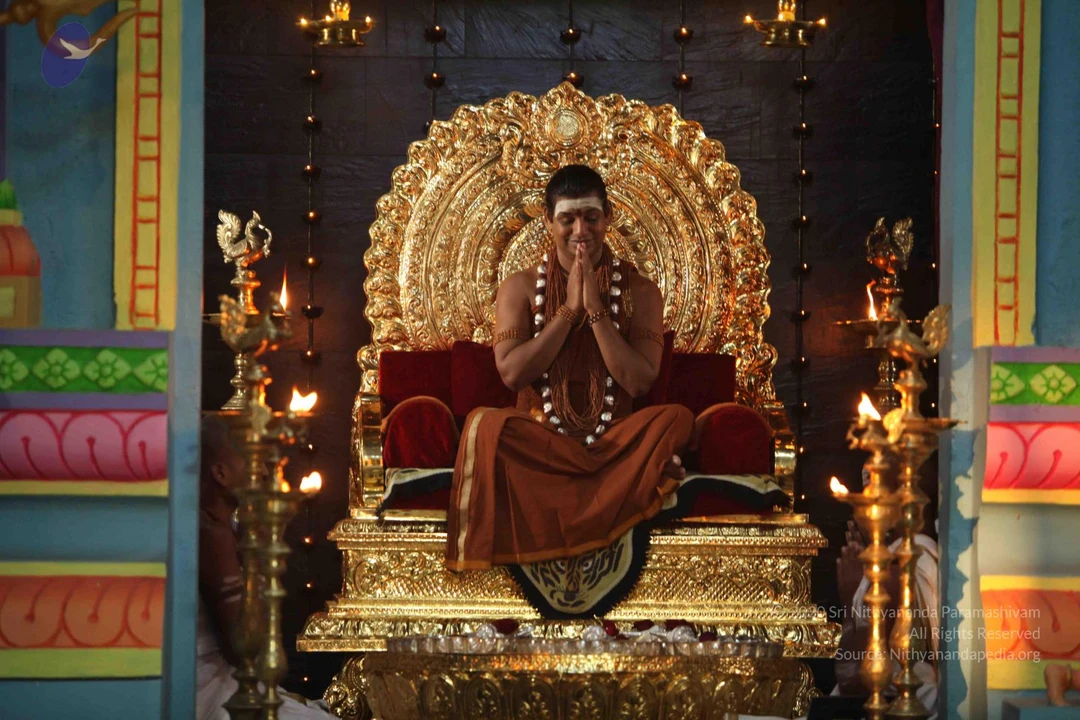
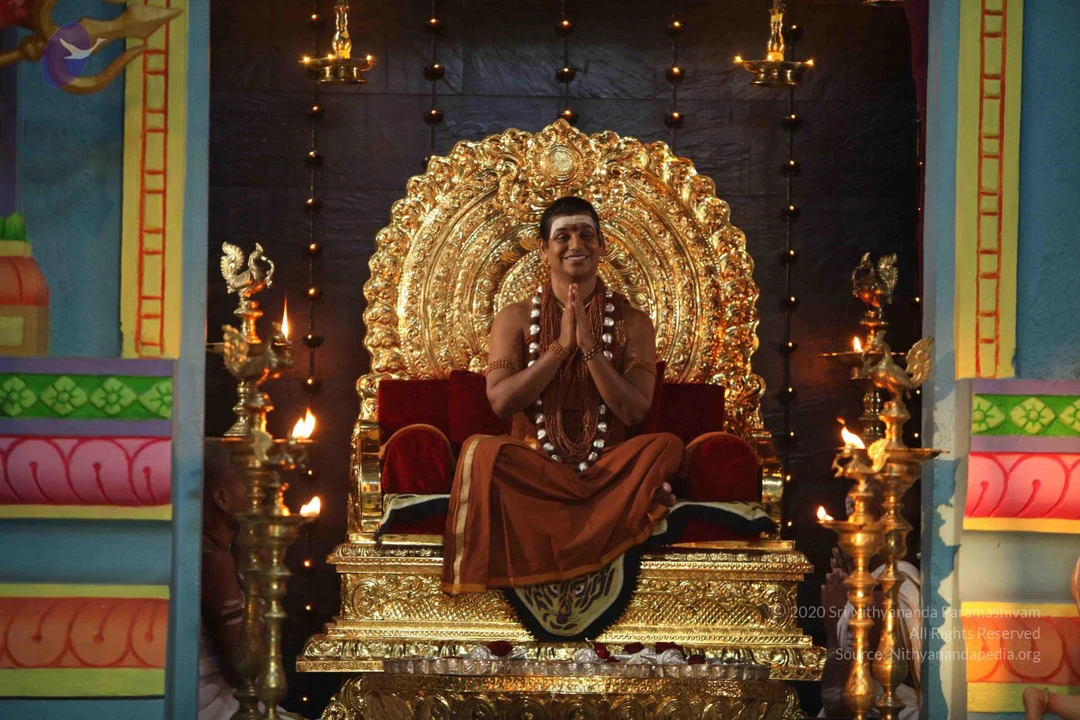
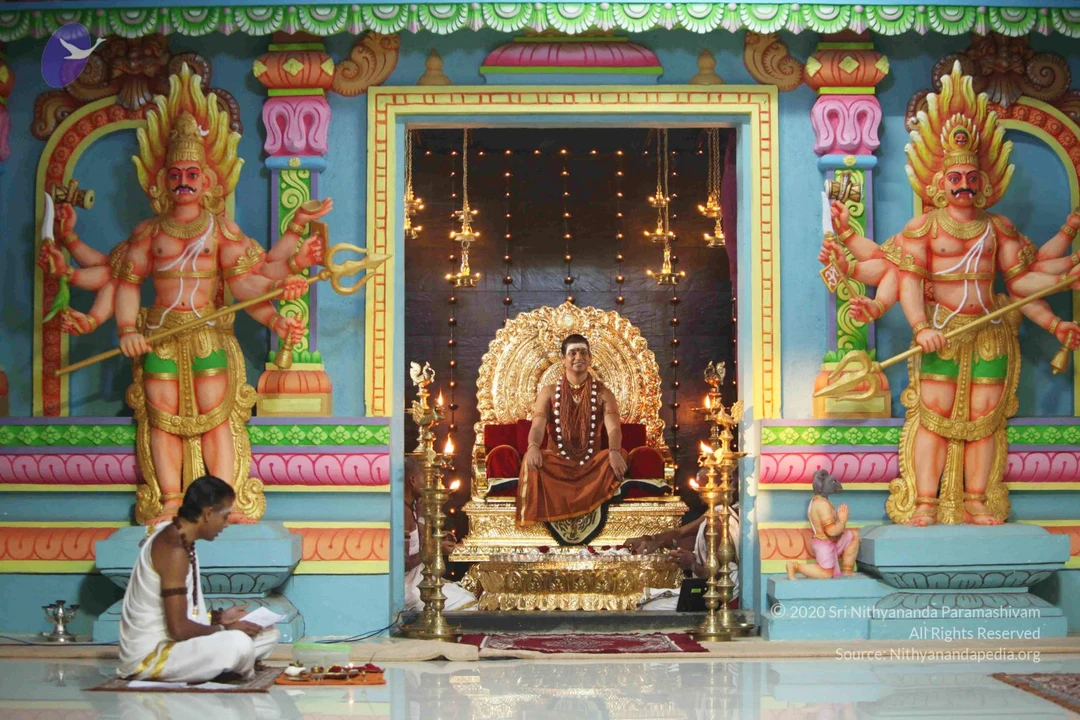
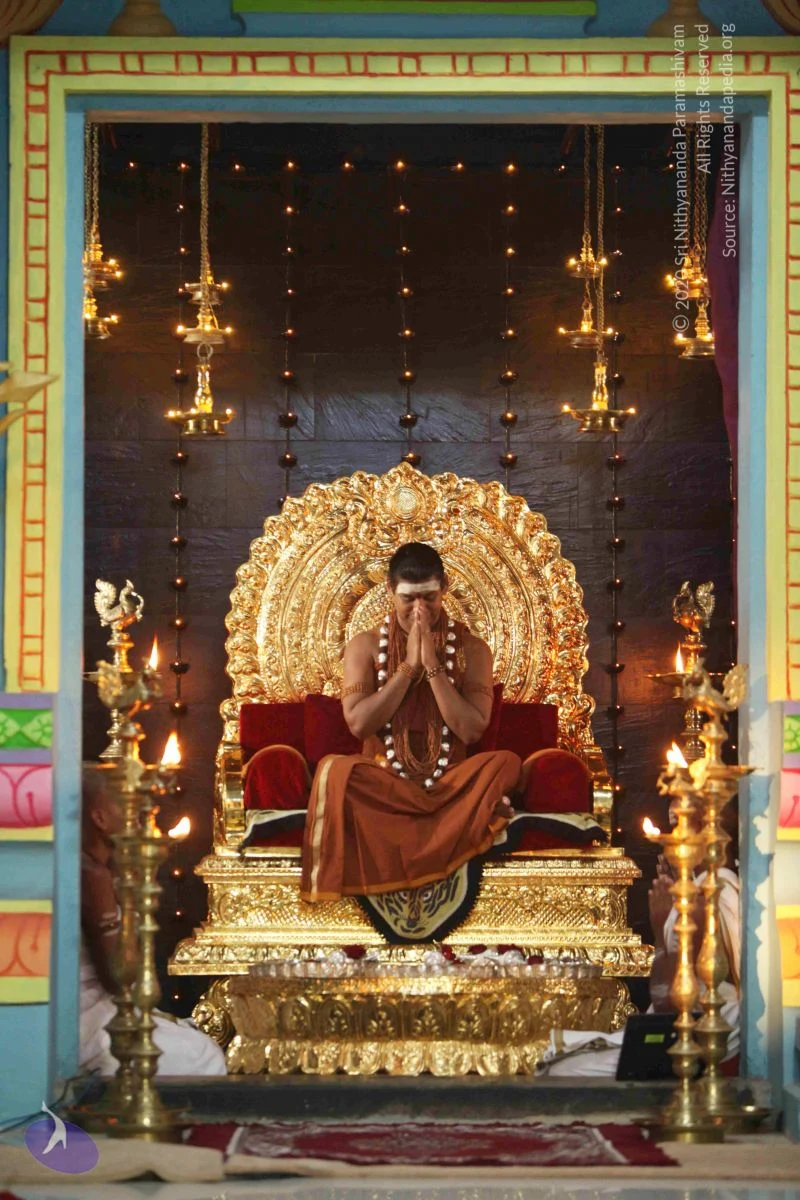
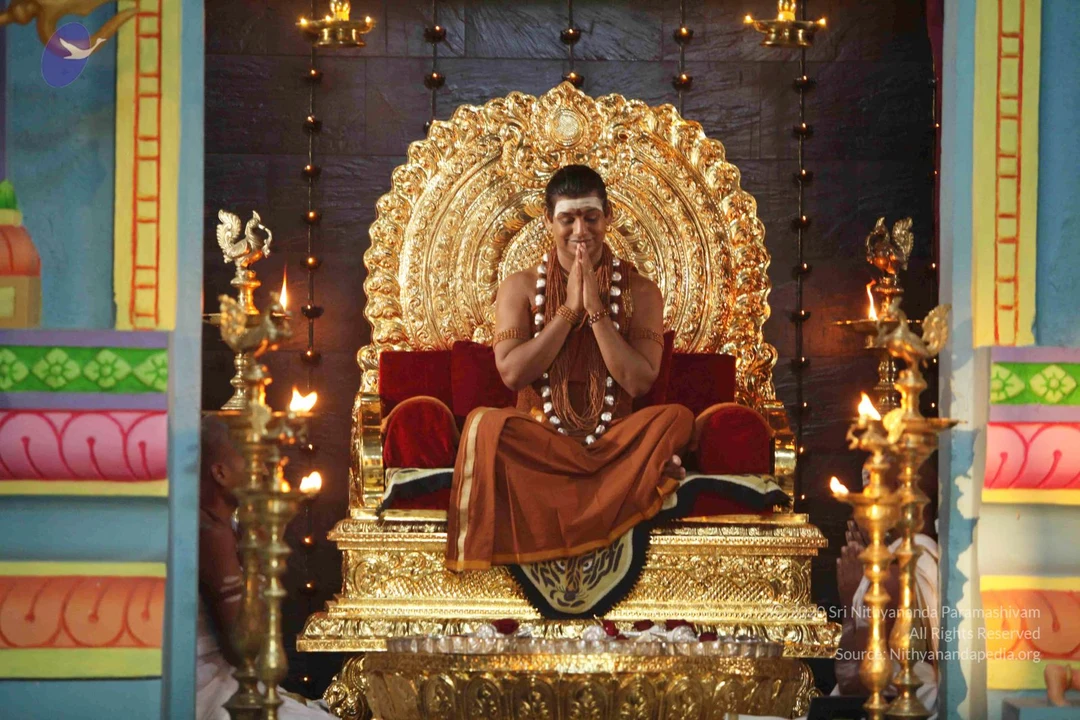
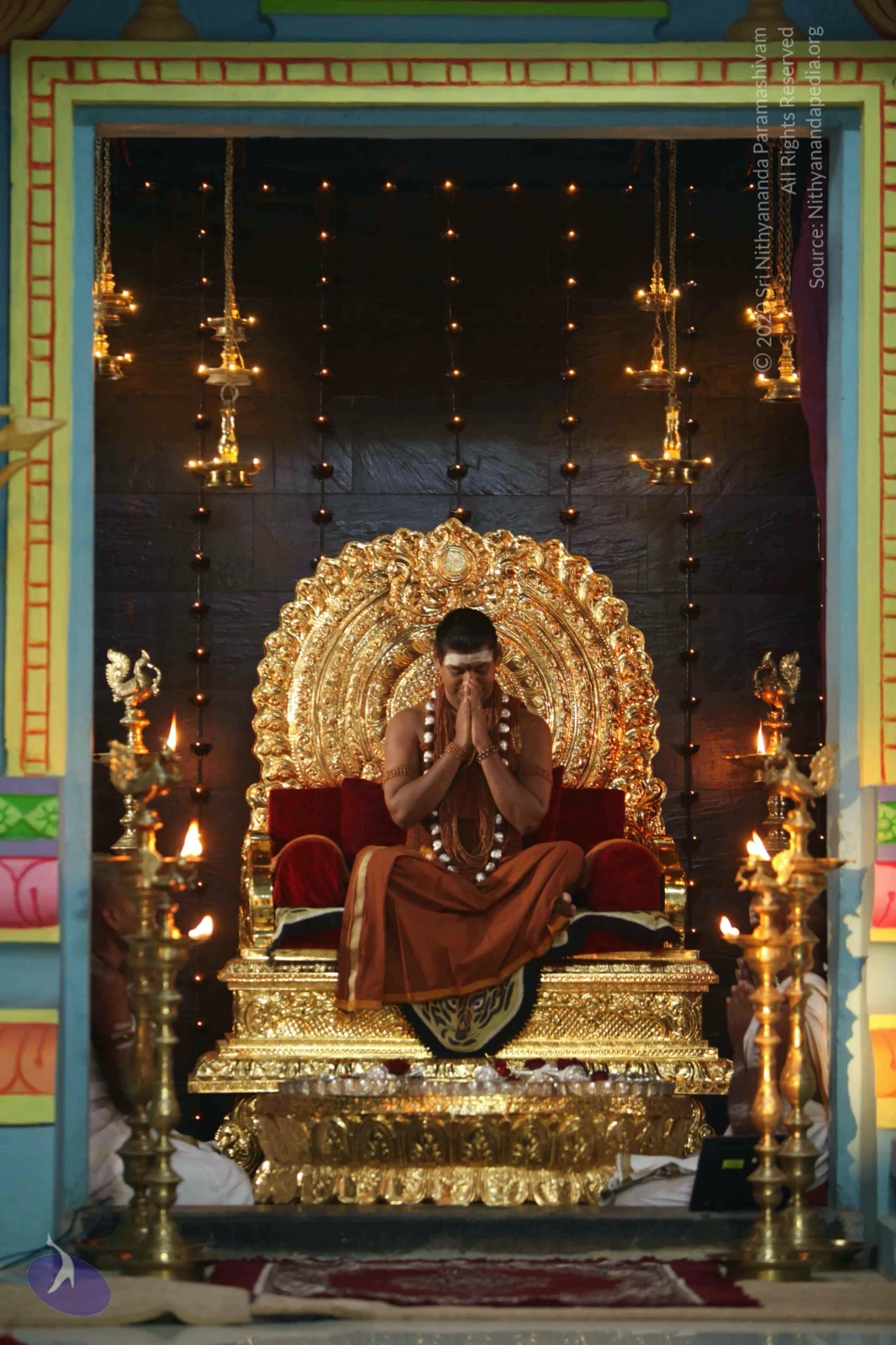
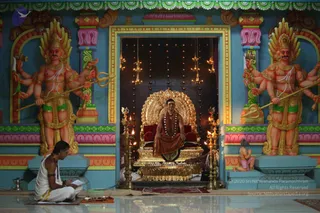
A man in orange and gold robes with a gold-embroidered orange sash and a red-and-gold wrap sits on an ornate gold throne with red cushions, his right hand raised in blessing. He wears long brown-orange beaded necklaces, a rudraksha-style mala, a white tilak on his forehead and a wristwatch. Beside him a brass oil lamp burns. In front, five people in white ritual clothes with gold borders sit cross-legged with palms pressed together, some with white tilak and rudraksha malas. A brass thali with rose petals, yellow flowers, betel-style offerings and small oil-filled lamps lies on a golden tray. A bald man is seen from behind at lower left. Ceremonial satsang setting with red and gold drapes behind.A seated figure in a saffron-orange robe and rudraksha mala sits on an ornate gold throne with red cushions, centred in a shrine doorway lined with hanging lamps. Two painted guardian statues with multiple arms, flaming crowns and tridents flank the doorway. Brass oil lamps burn on either side of the throne, and a white-clad man sits cross-legged at lower left writing on paper beside an offering tray. The walls are blue and pink with green and gold trim.A padapuja ritual at a golden tray. A seated figure in orange and saffron robes with red-and-gold trim has bare feet resting on a tray of red roses, petals, and oil lamps in silver and brass bowls. Three shaved-headed men in white dhotis with gold borders, sacred thread, rudraksha malas, and white tripundra markings stand with palms pressed together in namaskar. A bearded man in a dark turban-like wrap stands behind them. Two heads of seated devotees are visible in the foreground. A brass lamp burns at right beside a deity murti and a framed photo.Close view of a pada puja: bare feet in an orange-bordered saffron garment rest on a gold-embossed platform among silver trays. The trays hold small silver bowls of yellow liquid, white flowers, red rose petals and kumkum-like powder, with silver ladles and pouring vessels. Rose petals and white blossoms are scattered over the feet. Beside the trays, people in white garments and rudraksha malas sit at the edge of the frame. The feet belong to a person in a saffron dhoti-style wrap; their identity is uncertain from the image alone.A seated figure with folded hands in namaskar sits on an ornate gold throne with a large gold arched backrest and red velvet cushions, against a dark stone-patterned wall. He wears a saffron-orange dhoti-style garment, a long rudraksha mala and a white flower garland, with bangles on his arms. Brass oil lamps with lit flames stand on either side of the throne, and painted pillars frame the scene. The figure appears to be a sculpted or lifelike statue rather than a living person, and no other people are visibly present. a person appears as a depiction on the throne, identified by the orange robe, rudraksha mala and ceremonial setting.A seated man in saffron-orange robes sits cross-legged on an ornate gold throne with a large golden arched back, pressing his palms together in greeting and smiling. He wears a multi-strand rudraksha mala with a cream-and-gold beaded necklace and bangles. Behind the throne is a dark wall with hanging beaded strands, and brass oil lamps with flames flank the throne on both sides. Decorated painted pillars in turquoise, pink and yellow frame the scene, with a golden trident at upper left.

NITHYA-SATSANG
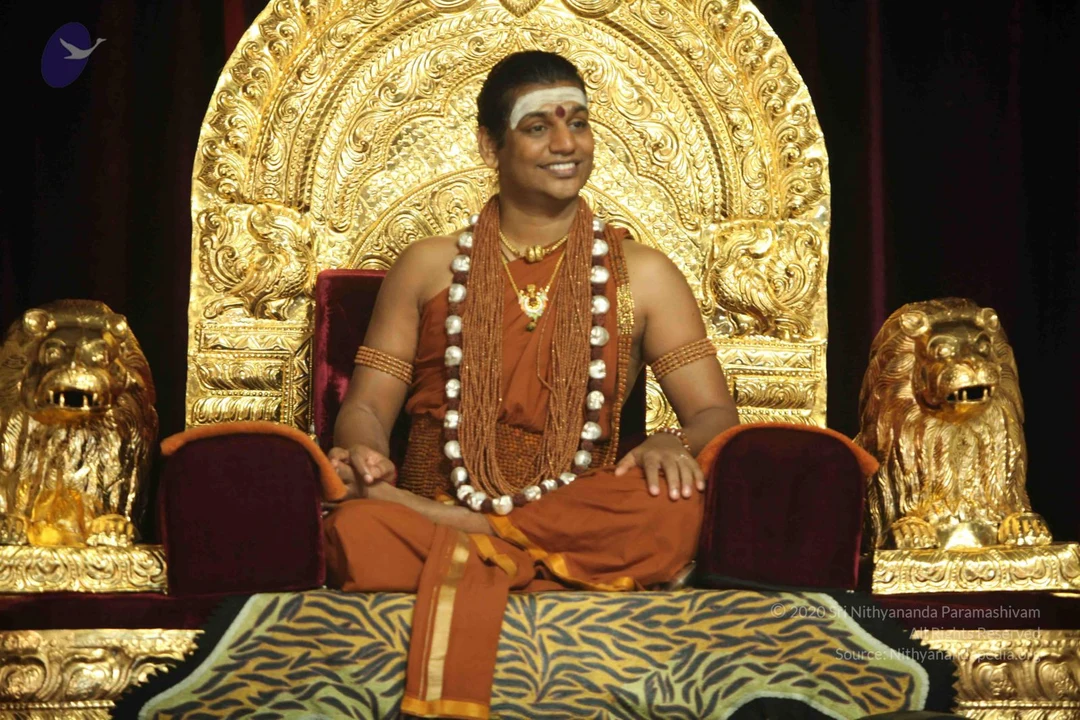
48 photosSource gallery
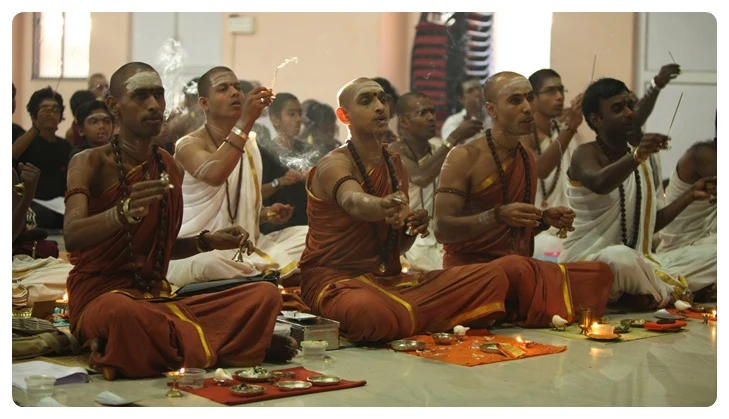
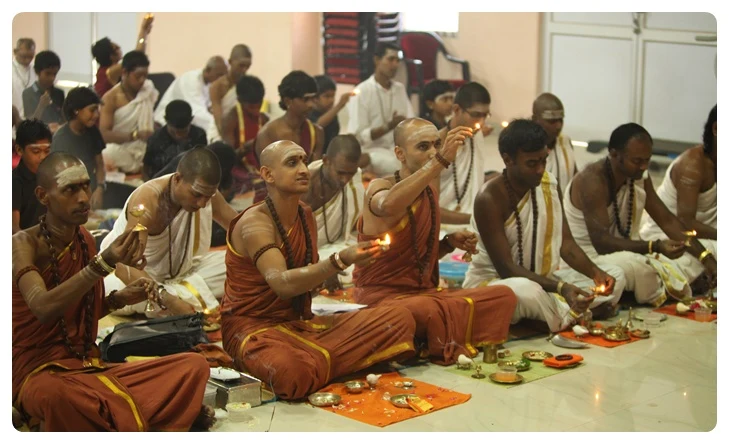
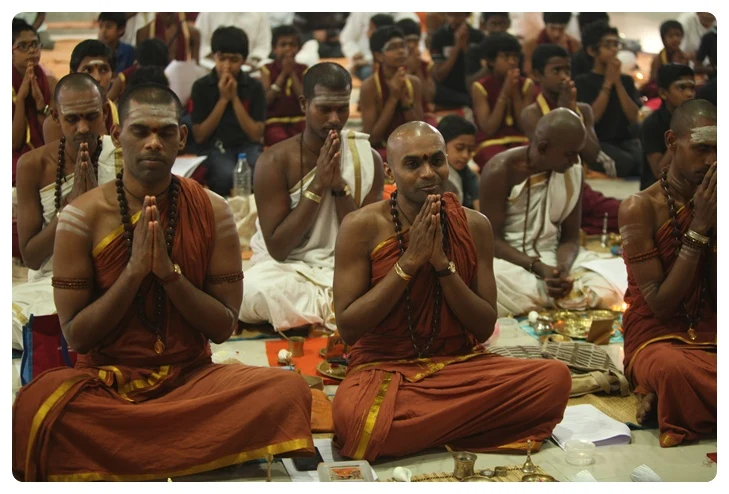
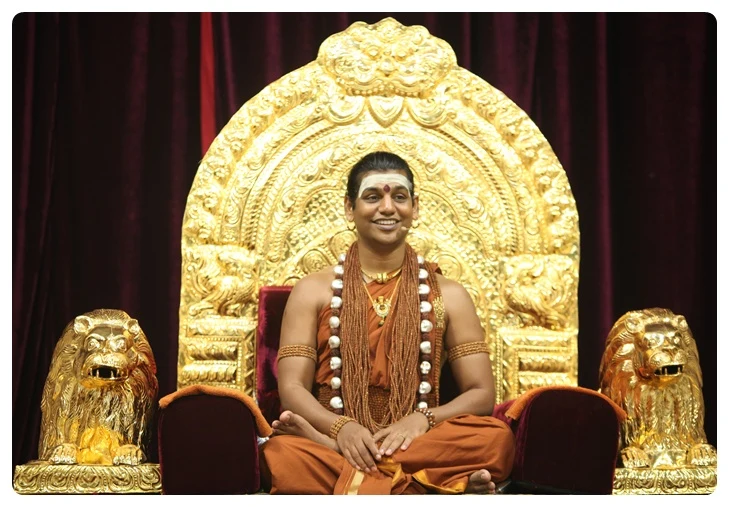
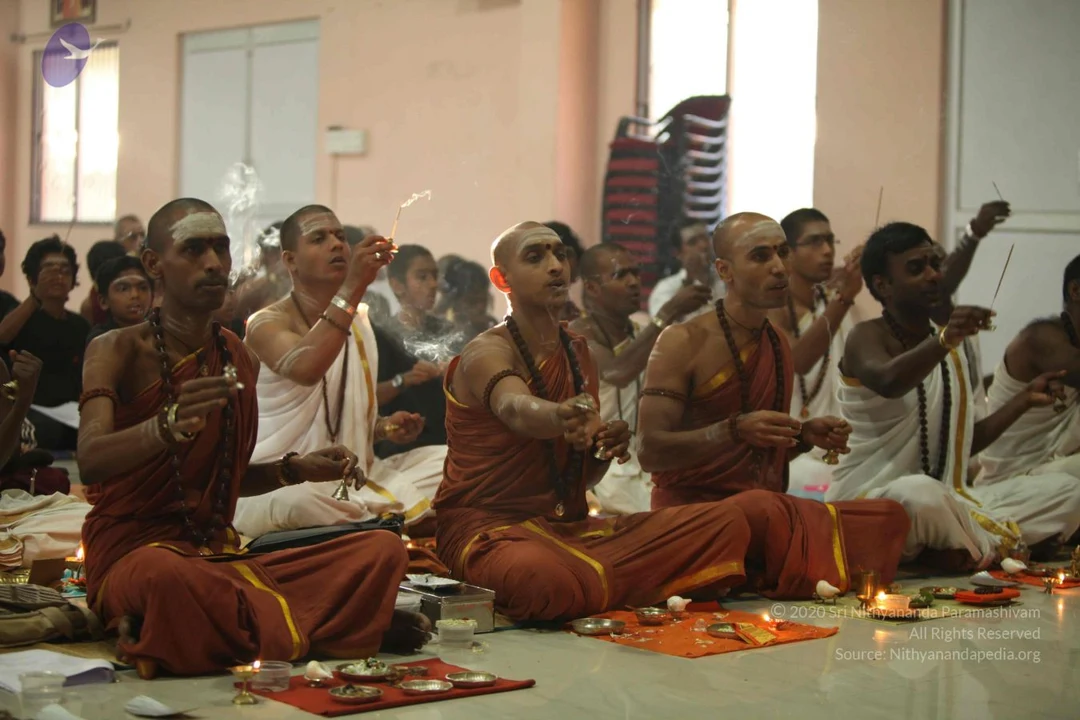
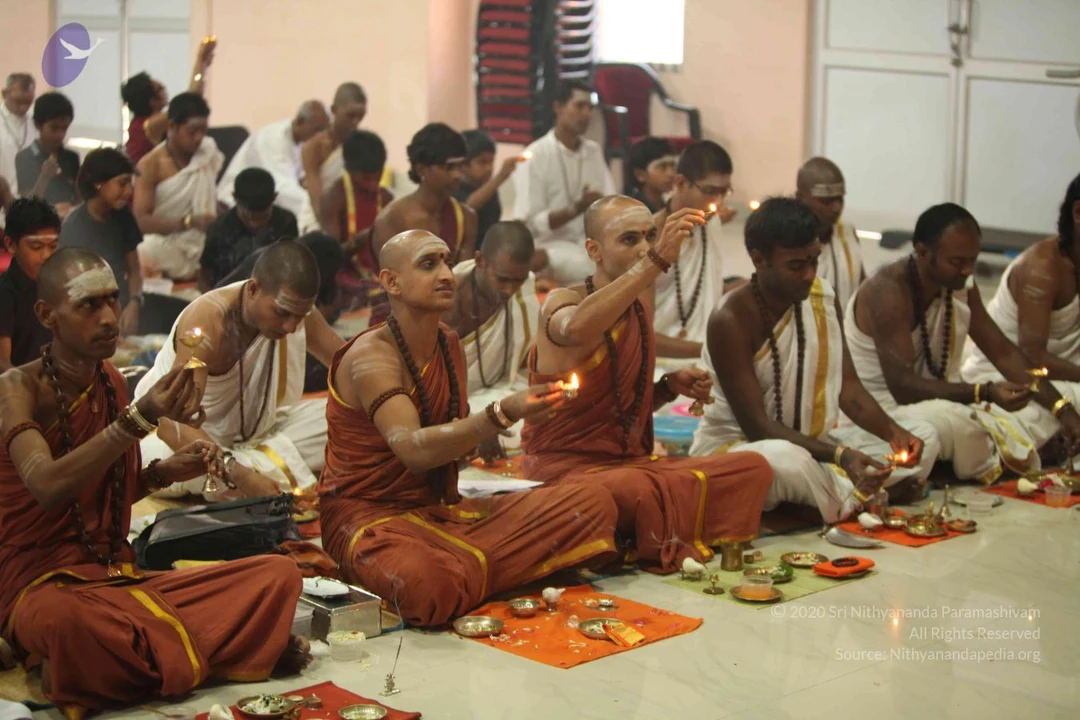
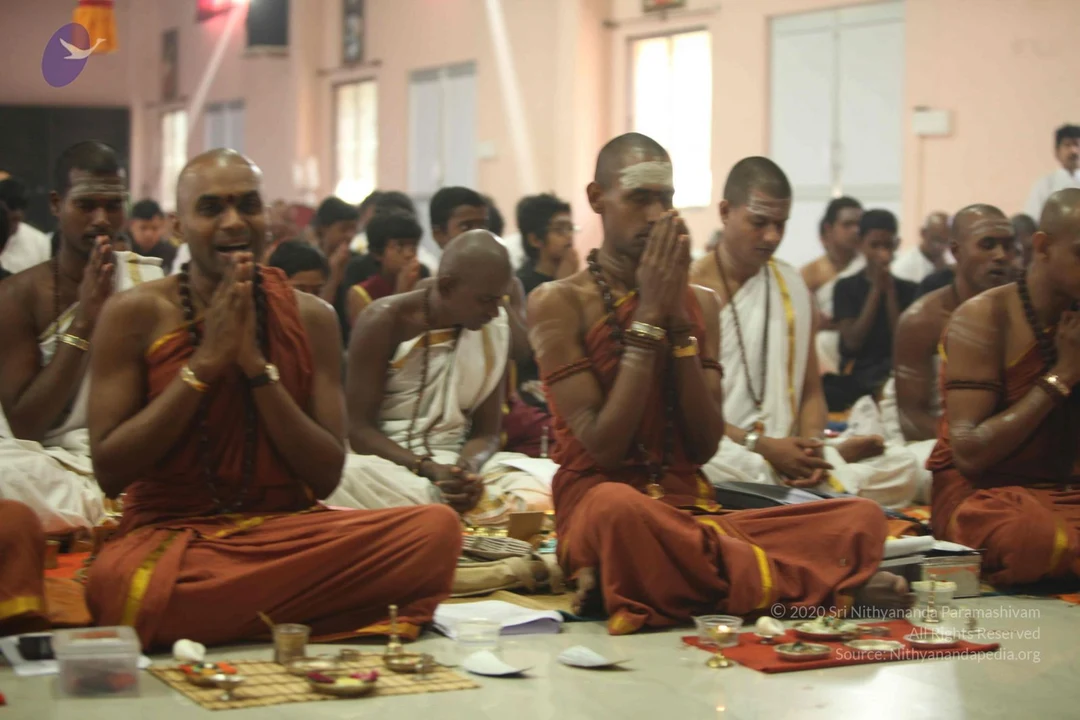
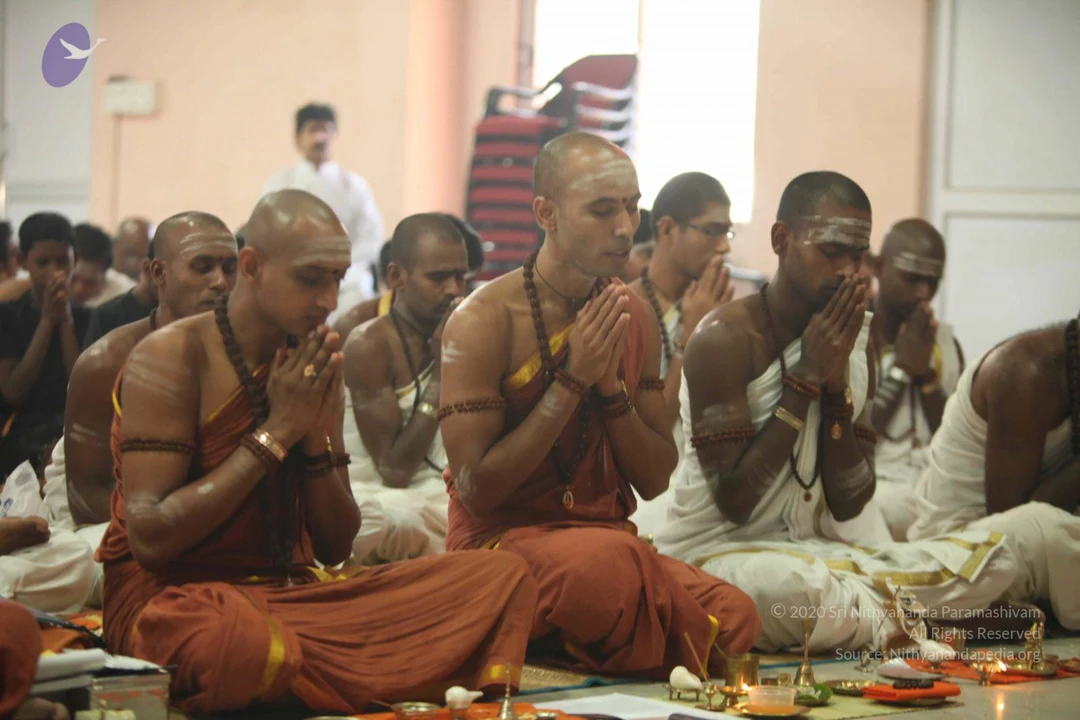
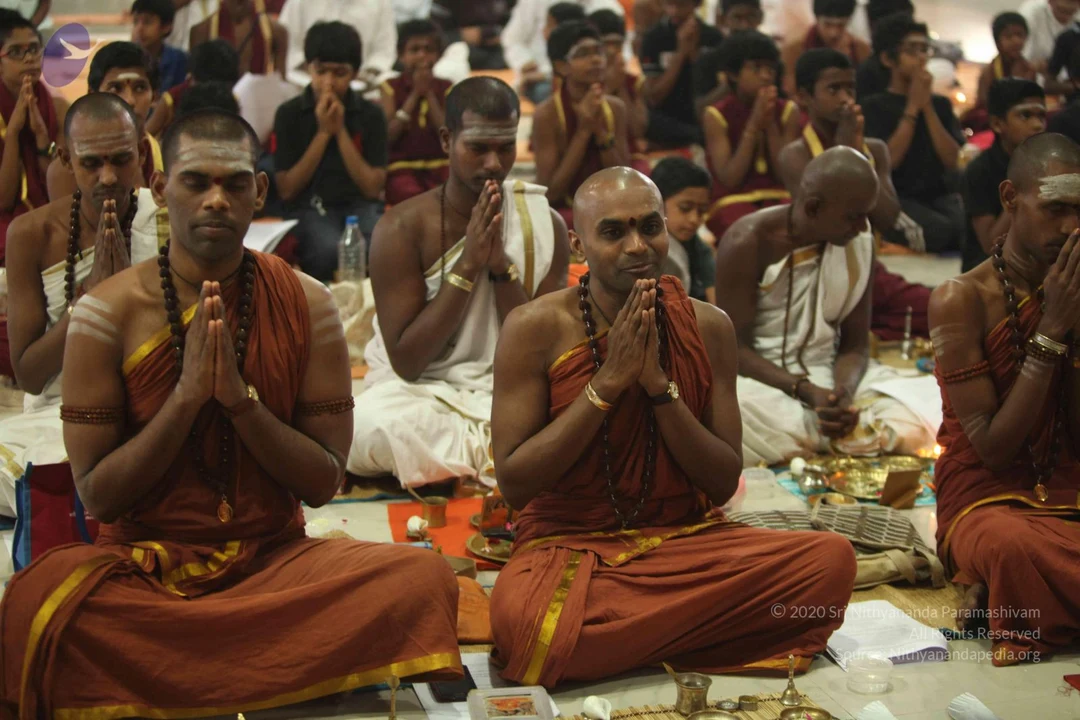
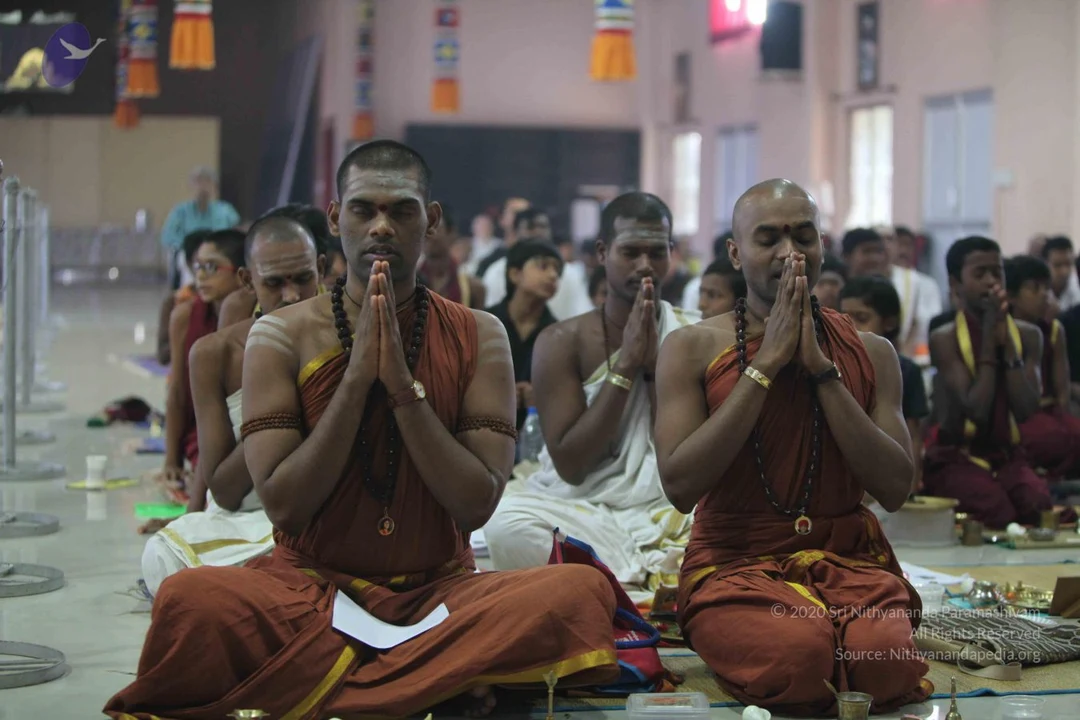
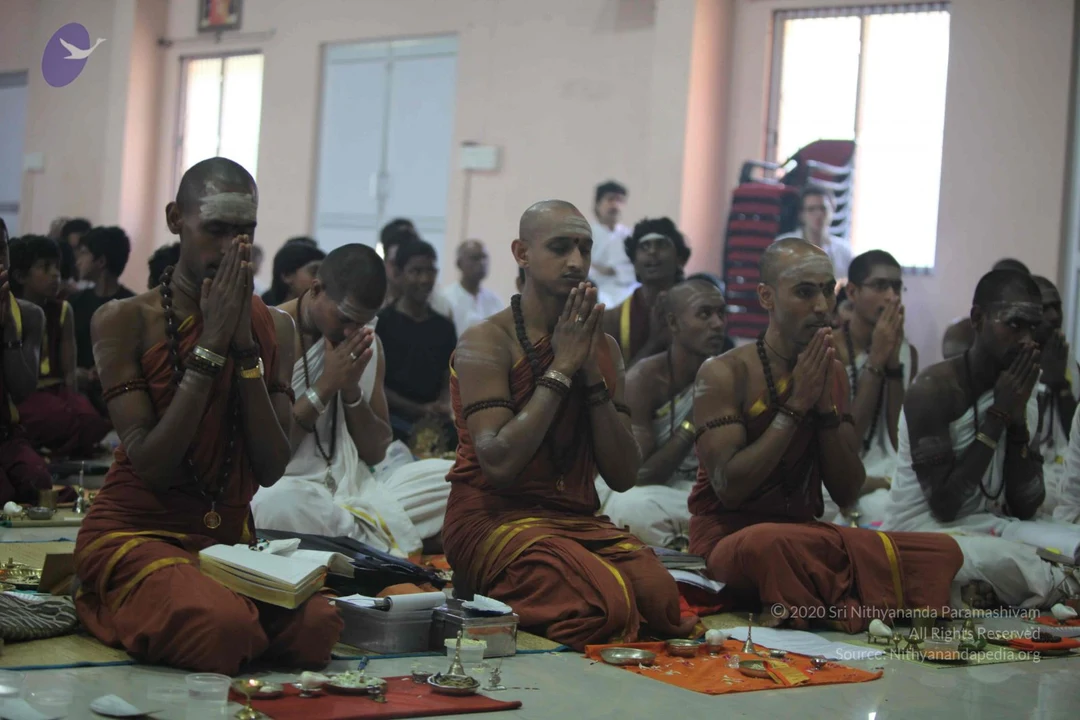
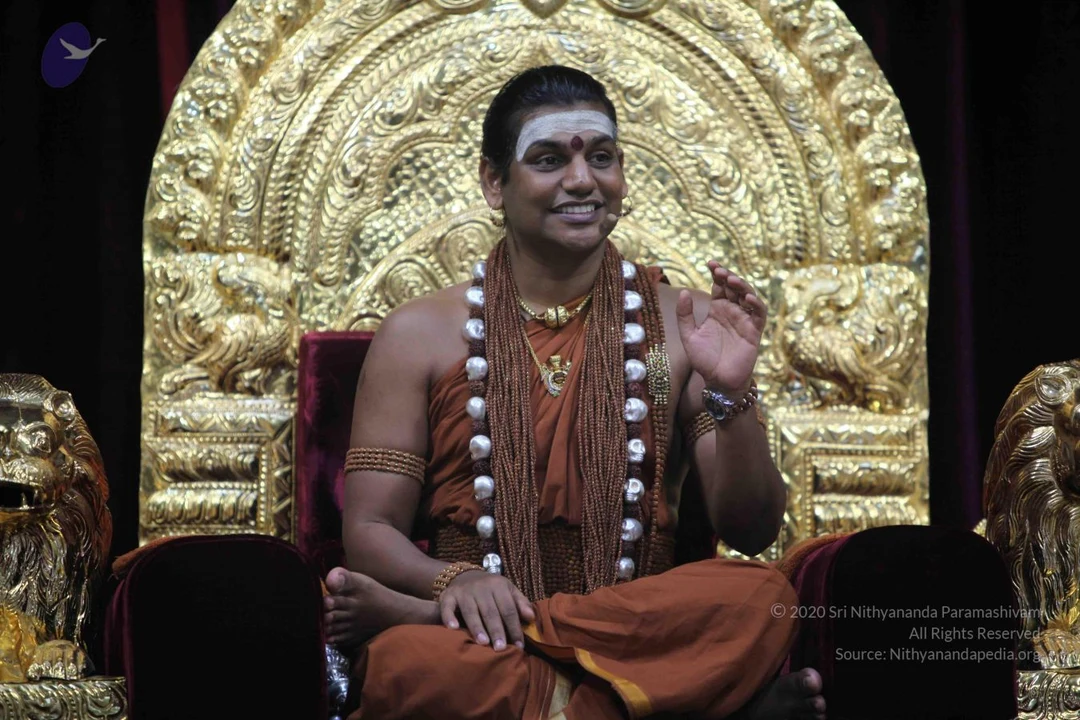
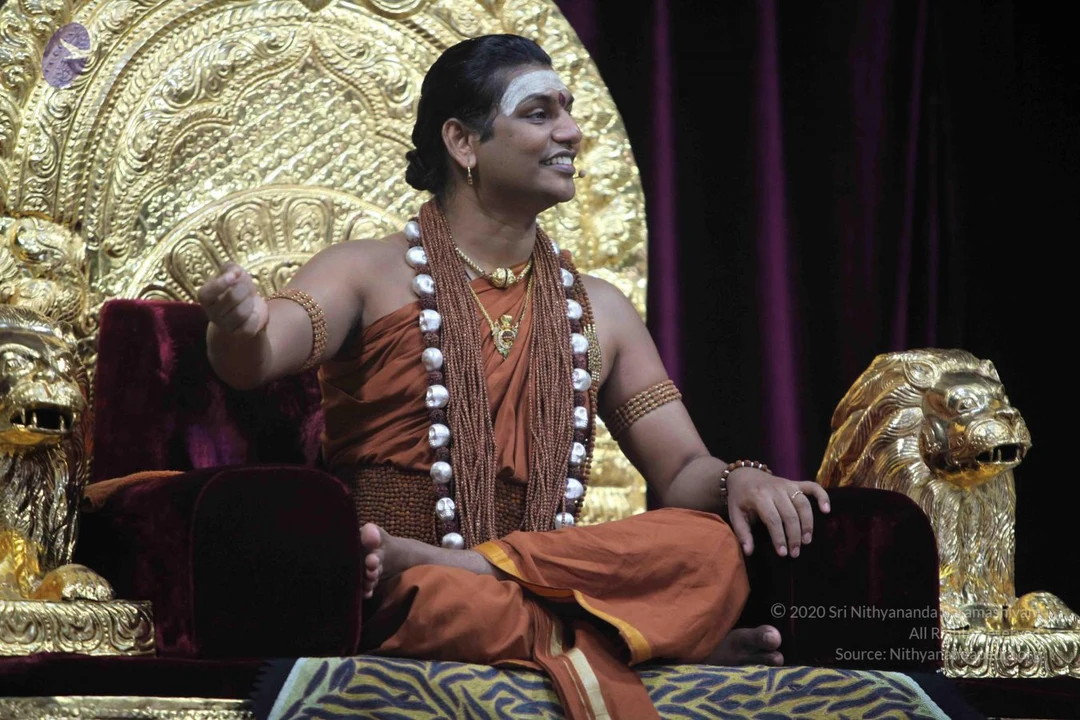
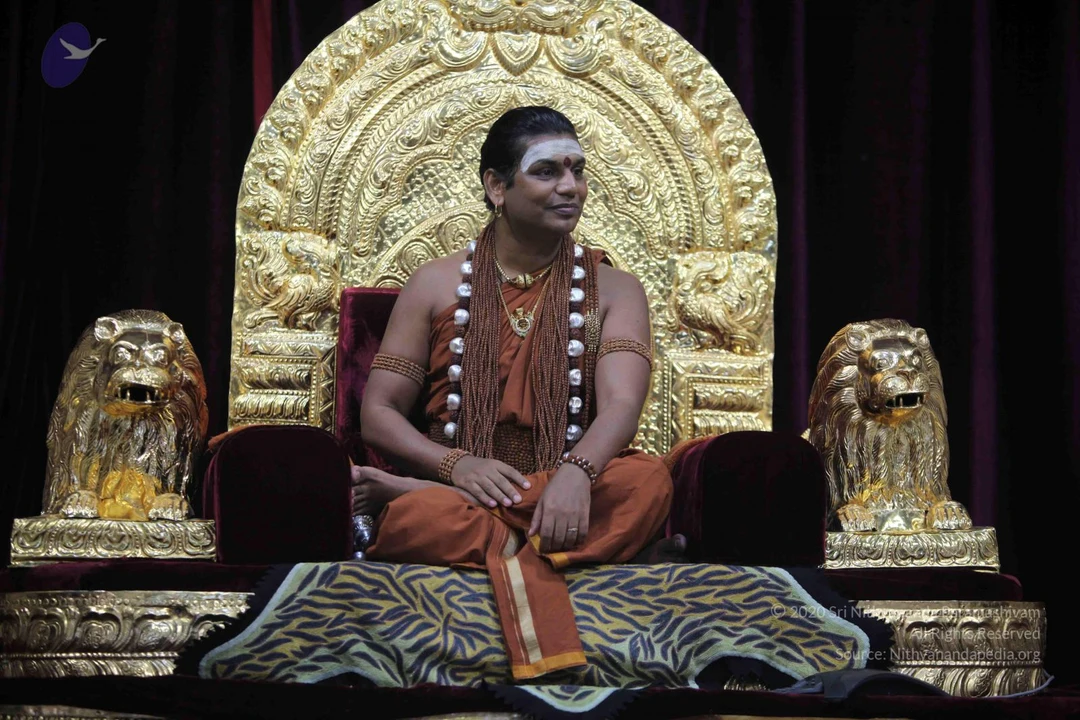
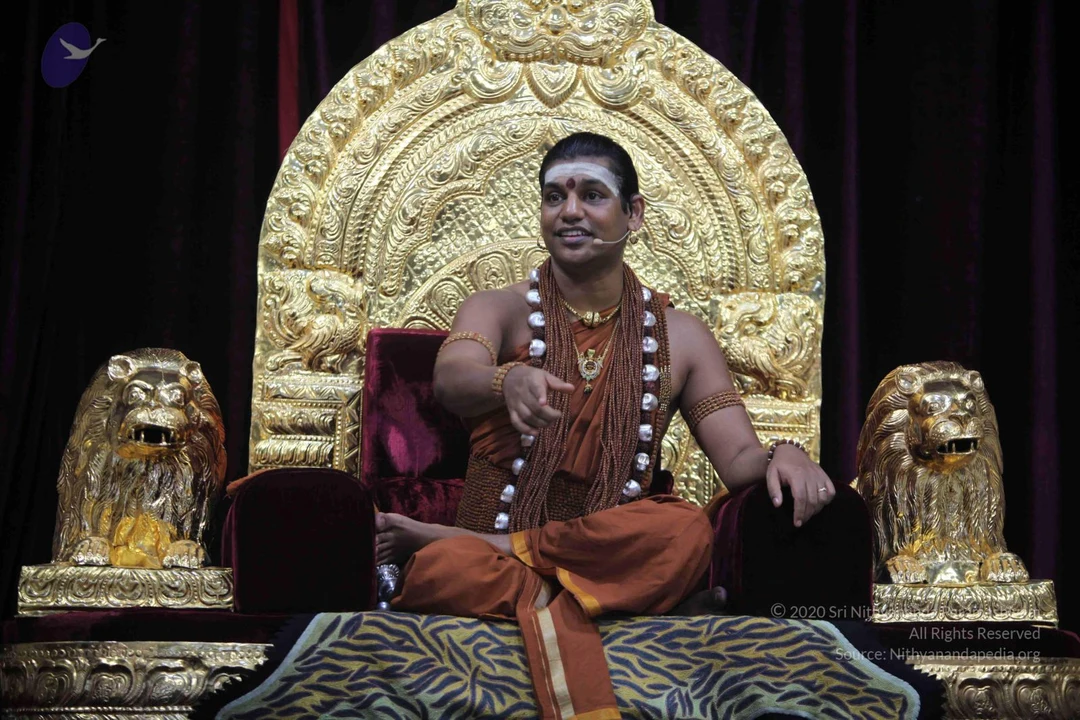
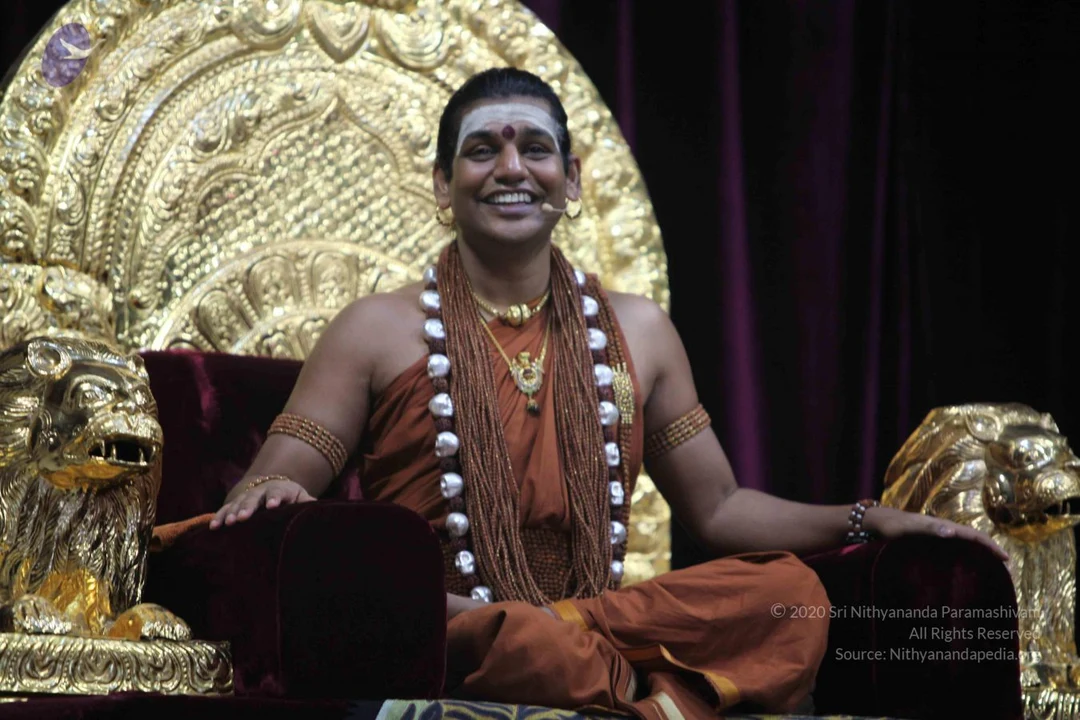
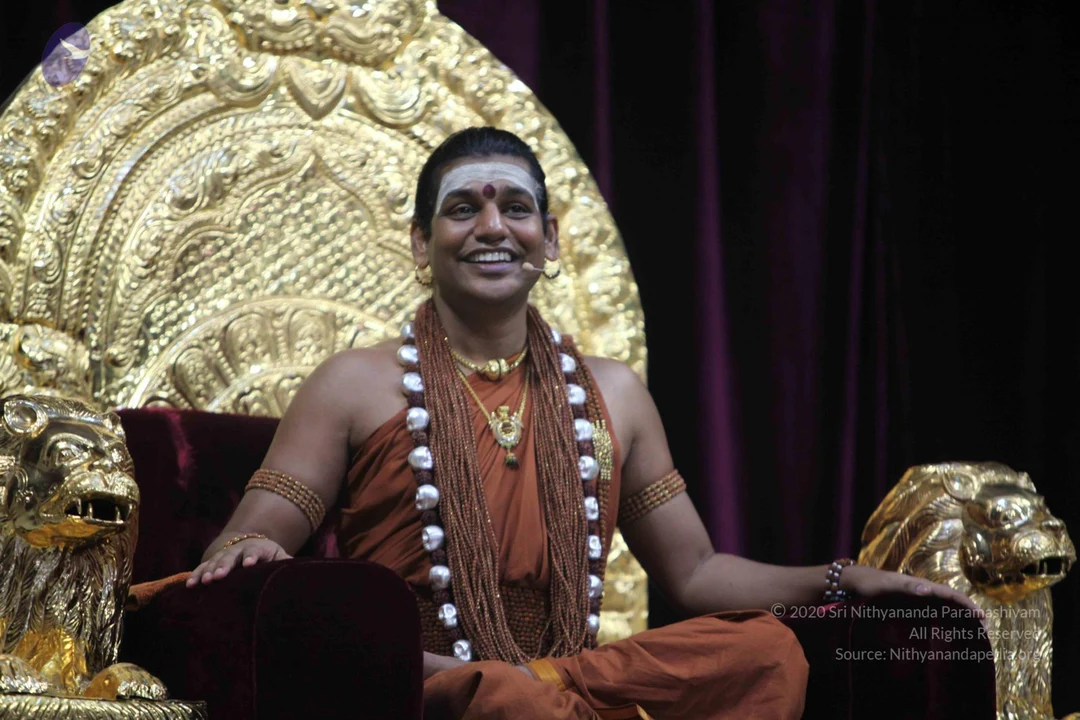
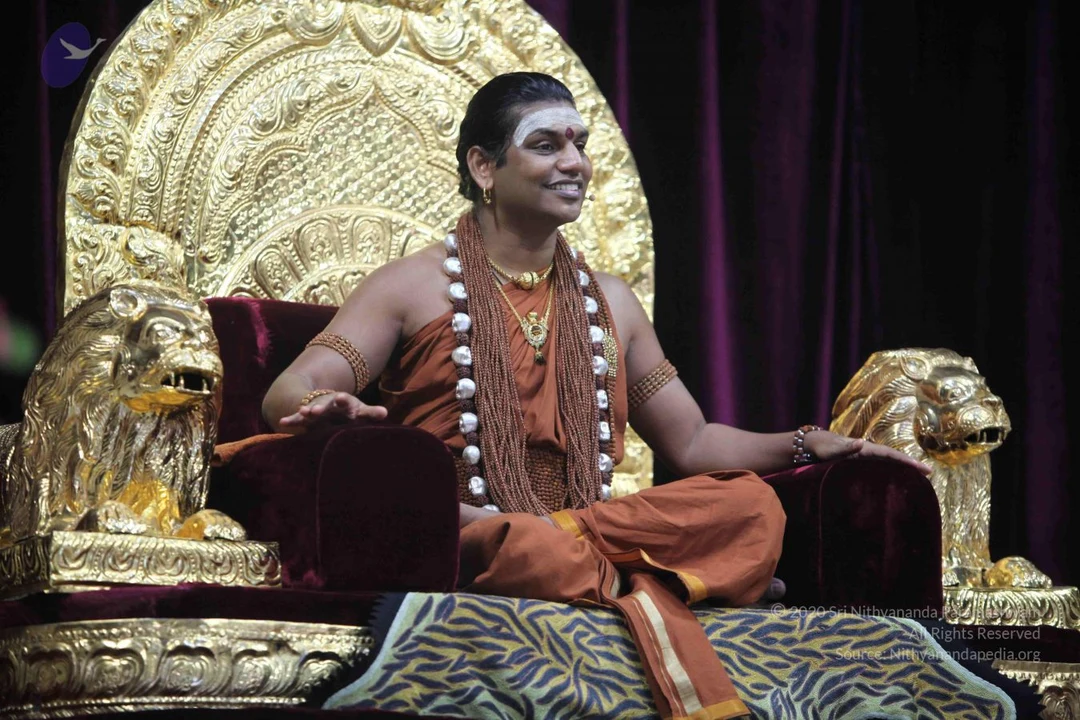
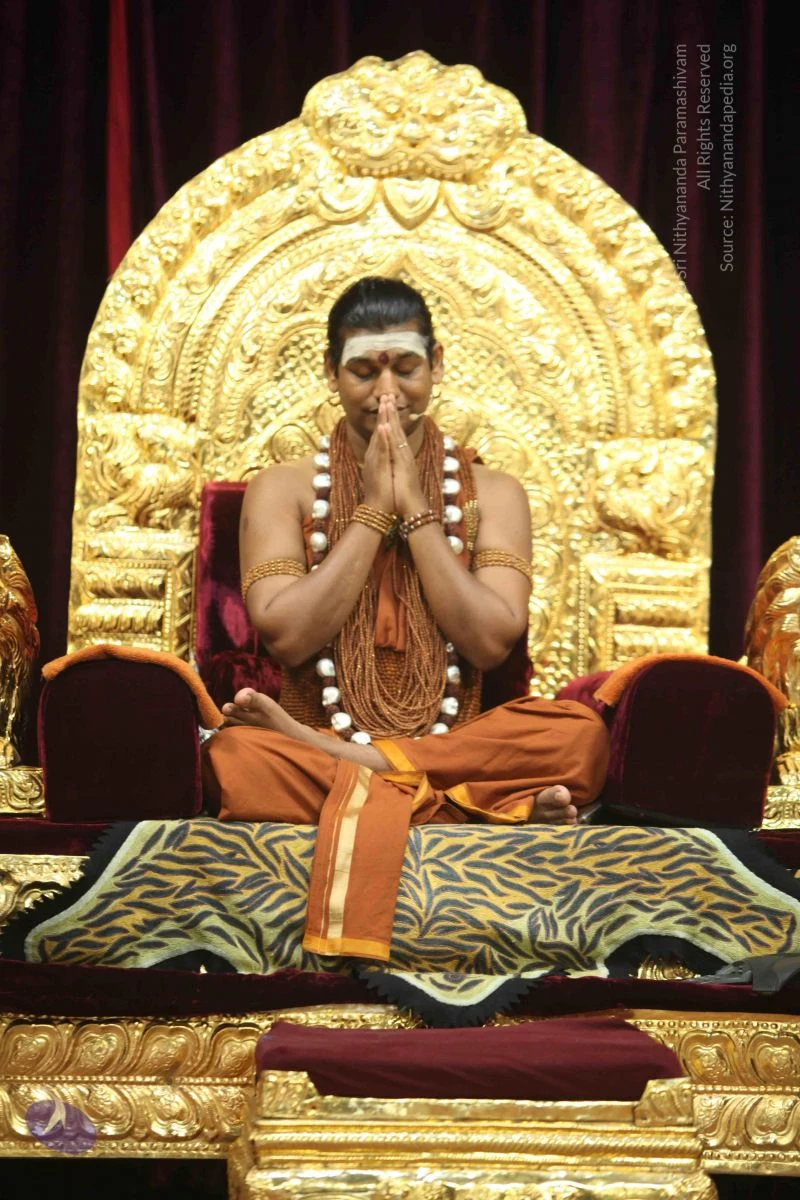
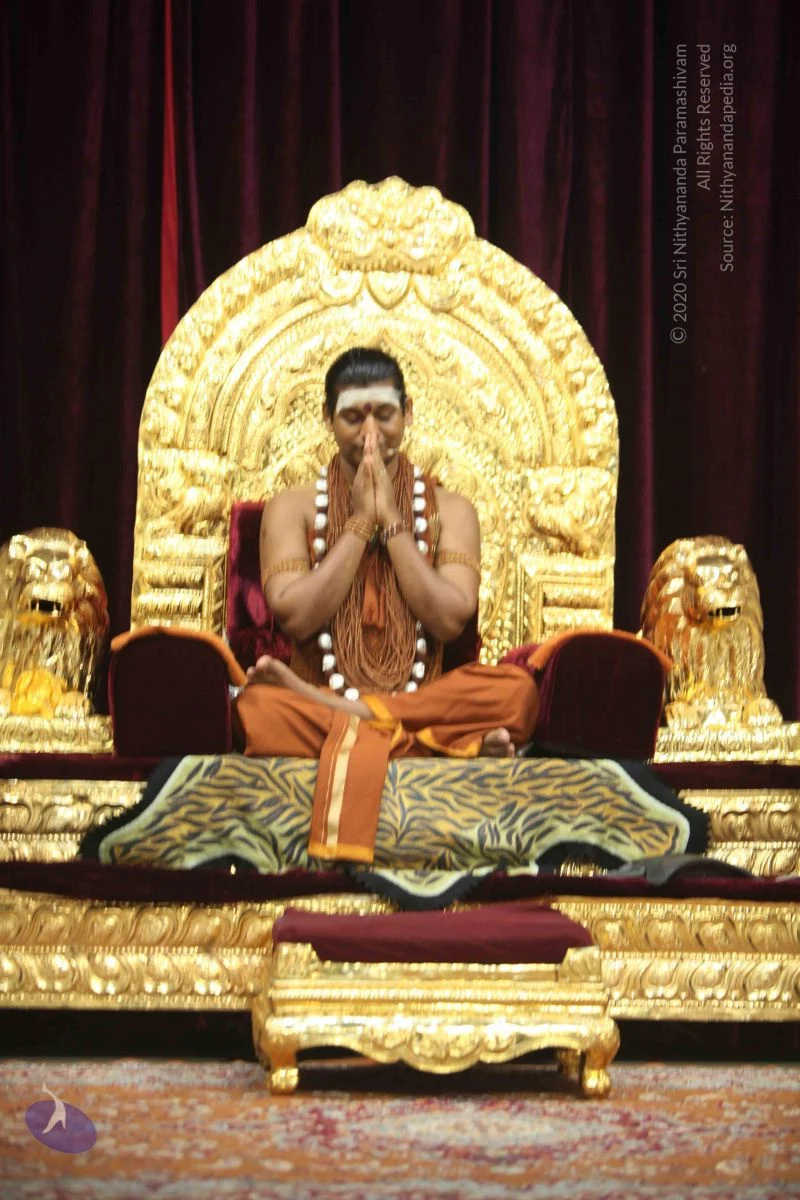
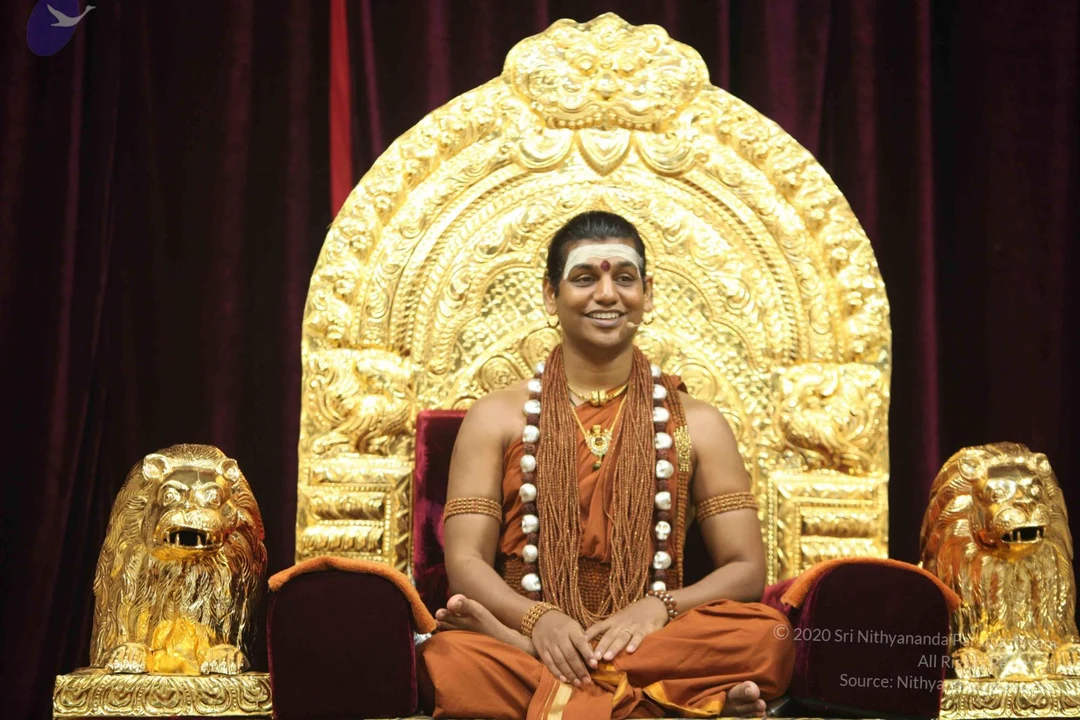
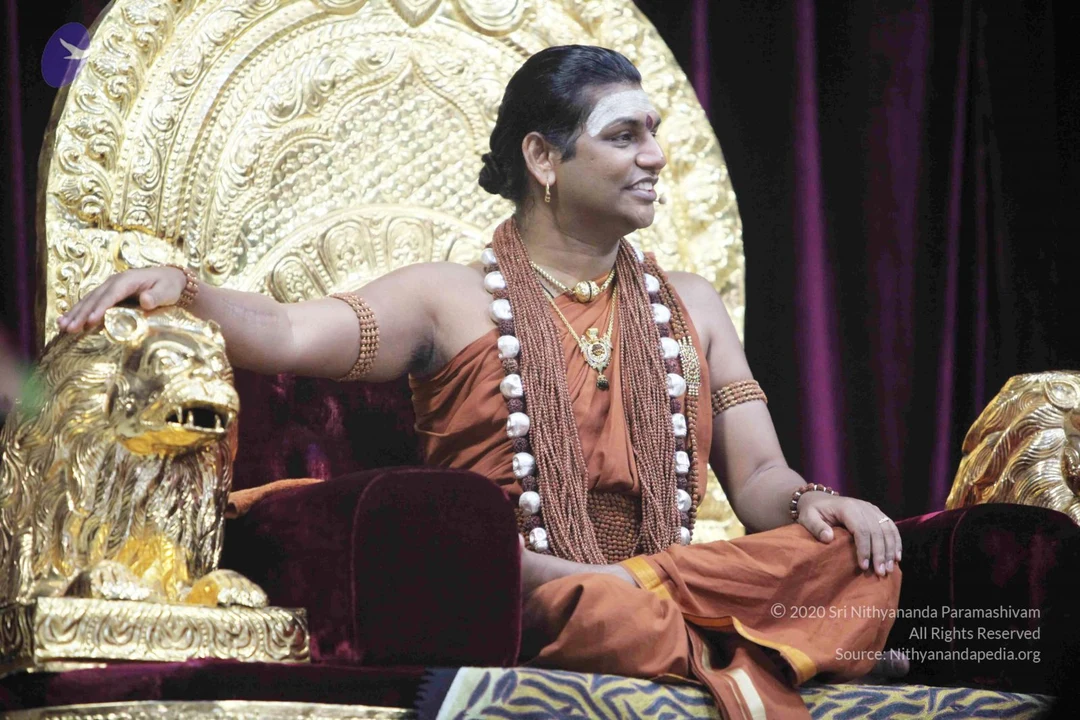
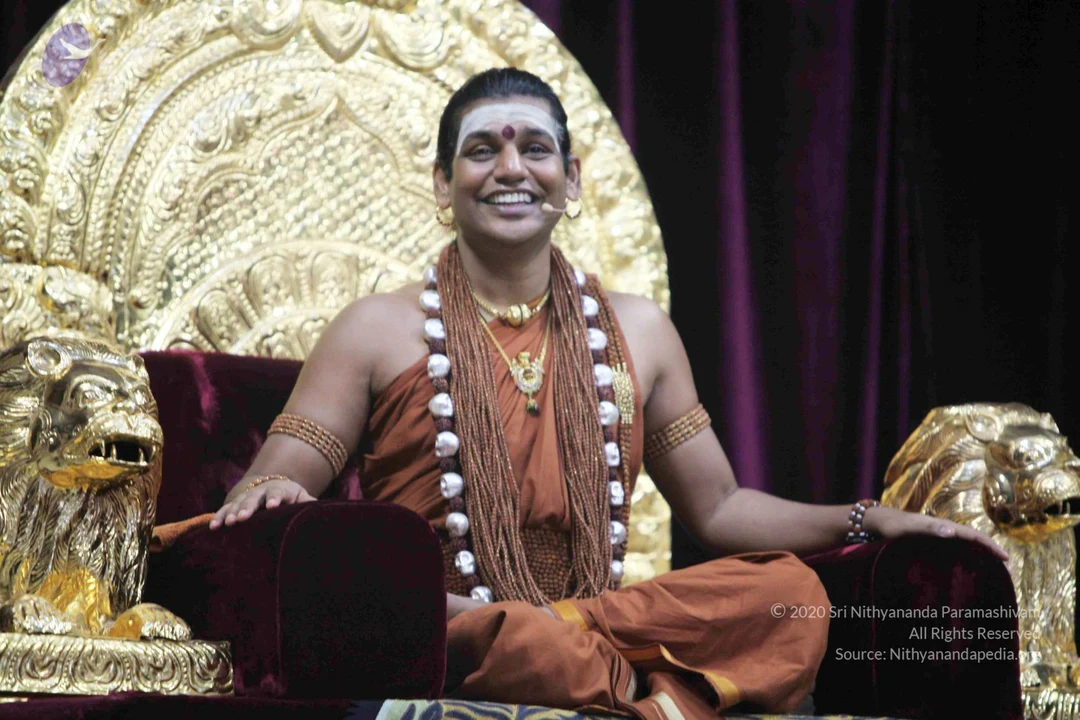
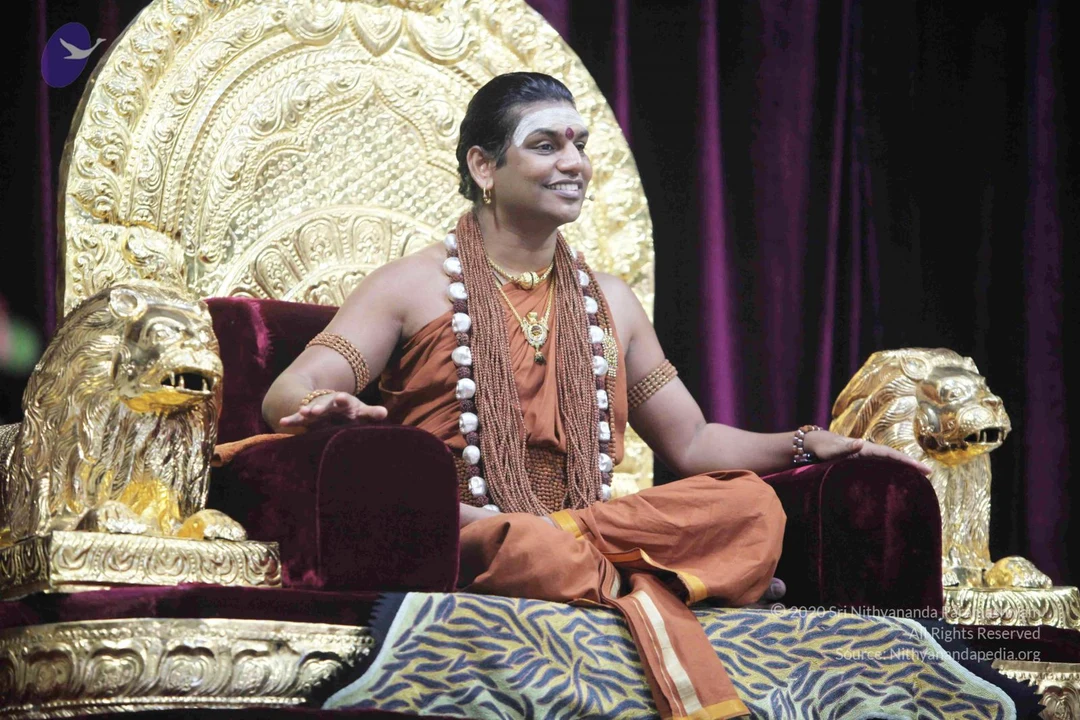
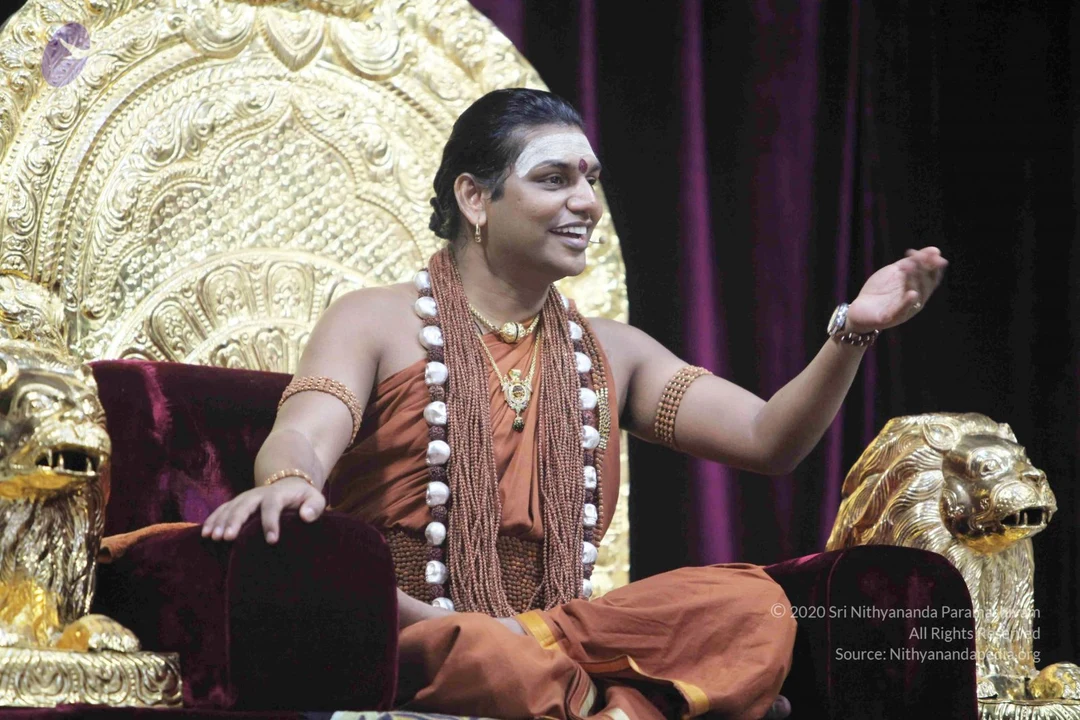
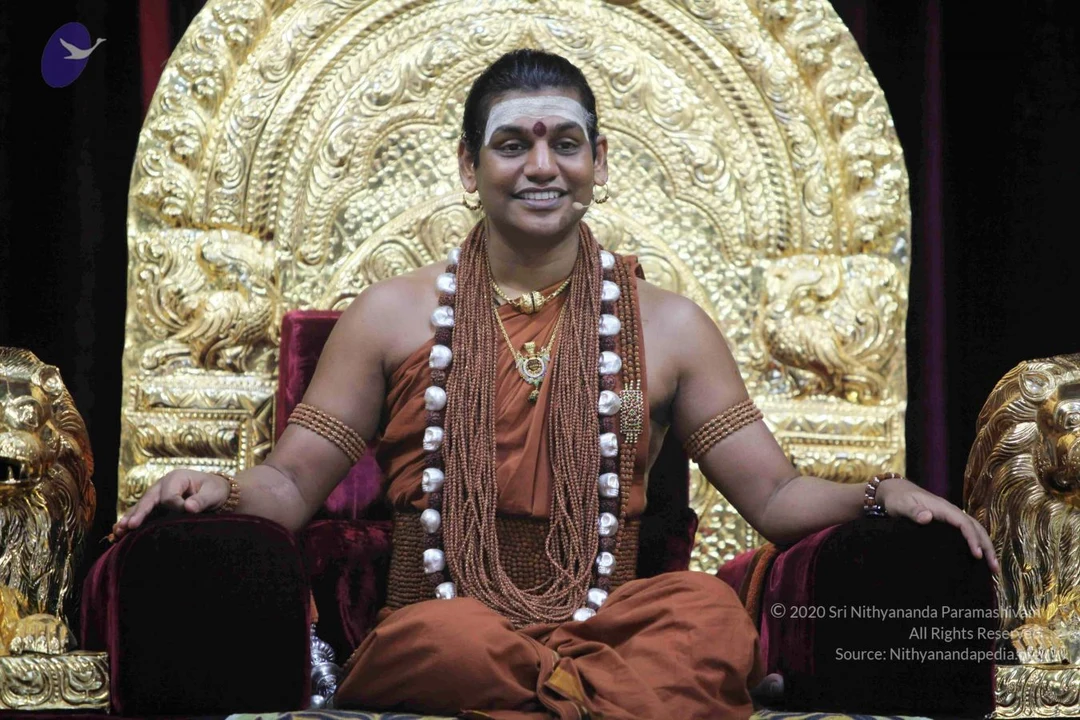
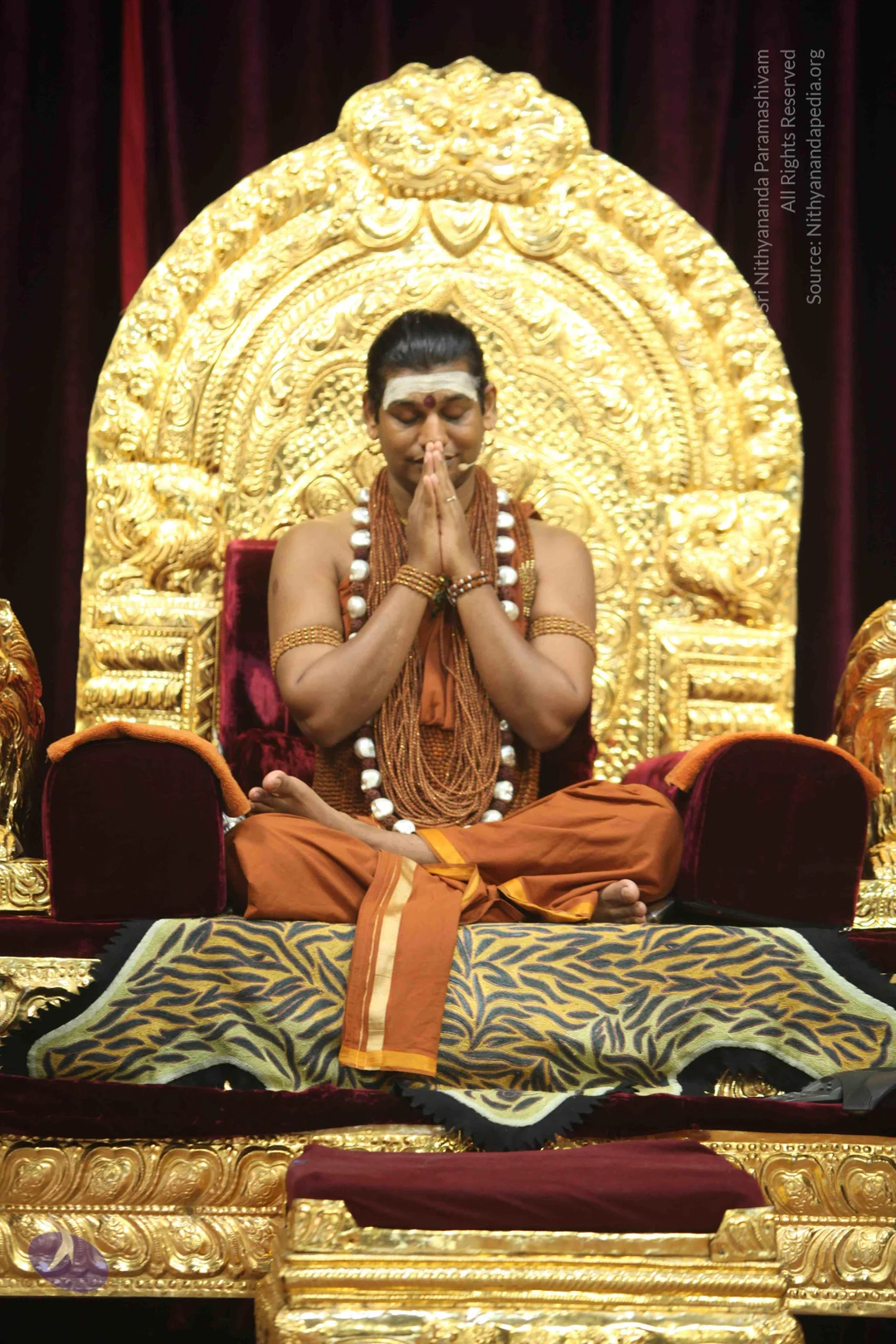
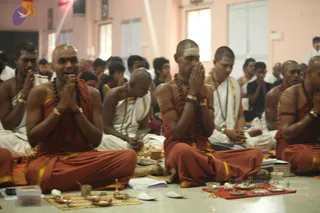
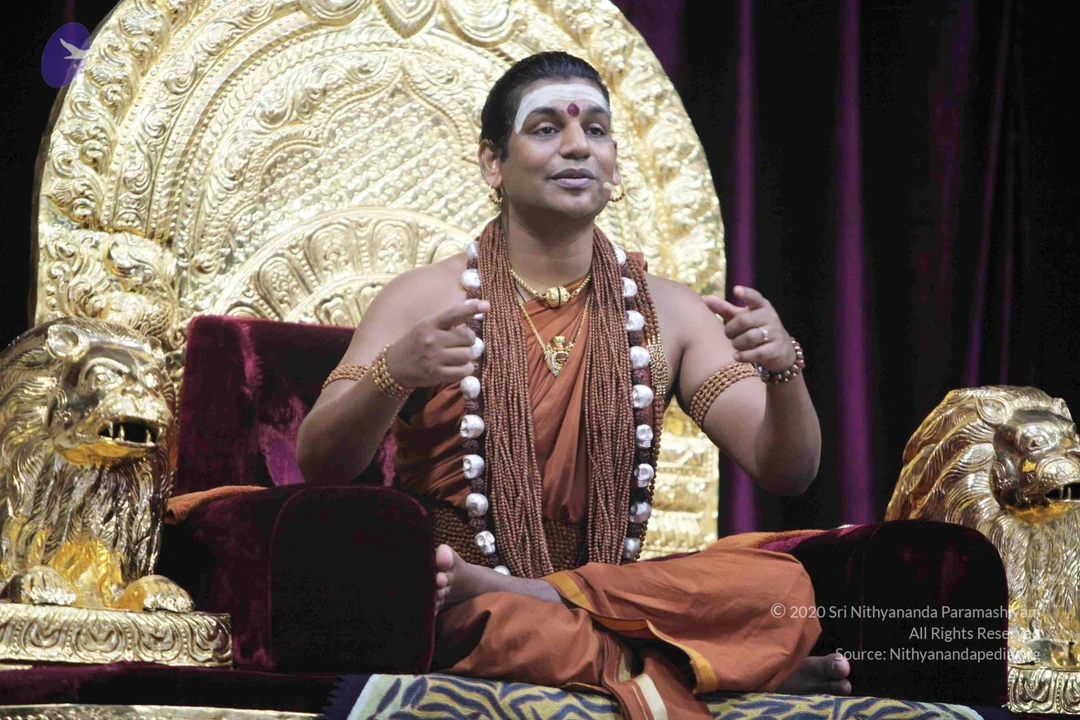
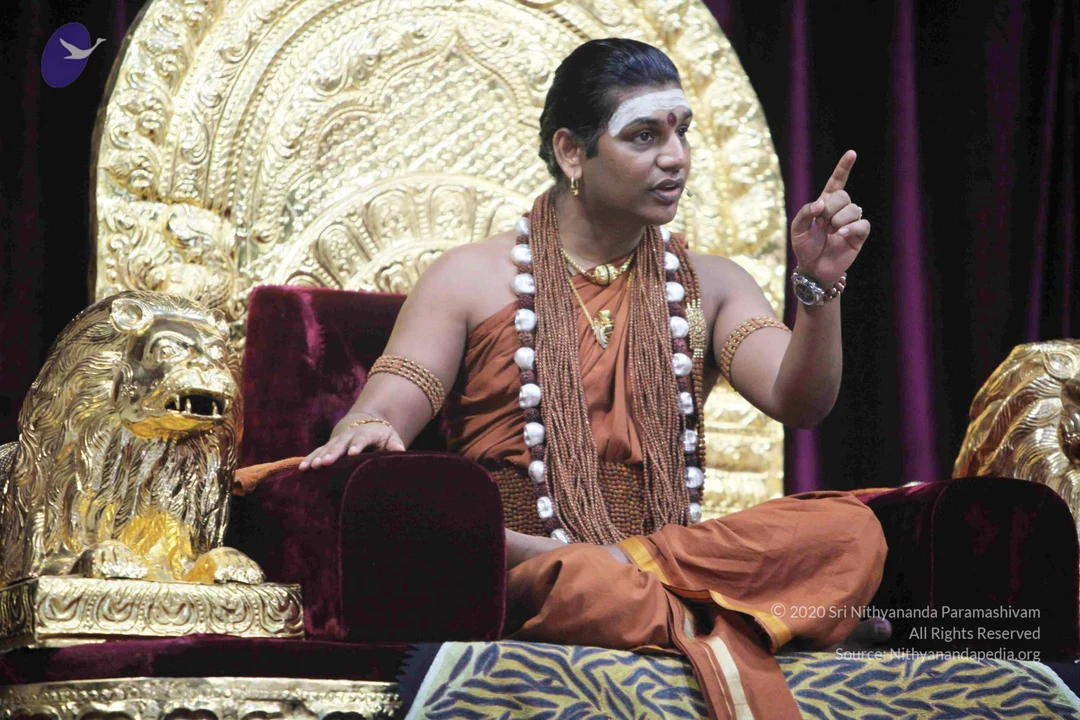
A seated man in saffron-orange robes sits on an ornate gold throne flanked by two gold lion sculptures, with a tiger-striped rug in front. He wears a white forehead band with a red mark, a long rudraksha mala with large beads, and gold necklaces and armbands. He smiles while resting his hands on his knees. The gold throne backdrop and stage setting suggest a formal discourse. a person is seated as the speaker, shown in orange robes, rudraksha mala and ceremonial gold necklaces.A seated man in saffron-orange robes sits on a crimson-cushioned throne in front of an ornate gold-leafed backrest, flanked by gold lion sculptures. He wears a white forehead band with a red bindi, a long rudraksha mala with silver beads, layered gold necklaces with a pendant, and gold armlets. He smiles, one hand raised in a gesture while the other rests on the armrest. Probable Swamiji: the saffron robes, rudraksha mala, gold ornaments and swept-back hair on a throne are consistent with the page's identification, though the appearance is only a candidate cue.A photograph of a seated group of men in a hall performing a ritual with hands joined in anjali mudra. Several front-row men wear saffron-orange dhotis and shawls with gold borders, rudraksha malas, white vibhuti or tilak lines on their foreheads and bare upper bodies with gold bangles. Others wear white dhotis and shawls. Small brass oil lamps, brass bowls, a kalasha-style vessel and offering dishes sit on woven mats and a red cloth in front of them. Behind them, a crowd of seated devotees, some in white and black, watch from a pale pink-walled room with tall windows.A photograph of a seated group of men in a hall performing a devotional ritual with hands folded in anjali mudra. In the centre foreground, a bald man with white forehead markings and a sandalwood-coloured wrap, wearing wooden rudraksha beads on his arms and chest, sits with eyes closed. Beside him, a man in saffron-orange dhoti and shawl with tilak holds his palms together. Others in white dhotis and orange-gold wraps sit around, with brass oil lamps, flowers and small brass vessels on a cloth in front. Plain pink walls and a window are behind them, with a standing man in white at the back.A seated group of devotees in a large hall with hands folded in anjali mudra. In the foreground, several men in saffron-orange robes with yellow borders sit with rudraksha malas around their necks and white tilak markings on their foreheads and arms. Behind them, others in white dhotis and bare chests sit in meditation, and boys in maroon and dark clothes press their palms together. Brass puja vessels, a small bowl and a pale cloth sit on the mat before them.A seated group of women in a bright hall sits on the floor with palms pressed together in namaskar. Most wear orange, rust and maroon saris with gold borders, with rudraksha malas and bangles. Brass puja plates with small oil lamps, flowers and a small bronze deity murti sit on orange cloths in the foreground. Behind them, more participants sit in white and cream saris, and an older woman with white hair wears white.

SARVA-DARSHAN
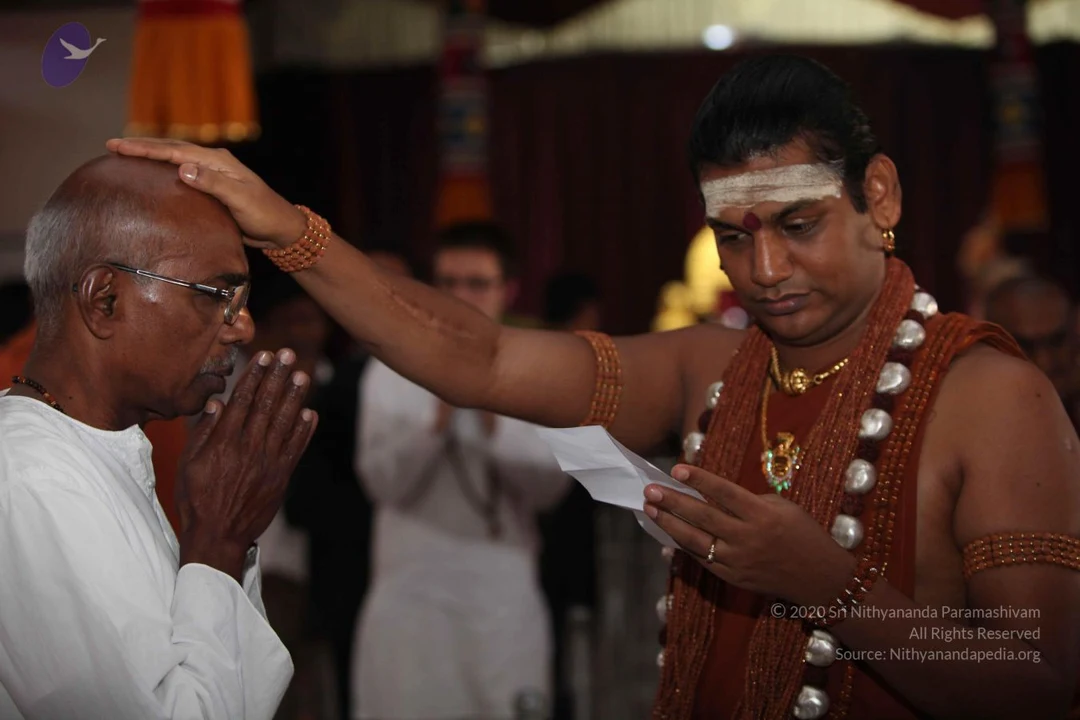
7 photosSource gallery
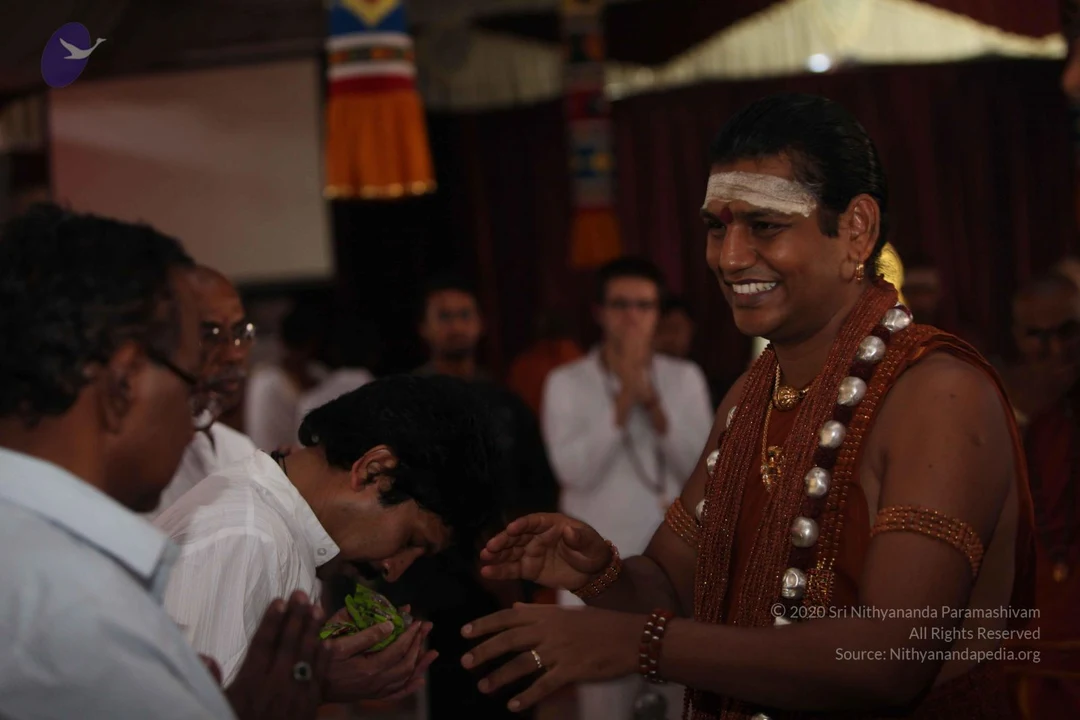
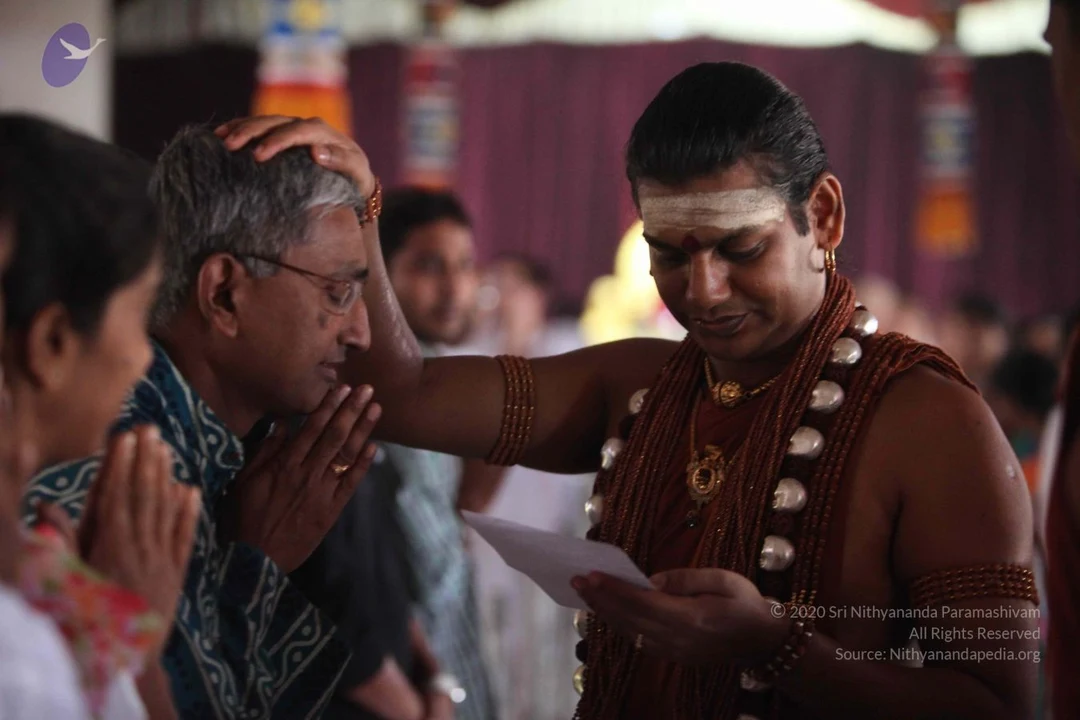
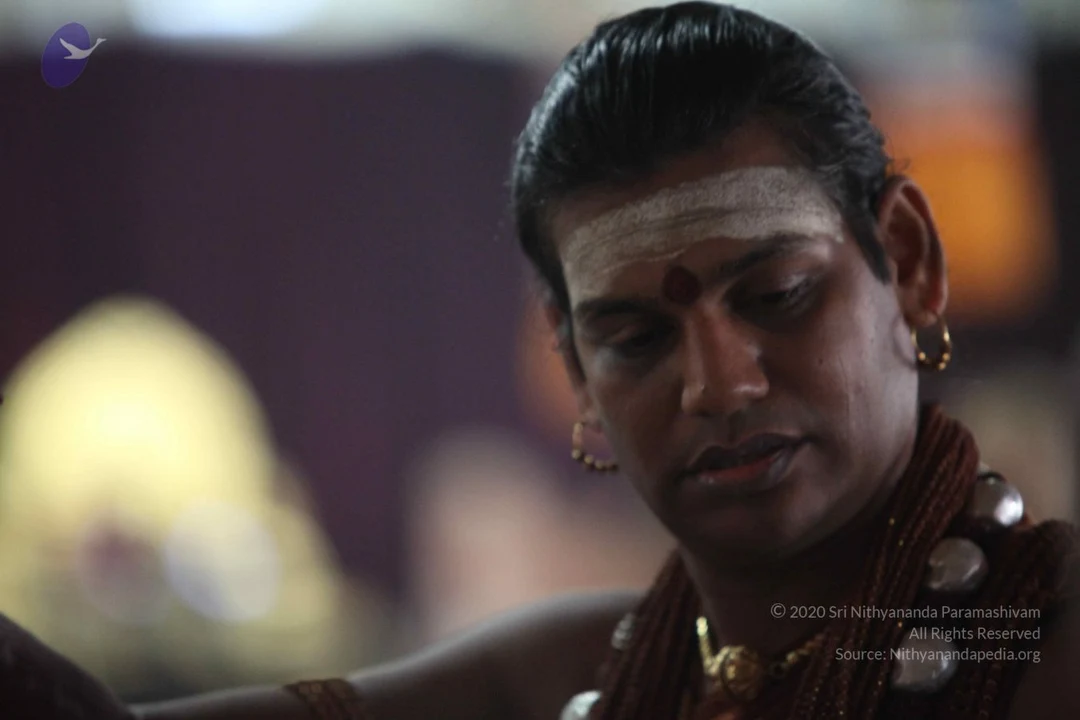
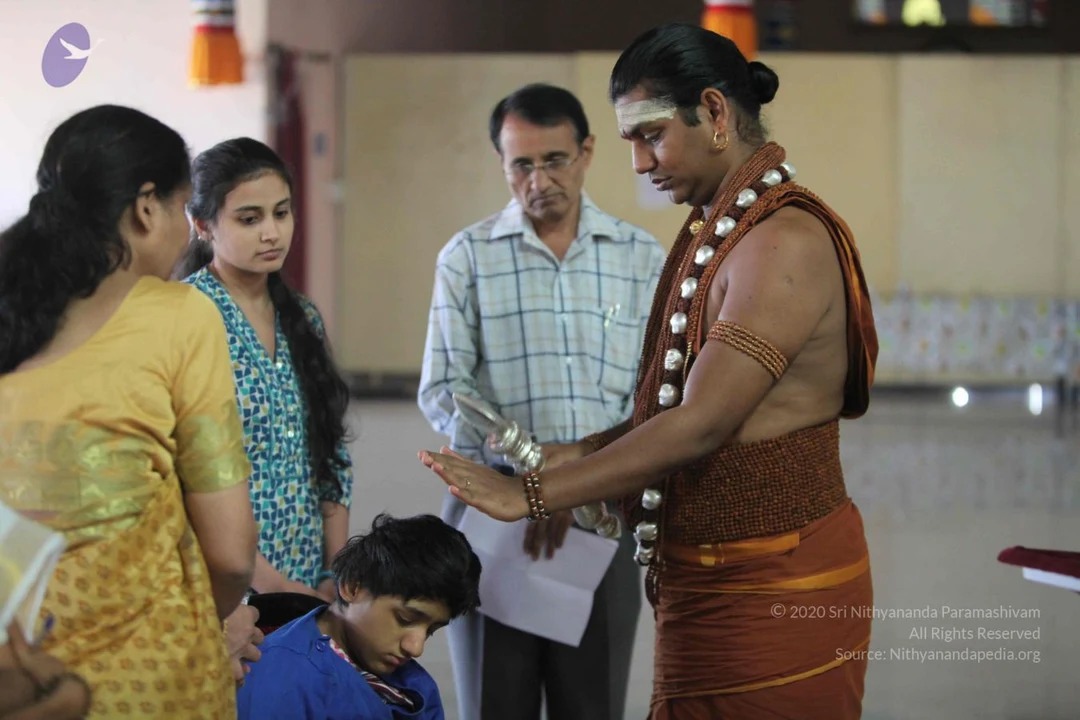
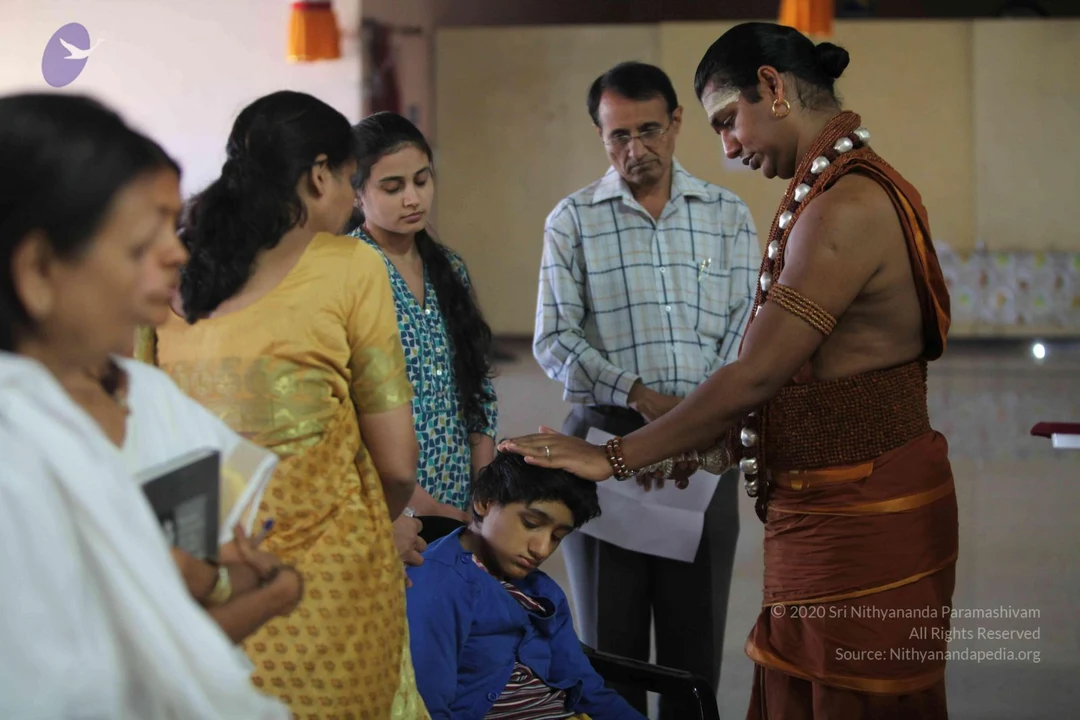
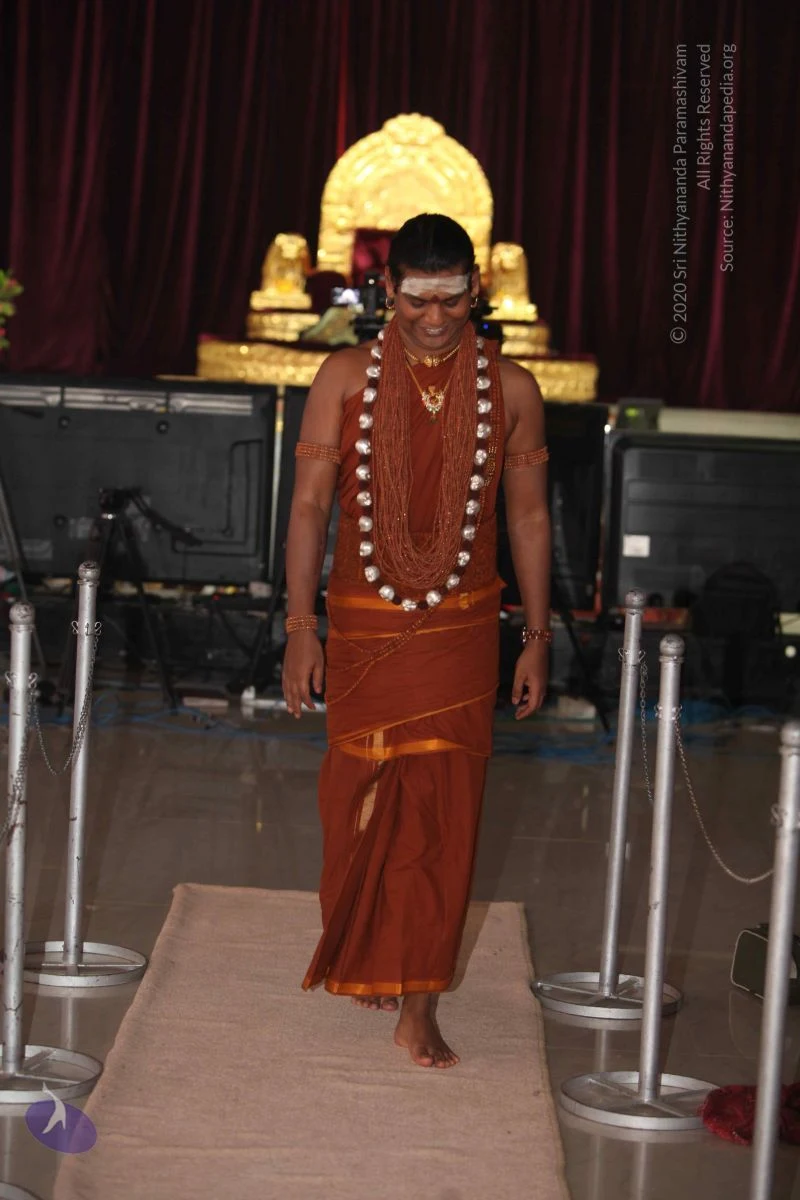
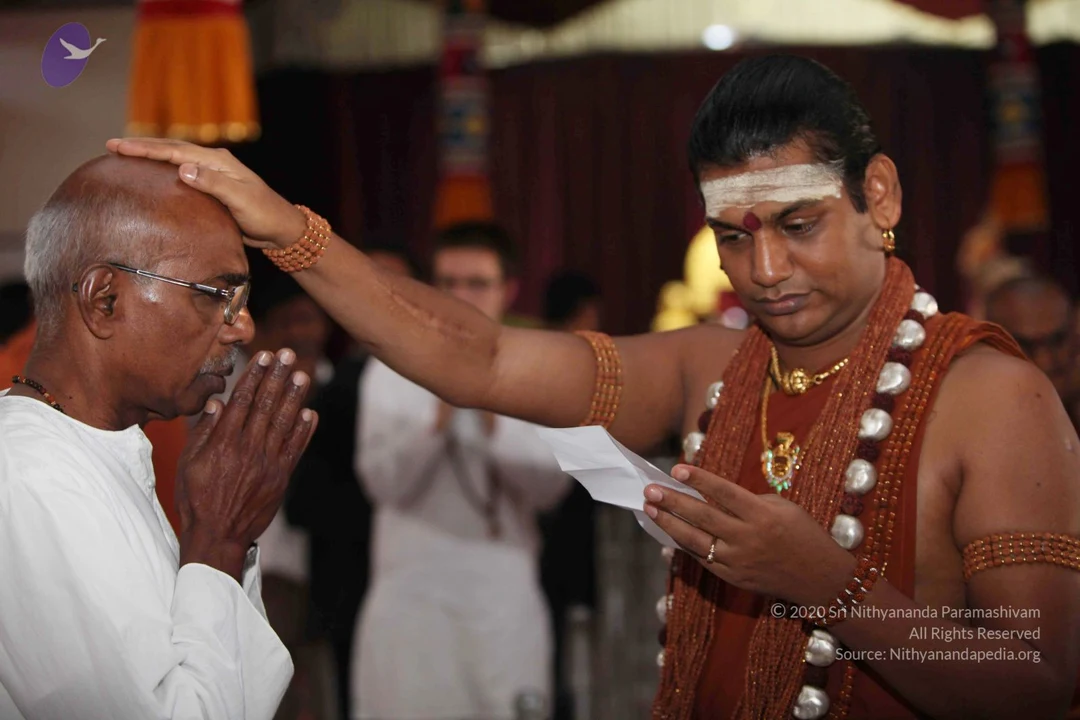
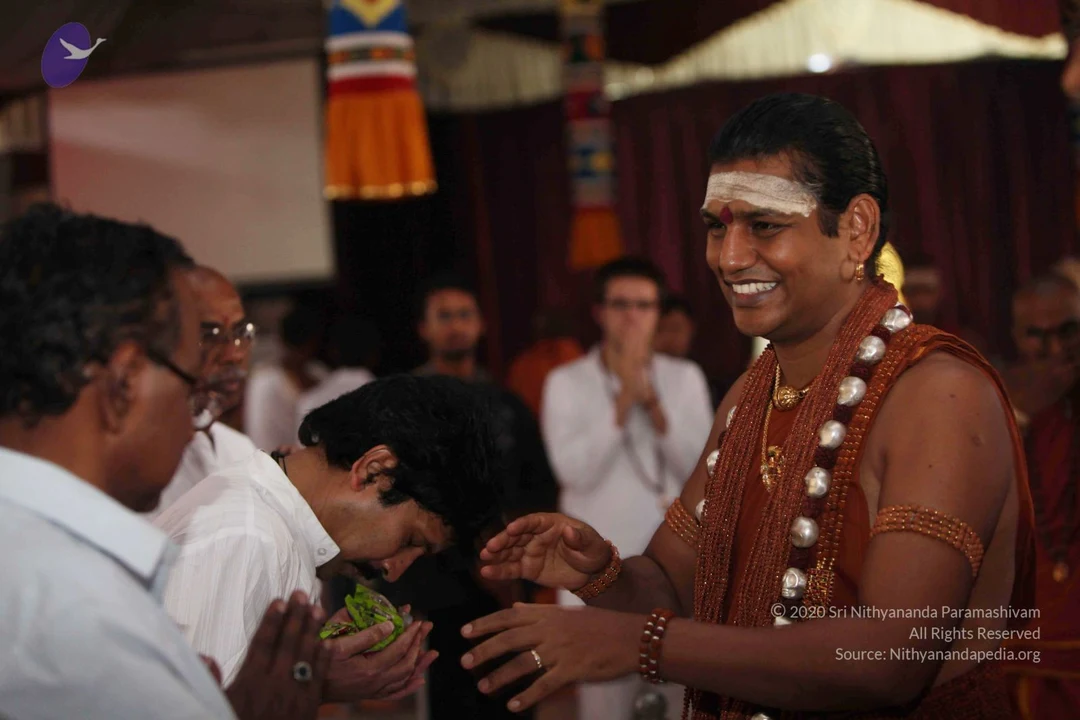
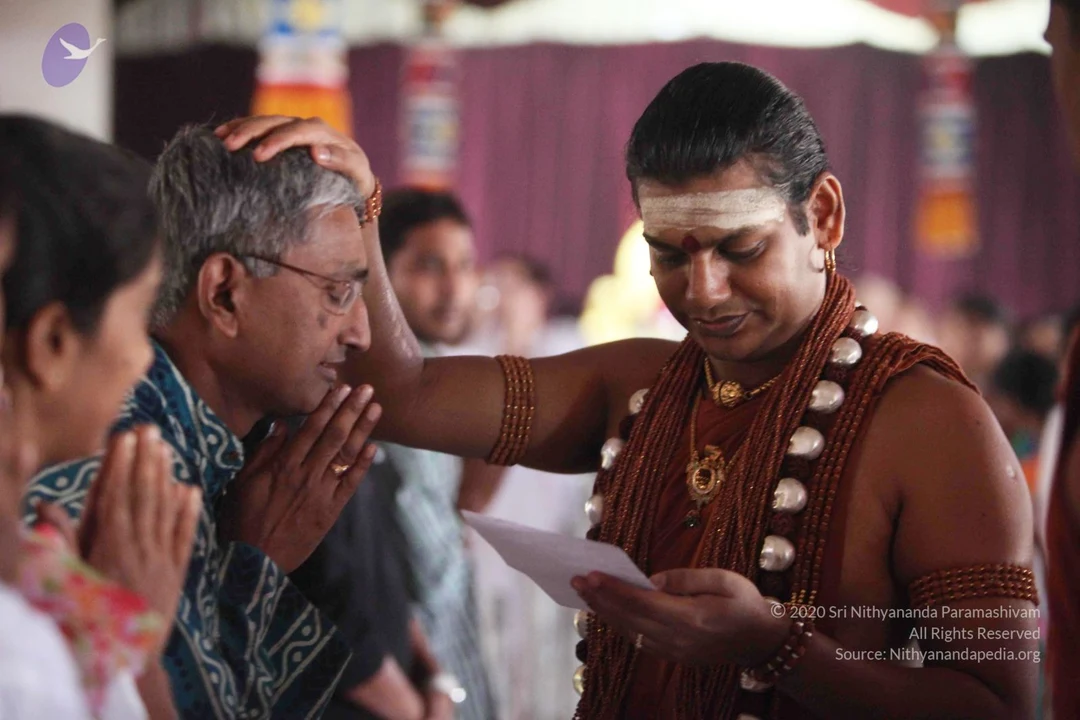
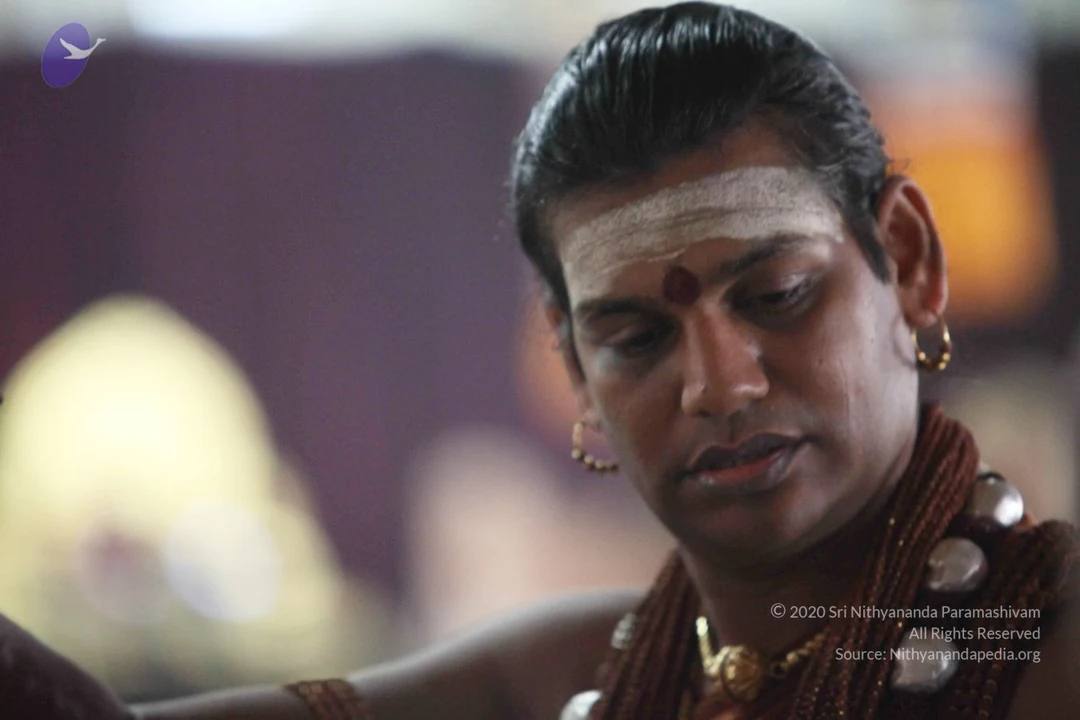
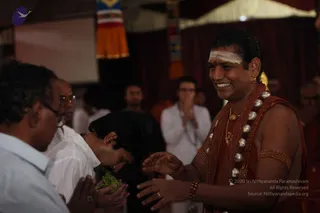
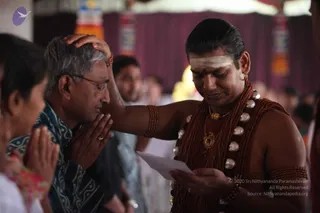
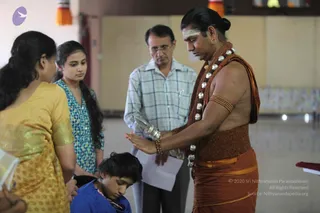
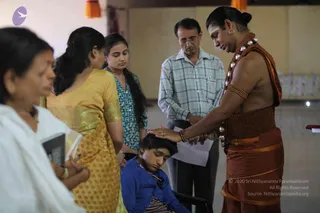
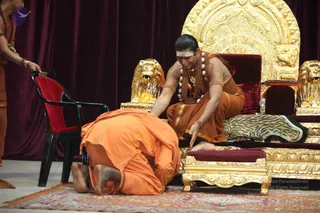
A smiling man with swept-back dark hair and a white vibhuti band on his forehead wears a saffron-orange garment with a red-brown shawl, a rudraksha mala with large pale beads, a gold necklace and bangles. He reaches out his hand toward a devotee in a white shirt who bows forward with palms and an offering of green leaves. Other devotees stand behind, one in white with hands folded in namaste, beneath an orange and cream draped canopy and dark red drapes. The man in saffron has distinctive long swept hair, rudraksha and gold adornments, consistent with the page's a person reference, a probable depiction of a person in person; the bowing devotee receives blessing in a satsang setting.A photograph of a bare-chested man with a white horizontal tilak across his forehead and a red dot between his brows, wearing multiple strands of rudraksha beads with large pearl-like beads, a gold pendant and gold necklace, gold earring and beaded armlets. He holds a folded white paper in one hand and places his other hand on the head of a grey-haired man with glasses, who wears a blue-and-white patterned shirt and kneels with palms pressed together in namaskar. Beside them a woman in a white garment with folded hands is visible at the left edge, and blurred devotees stand in the background before maroon drapes. Visible cues include the rudraksha malas, gold ornaments and bare-chested presentation. Two physical people are clearly visible plus a few blurred background people.Close-up photograph of a man with swept-back dark hair, white sandalwood-style vertical marks and a red bindi on his forehead, gold earrings, and multiple strands of rudraksha-style beads with large bead accents around his neck. He looks downward, lips closed, in a dimly lit setting with warm blurred lights behind him.A photograph of an indoor hall with a light beige wall and a bare floor. A bare-chested man with his hair tied in a bun and white vibhuti lines on his forehead holds his right palm outward toward a seated boy in a blue shirt who bows his head. He wears a long rudraksha-style bead necklace with white beads, a beaded waist band, an orange-saffron dhoti and a gold armlet. Beside him, a man in a checked light blue shirt and glasses holds a folded white paper and a small silver vessel. Two women stand on the left: one in a yellow saree and one in a blue-green patterned kurta with a long braid. The gesture suggests a blessing or energy healing moment.A photograph of a healing or blessing moment indoors. A bare-chested man in an orange-brown dhoti and wrap with a rudraksha mala and bead necklaces places his right palm on the head of a seated boy in a blue jacket who has his eyes closed. A probable Swamiji is shown with long swept-back hair, a tripundra forehead marking, gold earrings and a rudraksha mala, matching the page's reference. Around them, a woman in a yellow sari holds a book, a young woman in a blue-green kurta stands with her head bowed, a man in a checked shirt looks on, and an older woman in white holds a booklet at the left edge. A white paper is held near the man's hand. Total physical people visible: five to six.A seated man on an ornate gold throne with lion-head armrests and a tiger-stripe cloth draped over the seat. He wears an orange-brown dhoti, a shawl, a rudraksha mala with ceremonial gold necklaces, bangles and a white tilak on his forehead, with long swept-back hair; his bare feet rest on a gold footstool. He reaches out and touches a kneeling figure in orange robes who prostrates before the throne on a patterned rug. A standing attendant in orange and a red chair stand at the left edge, with a crimson velvet curtain behind.

THONDAIMANDALA-ADHHENAM-VISITS-BIDADI-ADIKAILASA

44 photosSource gallery
A dusty open yard beside an orange-painted building with a dark doorway and a parked black scooter. Several trees with sparse foliage stand across the dirt ground, and a low dry-stone wall runs along the back under bushes and trees. No people are visible, and no a person candidate appears in the scene.A close outdoor photograph of several tall yellow and green striped sugarcane stalks standing upright on dry brown soil, scattered with dry leaves and small sprouts at their base. Thin wrapping bands encircle the stalks at intervals. Shaded ground and a patch of water and green foliage appear in the background. No people or ritual activity are visible.A polished brass kalasha pot stands on a round brass tray filled with white grains, decorated with a mango-leaf bundle topped by a yellow tassel and white and orange flowers. Marigold and other flower garlands in white, yellow, magenta and purple lie on the table beside it, with orange and white flowers scattered on the tray. Behind are a whitewashed wall with red stripes and green foliage. No people are visible, and the image shows a ritual kalasha arrangement rather than an identifiable event.Close-up photograph of a brass kalasha pot filled with fresh green mango leaves, orange and white flowers, and a conical mound of yellow turmeric-coloured material on top. The pot has a beaded rim. The blurred background shows white and orange figures and structures. No people are visible.A dusty dirt road runs between an orange-red boundary wall on the left and palm trees on the right, leading toward a tall rusted steel lattice frame holding a large empty billboard panel. Two small green-roofed gatehouses with an open green gate stand beside the wall. Three people are visible on the road: one in a white shirt and dark trousers, another in a light shirt, and a figure in orange robes near the gate. Stone blocks and a few plastic chairs sit on the right, under a clear blue sky.A photograph of a car being welcomed outside an ashram on a sunny day with palm trees and a stone sculpture in the background. A bare-chested man in white dhoti with rudraksha mala and white sacred ash markings on his arms stands at left holding a long wooden staff. Beside him a monk in saffron robes holds a brass plate with a kalasha-style vessel, flowers and a yellow offering. A second person in saffron stands inside the open car door at right. a person's presence cannot be established from appearance here, so no candidate is named.

Morning Satsang

81 photosSource gallery
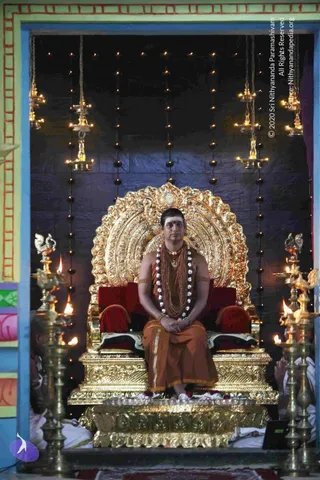
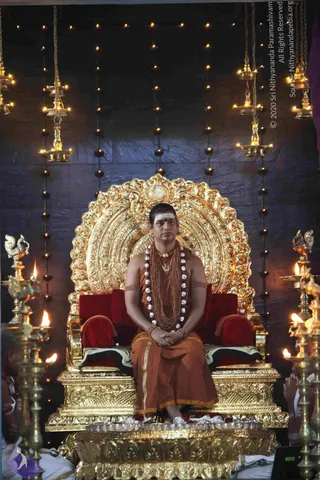
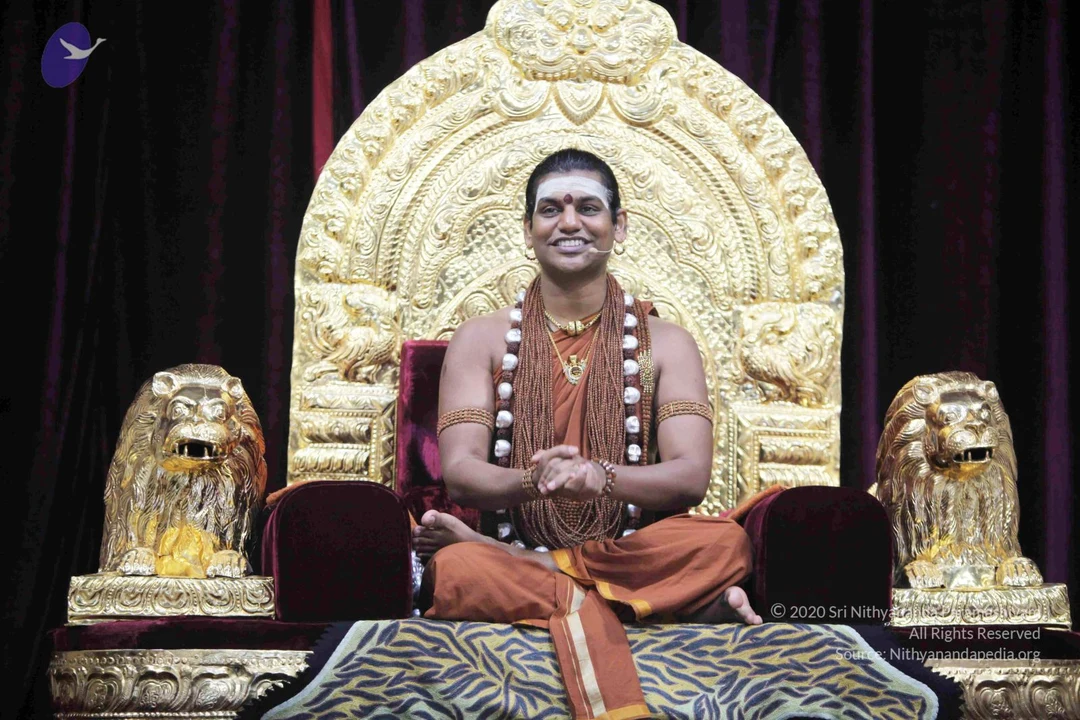
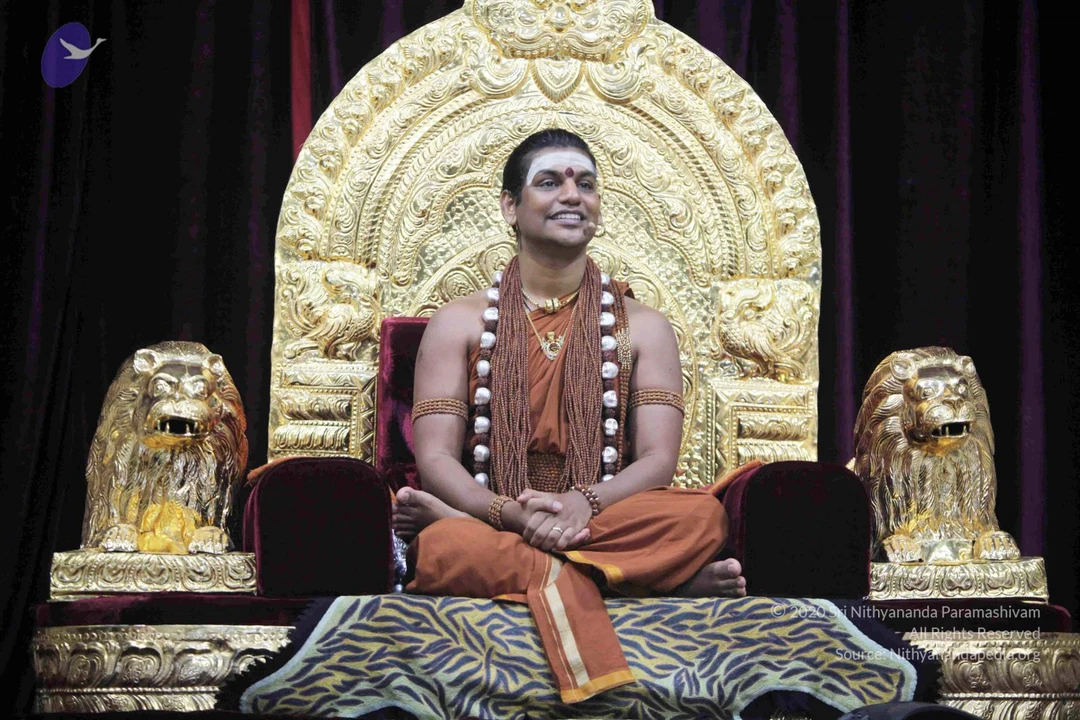
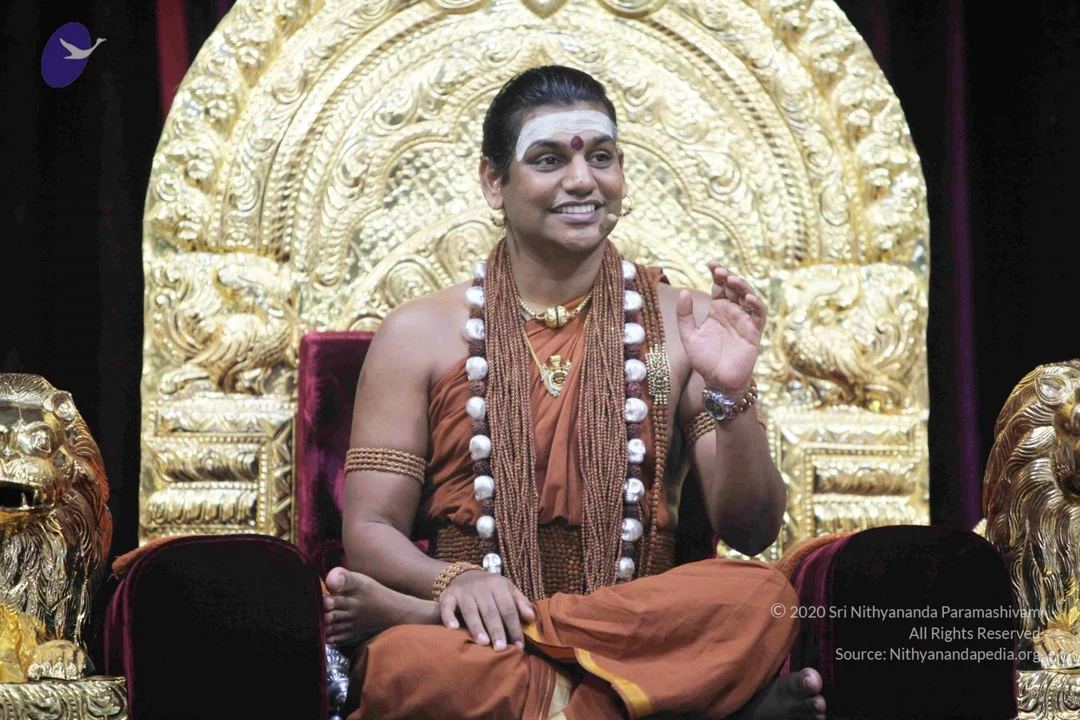
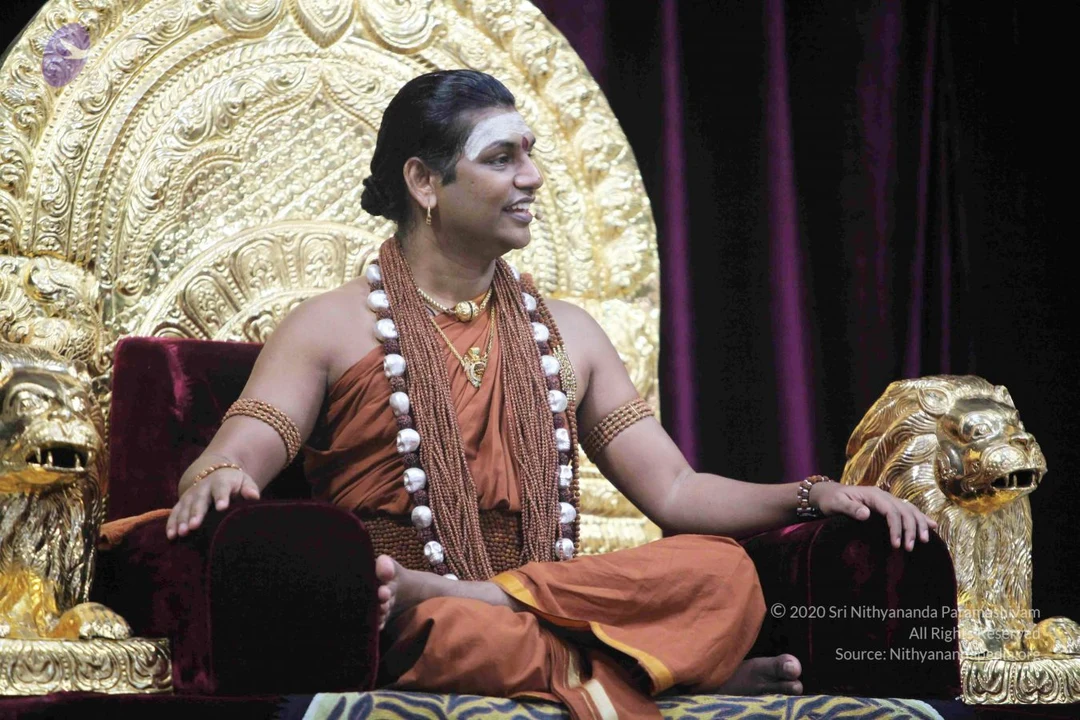
A seated man in orange-saffron dhoti and shawl sits upright on an ornate gilded throne with a large repoussé halo-style back, red cushions and a gold base. He wears a thick rudraksha mala, a white flower-and-bead garland, gold armbands and a tilak on his forehead, hands folded in his lap. Behind him a dark stone-panelled wall is hung with strings of black beads, and several brass oil lamps with lit wicks flank the throne. Brass kuthuvilakku-style lamps stand at both sides, and a gilded peetha base holds scattered petals. A photograph of an in-person seated figure on a throne during a satsang setting; the page identifies the event as a satsang.A man seated on an ornate gold throne with a large gold arched backrest and red velvet cushions, centre frame, in front of a dark stone wall hung with strings of dark beads and gold hanging lamps. He wears an orange-saffron dhoti and shawl, a rudraksha mala with white beads, layered gold necklaces and gold armbands, with white and red tilak on his forehead. His hands are folded in his lap and his feet are bare on a gold pedestal. Brass oil lamps with lit flames stand on both sides, and at the lower right edge hands are folded in namaskar among seated devotees in white. a person in saffron robes, rudraksha mala and gold ornaments on a peetha; the throne and setting suggest a satsang or darshan.A seated man on an ornate gold throne with a red velvet cushion, centred under a row of hanging brass oil lamps with lit flames and a dark wall strung with rudraksha beads. He wears a rust-orange dhoti and matching shawl, a multi-strand rudraksha mala, a white flower garland, gold bangles and a gold pendant, with a red tilak on his forehead. Brass lamps flank the throne and offerings of flowers and fruit sit on a gold pedestal. Two white-clad attendants or priests are partly visible at the edges. The throne and dress cues are consistent with the page's reference to a person, so the figure is an appearance-based a person in a satsang setting.Photograph of an ornate temple hall facing a golden throne set in an arched doorway. A man in a rust-orange robe and a white rudraksha mala sits cross-legged on a gold-and-red cushioned seat, with a large golden halo behind him. Two painted dvarapala guardian figures with multiple arms and flame crowns stand on either side, holding tridents and maces. Brass oil lamps burn on the white floor beside the throne. A seated man in white dhoti with a sacred thread writes on a sheet of paper at the lower left, and another attendant in white sits near the throne. Hanging brass ornaments decorate the doorway. Colourful pink, green and yellow walls frame the scene. The man on the throne is an appearance-based a person candidate with a rudraksha mala and ochre robe; the white-clad attendants are priests or staff.A seated man sits on an ornate gold throne with a red-cushioned seat and carved gold backrest, flanked by brass oil lamps with flames and lotus-style finials. He wears an orange-saffron robe with a gold border, several rudraksha malas, a white bead garland and a gold necklace, with bangles on his wrists and a sandalwood-style tilak on his forehead. He sits with hands folded in his lap, smiling. A dark wooden wall and yellow-green painted panels frame the scene, with a partial figure visible at the lower left edge. The swami cues are distinctive (saffron robe, layered malas, ceremonial gold, throne), so this is an appearance-based a person seated in person.A seated man in an ornate gilded throne with a tall golden arched backrest and red velvet cushions, palms pressed together in namaskar with eyes closed. He wears an orange-saffron dhoti with a gold border, a gold-coloured layered rudraksha-style mala and white bead necklace, gold armbands and bangles, and has a white-and-red forehead mark. Brass oil lamps (kuthu vilakku) with lit flames stand on both sides and hang from the ceiling against a dark stone wall with bead strands. A small offering tray with flower petals sits before the throne, and partially visible devotees with folded hands are at the right edge. The seated figure is a probable match for a person based on the saffron clothing, rudraksha mala and ornate gold adornments.
VIP

2 photosSource gallery
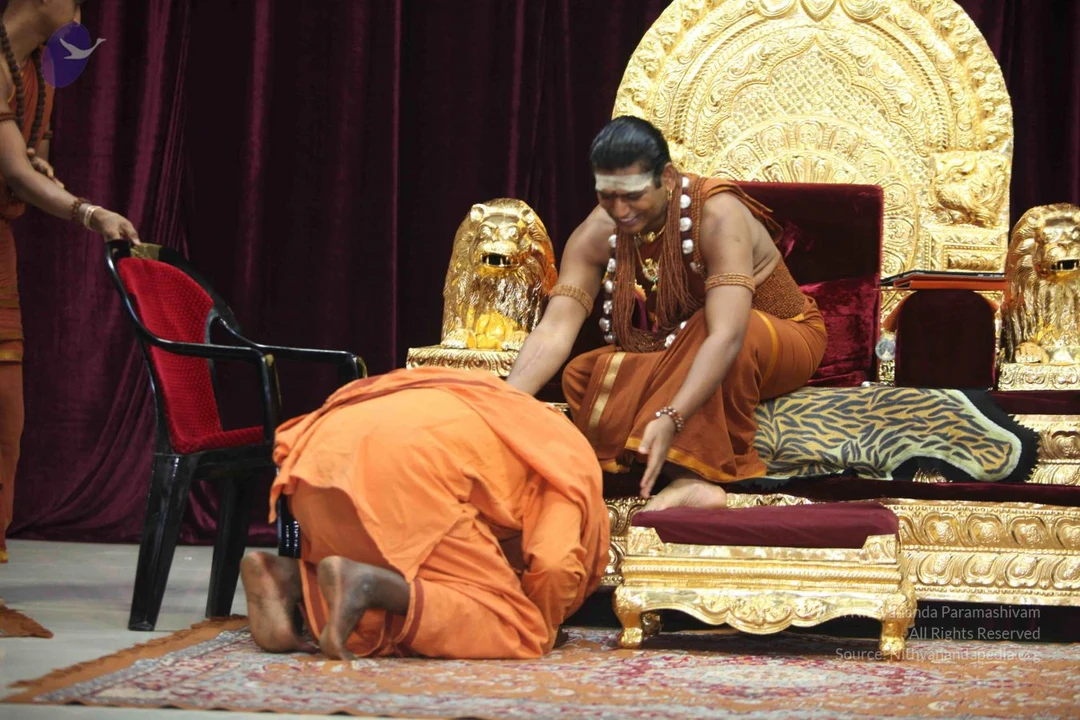
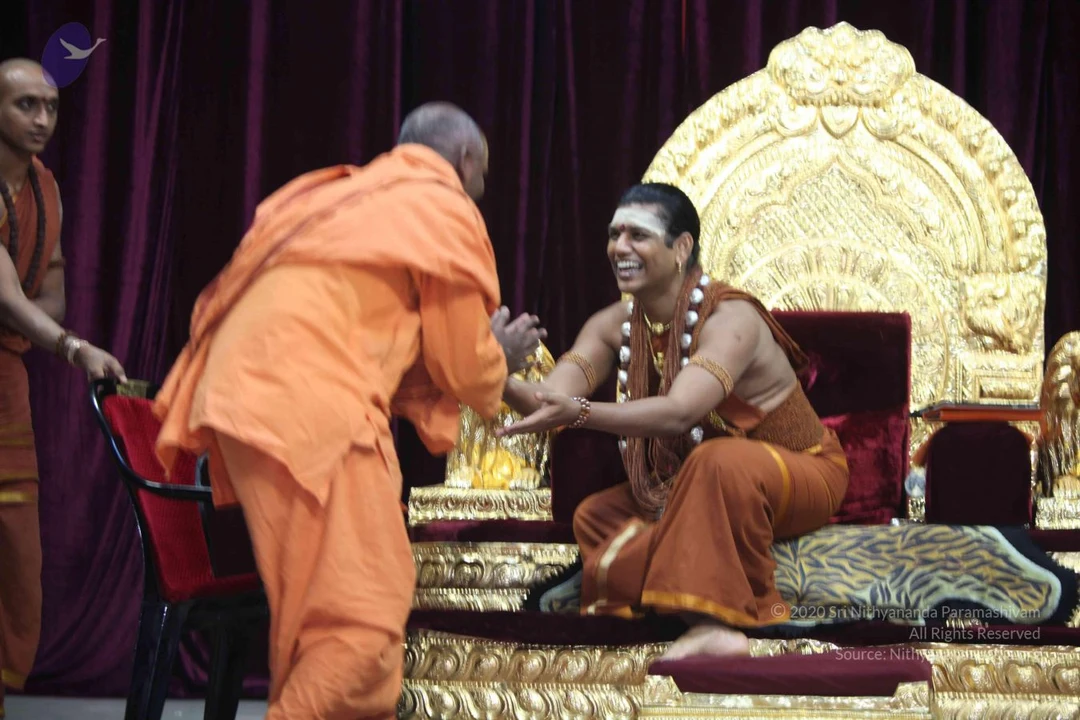
A seated man on an ornate gold throne with lion-head armrests and a tiger-stripe cloth draped over the seat. He wears an orange-brown dhoti, a shawl, a rudraksha mala with ceremonial gold necklaces, bangles and a white tilak on his forehead, with long swept-back hair; his bare feet rest on a gold footstool. He reaches out and touches a kneeling figure in orange robes who prostrates before the throne on a patterned rug. A standing attendant in orange and a red chair stand at the left edge, with a crimson velvet curtain behind.A seated man in orange-saffron robes sits on an ornate gold throne with carved backrest and velvet cushions before a plum curtain. He wears a rudraksha mala with a ceremonial gold necklace and bangles, with white tripundra markings on his forehead, and smiles while extending both hands. A devotee in orange robes bends forward, palms pressed together in greeting, to offer respect. A second attendant in orange stands at the left edge. Swamiji (probable) is the seated figure, identified by his long swept-back hair, saffron clothing, rudraksha mala and ceremonial gold ornaments; he is seated on the throne.

Other

5 photosSource gallery
A seated man in saffron-orange robes sits on an ornate, gold-embossed throne with a repoussé arched backdrop of floral and animal carvings. He wears a brown twisted turban with a small gold ornament, a gold necklace and layered rudraksha malas, and holds a closed orange tablet or book in his lap. A maroon curtain hangs behind the throne. Appearance-based candidate: a person, seated on the throne with a turban, saffron clothing and rudraksha malas, holding an orange tablet.A smiling man seated on an ornate gold-embossed throne with a deep burgundy velvet backrest. He wears a rust-brown rope-twisted turban with a gold crescent ornament, an orange-saffron cloth wrap over bare shoulders, multiple strands of beaded rudraksha-style malas, and a gold necklace. A red bindi marks his forehead. He gestures with one open hand while an orange tablet rests on a stand beside him, and a zebra-striped cushion lies below. Swamiji (probable): the saffron and ornate clothing, rudraksha malas, turban and gold necklace match the page's satsang context.A smiling man seated on an ornate gold-and-velvet throne with a large carved golden back, raising one hand to adjust a thick rudraksha-bead turban topped with a gold ornament. He wears a saffron-orange draped robe over a bare shoulder, multiple strands of rudraksha malas, a gold necklace and a red bindi. An orange tablet or book stand rests beside him on a red velvet chair, and a blue patterned cloth covers the dais. a person by appearance cues: rudraksha turban, saffron robe, malas and gold necklace, seated on a throne at a stage event.A man seated on an ornate gilded throne with a large carved backrest, smiling, wearing a rust-brown rope-coil turban with two small gold crescent ornaments and a red bindi. He wears saffron-orange robes draped over one shoulder, long rudraksha mala strands, a gold necklace and a beaded waist belt. He rests one leg on a velvet-covered seat and holds an orange tablet case. Deep maroon curtains frame the stage. Probable Swamiji by visible cues: distinctive turban with crescents, saffron robes, rudraksha malas and gold necklace, seated on the throne, in person on stage.A seated man in saffron-orange robes sits on an ornate gold throne with a carved, gilded backrest against deep purple drapery. He wears a brown rudraksha-bead turban decorated with gold crescent ornaments and a red bindi, with multiple rudraksha malas and a gold chain around his neck. He smiles while holding an orange tablet device on his lap. Probable Swamiji is shown in this photo, identified by his turban, rudraksha malas, saffron clothing and gold ornaments, seated in a throne-like chair.

1-Bidadi-Temple-and-Thondaimandala-Adheenam-Mahasannidhanam-visit
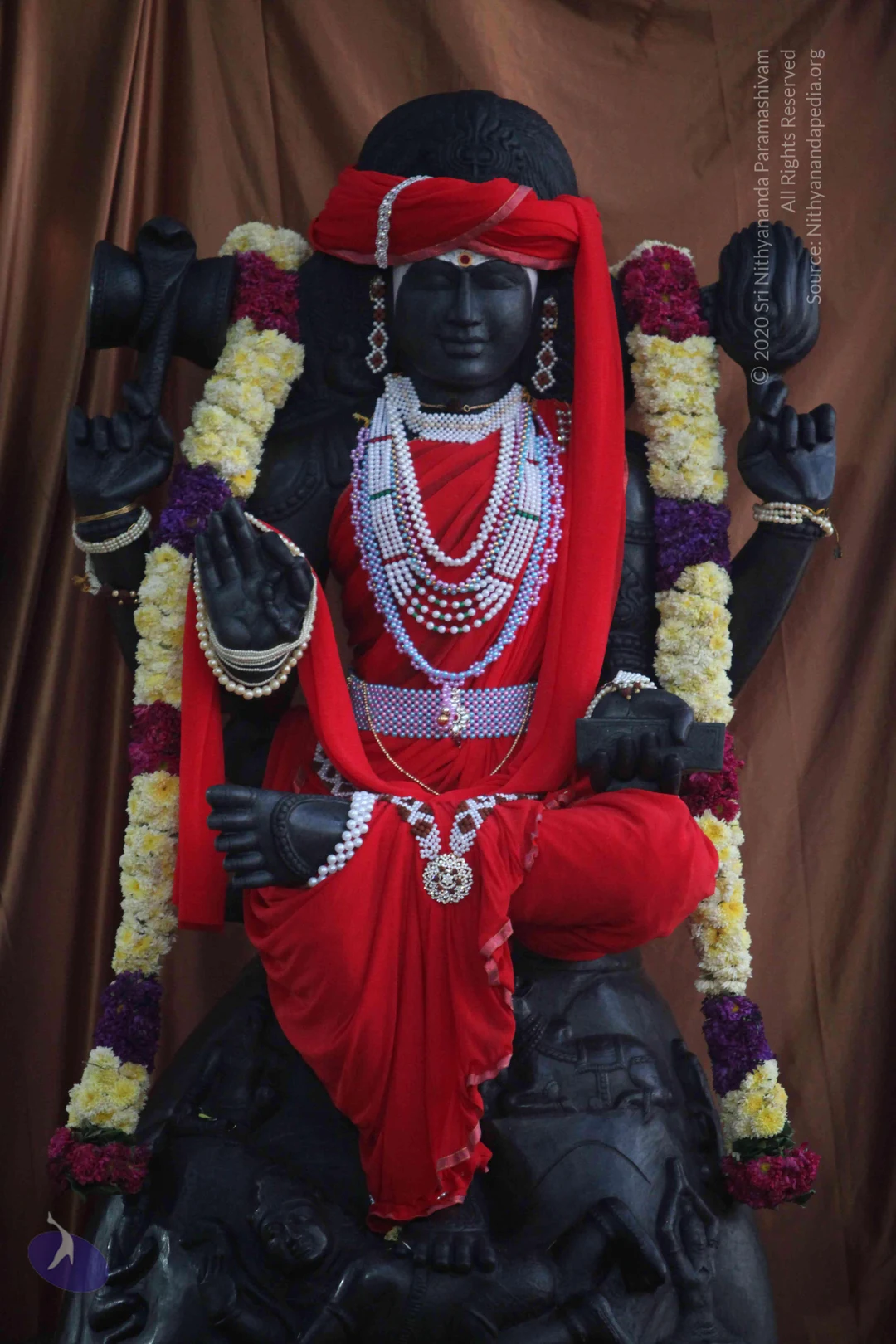
7 photosSource gallery
A dark black stone murti of a multi-armed deity seated in a meditative pose on a carved black pedestal, dressed in a red draped cloth and red turban with a tilak on the forehead. Layered white and multicoloured bead necklaces, a beaded waist band, pearl bracelets and a pendant adorn the figure. Garlands of yellow and purple flowers hang over both shoulders, and the background is a draped brown fabric. The statue is a deity murti, not a living person, and no physical people are visible.A photograph of a single man walking barefoot along a red carpet inside a hall with metal railings. He wears a rust-orange dhoti with a gold-edged border and an orange upper cloth draped over his bare chest, with multiple strands of rudraksha beads and a large white-beaded mala around his neck, a gold pendant, and a gold armlet. He has a white vibhuti line and a red kumkum dot on his forehead. Behind him are framed banners, a painted pillar with floral and bird motifs, and windows. The appearance matches the a person candidate cues (rudraksha malas, orange clothing, gold ornaments) but the identity is not certain, so the role is recorded as a devotee-style figure walking in the hall.A man walks barefoot along a pale concrete path edged with a thin blue line, in front of a red brick wall and dry ground. He wears a rust-red dhoti with orange borders, a matching red shawl draped over the chest, and a long necklace of white beads and rudraksha-like seeds. He has a white vertical tilak with a red dot on his forehead, a small gold chain, and red-thread armbands and bracelets. Shaved head is not visible; his hair is swept back. Appearance-based candidate; identity uncertain from appearance alone.A barefoot man in rust-orange sannyasi-style robes walks along a pale tiled path edged with a thin blue line. He wears a white vertical tilak with a red dot on his forehead, gold earrings, a gold necklace with a pendant, and a long necklace of rudraksha beads strung with white beads. Rust-orange cloth is draped over his shoulders and tied at the waist with gold-bordered bands, and matching bangles and an armlet are on his arms. A red brick wall and dry ground stand behind him.A man stands barefoot on a small red and blue patterned mat atop a low concrete platform, leaning his forehead against the massive trunk of a banyan tree with aerial roots. He wears an orange-saffron dhoti with yellow borders, a bare chest, an orange shawl draped over one shoulder, a long necklace of silver beads, an orange armband and a white horizontal stripe of vibhuti on his forehead, his hair tied in a knot. Outdoors, a dirt ground and brick-edged garden area surround the tree, with a red wall in the background.A large grey stone statue of a standing deity murti stands outdoors against dense green trees and palms. The figure holds a tall staff topped with a pointed finial in its raised left hand, and its right hand rests near the waist. It wears a beaded necklace, armlets, a waist cloth with a belt, and ankle bands, with a horizontal tilak mark on the forehead and a crown-like headdress. A partial second statue with a raised hand is visible at the right edge. This is a statue, not a living person, and no in-person candidate is present.

2-Morning-Pada-Puja-Satsang-Blessing
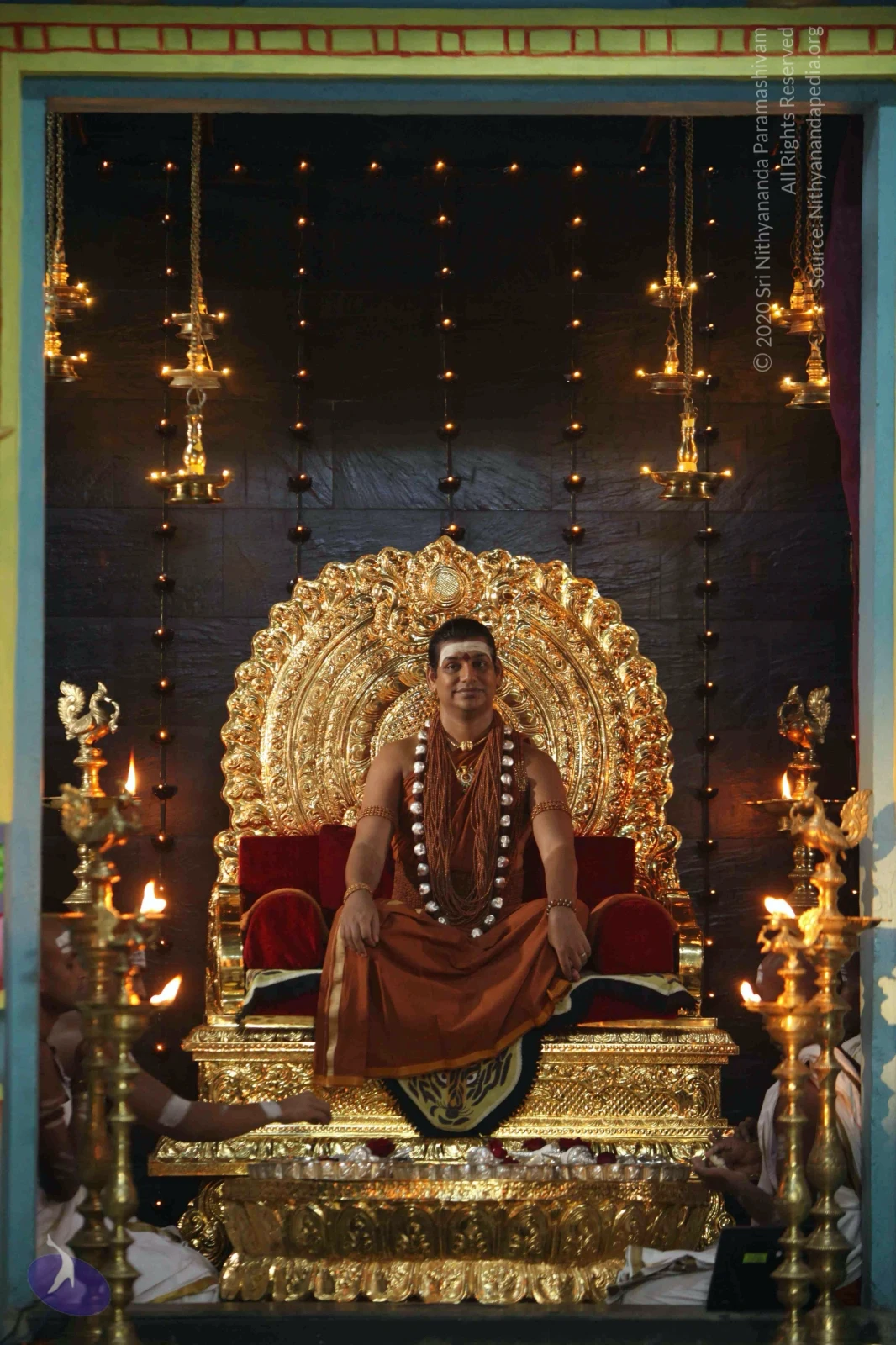
3 photosSource gallery
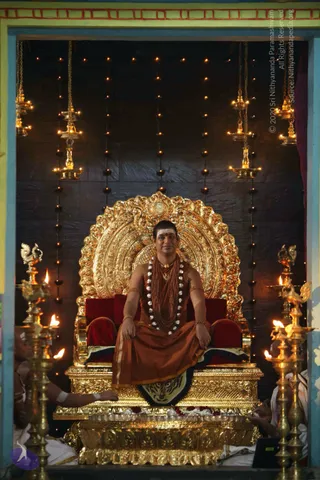
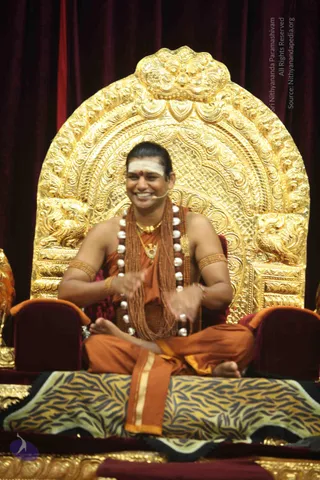
A seated man in orange-saffron robes sits on an ornate gold throne with red velvet cushions, in front of a dark stone wall with rows of hanging bead strands and brass lamps. He wears a white flower garland, a rudraksha mala and gold necklaces, plus gold armbands, and has a red tilak on his forehead. Brass oil lamps with lit flames stand on both sides, and attendants in white dhotis are partly visible at the edges.A smiling man in orange saffron robes sits cross-legged on an ornate gold throne with a tiger-striped cushion, a lapel microphone clipped near his face. He wears a white vertical forehead mark with a red dot, a bare-chested upper body with gold armbands and bangles, layered rudraksha malas and beaded necklaces, and a gold pendant. His hands are clasped together mid-gesture as he speaks. The carved gold backdrop and maroon drapes frame him. a person: the orange robes, layered rudraksha malas, gold armbands and ceremonial throne fit the page's description of the speaker at this satsang; the appearance is consistent with the page label.

More photos

1 photoView all