Skip to content
Monday

9 April 2012

Survive the Spiritual Culture-Shock

Dated photos
441
Source pages
1
Media
2
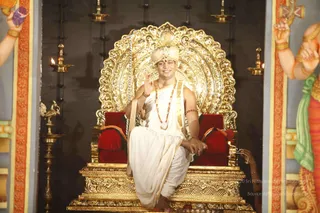
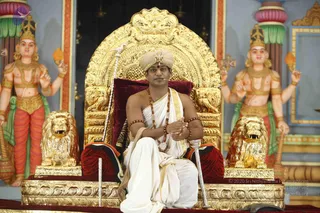
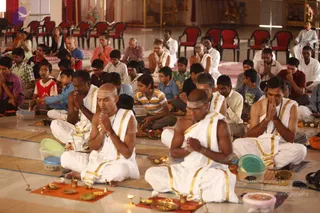
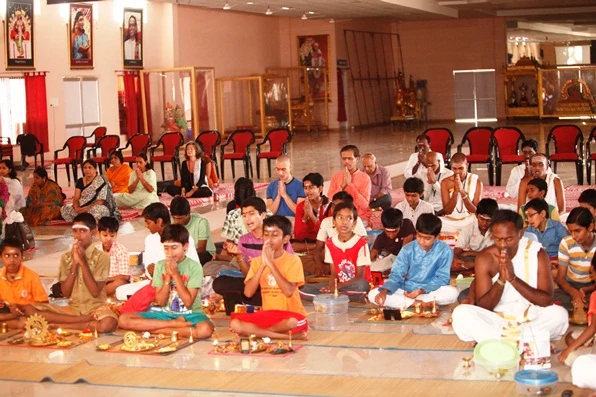
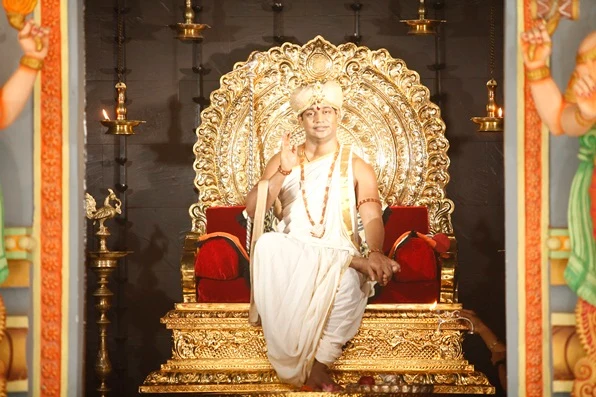
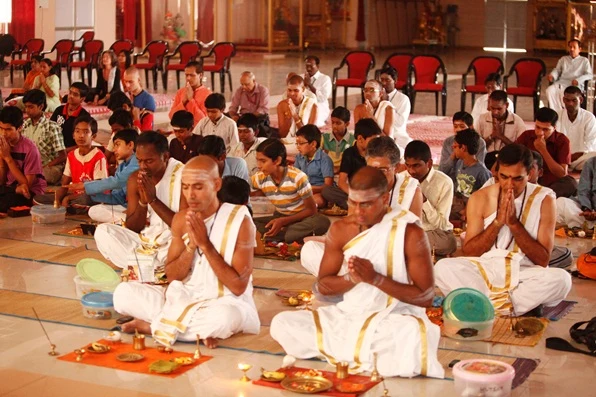
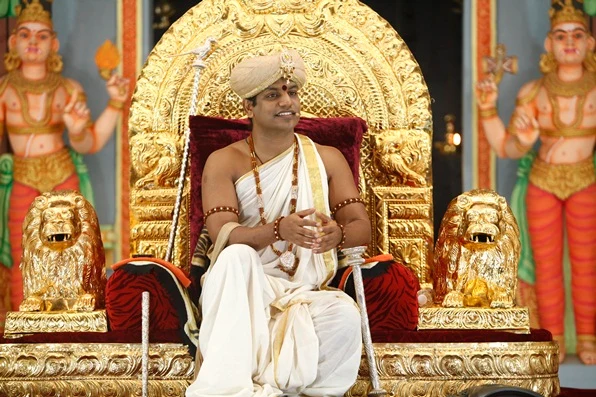
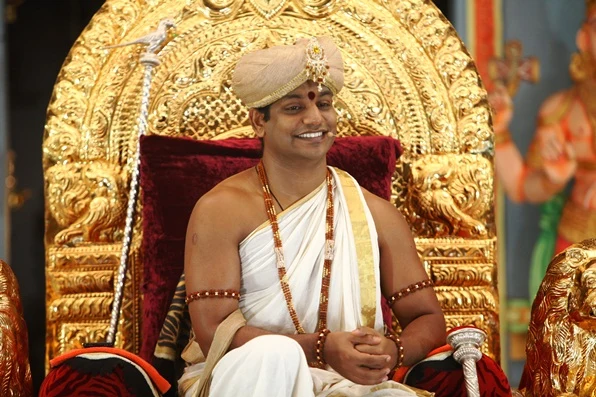
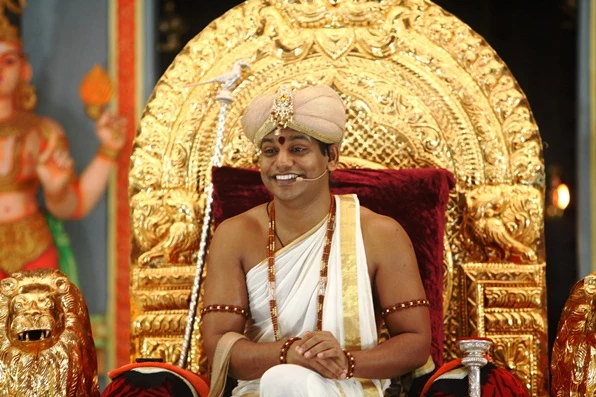
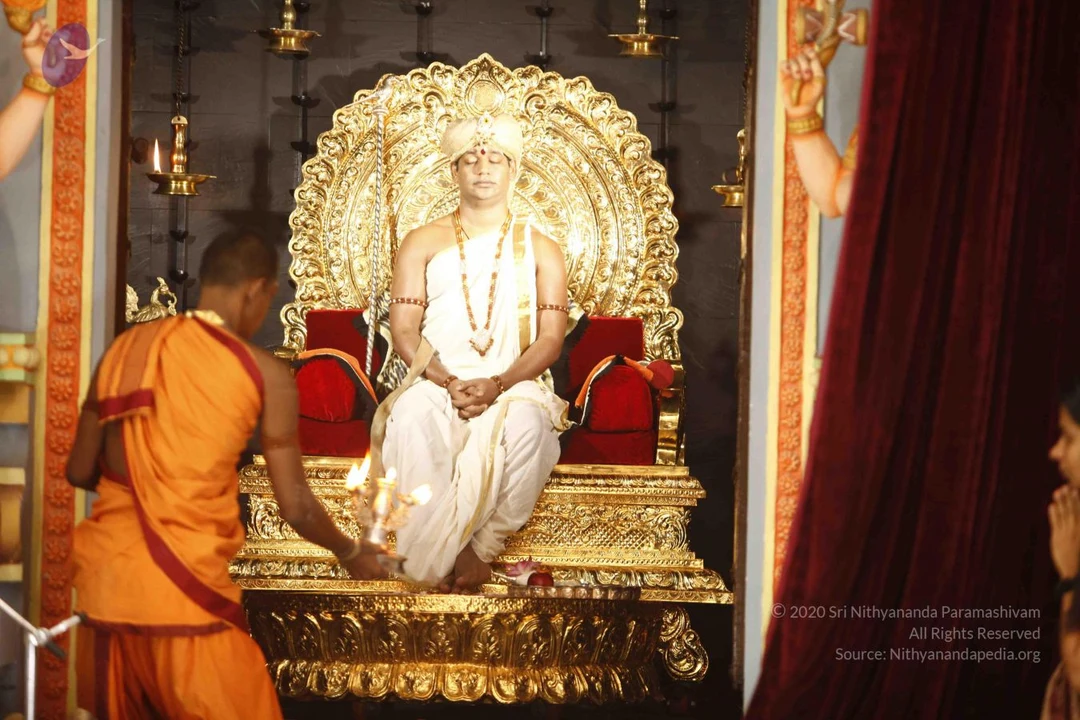
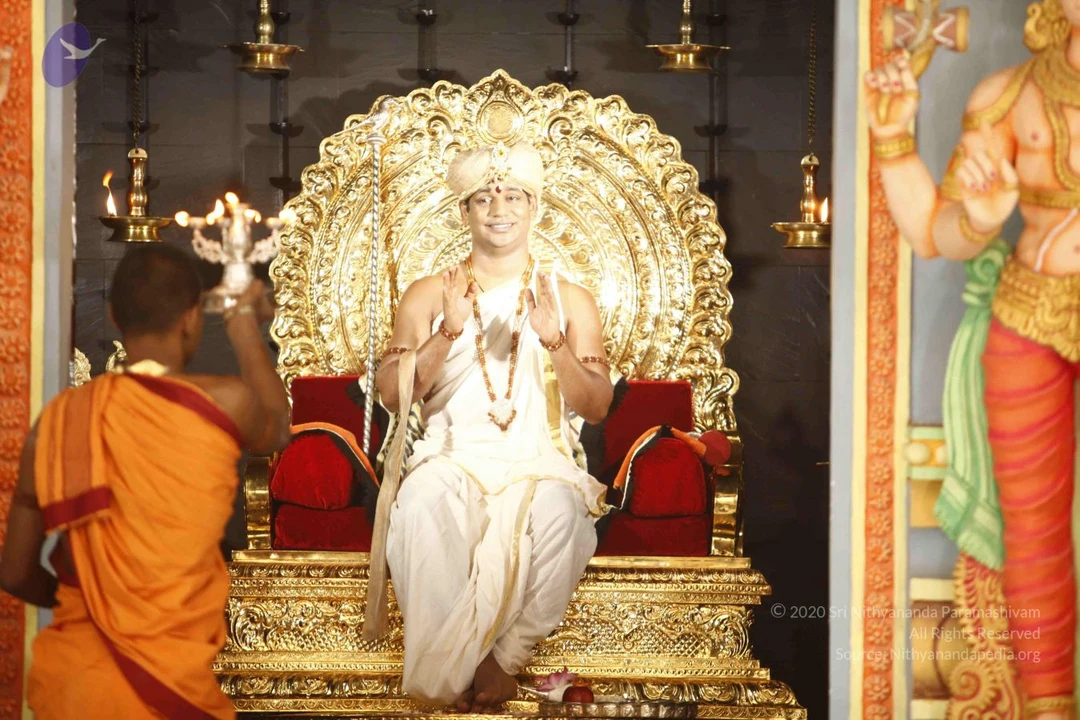
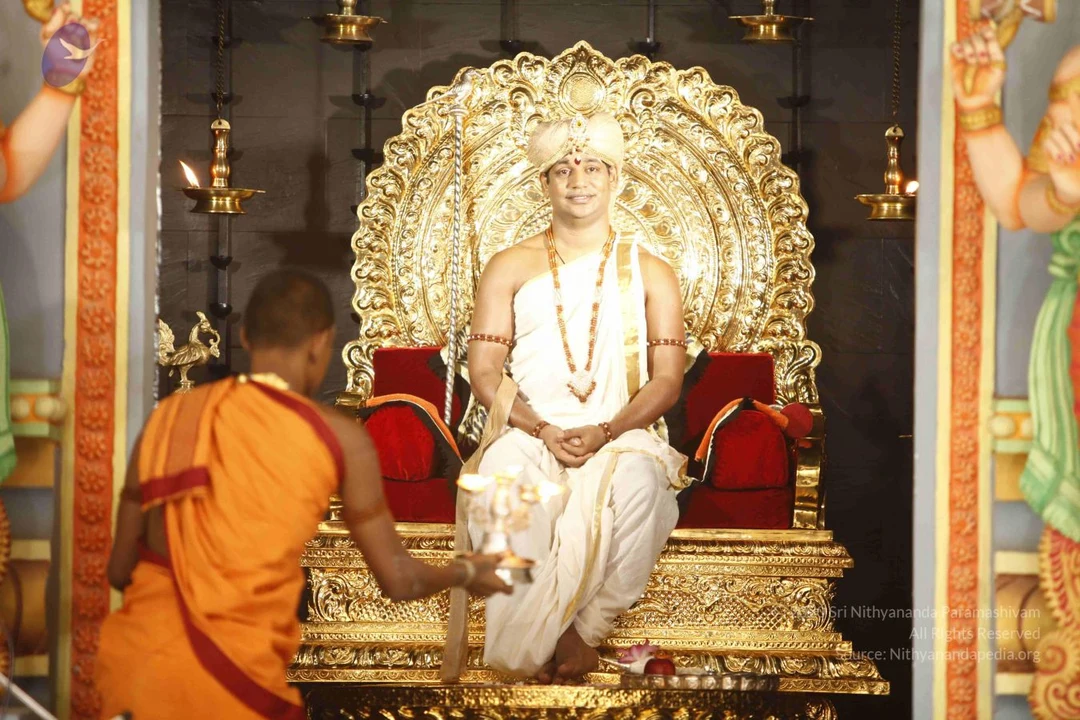
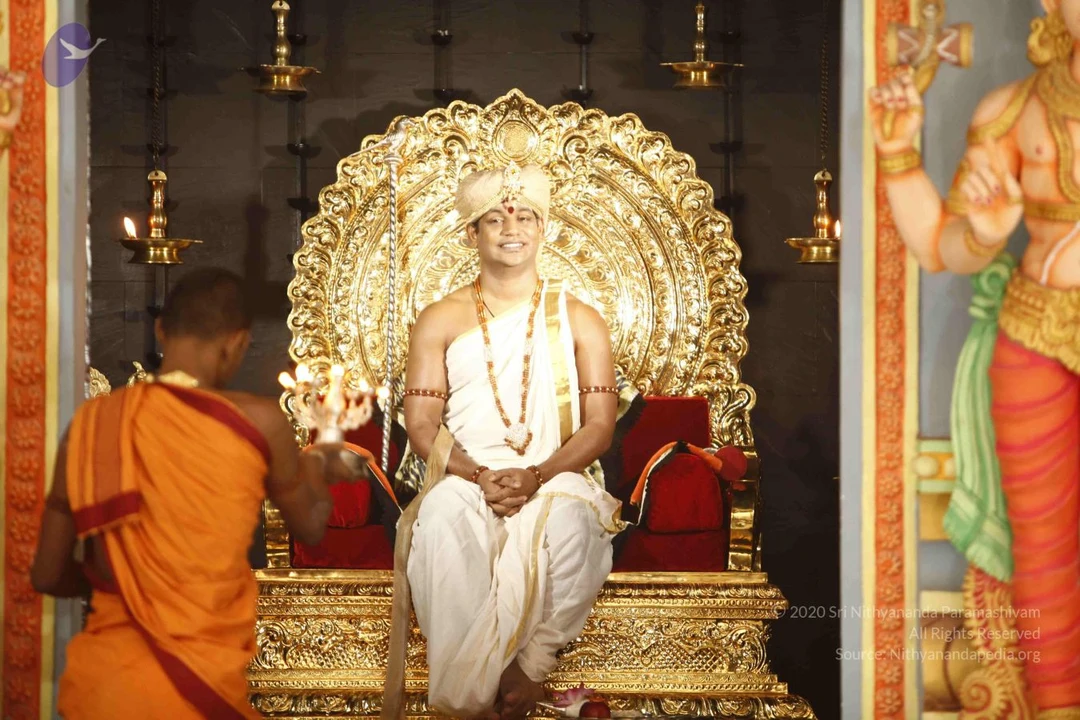
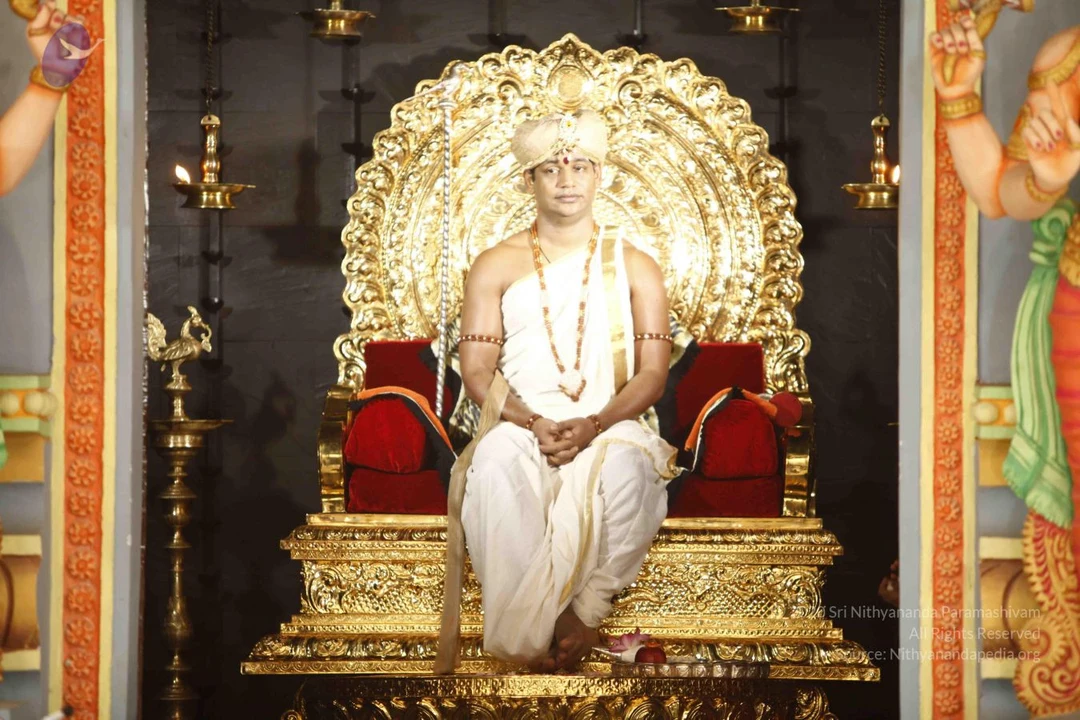
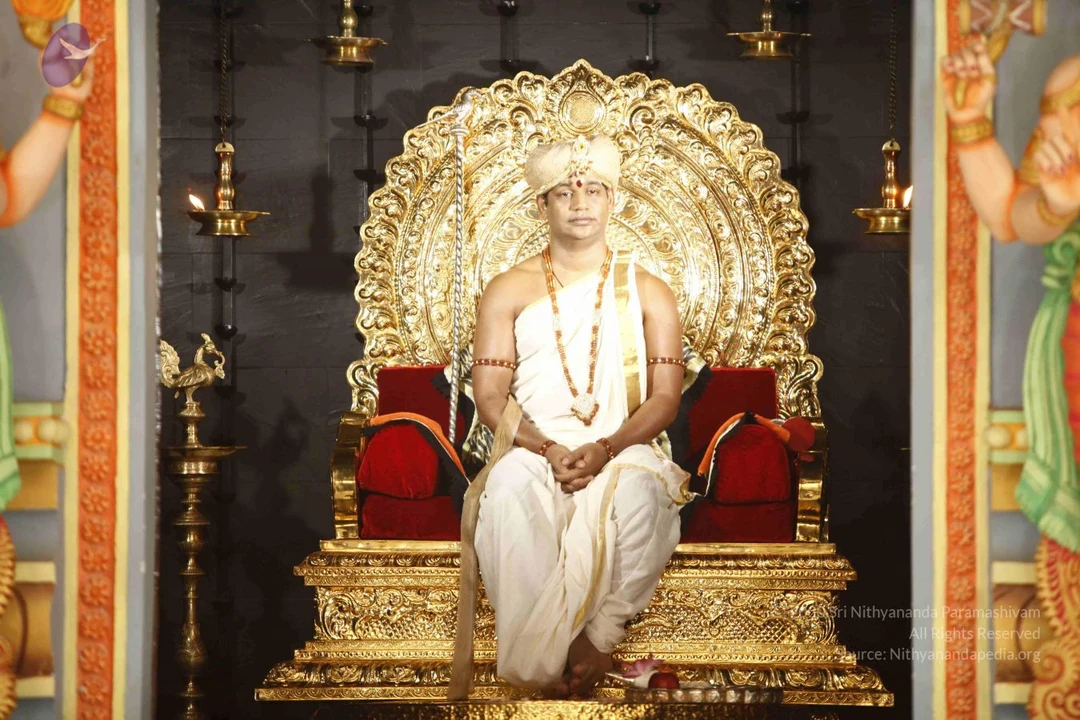
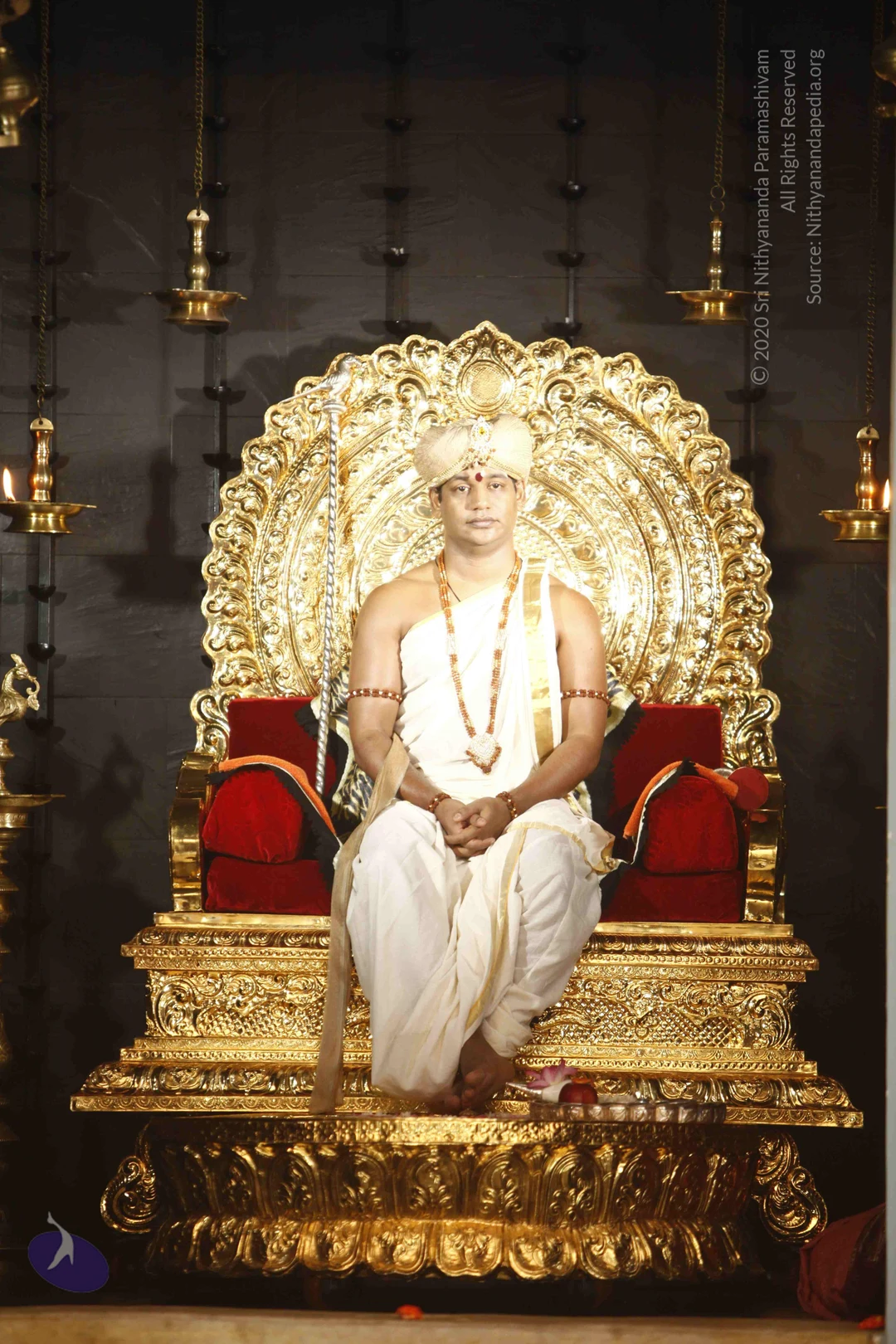
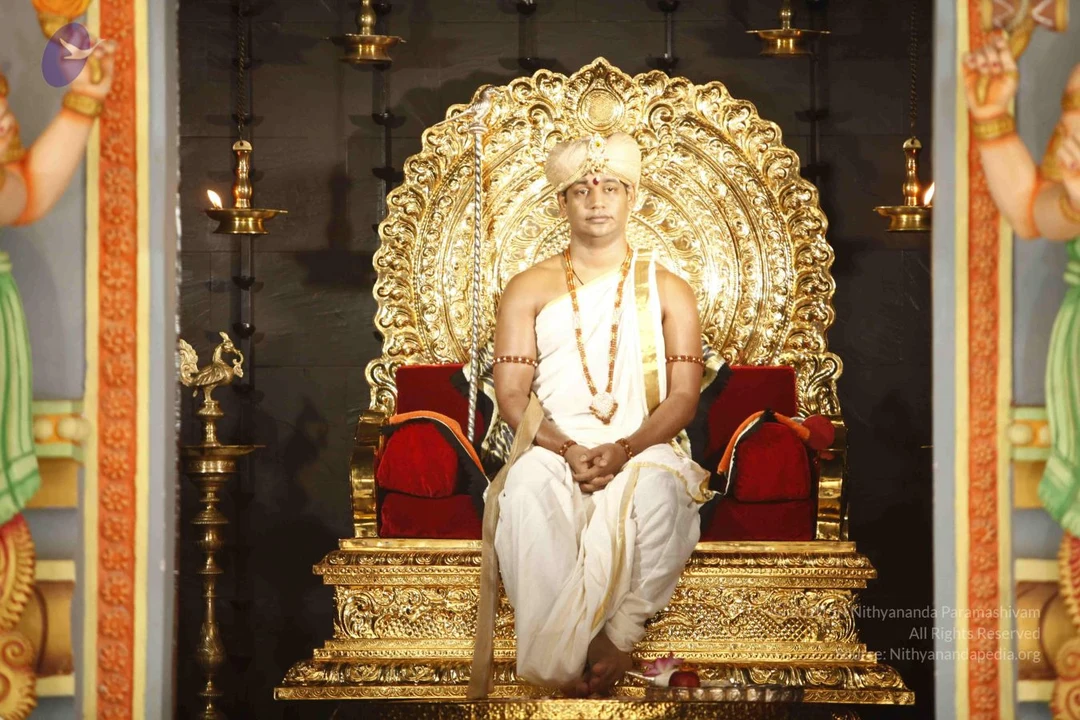
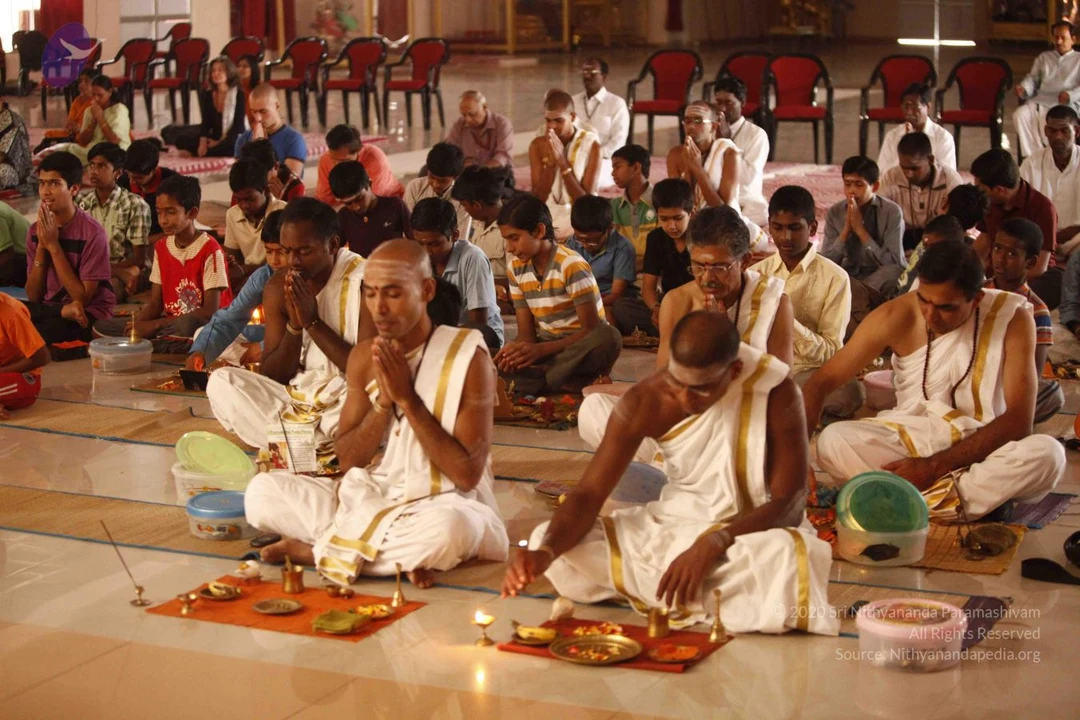
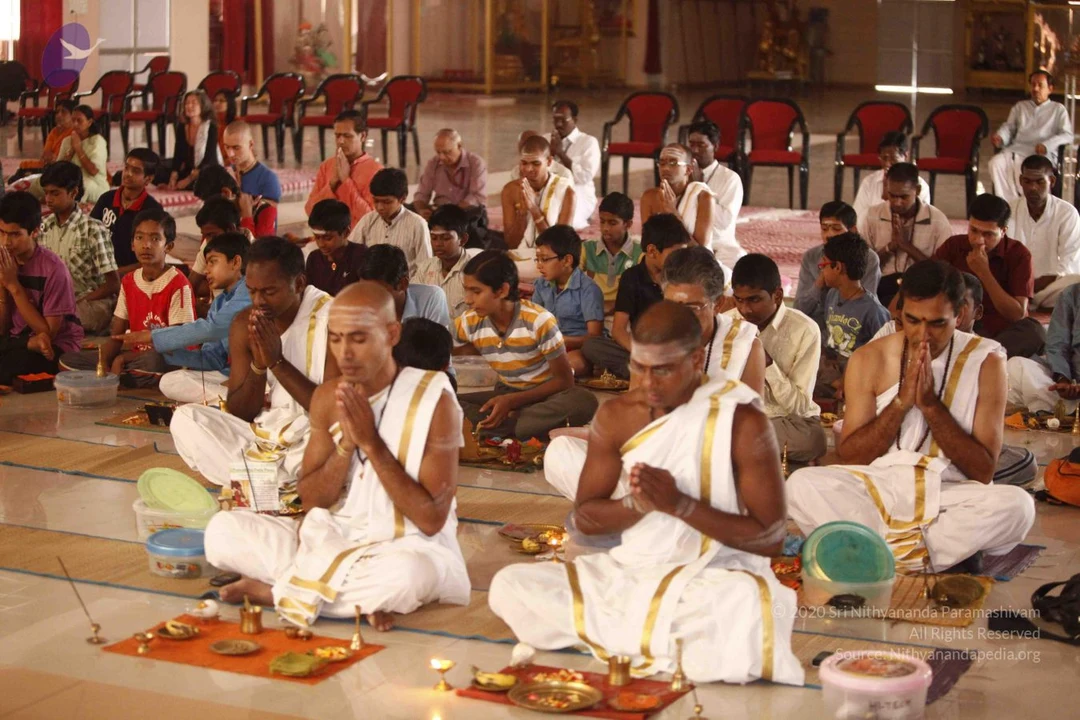
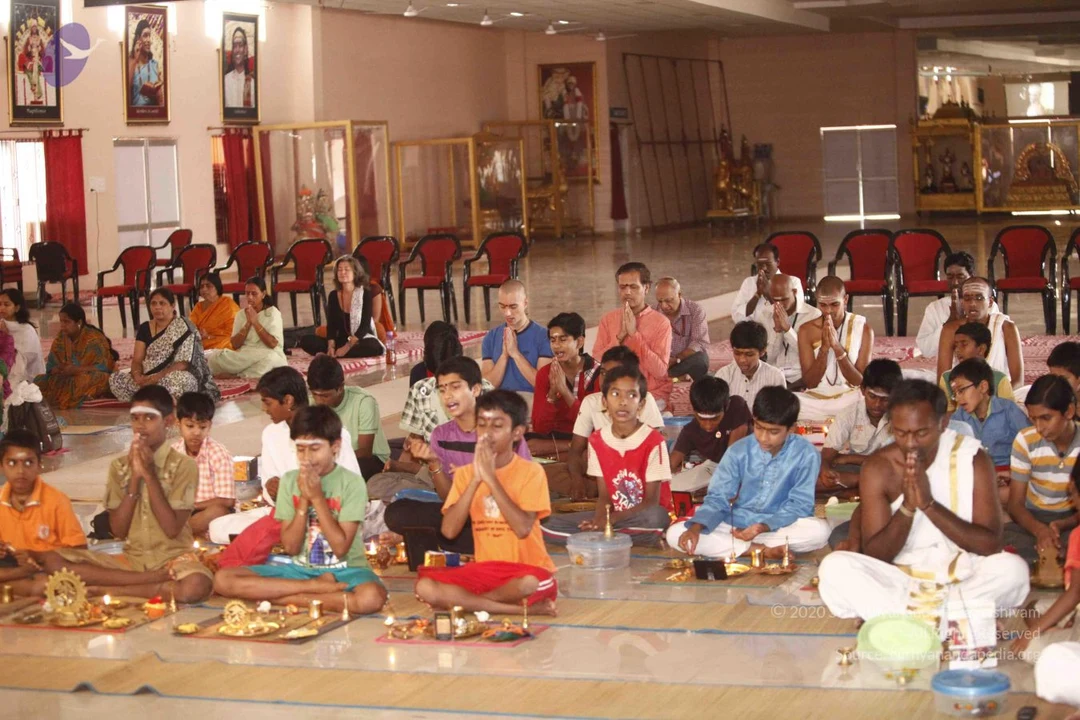
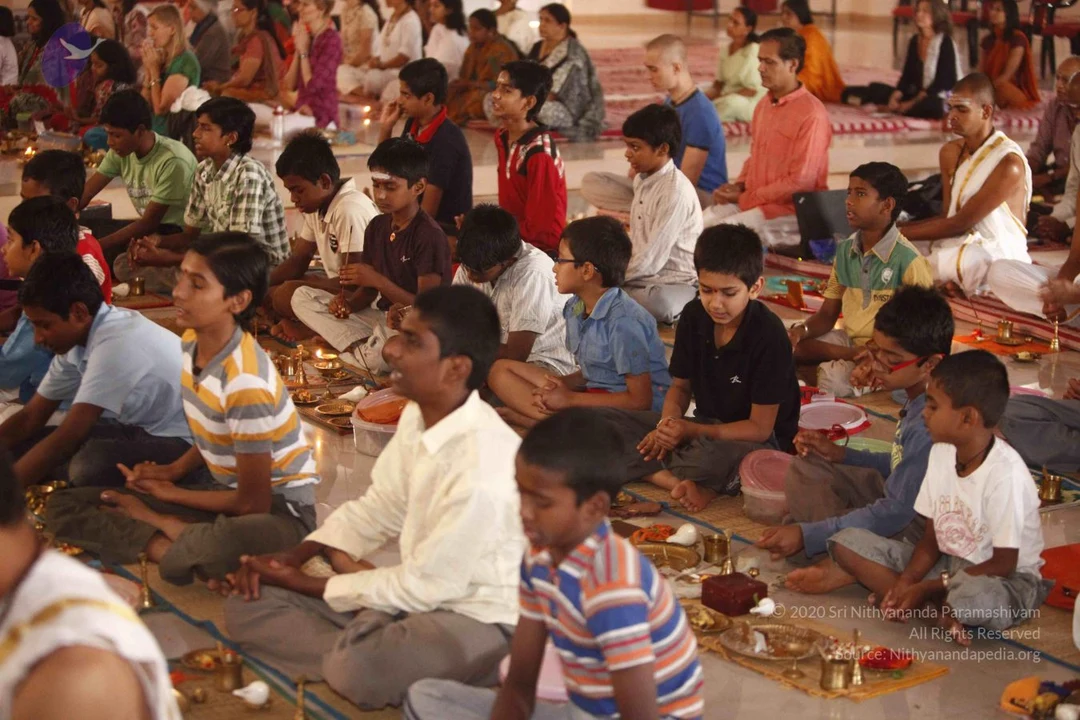
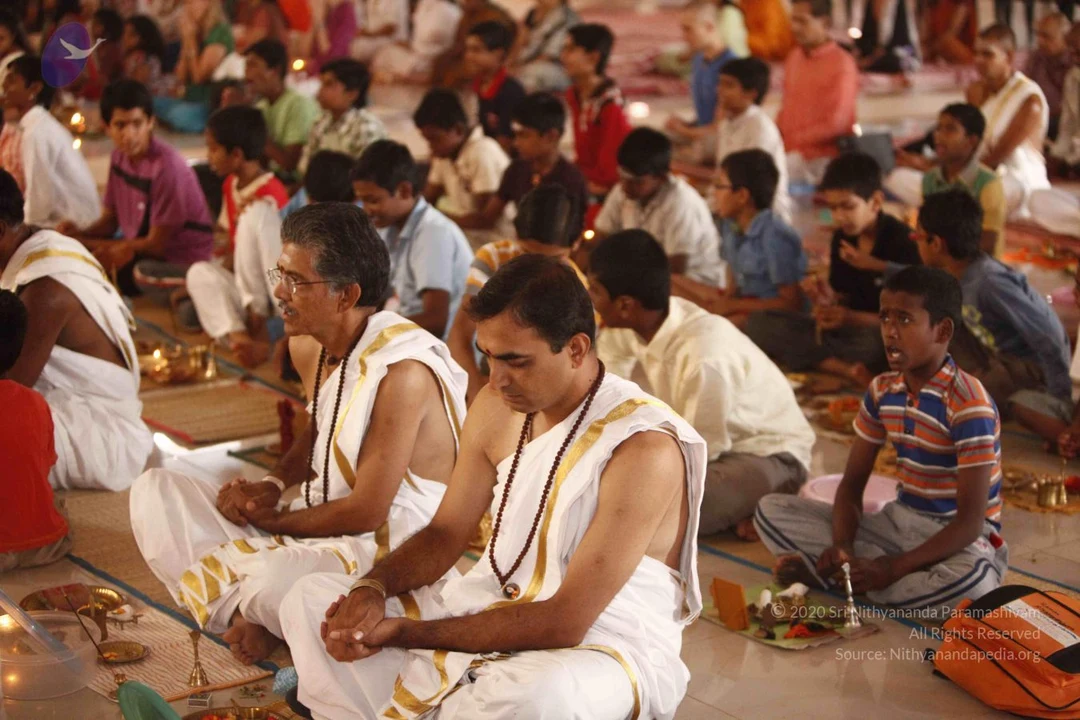
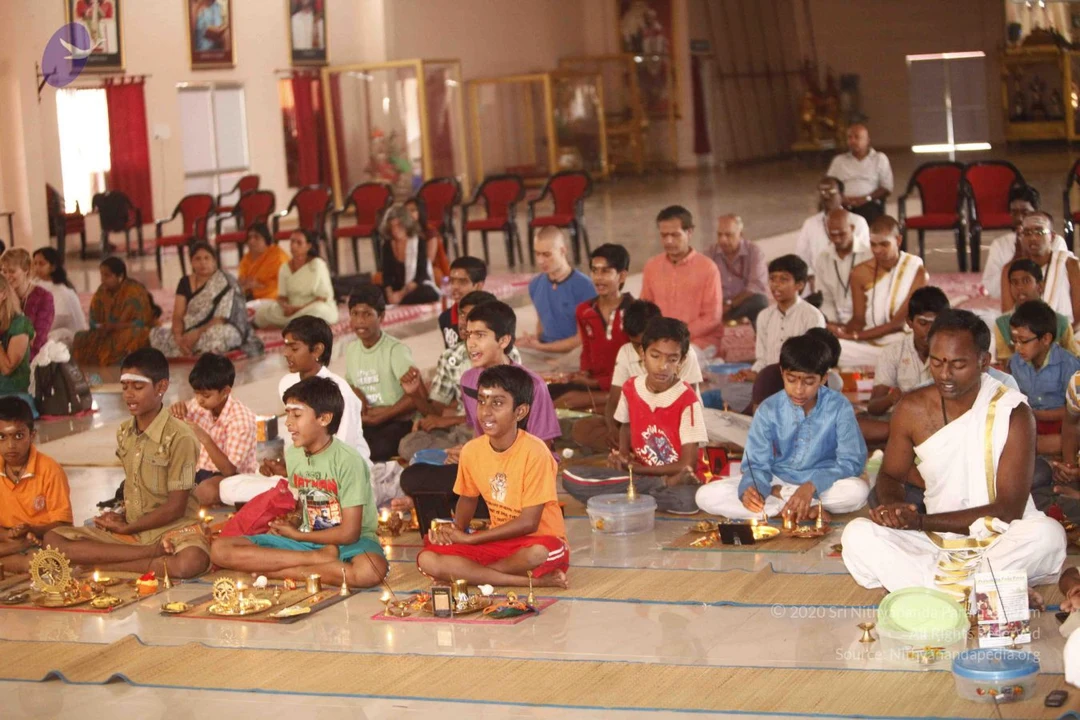
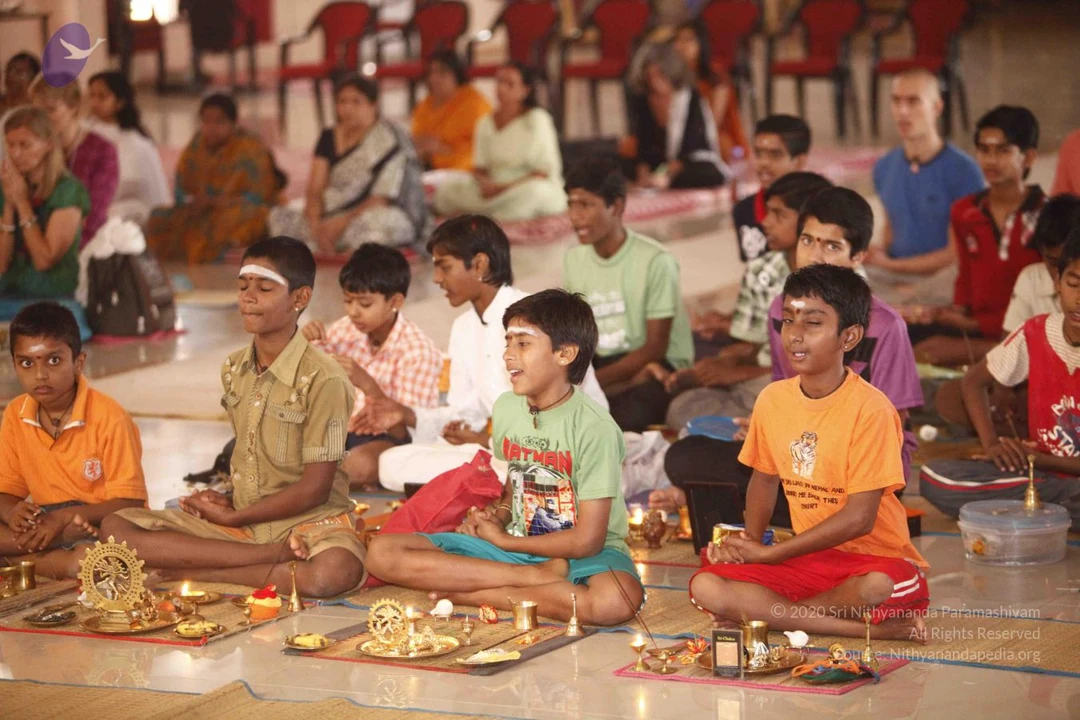
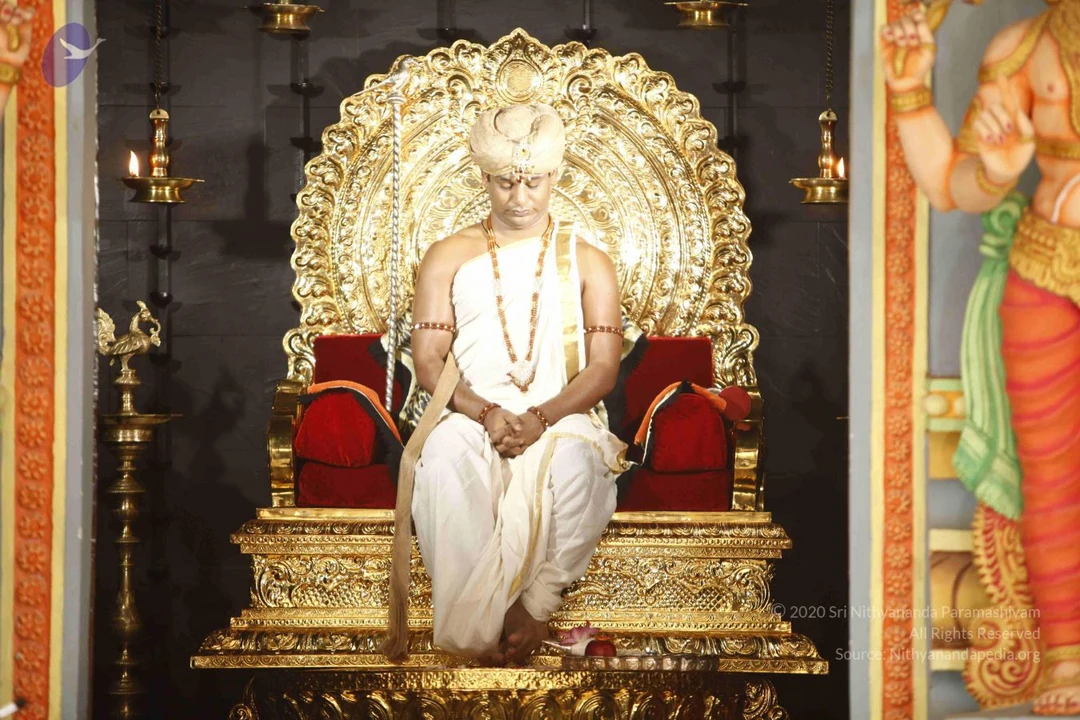
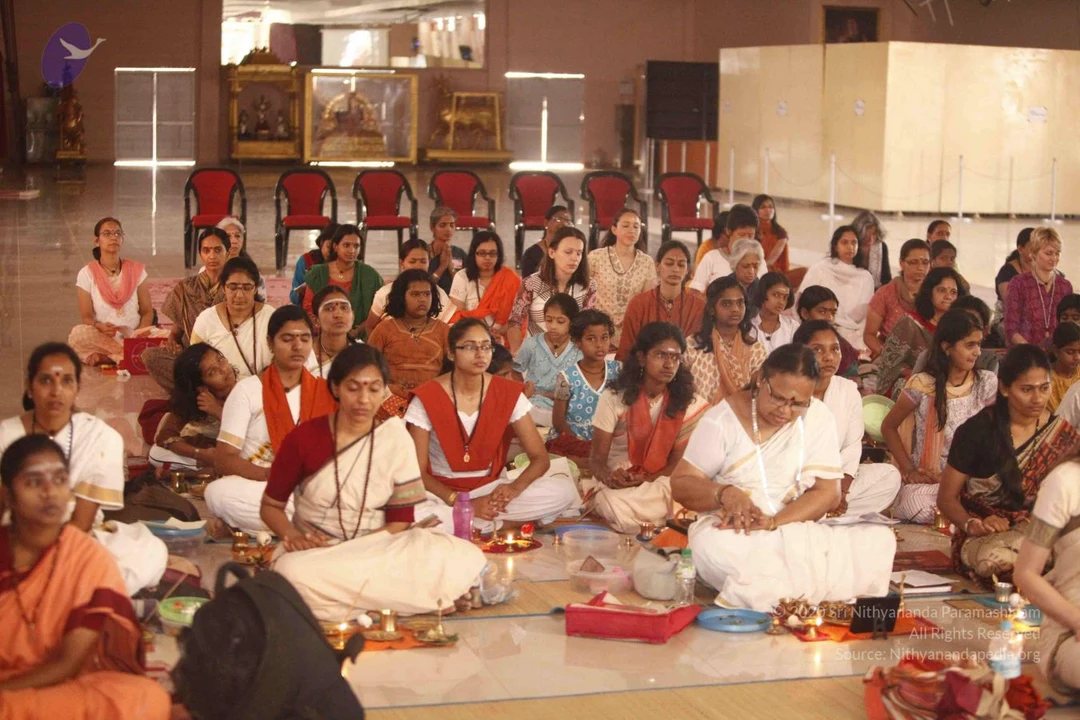
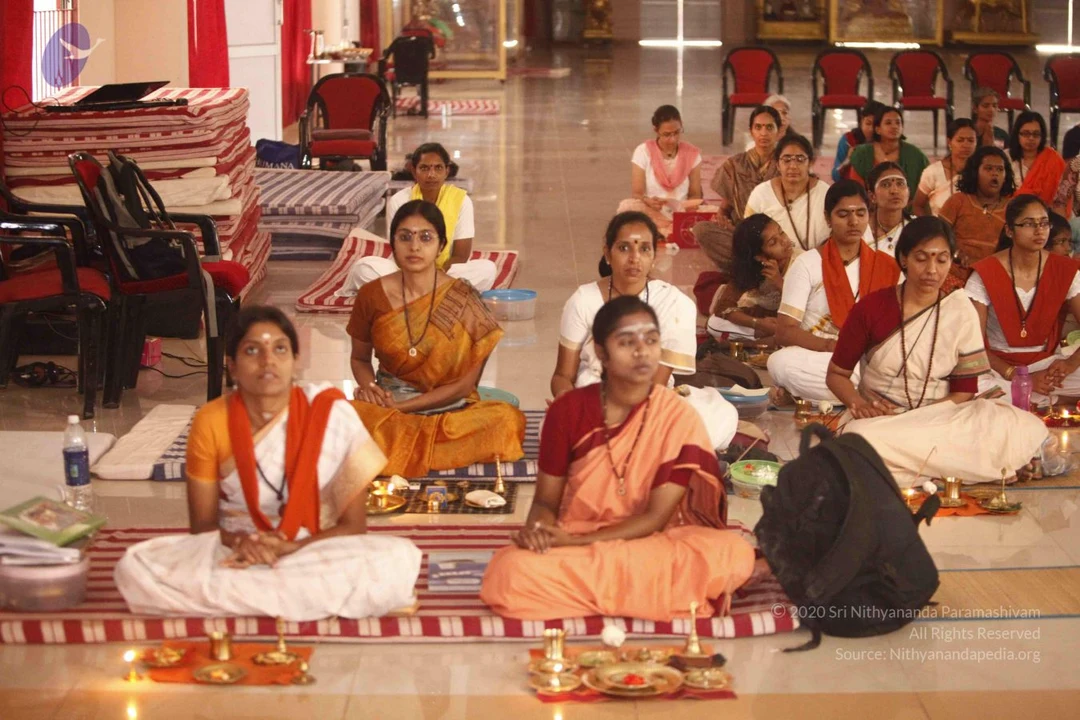
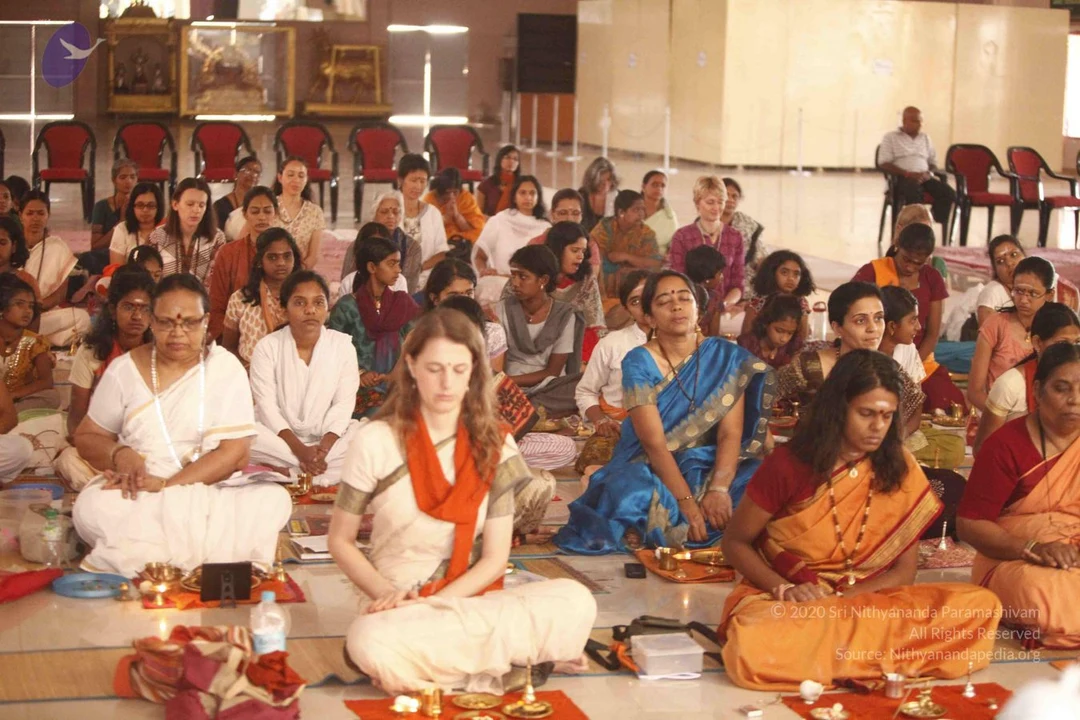
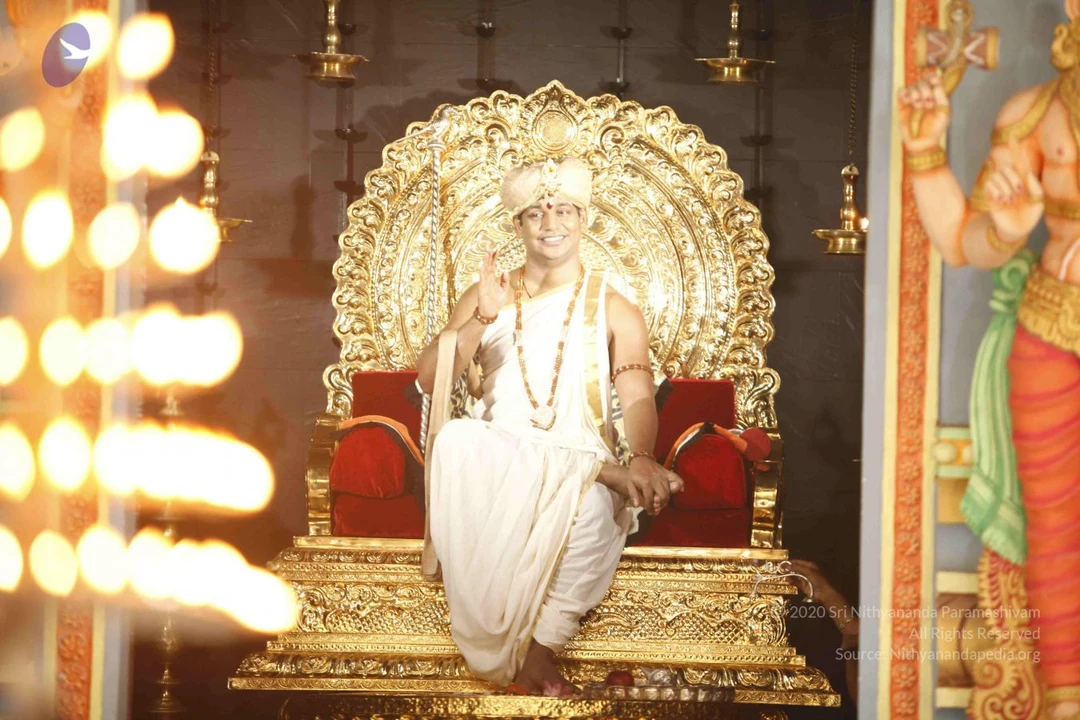
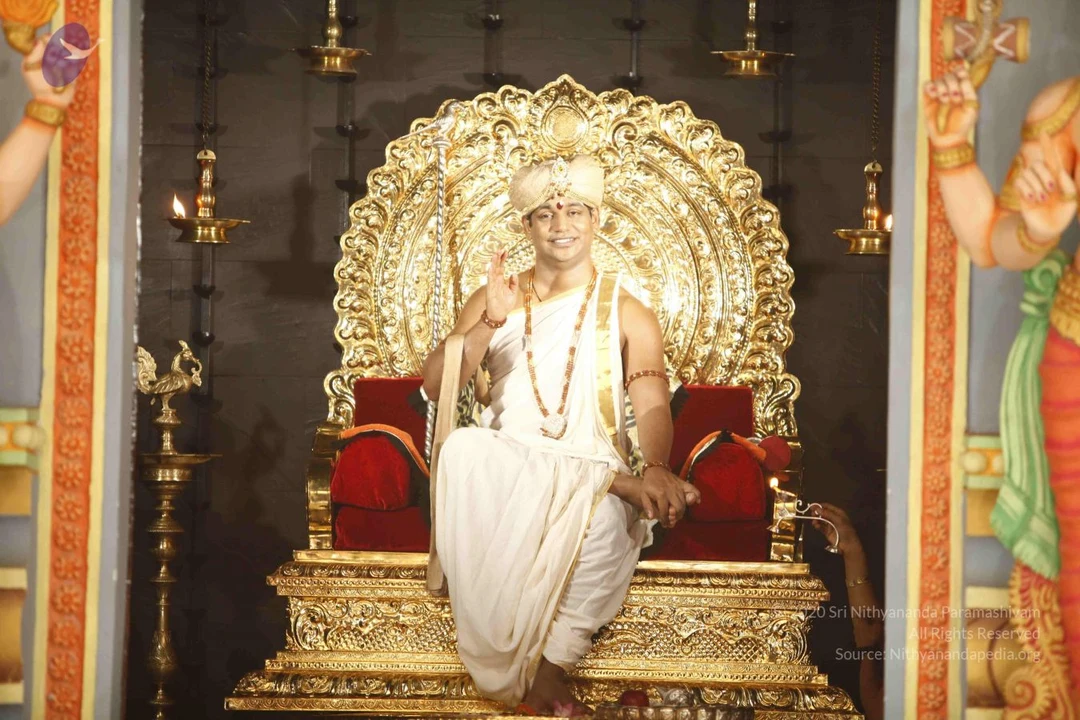
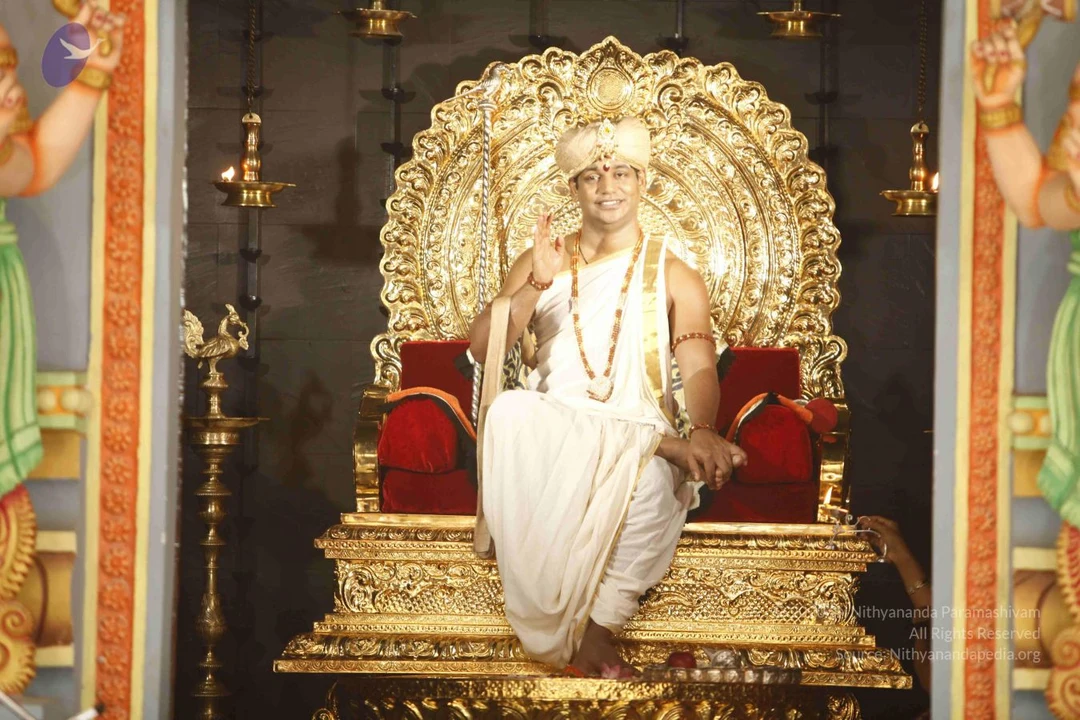
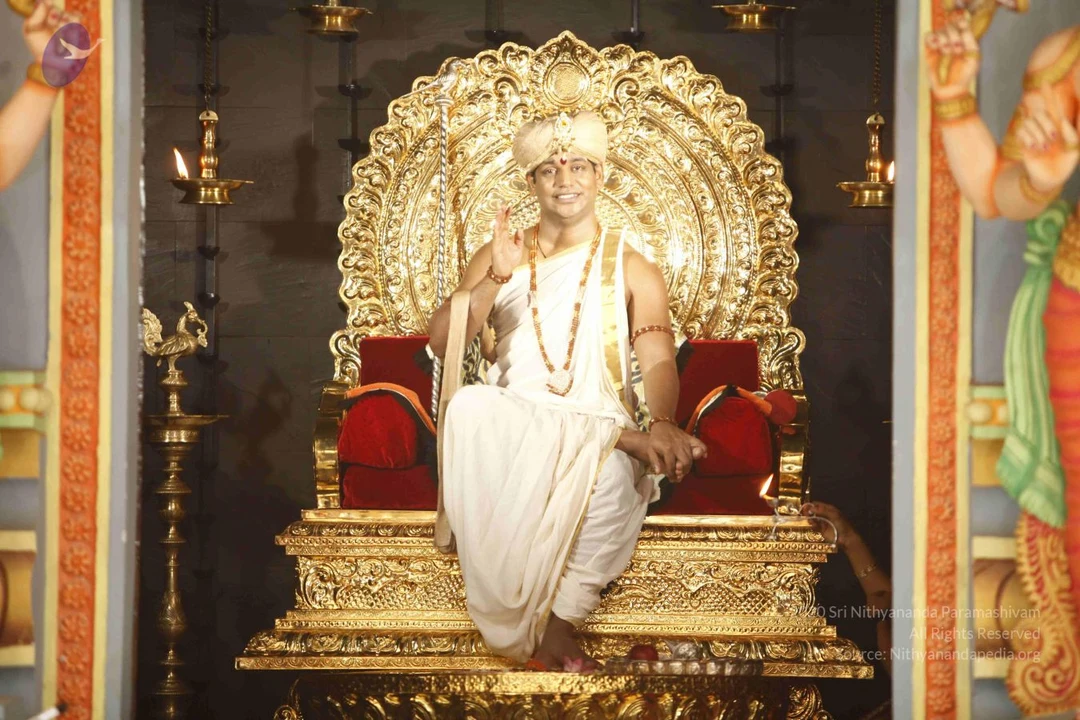
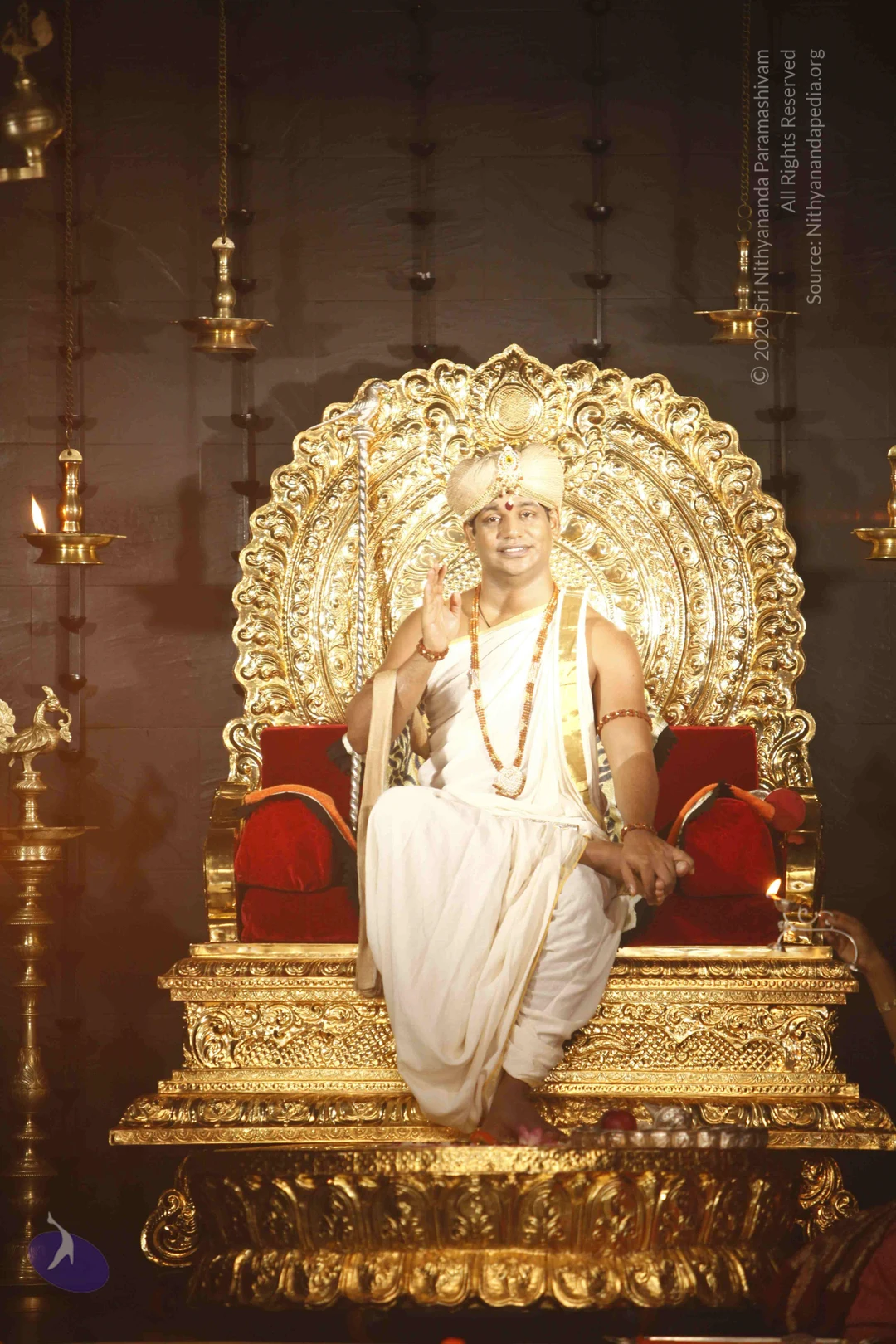
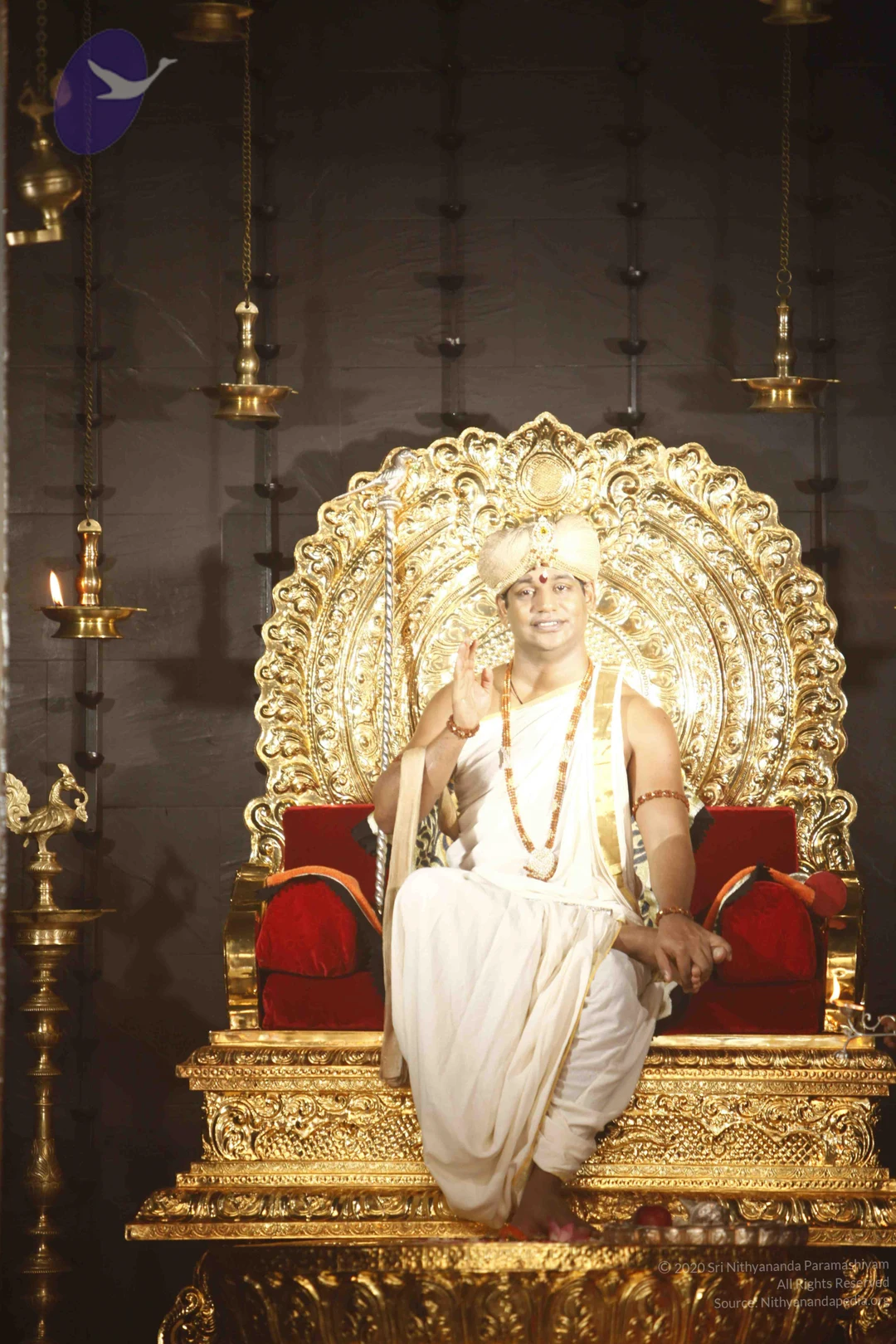
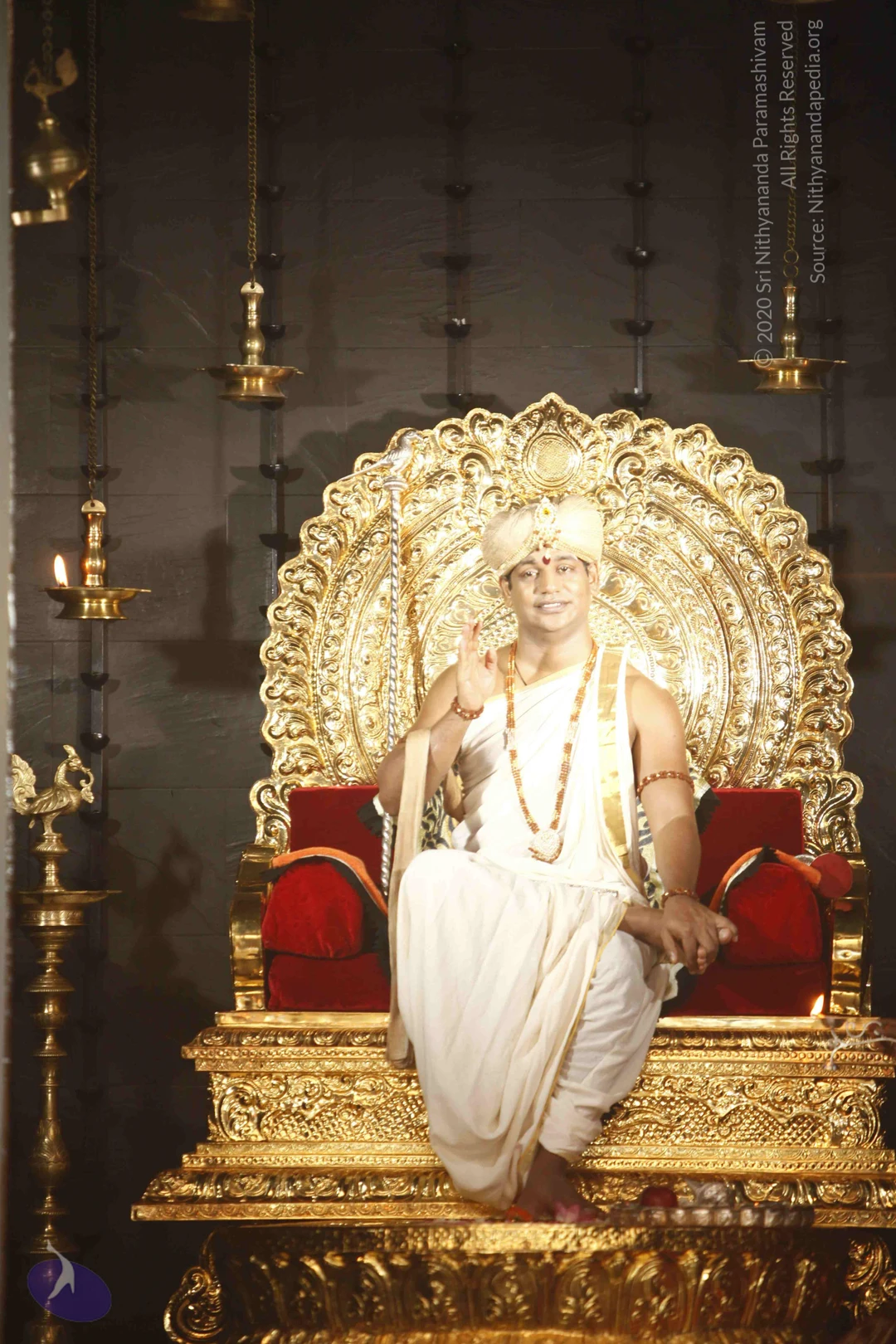
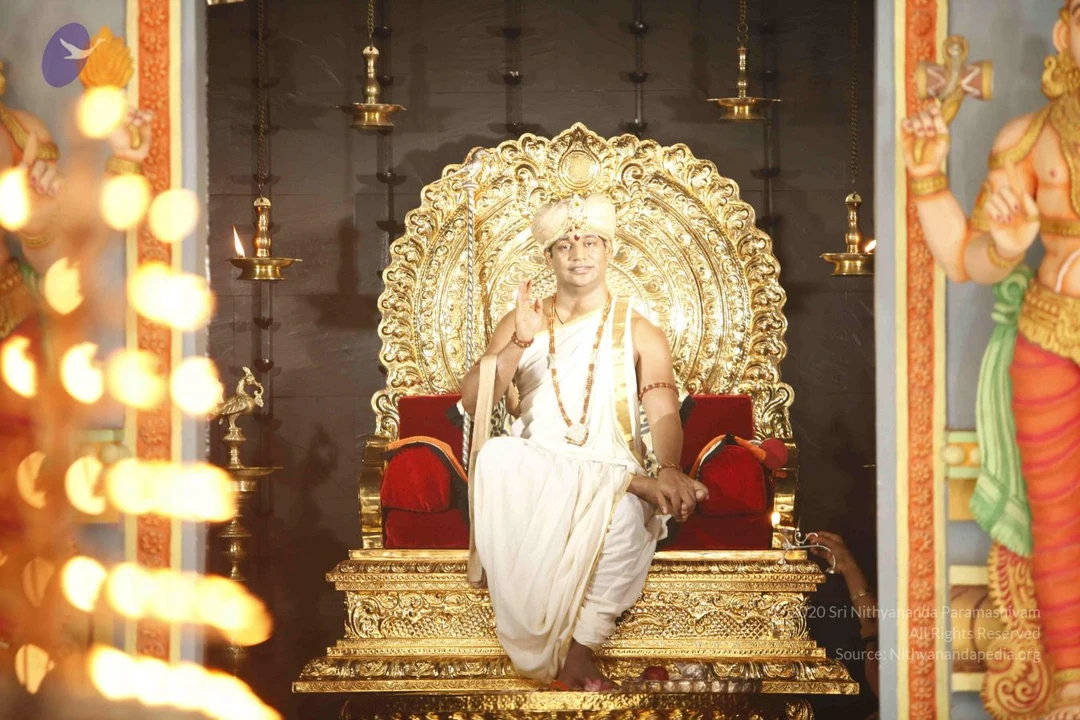
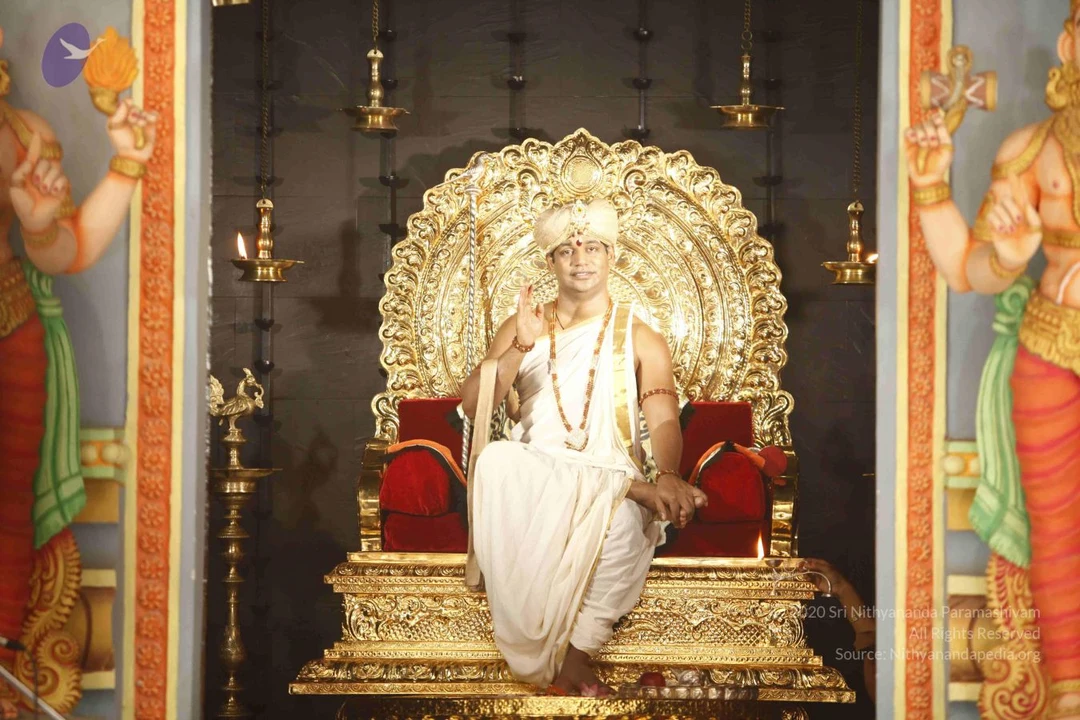
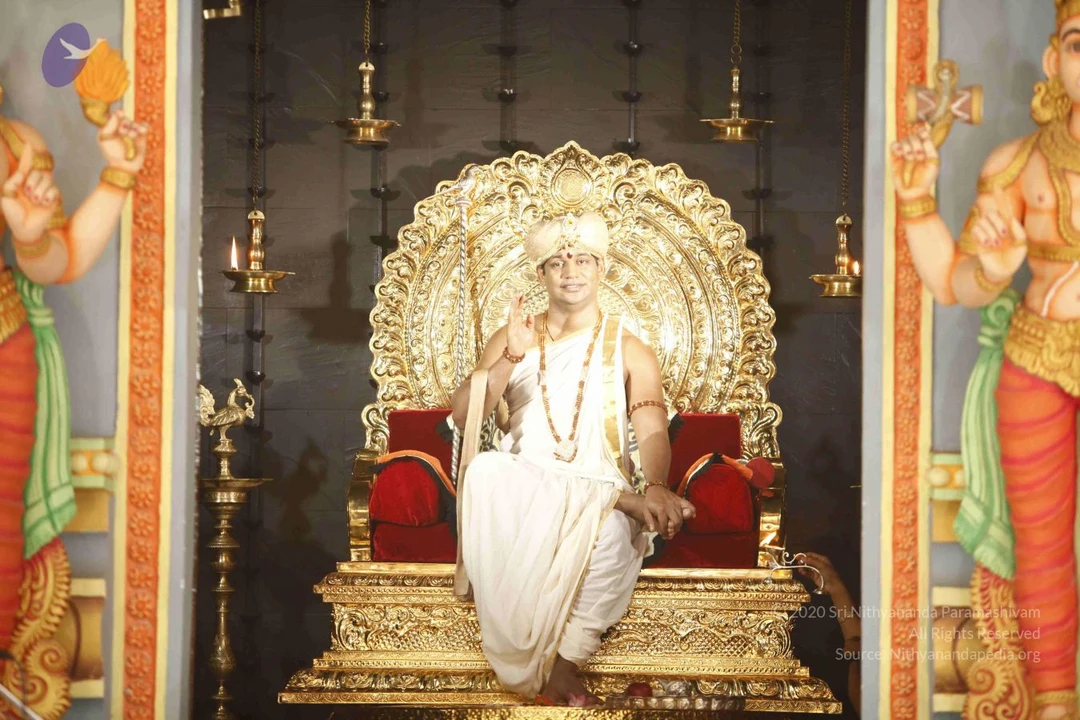
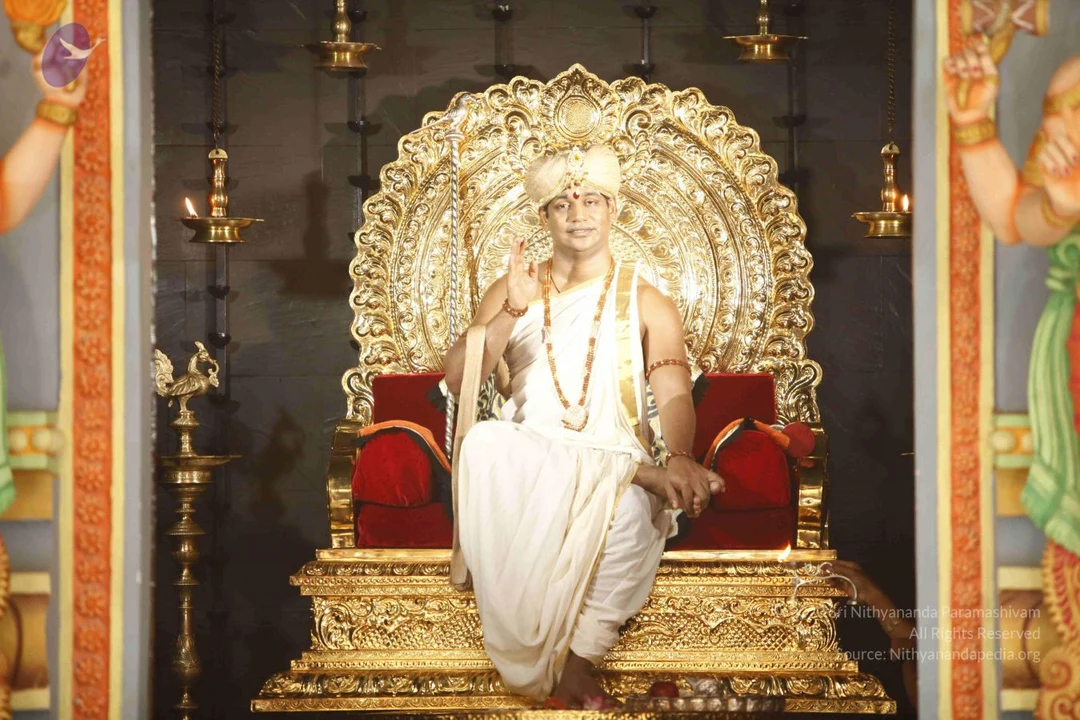
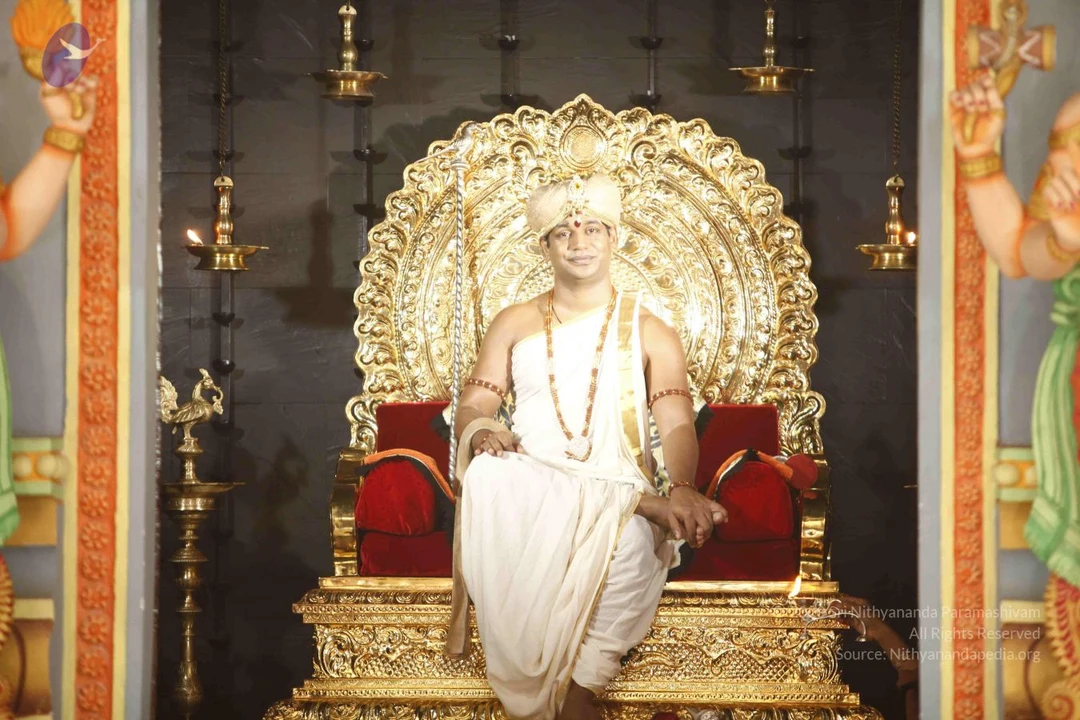
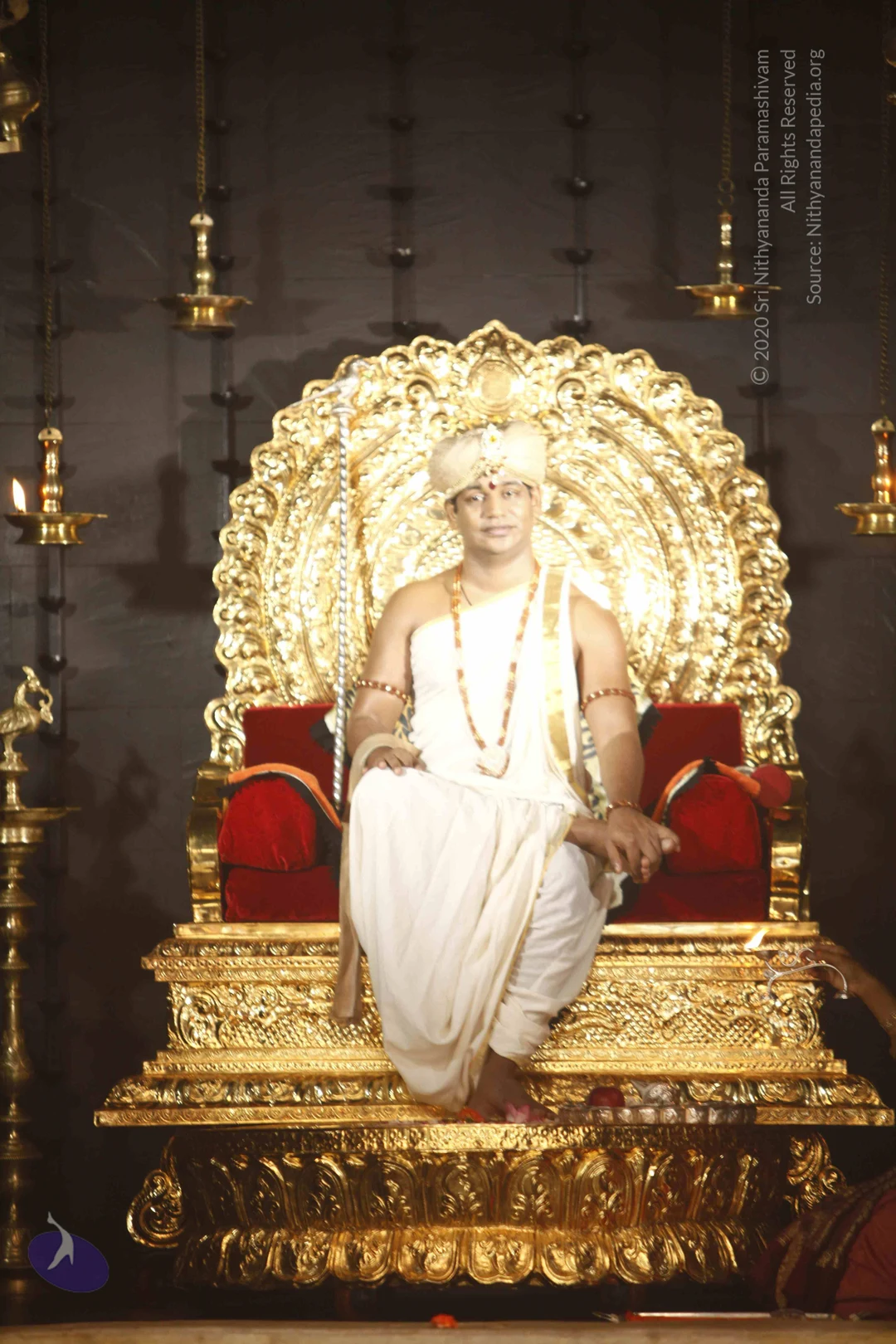
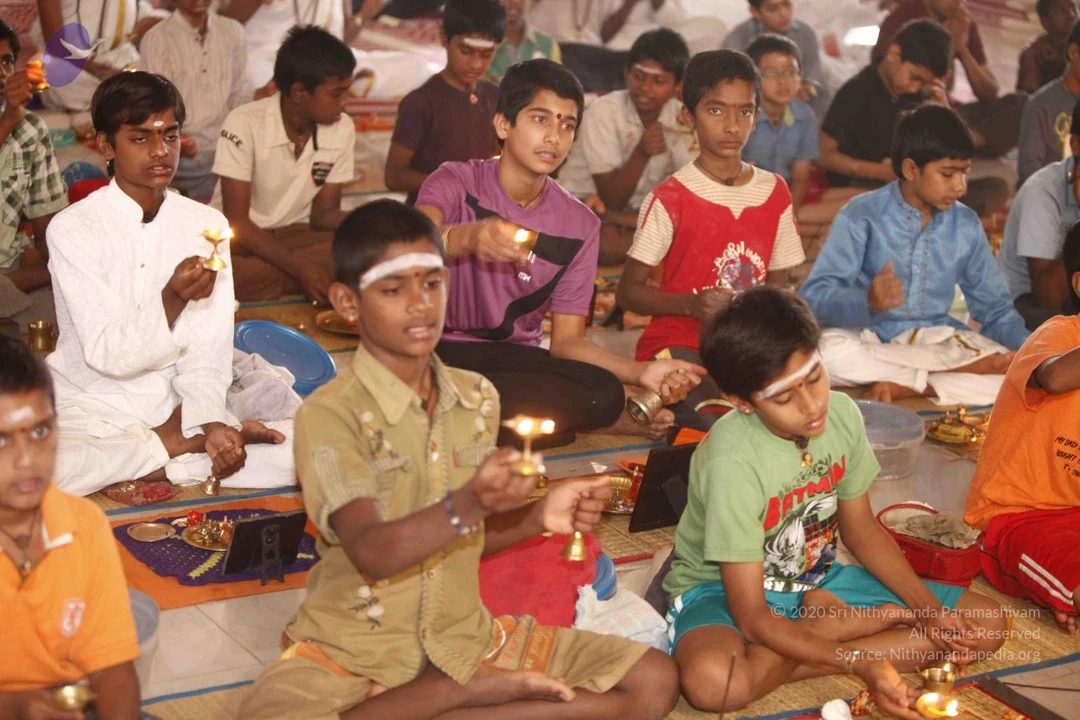
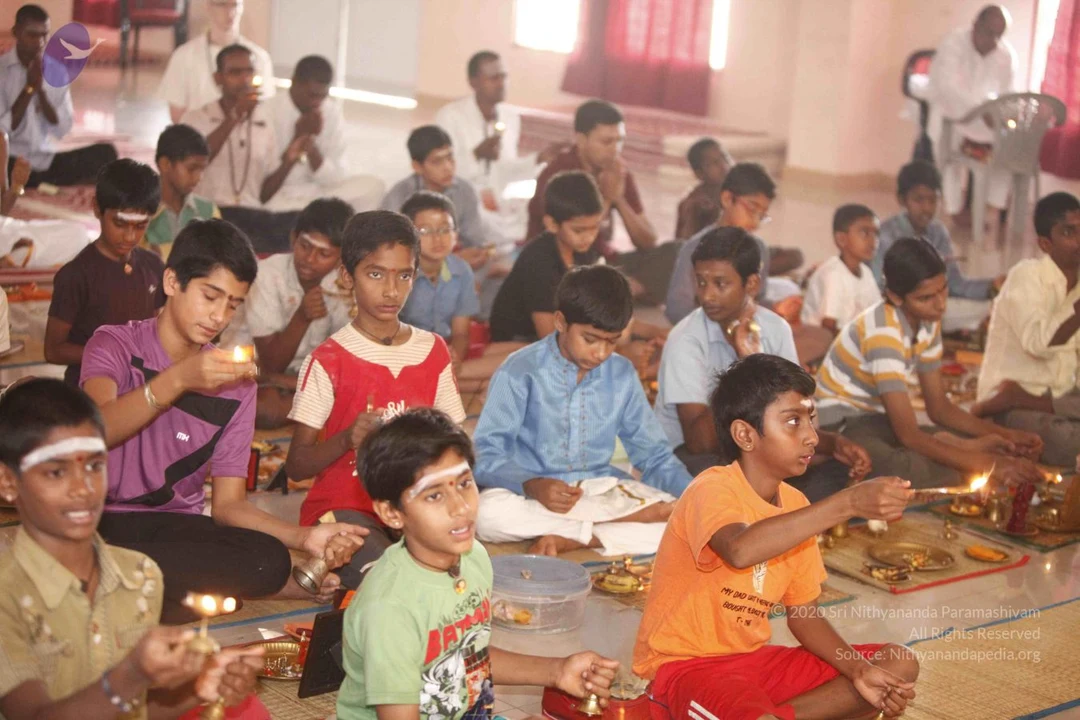
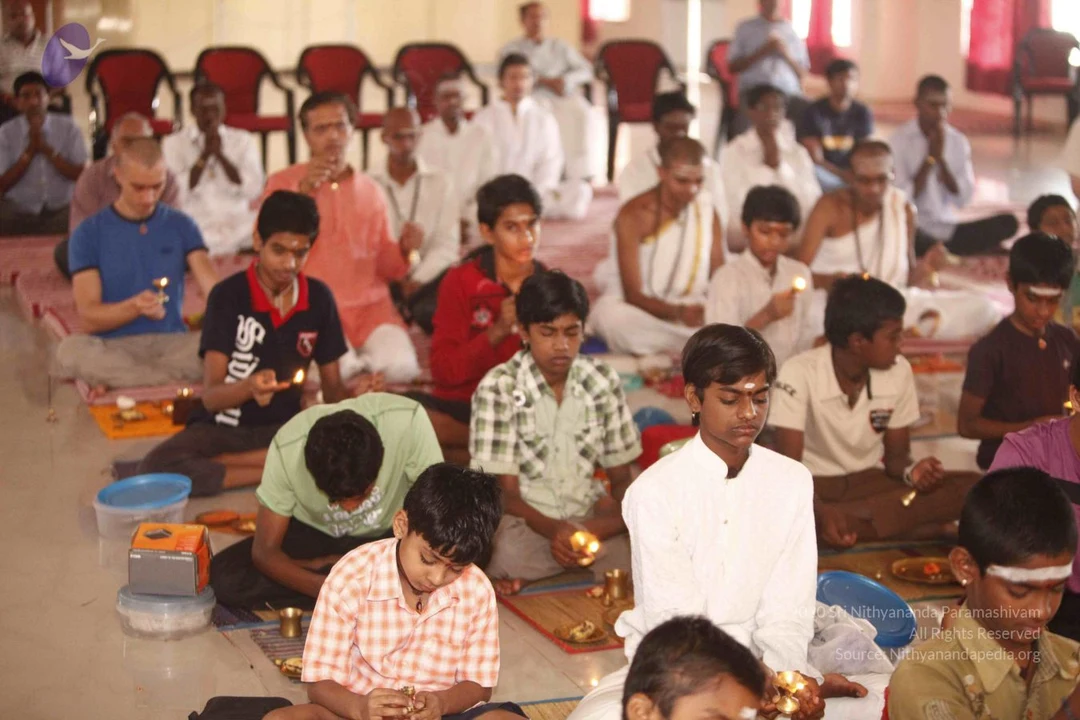
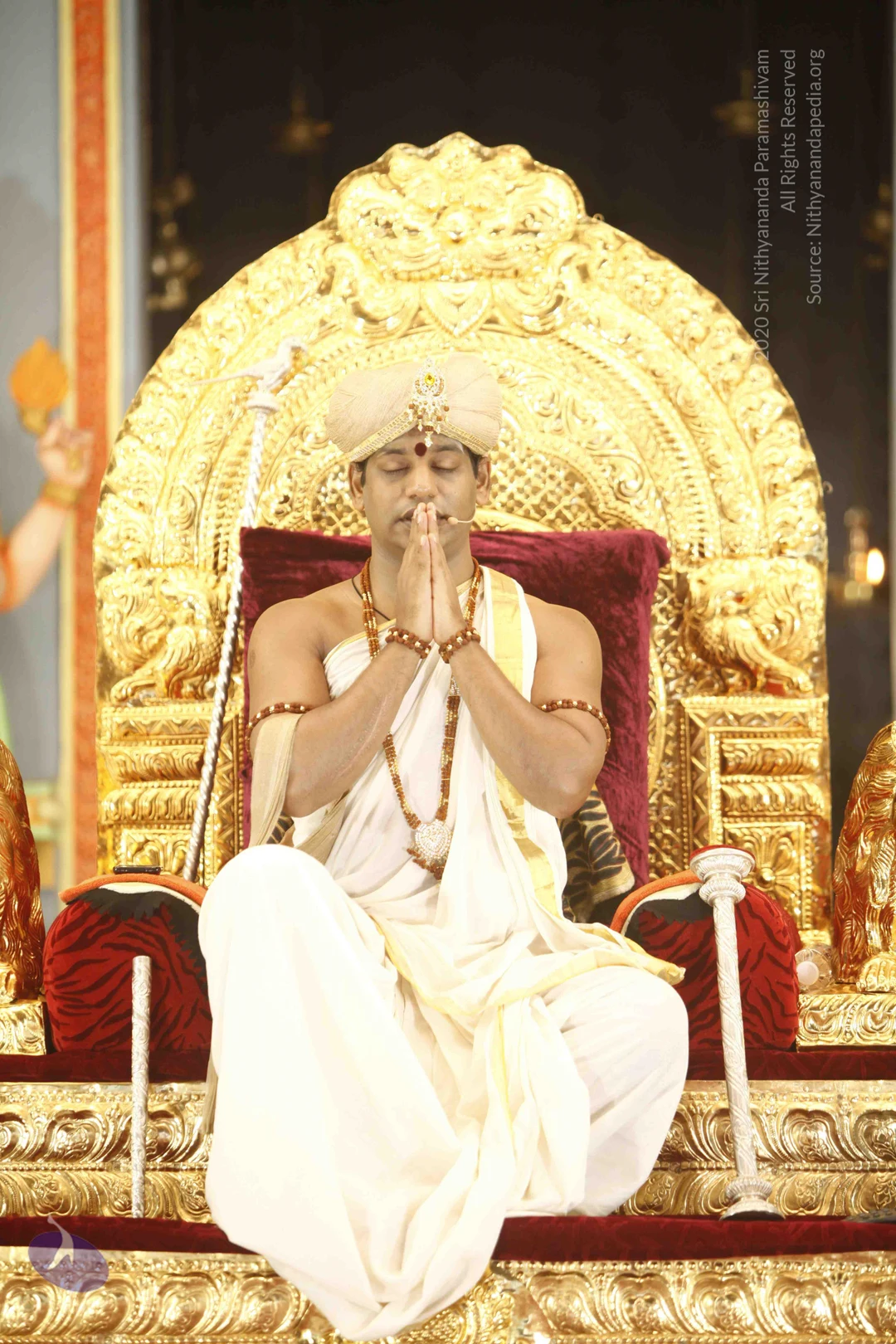
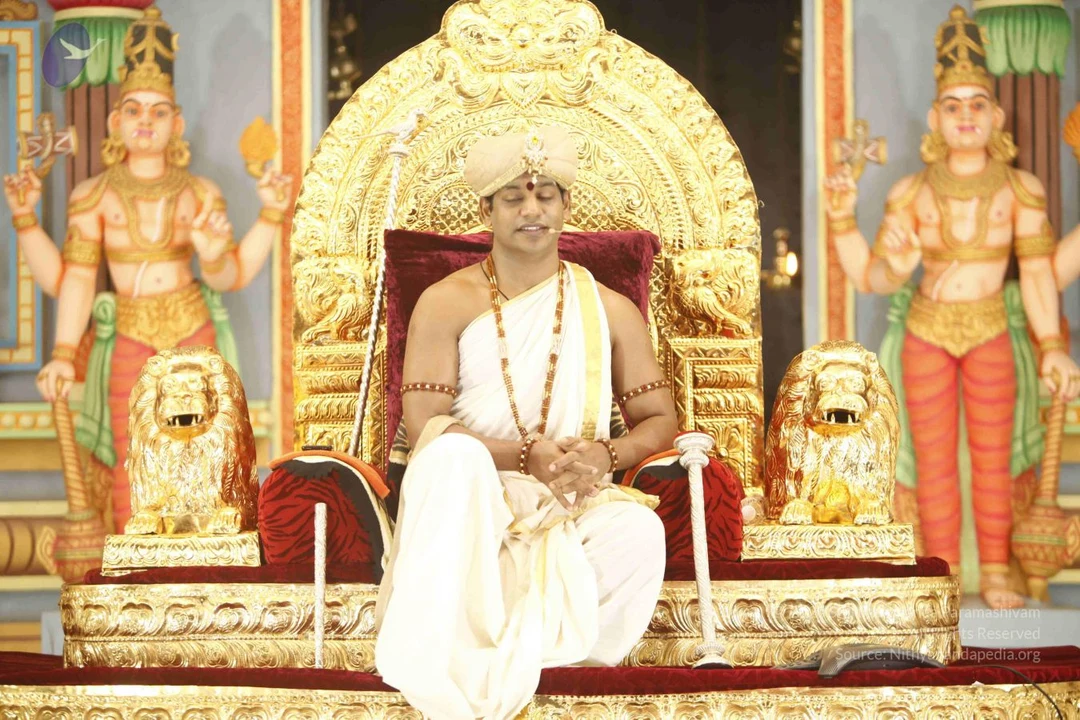
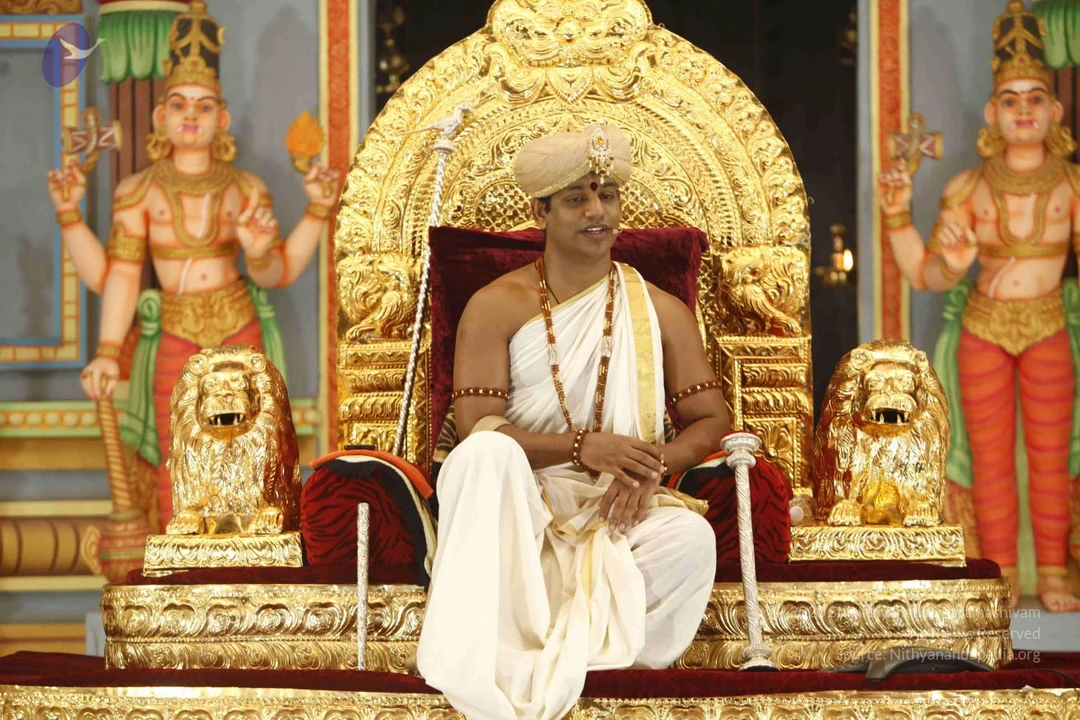
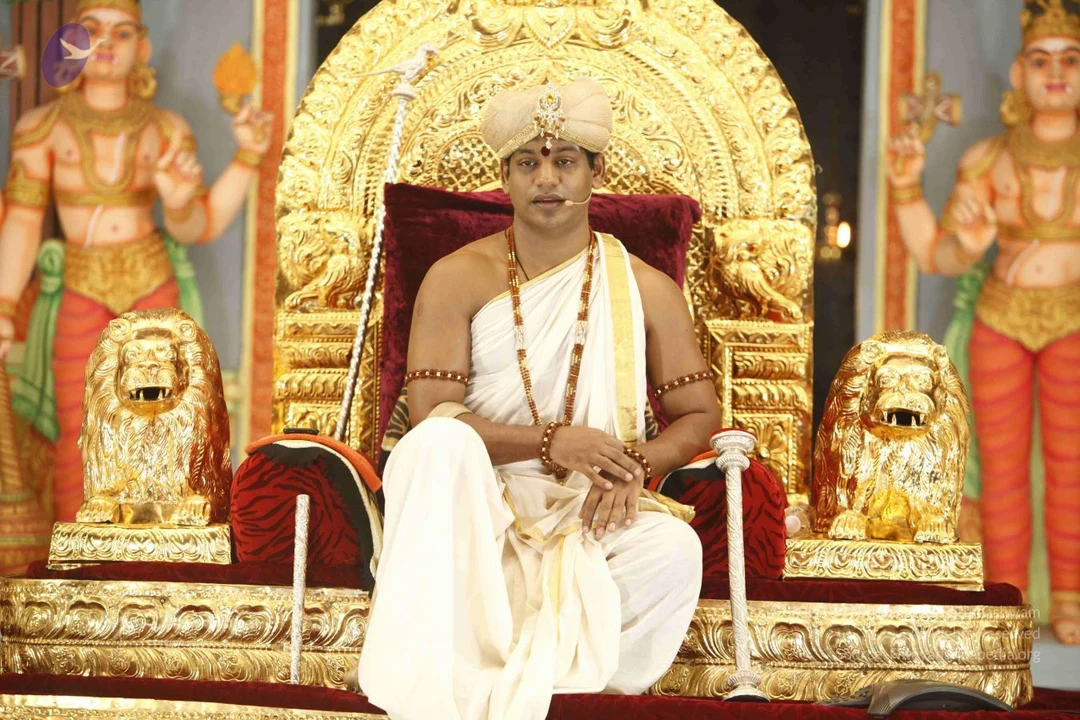
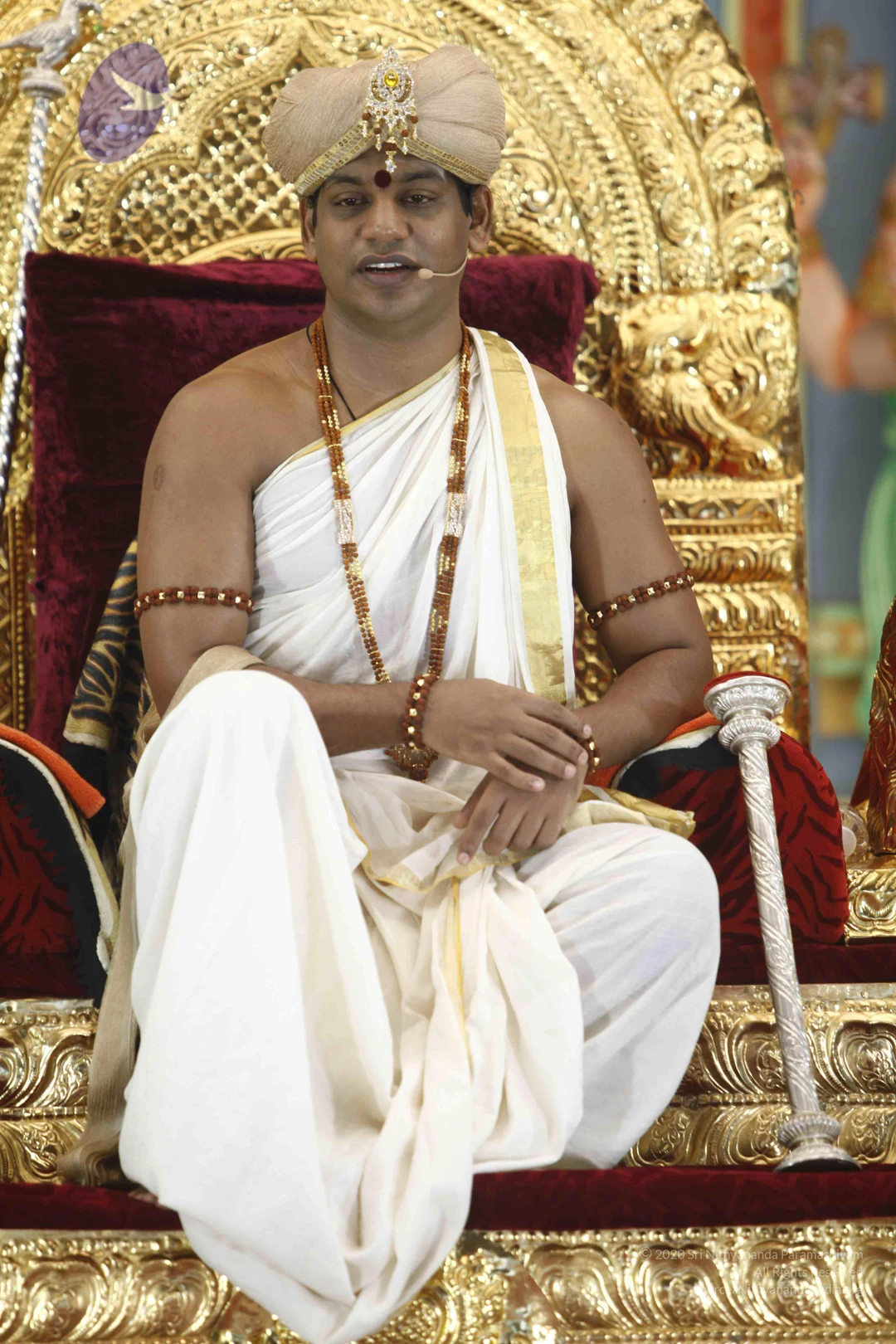
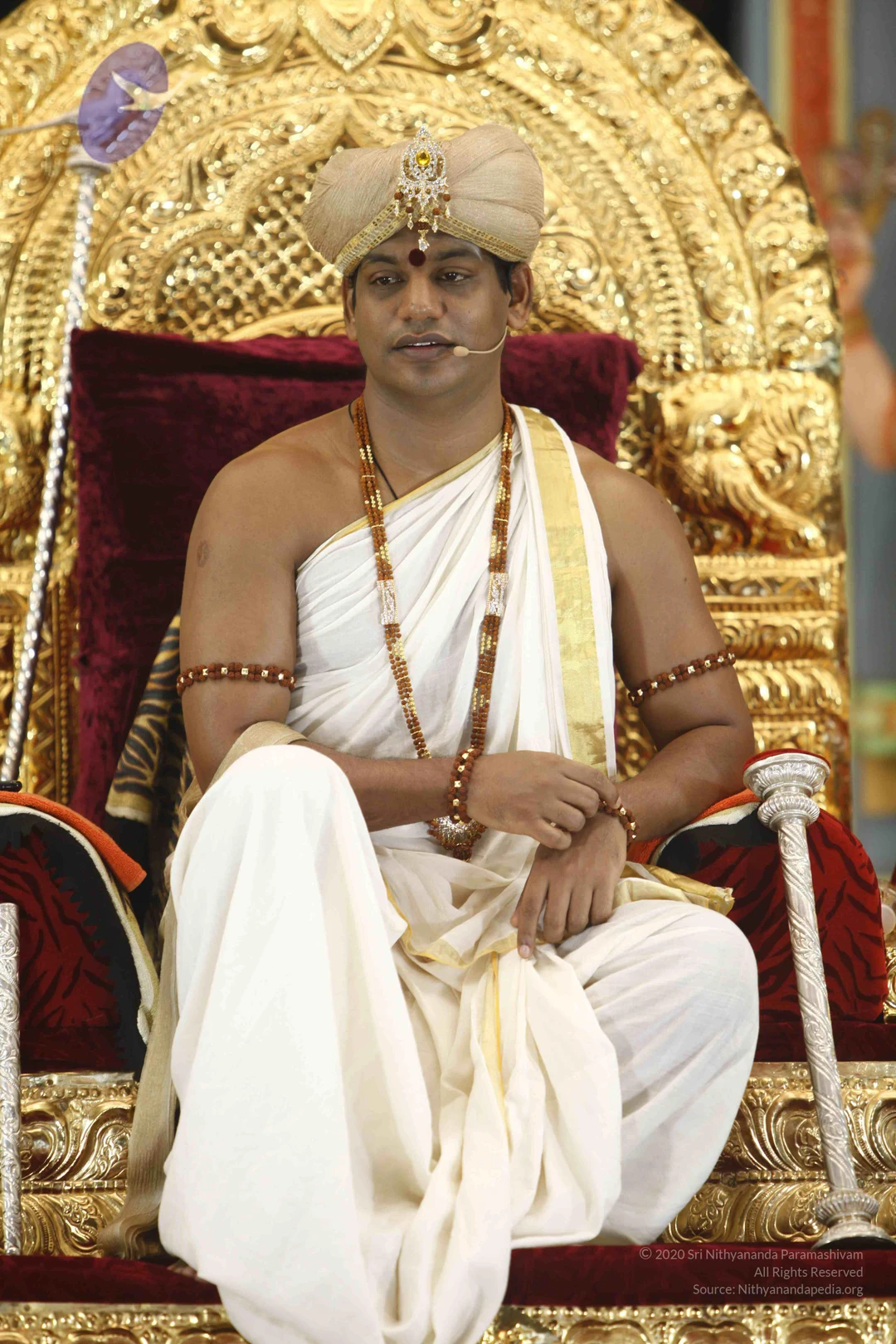
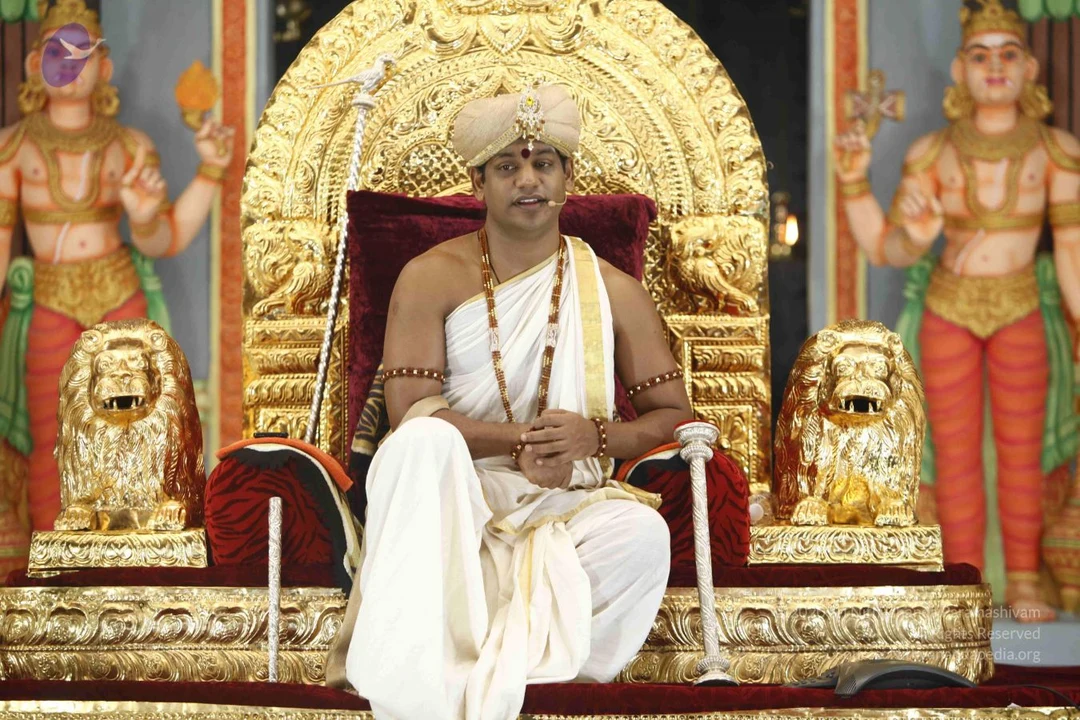
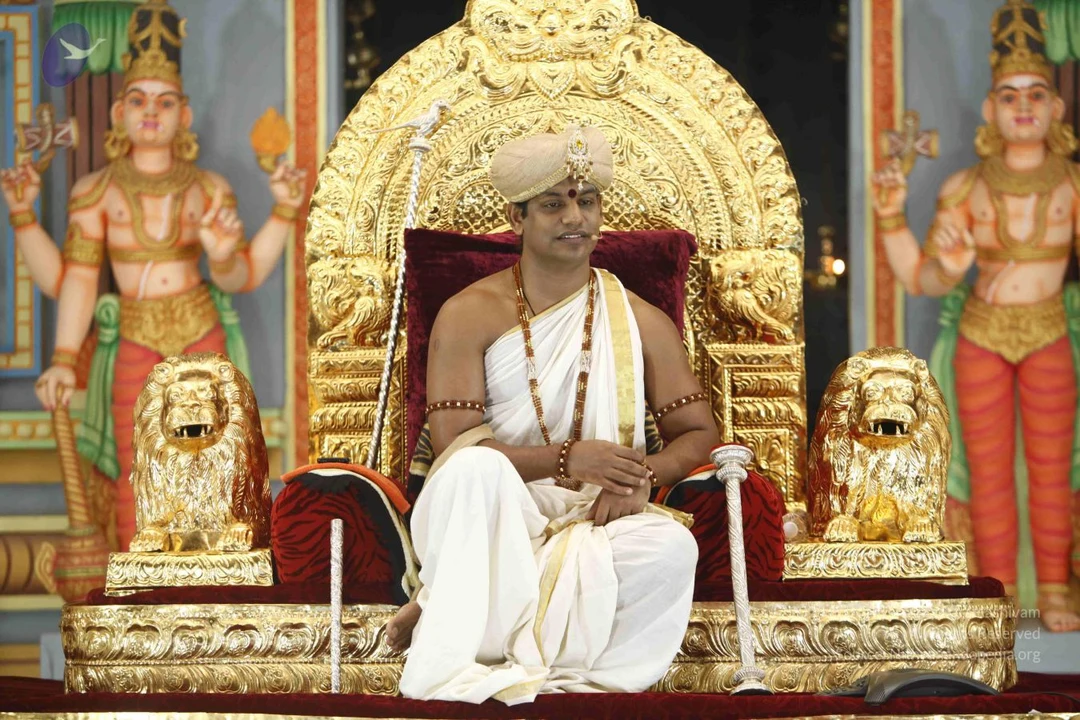
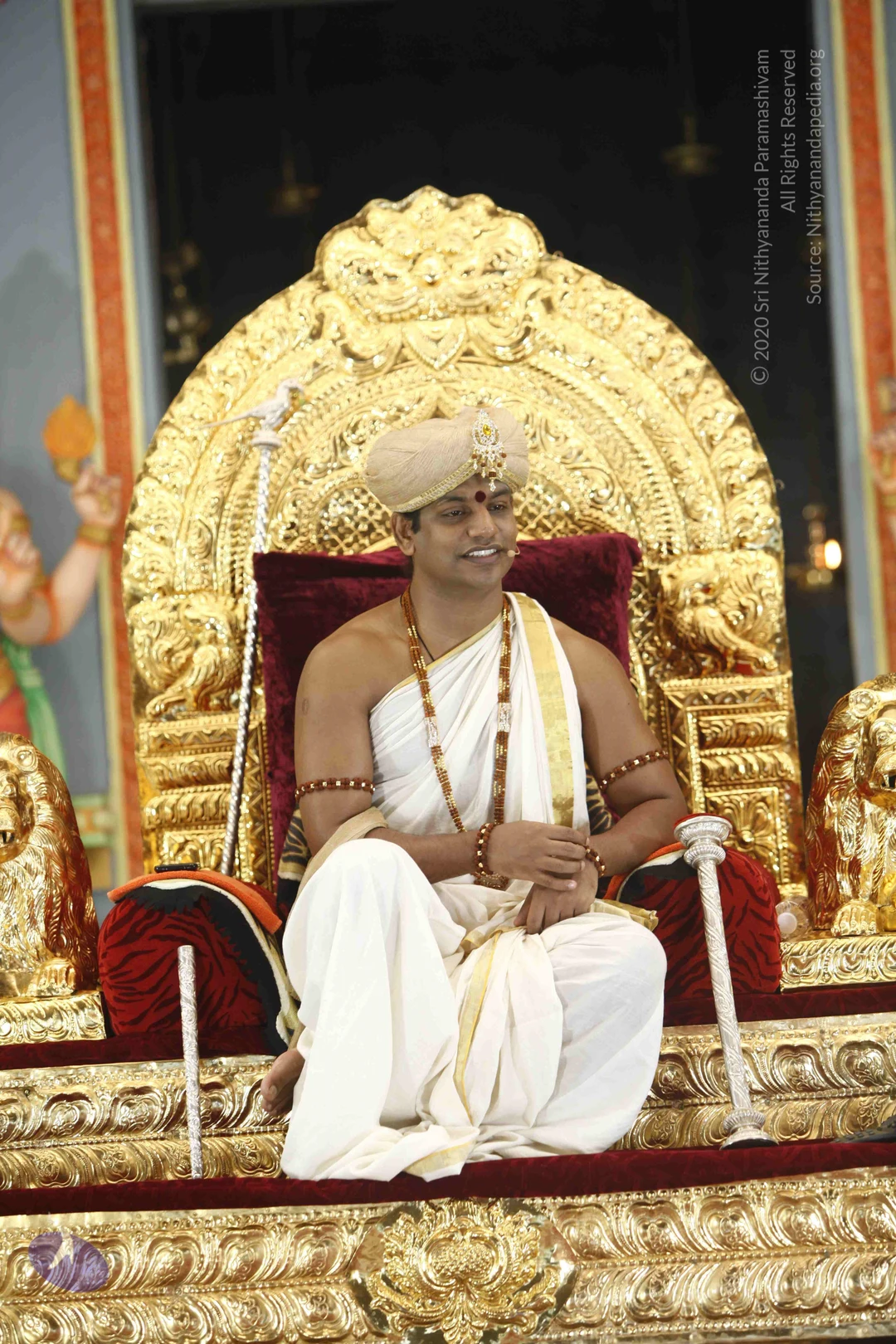
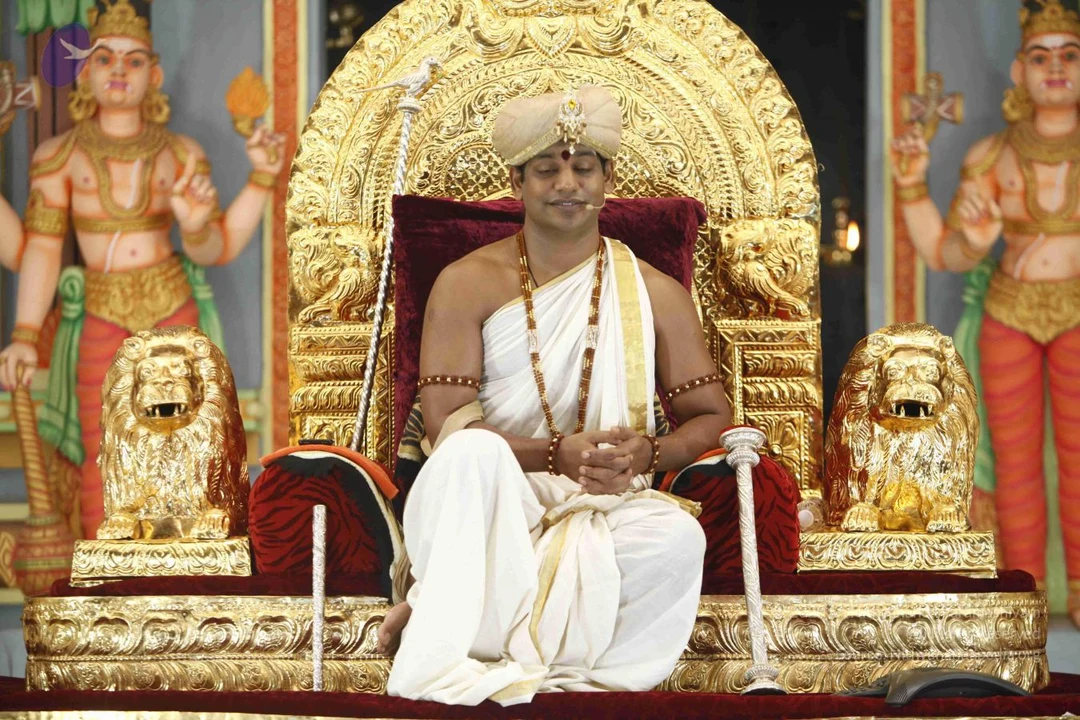
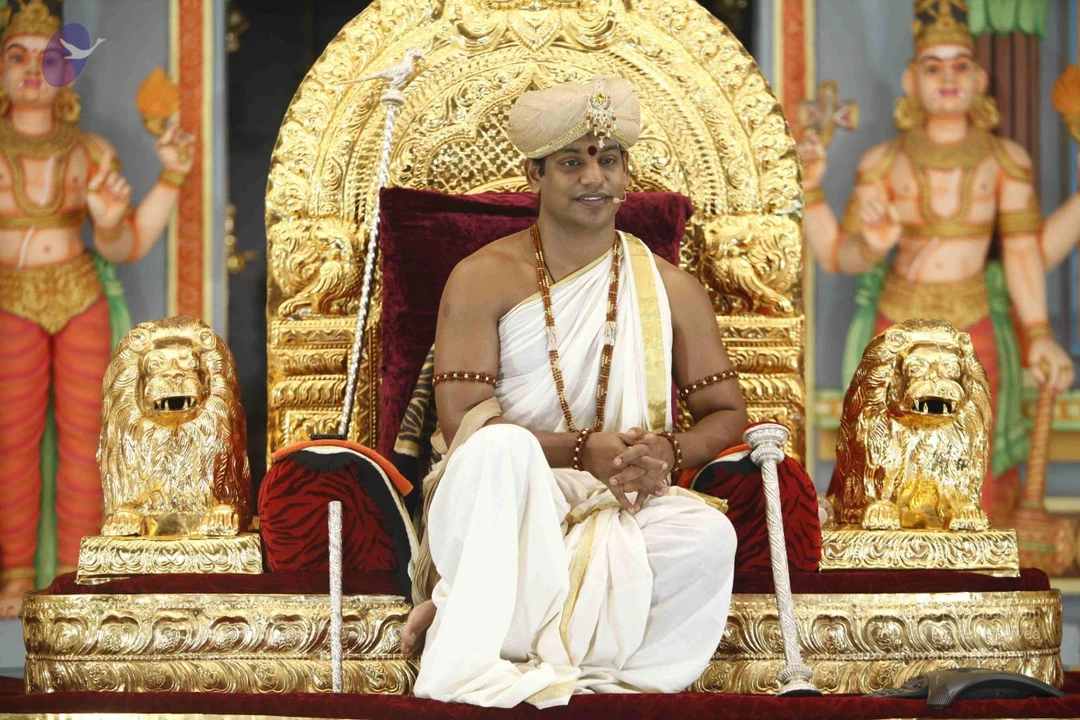
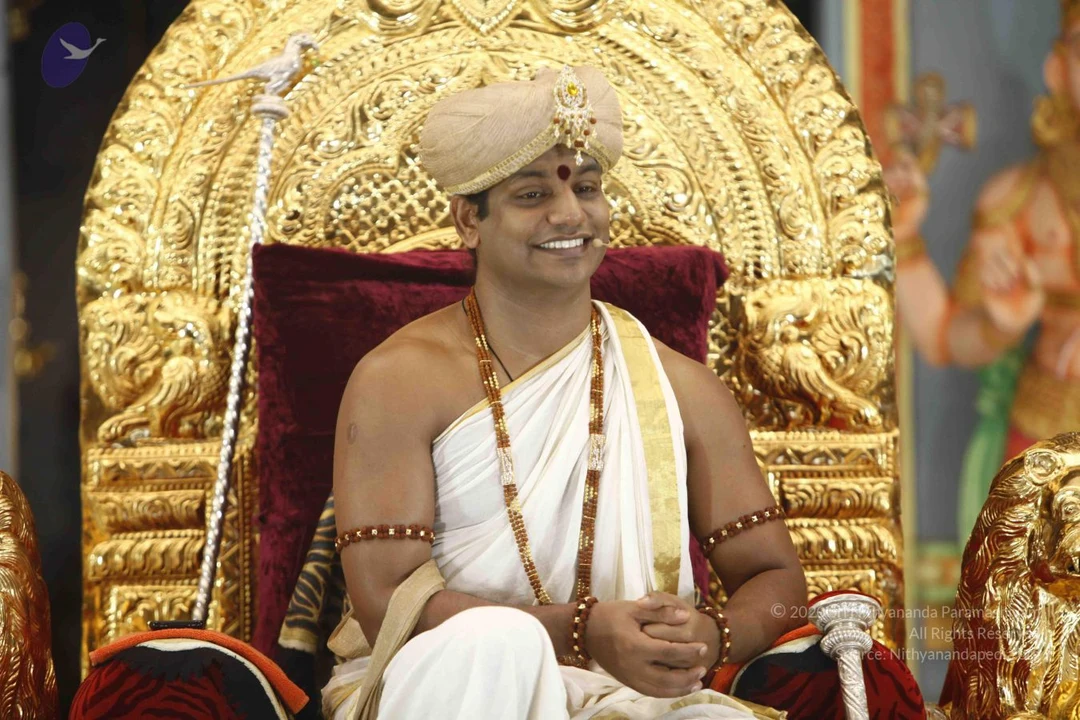
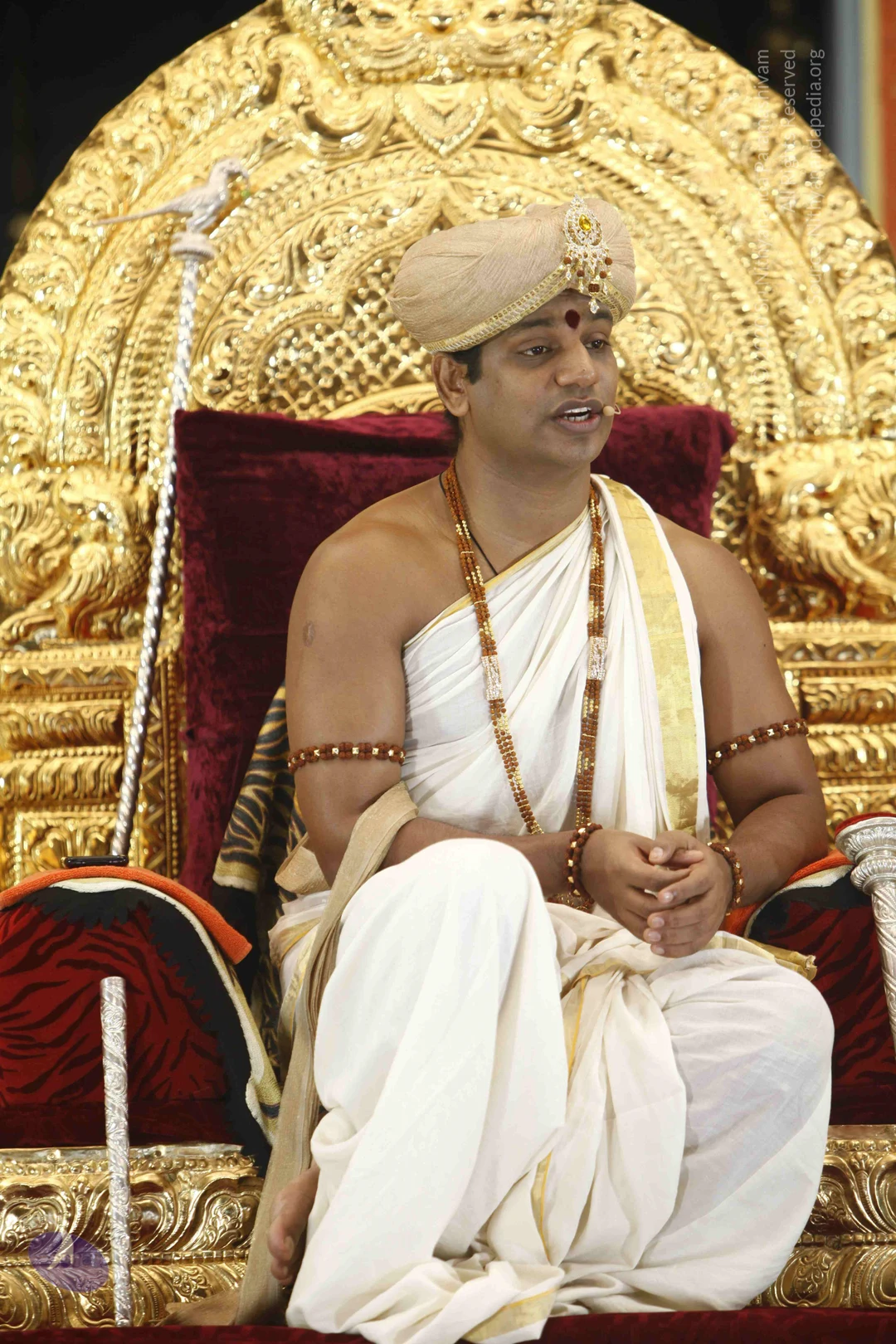
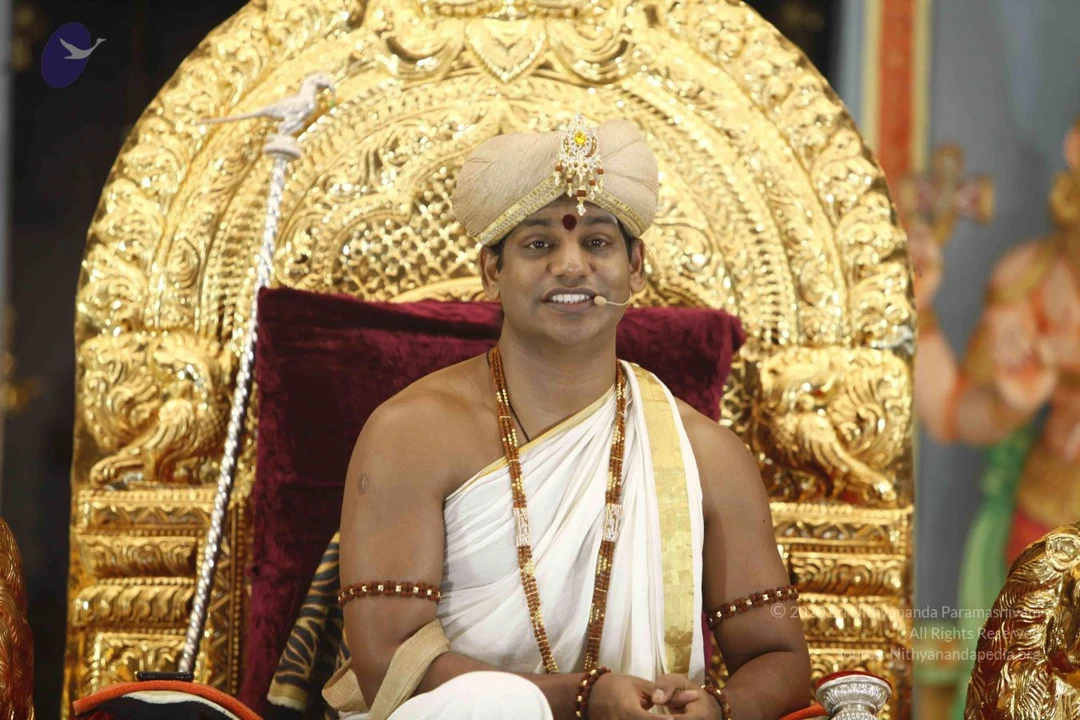
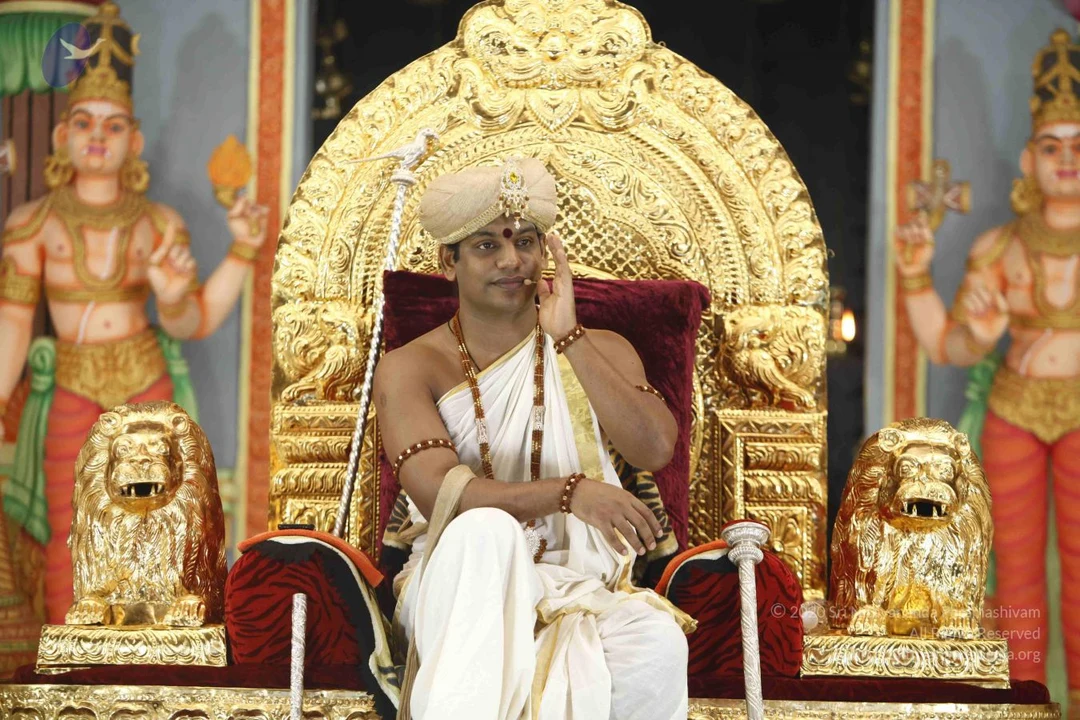
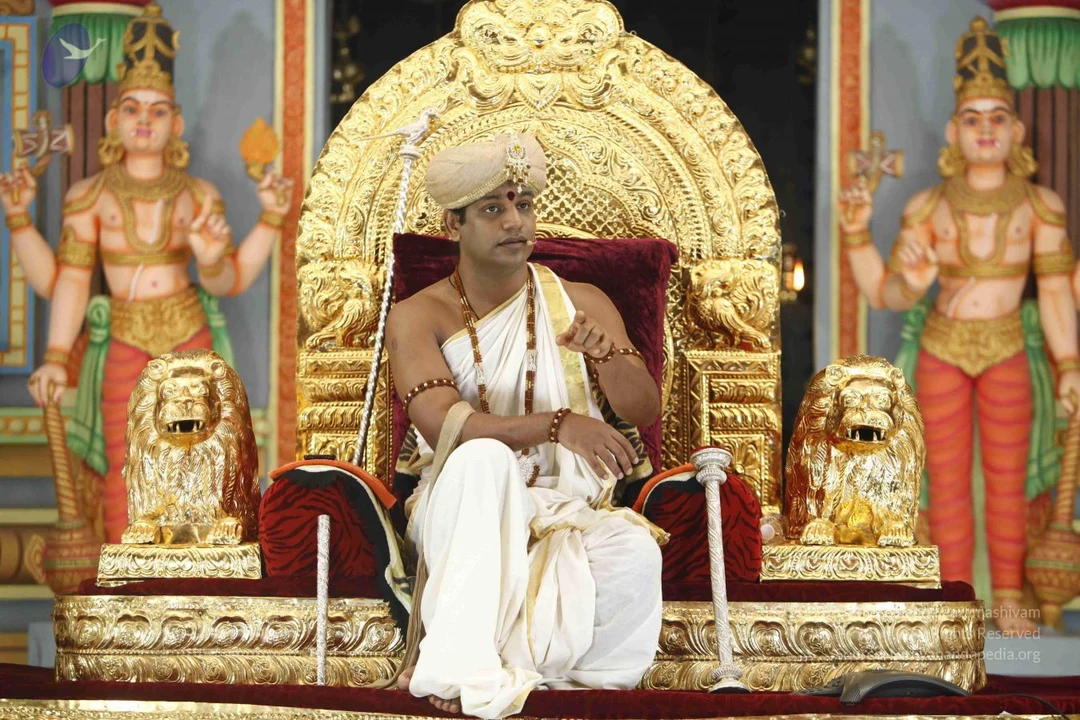
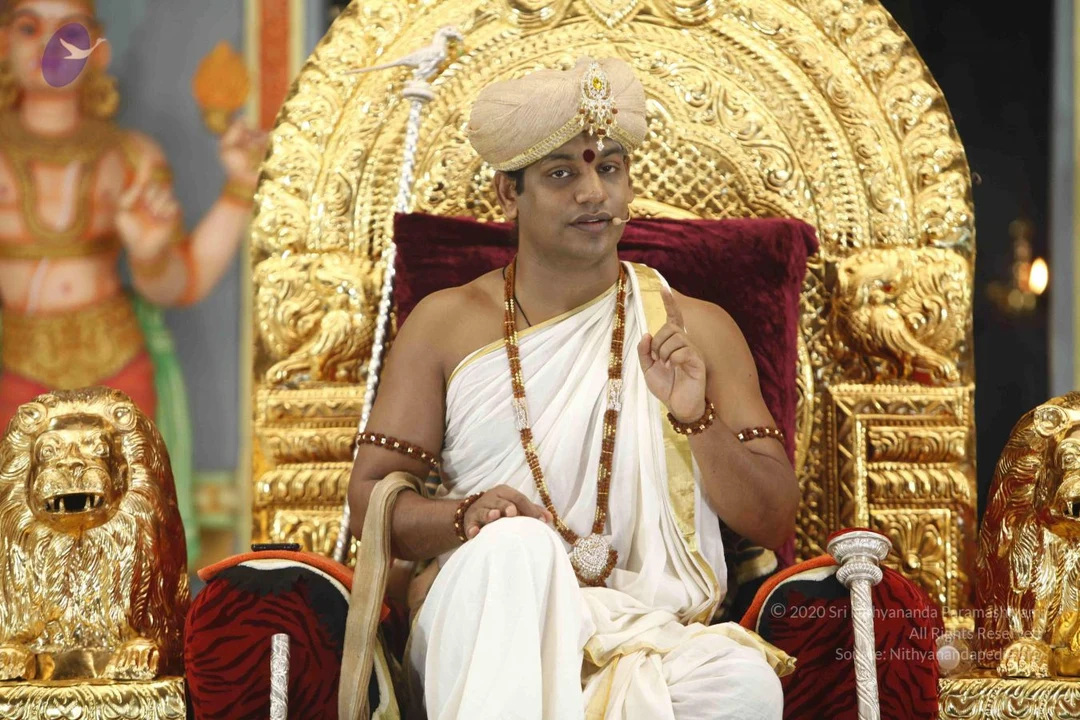
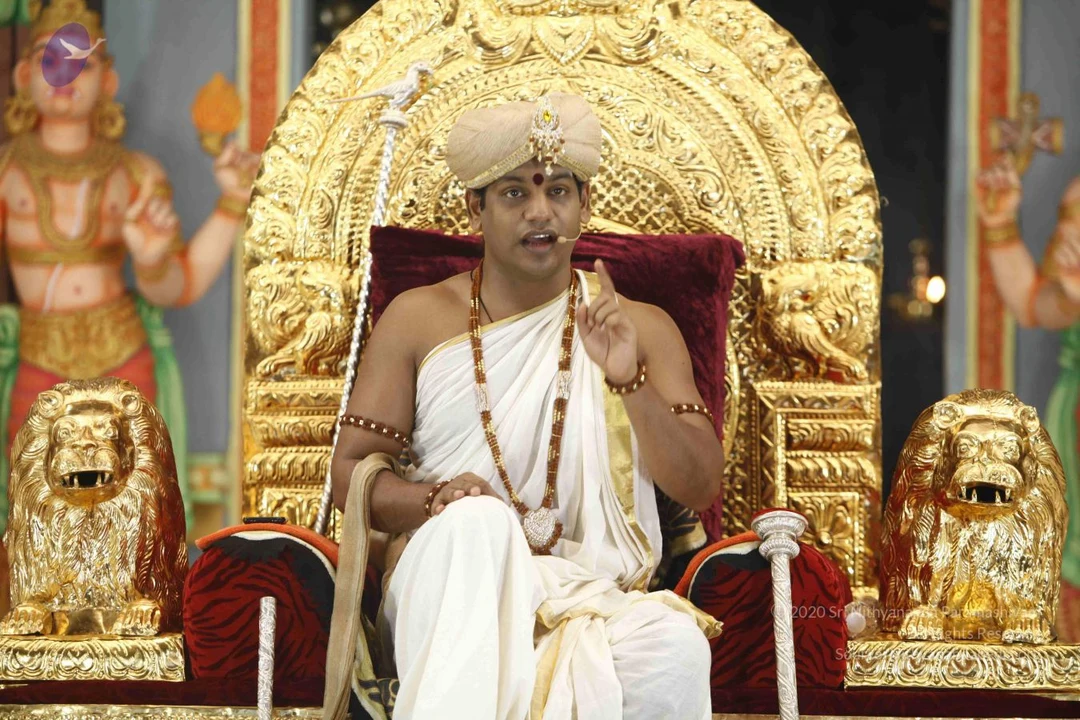
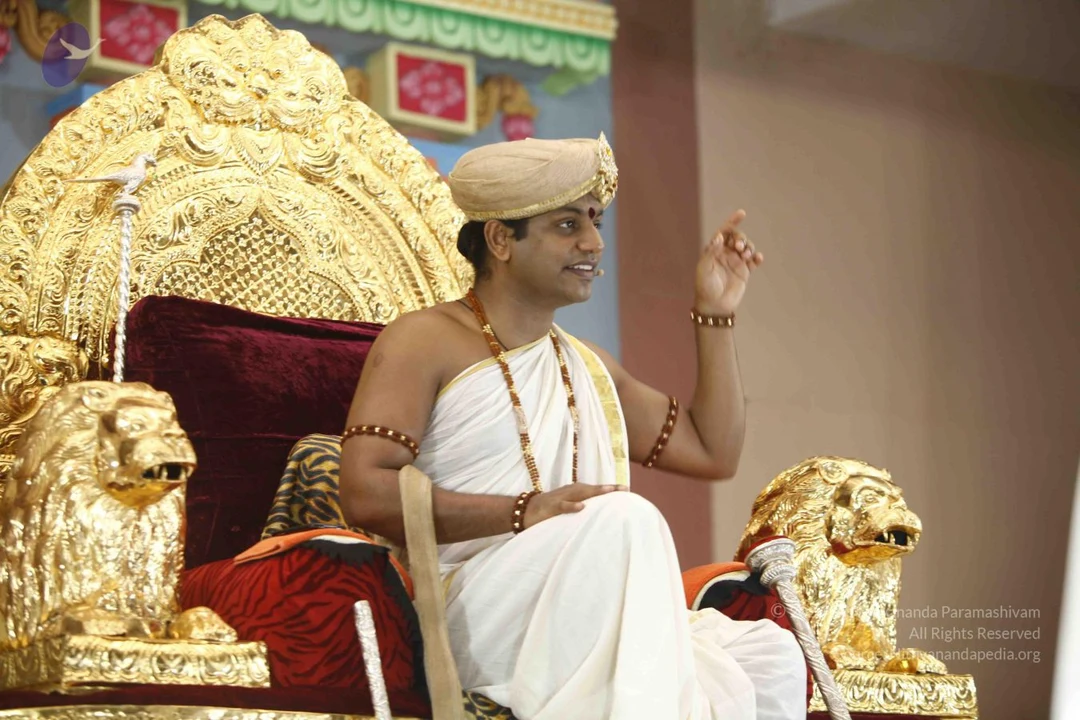
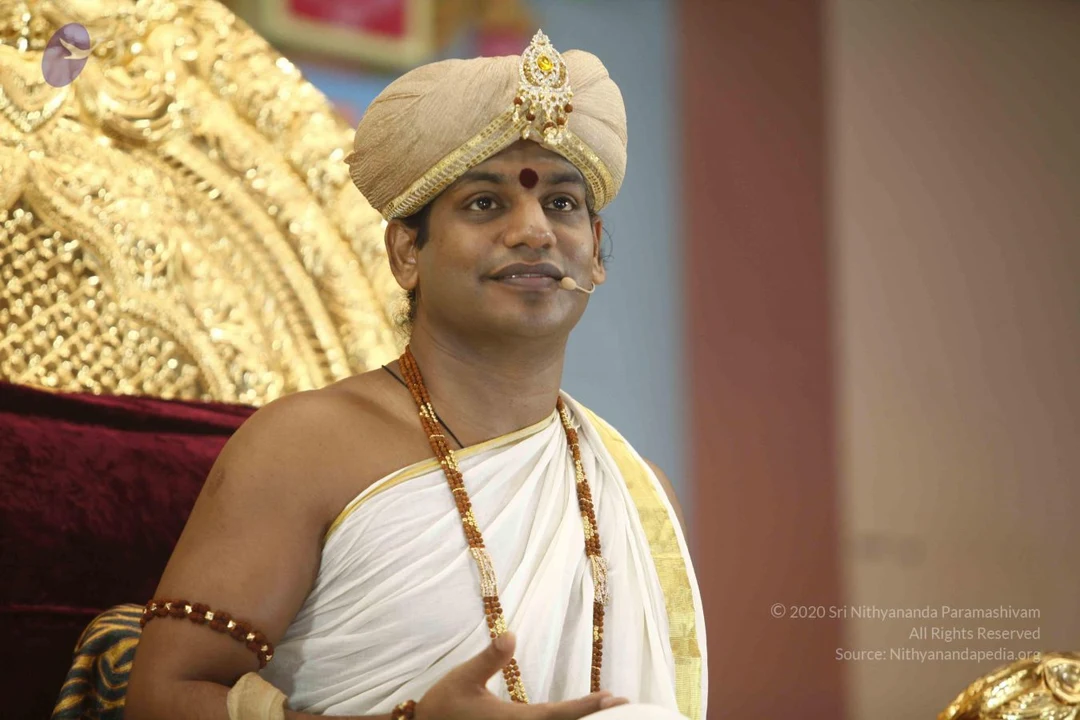
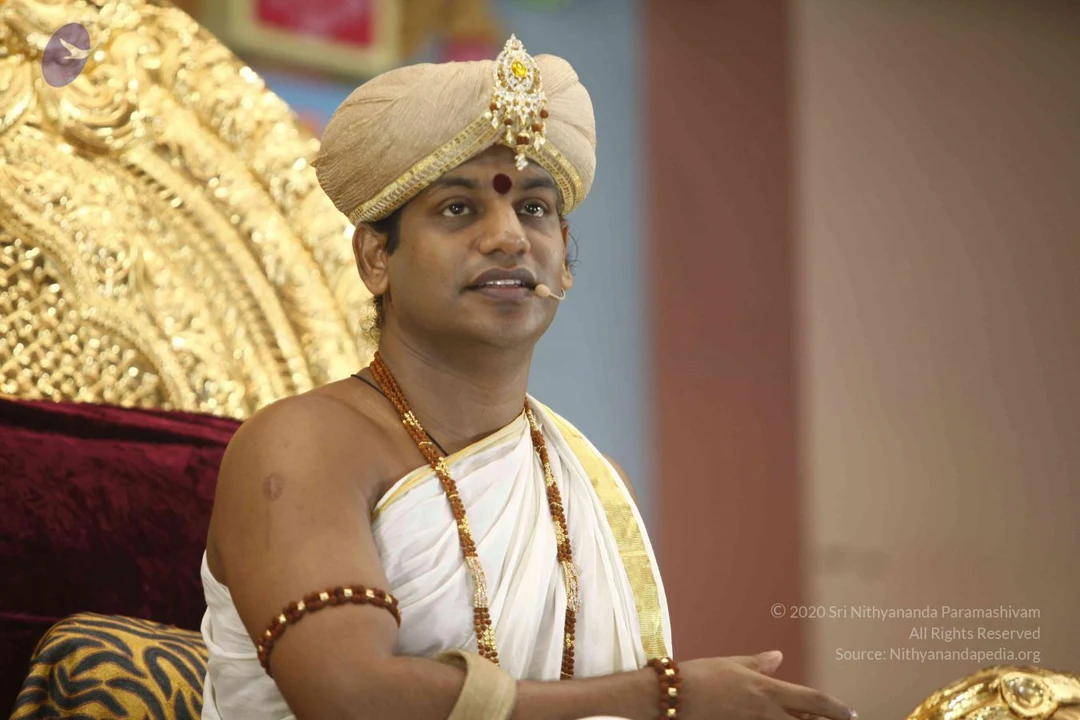
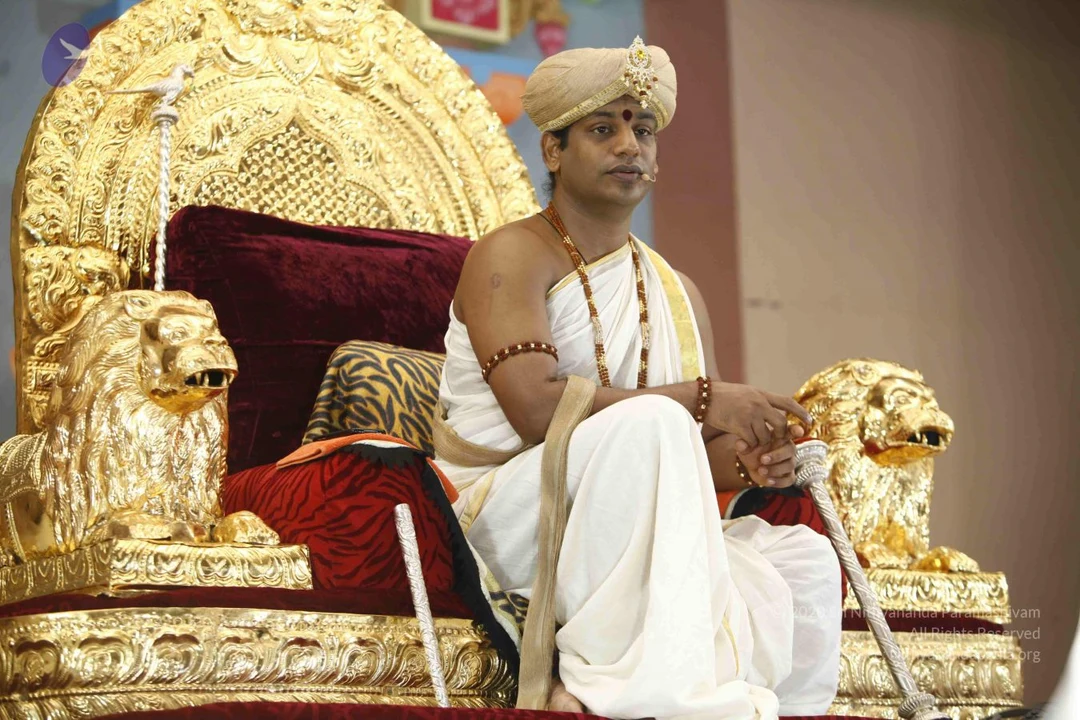
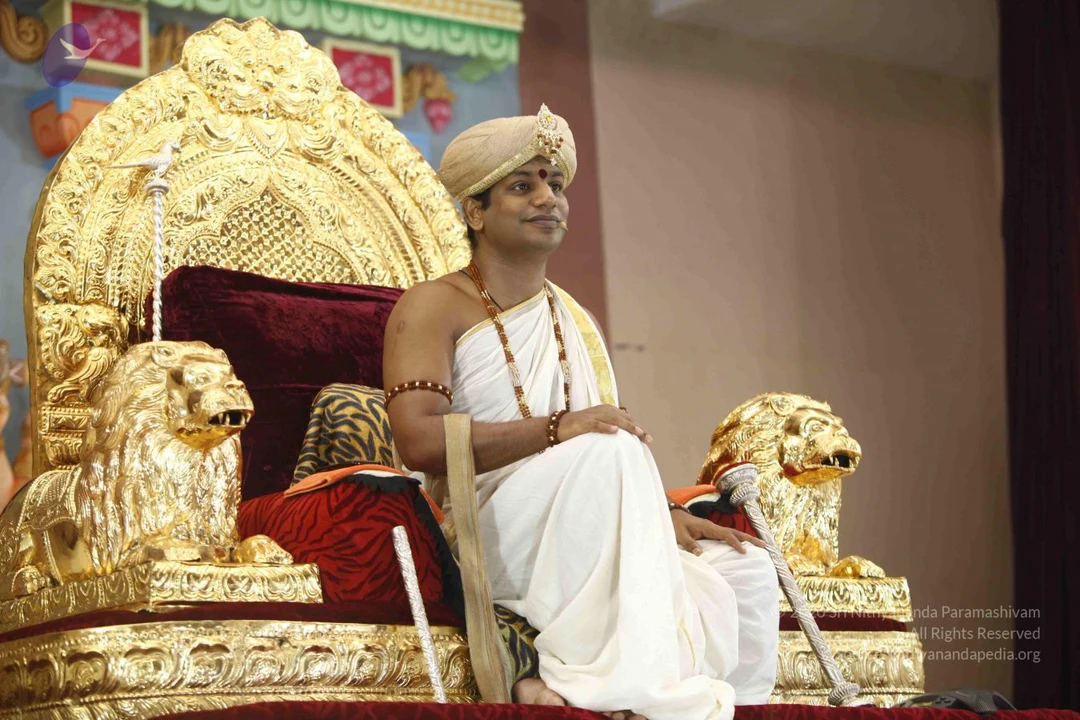
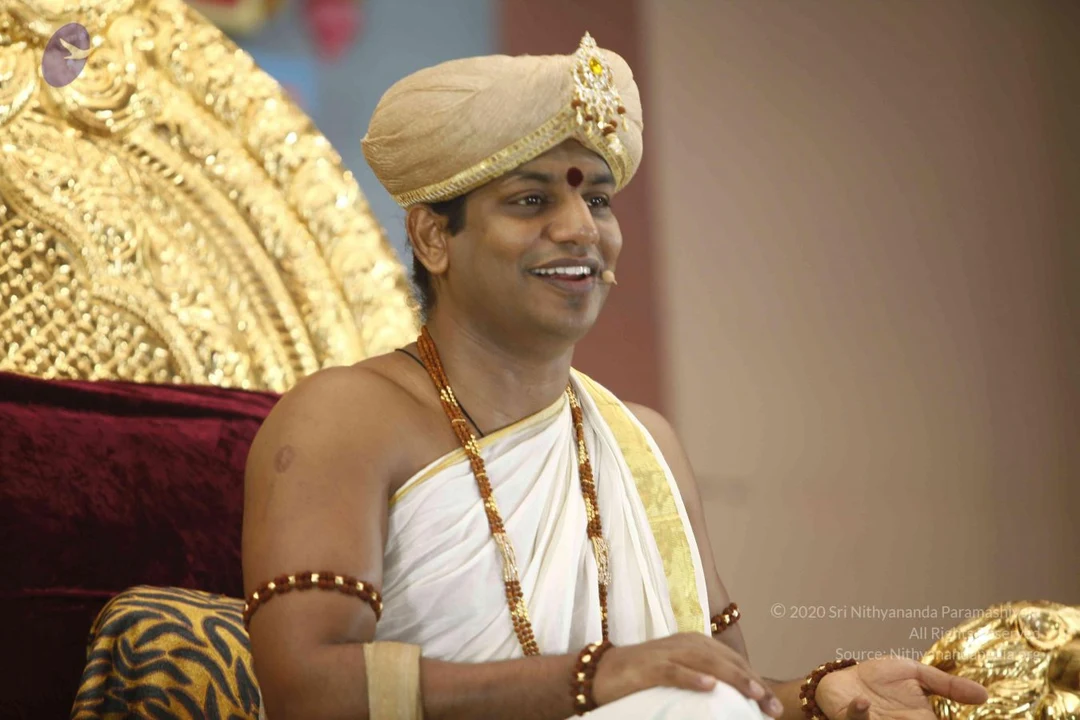
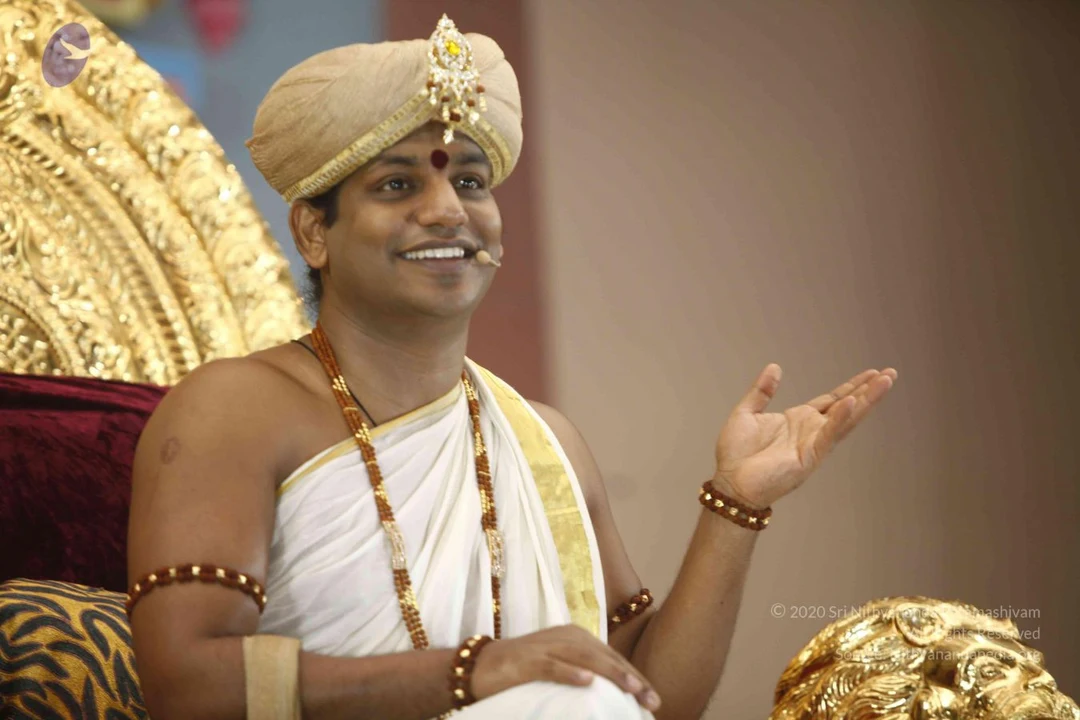
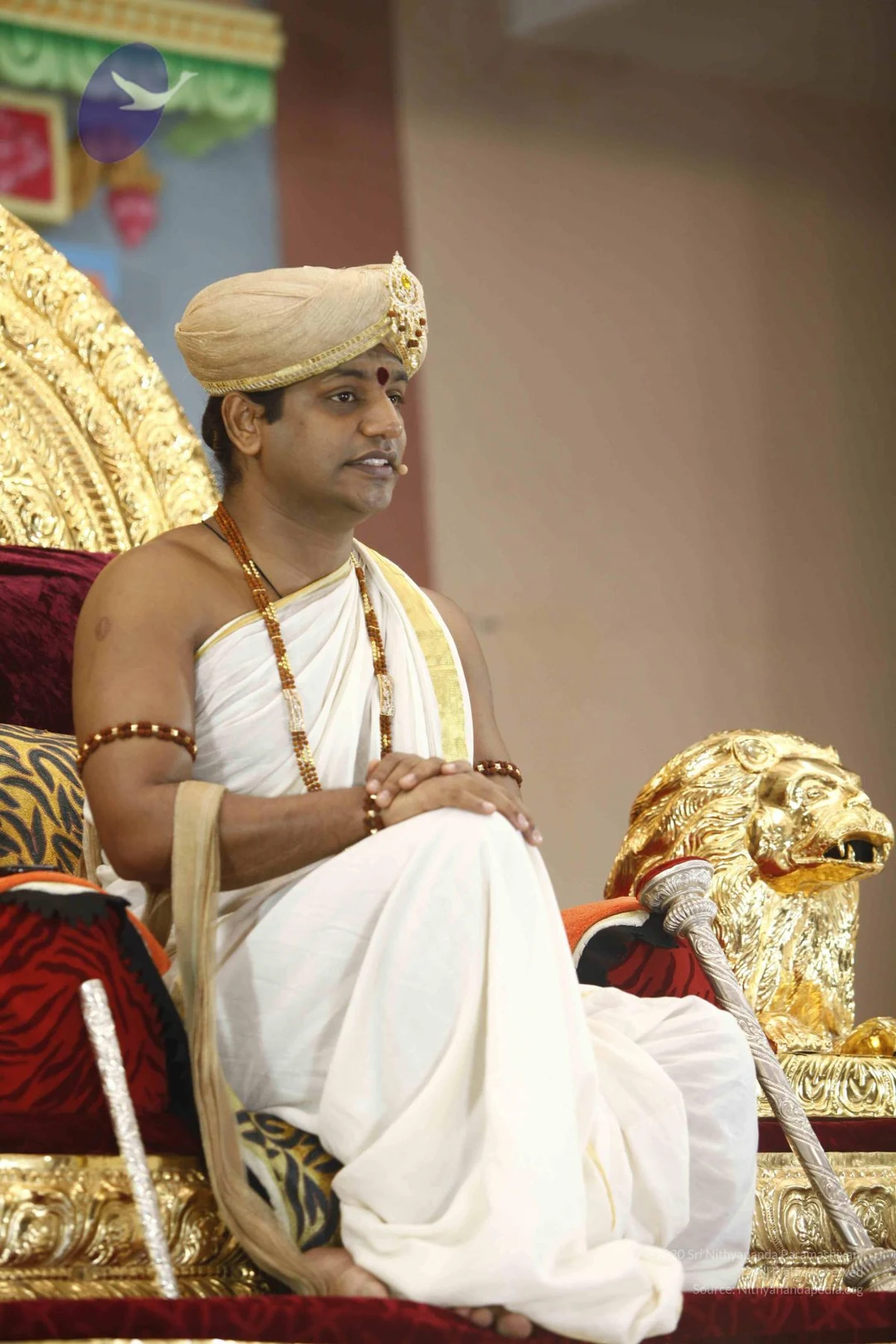
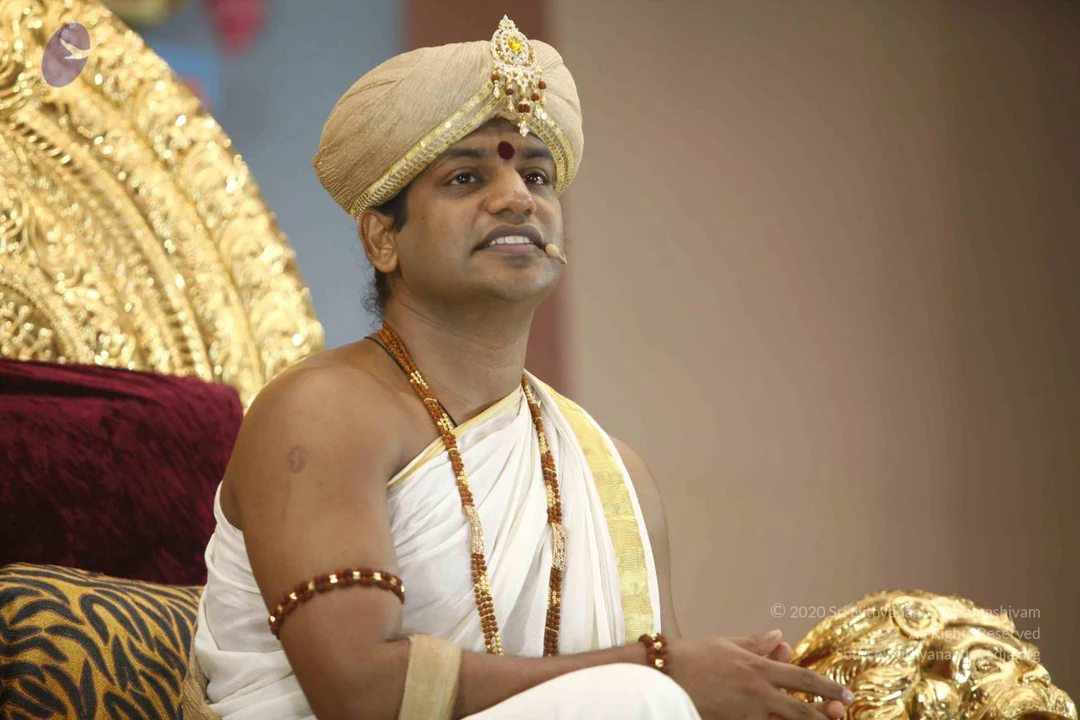
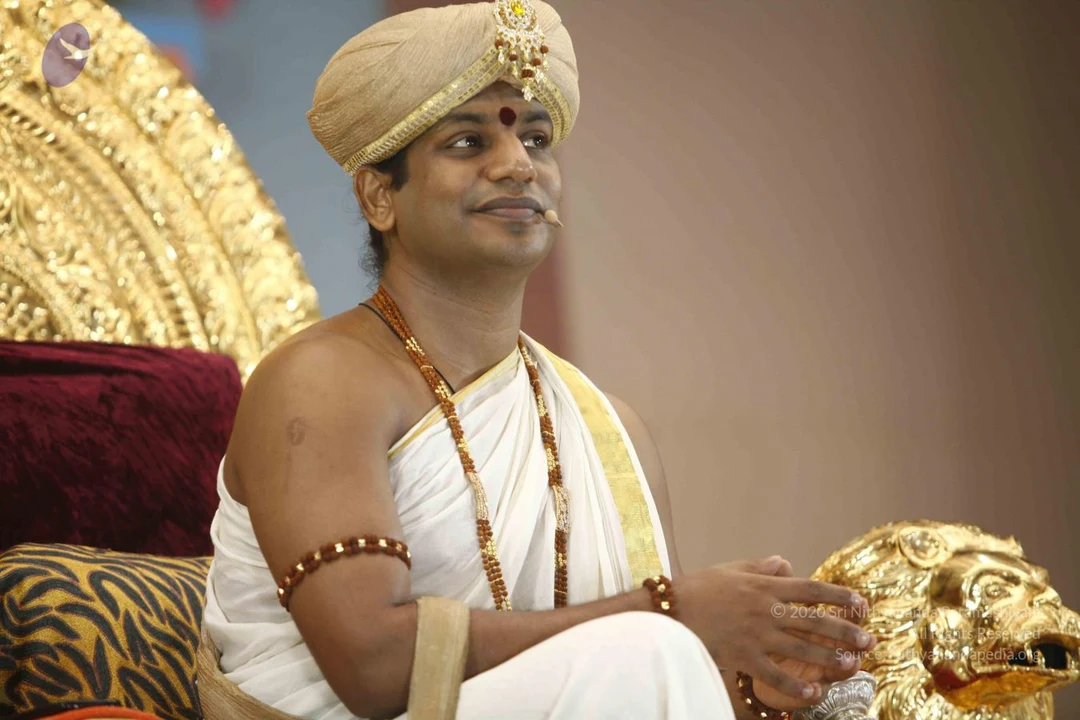
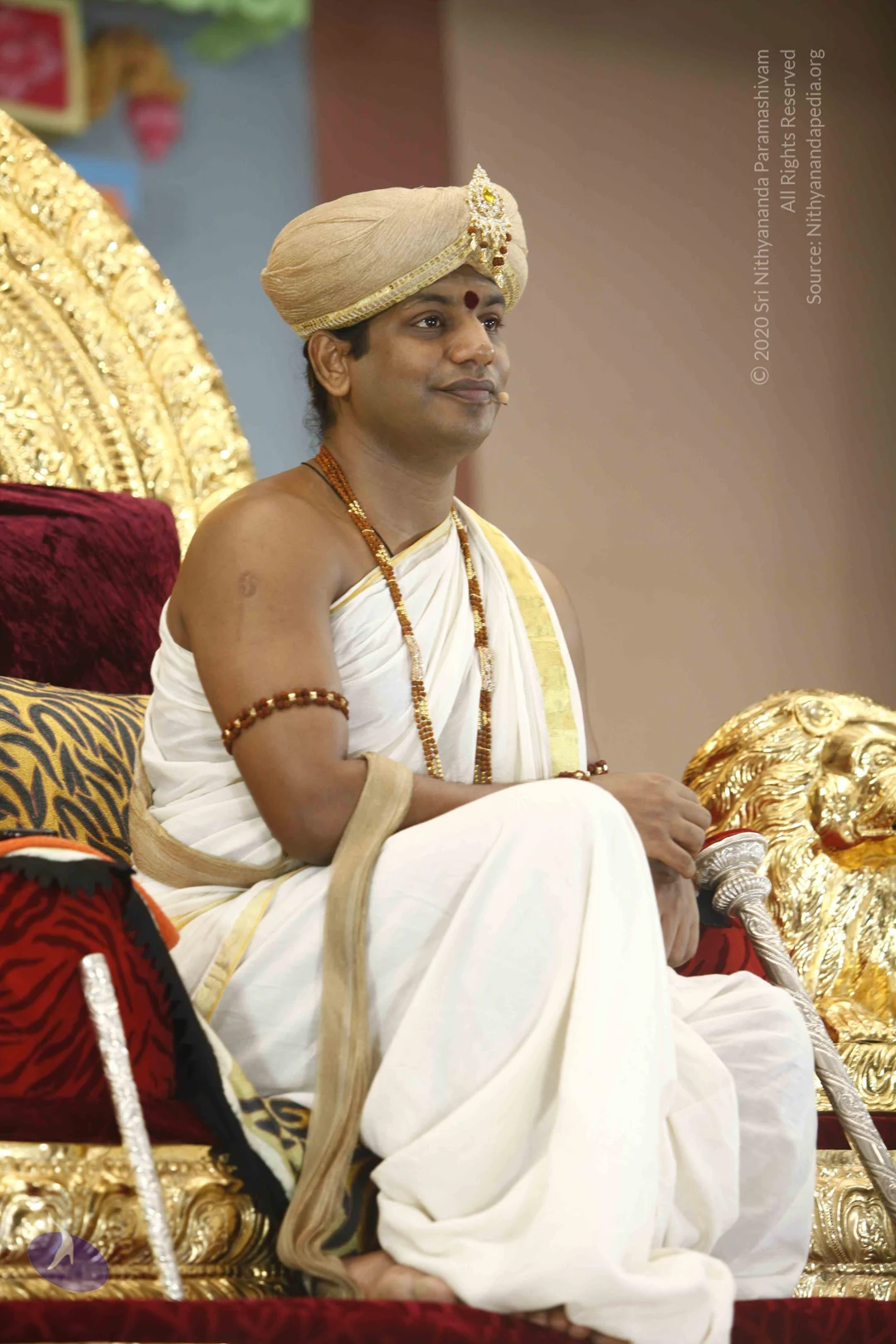
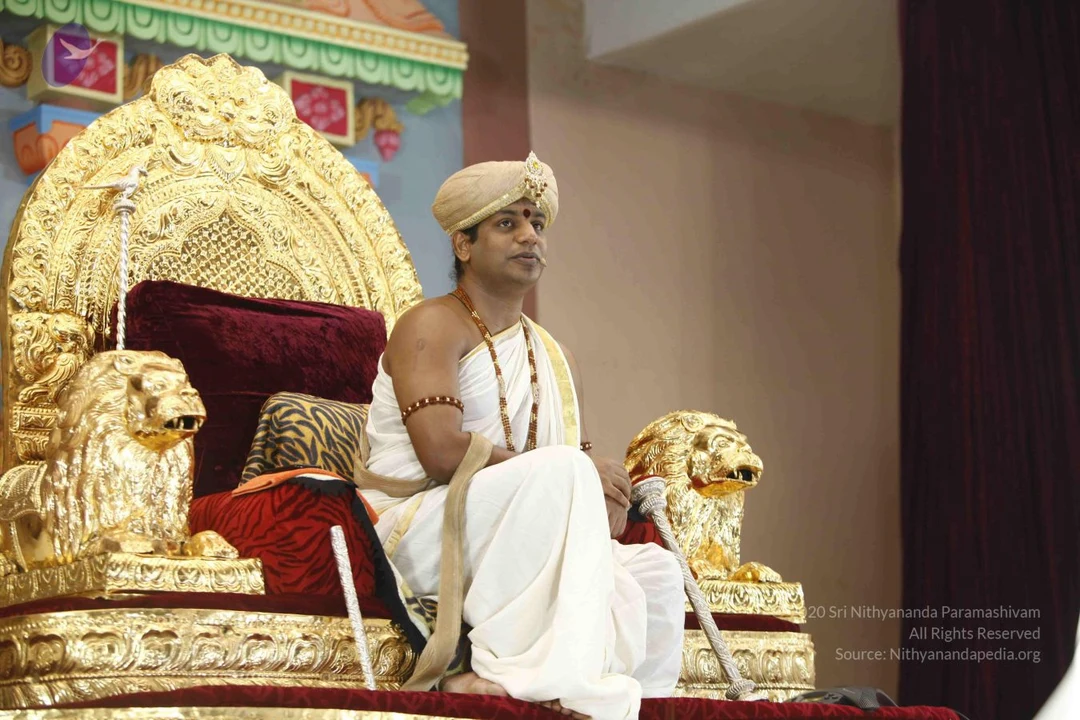
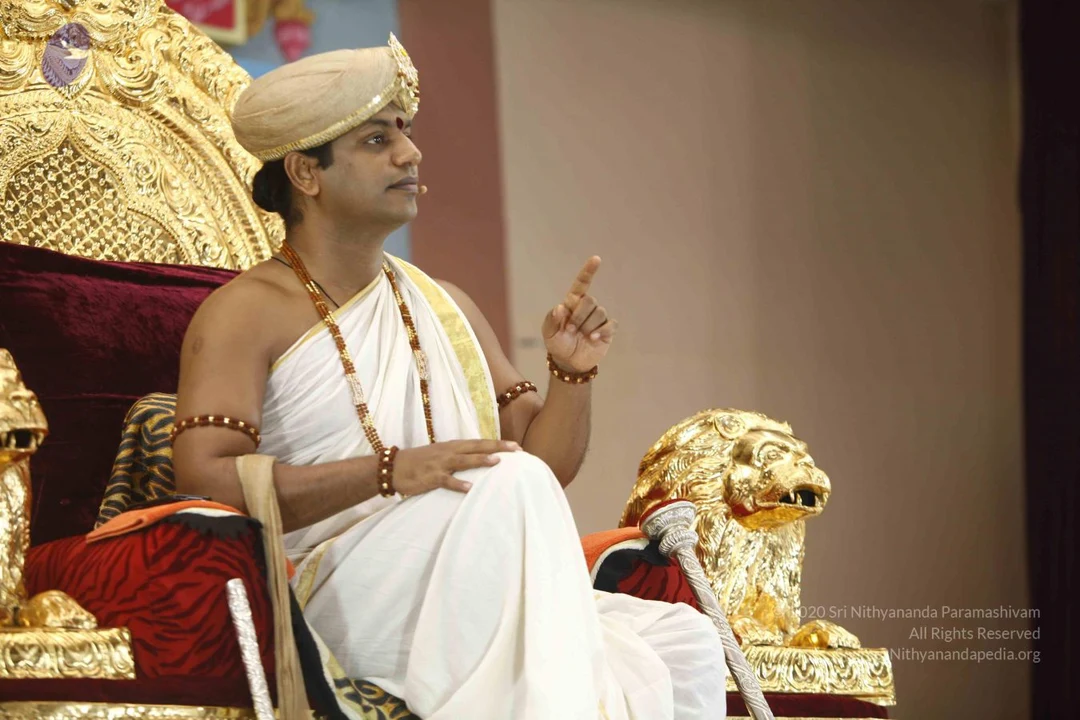
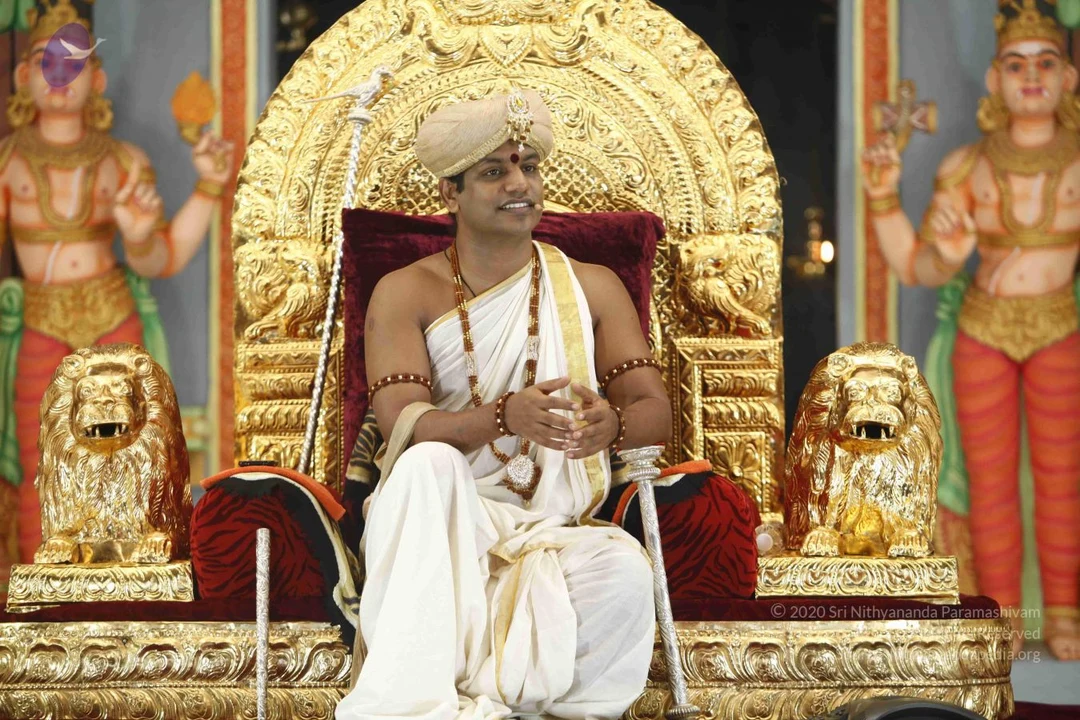
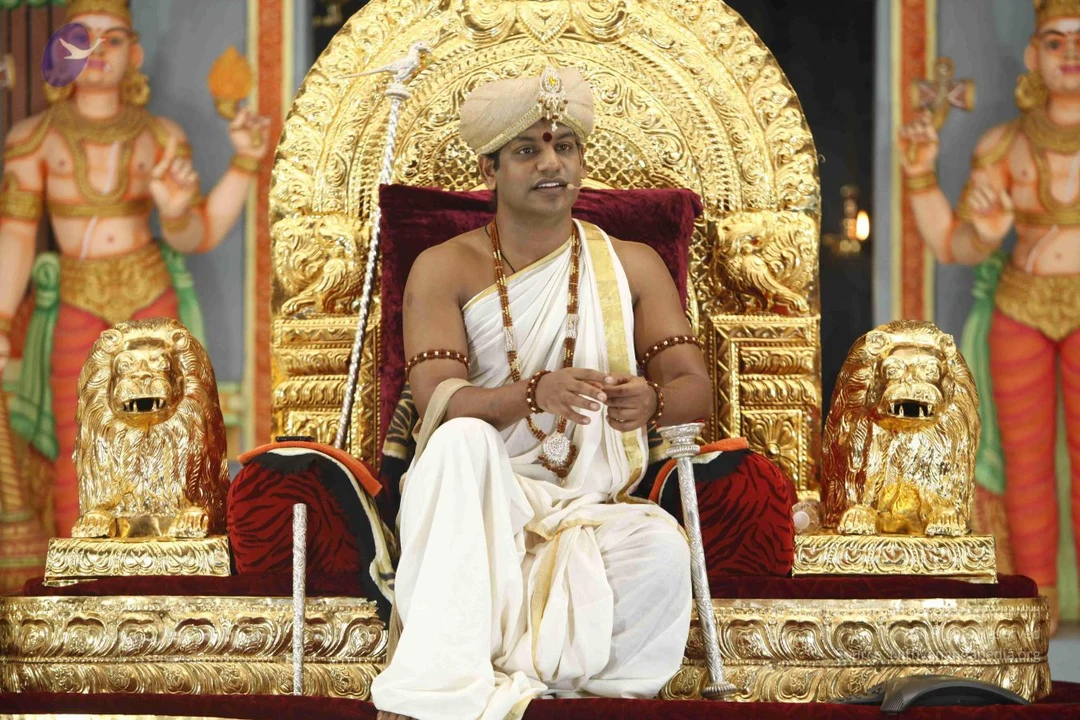
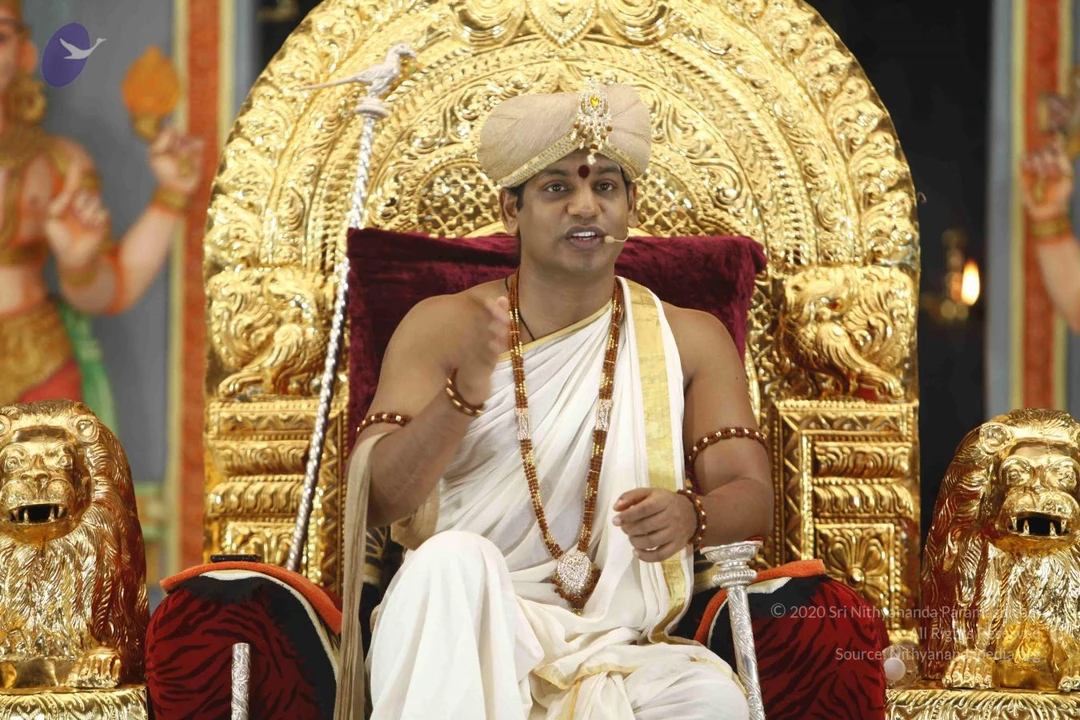
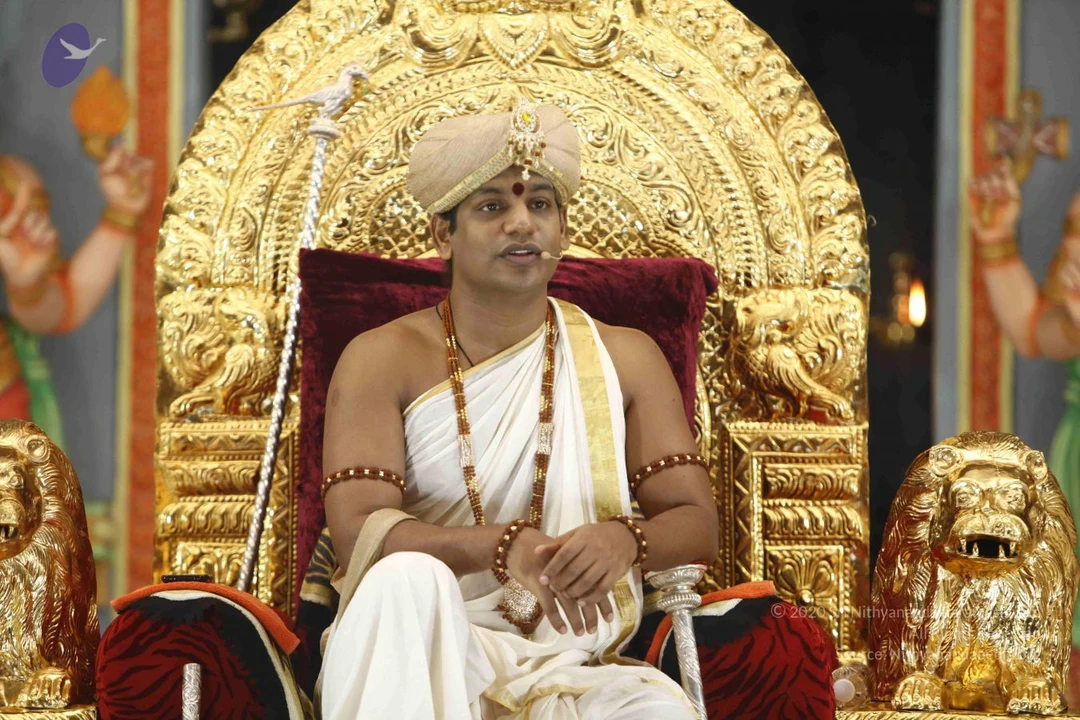
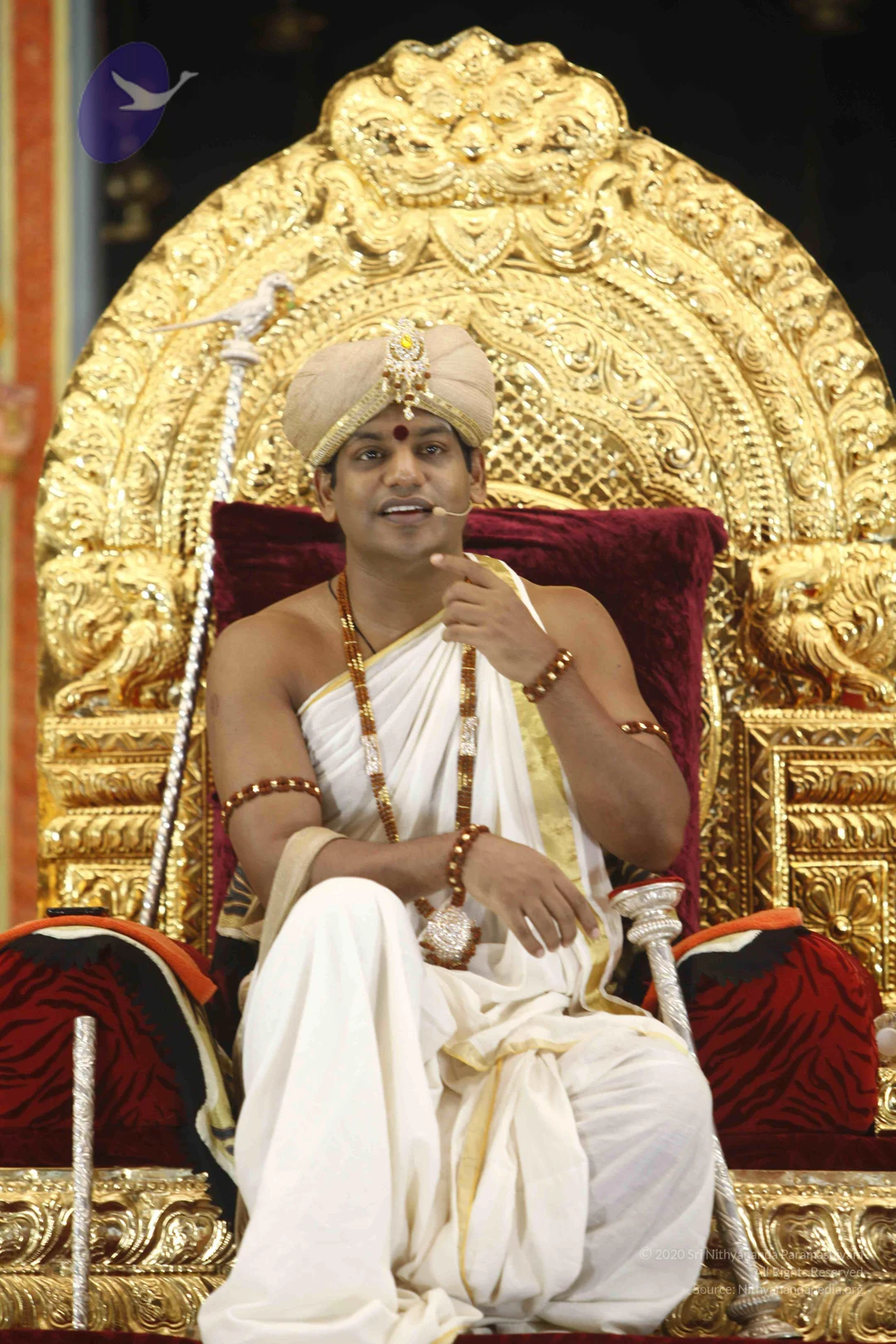
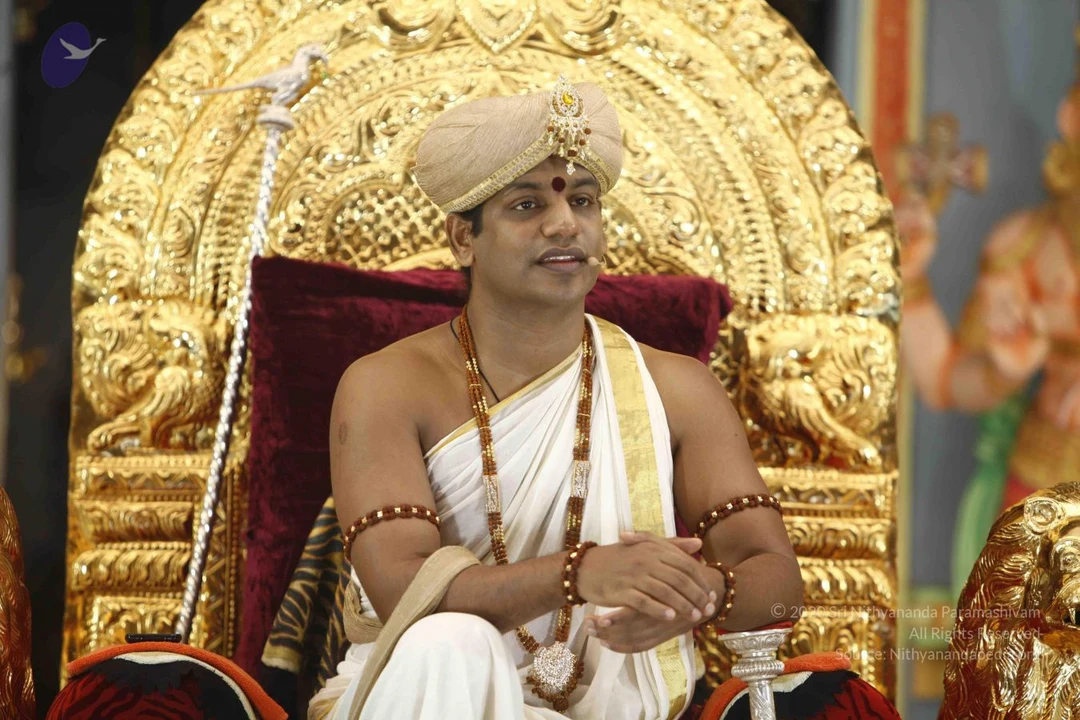
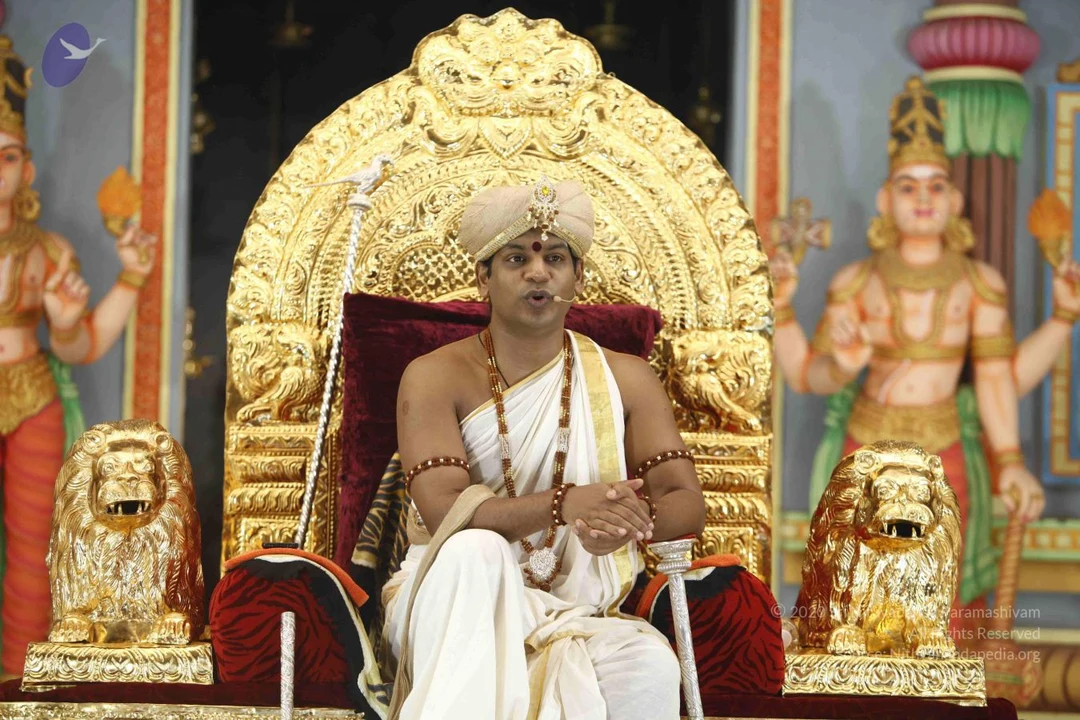
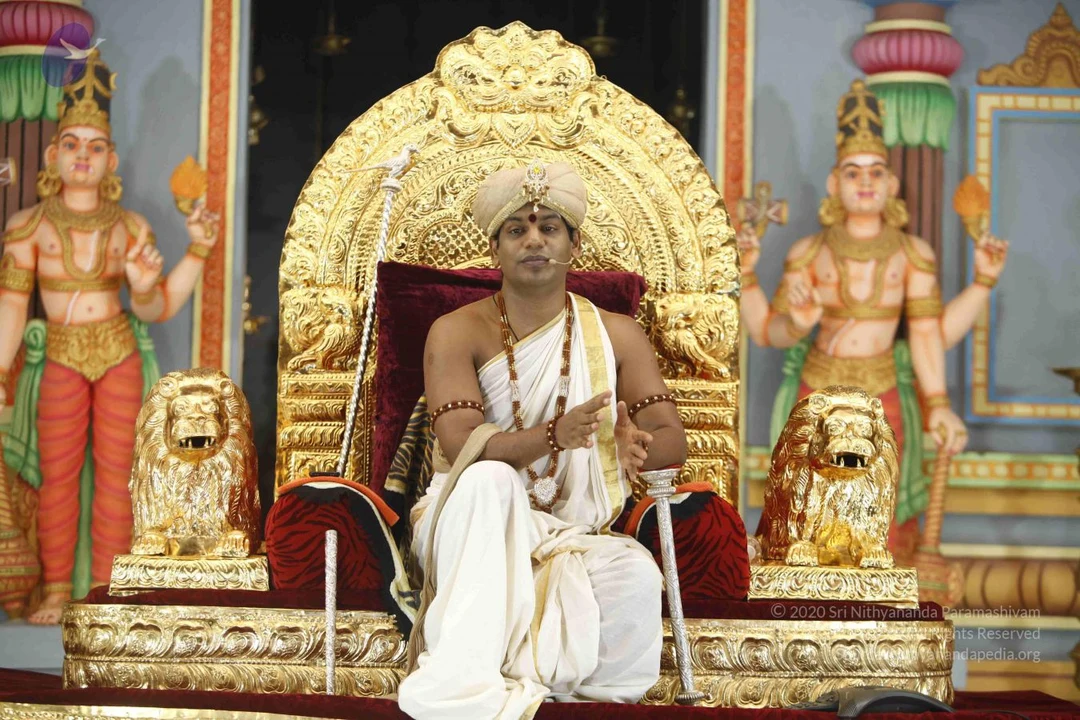
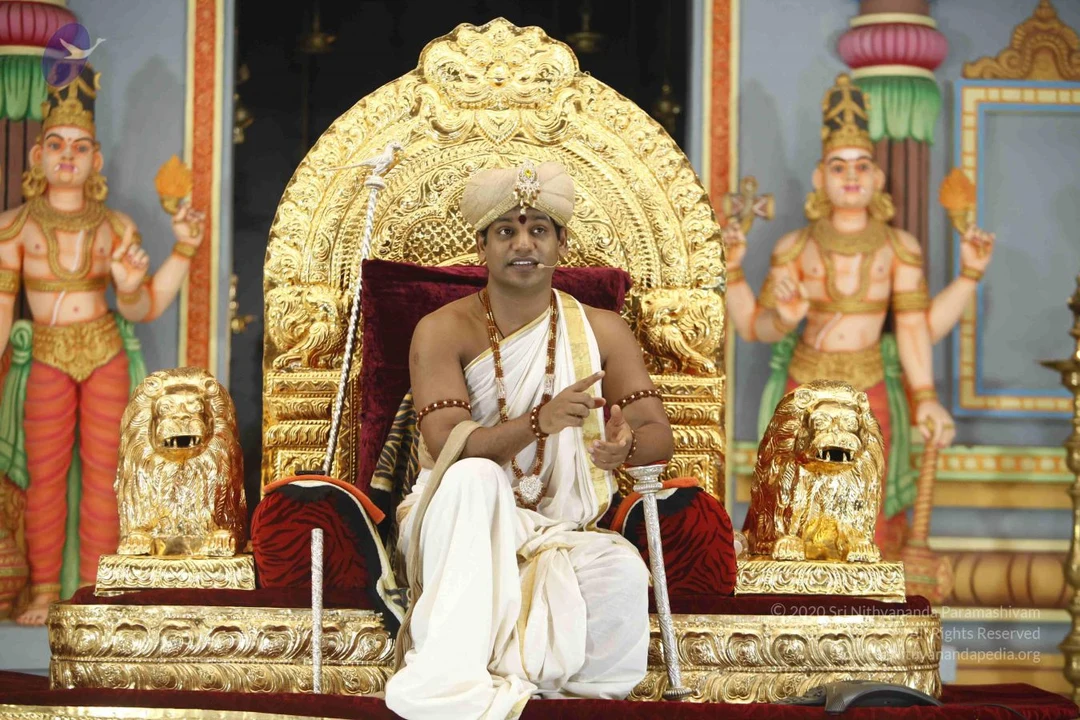
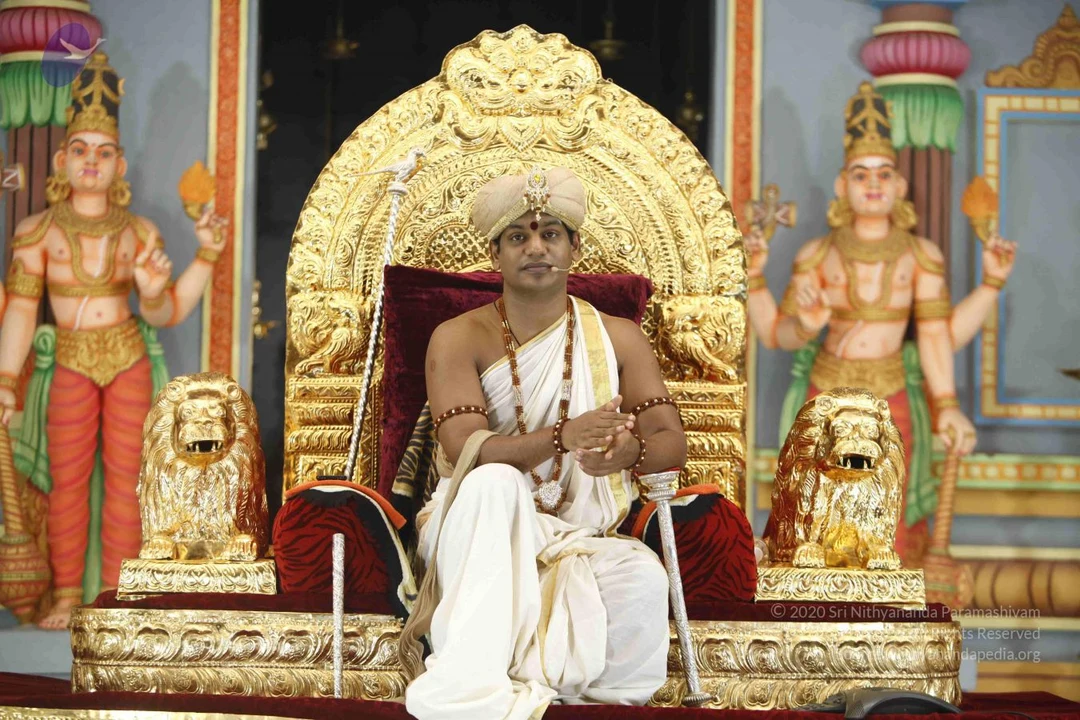
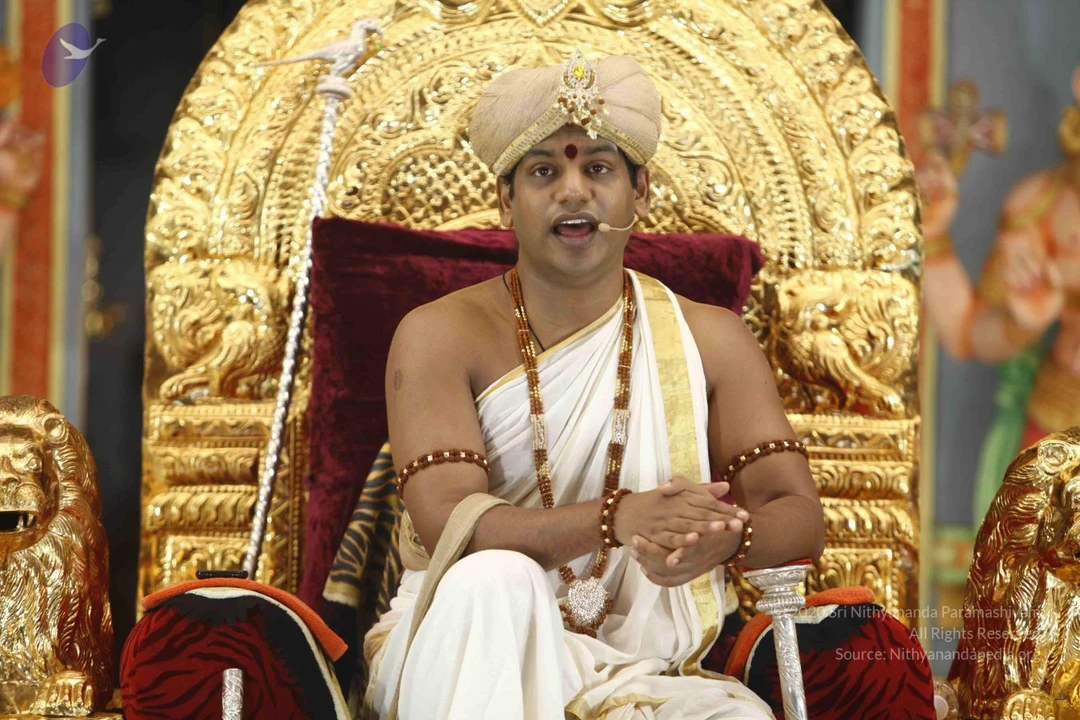
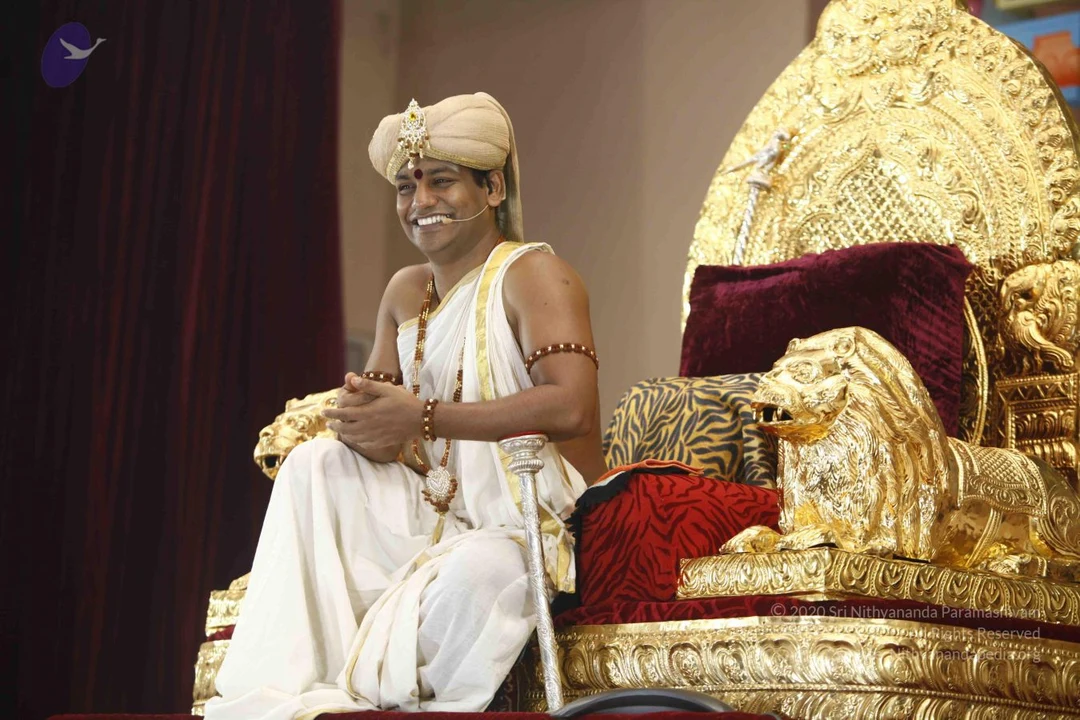
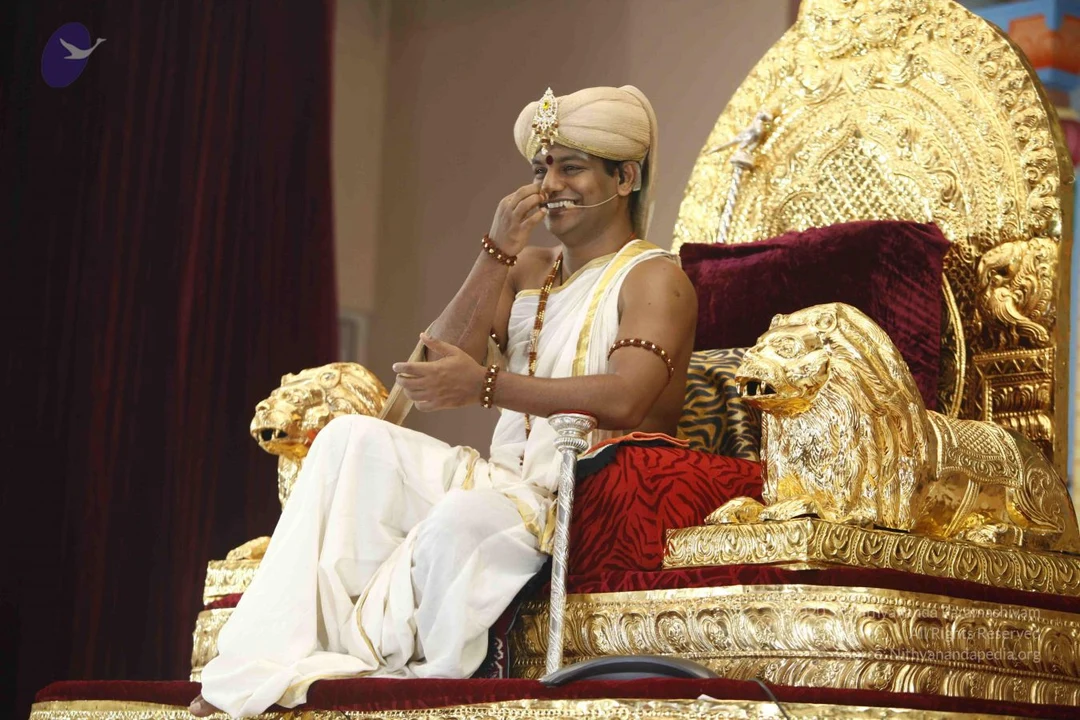
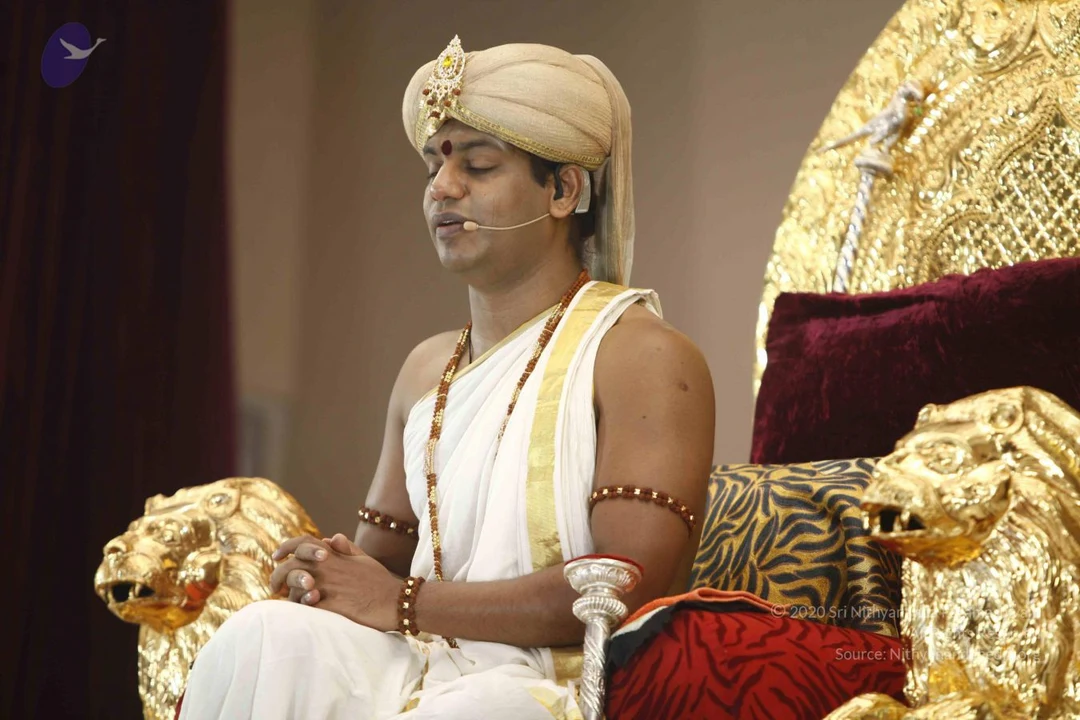
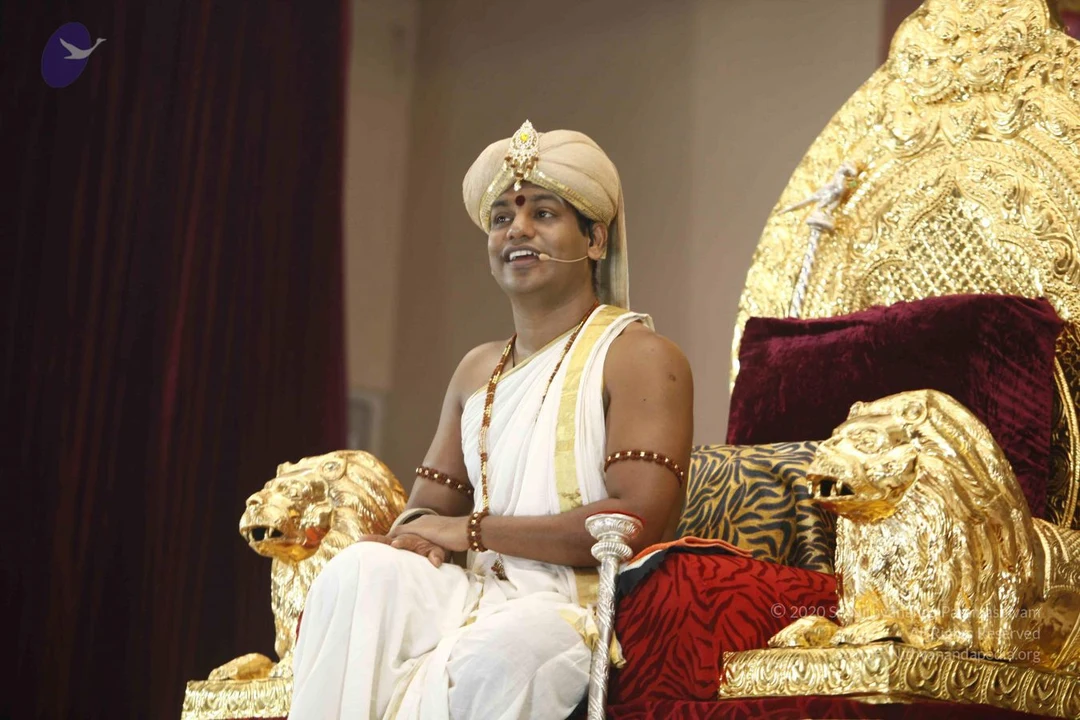
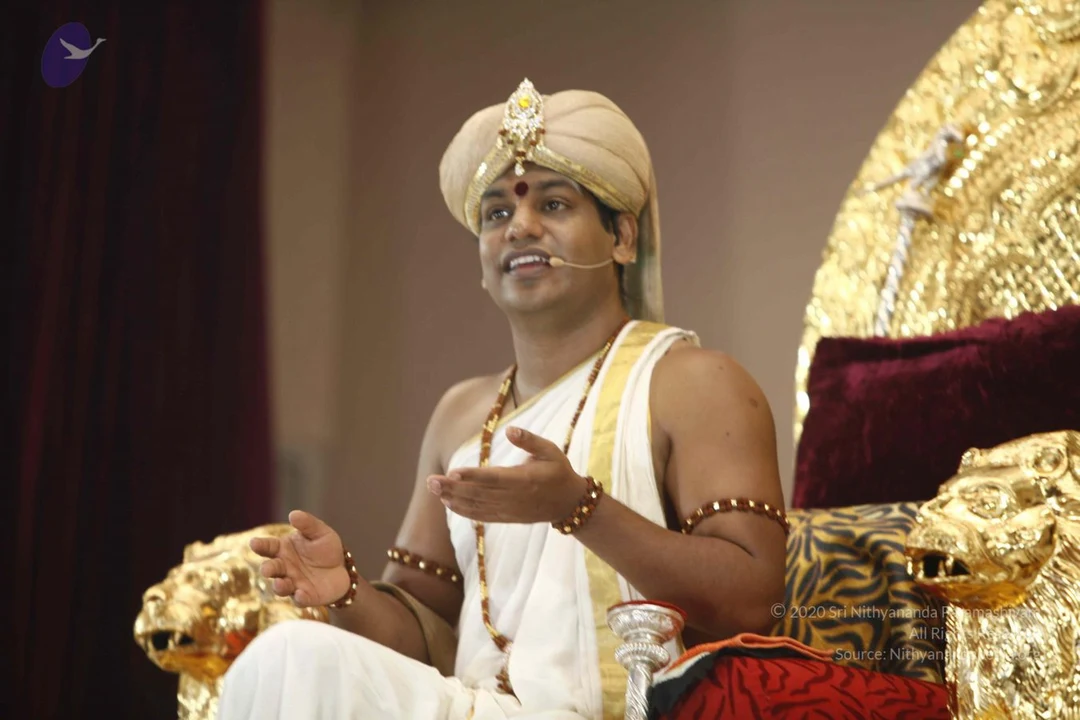
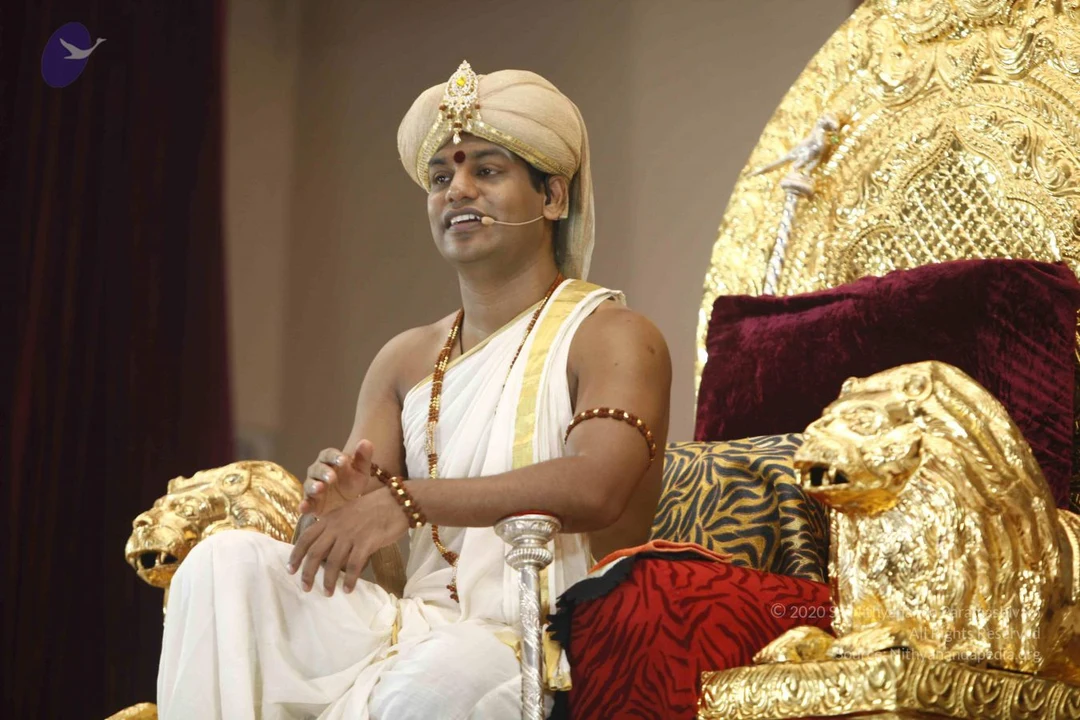
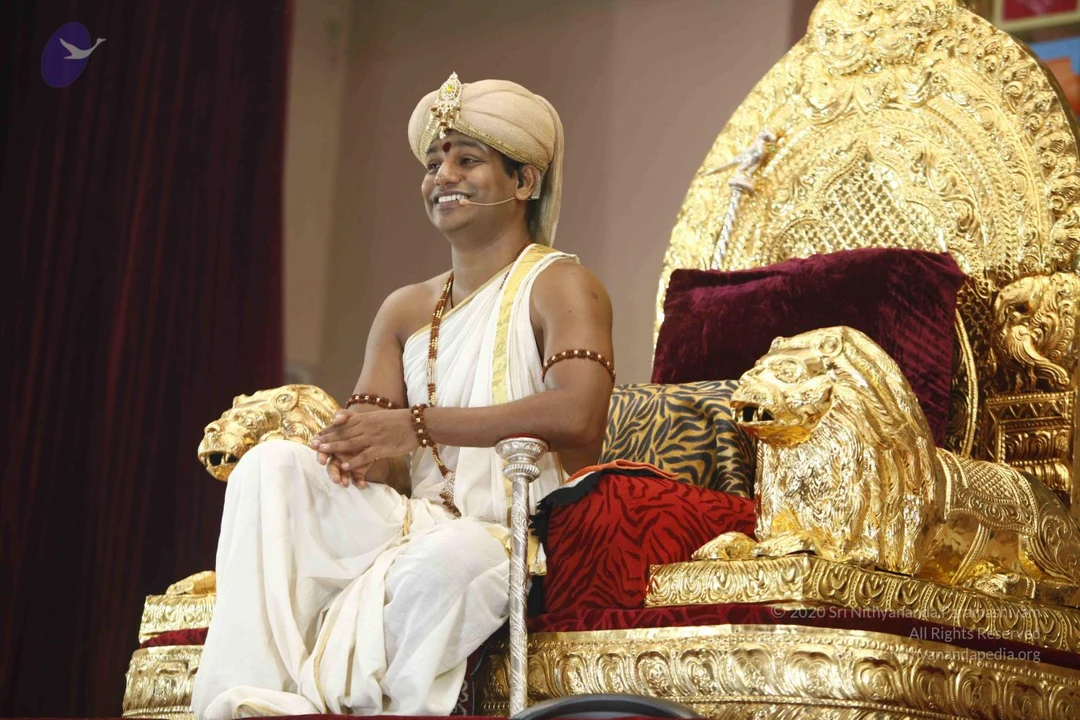
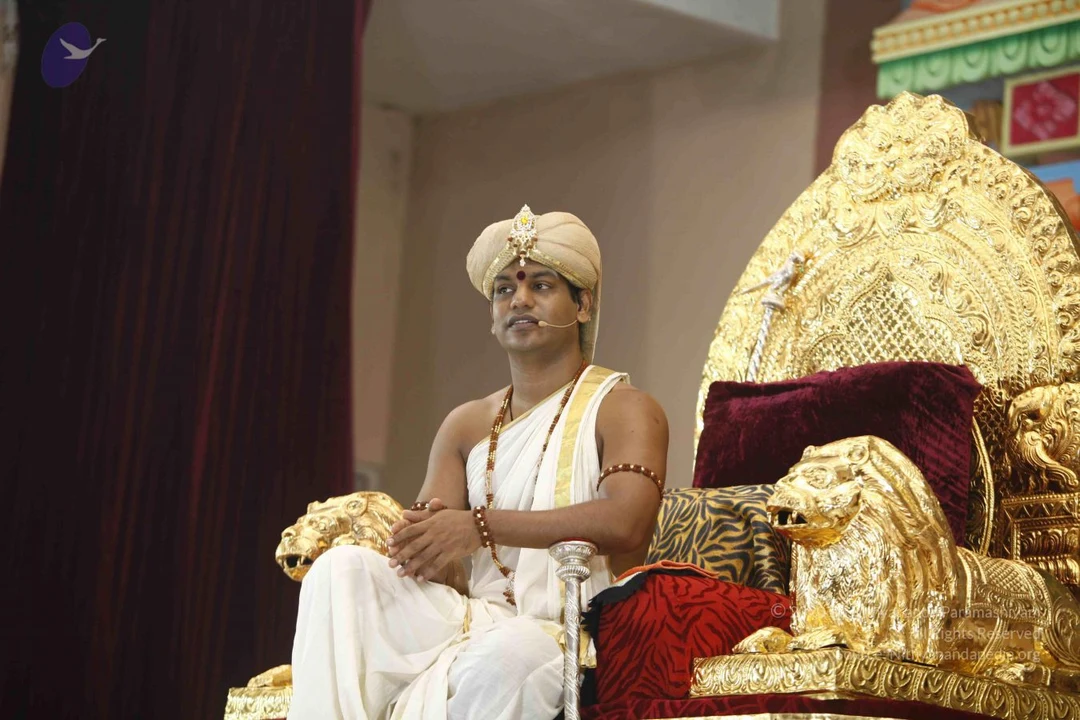
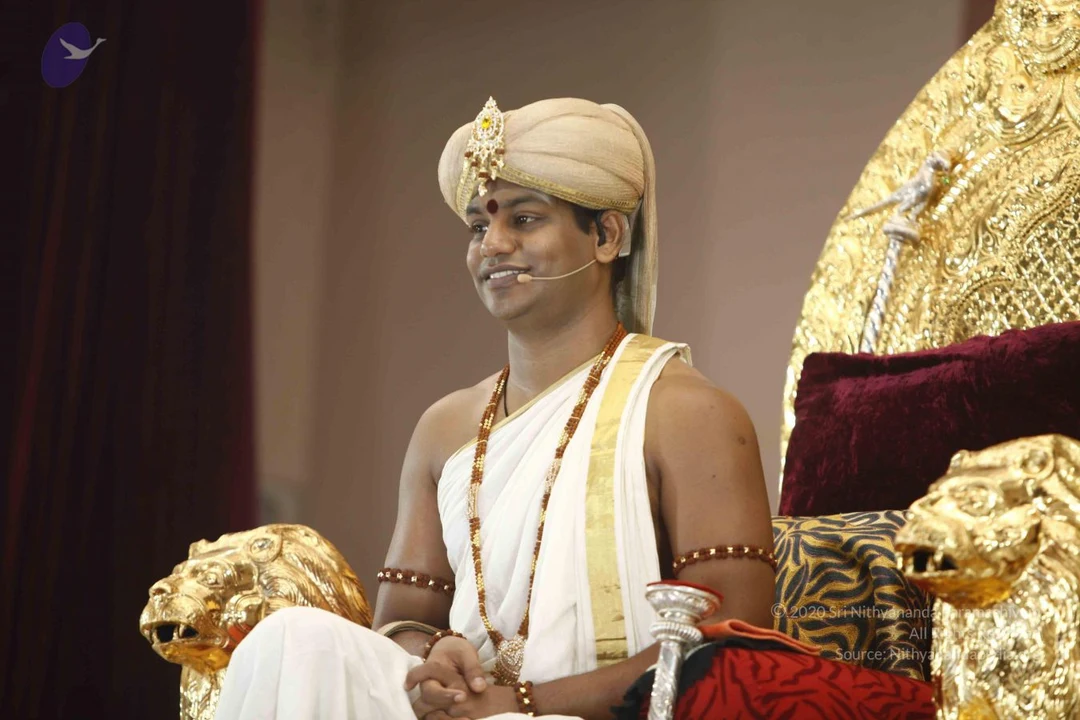
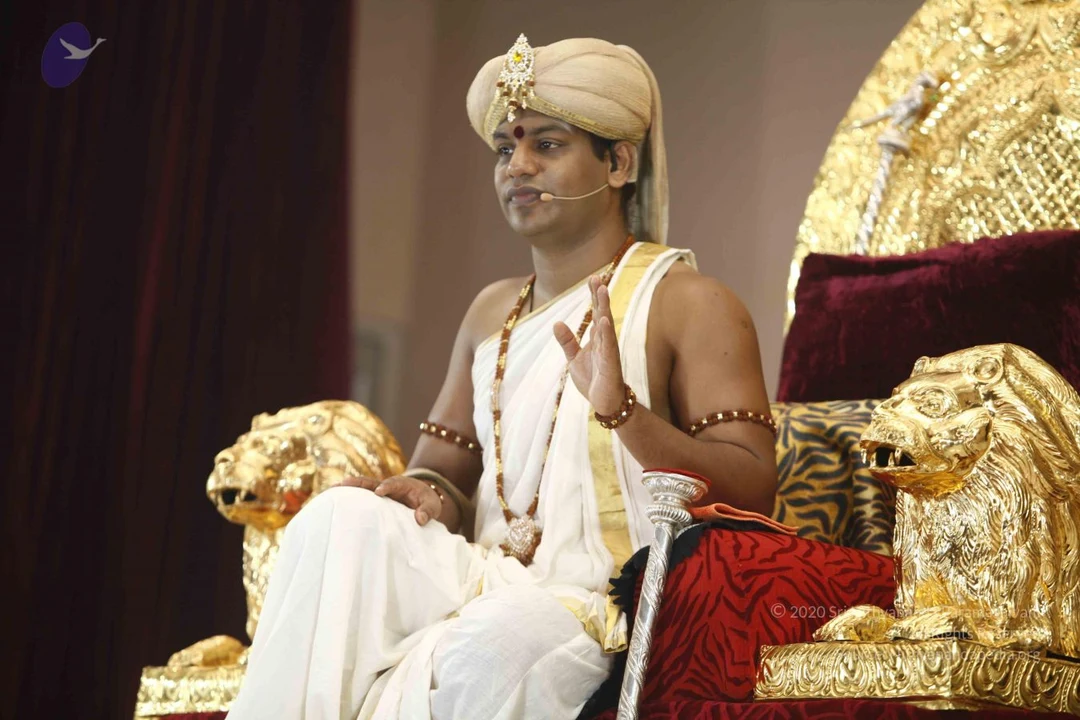
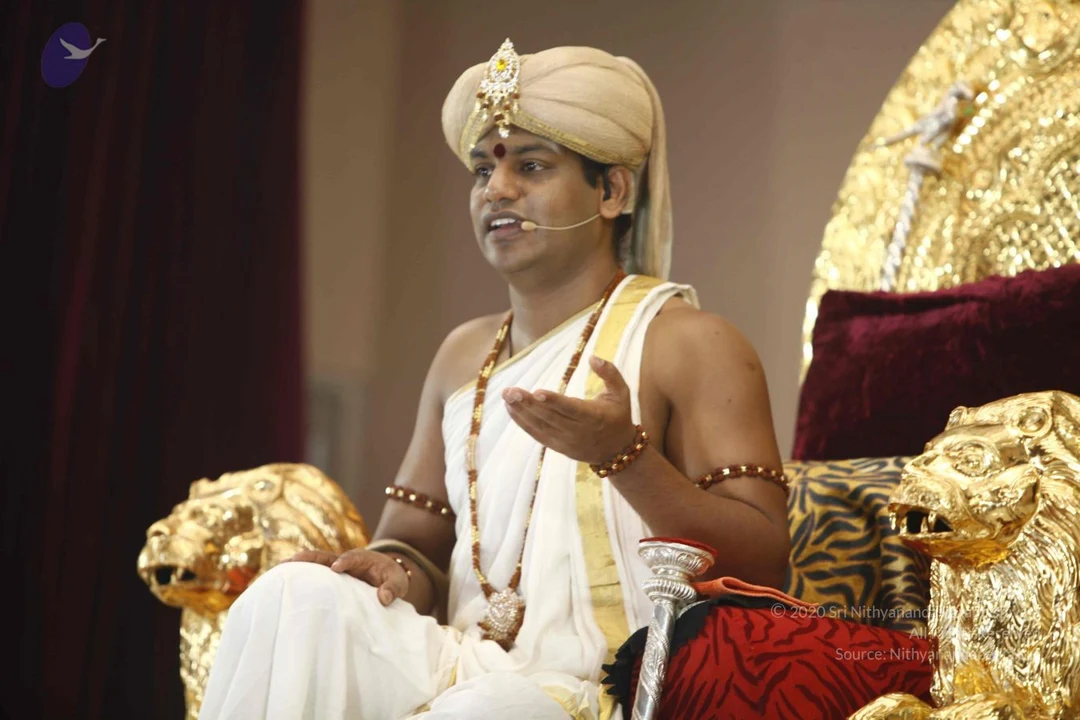
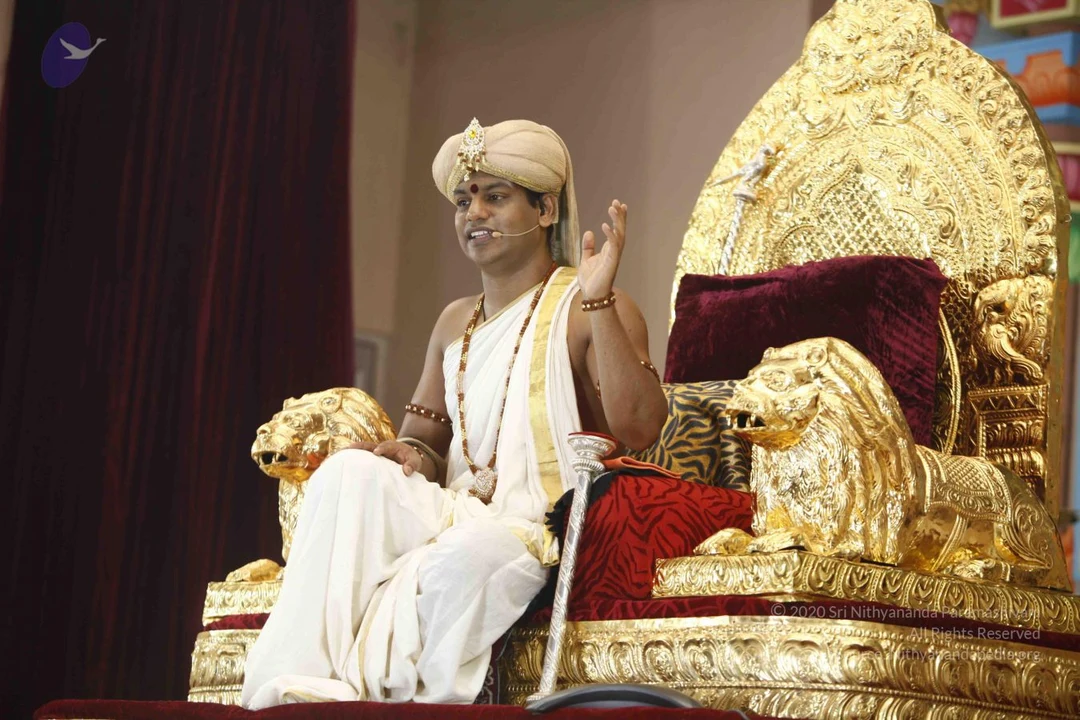
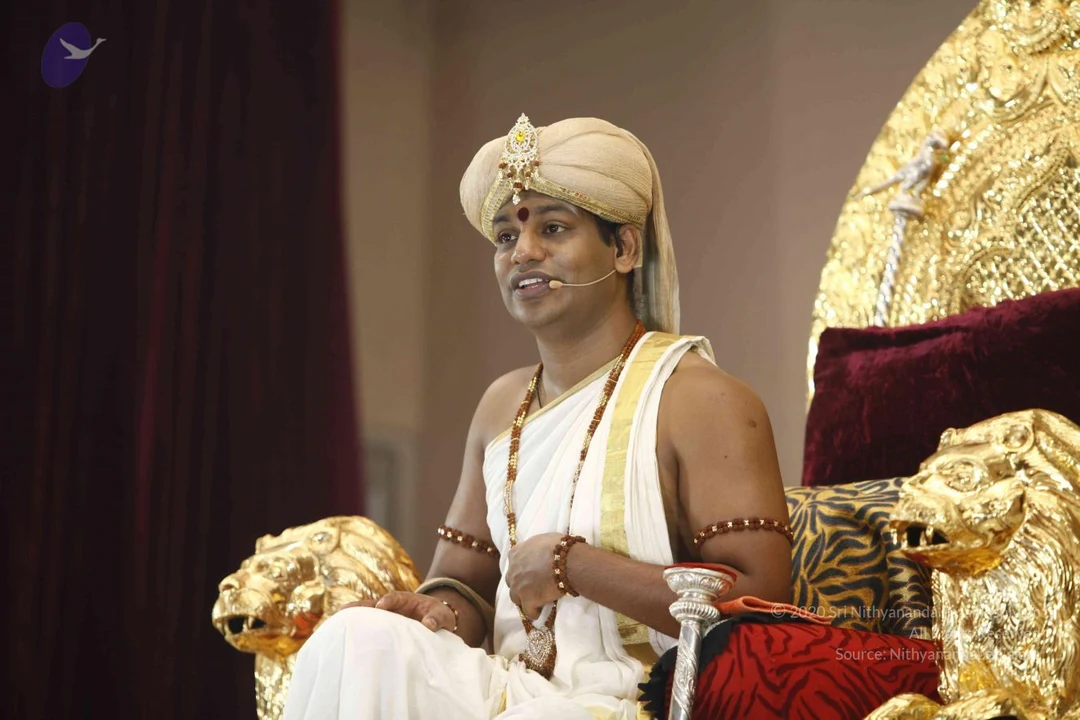
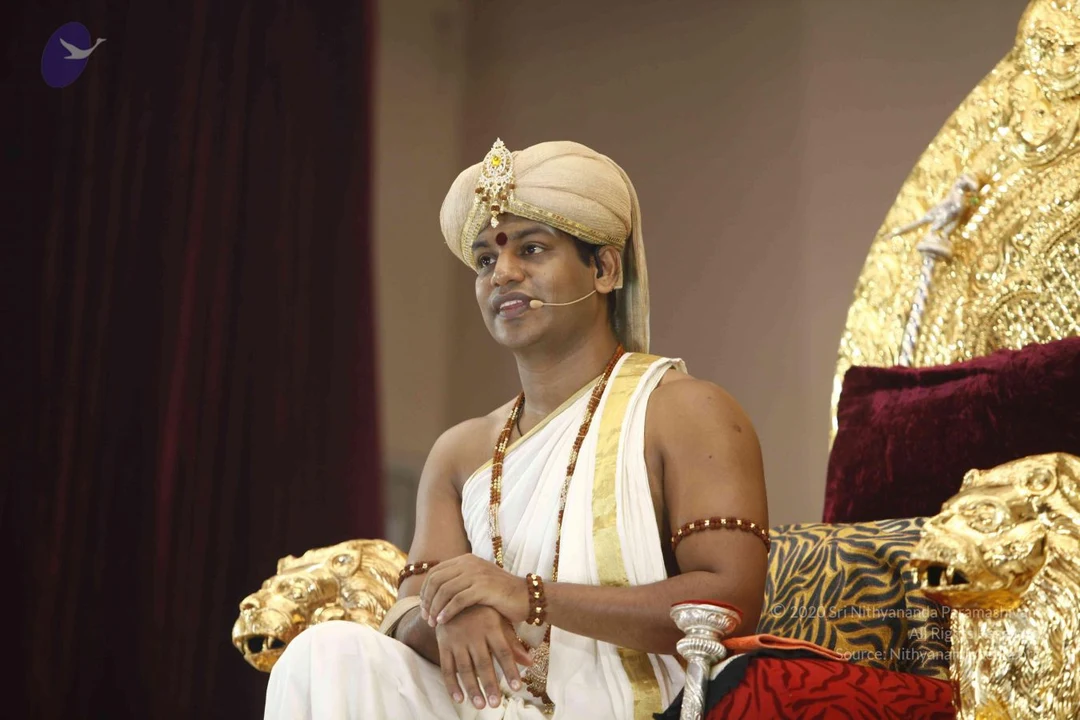
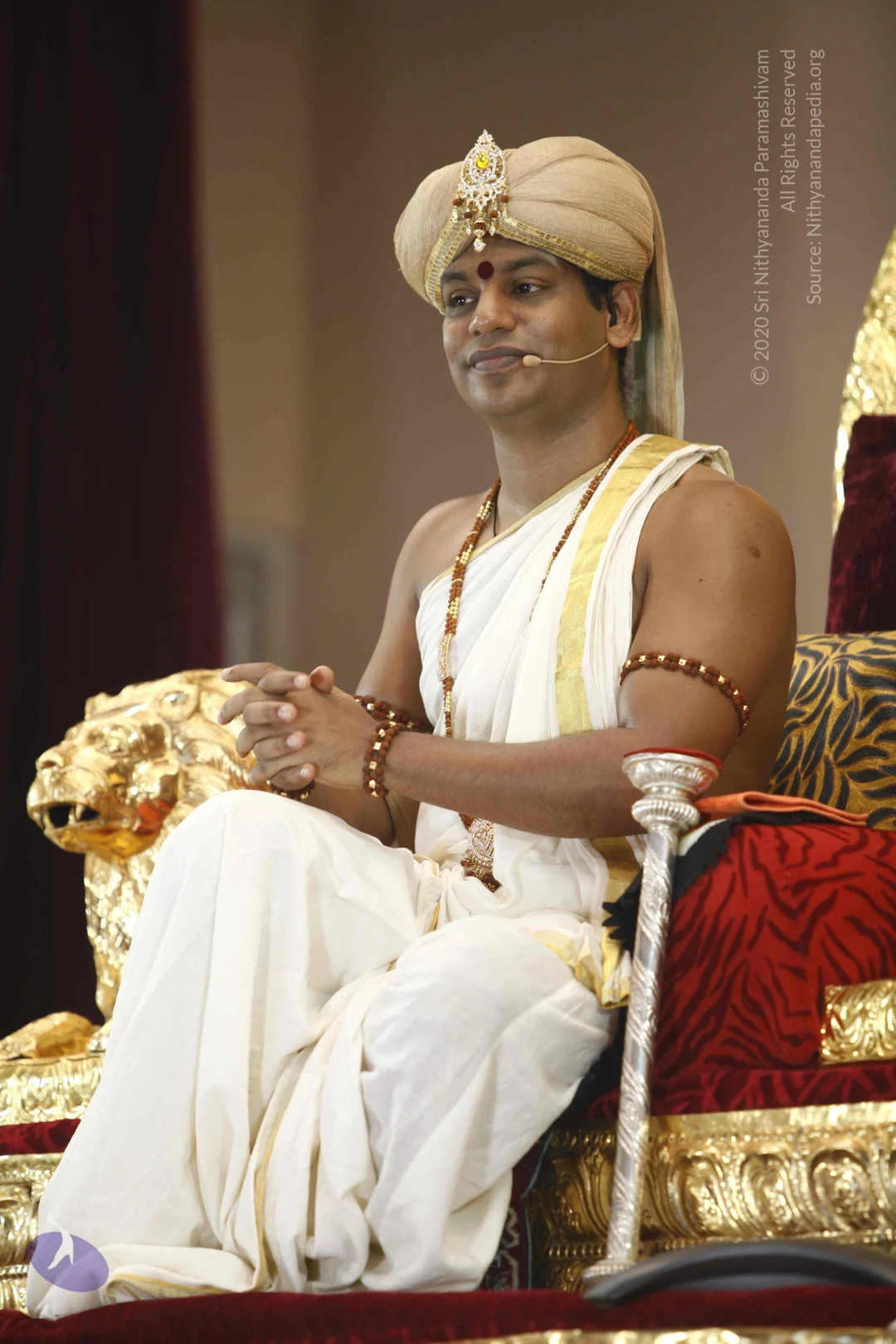
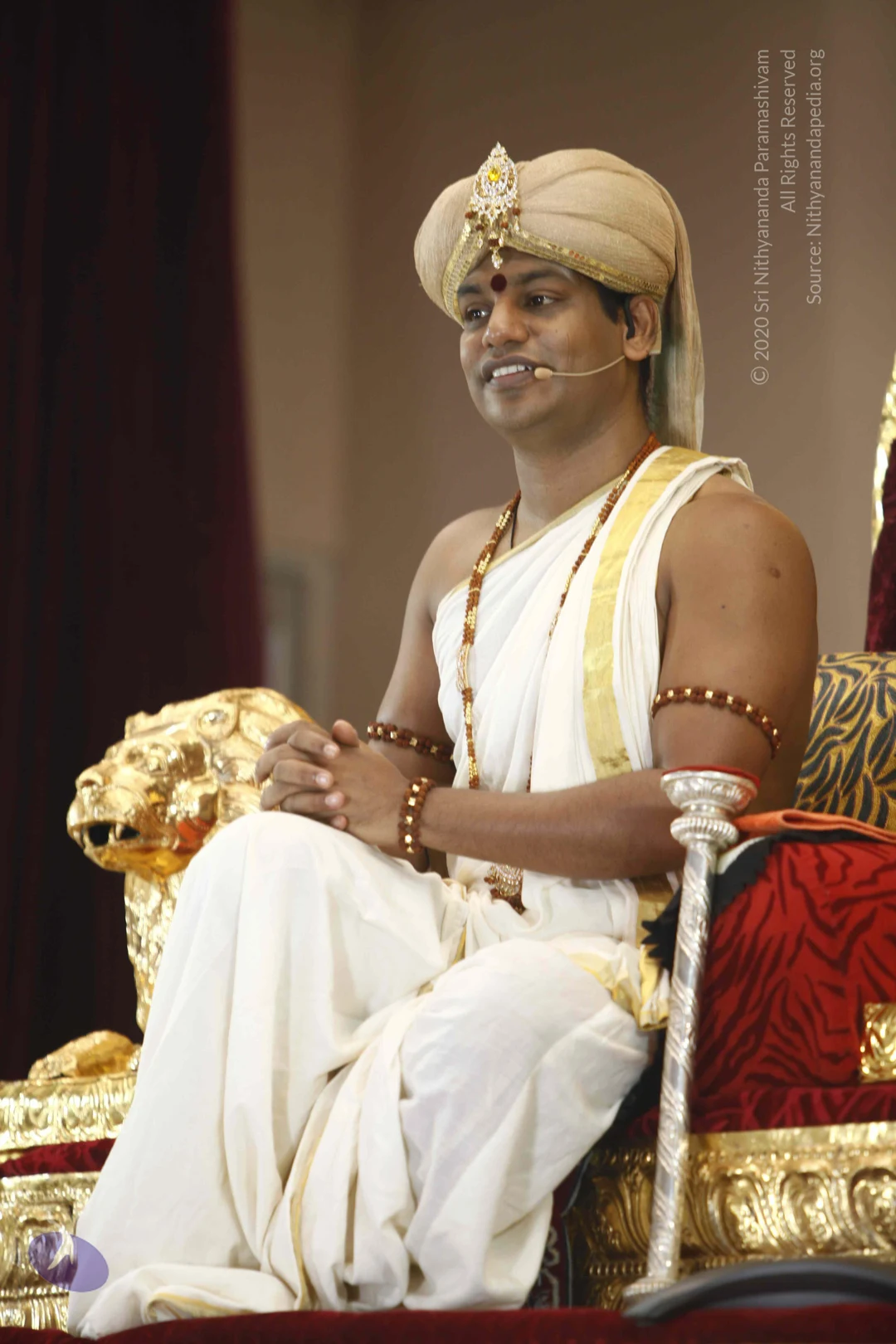
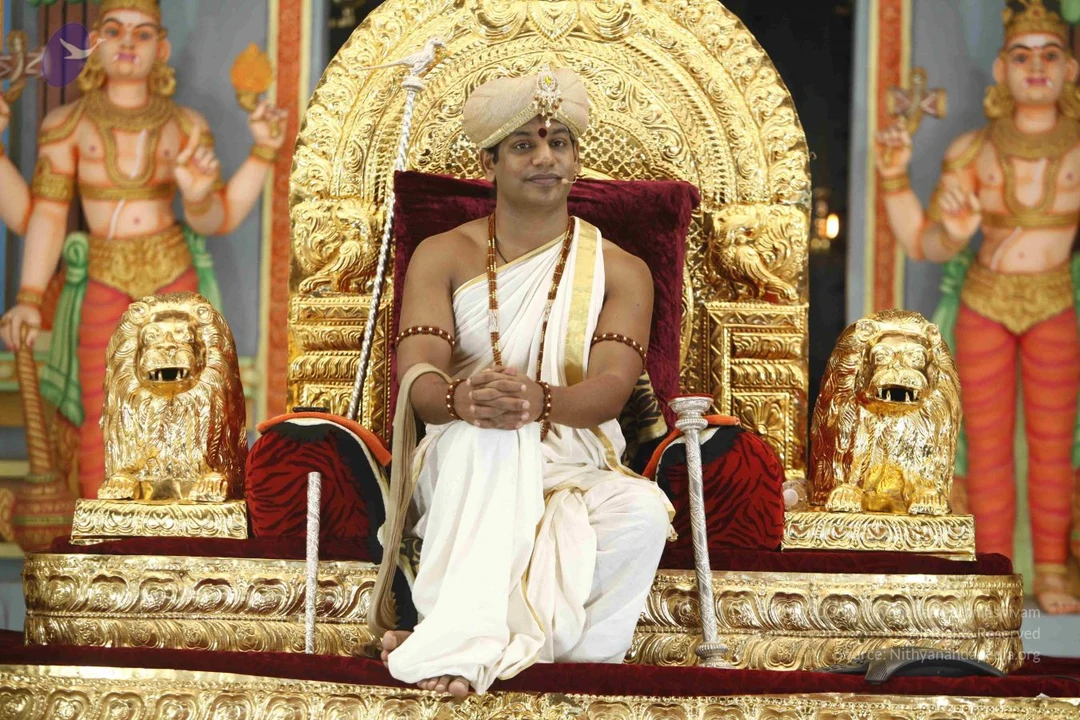
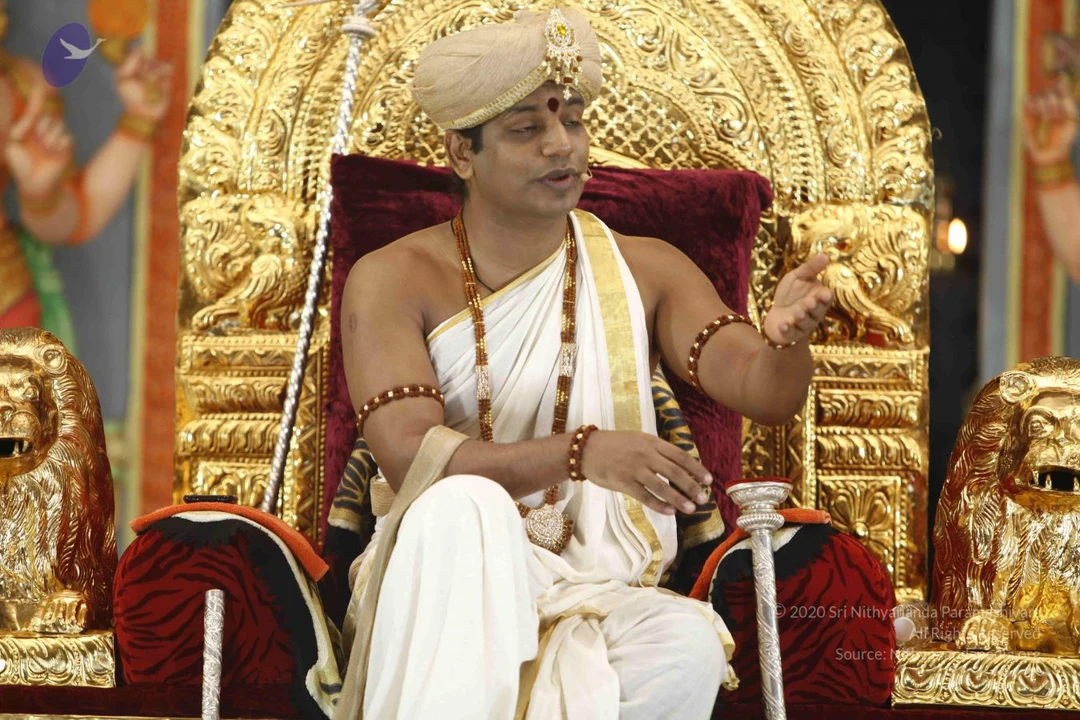
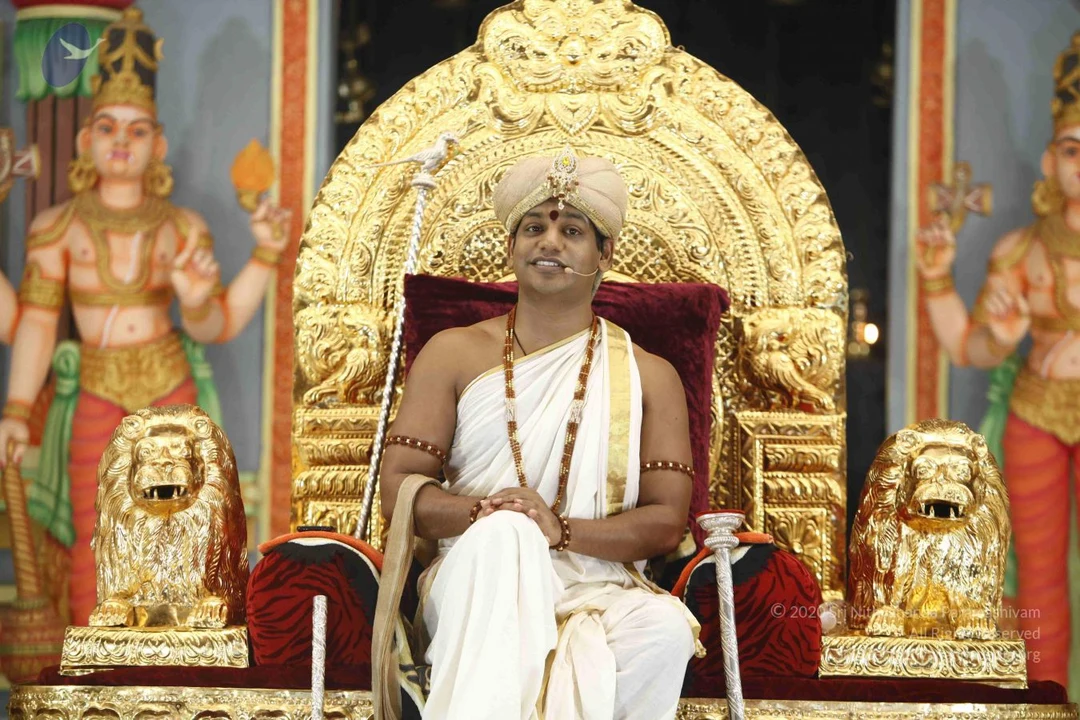
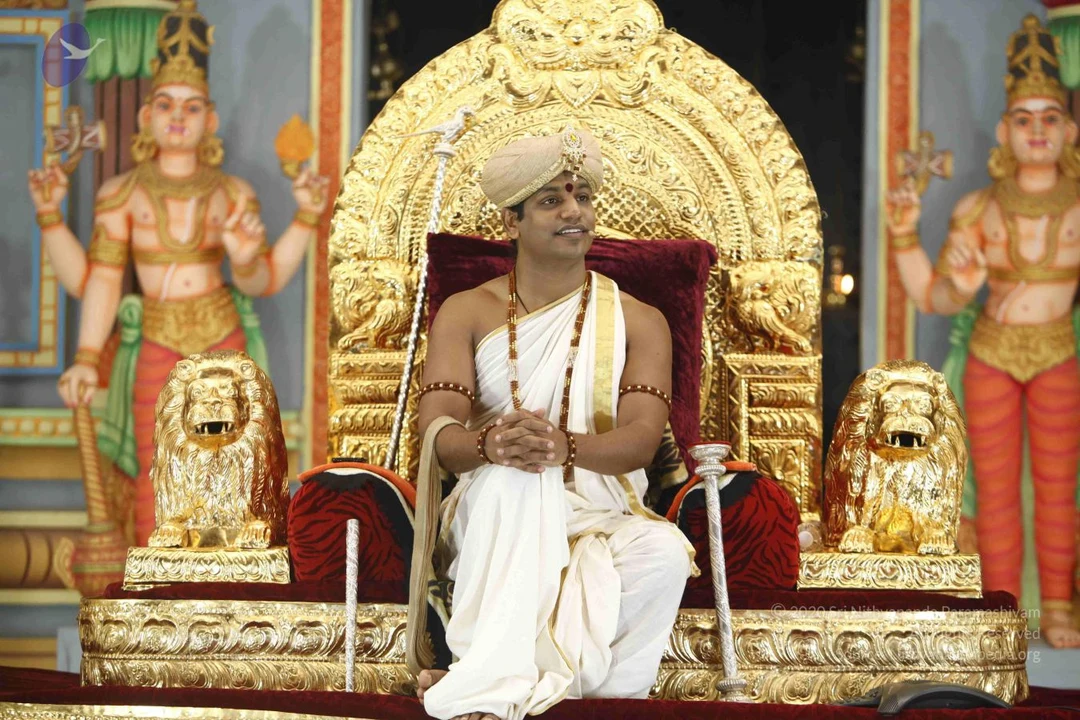
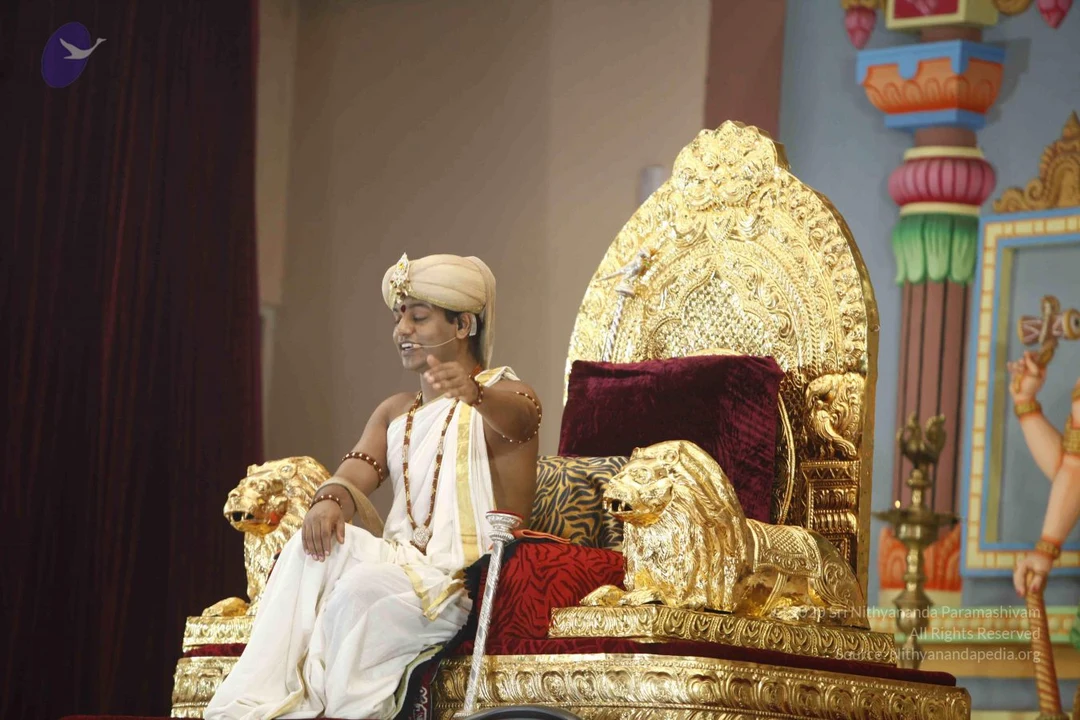
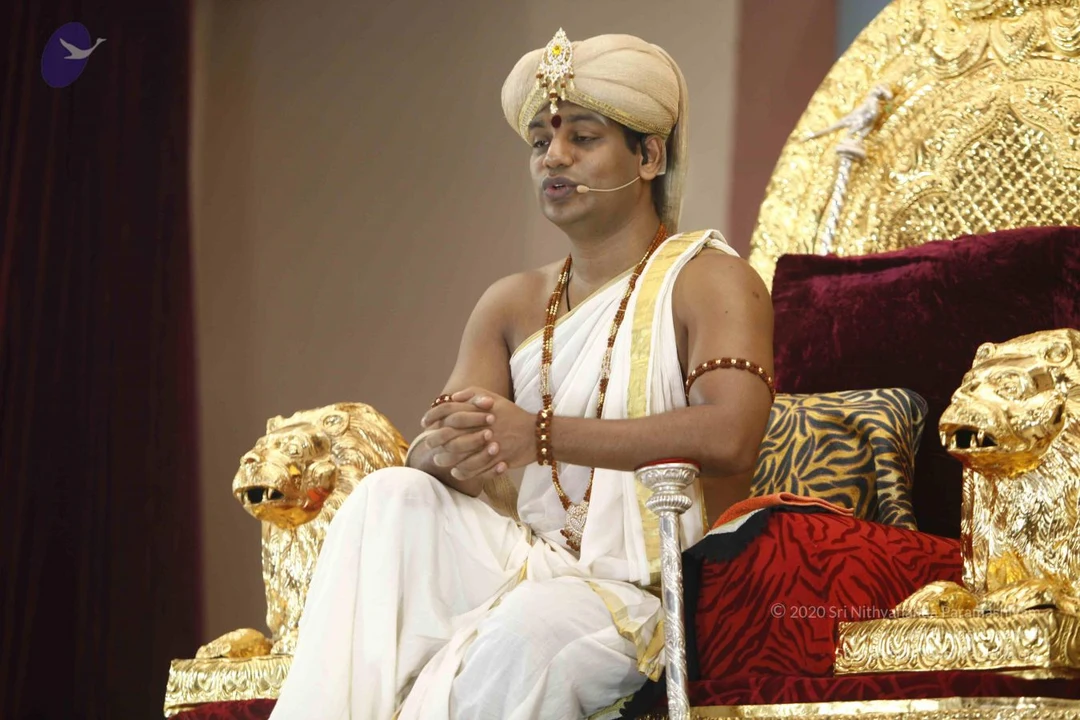
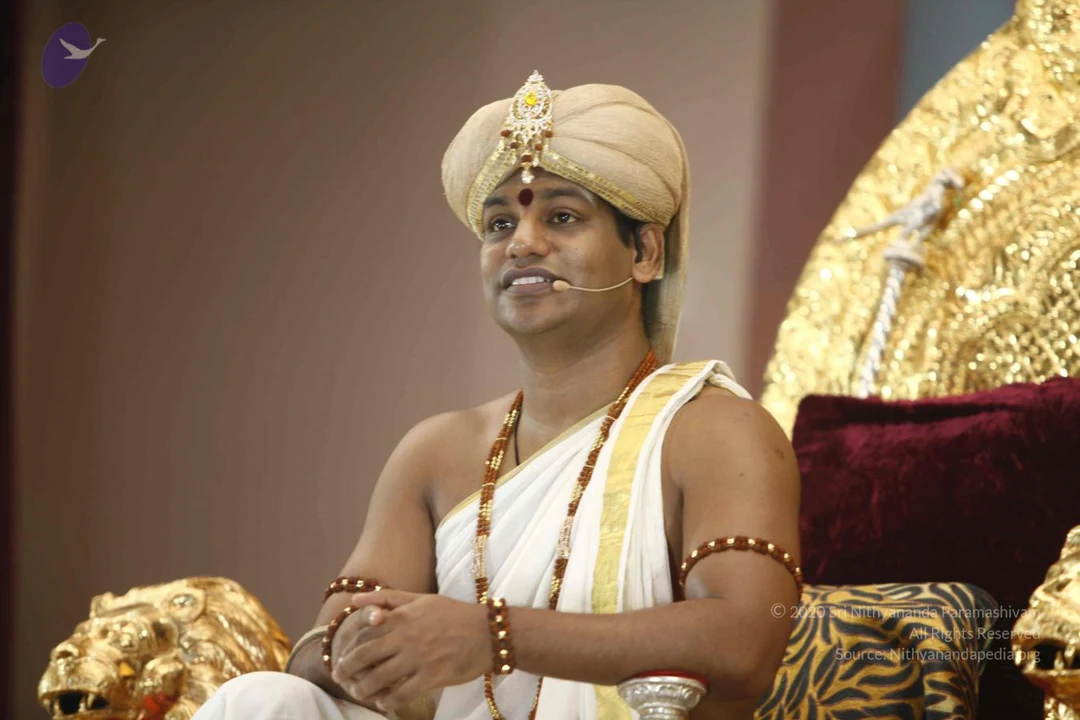
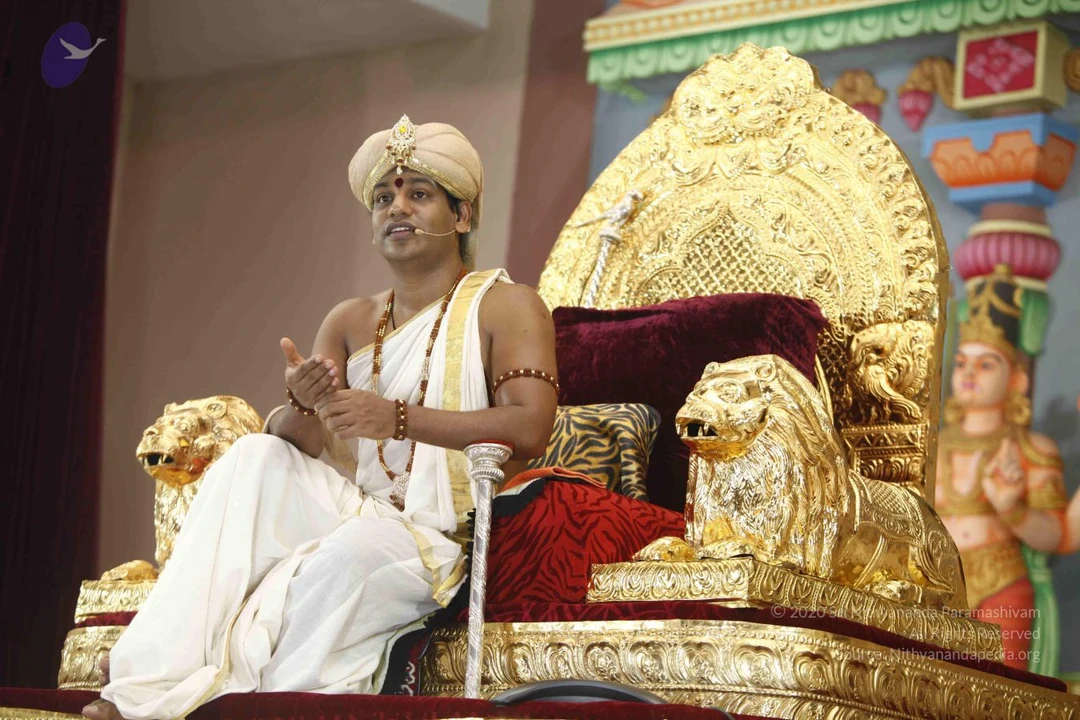
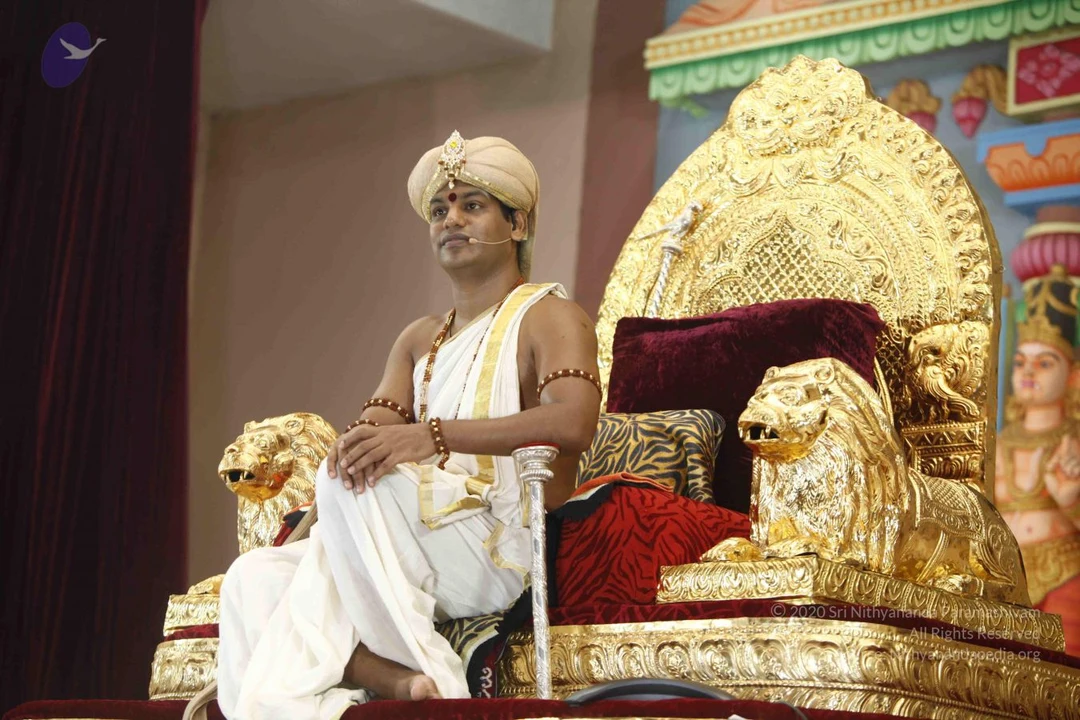
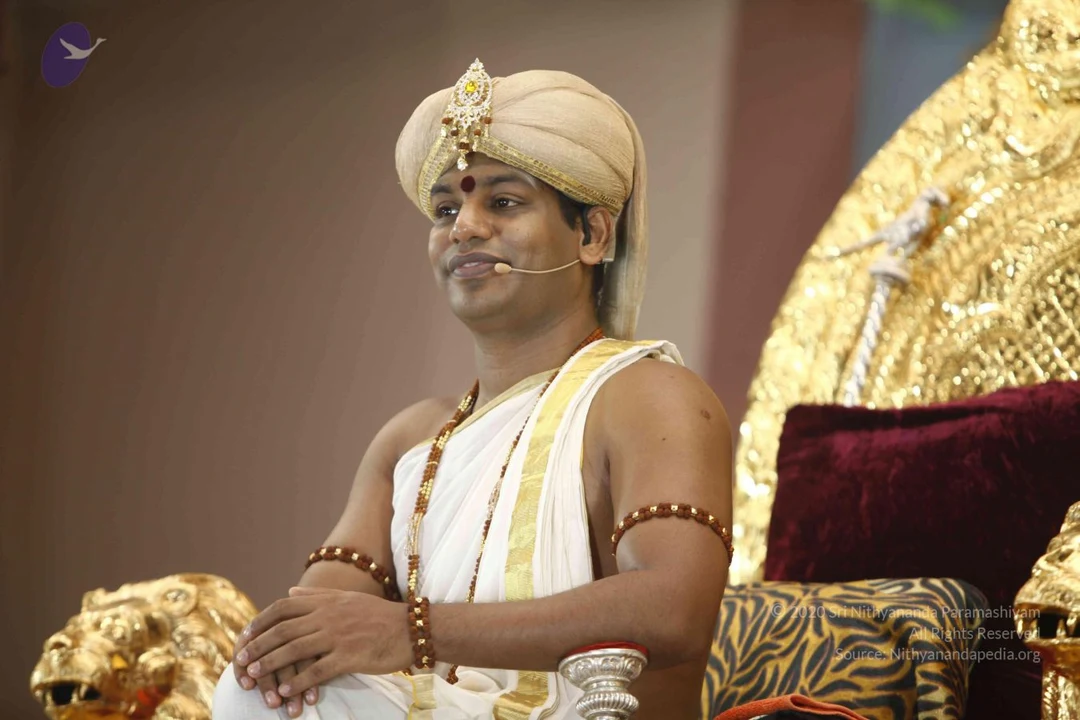
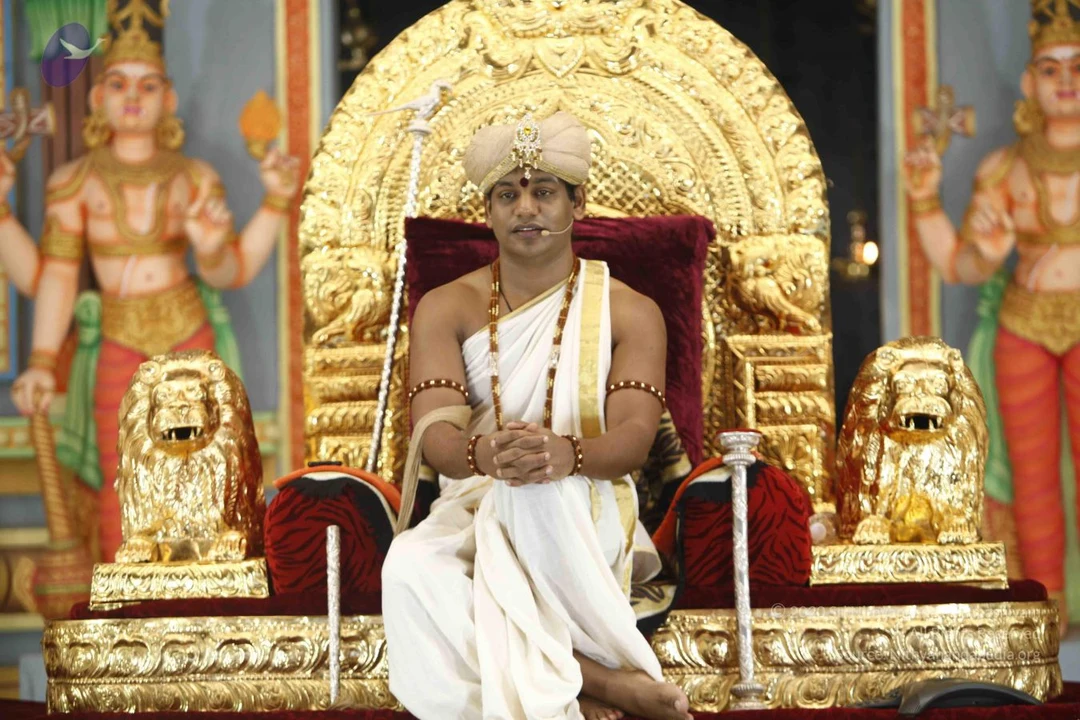
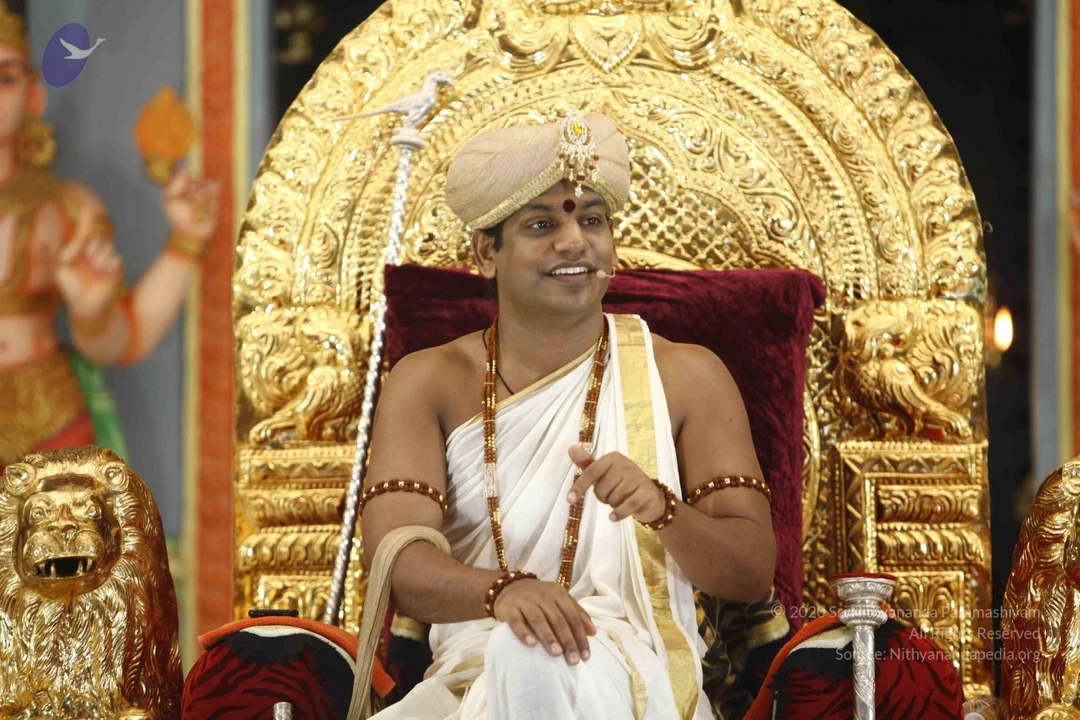
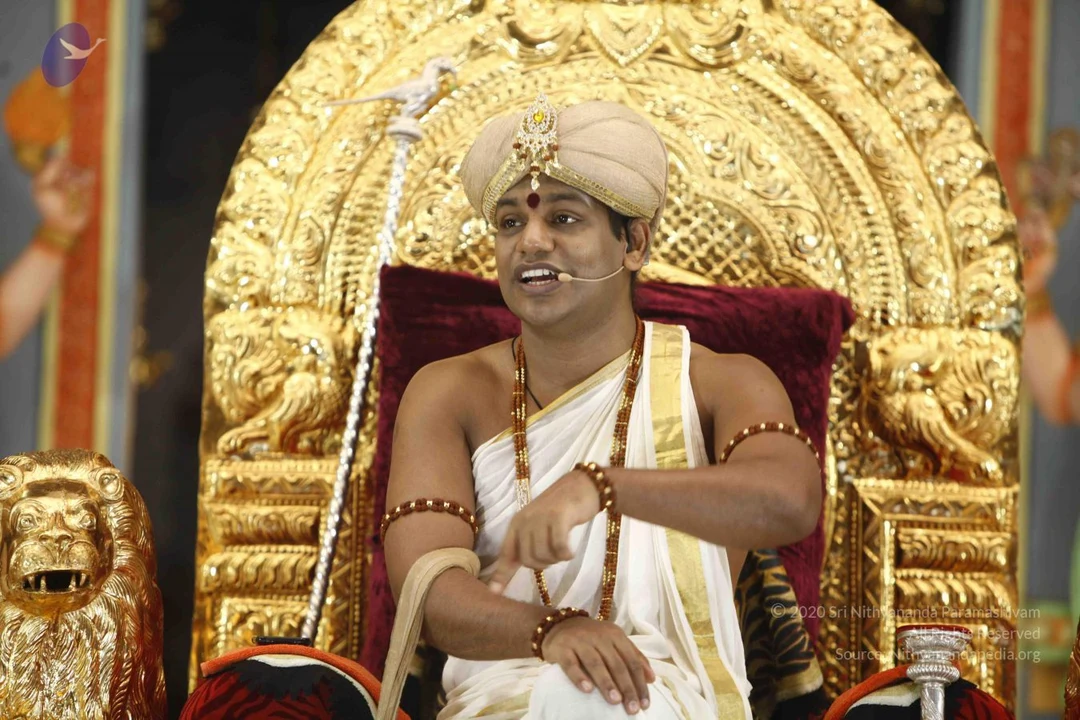
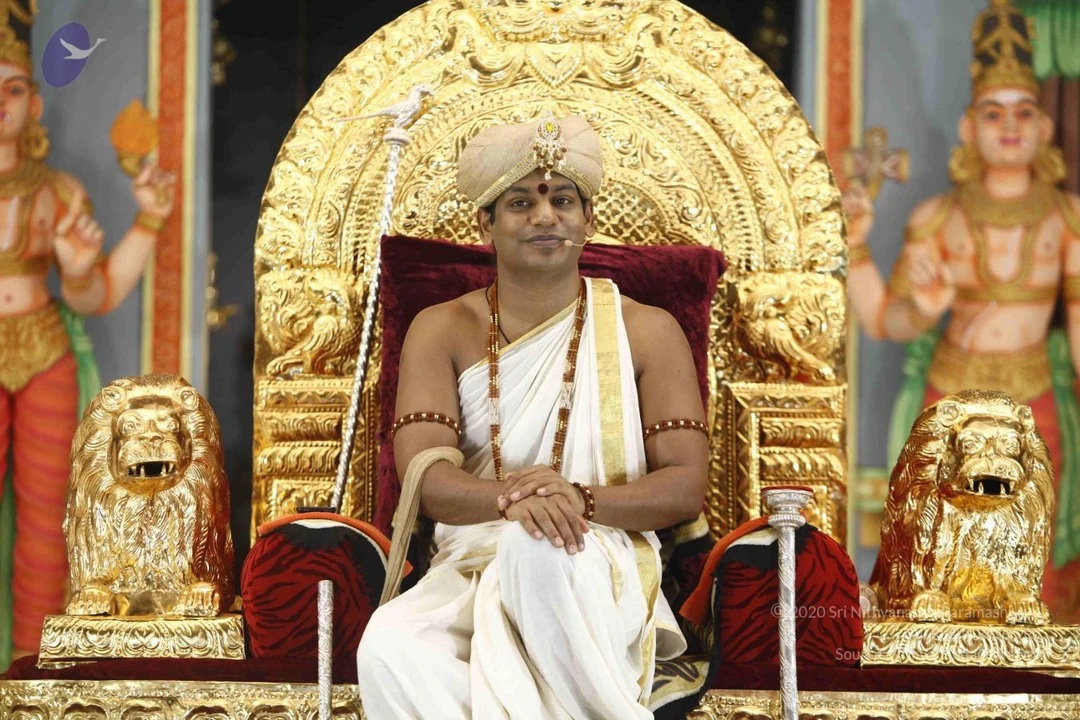
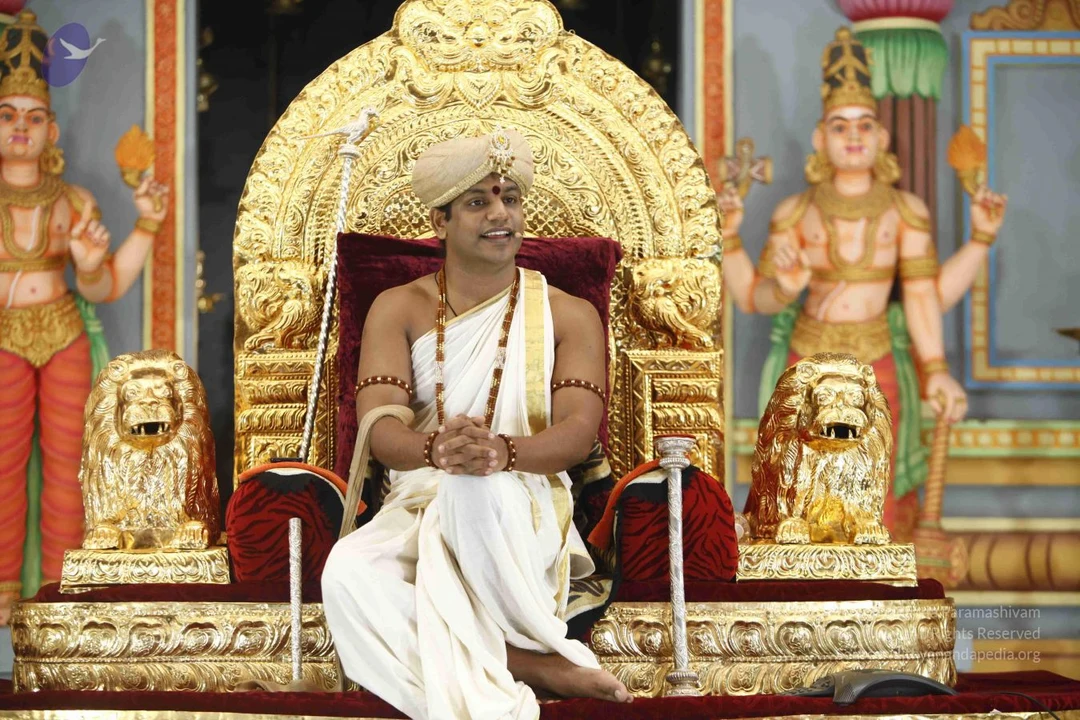
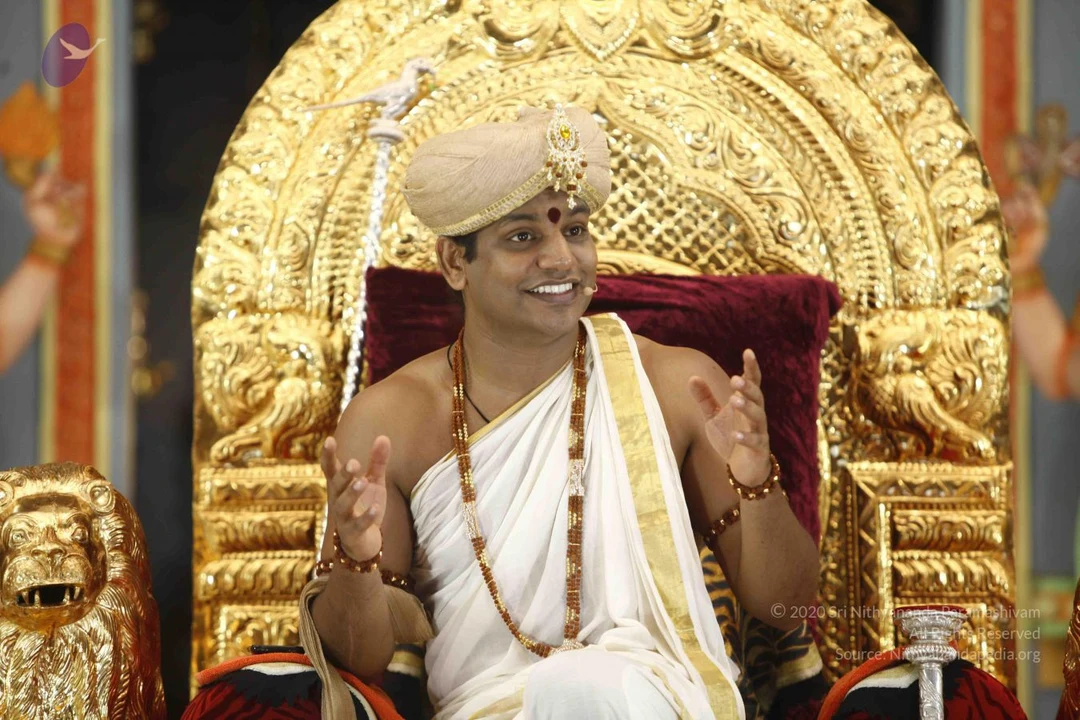
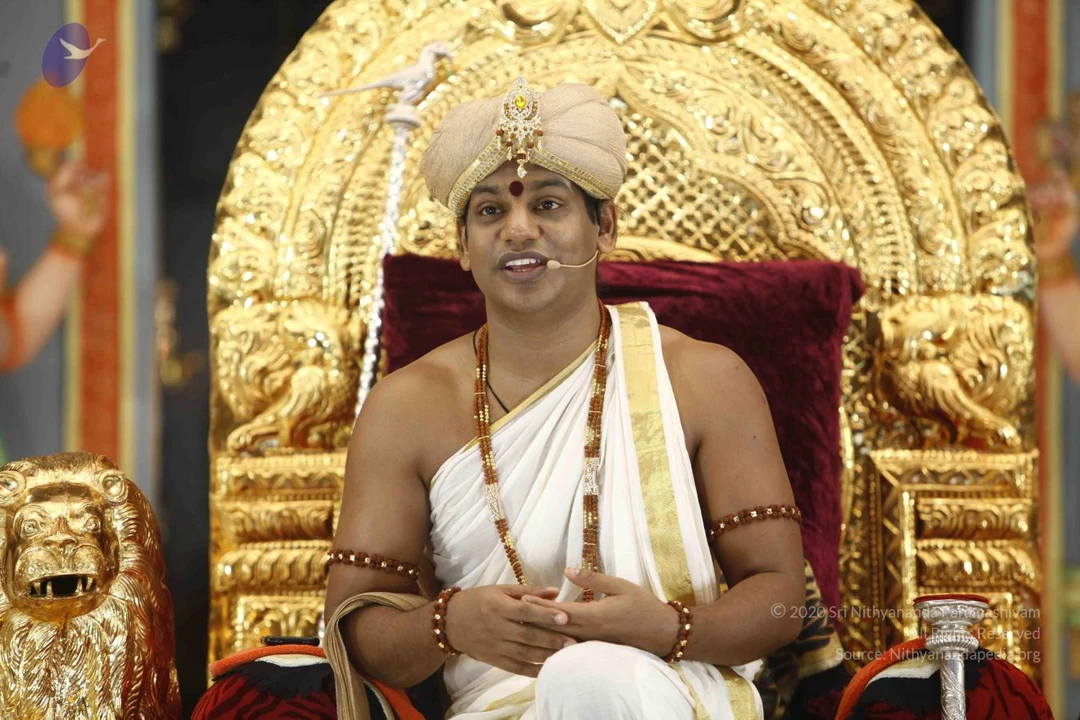
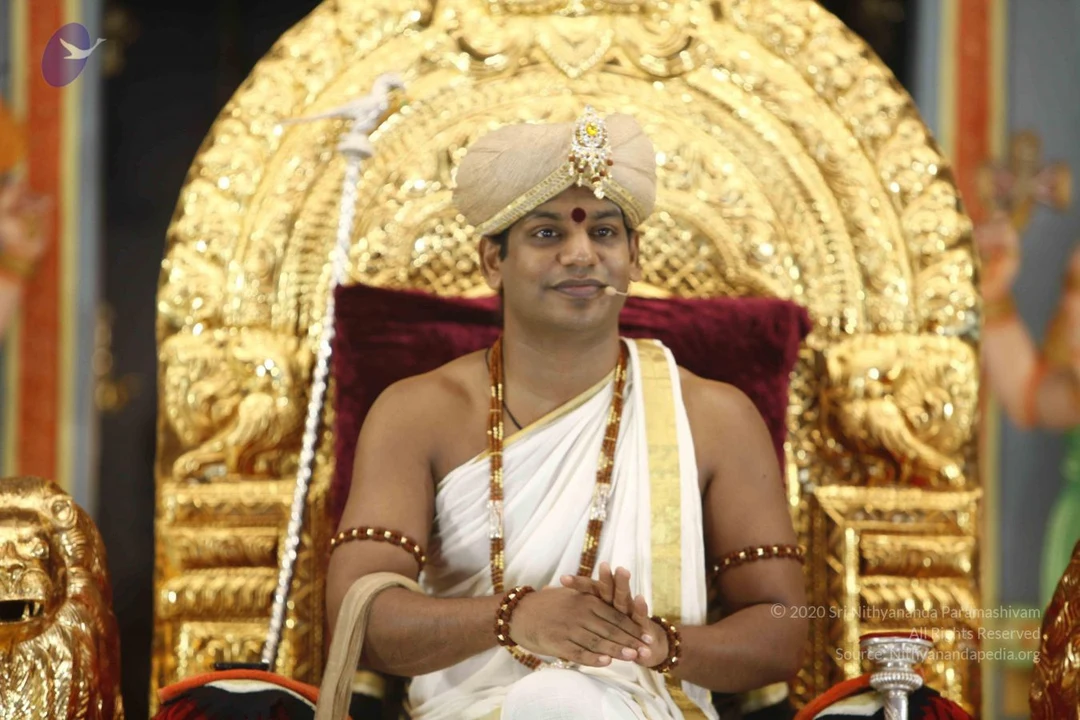
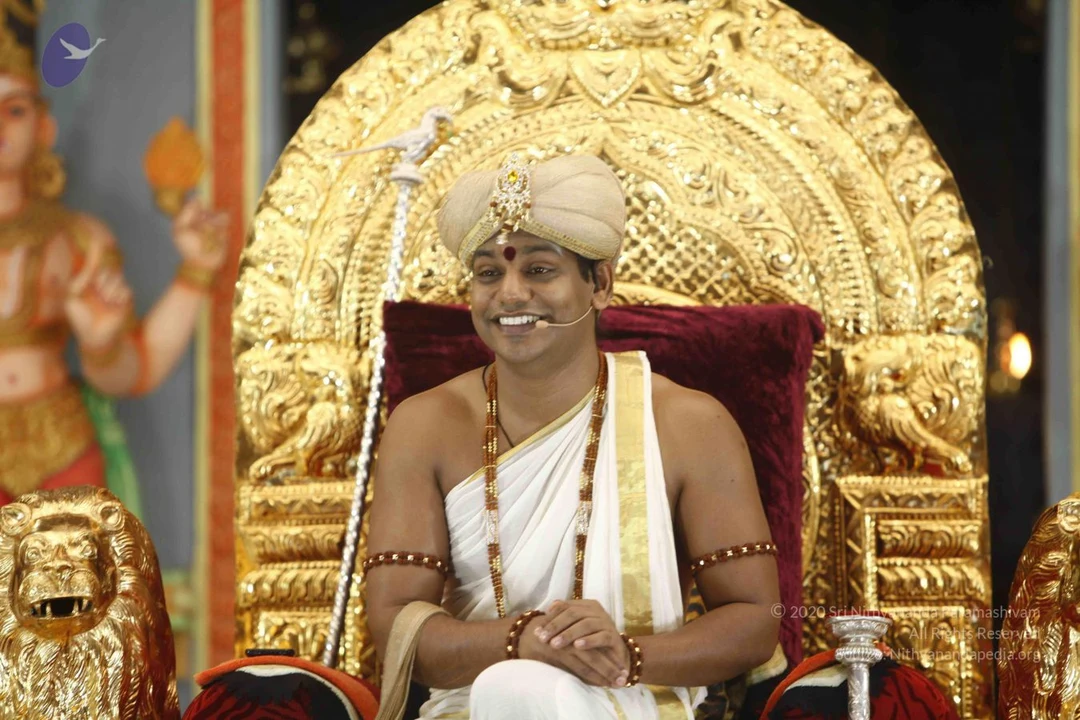
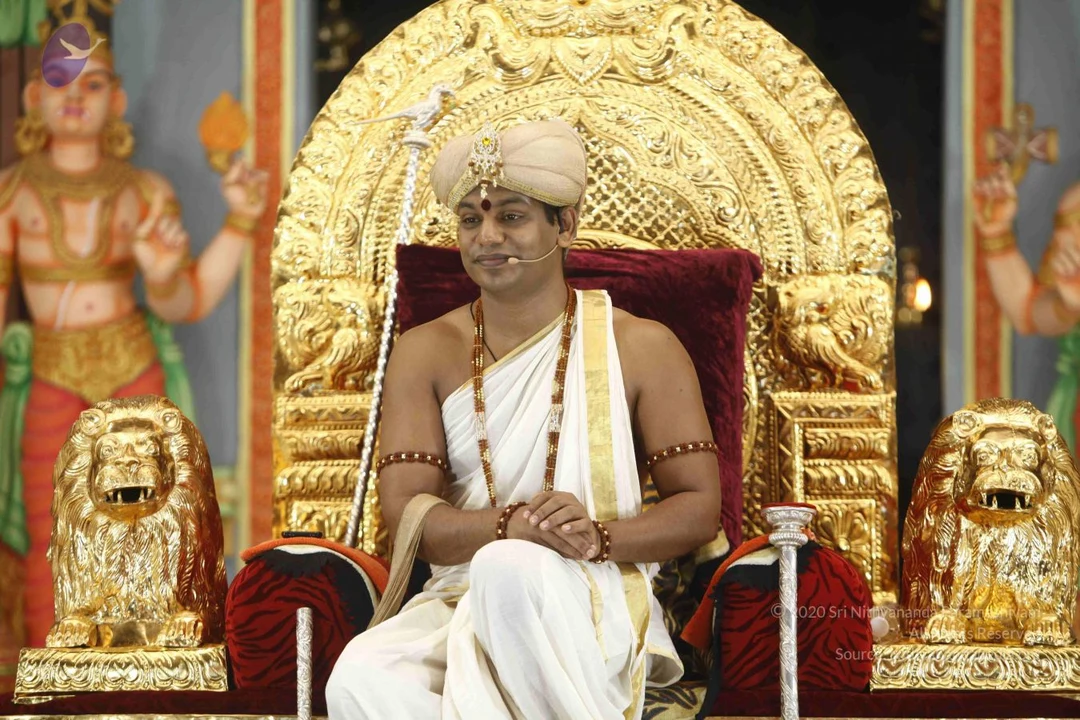
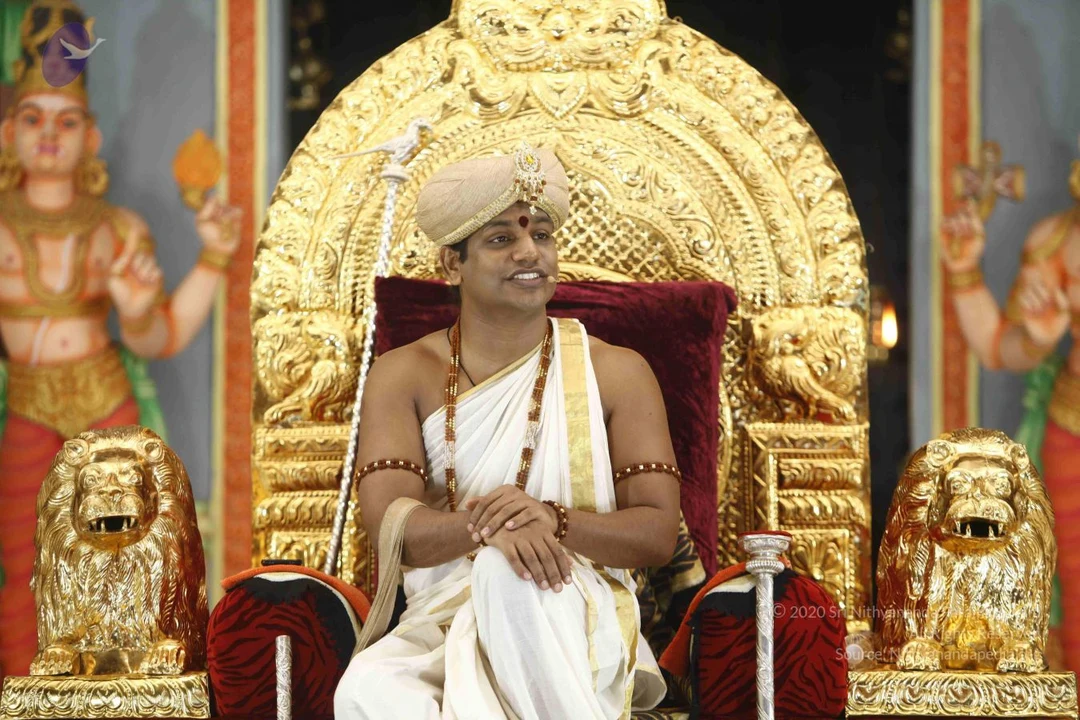
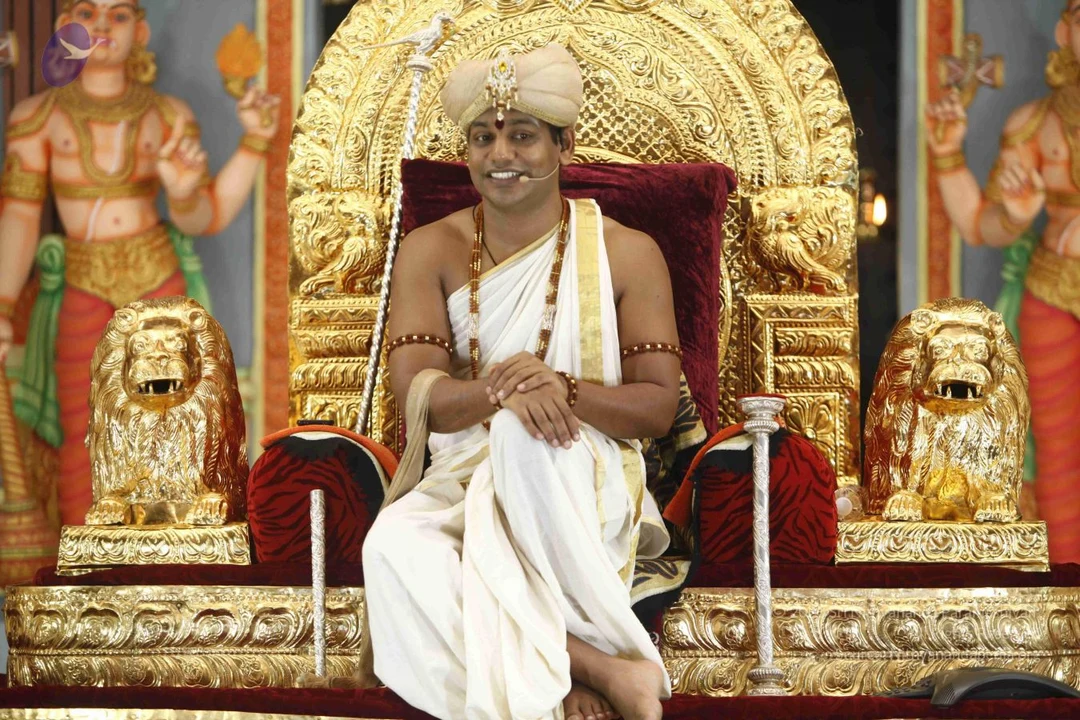
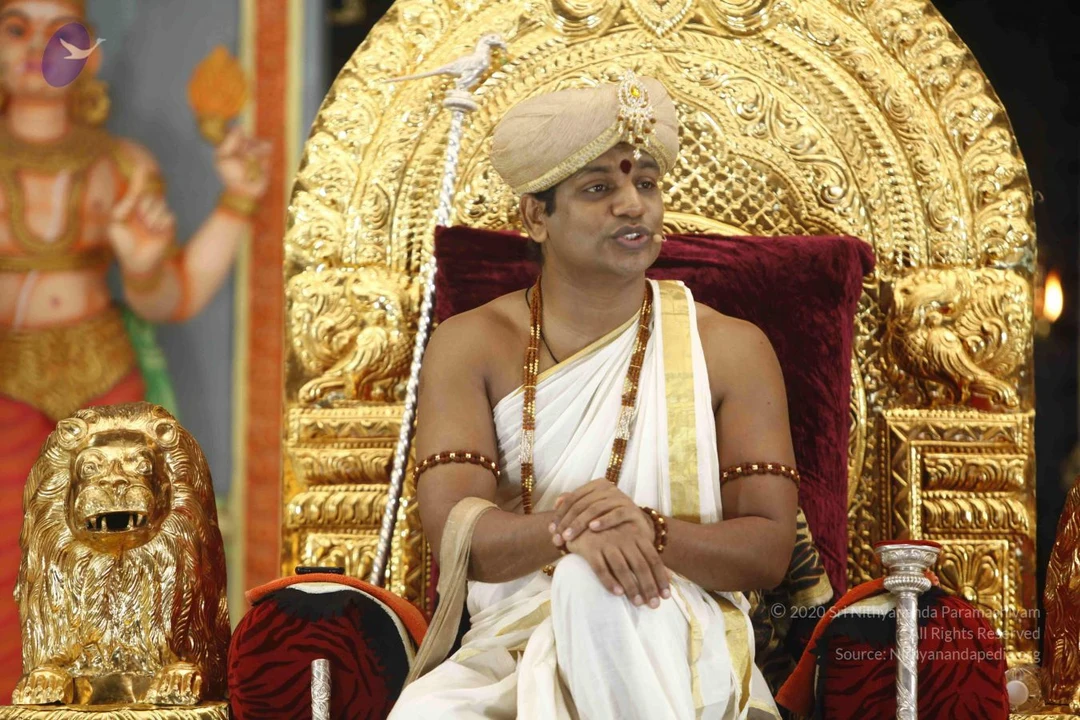
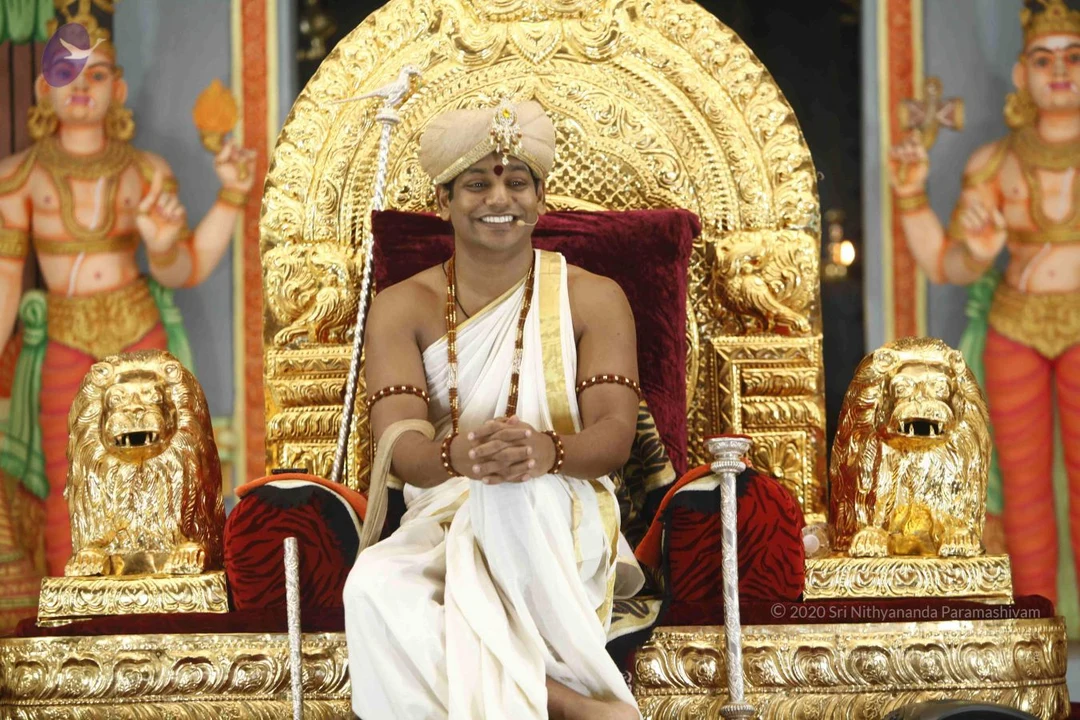
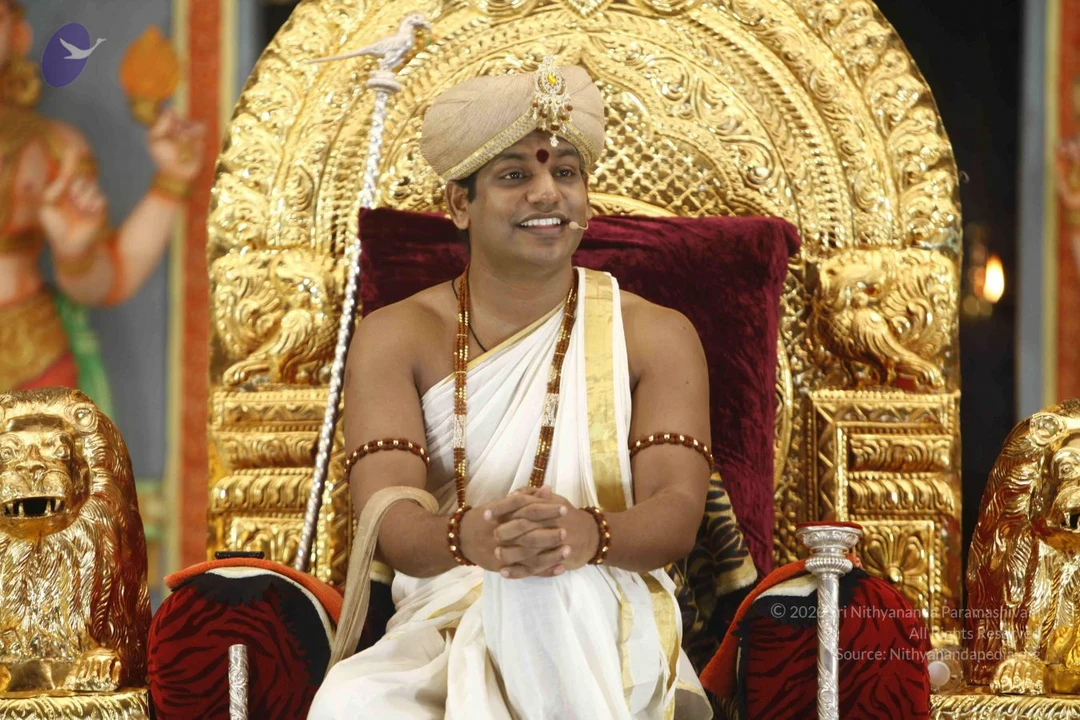
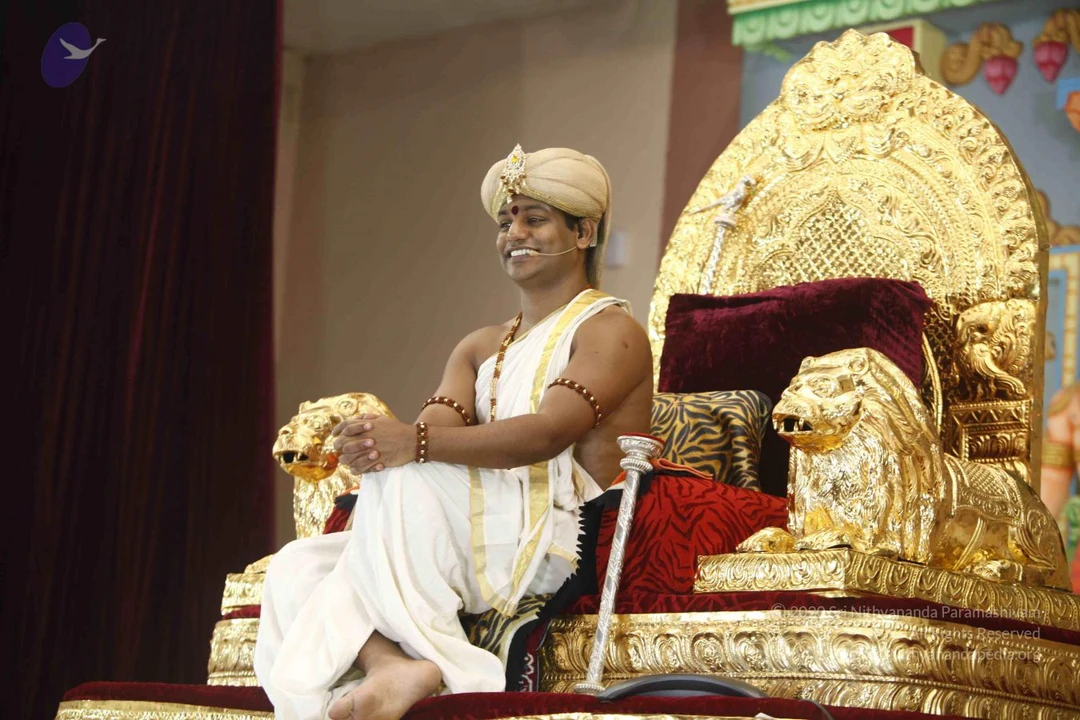
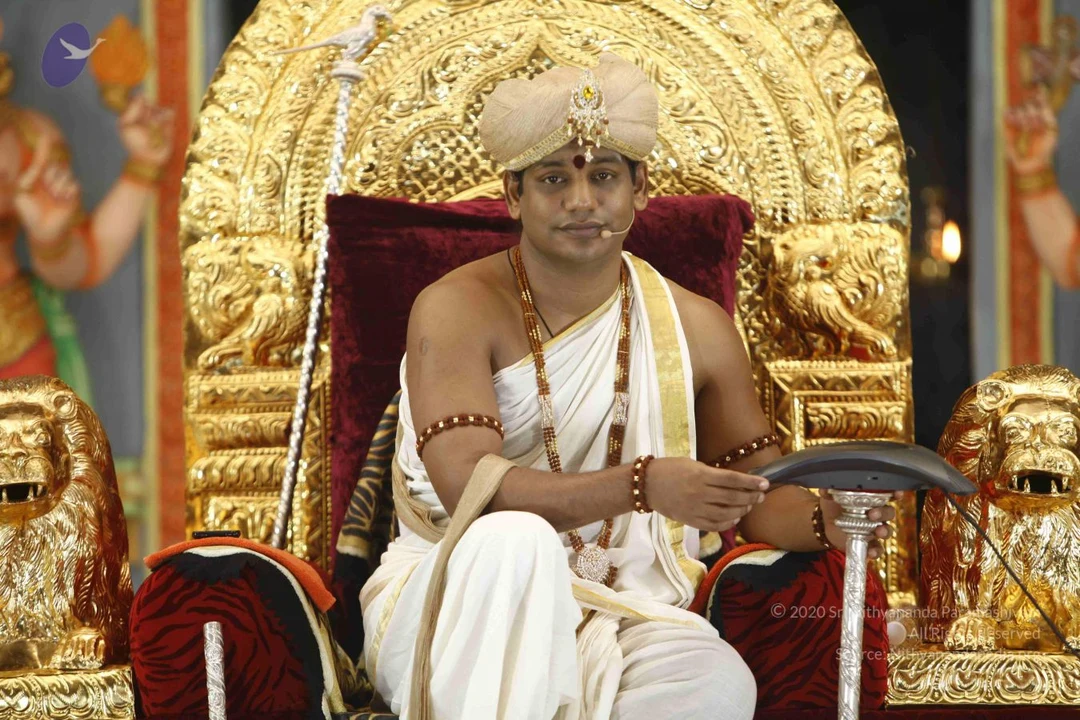
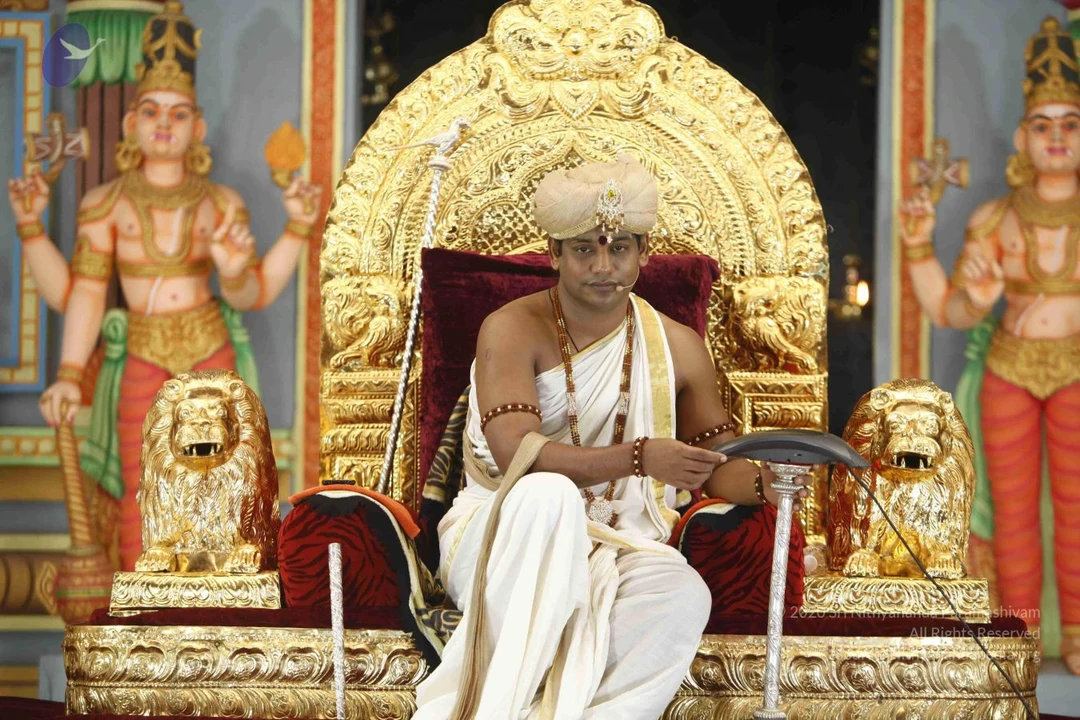
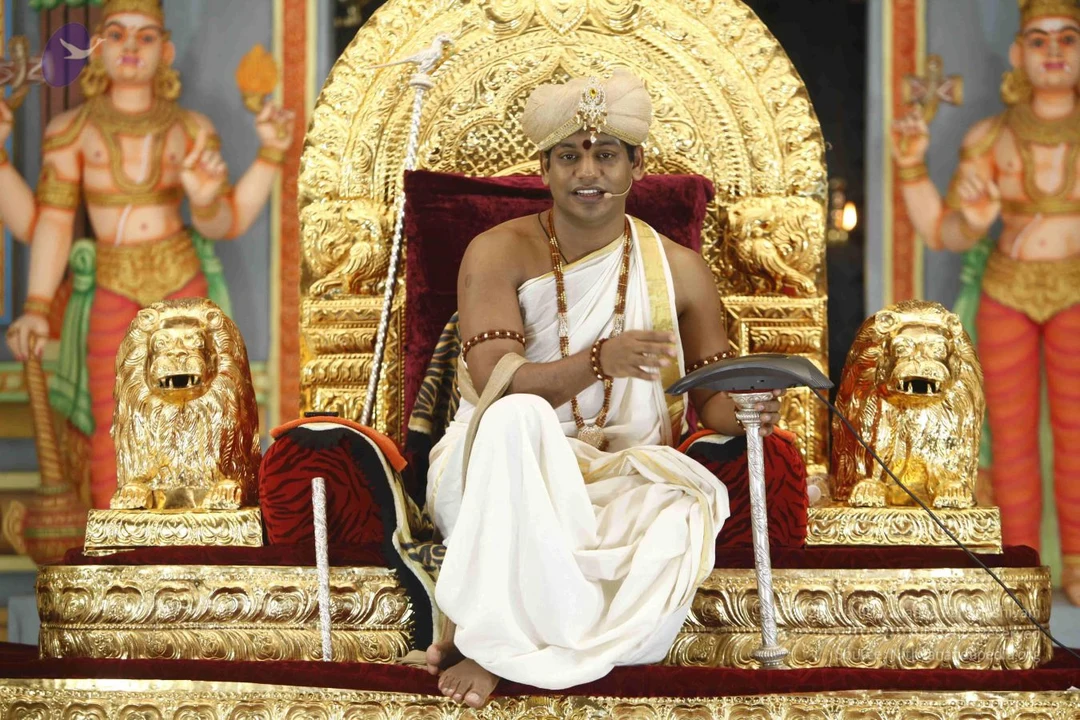
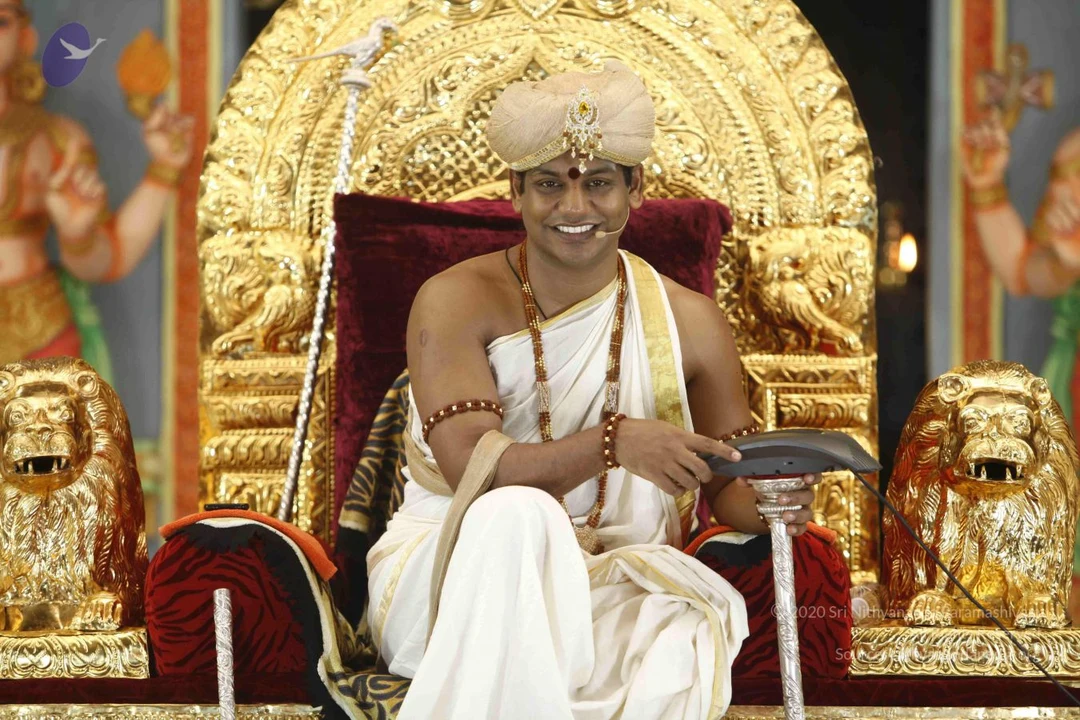
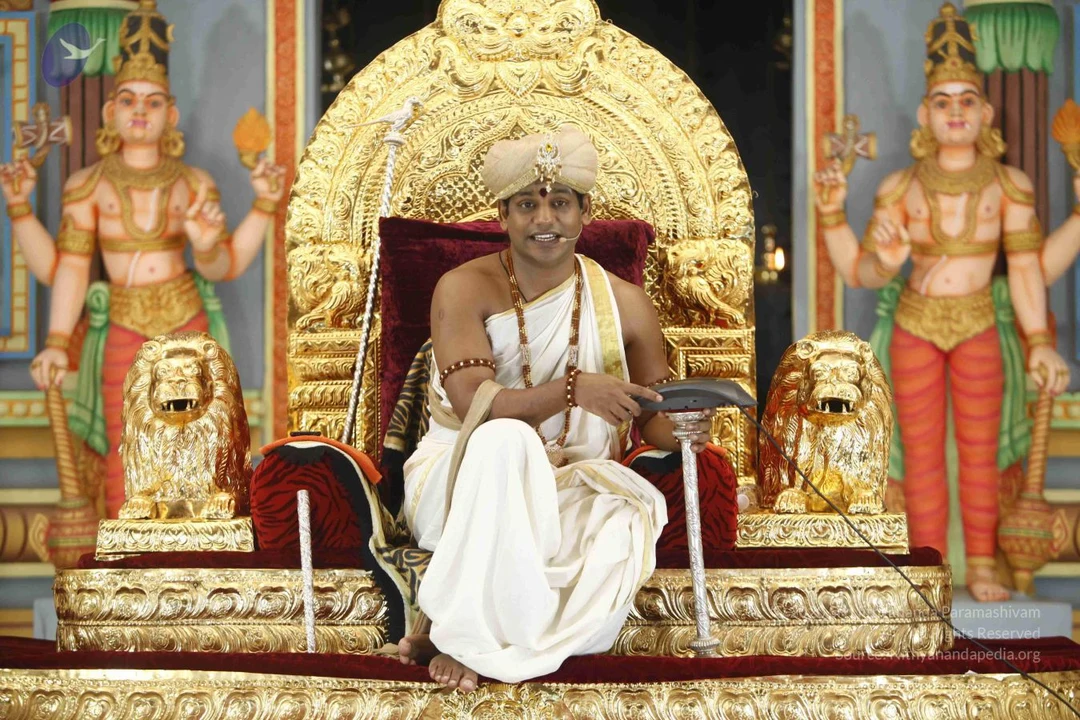
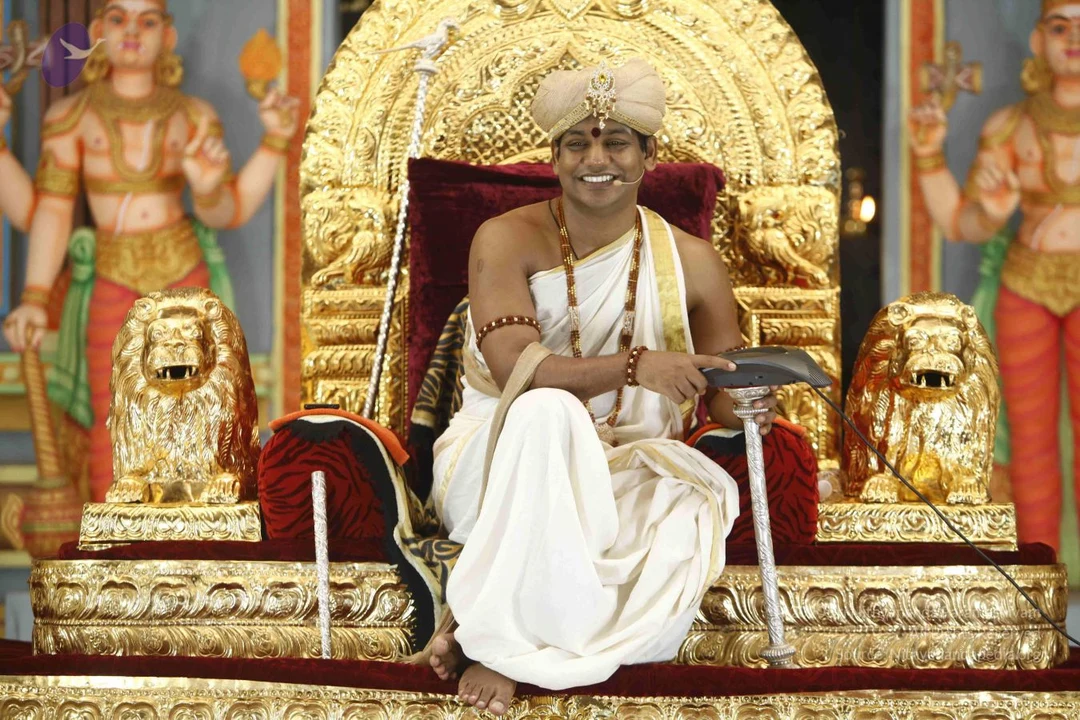
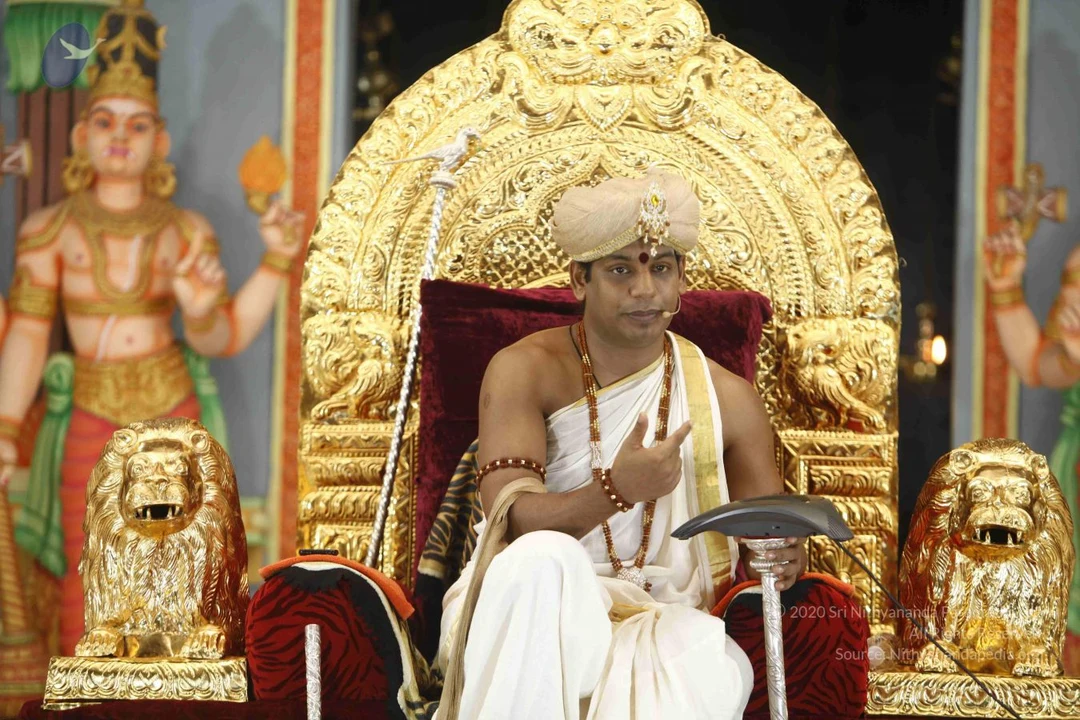
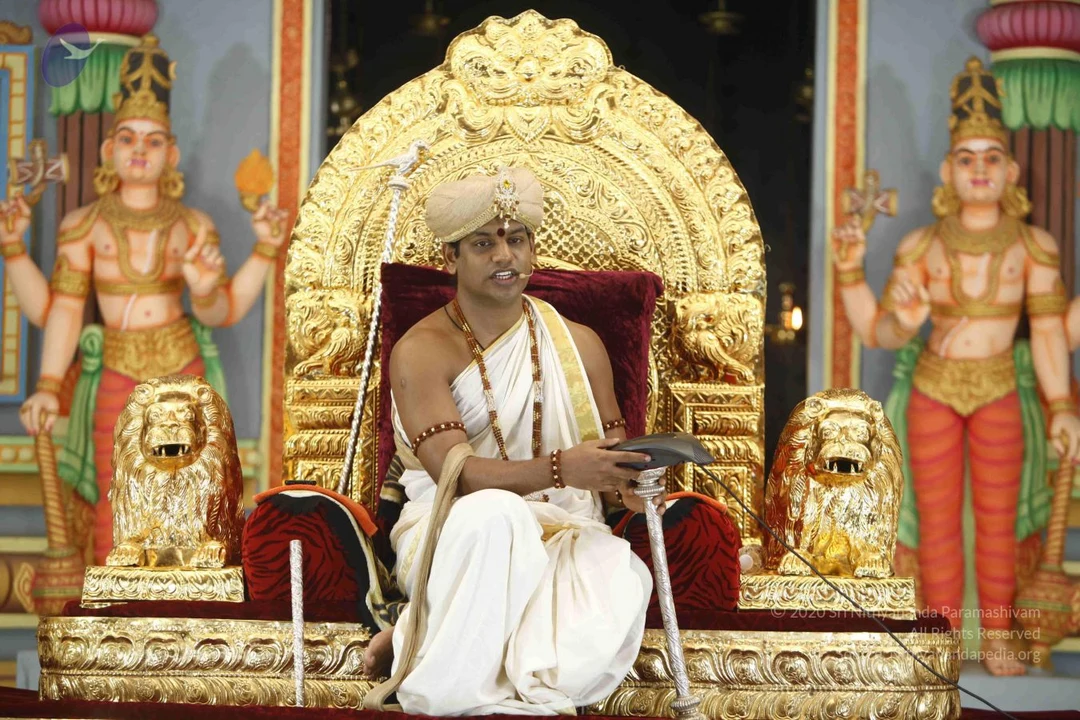
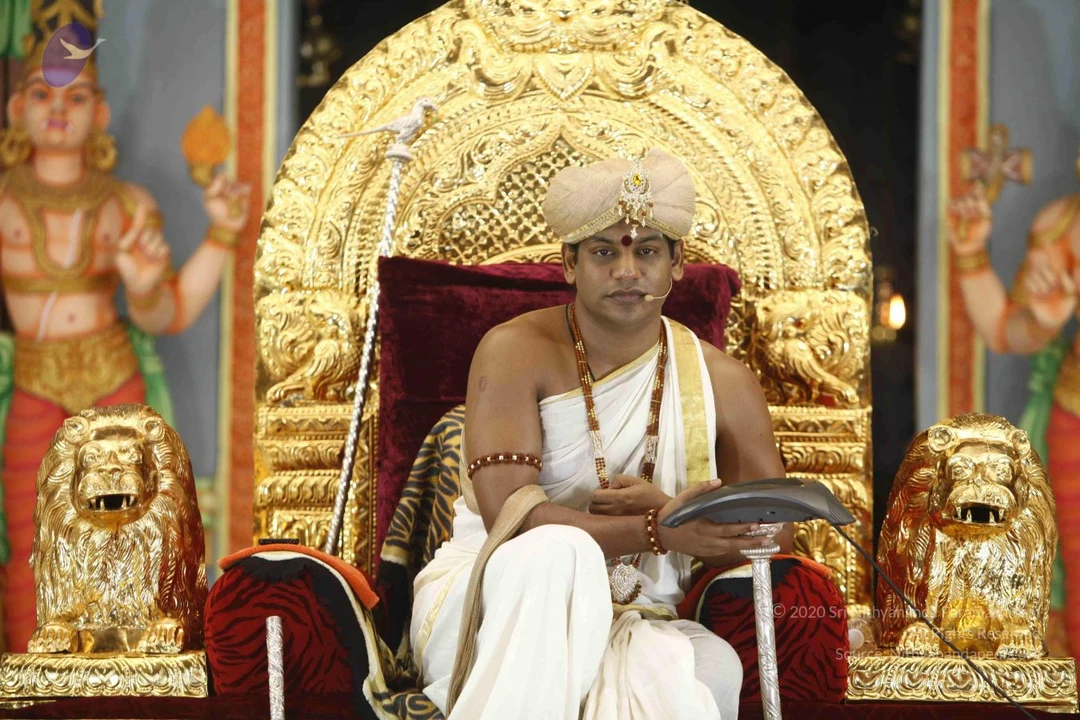
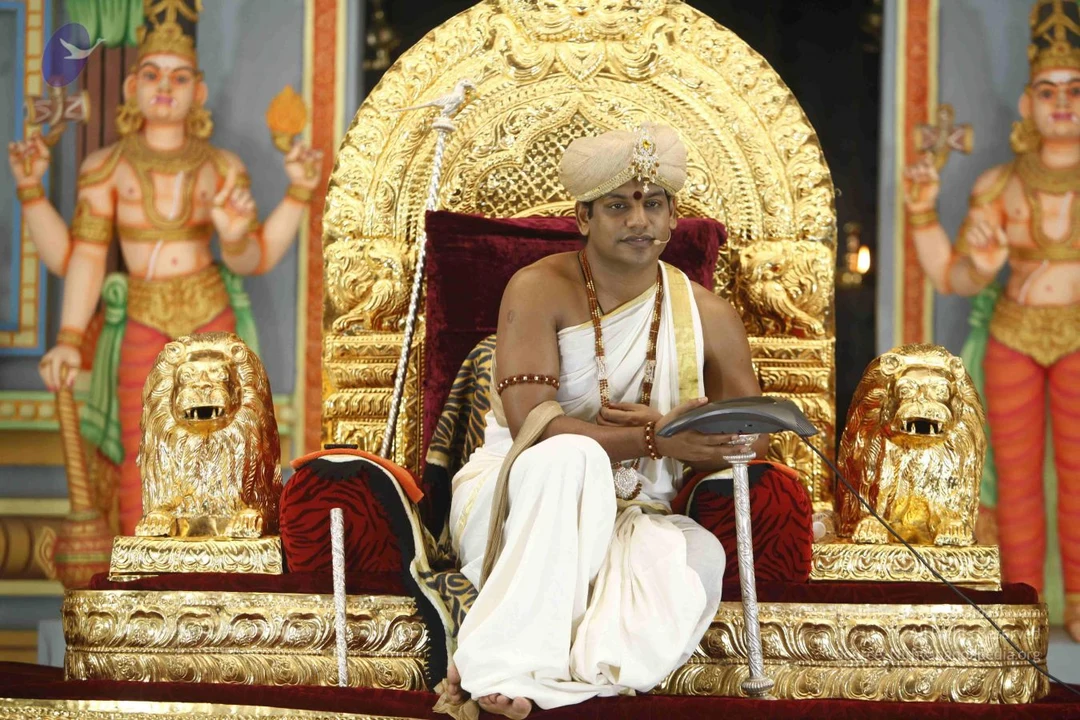
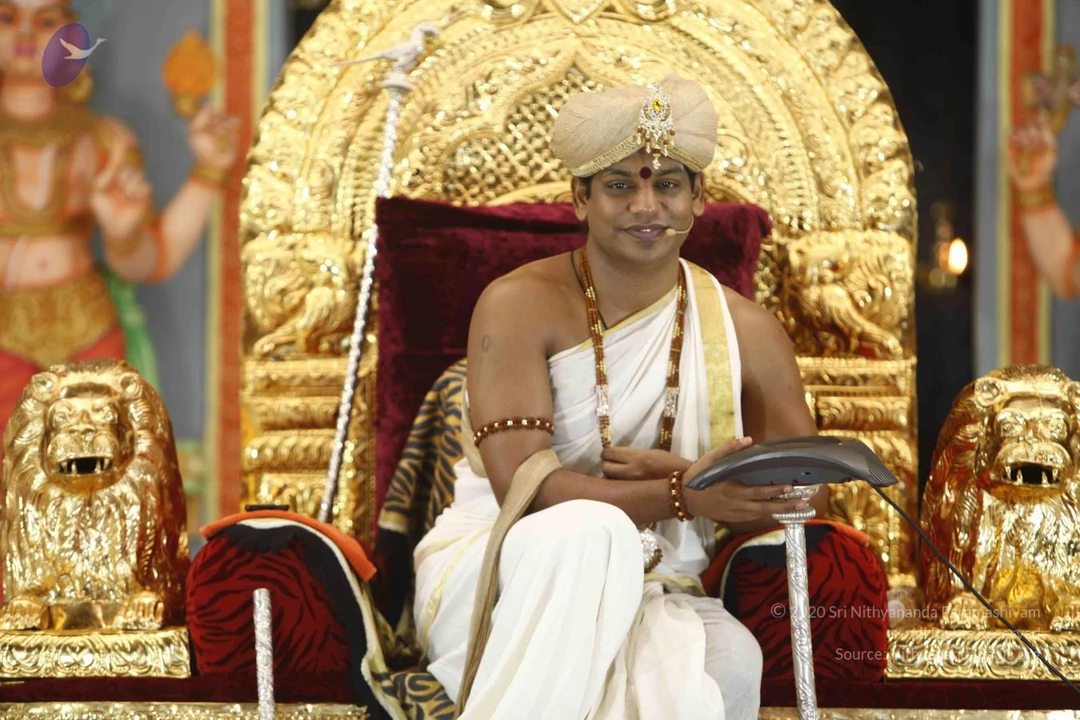
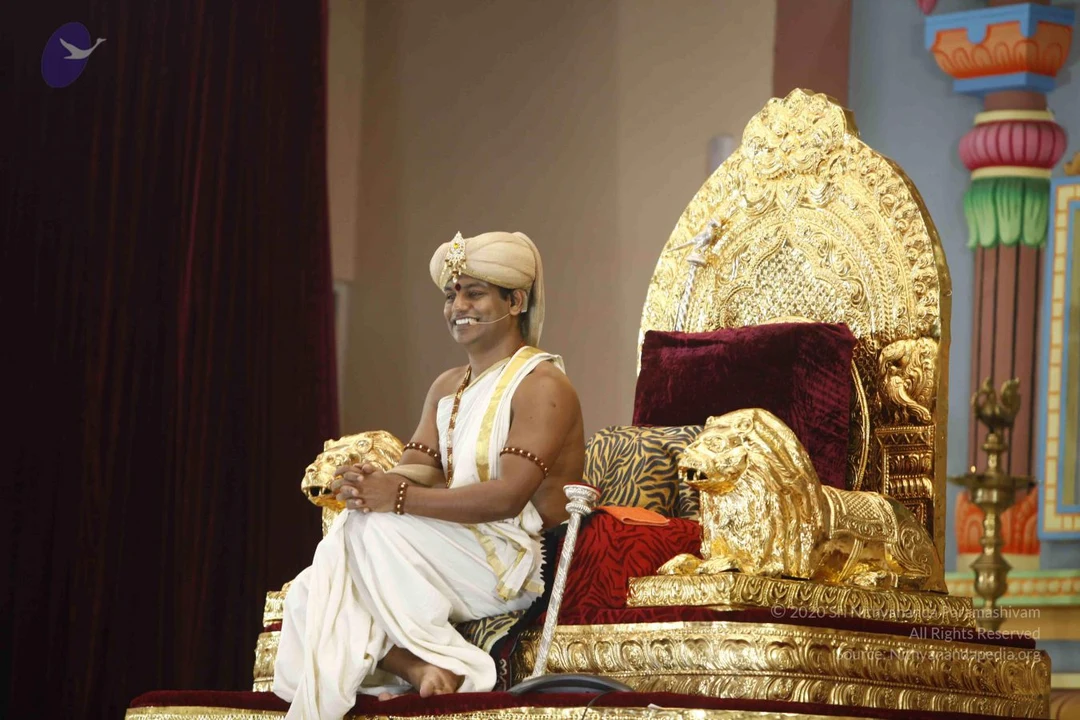
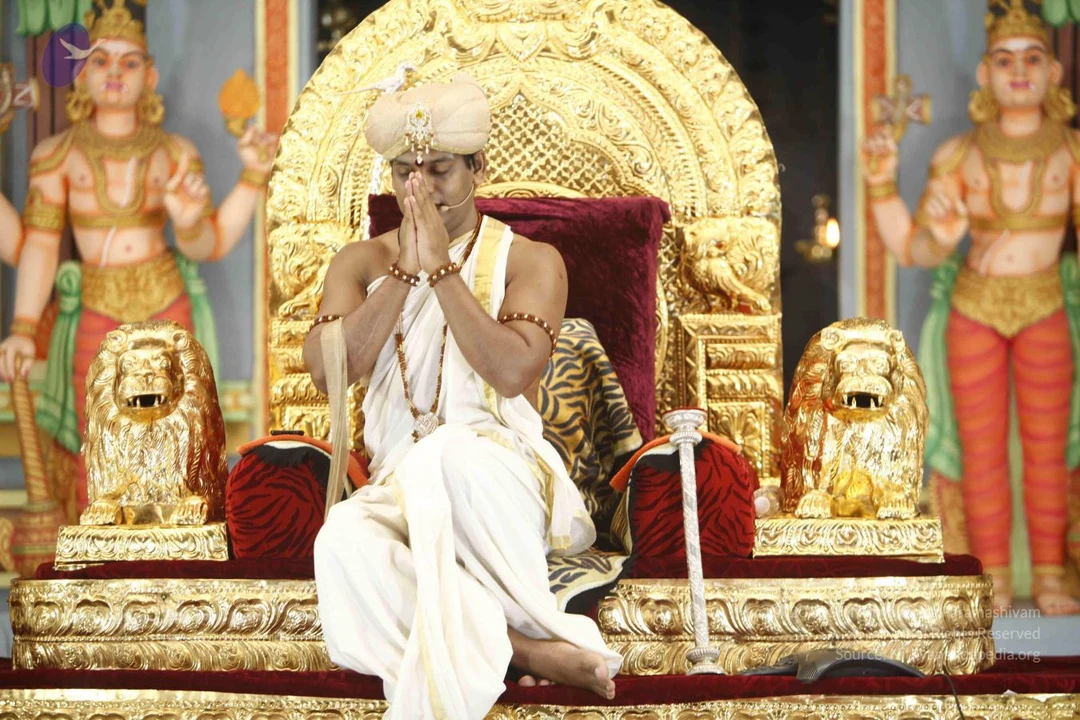
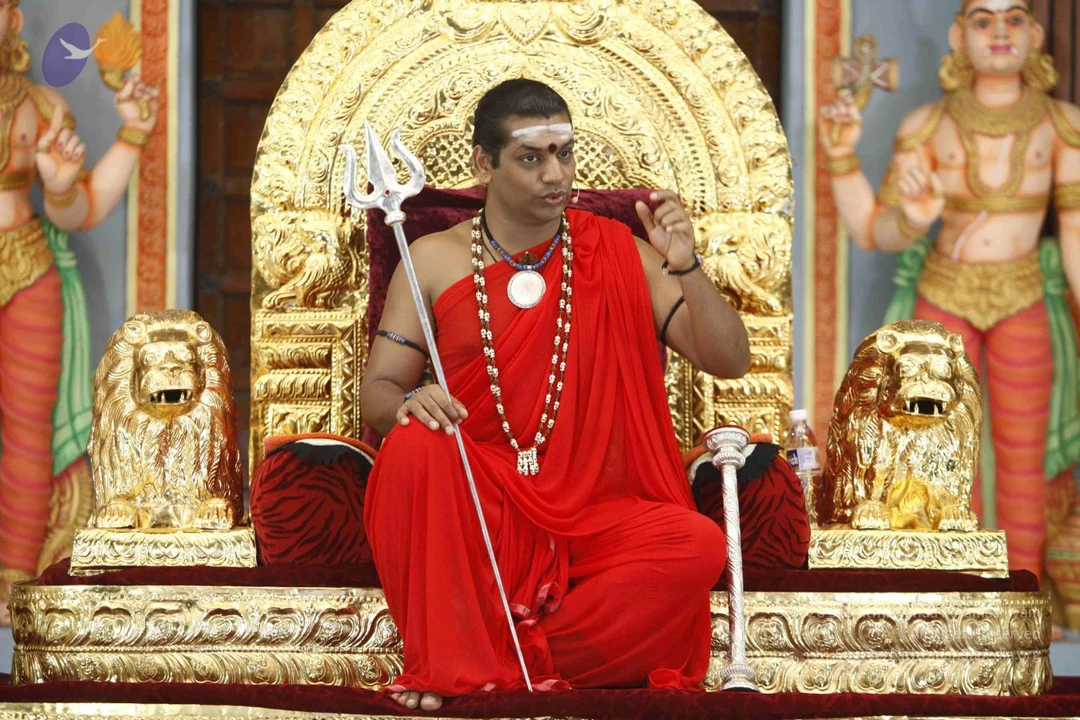
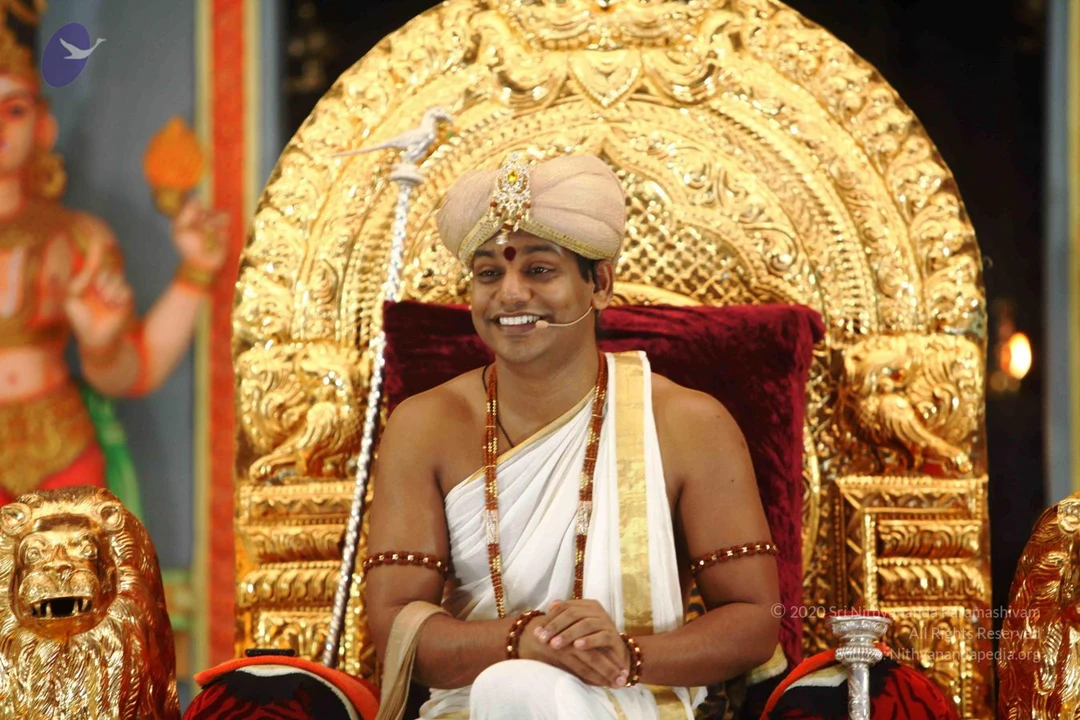
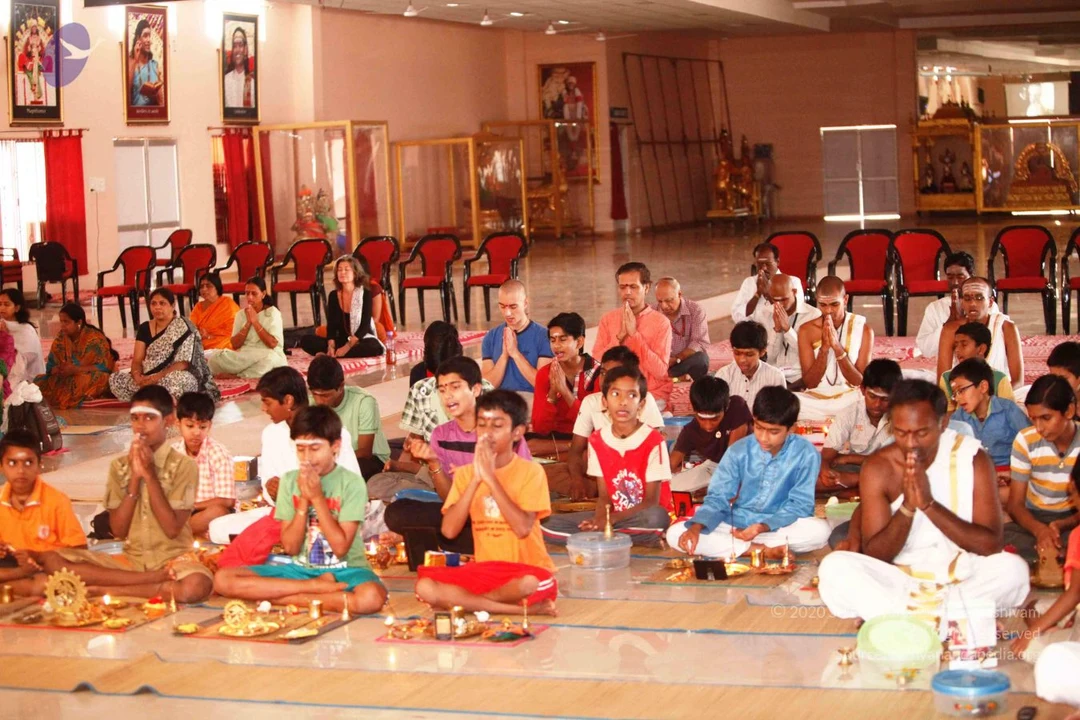
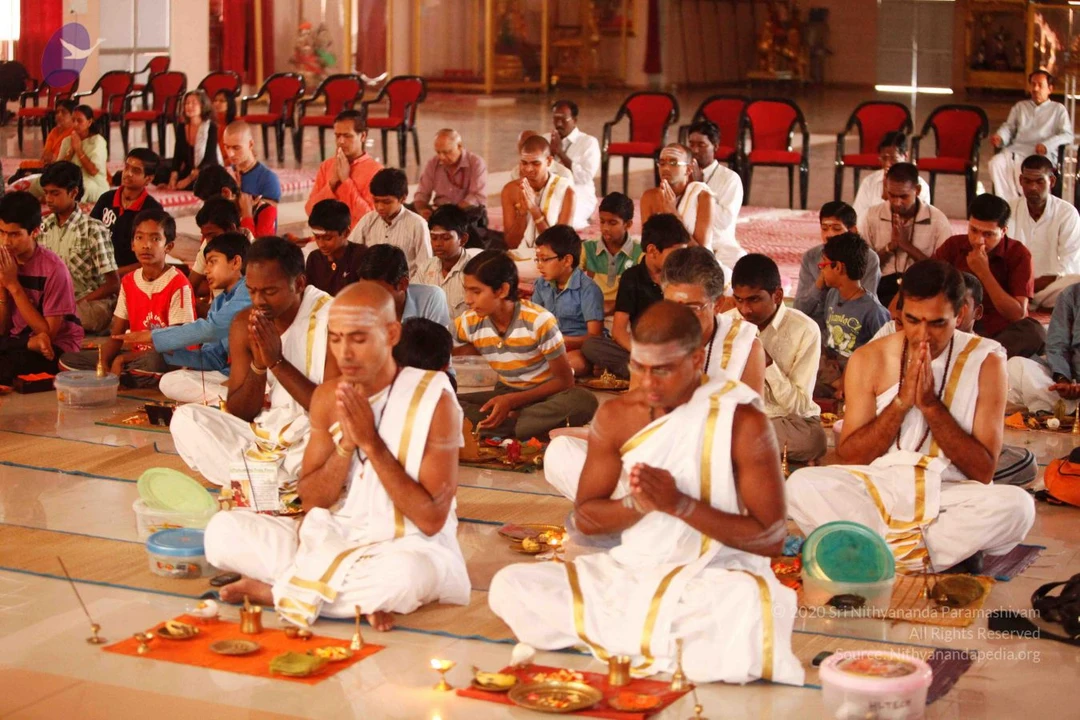
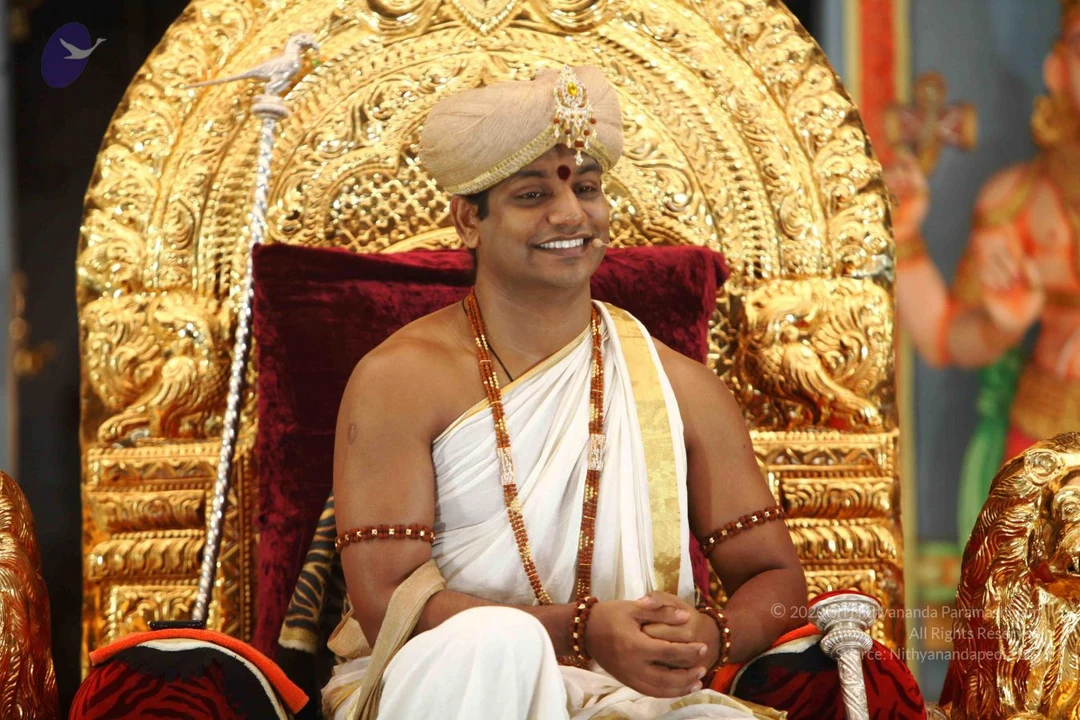
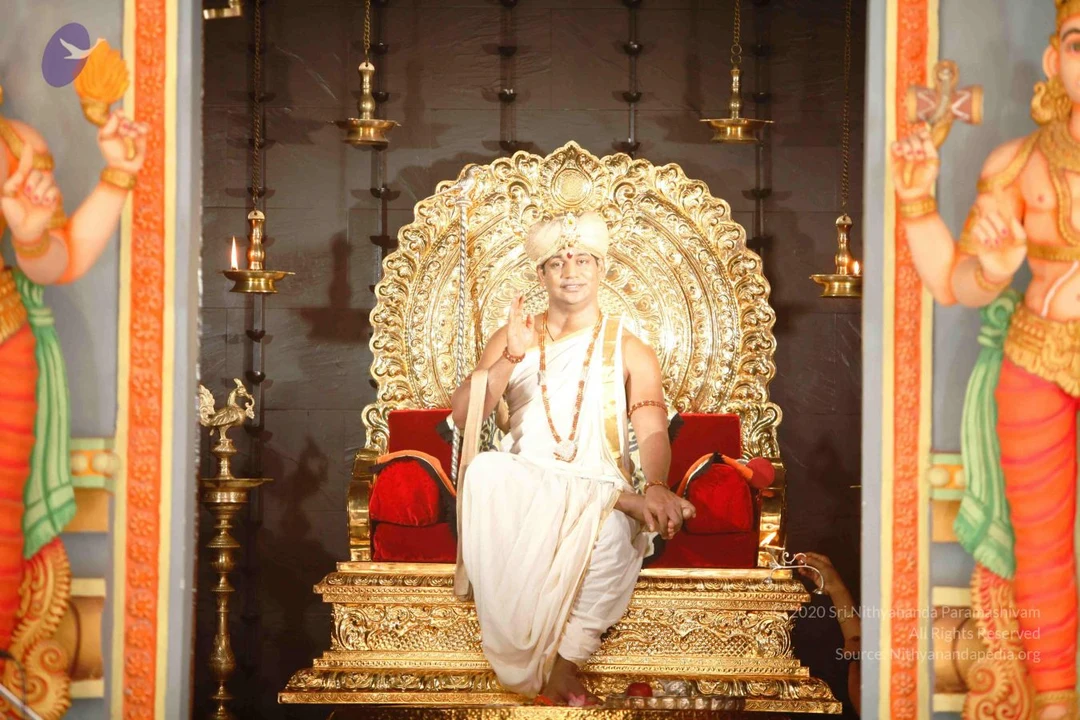
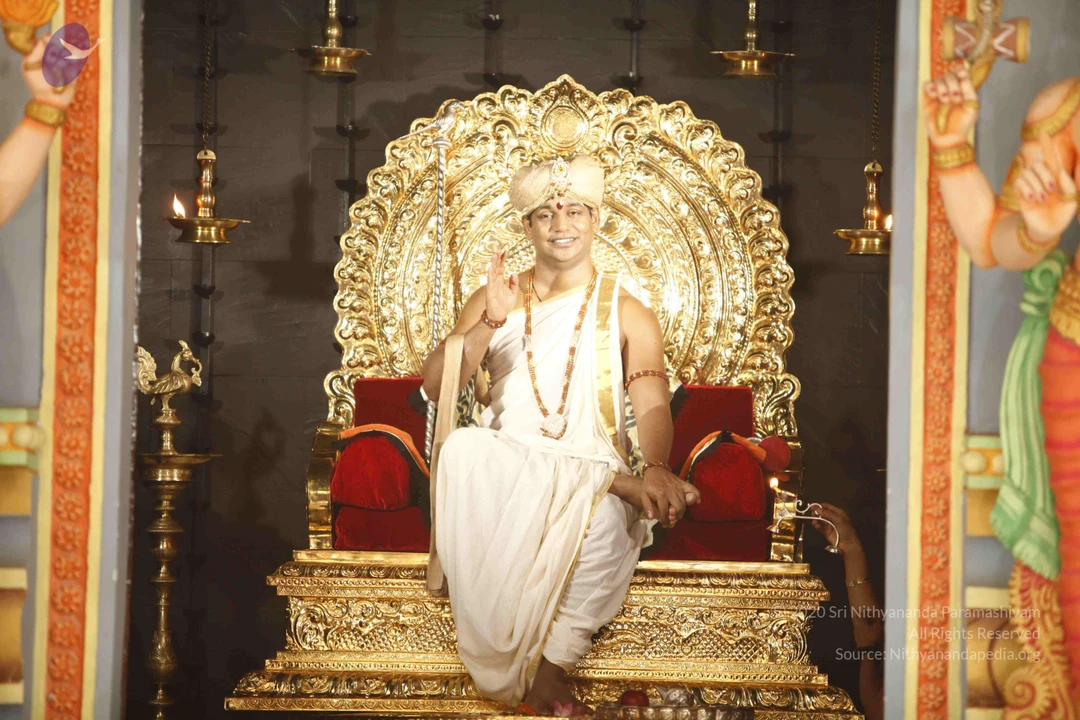
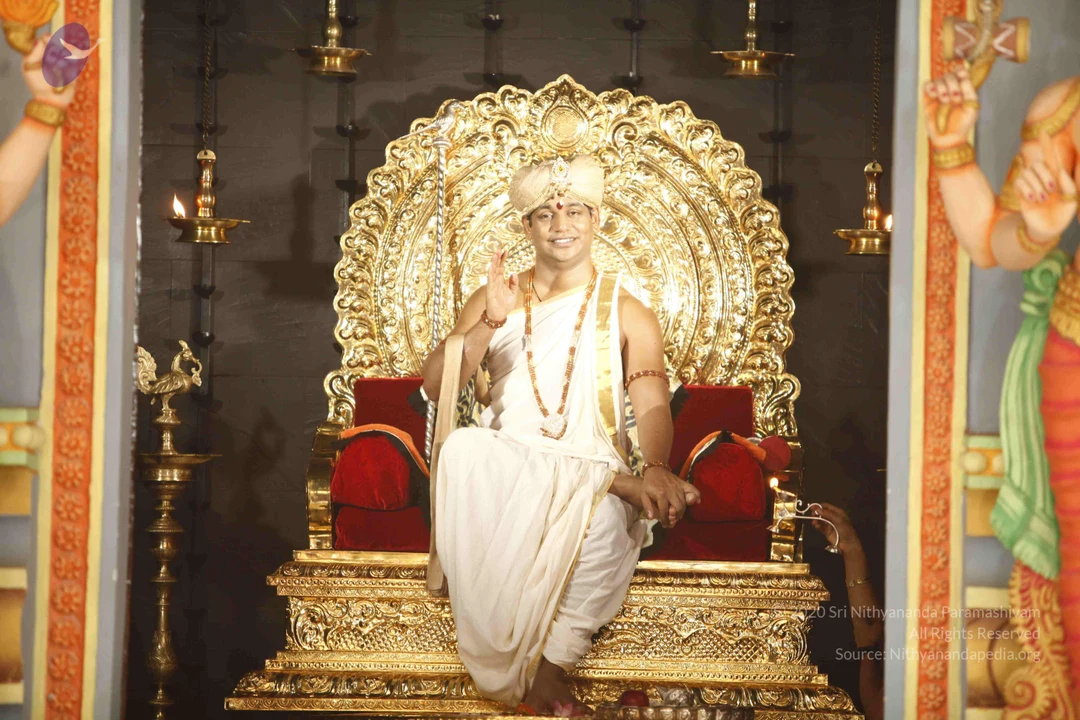
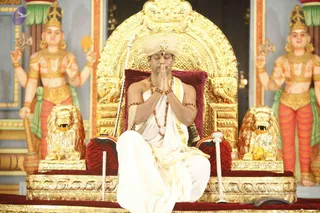
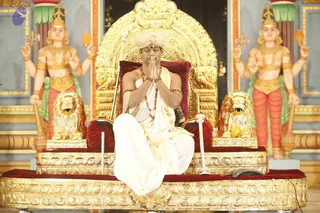
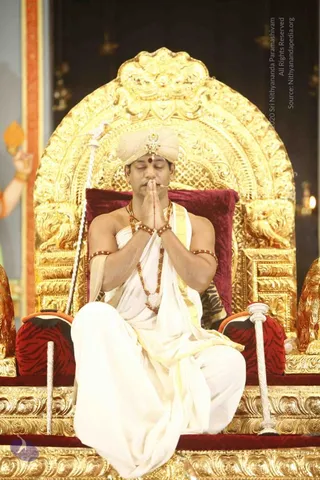
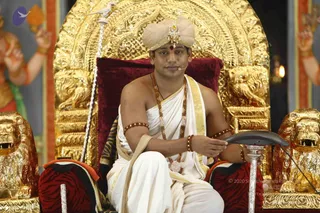
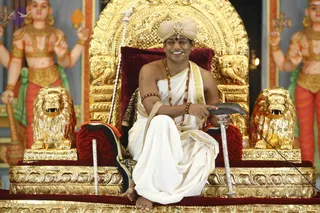
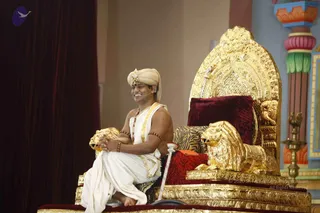
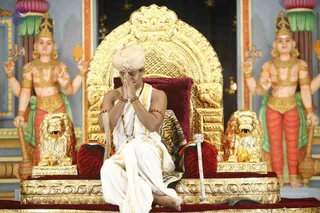
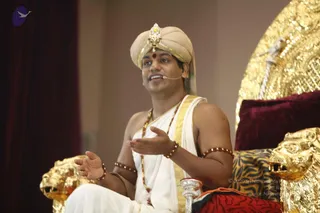
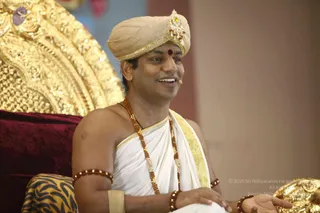
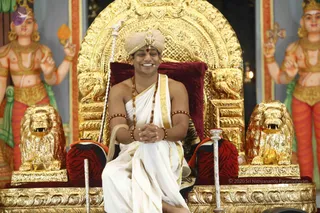
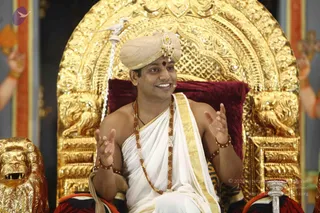
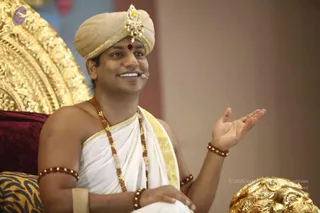
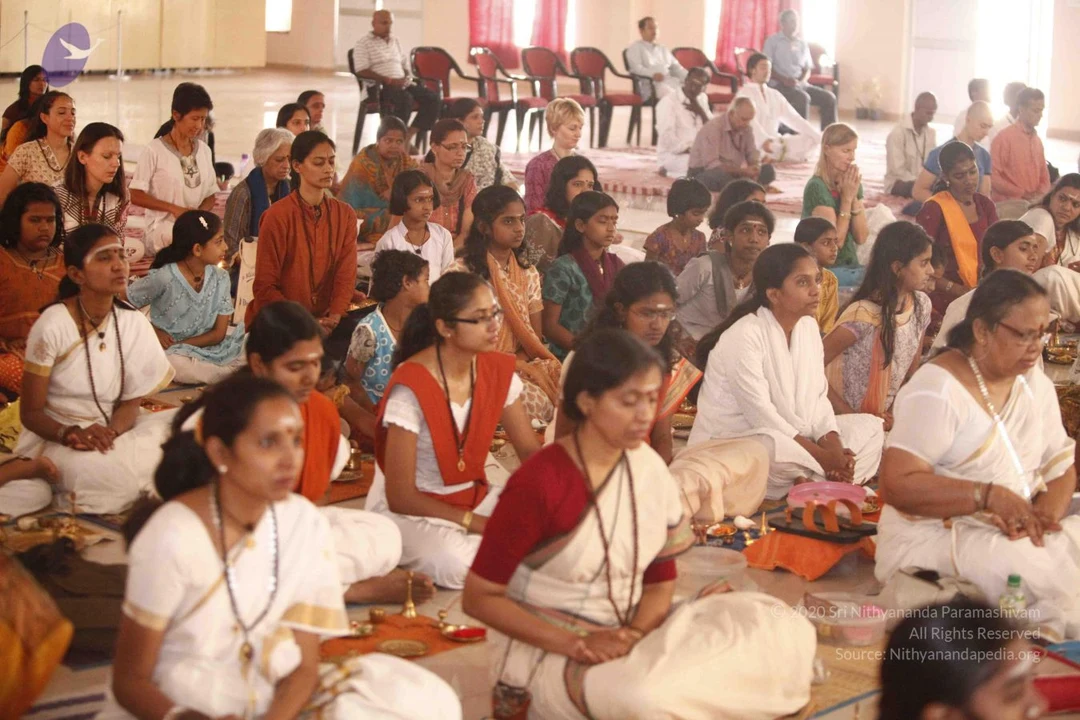
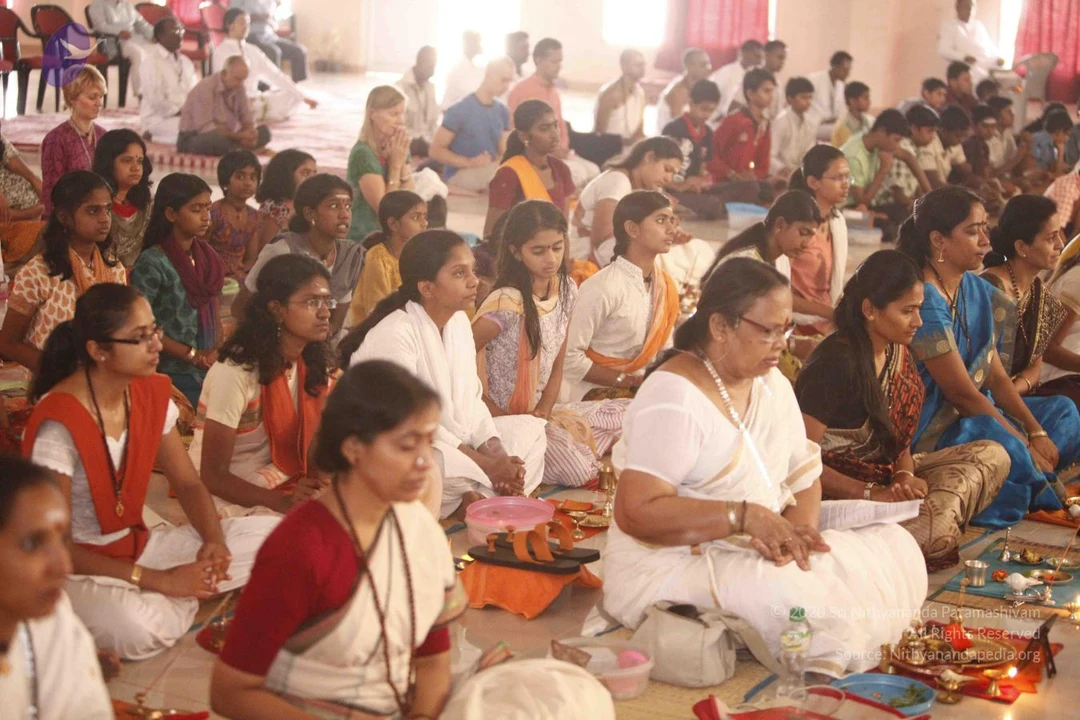
A man seated on an ornate gilded throne with a red cushioned seat and carved golden backrest, raising his right hand in a blessing gesture. He wears a cream and white dhoti with a gold-bordered shawl, a cream turban with a small red tilak mark on the forehead, a long rudraksha mala with a ceremonial pendant, and beaded bracelets. Behind him stand brass oil lamps with lit flames on tall stands, and painted deity figures with gold armlets and a green-and-orange cloth flank the frame. Swamiji (probable) is seated on the throne, identified by the turban, saffron-and-white ceremonial dress, rudraksha mala and gold ornamentation.A seated man in white ceremonial dhoti and shawl with gold border sits on an ornate golden throne with lion-shaped armrests and a red velvet cushion. He wears a cream turban with a jewelled ornament, a red bindi, rudraksha malas and a gold pendant necklace, and holds his hands together in his lap. Two painted deity statues with four arms stand on either side of the throne against a blue and yellow temple backdrop. A small microphone is visible near his face.A photograph of a large seated group inside a bright hall with red chairs and gold-framed shrine cabinets along the walls. In the foreground, several men in white dhotis with gold-bordered shawls sit cross-legged on mats with palms pressed together in prayer. Brass lamps, small brass bowls, and plates of offerings sit on orange and red cloths in front of them, with a lit oil lamp and incense sticks nearby. Behind them, rows of younger boys and men in mixed white, striped and colourful shirts sit with hands folded, and a few people are seated at the back near the chairs. The setting suggests a puja or satsang with offerings laid out before the participants.

April 09 2012

Original wiki page
Contents

Title:

Survive the Spiritual Culture-Shock

Description:

Bhagavad Gita (Song of God) is a timeless treatise on the essence of living enlightenment. The Gita was imparted by the enlightened Hindu incarnation Sri Krishna to the warrior-prince Arjuna over 5000 years ago. Amazingly, the spiritual wisdom and life solutions offered in the Gita are so universal and current that even today it is used as a personal transformation guide. In today’s talk on Bhagavad Gita, Chapter 4 Verse 23, Paramahamsa Nithyananda unveils the first step to deepening our awareness and open us to liberation. Our basic bio-memory is programmed to respond to life at the lowest level of fear and greed. We can purify this programming through repeated study of the great spiritual truths. Even when we fall short, we continue to soak ourselves in the teachings until they completely replace our bio-memory. Then our bodies become clean vehicles through which we can vibrate to a higher frequency.

Link to Video:

VideoAudio

Transcript:

(00:26)

Today in Bhagavad Gita 4th chapter Jnana Karma Sanyasa Yoga, 23rd verse - “gatha-sangasya muktasya jnaanaa-vasthita-chetasaha | yajnaayaa-charatak-karma samagram pra-vileeyate ||” “Duties that are performed as an act of adoration by the one in whom attachment has ceased, who is relaxed and whose reasoning faculty is settled in consciousness, completely dissolve, bear no binding result.”

(02:10)

Three technical terms you need to understand in this verse. ‘gatha sangasya muktasya’- unattached to the modes of the material nature. Means, see the material nature is to drive you with the fear or greed. It is very nature of the matter you are carrying, not just the matter of nature which is driving you. Because you are carrying the body, you can be driven only by fear and greed. It is not just the driver’s mistake, it is the vehicle’s mistake also. The vehicle, your body itself is a matter. Just two days before I was discussing with some of our ashramites about this administration rules. That time, I was sharing an important insight which I wanted to share with all of you, now. By the nature of the bio memory, human beings need to be feeling certain level of fear and greed. If you don’t even provide that much of material for them to be afraid of something and to be greedy of something, they will feel so empty inside, they will create unnecessary phobias - height of fear, suddenly something will happen... The unnecessary, reasonless, causeless phobias settle in your system if enough fear and greed is not supplied to your basic bio memory.

(03:56)

By your nature, just because you are carrying a human body which is programmed with fear and greed, certain amount of fear and greed is required even to drive you. That becomes survival necessity. The administration is supposed to take care you don’t create the fear and greed in everybody the same level. No. There are some people, a little bit of fear and greed is enough, they will be full, they will run, start driving. There are some people, maybe more fear & greed is required for them to run. Some people who need more fear & greed, if you give them less fear & greed, they are in danger. Now, they will start creating unnecessary phobias. Please understand, many of your unnecessary phobias are created when you try to protect yourself from the basic amount of fear and greed which is required to run your life.

(05:02)

I have seen many people, they try to protect themself from the basic fear and greed which is needed to run their life, without purifying their bio memory. If you purify your bio memory by actions – karma, and evolve, then move out of fear and greed, nothing wrong - you will be liberated! But without making your bio memory matured, if you try to move out of fear and greed… I can give you this one example - people who leave everything and go for parivrajaka, yatra, aghori lifestyle, nagas - without maturing your bio memory if you leave everything and go, the small, small phobias – phobia of cockroach, phobia of scorpion, phobia of snake – small, small fears will take over your inner space, you will develop unnecessary phobias. I have seen there was a sadhu who had phobia about rivers. See, if you go near a river and have a fear that ‘suddenly some flood may come, I will be flooded’, that is ok. He will not even go on a bridge, well-built bridge where buses and trains can go. No. Forget about going on a bridge, he will not even see the river from the distance. How many phobias are there! God! When I read the list, I got the phobia of phobias! Phobias are pseudo fear, perverted fear. Like how pornography is perverted lust, phobias are perverted fears. Never pornography lust can be transformed; because it is perverted, it is impossible to transform it. Nor the phobias can be cleared; because it is perverted, impossible to clear, almost.

(07:14)

(Video Clip Played)

(9:32)

Of course, only working on your non-mechanical parts of the brain and the inner space, you can be free of this. By the mode of the material nature, you are driven by fear and greed. Mature your bio memory, then liberate yourself from the fear and greed. Before maturing your bio memory, if you try to escape from fear and greed, you will create unnecessary phobias. I have seen many sadhus. They try to escape from fear and greed, give up all their wealth, property, life, run away, but they have not matured their bio memory by building a yogic body and vedic mind. When they go there, I see very clearly they are caught in the greed of polishing their kamandalu, fear of losing the 2 feet by 2 feet place where they sit and beg! I have seen Sadhus literally beating each other, fighting with each other with their stick just for the place where they stand and beg. And when I investigated into their life, they have left crores worth of property in their hometowns, came out and became Sadhus! It is true. It is not that they are born beggars. They have left everything.

(11:10)

One Sadhu I remember very clearly who had a huge property in Haryana, who was a farmer, suddenly he got vairagya and left everything and went away. He was staying in Rishikesh. Maybe after five, six years all his vairagya went down, his inspiration has gone. But his ego--he doesn’t want to go back to his house and reclaim his property. So he is sitting there itself. His bio memory is not matured but he has given up the fear and greed. What happens? I saw him fighting for the place small two feet by two feet on the banks of Ganges where they sit and beg. That’s a prime spot!

(11:54)

Understand when your bio memory is not matured, this happens. Many time, even in the West I have seen, when people come to Me for phobias, to get healed of phobias, all I do is I give them some real fear, straight forward fear, immediately they come out of phobias. Phobia is perverted fears which happens in you when your bio memory is not matured enough to handle the fearless, greedless zone but you are forcing yourself into fearless greedless zone. I always tell people, make your bio memory matured by building the Yogic body and Vedic mind. Then, go for the parivrajaka, go for yatra. Before that if you do, you will only be caught in unnecessarily phobias, not in fearless zone.

(13:01)

First technical term you need to understand in this verse is ‘gatha sangasya muktasya’. The very mode of the material nature - fear and greed - be liberated from that. Means, let your bio memory be matured. Maturing your bio memory can be done only by two ways. One, again and again and again and again reading the spiritual truths even if it is same. For ten years, I read gospel of Sri Ramakrishna every night. Never felt bored of the spiritual truths. Sometimes, the spiritual truths create guilt in you, because, you feel you are reading but you are not practicing or you are failing. Then you stop reading. No. Whether it creates dissatisfaction in me, greed in me or fear in me, I am not going to stop. Again and again and again, without feeling boredom, tiredness, guilt, listening to the spiritual truths, internalizing the spiritual truths. Now I am making a new playlist in the YouTube.

(14:37)

(Video Clip Played)

(16:28)

Now I am making a new playlist in the YouTube, the title, ‘Guaranteed Solutions’. I am going to give you 1008 Guaranteed Solutions for different problems! So, you have any problem just type Guaranteed Solutions and the problem’s name, you have it. Again and again and again, without boredom, tiredness, guilt, fear, suffering, discontentment… because when you read the spiritual truths again and again, all this is possible. When I tell something to people second time, third time they tell, “Ah, you break my self confidence by constantly telling this”. I tell them, “Okay…” Whether you feel guilt or discontentment, your self-confidence is breaking, suffering, go on listening to these great truths and go on internalizing it. It is not that always when I read Ramakrishna’s gospel I was feeling very pleasant and happy to read further. Many times I felt, “Oh! I am not executing these words, I have to live these words.” There was millions of struggle. Sometime I won’t even feeling like reading the next page. I’ll feel, let me complete this, let me master this one truth, then I will go to the next. All kinds of mood swing, all kinds of thinking, all kinds of discontentment, all kinds of dissatisfaction, all types of guilt. I have seen everything, of course in a different scale. The scale in which you see is very different, the scale in which I see is different.

(18:34)

It is like yesterday I described, when I give you one word – “drop TV and internet”, and if you are struggling with that one word and having the guilt - that is different level. And you are struggling to drop the inside visualization and having the guilt - that is different level. Understand. Those experiences were there and went on drilling the bio memory with these raw spiritual truths. Only when you listen, hear from an enlightened being, you get the raw spiritual truths. From the great speakers, scholars, pundits, orators, trained priests, you will get very sophisticated, polished, politically polite, socially polite, spiritual truth almost lost all the juice of the truth. Those words, spiritual truths which has almost lost the truth, cannot transform you. Listen to the raw spiritual truths. When you internalize them again and again and again and work heavily on your body through the Hatha Yoga, Kriya, Pranayama, Yoga, weight lifting, with all this, Akhada, only then your bio memory gets liberated from the modes of the material nature. ‘gatha sangasya muktasya’. From the modes of the material nature you get liberated!

(20:32)

The second technical term Bhagavan is explaining here, jnaanaa-vasthita-chetasaha’--established in the spirit of knowledge. This is very important thing. Liberating yourself from the modes of the material nature is one part. The second important part, establishing in knowledge of spiritual center. Establishing yourself in spiritual knowledge. “jnana-avasthita-chetasaha”--means, able to handle every problem you face in your life from your spiritual center, able to solve all the problems of your life with spiritual solutions. ’jnana-vasthita-chetasaha’

(21:27)

(Video Clip Played)

(23:33)

That is why, when disciples sometime, when they come to Me with some problem, first one or two time, I tell them, I try to give them solution. If they come again and again, I tell them, “Alright, you suffer with it. What can be done”. Because, till you establish yourself in that jnaanaa-vasthita, me solving is not going to help. You will come up with some other problem. When you start solving only you will take the responsibility of not creating problems. Then, you are too busy in solving. You will not at least create more and more. ’jnana-vasthita-chetasaha’. That is why sometime when you bring the problems to me, I give you little more problem. Only then, you are forced to find solution by yourself. You will be established in the spiritual knowledge.

(24:30)

Third point. Bhagavan describes in this verse - ‘yajnaaya-acharatak-karma’ - practice the duty which is practiced for adoration, for the devotion as sacrifice. The duty which is practiced as adoration. I can give you one more sacred secret from this line - even your mental patterns can be offered as a garland to the divine. Your mental patterns are actually hanging on your consciousness. Now it is hanging like a torn cloths on the divine. Even out of torn clothes, you can make a beautiful garland and offer it to the divine, say, “This is what I have and I am really interested in getting out of this. You please have this and liberate me”. Even your patterns can be offered as the adoration to the divine.

(25:41)

Bhagavan beautifully explains, anybody who lives with these three qualities – ‘samagram pra-vileeyate’ – means, he melts totally into the ultimate. He is liberated completely. These three qualities - liberating yourself from the modes of material nature and established in the spiritual knowledge, performing the acts as adoration, you melt into the ultimate. Again and again and again, listen to the spiritual truths and internalize them. Do not bother about the guilt, discontentment, dissatisfaction, agitation which may happen in you when you listen to the spiritual truths again and again and try to live them and fail. In the struggle whatever you go through, don’t worry about that. But, go on listening and try to internalize. Second, go on building your new bio-memory by working on your body through Kriyas. Third, offer all your actions as adoration to the Divine.

(27:17)

That is why I insist on every seeker taking one year off. See, the moment seeking opens in you, the moment inspiration happens in you, that first one year is very important year. Please understand, first one year of your marriage is very important because you set a trend - how your life is going to be, your patterns are going to be, how you are going to respond to each other, what is your boundary, what is his boundary, everything will be defined in the one year. The first year is very important in marriage, in any relationship. Same way, first year is very important when you are born. Because that first year is going to decide whether you are going to live or not. Even for the house, the first year is very important. That first year only is going to decide whether the house is going to stand or not. Because it is going to face the seasons, all four seasons only in the first year. If seeking opens in you, you are feeling something new happening in your life, if you are excited about spiritual seeking, take that one year off.

(28:29)

How you are going to create relationship with your seeking is going to be decided in that one year. Whether you are going to ripe and get enlightened or your seeking is going to be killed will be decided in the first one year. The first one year the actions you perform based on the seeking, the amount of seeking you allow to penetrate into your actions, that is going to decide whether you are going to evolve and get enlightened or your seeking is just going to die down; it is going to be just one more breeze you experienced for few months. That one year, if you reach the depth of spiritual experience, even by struggle--it is okay. But if you withstood the spiritual experience and I call this with a new word - spiritual cultural shock. Every individual who comes inside the ashram and stays for more than a week goes through that - spiritual cultural shock. Because it is completely new culture. What you call as love will not be love. This is the place where the pure love of Kailash flows, where everybody loves your possibility, your being.

(30:11)

Fight between two being, two persons happens when the possibility is not loved. When the possibility is loved, never there will be fight. There will be lot of screaming, there will be lot of shouting, but there will not be fighting. Screaming and shouting does not constitute fighting. Understand, fighting constitutes ideological difference to the core. Ideological difference to the core is a basic ingredient for fight. So, what you call as fight outside, you will see as if it is happening, but it will not be happening. Same way, what you call as love outside. So, what you call as love will not be love here, what you call as fight will not be a fight here, what you call as fear will not be fear here, what you call as greed will not be a greed here. It is Kailash. Only thing you need is somehow hang on! Don’t get down from the train, that’s all. Whether you are in first class or AC compartment or second class or third class or third class bathroom. And I even have a fourth class - just hanging in the train bar. I have all four classes. But somehow hang on, that’s all. You will reach. And all four of you will reach the goal. The fellow who was in AC coach, for him the travel itself was little tasty, that’s all. Otherwise, the goal is same for all of you. All four of you will reach the goal. No doubt. Nothing else. Whether you are in AC coach, first class or second class or third class or third class bathroom or fourth class - hanging, hang on! That’s it!

(32:34)

(Video Clip Played)

Photos From The Day:
==Photos Of The Day:==

Temple

e-Pada-Pooja

Bhagavad-Gita-Chapter4-Verse23

Dial-The-Avathar

Sarva-Dharshan

Esoteric-Satsang

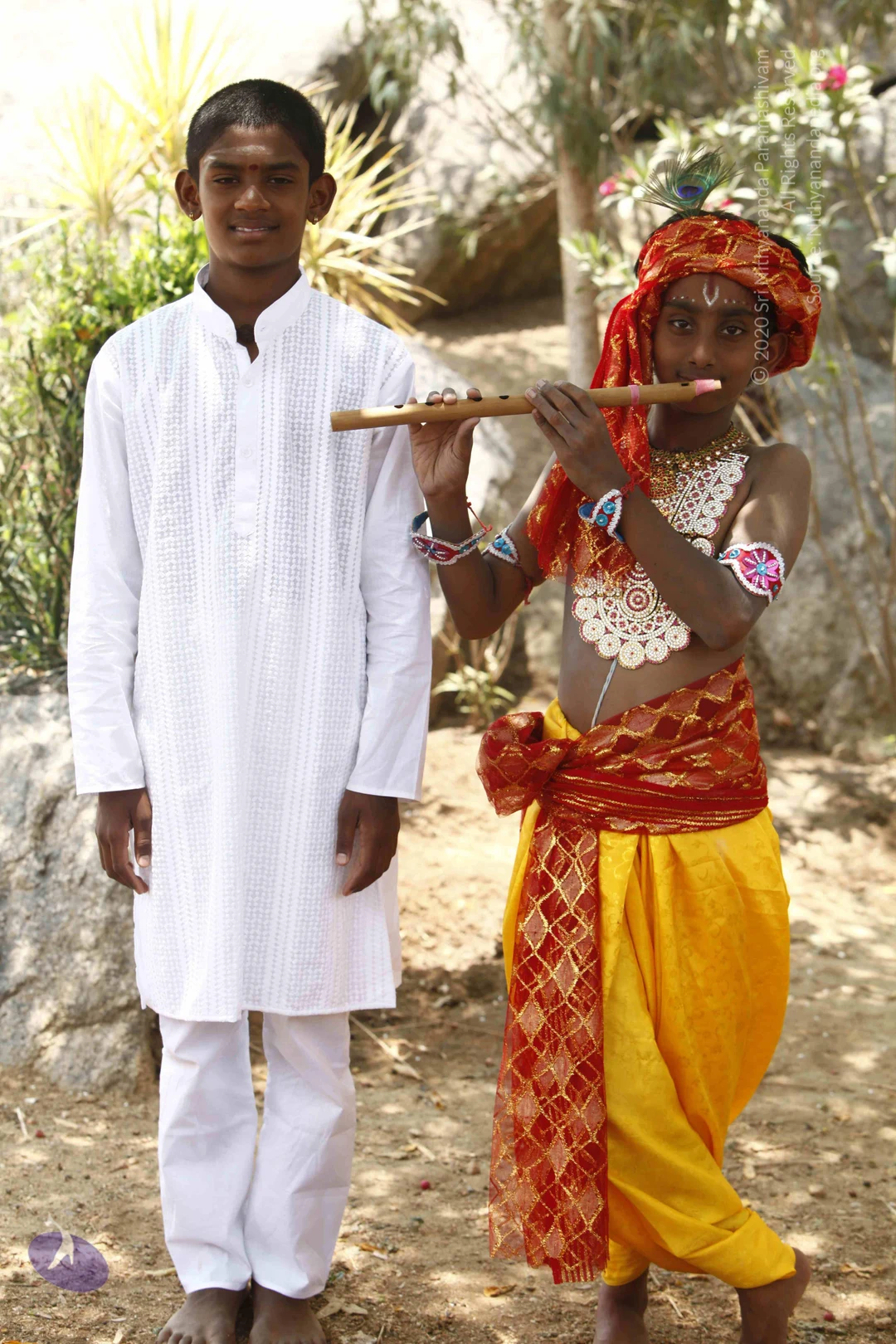
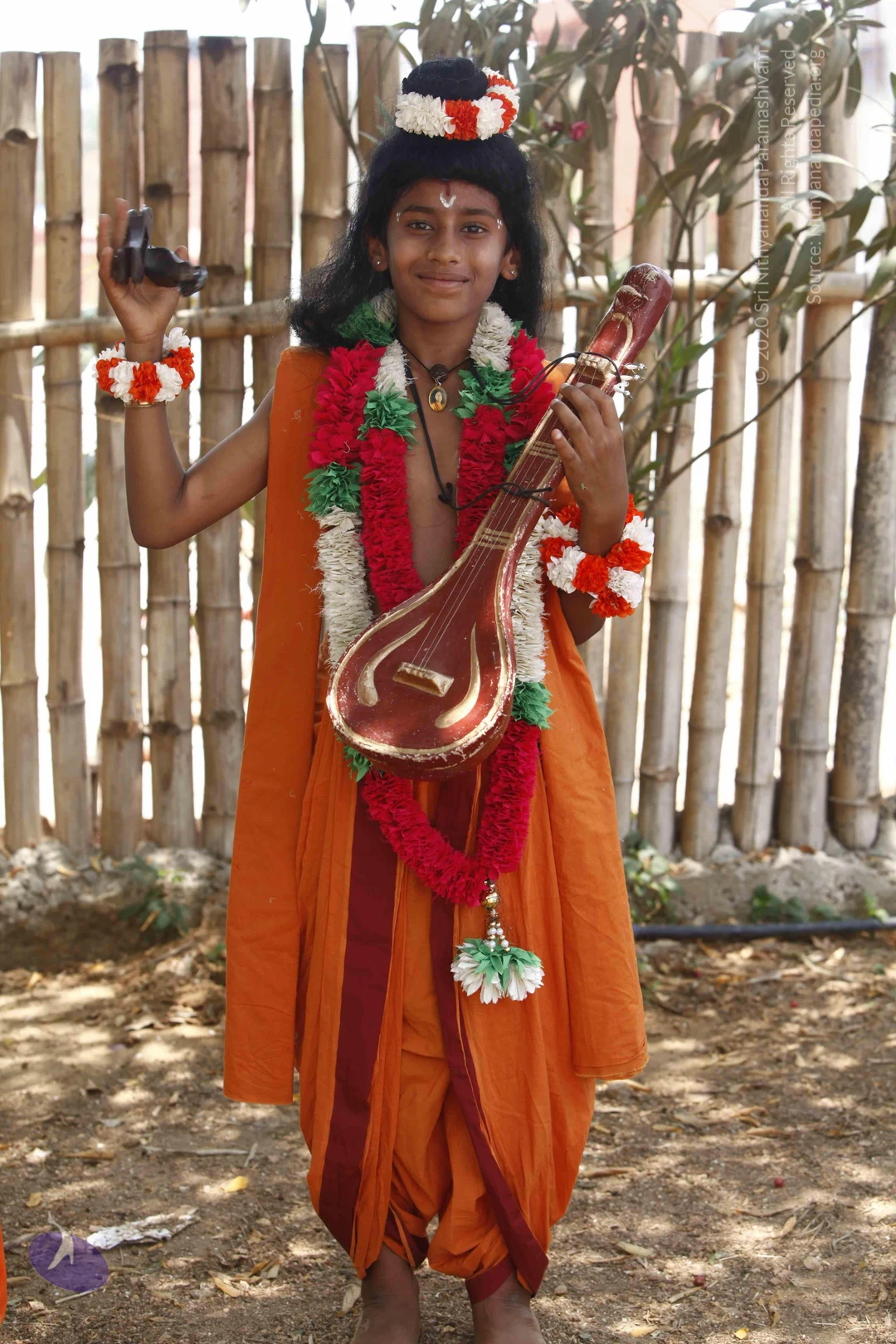
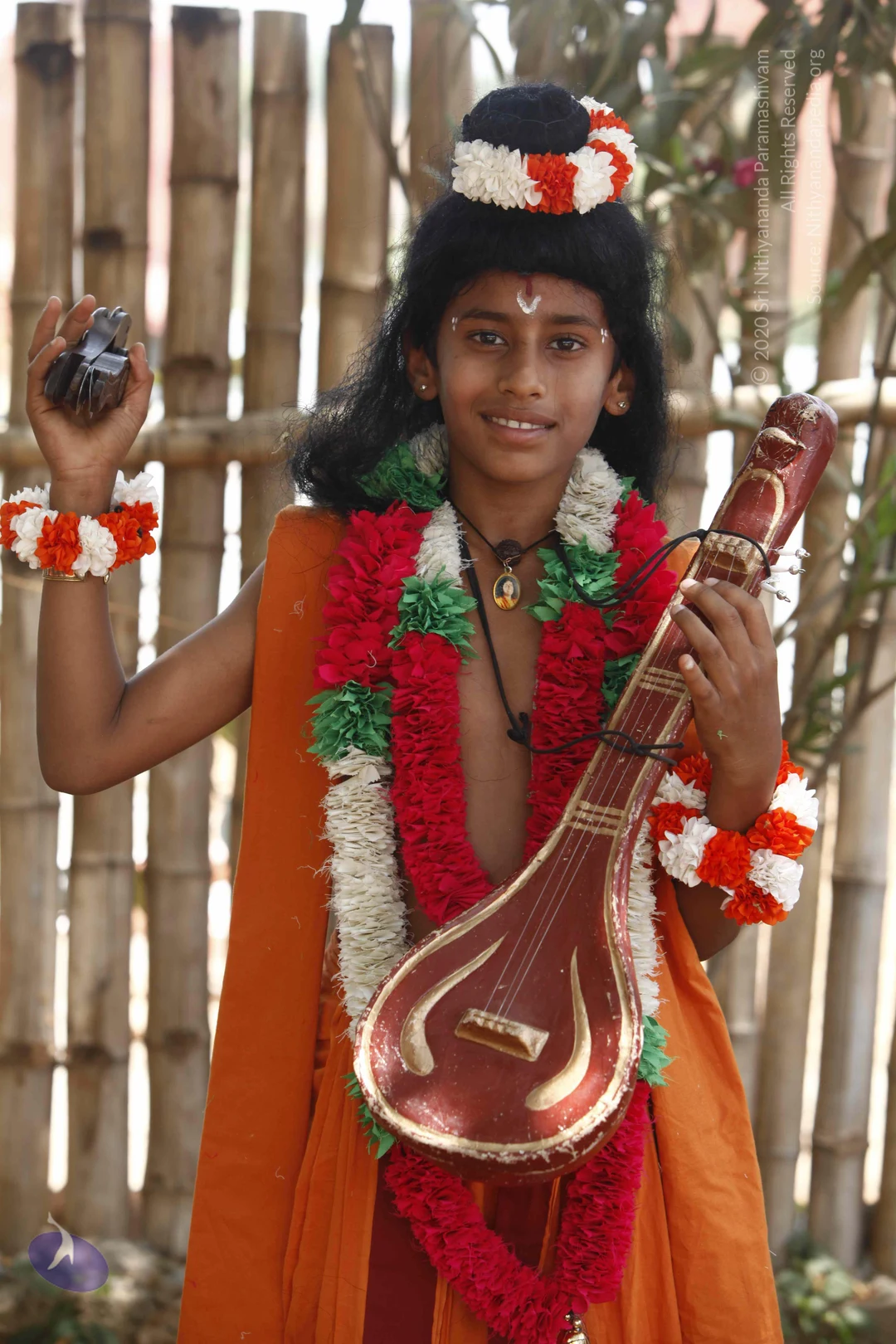
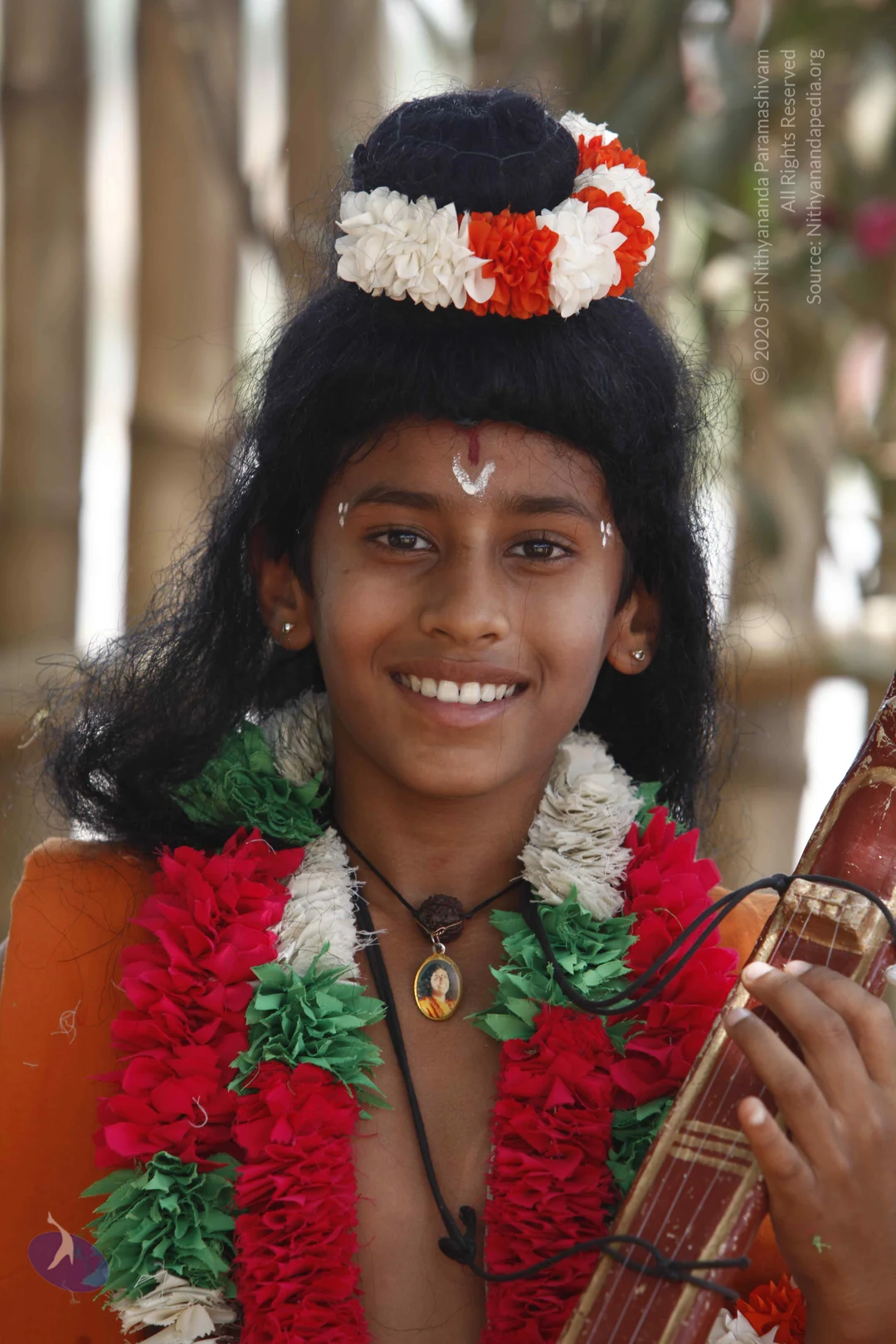
Gurukul-Photo-Shoot

Bhagavad-Gita-Chapter4-Verse23

Tags:

Bhagavad Gita, Paramahamsa Nithyananda, unveil, deepen, awareness, liberation, bio-memory, respond, life, fear, greed, purify, programming, spiritual, teachings, vehicles, bodies, vibrate, frequency

01-PADAPUJA

_MG_9246_CMP_WM

01-PADA-PUJA

20120409_Photo_1000__MG_9246_CMP_WM

Photos from this day

View all 441 photos

Photos From The Day:
3 photosSource gallery
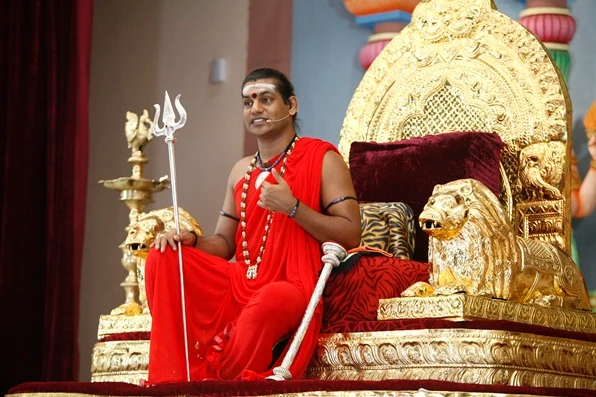
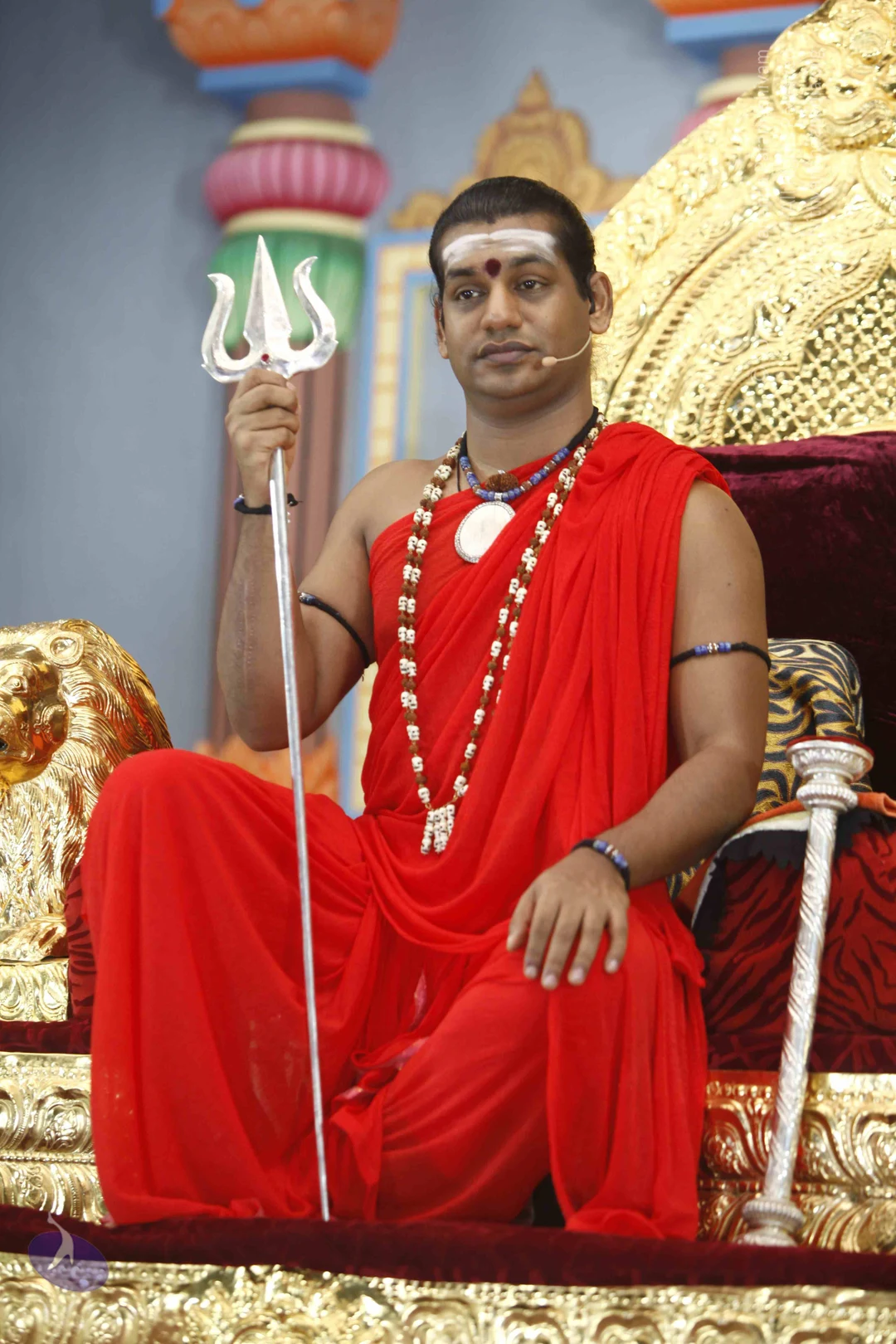
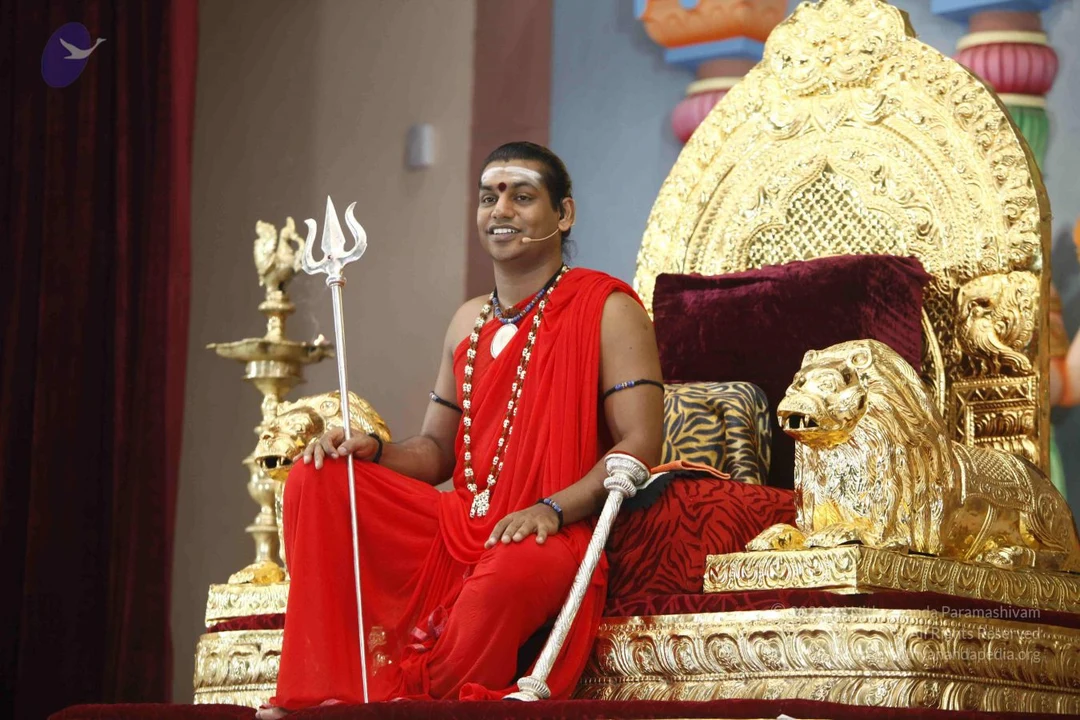
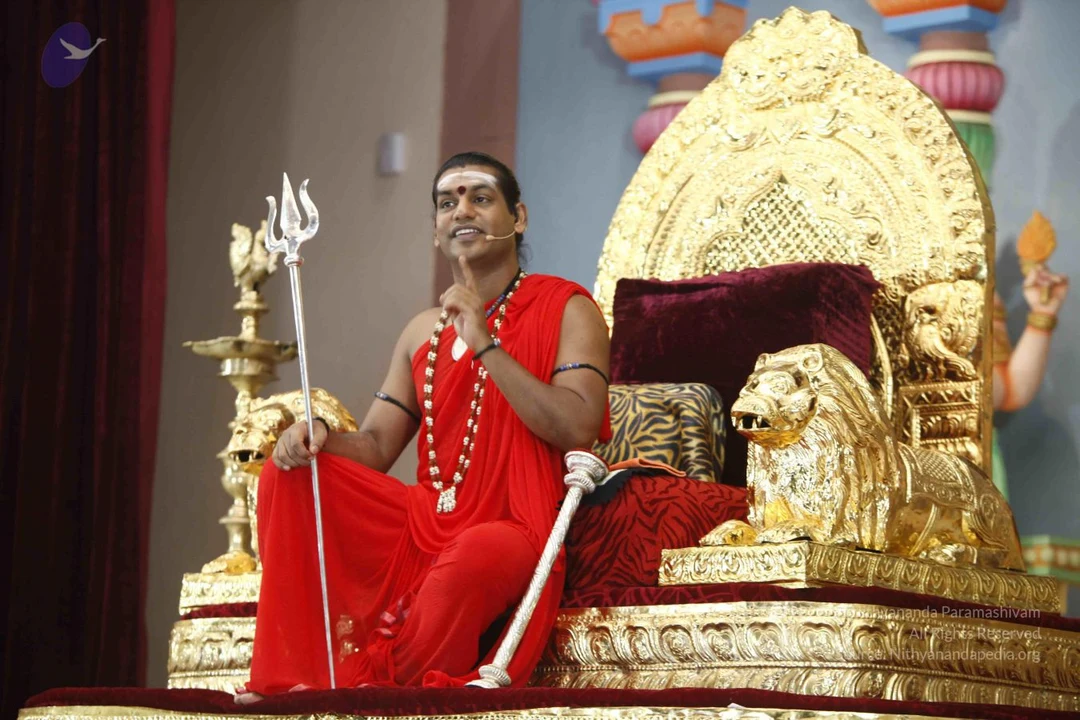
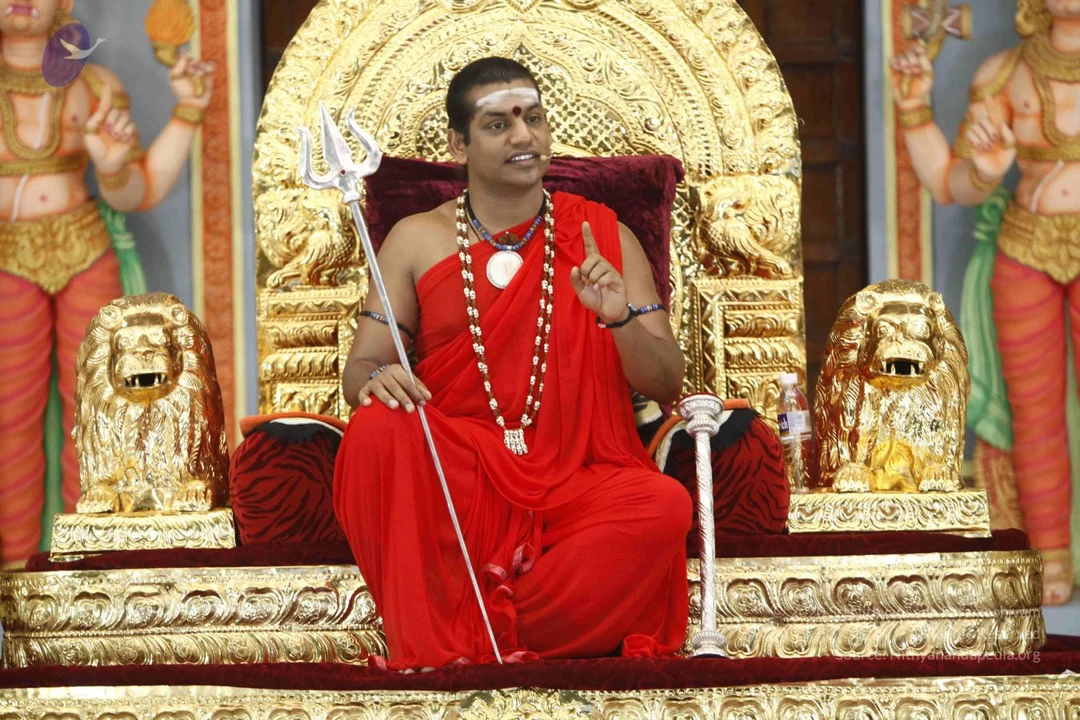
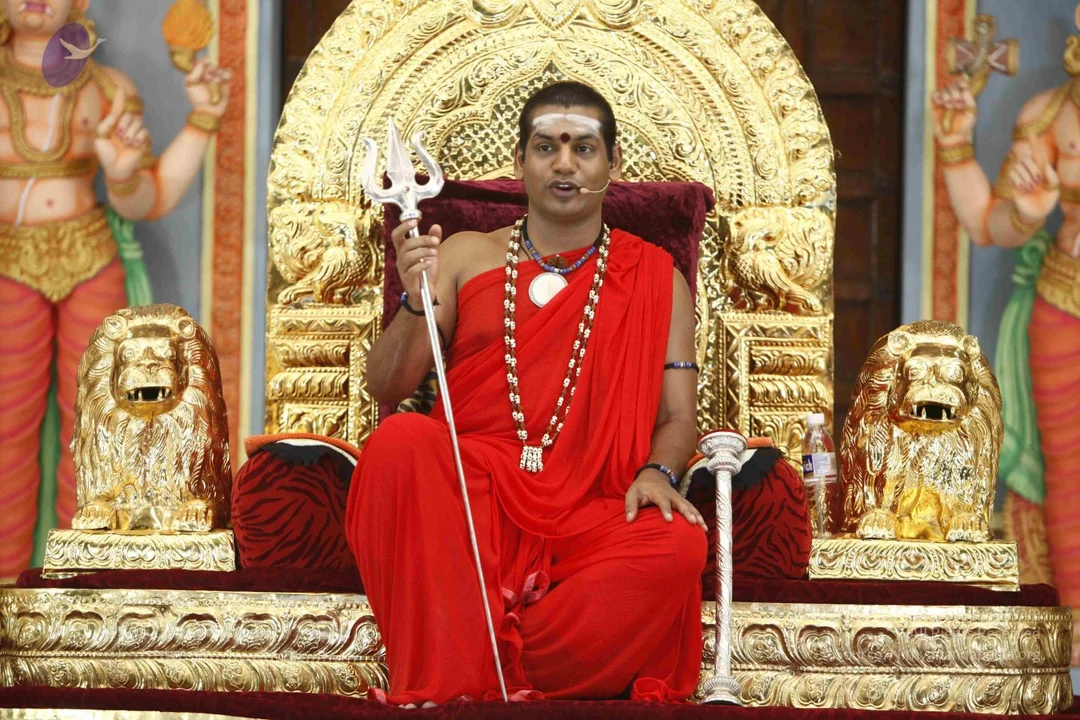
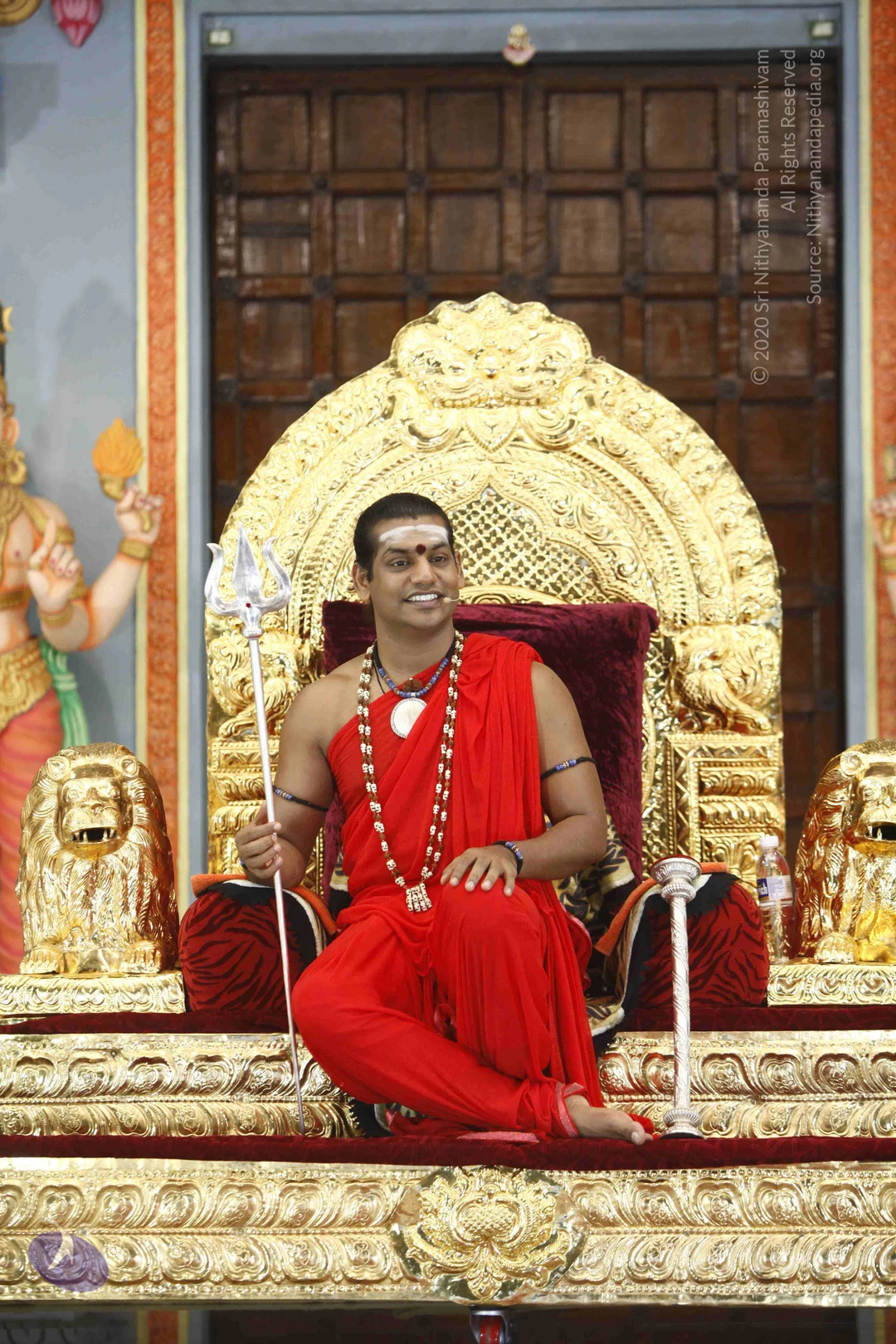
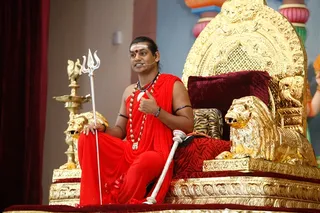
A seated man in white ritual clothing sits on an ornate golden throne with a large gilded backrest and red velvet cushions, in front of a dark wall flanked by painted deity figures with multiple arms. He wears a white turban, a rudraksha mala and beaded necklaces, a bracelet, and a white shawl draped over his shoulder, and raises his right hand in a blessing gesture. Brass oil lamps stand on either side of the throne, and a lit lamp flame is visible at left. The setting resembles a temple or ashram shrine hall. The throne and appearance are consistent with a teacher seat, but the figure's identity cannot be confirmed from appearance alone.A man seated on an ornate golden throne with carved lion-head armrests and red and gold cushions speaks to an audience during a discourse. He wears a peach-coloured turban with a jewelled ornament, a white dhoti-style garment with a gold border, a white shawl draped over one shoulder, a rudraksha mala necklace and beaded bracelets on his arms, with a small red bindi on his forehead. His hands are open in an expressive gesture and a headset microphone is visible. Beside the throne is a silver cup on a red and gold cloth and a red-backed chair. A dark red curtain forms the backdrop. The person's appearance matches the presentation cues associated with a person, seated and teaching as the speaker.A man in a red robe sits on an ornate golden throne carved with lions, with a plush maroon cushion behind him. He holds a silver trident in his right hand and gestures with his left as he speaks into a headset microphone. Around his neck hang a rudraksha mala and a ceremonial gold pendant, and a gold bracelet is on his wrist. Behind the throne are a brass oil lamp and a kalasha-style brass vessel, with red and gold decorations in the background. The setting appears to be a stage during a discourse. a person: the seated man wears saffron-red robes, a rudraksha mala and a gold pendant, and sits on a throne as the speaker of the talk.

Temple
39 photosSource gallery
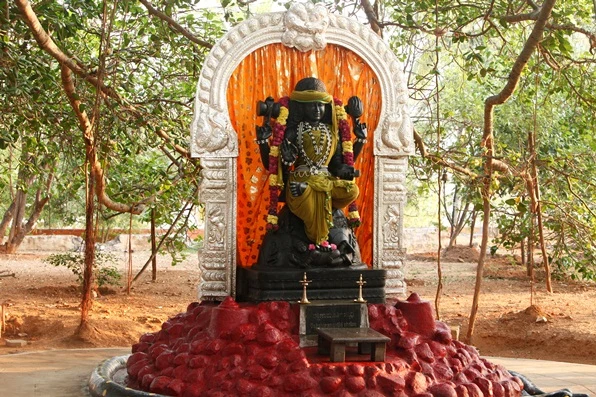
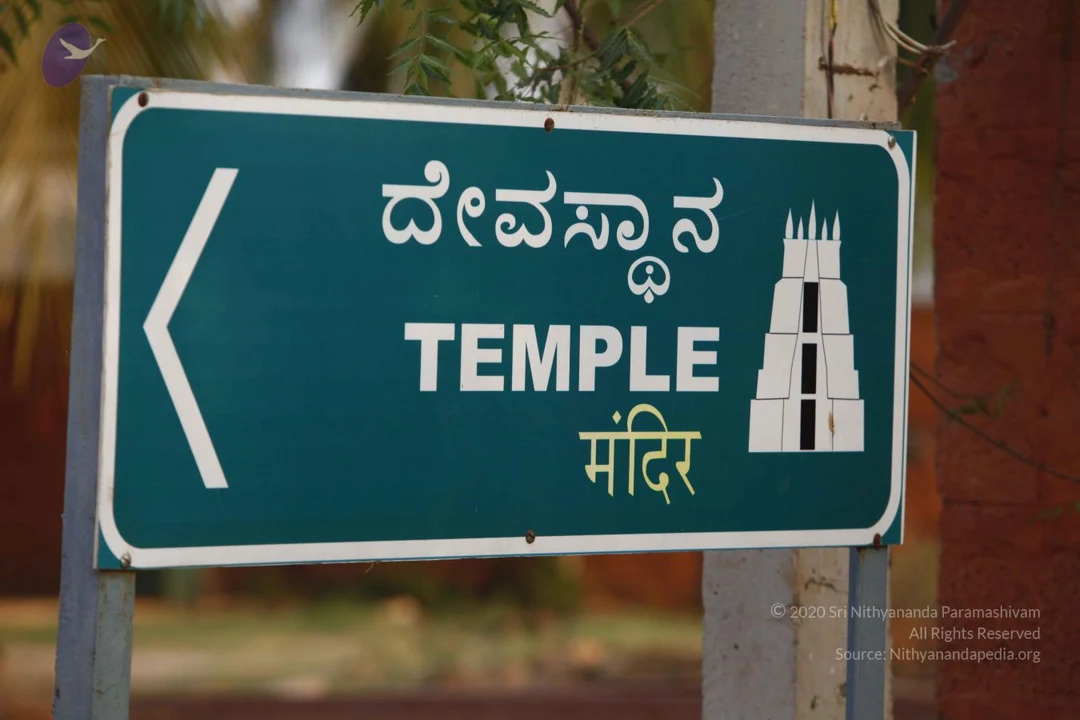
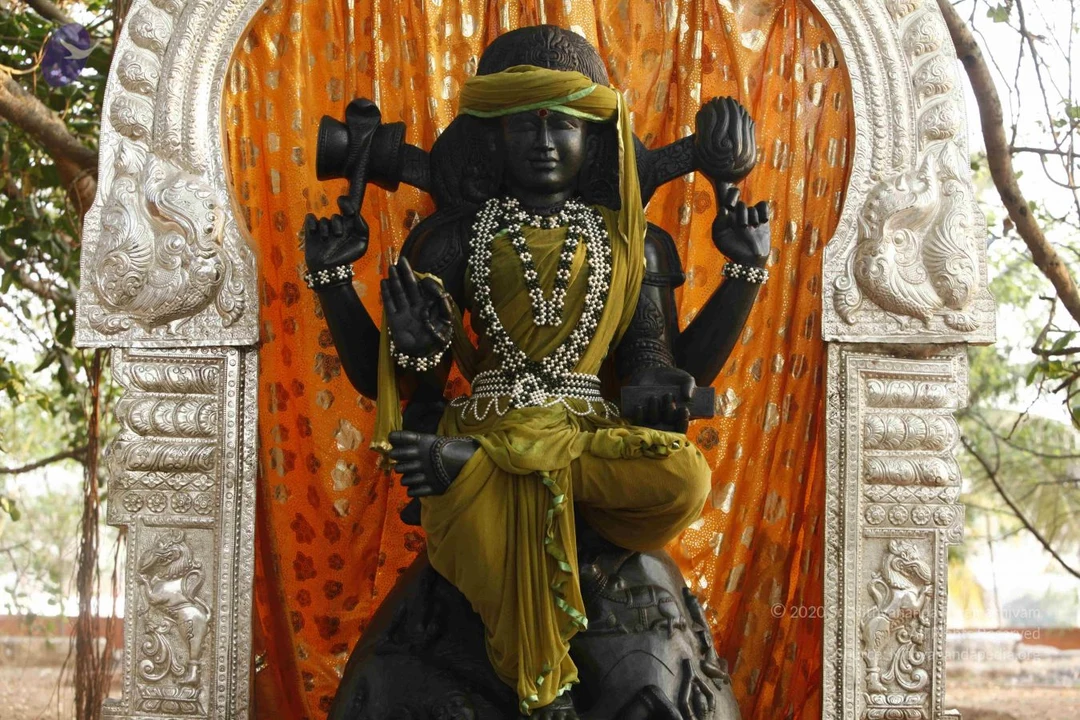
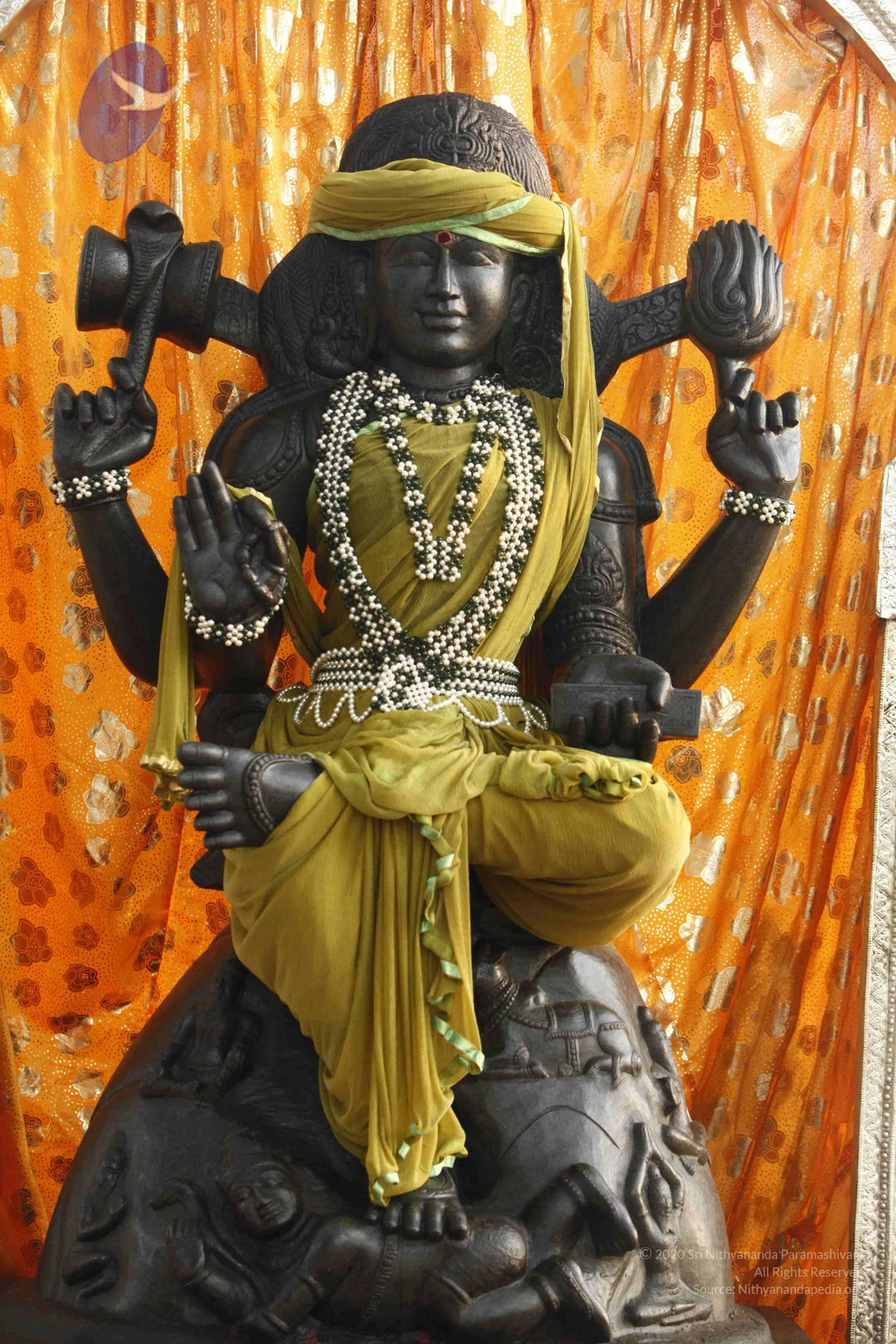
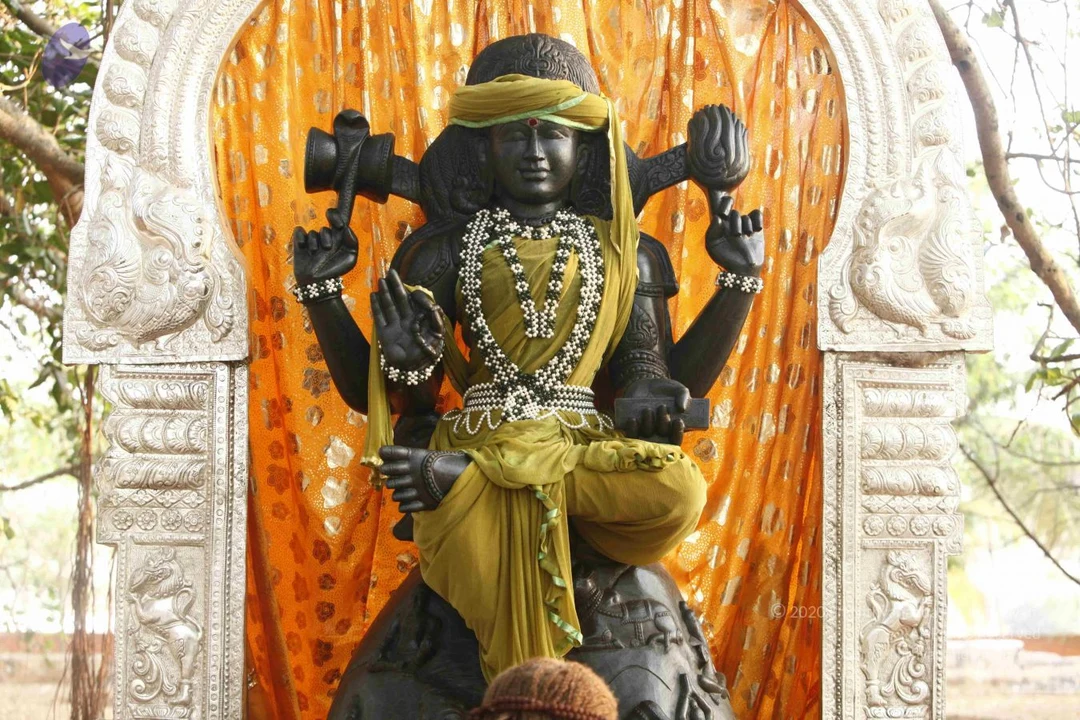
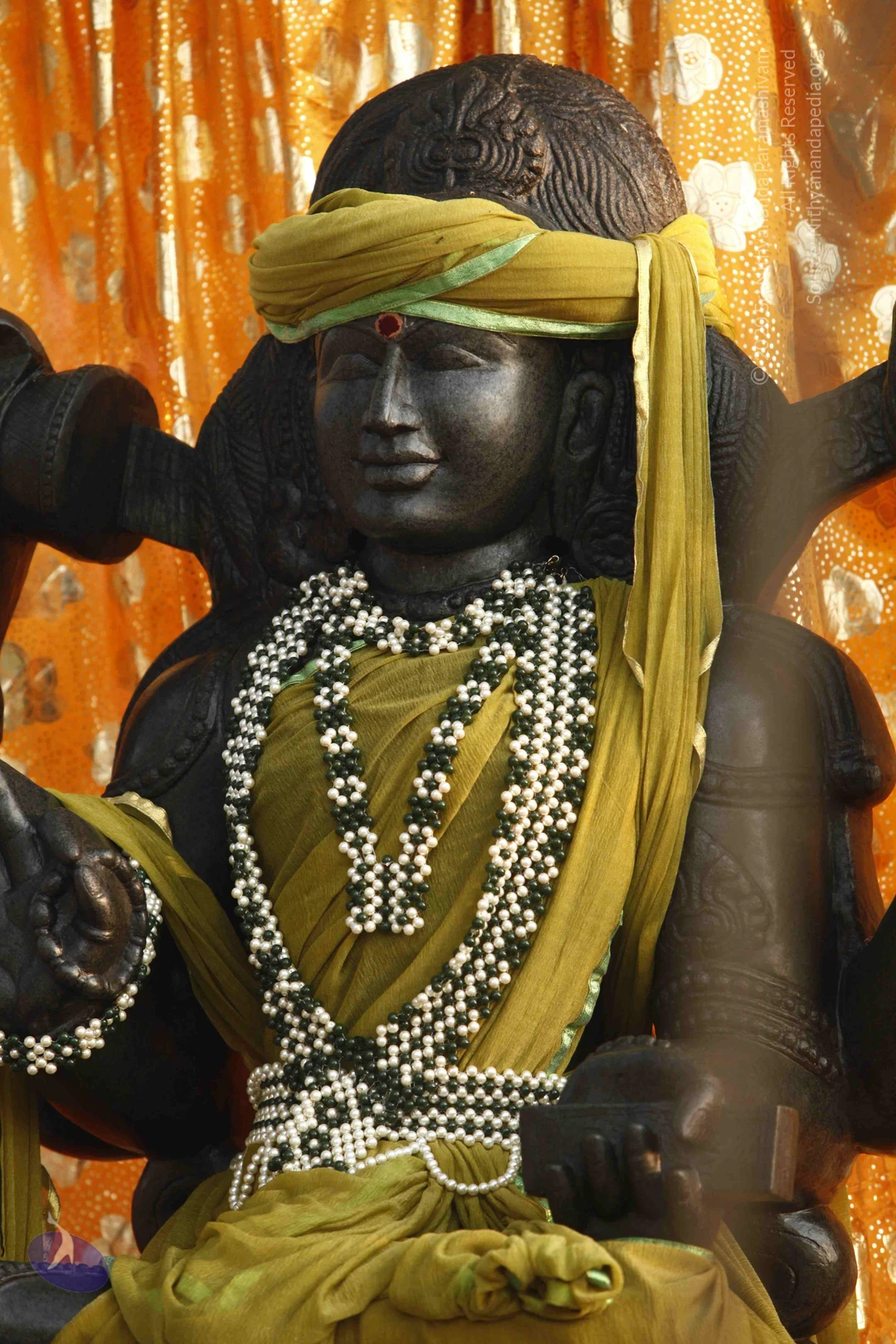
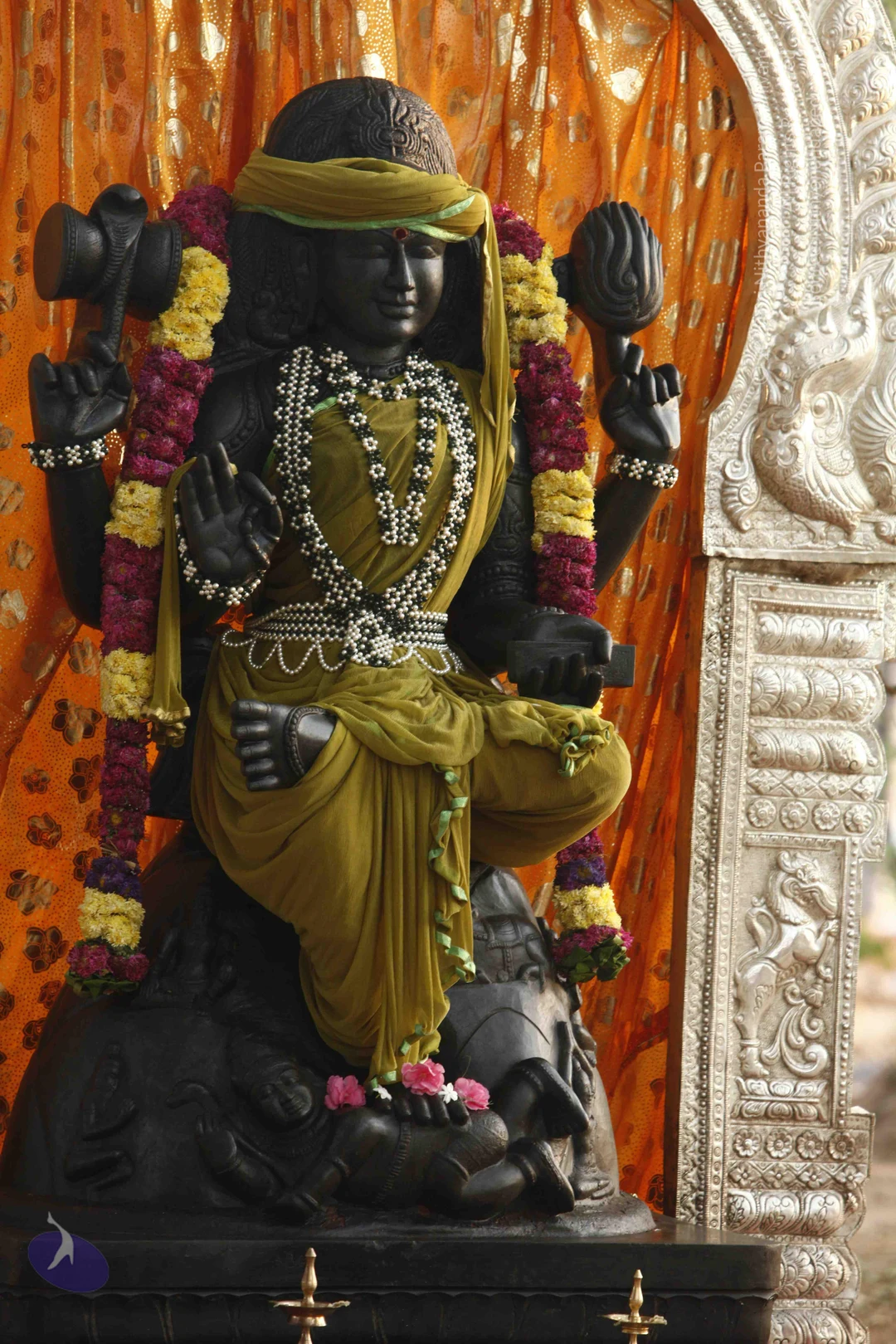
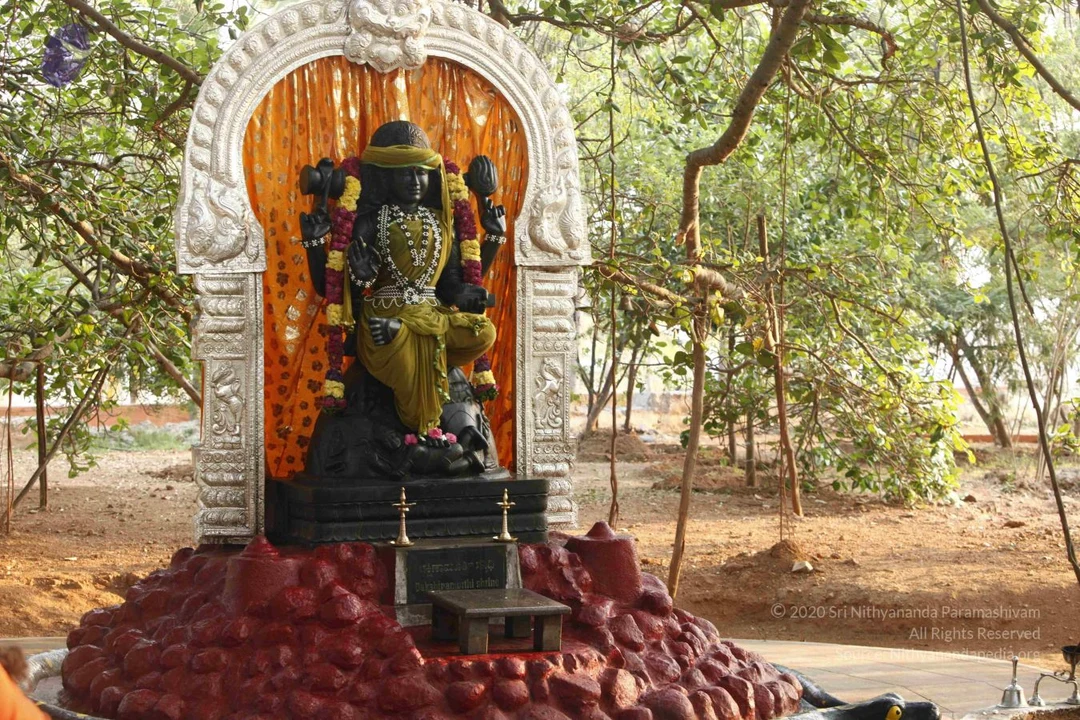
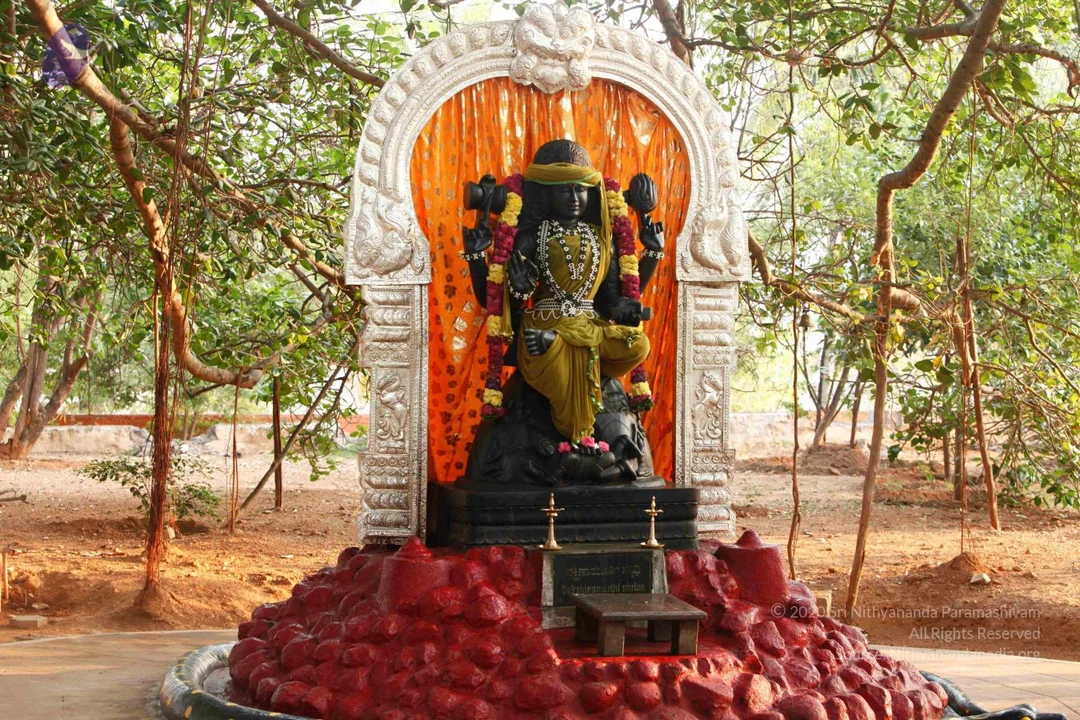
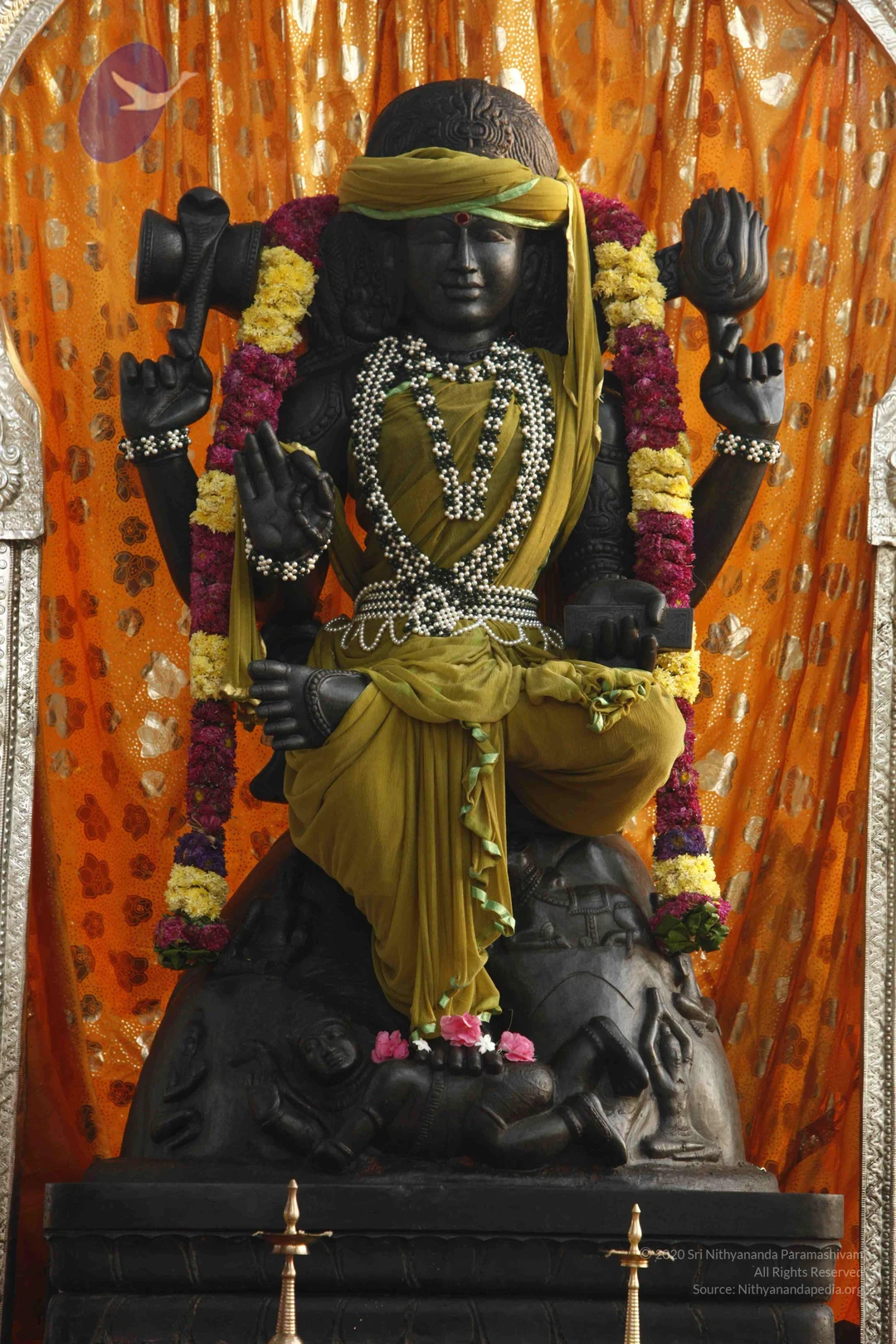
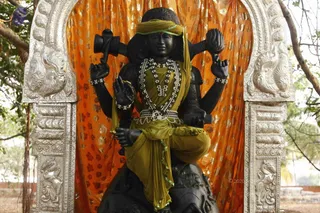
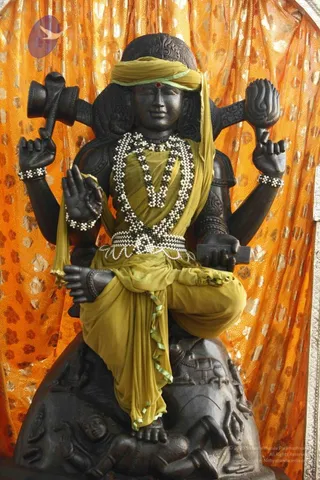
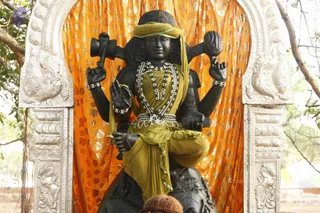
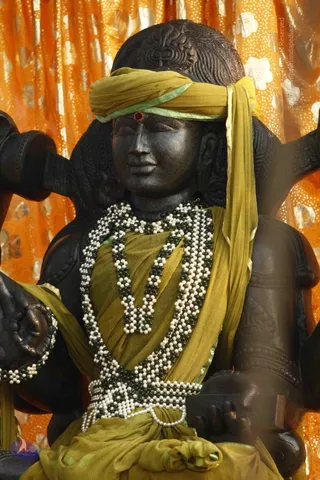
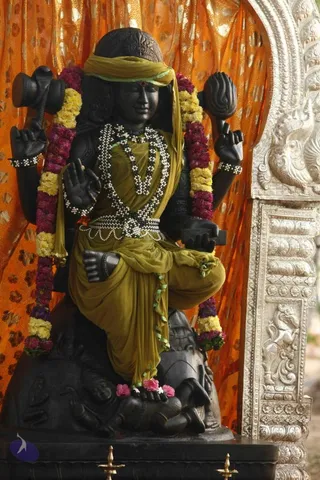
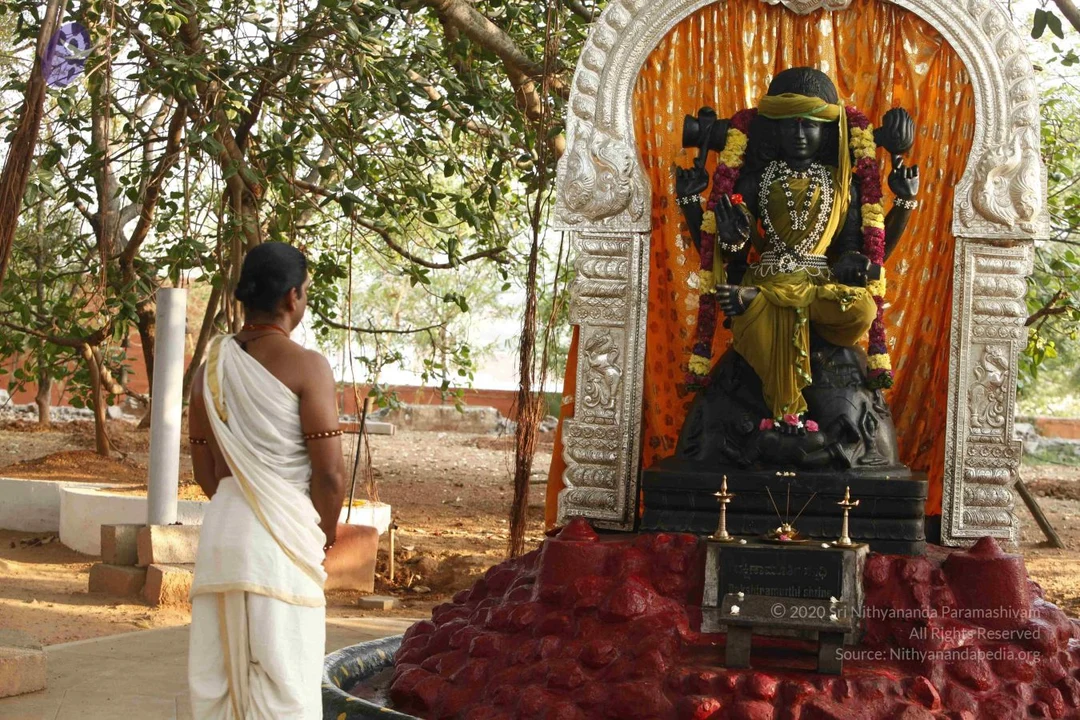
A green directional road sign with white bold lettering reads TEMPLE in English, with Kannada script above it reading ದೇವಸ್ಥಾನ and Devanagari below reading मंदिर. A white left-pointing chevron arrow is on the left, and a white gopuram temple tower icon is on the right. The sign stands on a grey metal post against a blurred background of greenery and a red brick wall. No people or deities are visible, and no a person candidate appears.A black stone deity murti with four arms stands in a silver-framed niche against an orange cloth backdrop with gold dots, outdoors among trees. The murti wears a green-yellow cloth draped over the shoulders and waist, a white beaded garland and beaded bracelets, and holds implements in its raised hands. It sits on a dark pedestal carved with figures. No people are visible.A black stone murti of a multi-armed deity seated in a lotus-style pose on a carved rock base, dressed in a yellow-green cloth with a matching turban, wearing white and green beaded garlands, bracelets and a beaded waist belt. The figure holds a trident-like staff in one raised hand, a drum or small instrument and other implements in the other hands, with a red tilak on the forehead. Behind it hangs a bright orange cloth with gold floral print. The carved base shows figures and animals in relief. No people are visible; the image shows a statue only.A dark stone statue of a multi-armed Hindu deity murti sits on a dark pedestal before an orange and gold patterned cloth backdrop framed by carved pale stone arch. The figure wears a yellow-green dhoti and yellow-green sash, a white bead mala and multiple white bead necklaces, and a yellow-green head cloth with a red tilak. Its raised hands hold a trident-like staff and a flame-like object. A partially visible person's head in a brown knit cap sits at the bottom edge. Trees and grass surround the setting.Close-up of a dark stone murti of a deity with a yellow-green turban wrapped around the head with a green edge and a red tilak mark on the forehead. The figure wears a yellow-green dhoti-style cloth and multiple layered necklaces of white and dark green beads, with a matching beaded waist belt and bangle at the wrist. Behind it hangs an orange curtain with gold-tone floral print. The statue is a sculpted figure, not a living person.A black stone statue of a four-armed deity murti stands on a pedestal, seated in a relaxed pose with one leg folded. It wears a mustard-yellow dhoti and a green-banded yellow head cloth, with layered white and black beaded necklaces and a beaded waist cord. Garlands of yellow, pink and purple flowers hang from the shoulders, and pink flowers lie at the base. Behind it hangs an orange cloth printed with gold motifs, beside an ornate silver arch. Two brass oil lamps sit in the lower foreground. No physical people are visible.
e-Pada-Pooja
59 photosSource gallery
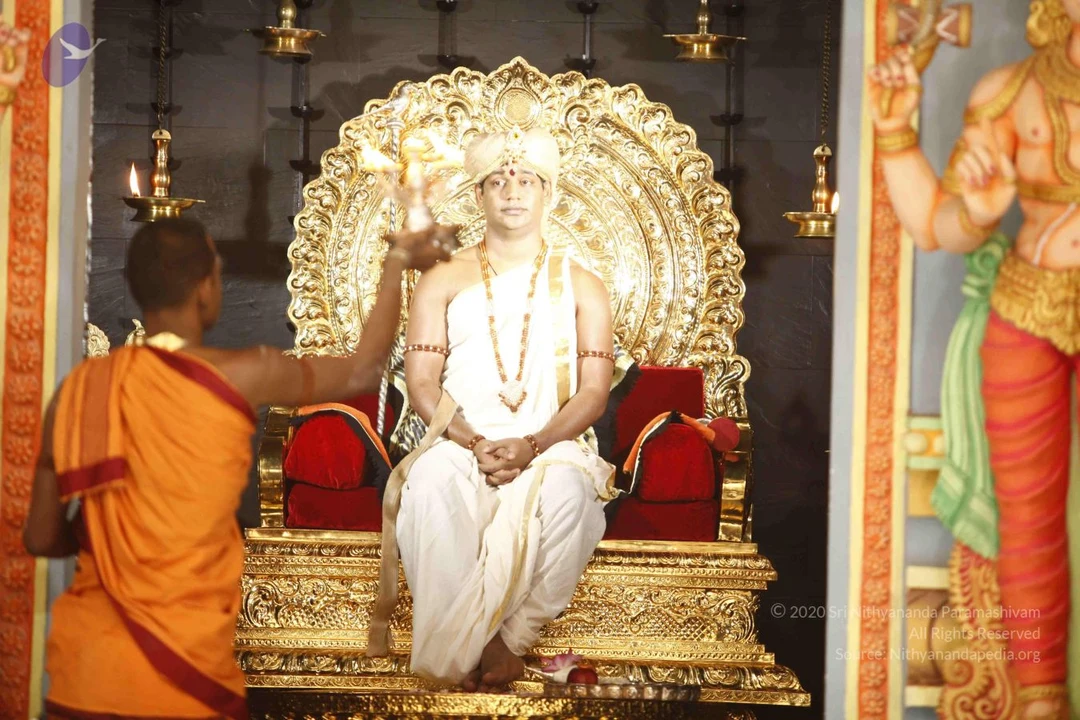
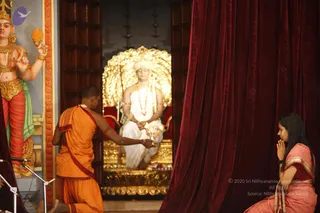
A full-width red velvet stage curtain with deep vertical folds, lit by a soft red glow on the right side. A white stage light stands at the lower right edge beside a dark speaker or monitor box. No people are visible; the stage is empty and awaiting a speaker.Red velvet stage curtains are parted in the center, revealing a small stage with a red and cream patterned rug in the foreground. A microphone on a stand stands near a partially visible seated figure in white clothing with orange fabric beneath, sitting on the stage in the back. The scene is a stage setup for a talk or discourse, with the figure barely visible behind the curtain opening.Photograph of a stage with deep red velvet drapes and a patterned red-and-blue rug. A woman in an orange and red sari sits cross-legged on a small rug before a microphone stand, hands pressed in anjali. Behind her, a person in white sits near the stage edge. At right, a woman in a pink sari with gold border kneels facing her, also with palms together in prayer. The setting suggests a satsang or recitation session.Photograph of a stage with deep red velvet drapes as backdrop. A woman in an orange saree with maroon border sits cross-legged on a red mat at a microphone stand, hands pressed in anjali mudra, eyes lowered. Behind her, a person in white clothing sits partly visible. On the right, a woman in a pink saree with a gold border kneels on the stage floor facing her, also with hands in prayer pose. No a person candidate is visible; the scene shows devotees reciting in a stage setting.A photograph of a temple-like stage framed by deep red velvet curtains parted to reveal a carved wooden door. A man in orange robes with a bare upper body stands in the doorway, holding a small lit lamp near the threshold. At left, a woman in an orange sari with a red border sits cross-legged on a small mat with her hands folded in prayer before a microphone on a stand. At right, a woman in a pink sari with a gold border kneels on the white floor, looking toward the doorway. The floor is polished white and the setting suggests a devotional recitation or puja.Photograph of a temple-style hall with dark wooden doors and a painted deity murti with four arms holding a flame and other objects on the left. A devotee in saffron-orange robes kneels at the lower left, offering a lit oil lamp toward a golden throne. Seated on the gilded throne in white ritual clothing, with a white turban, a long beaded mala and gold necklaces, is a figure whose appearance is consistent with a person, though the face is indistinct and identity is uncertain. On the right, a woman in a pink sari with folded hands sits behind a deep red velvet curtain. A microphone stand is visible at the lower left.

Bhagavad-Gita-Chapter4-Verse23

105 photosSource gallery
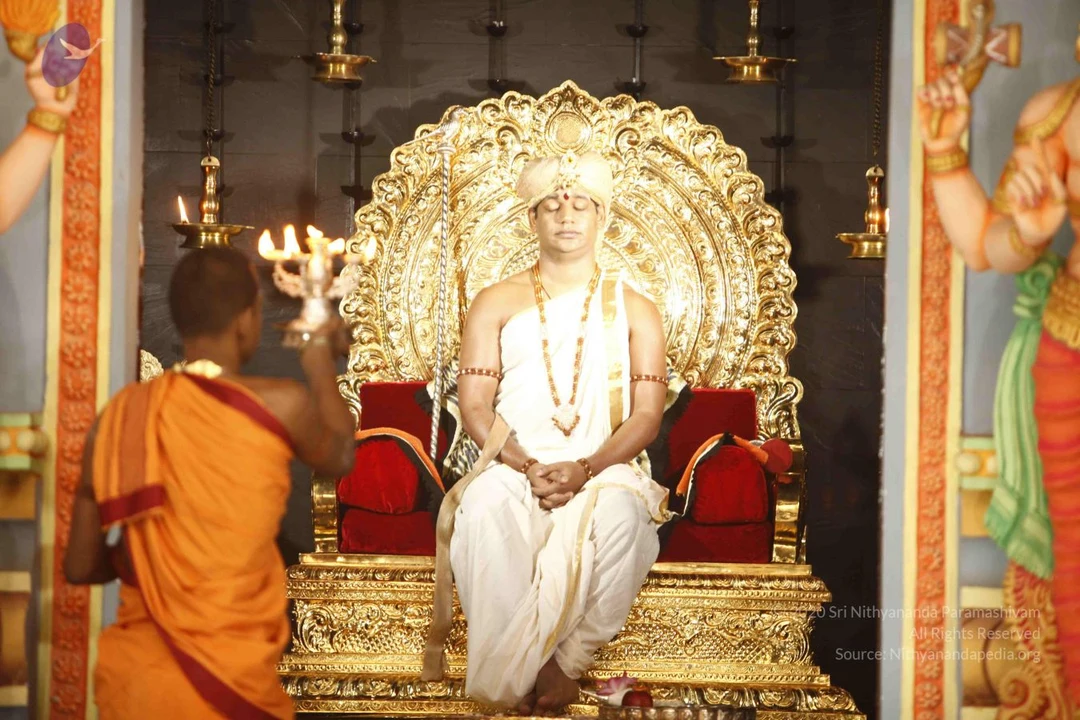
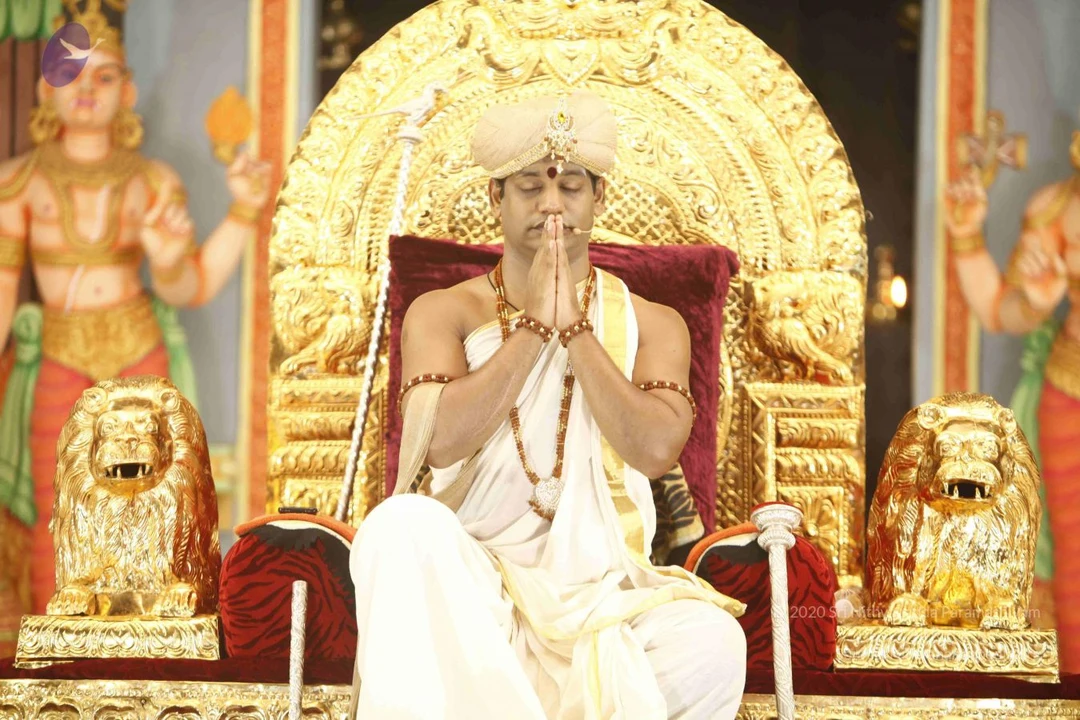
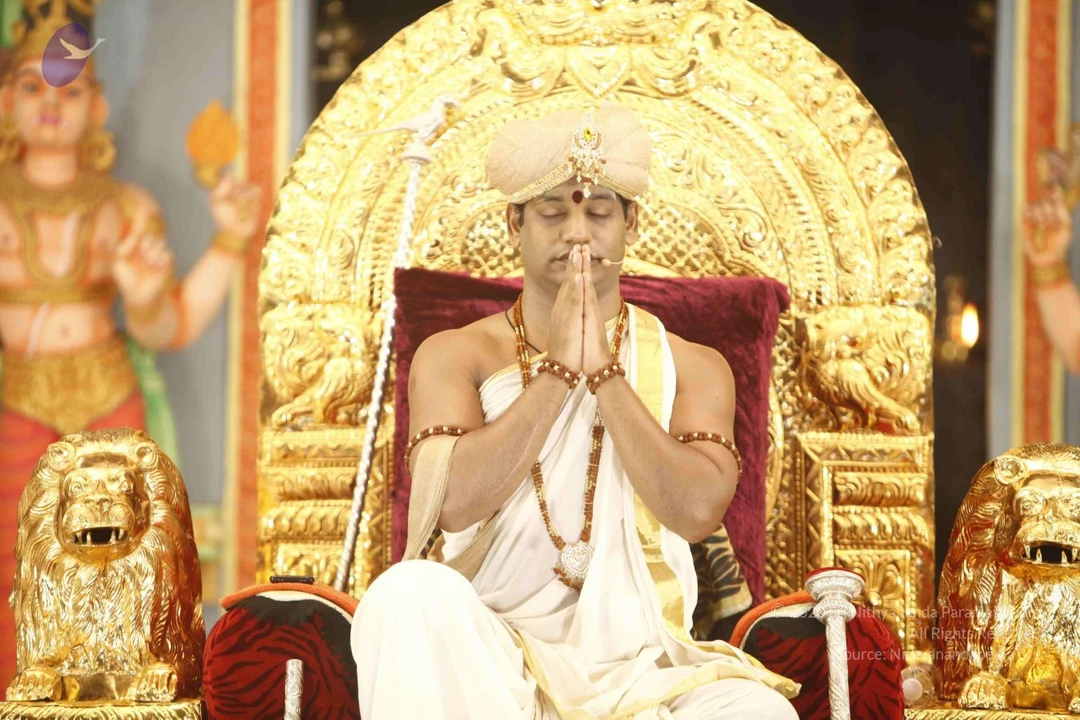
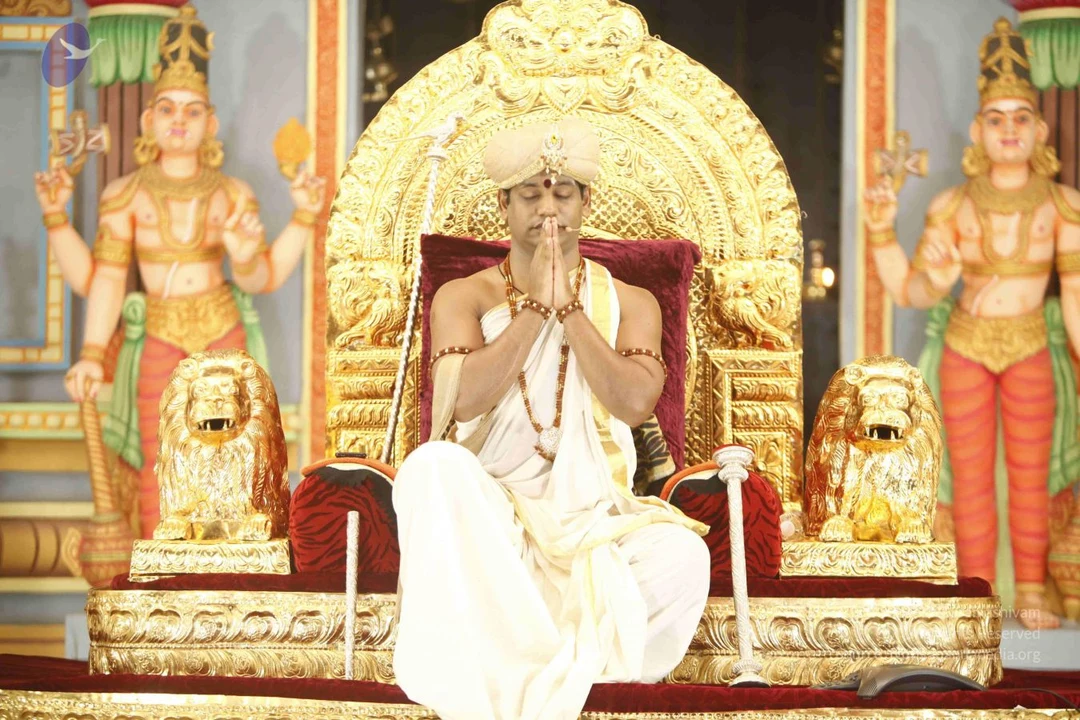
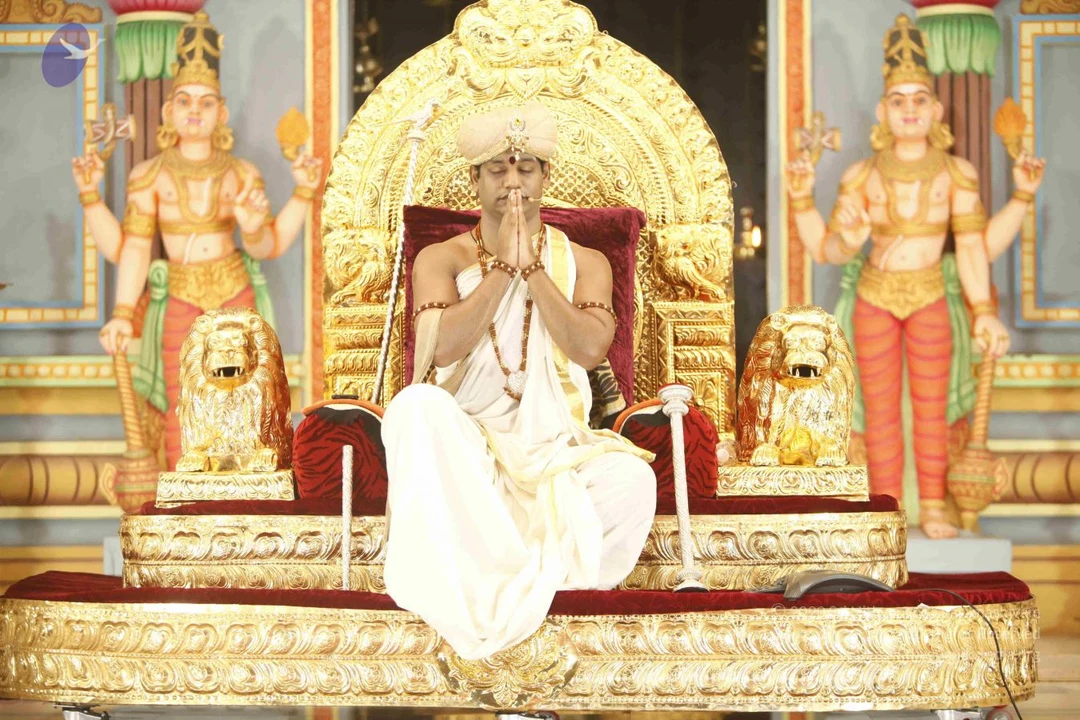
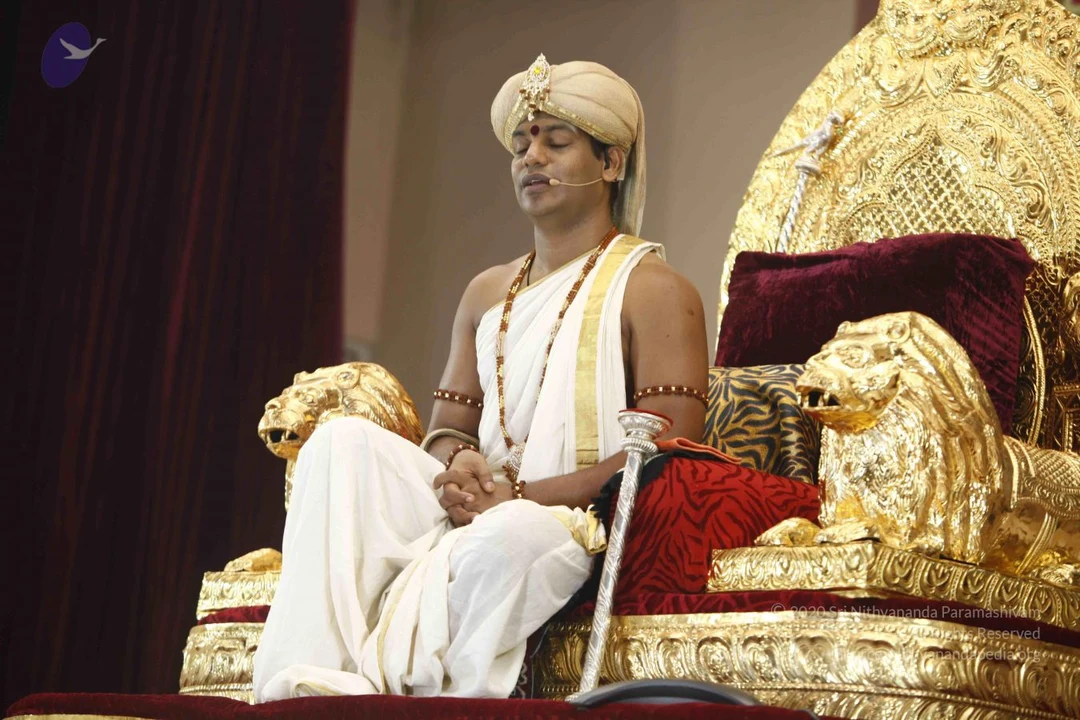
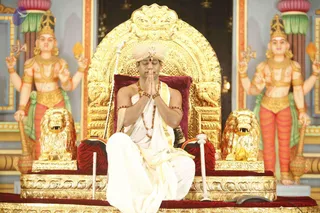
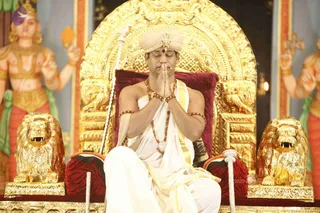
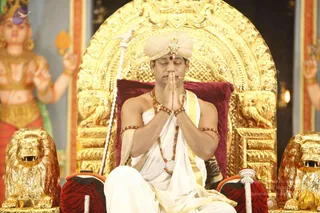
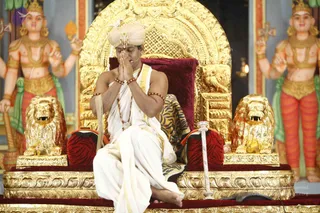
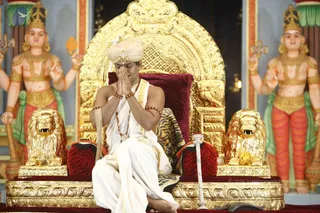
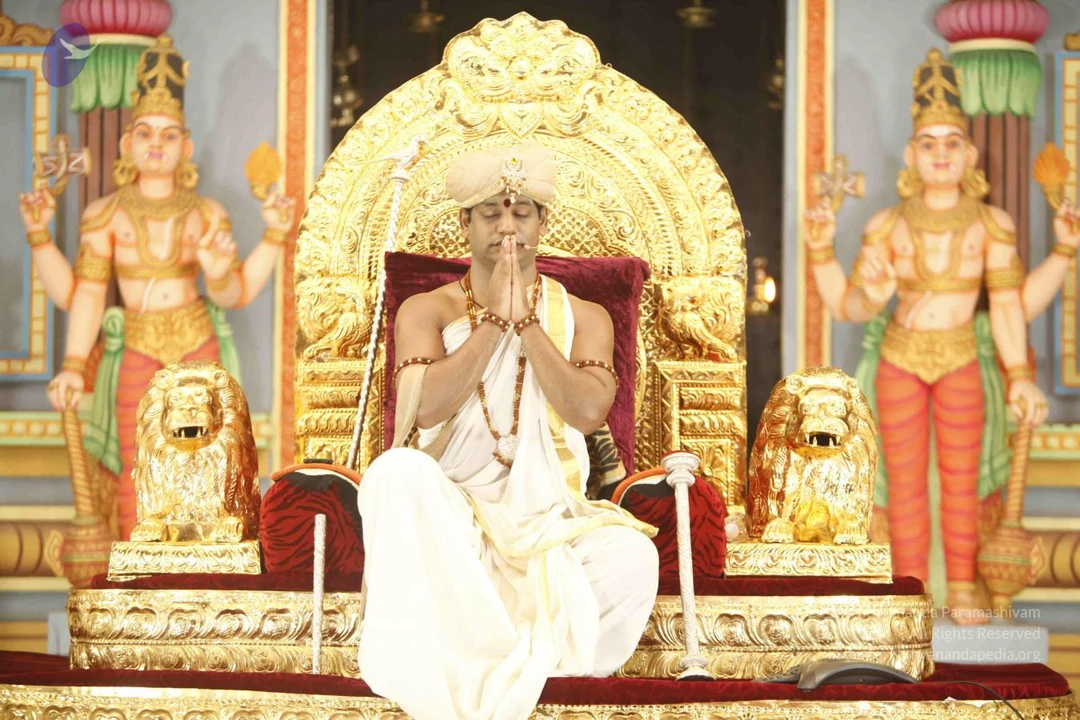
A man seated on an ornate golden throne with red velvet cushions and golden lion armrests, hands pressed together in anjali mudra with eyes closed. He wears a cream turban with a small jewel, white dhoti and shawl, multiple red-and-gold rudraksha malas and a golden necklace. Flanking him are two large painted deity murti figures with multiple arms holding objects, in gold jewellery and green and red dhotis, and a pair of golden lion statues before the throne. A microphone stand stands beside the throne, indicating a discourse setting.A man seated on an ornate golden throne with a deep red velvet cushion, flanked by two gold lion sculptures at its base. He sits with palms pressed together in anjali mudra and eyes closed. He wears a cream turban with a small jewelled ornament, a white dhoti with a gold-bordered shawl, red-brown rudraksha malas around his neck and arms, and a red bindi. Behind him stand painted deity murti figures in red-orange and green garments with multiple arms, and a small lamp glows at the right. Swamiji (probable) is seated in the centre, identified by a turban, rudraksha malas, and a throne setting.A man seated on an ornate gold throne with lion-head armrests and a red velvet cushion, eyes closed and palms pressed together in namaste. He wears a cream turban with a jeweled ornament and a red bindi, a white dhoti with a golden border, and a long rudraksha mala with a silver pendant, plus bead bracelets on his arms. Beside him stands a painted deity figure with multiple arms holding objects, and a flame glows at the right edge. A white-bodied figure with a bird-topped staff is visible behind the throne. The setting suggests a satsang or discourse.A man seated cross-legged on an ornate golden throne with lion-carved armrests and a deep red cushion, hands pressed together in namaste at chest height. He wears a cream-white turban with a small jewelled ornament, a white dhoti with a golden border, bare upper body, a rudraksha mala and a ceremonial gold pendant necklace, and bangles on his wrists. Behind him stand two painted, gold-adorned deity statues with raised hands, one holding a staff, against a pastel and gold temple-style backdrop. A small sceptre rests beside the throne. The setting resembles a stage for a satsang or discourse. The seated man is an appearance-based probable Swamiji with a turban, bare-chested ceremonial dress, rudraksha mala and gold pendant, and the page states he is present.A man seated cross-legged on an ornate gold throne with red velvet cushions and gilded lion-head armrests, hands pressed together in anjali mudra with eyes closed. He wears a cream turban with a small red mark on the forehead, a white dhoti-style garment with a gold border, and a rudraksha mala necklace, with bangles on his wrists. Flanking the throne are two tall painted deity murtis with multiple arms, gold crowns and red-and-green lower garments, holding ceremonial objects. The setting is a richly decorated hall with gold and blue-green walls. The seated figure is an appearance-based a person: a turban, rudraksha mala and gilded throne seating, with the page indicating his presence at a discourse.A man seated on an ornate gilded throne with a deep red velvet cushion and carved golden lion armrests, eyes closed, palms pressed together in anjali mudra at chest level. He wears a cream turban with a jewelled ornament and red tilak, a cream dhoti and shawl with gold border, multiple rudraksha malas on his neck and arms, and a small lapel microphone. Behind him a gilded arched backrest, a white-and-silver staff or chamara-style rod, and a partial painted figure on the left. a person seated in meditative satsang posture.

Dial-The-Avathar

11 photosSource gallery
A man seated on an ornate golden throne with carved lion heads and a red velvet cushion, speaking into a headset microphone. He wears a cream turban with a jeweled ornament and red tilak, white and gold dhoti and shawl, multiple rudraksha malas and bead bracelets, and holds a dark curved ceremonial item. Golden lion sculptures flank the throne; painted deity figures with raised hands appear at the edges. Appearance-based label: a person, seated and speaking as a teacher.A man sits on an ornate gold throne with carved lion-head arms and a red velvet cushion, centred in front of two large gilded deity statues with multiple arms. He wears a cream turban with a jewelled ornament, a white dhoti with a golden border, a white shawl, a rudraksha mala and bead bracelets, and a red tilak on his forehead. His hands rest on a silver-topped staff while he sits in a discourse setting. The figure's clothing and headwear are shown, but the photo gives no clear facial or name evidence; the a person flag is unsure given the throne-and-white-clothing setting alone. Two gilded lion heads flank the throne, and a microphone is visible near his face.A man seated on an ornate gilded throne with lion-head armrests and a deep red velvet cushion, speaking into a head microphone. He wears a cream turban with a jewelled ornament, a white dhoti-style cloth with a gold-bordered shawl, rudraksha mala beads around his neck and wrists, and a red bindi. Behind him stand two painted deity figures with multiple arms, gold jewellery and orange-red dhotis. A ceremonial sword rests across his lap beside a silver staff. The scene looks like a discourse setting.A smiling man sits on an ornate golden throne with a red velvet cushion and golden lion armrests and supports, flanked by gold lion statues. He wears a cream-coloured turban with a jewelled ornament, a white dhoti-style garment with gold border, a rudraksha mala necklace, and a gold-trimmed shawl. He holds a dark book or tablet in one hand and wears a head microphone. Painted figures with raised hands and gold bangles appear on the left and right edges of the background. Visible text in the corner reads a copyright line. The scene looks like a seated discourse. a person: the seated figure has long-looking swept hair under a turban, ornate ceremonial clothing, gold lion throne and rudraksha malas, consistent with a teaching setting.A seated man sits on an ornate gold throne with a deep red velvet cushion and gilded lion-head armrests, in front of two painted multi-armed deity figures with orange and green lower garments. The central man wears a cream turban with a small ornament, a white dhoti with a gold border, bare chest, and multiple beaded necklaces including a rudraksha mala. He holds a small book or palm-leaf-like item and gestures while speaking into a lapel microphone. Swamiji (probable): the seated man has a turban, rudraksha mala and ceremonial gold-bordered white dress on a throne.A seated man on an ornate golden throne with red velvet cushions, flanked by two golden lion sculptures at the arms. He wears a cream turban with a jewelled brooch, a white dhoti and shawl with gold border, a rudraksha mala and a gold necklace, and bracelets; he has a small microphone at his face and holds a tablet-like device. Behind him are painted deity figures with multiple arms, in green and red garments and gold ornaments. Swamiji (probable): the seated figure has a turban, saffron-toned garments with gold trim, a rudraksha mala and ceremonial gold necklace on a throne, consistent with a discourse setting.

Sarva-Dharshan

17 photosSource gallery
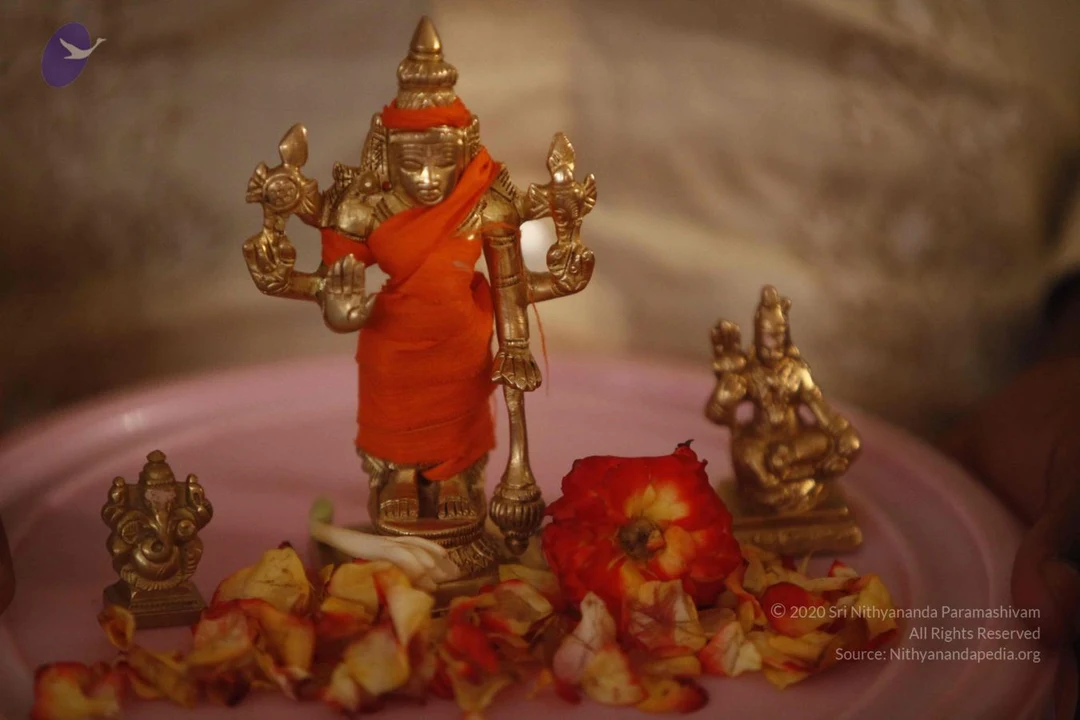
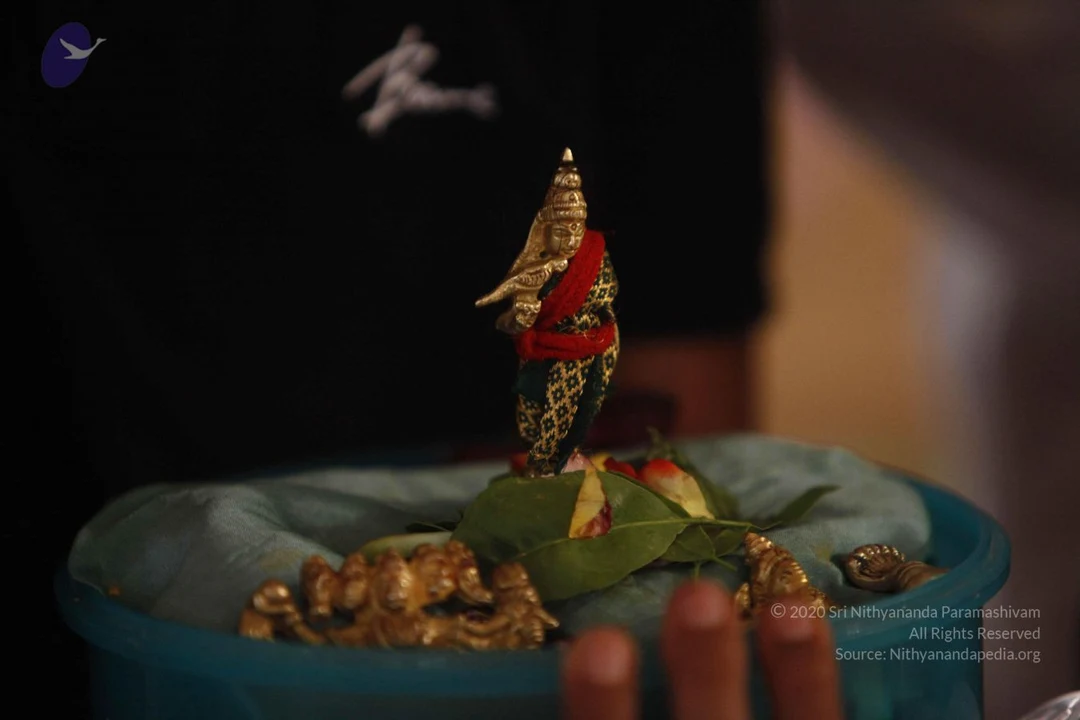
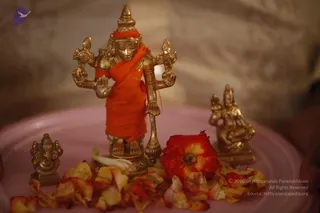
A smiling man in a cream turban with a jewelled ornament sits on an ornate gold throne carved with lion heads and a red velvet cushion. He wears a white dhoti with a gold border, is bare-chested with a rudraksha-style bead necklace and bead bracelets, and holds a silver staff across his lap. A microphone headset is visible at his face. Behind him are a red curtain, a lamp stand and a painted pillar with pink and green motifs. The turban, throne and bead adornments are visible, but the appearance alone does not clearly establish identity, so he is described by role as a seated speaker. No people besides him are visible.A seated man in white ceremonial dhoti and shawl with gold borders, wearing a cream turban with a jewelled ornament, rudraksha mala and gold necklace, sits on an ornate gold throne with red velvet cushions and golden lion armrests. He holds his palms together in anjali mudra with eyes closed. Behind him, two large painted deity figures with multiple arms stand on either side, and a tiger-striped cloth drapes the seat. Gold lion figures flank the dais, and a white ceremonial staff rests at the base. Swamiji (probable): the seated man wears a turban, rudraksha mala and gold necklace on a throne, matching the page's reference to Swamiji, so the figure is presented as a probable Swamiji in person.A man seated on an ornate golden throne with lion-armrest sculptures and a red velvet cushion, hands pressed in namaste at his chest. He wears a cream turban with a jeweled ornament, a white shawl over white dhoti-style garment, a rudraksha mala and beaded bracelets; a small microphone is visible near his face. Behind him stand two painted deity murti figures with multiple arms, gold jewelry and orange-red dhotis. Gold lion statues flank the throne base. The setting appears to be a discourse hall.A photograph of a seated figure on an ornate gold throne with carved lion heads on the armrests and a red velvet cushion. The seated person wears a white turban with a small gold ornament, white dhoti and shawl with gold border, multiple rudraksha malas and beaded bracelets, and sits with palms pressed together in namaste. Two large painted deity murtis stand on either side, each with multiple arms, gold crowns, gold ornaments and orange-red dhotis with green sashes, holding ritual objects. The background is pale blue and cream with gold accents. A tiger-striped cloth lies over the throne and a microphone stand is visible at the base. The setting resembles a discourse hall with a throne-style dais.A small gilt bronze deity murti stands at the centre of a pink plate scattered with rose petals, wrapped in an orange cloth shawl. The four-armed figure holds ritual emblems in its raised hands, with a crowned head. A smaller brass Ganesha figure sits to the left, and a seated gilt figure, possibly Lakshmi-like, sits to the right beside a single red-and-yellow flower. The scene is a puja arrangement with offerings, shot in soft warm light. No physical people are visible.A close photograph of a small gold-coloured metal deity figure standing upright on a bed of green leaves inside a turquoise-blue cylindrical container lined with a light blue cloth. The figure wears a tall crown, a red sash over its shoulders and a patterned green-and-gold garment. Smaller gold figurines and a curled gold ornament lie around the base. The background is dark, and a blurred hand and a partial figure appear in the foreground at right. No people are clearly visible.
Esoteric-Satsang

61 photosSource gallery
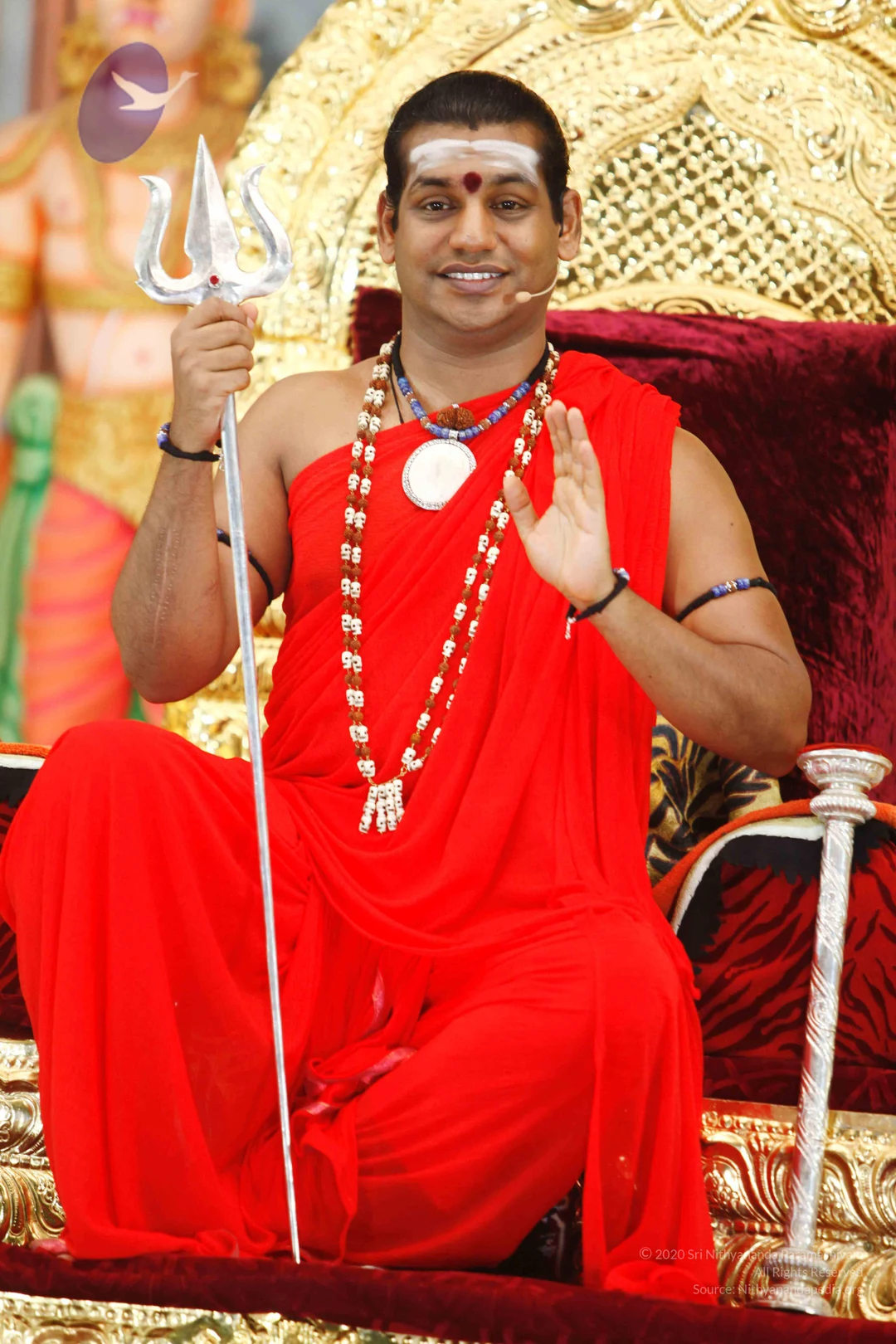
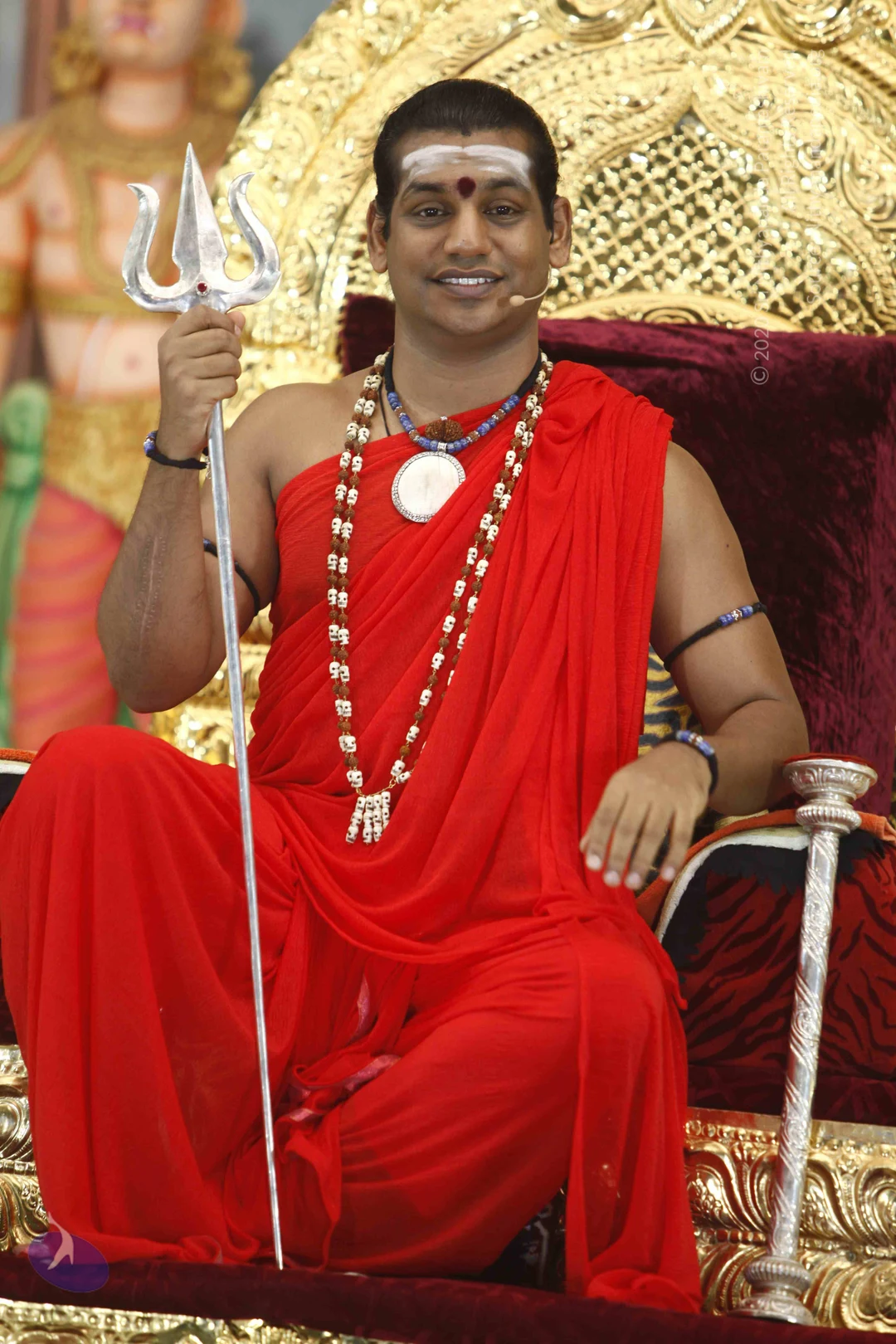
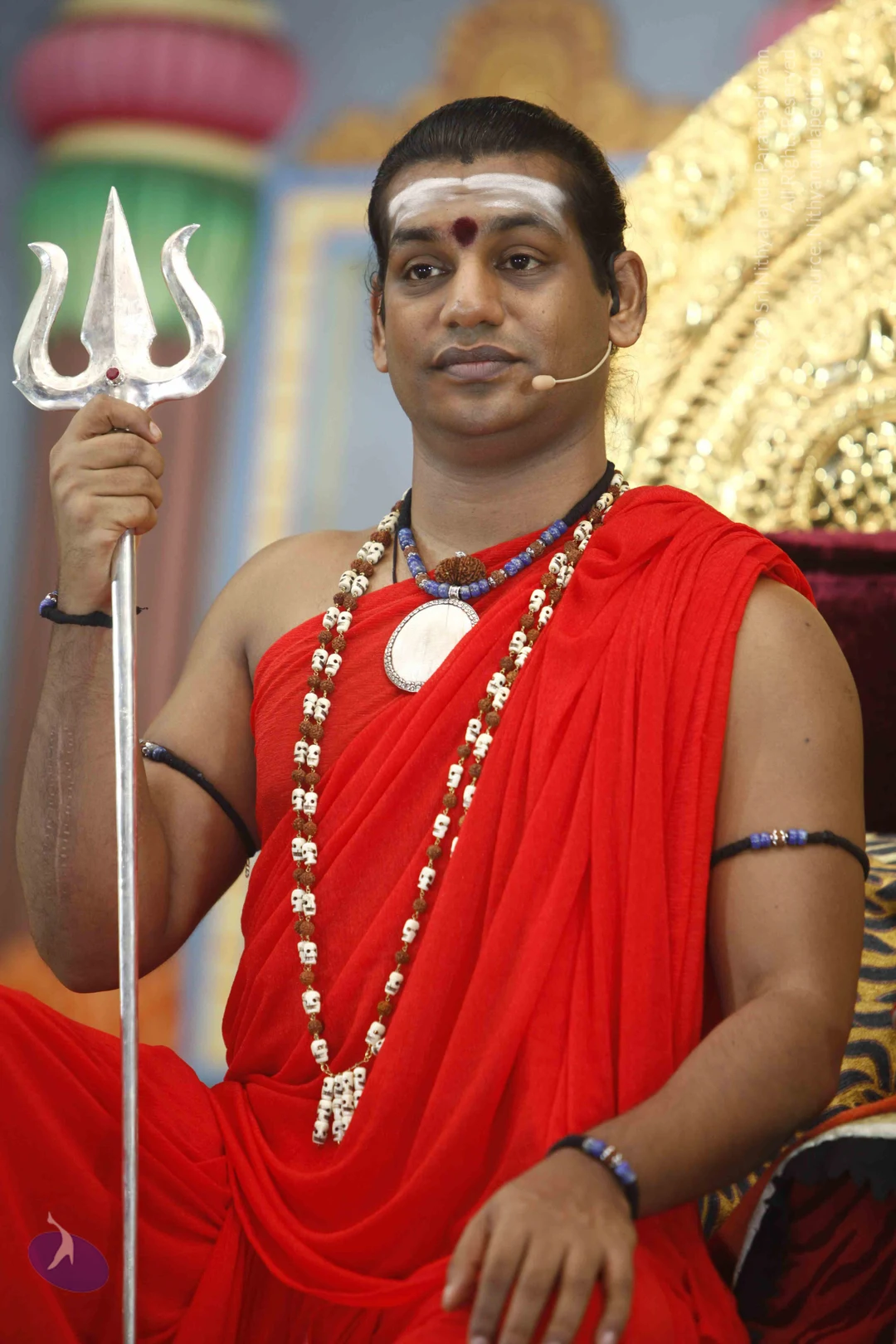
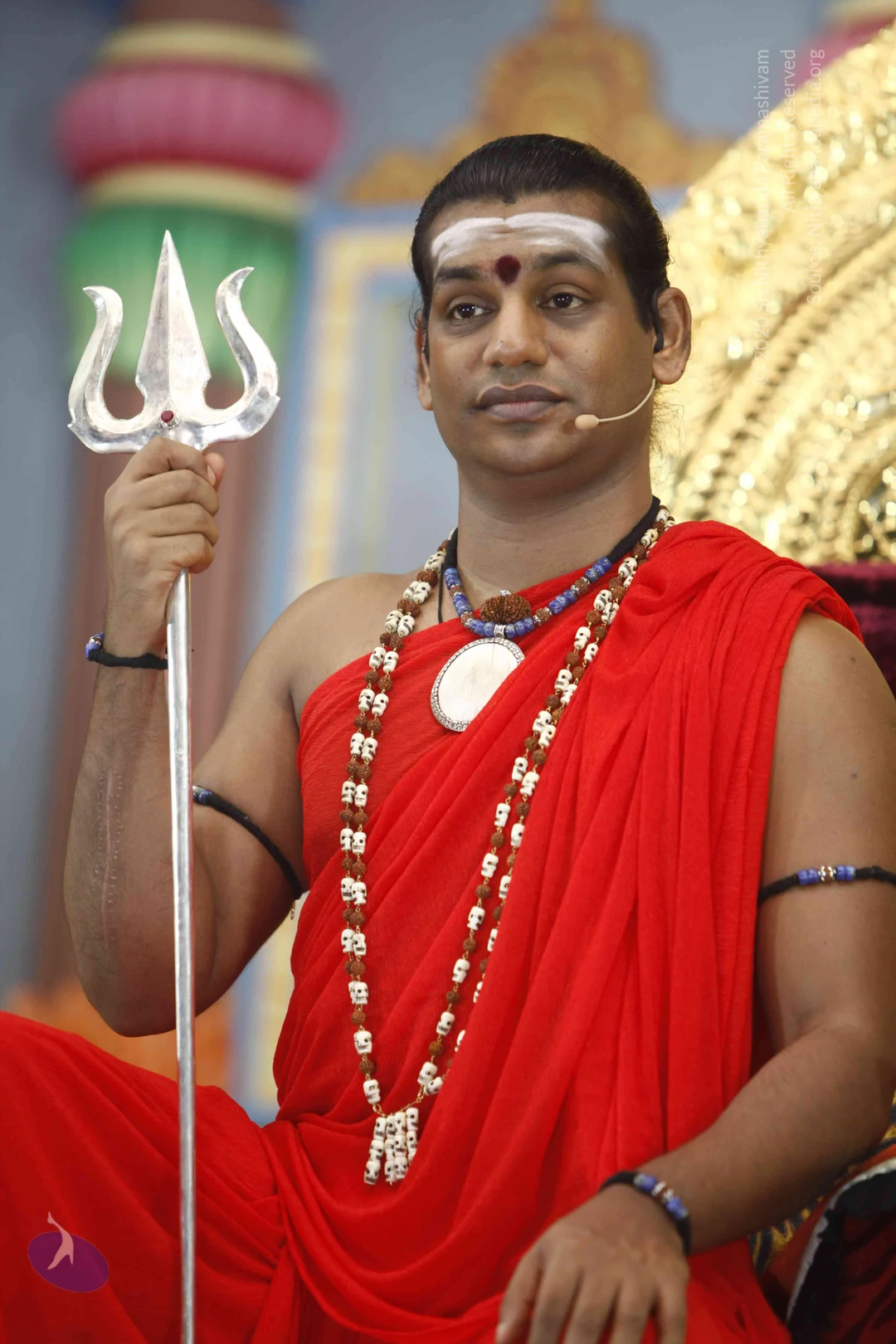
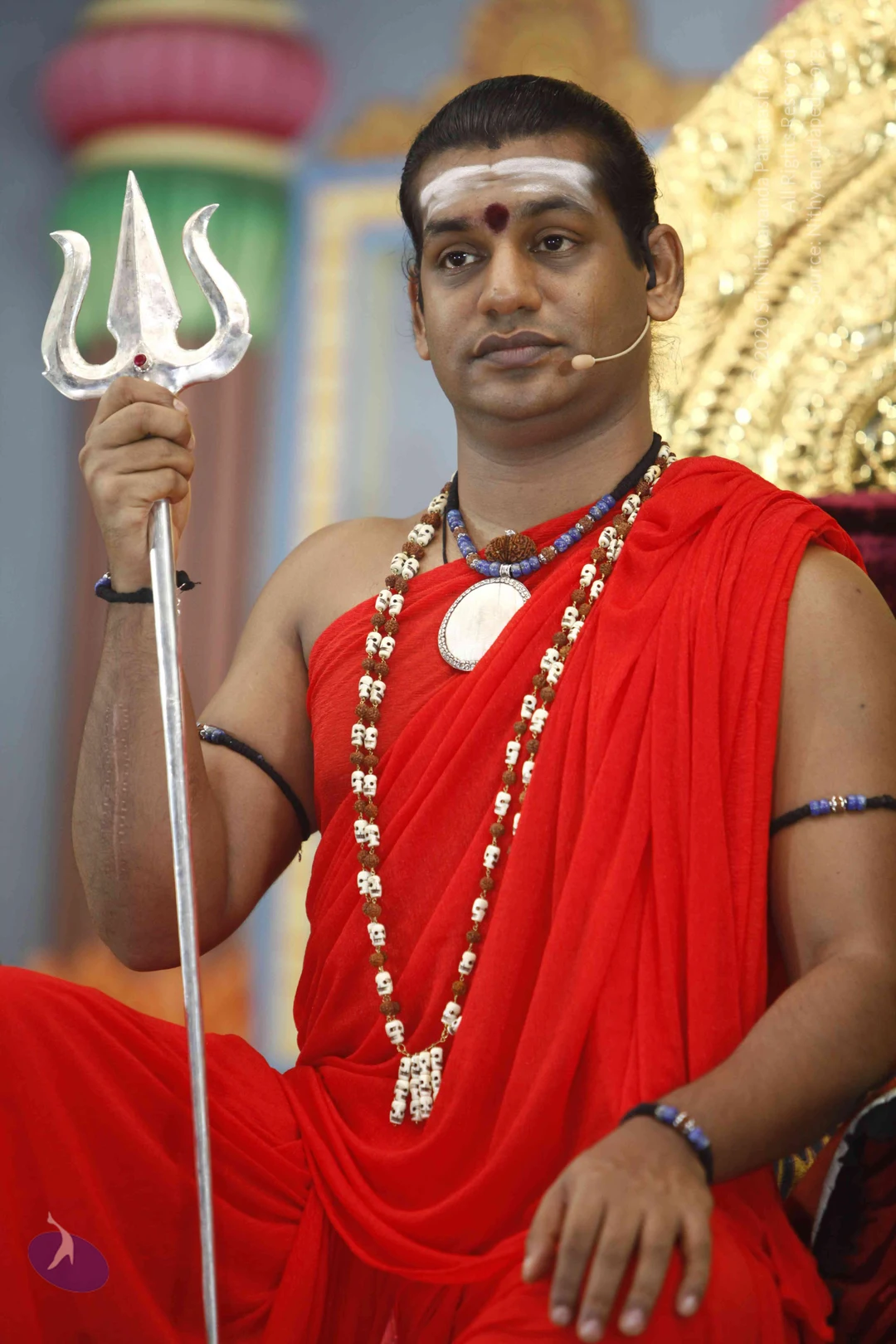
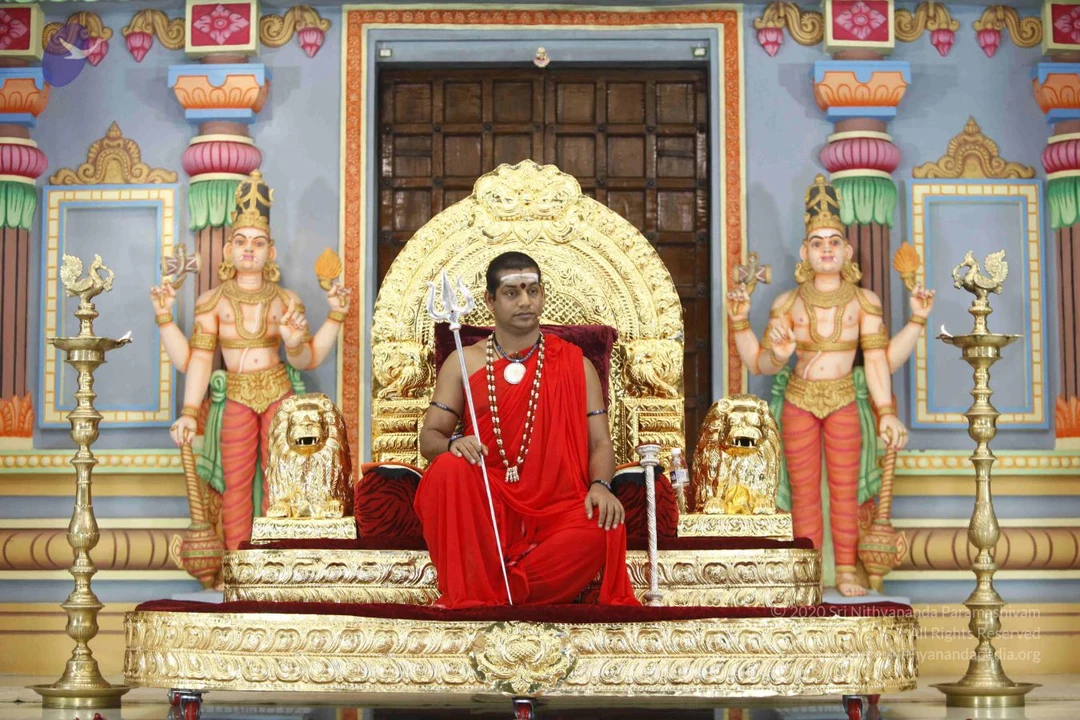
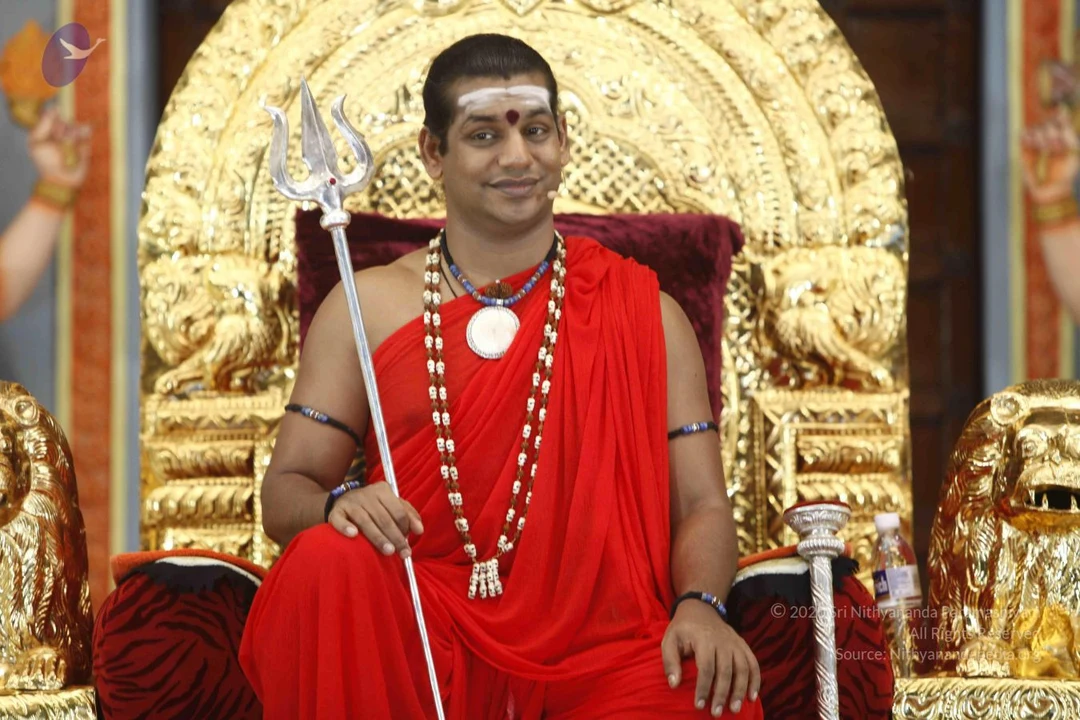
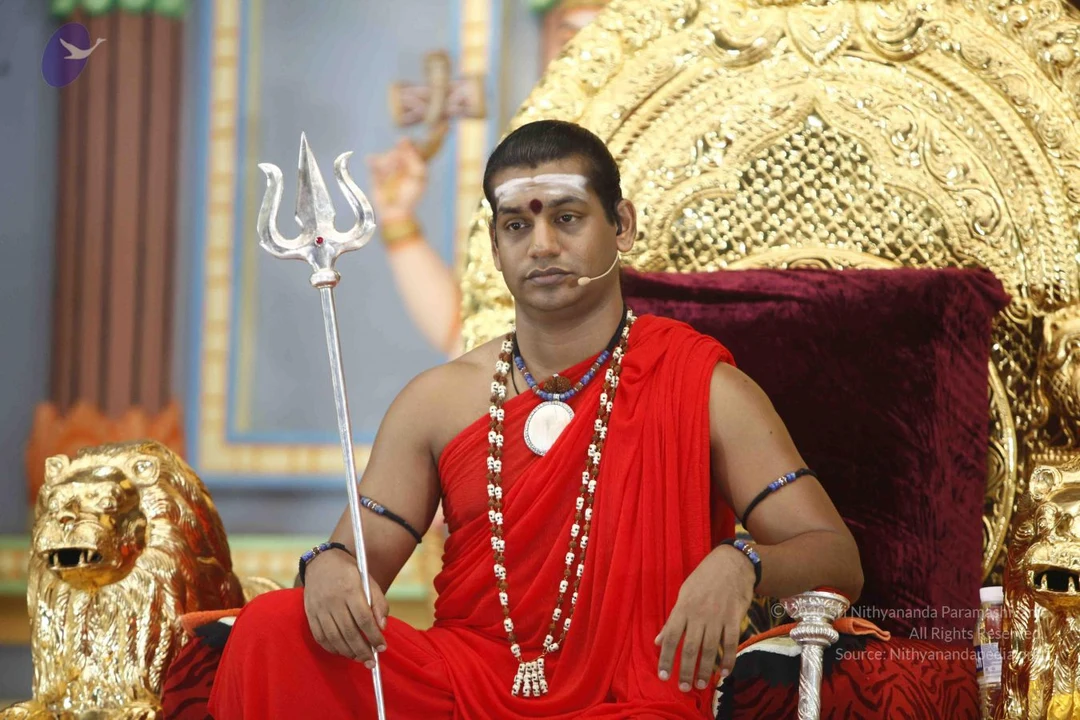
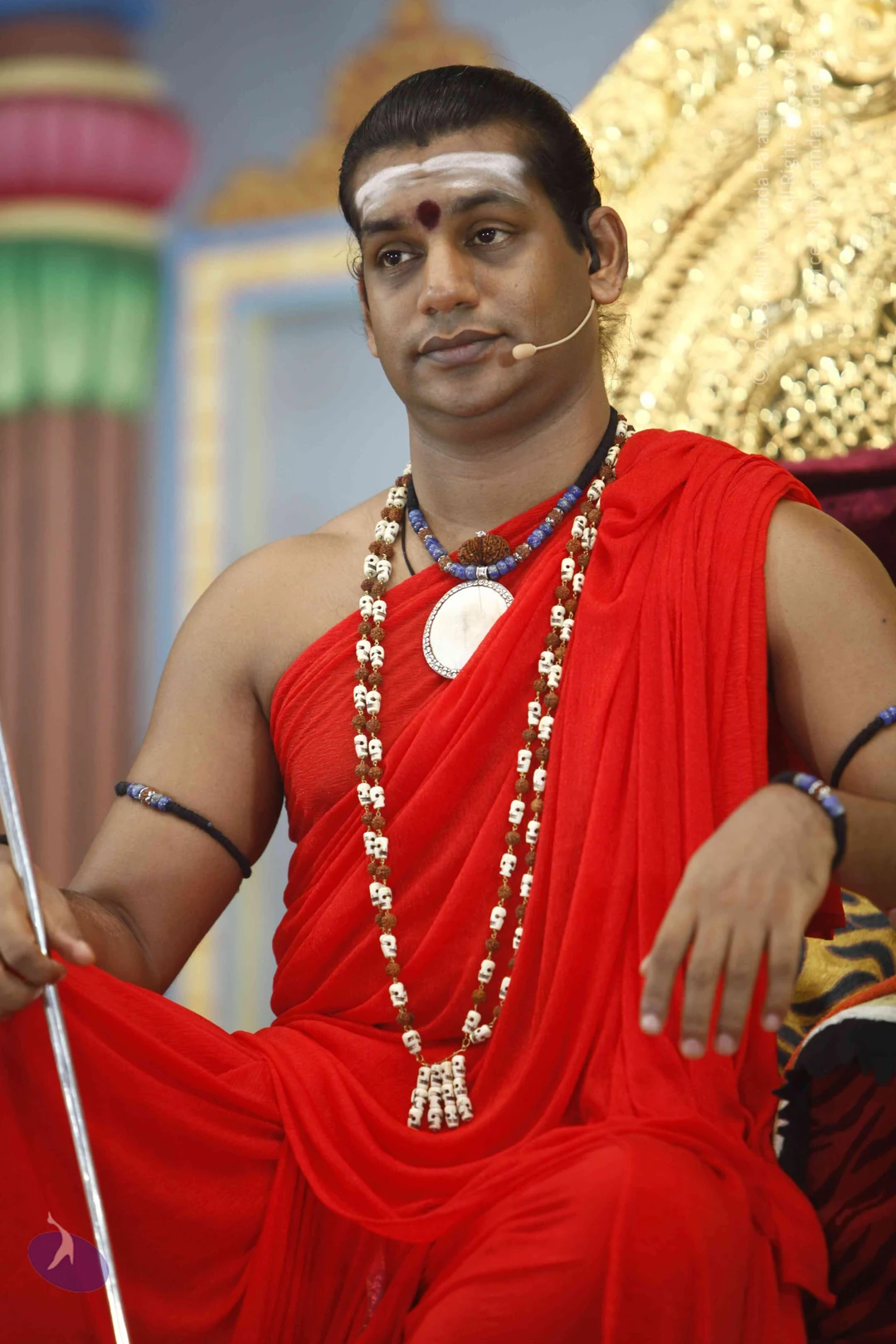
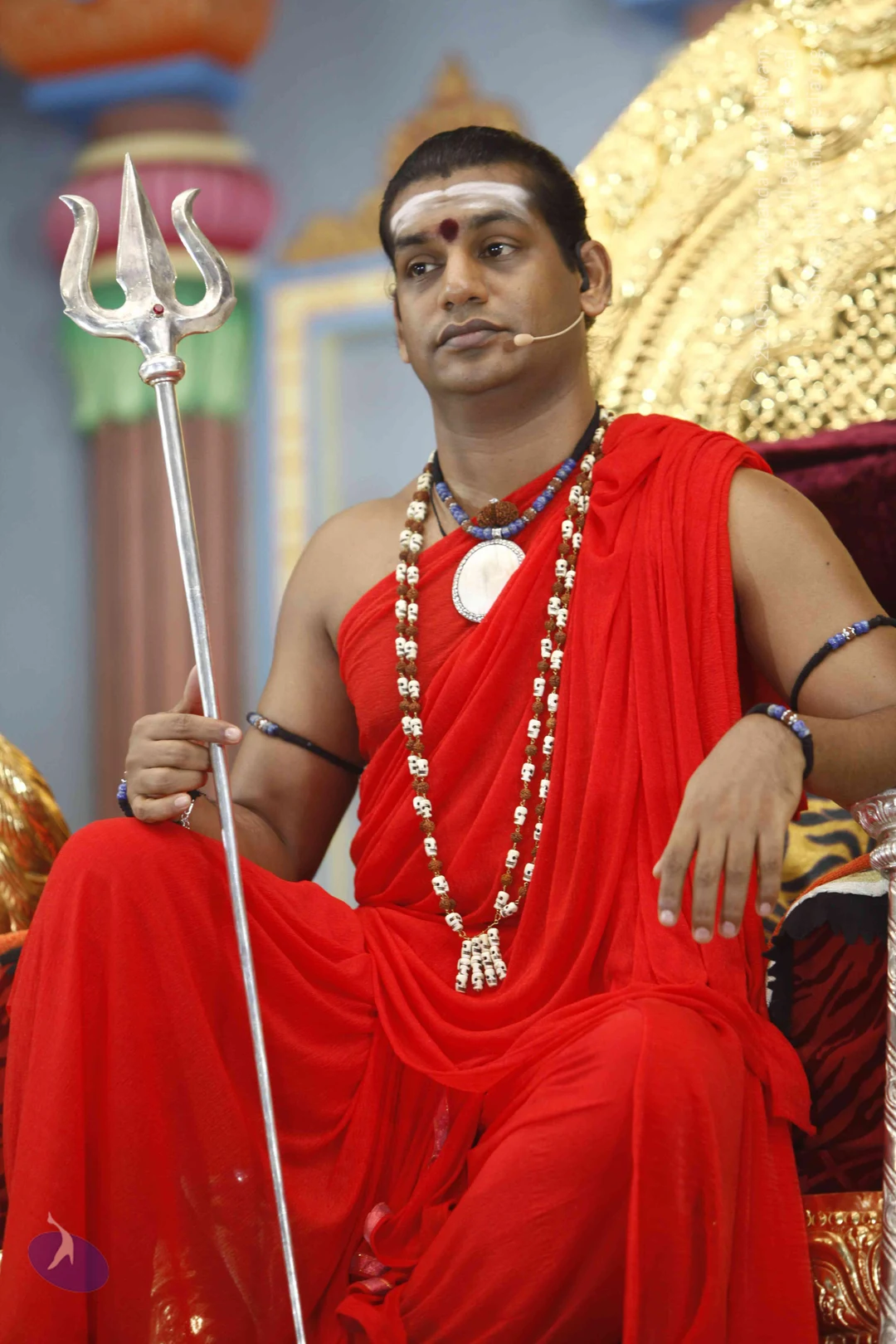
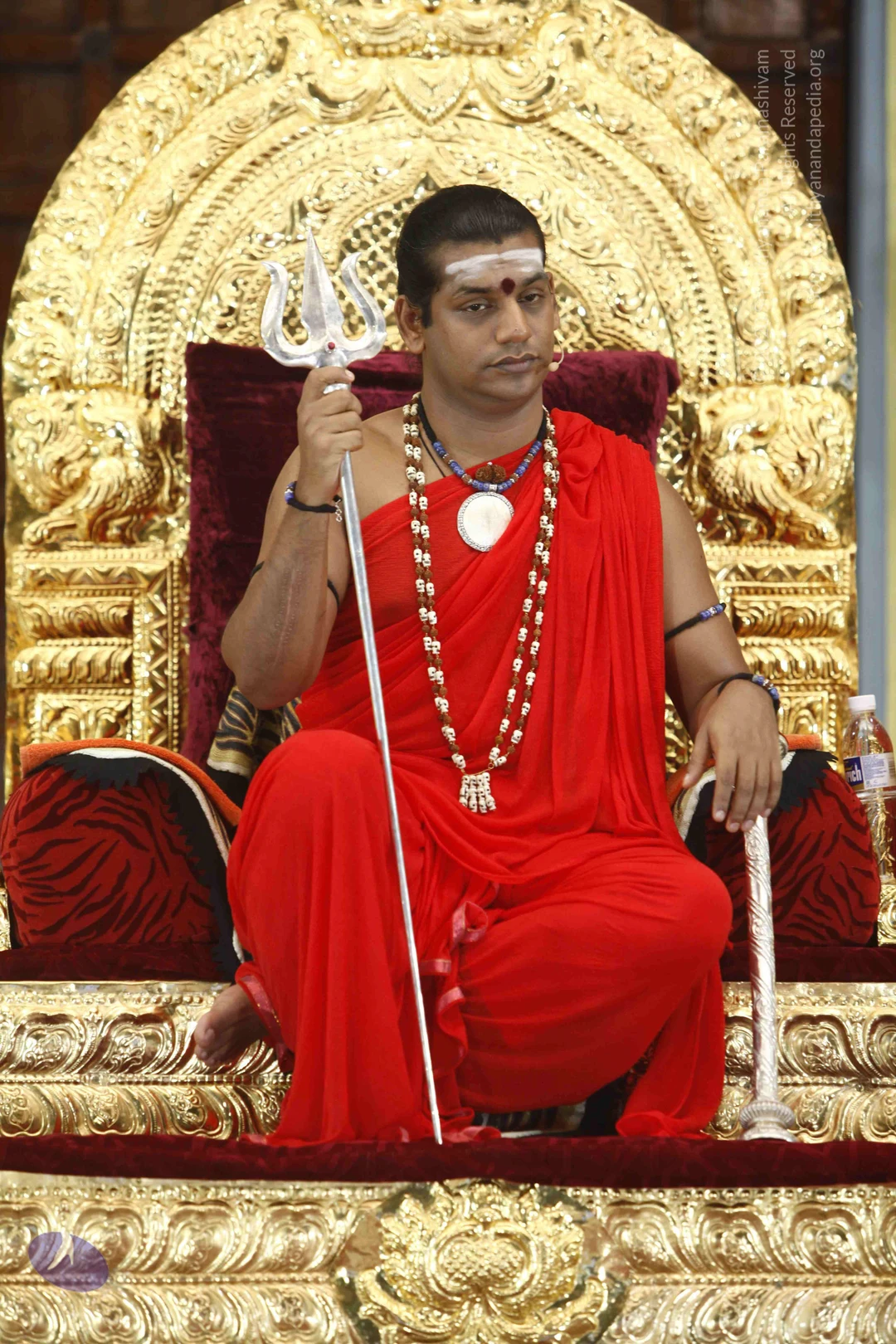
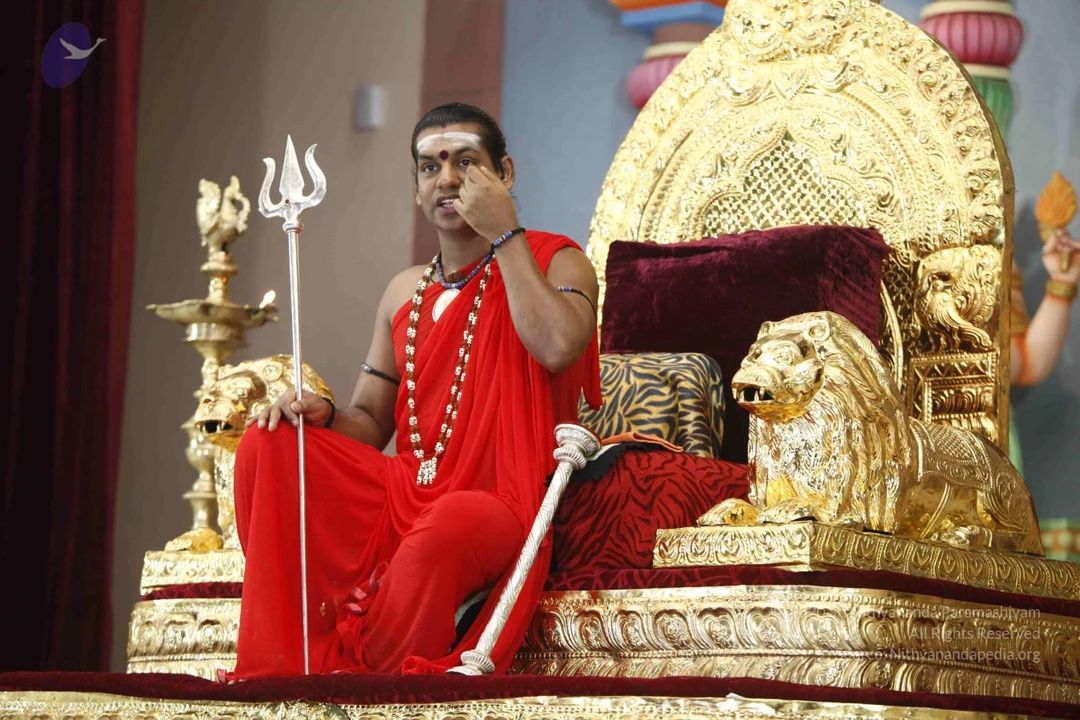
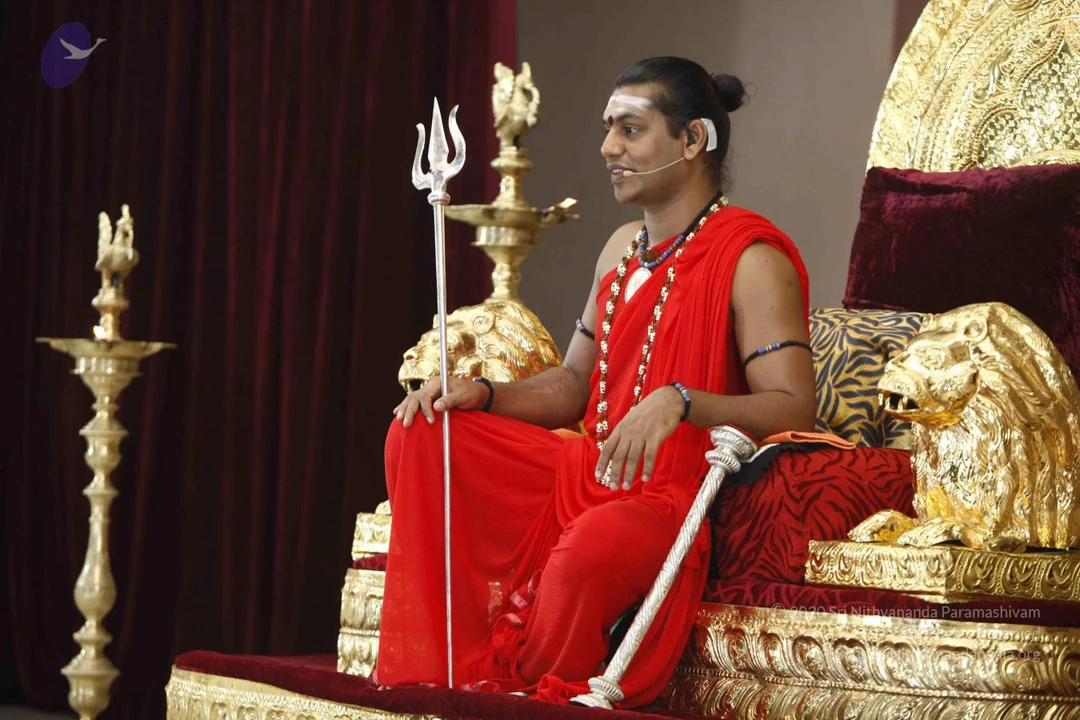
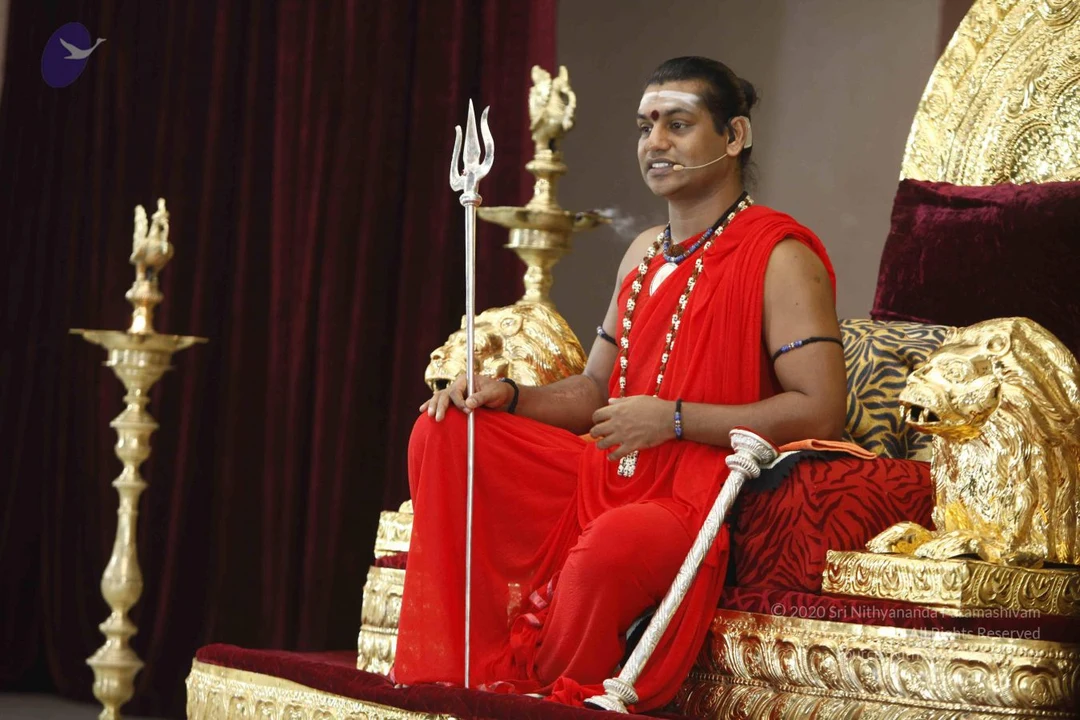
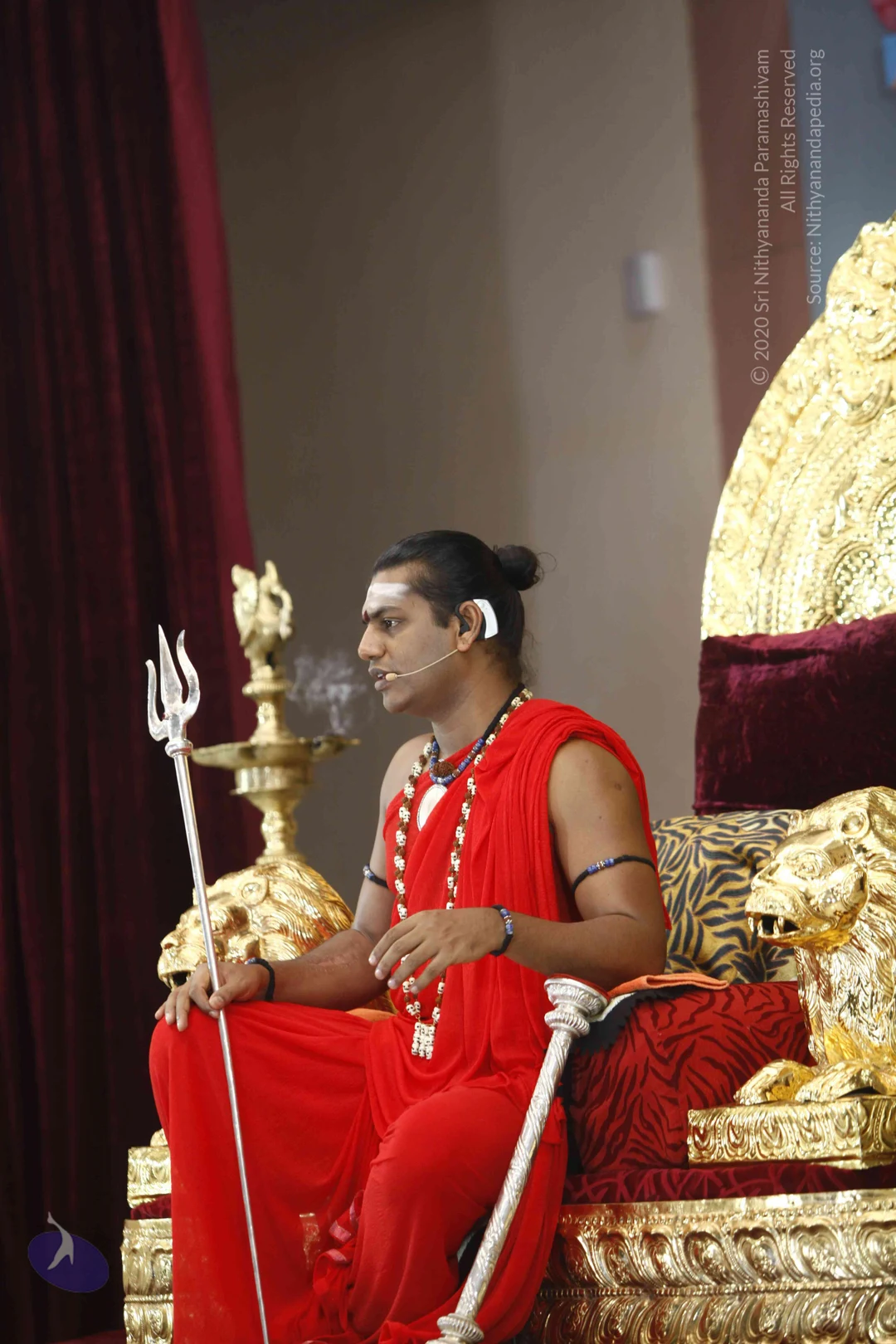
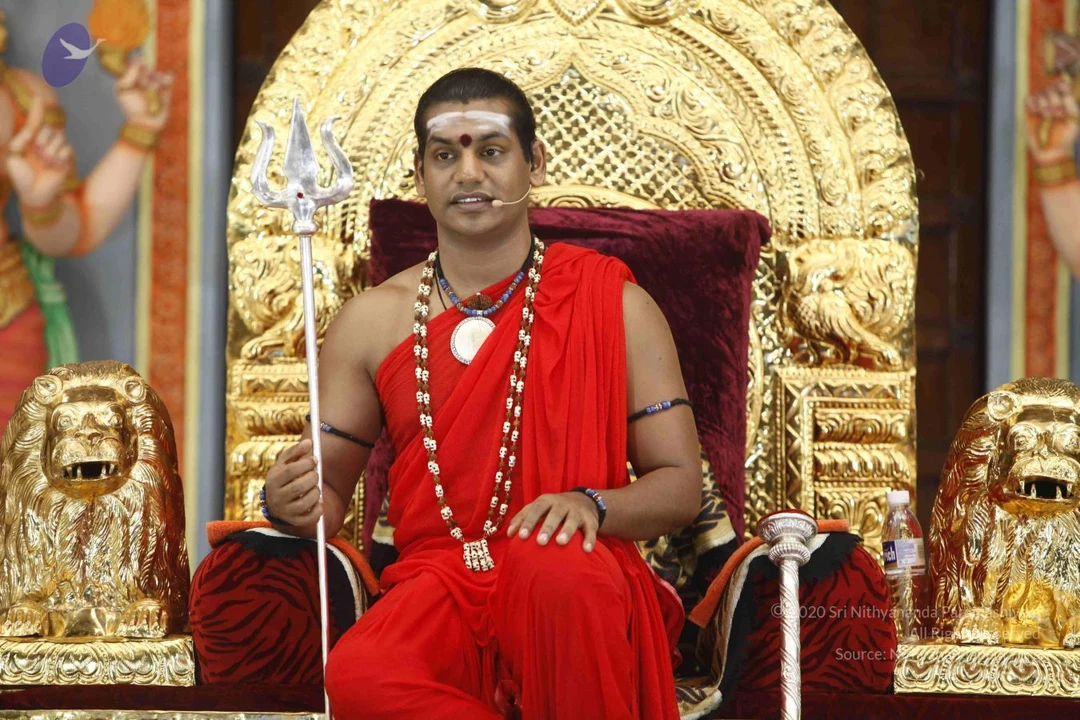
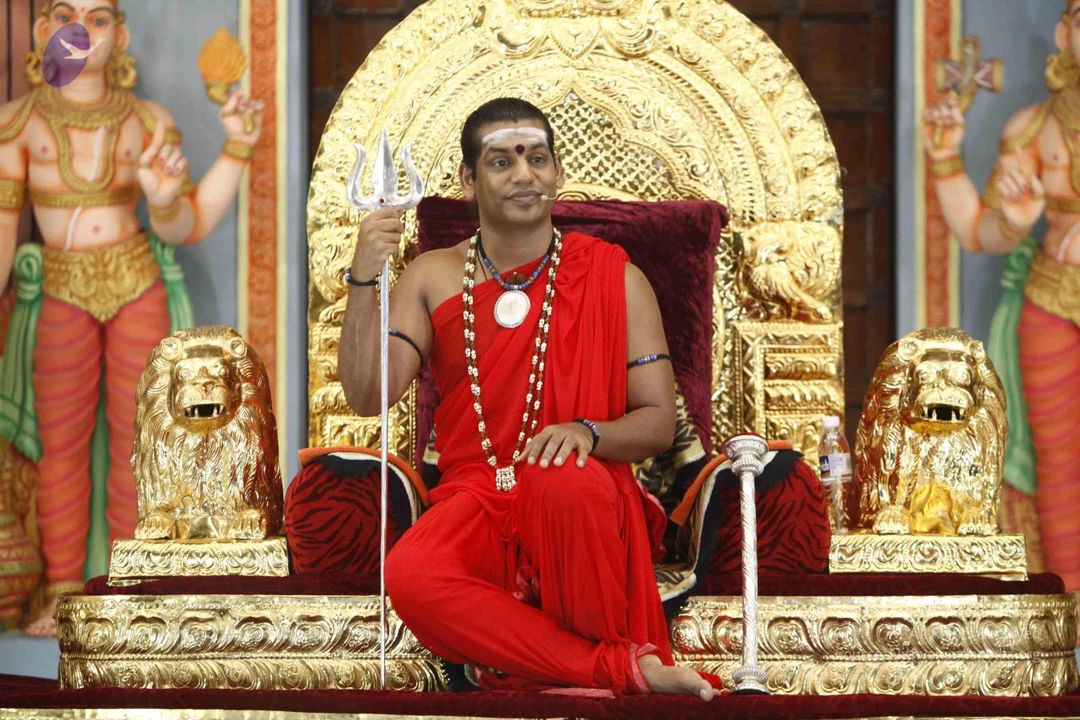
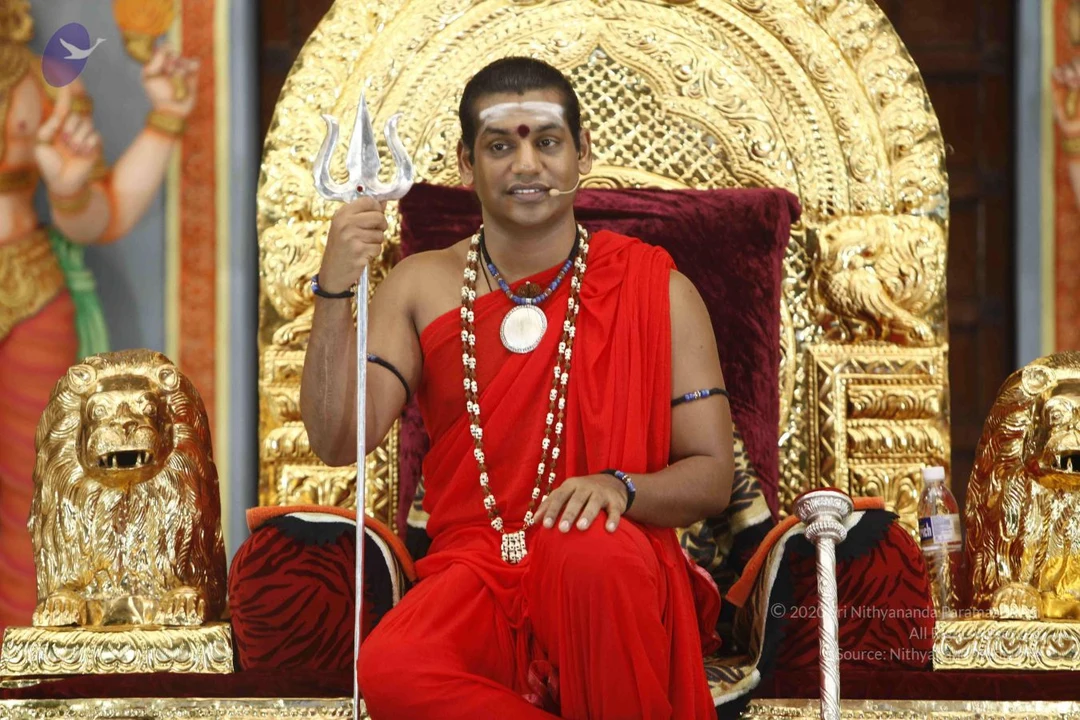
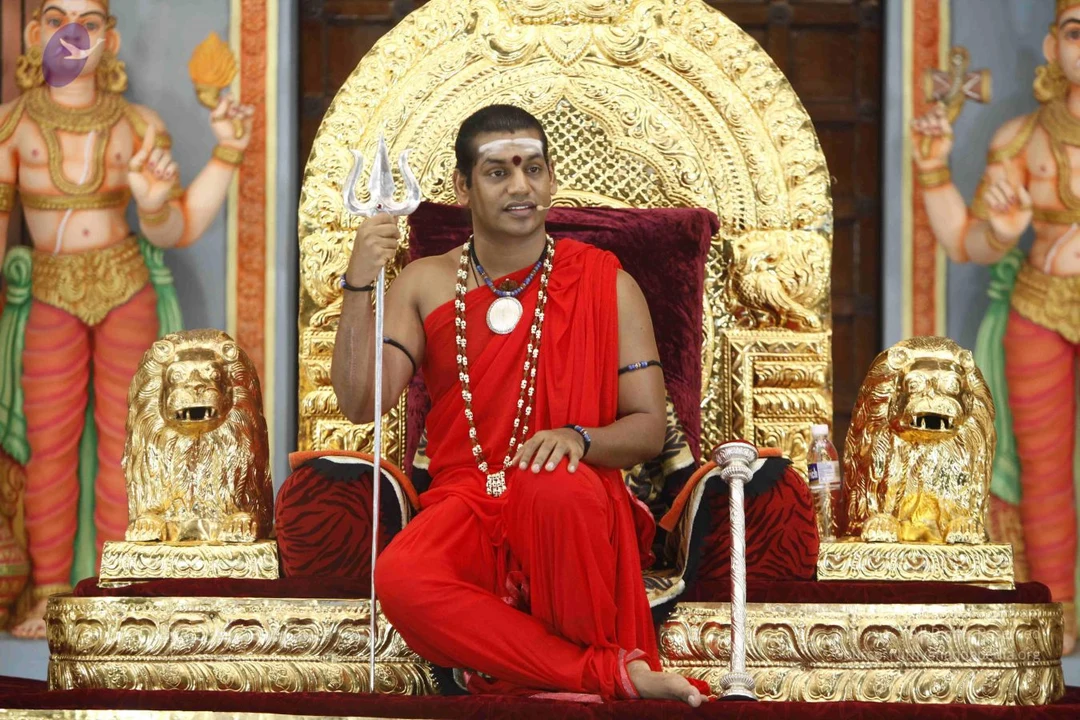
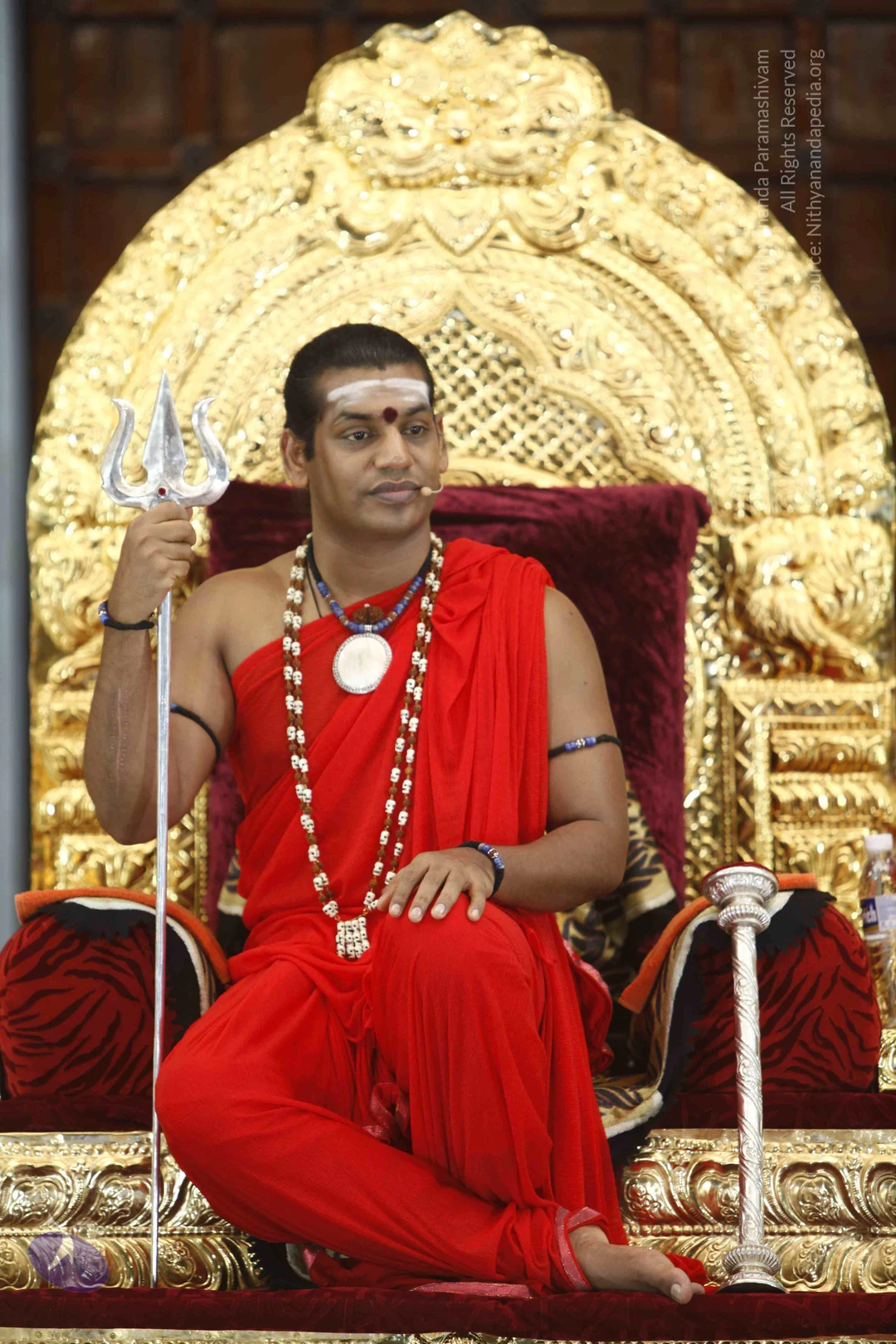
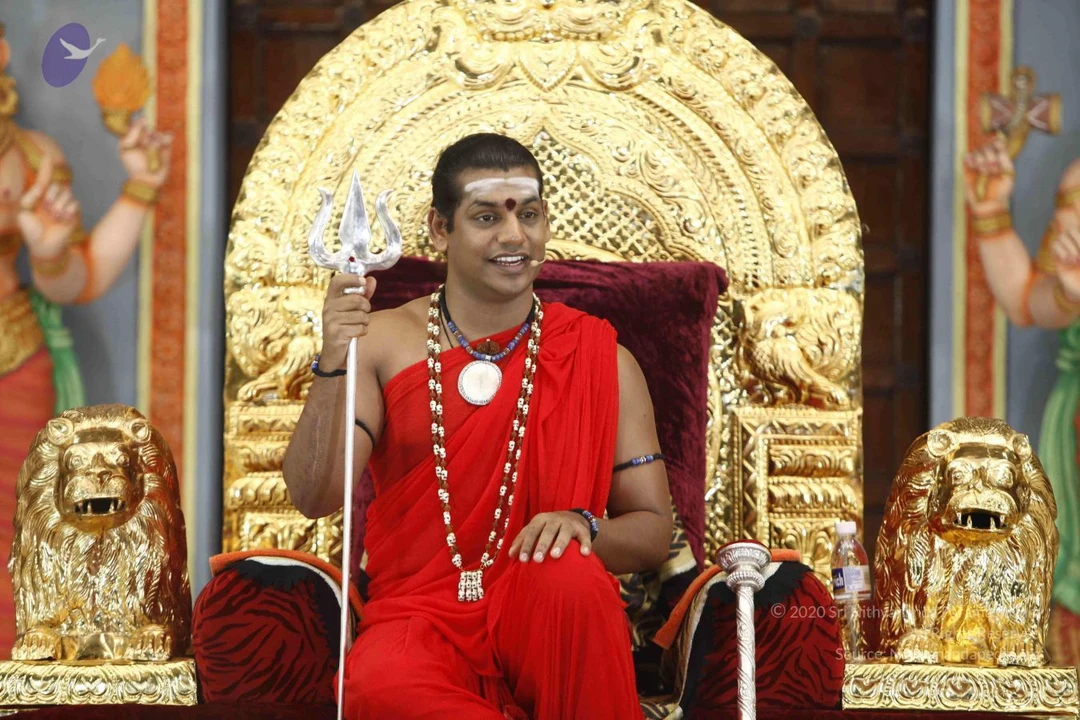
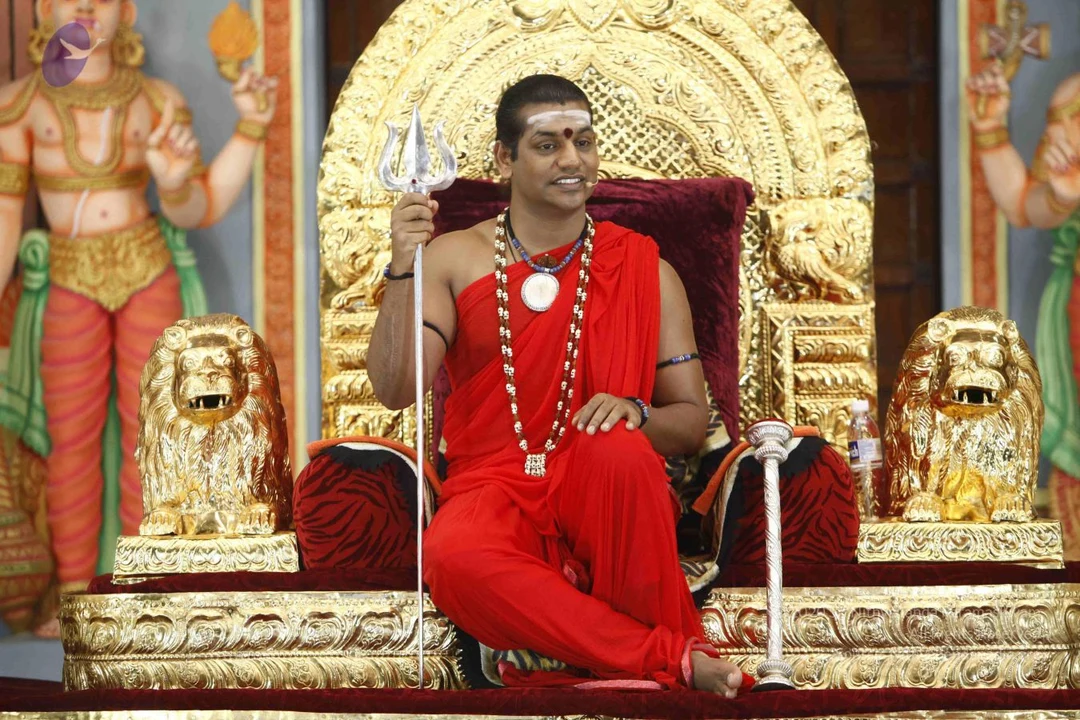
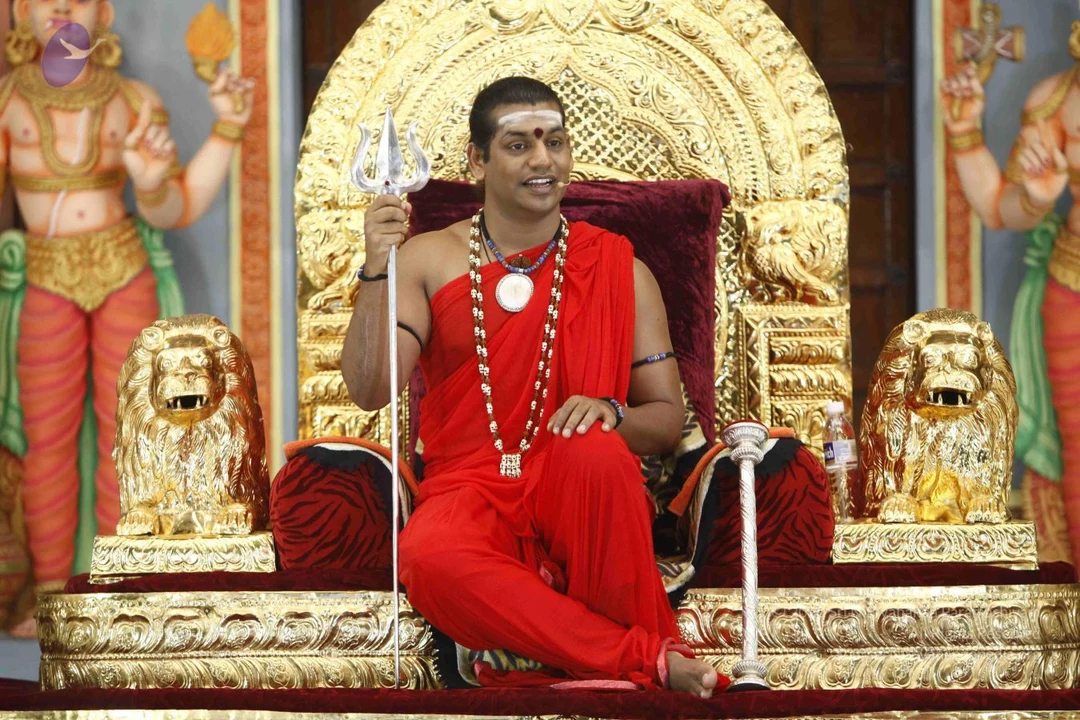
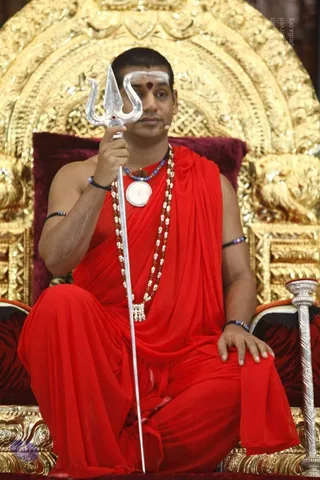
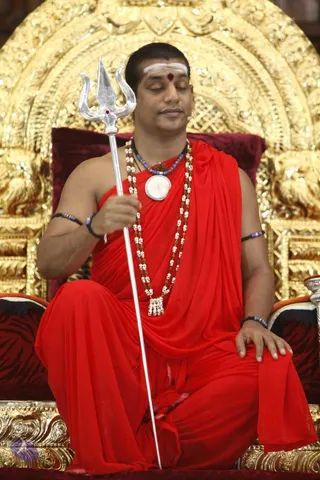
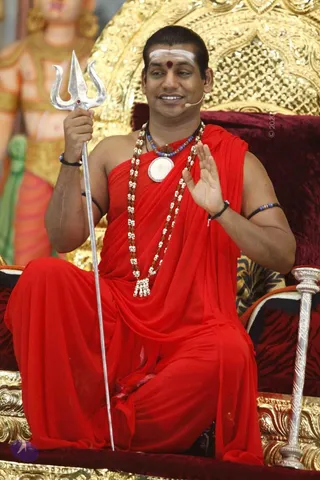
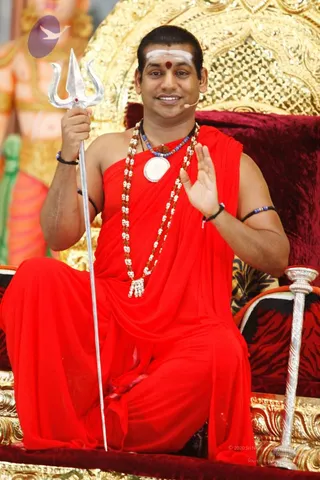
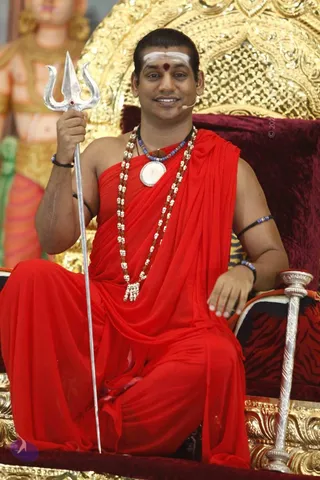
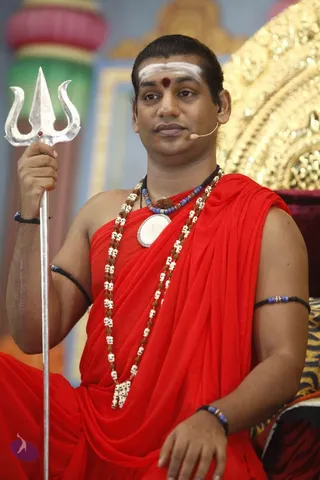
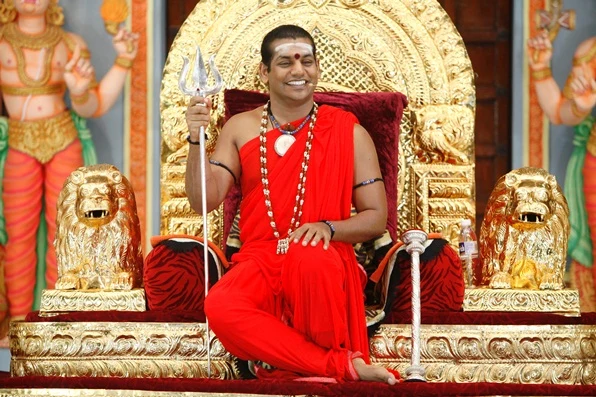
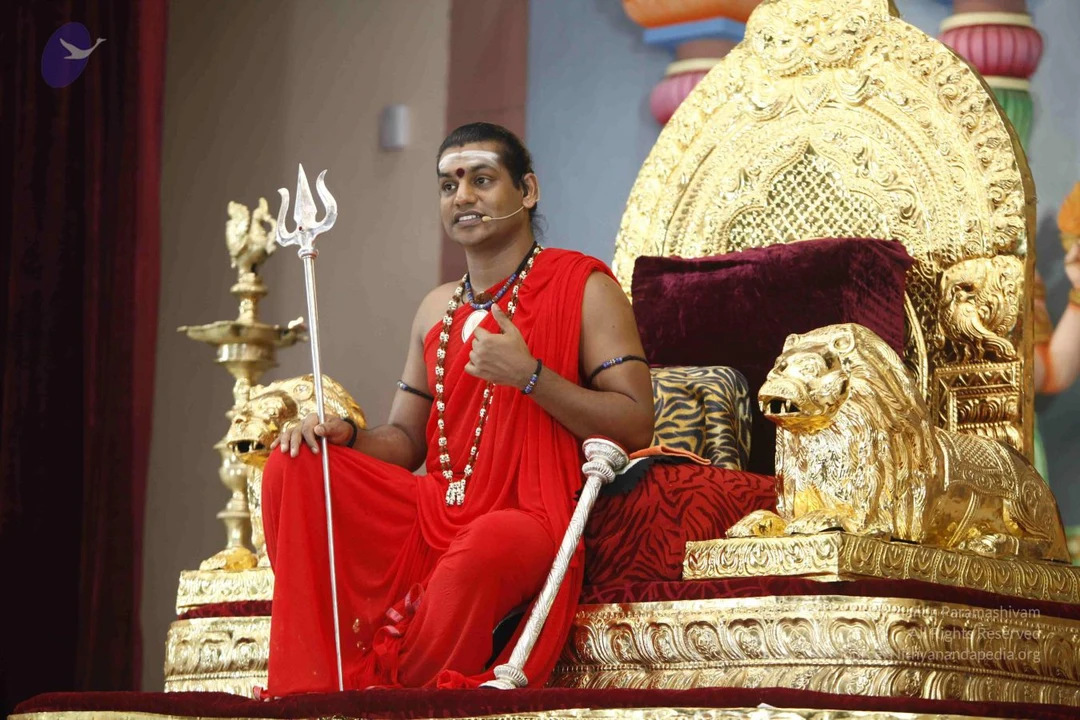
A man in red robes sits on an ornate golden throne with carved gilded backrest and armrests, holding a silver trident aloft in his right hand. He wears a white vertical forehead mark with a red dot, a rudraksha and white bead mala, a blue bead necklace and a large round silver-toned pendant, plus dark bead bracelets. A small microphone is visible near his face. The setting is a formal stage or ceremonial hall with a maroon velvet cushion behind him. Only one physical person is present.A seated man in flowing red robes sits on an ornate gold throne with a red velvet cushion behind him. He holds a silver trident upright in his left hand with eyes closed, wears a white and red tilak on his forehead, layered rudraksha and white bead malas, a large round pendant, and blue beaded bracelets. The gilded carved throne backdrop fills the frame. The page identifies him as a person, based on the long-established presentation cues of red robes, rudraksha malas, and a trident on a ceremonial throne.A seated man in flowing red robes sits on an ornate gold throne with red velvet cushions, holding a silver trident in his left hand and raising his right palm mid-discourse. He wears layered rudraksha and white bead malas, a blue bead necklace, a large round silver-toned pendant, and a red bindi with white vertical forehead markings. A small headset microphone is visible at his ear. Behind him, a partly visible painted deity figure in orange and green stands against a gold backdrop. A small purple logo appears at lower left and a faint copyright mark at right. The scene suggests a seated talk or satsang.A seated man in red robes holds a silver trident in his right hand while raising his left palm in a blessing gesture. He wears a white-and-brown rudraksha mala, a blue beaded necklace, a large silver pendant, and a white tripundra with a red bindi on his forehead, and a small headset microphone is visible near his face. He sits on an ornate gold-and-red velvet throne with a silver armrest post. Behind him, a partly visible painted deity murti in orange and gold stands at the left edge.A seated man in red sleeveless robes sits on an ornate gold-and-crimson throne, holding a silver trident in his right hand and smiling. He wears layered rudraksha and white bead malas, a large white pendant, blue beaded necklaces and bracelets, with white and red tilak on his forehead and a small headset microphone. Behind him stands a painted deity figure in orange and green with gold ornamentation, and a silver staff rests beside the throne. The scene suggests a seated satsang discourse setting.A seated man in a red draped shawl holds a silver trident upright in his raised right hand. He wears a long double strand of rudraksha beads and white skull-shaped beads, a blue-and-black bead necklace with a large white pendant, and blue beaded armlets. A white horizontal forehead mark with a red dot is visible, and a small headset microphone is clipped near his ear. Behind him is an ornate gold throne with a patterned cushion, and a pillar with green, red and yellow bands sits in the background. The appearance and cues of a long-haired, red-robed teacher with rudraksha and trident fit the Swamiji (probable) label, though the face cannot be confirmed.

Gurukul-Photo-Shoot

143 photosSource gallery
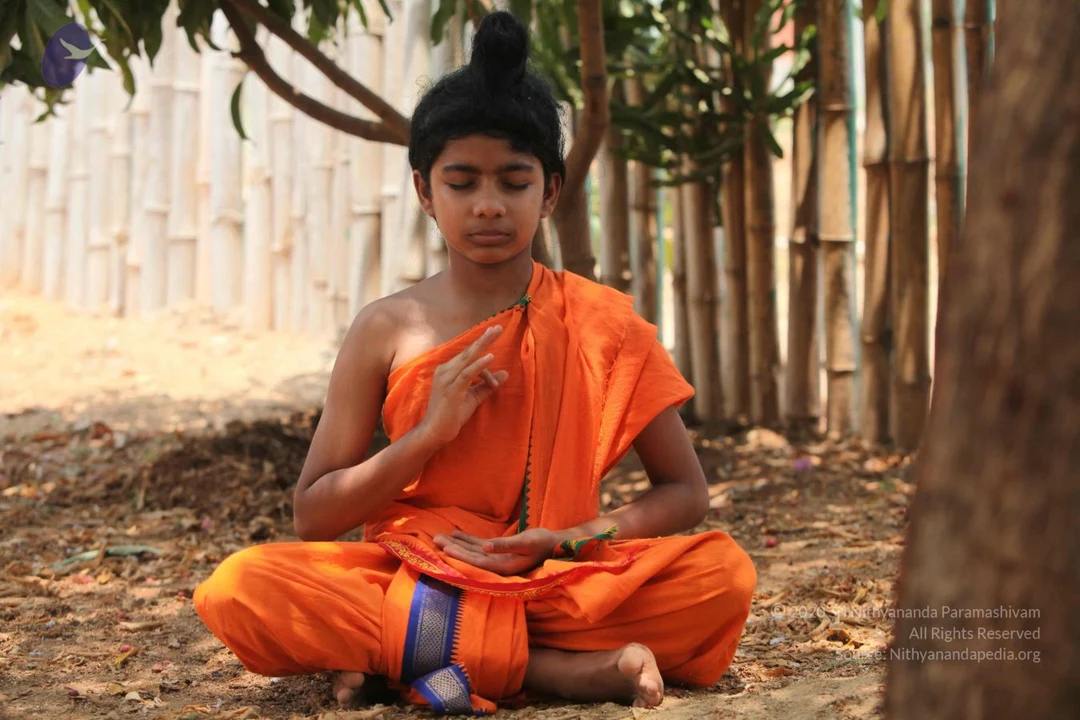
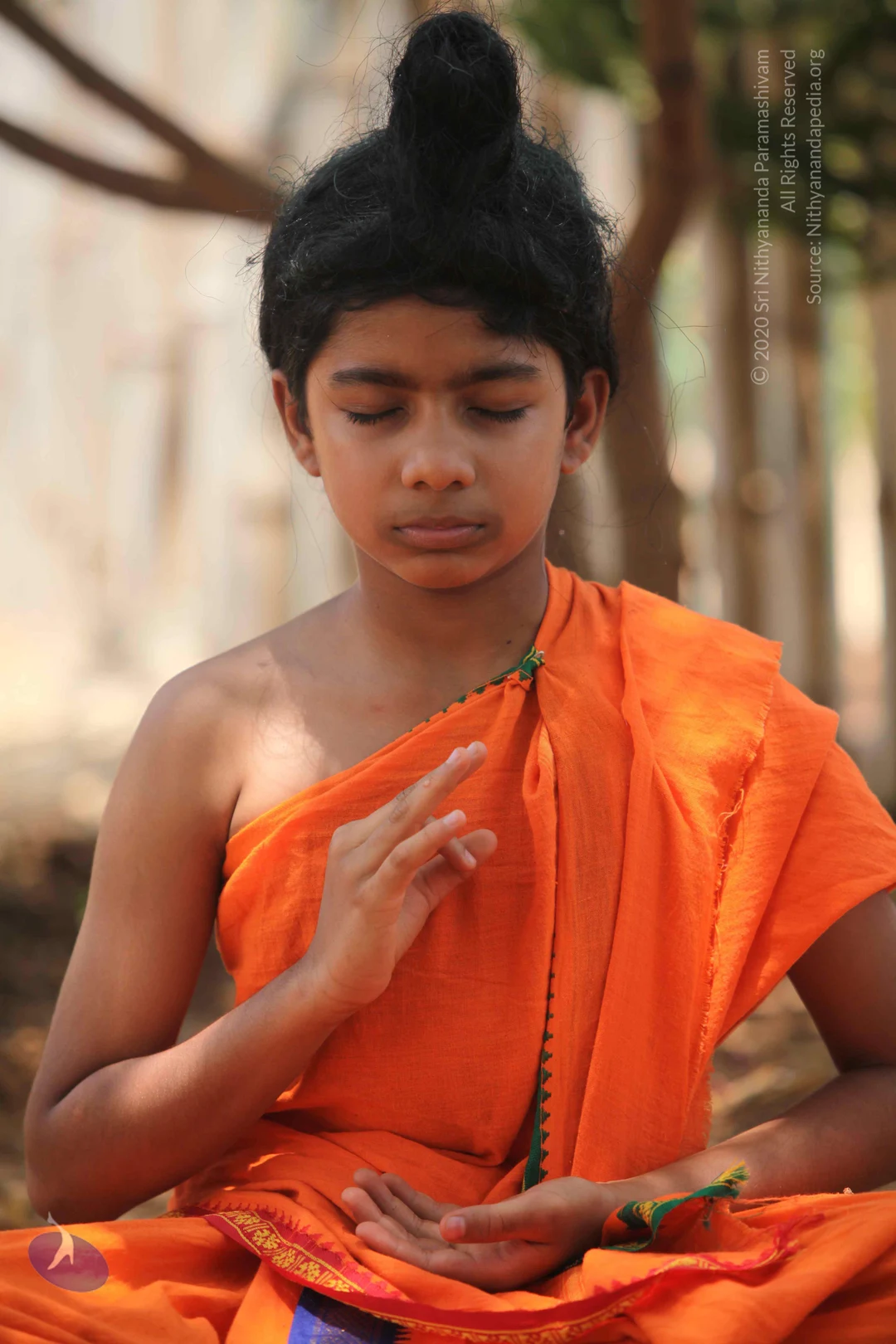
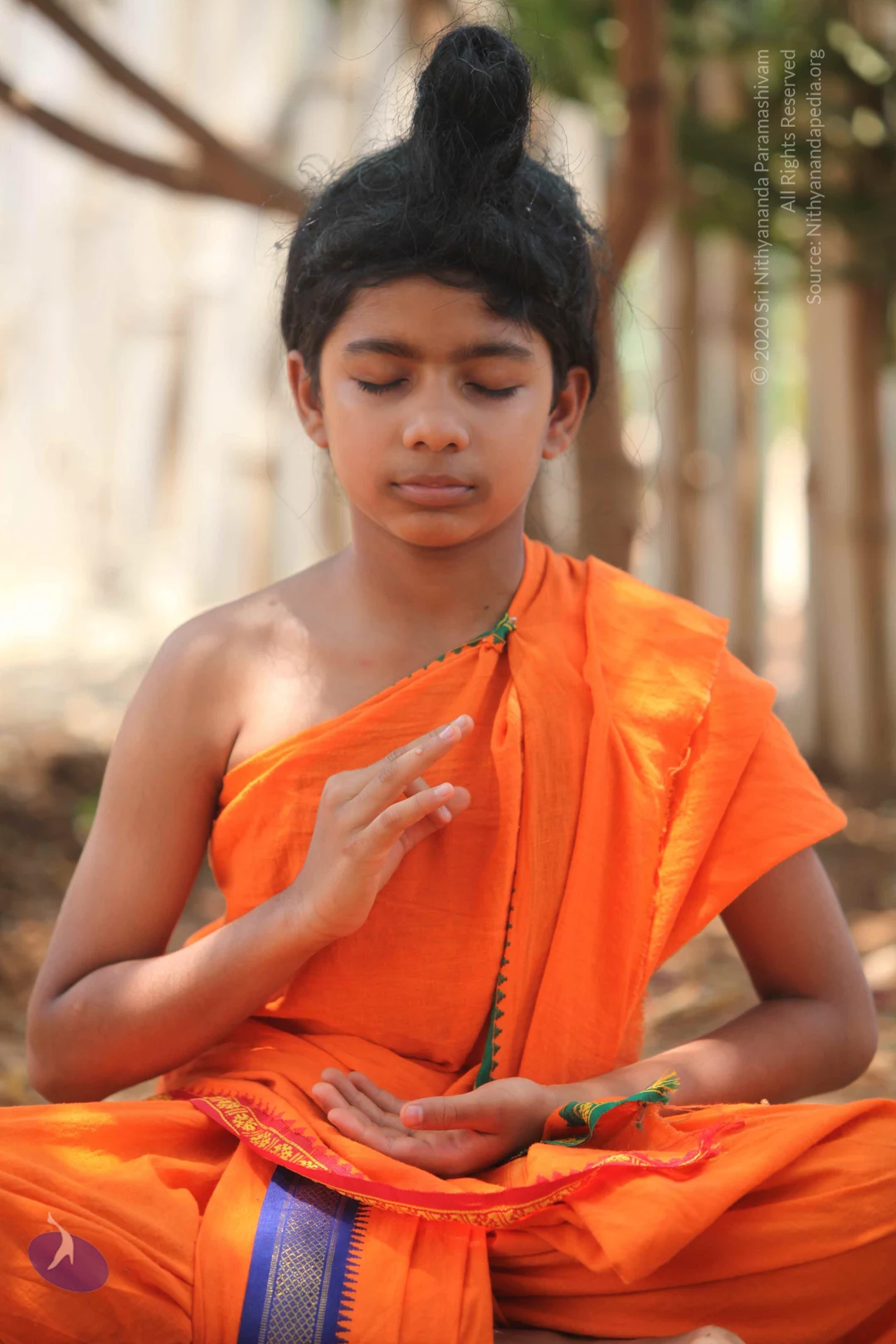
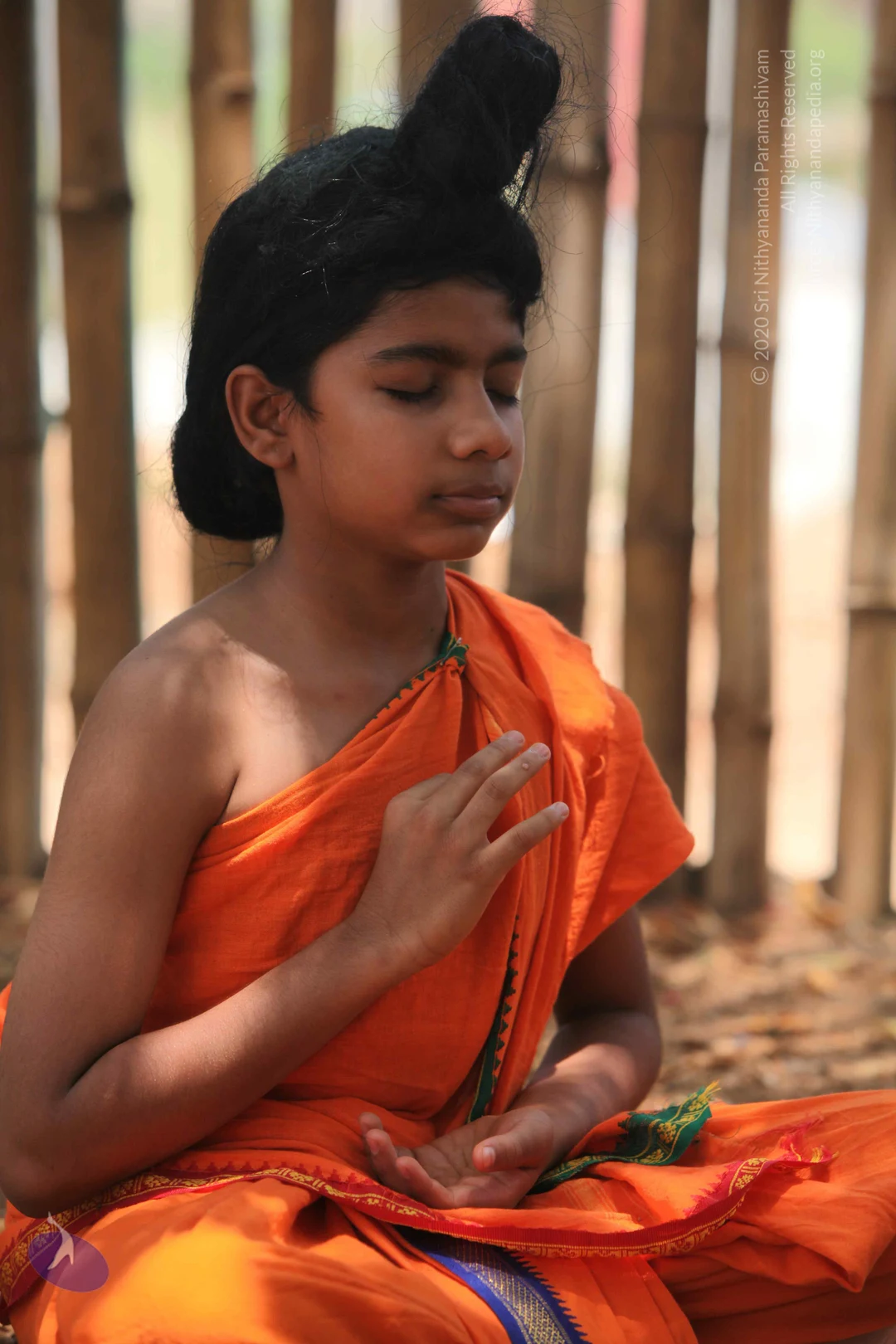
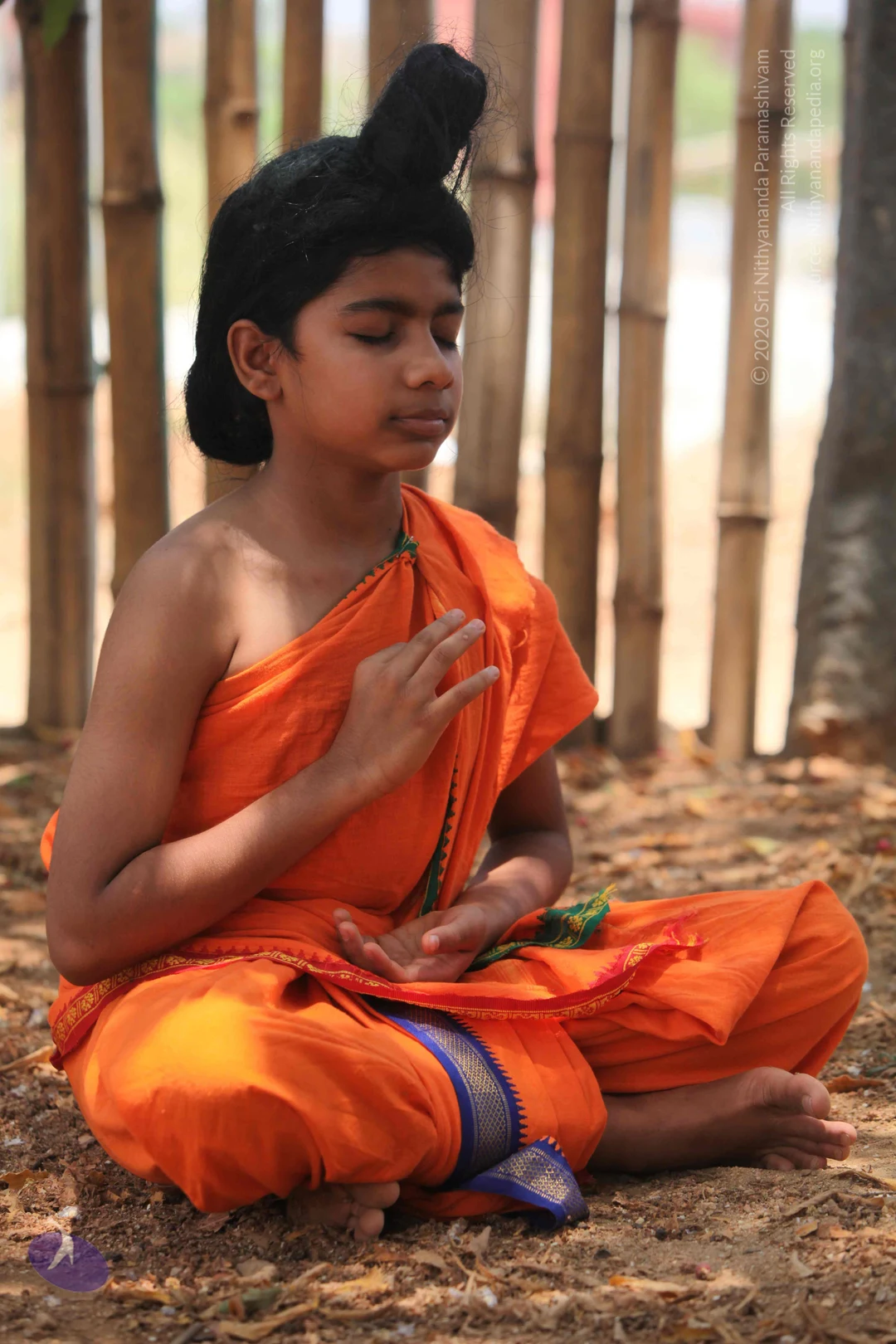
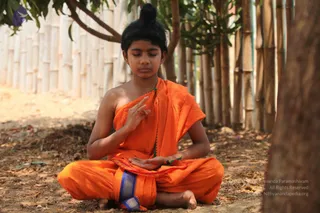
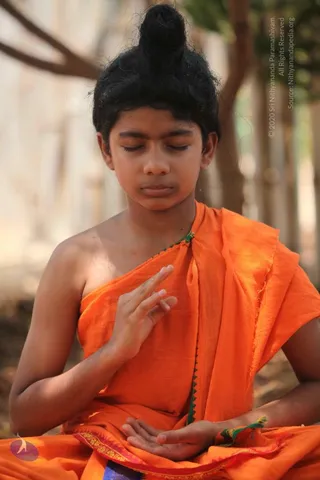
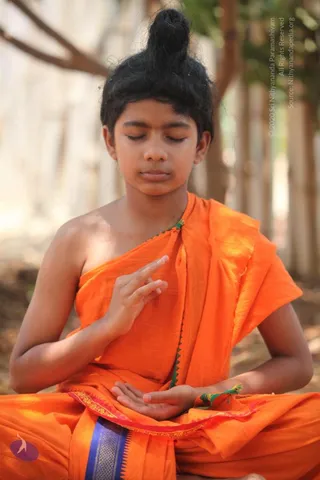
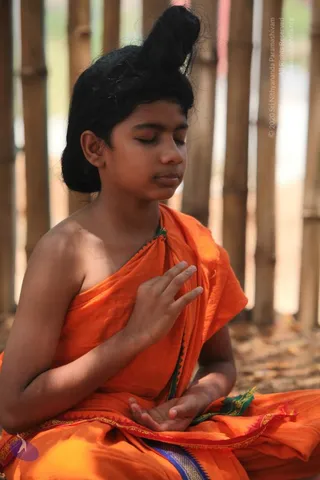
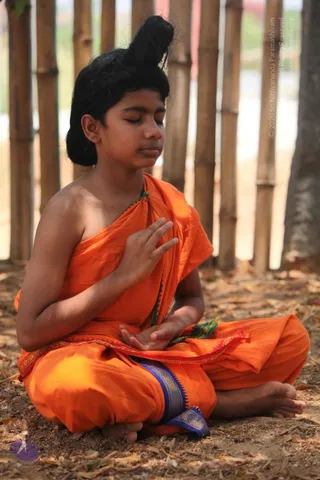
A young boy sits cross-legged on bare dry ground under trees, meditating with eyes closed. He wears a saffron-orange robe draped over one shoulder, with a blue and gold border on the lower garment and a green-beaded necklace. His right hand is raised in a mudra near his chest while his left hand rests on his lap. His dark hair is tied in a topknot. Behind him stands a bamboo fence and tree trunks in dappled sunlight.A young person seated in a meditation pose outdoors, eyes closed, with a dark hair bun on top of the head. They wear an orange-saffron cloth draped over one shoulder with a green-edged border, and a red and gold patterned hem visible at the bottom. The right hand is raised near the chest in a mudra-like gesture while the left hand rests open in the lap. Blurred trees and a light building background suggest an ashram setting.A young boy with black hair tied in a topknot sits cross-legged on dry leafy ground beneath a tree, eyes closed in meditation. He wears a saffron-orange dhoti and upper wrap with a blue and gold bordered cloth at the waist, and green-beaded bracelets on his wrist. His right hand is raised in a mudra near his chest while his left hand rests in his lap. Behind him stand a bamboo fence and tree trunks.A young boy with his hair tied in a topknot sits cross-legged outdoors in meditation, eyes closed, wearing an orange saffron cloth draped over one shoulder with green and red borders and a blue-and-gold striped lower garment. His right hand is raised near his chest with fingers in a mudra, while his left hand rests open on his lap.A young boy sits cross-legged outdoors in front of a bamboo fence, eyes closed in meditation. He wears an orange saffron wrap draped over one shoulder with green and gold borders, and his black hair is tied in a high topknot. His right hand is raised near his chest in a mudra while his left hand rests open in his lap.A young boy sits cross-legged on dry leaf-strewn ground in meditation, eyes closed, with one hand raised near the chest in a mudra and the other resting on his lap. He wears saffron-orange draped cloth with green and gold borders and a blue-and-gold woven waistband, and his black hair is tied in a high topknot. Behind him stand vertical bamboo poles and a tree trunk.

Bhagavad-Gita-Chapter4-Verse23
20 photosSource gallery
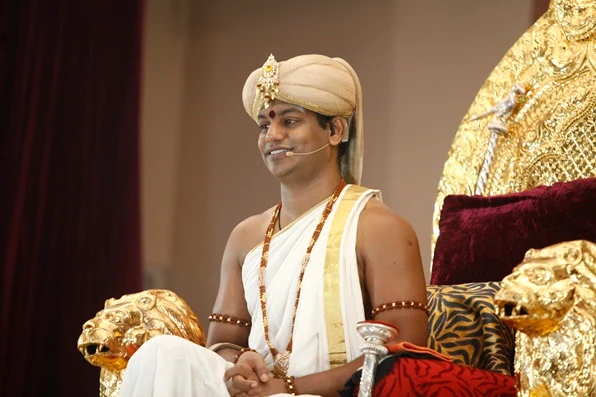
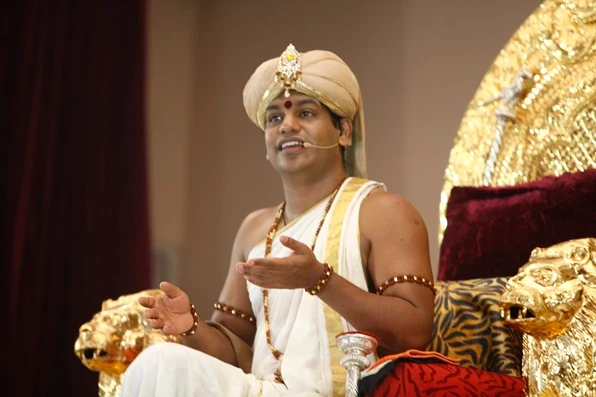
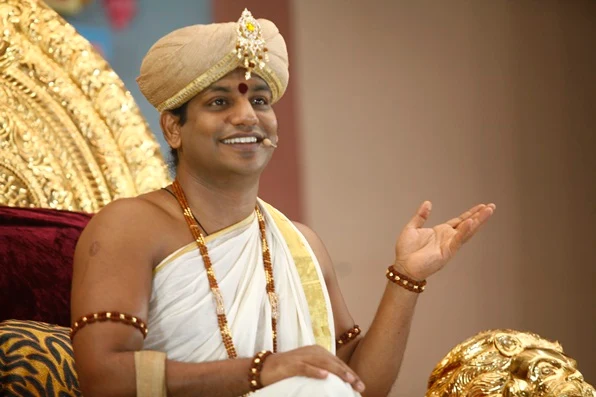
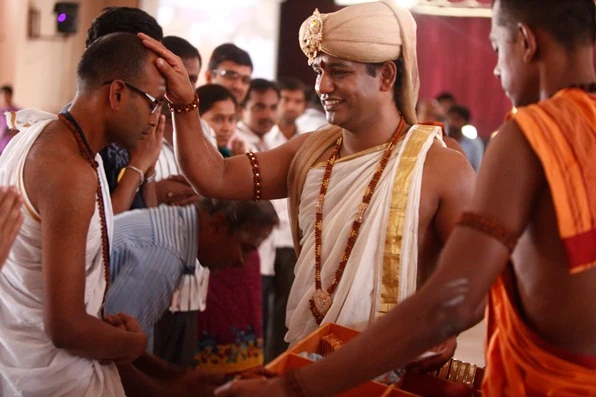
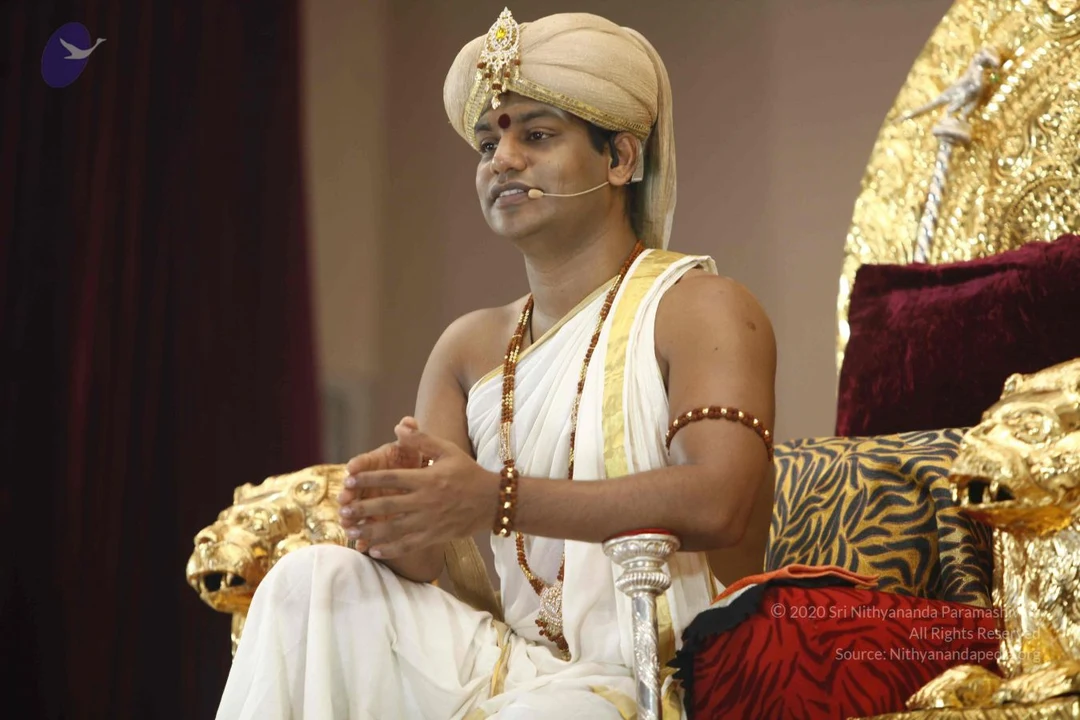
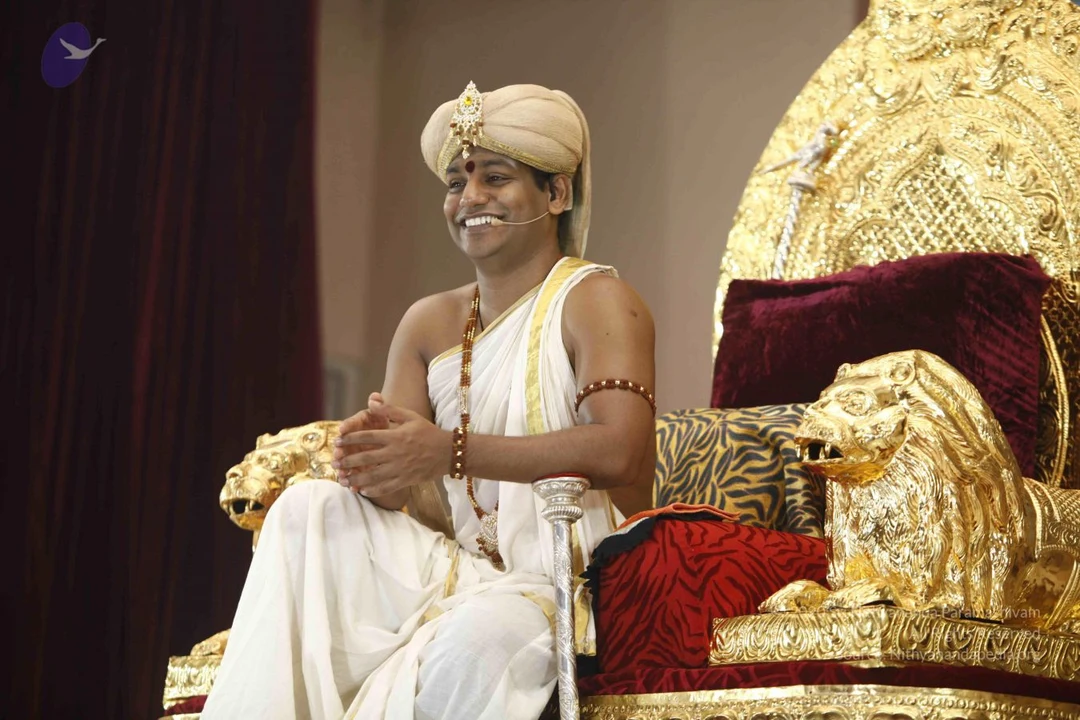
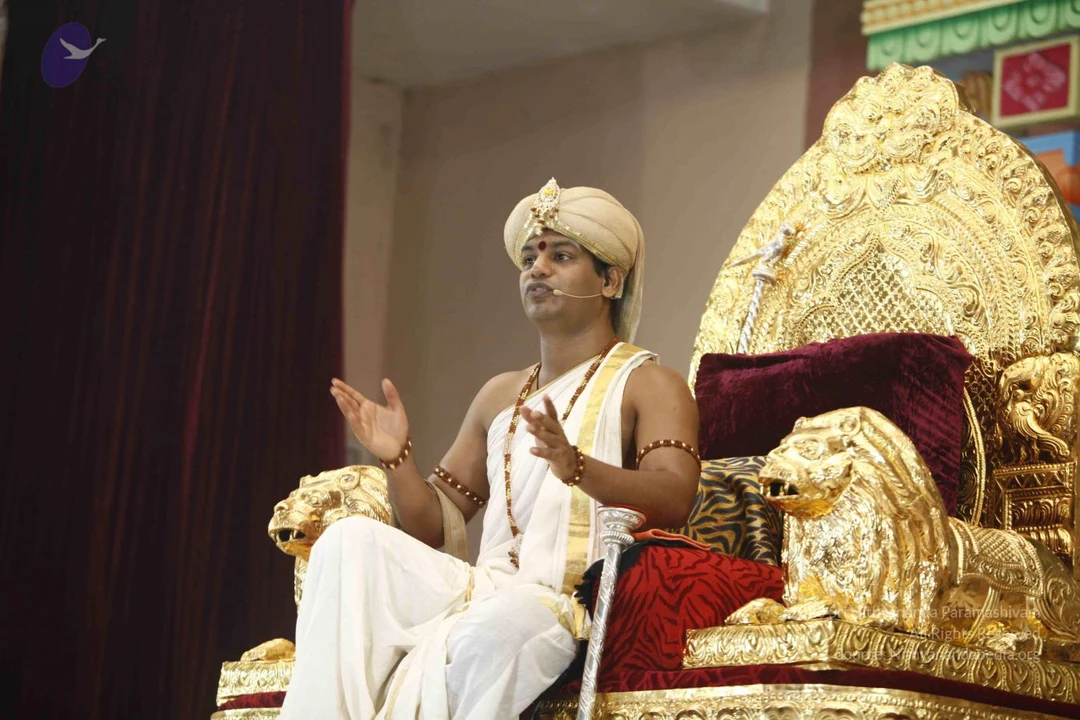
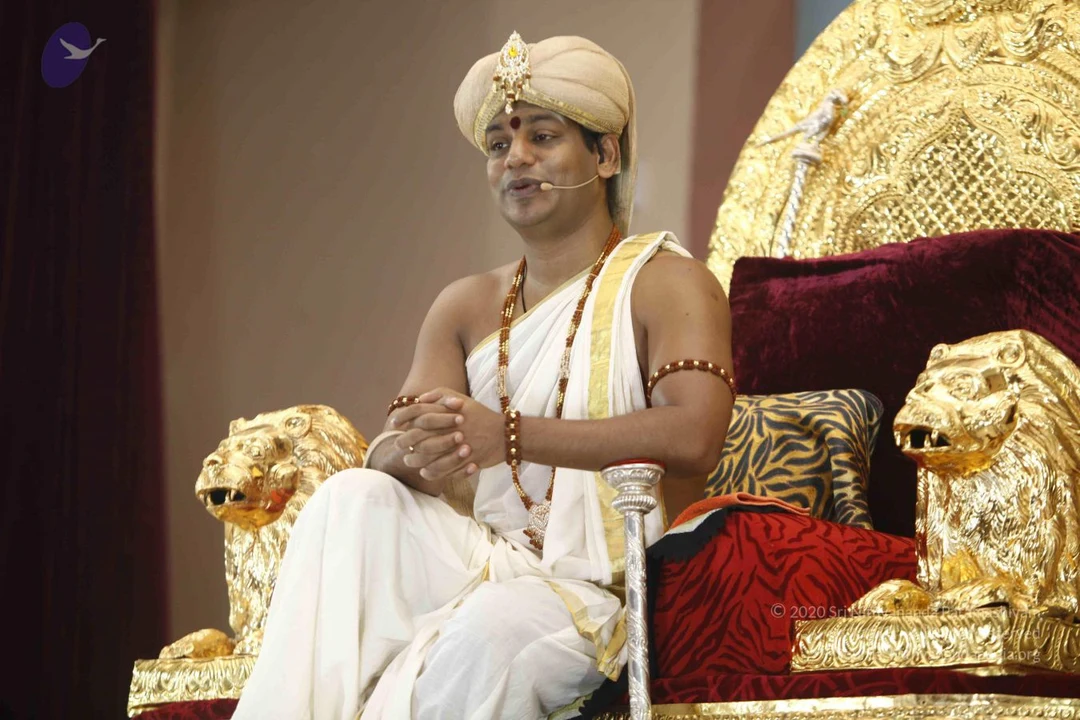
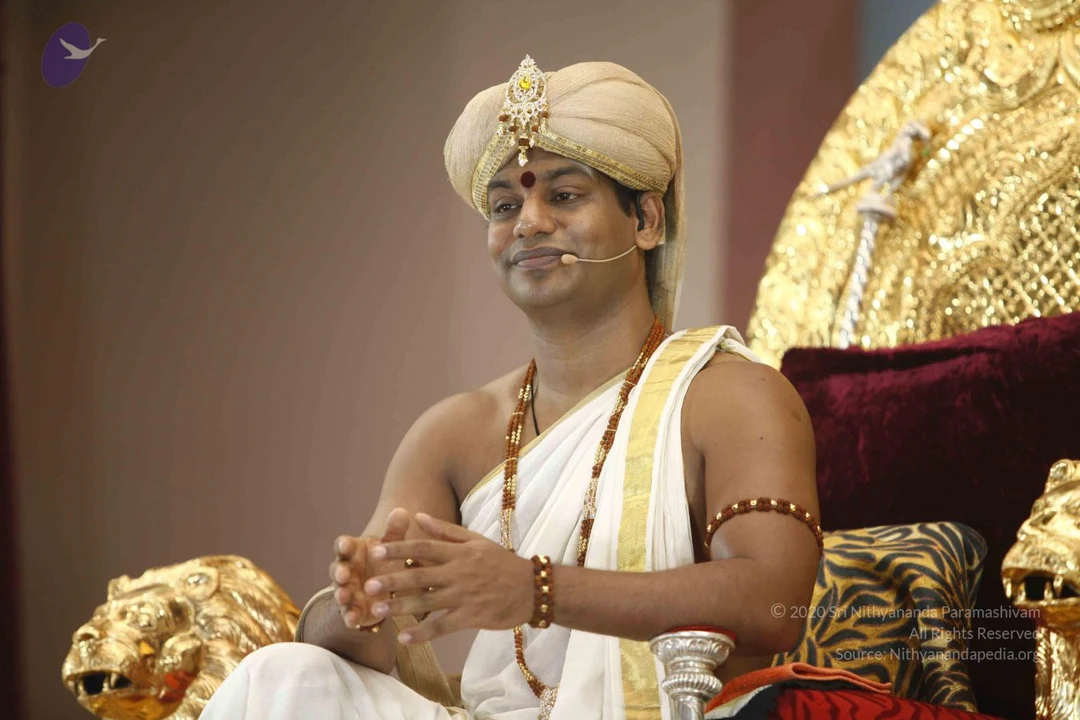
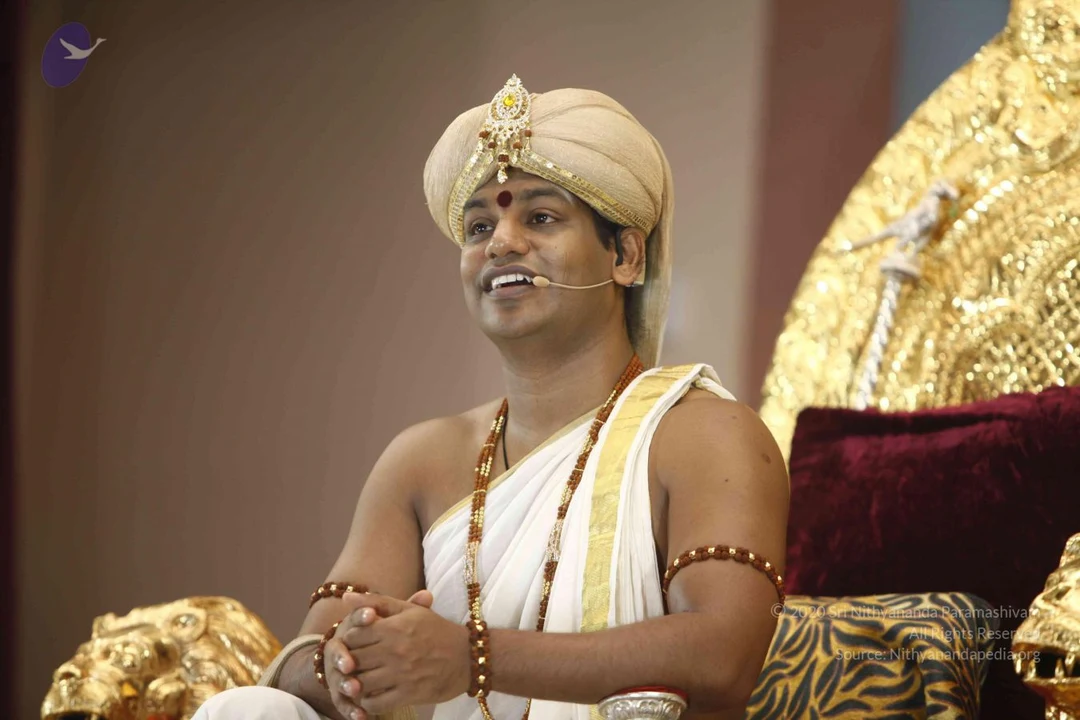
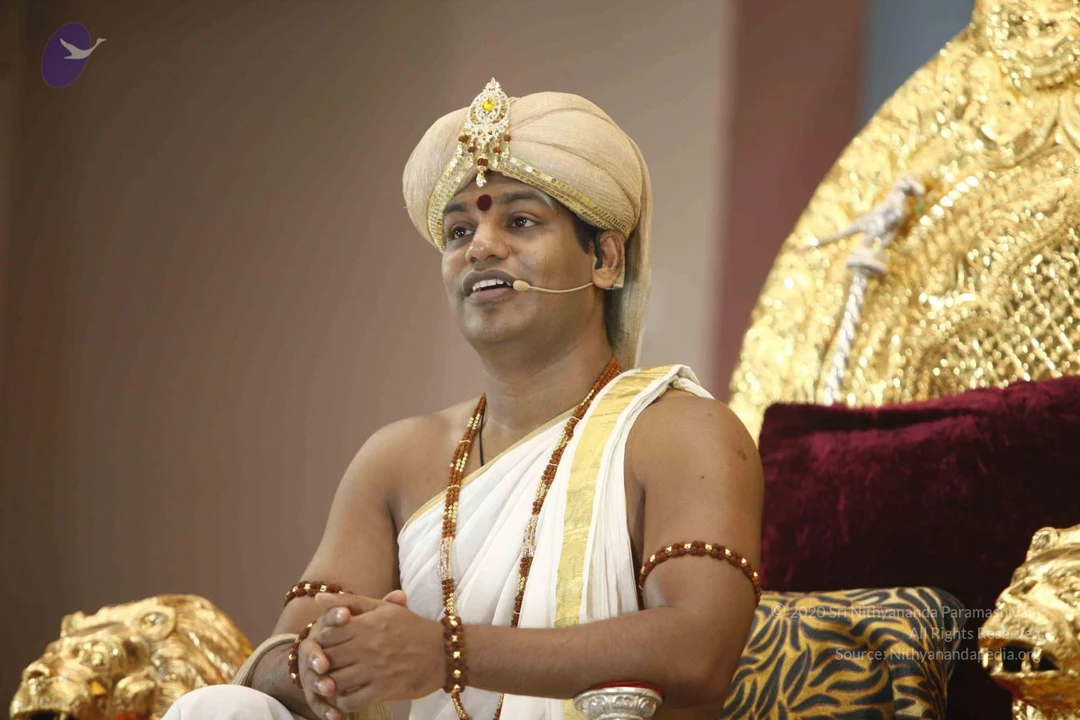
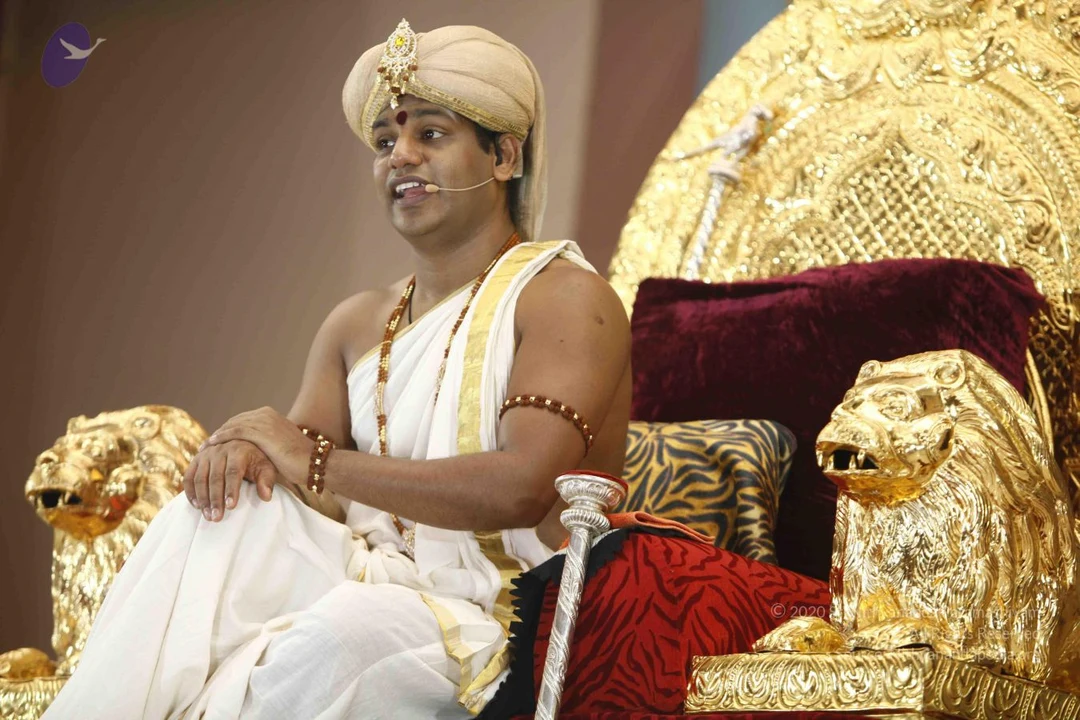
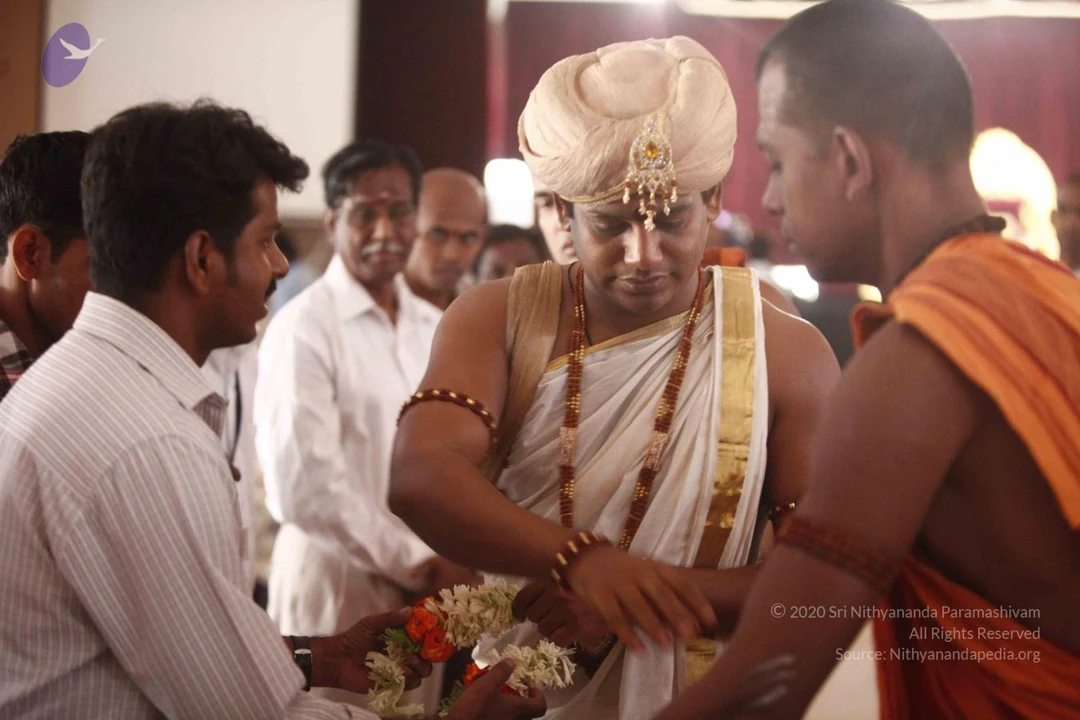
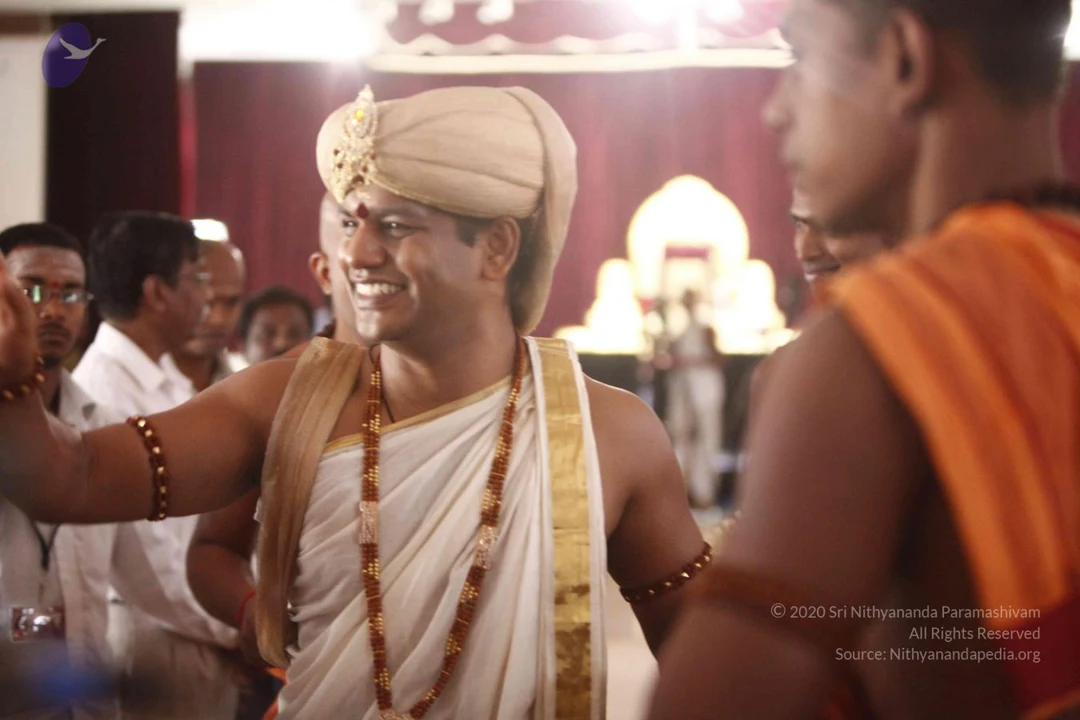
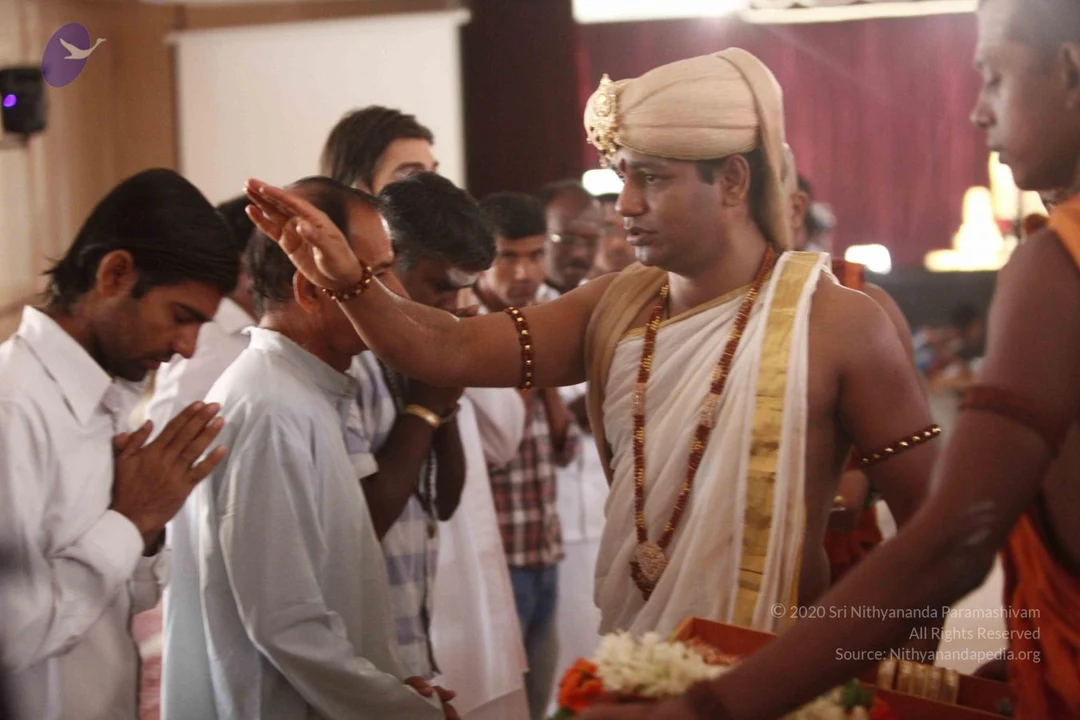
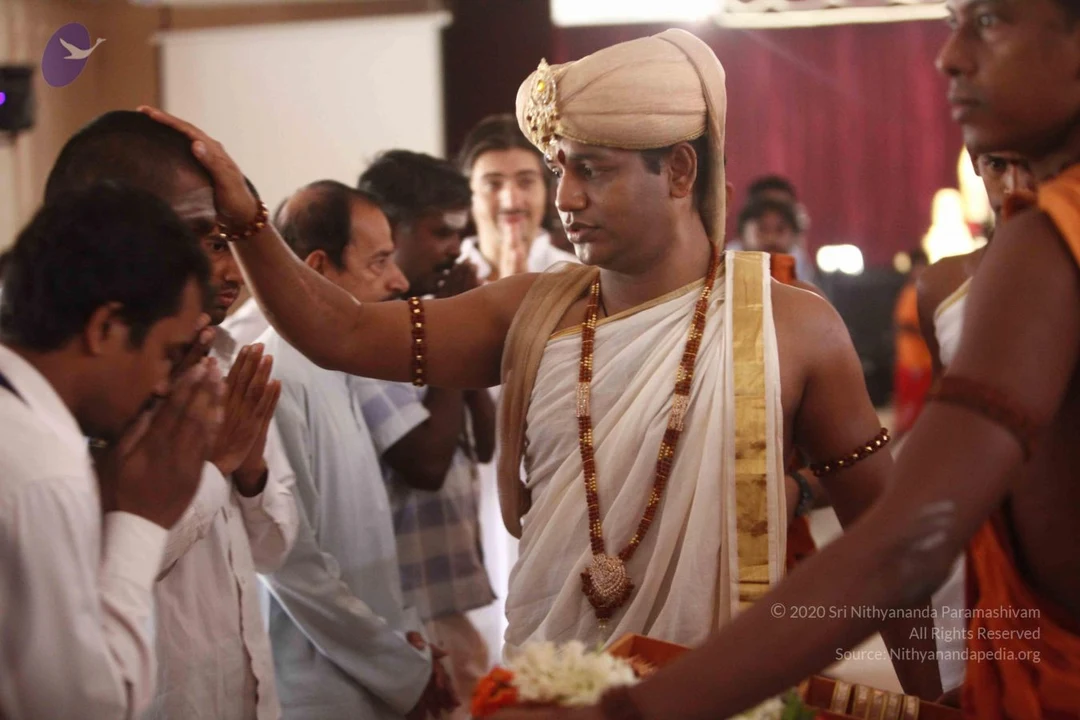
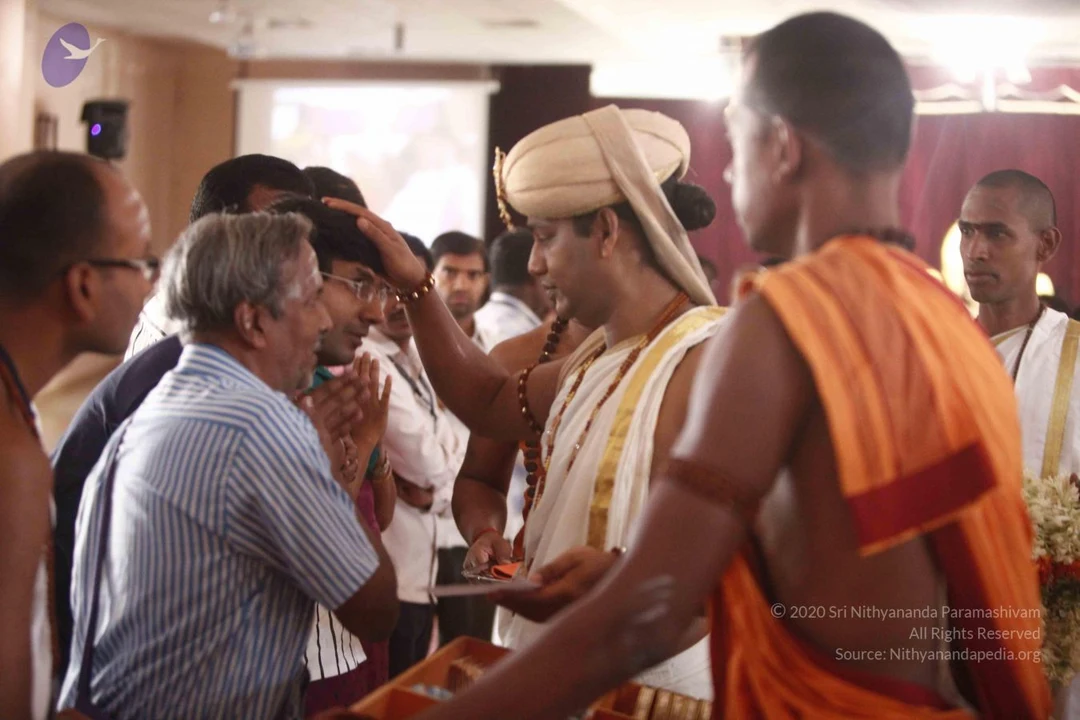
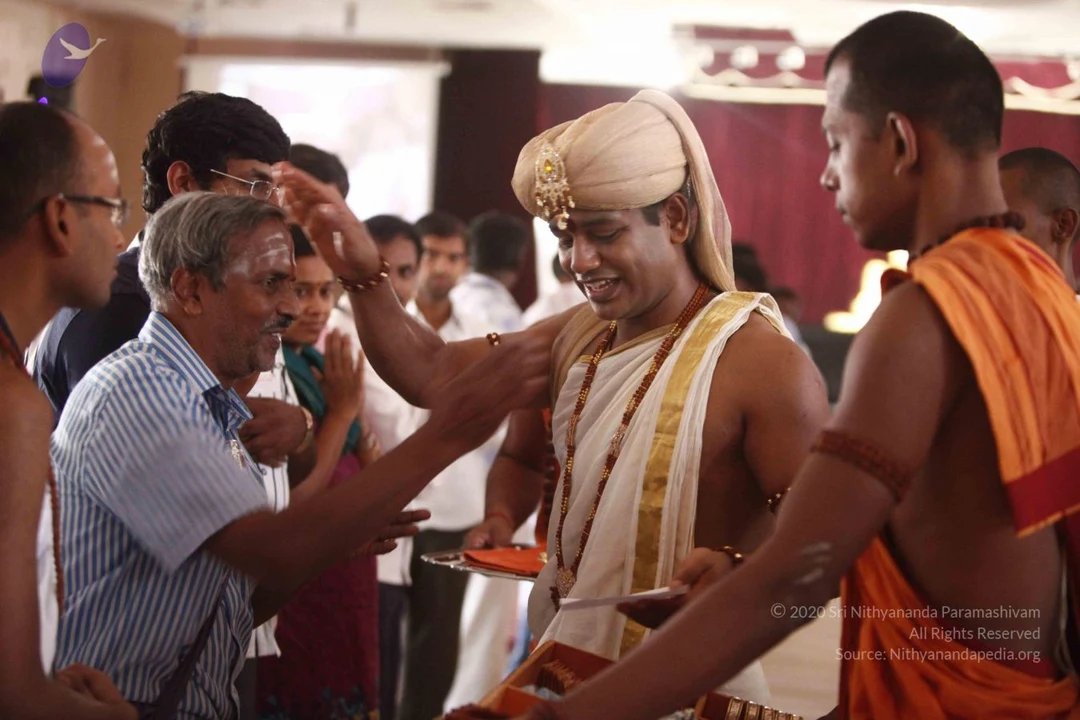
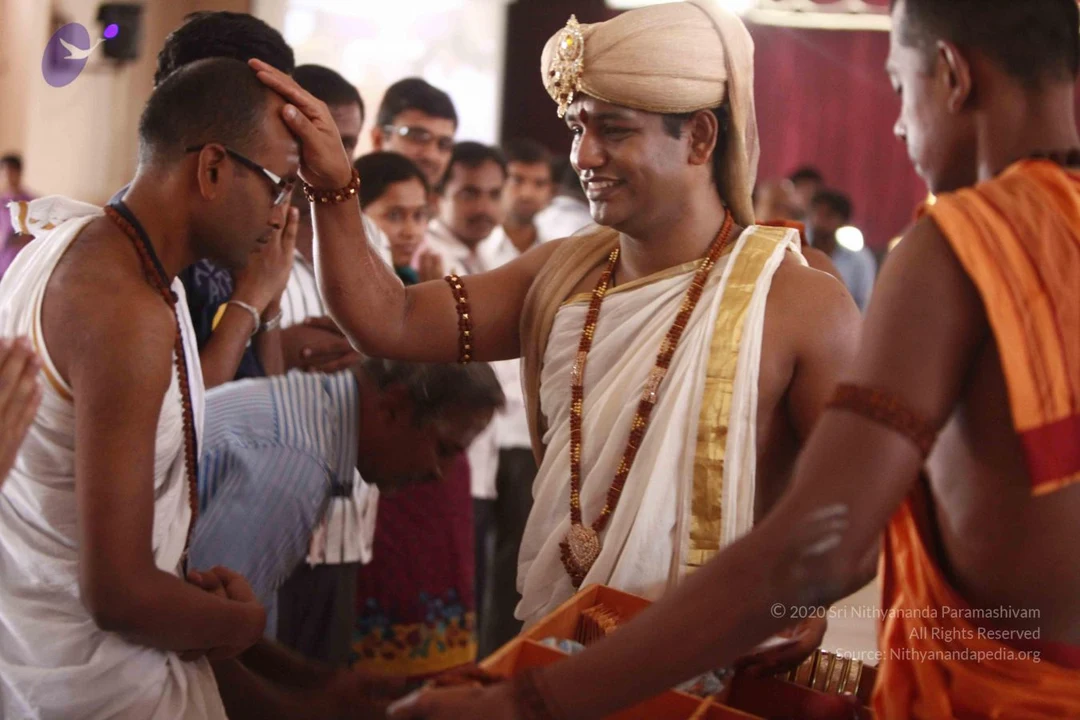
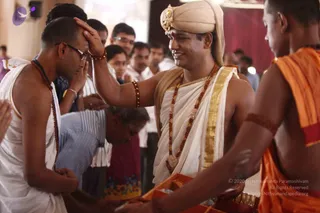
A man seated on an ornate golden throne with lion-head armrests speaks into a headset microphone during a talk. He wears a cream-coloured turban with a gold ornament and a red bindi, a white dhoti-style garment with gold borders, a long rudraksha mala and bead bracelets on his arms, and gestures with both hands. Behind him are a deep red curtain, a large gold-embossed backrest, and a red and gold cushion. A silver vessel rests beside the throne.A smiling man in a beige turban with a small gold-and-red ornament and a red bindi sits on an ornate gold throne with a maroon velvet cushion and a tiger-striped cloth. He wears a white dhoti with a gold border, layered rudraksha malas, rudraksha bracelets and a small lapel microphone, and gestures with one open hand while speaking. Swamiji (probable): the turban, gold-bordered white garments, rudraksha malas and throne together suggest a presenter at a discourse, though the appearance is not conclusive. Background shows a pink wall and gold decor.A seated man smiles broadly on an ornate gilded throne with a red velvet cushion, flanked by two golden lion sculptures at the front. He wears a cream turban with a jewelled brooch, a white dhoti and shawl with gold borders, rudraksha malas, and red beaded armbands, with his hands clasped in his lap. Two gilded standing deity murti figures with multiple arms stand on either side of the throne against a red and gold backdrop, with a small wireless microphone visible near his face. Based on the visible cues of a turban, rudraksha malas and ceremonial dress on a throne, this is.A man seated on an ornate golden throne with carved lion-head armrests and a deep red cushion, speaking with both hands raised in an open gesture. He wears a beige turban with a gold ornament and a red tilak, a white dhoti with a gold border draped over bare shoulders, a long rudraksha-style mala of red and brown beads, and bracelets. A golden lion sits in the lower left foreground, and painted figures with raised arms appear at the edges. The appearance matches the Swamiji candidate through several cues (turban, ornate gold throne, mala and ceremonial clothing), though this is an appearance-based label only, so it is Swamiji (probable) seated in discourse on the throne. Single person visible.A smiling man wearing a beige turban with a jewelled gold ornament and a red bindi sits on an ornate gold throne with a carved lion-head armrest, speaking into a headset microphone and gesturing with his open right hand. He wears a white dhoti with a gold border, bare shoulders, multiple rudraksha malas and beaded bracelets. The setting is a warm-toned hall with a red velvet cushion and a leopard-print cloth. Appearance-based cues are consistent with a person, seated in discourse.A man in a white dhoti and white shawl with a gold border, wearing a rudraksha mala and a jewelled ornament, touches the forehead of a bespectacled man in white garments and a rudraksha mala. The man in the turban and gold-bordered shawl has a long gold pendant and a rudraksha mala, and a monk in orange robes stands at right holding a tray of offerings, while onlookers in white and colourful clothes watch in an indoor hall. The scene suggests a blessing being given. A man in the turban and ceremonial gold necklace matches a distinctive presentation, and the page indicates Swamiji attended, so this is Swamiji (probable) giving a blessing to a devotee.
April 09 2012

1 photoView all
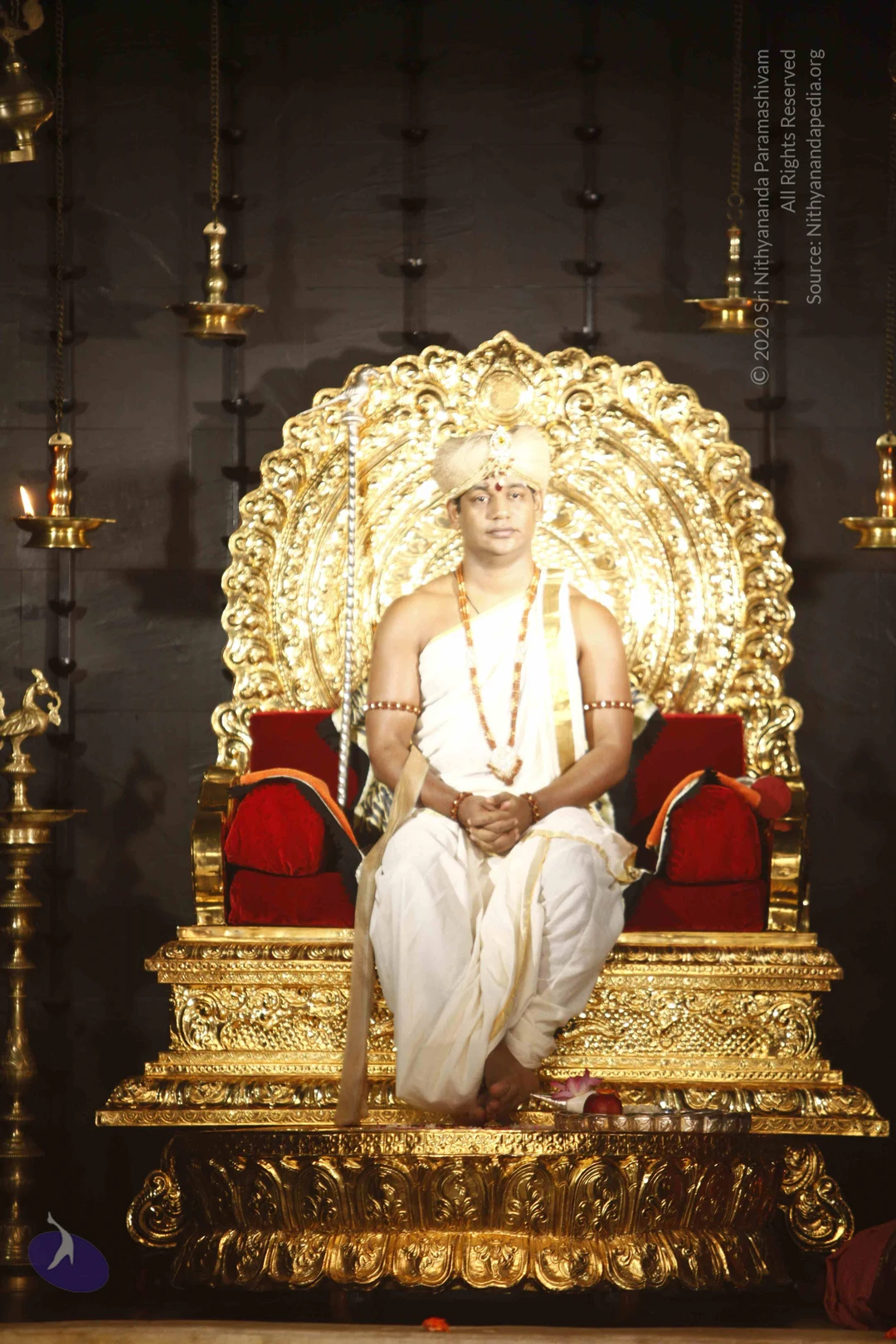
A man seated on an ornate gilded throne with a red cushioned seat and carved golden backrest, raising his right hand in a blessing gesture. He wears a cream and white dhoti with a gold-bordered shawl, a cream turban with a small red tilak mark on the forehead, a long rudraksha mala with a ceremonial pendant, and beaded bracelets. Behind him stand brass oil lamps with lit flames on tall stands, and painted deity figures with gold armlets and a green-and-orange cloth flank the frame. Swamiji (probable) is seated on the throne, identified by the turban, saffron-and-white ceremonial dress, rudraksha mala and gold ornamentation.