Skip to content
Tuesday

6 March 2012

Supreme Pontiff of Hinduism HDH Bhagavan Sri Nithyananda Paramashivam.

Dated photos
19
Source pages
1
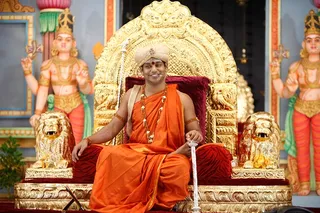
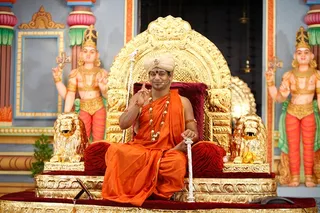
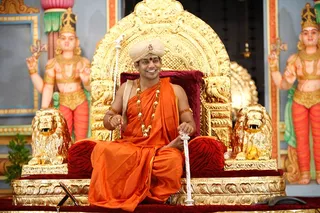
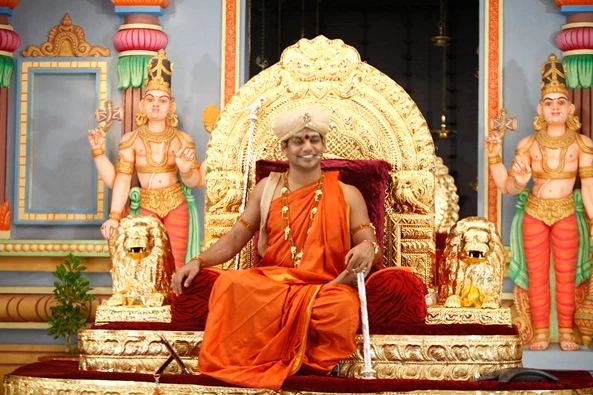
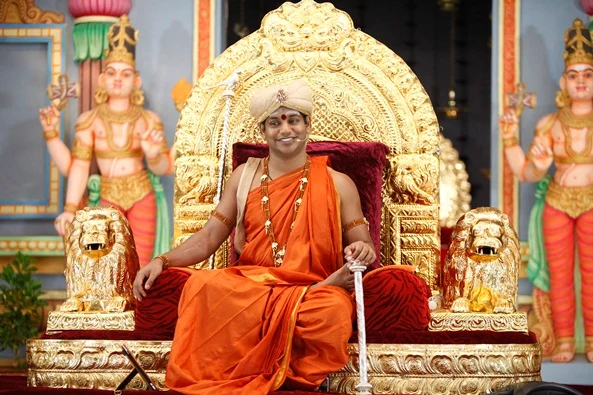
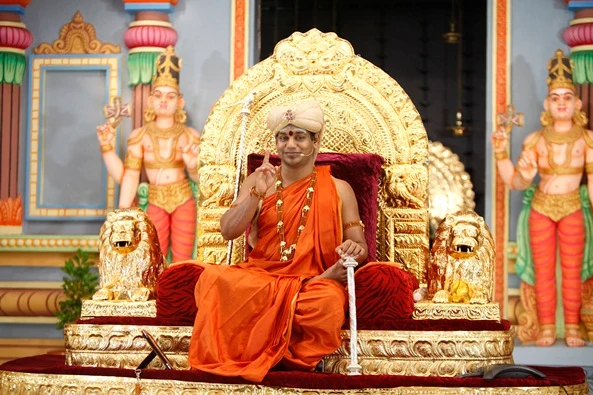
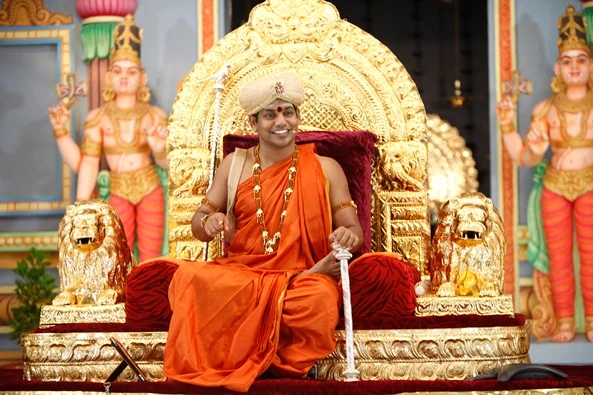
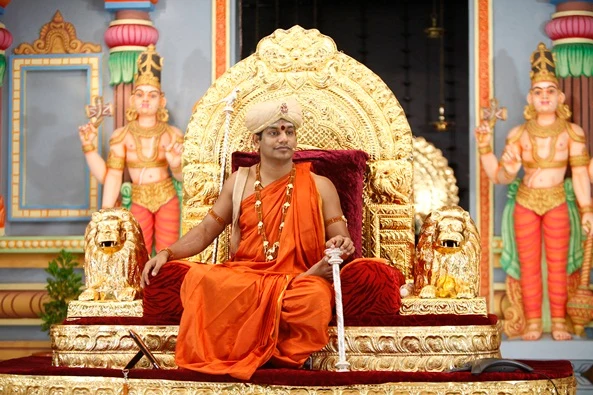
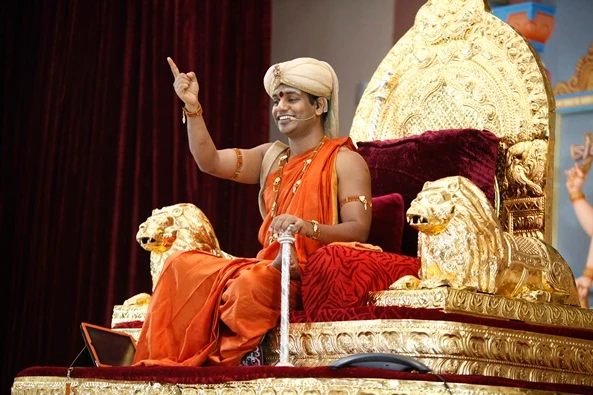
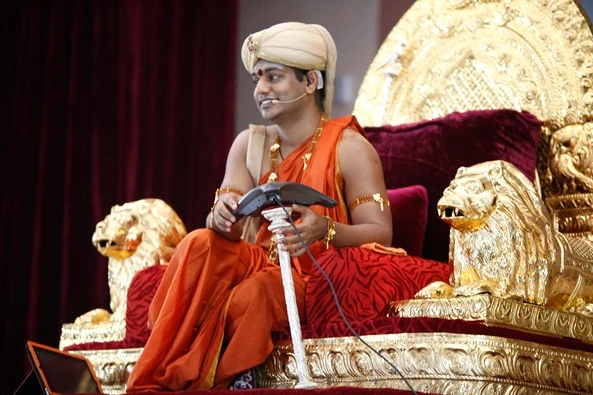
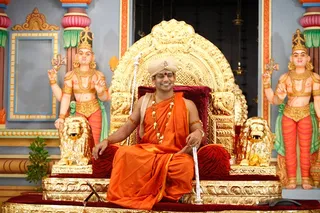
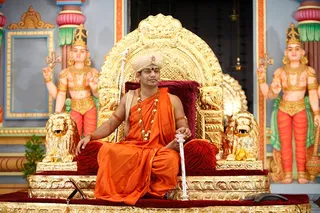
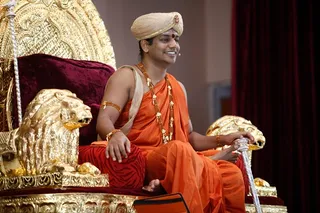
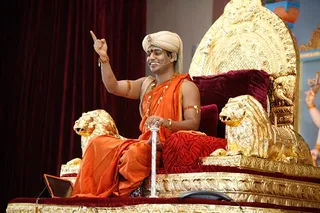
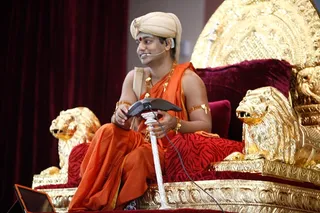
A seated man in saffron-orange robes sits on an ornate gold throne with a deep red cushion, flanked by two golden lion figures at the base. He wears an orange turban with a red bindi, a rudraksha mala and ceremonial gold necklaces, and holds a white ceremonial staff in one hand. Behind him stand two gilded deity figures in orange and red attire with raised hands, against a pale blue and gold temple backdrop. Swamiji (probable): the man has a turban, saffron robes, rudraksha beads and gold ornaments, and is seated on the throne.A man seated on an ornate gold throne with lion-shaped armrest supports and a deep red cushion, dressed in a saffron-orange robe with a matching orange turban, wearing a rudraksha mala and a gold ceremonial necklace, holding a white fly-whisk-style staff in his right hand and making a mudra with his left hand. Behind him stand two painted gilded deity figures with raised hands in a temple-style setting with pillars and colourful walls.A seated man in saffron-orange robes sits on an ornate gilded throne with carved lion armrests and a red cushioned seat. He wears an orange turban, a long ceremonial gold necklace and beaded bracelets, and holds a silver-tipped staff across his lap while smiling. Behind him, painted deity figures in gold and red stand on either side of the throne, with green foliage at the lower left. The appearance matches the Swamiji candidate through several cues: an orange turban, saffron robes, a gold necklace and a throne setting, so the candidate is marked as probable. Only one physical person is visible.

March 06 2012

Original wiki page
Contents

Title:

Supreme Pontiff of Hinduism HDH Bhagavan Sri Nithyananda Paramashivam.

Photos From The Day:
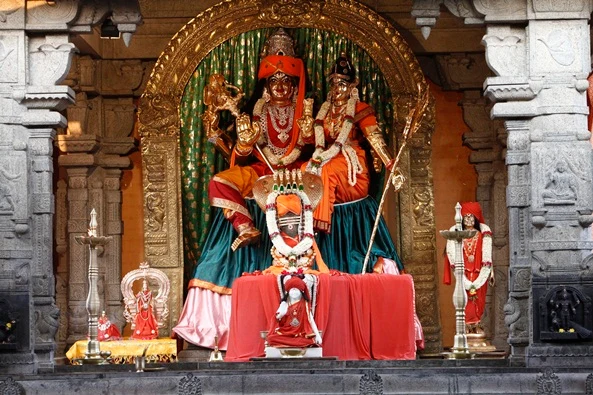
Photos from this day

View all 19 photos
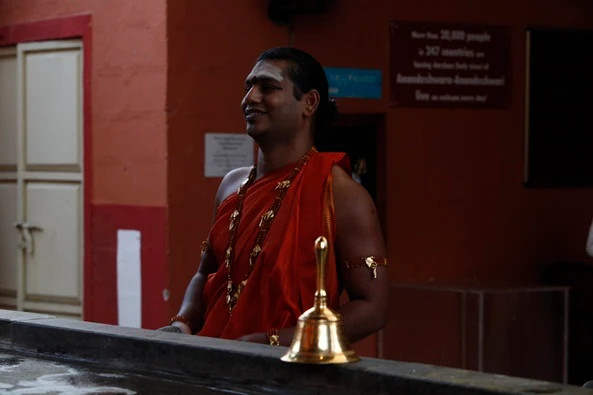
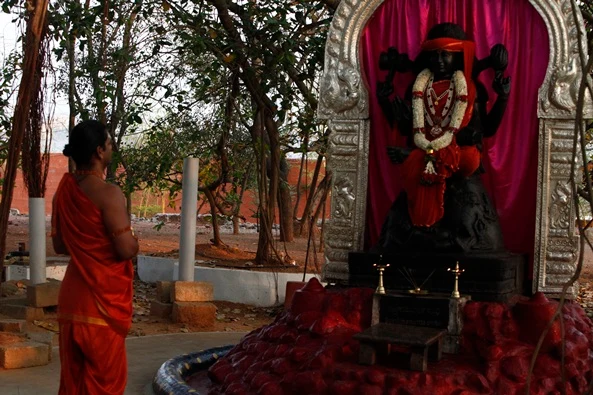
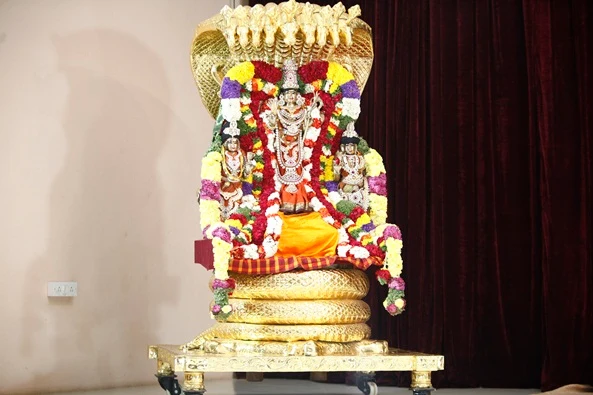
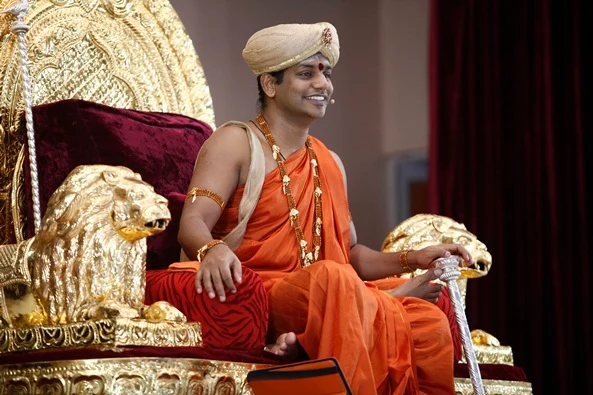
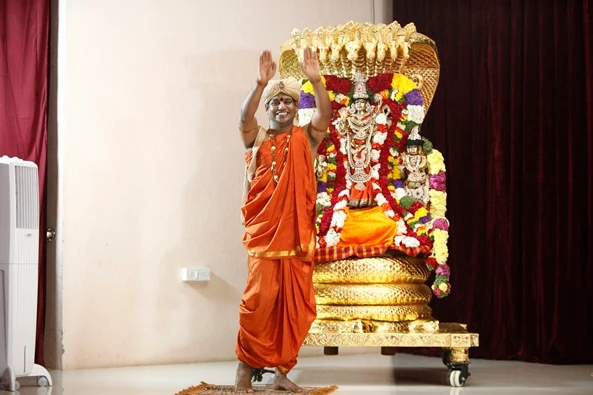
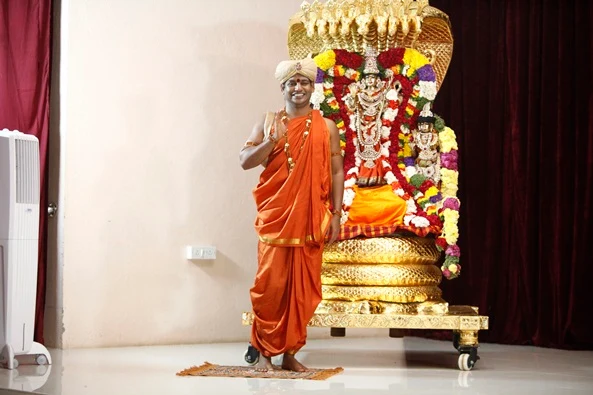
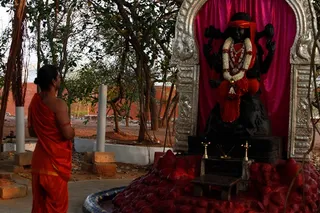
A photograph of a temple shrine with two large painted deity figures seated side by side on a raised platform beneath an ornate golden arch and green drapery. The figures wear red and orange garments, gold crowns, and rudraksha-style necklaces, and one holds a trident-like staff. A red-draped altar in front holds a decorated murti with garlands. Tall brass oil lamps stand on either side, with small red-clad attendant figures near them, and a small golden-canopied seat sits at the left. No living people are visible.A smiling man in an orange-red saffron cloth stands at a dark stone counter beside a polished brass hand bell with a curved handle. He wears a long beaded mala and a gold ceremonial necklace, and a gold armlet on his upper arm. Behind him a red wall carries a plaque reading about 20,000 people in 247 countries, with a small framed notice nearby. The setting appears to be a temple or ashram entrance.A woman in an orange sari stands with her back to the camera, facing a shrine under trees. Inside an ornate silver arch with a pink curtain sits a black stone deity murti with multiple arms, wearing a red cloth, red garland and a red headband. Small brass oil lamps and a red cushioned platform are in front of it, with a stone-edged water basin at the base. Brick walls and parked vehicles are visible in the background.A seated man in saffron-orange robes sits on an ornate gold throne with carved backrest and a deep red cushion, flanked by two gold lion figures on the dais. He wears a saffron turban, a long gold necklace and rudraksha-style beads, and holds a white fly-whisk-like staff across his lap. Behind him stand two painted gold-and-red deity statues with crowns, raised hands and green draped cloth, and a pink-and-gold temple pillar frames the scene. Swamiji (probable) is seated on the throne in the centre, presented with the distinctive orange robes, turban and ornate gold necklace cues, and his appearance is consistent with the page's claim.A decorated golden throne shaped like a coiled cobra with a multi-headed hood stands on a gilded wheeled base in front of a dark burgundy velvet curtain. A central deity murti in silver-toned metal, with a crown and a saffron-orange cloth draped at its base, sits on the throne. Garlands of yellow, red, white and purple flowers drape the figure and the throne. Two smaller silver figures flank the central murti, and a wall switch panel is visible at left. No people are visible in the image.A seated man in saffron-orange robes sits on an ornate gold throne with a deep red cushion, flanked by two golden lion figures at the base. He wears an orange turban with a red bindi, a rudraksha mala and ceremonial gold necklaces, and holds a white ceremonial staff in one hand. Behind him stand two gilded deity figures in orange and red attire with raised hands, against a pale blue and gold temple backdrop. Swamiji (probable): the man has a turban, saffron robes, rudraksha beads and gold ornaments, and is seated on the throne.A man seated on an ornate gold throne with lion-shaped armrest supports and a deep red cushion, dressed in a saffron-orange robe with a matching orange turban, wearing a rudraksha mala and a gold ceremonial necklace, holding a white fly-whisk-style staff in his right hand and making a mudra with his left hand. Behind him stand two painted gilded deity figures with raised hands in a temple-style setting with pillars and colourful walls.A seated man in saffron-orange robes sits on an ornate gilded throne with carved lion armrests and a red cushioned seat. He wears an orange turban, a long ceremonial gold necklace and beaded bracelets, and holds a silver-tipped staff across his lap while smiling. Behind him, painted deity figures in gold and red stand on either side of the throne, with green foliage at the lower left. The appearance matches the Swamiji candidate through several cues: an orange turban, saffron robes, a gold necklace and a throne setting, so the candidate is marked as probable. Only one physical person is visible.A man seated on an ornate gold throne with carved lion figures at its base and a deep red cushion, dressed in saffron-orange robes with a matching saffron-orange shawl and a cream turban. He wears a rudraksha mala and gold ornaments and holds a white fly-whisk in his right hand, his left hand resting on his knee. Two large painted deity statues in red and gold stand on either side of the throne, each holding ceremonial implements, and a golden arched backdrop frames the scene. The throne sits on a gold-trimmed red platform. Cues consistent with the probable Swamiji (probable) identity include the saffron robes, turban, rudraksha mala and gold ornaments, with the man seated as the central figure on the throne.A man seated on an ornate gilded throne with carved golden lion-head armrests and a deep red velvet cushion. He wears a cream turban, an orange saffron robe draped over one shoulder, a long rudraksha mala and ceremonial gold necklace, gold armbands, and a red-and-orange dhoti. He holds a silver-tipped ceremonial staff in one hand and smiles toward the audience. Swamiji (probable): the seated figure wears a cream turban, saffron robe and rudraksha mala on a gilded throne, consistent with the page's Swamiji reference. A red curtain stands in the background.A man in saffron-orange robes and a cream turban sits on an ornate golden throne flanked by carved golden lions, with a red velvet seat cushion. He raises his right index finger and smiles while holding a golden staff, and a microphone is visible near his face. Behind him stands a blue-skinned deity murti with a raised hand, and a red velvet curtain hangs at the left. A small laptop sits on the lower left of the throne platform. Gold armrest bands and beaded necklaces adorn him.A man in saffron-orange robes sits on an ornate golden throne carved with lion heads, set against deep red velvet cushions and drapes. He wears a light cream turban, gold bangles on his arms, a gold necklace and a headset microphone. He holds a silver-tipped ceremonial staff with a dark curved top and rests one hand on it while looking to his side. The gilded throne and stage setting suggest a formal discourse or public address. Swamiji (probable): the figure has a turban and saffron-orange clothing with ceremonial gold ornaments, consistent with the page's identification of the event.