Monday
5 March 2012
- Dated photos
- 19
- Source pages
- 1
- Media
- 1
March 05 2012
Original wiki pageDescription
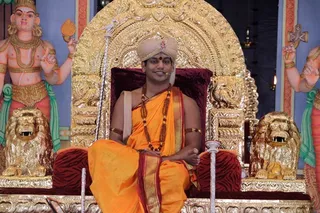
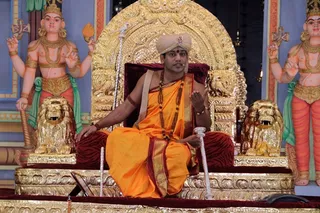
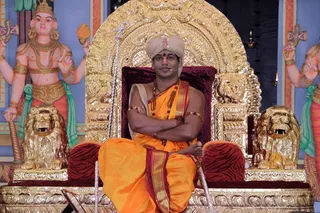
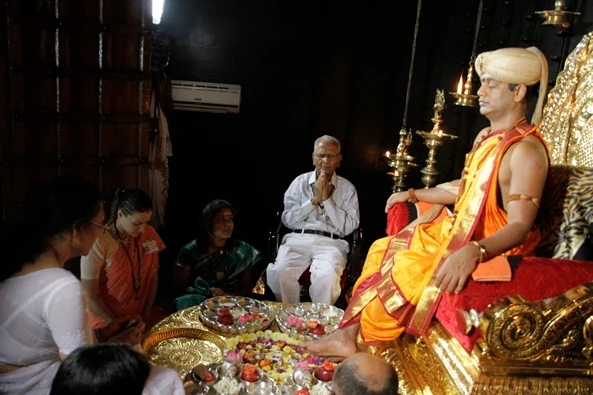
In today's morning talk, Paramahamsa Nithyananda (Swamiji) answers a question about dissolving our agamya karma. Agamya indicates new karma we amass as we move through life in an unaware state. This continual accumulation can itself become a pattern, a habit. This habit can be discarded easily, since it lies at the most superficial level of karma; yet even while recognizing it, we still choose to indulge it out of laziness. Therein lies the danger of agamya: we end up adding to our karmic bank simply out of unconscious habituation. With diligence this karma is simple to melt! We need only determination and commitment, and we can succeed!
Transcript
1) Swamiji if we keep unclutching from everything, what is the purpose of being alive?
You have the wrong understanding of being alive. Only when you unclutch, you will understand the purpose of being alive. But because you have the wrong understanding about the purpose, you think if I unclutch from everything what will happen to my life. Go on keep unclutching, that is life. You are nothing but your actions. You are the totality of your actions I can say you are the totality of the side effects of your actions. Every action you do, leaves its imprint on you. Ramakrishna says very beautifully if you are inside charcoal godown, how much ever you protect yourself, the charcoal will settle on you. life leaves lot of dirt and dust in you, around you. life itself for you is nothing but throwing dust – others throwing dust on you and you throwing the dust on others. That is all is life. By continuously unclutching you keep yourself pure. Not just pure, even the dust put on you from the past gets healed. So I feel first and foremost thingk you need to do is be established in unclutching. Unclutching is like a plant, it can keep on growing on you. it is not like now you cannot work out and stop doing and it will not grow. No. it is like a plant. Keep the seed alive, pour water, have little patience. Tomorrow it will be there. Uncluctching is like a tree, plant it need to grow inside you. it took 6 years for Buddha fro the Bodhi tree to grow in him. It took at least 10 years 12 to 22 for the Banyan tree to grow in me. It need to grow. You need to make it happen. Understand initiation is like a small seed. Just because it did not grow in 2, 3 days please don’t lose trust on it. No seed fails touched by me, no initiation fails done by me. I do my job very perfectly! Understand. I am a perfectionist so I do my job very clearly. All I wanted you to do is understand it is like a growing tree. It is not like a magic wand it will just appear. No. It's a growing tree. At one moment when the breakthrough happens it is really like a magic. But at initial level it is a growing tree. Have patience. Work on growing your consciousness in the dreiction of unclutching. The purpose of being alive is to keep on unclutching.
2) In an earlier discourse you had explained about Aagaamya and Sanchita karma related to phases of life e.g. first 33 yrs, 2nd 33 yrs and preparation for next phase of life. What is to be done in each phase to prepare fro the next phase of life? What is to be done in each phase to prepare for next phase besides action. You have devotees, disciples in all phases, it will be useful for us if you address this issue once more?
Prarabdha is broad karmas, Aagaamya is accumulated karmas, Sanchita is saved karmas. Saved for janmas is sanchita. Let me be very honest, you cannot do anything with Sanchita. Sanchita can be melted only by me working directly on it. you can do only 2 things – Aagaamya and Prarabdha. Prarabdha is more like thoughts – engrams and patterns. A is more like muscle memory and bio memory which have become part of you. See P is more like a pattern the thought trend the samskara. A when I say A I want to make it very clear – two parts the pattern of doing continuous actions and accumulations knowing it brings suffering ….you know by getting angry irritated and you are going to suffer but you don’t bother about it. Because that has become part of you. The possibility of accumulating more and more A itself is a pattern. In A there are two – one – you do certain action now and accumulate Karma, 2nd this constant pattern of doing action and accumulating karma even though it is wrong and it is not good for you, dangerous for you. too much of unawareness.
Guy – tiffin box story – look into your patterns related to sex and fear. You are so clear – God, I can put myself into a big mess. But the pattern of accumulating karma even when you know the action is not right for me or wrong for me. going on doing action, even when you know it is bad is what I call as Aagaamya square. AS means the pattern of doing action and accumulating even when you know it is not good for you. if you look into your sexual habit patterns, if you look into your drinking and addiction problems. Agamya pattern. Once you are saved, why don’t you remember? It is unfortunate, people don’t remember. See just because I told you the story of brinjal you all laugh. But if you look inside you are also doing the same thing in your life. Same way fear pattern many times you know you do such a foolish mistakes because of fear, you come out and say alright from now on I will not fall. But what happens? again you are back to it. The pattern o accumulating Aagaamya becomes muscle memory and bio memory. I always tell you the money you are going to accumulate every month is not a big problem. But this habit of accumulating money every month is a problem. Aagaamya is not a problem but the pattern of accumulating Aagaamya knowing it is not good for you is a problem. That is where the whole problem happens.
Work on this strong pattern of knowingly accumulating Aagaamya. Break that one pattern. You do something wrong and say I will never do it again. But what happens. you don’t stop doing the same action with the same mental set up literally eating brinjal every moment. If you look into your fear and sex pattern you will understand exactly the concept of Aagaamya square. The pattern of creating Aagaamya itself is a bigger Aagaamya. You fall asleep because of laziness and say no, I will not go to sleep again. But within next one hour, what happens, you are back to it. over. This is the way life is, this is the way suffering is. Stop the Aagamya of Aagamya that is the essence of handling all Karmas. That is the only way to save yourself from all the karmas.
3)I was wondering how can I tell the difference between the moments of intuition or seeing the future to the moment and experiences I have directly attracted or manifested? I read the subtle signs and I am unsure how to decipher the two?
The moment you are unsure, it is not intuition, it is just the fear you attracted, you manifested. I tell you fear weakens your immunity. Weakening the immunity means allowing the cancer to happen. See the cancer cells are there all around you in the air, when your immunity weakens you attract cancer cells. ….if you are constantly having the fear that you may get cancer, you may get into accident, you will attract and manifest exactly the same. So the moment you say you are not sure, I can say it is only fear. It is not intuition. Robin lee you need to break the pattern of fear. Now you will have one more fear……the problem is even if you warn them, they don’t change the direction . they will travel in same path and they will blame you for what happens. When you tell them don’t go furth4r on this road as I saw there is a ditch there. These fellows don’t listen continue to go on the same road and fall into the ditch. Then they realize oh this fellow is a great incarnation. But what is the use of saying that after you fall into the ditch? I don’t want that praise. I don’t want that name or that fame. When I say your fear will attract exactly the same thing which you are afraid of, I want you to take diversion, I want you to stop pressing the accelerator. Put the break. BY THIS I mean unclutch. Decide you are going int eh wrong direction. Pick up major 10 patterns in you which drives you. for practicing unclutching, don’t do unclutching widlly just pick up 10 patterns. Pattern of getting irritated the moment I see my spouse, of crating confusion and dilemma in me…pick up any 10 patterns. Say this month from this Poornima to next, I will concentrate only on ten patterns. I will keep this 10 patterns in my bed room on my book and will practice it. You will master it. …
Instead of fighting wildly, violently which does not give you anything, you can take on ten patterns which you can decide I will unclutch from them in this one month. Then next month, take up the next set of ten patterns. I tell you if …..
The failing becomes accepted, acknowledged, approved life style. This is one of the worst thing that can happen to a seeker. Failing itself …..the failure becomes acknowledged pattern, failure becomes approved pattern, failure becomes recognized life style. That is why I am saying just pick up ten patterns, break them in one month. Suddenly you will see oh God! What a beautiful way iata happened. . just one flow, one move corrected, liberates you so easily. Understand even if you break ten patterns, you will be out of this suffering, ignorance, nonsense. Failure should not become recognized pattern of life. Recognized way of life. Failure should not be tolerated life style. Failure should not be accepted life style. Failure should not be approved way of living. That’s it. decide just ten patterns a month. Attack only ten patterns a month. You will see within 2, 3 months, you see you are not that big criminal having 200,3 00 patterns. You are not that big guy, your life itself is just 10 or 20 patterns. And you can break it. and even if it comes back, you know you can break it again. I tell you when you come out of pattern of alcohol and smoking, even if it comes back, you are no more bound by it. it will not be dictating your life, your way of thingking your way of actions. Understand and recognize the top ten patters,just in few months
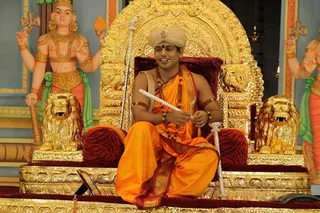
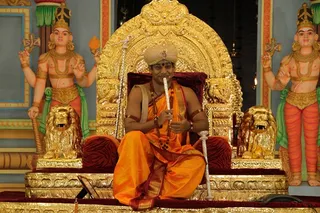
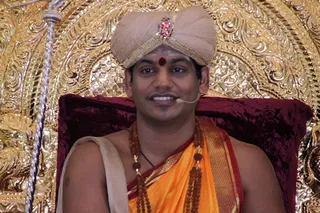
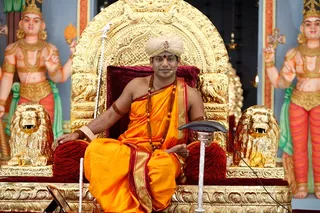
Photos From The Day
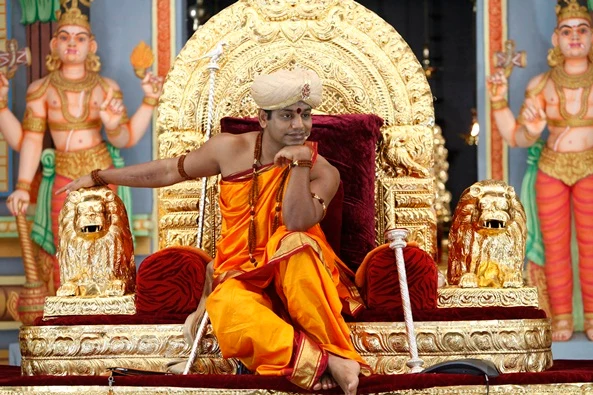
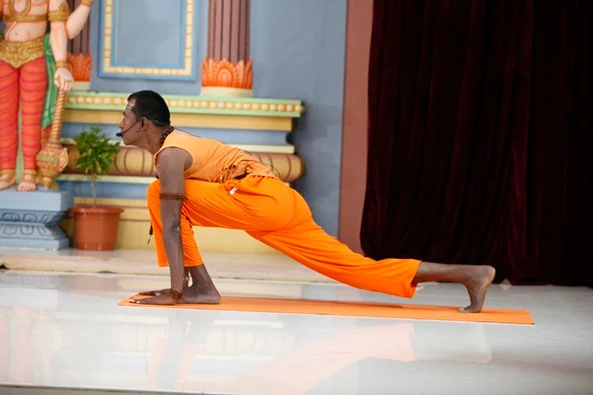
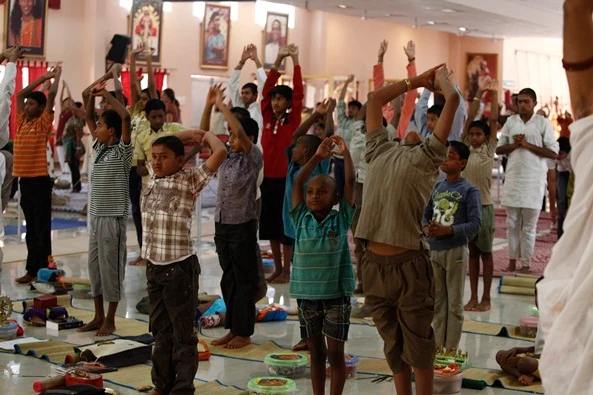
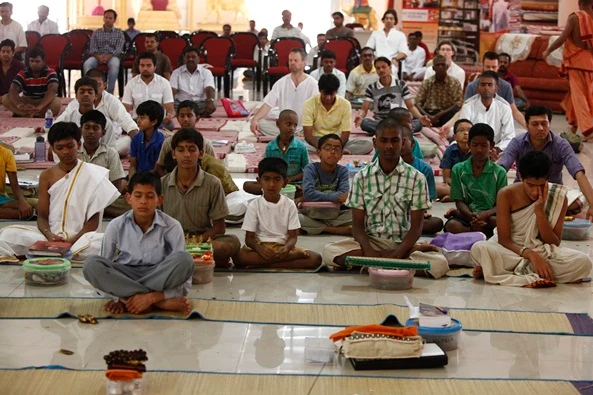
Sakshi Pramana:
Sharing from E-news
Tags
Paramahamsa Nithyananda, question, karma, life, unaware, state, accumulation, habit, superficial, choose, indulge, danger, unconscious, determination, commitment, succeed.
Photos from this day
View all 19 photos