Skip to content
Saturday

3 March 2012

Newgen - A New Breed of Youth

Dated photos
30
Source pages
1
Media
2
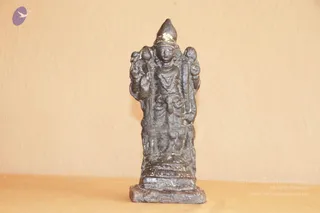
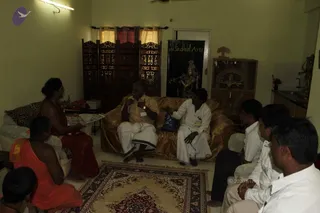
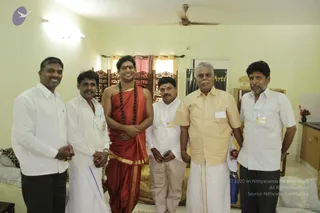
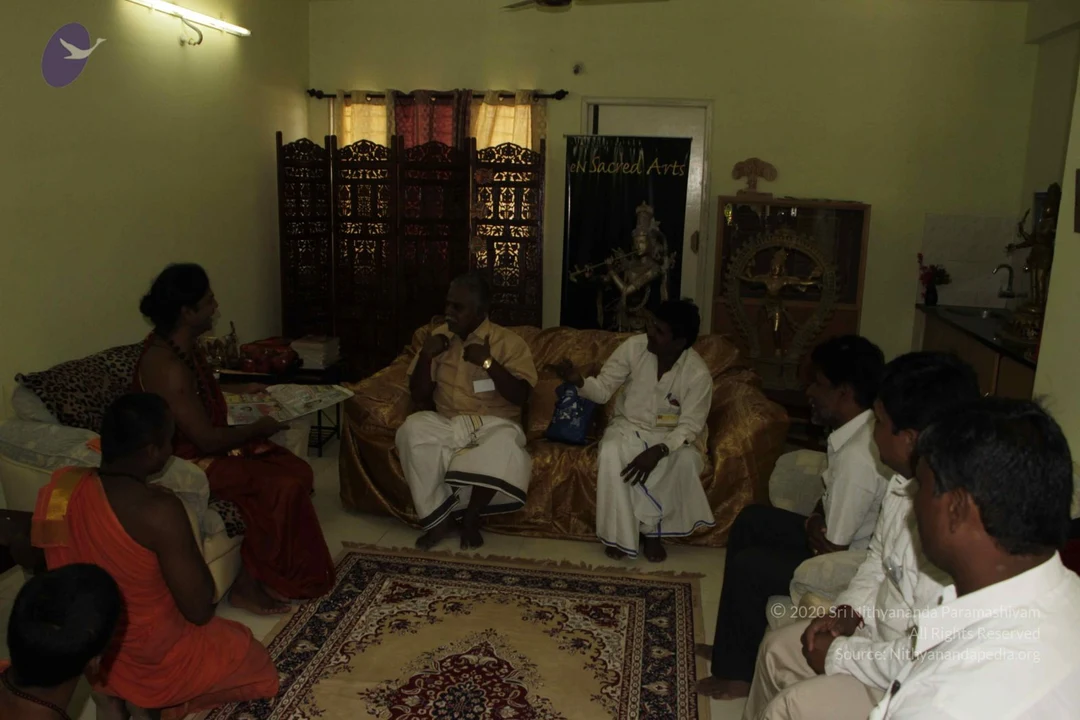
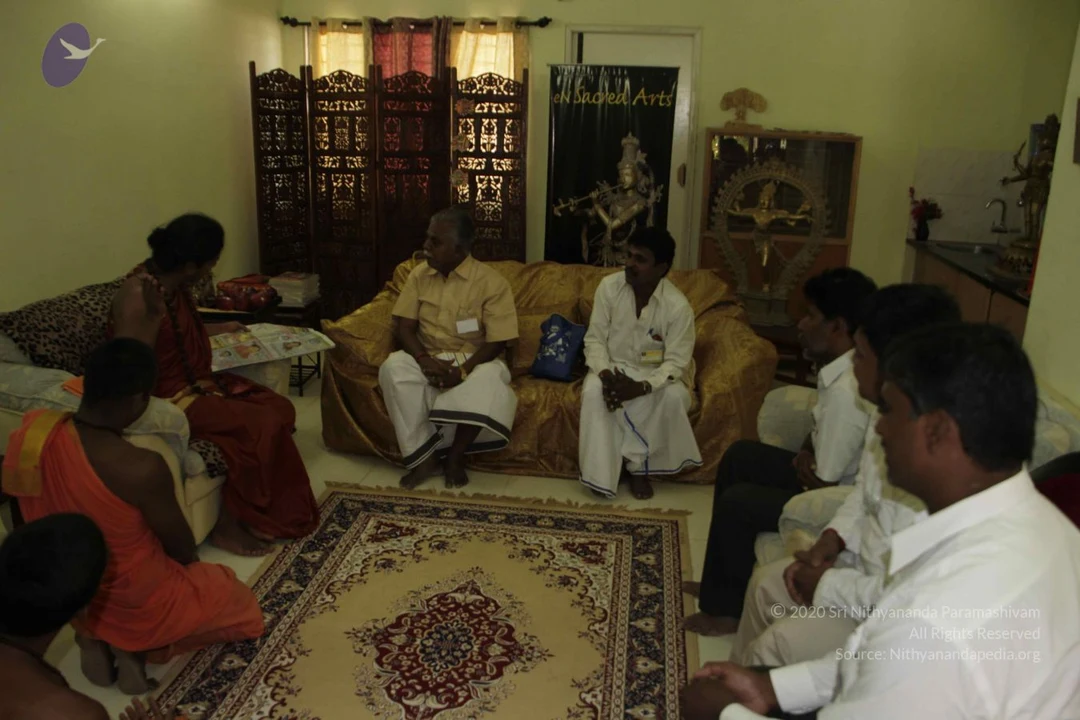
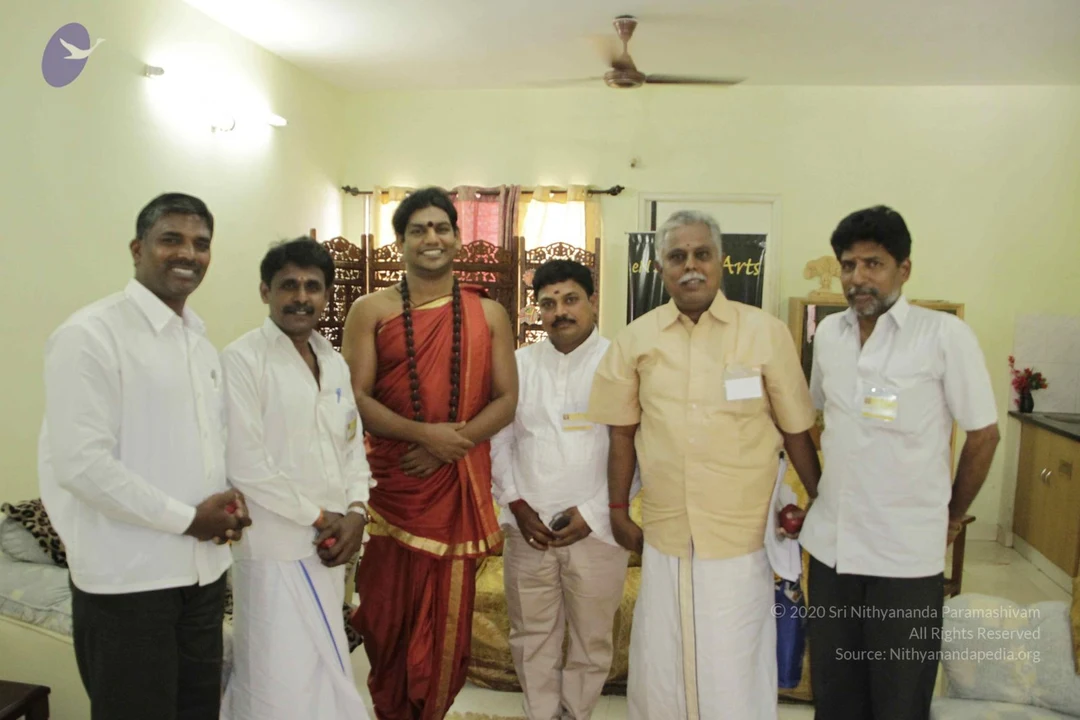
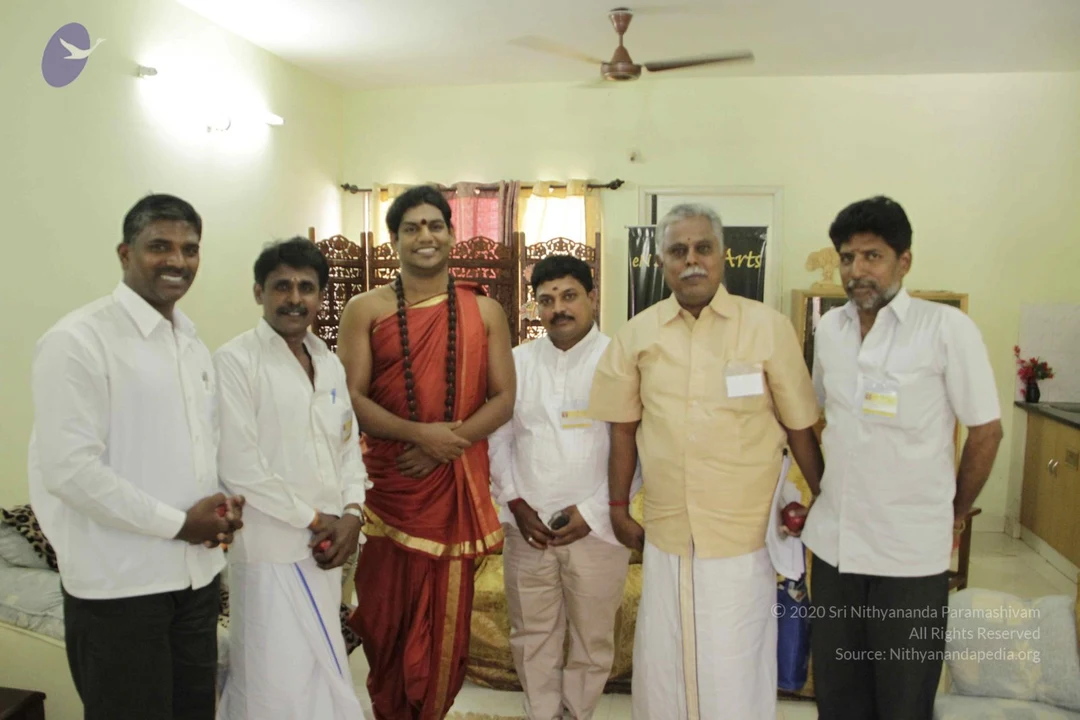
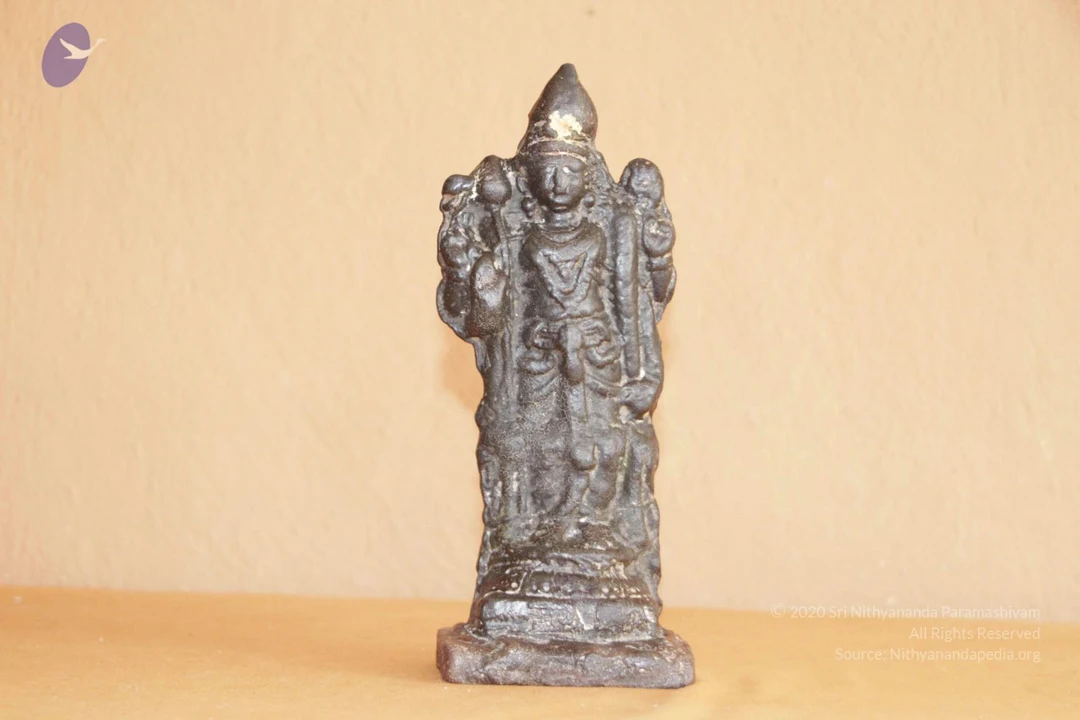
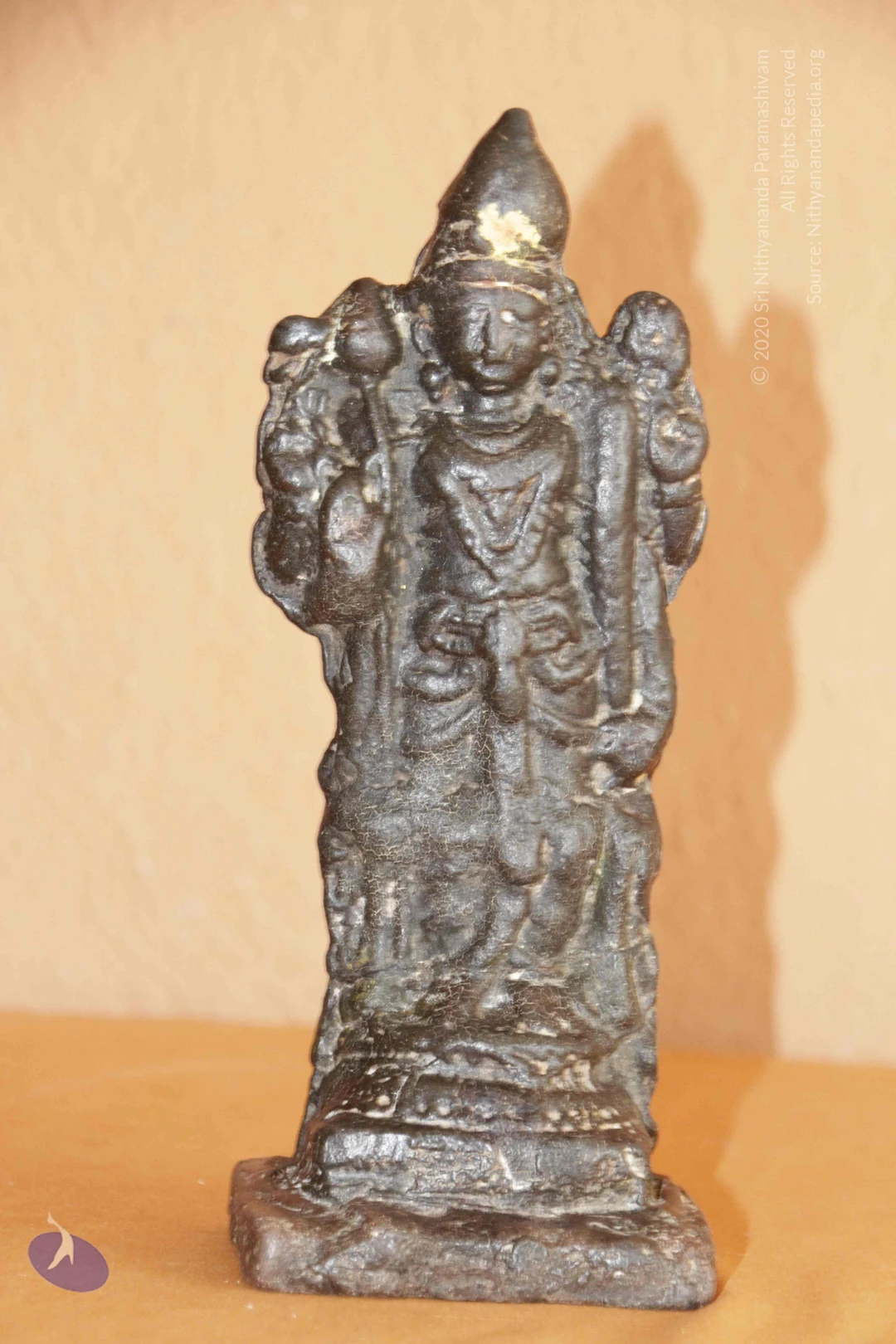
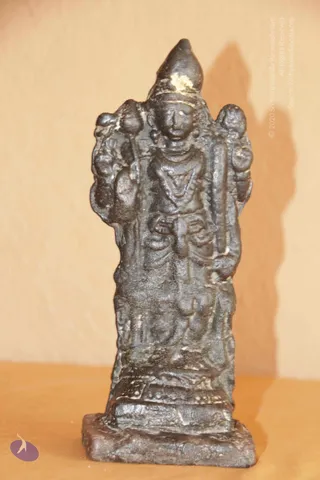
A small dark metal murti of a standing deity against a peach-coloured wall, resting on a wooden shelf. The figure wears a tall conical crown with a touch of gold leaf on its top, has multiple arms holding objects, and wears a sacred thread and drapery. Shown alone with no people present.A photograph of an indoor sitting room with cream walls, a brown carved wooden room divider, and a framed sign reading "eN Sacred Arts" beside a bronze dancing Shiva statue. A seated figure on the left wears a long red-orange robe with a rudraksha mala and holds a newspaper, appearing to be a sannyasi; the appearance cues are not distinctive enough to establish identity. Across the room, an older man in a cream shirt and white dhoti sits on a gold sofa gesturing while a younger man in white clothes sits beside him. Five other men in white shirts and dhotis sit on the right side, listening. A patterned rug covers the floor.A group photo indoors in a cream-walled room with a ceiling fan, wooden lattice screens and a sofa with cushions. Six men stand together and smile. At centre, a bare-chested man in a red-orange dhoti with gold border and a long rudraksha mala stands with hands folded at his waist. He has short dark hair and a red bindi. Five men flank him in white shirts and white dhotis or trousers; the man second from right in cream shirt wears a name badge. a person cues: the centre figure wears a red-orange dhoti and a long rudraksha mala, distinctive ceremonial adornment.

March 03 2012

Original wiki page
Contents

Title

Newgen - A New Breed of Youth

Description

http://www.nithyananda.org/

3rd March 2012 Morning Satsang Bhagavad Gita (Song of God) is a timeless treatise on the essence of living enlightenment. The Gita was imparted by the enlightened Hindu incarnation Sri Krishna to the warrior-prince Arjuna over 5000 years ago. Amazingly, the spiritual wisdom and life solutions offered in the Gita are so universal and current that people continue to use it as a transformation guide in their personal and professional lives.

Paramashivoham: 22-day Ultimate Spiritual Journey with the Avatar HDH Nithyananda Paramashivam Learn more: https://paramashivoham.nithyananda.org

Link to Video

VideoAudio

Transcript

Swamiji can you please talk about NewGen.

How I want new generation to be. Rather I can say, what kind of new generation I am going to create because I don't stop with want to be, I just create what I want. I never stop with idea, I want this, I want that. And expect somebody else to take the responsibility. No, I want new gen to be completely stable and established about their identity with themselves, experientially, about their identity, with the people with whom you are living, about the identity, you're with the human society and the universe. New generation should be very clear about themselves, what they want to do, what they are feeling like doing. The problem is many time, what they are feeling like doing they know. What they want to do they don't know. Or how they are going to do, they don't know. What you are feeling like doing. What you want to do, how you are going to do. The whole thing should be in aligned.

New generation should be very responsible about what they are creating around themselves. Not just constantly fighting with others, or fighting with themself. Not just constantly gribbing about the world. See modern youth means constantly complaining. Deeply dissatisfied. Feeling miserable, unfortunate about the whole world. That is what has become modern day youth. See the common picture of modern youth. Depressed, drunk, dying.

Youth was never, in this mess, ever, earlier in the planet earth. Because all the mechanisms, which gives little bit of training, for the youth, from the young age, is completely broken. One unfortunate thing, because of that, you guys stand as policy orphans, Identity orphans, Cultural orphans. One fortunate thing is, because of this, you can become enlightened.

One unfortunate thing, because of this, all the mechanisms which trains people are broken, you become identity orphans, Cultural orphans, policy orphans. You walk in front of huge temples. Which the whole country has built, but you do not even know why it is standing, what it means. What it means for your society.

The other day one devotee came to me. Not devotee, a youngster, came to me. And he was telling about some problem. I asked him you are from where and all that. He said in the Madurai. South our side, the temple south our side. I asked him where you are, he gave a internet café's name and he said next to that house. I could not understand the internet café, I asked are you saying in the street where the south street board is there and the huge temple tower. There is a board, south tower. And after 10 min of conversation I realise the place where he is saying is the same thing. Where that big board is there on the tower. He has never seen that board, but he knows the internet café. The internet café is a small one room with one small board. He has seen that but he has never even looked up with awareness towards the tower where the huge board is there, south tower.

Does this fellow know, for 500 years the whole paandiya kingdom was building that building? If the whole kingdom is planning and building certain building then whole kingdom is obsessed with that concept. Of course, I should not be using the word obsessed maybe I should use the word devoted. Yes you guys can see this photograph. Exactly this is what I was telling. This huge board he has never seen. Same tower same board, there is a huge board you see, saying south tower. The fellow has seen the internet café just below this tower, so many times. But he has never seem this board. South tower and he has been living there for at least last 5 years.

The new generation has become identity-less. Cultural orphans. One side it is unfortunate you become cultural orphans. Other side in a way it is fortunate you can be easily led to enlightenment. You can move towards enlightenment. Basically, en living is newgen living. Enlightened living is new gen living. All over the country I want akhadaas to happen. Means the place where people practise the techniques for yogic body and vedic mind. Understanding the relationship issues. Not just relationships with people, relationships with the whole. New gen is my only hope. Next generation should be new generation or it is going to be degeneration.

Photos From The Day
Photos Of The Day:

MEETING GUEST

Photos Of The Day:

Photos Of The Day:

Photos Of The Day:

Photos Of The Day:

Photos Of The Day:

Photos Of The Day:

Photos Of The Day:

Photos Of The Day:

Photos Of The Day:

Photos Of The Day:

Photos Of The Day:

Photos Of The Day:

DEITIES

Photos from this day

View all 30 photos

Photos From The Day
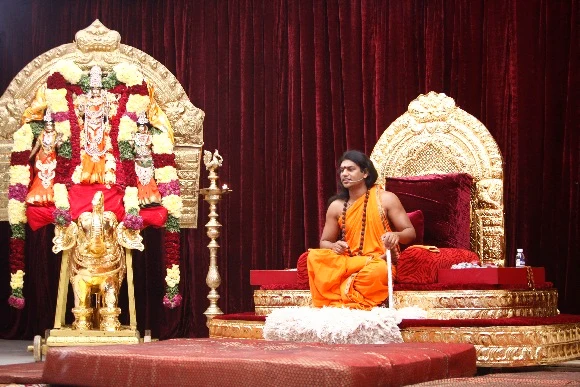
21 photosSource gallery
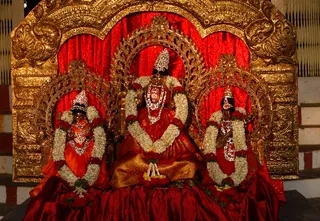
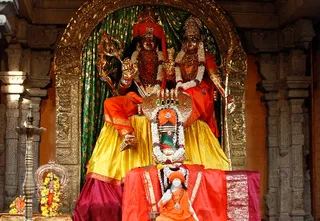
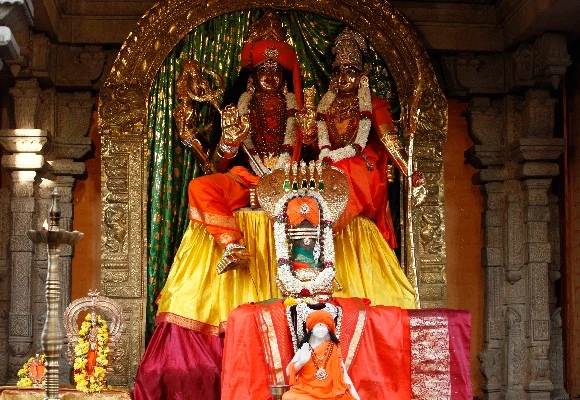
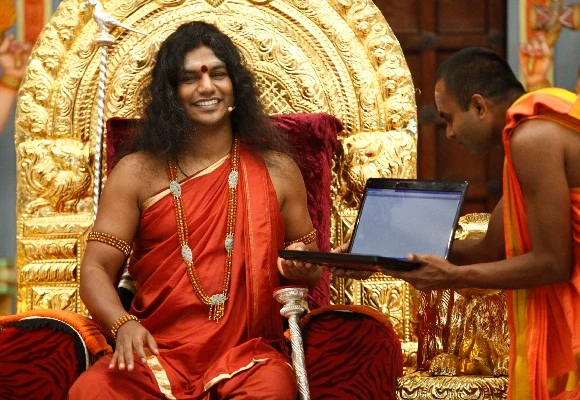
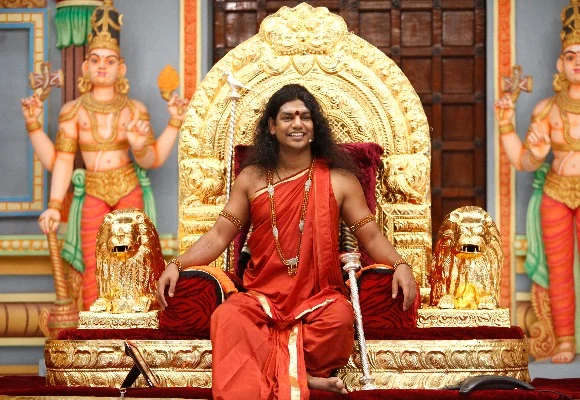
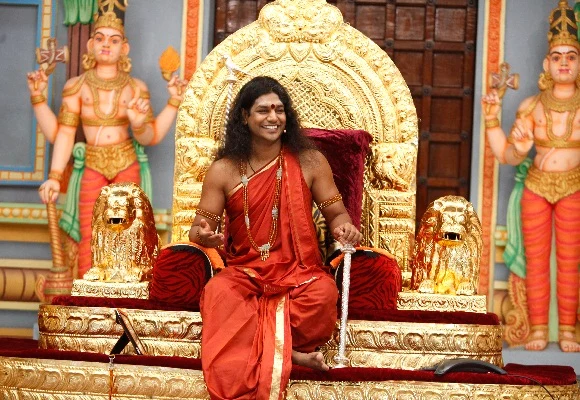
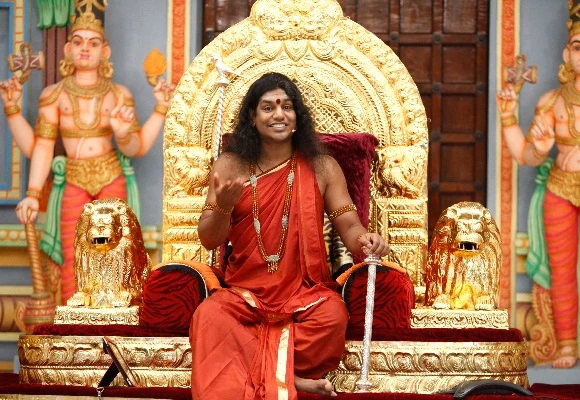
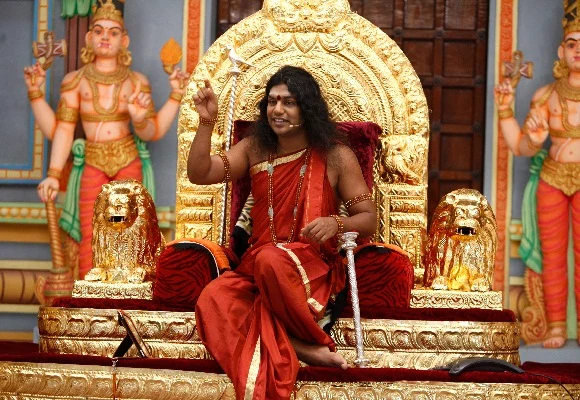
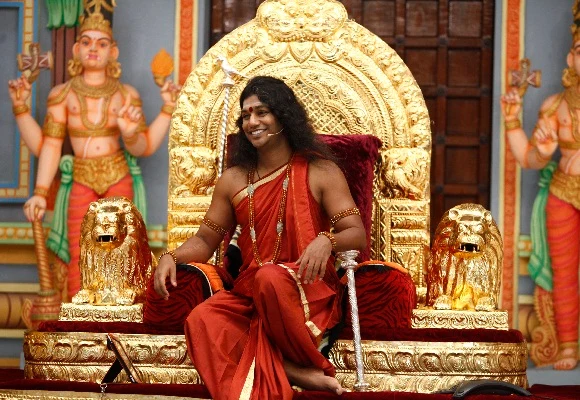
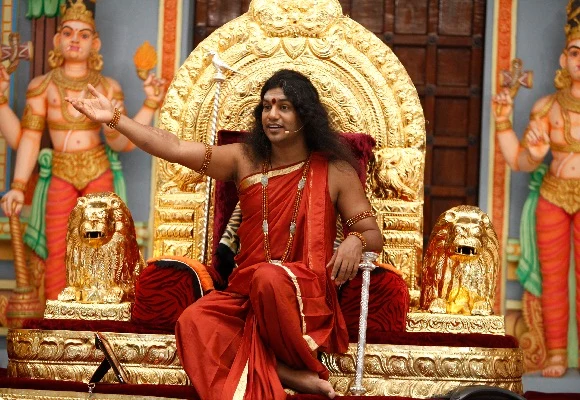
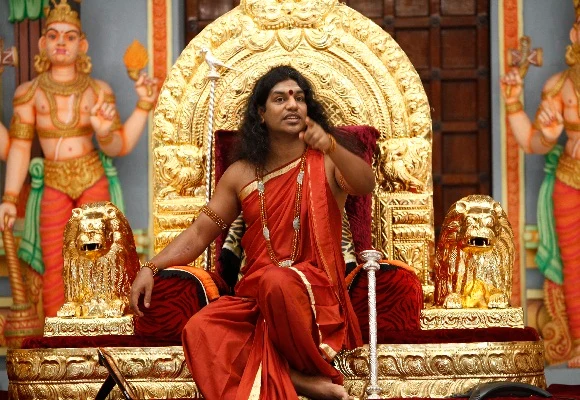
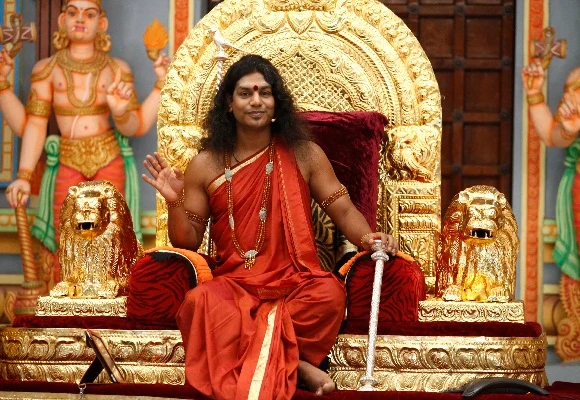
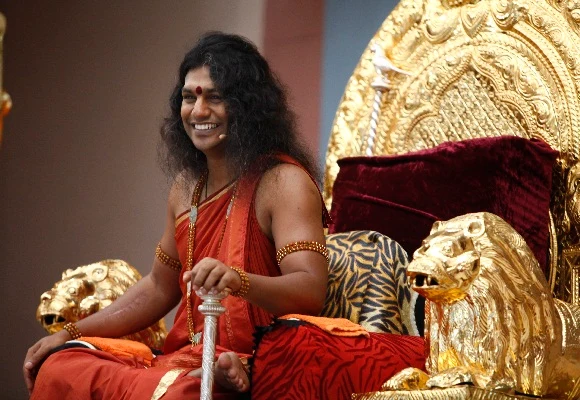
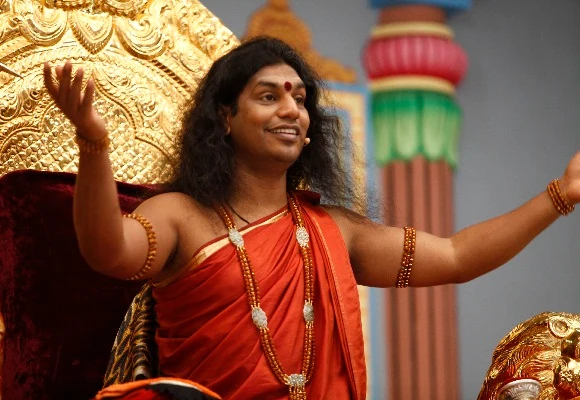
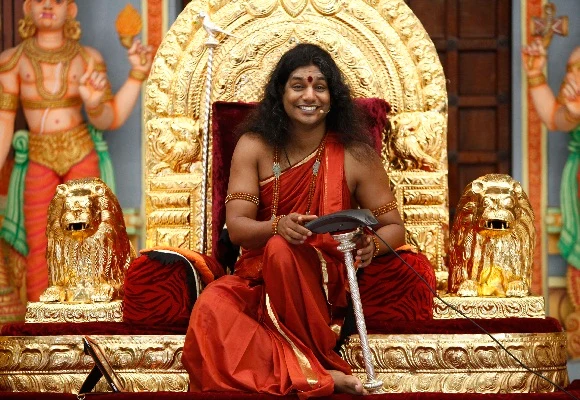
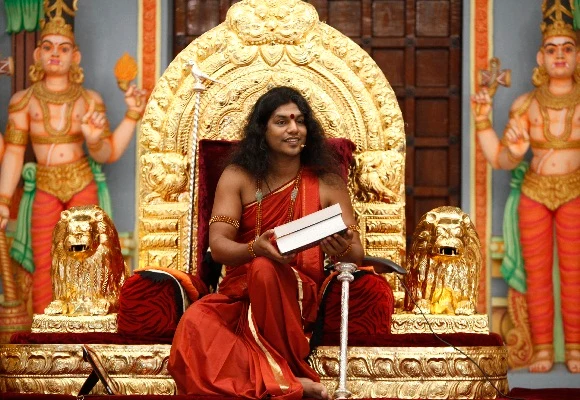
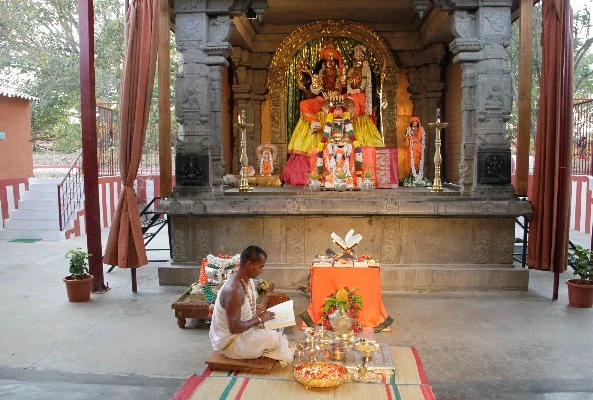
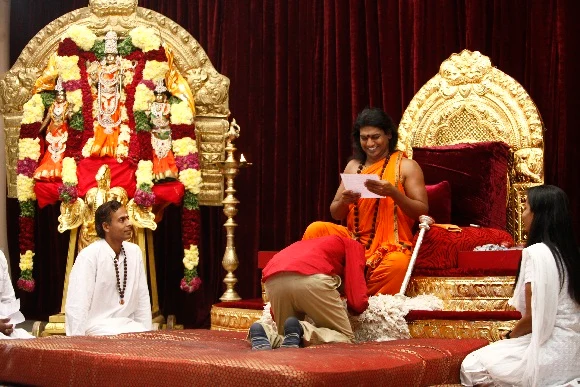
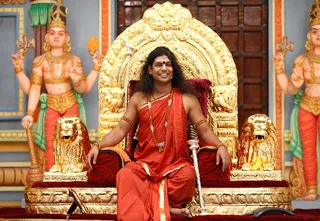
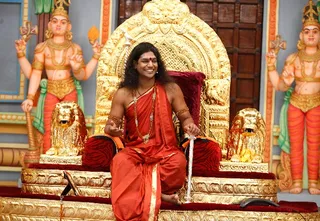
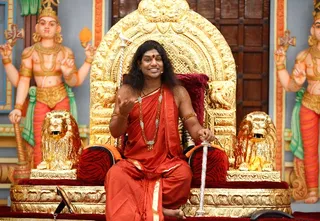
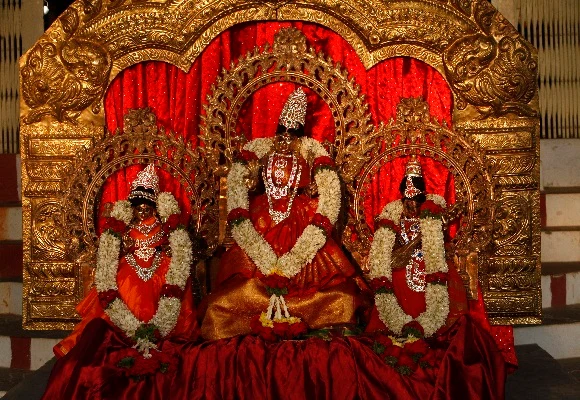
Three deity murti figures sit on a red-draped golden altar beneath an ornate gilded arch. The central figure wears a tall crown, a red garment with golden lower cloth, white flower garlands and a large red-and-gold necklace. Figures on either side wear similar red garments, smaller crowns, white jasmine garlands and red beaded necklaces, with one holding an object in the right hand. Red velvet drapes frame the scene. The setting suggests a temple altar display of deity murtis decorated for worship. No people are visible in the frame.A photograph of a gold-framed shrine with two painted or sculpted deity figures standing on a decorated pedestal over a central murti. The left figure holds a trident and wears a red crown and red garland; the right figure wears a gold crown and holds a staff, both draped in red and yellow silk. In front, a small saffron-clothed figure with a linga-like form sits beneath white and orange flower garlands, with a red cloth draped over the altar. Green curtains hang behind, and brass oil lamps stand at the sides beside marigold garlands. No physical people are visible.Photograph of a seated man on an ornate gilded throne with carved lion and floral motifs, smiling and wearing an orange-red wrap, a rudraksha-style bead mala with a silver pendant, gold armlets and a red bindi. Beside him, a second man in an orange robe leans in to show him an open laptop with a blank blue screen. Behind them are painted walls and a wooden door. a person in an ornate throne setting with a laptop shown to him. Two physical people visible.A man in saffron-orange robes sits on an ornate golden throne with lion-head armrests and a red cushioned seat, holding a silver staff topped with a small ornament in his right hand. He wears a rudraksha mala and a gold necklace, with a red tilak on his forehead and long swept-back dark hair. Flanking the throne are large painted statues of deities with multiple arms, in orange and gold garments, against a pink-and-blue temple backdrop. Swamiji (probable) is seated here; the figure shows long hair, a crown-like adornment, saffron clothing and rudraksha malas, consistent with the page's reference to Swamiji at this event. One person is visible.A smiling man with long, swept-back dark hair sits on an ornate golden throne with lion-shaped armrests and red cushions. He wears a saffron-orange dhoti and shawl, a rudraksha mala and a gold ceremonial necklace, with a red bindi on his forehead and gold bracelets. He gestures with his hands and holds a small object. Behind him, painted deity figures with multiple arms wear gold jewellery and orange dhotis against a pale blue wall. The setting appears to be a temple-like hall used for satsang. a person is seated on the throne, presented in the role of a teacher giving a discourse. One person is visible.A man with long dark hair sits on an ornate golden throne flanked by two golden lion sculptures, gesturing with his right hand and holding a long sword-like staff upright beside him. He wears an orange-red shawl over his shoulder, a dhoti-style orange-red garment, a rudraksha mala and a gold necklace, plus gold armbands. Two golden deity statues with multiple arms stand on either side, one holding a trident-like weapon and the other a ceremonial staff. The throne sits in a temple-like hall with a wooden door behind it and red cushions on the seat.

MEETING GUEST

6 photosSource gallery
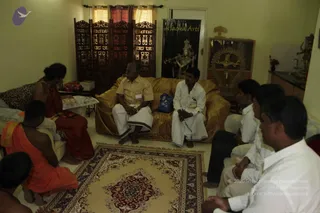
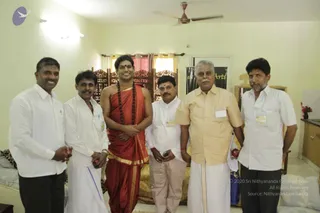
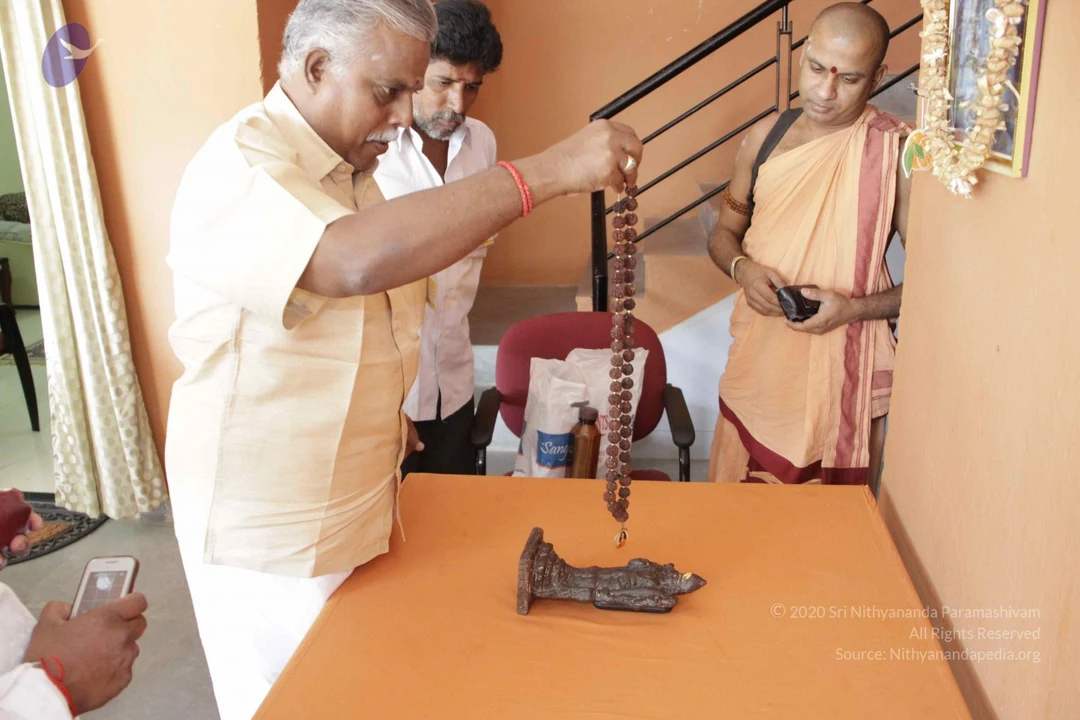
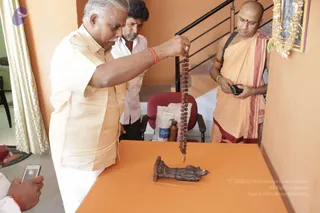
A photograph of an indoor sitting room with cream walls, a brown carved wooden room divider, and a framed sign reading "eN Sacred Arts" beside a bronze dancing Shiva statue. A seated figure on the left wears a long red-orange robe with a rudraksha mala and holds a newspaper, appearing to be a sannyasi; the appearance cues are not distinctive enough to establish identity. Across the room, an older man in a cream shirt and white dhoti sits on a gold sofa gesturing while a younger man in white clothes sits beside him. Five other men in white shirts and dhotis sit on the right side, listening. A patterned rug covers the floor.Indoor photograph of a seated group in a living room with a cream wall, gold-draped sofa, carved wooden room divider and a patterned red and cream rug. A woman in a red and orange sari sits on the left, holding an open booklet, beside a figure in a saffron-orange robe seen partly from behind. Two men in cream and white dhotis sit on the gold sofa, and several men in white shirts sit on the right, listening. A black banner reads Sacred Arts and shows a Nataraja bronze, with a framed Nataraja and a shelf with a brass figure on the right. a person's appearance is uncertain: the saffron-robed figure is not clearly identifiable, so no in_person candidate is asserted.A group photo indoors in a cream-walled room with a ceiling fan, wooden lattice screens and a sofa with cushions. Six men stand together and smile. At centre, a bare-chested man in a red-orange dhoti with gold border and a long rudraksha mala stands with hands folded at his waist. He has short dark hair and a red bindi. Five men flank him in white shirts and white dhotis or trousers; the man second from right in cream shirt wears a name badge. a person cues: the centre figure wears a red-orange dhoti and a long rudraksha mala, distinctive ceremonial adornment.Indoor photograph in a pale yellow room with a ceiling fan, a carved wooden screen and a window with gold curtains. Six men stand in a row smiling at the camera. The third man from the left wears a red-orange dhoti-style wrap with a gold border, a long rudraksha mala and a small red bindi, with hands folded at his waist. He has a distinctive appearance with rudraksha and saffron-red clothing, and is a person, though identity is uncertain. The other five wear white shirts or cream and beige shirts with white dhotis, and some hold small red objects. A cream-colored shirt-wearing man with a white moustache stands fifth from left. A framed poster partly reading 'Arts' hangs behind them, with a bed and cushions at the lower left and a small vase of red flowers at the right.A small dark metal murti of a standing deity against a peach-coloured wall, resting on a wooden shelf. The figure wears a tall conical crown with a touch of gold leaf on its top, has multiple arms holding objects, and wears a sacred thread and drapery. Shown alone with no people present.A man in a cream-coloured shirt and white dhoti holds up a long rudraksha mala over a small dark metal murti of a deity lying on an orange table cover. Beside him a man in a pink shirt watches, and at right a shaved-headed priest in saffron robes with a maroon border and a red tilak holds a small dark object while looking down. A yellow garland hangs on a framed picture on the orange wall, and a staircase with black railings rises behind them. A phone is visible at the lower left edge. Three people are visible.

DEITIES

3 photosSource gallery
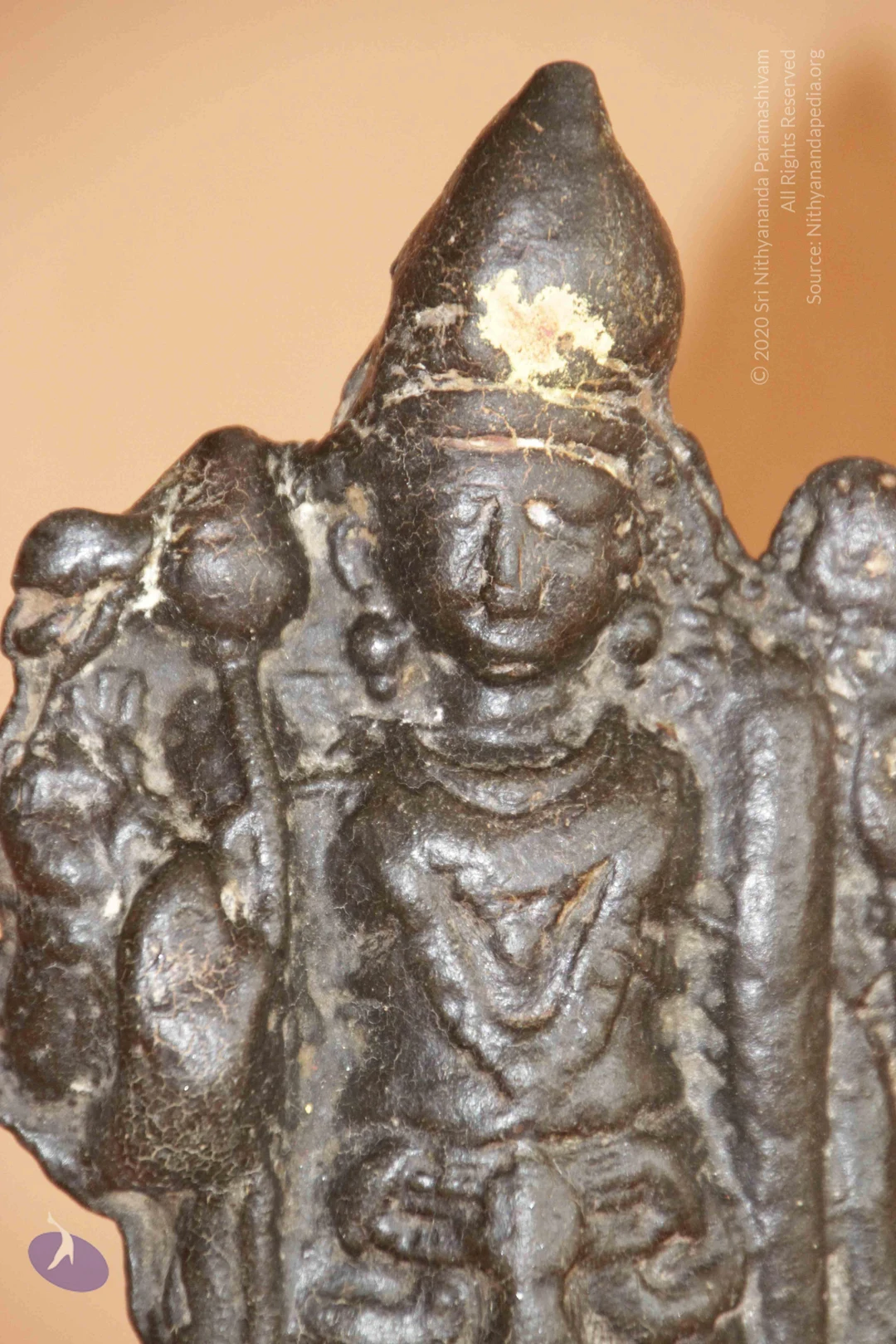
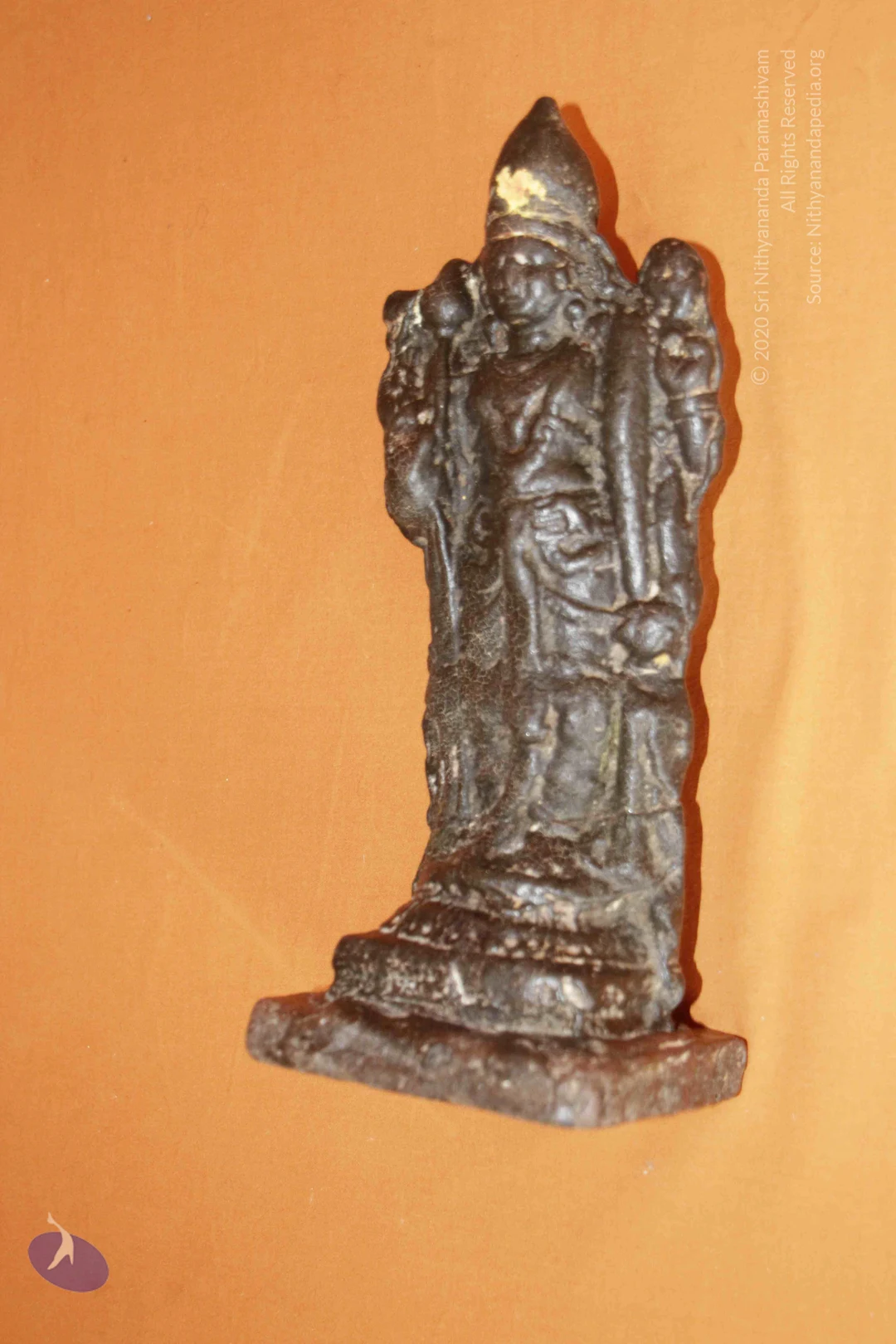
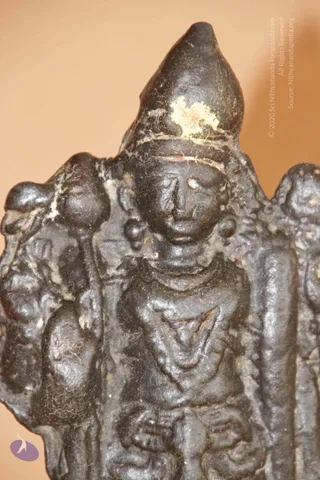
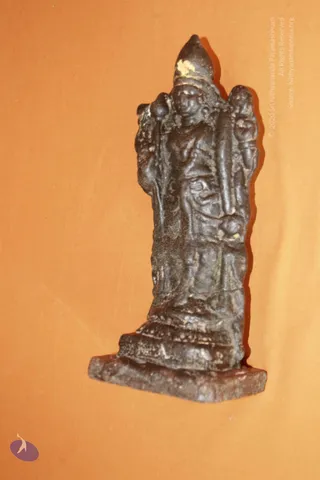
A dark, weathered metal figurine of a standing deity murti on a stepped rectangular base, photographed against a peach-coloured wall on a wooden surface. The figure wears a tall conical crown, a broad necklace, and a dhoti-style lower garment, and holds ritual implements on either side, including a staff with a rounded finial. Traces of pale residue and wear mark the surface.Close-up photograph of a dark, weathered metal deity murti with a tall conical crown, traces of gold or red paint on the crown, a round face with a prominent nose, and a rudraksha-like bead necklace across the chest. The figure stands in relief with a detailed torso and a multi-armed or flanked arrangement behind it. Ornaments and worn surface detail are visible against a plain peach background. No people are present.Photograph of a small dark bronze or metal standing figure of a deity on an orange cloth background. The figure wears a tall conical crown and holds objects in raised hands, with a small pedestal base beneath. Its patina is dark and worn, with traces of gold residue on the crown. No people are visible, and the figure is a statue, not a living person.