Skip to content
Tuesday

7 February 2012

Bhagavad Gita Chapter 4: Jnana-Karma-Sanyasa Yoga of Bhagavad Gita, 7th verse

Dated photos
179
Source pages
1
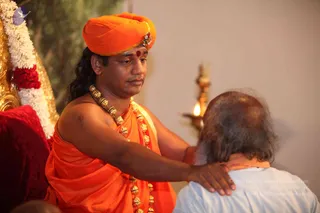
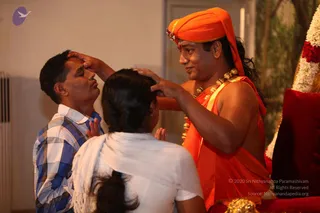
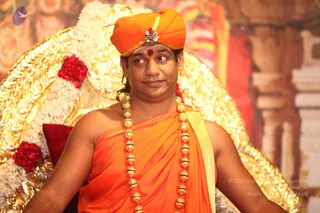
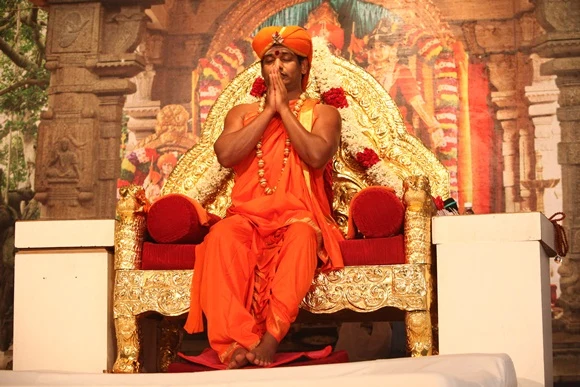
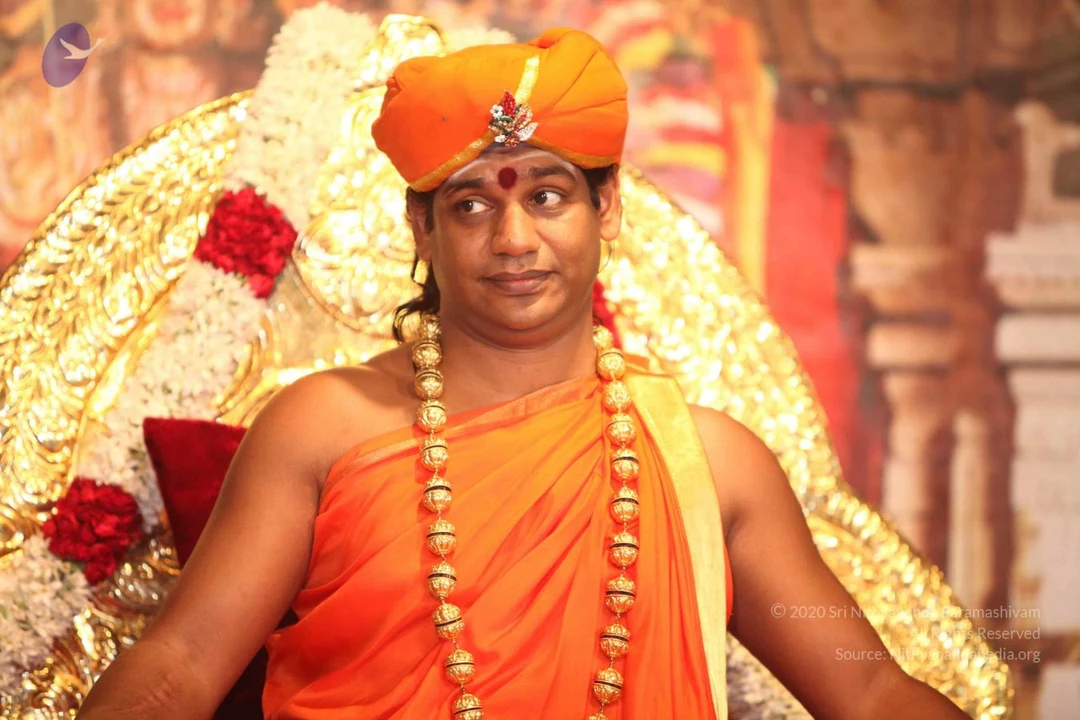
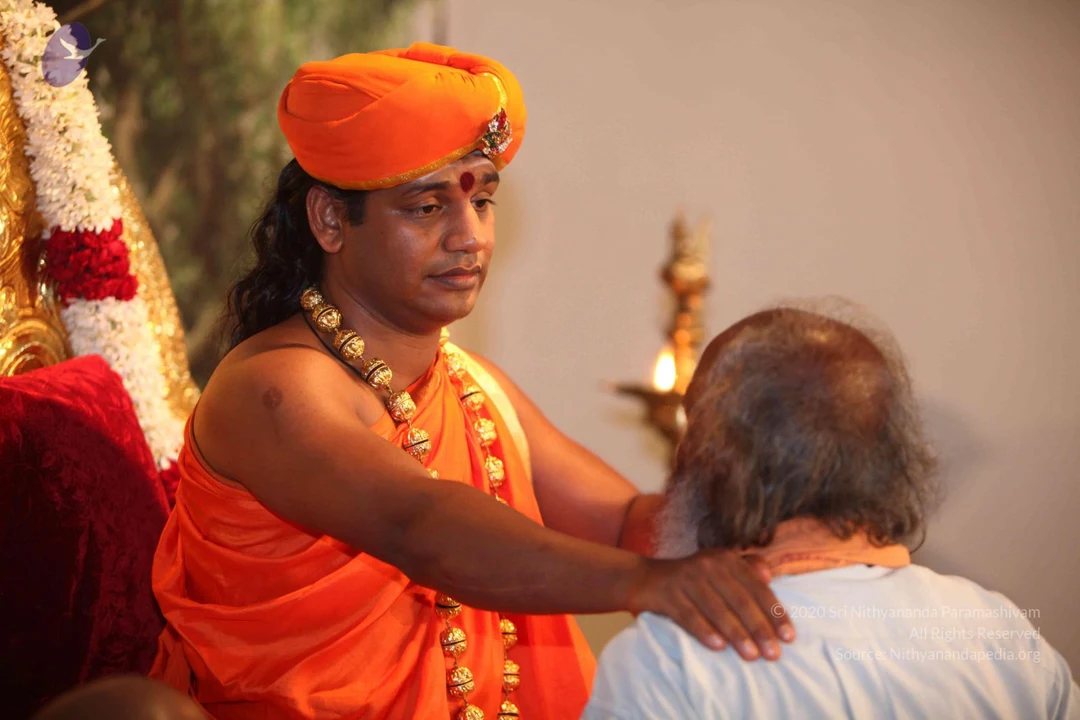
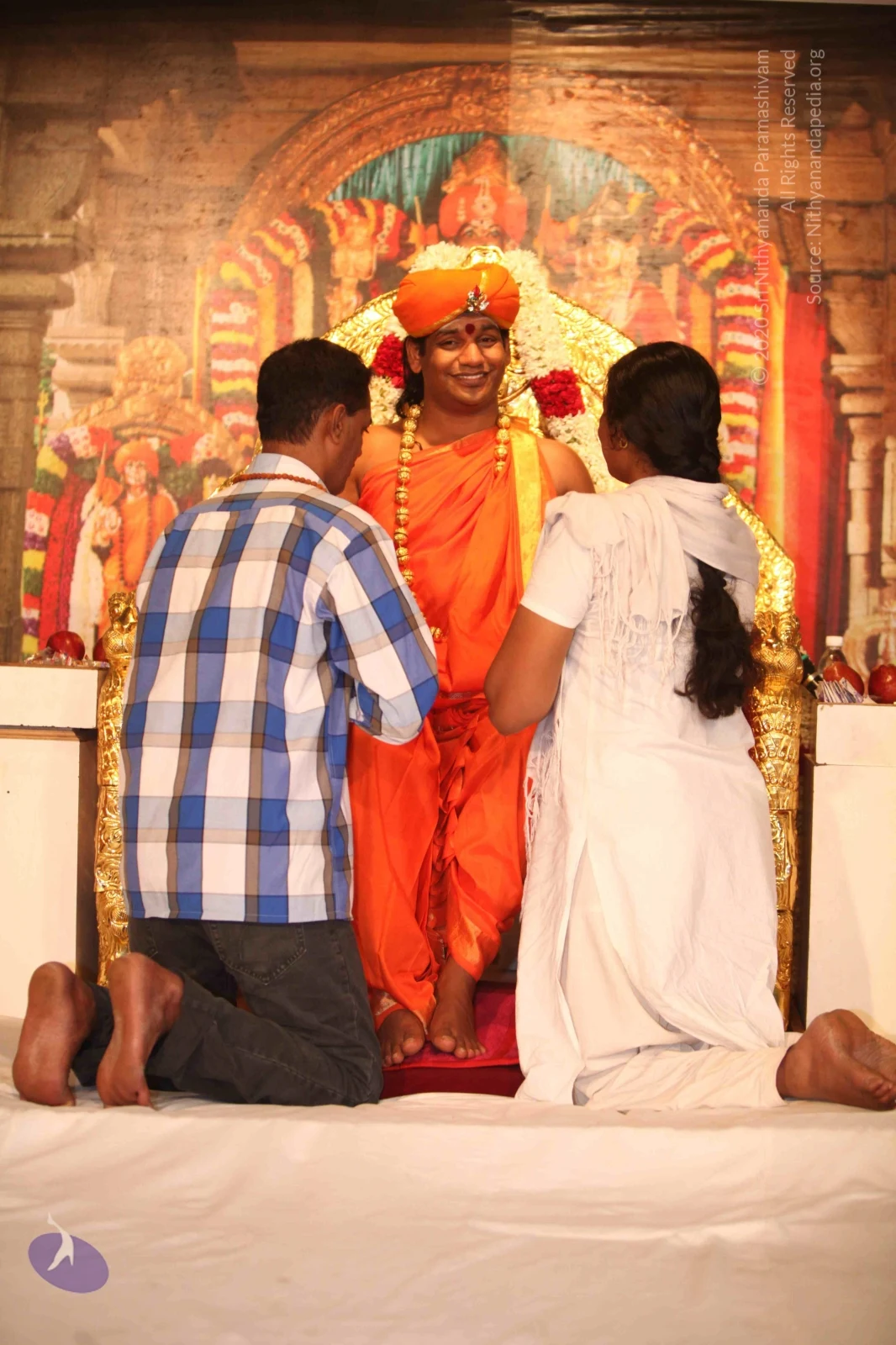
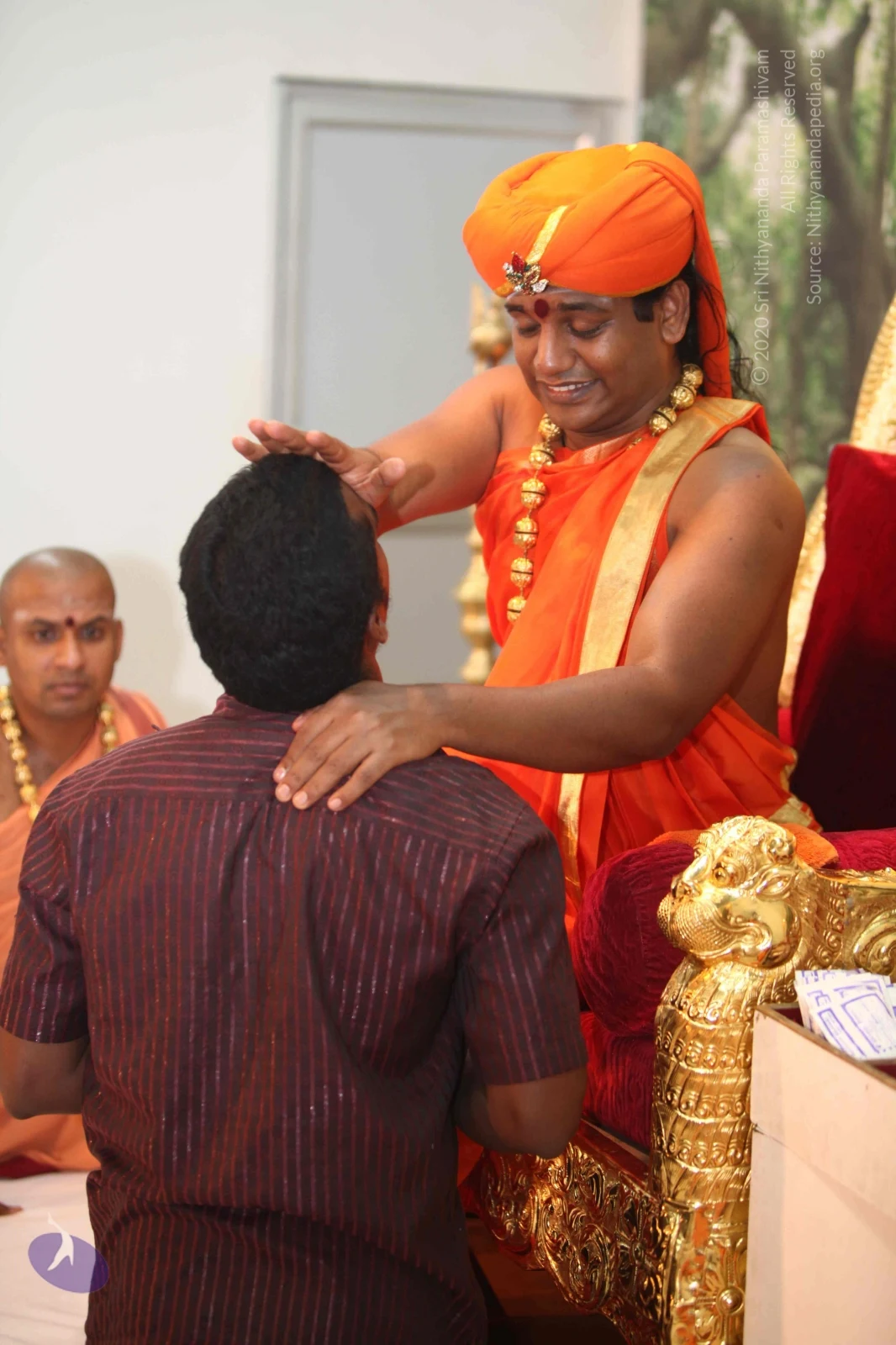
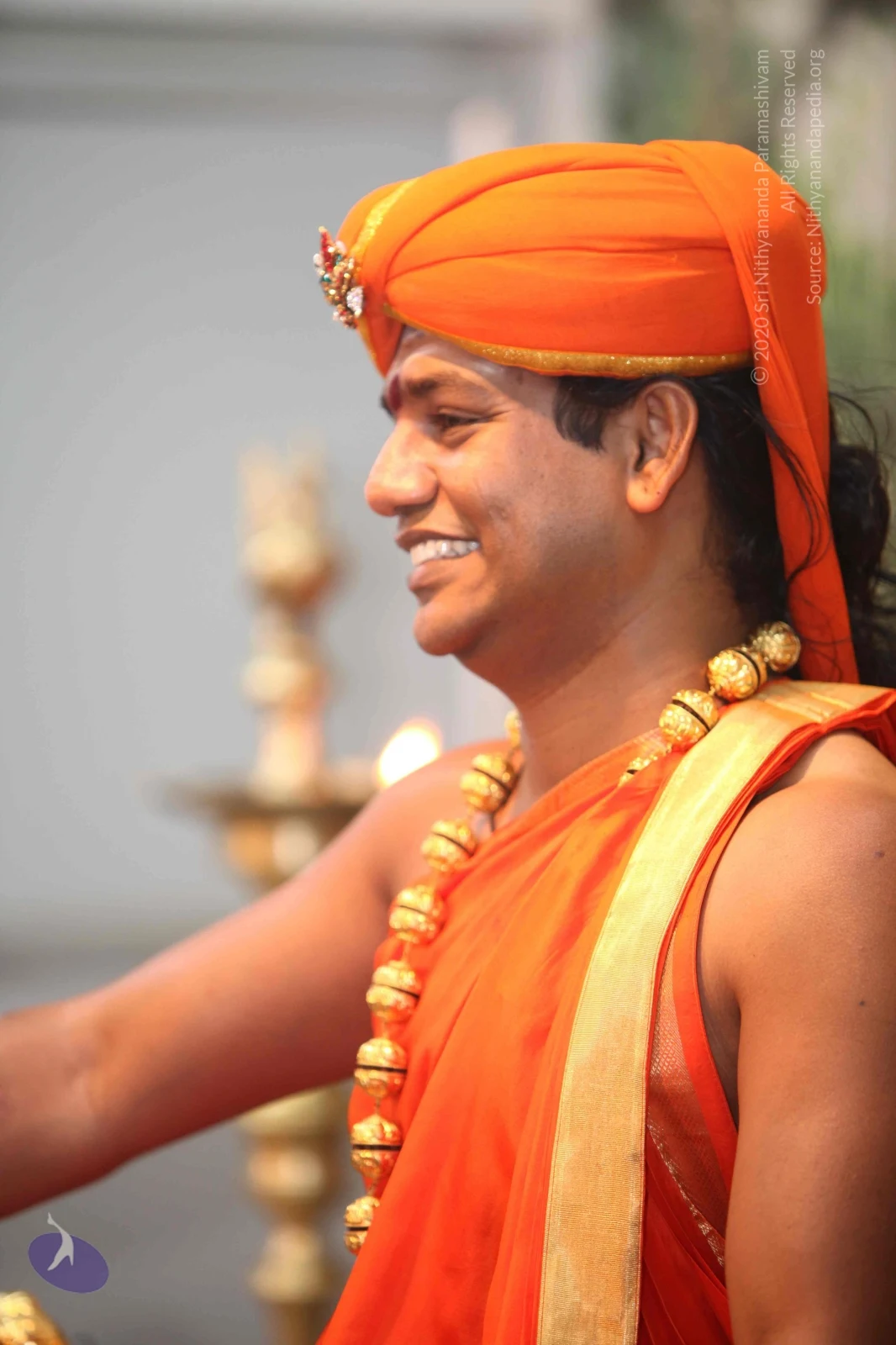
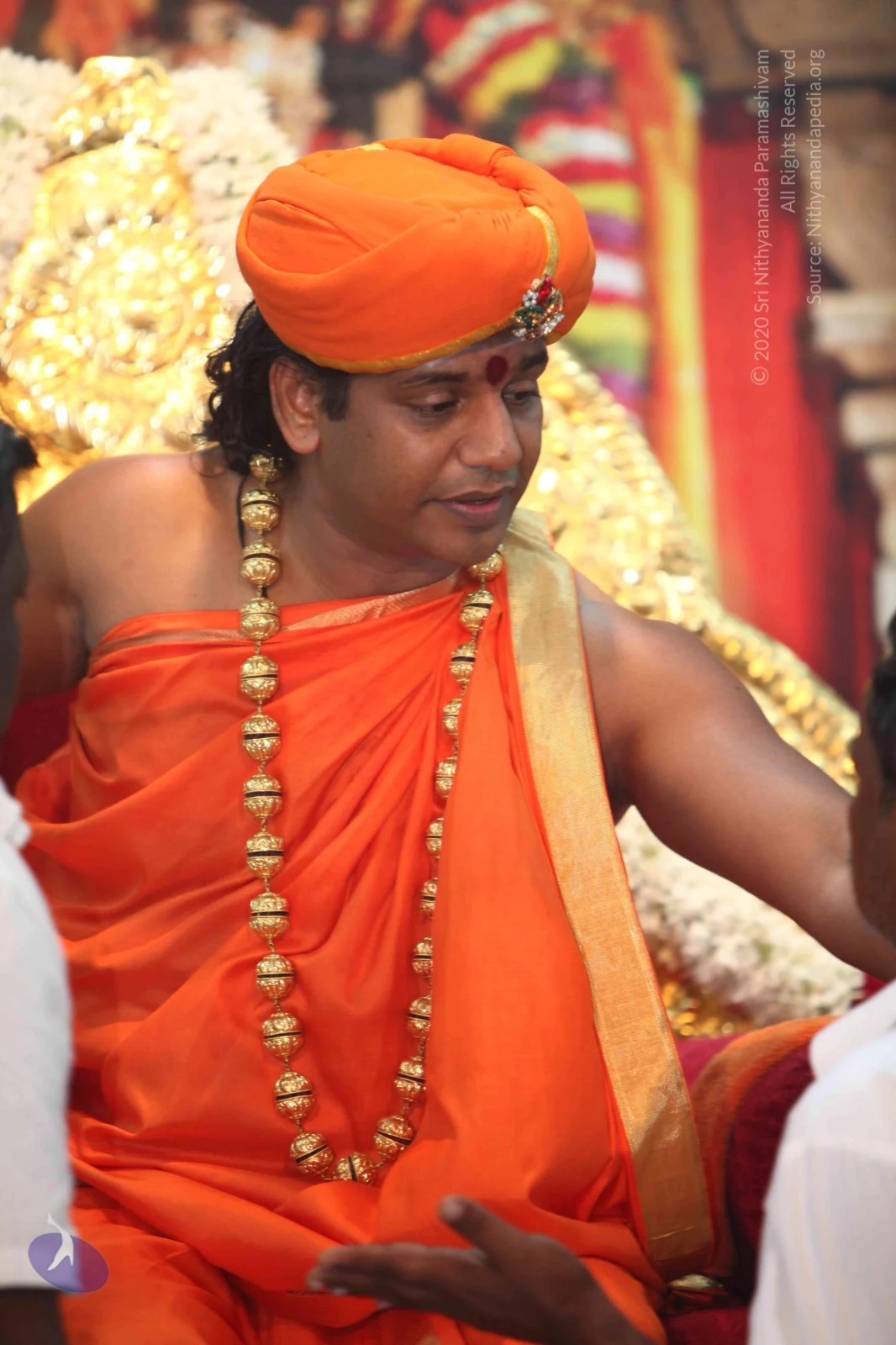
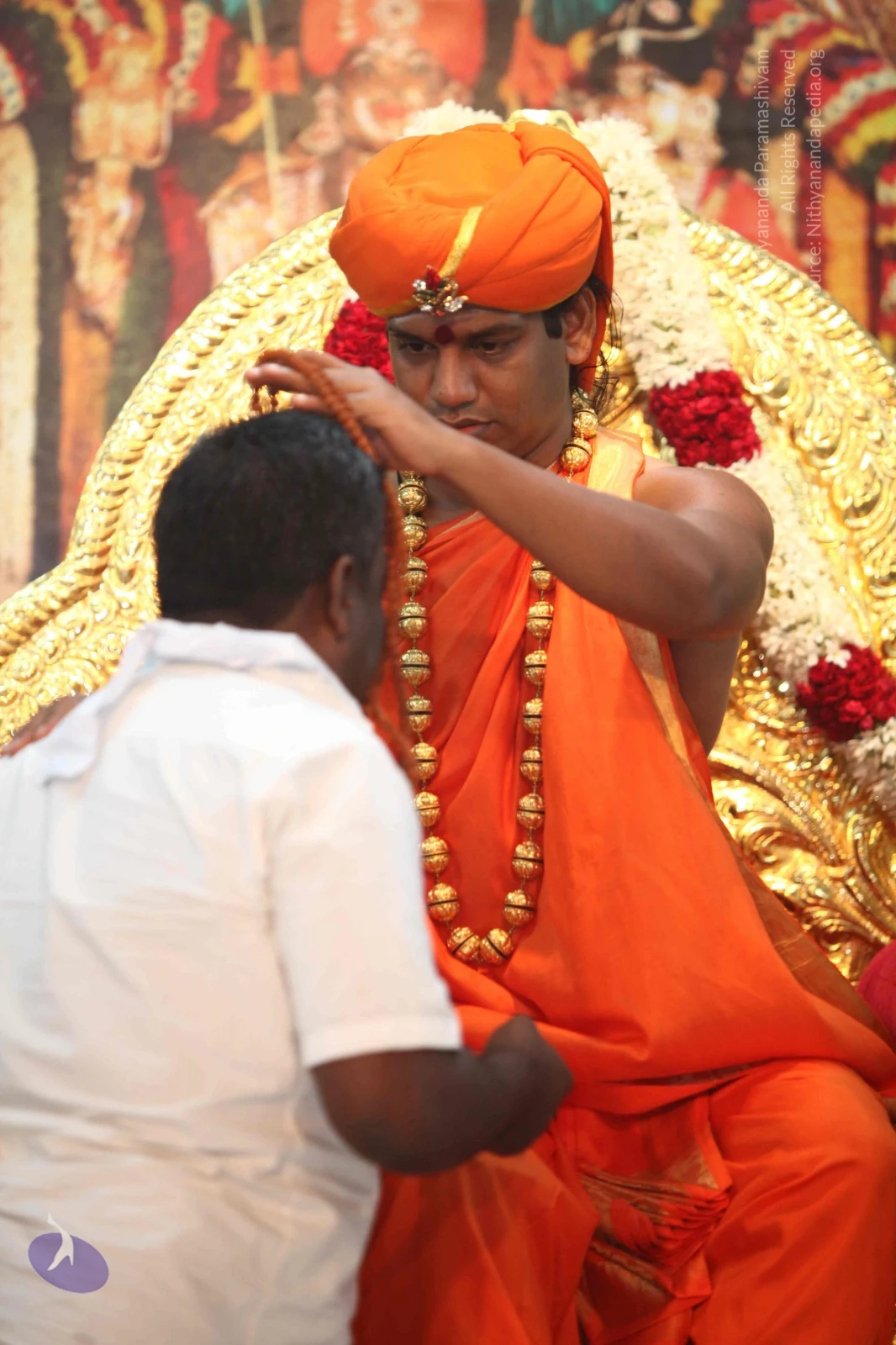
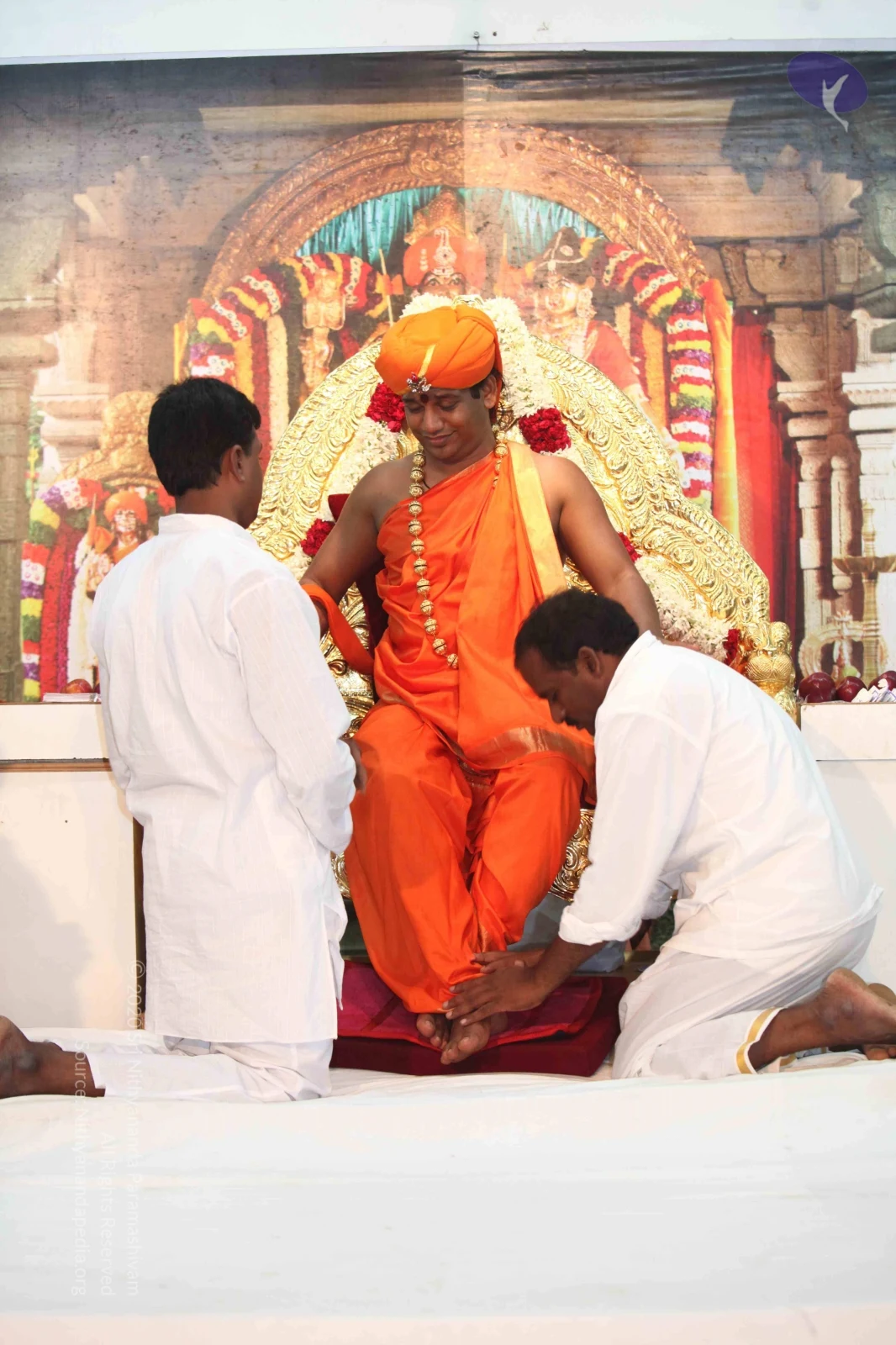
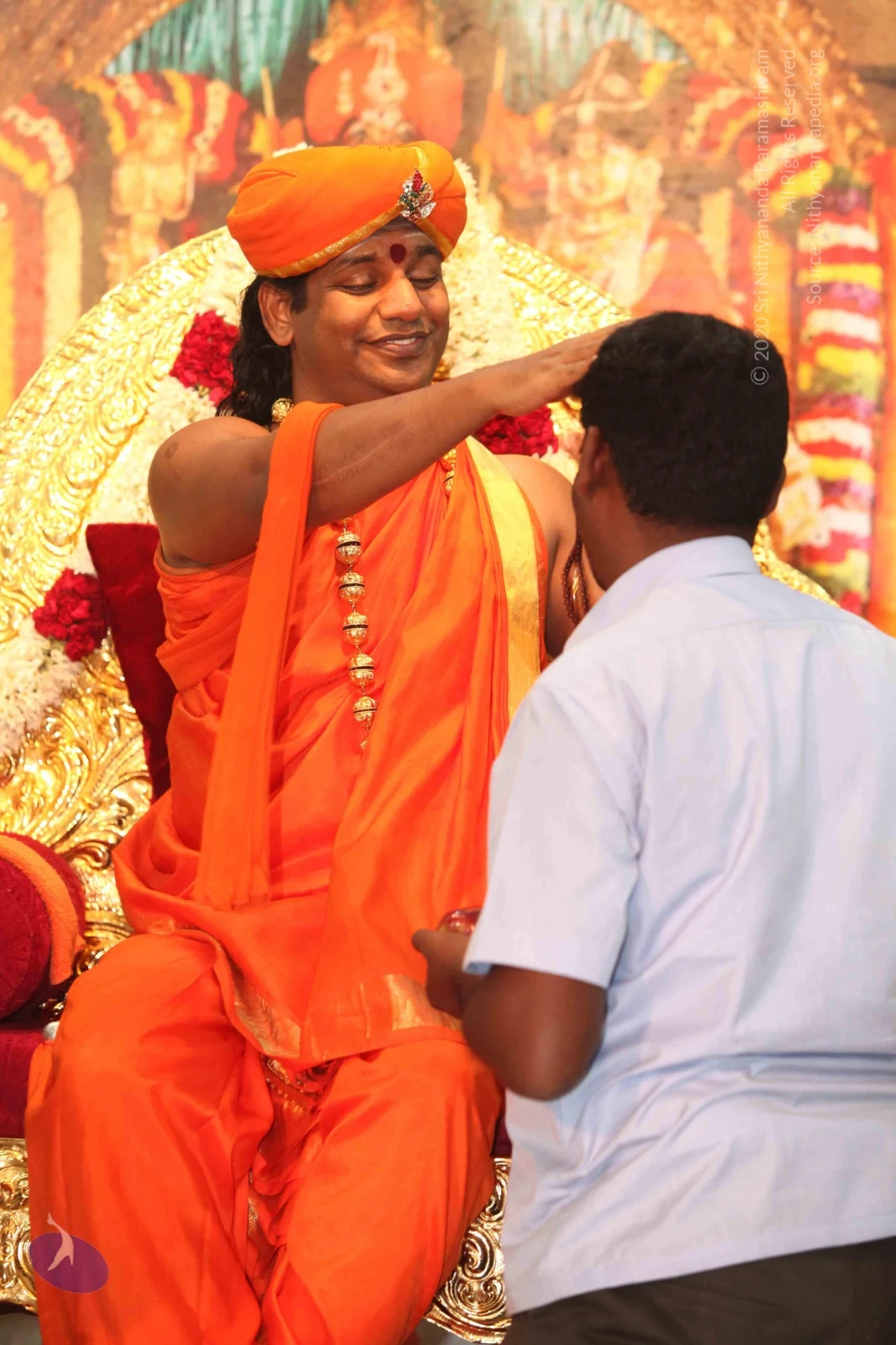
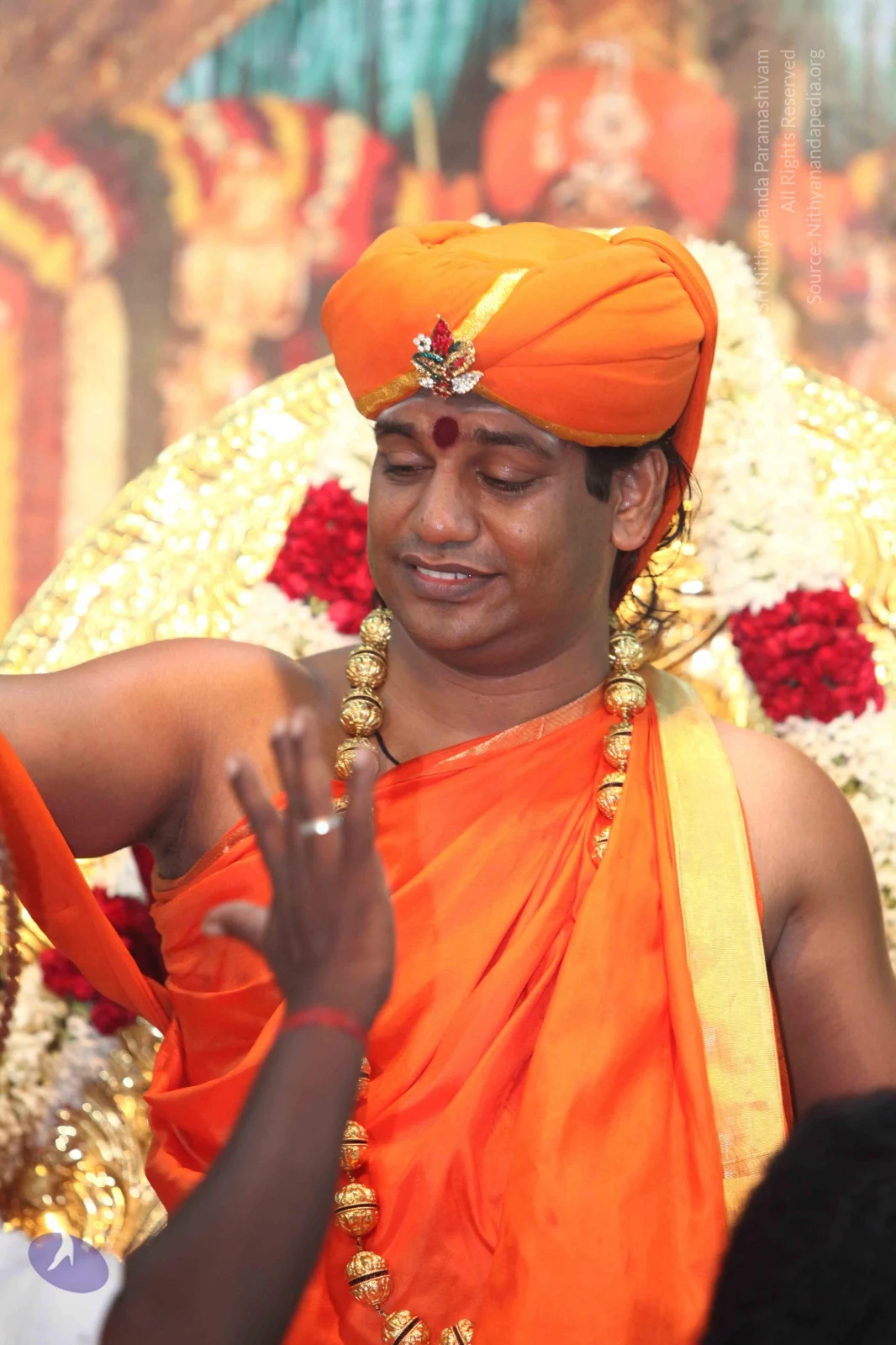
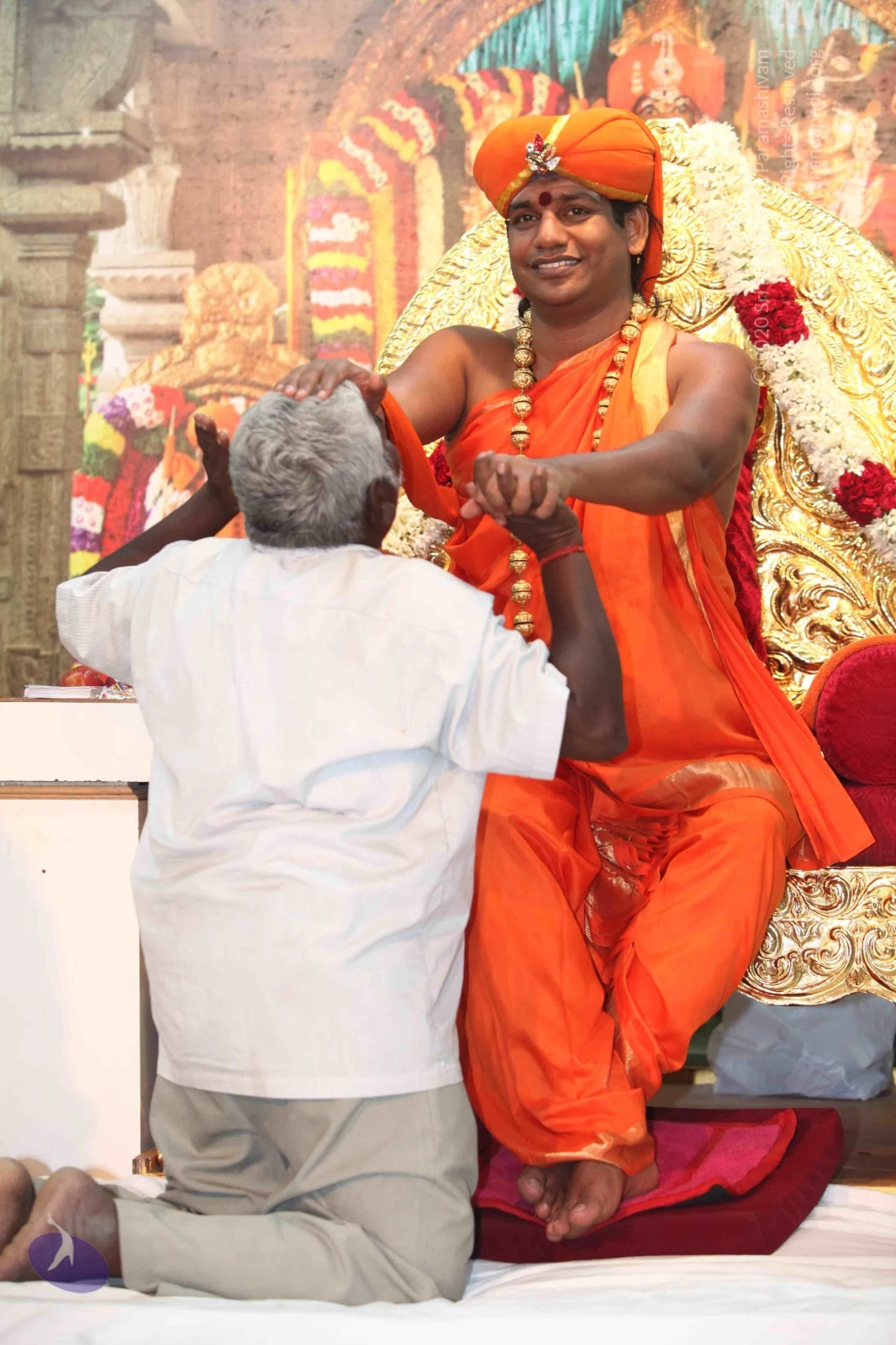
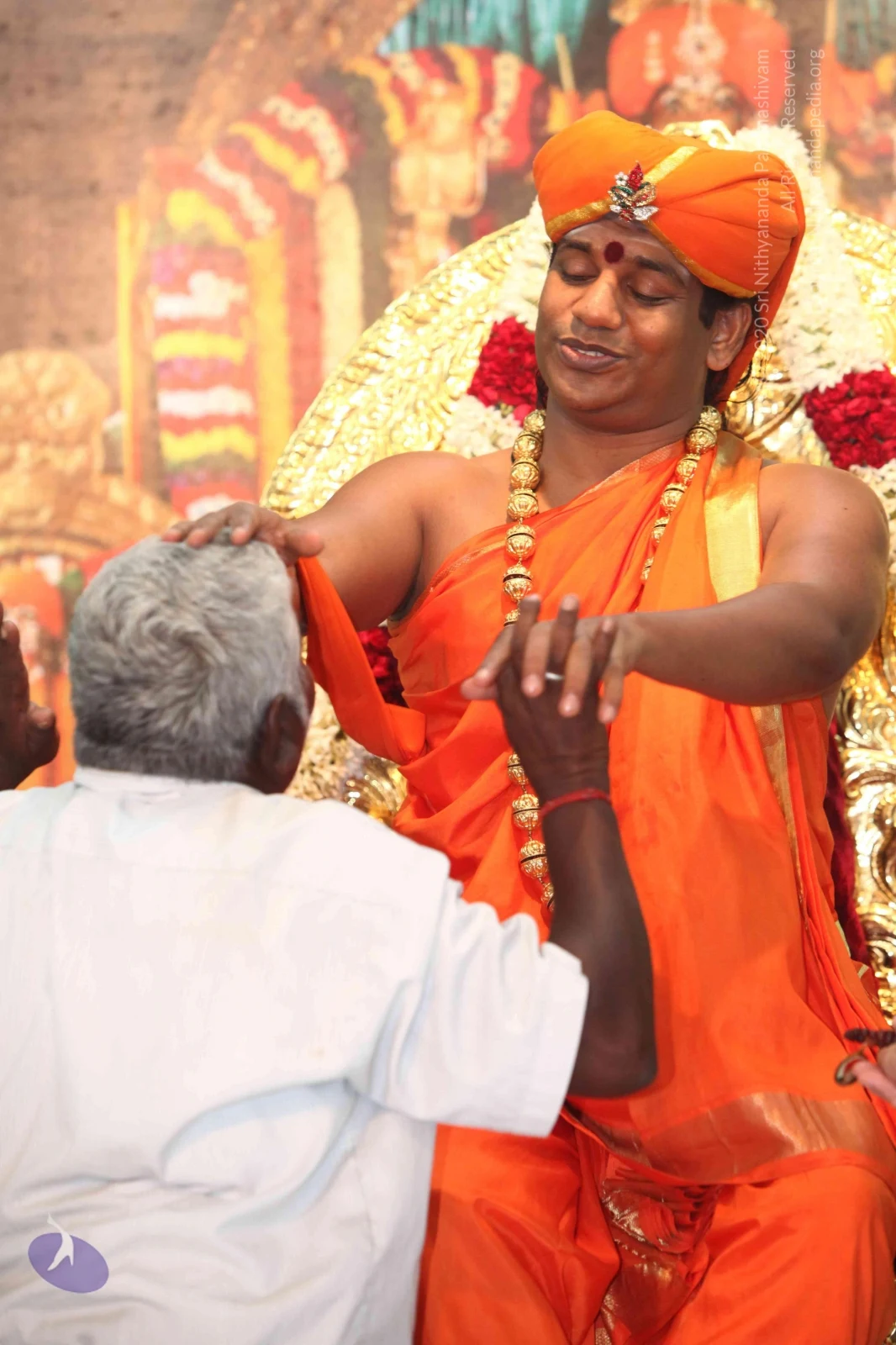
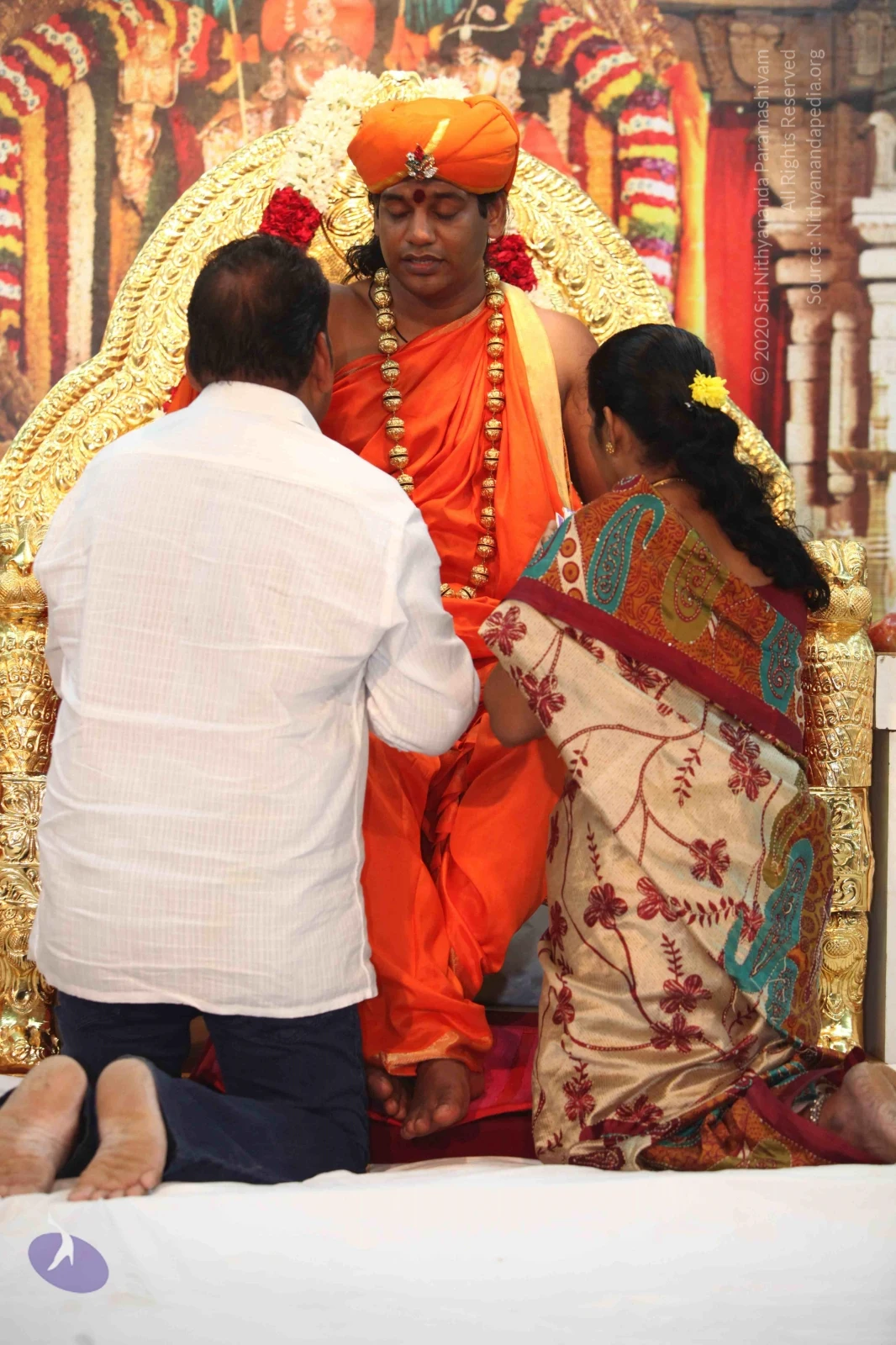
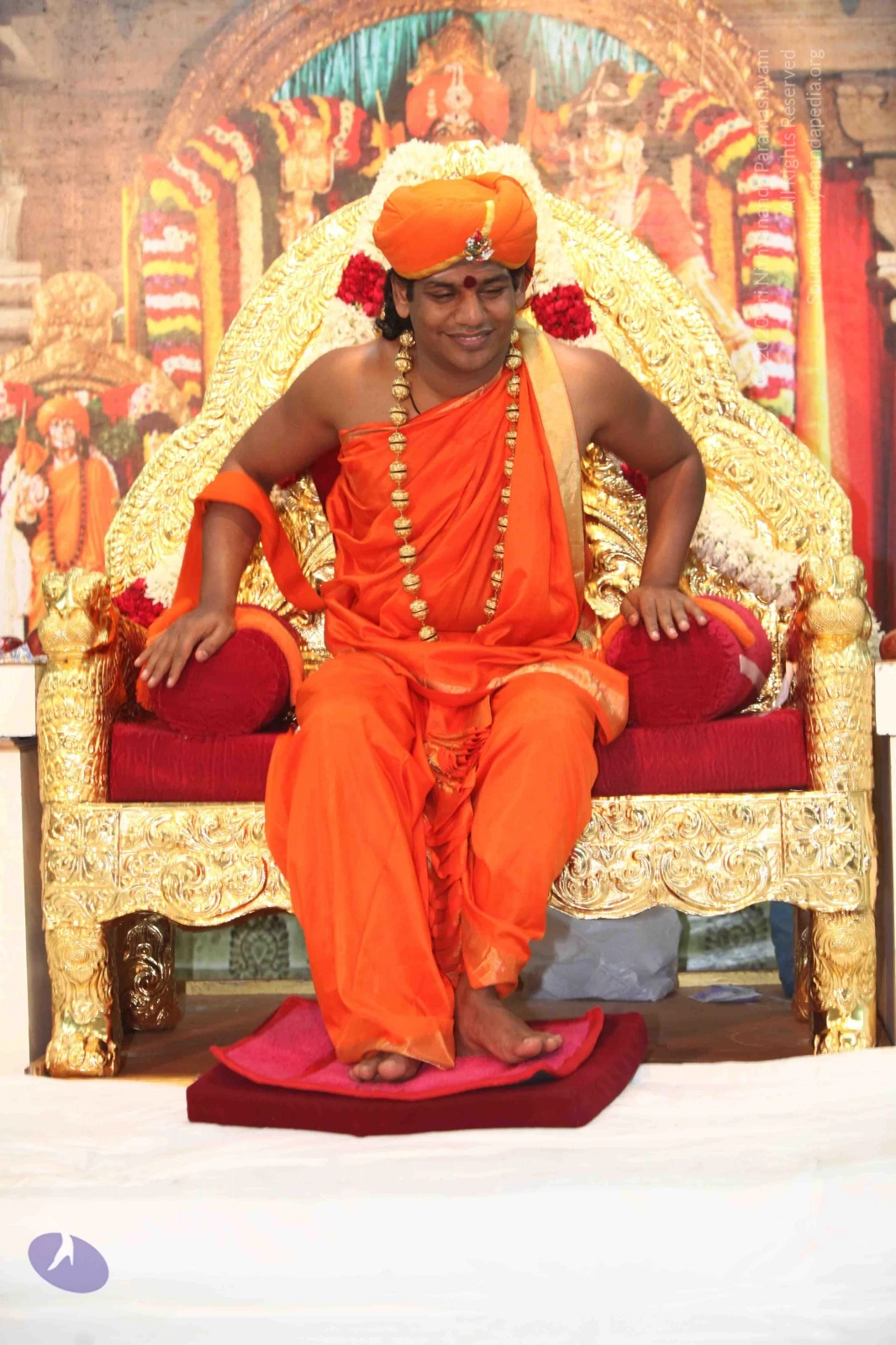
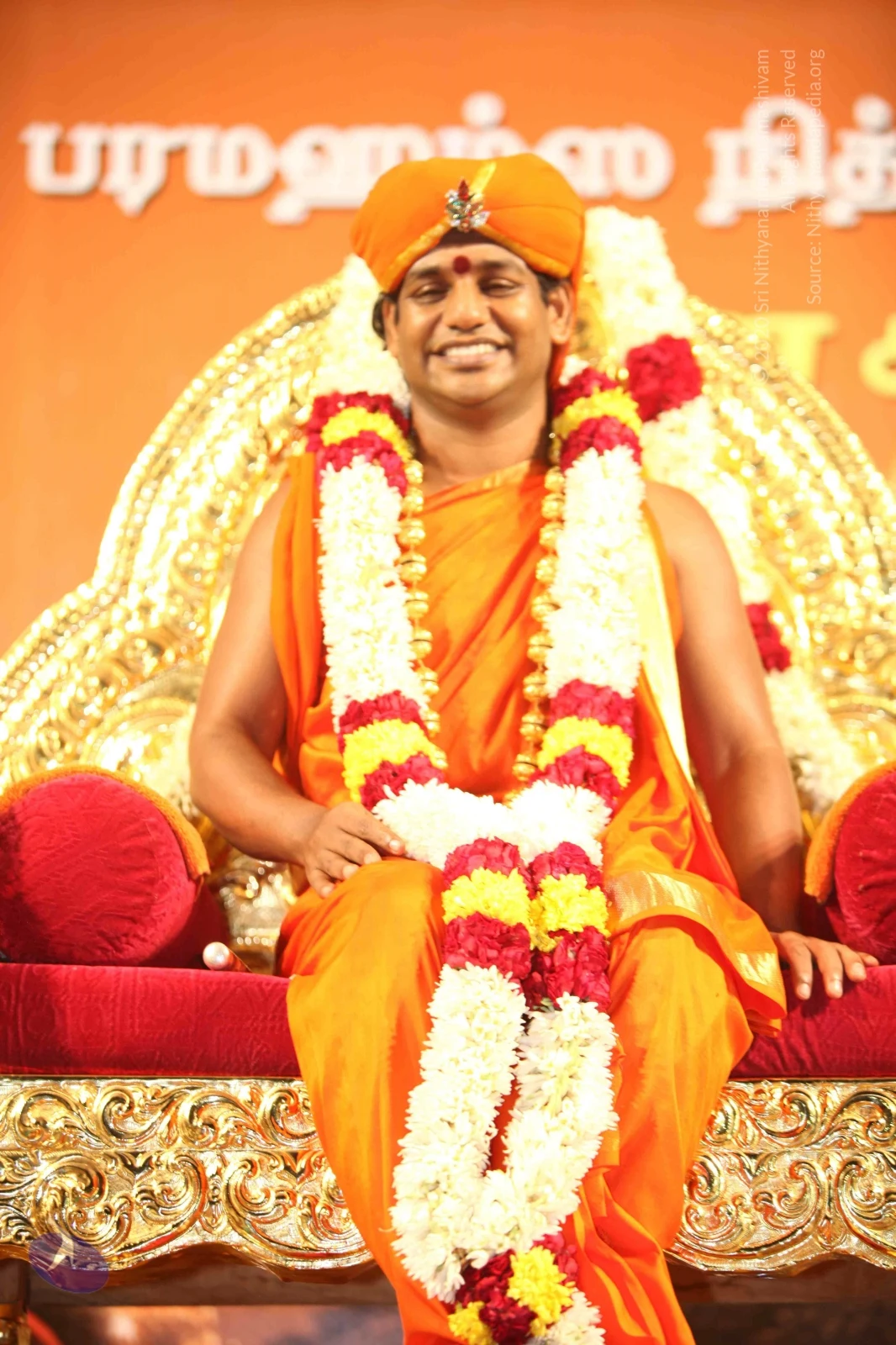
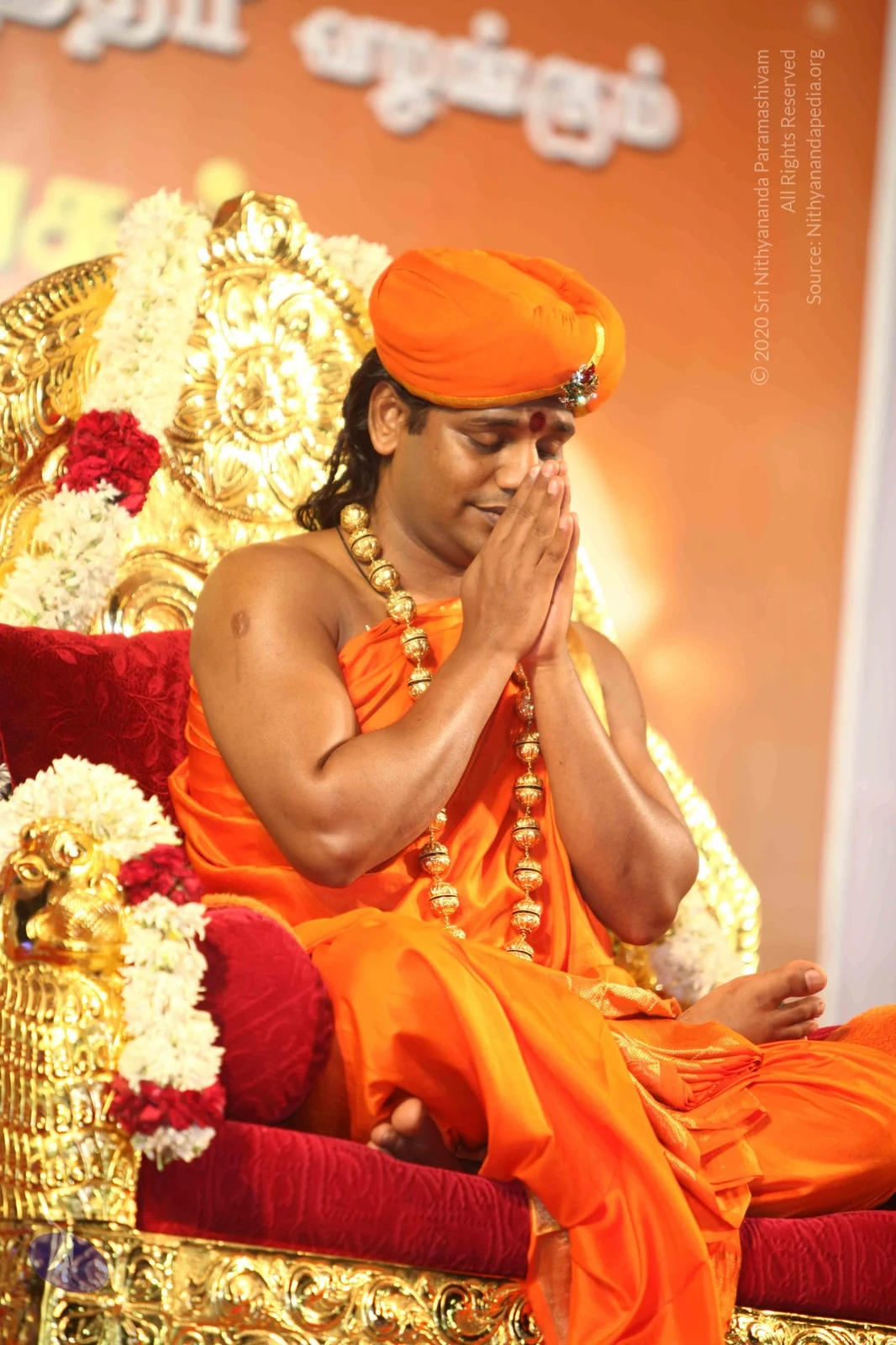
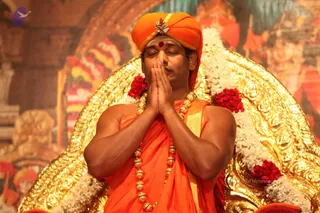
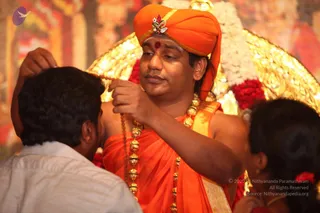
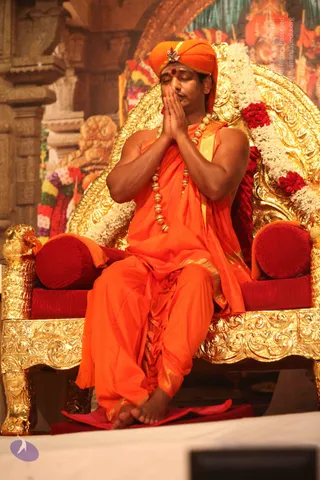
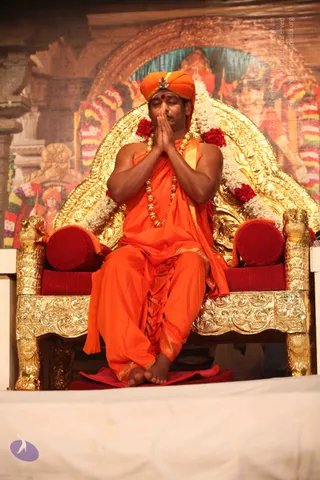
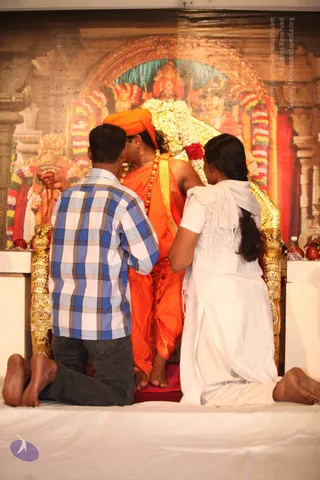
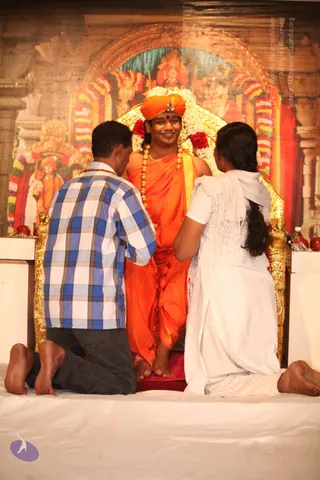
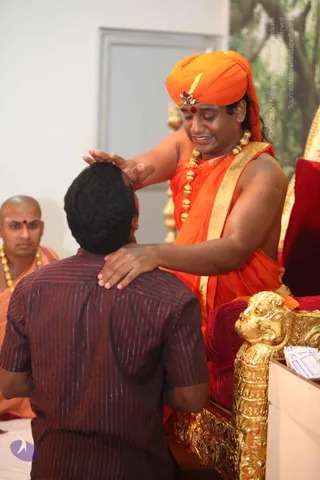
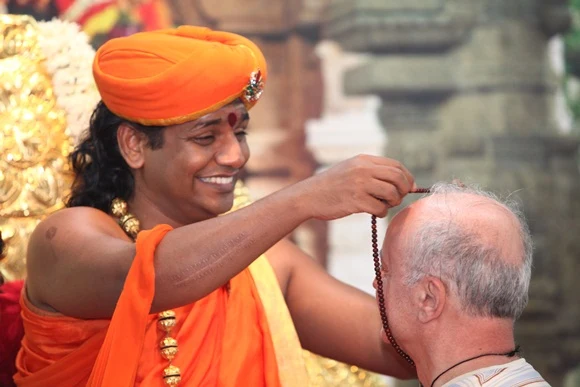
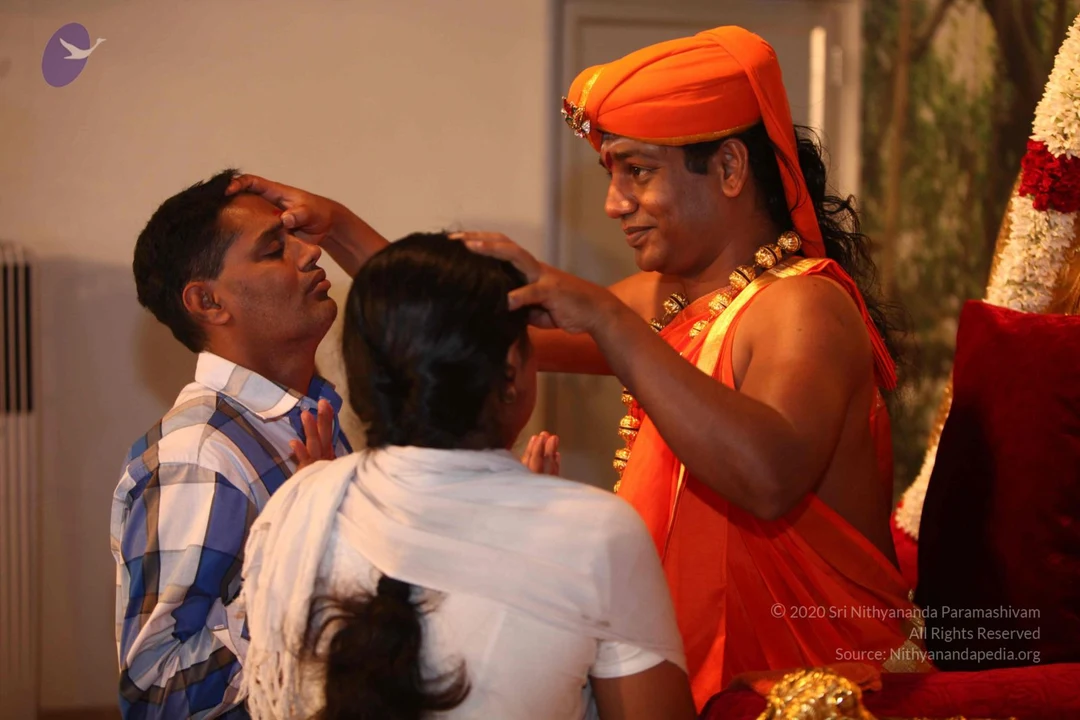
A man in an orange turban with a red bindi and an orange shawl, wearing a multi-strand necklace of gold-toned beads and rudraksha-style beads, sits beside a red throne draped with white and red flower garlands. He rests one hand on the shoulder of a bald, grey-haired man in a light blue shirt seen from behind, who is bowed toward him. An oil lamp with a lit flame stands in the background near a gold-toned deity murti. The orange-clad man is an appearance-based a person with several qualifying cues: orange turban, ornate beaded necklace and saffron clothing, placed in a blessing gesture of padapuja-style or darshan-style giving of blessings. Two people are visible.A photograph of a seated saffron-robed figure with an orange turban and a long swept-back hair, wearing a rudraksha-style gold bead necklace, placing both hands on the heads of two devotees. A man in a blue-and-white checked shirt bows with eyes closed and palms together, and a woman in a white shawl sits with her head bowed and hands folded. The setting shows a red cushioned seat with white flower garlands at right and a painted forest backdrop. The man in orange has distinctive long hair, saffron clothing and beaded gold necklace cues, consistent with the page's a person reference, so the appearance-based label is a person, giving a blessing to devotees in a darshan setting.A man seated on a gold-ornate throne in front of a floral backdrop of white and red flowers and a painted temple-style wall. He wears an orange turban with a jeweled brooch, a red bindi on his forehead, an orange saffron-coloured robe draped over his shoulder, and a long necklace of large gold beads. a person: saffron robes, orange turban and gold beaded necklace, seated on a golden throne.

February 07 2012

Original wiki page
Contents

Title

Bhagavad Gita Chapter 4: Jnana-Karma-Sanyasa Yoga of Bhagavad Gita, 7th verse

Transcript

Date: Tue, 2012-02-07 07:05

Transcript in English: HONEST DHARMA

BHAGAVAD GITA CHAPTER 4, VERSE 7

Lets enter into today’s satsang. In 4th chapter, Jnana-Karma-Sanyasa Yoga of Bhagavad Gita, 7th verse.

yadaa yadaa hi dharmasya glaanihi-bhavathi bhaaratha |

abhyut-taanam-adharmasya tadaat-maanam srujaam-yaham ||

Every time I utter this verse, it feels new because still I have not shared all the 108 translations landed on me. Shared only may be 5 to 6.

yadaa yadaa hi dharmasya glaanihi-bhavathi bhaaratha

In each one of us, again and again, honesty, intensity and spiritual strength gets decayed. Please understand, again and again it gets decayed in each one of us. Adharma – the wrong way of decision-making, wrong cognition, I can translate dharma and adharma in this way; the basic facts with which you make all decisions of your life; those basic facts are in tune with cosmic goodness. The larger vision of life you are flowing in the field of dharma, means whatever you are creating is going with the good of the Universe, for example, you are giving medical care to people and making money. This is complete dharma. For example, you are selling ganja and making money - complete adharma. Your success is going to be destruction for so many people. So the facts with which you make decisions, if it is good for the cosmos also, if it is good for others also, then you are on the right direction.

The facts and figures with which you make decisions, if it is not good for others, if it is not good for the world, then you are stuck; you are caught. That is what I call adharma. Constantly, in all of us, the facts, concepts with which you make decisions gets decayed, slowly loses the larger vision and gets narrowed down. It is like everyday Master opens your eyes and makes you see complete 360 degree and slowly in half an hour you reduce, reduce, how you attend the satsang, by 9.10, only 20 degree is seen. That also like a flash and by 9.30 people are in Kailash, 9.40 they are in Vaikunta. From 8-9, I struggle, struggle, struggle and make their eyes wide open, make them have a 360 degree vision, and that 360 slowly comes down, by 9 o’clock 120, 9.30 just 20, 9.40 Kailasha, 9.50 Vaikunta.

Please understand, same thing happens internally. Every day I am expanding, making you in tune with the larger vision of life. I tell you, decide to sacrifice, decide to surrender, decide to live in insecurity, you don’t know the power of it. When you decide to live in insecurity, in sacrifice, in surrender, larger vision of life always fits with you. When you decide to live with the tremendous responsibility, see always living with the tremendous responsibility is like a uphill task. It is very easy, just lie down and say, this much only I can take up. I am peace-loving person. I tell you, peace loving people will never have peace. They will have only pieces of mind. They will not have peace of mind. Peace loving people will not have peace of mind. Understand, they will only have pieces of mind.

Life larger than lifestyle is dharma. Understand, life larger than lifestyle is dharma. Your lifestyle means constantly bothered about the 6-feet frame you are holding. What kind of food, what kind of house, what kind of car, what kind of clothes, what kind of people you have around you is lifestyle, but looking at the life larger than your life style, planning for your life larger than your life style is dharma.

Understand, planning for your life larger than your life style, means your decisions are not made just centered on you. Recently, I was reading a story of Sri Ramakrishna. I don’t know how many hundreds of times I have read this story, but every time I read, it makes sense and meaning. Bhagawan asks for amalaki fruit to a disciple. Disciple goes somewhere and finally brings it. The moment it was put in the hands of Bhagawan, Bhagawan says, “No, I can’t touch this. It is stolen fruit. It is not properly earned.” Then the disciple who brought tries to find out the source of that fruit. The fellow who has leased that garden and selling the fruit has not paid the lease amount to the original owner. What depth of dharma!

In our own branch, Salem ashram, when I went there once, lot of mangoes are there in our ashram, mango trees. I said,”hey, come on, let’s have mango.” These brahmacharis ran and got big mango in the main field. I said, “No, you cannot touch those mangoes. We already leased it; leased those trees. Don’t touch that. Go to my quarters. Inside my quarters, that area we have not leased. Get it from there.” They said, “Swamiji! Quarters mangoes are all small. Here they are all big. Let’s take it here itself. After all, our land. One mango, for YOU! The person who has taken the lease is not going to say anything.” I said, “No, Ramakrishna story. He can’t take a small amalaki fruit. Then no question of taking a mango.“ And finally I told our brahmacharis to go to my quarters, and in that area bring mango from that; we ate and that day evening, that person who took the lease, he came. I told, “Take permission from him and get the mango.” That guy was in tears. He says, “Swamiji, people actually give lease. When I take lease, I don’t even allow the owners to stay in that land because when I am not there, they pluck everything and sell it. But in your ashram, even for You, one mango, you were waiting for my permission from morning till evening.”

Understand, in every step, see, the very source in which you make decisions should expand. That is what opening of the third eye. Opening of the third eye means ensuring the path in which you are walking. It is aligned with the vision of the universe. Please understand, if you are making two eyes, if your two eyes are open, you will make sure the path in which you walk is in tune with your vision. If you ensure the path in which you walk is in tune with the universe’s vision, your third eye is also open. Third eye does not mean you will have one more eye on the forehead. Understand, third eye is not just having one more eye on the forehead. It is your vision is in tune with the cosmic vision. Whenever that degrading happens, means, when your vision becomes narrow in your life, the facts in which you make decisions are more self-centered instead of universe-centered.

I tell you, If you life in insecurity, If you live in homeless way, if you live not being bothered about the self-centered life style, the higher intelligence in you gets awakened in which the possibility of one-with-the-cosmos happens. I tell you, that is the honest dharma.

yadaa yadaa hi dharmasya glaanihi-bhavathi bhaaratha |

abhyut-taanam-adharmasya tadaat-maanam srujaam-yaham ||

Photos From The Day:
Photos Of The Day:

KALPATARU DARSHAN (EVENING ) TVMALAI

IA-Darshan-Photo-Morning

Kalpataru-Darshan-Evening

Public-Darshan

20120207_Photo_1000_IMG_3686_CMP_WM

Rudra-Homa-Rudrabhisekam

Photos from this day

View all 179 photos

Photos From The Day:
29 photosSource gallery
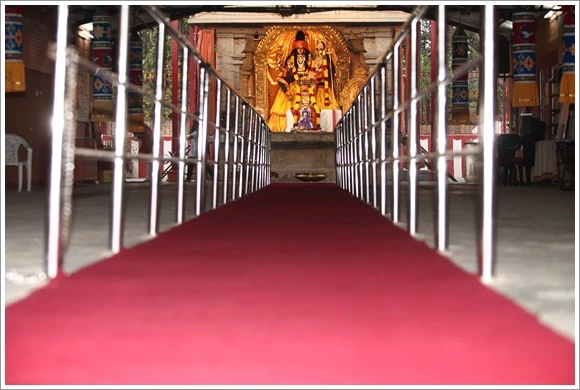
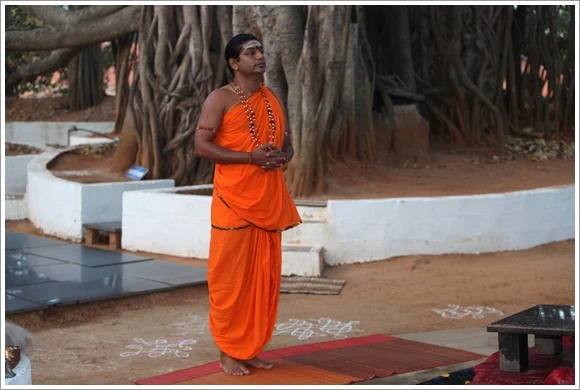
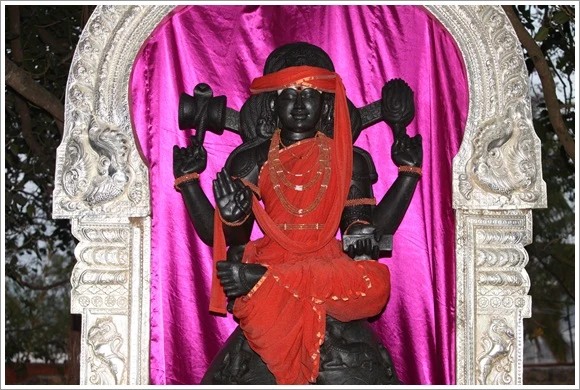
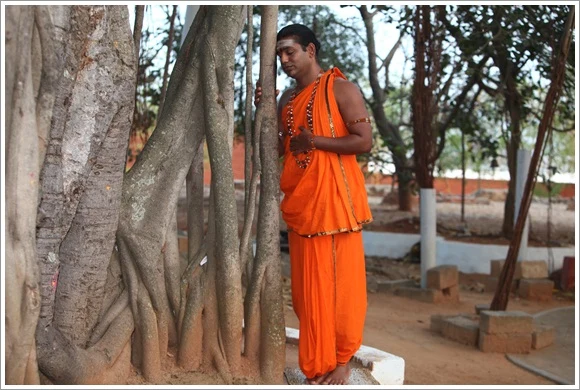
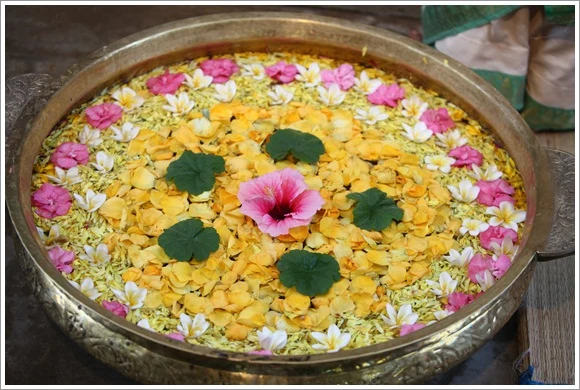
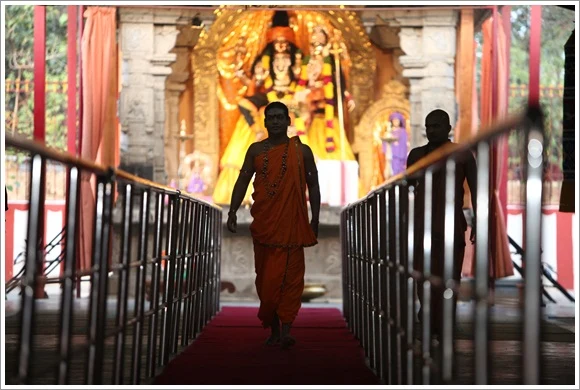
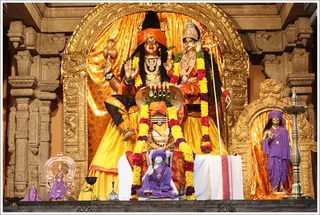
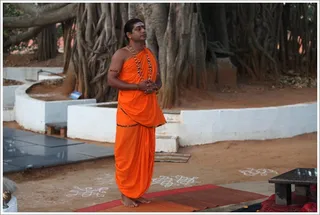
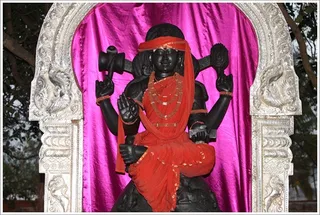
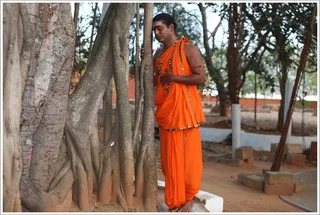
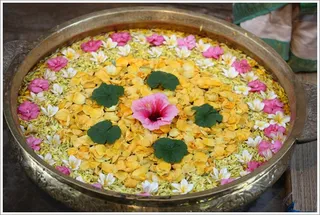
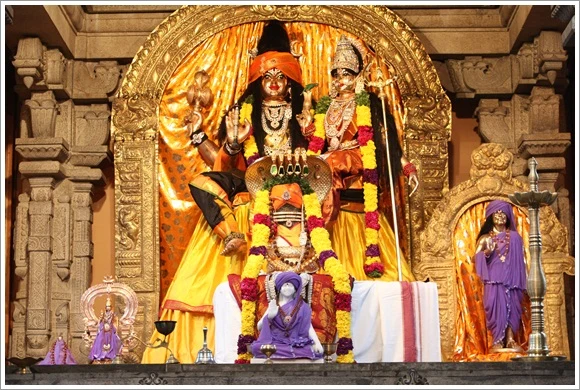
A temple sanctum with gilded arches and orange-gold draped cloth shows a large deity murti of Shiva with trident, wearing a red-and-orange turban, seated with a female consort figure beside him, both draped in marigold garlands. Below them a smaller seated figure in a white dhoti and purple shawl sits before the altar, also garlanded. To the right a standing purple-robed statue holds a lamp, and a tall brass oil lamp stands at the right edge with offering vessels and a small kalasha-like brass dish on the altar. These are statues and murtis, not living people. No living person is visible.Photograph looking down a long red carpet runway lined on both sides by metal crowd-control barrier rails, leading toward a shrine. At the far end, a large golden deity murti with multiple arms and a crown stands in an ornate golden arched niche, flanked by smaller figures and decorative red and gold hangings. A small pedestal with a low stone base sits in front of the shrine. Temple hall with white plastic chairs along the left side and tables with cloths on the right. No people are visible in the scene.A barefoot man in a saffron-orange sannyasi wrap and dhoti stands with palms pressed together at chest level on a red mat beside a large banyan tree. He wears a long rudraksha mala with a pendant-style bead strand across his chest and a bracelet on one arm. Around him are white-painted low walls, a dark granite platform, and white kolam-style rangoli designs with a painted Om symbol on the ground. A small wooden stool with a brass object sits to the right, and a partly visible seated person is at the lower left edge. This appears to be an outdoor satsang setting.A dark stone murti of a multi-armed deity seated within a silver-framed arched niche against a magenta satin backdrop. The figure wears a red shawl draped over the shoulders and a red cloth tied around the head, with a gold-edged garland of red and gold beads at the chest. Its hands hold ritual implements including a raised club-like object and a lotus-like form, with one palm raised in blessing. Trees appear blurred in the background. No people are visible.A man in a saffron-orange sannyasi garment with a draped wrap and matching dhoti stands barefoot on a low white platform beside a large banyan tree, his hands joined in namaskar at his chest. He wears a rudraksha mala and gold-toned bangles on his upper arm. Behind him are a white wall, stone paving blocks and a bare courtyard with a few small lamps on posts.Close overhead view of a large polished brass tray filled with a flower arrangement for worship. Yellow marigold-like petals and small white blossoms cover the surface, with pink hibiscus-like flowers around the rim and a large pink hibiscus at the centre. Three green leaves are set among the petals. Part of a person in a green garment is visible at the upper right corner, and the handles of the tray are visible at the sides.

KALPATARU DARSHAN (EVENING ) TVMALAI
7 photosSource gallery
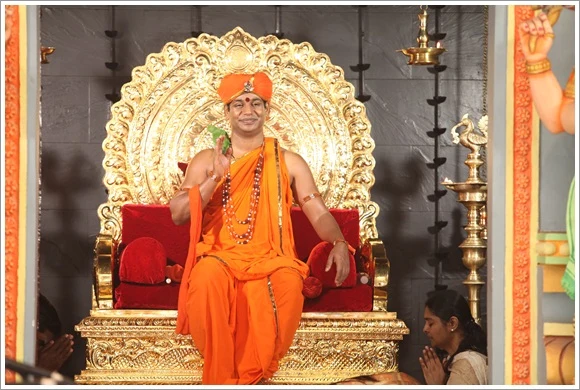
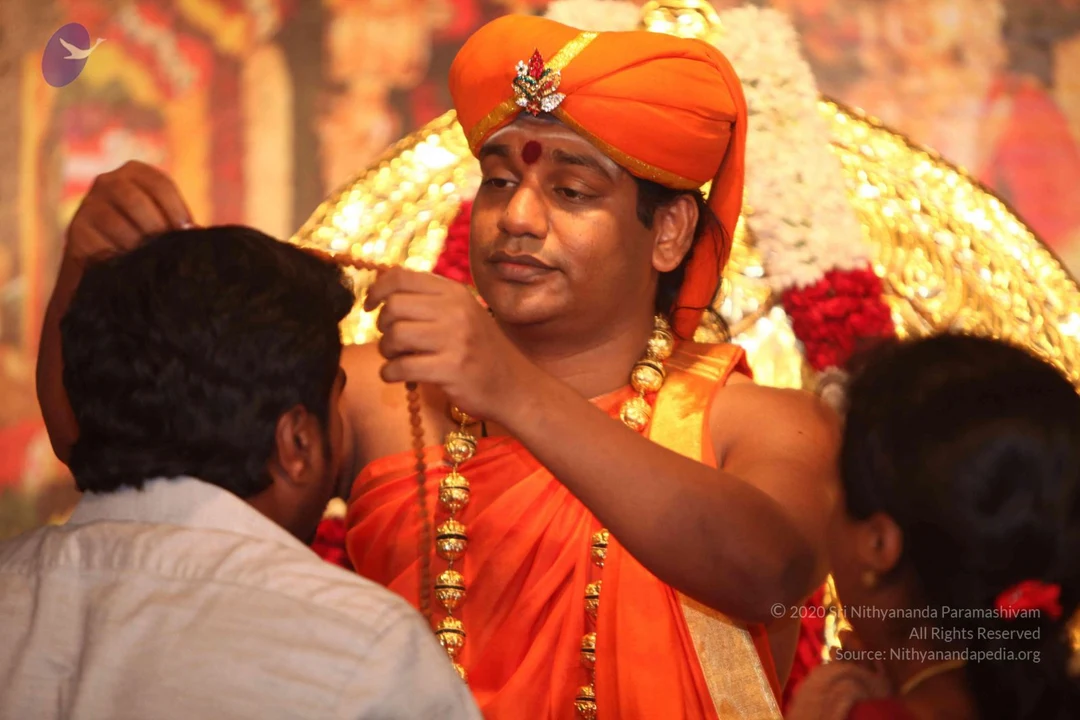
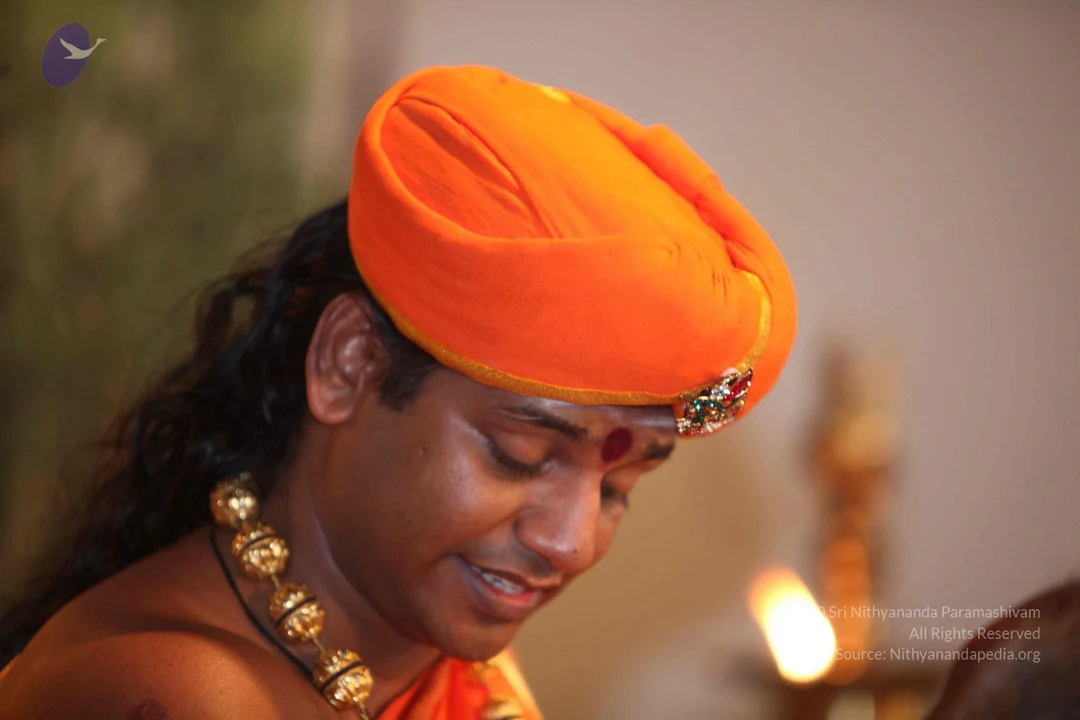
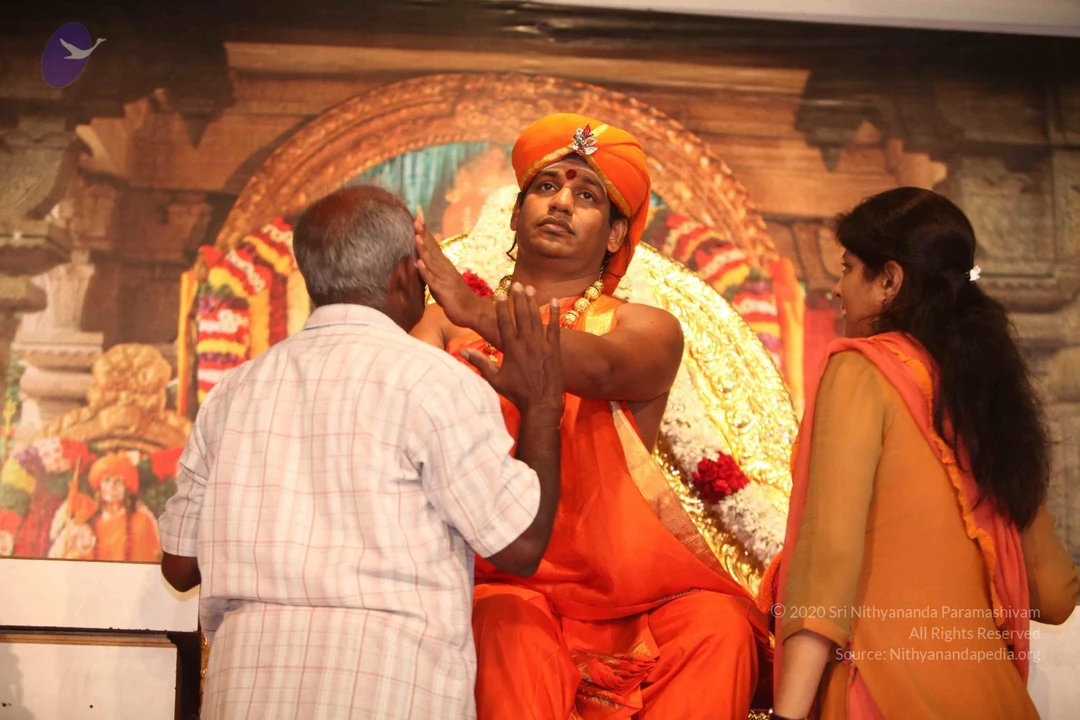
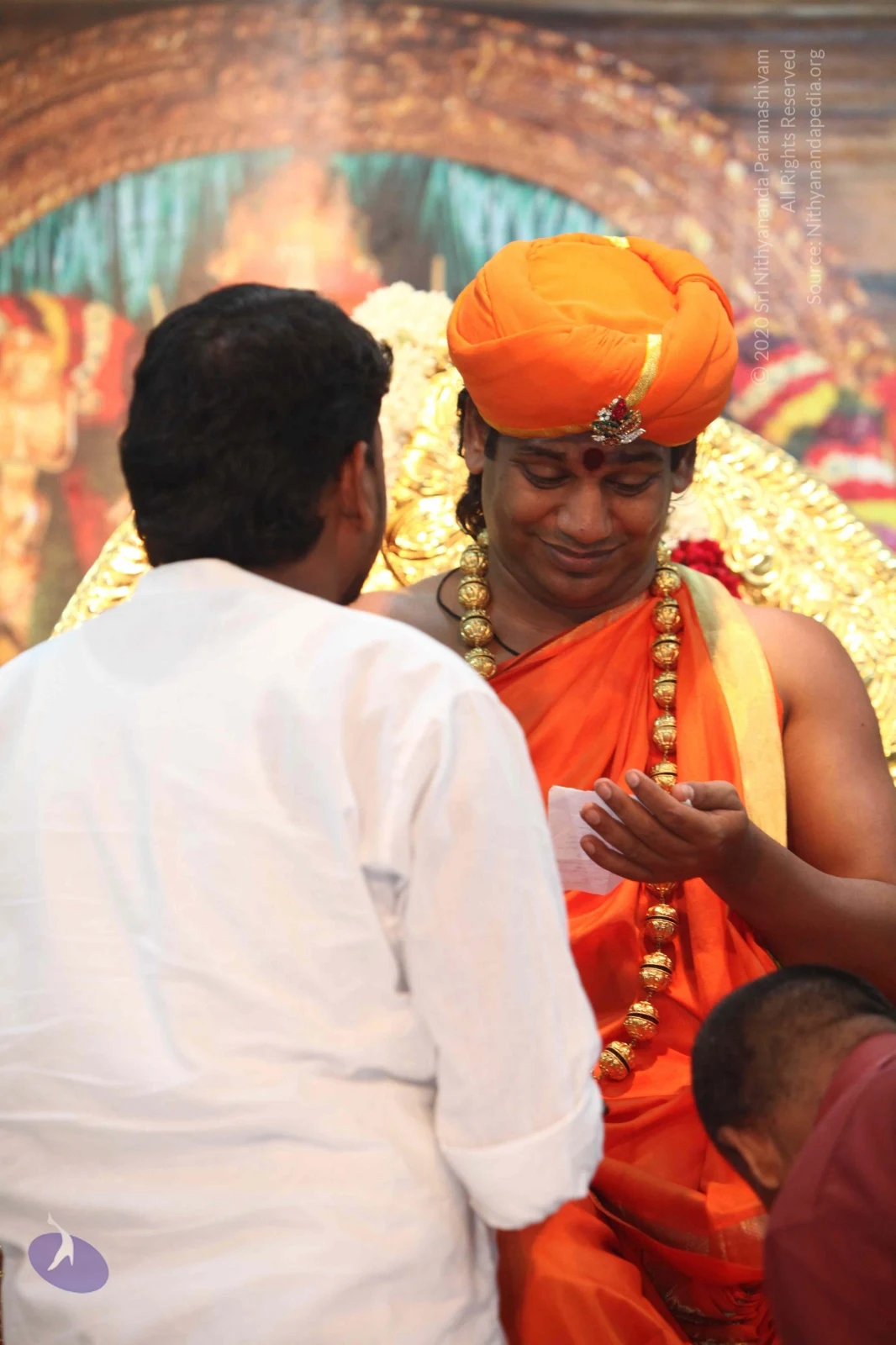
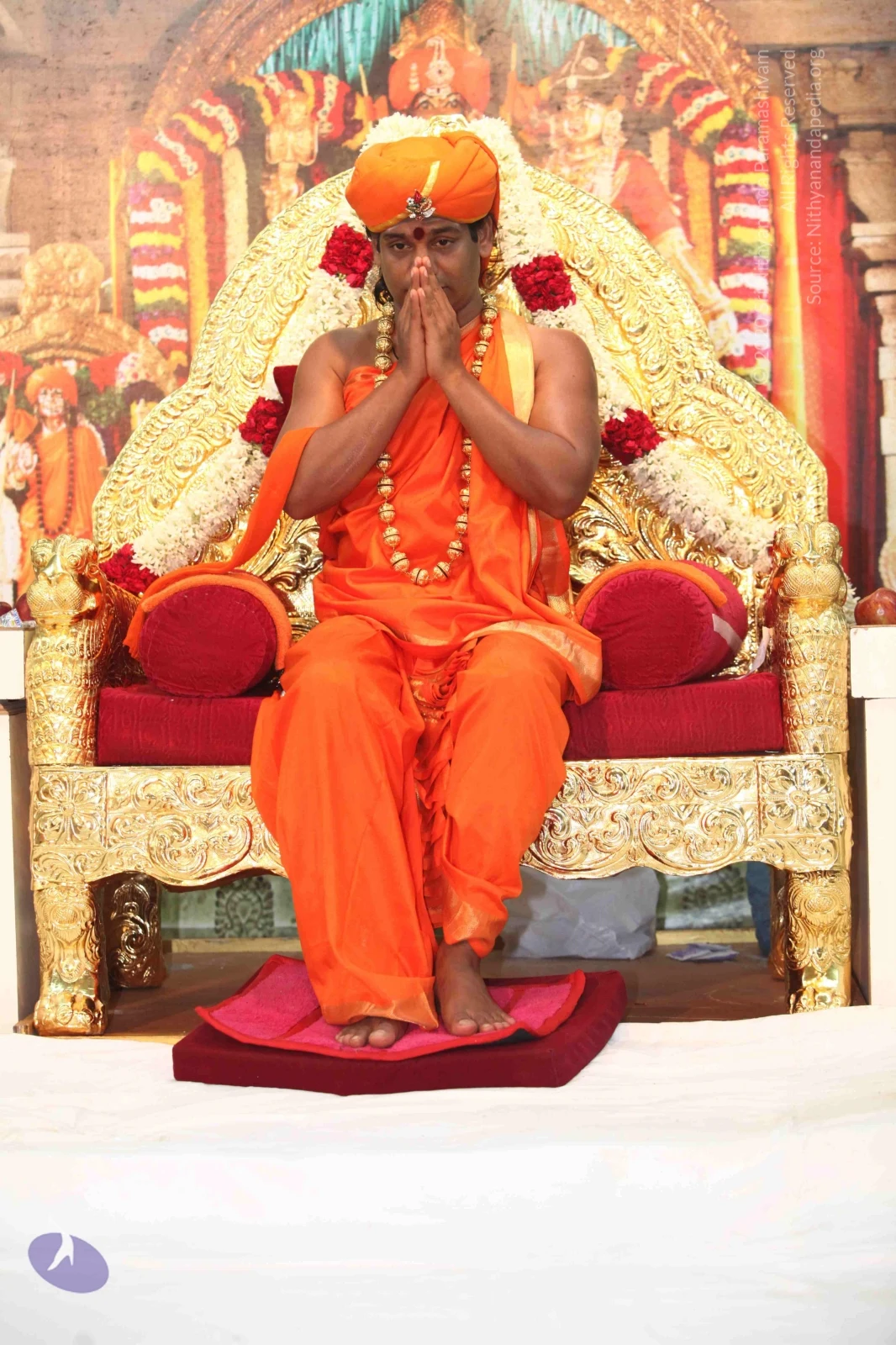
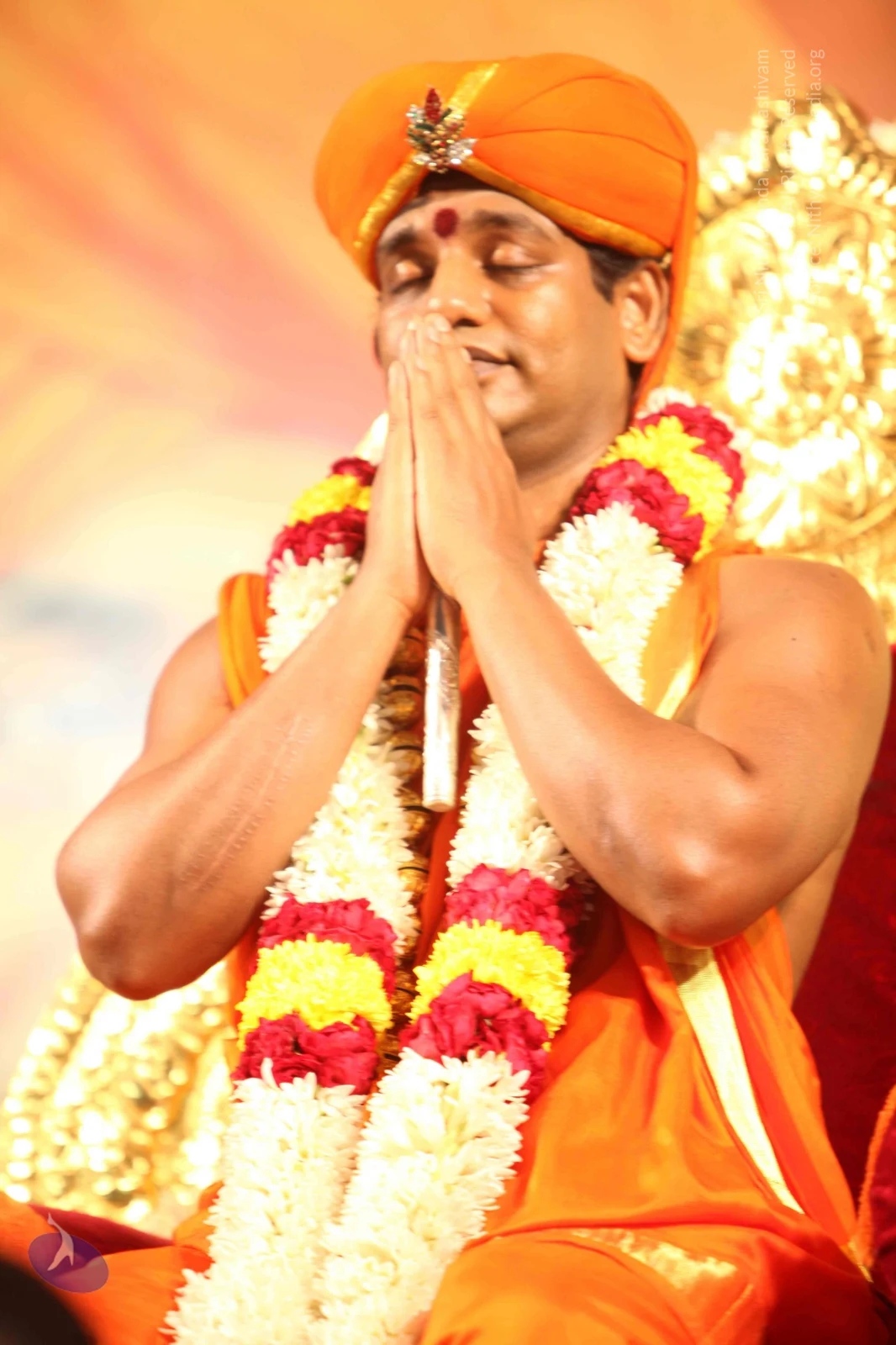
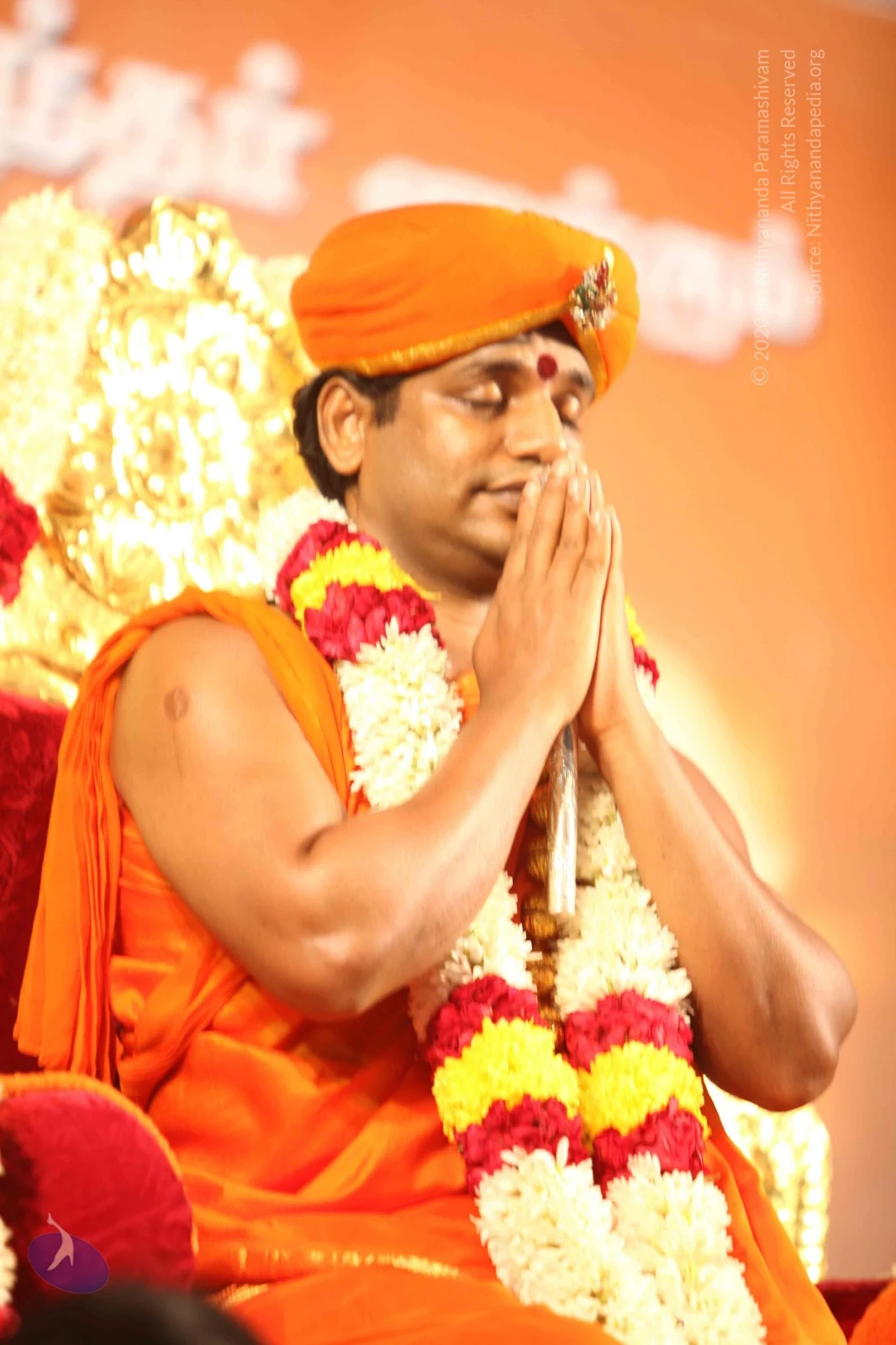
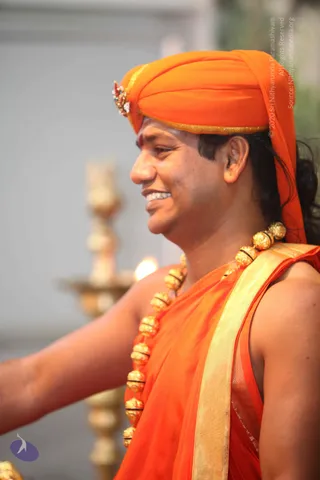
A man seated in front of an ornate gold throne with white jasmine garlands and red flower garlands, hands joined in namaste at chest level with eyes closed. He wears an orange turban with a gold ornament and a red tilak on his forehead, an orange shawl over a bare upper body, and a long necklace of gold beads. Behind him, a painted backdrop shows colourful temple-style figures and architecture. The scene resembles a satsang or darshan setting. Appearance-based cues including the orange turban, gold necklace and throne suggest a person seated in a devotional presentation, though the face is not clearly distinguishable for certainty.A man seated on a gold-ornate throne in front of a floral backdrop of white and red flowers and a painted temple-style wall. He wears an orange turban with a jeweled brooch, a red bindi on his forehead, an orange saffron-coloured robe draped over his shoulder, and a long necklace of large gold beads. a person: saffron robes, orange turban and gold beaded necklace, seated on a golden throne.A photograph of a seated saffron-robed figure with an orange turban and a long swept-back hair, wearing a rudraksha-style gold bead necklace, placing both hands on the heads of two devotees. A man in a blue-and-white checked shirt bows with eyes closed and palms together, and a woman in a white shawl sits with her head bowed and hands folded. The setting shows a red cushioned seat with white flower garlands at right and a painted forest backdrop. The man in orange has distinctive long hair, saffron clothing and beaded gold necklace cues, consistent with the page's a person reference, so the appearance-based label is a person, giving a blessing to devotees in a darshan setting.A photograph of a man in an orange turban with a jeweled brooch and red bindi, wearing an orange shawl over a bare chest with gold ceremonial necklaces, placing a rudraksha mala around the neck of a seated devotee in a light grey shirt. A woman with hair adorned with red flowers is at the right edge. Behind them, golden peacock-like backdrops and white and red floral garlands decorate the setting. Attribution is uncertain.A close photograph of a man with long dark wavy hair wearing a bright orange turban decorated with a small jeweled brooch and a red bindi on his forehead. He is bare-shouldered, wearing a black cord and heavy gold beaded necklace, and looks downward with a slight smile. A small oil lamp flame glows in the blurred background.A man in an orange turban with a red bindi and an orange shawl, wearing a multi-strand necklace of gold-toned beads and rudraksha-style beads, sits beside a red throne draped with white and red flower garlands. He rests one hand on the shoulder of a bald, grey-haired man in a light blue shirt seen from behind, who is bowed toward him. An oil lamp with a lit flame stands in the background near a gold-toned deity murti. The orange-clad man is an appearance-based a person with several qualifying cues: orange turban, ornate beaded necklace and saffron clothing, placed in a blessing gesture of padapuja-style or darshan-style giving of blessings. Two people are visible.

IA-Darshan-Photo-Morning
114 photosSource gallery
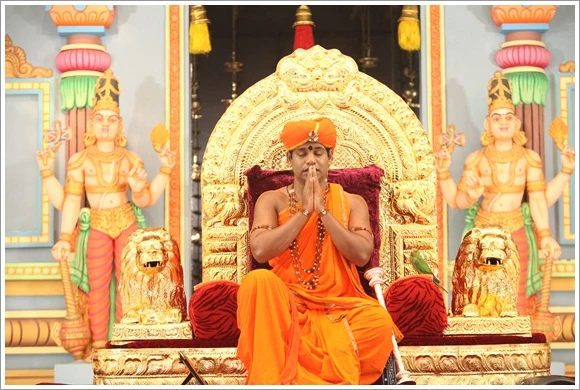
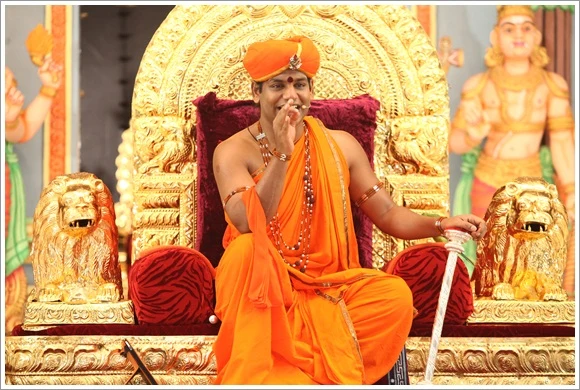
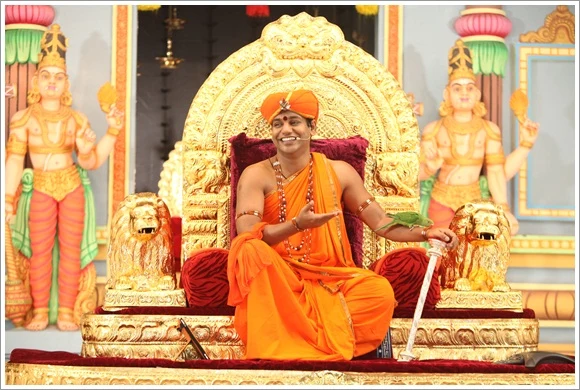
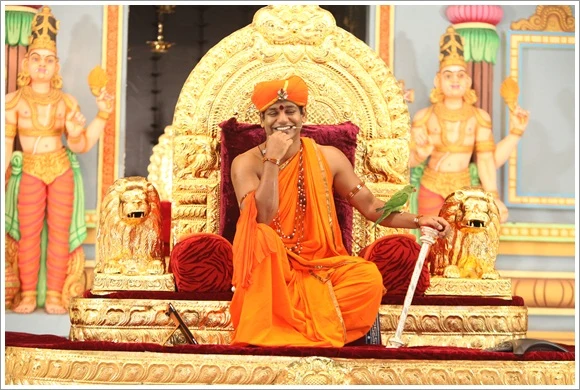
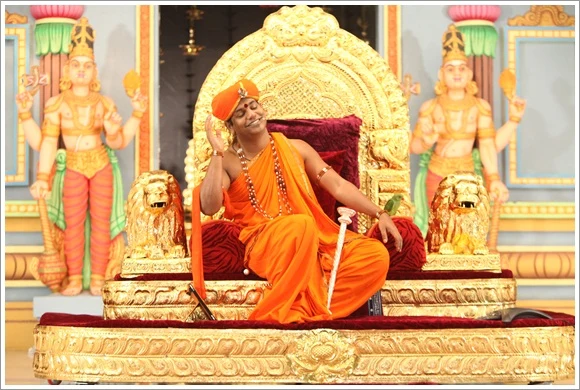
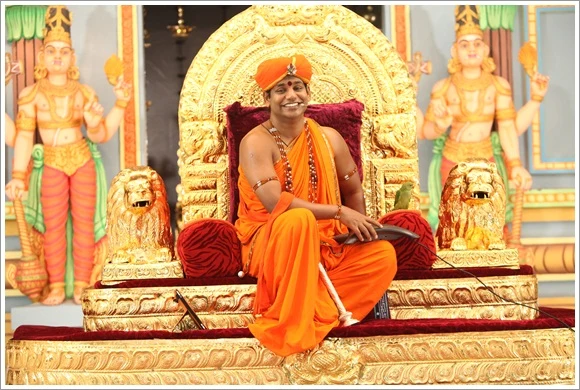
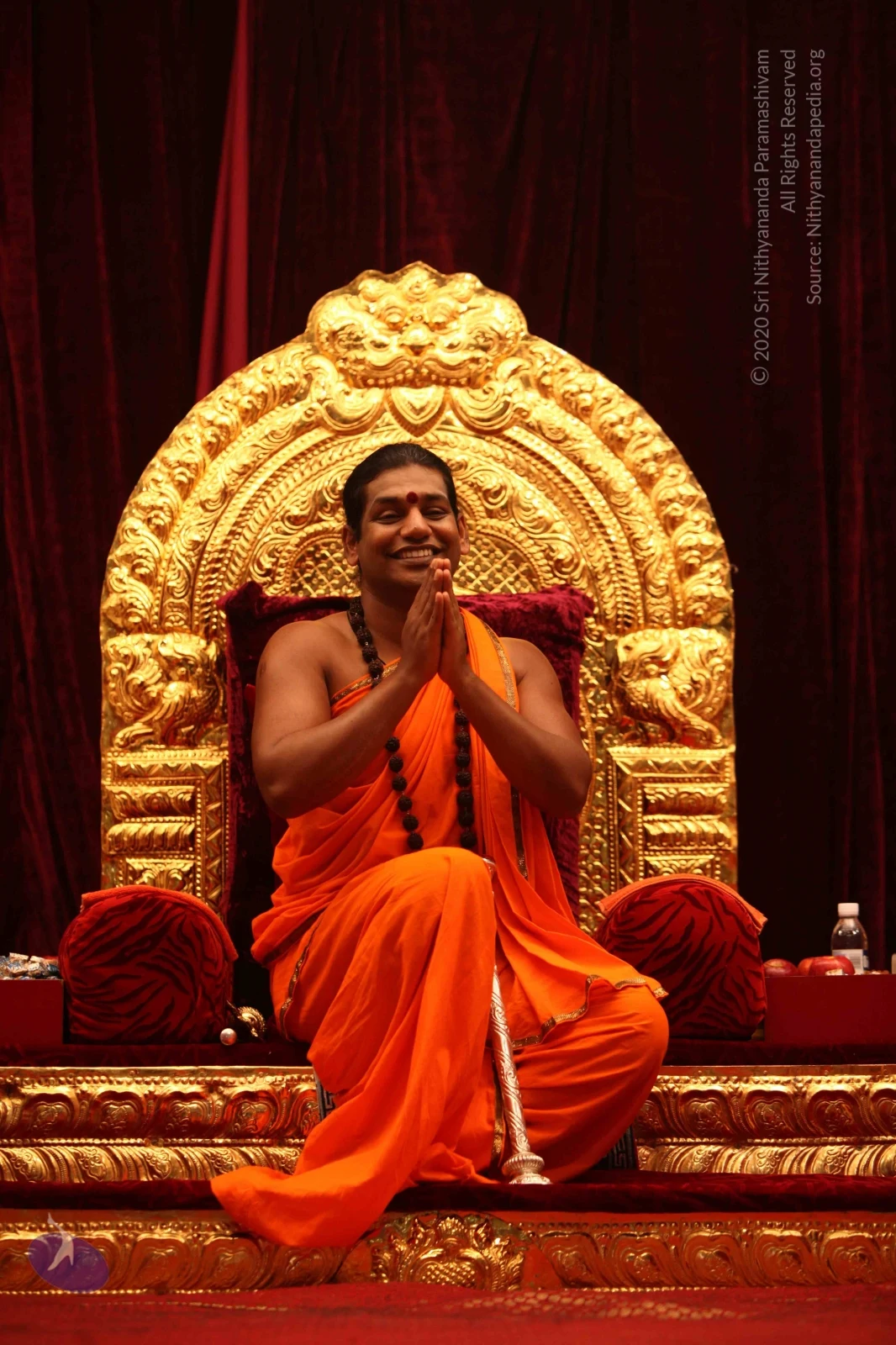
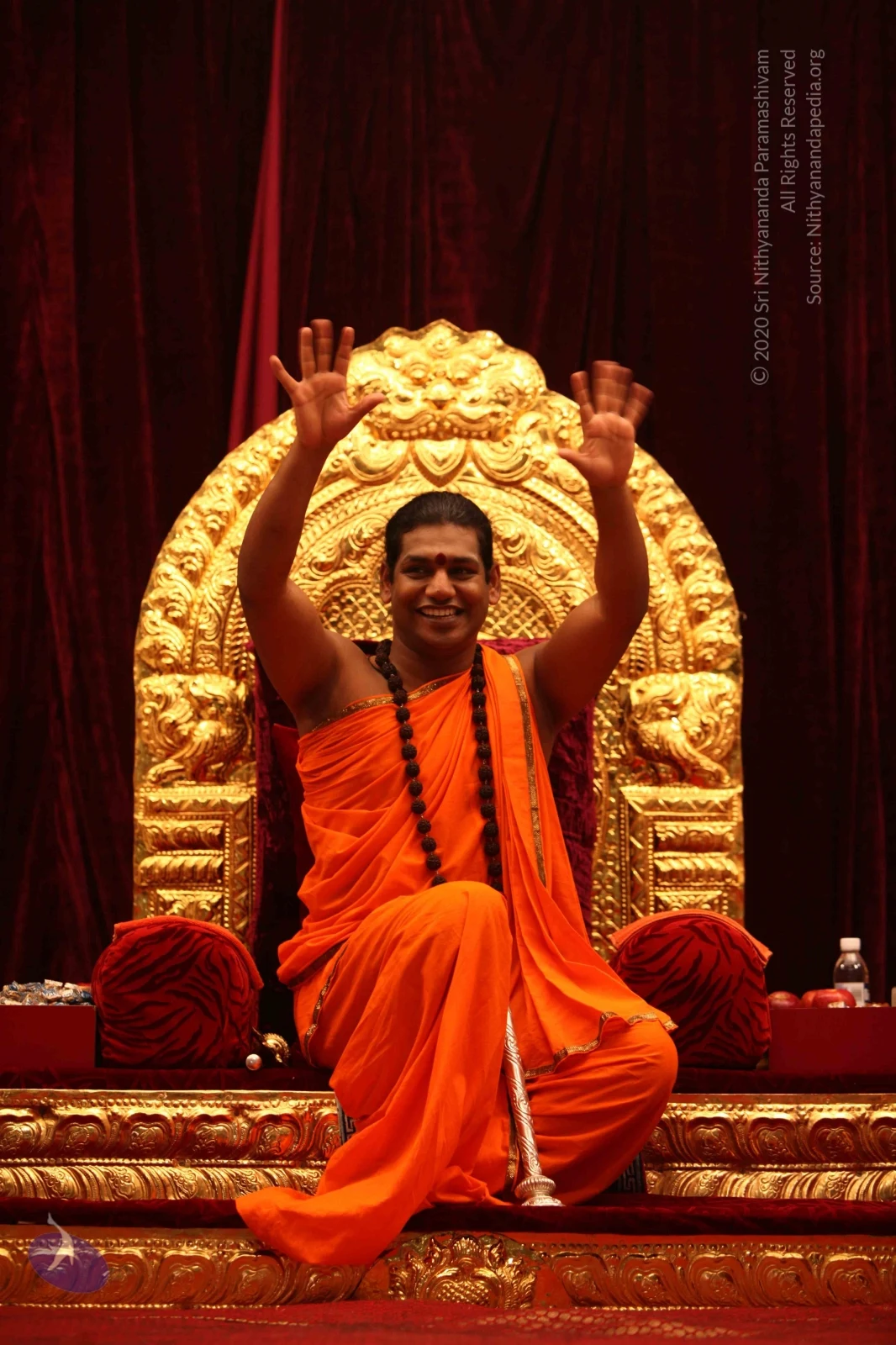
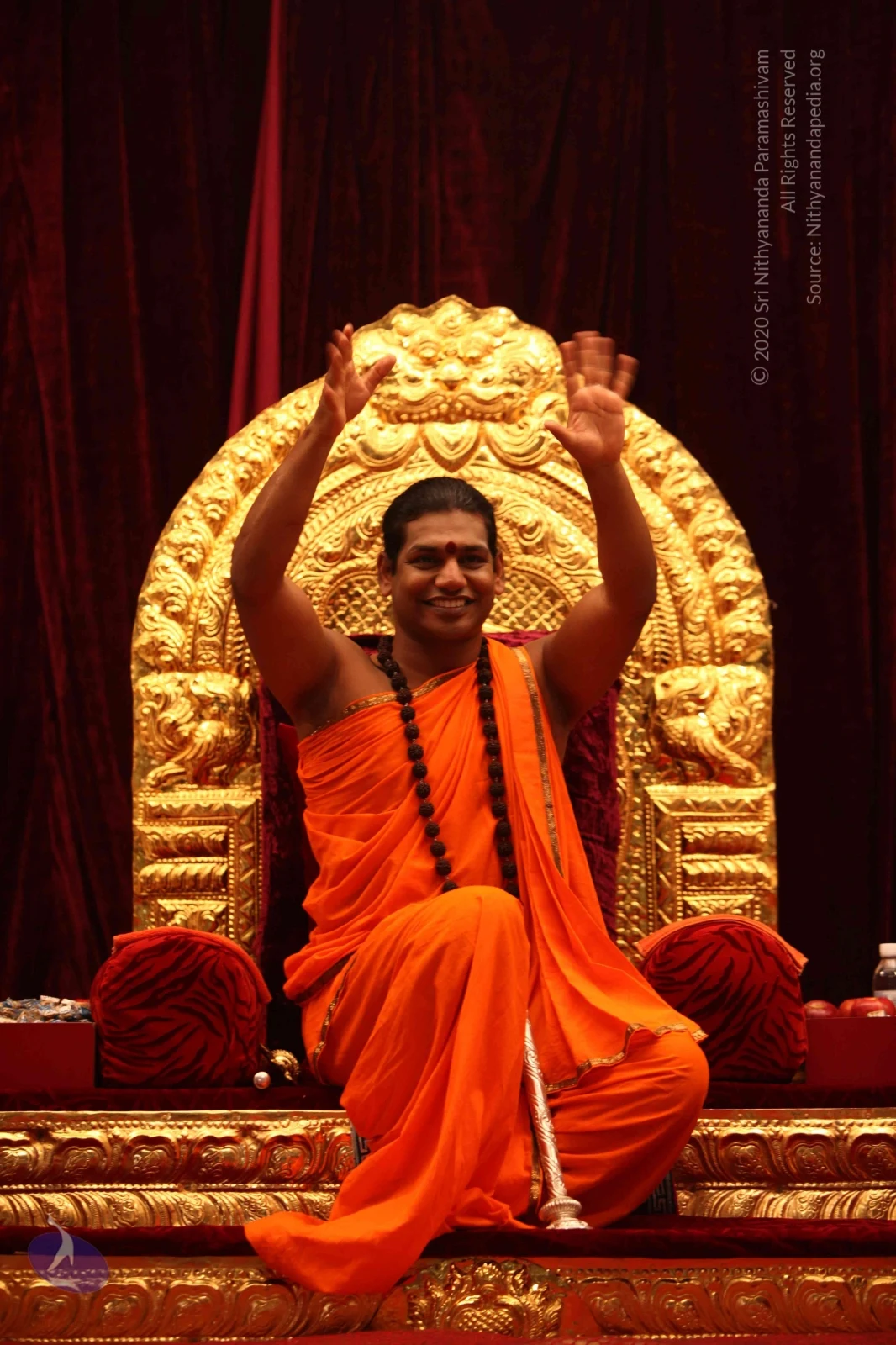
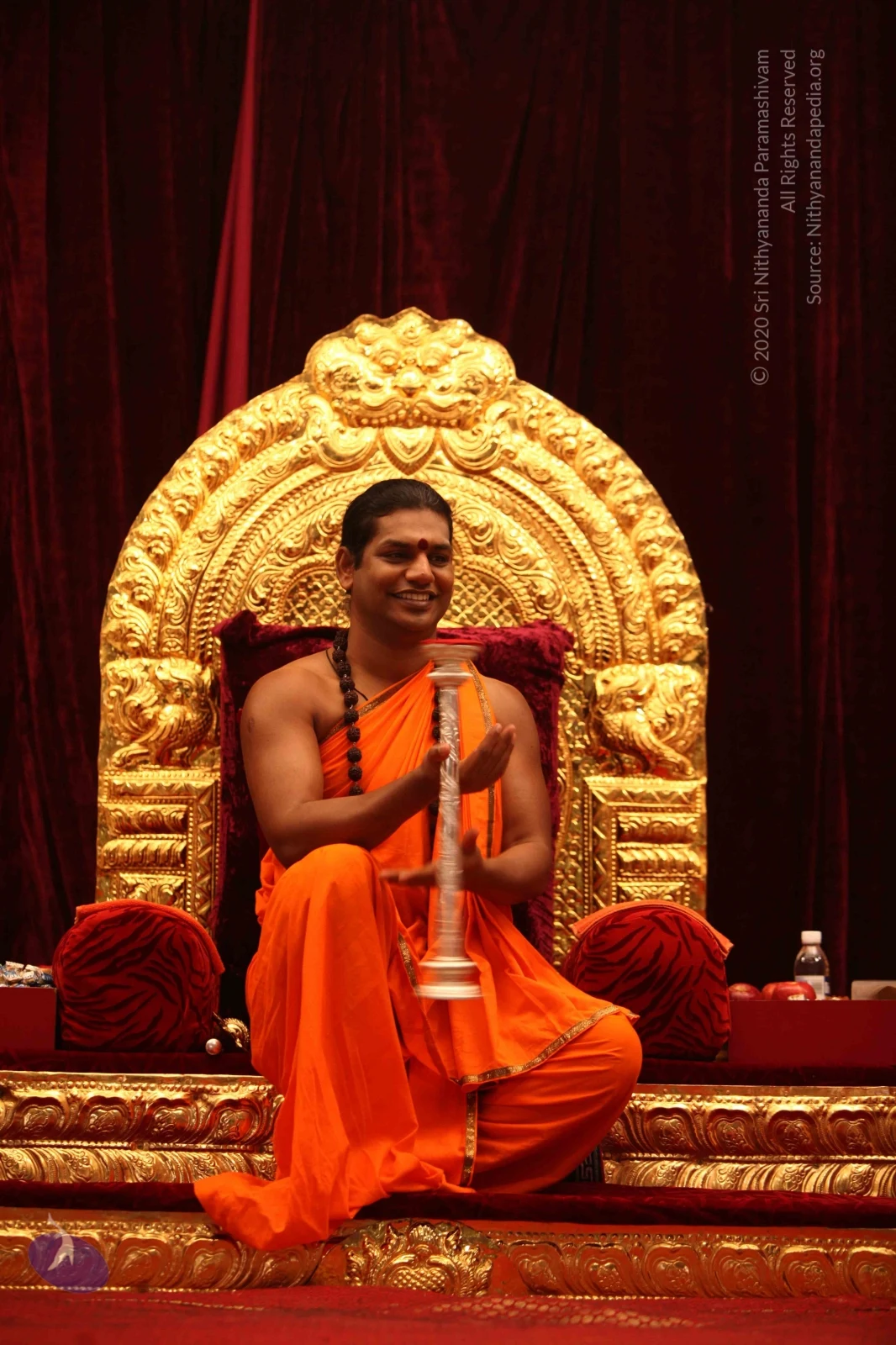
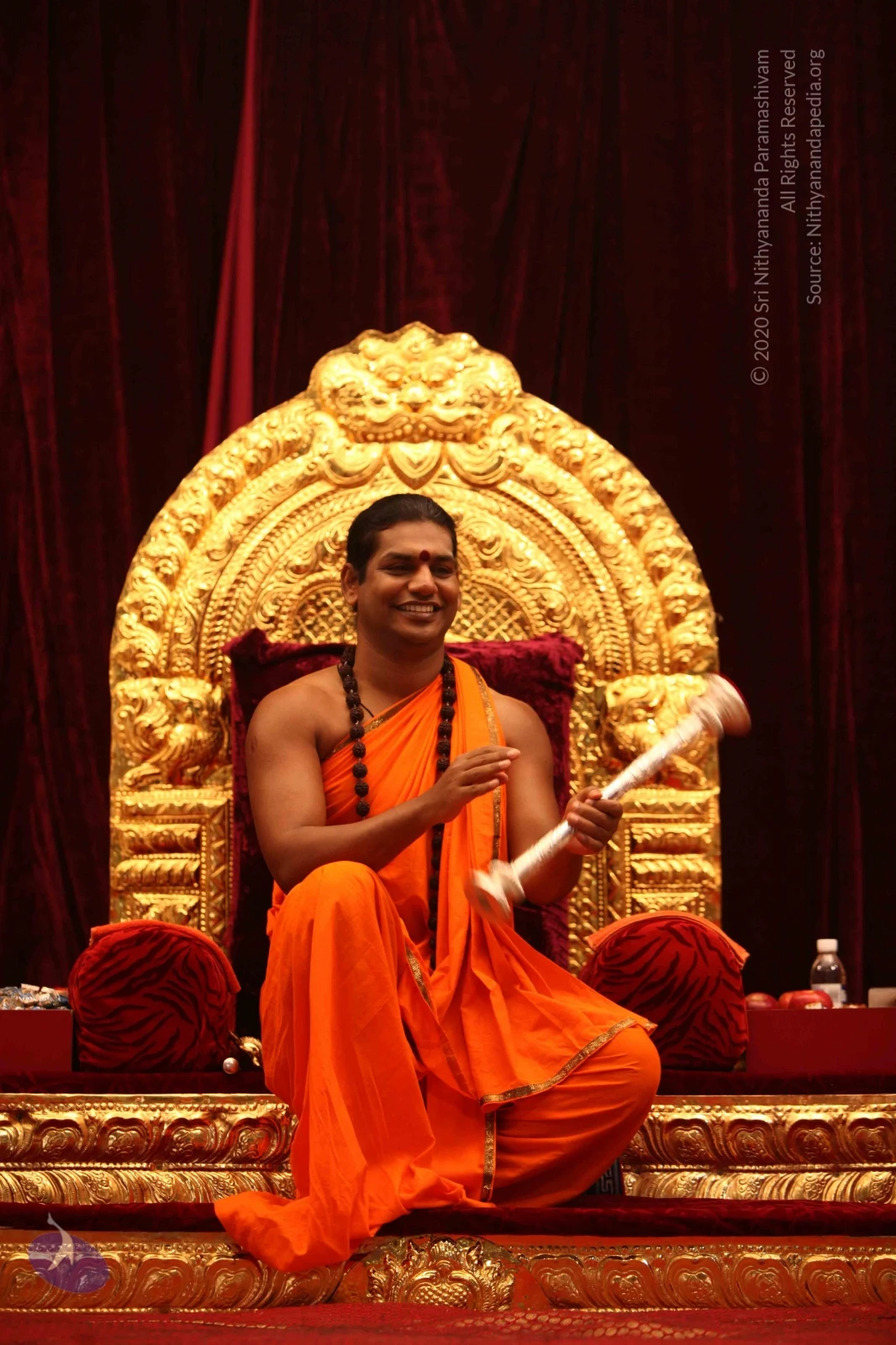
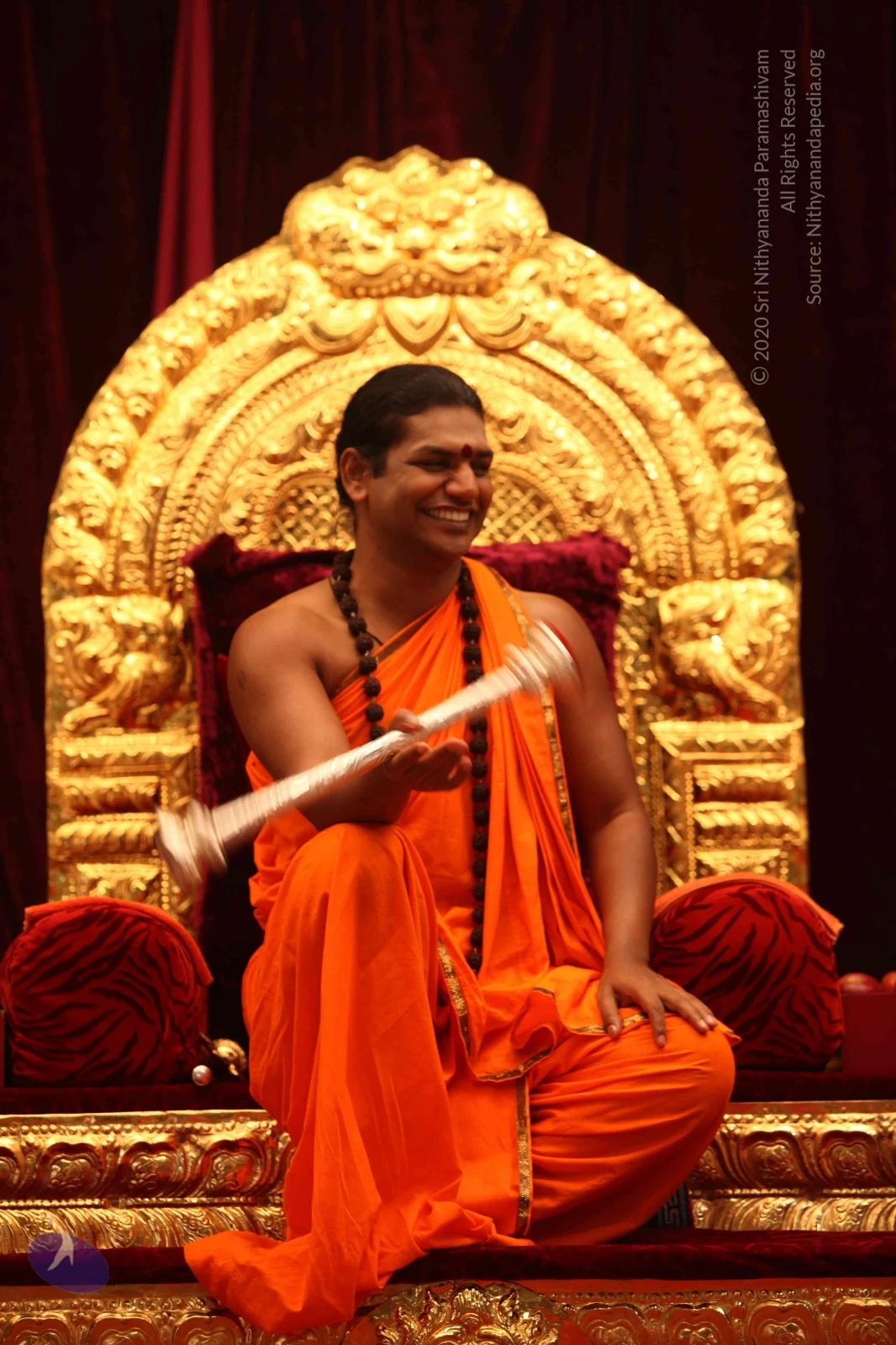
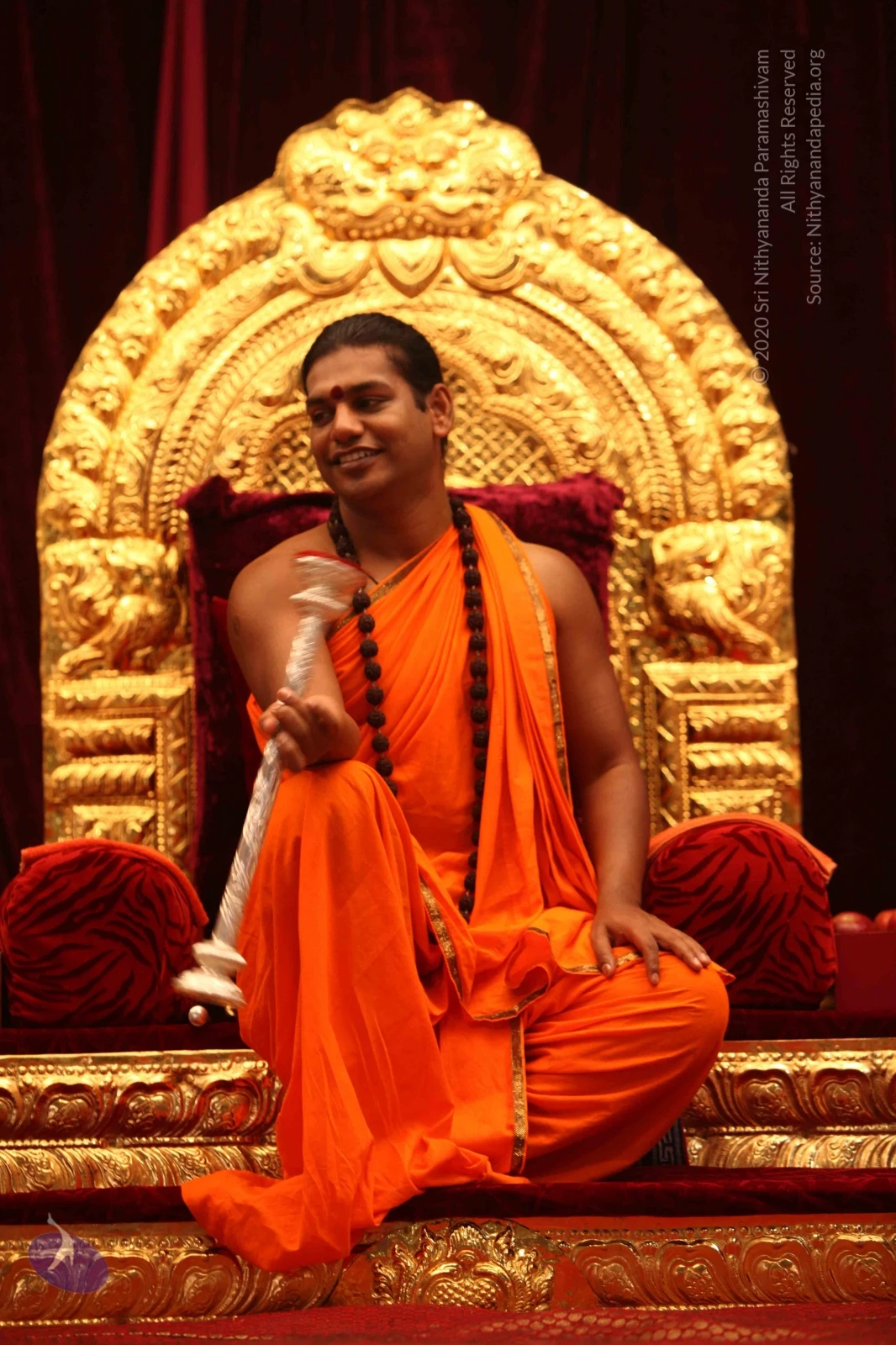
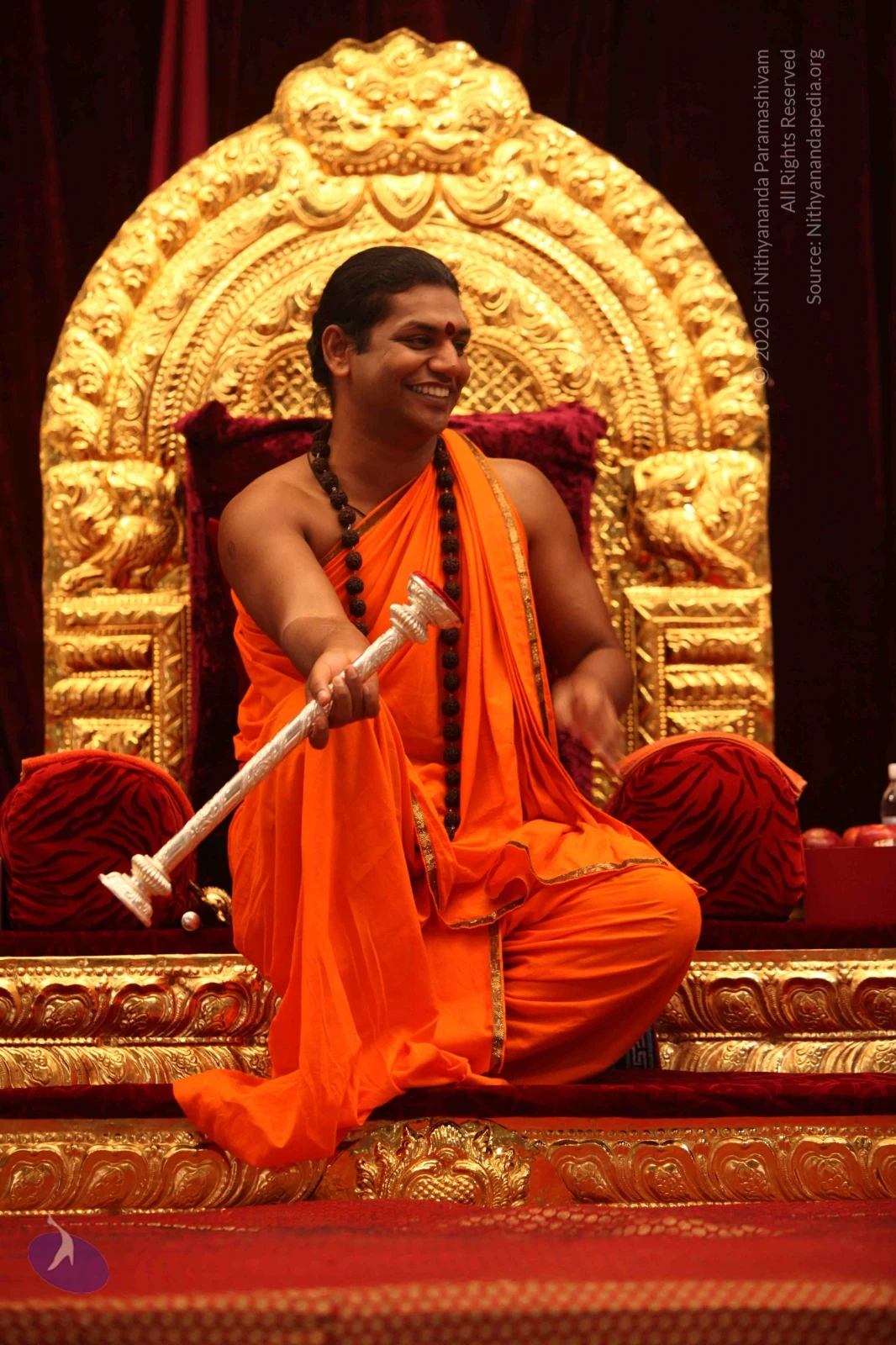
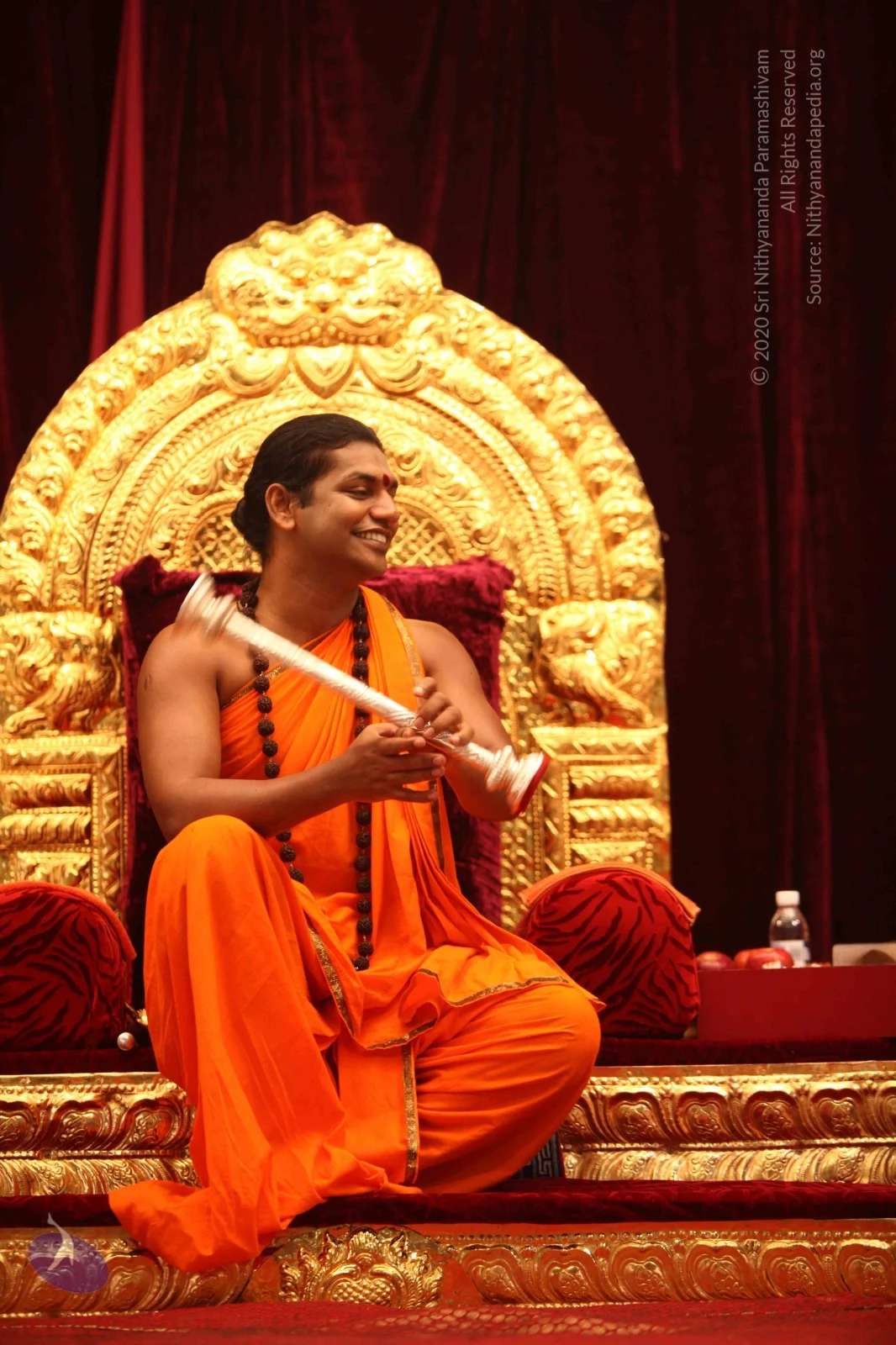
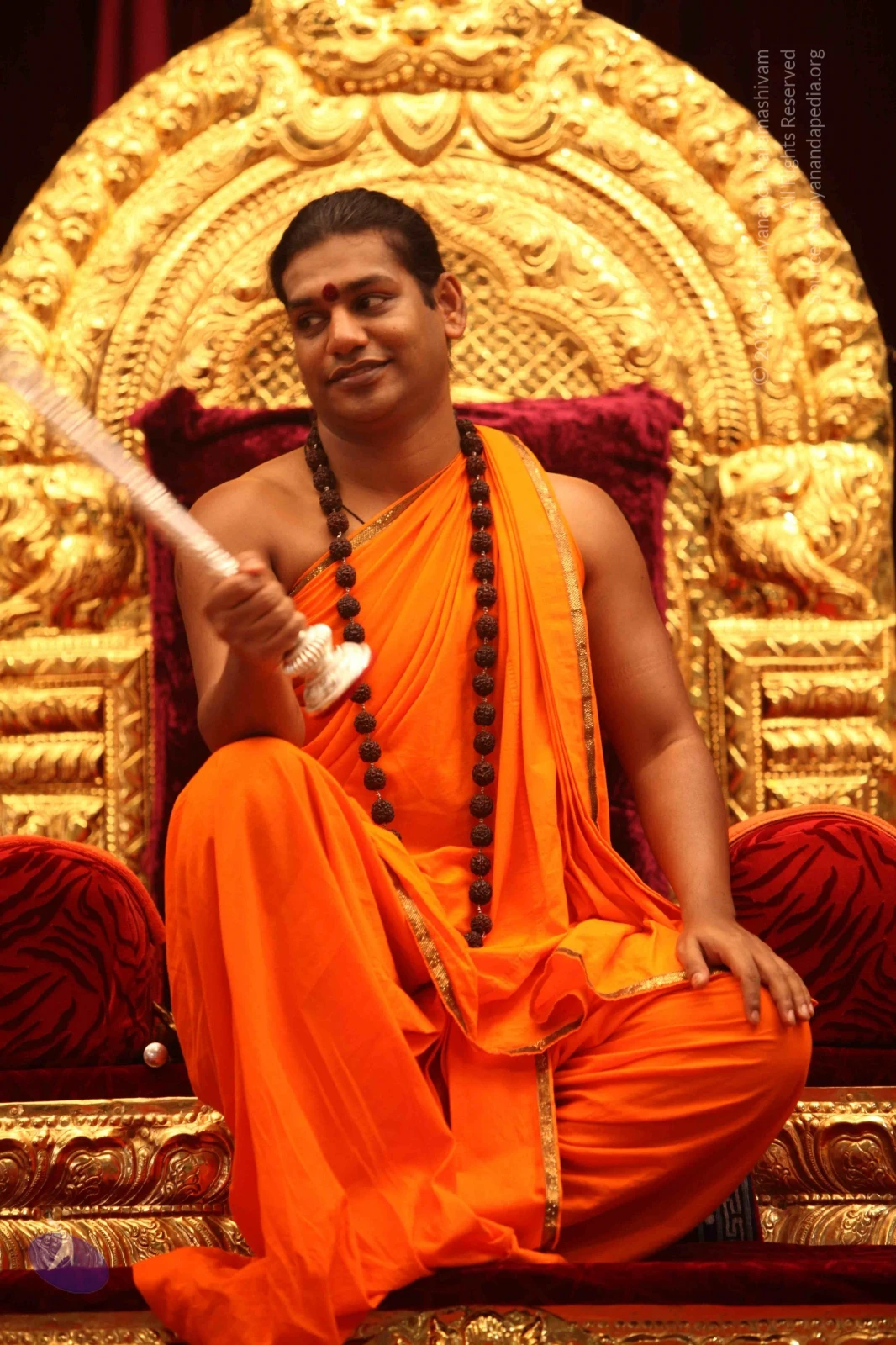
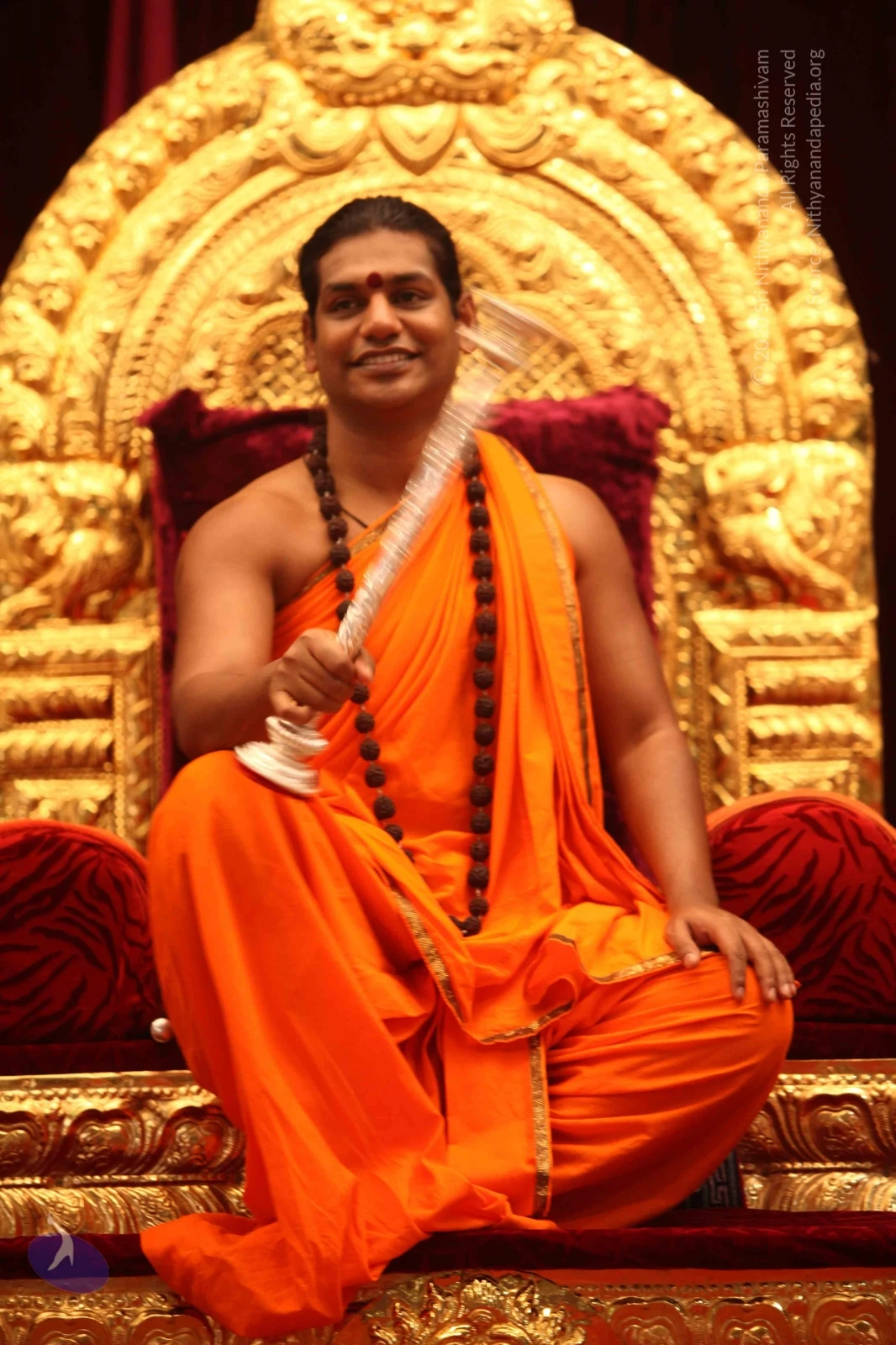
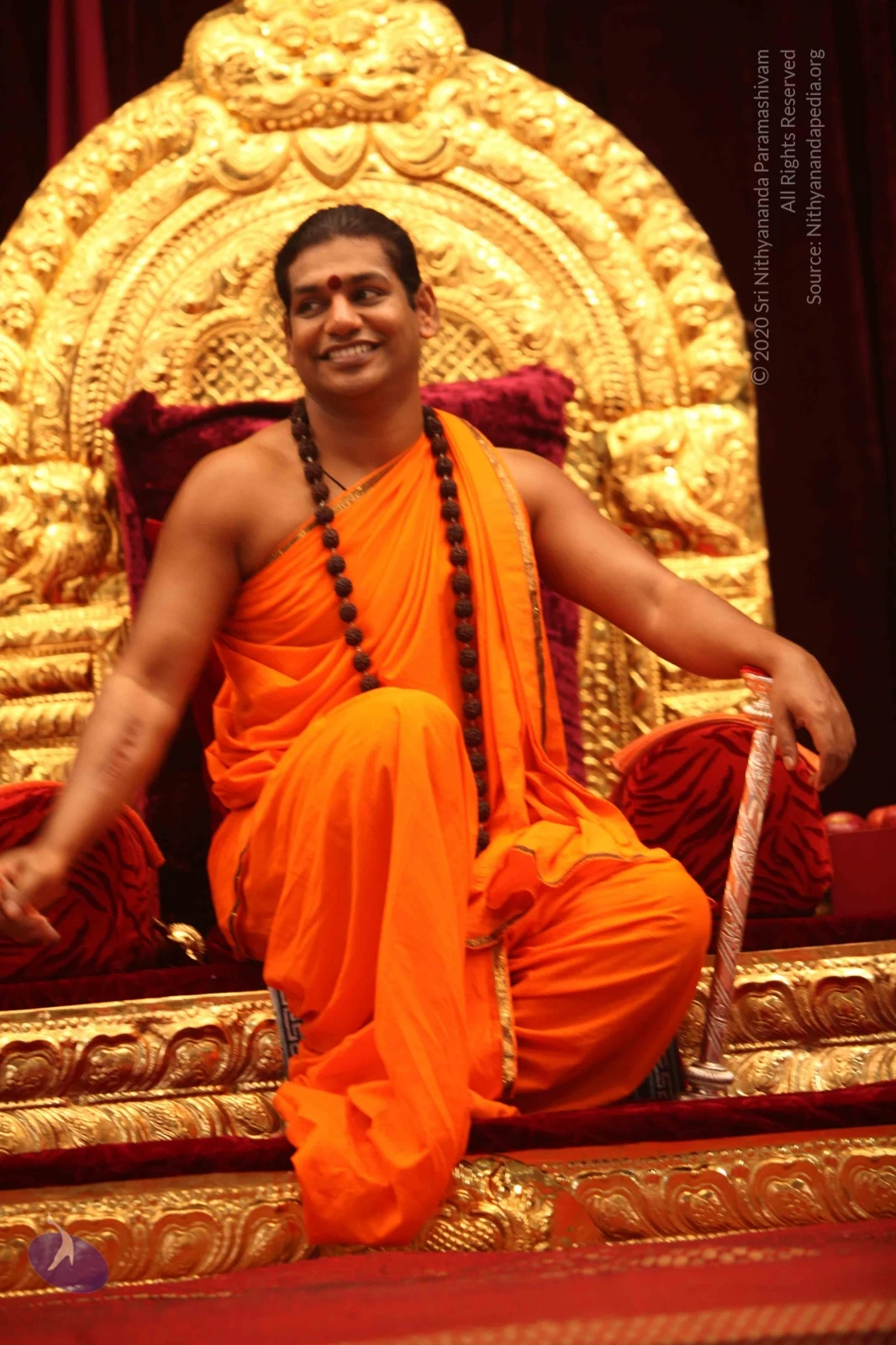
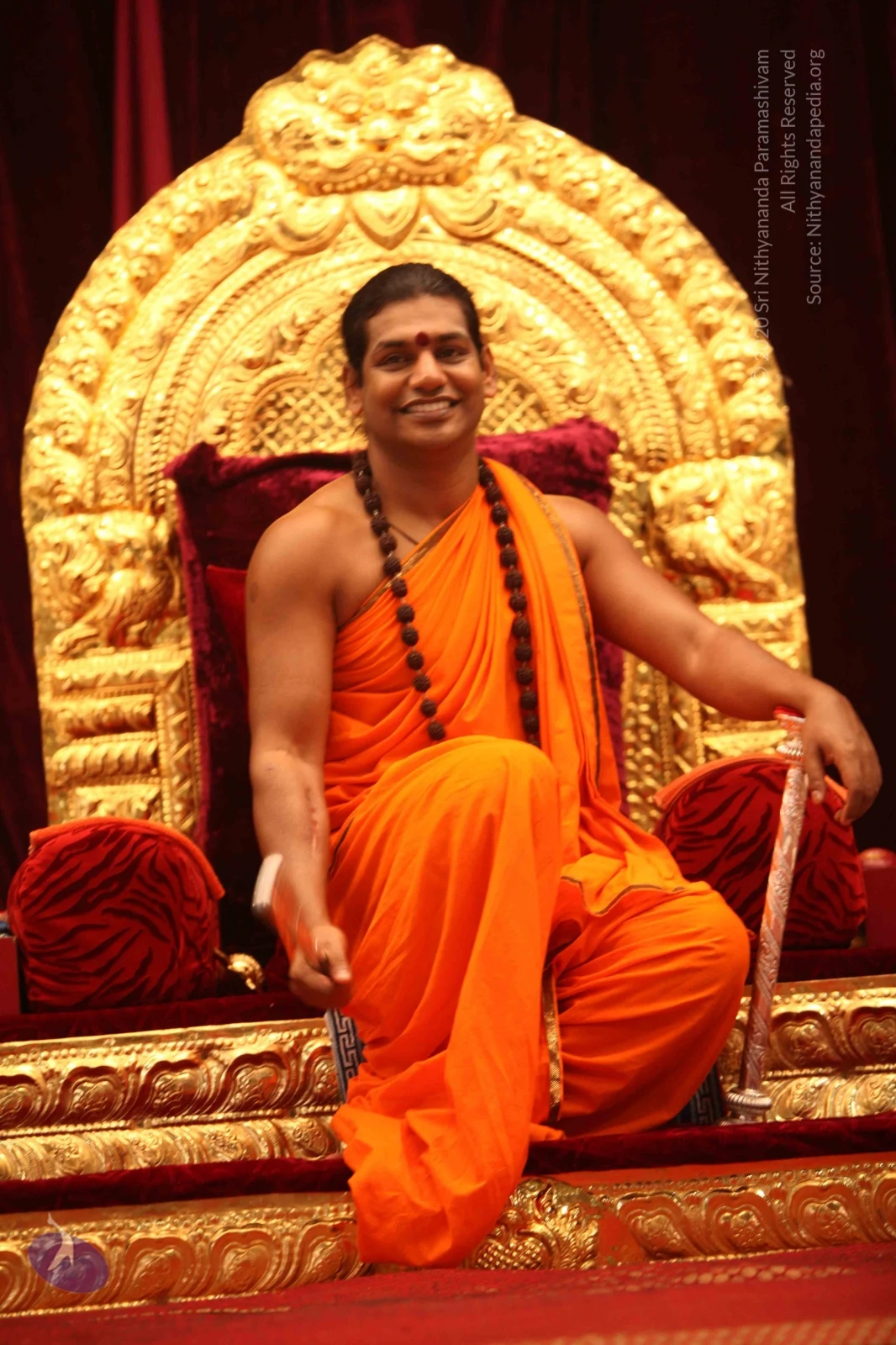
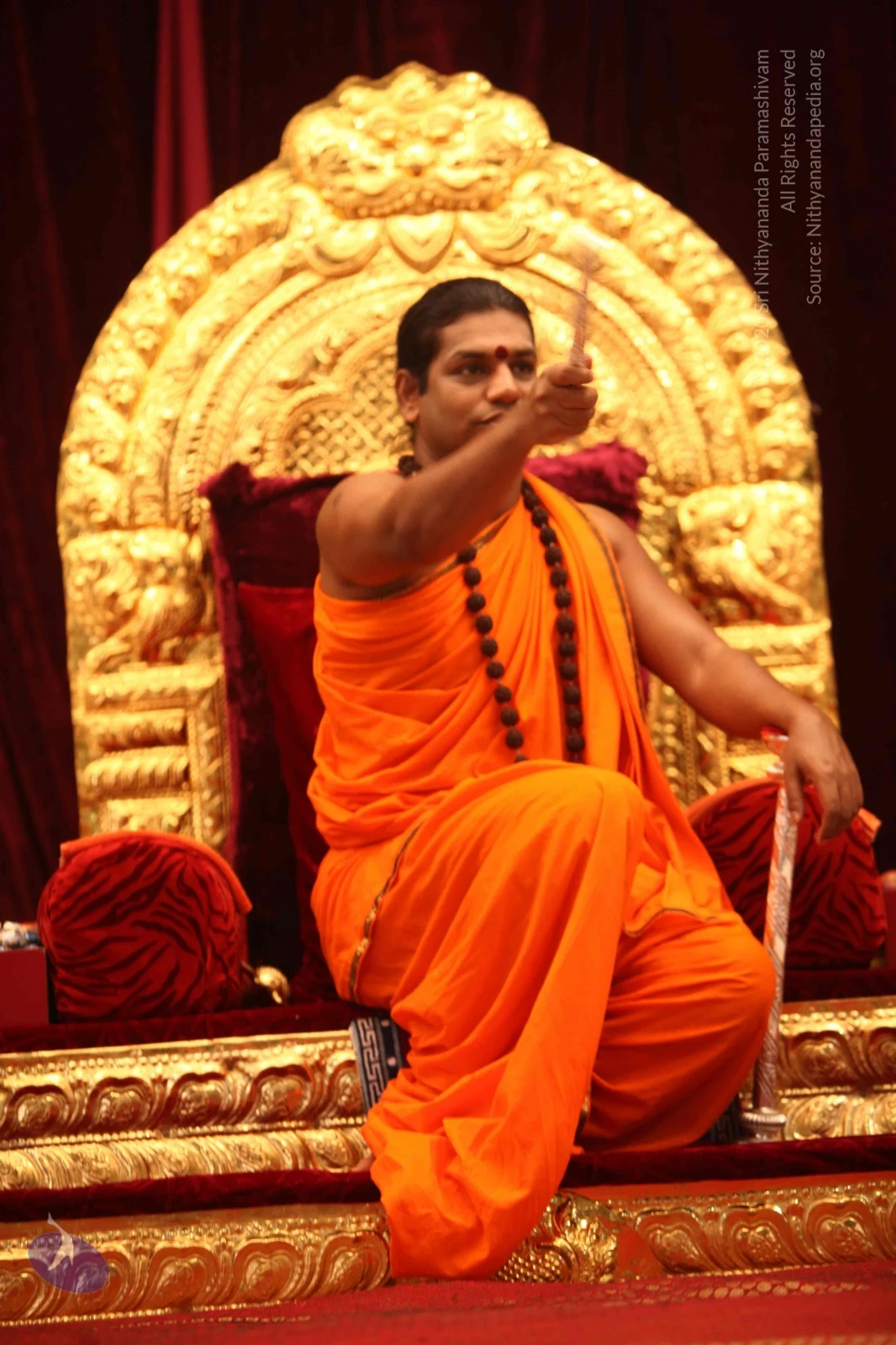
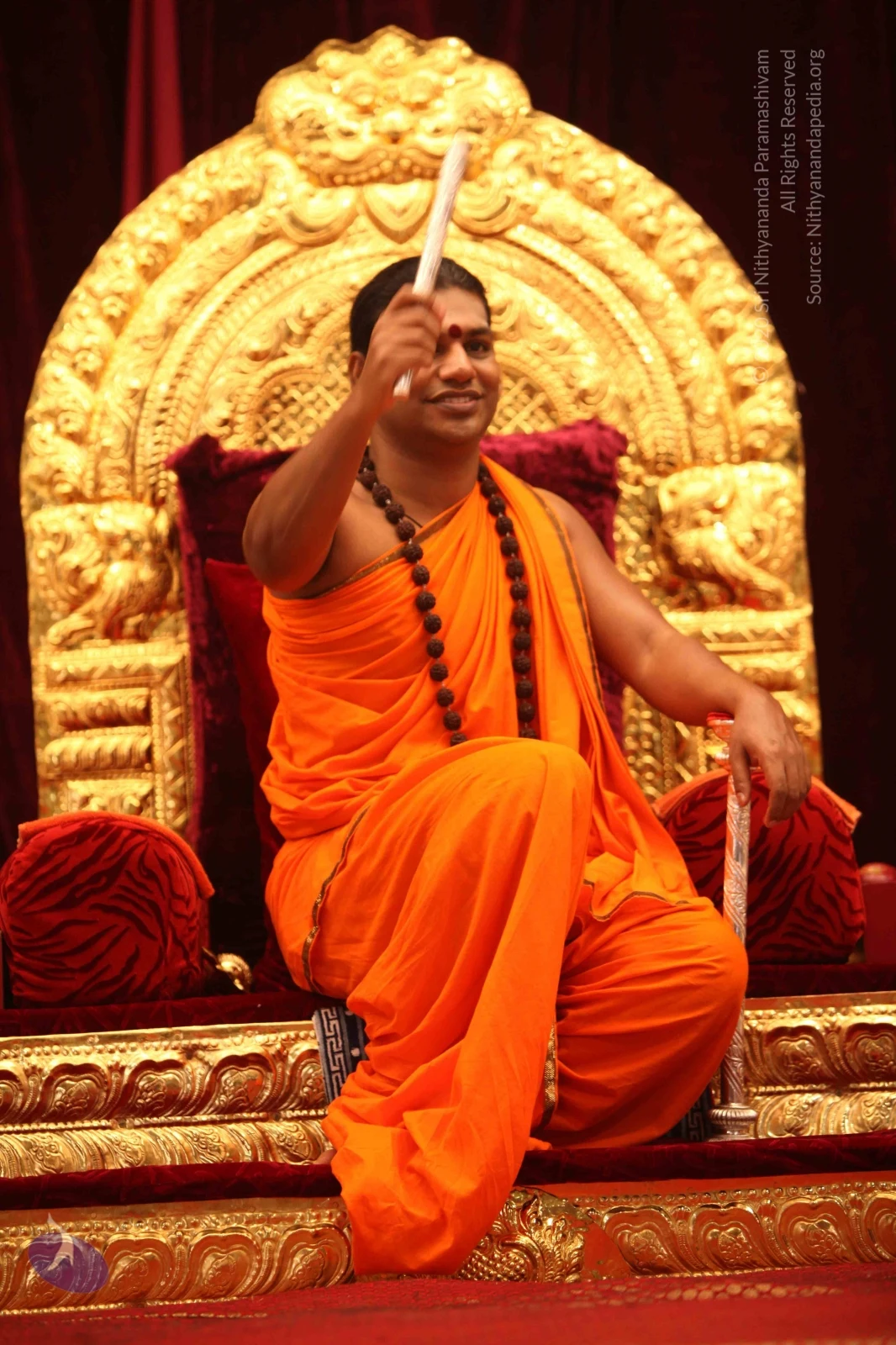
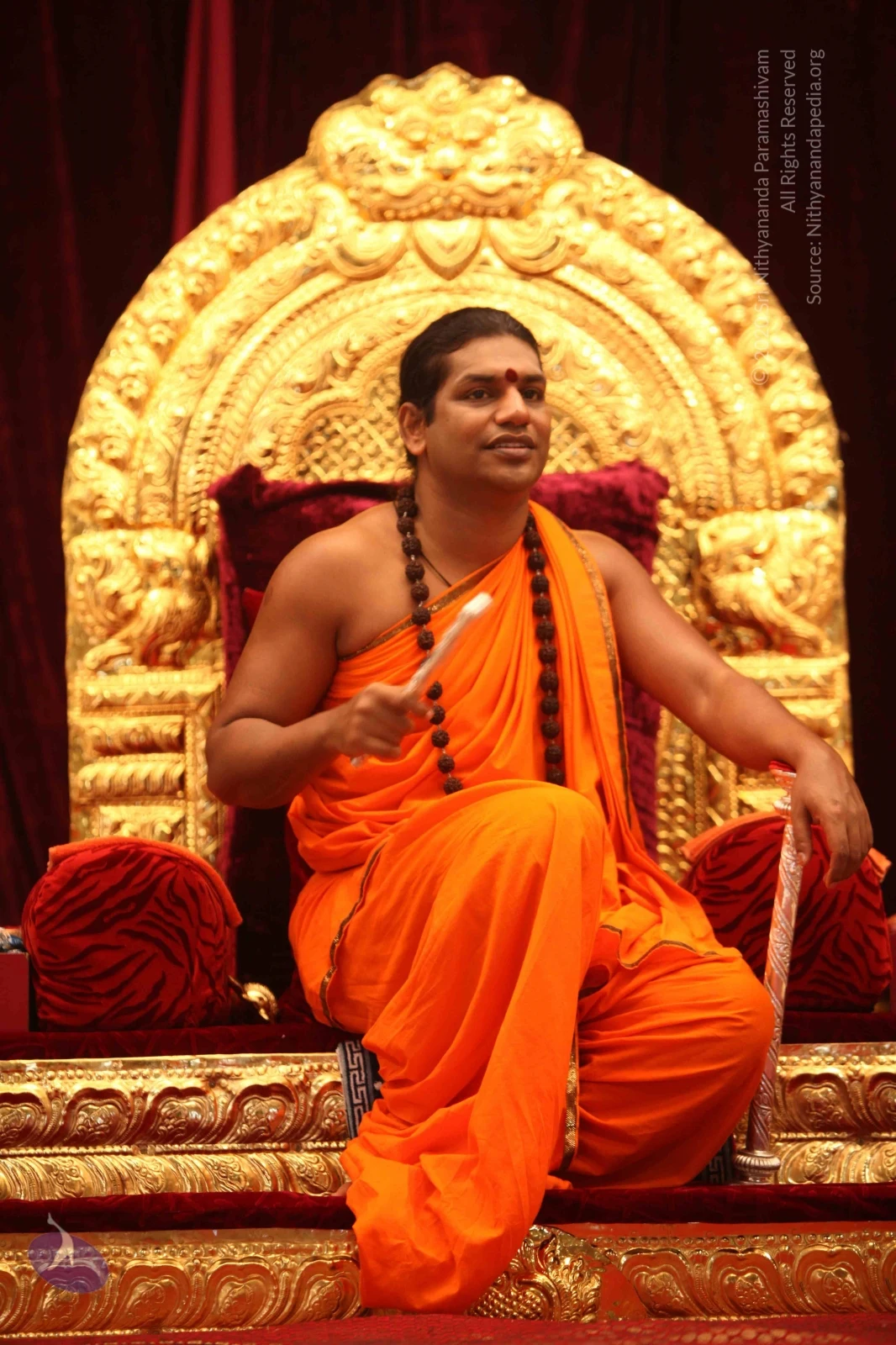
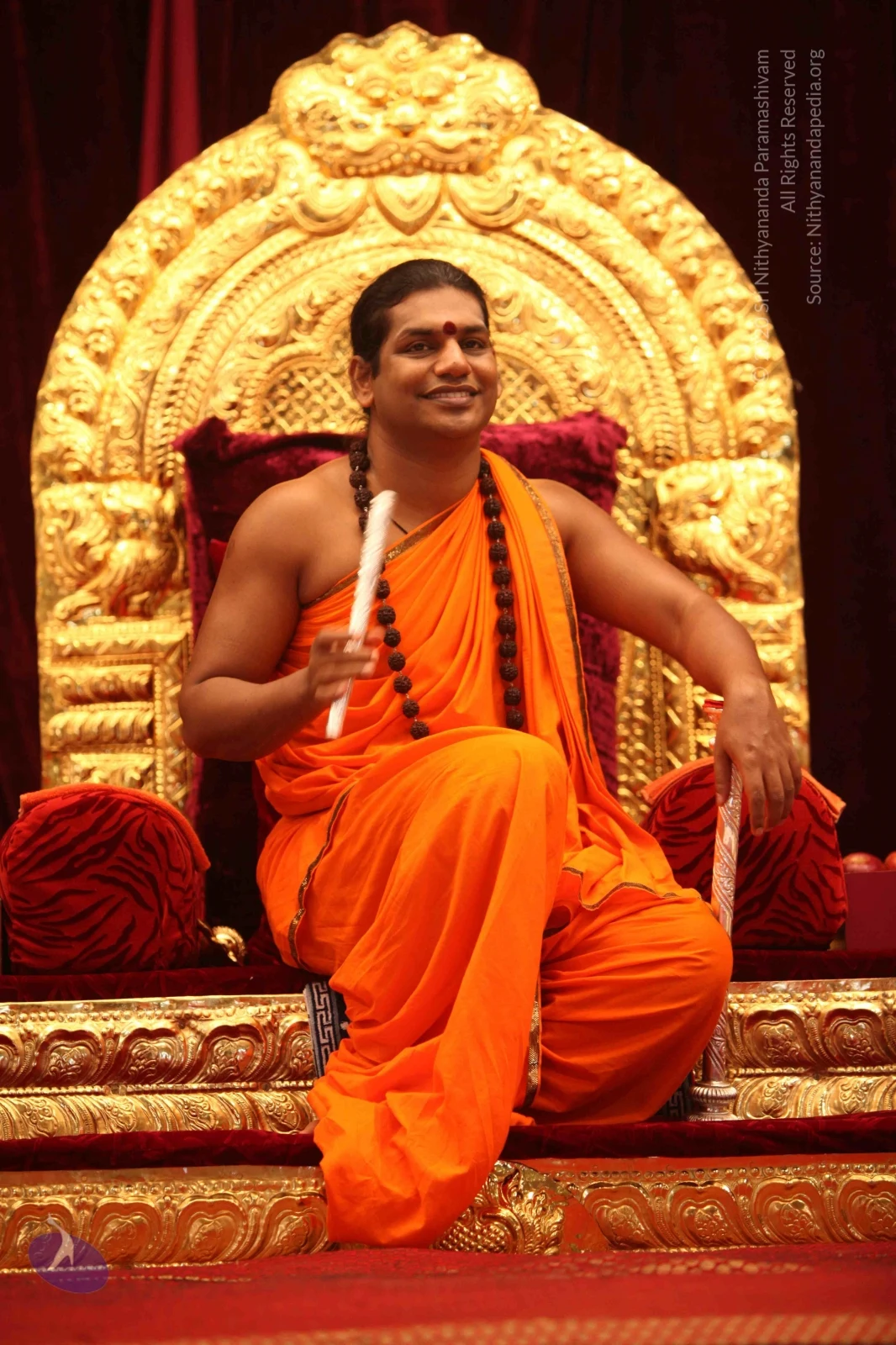
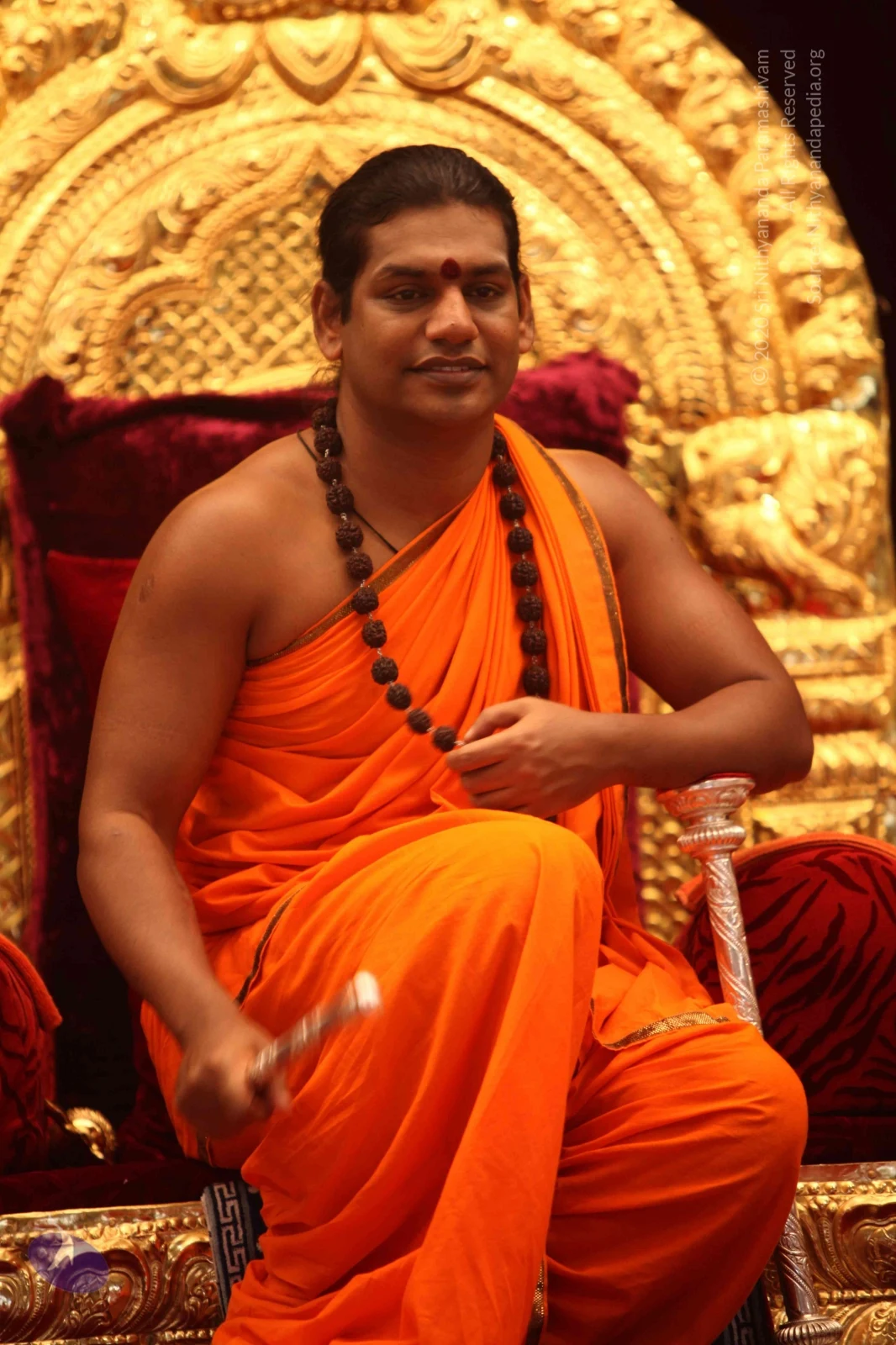
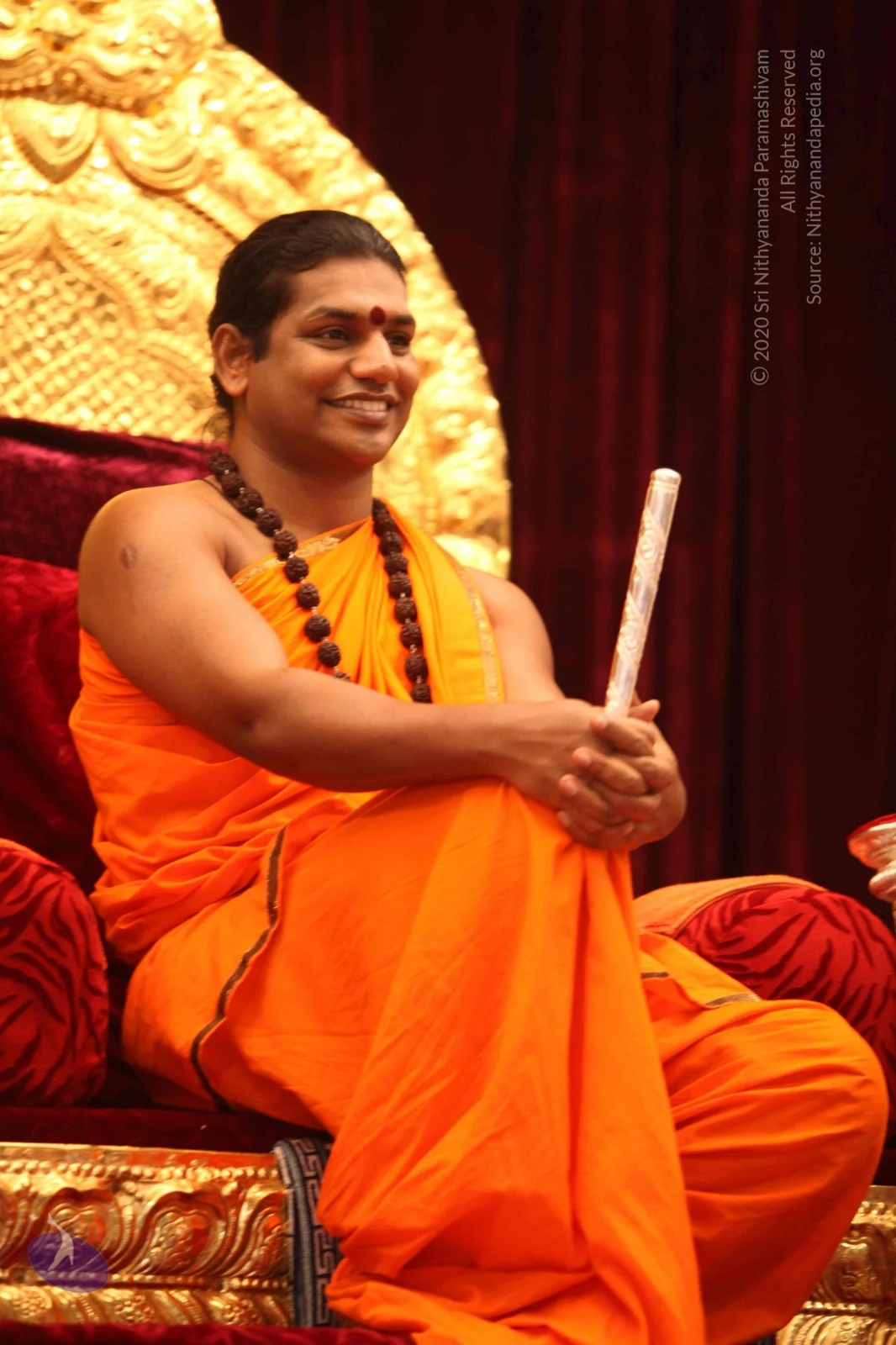
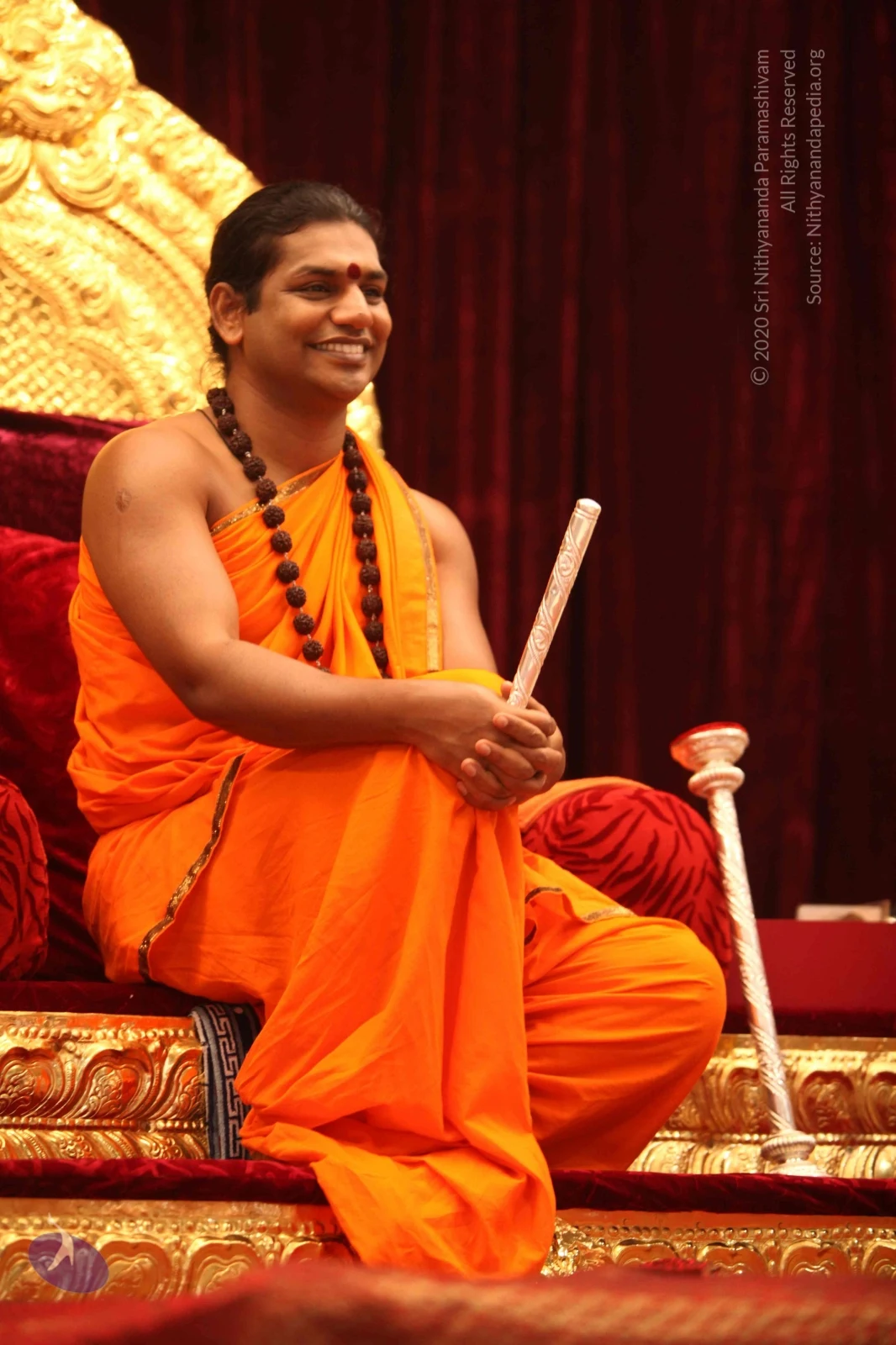
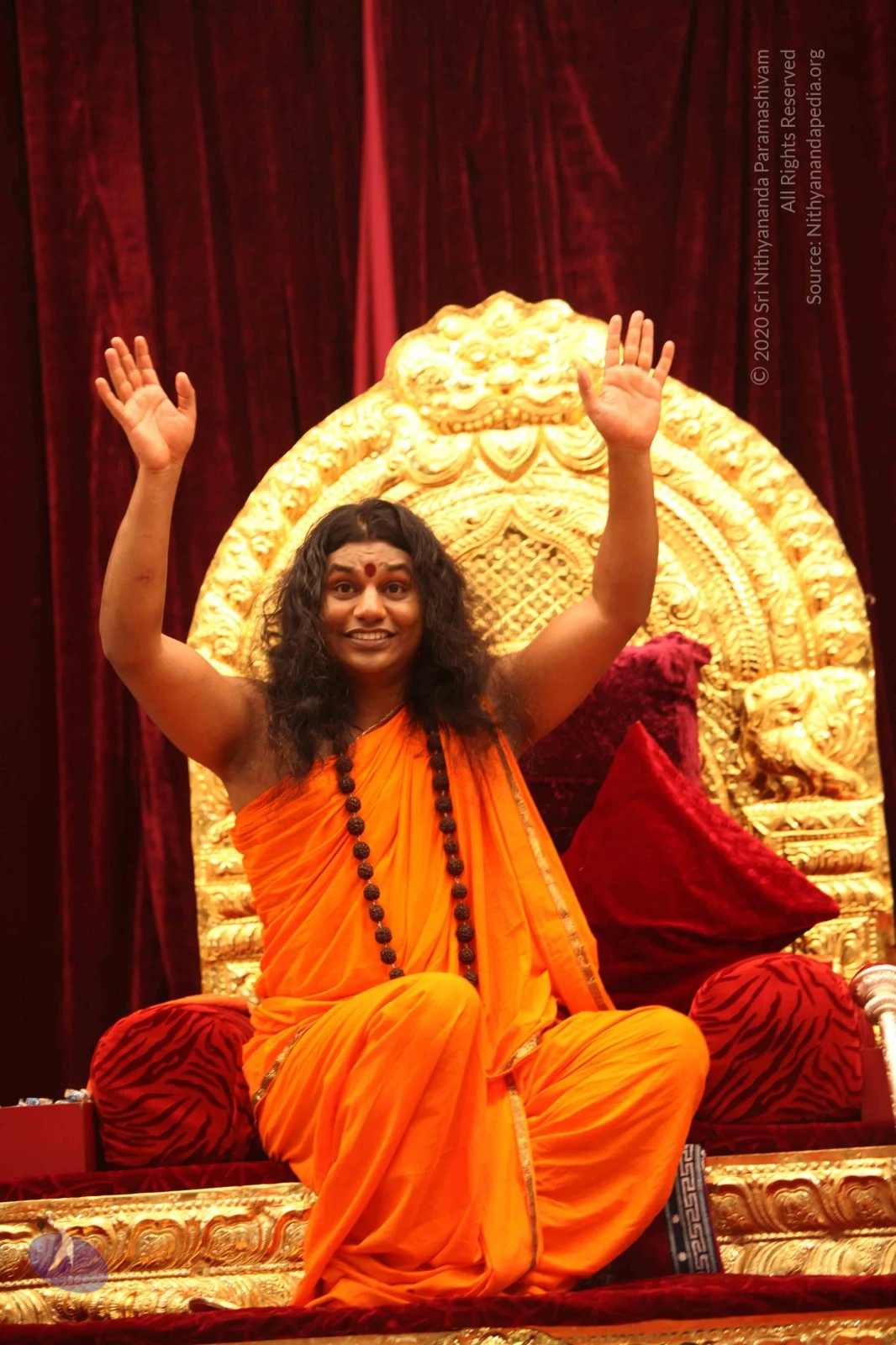
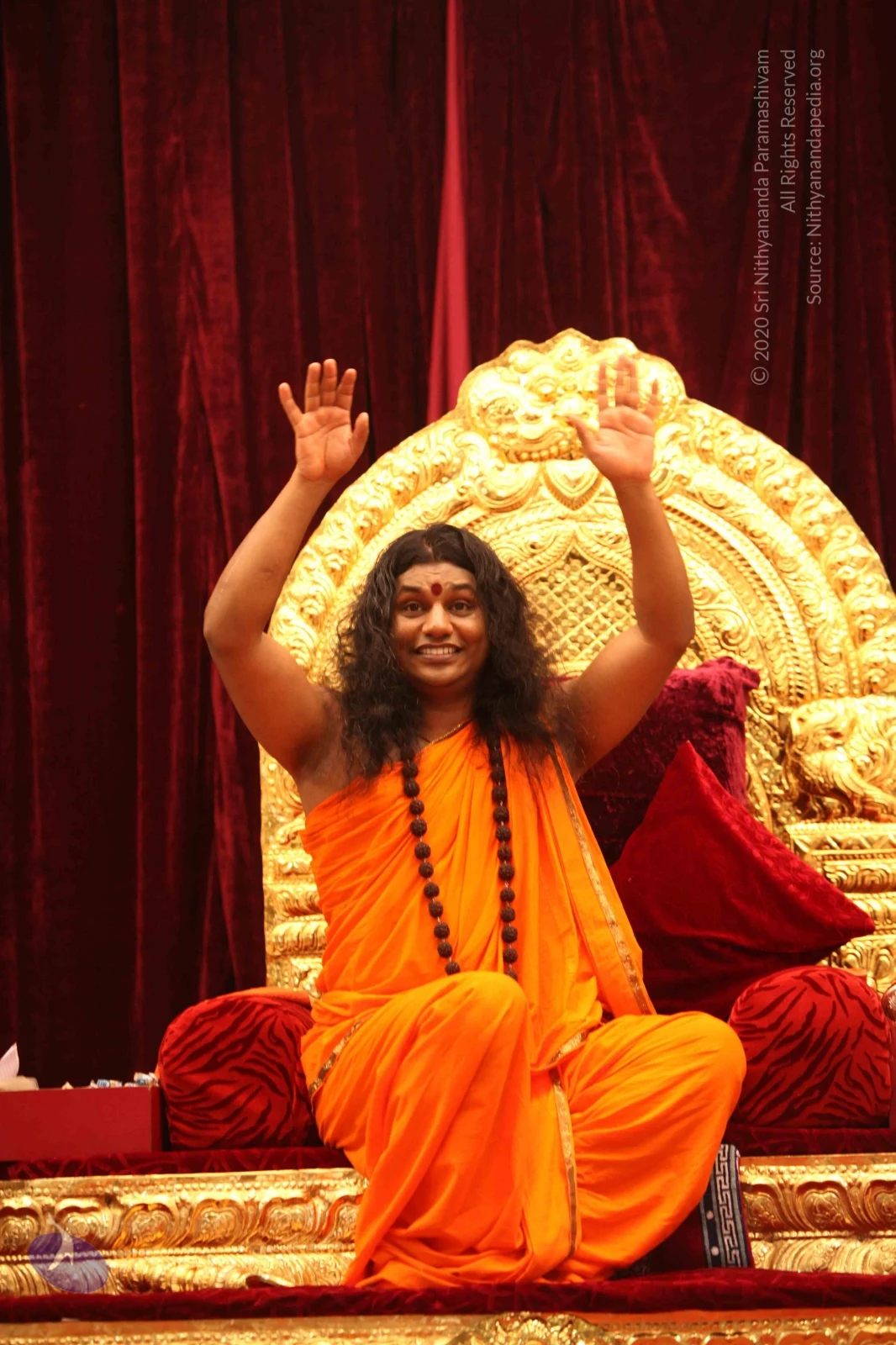
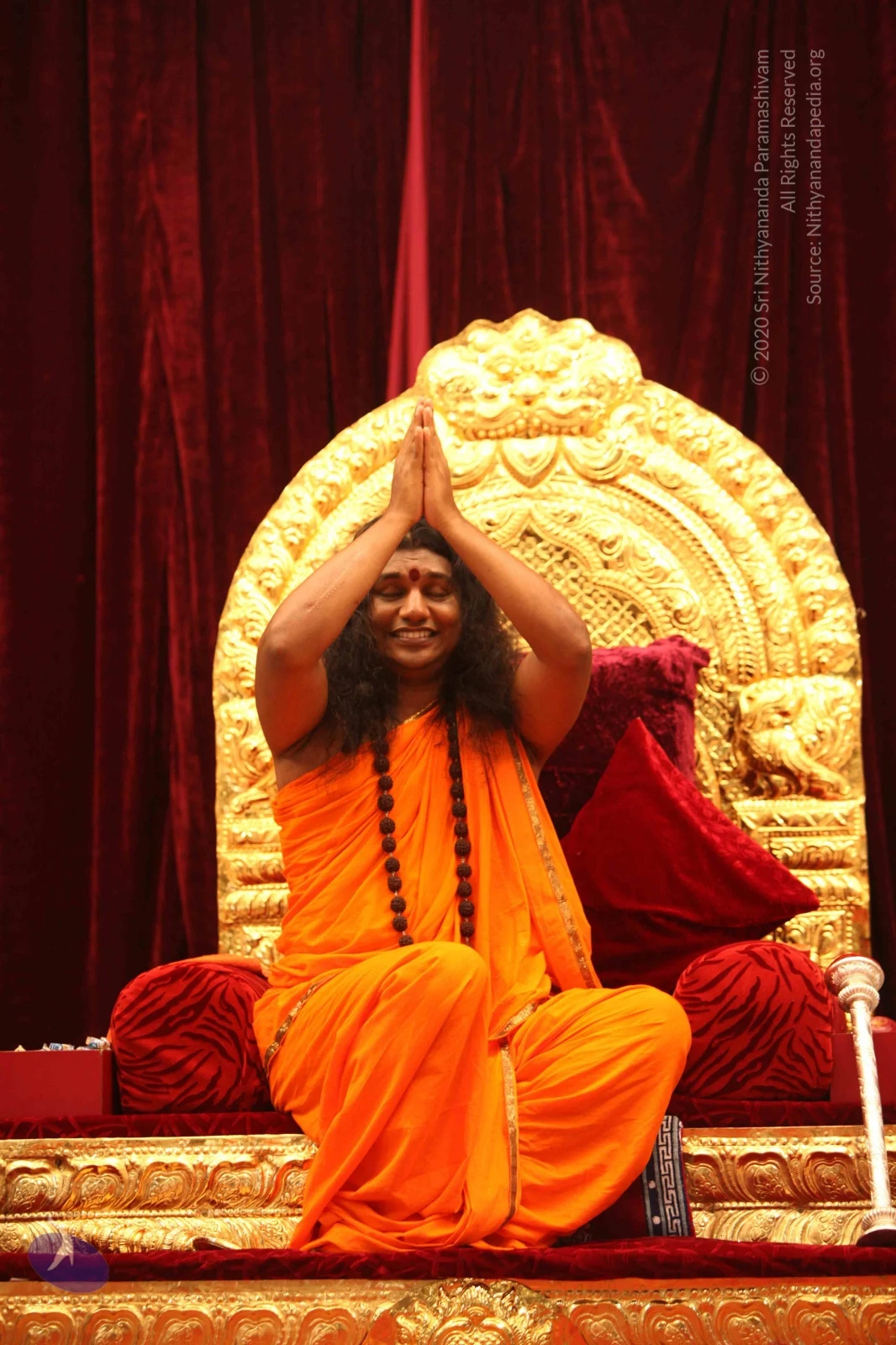
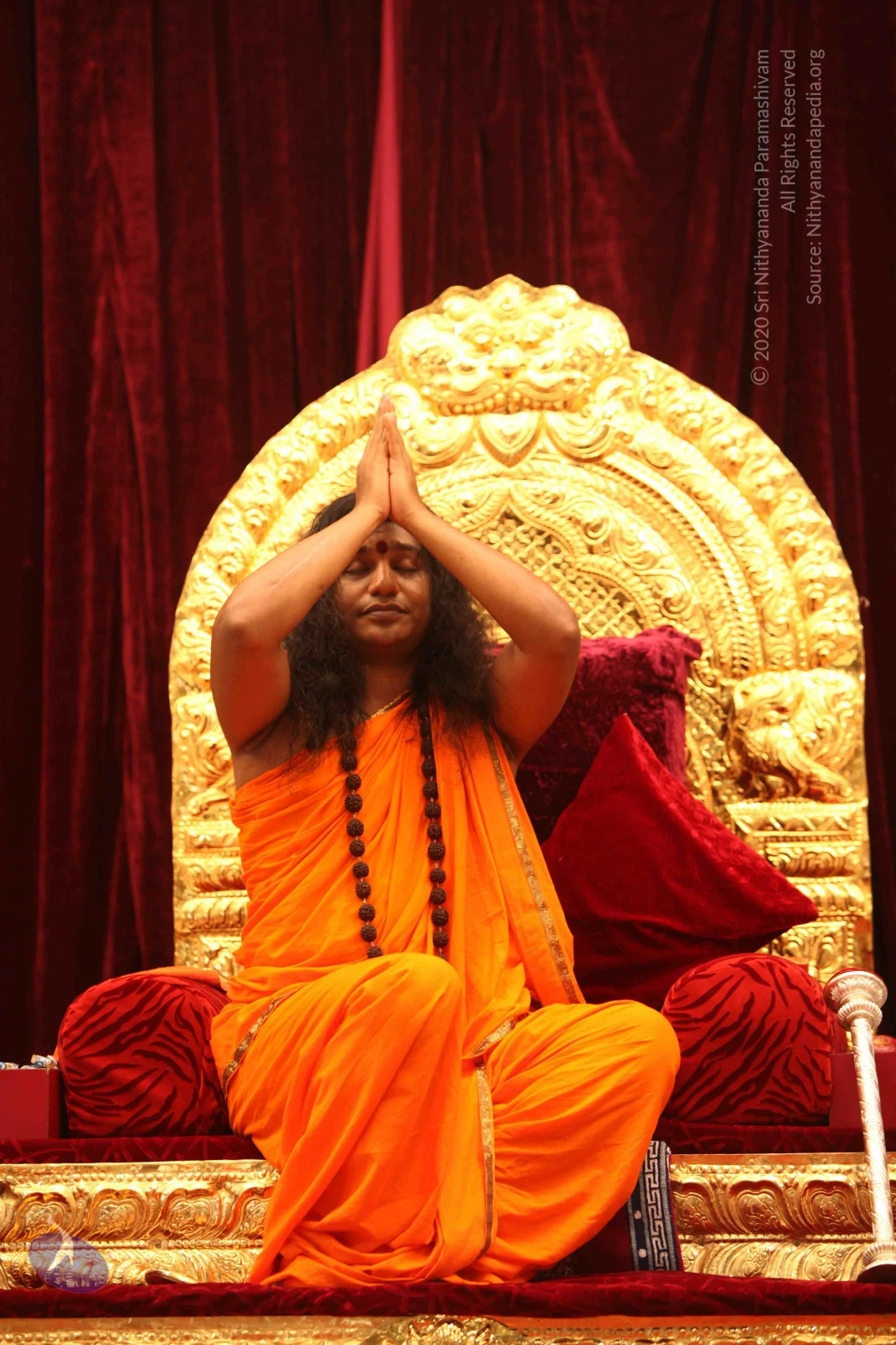
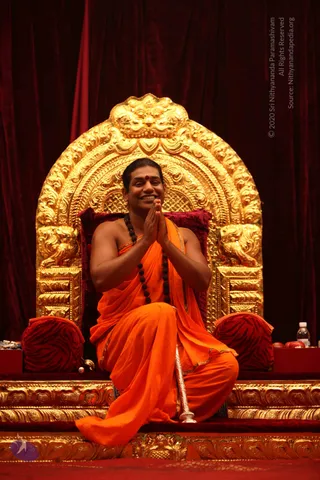
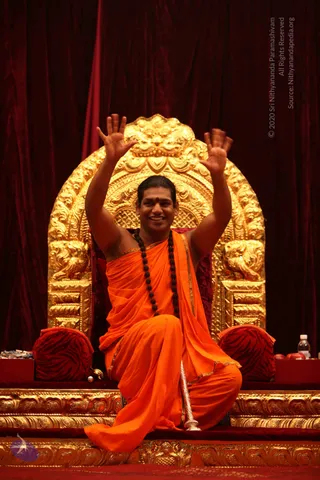
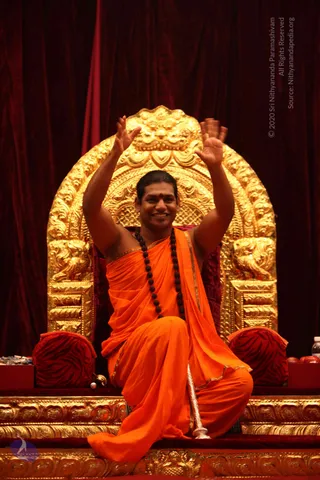
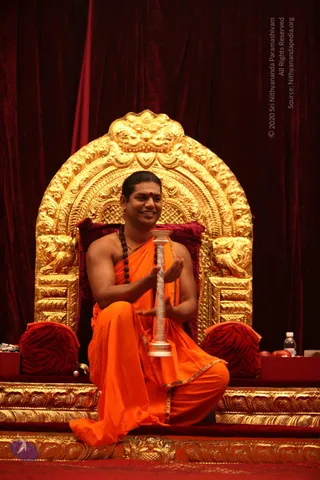
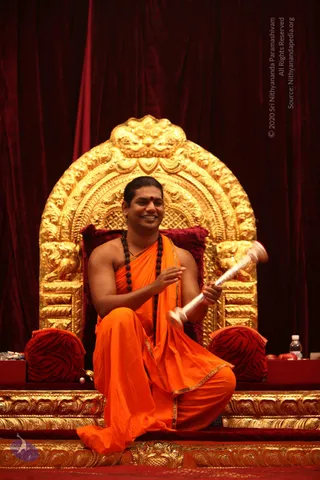
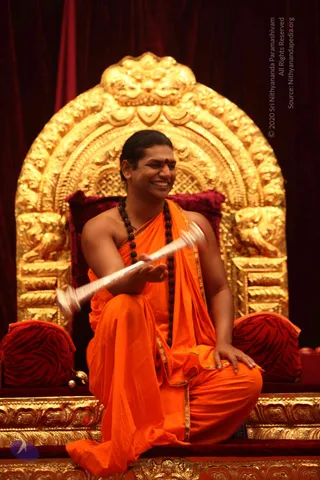
A man seated on an ornate gold throne with carved lion figures and a gold arched backrest, set against deep red velvet drapes. He wears saffron-orange robes, rudraksha beads around his neck, and a red bindi on his forehead. He sits with palms pressed together in namaste and smiles warmly. A red-tiger-striped cushion and a water bottle sit on the platform beside him.A man in saffron-orange robes sits cross-legged on an ornate gold-leaf throne with a carved arched backrest and lion-motif sides, set against draped deep red velvet curtains. He raises both palms high with fingers spread, smiling, wearing a red bindi, a dark rudraksha mala and a shawl edged in gold. A small water bottle and red fruit sit on a side table at right, and a silver staff rests beside the platform. a person based on the orange robes, rudraksha mala and throne cues, with the page's a person flag set to no.A man seated on an ornate gold throne with carved lion-head arms and a red velvet backdrop raises both hands palm-outward in a blessing gesture while smiling. He wears a saffron-orange dhoti and shawl with gold edging, a dark rudraksha mala, and a red bindi on his forehead. Red and zebra-striped cushions flank the throne, with a few red apples and a bottle on the stage edge. The appearance is consistent with the page's a person reference, though a shaved or swept-back hairstyle detail is only partly visible, so identity is uncertain.A man seated cross-legged on an ornate gold throne with carved lion figures and a deep red velvet backdrop, smiling and holding a clear glass or acrylic cylindrical object upright in both hands. He wears an orange saffron robe with gold trim, a dark rudraksha mala around his neck, and a red bindi on his forehead, with his hair swept back. A small water bottle and red fruit sit on a side table at right. a person candidate is shown in this darshan-style setting; the appearance cues are long swept-back hair, saffron clothing, rudraksha mala and a throne seat.A man sits cross-legged on an ornate gold throne with a gilded arched backrest carved with lions and floral motifs, against deep red velvet drapes. He wears a saffron-orange dhoti and shawl edged with gold, a rudraksha mala around his neck, and a red bindi on his forehead. He smiles while holding a white ceremonial fly-whisk or chamara in his right hand and gesturing with his left. A water bottle and red fruit sit on a side table. Appearance-based a person cues: long swept-back hair, rudraksha mala, saffron clothing and a ceremonial throne seat.A smiling man in saffron-orange robes sits on an ornate gilded throne with carved lion figures and a red velvet cushion behind him. He wears a rudraksha mala necklace and a red bindi on his forehead, and holds a white wrapped ceremonial staff across his lap. Red tiger-striped cushions and a gilded platform surround him against a dark red curtain backdrop.

Kalpataru-Darshan-Evening
23 photosSource gallery
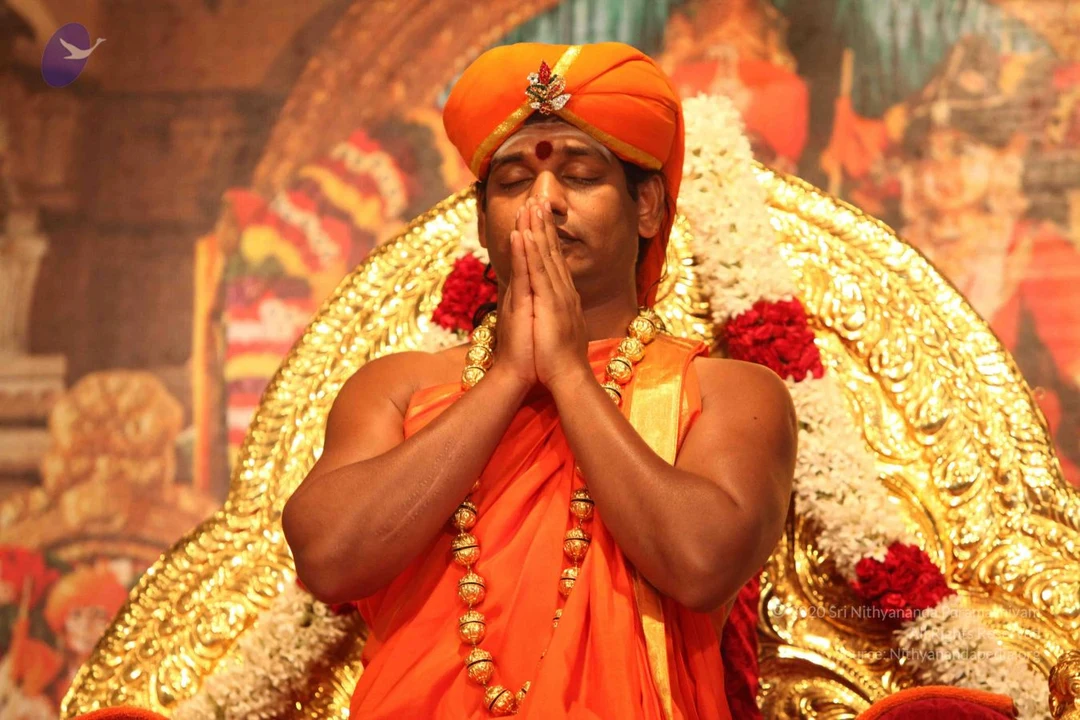
A man seated on an ornate gold throne with red velvet cushions and white and red flower garlands, hands pressed together in namaste with eyes closed. He wears an orange turban with a small jewelled ornament, orange sleeveless robe with gold border, and a long string of rudraksha-style beads around his neck. A red bindi marks his forehead. Behind him stands a backdrop of colourful floral decorations and a painted deity image, with stone temple pillars at left. He sits on a raised white stage with a red cloth at his feet.A man in an orange turban with a jewelled ornament and red bindi sits cross-legged in folded-hands namaste with eyes closed on an ornate gold throne with red cushions and armrests carved as lion heads. He wears orange robes, a gold-toned bead mala and a gold necklace. Behind him is a painted backdrop of a temple arch, red and white flower garlands and a gold-framed scene. Bare feet rest on a red cushion above a white draped platform. The turban, robes and mala are visible cues, and the page names a person, but the page says he was not at this event, so the figure is an uncertain appearance-based candidate.Photograph from behind of a figure in an orange saffron robe and orange turban seated on a gold-framed throne decorated with white jasmine garlands and a red flower. A man in a blue and white checked shirt and dark trousers kneels on the left, reaching toward the seated figure with a rudraksha-style mala, while a woman in a white sari with a long braid kneels on the right. Behind them is a large printed backdrop of a temple gateway with colourful garlands and a deity figure, and small offerings including red fruit sit on side tables. The seated figure wears a rudraksha mala and gold ornaments, and cues.A photograph of a standing figure in an orange saffron robe with an orange turban, a gold ceremonial necklace, a red bindi and a jewelled turban ornament, smiling at two devotees kneeling before him on a white-draped platform. A man in a blue and white checked shirt and dark trousers kneels on the left, and a woman in a white sari with a long braid kneels on the right, both with bare feet, reaching toward the standing figure. Behind them is a painted temple-gateway backdrop with gold arches, red and white flower garlands, and a gold throne-like seat framed with white flowers. Red fruits and a water bottle sit on a white side table.A seated man in an orange turban, orange shawl with gold border and heavy gold bead necklace rests both hands on the head and shoulder of a kneeling devotee in a dark striped shirt. A red bindi and sandal mark appear on his forehead, and he gazes downward with a smile. Behind him, a shaved-headed priest in orange with gold bead necklace watches. Gold lion-headed armrest of a red velvet throne and a green tree painting form the background. a person, seated on the throne giving blessing to the devotee.A smiling man in profile wears an orange saffron turban with a jewelled brooch and a red tilak on his forehead. He is dressed in orange robes with a gold-bordered shawl draped over one shoulder and a long gold bead necklace of ornate ceremonial beads. Behind him, blurred brass oil lamps stand in a warm-lit hall.
Rudra-Homa-Rudrabhisekam

5 photosSource gallery
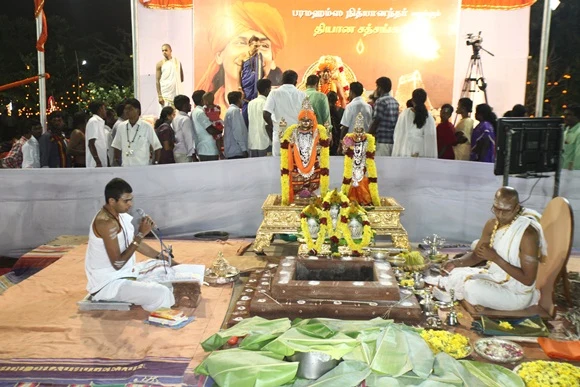
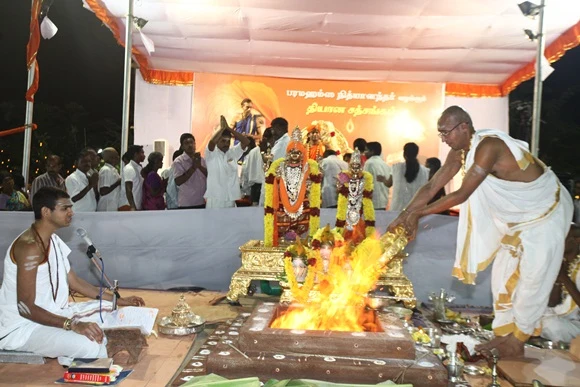
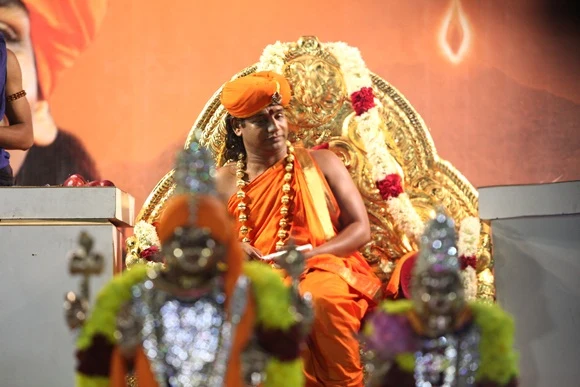
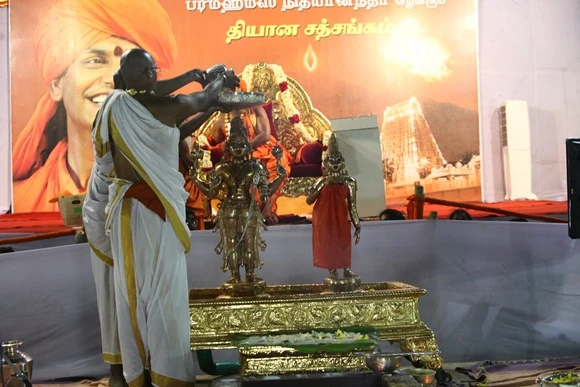
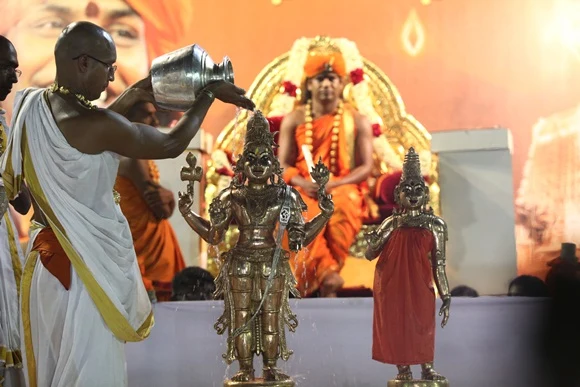
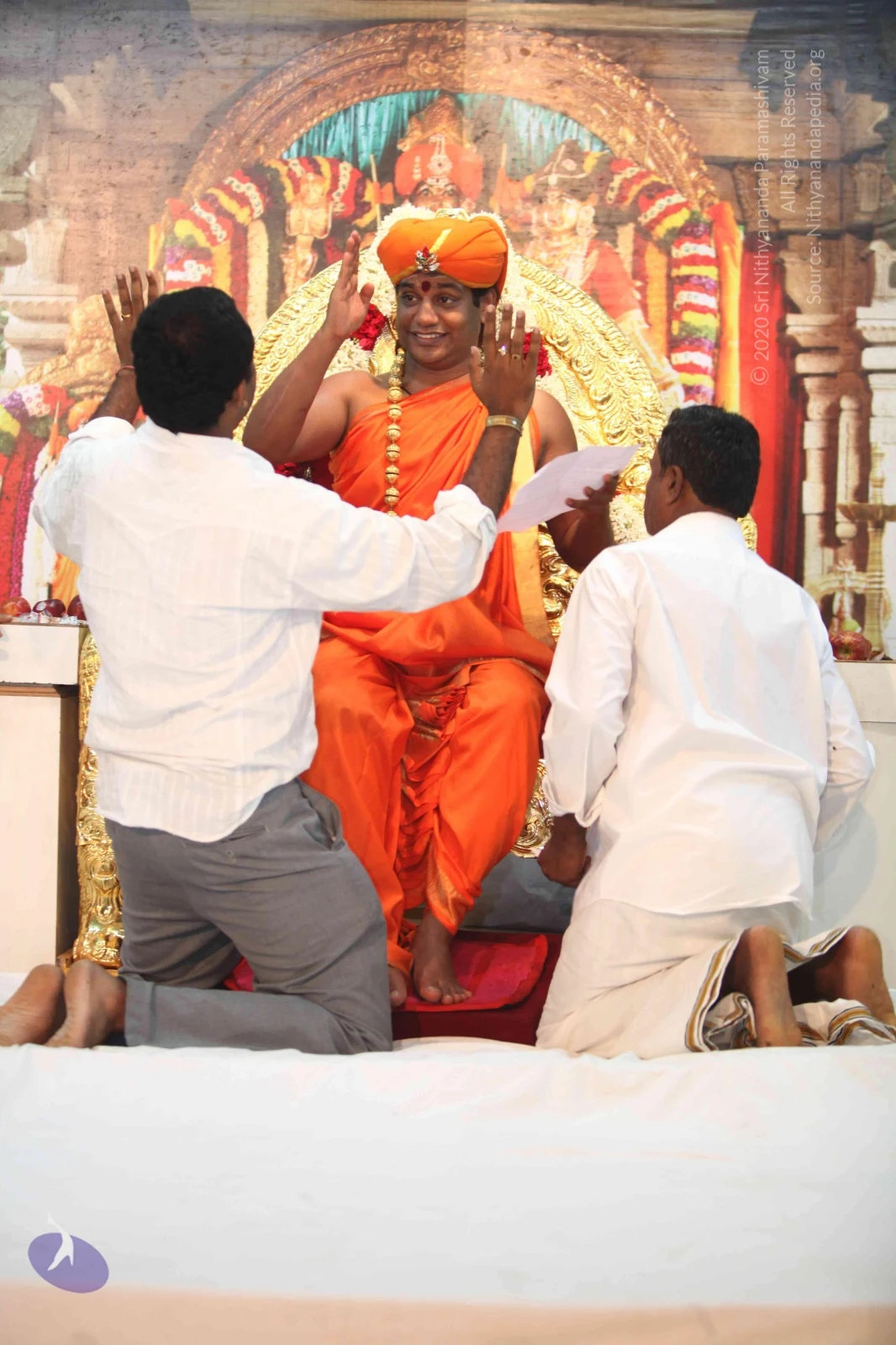
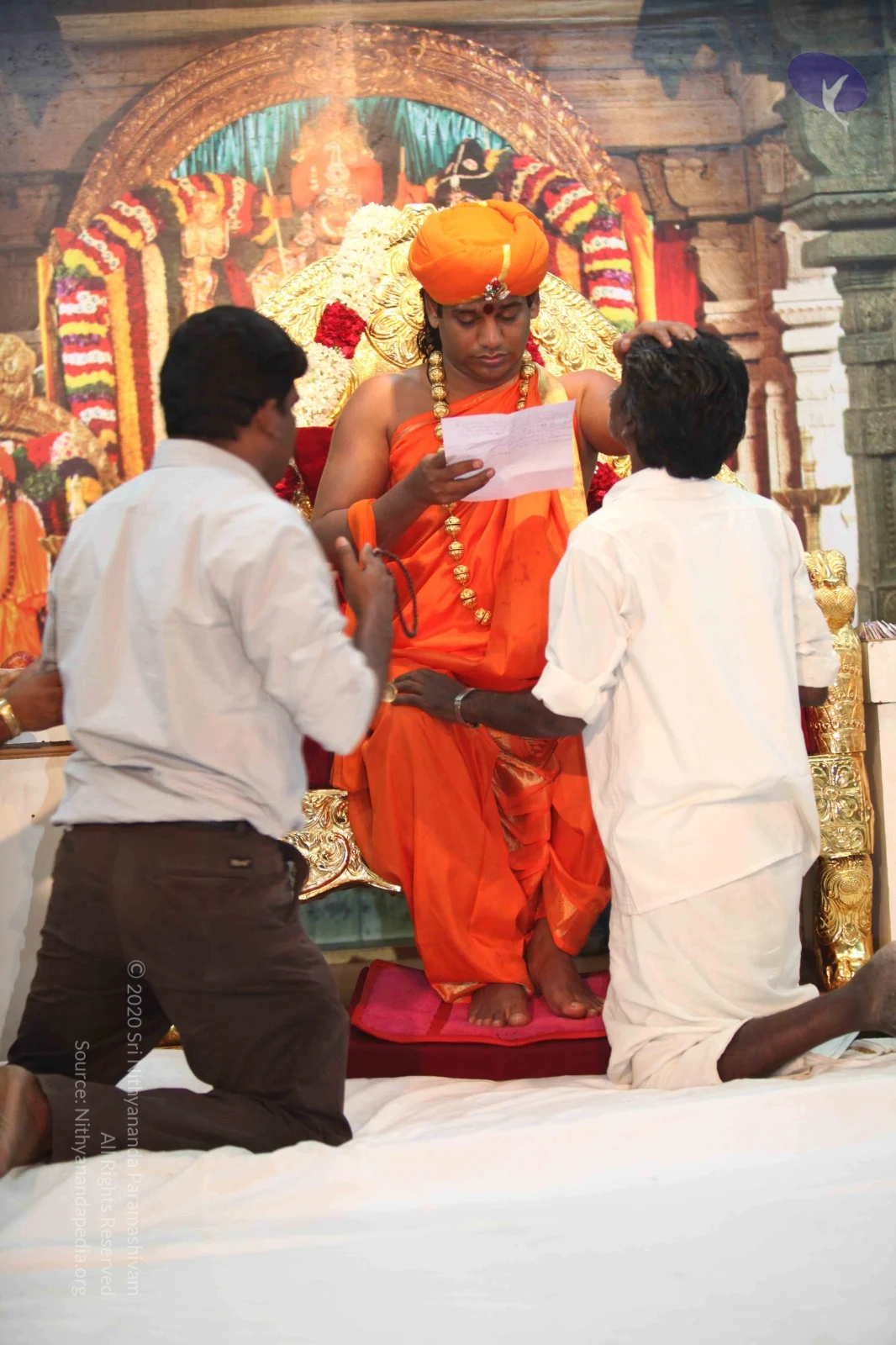
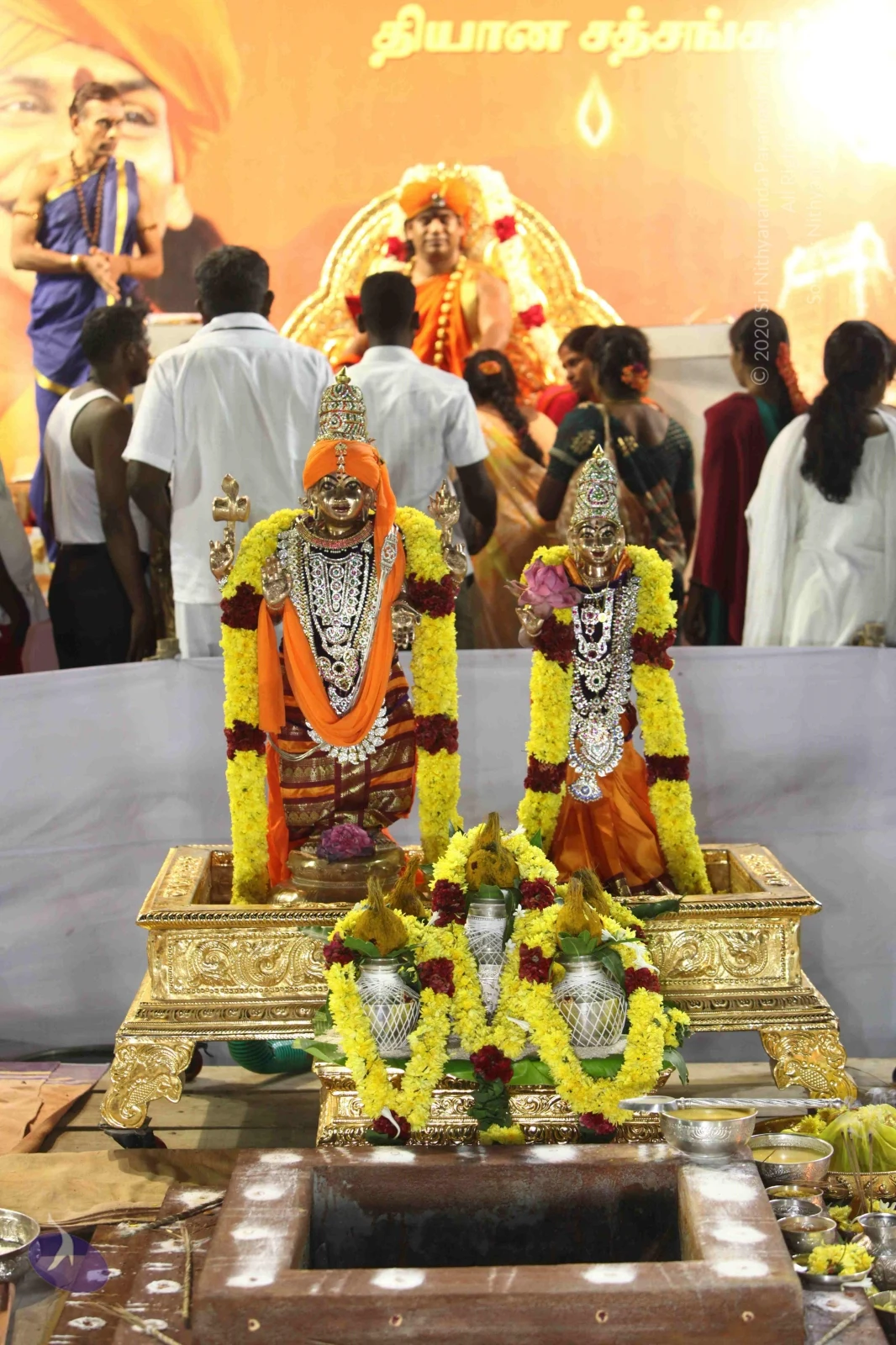
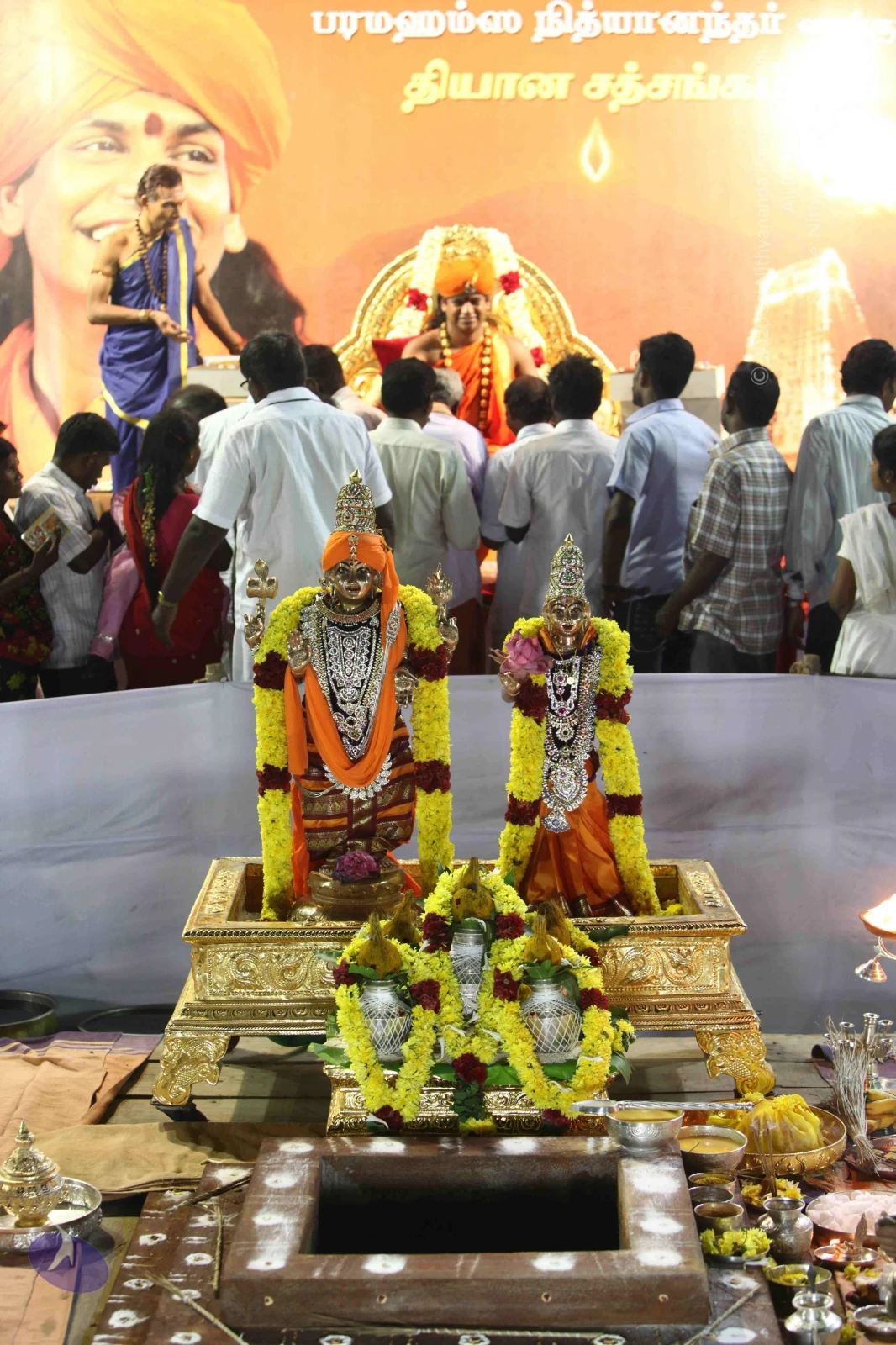
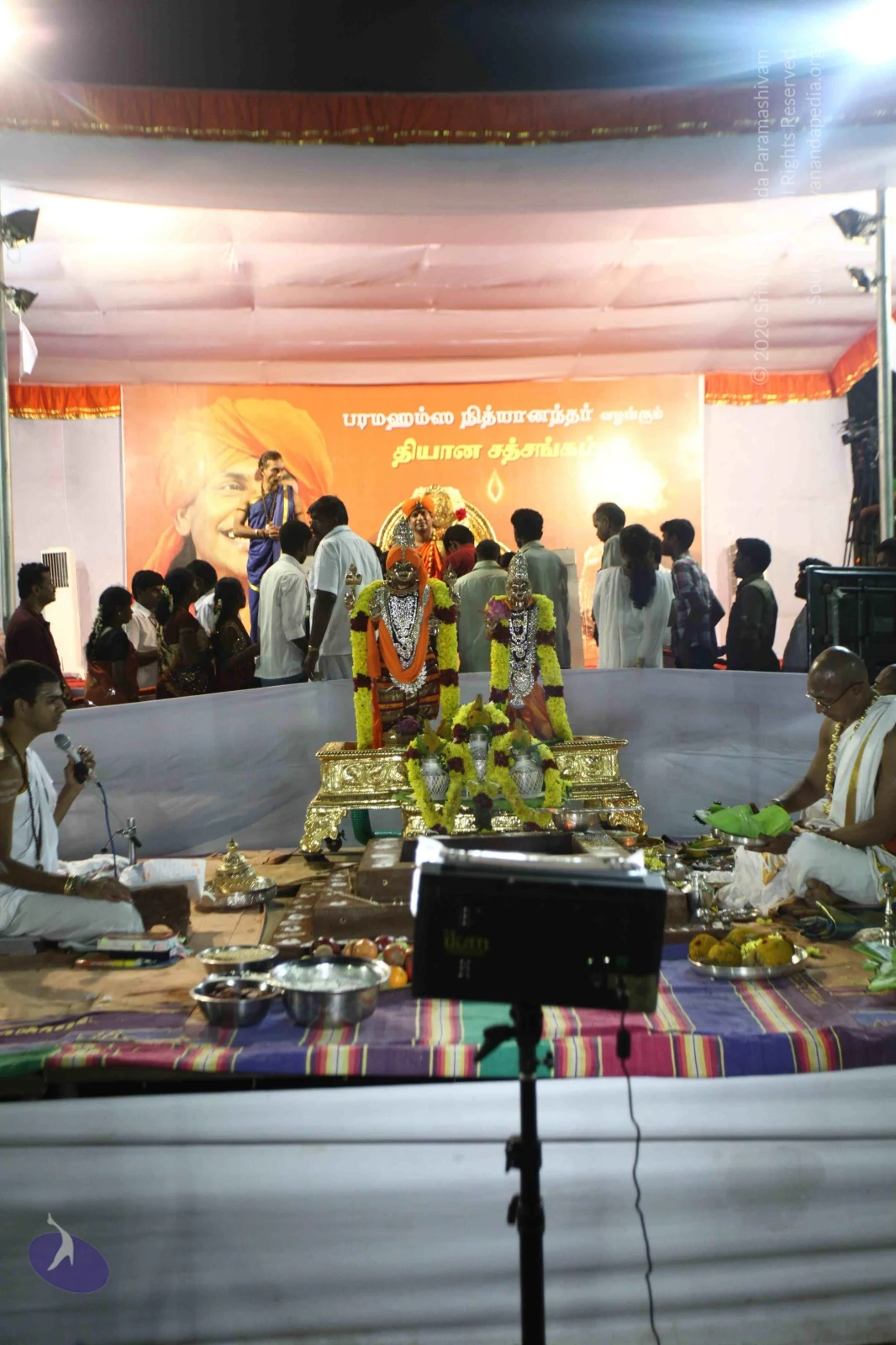
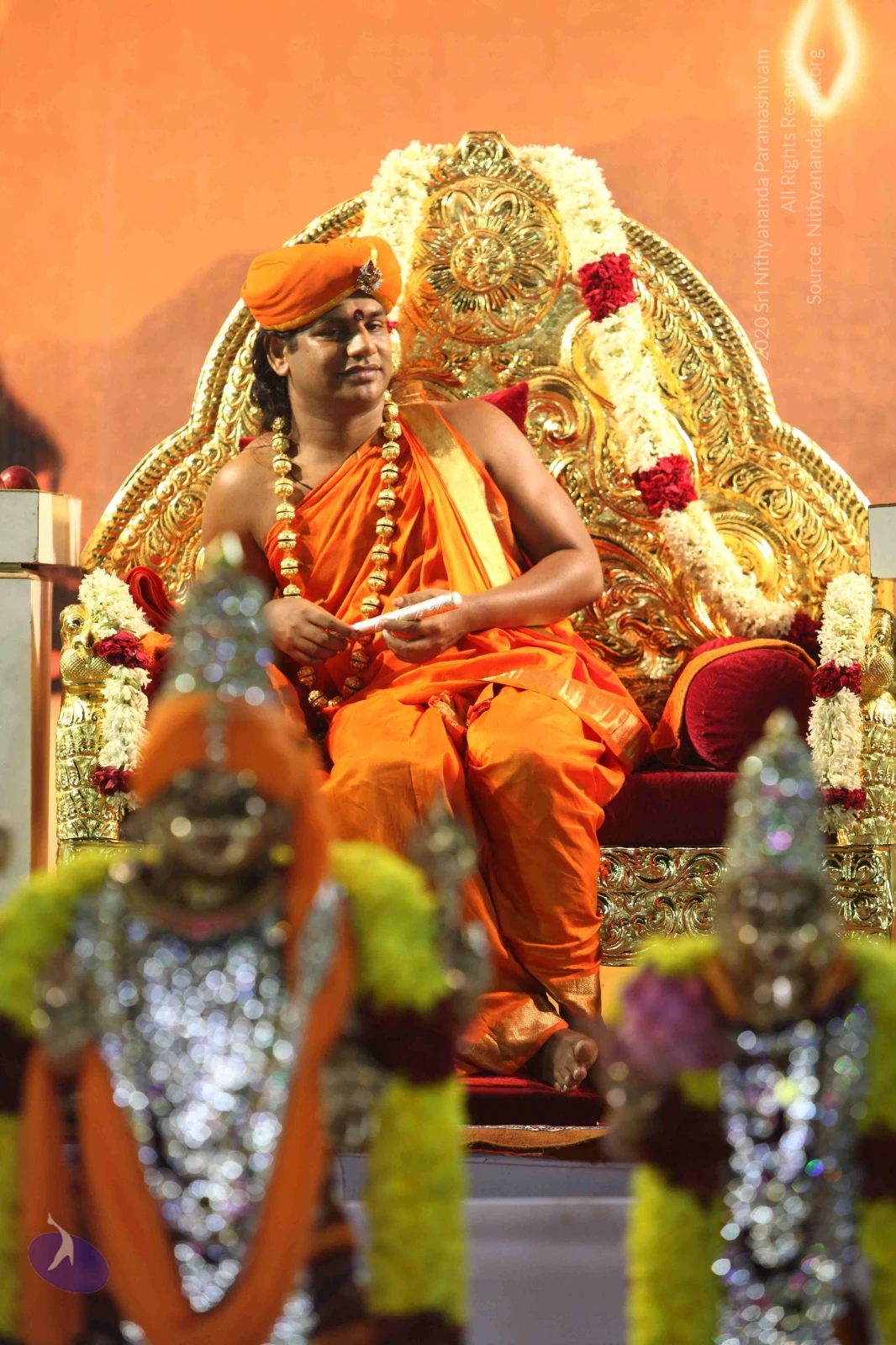
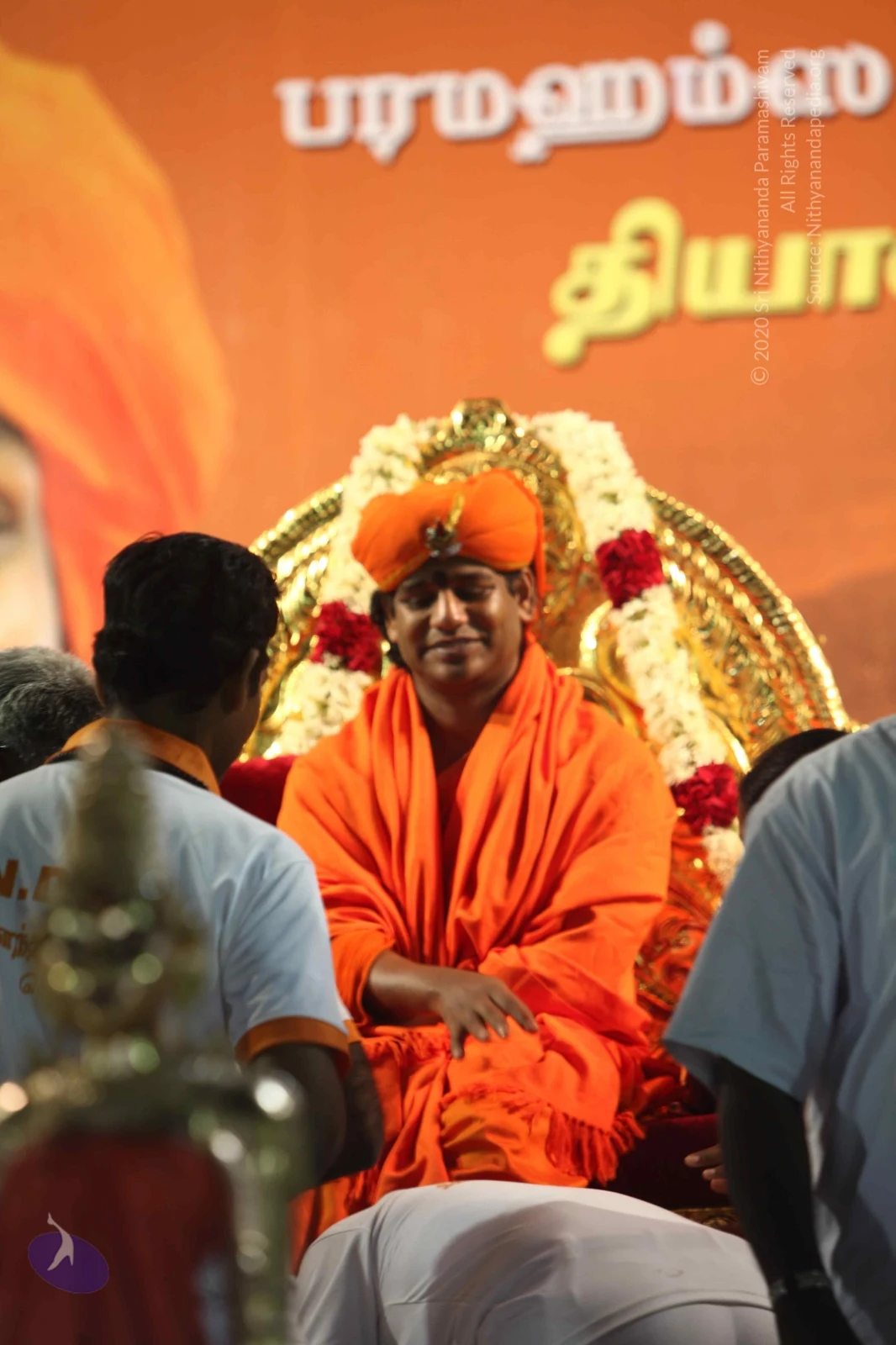
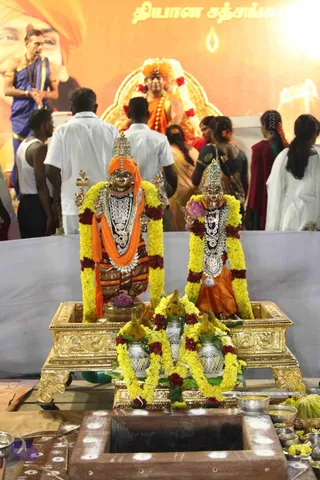
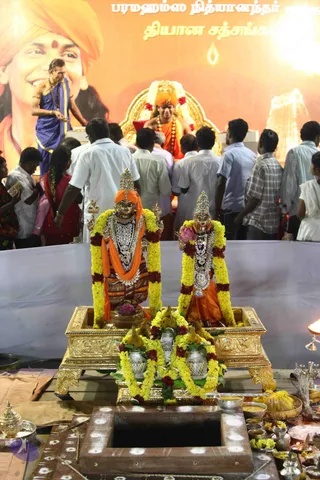
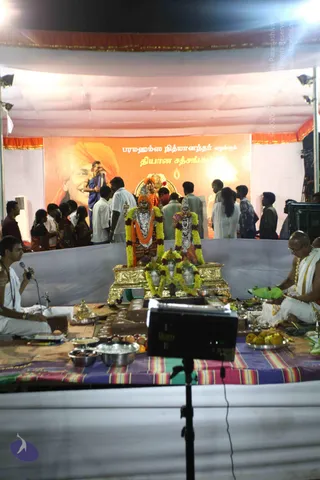
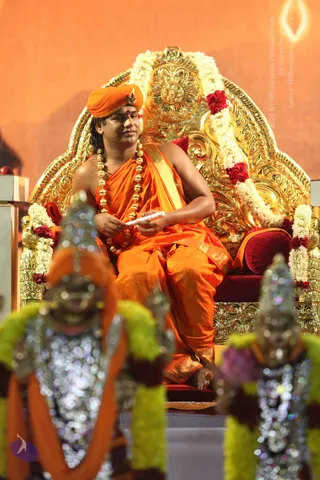
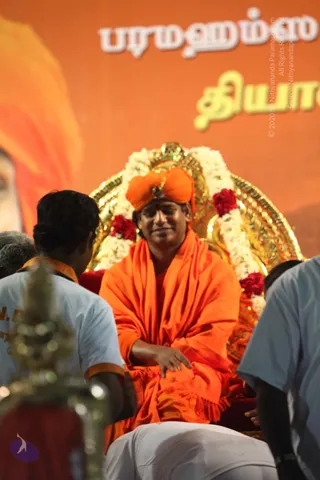
Evening photo of a ritual setting at a Dhyana Satsang event. In the foreground, two metal deity murtis stand on a gilded pedestal, decorated with yellow and maroon flower garlands; the male figure wears an orange shawl and a crown, the female figure holds a pink lotus and wears a silver necklace. Silver and bronze vessels with garlands sit before them over a square fire pit with offerings in the foreground. Behind, a large backdrop shows a saffron-robed man in a turban, and a figure in a blue robe with rudraksha beads stands with hands folded at left. Several devotees in white and colourful saris move through the crowd in the background.Photograph of a religious gathering in front of a large orange backdrop with a portrait of a smiling man in an orange turban and a Tamil caption reading பரமஹம்ஸ நித்யானந்தர் and தியான சத்சங்கம். In the foreground, two gold-and-silver ornamented metal deity figures stand on a golden base decorated with yellow and red flower garlands, with a fire pit (homa kunda) and brass offering bowls and lamps before them. Behind, a crowd of about twenty men and women in white shirts and saris stands watching. On a raised, flower-garlanded throne at the back sits a man in saffron robes and a saffron turban with rudraksha beads, while a young man in a blue dhoti stands at the left side of the stage.Night photograph of an outdoor ritual stage under a white and orange tent. Two silver-adorned deity murti figures sit on a gold pedestal, garlanded with yellow and orange marigold flowers, with kalasha pots and offerings in front. On the left, a young man in white dhoti holds a microphone, and on the right an older priest in white dhoti and shawl with a sacred thread sits behind brass plates and banana leaf offerings. Behind them, a large orange backdrop shows a painted portrait of a smiling man in an orange turban, with the printed Tamil caption reading Paramahamsa Nithyananda and Dhyana Satsangam. Standing devotees in white, red and dark clothing gather at the back of the stage, and a figure in orange clothing stands near the central platform.Photograph of a seated man on an ornate gold throne with a red velvet cushion, decorated with white jasmine garlands and red flowers. He wears an orange turban with a jewelled ornament and a red bindi, an orange silk dhoti and shawl with gold borders, and a long gold bead mala around his neck. He holds a folded white paper in both hands. In the foreground, blurred silver-sequined deity murtis draped with green and orange garlands stand before an orange backdrop. a person appears as the seated figure on the throne, identified by the orange turban with jewelled ornament, ceremonial gold mala and swept-back hair; the throne and garlands are supporting setting only.A seated man in an orange saffron turban and orange shawl sits on a gold throne decorated with white jasmine and red flower garlands, against a large orange backdrop with Tamil script. A person in a light blue shirt with orange collar trim leans toward him from the left, another figure in white stands in the foreground, and a brass ceremonial lamp stand is blurred in the lower left. The man has a kumkum mark on his forehead and rests one hand on his knee.
February 07 2012

1 photoView all
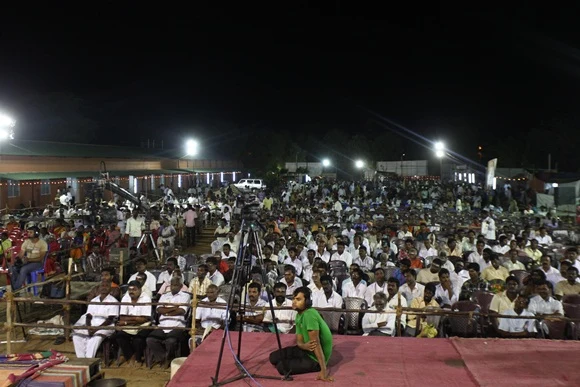
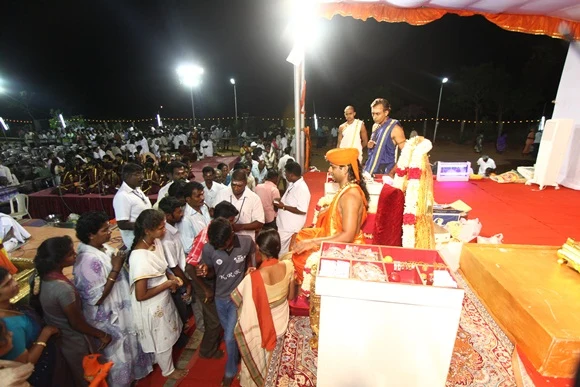
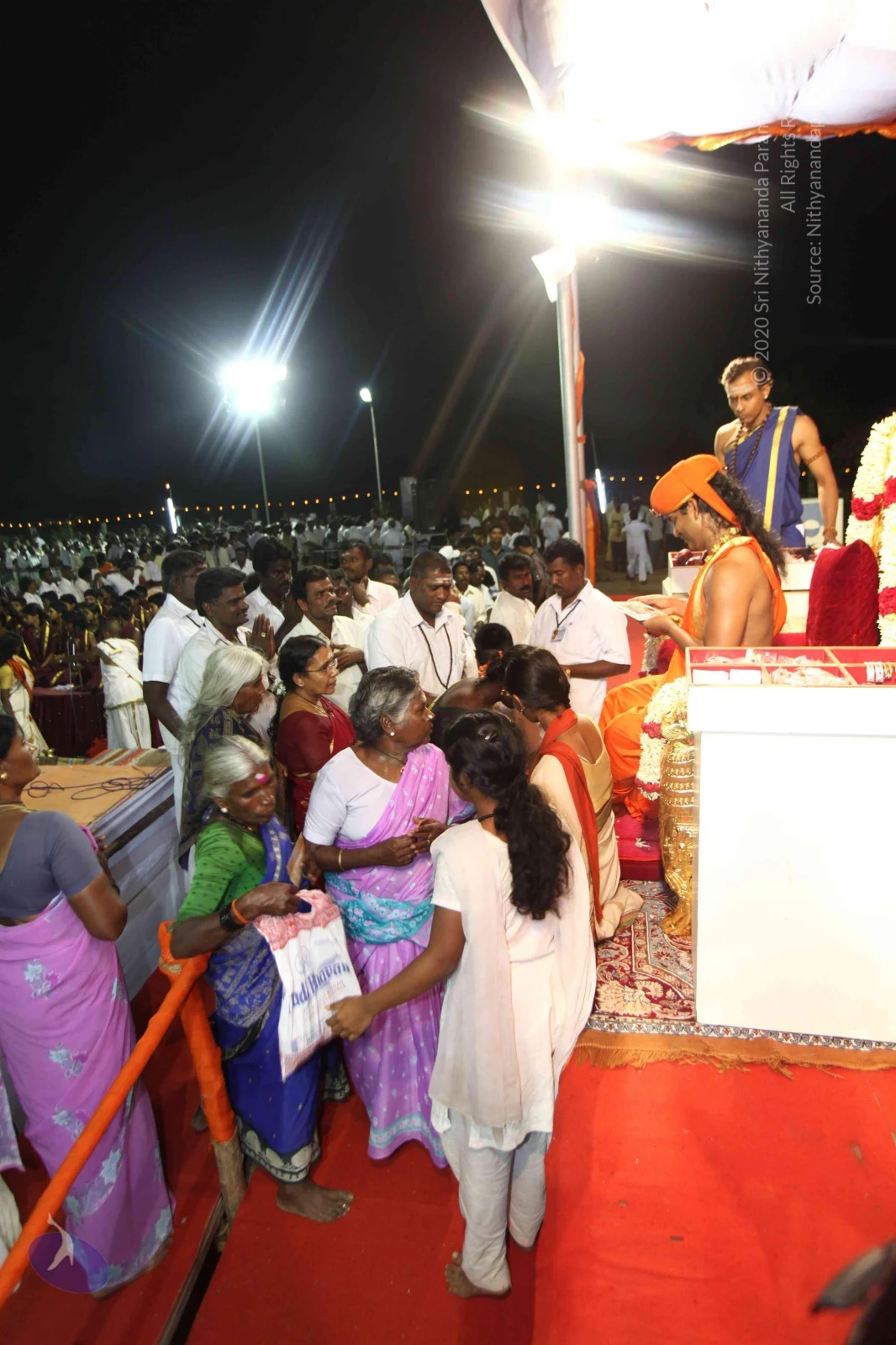
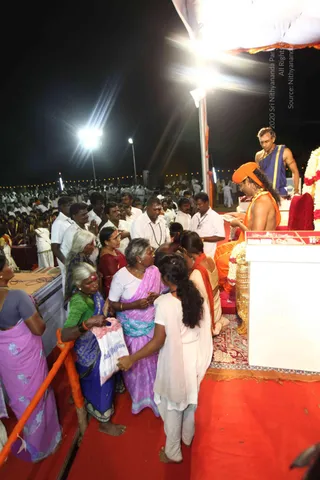
Night outdoor public darshan with bright floodlights on poles and a white canopy overhead. A large crowd fills the background, many in white. On a raised red-carpeted dais at right, a figure wearing an orange turban and orange garments with a long swept-back hairstyle and gold necklaces sits beside a red cushion and a tray of offerings, receiving devotees; a shaved-headed attendant in a blue sleeveless top stands behind him. In the foreground, several elderly women in saris, one in pink and one in green, and a girl in white clothes approach the dais, one holding a plastic bag printed with Hindu text. Garlands of white and red flowers decorate the stage edge. The figure has distinctive orange turban, long hair and ornate gold adornments, a person presence, though the appearance is partly obscured.