Skip to content
Monday

6 February 2012

THE SUPREME PONTIFF OF HINDUISM HDH BHAGAVAN NITHYANANDA PARAMASHIVAM

Dated photos
17
Source pages
1
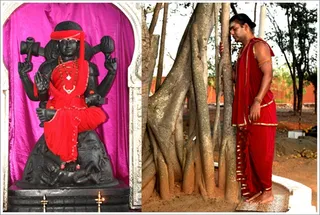
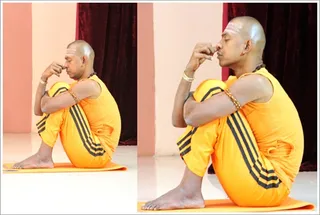
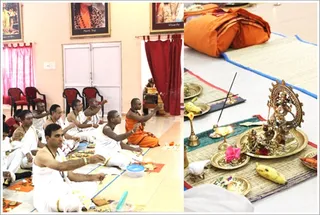
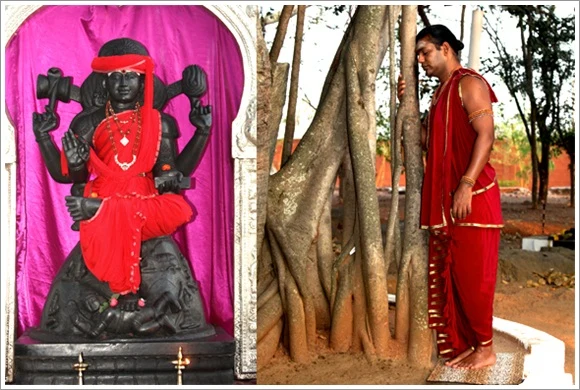
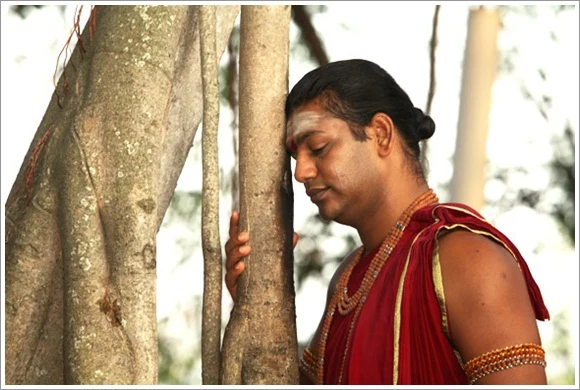
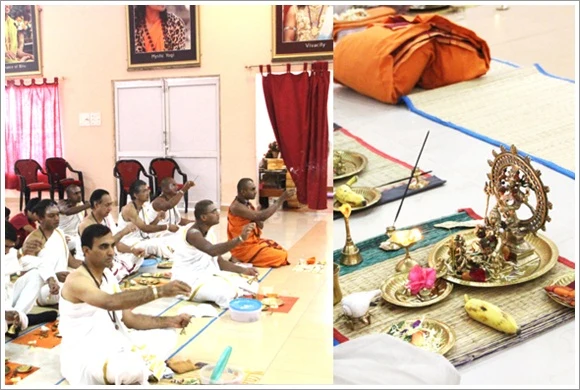
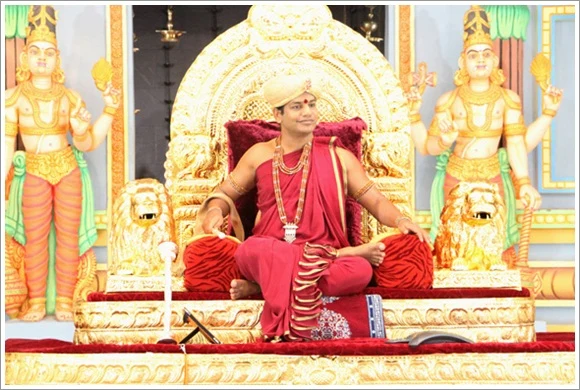
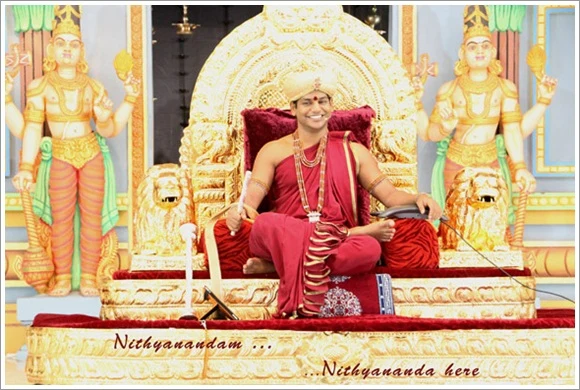
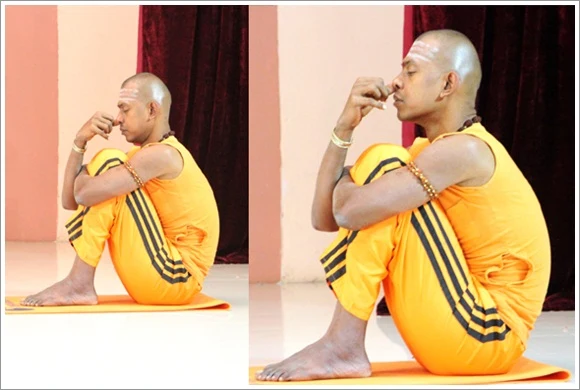
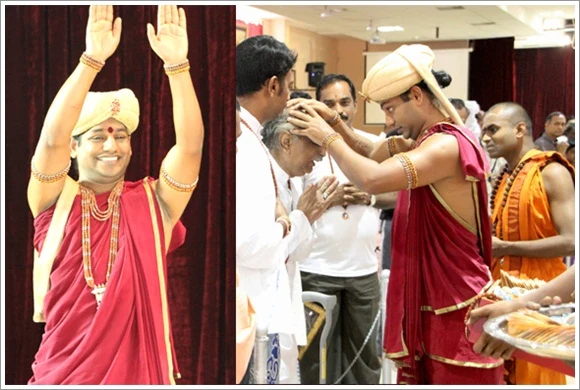
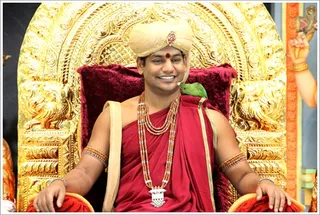
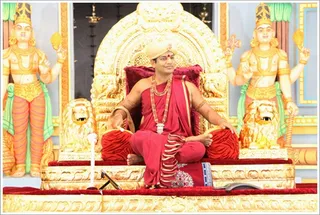
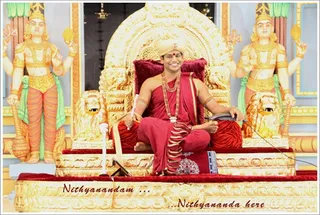
A two-panel graphic collage. The left panel shows a black stone statue of a multi-armed deity with a red cloth draped over its shoulders and a red headband, seated on a pedestal before a bright pink backdrop, with small oil lamps in front. The right panel shows a man in a red dhoti and red upper garment with gold trim and gold armbands, standing barefoot beside the thick trunk of a large banyan tree on sandy ground, with a red-walled courtyard behind him. The panels are photographs, but the composite is a graphic; no physical people are present in the collage itself beyond the pictured man.A two-panel collage of the same bald man in yellow-orange sleeveless top and matching track trousers with black stripes, seated cross-legged on a yellow mat in front of a maroon curtain. In each panel he raises his right hand to his nose in a breathing posture, with a white tilak on his forehead, beaded bracelets and a rudraksha-style mala at his neck. Left panel is a front-facing view; right panel is a side profile. Appearance is consistent with the page's claim of a person, presented as a yoga or pranayama practice, so the description uses that label and the depiction value applies only to this screen-style graphic.A two-panel collage of a puja ceremony. The left panel shows a row of men in white dhotis and shawls seated on the floor of a bright room, several holding up hands in offering gestures, with a man in a saffron-orange garment seated at the end; framed portraits and red curtains hang on the wall. The right panel shows a close-up of brass puja thalis with a golden deity murti, incense sticks, flowers, lamps and bananas on a mat. Several physical people are visible in the left panel, with an ashram-style setting.

February 06 2012

Original wiki page
Contents

Title

THE SUPREME PONTIFF OF HINDUISM HDH BHAGAVAN NITHYANANDA PARAMASHIVAM

Photos From The Day:
Photos from this day

View all 17 photos
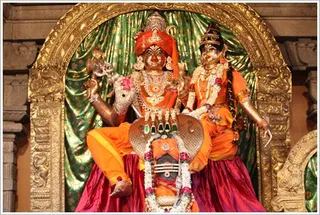
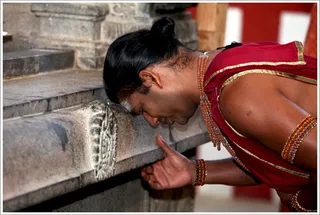
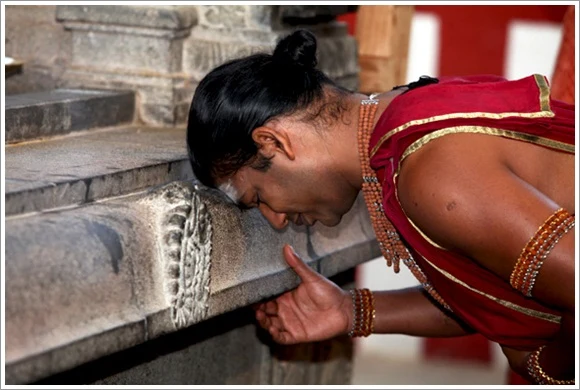
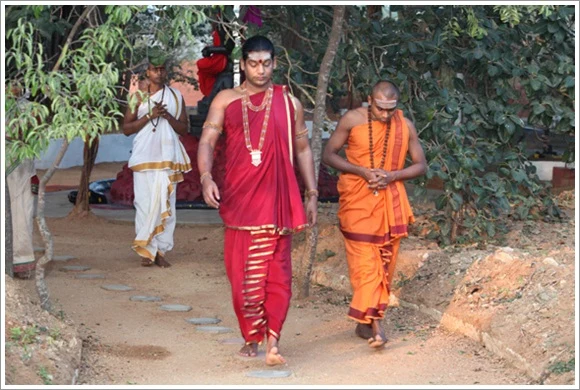
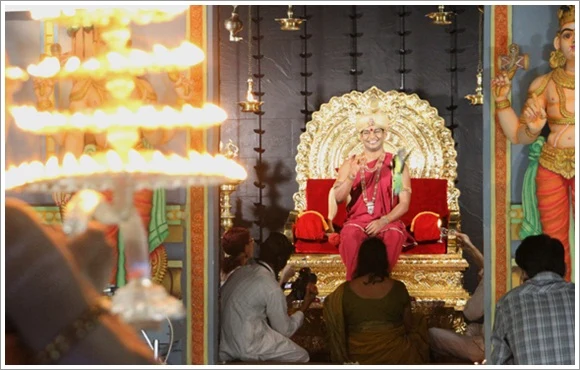
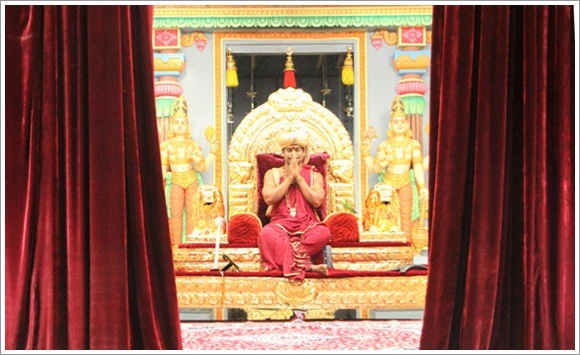
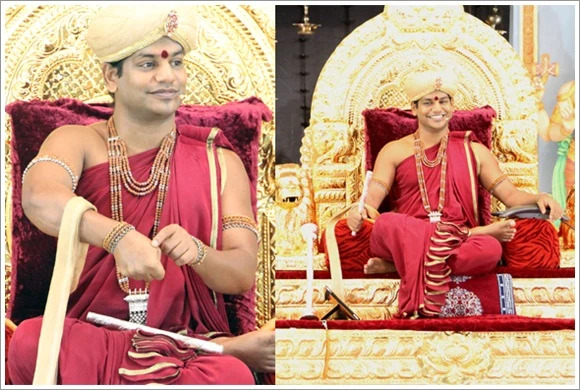
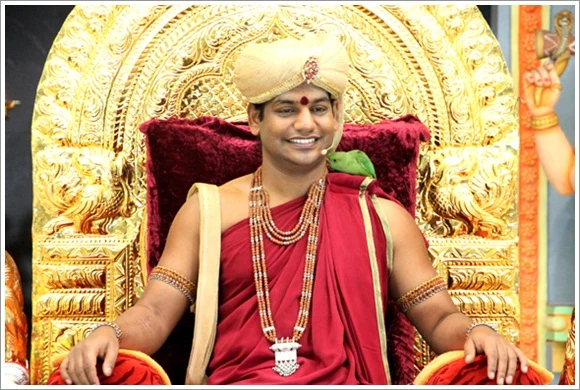
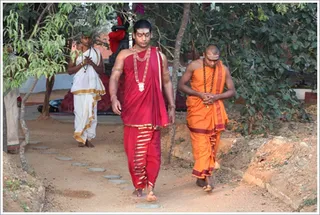
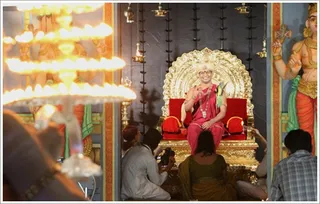
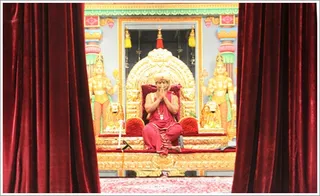
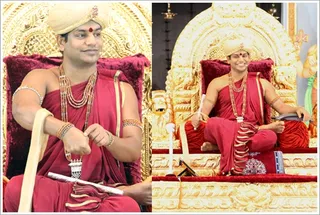
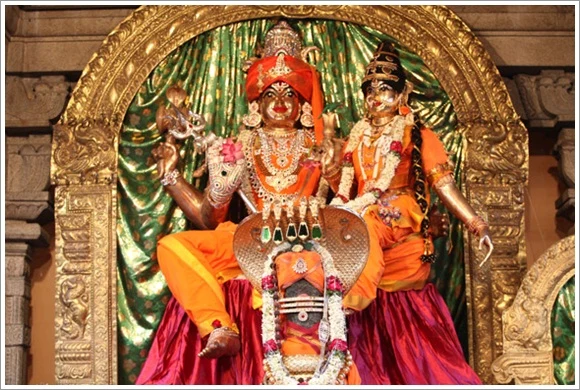
A photograph of a large decorated deity murti, a painted and jewelled figure of Shiva and Parvati seated together on a silver-rimmed throne-like base. The male figure wears an orange and red turban-style crown, orange dhoti and an elaborate beaded necklace; the female figure wears orange-gold robes and a tiara-like headpiece. Before them stands a shivalinga draped with a white flower garland, set on a silver tray. A gold-framed ornate arch with green draped fabric forms the backdrop. No physical people are visible.A man bows deeply with his forehead pressed to a carved stone step of a temple, his right hand resting flat on the stone beside him. He wears a red garment with gold-edged borders, a rudraksha mala of brown beads across his chest, and orange-brown beaded bangles on his wrists. His dark hair is tied in a knot at the top of his head. The carved stone edge shows decorative sculpted motifs. The figure is a single devotee performing a prostration, and the presence of a person is not visibly established from appearance.A two-panel graphic collage. The left panel shows a black stone statue of a multi-armed deity with a red cloth draped over its shoulders and a red headband, seated on a pedestal before a bright pink backdrop, with small oil lamps in front. The right panel shows a man in a red dhoti and red upper garment with gold trim and gold armbands, standing barefoot beside the thick trunk of a large banyan tree on sandy ground, with a red-walled courtyard behind him. The panels are photographs, but the composite is a graphic; no physical people are present in the collage itself beyond the pictured man.Outdoor photograph of three men walking along a dirt path between green foliage and a red-roofed structure. The man at centre wears a deep red dhoti and shawl, a gold necklace and a white-and-gold bead mala, with a vertical tilak on his forehead. To his right, a shaved-headed man in orange-saffron robes and a rudraksha mala walks with hands folded in front. Behind them, a man in white dhoti with gold border walks with hands joined in namaskar. Stepping stones lie on the path. Compatible presentation cues such as long hair, crown or turban are absent, so the centre figure is described by role and appearance only without identification.A two-panel collage of a puja ceremony. The left panel shows a row of men in white dhotis and shawls seated on the floor of a bright room, several holding up hands in offering gestures, with a man in a saffron-orange garment seated at the end; framed portraits and red curtains hang on the wall. The right panel shows a close-up of brass puja thalis with a golden deity murti, incense sticks, flowers, lamps and bananas on a mat. Several physical people are visible in the left panel, with an ashram-style setting.A seated figure in a magenta-pink robe and a gold crown sits on an ornate gold-and-red throne at the centre of a temple hall. Two large clusters of illuminated oil lamps hang in the foreground on the left. Behind the throne, painted deity figures stand on a red-and-gold wall, and small brass lamps hang from the ceiling. In the lower foreground, several devotees sit with their backs to the camera, some in pale and green clothing, and one person is taking a photo. The figure has long swept-back hair, a crown, a rudraksha mala and a gold necklace, which are the cues for a person. The figure is seated on the throne, so this is an in-person candidate with uncertain appearance.A seated figure in a deep red robe sits on an ornate gold throne framed by red velvet curtains drawn open at the sides. The figure wears a red turban, a rudraksha mala, and has hands pressed together in a greeting. The gold throne is backed by a golden arched canopy with carved gold figures standing on either side, and the stage is set with red carpet and gold-painted panels. The appearance of the seated figure is consistent with the page's claim, with a red turban and rudraksha mala as cues, so this is a person in person in a temple-style stage setting.A two-panel collage of photographs showing a man seated on an ornate gilded throne with red velvet cushions. In both panels he wears a maroon-red robe, a cream-coloured turban with a red bindi on the forehead, layered red and gold beaded malas, gold bangles on the arms and a gold chain. In the left panel he holds a white fan-like object and smiles; in the right panel he rests one hand on a red cushion beside a small lamp and smiles broadly. Gold lion-carved armrests and a gilded backdrop fill the frame. Physical people shown are only the seated man in each photo, and the collage itself has no physical people in it.A smiling man seated on an ornate gold throne with carved lion-like armrests and a deep red velvet cushion. He wears a cream-and-gold turban with a red bindi, a red-orange dhoti-style wrap with a cream shawl draped over one shoulder, multiple strands of red-brown rudraksha beads, a large ceremonial gold pendant, and gold bangles on his wrists. A small green parrot perches on his shoulder near the throne back. A gold figure and a hand with gold bangles are partly visible at the right edge. The man has a long, swept-back hairstyle visible beneath the turban area and appears to be in a temple-like setting. Appearance-based label: a person, seated on the throne in ceremonial red and gold attire.A man seated cross-legged on an ornate golden throne with red cushions, flanked by two golden lion figures and two standing golden deity statues with raised arms holding fans. He wears a red robe, a white turban, a thick gold necklace with a pendant, and gold armlets. A microphone stand is in the foreground and a golden-framed stage backdrop surrounds the throne. Appearance-based candidate: Swamiji (probable), seated on the throne in the central position with a red robe, turban and gold ornaments.A seated man sits cross-legged on an ornate gold throne with red cushions, flanked by two gold lion sculptures at the base and two large gold figures on either side. He wears a saffron-red dhoti-style garment with a shawl across his chest, a gold necklace and a rudraksha mala, and a saffron turban; a red bindi marks his forehead. He holds a small object in one hand and rests his other hand on his knee, with a microphone stand at right. The background is pink and gold with decorative panels. Printed script at the bottom reads Nithyanandam and Nithyananda here. Swamiji (probable) is seated on the throne as the central figure, identified by the page-level presentation with saffron clothing, a turban, rudraksha and gold necklace.