Skip to content
Sunday

6 November 2011

Cure For Diabetes - Nithya Kriya

Dated photos
670
Source pages
1
Media
3
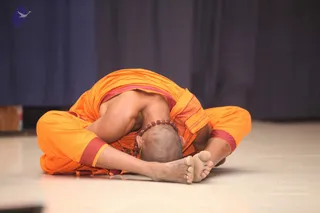
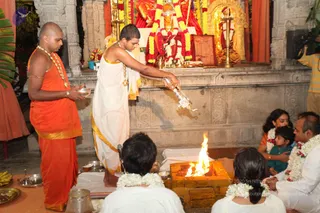
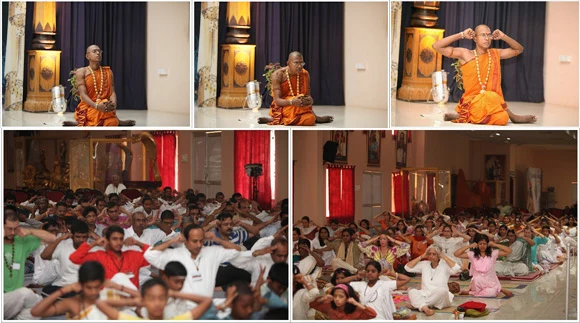
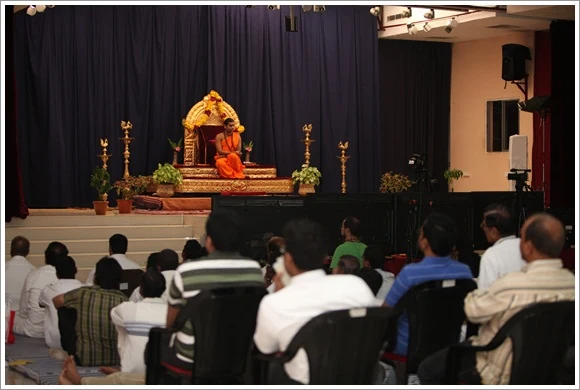
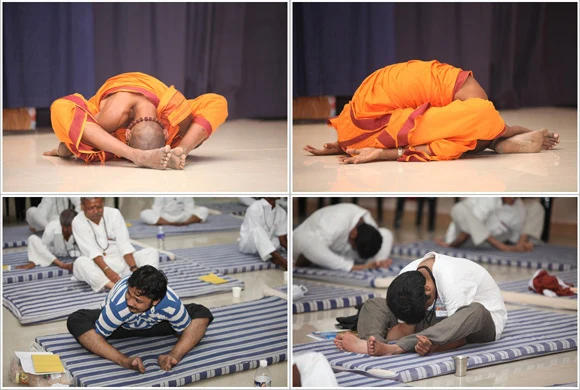
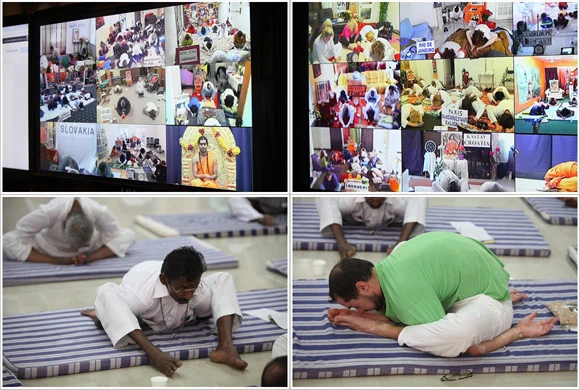
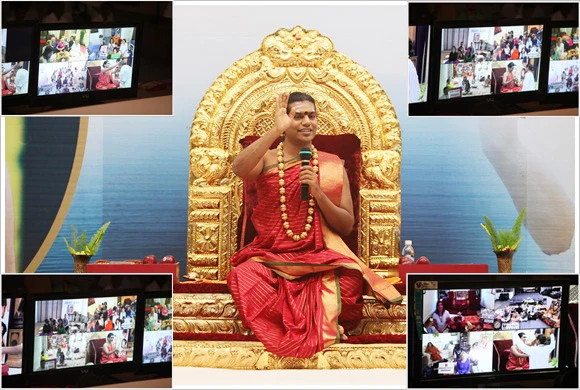
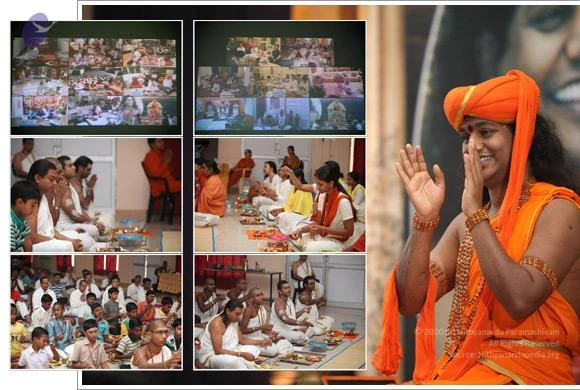
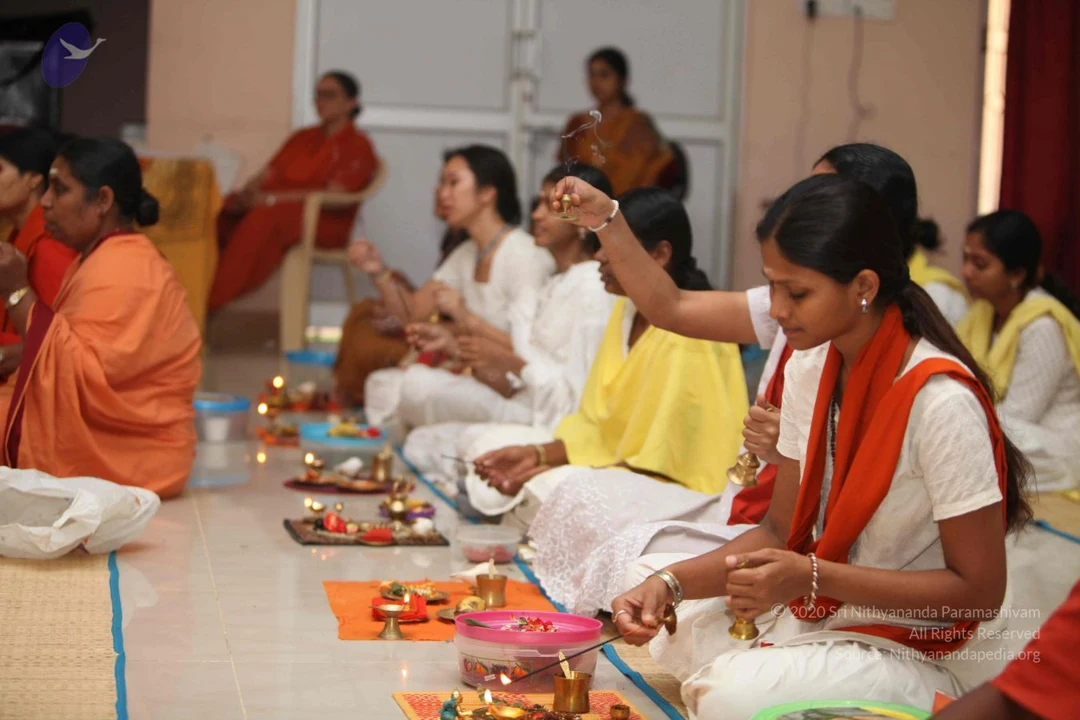
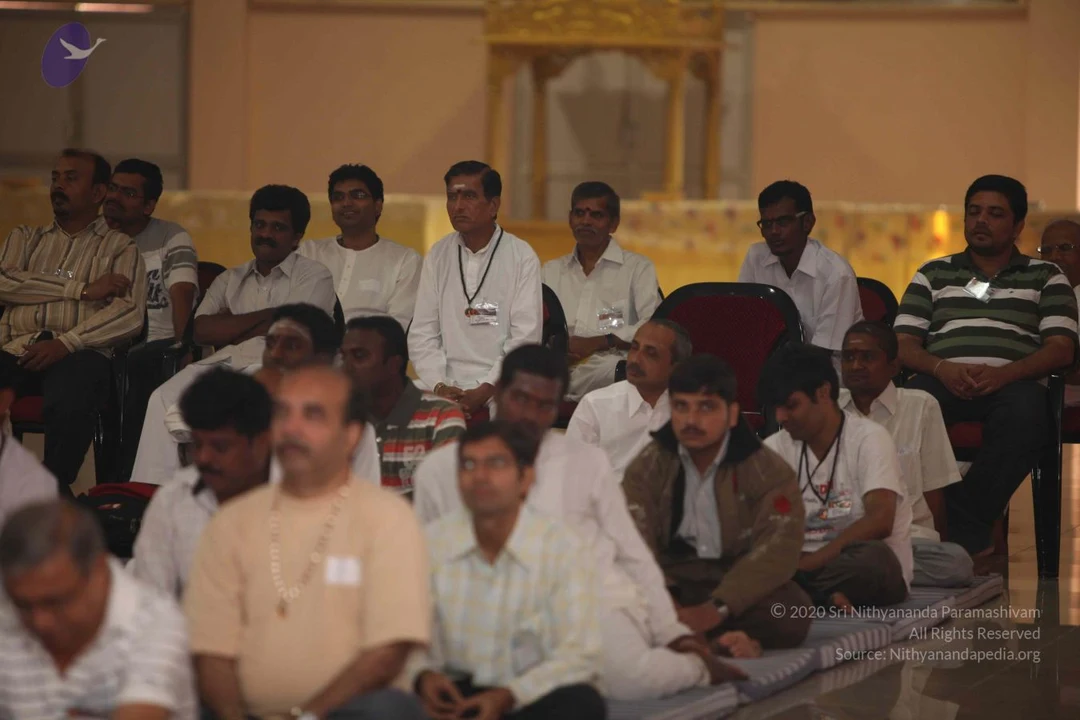
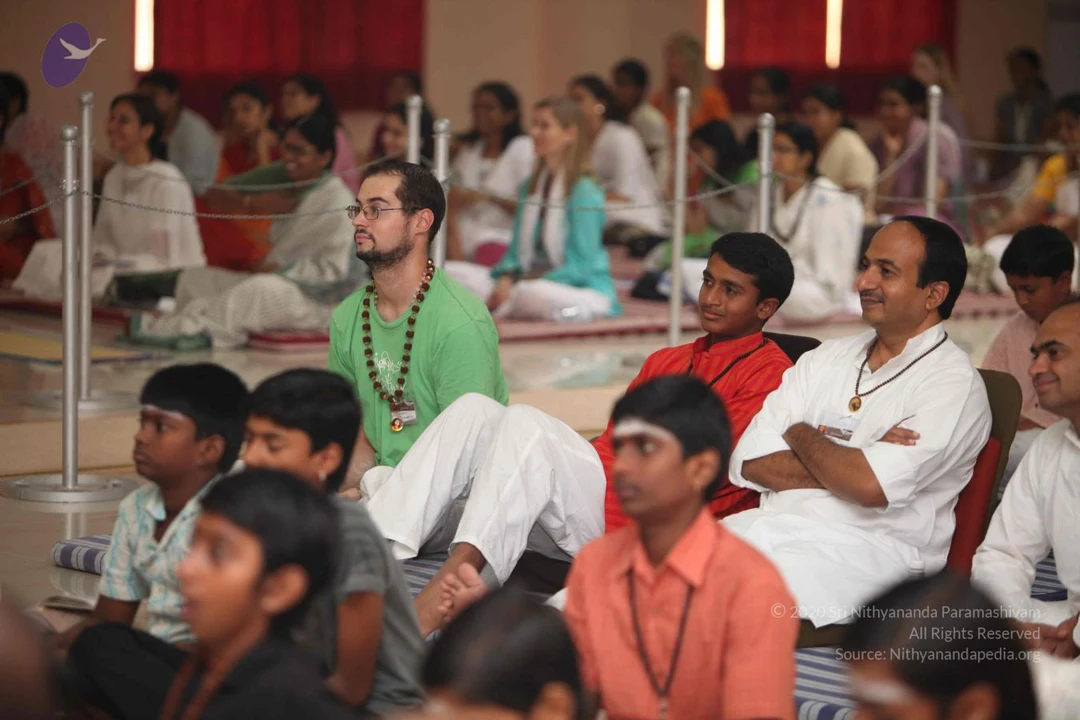
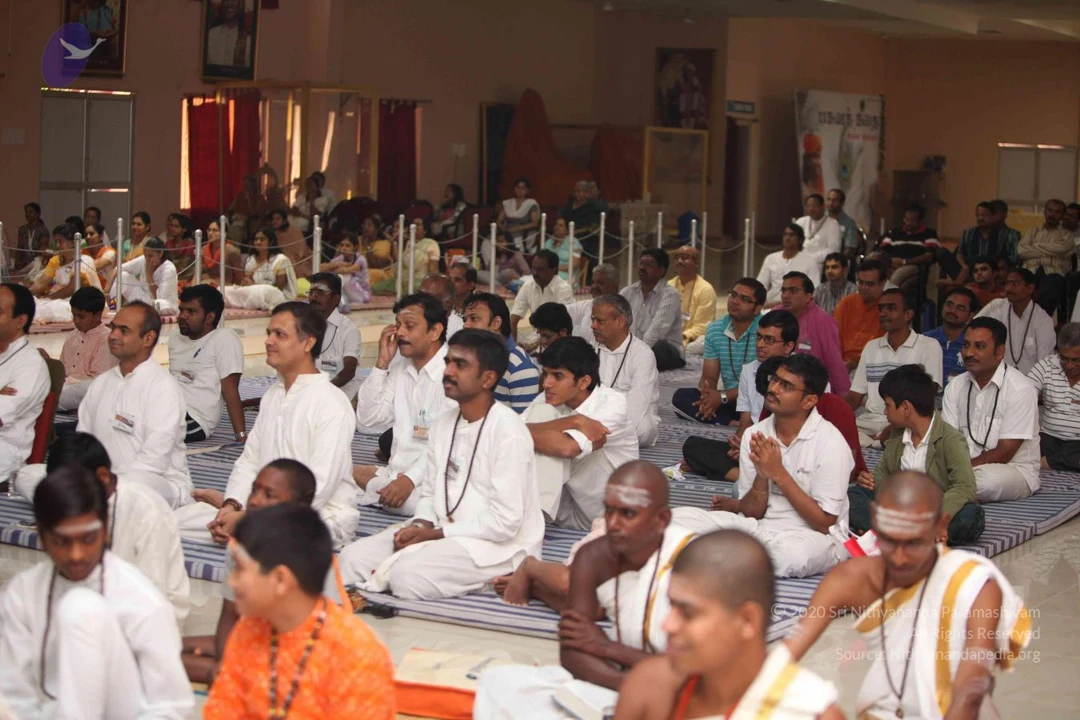
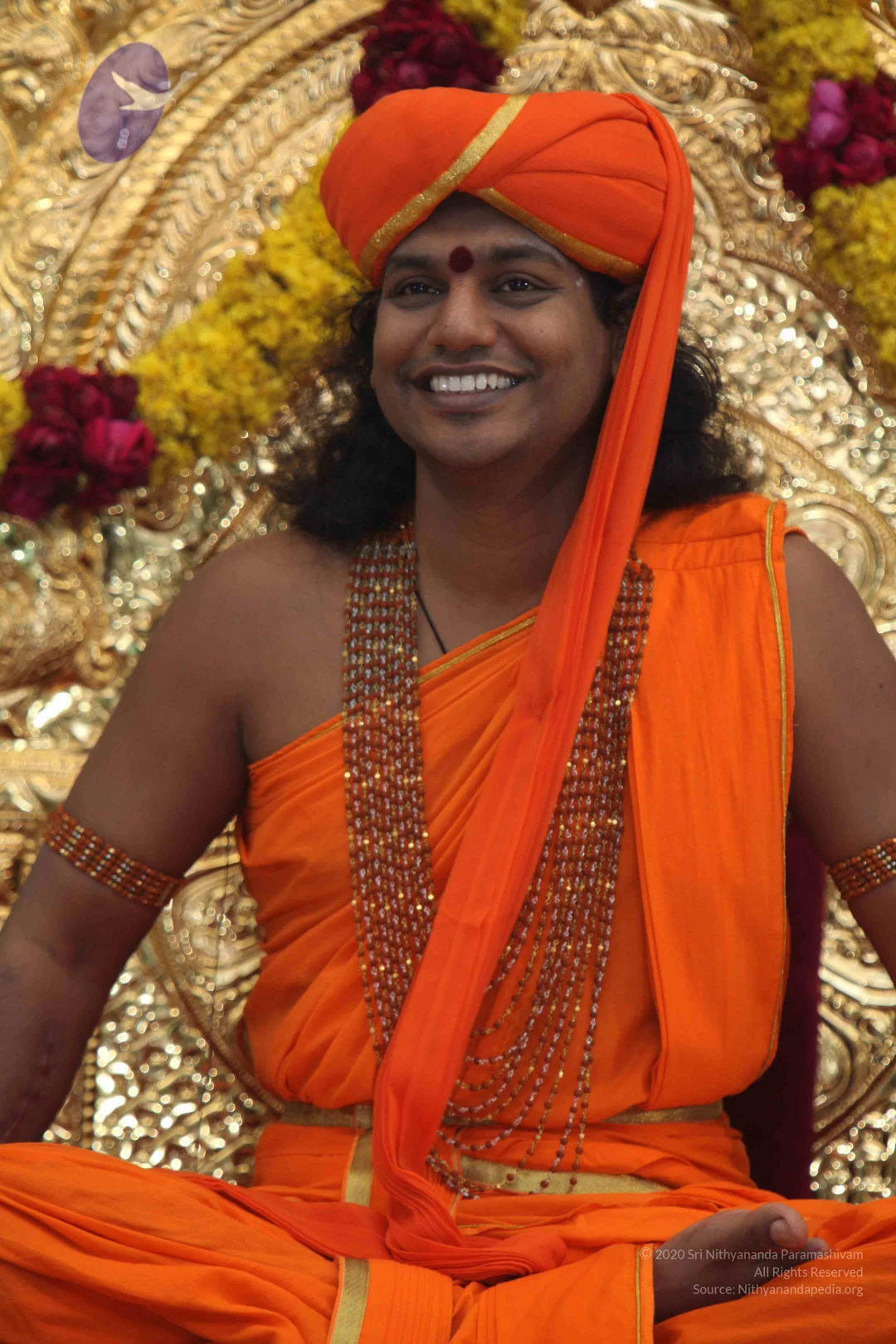
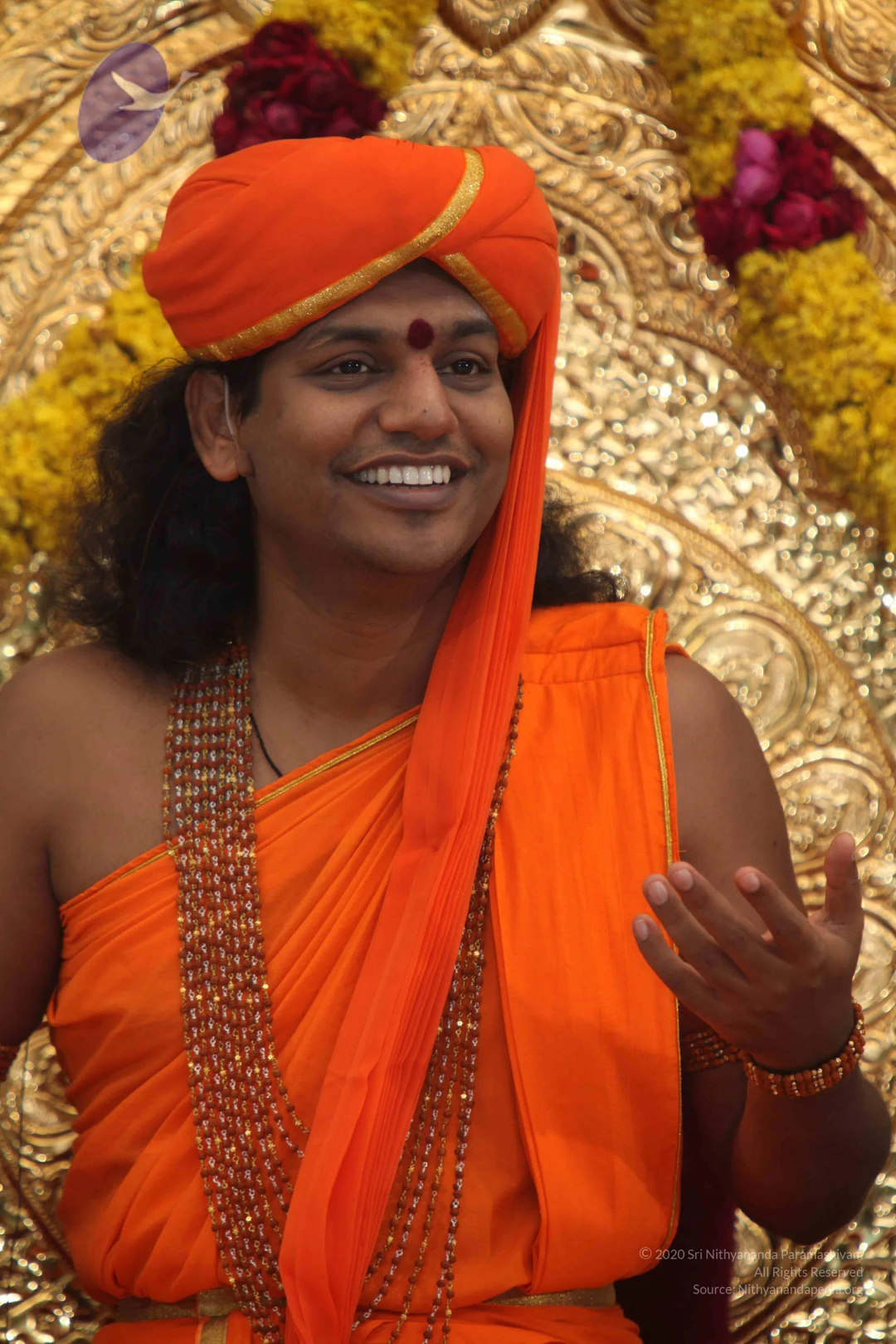
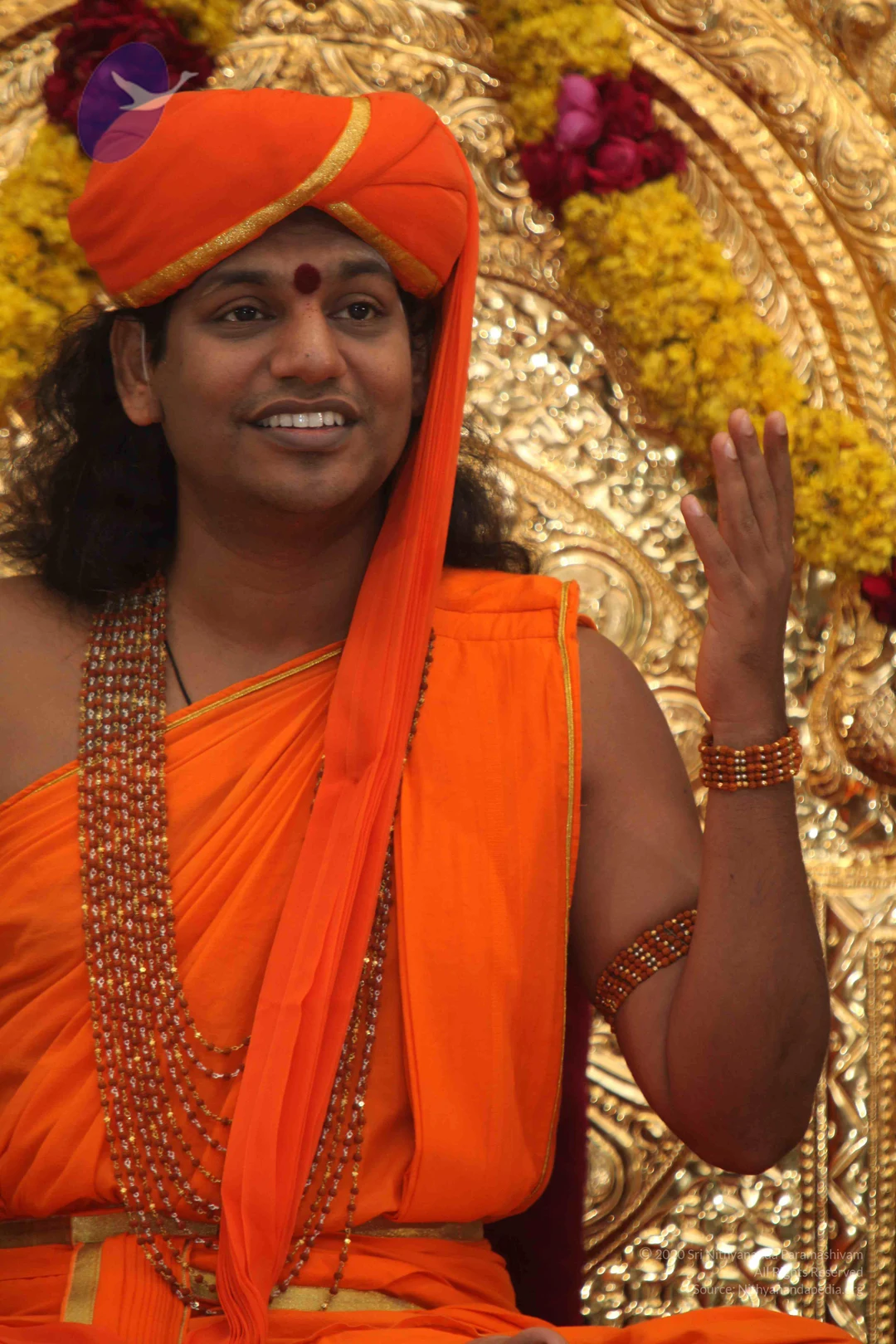
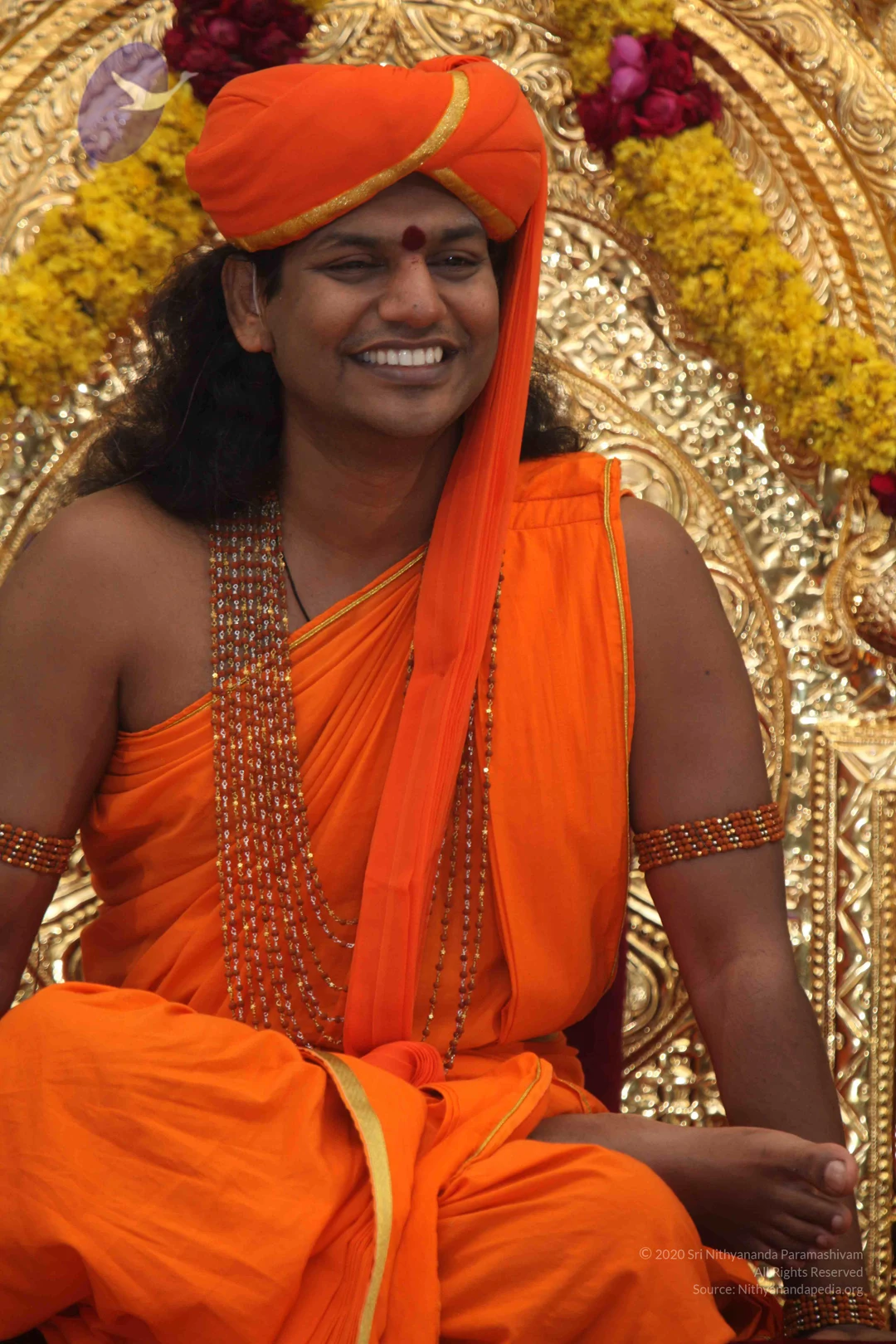
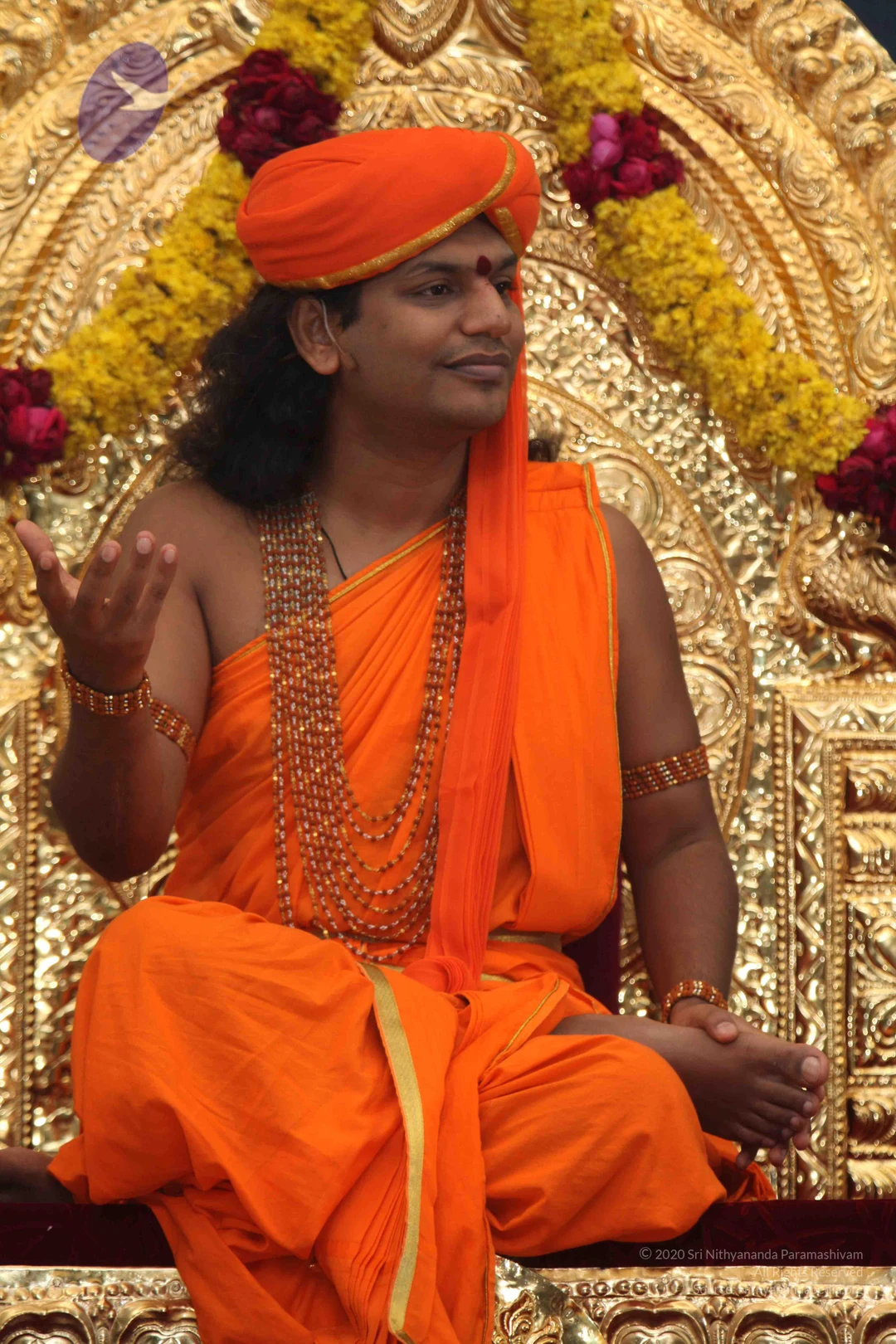
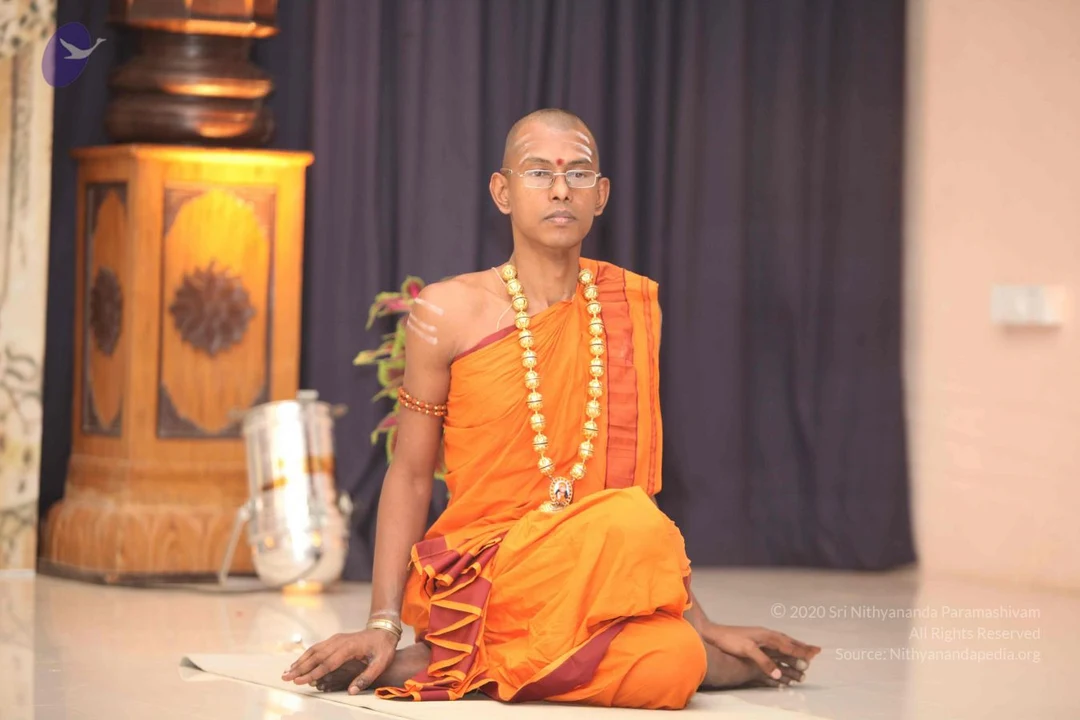
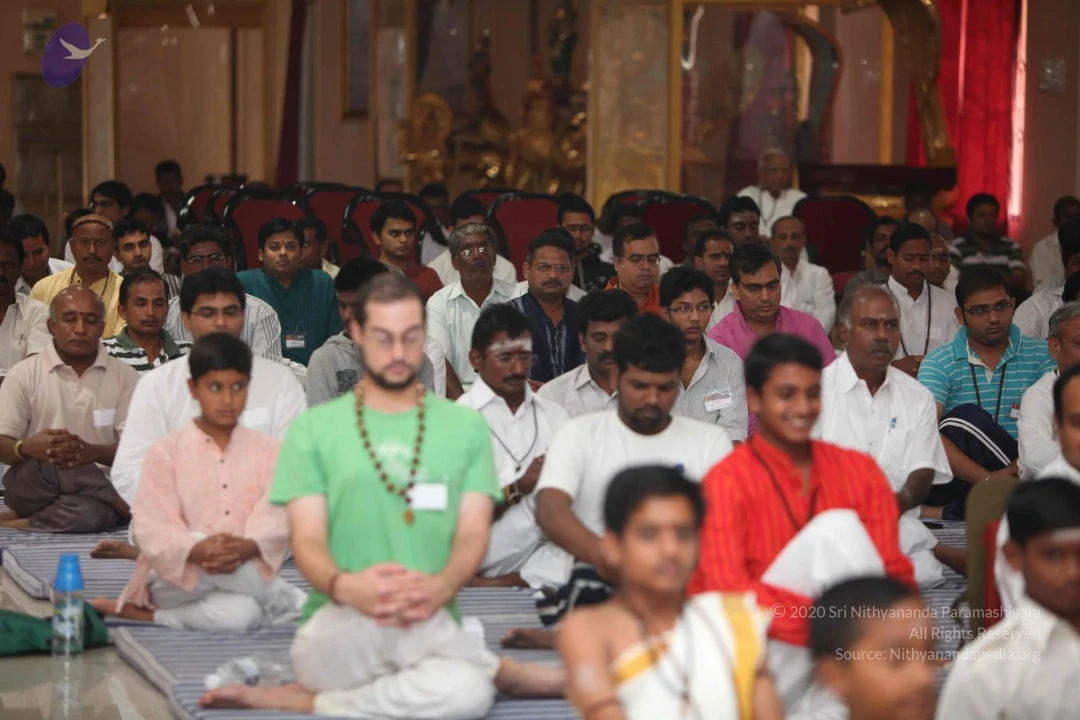
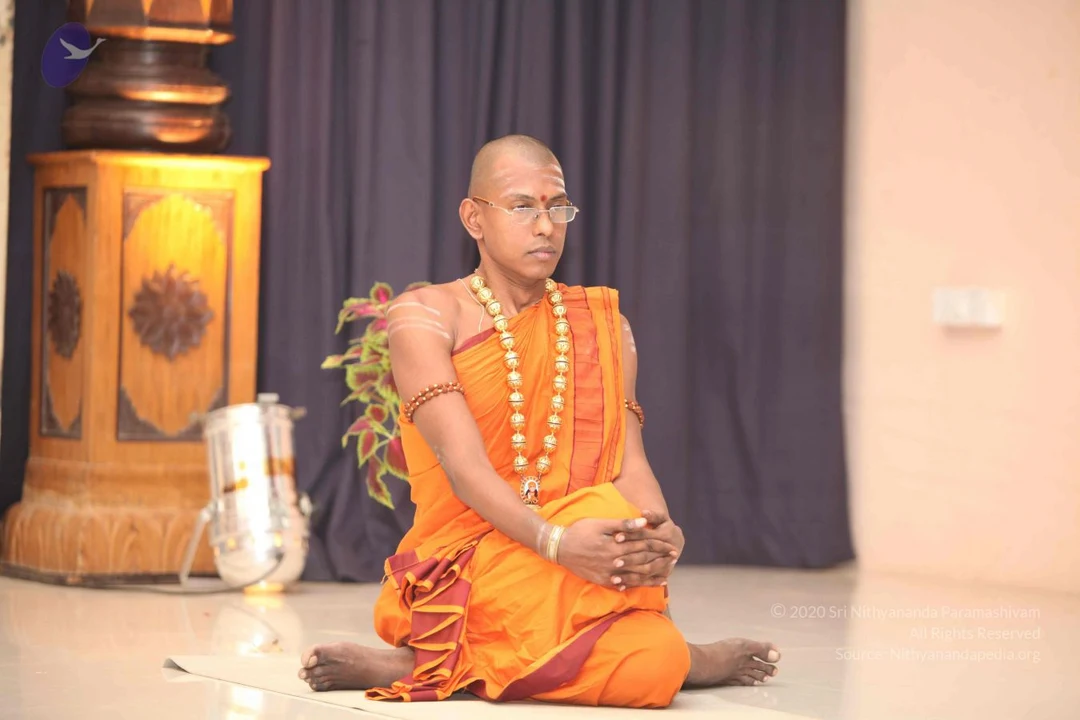
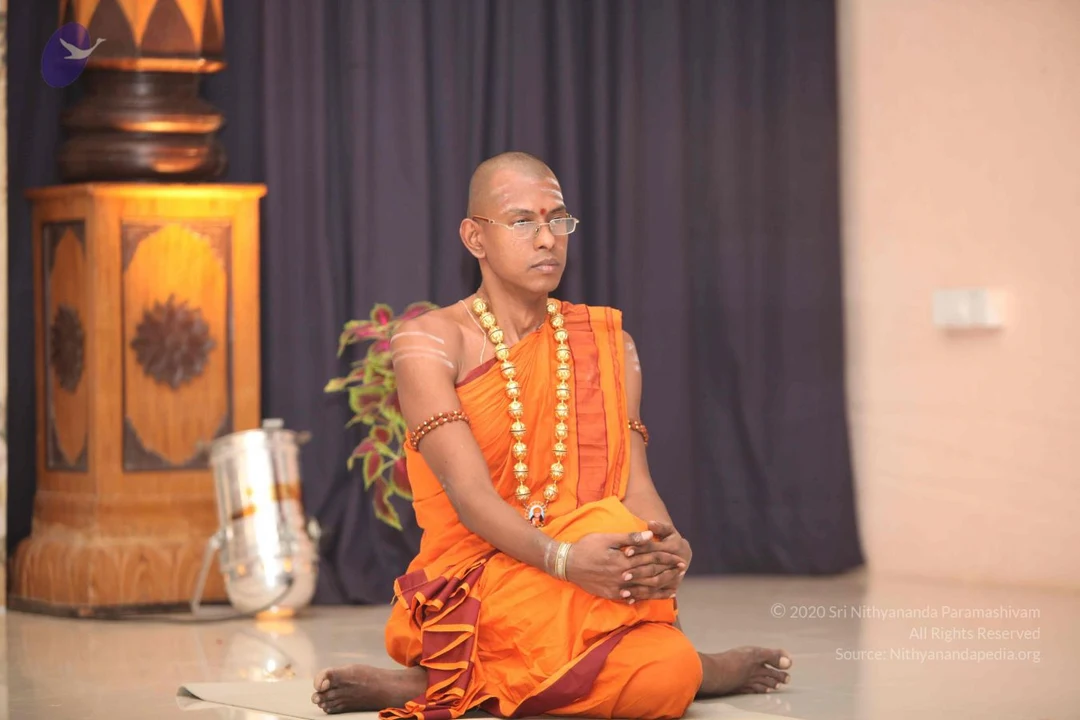
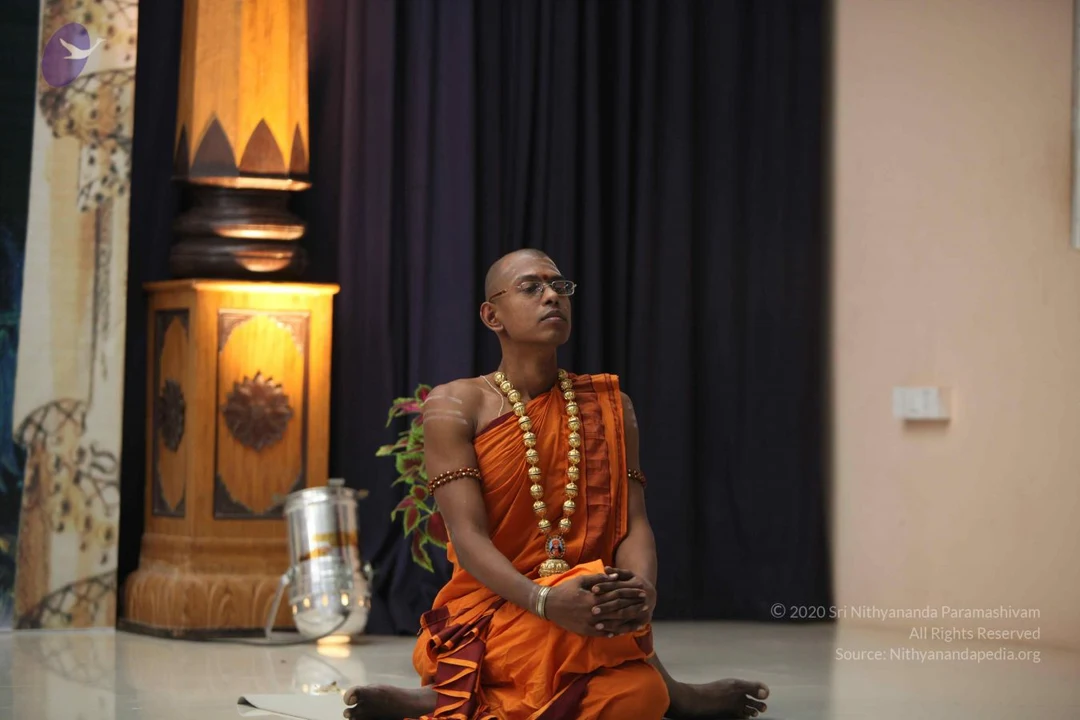
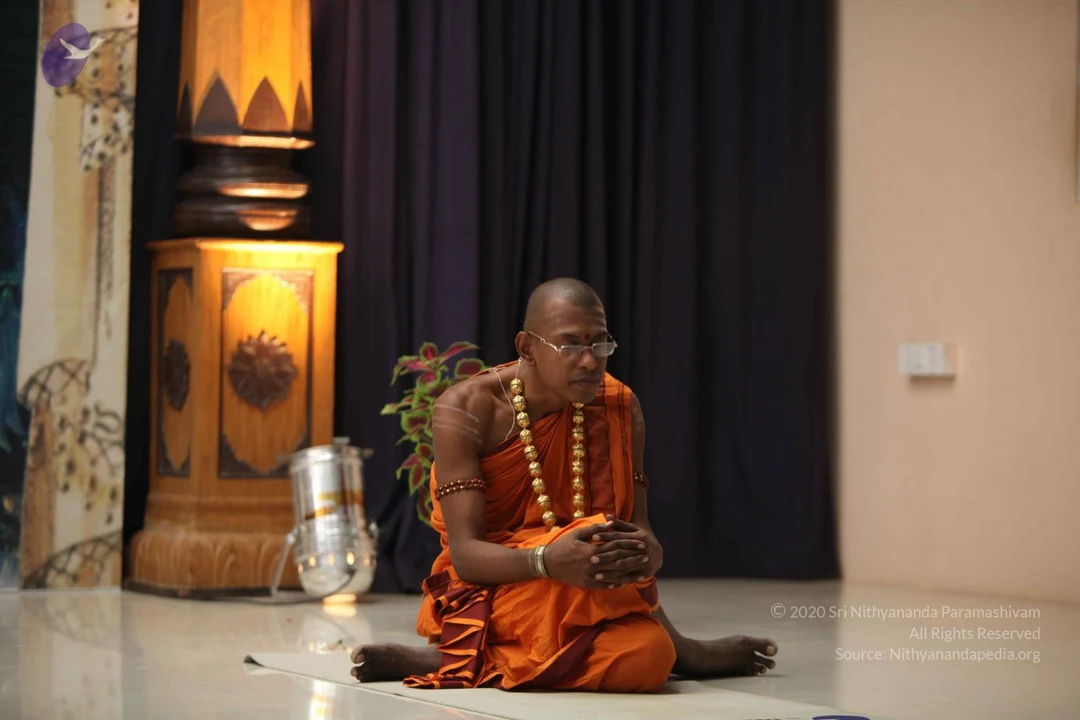
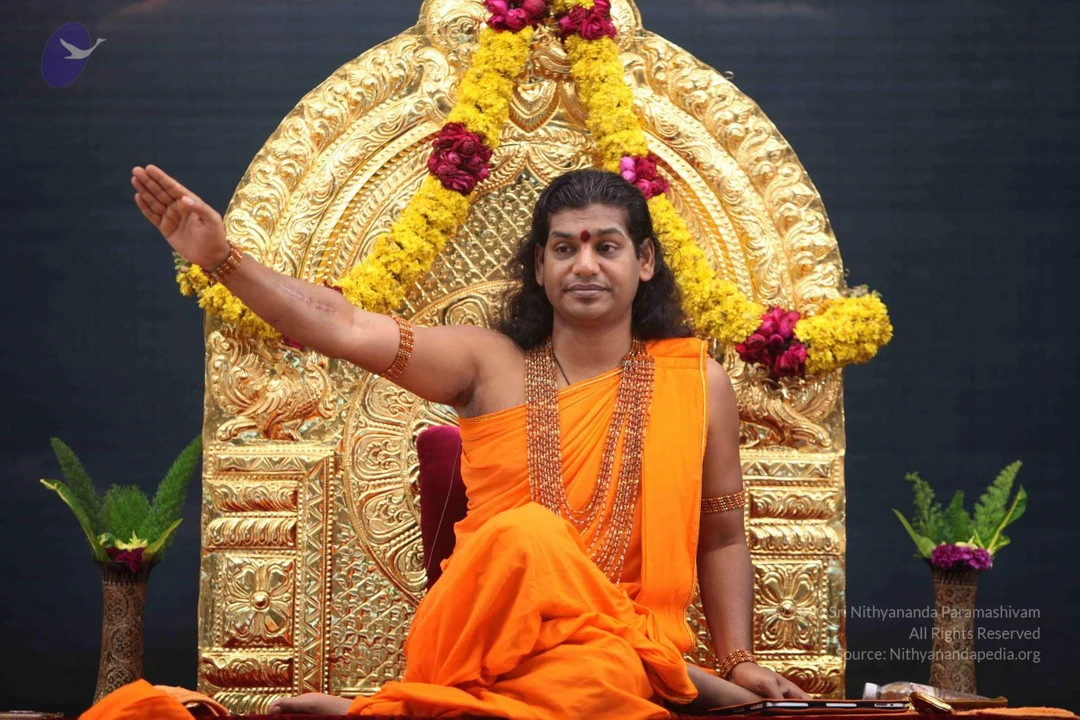
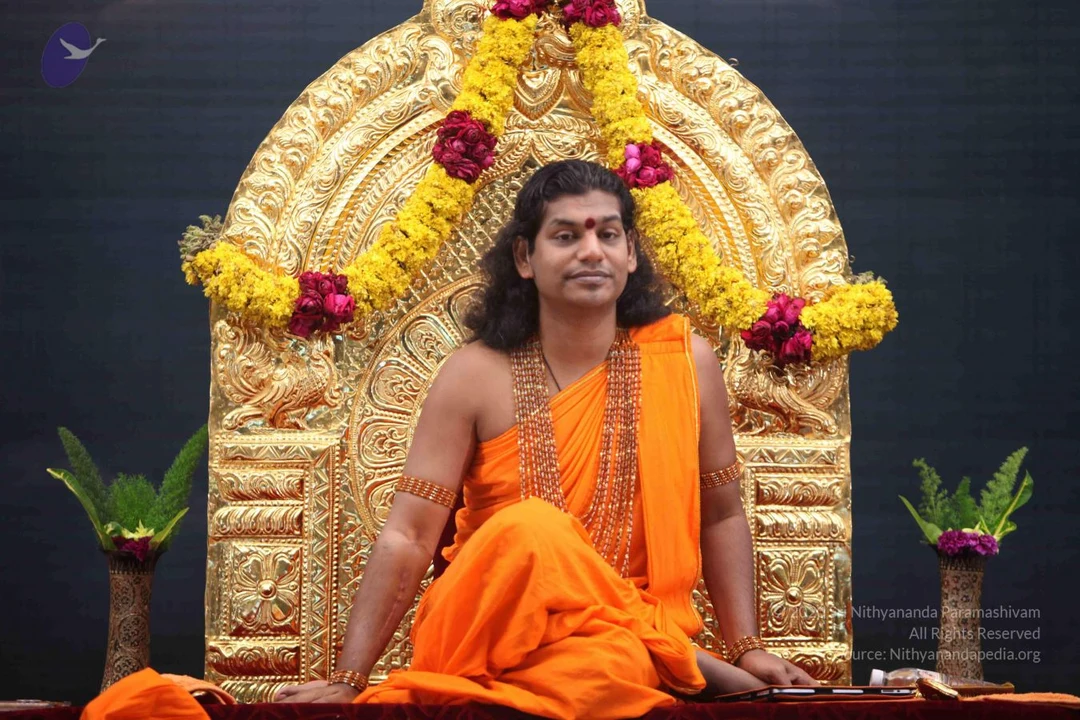
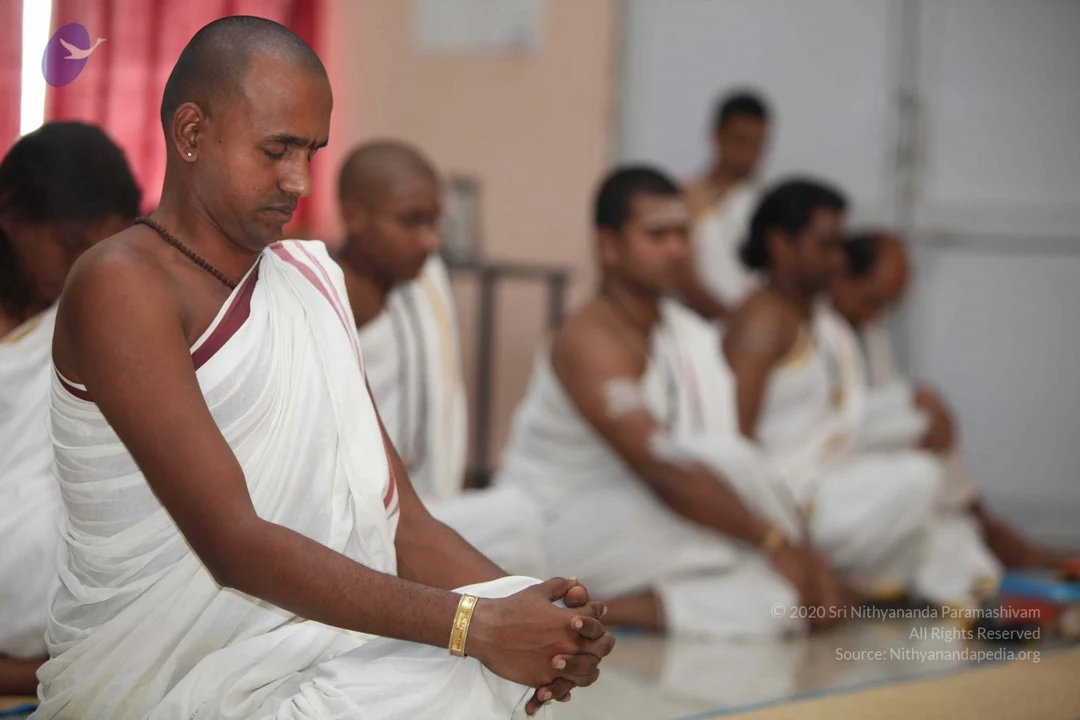
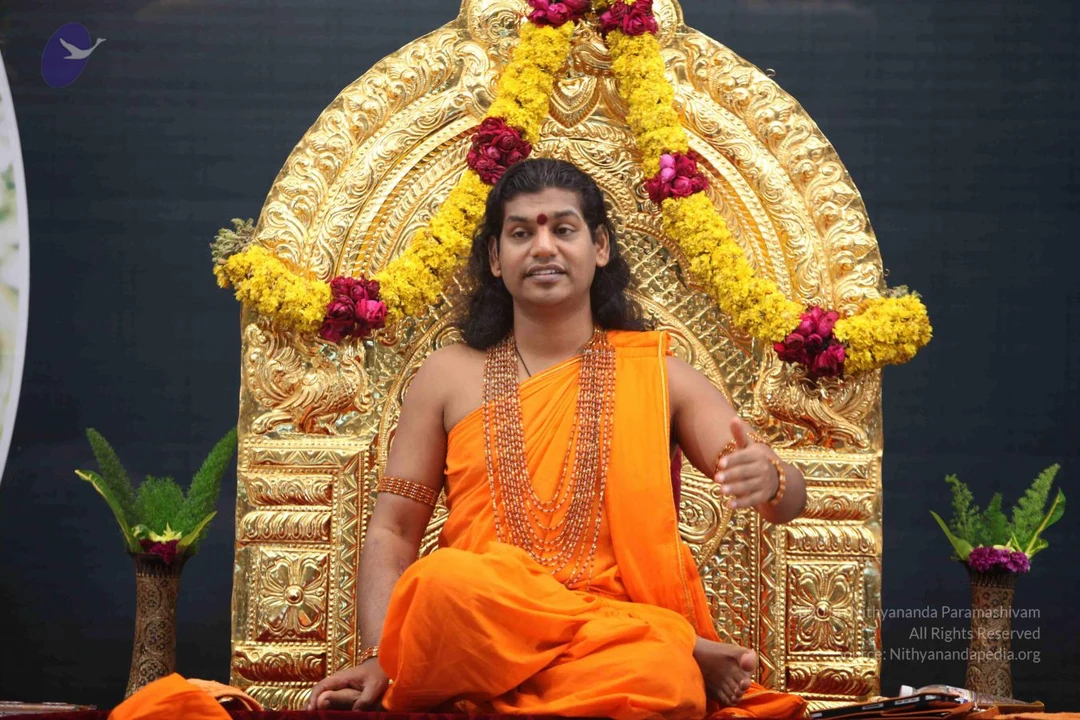
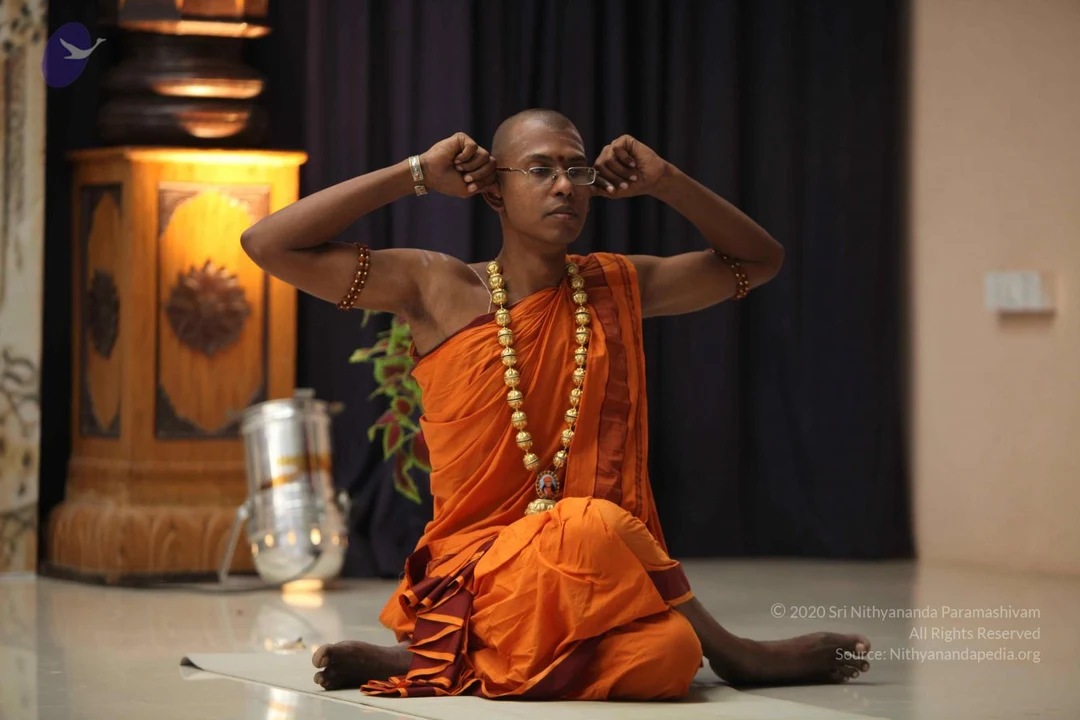
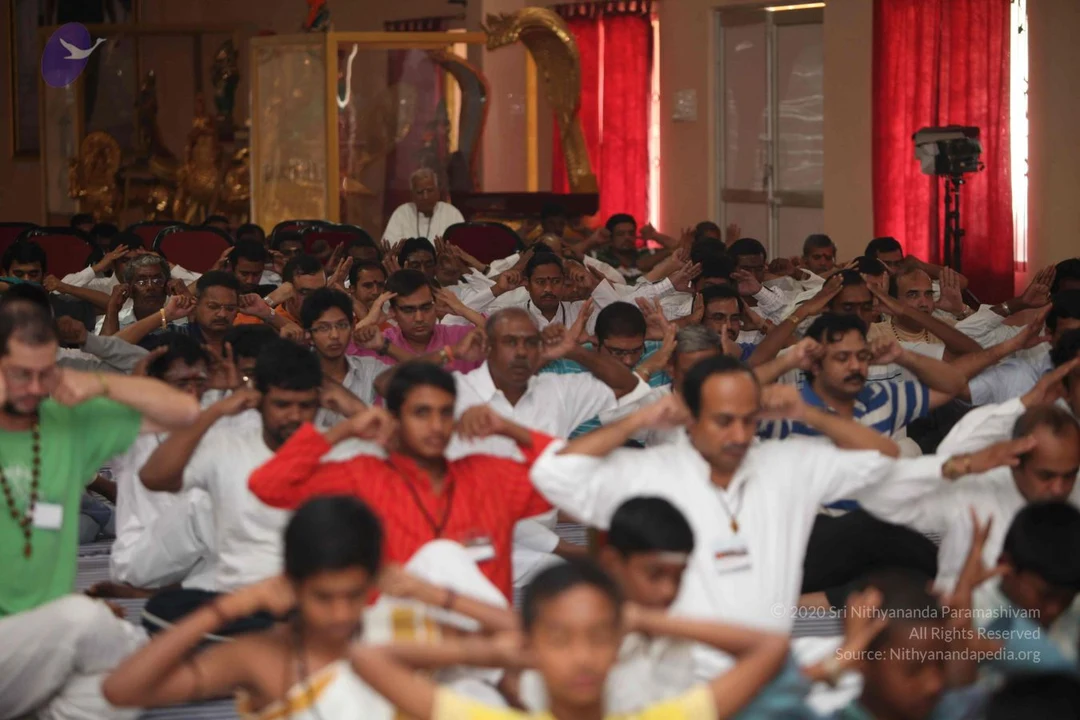
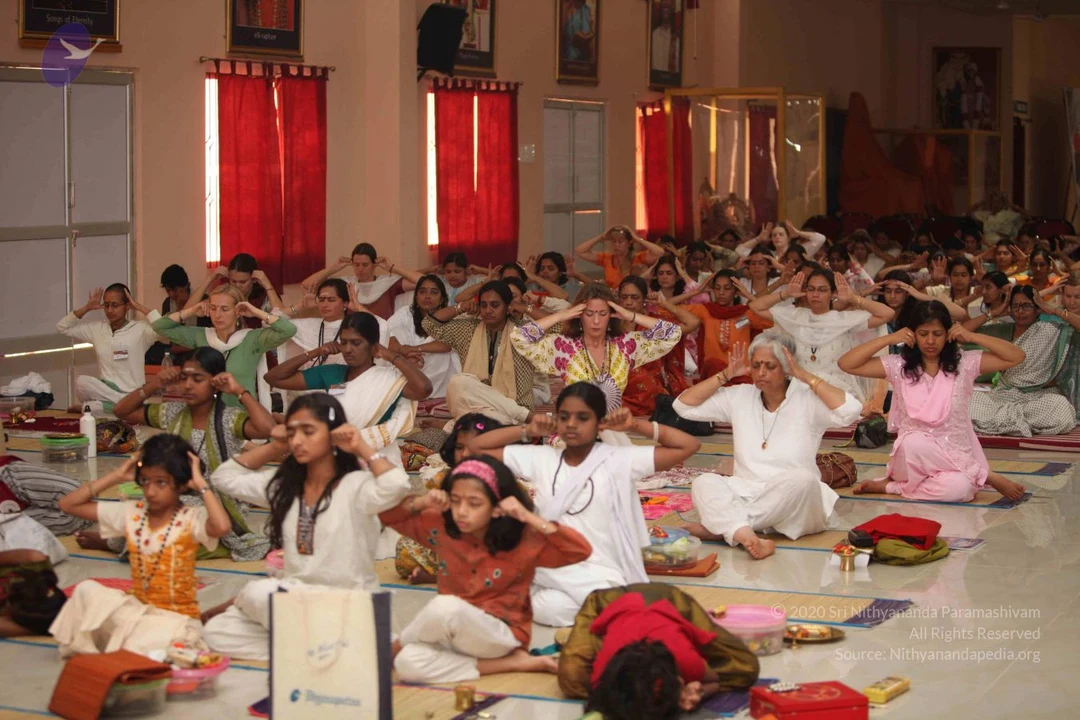
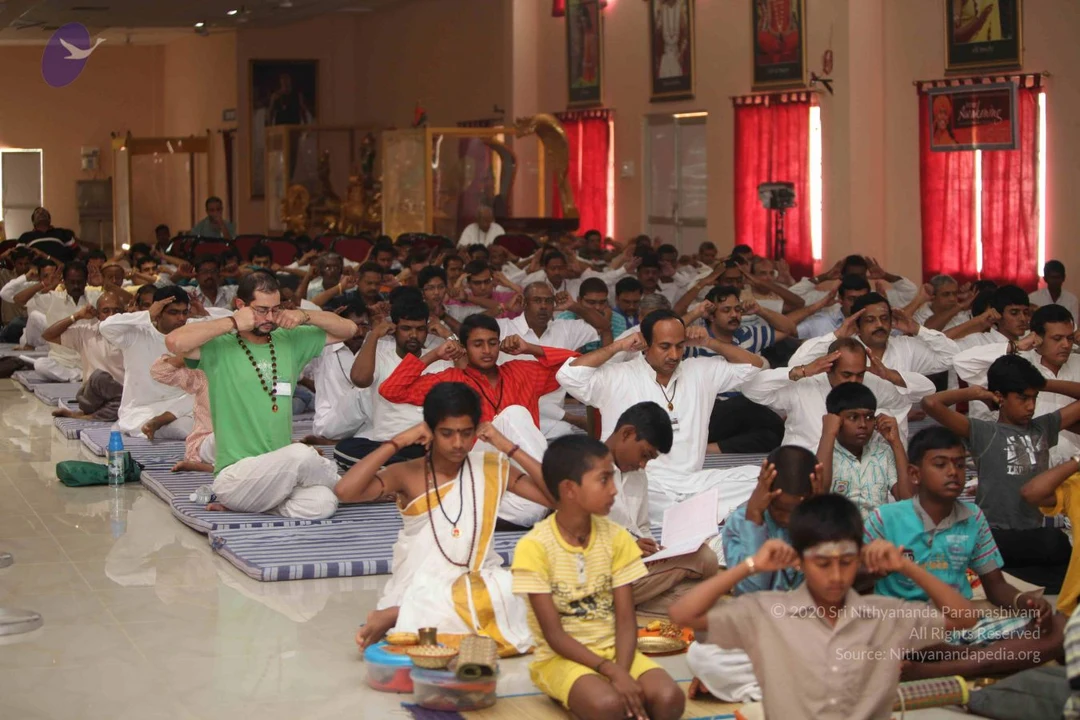
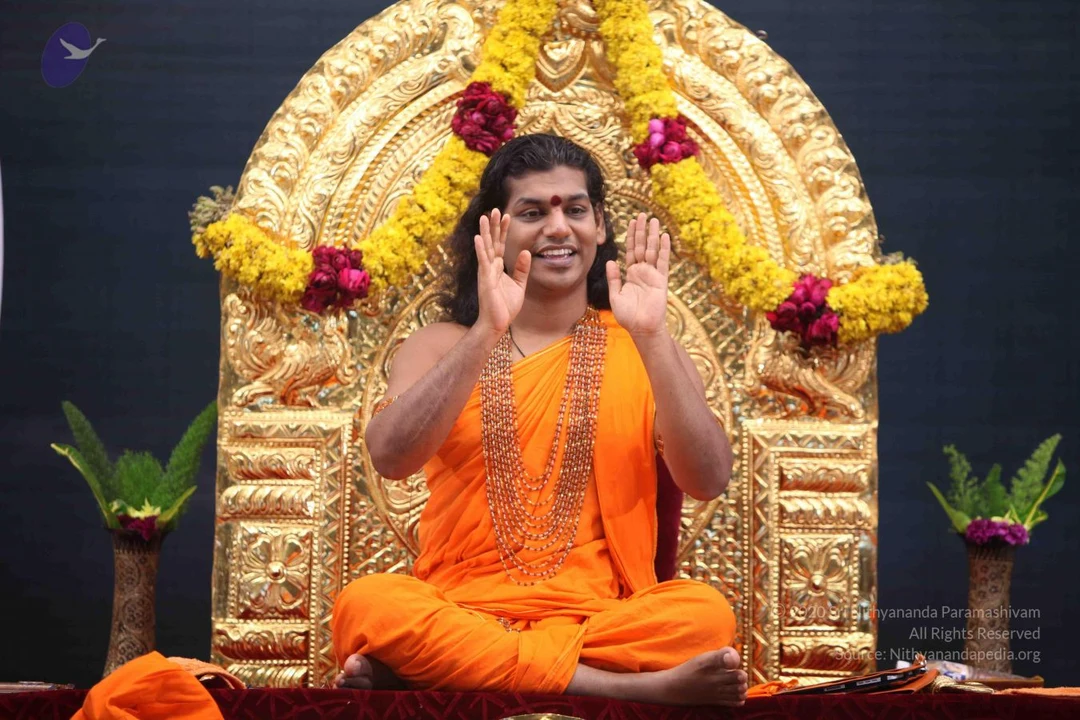
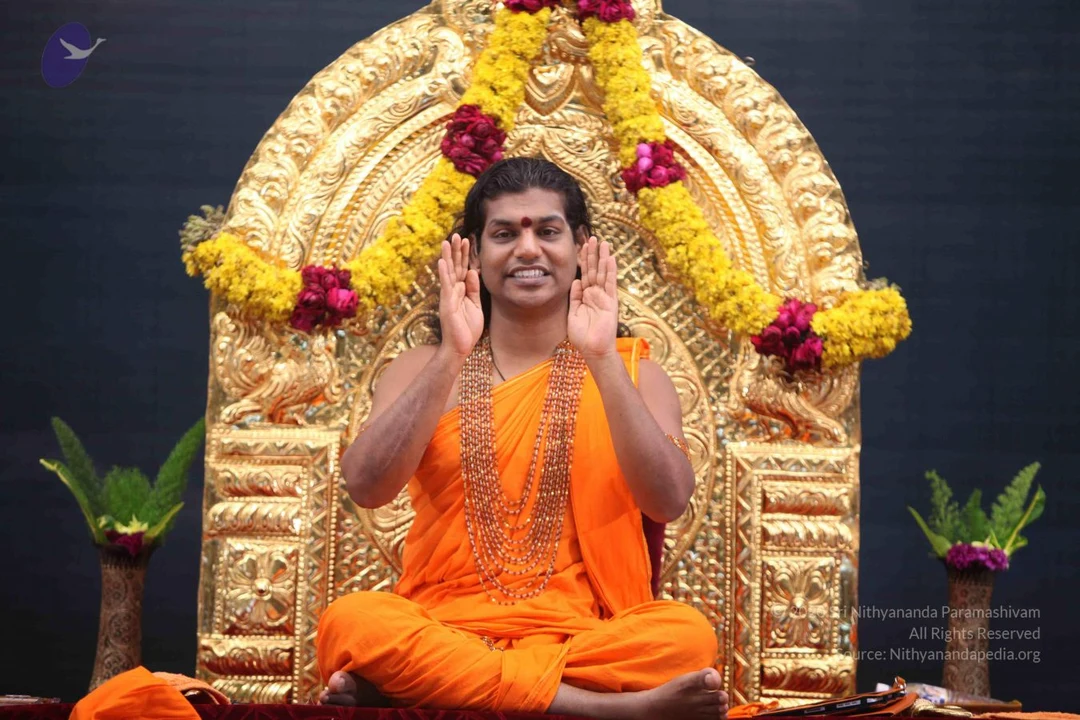
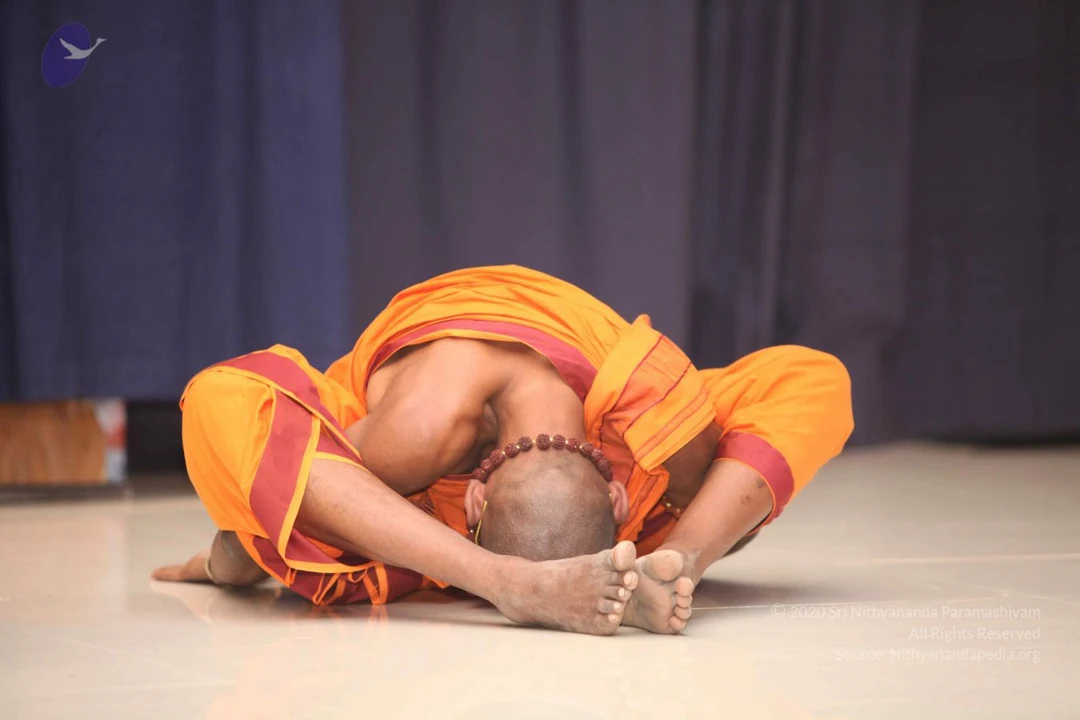
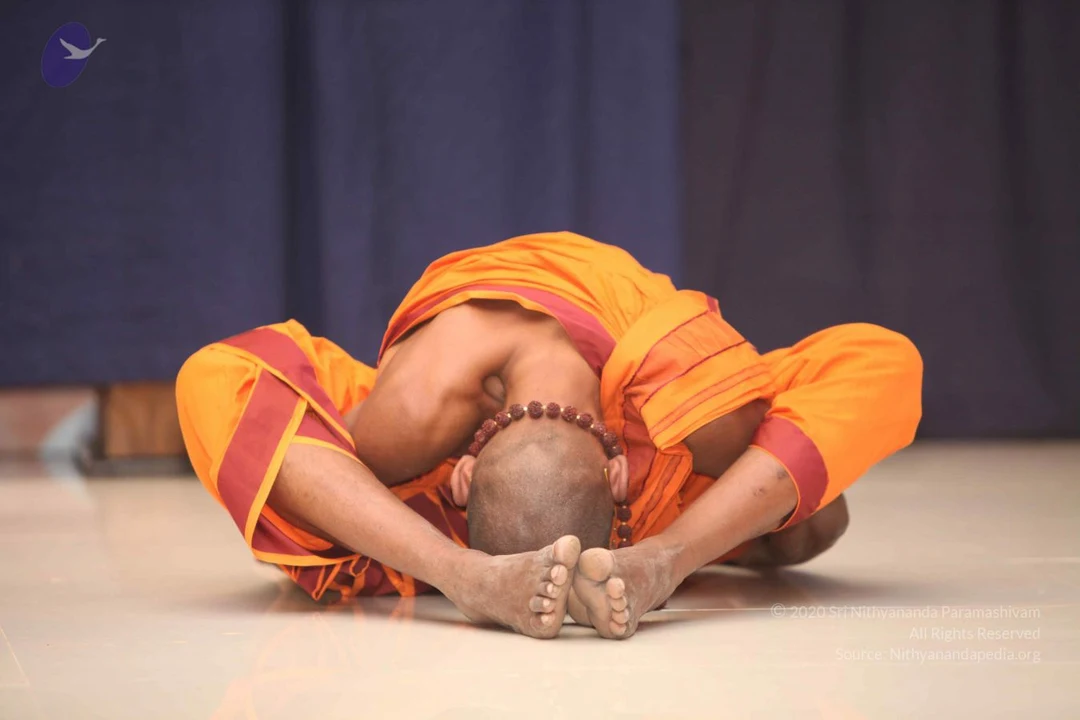
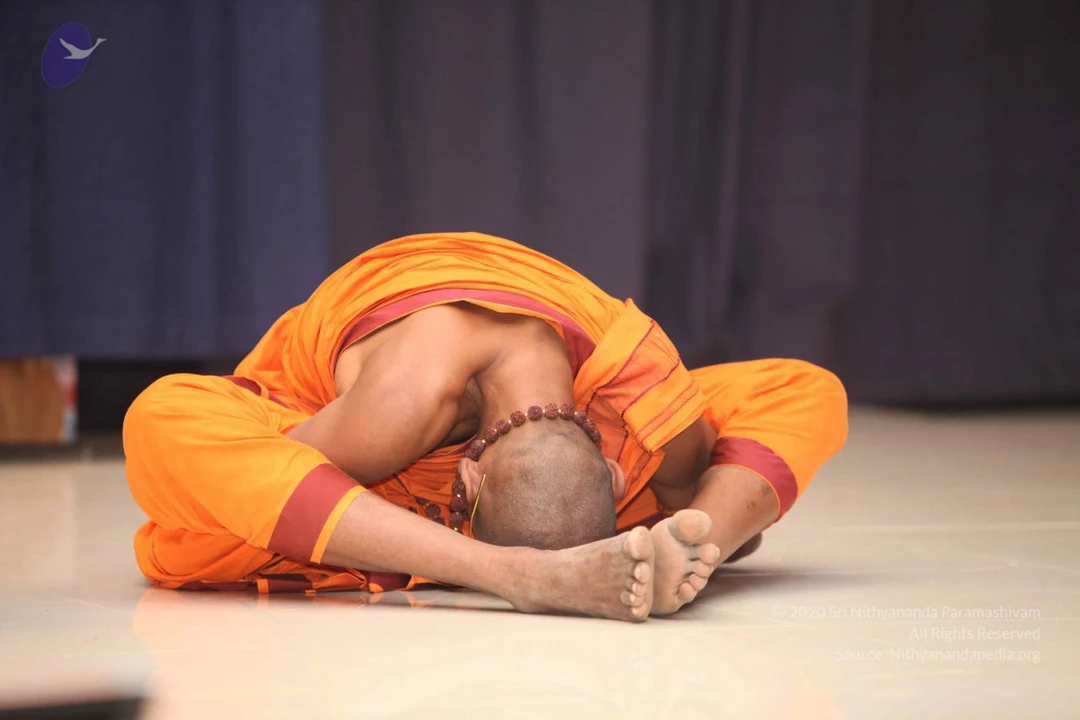
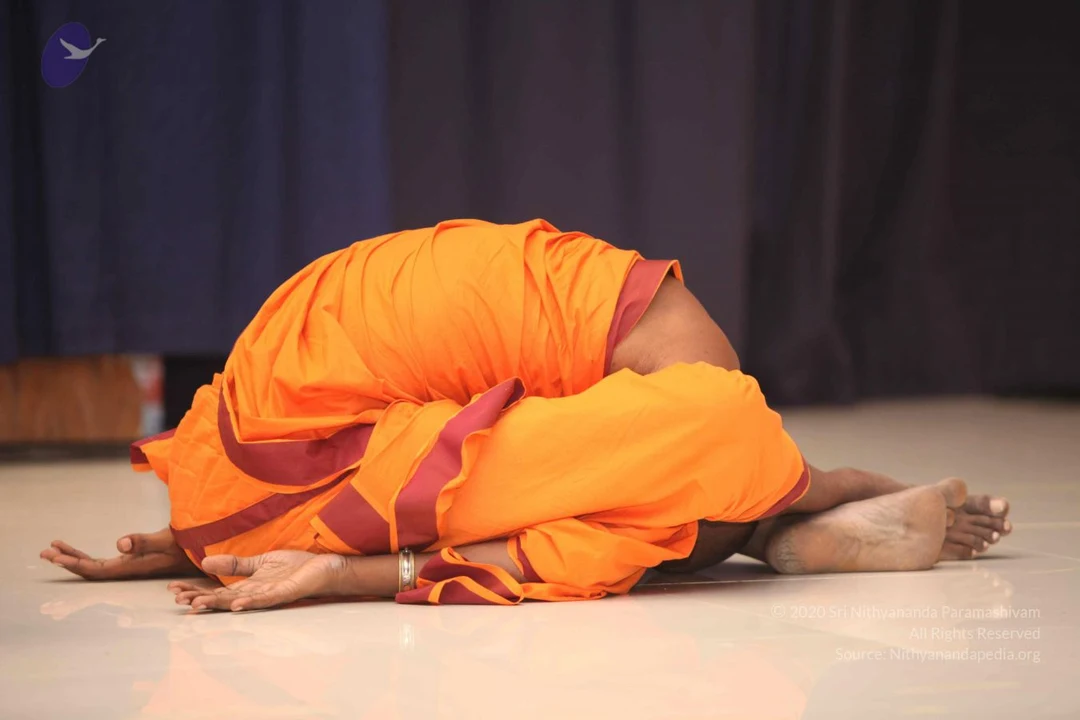
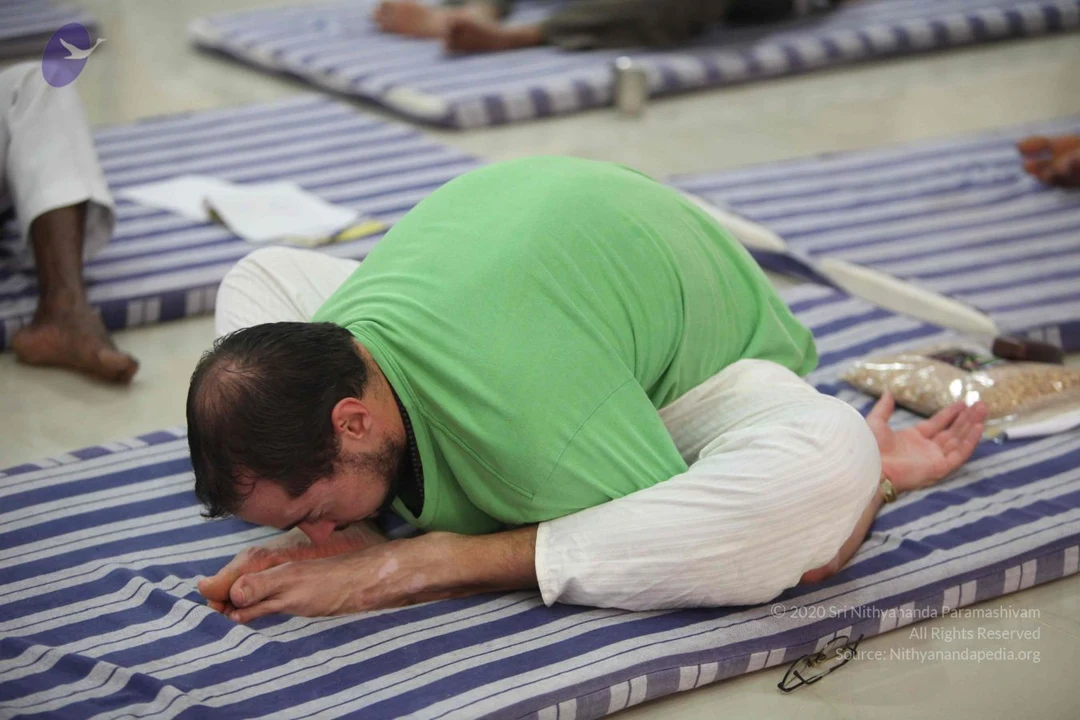
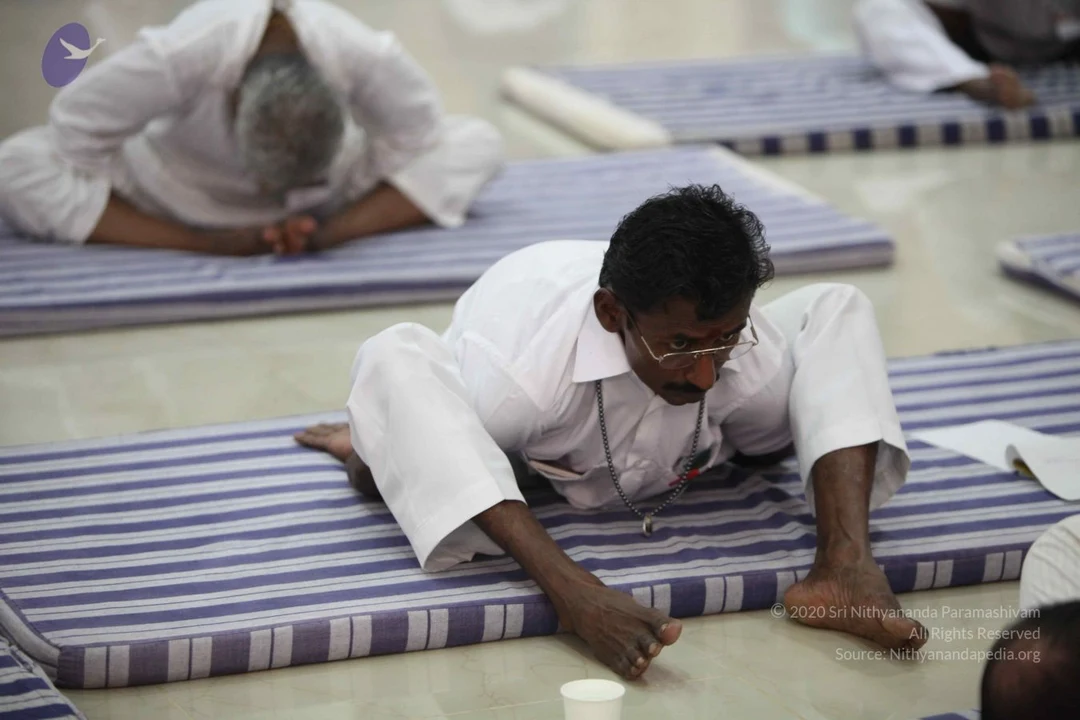
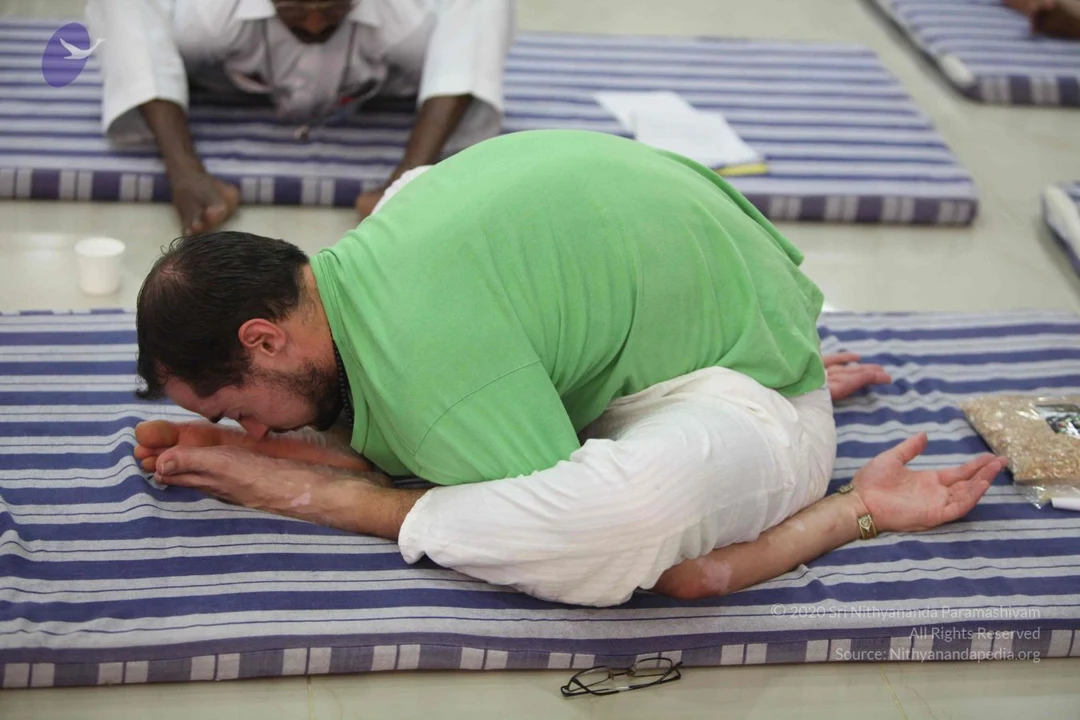
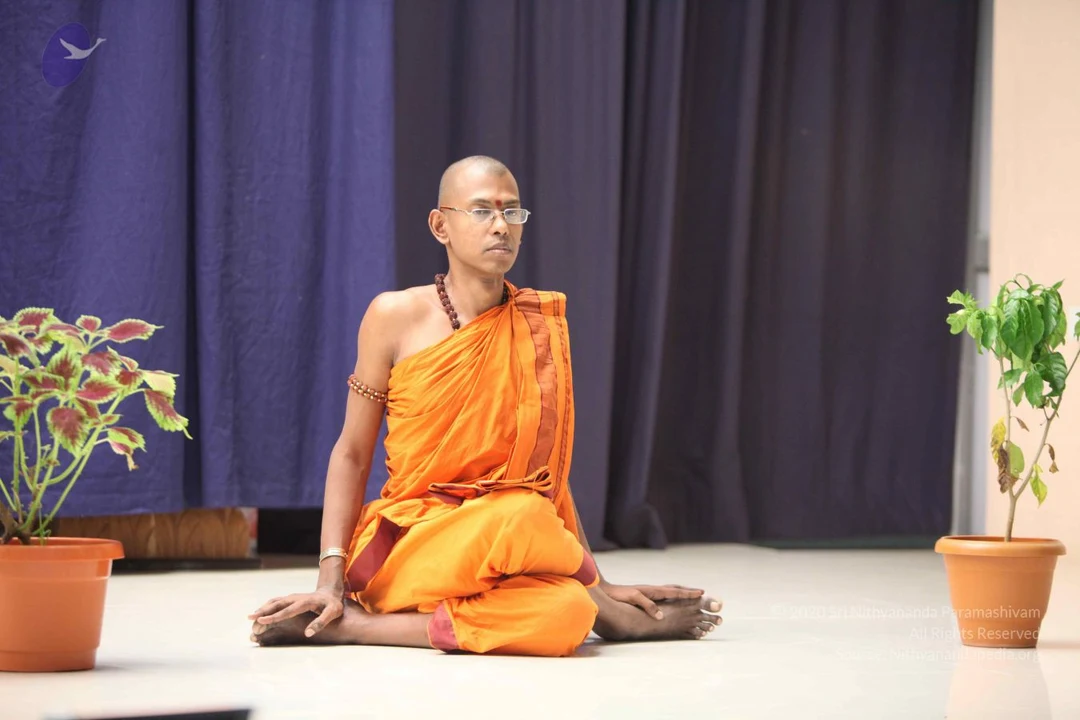
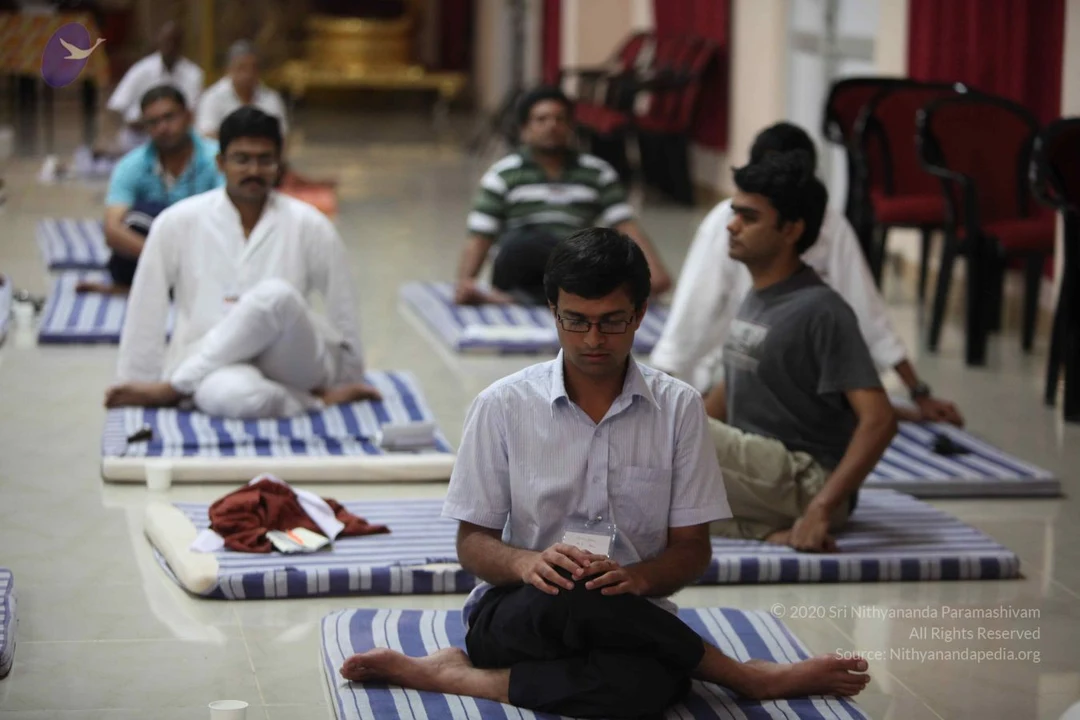
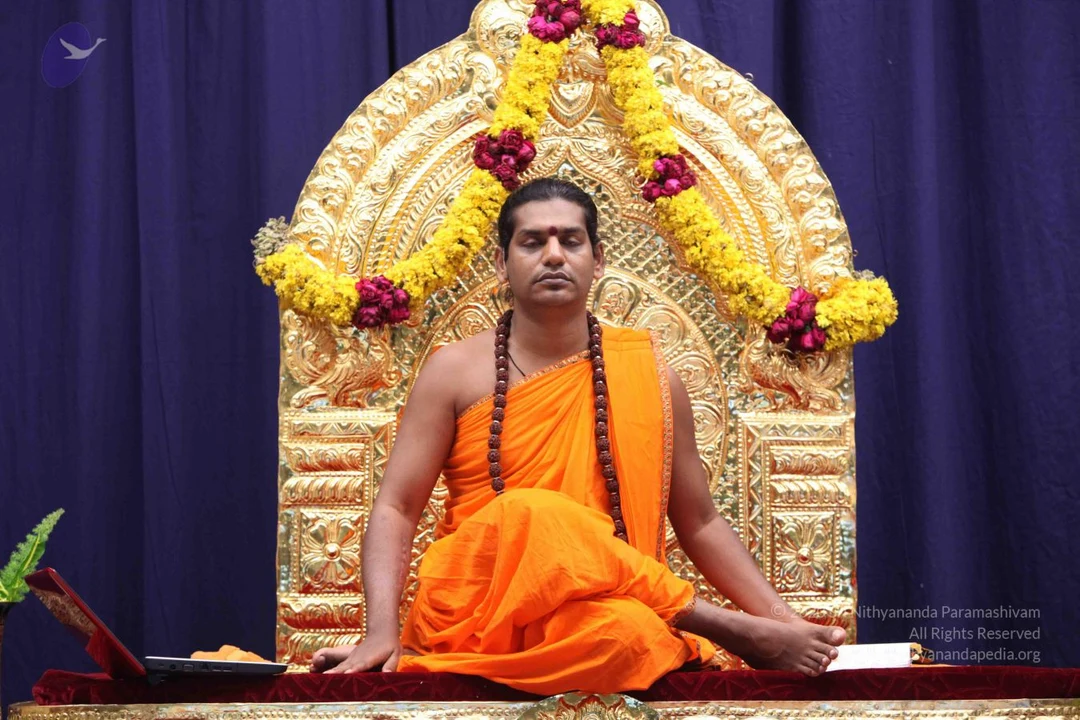
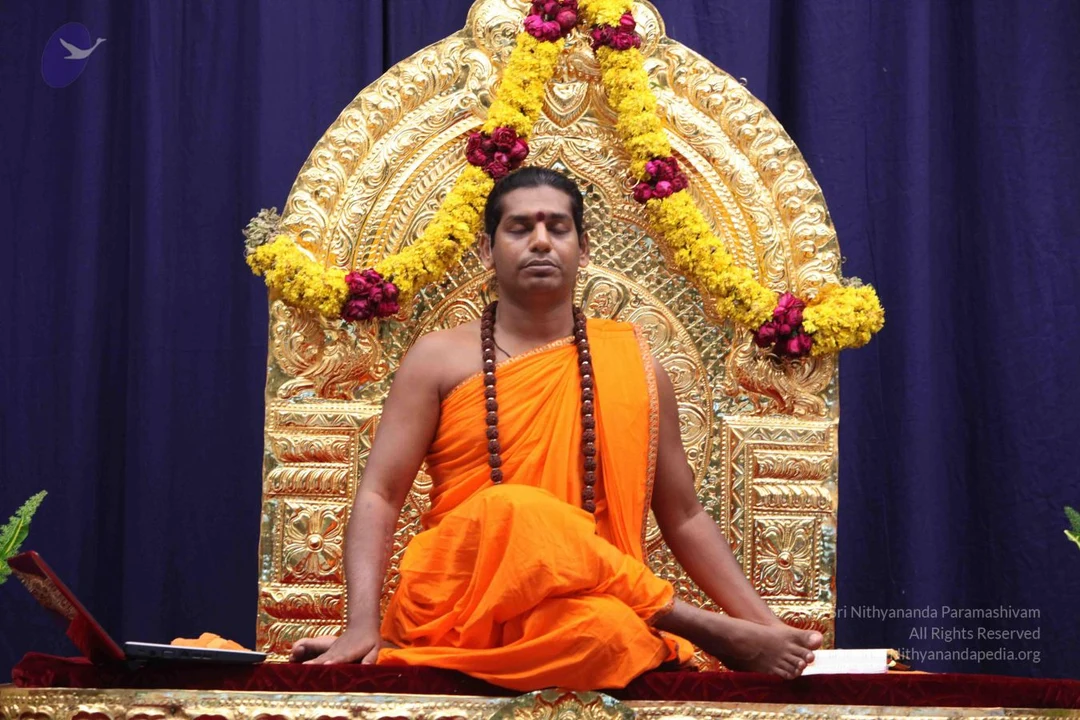
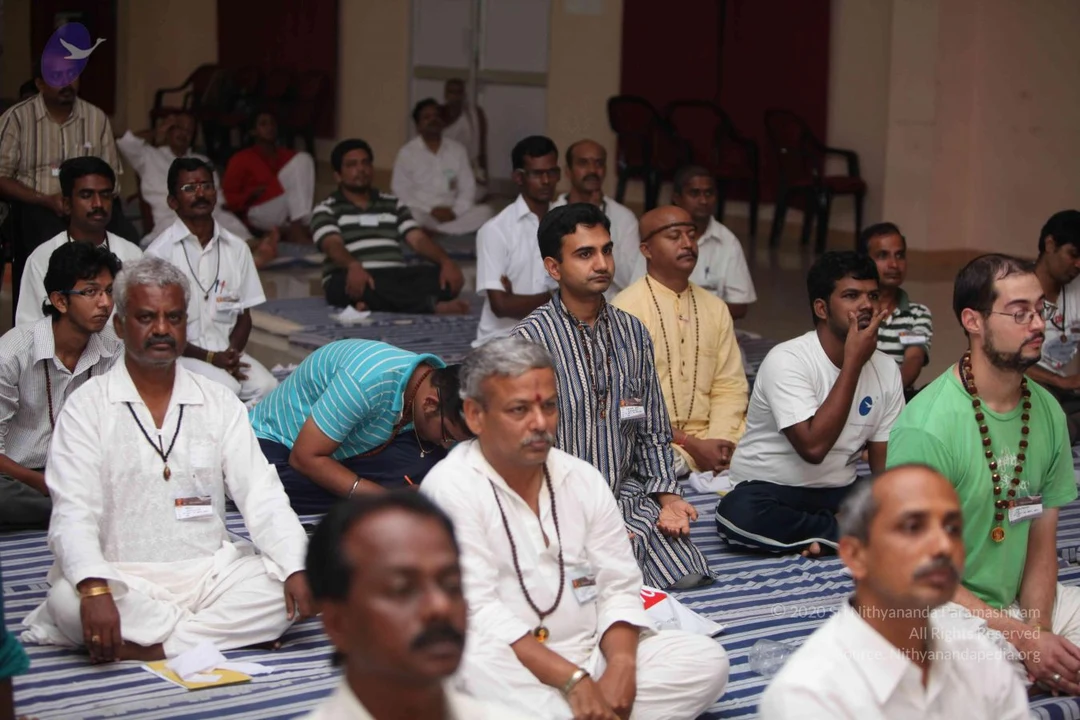
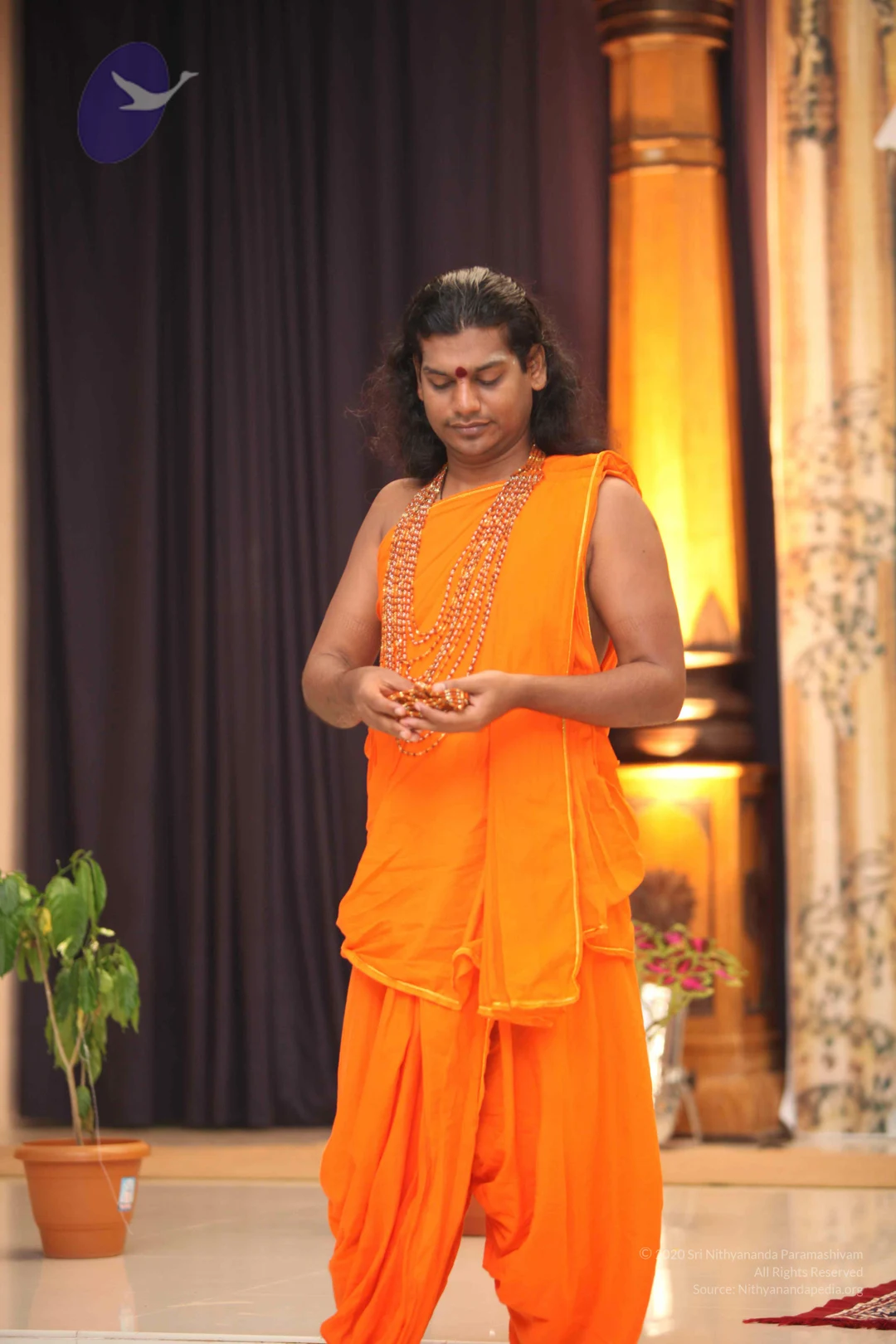
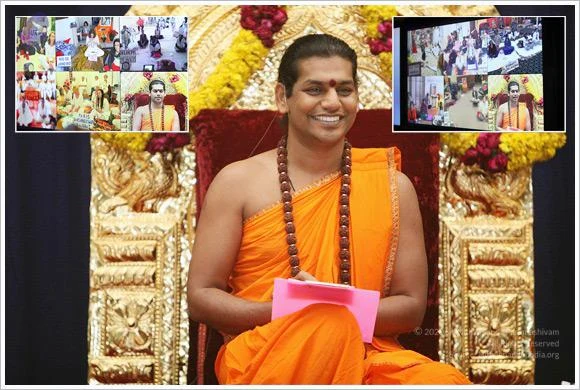
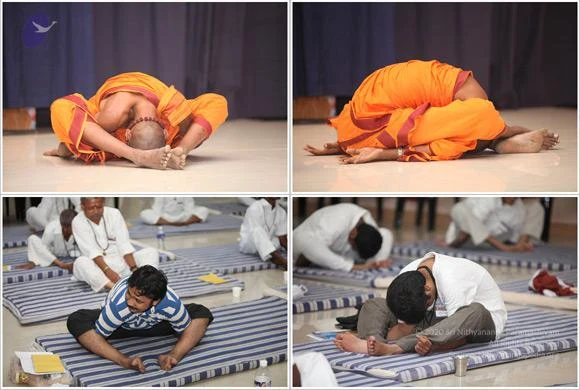
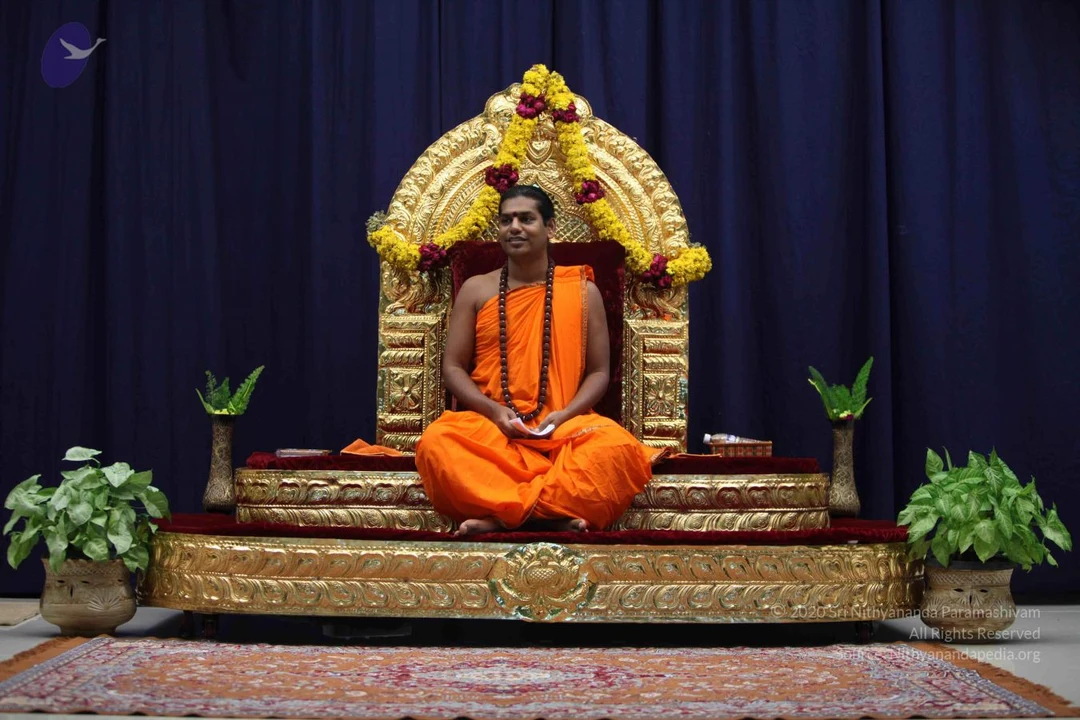
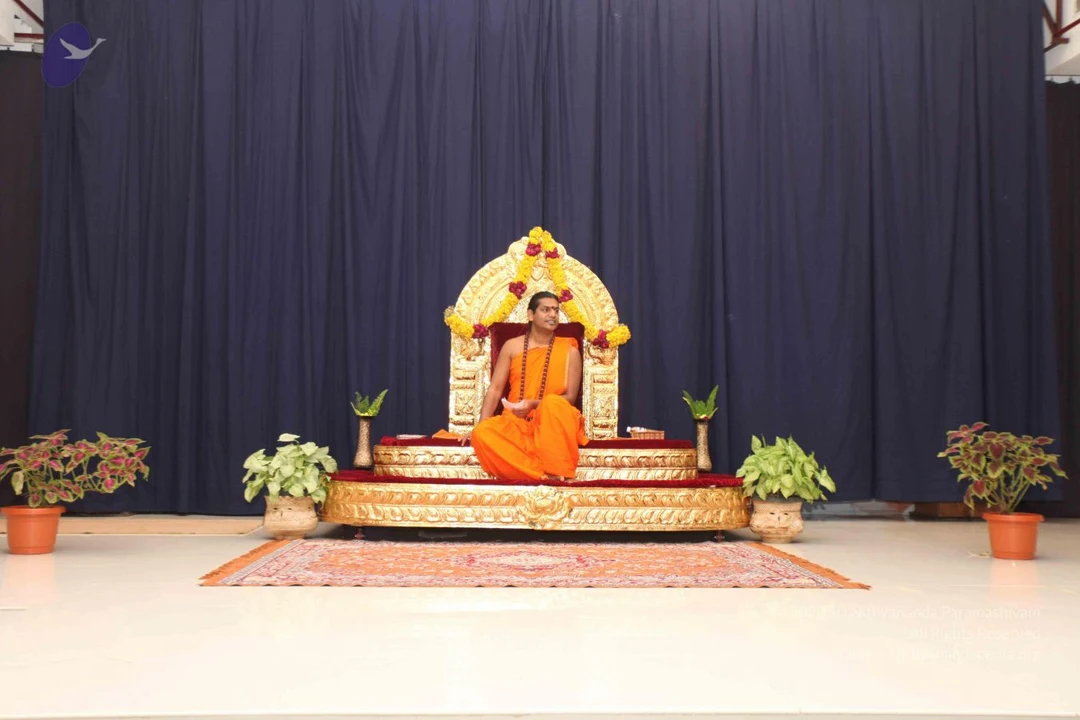
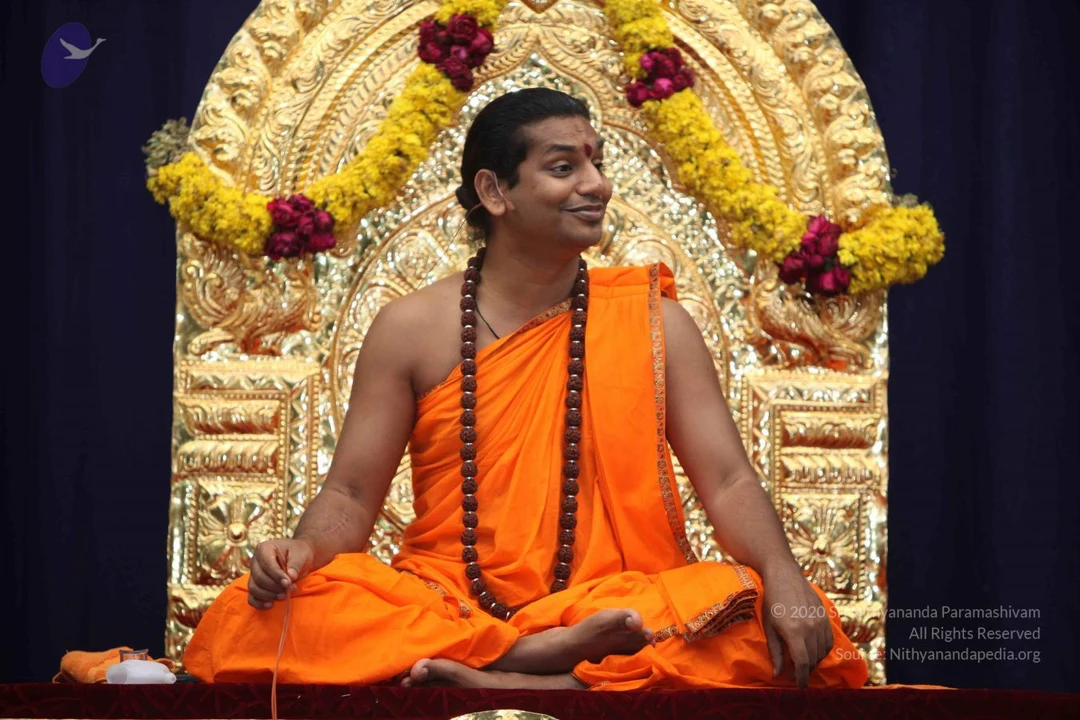
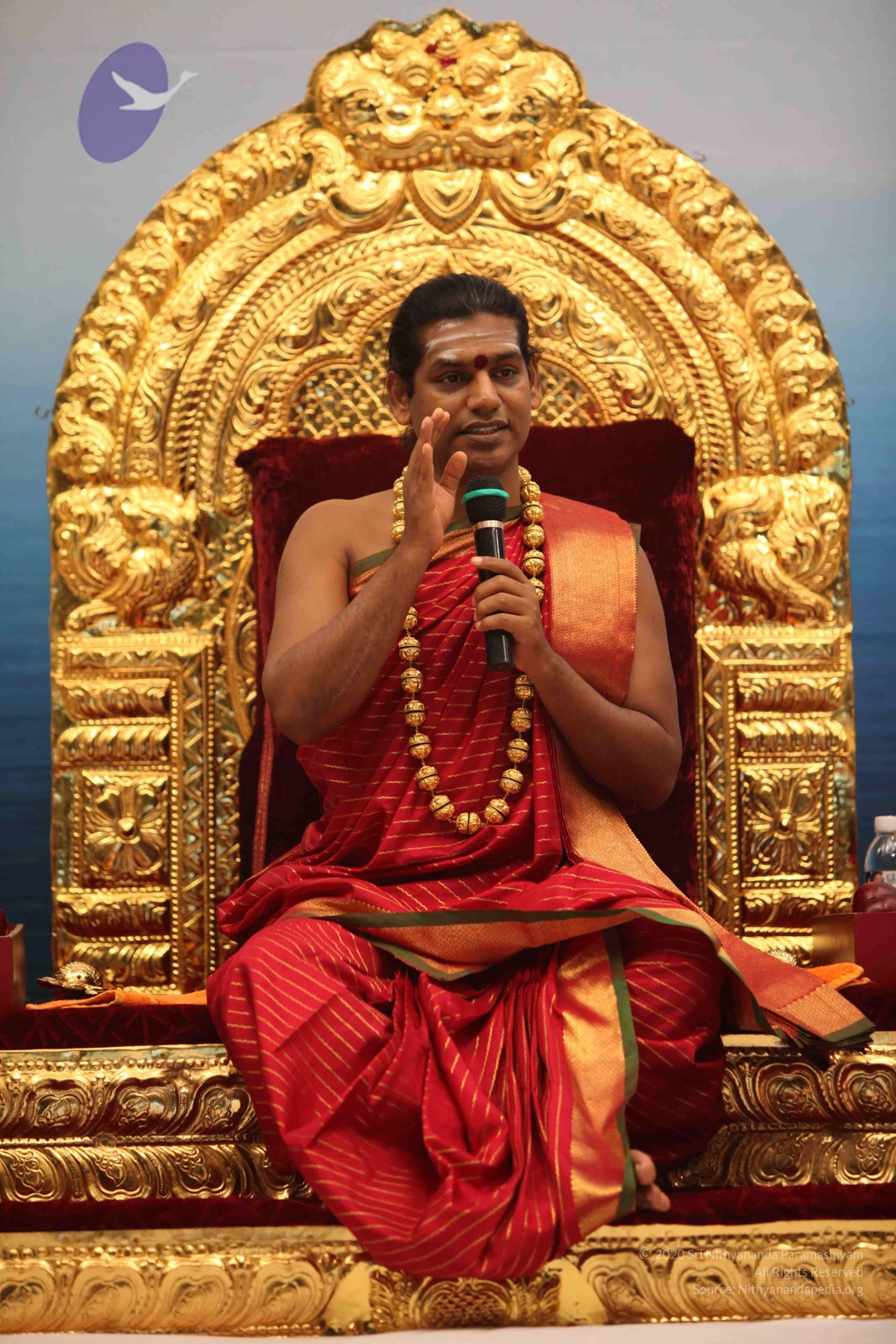
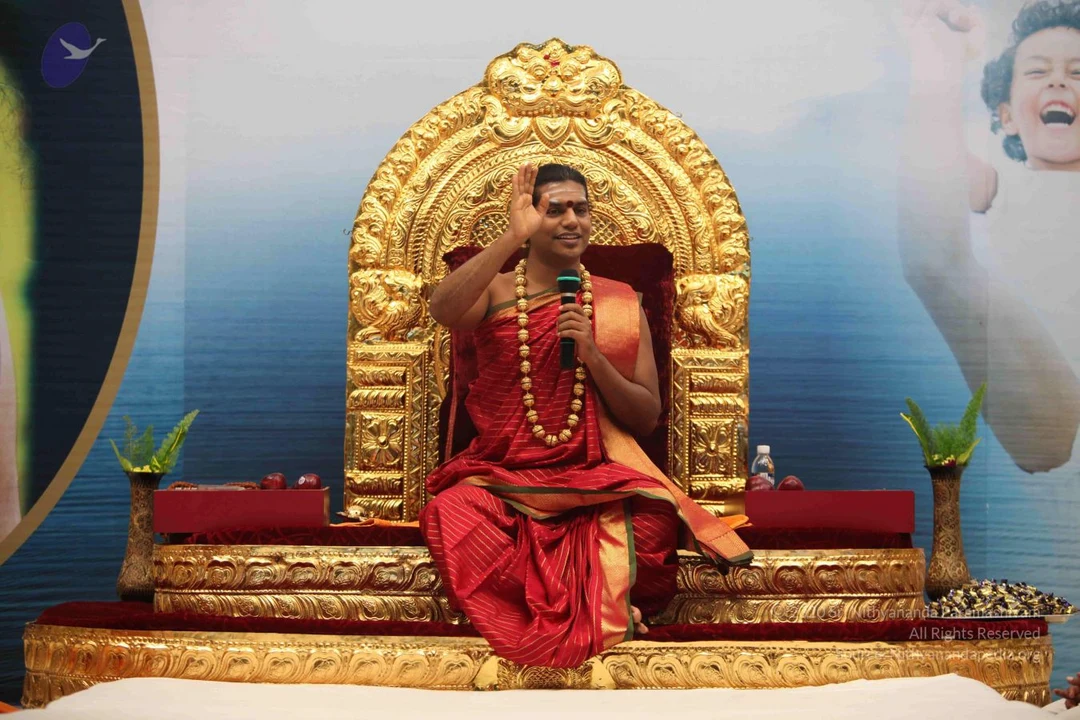
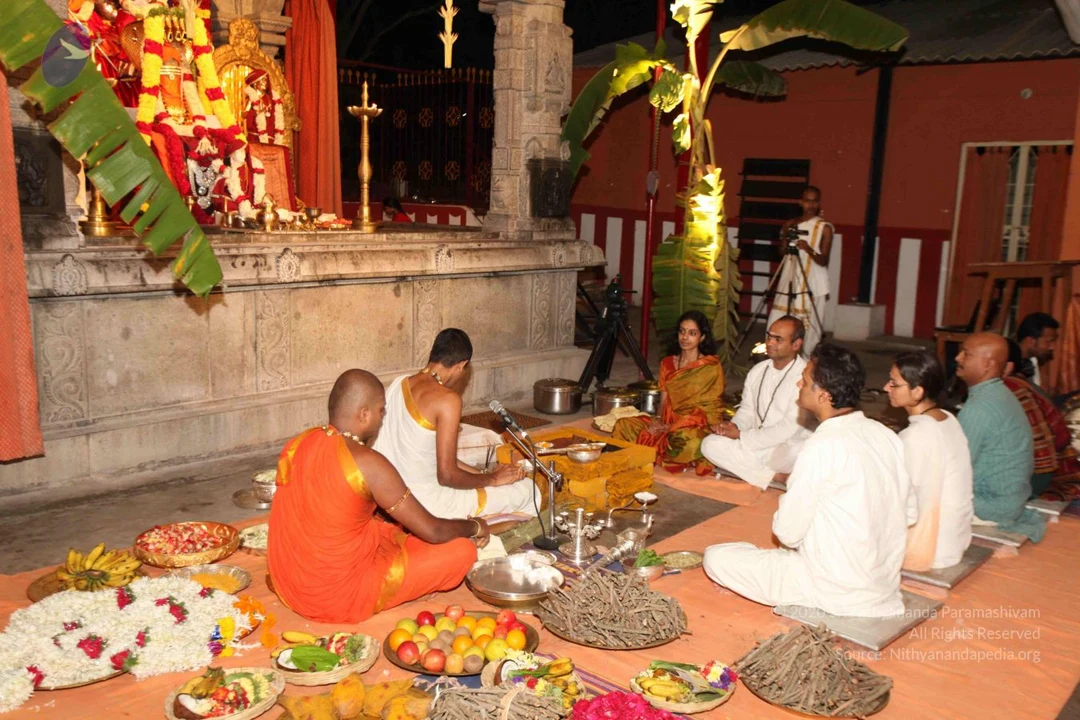
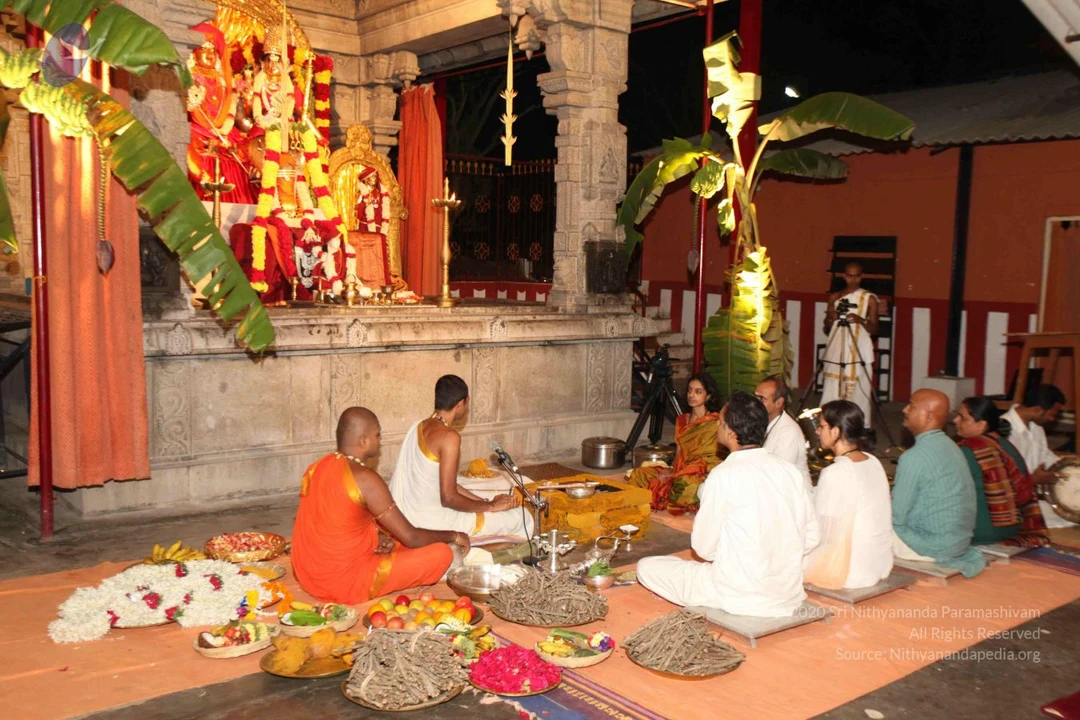
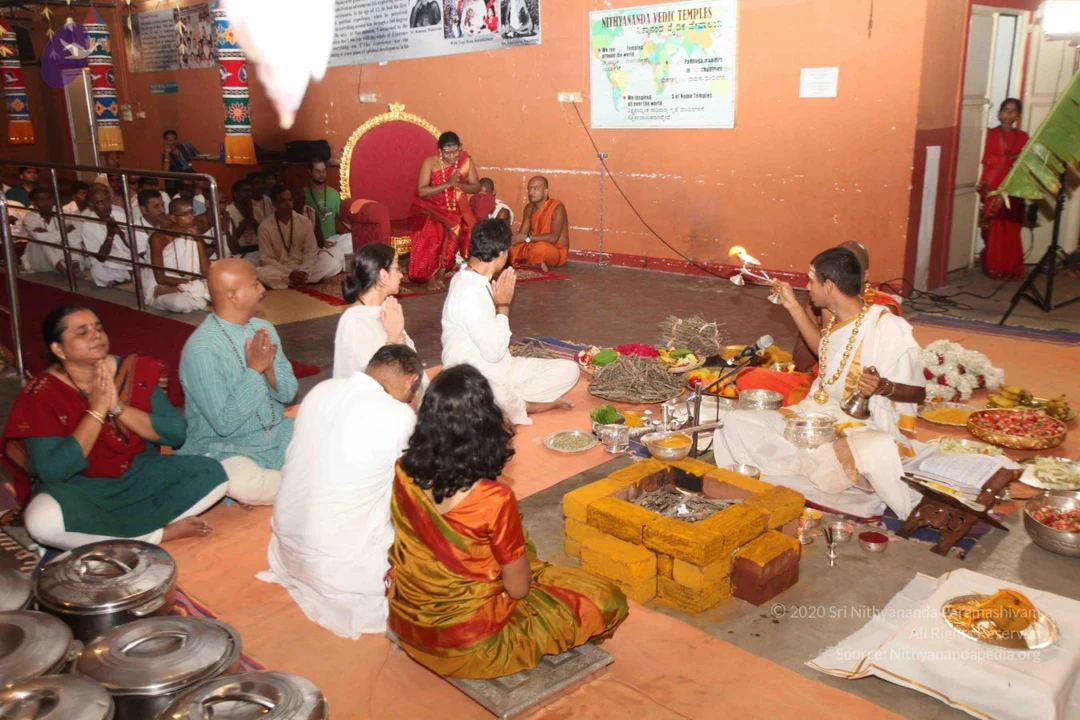
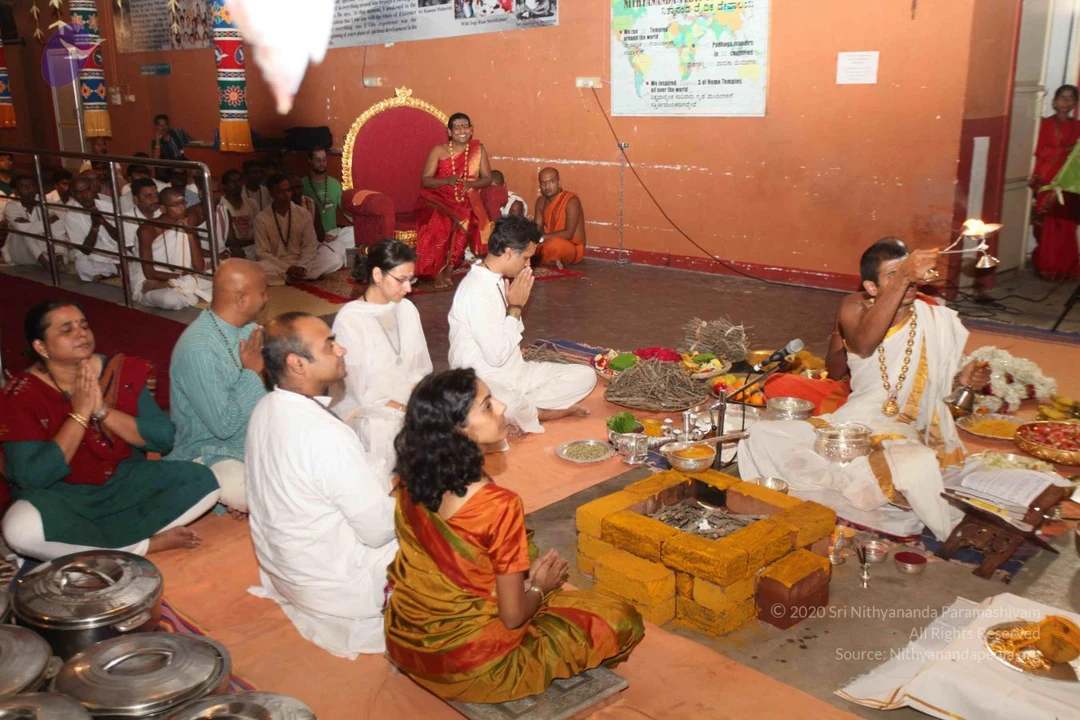
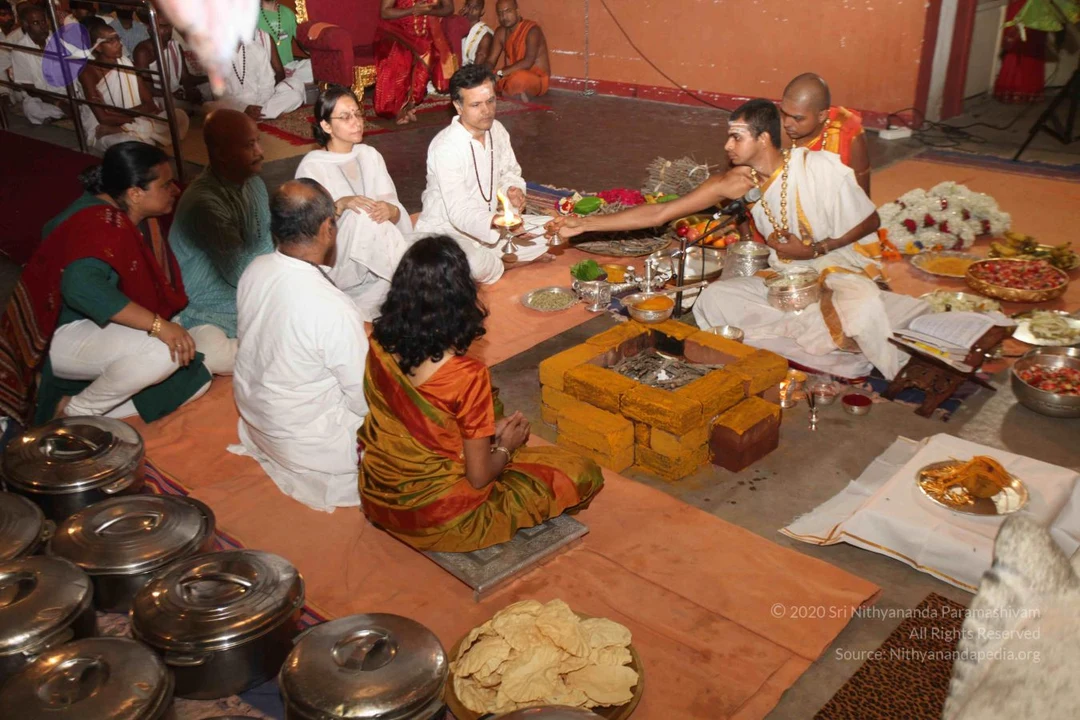
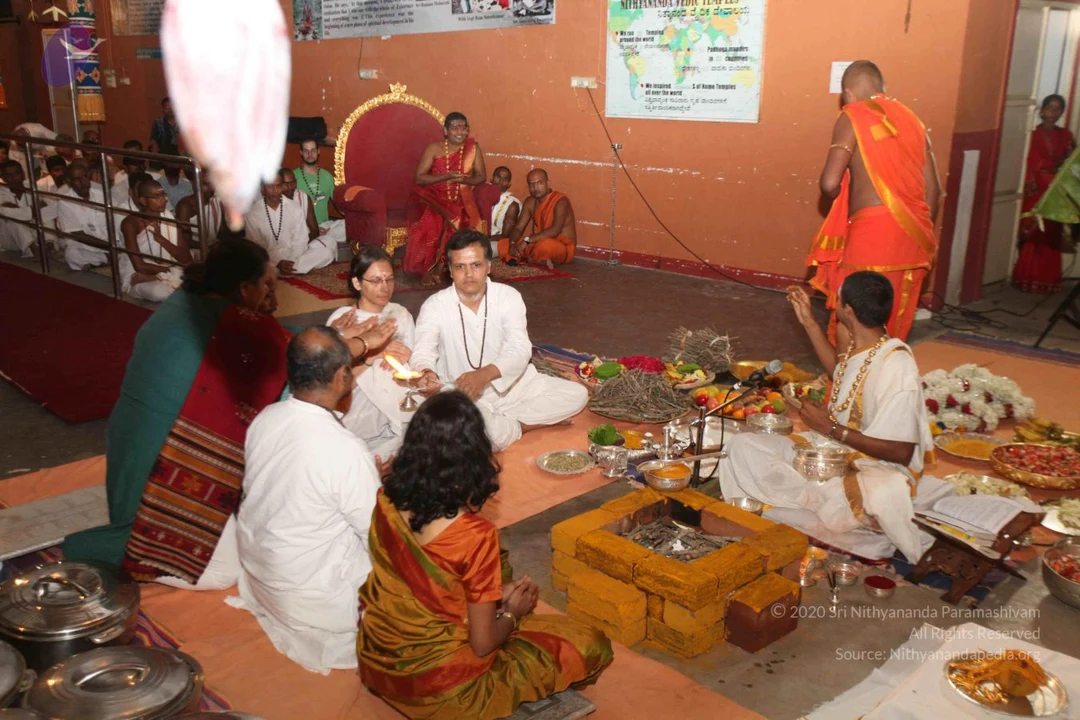
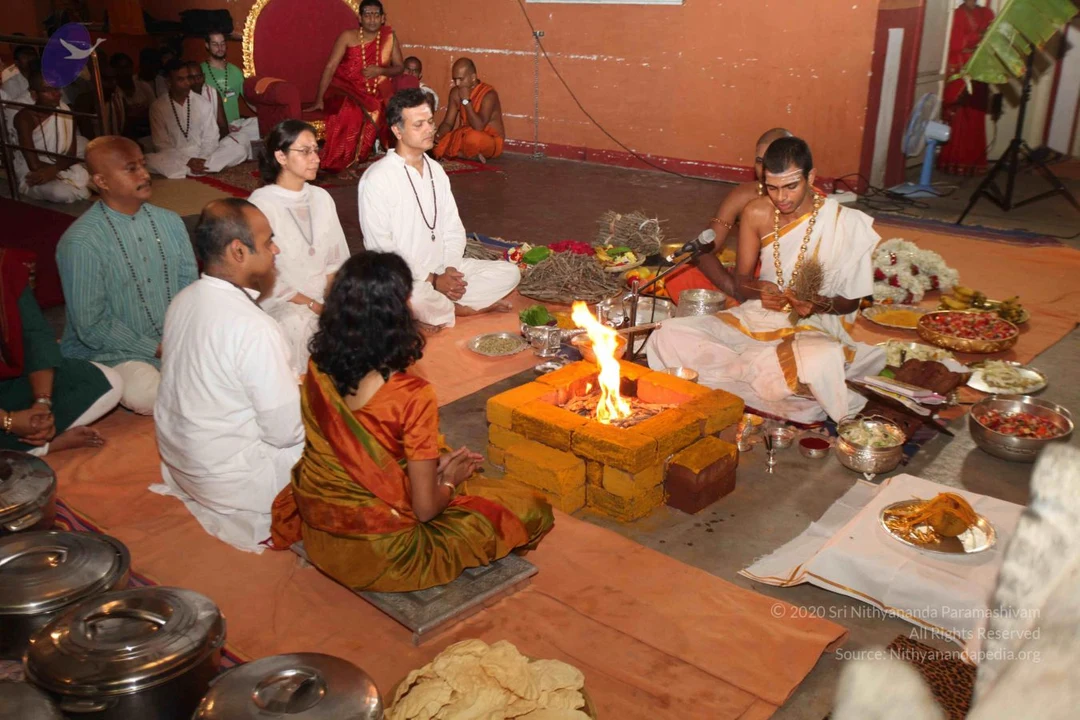
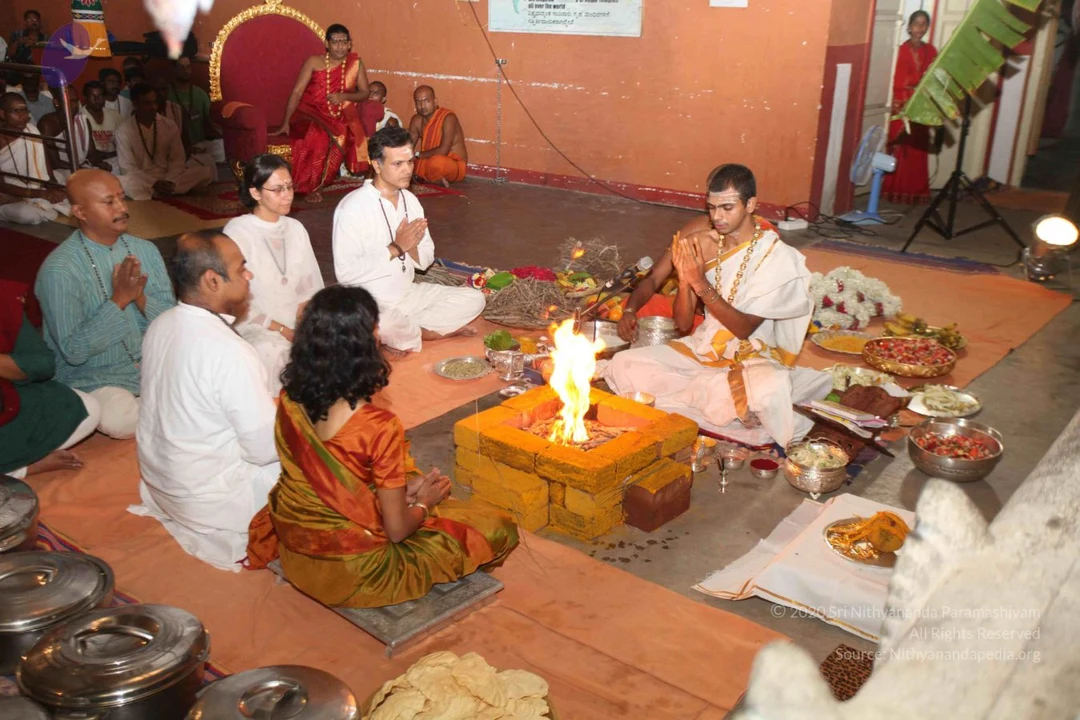
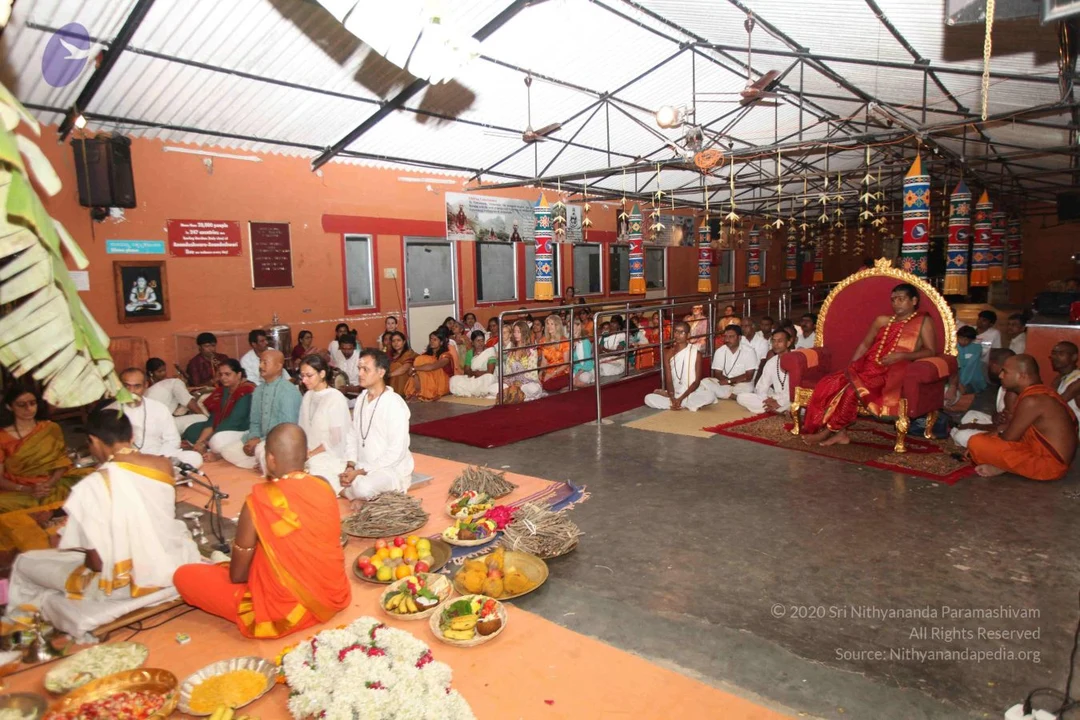
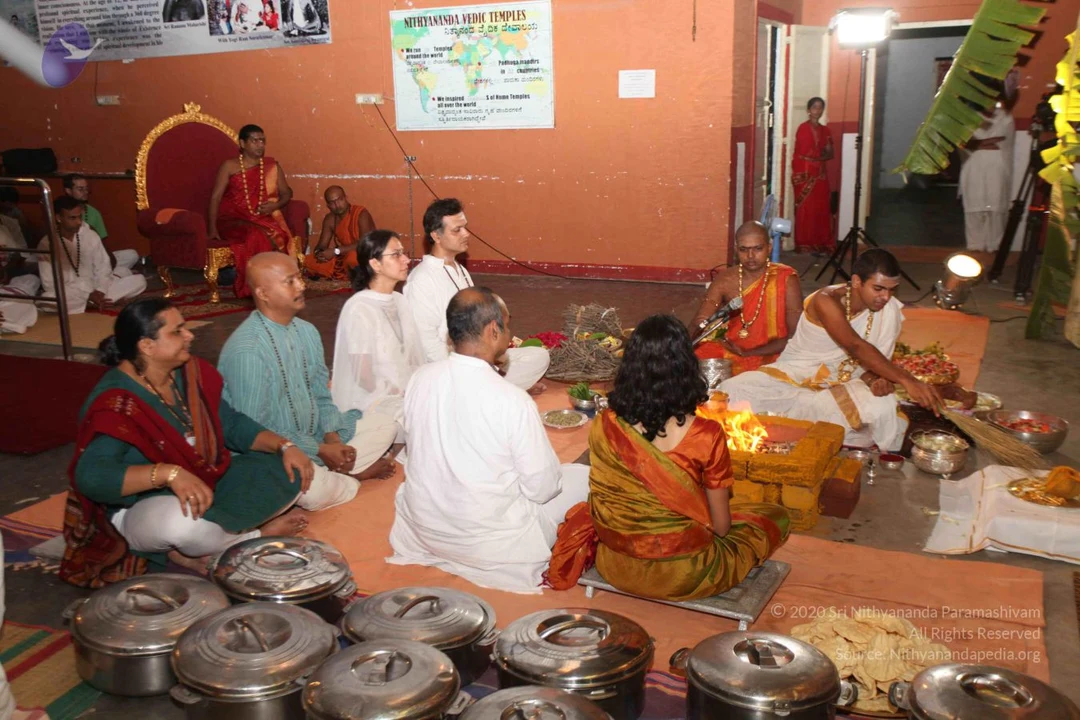
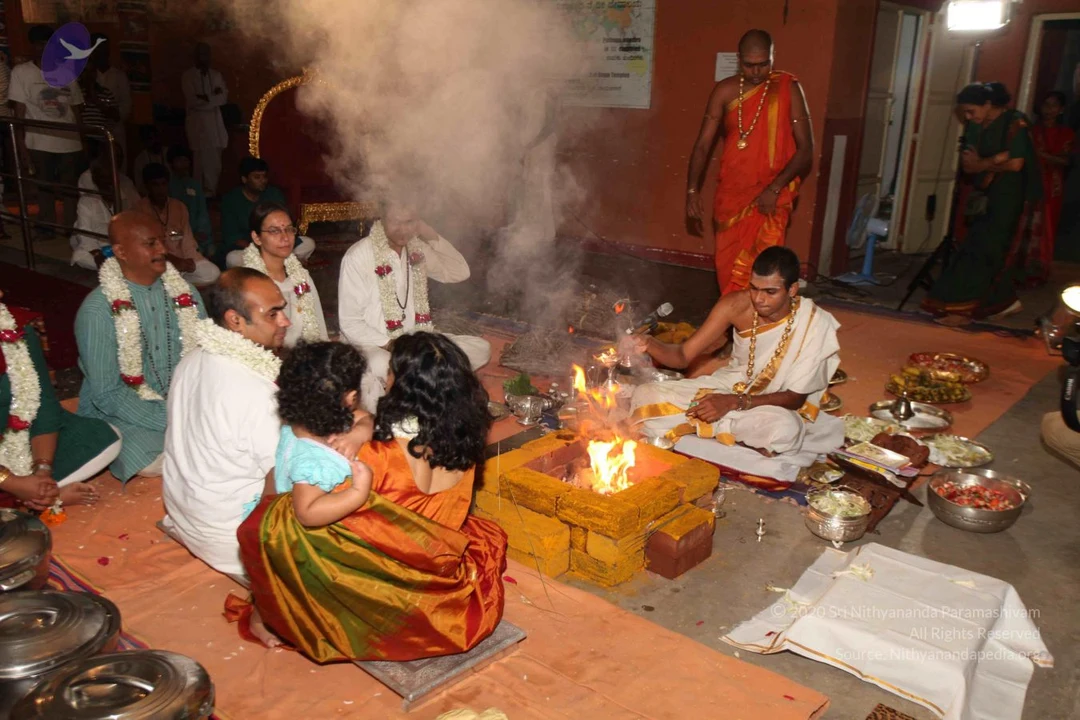
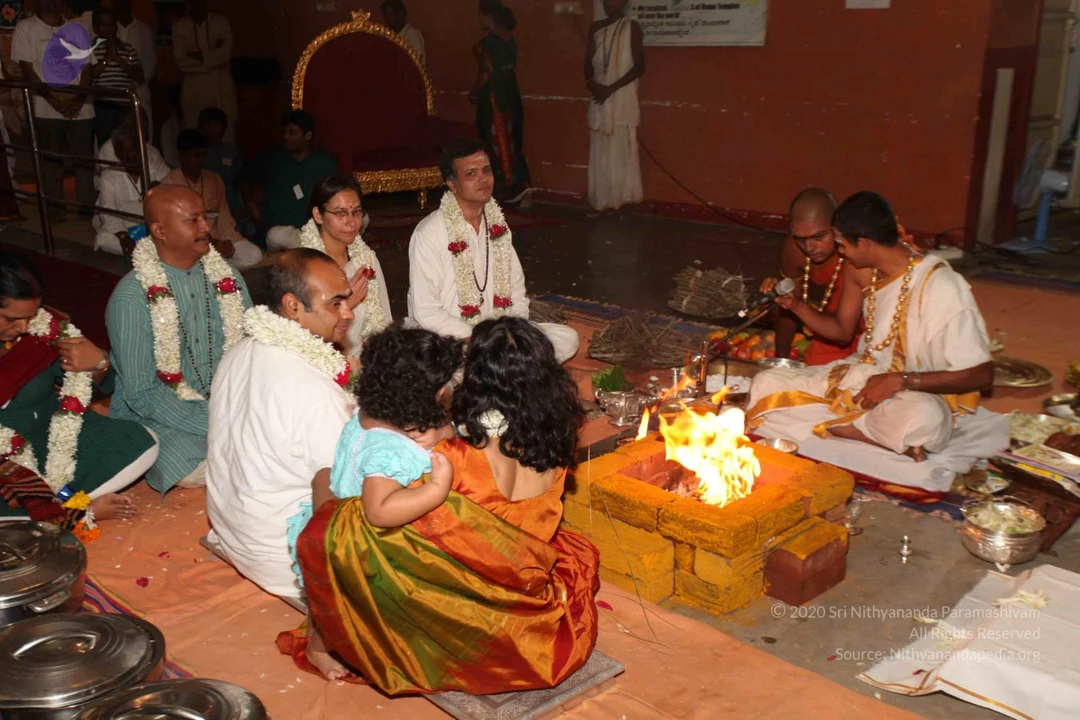
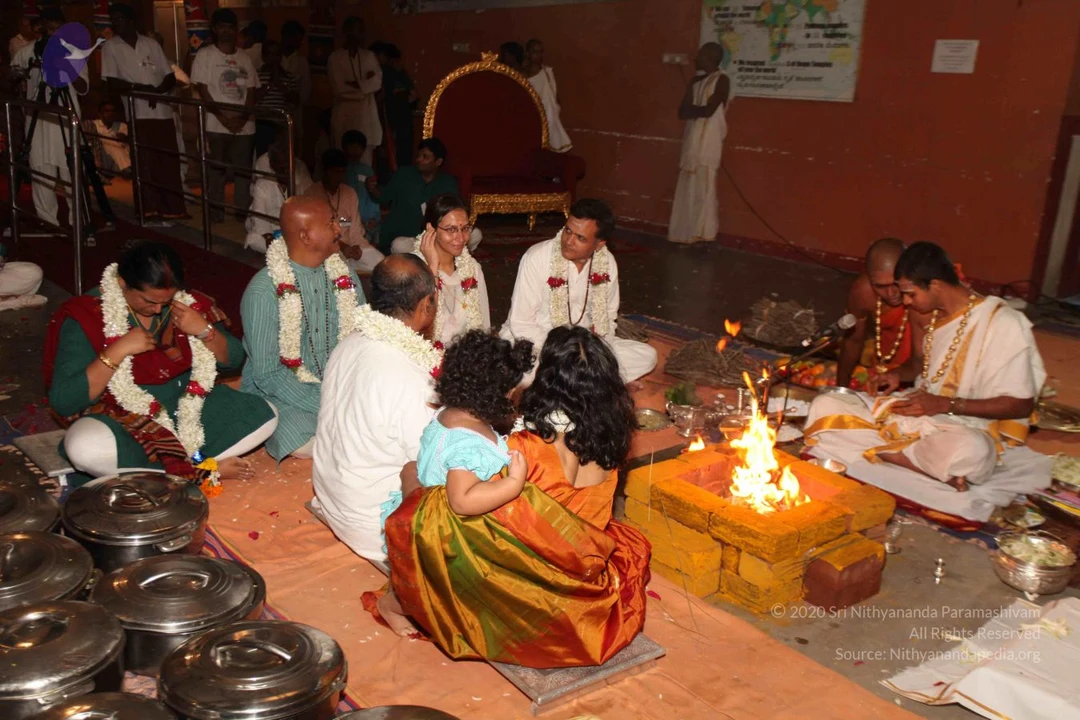
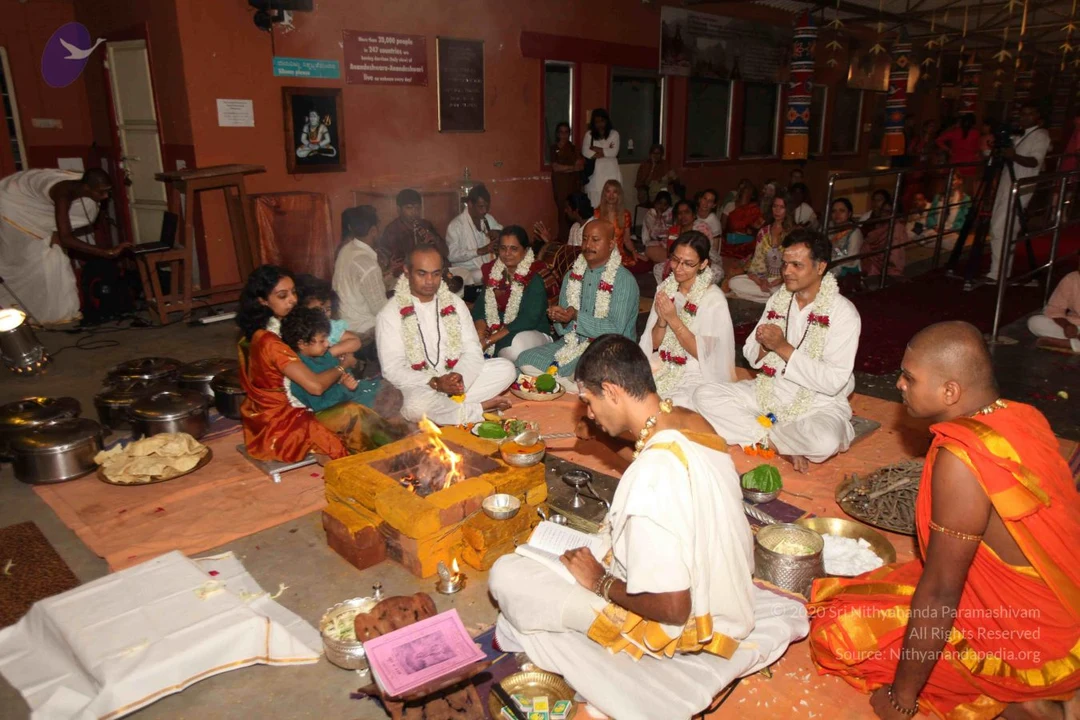
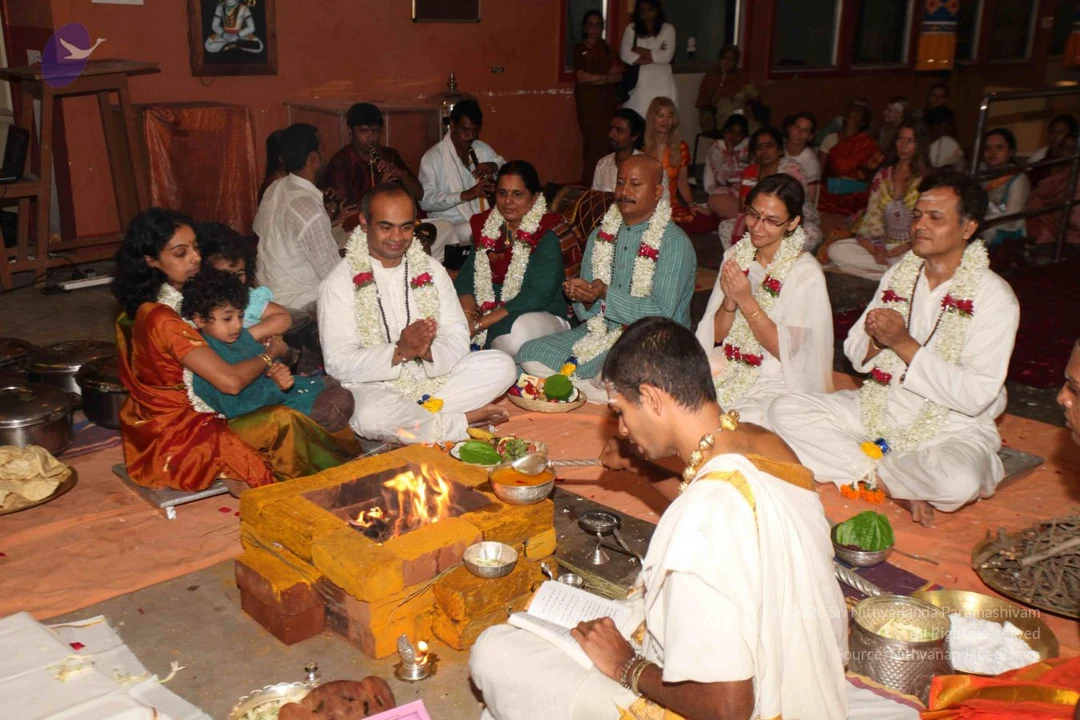
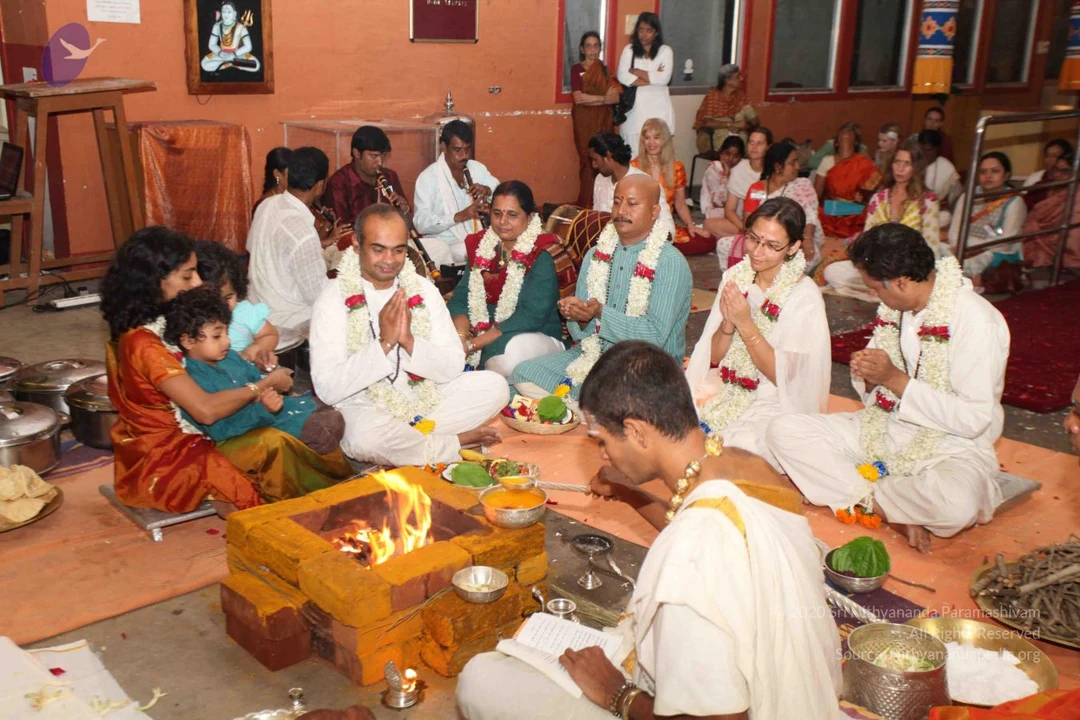
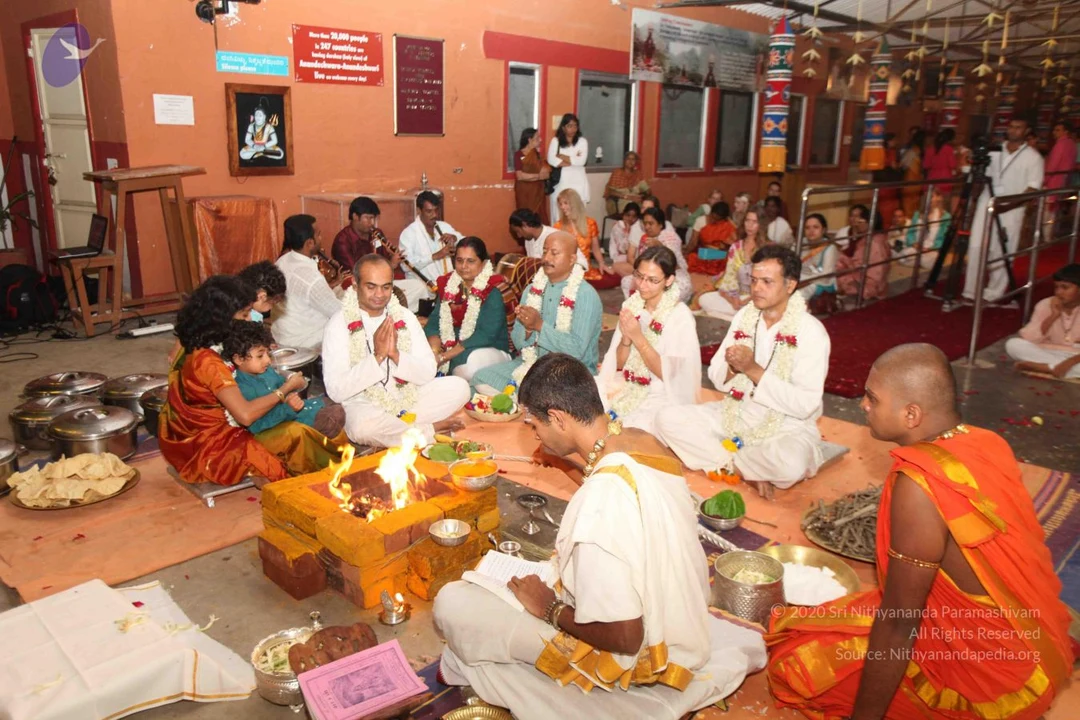
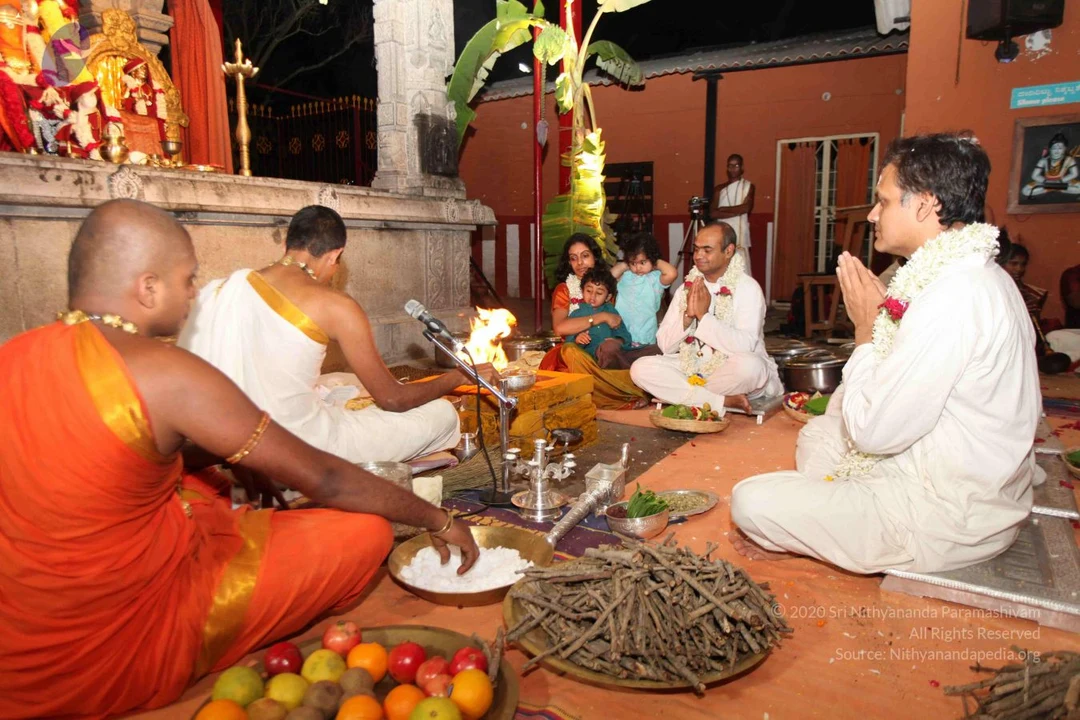
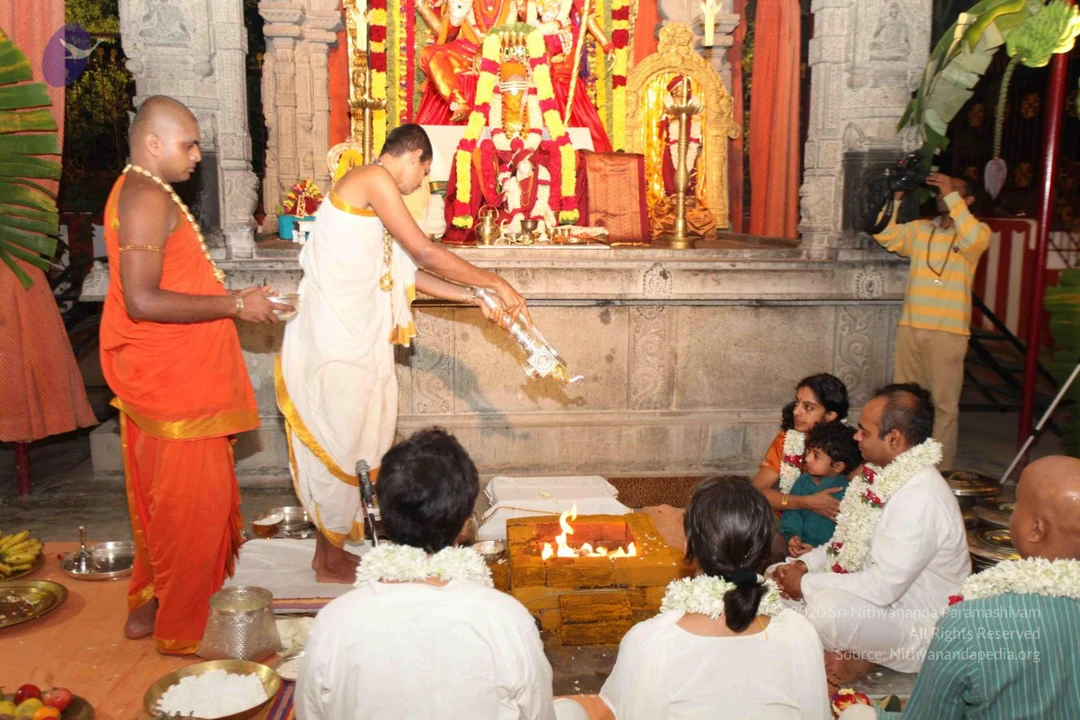
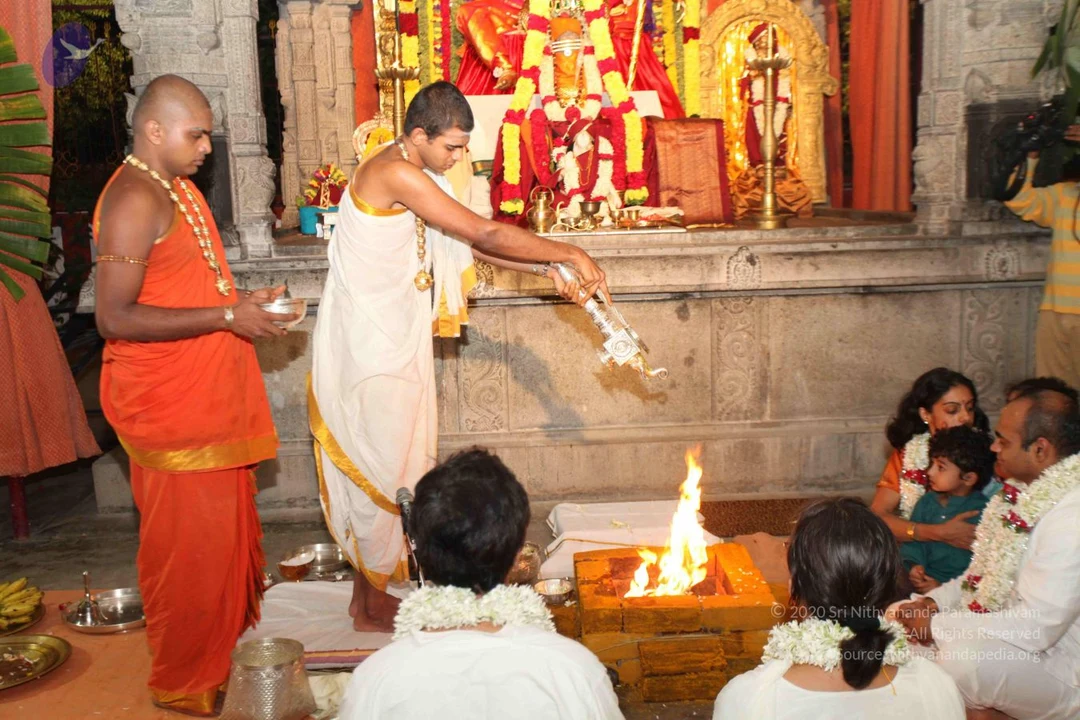
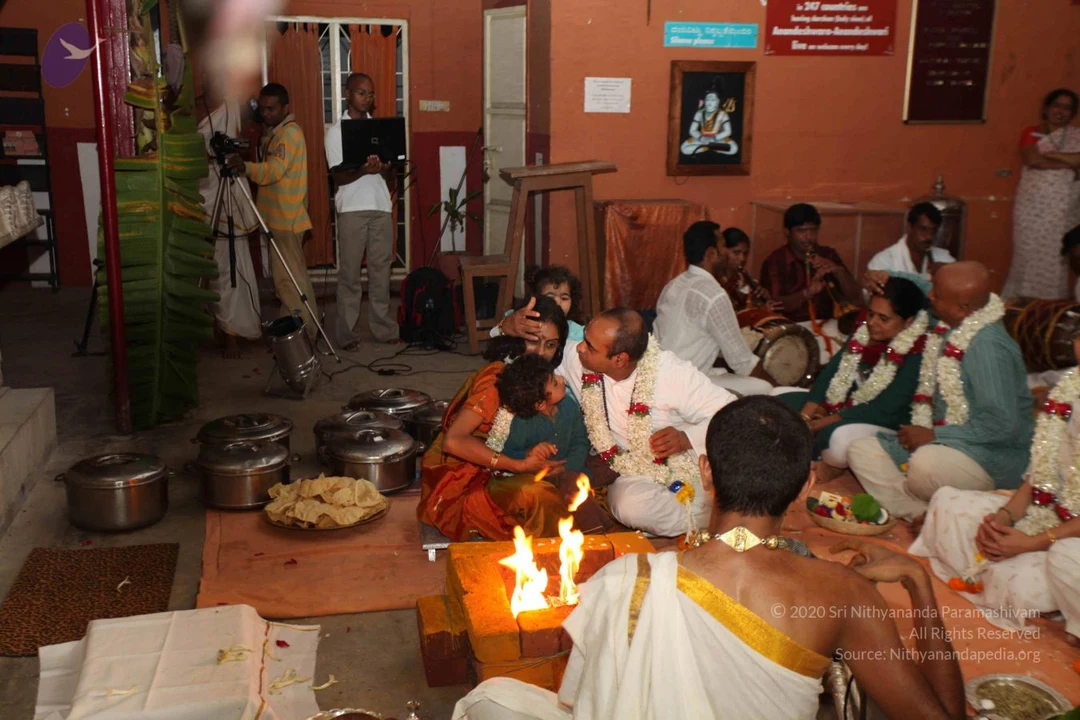
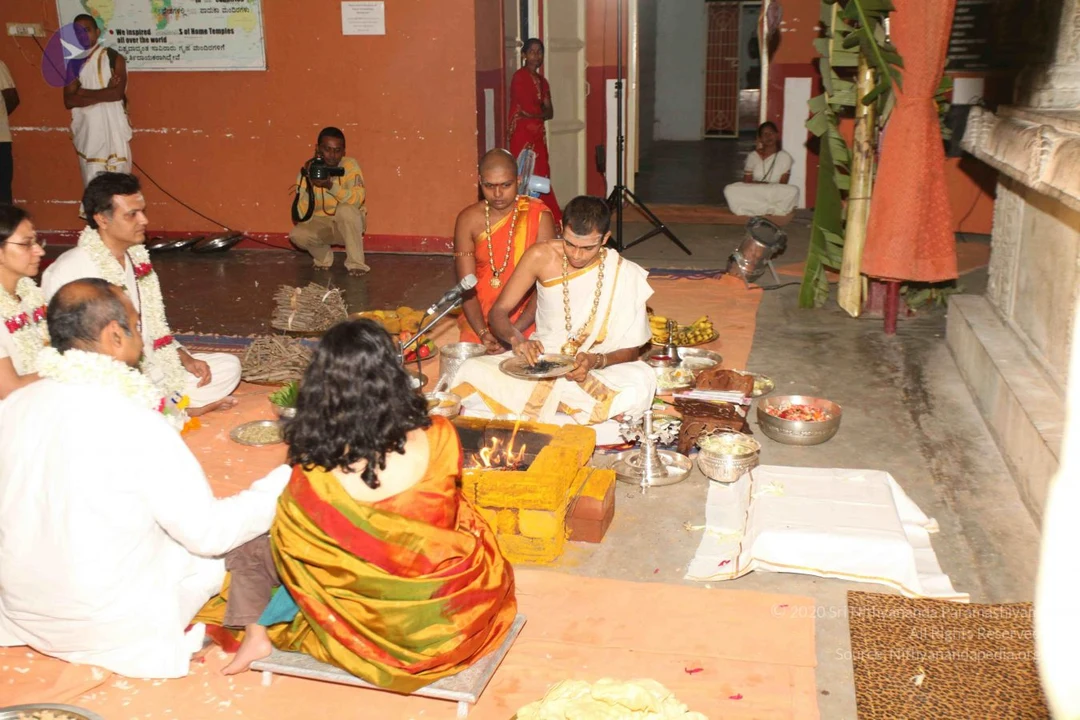
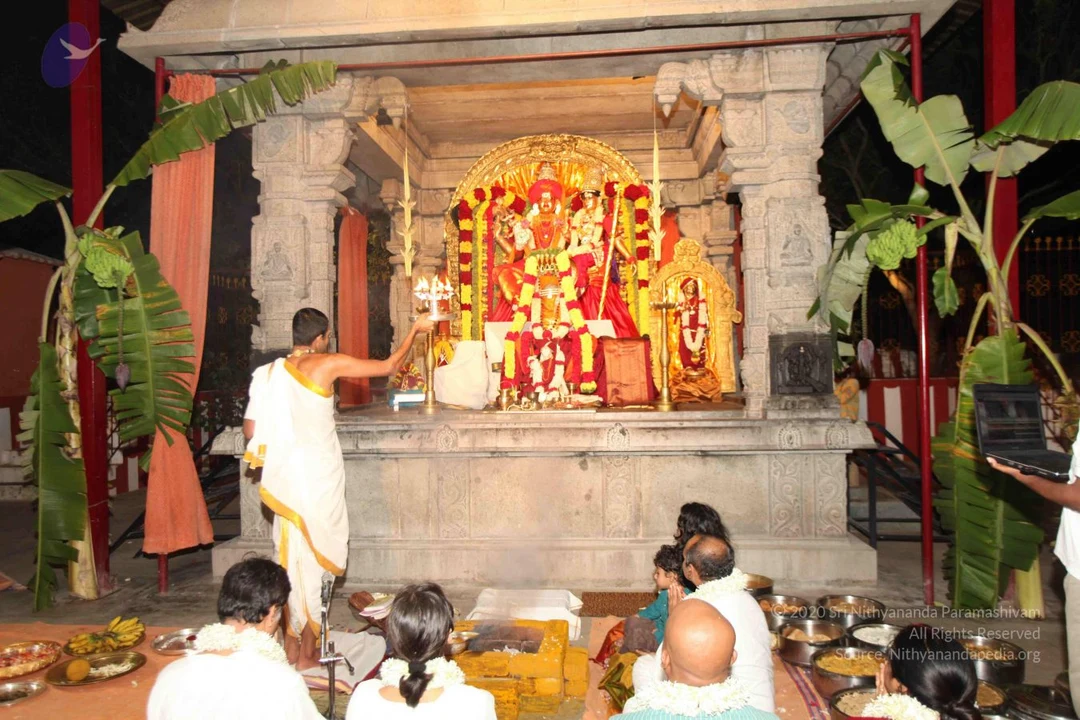
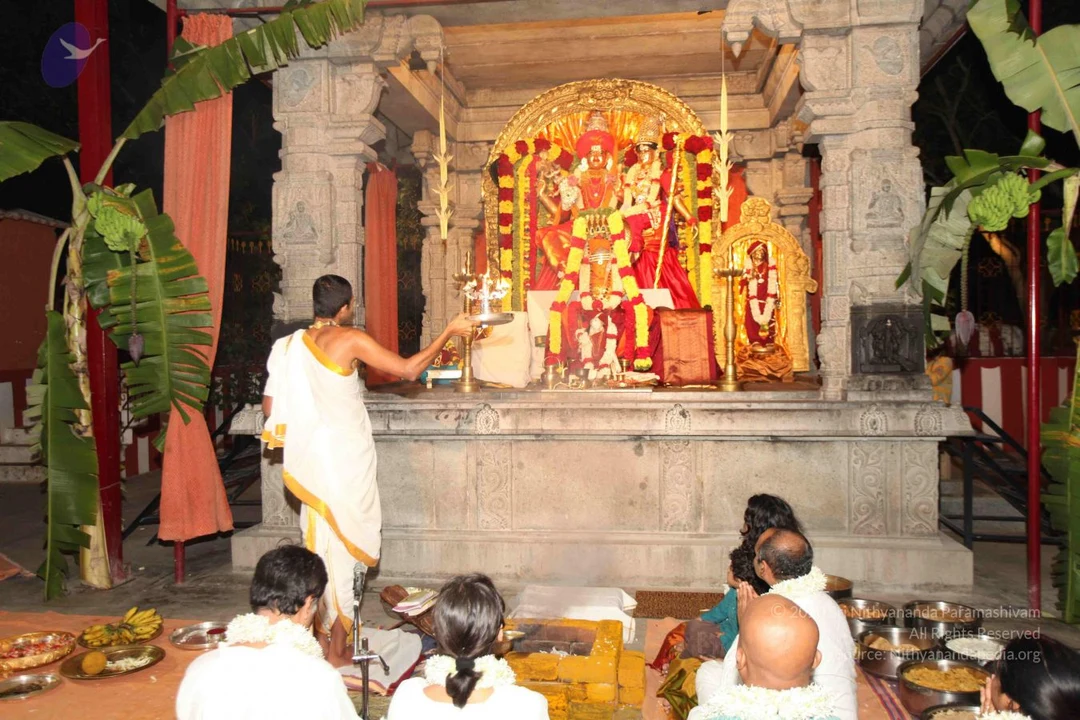
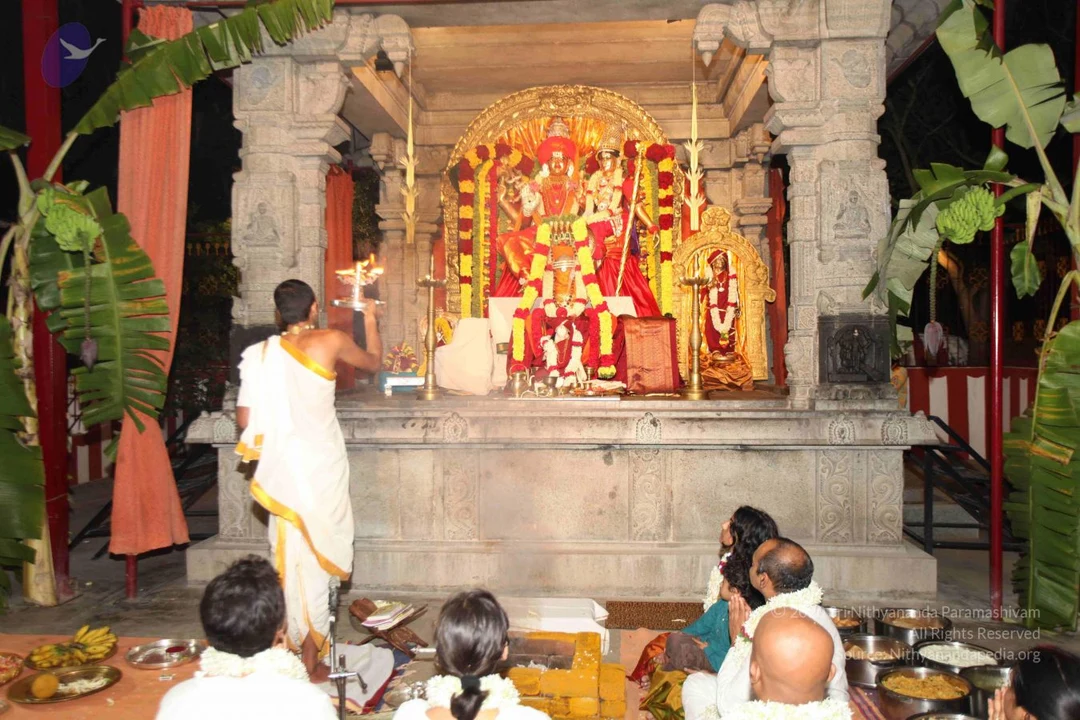
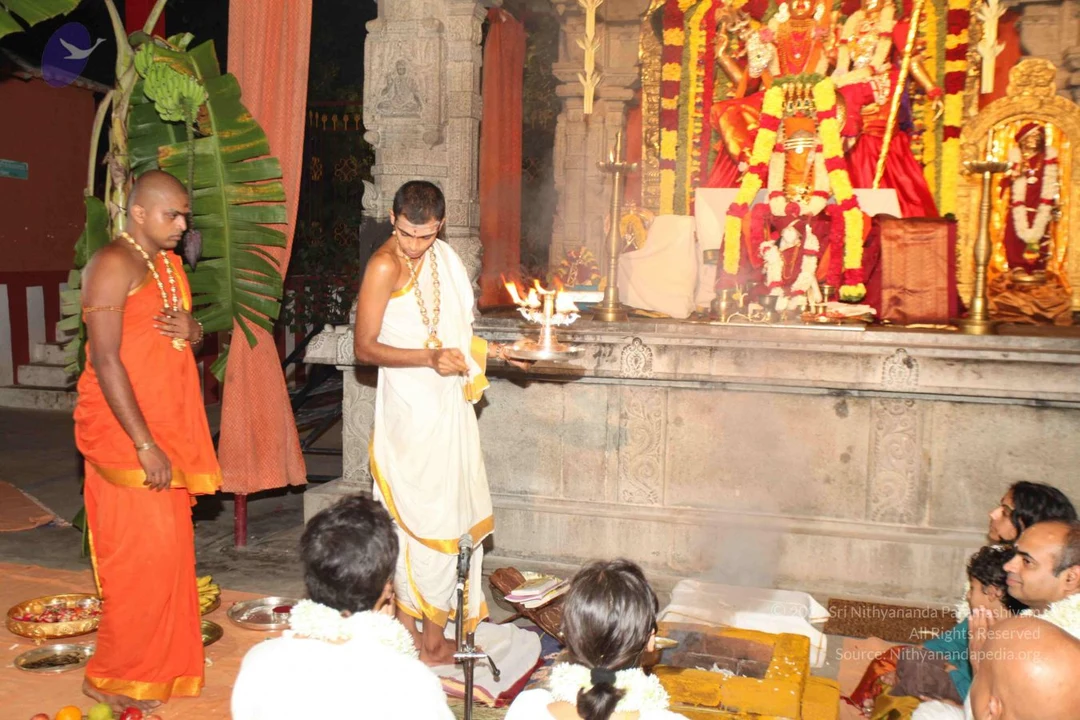
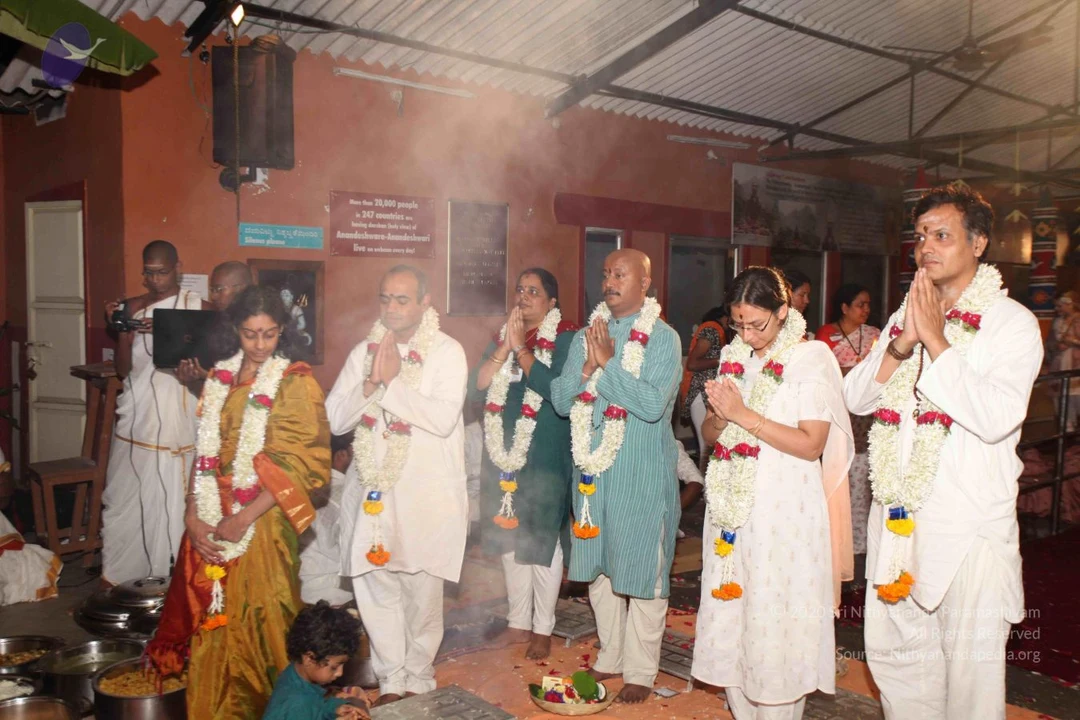
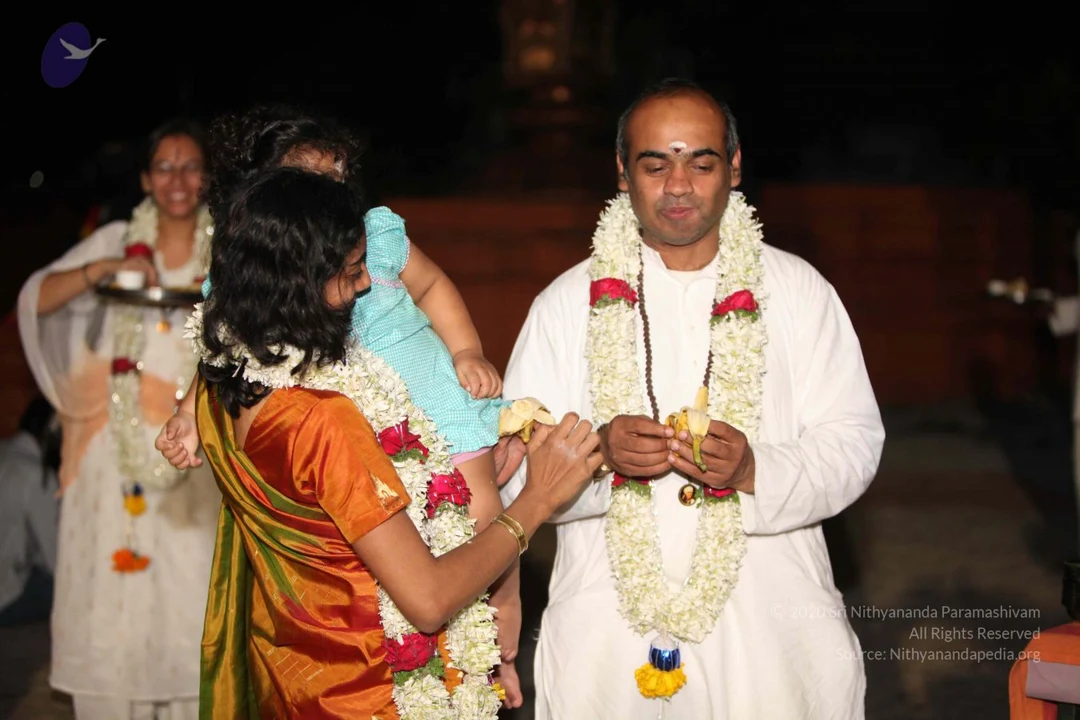
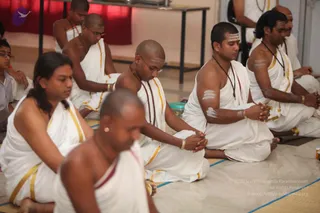
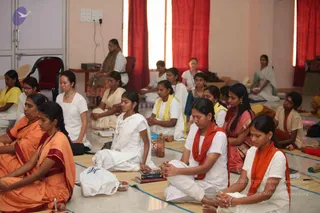
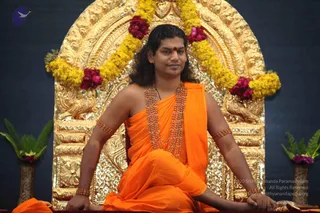
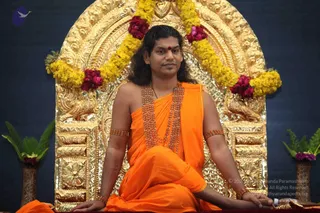
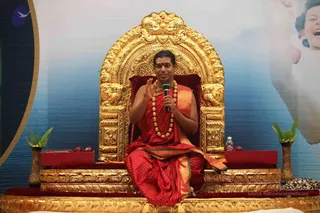
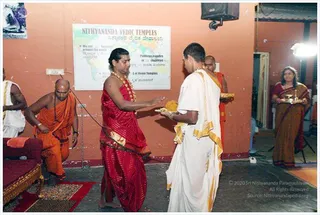
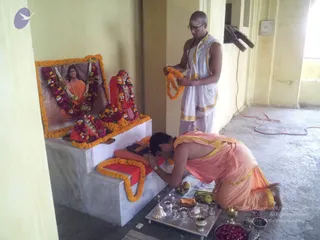
A four-panel collage of a yoga session in a hall with red curtains. The top row shows a teacher in orange robes and a white-and-orange shawl seated on a dais, demonstrating postures with a microphone nearby. The bottom row shows a large seated audience of rows of people in white clothes following along, with some participants in light attire. A bearded figure in orange sits at the centre of the upper panels. The panels depict a kriya teaching session with posture demonstration and group practice.A person in an orange-saffron yoga outfit with pink-red trim performs a forward-folding yoga posture on a light stone floor in front of dark blue draped curtains. The figure sits with legs bent and folds deeply forward, head lowered toward the feet, arms extended along the legs. A rudraksha mala of brown beads hangs around the neck. The setting suggests a yoga demonstration or Nithya Kriya session with a meditative, practice-focused mood.A photograph of a homa at an ashram shrine. A bald priest in an orange dhoti with an orange shawl and beaded necklace stands at left holding a small bowl. Beside him a young man in white dhoti with gold border and white shawl pours a liquid from a silver vessel into a small brick fire pit with an open flame. Behind them a deity murti is garlanded with yellow and orange flowers under a gold arch, with brass lamps and offerings. Seated at right, a woman in orange holds a small child in teal, and a man in white with a flower garland watches. Other seated devotees in white with flower garlands sit near the fire, and bananas and brass vessels rest on the floor at left.

November 06 2011

Original wiki page
Contents

Title:

Cure For Diabetes - Nithya Kriya

Link To Video:

VideoAudio

Description:

Find out more at http://www.nithyananda.org/nithya-kriyas kriya on 2011-nov-06 Steps to be followed:

GOMUKHASANA UDDIYANA BANDHA BASTRIKA PRANAYAMA MOORCHA PRANAYAMA BRAMHARI PRANAYAMA

1. GOMUKHASANA

GHERANDA SAMHITA, UPADESHA 2, VERSE 16 Savye Dakshina-Gulpham Thu Prushta-Paarshve Niyojayeth | Dakshine'pi Thathaa Savyam Gomukham Gomukhaakruthi ||1.20|| TRANSLATION The right ankle should be placed near the left buttock and the left ankle to be placed near the right buttock. The body should be steady and mouth should be raised a little and sitting equably. This is called Gomukhasana resembling the cow's face.

TECHNIQUE

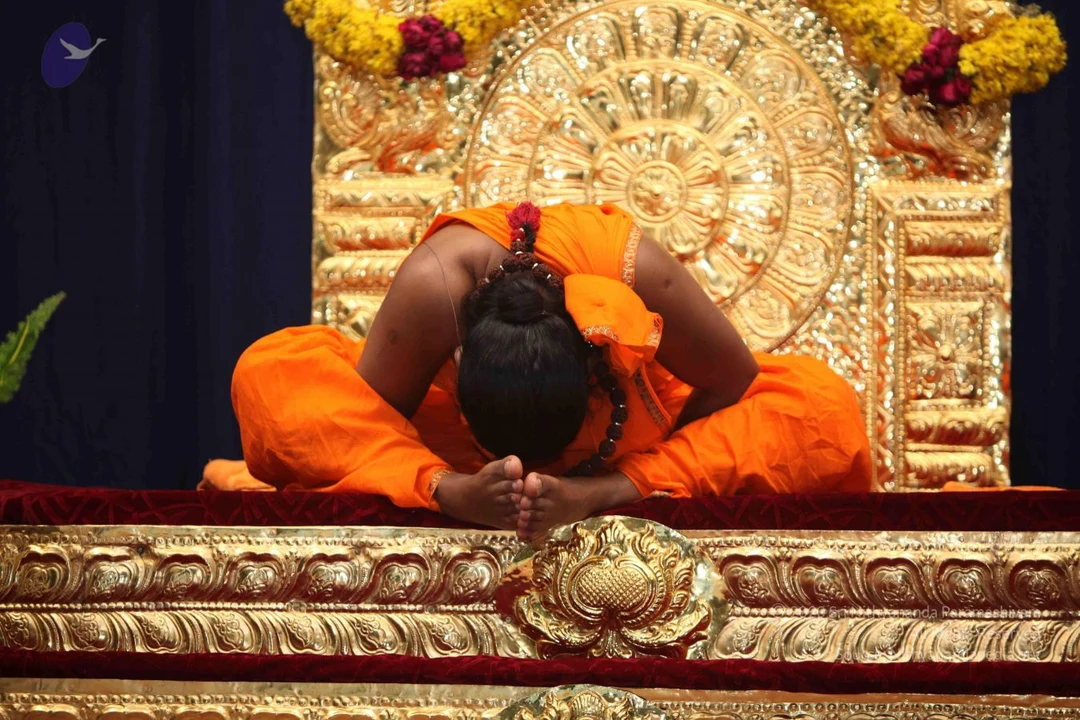
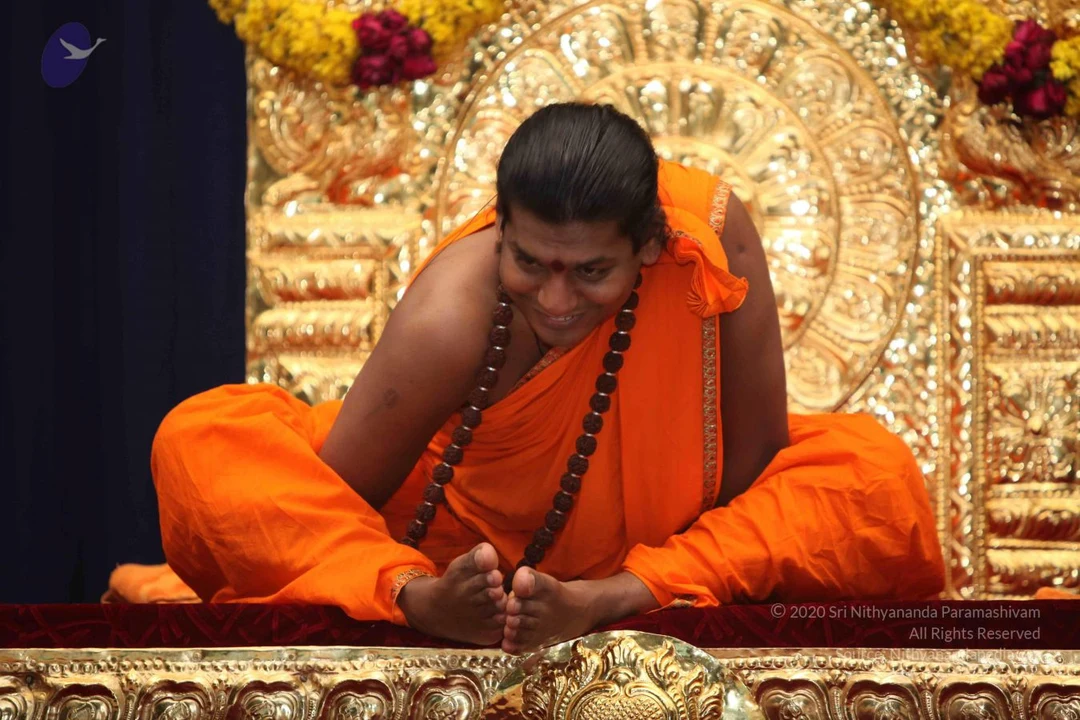
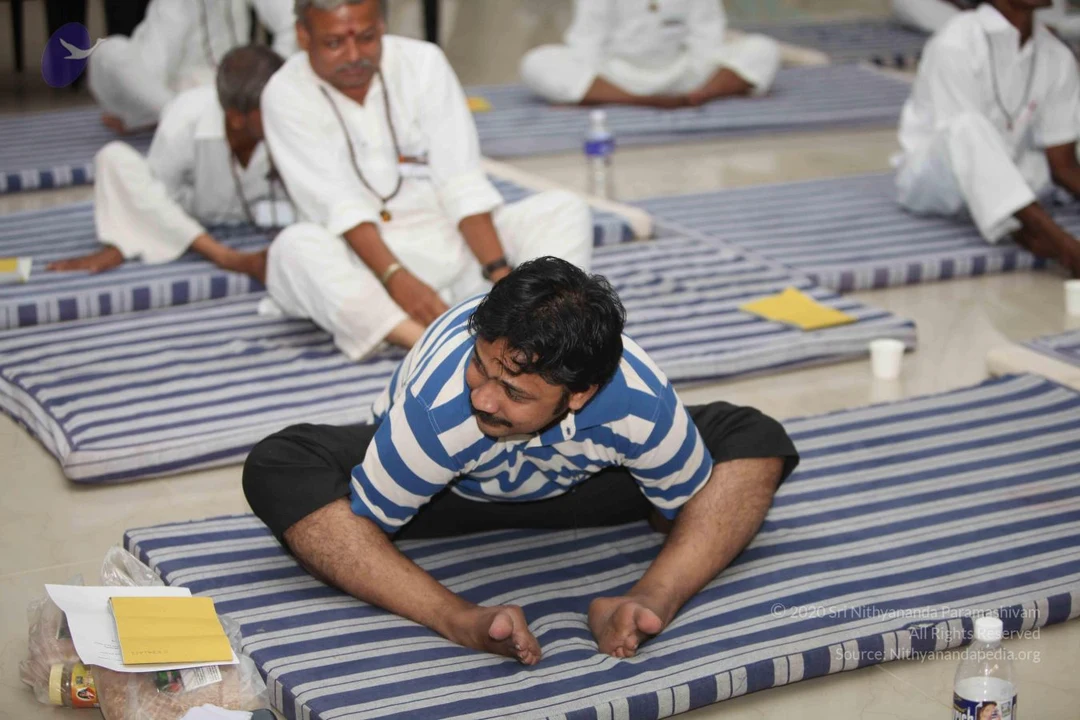
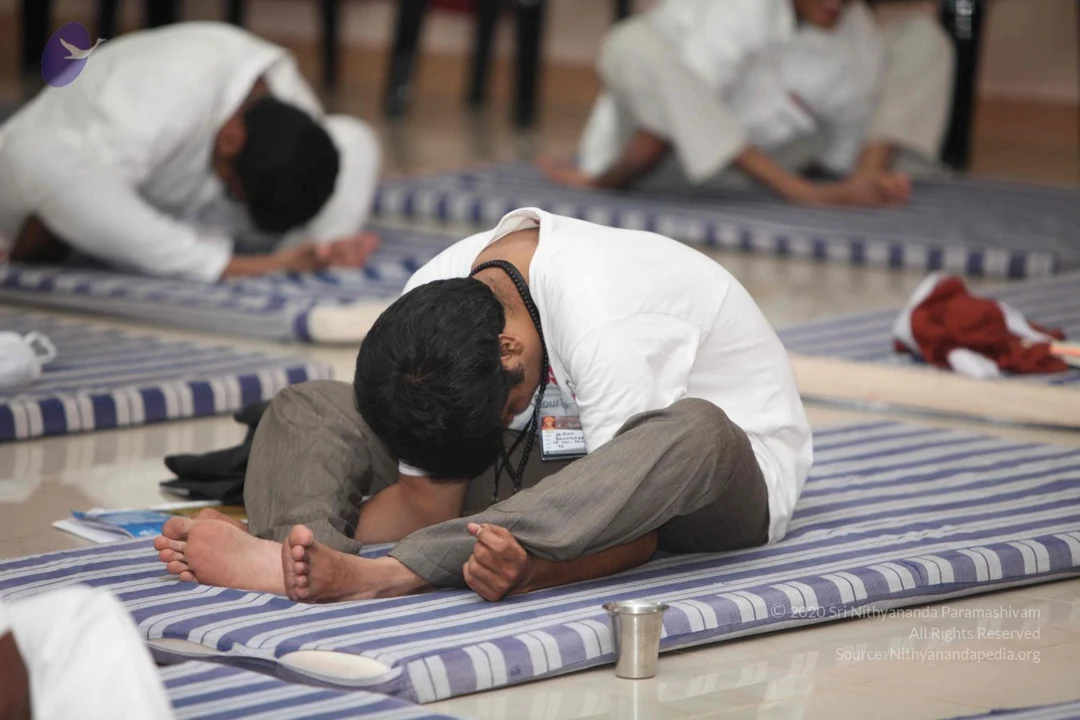
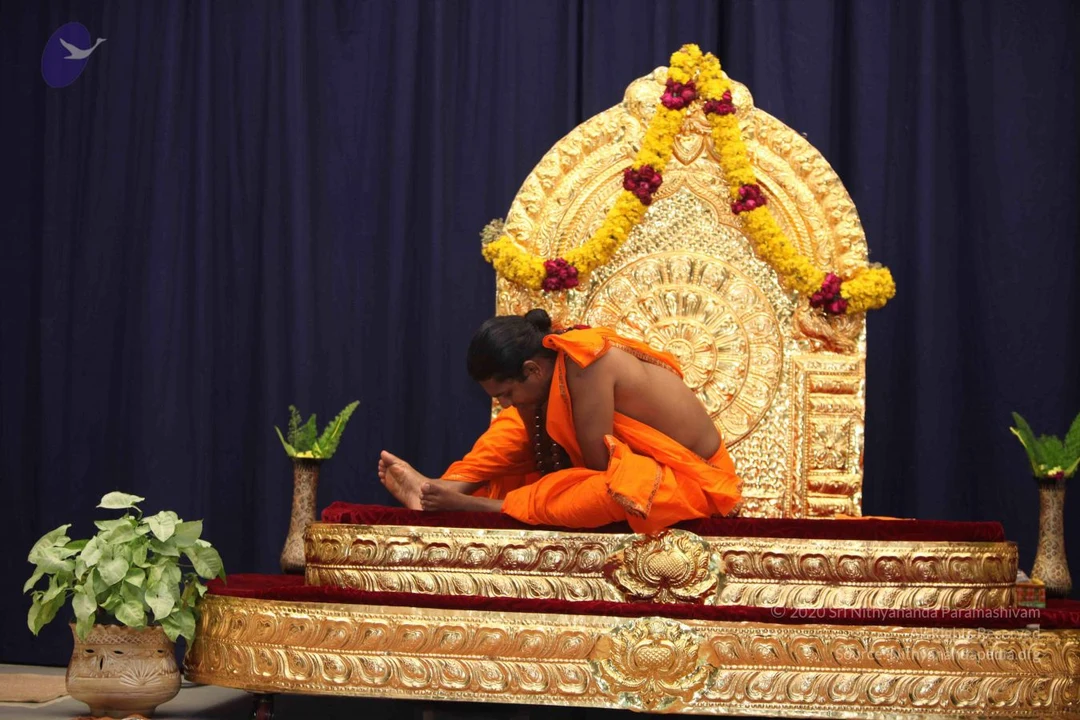
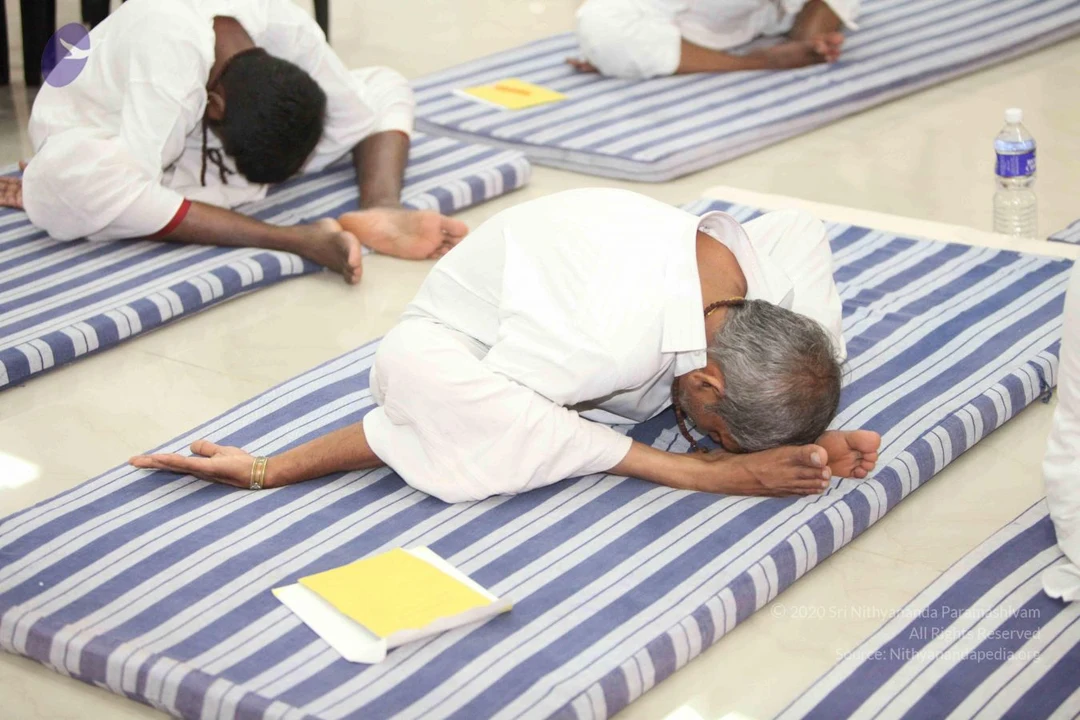
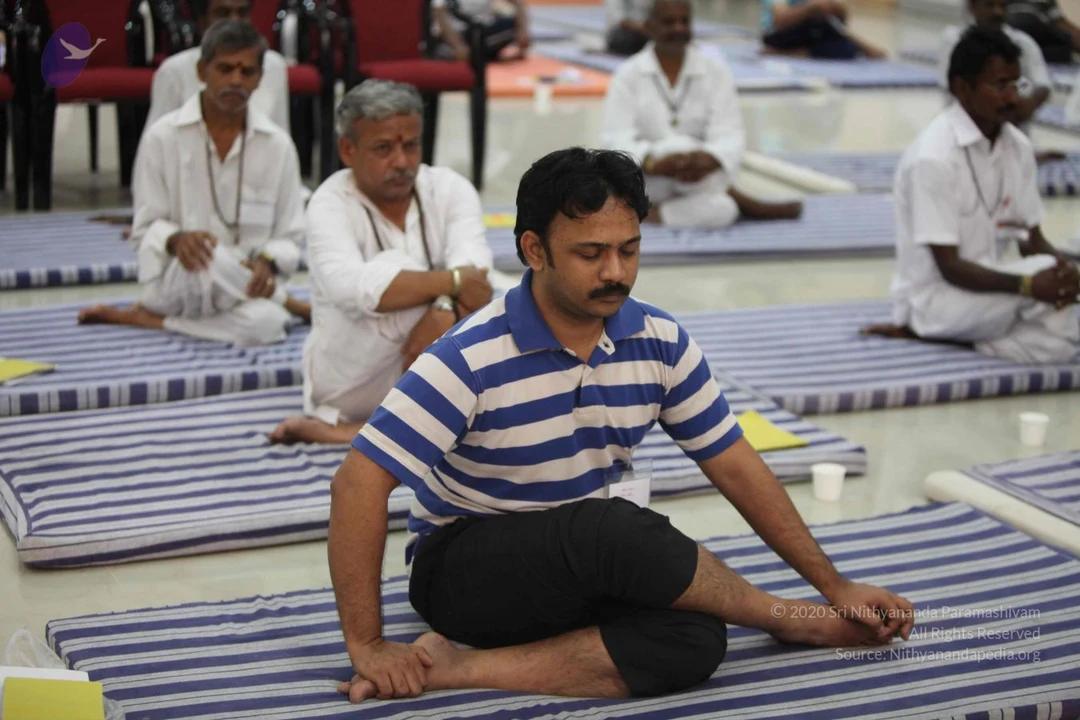
Bend the left knee and place the left foot near the right buttock Bend the right knee and place it over the left thigh so that the right foot lies near the left buttock Now place the hands on the foot or keep it on knees Raise your head a little IN GOMUKHASANA, NEXT-

2. UDDIYANA BANDHA

GHERANDA SAMHITA, UPADESHA 3, VERSE 10 Udare pashchimam taanam Naabheroordhvam tu kaarayet | Uddaanam kurute yasmat Avishraantam mahaasragaha | Uddeeyaanam tvasau bandhaha Mrutyu-Maatanga-Kesaree || 3.10 ||

TRANSLATION One should contract the bowels above and below the navel so that the abdominal organs touch the back. The one who practices this Uddiyana Bandha continuously becomes a conqueror of death. The great bird (Kundalini) flies up in the Sushumna and flies there itself constantly.

TECHNIQUE

Be seated in the same posture Place the palms on the knees Keep the spine straight Take a deep breath in and exhale completely Now rest your chin on your chest raising the shoulders Pull the abdominal muscles inward so that the organs of the abdomen touch the back muscles Hold as long as you can Relax the abdomen and relax your chin Then again hold as you can and relax Do this for 21 times IN GOMUKHASANA, NEXT-

3. BASTRIKA

GHERANDA SAMHITA, UPADESHA 5, VERSES 75- 77

TRANSLATION Like the bellows of the iron smith, systematically contract and slowly expand (the stomach) and blow air out through both the nostrils with a bellowing sound (5.75). Having thus inhaled and exhaled quickly twenty times, one should perform Kumbhaka; then let him exhale by the previous method. The wise one should perform this Bhastrika(Bellows-like) Kumbhaka thrice; He will not have any disease nor suffering; the health will go on increasing day by day (5.76 and 5.77).

TECHNIQUE

Slowly allow the body to inhale With a bellowing sound forcefully blow out air out of both the nostrils so that your abdomen gets tucked in Do this for 21 times IN GOMUKHASANA, Next

4. MOORCHA PRANAYAMA

HATHA YOGA PRADIPIKA, CHAPTER 2, VERSE 69

TRANSLATION One should retain the inhaled breath by performing Jalandhara Bandha. Then he should slowly exhale in this Jalandhara Bandha itself. It is called Moorchana Pranayama. It confers bliss by reducing the (Thoughts Per Second) TPS level.

WARNING ANYONE SUFFERING FROM HEART DISEASE, HIGH BLOOD PRESSURE OR VERTIGO MUST NOT ATTEMPT THIS PRACTCE.

TECHNIQUE

Inhale gradually Fix yourself in Jalandhara Bandha -- means -- putting your chin on the chest and lock Hold as long as you can Then relax as slowly as you can Repeat this for 21 times IN GOMUKHASANA, NEXT-

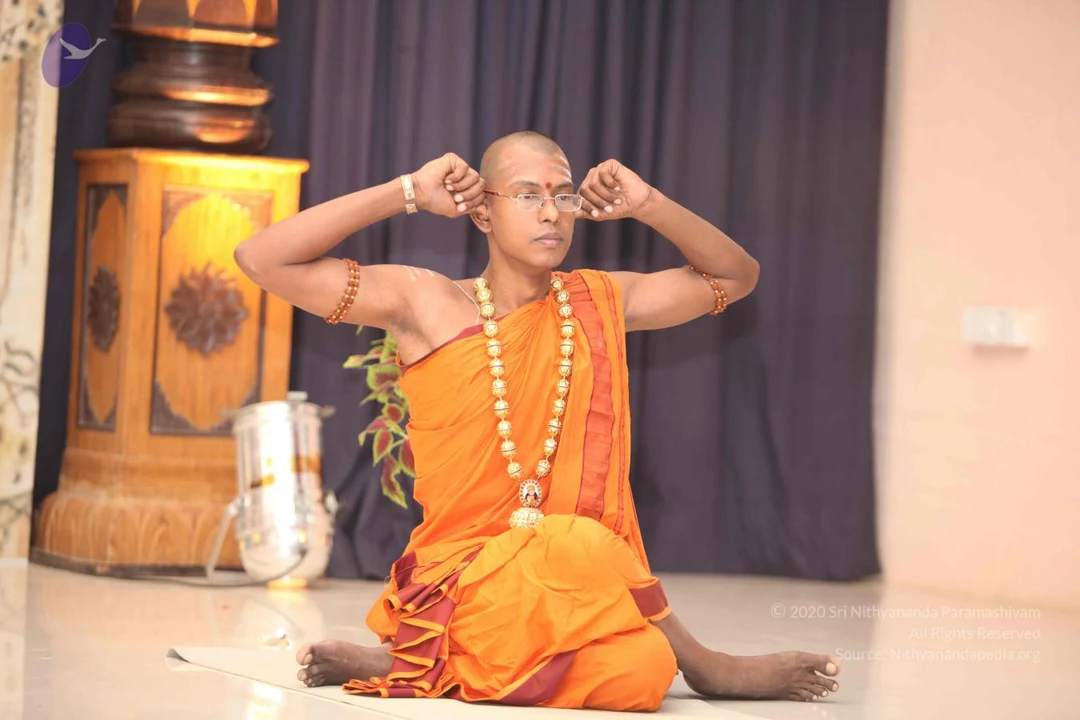
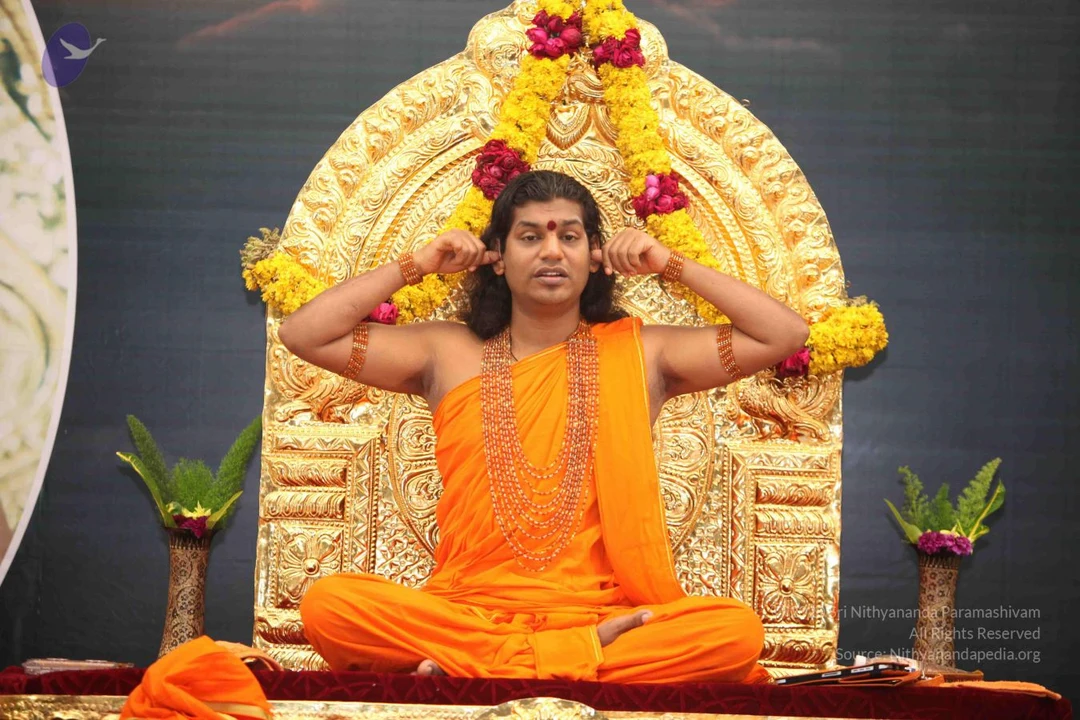
5. BHRAMARI PRANAYAMA

GHERANDA SAMHITA, UPADESHA 5, VERSES 78

TRANSLATION At the past midnight, in a place where there are no sounds of any animal, &c., to be heard, let the yogi practice puraka and kumbhaka, closing the ears by the hands. He will hear then various internal sounds in his right ear. The first sound will be like that of crickets, then that of a lute, then that of a thunder, then that of a drum, then that of a beetle, then that of bells, then those of gougs of bell-metal, trumpets, kettles-drums, mridanga, military drums, and dundubhi, etc.

TECHNIQUE

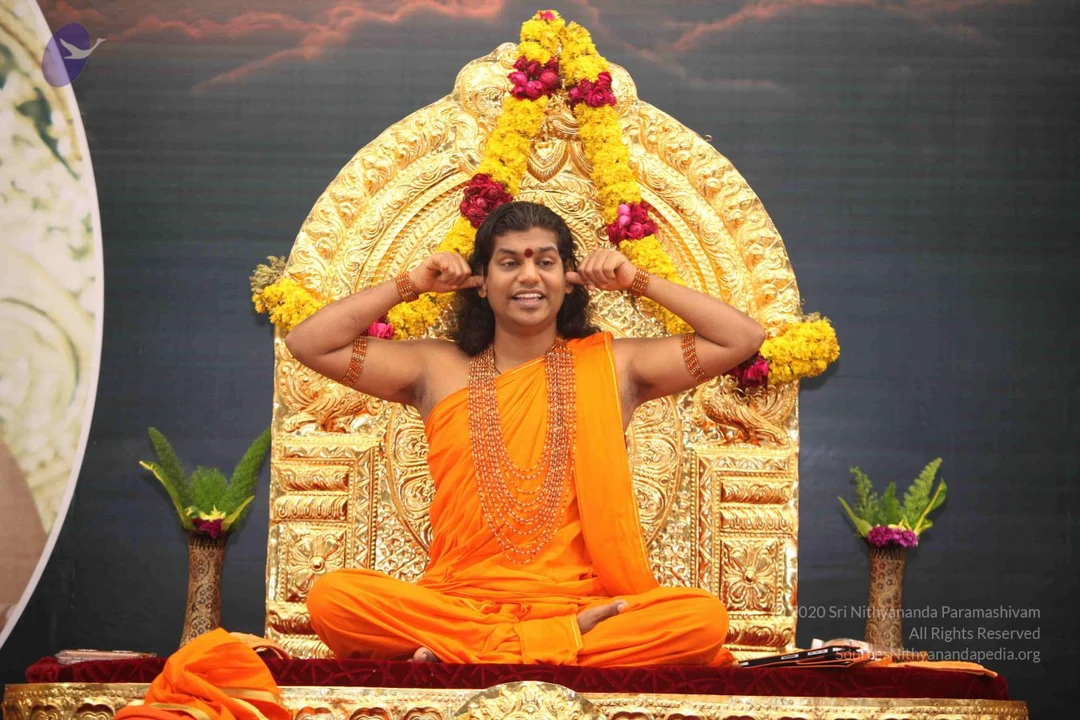
Sit in the same posture Put your thumb into your ears Start hummming as deeply as possible while you inhale and exhale Do this for 7 minutes

Disease Description

Diabetes mellitus, often simply referred to as diabetes, is a group of metabolic diseases in which a person has high blood sugar, either because the body does not produce enough insulin, or because cells do not respond to the insulin that is produced. This high blood sugar produces the classical symptoms of polyuria (frequent urination), polydipsia (increased thirst) and polyphagia (increased hunger) and these conditions show up as the classical symptoms.

Diabetes can also occur in pregnant women, which is called gestational diabetes; and congenital diabetes which is due to genetic defects of insulin secretion, etc.

Globally as of 2010 it is estimated that there are 285 million people diabetes. Its incidence is increasing rapidly, and it is estimated that by 2030, this number will almost double. Diabetes occurs throughout the world, but is more common in the more developed countries. The increase in incidence of diabetes in developing countries follows the trend of urbanization and lifestyle changes.

Photos From The Day:

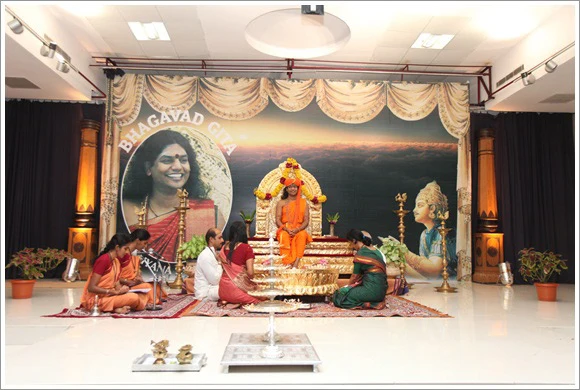
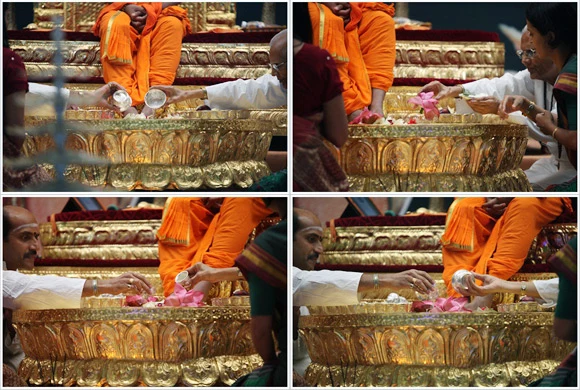
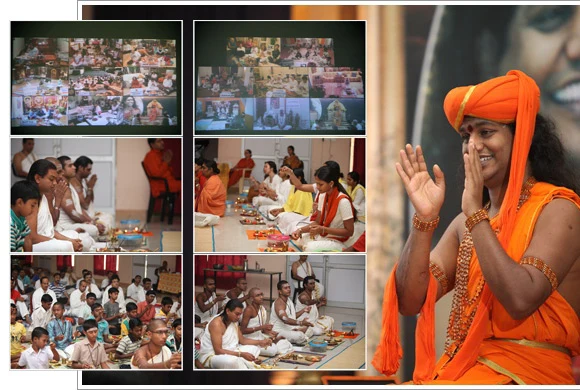
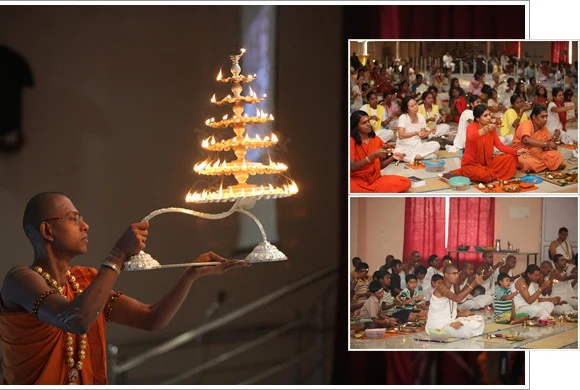
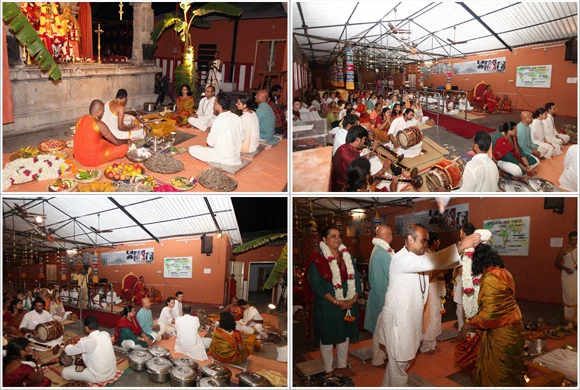
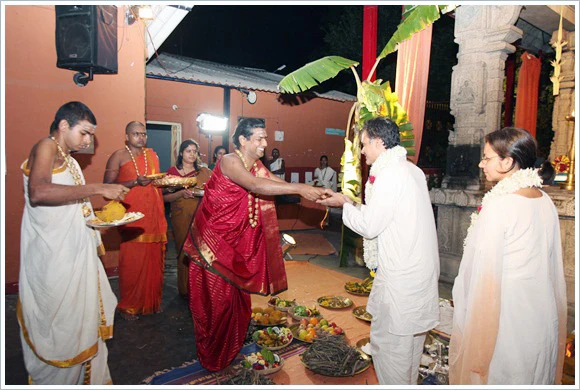
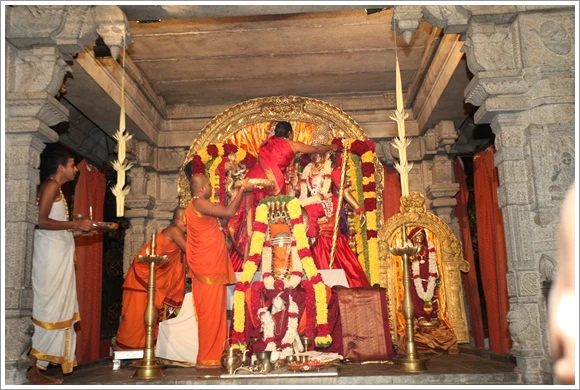
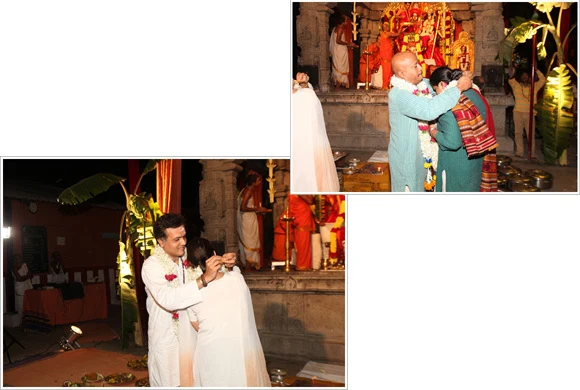
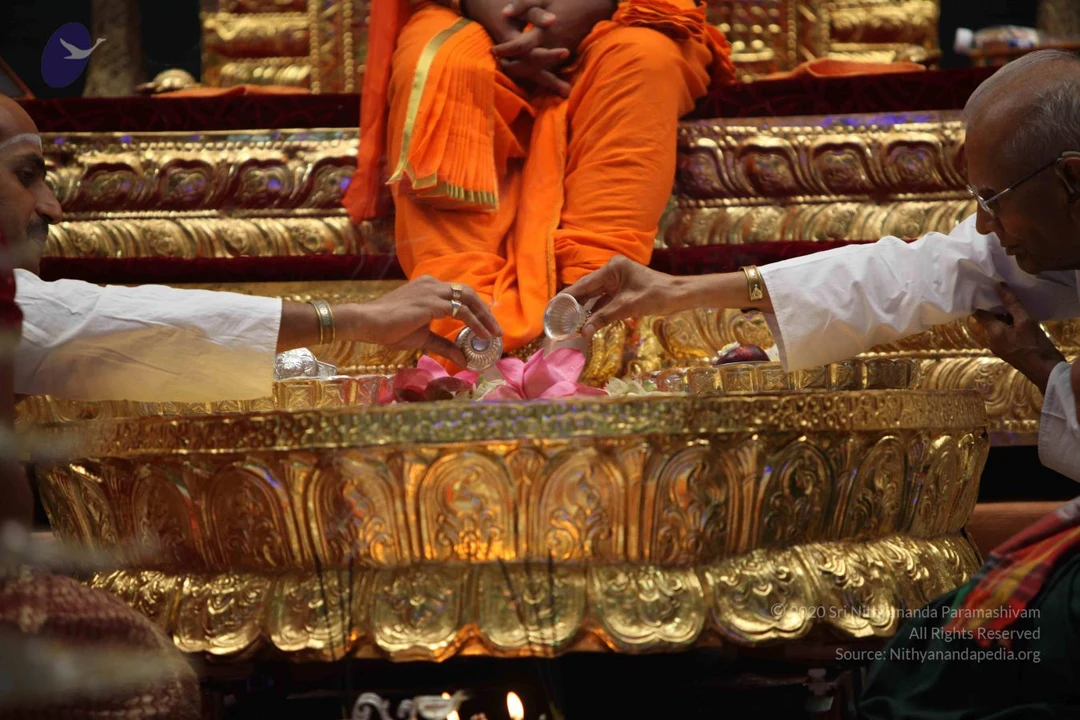
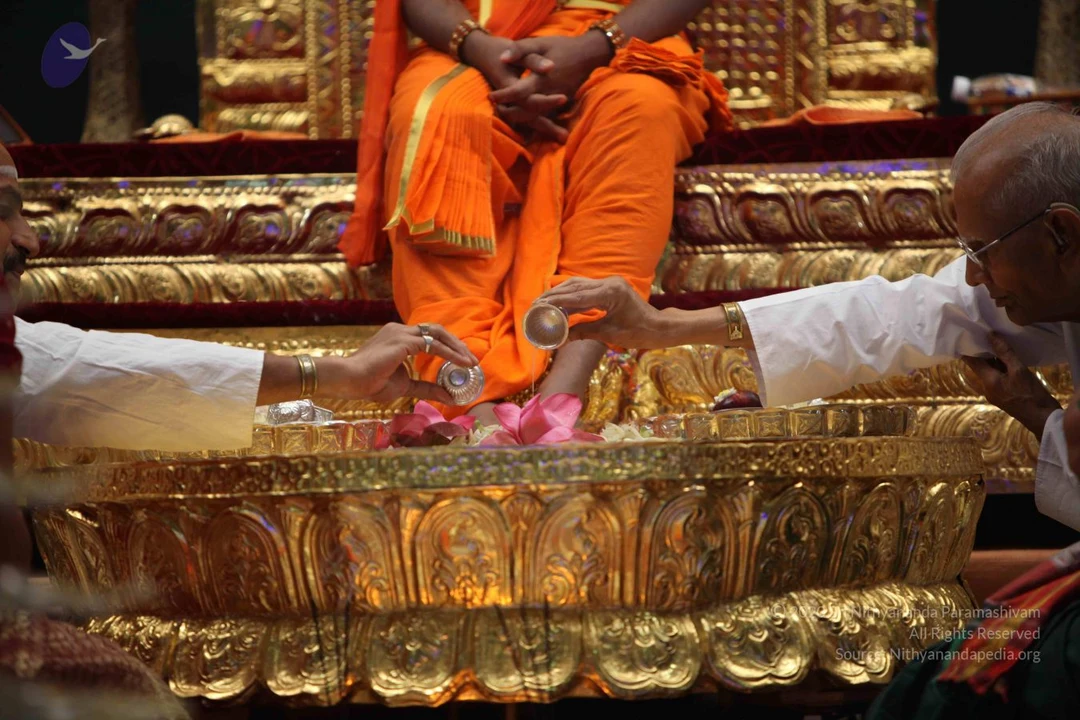
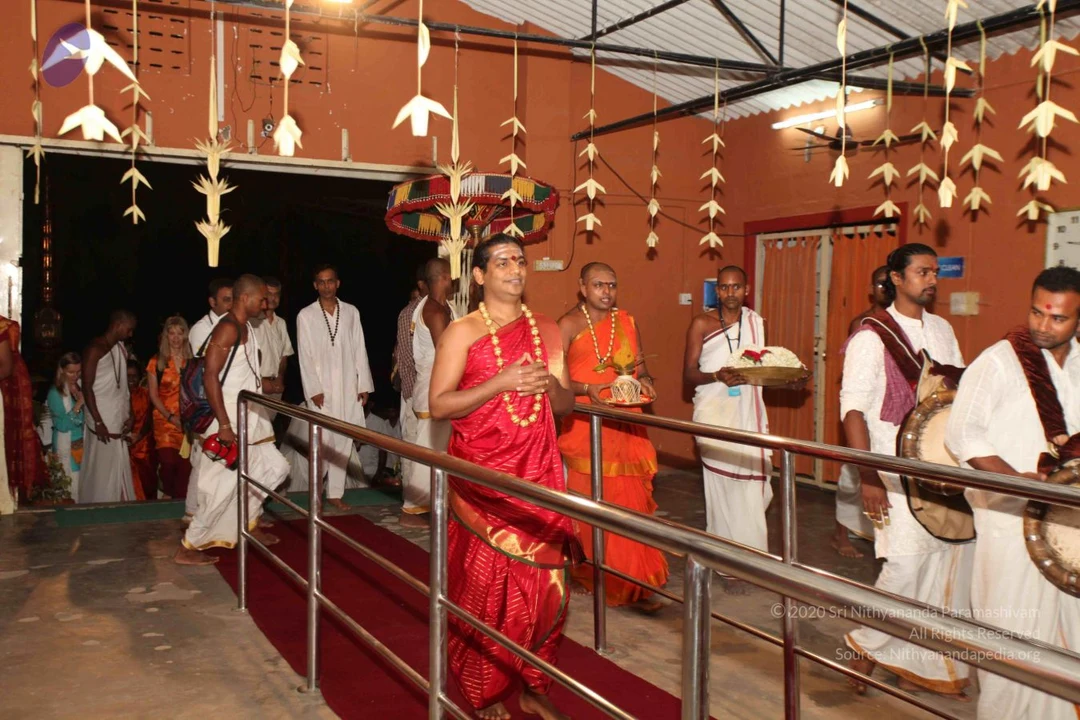
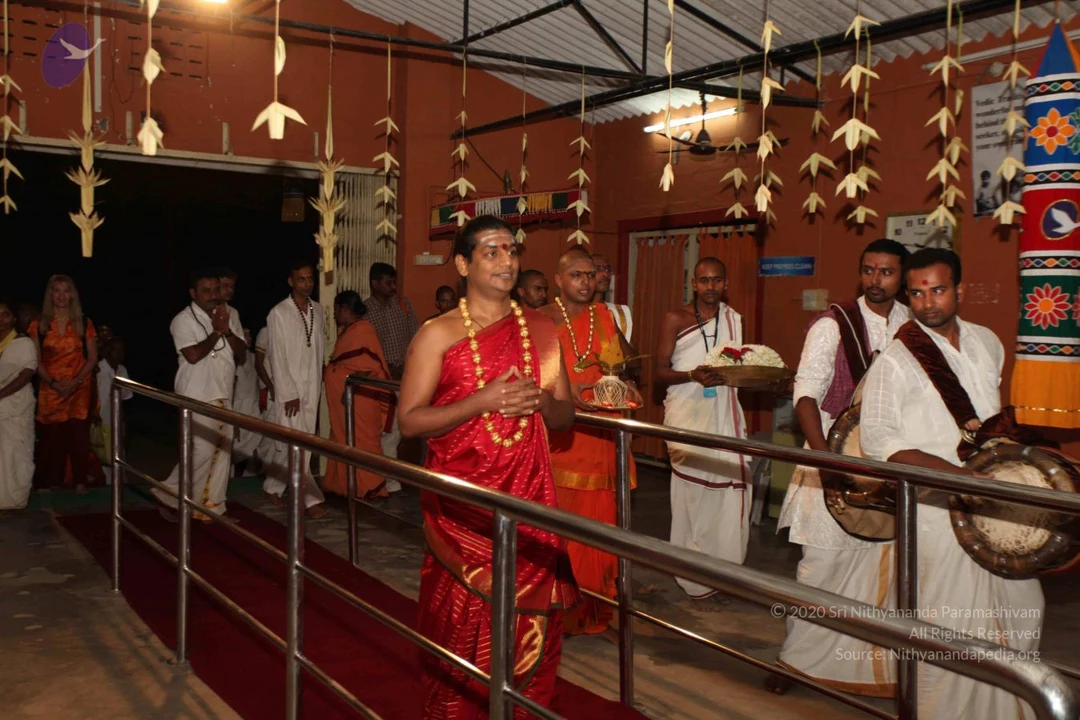
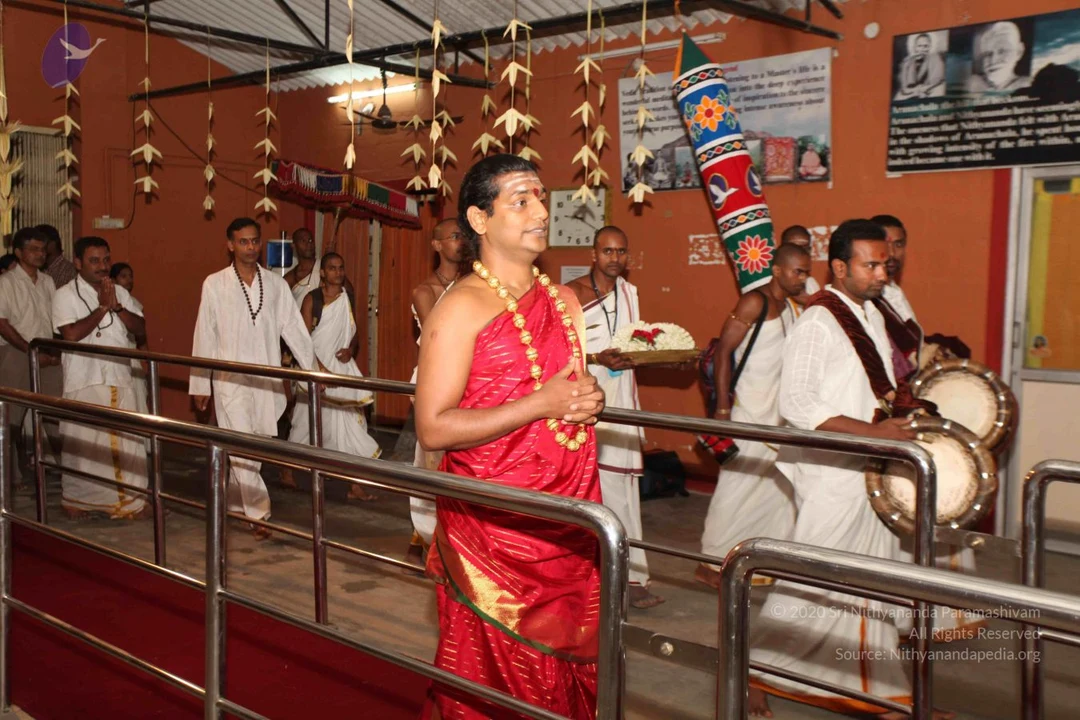
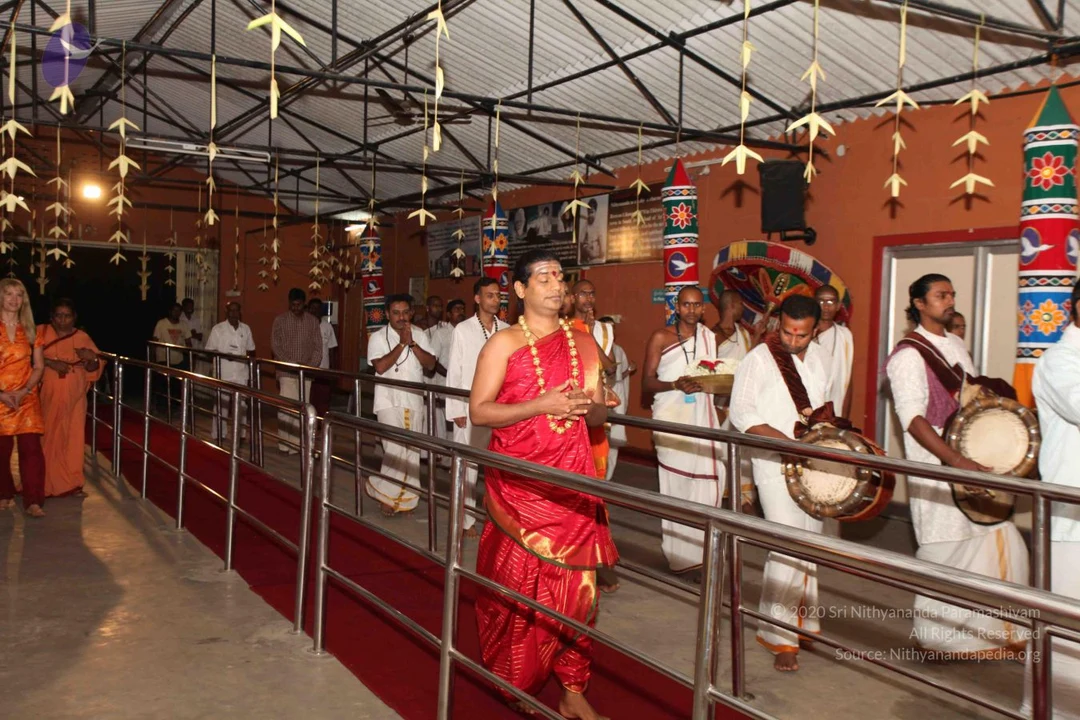
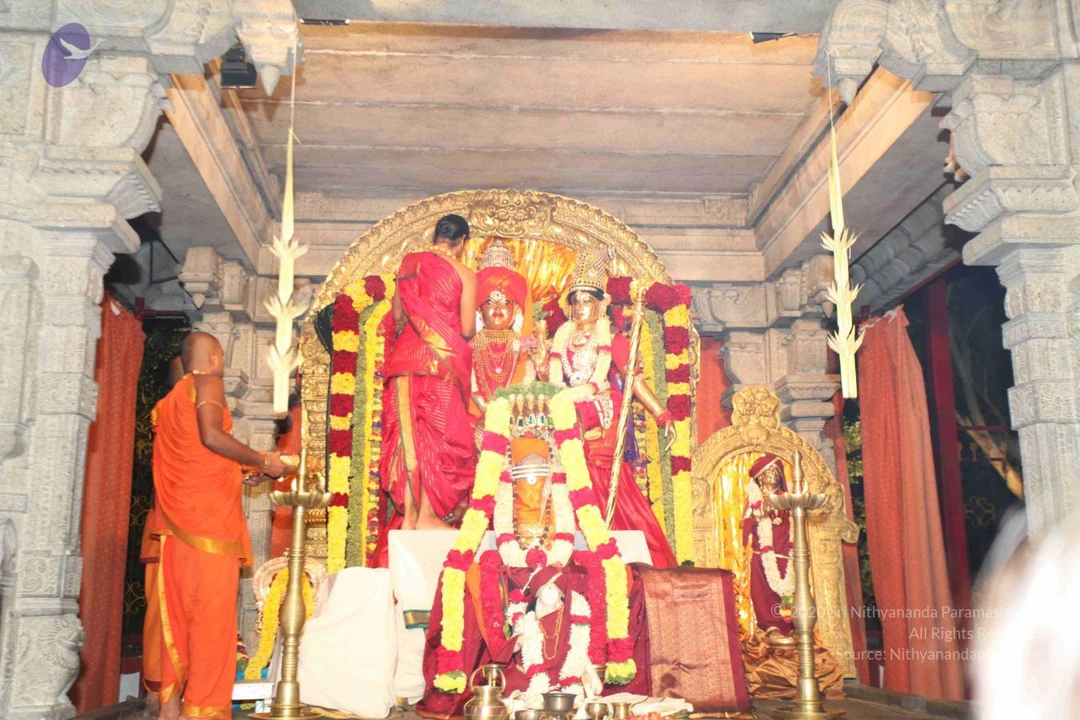
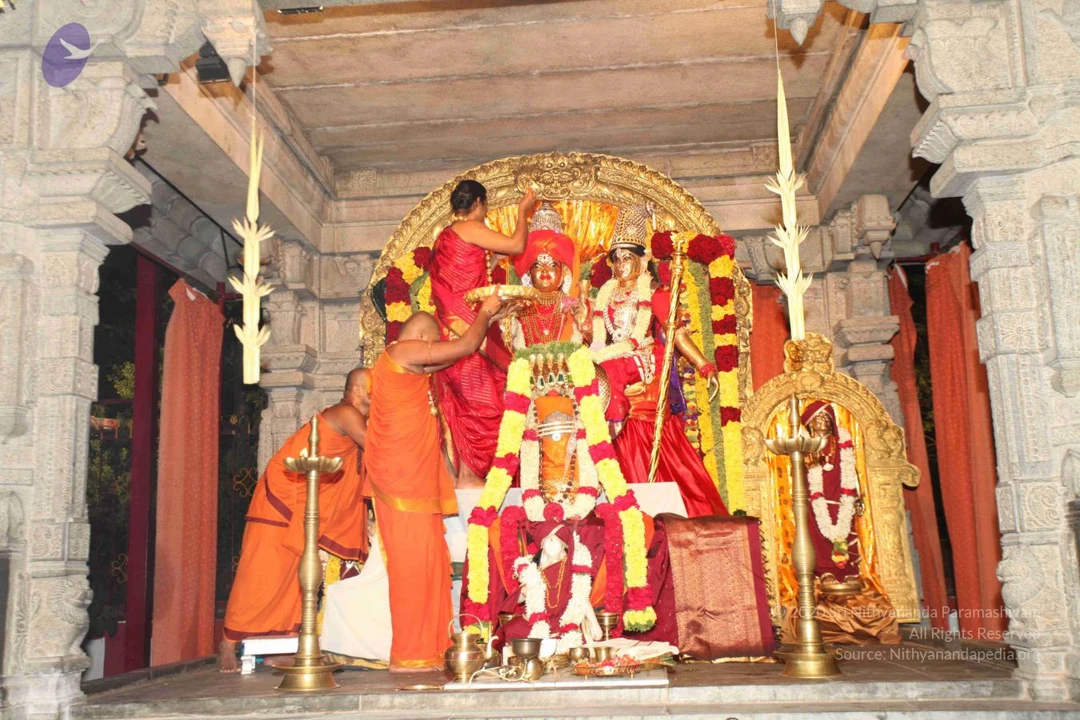
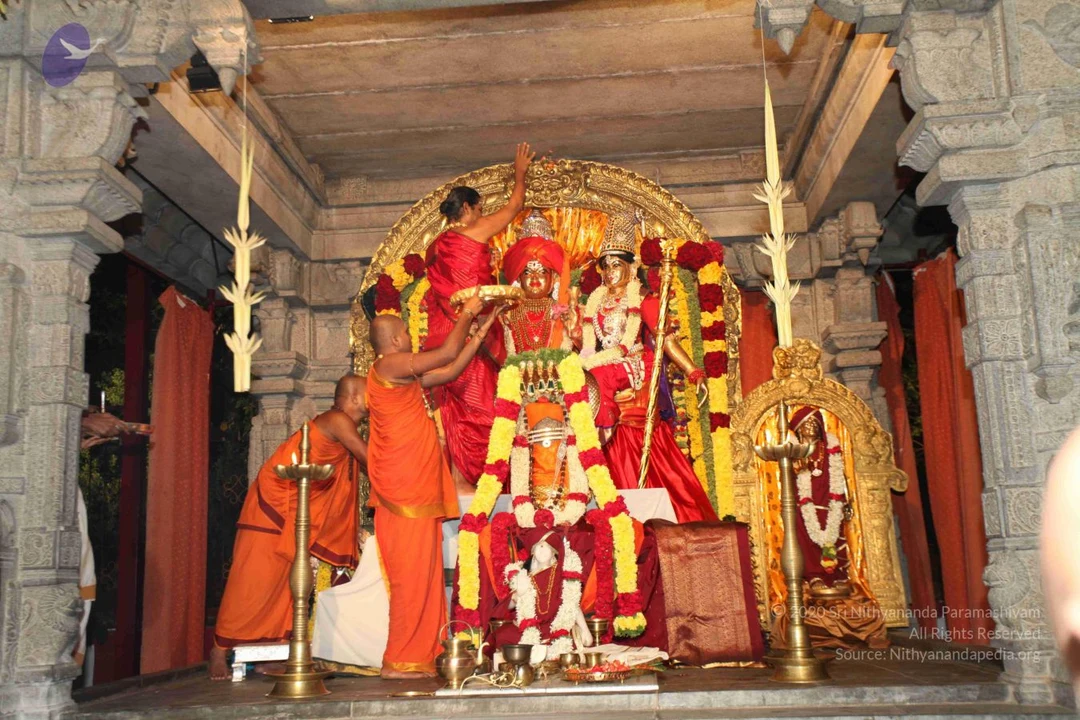
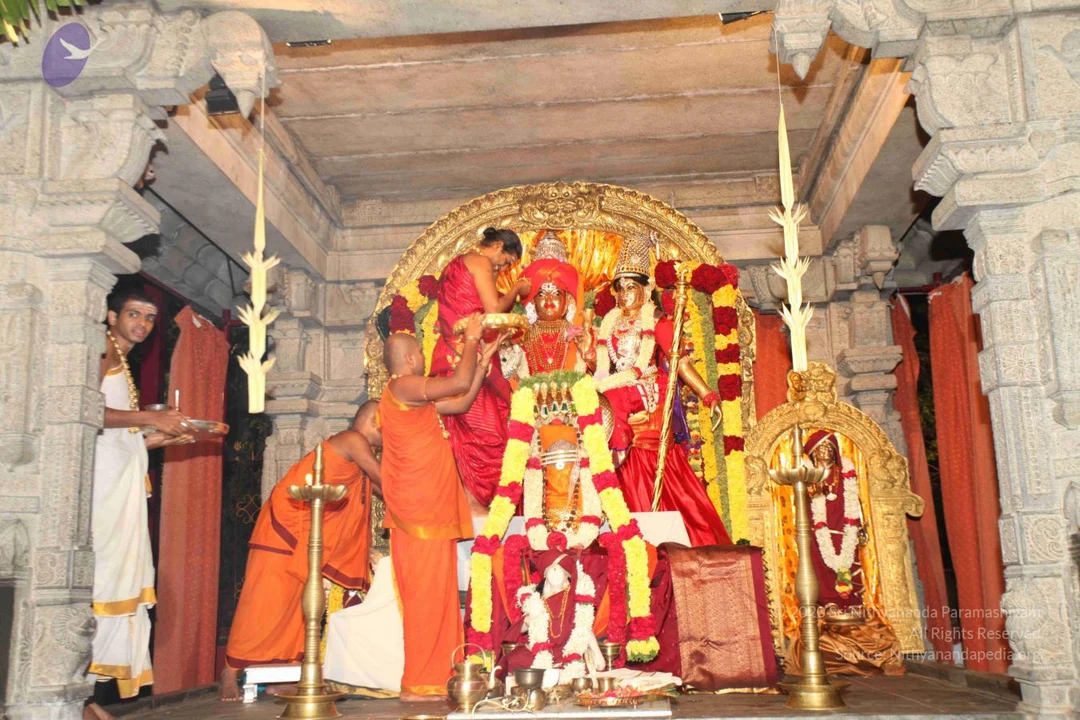
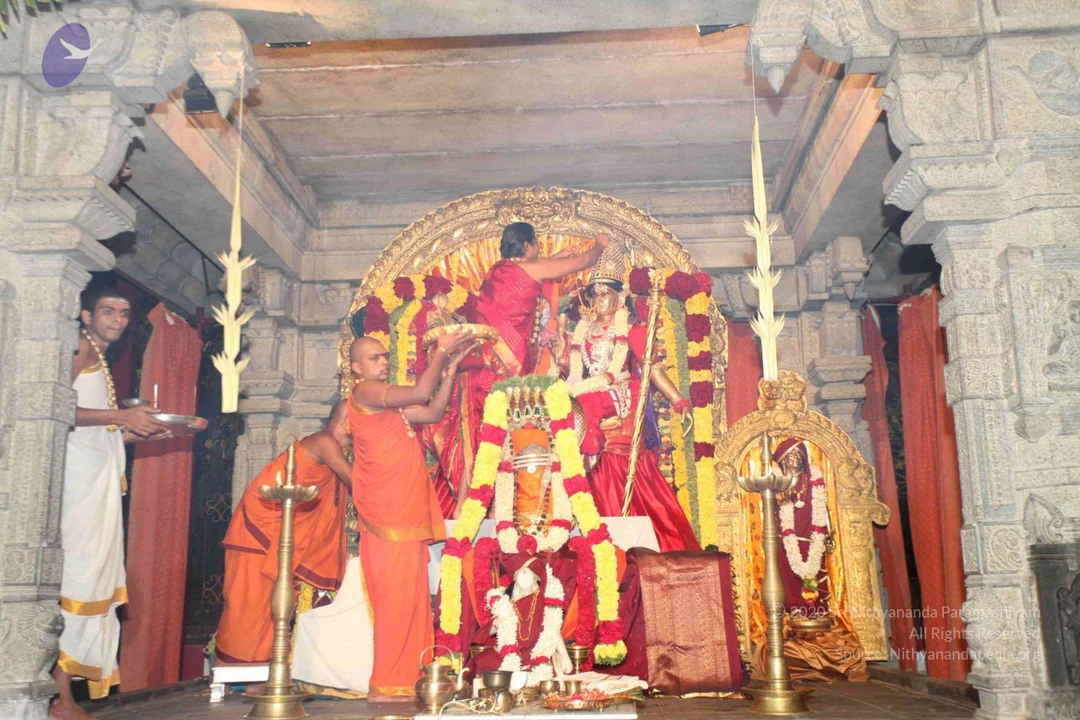
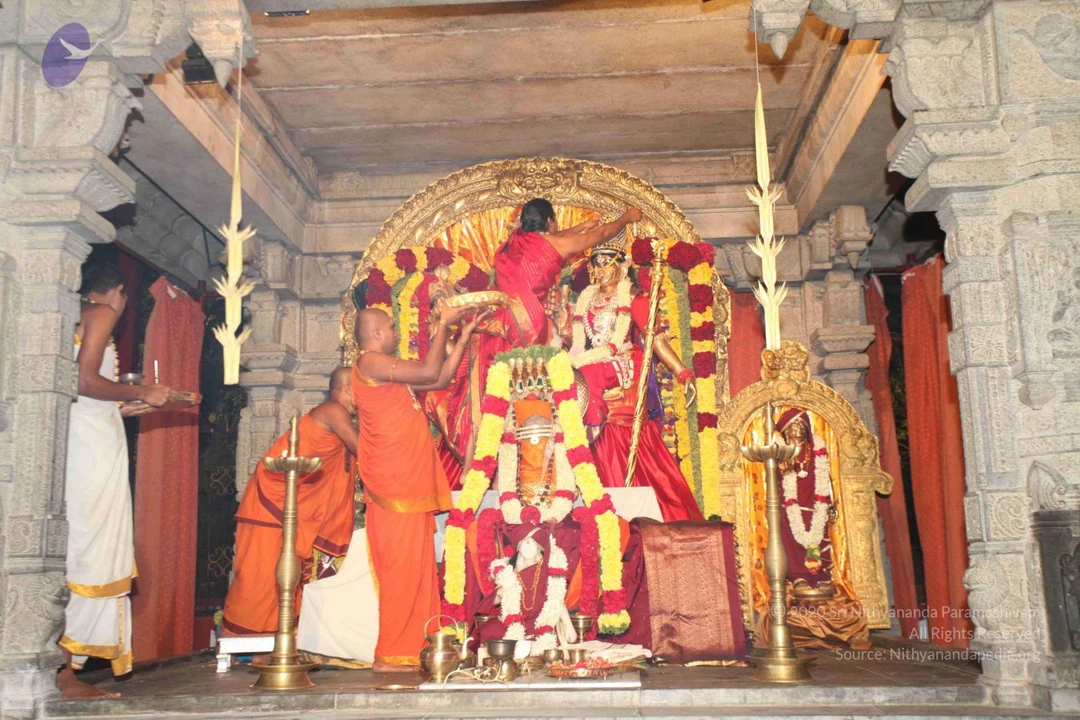
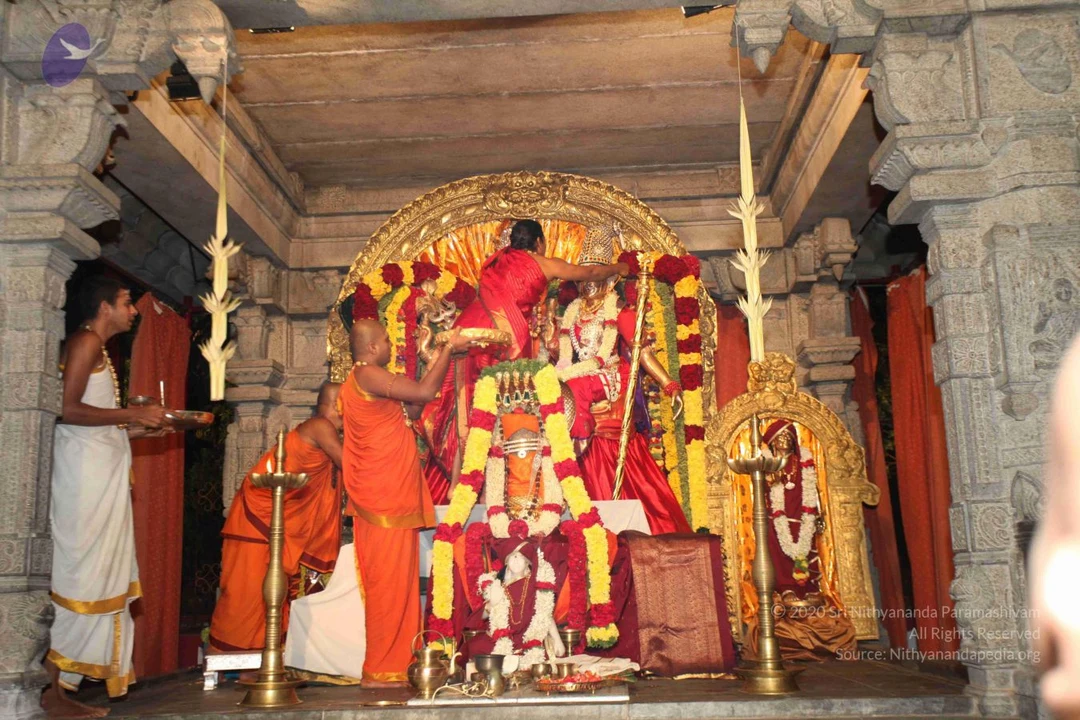
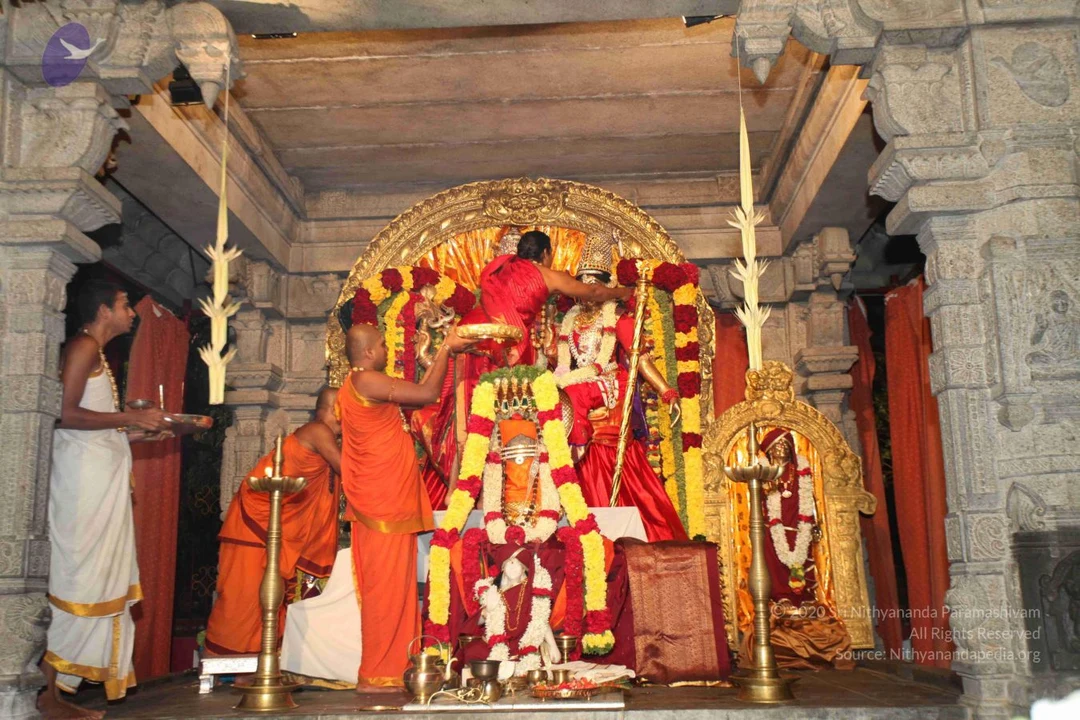
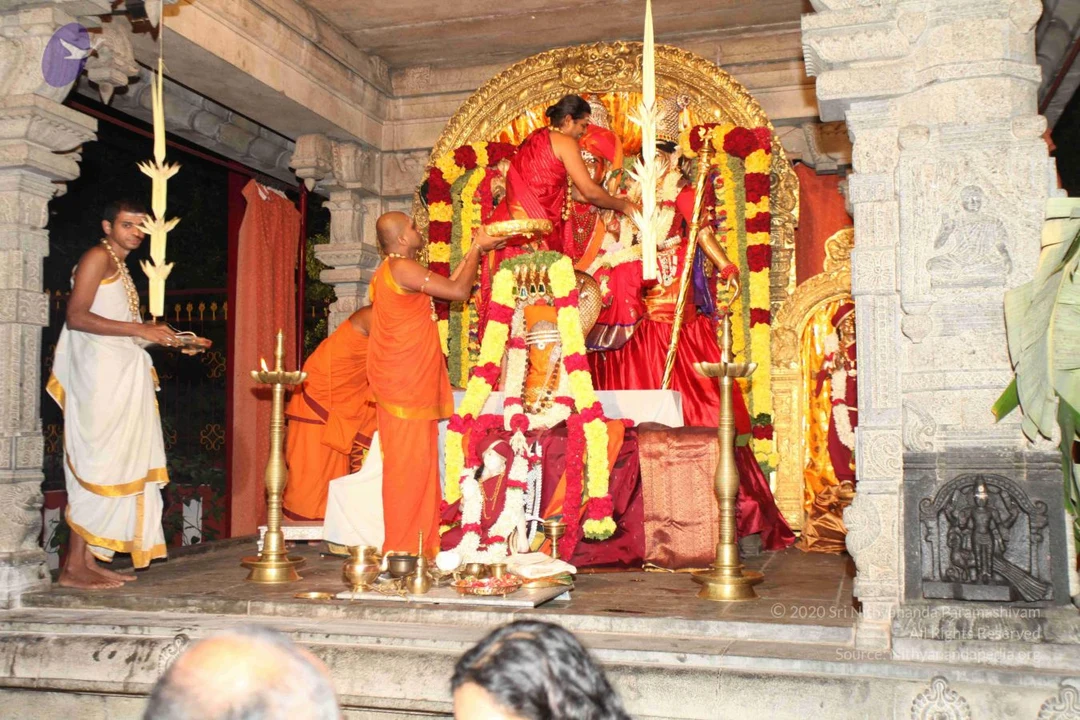
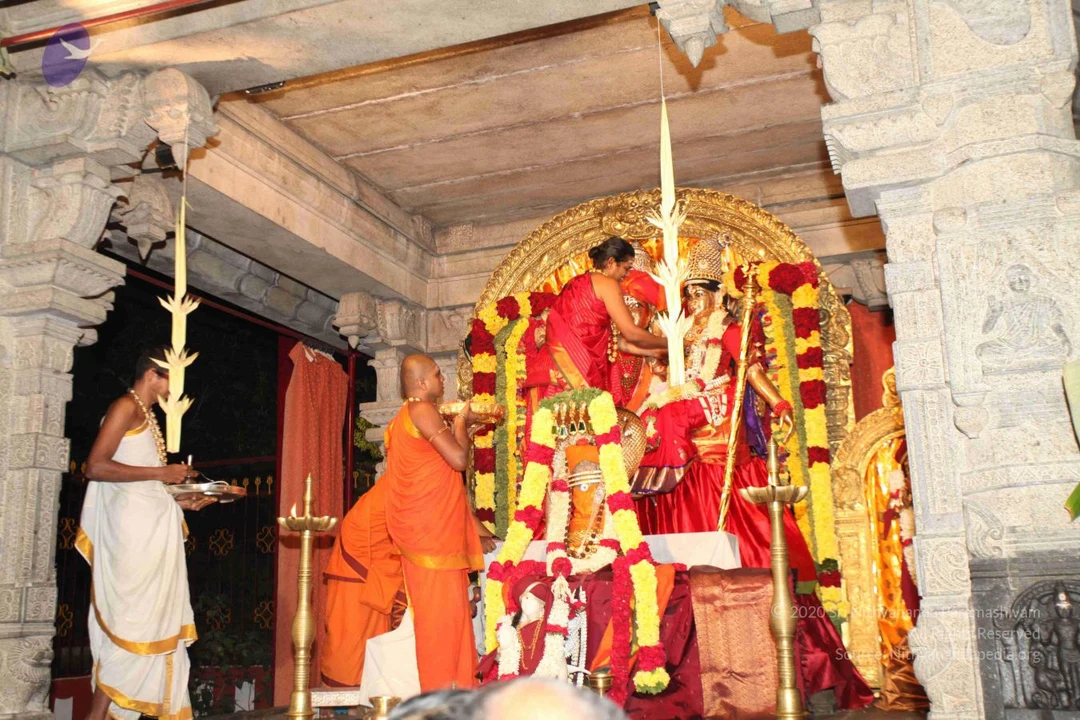
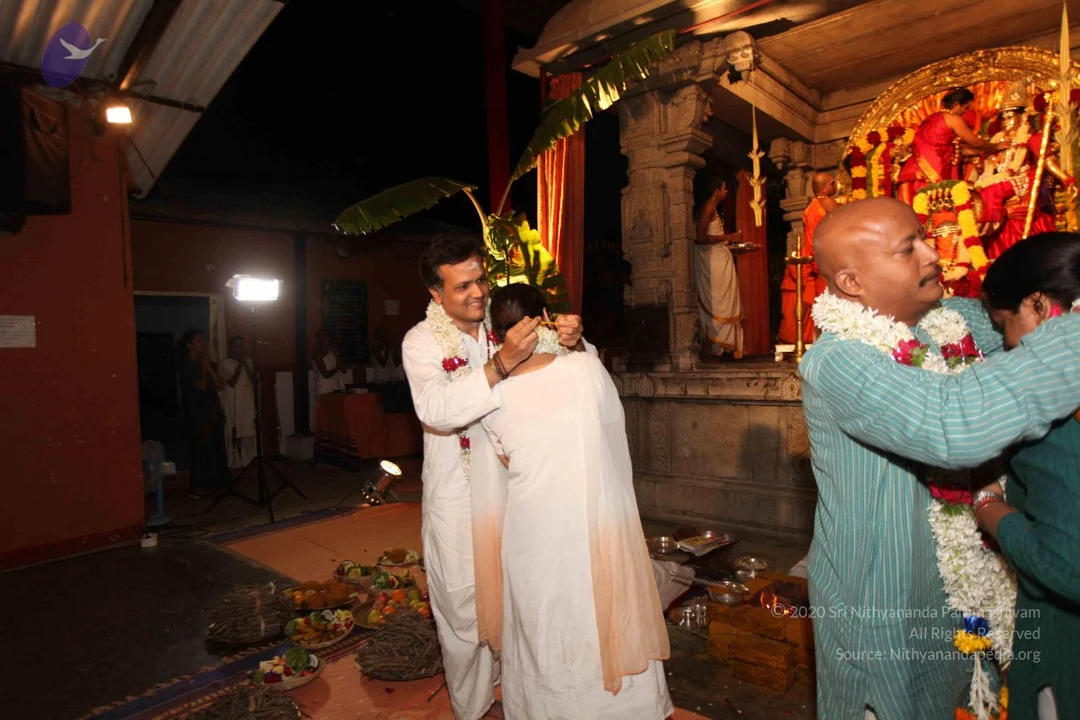
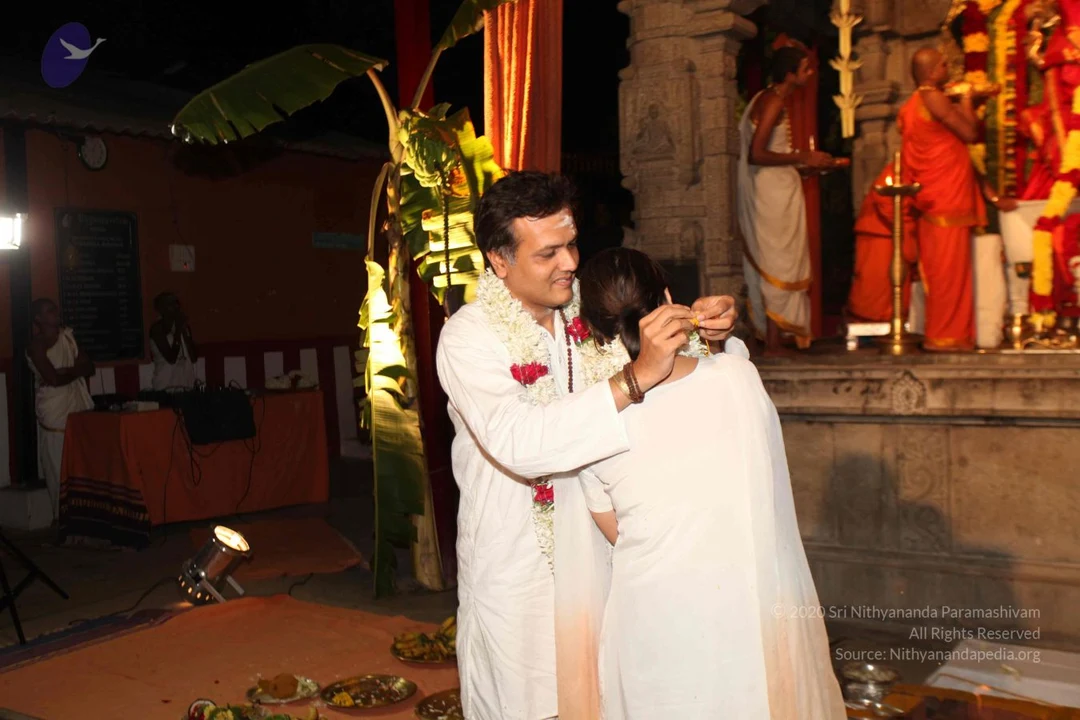
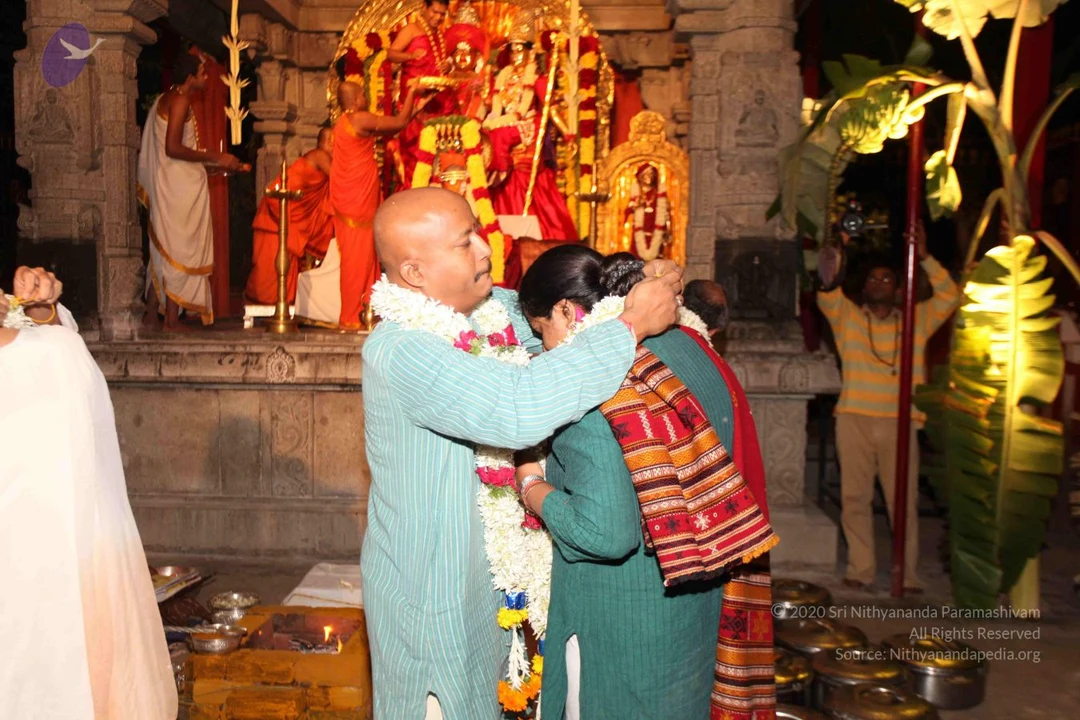
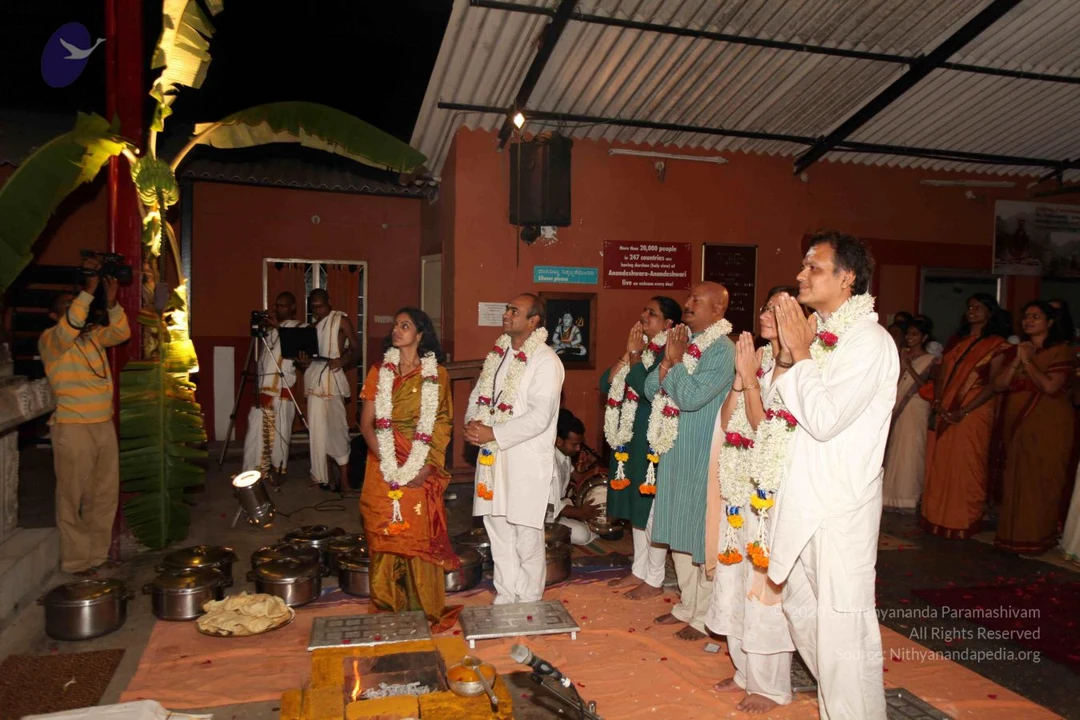
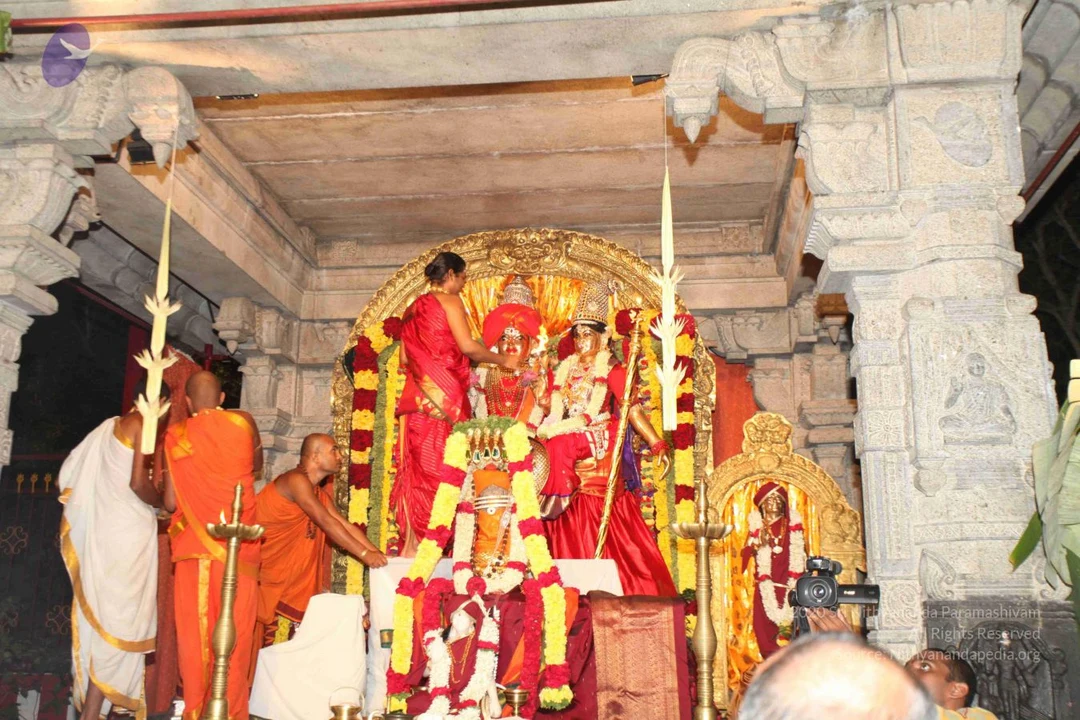
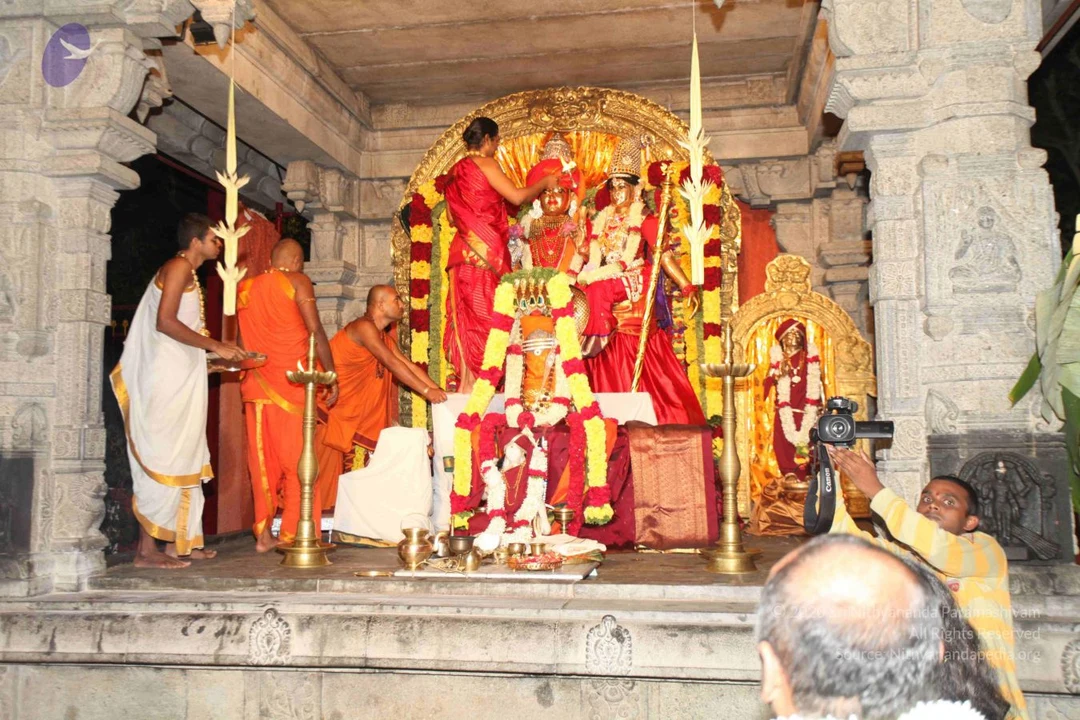
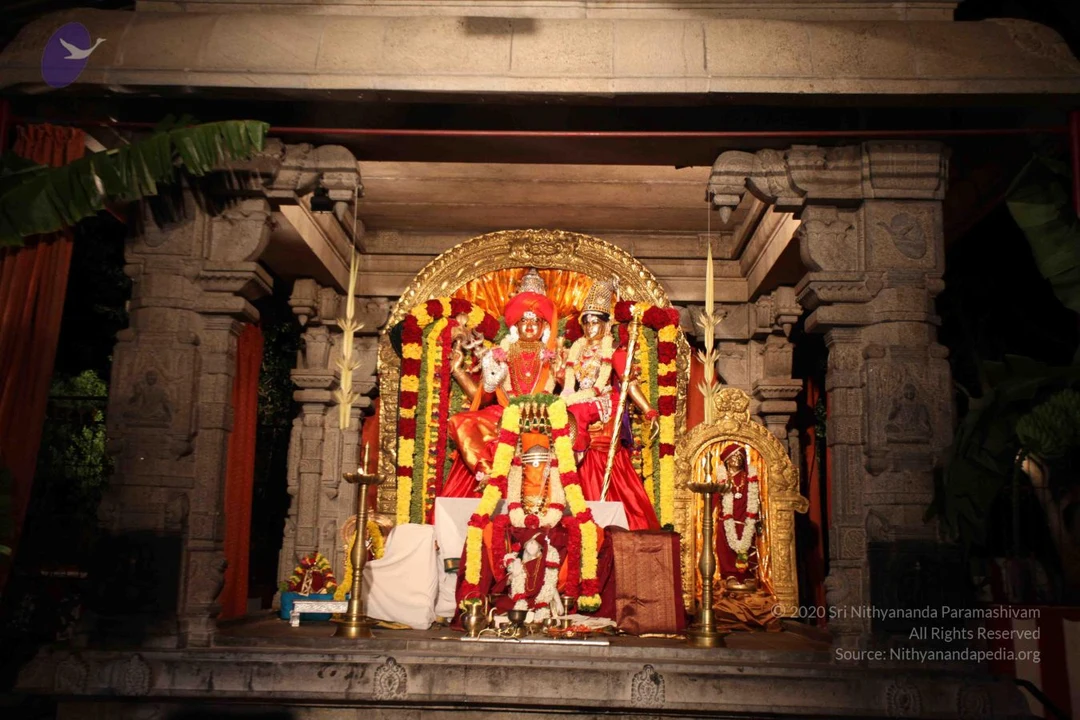
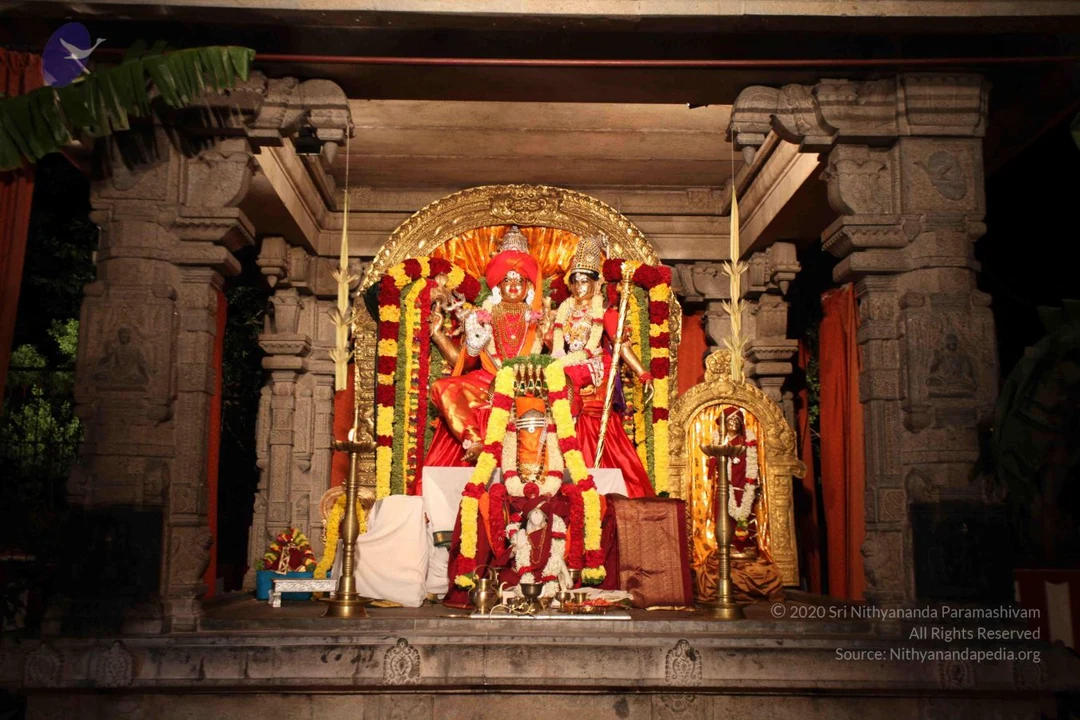
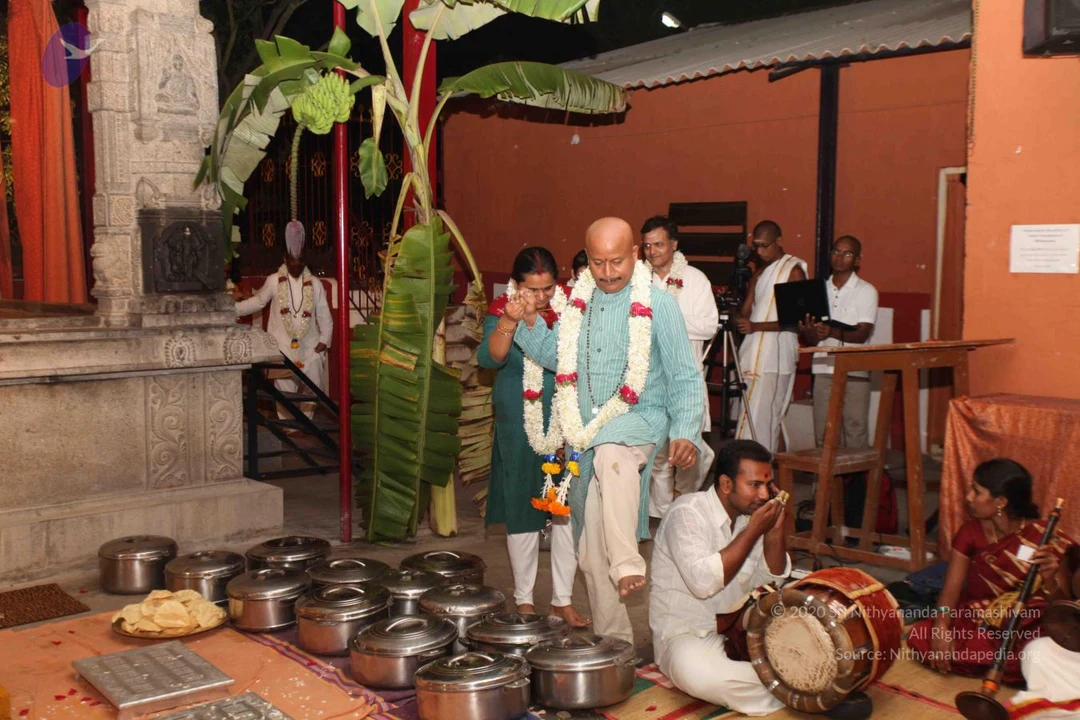
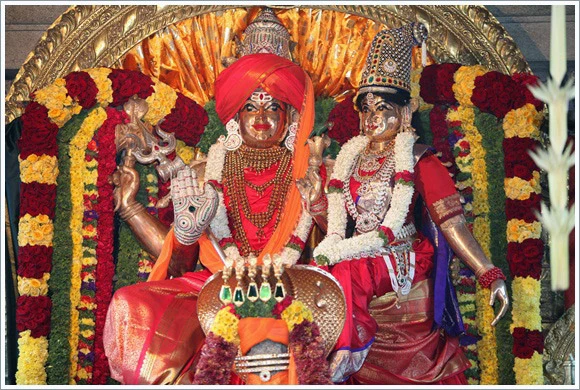
Temple Visit | Pratyaksha Pada Puja | Bhagavad Gita Satsang | eNRelationship Program | Tirukalyanotsava – 06 November 2011
Sakshi Pramana:

Sharing from Program/Yatra

Photos Of The Day:

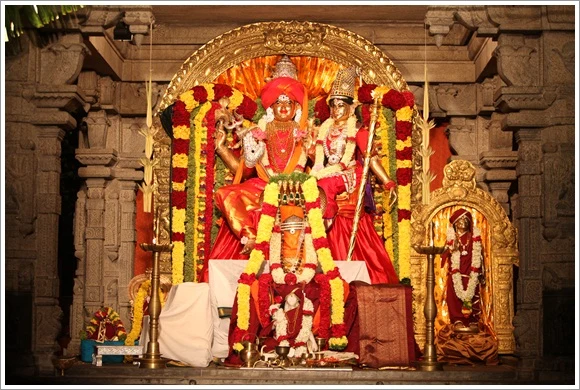
Temple
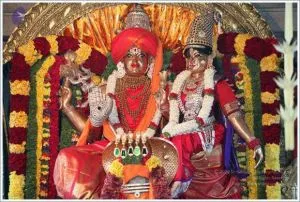
Pratyaksha-Padapuja

BGSatsang

Nithya-Kriya-Diabetes-Cure

Nithya-Kriya-by-Swamiji

Sarva-Darshan

eNRelationship-Day2

eNRelationship-Darshan

Meenakshi-TiruKalyanam

Varanasi-Center-Reopening

Maheshwarapooja-Tiruvanamalai

Photos from this day

View all 670 photos

Temple

21 photosSource gallery
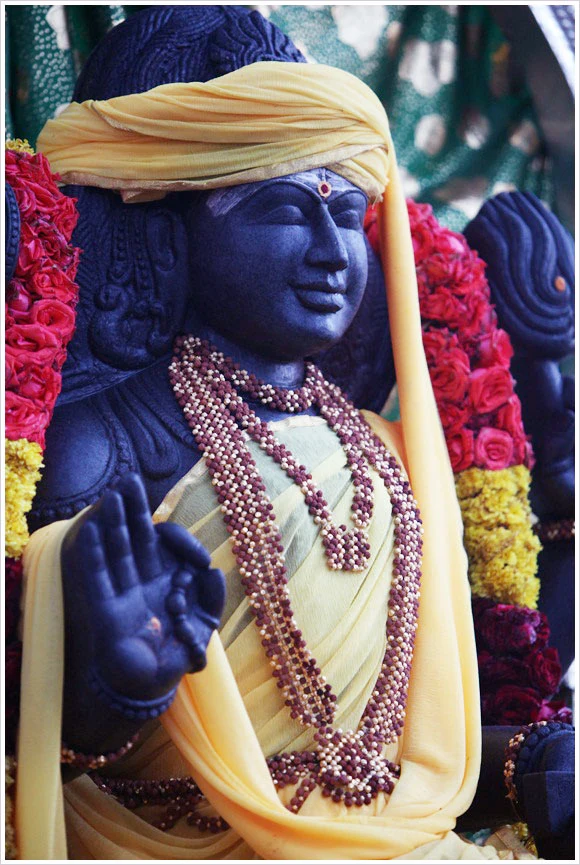
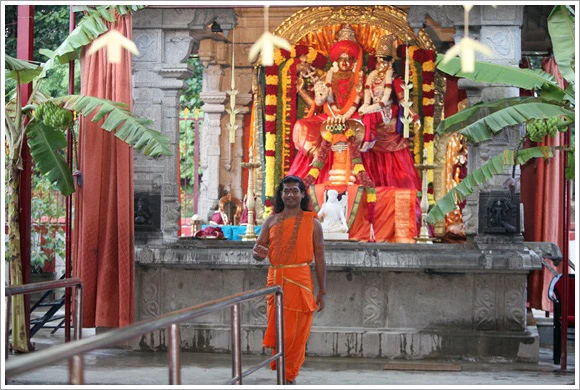
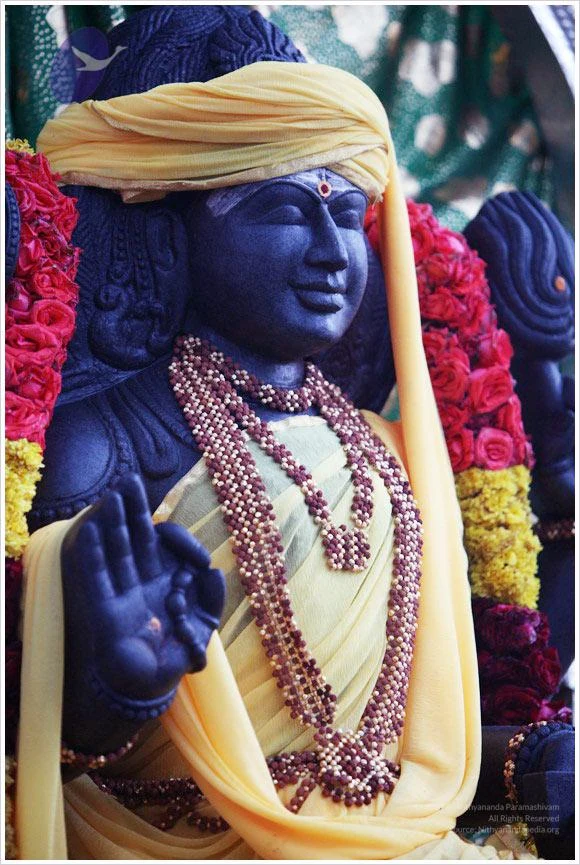
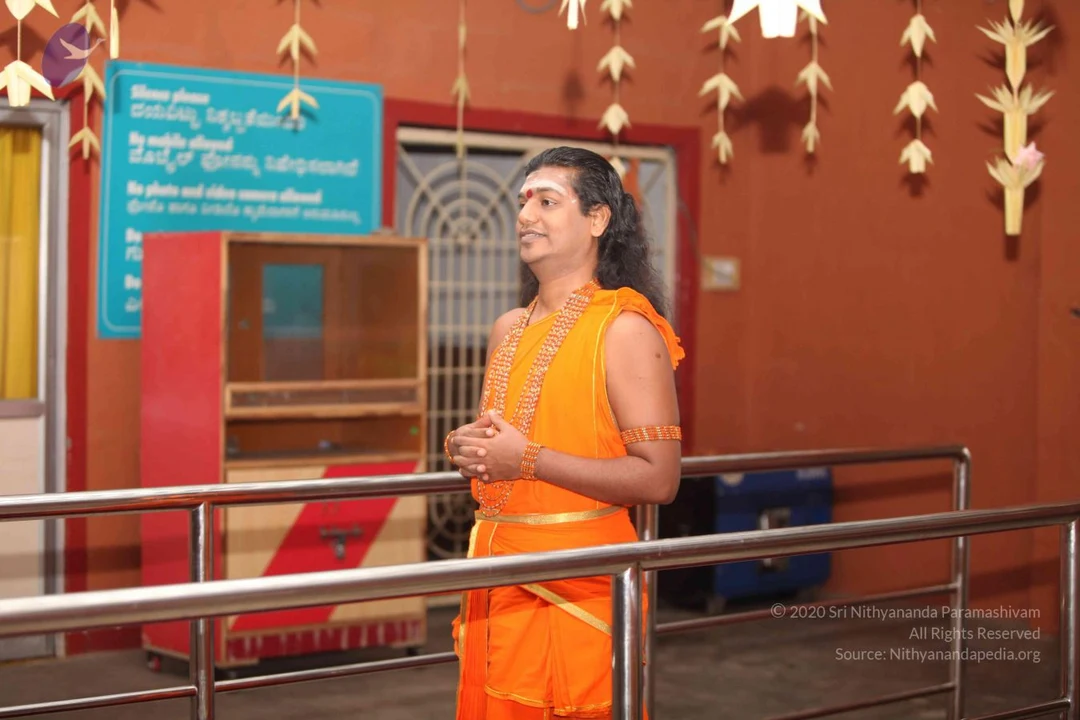
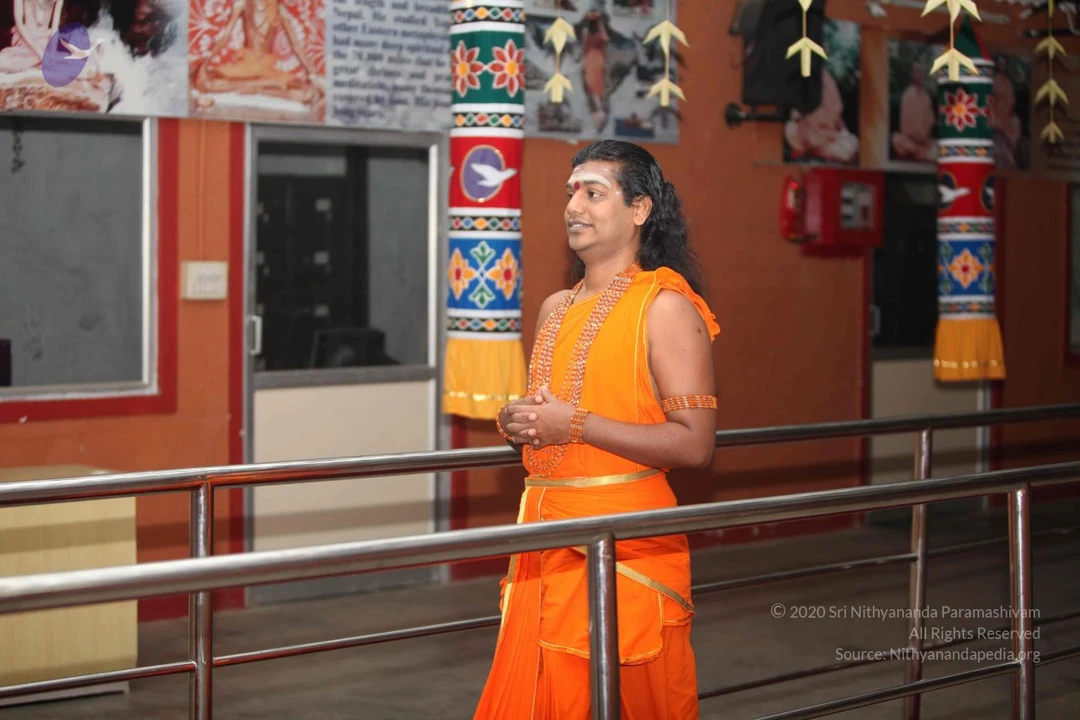
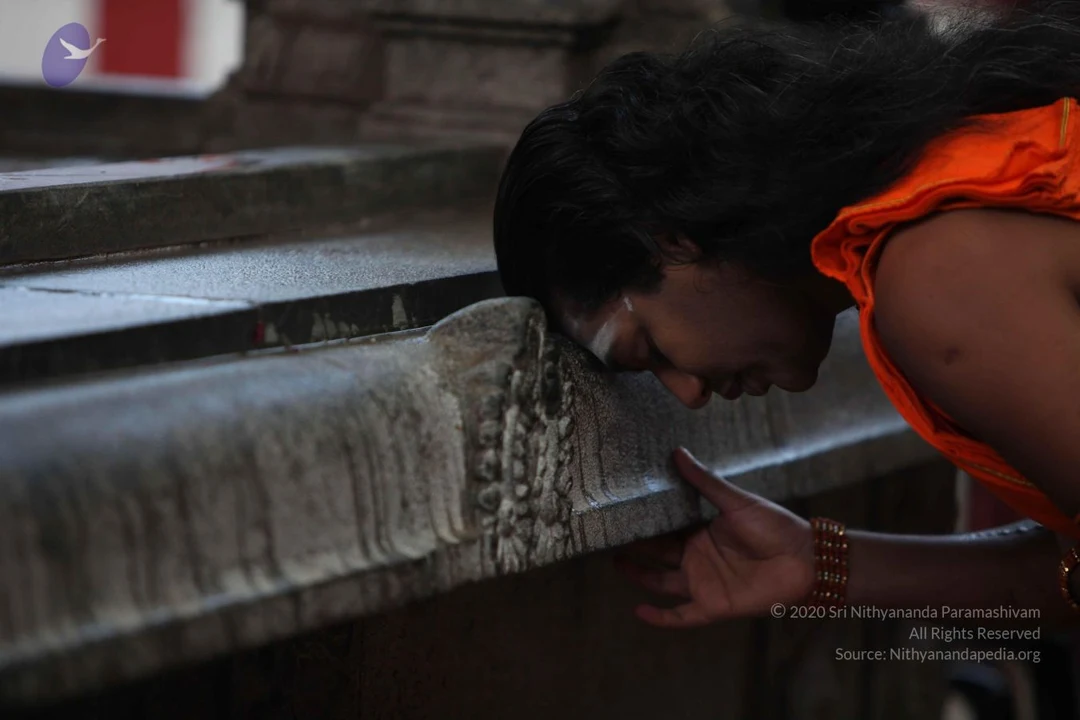
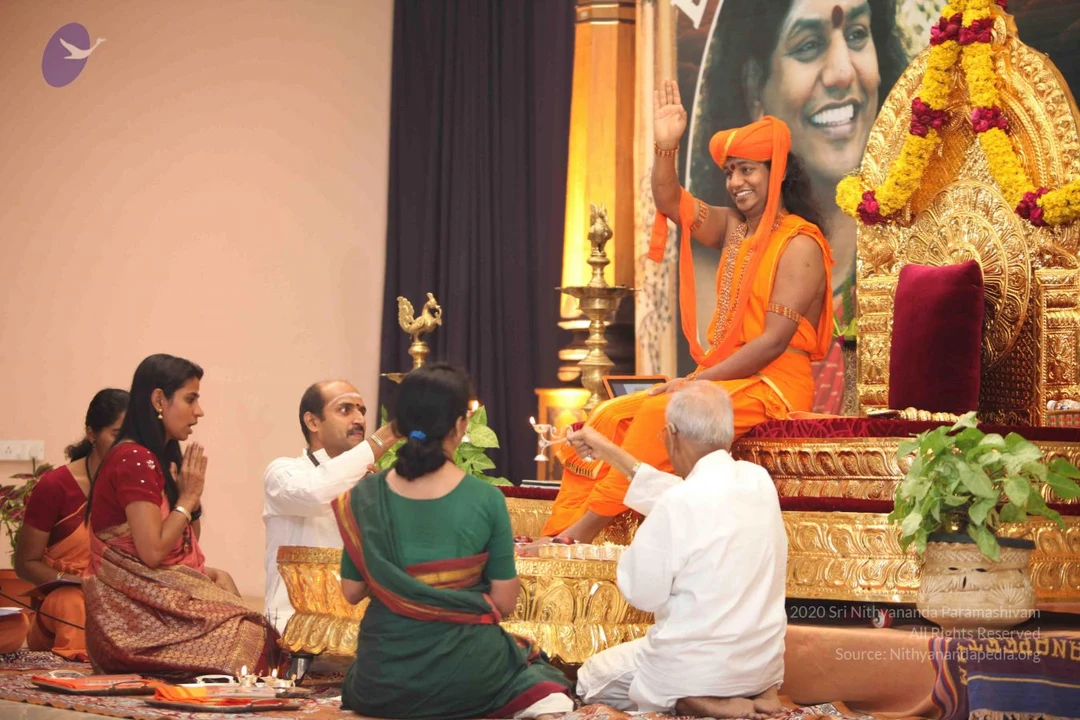
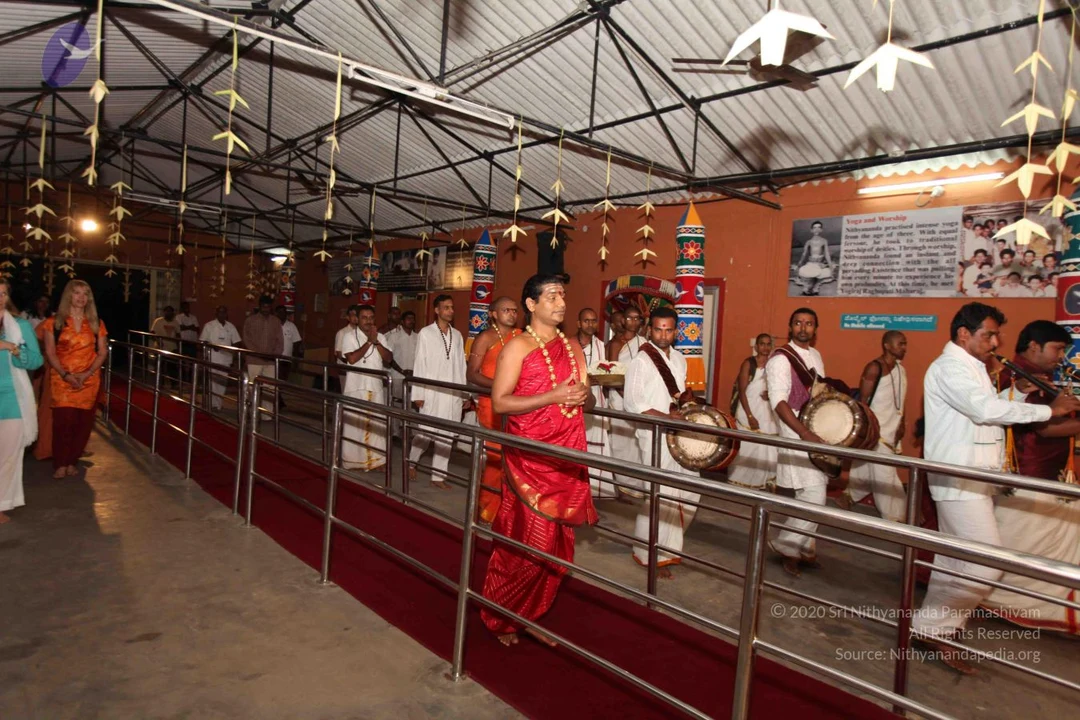
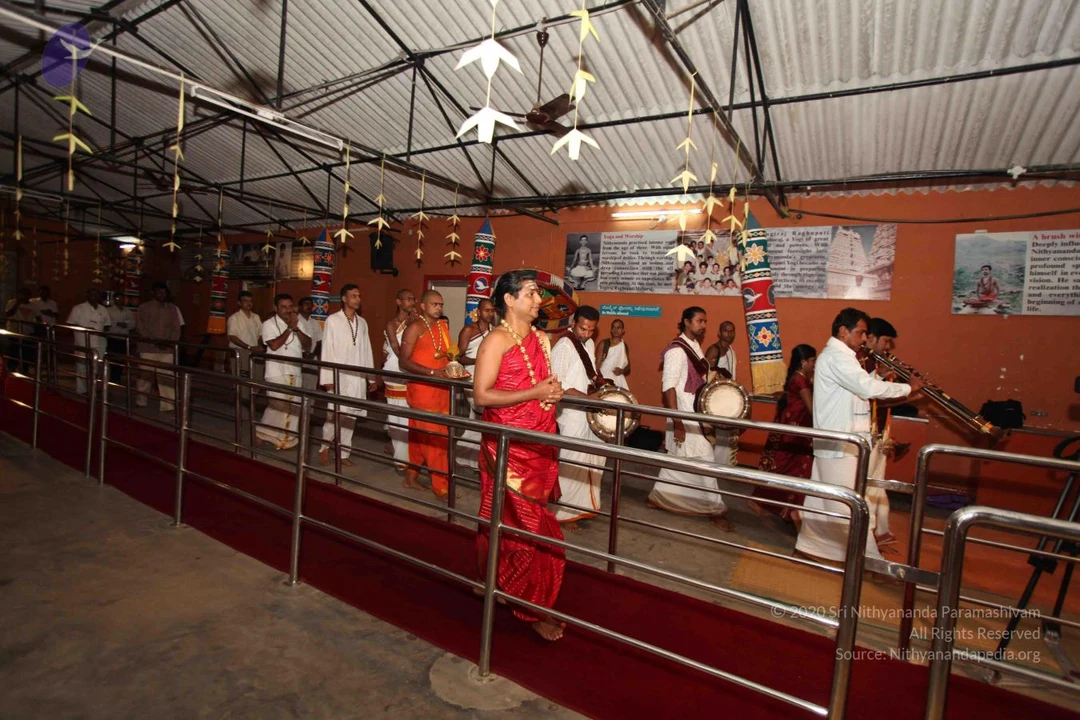
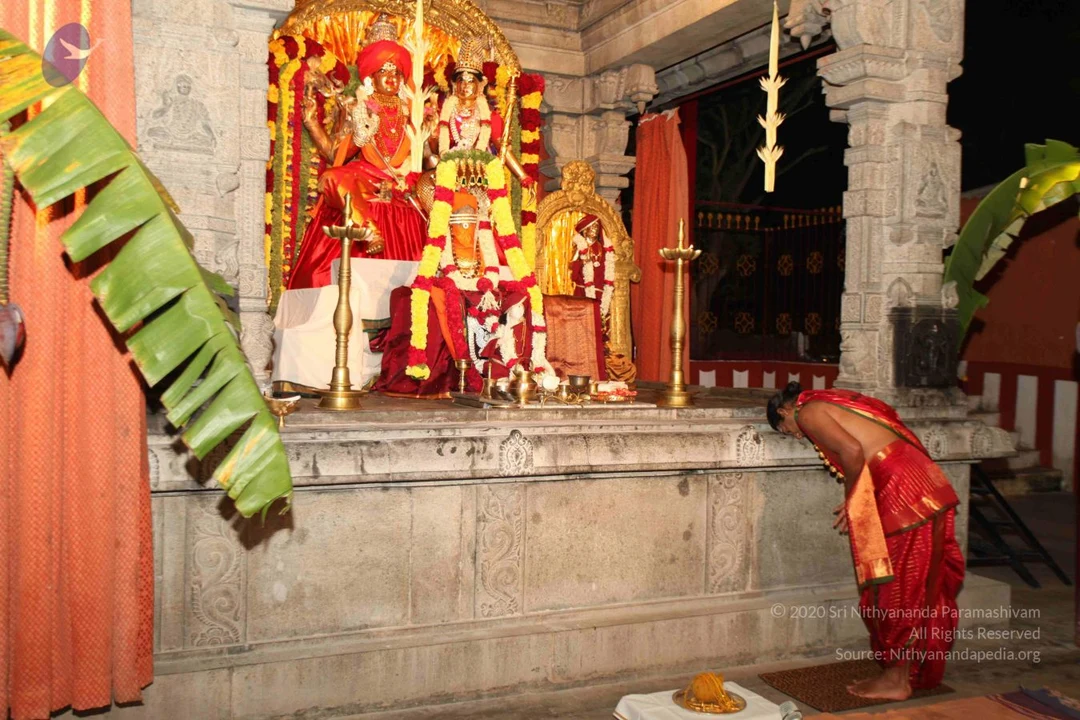
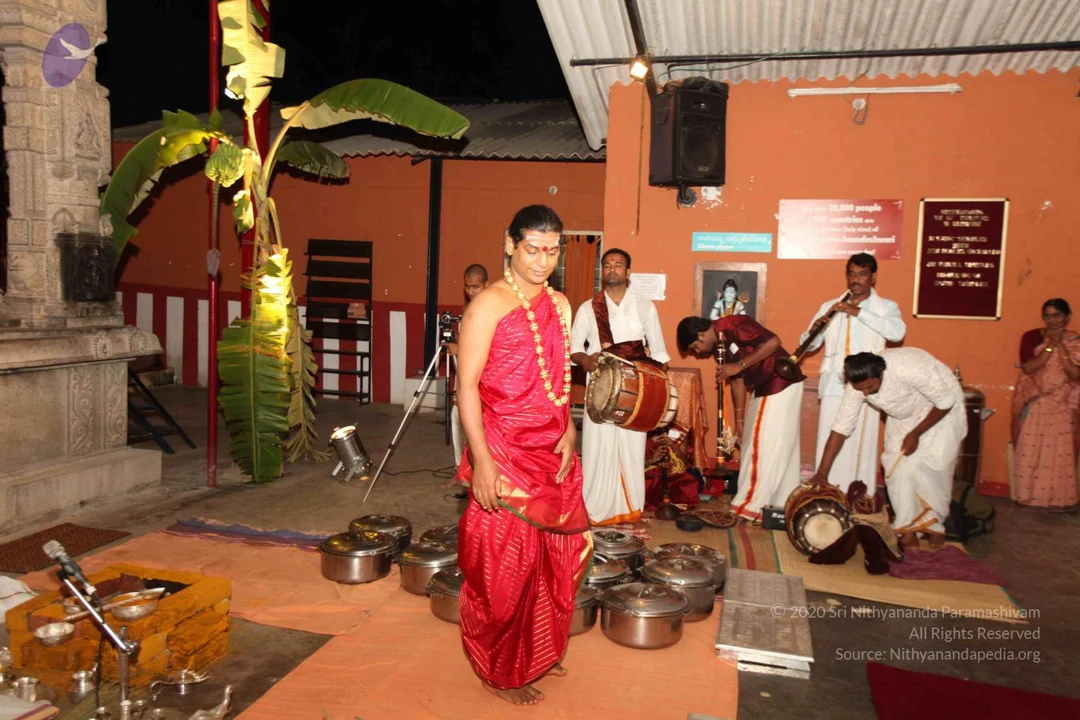
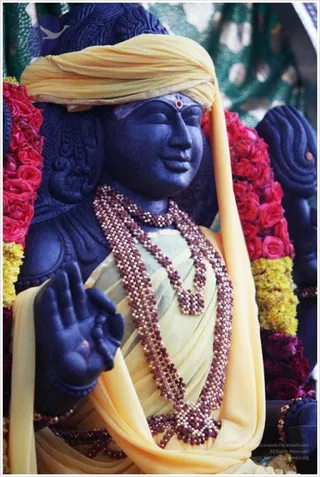
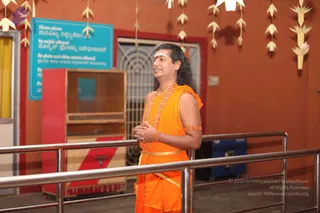
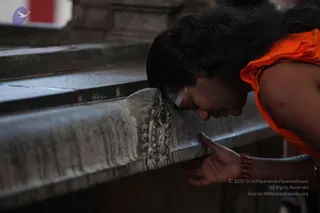
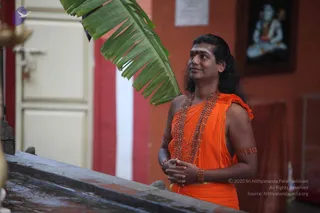
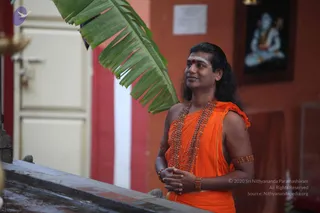
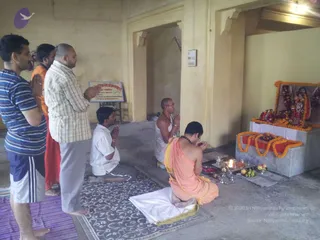
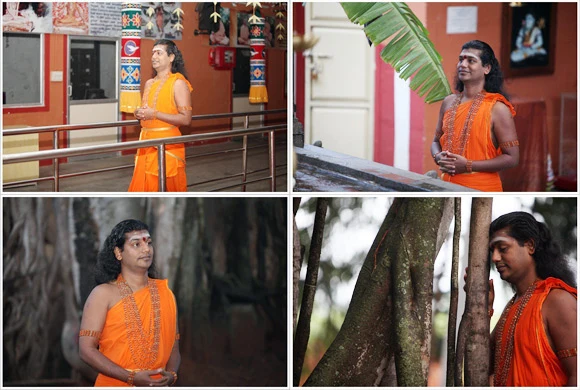
A four-panel collage of photographs from a Nithya Kriya session. Top left shows a man in orange robes seated and facing forward in a yoga pose beside a red-walled wall. Top right shows a figure in an orange robe bending or seated on a red-and-white floor. Bottom left shows a person in orange clothing near a window with a dark curtain. Bottom right shows a figure in orange next to a tall dark pillar. The collage illustrates the Gomukhasana and Uddiyana Bandha breathing and posture practices described on the page.Close-up photograph of a dark blue stone statue of a sage with a yellow turban and a yellow shawl draped over the shoulders, wearing layered rudraksha-style beaded malas in dark and light brown beads. A red-and-yellow garland of roses and marigolds hangs behind the figure, and the right hand is raised in a blessing gesture with a small red mark on the palm. No physical people are visible.A man in saffron-orange robes stands with palms pressed together at a steel railing inside a warmly painted orange-red room. He has long dark swept-back hair, a tilak mark on his forehead, and wears layered rudraksha-style beaded necklaces and gold-toned armbands. Behind him are a wooden cabinet with red and beige panels, a grille window, and hanging paper-and-leaf decorations. A teal sign with Kannada text is on the left wall. Appearance-based label: a person, in person, presenting in a Nithya Kriya setting.A person in an orange garment bows forward with their forehead pressed against a carved grey stone ledge, one hand resting on the stone. Their long dark hair falls forward and a white marking is visible on the forehead. The carved stone has ornate relief patterns. One physical person is visible.A photograph of a man standing outdoors beside a stone water tank or basin, a large green banana leaf behind him. He wears an orange saffron cloth draped over one shoulder and tied at the waist, multiple strands of rudraksha-style beaded malas across his chest, a beaded armlet and bangles, and a white vibhuti line with a red kumkum dot on his forehead. His long dark hair is swept back, and his hands are joined in front of him as he gazes upward. Behind him a red-and-white wall and a framed picture of a seated deity hang on the wall. Swamiji (probable) is present in person, shown by orange saffron clothing, long swept-back hair and multiple rudraksha malas, but the appearance is not conclusive enough for certainty.A man in saffron-orange robes stands outdoors with hands clasped at the waist, looking to the side with a gentle smile. He wears multiple strands of rudraksha beads, a gold-toned armlet and bangles, and a red bindi with white forehead marking. His long dark hair is swept back. A large green banana leaf hangs behind him, with a red-and-white painted wall and a framed picture of a seated deity murti on the wall. A stone ledge with water is in the foreground. Swamiji (probable): the long swept-back hair, saffron robes and rudraksha malas are visible cues, but the image is a single portrait with no caption identifying him.

Pratyaksha-Padapuja
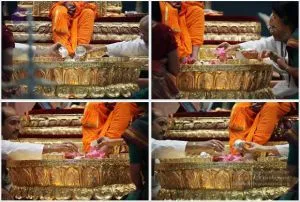
38 photosSource gallery
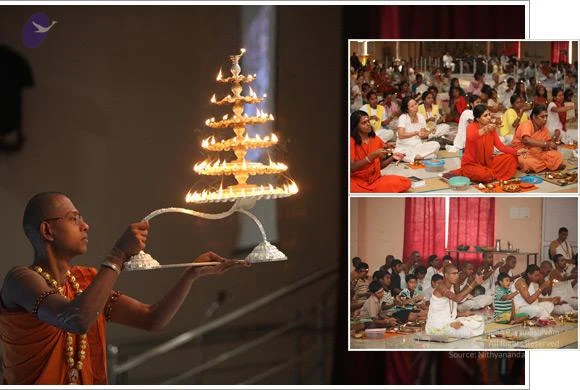
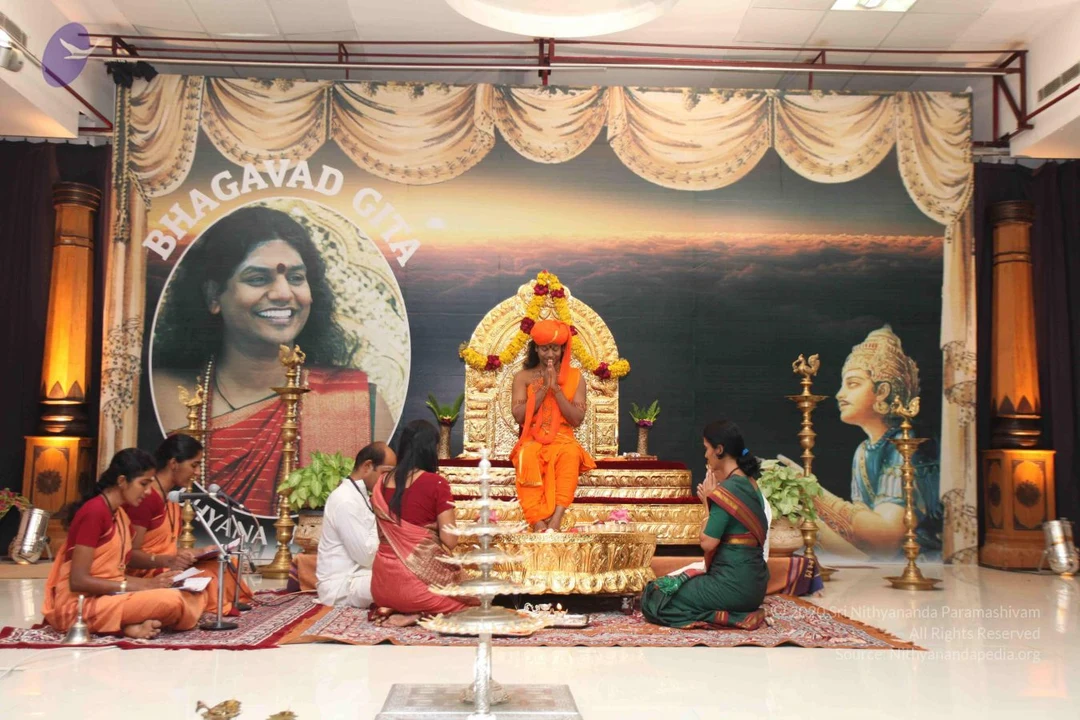
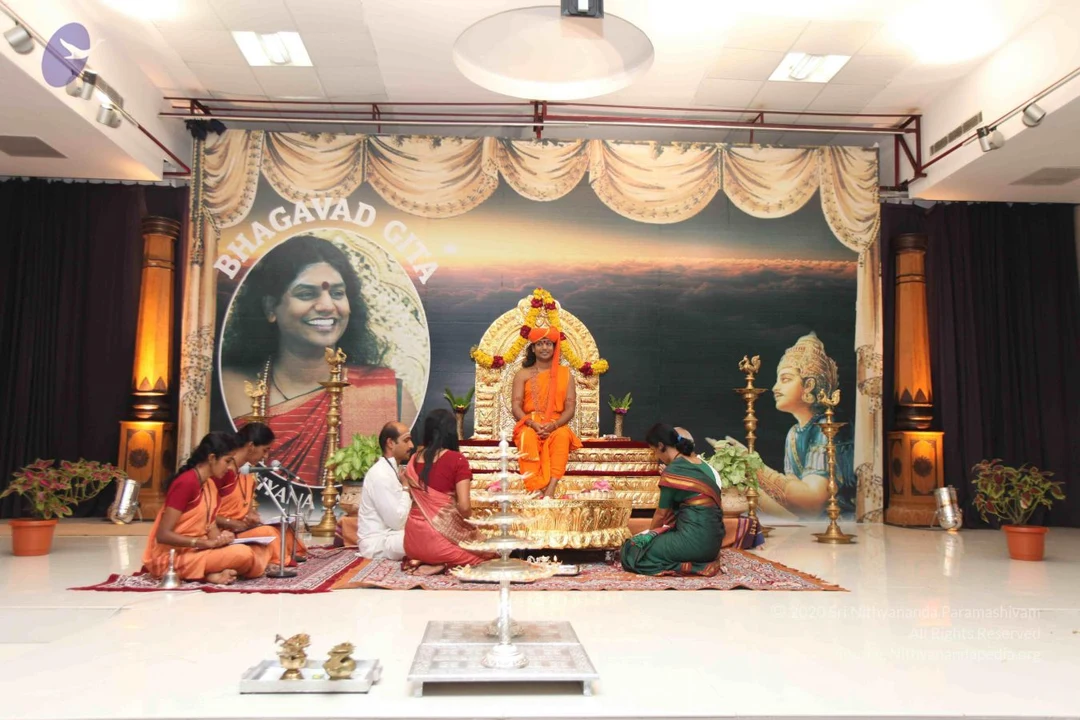
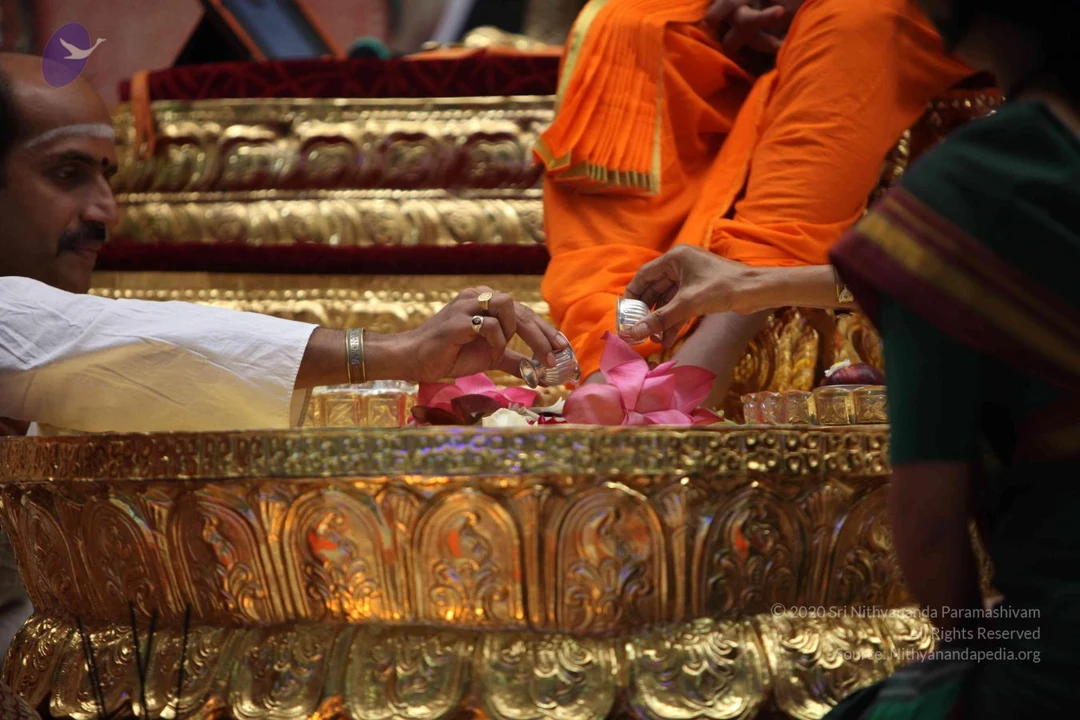
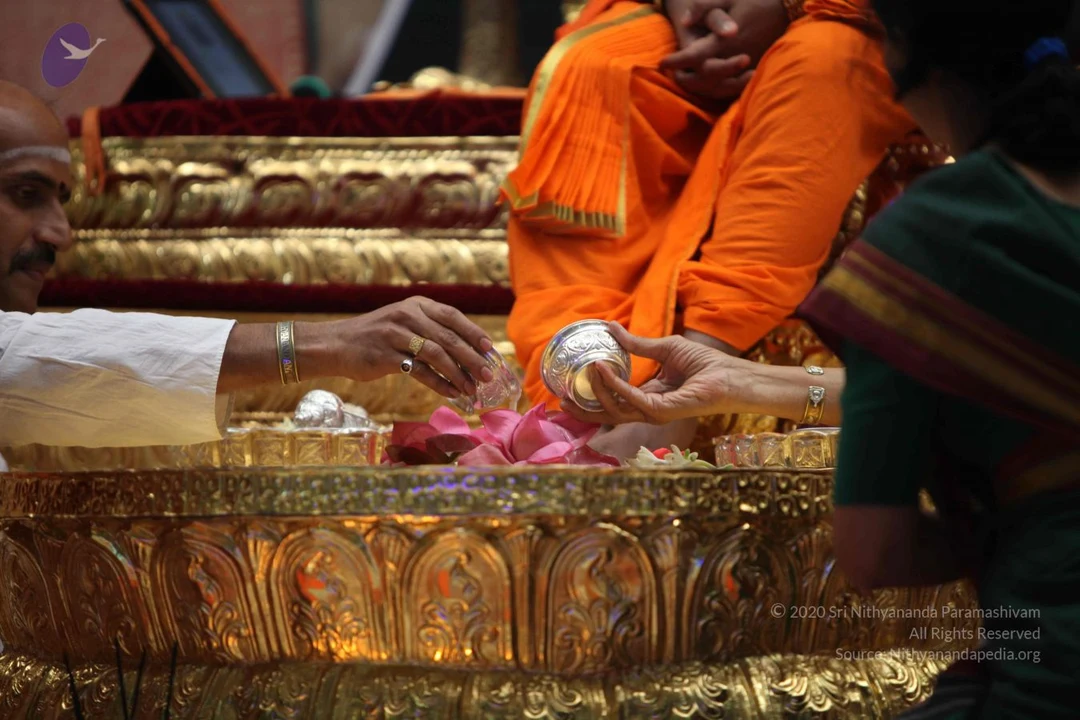
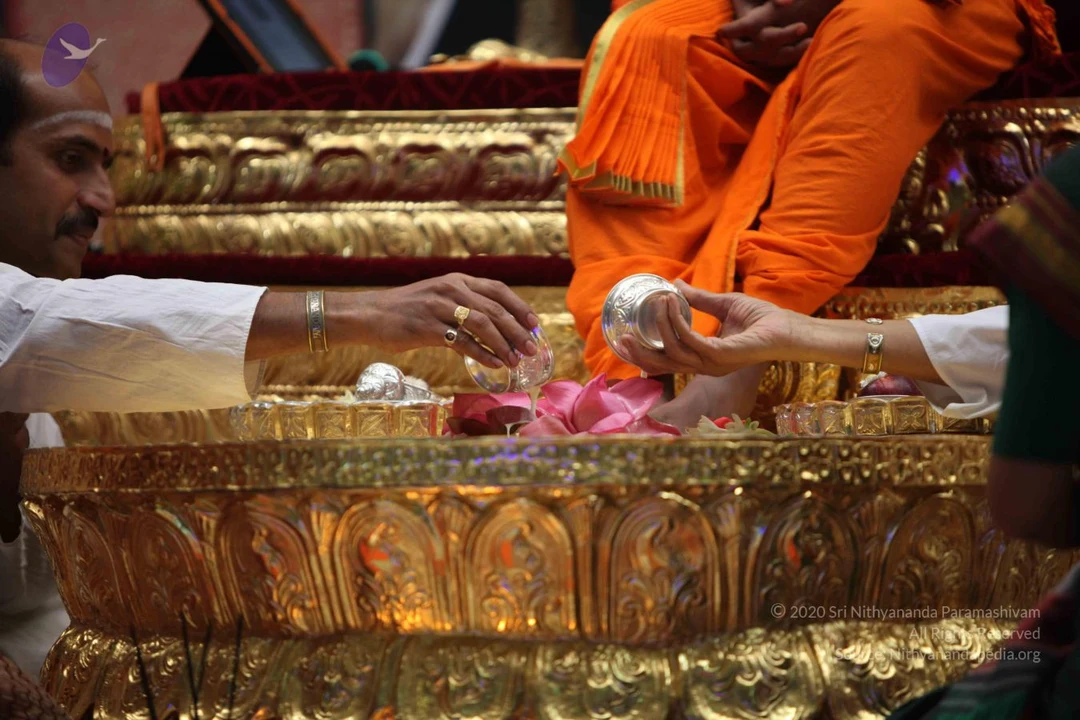
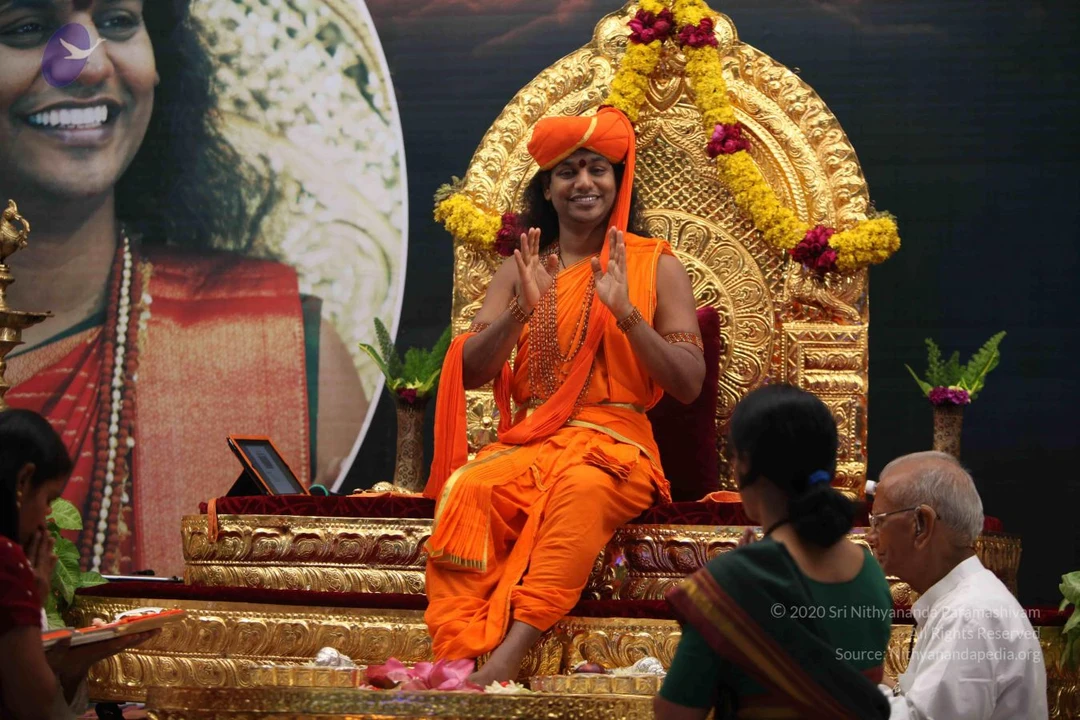
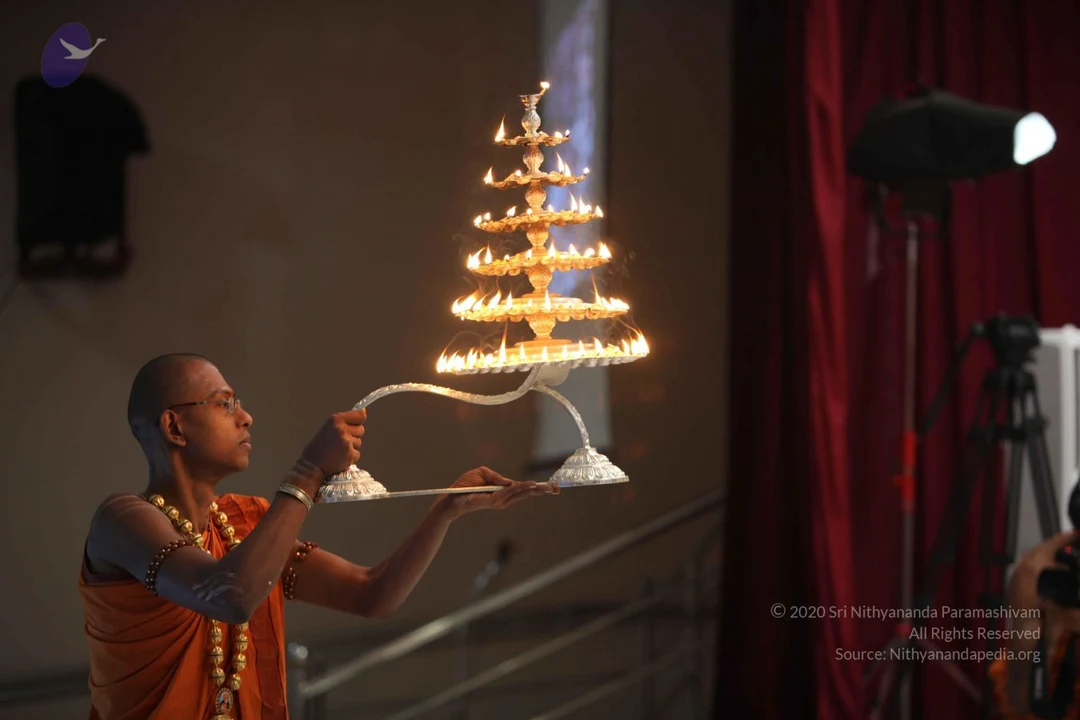
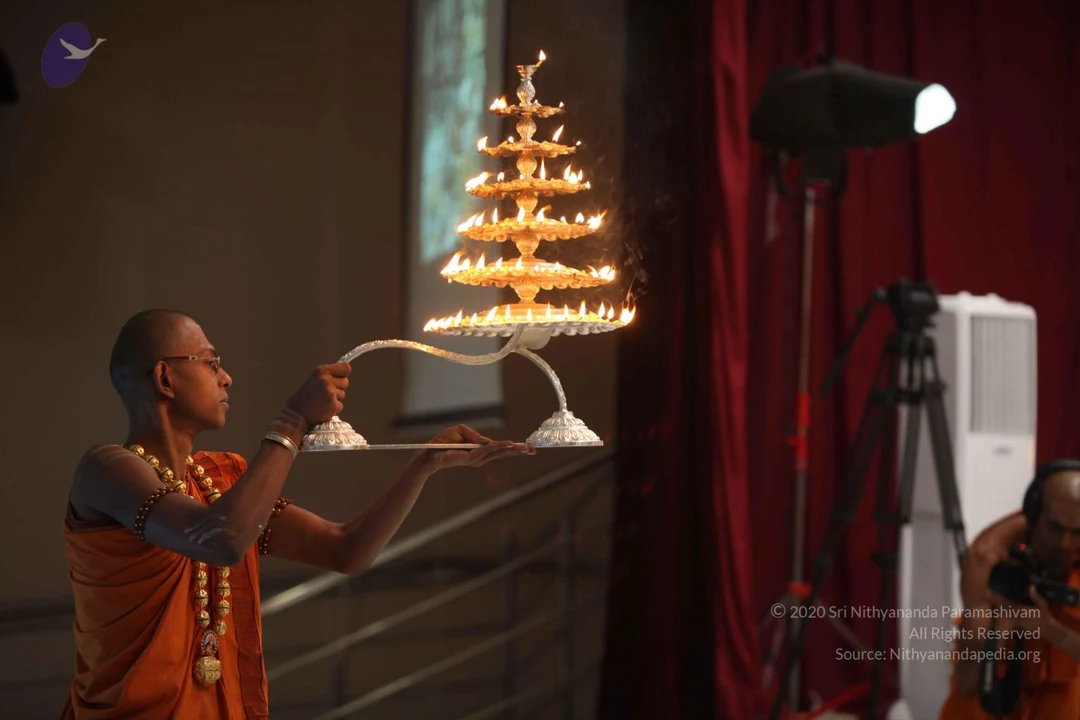
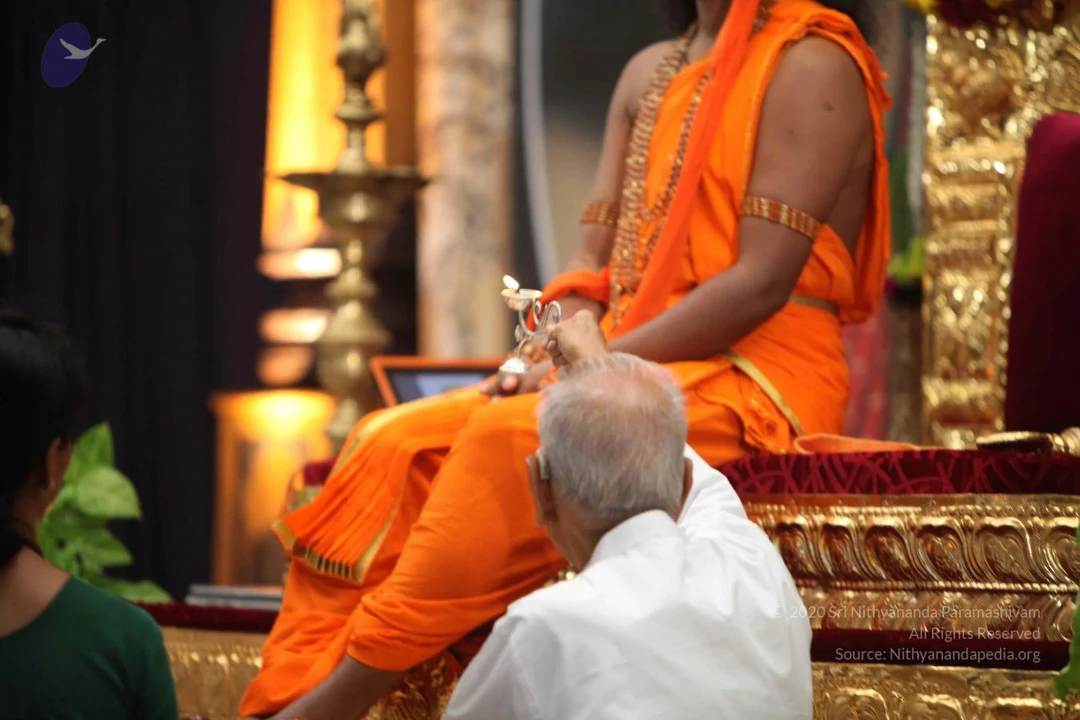
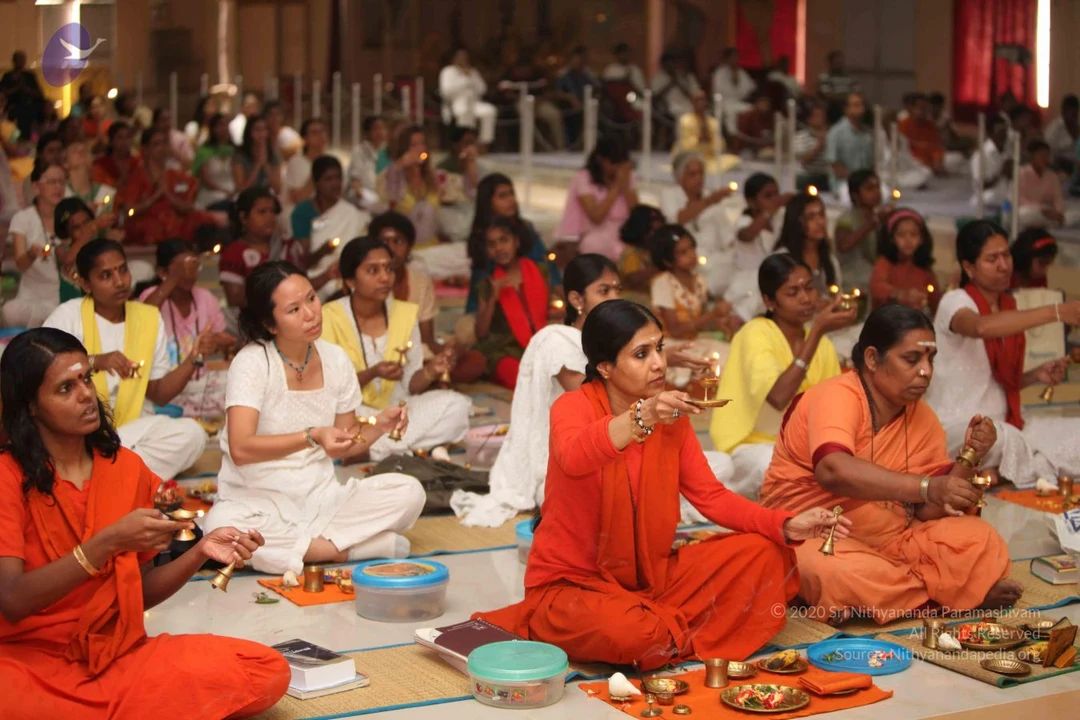
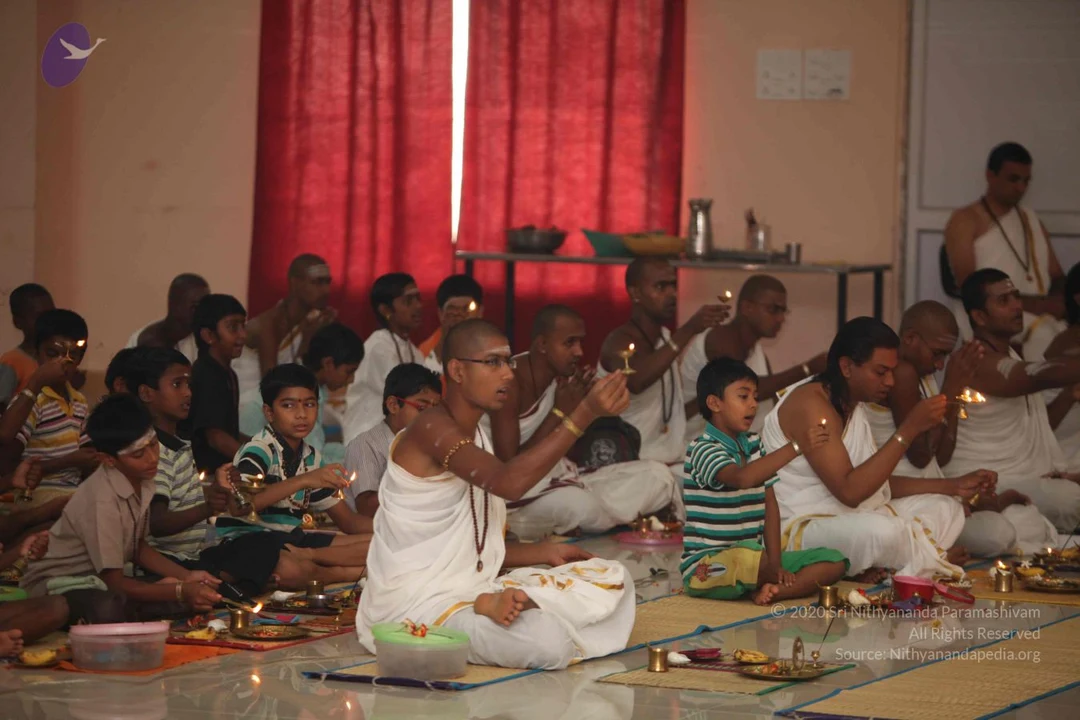
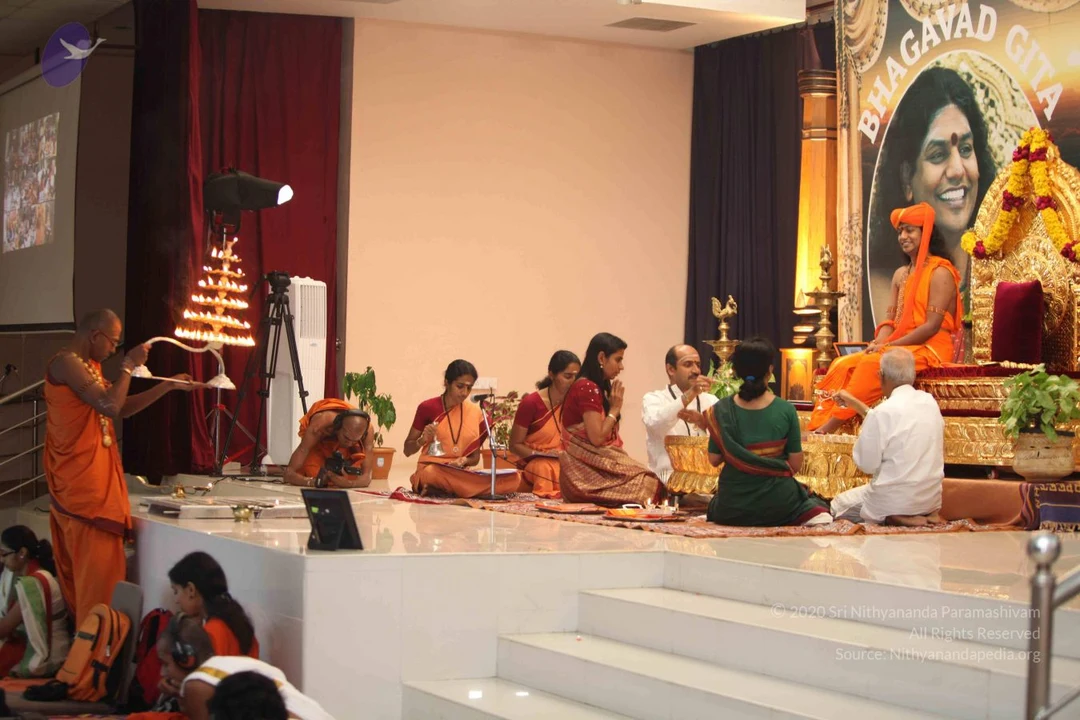
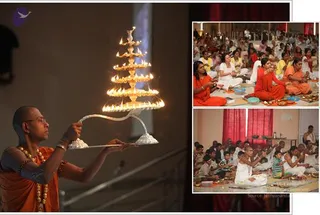
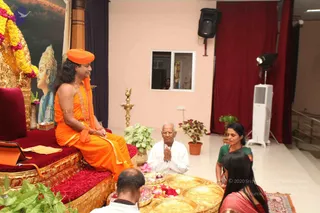
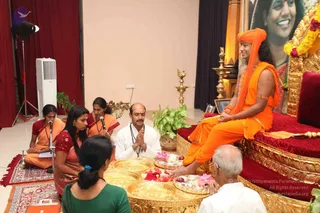
A collage of three photographs. The large left panel shows a shaved-headed man in saffron-orange robes and rudraksha beads holding a tiered silver aarti lamp with multiple flames, with a dark background. The top-right panel shows a large seated gathering in orange and white clothing, with women in orange saris and men in white kurtas sitting in rows on mats, with a small brass vessel in front. The bottom-right panel shows many people sitting in rows on the floor in white and orange clothes before brass plates and offerings, with a seated man in white at the front. Red curtains hang in the background. The image is a graphic collage, so no physical people are counted from it, but the photographs show an aarti ritual and a group practice session.A seated figure in saffron-orange robes and an orange turban sits on a gold and red-cushioned throne (peetha) at left, with a long-haired appearance, rudraksha mala and a gold ornamental necklace, holding a hand gesture and facing a small group. Probable Swamiji (appearance-based label; cues: long swept hair, orange turban, saffron robes, rudraksha mala and gold necklace). Before him on the floor, an elderly man in white kneels with folded hands, and a woman in a green sari sits beside him. In the foreground, a man in white and a woman in a red sari sit near large gold trays holding flowers, fruit and offerings. A brass oil lamp (aarti lamp) stands on the floor, with potted plants, a red curtain, a floor fan and a wall picture of a deity with a crown nearby. Possibly a darshan or satsang setting.A photo of a seated ritual gathering in a bright hall with red curtains. On a raised gold-and-red throne at right, a figure in saffron-orange robes and a saffron turban, with a rudraksha mala, sits with a flowered garland on the throne rail and hands folded. Before him, a man in white clothes with a white shirt and forehead markings sits with palms joined beside a microphone, while women in orange and red saris sit at a low table with brass plates of flowers, fruit and offerings. A brass lamp stands behind them and a framed portrait of a smiling woman hangs in the background. Five or six people appear, including an elderly man in white seated at lower right and a woman in green at lower left.A photograph of a ritual offering at a gilded golden pedestal. In the foreground, a man in white clothes and round glasses holds a pink flower and a small brass vessel, while a woman in a dark green sari with a red and gold border, wearing bangles and a wristwatch, leans in beside him with her hands raised. On the lower golden tier sits a tray of pink and white flower petals and fruit. At the left edge, a person in saffron-orange robes stands partially visible. The scene is a temple-style puja setting with ornate gold carving and a dark background.Photograph of a ritual offering in progress. In the foreground, an elderly man in white clothing and glasses and a woman in a green sari with a striped border hold a small offering over an ornate gold pedestal decorated with pink lotus-like flowers, white petals and red blossoms. Behind the gold base, a person in saffron-orange robes sits near the pedestal, while a figure in maroon clothing is partly visible at the left edge. Gold-embossed platforms and red cushions are arranged in the background. No identifiable a person figure is visible.Close photo of a puja offering being prepared on a large gold-embossed tray. An older man in white clothes and wire-rimmed glasses, with a dark mala around his neck, bows with hands joined near the tray. In the foreground, a man in white shirt holds a small silver vessel while another hand rests on the tray. Silver bowls, pink lotus petals, red flowers, a white flower and a small pile of white petals sit on the gold tray. A person in orange clothing is partly visible at the left edge. The scene looks like a ritual offering. Visible text includes a copyright line across the lower right.
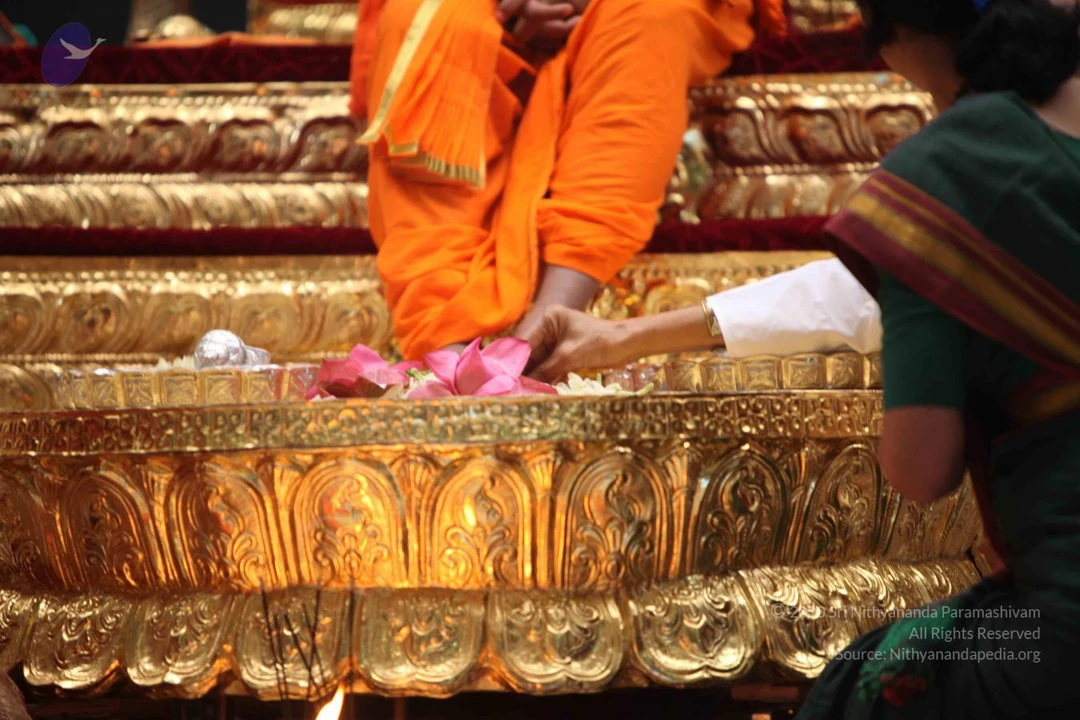
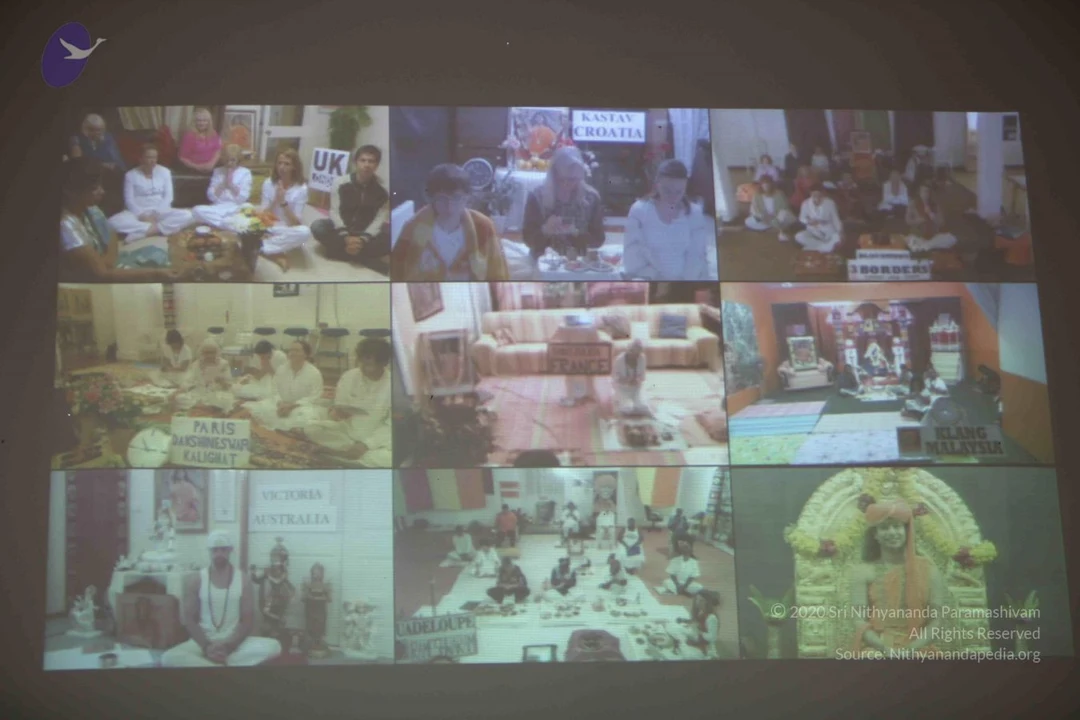
BGSatsang

43 photosSource gallery
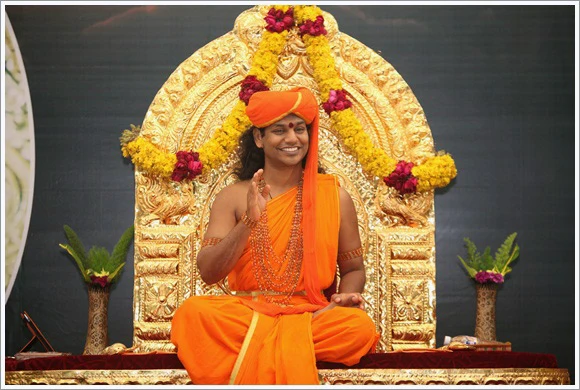
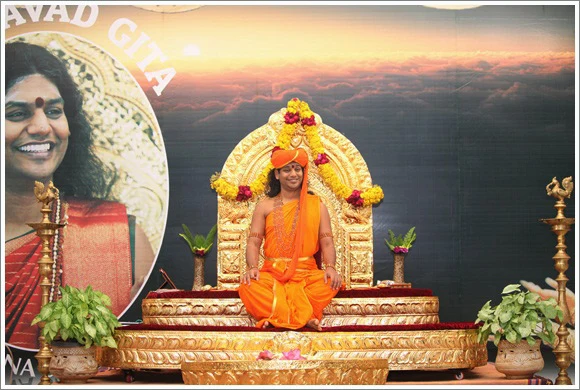
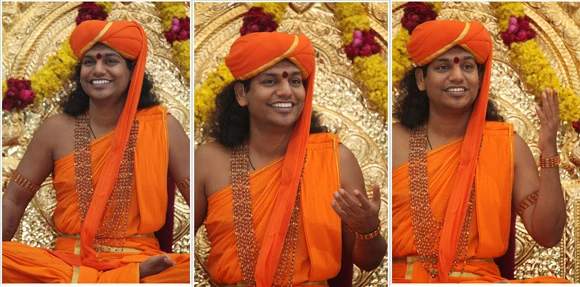
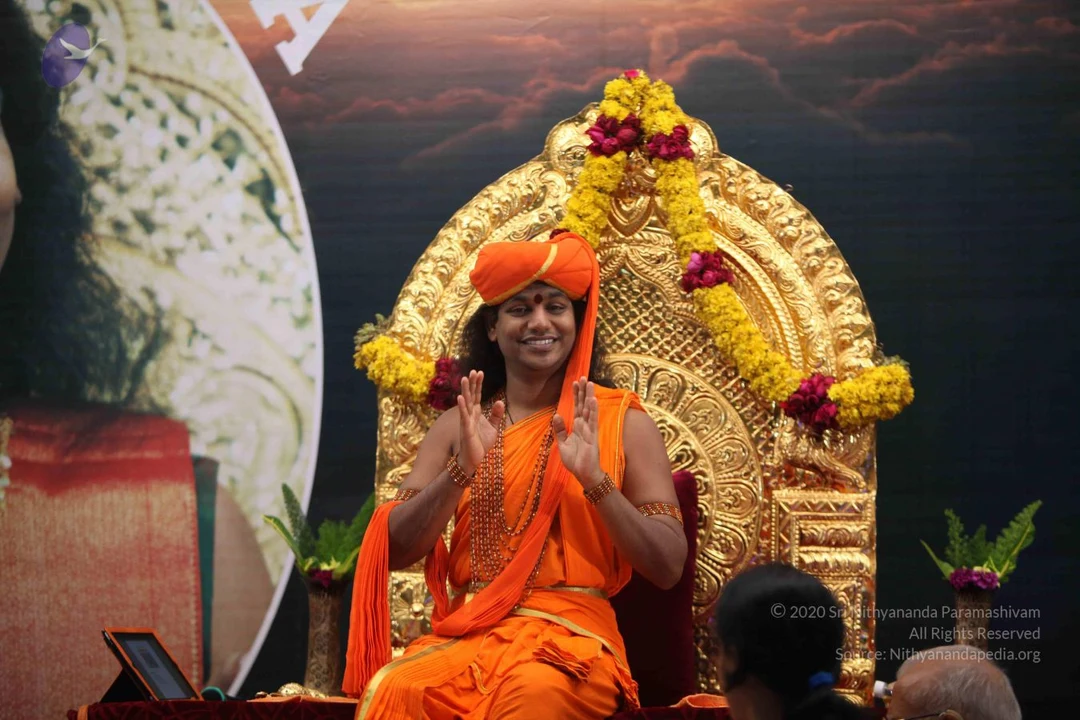
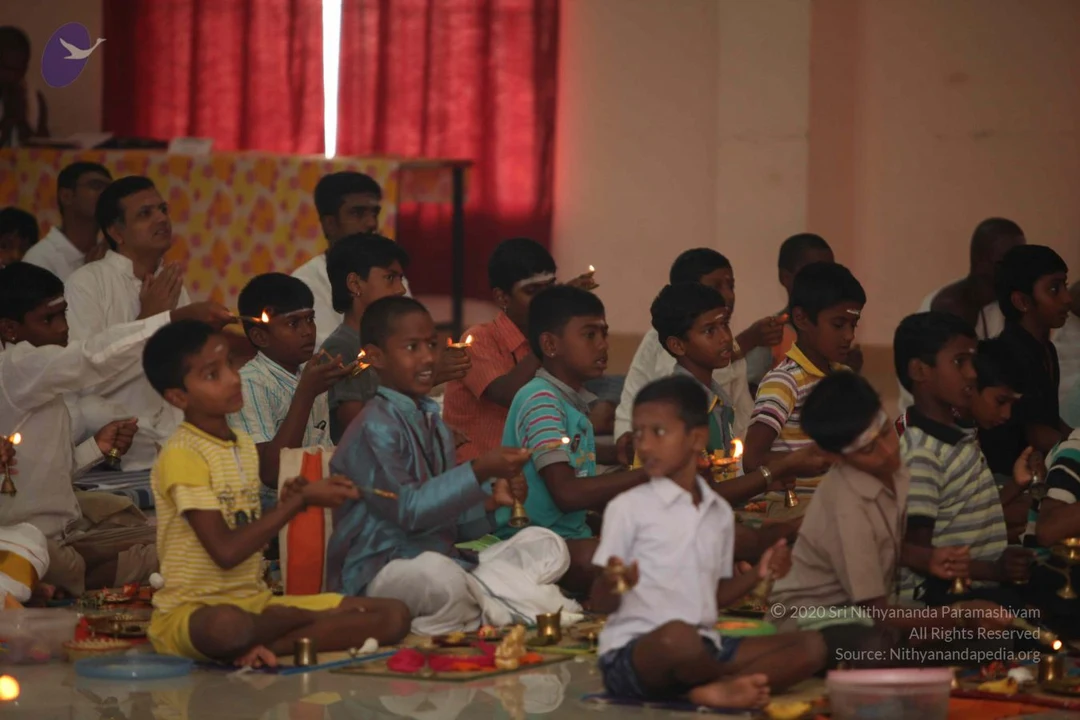
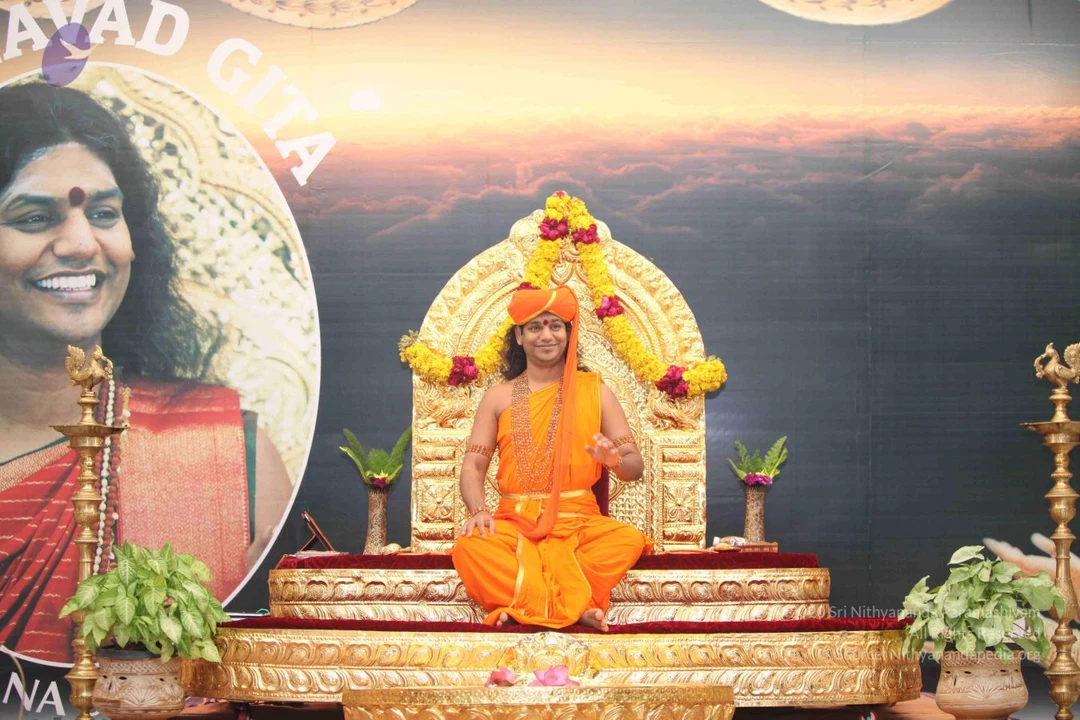
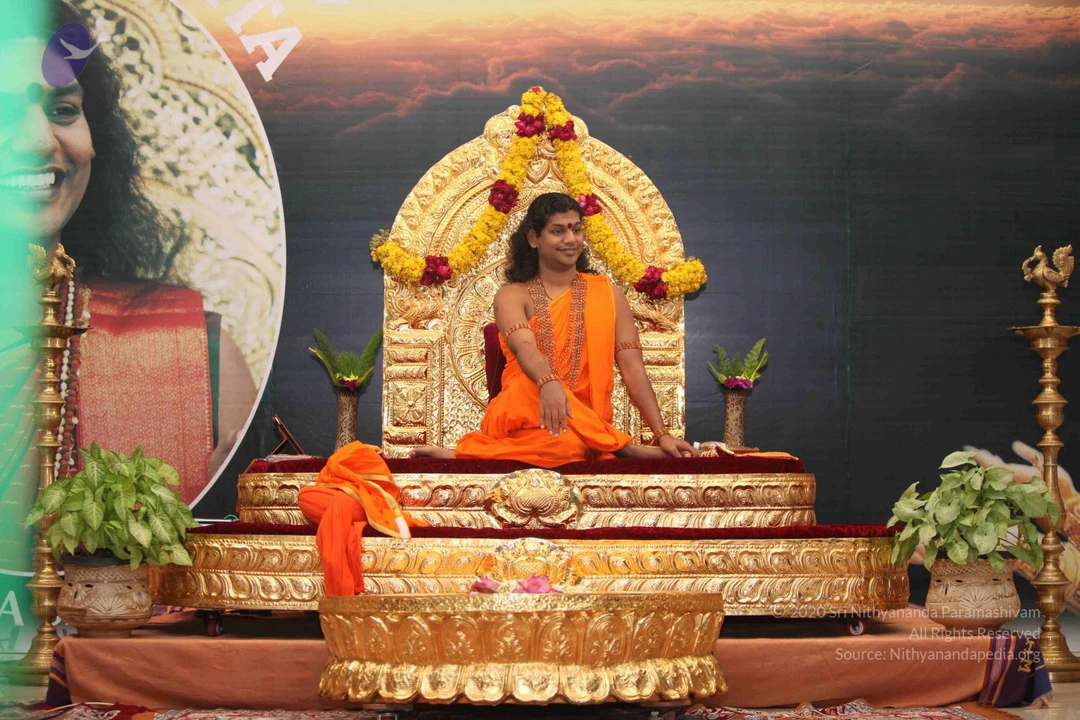
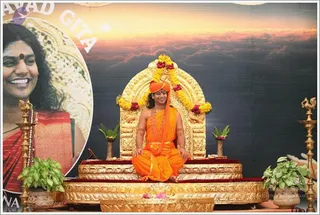
A seated figure in saffron-orange robes and matching orange turban sits cross-legged on an ornate golden throne (peetha) decorated with a garland of yellow and red flowers. Behind the throne a dramatic sunset-sky backdrop shows a large banner with a Bhagavad Gita label, and a portrait of a smiling woman in a red saree with gold border appears at left. Brass oil lamps (diyas) flank the throne, with potted green plants and pink flowers placed at the base.A smiling man in saffron-orange robes and an orange turban sits cross-legged on a richly carved golden throne with a golden arch behind him. He wears a rudraksha mala and a long ceremonial necklace, and raises his right hand in a blessing gesture while resting his left hand on his lap. Yellow and red flower garlands are draped over the throne's top, with potted green plants on either side and a dark backdrop. The appearance matches the Swamiji cues of saffron clothing, turban, rudraksha mala and a throne, so this is a probable in-person candidate.A collage of photographs from a Nithyananda Dhyanapeetam Nithya Kriya event. The large upper-left panel shows a seated figure in saffron-orange robes with long swept-back hair, adorned with a rudraksha mala, seated on an ornate golden throne in front of a golden backdrop, appearing to conduct a session. The right-hand panel shows a row of people in white clothing seated on the floor with hands raised or joined in a group practice. The bottom-left small panel shows a seated figure in orange with a rudraksha mala. a person cues are present in the upper-left panel.Three side-by-side close-up photographs of a bearded man with long dark hair, wearing an orange-saffron robe and a shawl draped over his shoulders, with a rudraksha mala visible around his neck. In each panel he sits and smiles with hands held together, against a plain light background. The panels appear to be framed together as a collage of the same person in slightly different poses. Appearance is consistent with the page's Swamiji reference, a probable match based on long hair, saffron clothing and rudraksha beads, so this is recorded as an appearance-based candidate present in photographs.A seated man in saffron-orange robes, an orange turban and layered rudraksha malas sits cross-legged on an ornate gold throne with a red cushion, garlanded with marigold and pink flower strands. Gold oil lamps flank the stage, with potted green plants at the sides and pink flowers at the base of the dais. Behind him a circular portrait of a smiling woman in a red sari with a red bindi hangs beside a dusky sunset-sky backdrop. The man has a distinctive long swept-back hairstyle and a gold ceremonial necklace, and he smiles with eyes half closed. Swamiji (probable): the seated figure matches compatible cues of saffron clothing, turban, malas and a throne seat.A seated figure in saffron-orange robes and an orange turban, with a red bindi, rudraksha mala necklaces and gold bangles, sits on an ornate gold throne-like seat decorated with yellow and magenta flower garlands. One hand is raised in blessing while the other rests on the lap, and the eyes are closed in a smiling expression. Potted green plants stand beside the throne against a dark backdrop. Probable Swamiji (probable): the saffron robes, orange turban, long hair and multiple rudraksha malas on a throne match the appearance-based cues; he is shown in a discourse or satsang setting.

Nithya-Kriya-Diabetes-Cure

46 photosSource gallery
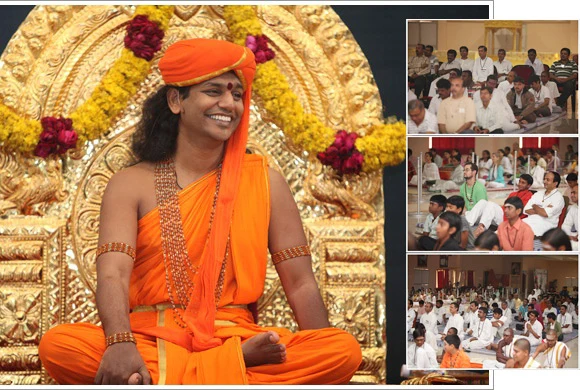
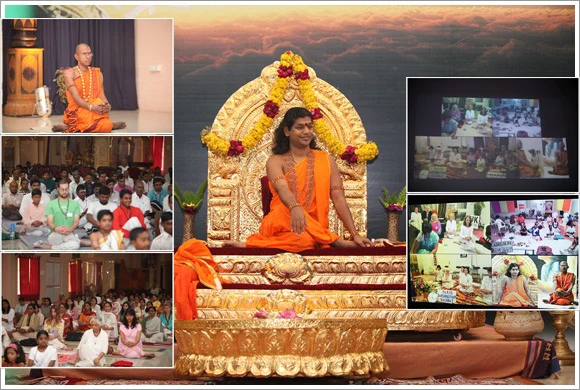
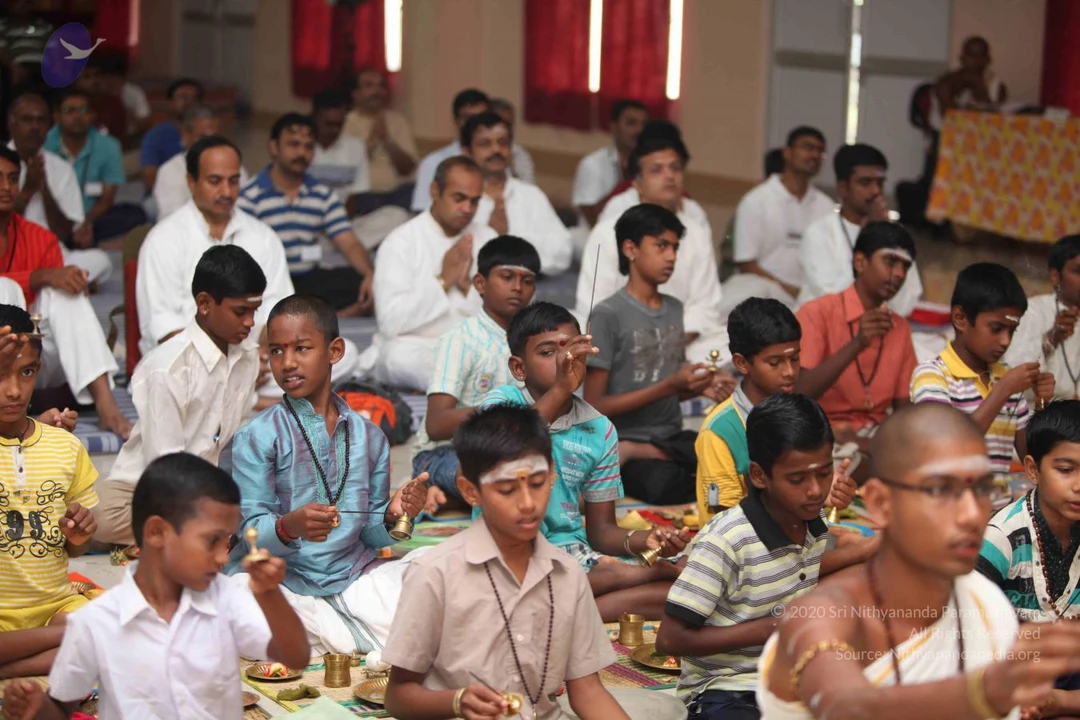
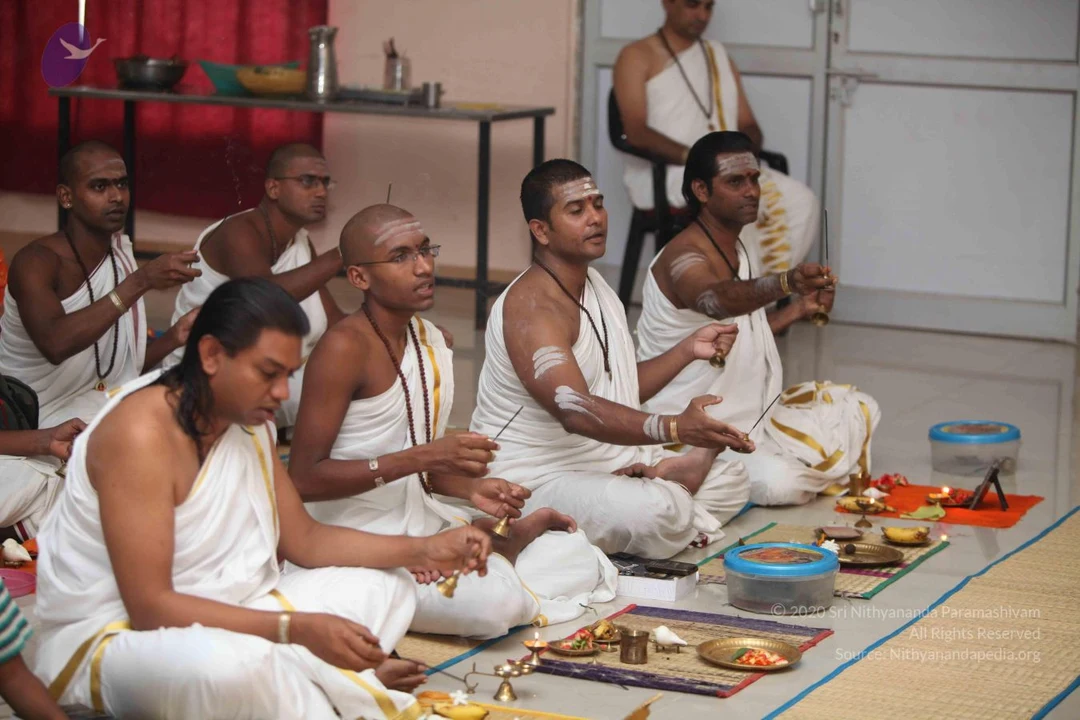
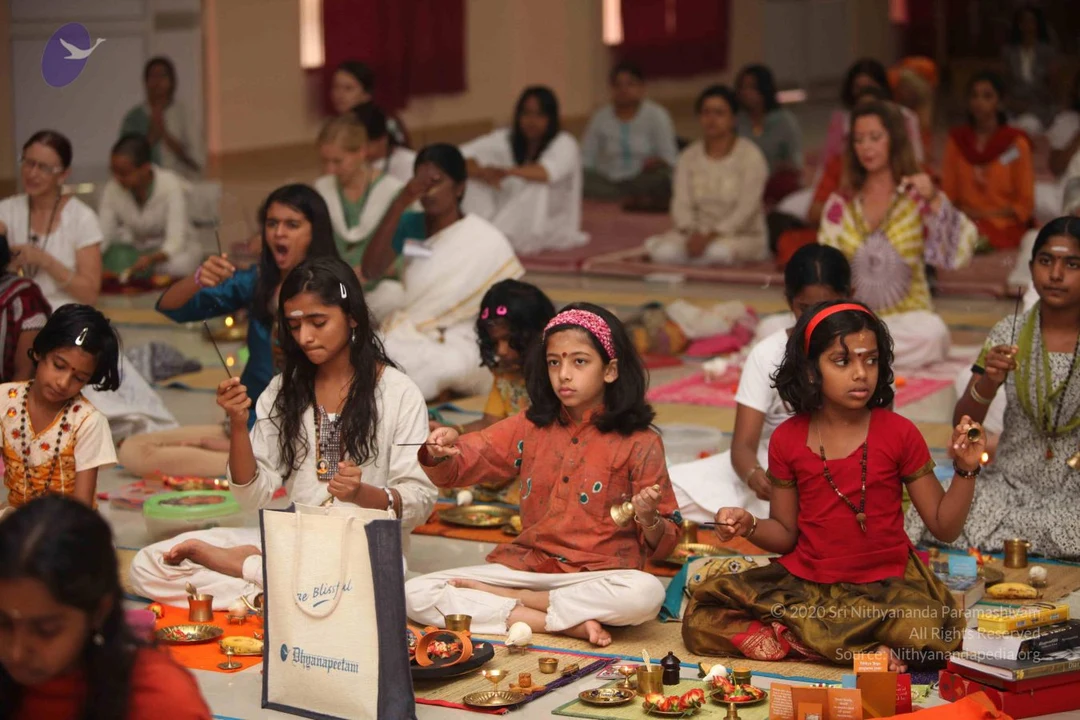
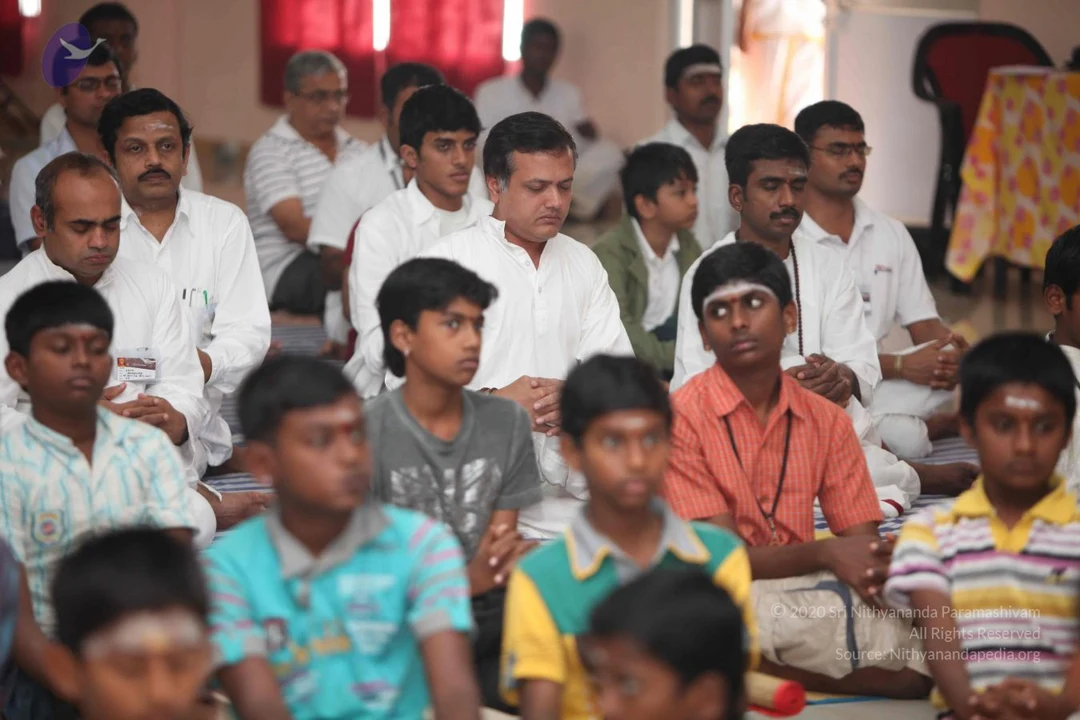
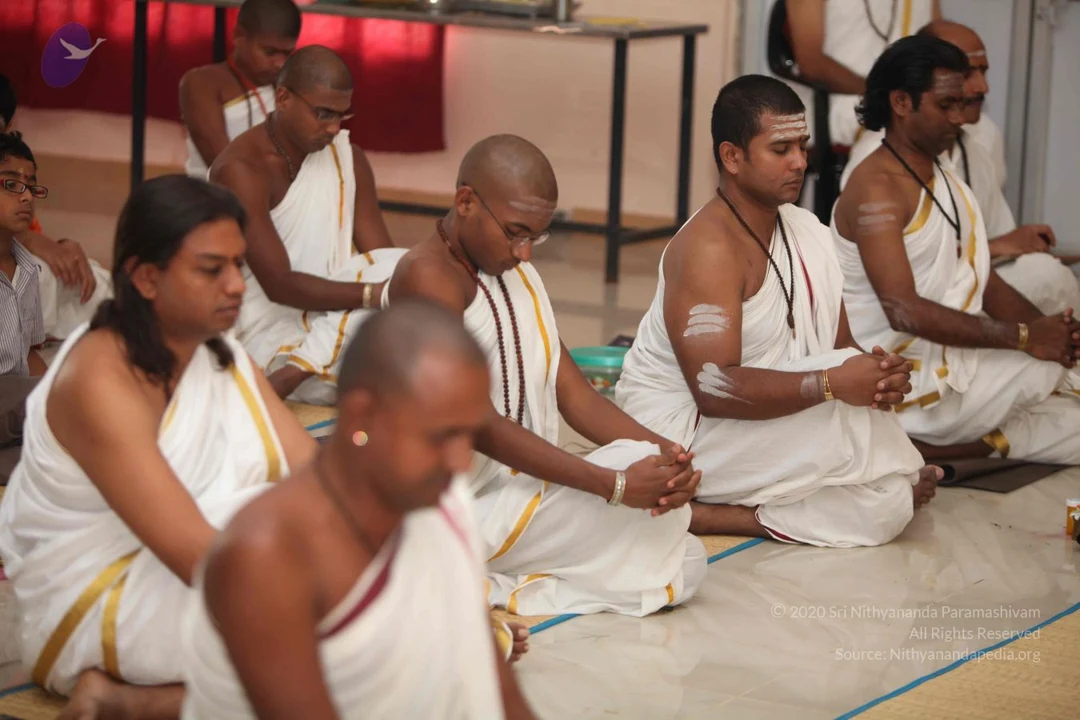
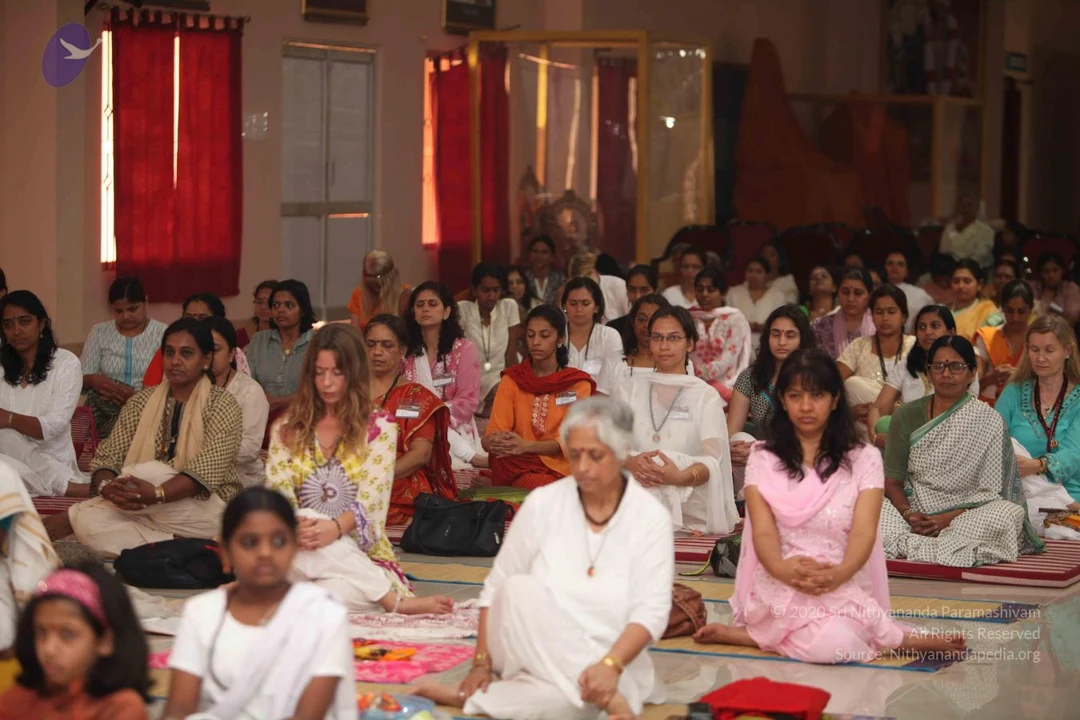
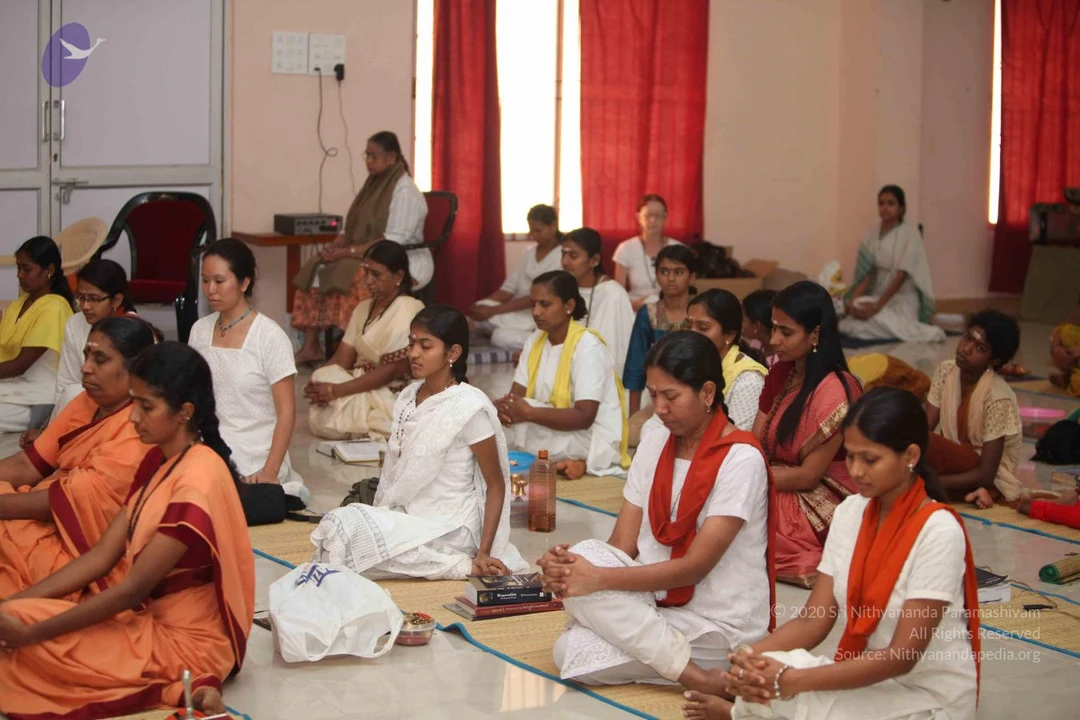
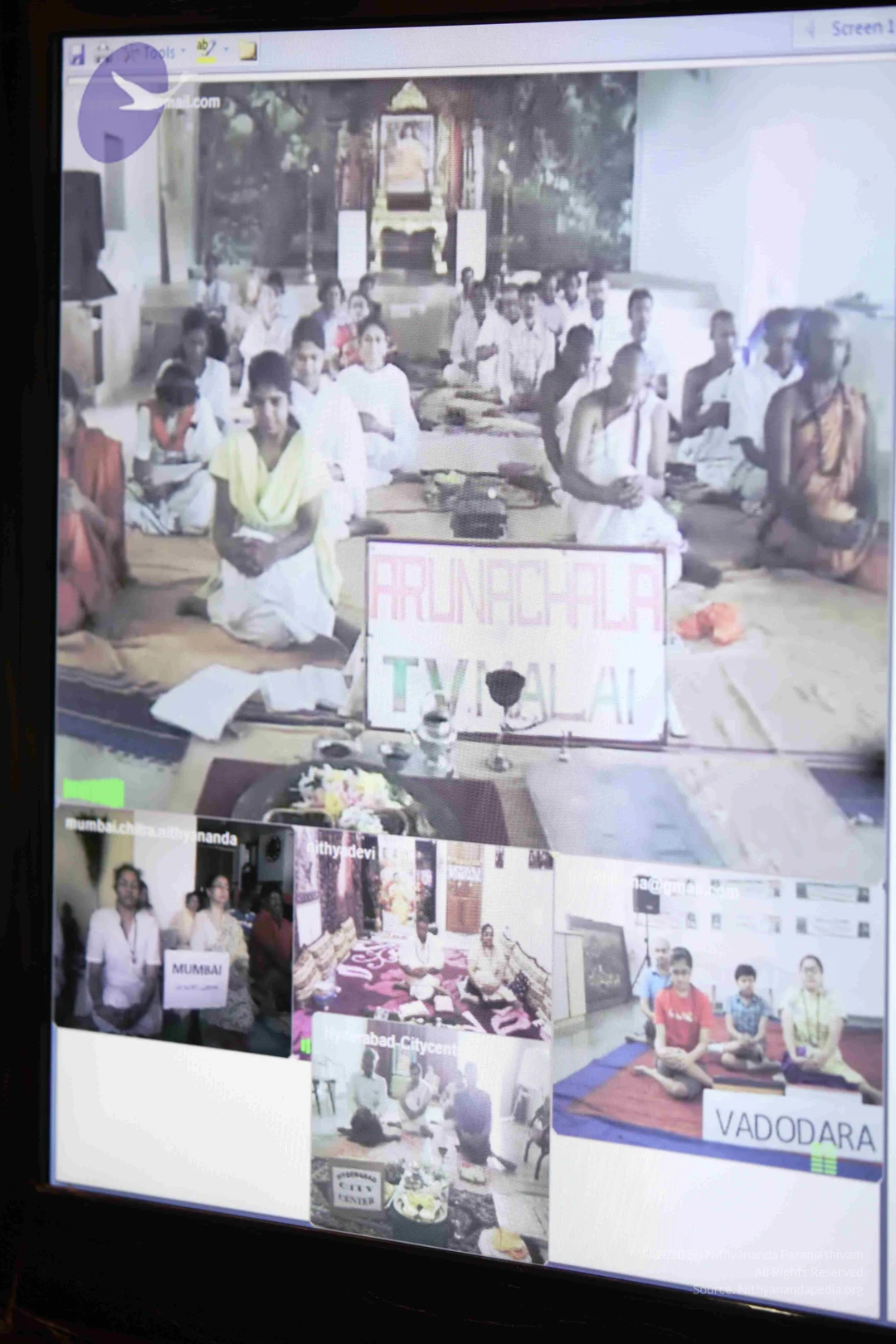
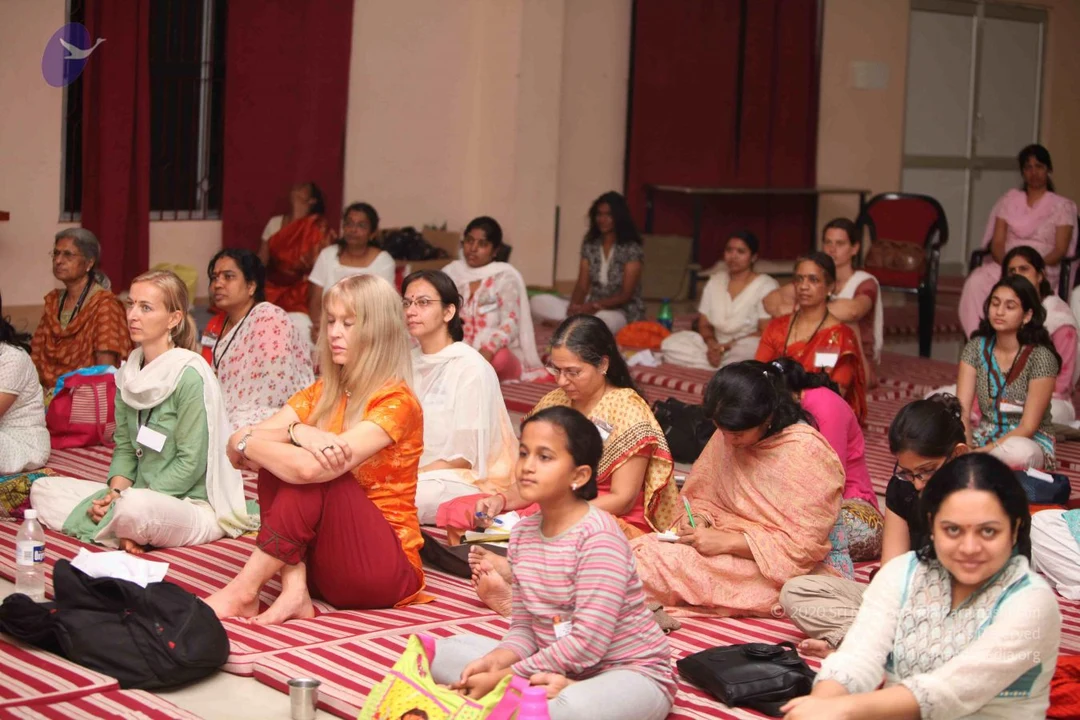
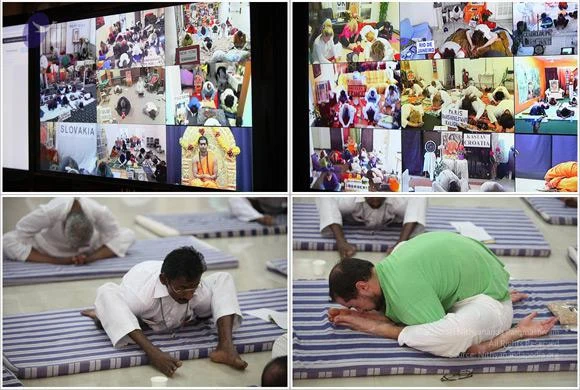
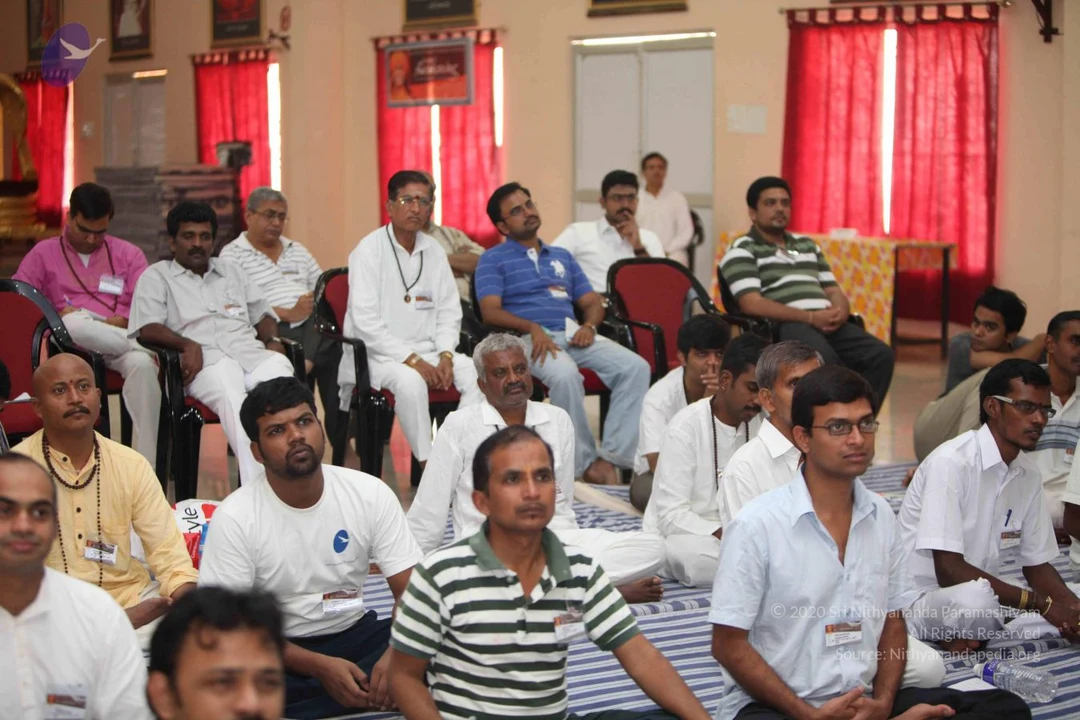
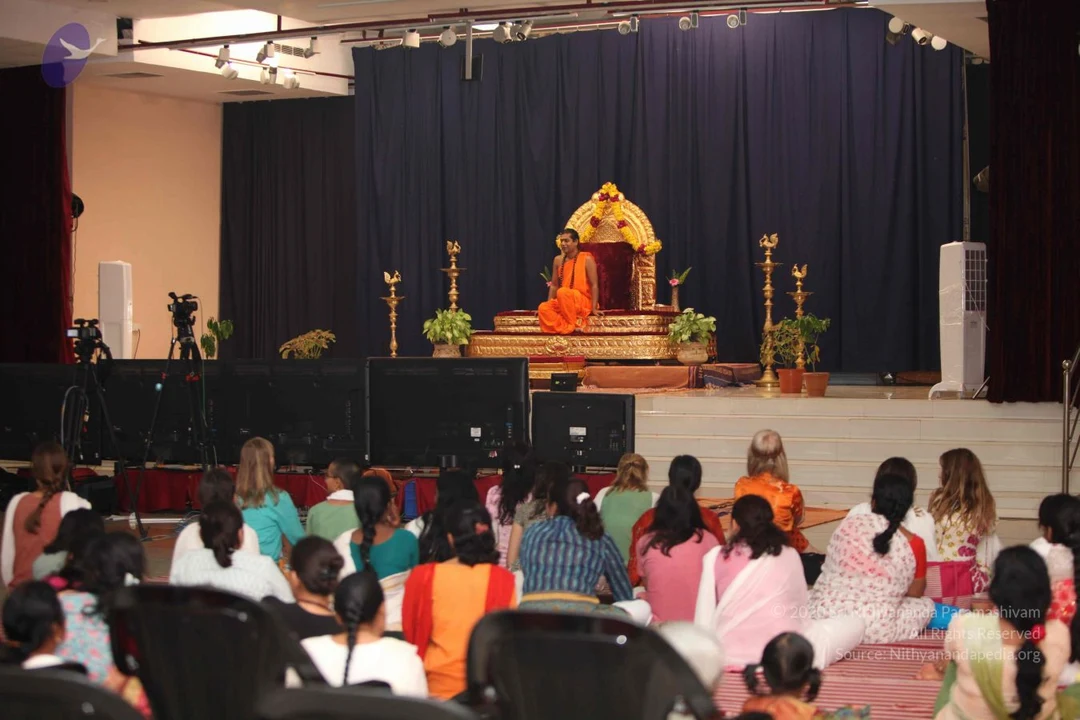
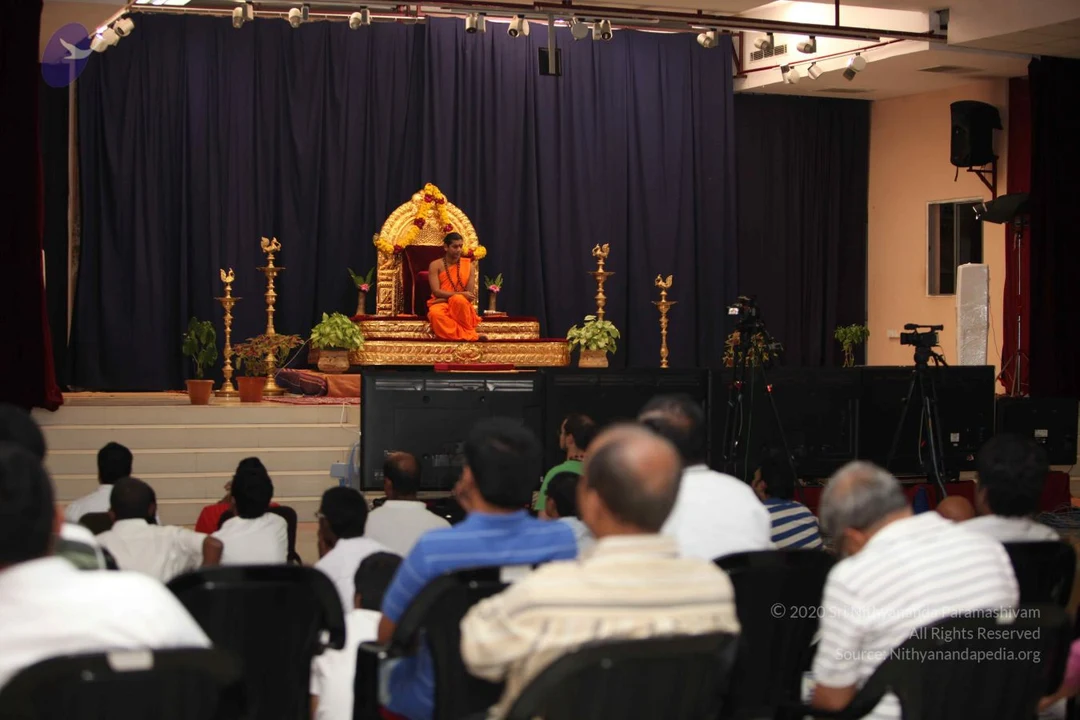
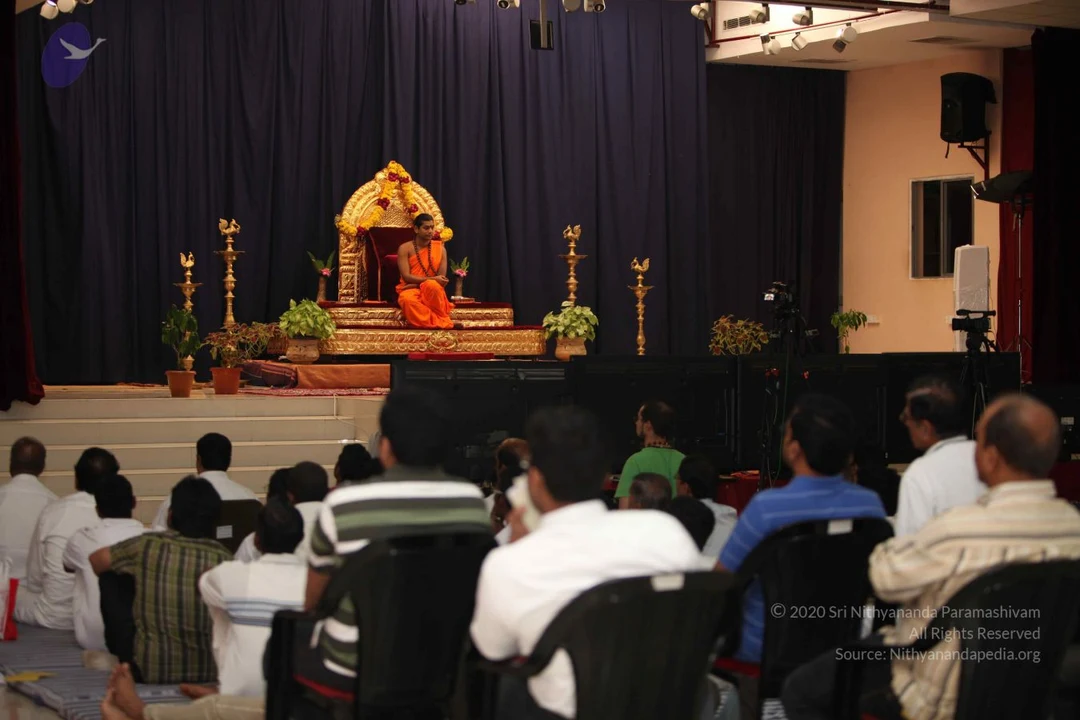
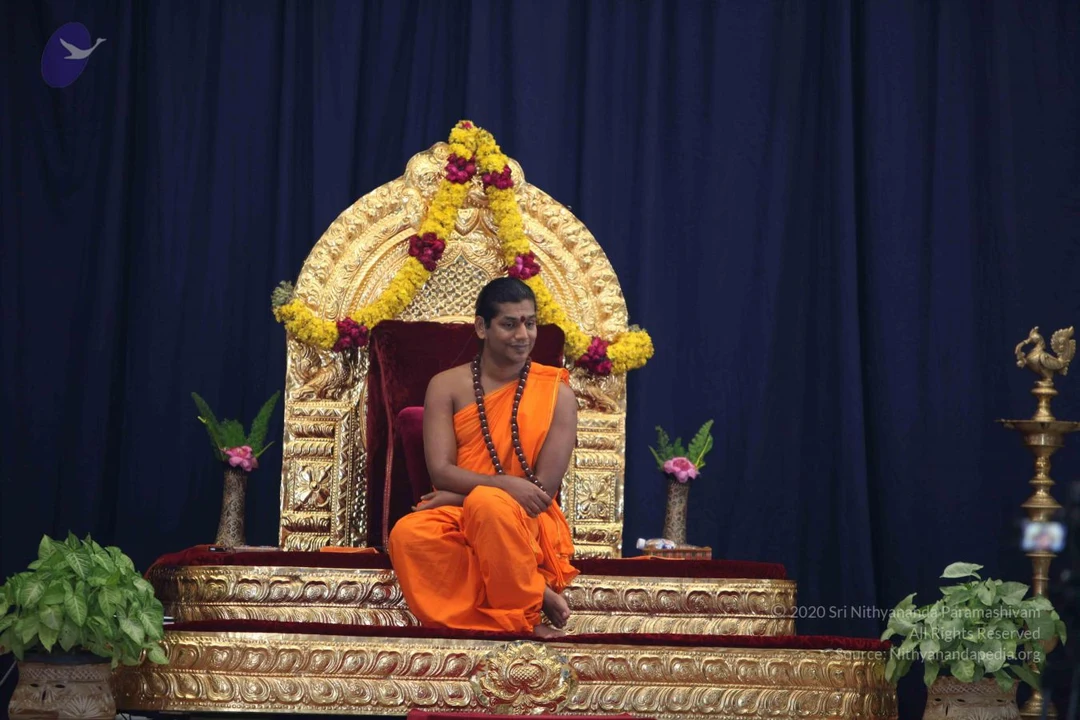
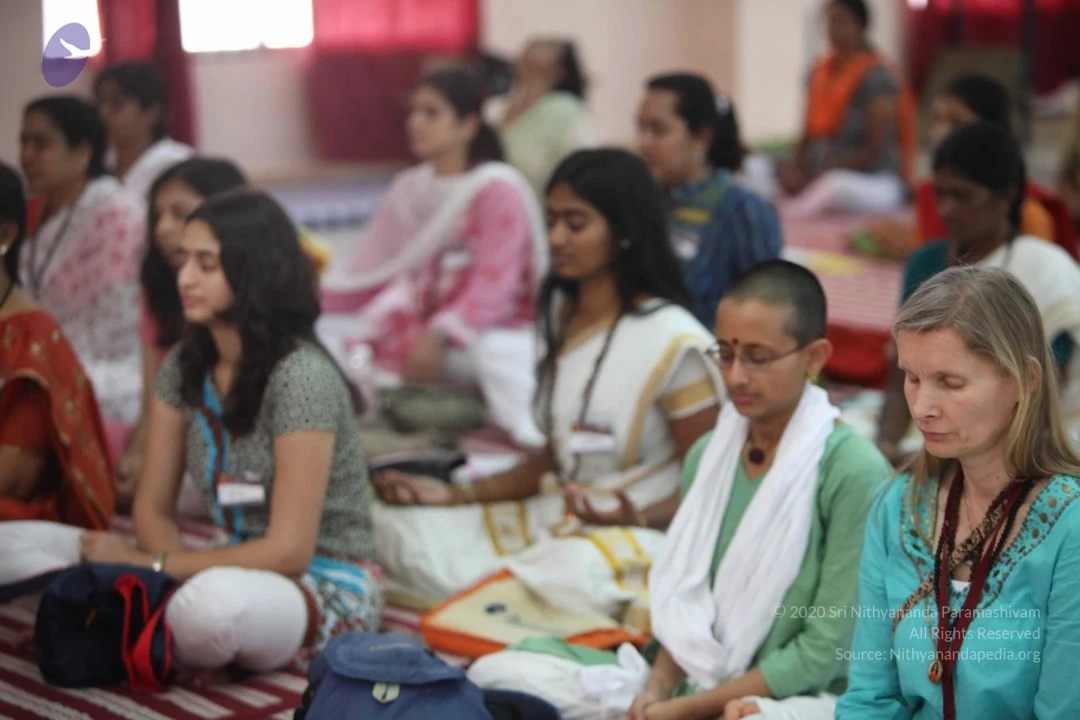
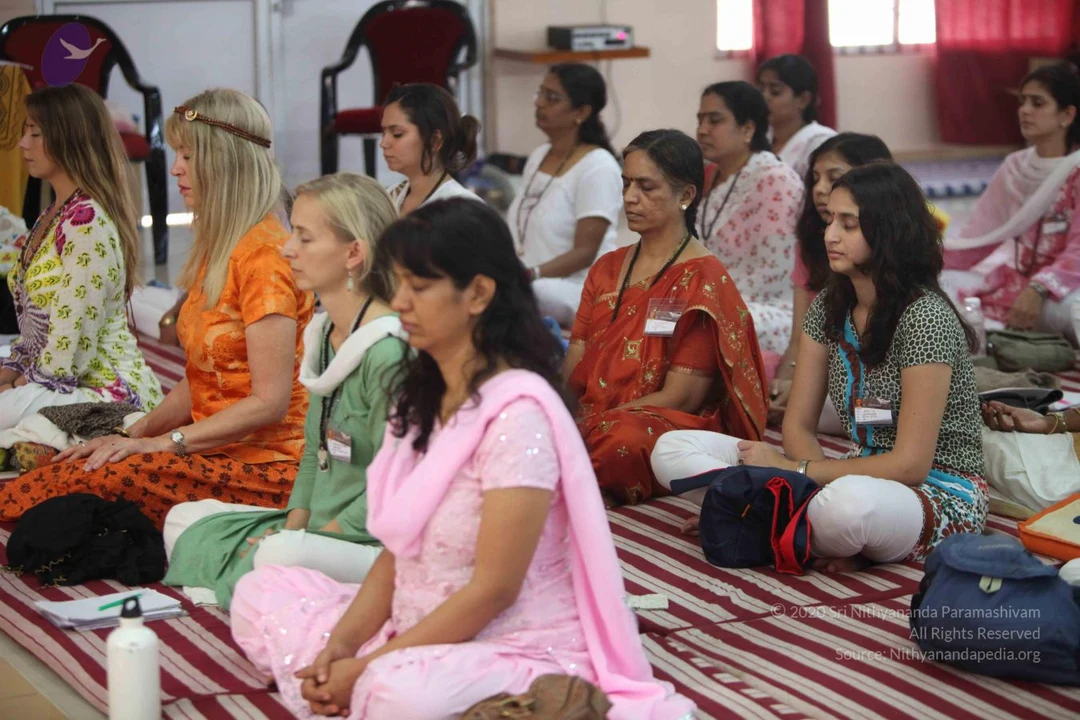
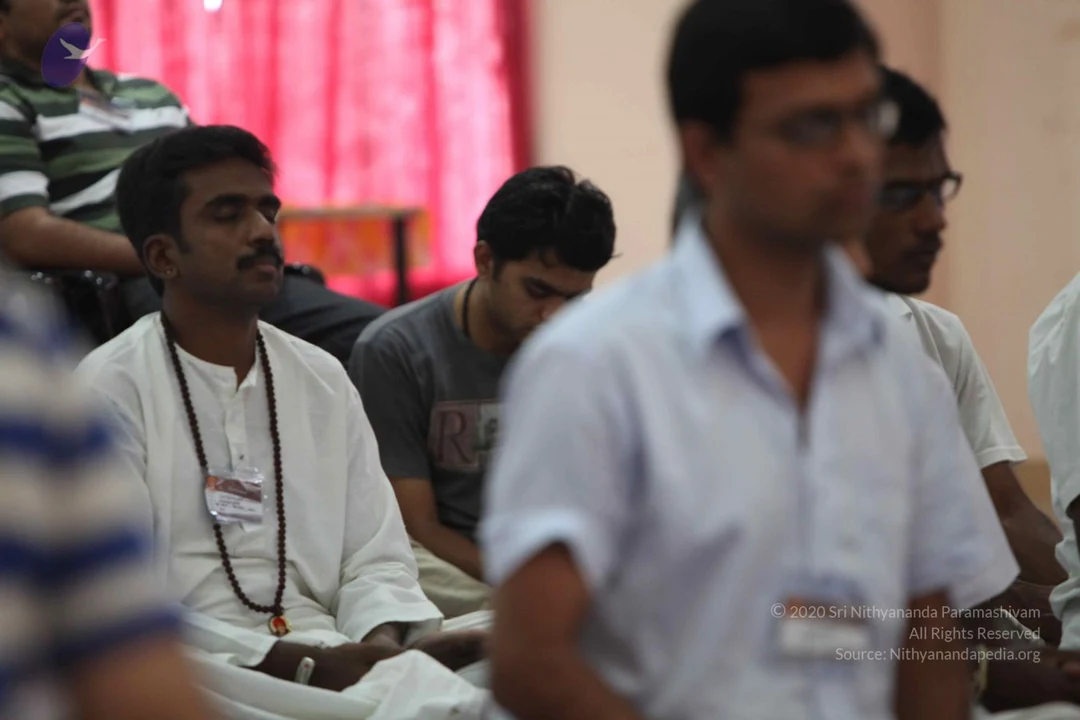
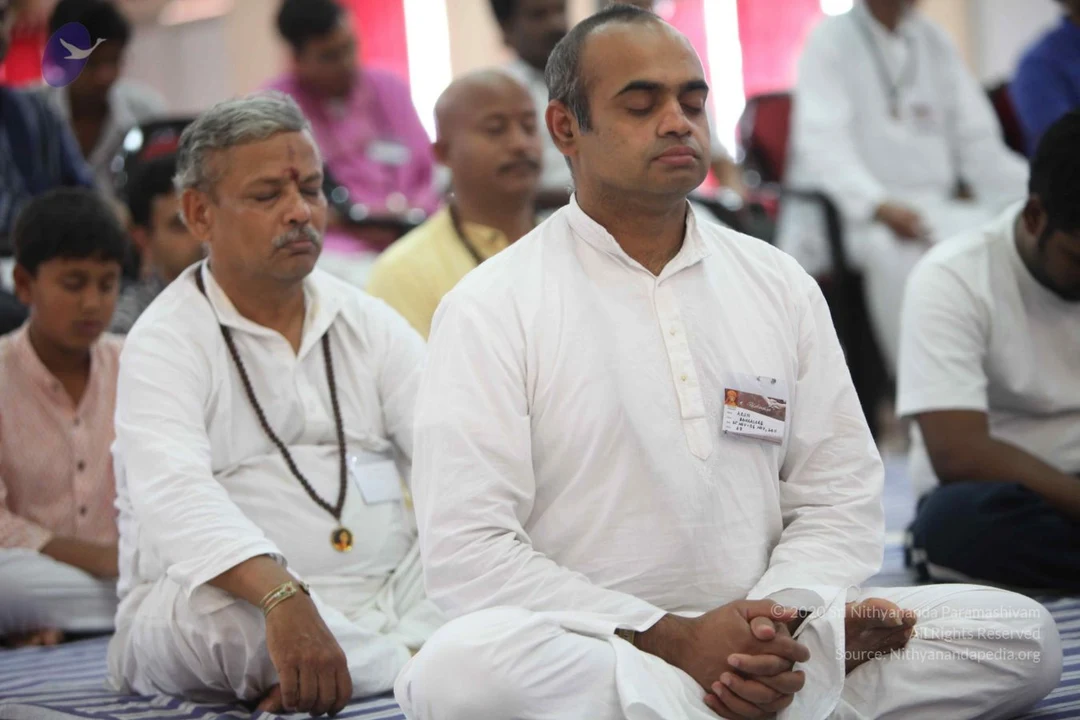
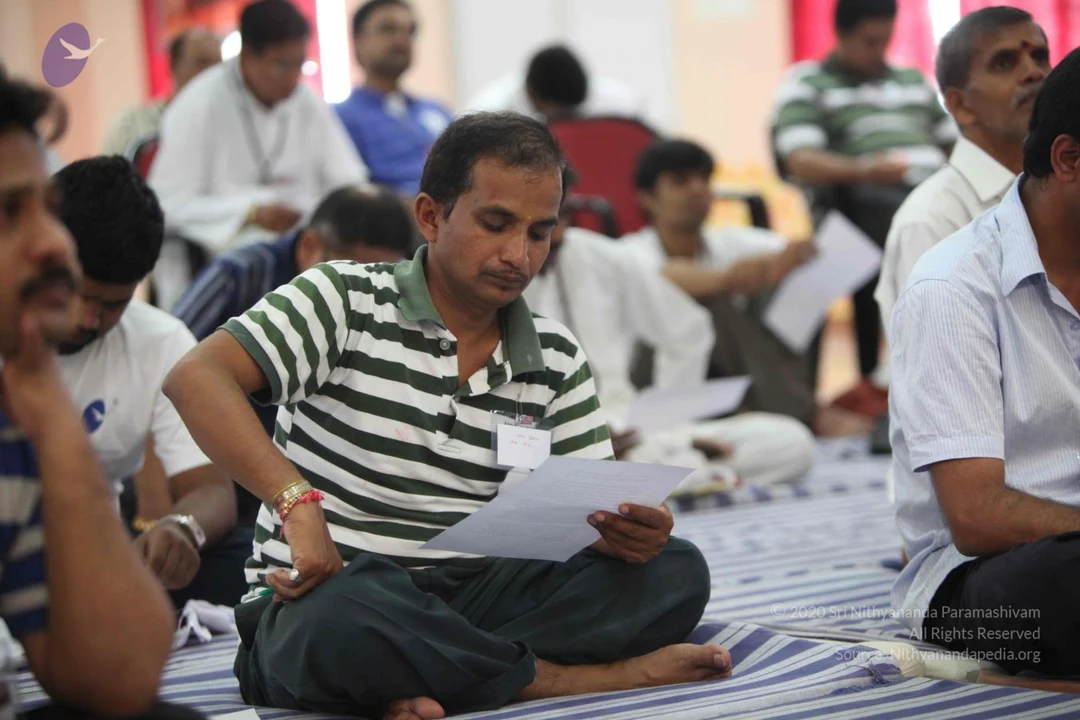
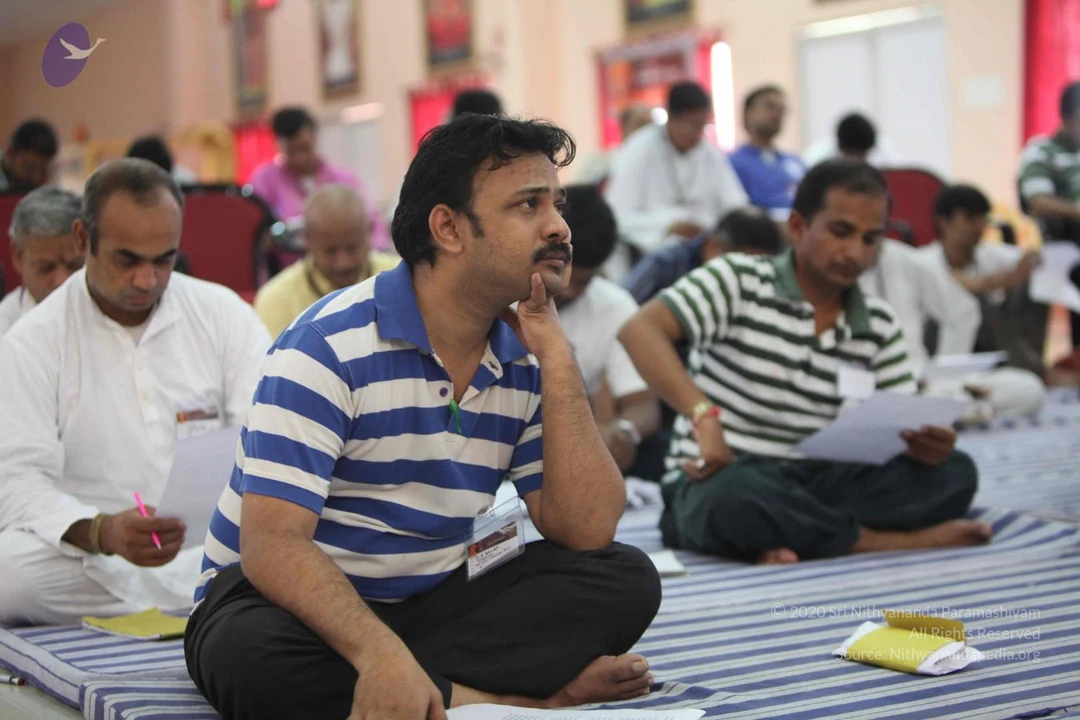
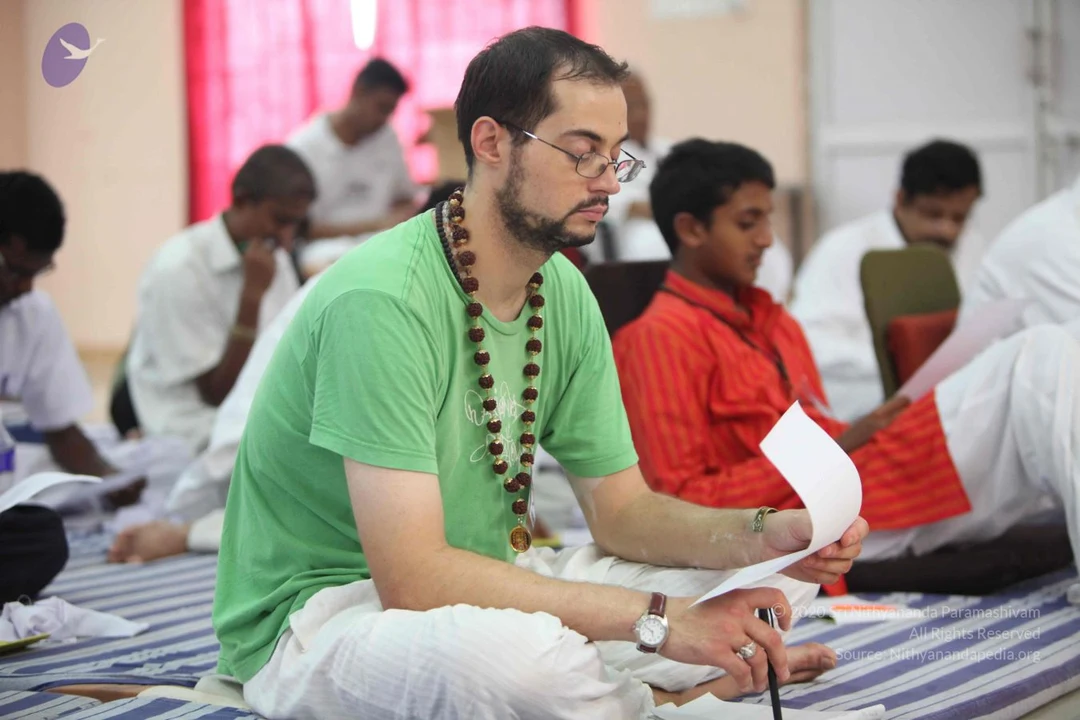
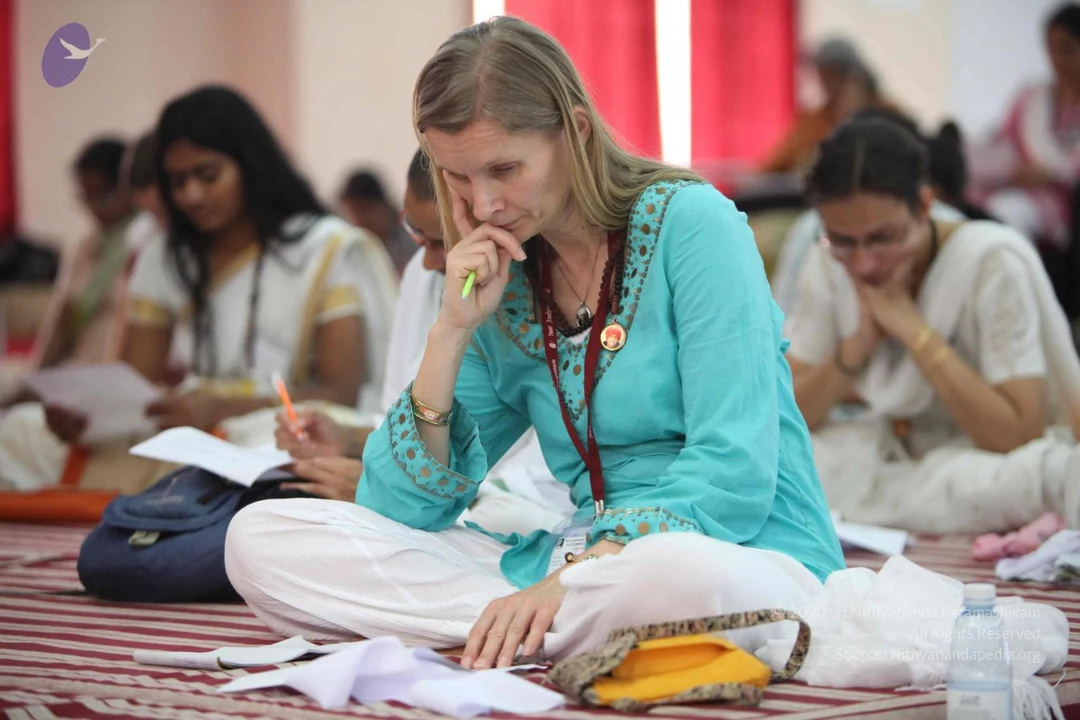
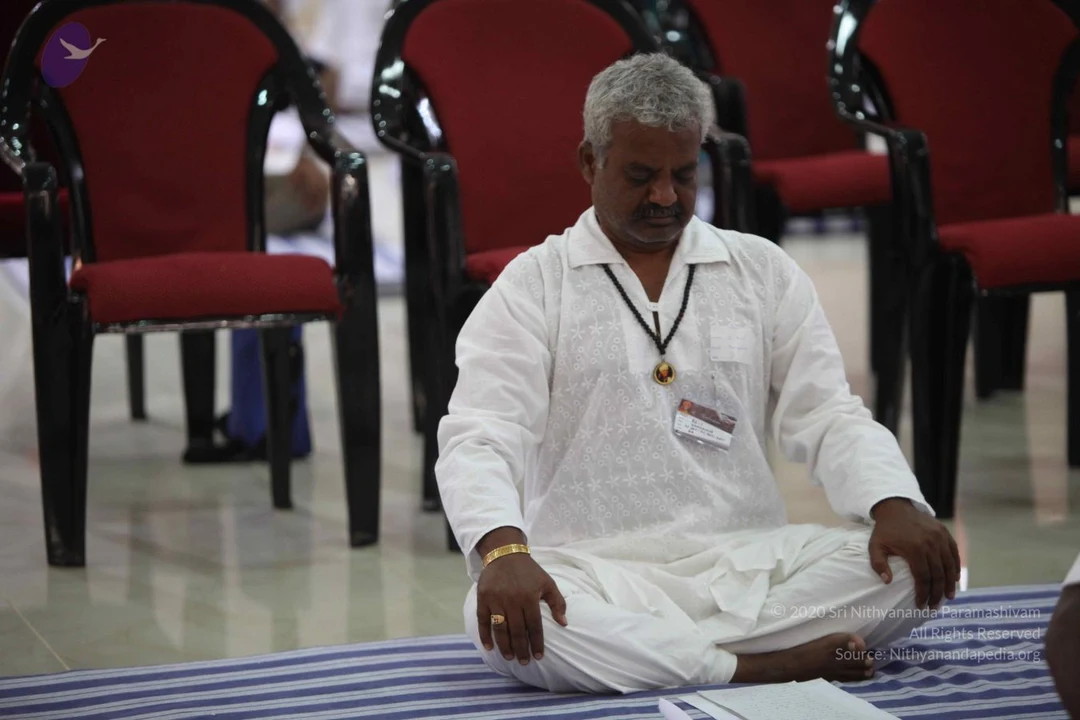
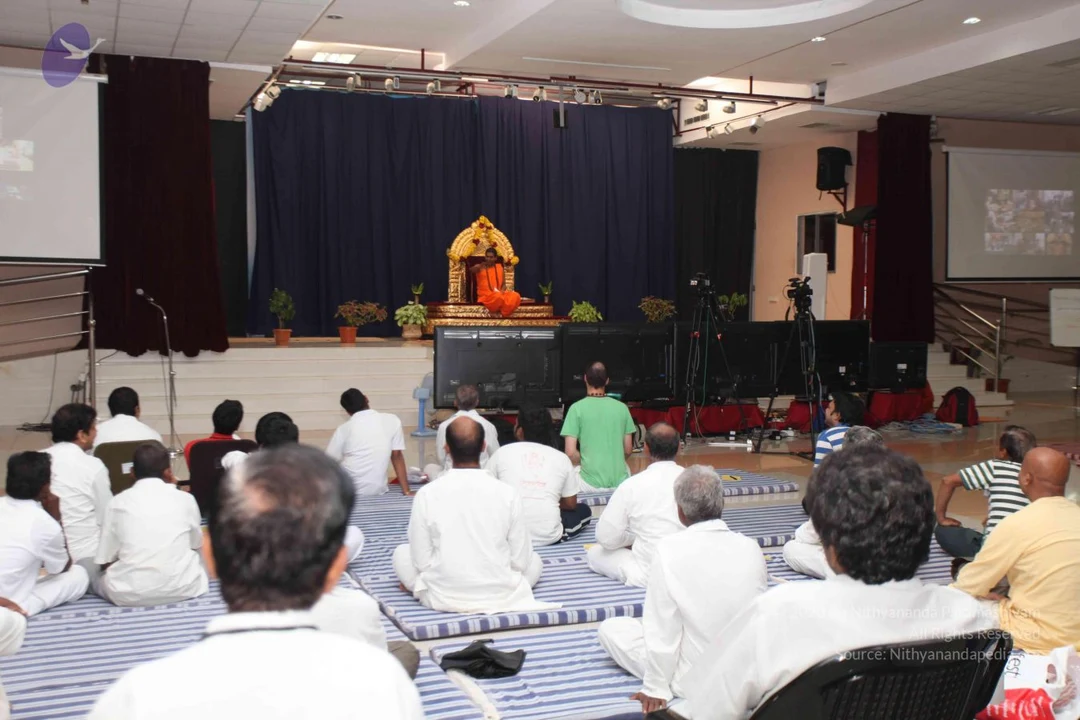
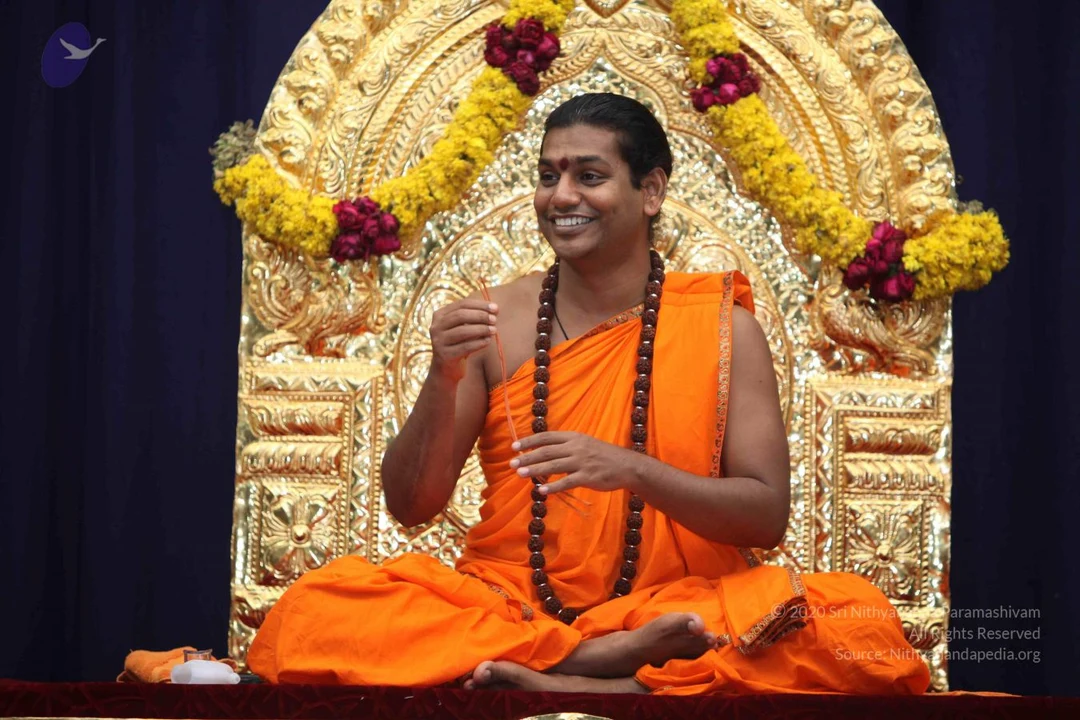
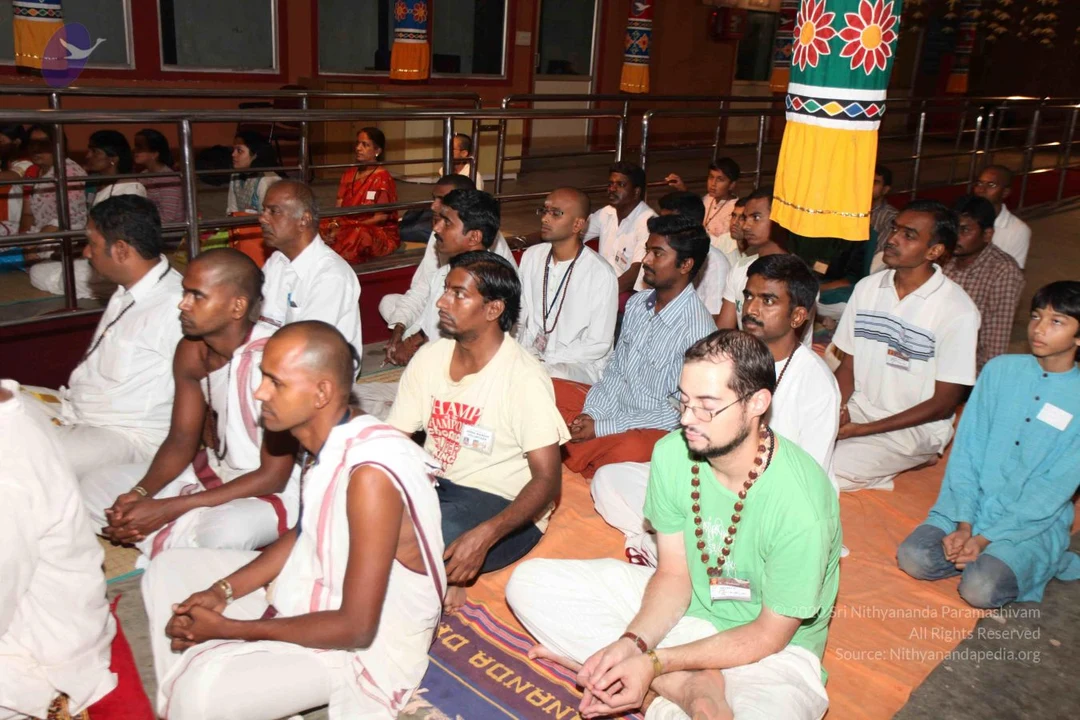
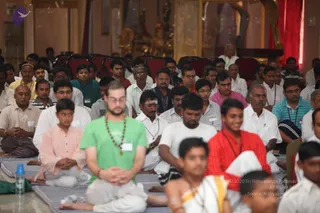
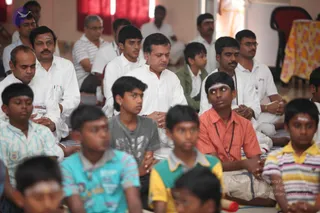
A multi-panel collage graphic of a person-related event photographs. The central large panel shows a figure in saffron-orange robes with long swept-back hair seated on an ornate gold throne decorated with orange flowers, with a sunset backdrop. Smaller panels show a seated figure in orange at a podium, rows of seated devotees in white clothing in a hall, a cluster of people in white on a stage, and a view of a large projected screen. The arrangement indicates a teaching or kriya session. The collage itself contains no physical people beyond the pictured events.A four-panel collage of a yoga session in a hall with red curtains. The top row shows a teacher in orange robes and a white-and-orange shawl seated on a dais, demonstrating postures with a microphone nearby. The bottom row shows a large seated audience of rows of people in white clothes following along, with some participants in light attire. A bearded figure in orange sits at the centre of the upper panels. The panels depict a kriya teaching session with posture demonstration and group practice.A seated group of many devotees in a hall during a Nithya Kriya yoga session, sitting cross-legged on striped mats in rows. Foreground: a bearded man in a green t-shirt with a rudraksha mala, hands folded and eyes closed, beside a young boy in pink kurta and a man in white with a tilak. Others wear white kurtas and shirts, a red-orange kurta, and a man in an orange shirt. Behind them rows of red-cushioned chairs and a golden deity murti in a shrine area with red drapes. A water bottle sits on the floor at left.Seated group of devotees in a hall during a kriya or meditation session, eyes closed or lowered. Many men and boys wear white shirts and white dhotis; several boys have white vibhuti or tilak marks on their foreheads. In the centre, a man in white clothes sits with hands folded in his lap and eyes closed. A boy in an orange-and-brown checked shirt wears a rudraksha-style mala and sits with hands clasped. Foreground children wear casual shirts in blue, green, yellow and striped colours. A table with a yellow patterned cloth and red curtains are visible in the background.A group of men in white dhotis with gold borders sit cross-legged on a white tiled floor, eyes closed, in meditative posture during a practice session. Several have white sacred ash marks on forearms and foreheads, some wear rudraksha malas, and a few have shaved heads. Their hands rest in lap or join in front, with a red curtain and a table in the background. The scene resembles a kriya or pranayama class. No individual is clearly identifiable as a person from appearance, so the figures are described by role and attire.A group of women and girls sit cross-legged on woven mats in a bright hall with red curtains, eyes closed in meditation during a Nithya Kriya session. Most wear white or cream clothes, with some in orange or saffron shawls, yellow shawls, or red-and-maroon saris. A woman in an orange sari sits at the front left, and a woman in a white sari stands near a table in the back. Hands rest in lap or folded in prayer, and a small brass pot and books lie on the mat. No a person is visible in the frame.

Nithya-Kriya-by-Swamiji

10 photosSource gallery
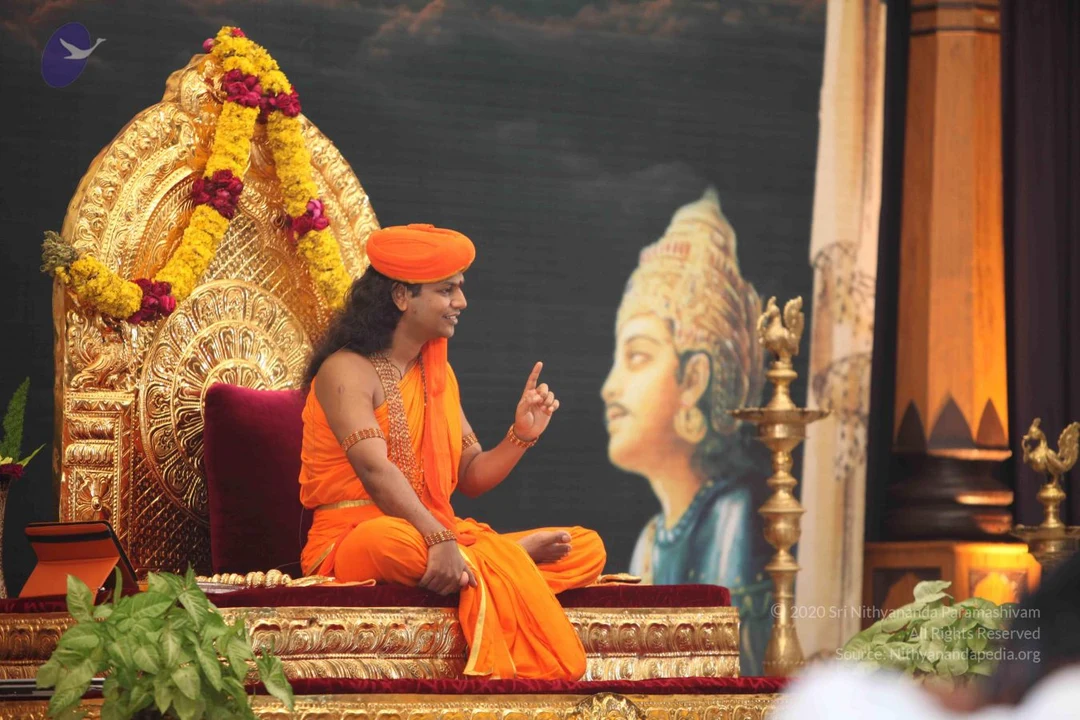
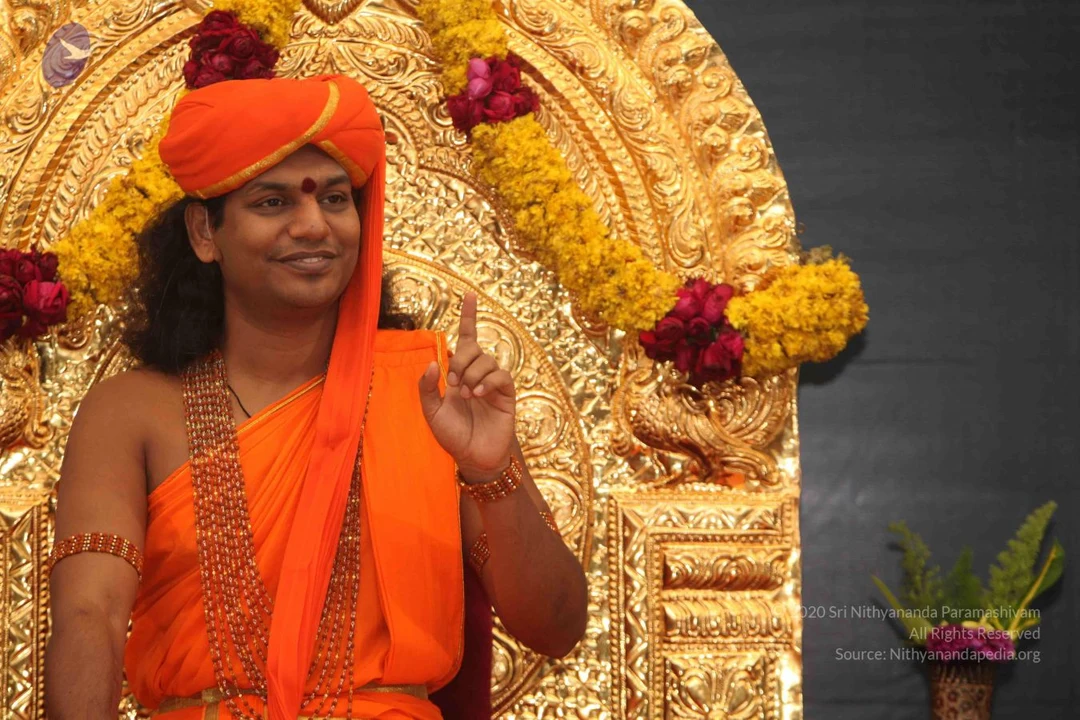
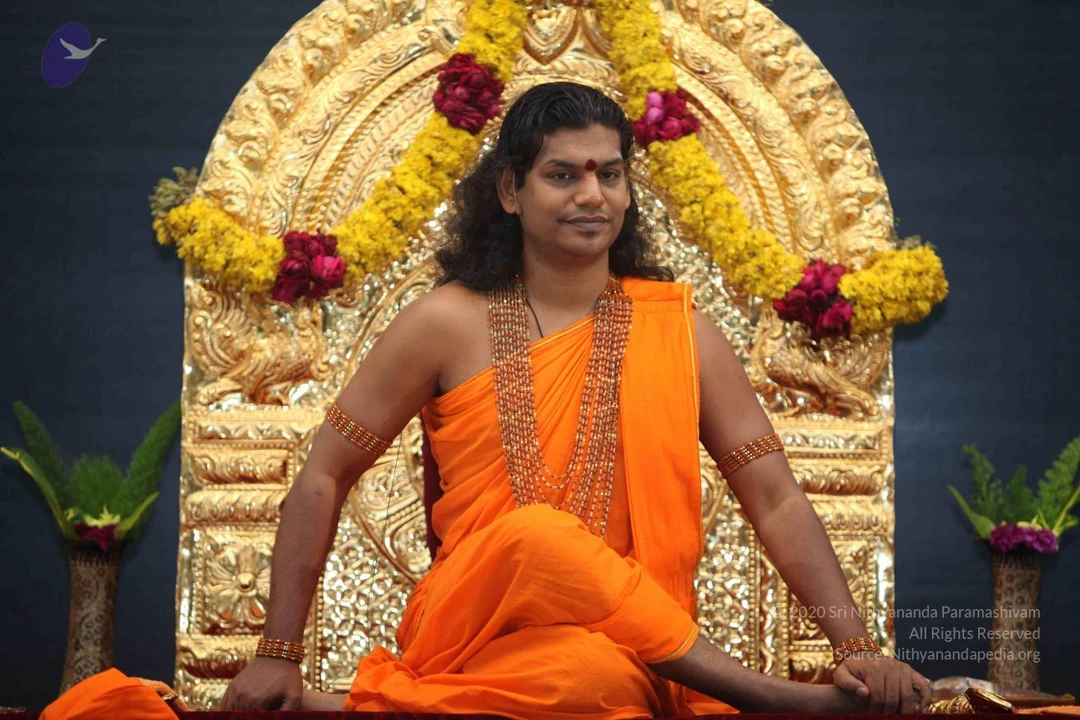
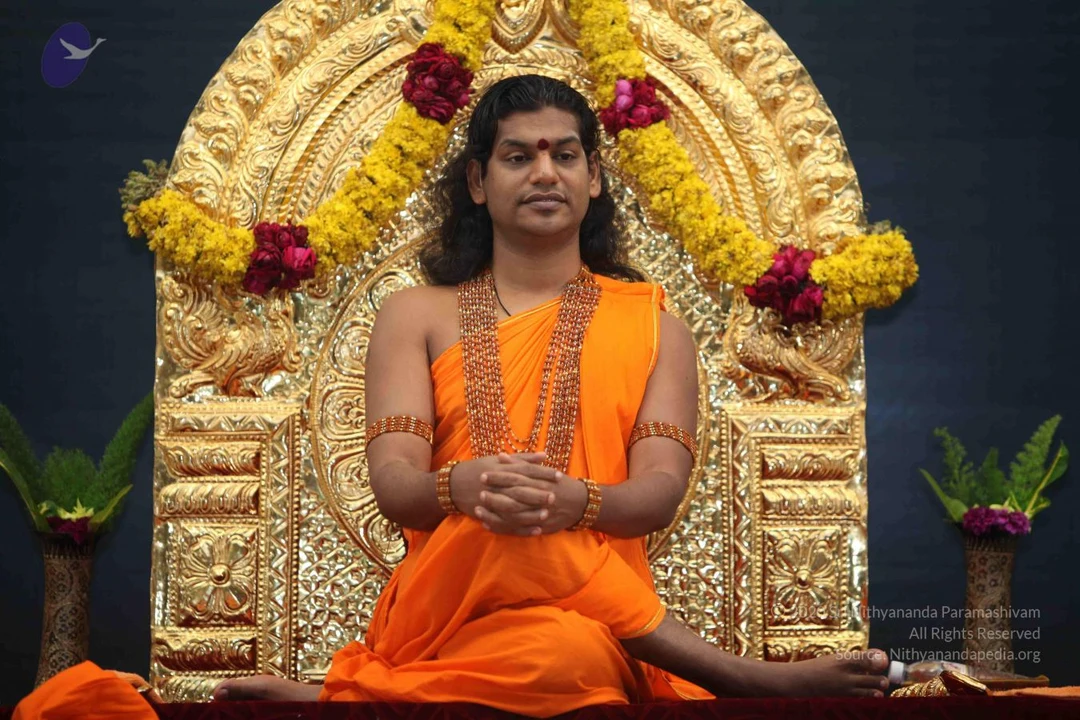
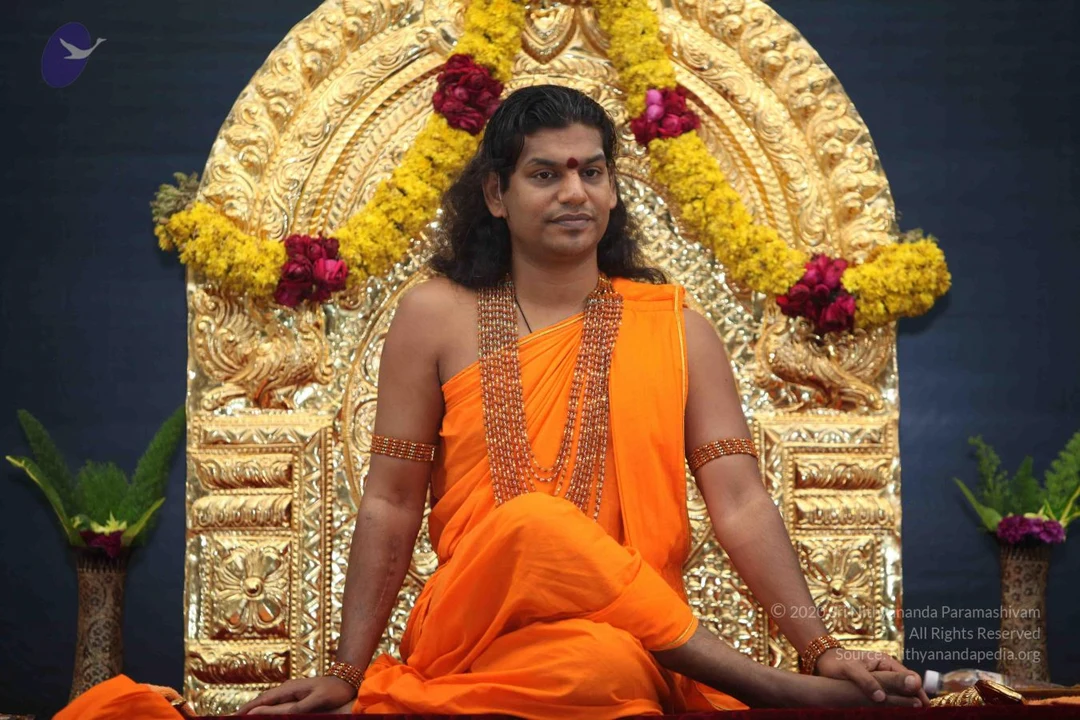
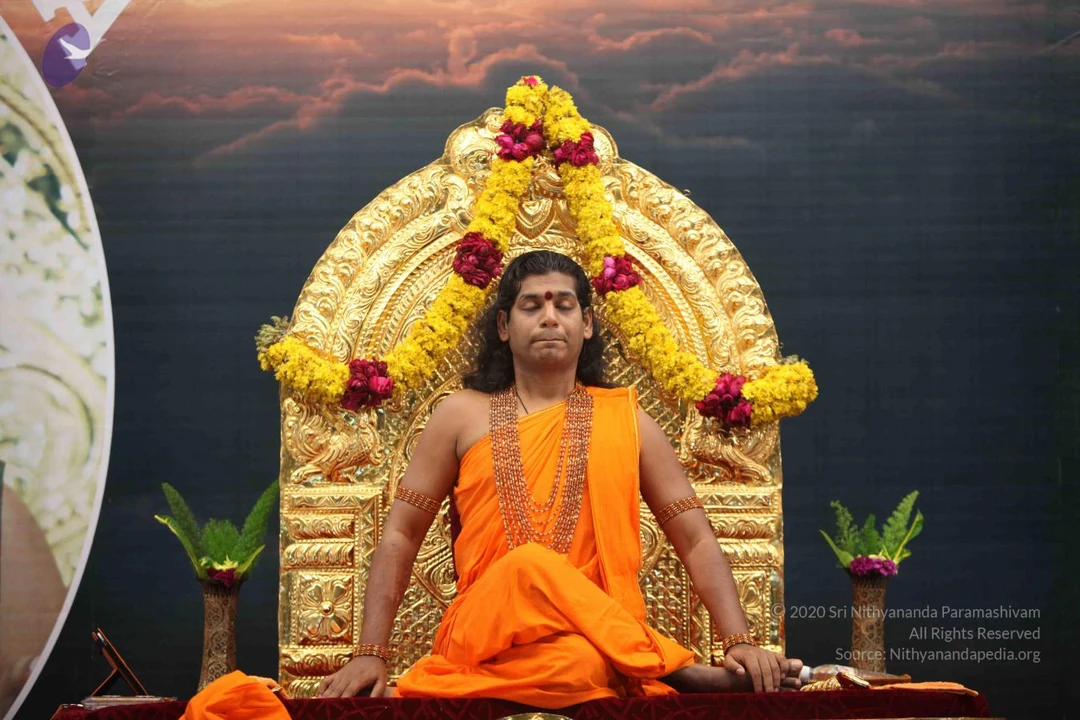
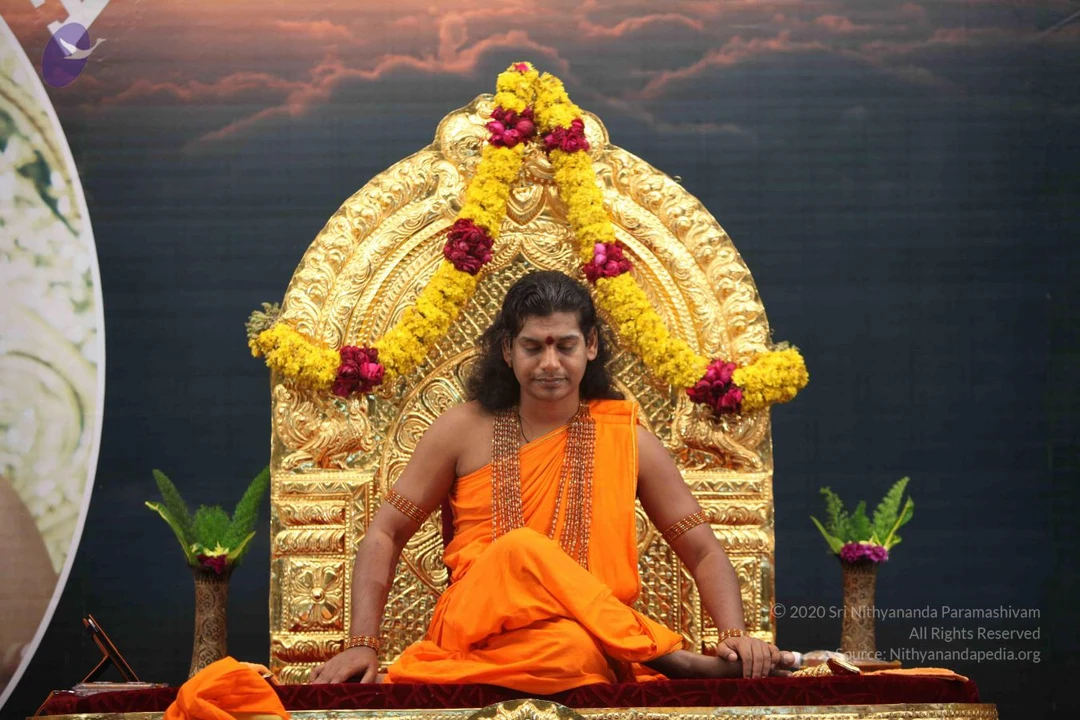
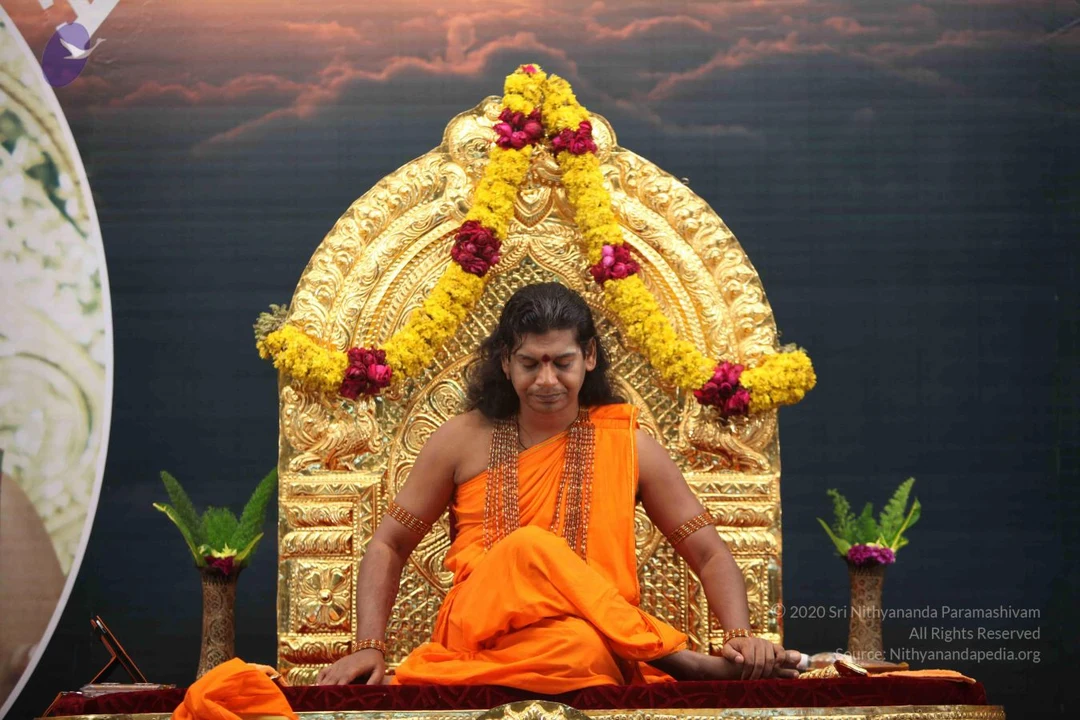
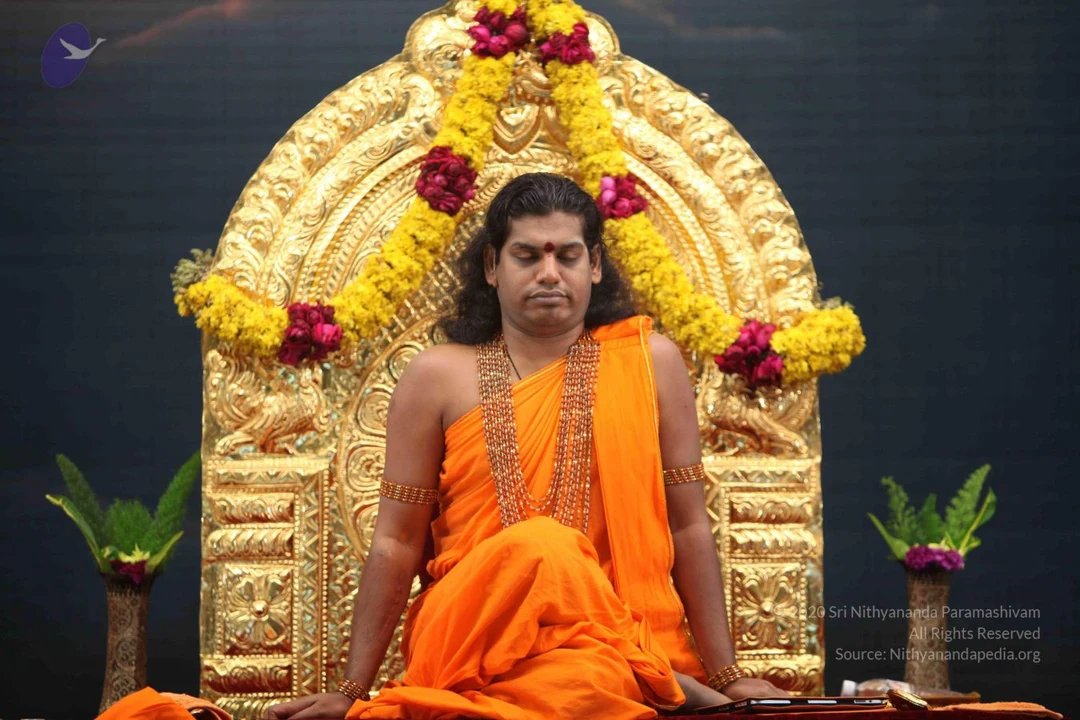
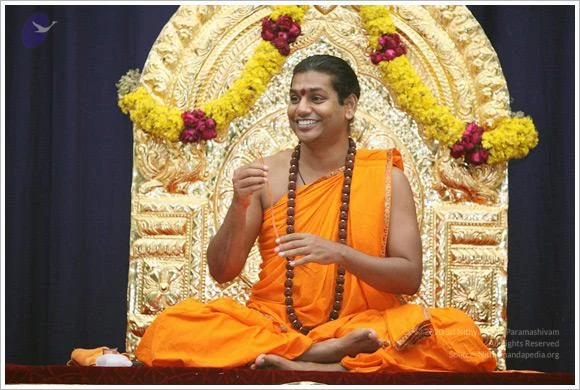
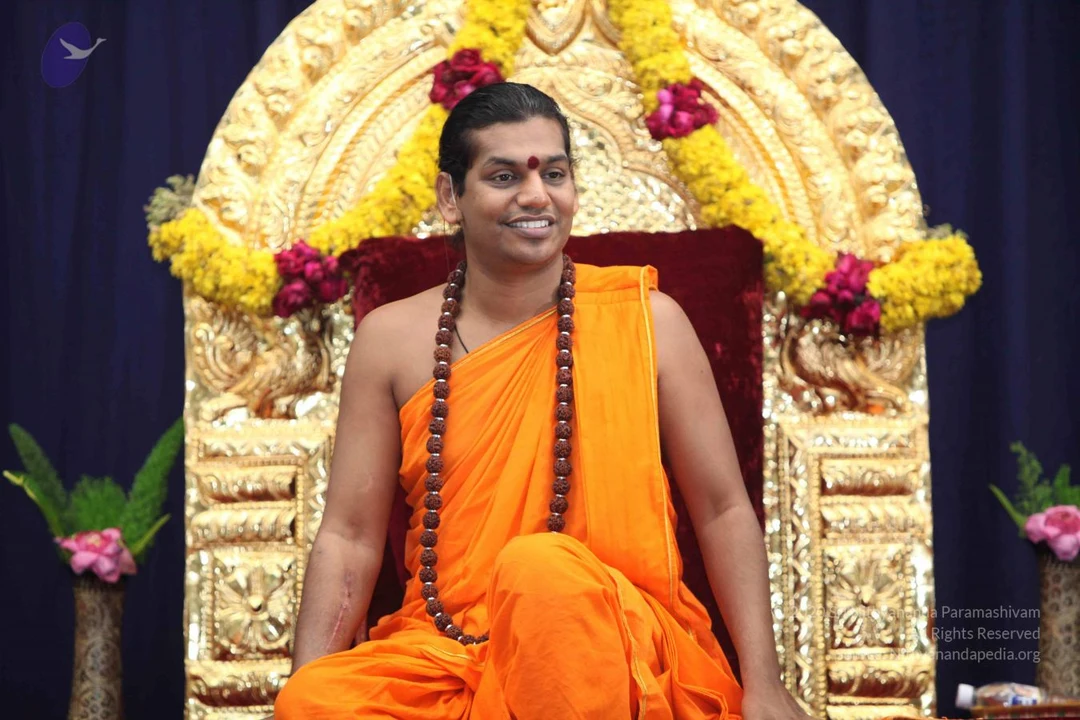
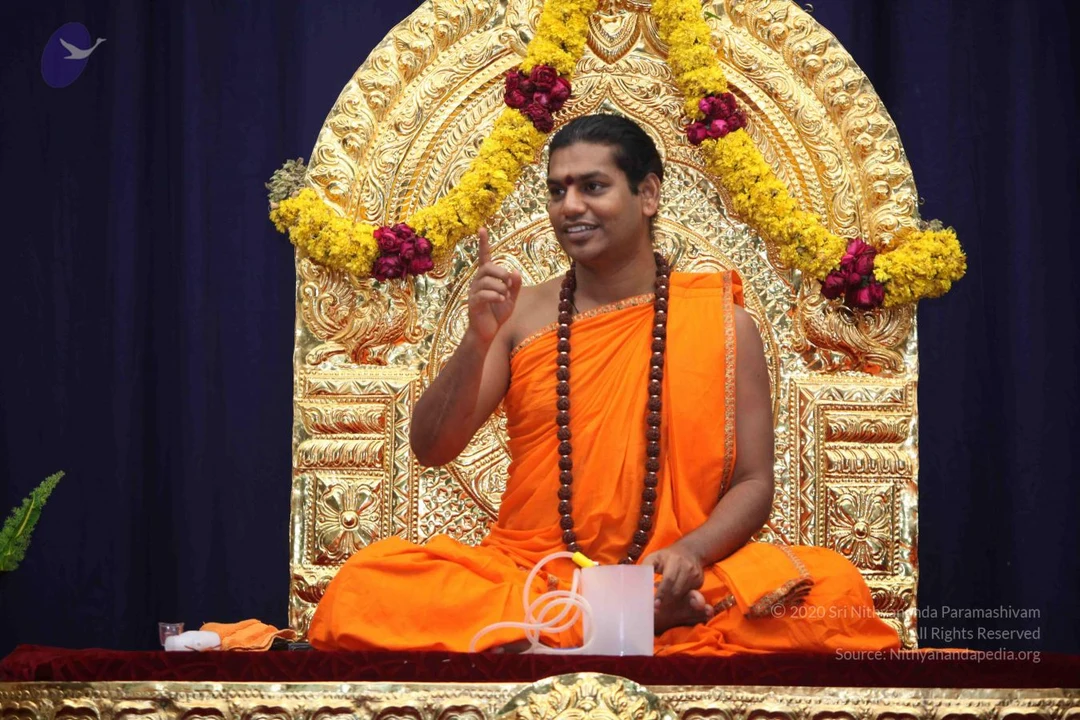
A seated man in saffron-orange robes sits in a yogic pose on a gold-finished ornate throne-like backdrop, decorated with yellow marigold garlands and red flowers. He wears long, swept-back hair, a red bindi, a multi-strand rudraksha-style bead mala across his chest, and bangles on both upper arms and wrists. His right leg is folded across his body while his hands rest on his knees. Potted green ferns stand on either side of the gold arch.A seated man in an orange saffron garment sits cross-legged before an ornate gold throne-style backdrop decorated with carved gold scrollwork and flanked by yellow marigold and red flower garlands. He wears a red bindi, a dark rudraksha-style necklace of multiple strands, gold armlets and bangles, and rests his hands on his knees in a meditative posture. Potted green fern arrangements with pink flowers stand on either side of the throne, and a dark blue backdrop fills the background.A seated man in an orange saffron robe sits eyes-closed in meditation on an ornate gilded throne, its arched back wreathed with yellow marigold and red flower garlands. He wears a red bindi, a rudraksha mala, and orange-threaded arm bands. Beside the throne stands a tall brass oil lamp with a bird finial, and potted green plants flank the dais. A large painted figure with a hand raised appears at the right edge against a dark backdrop with orange clouds. Swamiji (probable): long swept-back hair, saffron robe, rudraksha mala and ceremonial throne.A seated man in saffron-orange robes sits cross-legged on an ornate gold throne with a carved arch, decorated with yellow and red flower garlands. He wears a rudraksha mala necklace and multiple bead strands, with a red bindi on his forehead, and raises one index finger while speaking. Potted green plants with flowers stand on either side of the throne against a dark sky-patterned backdrop. A printed copyright line appears in the lower right corner. The image is a photo of a discourse setting.A man with long swept-back hair and a red bindi sits cross-legged on a red cloth-covered dais in front of an ornate gold throne-back decorated with yellow and magenta flower garlands. He wears an orange-saffron dhoti and shawl, rudraksha malas across his chest, and gold armlets. Potted green plants with flowers flank the throne. The dark backdrop shows a sunset sky.A seated man with long dark hair, eyes closed and a red bindi on his forehead, sits cross-legged on a red-draped platform in front of an ornate gold throne decorated with yellow and magenta flower garlands. He wears an orange saffron robe over one shoulder, multiple rudraksha malas around his neck and gold armbands, with his hands resting on his knees in meditation. Two potted green plants with pink flowers flank the throne against a dramatic sunset sky backdrop. A cropped portrait edge appears at the left.

Sarva-Darshan

16 photosSource gallery
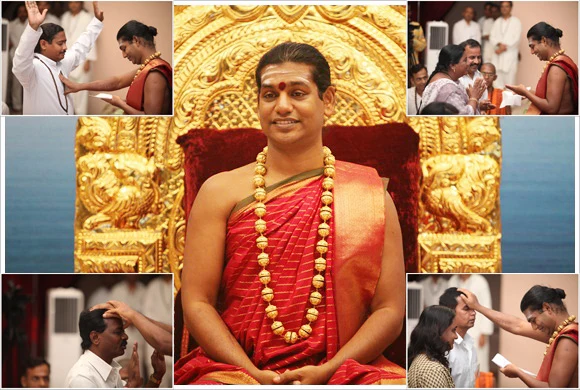
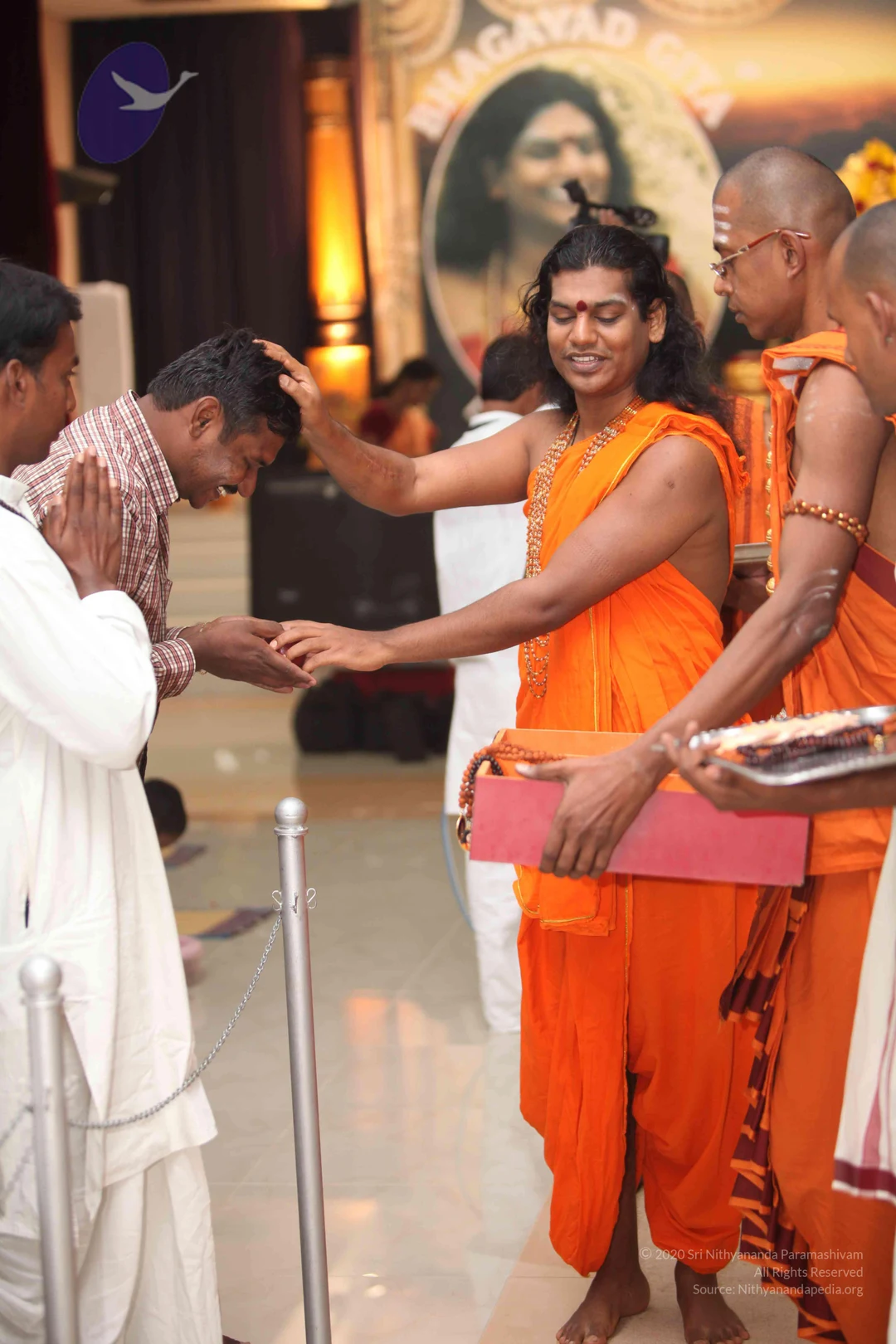
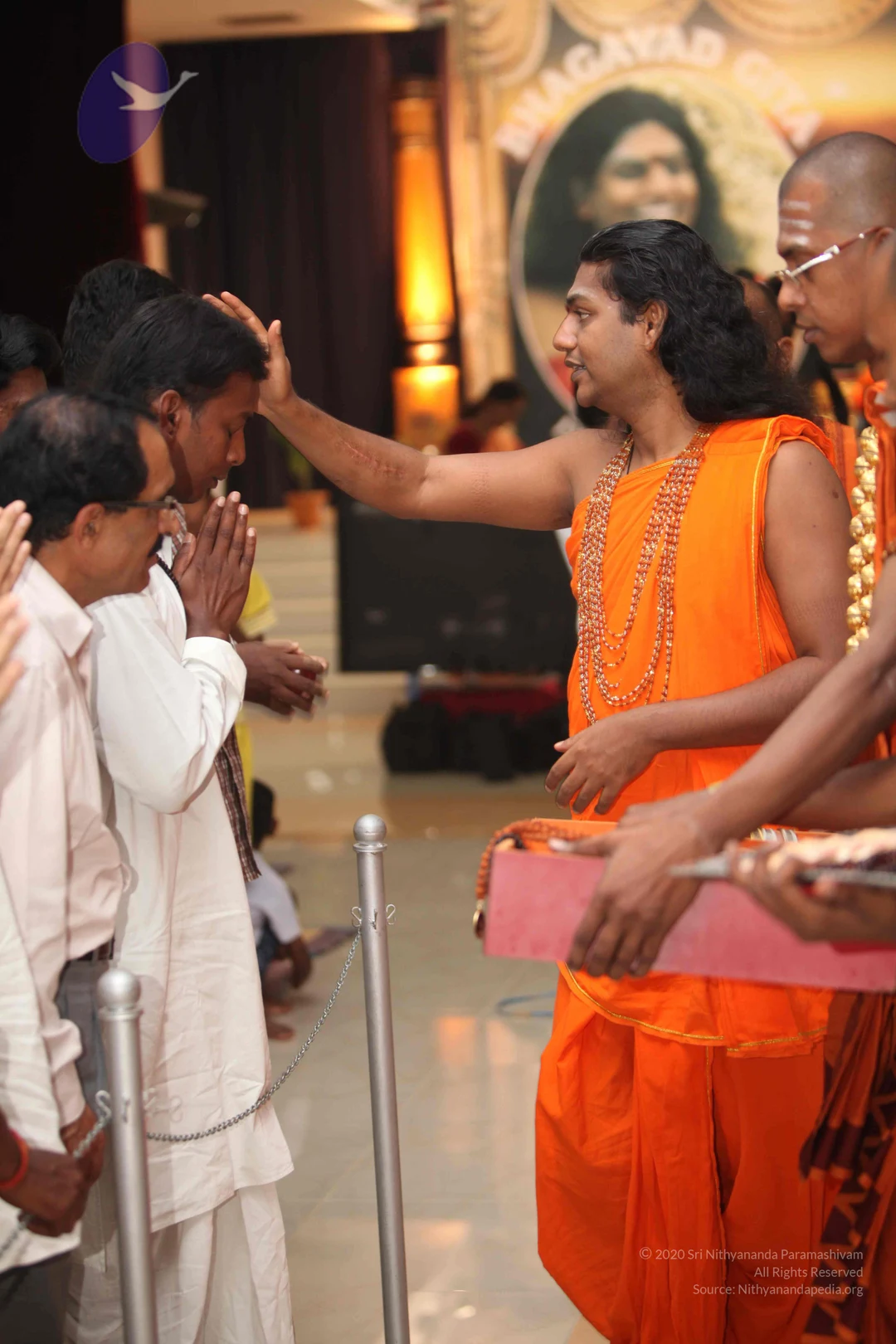
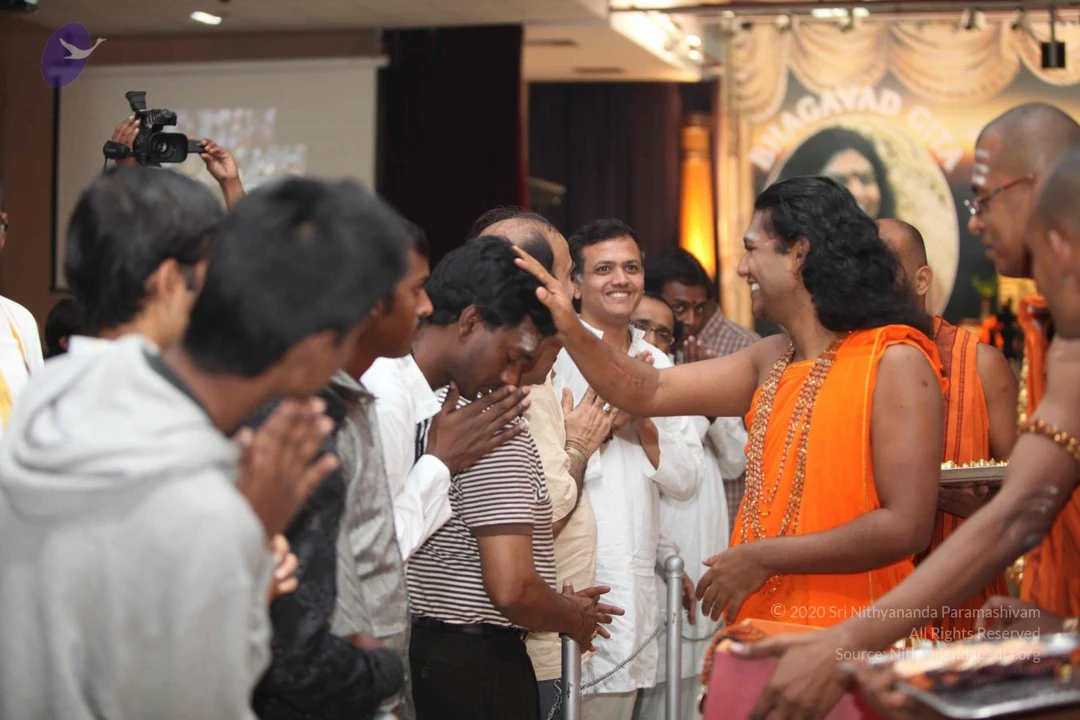
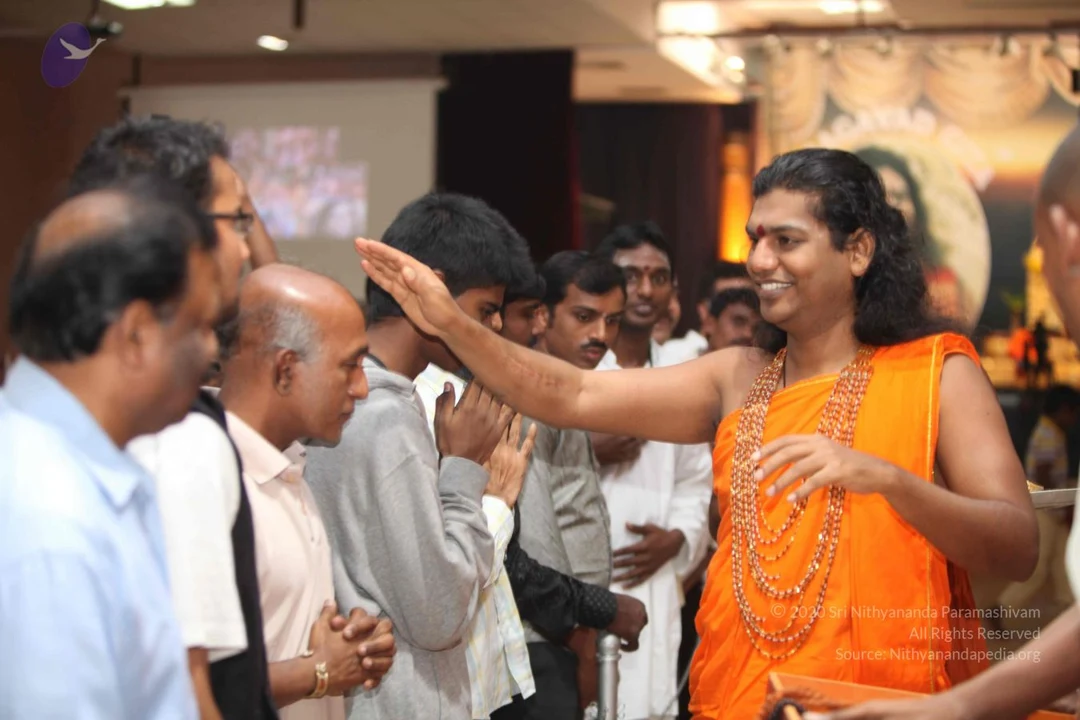
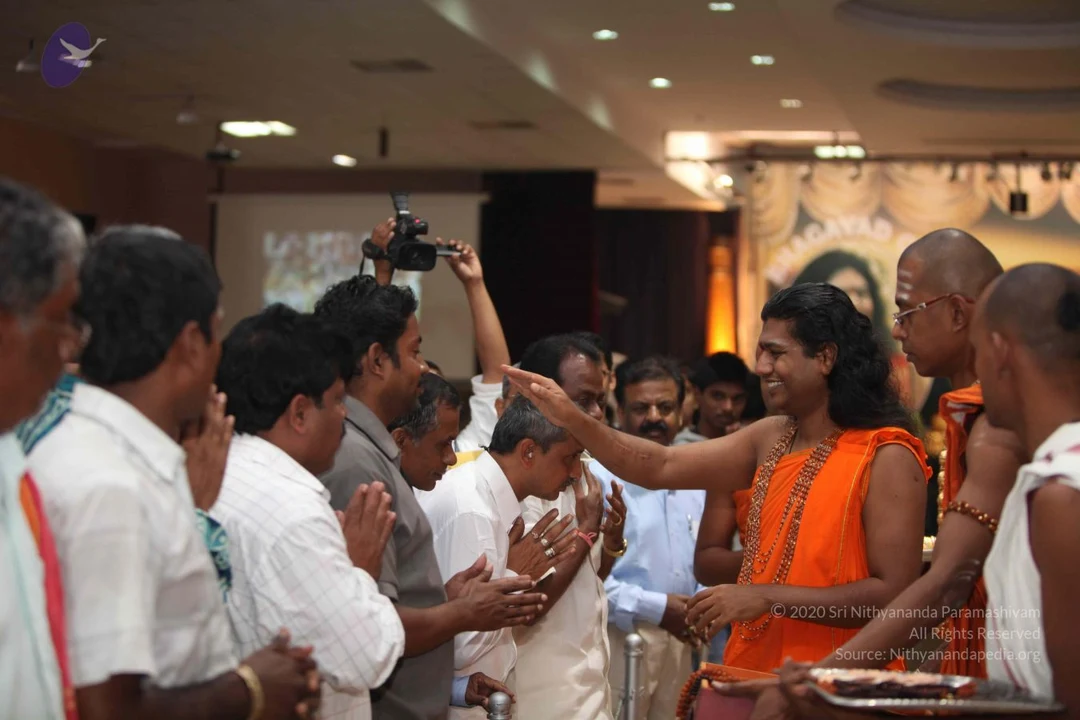
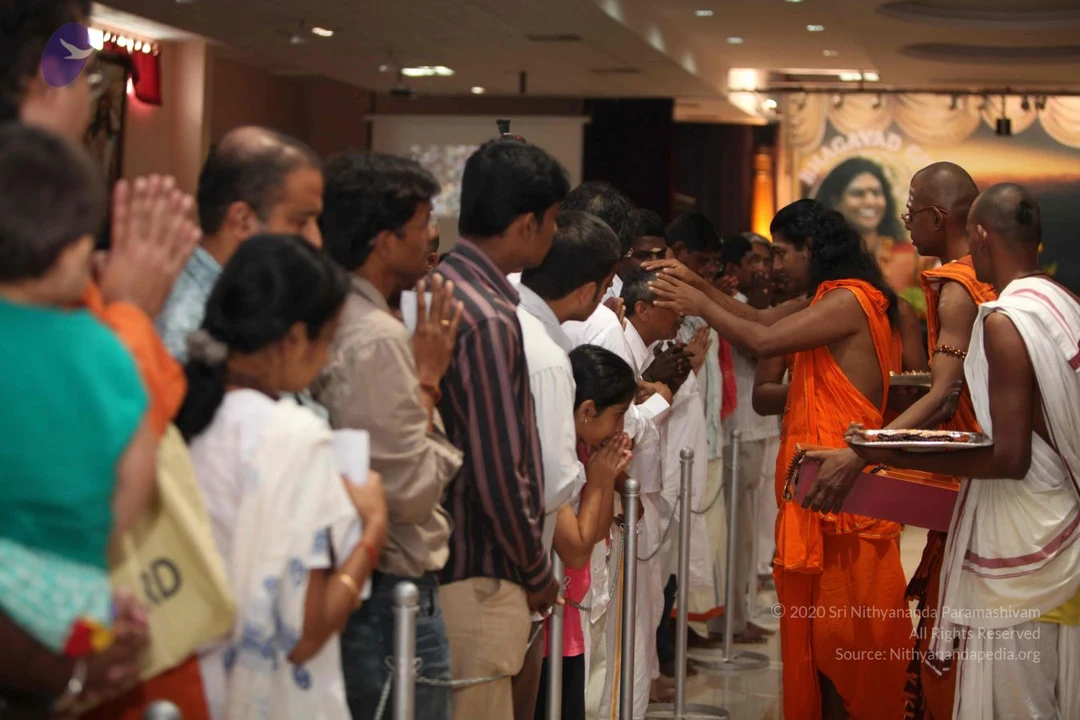
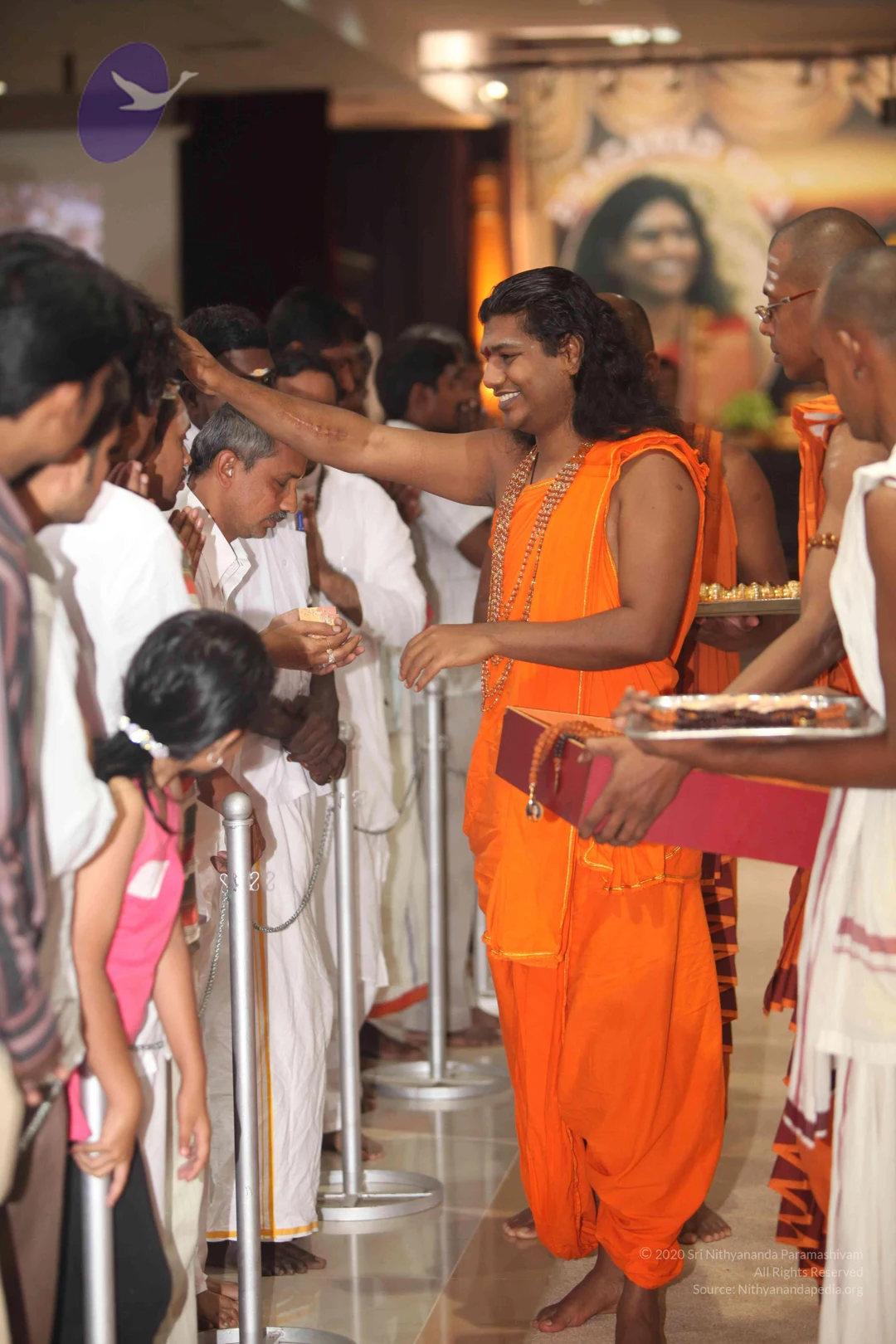
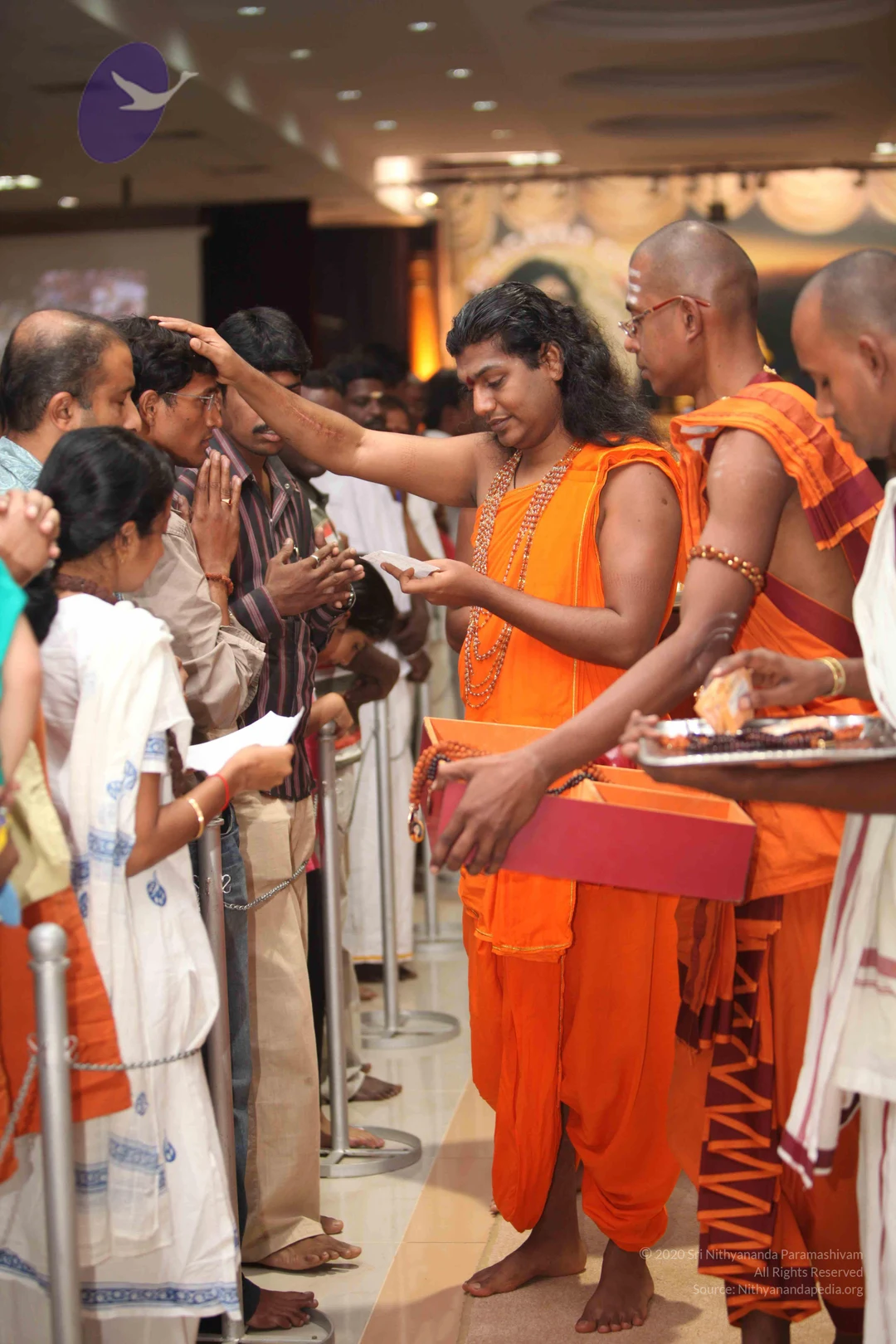
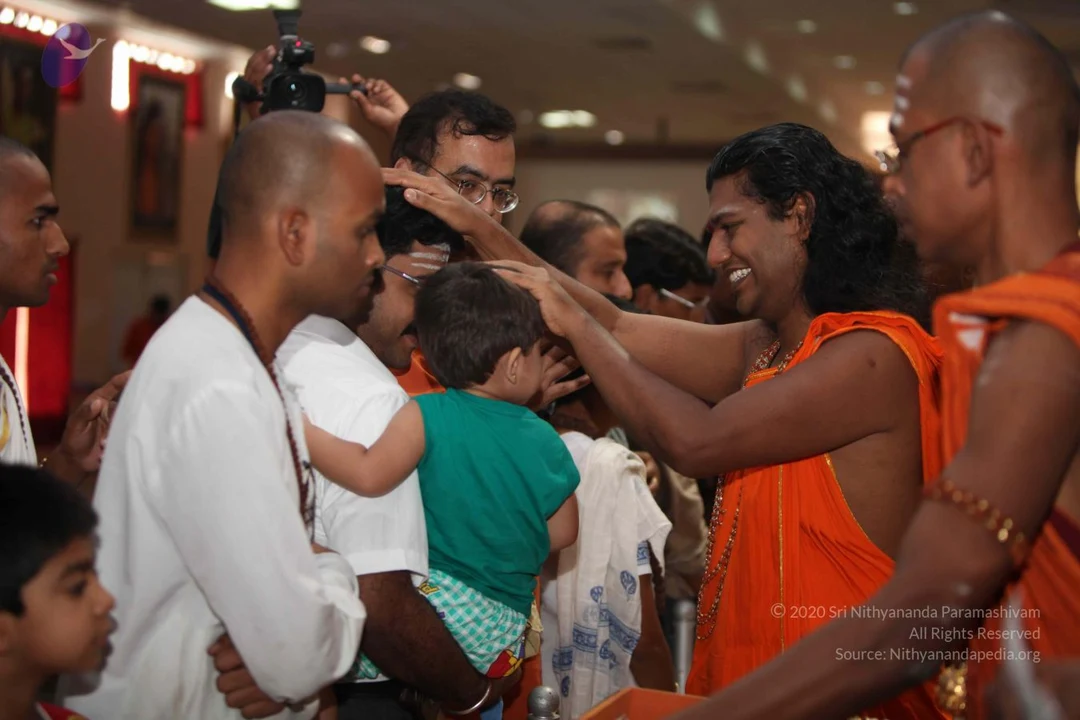
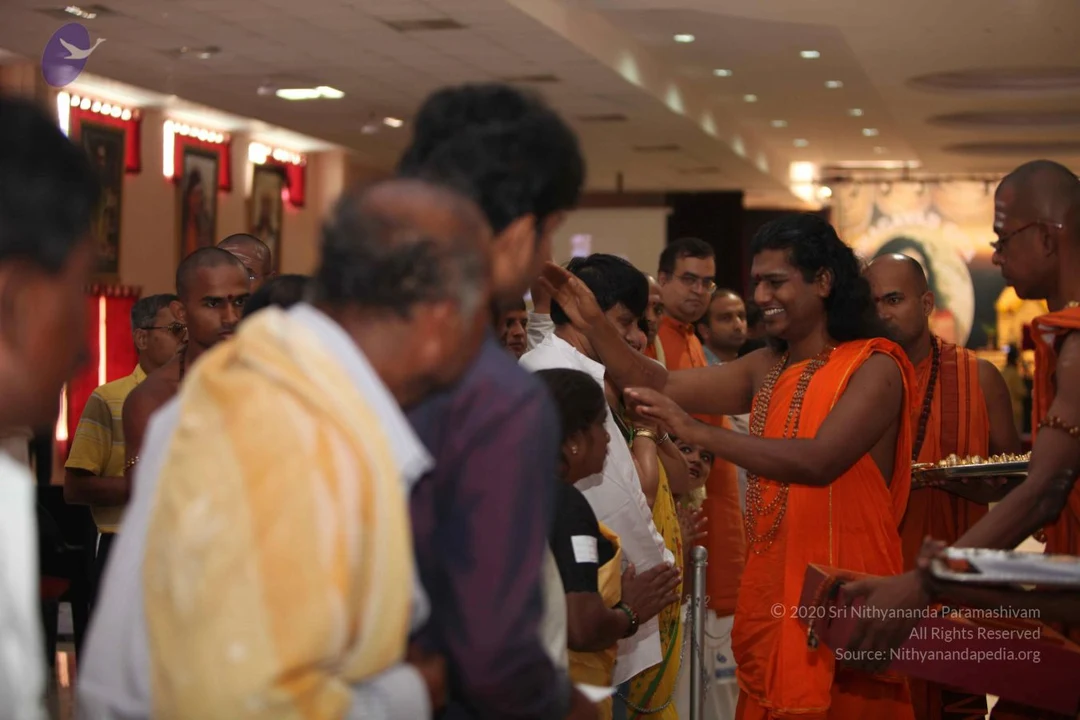
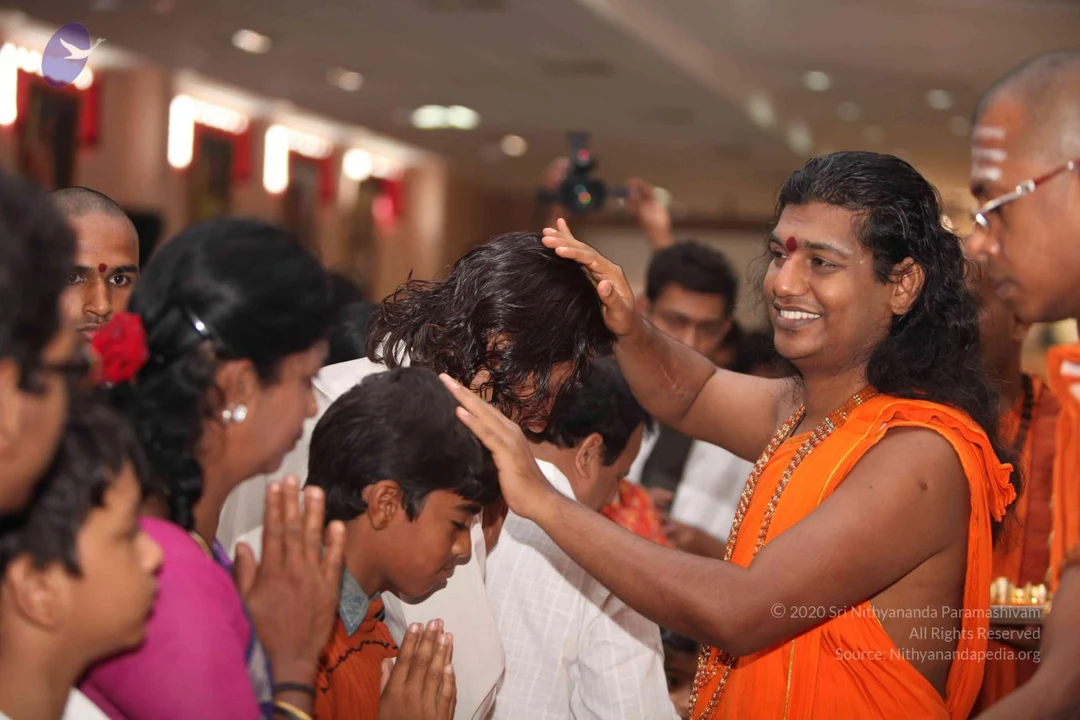
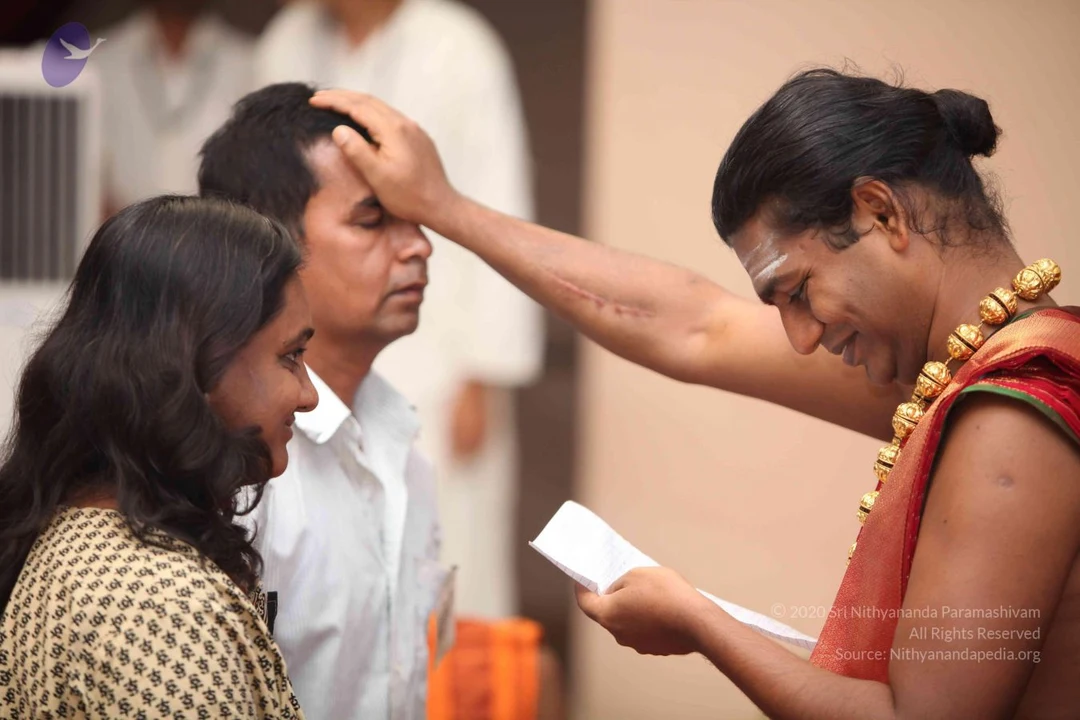
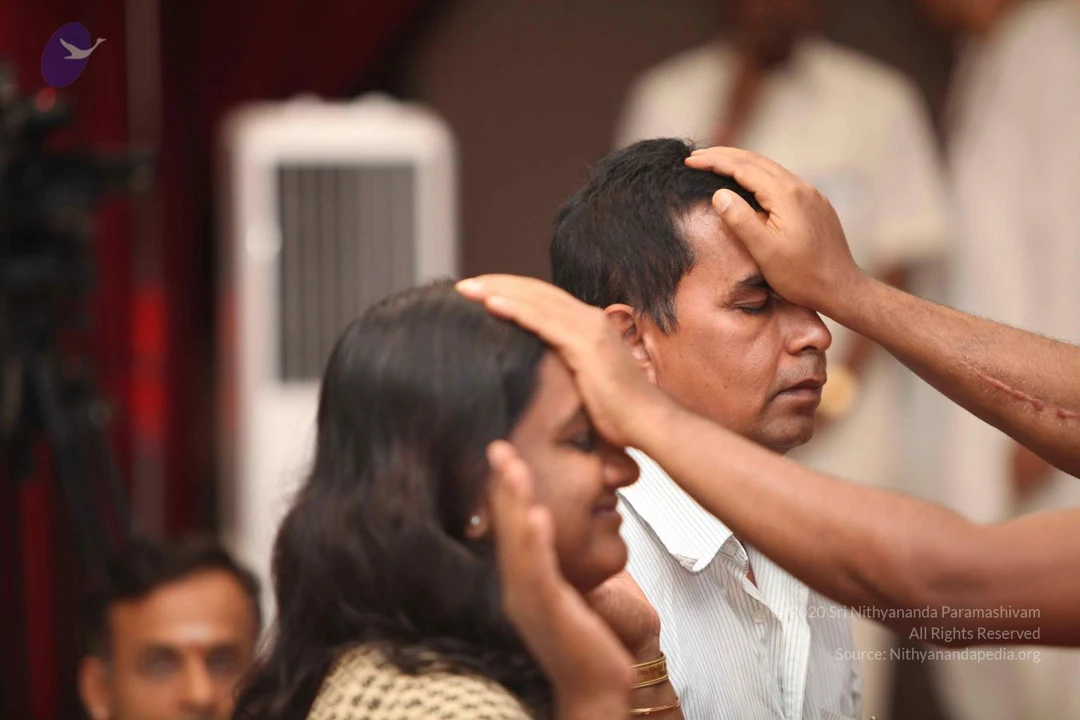
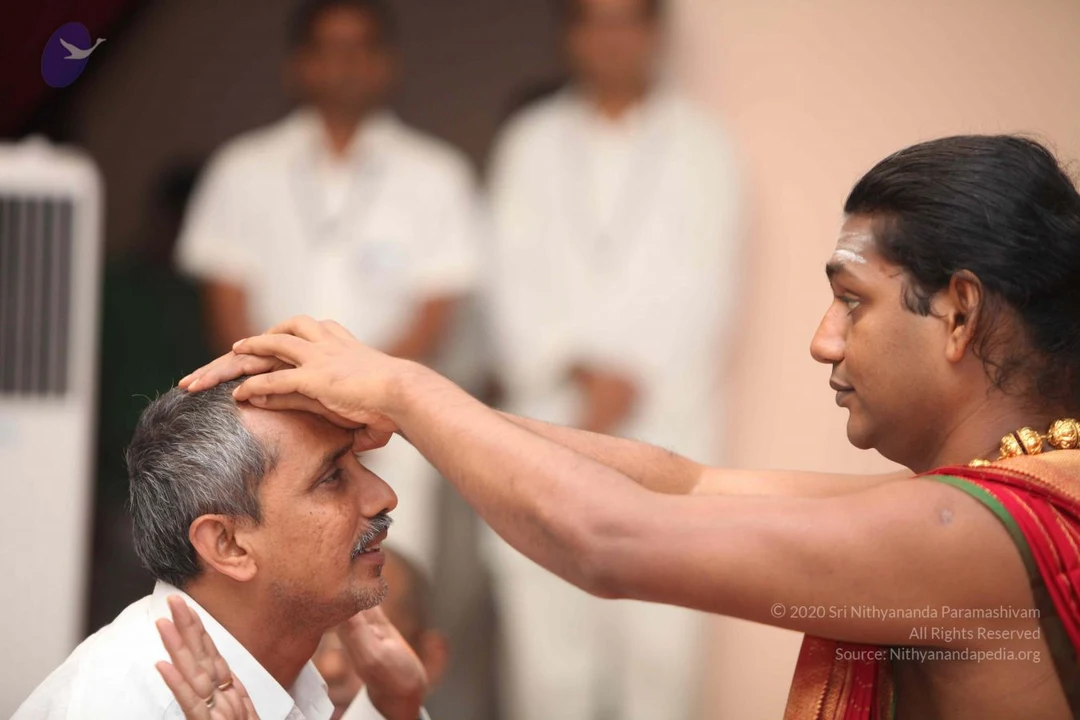
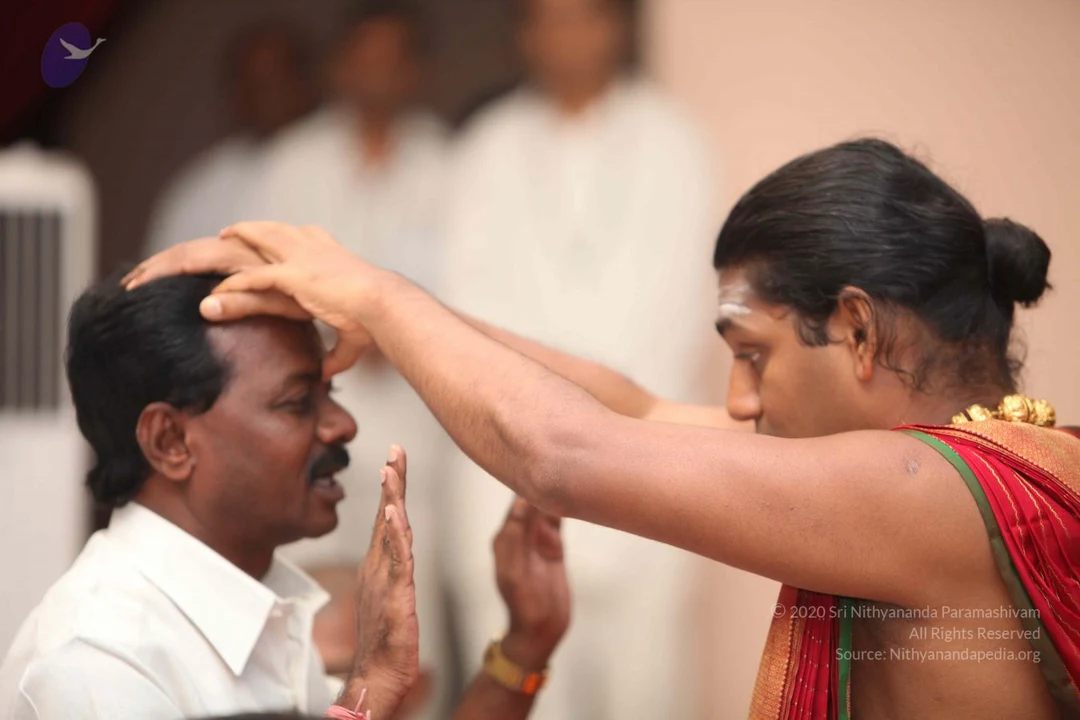
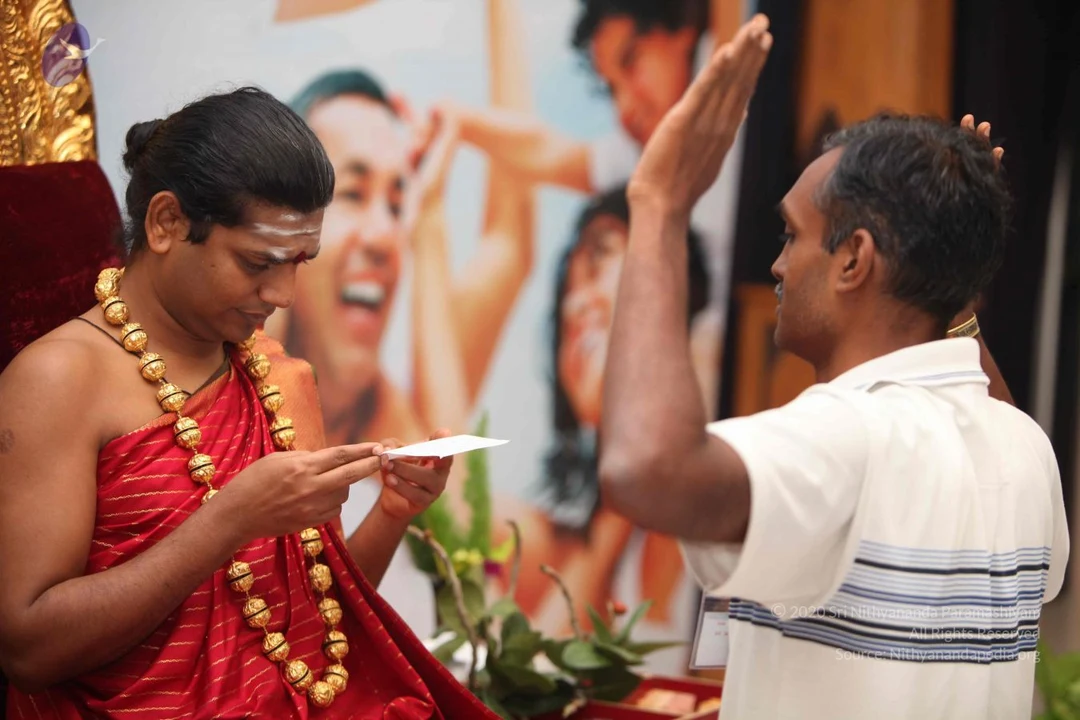
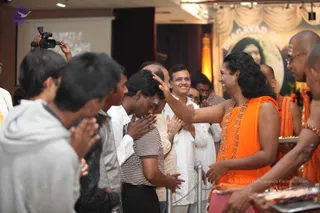
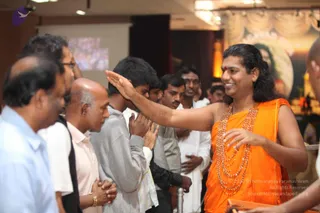
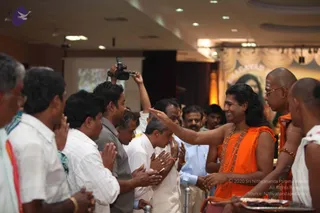
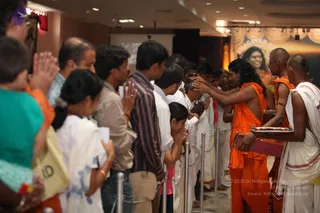
A grid of four photographs from a kriya session, showing a group of people seated and standing in a room with white walls and a wooden door. Several men wear white clothing and one wears a saffron-orange robe, with a figure in saffron-orange clothing present in the central and right panels. Some people hold hands together or make gestures near one another. The collage shows several small groups of people in conversation and seated practice rather than one continuous scene.A standing man in saffron-orange robes stands on a glossy white stage before dark drapes and a warm-lit wooden pillar. He wears a long-tiered rudraksha mala draped over the shoulders, a red bindi on his forehead, and wavy shoulder-length hair swept back. His eyes are lowered and his hands are cupped together at the waist, holding beads. A potted green plant sits at left and a pink-flowered arrangement stands on a stand at right.A photograph of a blessing line at an indoor hall with a stage backdrop reading Bhagavad Gita beside a framed portrait of a woman. A man with long swept-back dark hair, wearing an orange robe and a multi-strand beaded necklace, extends his right hand to touch the head of a man in a striped shirt who bows with hands folded. Other devotees in white and grey clothes stand in line with palms pressed together, and an orange-robed attendant holds a tray at right. A camera operator is visible at upper left. Appearance-based candidate: Swamiji (probable), visible in an orange robe with long hair and beaded necklace, giving blessing.A photograph of an indoor event hall where a man in a saffron-orange robe with long swept-back dark hair, a red bindi and layered rudraksha-style beaded necklaces extends his right hand in blessing toward a line of devotees. The devotees, mostly men in casual shirts, grey sweaters and white kurta-style clothing, stand with palms pressed together and heads lowered. Behind them is a large framed portrait backdrop of a bearded figure with golden decorations, a projection screen and warm stage lighting. The appearance-based label a person applies to the orange-robed man giving blessing, with his cues being the long swept-back hair, saffron robe and ornate beaded necklaces; he is the one bestowing blessing on the devotees.A photograph in an indoor hall with ceiling lights and a draped backdrop. A long-haired man in an orange saffron robe, with layered rudraksha malas and a gold necklace, smiles while raising his right palm toward the forehead of a standing devotee in a white shirt with folded hands. Around him, several men in white and grey shirts press palms together in greeting; a man at right, bald and in an orange cloth, holds a tray. A videographer lifts a camera at upper left, and a portrait with a black-and-white figure hangs on the backdrop. Probable Swamiji is the orange-robed man giving the blessing, identified by his long swept-back hair and rudraksha malas.A photograph of a hall with a line of devotees waiting to receive blessings. In the foreground, a row of people stands with palms pressed together in anjali mudra, including a child in white and a woman in teal. Centre right, a man in an orange robe with long dark hair places his hand on the head of a devotee, while a bald man in orange and another in white dhoti hold trays of offerings. Two more people in white ritual clothing stand beside them. Steel stanchions line the path. A large backdrop behind shows a smiling figure in orange. a person is the orange-robed man with long swept-back hair giving blessings, shown in person.

eNRelationship-Day2

60 photosSource gallery
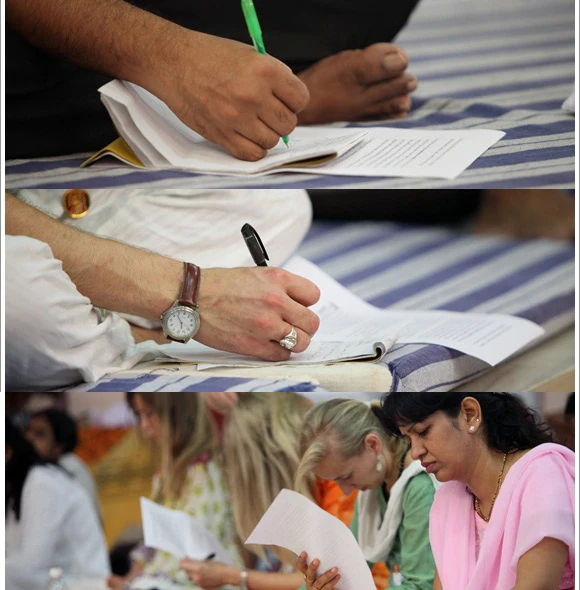
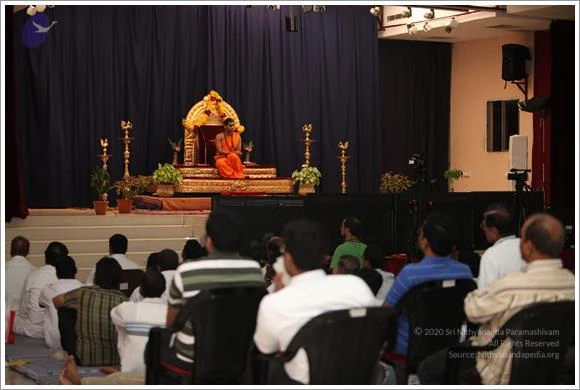
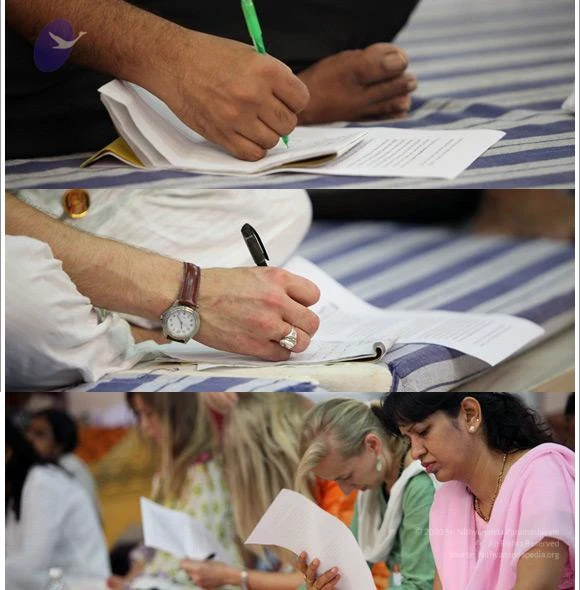
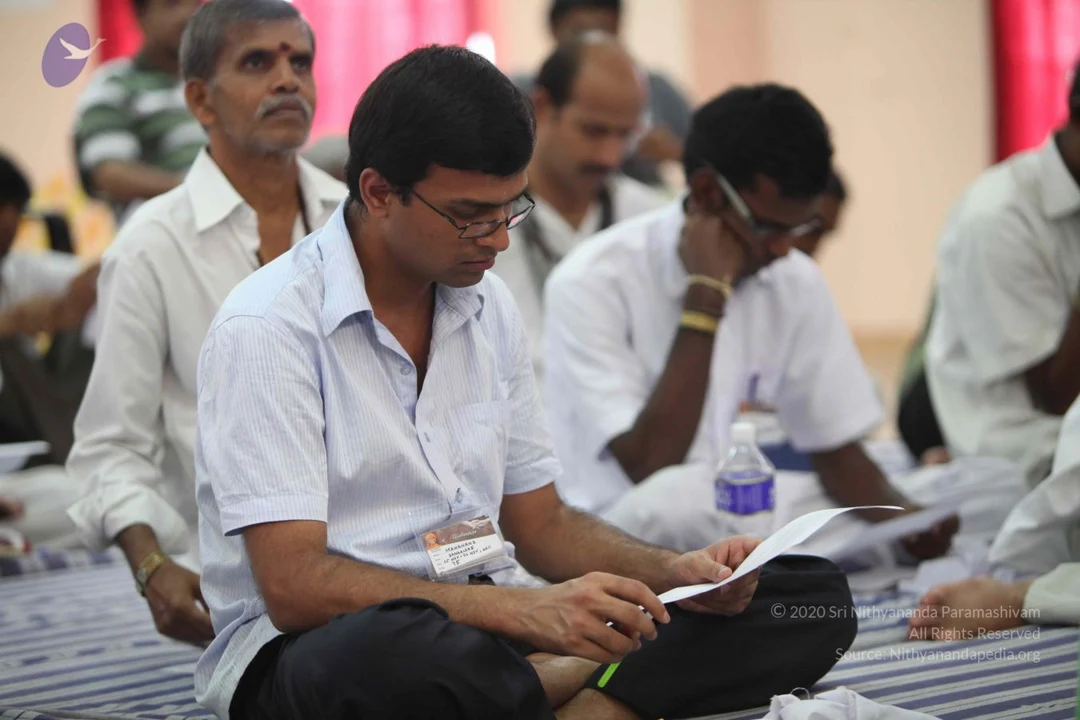
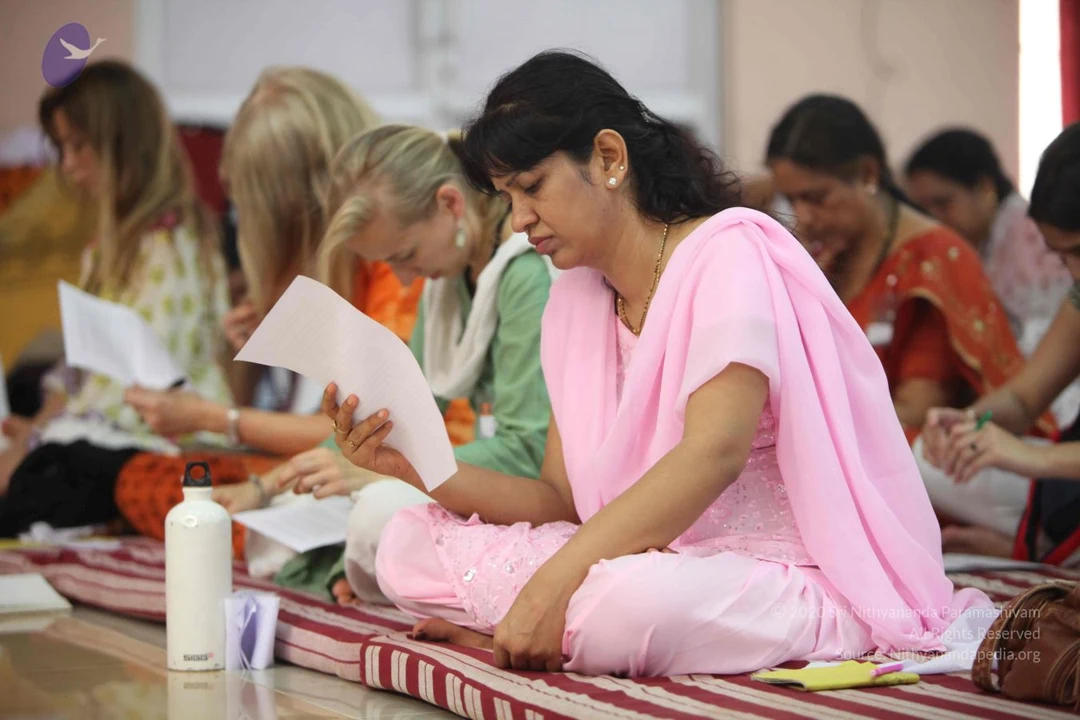
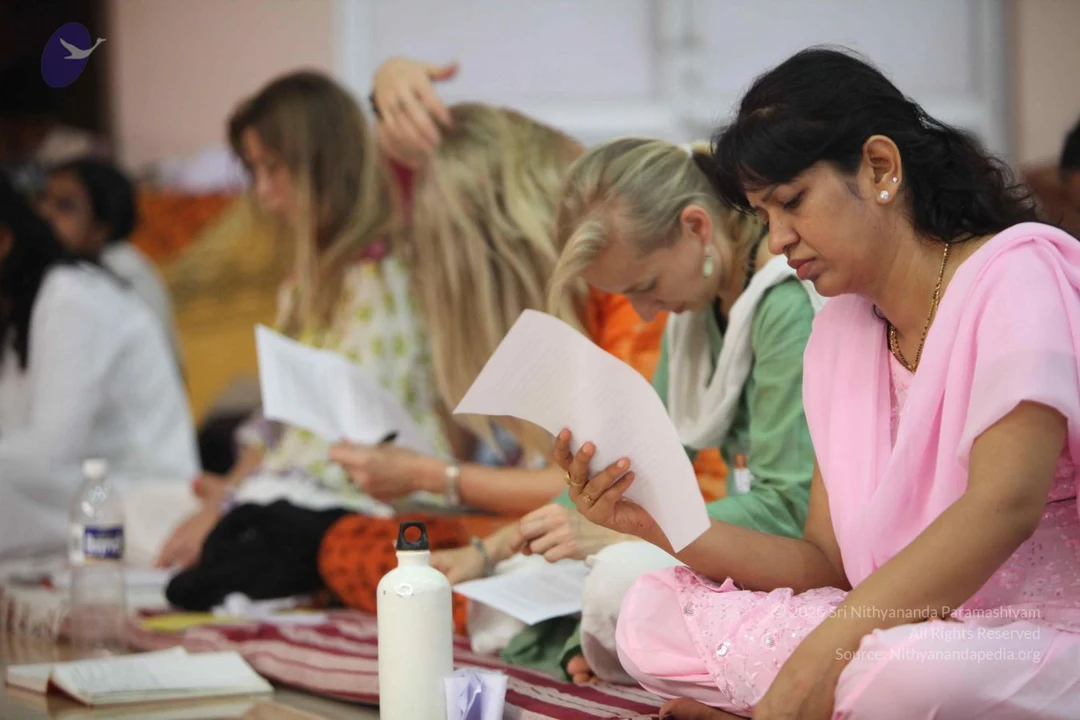
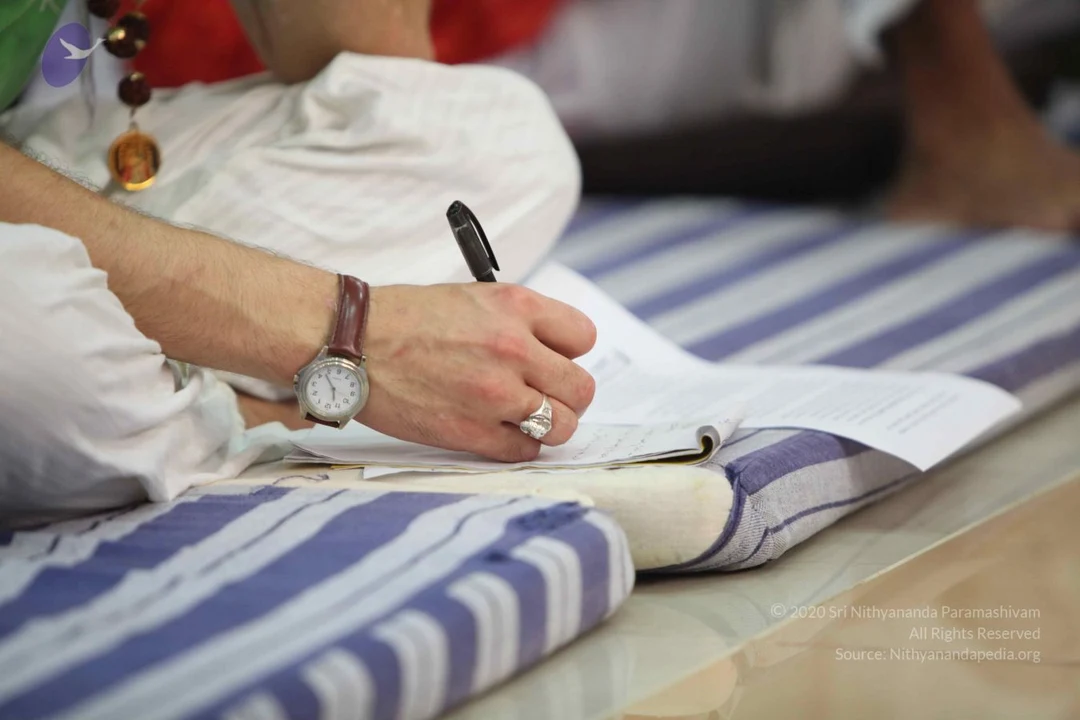
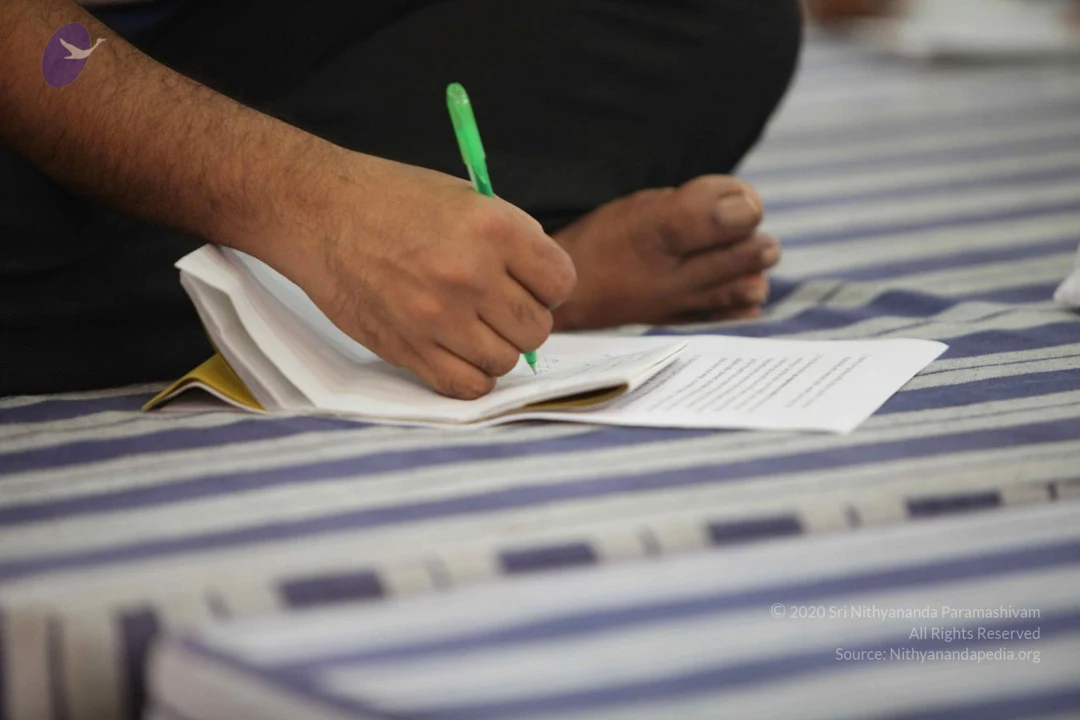
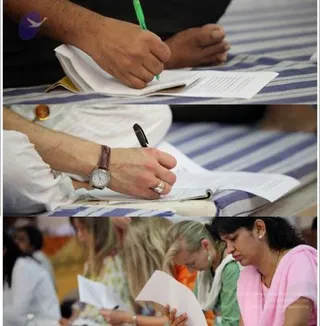
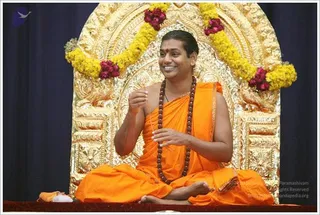
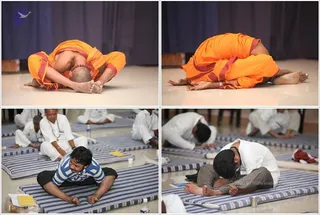
A man in saffron-orange robes sits cross-legged on an ornate gold throne with carved details and a red cushioned seat, adorned with a garland of yellow and red flowers draped across its top. He wears a rudraksha mala around his neck and has long dark hair swept back. Two vases with red flowers stand on either side of the throne against a dark blue draped backdrop. The setting suggests a formal satsang or discourse. Swamiji (probable) is seated on the throne, identified by long swept-back hair, saffron clothing and rudraksha mala.Multi-panel collage. The large central panel shows a figure in orange robes with a red-and-gold garland seated on an ornate gold throne with a peacock-patterned back, set against a dark blue backdrop. Smaller surrounding panels show groups of seated people in white clothing and a woman in pink and a man in white at a gathering, depicting a nithya kriya yoga session. The collage is a graphic and the pictured people are not counted as physical people in this image.A photograph of a seated session in an indoor hall with dark blue curtains and a raised stage. On an ornate gold throne in the centre sits a figure in orange robes, with brass lamps on either side and potted plants on the stage. Facing the stage, a large audience of mostly men in white shirts, dark jackets and colourful tops sits on chairs, some with their backs to the camera, and one man in a blue shirt is in the foreground. Speakers and a camera on a tripod stand at the right edge. The figure in orange on the throne is an appearance-based a person candidate: orange robes and a seated position on a throne, though the cues are not distinctive enough to confirm identity.Collage of three photographs from a Nithya Kriya session shown on a page about a diabetes cure kriya. Top panel: a close-up of a man's hand writing with a green pen on printed handout pages, bare feet visible on a blue-and-white striped mat. Middle panel: a man in white clothing with a wristwatch and ring writing with a black pen on printed sheets on a striped mat. Bottom panel: several women seated reading printed handouts, one in a pink top with a gold necklace in the foreground, another in a green top. The collage's pictured activities are not counted as physical people; the photos show note-taking and reading during the class.A smiling man with short dark hair and a red bindi sits cross-legged on a red-draped platform in front of an ornate gold throne-back decorated with yellow marigold garlands and pink flowers. He wears saffron-orange robes and a long wooden rudraksha mala, and holds small objects between his fingers in both hands as he speaks. a person is shown in a discourse setting. The backdrop is dark blue with a golden arch behind the seat.Four-panel collage of yoga postures. Top two panels show a bald man in orange robes and orange trousers performing a forward-folding stretch on a light wooden floor, with a dark blue curtain behind him. Bottom two panels show a group of people in white clothing and a few in white and striped tops lying on striped blue-and-white mats, bending forward toward their feet in seated stretches, with a water bottle and papers on the floor. Kriya instruction pages are depicted as part of this graphic composite.

eNRelationship-Darshan

63 photosSource gallery
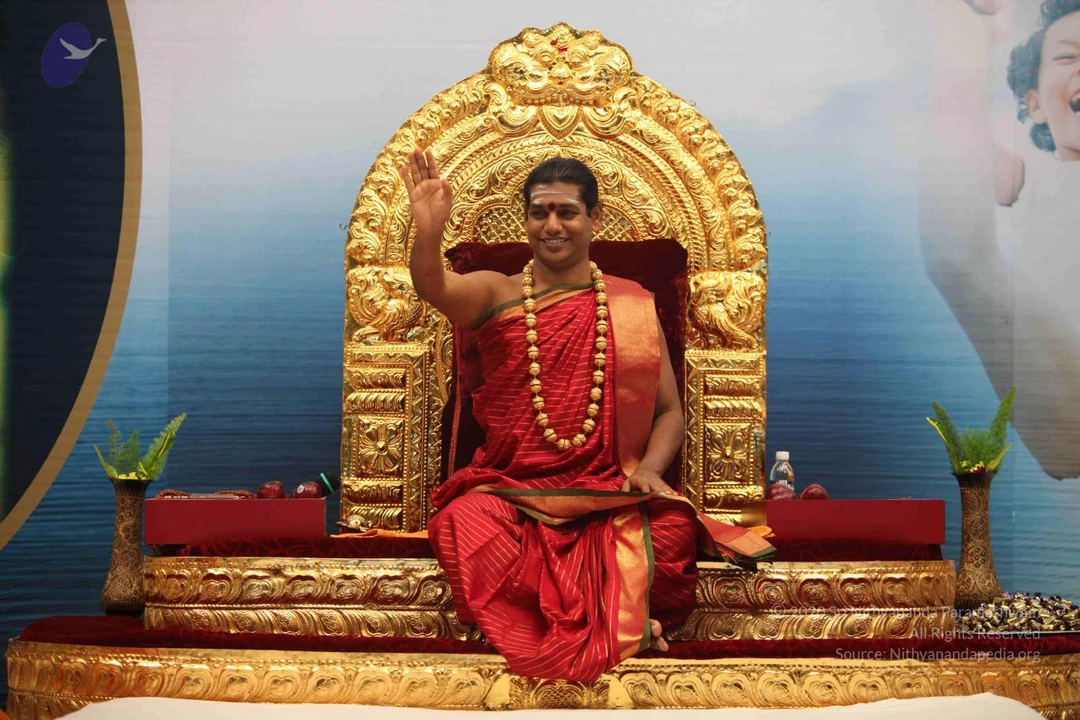
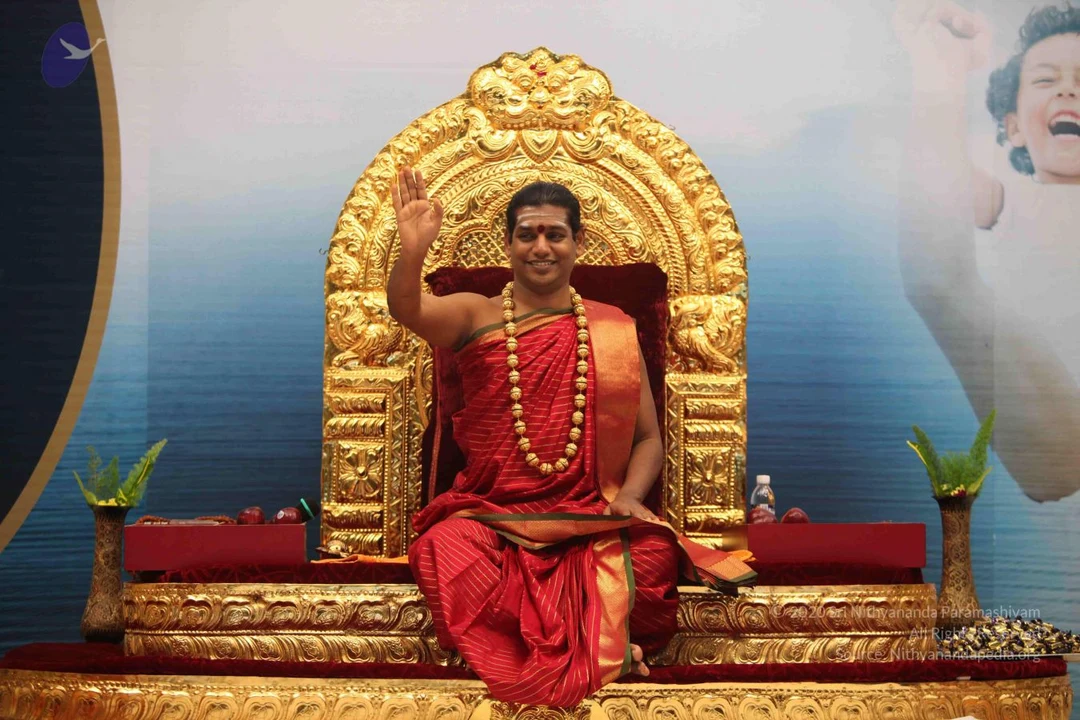
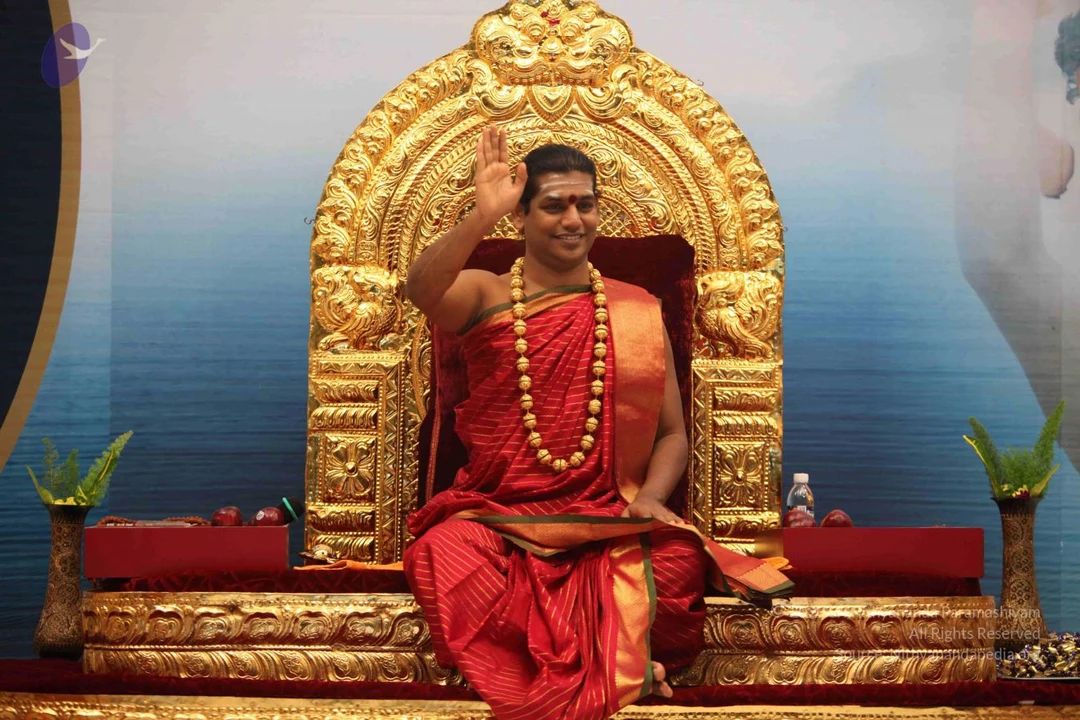
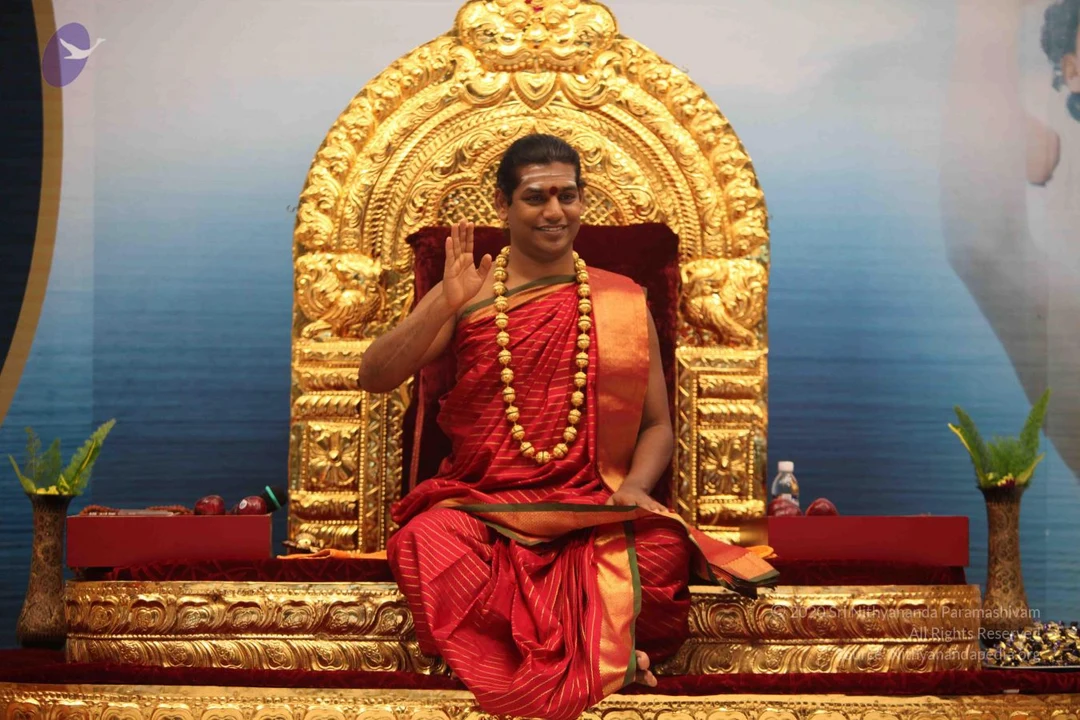
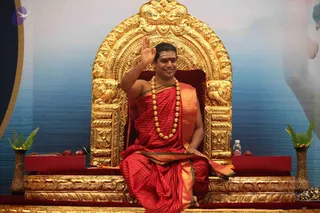
A seated man in a golden ornate throne raises his right hand in a blessing wave while smiling. He wears a red and gold striped silk garment with a gold border and a long gold bead necklace, with a red bindi and a sandalwood forehead mark. Golden lion-carved throne armrests frame him, with a red cushioned platform, potted green plants with flowers, a water bottle and red fruits on the dais, and a blue backdrop. a person by appearance cues: ornate saffron-red clothing, golden necklace and throne.A seated man in red and orange ceremonial robes sits on an ornate gold throne with a red cushioned backrest. He wears a long gold bead necklace and a small red tilak on his forehead, and raises his right hand in a blessing gesture while smiling. Red fruits and a water bottle rest on a red table beside the throne, with potted green fern plants on each side and a blue backdrop behind him. Because the page identifies this event as involving a person and the appearance shows several cues (ornate gold throne, gold necklace, saffron-orange robes), he is labelled a person as the seated figure receiving honour.A man seated cross-legged on a red velvet cushion before an ornate gold-leaf arched throne with lion carvings and a crowned top. He wears a red and gold striped silk garment with a gold-bordered shawl draped over his shoulder, a long gold bead necklace, and a red bindi with white tilak on his forehead. His palms are pressed together in a namaskar greeting and he smiles. Red apples and small offerings lie on a red table in front, a water bottle sits at the right, and a blue backdrop of sea and sky stands behind. Appearance-based cues including the ornate throne, gold necklace and red silk fit the page's a person reference, but the face-independent cues are not distinctive enough to confirm identity, so this is a seated devotee-style figure with unsure identity.A man seated on an ornate gold throne with a carved arched back and lion-like carvings on the armrests, set against a blue sea backdrop. He wears a red and gold silk garment with a gold-bordered drape, a long gold bead necklace, and a red bindi, with hands joined at his chest. A small water bottle and red fruits sit on a red table in front. Appearance-based label: a person, seated in the teaching posture of a guru on a peetha throne, with the hands in a calm gesture. The photo carries a visible copyright line on the lower right.A man seated on an ornate gold throne with arched carved back and lion-like side supports, speaking into a handheld microphone with his right hand raised in a gesture. He wears a red and orange-striped dhoti-style garment with a gold-bordered shawl, a long beaded necklace of gold-coloured beads, and bare upper body. Red cushions flank the throne, with green fern-like plants in ornate gold vessels on either side and a water bottle nearby. Behind him a backdrop shows a blue water scene and a photograph of a laughing curly-haired child with arm raised.A man seated cross-legged on an ornate gold throne with carved lion-head arms and a gold arched backrest, speaking into a handheld microphone with one hand raised in a teaching gesture. He wears a red striped dhoti and matching shawl with gold border, a gold-bead mala necklace, and a red tilak mark on the forehead. Red cushioned platforms, green leaf vases and a water bottle sit beside the throne, with a blue backdrop showing a laughing child. a person cues: ornate gold throne, red-and-gold ceremonial dress and gold-bead mala, teaching a seated audience.

Meenakshi-TiruKalyanam

191 photosSource gallery
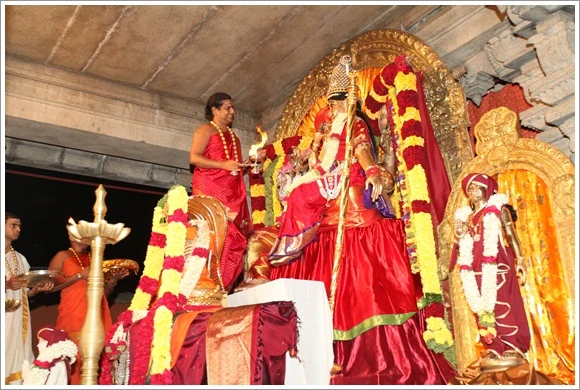
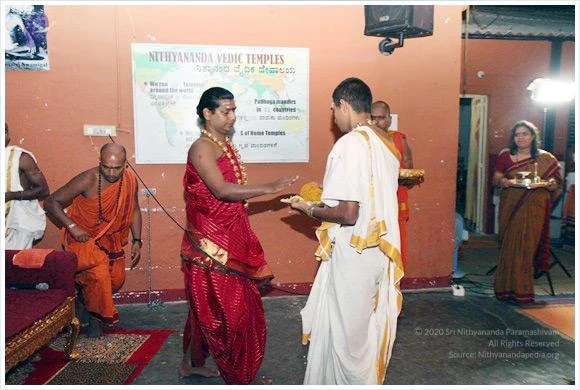
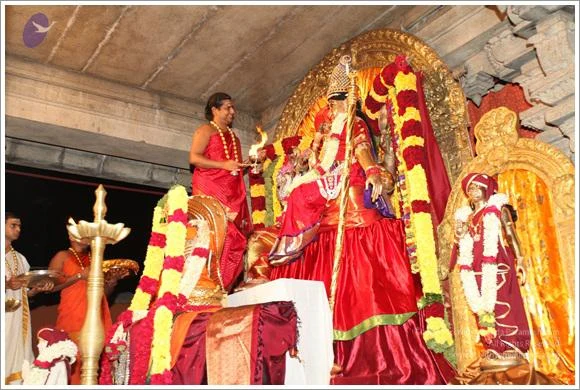
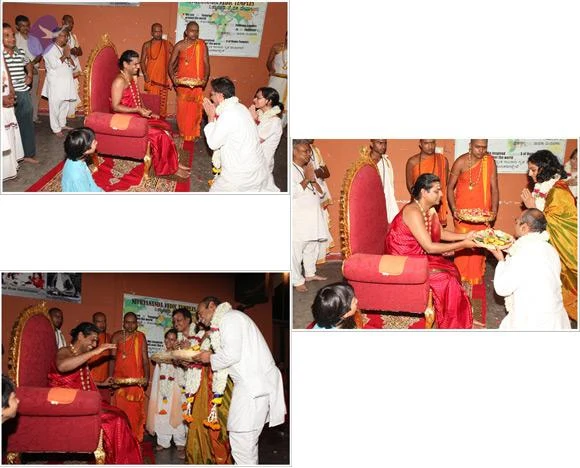
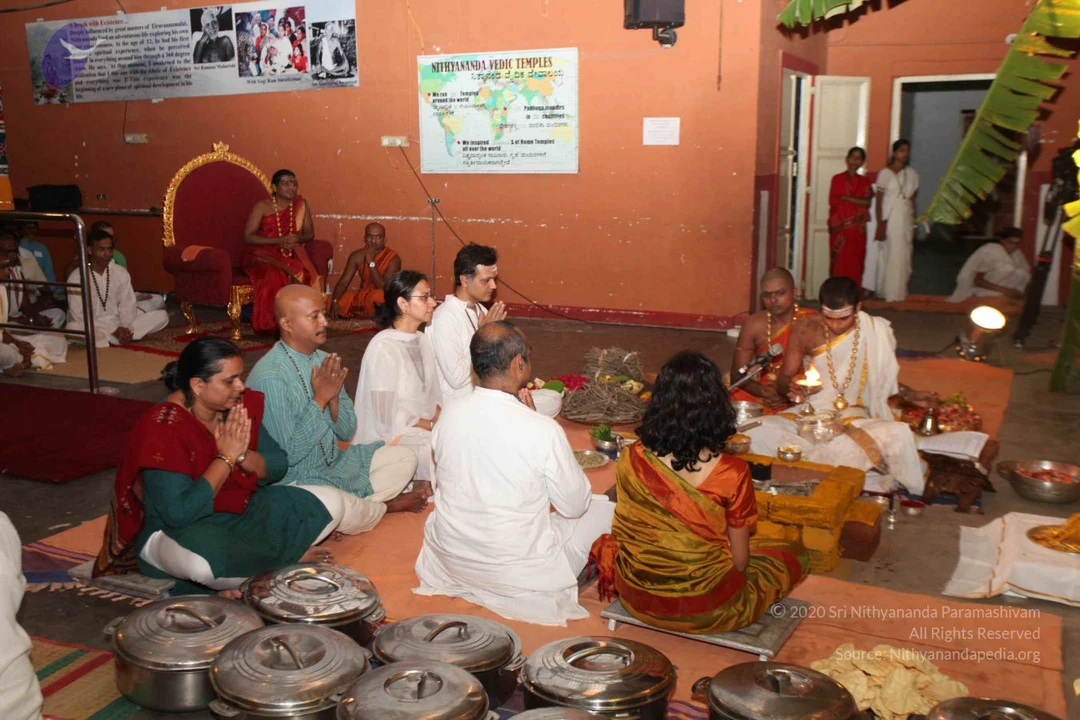
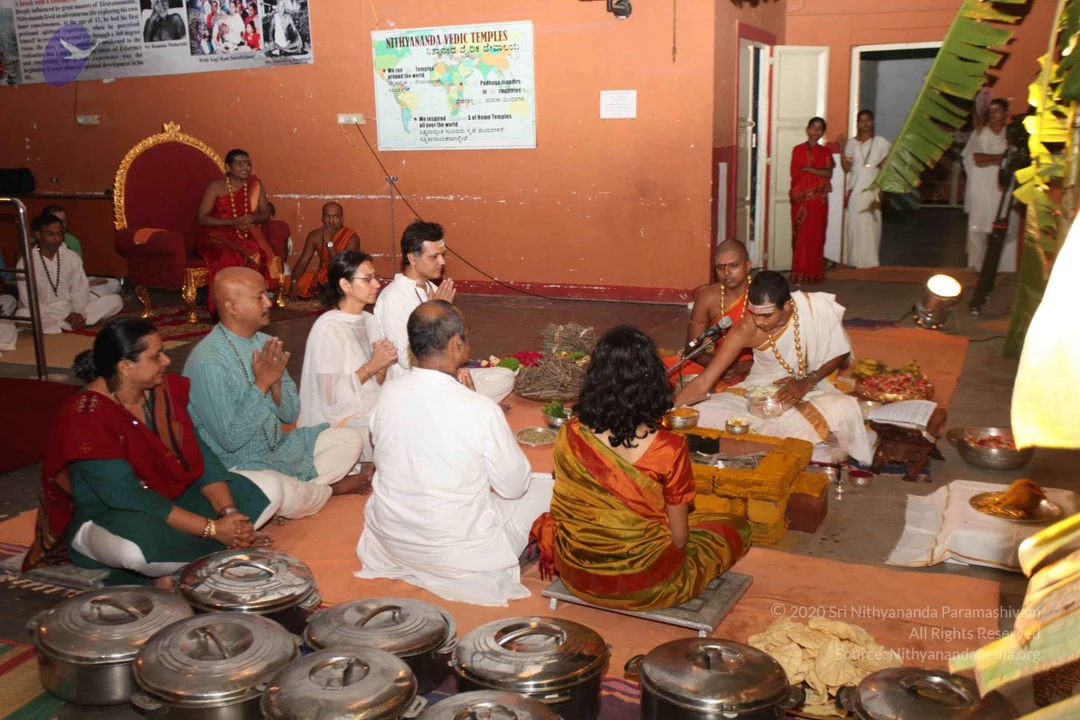
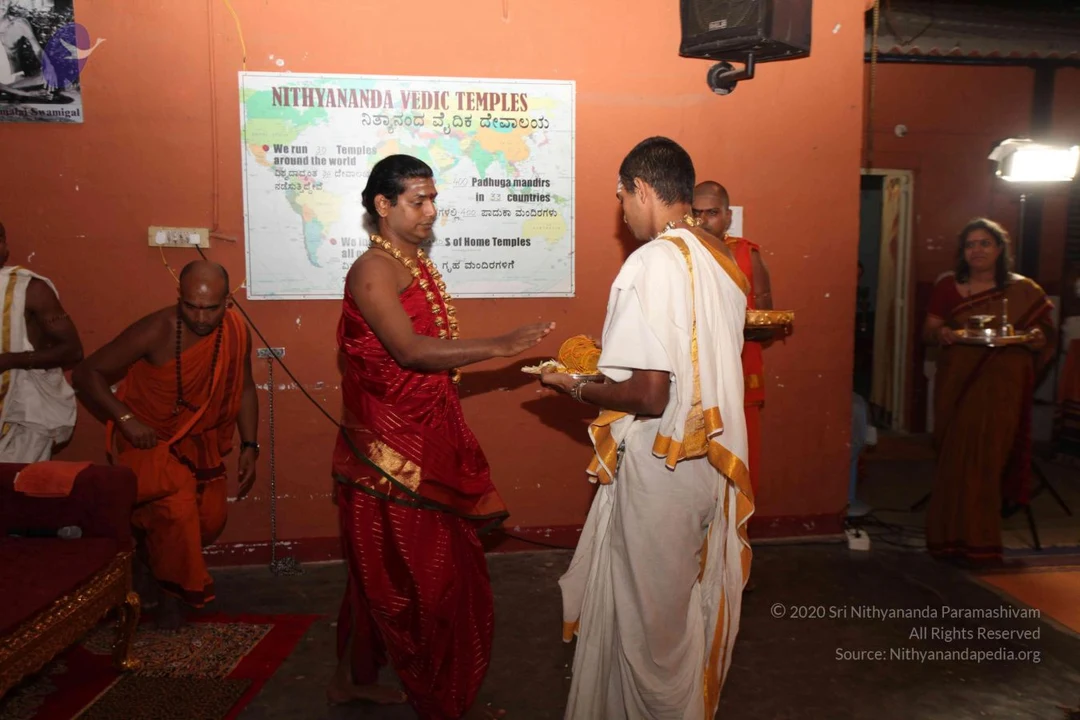
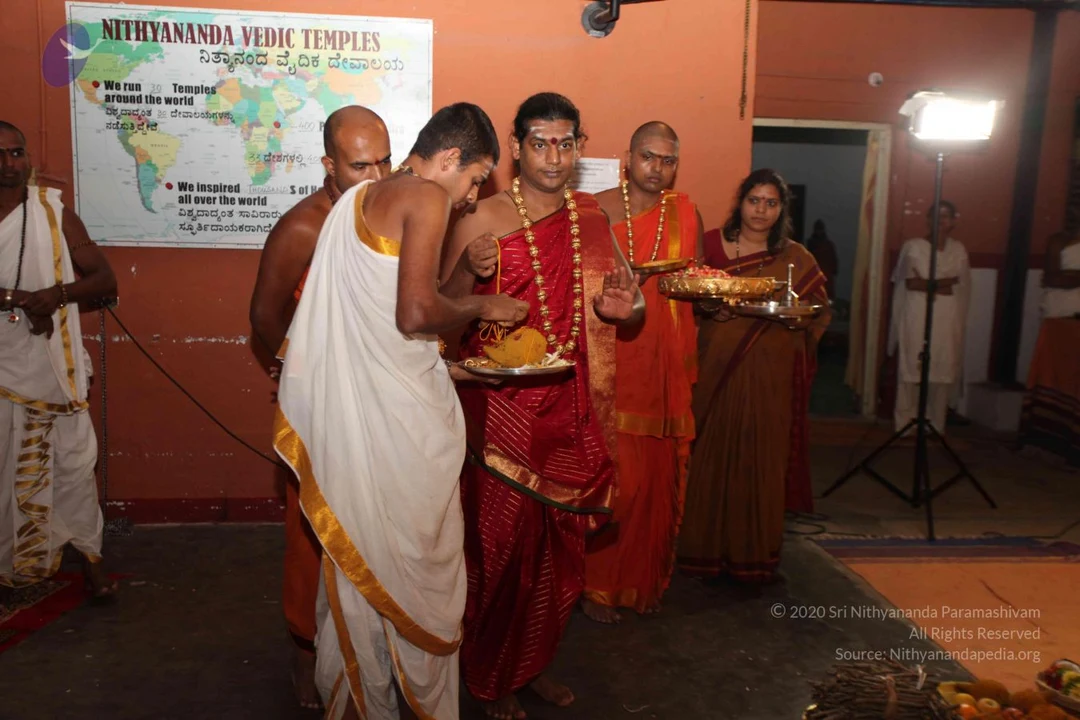
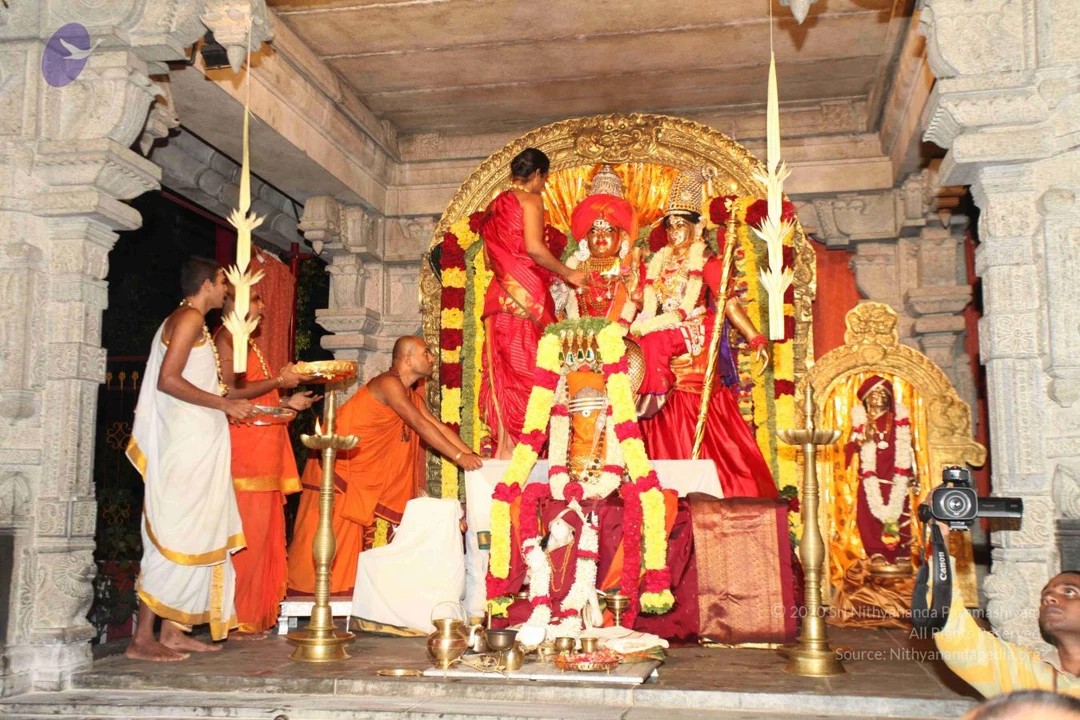
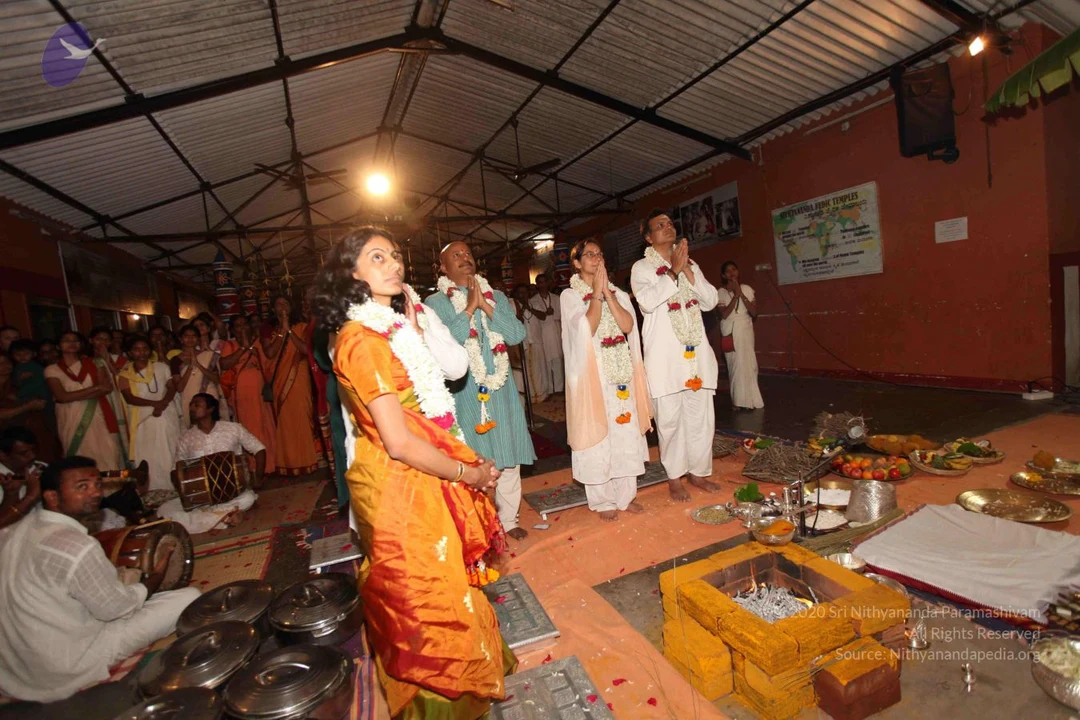
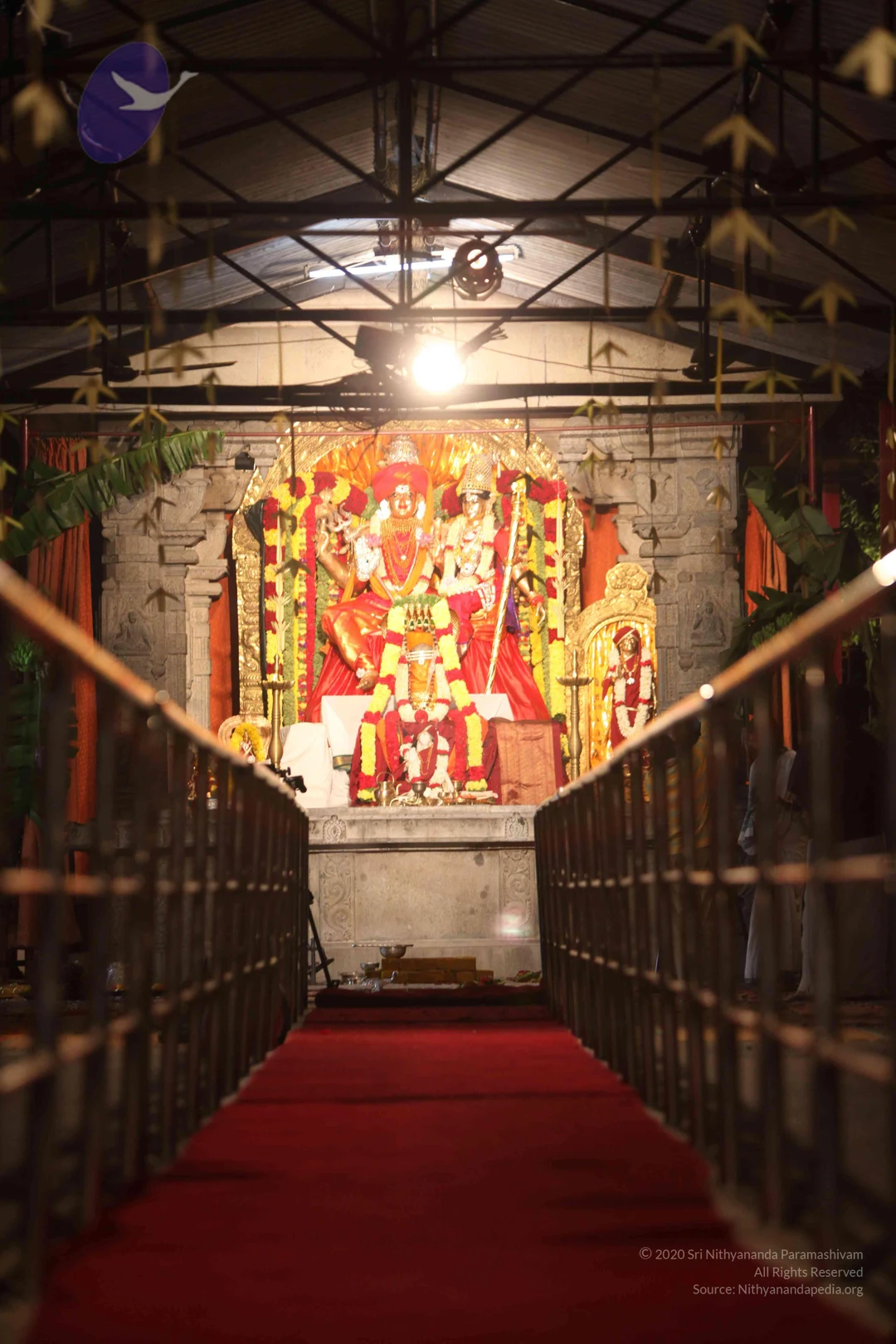
A photograph of a group of people in a hall performing a seated yoga or kriya session. Several people wear white and cream traditional clothing, and a few wear orange or red garments. The room has a wooden ceiling and warm lighting. The people are arranged in a line or semicircle, with some standing and others seated on the floor. No speaker or dais is clearly visible, and the scene appears to be a guided group practice.A photograph of a decorated Hindu temple shrine with a colourful deity murti standing in the centre, surrounded by floral garlands, flower arrangements and lit oil lamps. Bright red, orange and yellow decorations frame the central figure, and the carved stone pillars of the temple hall are visible on both sides. No people are visible in the frame.A small photograph of a seated man in saffron-orange robes with a red-and-white beaded garland, seated on a red cushioned throne in a warm, red-toned hall. Two people in white clothing sit behind and beside him, partly visible at the right edge. The setting looks like a satsang or teaching session, with a yoga-related text page from the nearby material about Gomukhasana and Uddiyana Bandha on screen context.A ceremonial scene in a room with orange-painted walls. A man in a red and gold-bordered shawl and a long gold-beaded necklace stands centre-left, gesturing toward a young man in white dhoti with gold border who holds a brass plate with fruit or sweets. At left, a bald man in orange robes sits beside a red-cushioned seat, and to the right a woman in a red sari with gold border holds a brass tray. Another orange-robed figure stands in the background. Behind them hangs a wall map titled Nithyananda Vedic Temples. Nithyananda Vedic Temples. No swami identity can be confirmed from appearance.A small photograph of an indoor ritual space in a temple-like setting. Several people in white and cream traditional clothing stand and sit near a lit lamp or altar area with brass vessels and a red-clad figure in the centre. Ornate pillars and a patterned floor frame the scene, with a kalasha-style vessel and offerings in view.A photograph inside a temple sanctum with ornate stone pillars and a gilded arch. A central figure dressed in saffron-orange robes sits on a raised seat decorated with red and white flower garlands, with a large garland draped across the front. Beside him stands a priest in white dhoti and a white upper cloth holding a brass tray or plate. Two tall brass lamps with lit flames flank the scene at left and right. A bronze-coloured deity murti stands in a small shrine niche at the right edge, and a smaller seated figure in orange sits at the lower left. Brass vessels and offerings are arranged on the floor in front of the raised seat.

Varanasi-Center-Reopening

8 photosSource gallery
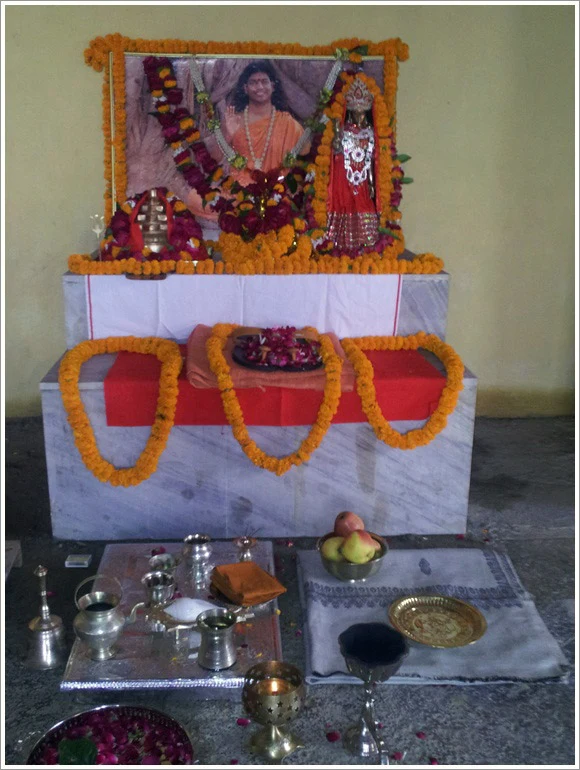
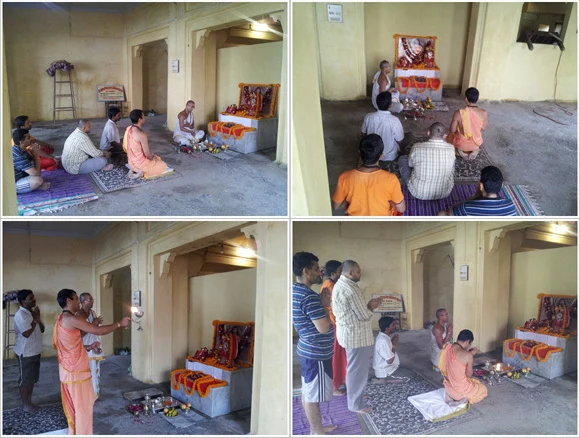
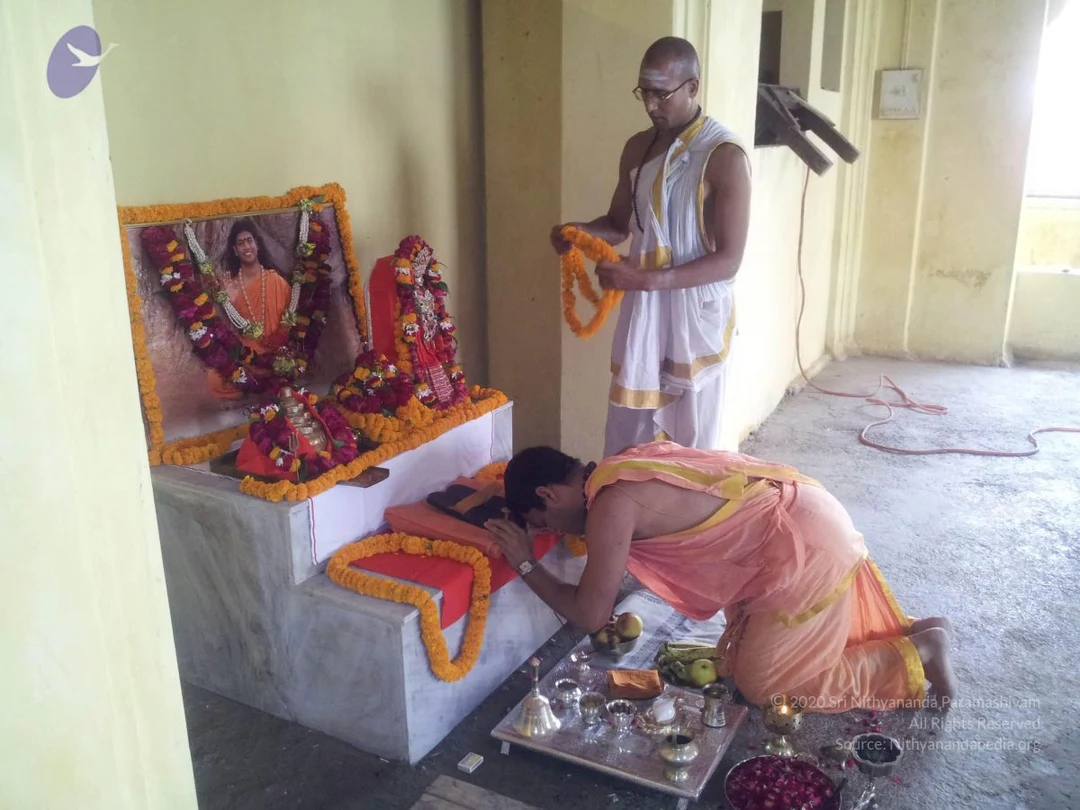
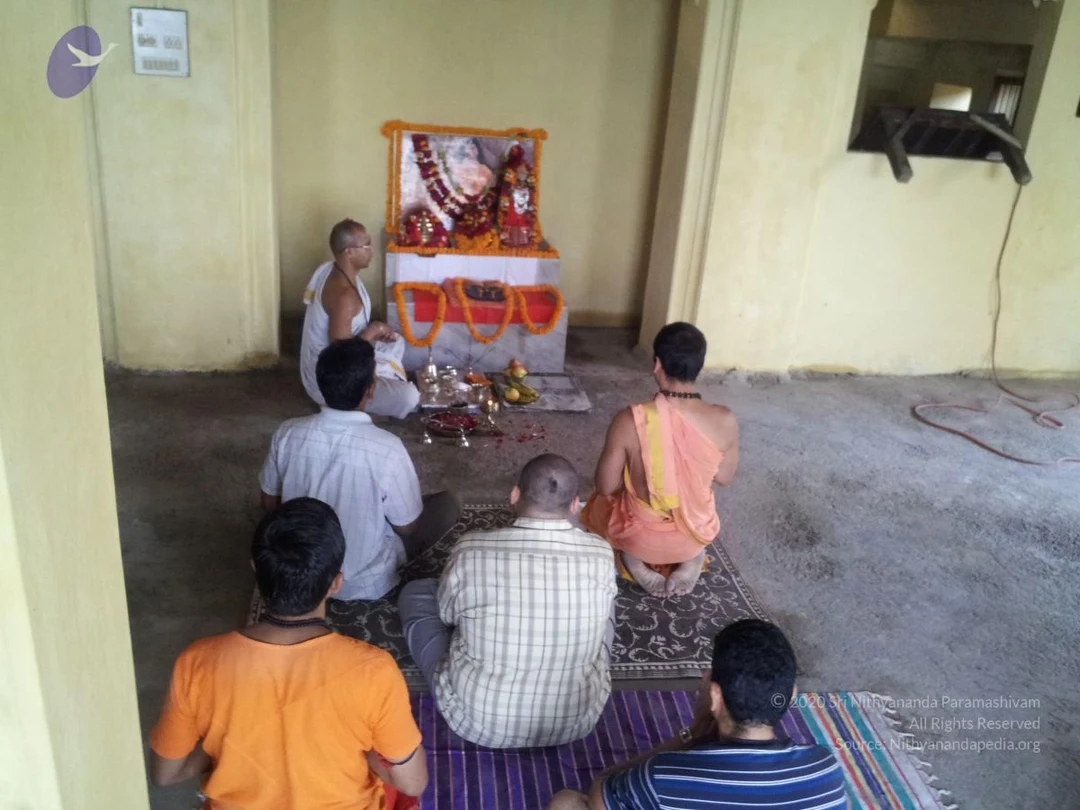
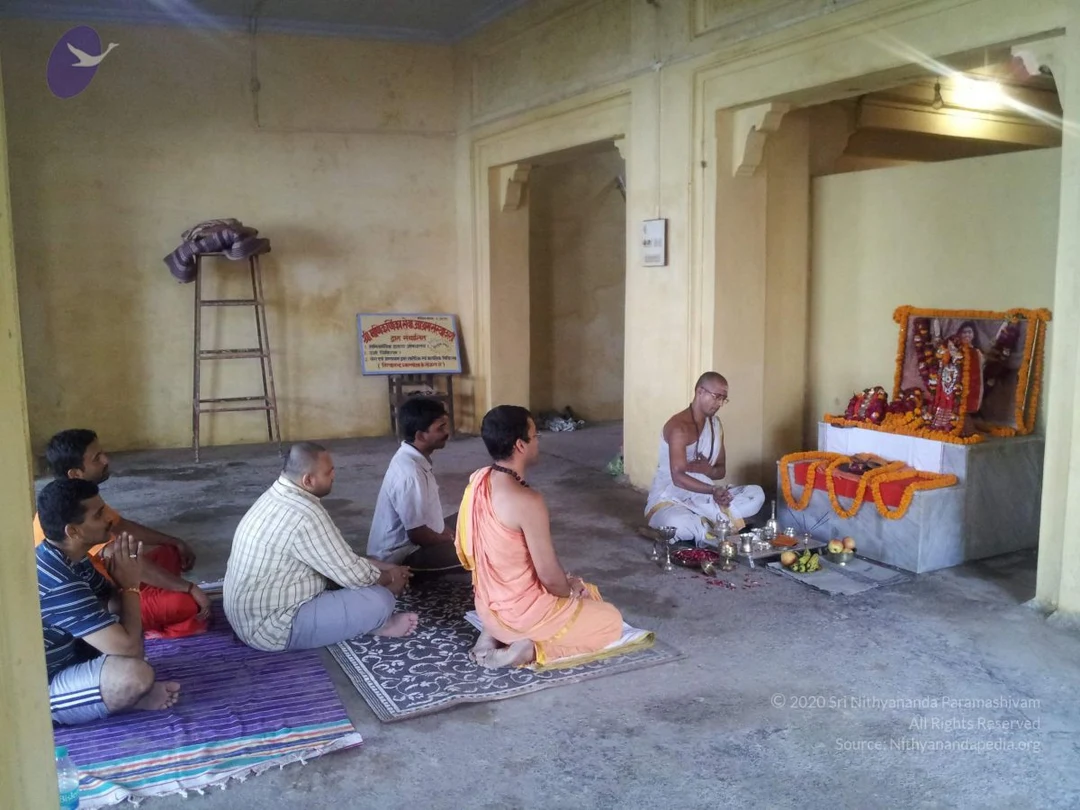
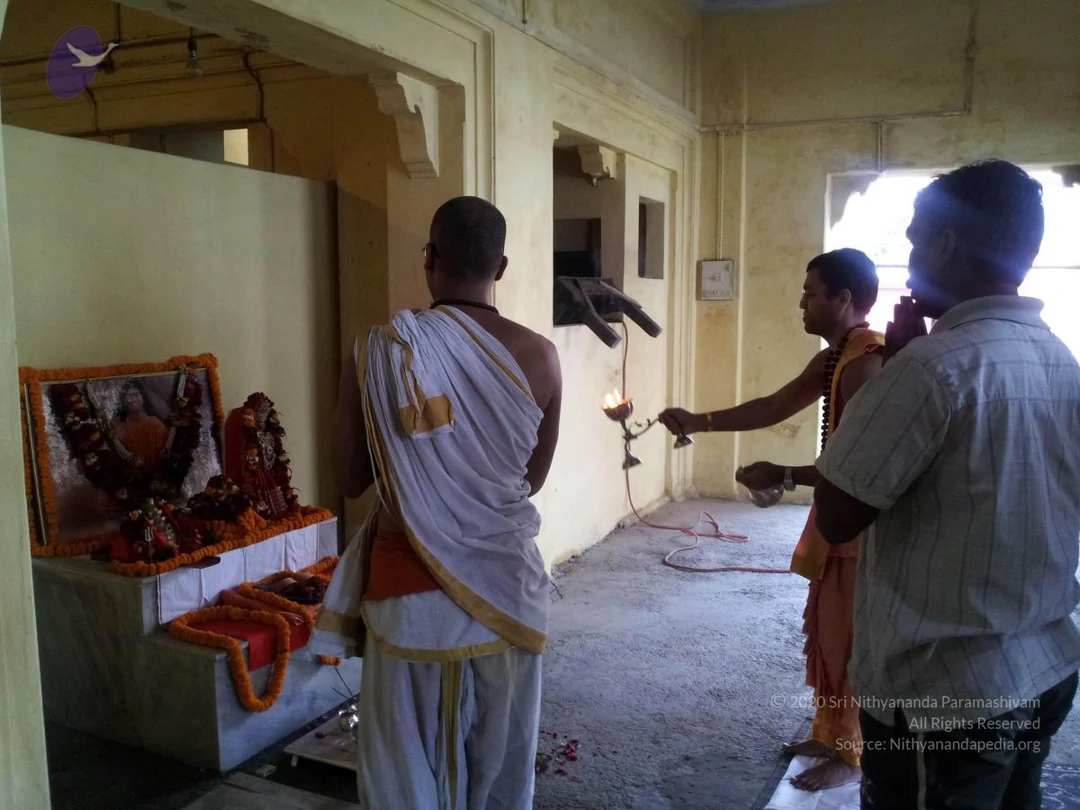
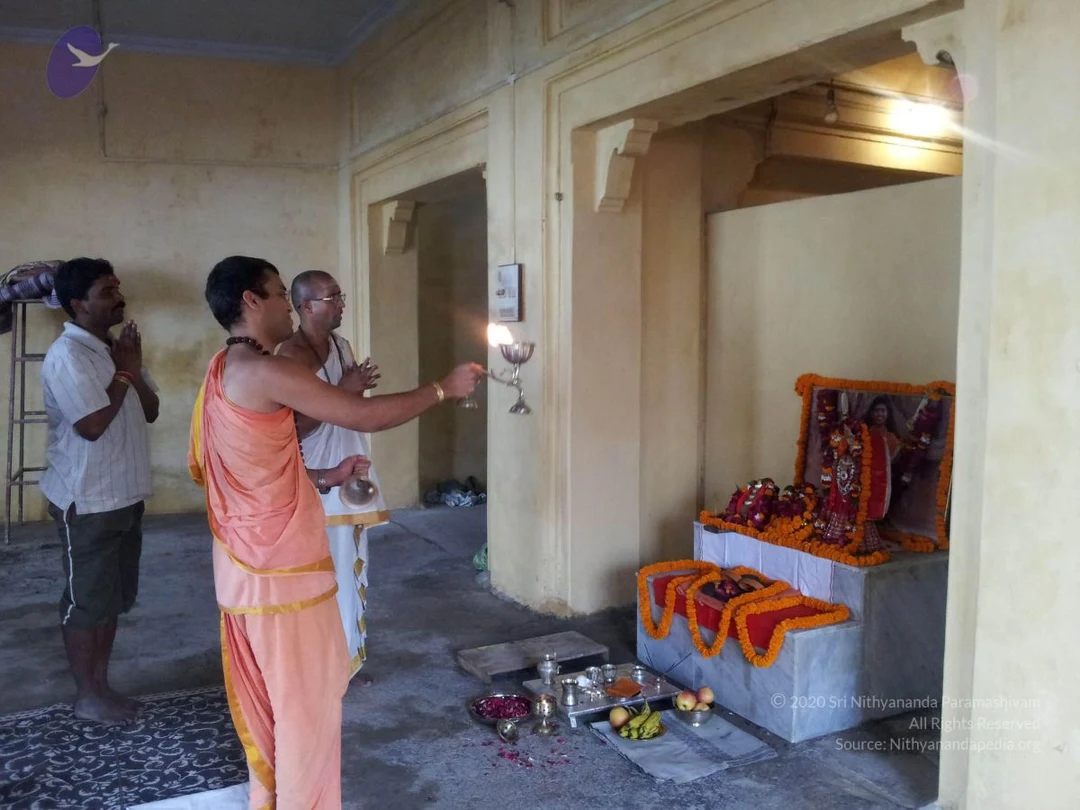
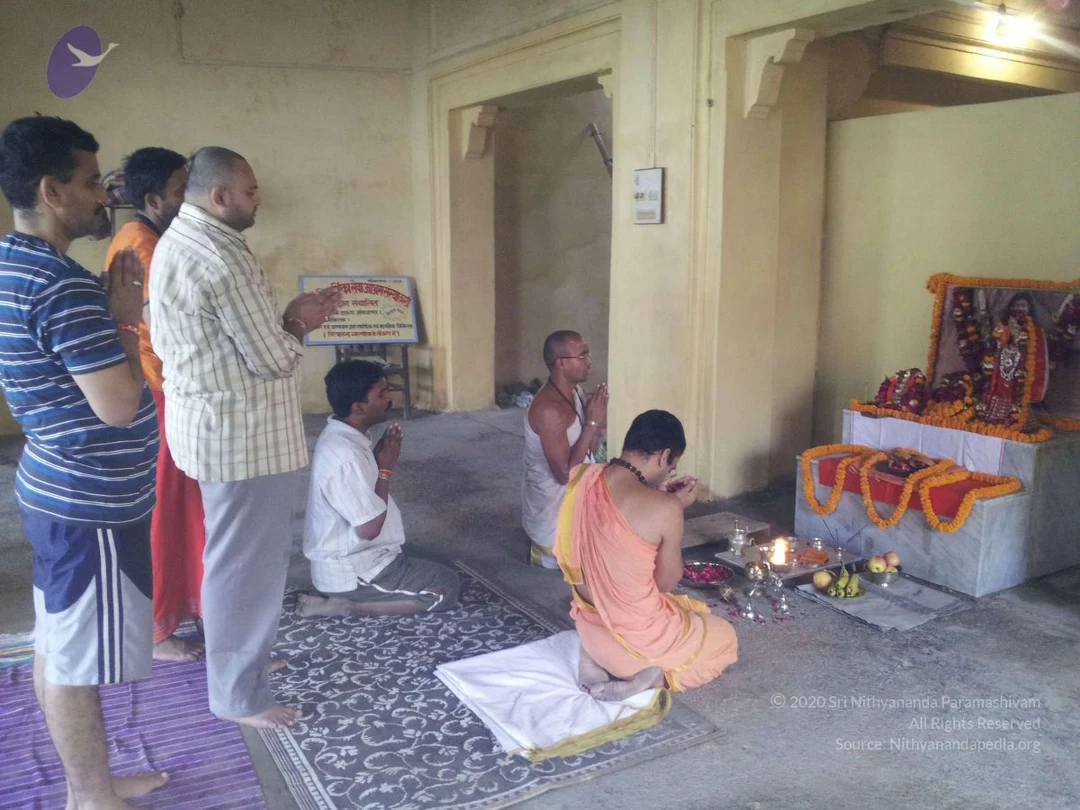
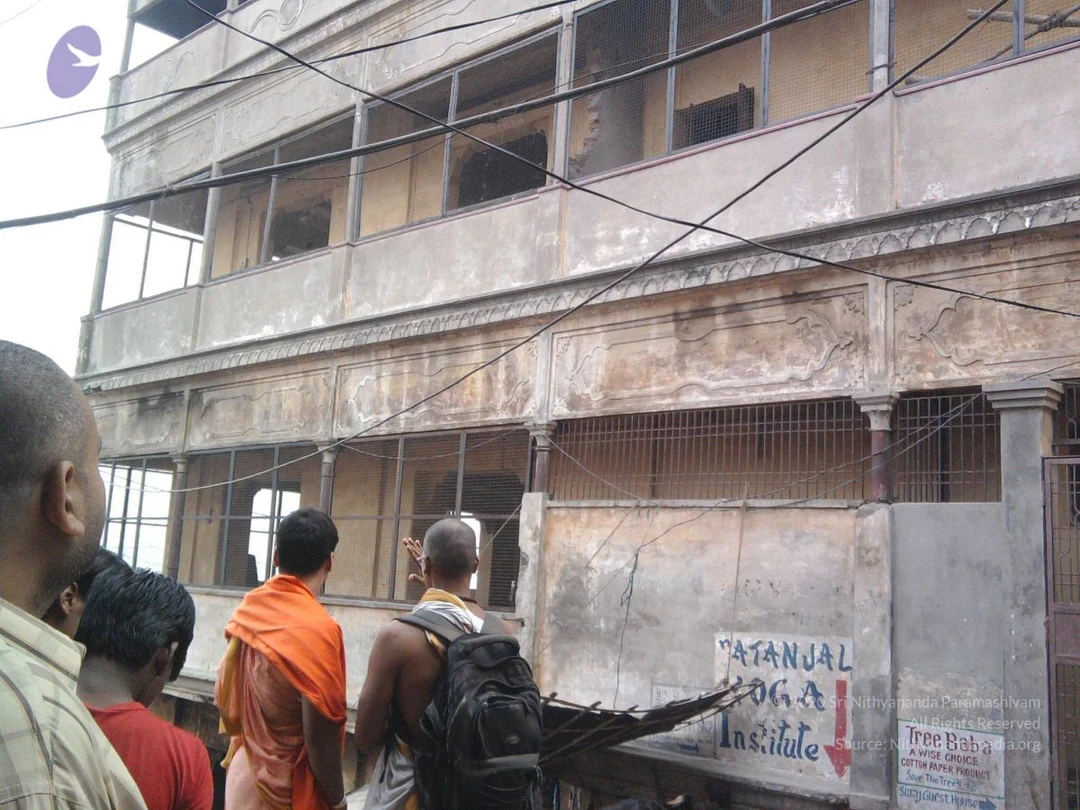
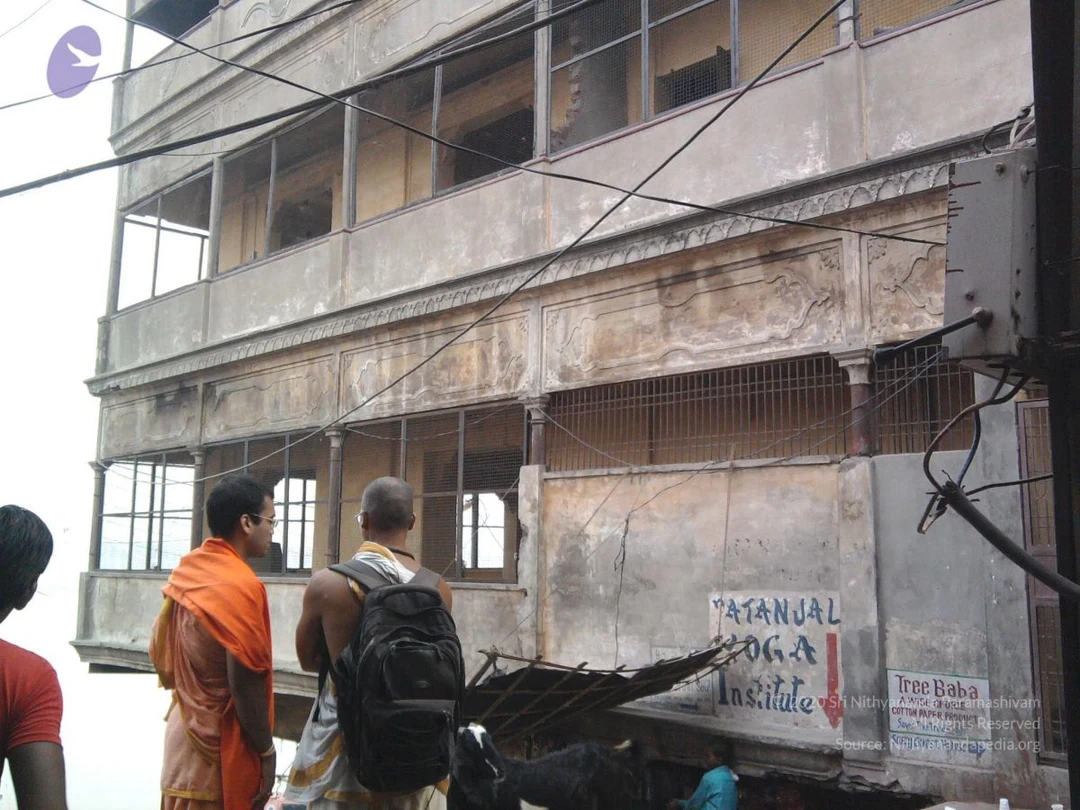
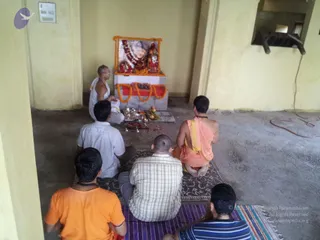
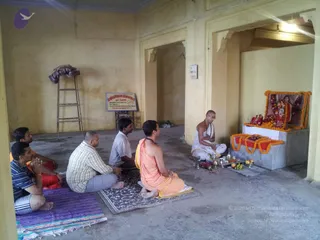
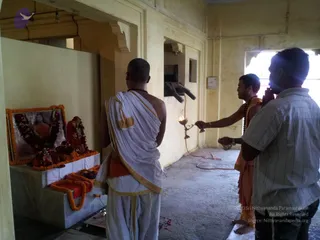
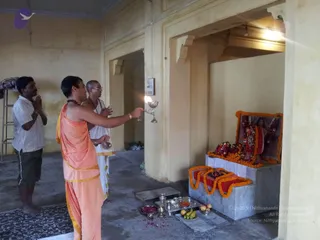
A devotee in an orange-pink dhoti kneels with forehead bowed low before a marble platform draped in orange and red cloth, decorated with marigold and rose garlands. Behind it hangs a framed portrait labelled "Paramahamsa Nithyananda" showing a smiling figure in orange robes amid flower garlands. A second figure in white dhoti with yellow border and bare chest stands to the right holding a marigold garland, with a brass tray of bells, lamps, bowls, fruit and rose petals in front. The setting is a plain pale-yellow hall with a concrete floor.A photo of a small yellow-walled room where a shaved-headed man in white ritual clothes sits cross-legged before a shrine decorated with orange marigold garlands. The shrine holds a framed deity image with red flower garlands, and small brass vessels and offerings sit on the floor in front. Five people face the shrine seated on mats: a man in an orange-and-white shawl with a rudraksha mala, a man in a white checked shirt, a bald man in a checked shirt, and two others in an orange t-shirt and a striped shirt. The rear-facing figure in orange has long hair and no visible crown or ornate adornment, so the a person identity is unsure. The scene shows a group practice or puja in a plain room.A photograph of a small bare-walled room with yellowish plaster and a concrete floor, where a shaven-headed priest in white dhoti and shawl sits cross-legged before a marble-topped shrine. The shrine holds a deity murti decorated with marigold garlands, with brass puja vessels, fruit, flowers and a red cloth in front. Five seated men in casual shirts and dhotis, one in an orange robe with a rudraksha mala, sit on mats facing the shrine. A small framed sign with Sanskrit text hangs on the wall, and a pair of folded cloths rests on a wooden stand. The priest is not presented with identifying cues, so no a person candidate is described.A photograph of a ritual at a shrine in a plain yellow-walled hall. On the left, a framed portrait of a figure in orange sits on a white altar draped with orange marigold garlands, with red and gold decorations beside it. A bare-chested man in a white dhoti and shawl with orange border, shaved head, stands with his back to the camera facing the altar. A second man in an orange dhoti and rudraksha mala holds a brass oil lamp with a lit flame and a small bell, offering aarti. A third man in a striped grey shirt stands at right with hands folded. Rose petals lie on the floor.A photograph inside a plain pale-yellow room where a man in a saffron-orange dhoti and orange upper cloth, with a rudraksha mala around his neck, holds a lit oil lamp toward a shrine niche. The niche holds a framed deity image garlanded with marigolds and a marble platform decorated with marigold strands, plus a steel puja tray with a bowl of red petals, small brass vessels and fruit on a cloth. Beside him, a man in white dhoti and shirt with folded hands stands in prayer, and a third man in a checked shirt stands at left with palms joined. Two of the three people in the scene are clearly visible in ritual posture; the lamp is being offered as aarti. No a person candidate is established from appearance, so the identity is left unsure.A photograph inside a plain yellow-walled hall showing a puja before a framed deity murti on a white marble platform decorated with marigold garlands, fruit, and a lit oil lamp. A man in an orange robe with a rudraksha mala kneels at the platform, hands folded in prayer, while a shaved-headed man in white kneels beside him. Another man in a white shirt kneels on a patterned mat, and two standing men in striped and checked shirts stand with palms joined. A small framed sign with script stands at left. Five people are visible.
Maheshwarapooja-Tiruvanamalai

5 photosSource gallery
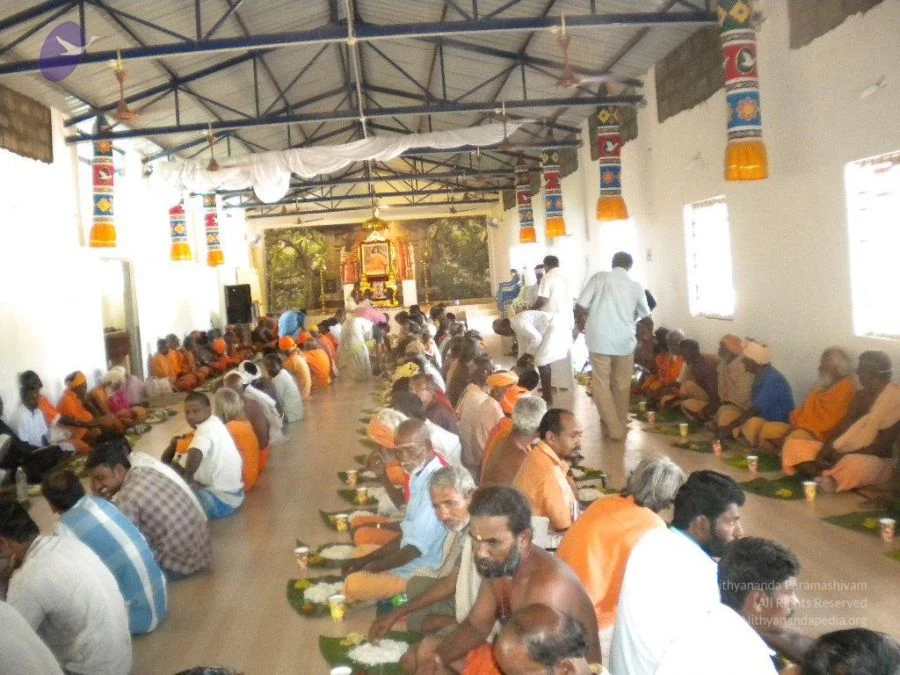
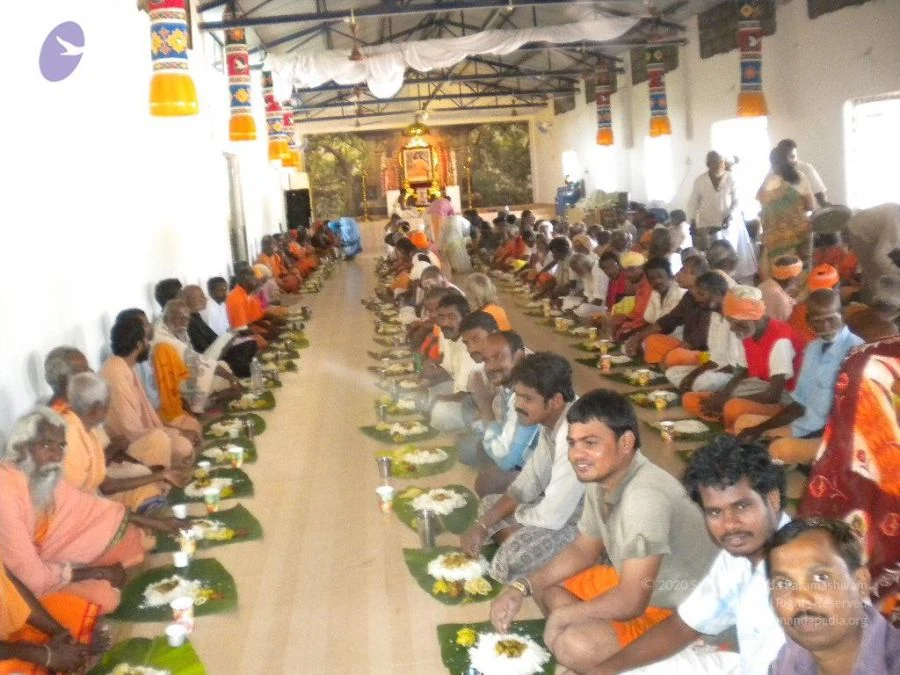
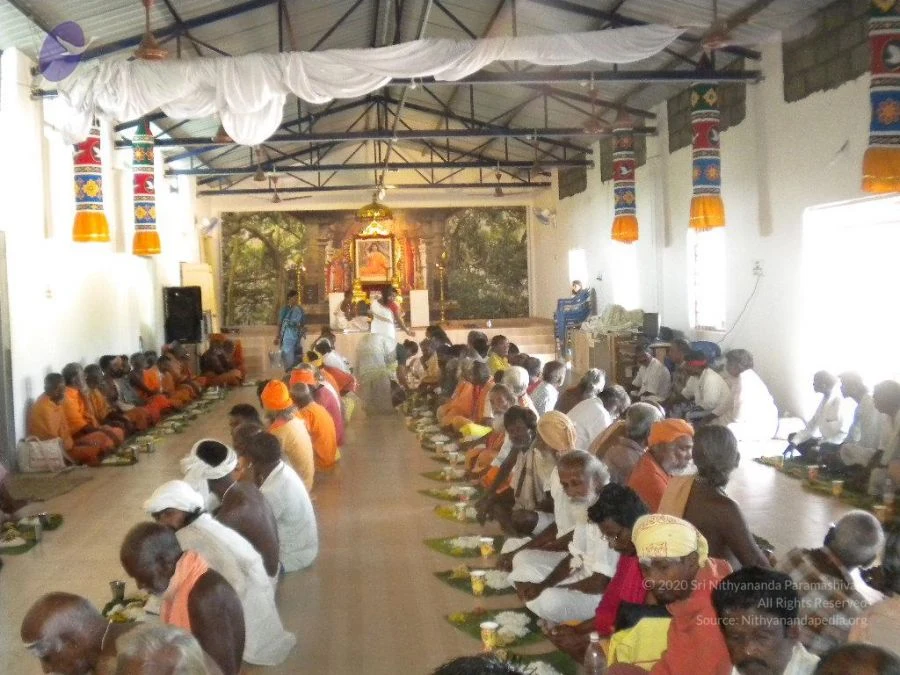
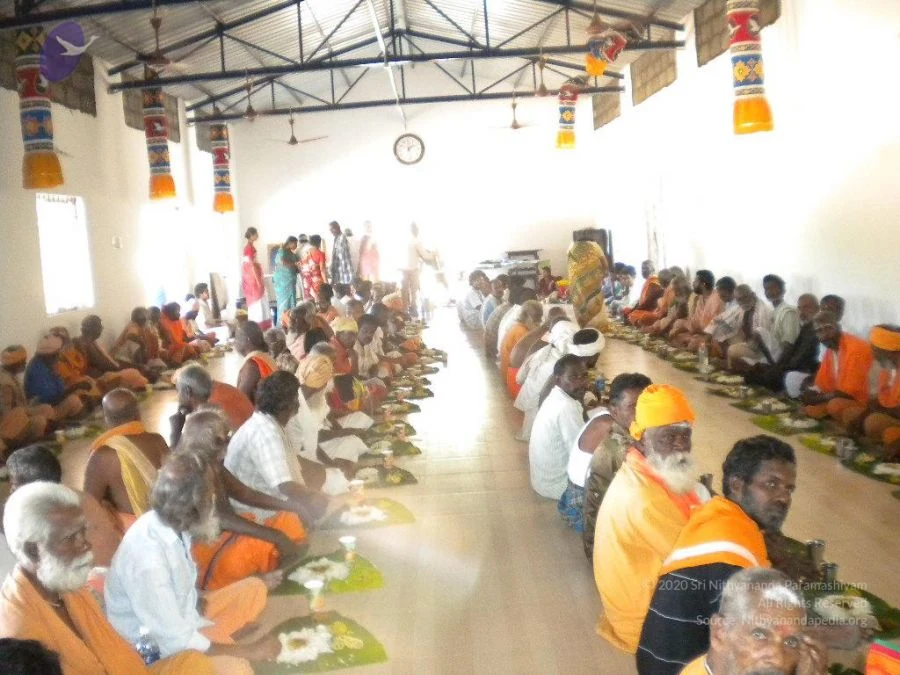
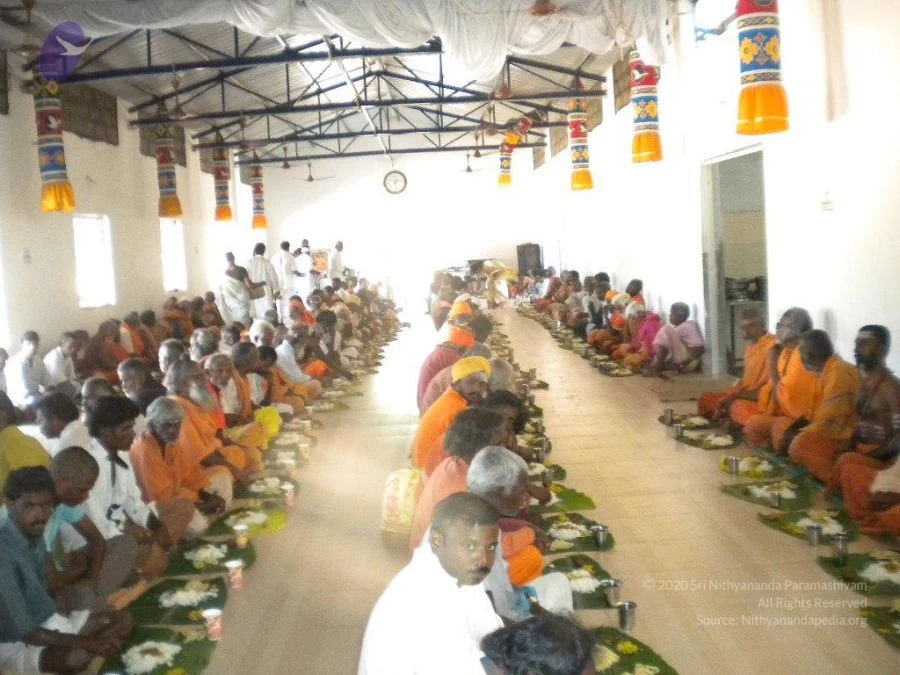
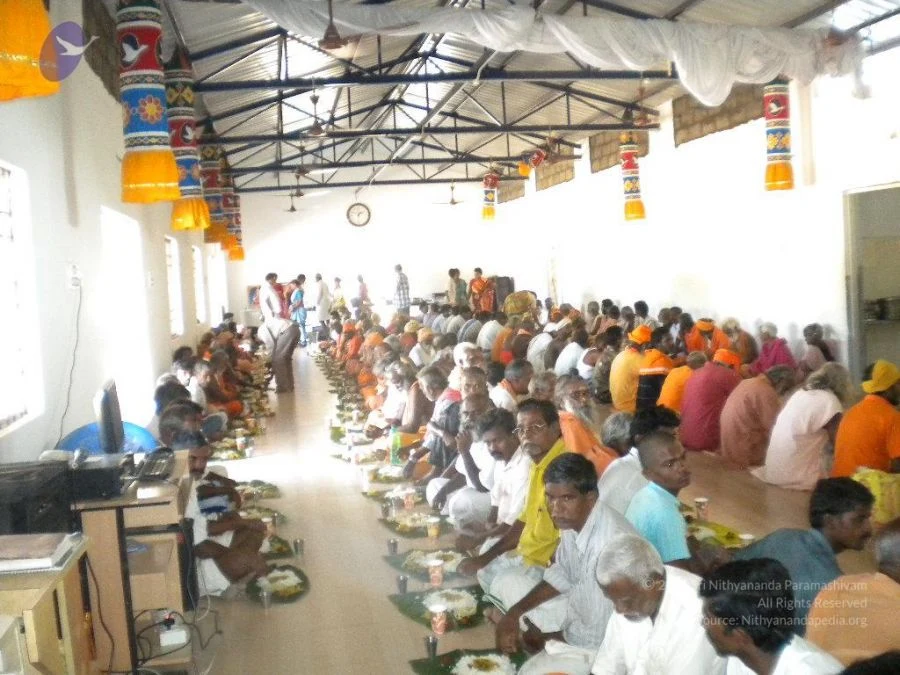
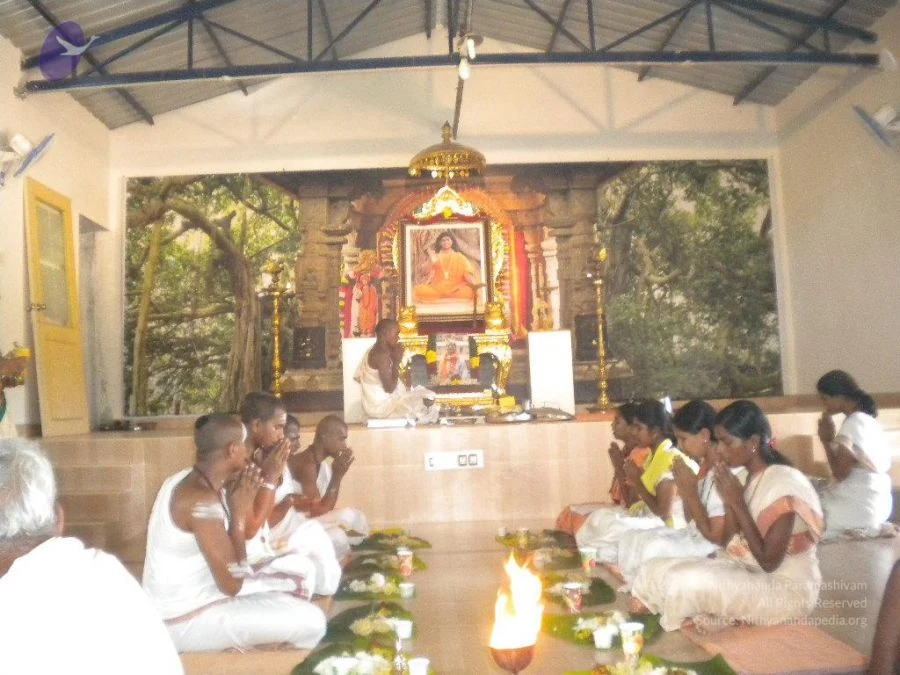
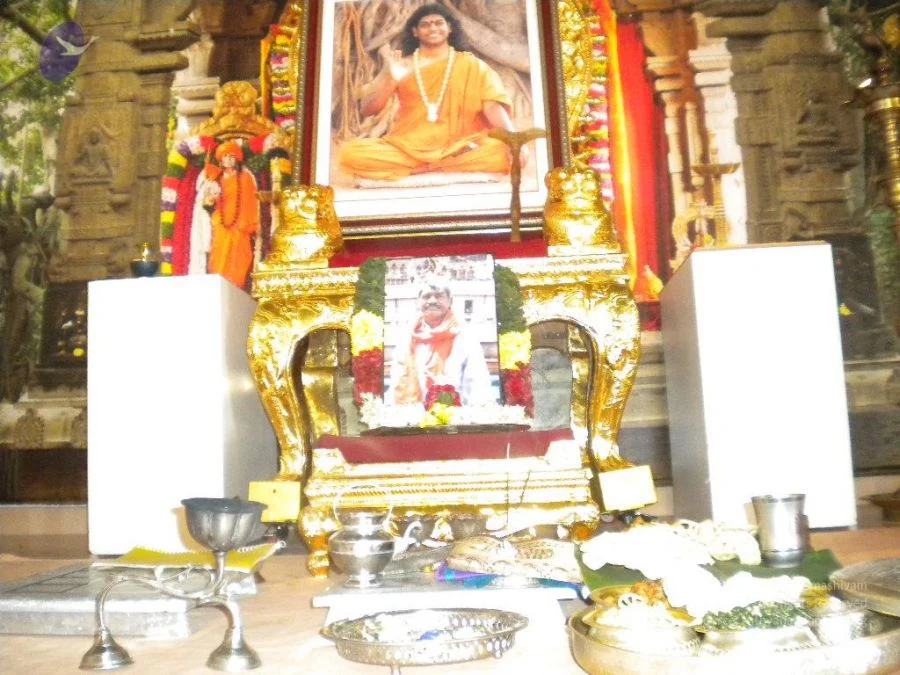
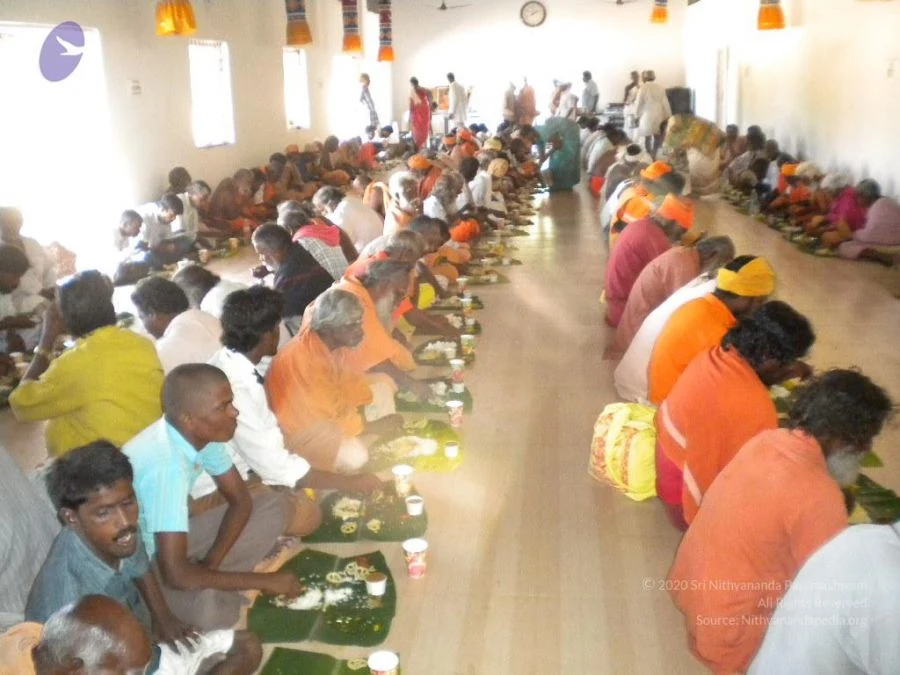
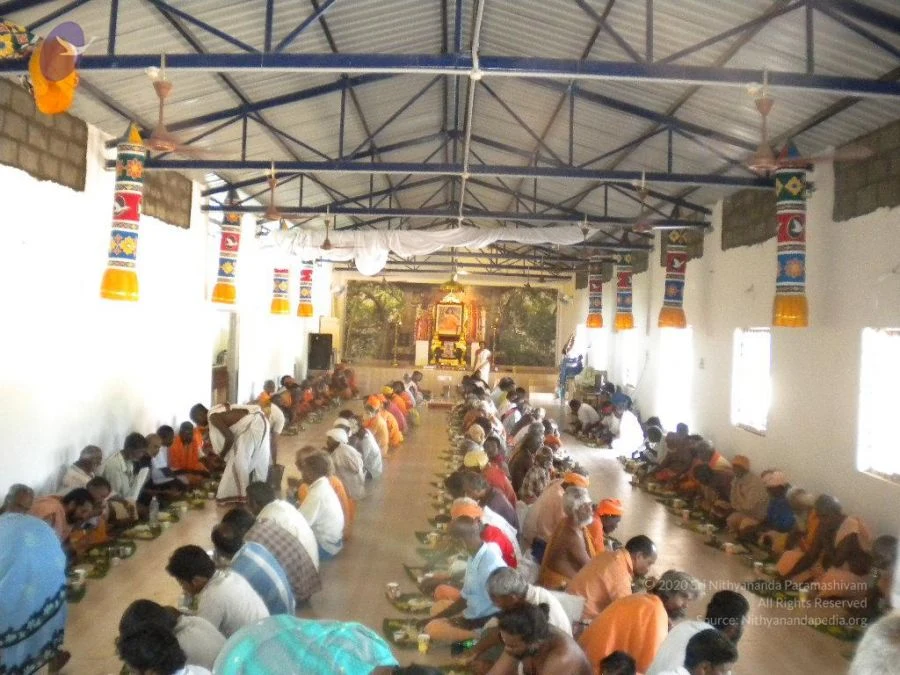
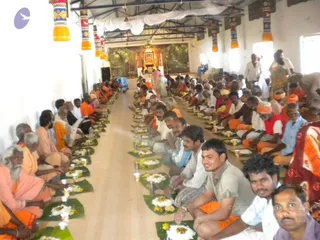
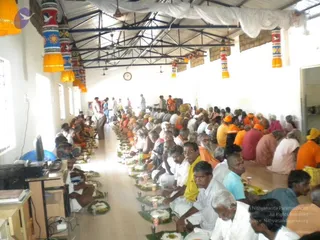
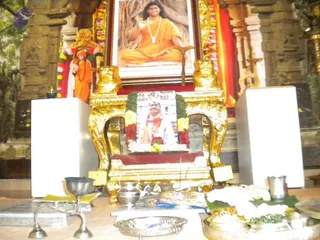
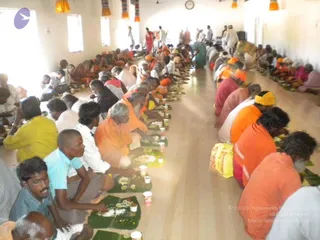
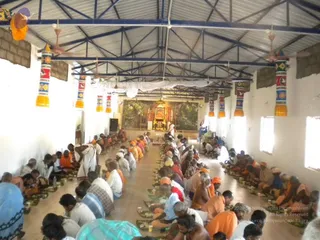
A long hall with a corrugated metal roof, white sheer fabric draped across the ceiling, and yellow and orange fabric hangings with painted decorative columns. Thirty to forty men and older men sit cross-legged in long rows on the floor at banana-leaf place settings, eating from plates with rice and small bowls, many wearing orange or saffron cloths and some in white dhotis. Several attendants in white or orange clothing stand and walk between the rows serving food. A computer monitor and a blue exercise ball sit at the left edge near the wall.Altar display in a temple-style hall with a golden ornate throne flanked by two carved lion heads. On the throne sits a framed printed photograph of a man in a red-orange shawl with a flower garland, set among red and yellow flowers. Above it hangs a large framed portrait of a long-haired figure in saffron robes with a rudraksha necklace, seated in meditation with one hand raised, in front of a banyan tree. A small figure in orange robes stands at the left beside a garland. In the foreground are silver ritual vessels, a brass oil lamp, a plate of white flowers and green leaves, and a silver tray. Carved stone pillars and deity reliefs frame the scene.A long hall with white walls and wooden floor shows many people seated in two rows on the floor, eating a meal served on green banana leaves with small cups of water. Many wear orange or saffron garments, while others wear white, yellow, or pink clothing. Some seated men wear orange shirts and yellow headbands. Several figures stand at the back of the hall near orange and yellow hanging decorations, and a wall clock is visible. The scene appears to be a communal meal in a religious setting.A long hall with white walls and a blue-painted metal roof fitted with ceiling fans holds a large seated gathering. Rows of people sit cross-legged on the floor before banana-leaf plates and small cups, many in saffron/orange robes and white dhotis, some in white and light clothing. At the far end a decorated altar with a central deity image, flowers and lamps is framed by green foliage backdrops, while a figure in white stands near the front. Colourful woven hangings with yellow tassels hang along the walls. This appears to be a communal meal or annadan-style gathering.