Skip to content
Tuesday

6 November 2018

Dated photos
40
Source pages
1
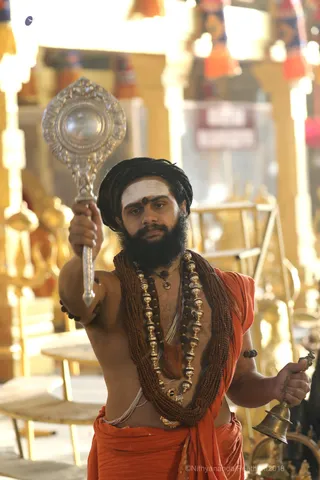
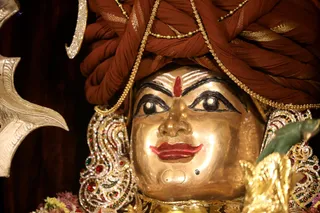
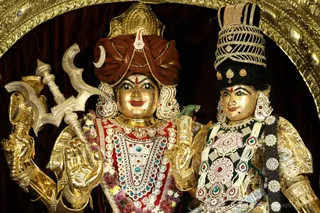
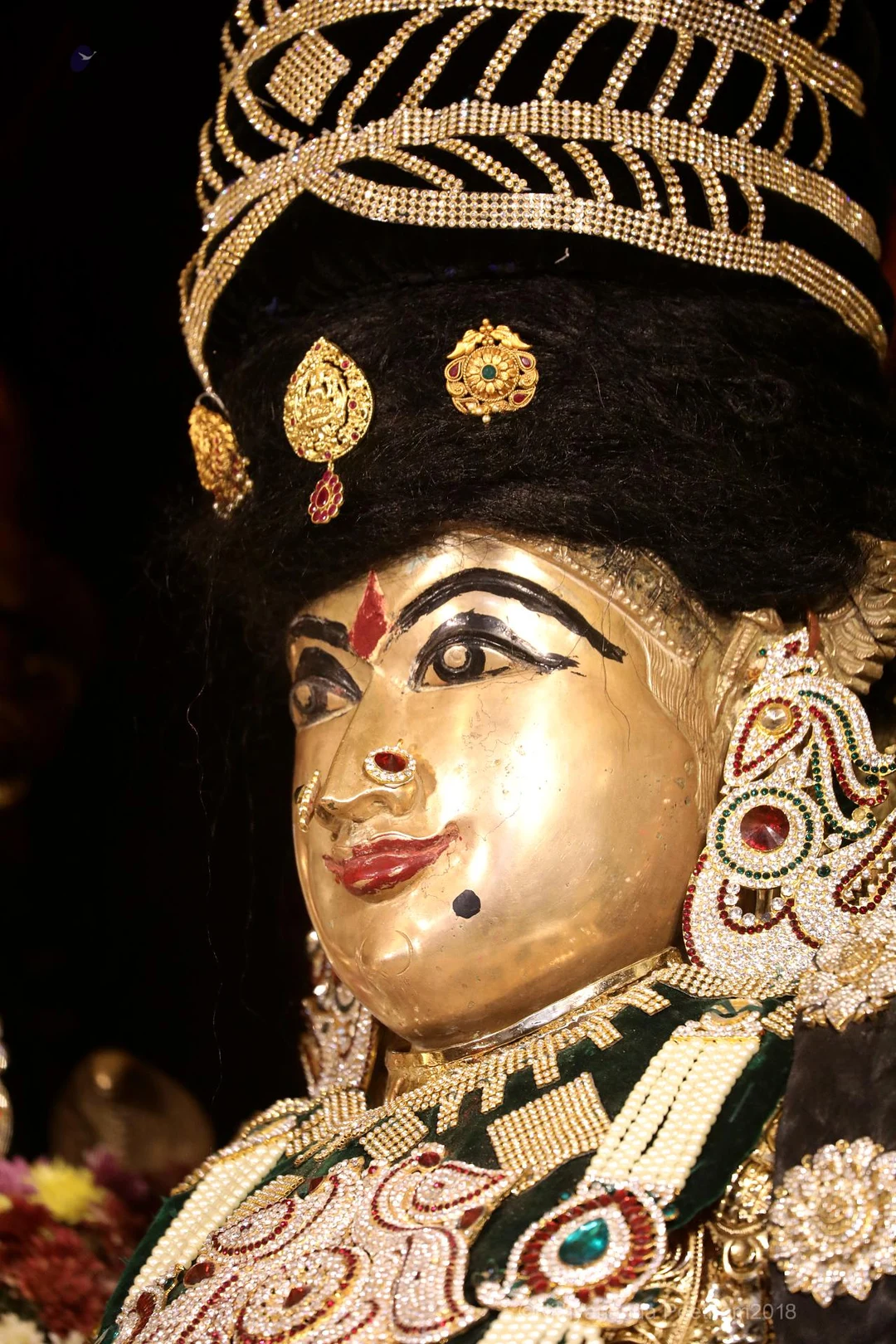
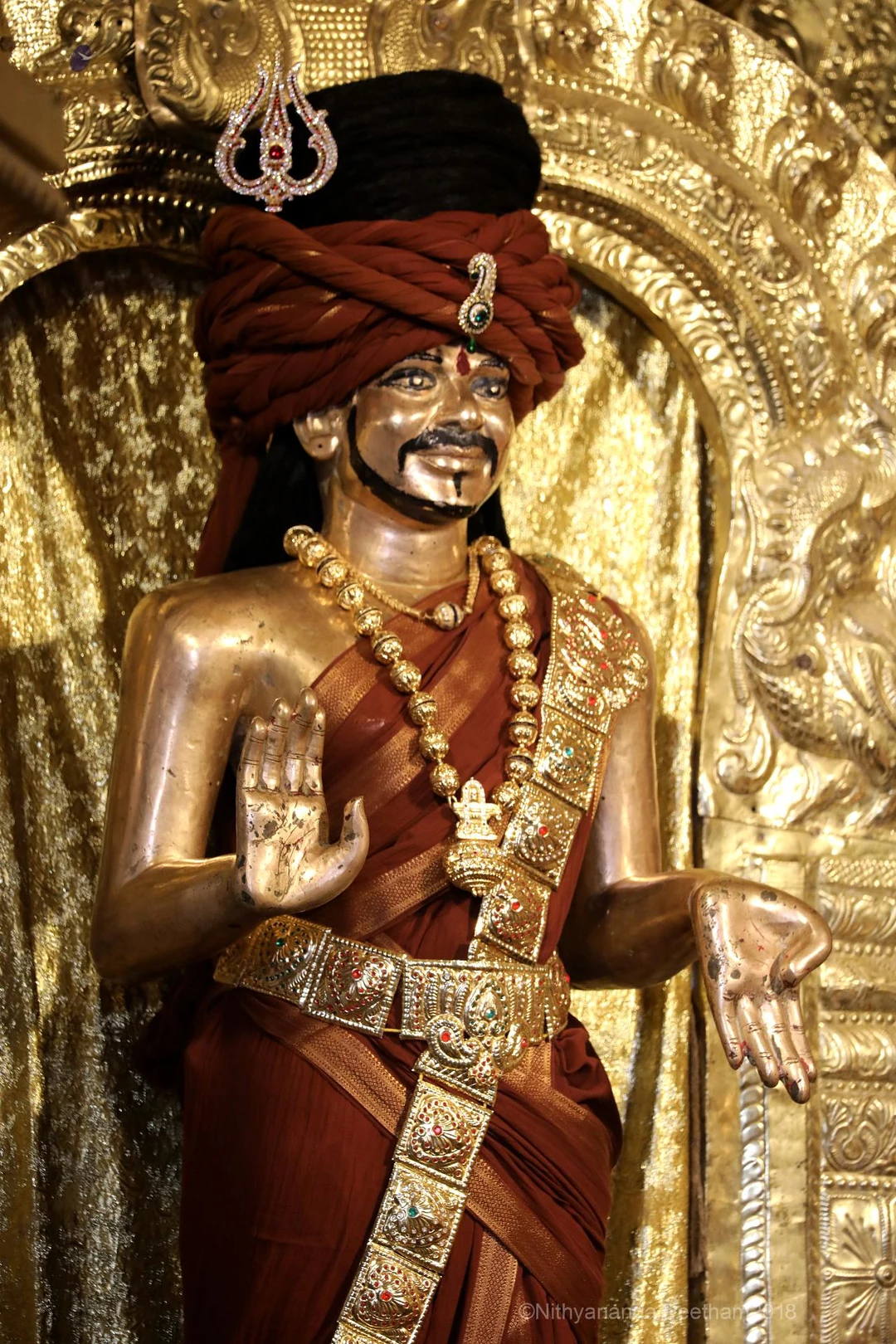
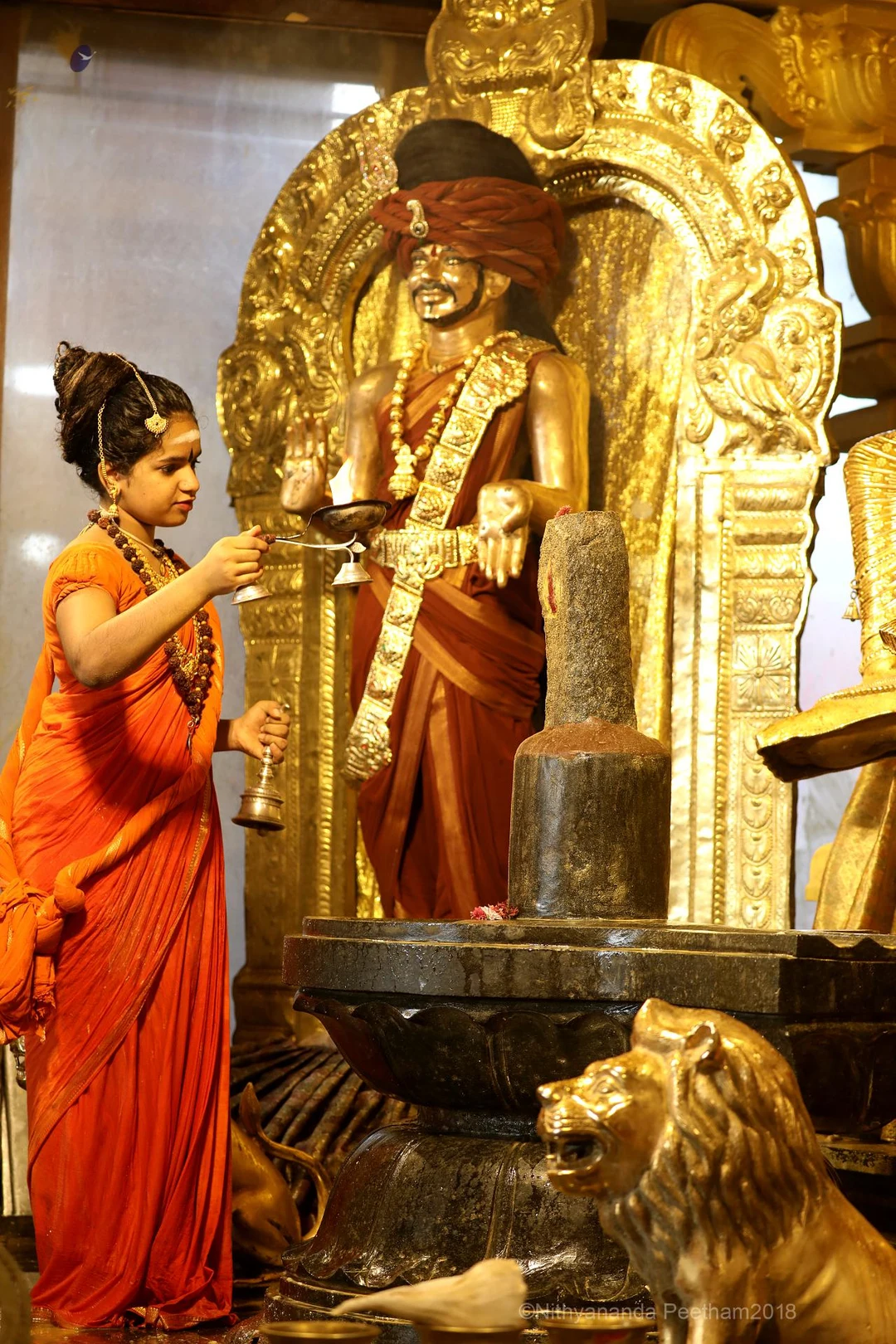
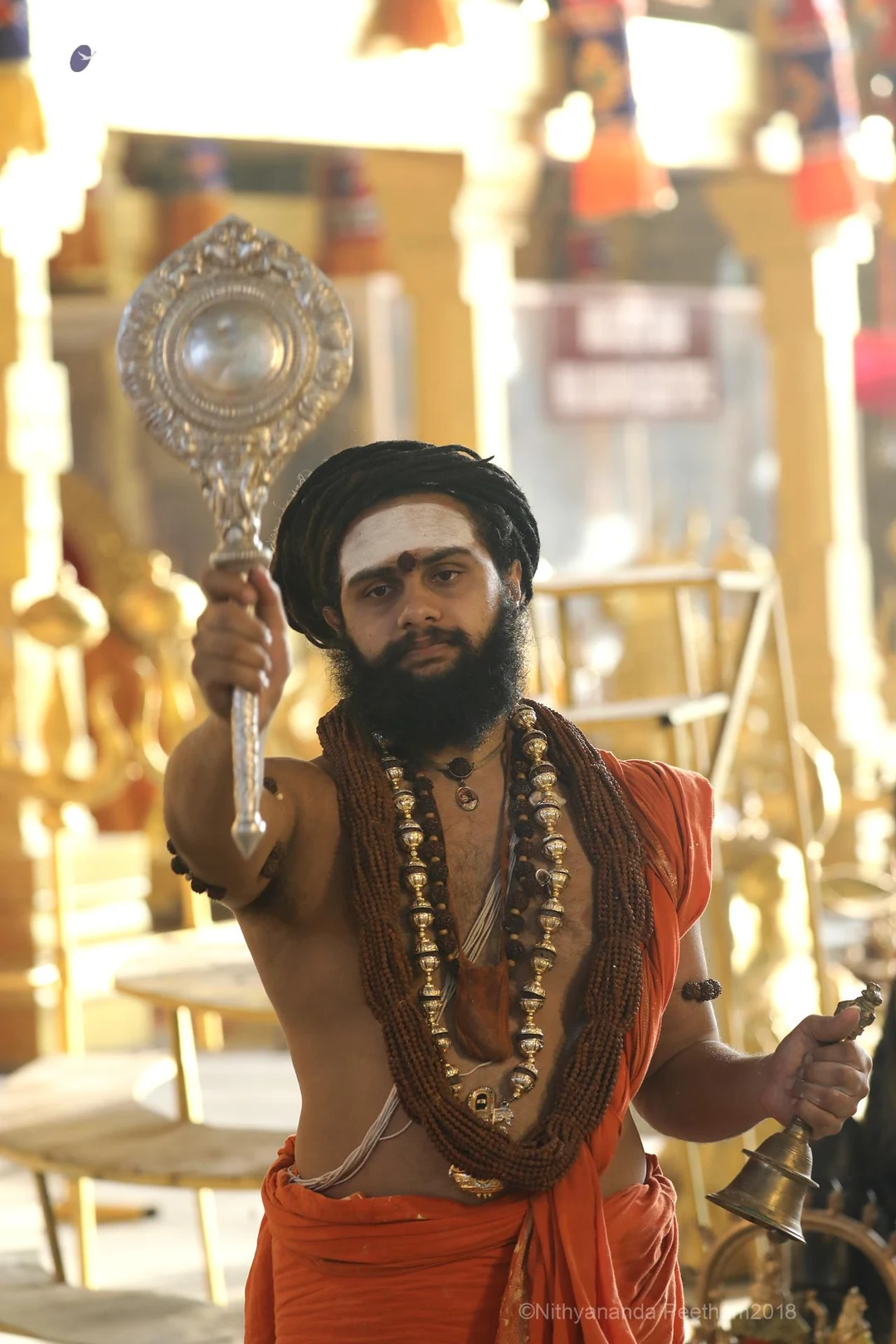
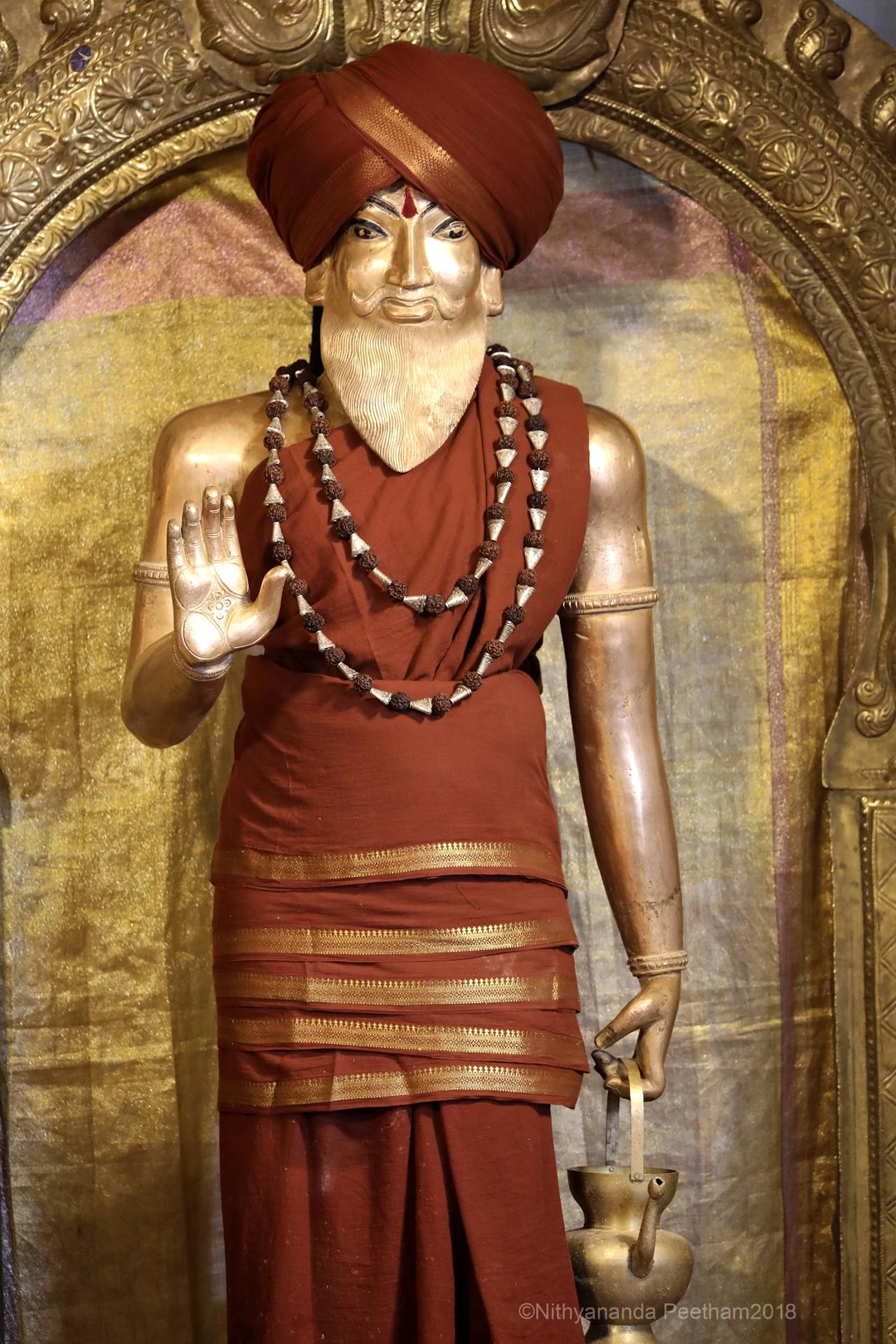
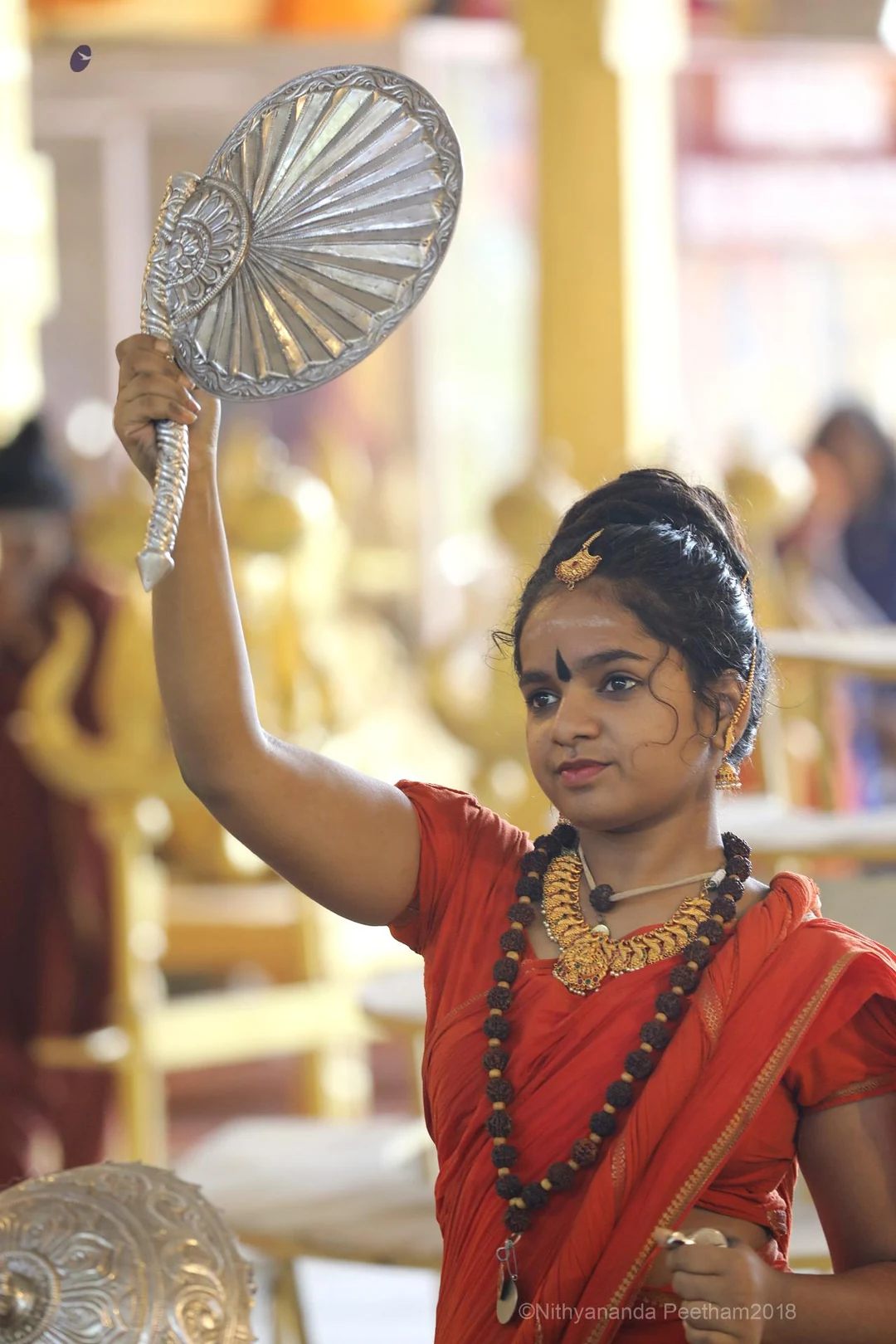
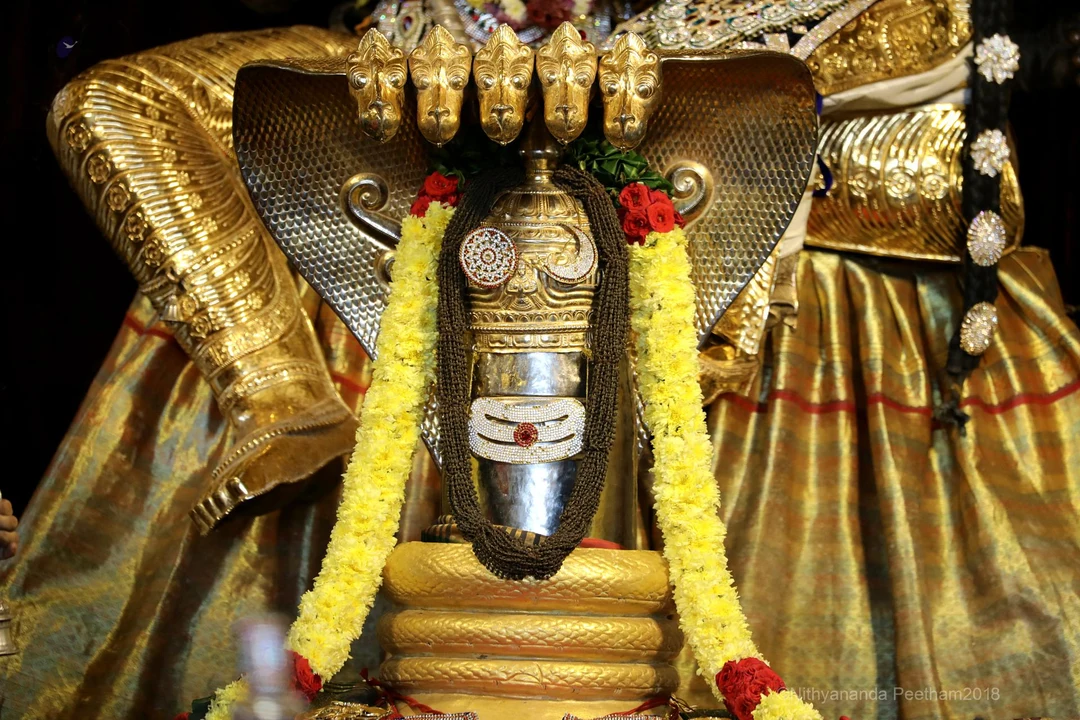
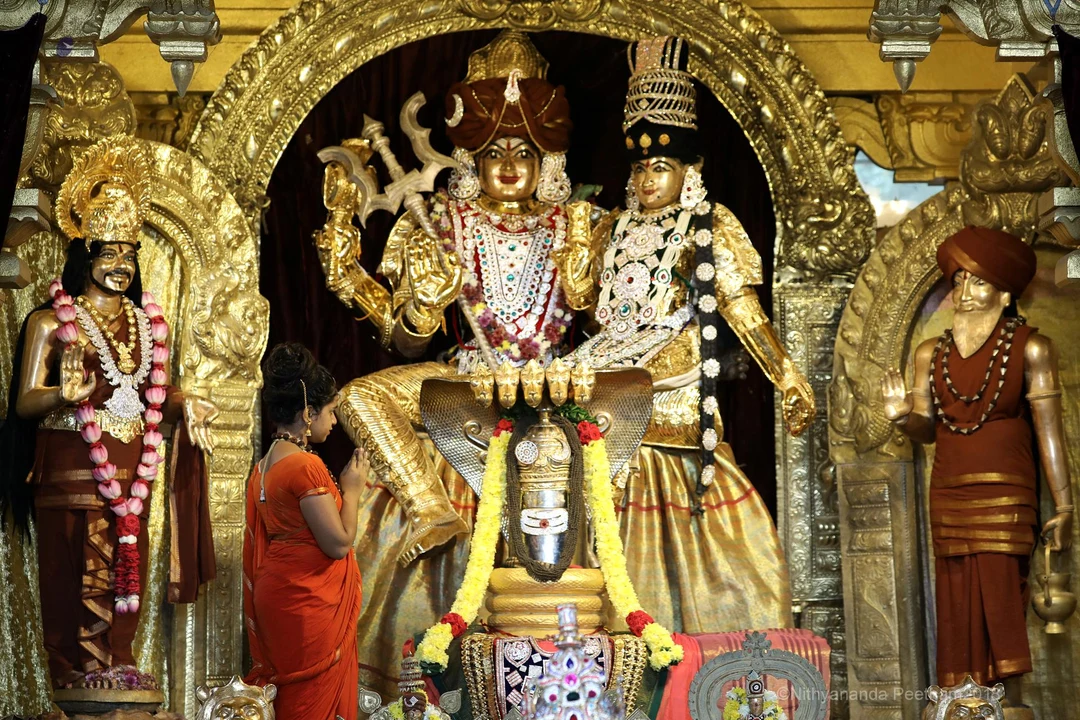
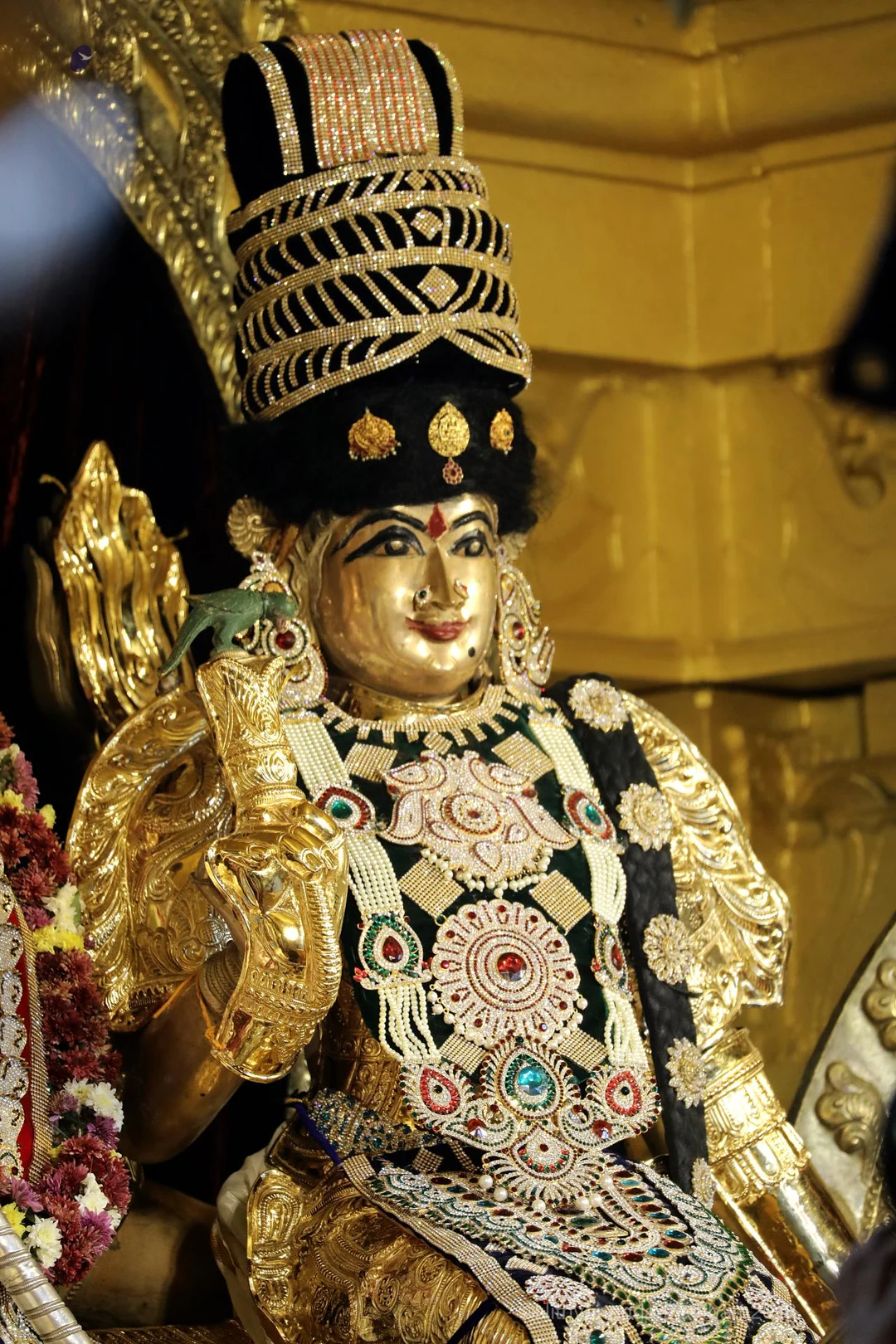
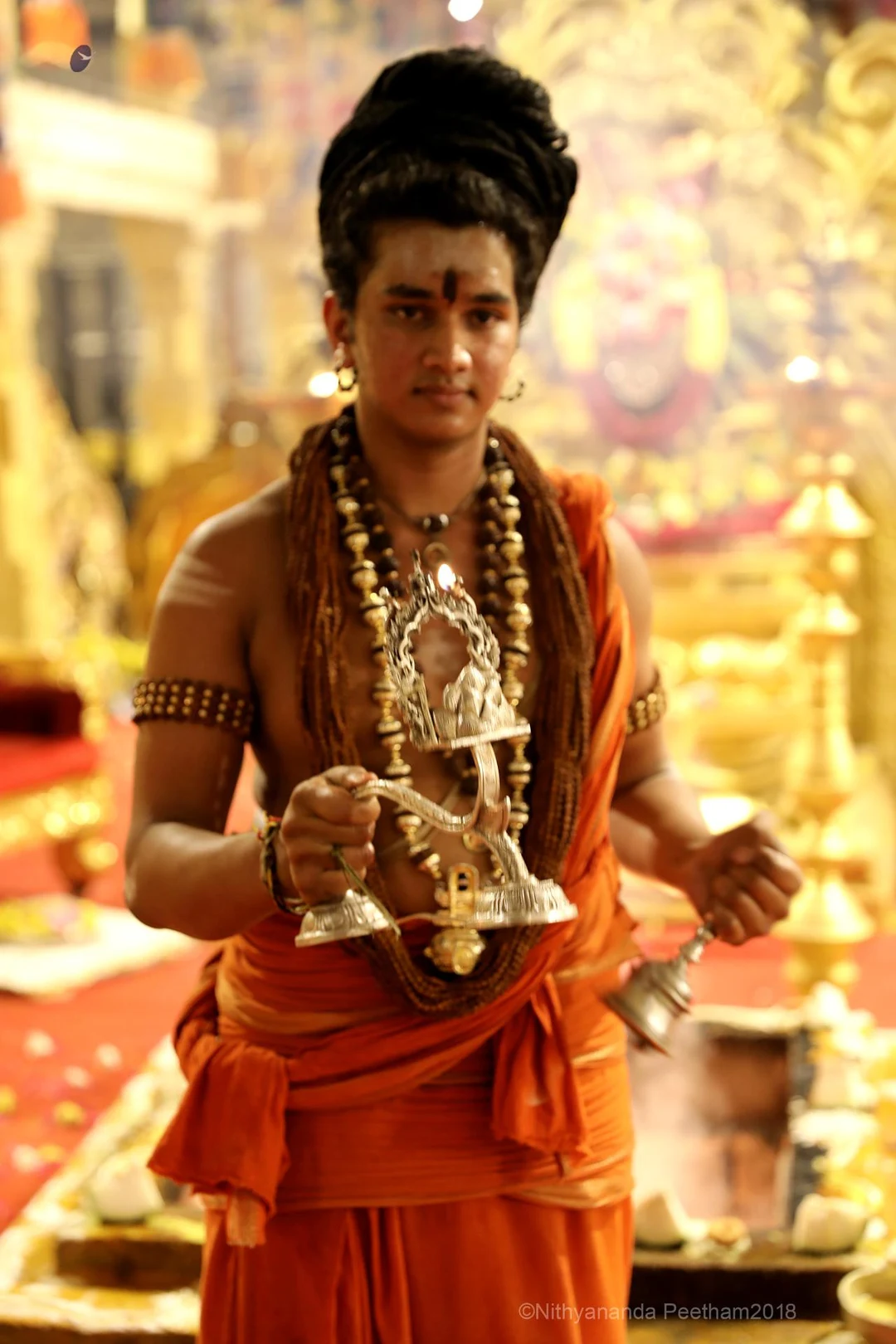
A photograph of a bearded sadhu in a temple hall holding a large ornate silver ritual fan (chamara-style handle) raised in one hand and a brass hand bell in the other. He wears an orange saffron wrap draped over his shoulder and waist, multiple strands of dark rudraksha beads, and a long gold-beaded necklace with a pendant at the chest. His long dark dreadlocked hair is tied up, with white vibhuti and a red kumkum dot on his forehead. Gold-toned pillars and brass lamps blur in the background. Presentation cues are consistent with a priest performing puja, but the person's identity cannot be confirmed from appearance.Close-up of a golden deity murti with a painted face, red lips, black-lined eyes, a red tilak and white urdhva pundra lines on the forehead. It wears a rust-brown turban wrapped with gold-threaded fabric and a gold chain, plus jeweled ornaments with red and green stones at the ears and shoulders. Flowers are visible at the lower edge, and a silver ceremonial implement appears at the left. The background is dark wood.Photograph of a pair of gold-finished deity murti within a golden ornate arch against a dark velvet backdrop. The figure on the left wears a rust-brown turban with a crescent moon and a tilak, a red-and-white jewelled chest garment and garlands of pink and white flowers, and holds a silver trident. The figure on the right wears a tall black and gold crown, a jewelled breastplate with red and green stones and a sacred thread, and holds a small green parrot. Both statues are richly adorned with gold ornaments and bejewelled jewellery. No physical people are visible.

November 06 2018

Original wiki page
Contents

Title

Narration

The Supreme Pontiff of Hinduism, Jagatguru Mahasannidhanam, His Divine Holiness, Bhagavan Nithyananda Paramashivam, expounded on the Cosmic Principles of Avyakta & Vyakta during the everyday live public talk - Nithyananda Satsang. In this talk titled Loving The Known And Unknown In Entirety Is Cosmic Union, The Supreme Pontiff of Hinduism revealed how on Deepavali we celebrate the Cosmic union of both the avyakta and vyakta, the manifest and unmanifest. He explained that if you know about something end to end, it is called manifest, vyakta, to you and if you don’t know any part of that end to end, it is avyakta, unmanifest to you. He beautifully encouraged everyone to decide to love the unknown as much as you love the known and celebrate this Cosmic Union.

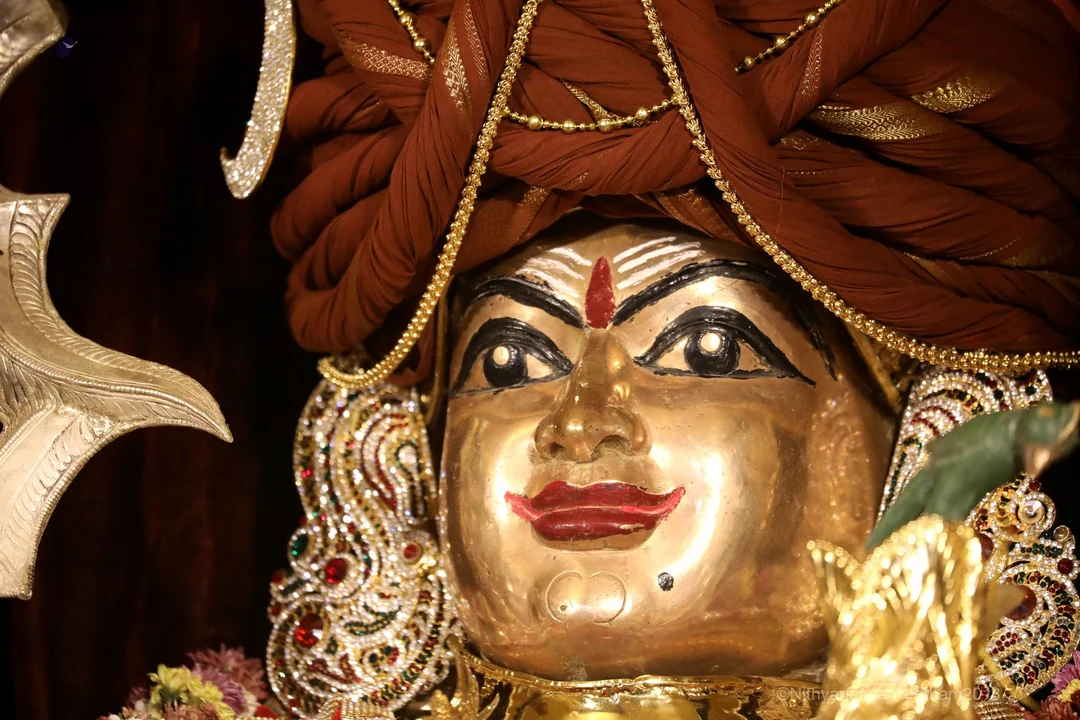
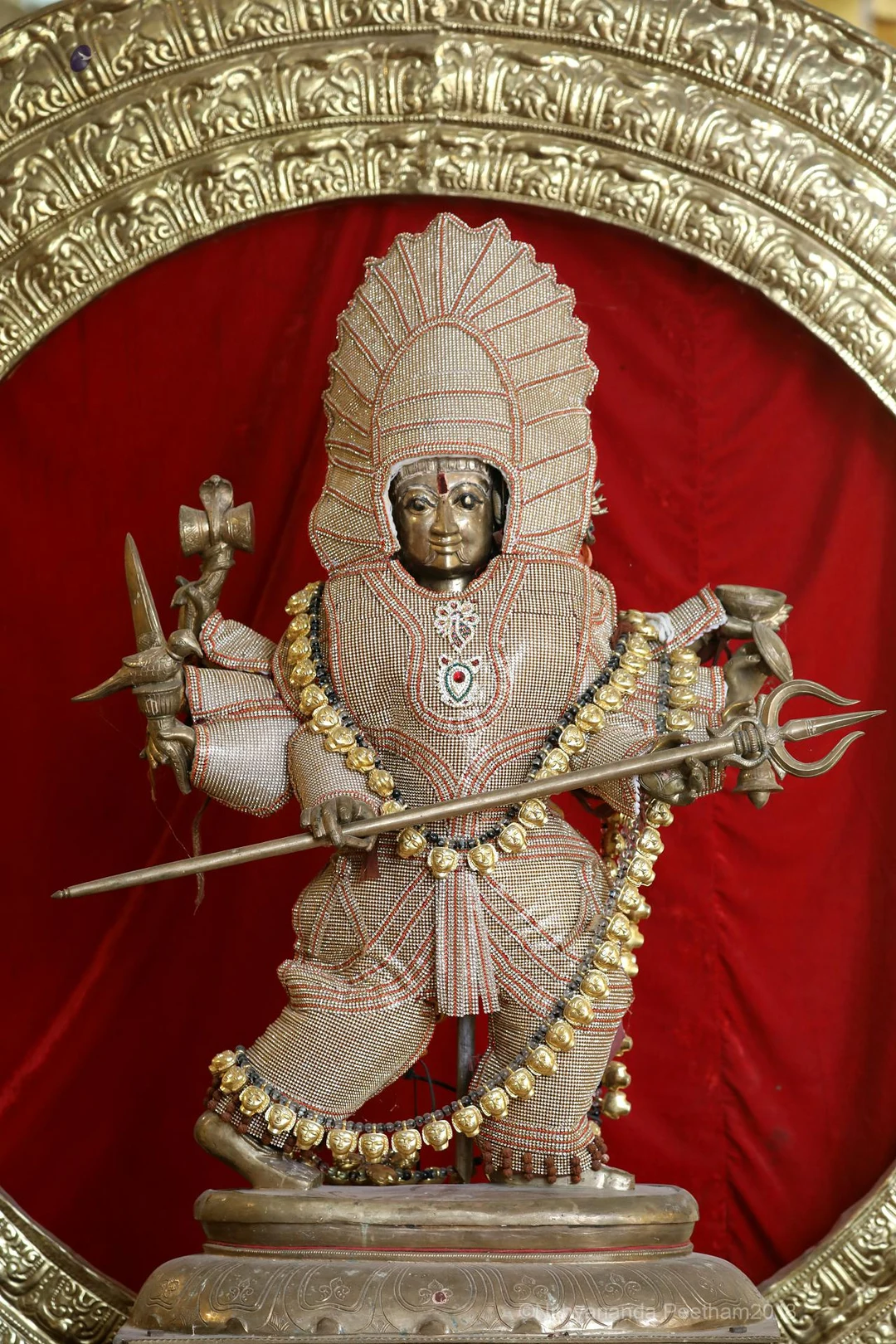
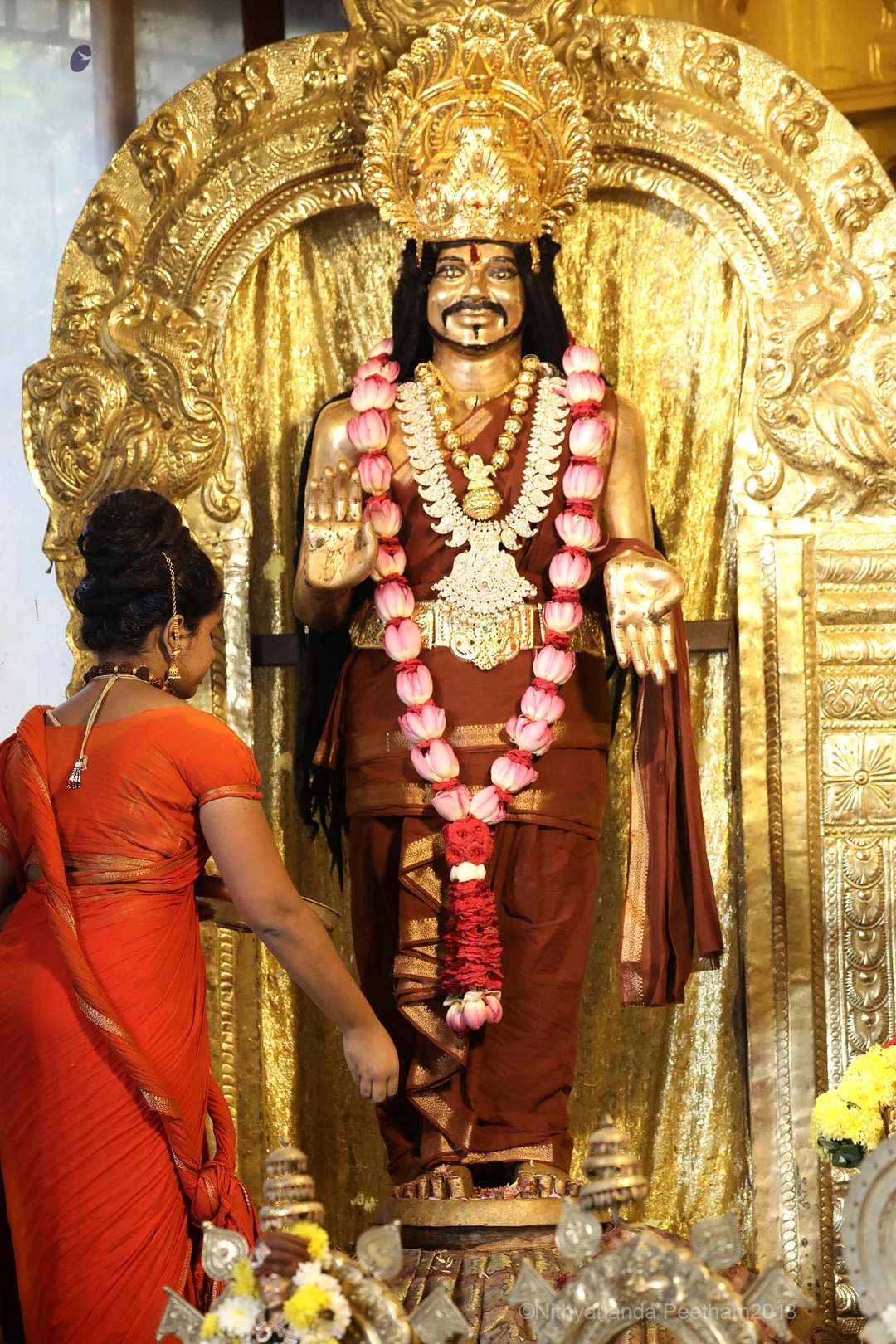
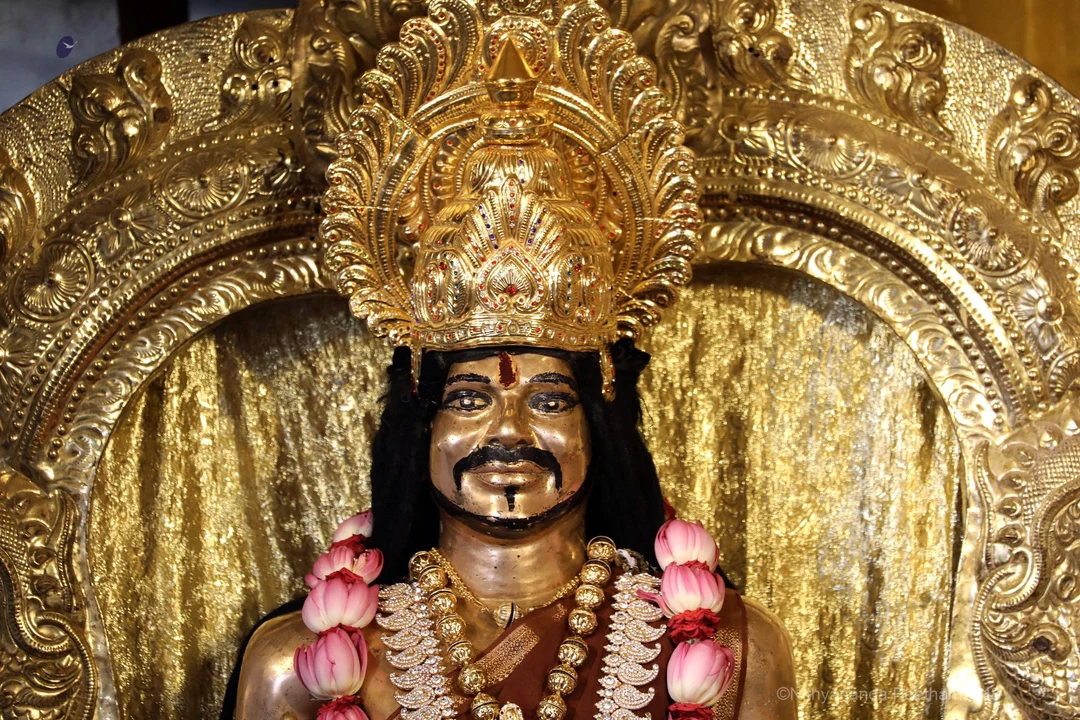
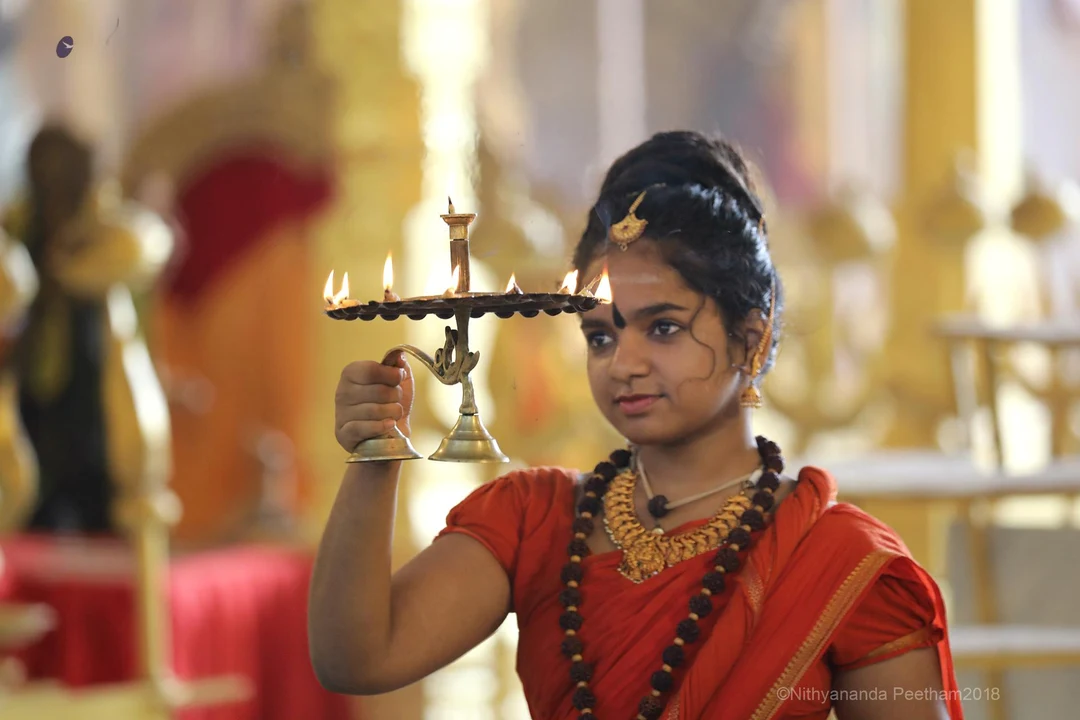
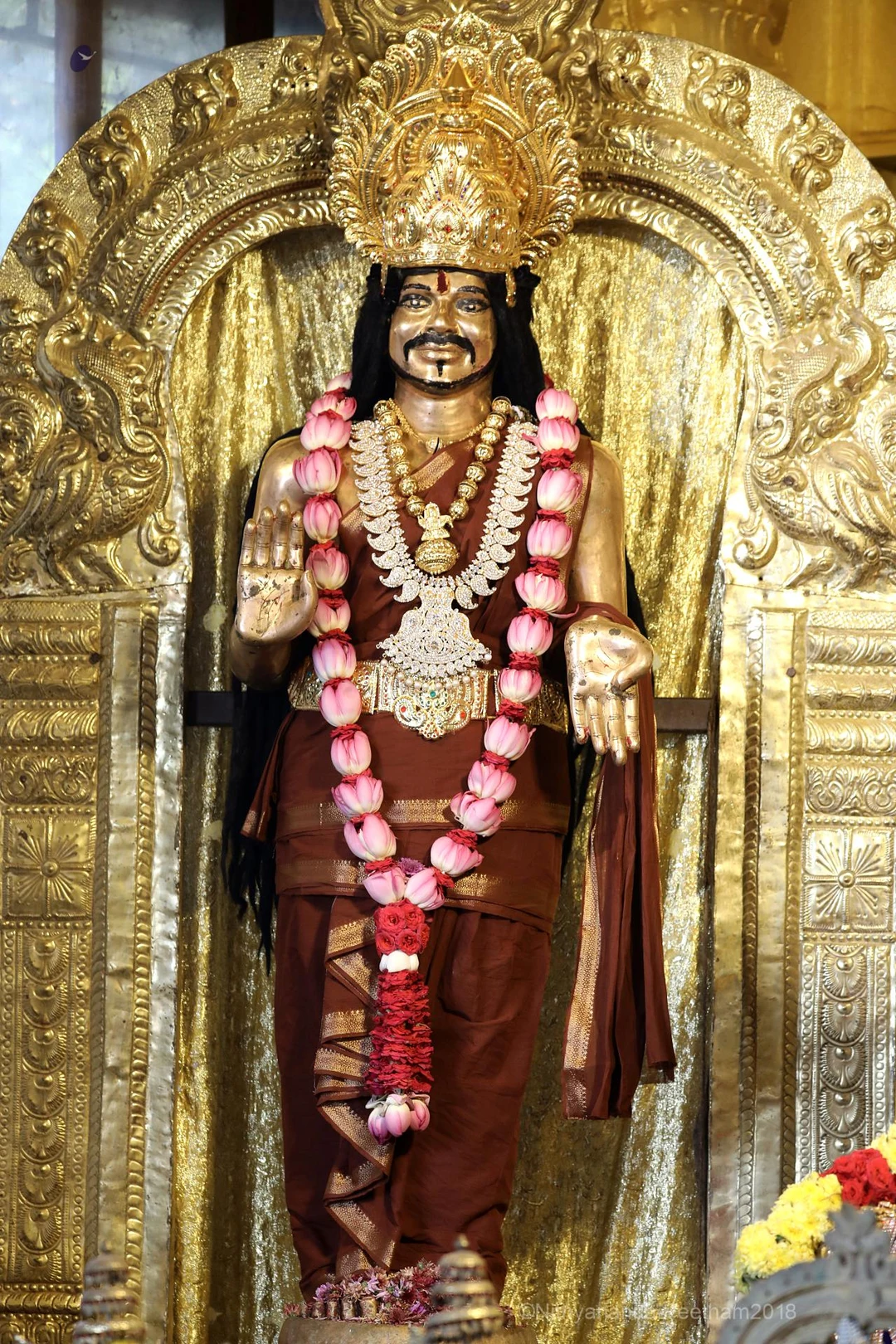
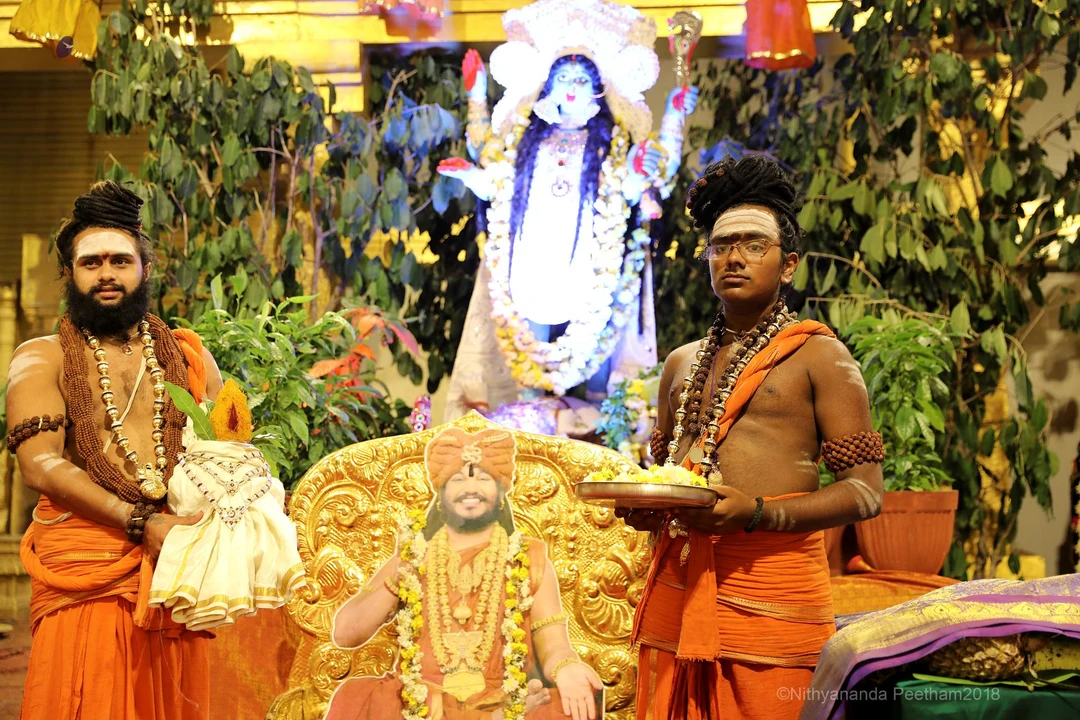
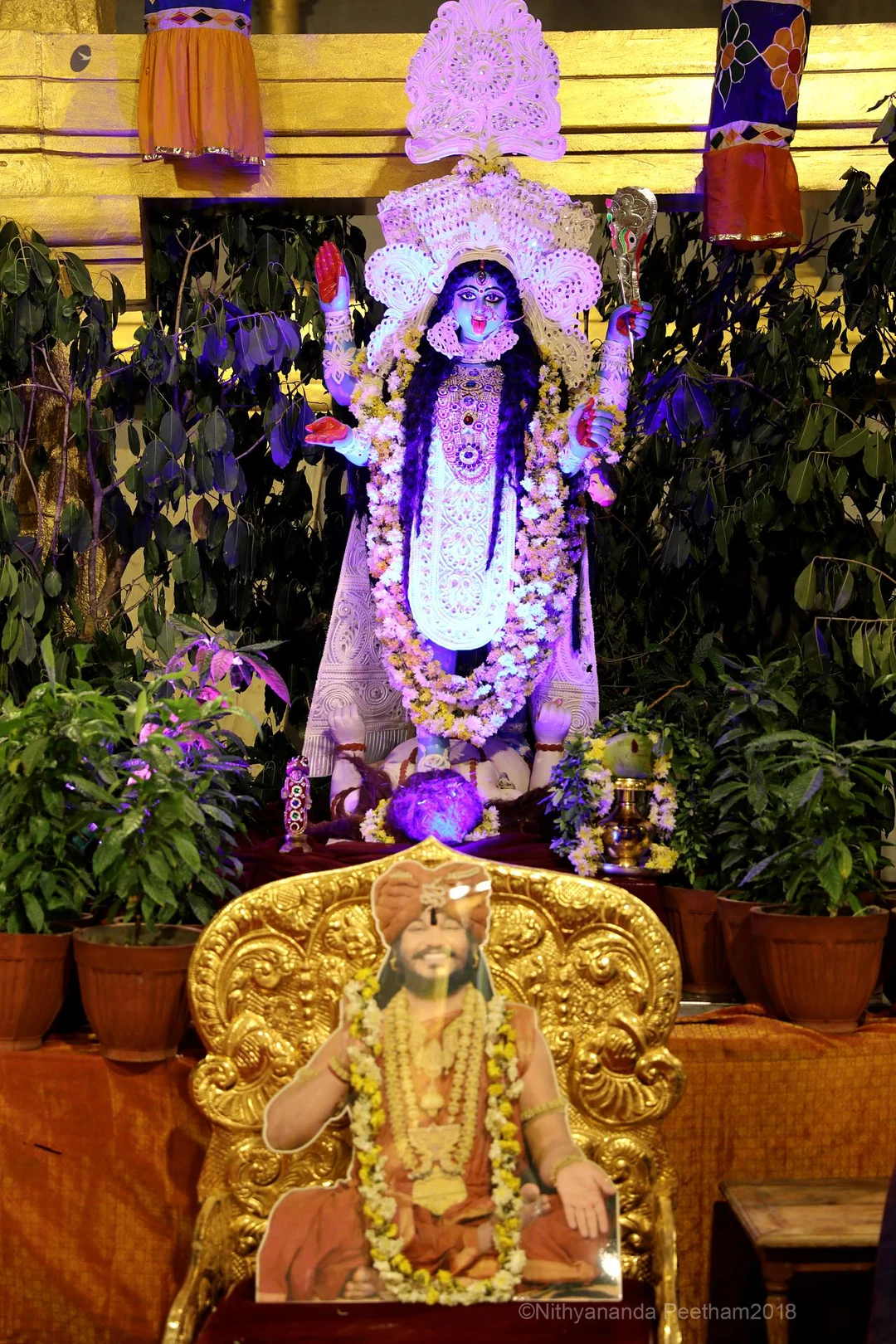
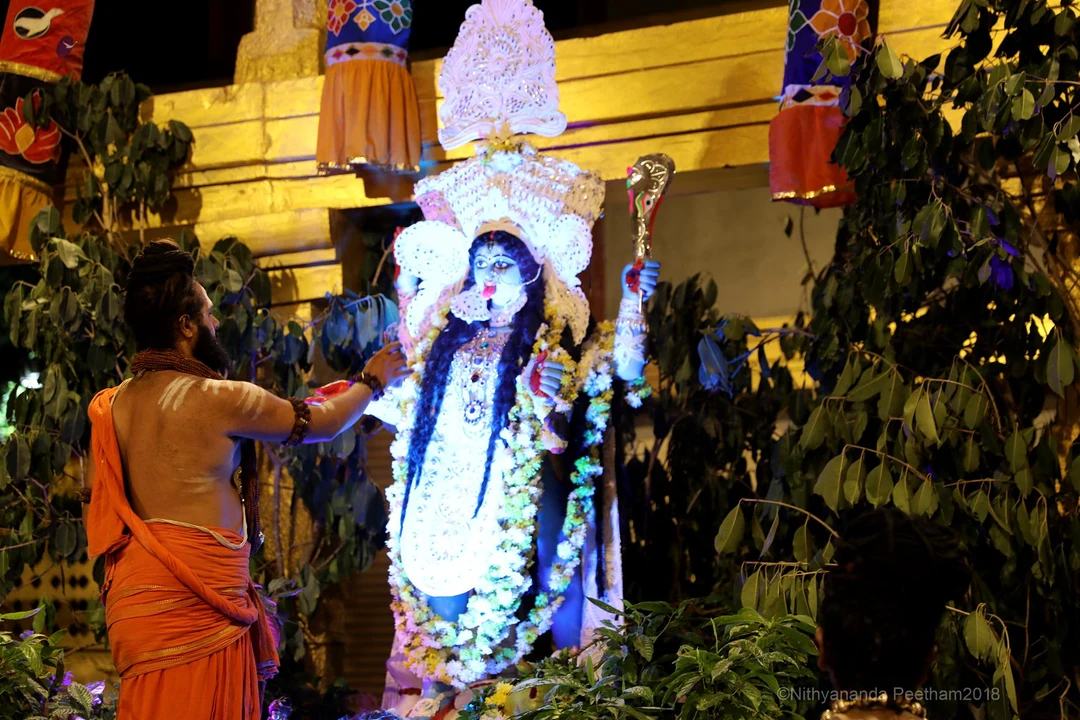
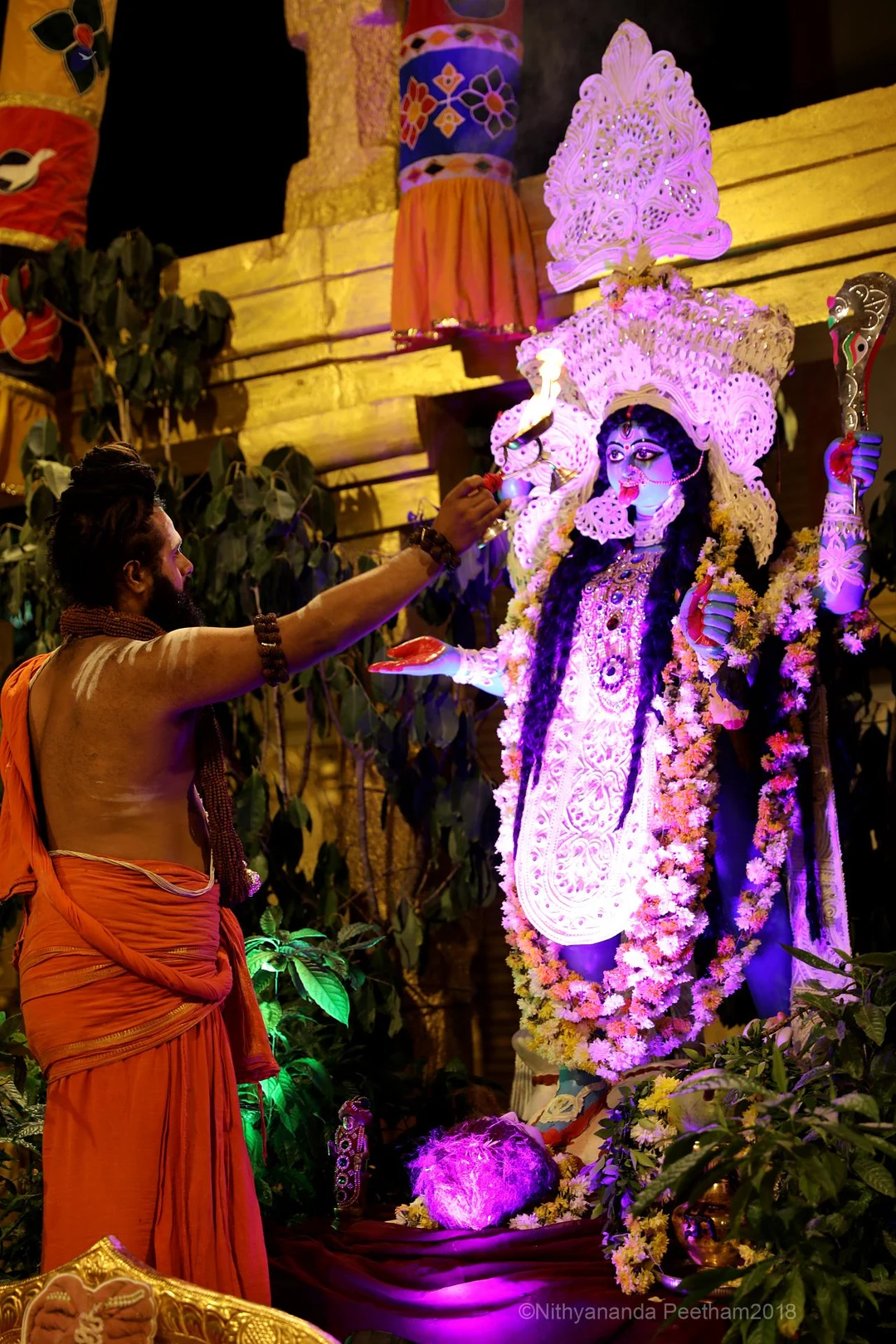
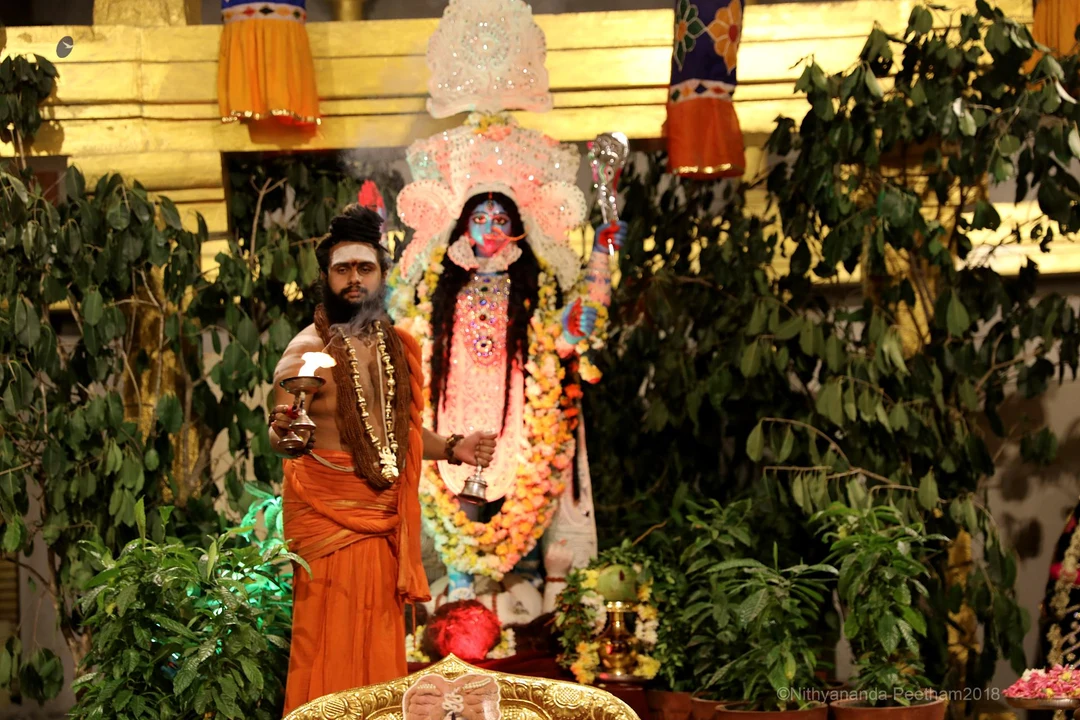
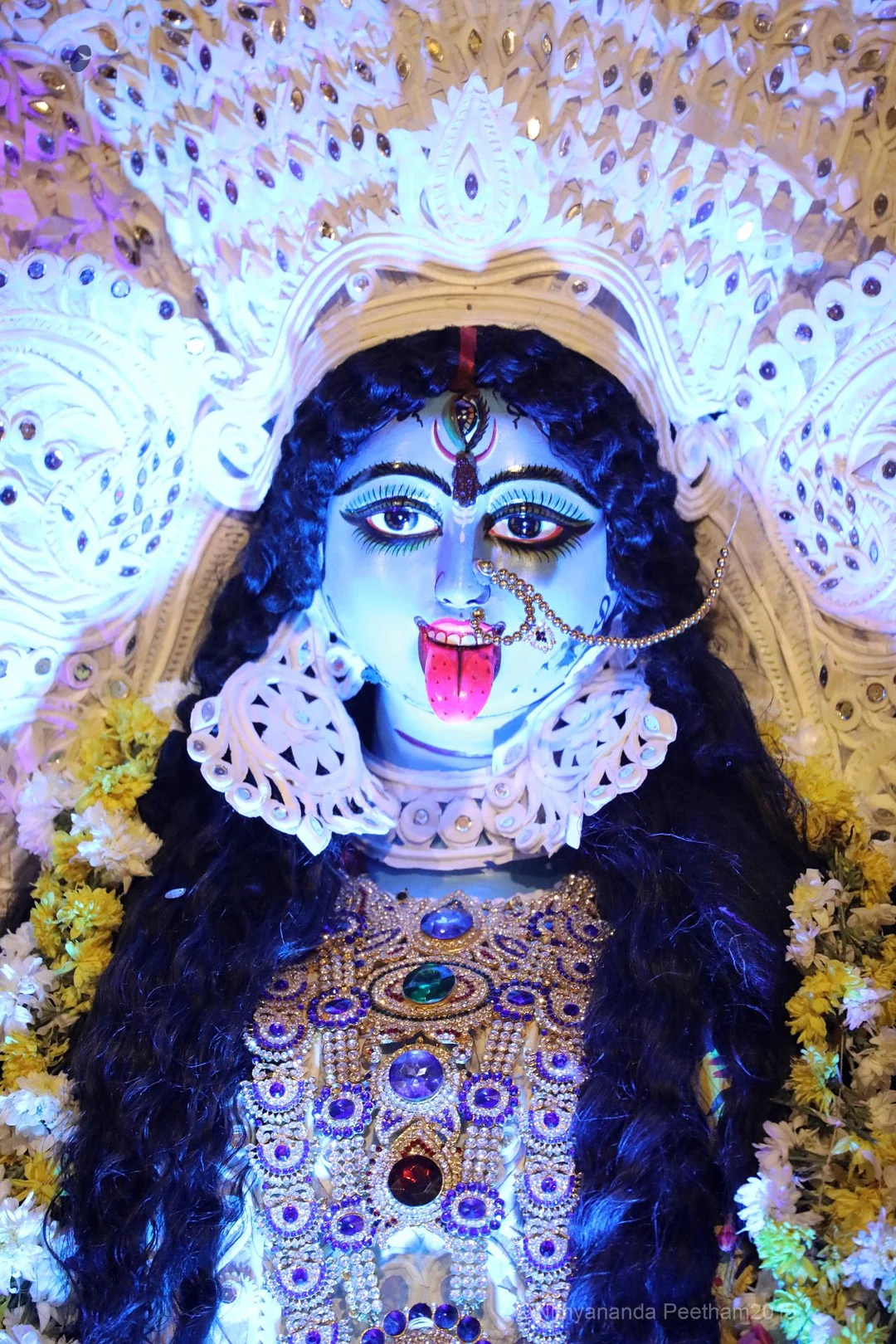
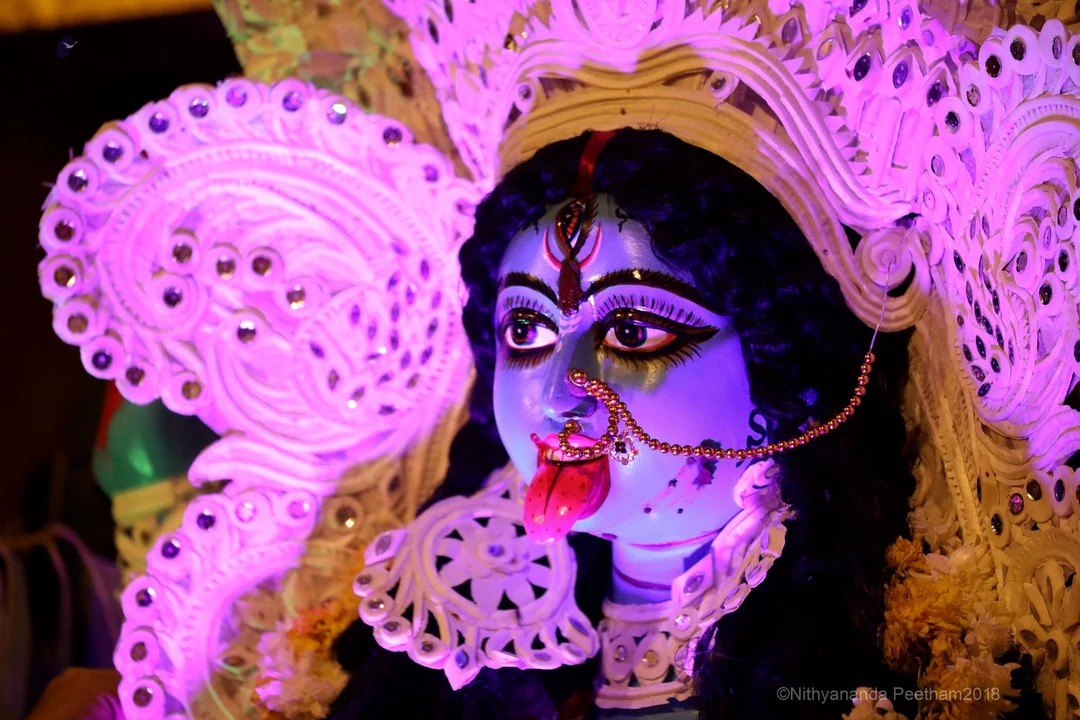
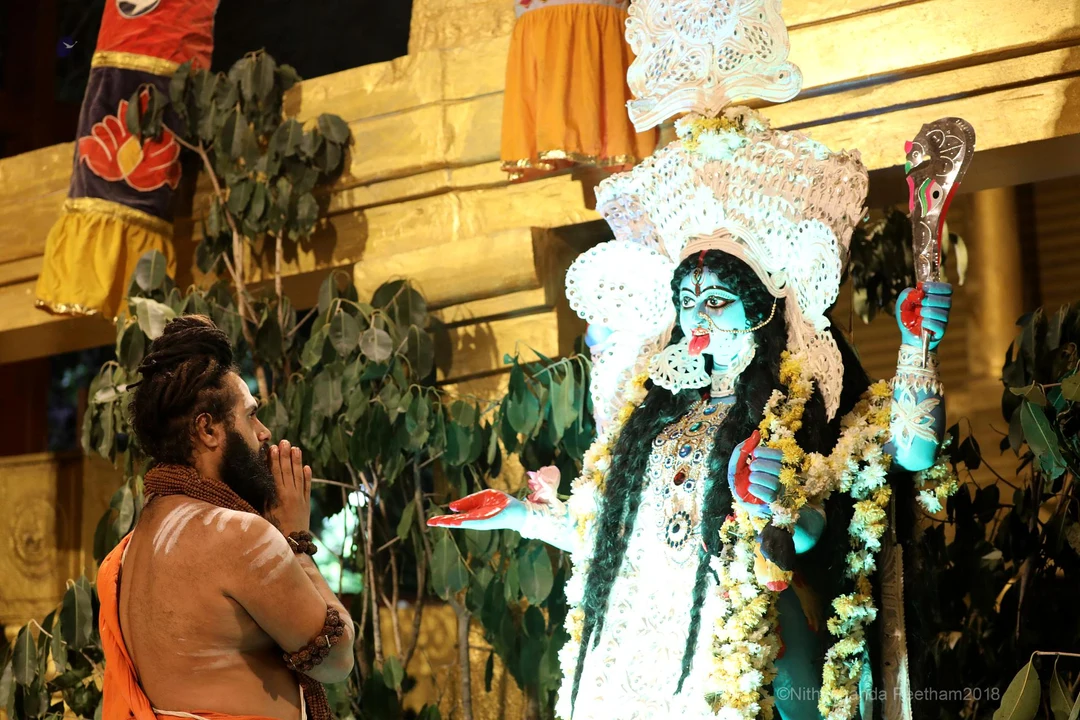
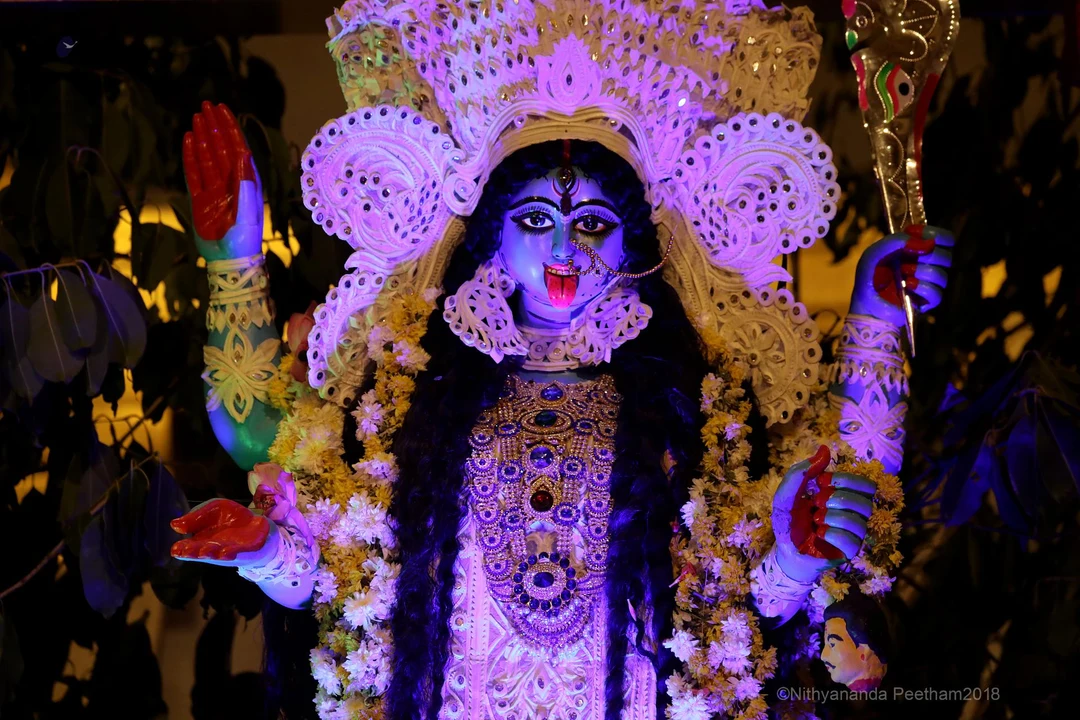
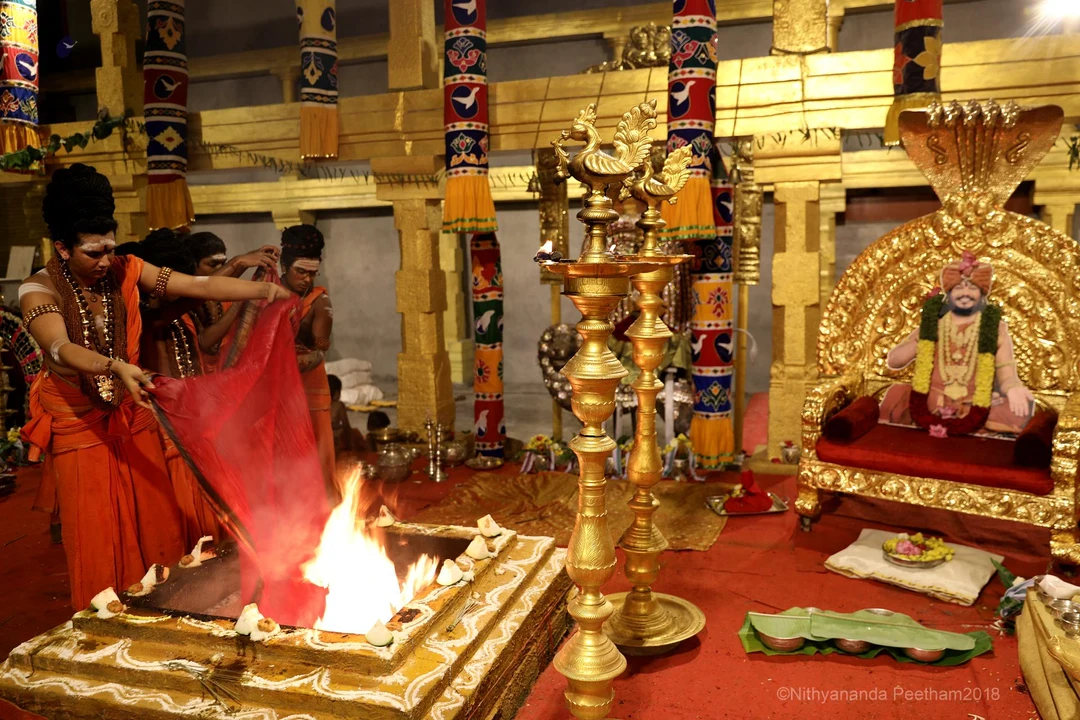
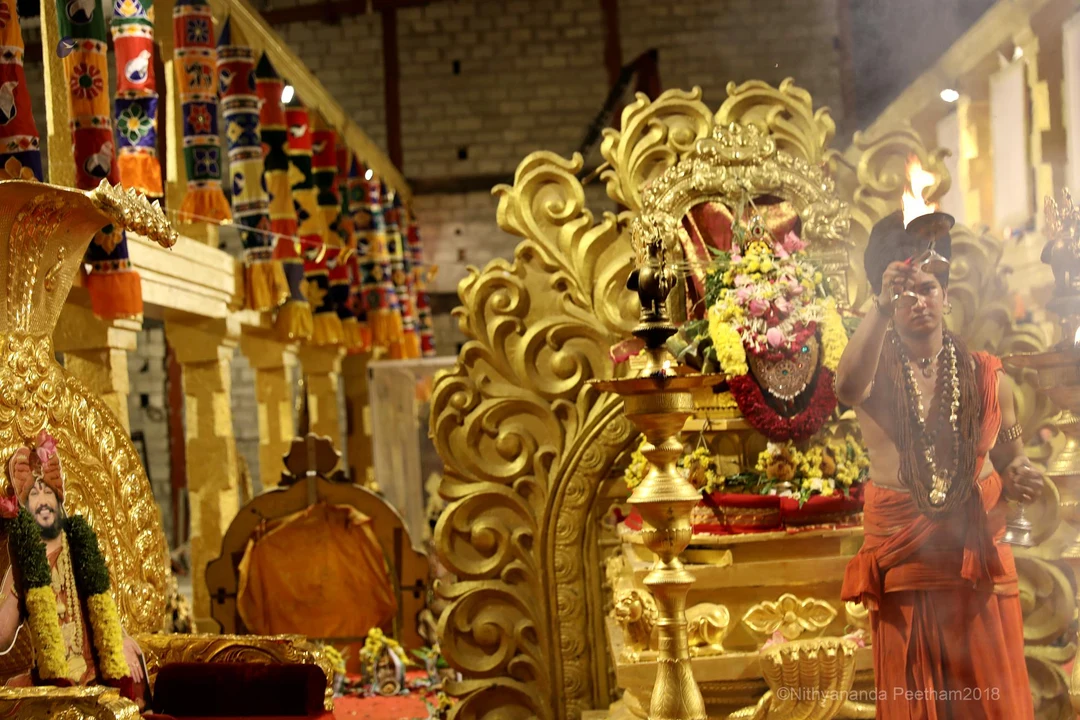
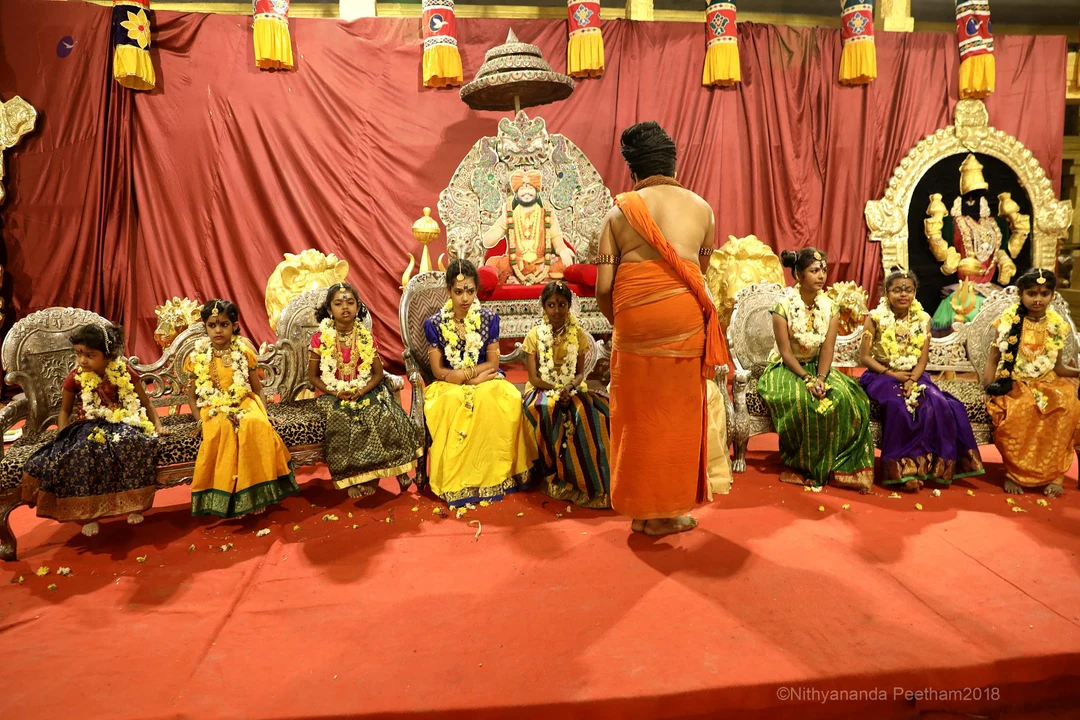
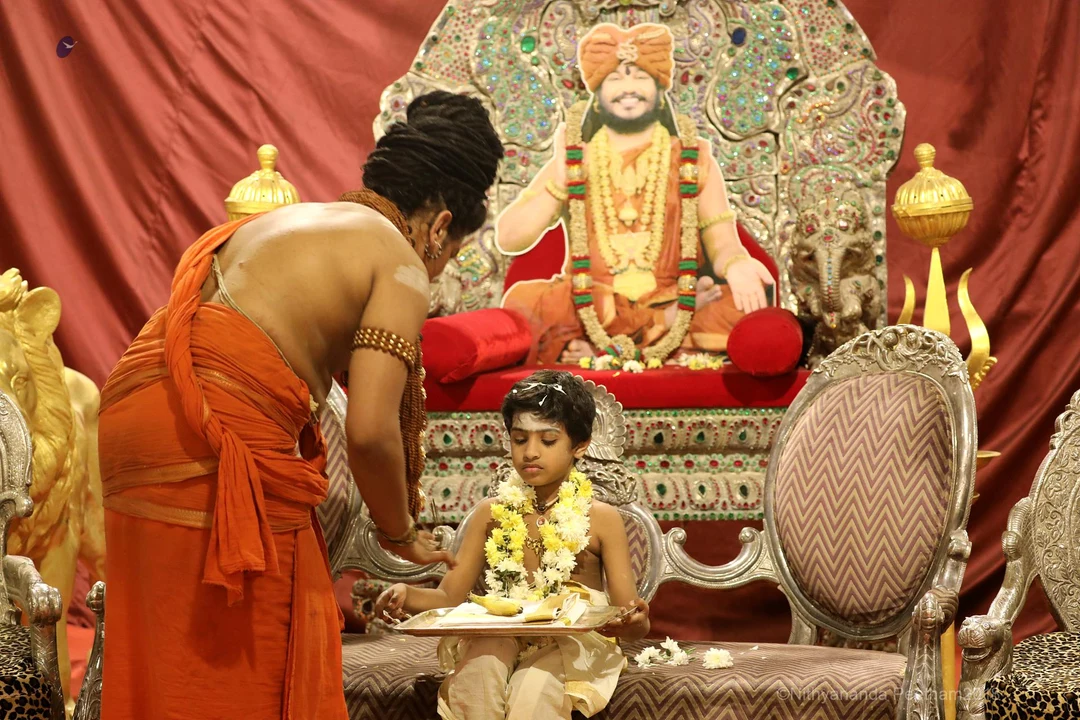
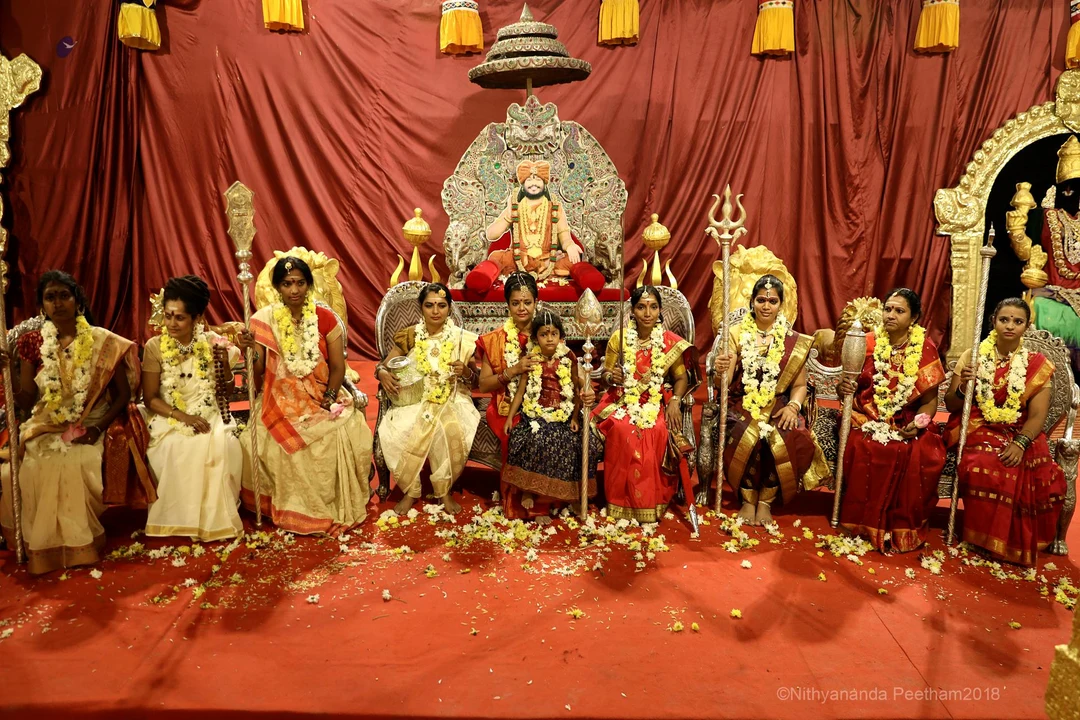
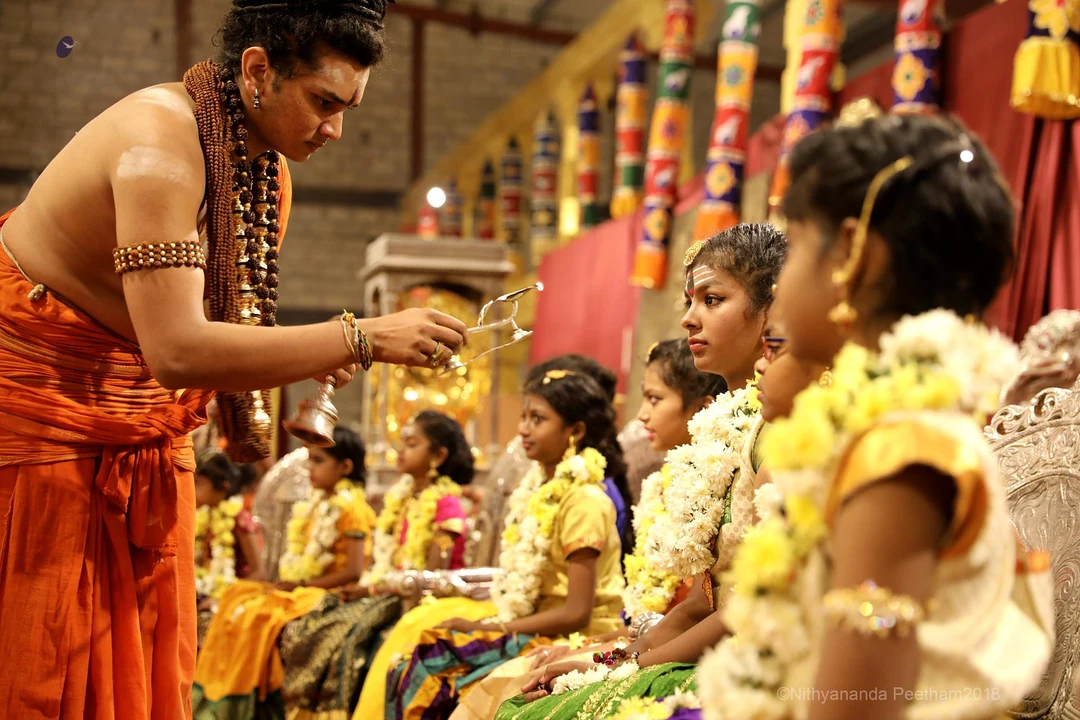
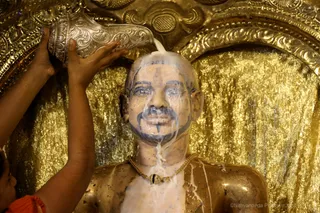
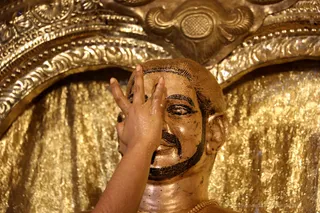
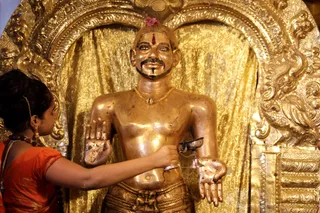
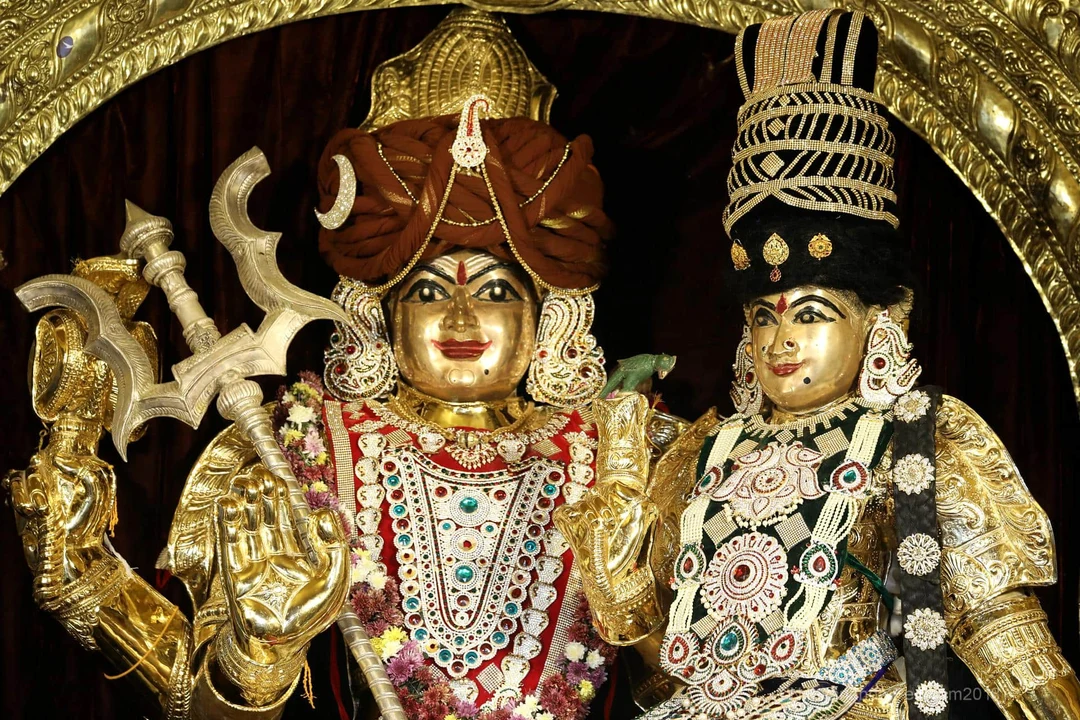
On this auspicious day of Deepavali, Uttamotama Seva was offered, including Mahakali Pranapratishtha, inspiring millions towards the Science of Hinduism.

Photos From The Day:

| Nithyananda Peetham, Bengaluru Aadheenam | Uttamotama Seva | Mahakali Pranapratishtha|
Link to Facebook Page

https://www.facebook.com/ParamahamsaNithyananda/posts/2069633676457805

Photos from this day

View all 40 photos
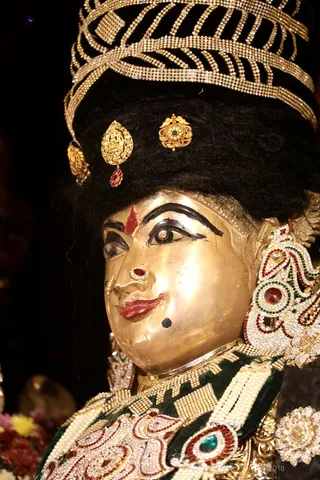
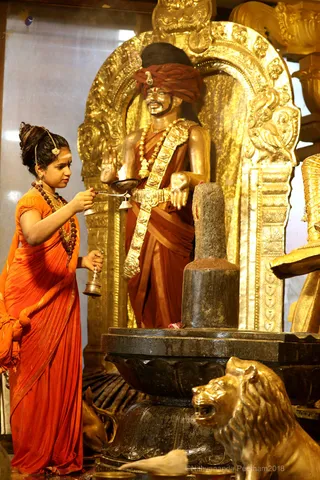
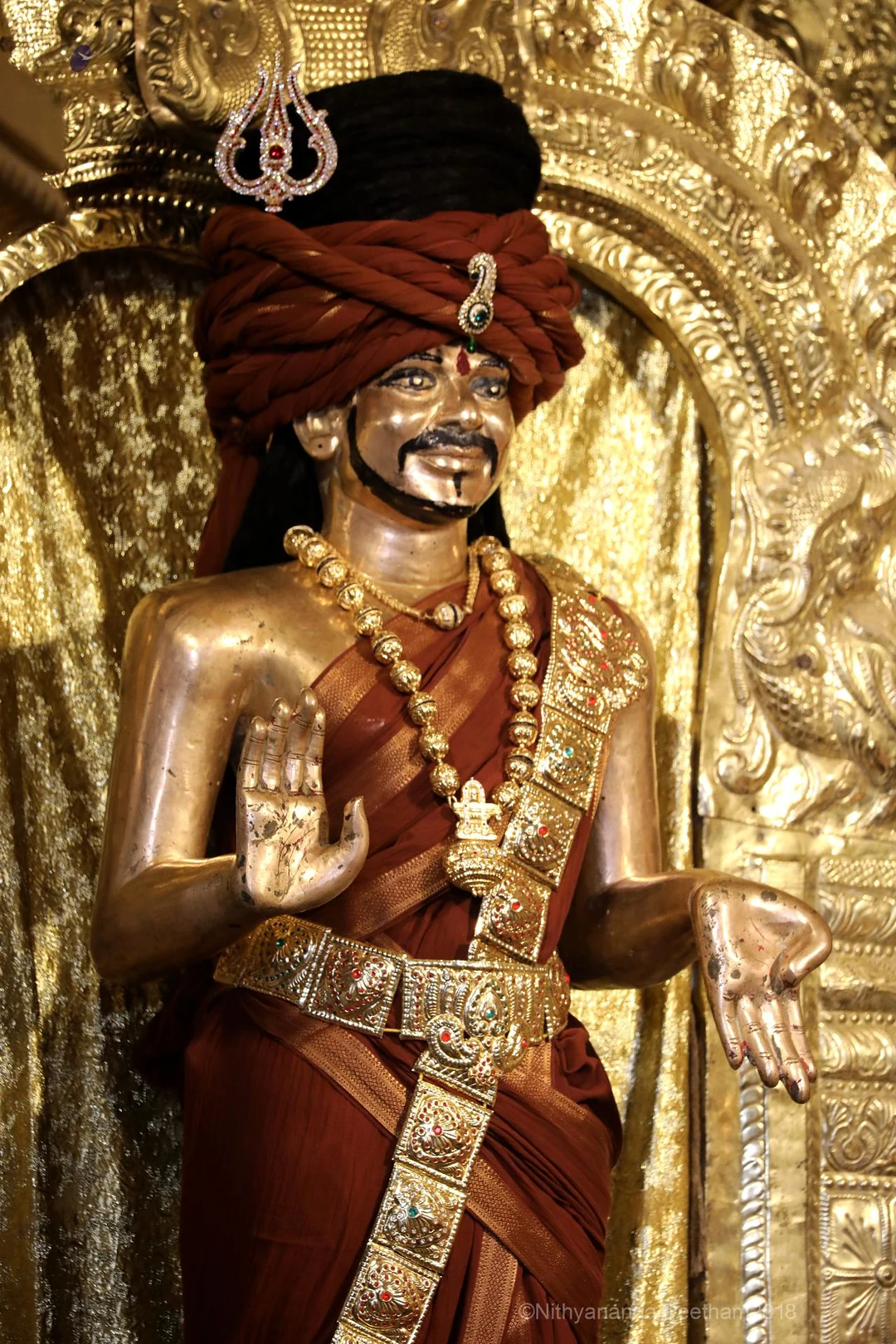
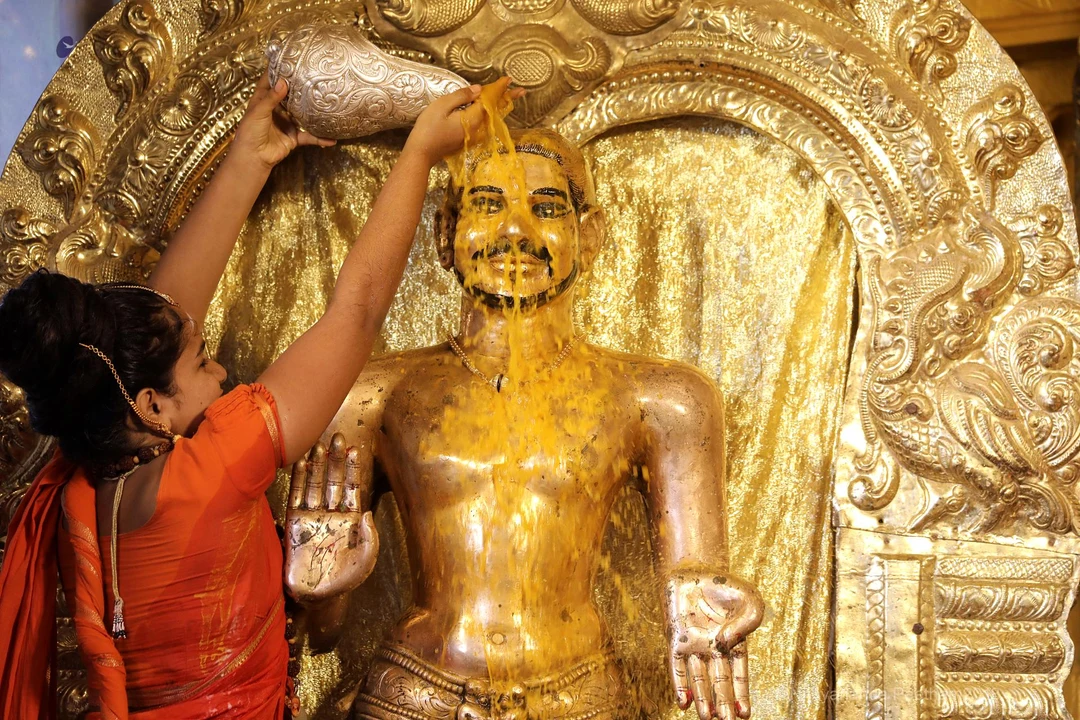
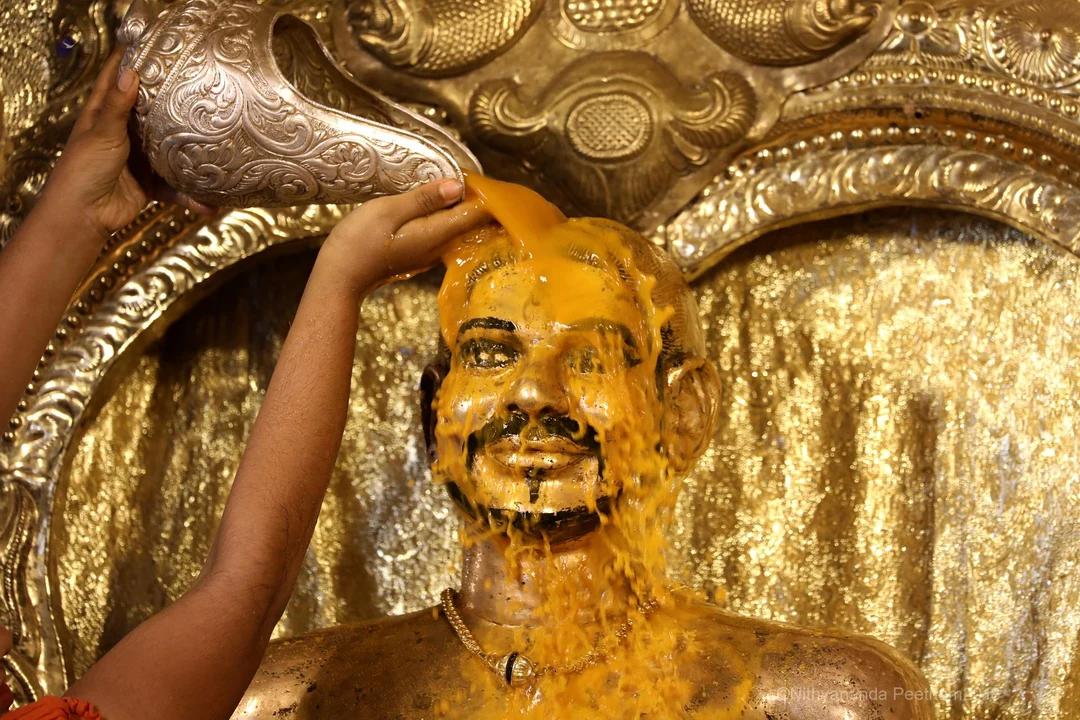
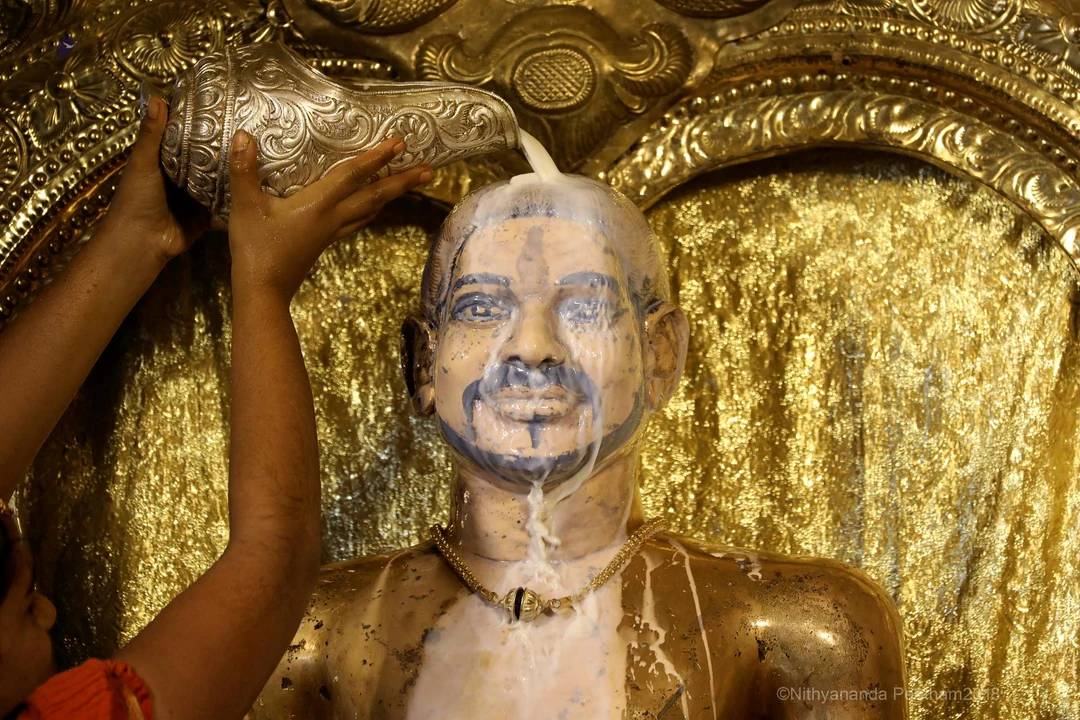
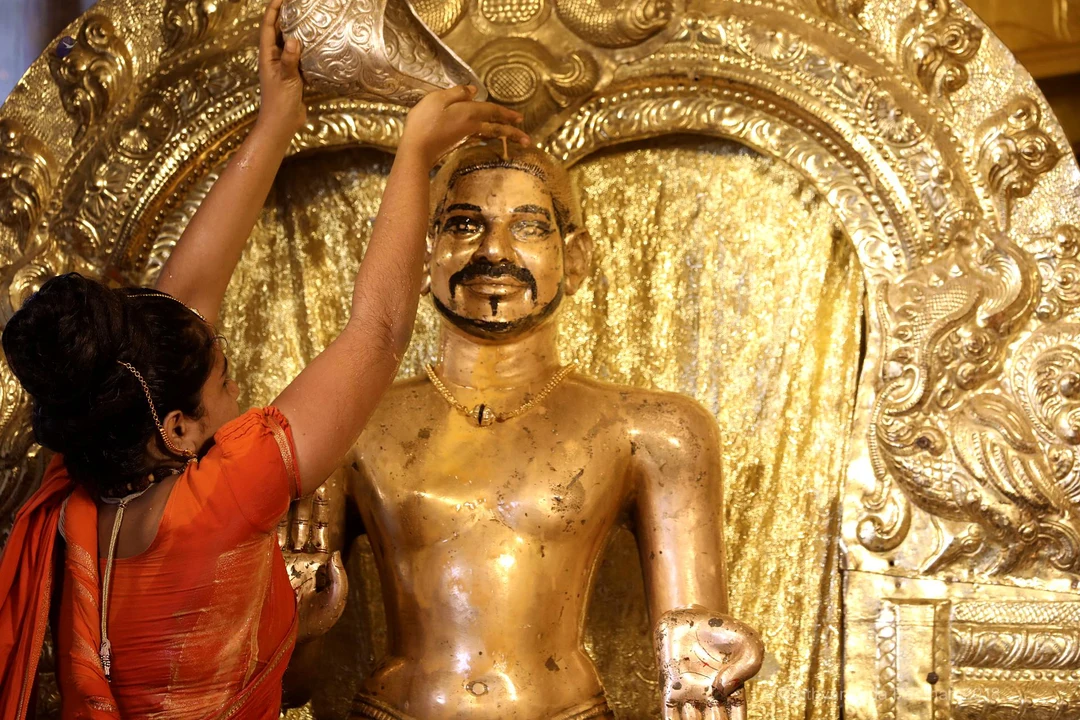
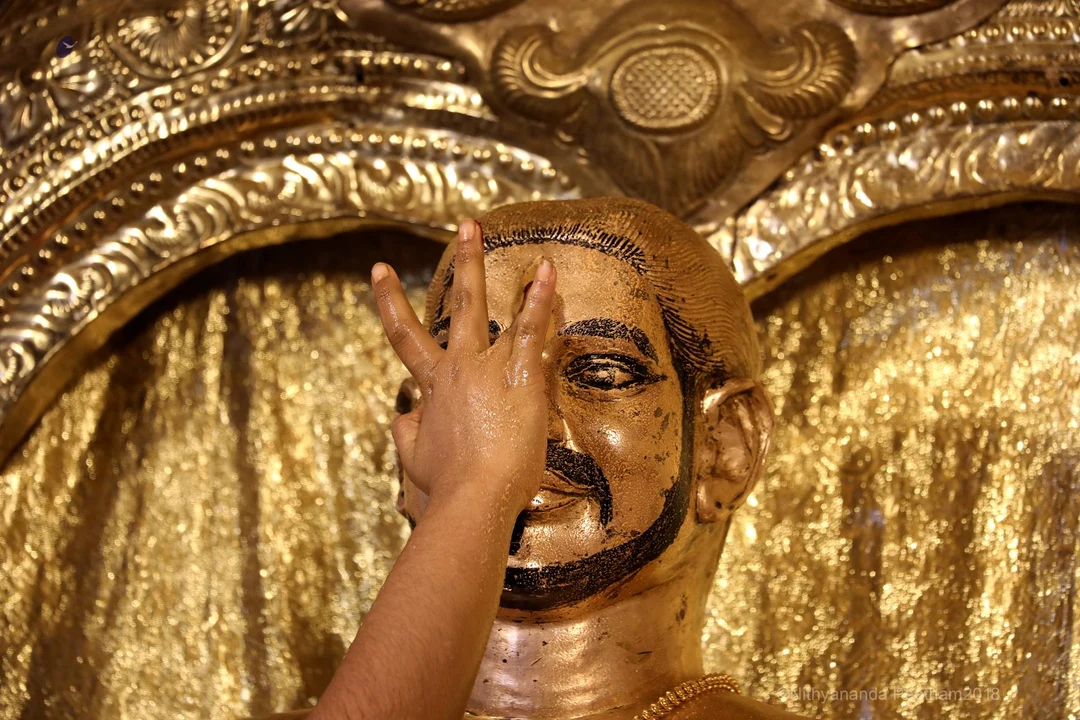
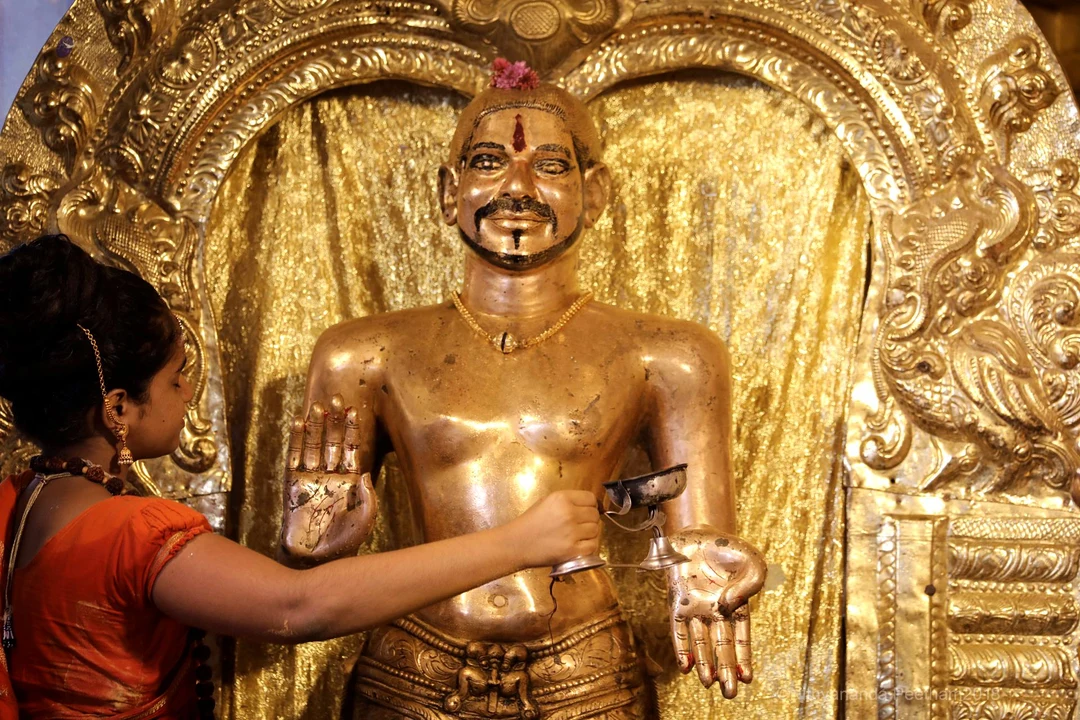
Photograph of a pair of gold-finished deity murti within a golden ornate arch against a dark velvet backdrop. The figure on the left wears a rust-brown turban with a crescent moon and a tilak, a red-and-white jewelled chest garment and garlands of pink and white flowers, and holds a silver trident. The figure on the right wears a tall black and gold crown, a jewelled breastplate with red and green stones and a sacred thread, and holds a small green parrot. Both statues are richly adorned with gold ornaments and bejewelled jewellery. No physical people are visible.Close-up of a golden deity murti with a painted face, red lips, black-lined eyes, a red tilak and white urdhva pundra lines on the forehead. It wears a rust-brown turban wrapped with gold-threaded fabric and a gold chain, plus jeweled ornaments with red and green stones at the ears and shoulders. Flowers are visible at the lower edge, and a silver ceremonial implement appears at the left. The background is dark wood.Close-up photograph of a golden metal deity murti with a painted face, red bindi, black kohl-lined eyes, a red-and-gold nose ring and a jewelled nose stud. It wears a tall black hair crown encrusted with rhinestone bands and gold ornaments with red stones, large jewelled earrings in red, green and white, and a green velvet garment with pearl strands and rhinestone embroidery. Flowers are faintly visible at the lower left against a dark background. No physical people are visible.A young woman in an orange saree with a rudraksha mala and gold jewellery stands at left, holding a brass bell in one hand and an oil lamp in the other, offering arati before a black stone Shivalinga on a dark pedestal. Behind her, a large gilded statue of a standing male sage wears a red turban, orange robes and a gold sash, with one hand raised in blessing. A gold lion sculpture sits in the foreground. The setting is a gilded temple shrine.A photograph of a bearded sadhu in a temple hall holding a large ornate silver ritual fan (chamara-style handle) raised in one hand and a brass hand bell in the other. He wears an orange saffron wrap draped over his shoulder and waist, multiple strands of dark rudraksha beads, and a long gold-beaded necklace with a pendant at the chest. His long dark dreadlocked hair is tied up, with white vibhuti and a red kumkum dot on his forehead. Gold-toned pillars and brass lamps blur in the background. Presentation cues are consistent with a priest performing puja, but the person's identity cannot be confirmed from appearance.A golden statue of a standing religious teacher against an ornate gold backdrop. The figure wears a deep red-brown turban topped with a jeweled trident ornament and a jeweled turban pin, a red tilak on the forehead, and a red-brown robe with a gold-bordered sash. Heavy gold beaded necklaces and a jeweled gold belt with red and green stones adorn the body. The right hand is raised in a blessing gesture and the left hand extends outward. The statue appears to be a depiction rather than a living person, positioned in a temple-style shrine with gold repousse arch decoration.A woman in an orange sari with an orange wrap and hair in a bun pours a liquid from a silver vessel over a golden statue. The golden statue is a seated figure with a moustache, bare-chested, wearing a necklace and a waist cloth, with raised hands, set before an ornate gold-leaf arch and golden drapery, appearing to be an abhishekam being performed. The liquid.A close photo of an abhishekam being performed on a golden statue of a seated figure. A person's hand holds an ornate silver vessel pouring thick yellow-orange liquid over the statue's head, which runs down the face and onto the chest. The statue wears a gold chain necklace with a pendant and sits before a gold textured backdrop with ornate gold and silver carved framing. The figure is a statue, not a physical person, and no identification is made from its face.A milk abhishekam is being performed on a golden-bodied statue of a seated man with a shaved head, with white milk streaming down its face, chest and gold necklace. A person's hands, one in an orange-sleeved garment, pour from an ornate silver pot held at the top left. The statue sits before a gold repoussé backdrop with floral and scrollwork designs. No physical people are clearly fully visible apart from the pouring hands and arm, and the figure is a statue, not a person. Notably the statue depicts a person and is not an in-person presence.A woman in an orange sari and blouse stands at left, raising a silver vessel high with both arms and pouring liquid over the head of a golden statue. The statue is a seated or standing gilded figure with a moustache, bare chest, a gold chain necklace and a pendant, set against an ornate gold-leaf arch and golden drapery. The scene suggests an abhishekam offering. The woman's hair is pinned in a bun with a decorative hair ornament. Only one physical person is visible.Close-up photograph of a gilded statue head with a golden ornate arch and shimmering gold draped backdrop. A human hand with a bare arm reaches in from the left and touches the statue's forehead with fingers. The statue has a moustache and eyebrows painted in black. A gold beaded necklace is visible at the base of the statue. The hand belongs to someone outside the frame, so one partially visible person is shown. The statue is a depiction, not a physical person.A woman in an orange sari and gold earrings stands at left, lighting or tending an oil lamp held near a golden statue. The statue is a gilded, bare-chested male figure with a red tilak on the forehead, a pink flower on the head, a gold chain necklace and a dhoti with ornate gold belt, one hand raised in blessing and the other holding a small lamp. It stands before a shimmering gold cloth backdrop and an ornately carved gilded arch. This is a statue, not a living person, so it does not count as an in-person candidate. Setting suggests temple puja or aarti.