Skip to content
Monday

7 November 2011

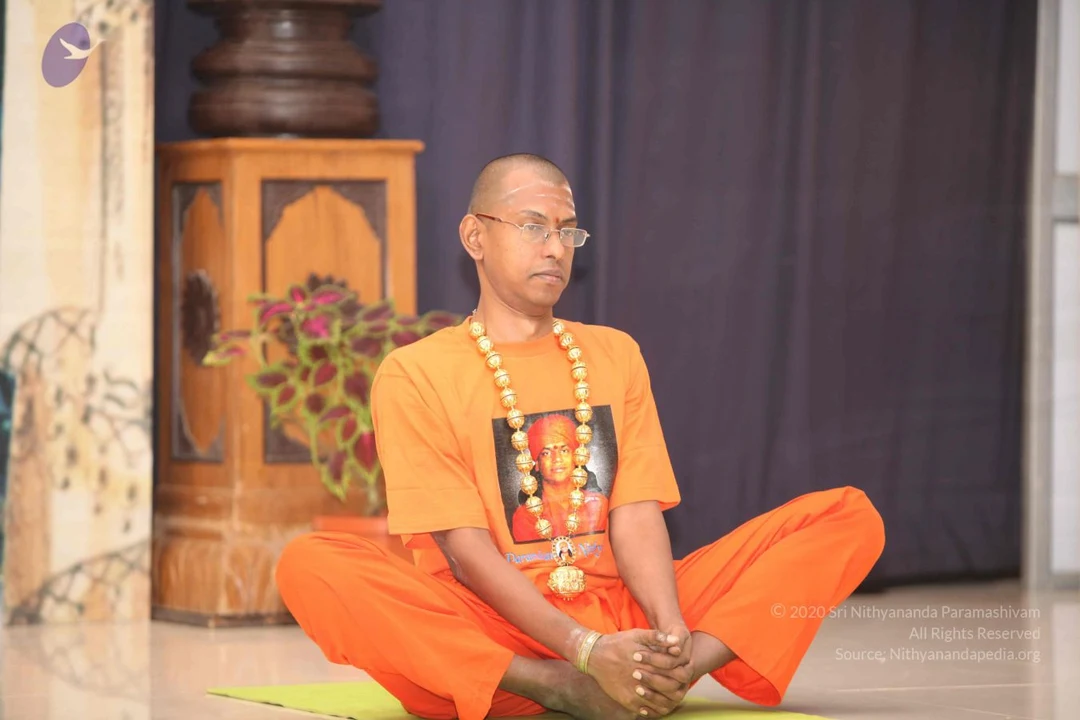
Nithya Kriya: Care for Obesity

Dated photos
409
Source pages
1
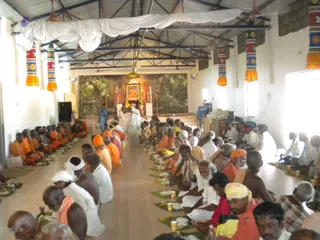
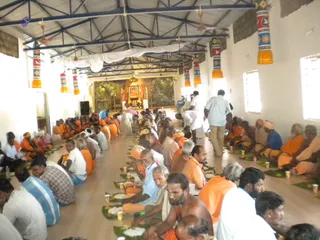
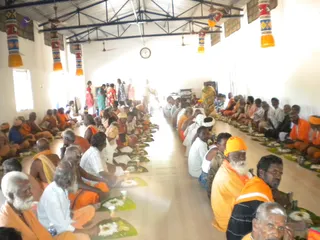
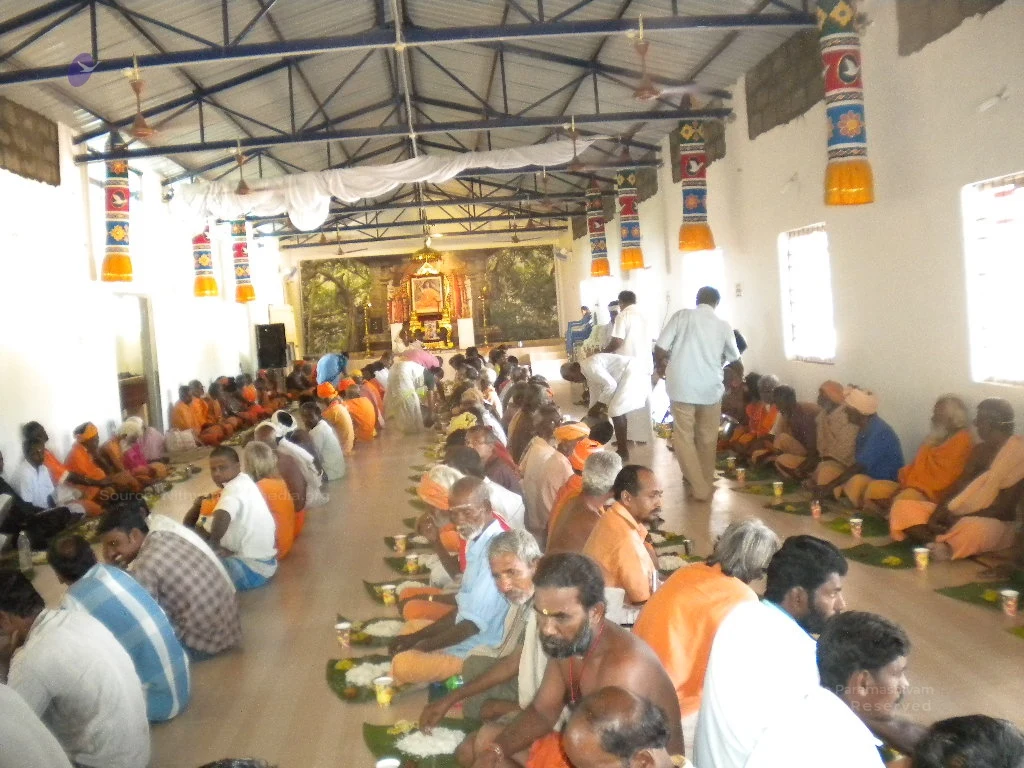
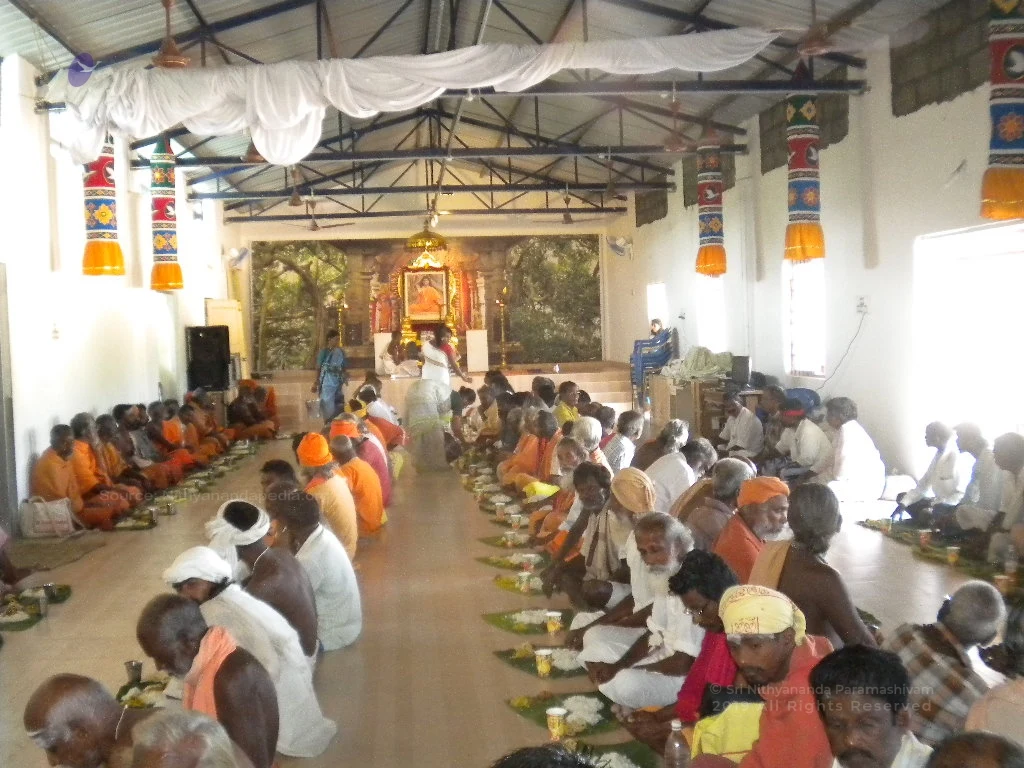
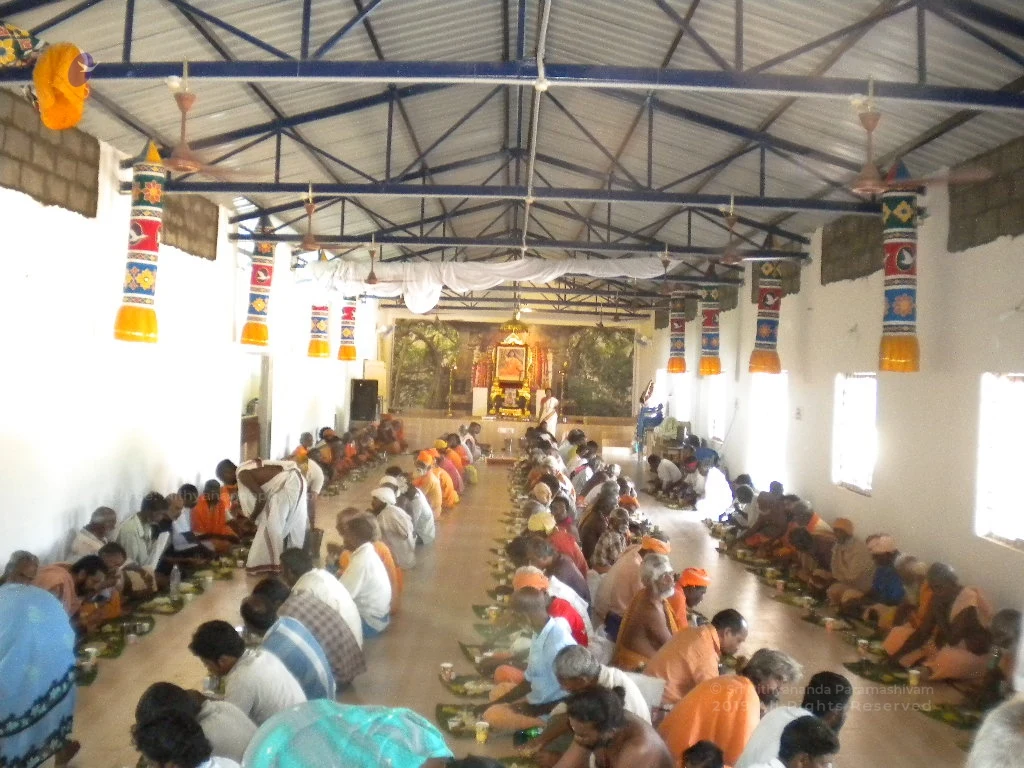
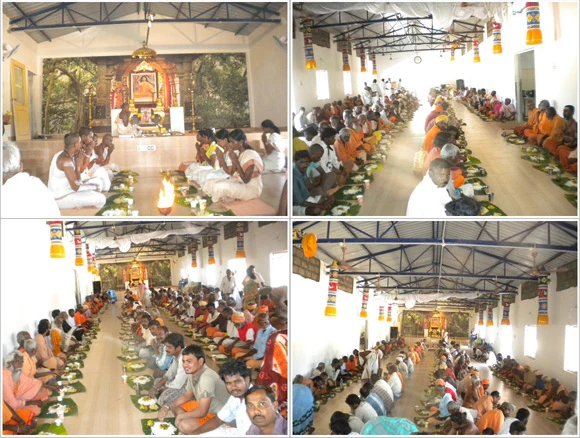
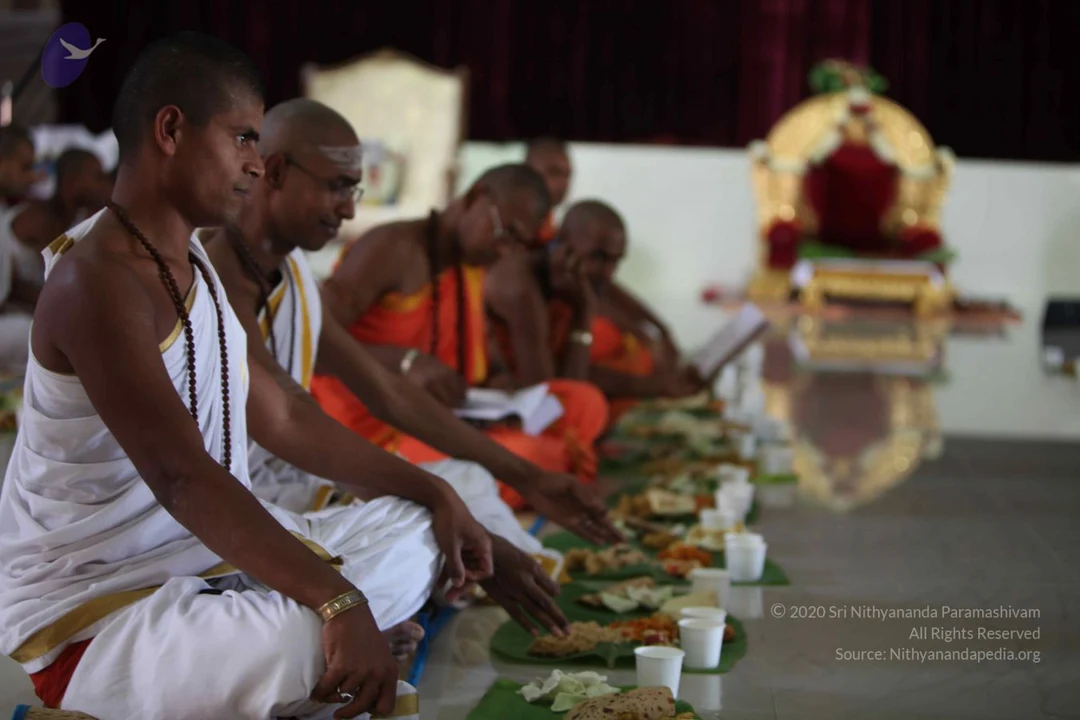
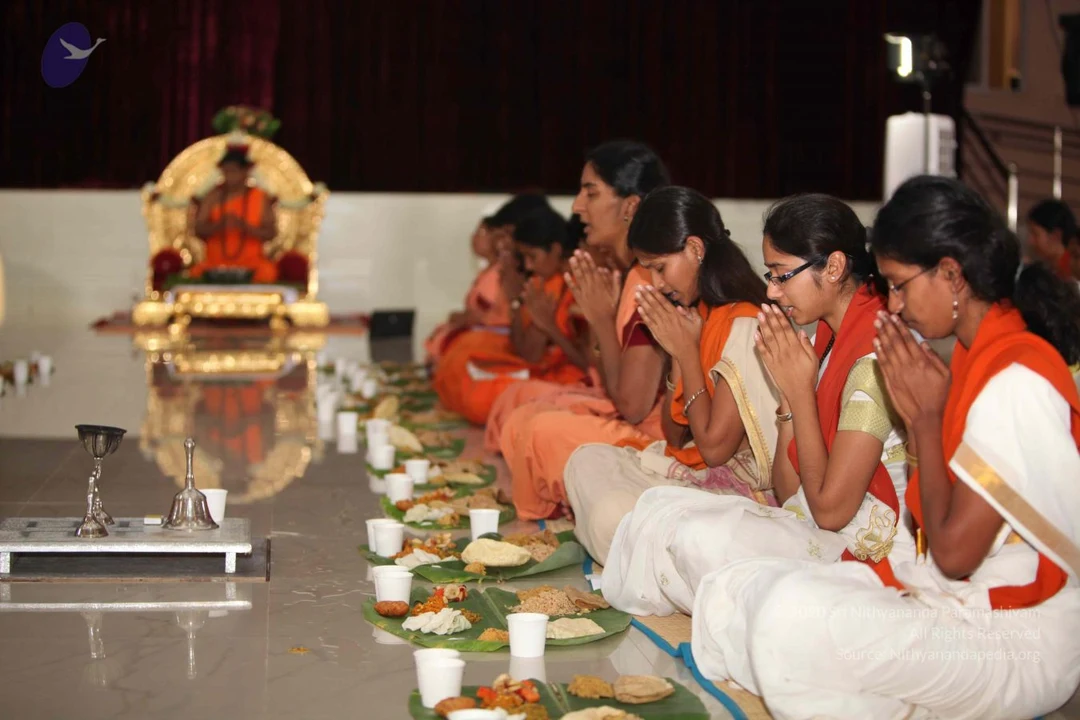
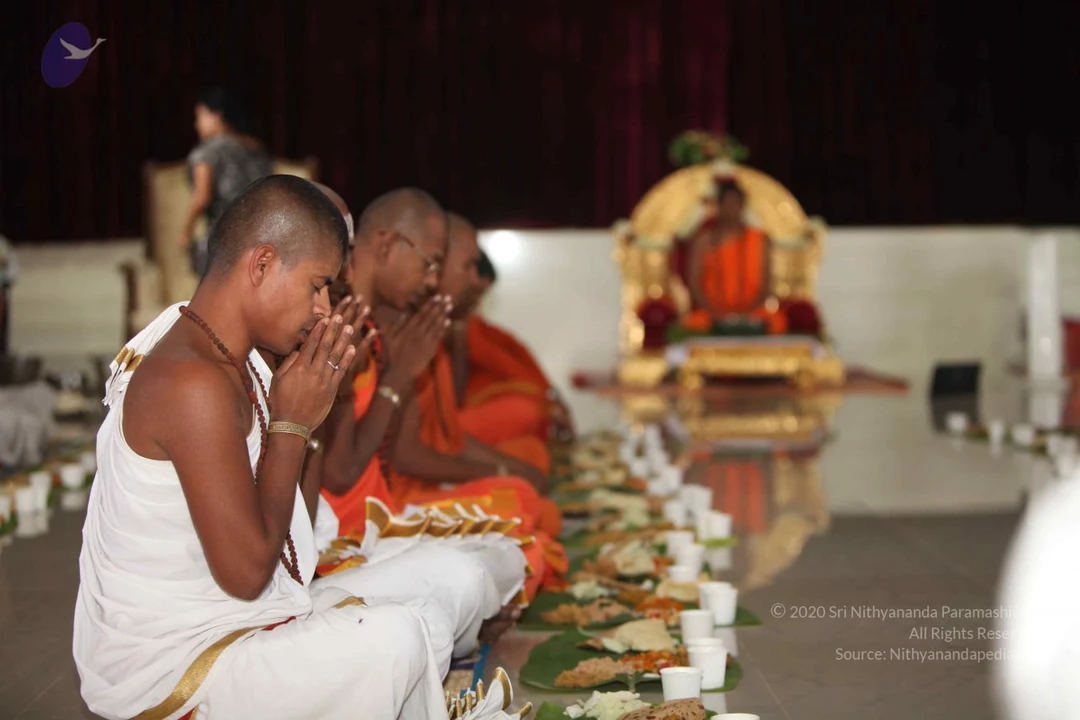
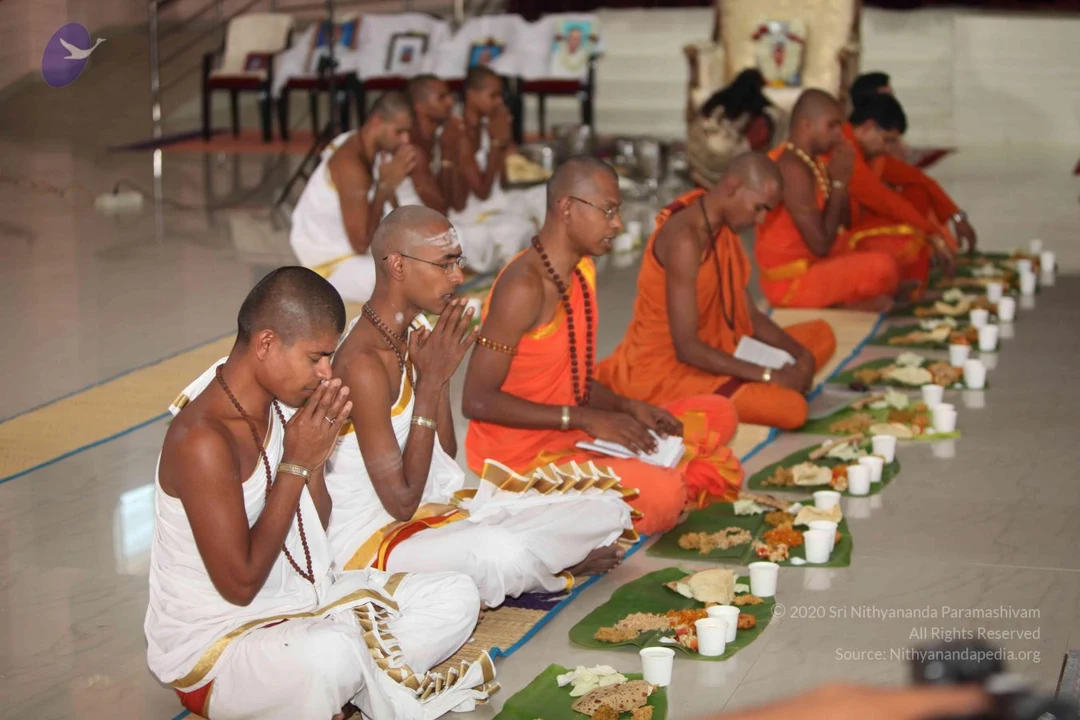
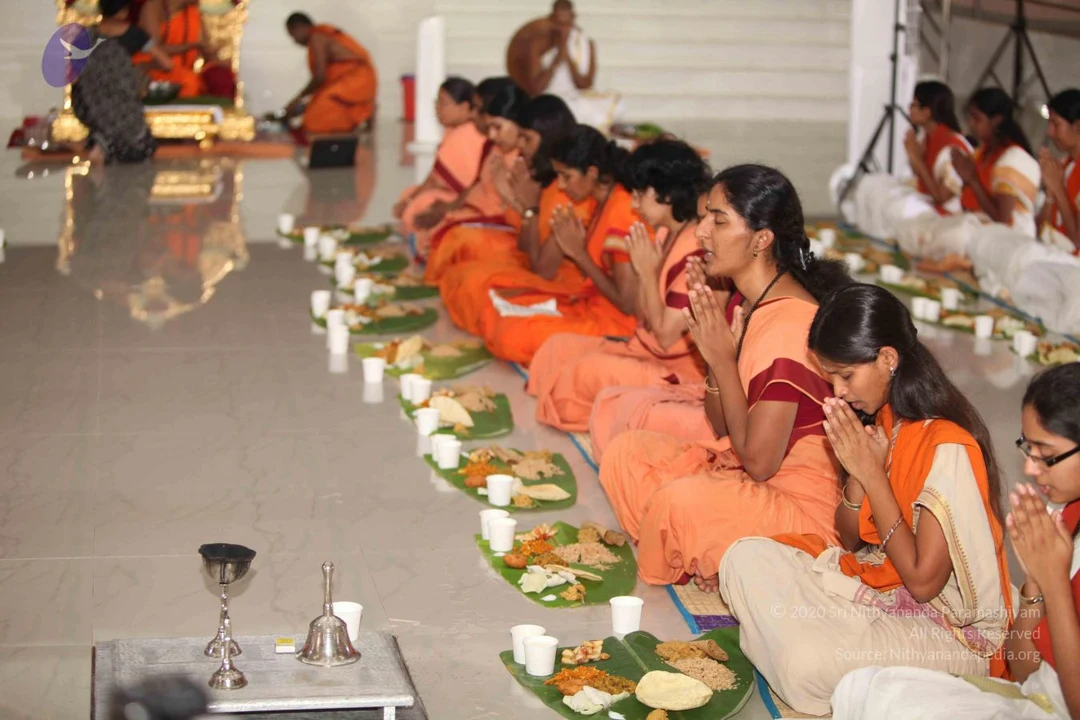
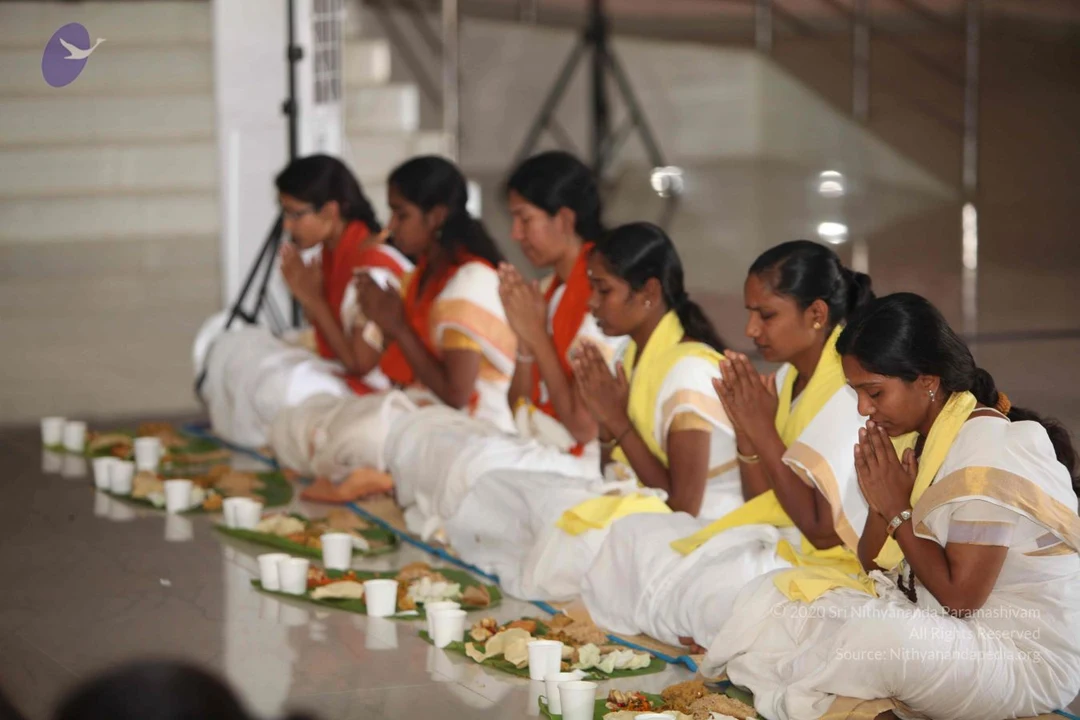
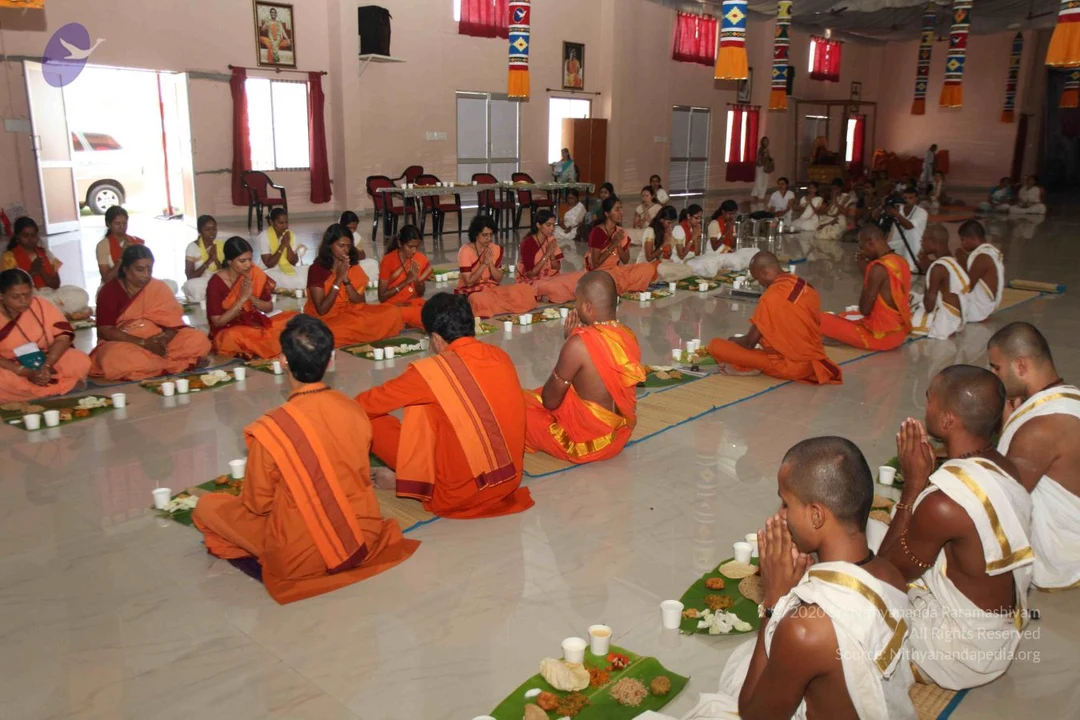
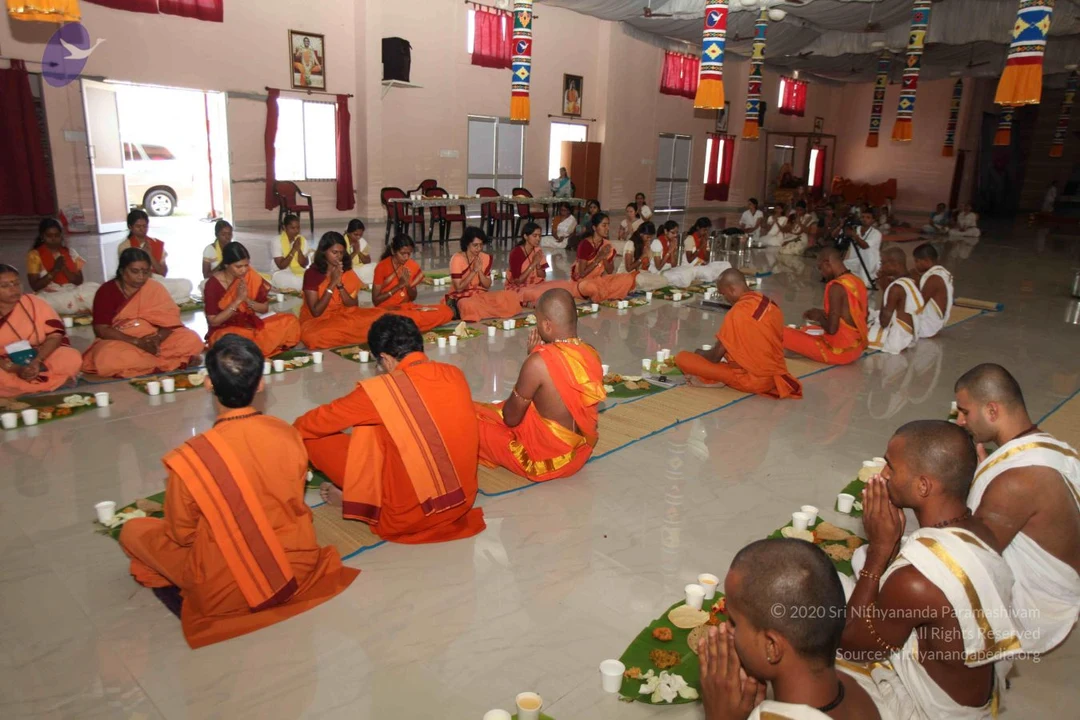
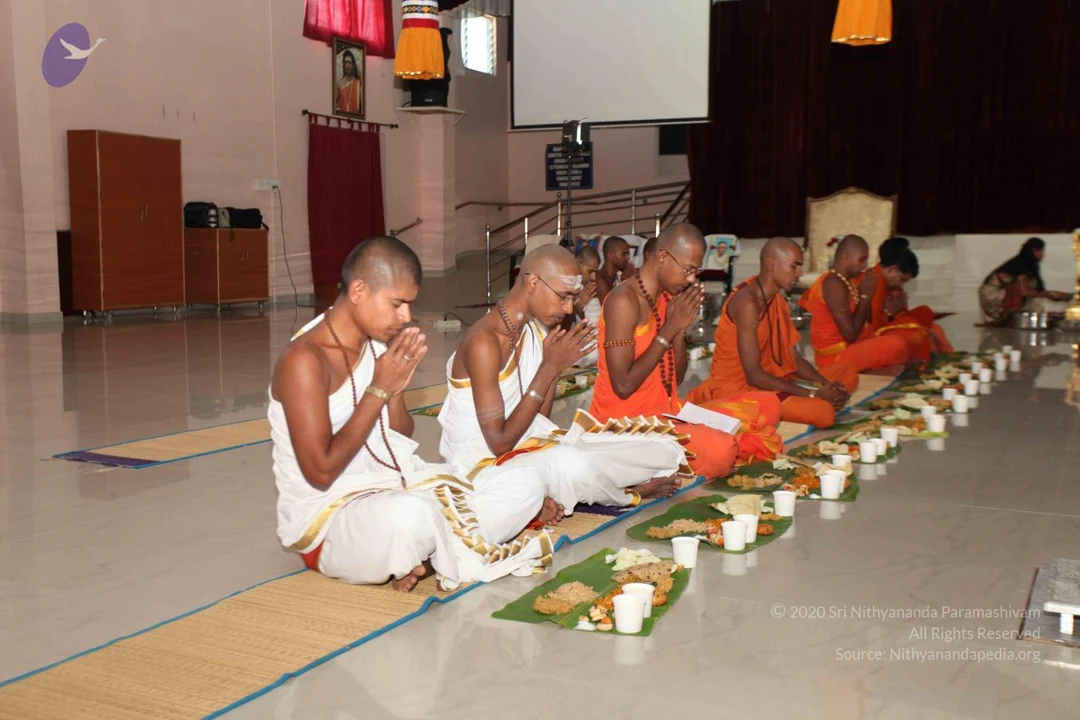
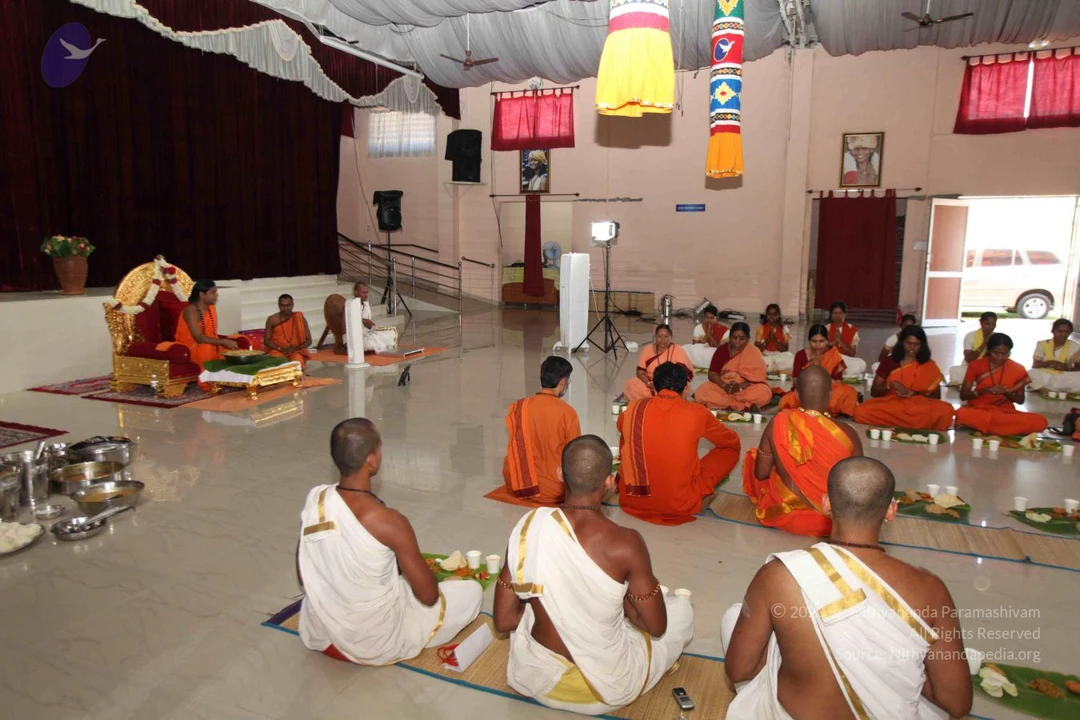
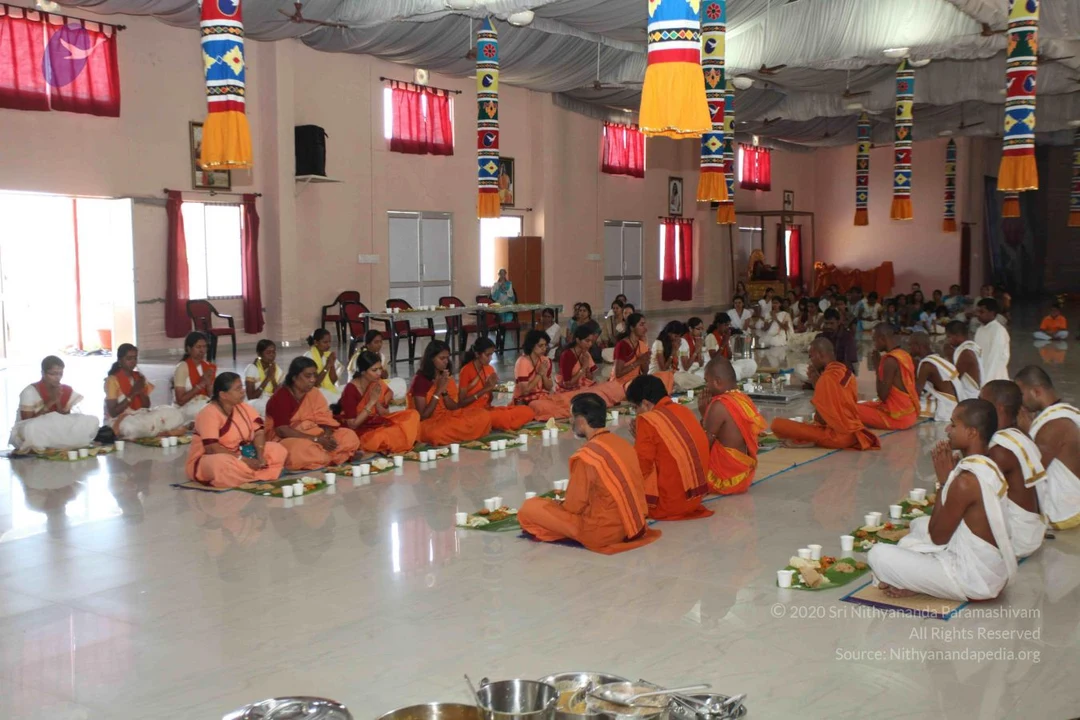
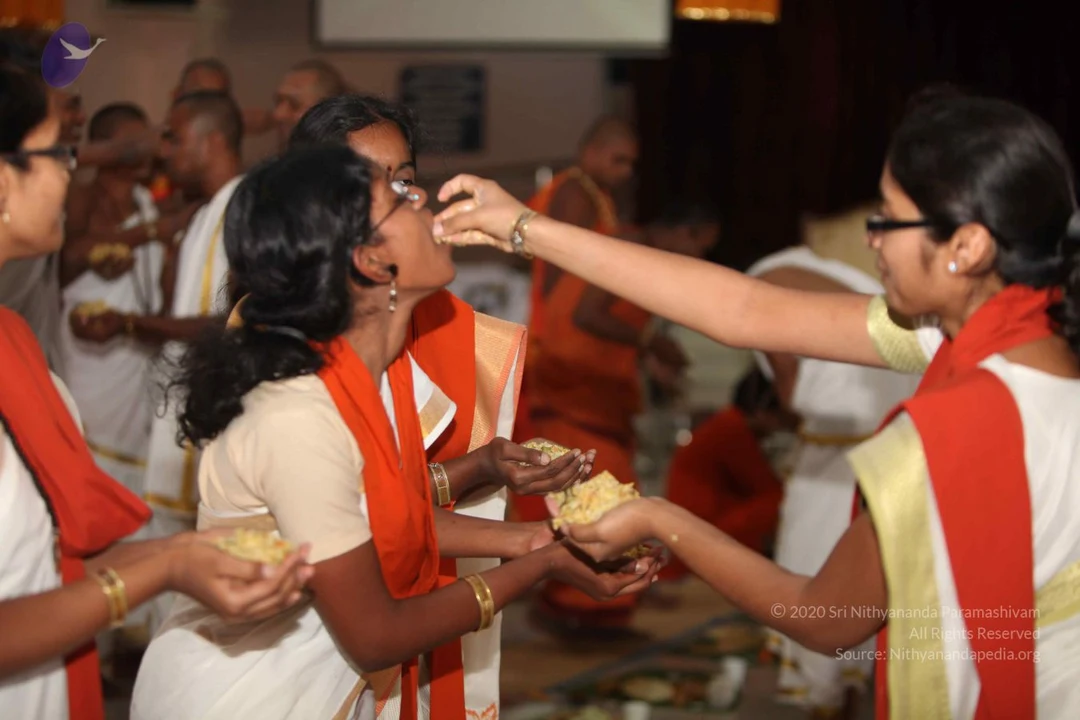
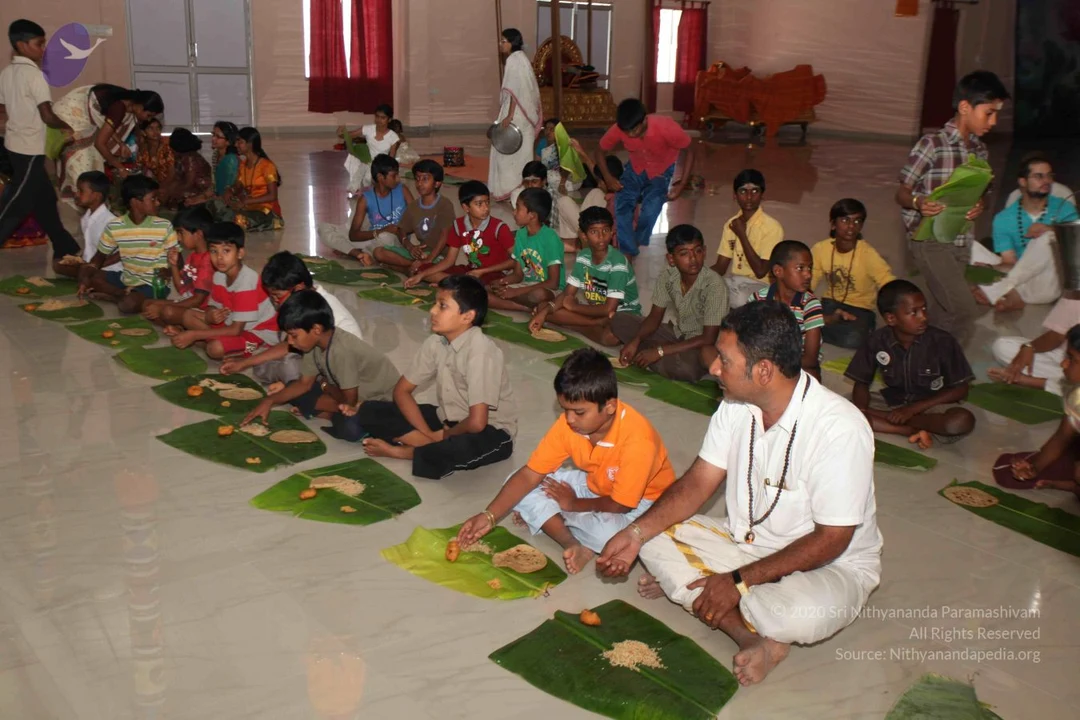
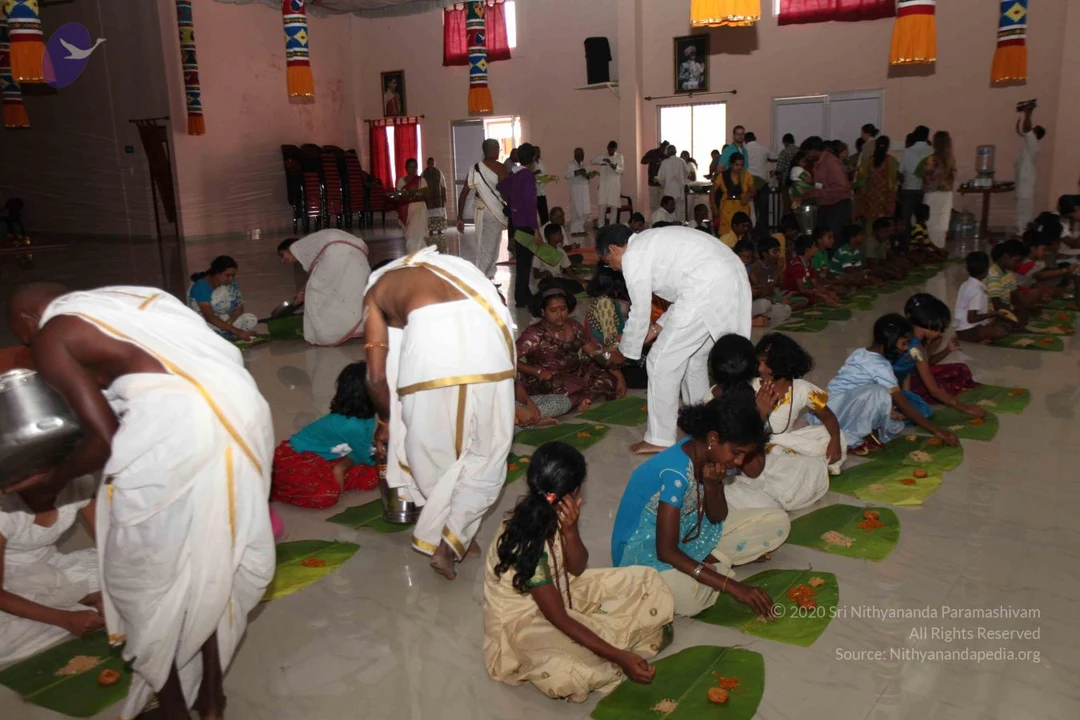
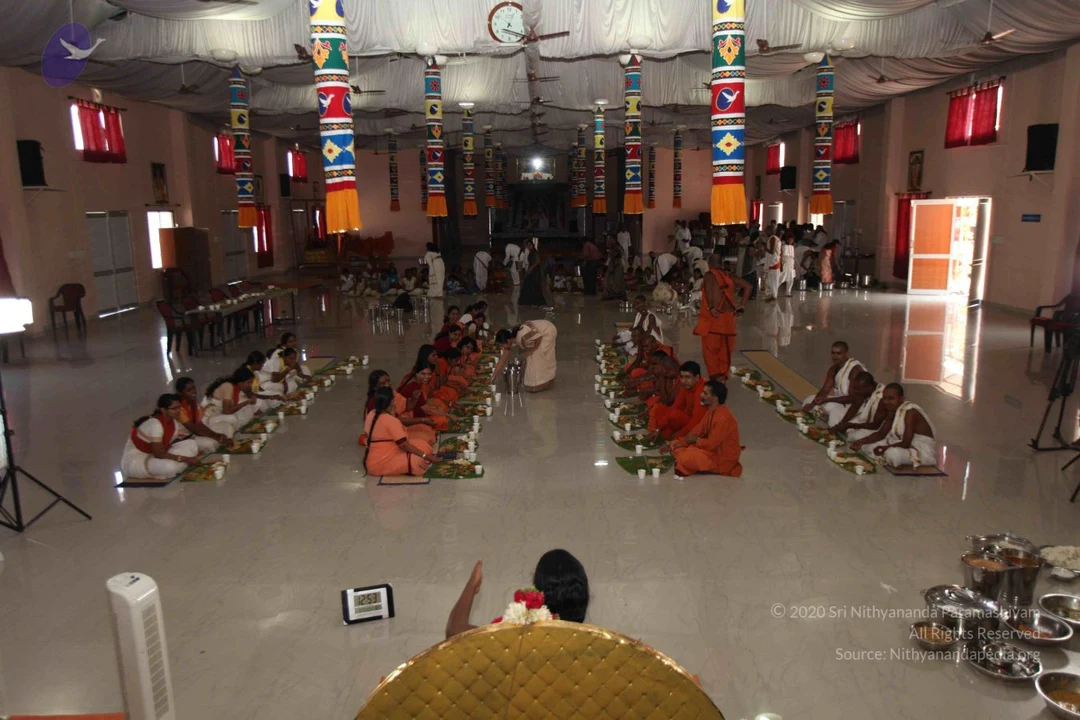
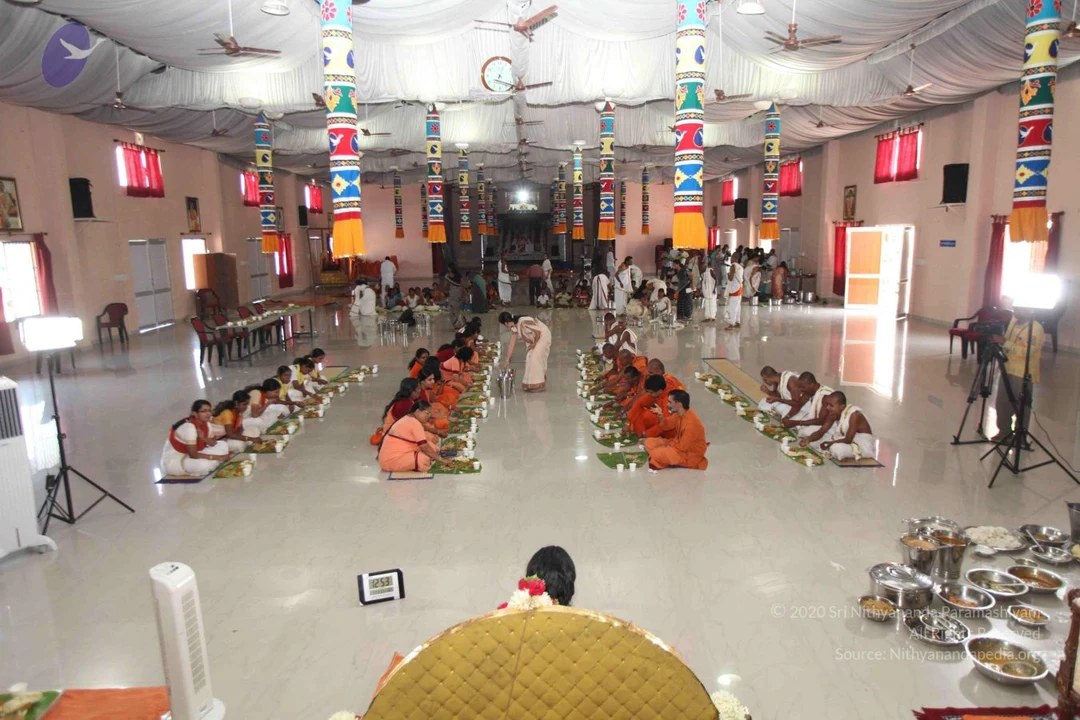
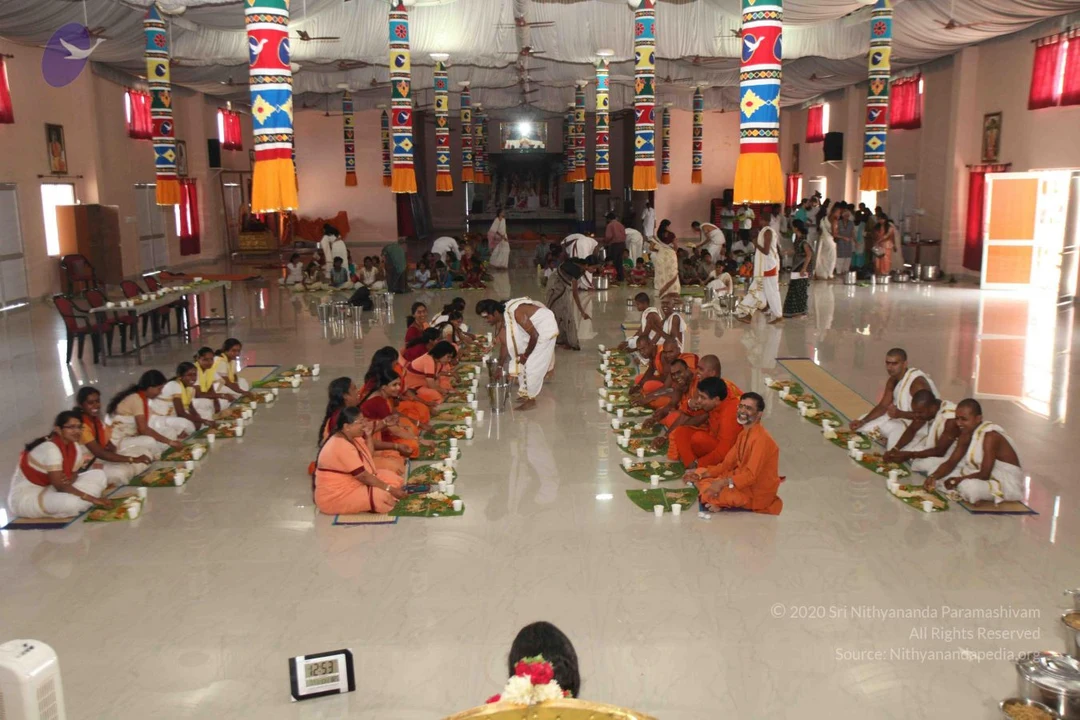
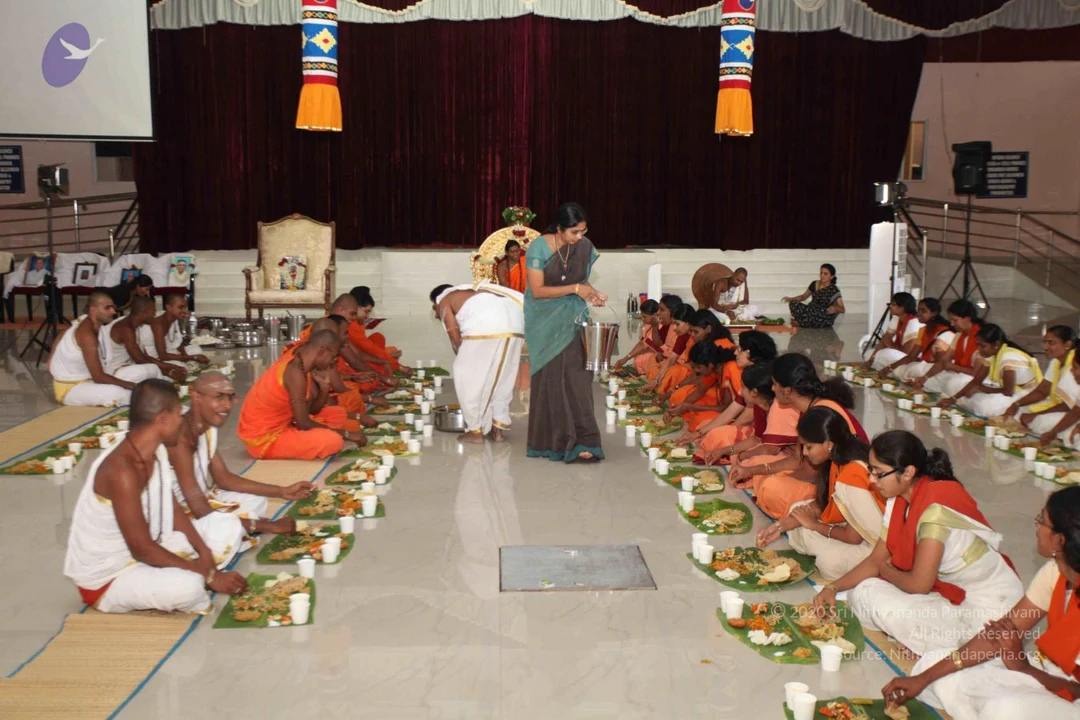
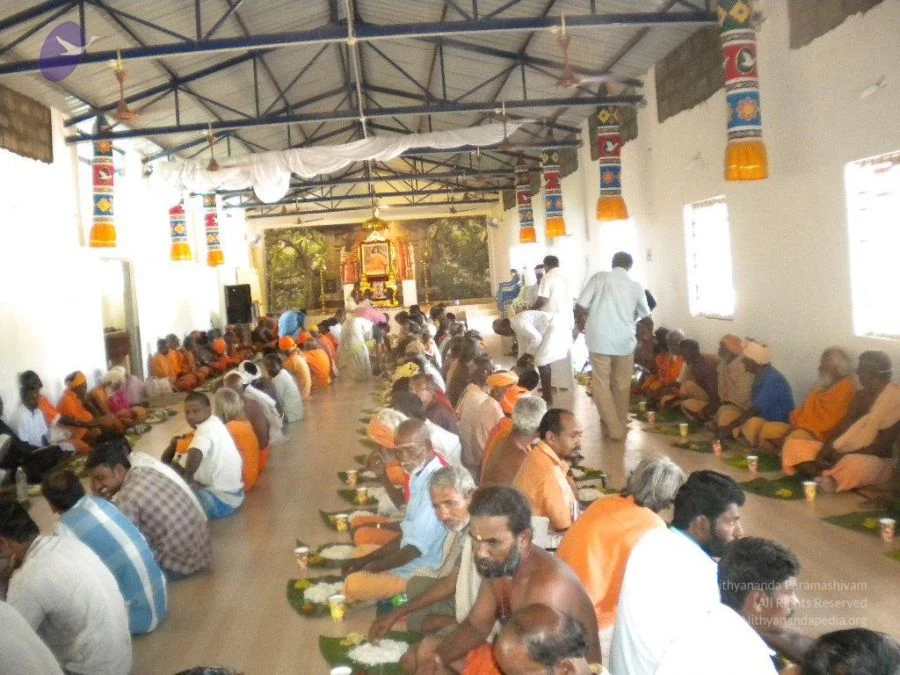
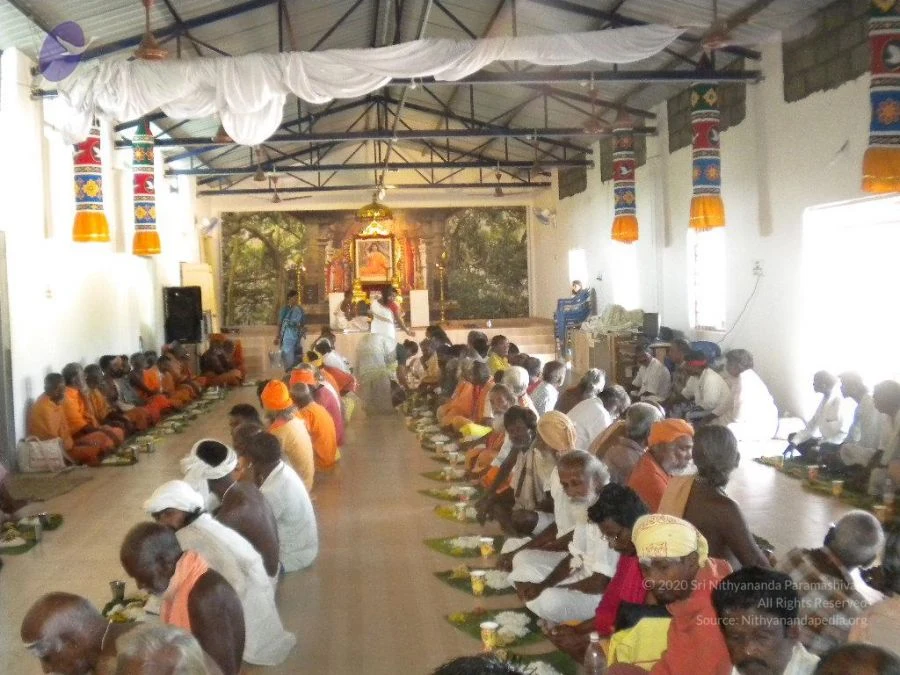
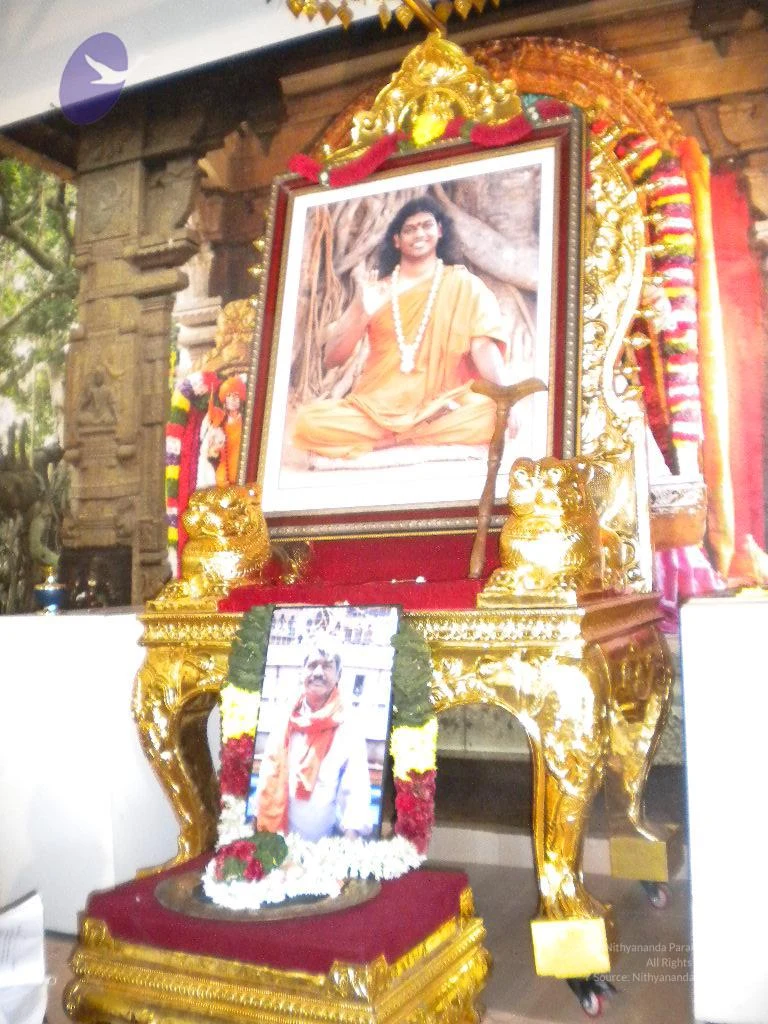
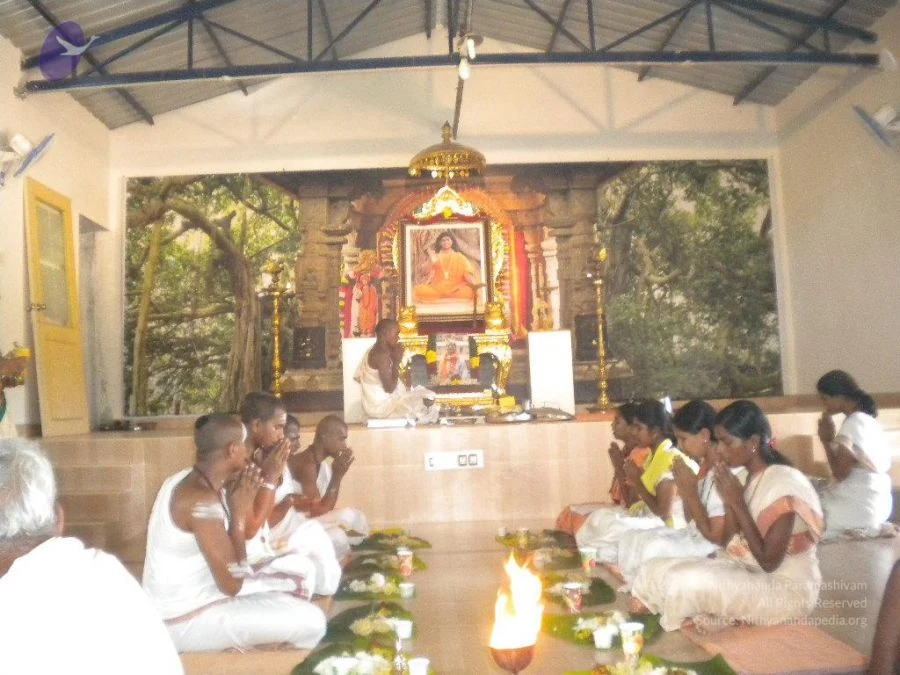
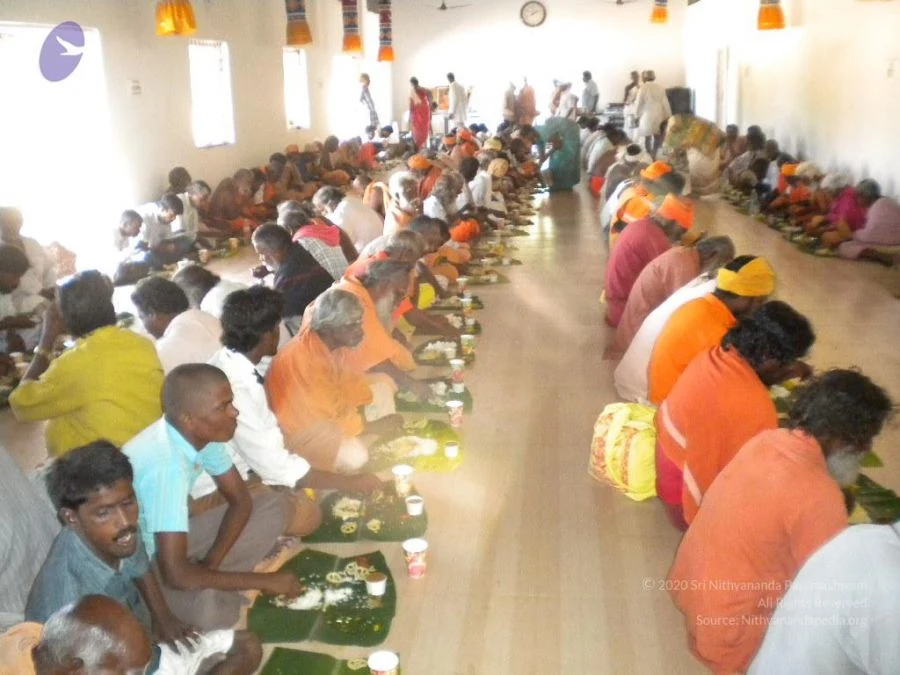
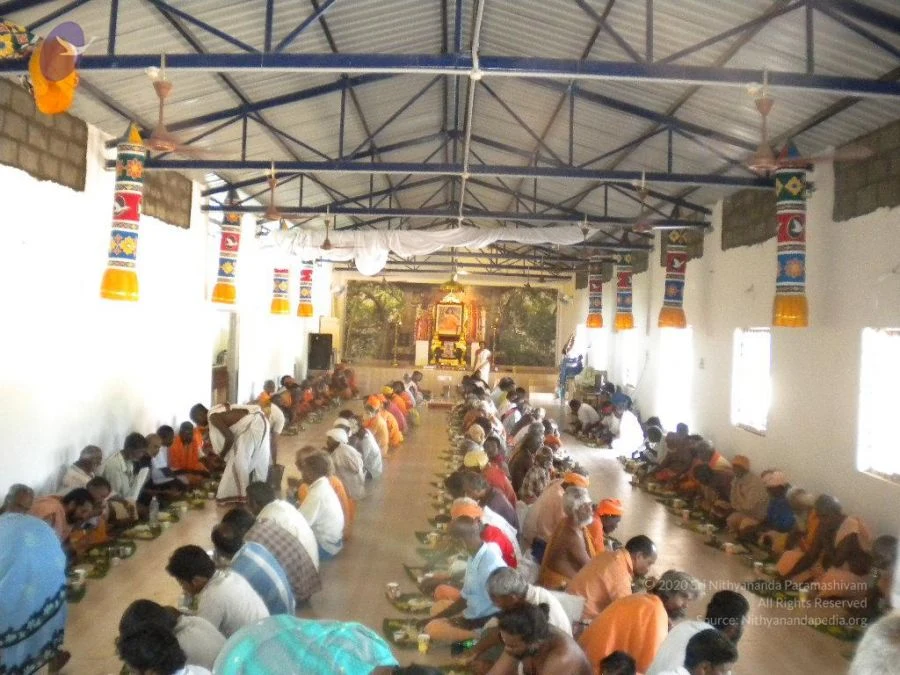
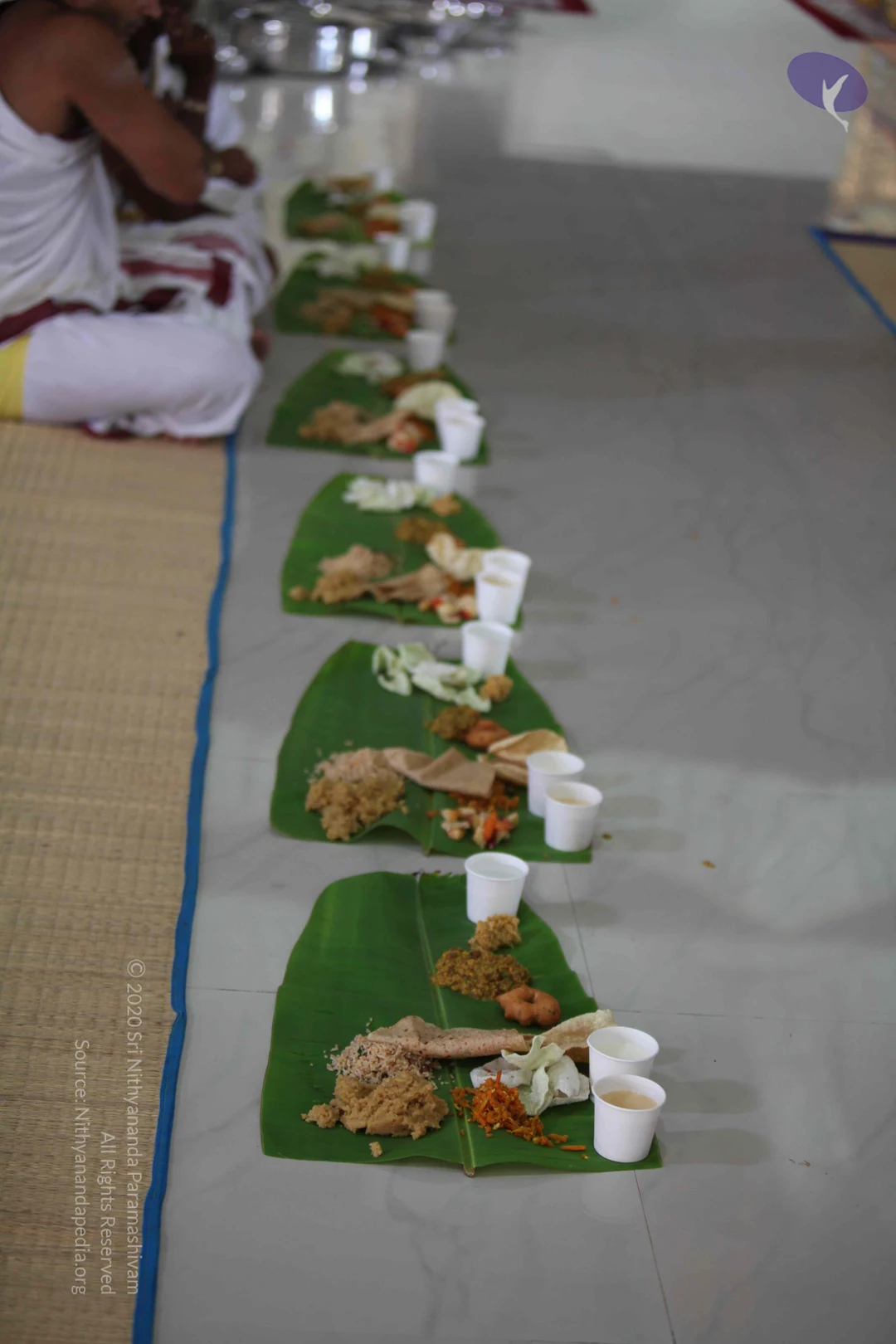
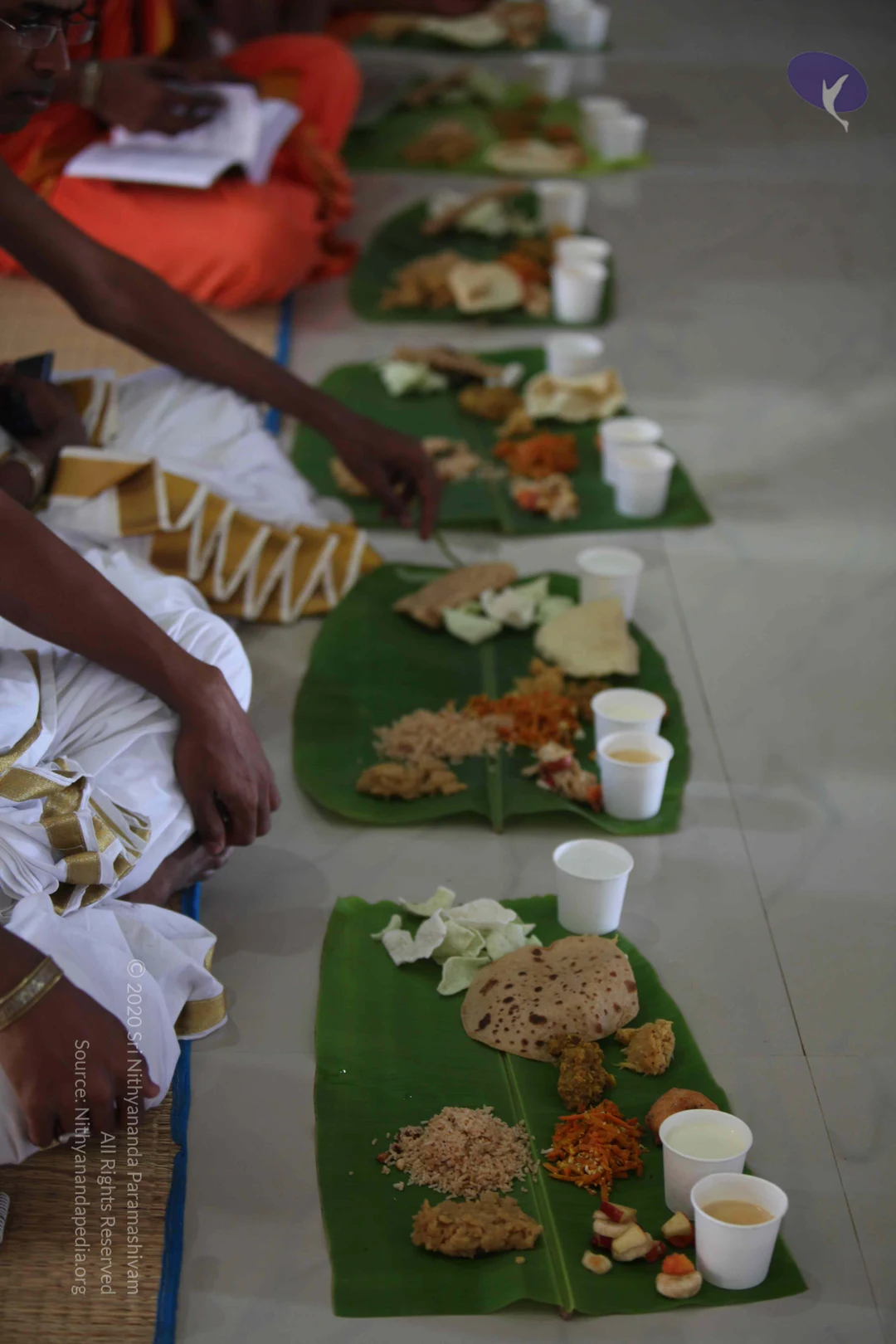
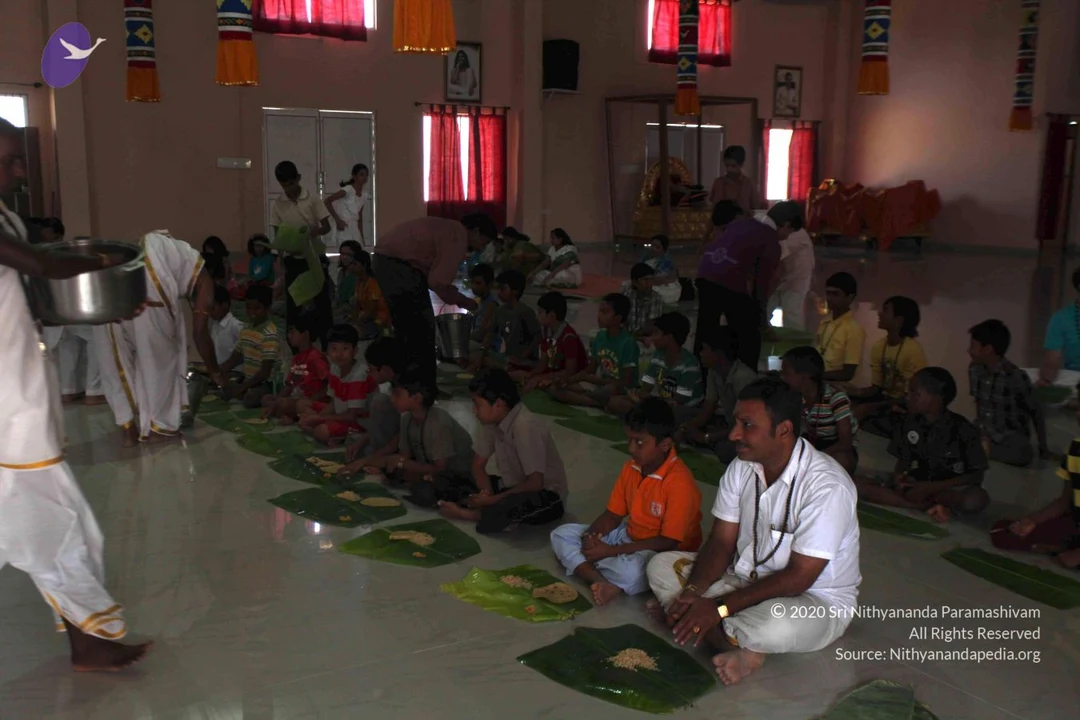
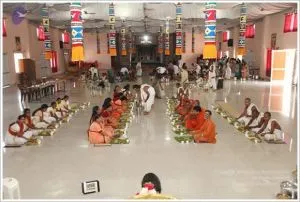
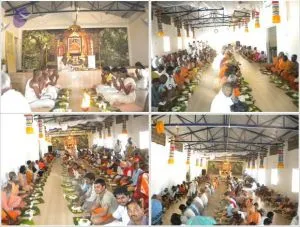
A wide photograph of a large hall where many people sit in long rows on the floor, facing a central stage. Most wear saffron-orange robes or white dhotis and white shirts; several men wear white head cloths and some wear orange turbans. In front of each seated person are green banana-leaf plates with food, flowers and small cups. At the far end, a raised altar holds a framed portrait of a saffron-robed man beside brass lamps and ornate gold decorations, set against a painted backdrop of trees. Colourful woven hangings with orange tassels hang from the ceiling beams, and a white cloth canopy is draped above. Staff in white and blue move between the rows. The seated figures are real people, while the framed portrait is a printed depiction.

November 07 2011

Original wiki page
Contents

Title:

Nithya Kriya: Care for Obesity

Photos

Bhagavad Gita – Saankhya Yoga Chapter 2: Verse 66

nasti buddhir ayuktasya na cayuktasya bhavana |
na cabhavayatah saantir asantasya kutah sukham || 2.66

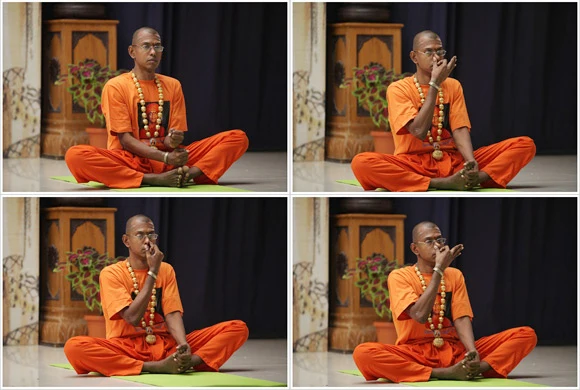
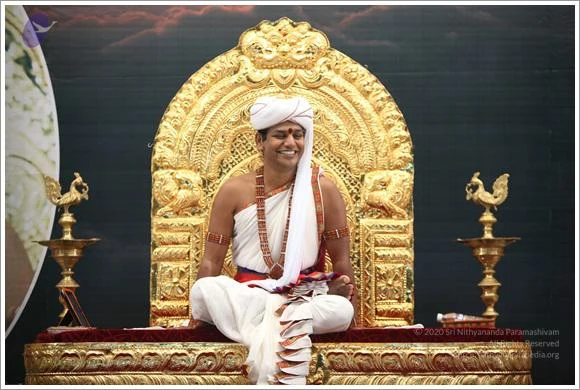
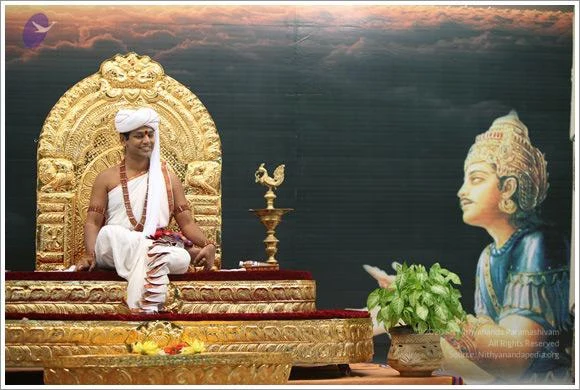
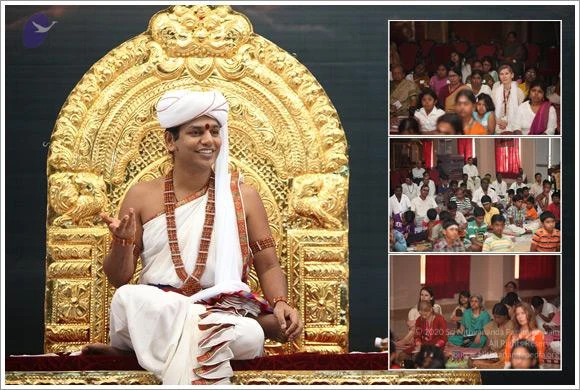
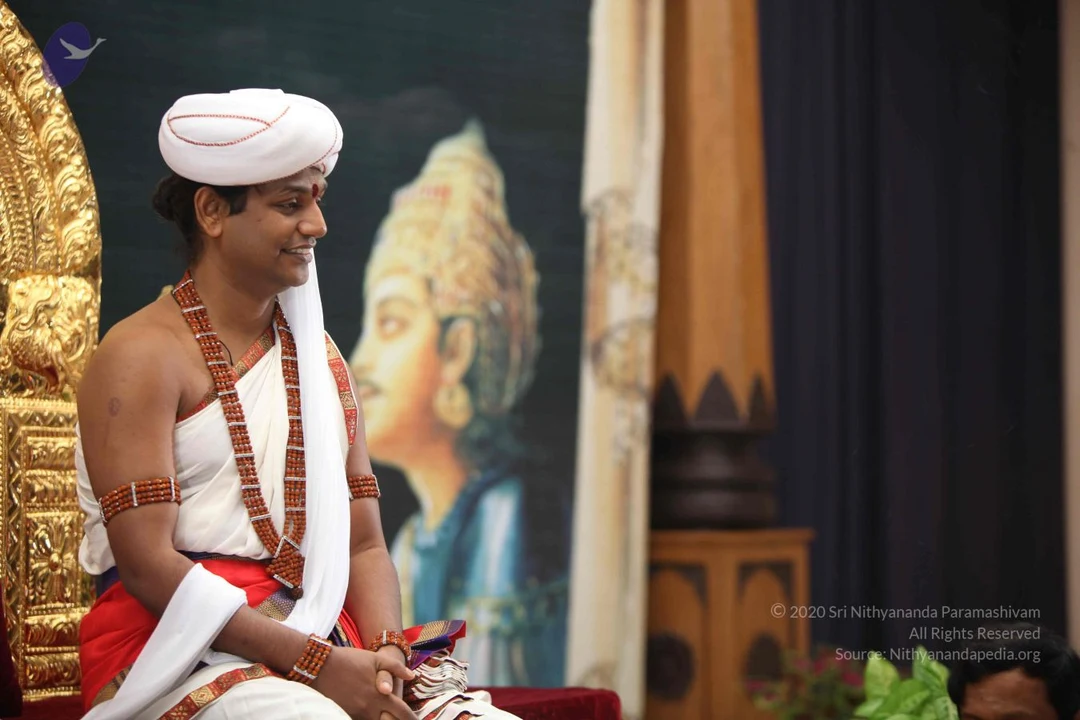
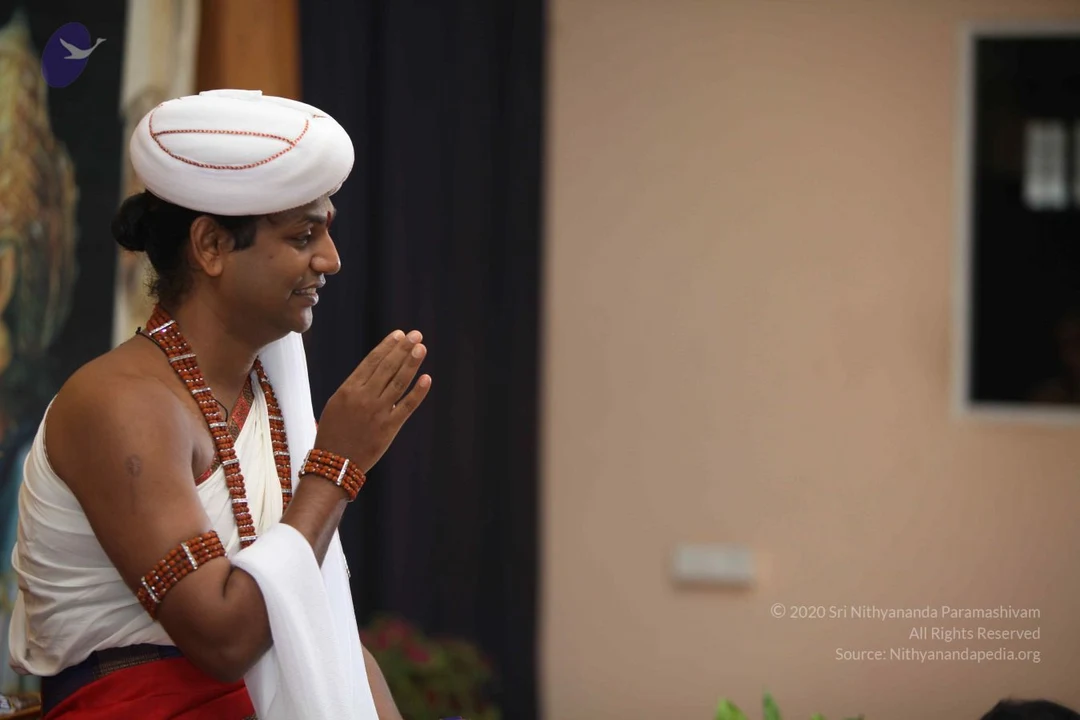
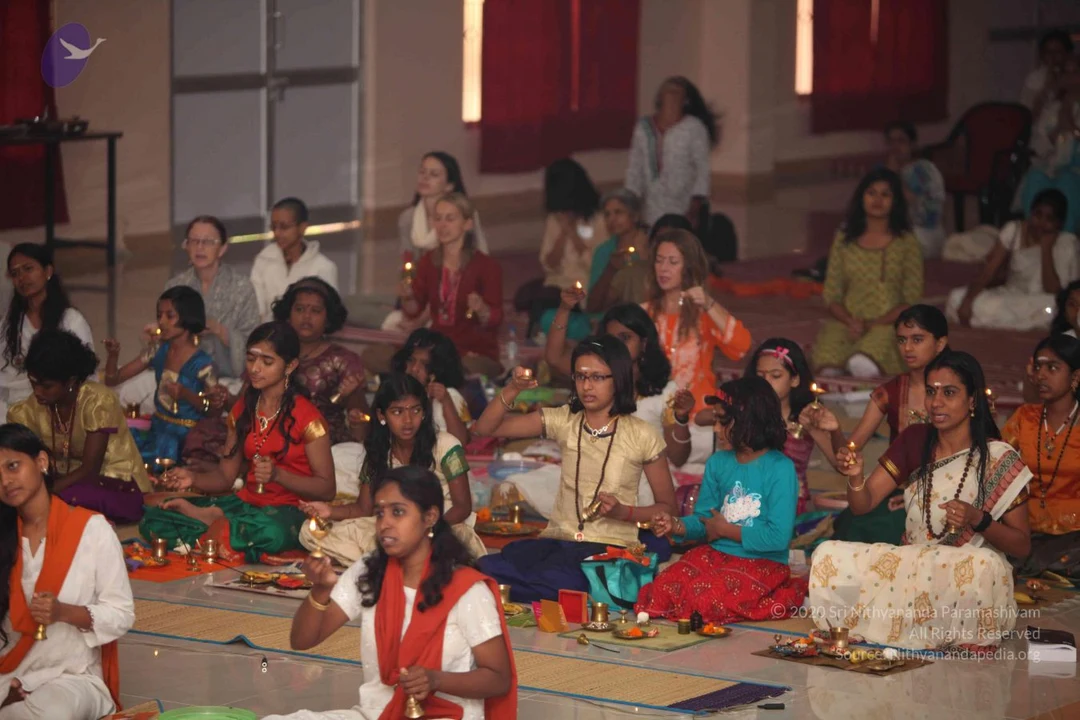
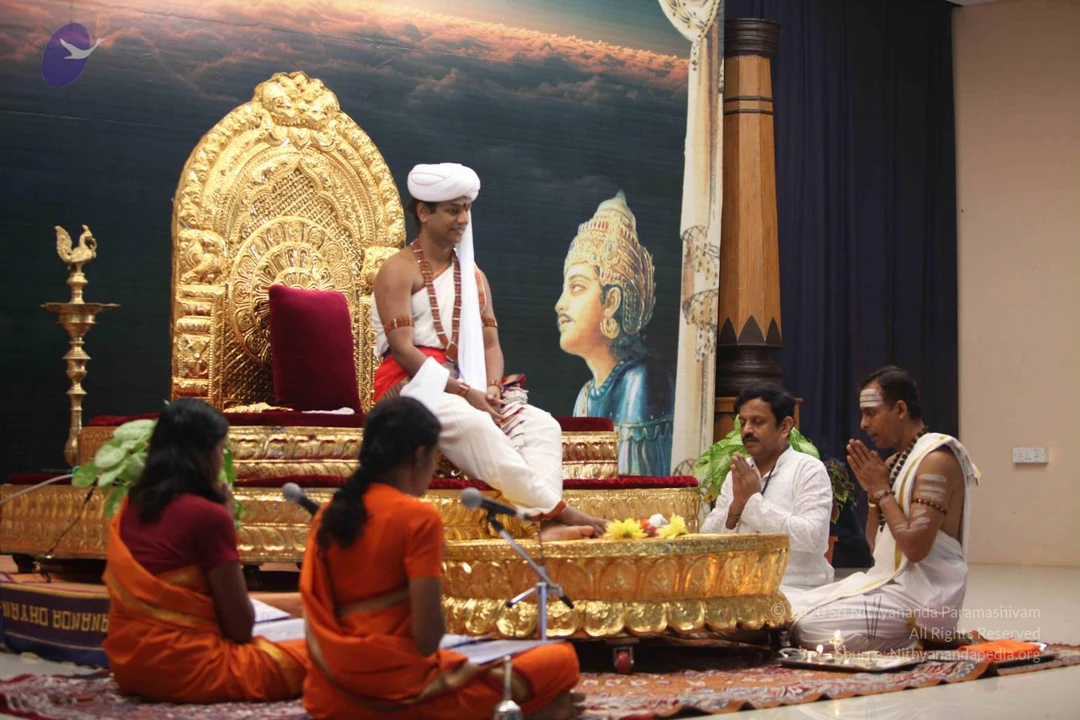
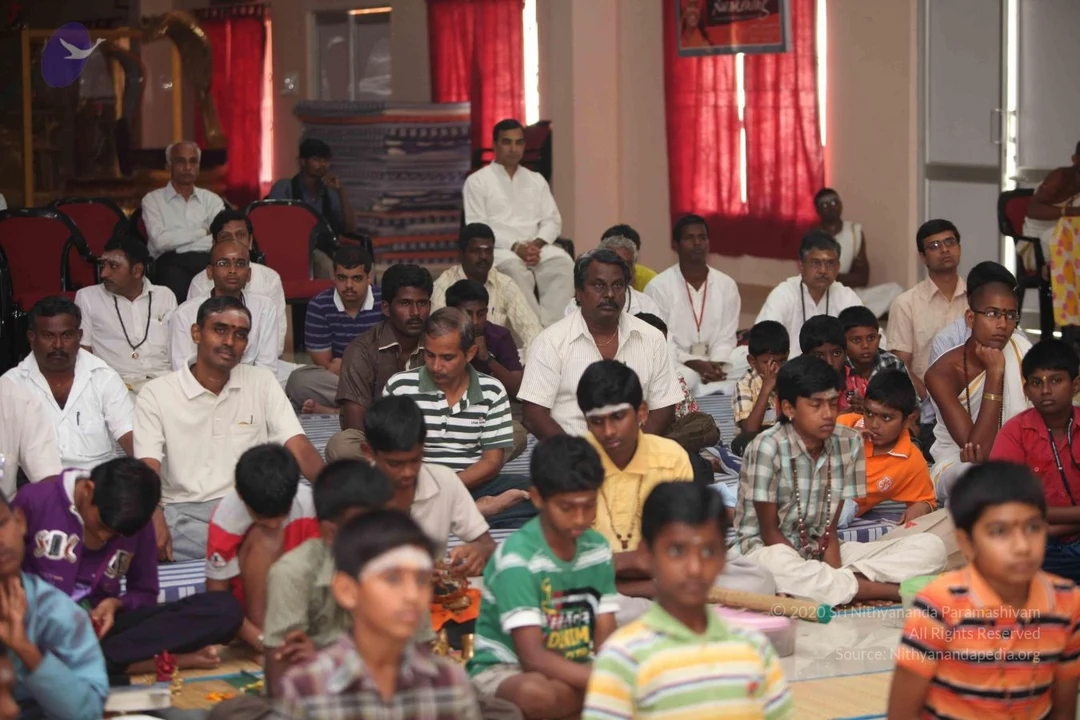
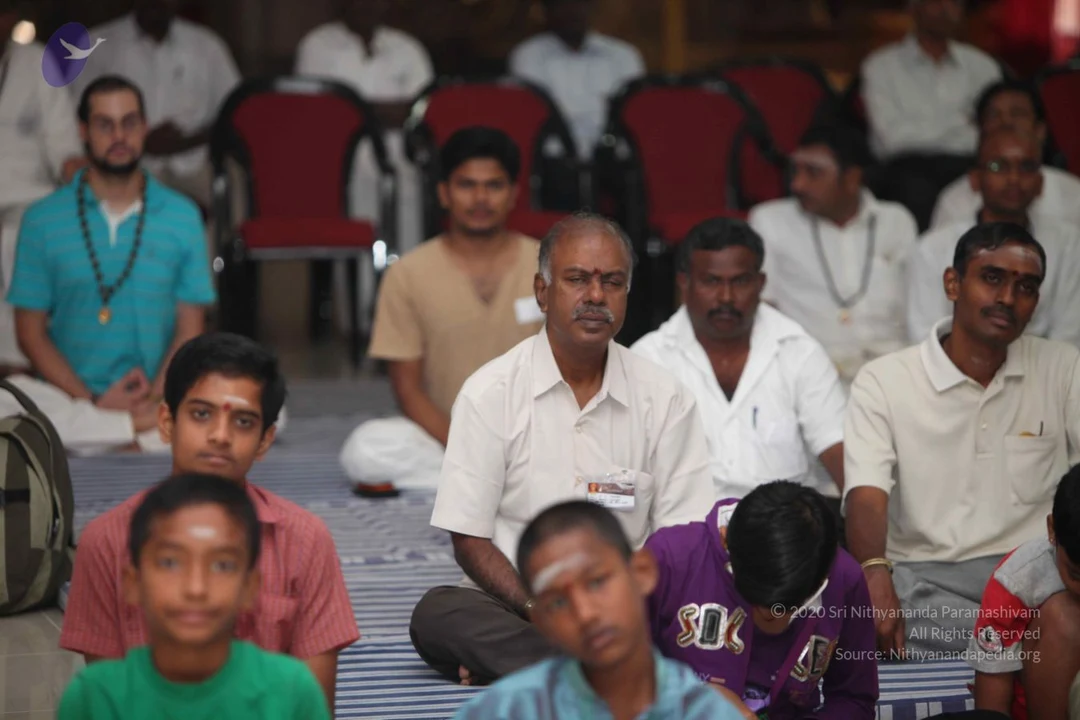
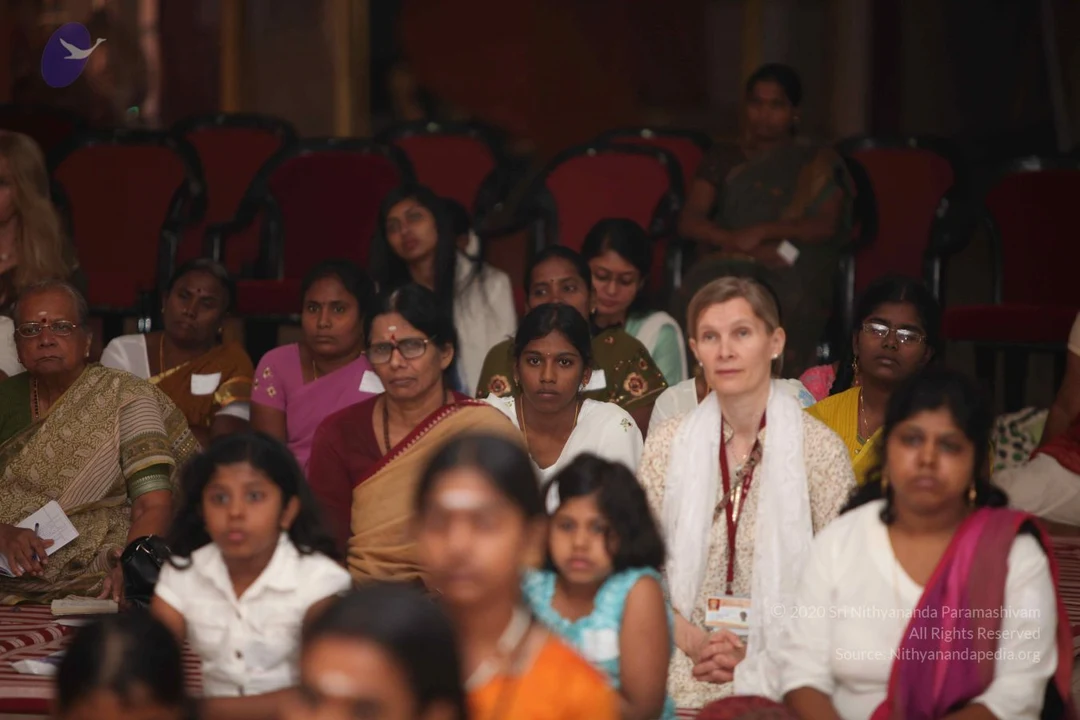
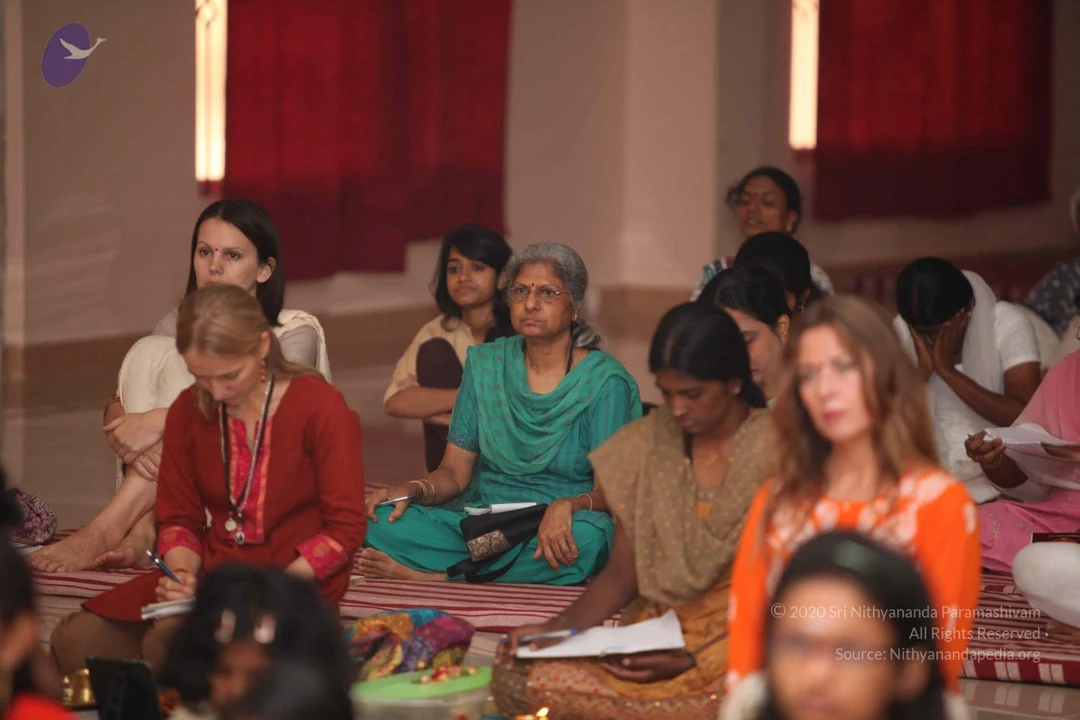
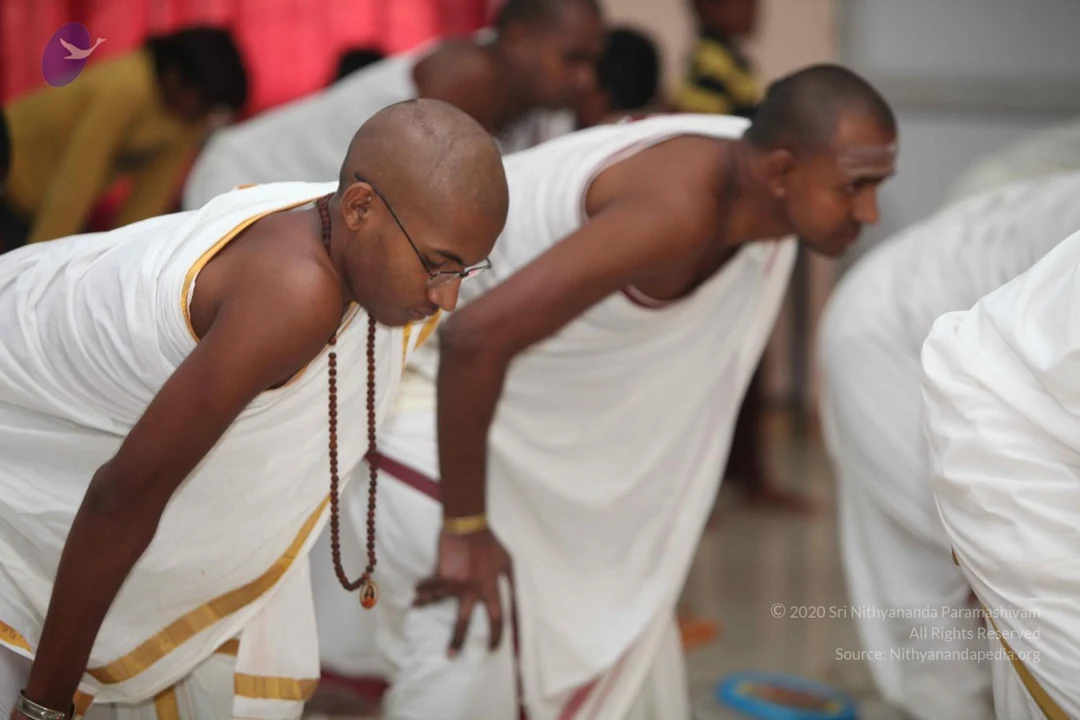
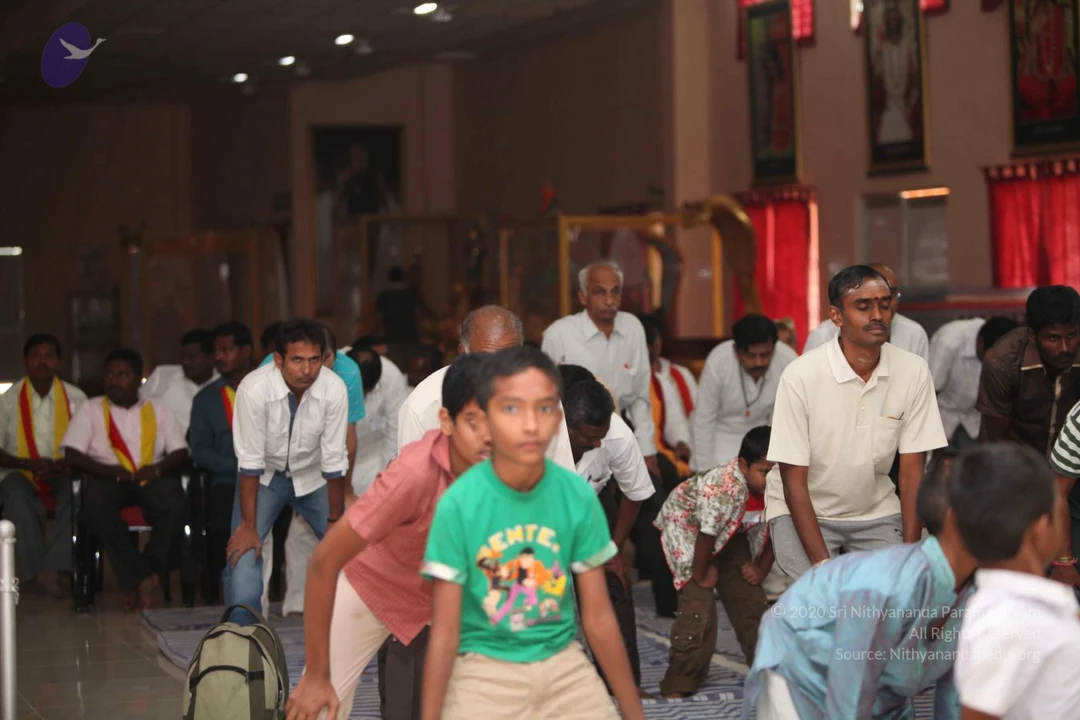
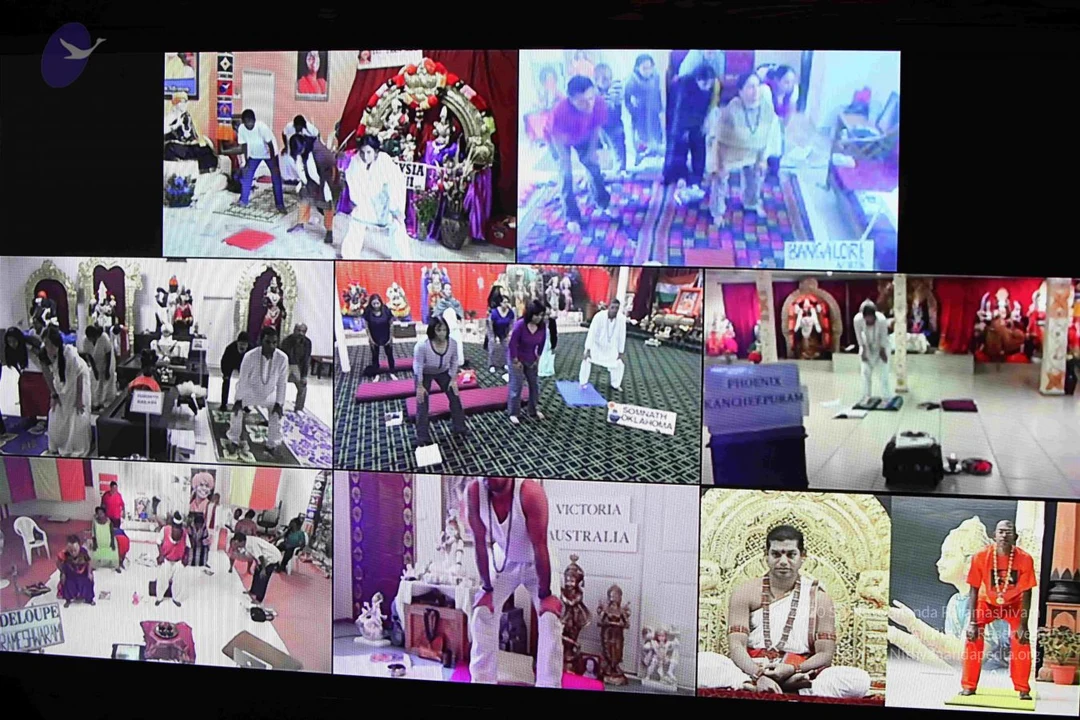
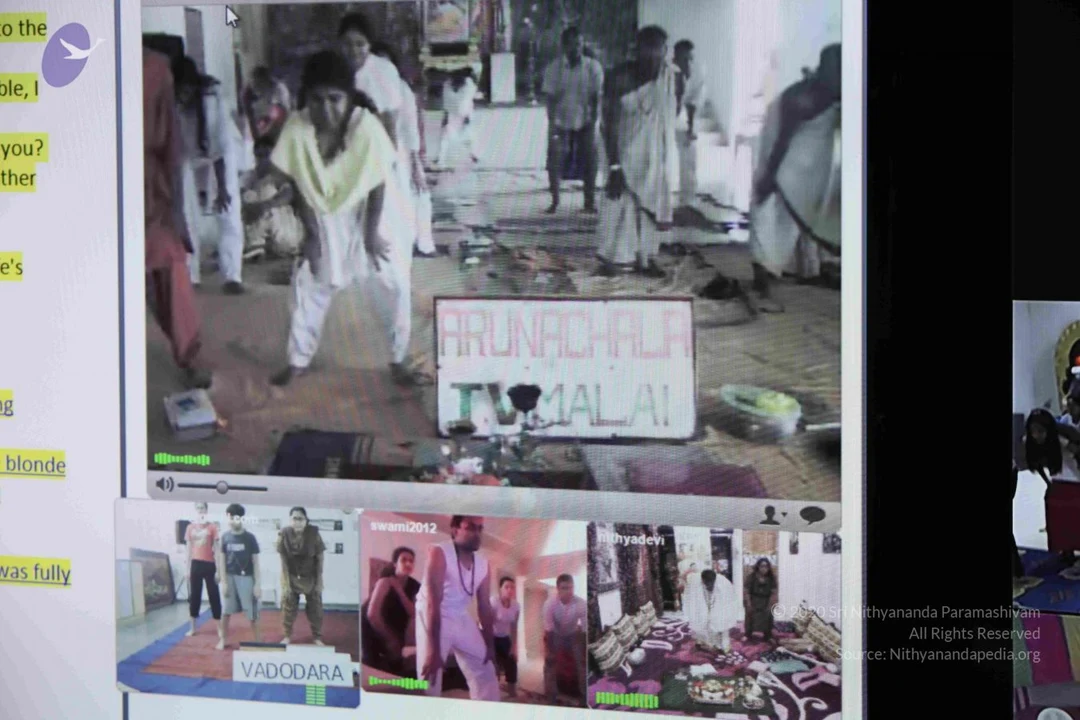
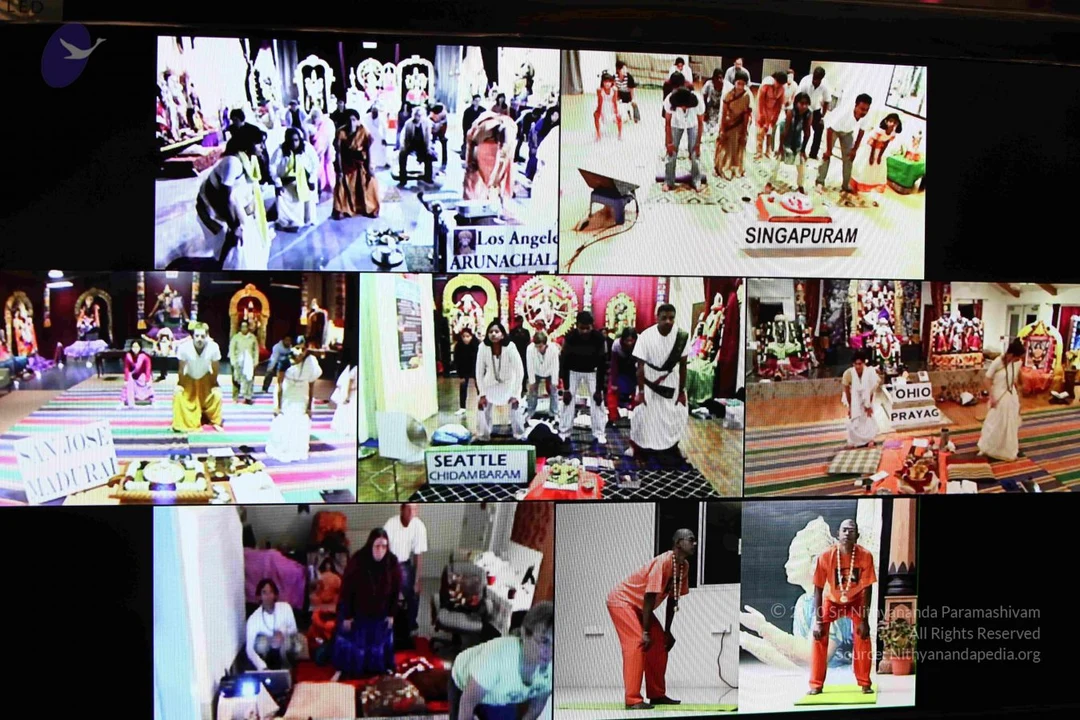
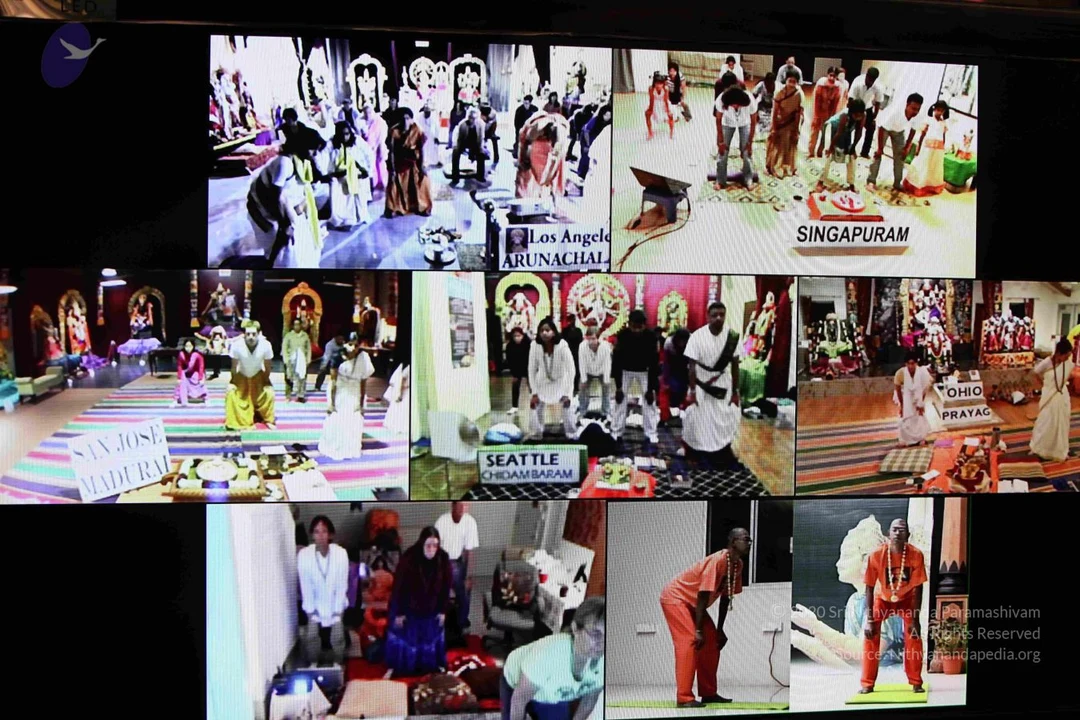
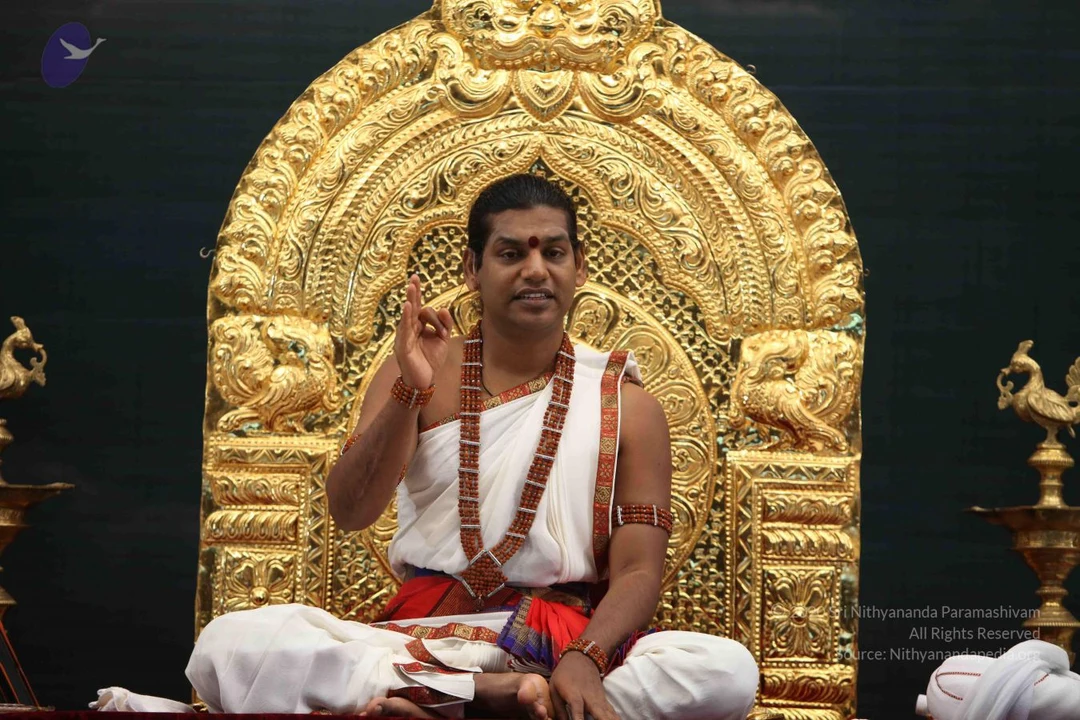
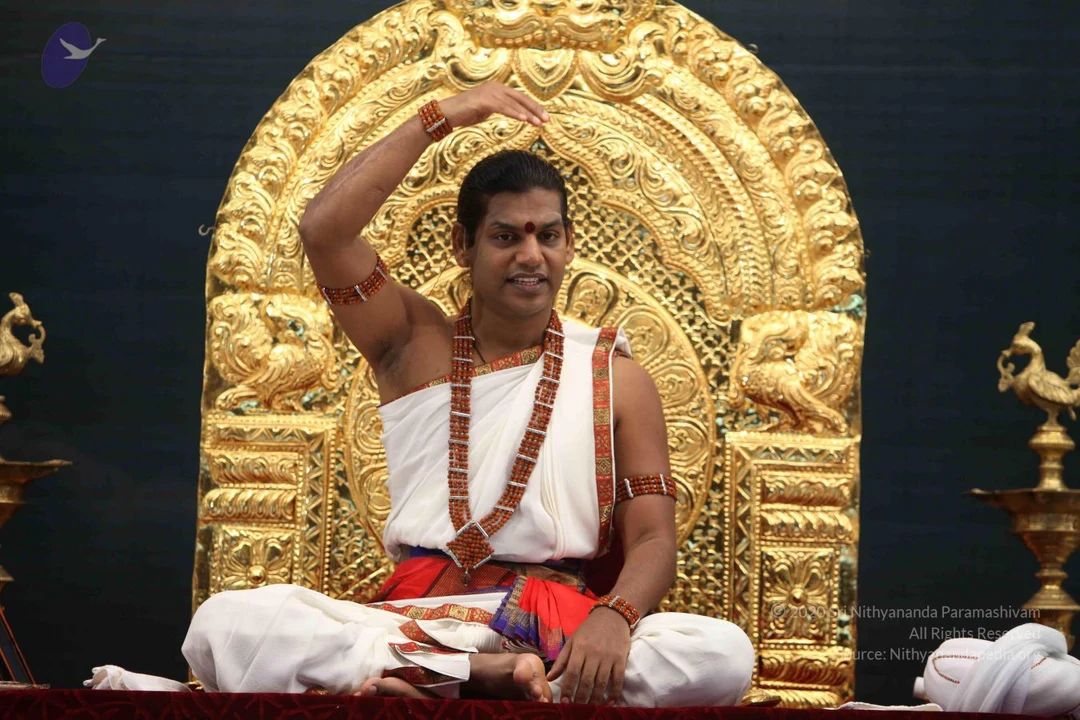
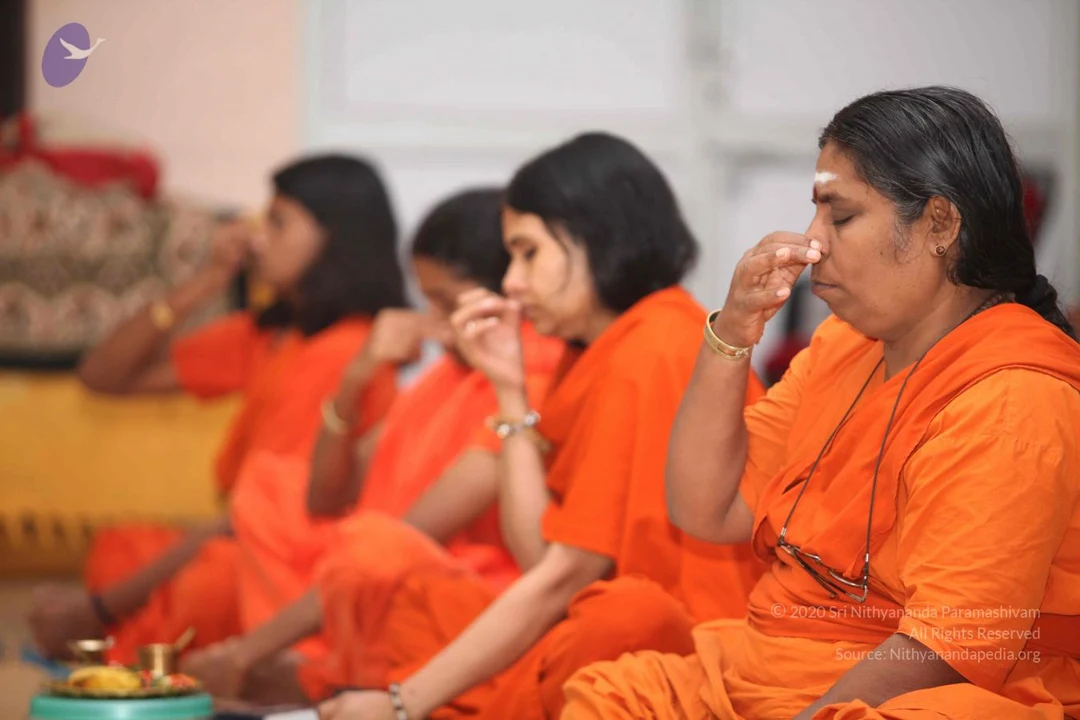
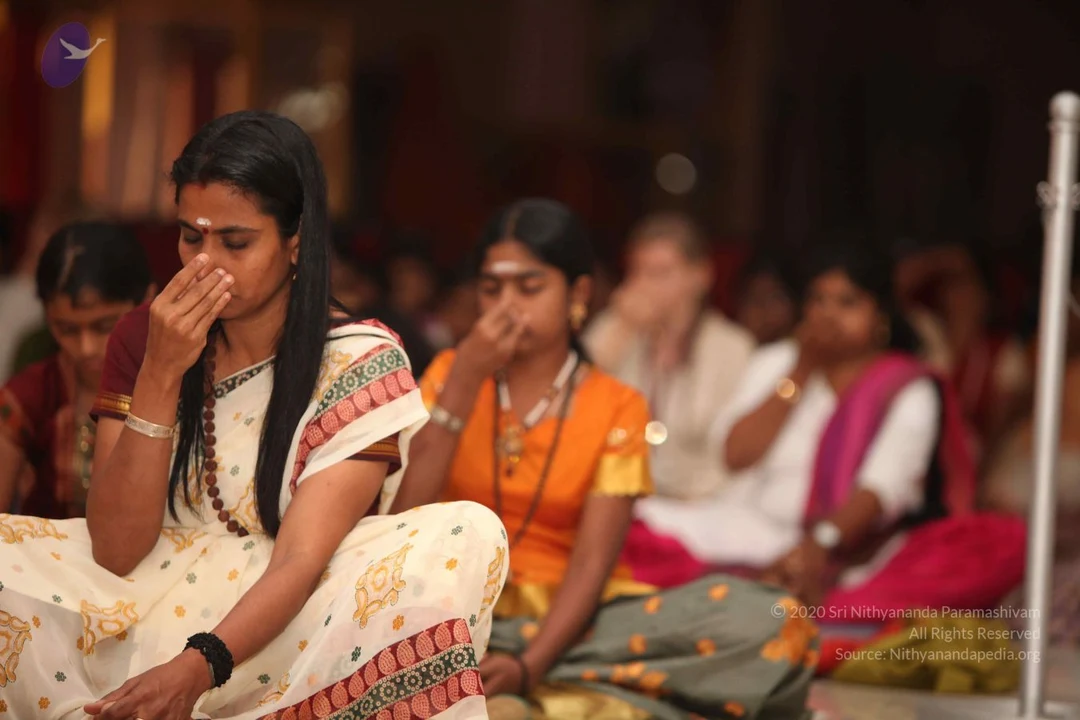
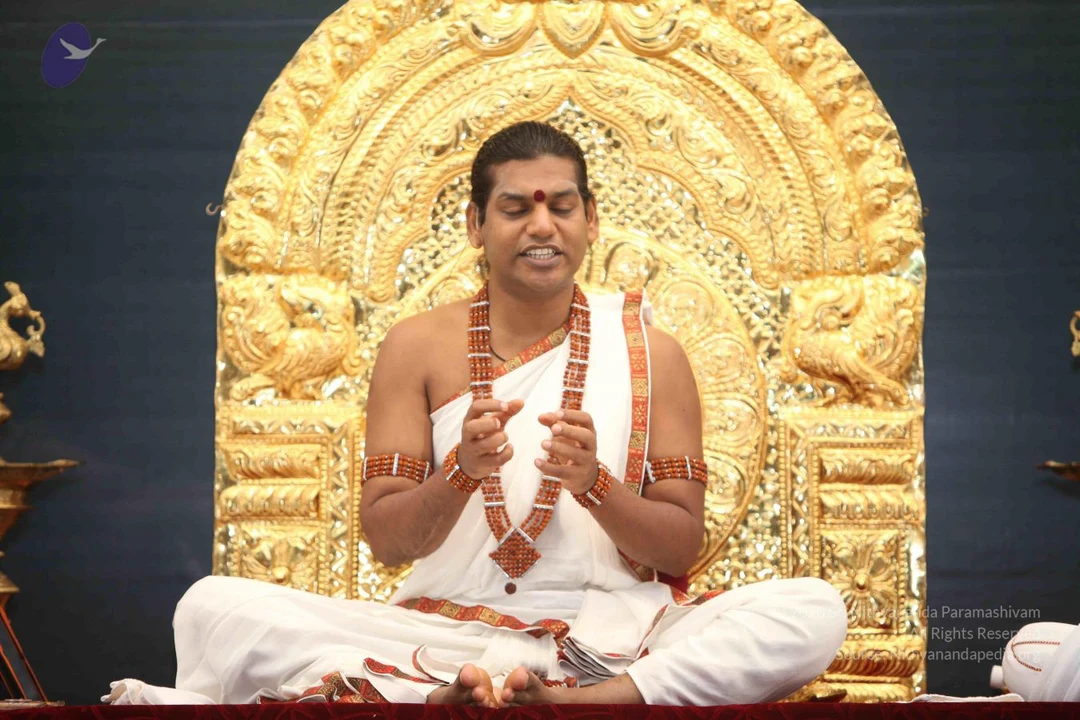
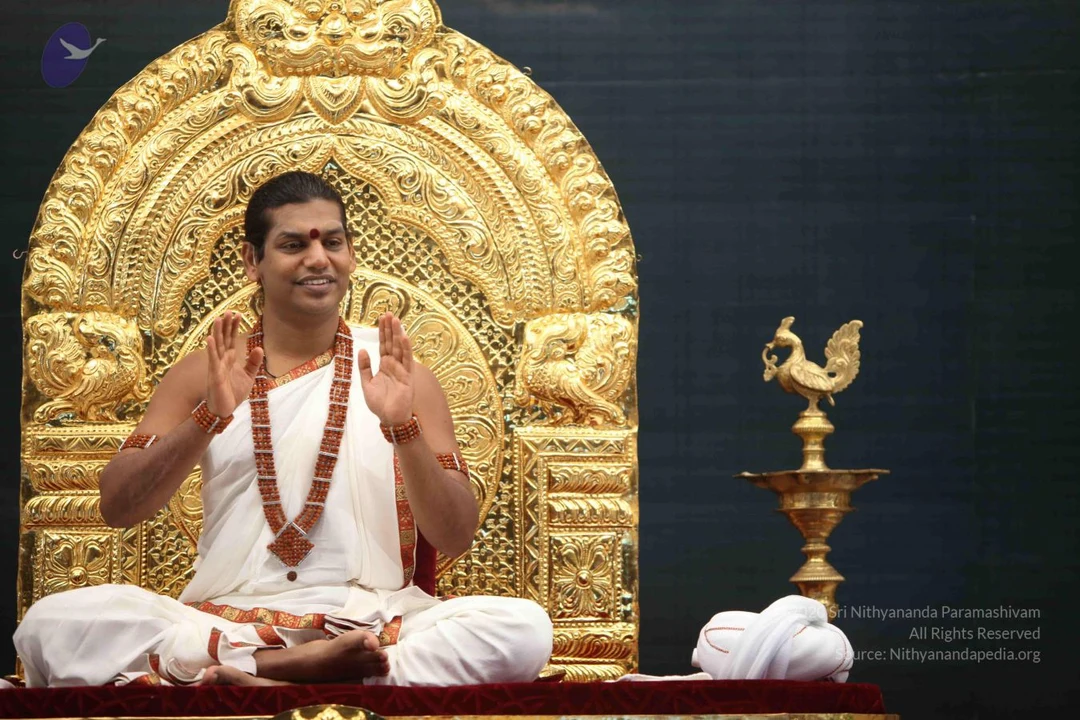
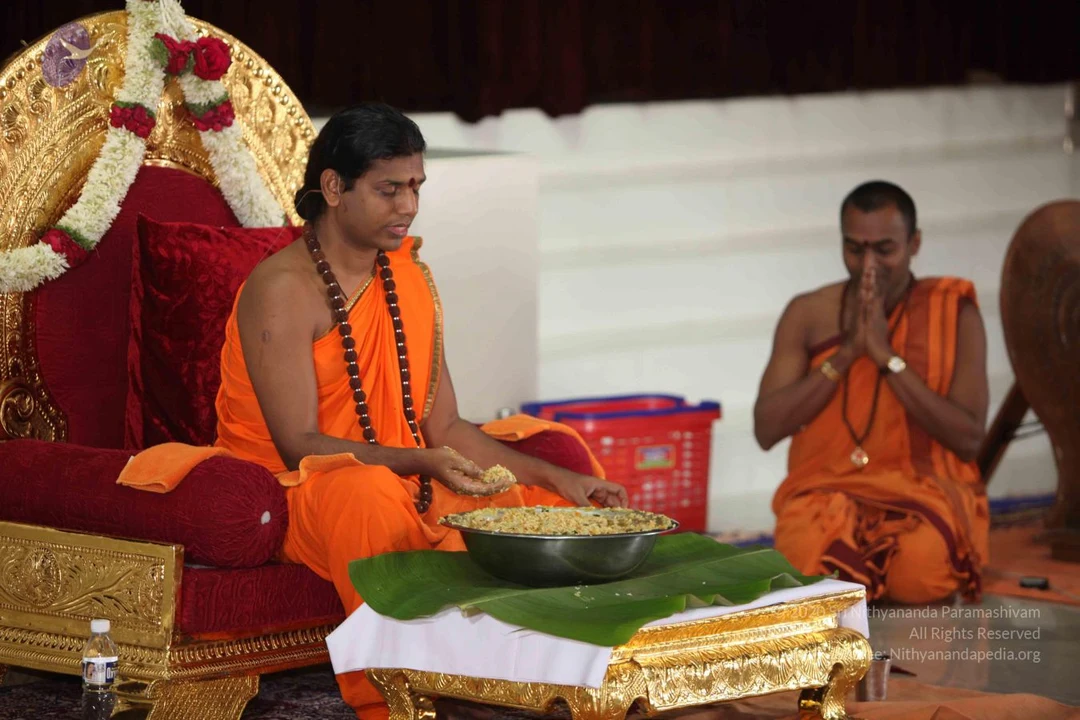
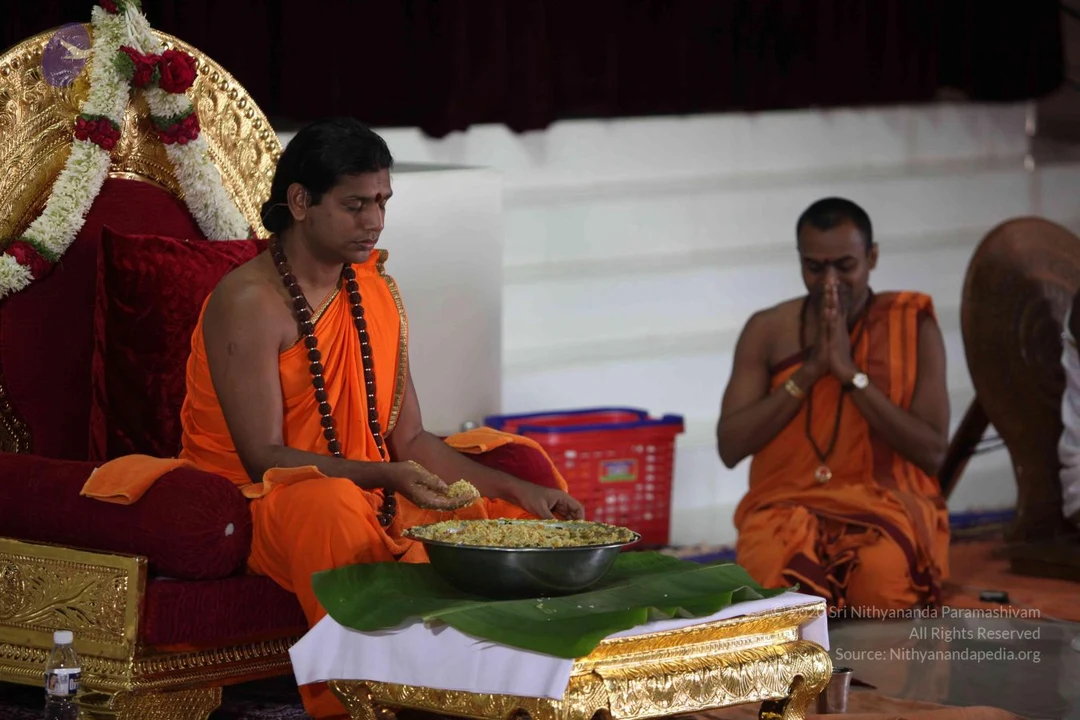
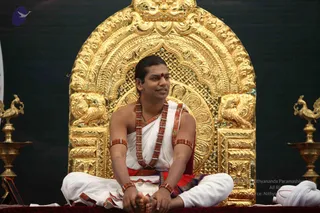
Bhagavad Gita (Song of God) is a timeless treatise on the essence of living enlightenment. The Gita was imparted by the enlightened Hindu incarnation Sri Krishna to the warrior-prince Arjuna over 5000 years ago. Amazingly, the spiritual wisdom and life solutions offered in the Gita are so universal and current that it is even today used as a personal transformation guide. In today’s satsang on Bhagavad Gita, His Divine Holiness Bhagavan Sri Nithyananda Paramashivam gives us a practical application for Verse 66. Whatever experience we feel is our life mission, whatever we perceive as our purpose for taking birth, we should surrender ourselves completely to it. Fully embracing our life purpose generates creative energy, and as we engage in creation, we radiate our divinity. Whenever we hold back from immersing ourselves in creativity we develop a psychological cancer that devours our chance for liberation. Divine authority requests our complete commitment. When we refuse the invitation we create only depression, suffering and spiritual death for ourselves. Following the satsang was the Nithya Kriya for Obesity (care).

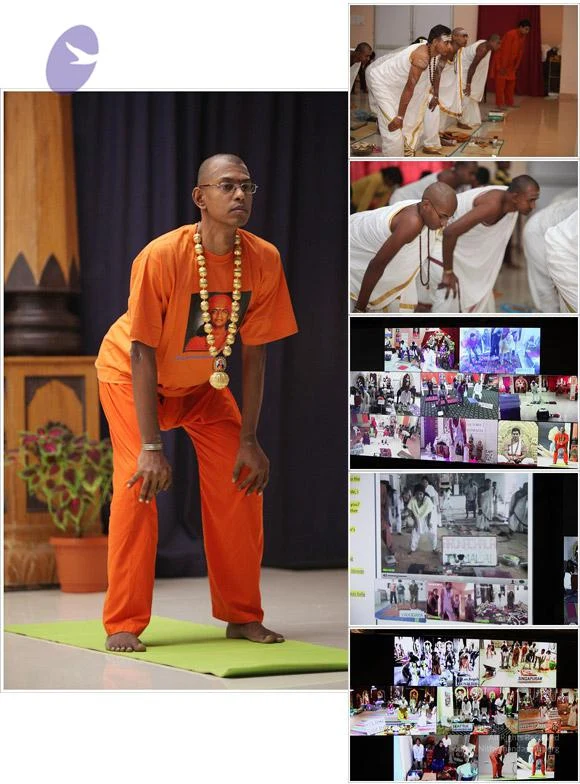
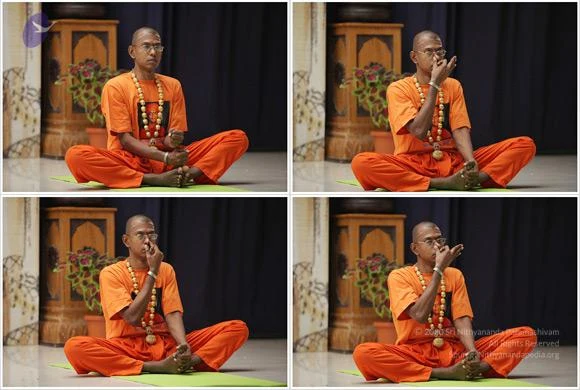
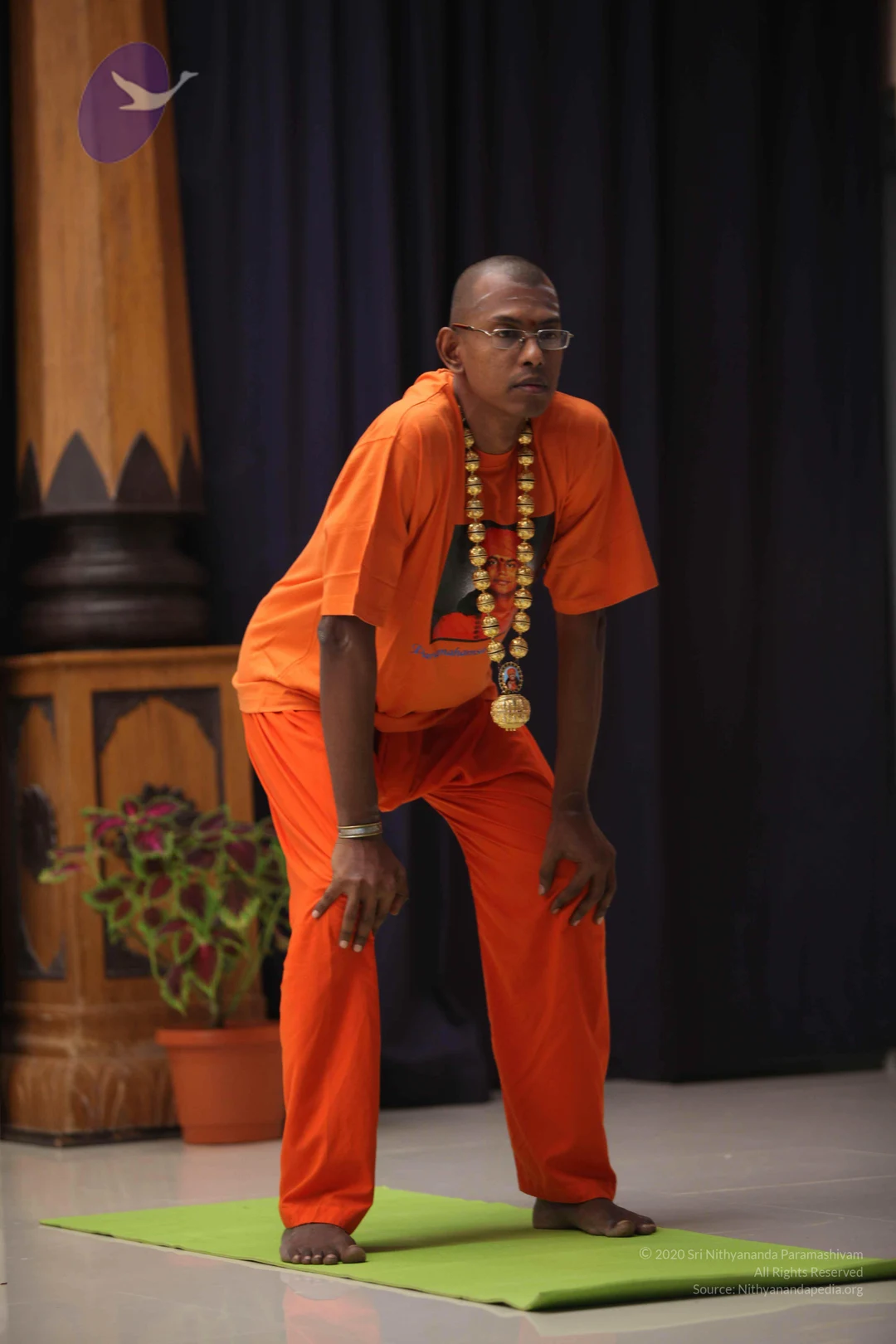
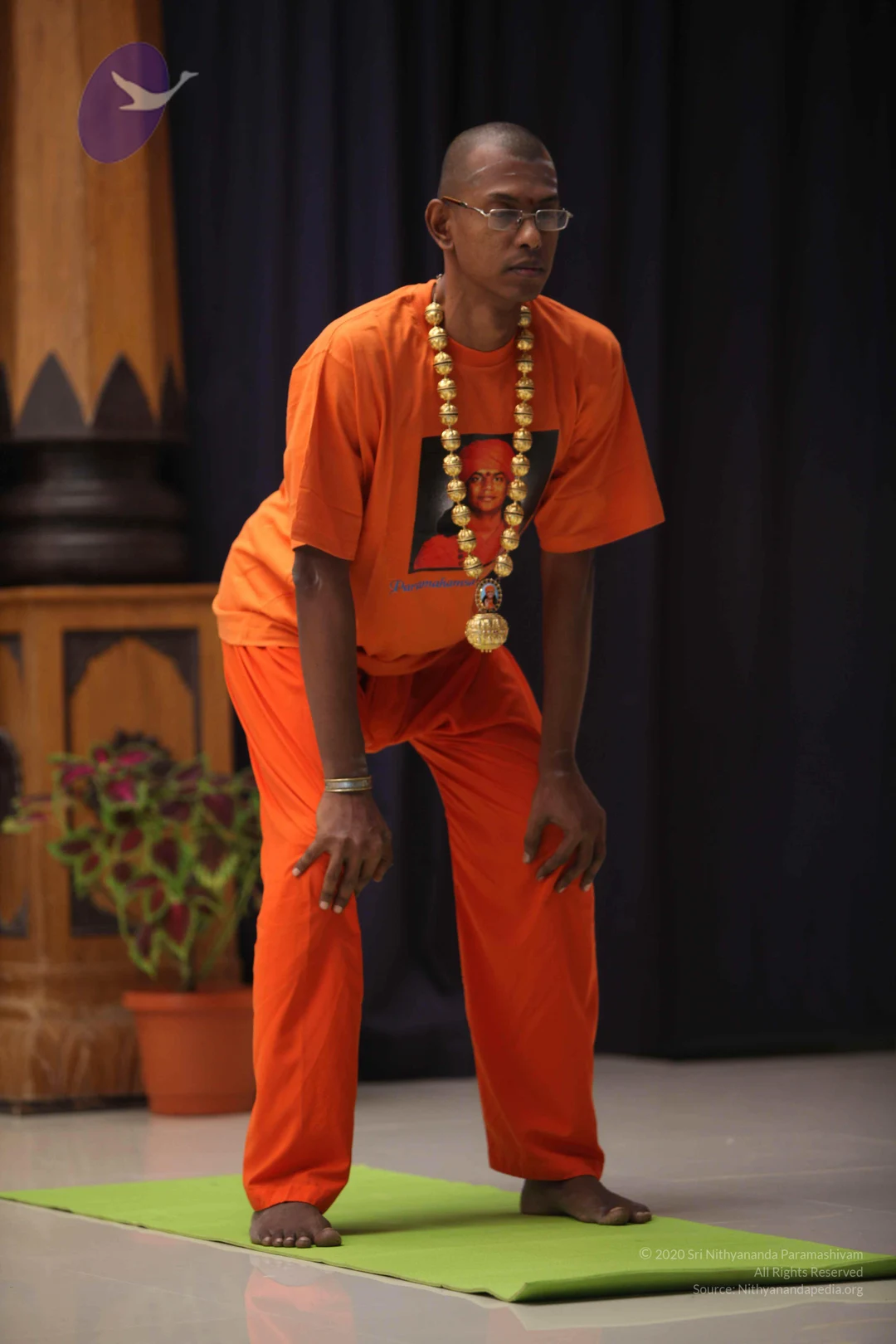
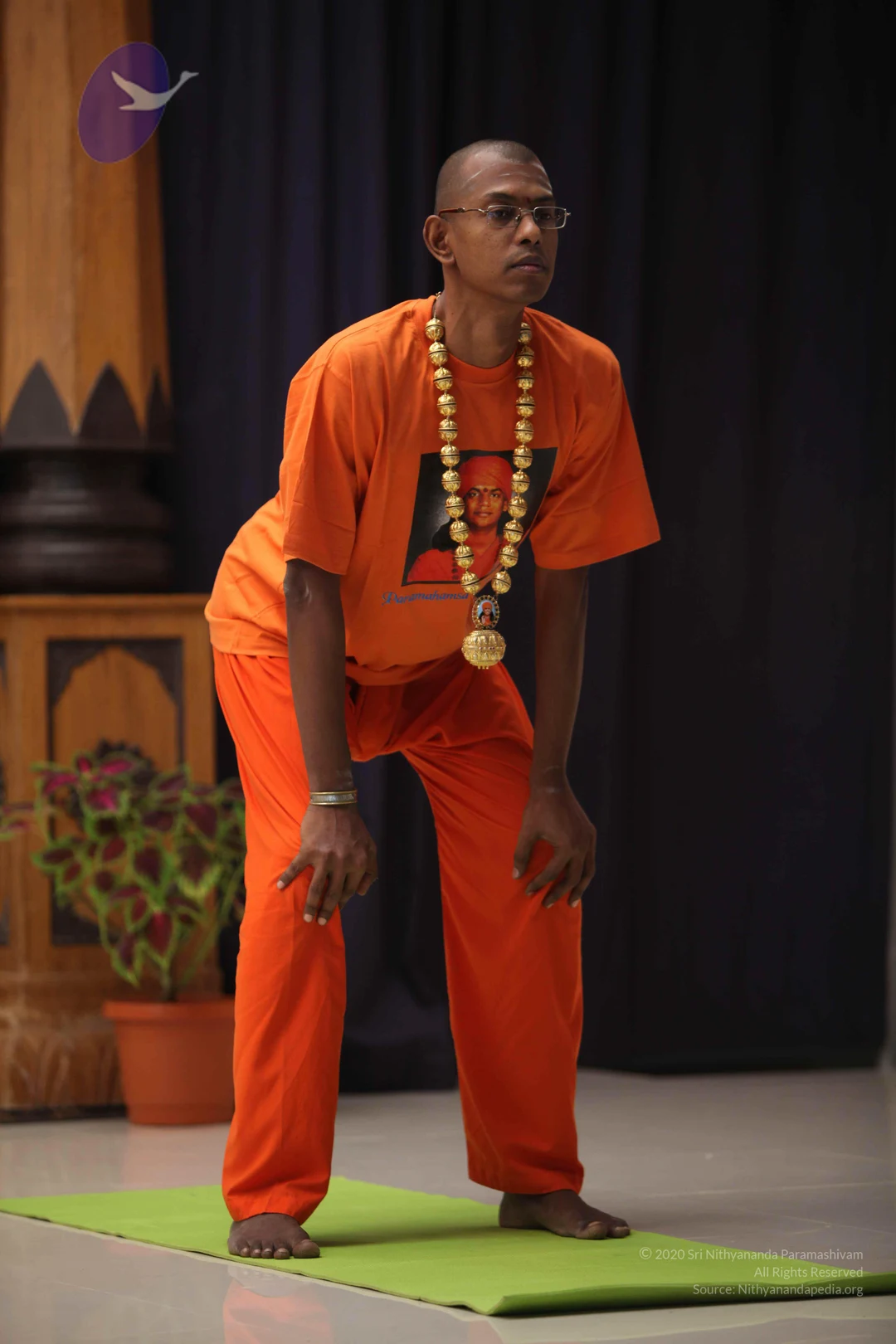
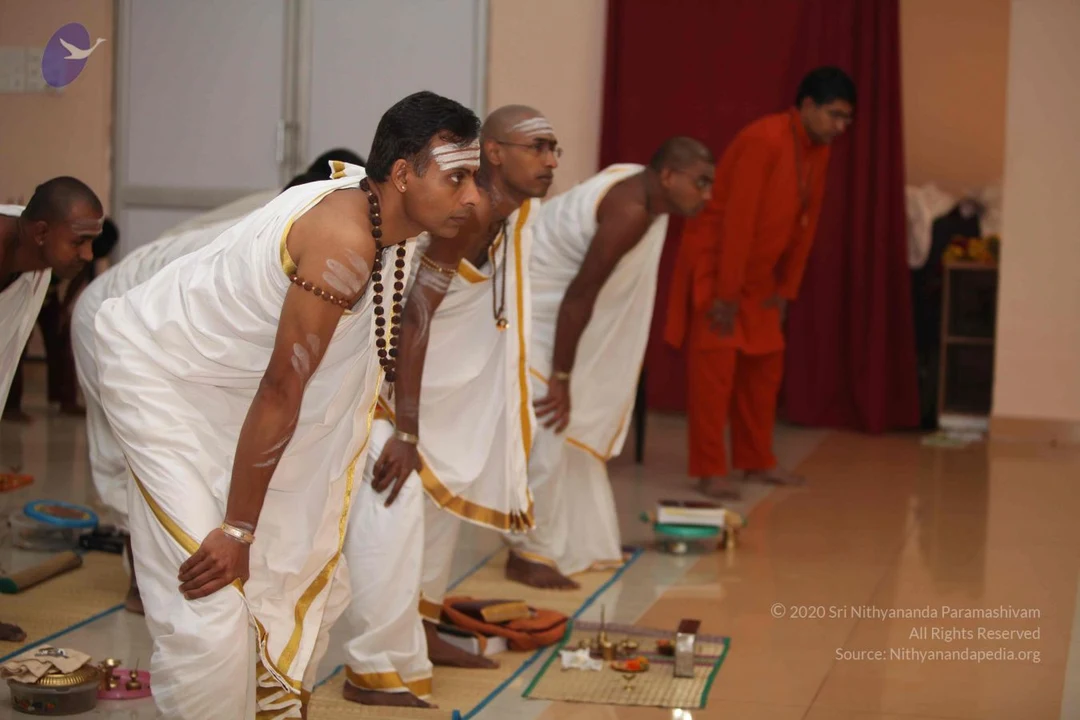
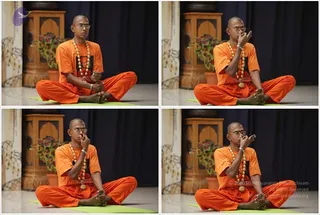
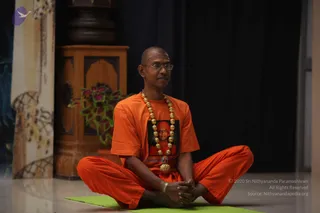
Nithya Kriya: Care for Obesity

Steps to be followed:
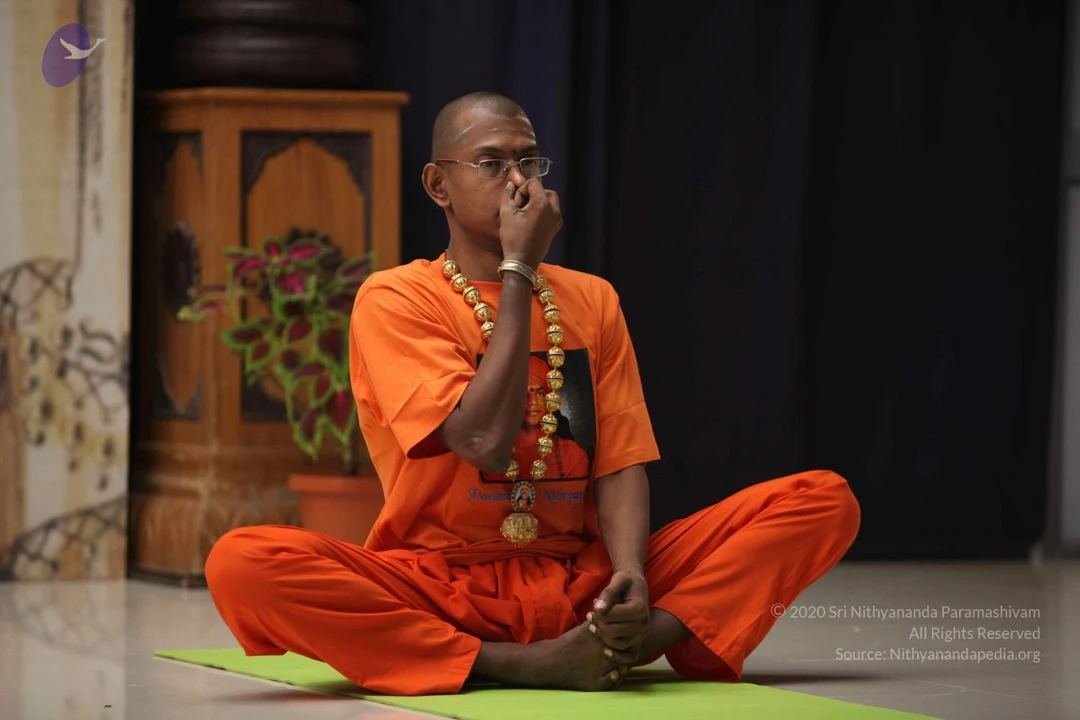
Asana (posture): BHADRA ASANA (source: GHERANDA SAMHITA, UPADESHA 2, VERSES 9 & 10)
Technique:

  1. Settle in this posture for 30 seconds
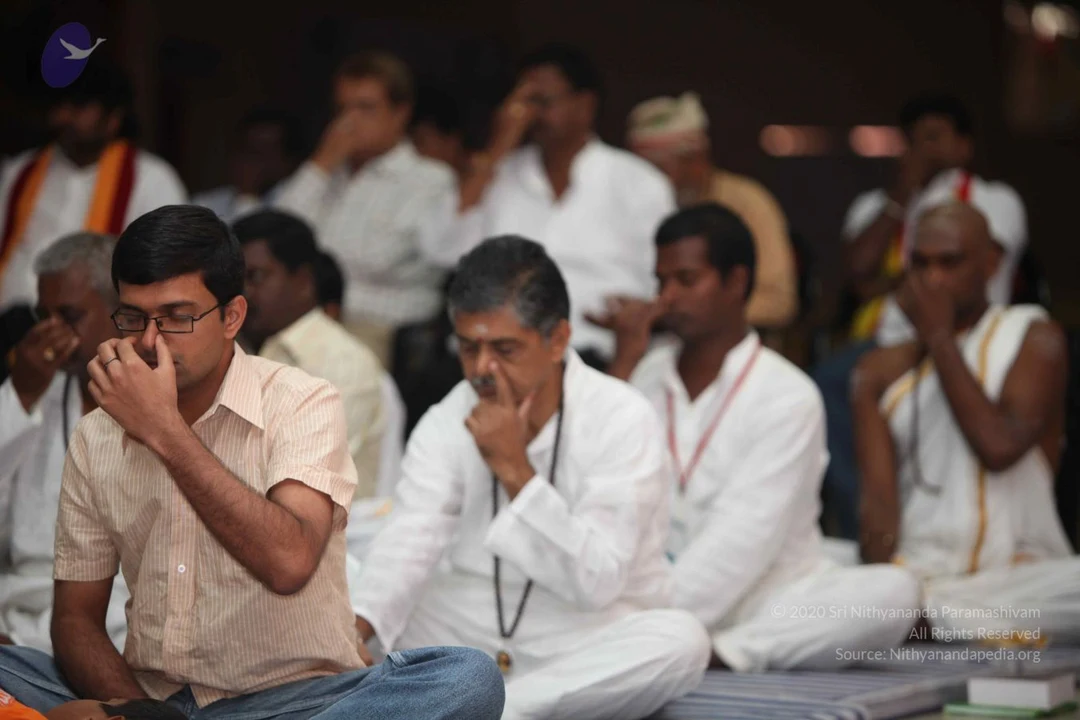
  2. In this asana, perform JAALANDHARA BANDHA (source: GHERANDA SAMHITA, UPADESHA 3, VERSE 12) 21 times.
  3. Next, stand and perform UDDEEYAANA BANDHA (source: GHERANDA SAMHITA, UPADESHA 3, VERSE 10) 21 times
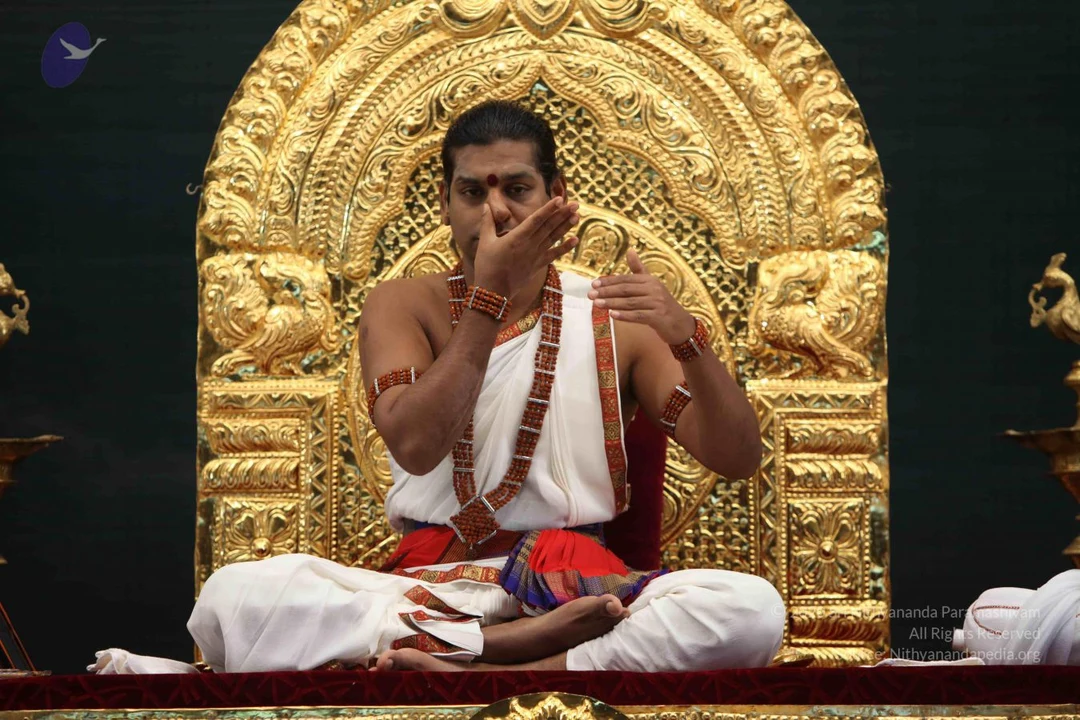
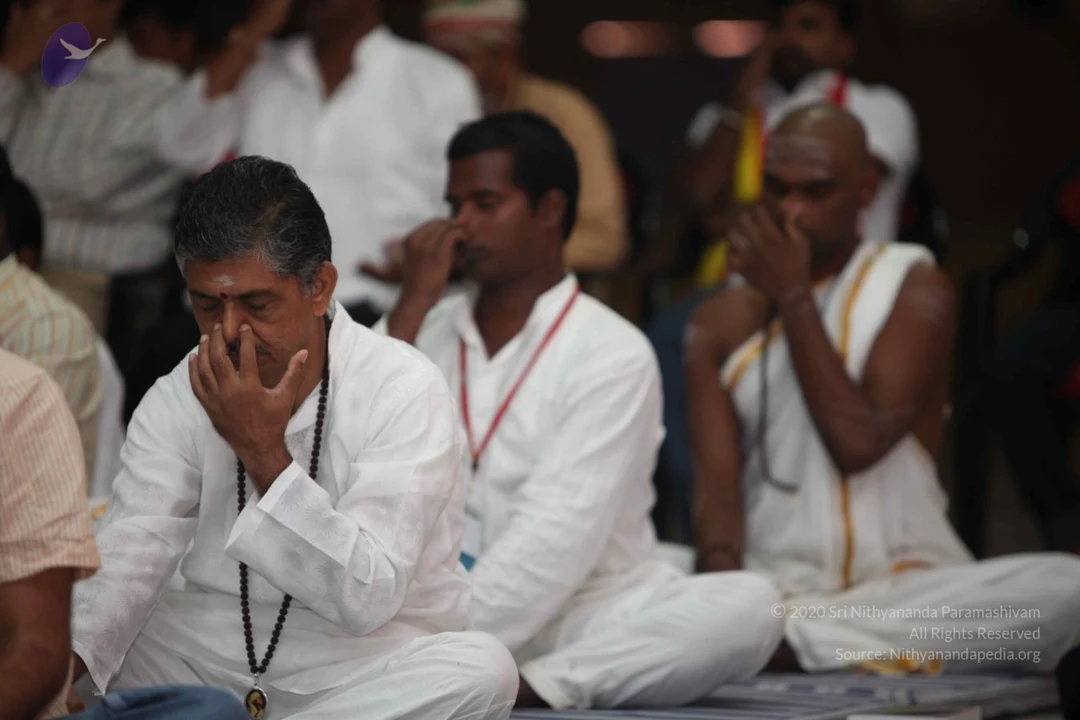
  4. Next, in Bhadra asana, perform AGNEE SOMA KUMBHAKA (source: KUMBHAKA PADDHATHI, VERSE 87) 21 times.
  5. In this asana, perform VYAANA KUMBHAKA (source: KUMBHAKA PADDHATHI, VERSE 66) 21 times.
  6. In this asana, perform DAKSHINAAVARTA CHAKRA KUMBHAKA (source: KUMBHAKA PADDHATHI, VERSE 107,108) 21 times
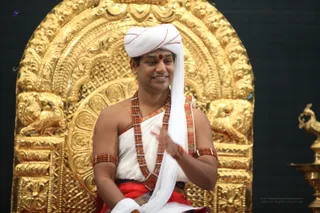
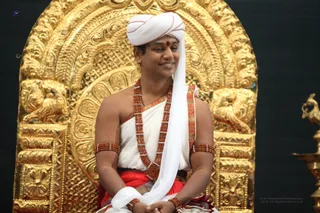
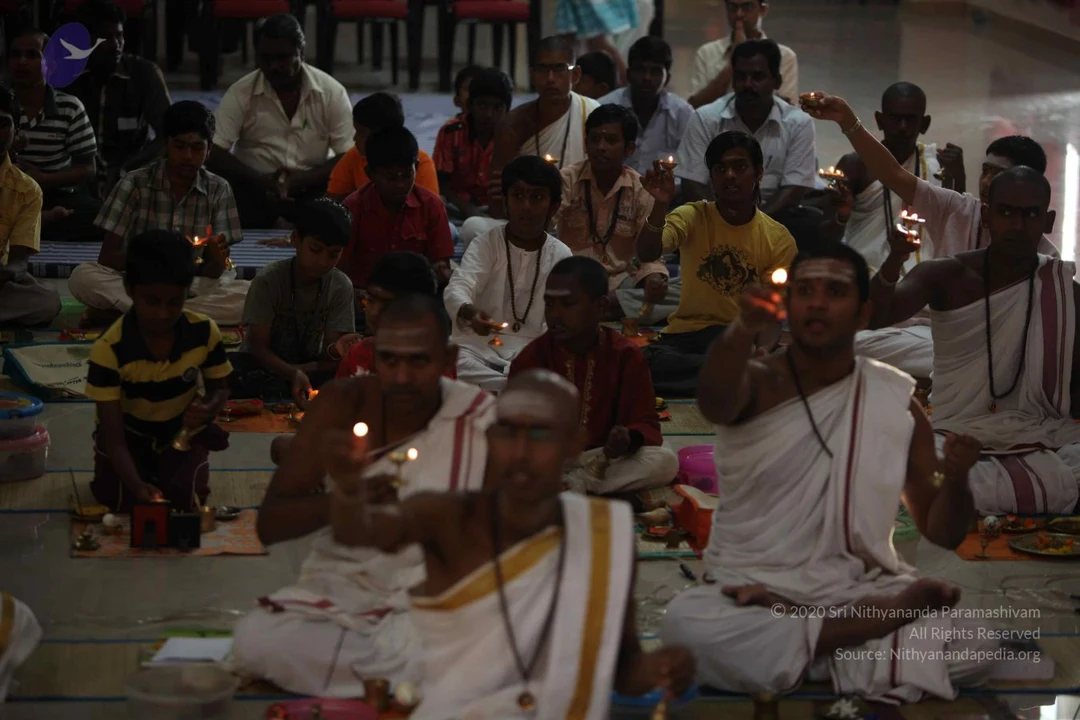
    Temple Visit | Pratyaksha Pada Puja | Bhagavad Gita Satsang | Mahaparinirvana Day – 07 November 2011

    Photos Of The Day:

    Temple

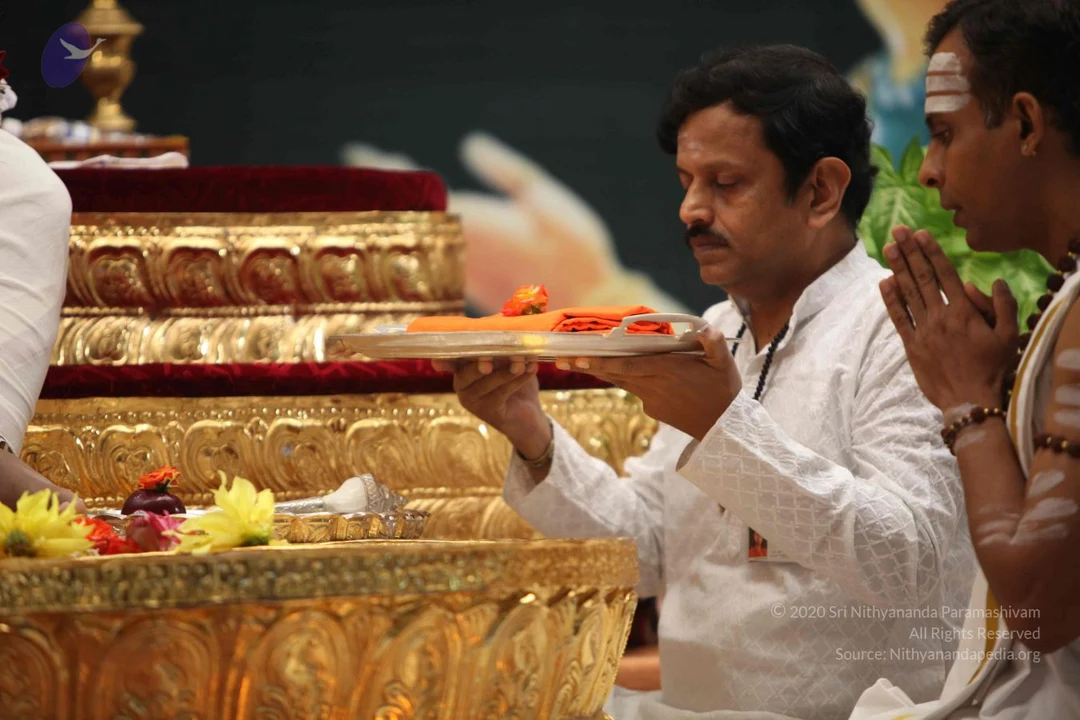
    Pratyaksha-Padapuja

    BG-Satsang

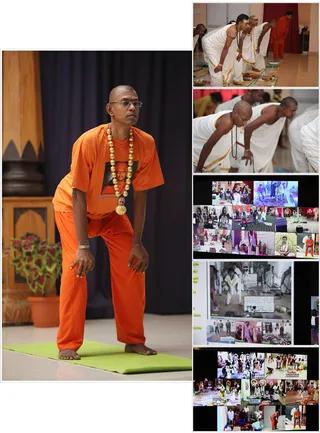
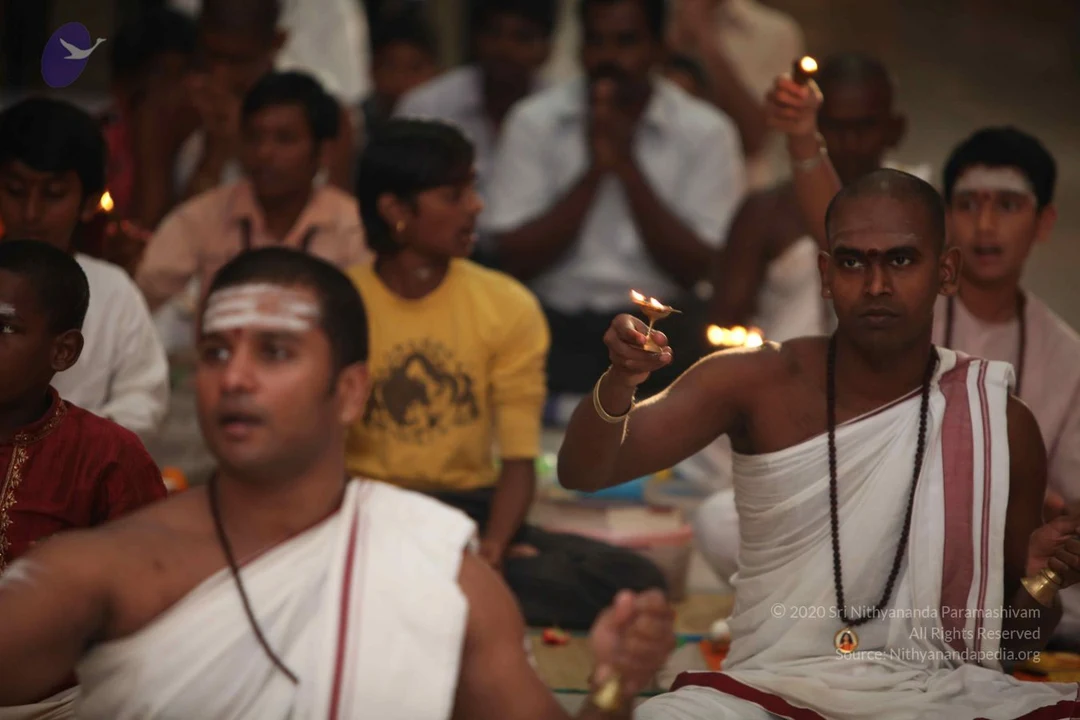
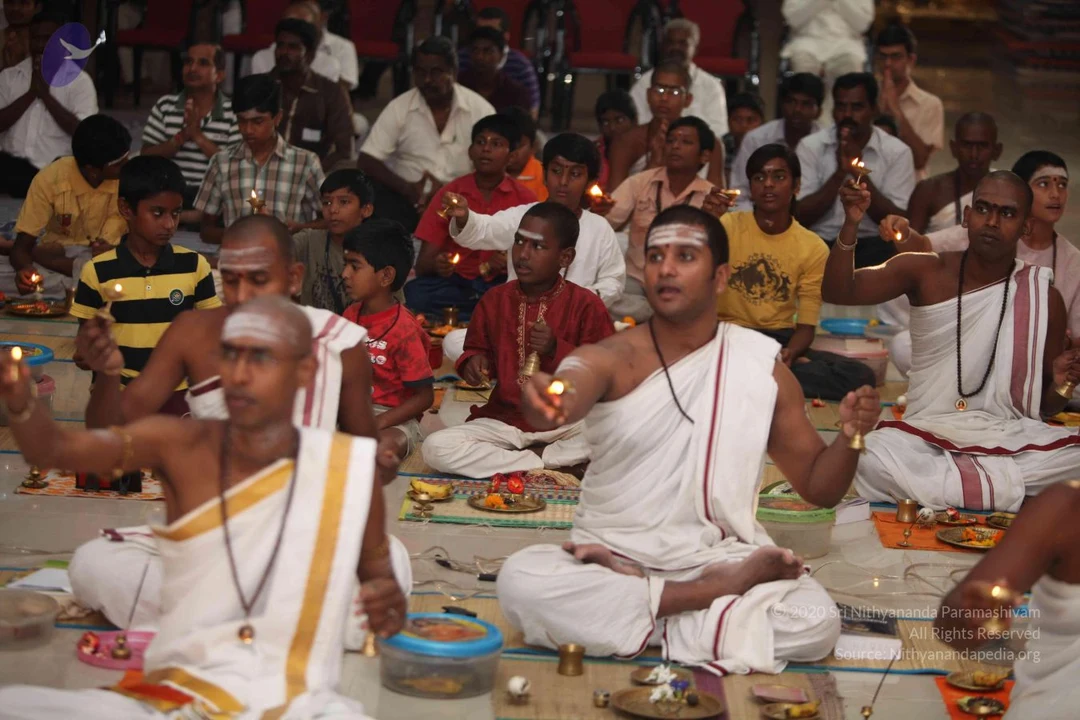
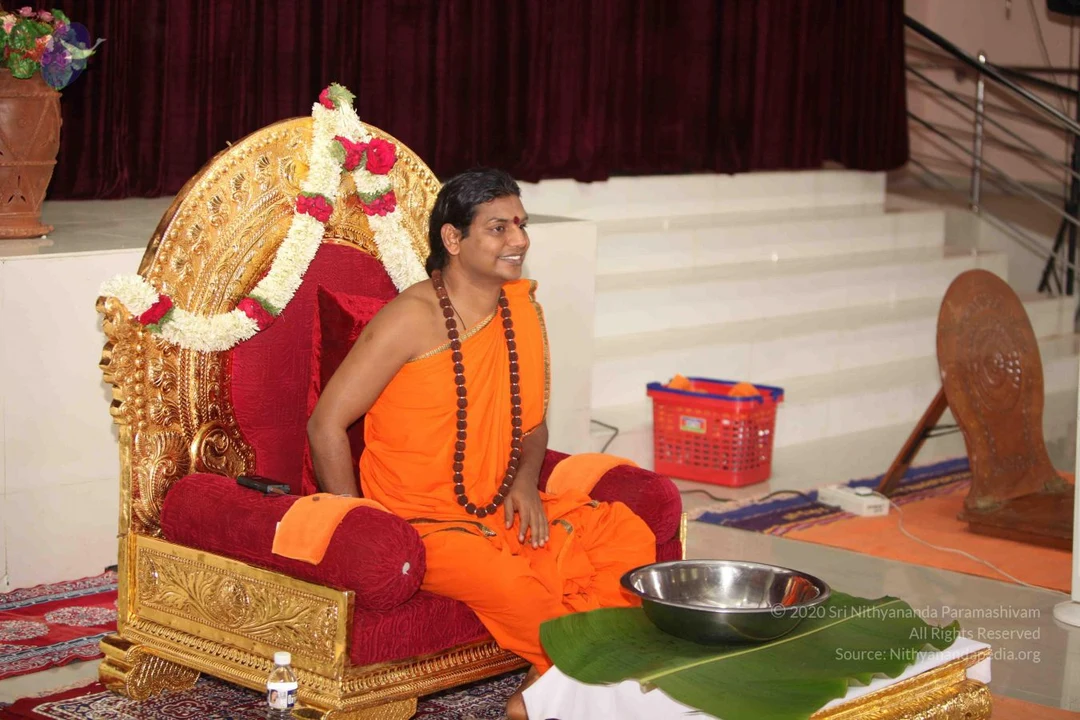
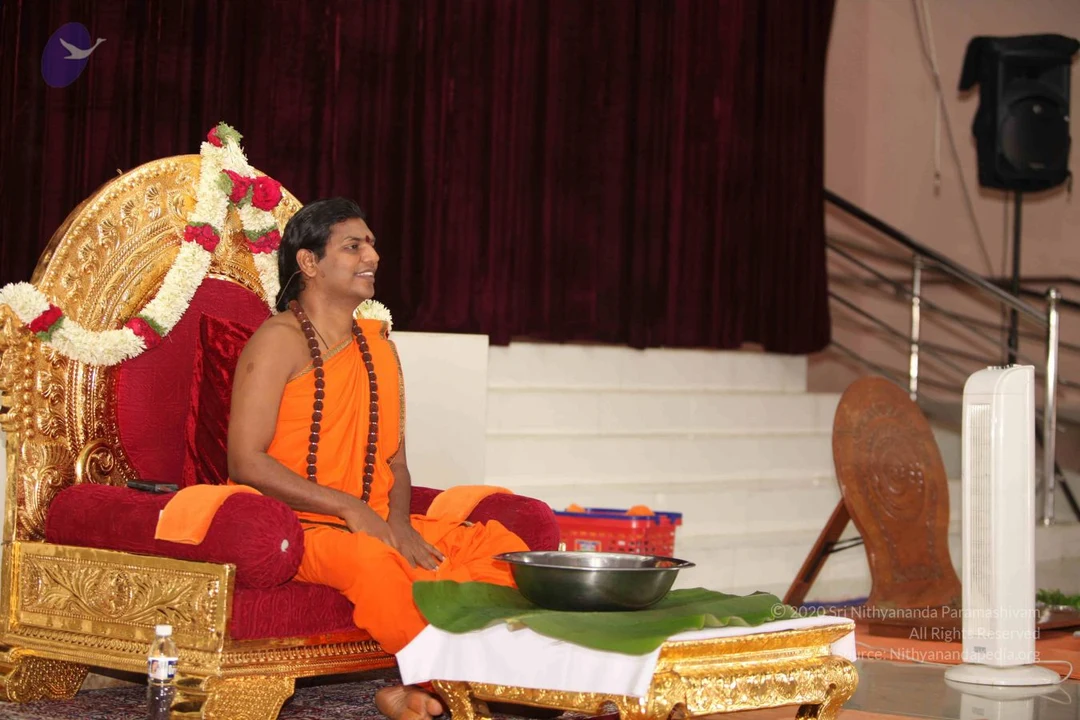
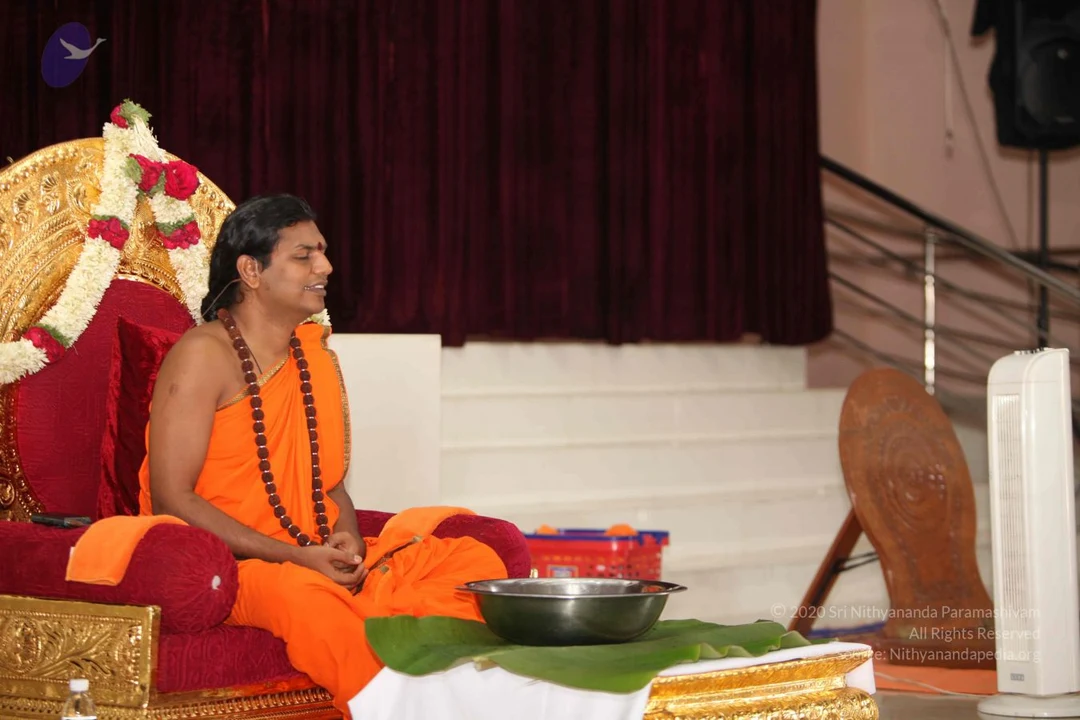
    Nithya-Kriya-Obesity-Care

    Sarva-Darshan

    Maheshwara-Puja

    Linga-Prathishta

    Tiru-Maheshwara-Puja

    Adikailash

    Photos Of The Day:

    Temple

    BG-Satsang

    Maheshwara-Puja

Photos from this day

View all 409 photos

Photos

18 photosSource gallery
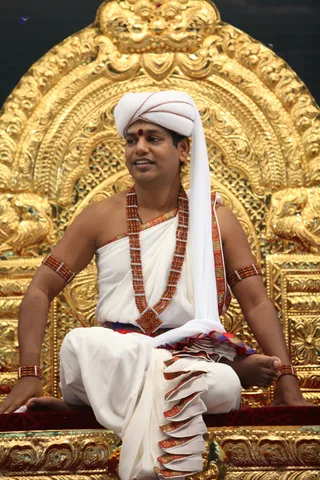
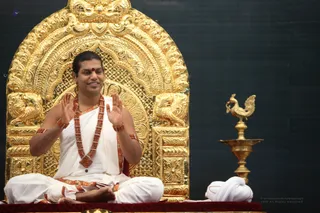
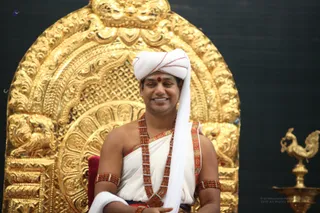
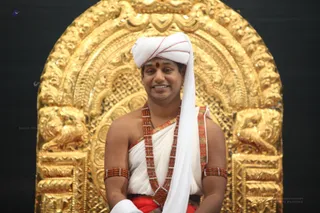
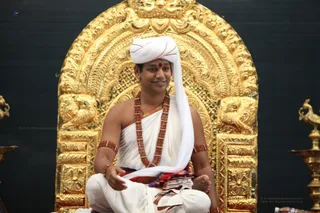
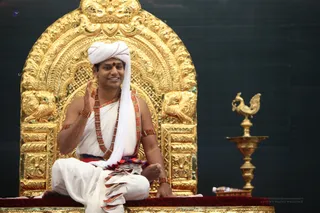
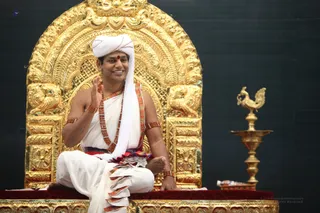
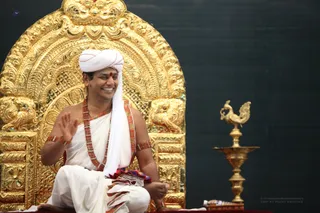
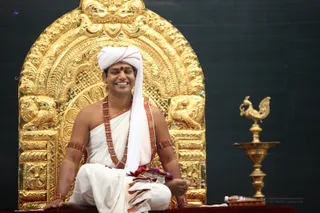
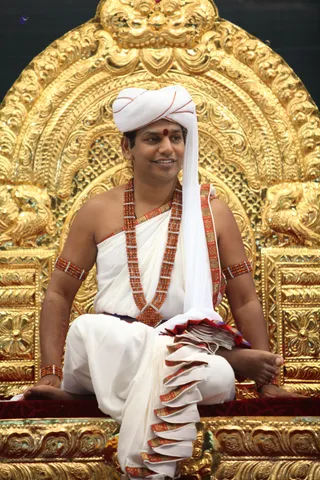
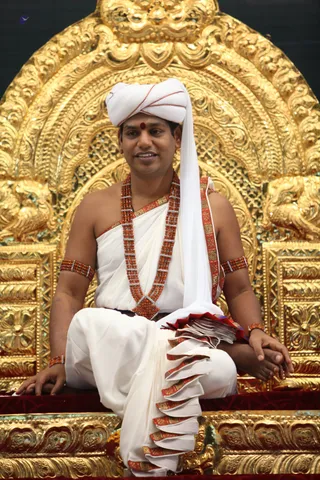
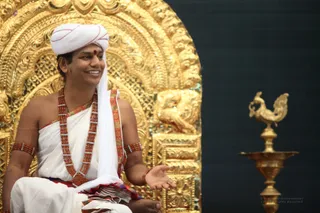
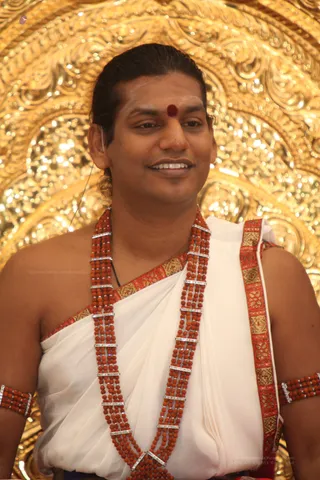
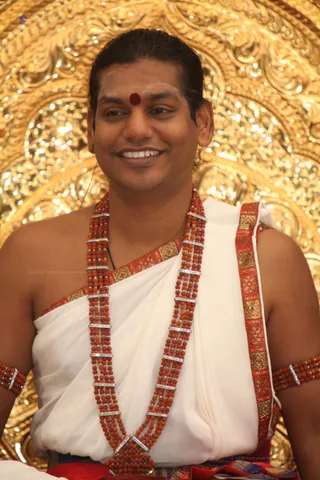
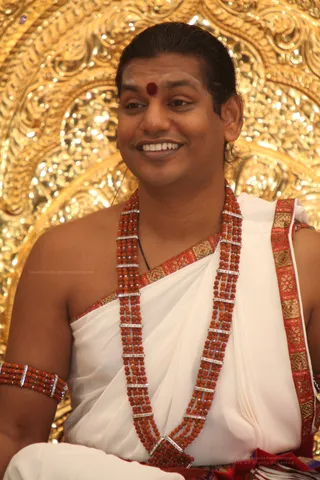
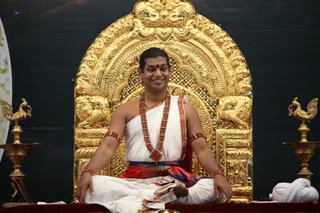
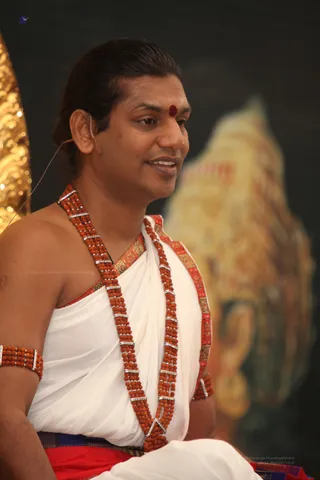
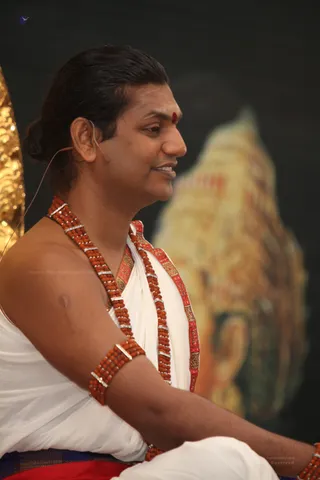
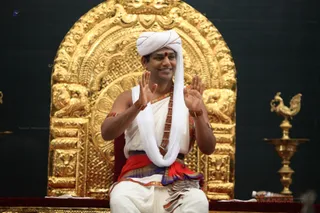
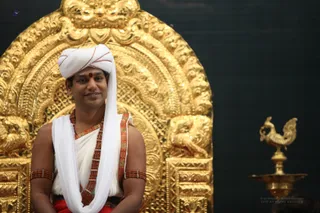
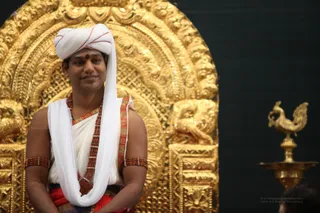
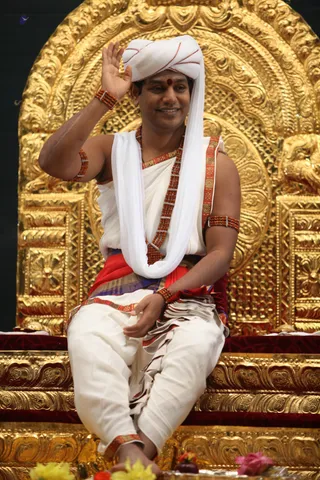
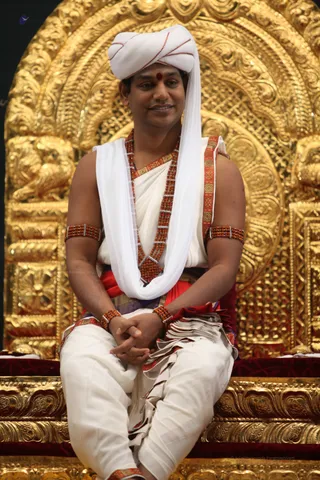
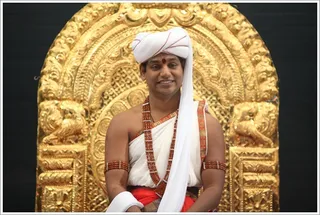
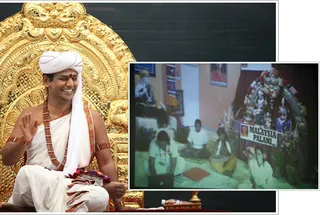
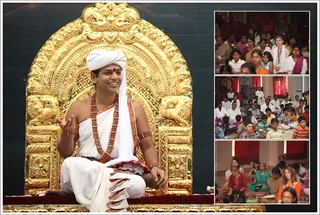
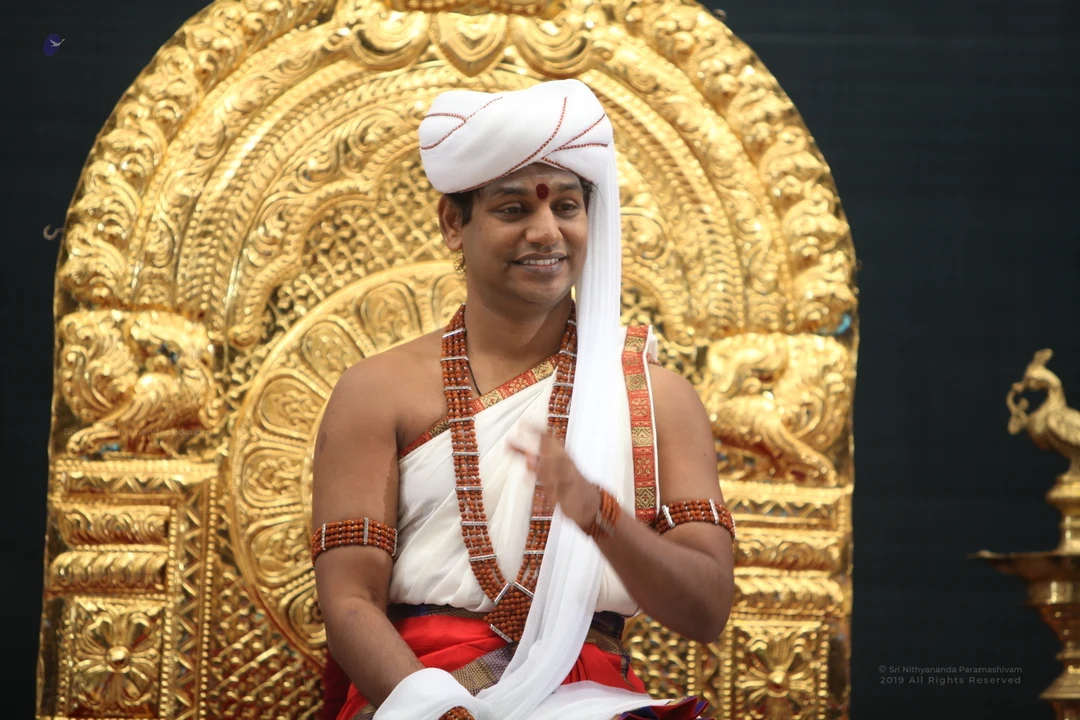
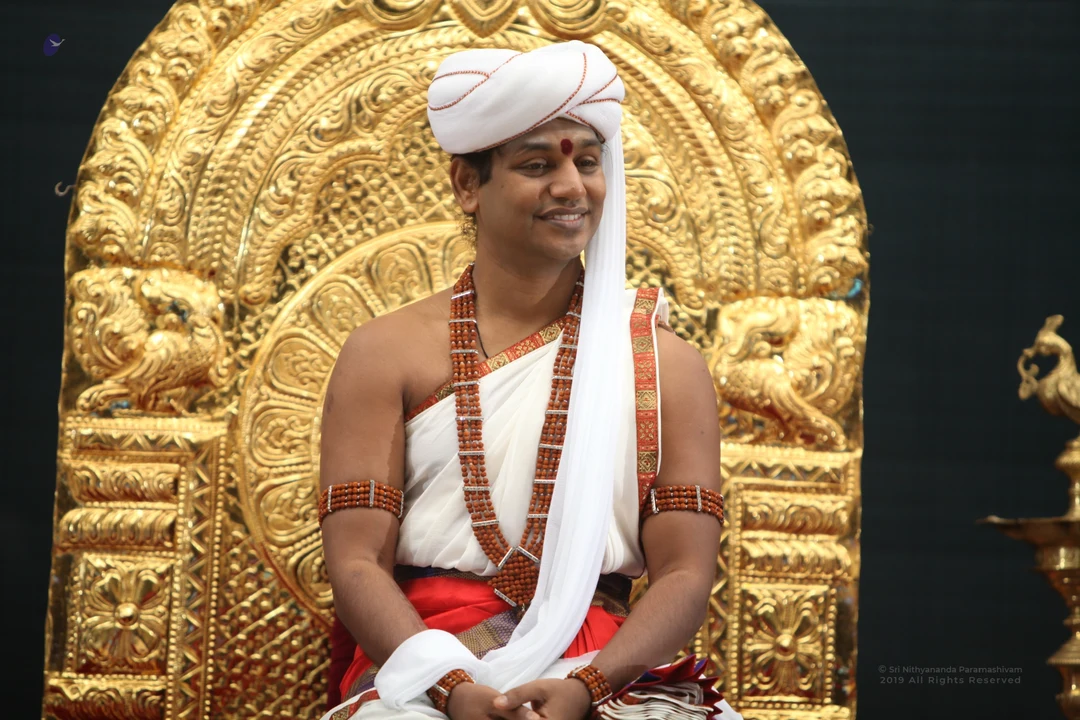
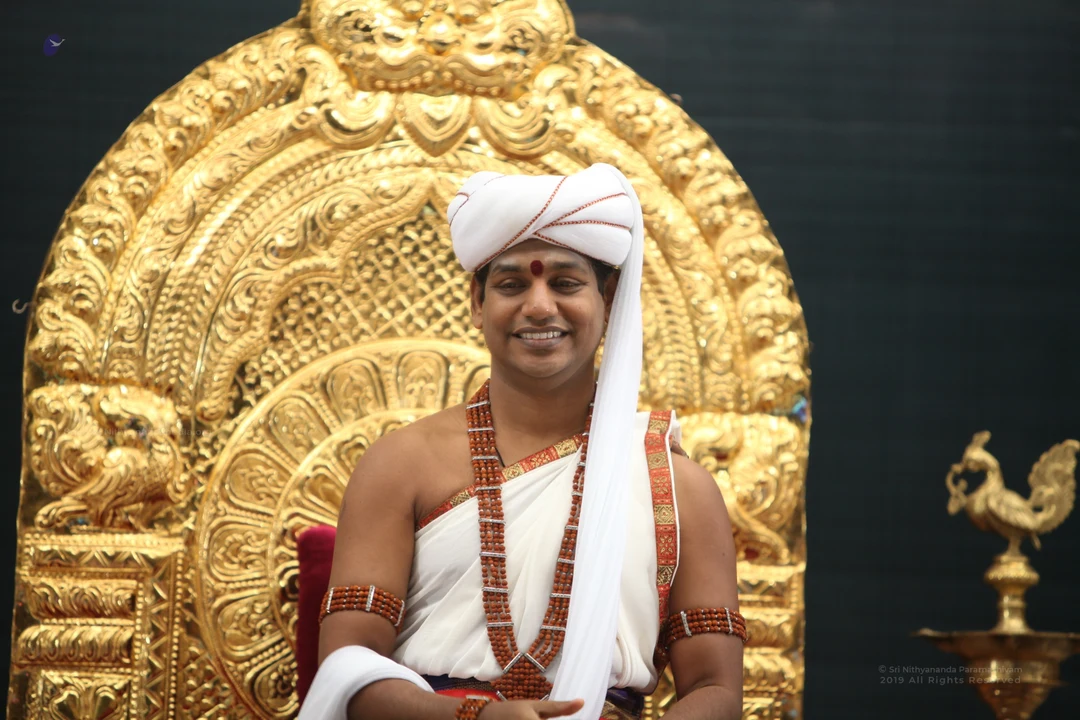
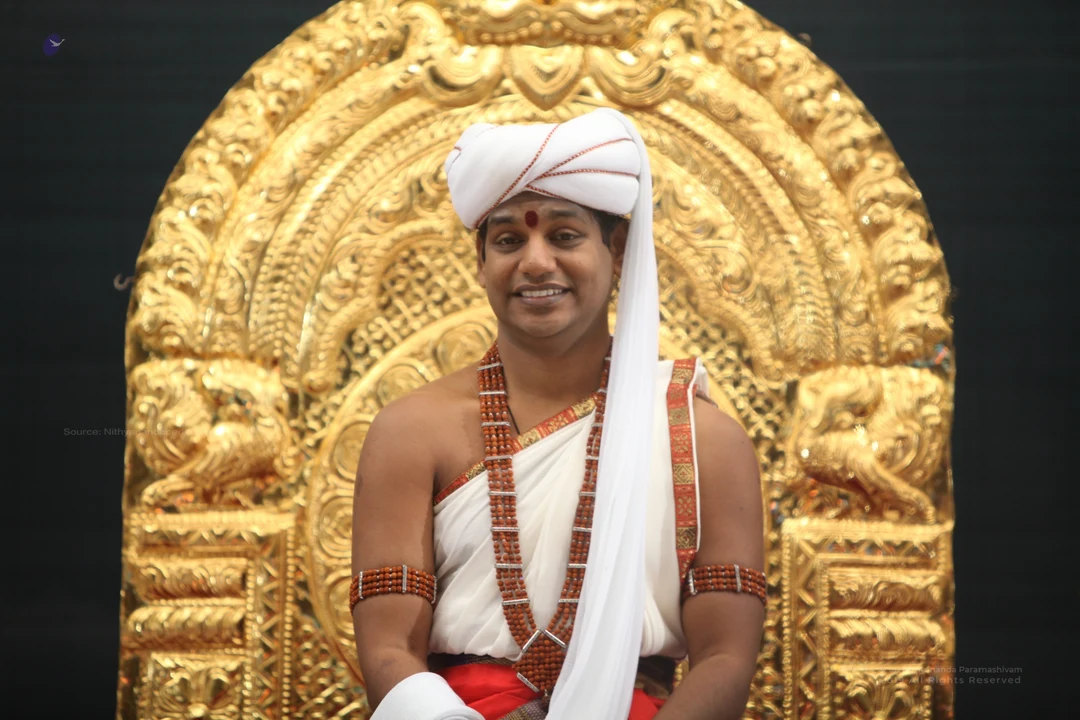
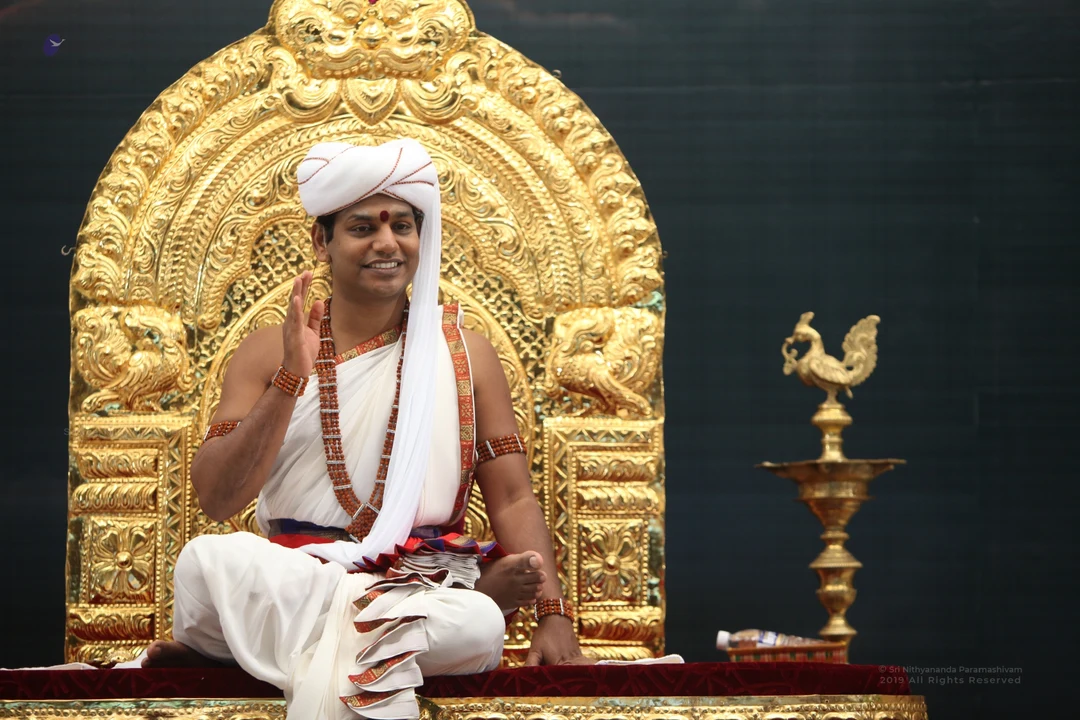
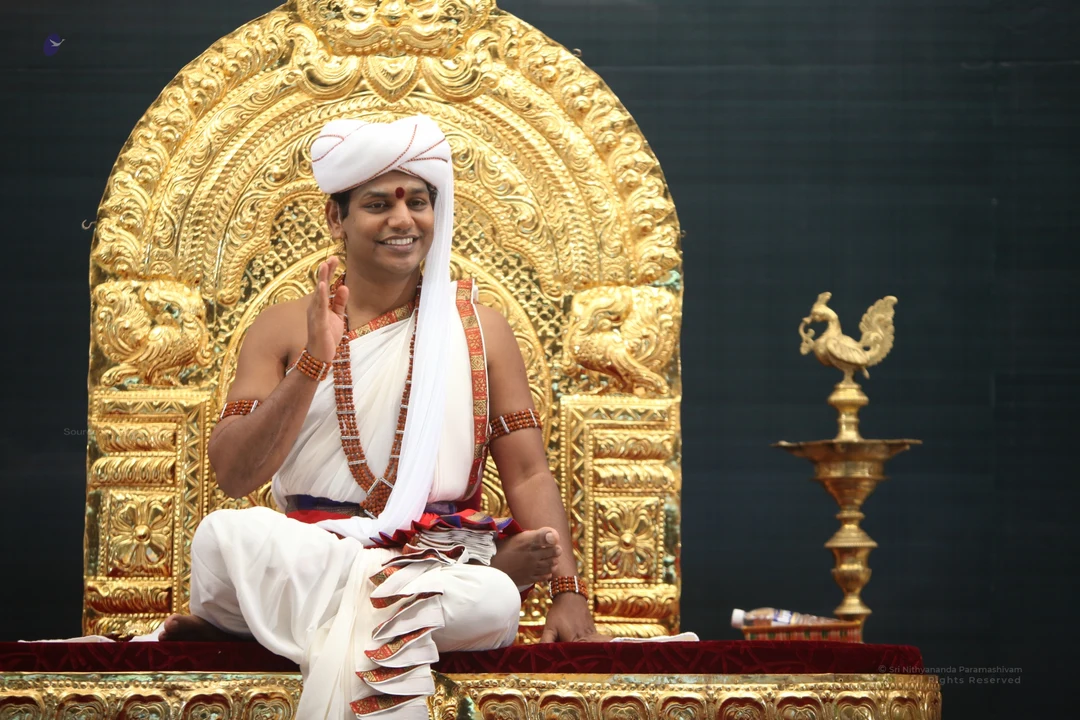
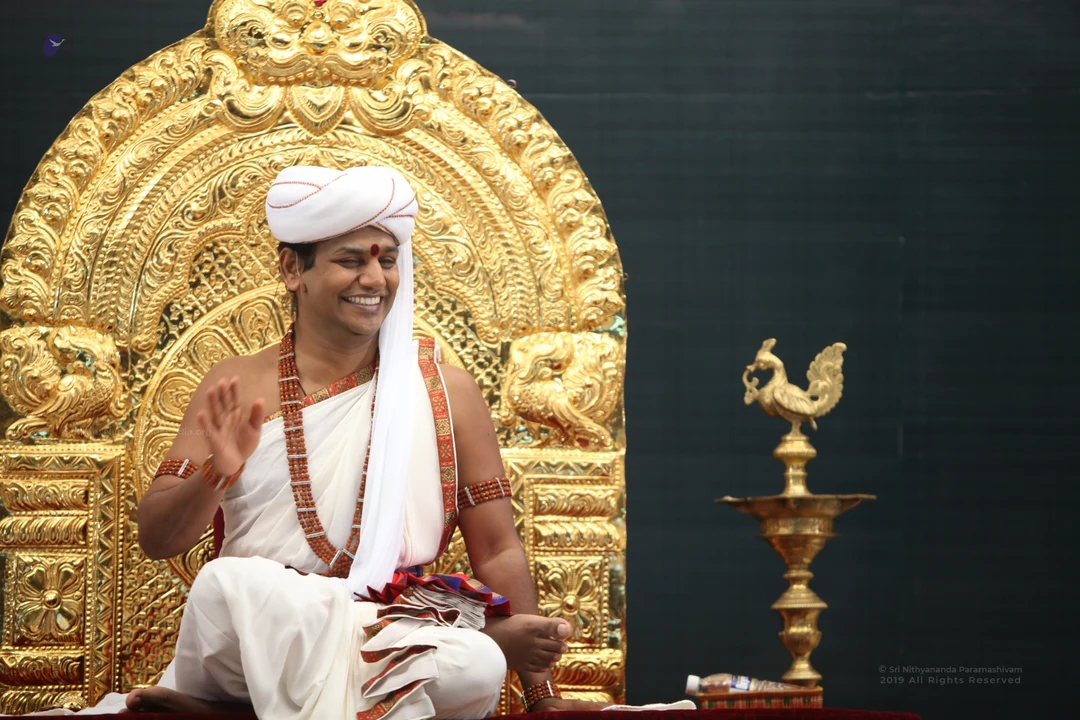
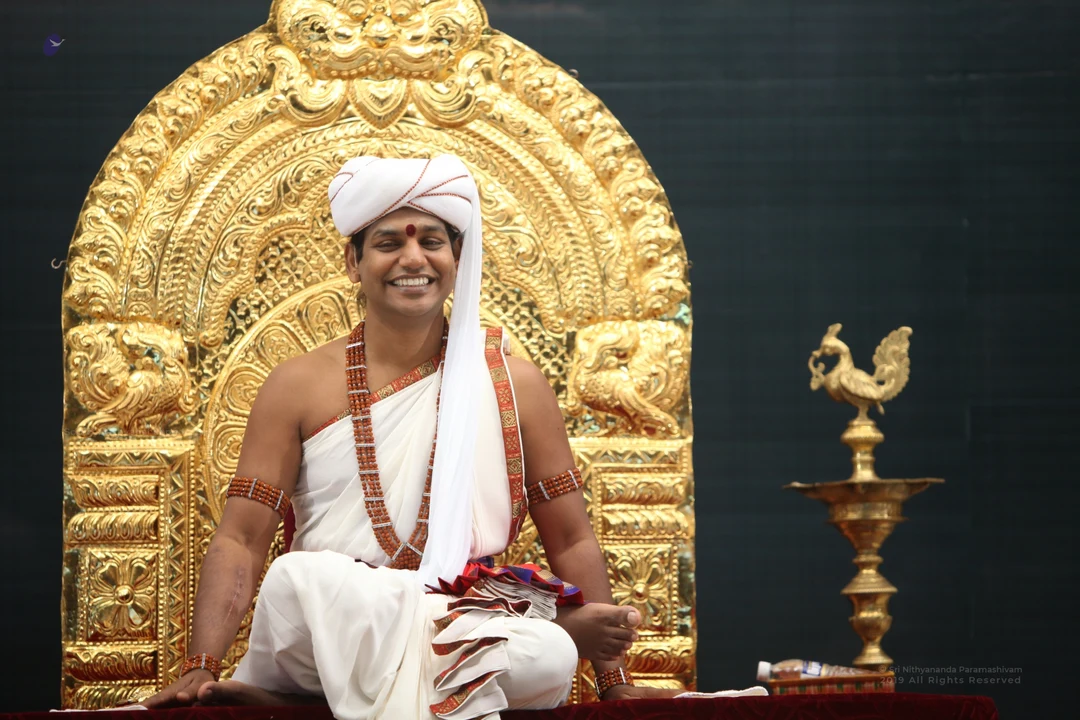
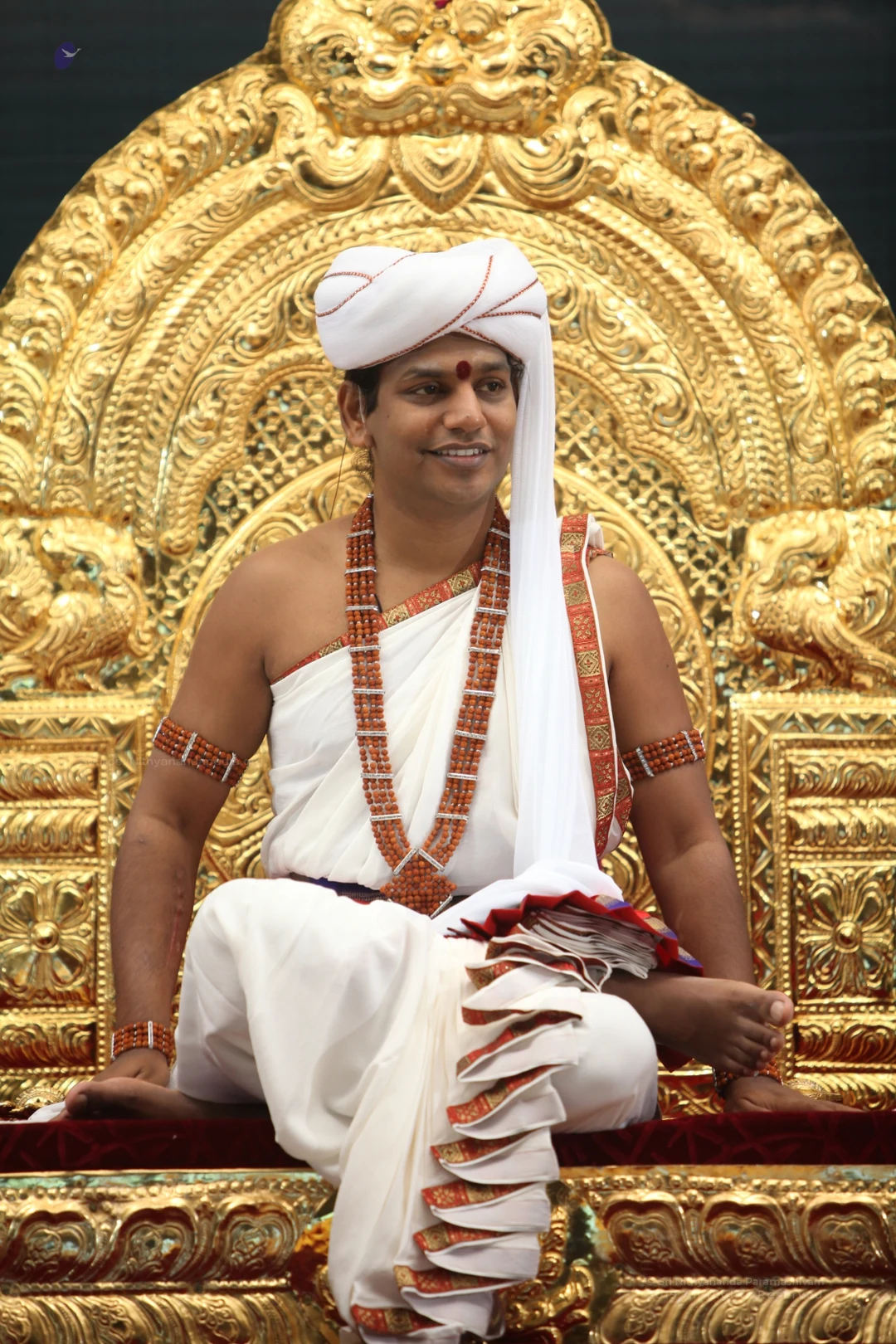
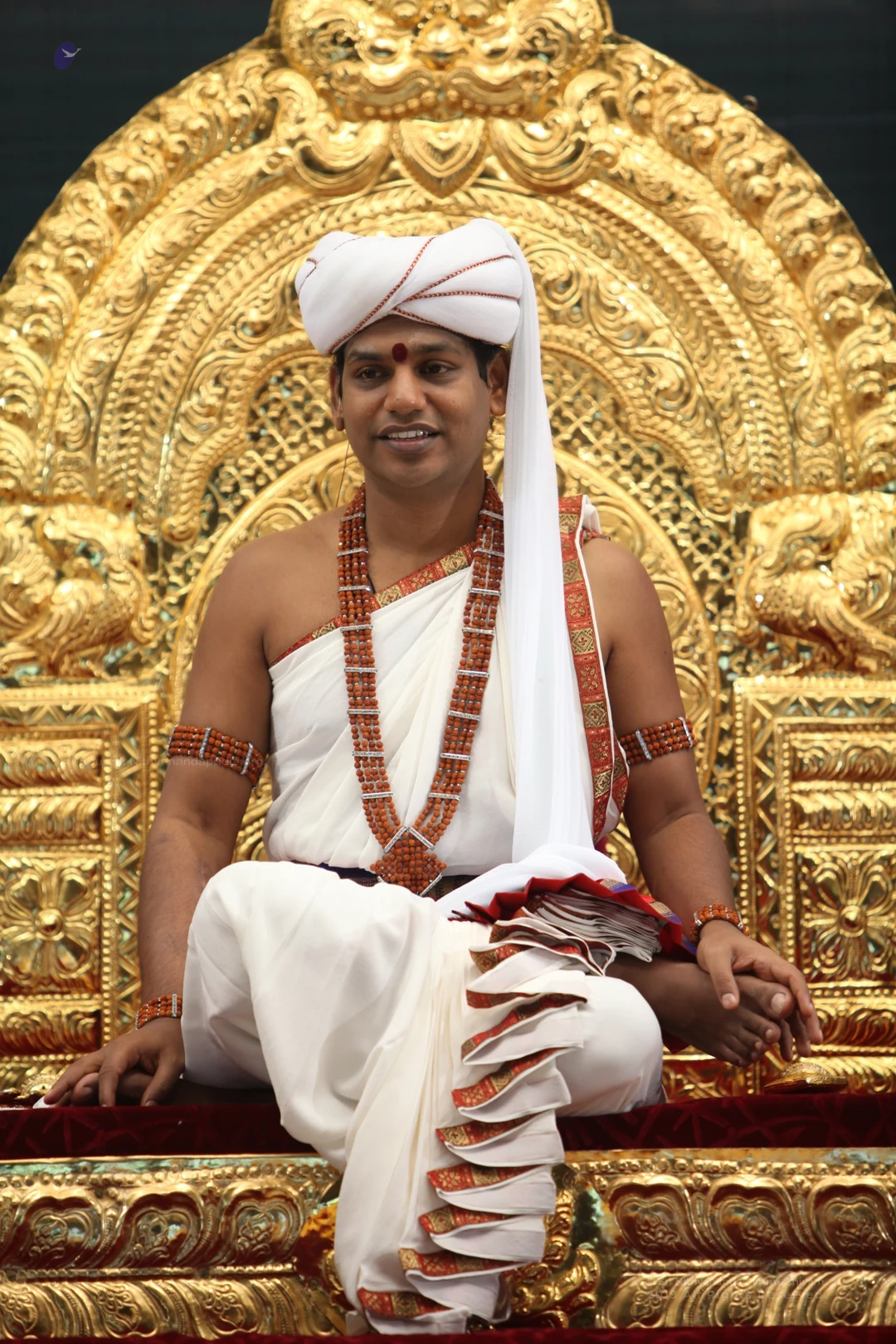
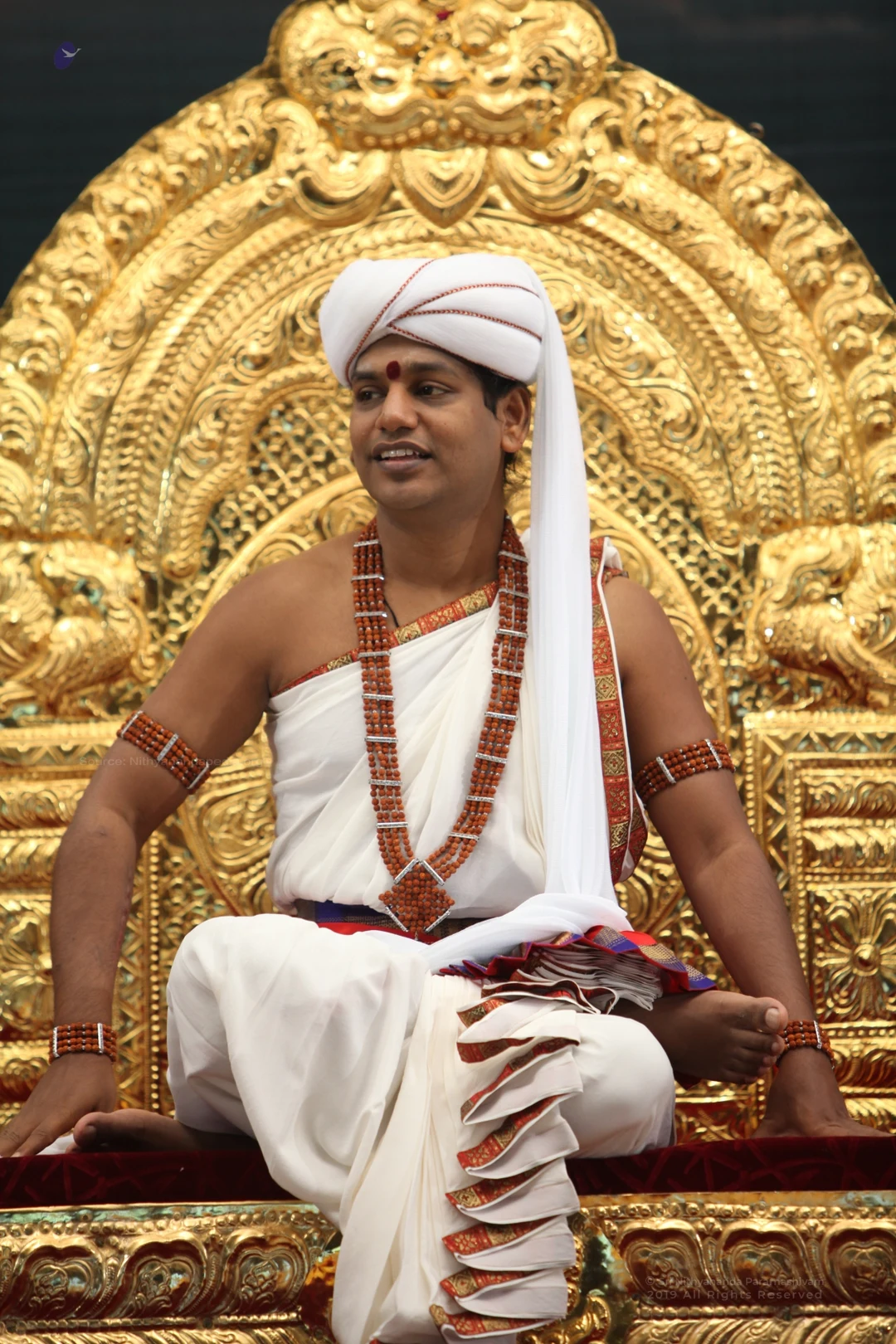
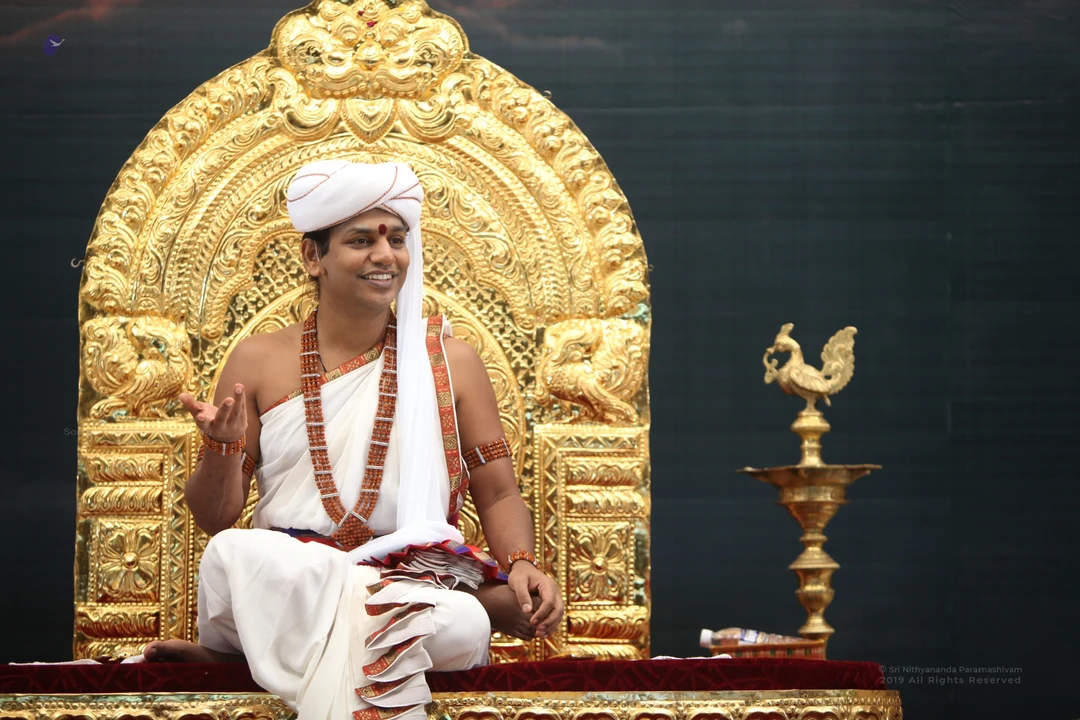
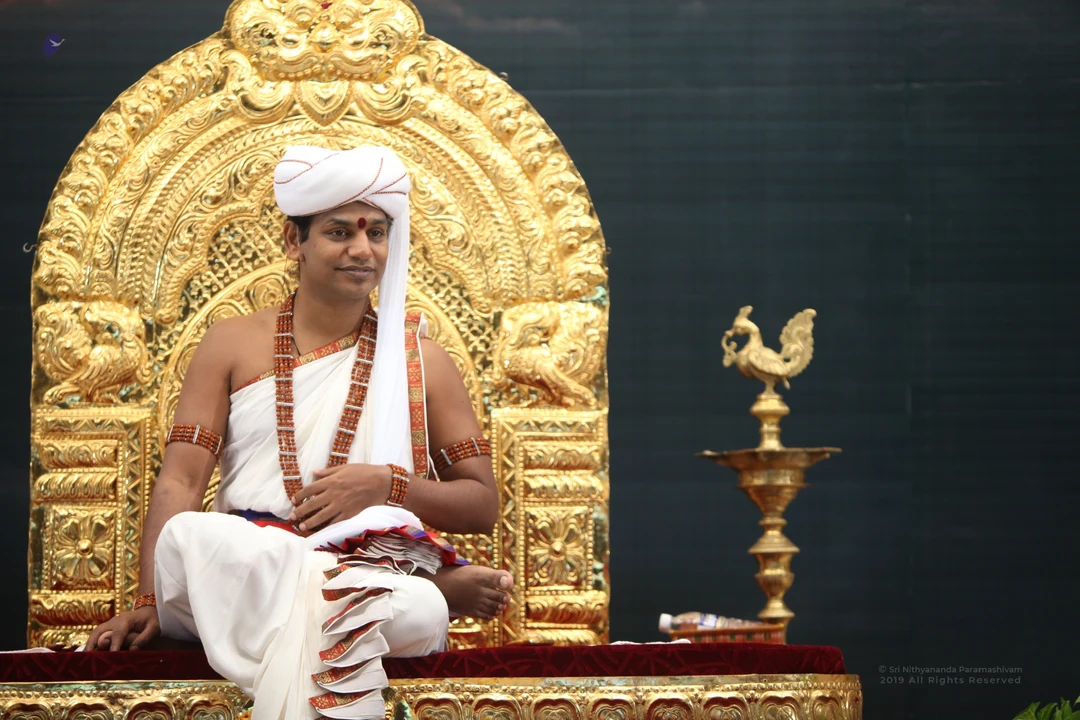
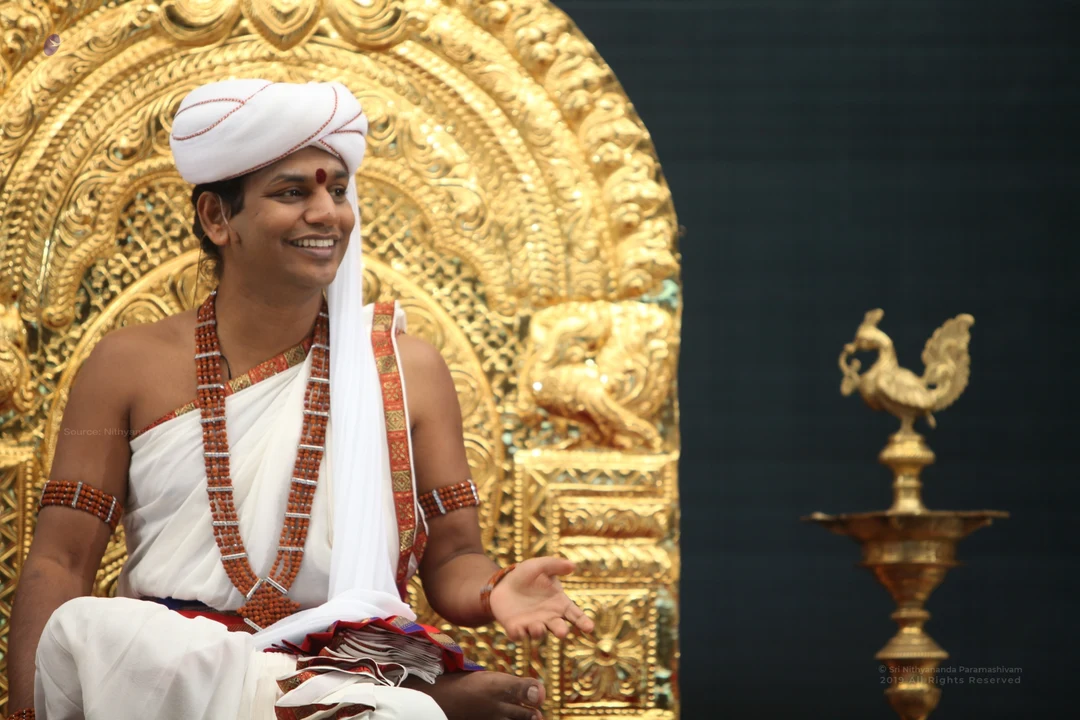
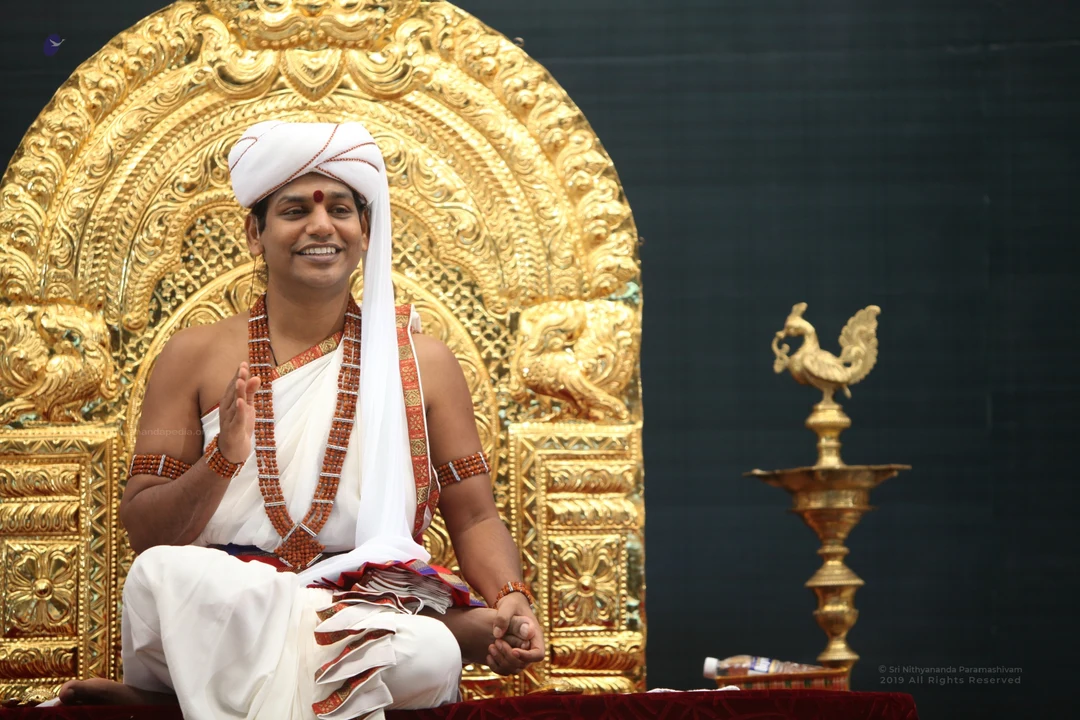
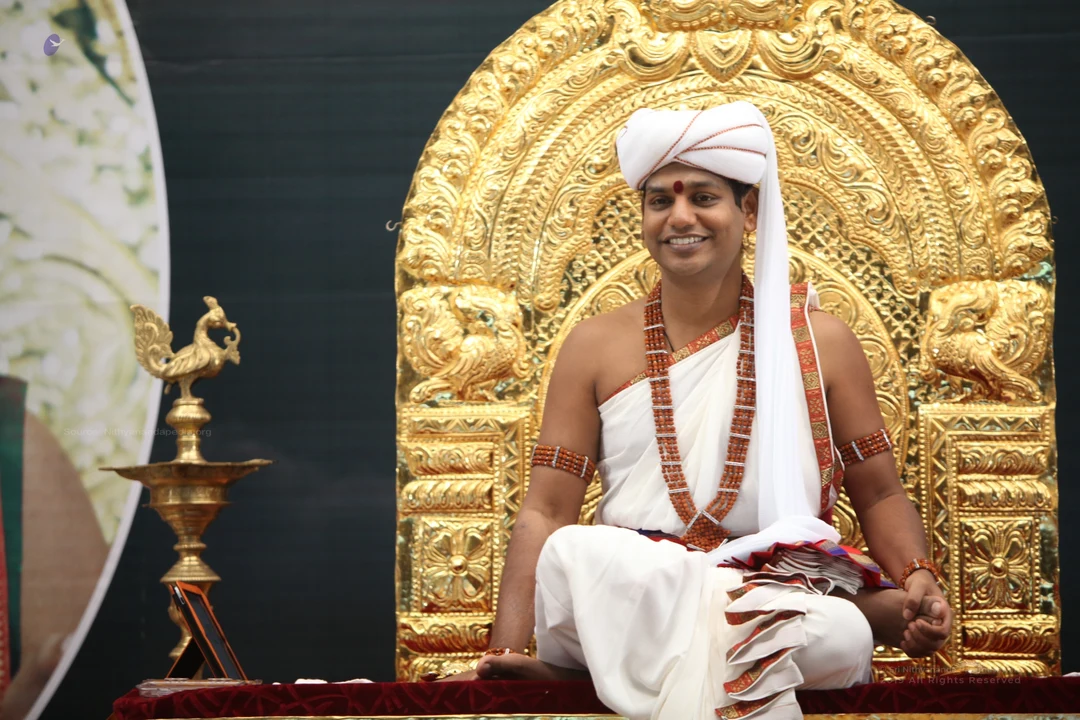
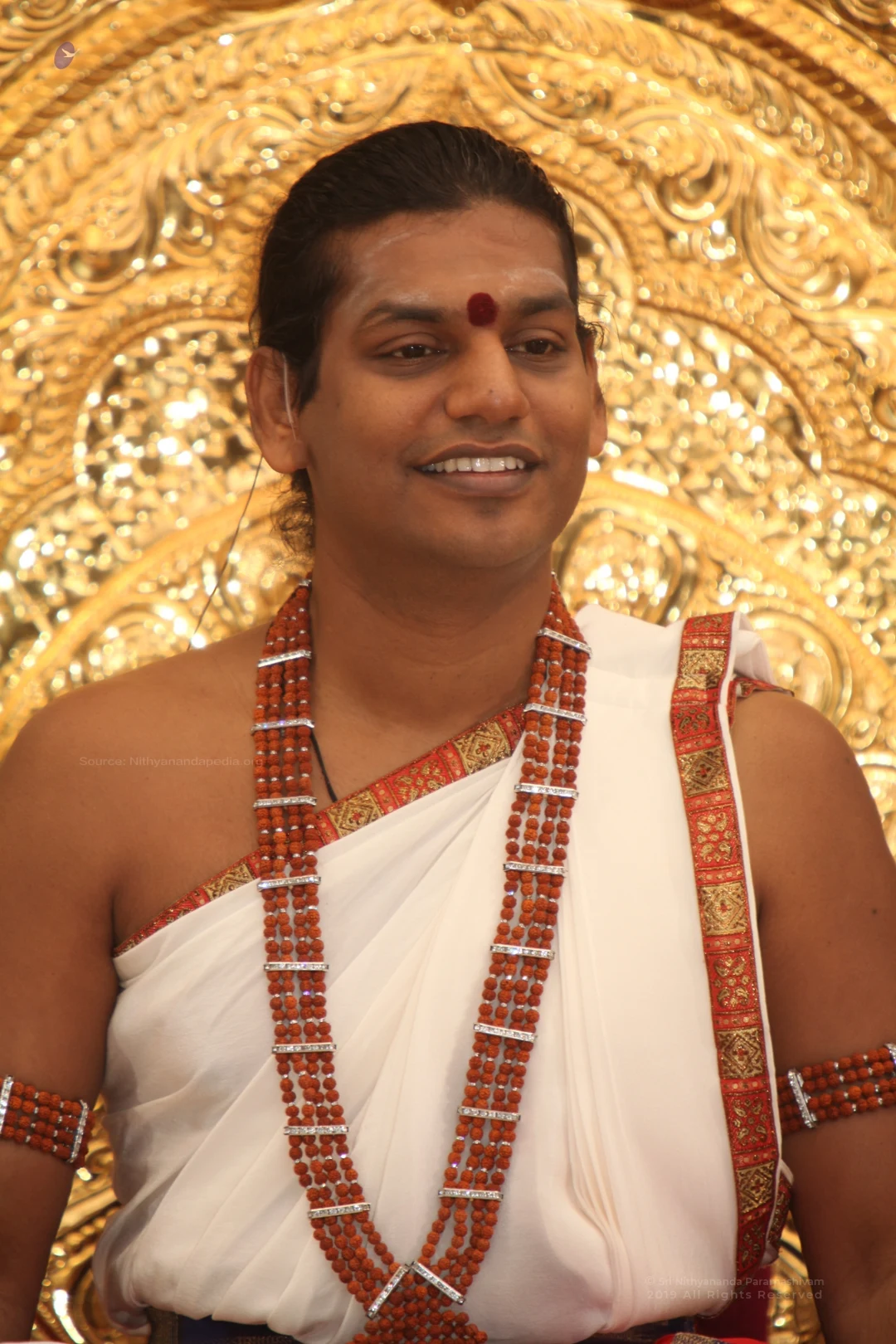
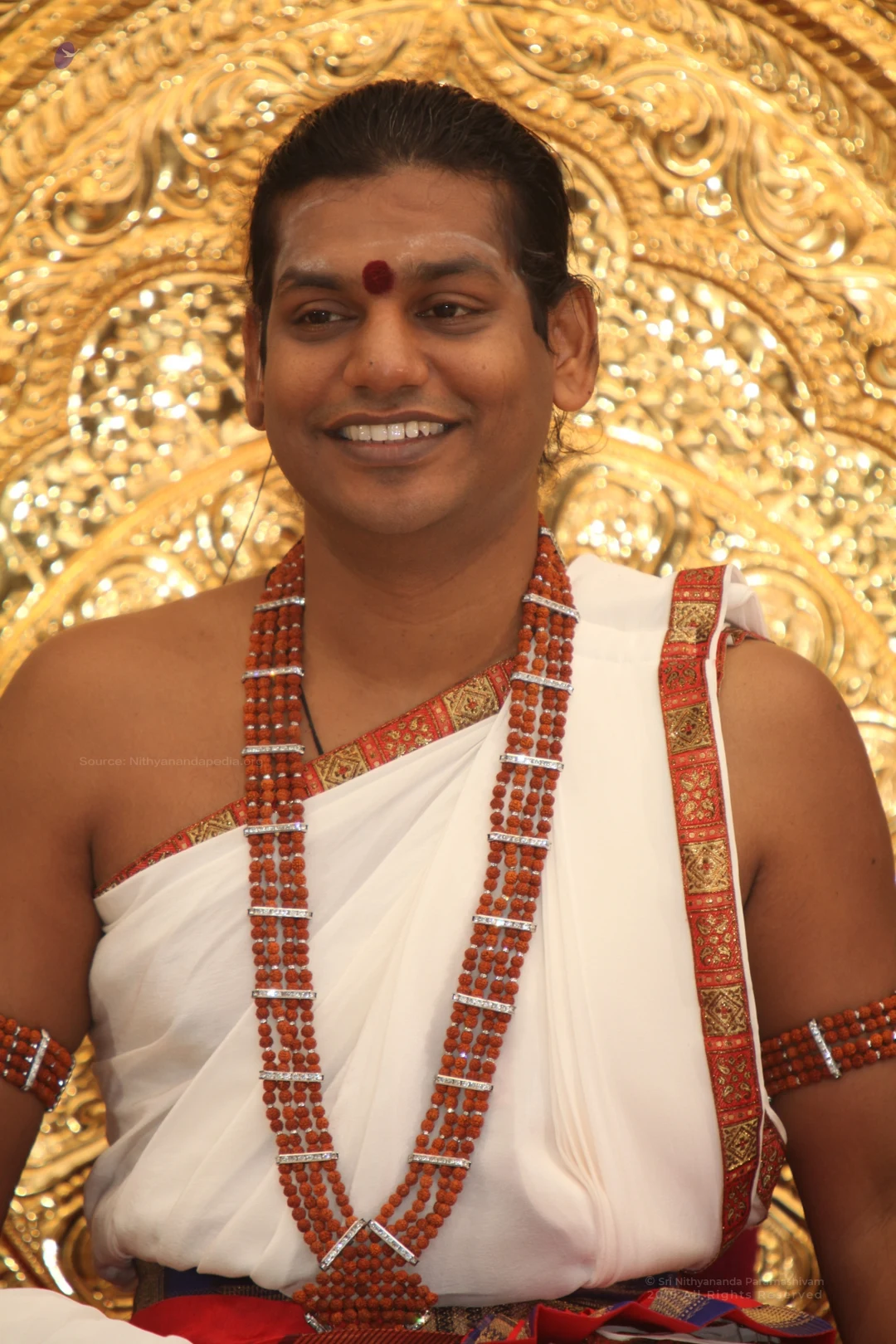
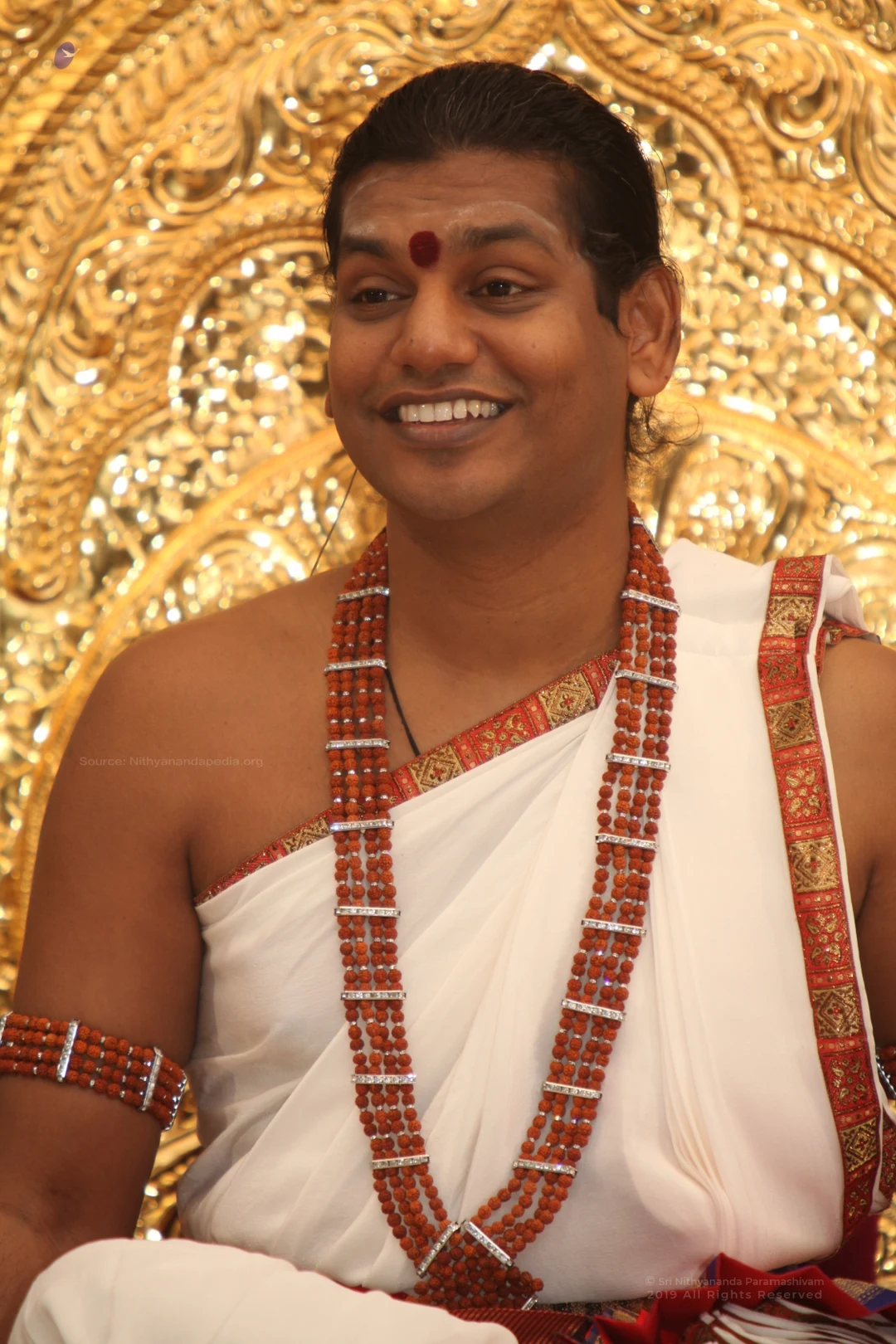
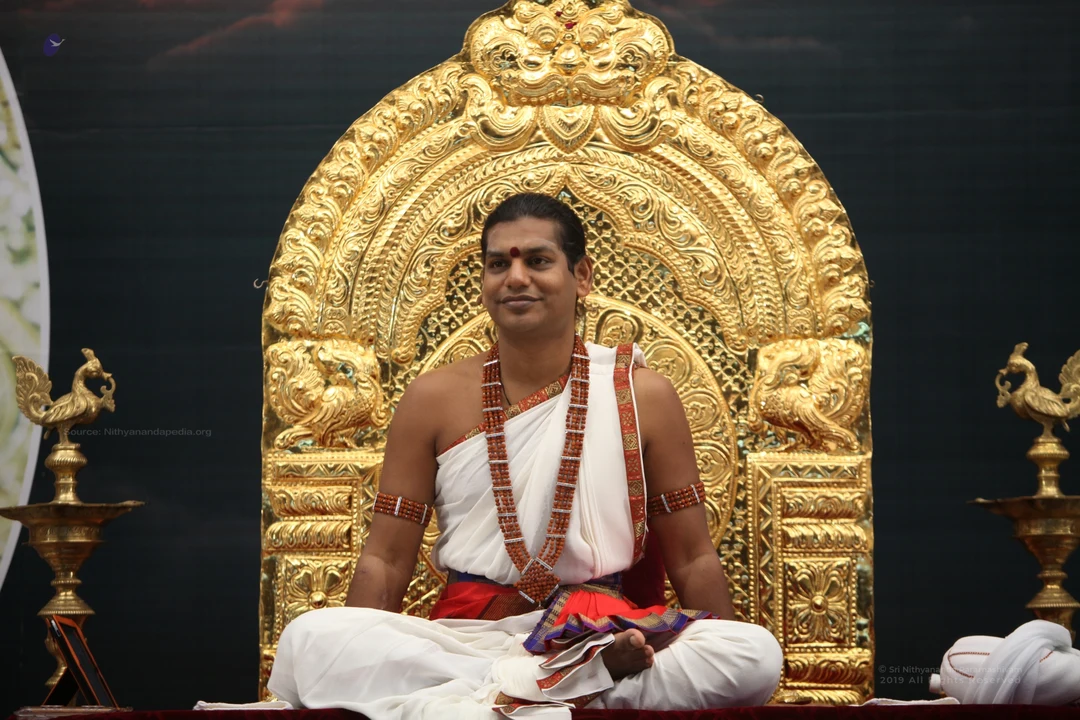
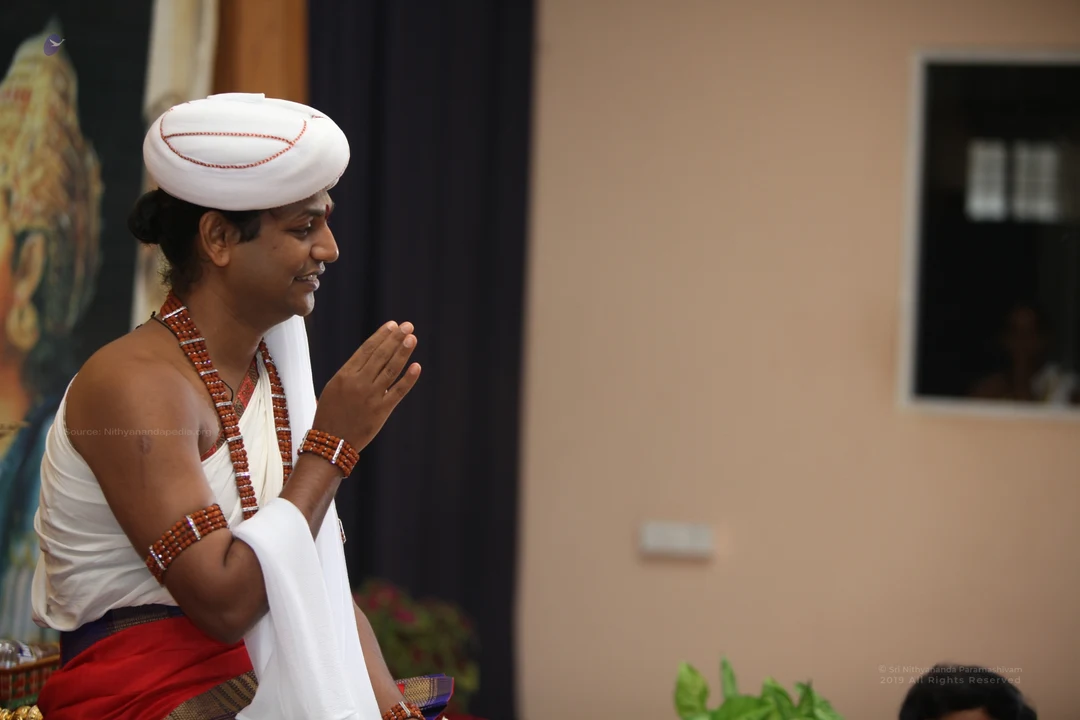
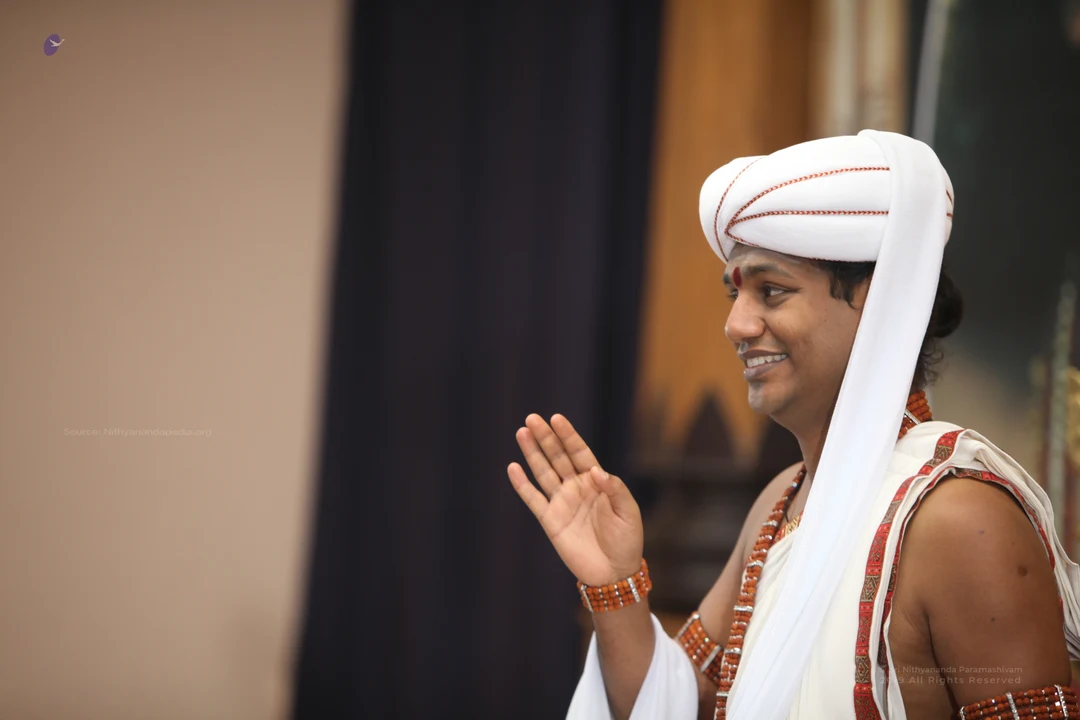
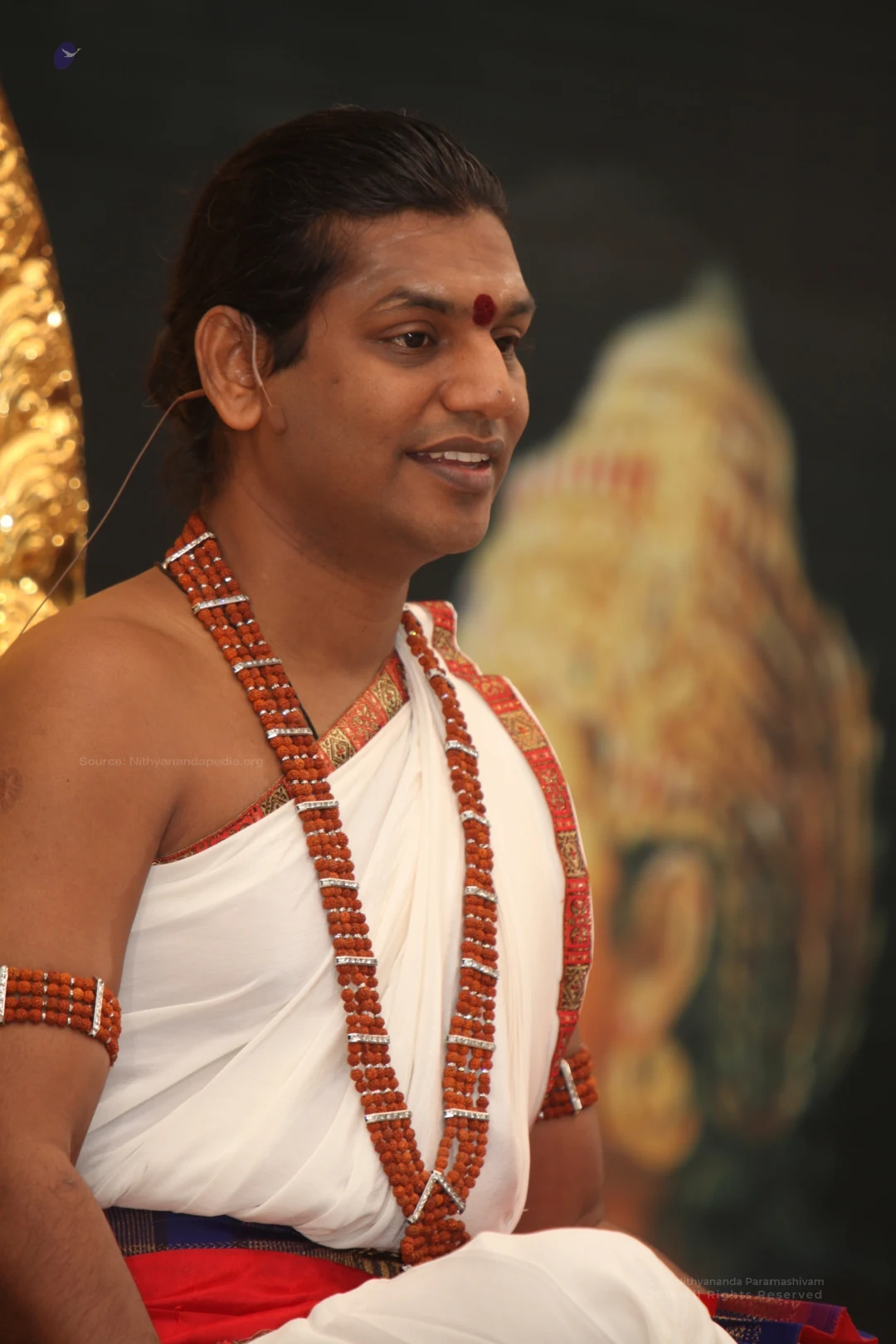
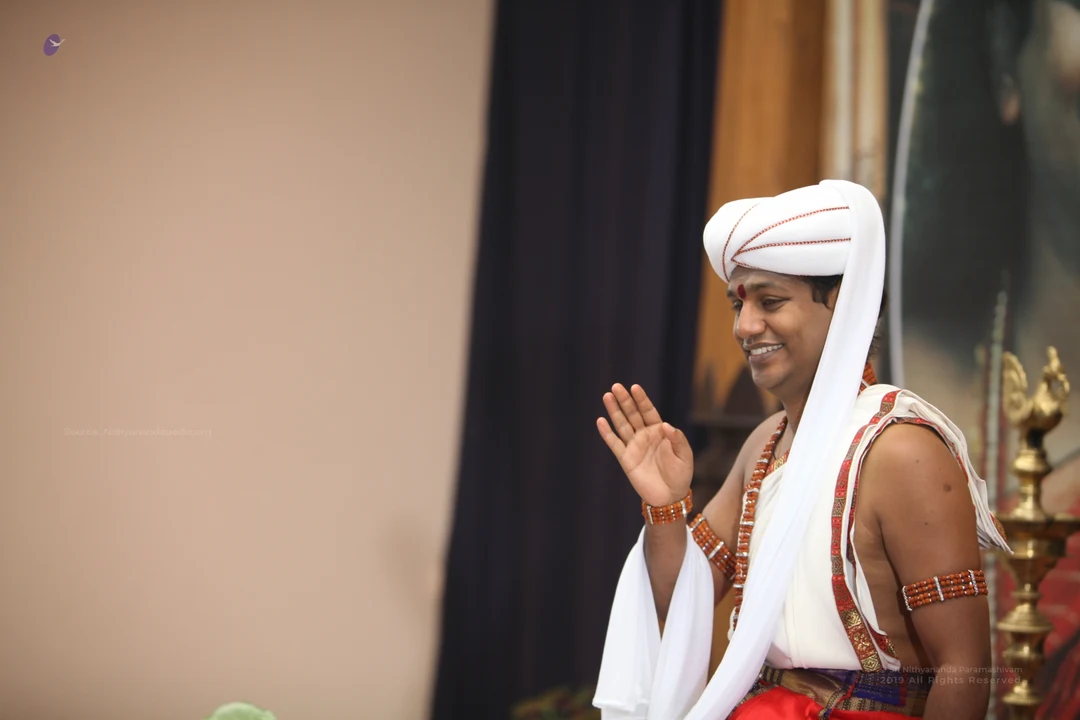
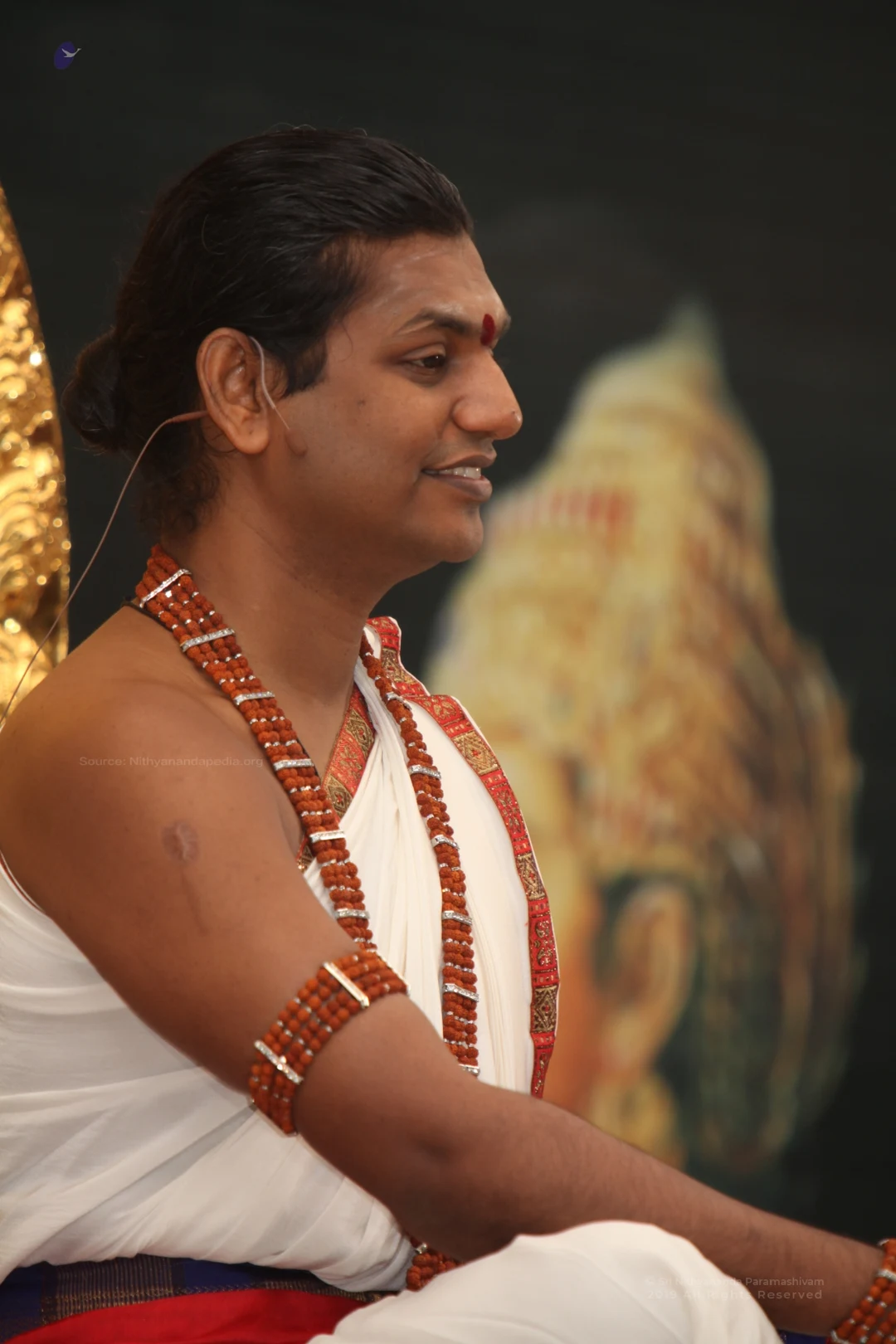
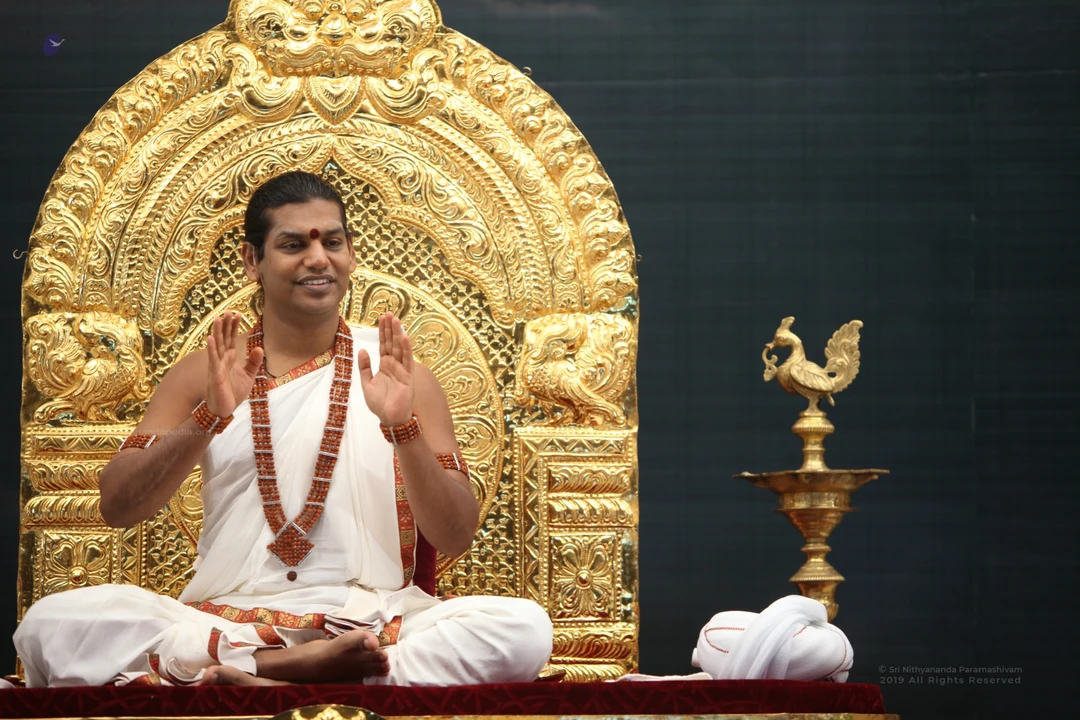
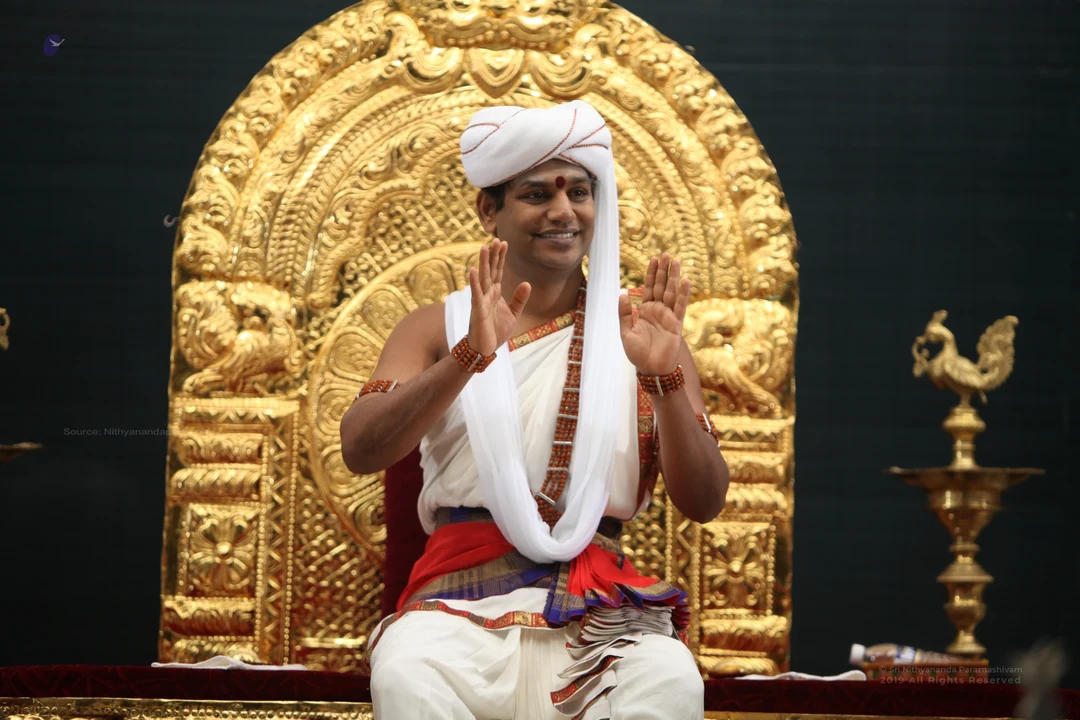
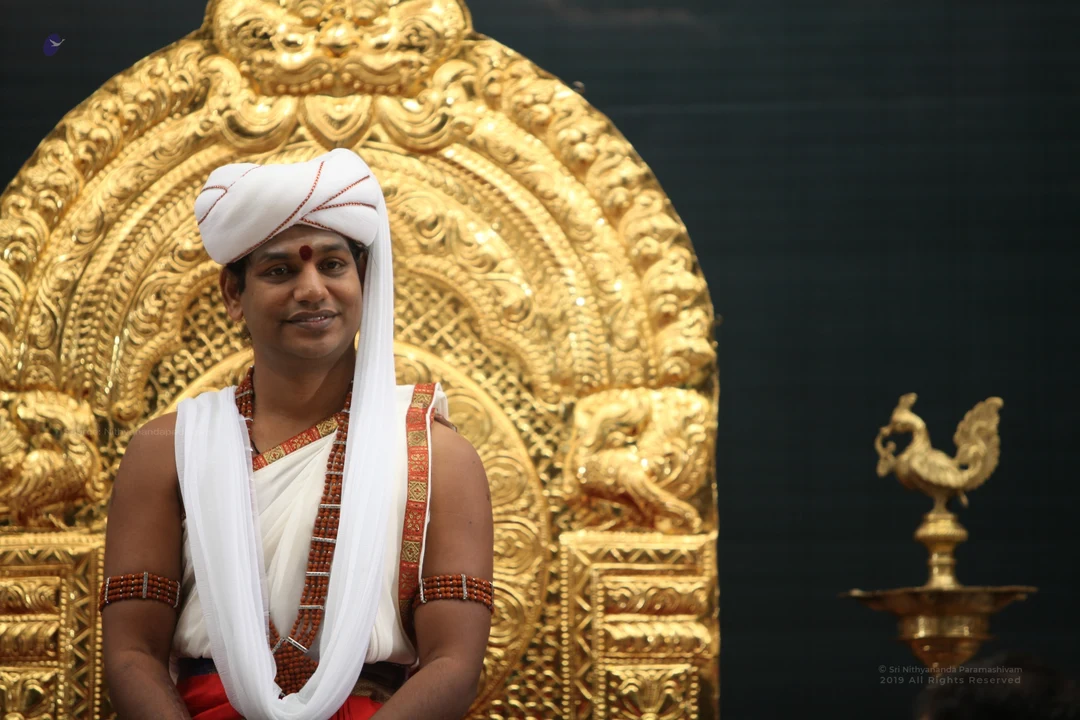
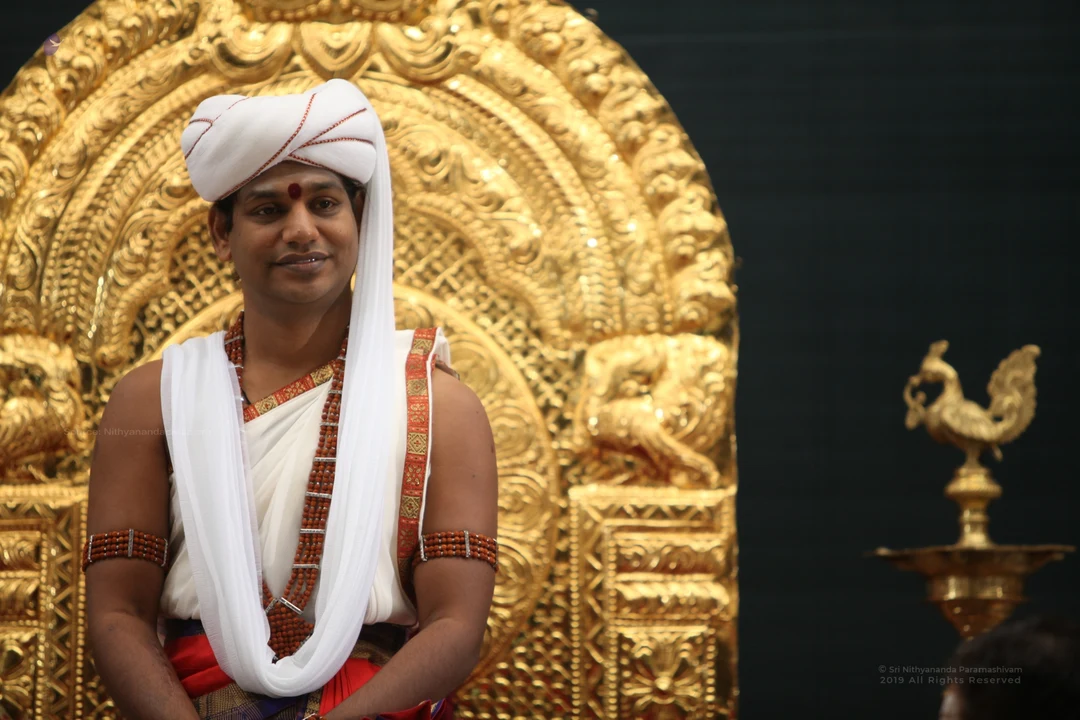
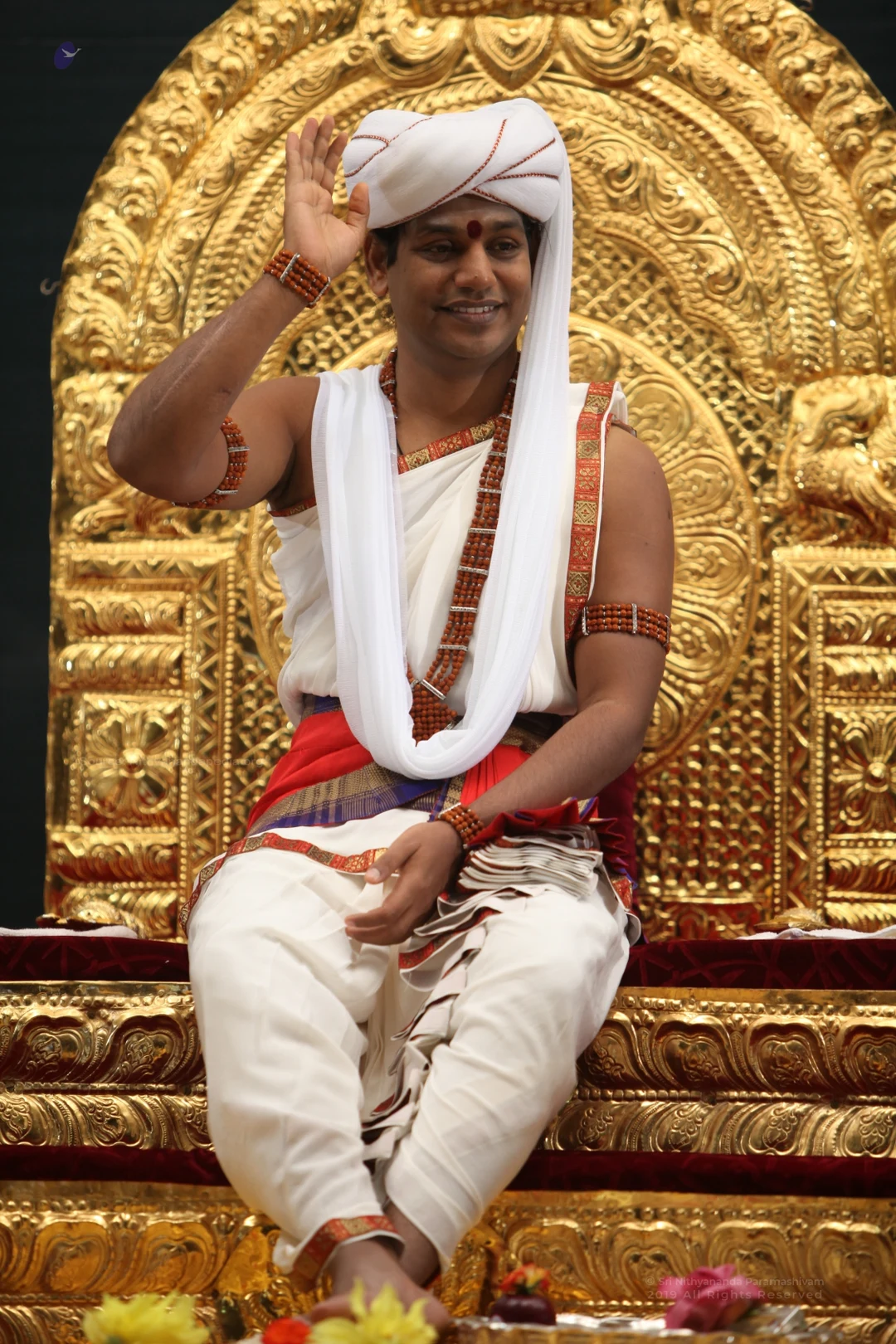
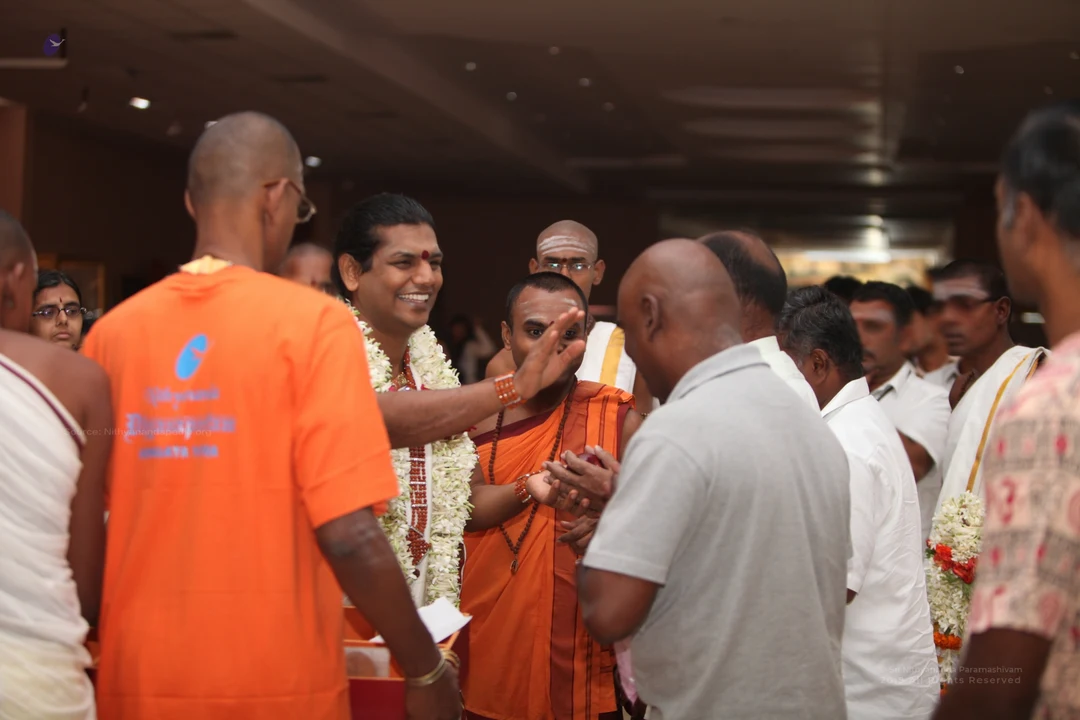
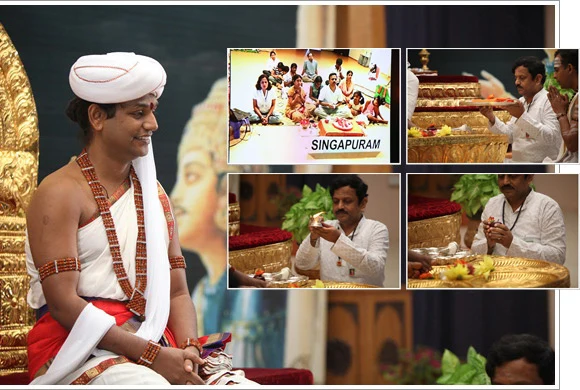
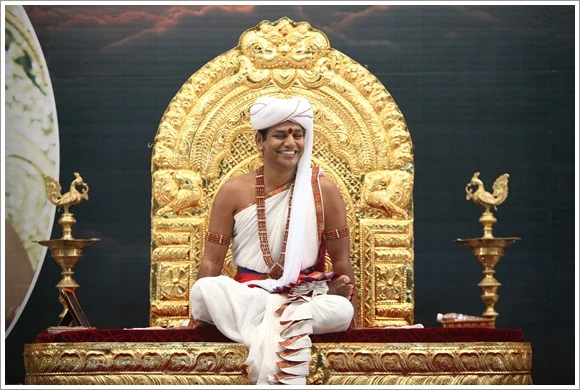
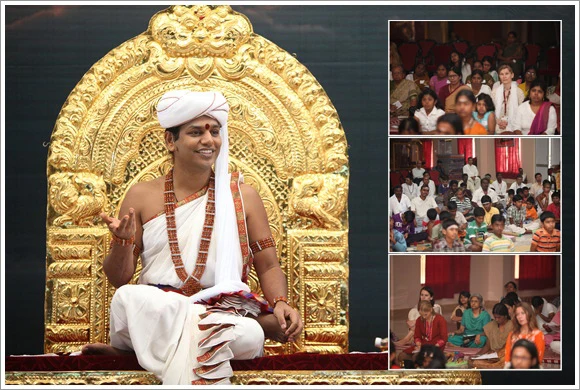
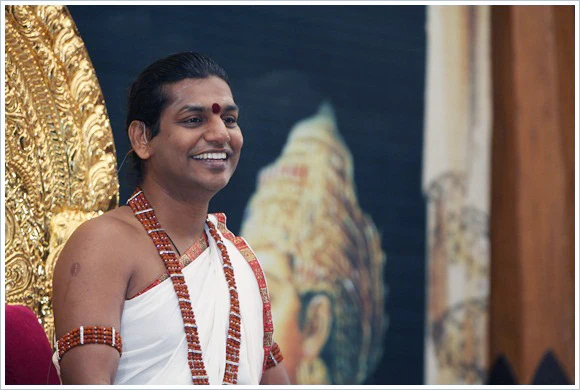
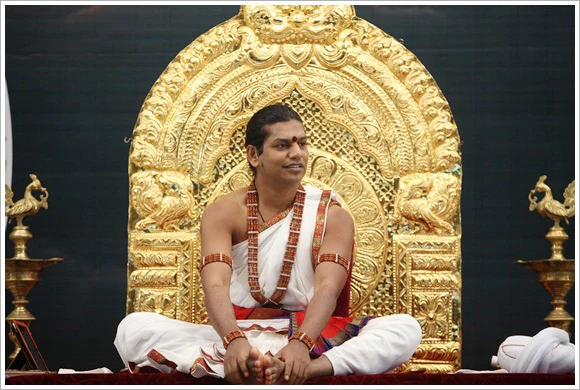
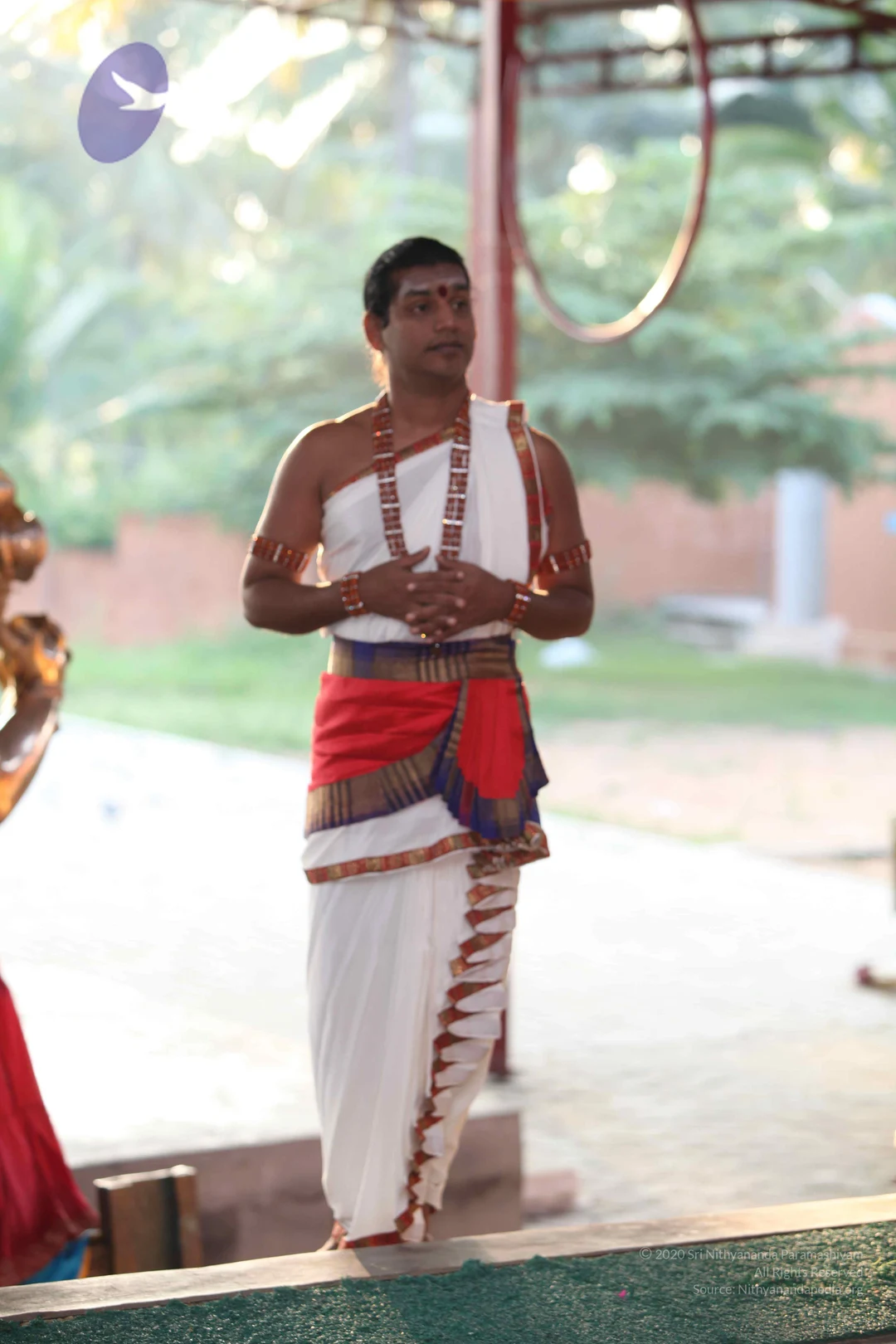
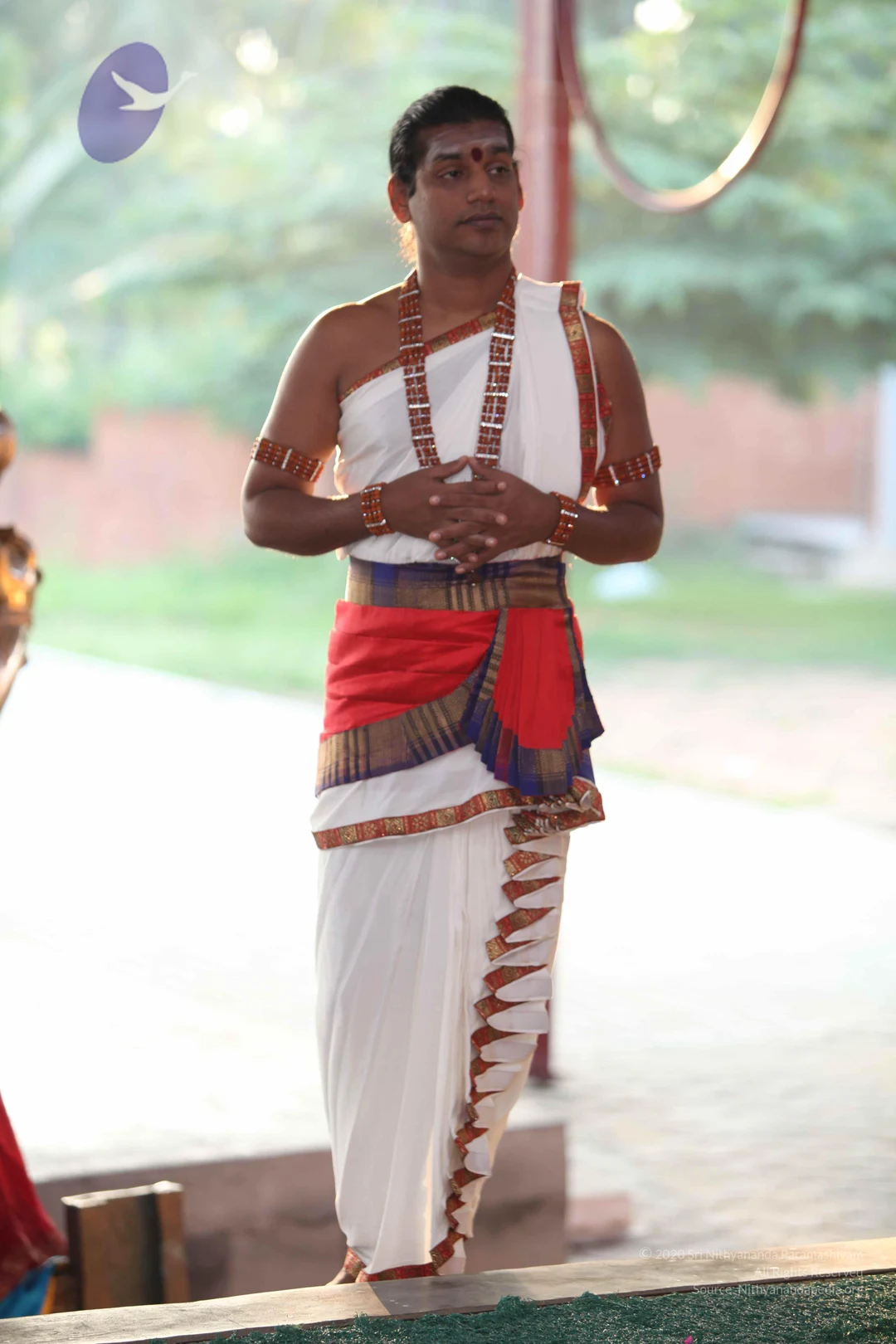
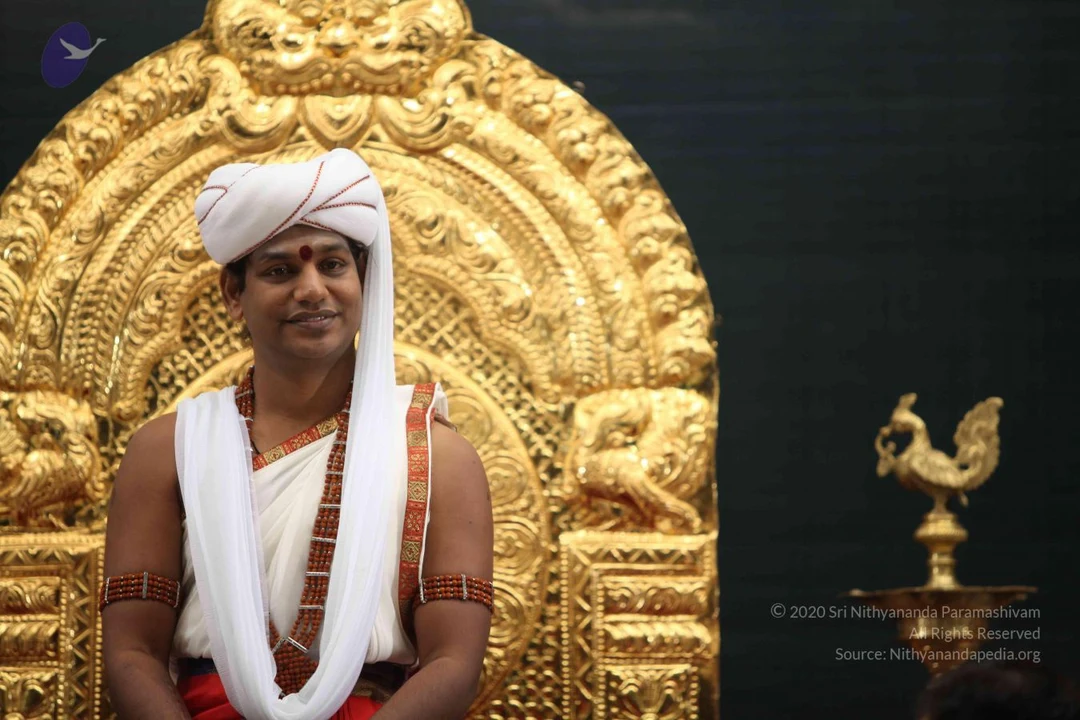
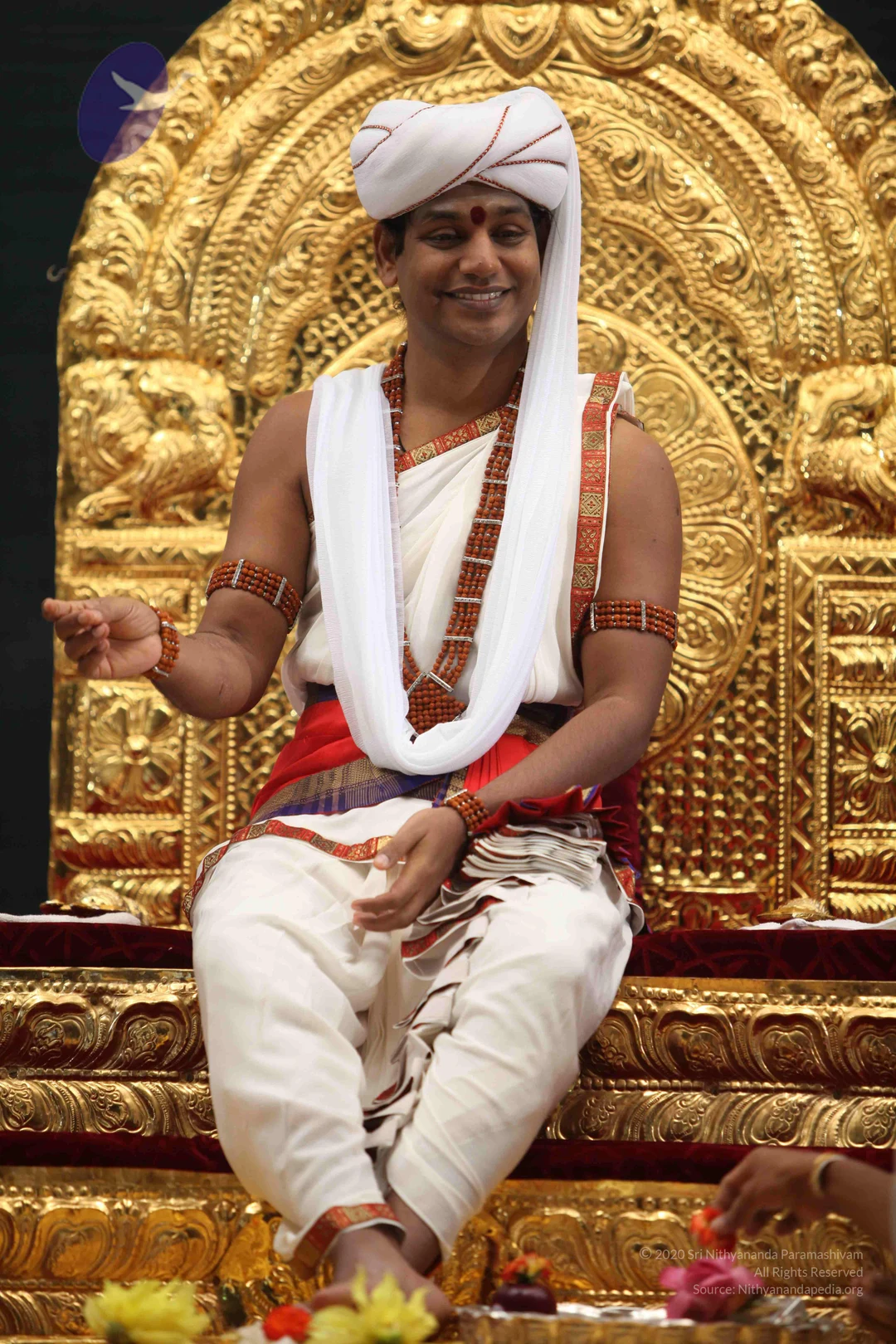
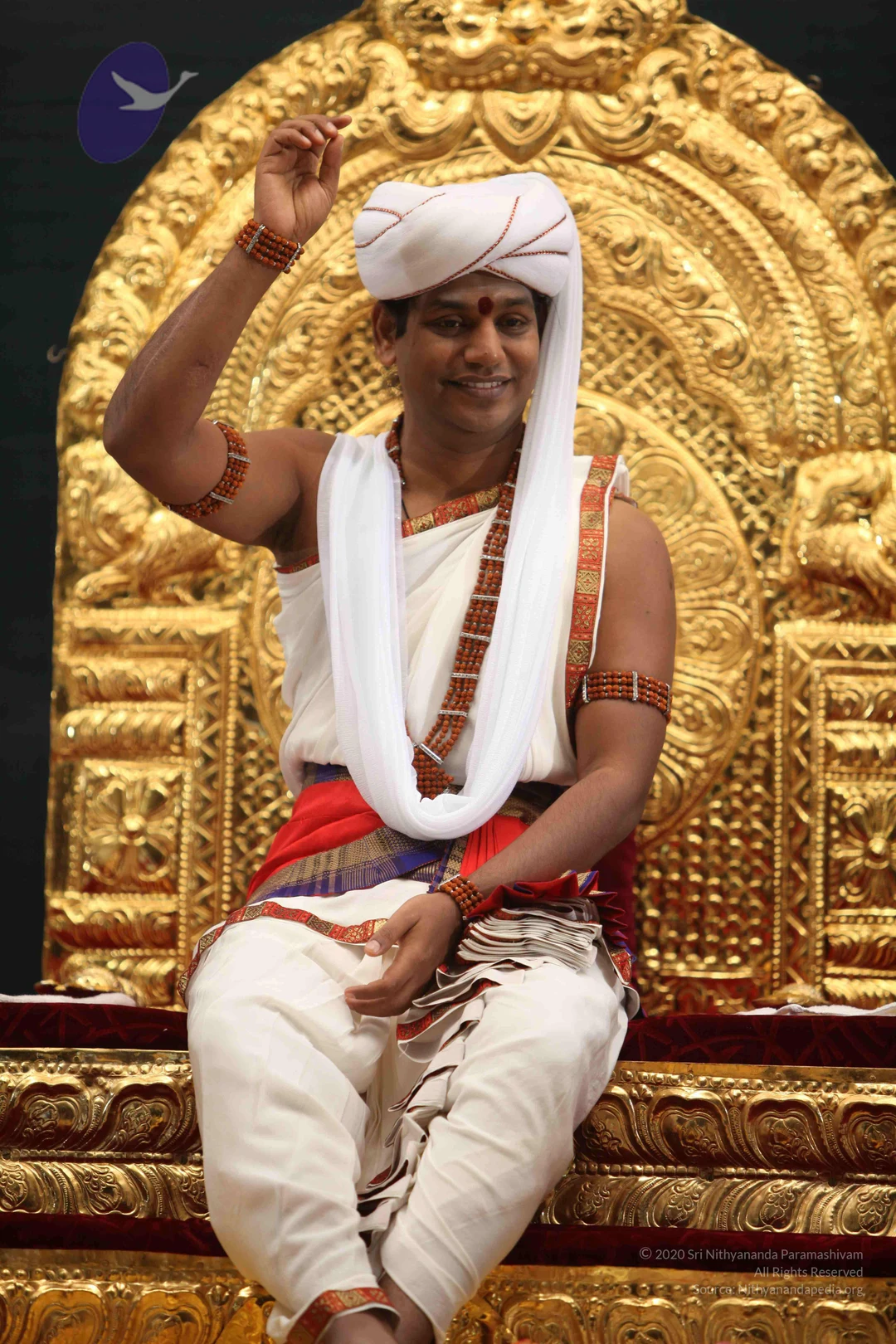
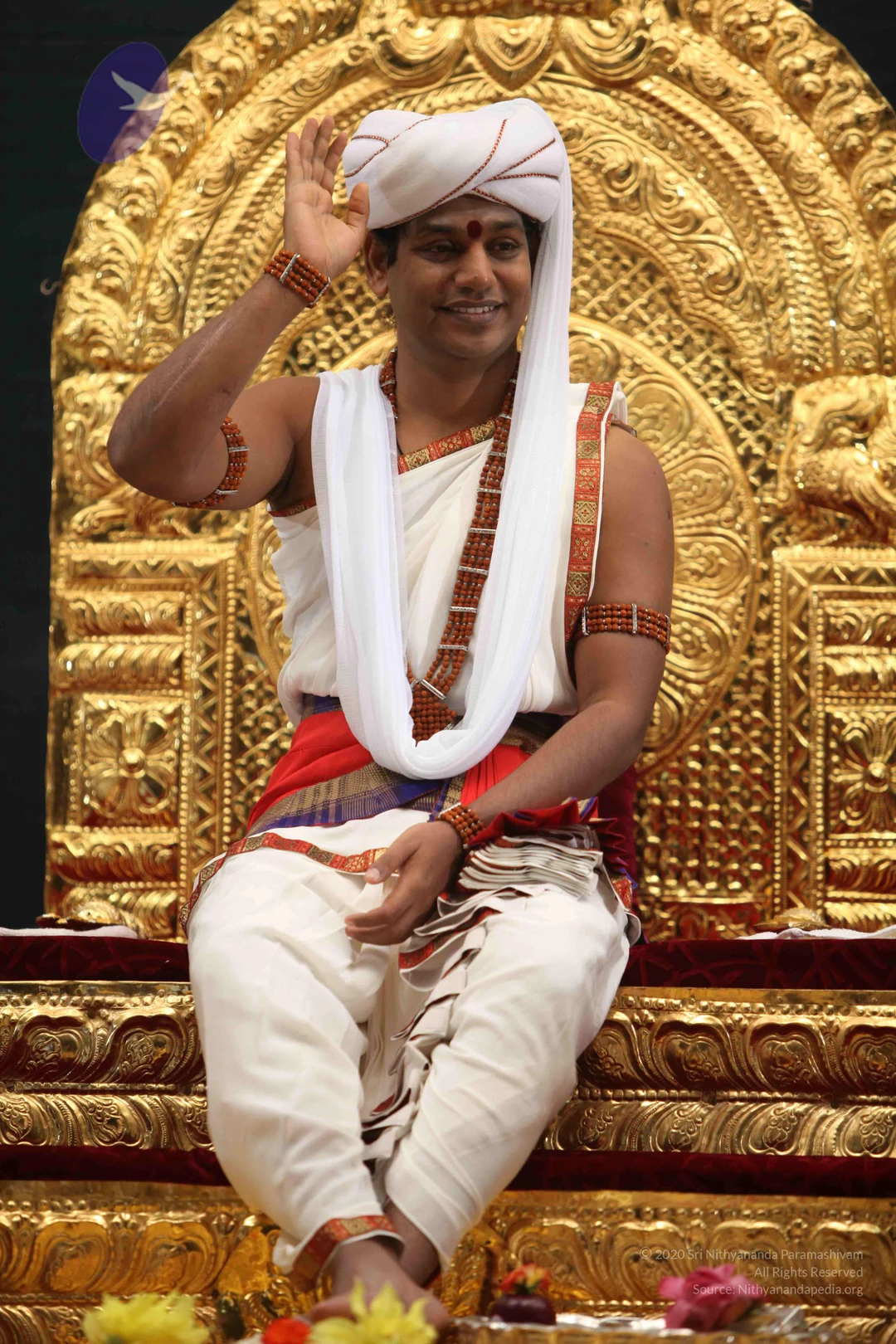
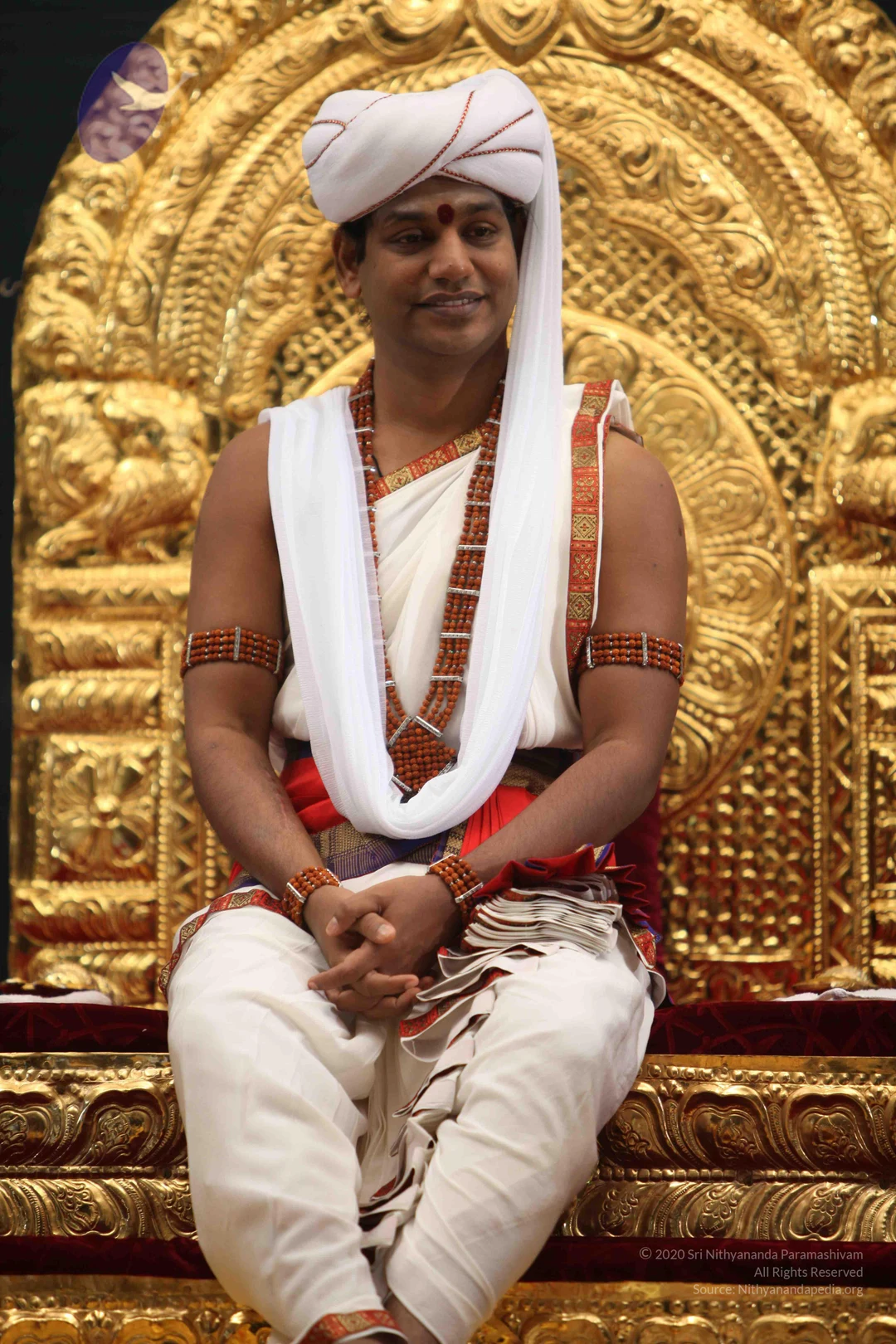
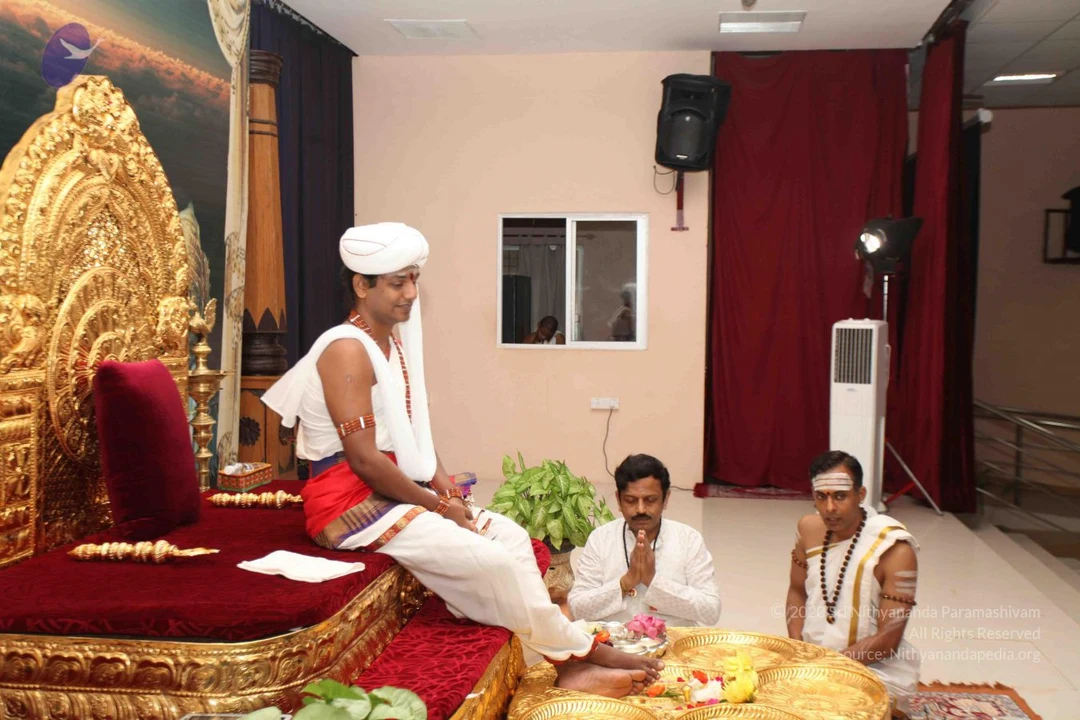
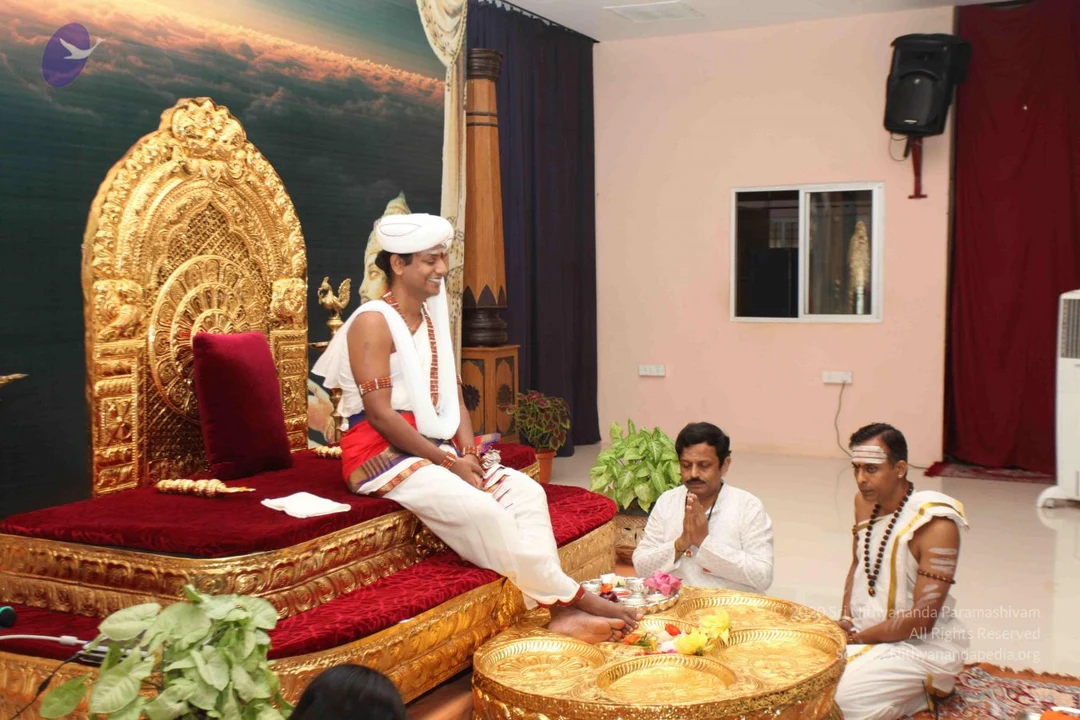
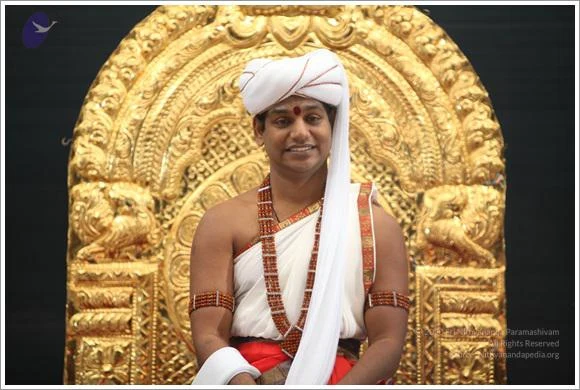
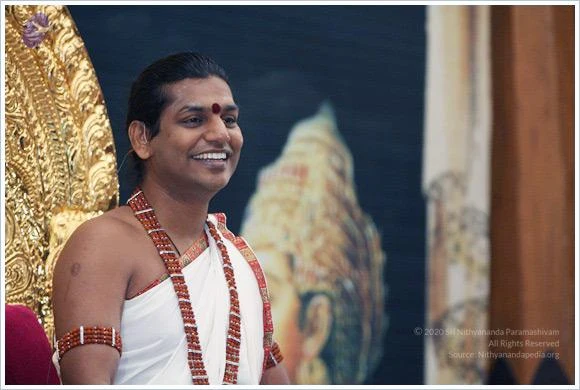
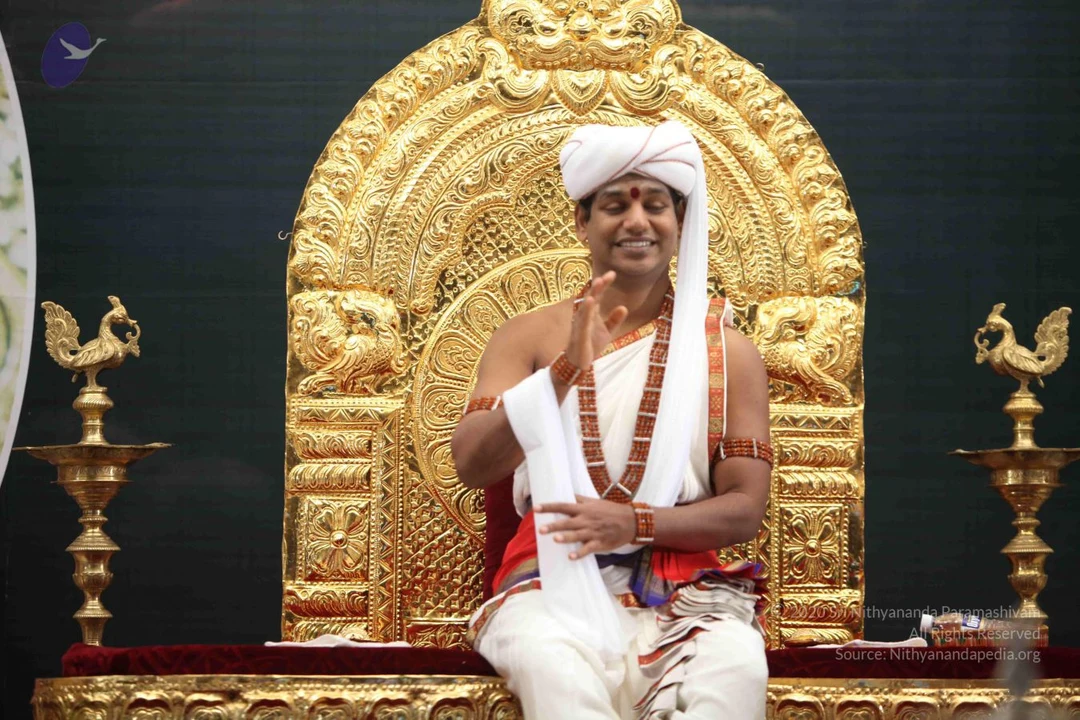
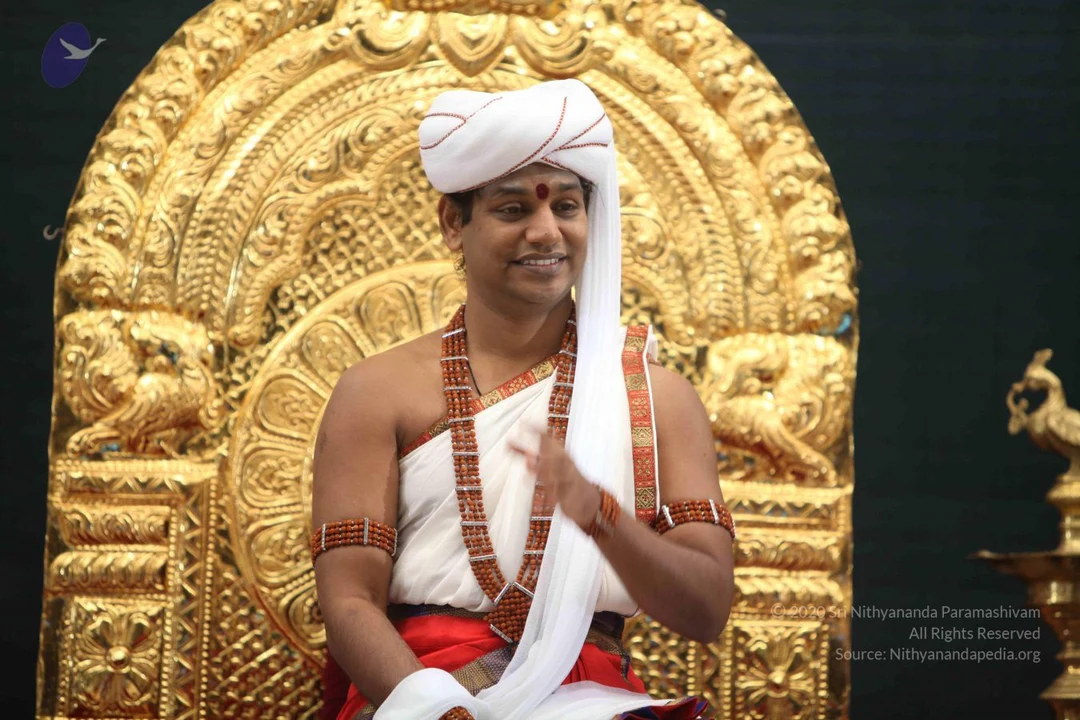
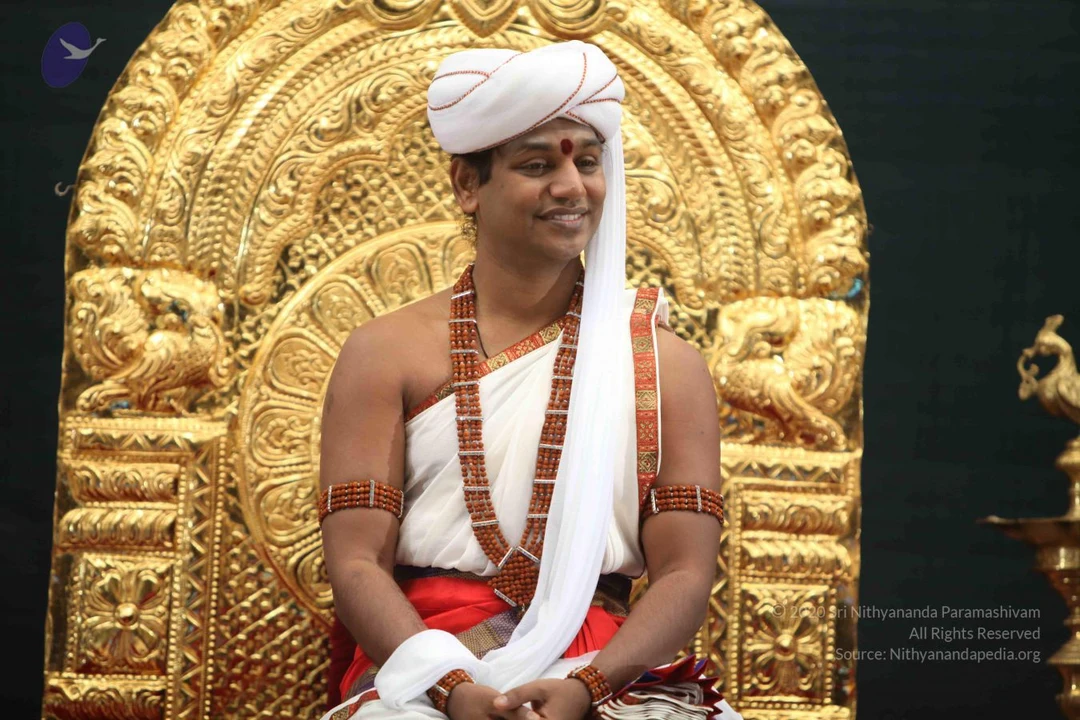
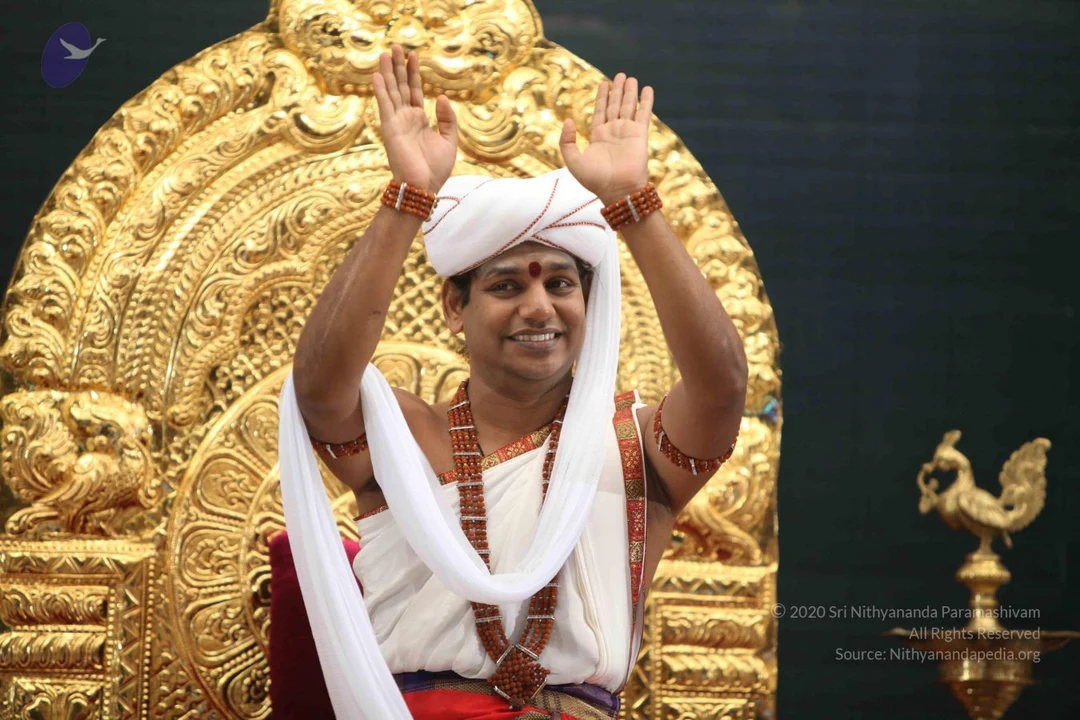
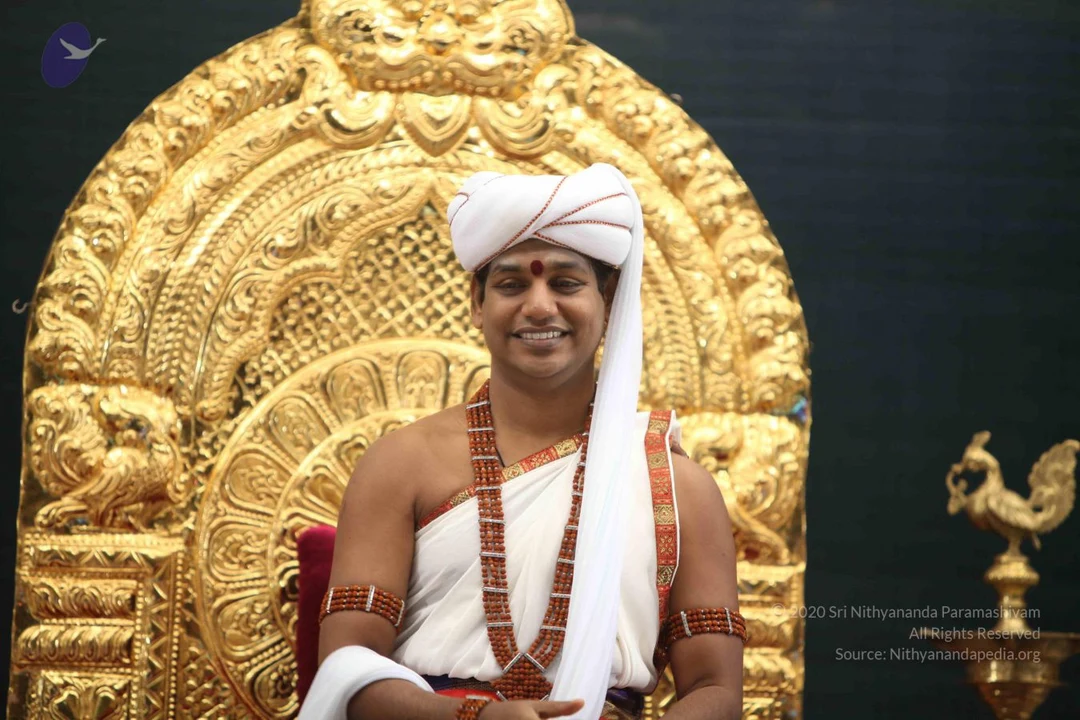
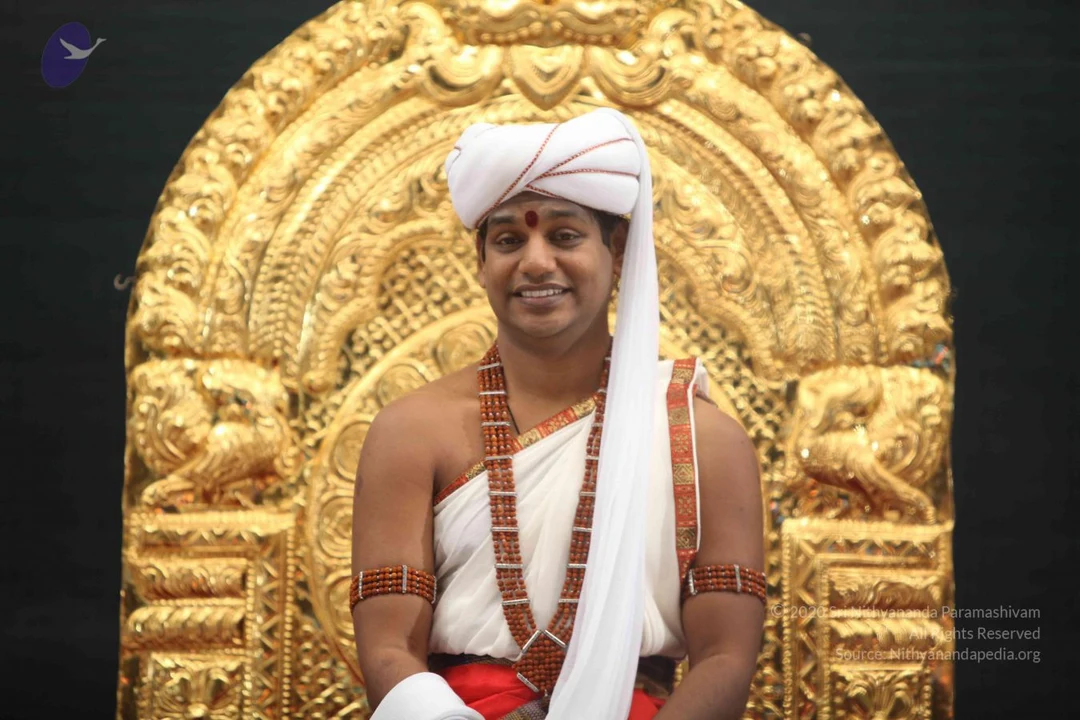
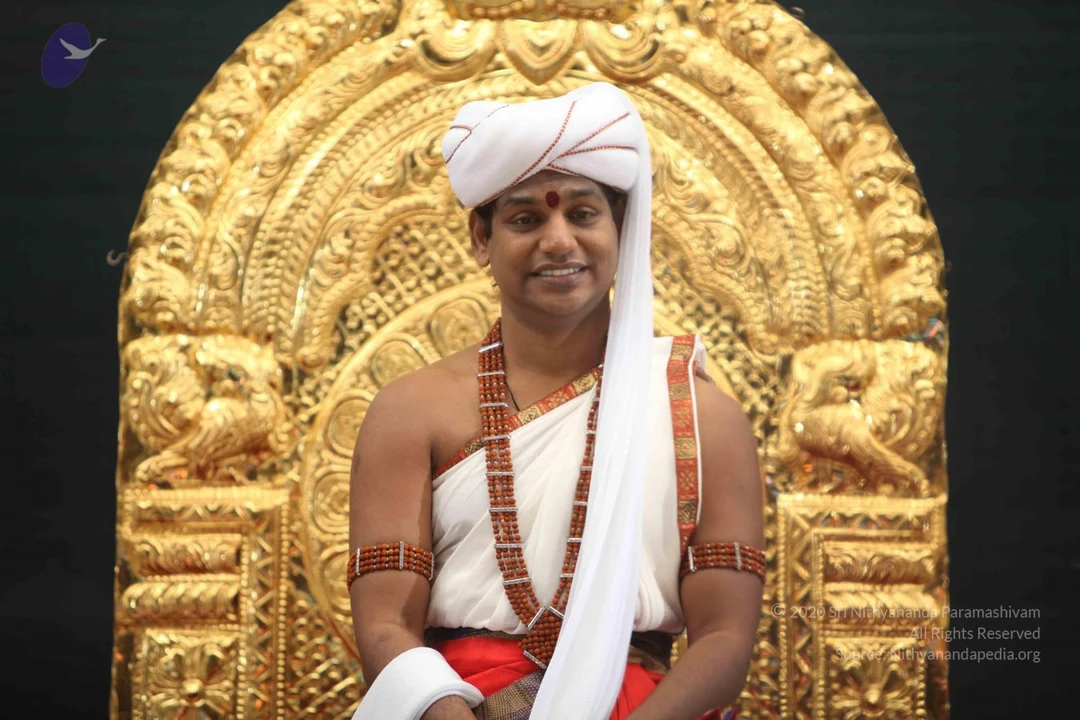
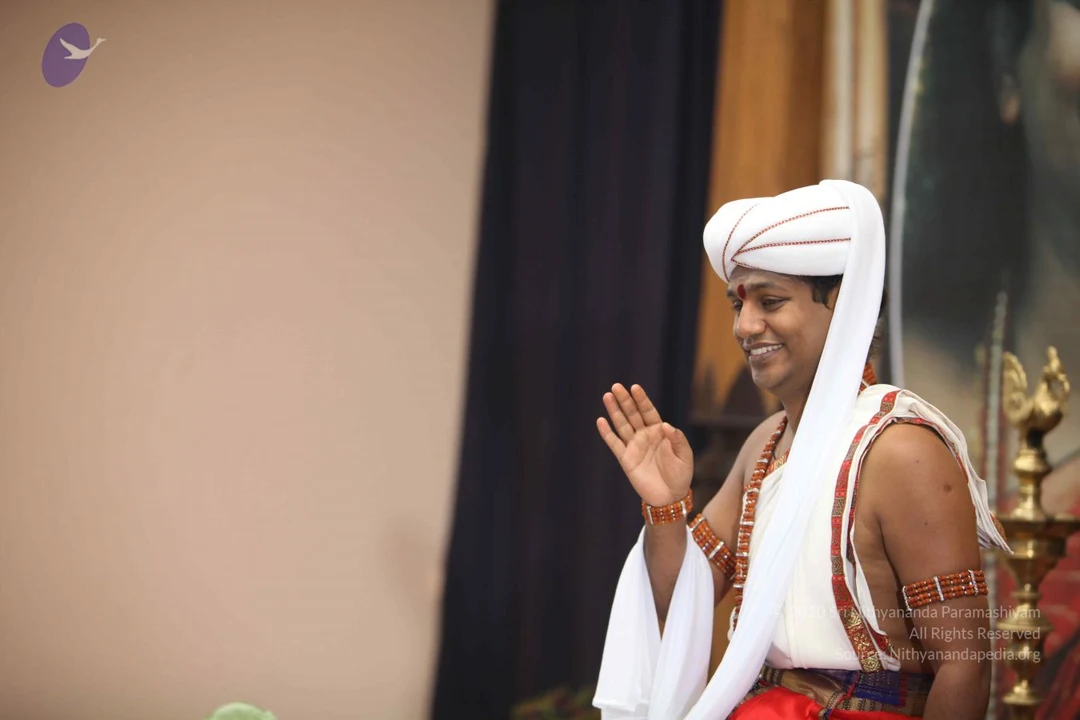
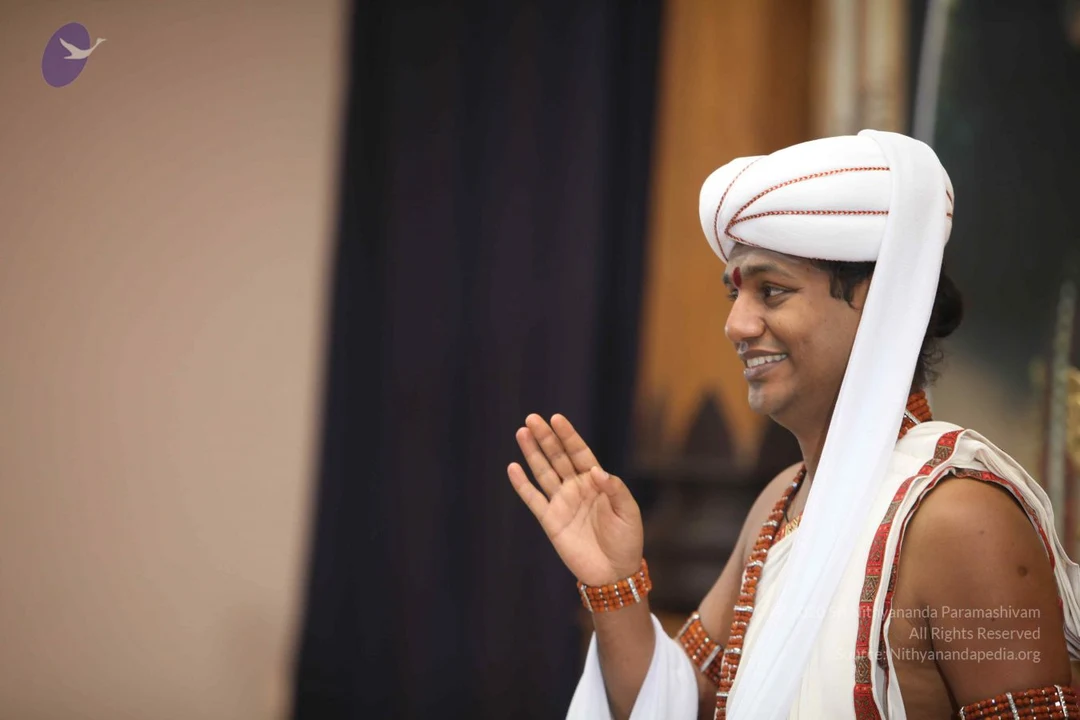
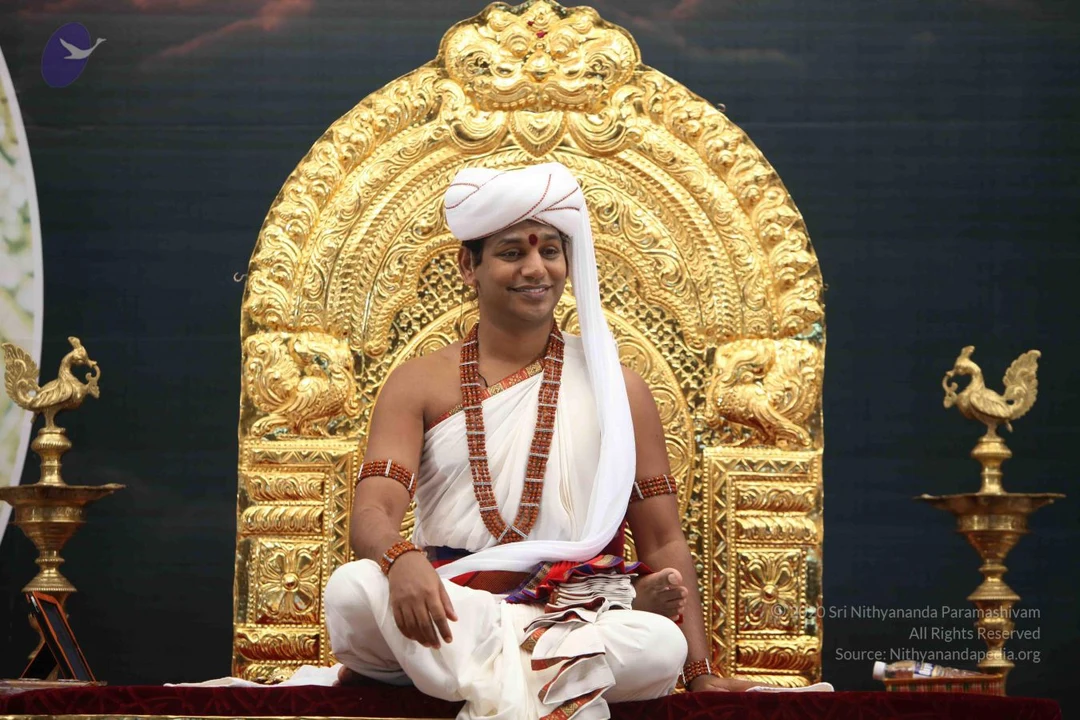
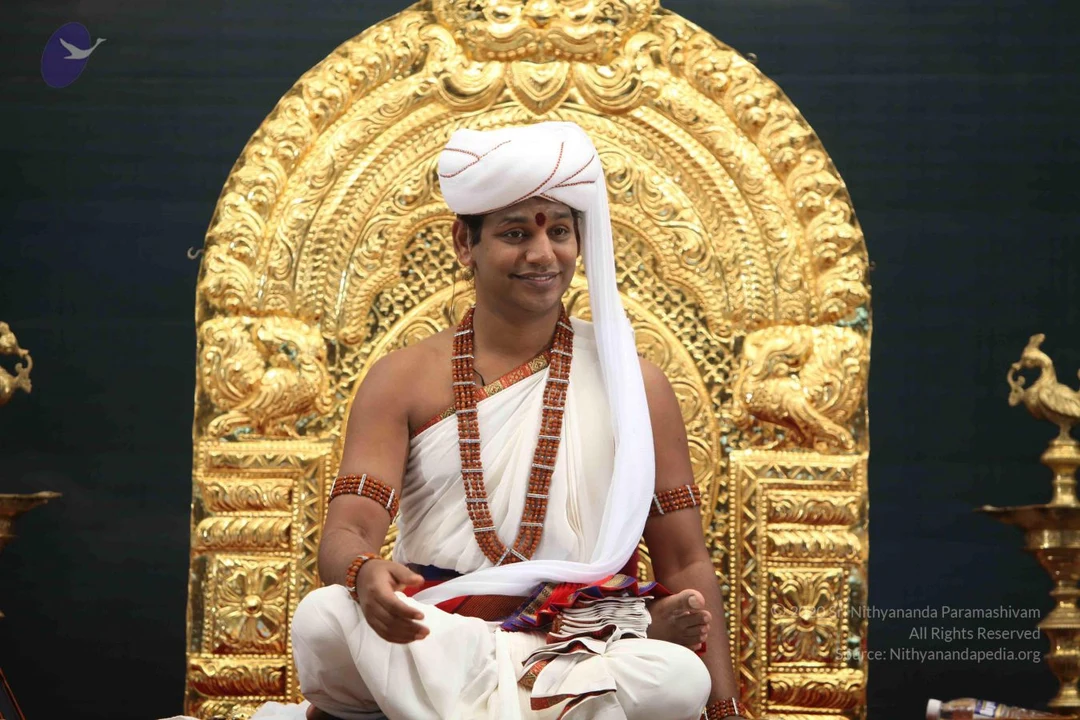
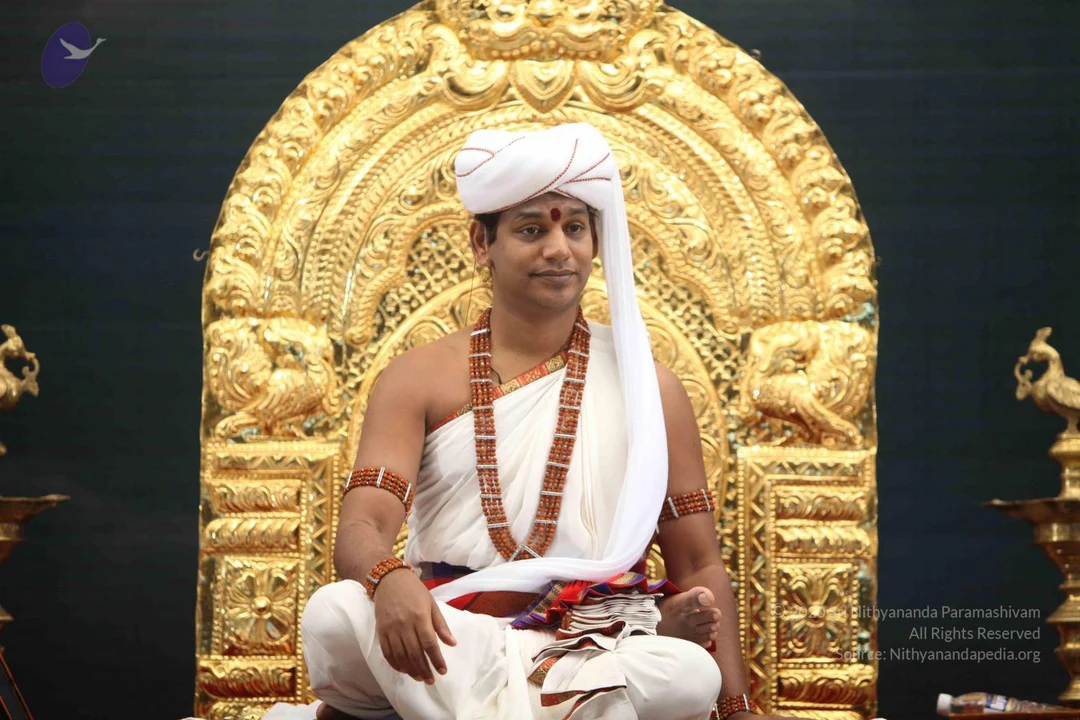
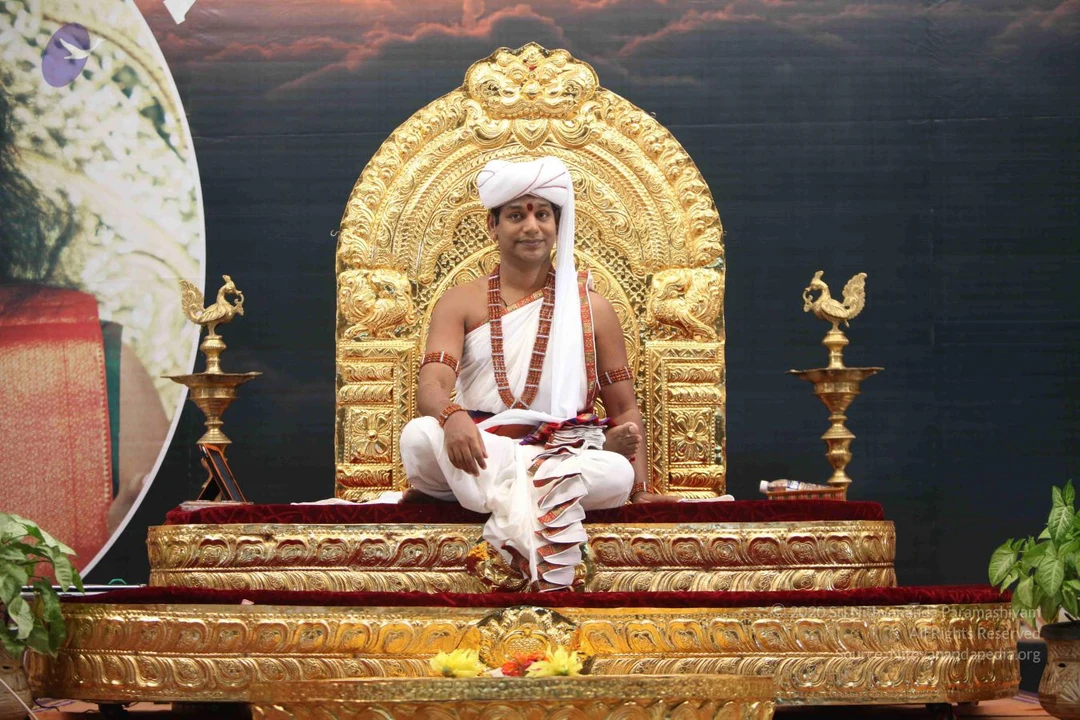
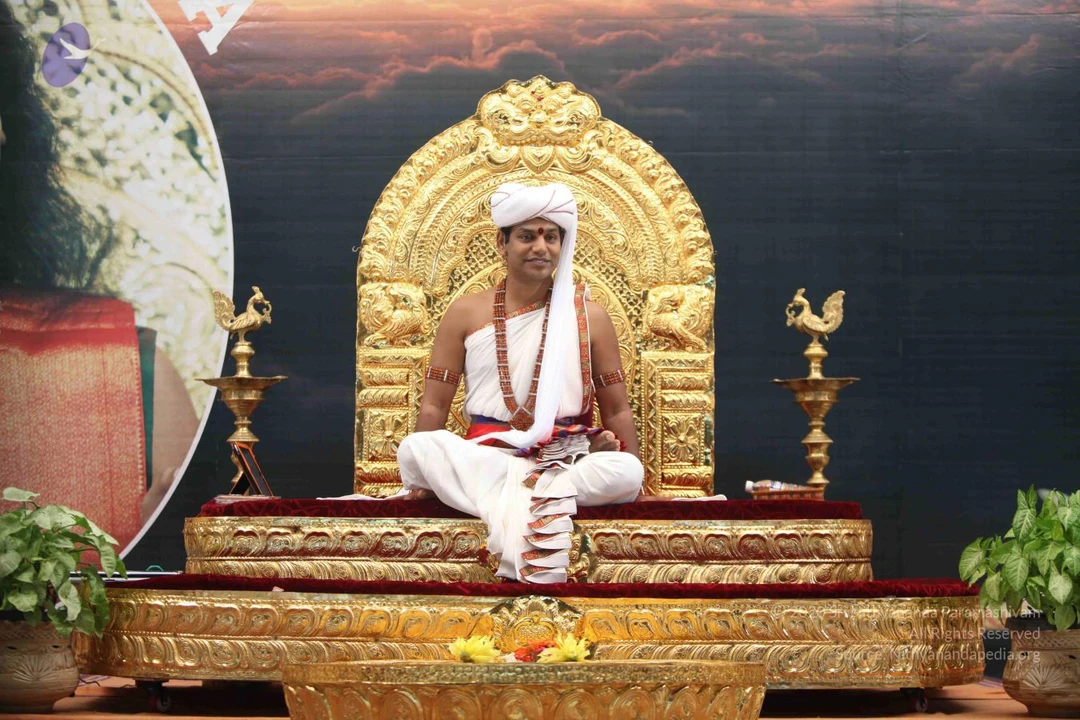
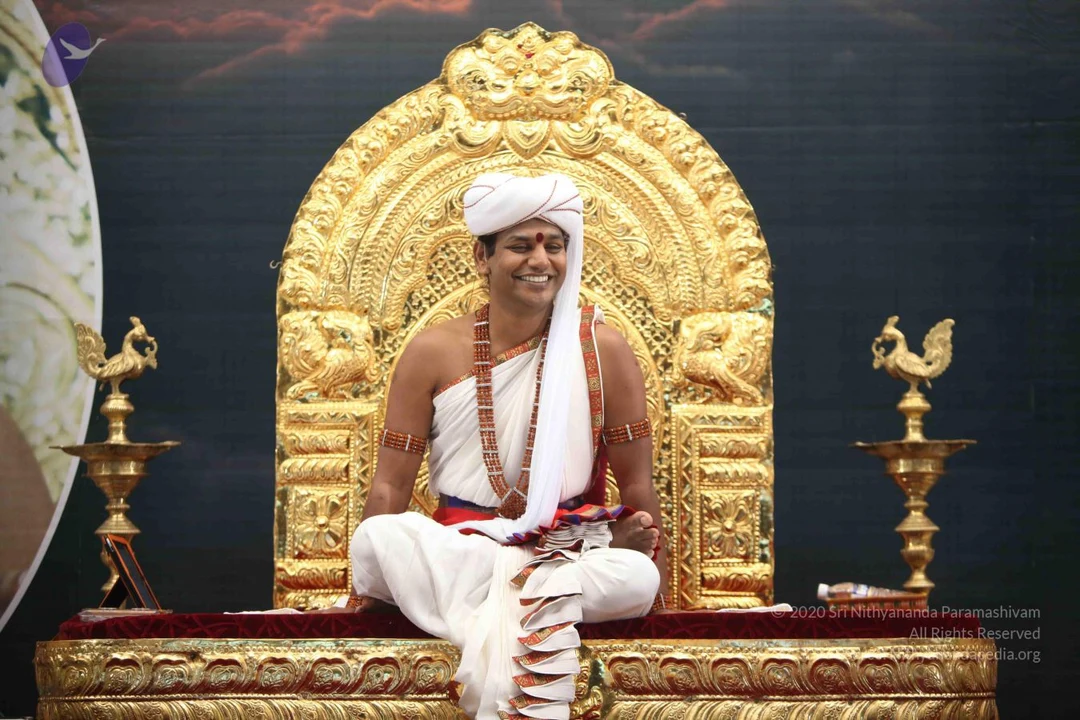
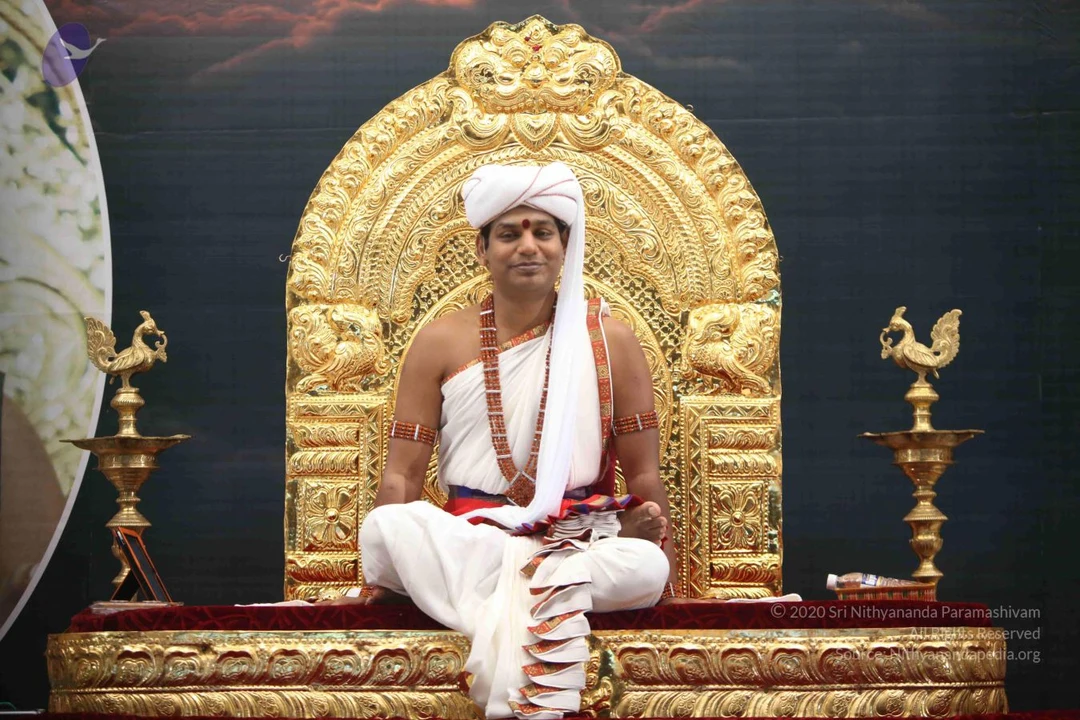
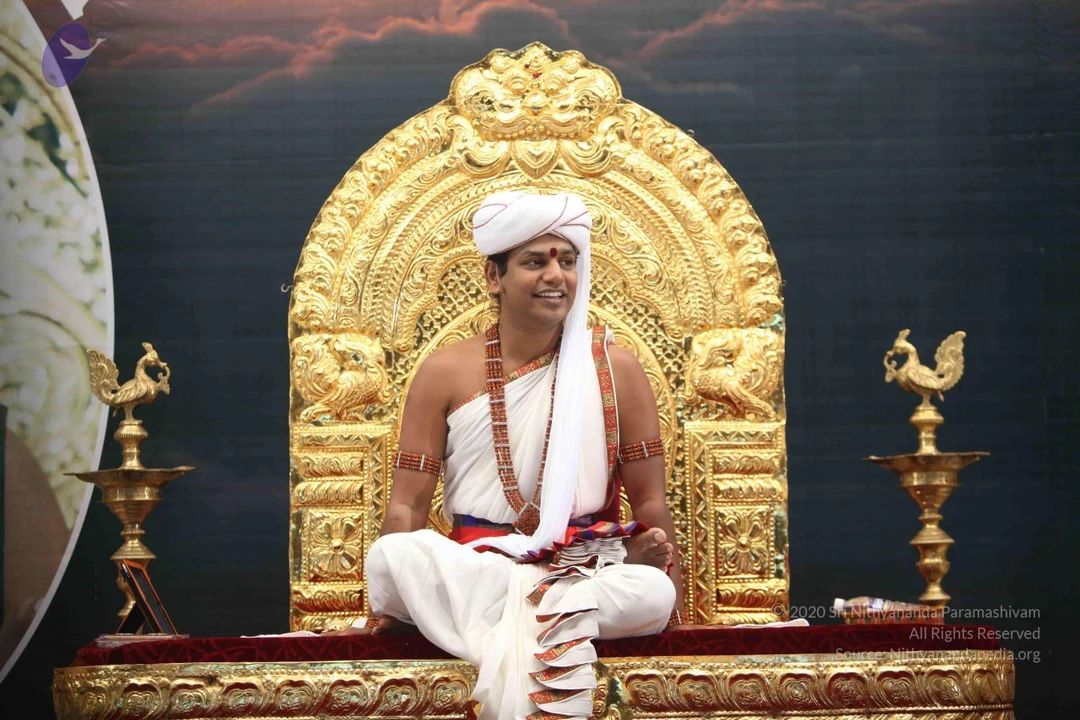
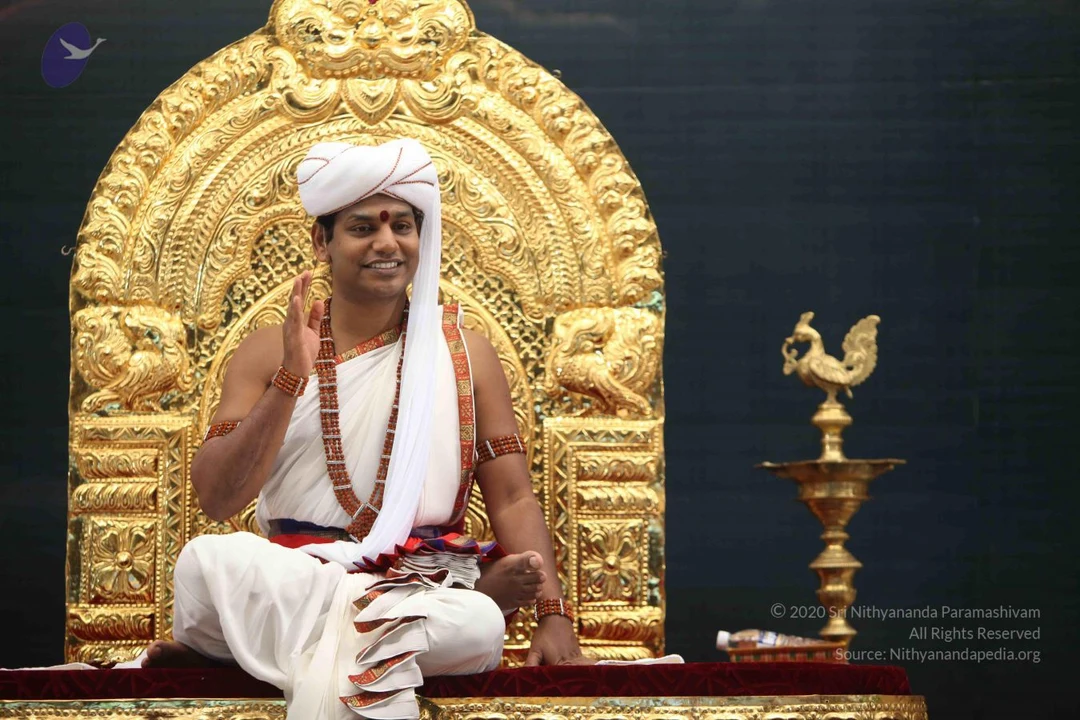
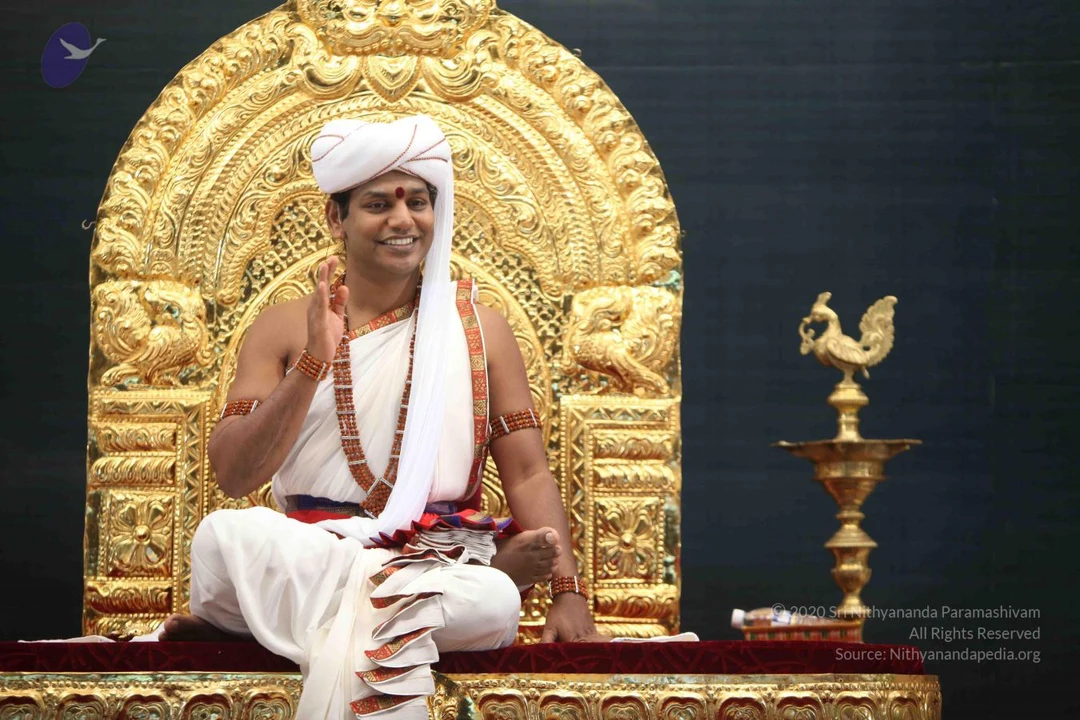
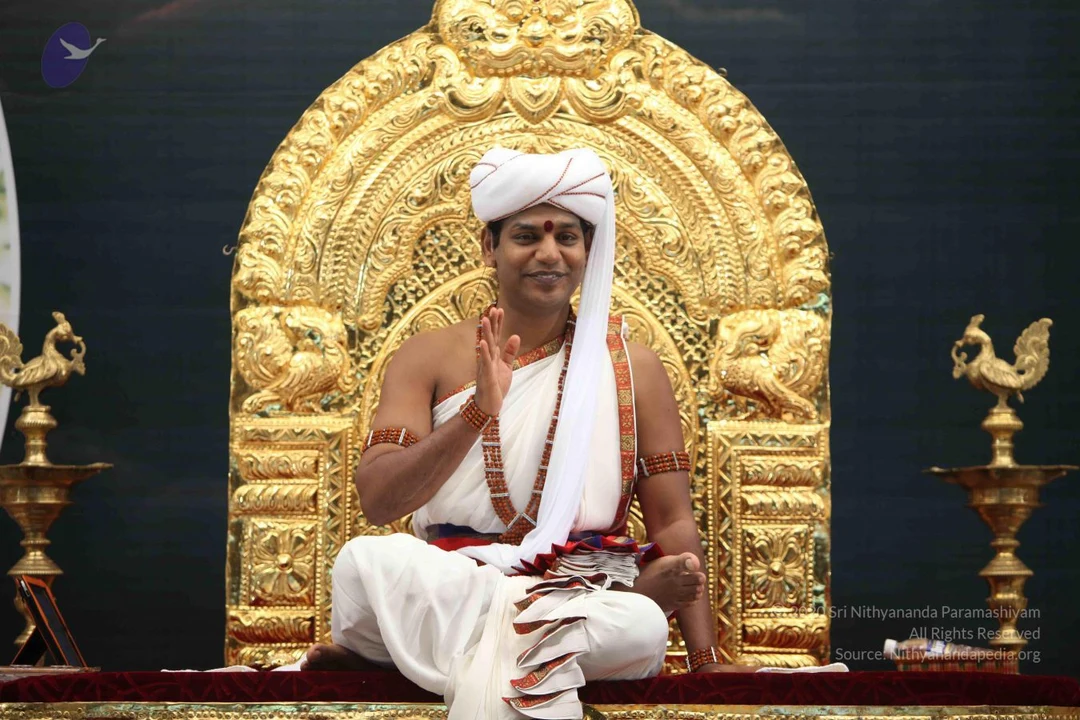
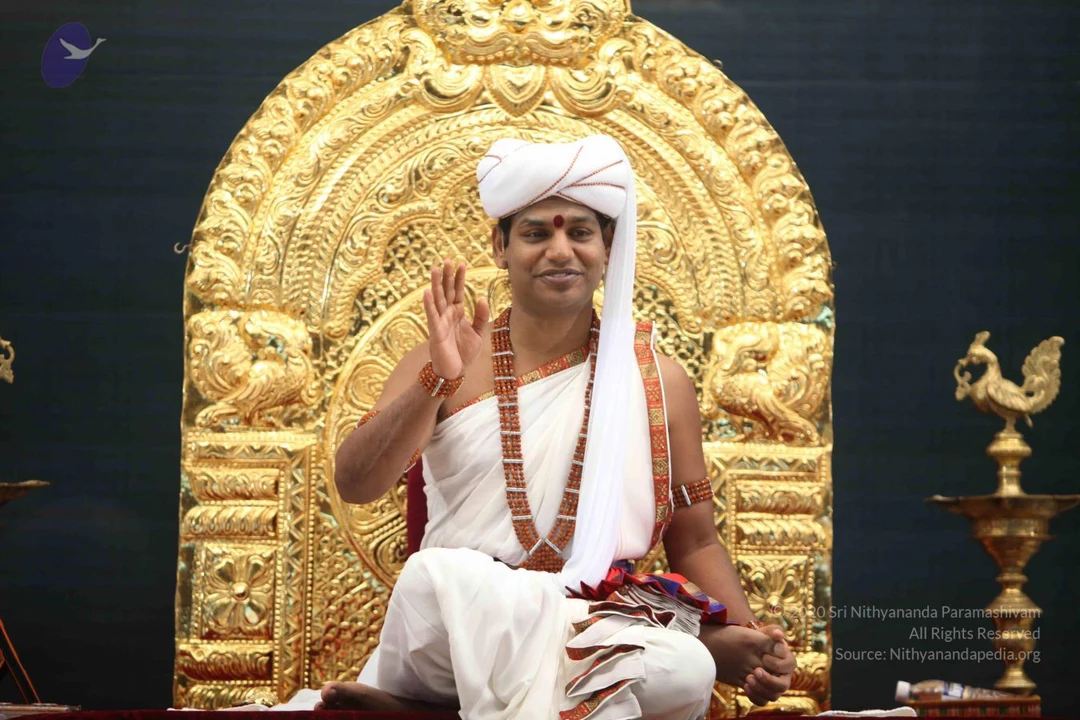
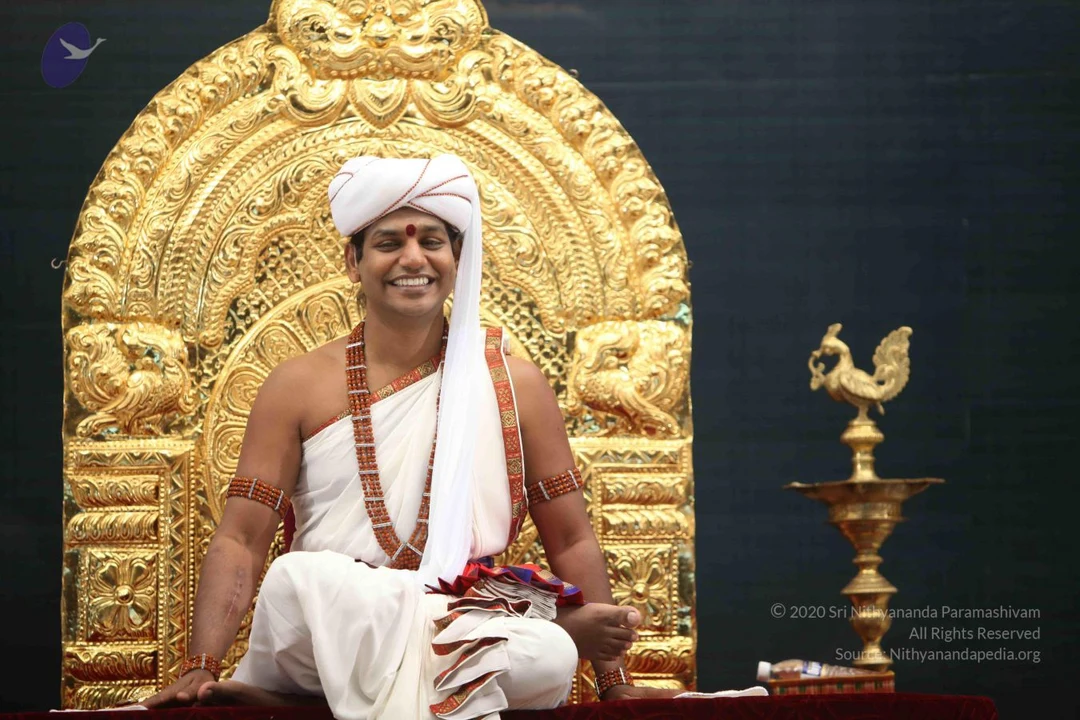
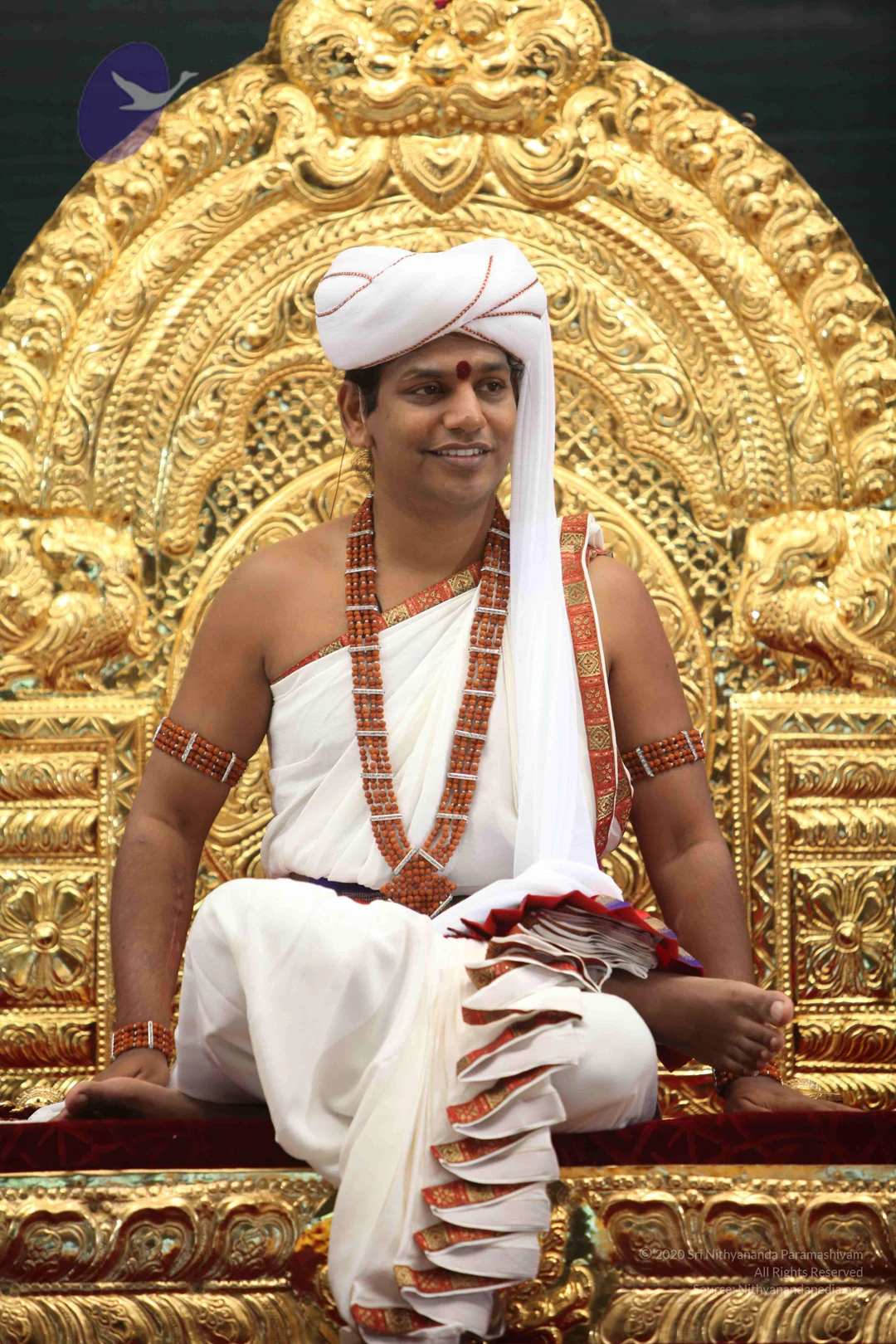
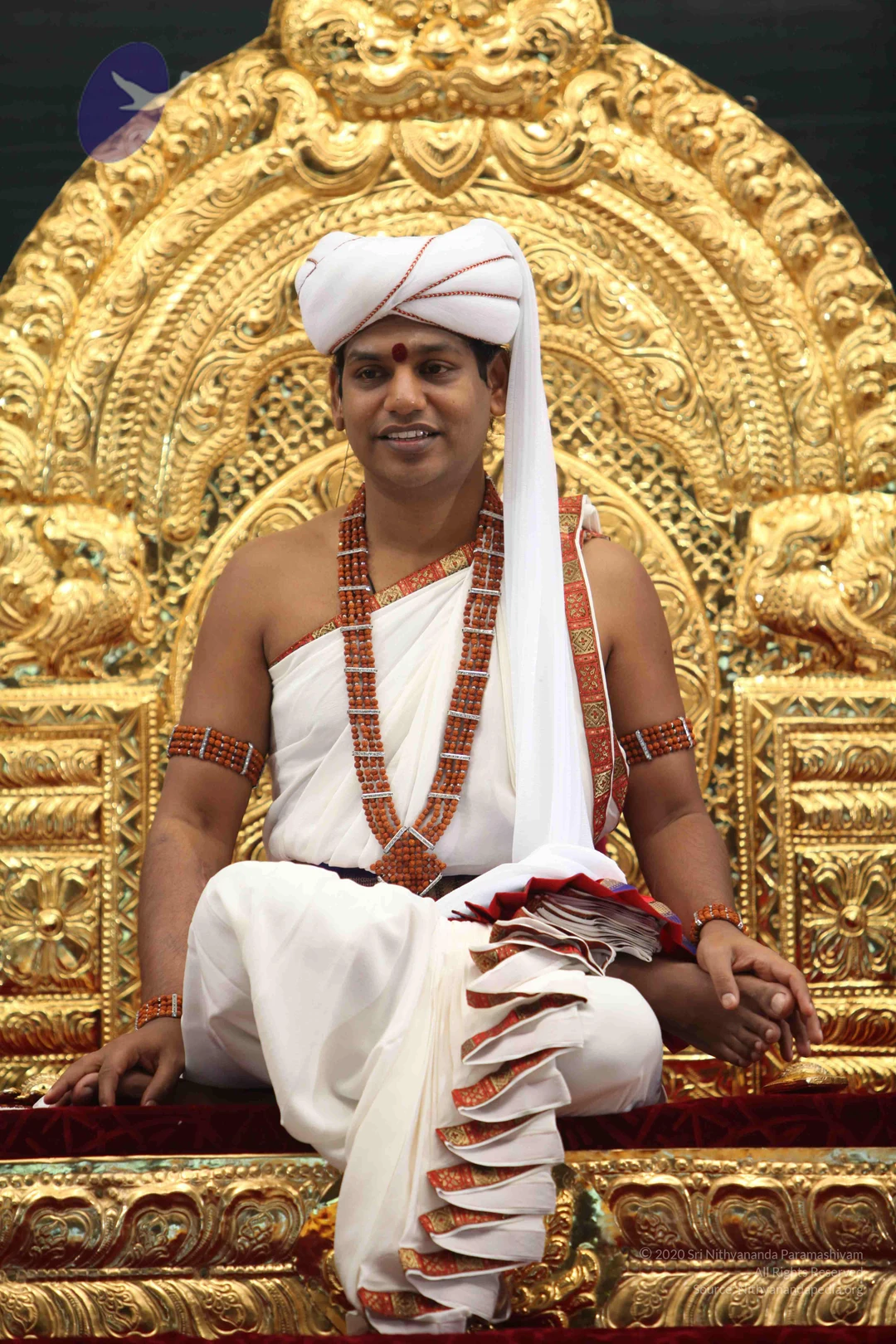
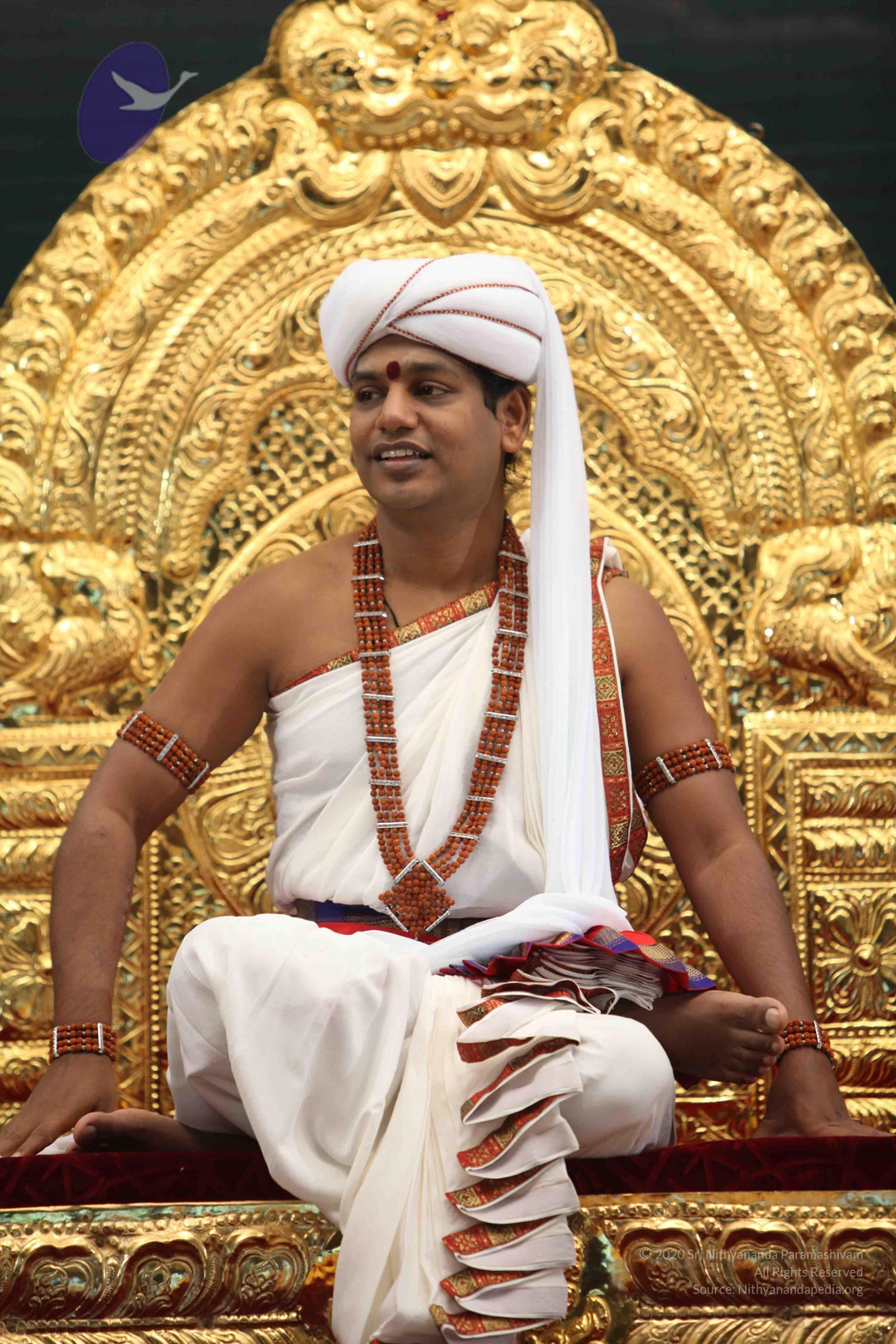
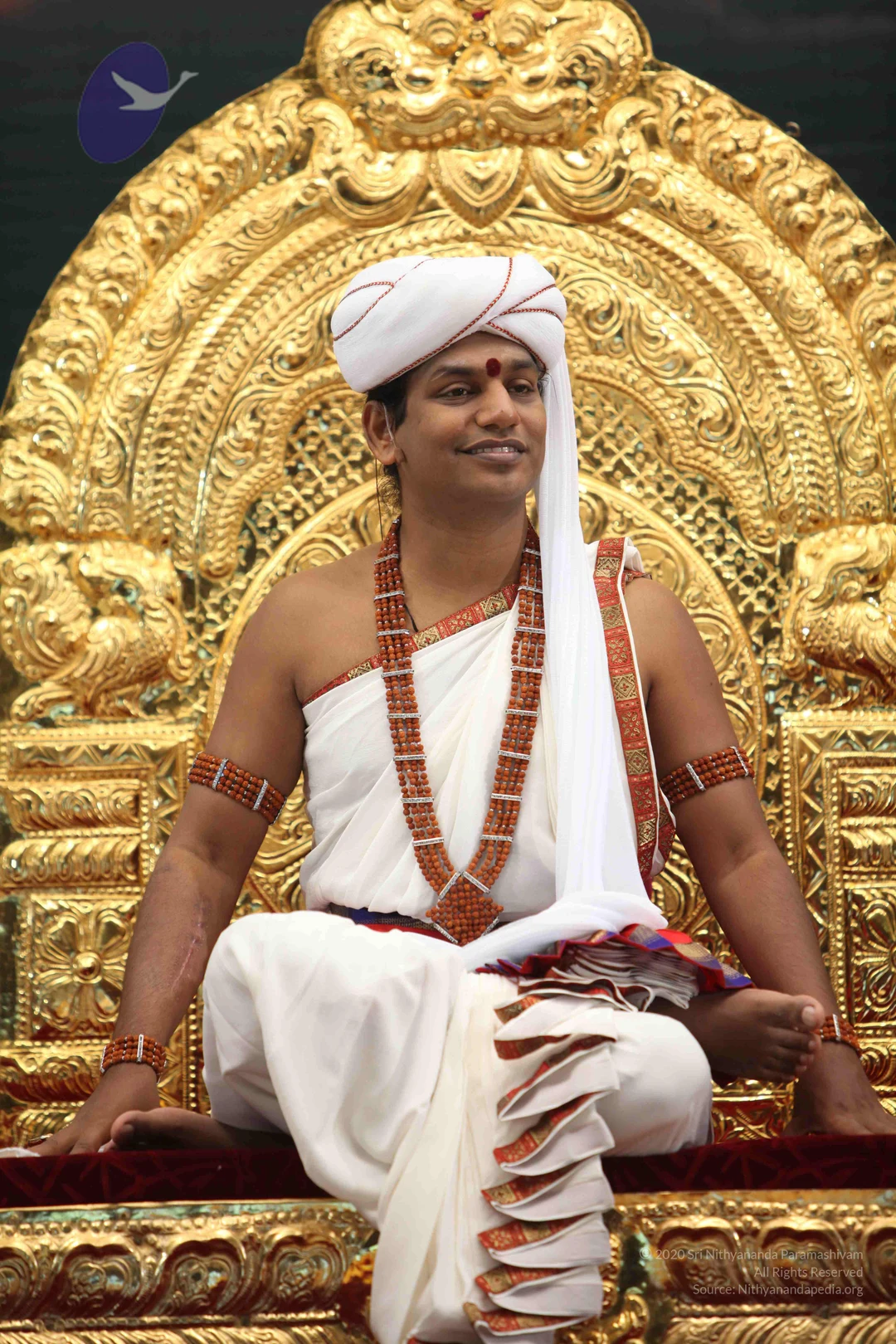
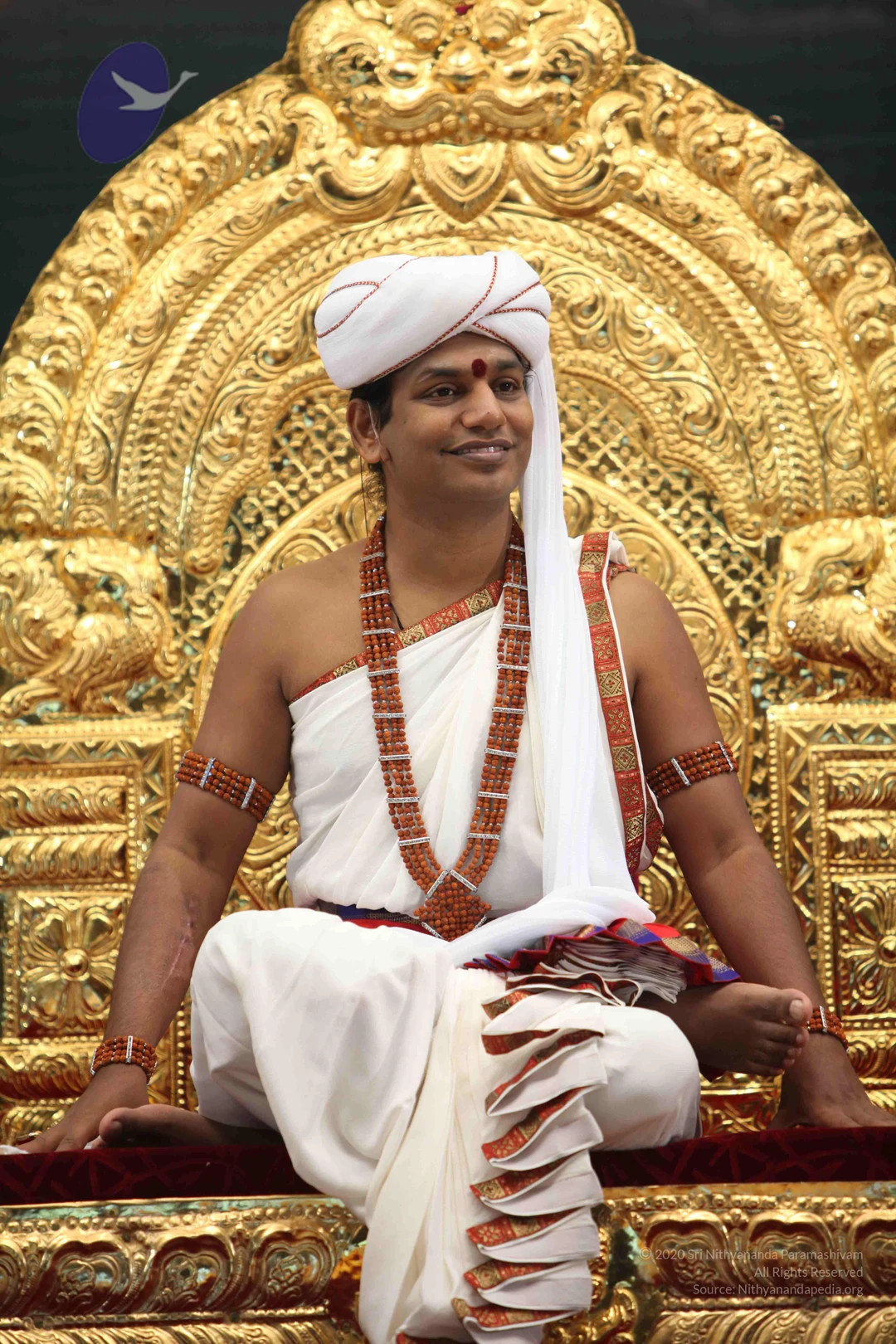
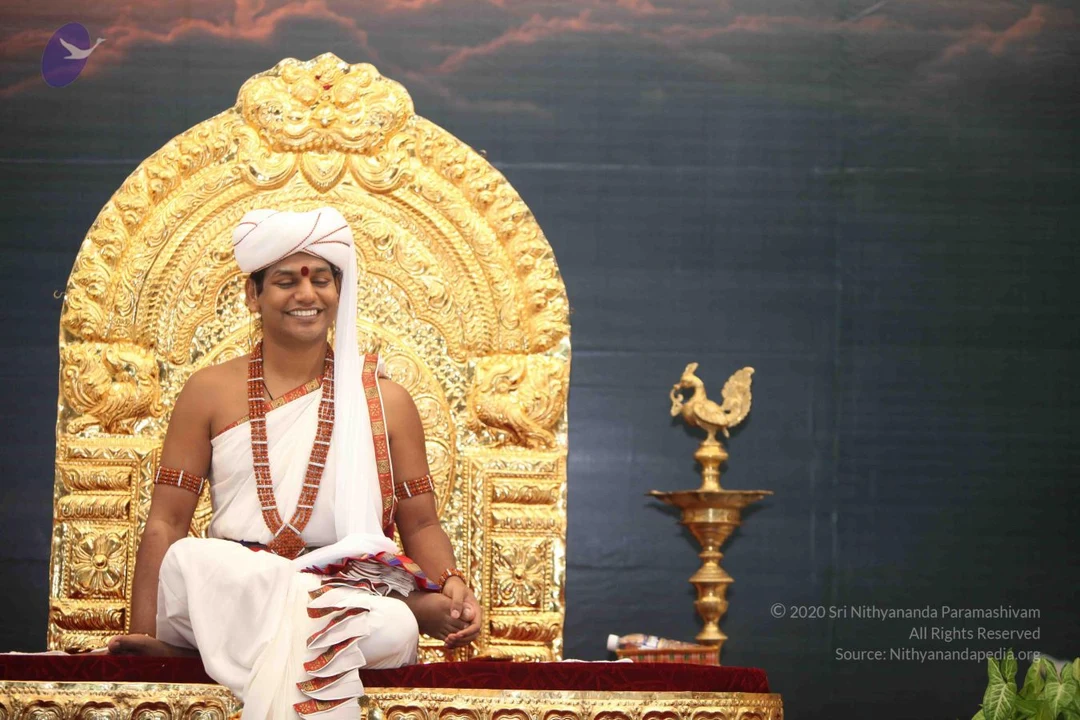
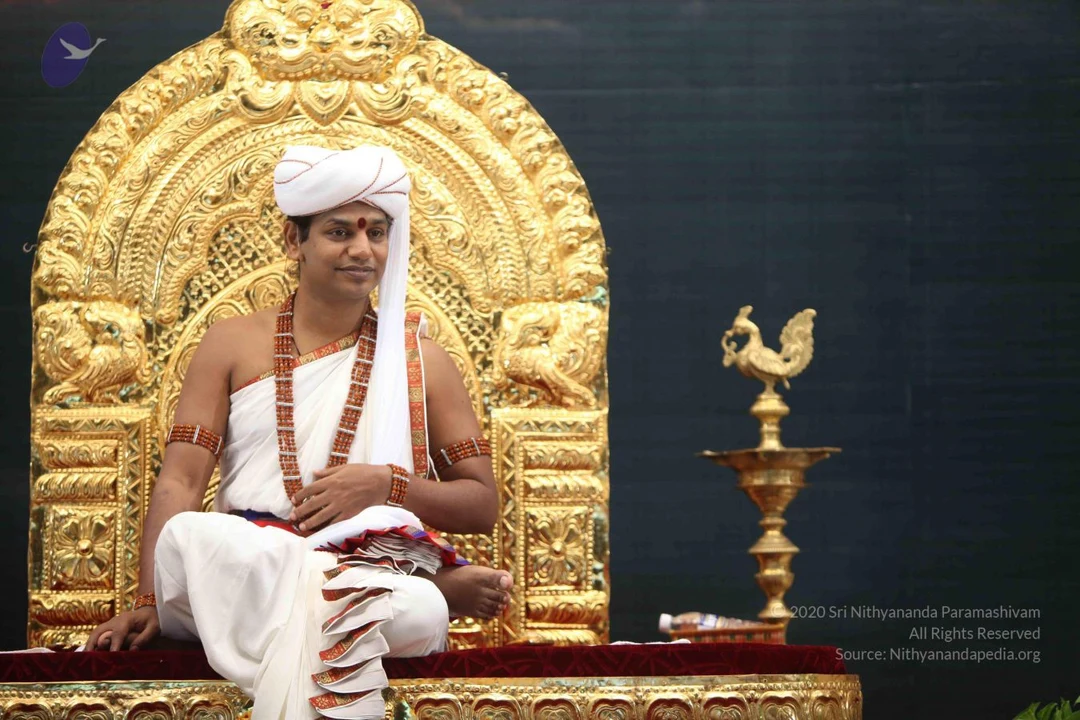
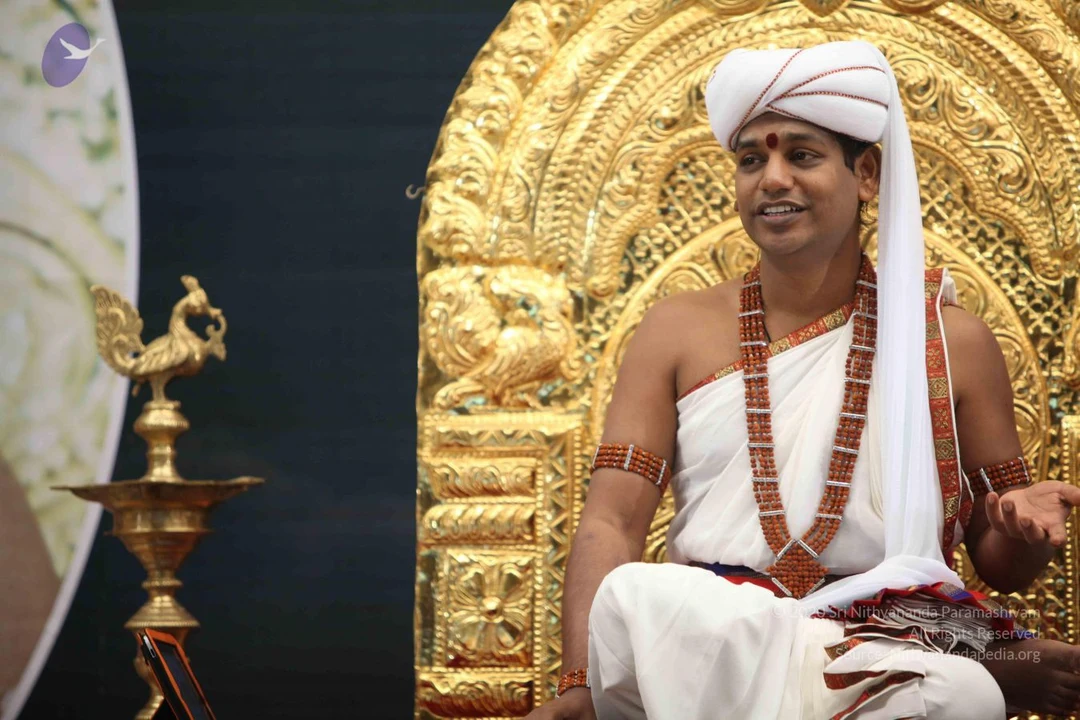
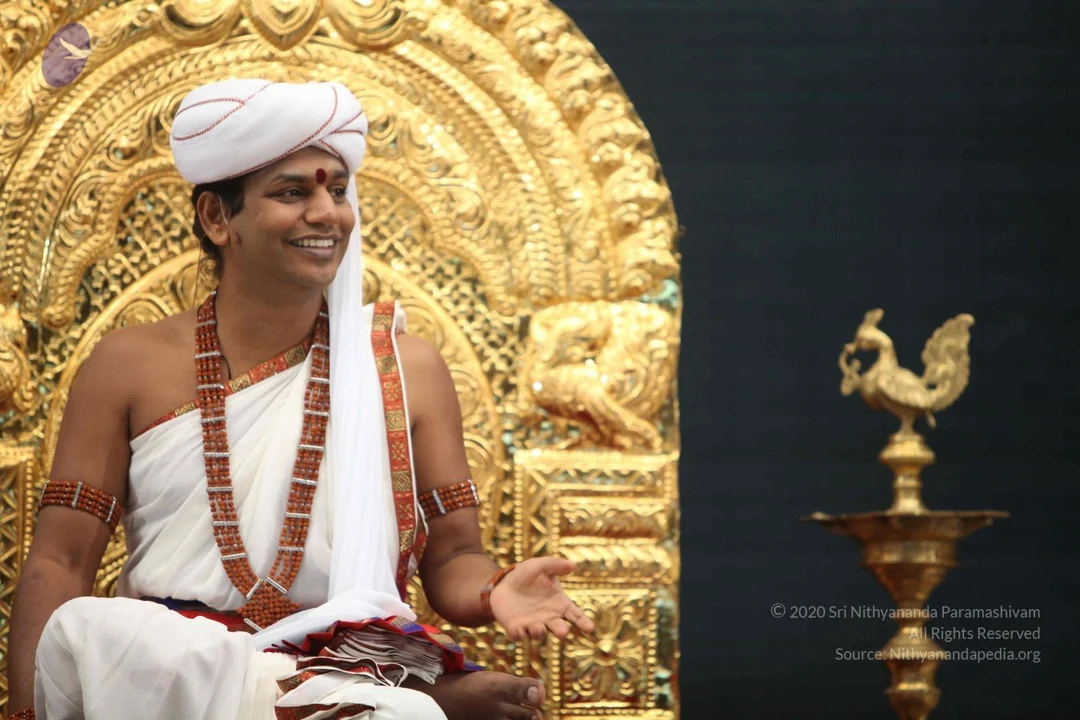
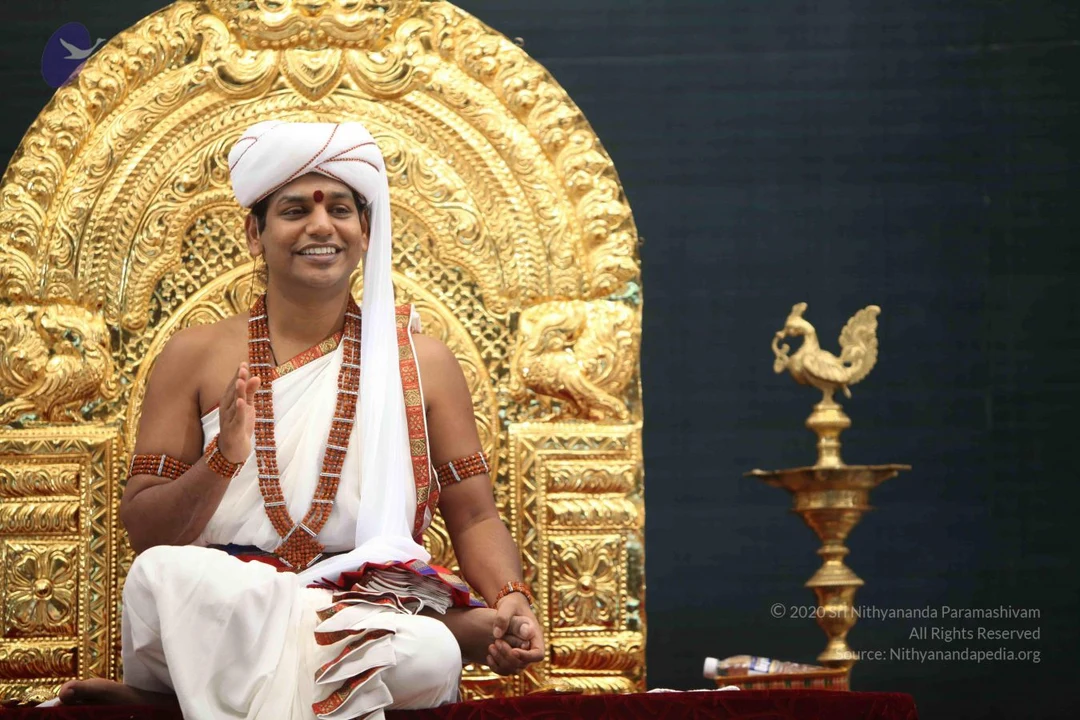
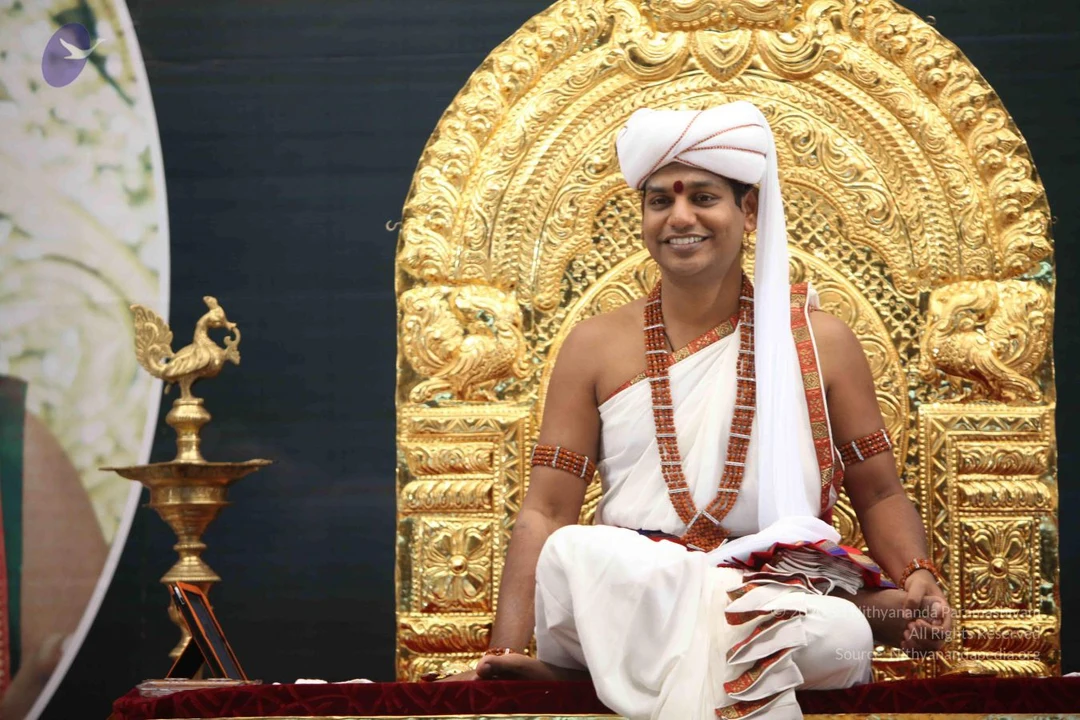
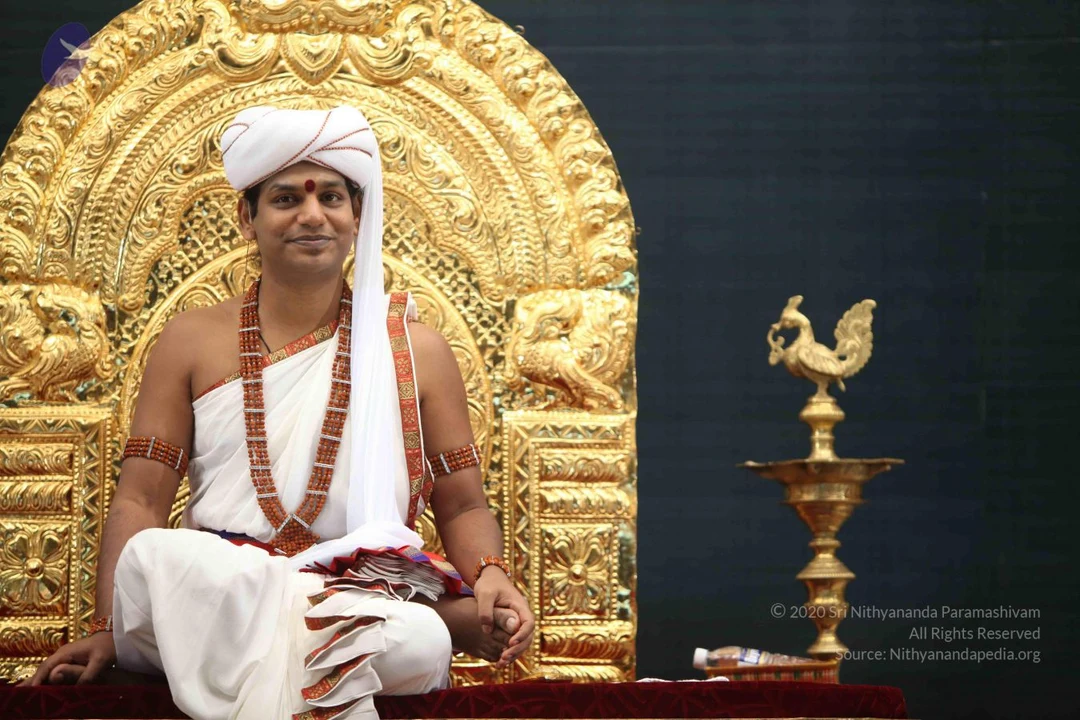
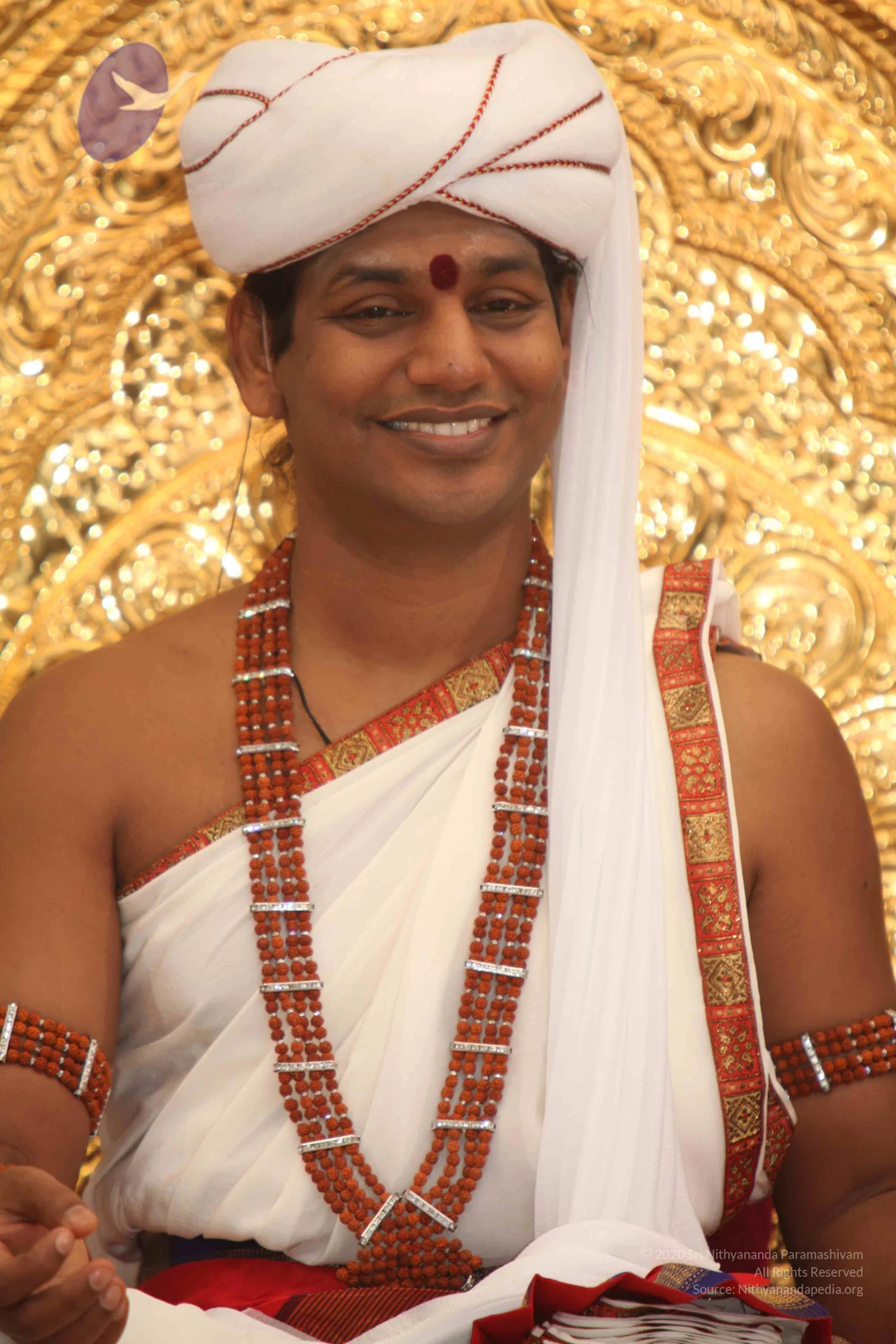
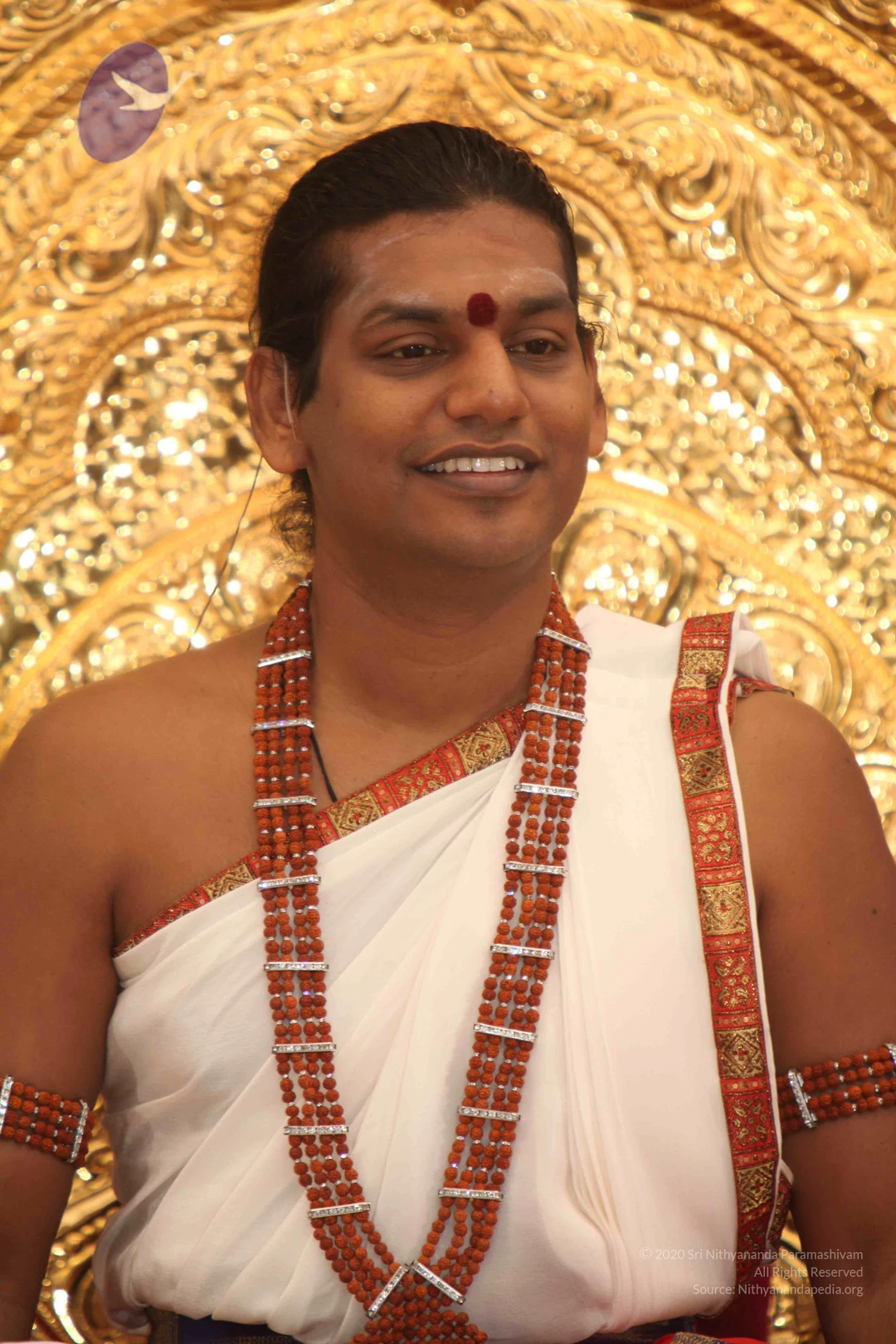
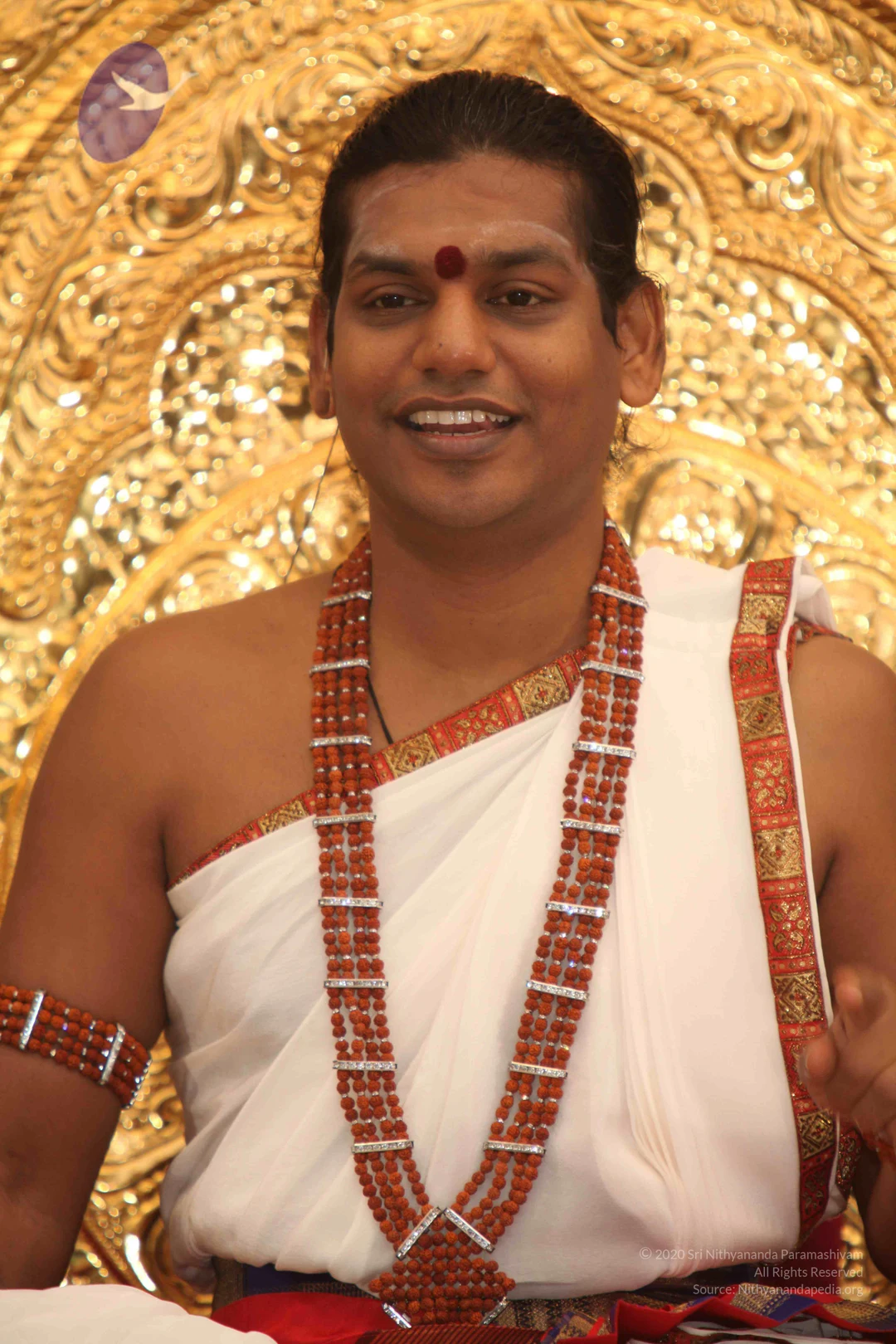
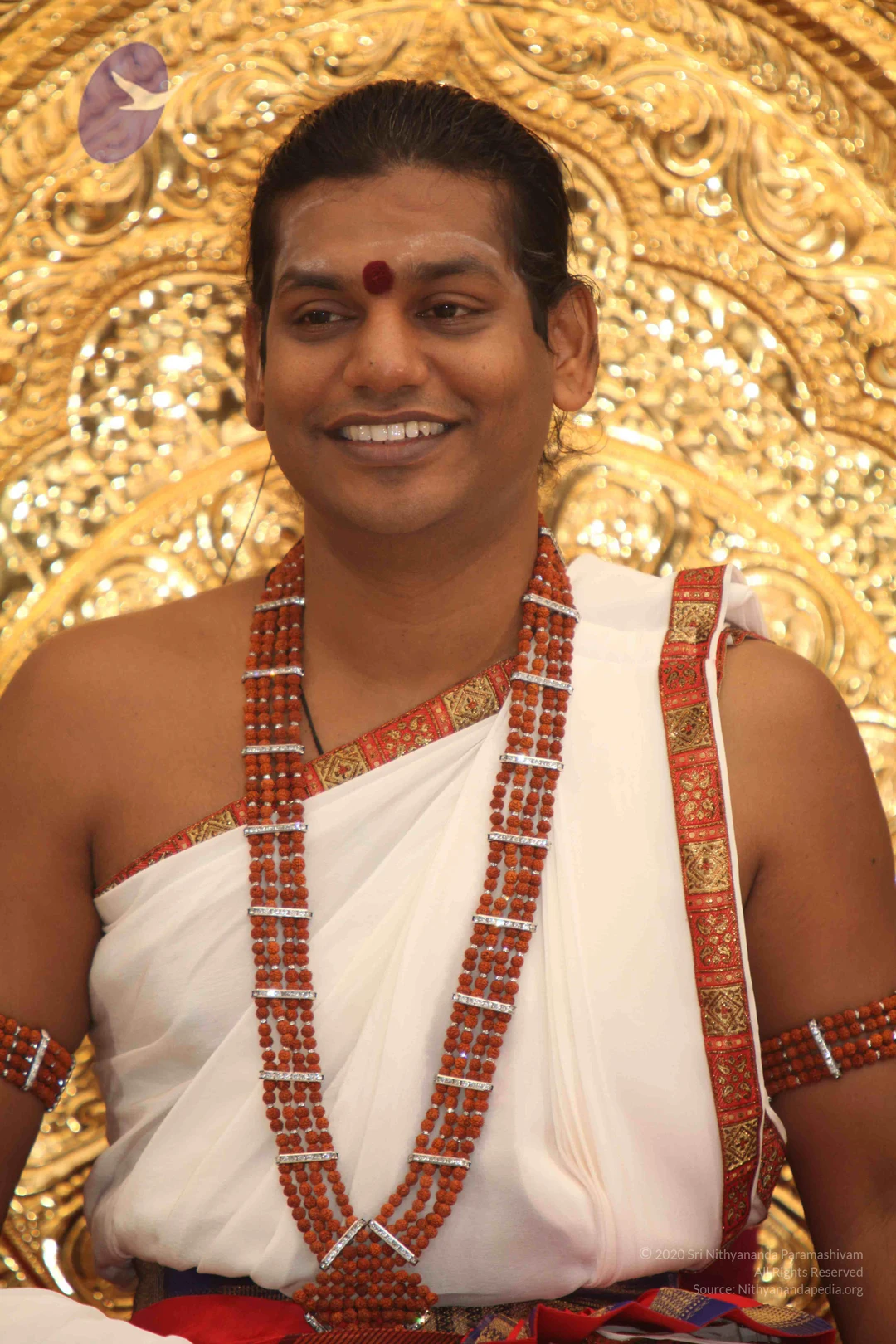
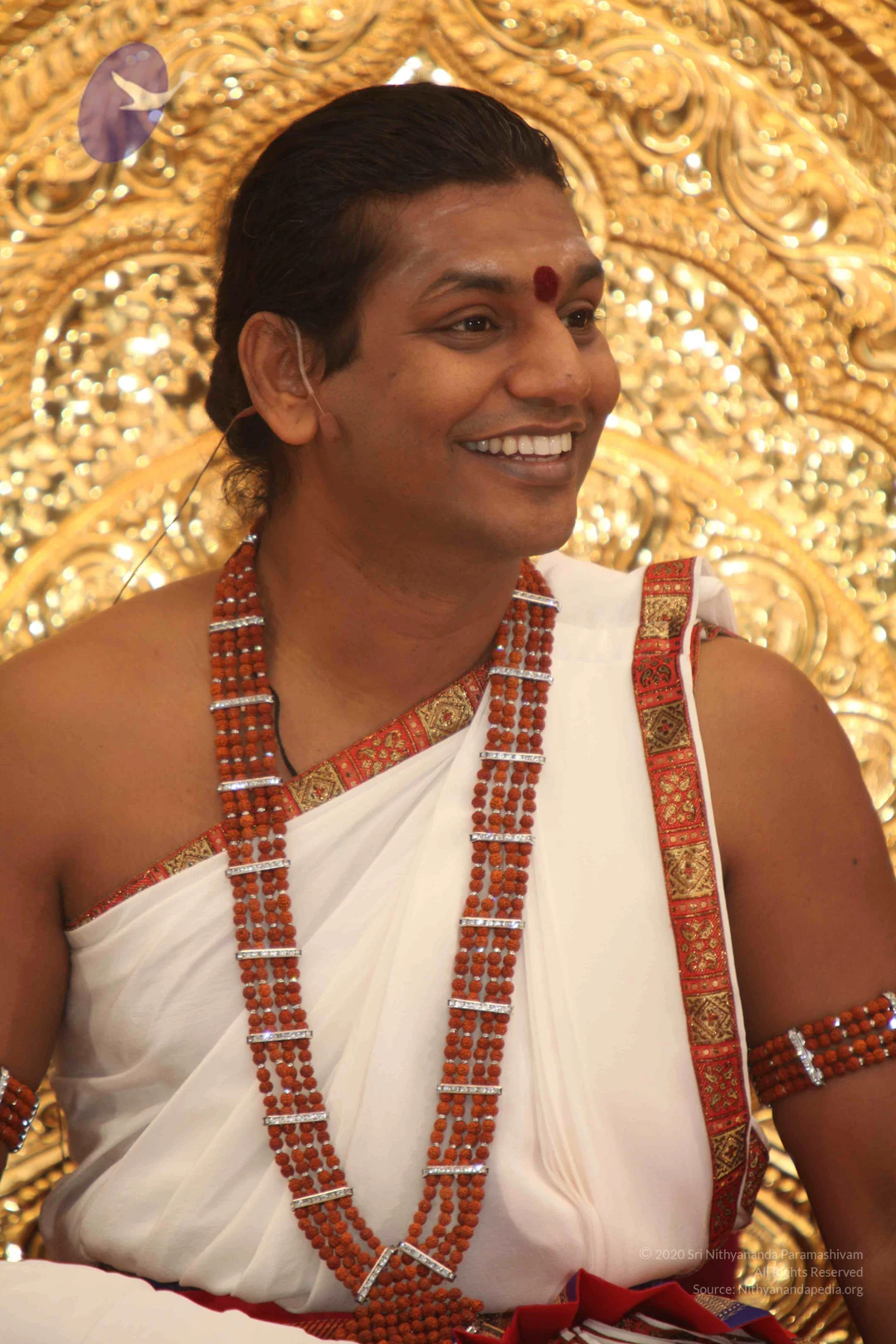
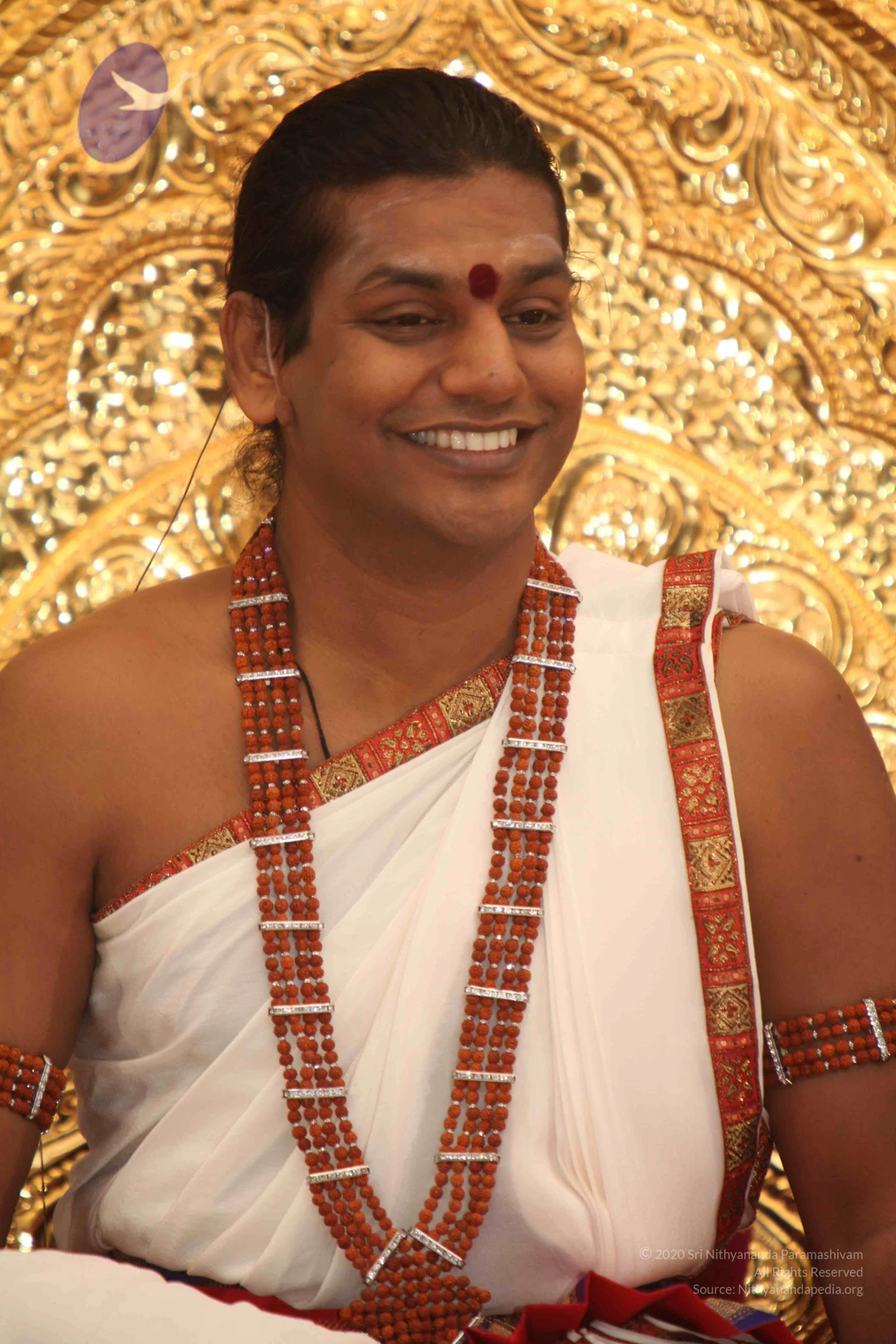
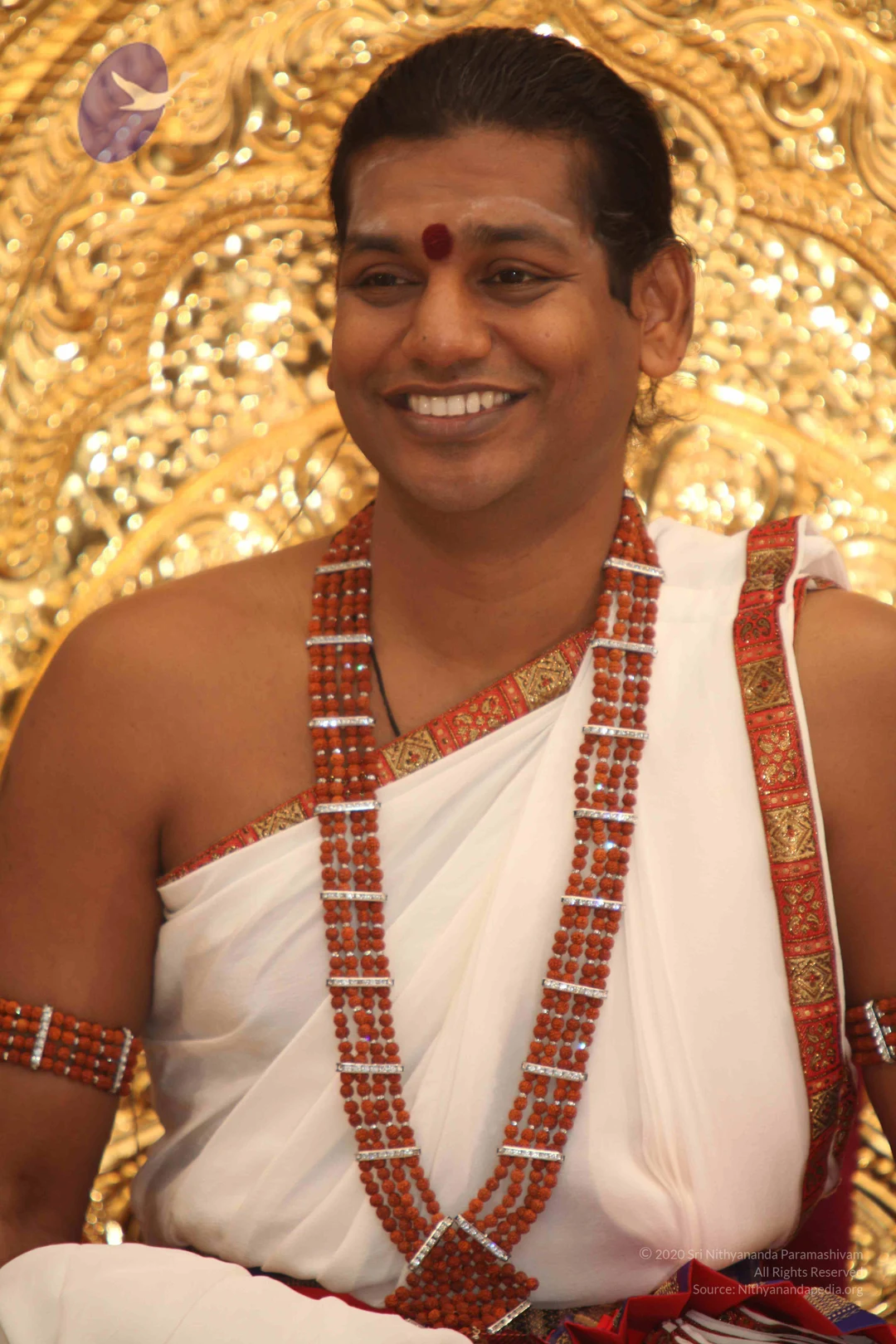
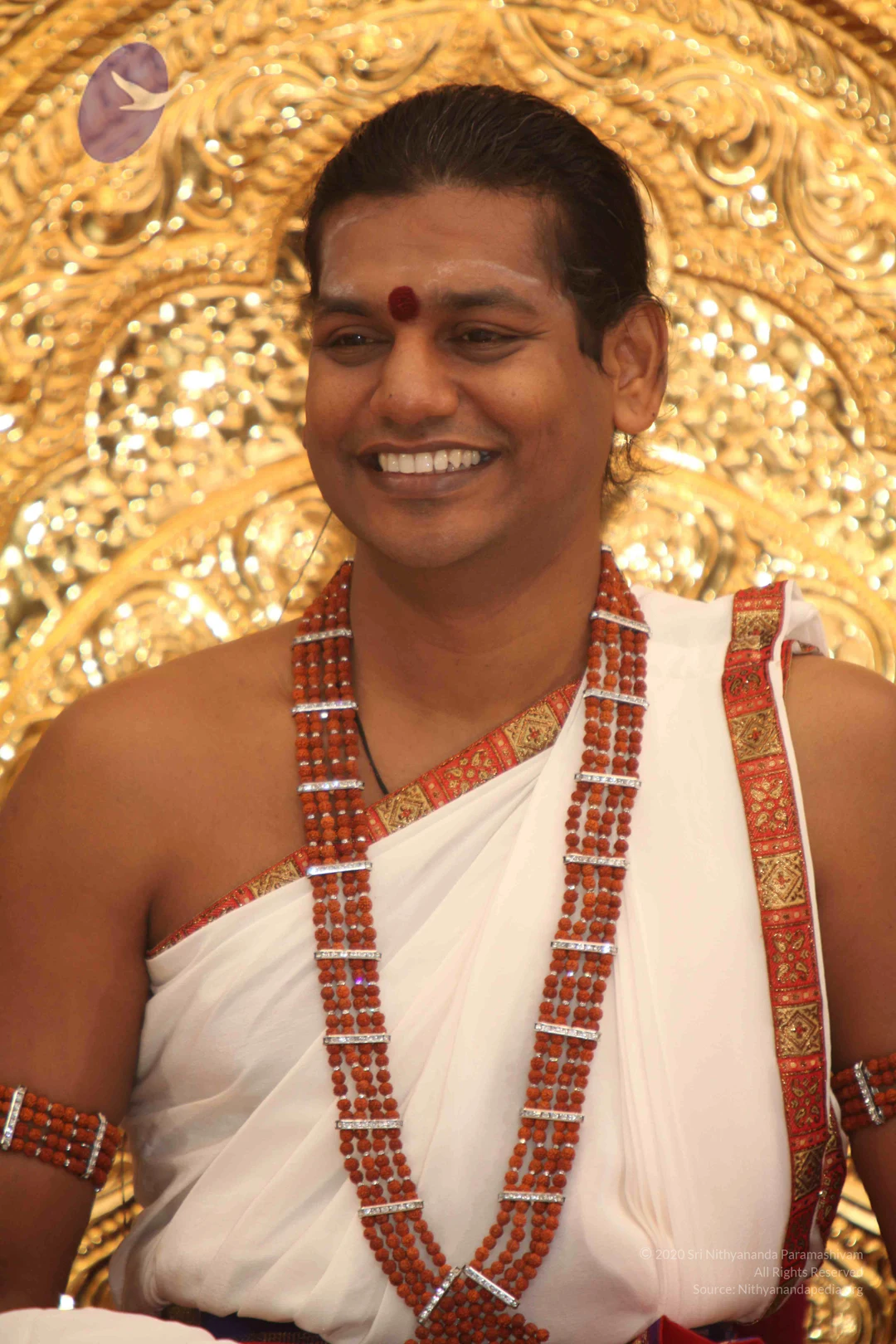
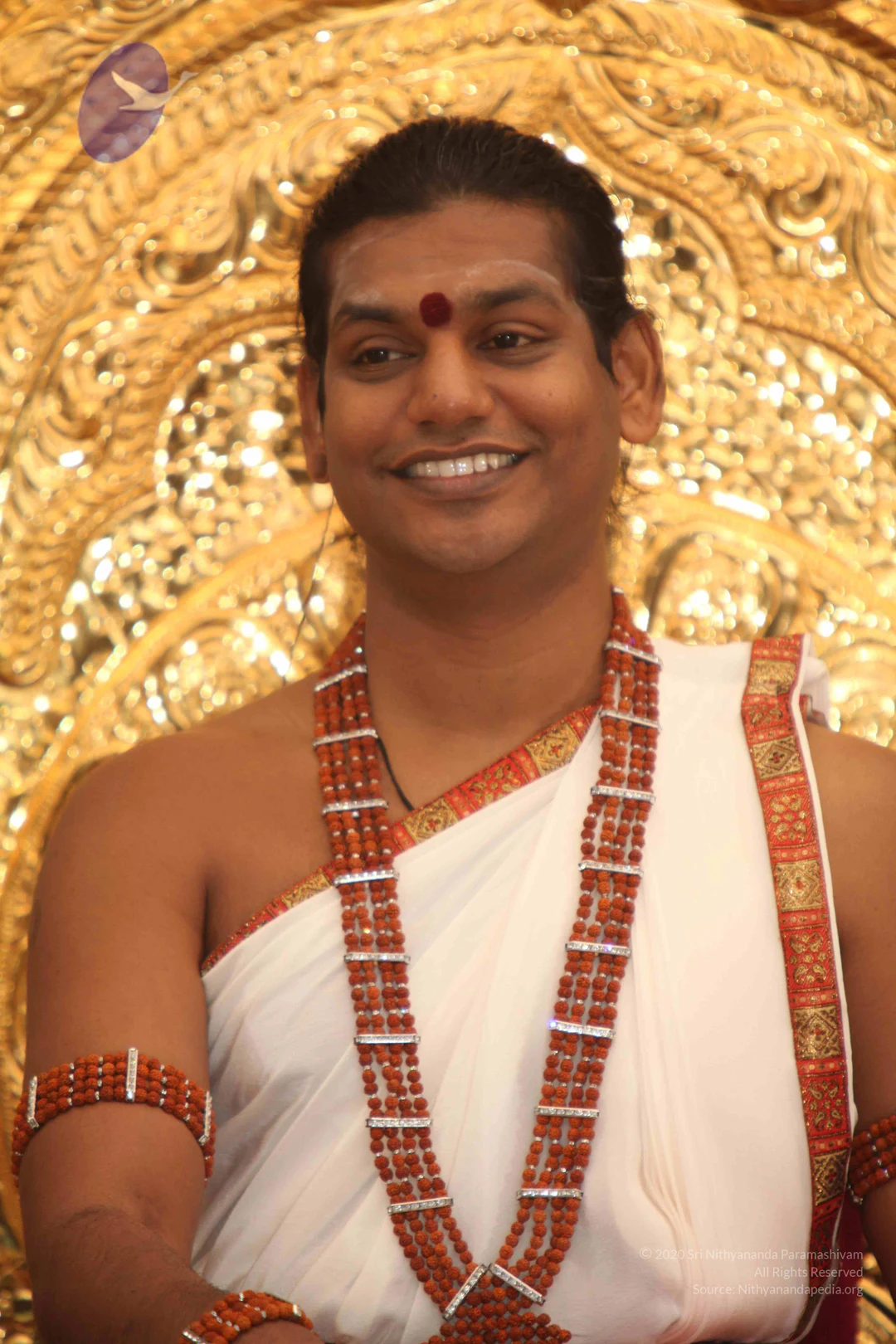
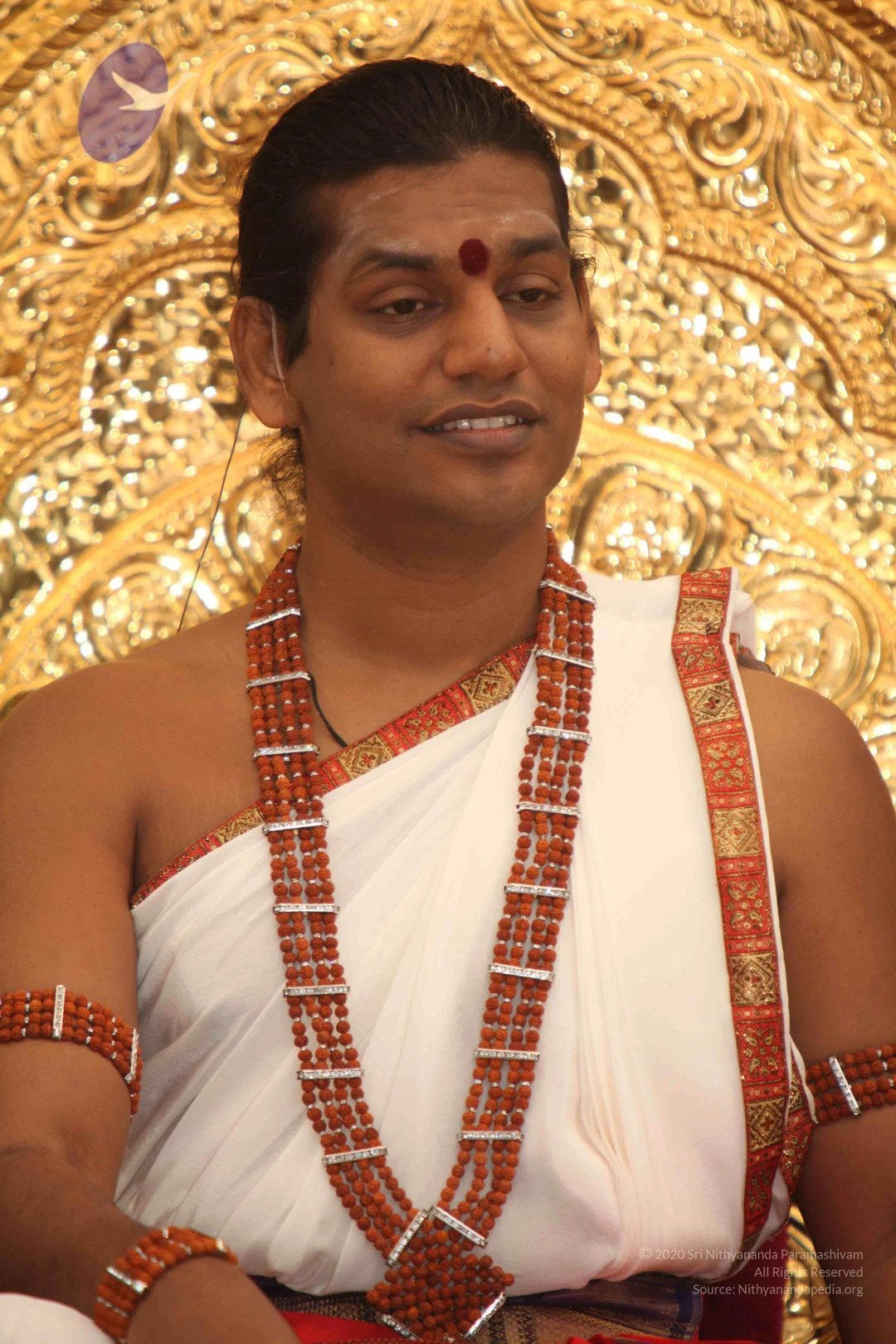
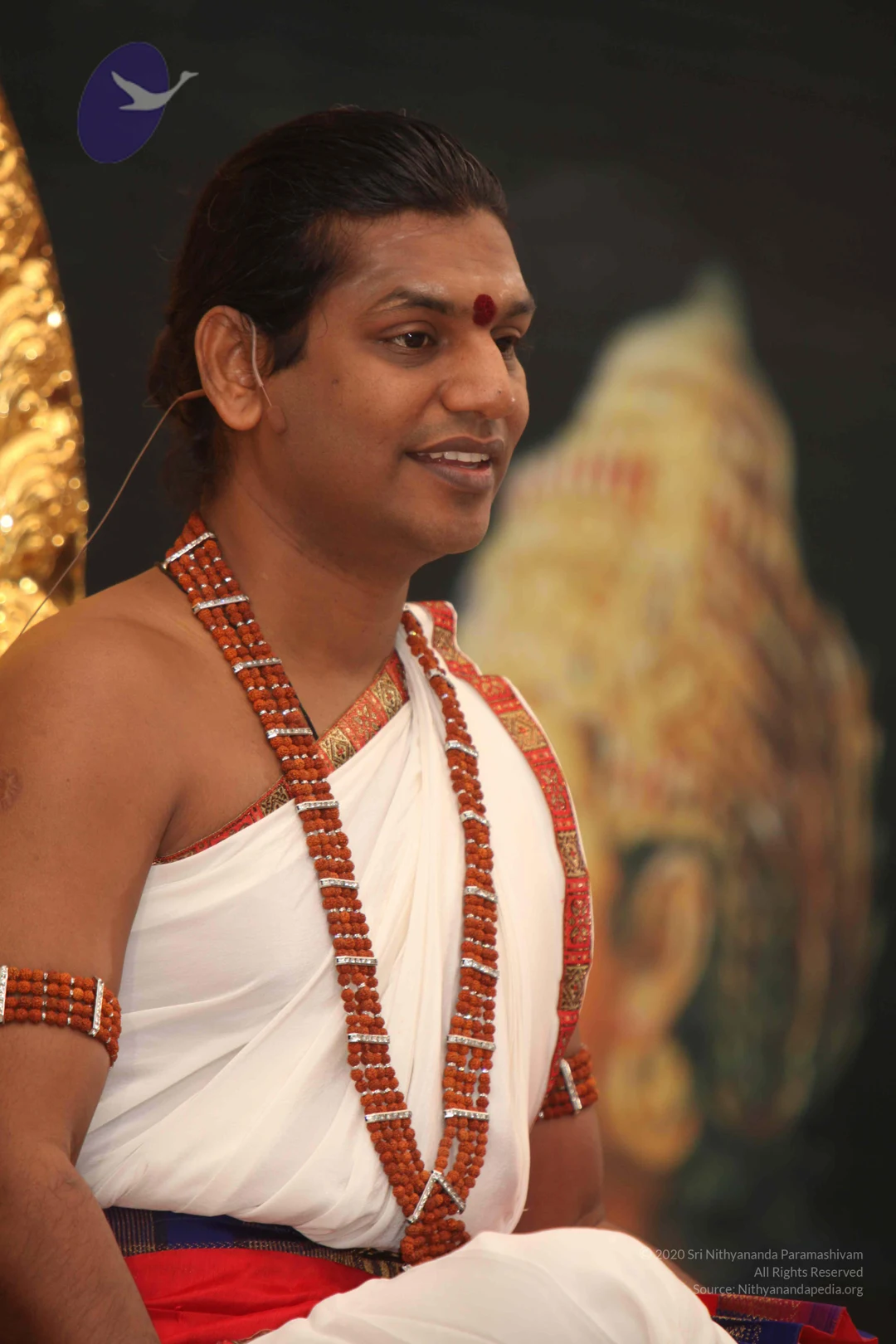
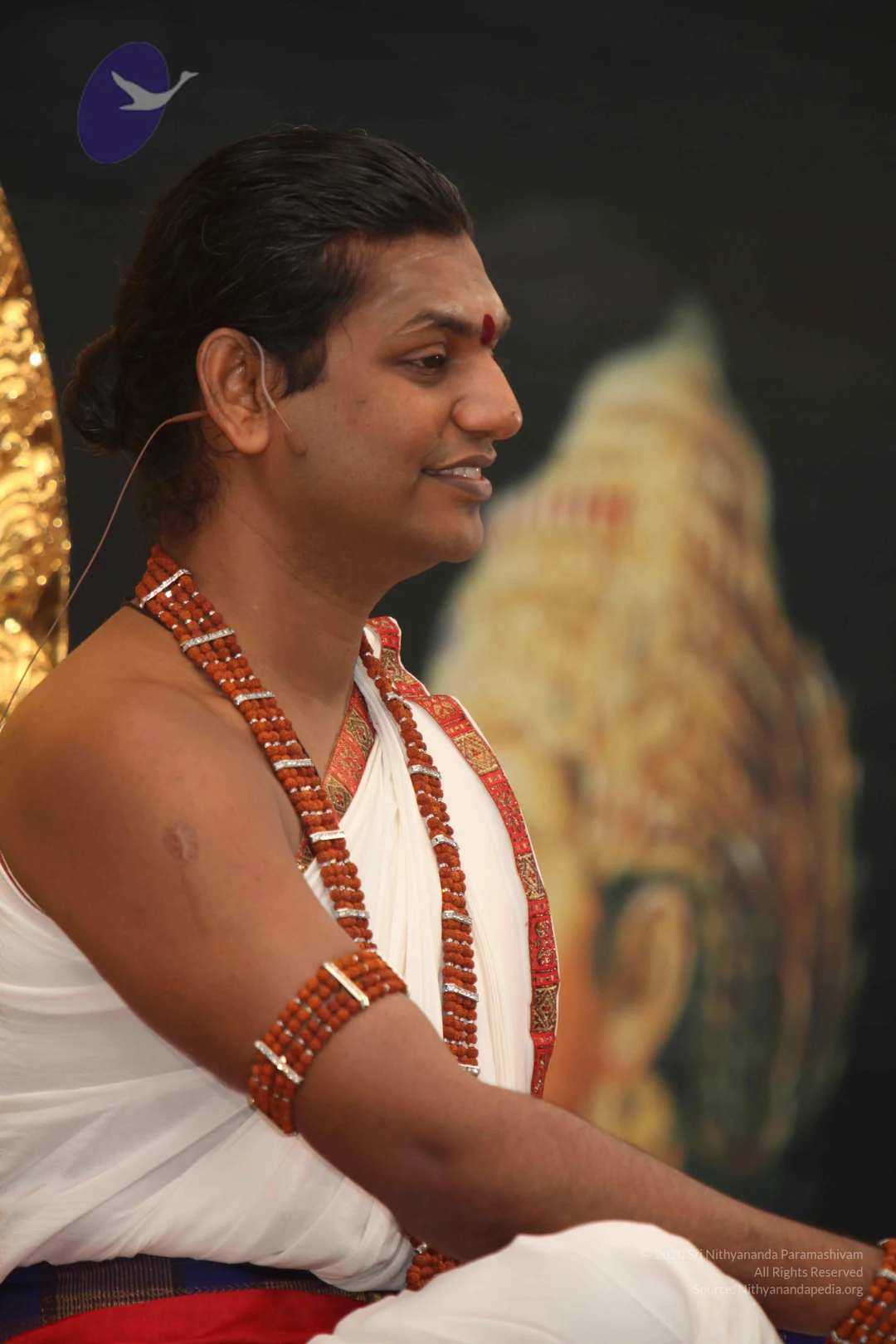
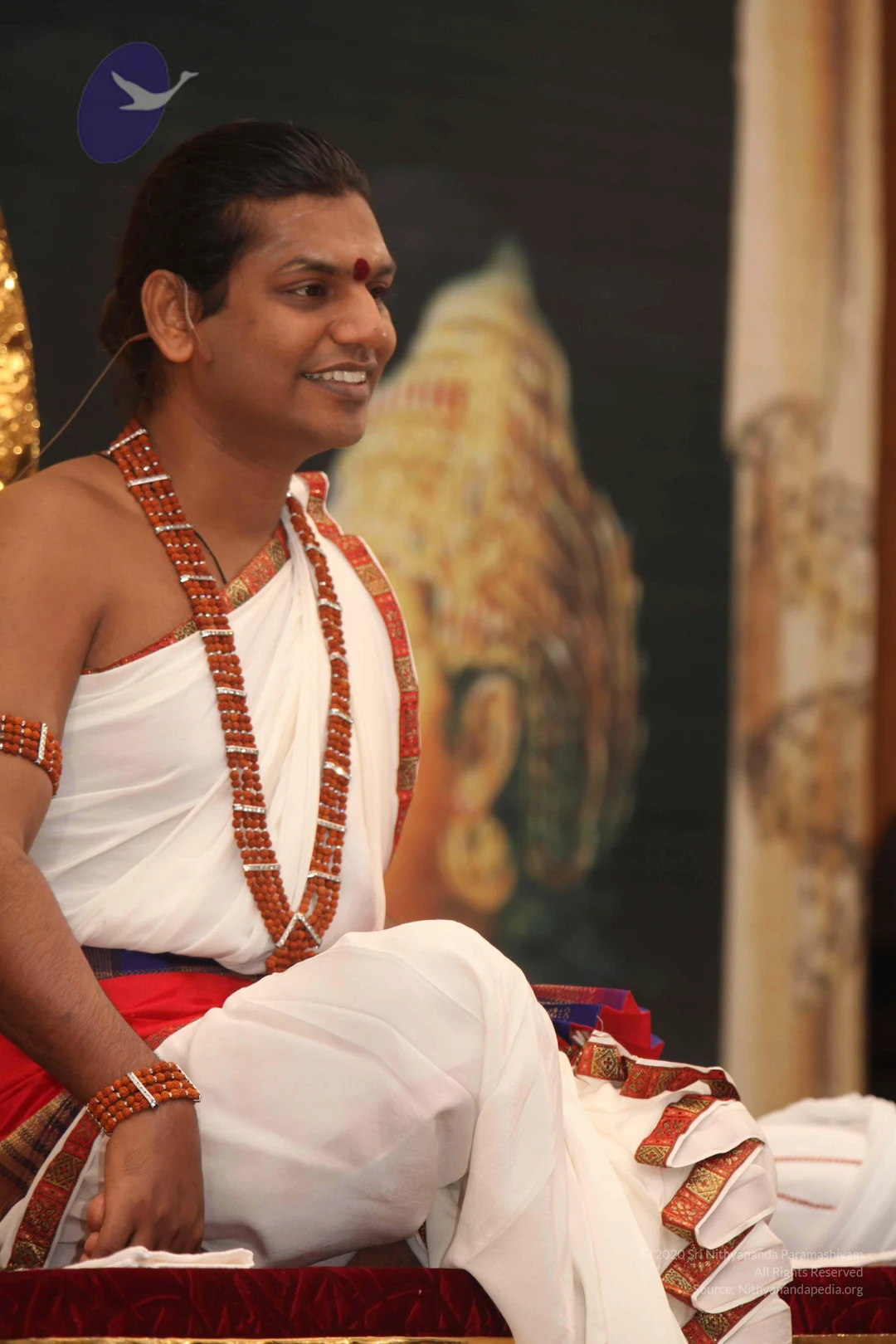
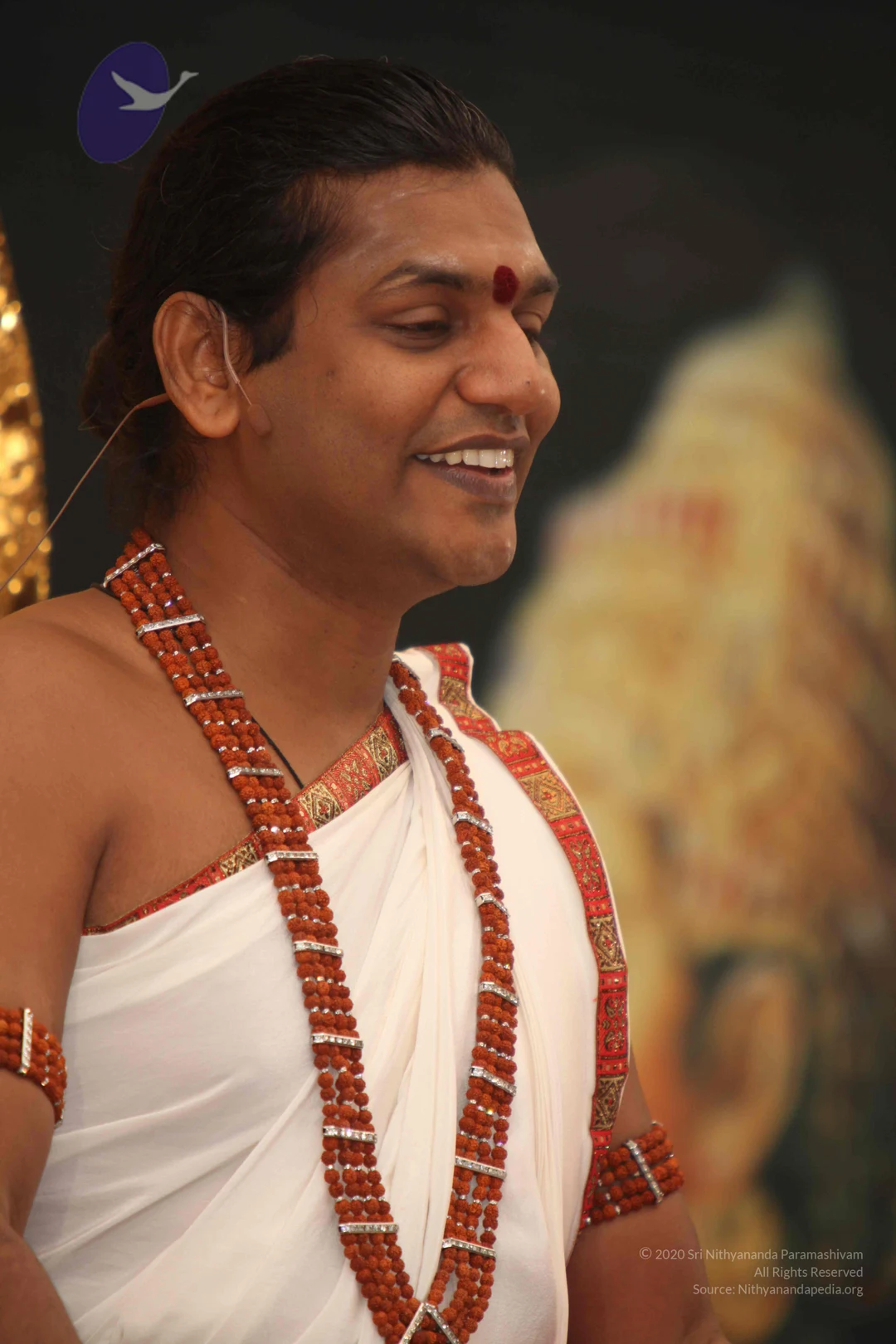
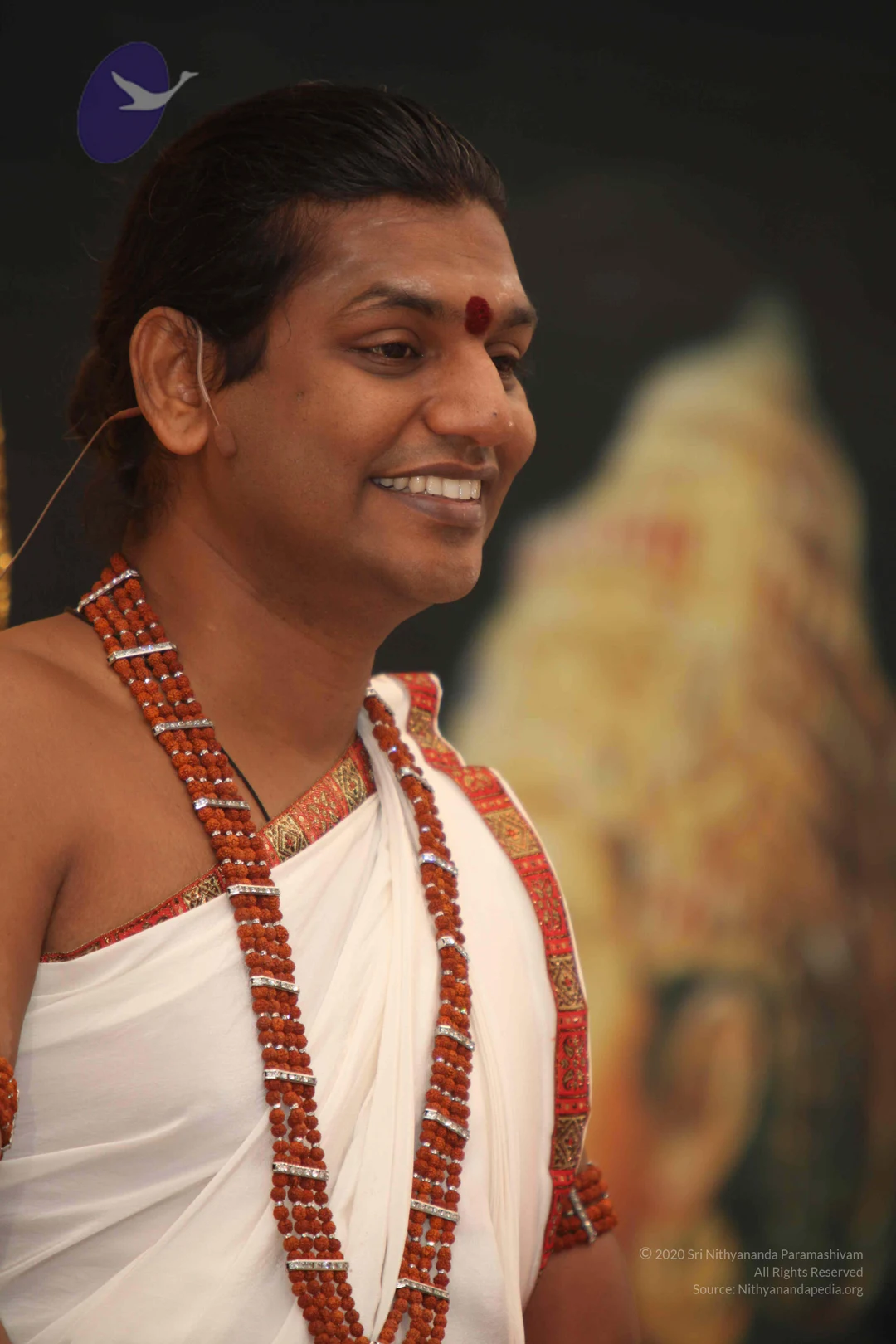
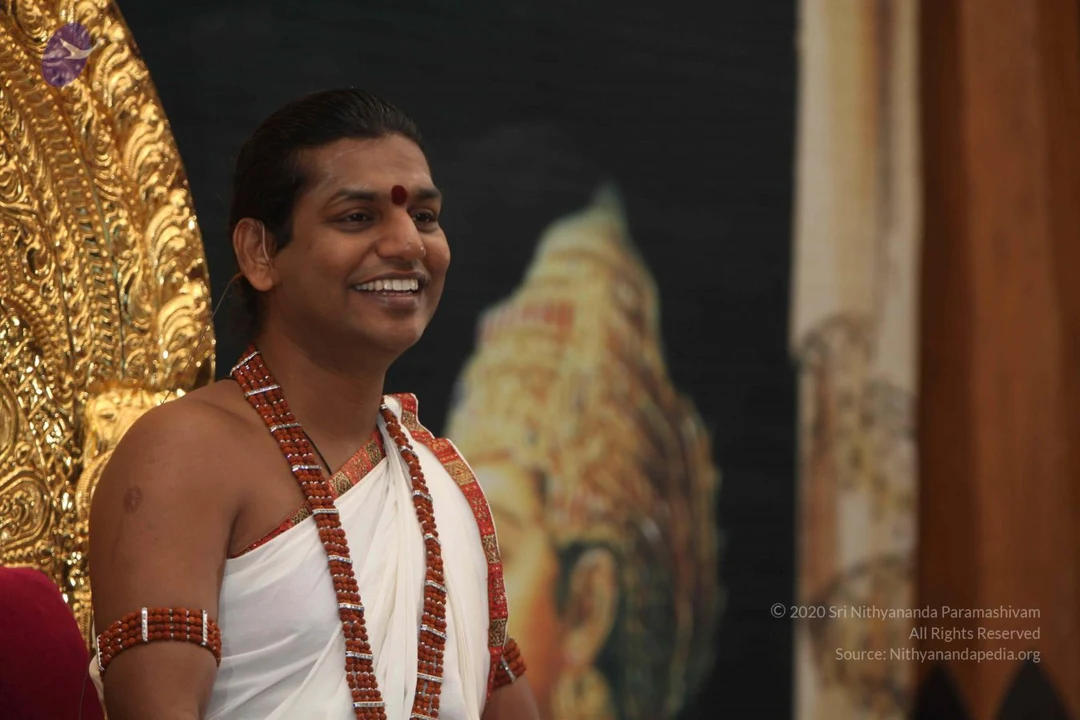
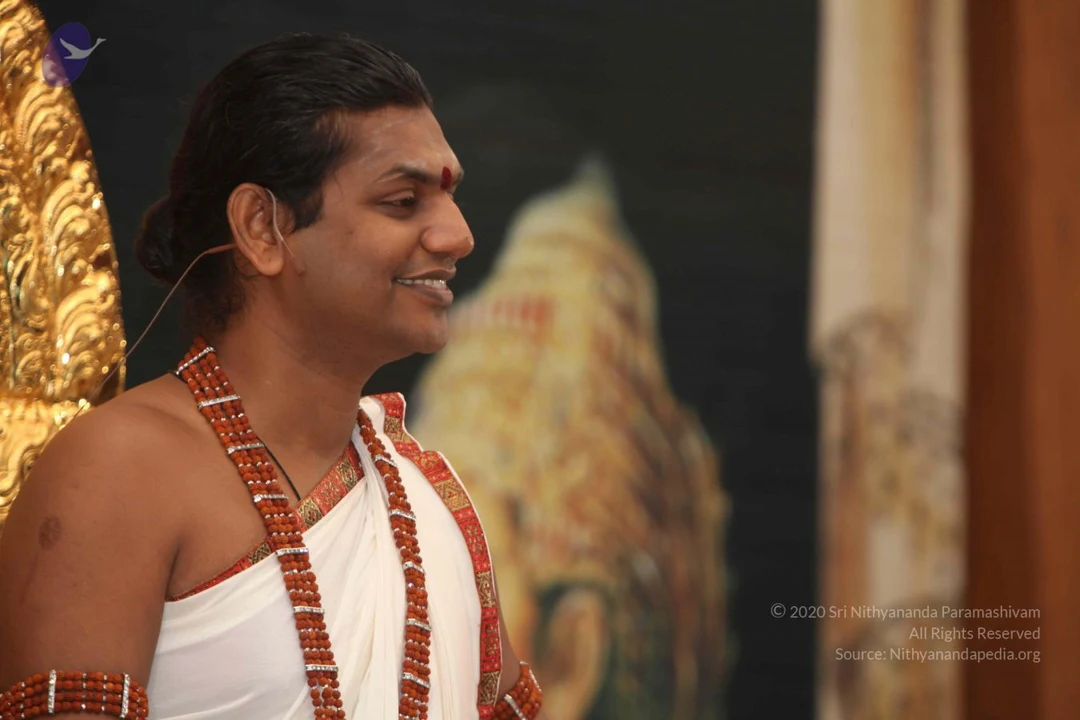
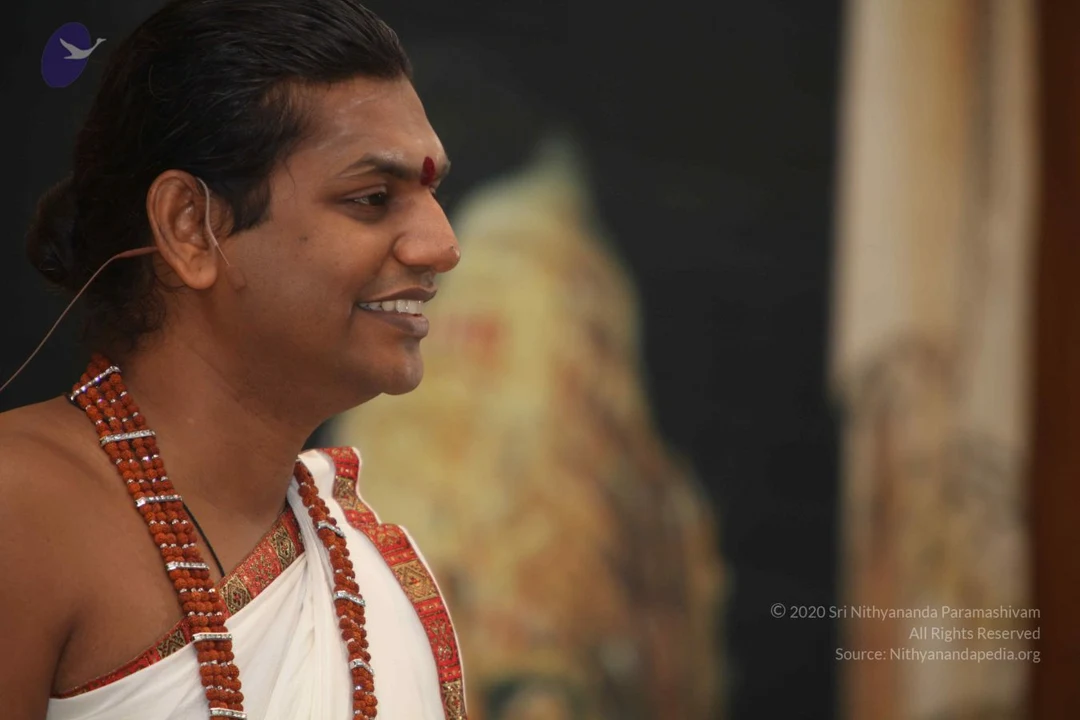
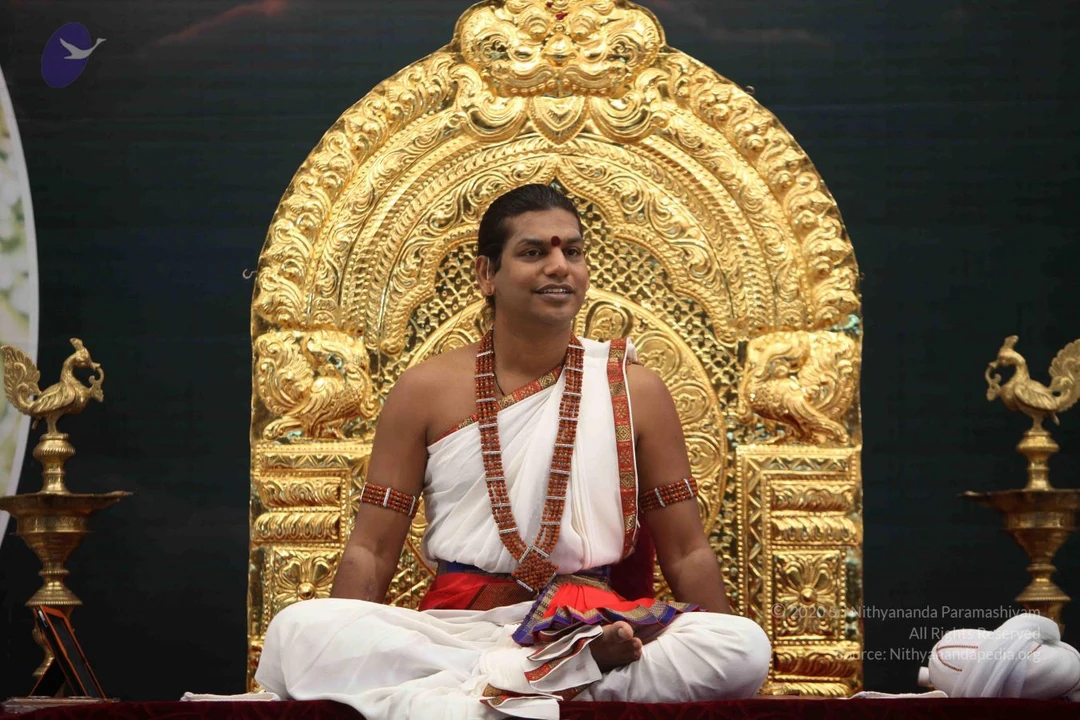
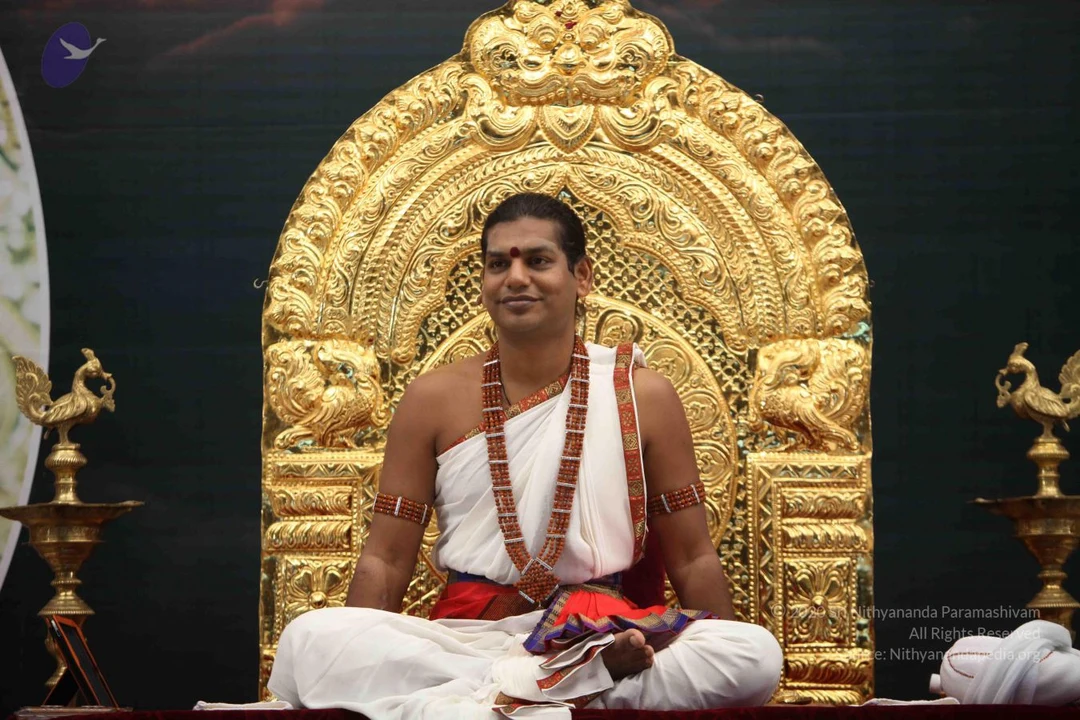
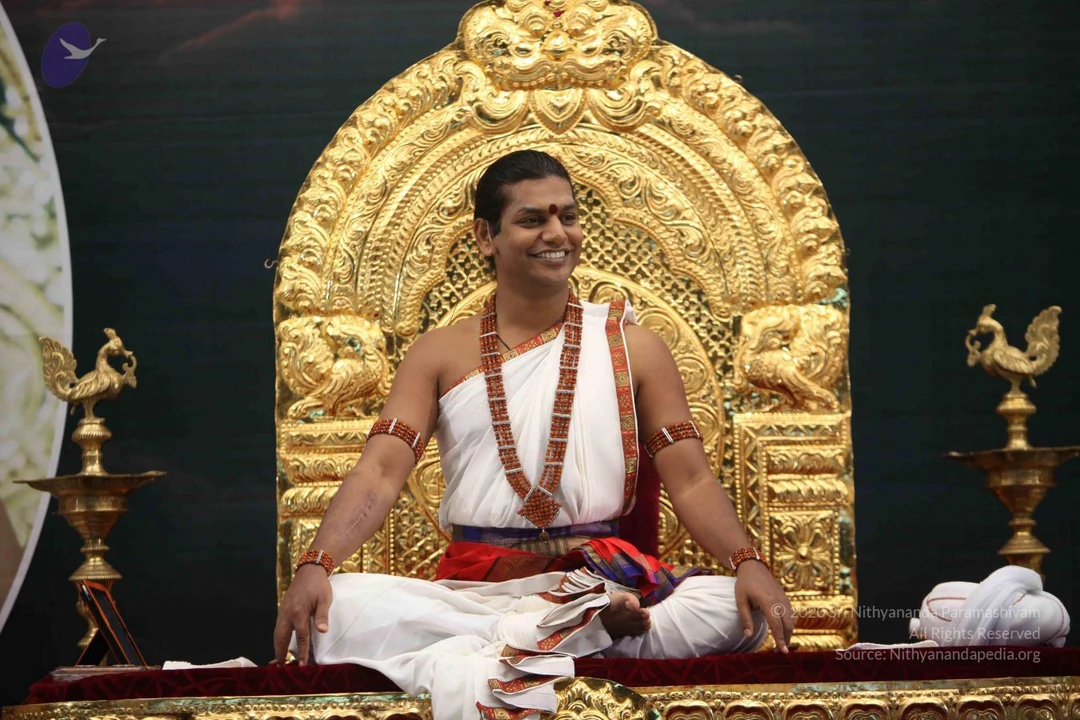
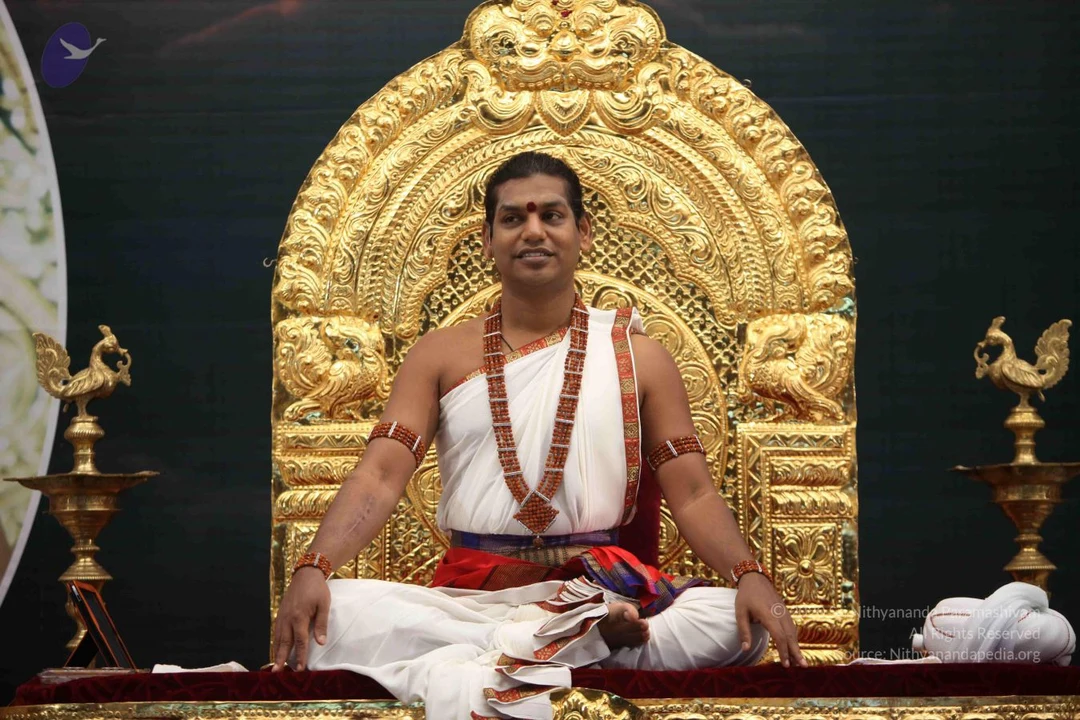
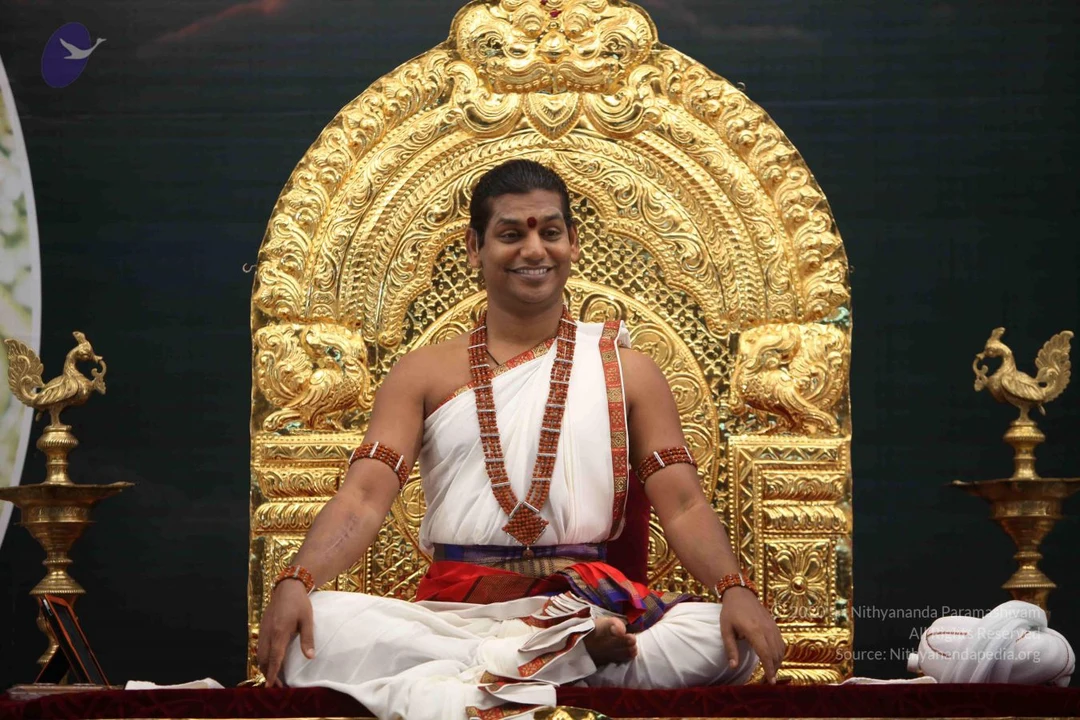
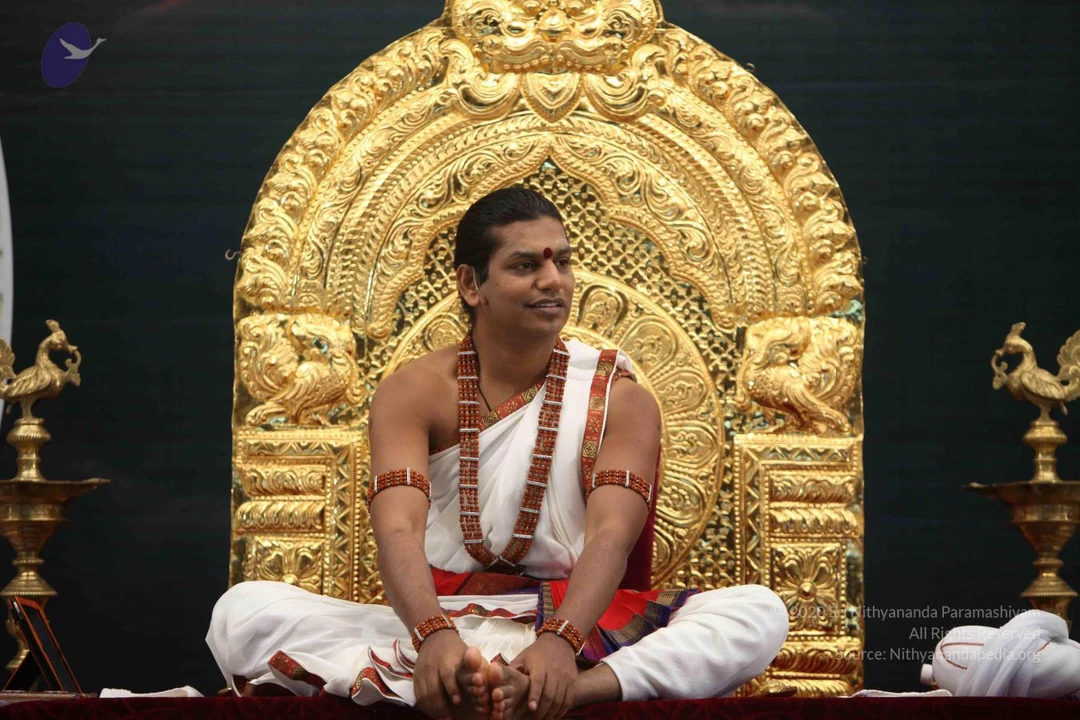
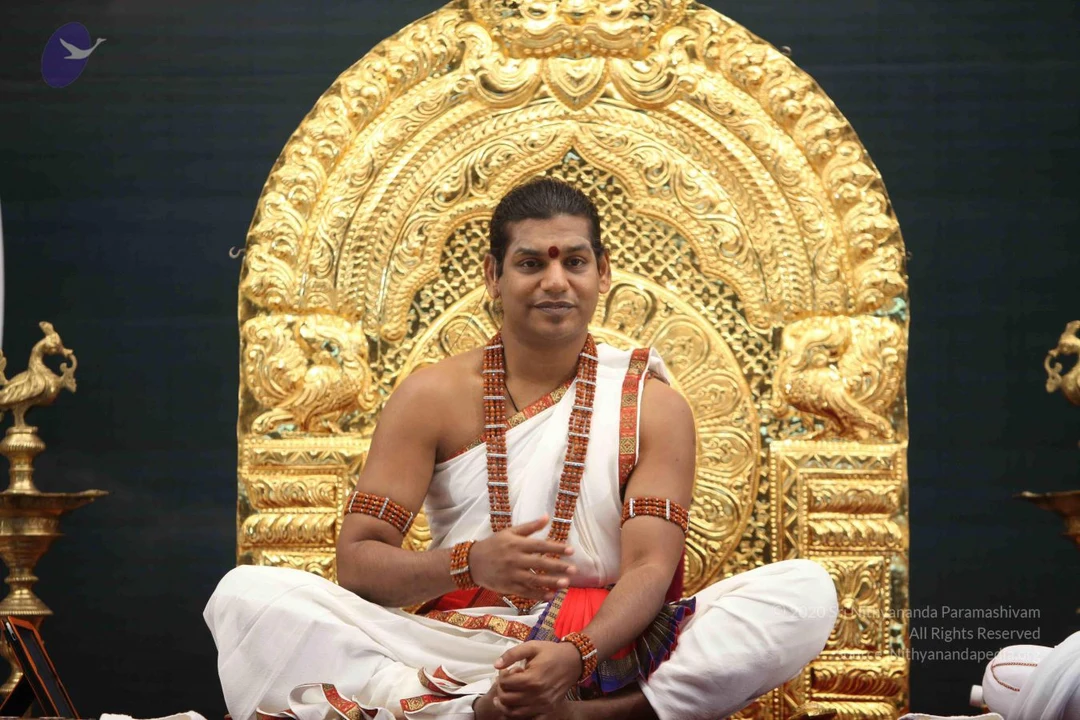
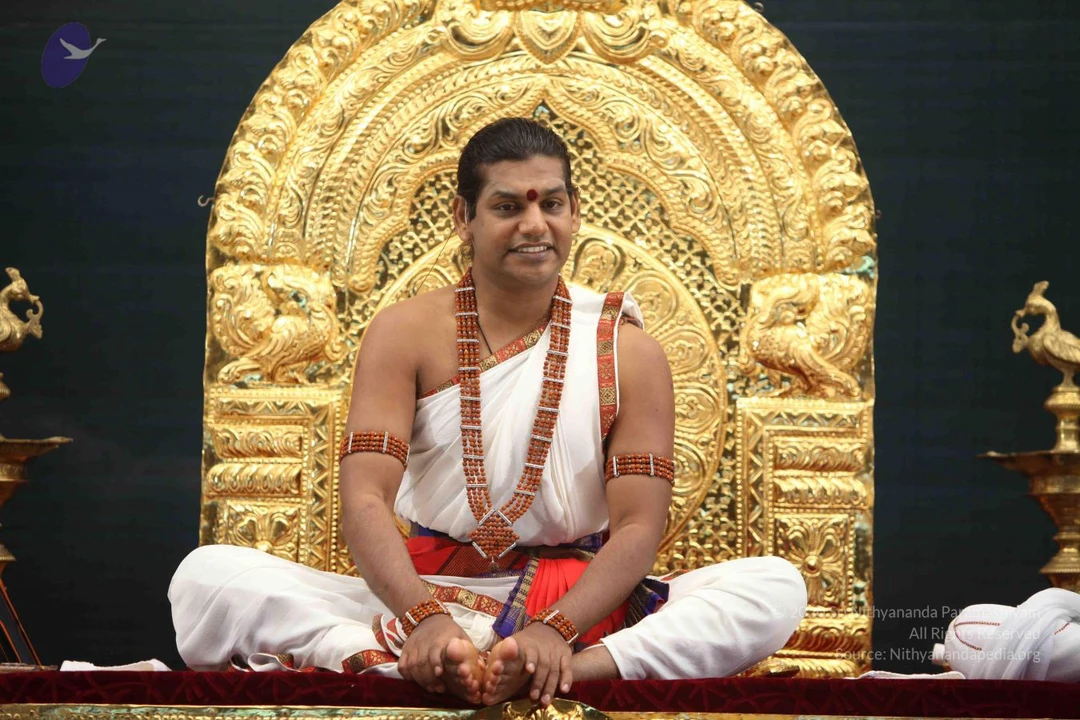
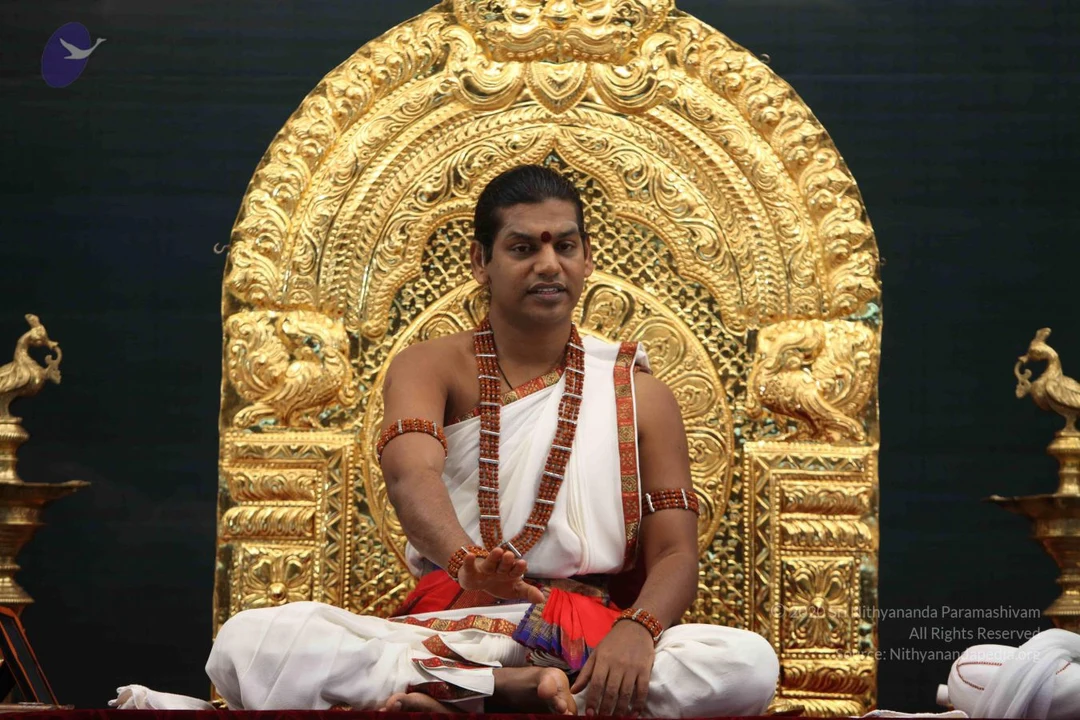
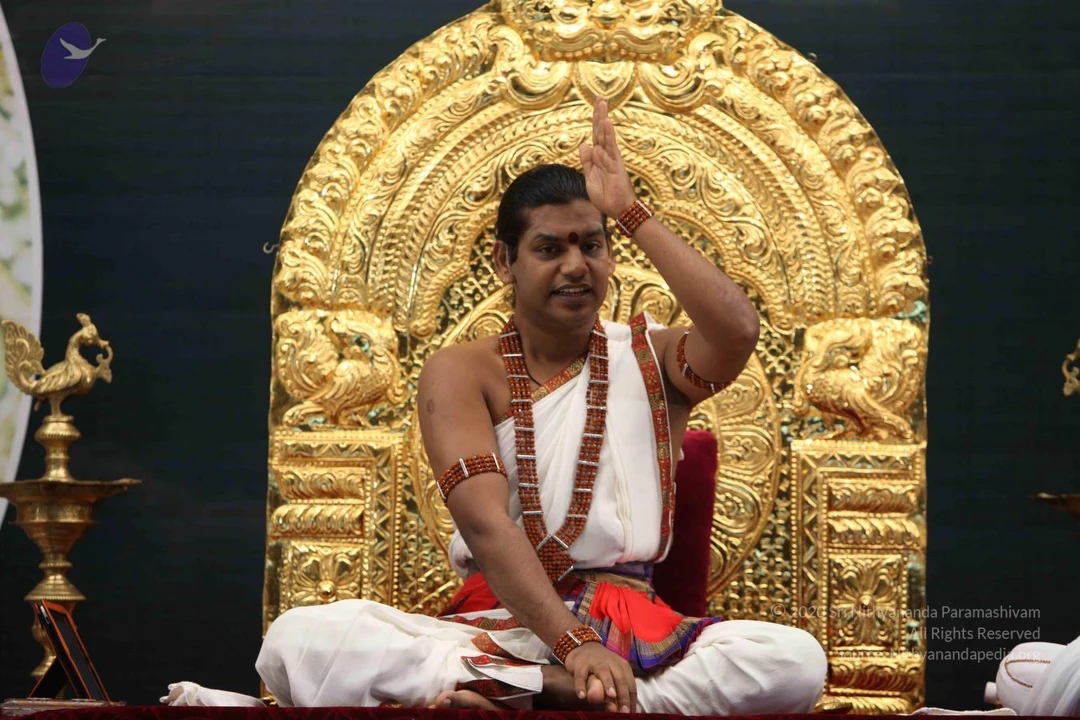
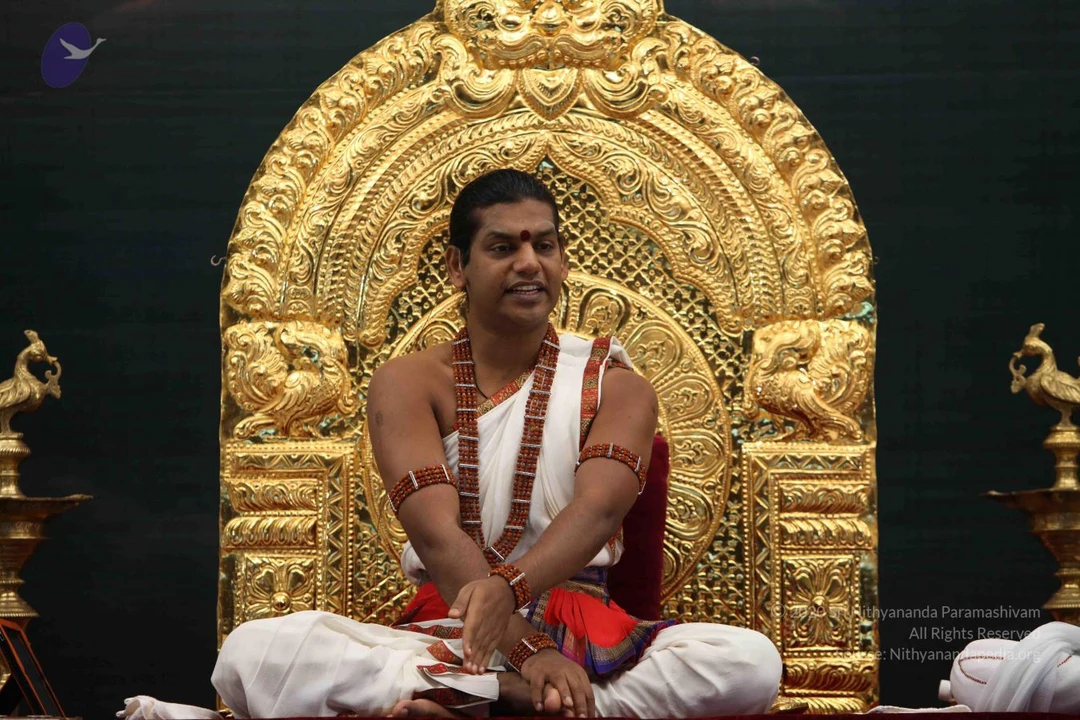
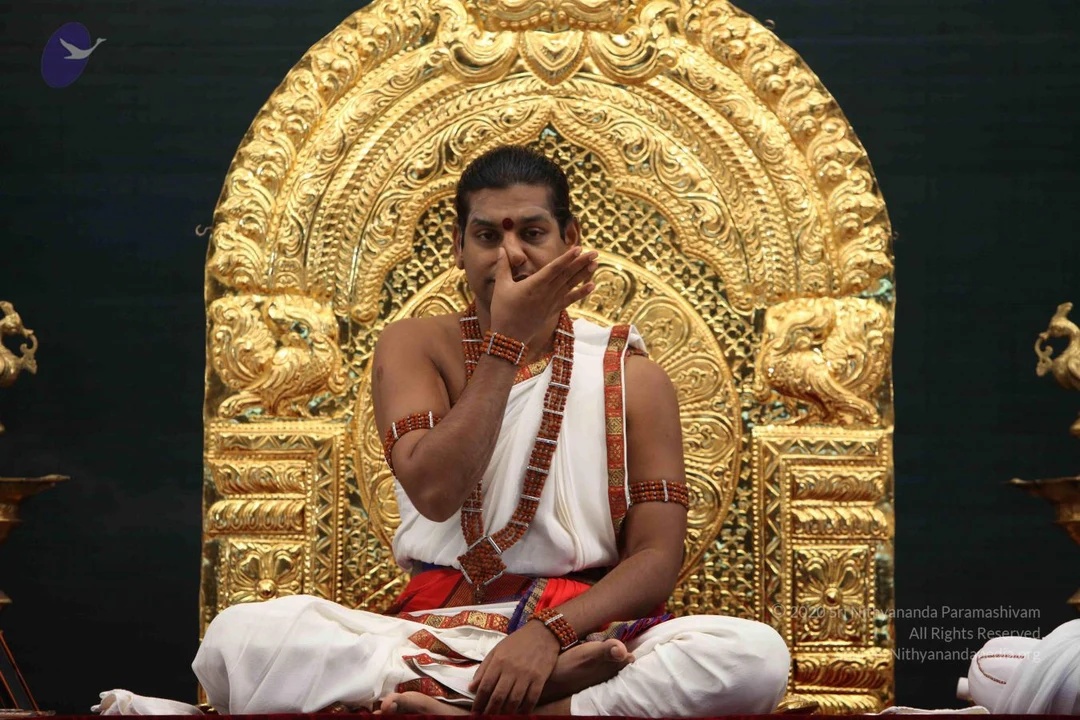
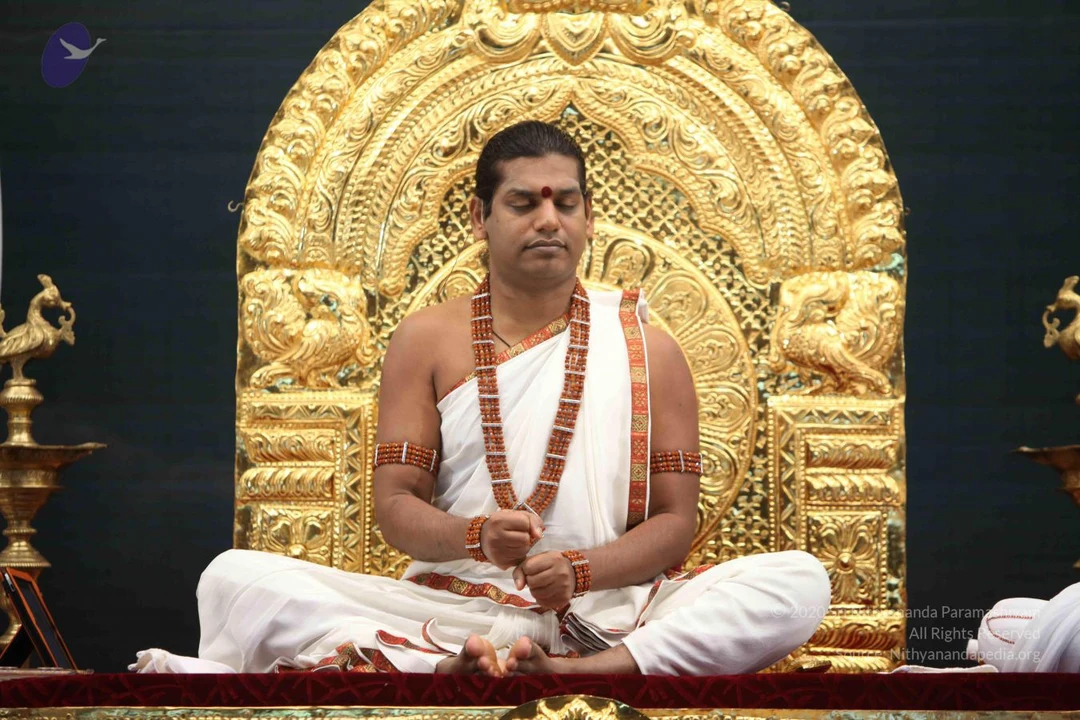
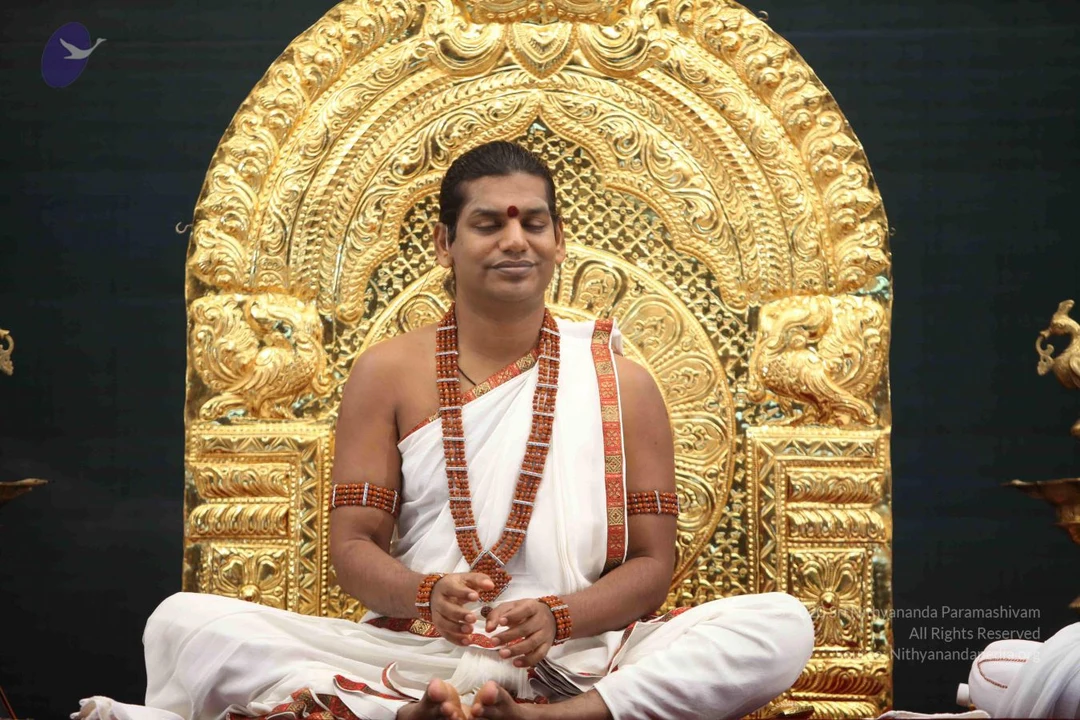
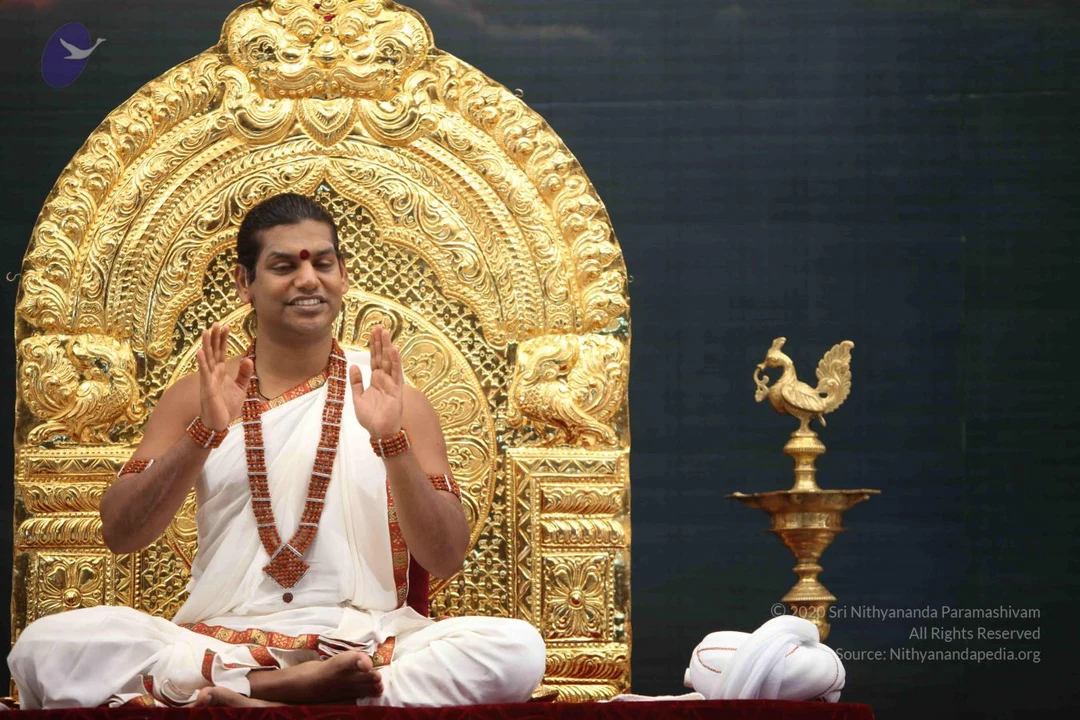
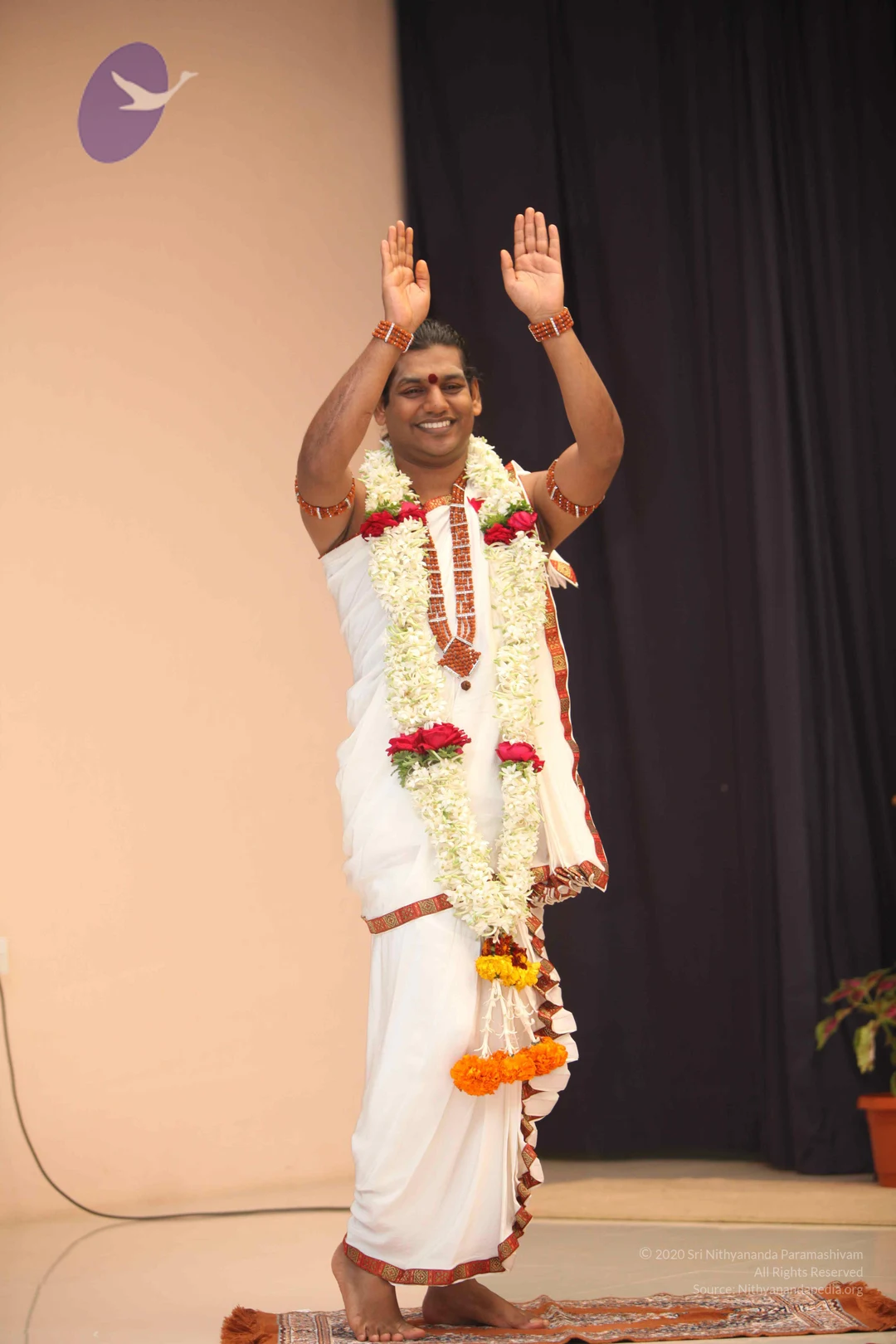
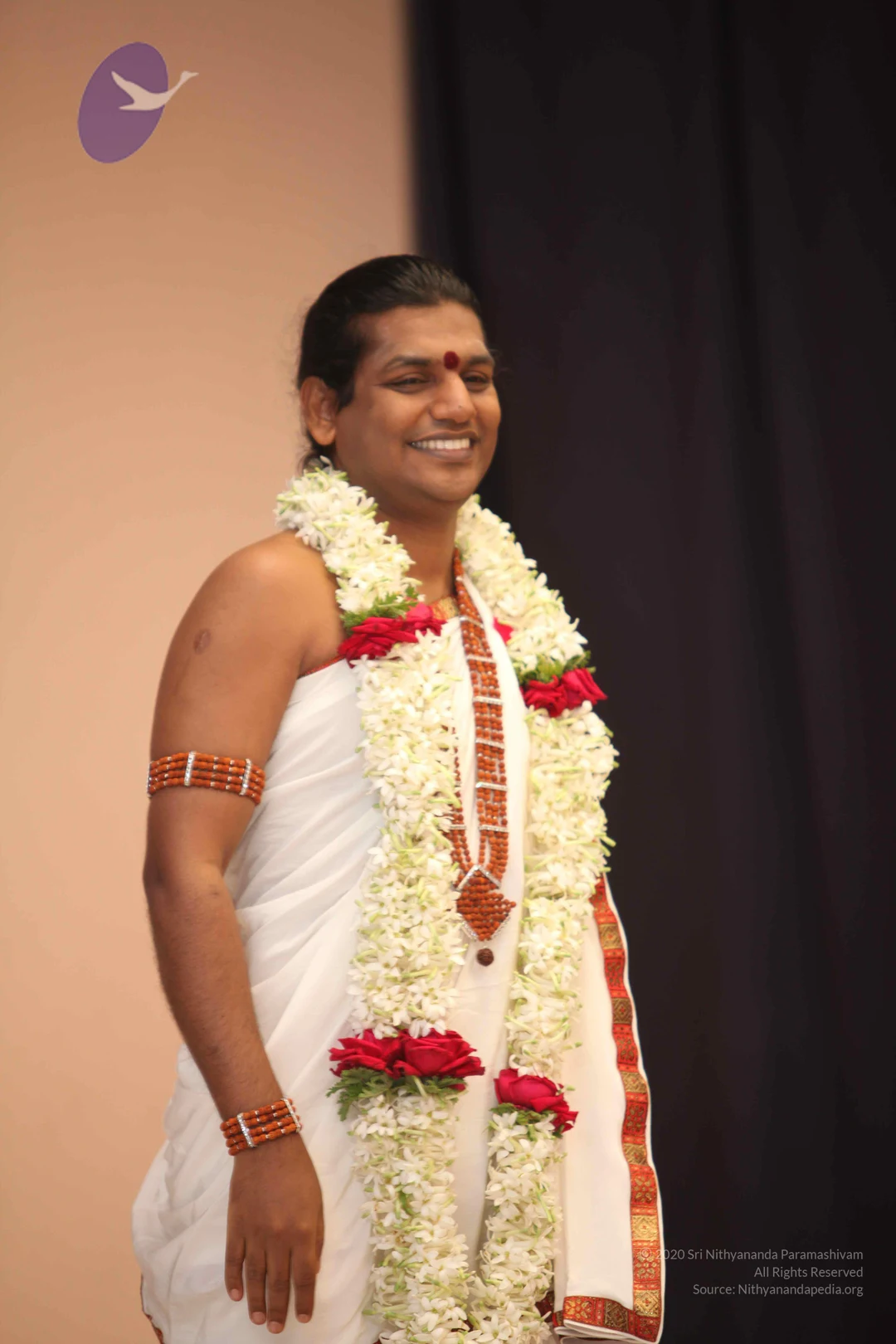
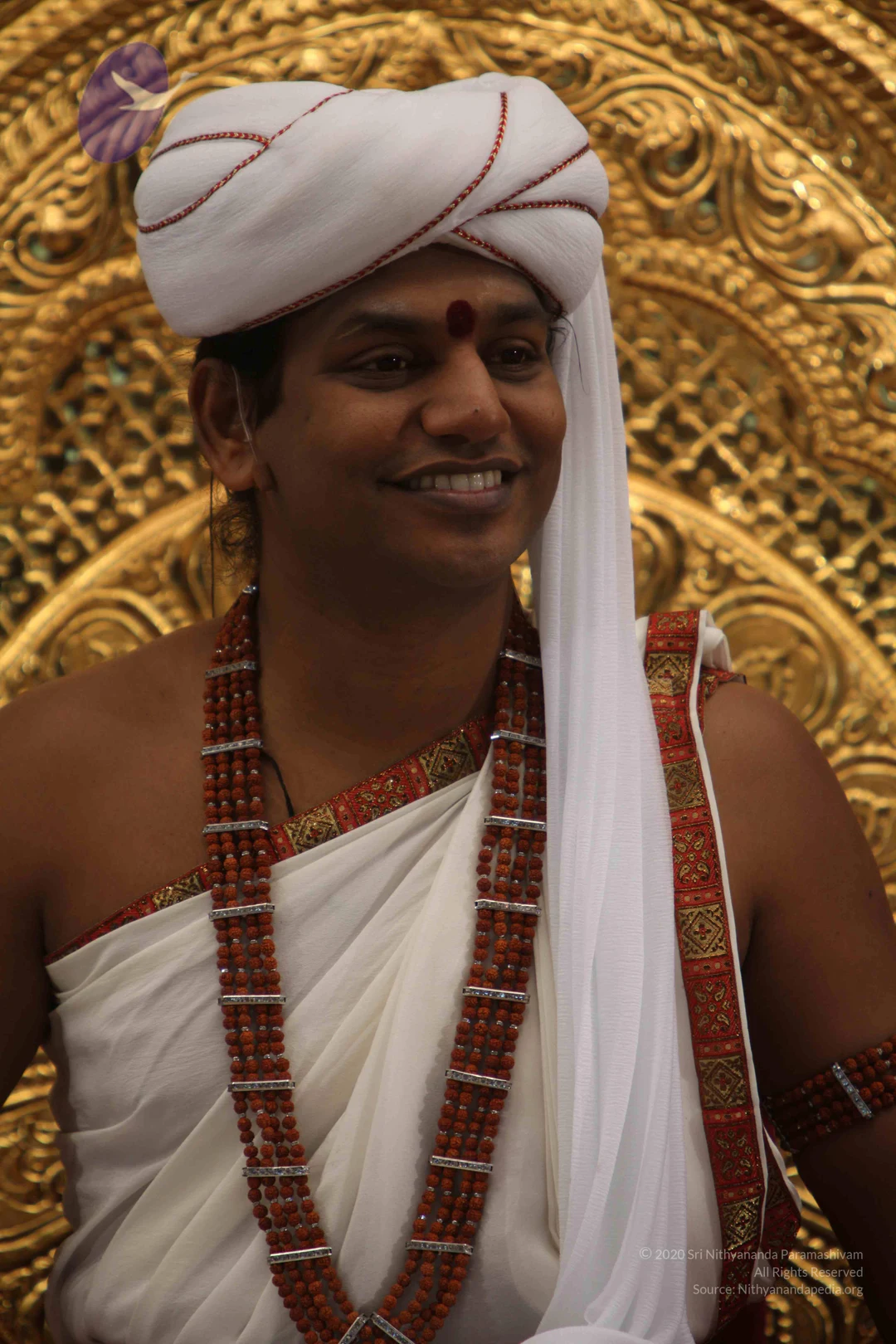
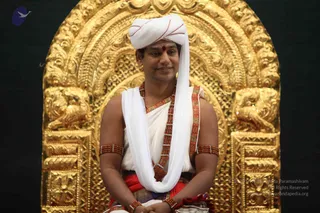
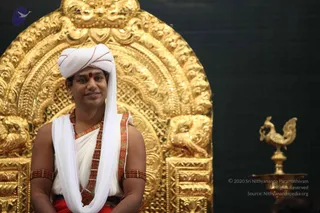
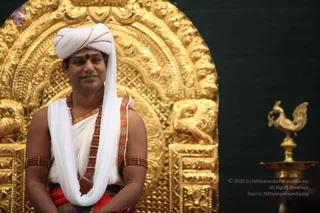
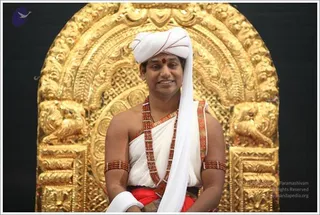
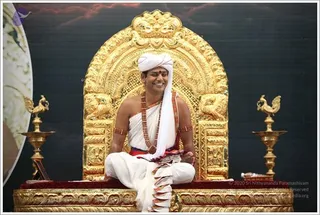
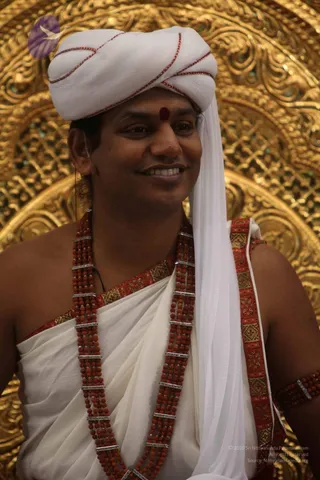
A smiling man sits cross-legged on an ornate gold throne with carved lion and floral motifs against a dark background. He wears a white turban, white dhoti-style wrap, a red-and-gold patterned shawl, layered red beaded necklaces and beaded bangles, with a red bindi on his forehead. He raises one hand in a gesture while speaking. To the right stands a gold oil lamp with a peacock-shaped top on a small table with a water bottle. The photo is watermarked with a copyright notice that is not transcribed here.A smiling man with slicked-back dark hair and a red bindi sits before an ornate gold repoussé backdrop. He wears a white draped garment bordered with red and gold brocade, layered rudraksha malas with silver spacers, and matching rudraksha armlets. A thin earpiece wire is visible.Close-up photo of a smiling man seated before an ornate gold repoussé backdrop. He has swept-back dark hair, a red bindi and a white tilak mark on his forehead, and wears a white garment with a red and gold brocade border draped over one shoulder. He is adorned with multiple strands of rudraksha beads with silver spacers, a rudraksha armband on his upper arm, and a red-and-gold patterned waist cloth. a person: the swept-back hair, rudraksha malas and ceremonial adornments match the page's claim, though the face is not used for identification.Close-up photo of a smiling man with slicked-back dark hair, a red kumkum dot and white vibhuti lines on his forehead, seated before an ornate gold repoussé backdrop. He wears a white cloth wrap with a red-and-gold patterned border over one shoulder, multi-strand rudraksha malas with silver spacers across his chest, and a rudraksha armlet.

Photos

6 photosSource gallery
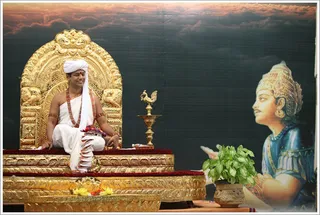
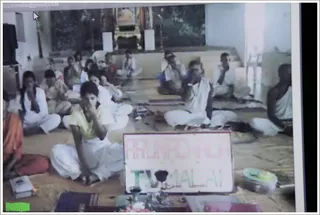
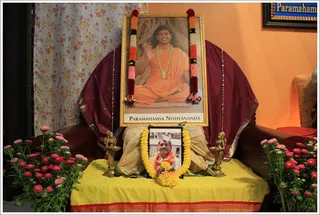
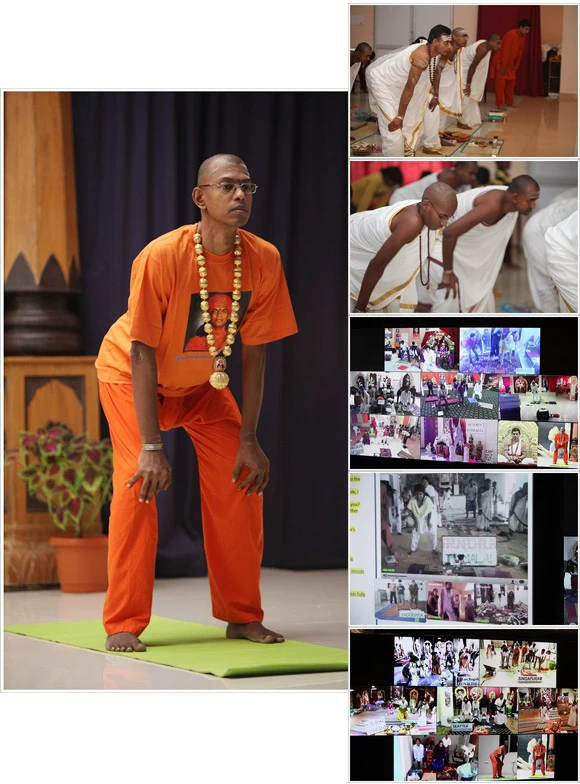
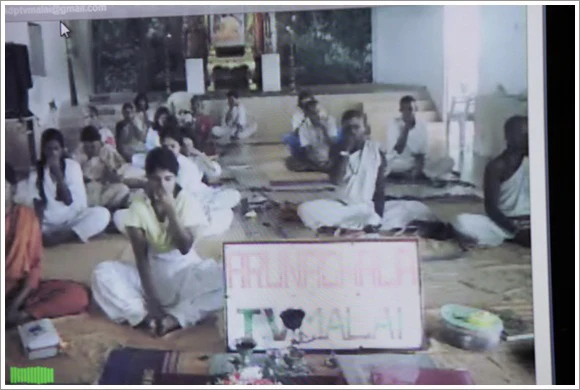
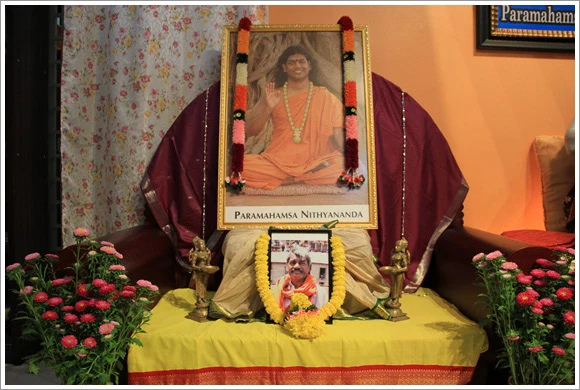
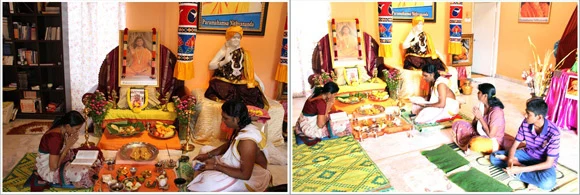
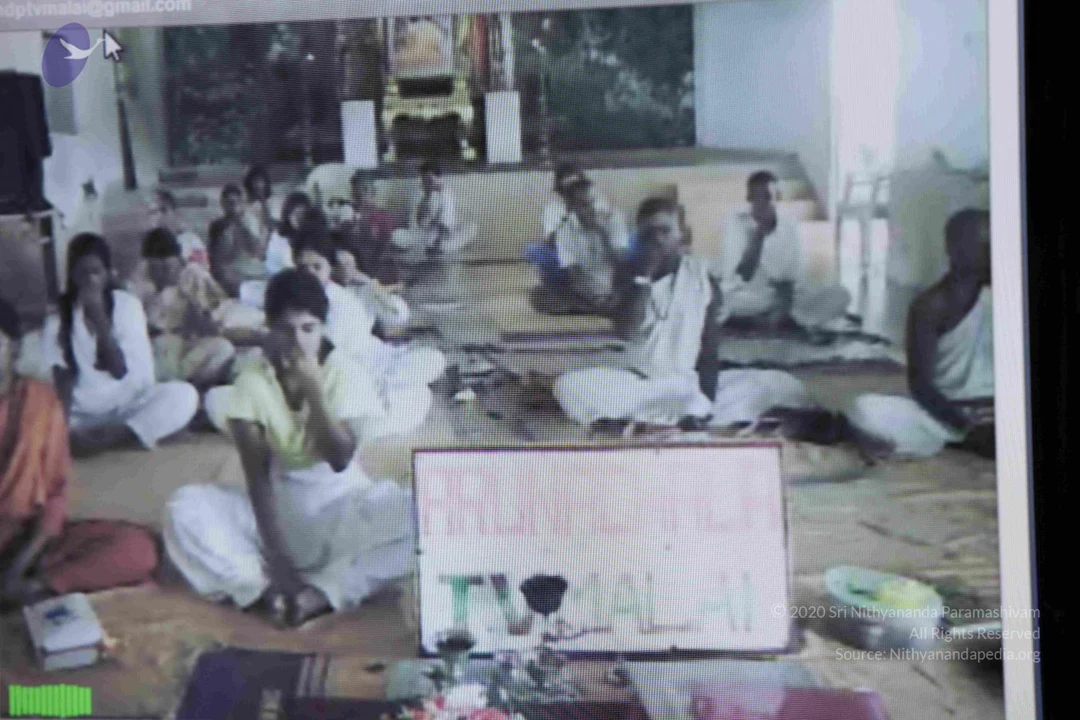
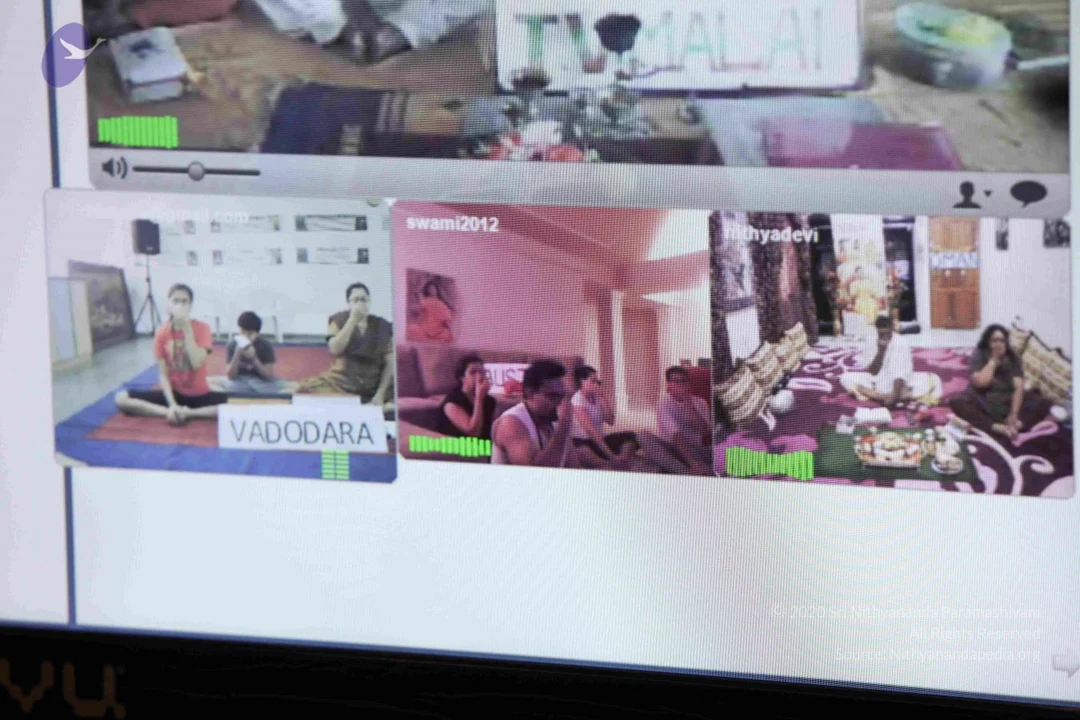
A smiling man sits on a red chair beside an ornate gold throne-back, wearing a white dhoti-style garment draped over one shoulder with a red-bordered cloth, multiple rudraksha malas around his neck, and a beaded red armband. He has a red bindi on his forehead and slicked-back hair. Behind him hangs a dark blue backdrop with a large painted deity murti image. Appearance-based candidate with rudraksha malas and ornate ceremonial dress, but identity is uncertain, so a person is not asserted; he is described as a man seated at a satsang-style setting.A collage of photographs from a Nithya Kriya yoga session. The main image shows a bald man in an orange t-shirt printed with a portrait, orange trousers and a large gold-bead necklace with a pendant, bending forward in a standing yoga posture on a green mat, with a dark curtain, wooden panel and potted plant behind him. Smaller panels show men in white dhotis and orange garments bending forward in rows during practice, and wall screens displaying many small video frames of similar sessions. The collage contains no physical people beyond the main figure.A screen photograph of a seated group in a meditation or satsang hall with a woven mat floor. In the foreground a young man in a yellow top and white dhoti sits with hands raised near his face. Beside him stands a white sign with red and green lettering reading TIRUVANNAMALAI, placed among small flowers and a brass vessel. Several men in white dhotis and shirts sit in rows behind, some with hands folded. At left, a person in orange robes sits near a book. Behind the group, a raised platform holds a golden throne-like seat and a framed image on the wall. A small green audio meter glows at lower left. No one is clearly identifiable as a person.A four-panel collage of photographs showing one seated man in saffron-orange robes performing a breathing and hand-gesture practice on a green mat in a hall with dark curtains and a wooden cabinet with potted plants. Across the panels he wears a multi-strand rudraksha mala with large beads and a ceremonial gold pendant, and his hands move between a mudra near his chest and raised fingers at his nose. Panels show the same pose from different angles, and the overall image is a graphic collage rather than a single photograph.A shrine-style display in a room with floral curtains and orange walls. A framed portrait labelled "PARAMAHAMSA NITHYANANDA" shows a figure in orange robes and a saffron-orange wrap, seated with a rudraksha-style necklace, marigold-and-rose garland framing the frame. Below, a smaller framed photo of a figure with a white-and-red garland sits on a maroon cushioned throne draped with a deep red cloth. Two brass oil lamps flank the display, and pink and red flowers fill the foreground on a yellow altar cloth with a red border. Plain printed portraits and offerings, no living people visible.A two-panel collage of a puja in a room with orange walls. In the left panel, a woman in a white sari sits on a green mat before a low altar with fruit, flowers and a brass plate, beside a large framed portrait of a bearded sage in orange. A larger framed portrait of a long-haired figure in orange with ornate gold adornments sits on a red throne behind. In the right panel, several people in white and pastel clothes sit on green mats around a tray of fruits, flowers and lamps, with a rangoli-style pattern and framed portraits on the wall behind. The printed sign reads Paramahamsa Nithyananda on a small banner.
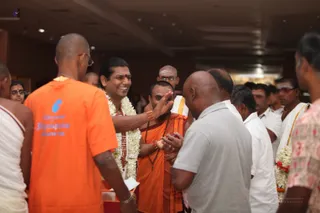
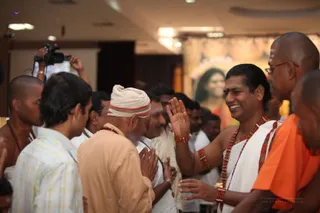
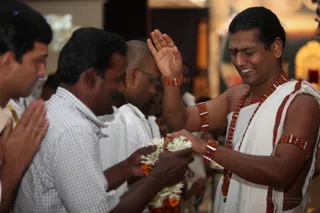
Temple Visit | Pratyaksha Pada Puja | Bhagavad Gita Satsang | Mahaparinirvana Day – 07 November 2011

6 photosSource gallery
A smiling man sits on a red chair beside an ornate gold throne-back, wearing a white dhoti-style garment draped over one shoulder with a red-bordered cloth, multiple rudraksha malas around his neck, and a beaded red armband. He has a red bindi on his forehead and slicked-back hair. Behind him hangs a dark blue backdrop with a large painted deity murti image. Appearance-based candidate with rudraksha malas and ornate ceremonial dress, but identity is uncertain, so a person is not asserted; he is described as a man seated at a satsang-style setting.A collage of photographs from a Nithya Kriya yoga session. The main image shows a bald man in an orange t-shirt printed with a portrait, orange trousers and a large gold-bead necklace with a pendant, bending forward in a standing yoga posture on a green mat, with a dark curtain, wooden panel and potted plant behind him. Smaller panels show men in white dhotis and orange garments bending forward in rows during practice, and wall screens displaying many small video frames of similar sessions. The collage contains no physical people beyond the main figure.A screen photograph of a seated group in a meditation or satsang hall with a woven mat floor. In the foreground a young man in a yellow top and white dhoti sits with hands raised near his face. Beside him stands a white sign with red and green lettering reading TIRUVANNAMALAI, placed among small flowers and a brass vessel. Several men in white dhotis and shirts sit in rows behind, some with hands folded. At left, a person in orange robes sits near a book. Behind the group, a raised platform holds a golden throne-like seat and a framed image on the wall. A small green audio meter glows at lower left. No one is clearly identifiable as a person.A four-panel collage of photographs showing one seated man in saffron-orange robes performing a breathing and hand-gesture practice on a green mat in a hall with dark curtains and a wooden cabinet with potted plants. Across the panels he wears a multi-strand rudraksha mala with large beads and a ceremonial gold pendant, and his hands move between a mudra near his chest and raised fingers at his nose. Panels show the same pose from different angles, and the overall image is a graphic collage rather than a single photograph.A shrine-style display in a room with floral curtains and orange walls. A framed portrait labelled "PARAMAHAMSA NITHYANANDA" shows a figure in orange robes and a saffron-orange wrap, seated with a rudraksha-style necklace, marigold-and-rose garland framing the frame. Below, a smaller framed photo of a figure with a white-and-red garland sits on a maroon cushioned throne draped with a deep red cloth. Two brass oil lamps flank the display, and pink and red flowers fill the foreground on a yellow altar cloth with a red border. Plain printed portraits and offerings, no living people visible.A two-panel collage of a puja in a room with orange walls. In the left panel, a woman in a white sari sits on a green mat before a low altar with fruit, flowers and a brass plate, beside a large framed portrait of a bearded sage in orange. A larger framed portrait of a long-haired figure in orange with ornate gold adornments sits on a red throne behind. In the right panel, several people in white and pastel clothes sit on green mats around a tray of fruits, flowers and lamps, with a rangoli-style pattern and framed portraits on the wall behind. The printed sign reads Paramahamsa Nithyananda on a small banner.

Temple

24 photosSource gallery
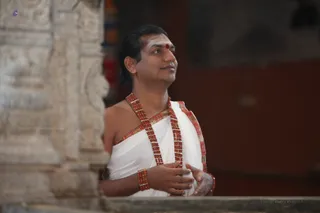
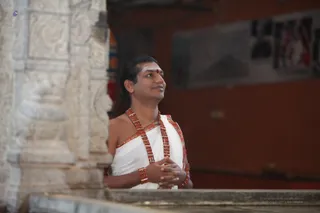
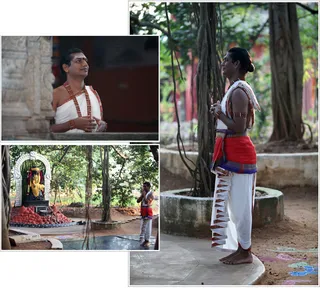
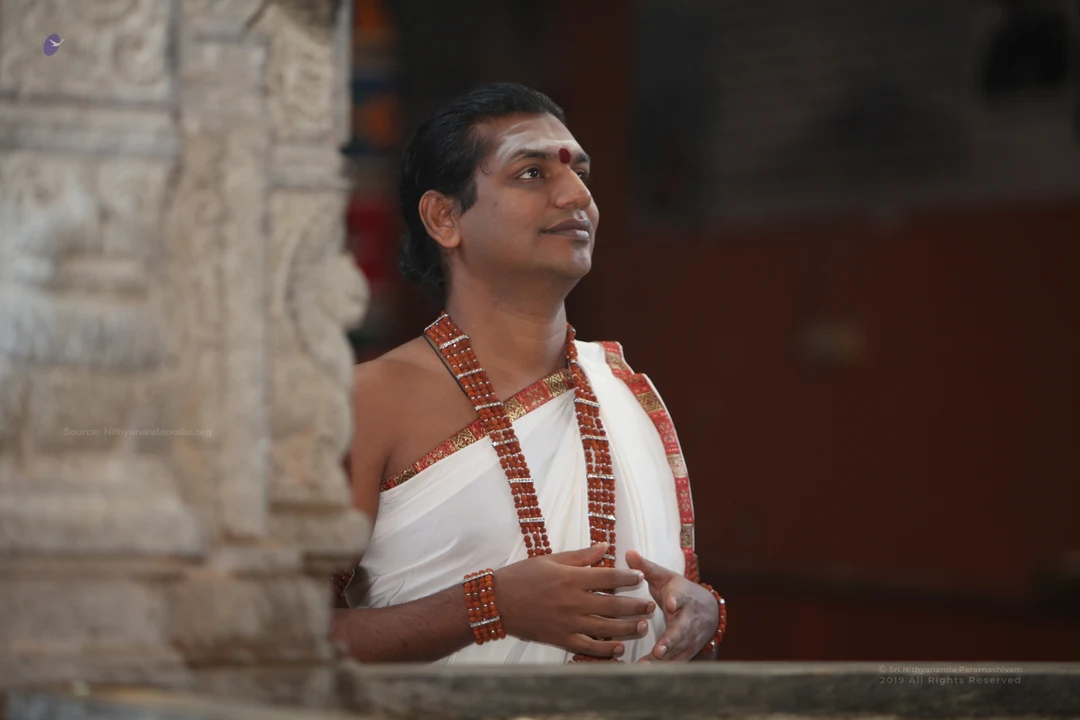
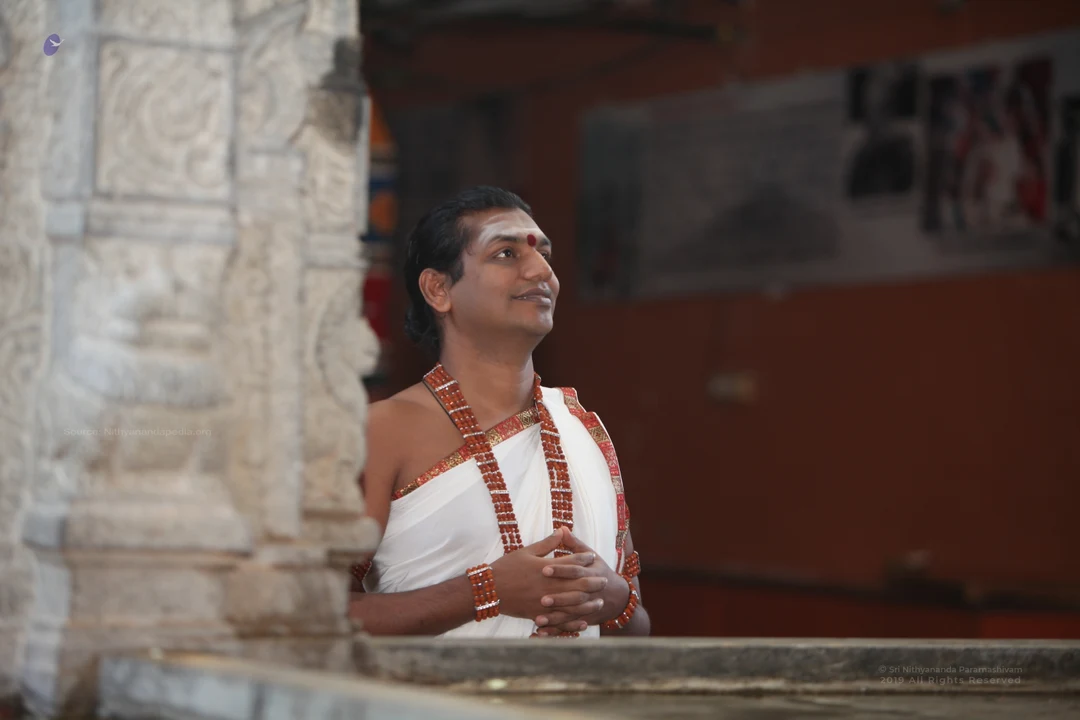
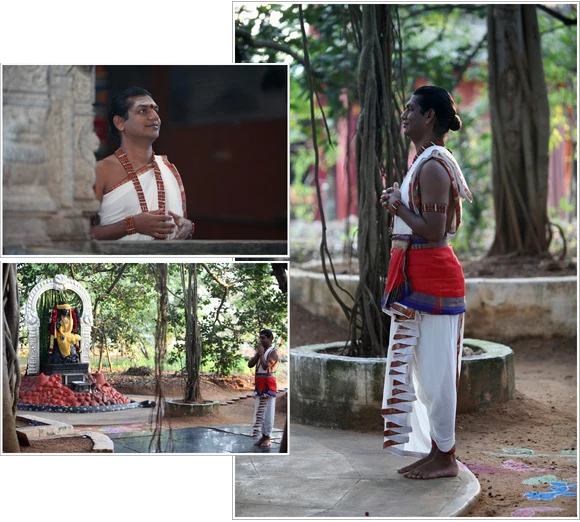
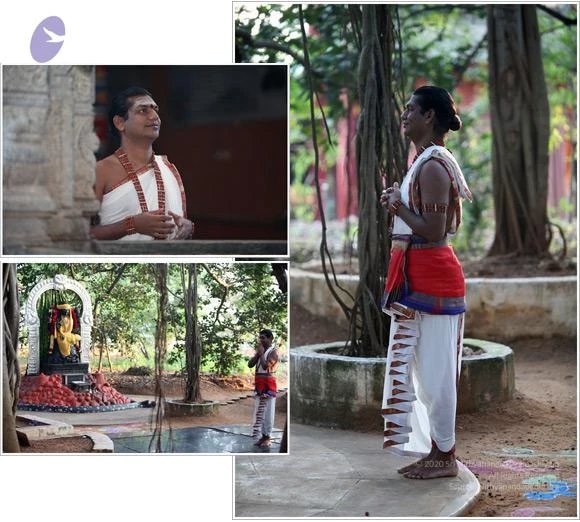
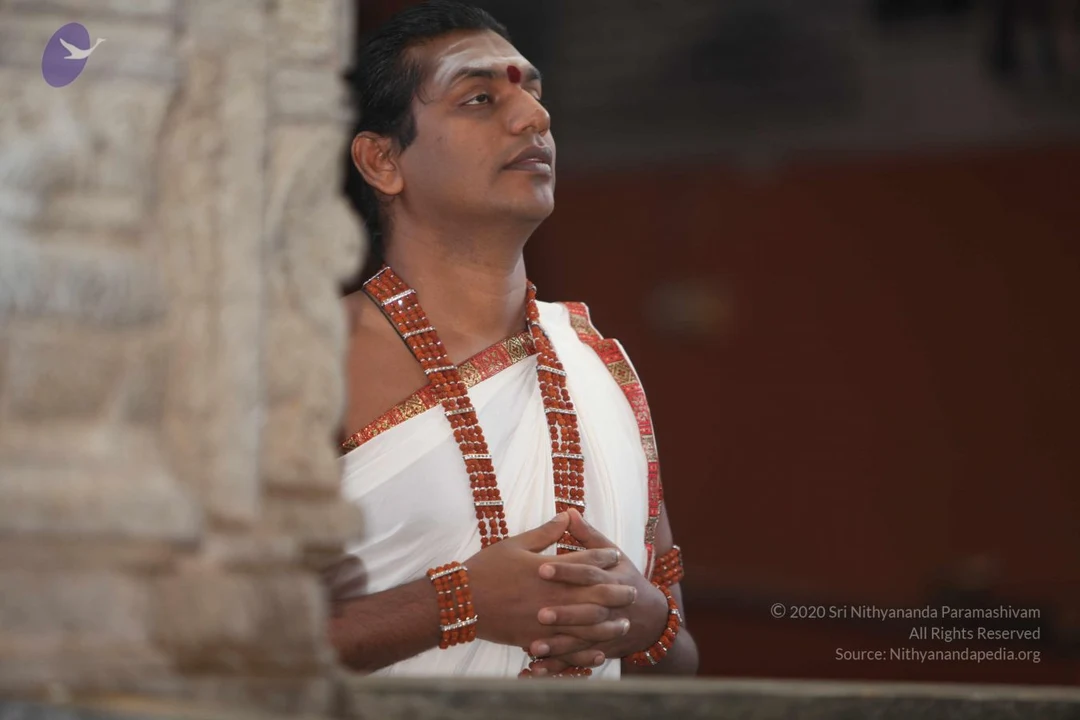
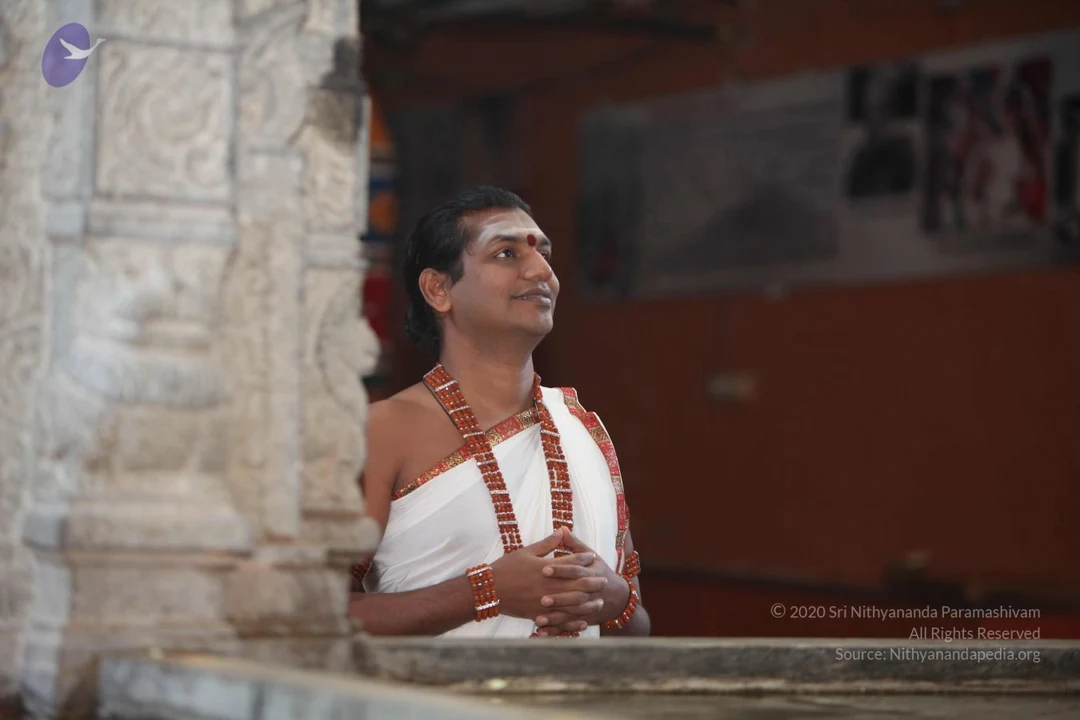
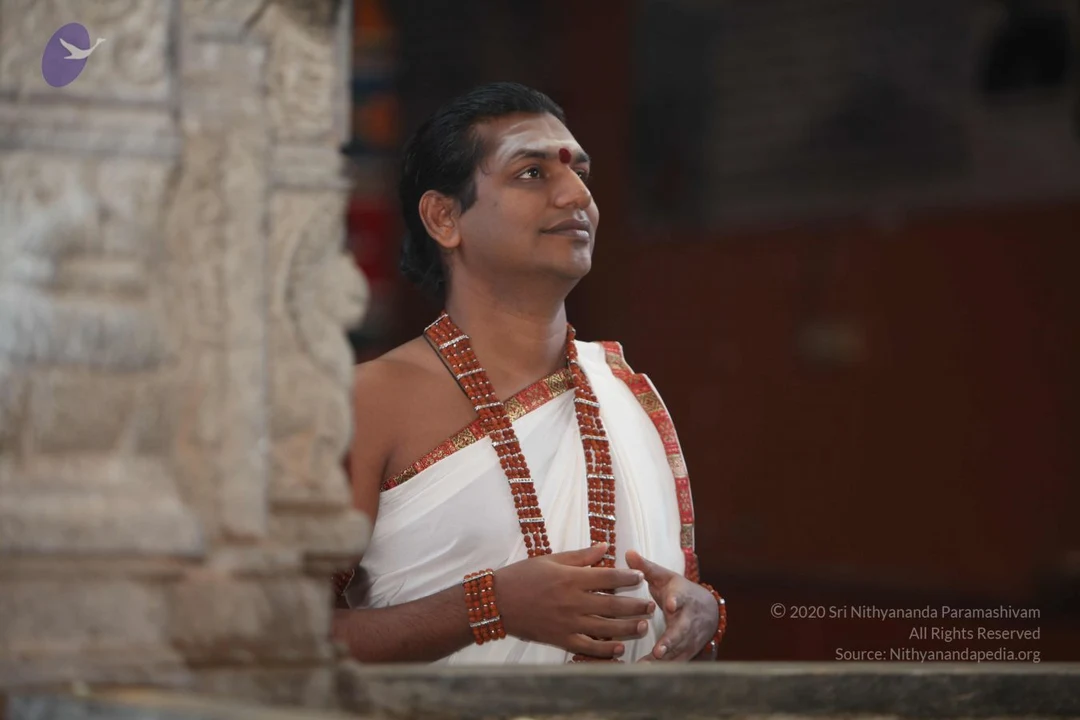
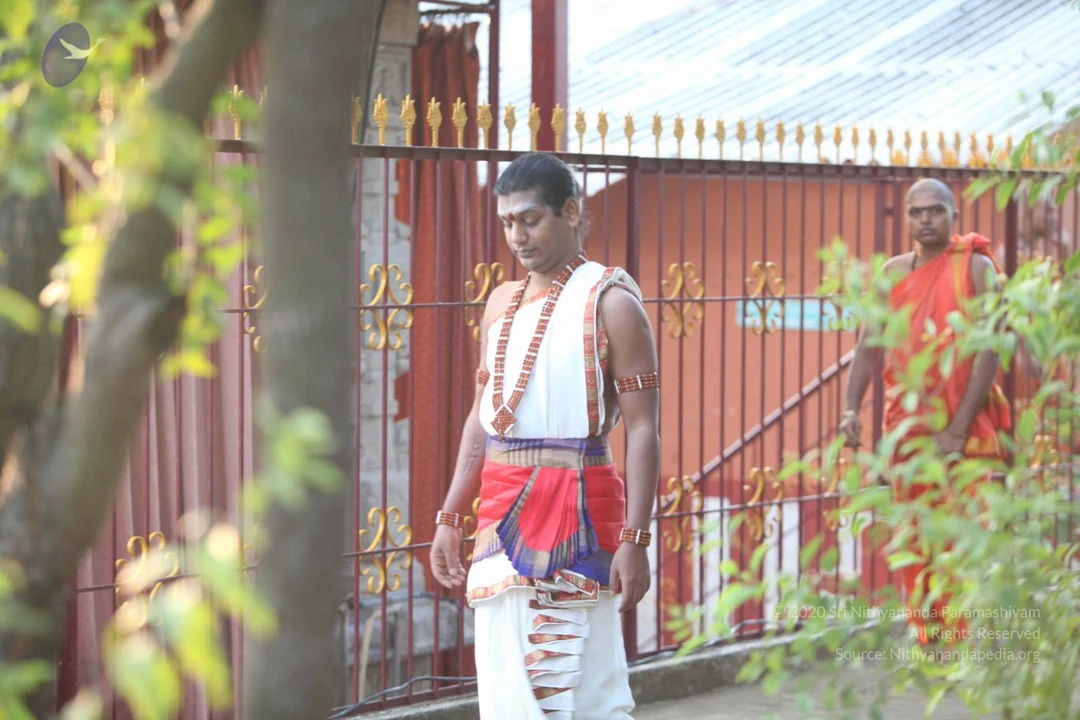
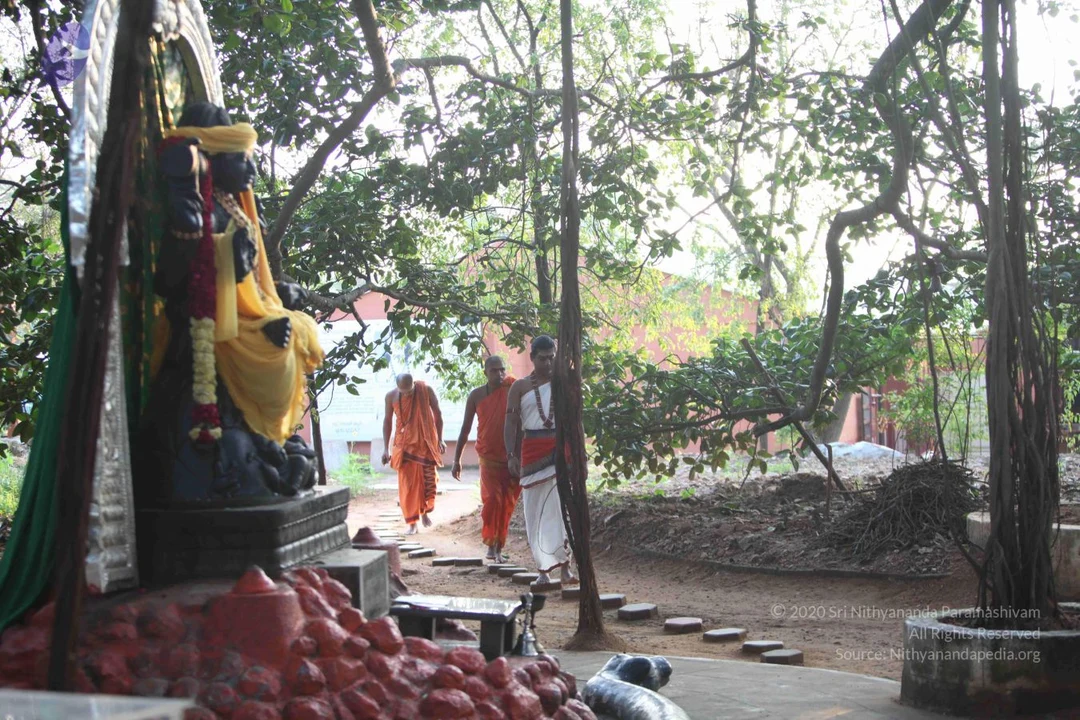
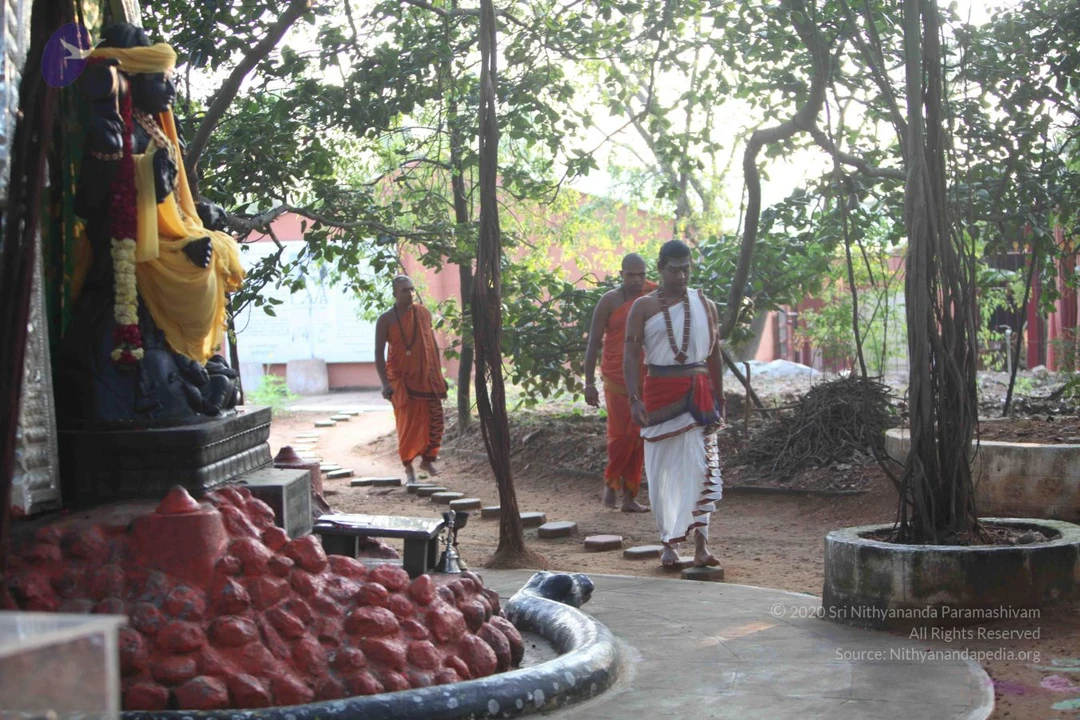
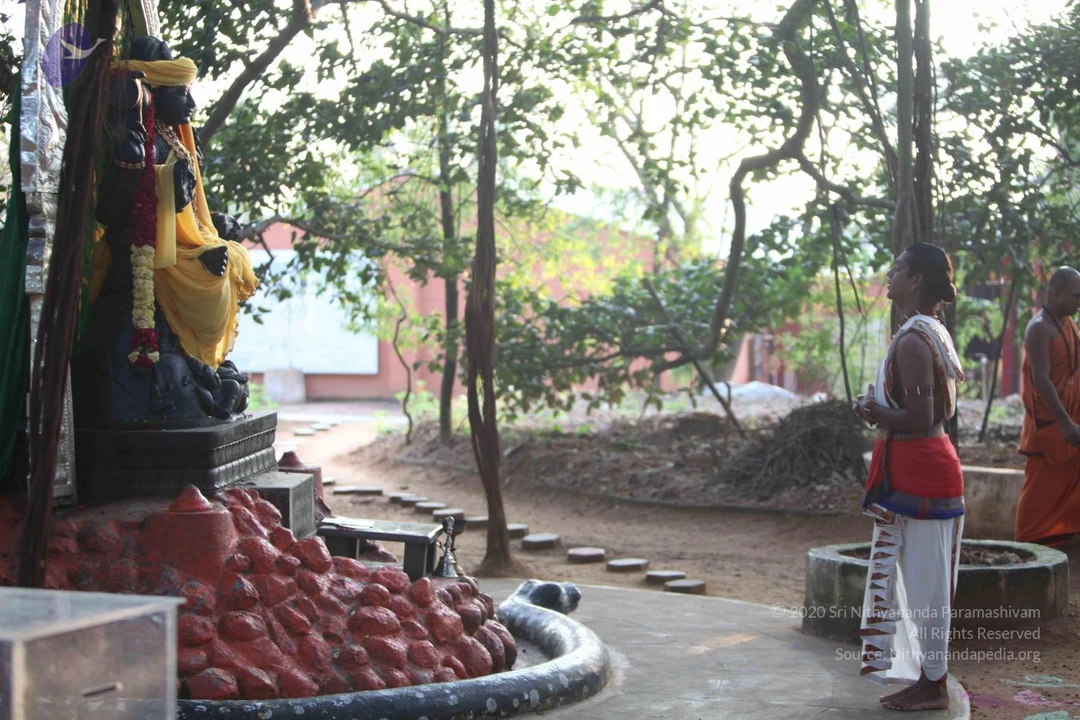
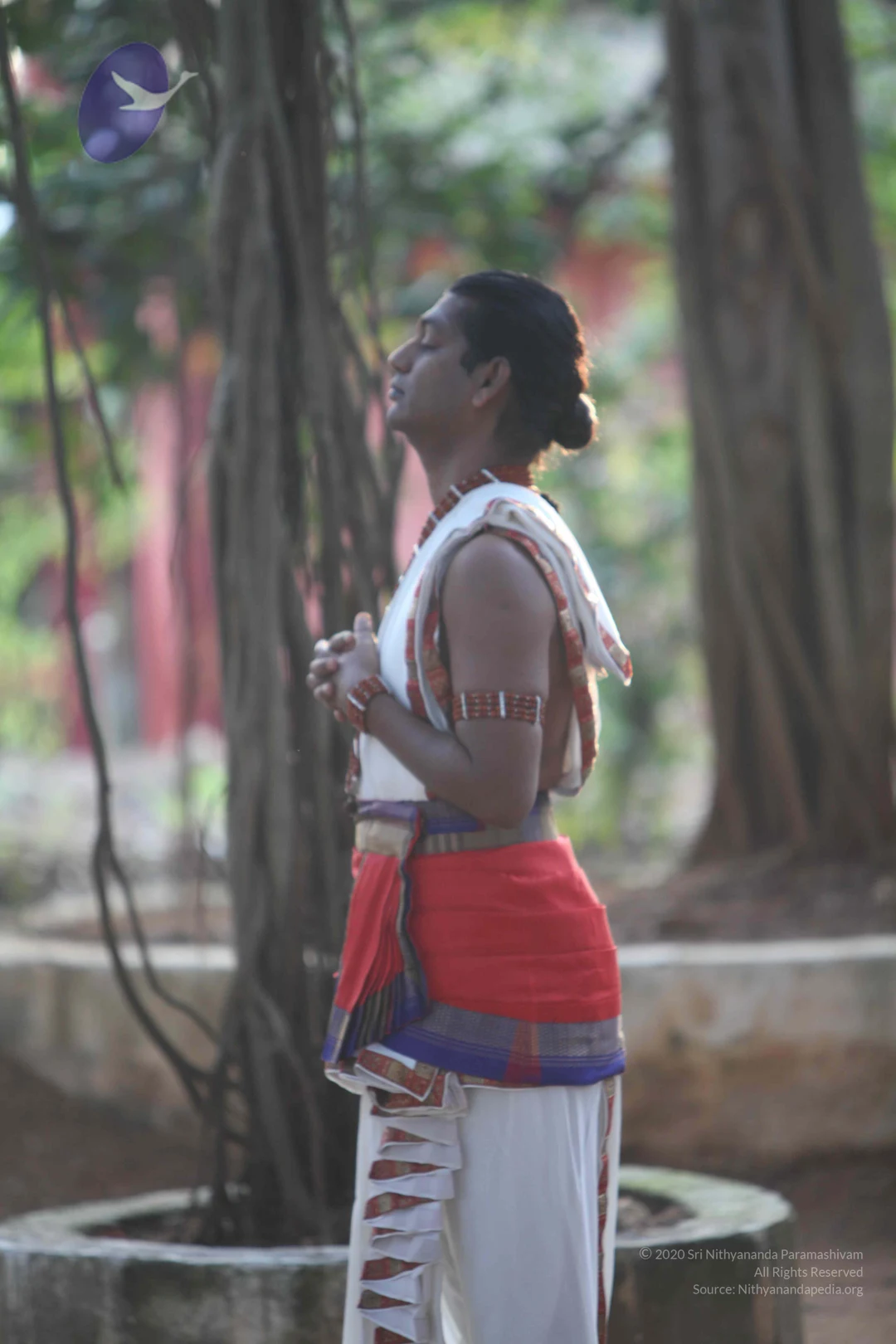
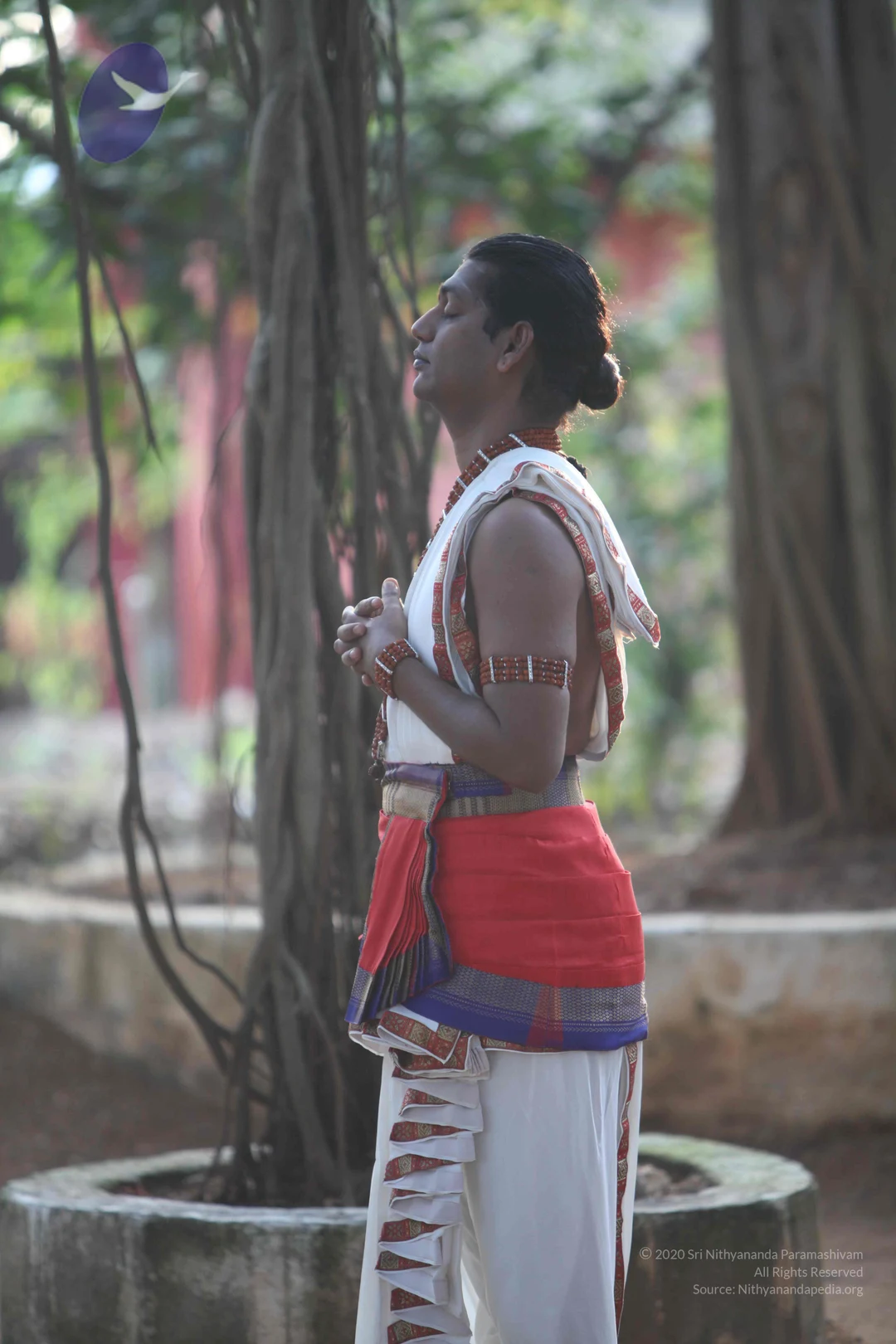
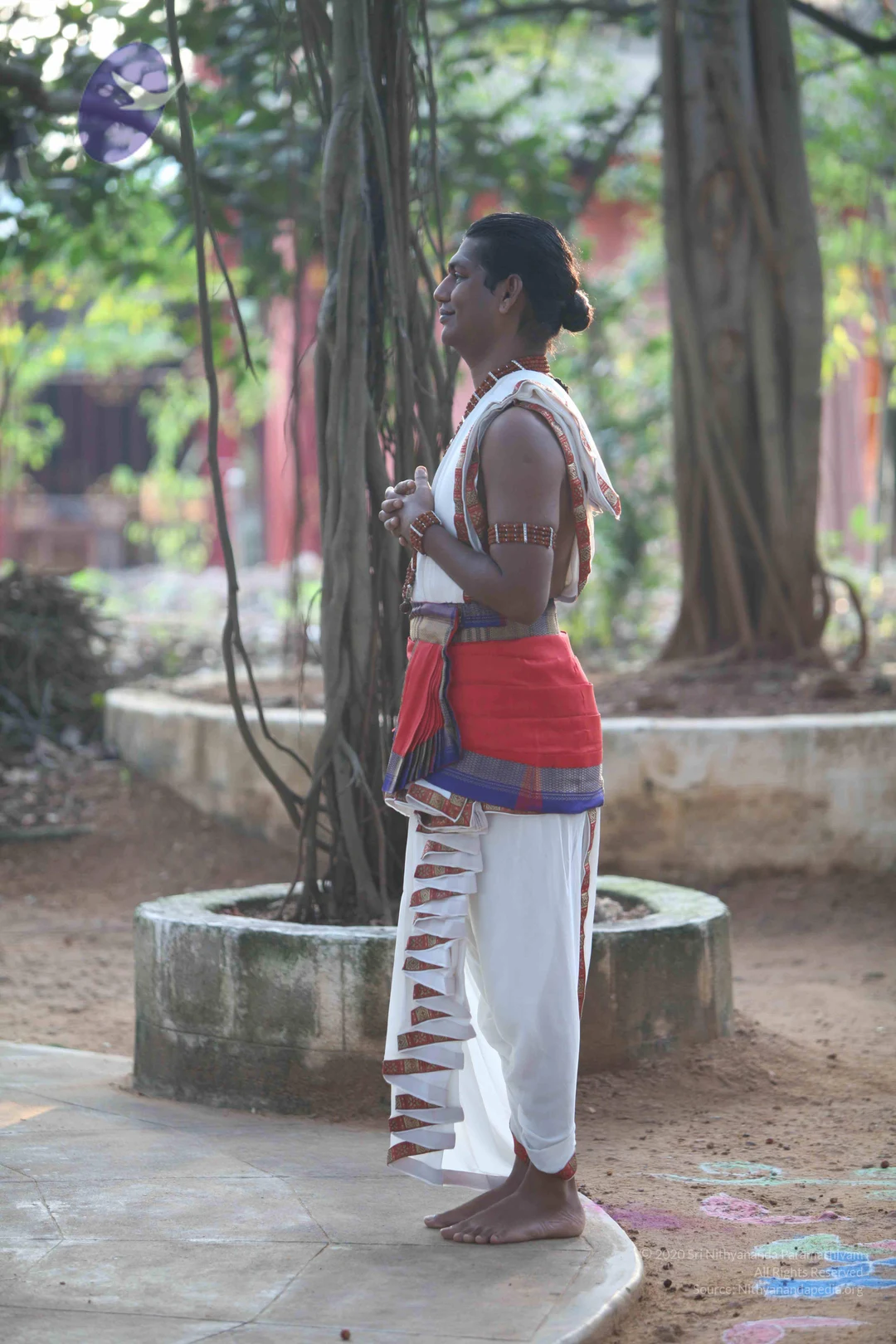
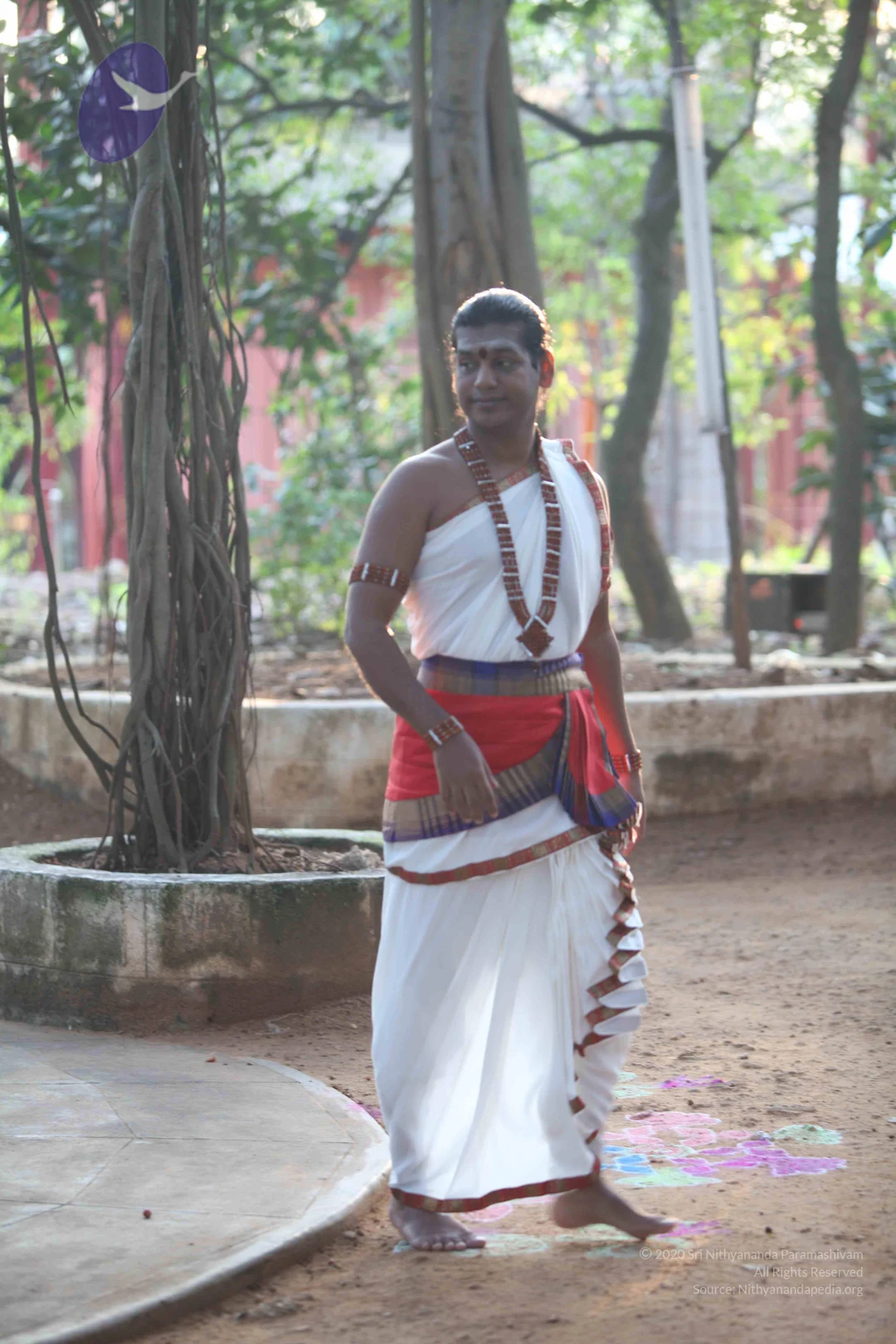
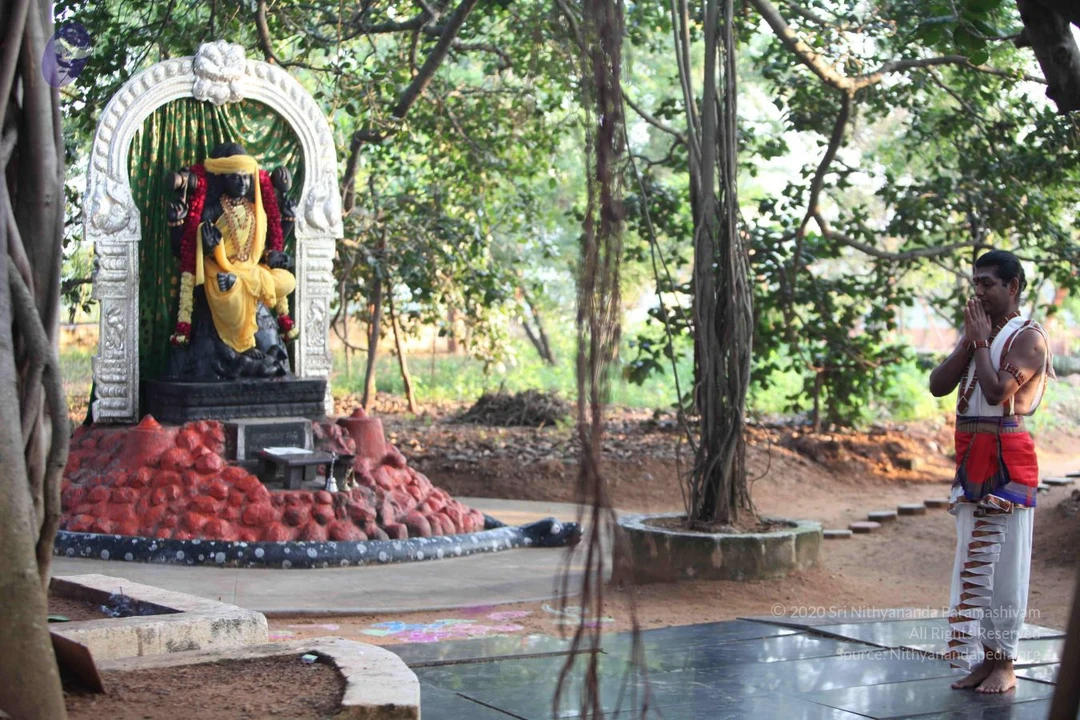
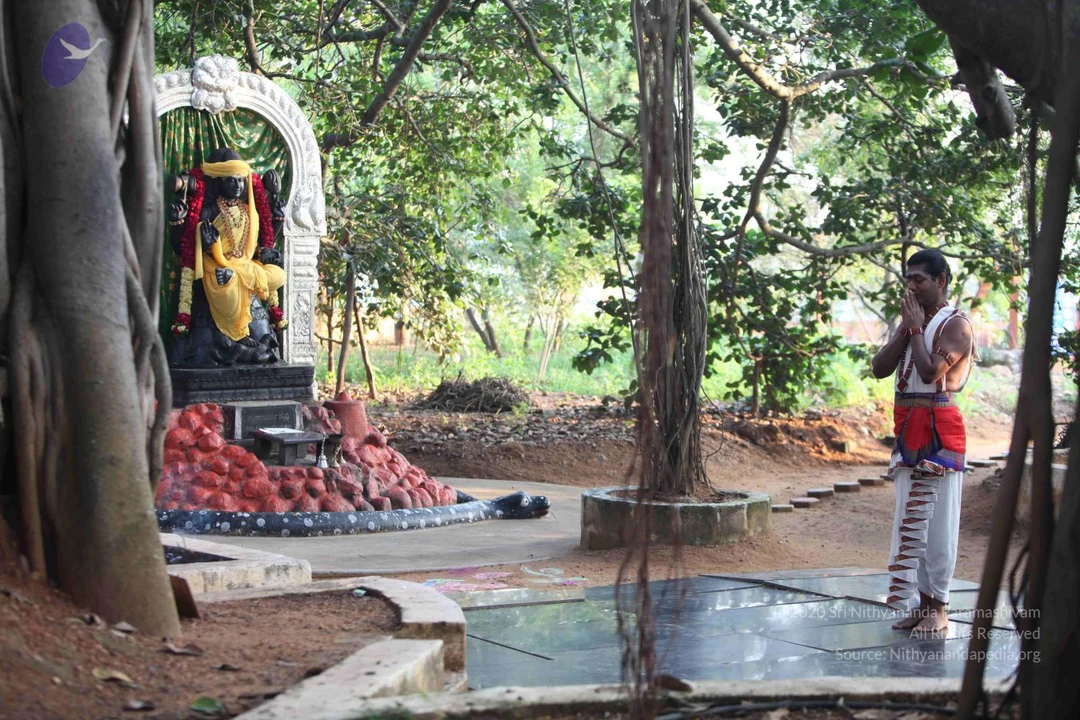
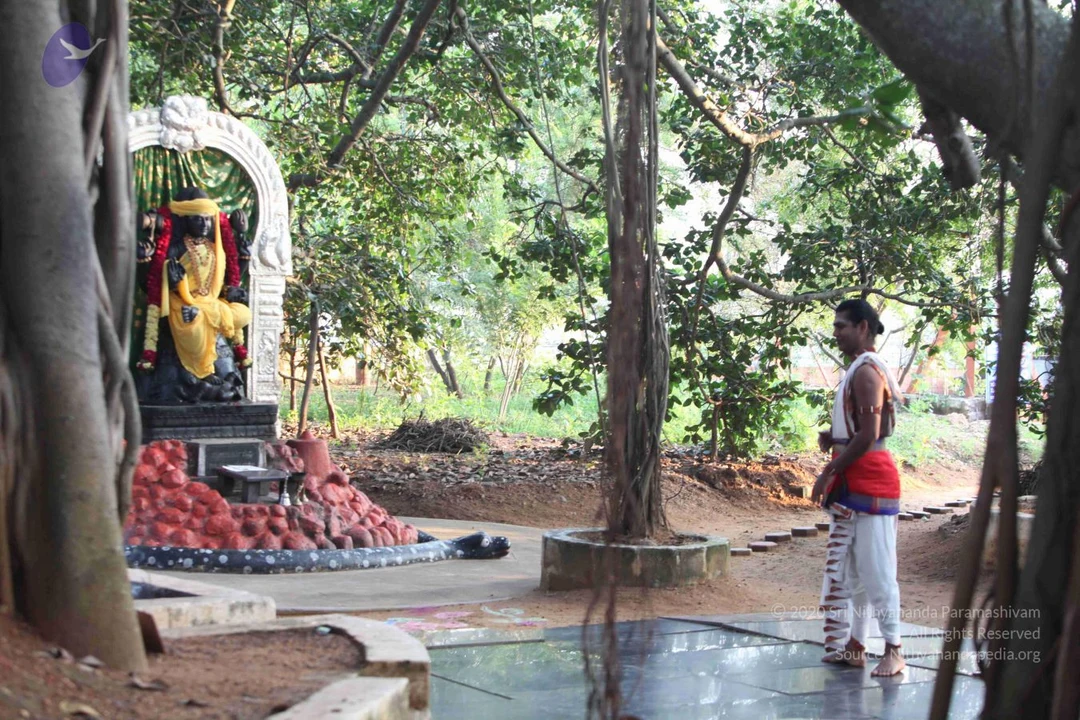
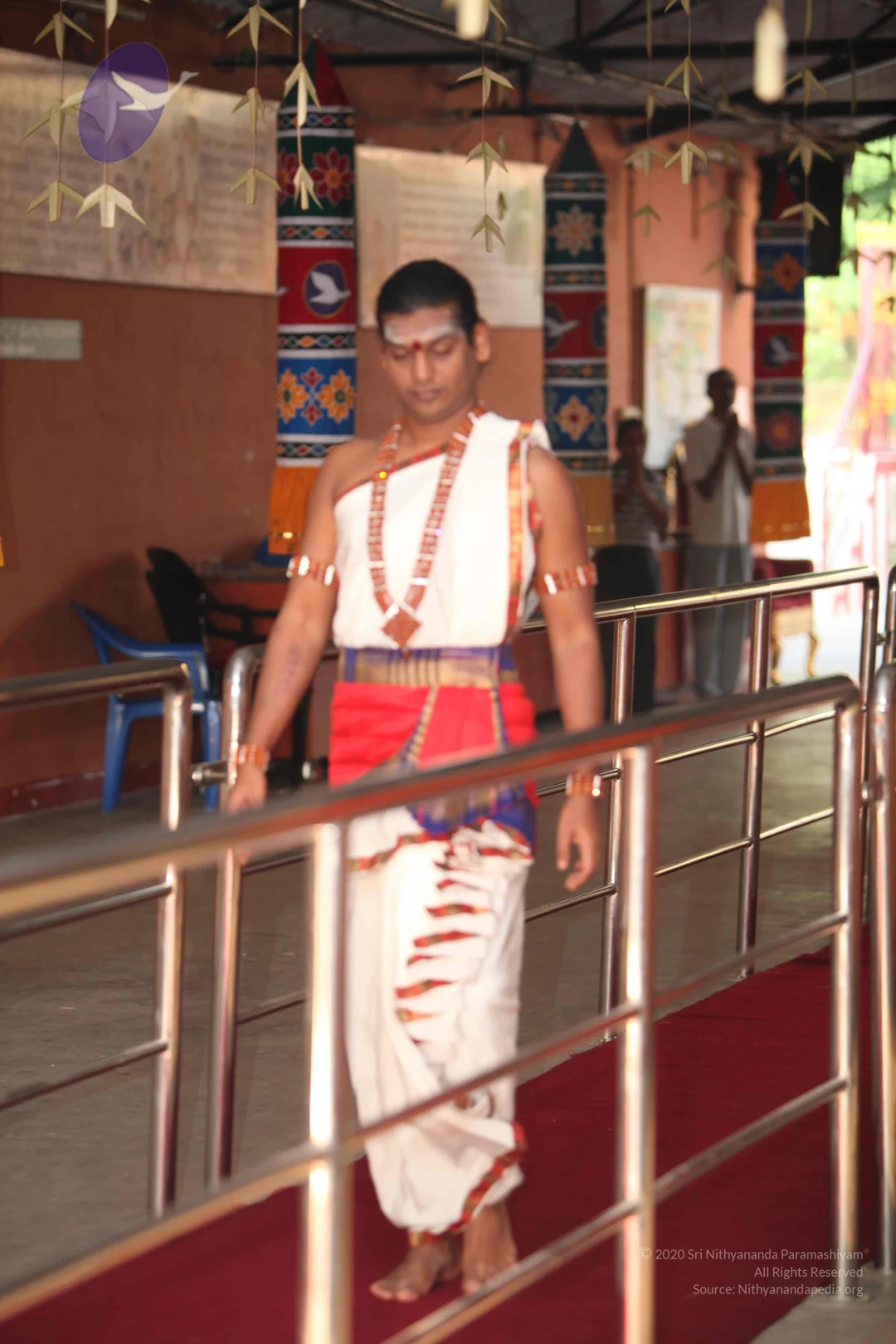
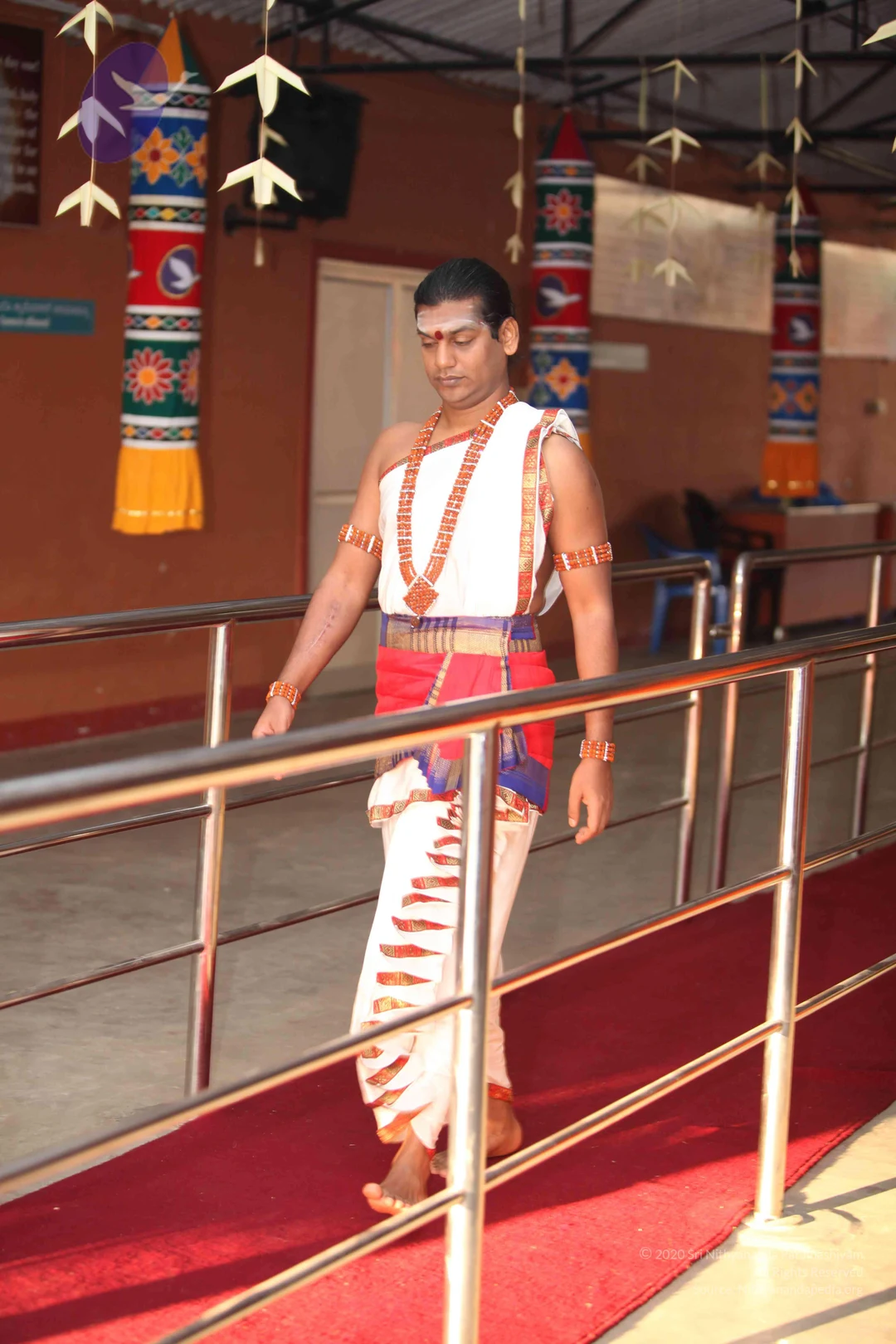
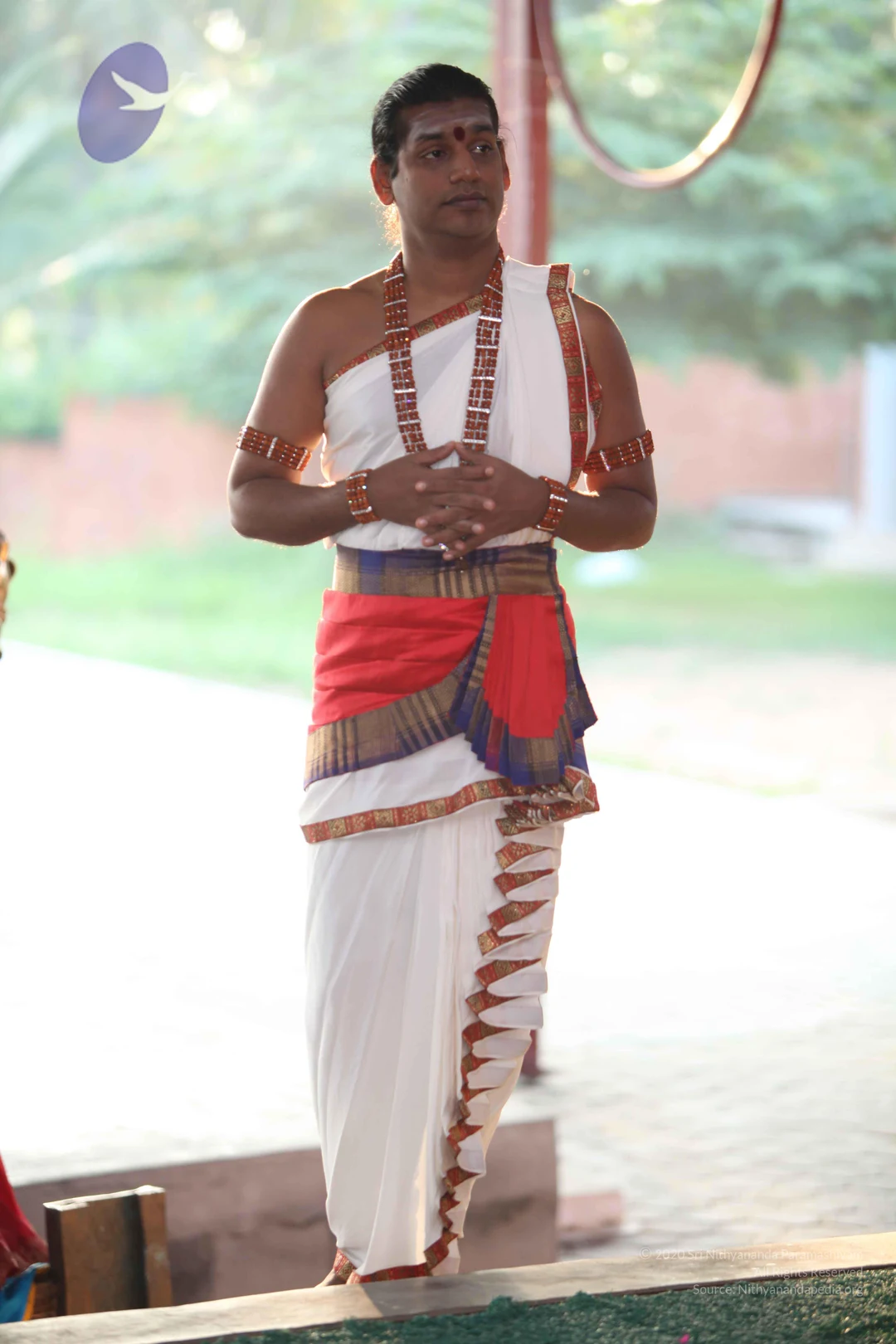
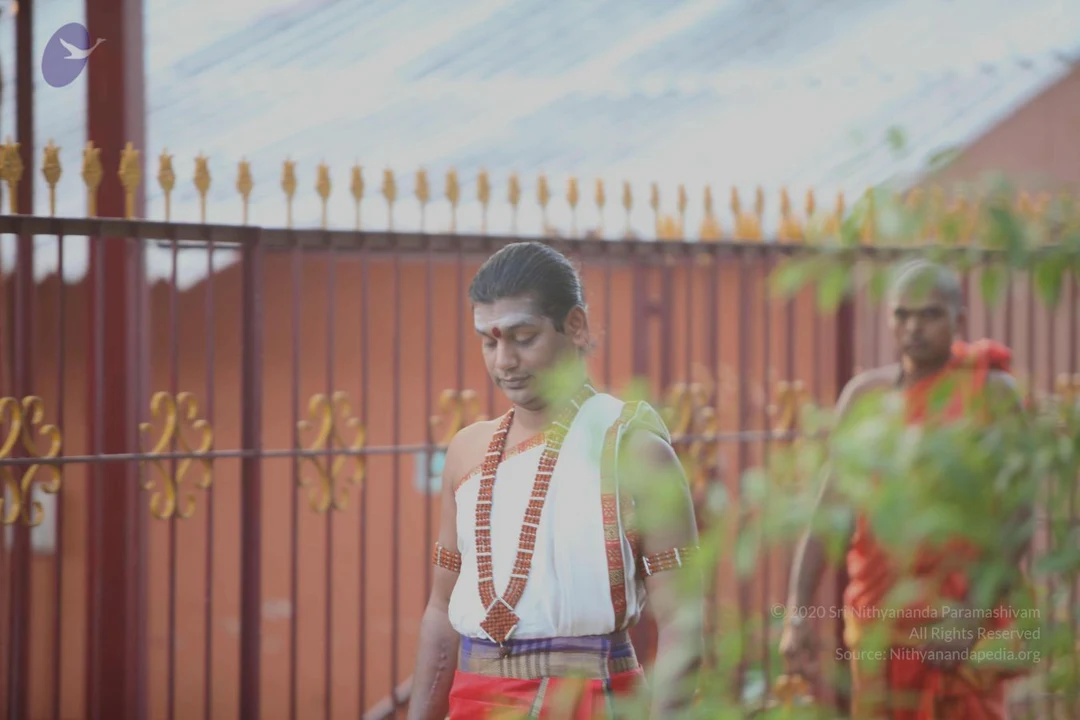
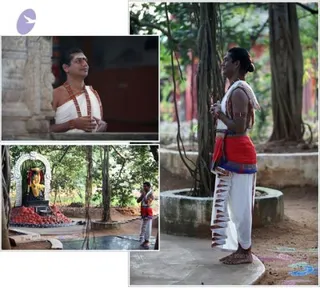
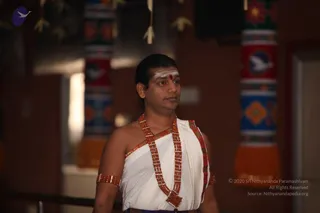
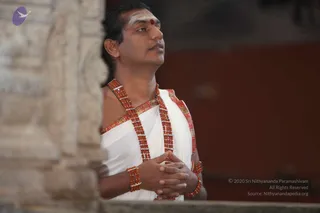
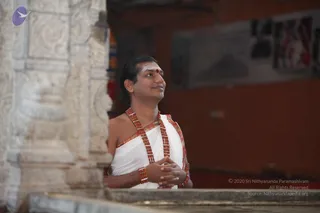
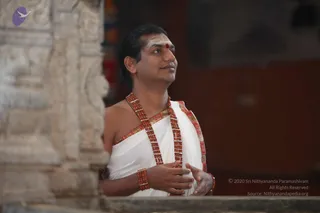
A three-panel collage of photographs in an outdoor temple grounds setting with large banyan-type trees. The main panel on the right shows a bare-chested man in white dhoti with red-and-white striped waist cloth and red sash, hands folded in prayer, standing beside a circular stone planter. The upper-left panel shows a man with a red-and-white sash and white shawl standing near stone carved temple walls, hands clasped at chest. The lower-left panel shows a small shrine with an image of Ganesha in yellow and orange, decorated with red flower offerings, and a man in red dhoti and white cloth standing before it.A man stands in a temple-like hall, wearing a white unstitched dhoti-style garment draped over his shoulder, a red-and-gold beaded necklace and matching beaded arm bands, with a white vertical tilak and red bindi on his forehead. Behind him are red, blue and orange decorative pillars bearing white bird emblems, and hanging gold-tipped decorations overhead.A man in white ritual dress stands beside a weathered stone pillar with his palms pressed together at his chest and his gaze lifted upward. He wears a white dhoti-style garment over his shoulders with a red and gold bordered wrap, multiple strands of red-brown rudraksha beads crossing his chest, and matching beaded bracelets on his wrists. A white tilak marks his forehead with a red bindi at its centre. The background is a dark red wall. The image is a photograph. Appearance-based label: the man has a shaved-looking short haircut and no crown, turban, long swept hair or ceremonial gold necklace, so his identity as a person is uncertain; he is described as a devotee in prayer posture.A man in white dhoti and shawl with red-orange beaded rudraksha-style necklaces and bracelets stands in a temple setting beside carved pale stone pillars, hands pressed together in anjali mudra, gazing upward with a slight smile and a red bindi on his forehead. Behind him is a rust-orange wall with a framed display of photographs.A man stands at a carved stone pillar in a temple setting, looking upward with a slight smile and hands joined at his waist. He wears a white dhoti-style garment with a red-and-gold bordered shawl, multiple strands of red rudraksha beads around his neck and a red rudraksha bracelet. A red bindi marks his forehead and his hair is swept back. Behind him is a dark red wall. a person: the long swept-back hair, rudraksha malas and ornate bordered shawl are visible cues, but the figure is standing in ordinary white ritual clothing, so identity is uncertain.A photograph of a man in a white dhoti with a red, purple and gold striped waist cloth and a white upper cloth draped over his shoulder, wearing a red and white beaded mala necklace and beaded bracelets on his arms. He has a red tilak on his forehead and walks slowly along a red-painted path beside an ornate red and gold metal gate with golden finials. Behind him, a shaved-headed man in orange-saffron robes stands near a red wall. Green leaves in the foreground partially frame the scene.

Pratyaksha-Padapuja

13 photosSource gallery
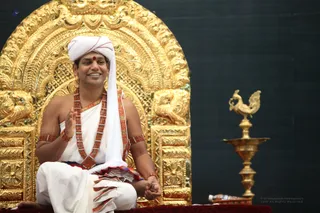
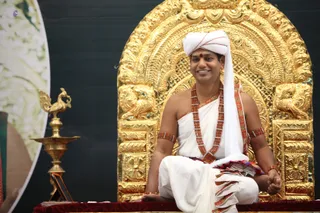
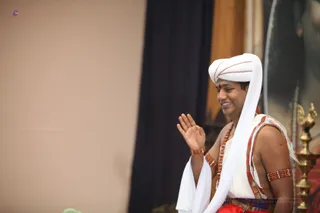
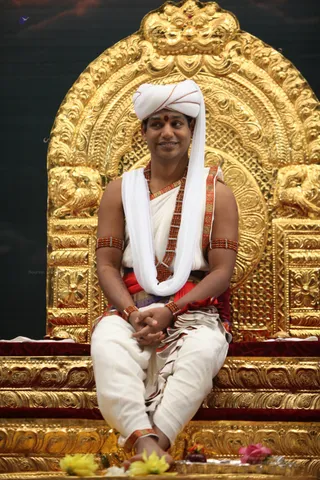
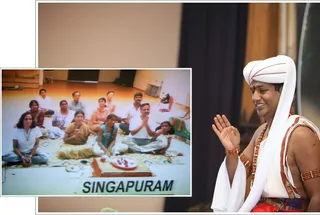
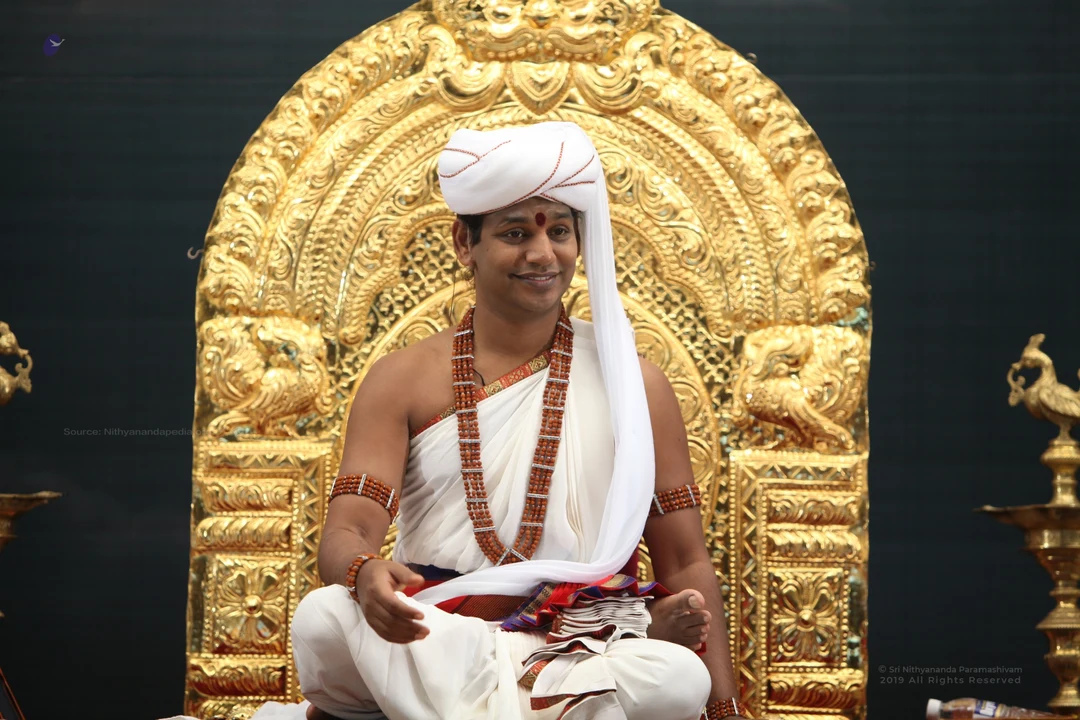
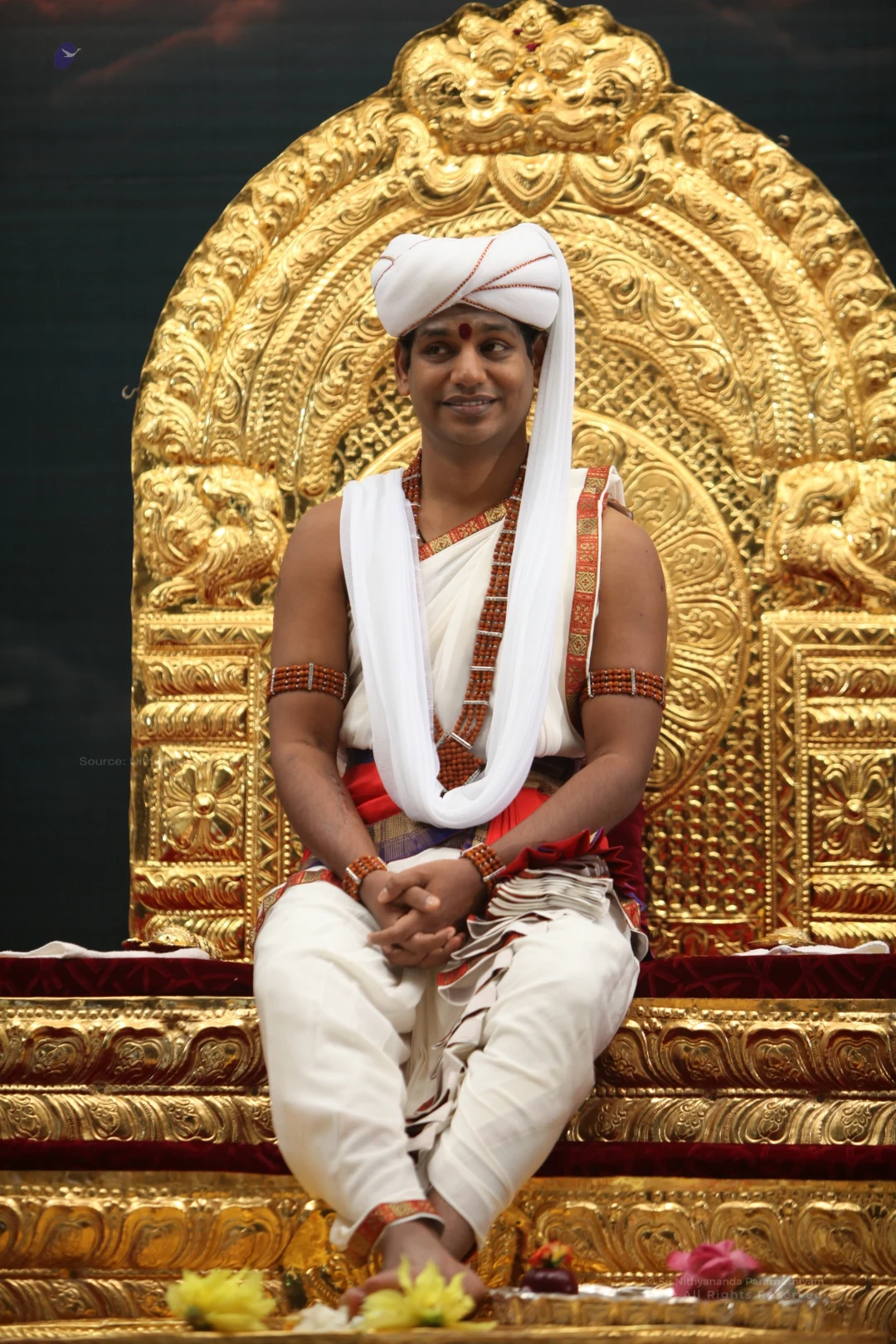
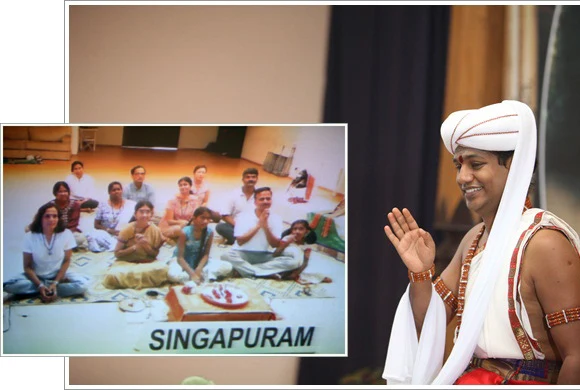
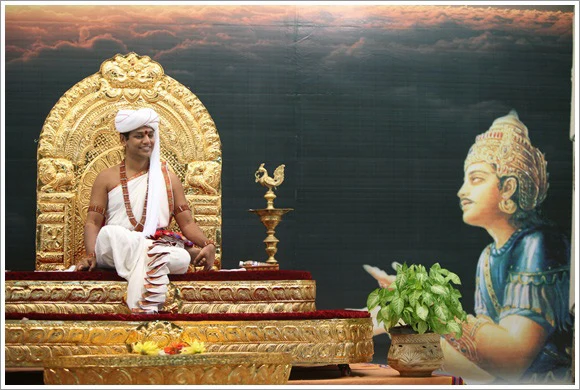
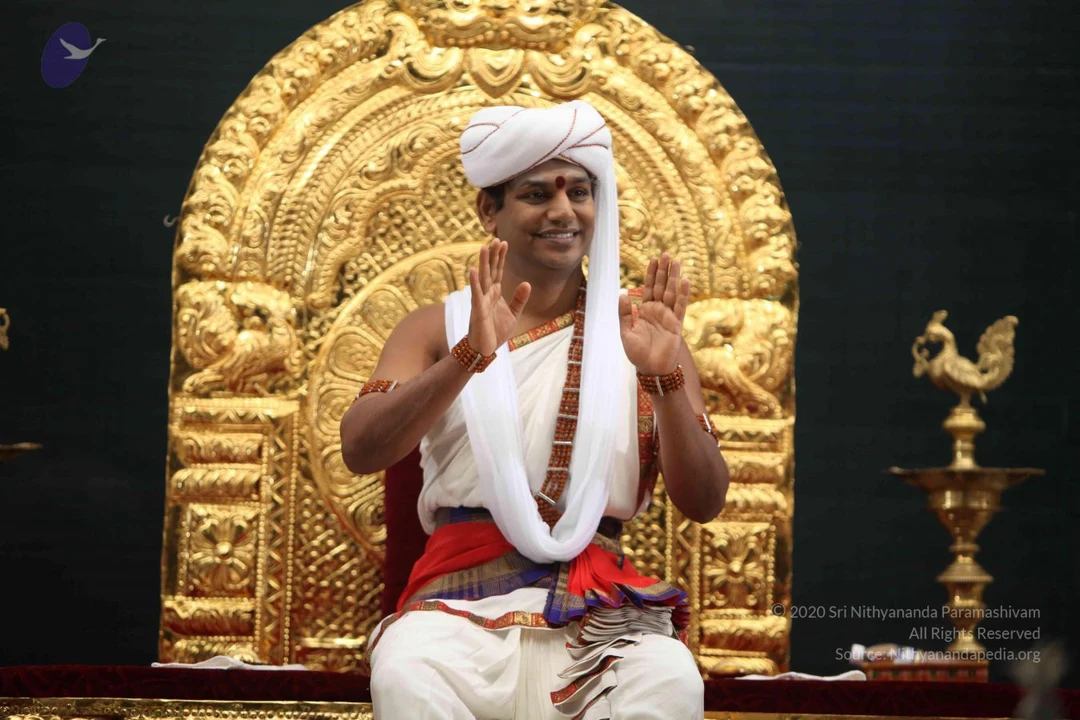
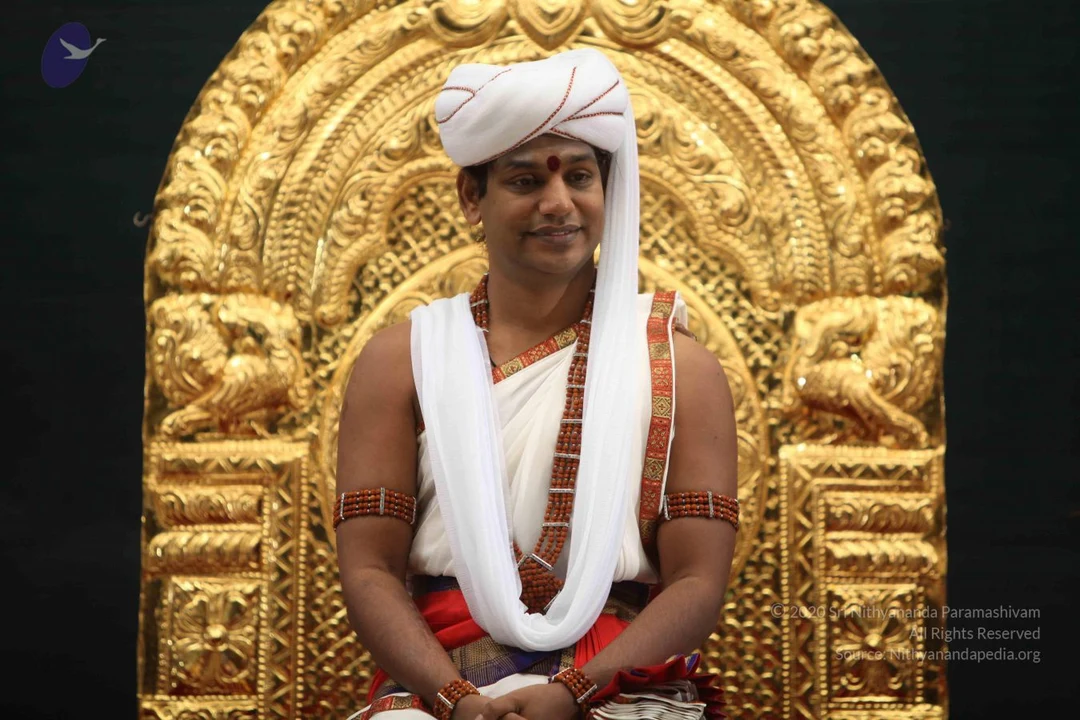
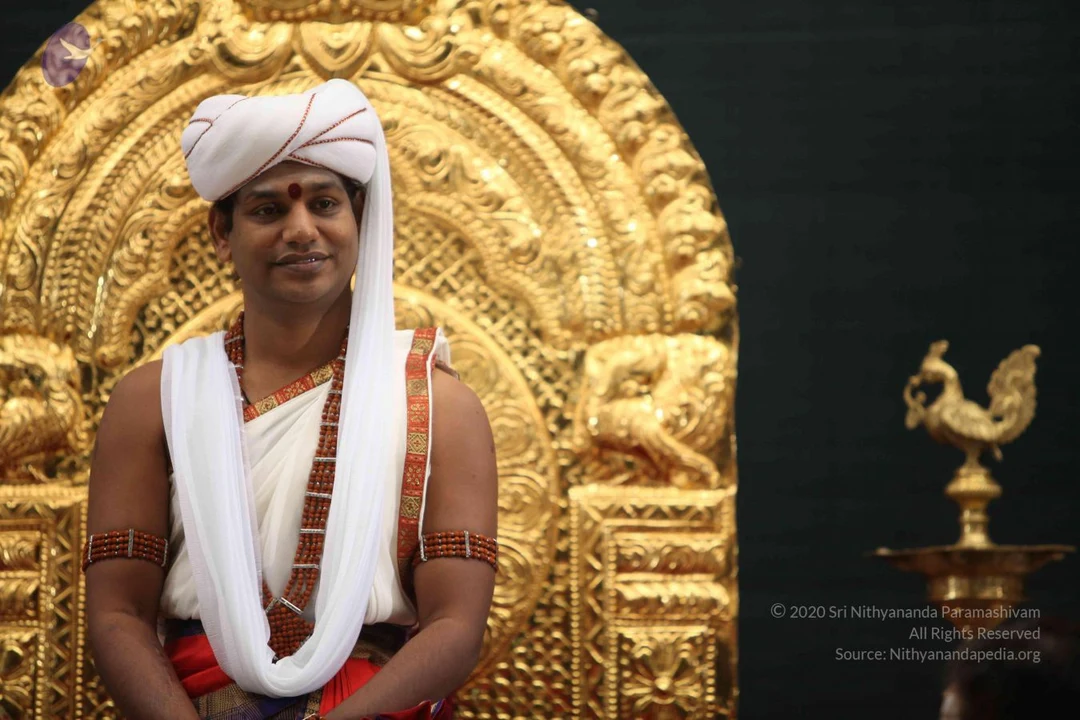
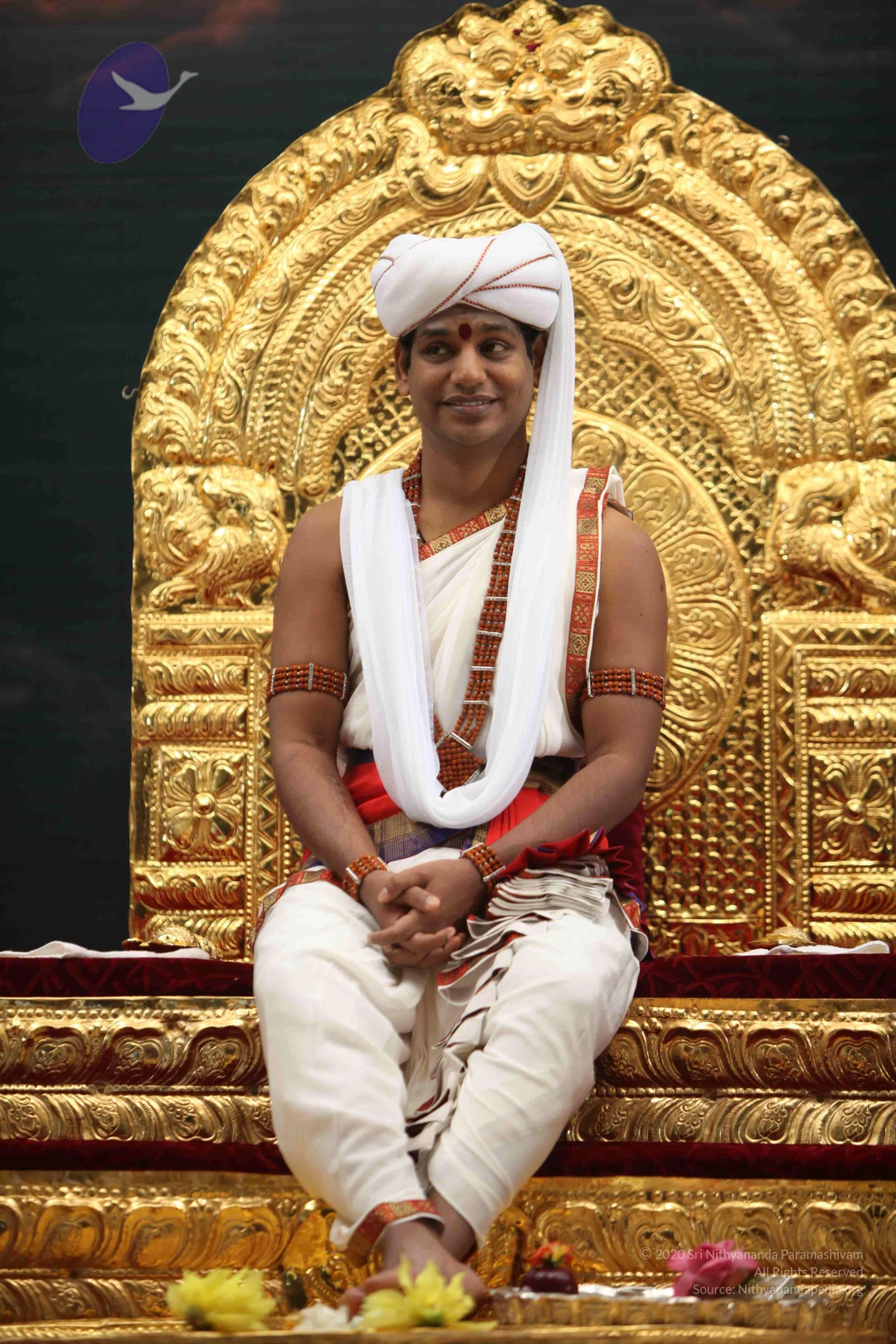
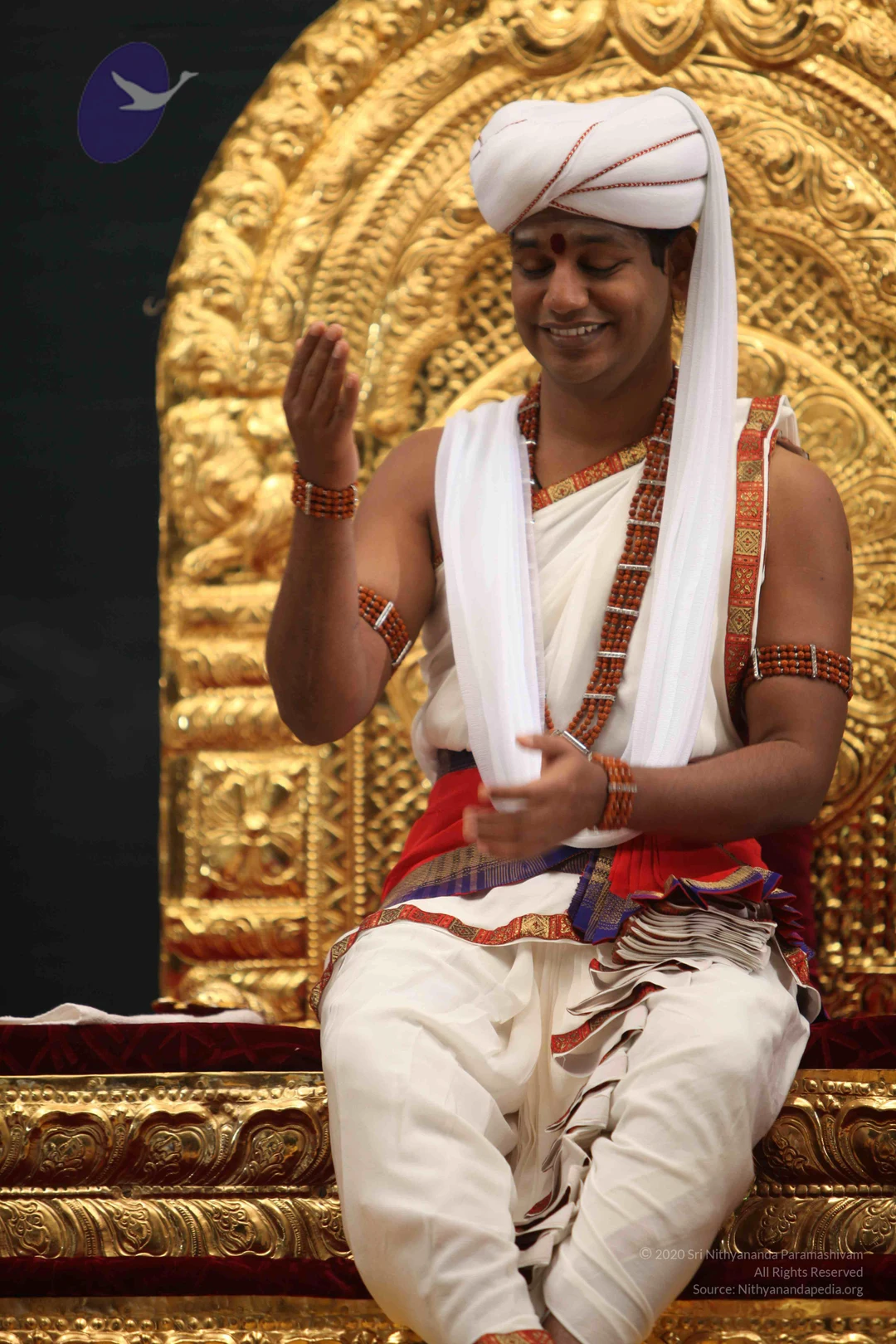
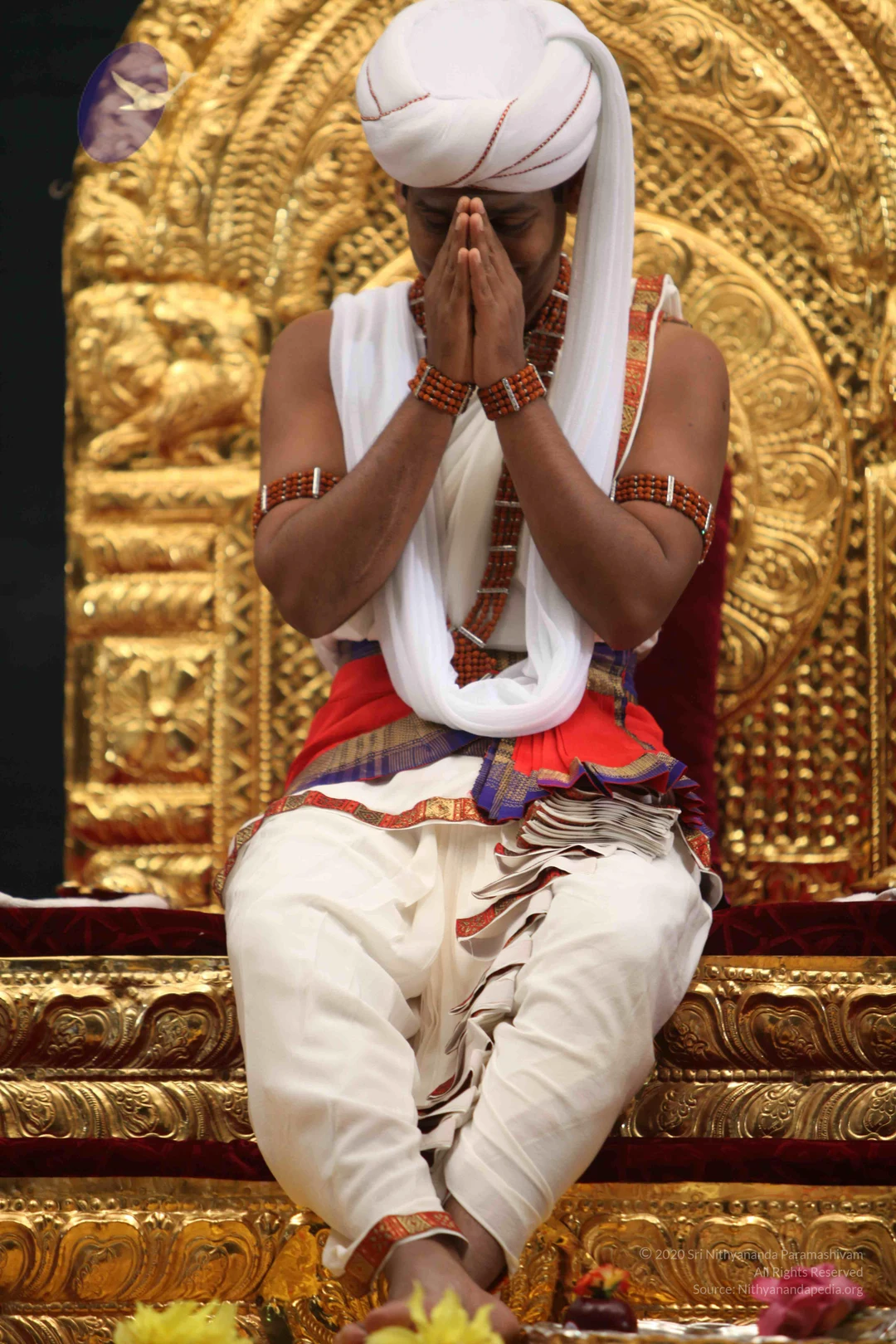
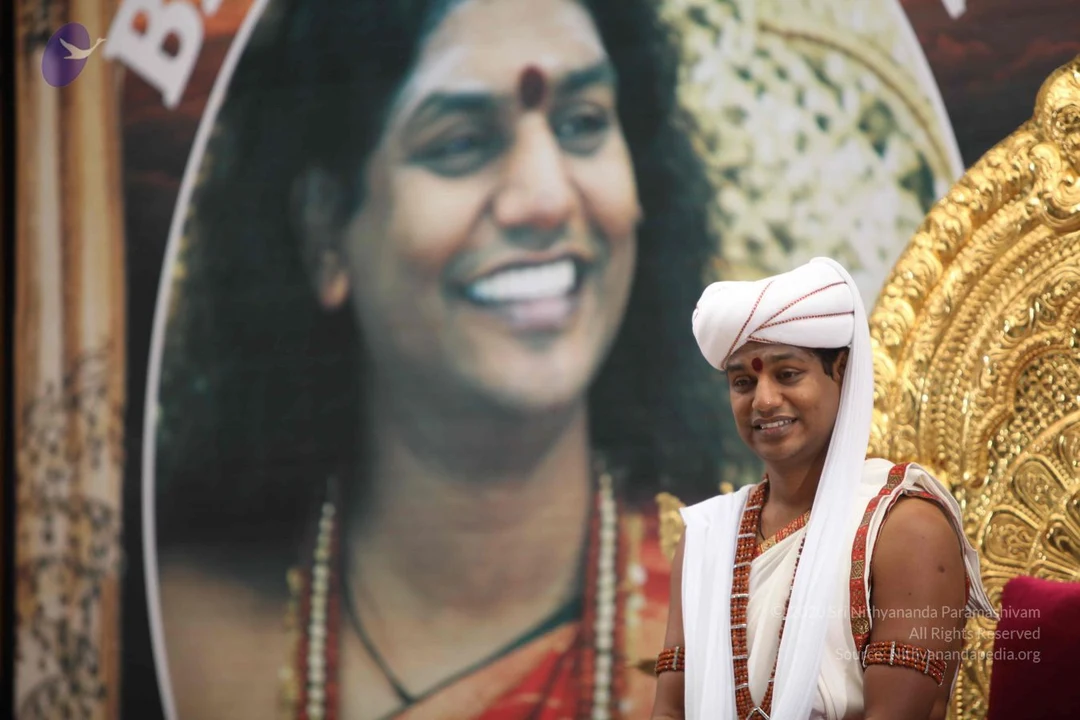
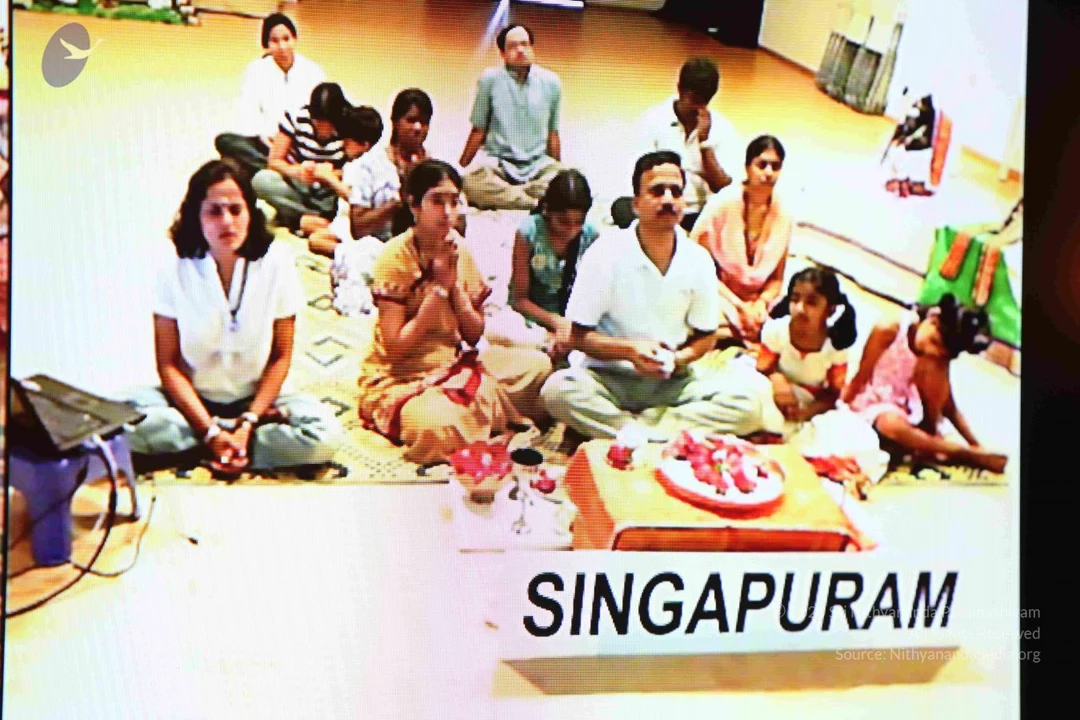
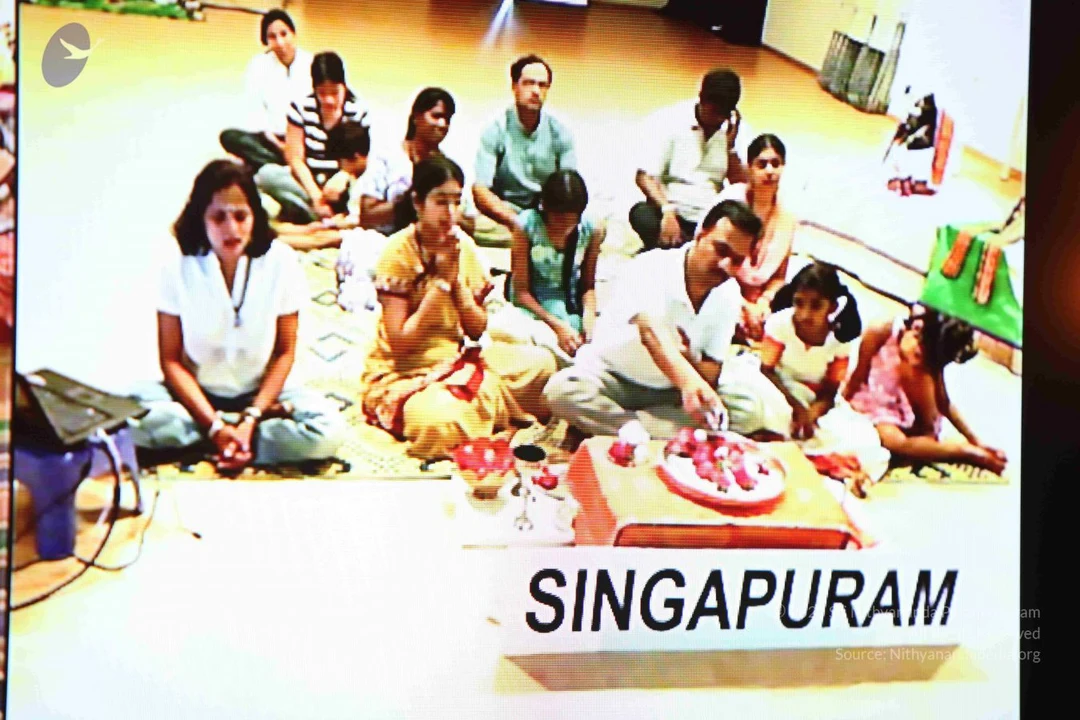
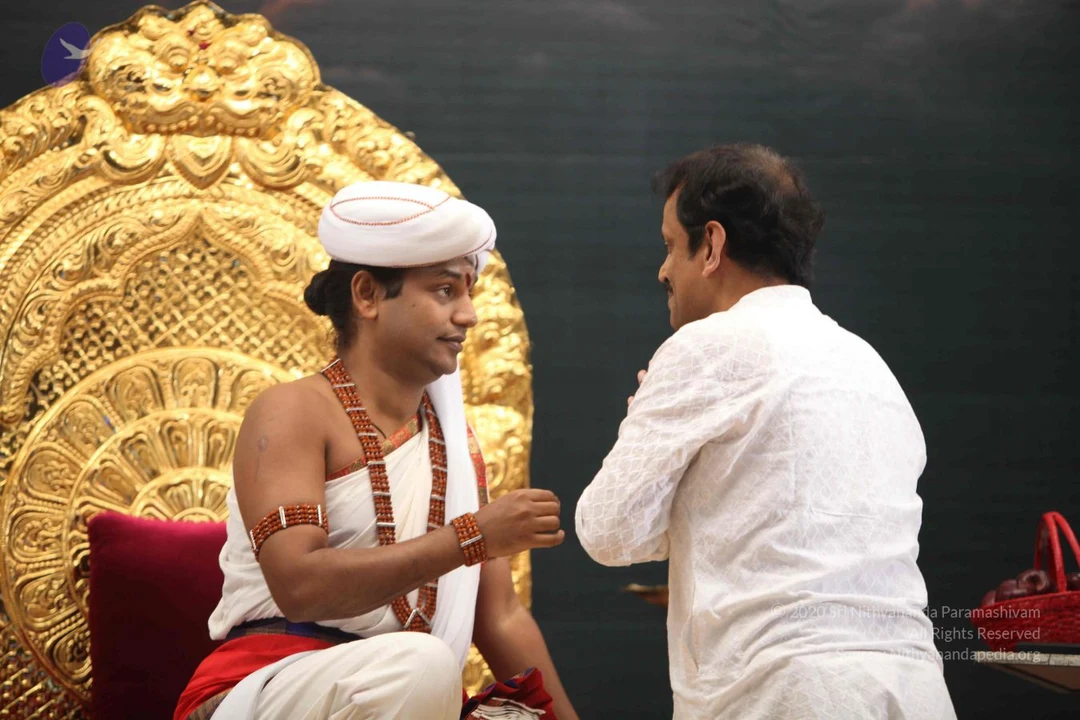
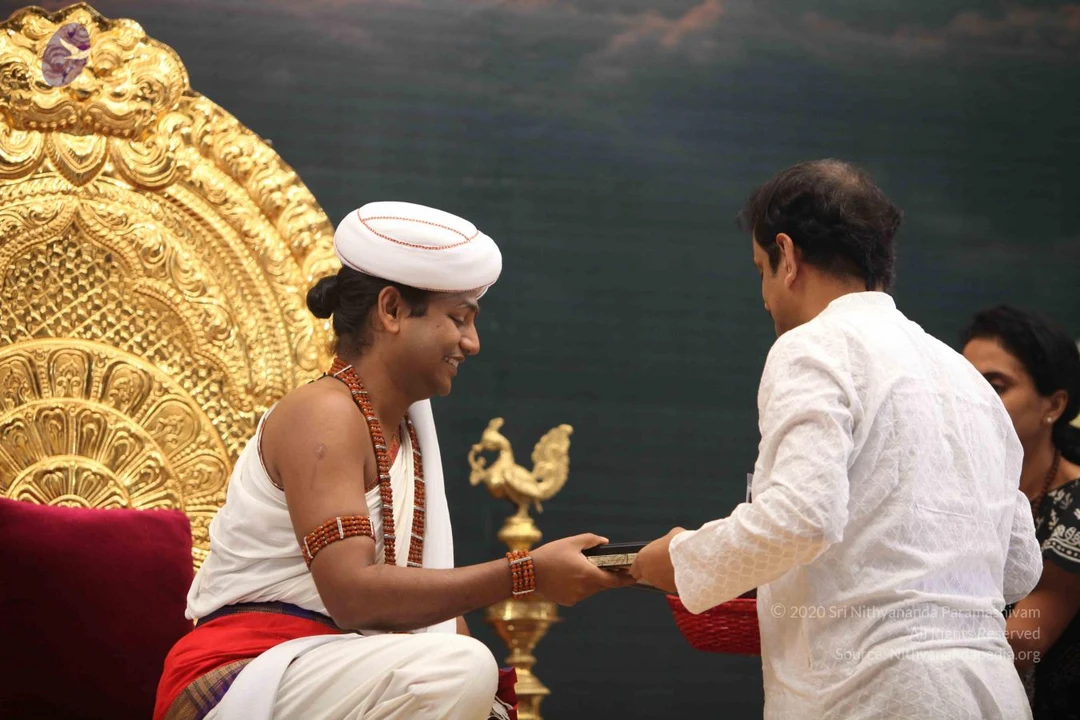
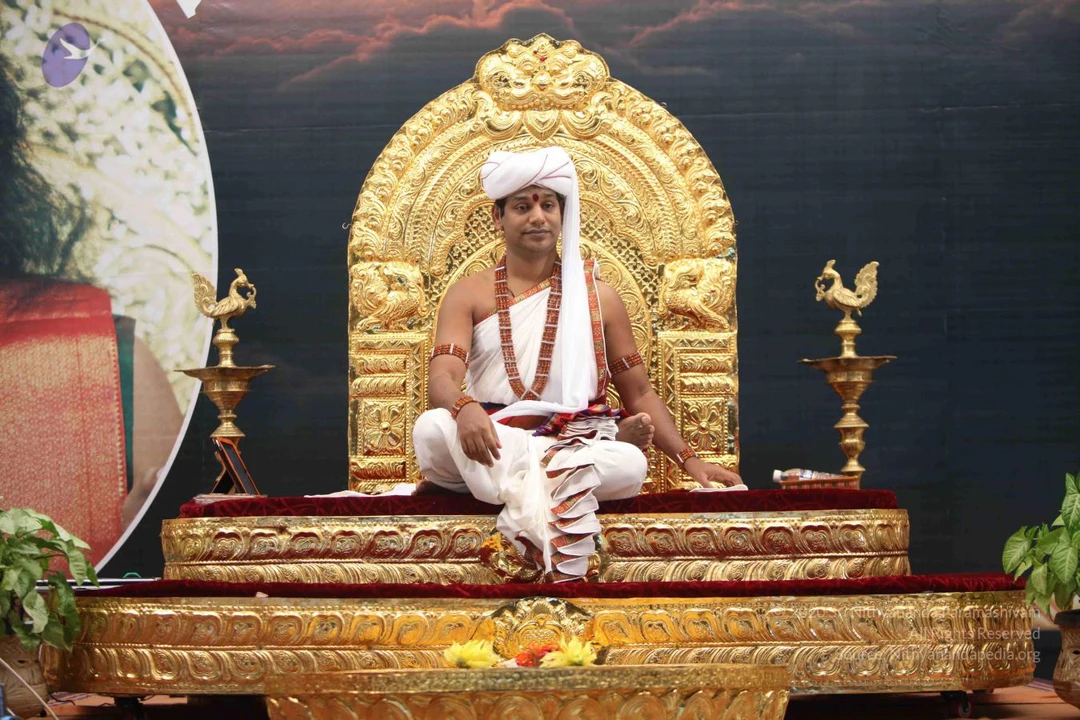
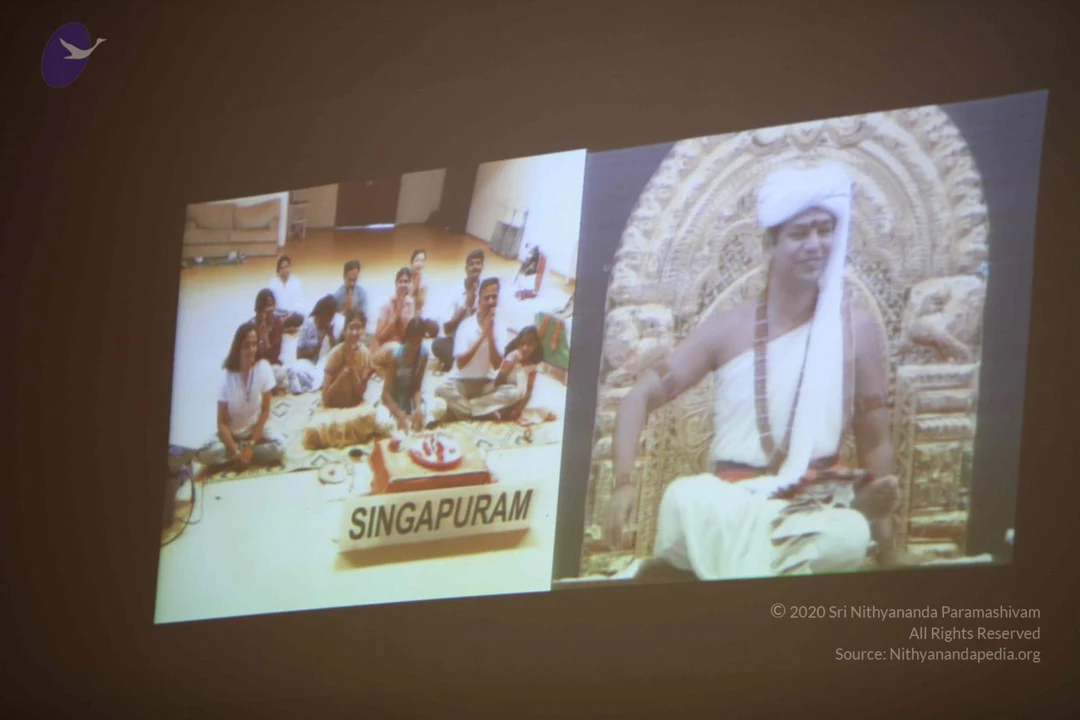
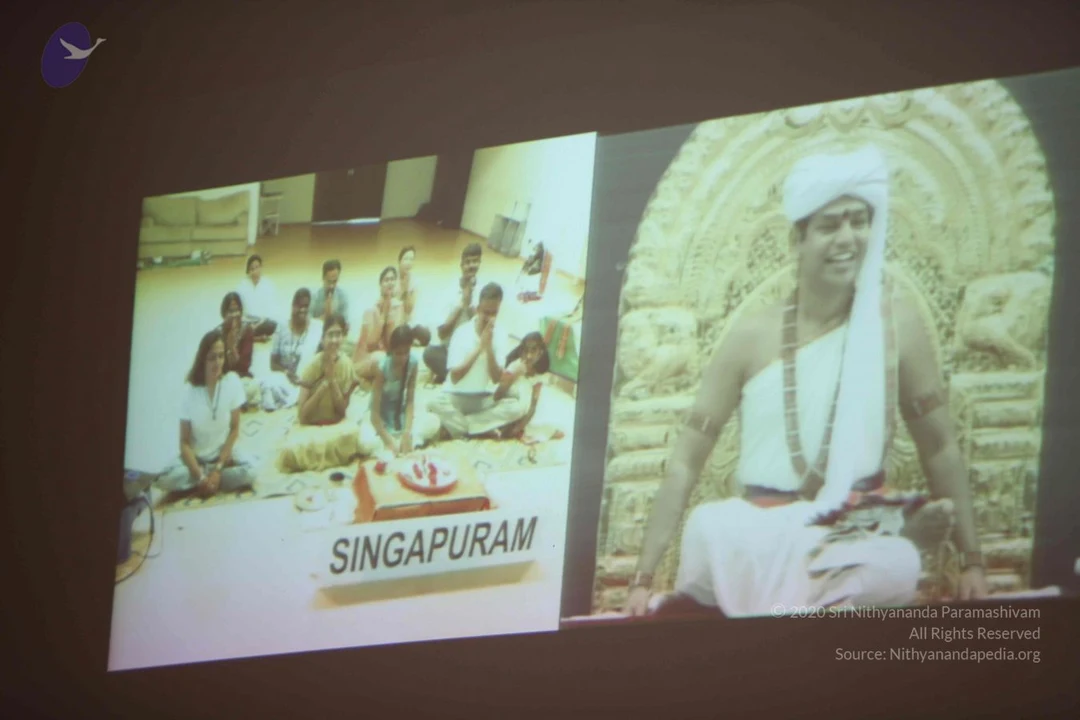
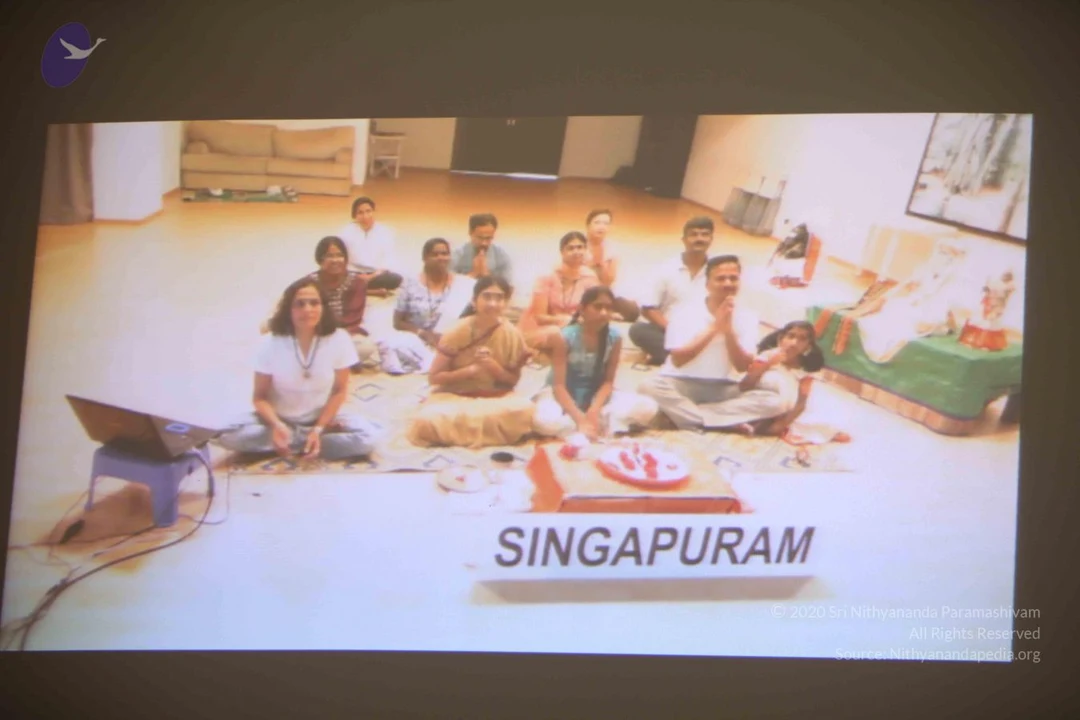
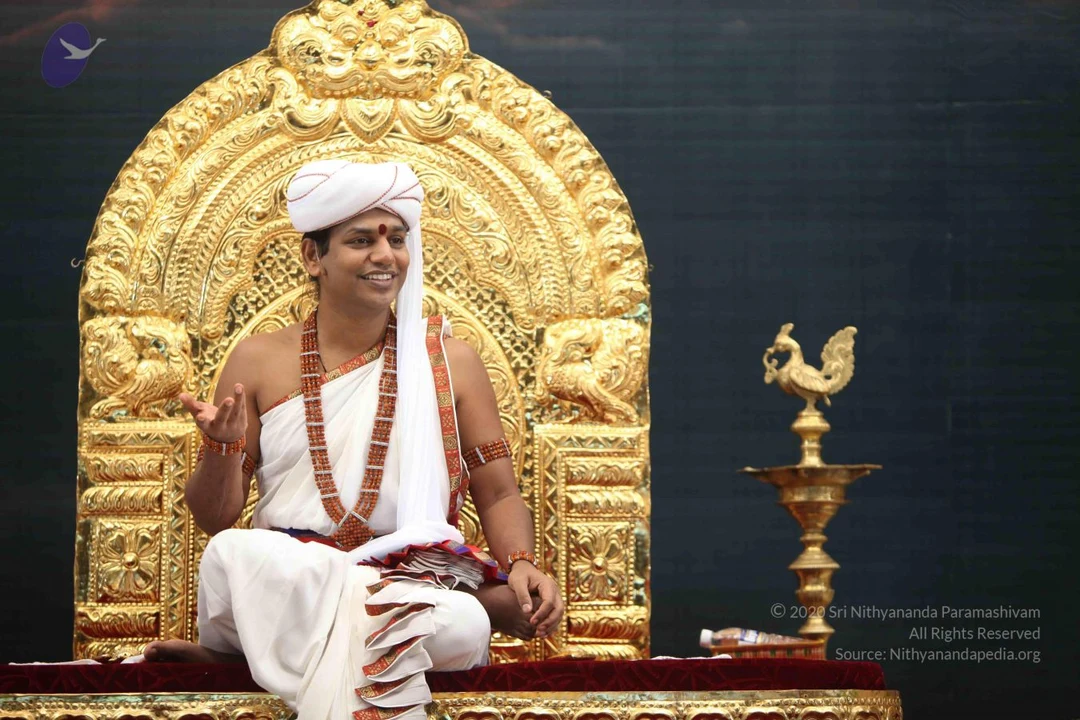
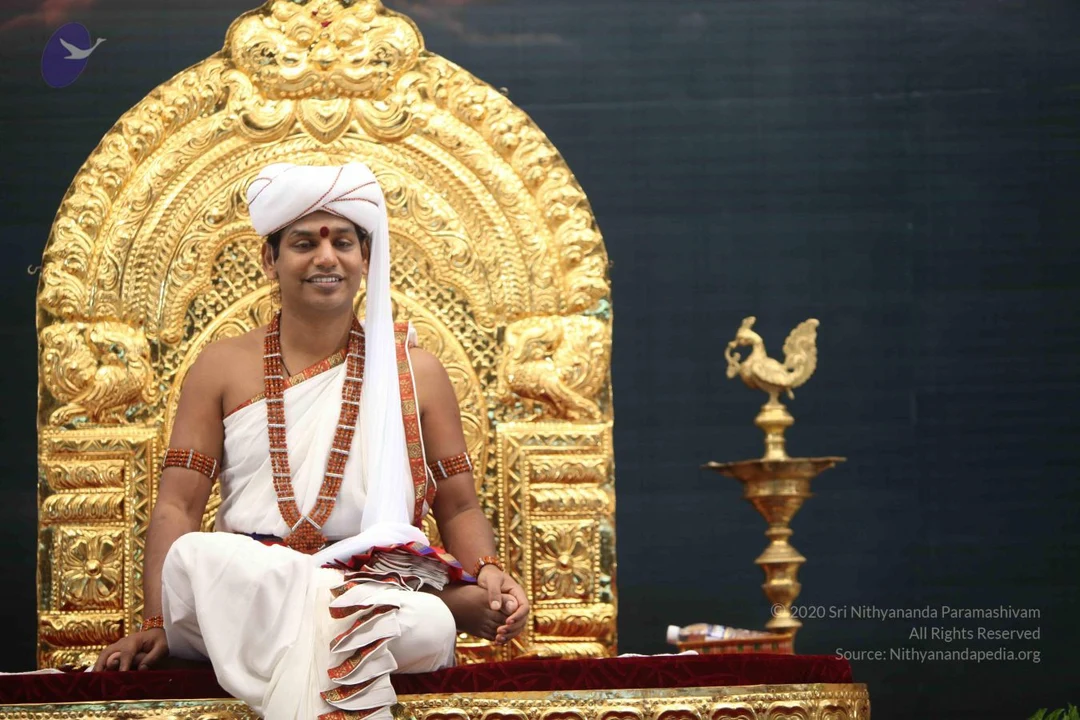
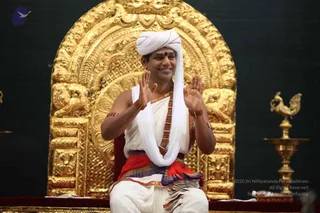
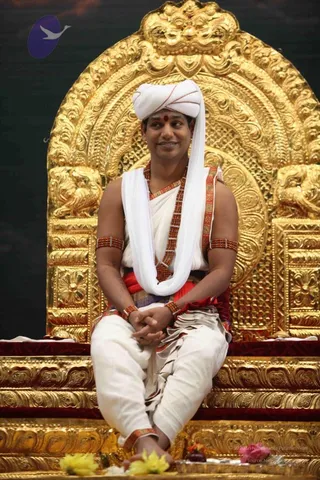
Composite image: on the right, a smiling man in a white turban and white garment with a red-and-gold shawl, hands raised in greeting, standing before a dark curtain, appears to be a candidate for a person based on the turban and ornamented shawl cues. On the left inset, a framed photograph shows roughly eight people seated together on a white floor cloth in front of a fire pit with offerings, with a printed sign reading SINGAPURAM at the bottom. The overall layout suggests a satsang discourse graphic with a photographic inset.A man seated on an ornate gilded throne with carved lion and floral motifs, smiling and raising both palms in a teaching gesture. He wears a white turban with red tilak, white shawl draped over the shoulder, white dhoti with red and blue border, and a red-beaded rudraksha-style mala, with red-beaded bracelets on his arms. A brass lamp stand with a rooster-shaped top stands to the right. Dark background.A seated man in a white turban with red line markings and a red bindi sits before an ornate gilded throne with carved lion figures and arched frame. He wears a white shawl draped over one shoulder, a white dhoti-style garment with red and gold border, a long rudraksha mala necklace, and rudraksha armbands on both upper arms, with rudraksha bracelets at the wrists. He smiles calmly, hands resting in his lap. Appearance and throne setting suggest a person, but identity remains uncertain from appearance alone. Plain photograph, single person.A man seated in front of an ornate gold throne with carved lion-like figures and a gilded arch. He wears a white turban with red stripes, a white shawl draped over one shoulder, a white dhoti with a red border, red beaded necklaces and red beaded armbands, and a red bindi on his forehead. A gold rooster-shaped finial sits on a stand to the right against a dark green background. a person: the man is seated on a throne in the ceremonial attire of a spiritual leader, with turban, red rudraksha-style beads and shawl, though his face is not used for identification.A seated man in a white turban with a red-and-white tilak on his forehead wears a white dhoti and white shawl draped over one shoulder, with red-and-gold bordered cloth and beaded red rudraksha-style necklaces and matching bead armbands. He sits before an ornate gold carved throne-back with lion figures, while a gilded rooster-topped lamp stands at right against a dark background. Swamiji (probable) is shown in appearance-based cues: the turban, rudraksha beads, and gold-carved throne setting. He smiles calmly during a satsang setting.A man sits cross-legged on an ornate golden throne with a tall arched back carved with floral scrollwork and lion figures. He wears a white turban with a red-banded wrap draped over his shoulder, a white dhoti-style garment with red and gold border, and multiple strands of rudraksha mala beads around his neck and on his upper arms and wrists. A red tilak mark is on his forehead. His hands rest clasped in his lap. Yellow flowers and a fruit offering lie on the golden platform in front. Appearance-based label: a person, seated on a peetha in a ceremonial setting, with rudraksha malas and distinctive ceremonial dress as cues.

BG-Satsang

121 photosSource gallery
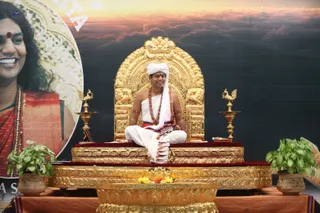
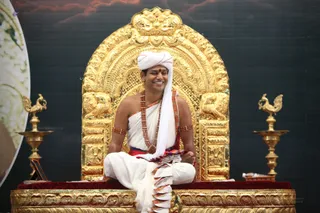
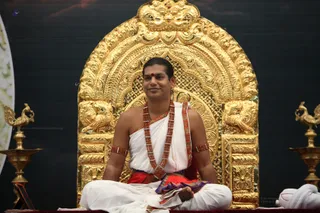
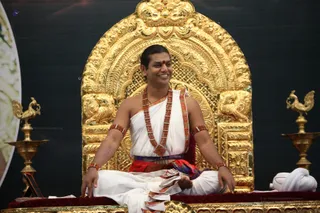
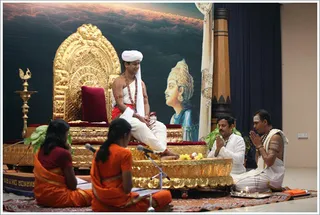
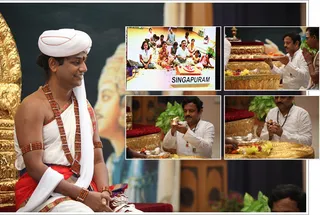
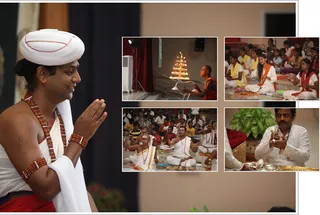
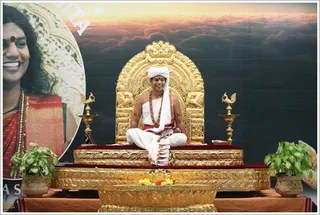
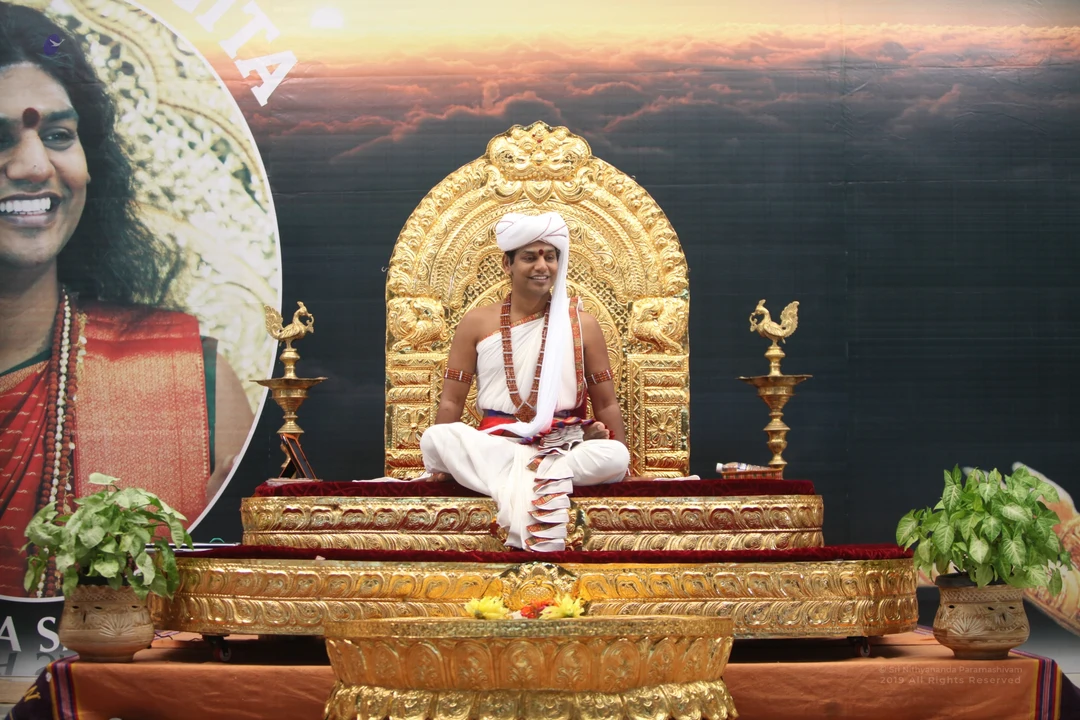
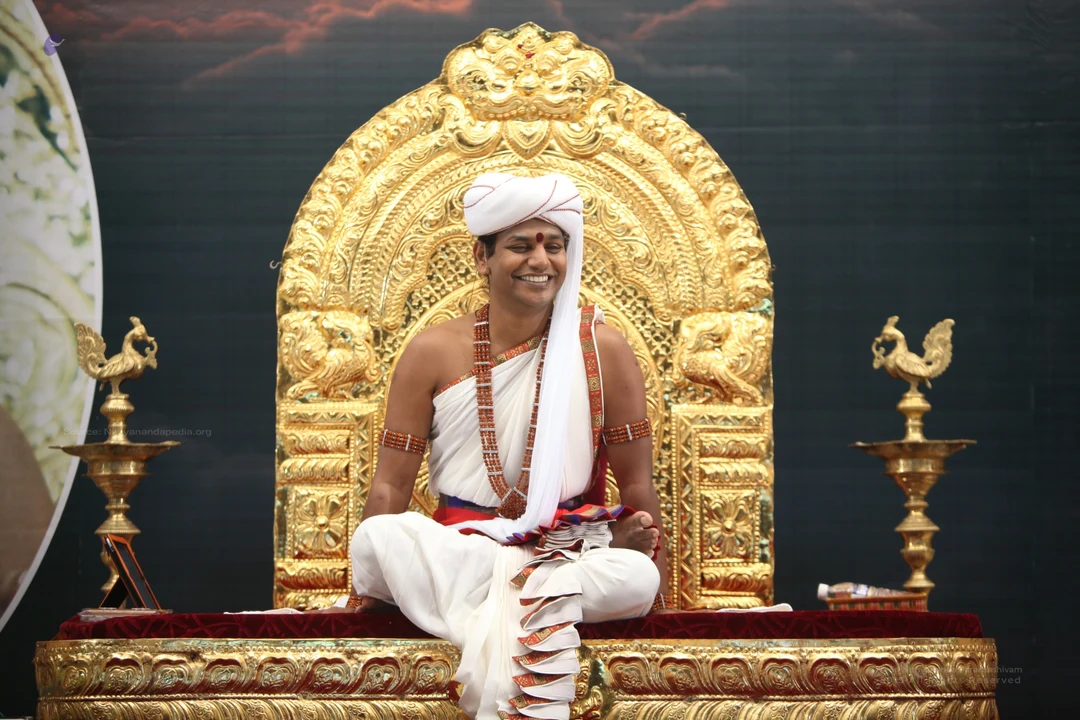
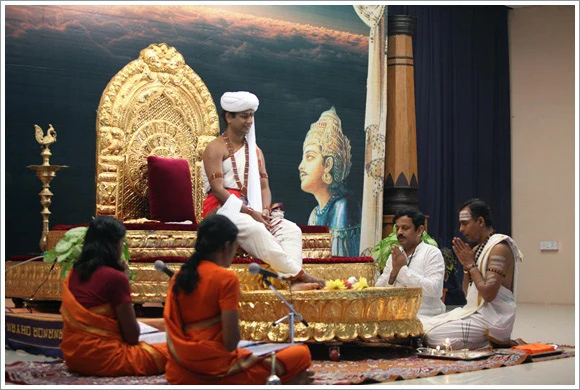
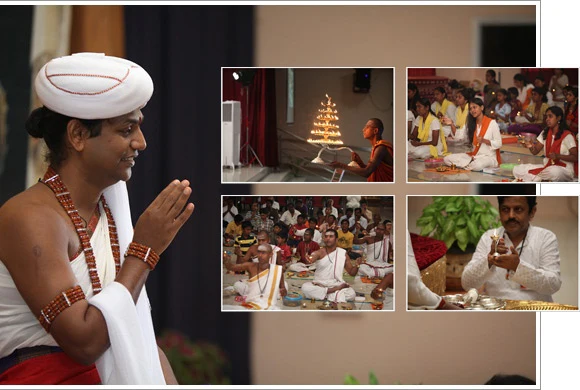
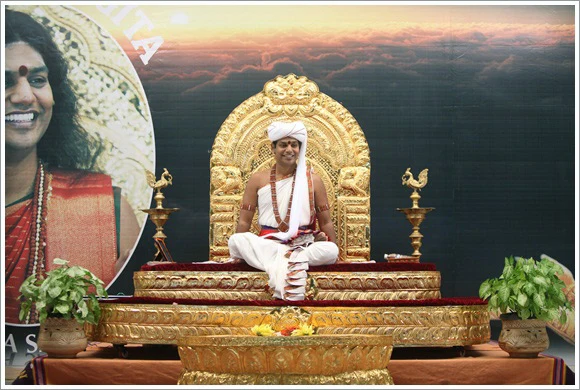
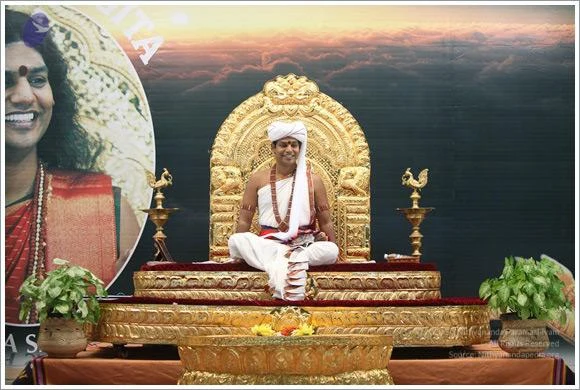
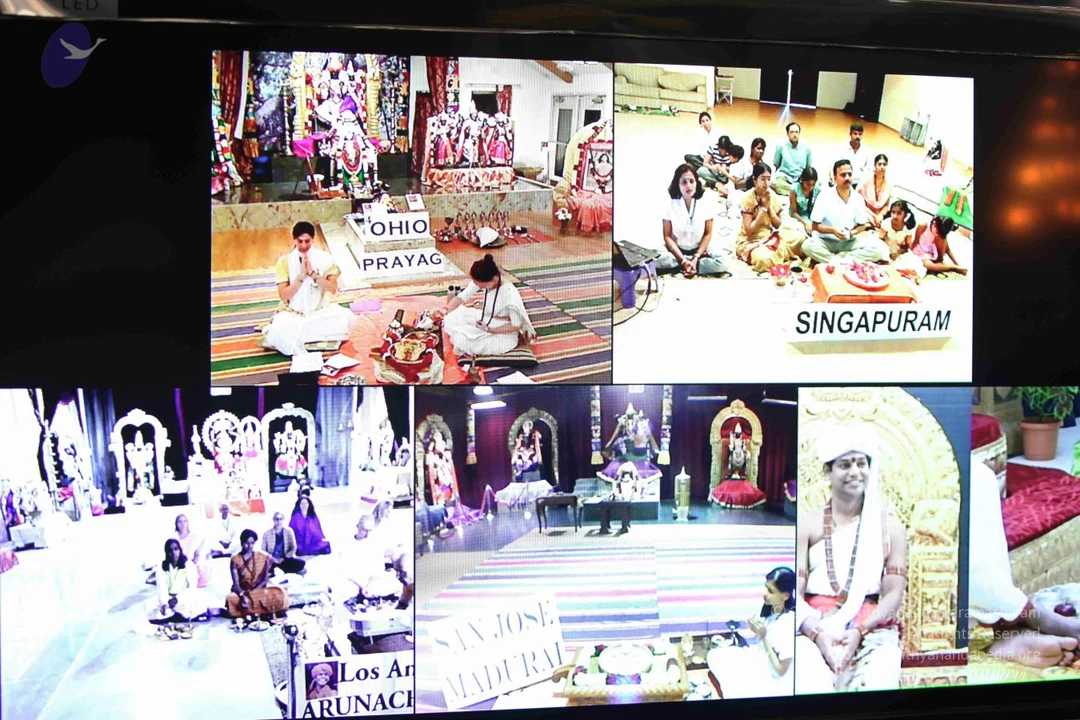
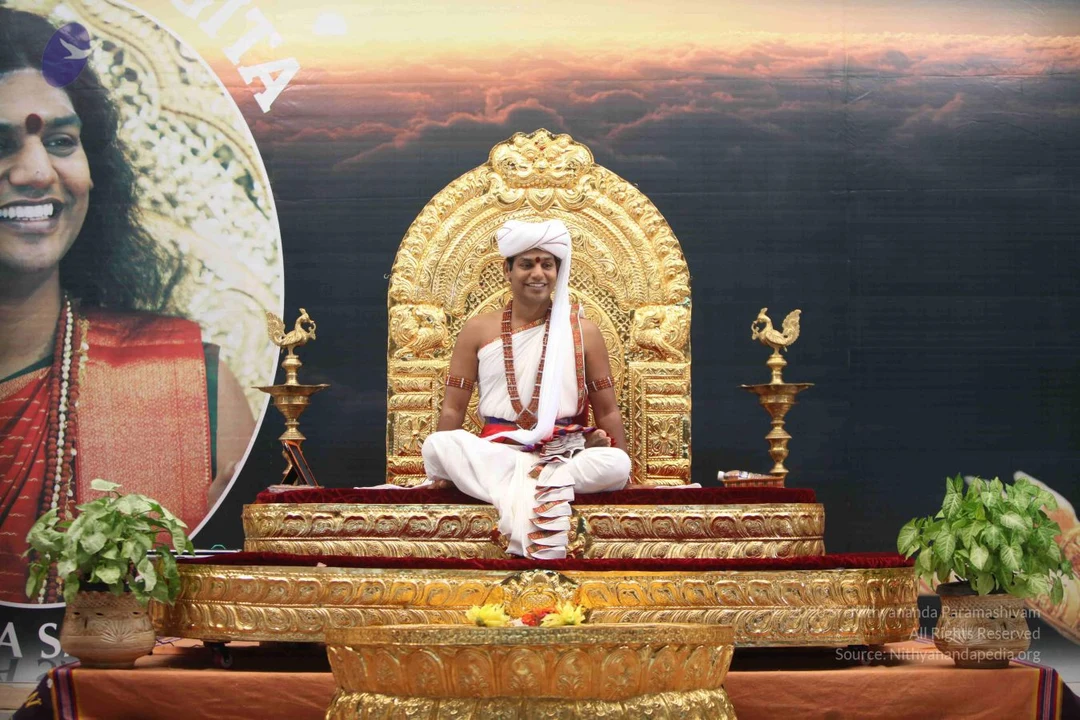
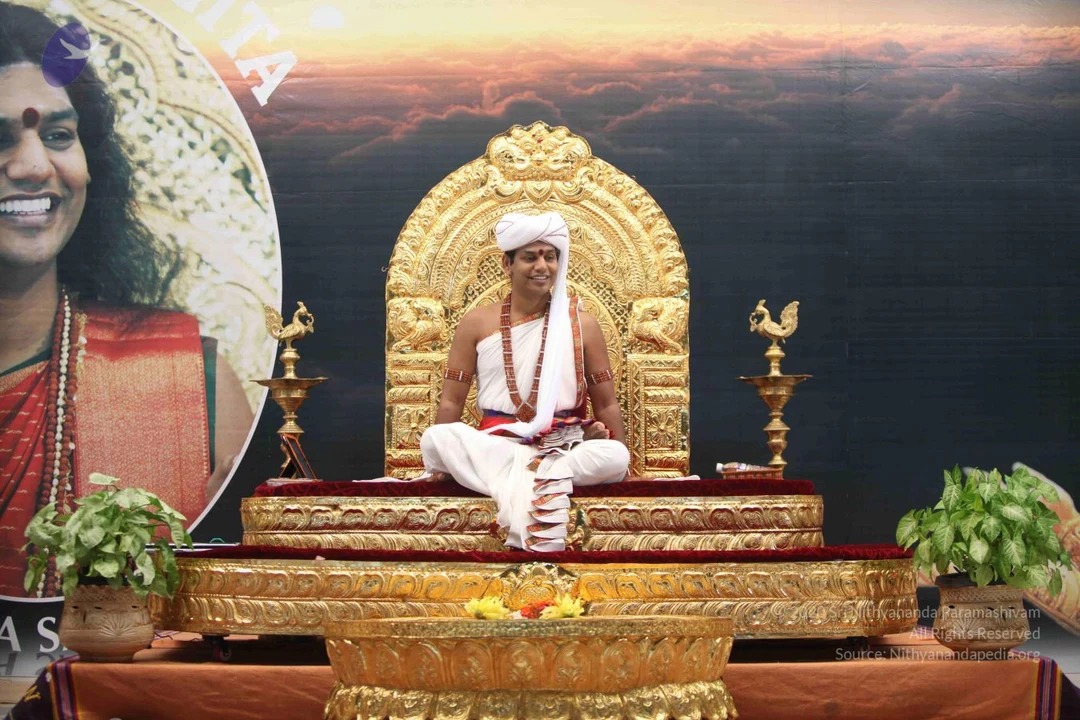
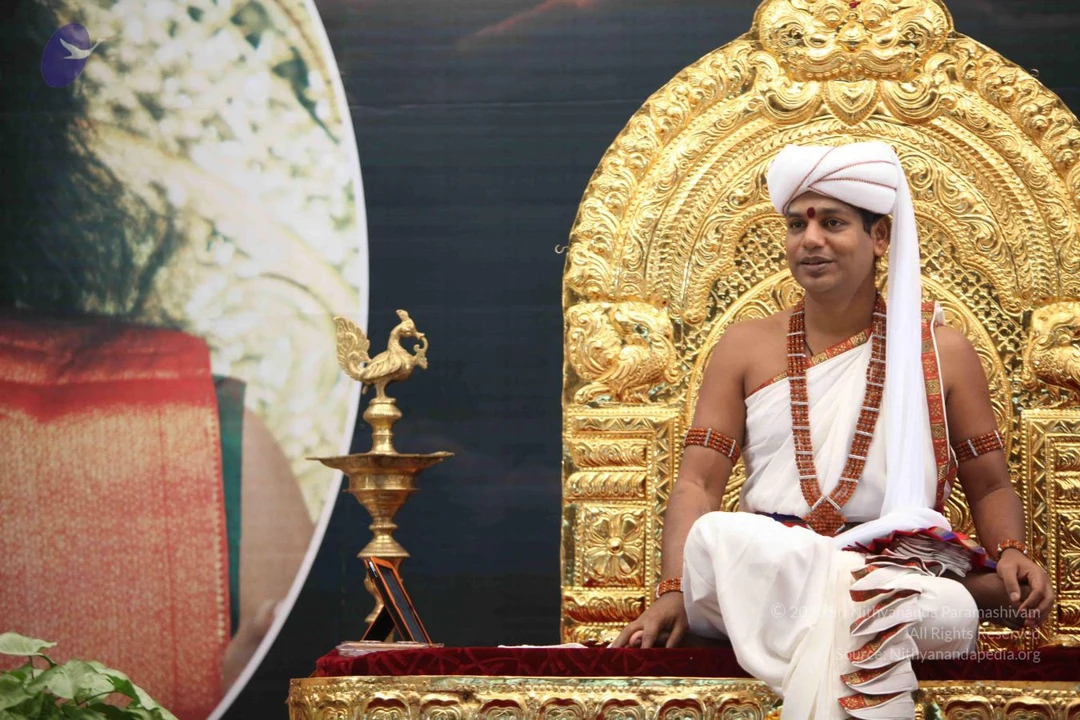
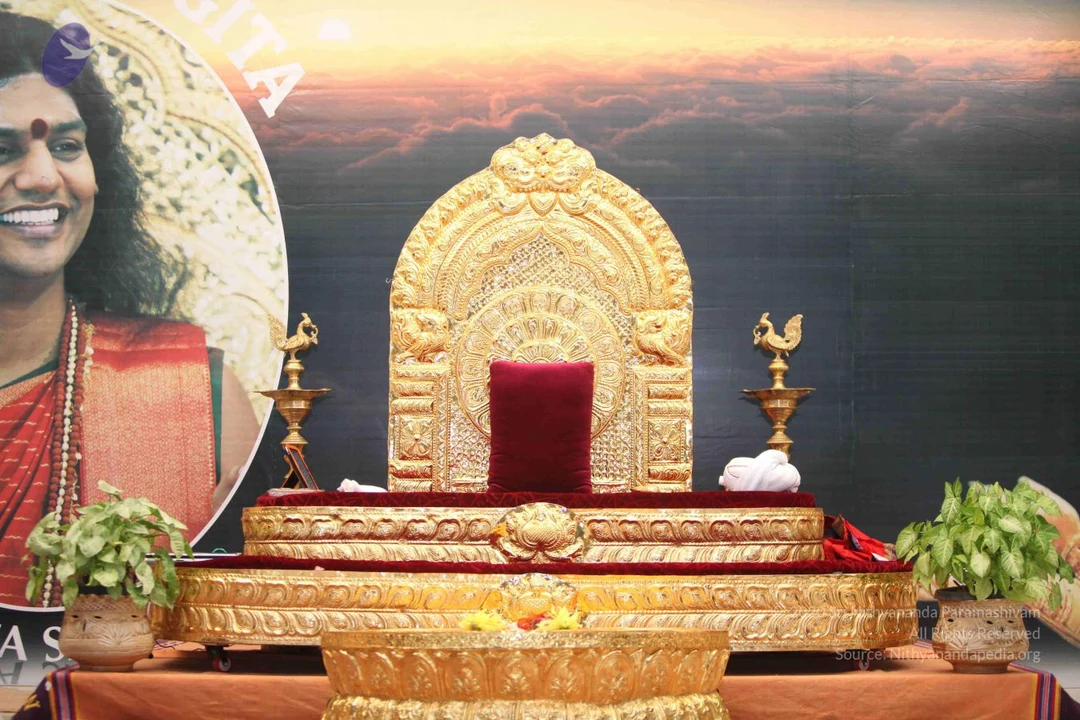
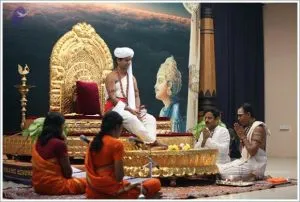
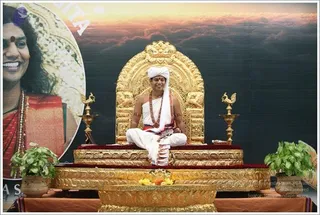
A multi-panel collage graphic with a large left panel showing a smiling man with a white turban and orange-and-white garments, a rudraksha mala at his neck, seated before a gold ornate backdrop. Right panels show men in white ritual clothing offering or holding green leaves and fruit near gold ornamental stands and a gold-decorated altar. A central inset shows a group of people with the printed banner SINGAPURAV.A smiling man sits before an ornate gilded throne arch decorated with carved lions and floral reliefs. He wears a white turban with a red tilak mark on his forehead, a white dhoti-style wrap, a red waist cloth, bronze-red beaded necklaces and bangles on his arms, and a white shawl draped over one shoulder. a person cues include the white turban, ceremonial beaded necklaces and bangles, and the throne, but the face and presentation are not sufficiently distinctive to confirm identity, so the figure is recorded as a seated devotee on a golden peetha.A collage of four panels from a KAILASA event. The large left panel shows a man in a white turban and white dhoti with saffron-coloured shawl, wearing rudraksha malas and gold ornaments, with hands in anjali mudra, appearing to be a person figure in appearance, though the appearance is only partly visible. The top-right panel shows a brass oil lamp (deepam) with a pyramidal stand lit in a room. Lower panels show seated devotees in white and colourful clothes around a ritual setting with flowers and lamps, and a man in white clothes performing a gesture with hands together at a seated puja setup.A photograph of a satsang on an ornate stage set with a golden throne-like seat and a red cushioned chair. A man with a shaved head and a white turban-style cloth, wearing white ritual clothing, sits cross-legged on a gold-and-white platform in front of a large painted backdrop of a deity figure with a tall crown. Two women in saffron-orange clothing sit at the lower left, one holding a small book, while two men in white sit to the right with hands folded in devotion. A brass oil lamp stands on the left edge of the stage and a patterned carpet covers the floor.A seated man in white dhoti and white turban sits cross-legged on an ornate gold throne with a carved arched backrest topped by lion-like figures and a small bird finial. He wears rudraksha beads and a red-and-gold sash, with a small red bindi on his forehead. Brass oil lamps stand on either side of the throne, potted green plants flank the dais, and a flower arrangement sits at its base. A large banner beside him shows a smiling woman with long hair in a red sari and beaded necklace, with the word "GITA" and the partial word "ASA" visible. The backdrop is a dramatic sunset sky. Swamiji (probable): the seated man has long dark hair, rudraksha malas and a red sash, a ceremonial throne presence consistent with the page's Swamiji claim, but the cues are not conclusive.A seated man in white ritual dress smiles from an ornate gold throne with arched carved back and carved animal finials, on a red cushioned dais. He wears a white turban, a white dhoti with a red-and-gold border, an orange-and-red shawl over one shoulder, and a beaded necklace. Gold oil lamps with rooster-shaped tops stand on either side of the throne, and a dark backdrop with a painted sky and globe appears at the left.

Nithya-Kriya-Obesity-Care

52 photosSource gallery
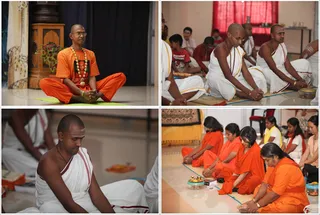
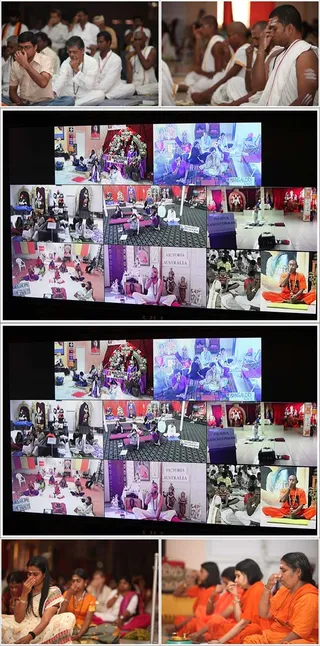
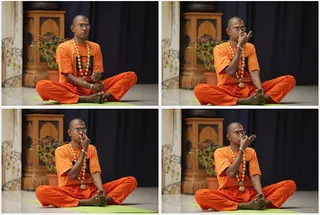
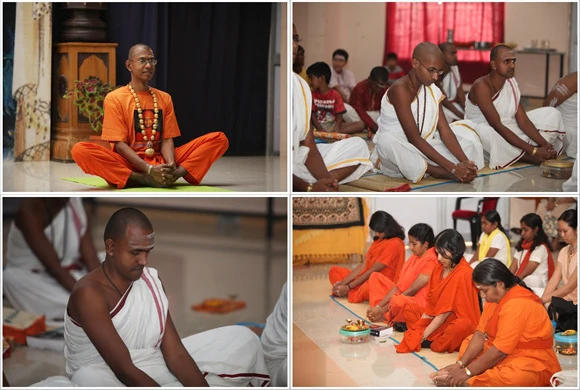
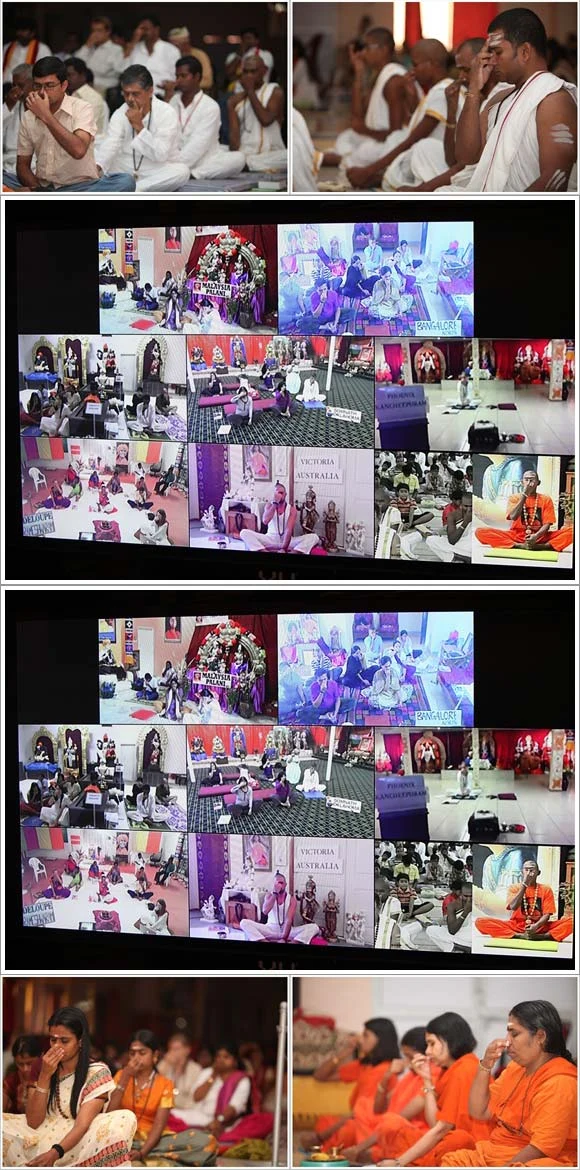
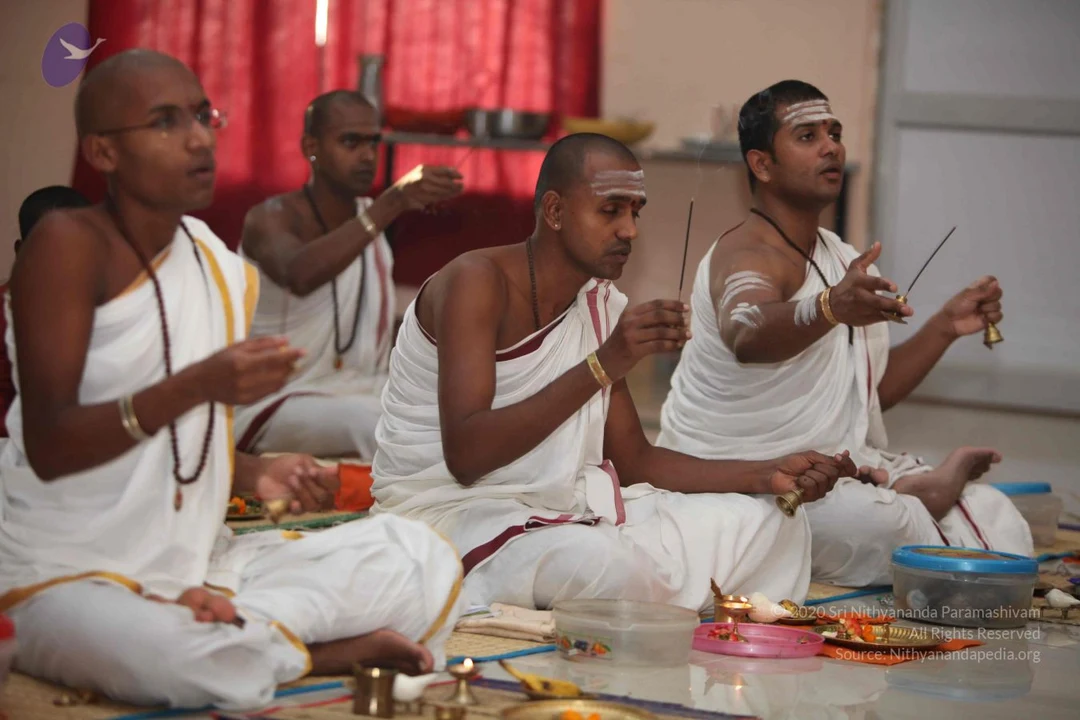
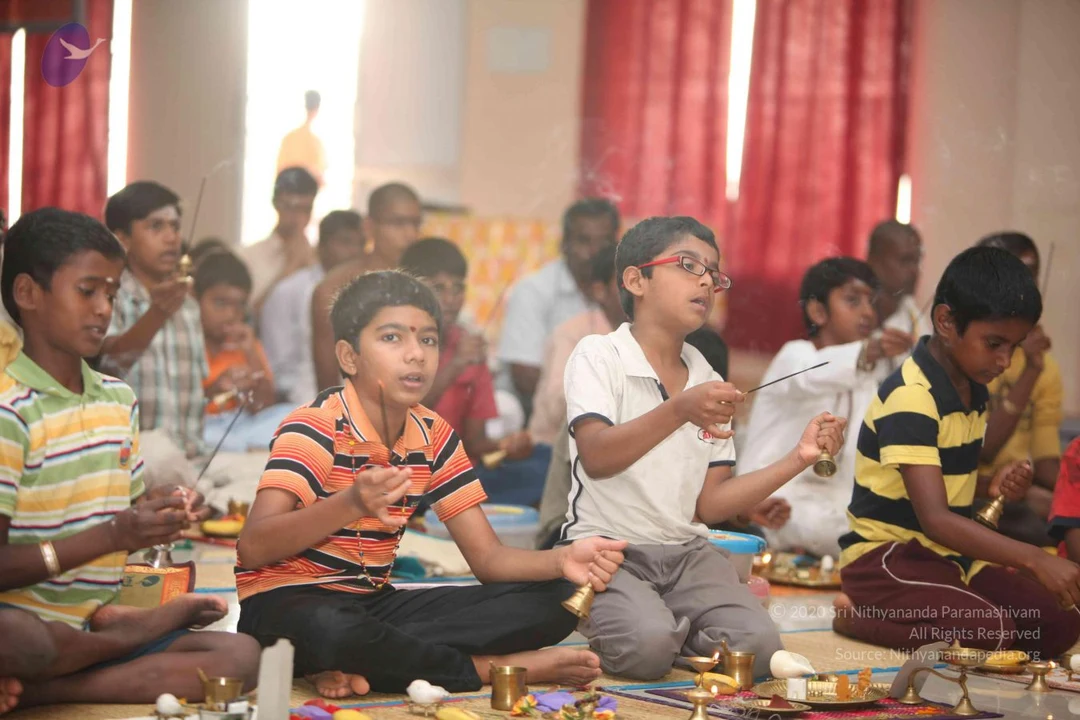
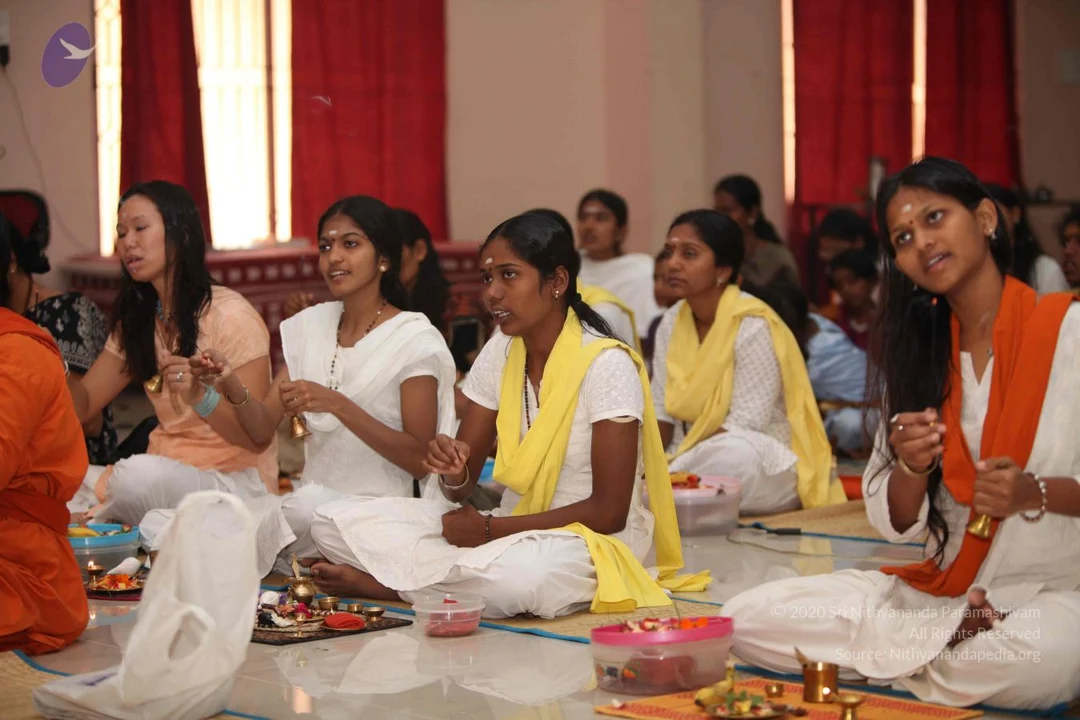
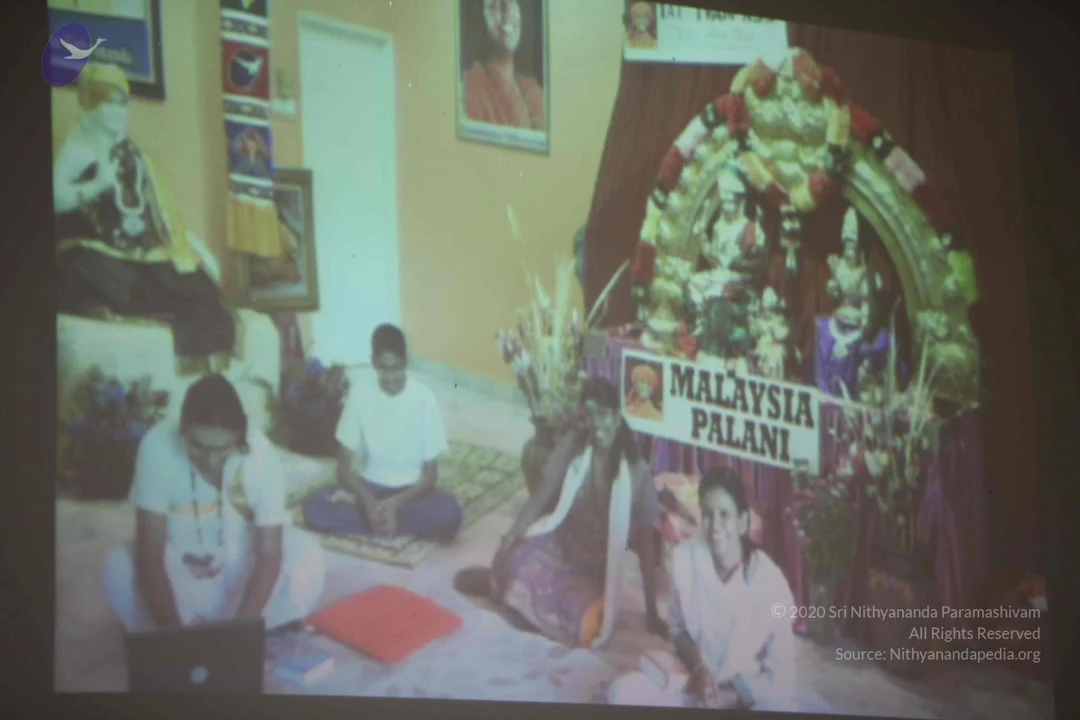
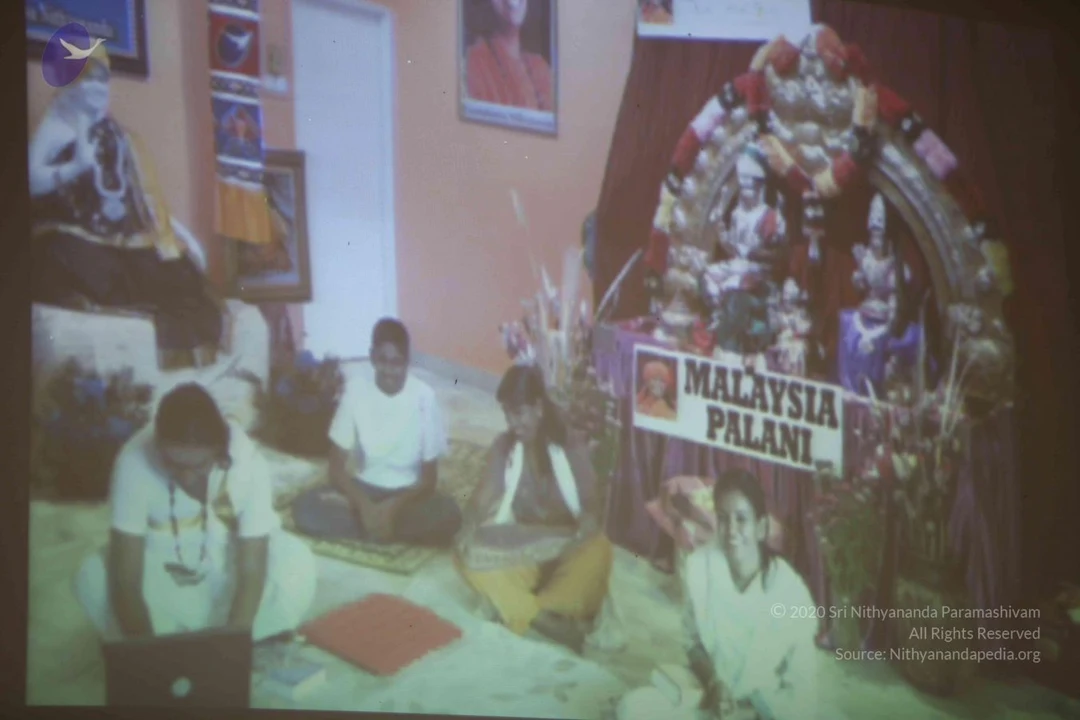
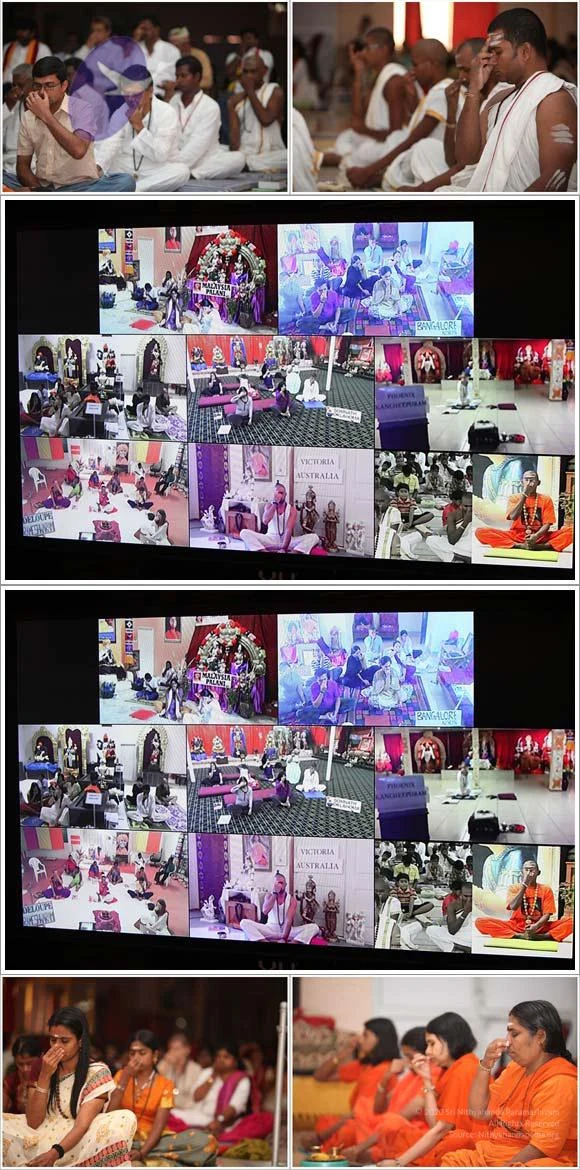
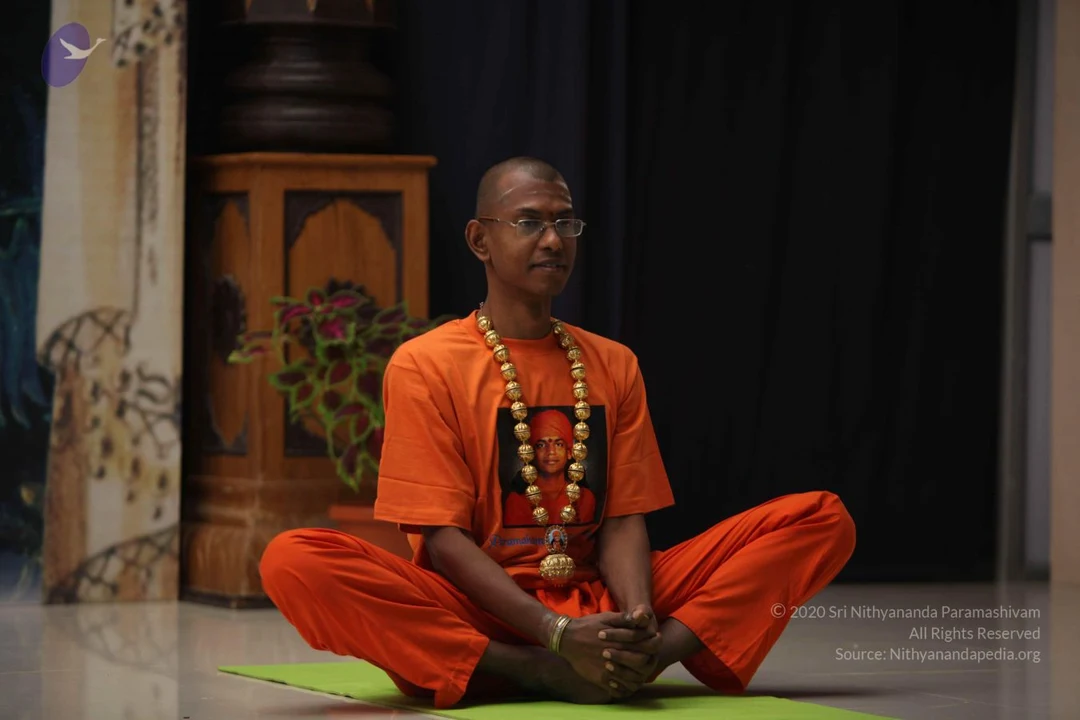
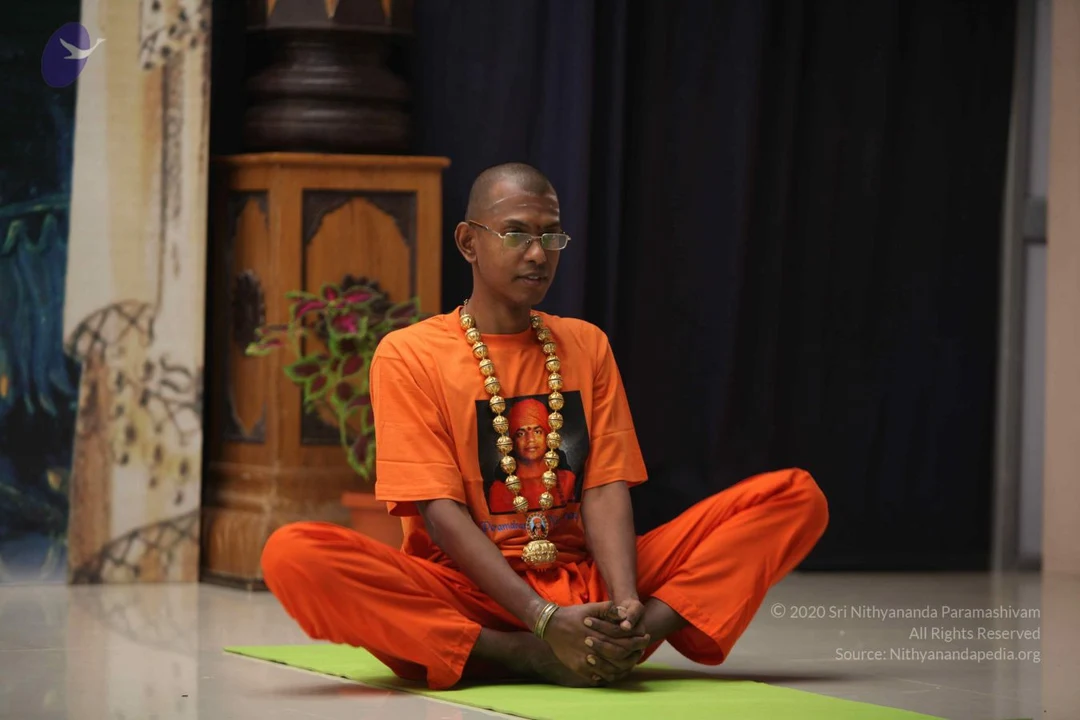
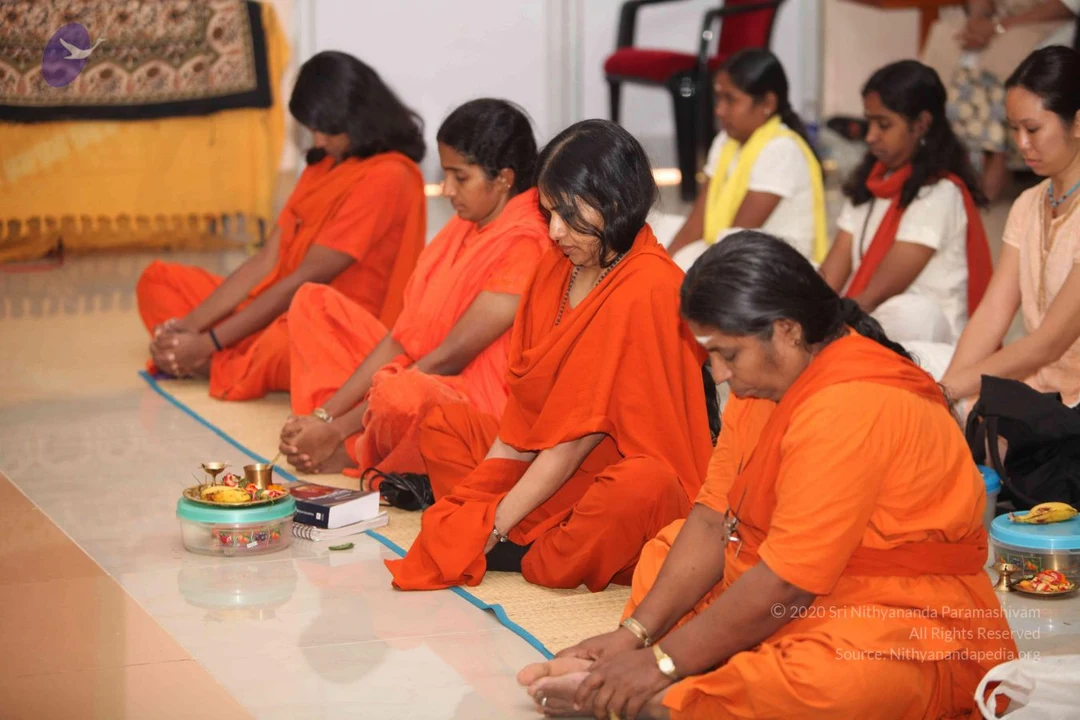
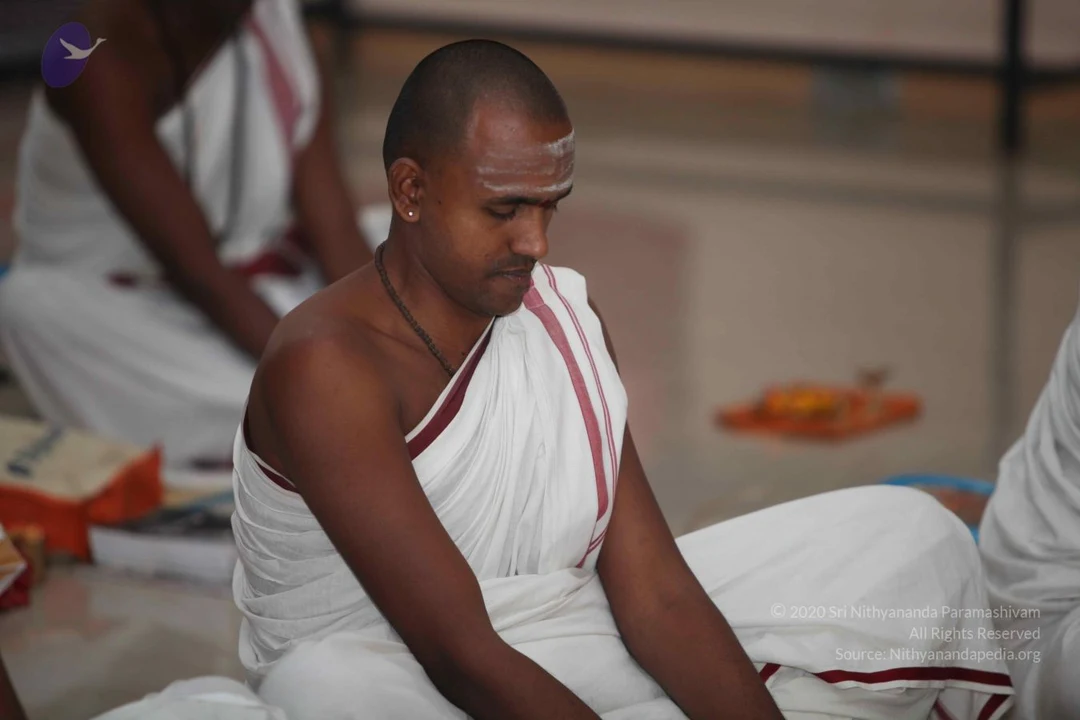
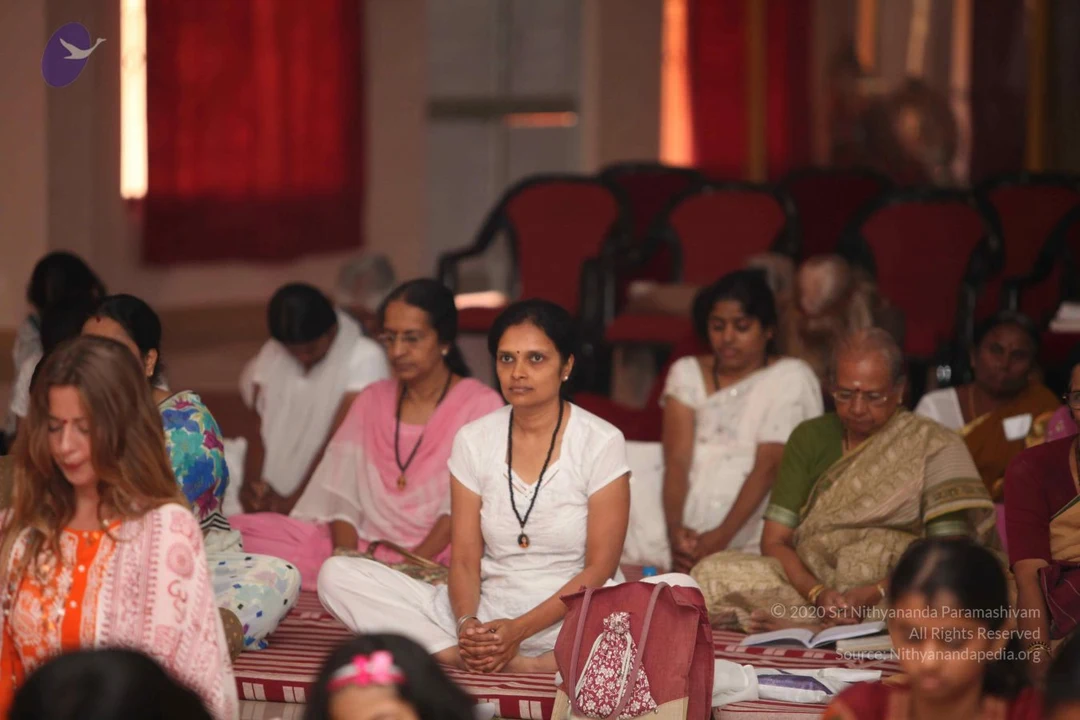
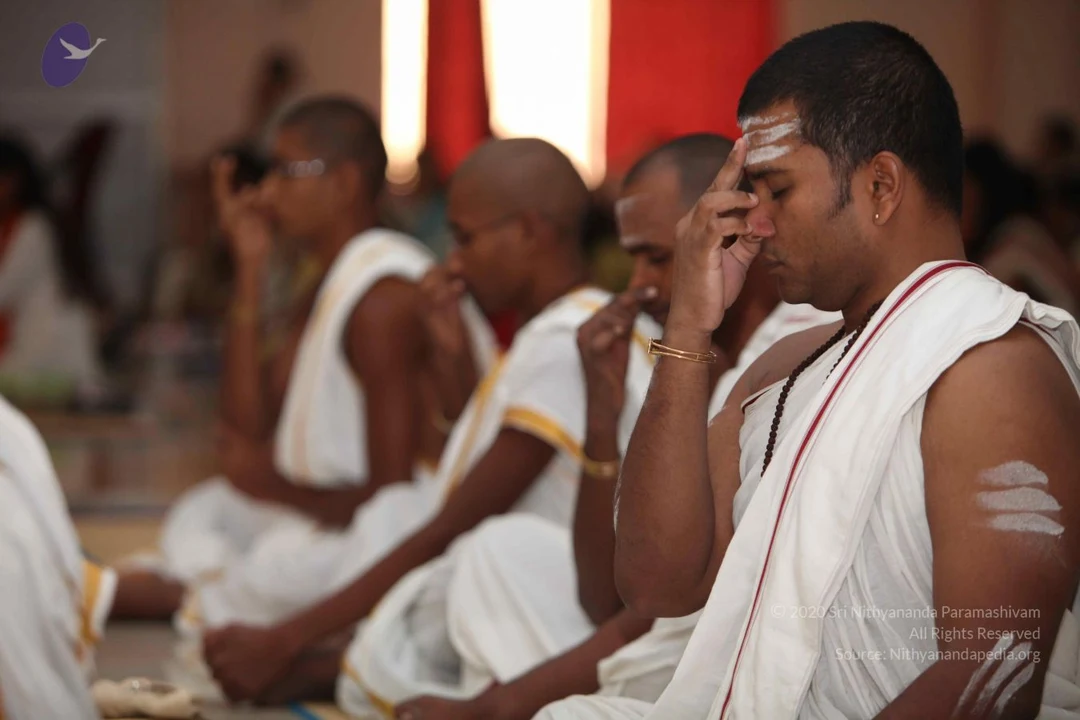
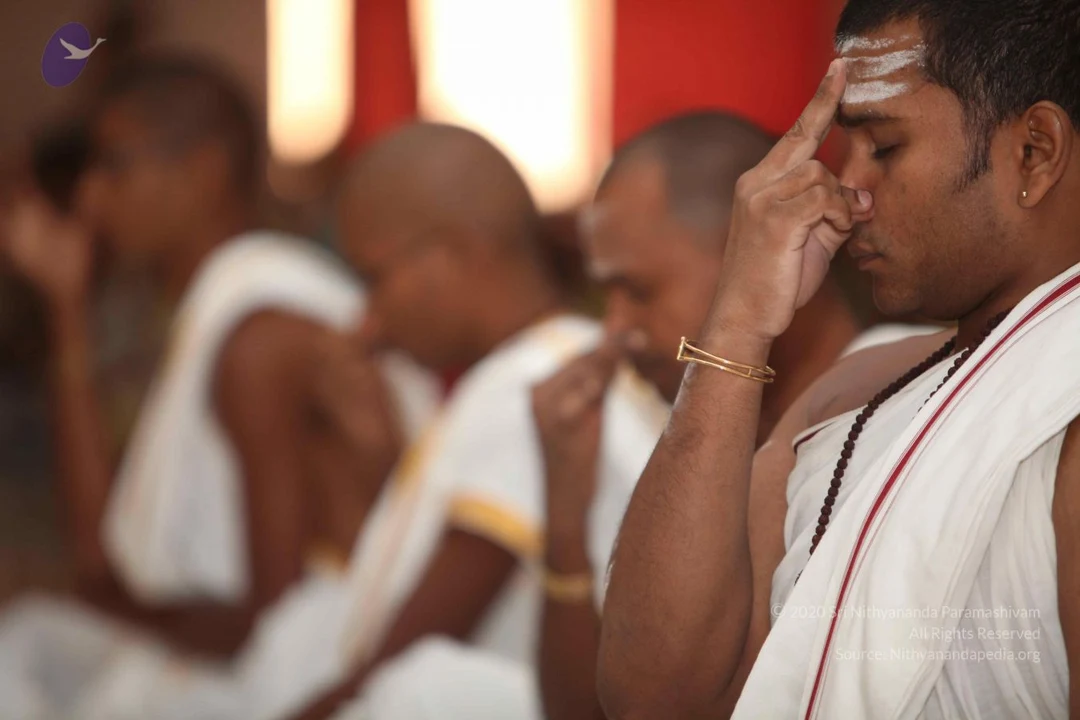
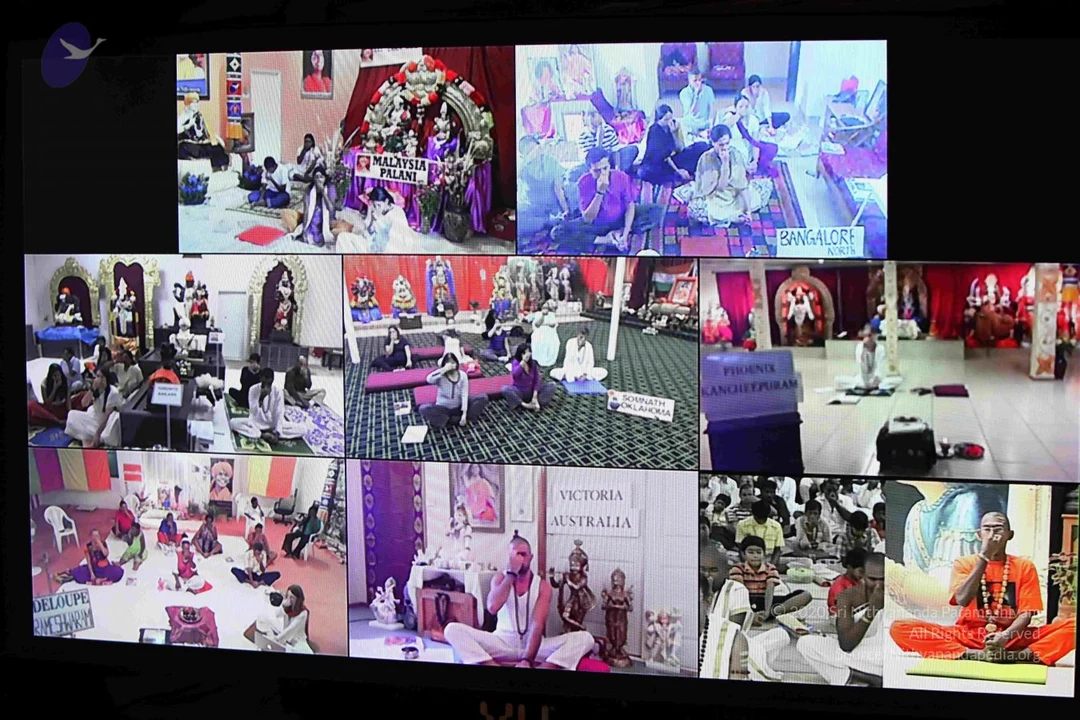
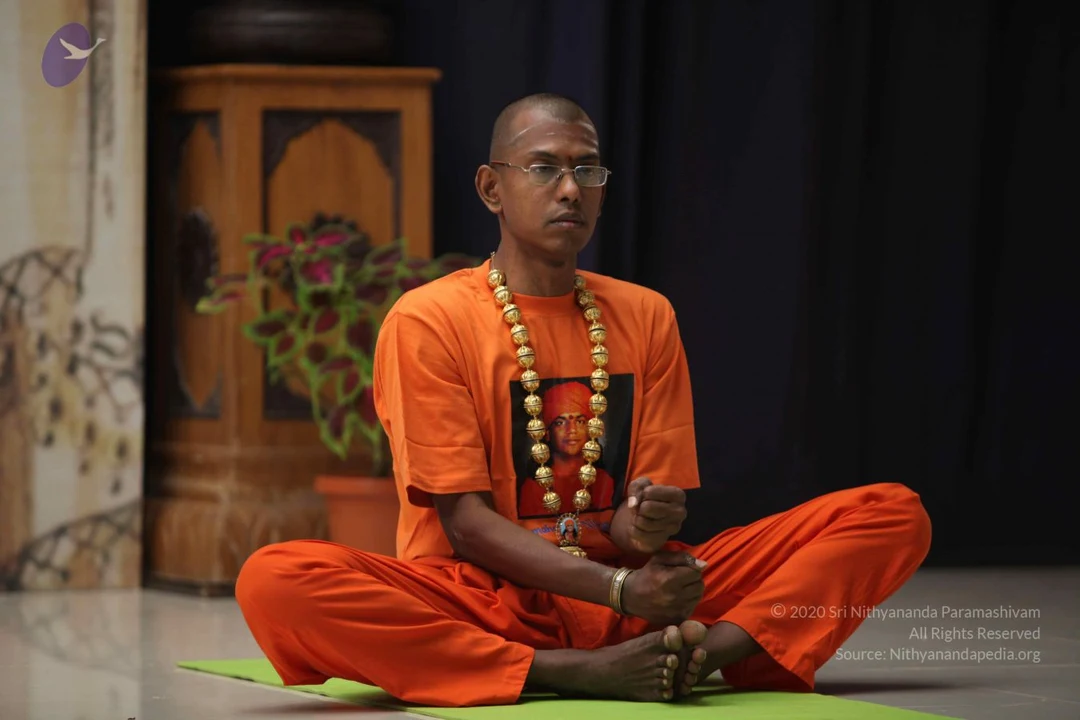
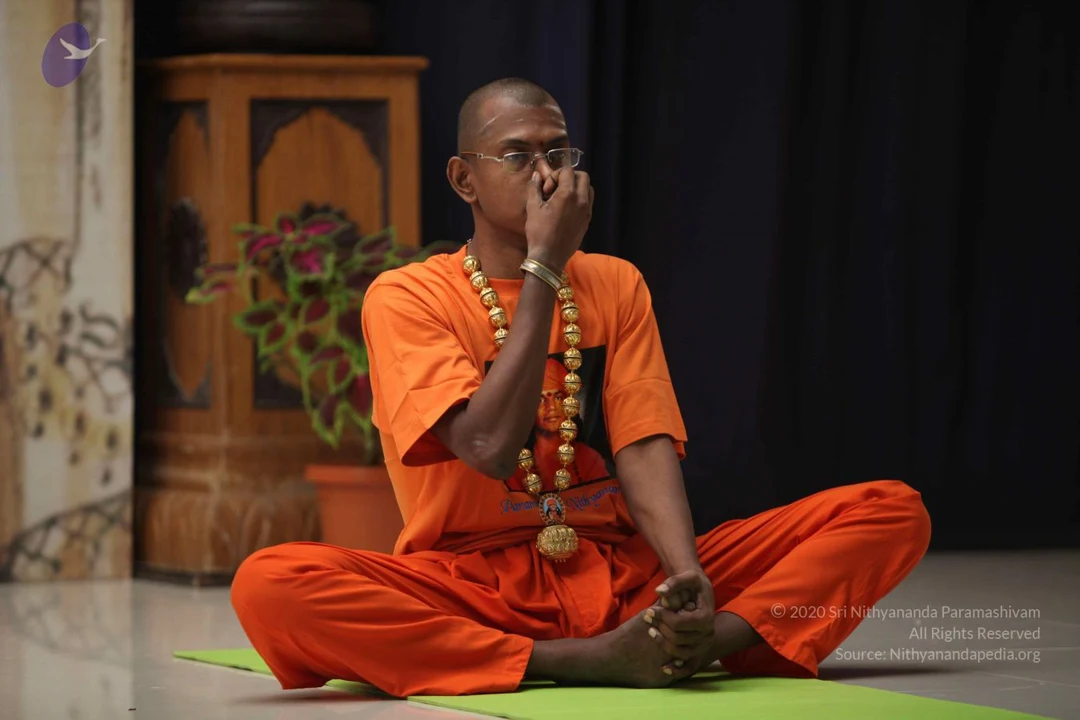
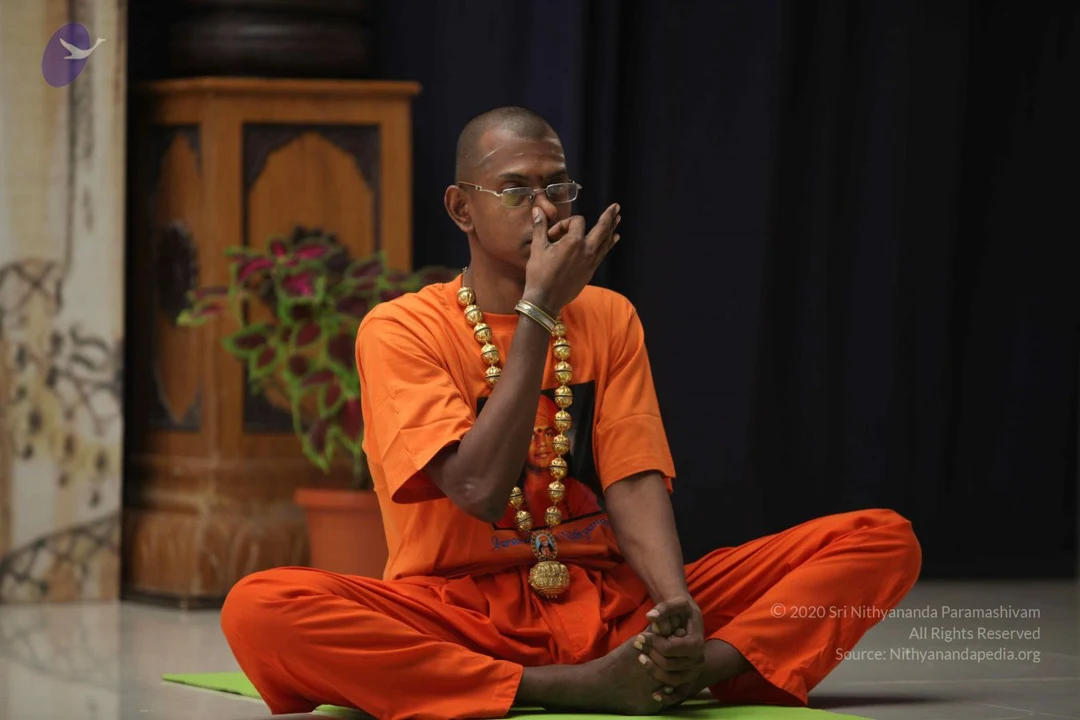
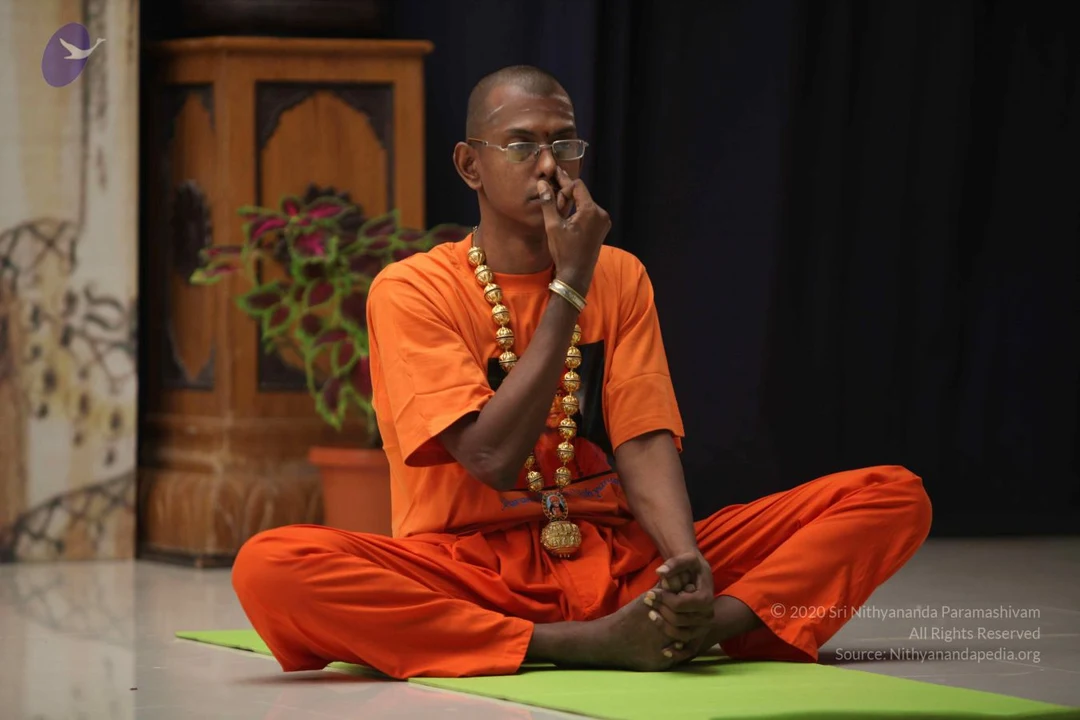
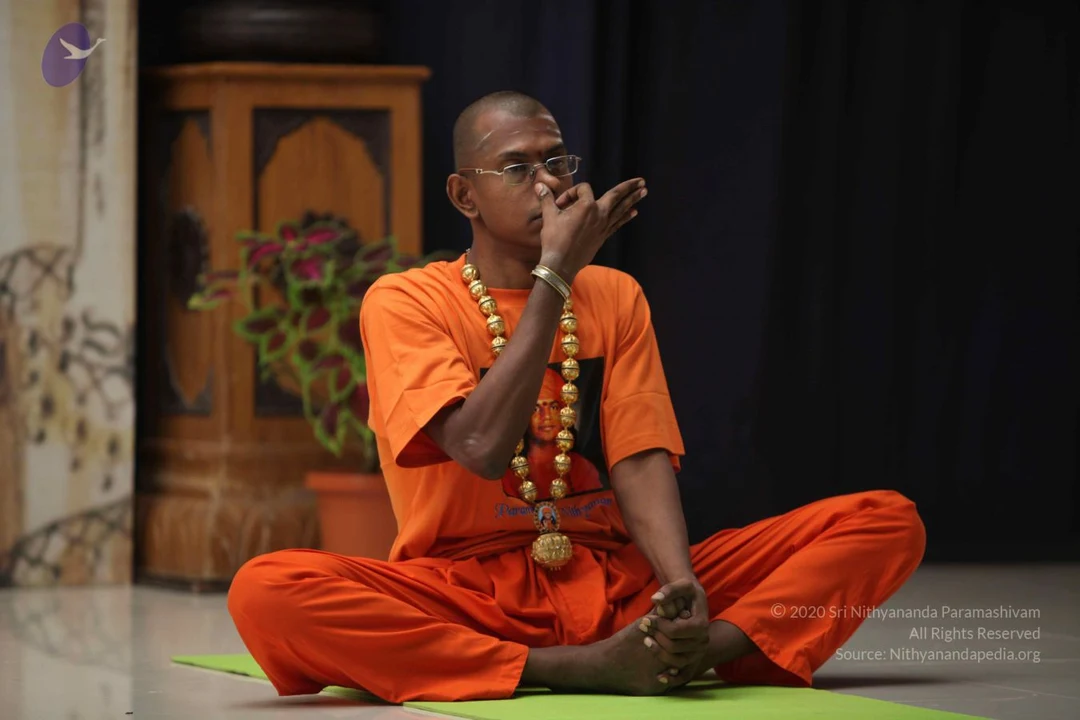
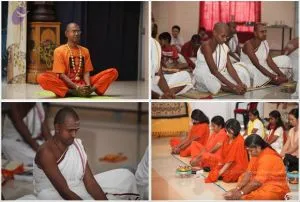
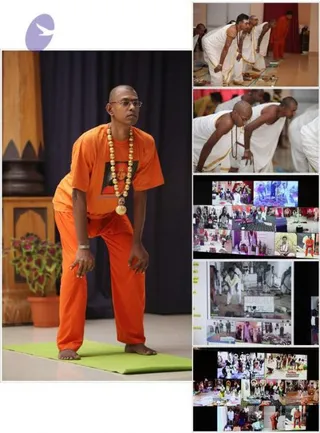
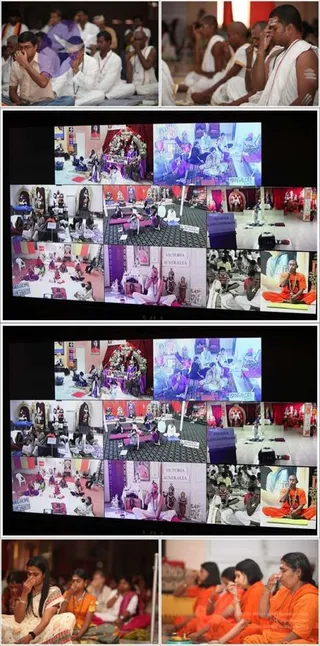
Four-panel collage of photographs from an ashram satsang setting. Top-left: a shaved-headed man in orange robe and rudraksha mala sits cross-legged on a stage before a wooden cabinet and a small altar. Top-right: several shaved-headed men in white dhotis sit on the floor in rows. Bottom-left: a close view of a shaved-headed man in white with a red-and-white shawl, seated in meditation posture. Bottom-right: women in orange saris sit before a brass plate with small lamps and offerings, with other people seated behind them. The panels show seated spiritual practice and teaching at the ashram.Multi-panel collage from a Nithya Kriya event. The large left photograph shows a bald man with glasses in an orange t-shirt and orange trousers, wearing a gold-bead mala, bending forward with hands on his thighs on a green mat in a hall with a dark curtain and a potted plant. A prominent sannyasi-style image is printed on his shirt. The right side shows smaller photographs of men in white dhotis and orange shirts bending in a row on mats, and several screens displaying similar group practice and a multi-screen wall of event photos with flowers and portraits. The collage itself contains no physical people beyond the pictured participants.Multi-panel collage of KAILASA satsang and Nithya Kriya sessions. Top two panels show seated men in white dhotis and white shirts, several with white tilak marks on arms, hands raised near their faces in meditation. The central panels are a large screen grid of video feeds from several centres: a Bangalore session, a Malaysia Pulau session with purple-draped backdrops and deity murti, a Victoria Australia session, and a Phoenix Sanctuary feed. In the bottom row, a man in orange robes with rudraksha mala sits in meditative posture on a cushion beside deity images. Bottom panels show women in white, orange and saffron saris and robes seated with hands raised to faces in meditation. Lamps and floral arrangements appear at some centres.A four-panel collage of a bald man with glasses seated cross-legged on a green mat in orange robes and a multi-strand rudraksha mala, performing a breathing exercise with one hand raised to his nose. Behind him are a dark curtain, a wooden cabinet and potted plants.A man sits cross-legged on a red-draped dais in front of an ornate gold throne with carved lion-like figures and a tall arched backrest. He wears white ritual clothing with a red and gold border, a long rudraksha mala with ceremonial gold ornament at his neck, beaded armlets and wrist bands, and a red bindi on his forehead. His hair is swept back, and his hands rest together in his lap. Brass oil lamps with rooster-shaped finials stand on either side.A shaved-headed man in glasses sits cross-legged on a green yoga mat in a bright hall, hands clasped in his lap, gazing ahead calmly. He wears an orange short-sleeved t-shirt printed with a portrait of a saffron-robed figure, orange loose trousers, and a long necklace of gold beads with a gold pendant. Behind him stand a carved wooden cabinet with panels, a potted plant with pink and green leaves, and a dark curtain; a painted scroll hangs at the left edge. The scene looks like a yoga or satsang session. The man's appearance is uncertain for the a person candidate, so he is described by role only.

Sarva-Darshan

33 photosSource gallery
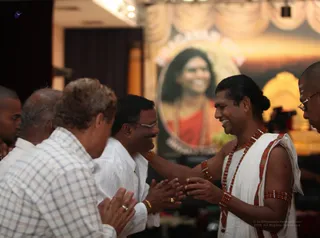
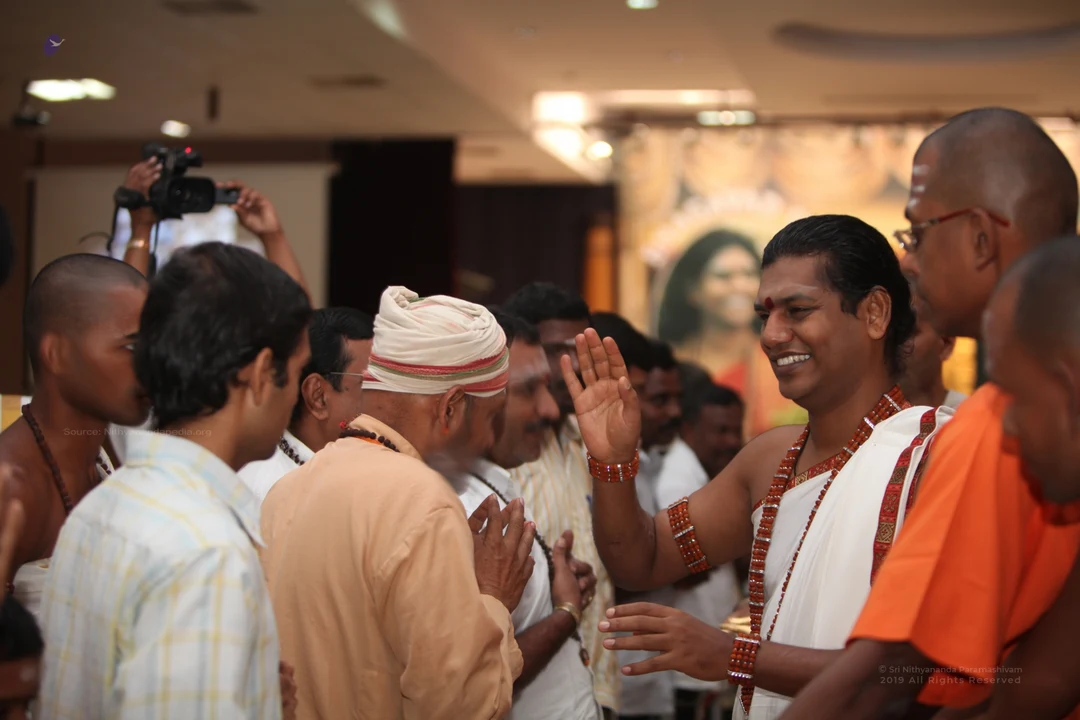
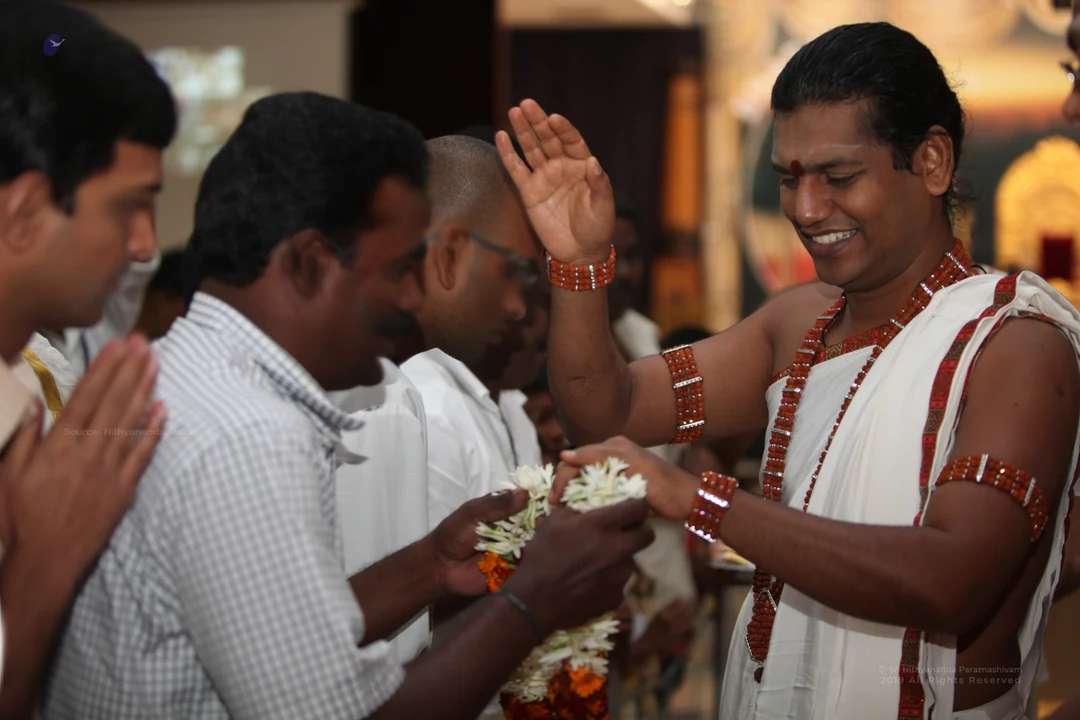
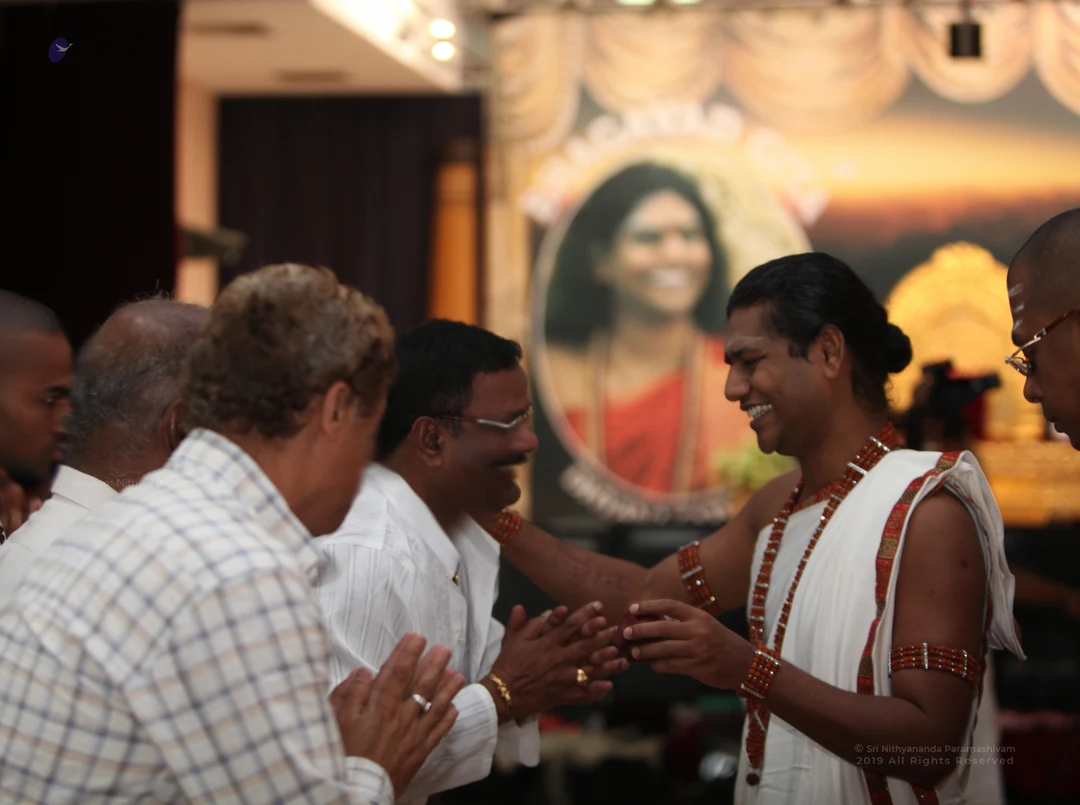
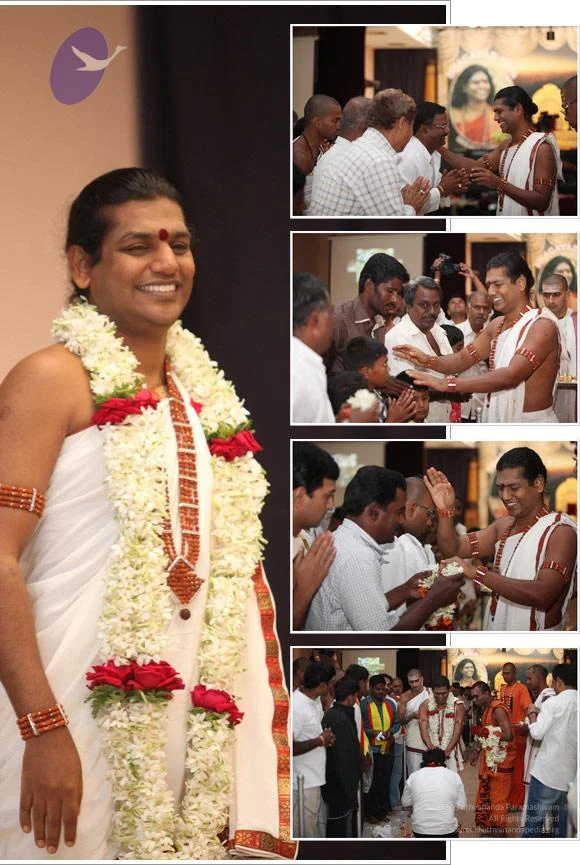
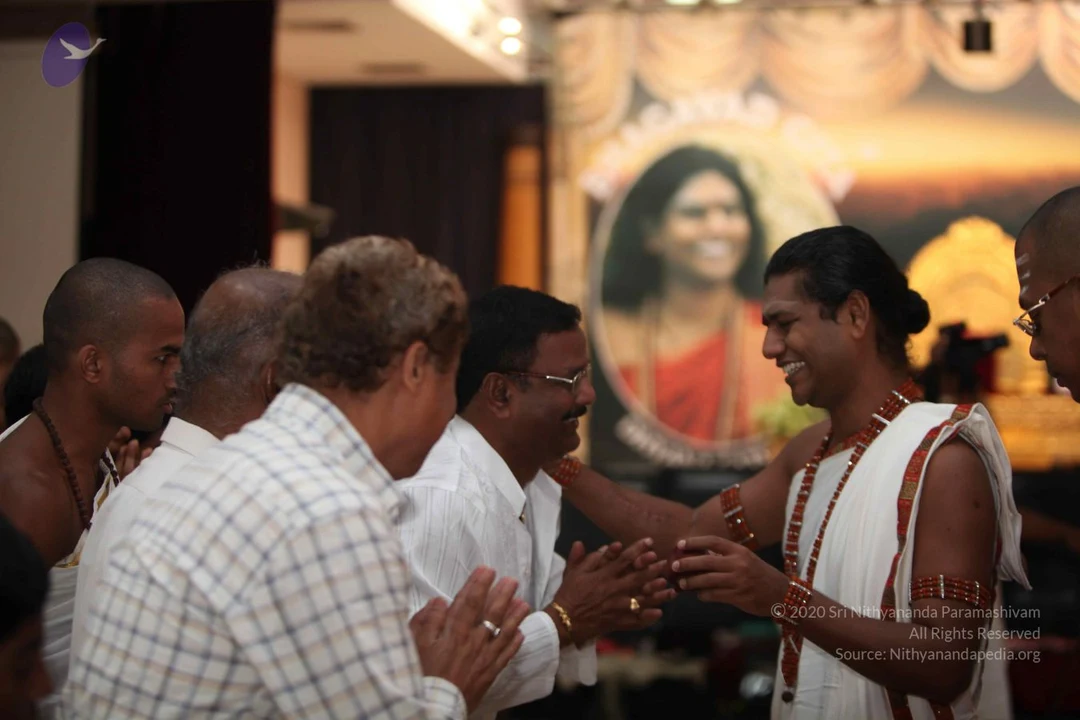
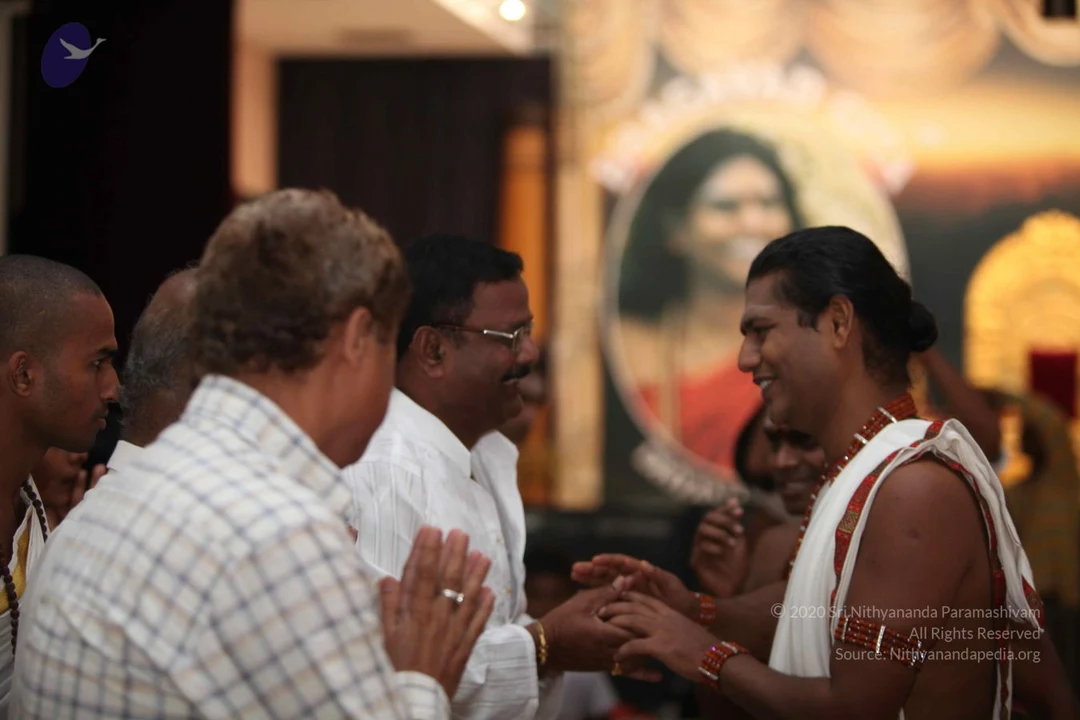
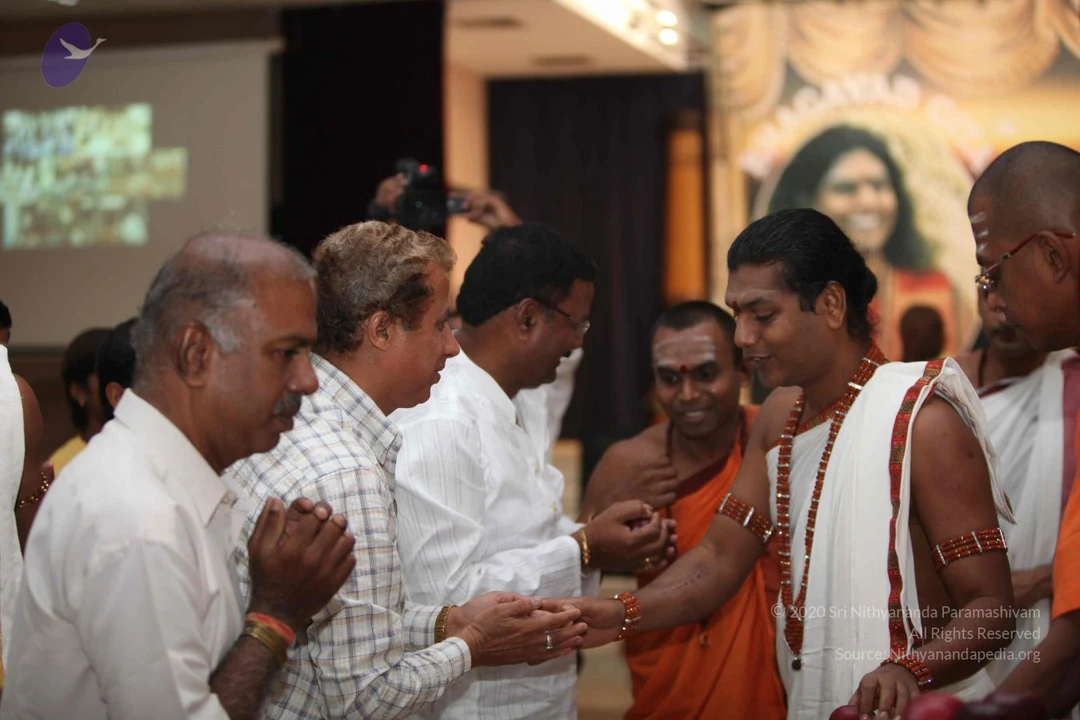
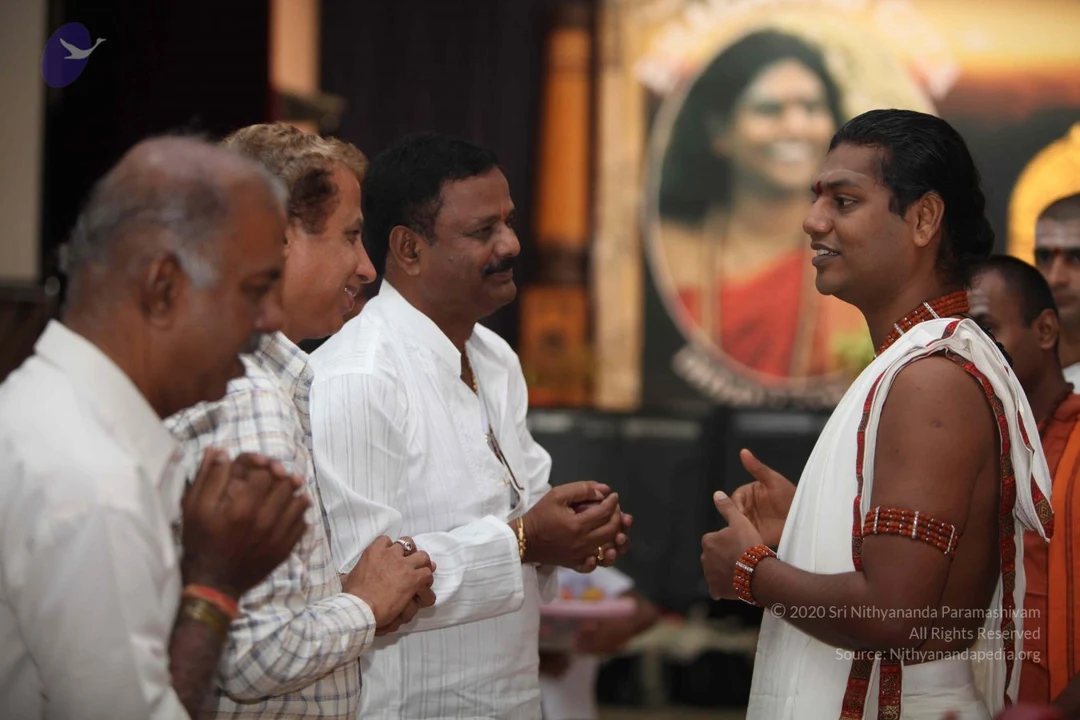
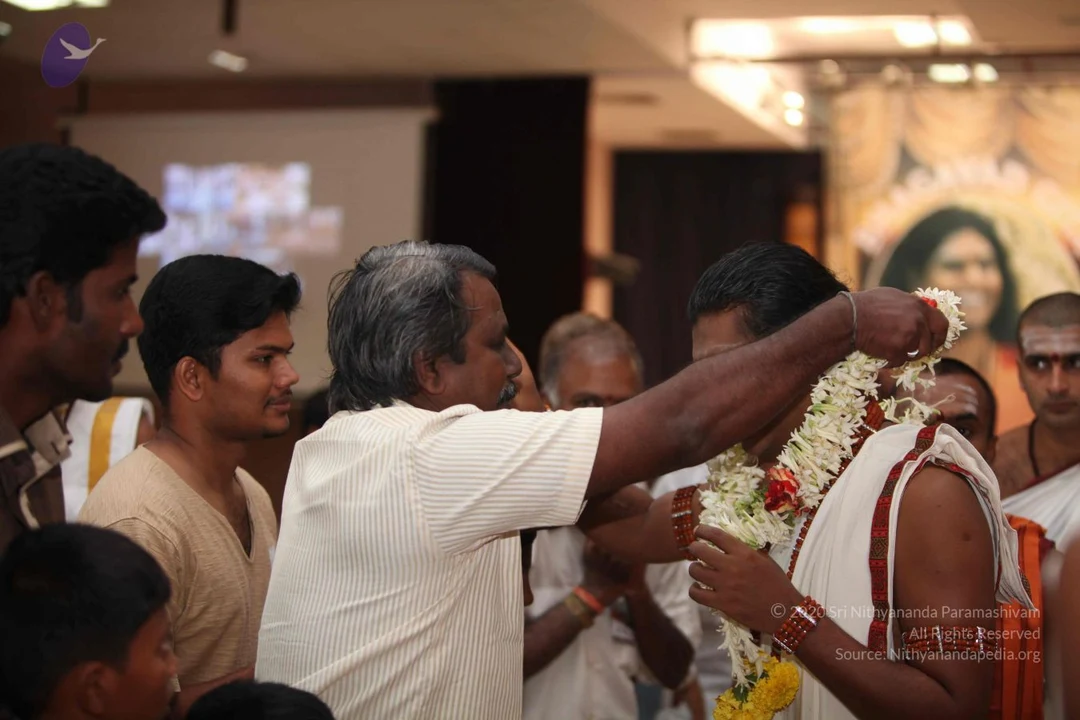
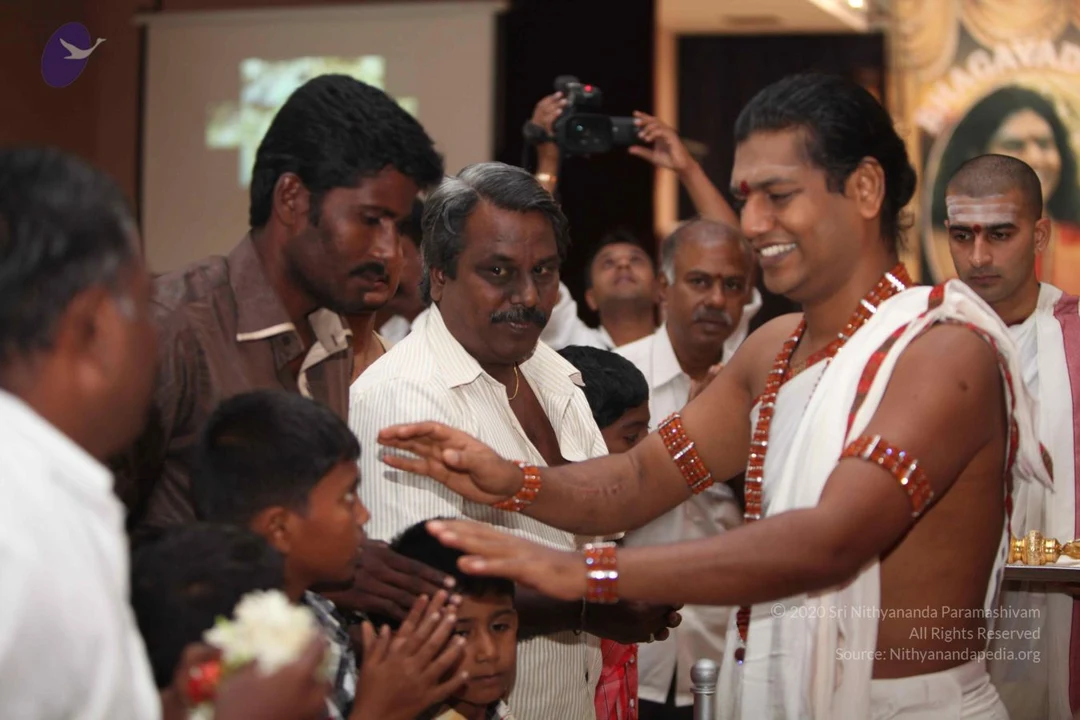
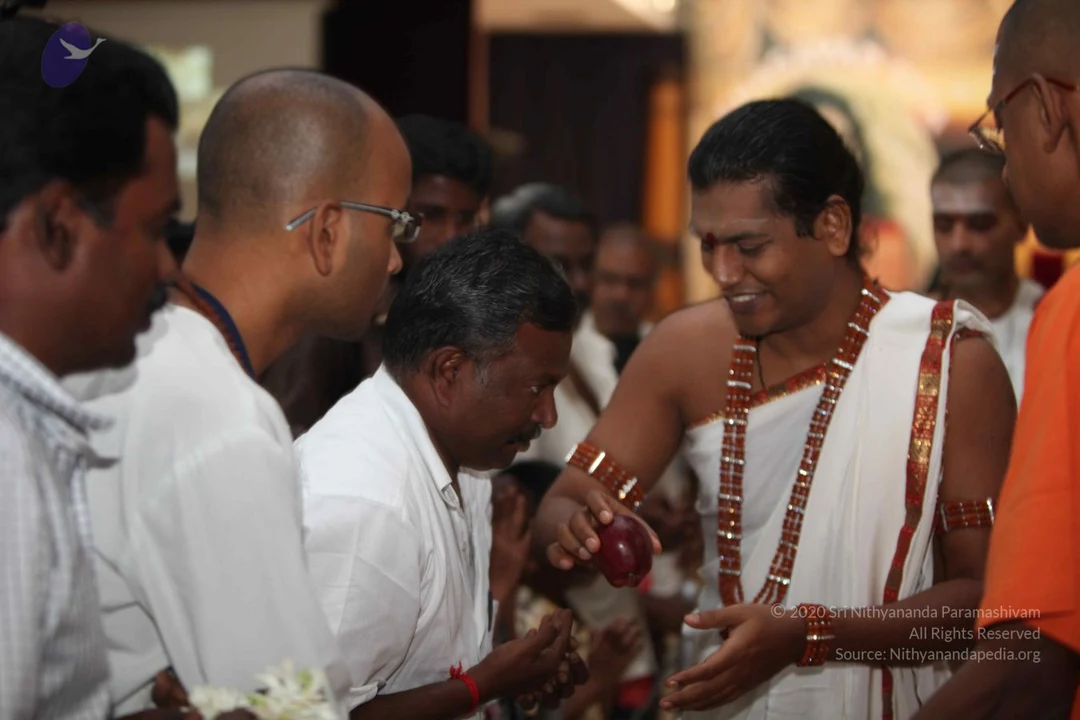
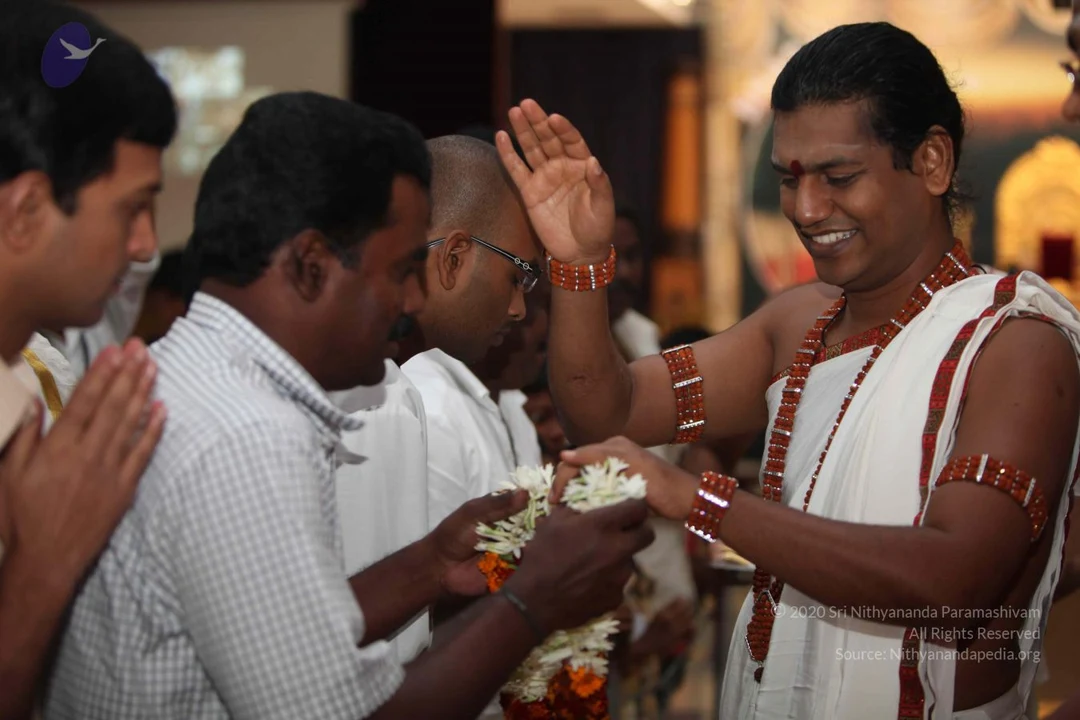
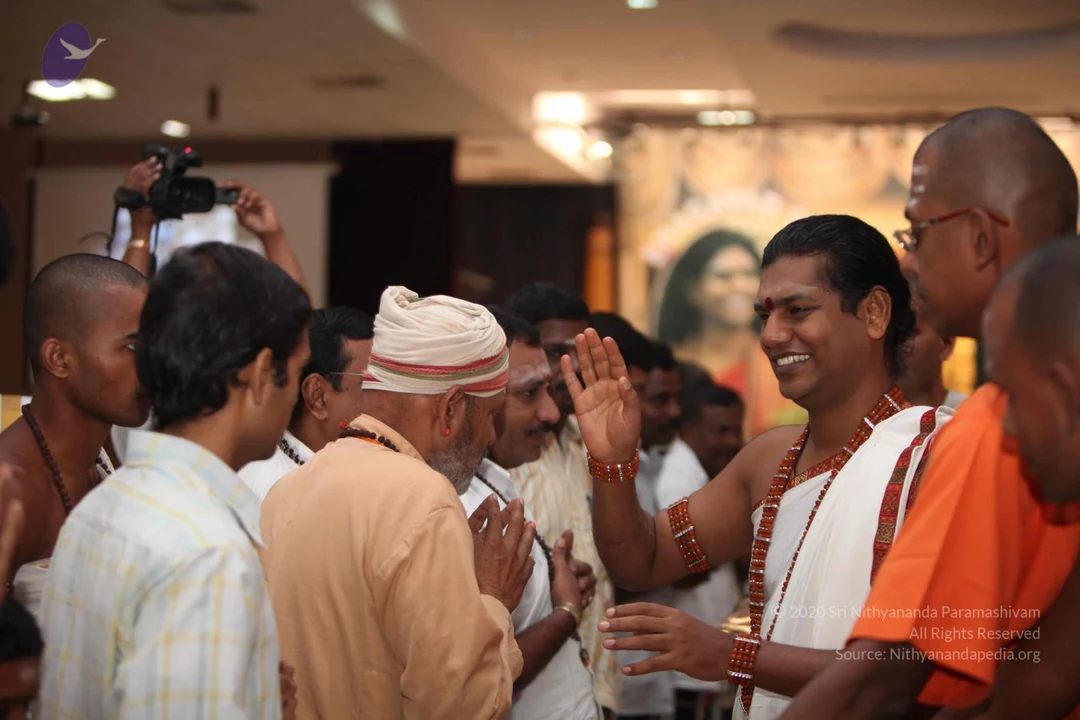
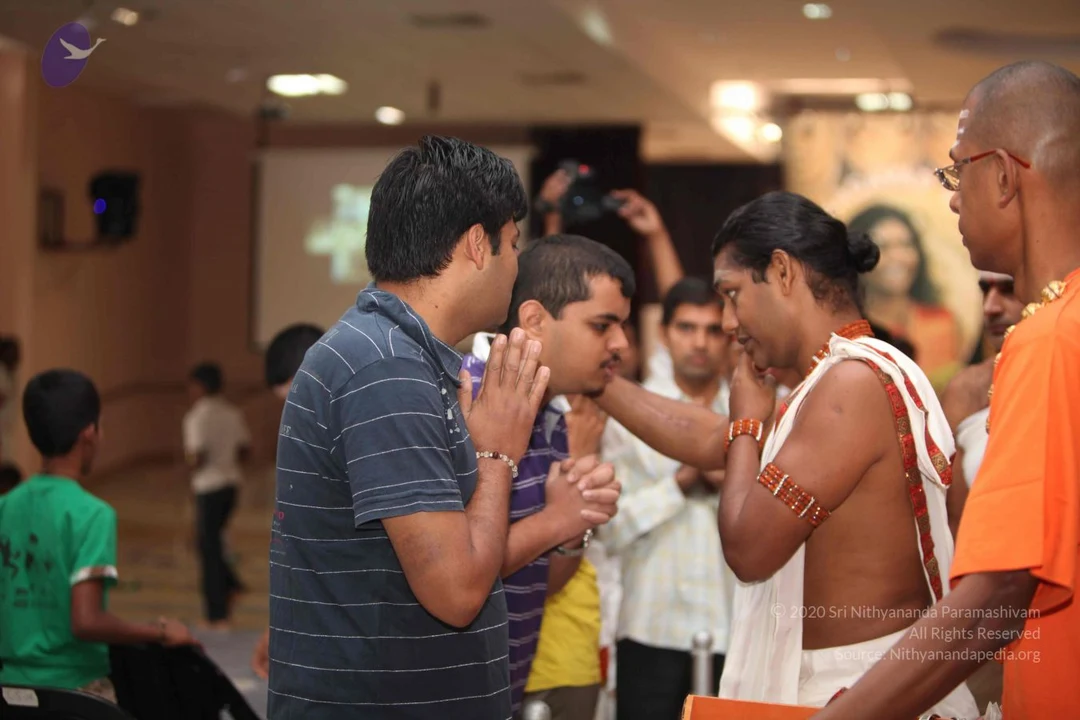
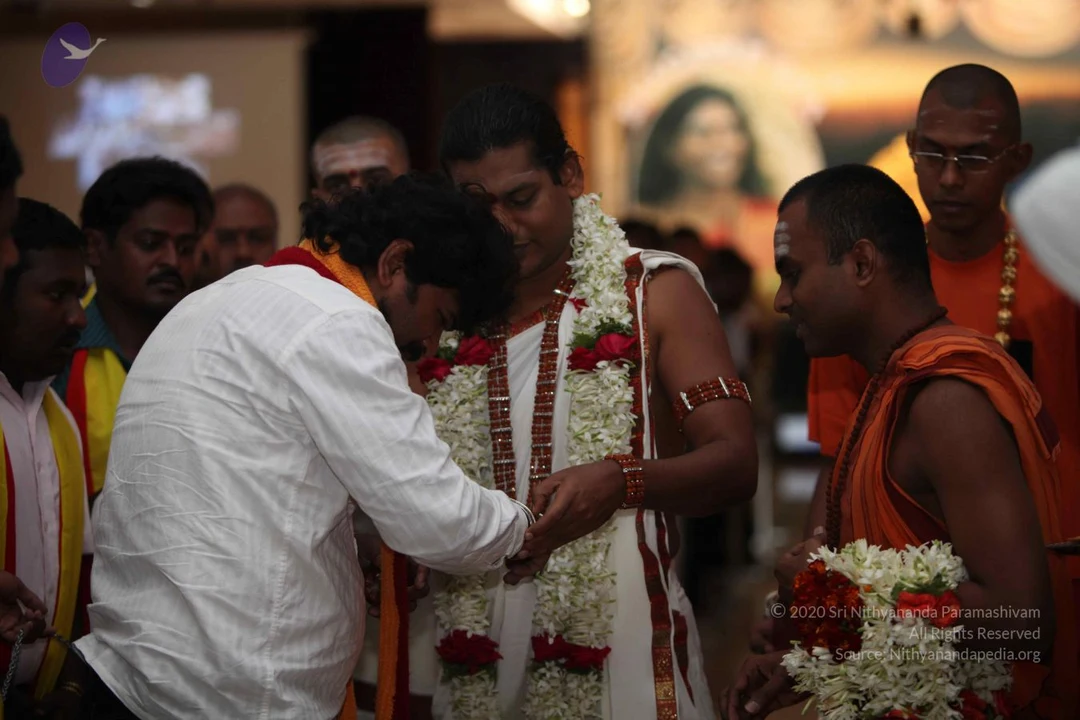
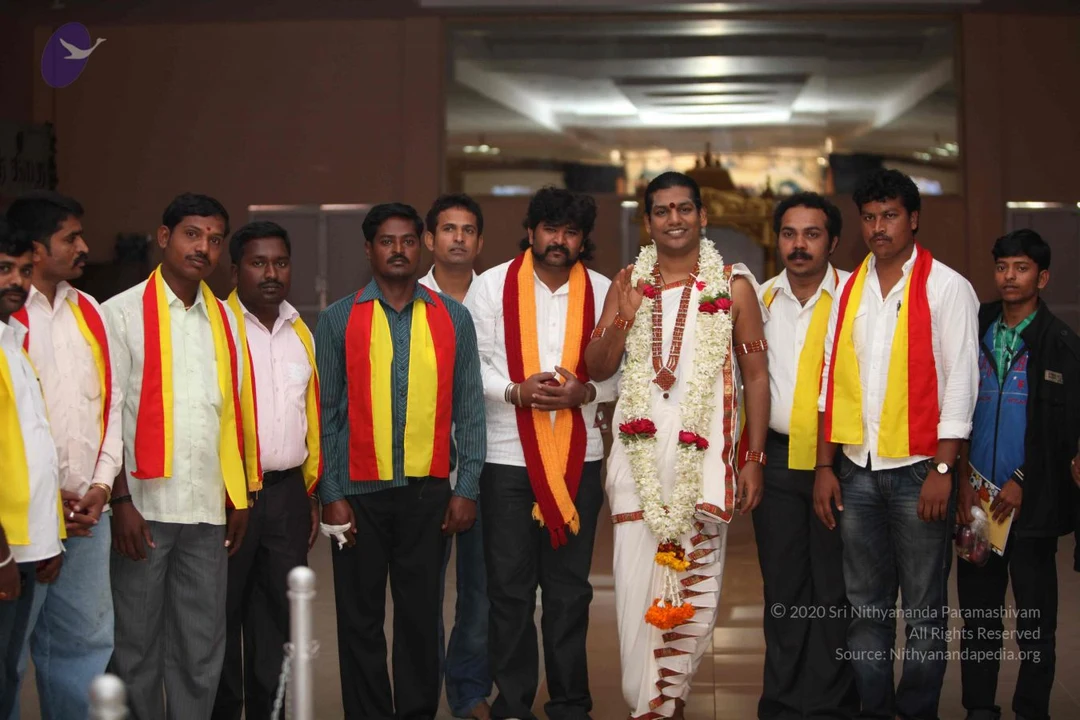
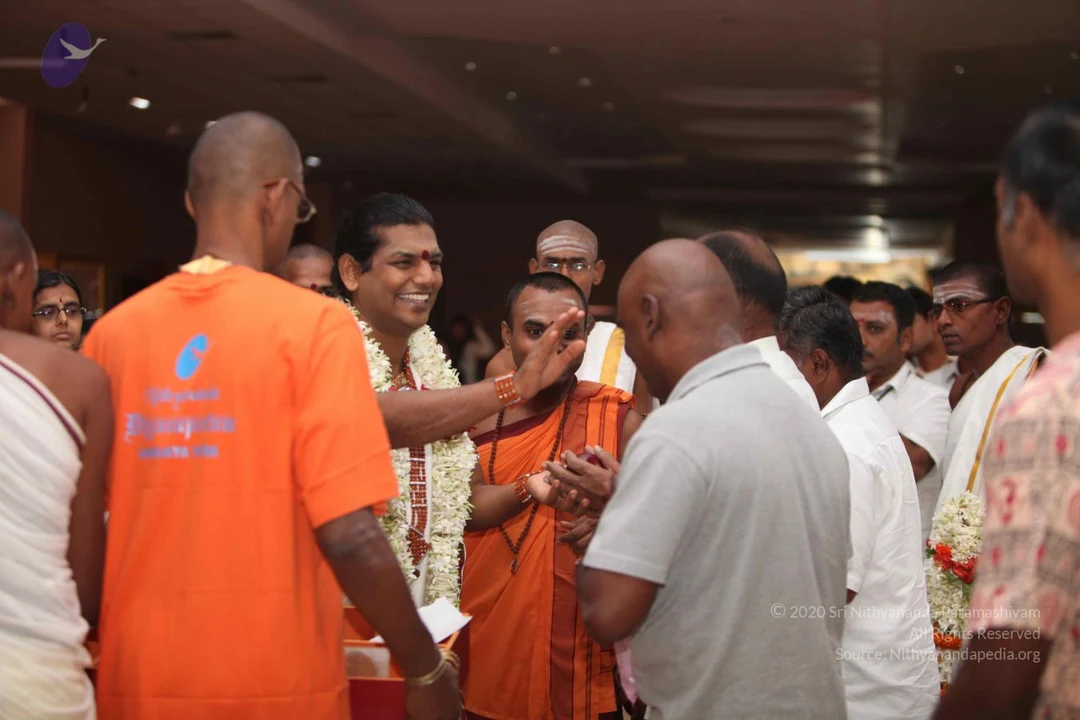
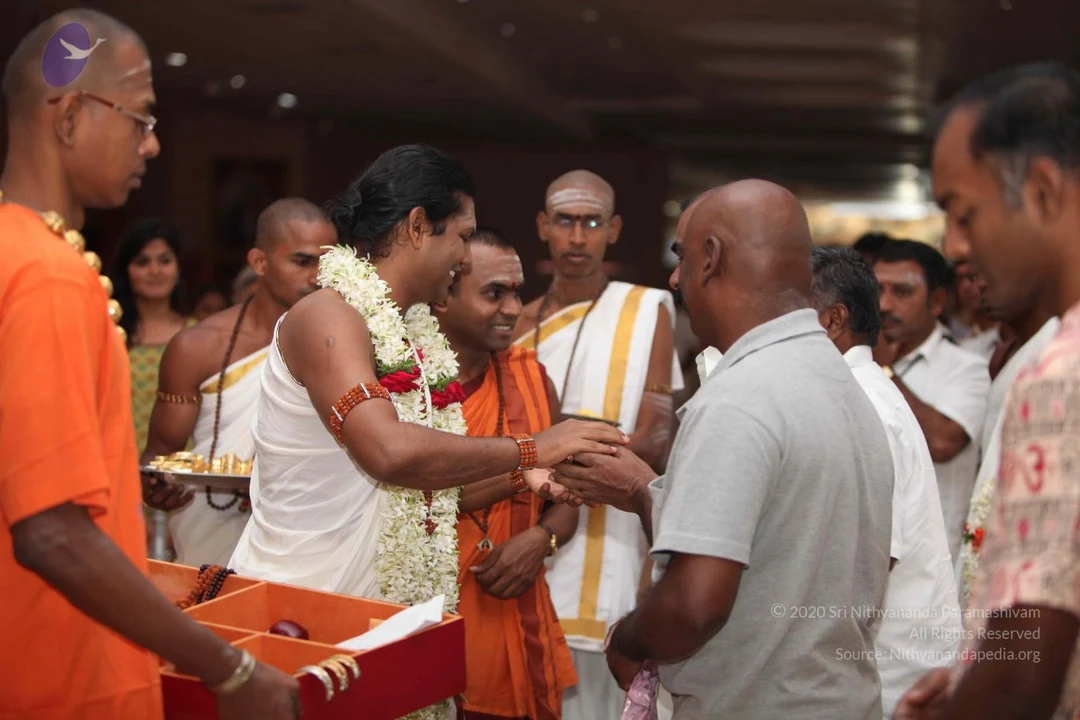
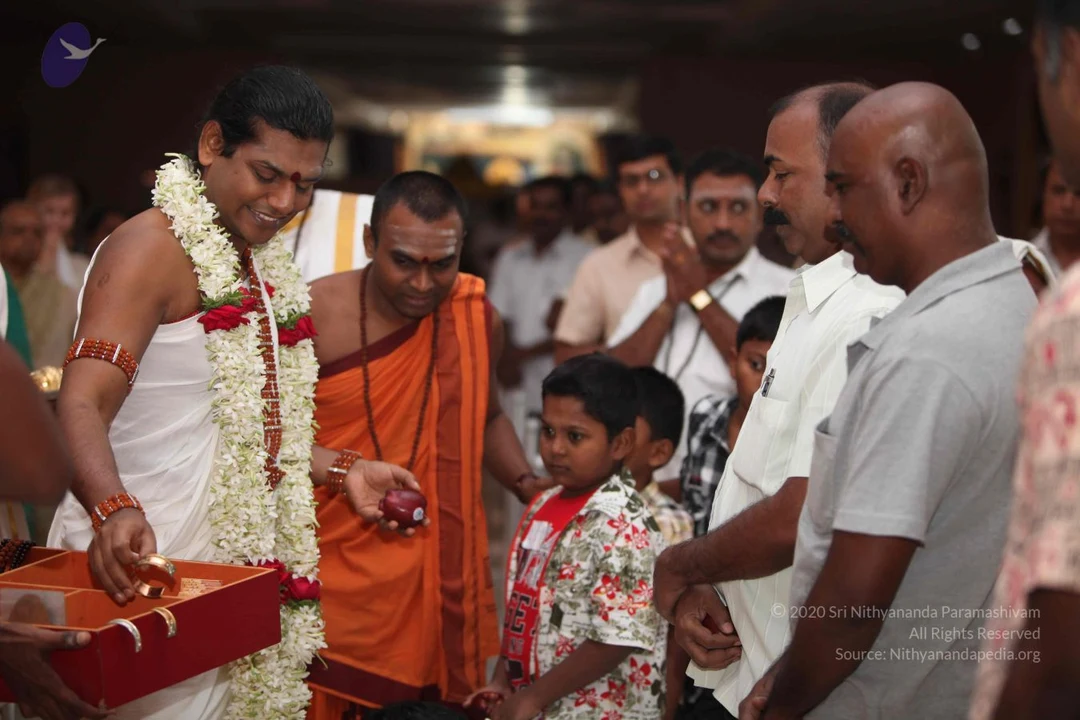
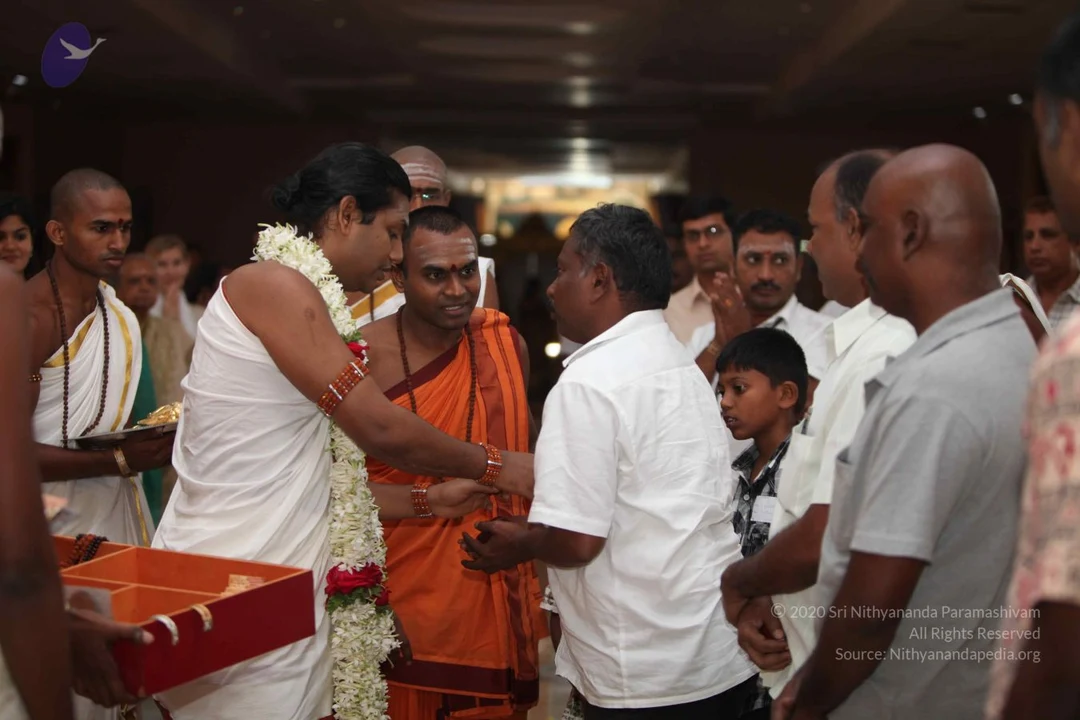
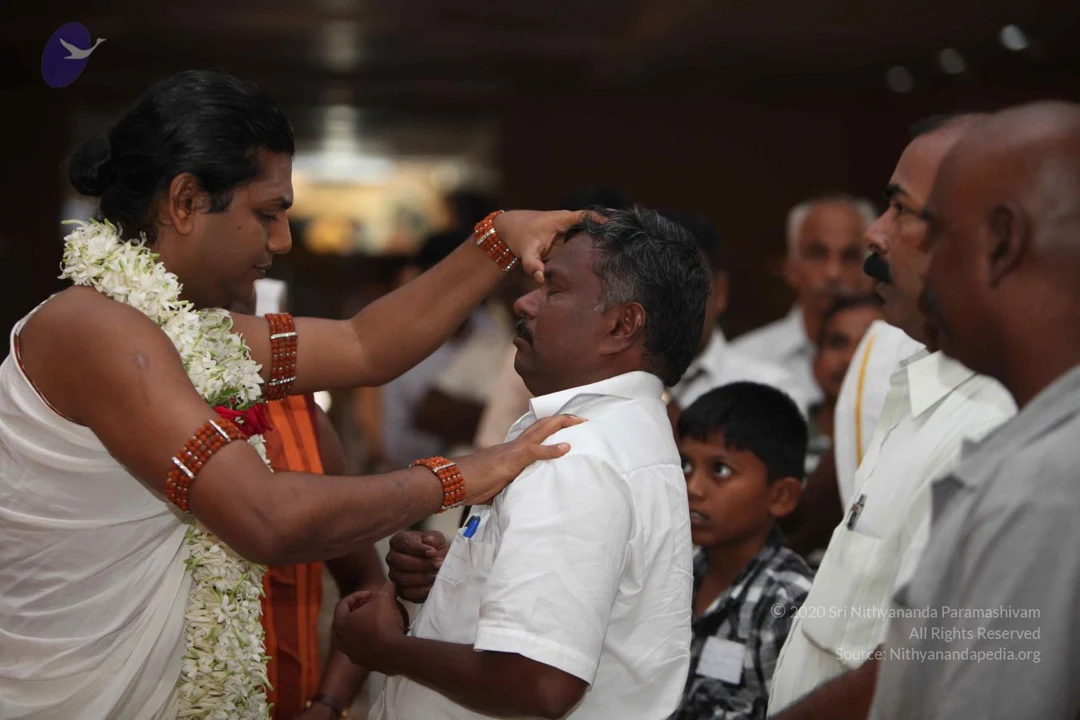
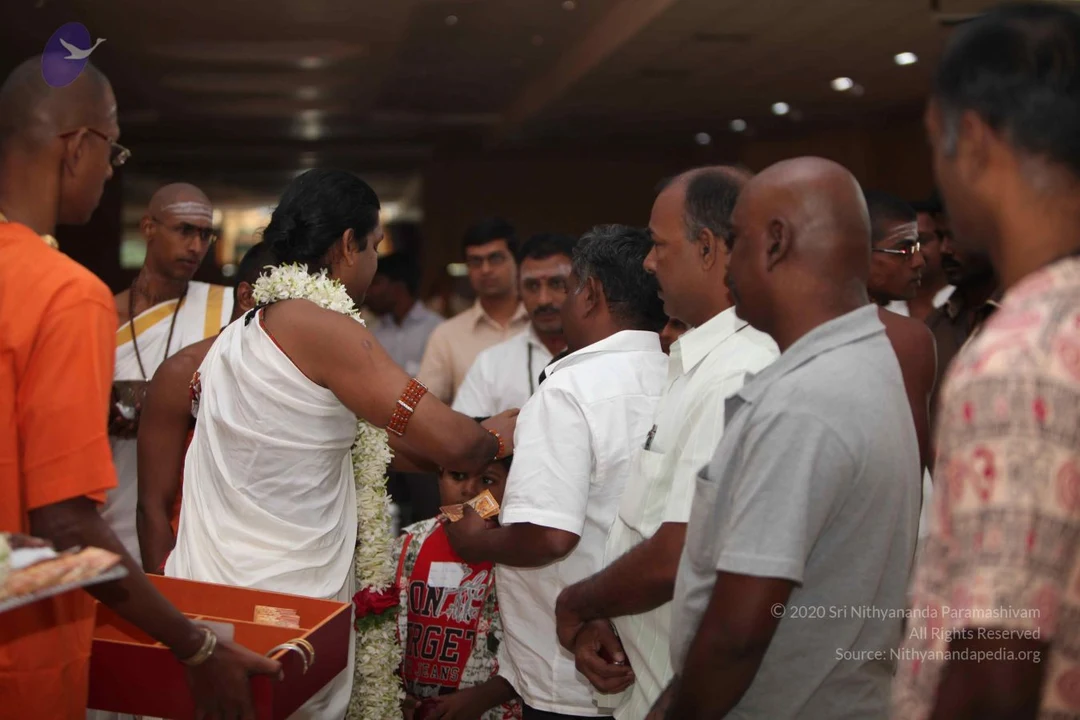
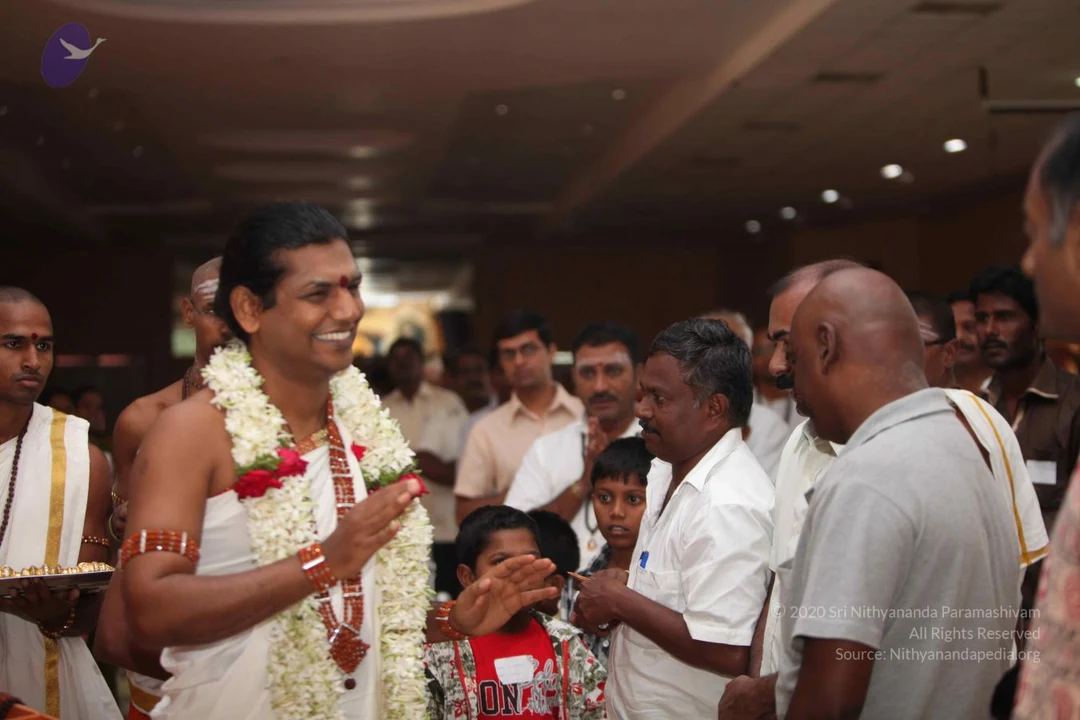
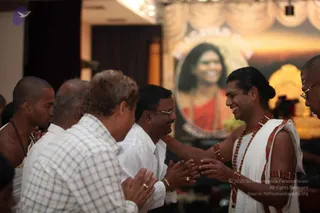
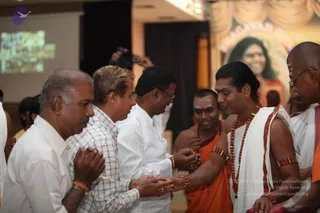
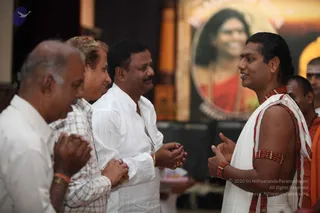
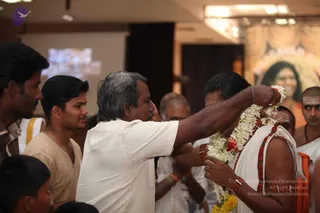
A multi-panel collage of event photographs. The large left panel shows a smiling man with short dark hair and a red bindi, wearing a white dhoti-style garment, a red-and-gold patterned shawl, layered white jasmine garlands with red roses, and red-gold beaded armbands. Right-side panels show a man in white with similar garlands and beaded armbands receiving greetings from devotees with folded hands, a devotee offering flowers, and a lower panel with several people in white and saffron-orange robes gathered in a hall with a backdrop portrait. The panels are photographs of a collage, so the kind is graphic and no physical people are counted.A photograph of a satsang-style gathering in an indoor hall. In the centre-right, a smiling man with hair tied in a knot wears a white dhoti-style wrap and draped white garment, with rudraksha malas across his chest and red-beaded bangles and armlets; he clasps hands with a man in a white shirt and glasses whose hands are pressed together in greeting. To the left, several men in white and checked shirts stand with palms joined in namaste, and a shaved-headed man in white with a rudraksha mala stands at the edge. Behind them, a large backdrop shows a framed portrait of a smiling woman in a red sari and necklace, beside a golden decorative motif and a sunset-coloured panel. Drapes and ceiling lights are visible.A photograph of an indoor gathering in a warm-lit hall. On the right, a smiling man with dark hair tied back wears a white cloth wrap over bare shoulders and multiple rows of red and orange beaded rudraksha-style malas around his neck and wrists, and he clasps hands with a man in a white shirt and glasses. On the left, a man in a checked shirt stands with palms pressed together in namaste, and other people stand at the edges. Behind them a large framed portrait of a smiling woman with long dark hair in red clothing is displayed, with a golden ornamental backdrop. The man on the right has distinctive rudraksha adornments and a white wrap, which is a visible appearance cue, but the image is not clear enough to confirm identity, so a person is set to unsure. Visible people number about four to five.Indoor event in a hall where several men in white and light shirts stand in a line greeting a central figure. The central man has long dark hair swept back, a red-and-white tilak, multiple red rudraksha malas, a white shawl over his shoulder and red beaded bangles on his arms, and he is extending his hand to a man in a checked shirt. Beside him, a man in an orange robe with a white forehead mark smiles. On the right a bald man in orange and white with a tilak stands with hands near his chest. Behind them a large banner shows a smiling woman with long hair against a golden backdrop, and a projection screen with an image appears on the left. A camera operator is partly visible in the background. Appearance cues suggest a person in the central position, though this is uncertain.Photograph of a group of men standing in a row in a hall, facing right toward a bare-chested man in a white dhoti and shawl with red and gold rudraksha-style beaded bands across his chest and upper arm, and a red-and-gold cord around his neck, who is smiling and gesturing with one hand while talking. Three men in white or checked shirts stand beside him, one with hands folded in namaste and others with hands clasped at the waist. Behind them a framed portrait labelled with a name shows a smiling woman in a red sari, and a figure in orange robes stands at the right edge. A tray with offerings is partly visible at the lower centre. Five people are visible.A photograph inside a hall where a grey-haired man in a white striped shirt drapes a long white flower garland over the head of a shaved-headed man in white dhoti and shawl with red-bordered edges. The garland is white jasmine with orange-yellow marigolds and a red flower. The recipient wears red-beaded wrist bands and white and red sacred marks on the forehead. Behind them, a man in a white shirt and a younger man in a beige top watch, and a framed portrait with orange and gold draping hangs on the right wall, showing a smiling figure with long dark hair and an orange garment. A projection screen is visible in the background. Other onlookers in white and orange stand nearby. Garlanding an honoured guest is the visible act.

Maheshwara-Puja
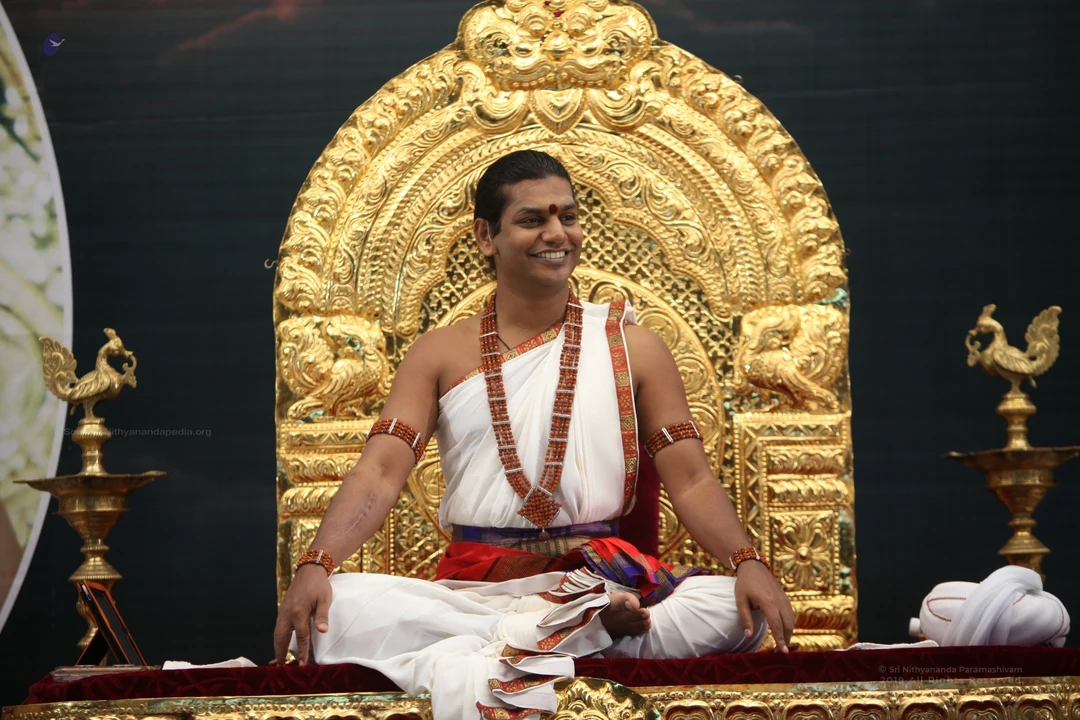
99 photosSource gallery
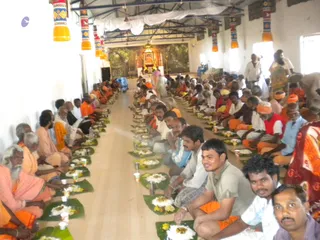
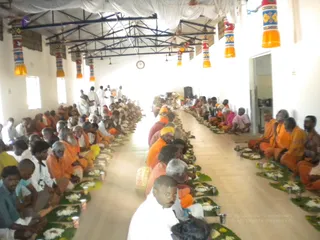
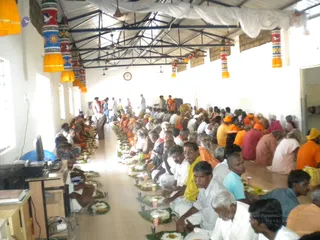
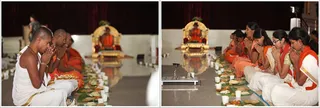
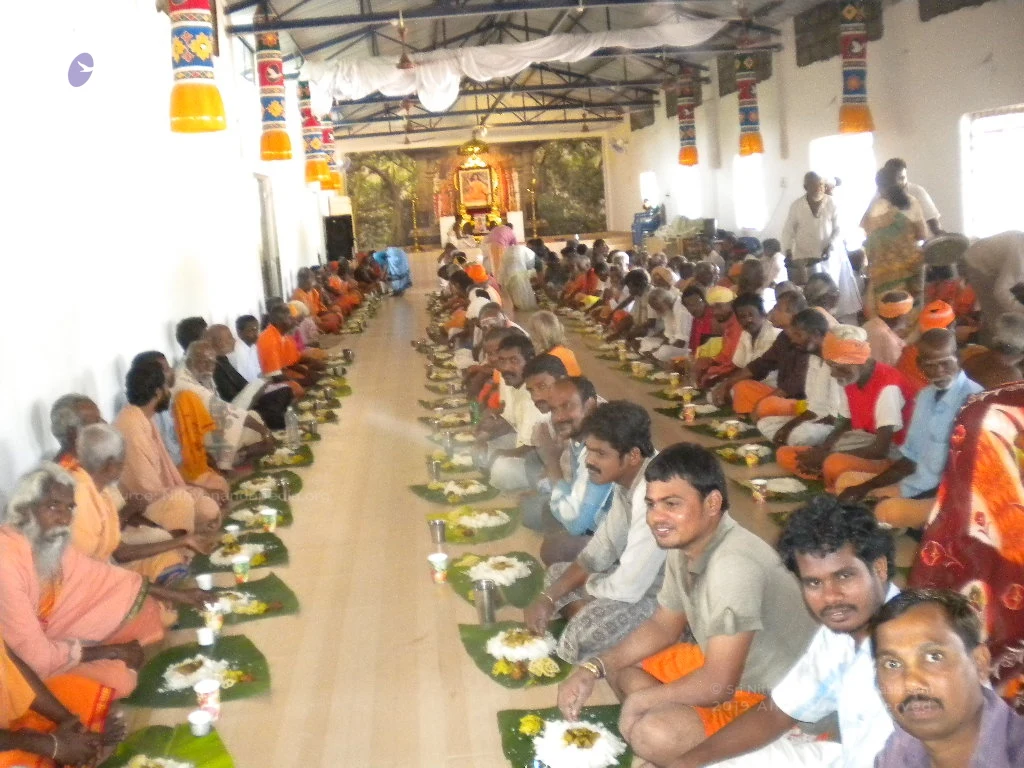
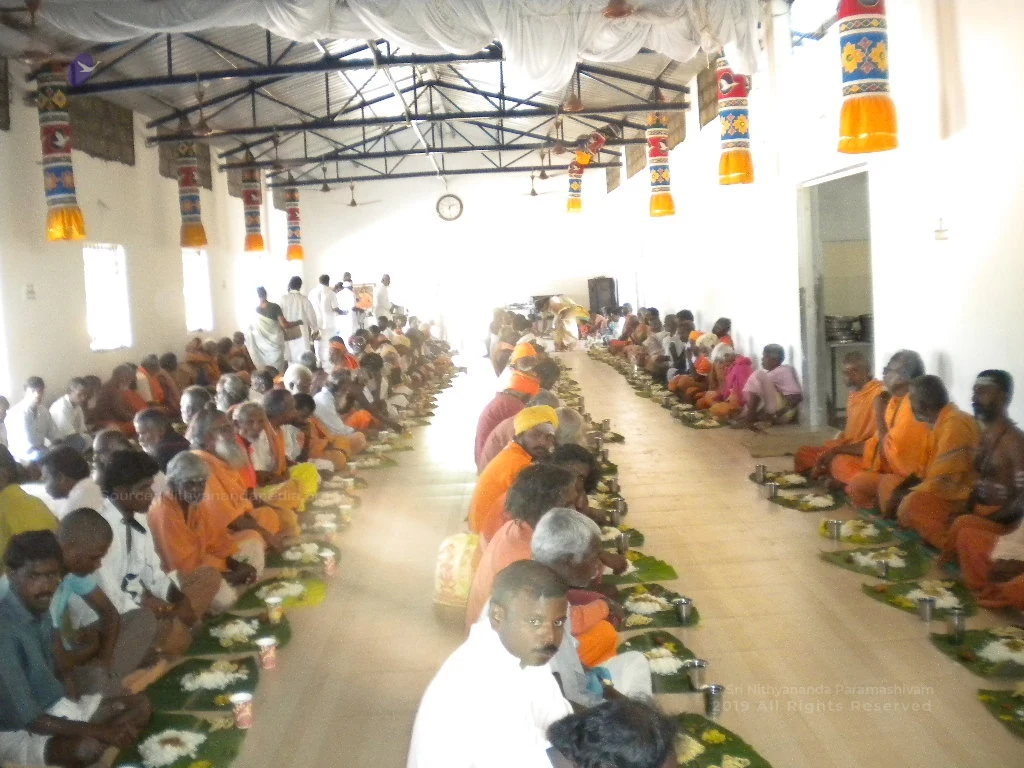
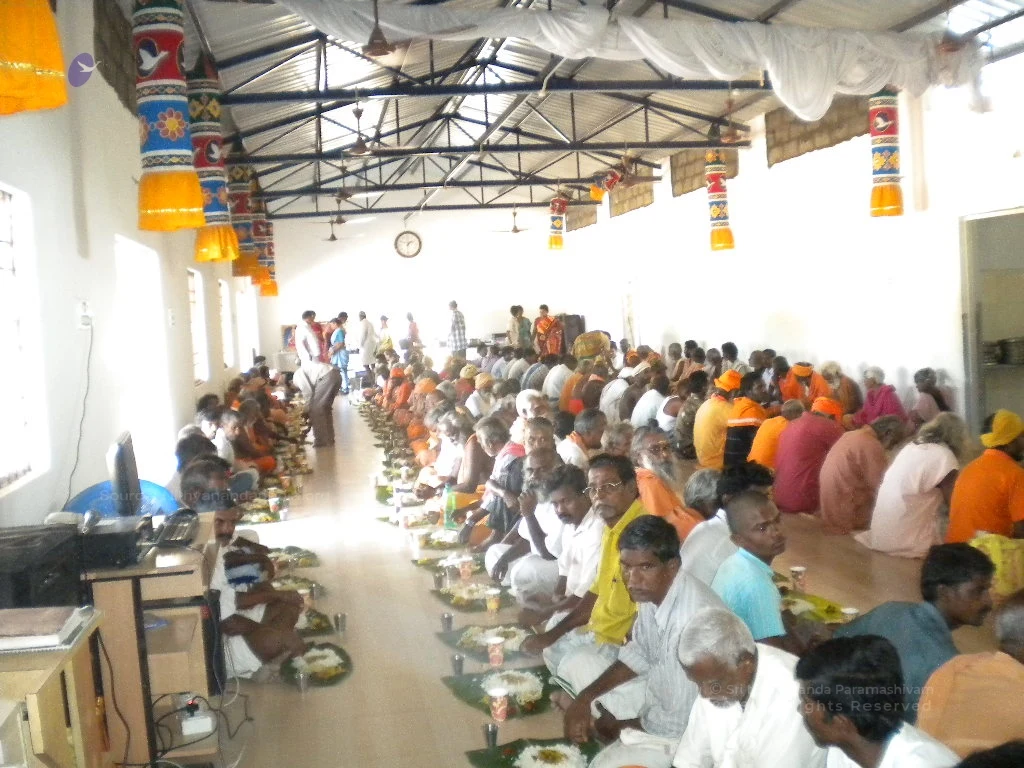
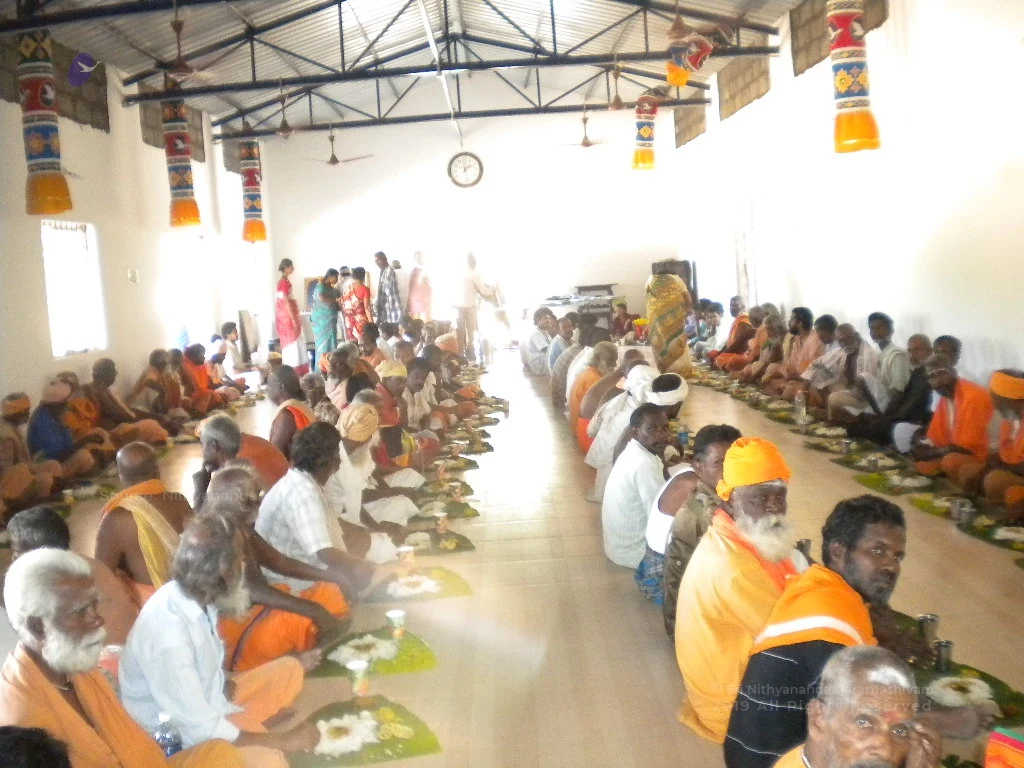
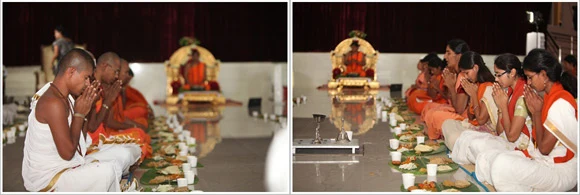
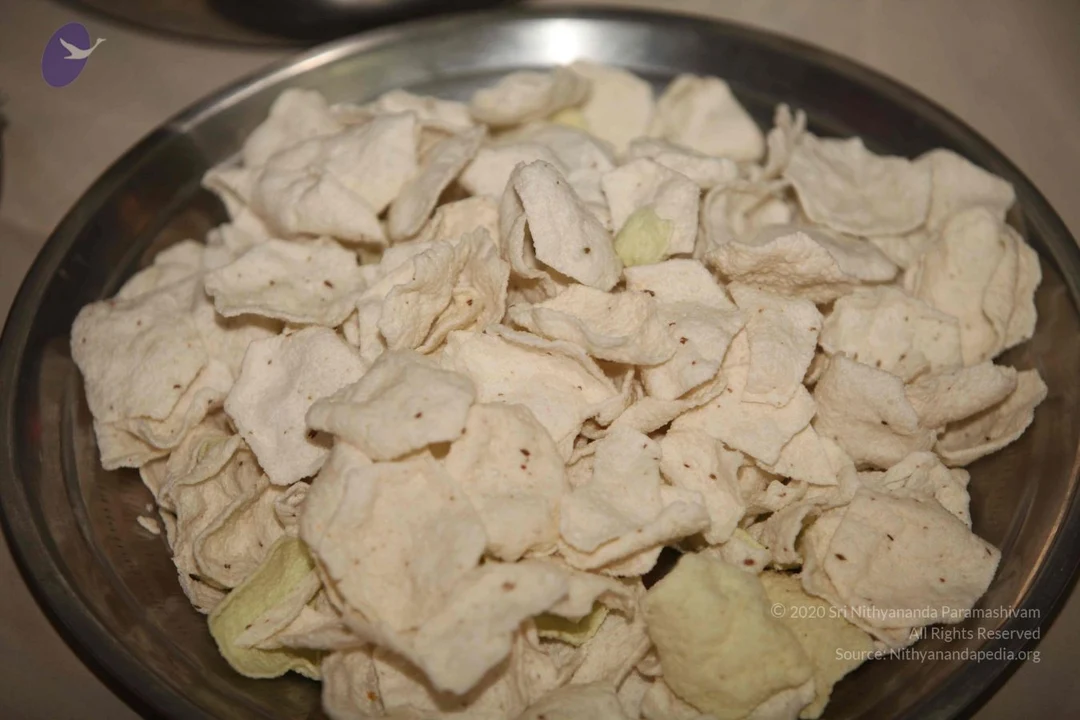
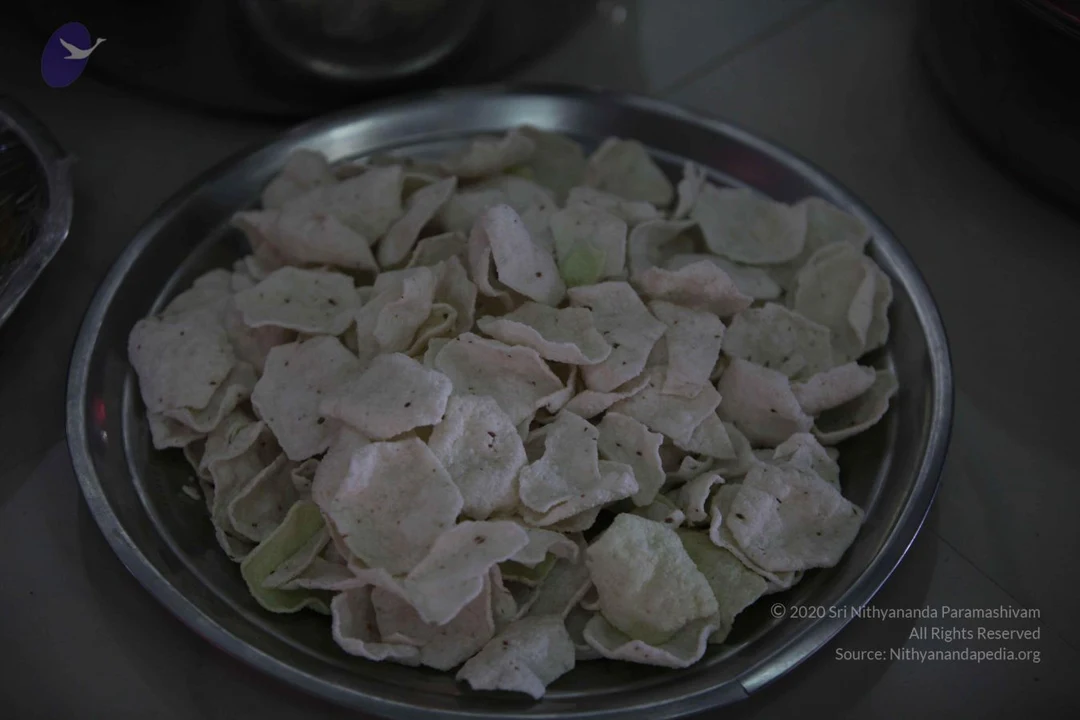
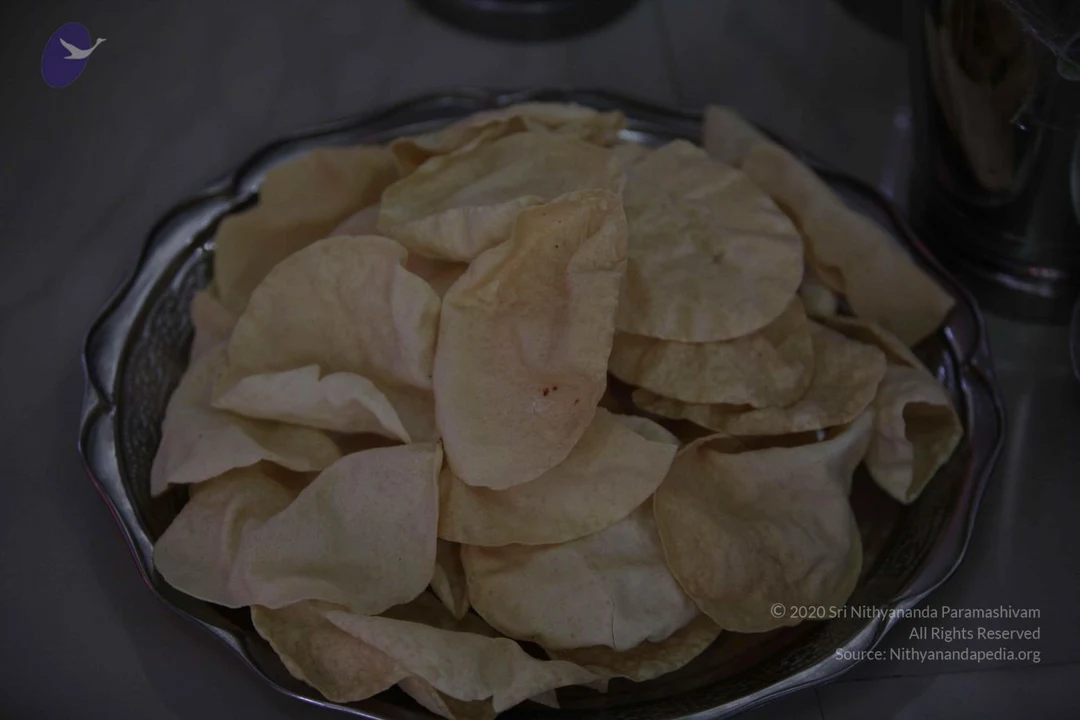
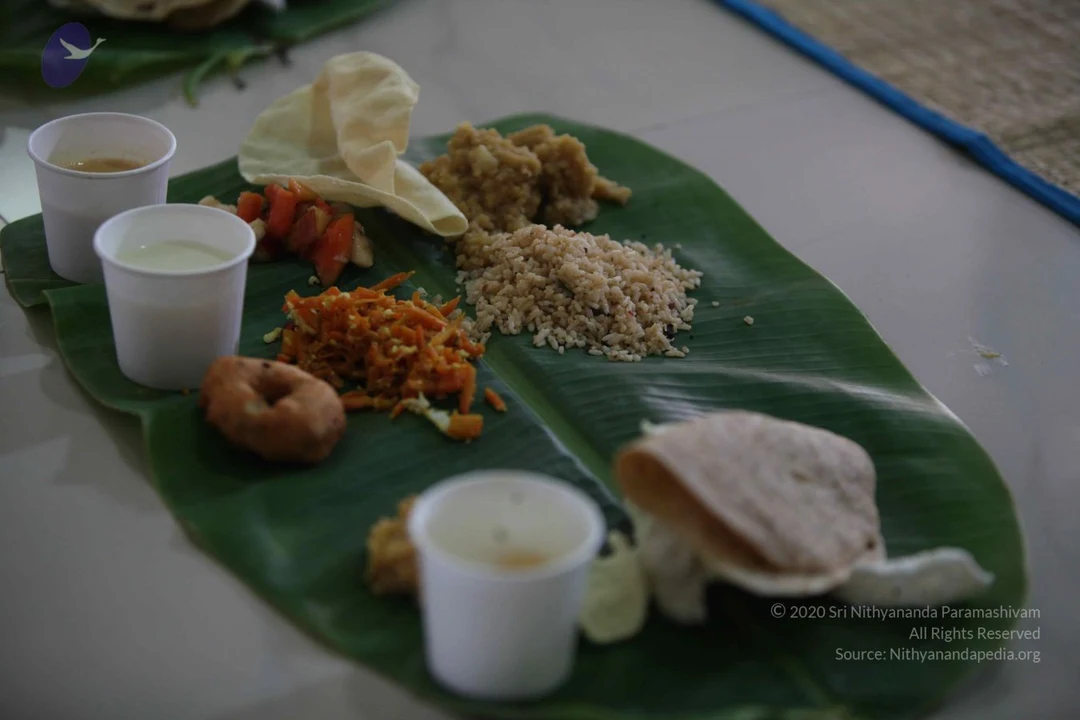
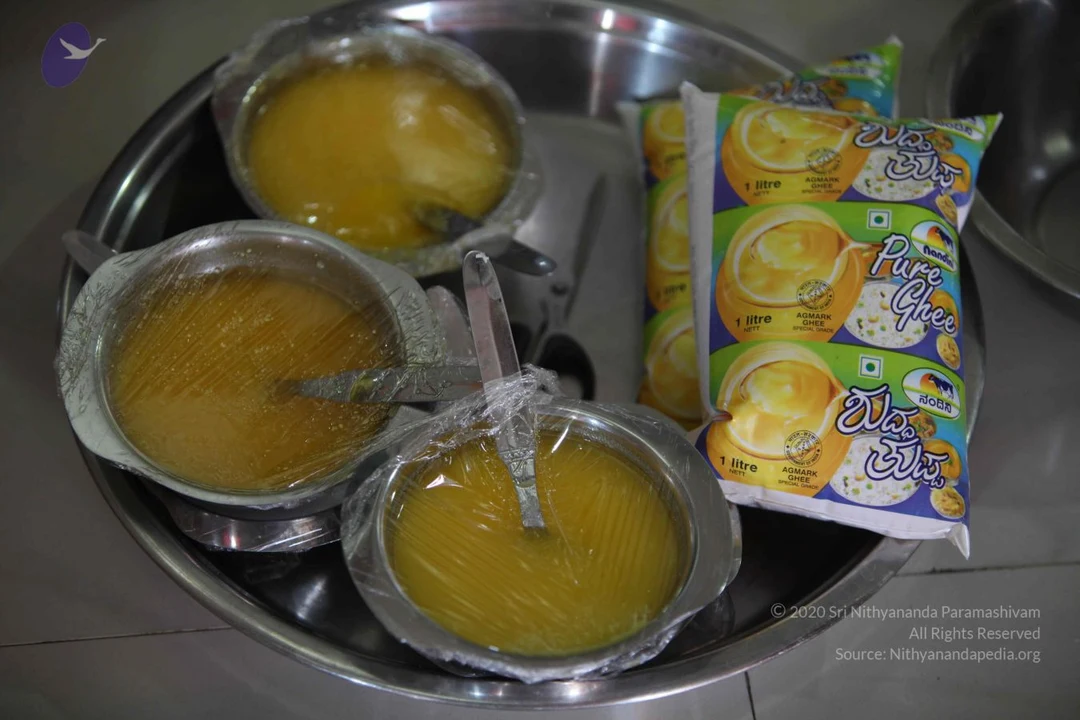
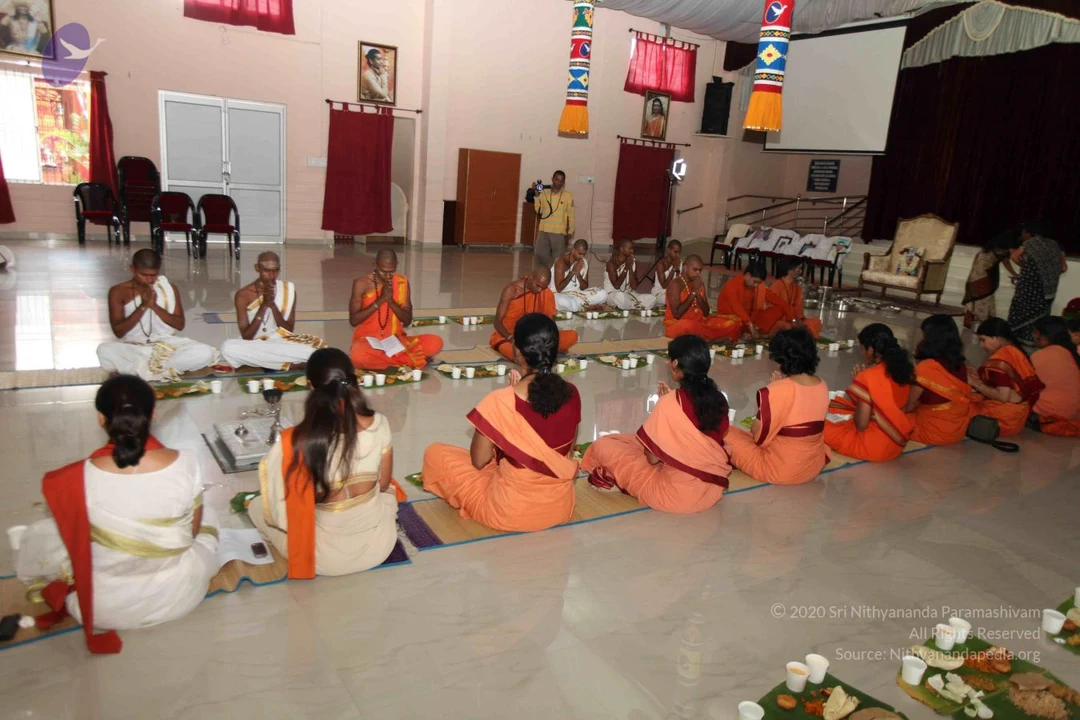
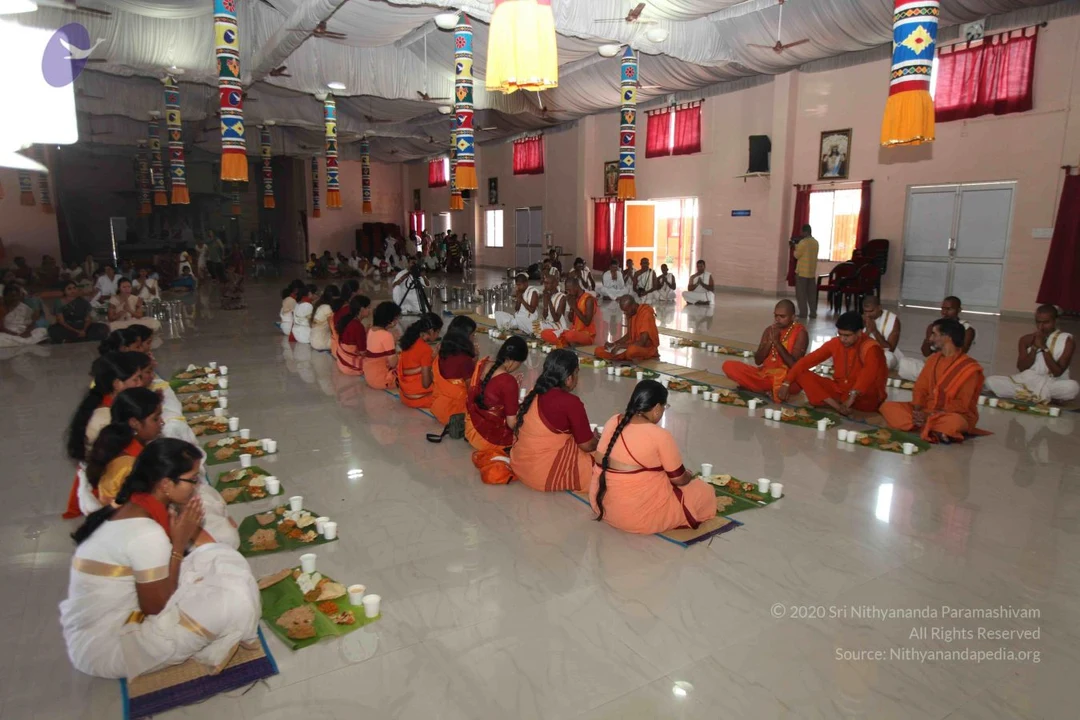
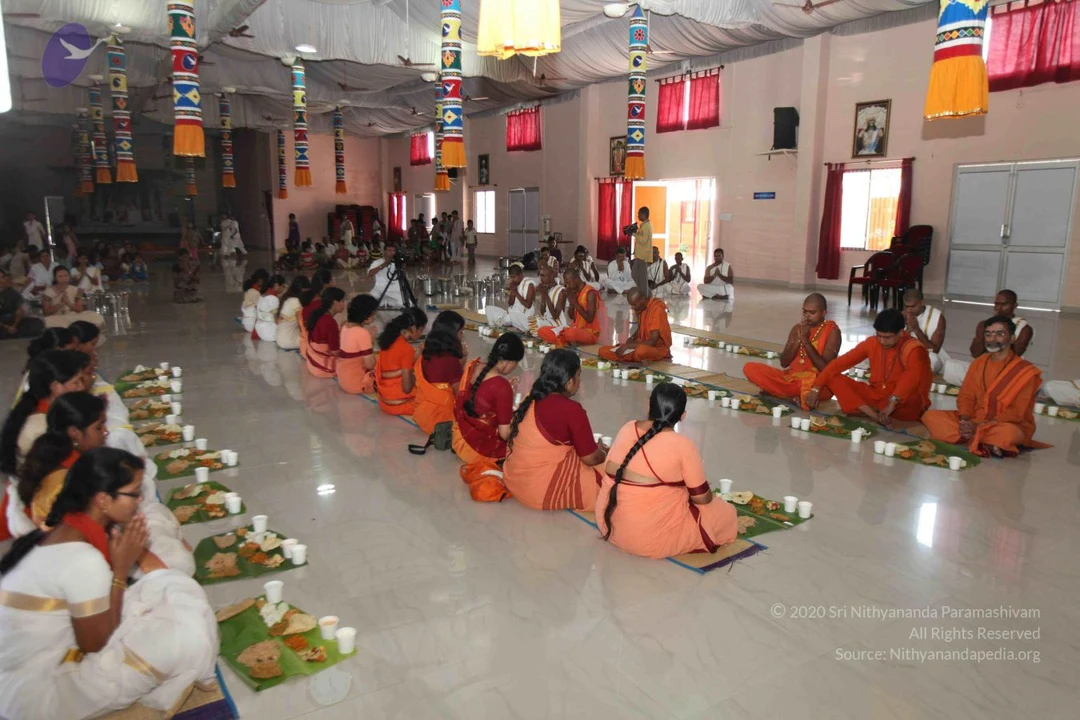
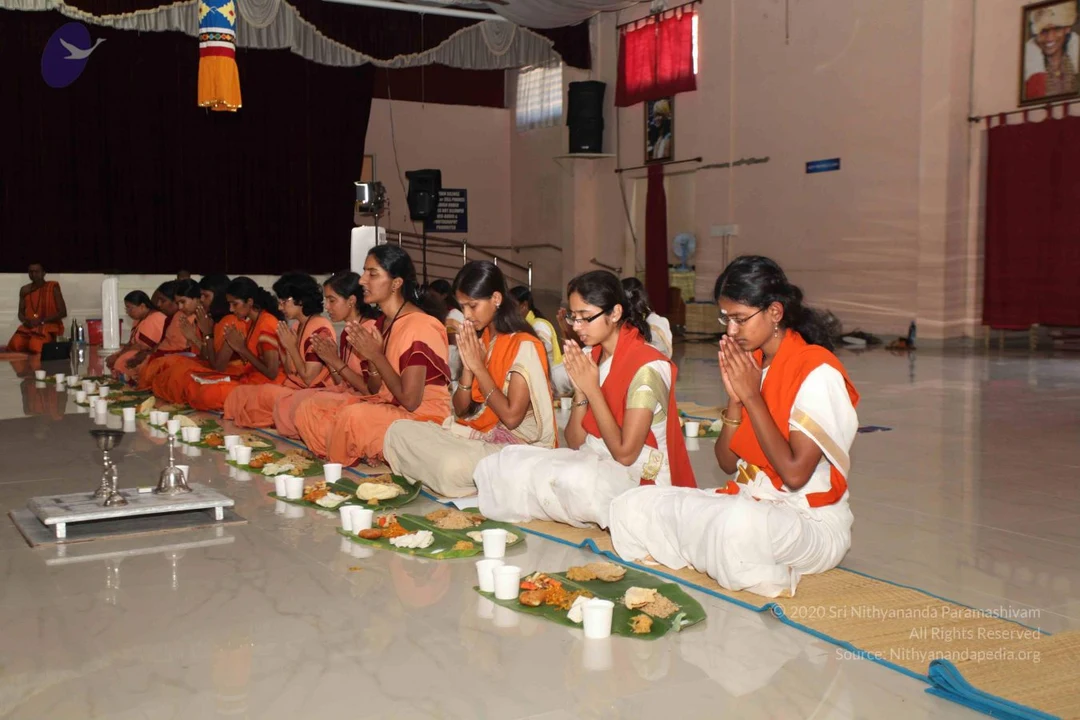
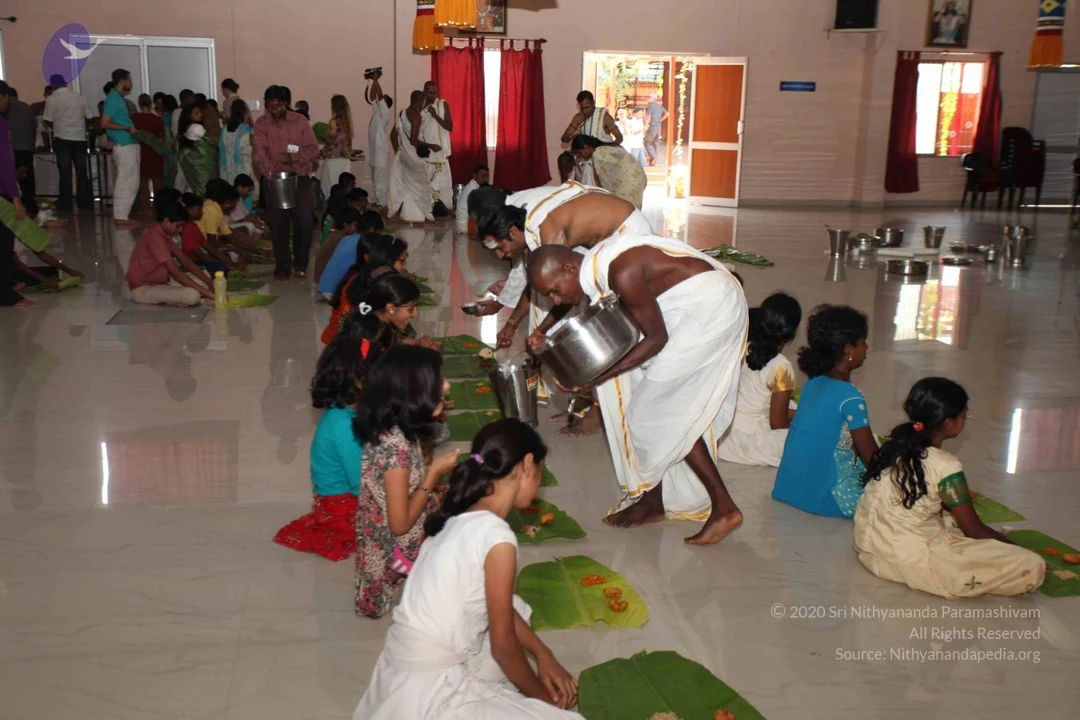
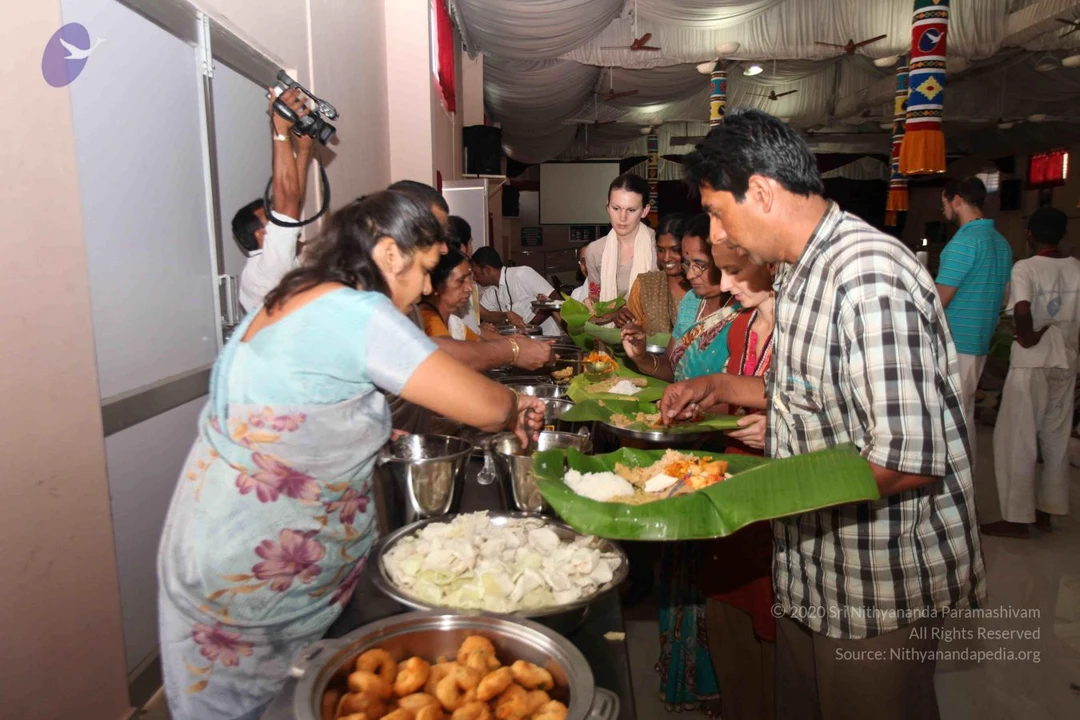
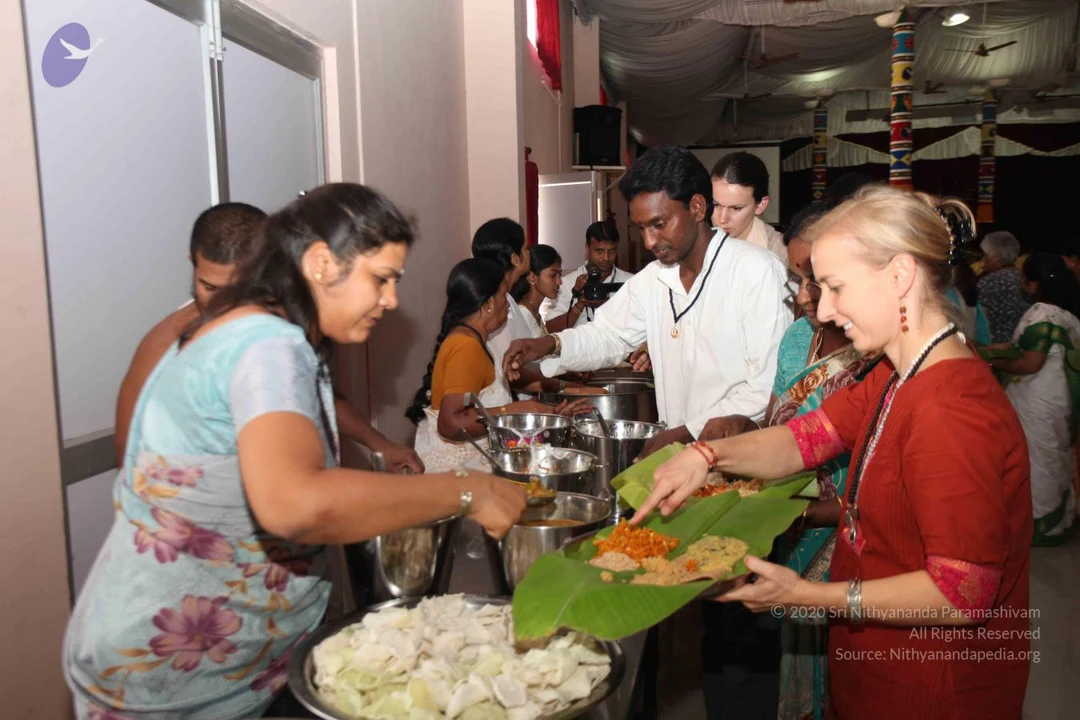
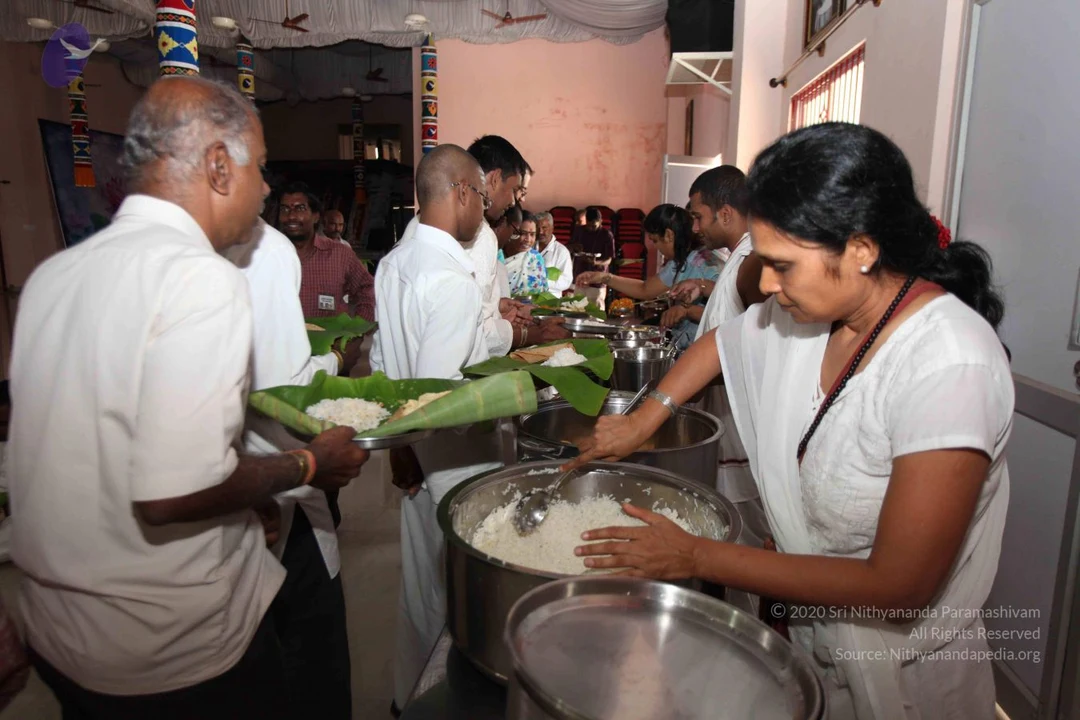
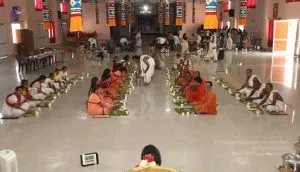
A photograph of a large marble-floored hall with rows of devotees seated on the floor before banana-leaf plates. Women in saffron, orange and red saris sit in lines on the left and right, and men in white dhotis and shirts sit among them. Several people in white stand in the aisle between the rows, serving food from baskets. Red and orange banners hang from the ceiling, and a few pillars are visible. A small framed object is in the foreground, and the rows of seated people recede toward the back of the hall. This appears to be a communal meal, an annadan style food service.Two side-by-side photographs of a seated ritual or satsang meal in a white-walled hall. In each panel, a row of devotees in orange and saffron clothing sit cross-legged behind a long low table of brass plates and bowls, hands folded in prayer. In the background, an ornate golden throne-like seat with a red cushion stands before a central figure. The left panel shows a shaved-headed man in white kneeling at the front of the row, while the right panel shows a woman in orange among the seated devotees.A two-panel collage of photographs showing a group of devotees seated on the floor of a hall in orange and saffron robes, arranged in rows before plantain leaves set with food, a traditional meal offering. In the left panel, several rows of seated devotees face a central open space. In the right panel, devotees in orange and white clothing sit in lines, with a standing figure in orange near the centre. Walls are cream-coloured with hanging red and orange decorations and framed pictures.A wide hall with a polished white floor where rows of devotees sit on the ground facing a central aisle, many women wearing orange and saffron saris and men in white dhotis with orange shawls. Hanging banners in orange, red and yellow decorate the back wall above the seated congregation, and a few standing attendants move among the rows. Pictures in the foreground show the scene from behind a seated devotee, with brass or steel pots and trays arranged on mats in front of the participants. Appears to be a seated group gathering or satsang in a large ashram hall.A close overhead photograph of a round stainless steel plate heaped with thin, flat, off-white crisp wafers, some with small brown specks and a few pale green pieces. The plate sits on a light cloth. No people are visible.A close photograph of a round stainless steel plate heaped with thin, pale, crisp flat chips or wafers, some tinged pale green and others pinkish-white, scattered with dark specks. The plate rests on a light grey countertop, with a dark metal vessel and a small bowl edge visible at the top and left edges. No people are present in the frame.

Linga-Prathishta

22 photosSource gallery
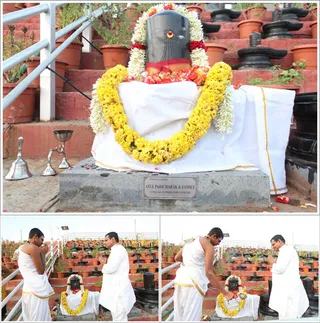
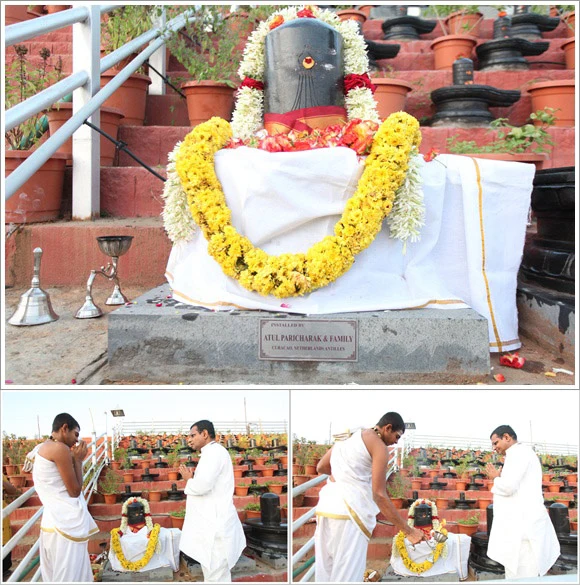
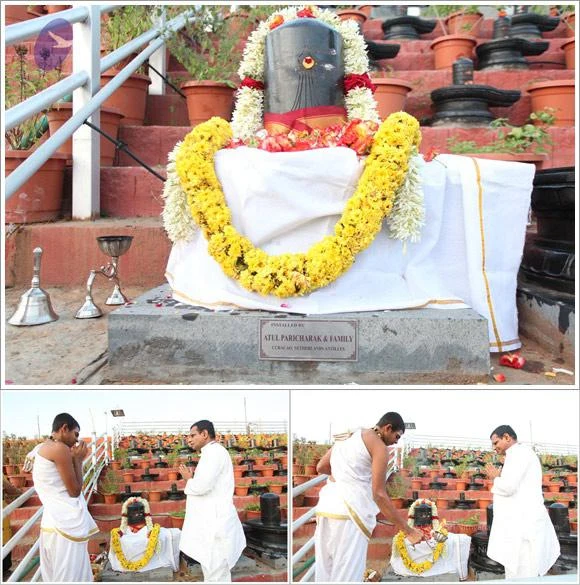
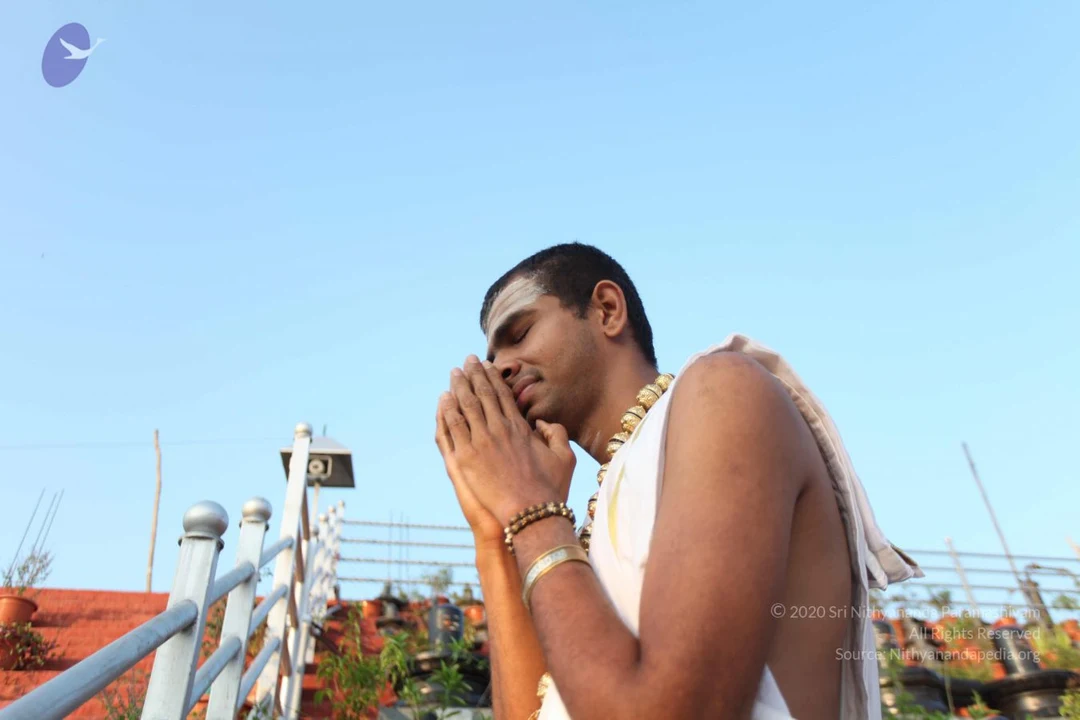
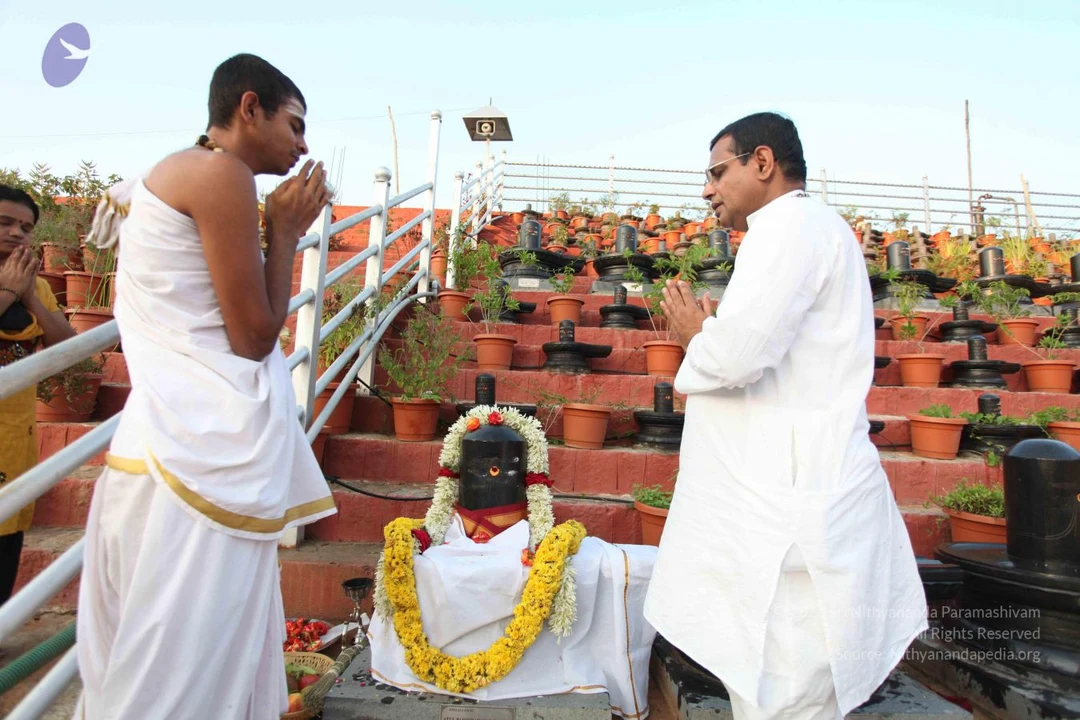
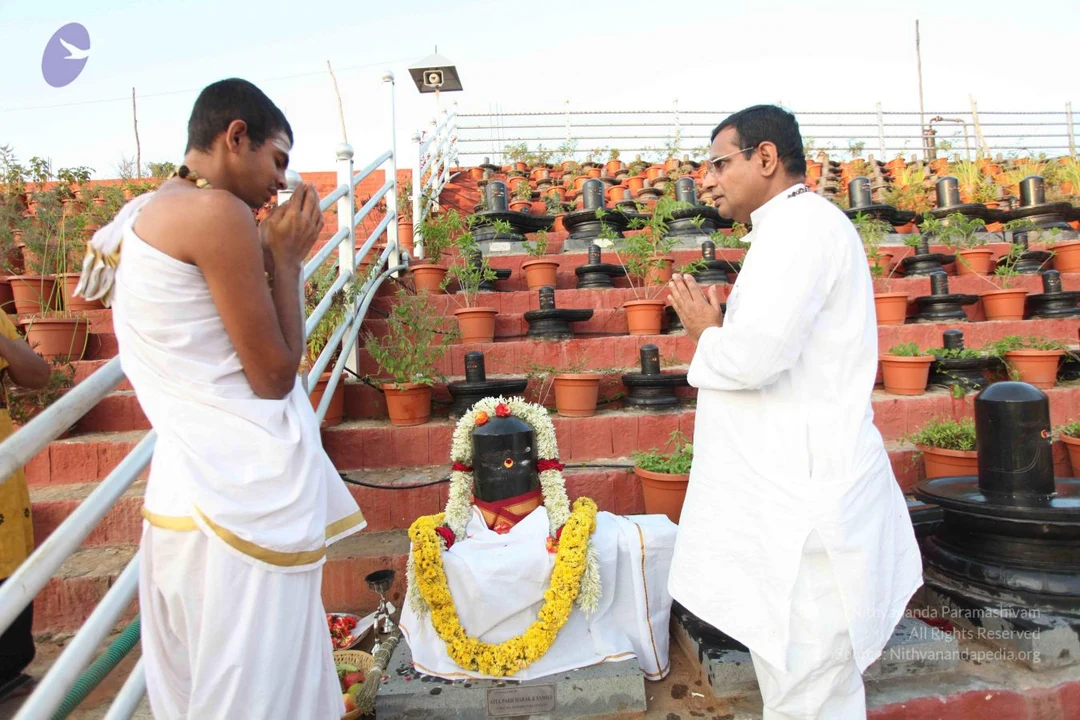
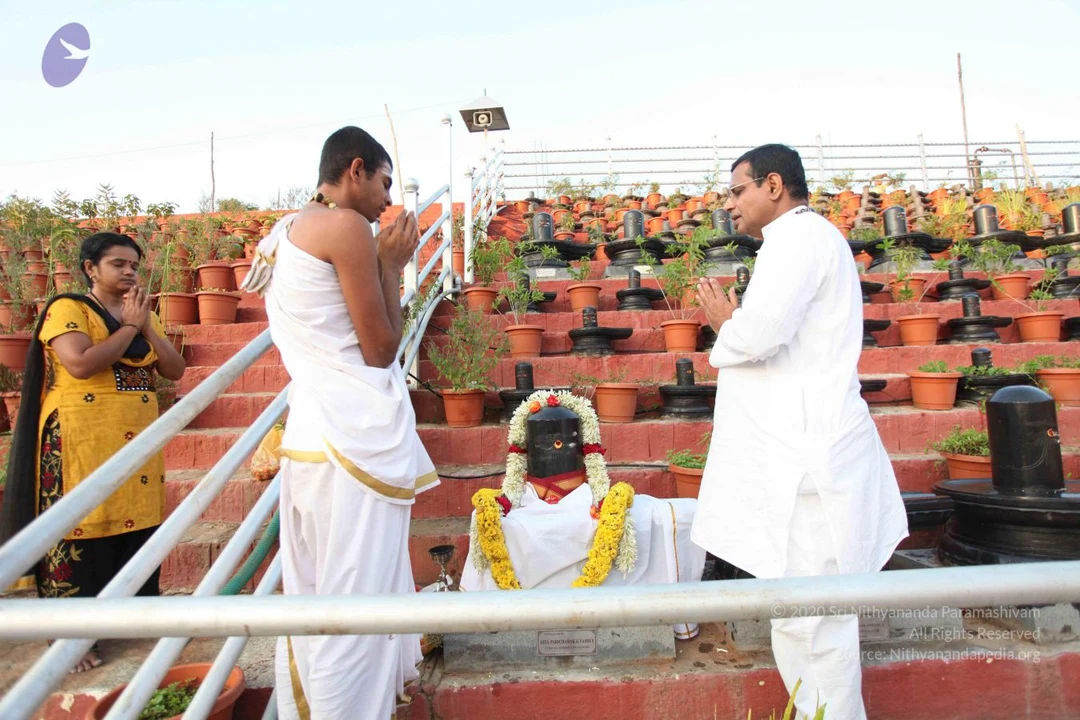
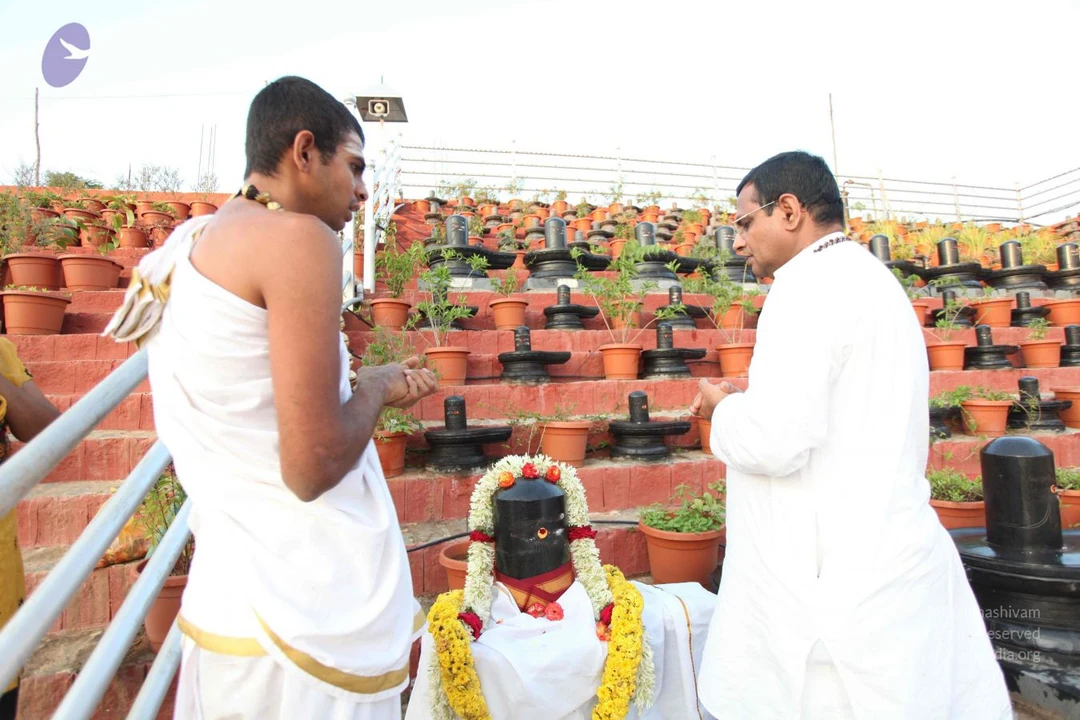
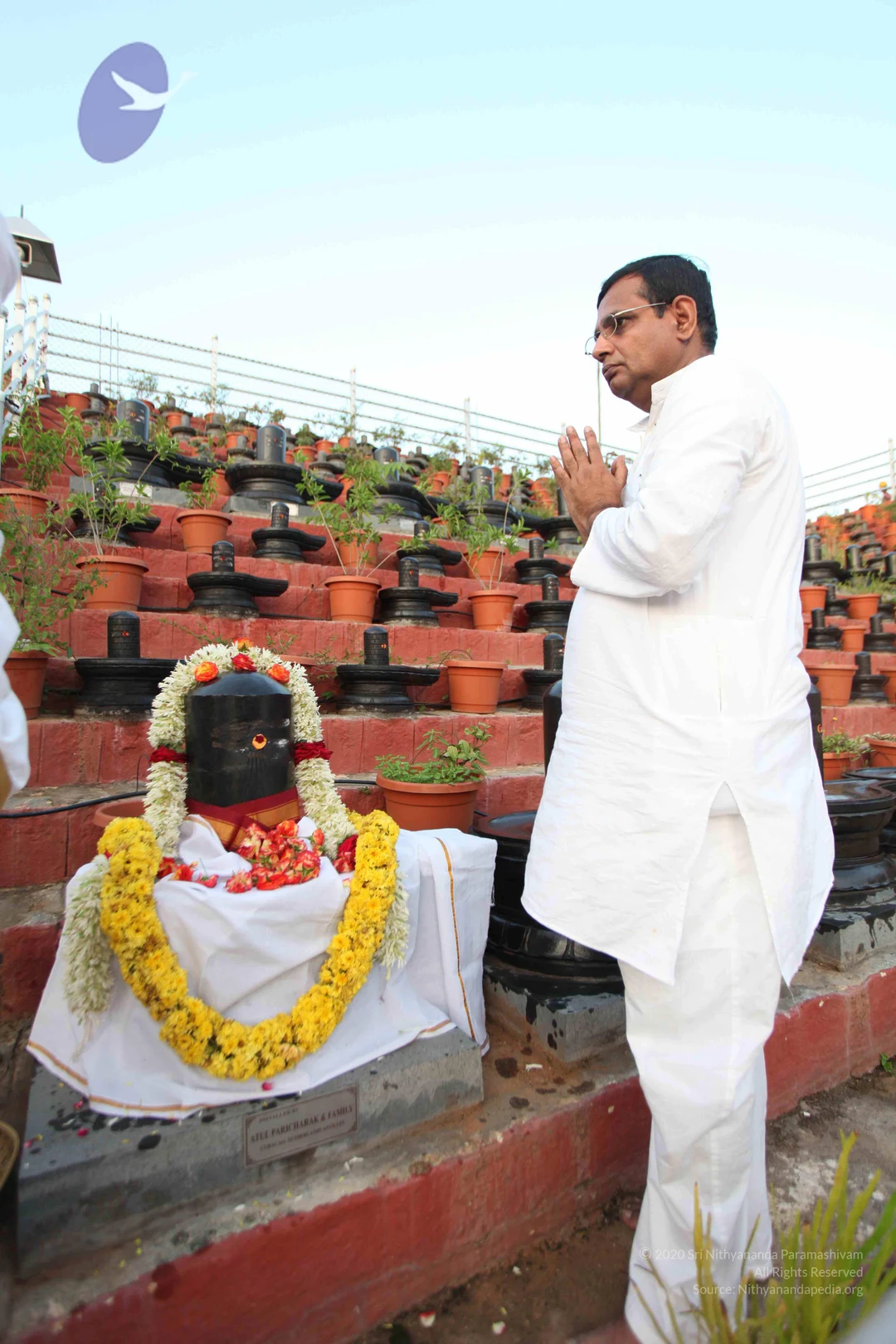
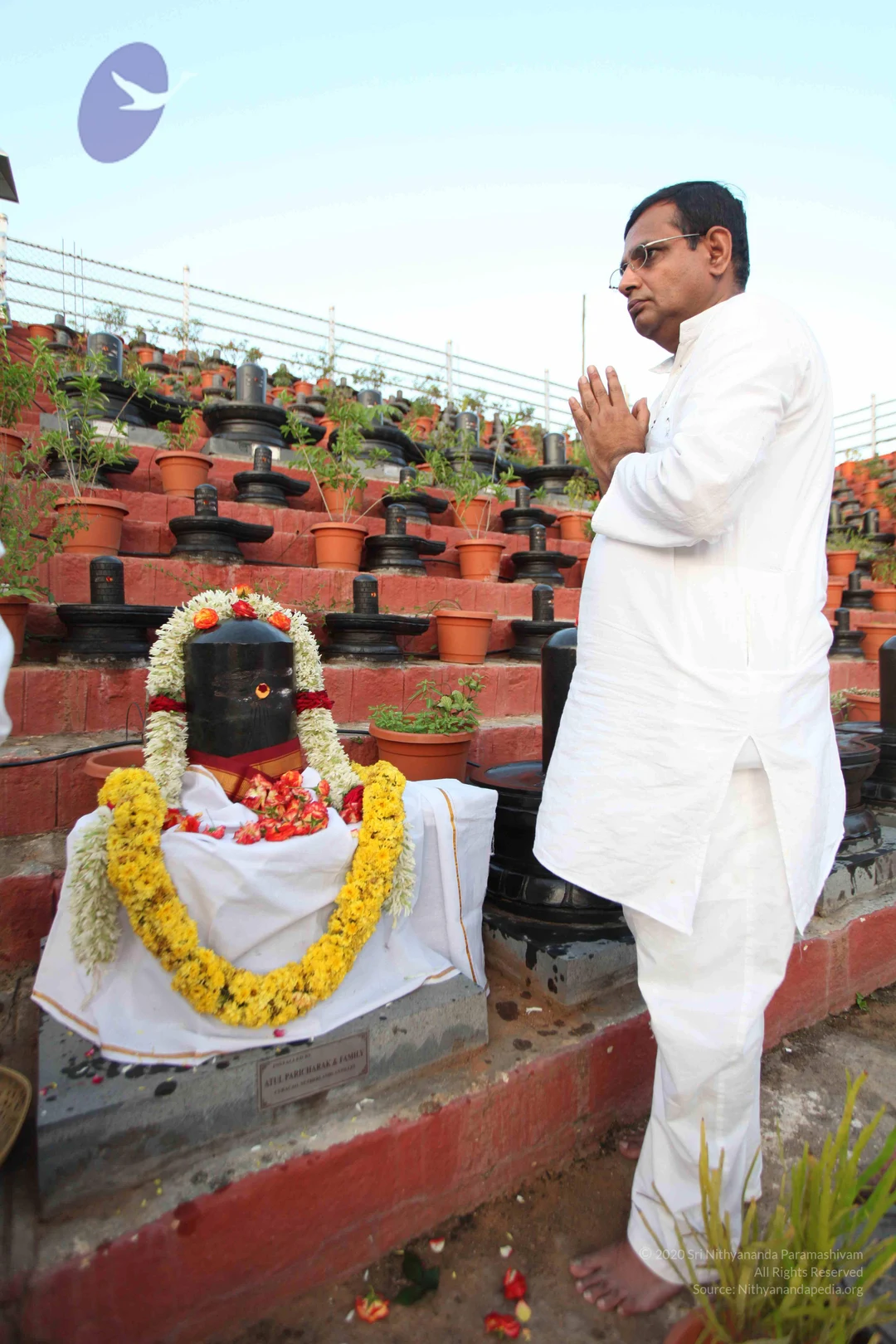
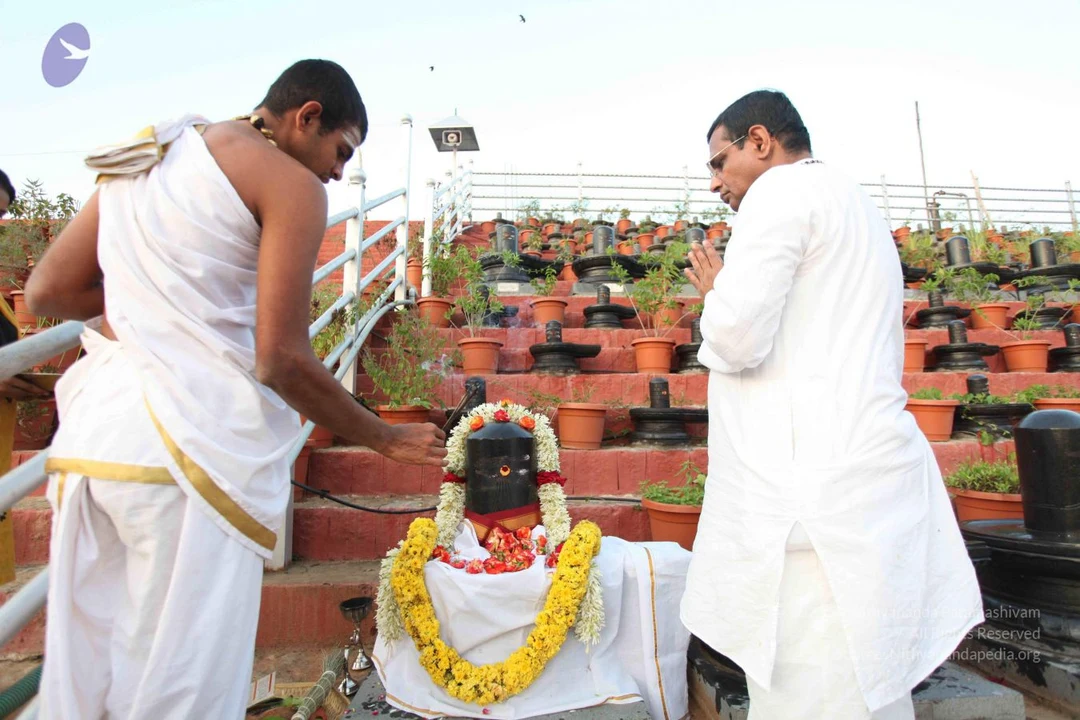
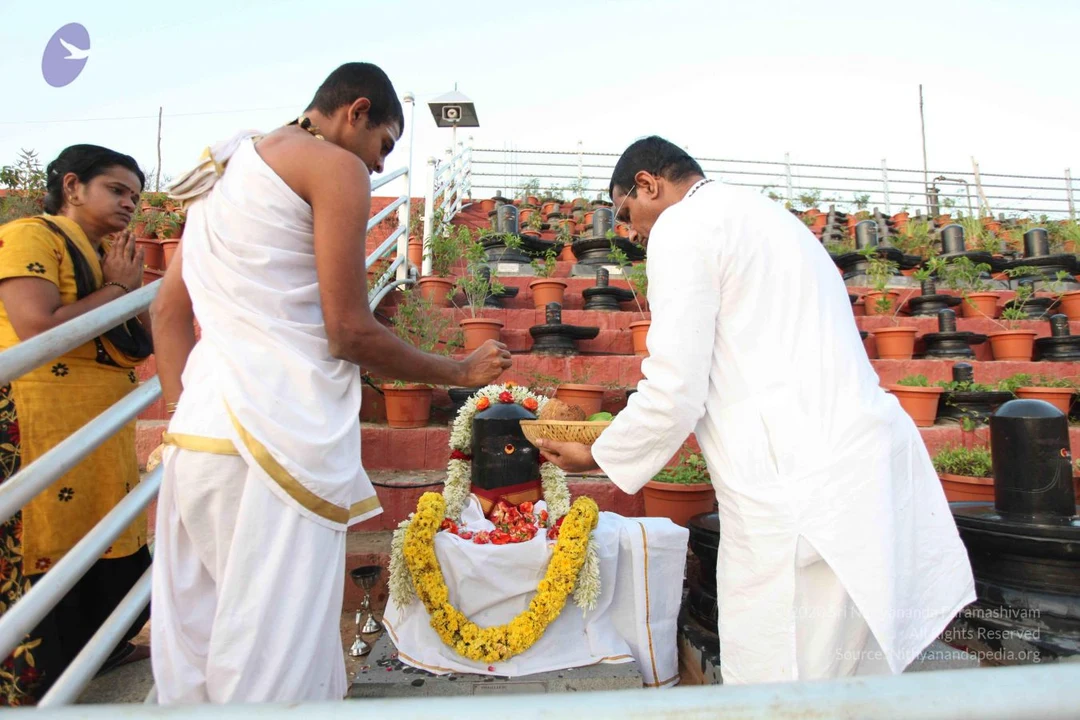
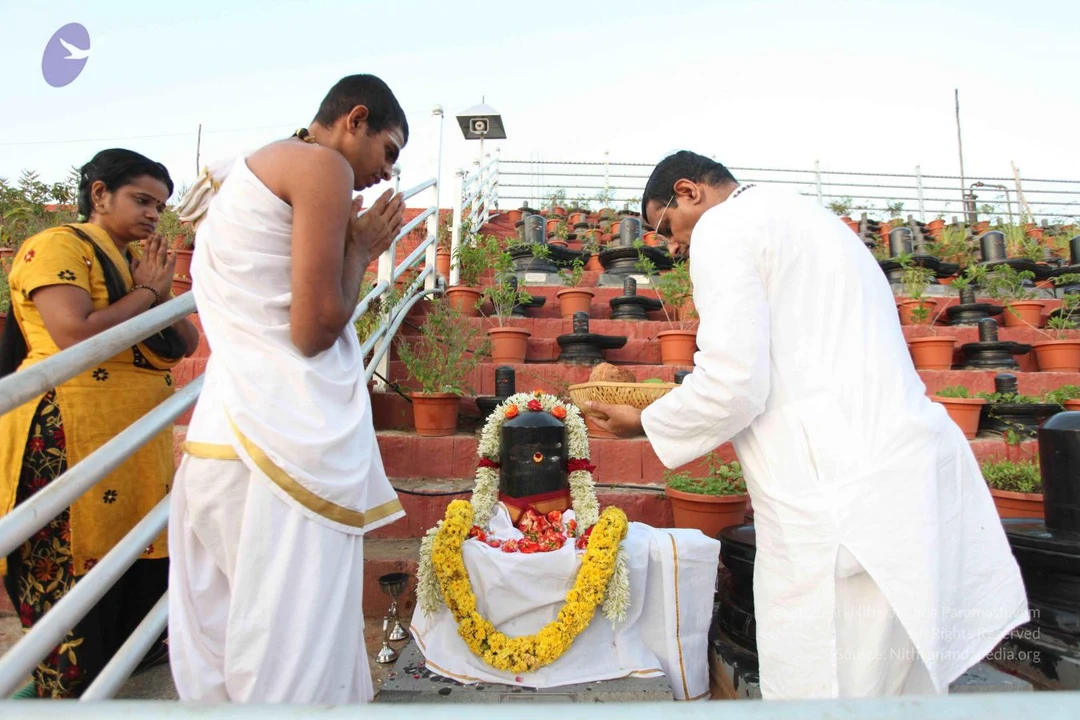
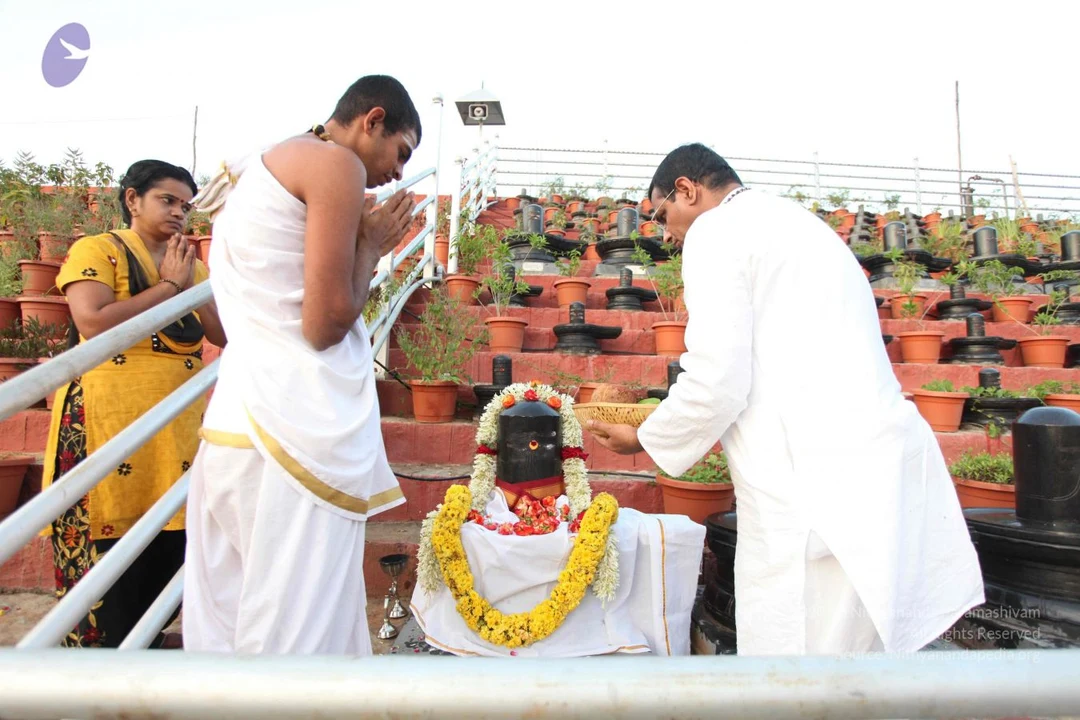
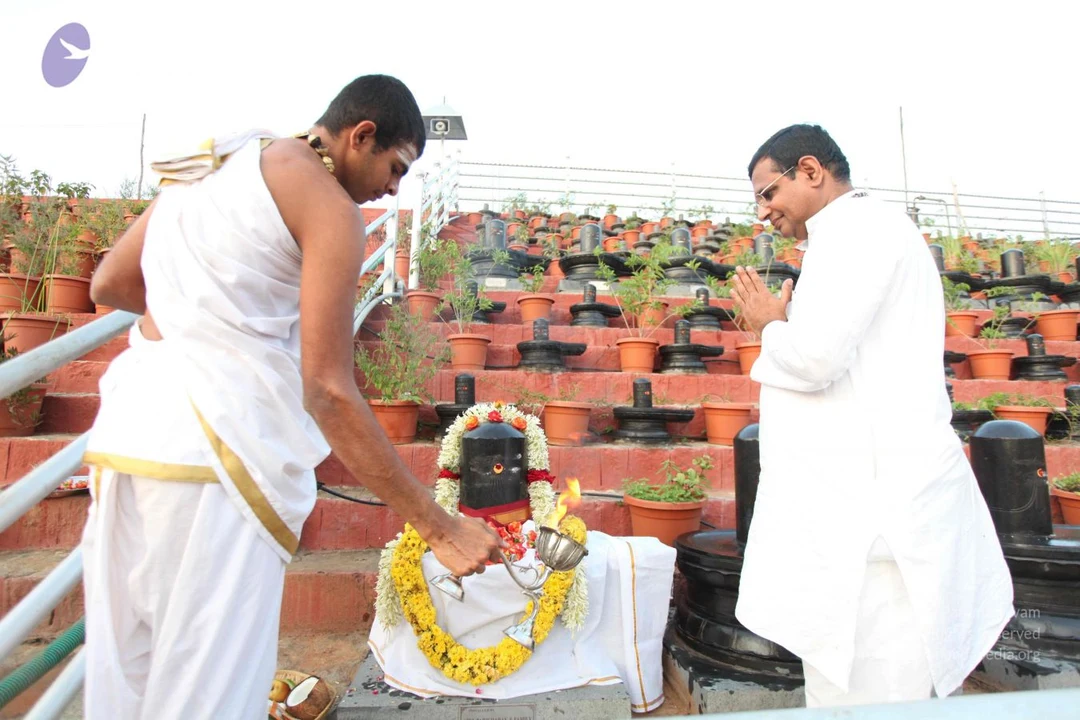
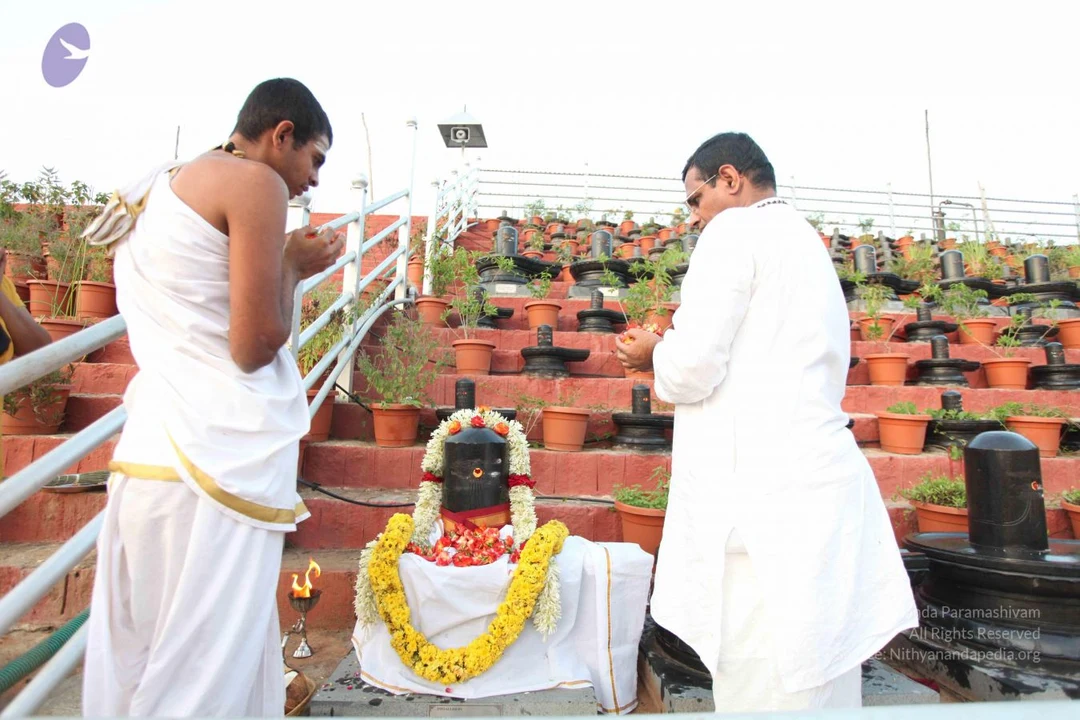
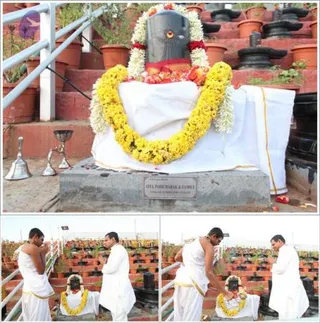
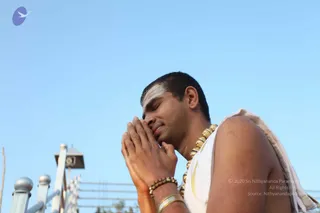
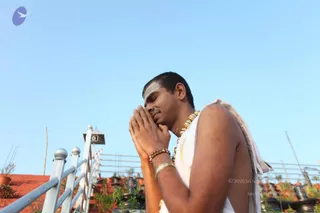
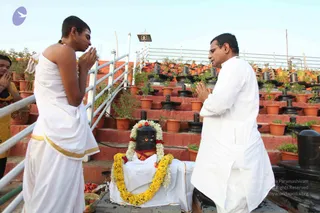
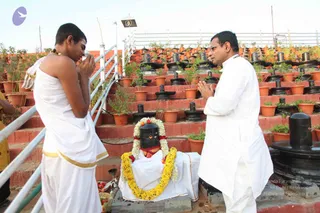
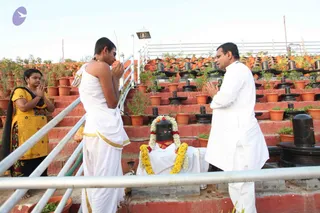
A three-panel collage of a Shivalinga shrine at a garden of potted Shivalinga stones. The top panel shows a black stone Shivalinga draped with white cloth, a yellow marigold garland and a white flower garland, with red flowers at its base and a stone plaque reading as a donation credit. Bells and a brass lamp sit to the left. The bottom two panels show two men in white dhotis and bare upper bodies: one stands with folded hands while the other, bending down, offers a garland or flowers to the Linga. Rows of terracotta pots line the background. No a person candidate is visibly identifiable.A man with closed eyes and palms pressed together in namaskar stands outdoors under a clear blue sky, photographed from a low angle. He has white vertical tilak marks on his forehead and wears a white shawl over bare shoulders, with a gold-beaded necklace and a rudraksha-style mala and gold bangles on his wrists. Behind him are white metal railings with rounded finials and a grey lamp fixture against the sky.A photograph taken from a low angle against a clear blue sky. A bare-chested man with short hair and a white tilak on his forehead stands with his eyes closed and palms pressed together in namaste at his chest. He wears a white dhoti-style cloth draped over one shoulder, a gold necklace with ornaments, a beaded bracelet and a gold bangle. Behind him are a metal railing, a red-tiled roof, potted plants and a small wall-mounted light.Outdoor temple scene at a red-brick stepped platform lined with potted green plants and small black lingam shrines. In the centre a black Shiva lingam is draped with a white cloth, garlanded with white and yellow flower garlands and marked with red. A man in a white dhoti, bare-chested with a sash, stands at left with palms pressed together in namaskar, and a man in a white kurta with glasses stands at right, also with hands joined in prayer. A woman in a yellow sari stands at the far left edge with hands folded. Offerings, a brass lamp and a basket of flowers sit near the base of the lingam. Watermarked credit text partly visible at lower right.Outdoor photo on a rooftop terrace with red-painted tiered steps lined with potted plants and rows of black Shiva lingams. At the centre, a black lingam is draped with a white cloth, garlanded with yellow marigolds and white flowers, with a red and white cloth at its base and fruit offerings nearby. On the left, a shaven-headed young priest in white dhoti with gold border and bare upper body stands with palms pressed together in prayer. On the right, a man in white kurta with a sacred thread and glasses stands with hands folded in namaskar. A small brass lamp and a flower basket sit on the step beside the lingam, and a metal railing runs along the stairs. This is a puja at a lingam, with two people visible; neither is identified by name in the scene.Outdoor photo of a rooftop garden with red-brick tiered steps lined with potted plants and black stone Shivalingams. In the centre a black Shivalingam is adorned with white and yellow flower garlands, a red cloth and a white shawl, sitting on a grey pedestal. A bare-chested priest in white dhoti with a gold-bordered shawl stands at left with palms pressed together in prayer. At right a man in a white kurta and dhoti with glasses stands with hands folded in namaste. At far left a woman in a yellow blouse and dark sari with folded hands stands beside the railing. Three people are visible.

Tiru-Maheshwara-Puja
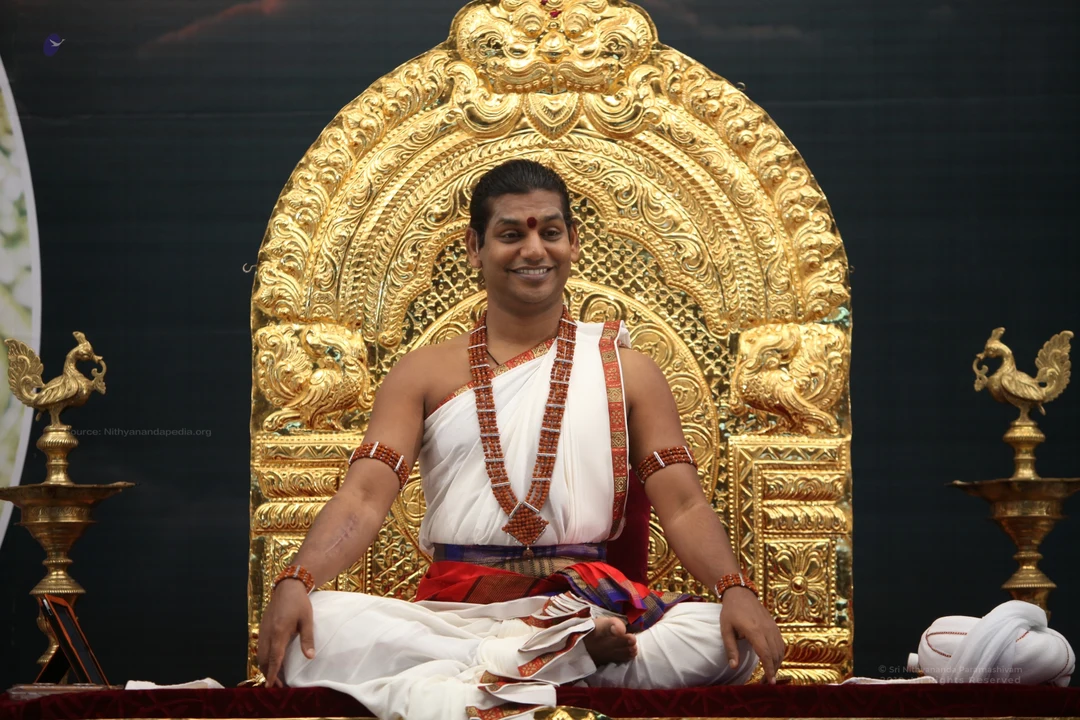
2 photosSource gallery
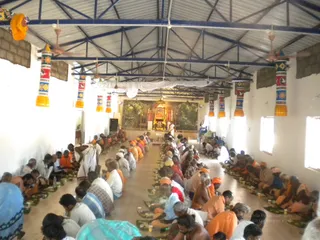
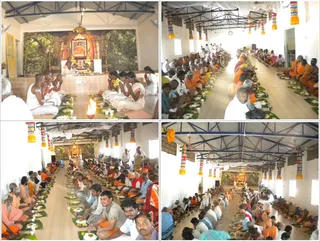
A four-panel collage of a long hall with a central raised seat decorated with a golden canopy and flowers. Rows of seated devotees sit on the floor facing the dais; some wear white, others orange or saffron robes. Long banana-leaf style meal spreads and brass lamps line the floor, with hanging yellow and orange floral decorations overhead. Panels show people seated in neat rows eating or sitting at meal service. A figure in white sits near the front of the dais, but a clear candidate for the a person is not distinctly visible.

Adikailash

6 photosSource gallery
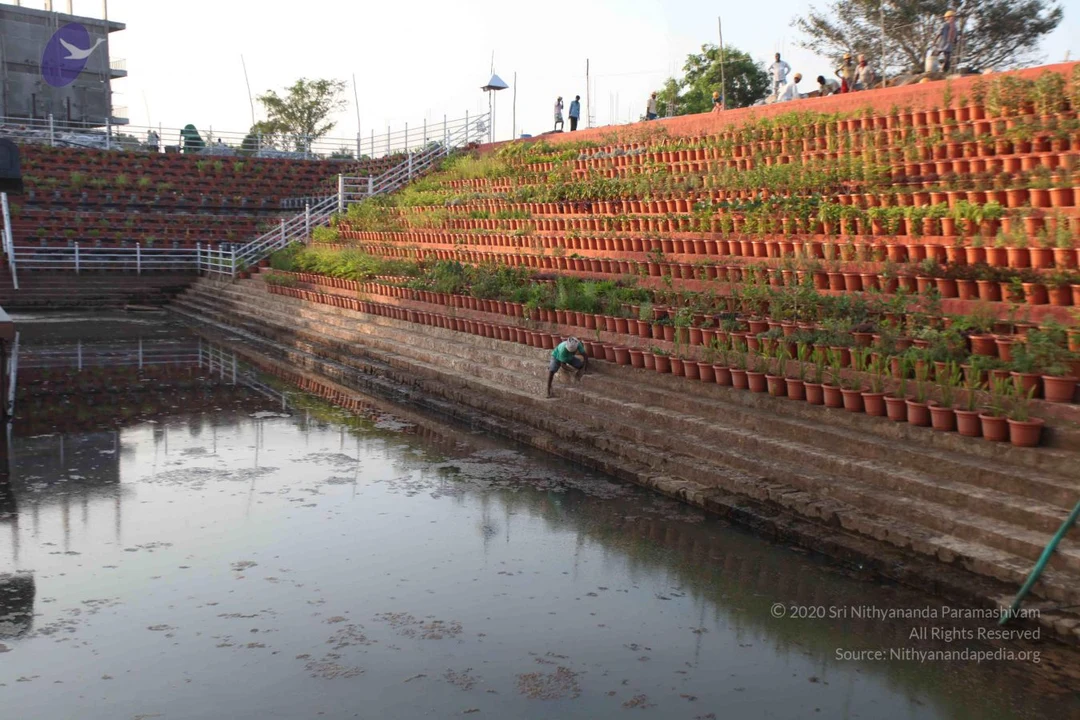
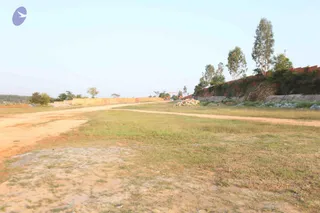
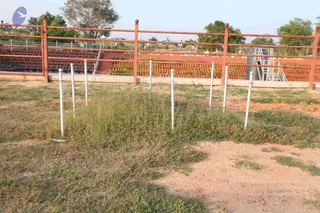
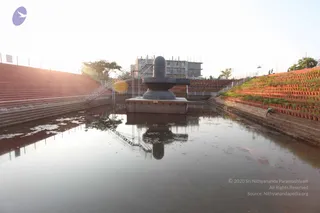
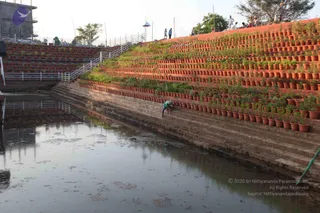
A photograph of an unfinished concrete building under construction on an open dirt lot. The grey frame has rows of windows and rebar-like vertical posts rising from its roof. Piles of grey gravel and aggregate sit in the foreground, with stacked wooden planks and a yellow tarpaulin beside them. To the left stands a red-brick multi-storey block and a corrugated-roof shed. Tall green trees shade the right side under a pale sky. No people are visible.A wide outdoor photograph of an empty dirt track and patchy dry grass under a pale hazy sky. A low orange-brown boundary wall runs along the left and a taller reddish embankment with scattered trees and rubble runs along the right. A small pile of stones sits near the centre-right, with a distant orange gate structure on the far side. No people, ritual objects or events are visible.A photograph of an outdoor grassy enclosure with thin white metal posts and wire strung between them, bordered by a tall red-painted metal railing. Behind the railing, tiered rows of raised planting beds or terraces hold green plants, with a white metal staircase and a cylindrical silver tank on the right. Trees and a clear sky sit in the background, and a few small distant figures are visible among the structures. No prominent person is in the foreground and no ritual or discourse is shown.A large black stone Shivalinga stands on a square platform in the middle of a rectangular reflecting pool, its mirror image visible in the still water. Tiered red-brick terraces on both sides are lined with rows of small potted plants, and metal railings and a staircase lead up the slope. A grey multi-storey building and a few trees stand in the background under a bright, hazy sky with low sun. Two small figures stand on the upper terrace at right and one person is bent at the lower edge on the far right, all distant and unidentifiable. No devotees are shown in ritual activity.A photograph of a tiered embankment beside a still, murky water channel. Rows of terracotta pots filled with green plants line the steps of the slope. A single person in a green top bends low near the water's edge on the lower steps, while a few figures stand at the top of the stepped terraces against a pale sky. Stairs and white metal railings run up the left side. The water reflects the terraces and the green plants.A photograph of a still, murky water surface reflecting a stone structure with a tall rounded or domed top and a railing along its edge. Floating debris and pale specks dot the water. Metal railings and a brick wall appear at the upper left and right edges. No people are visible, and no a person candidate appears in the scene.

Temple

3 photosSource gallery
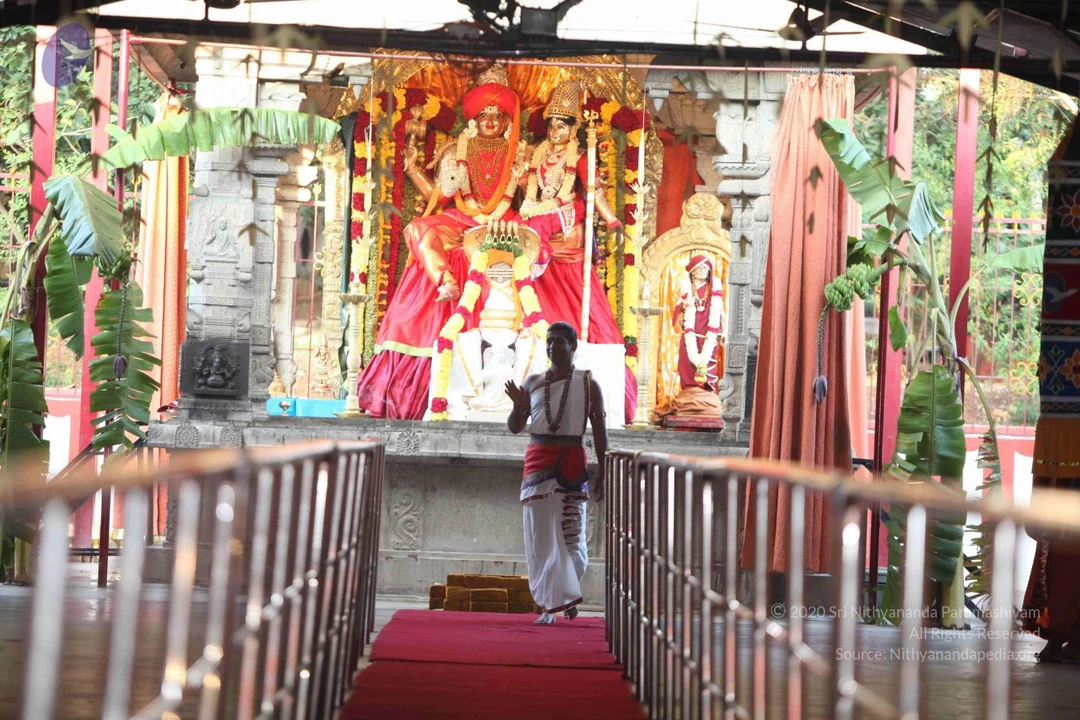
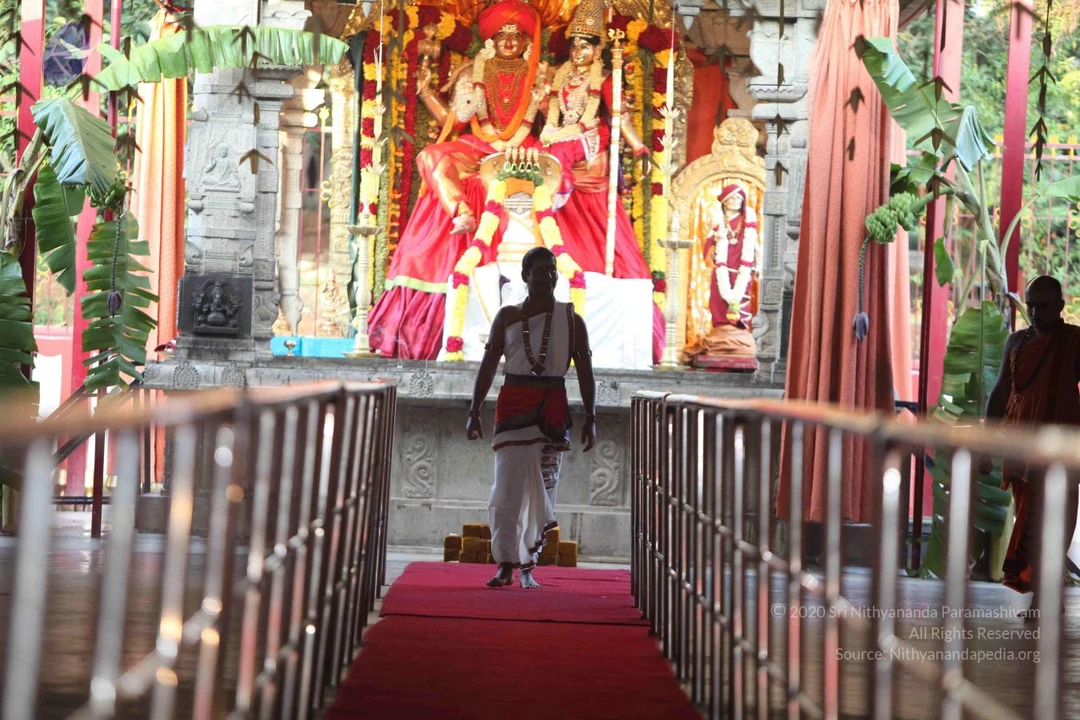
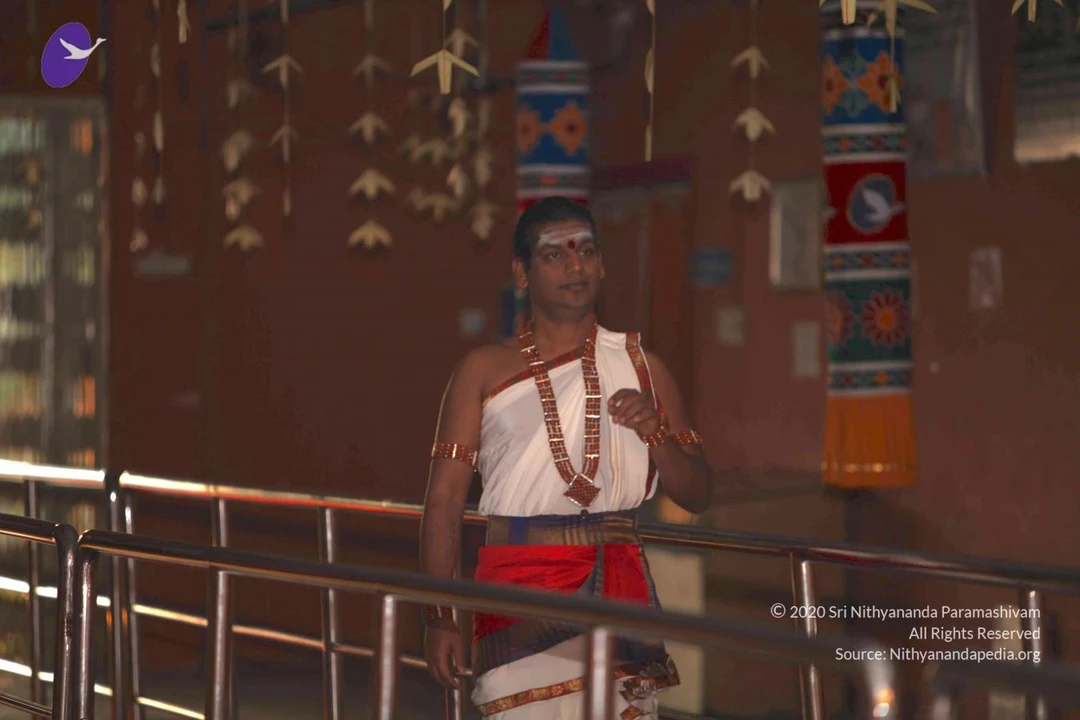
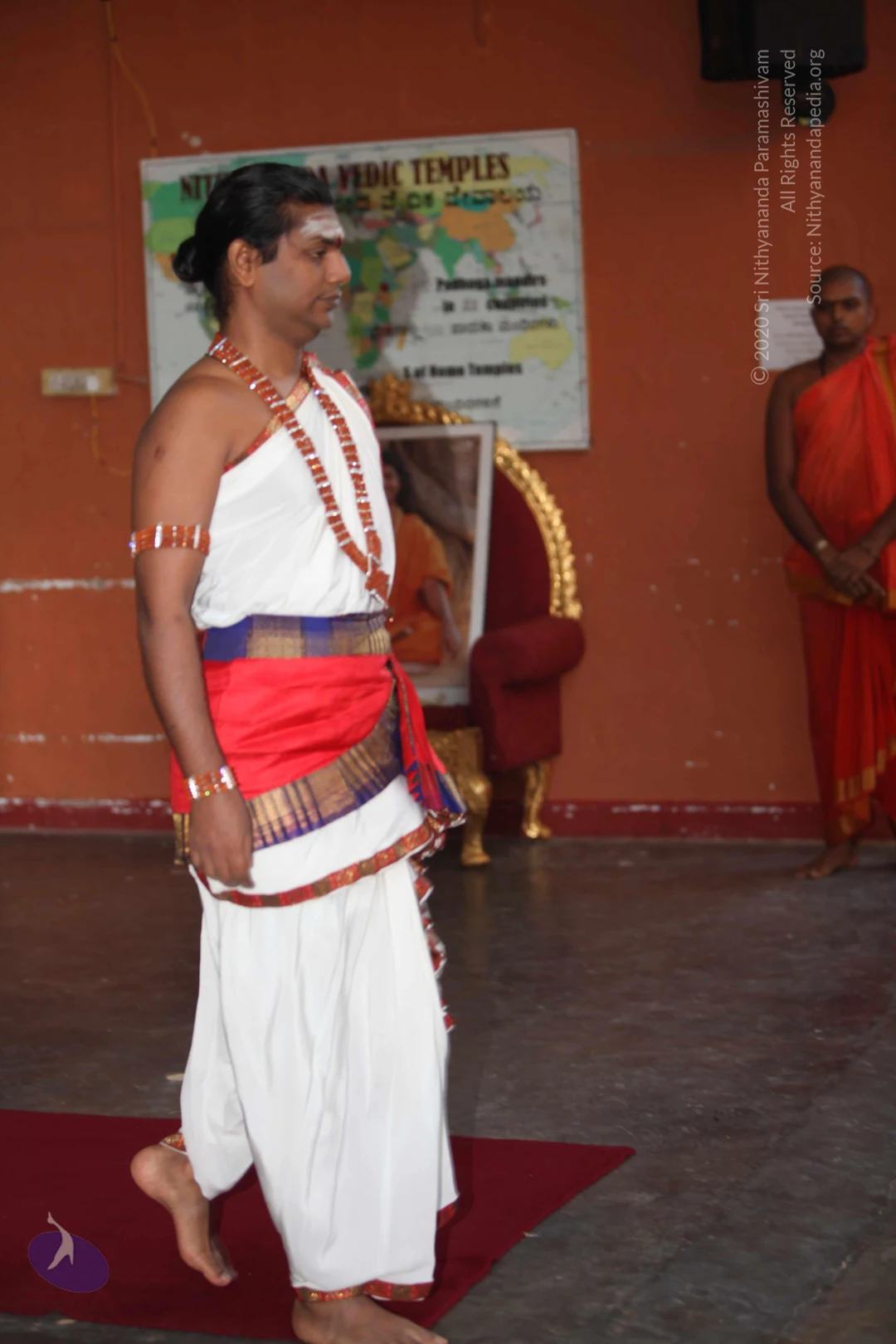
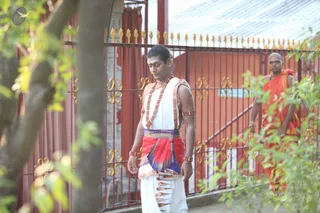
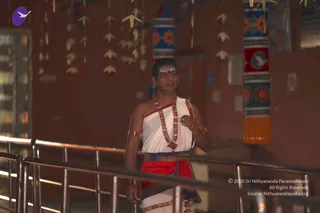
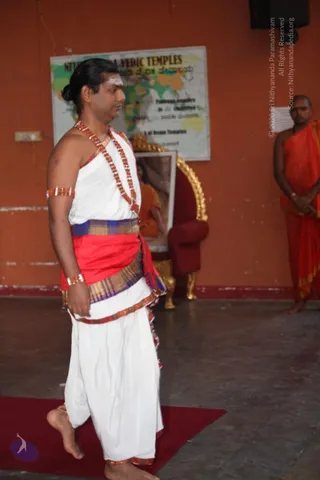
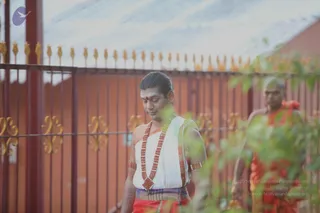
A photograph of a single man standing on a walkway behind metal railings at dusk, with reddish walls behind him. He wears a white upper cloth draped over one shoulder, a red and blue striped waist cloth, and a long beaded rudraksha-style mala with a pendant, plus gold armlets. A red-and-white tilak mark is on his forehead, and he gestures with one hand. Hanging decorative strands and a colourful painted panel with orange flower motifs and a blue bird hang on the wall behind him. The appearance does not clearly match the a person candidate, so he is described only by role and the identity is left uncertain.A man in white dhoti-style clothing with a red and gold-bordered cloth over the shoulder and waist walks barefoot across a red mat on a concrete floor. He wears a red and gold beaded necklace, matching bangles and an armlet, and has a white tilak and hair in a bun. Behind him a world map poster titled Nithyananda Vedic Temples hangs on an orange wall beside a red and gold throne-like chair and a framed portrait of a saffron-robed figure. On the right stands a bald man in orange robes with hands folded.Outdoor photo beside a tall red-brown wall and ornate gold-tipped iron railing, with green leaves blurred in the foreground. A man with short dark hair and white-and-red tilak on his forehead walks forward looking down, wearing a white upper cloth draped over his shoulder with a red-and-gold bordered band, a red-and-gold beaded necklace, red-and-gold armbands, and a red waistcloth with gold border. Behind him, an older bare-chested man in an orange-red cloth walks past the gate.

BG-Satsang

1 photoSource gallery
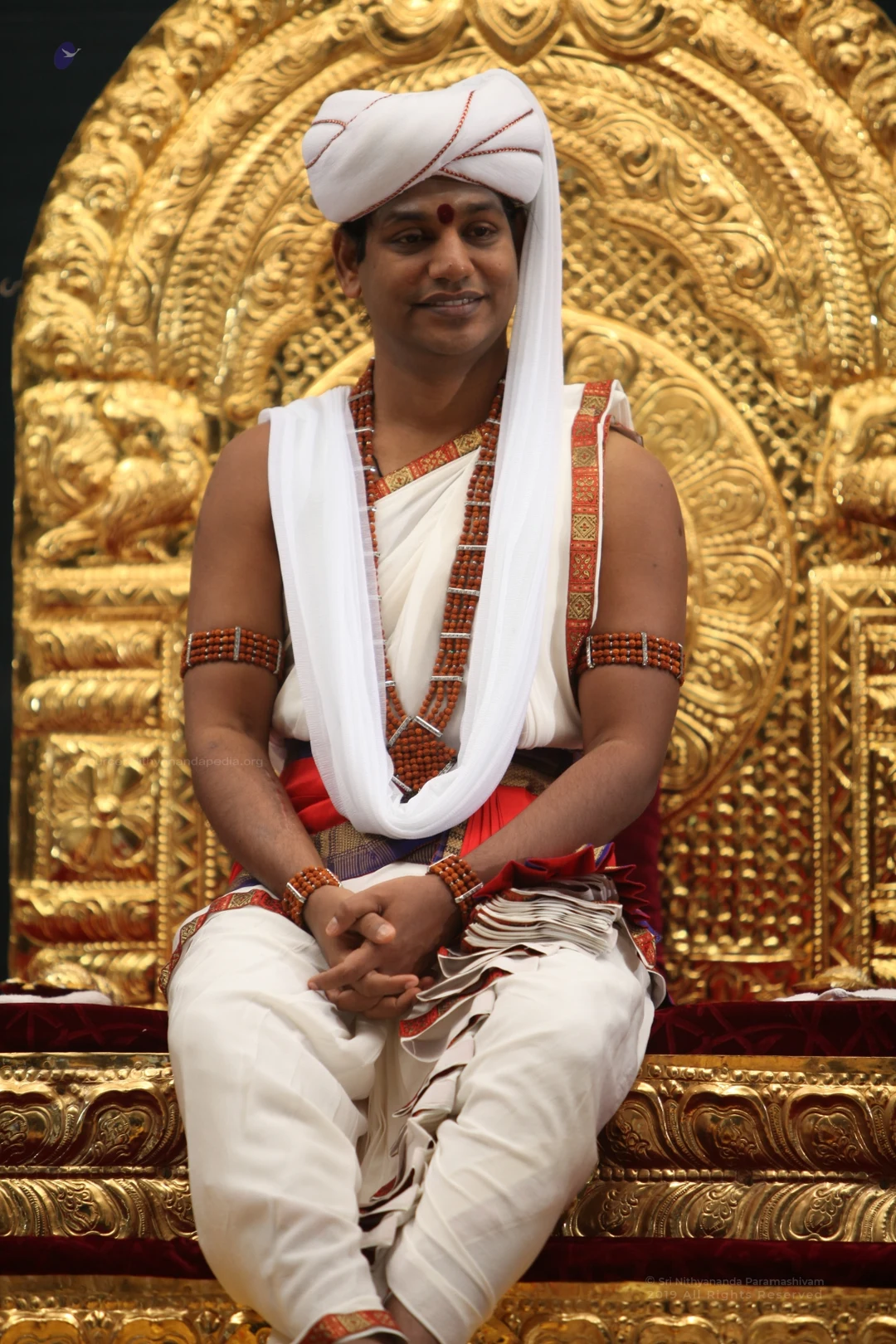
Close-up photo of a smiling man in a white turban with red piping and a red bindi, wearing a white draped garment with red and gold border, multi-strand rudraksha malas with silver spacers, and a rudraksha armlet. He is seated before an ornate gold repoussé backdrop. Only one person is visible. Identity uncertain from appearance; no printed caption identifies him.

Maheshwara-Puja
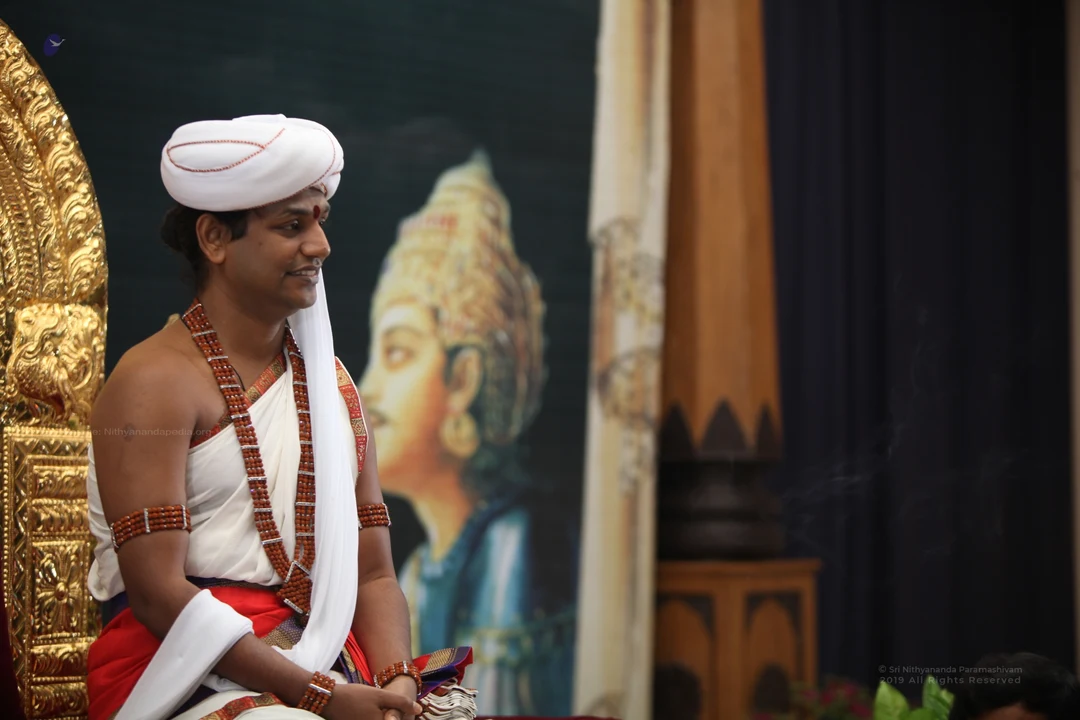
9 photosSource gallery
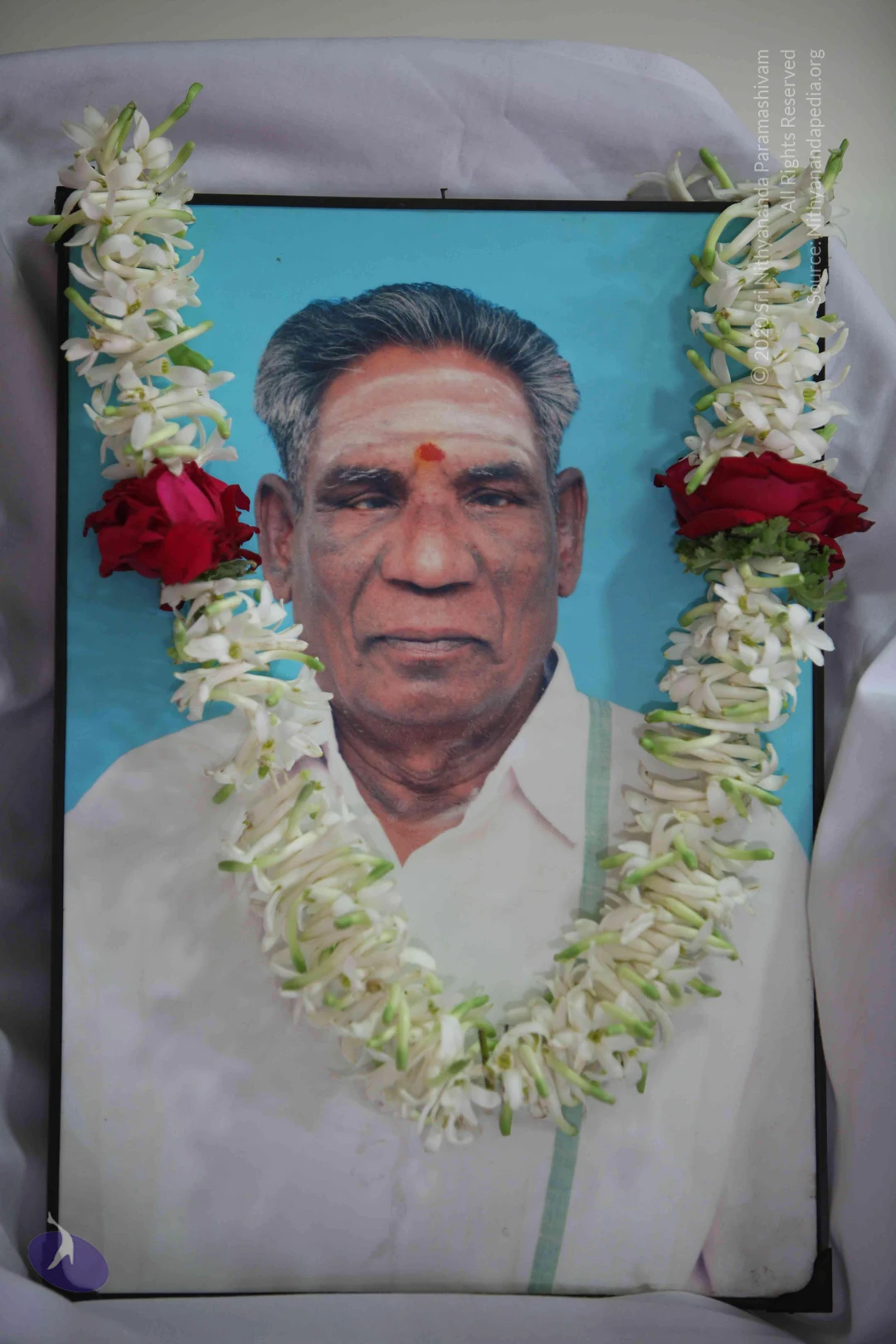
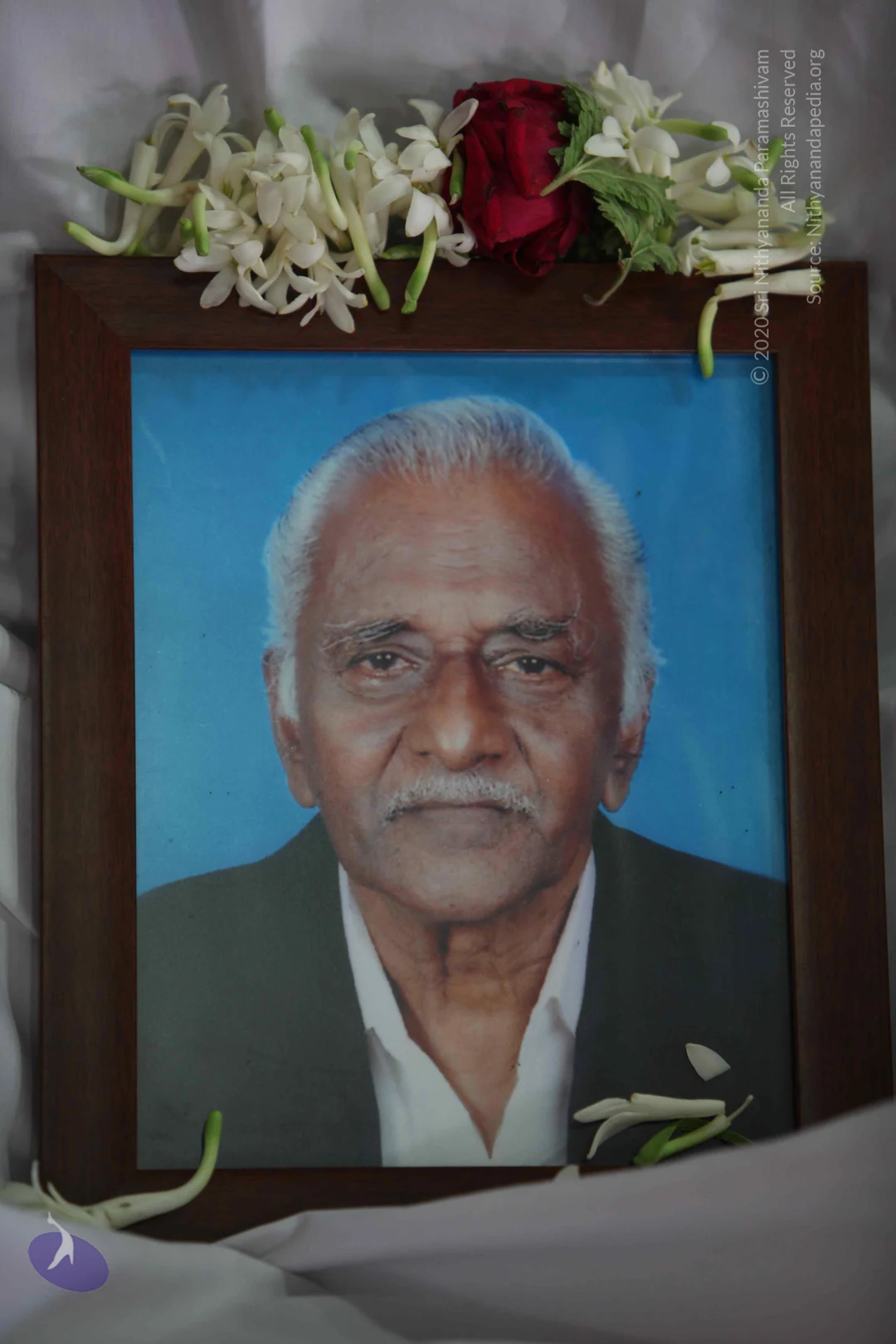
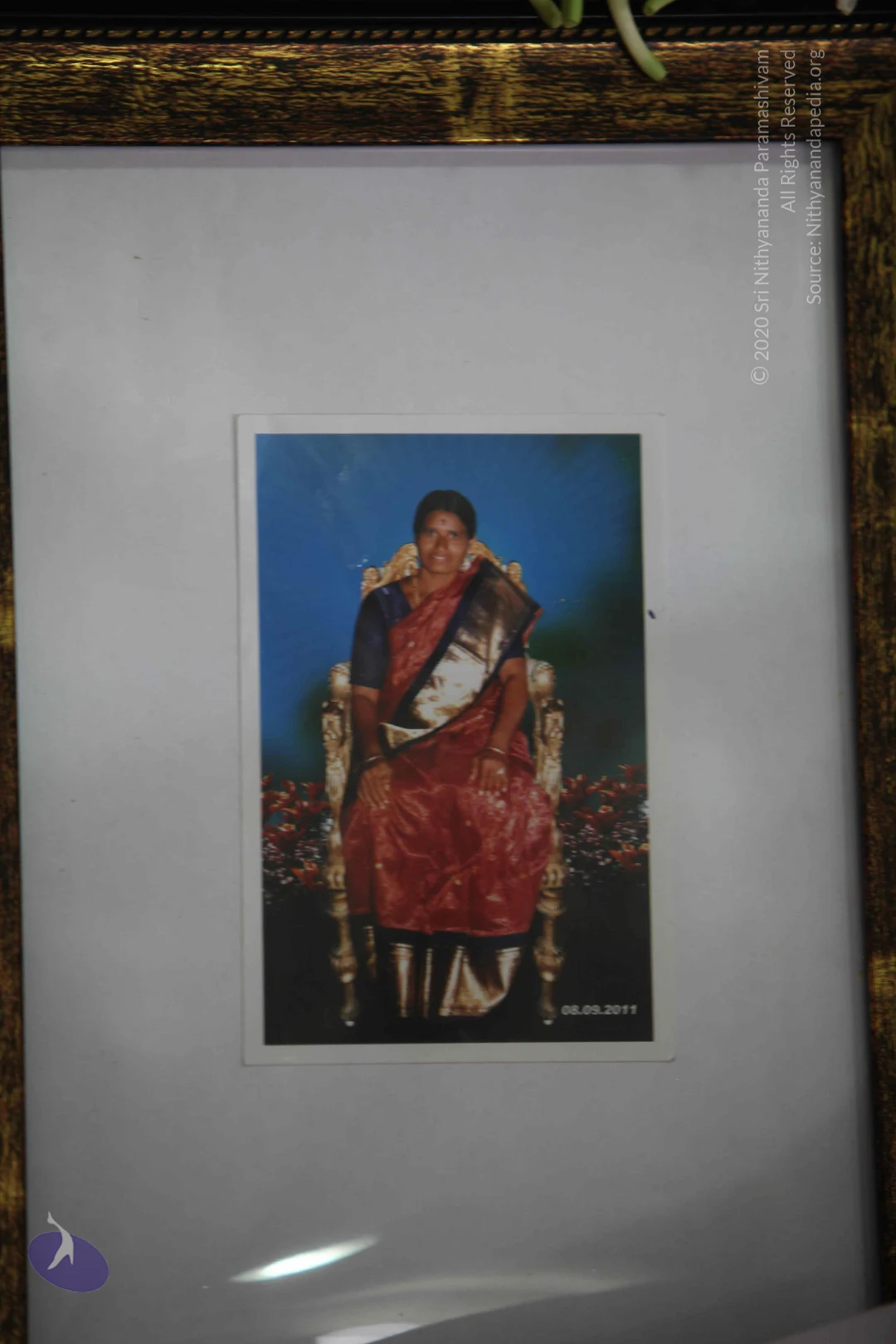
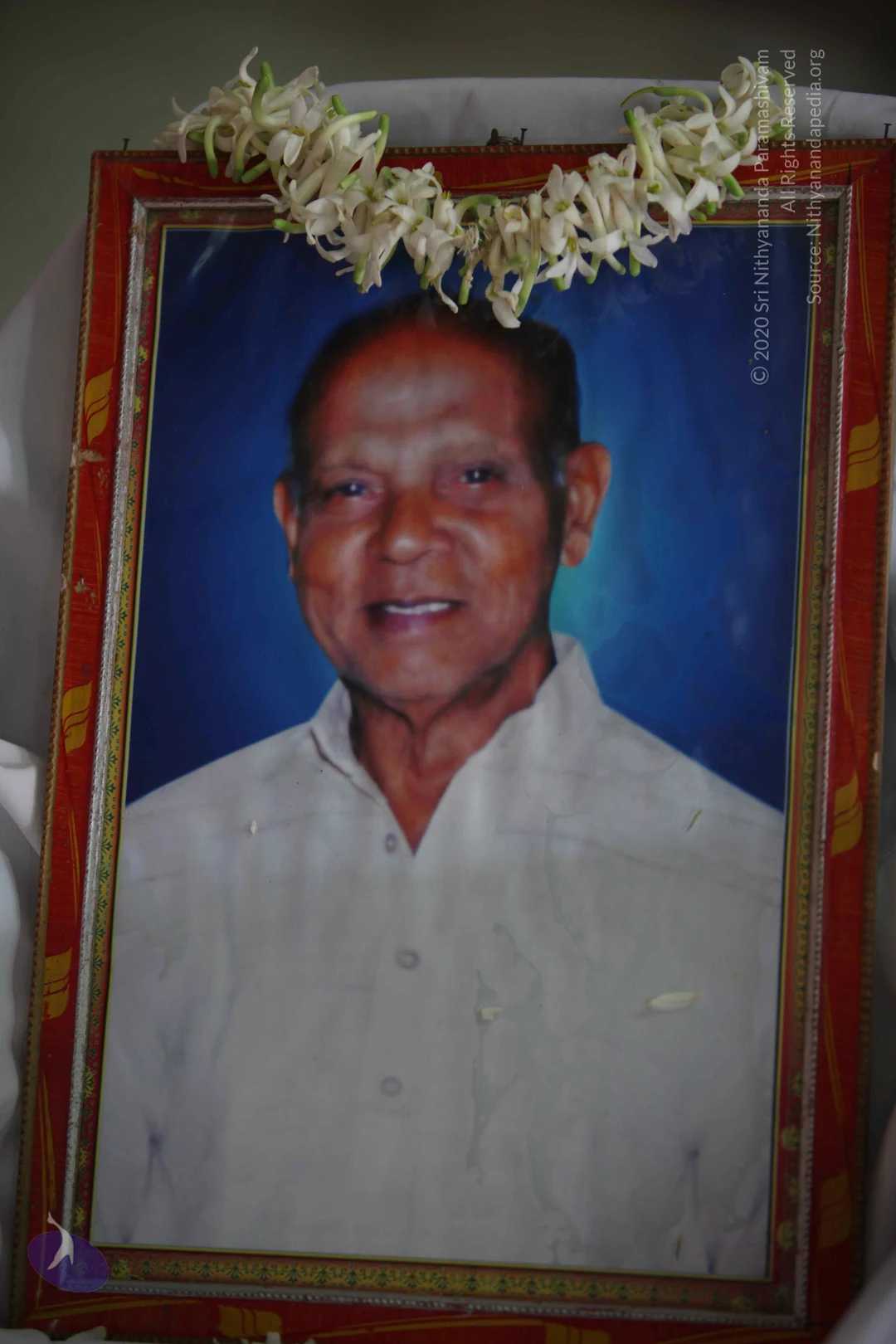
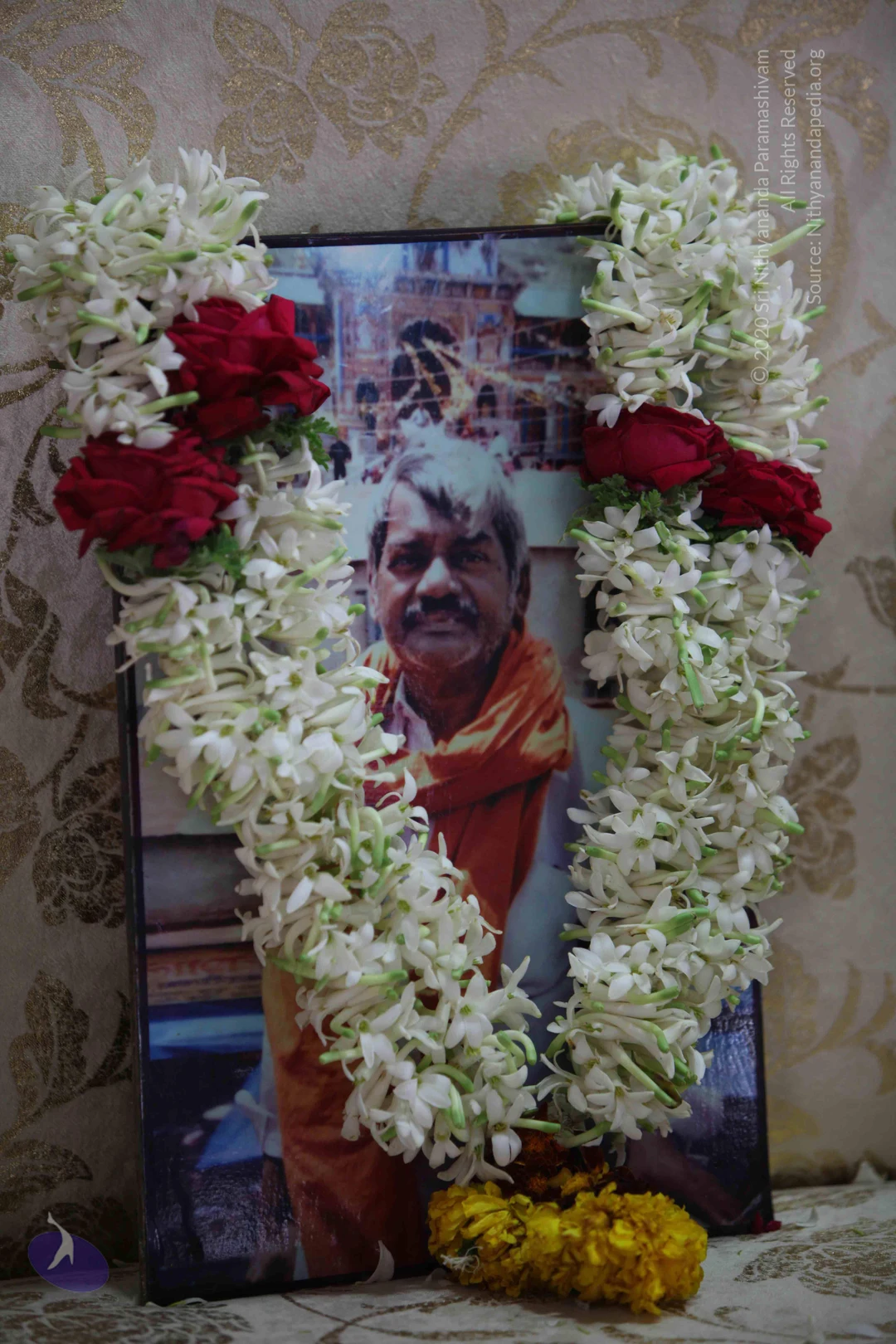
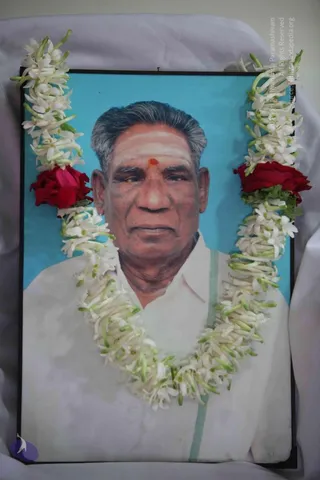
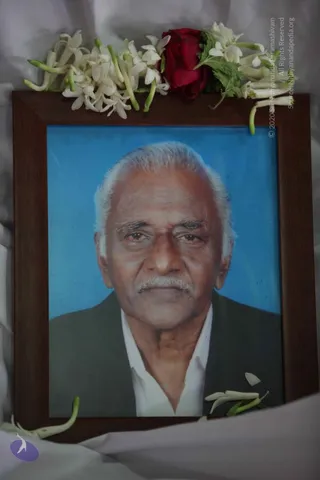
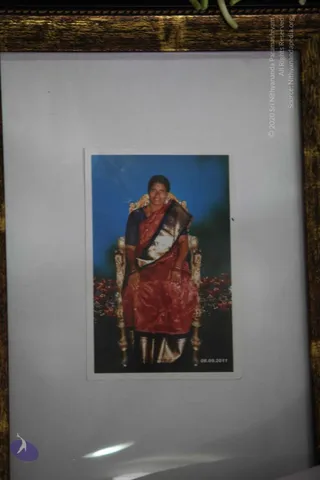
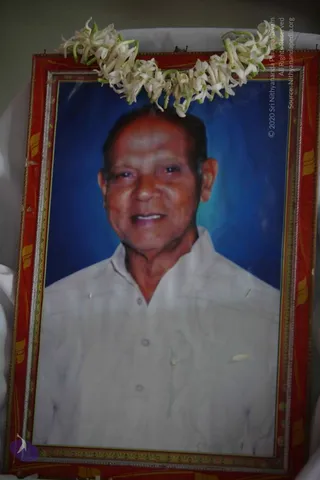
A framed portrait photograph of an older man with grey hair and a red kumkum mark on his forehead, wearing a white shirt and white dhoti with a light green border. The framed print sits on a white cloth and is garlanded with a white jasmine garland and two red roses. The blue background is plain. No physical people are present beyond the pictured man.A framed photograph portrait of an elderly man with white hair and a white moustache, wearing a dark grey jacket over a white collared shirt, set against a blue background. The framed portrait rests on white cloth and is decorated with a garland of white jasmine flowers and a red rose with green leaves across the top of the frame, with scattered jasmine petals below. The portrait is a printed photograph in a wooden frame, not a live person.A framed photograph hangs on a pale wall, showing a seated woman in a red and gold sari with a dark blue blouse, seated in an ornate gilded wooden chair against a blue backdrop with red flowers. She has a small bindi and bangles. The print is dated 08.09.2011 in the lower corner. The ornate dark wooden frame is partly visible at the top, with a green plant leaf at the upper edge. No a person candidate is visible; the framed portrait shows a woman in a sari.A framed printed portrait of an older smiling man with short dark hair, wearing a white collared shirt with buttons, set against a blue backdrop within a red and gold ornamental frame. A white jasmine flower garland is draped over the top of the frame. The printed photograph is displayed as a photo of a photo, with no living people present in the scene.A framed portrait photograph of a man with short dark hair and a moustache, wearing a white collared shirt against a blue backdrop, set in an ornate red and black patterned frame. White flowers and green stems lie along the top edge and a small bud sits at the lower right. The image is dim and the portrait is a printed photo, not a live person, so no physical people are present.A framed photograph of a smiling man with grey hair and a moustache, wearing an orange-saffron shawl, is displayed on a stand. A thick garland of white jasmine-like flowers with green buds and red roses is draped around the frame, with a yellow marigold garland at the base. Behind the frame is a patterned gold-and-beige wallpaper. The framed print is a depiction of a person, not a physically present figure, and no physical people are visible in the scene.