Skip to content
Tuesday

18 October 2011

Laziness Is A Spiritual Disease

Dated photos
107
Source pages
1
Media
3
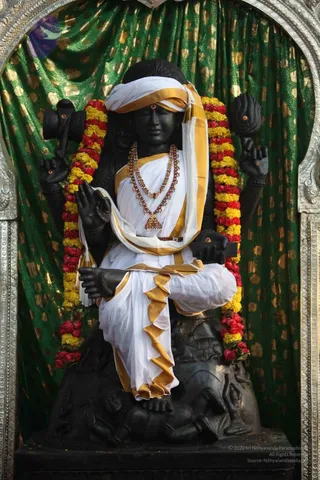
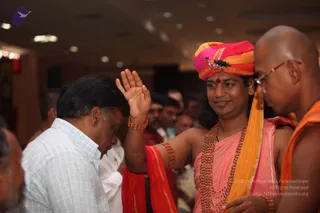
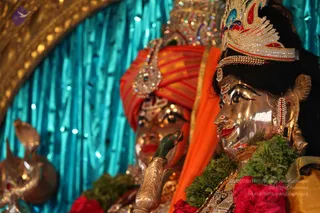
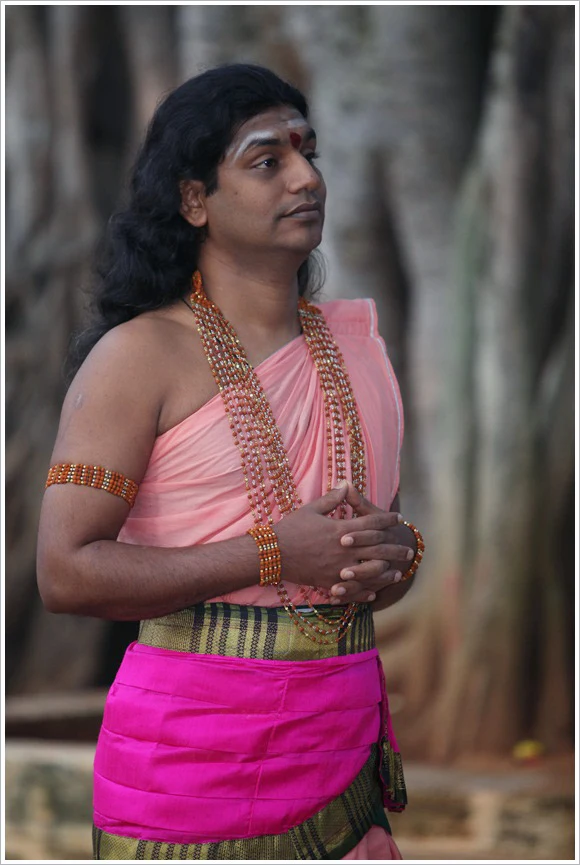
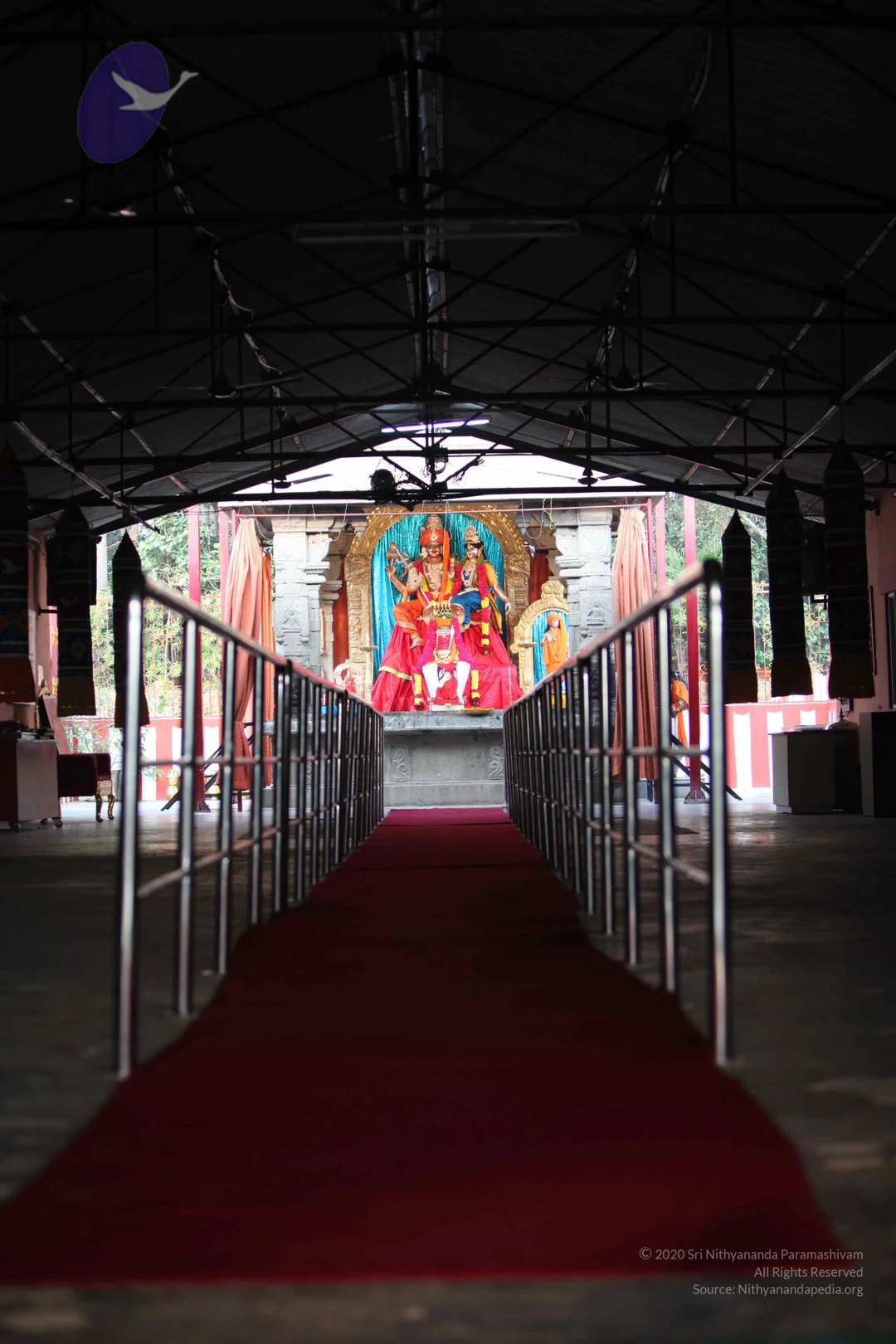
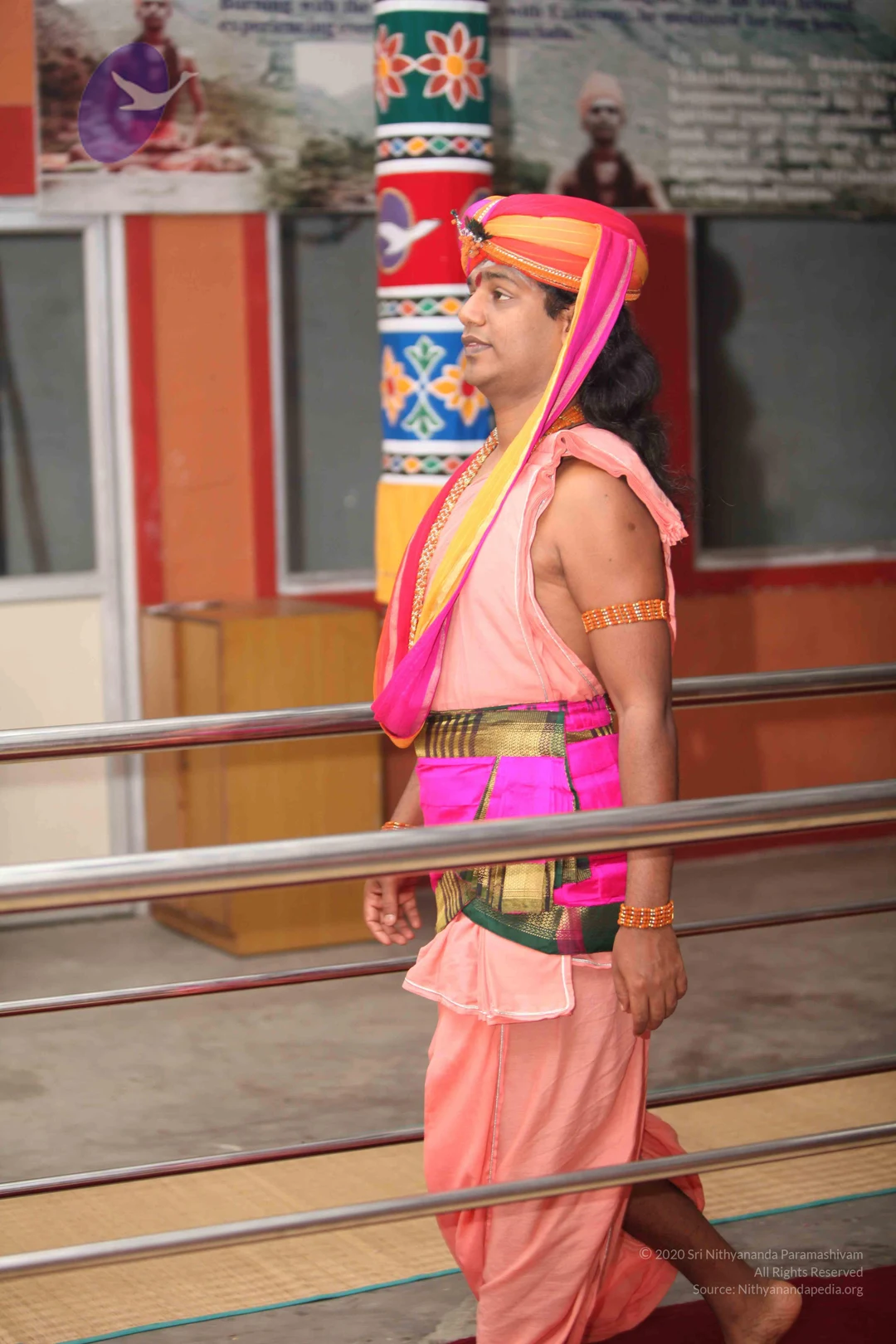
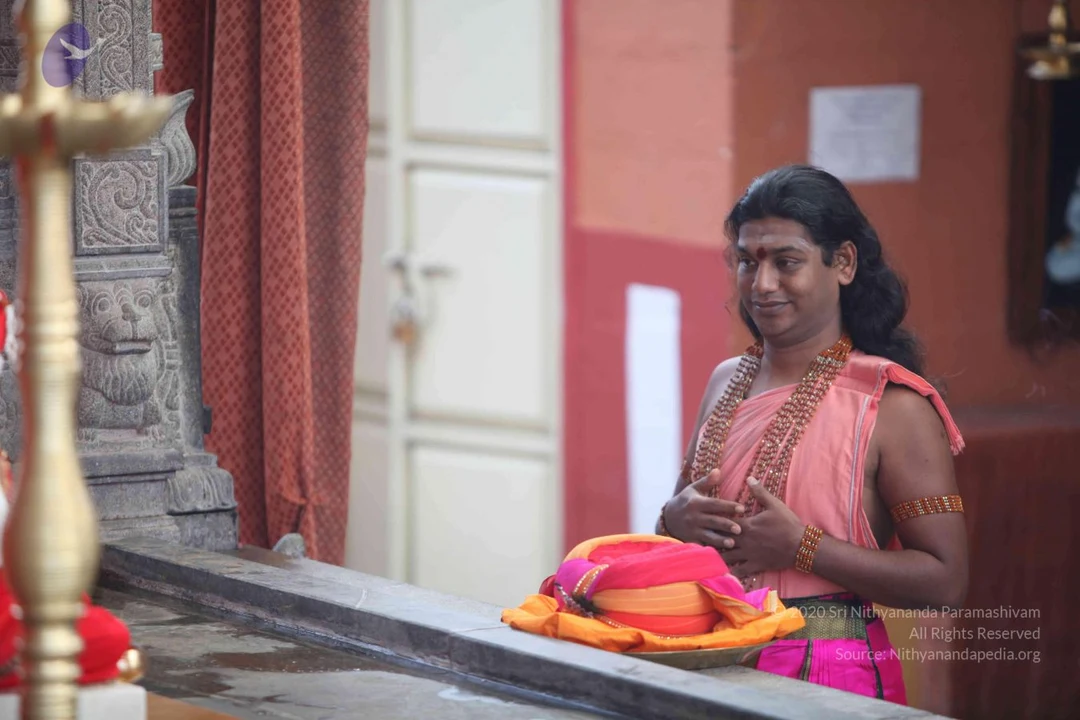
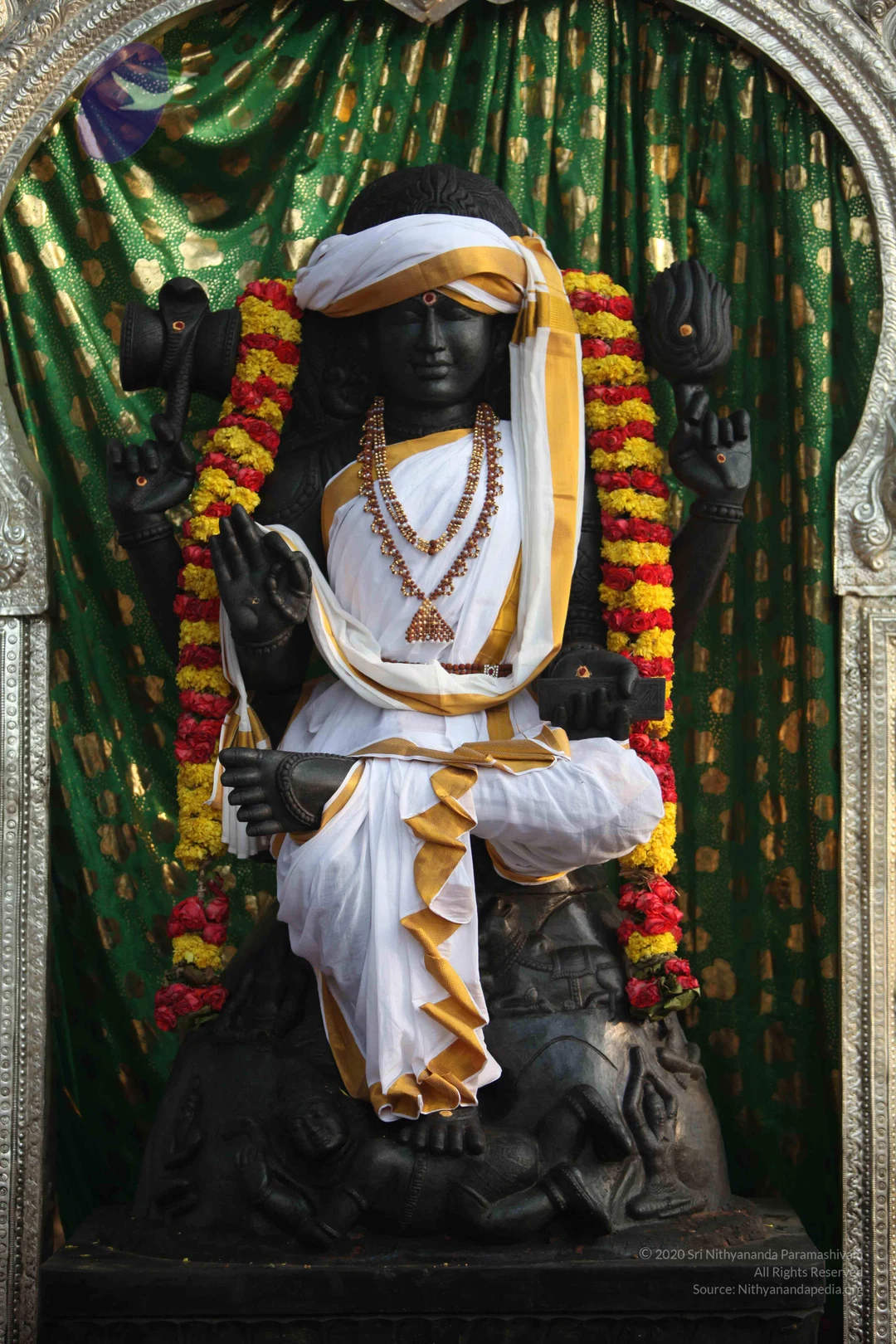
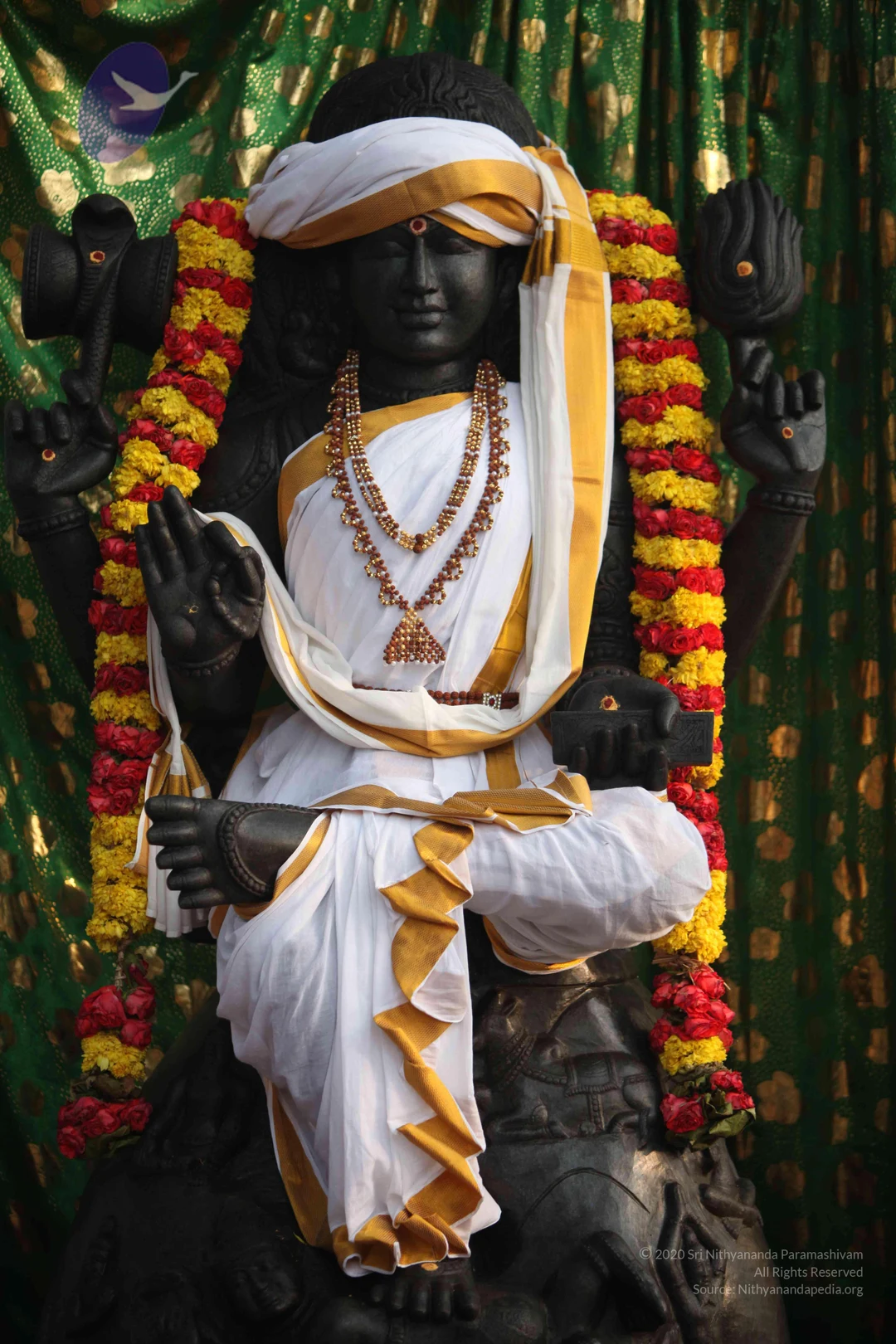
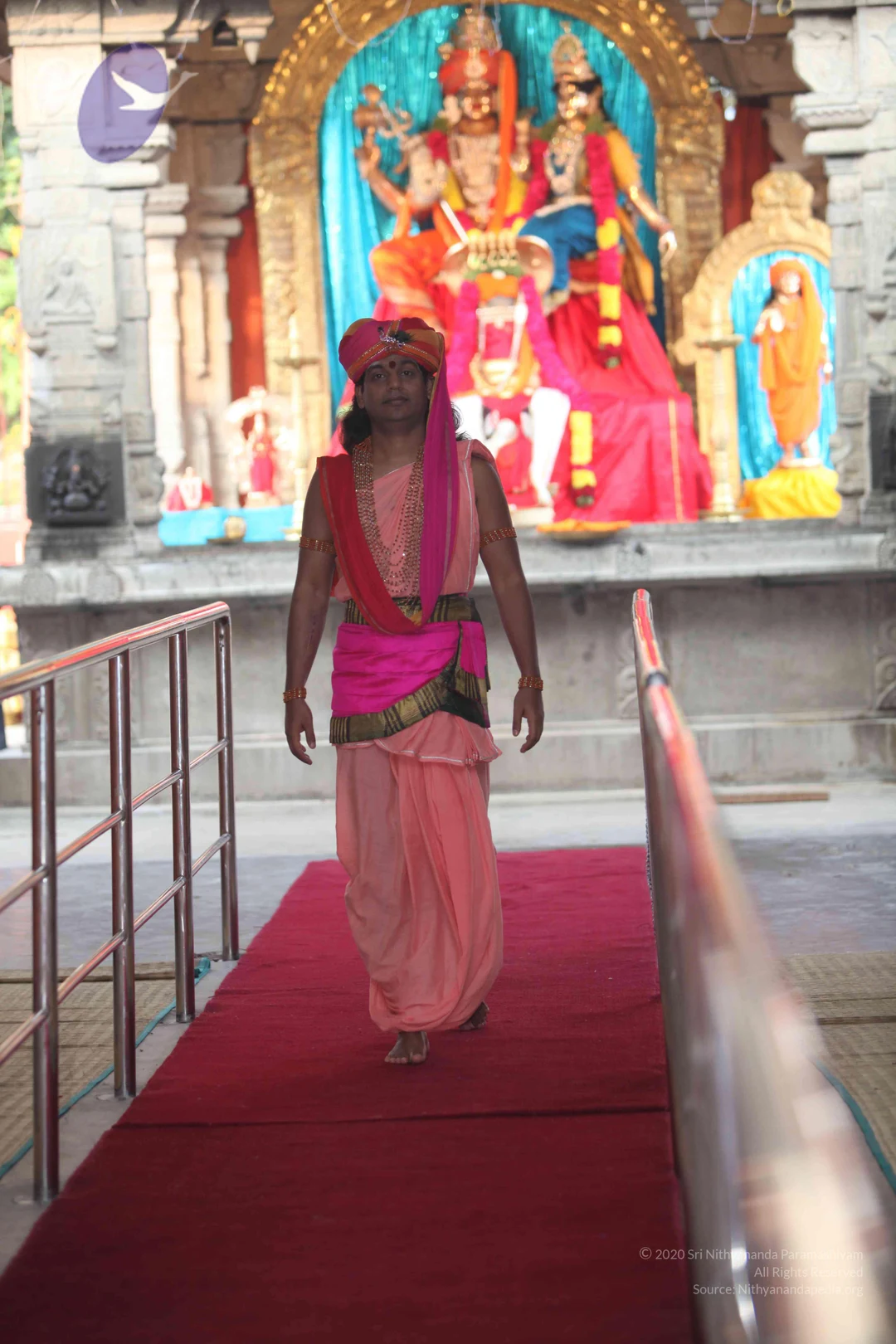
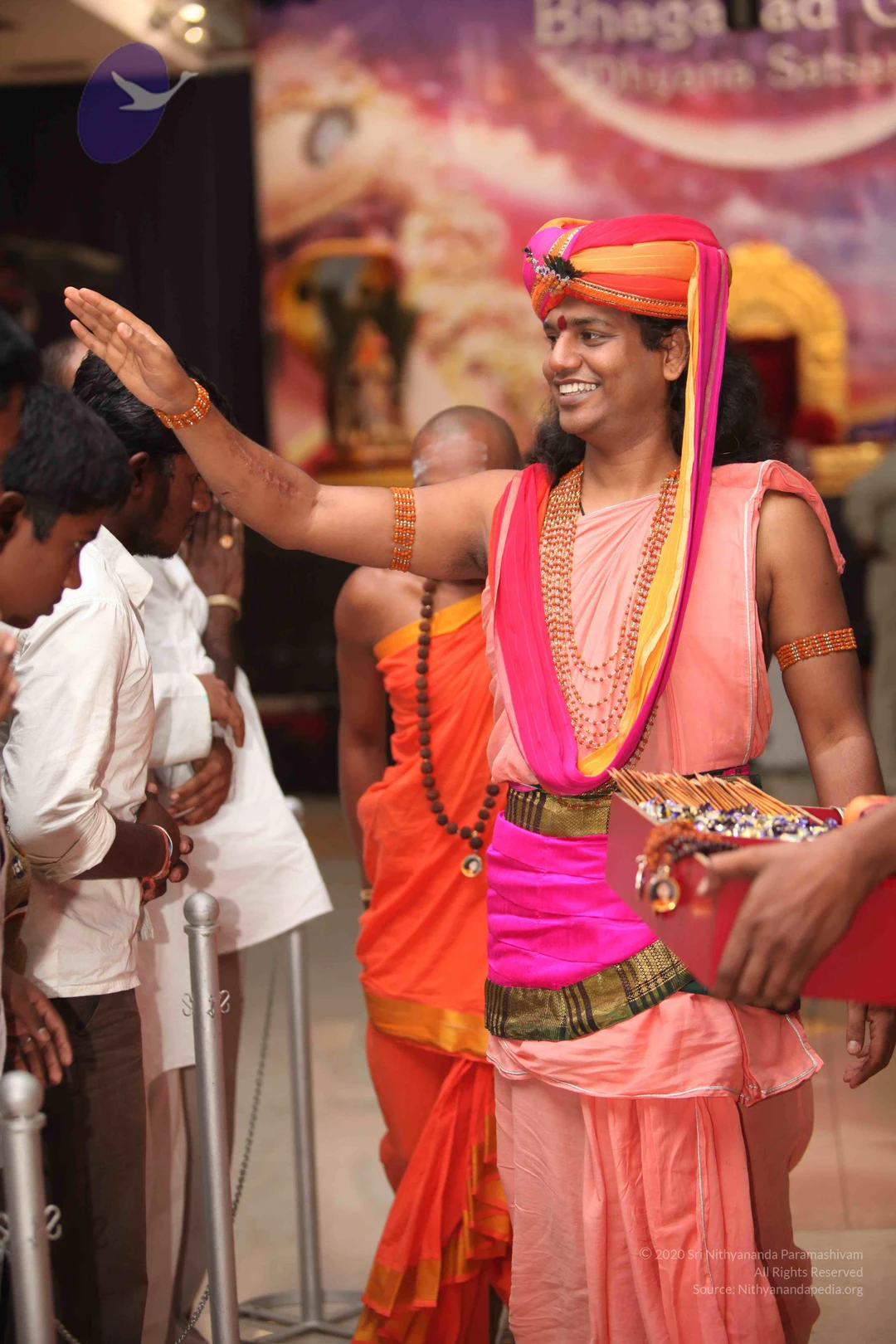
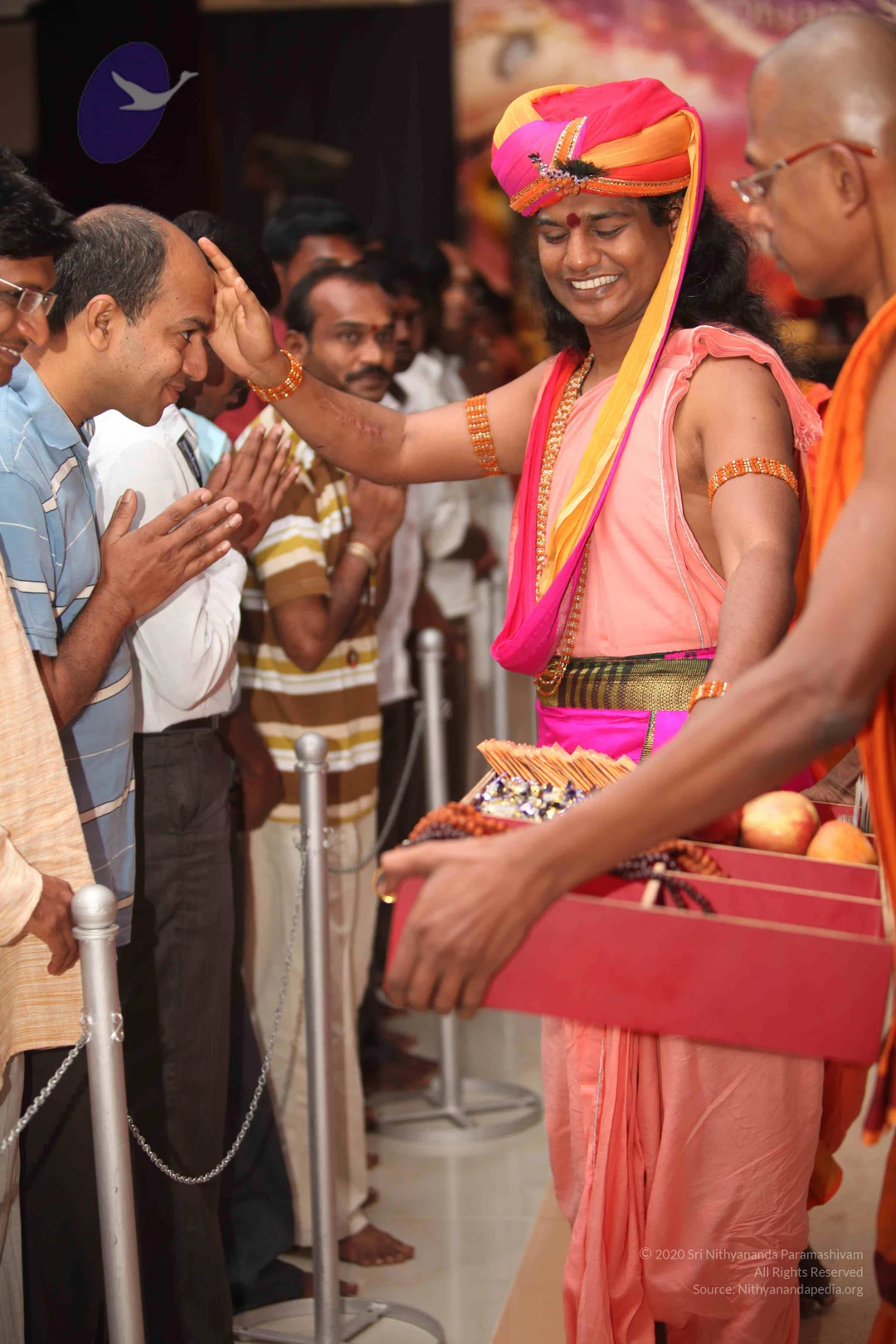
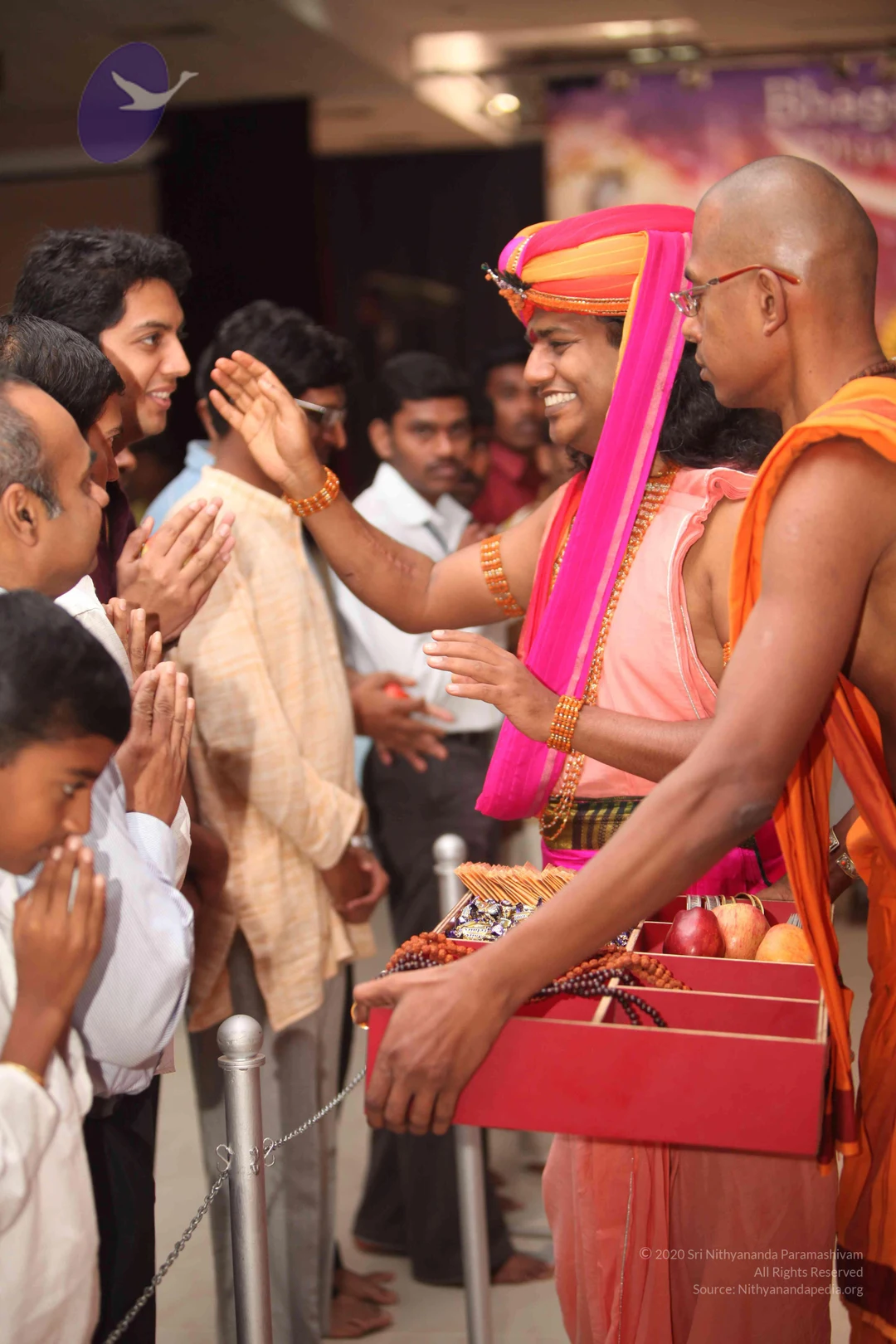
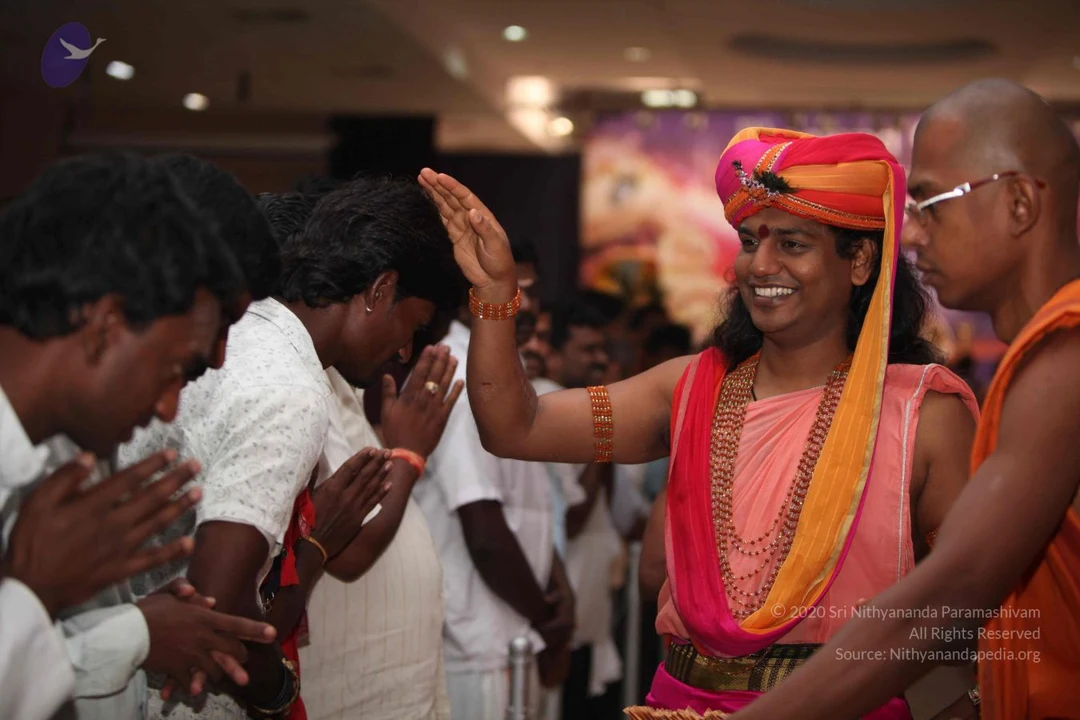
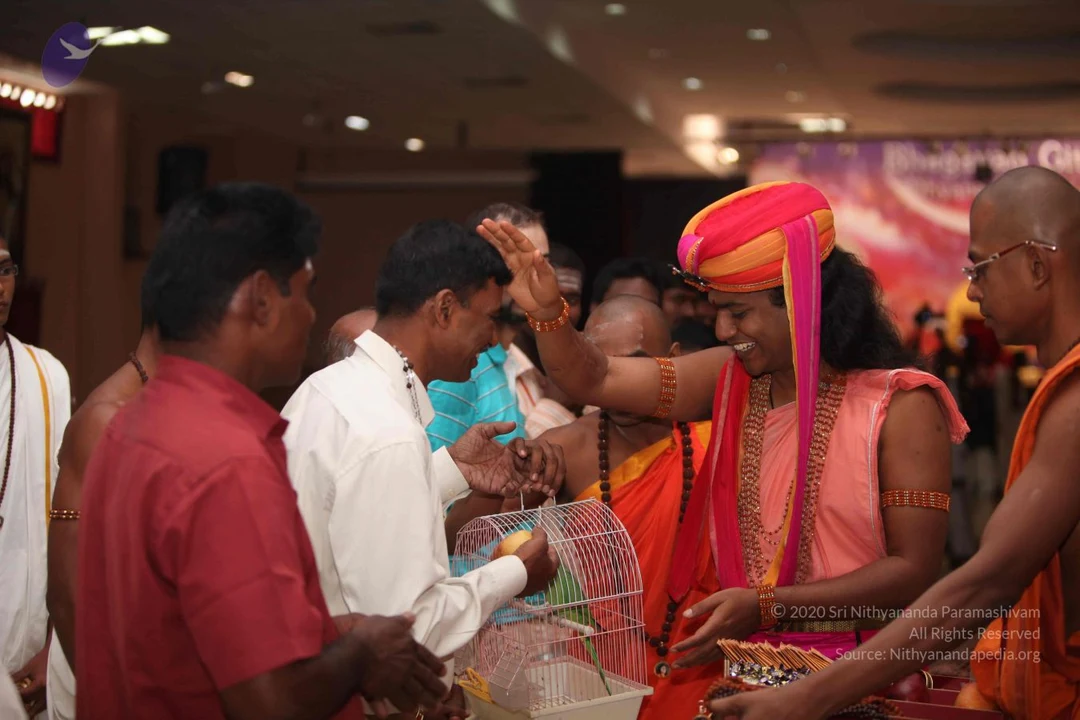
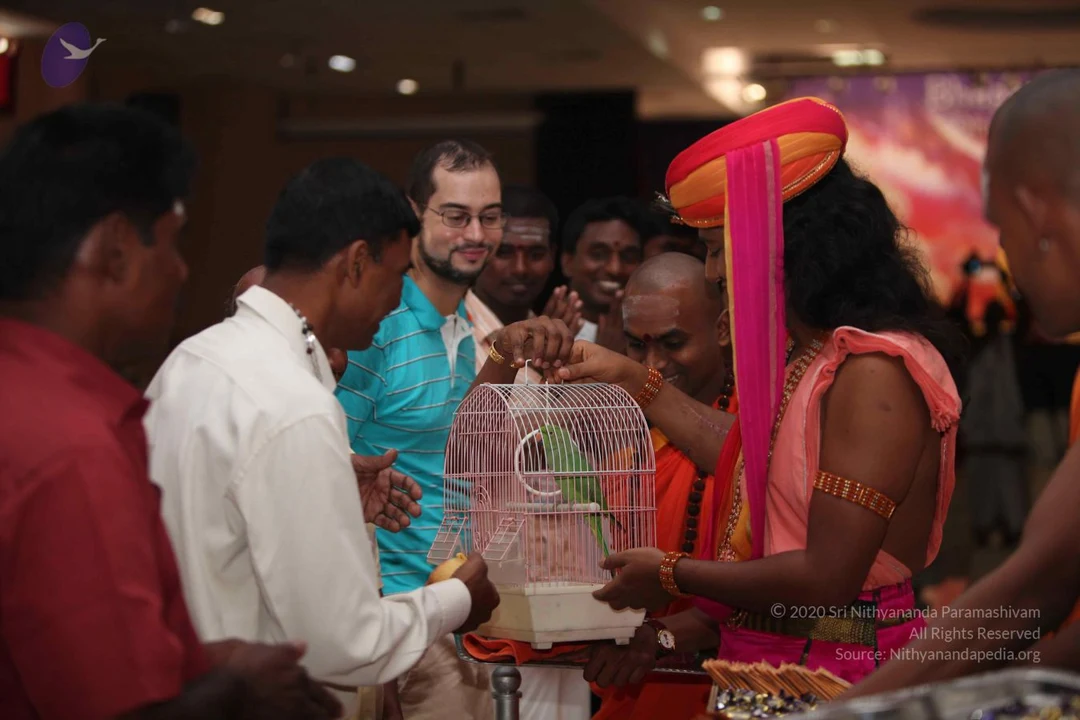
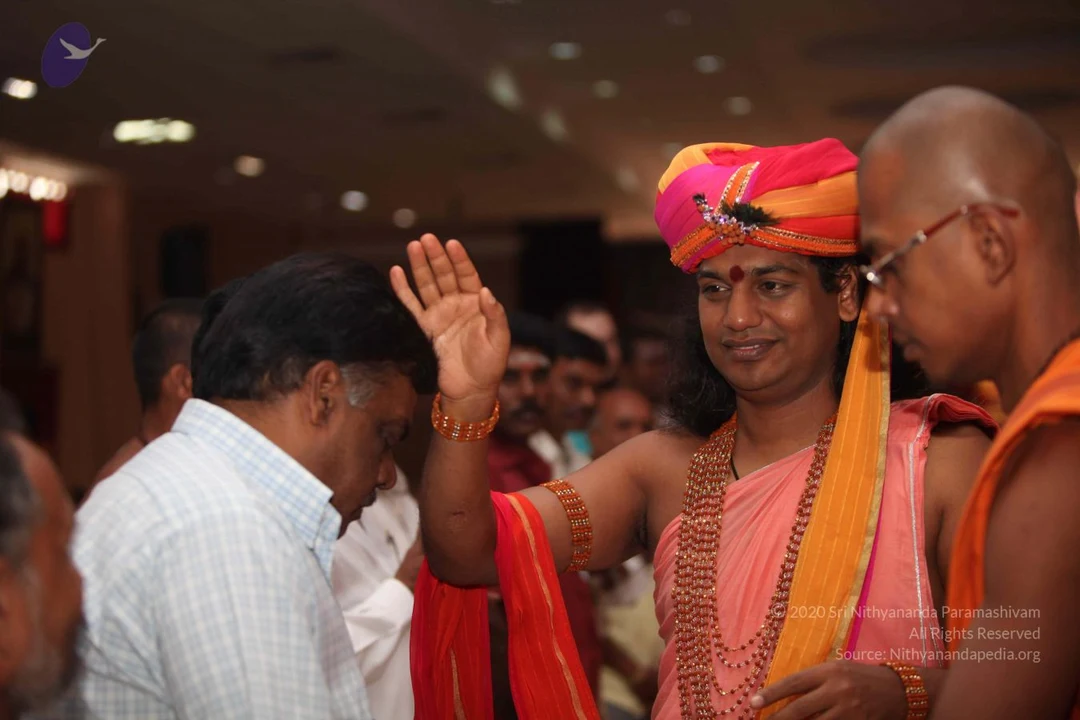
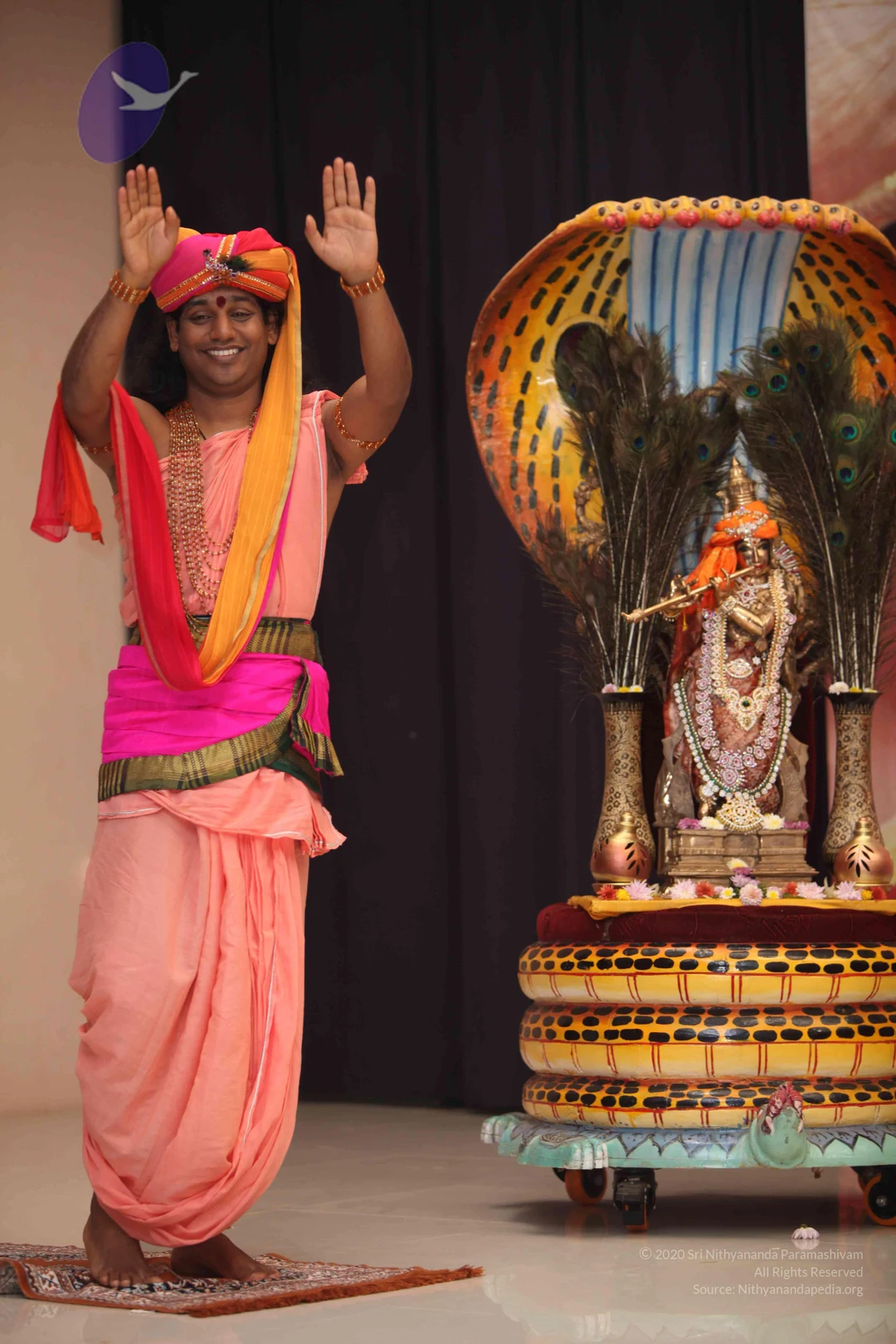
A black stone murti of a multi-armed deity stands in a silver-framed niche against a green and gold sequined cloth backdrop. The figure wears a white dhoti with gold borders, a white and gold head cloth, and tiered rudraksha-style beaded necklaces with a triangular pendant. Red and yellow marigold and rose garlands hang over both shoulders. Several hands hold ritual objects, including a conch-like item and a raised palm in abhaya-type gesture. The base carries carved figures. This is a photograph of a statue, with no living people visible.Indoor photograph of a man in a multicoloured pink, yellow and orange turban with a small floral ornament, wearing a pink and saffron garment, layered rudraksha-style beaded necklaces, copper-coloured bangles and an orange shawl. He raises his right hand in blessing toward a bowing older man in a light blue checked shirt. A shaved-headed man in orange robes and glasses stands at right, and a crowd of devotees stands in the background under warm ceiling lights. Swamiji (probable): the turbaned figure with long hair and ornate beaded necklaces matches the page's Swamiji reference, based on the turban, rudraksha-style malas and saffron clothing.Close photograph of gilded metal deity murti figures decorated for worship in front of a turquoise shimmering drape with a gold-edged arch. The foreground figure has a jeweled crown, bindi, red lips and dark eyes, adorned with green leaf garlands and red flower garlands. Behind it, a second figure wears a red and orange turban and an orange shawl, with a green parrot figure and ornate jeweled necklaces. Small brass lamp elements appear at the left edge. No living people are visible.

October 18 2011

Original wiki page
Contents

Title:

Laziness Is A Spiritual Disease

Description

Bhagavad Gita (Song of God) is a timeless treatise on the essence of living enlightenment. The Gita was imparted by the enlightened Hindu incarnation Sri Krishna to the warrior-prince Arjuna over 5000 years ago. Amazingly, the spiritual wisdom and life solutions offered in the Gita are so universal and current that it is even today used as a personal transformation guide in universities and management schools worldwide.

In this satsang from the Bhagavad Gita series, Swamiji encourages us to discard all identities we built based on unconscious expectations for results. He reveals how anything given to you is less than your expectation. He gives the practical clarity to sit with yourself established in the cognizance of "be unknown to yourself".

Link to Video:

VideoAudio

Description

October 18, 2011 • In the morning Satsang Swamiji answered questions related to Bhagavad Gita • One more State issues summons against Lenin Karuppan and Arati Rao. • His Holiness the Dalai Lama Addresses Mind and Life 13th conference

Link to Video:

Photos
Photos Of The Day:

Temple
BGSatsang

BGSatsang--Tamil

Miscellanous

Photos from this day

View all 107 photos

Photos

8 photosSource gallery
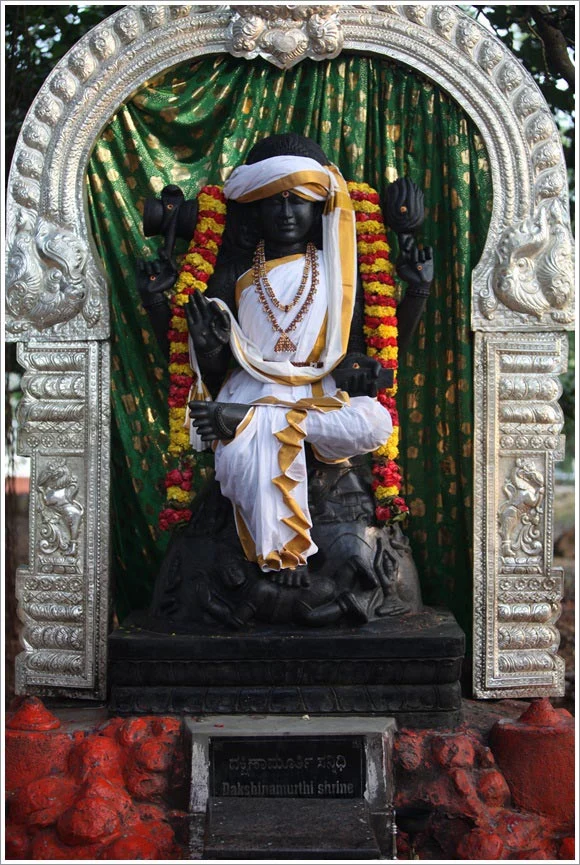
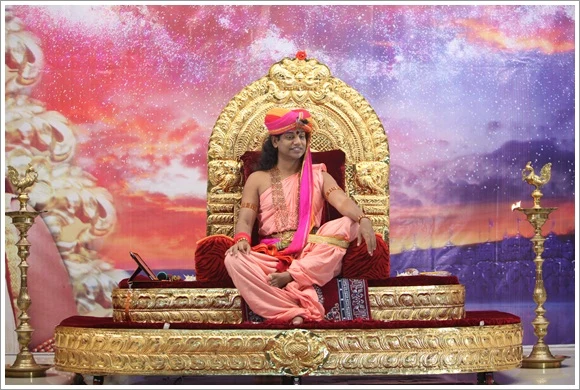
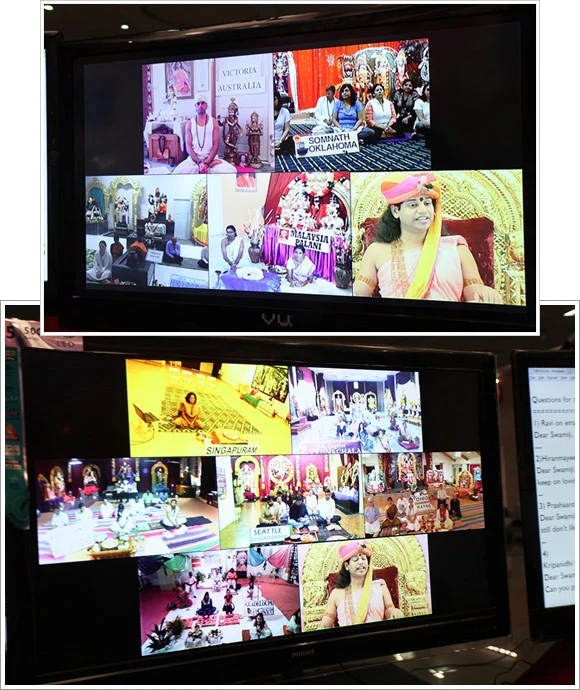
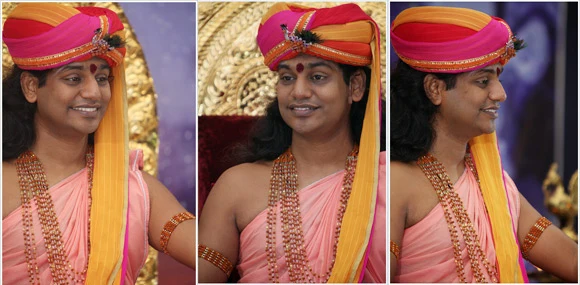
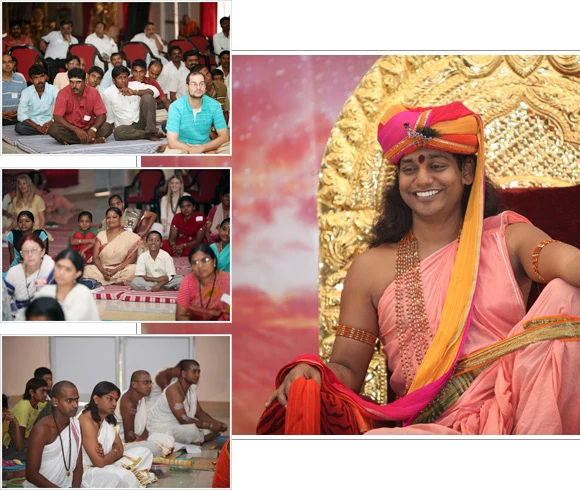
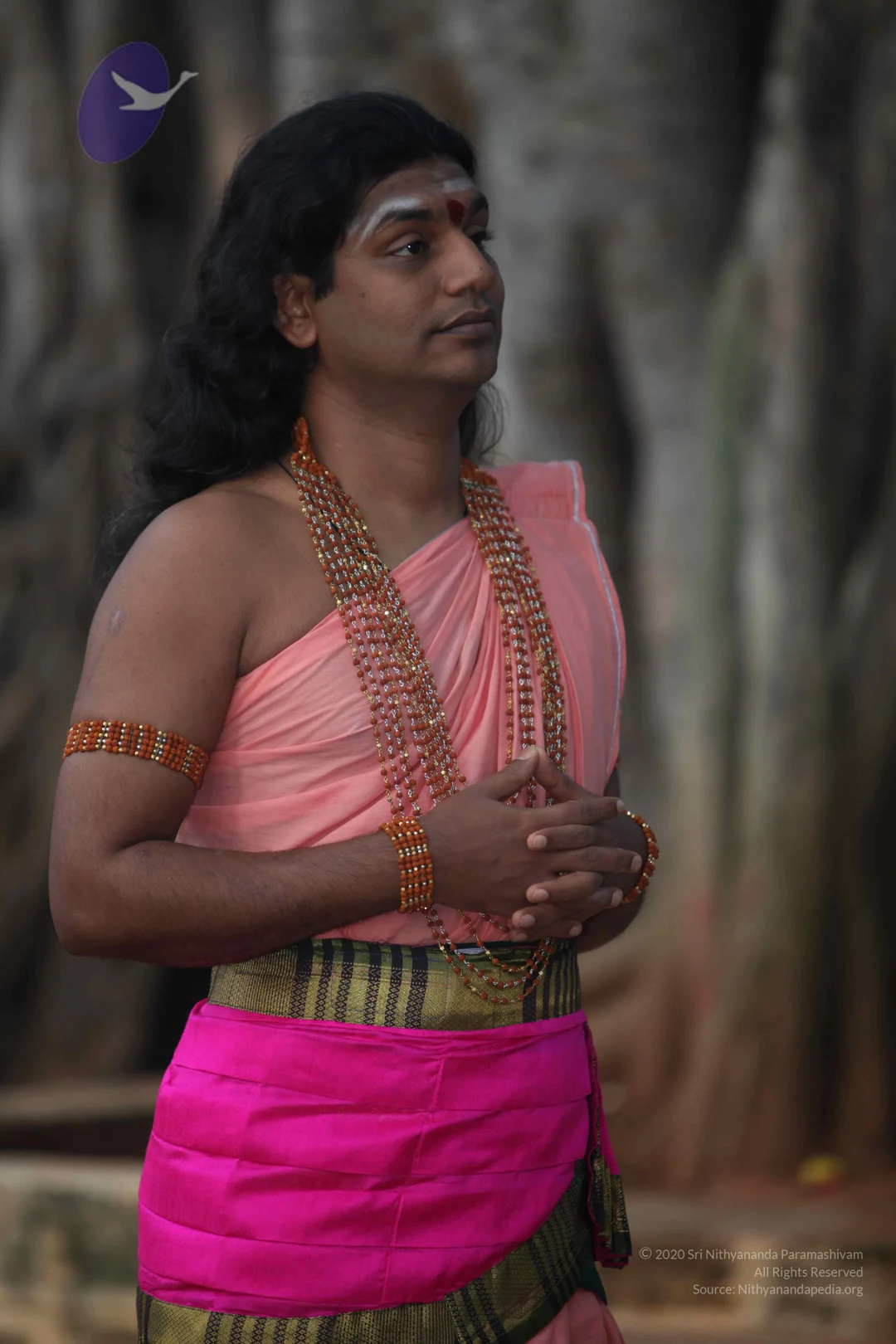
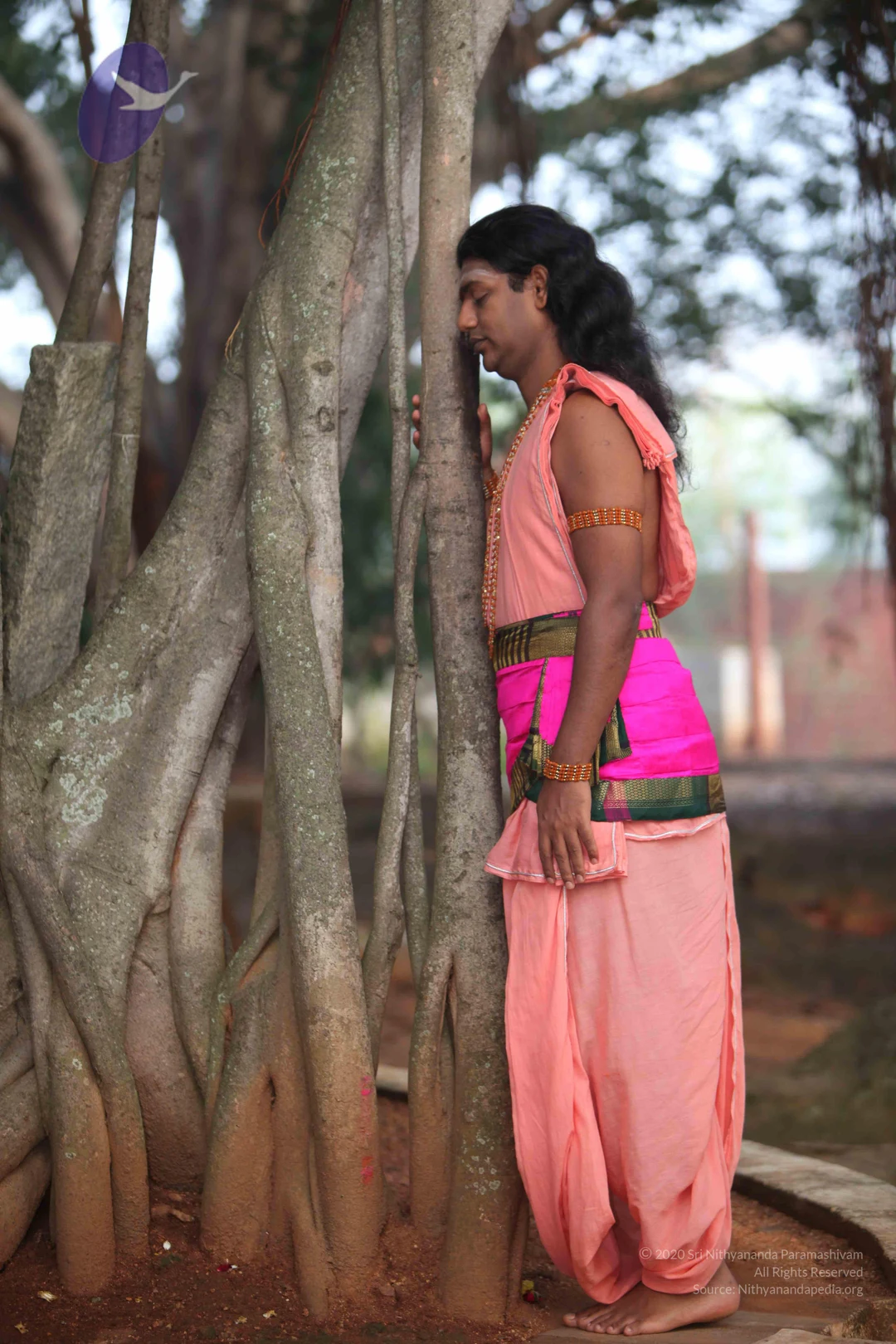
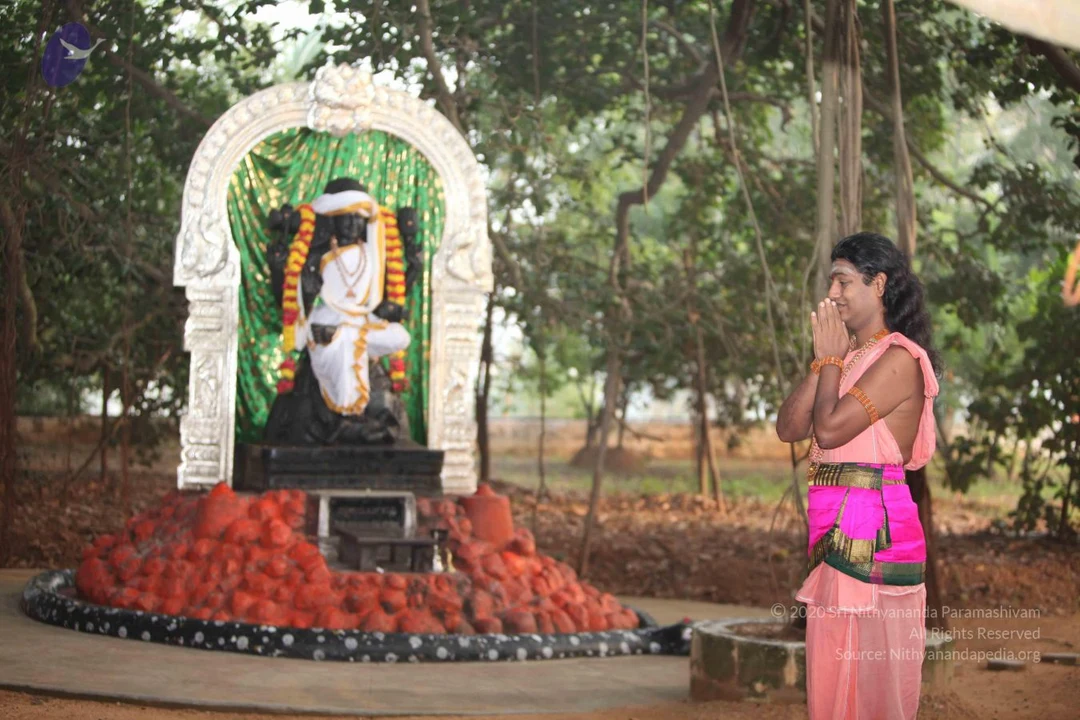
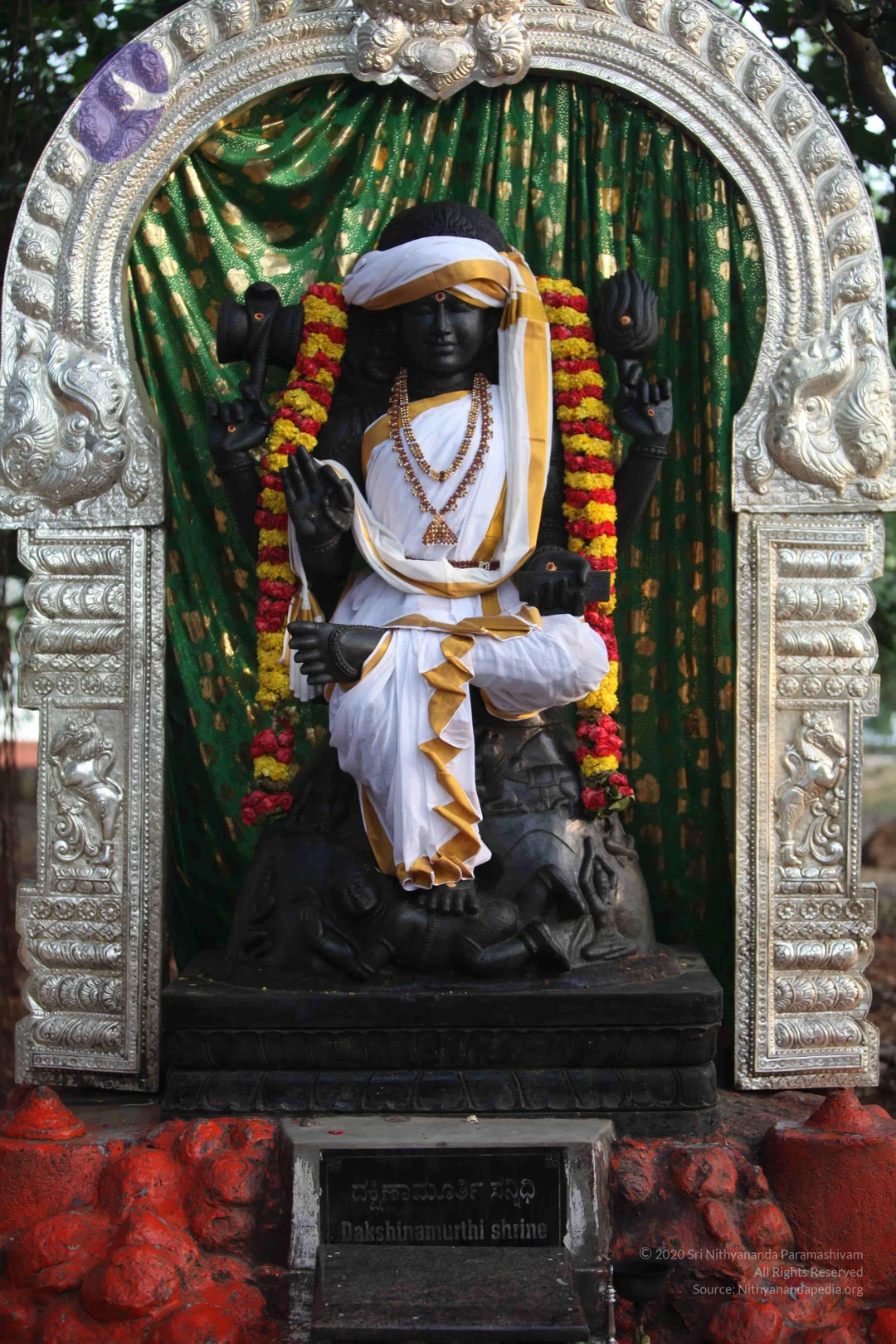
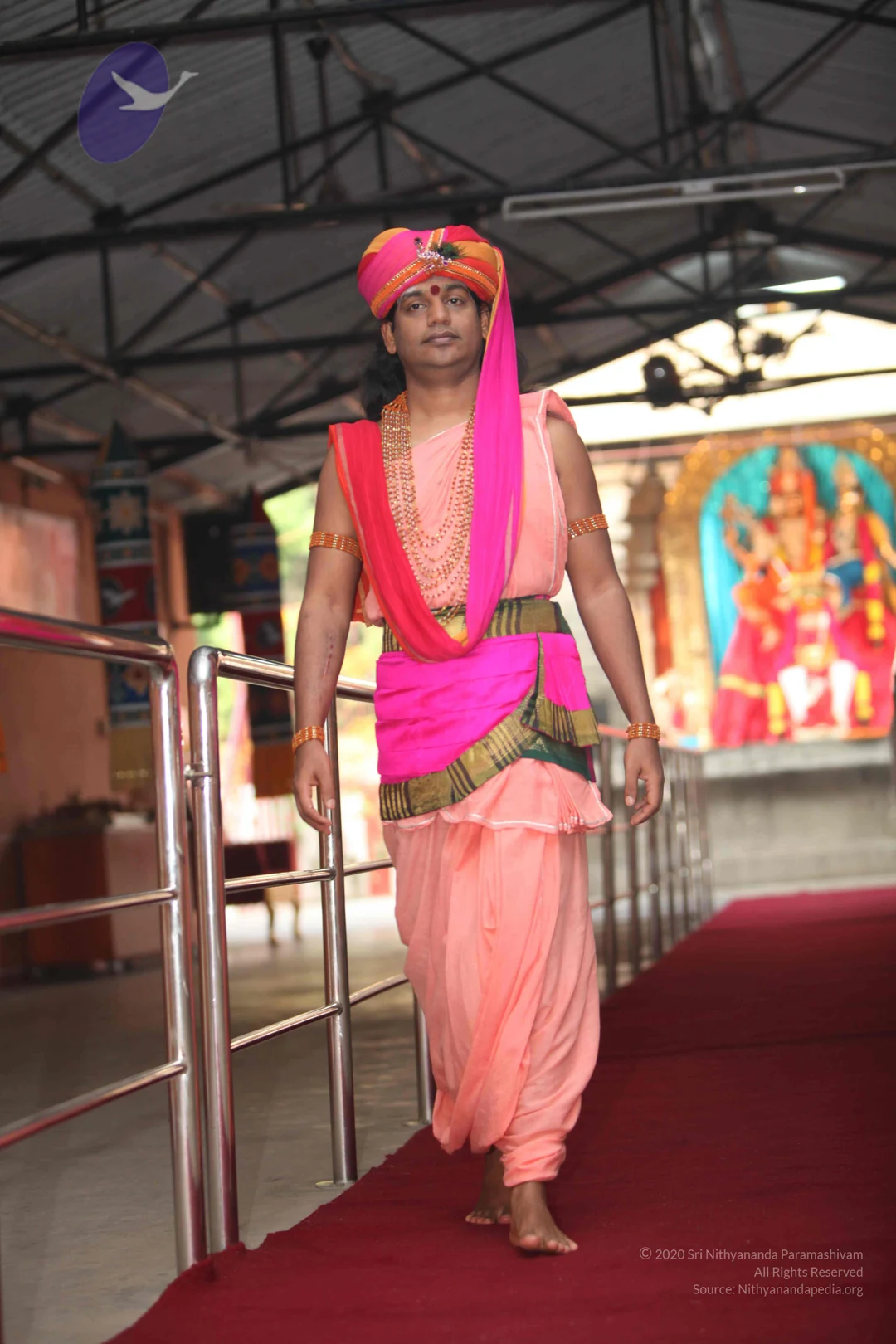
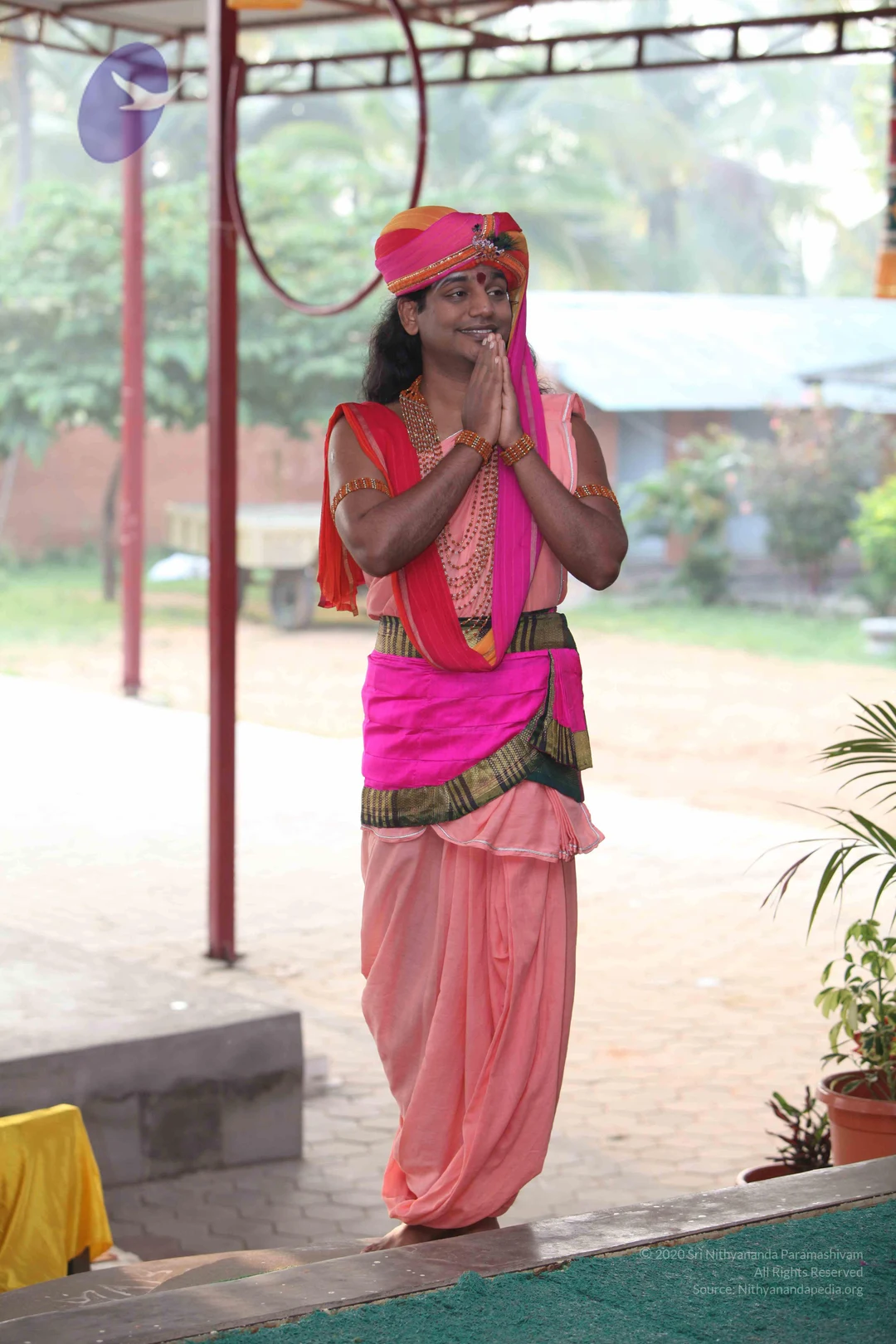
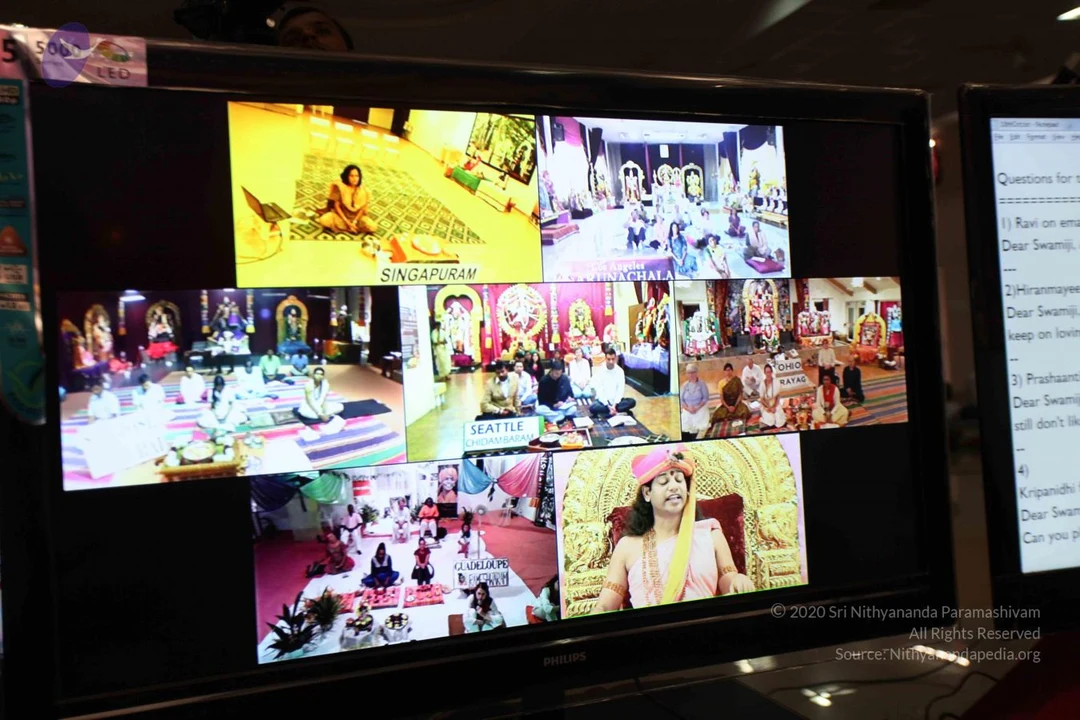
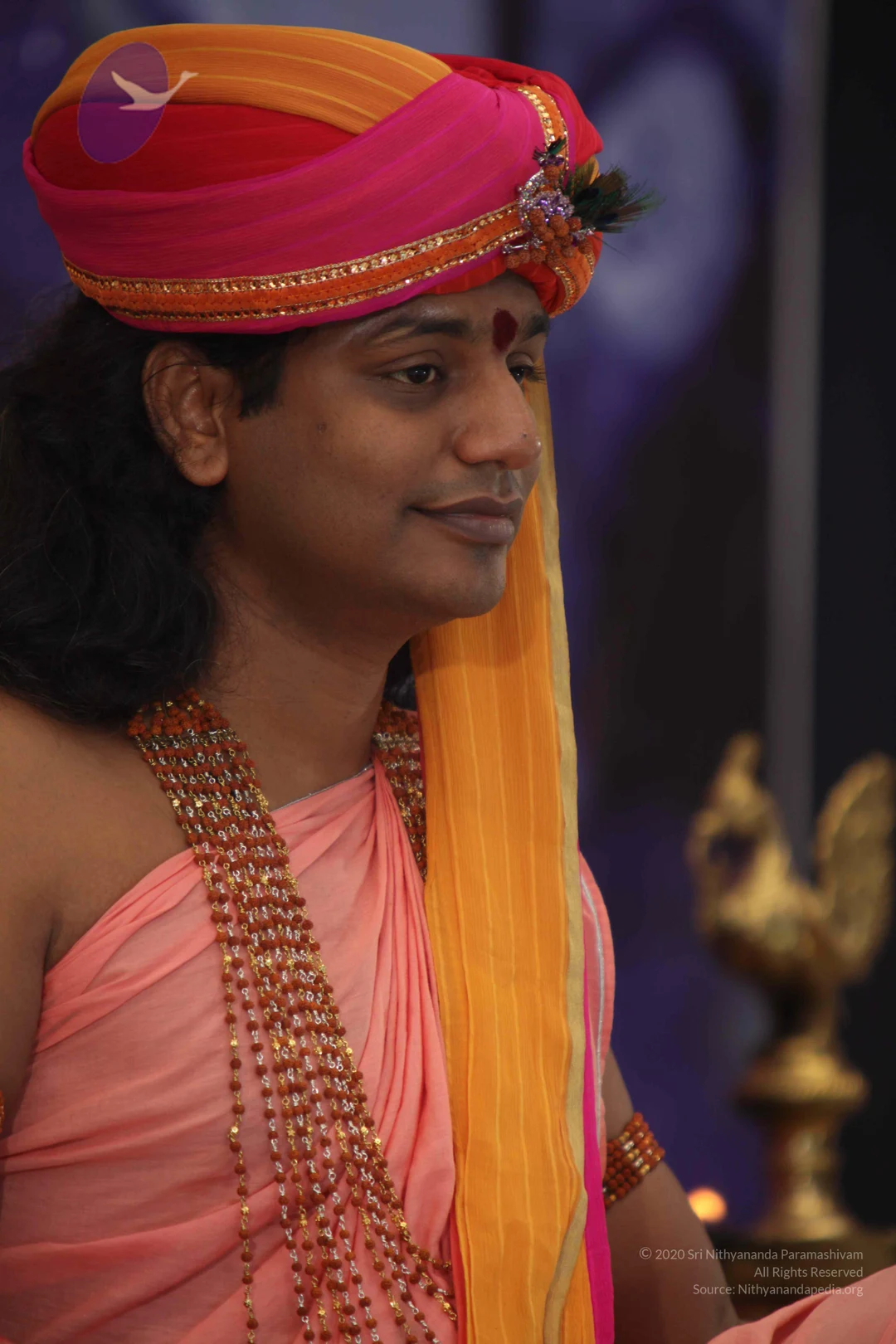
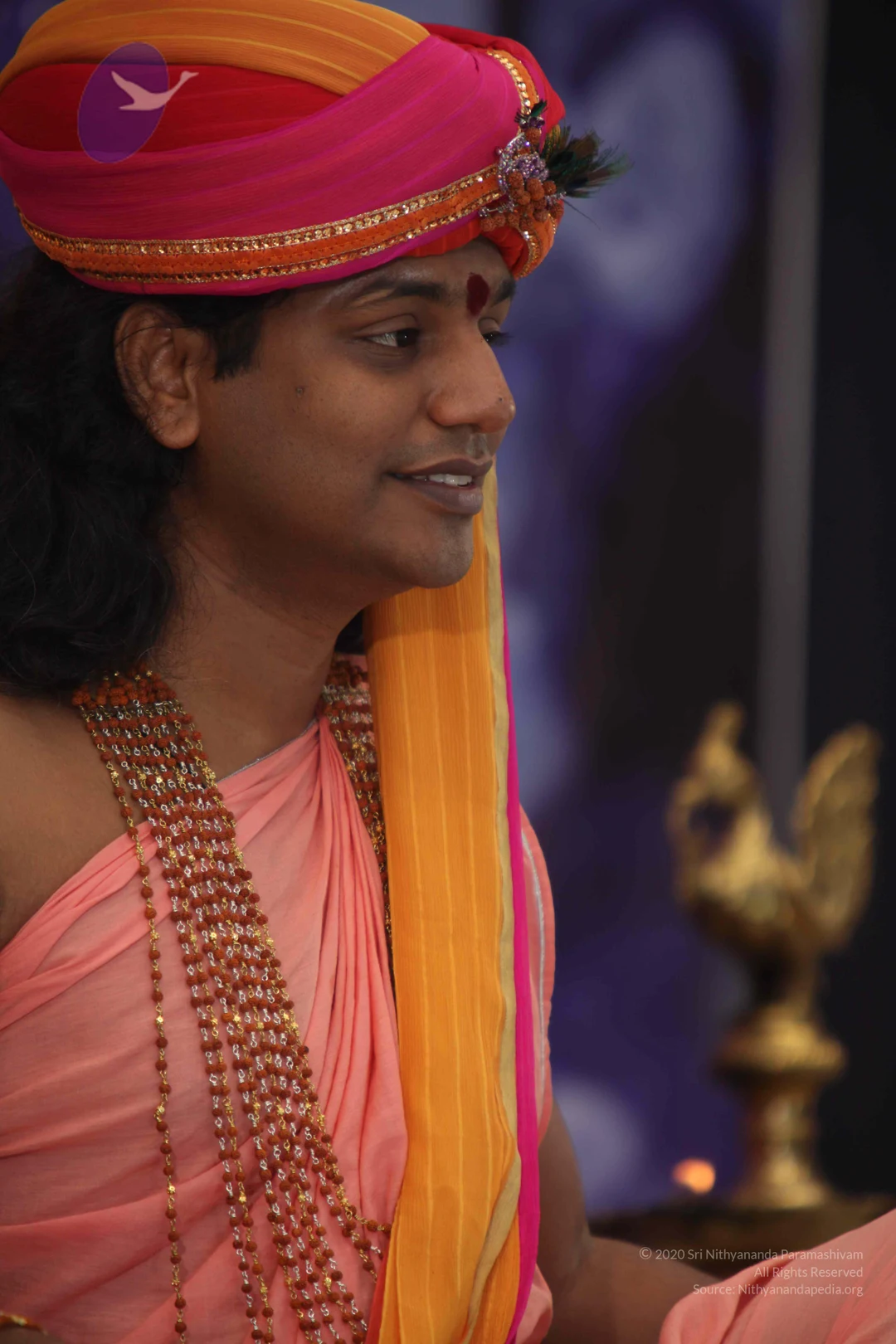
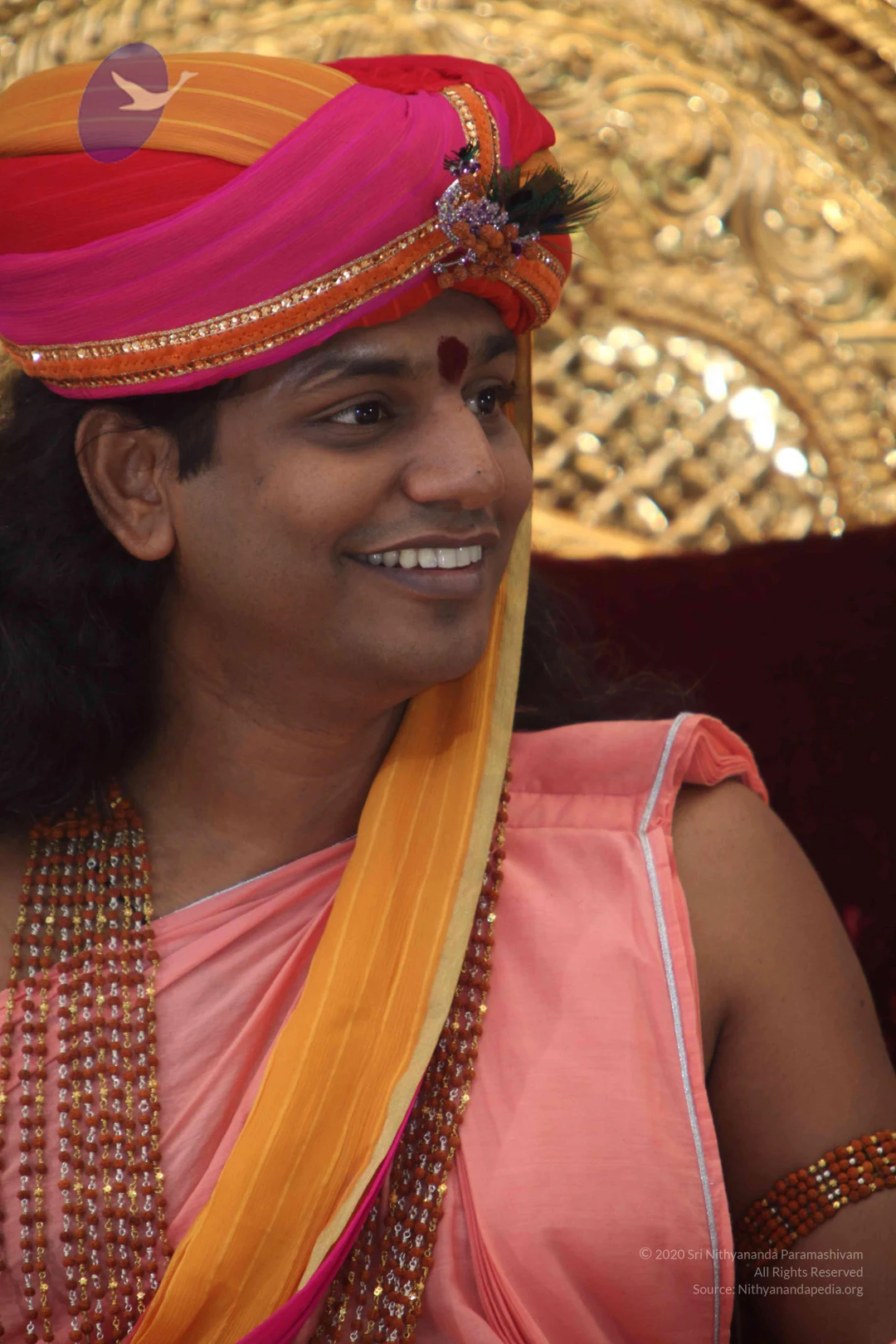
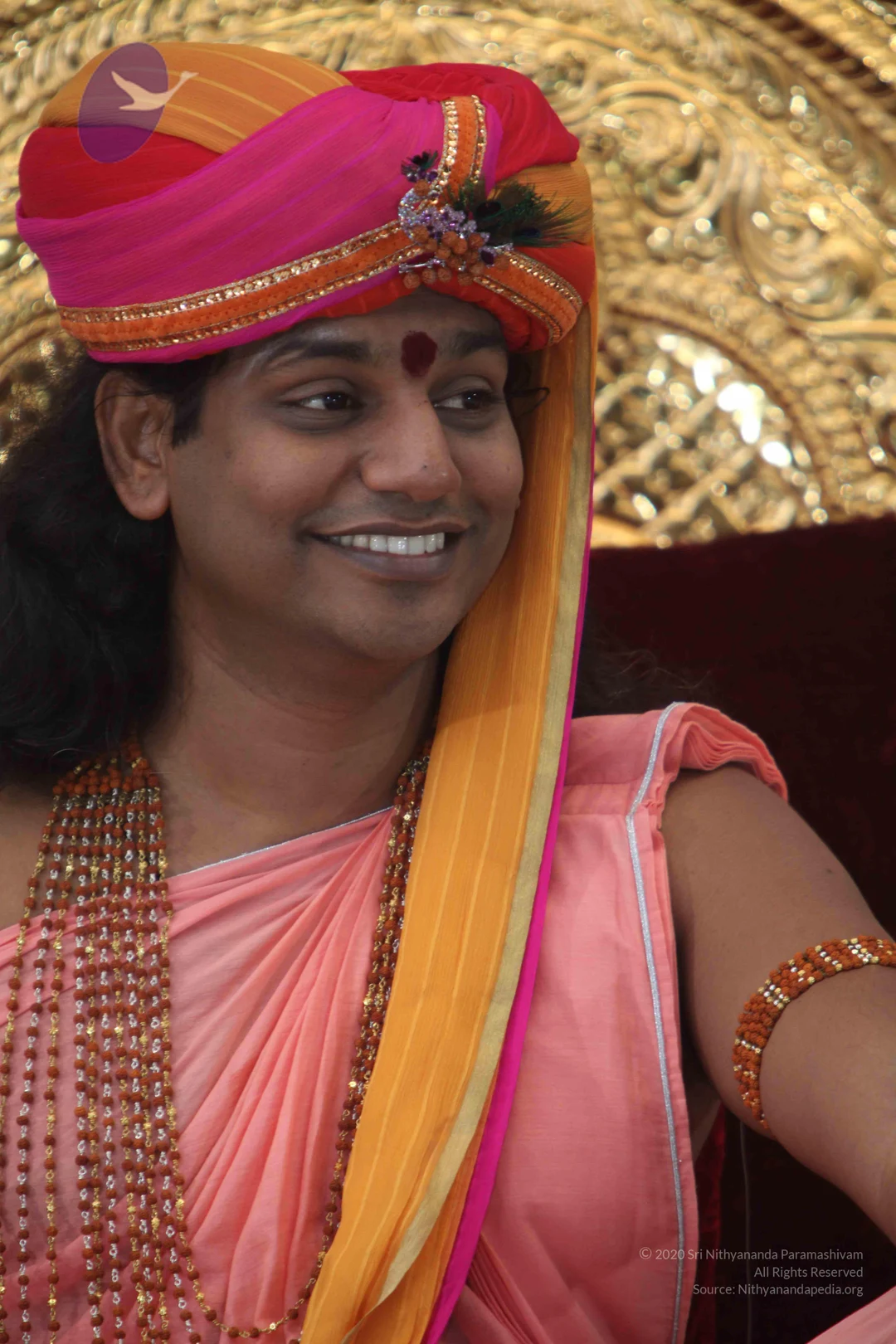
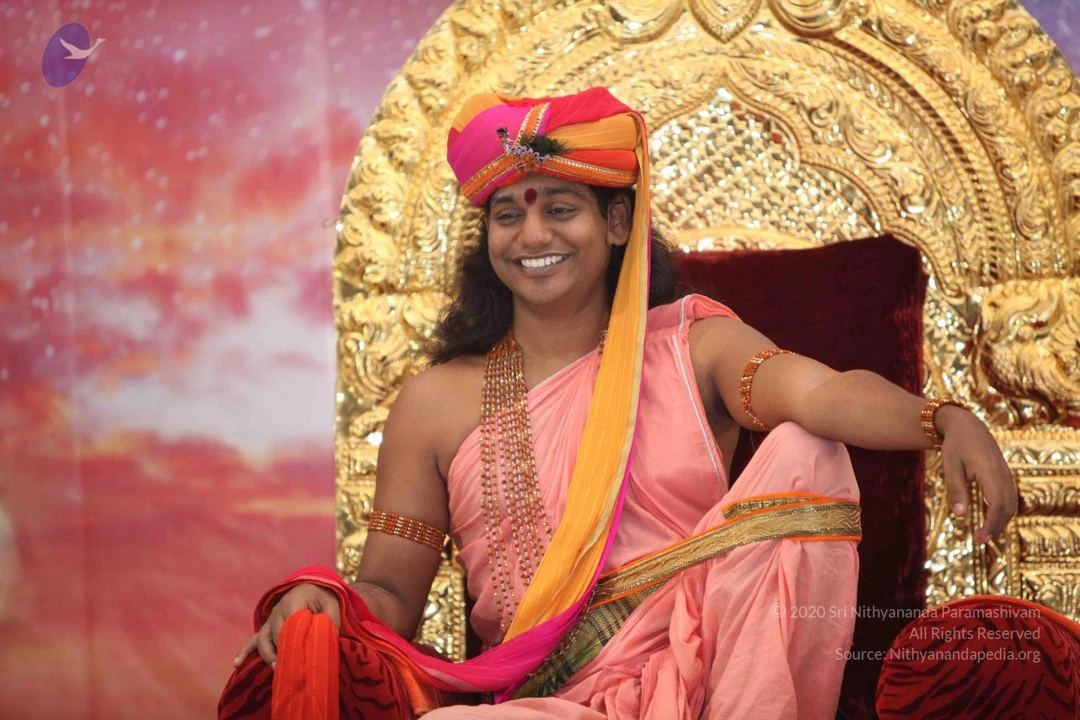
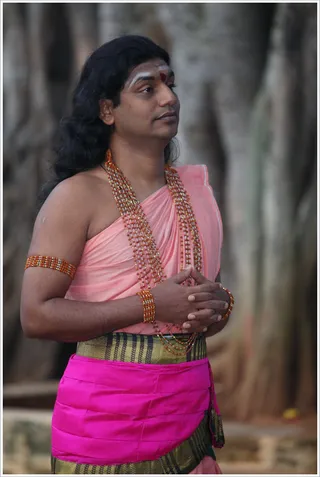
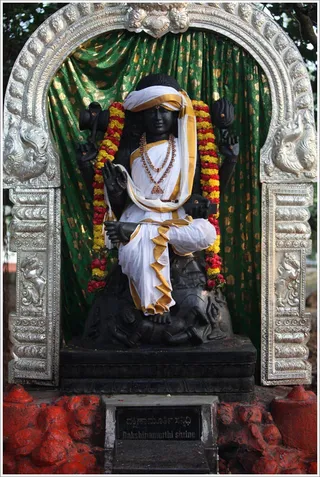
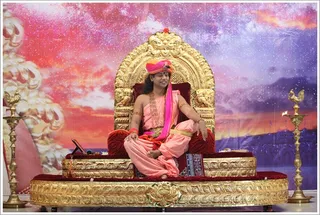
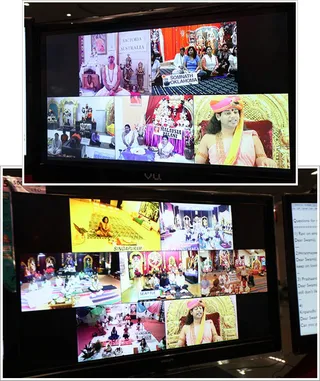
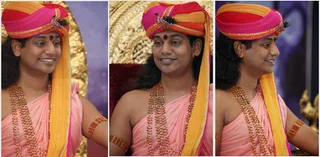
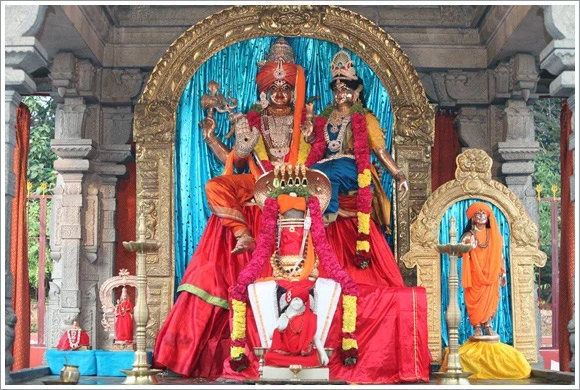
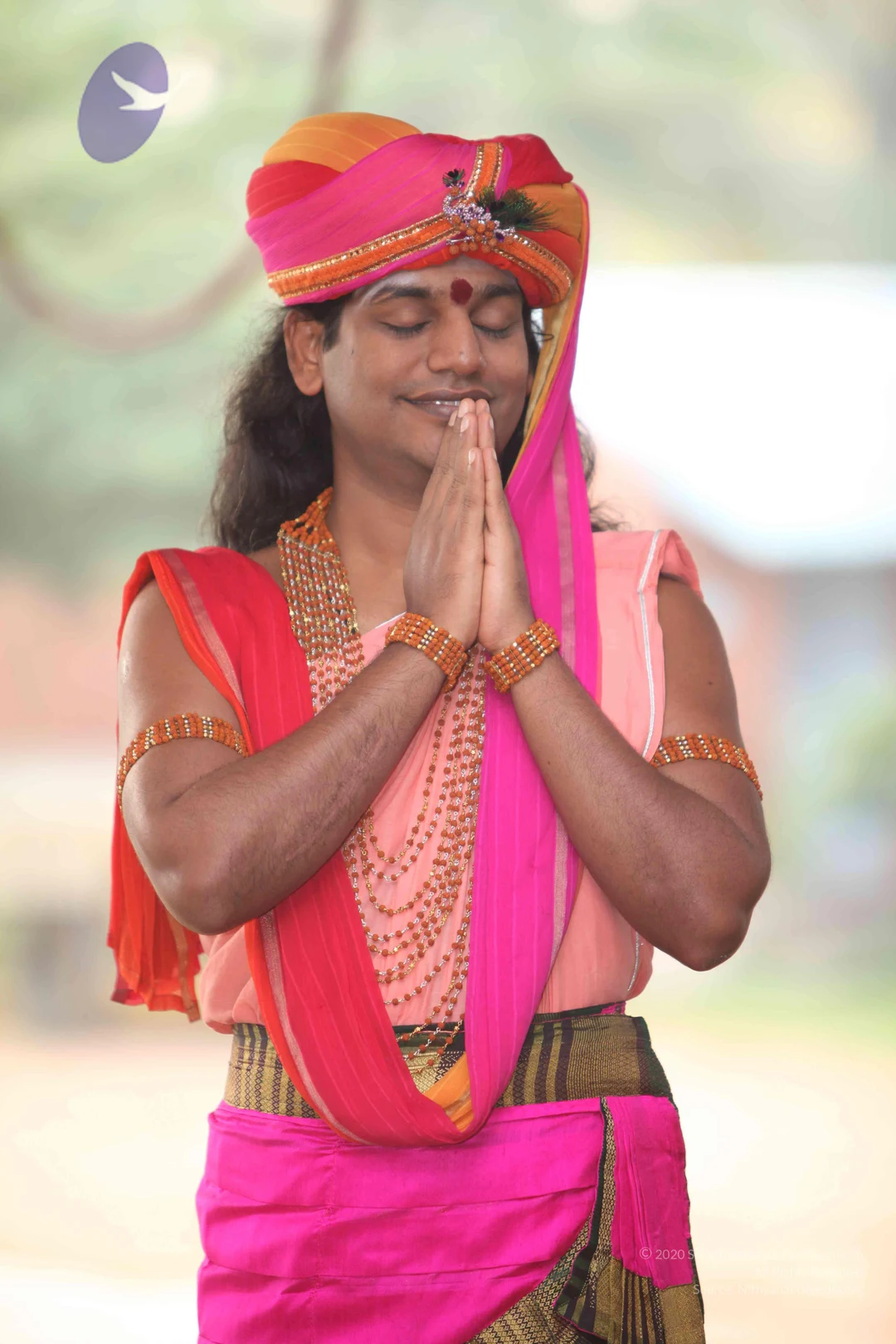
A decorated temple shrine with gilded arches and blue drapes frames three deity murtis: two standing figures with crowns and garlands, one holding a trident, flanking a seated figure in red and gold on a throne with a crown, all garlanded with marigold and yellow flowers. Brass oil lamps stand on either side. A small figure in an orange robe stands at the right edge beside a lamp, and a white-clad figure appears at the left edge. No clear a person candidate is visible in the scene.A photograph of a single man standing outdoors before a large banyan tree with thick aerial roots. He has long dark hair, a white vertical tilak and a red bindi on his forehead. He wears a pale pink upper shawl draped over one shoulder, a pink lower cloth with a gold-bordered striped band at the waist, multi-strand beaded necklaces in orange and gold, and an orange beaded armlet and bracelet. His hands are folded together at his chest as he gazes to the side. Probable Swamiji, identified by long swept-back hair, multi-strand bead necklaces and ornate ceremonial clothing.A black stone statue of Dakshinamurthi, a seated Shiva form, sits in a silver-framed niche with a green gold-patterned cloth backdrop. The murti wears a white and gold-bordered dhoti and a gold-bordered white shawl across the shoulders, with gold necklaces. A garland of red and yellow marigolds hangs across its body. Carved silver arch panels frame the shrine, and a small engraved plaque at the base reads Dakshinamurthi shrine. The statue is a deity murti, not a person.A photograph of a seated figure on an ornate gold throne with carved red-cushioned seat and gilded armrests, set against a backdrop of pink and violet cosmic sky with stars. The figure wears a pink-orange turban, pink-orange dhoti-style wrap and shawl, with a gold waist sash, a rudraksha mala with a long gold-toned chain, and red-painted adornments on the arms. Long dark hair falls to the shoulders. The figure rests one hand on a red cloth-covered table holding a small device. Gold oil lamps with flames stand on either side of the throne. One person is pictured, seated as the speaker of a satsang.A two-panel photograph of video-conference monitors showing a multi-site satsang grid. The upper screen shows a tiled view of several centres: a man in white and orange cloth seated in a room labelled Victoria Australia, a group seated on a red carpet beneath a labelled Somnath Oklahoma panel, a man in an orange headscarf and pink-gold cloth seated before an ornate gold backdrop, and a seated figure in a temple setting labelled Malaysia Pelani. The lower screen shows panels labelled Singapuram, Seattle, and others with devotees seated around shrines and deity murti. On the right of the lower monitor, a screen displays typed questions addressed to a person. The screens are the depicted subjects and the people are only visible on displays, so no physical people are counted.A three-panel collage of close-up photographs of one person in a pink and gold ensemble. The figure wears a pink-and-orange turban with a jewelled ornament, a pink draped garment, multiple rows of wooden rudraksha-style beaded malas, and gold armbands. Gold ornate decor stands behind in the middle panel, and a purple backdrop appears in the left panel. The collage is graphic, and it shows one person, not a group. a person: the figure is a candidate for the a person identity based on the turban, ornate pink and orange clothing and layered malas, with the page noting a person at this event.

Temple
32 photosSource gallery
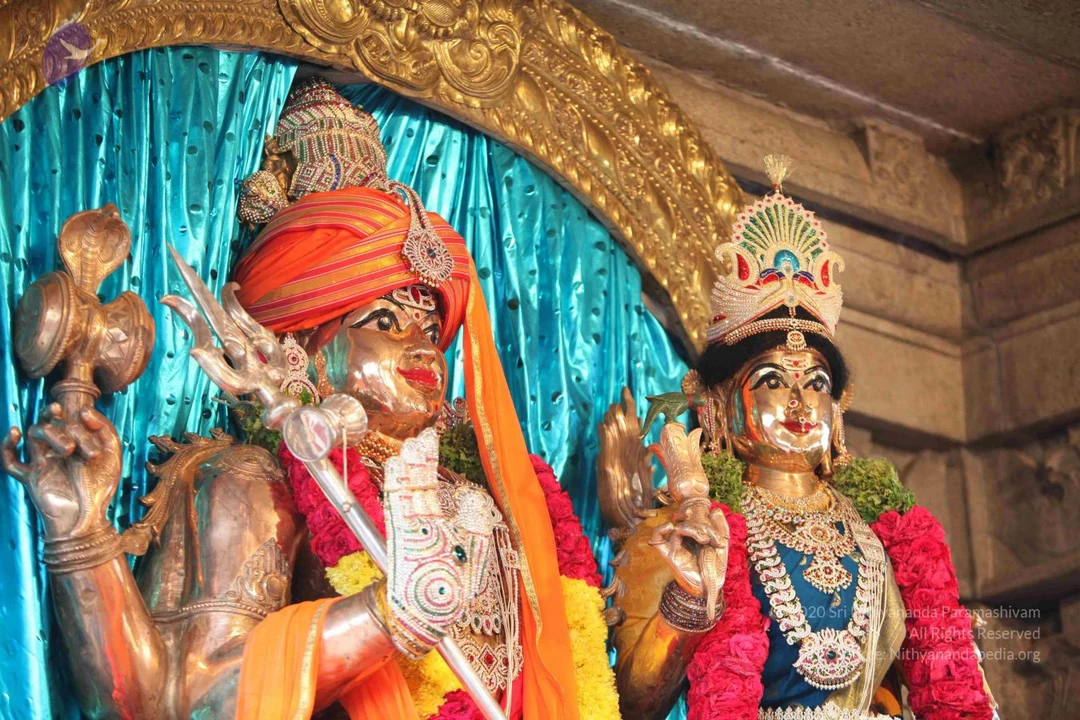
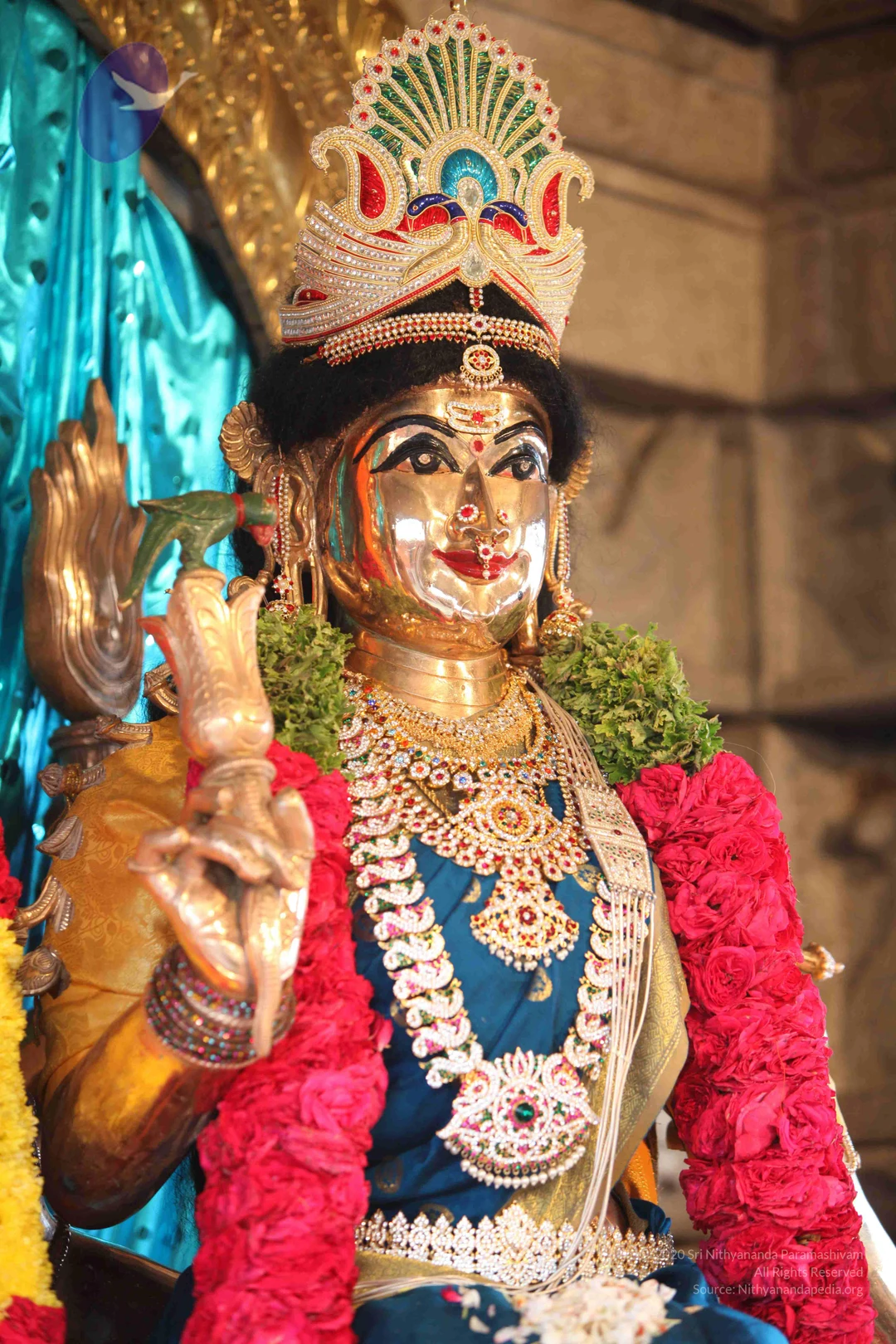
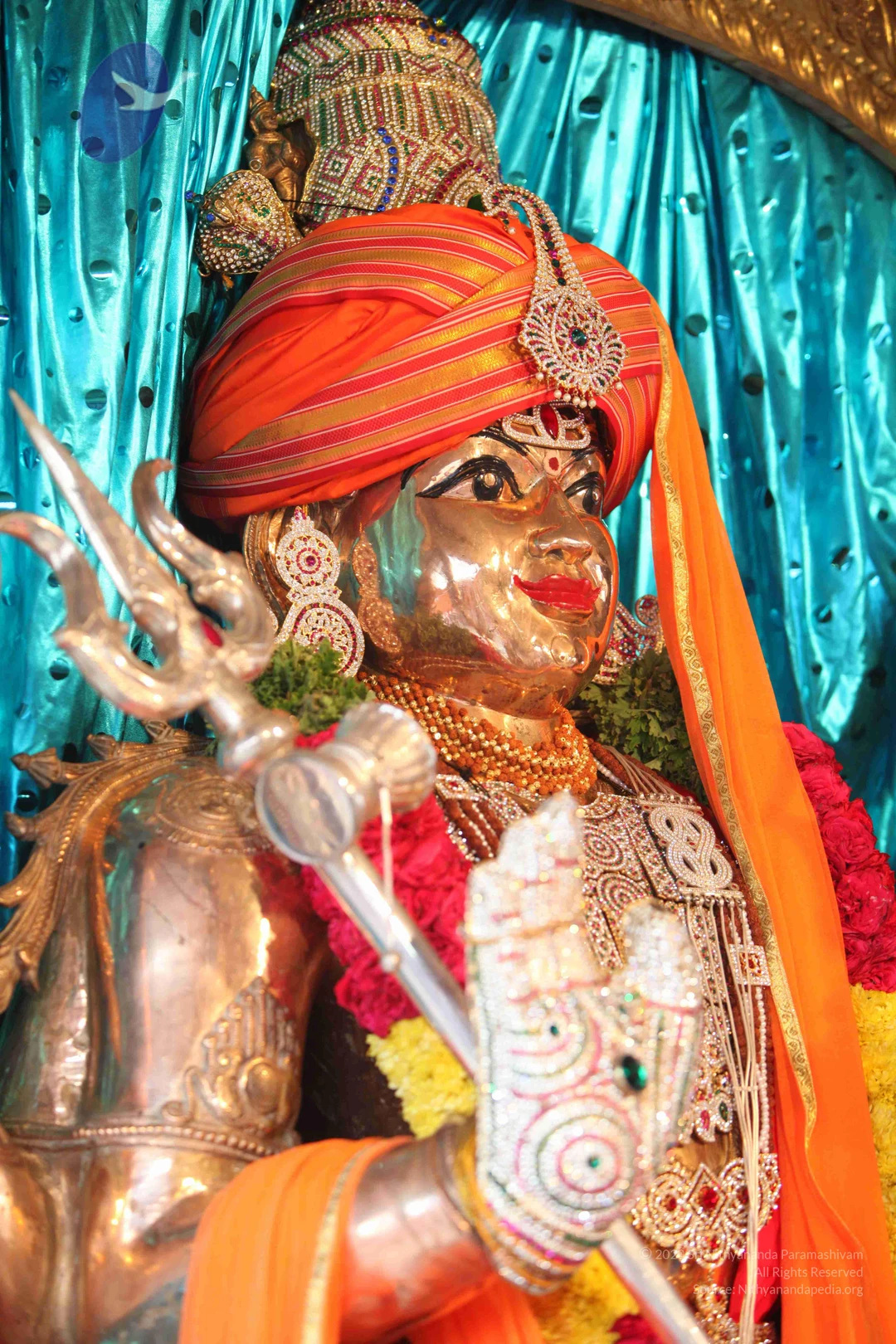
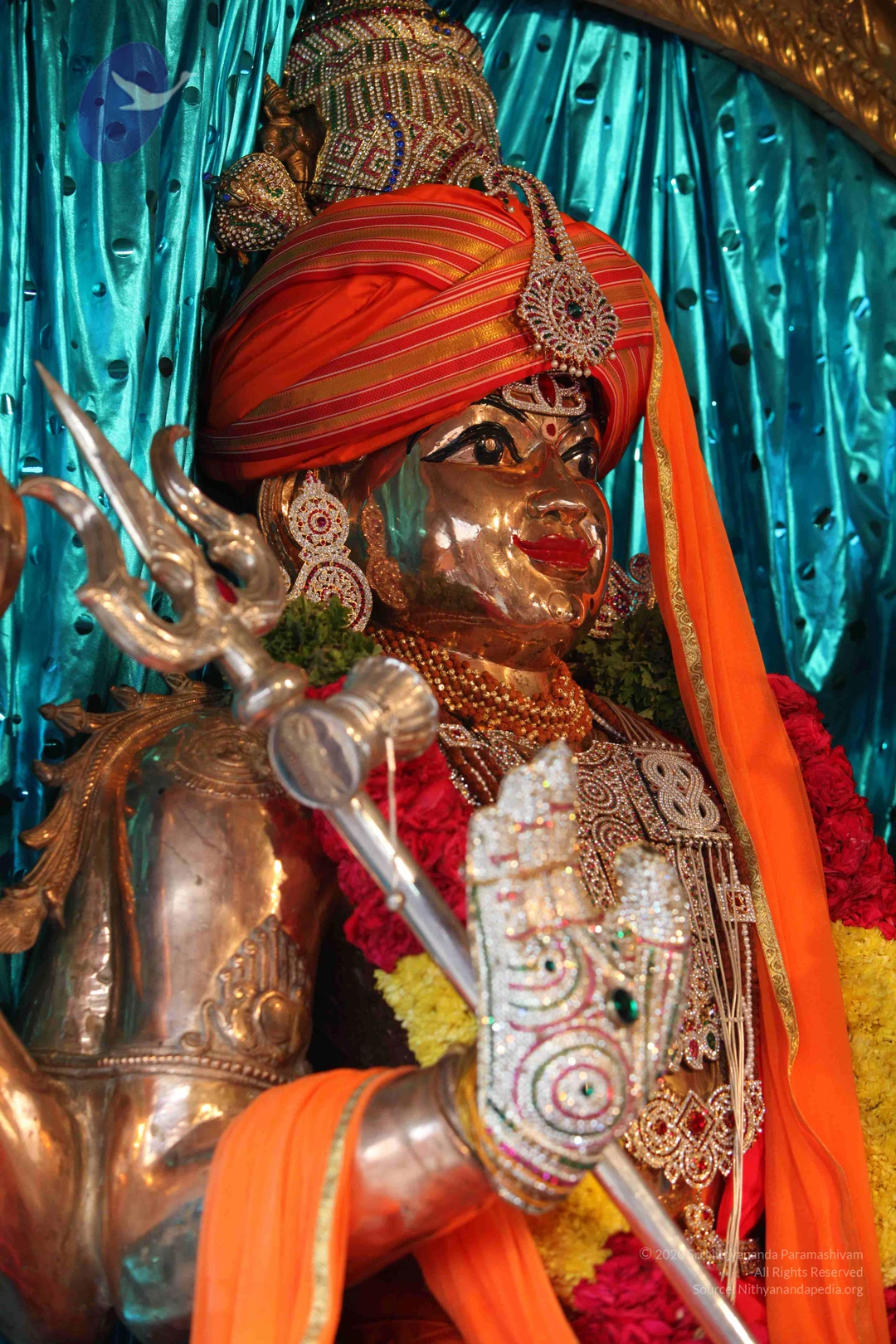
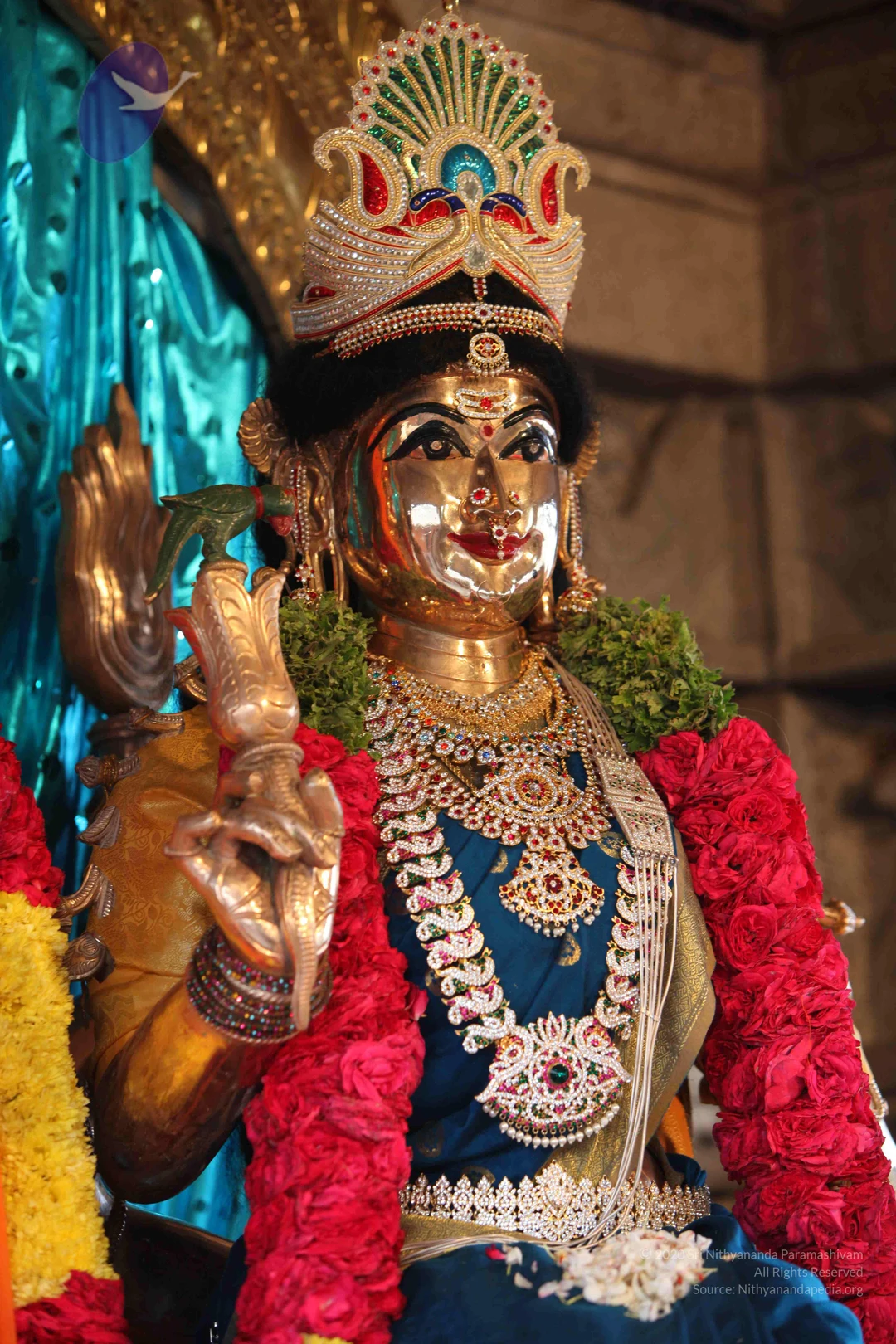
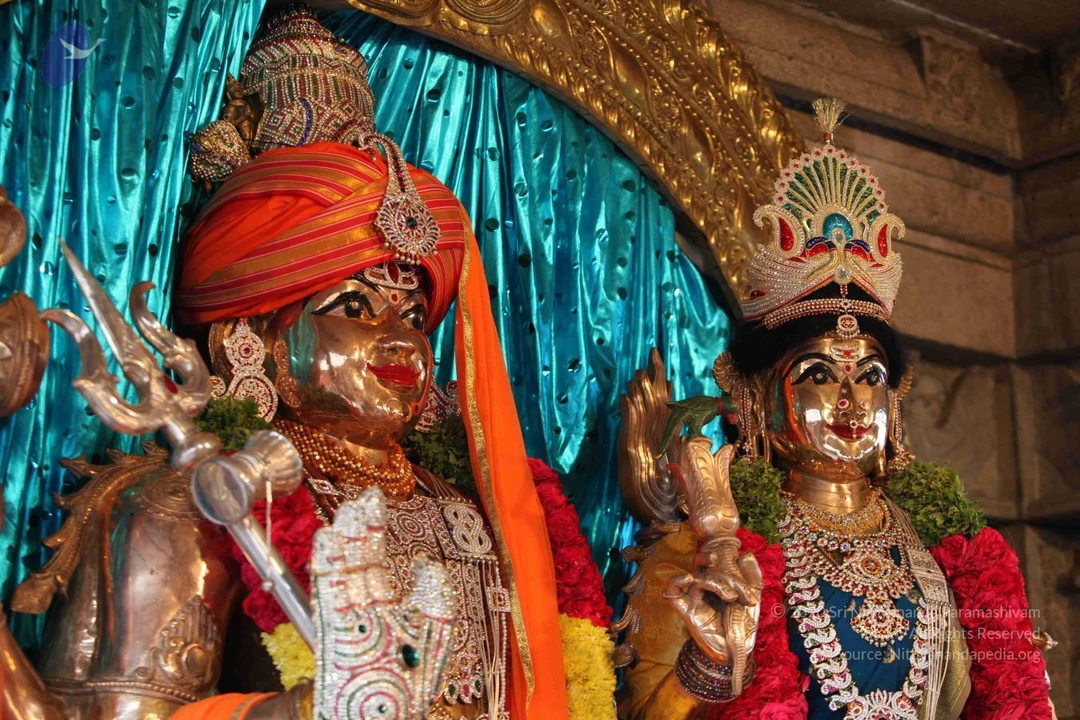
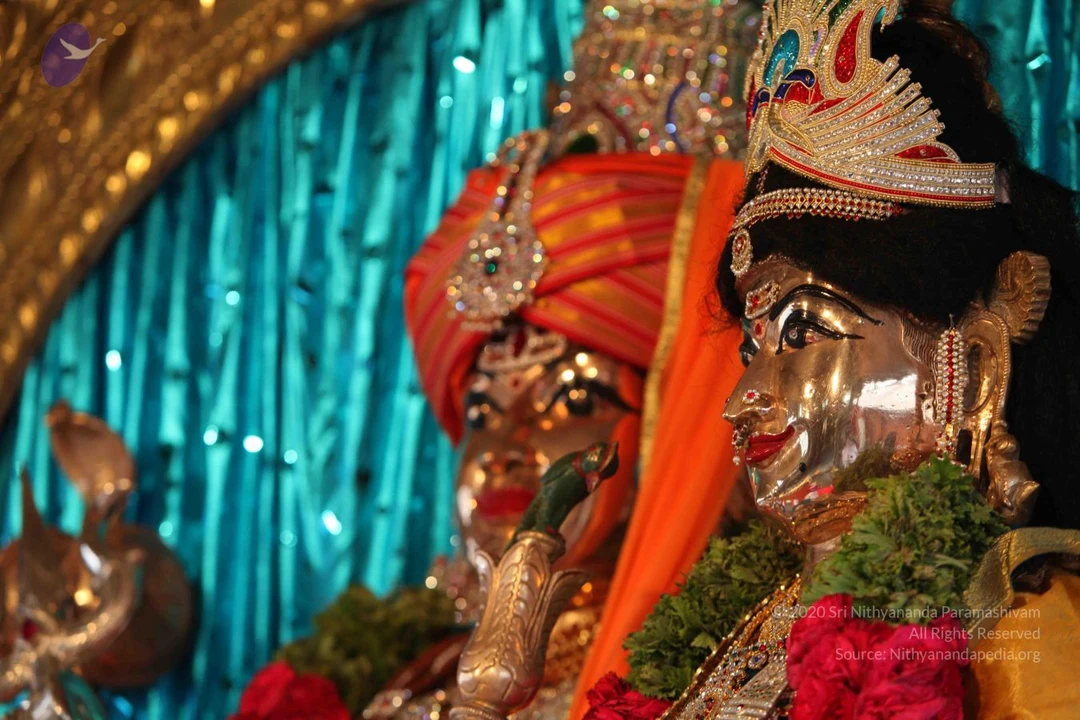
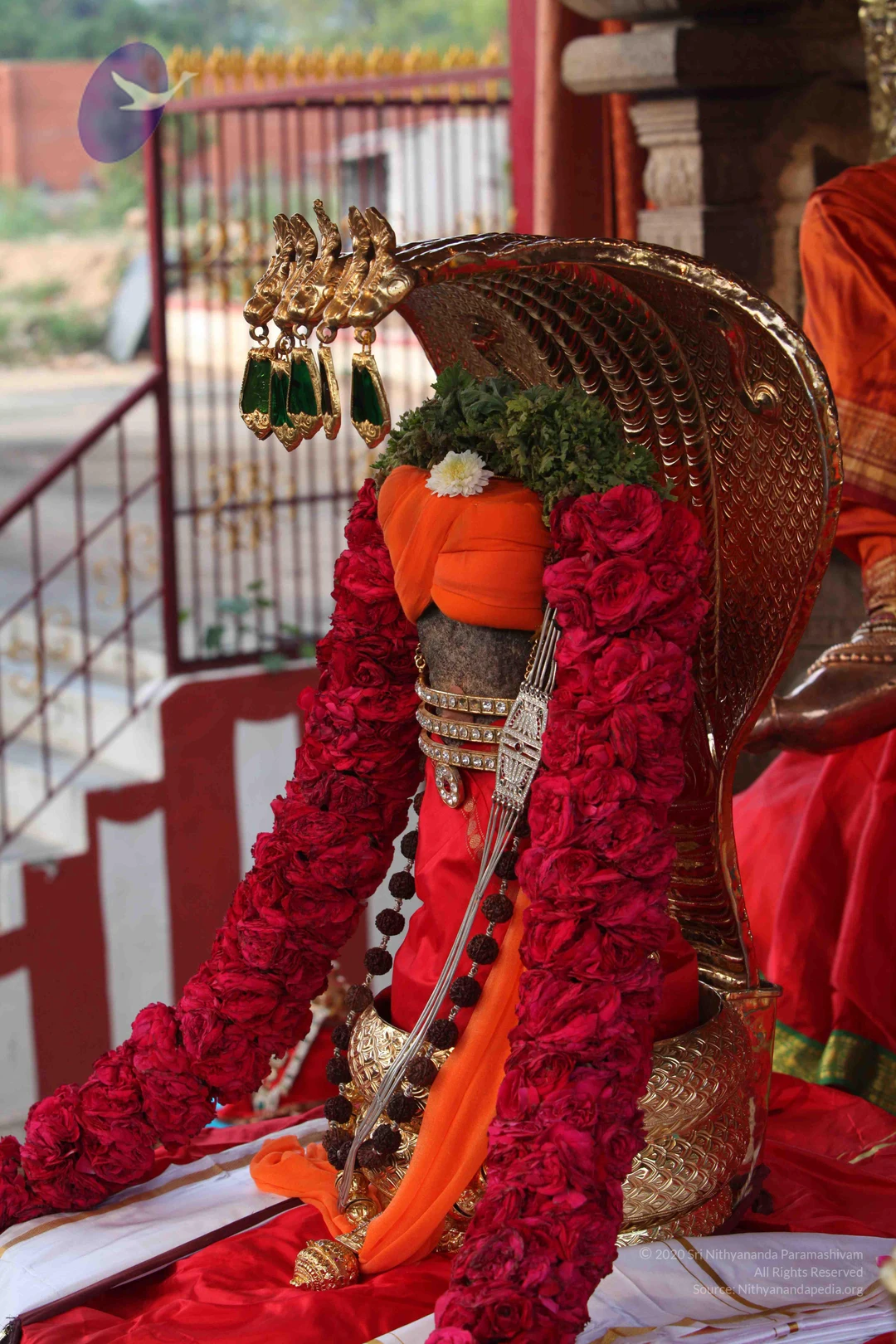
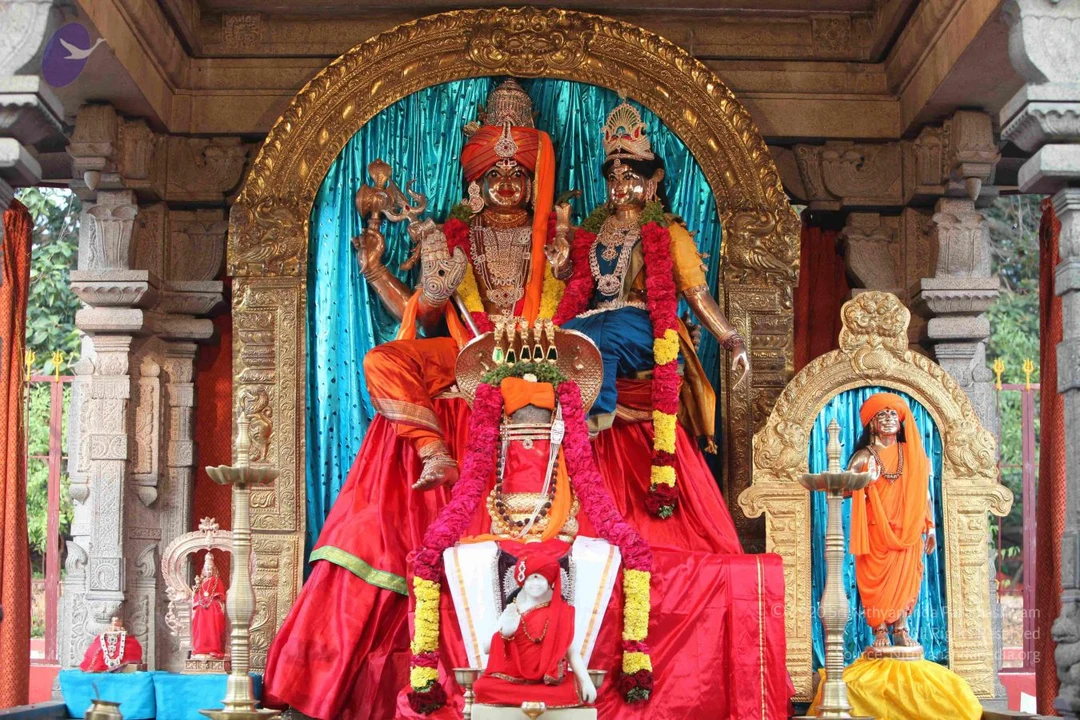
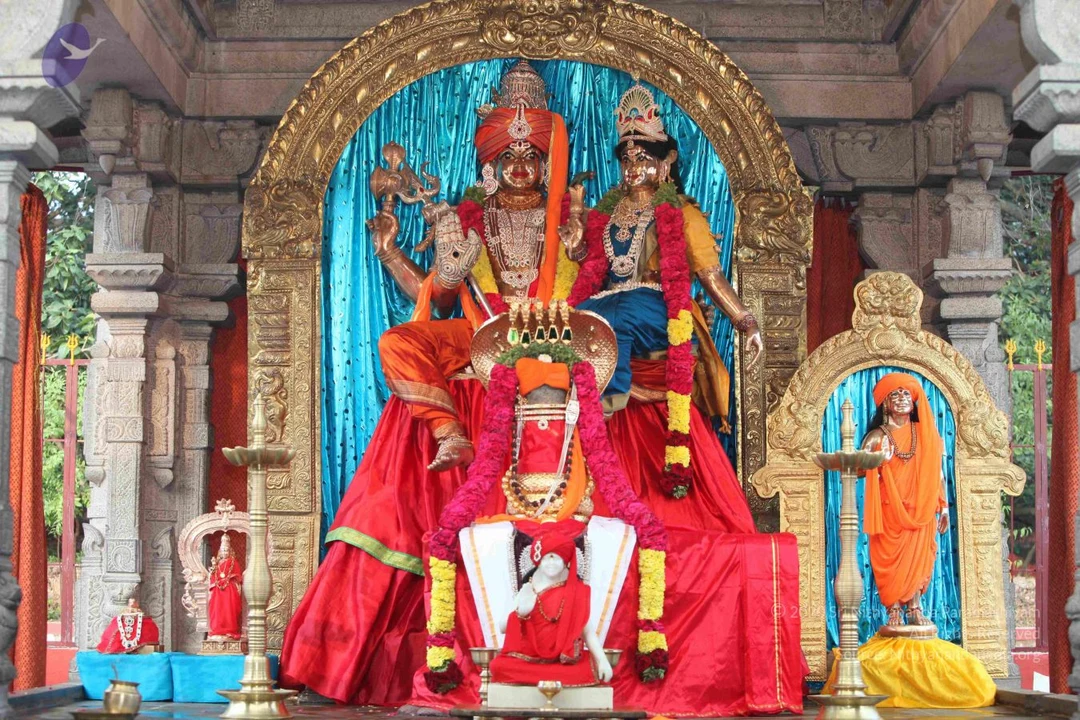
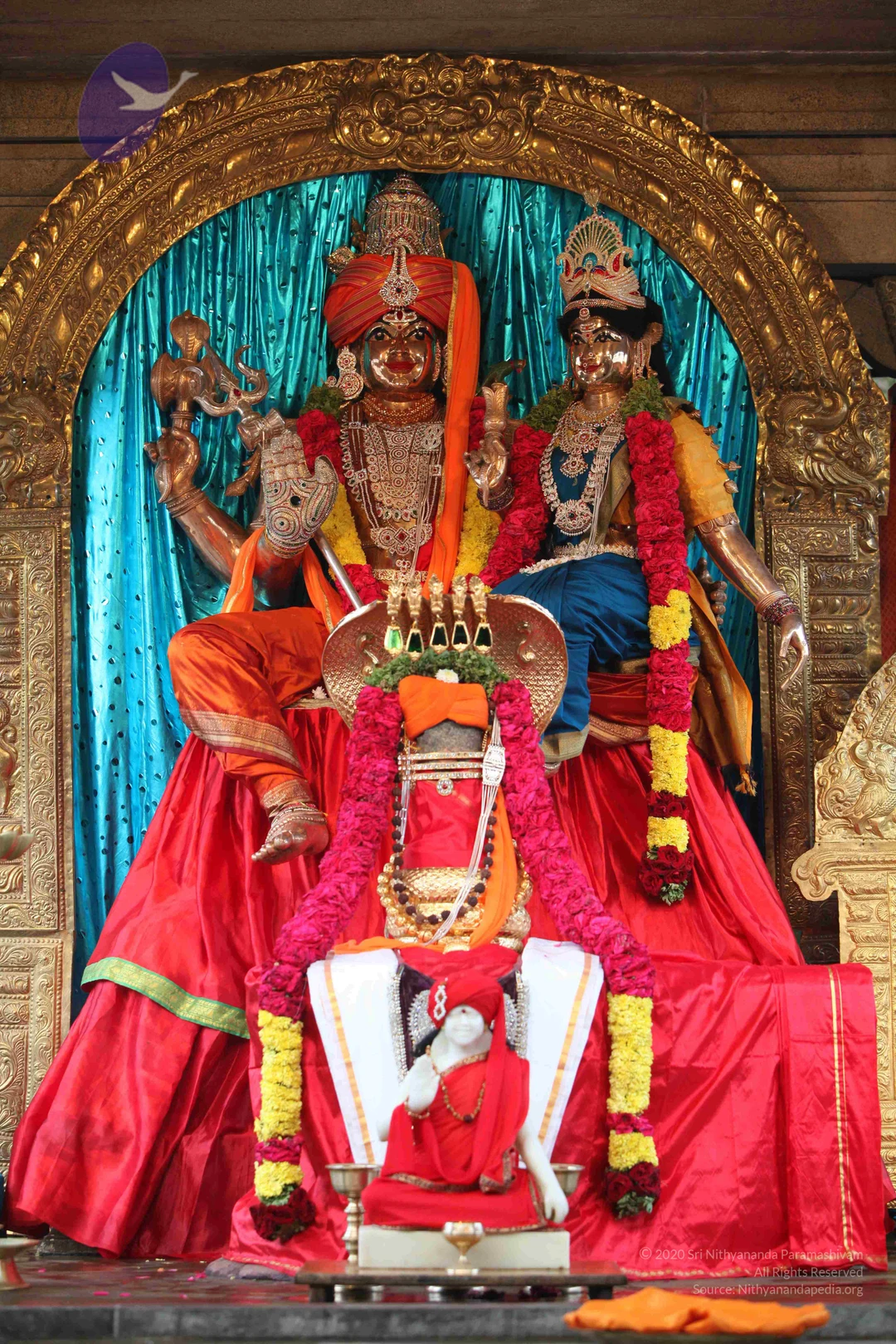
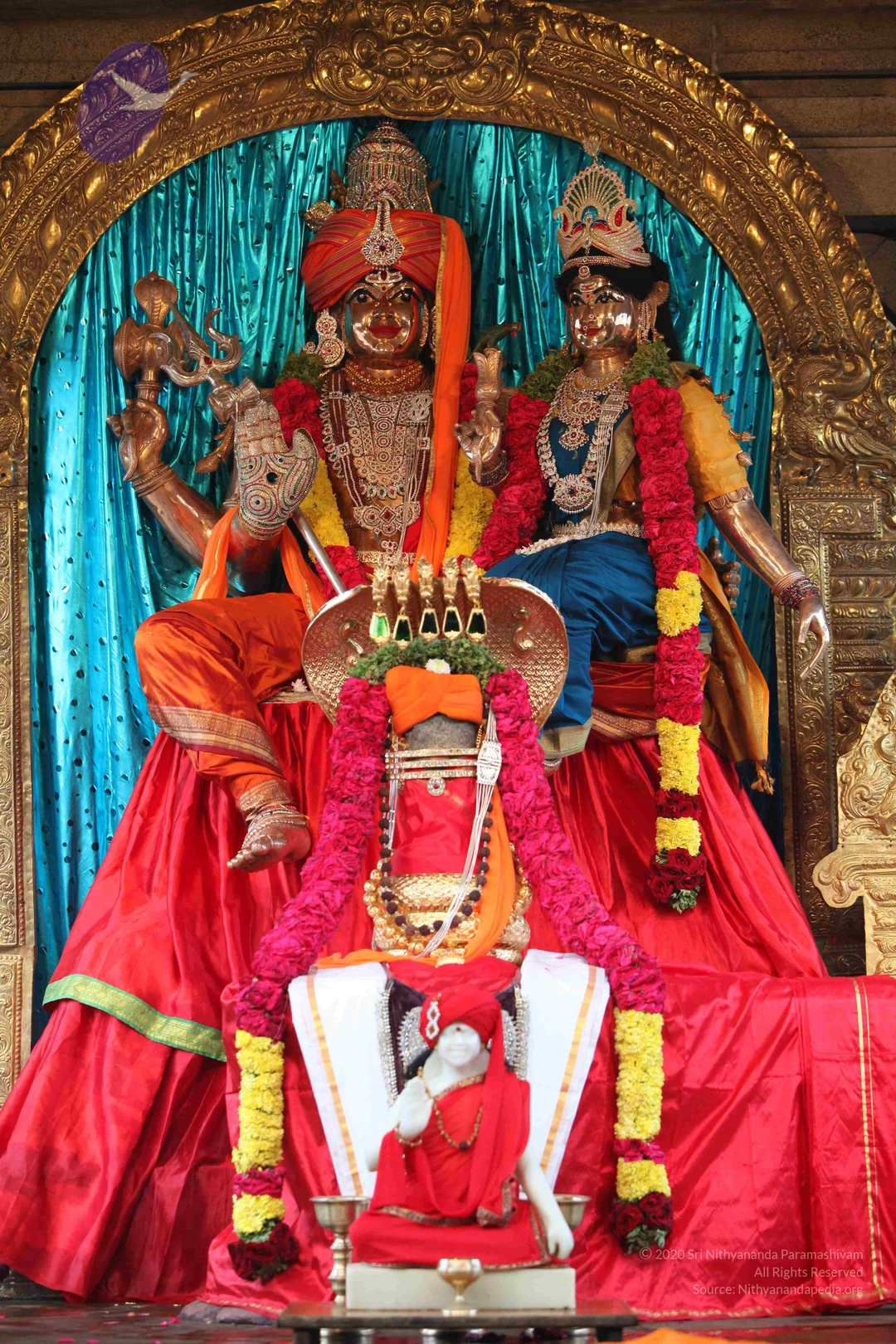
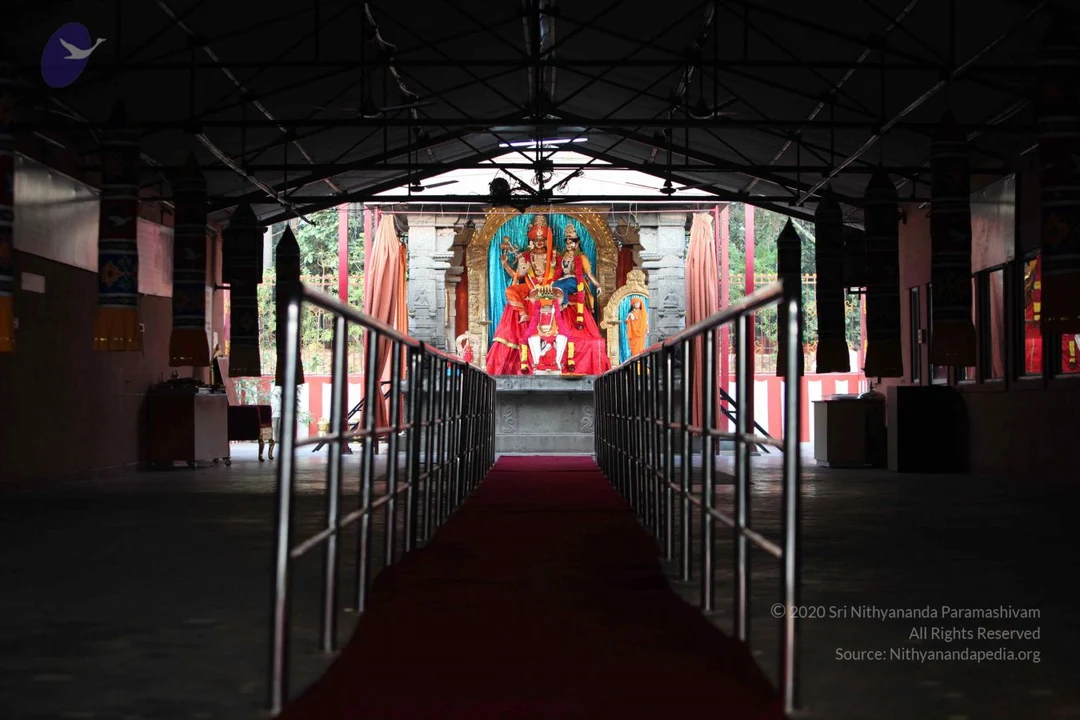
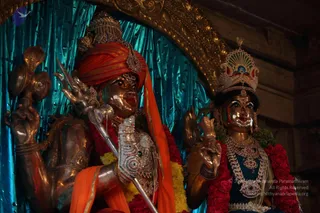
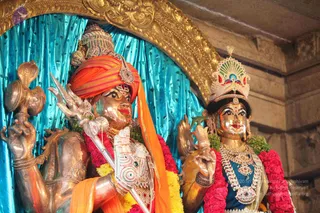
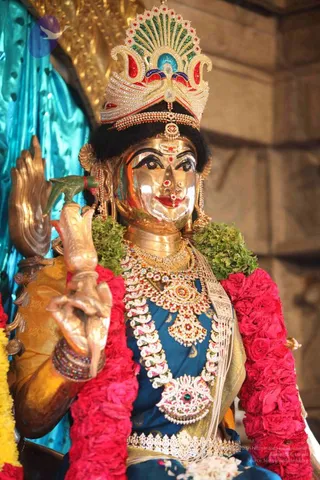
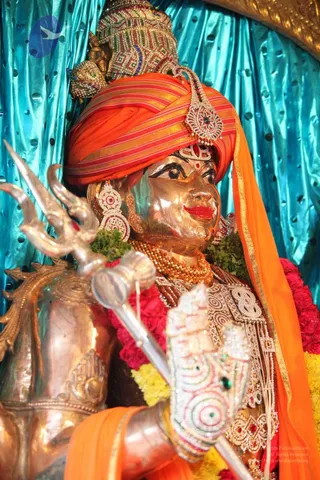
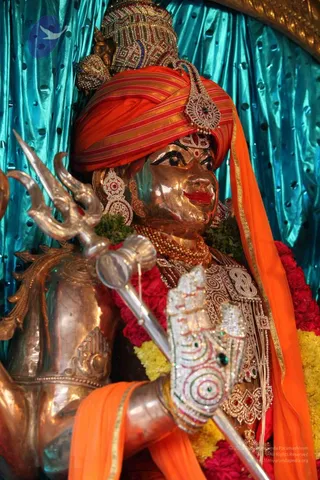
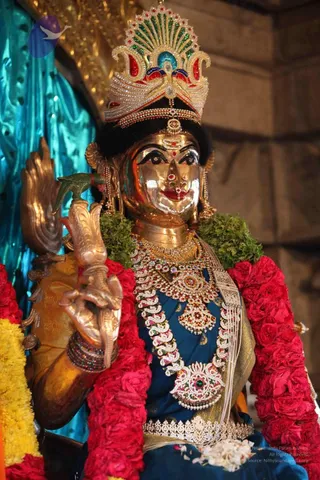
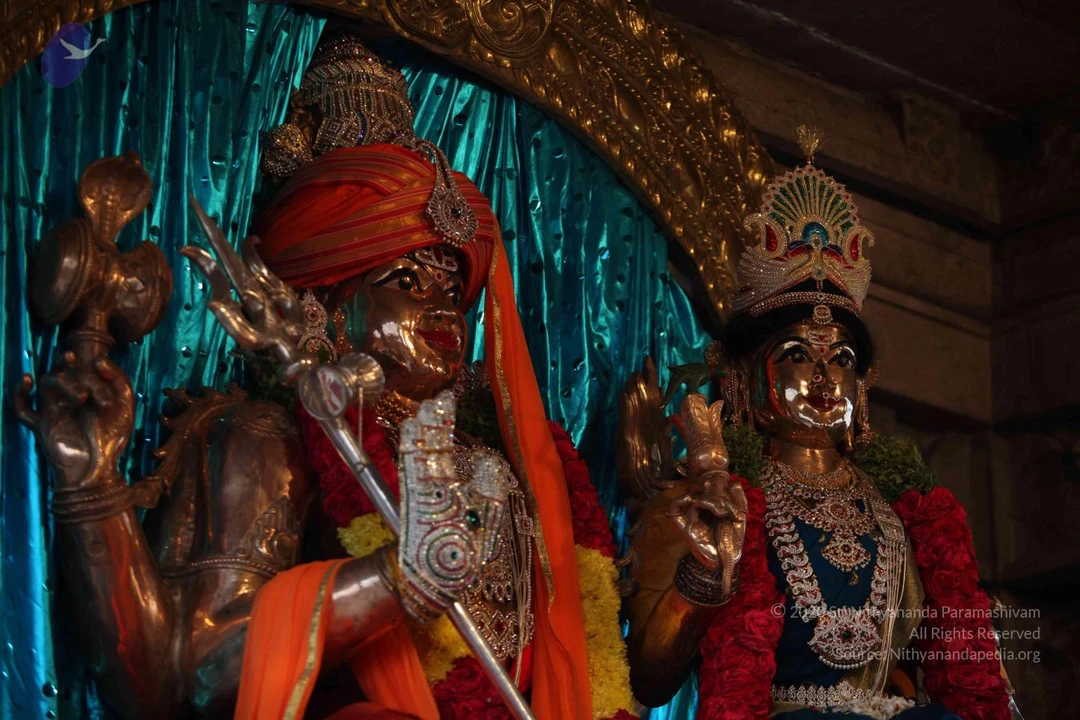
Photograph of two bronze-finished deity murtis in a temple shrine, set before teal drapery edged with gold. The figure on the left wears an orange-red turban and orange shawl, holds a trident and a cobra-headed staff, and is adorned with a jewelled garland of red and yellow flowers. The figure on the right wears a crown with green and red stones, a deep blue garment, layered gold necklaces and a red flower garland, with one hand raised in a mudra. No living people are visible. The murtis are statues, not people.Two golden metal murti statues stand in front of a turquoise draped backdrop framed by an ornate gold arch. The figure on the left wears an orange and red turban with a jeweled ornament, holds a trident and a cobra-topped staff, and wears an orange shawl with a garland of red and yellow flowers. The figure on the right wears a tall jeweled crown, a blue garment, heavy gold necklaces and a red and green flower garland, with one hand raised in blessing. Both are deity murti, not living people, shown in a temple setting.A gilded metal deity murti. The figure wears an ornate jeweled crown with green and red enamel, a red and white tilaka mark on the forehead, and a red bindi. It is adorned with a layered gold necklace set with red, green and white stones, a blue silk garment with gold border, and bangles. Fresh green leaf garlands and thick red rose garlands hang from the shoulders, and a yellow flower garland appears at the left edge. The raised hand holds a small green-tipped object. No physical people are visible; the figure is a statue.A golden-faced deity murti stands in a temple setting before turquoise satin drapery. The figure wears an orange and red striped turban with a jewelled crown and a jewelled brow ornament, and an orange shawl falls over its shoulder. It is adorned with a rudraksha-bead necklace, red flower garlands and green leaves, and rhinestone-studded armour. In its raised hand it holds a silver trident, a ceremonial mace-like staff, and a jewelled hand-shaped piece. The statue is a sculptural figure, not a living person, so no physical people are present and the a person candidate is depiction only if identified, which the image does not establish.A gilded metal statue of a deity with a fierce moustached face, wearing an orange-red striped turban with a jewelled ornament and a crown-like headpiece. The figure wears a red-orange shawl with gold border, an orange-beaded necklace, and a rhinestone-studded armour-style breastplate. Its raised hand holds a trident and a silver mace-like staff. Red and yellow flower garlands and green leaves drape the figure against a teal satin backdrop with sequined dots. The statue is a deity murti in ritual decoration, not a living person.A golden deity murti in a temple setting, adorned with a jewelled crown with red and green enamel, a gold face with red bindi and nose ornament, and a blue silk garment with heavy gold and gem necklaces. Red and yellow flower garlands drape the figure, and it holds a golden implement with a green bird-shaped finial in one raised hand. A teal fabric backdrop and stone wall surround it. No physical people are visible.

BGSatsang
59 photosSource gallery
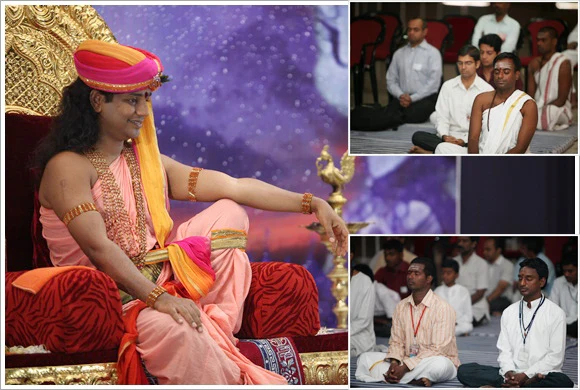
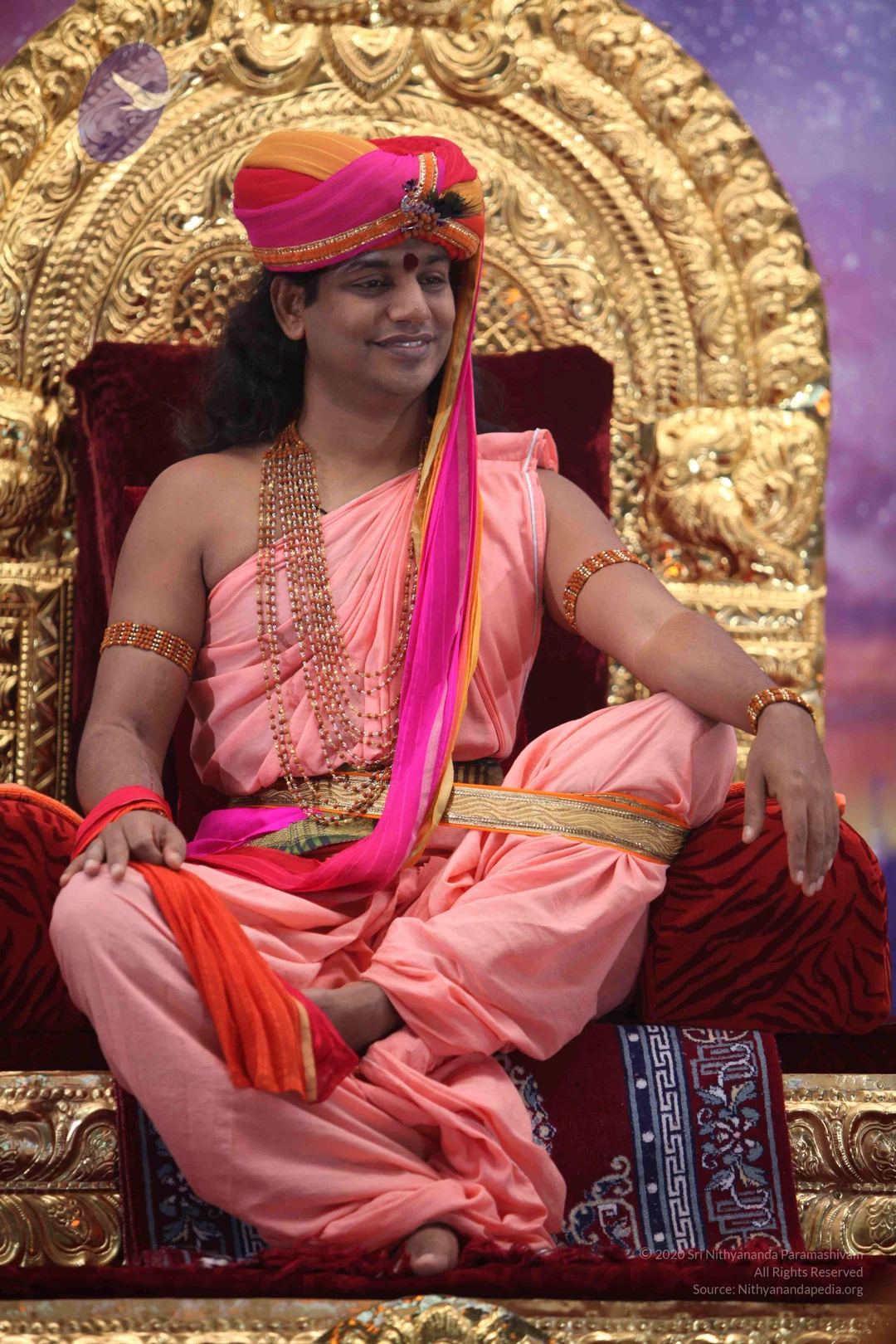
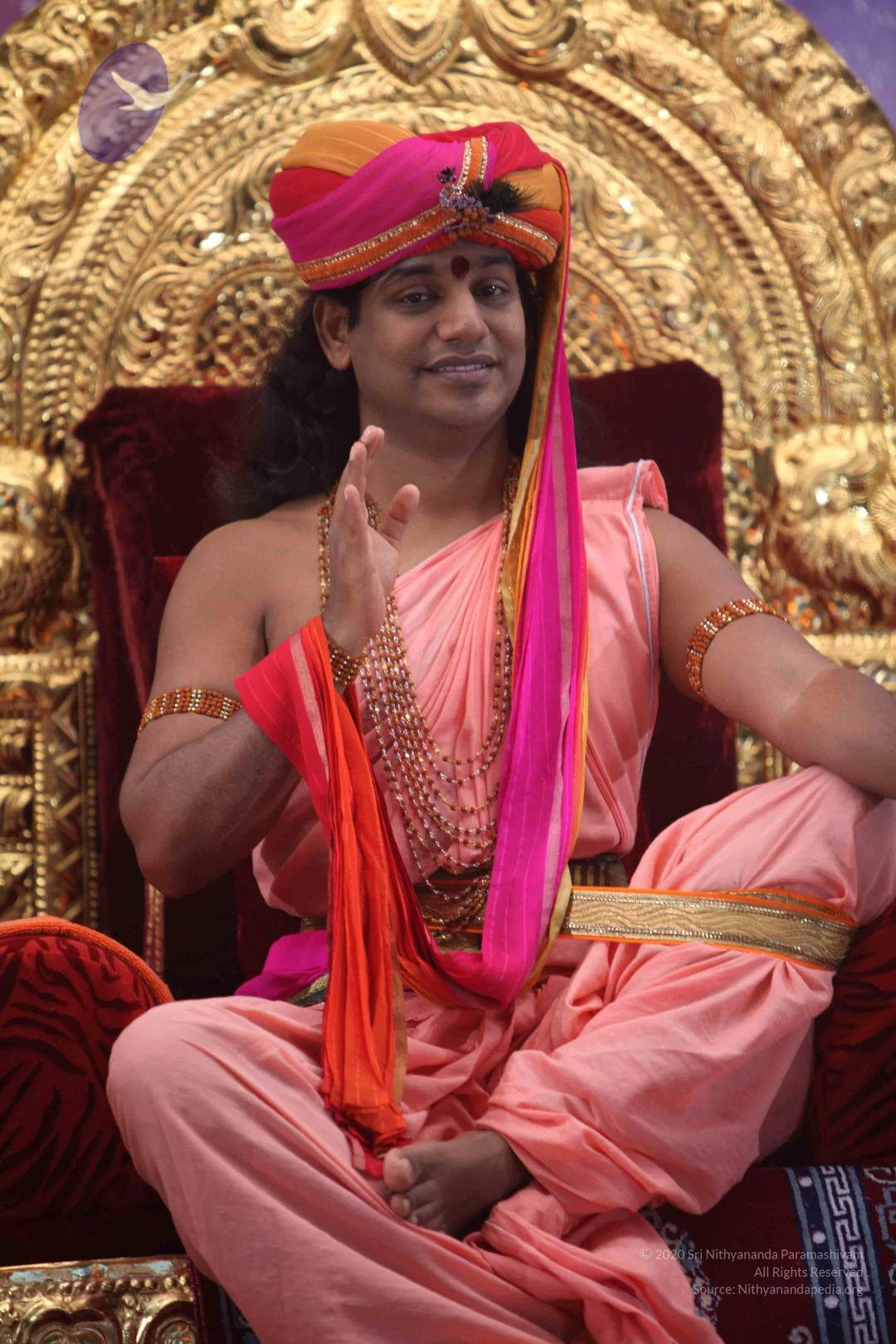
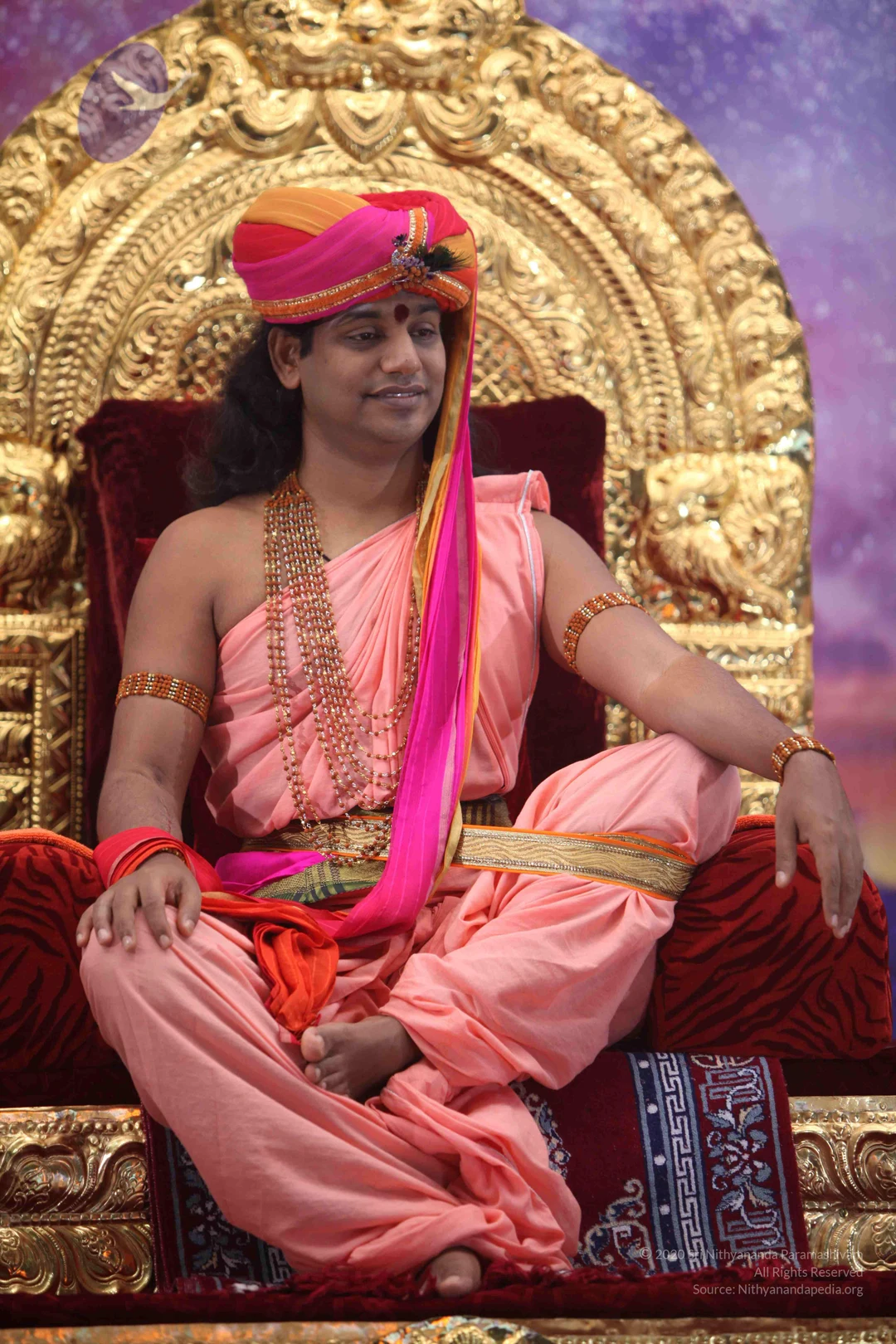
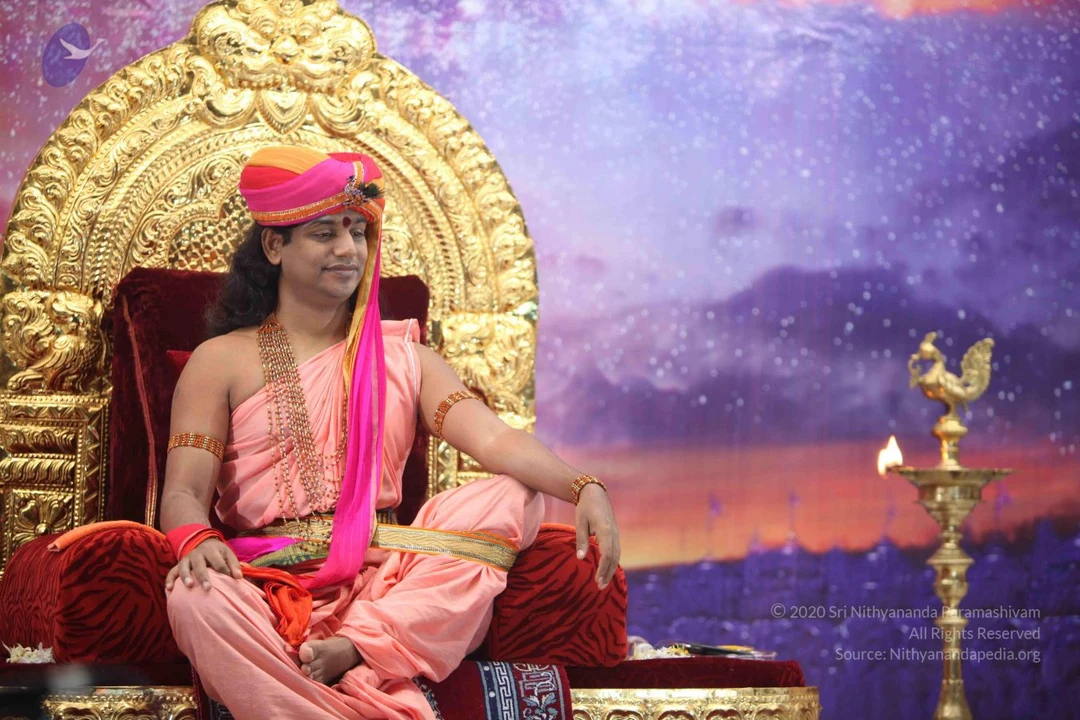
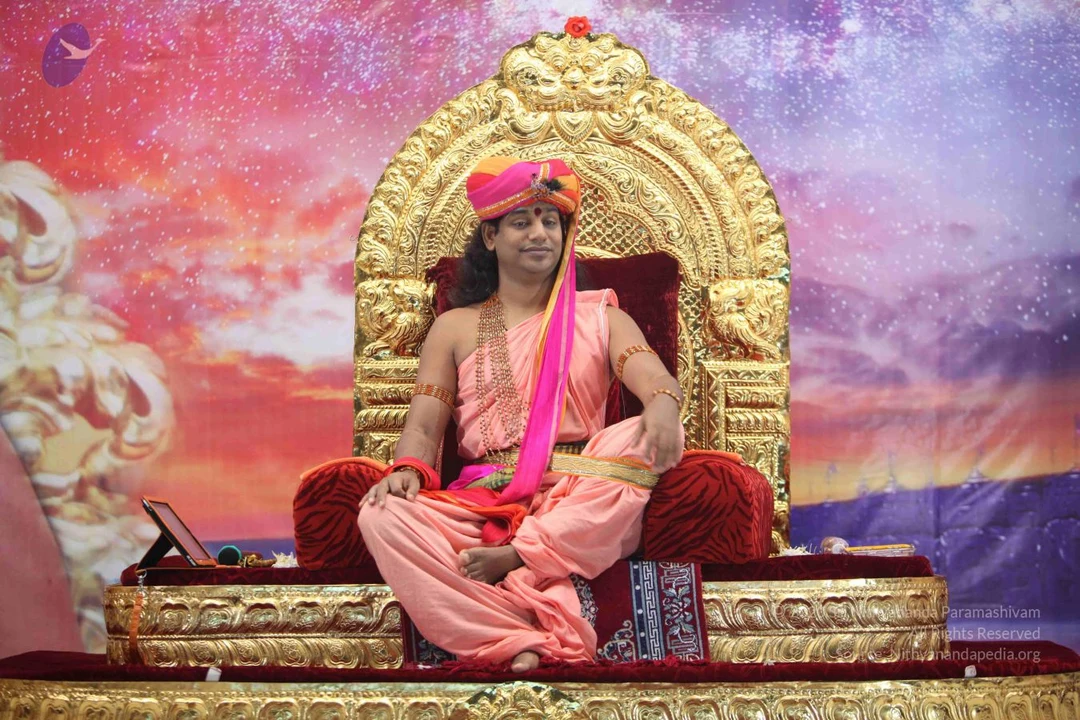
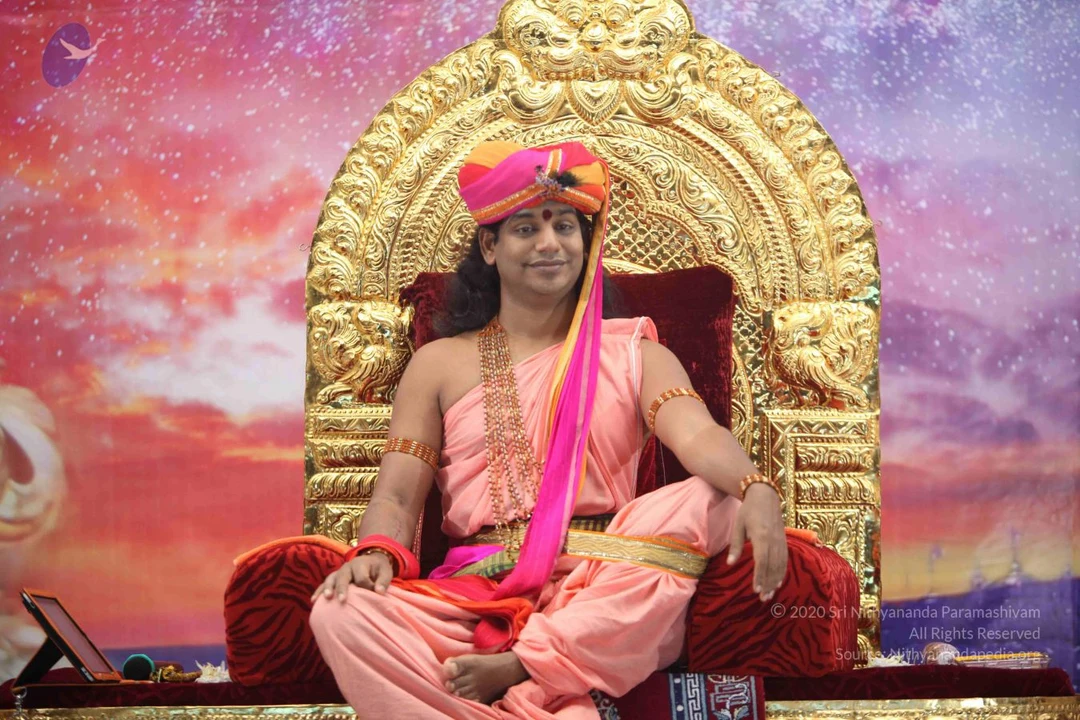
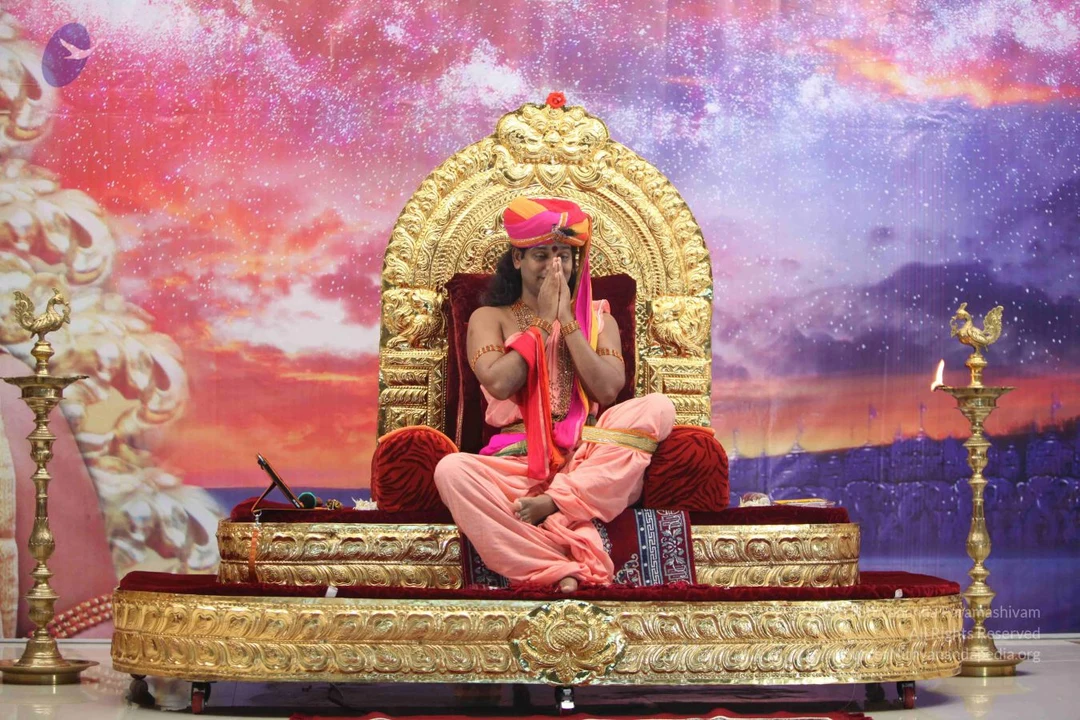
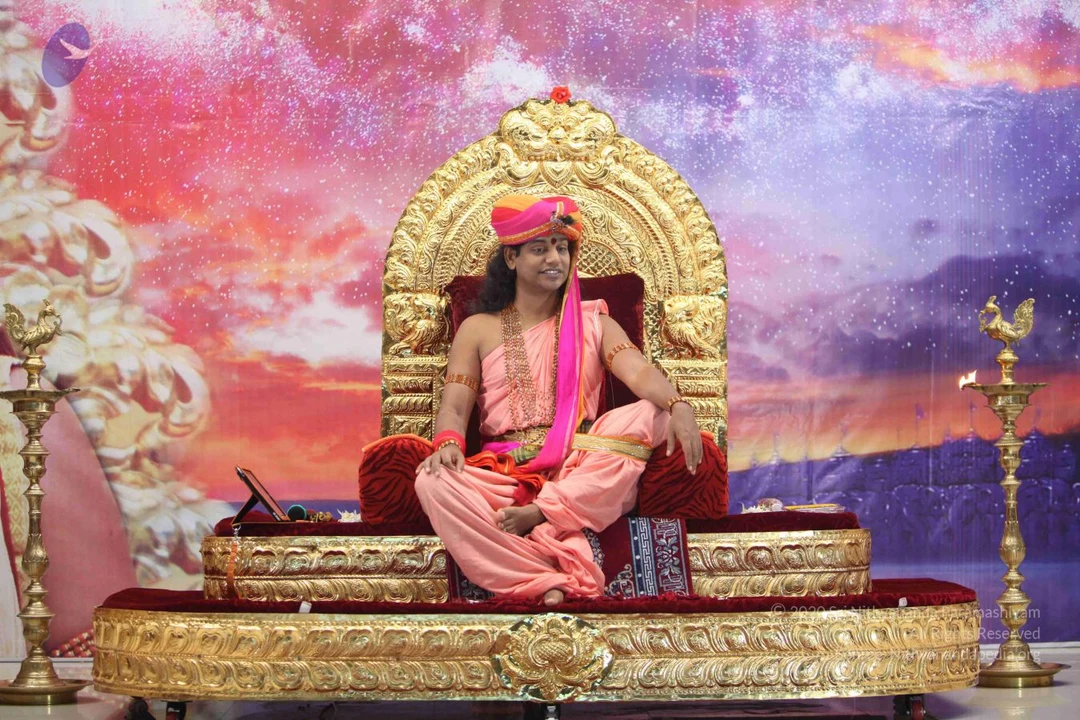
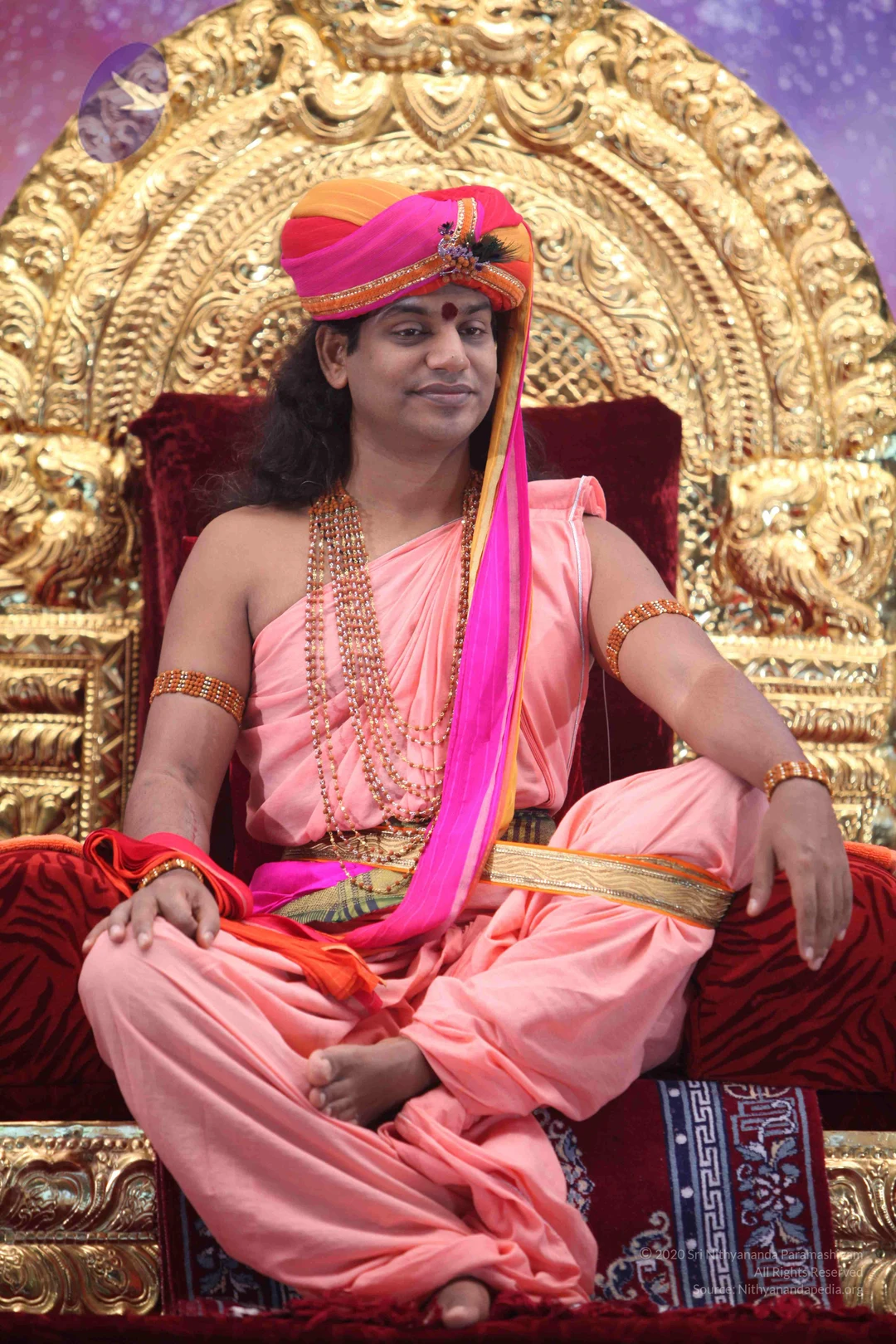
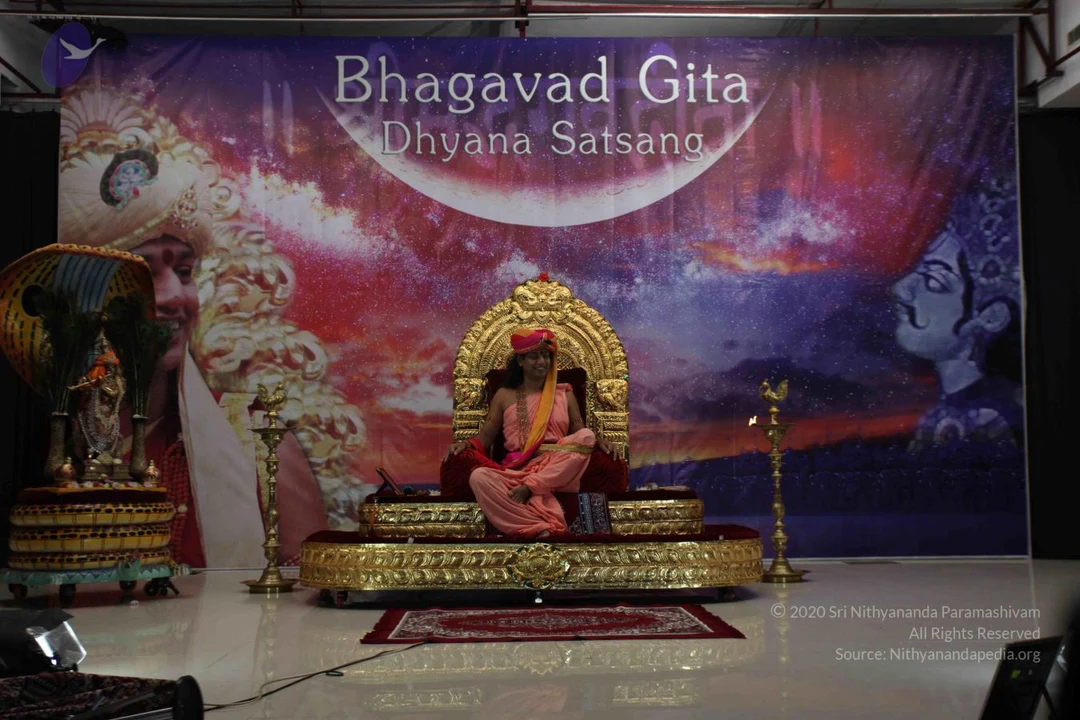
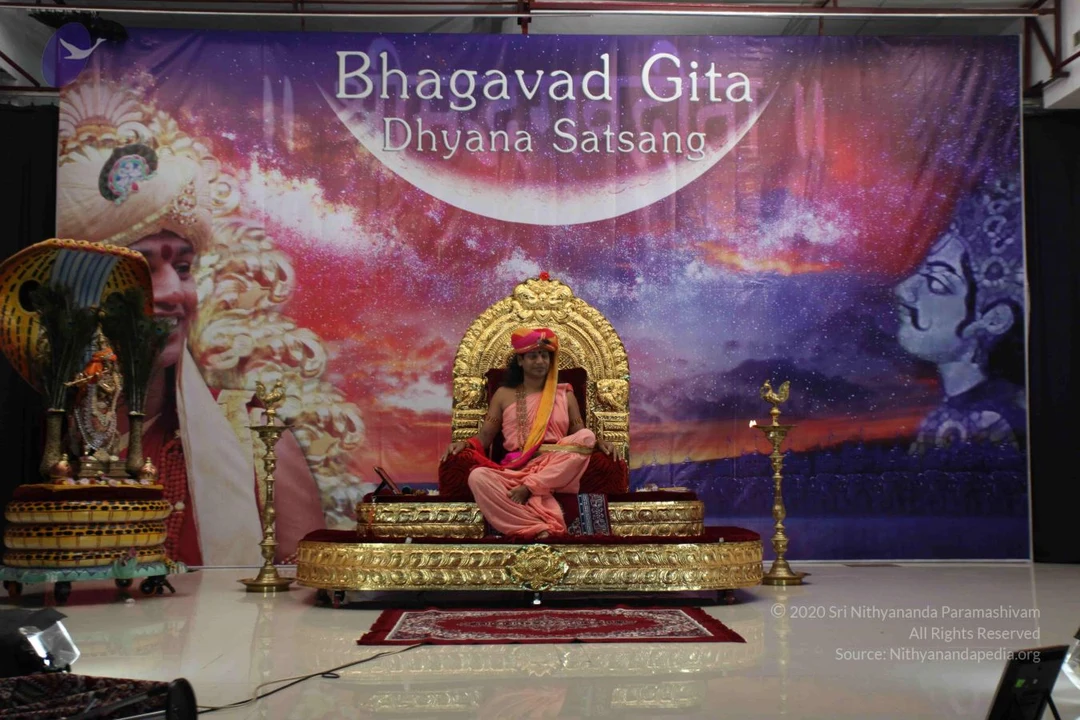
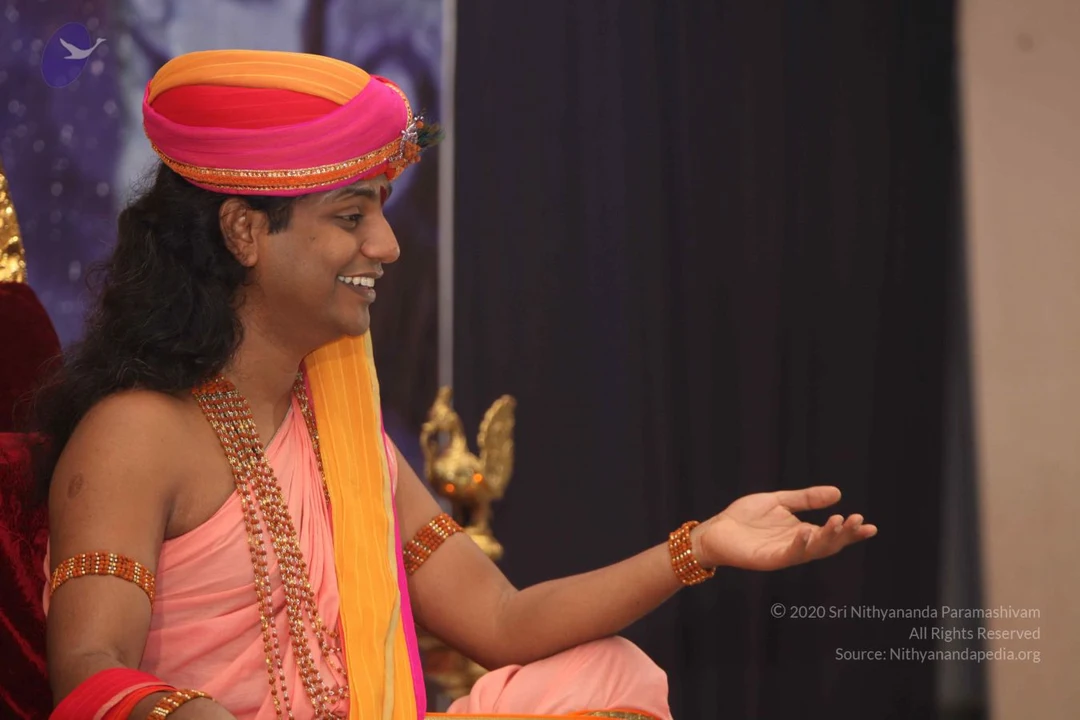
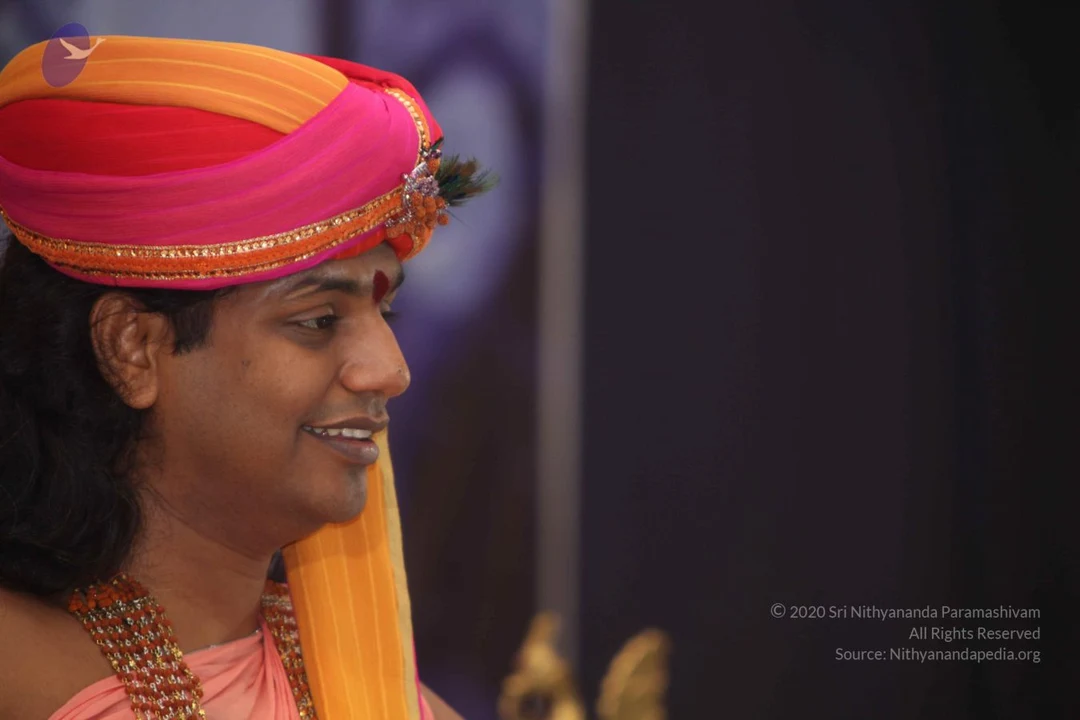
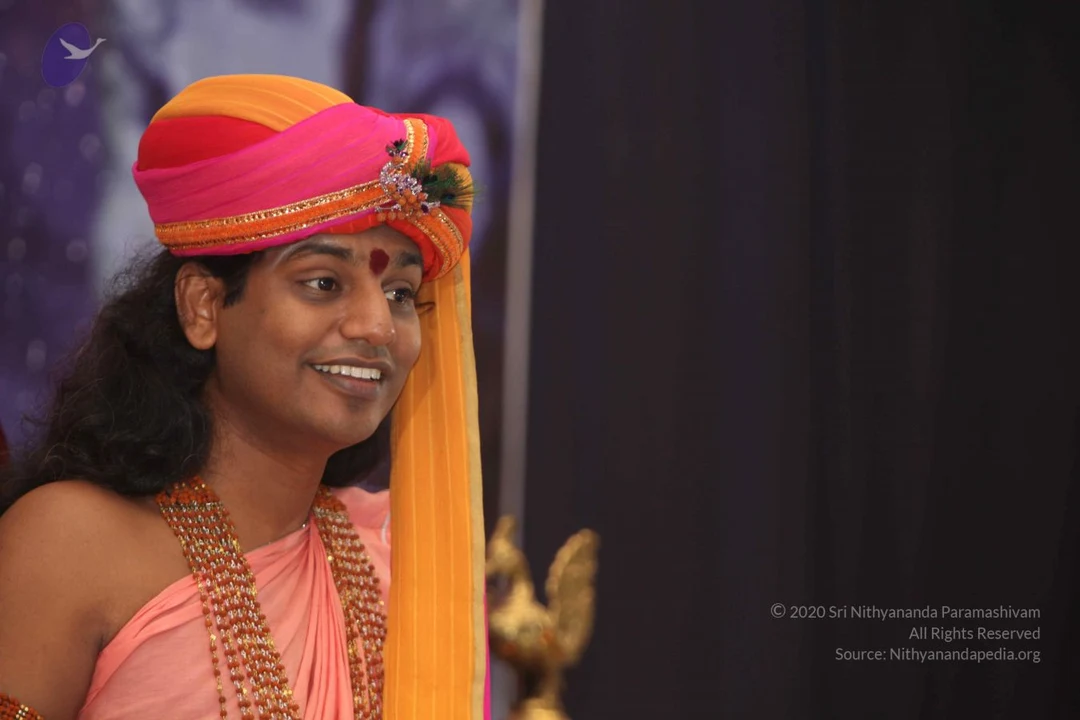
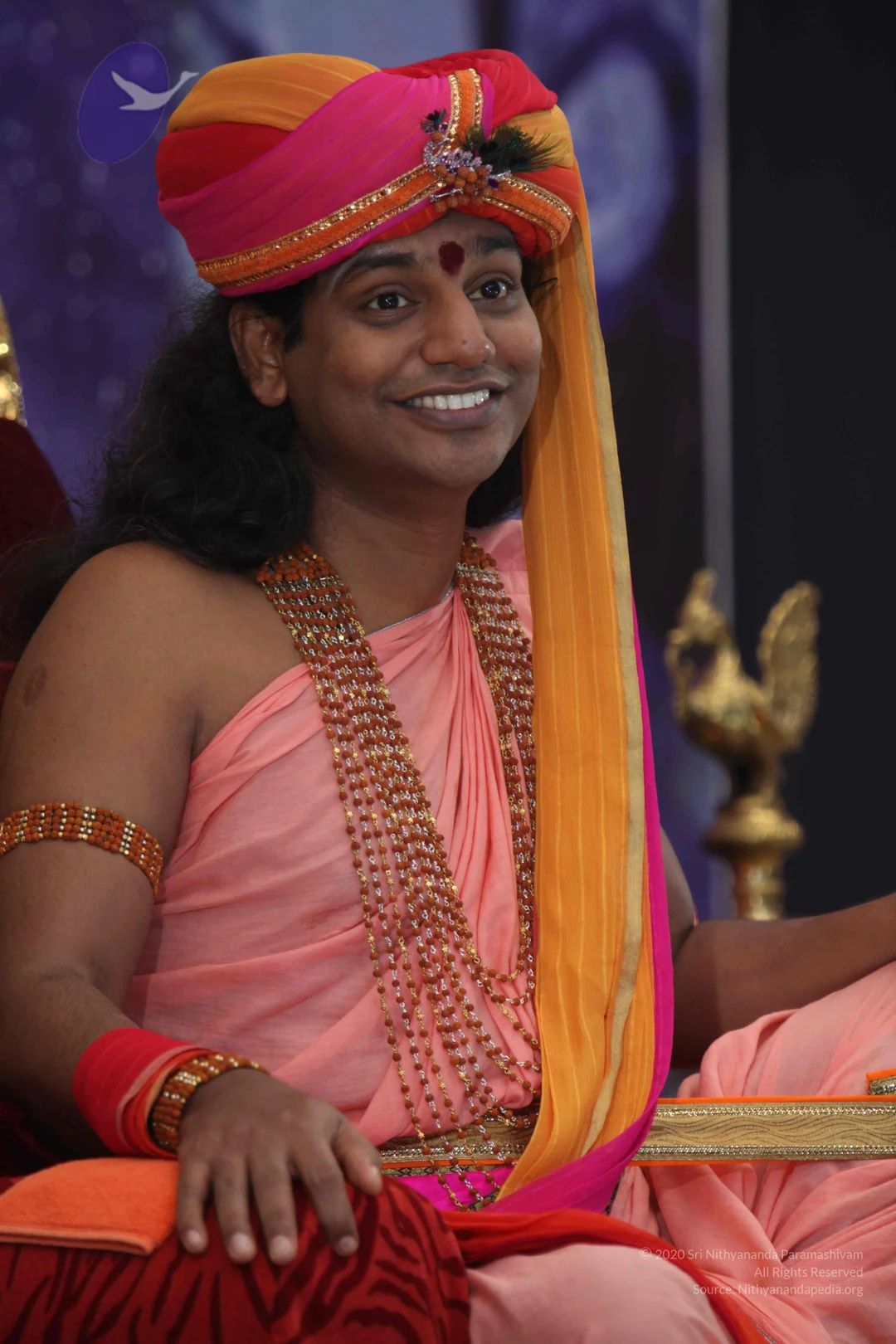
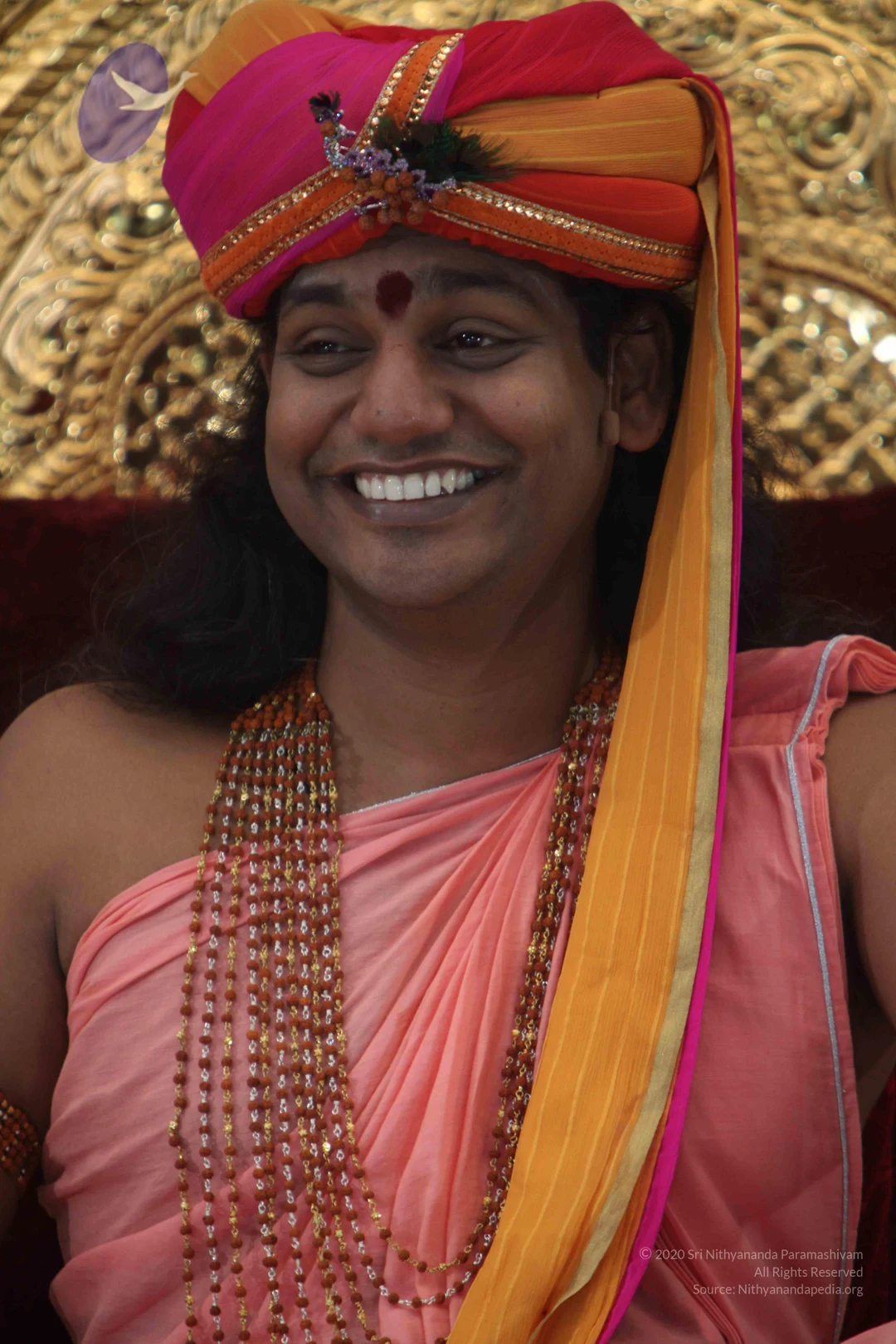
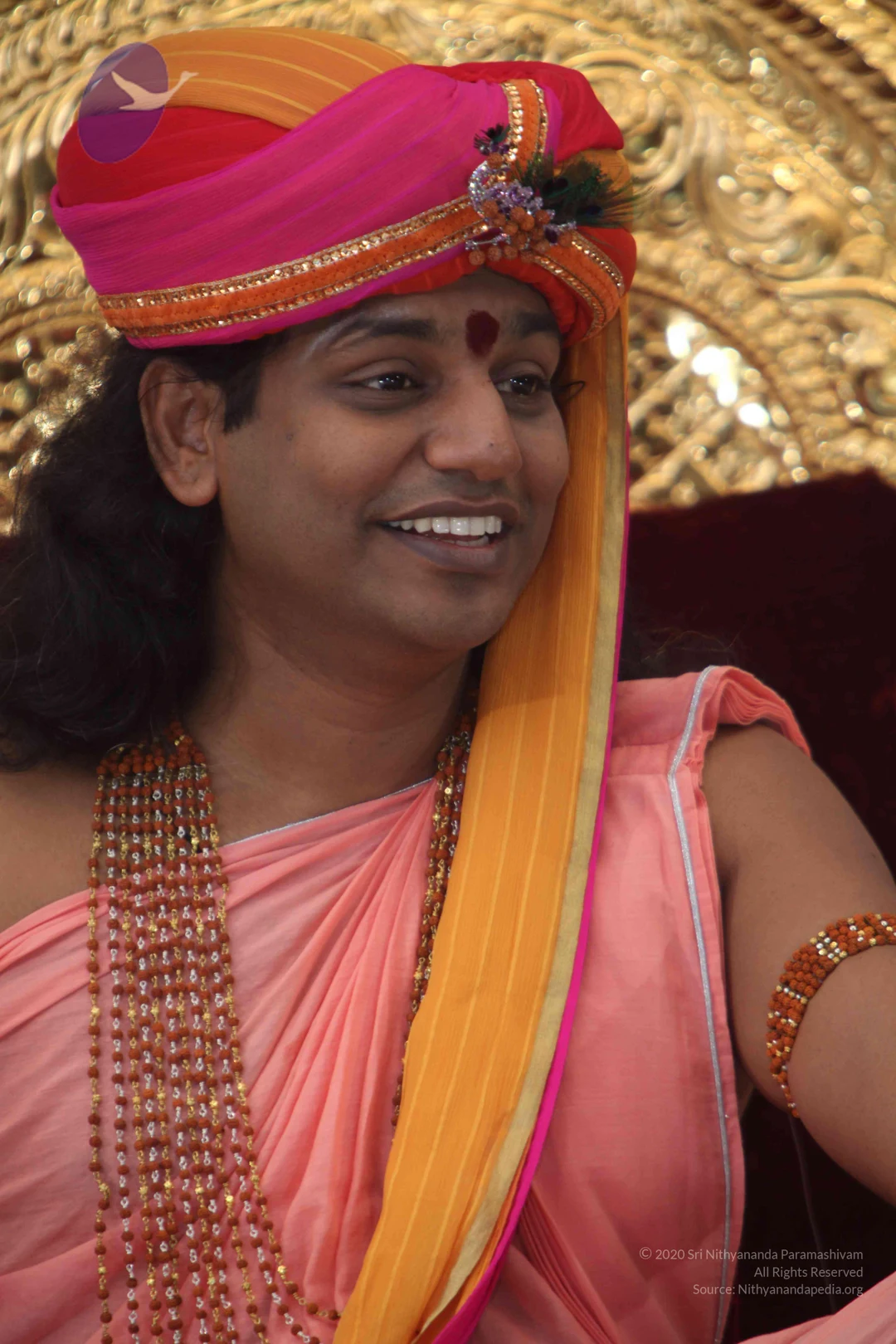
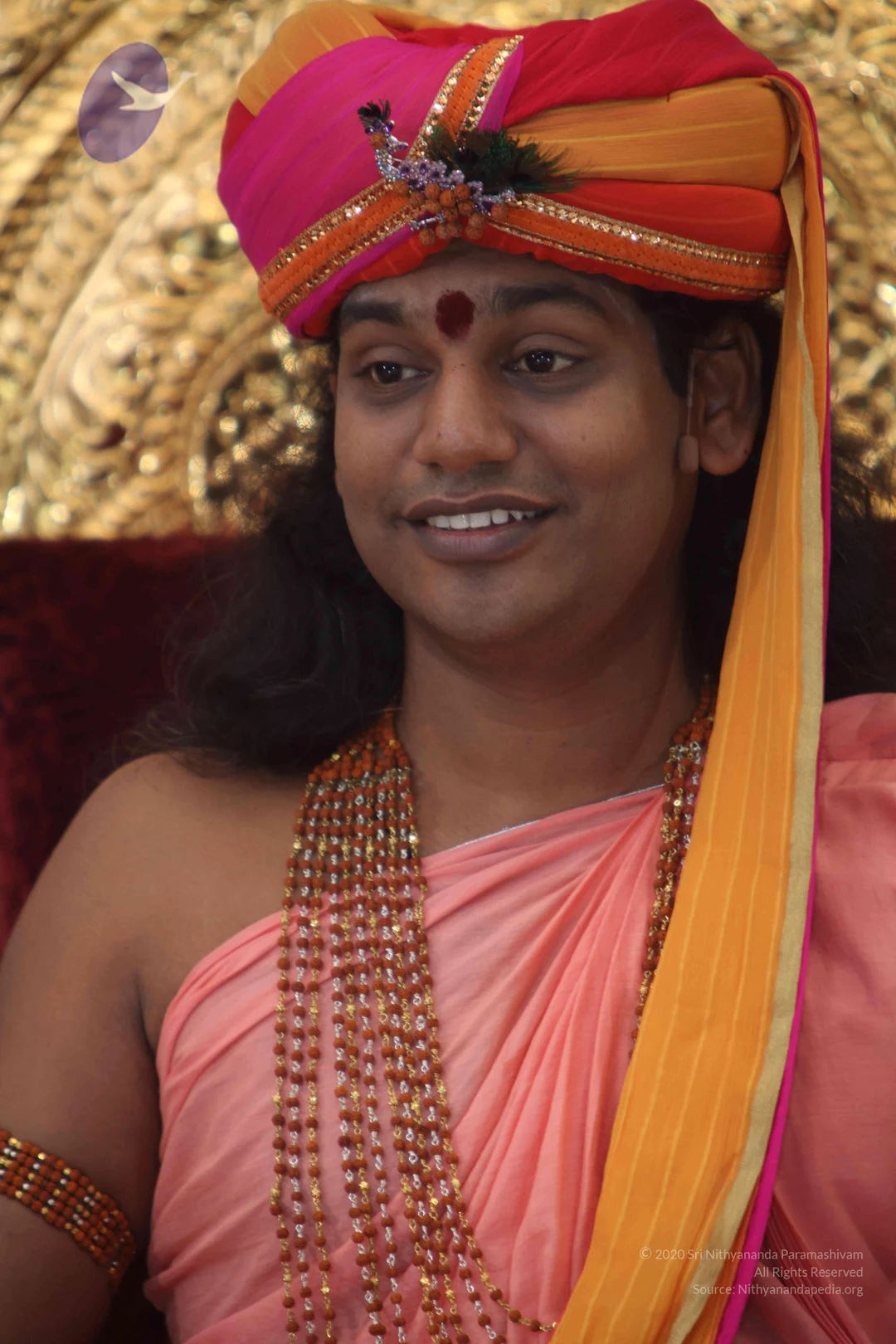
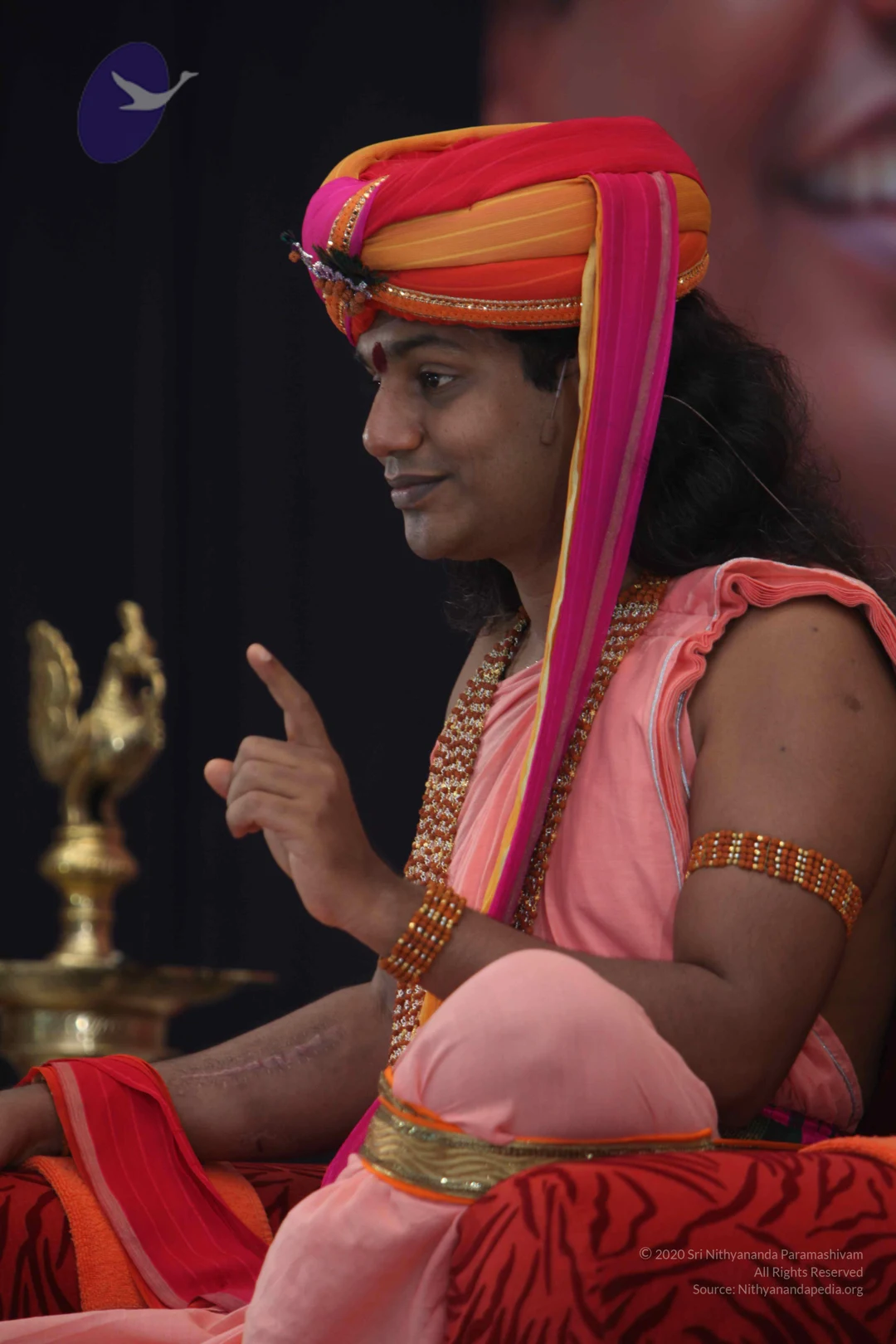
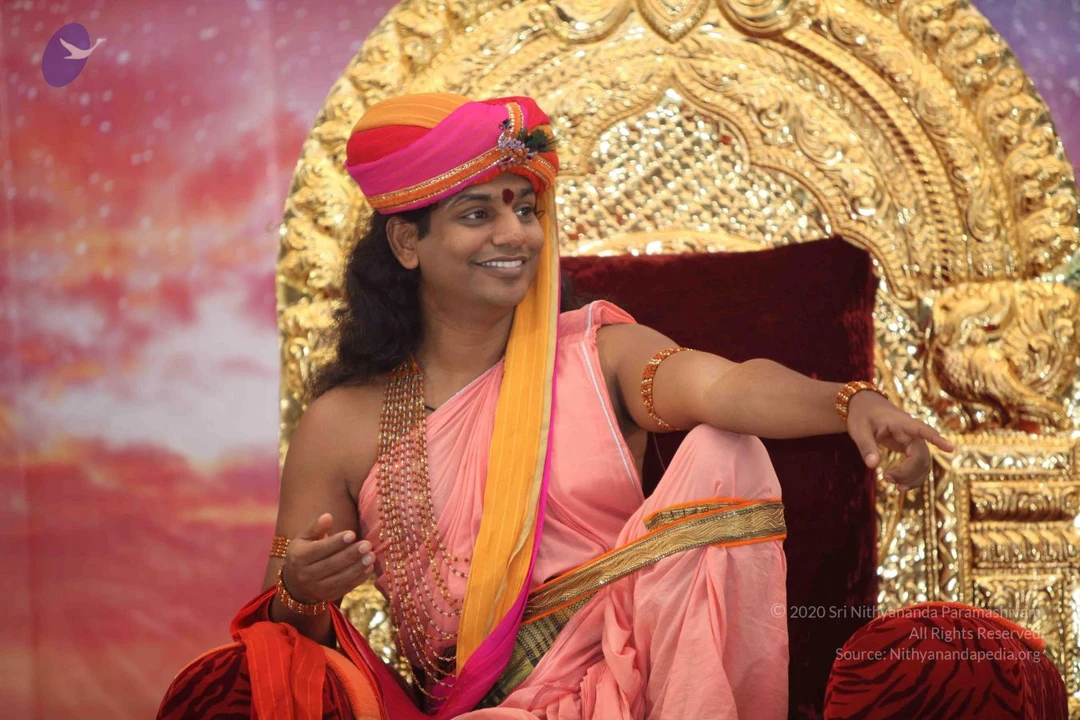
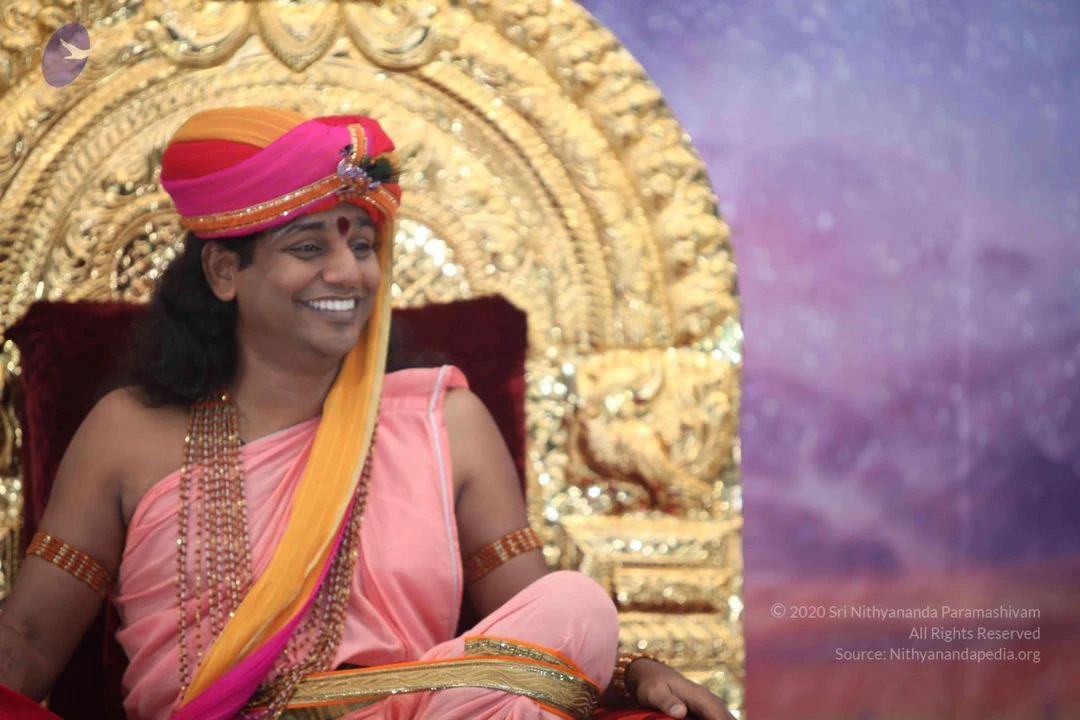
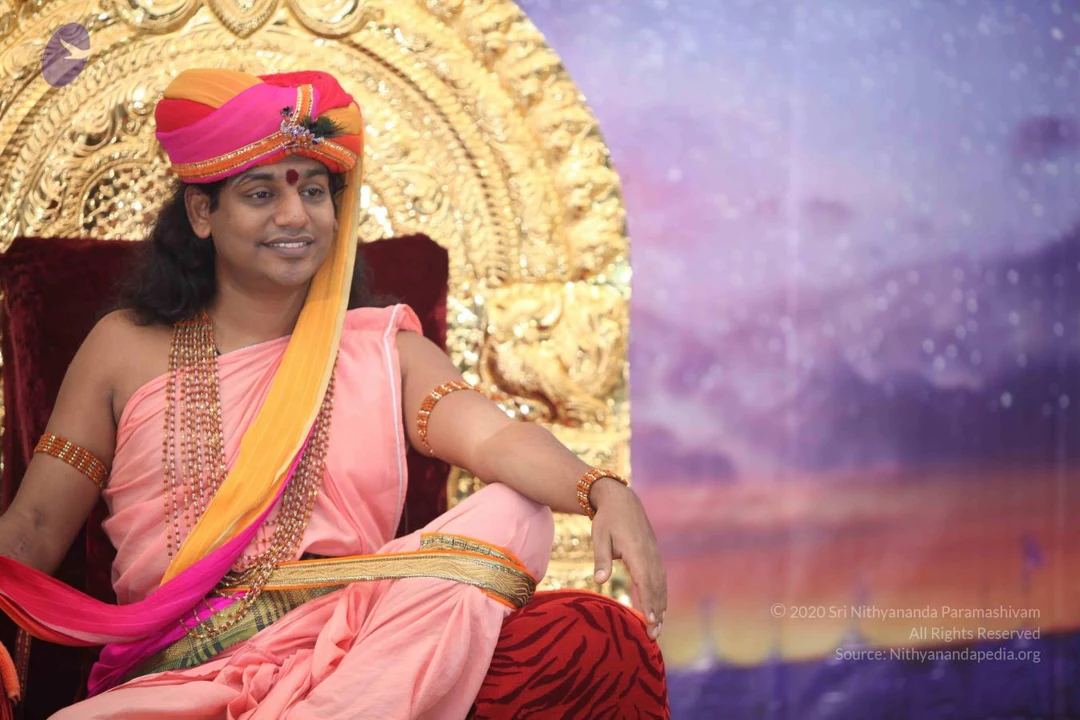
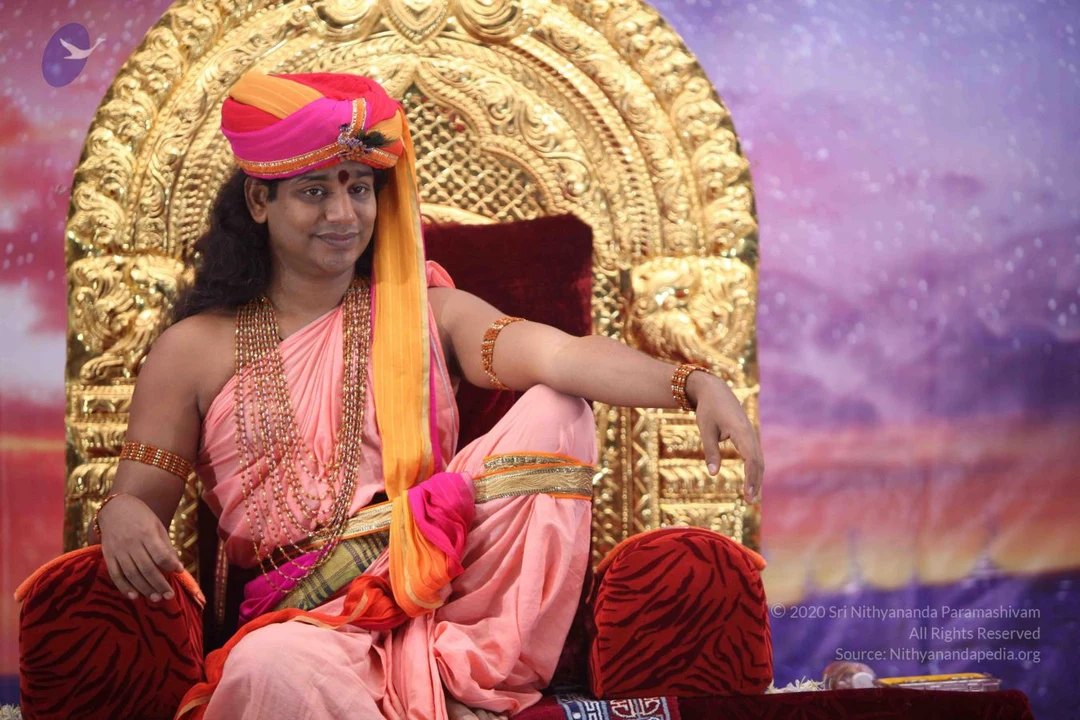
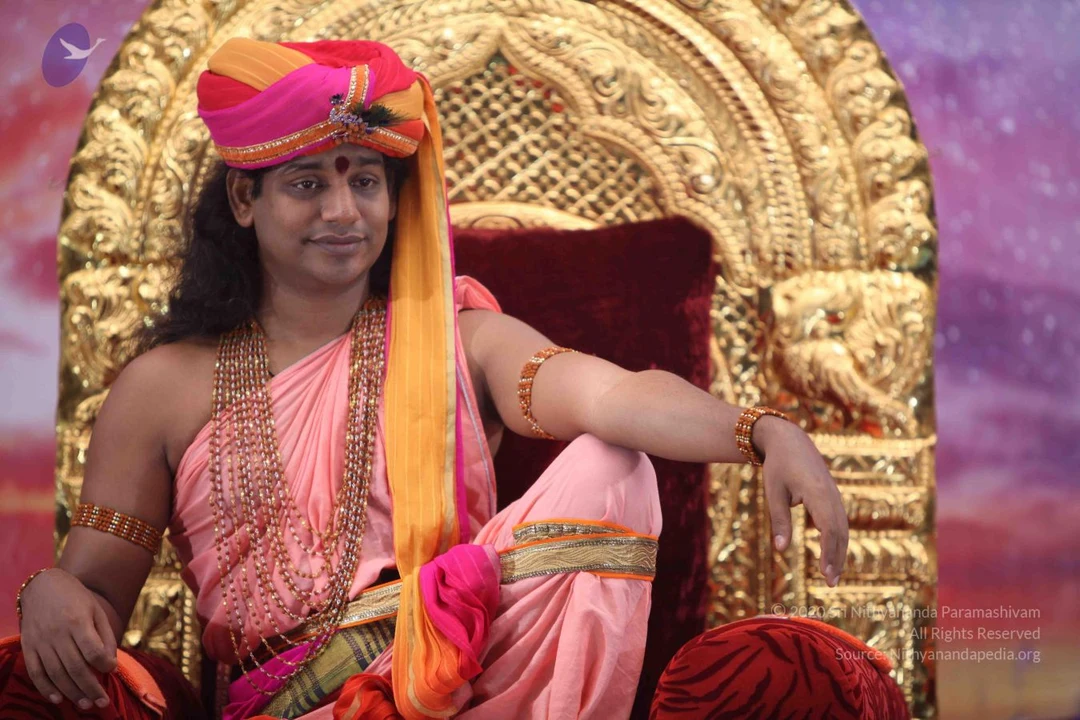
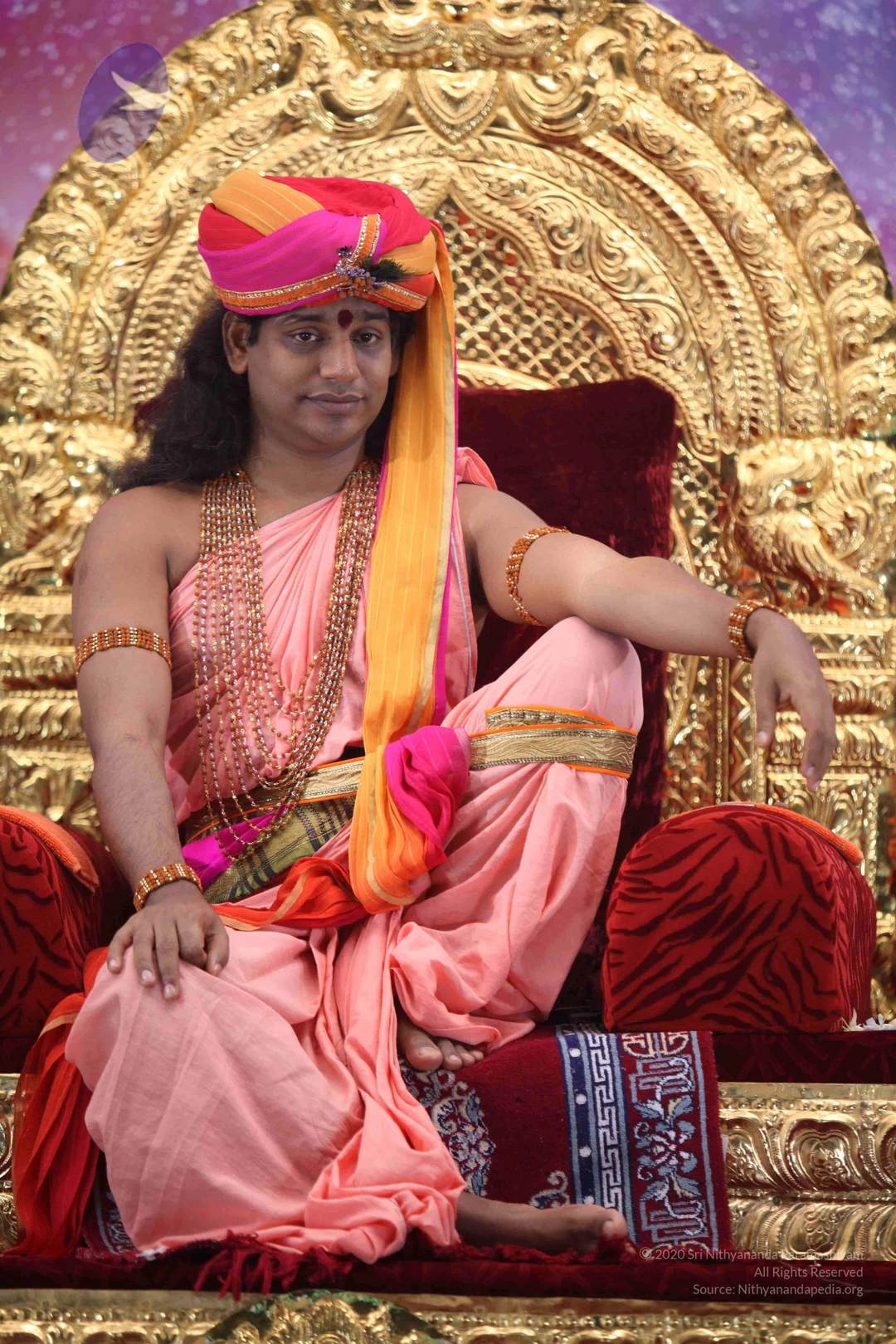
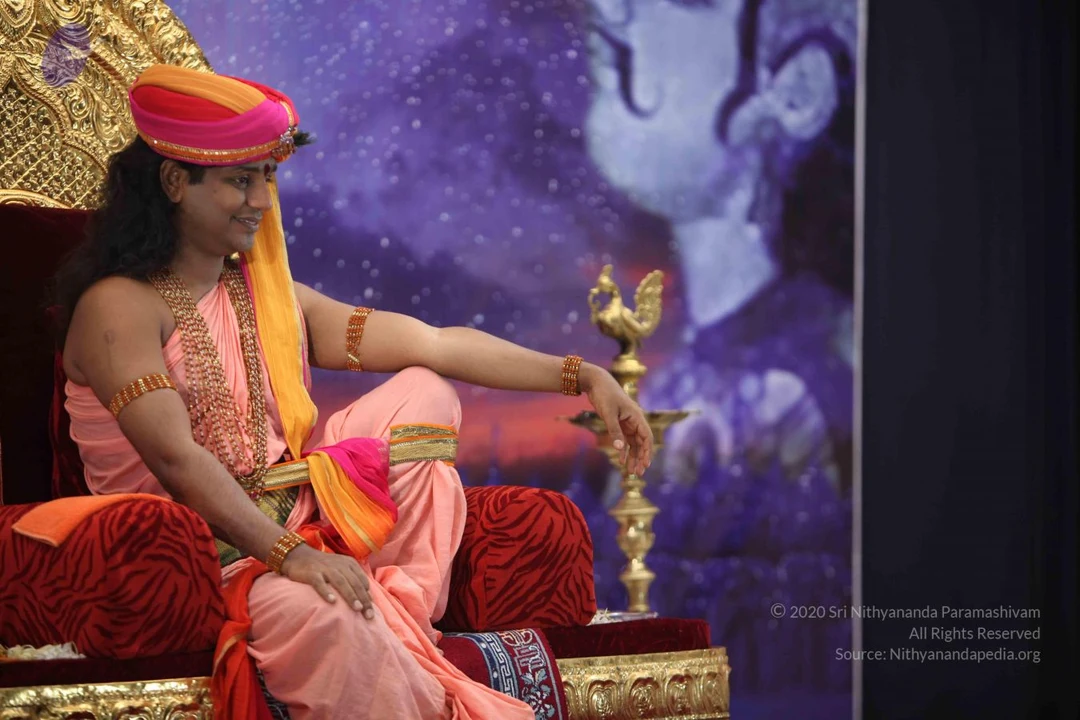
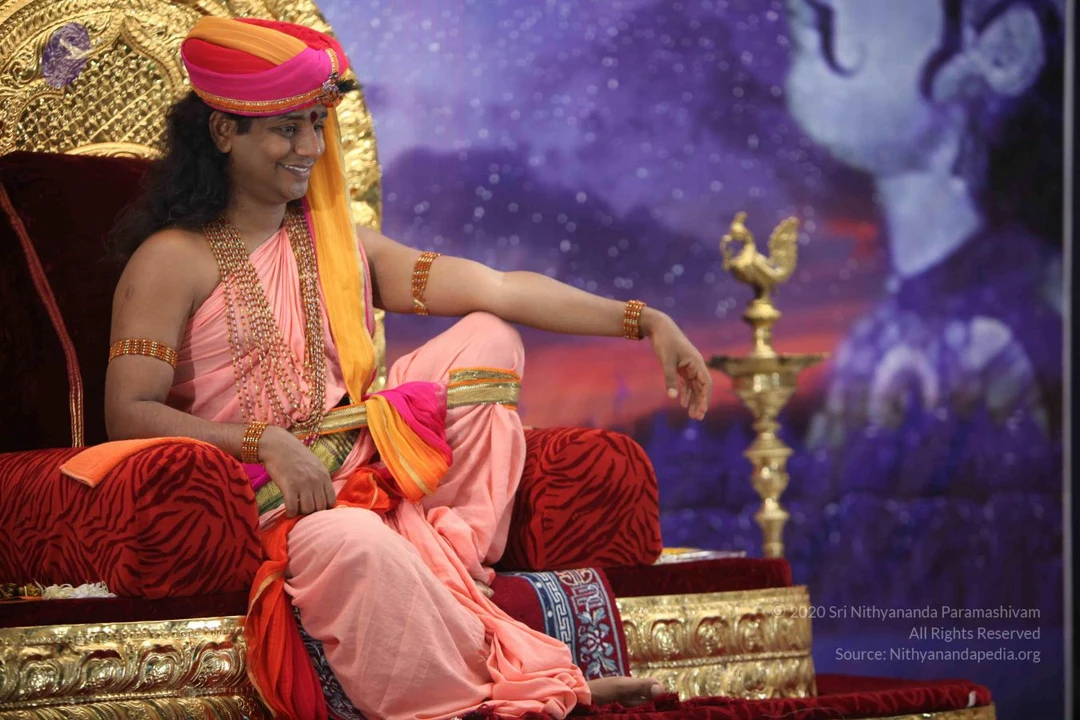
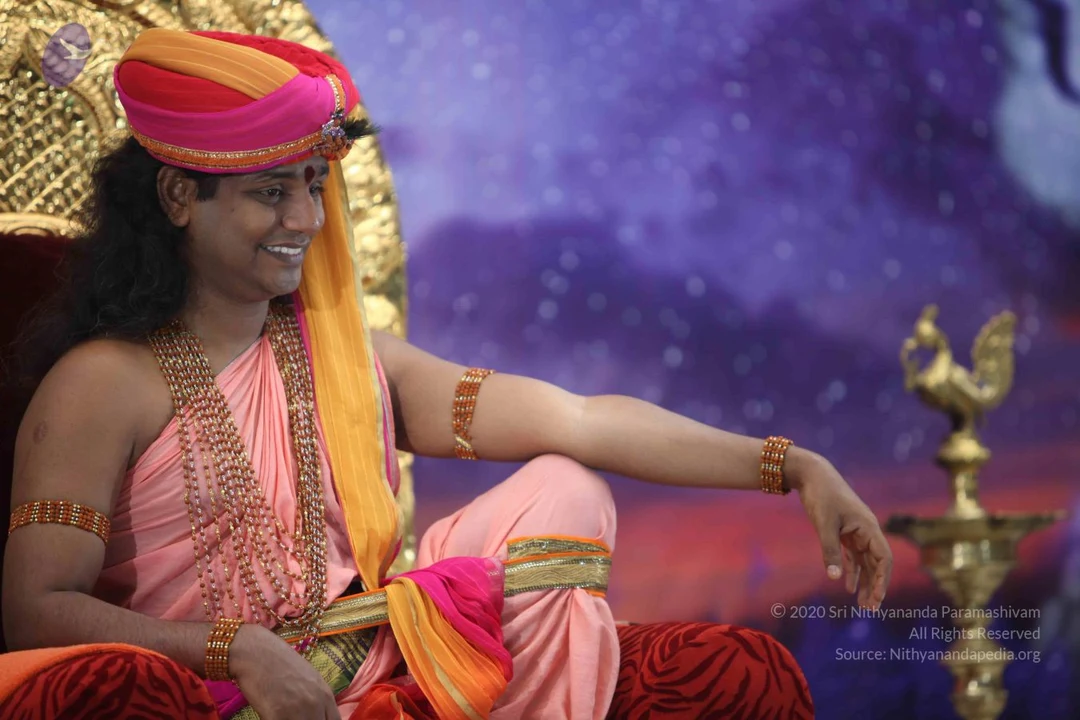
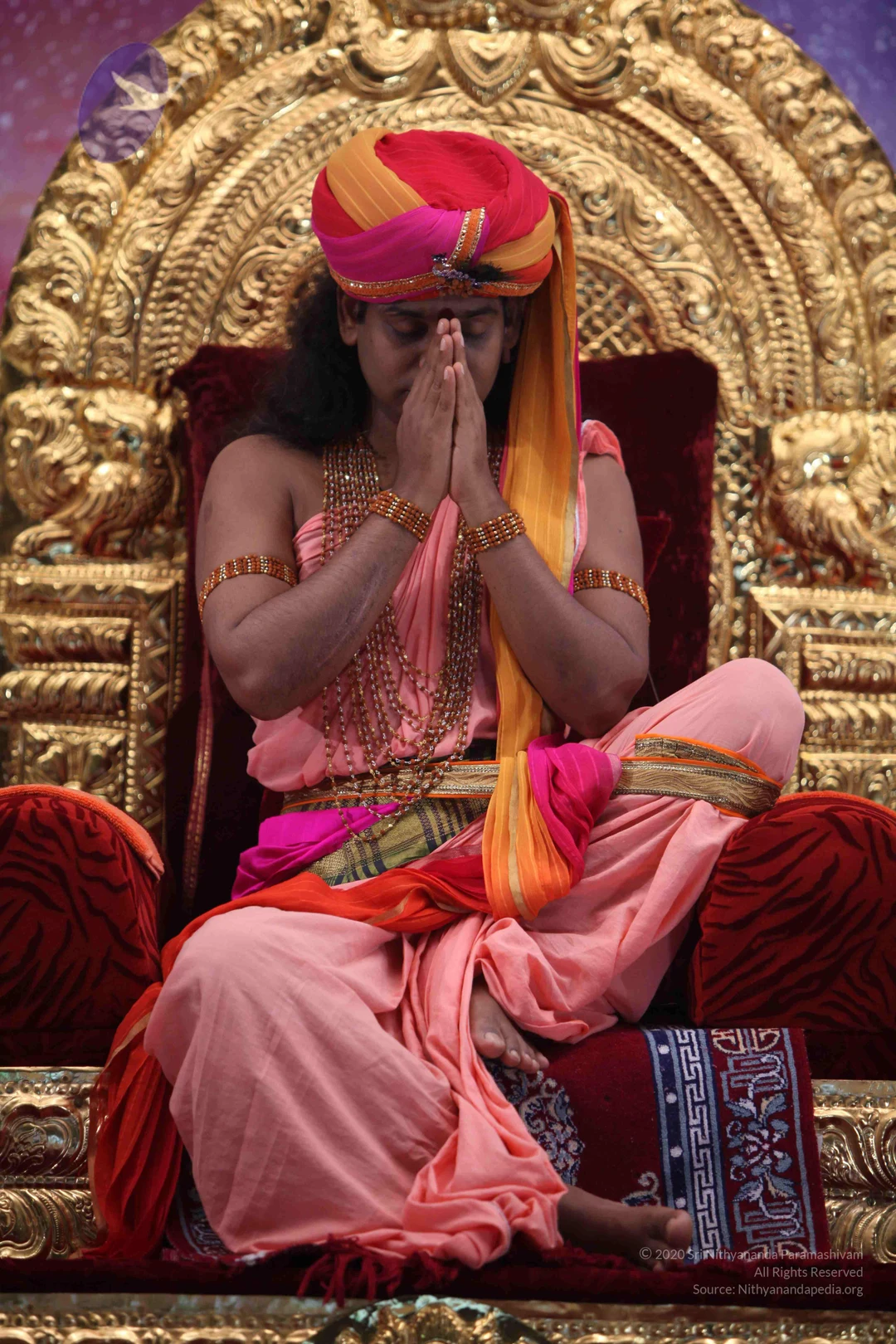
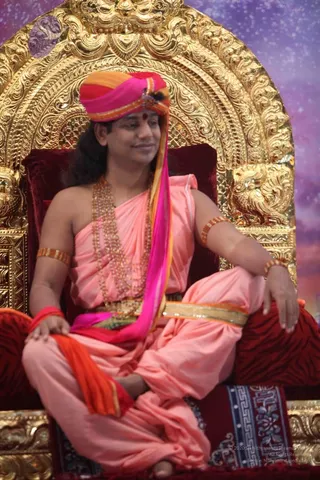
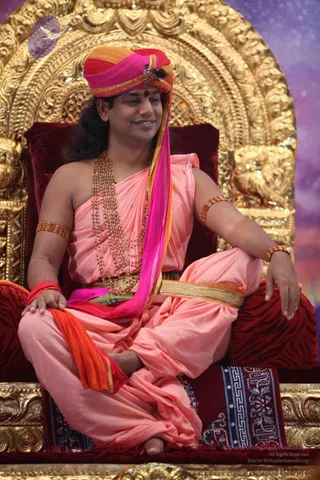
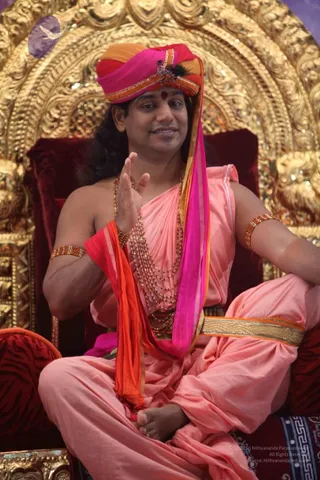
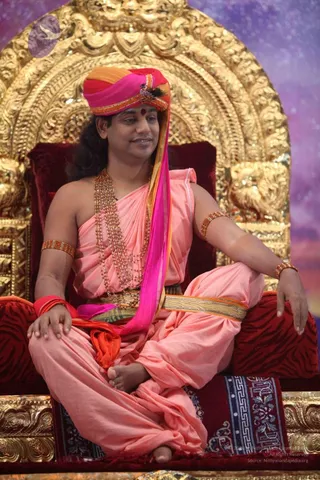
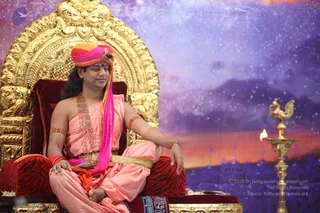
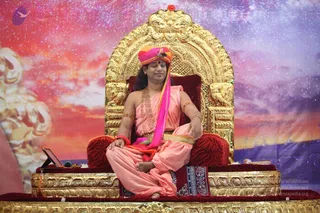
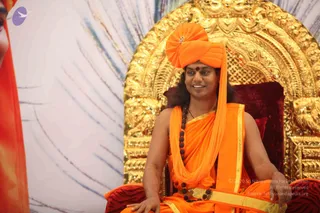
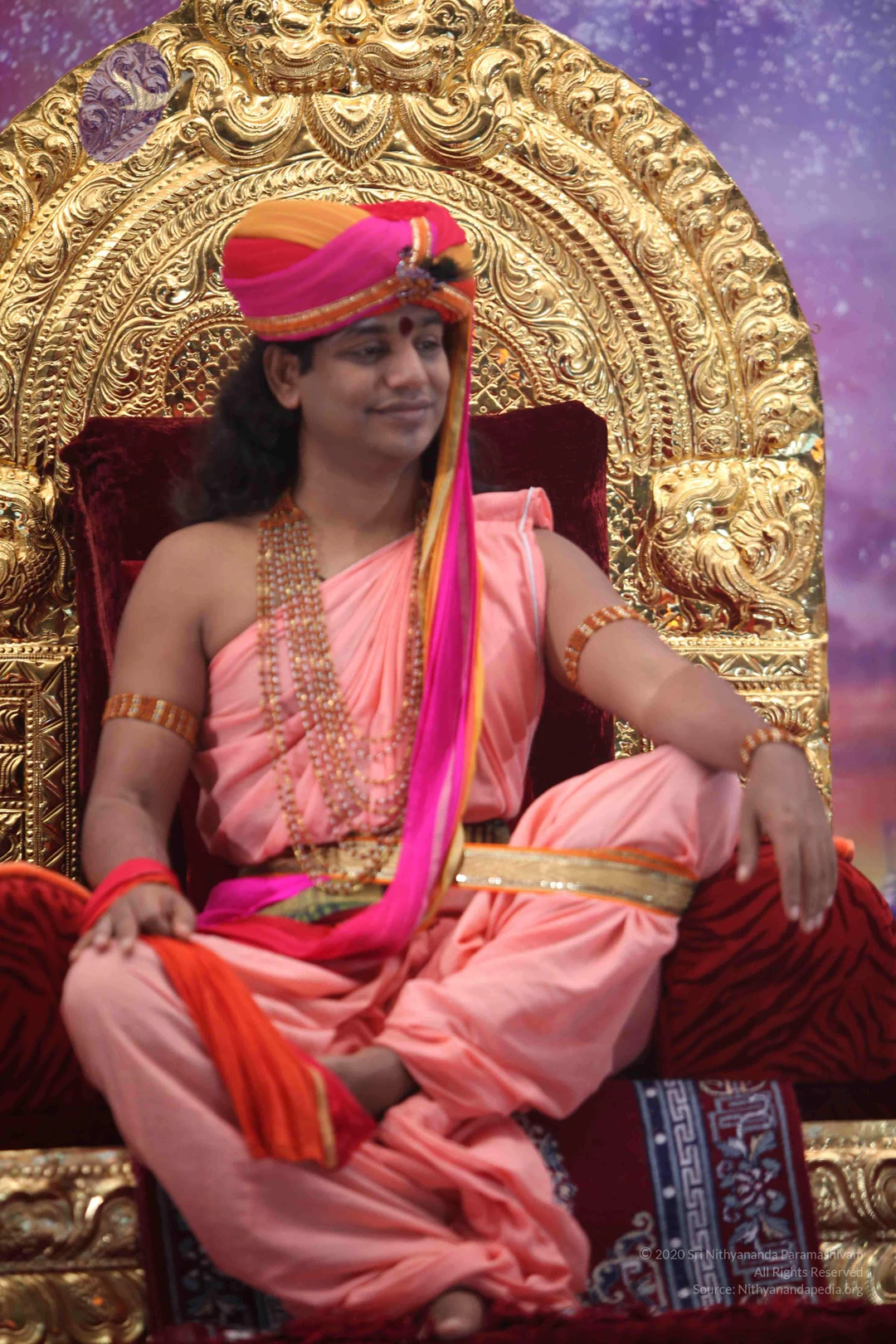
A man seated cross-legged on an ornate gilded throne with a carved arched back and red velvet cushions. He wears a pink and orange layered turban with a red tilak on his forehead, a pink-peach draped garment over the shoulders, multiple strands of beaded necklaces, a gold-edged orange waist sash, and beaded bangles on his wrists. A pink and orange shawl hangs over one shoulder. The background is a purple starry backdrop. Probable Swamiji is seated on the throne in a ceremonial sannyasi-style outfit with long hair, rudraksha-style beaded malas and saffron-pink clothing, giving a discourse-setting appearance.A man seated cross-legged on an ornate gold throne with a red velvet cushion, smiling and looking to one side. He wears a pink and orange turban with a red bindi, a pink draped robe with an orange-and-gold waist sash, layered beaded necklaces and beaded armbands, and a pink and magenta shawl falling over his shoulder. The gold arched backdrop carries carved lion motifs and a starry purple background. Swamiji (probable) is present in the throne scene, with long hair and ornate saffron-pink clothing and beaded malas as the cues.A seated man in a pink and orange turban with a red bindi sits on an ornate gilded throne with red velvet cushions. He wears a salmon-pink robe with an orange and pink shawl draped over one shoulder, multiple strands of beaded mala necklaces, and beaded armlets. He raises one hand in a gesture while smiling, with one leg crossed over the other. Behind him is a richly carved golden arch. The scene suggests a satsang seating. a person appears to be the seated figure, identified by the turban, multiple malas and ceremonial throne setting.A man seated cross-legged on an ornate gilded throne with a red velvet cushion, wearing a pink and orange turban with a jewelled brooch and peacock-feather accent, a pink draped garment, layered beaded necklaces, beaded armbands and bracelets, a gold-and-orange waist sash, and a small red bindi. He smiles while gazing to the side, one hand resting on the armrest. Behind him a gold arch carved with lion figures against a purple starry backdrop. Appearance-based candidate for Swamiji (probable): long swept-back hair, ornate turban, rudraksha-style beaded malas and ceremonial adornments on a throne setting, presented as the seated teacher.A man seated cross-legged on an ornate gold throne with carved red cushions, wearing a pink and orange turban, a pink draped garment, layered beaded necklaces, gold armbands and red wrist bands. He has a red dot on his forehead and rests one hand on the armrest. Beside him stands a brass oil lamp with a lit flame and a rooster-shaped finial, in front of a purple and orange backdrop with a painted sunset and mountains. A satsang discourse setting. a person: long swept-back hair, pink and orange turban, ornate beaded necklaces and gold armbands on a throne, seated as the speaker.A seated man in a pink and orange turban and pink-saffron robes sits cross-legged on an ornate gold throne with red velvet cushions, a tablet on a side stand beside him. He wears layered beaded necklaces, gold armbands and red bangles, and a pink shawl drapes over his shoulder. Behind him a painted backdrop shows a pink-purple sky with clouds and stars. A red flower sits atop the throne's gold crest. The setting suggests a satsang discourse, with the speaker's throne centred on stage.
BGSatsang--Tamil

4 photosSource gallery
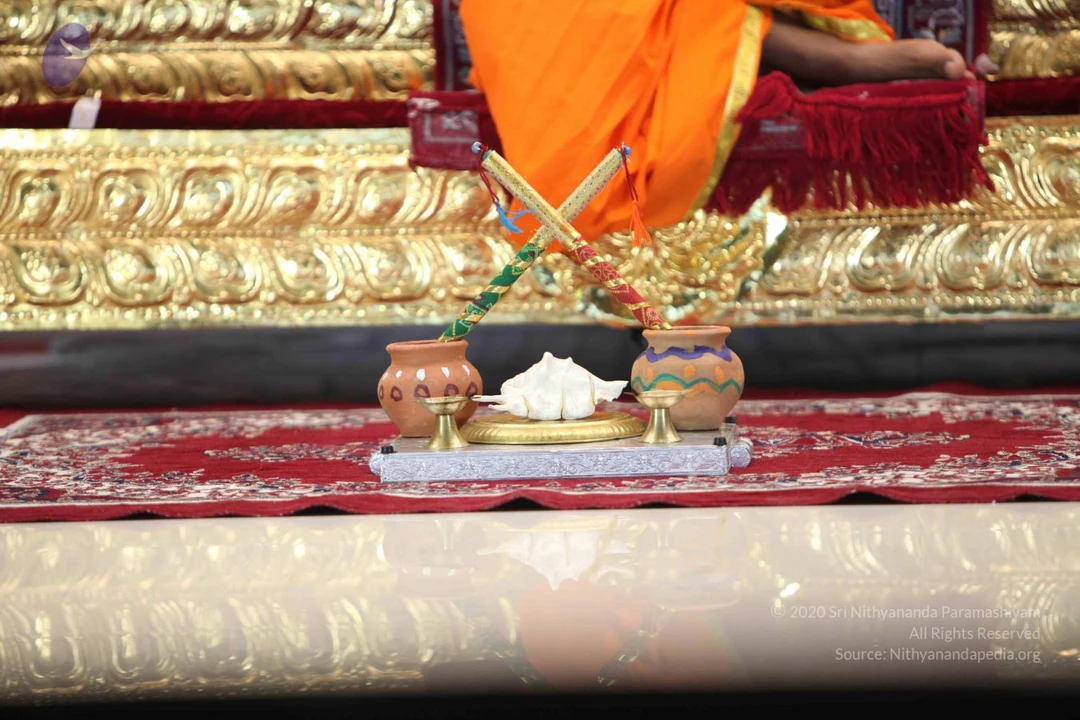
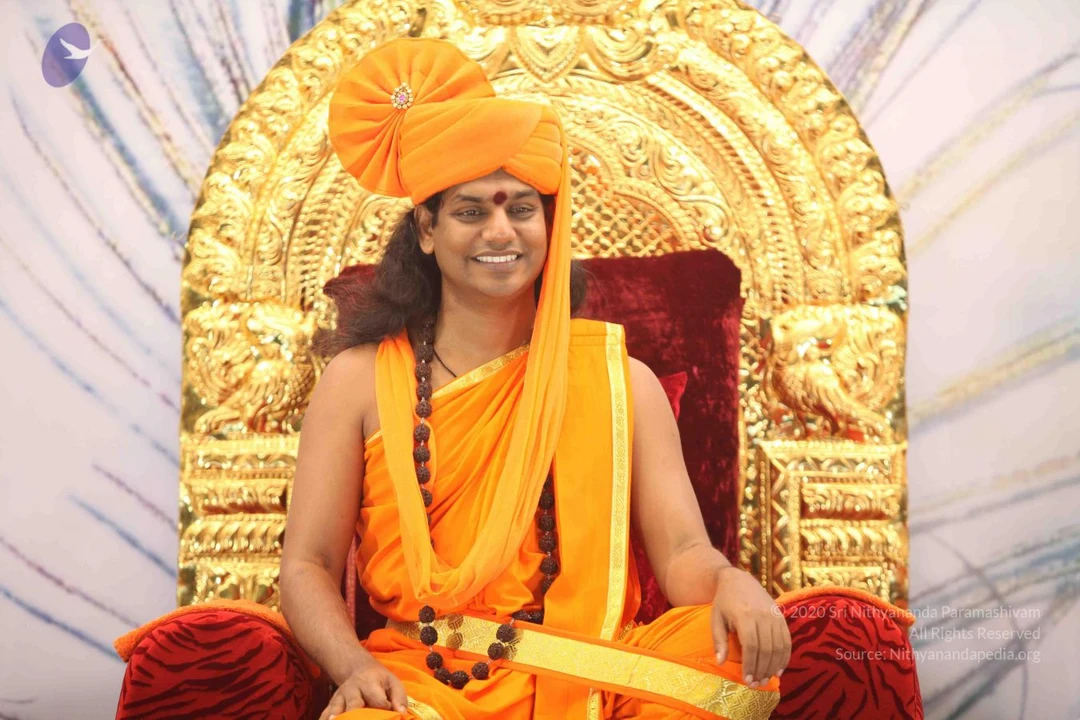
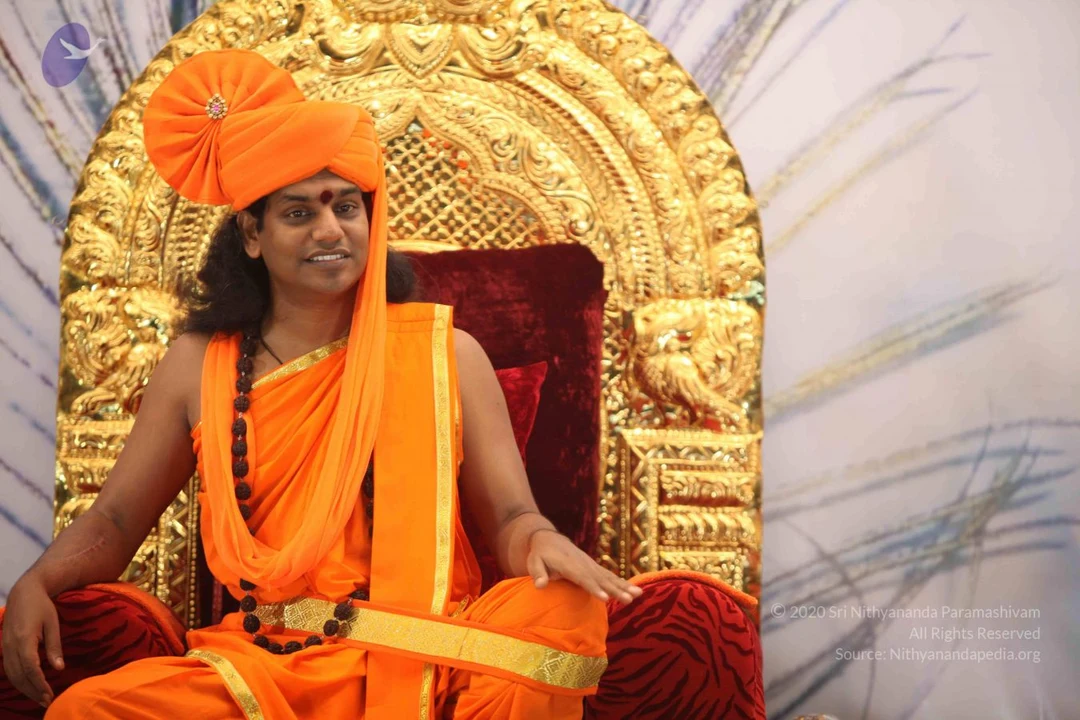
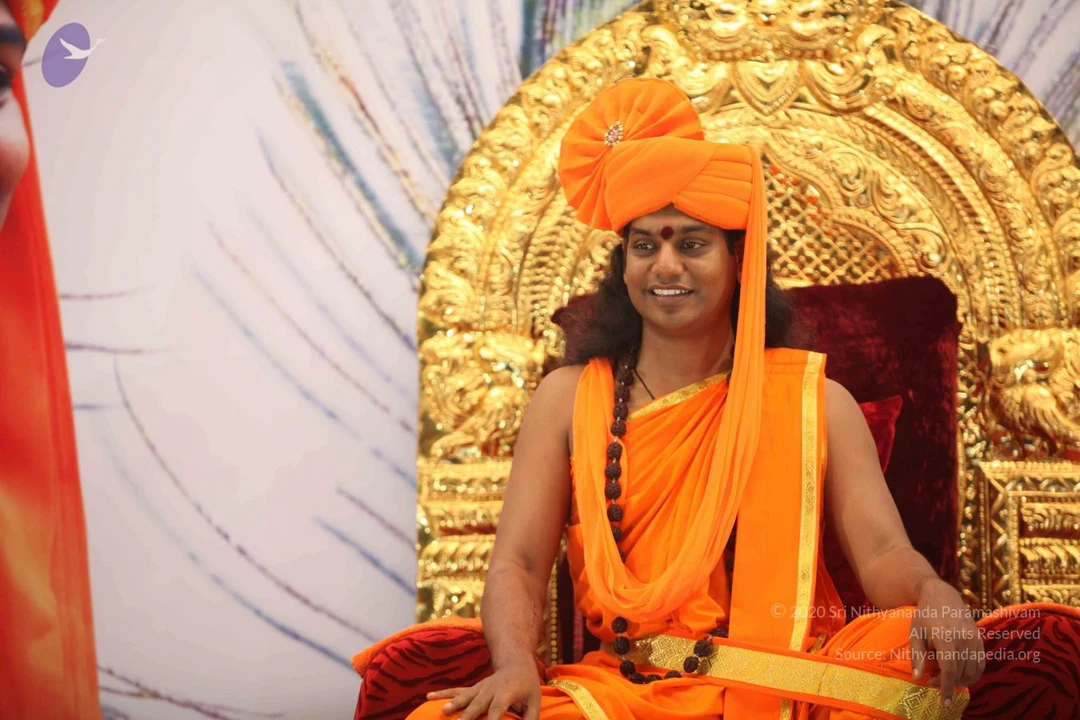
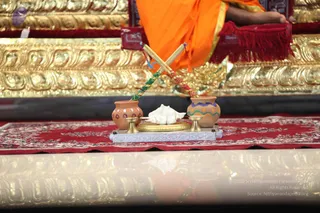
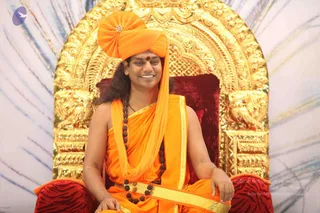
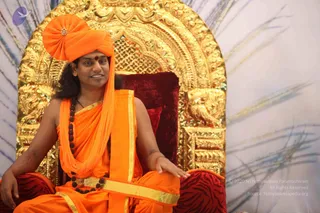
Close-up photograph of a ritual arrangement on a red carpeted dais in front of an ornate gold-leaf throne. Two terracotta pots painted with colourful designs flank a white conch shell placed on a silver tray, with small brass oil lamps beside each pot. Two decorated sticks with green, red and orange tassels cross behind the pots. Above, the lower part of a seated figure in an orange-saffron garment rests on a red cushion with fringe, but the face and upper body are out of frame. No deity murti or identifiable face is visible.A seated man in saffron-orange robes and a matching orange turban with a small jeweled brooch smiles at the camera. He wears a long rudraksha mala around his neck and a gold-bordered orange sash at the waist, with an orange shawl draped over one shoulder. A red tilak mark is on his forehead. He sits on a red velvet cushioned seat in front of an ornate gold throne back carved with lion motifs, against a pale backdrop with swirling light strokes. The appearance matches the Swamiji (probable) cues of a turban, saffron clothing and rudraksha malas, seated as if on a throne.A man seated on an ornate golden throne with carved lion-like armrests and a deep red velvet cushion. He wears an orange turban with a jewelled brooch, an orange wrap draped over his shoulders, and a gold-bordered orange garment tied at the waist. A long dark rudraksha mala hangs across his chest, and a red bindi marks his forehead. He is smiling with one hand resting on his knee, against a pale backdrop with sweeping blue and grey lines. Swamiji (probable): long swept-back hair, orange turban, saffron robes and rudraksha mala indicate the teacher figure in this satsang setting.A seated man in saffron-orange robes and a matching orange turban with a small jewelled brooch sits on an ornate gold throne with carved lion-head arms and a red velvet cushion. He wears a long rudraksha mala draped across his chest, a gold-bordered orange waist cloth, and a red bindi on his forehead, and smiles while gazing to the side. A portion of a large painted figure in orange is visible at the left edge. Swamiji (probable) is shown in an appearance-based match: long hair, orange turban and saffron ornate clothing with rudraksha beads, seated in a satsang setting.
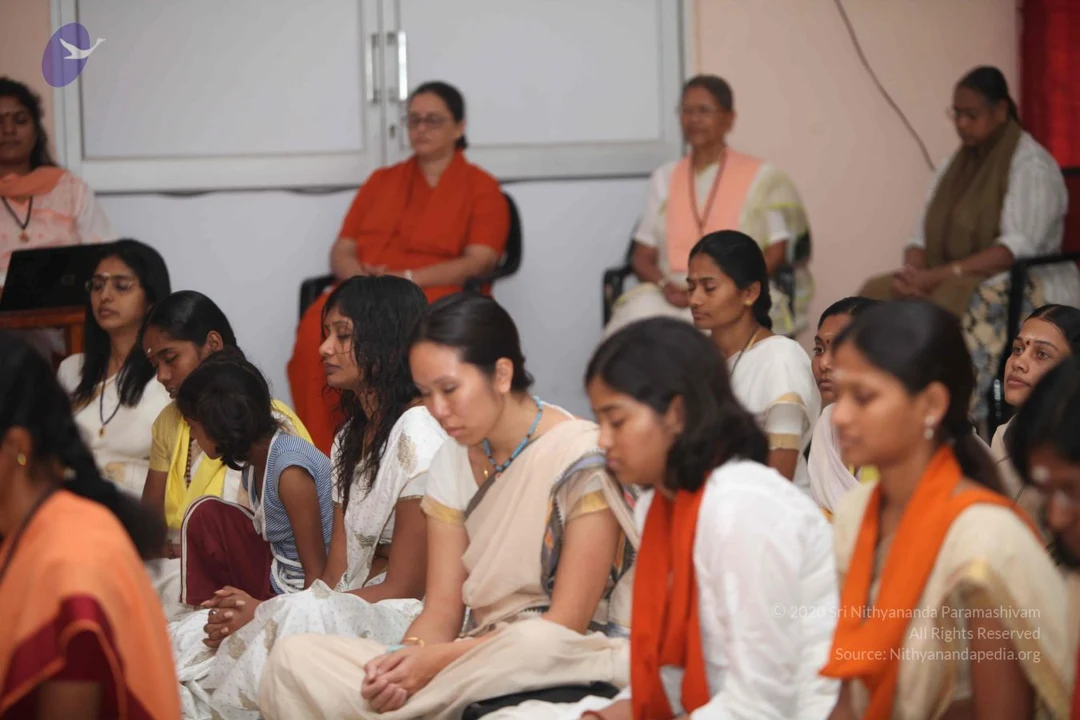
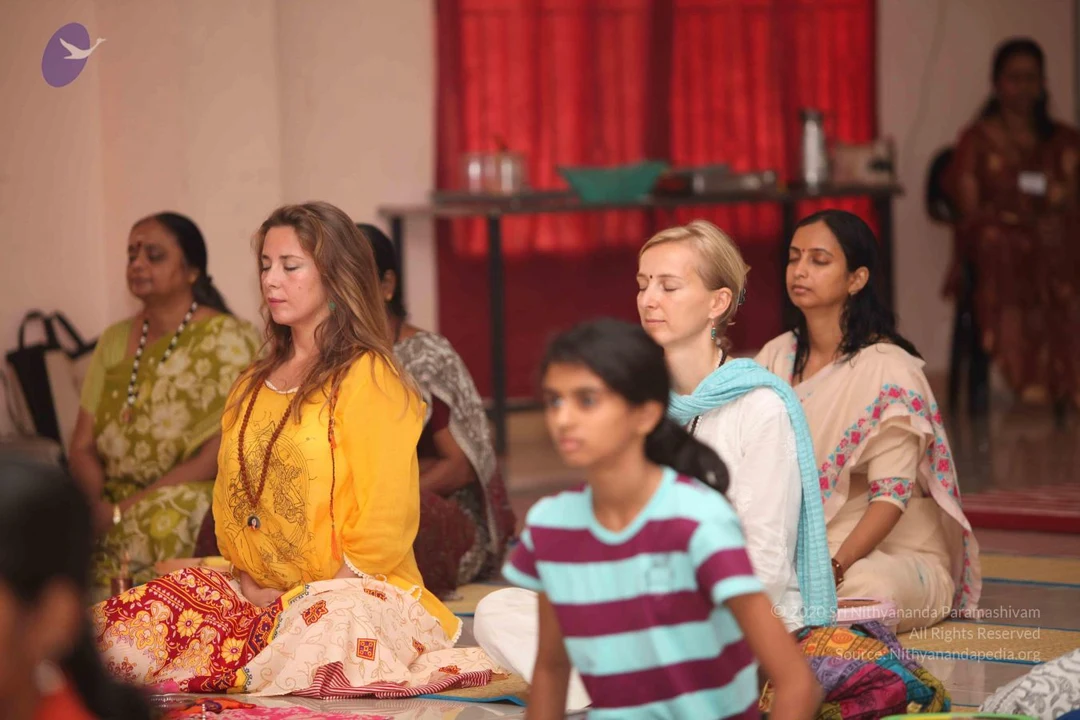
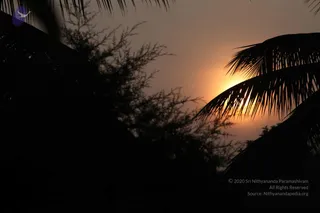
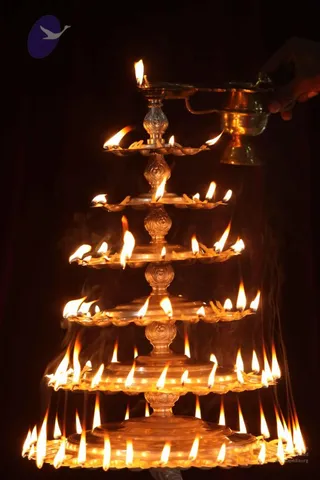
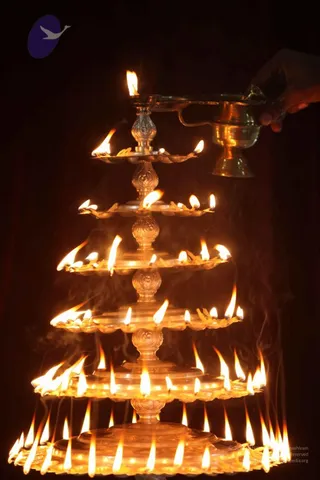
Miscellanous

4 photosSource gallery
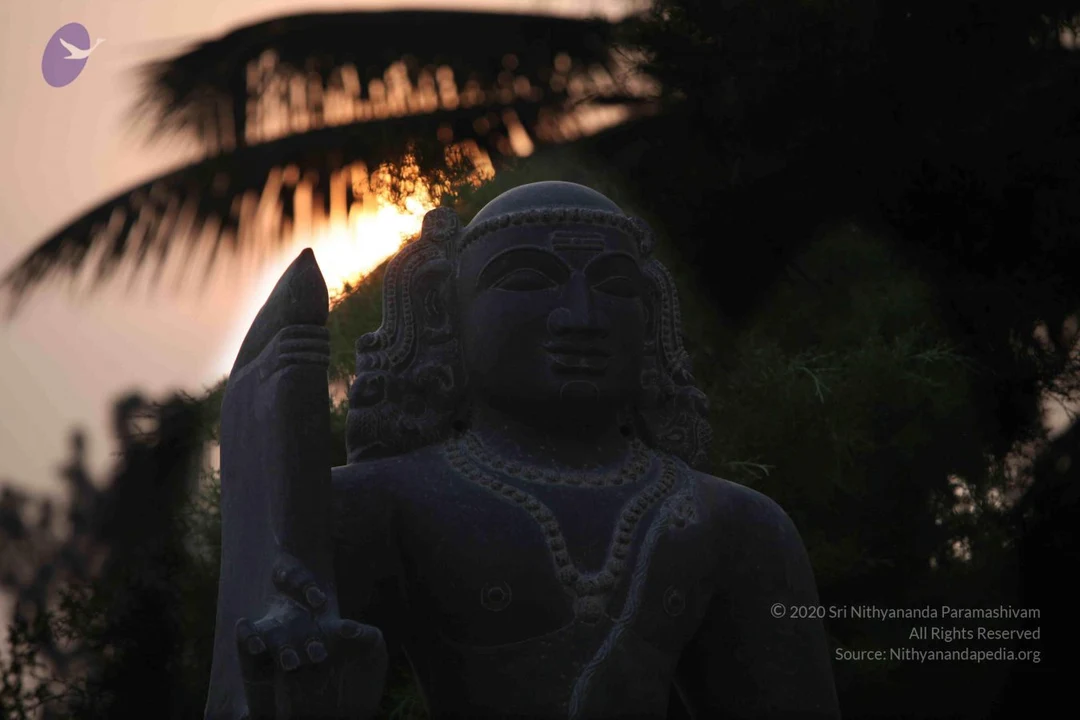
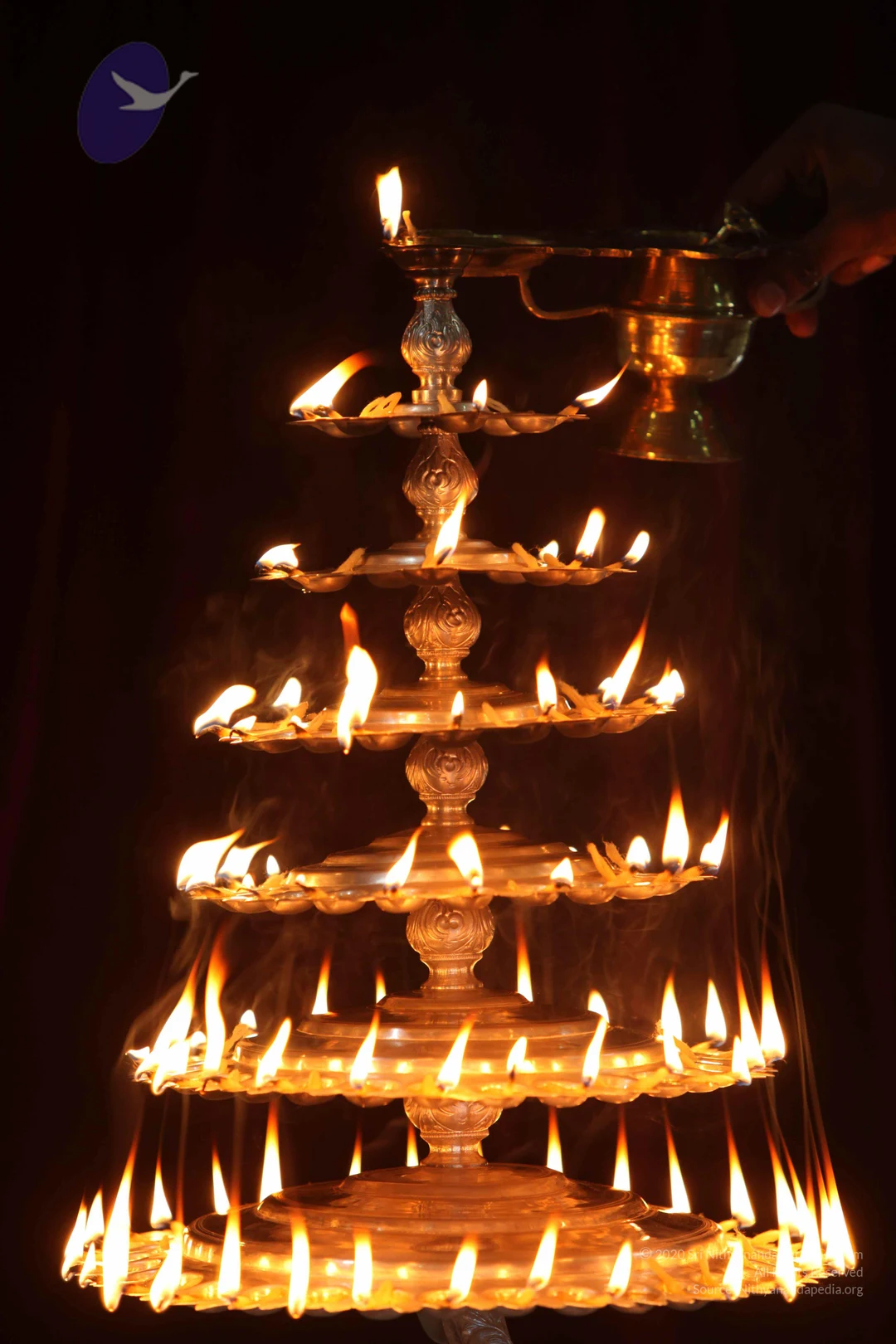
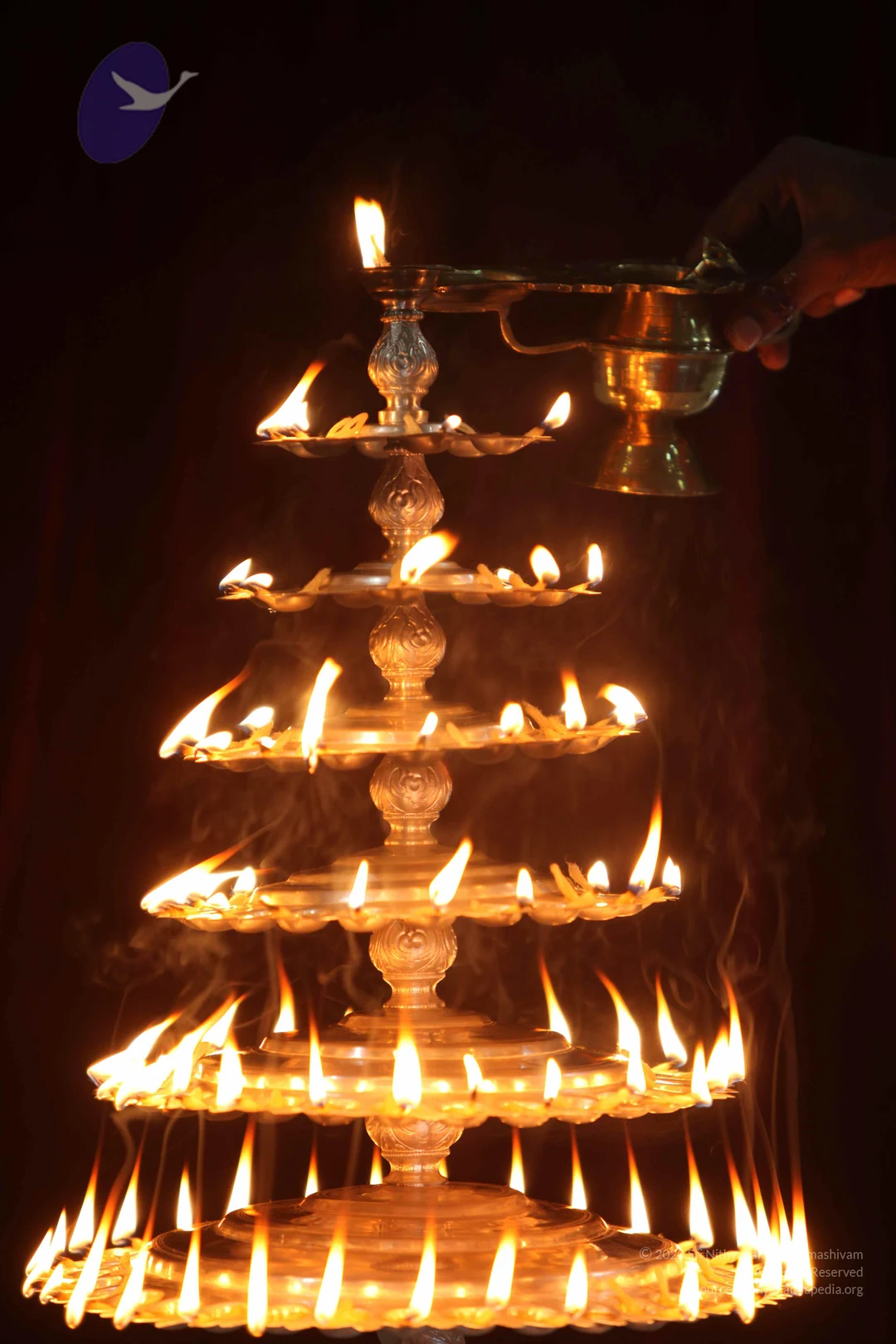
A dusk or sunrise scene shot through silhouetted palm fronds and dark tree foliage, with a glowing orange-yellow sun partly hidden behind the leaves against a hazy orange sky. Dark rooftop or building edges fill the lower left. No people, deities or ritual objects are visible.A dark stone statue of a seated or standing figure is silhouetted against a glowing sunset behind palm fronds and dense foliage. The statue wears a crown-like headdress, multiple beaded necklaces, and raises one hand with the index finger pointed upward. The figure is a sculpted deity or teacher statue, not a living person, and no physical people are visible.A tiered brass lamp stand (nilavilakku-style) with five or six tiers of lit oil lamps glowing against a black background. A hand holds a second brass lamp at the upper right, appearing to light the top wicks. Smoke rises from the flames. No people are visible apart from the hand; the scene centres on the ornate brass lamp tiers and dozens of flames.A photograph of a tiered brass lamp stand (nilavilakku-style) with many lit oil lamps burning on successive plates, flames rising in the dark. A hand holding a brass oil lamp at the top right appears to be lighting the uppermost lamp. Wisps of smoke curl upward around the lamps. A small dark-blue logo is at the top left and copyright text is at the bottom right. No people are fully visible apart from the partial hand.