Skip to content
Wednesday

19 October 2011

THE SUPREME PONTIFF OF HINDUISM HDH BHAGAVAN SRI NITHYANANDA PARAMASHIVAM

Dated photos
124
Source pages
1
Media
2
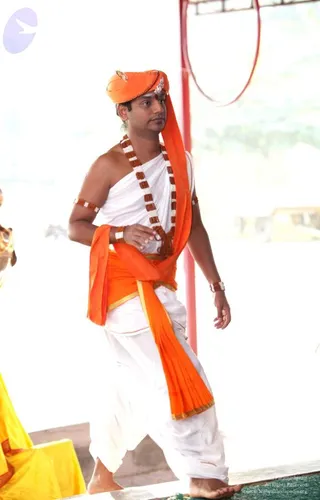
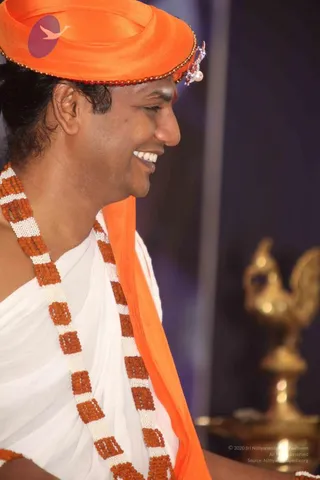
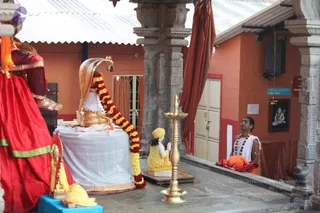
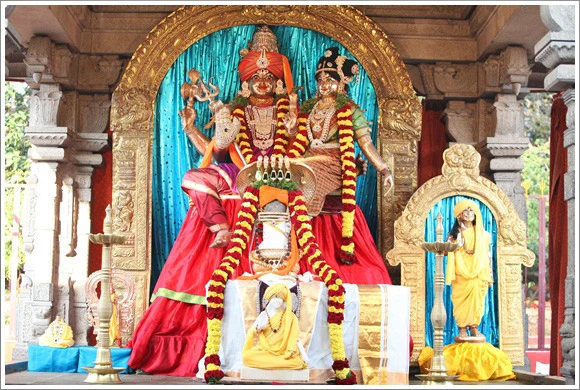
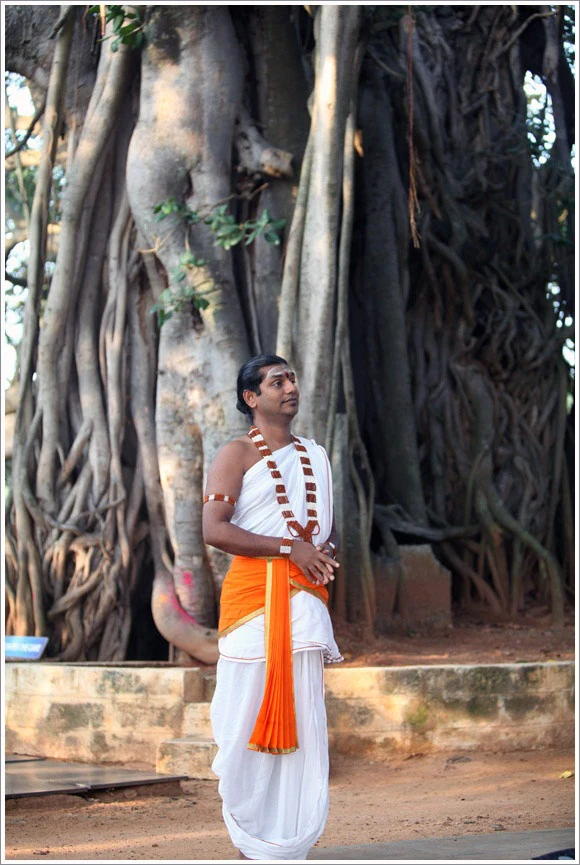
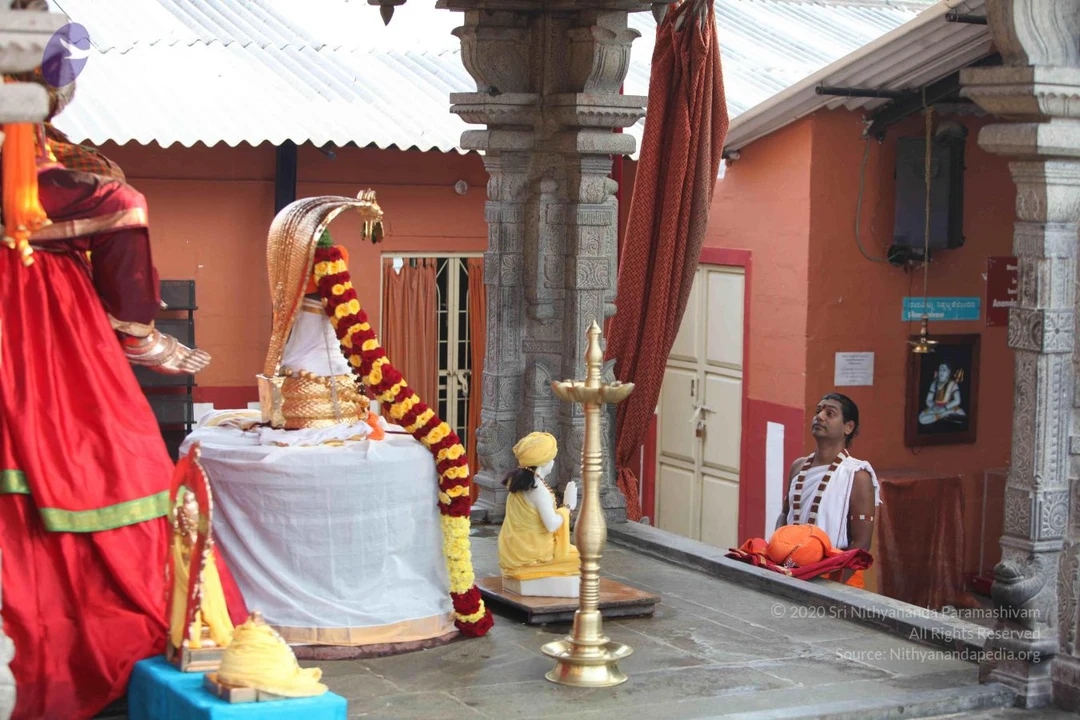
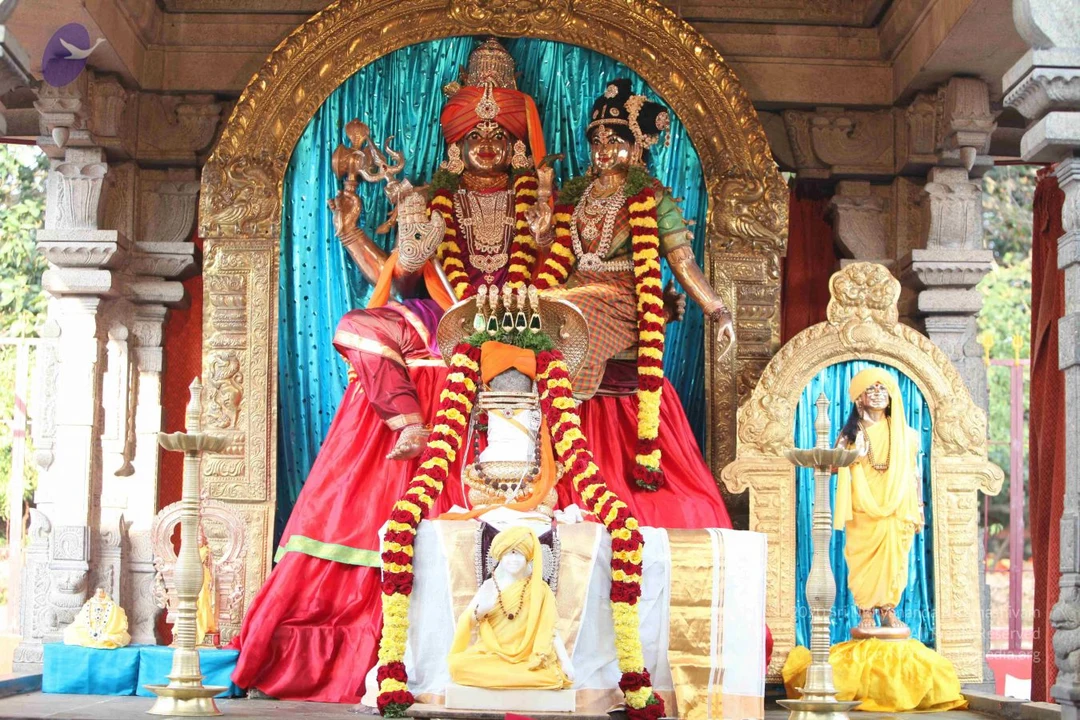
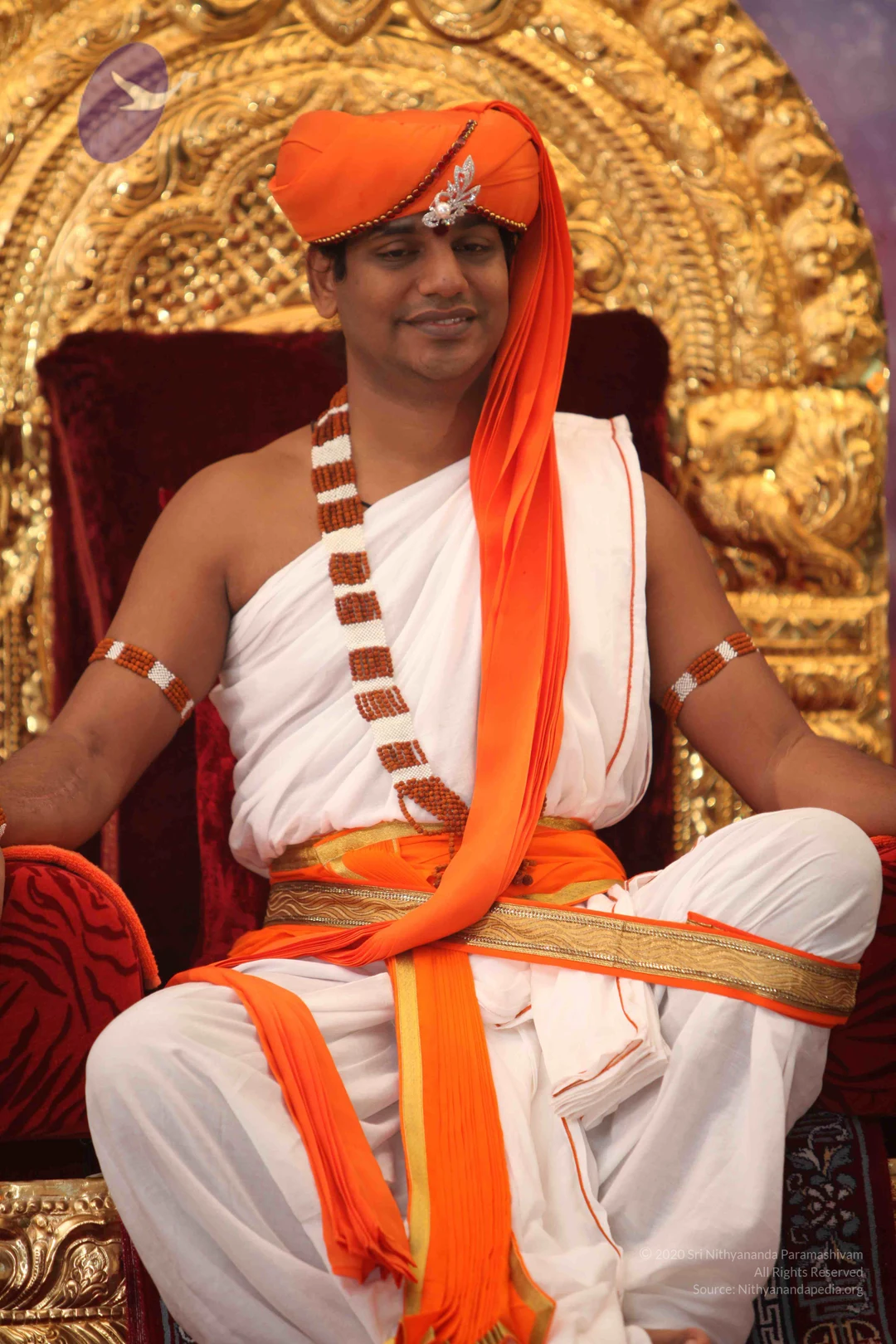
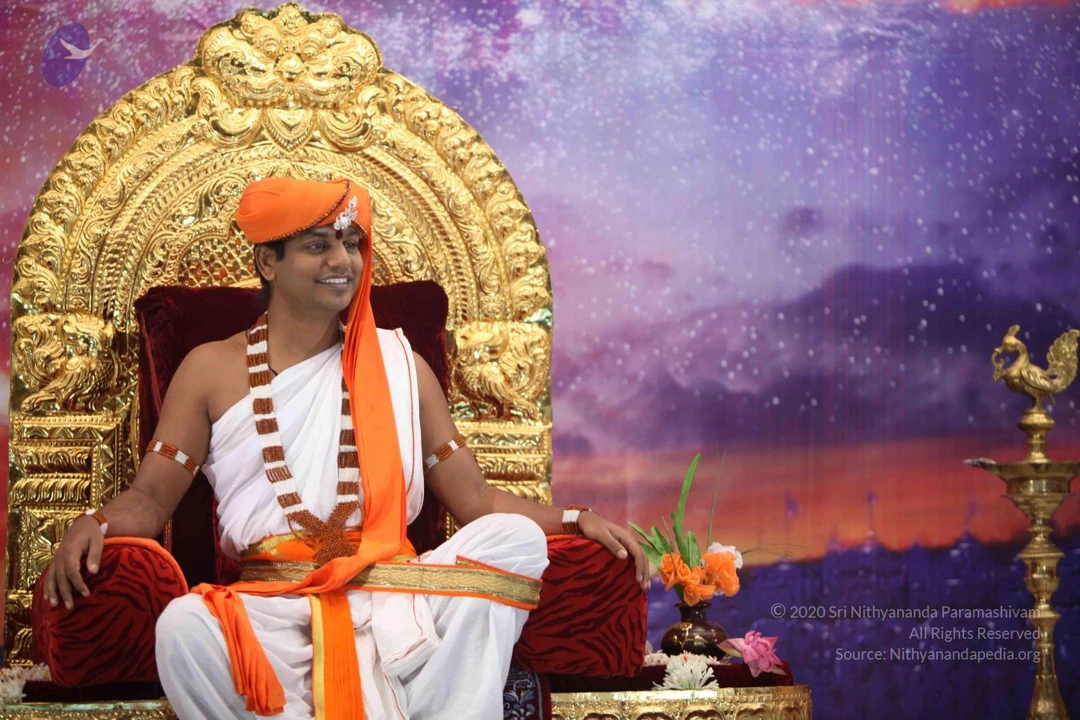
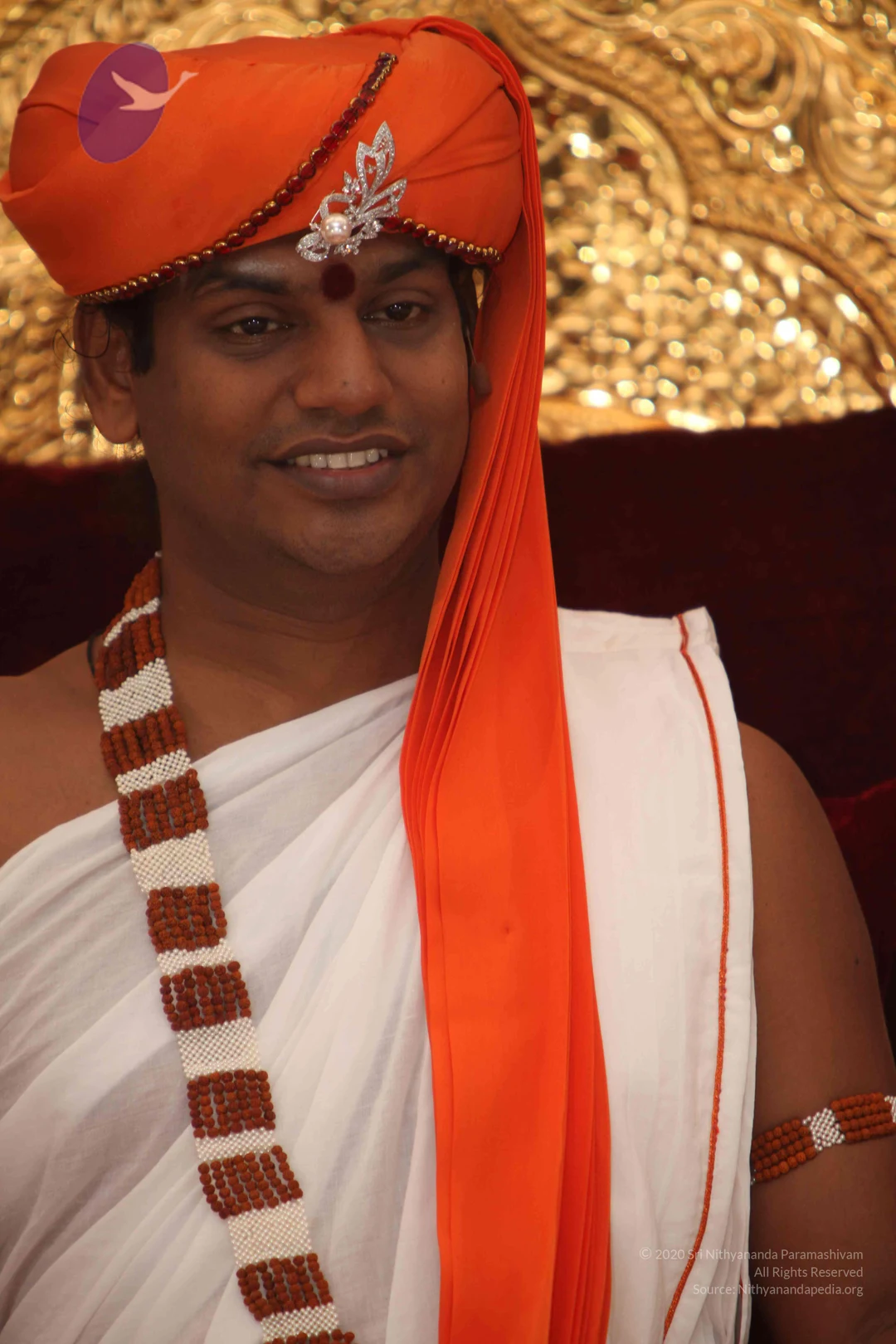
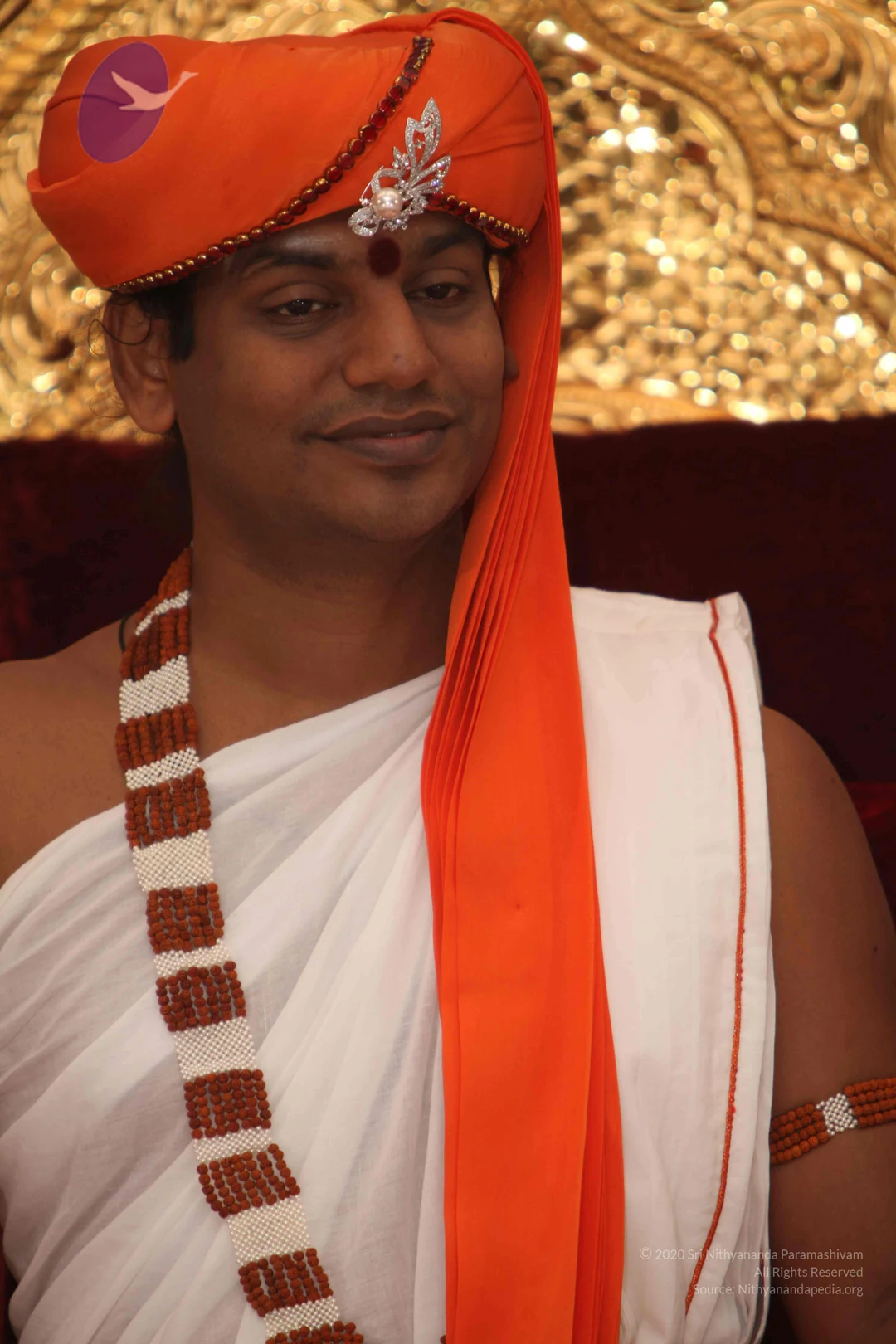
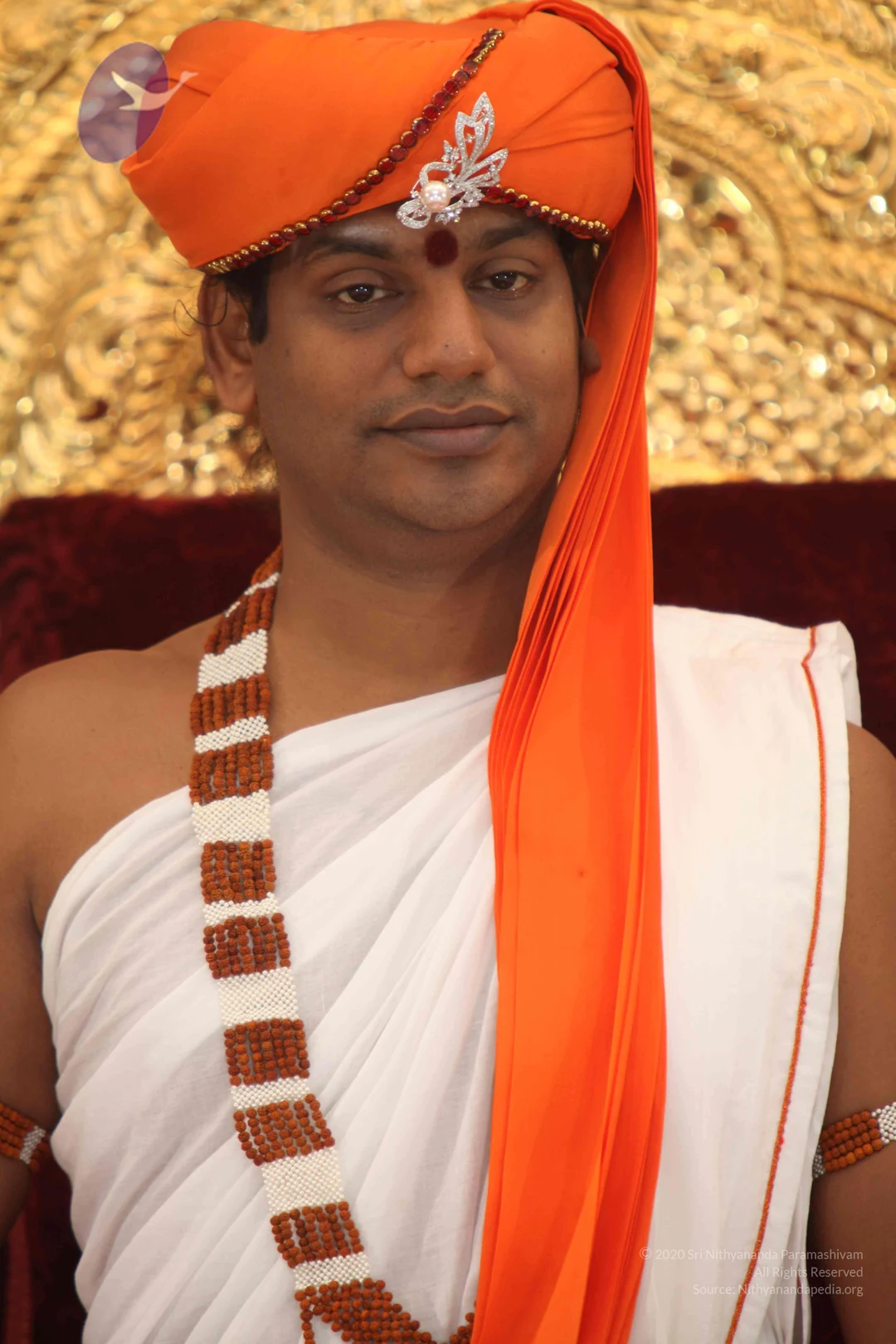
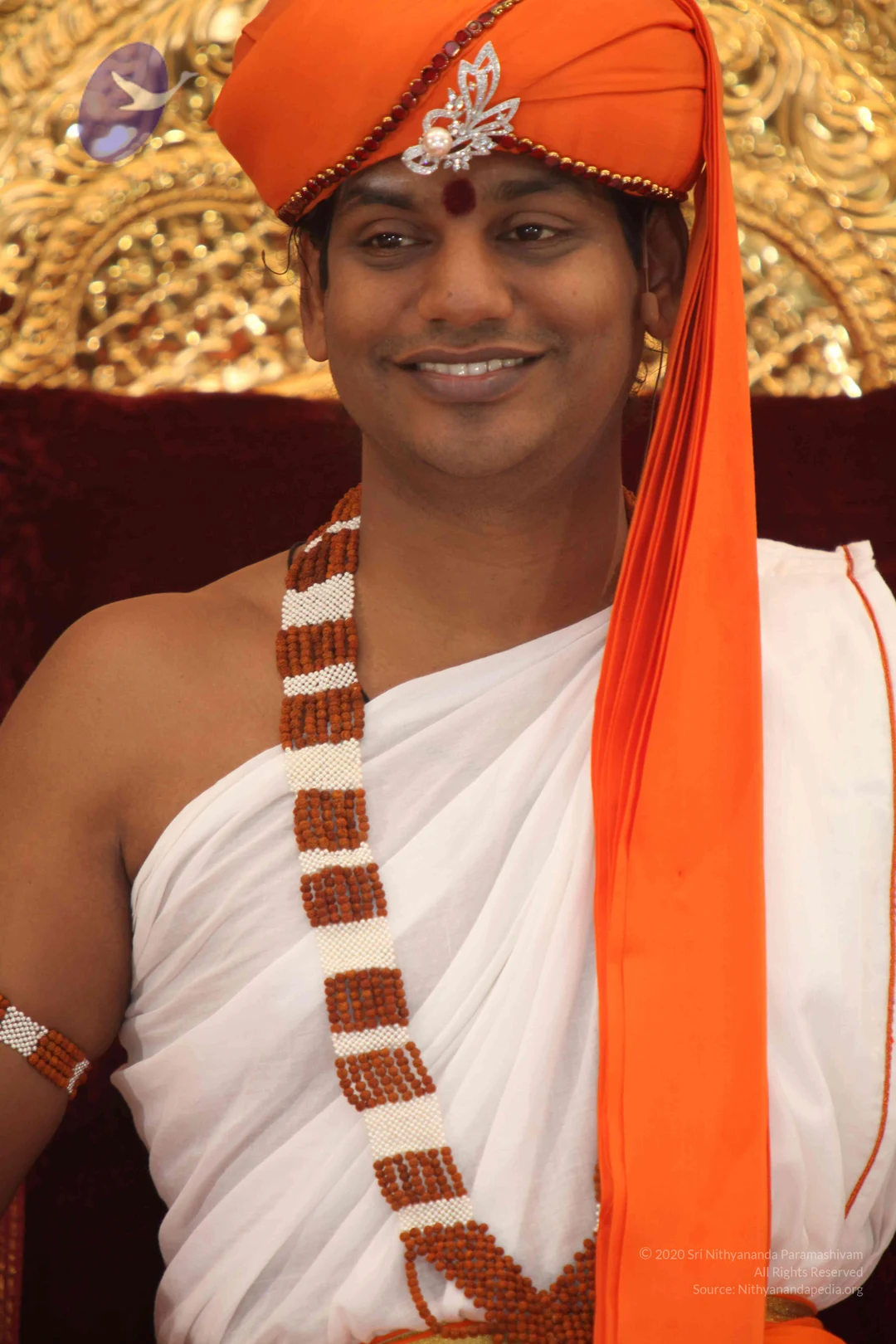
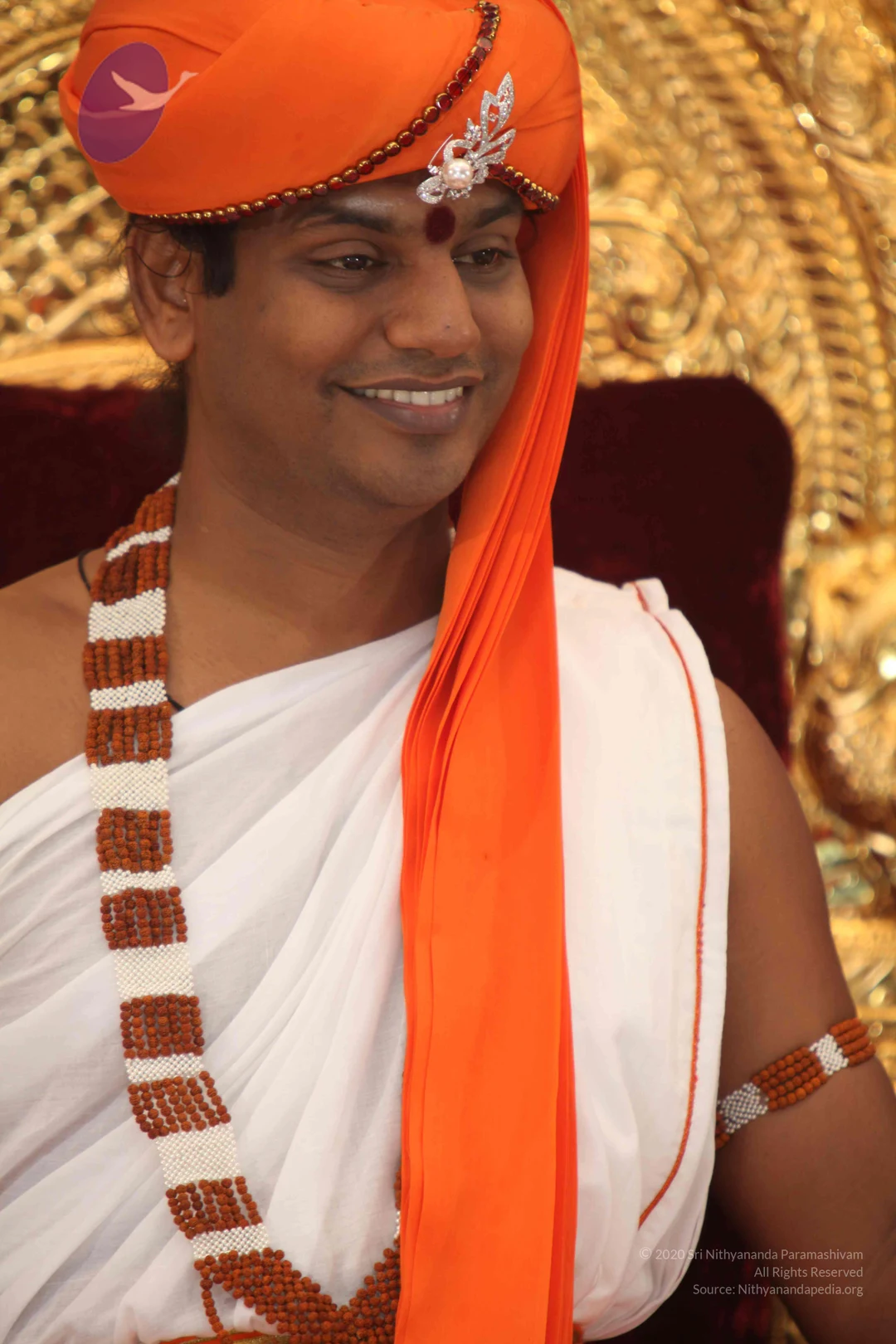
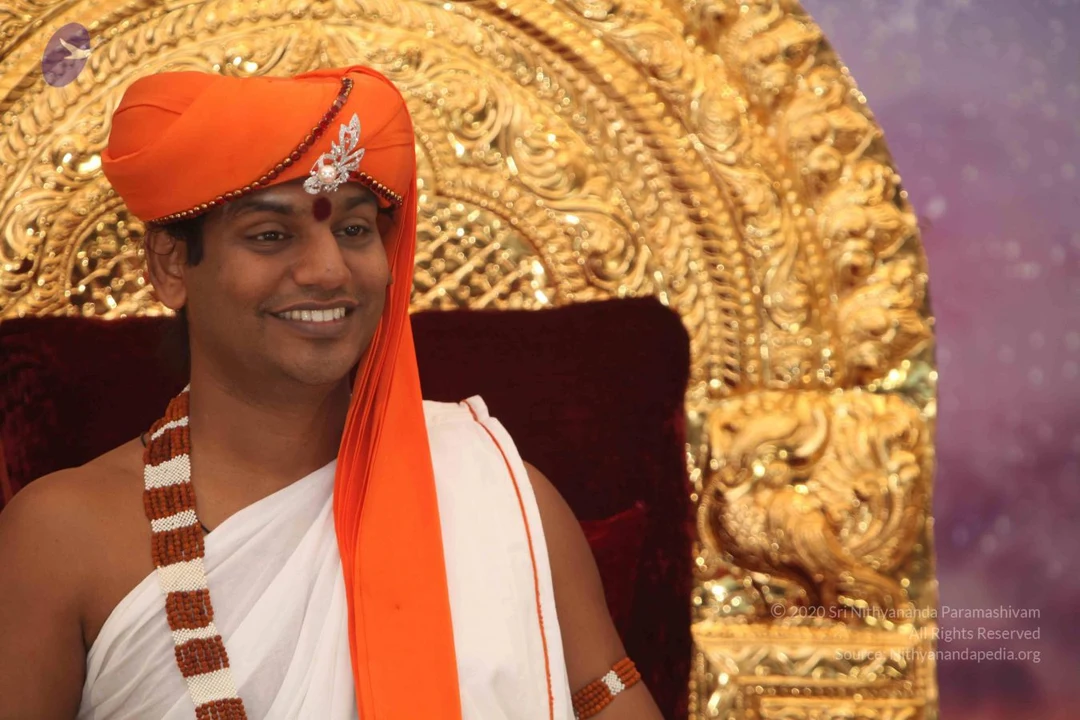
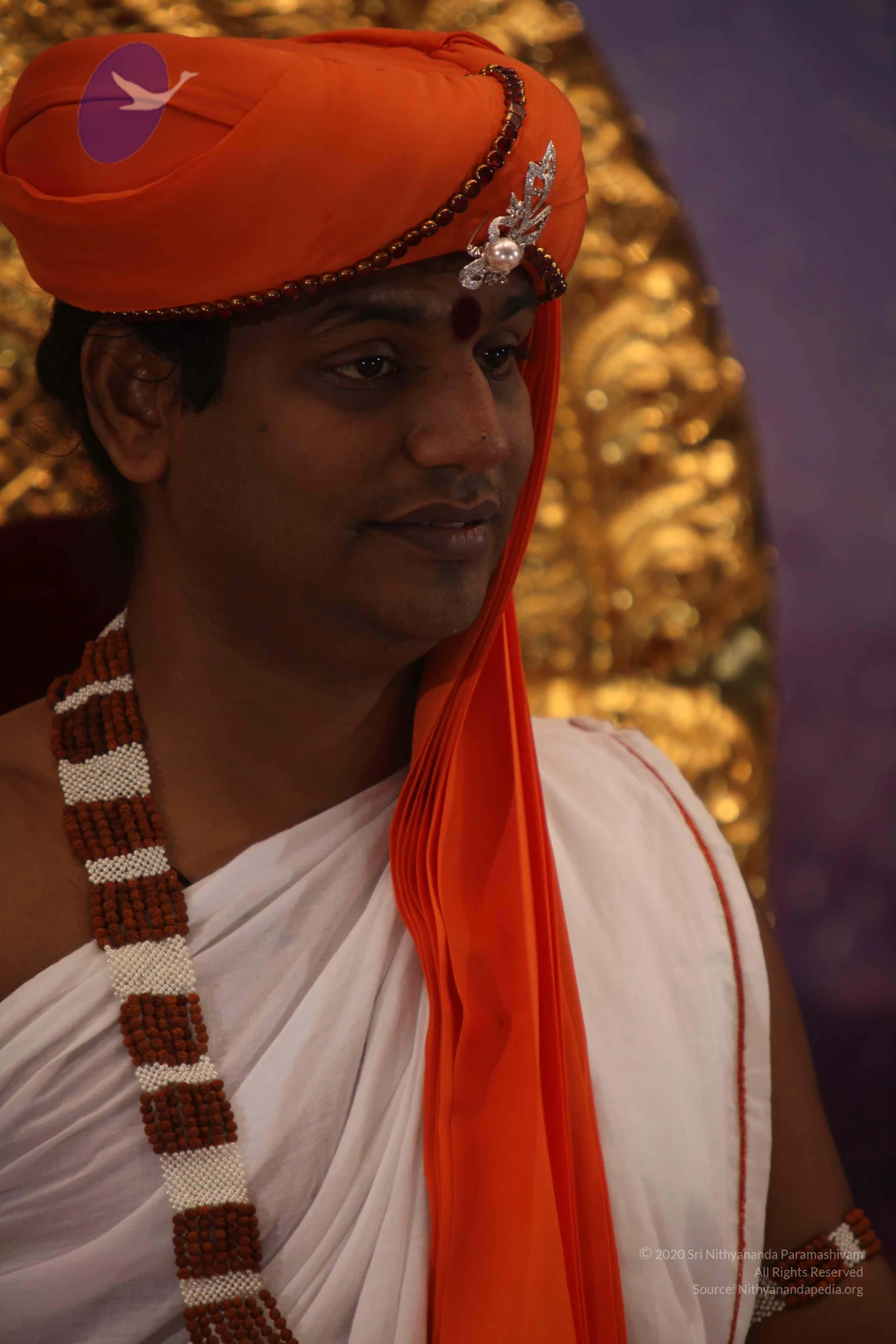
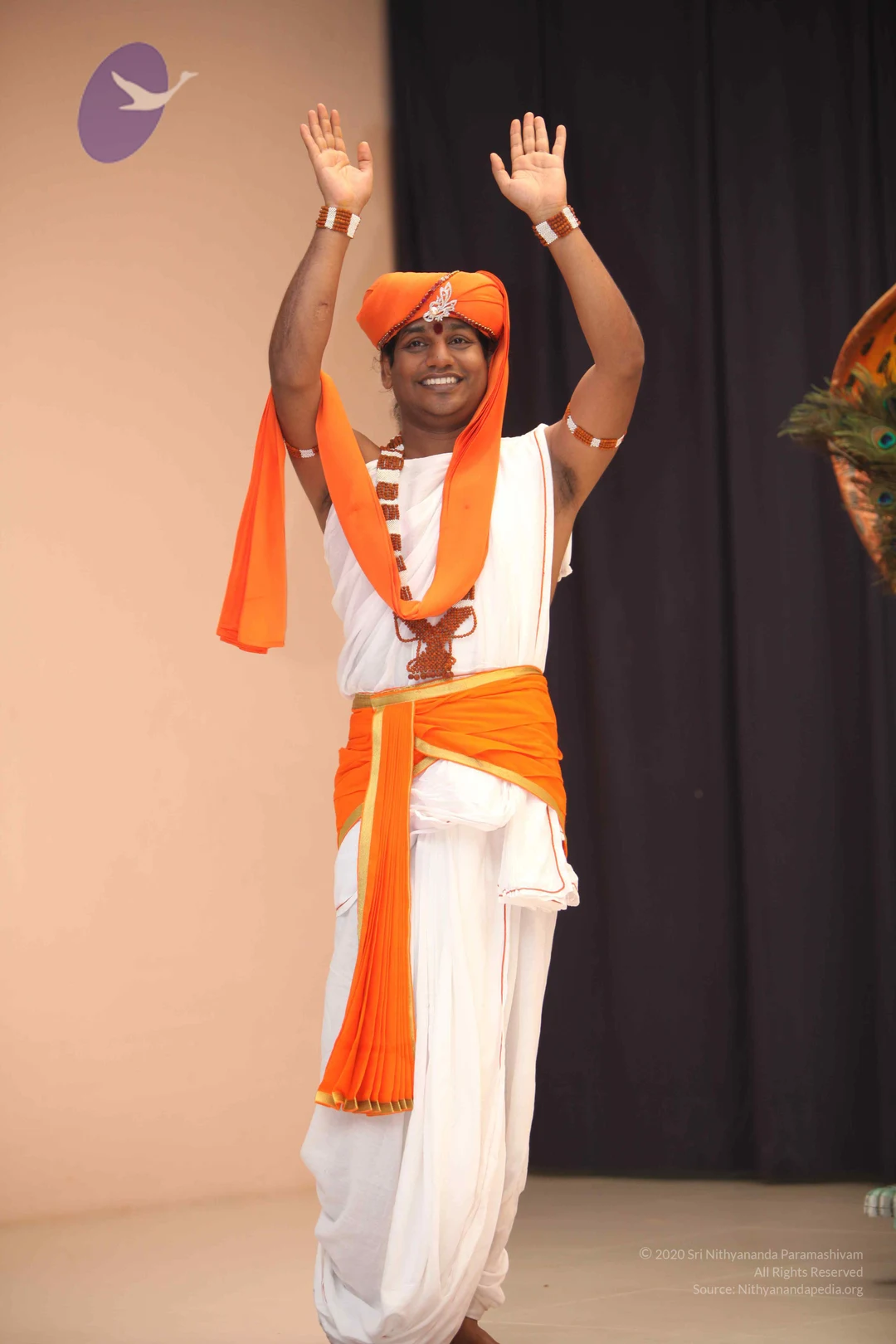
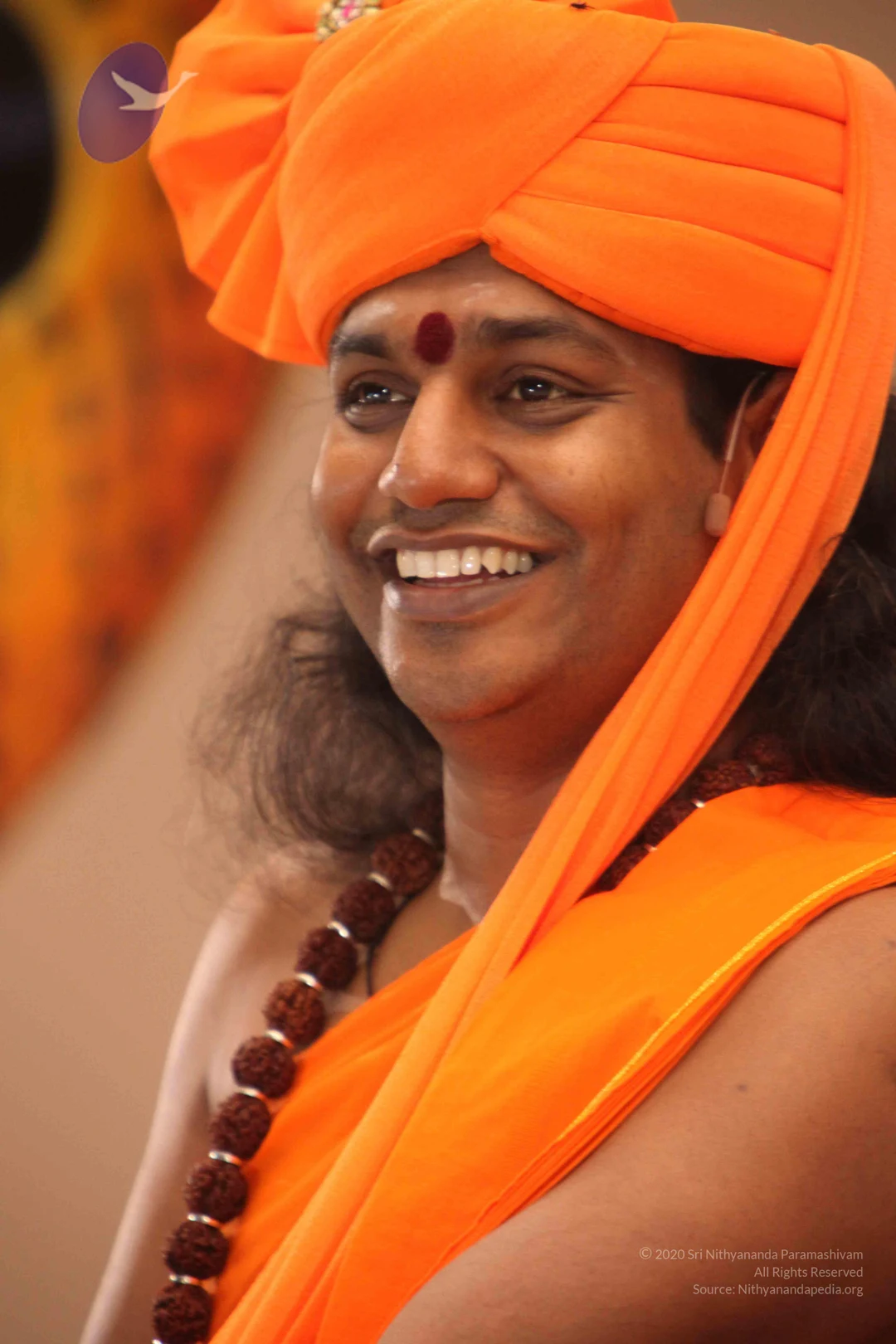
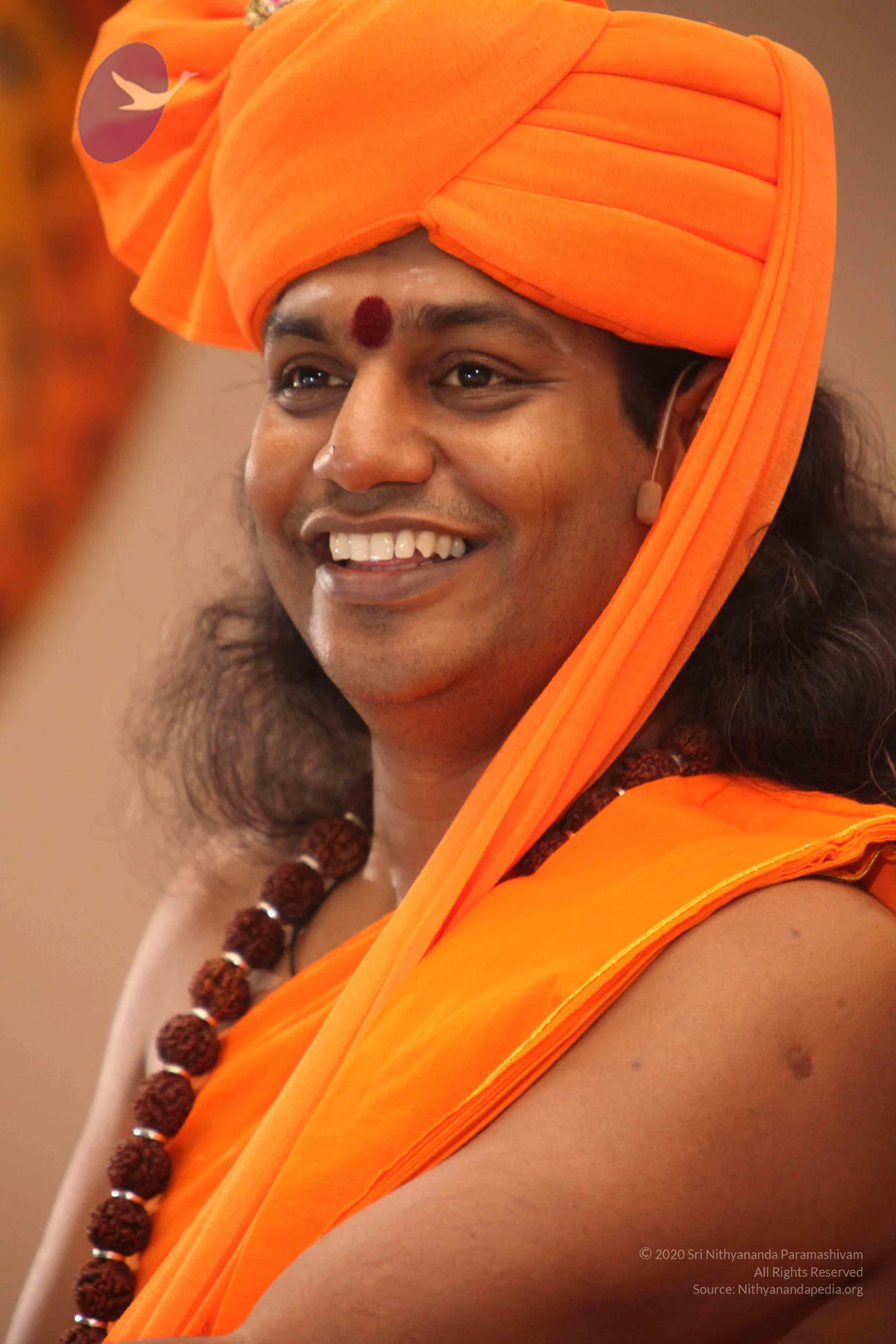
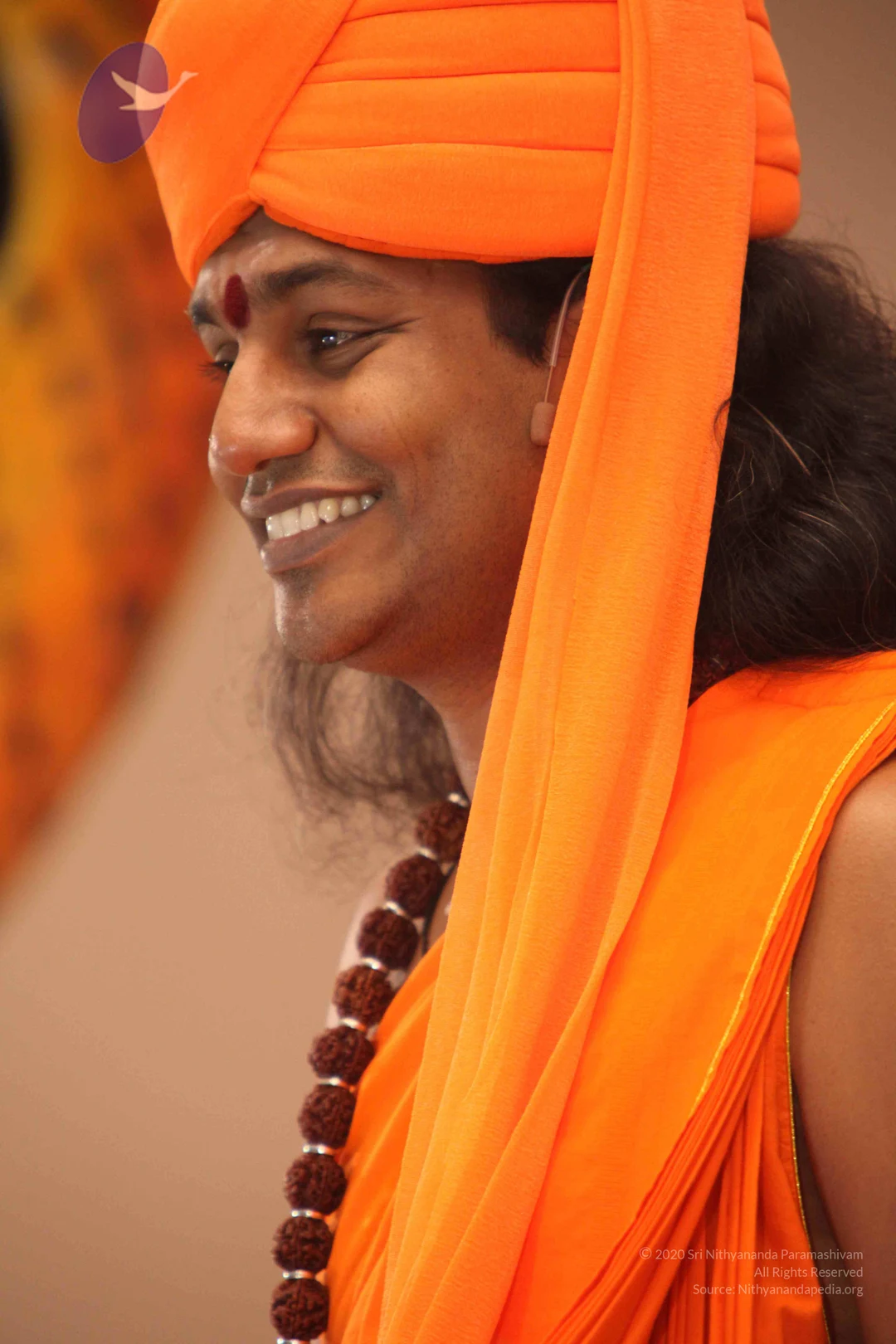
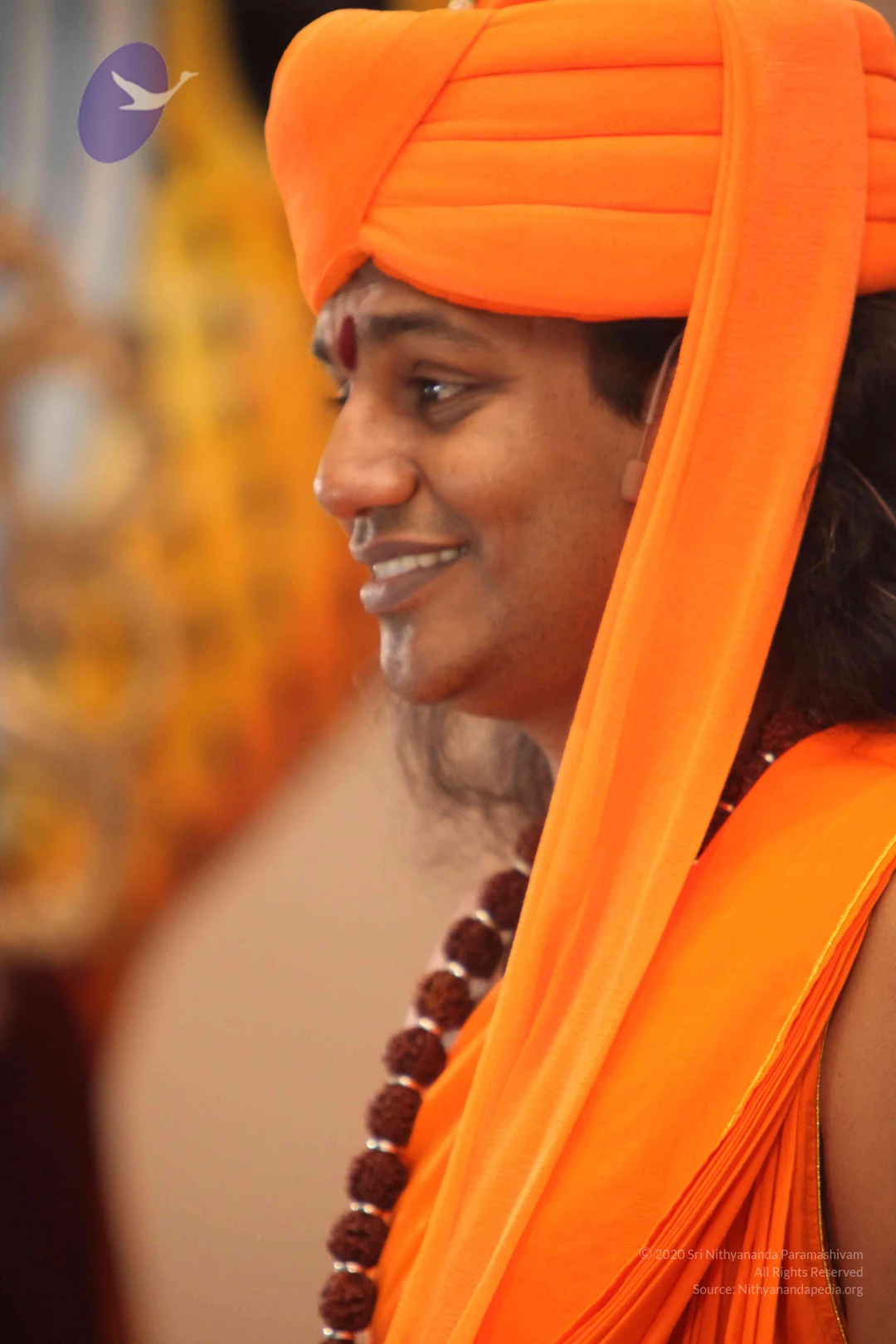
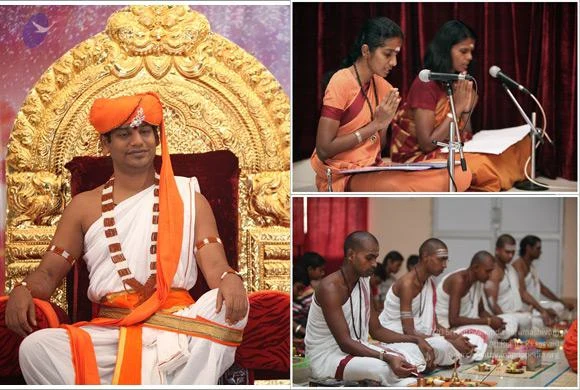
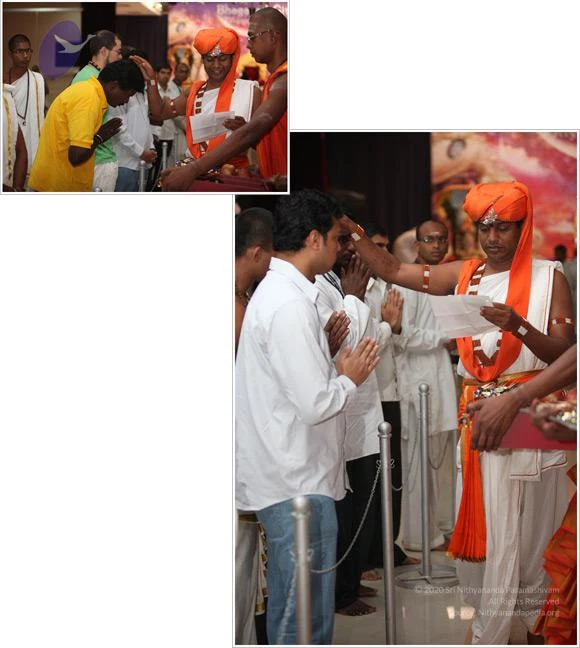
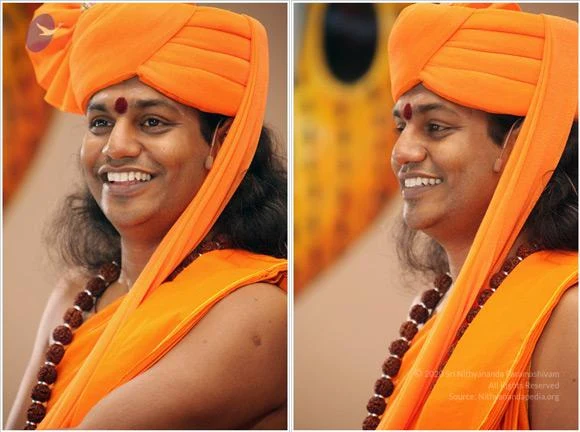
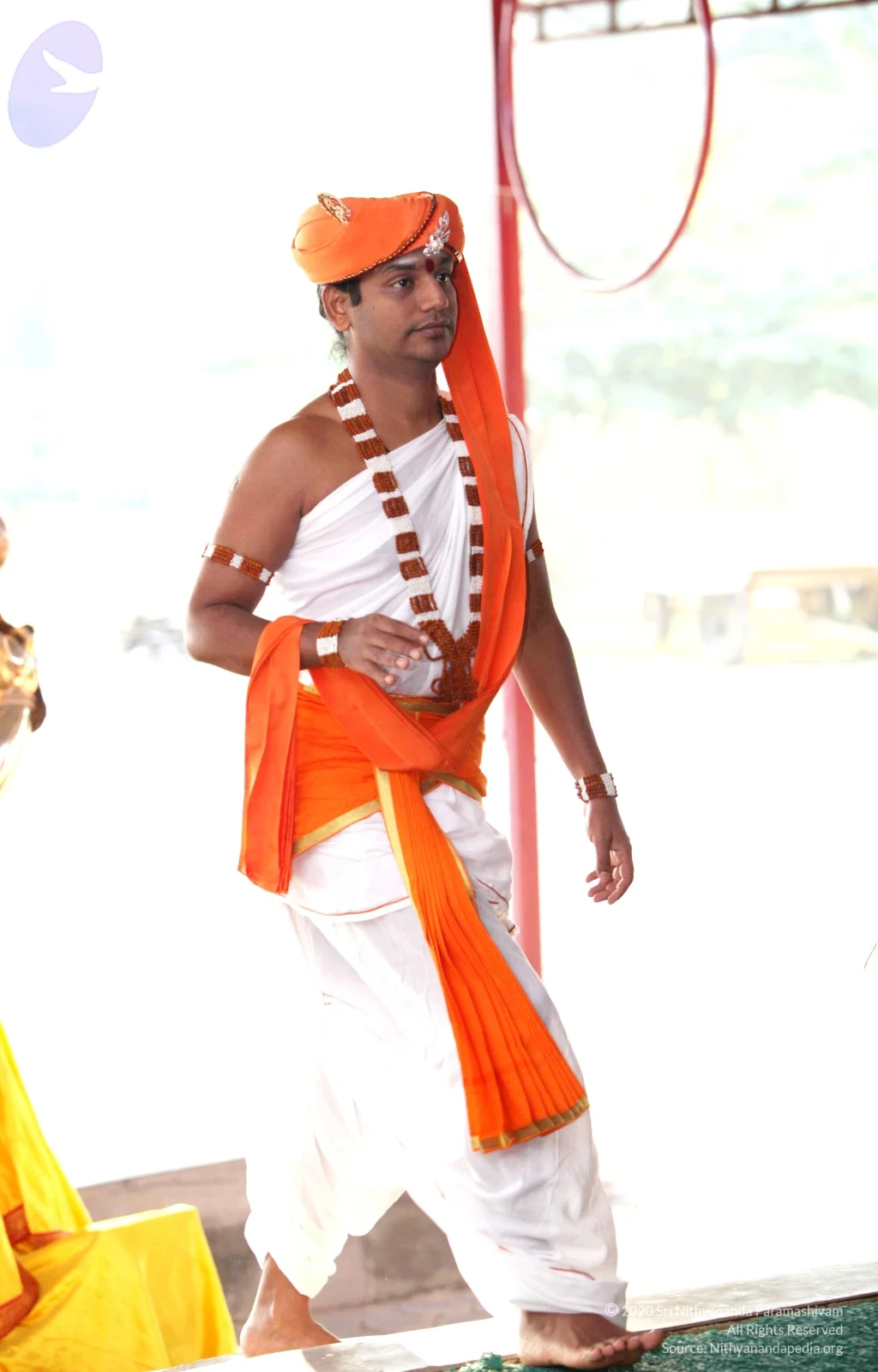
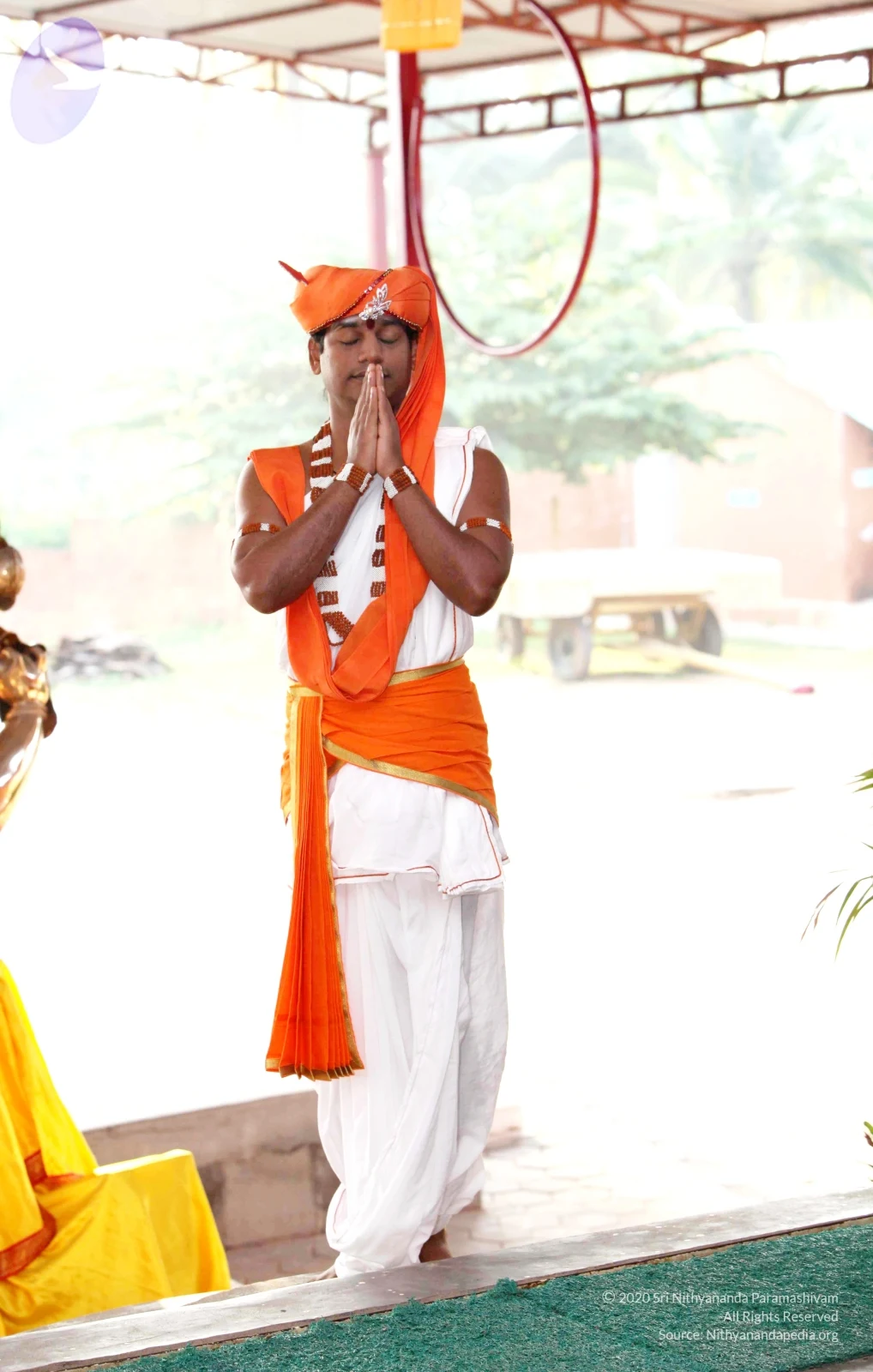
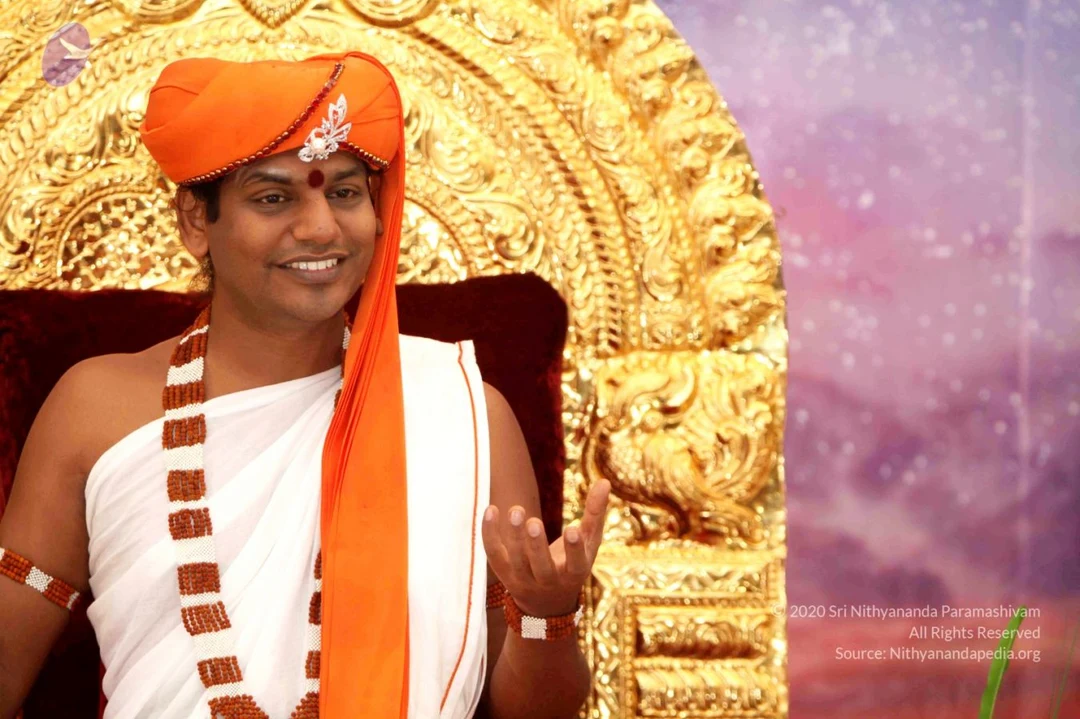
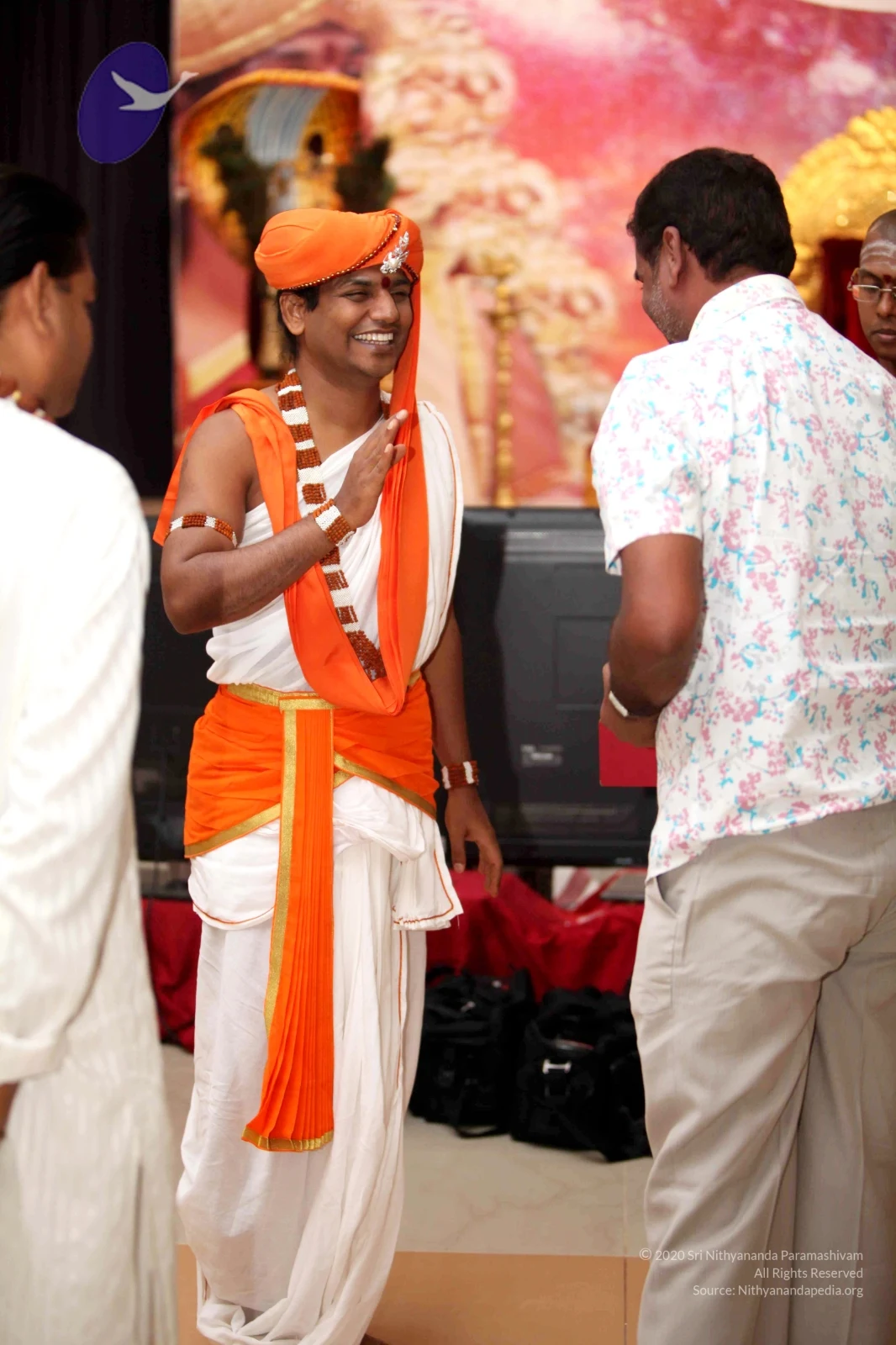
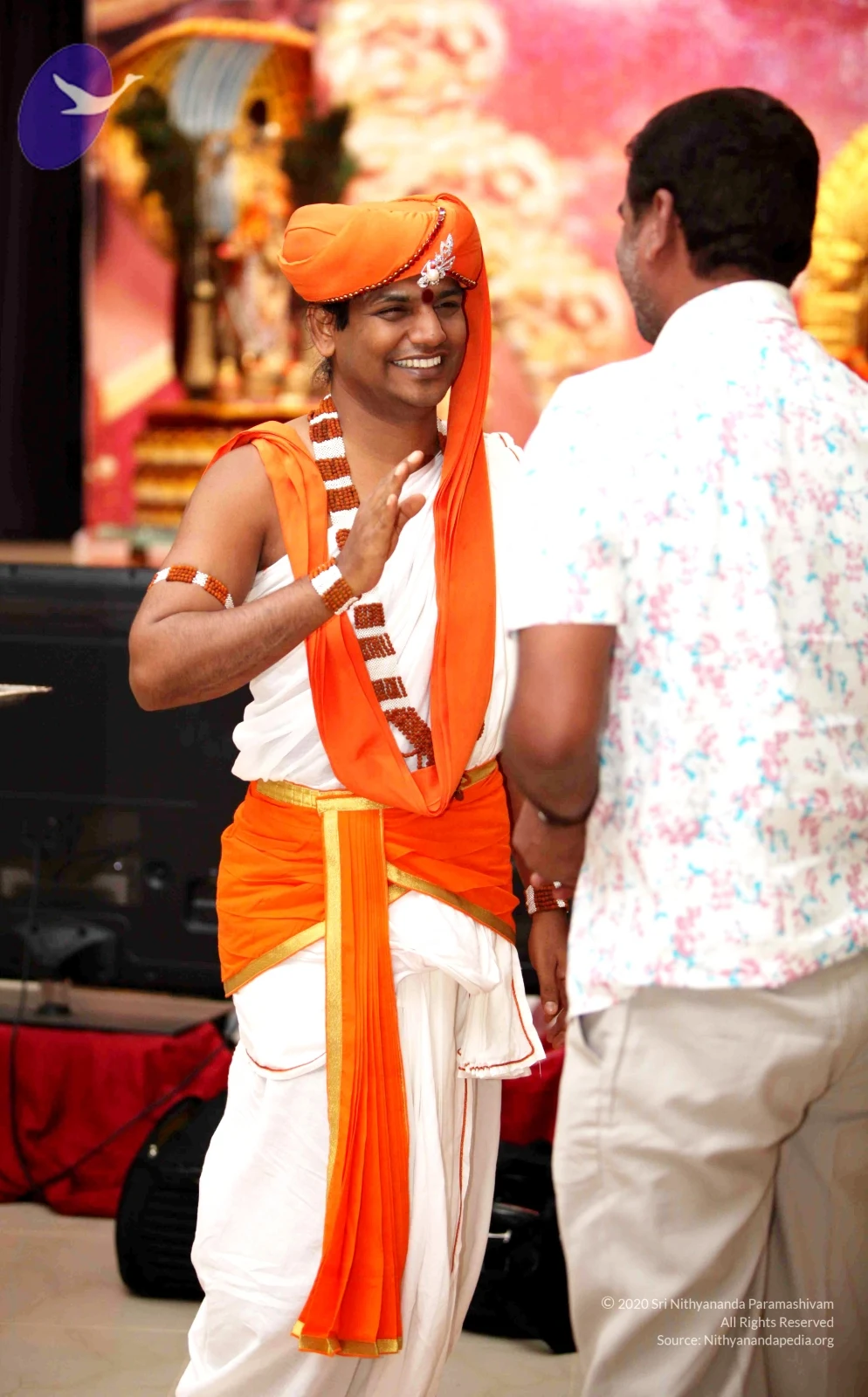
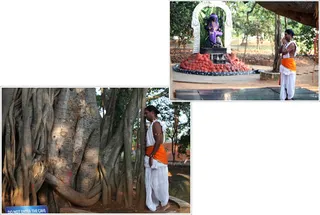
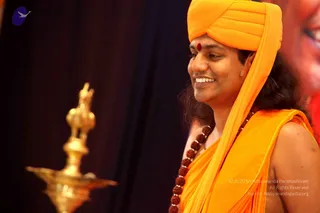
A man in a saffron-orange turban with a small ornament at the front walks barefoot across a stage, wearing white dhoti-style trousers, an orange sash and a white-and-orange cloth draped over one shoulder. He wears a long rudraksha-style mala with white beads, matching beaded armlets and wristbands, and a red tilak on his forehead. Behind him a red ring-shaped frame hangs from a red pole under a pale tent canopy, and a figure in yellow sits at the left edge.A smiling man in profile wears a bright orange turban-style headpiece with a red-beaded edge and a small silver ornament with a pearl at the front. He has a red mark on his forehead and wears a long orange shawl over white robes, with a multi-strand necklace of orange and white beads with rudraksha-style segments. He is seated and looking to the side, with a blurred golden ornamental lamp stand in the background. Appearance-based label: Swamiji (probable), based on the orange turban, orange shawl and ornate beaded necklace.A photograph of an outdoor temple courtyard with a grey stone pillar and corrugated roof. In the foreground a white-draped Shiva lingam is decorated with a golden snake hood and a garland of marigolds and red flowers. Beside it sits a small yellow-robed statue with folded hands and a brass oil lamp stands on the stone floor. At left a large red-robed deity figure is partly visible. On the right, a man with shaved head wearing white dhoti and orange-trimmed shawl stands at the doorway holding an orange cloth bundle, looking up. A framed portrait hangs on the orange wall, and a green-and-blue signboard is visible.

October 19 2011

Original wiki page
Contents

Title:

THE SUPREME PONTIFF OF HINDUISM HDH BHAGAVAN SRI NITHYANANDA PARAMASHIVAM

Description:

Bhagavad Gita (Song of God) is a timeless treatise on the essence of living enlightenment. The Gita was imparted by the enlightened Hindu incarnation Sri Krishna to the warrior-prince Arjuna over 5000 years ago. Amazingly, the spiritual wisdom and life solutions offered in the Gita are so universal and current that it is even today used as a personal transformation guide in universities and management schools worldwide.

Link to Video:

VideoAudio

Transcript:

Bhagavad Gita

Karma is Unfulfilled Action

karmany evadhikaras te ma phalesu kadacana | ma karma-phala-hetur bhur ma te sango stv akarmani ||

You have a right only to work but never to the outcome. Your jurisdiction is merely the execution which is at one time or another measured by the reward. Please understand it may be measured by the reward but let your action not happen by the reward. Let the inspiration for you not be based on the reward. That’s a big problem. That is where the problem comes. Bhagawan is not saying don’t take the reward, don’t receive the reward, no. He is not saying don’t receive the reward. He is saying let that not be the source of inspiration for you.

karmany evadhikaras te ma phalesu kadacana | Your jurisdiction is merely in the execution which is on one time or another measured by the reward. Let the ground for the source of your action….. Let not the ground for the source of your action be the reward. Let the ground for the source of your action be your fighting with non performance. Nobody before, nobody during, nobody after Krishna, can put the essence of the whole life in one verse. Every time when I read this verse or recite this verse, new, new sacred secrets are revealed.

Let me enter into the next level of sacred secret. Karma now I am interpreting this word as action which has not reached perfection. Please understand action which has not reached perfection. When the action reaches the perfection it liberates you, it disappears from the cosmic ocean. Please understand, action is like a ripple effect. When it reaches the boundary it disappears. Any ripple effect when it reaches the boundary it disappears.

Karma is the action which has not reached its extreme, which has not seen the end, which has not seen the perfection. The moment Karma sees the perfection, action reaches its perfection, actions sees the end, it experiences the extreme; suddenly, please understand, suddenly it disappears. For example you throw a stone on a pond. The ripple effect is created. The moment it reaches the end, the moment it reaches the bank, the moment it reaches the perfection, ripple effect disappears. Now the pond swallows the stone and the ripple effect created by the stone. Done! Same way when an engram is thrown on you what is created is Karma. When that reaches its perfection, its extreme end, karma is liberated from you, you are liberated from karma. That is why in all our programs I emphasized so much on completion.

Karma is a unfulfilled action, unfulfilled engram. Please understand its unfulfilled engram. For example you have some strong anger, hiding anger about your parents, about your sister, about your family members. That’s a karma. Now unless you complete it, unless you make it perfect, complete, you will not be relieved from it. At some situation, very difficult situation that engram will come up and it will be so strong. Knowingly you will put yourself in a big mess. Understand, knowingly you will put yourself in big mess. It is not that all the time people put themselves in a big mess unknowingly. No. knowingly you put yourself in a big mess

karmany evadhikaras te ma phalesu kadacana | ma karma-phala-hetur bhur ma te sango stv akarmani ||

Uncompleted, incomplete karmas when they are sitting in you they will be so wild, so strong. They will find some justification, usually they find the justification of comparison. Why, why should I alone be non- violent? He is also violent. Let me be also violent. Only then I can protect myself. Understand, by all your justification you may try to be violent, that is not going to protect you, he will also be in a soup, you will also be in a soup. That’s all. Both of you can swim in the same soup. That is not going to solve your problem. He will also be in a chaos because he is violent; you will also be in a chaos because you are violent. Understand minus plus…. minus plus minus is not plus in the cosmic law. Only in mathematics minus plus minus is plus. No. In the cosmic law it does not apply. Minus into minus is not plus in cosmic law. Minus minus = minus. Understand just because he does bad karma your bad karma is not justified. Then you come up with something, practicality. What is practicality? No, no, no in this plane this is only possible; then suffer that plane's sufferings.

I have seen people no, no, no what you are talking is great Swamiji but it’s a spiritual plane. People are in normal plane so I have to work in the normal plane. Then you have to have the sufferings of the normal plane also. Then you have to go through all the problems and sufferings of the normal plane. When the disease, problem, sufferings of the normal plane comes then you suddenly you say oh! My whole life I listened to your teachings, I lived you as you showed and I prayed to you. What is this Swamiji? Where am I? Oh god! All that time you had one big weapon called being practical or this plane as a protection from my teachings, that’s a right word I will use. There is a new paint commercials are going. If you paint it on the wall no water will penetrate the wall. They show it. They take the small hand mesh and put that paint all around and pour water and water does not seep, water does not go through the mesh and the fish can stay in that. Same way you have put a special paint quote on you so that my teachings cannot enter into you.

See with these great verses the only trouble is when you are supposed to live it apply it, you say ahhh; for practical purposes, I think I can bend this much. It’s ok. If you are bending for practical purpose means what; this plane of existence. Then suffer all the sufferings of this plane of existence. Be very clear. Karma is actions which have not yet become perfect in you. When you complete them, you are also liberated from that samskara- engram, the engrams are also liberated from you. Understand all bondages are always for both, all liberations are always for both. If it is a bondage, it is for both. If it is a liberation it’s for both.

If you are bound by the karma, karma is also bound by you. If you are liberated from karma, karma is also liberated from you. That is why I am saying every action, completion of the action is really, really, really directly helpful for you, will directly liberate you, will directly lead you to the higher existence.

karmany evadhikaras te ma phalesu kadacana |

I feel like every letter of this verse should be engraved in gold. If you have the habit of keeping book of heart and you want the essence of everything, I will really recommend, tattoo this verse on your hand so that every moment you can see ‘ehhh this is what my life is’. Complete every action you take it up; just for completing. Because it is there you have to complete; that’s all. Don’t bother about the rewards. Don’t bother about the results. Don’t bother about anything else. Complete just for completing.

Photos
Photos Of The Day:

Temple
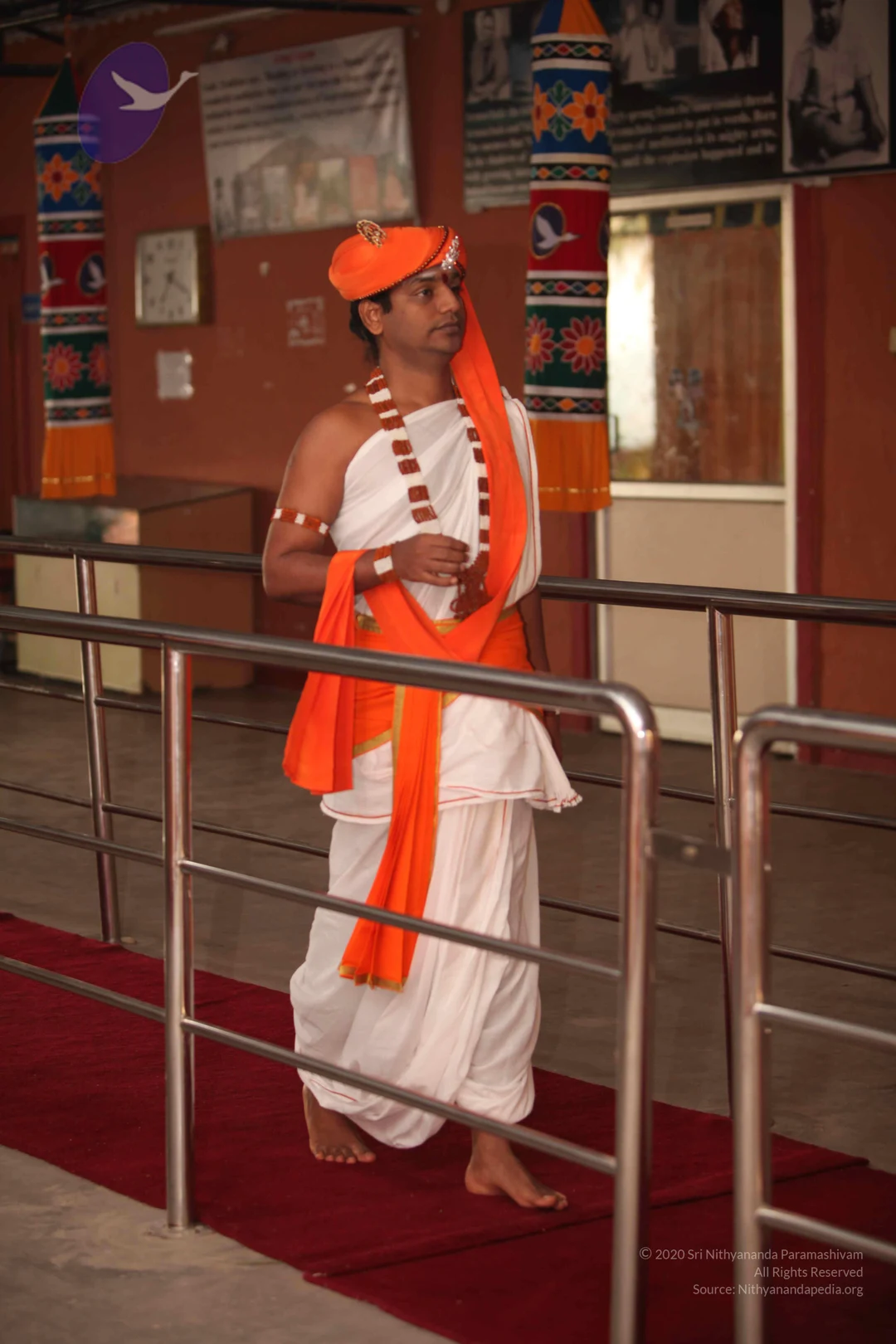
Bhagavad-Gita-Satsang

Bhagavad-Gita-Satsang-Tamil

Adikailaasa

Special-Photos

Photos Of The Day:

Temple
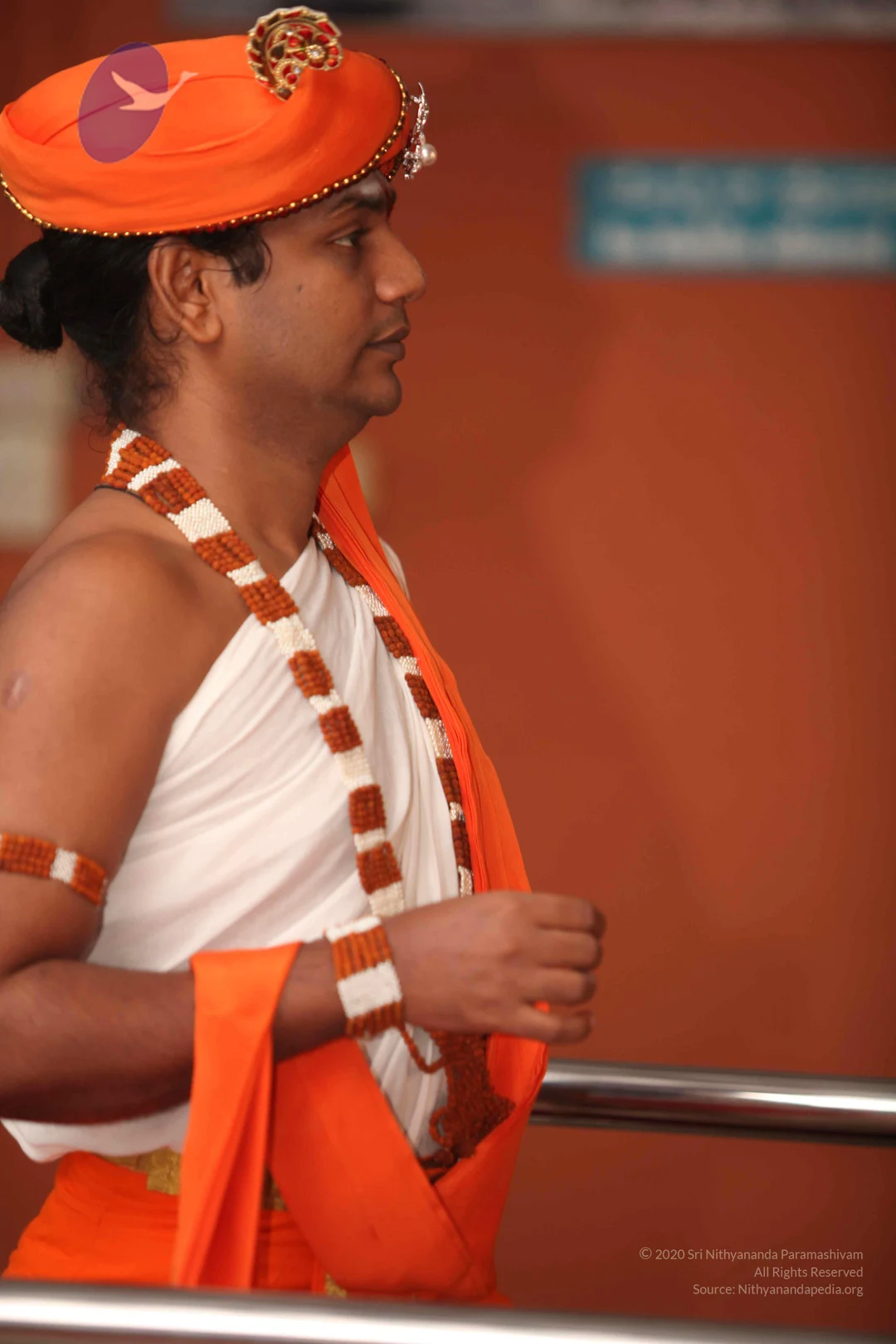
Bhagavad-Gita-Satsang
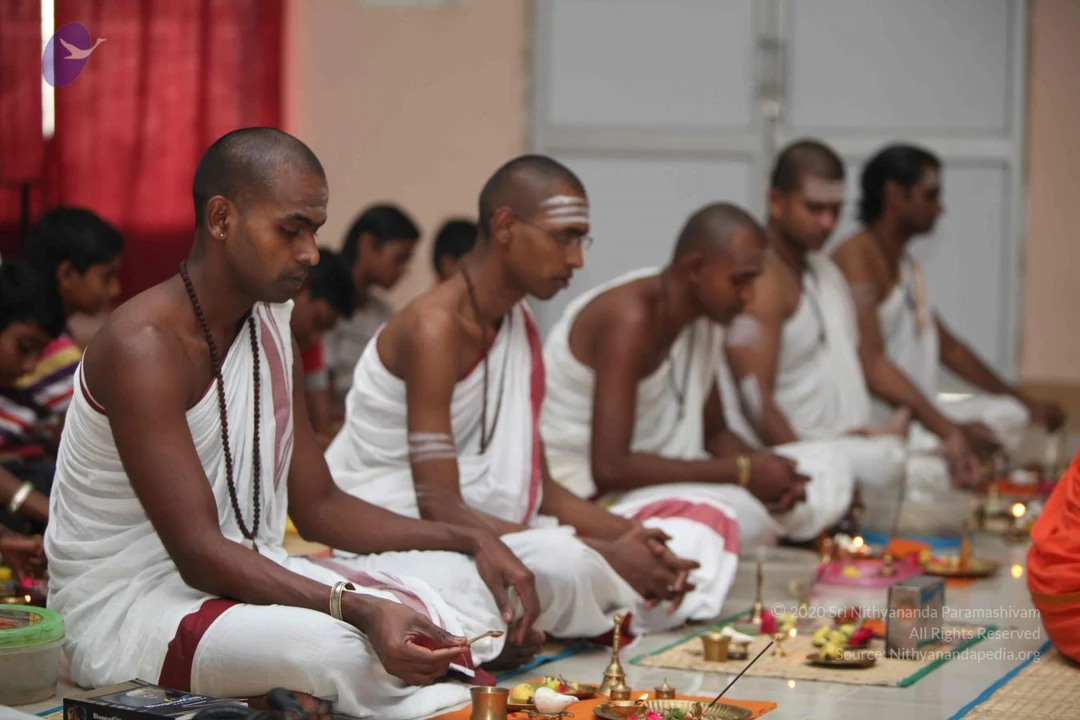
Bhagavad-Gita-Satsang-Tamil

Special-Photo

Photos from this day

View all 124 photos

Photos

8 photosSource gallery
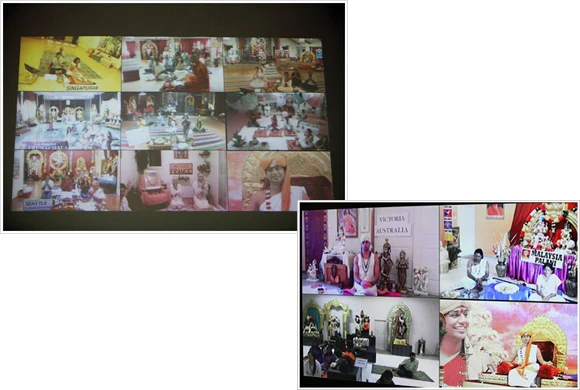
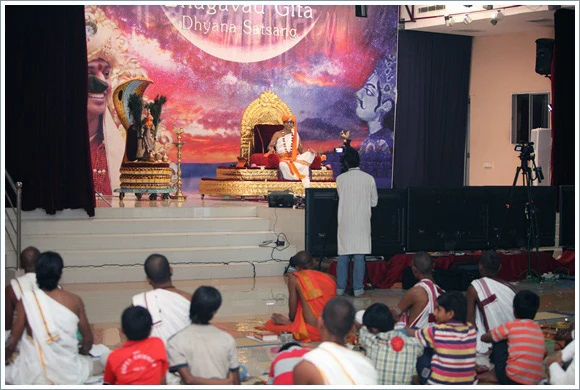
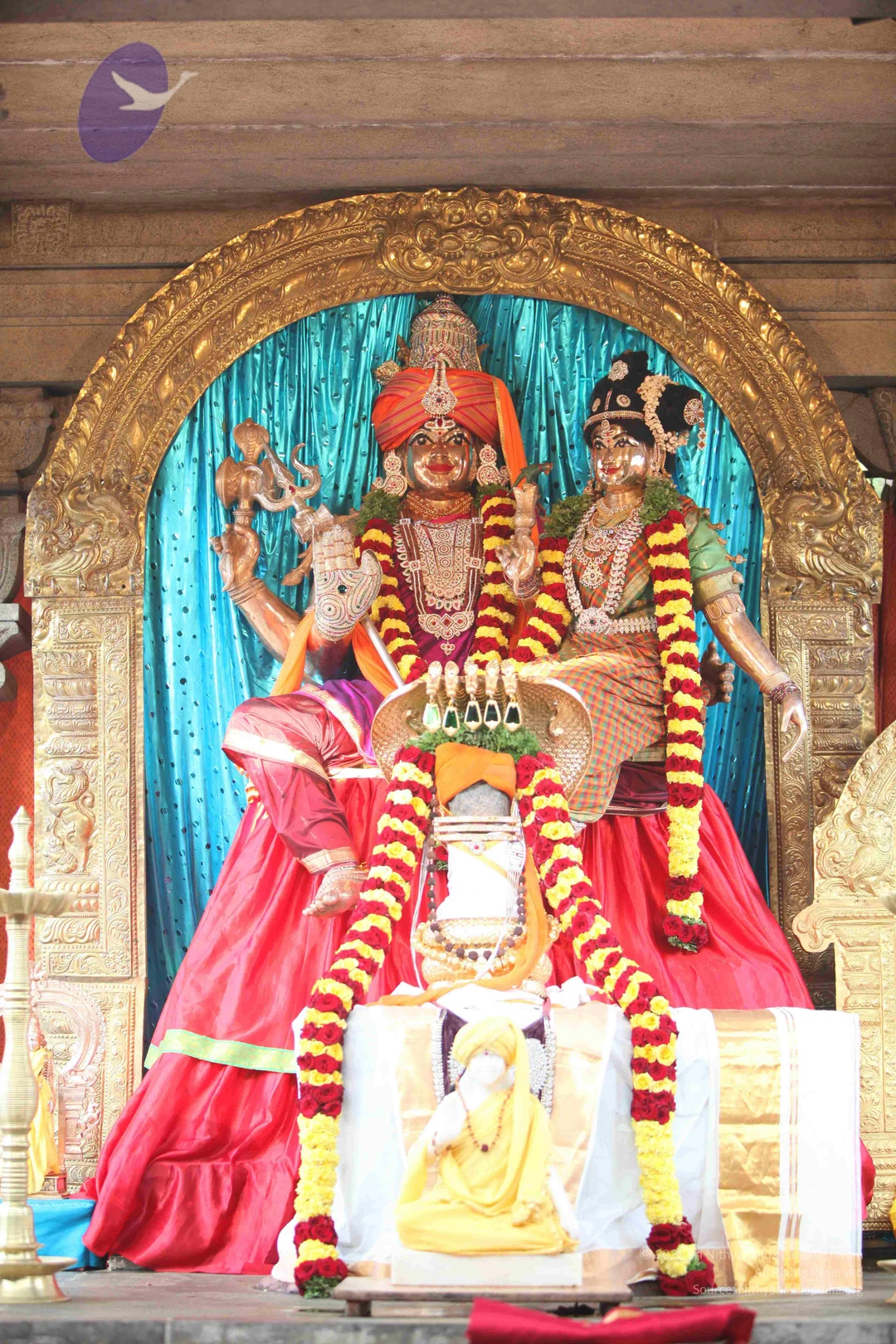
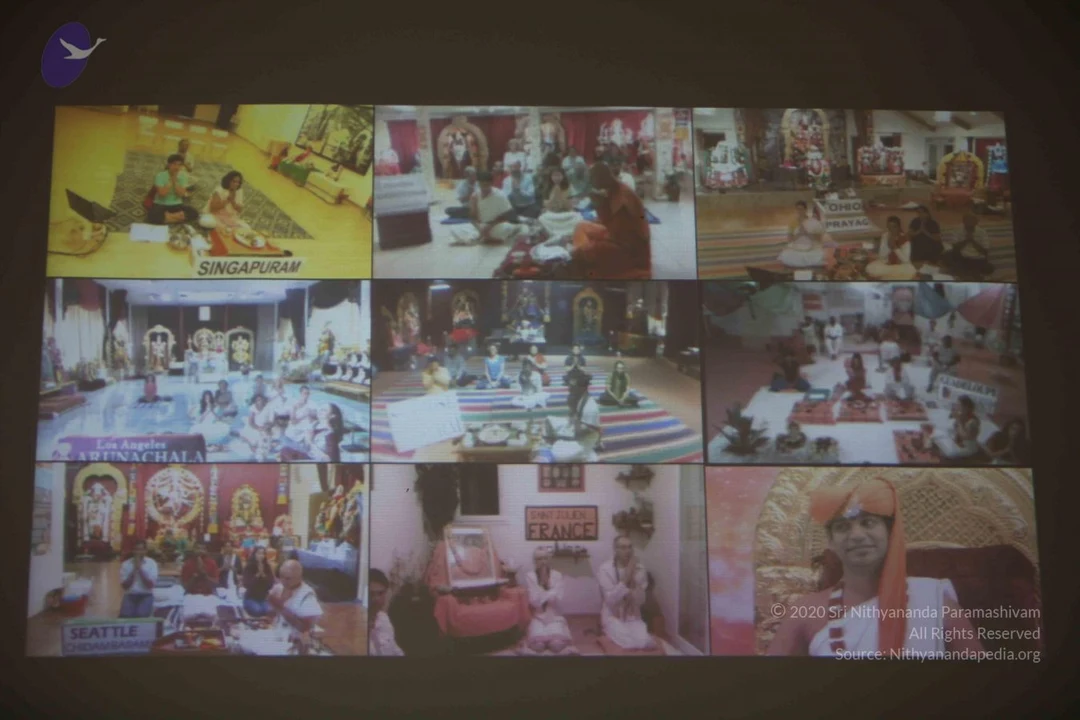
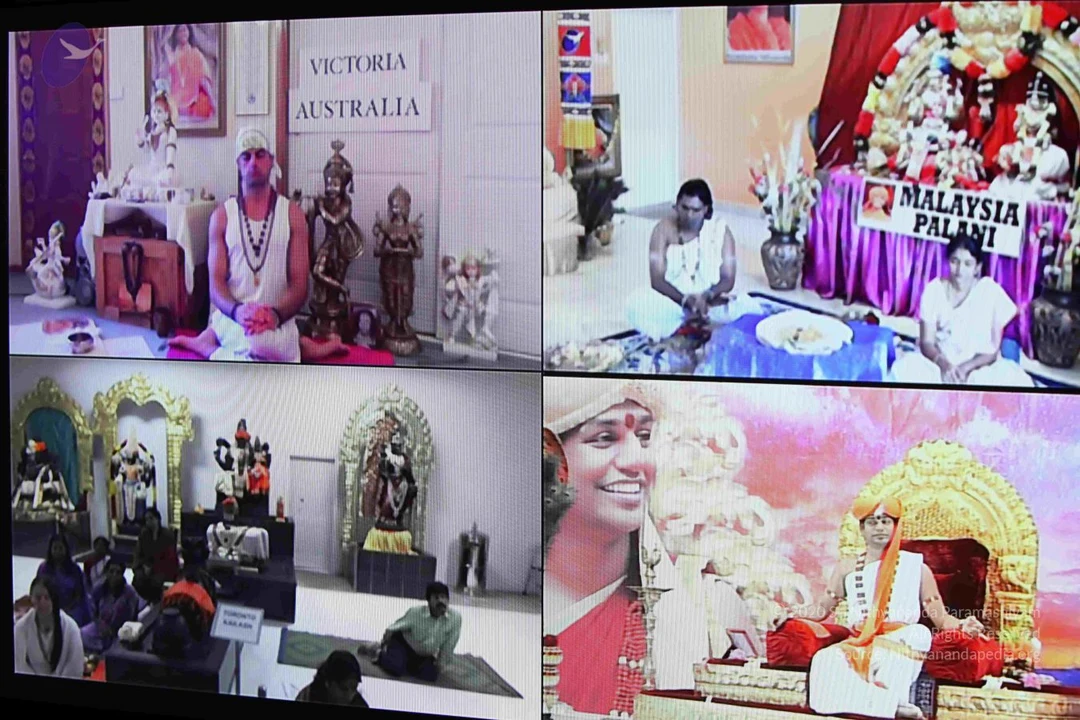
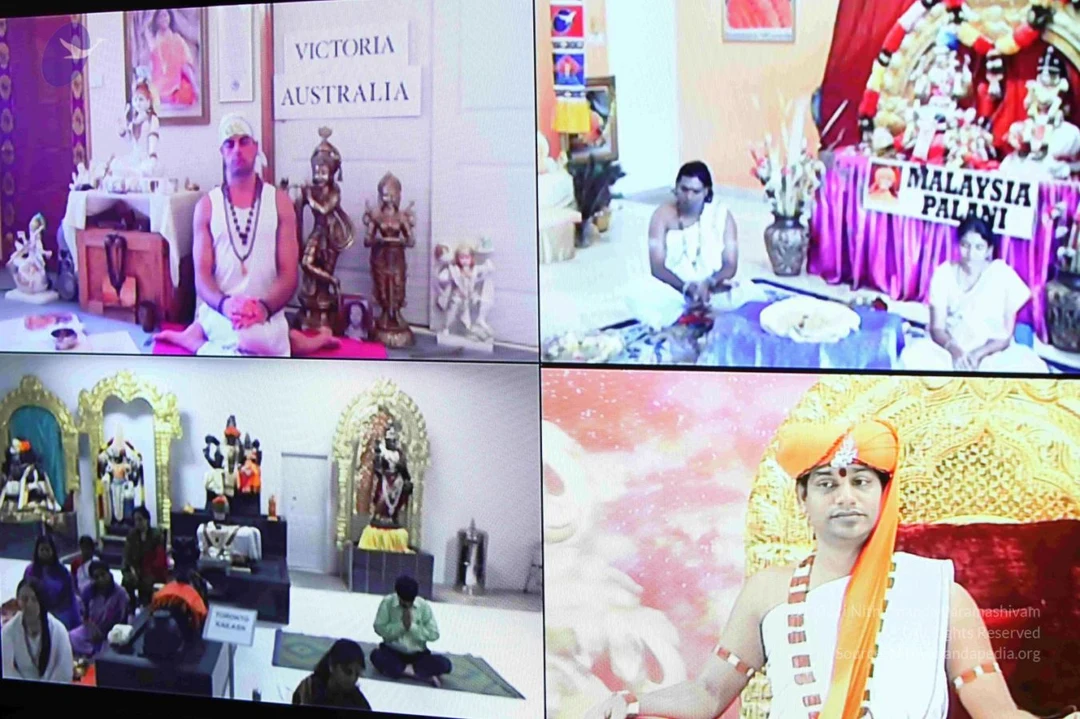
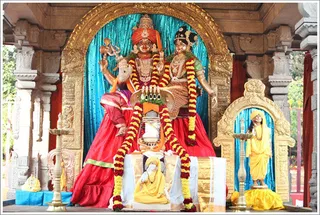
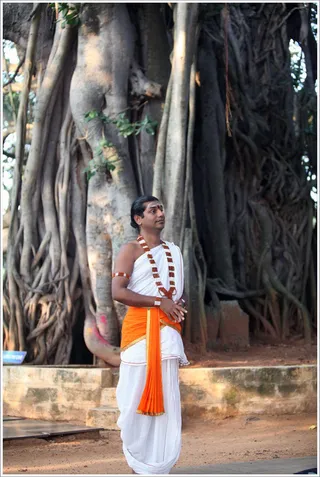
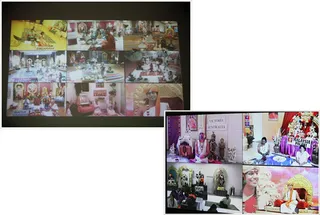
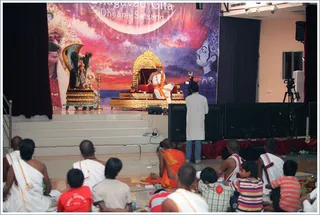
Backlit silhouette photograph of a carved or sculpted figure with raised arms and an upright object, set against a bright window and a strong sun flare. The figure is dark and largely featureless, shown in outline only. No visible people; appears to be a statue or deity murti with a ritual implement against sunlight.A temple shrine scene with a large central deity murti of Hanuman-like form, orange-red crowned figure holding a mace, beside a companion deity figure in red and gold, both draped in red-and-yellow marigold garlands. A small glass-enclosed item sits at the center. In front, a seated white-and-yellow robed figure stands on a platform, and a smaller golden statue in yellow robes stands on the right within a gilded arch. Turquoise drapes frame the background, with brass oil lamps on stands flanking the shrine. No physical people are visible; the figures are statues and murtis.A standing man in white dhoti and white upper cloth with an orange-saffron shawl draped over one shoulder and down the front, wearing a long rudraksha-style mala of brown beads with a central ornament, and a red-tipped armband. He has short dark hair, a tilak mark on his forehead, and is looking upward with hands clasped at his waist. Behind him is a large banyan tree with thick, twisting aerial roots and a low stone platform with a plastered base. The setting is outdoors on red earth.A two-panel collage of photographs of outdoor shrine scenes. In the left panel, a man in white dhoti and white top with an orange cloth wrapped at his waist stands with hands joined beside a huge banyan tree whose aerial roots spread around its trunk; a blue sign at the lower left reads "DO NOT ENTER THE CAVE". In the upper right panel, a man in white dhoti with an orange cloth at his waist and a white top stands with hands folded before a purple-blue deity murti set on a pedestal under a white arch, surrounded by a large ring of orange marigold-like offerings. The collage shows two physical people, each in white ritual dress with orange waist cloths.A graphic composed of two photographed screens displaying multi-panel grids of video feeds from different locations. The left screen shows a grid of about twelve small panels, with labels such as SINGAPORE and SEATTLE; panels show altars with deity murtis, floral decorations, and seated devotees in white or orange. The lower-right screen shows a grid of six panels labeled VICTORIA AUSTRALIA and MALAYSIA PENANG; one panel shows a person in orange and white ceremonial clothing seated before a flower-decorated backdrop, with deity murtis and kalasha-style offerings in other panels. The imagery depicts remote satsang or puja broadcasts shown on screens, and the people visible are on screens rather than physically present.A photograph of a Bhagavad Gita Dhyana Satsang held in a hall with a large backdrop reading "Bhagavad Gita Dhyana Satsang" above a sunset scene showing a golden throne and a crescent moon. A seated figure in white and red ritual clothing with a turban-like head covering sits on the golden throne, while a standing man in a light grey shirt and dark trousers faces the stage near a video camera on a tripod. In the foreground, about a dozen seated devotees, mostly in white dhotis and shawls, face the stage, including a monk in saffron robes and several children in red and colourful clothes. Statues and painted deities flank the backdrop.

Temple

12 photosSource gallery
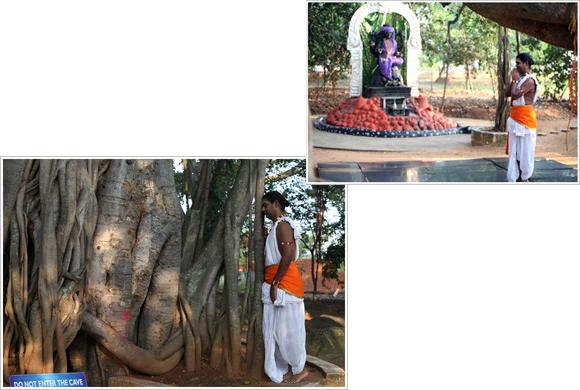
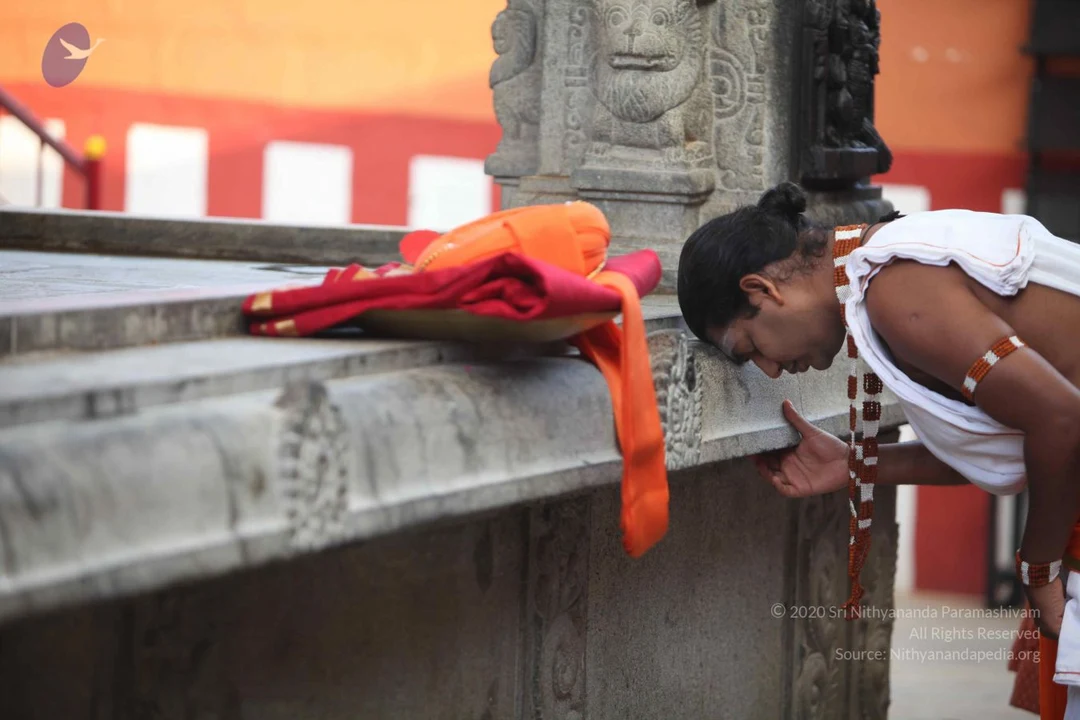
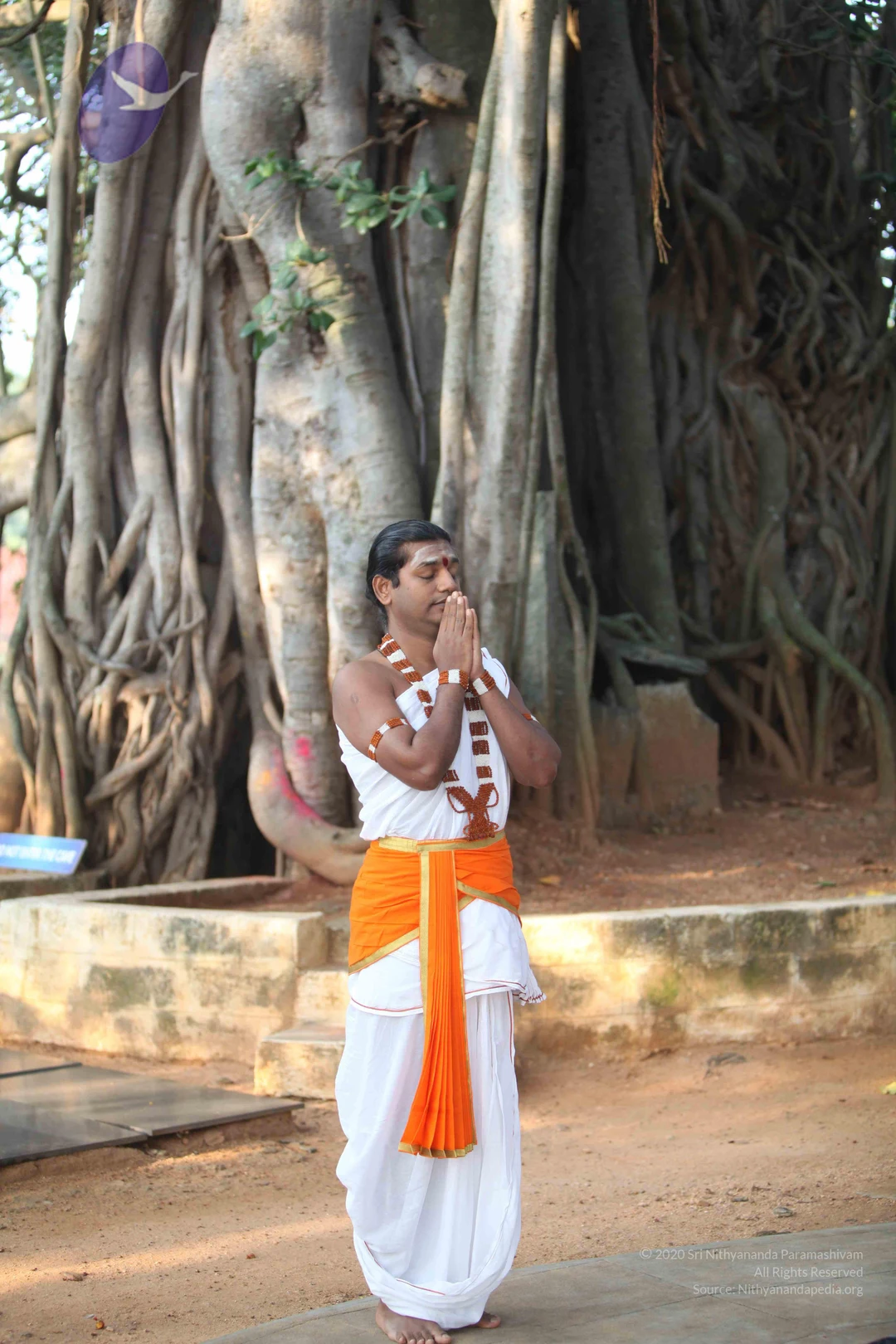
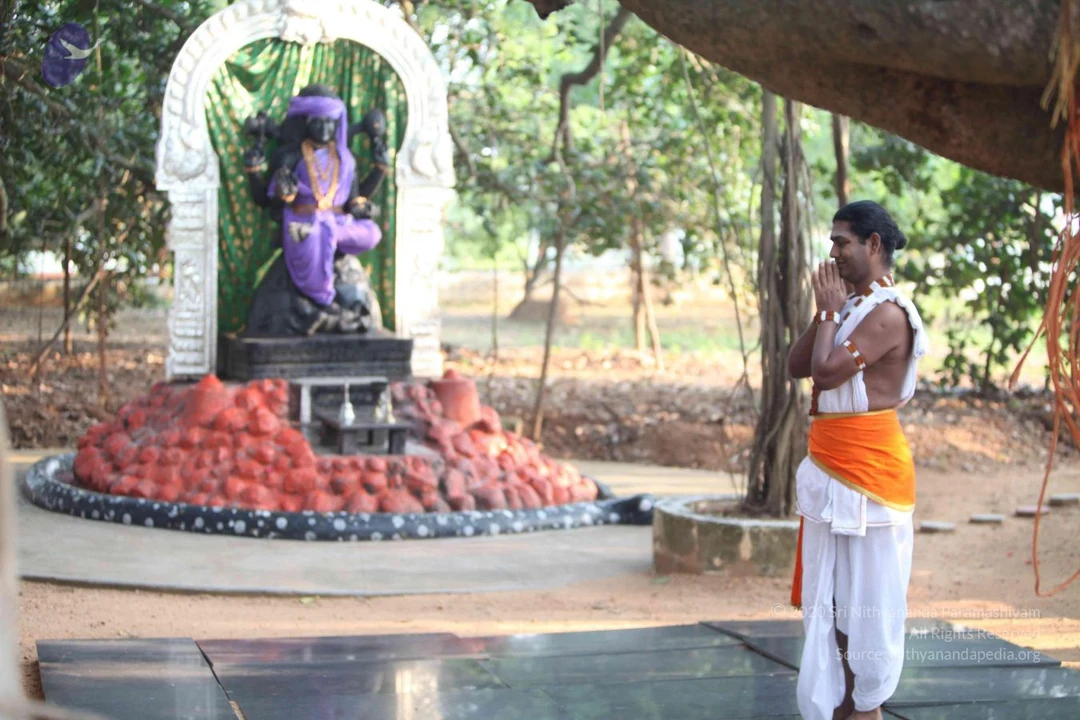
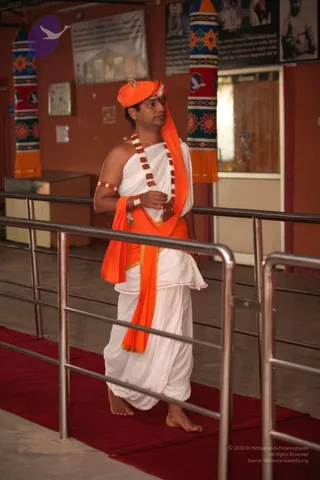
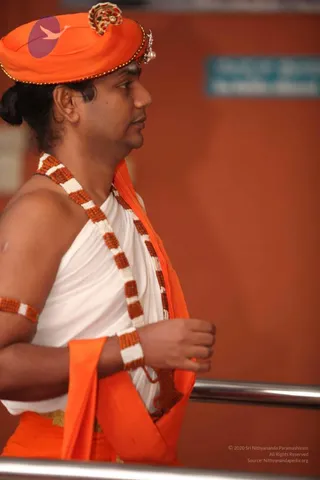
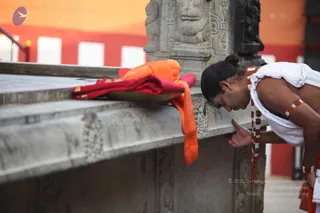
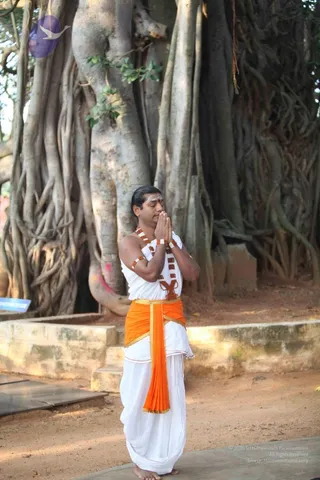
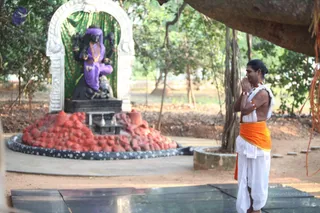
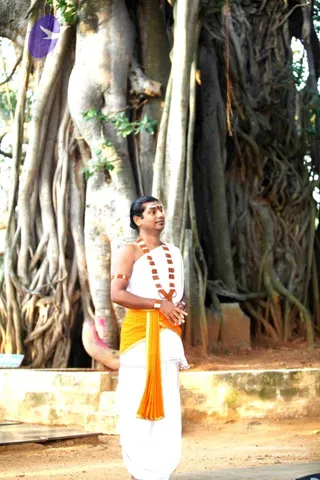
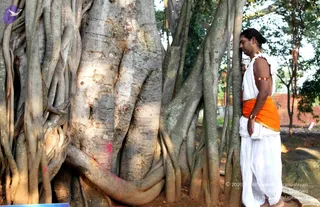
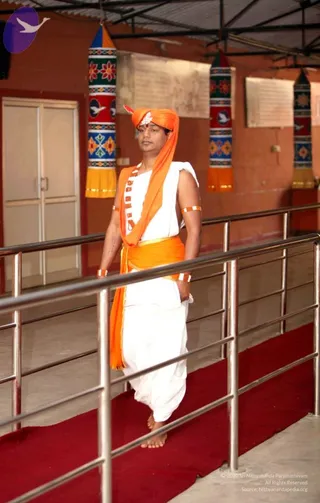
A man in an orange turban with a small gold ornament walks barefoot along a red carpet inside a hall with a wooden-looking floor and metal railings. He wears white dhoti-style clothing, a long orange shawl draped over one shoulder and an orange waist sash, plus a white-and-brown rudraksha mala around his neck and matching beaded bracelets on his arm. He holds a bead strand in one hand and looks to the side. Behind him stand tall decorative pillars with colourful floral and geometric patterns, a wall clock, and framed black-and-white photographs. The scene is a photo of one person walking in a formal procession-style setting.Side profile photograph of a man standing in front of an orange-red wall. He wears a bright orange turban-style head covering decorated with a gold and red ornament and a pearl pin. Around his neck and across his arm are long rudraksha-style beaded malas alternating orange-brown and white beads. He wears white draped cloth over his bare shoulder with an orange shawl wrapped across his body and a gold-trimmed orange garment at the waist. A metal railing runs along the lower right, and a blue sign is visible in the blurred background. The appearance matches the a person cues of orange ornate attire, a crown-like headpiece and rudraksha malas, but the face is not certain, so this is a probable identification from appearance only.A photograph of a man in a white dhoti and white upper cloth bending forward with his forehead touching a stone step beside a carved stone pillar. His hair is tied in a topknot and he wears a rudraksha mala around his neck and beaded bracelets on his wrist. Folded red and orange cloth lies on the ledge beside him. Behind the pillar a carved lion face and figurative sculptures are visible against an orange and red painted wall. The figure's gesture suggests obeisance or prostration at a temple threshold. Identity is not established from appearance.A photograph of an outdoor temple courtyard with a grey stone pillar and corrugated roof. In the foreground a white-draped Shiva lingam is decorated with a golden snake hood and a garland of marigolds and red flowers. Beside it sits a small yellow-robed statue with folded hands and a brass oil lamp stands on the stone floor. At left a large red-robed deity figure is partly visible. On the right, a man with shaved head wearing white dhoti and orange-trimmed shawl stands at the doorway holding an orange cloth bundle, looking up. A framed portrait hangs on the orange wall, and a green-and-blue signboard is visible.A man stands barefoot on a stone platform in front of a large banyan tree with sprawling aerial roots. He wears a white dhoti with an orange-and-gold bordered sash, a white upper cloth draped over one shoulder, and multiple rudraksha-style beaded malas on his neck, arms and wrists. He has a red tilak on his forehead and presses his palms together in anjali mudra with eyes closed, in a gesture of prayer or reverence. Low stone seating and a blue sign are visible in the background.Outdoors under a large tree, a man stands at right with palms pressed together in namaste, facing a black stone deity murti draped in a purple cloth and garland, set within a white arched niche with a green curtain behind it. The man is bare-chested with a white dhoti and an orange-yellow sash, wears rudraksha-style beaded bracelets and a beaded necklace, and has his hair tied up. In front of the murti is a large mound of red offerings with a small lamp and stone steps, on a black-and-white tiled circular base. Greenery and trees fill the background.

Bhagavad-Gita-Satsang
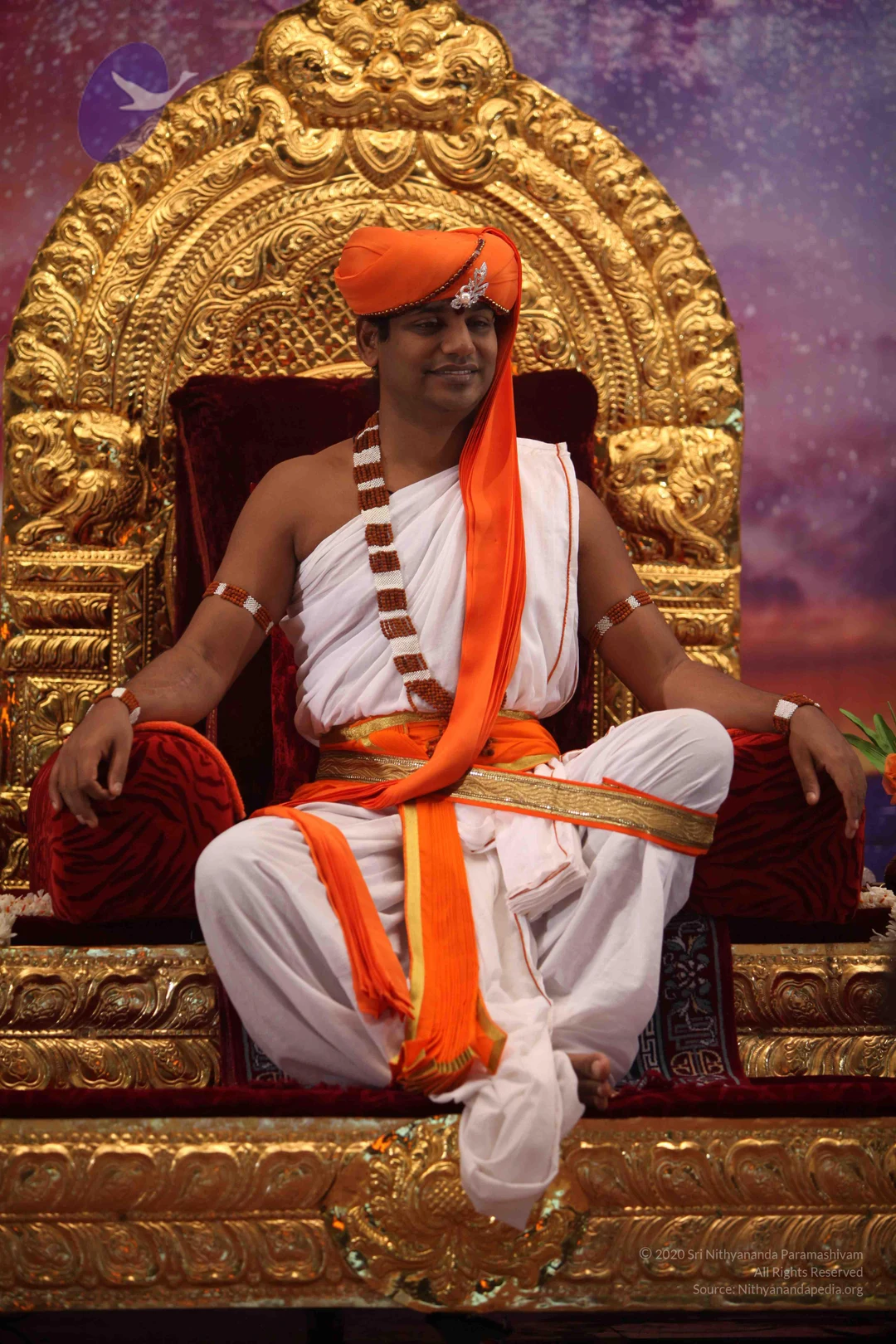
47 photosSource gallery
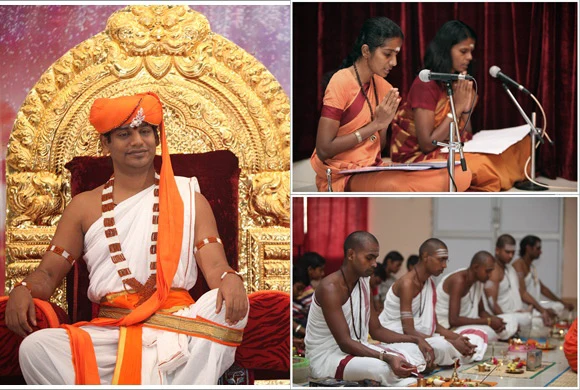
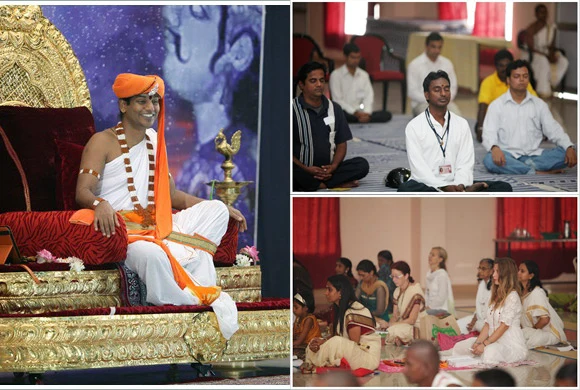
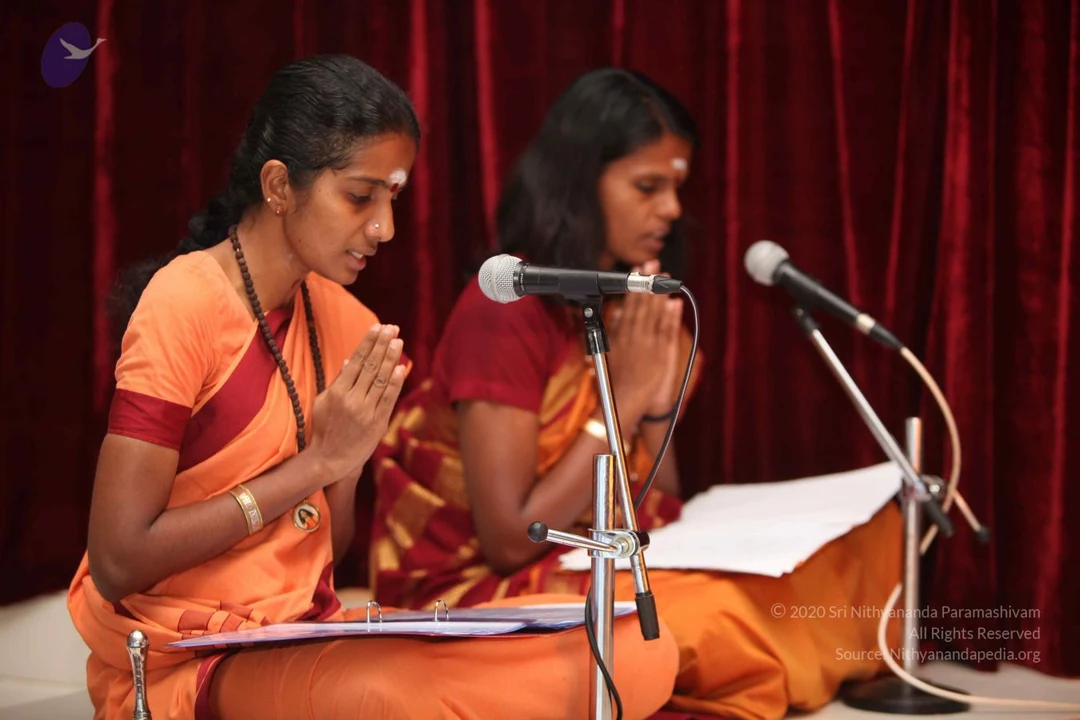
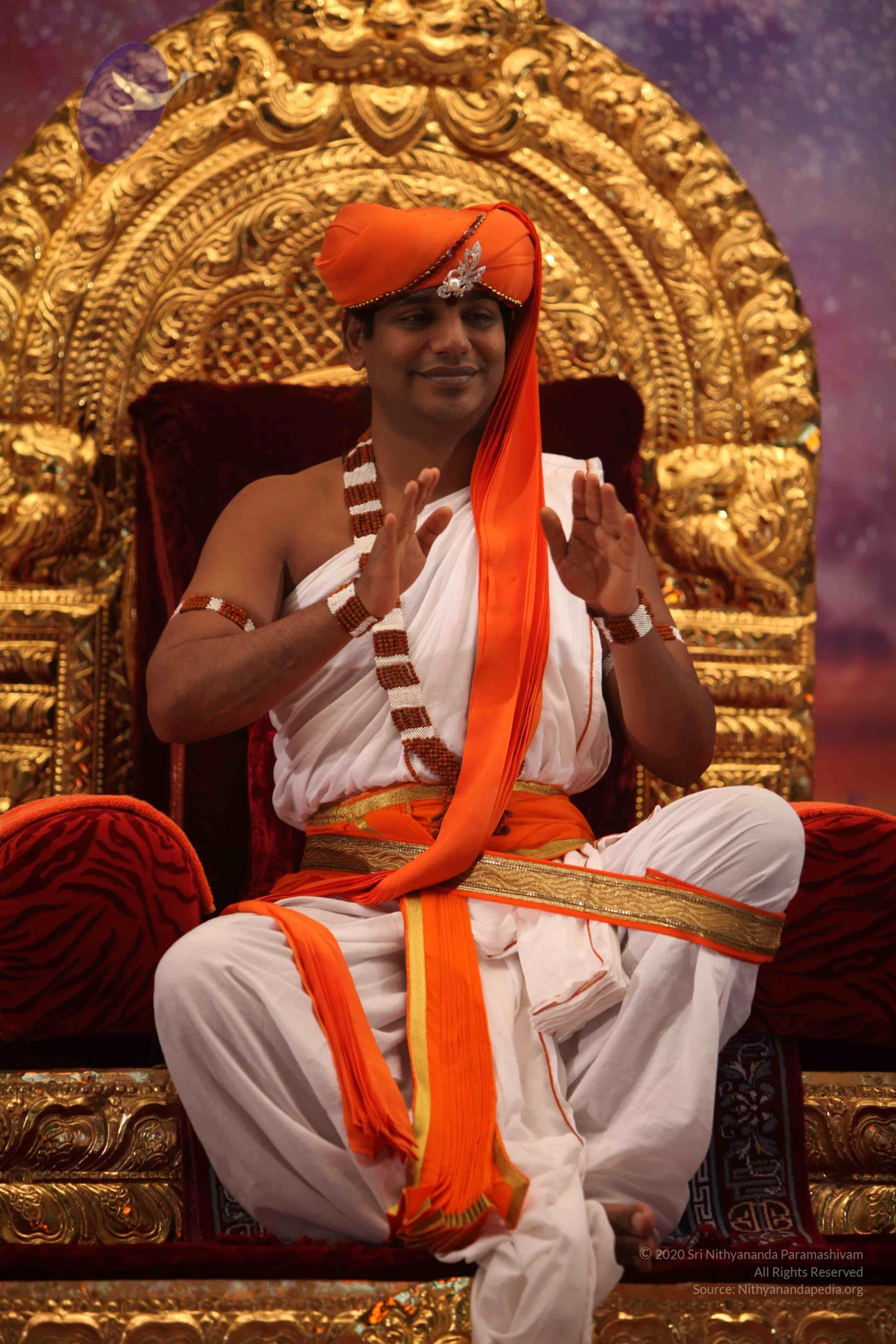
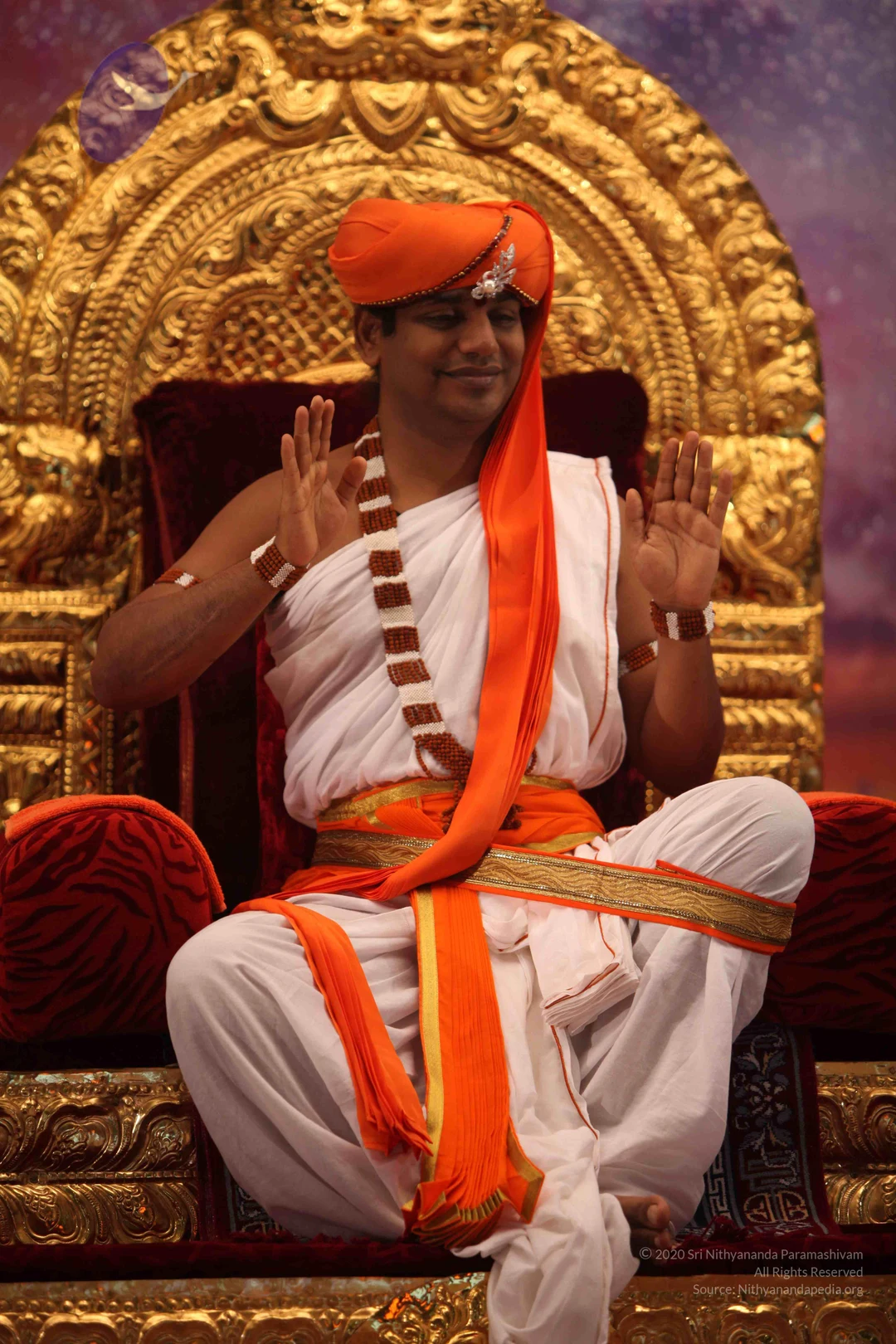
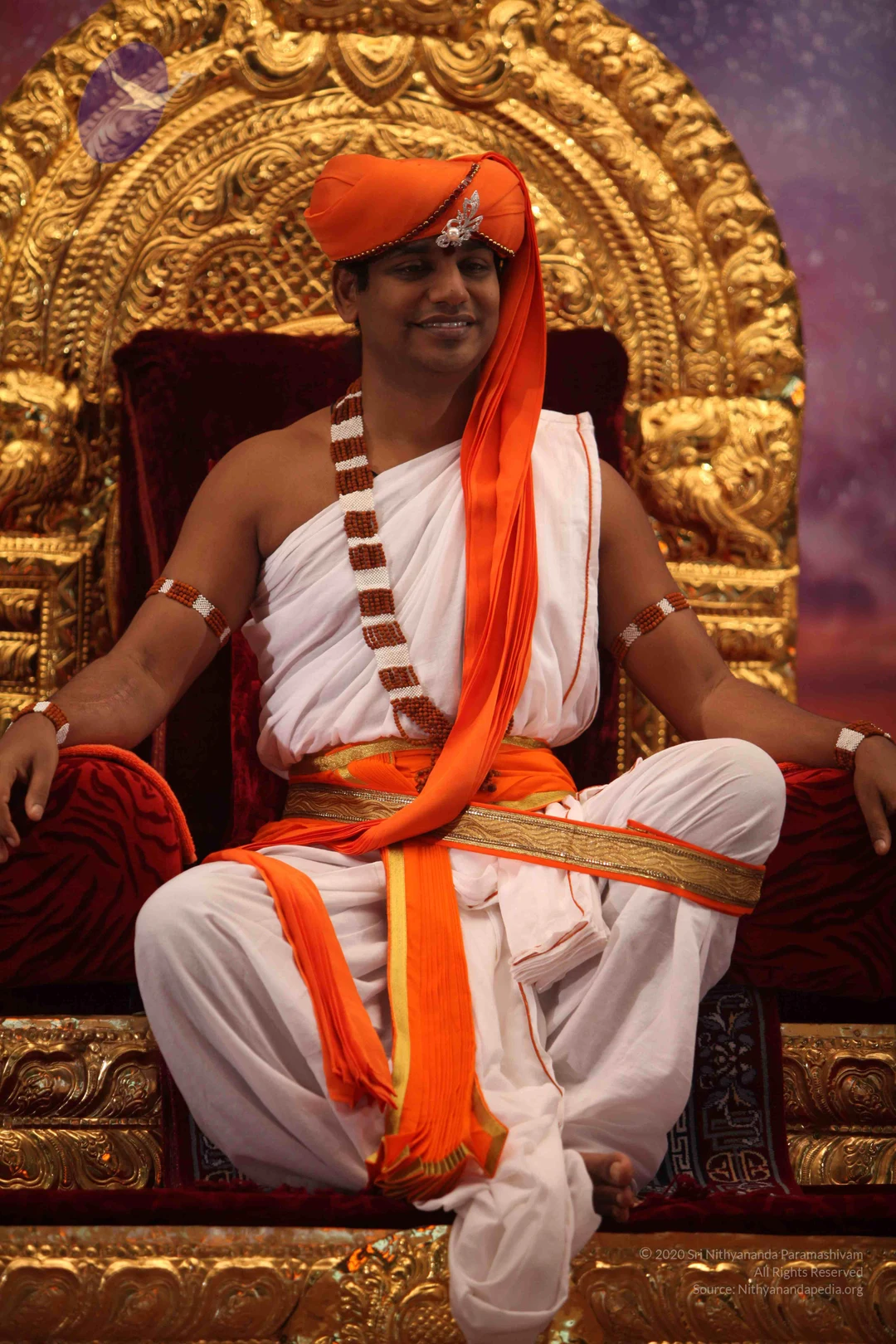
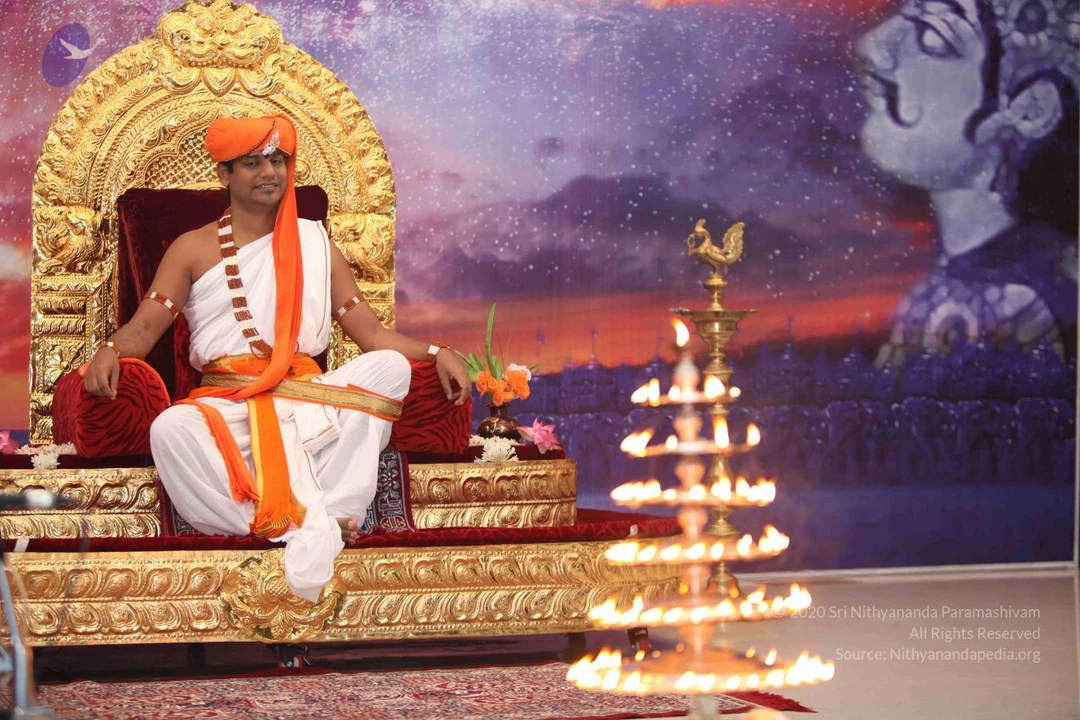
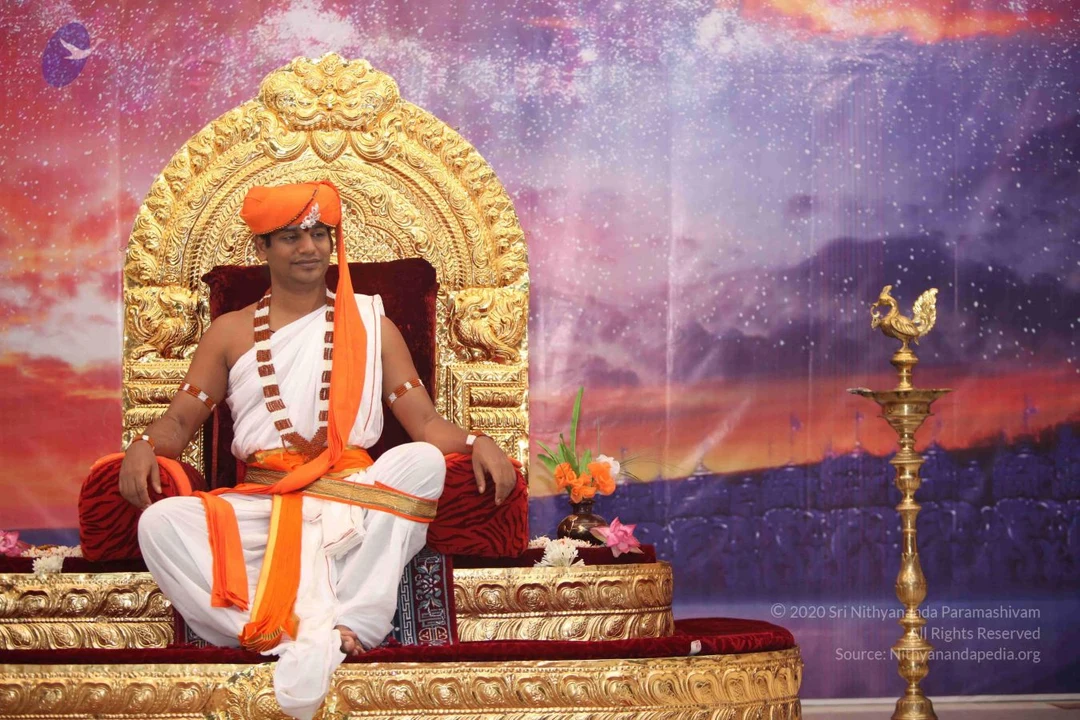
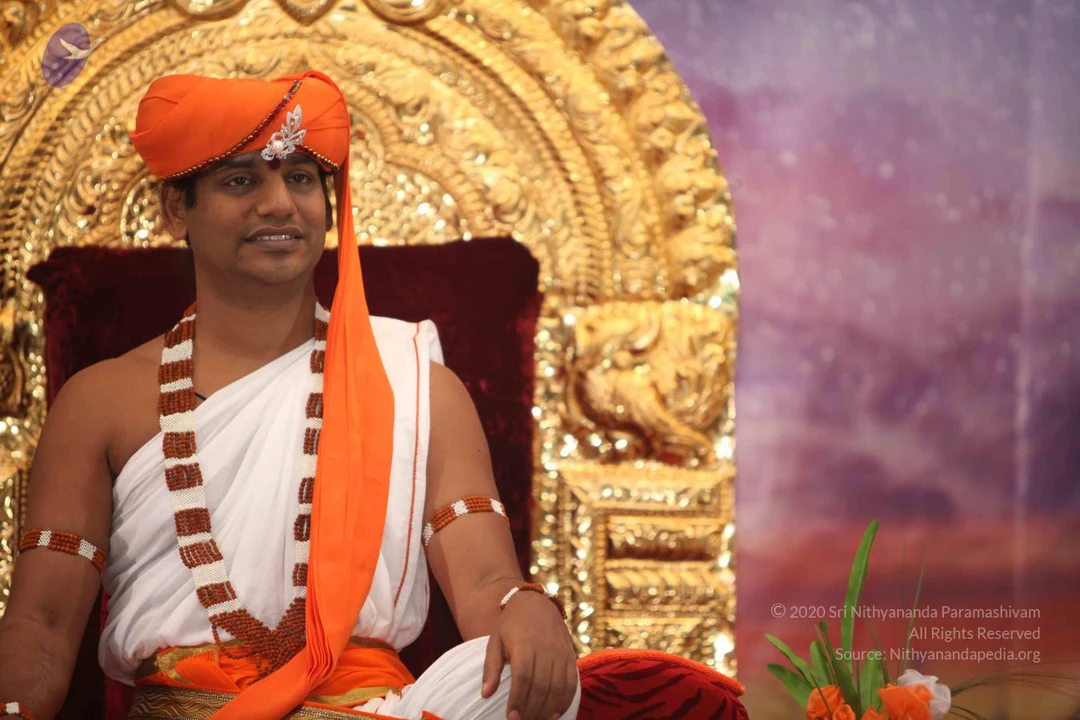
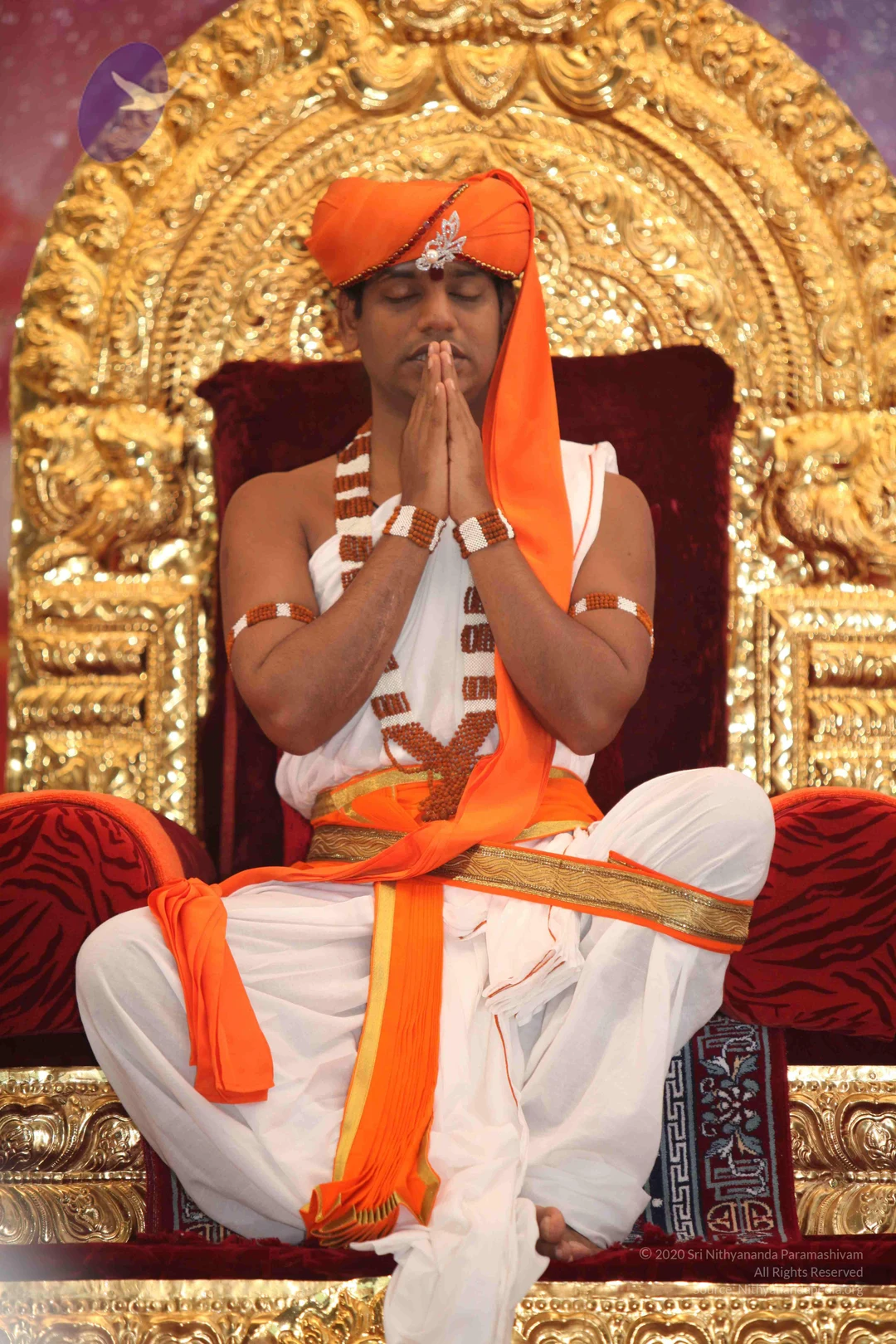
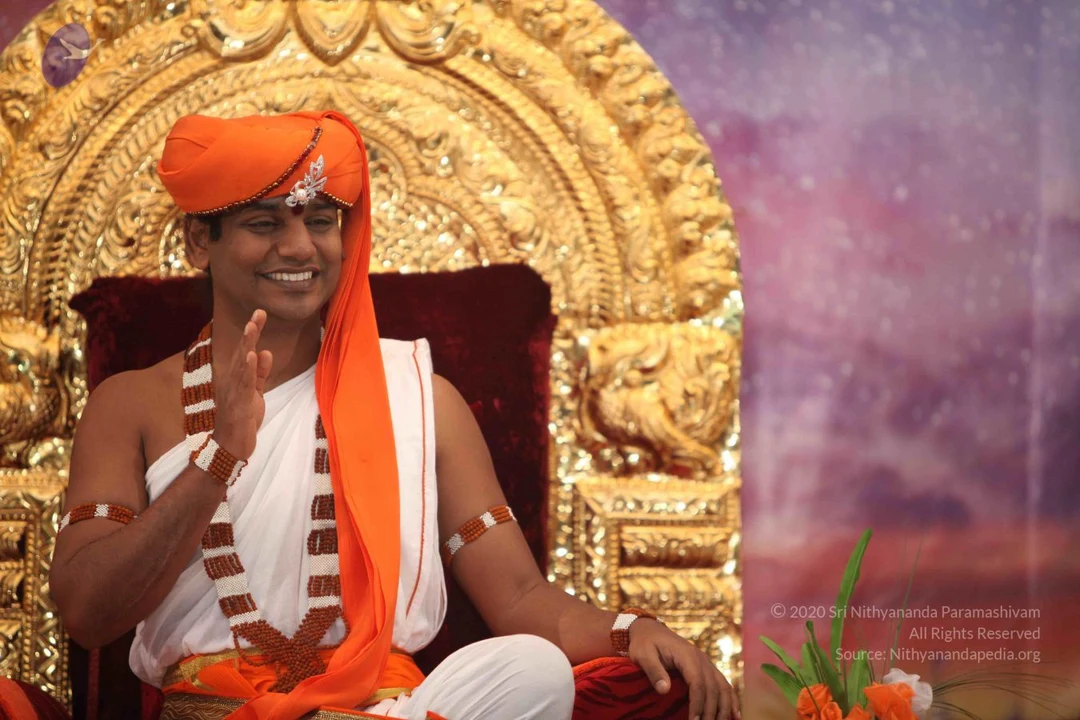
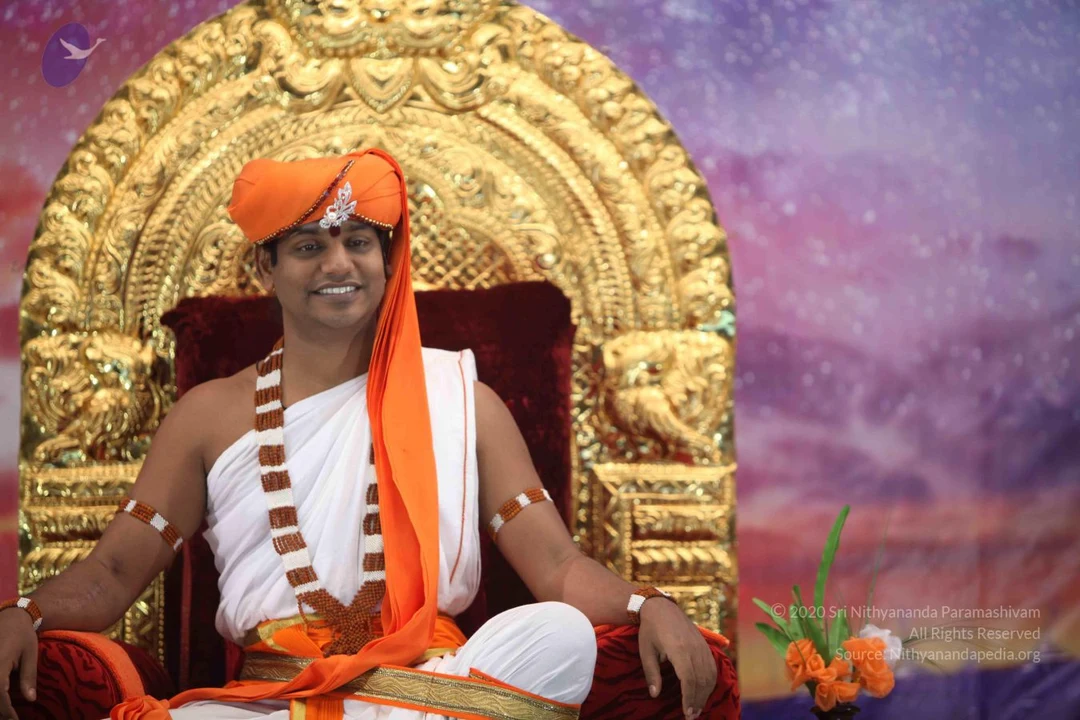
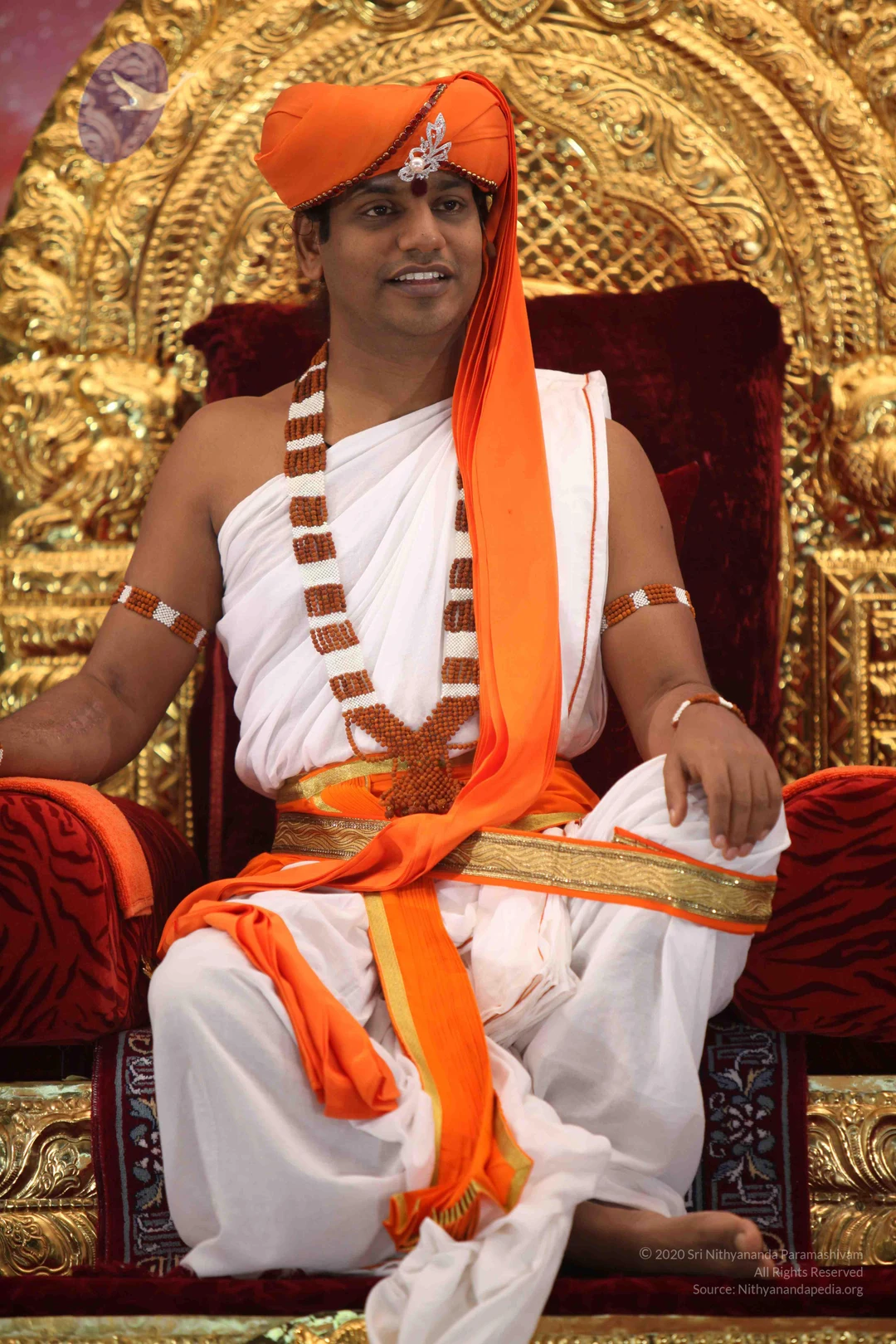
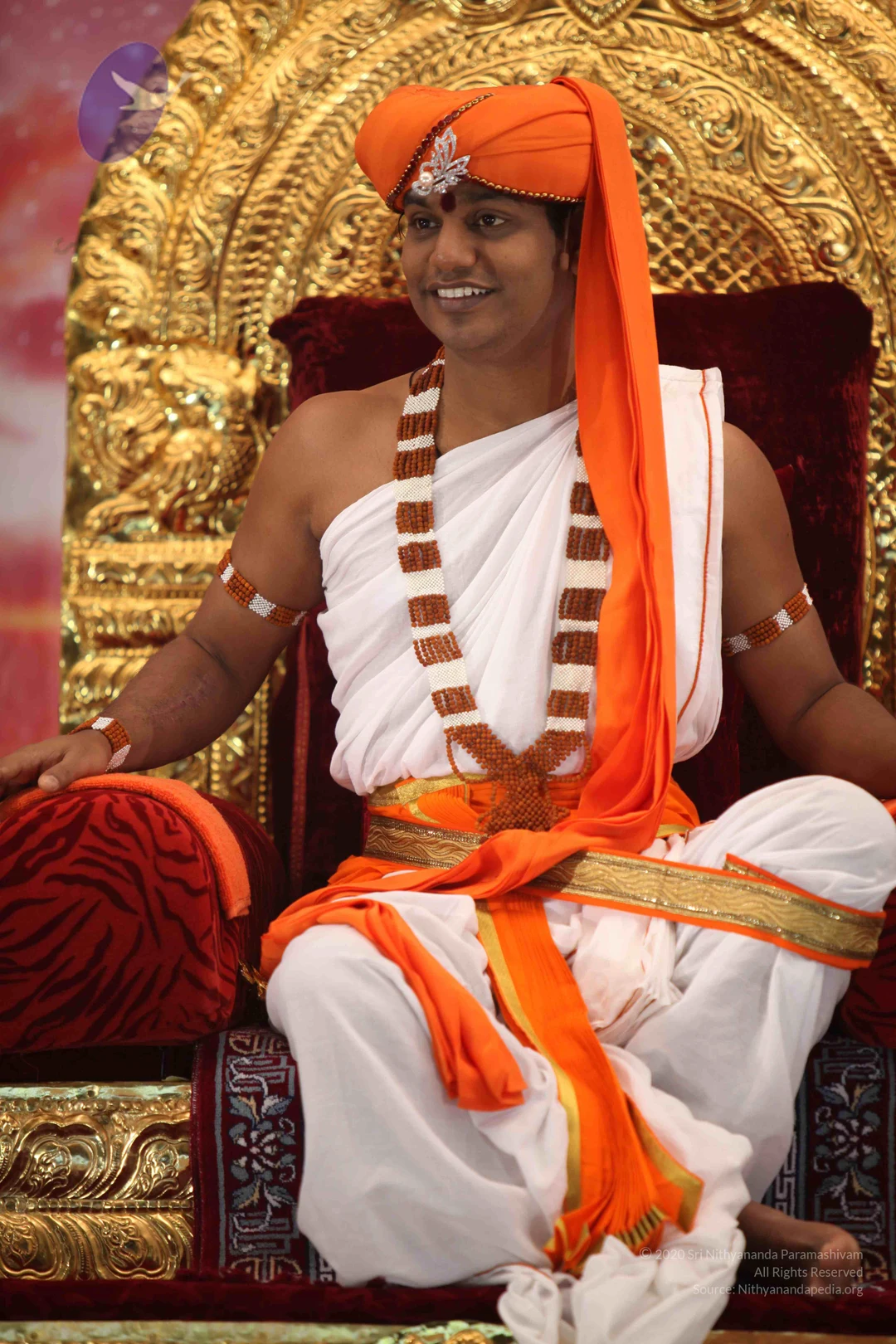
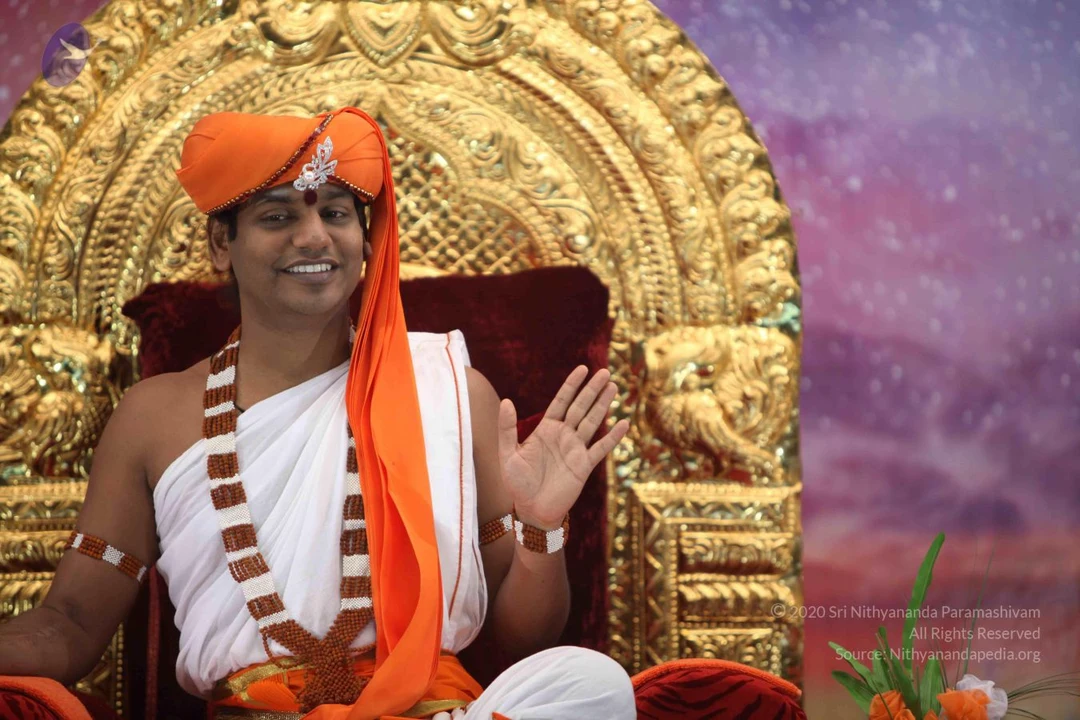
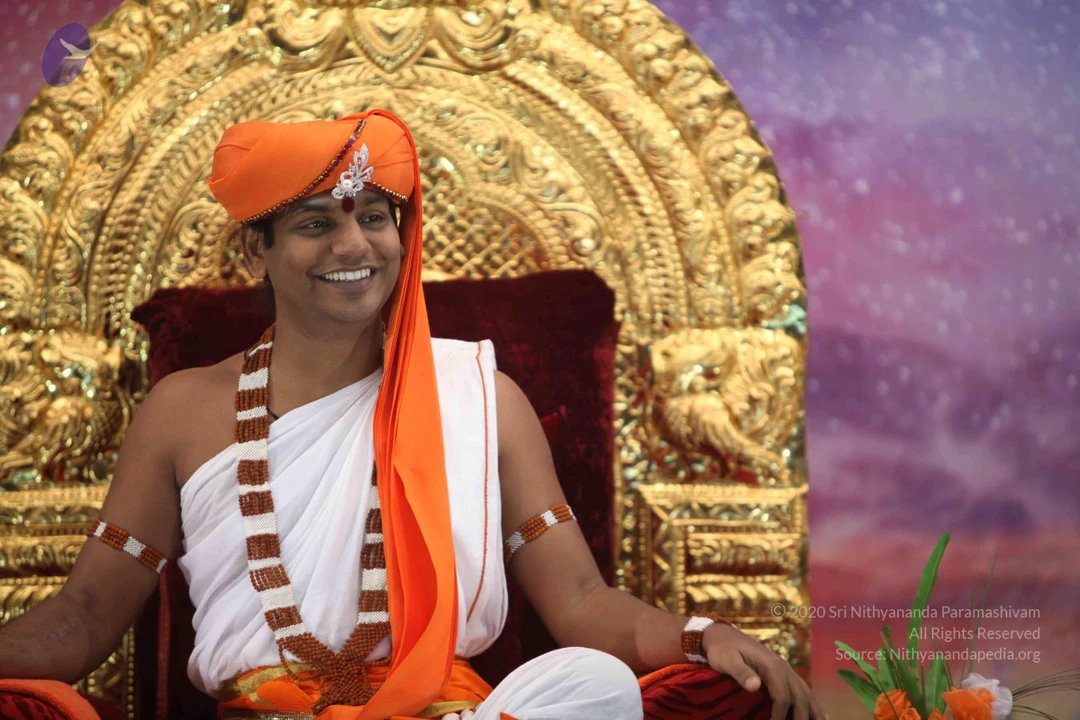
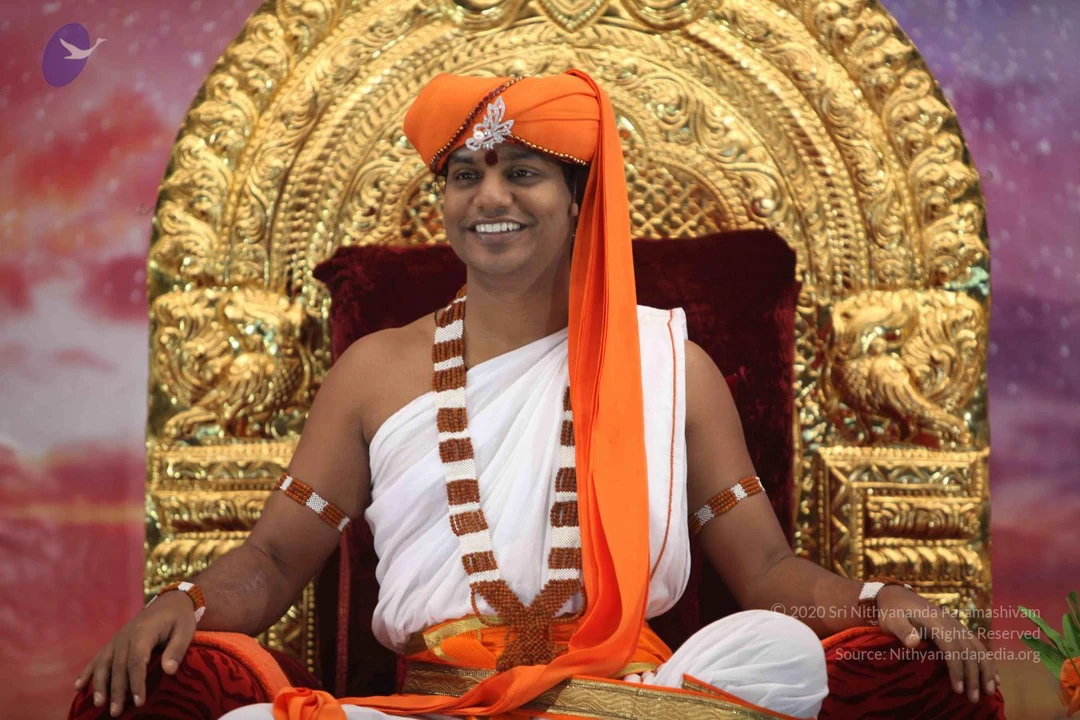
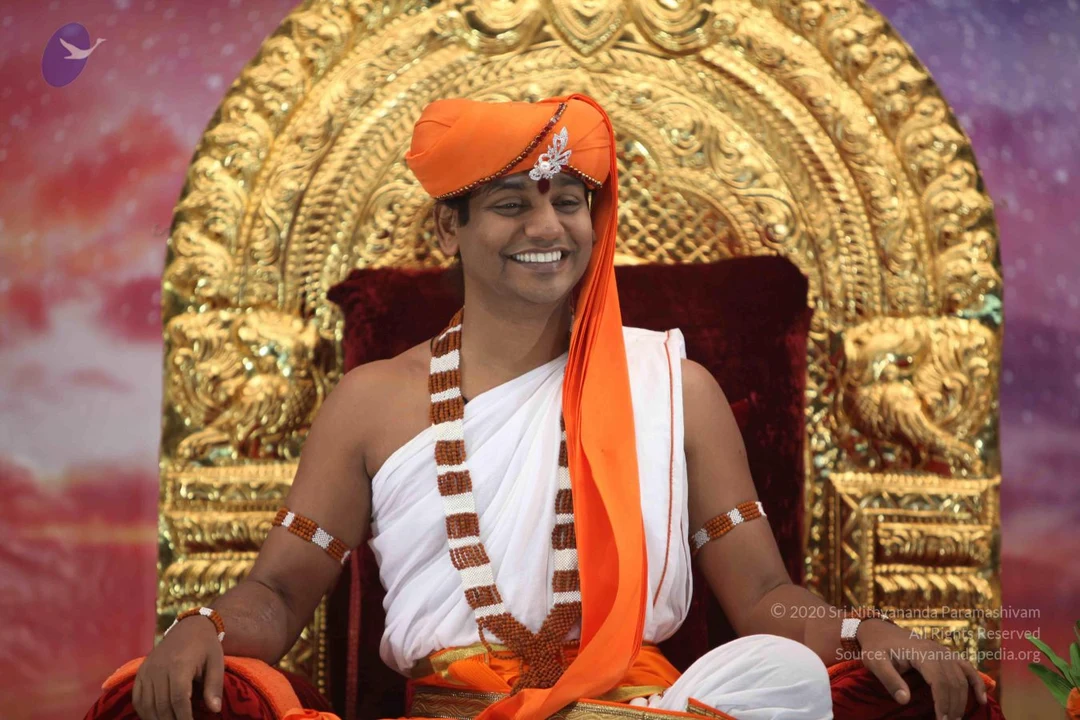
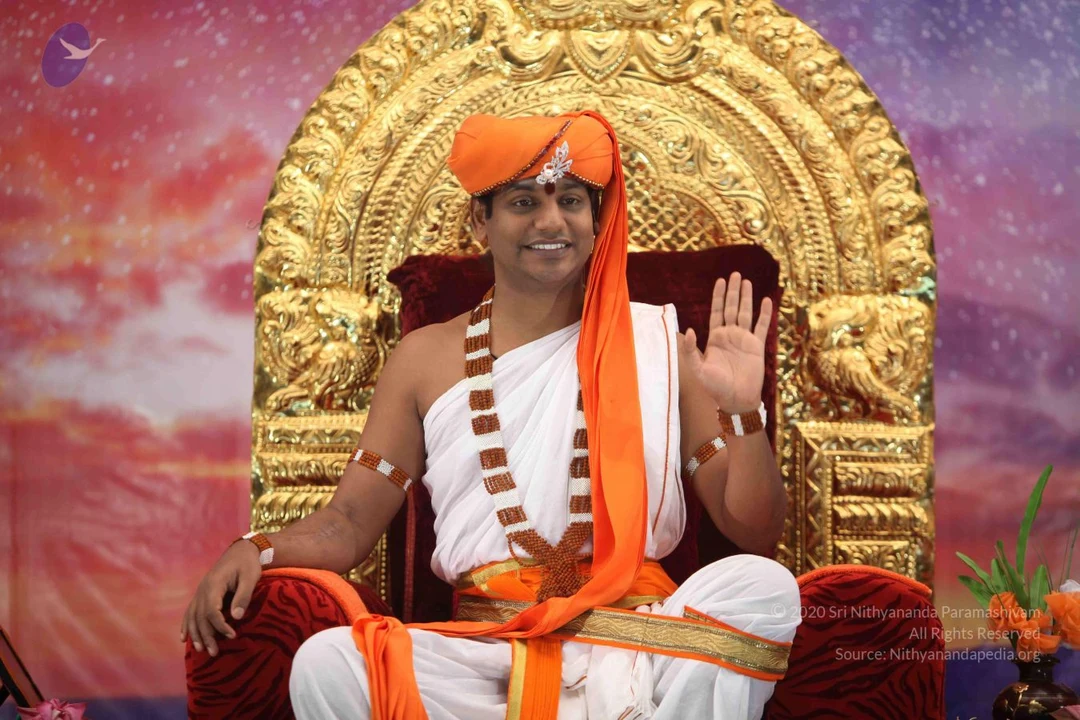
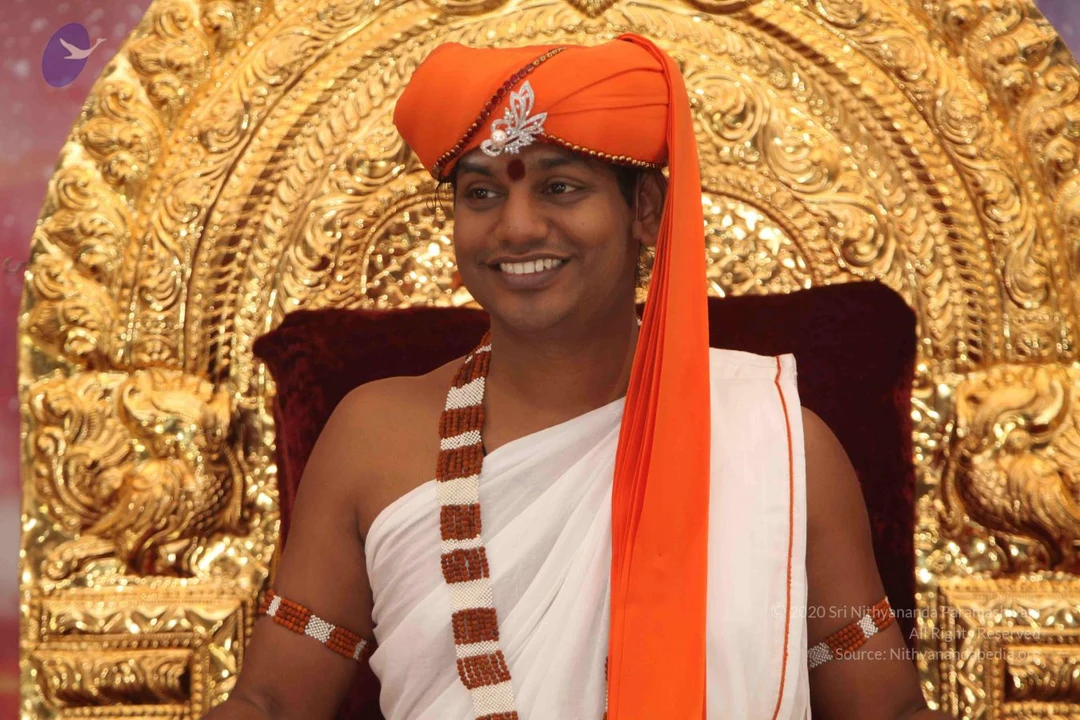
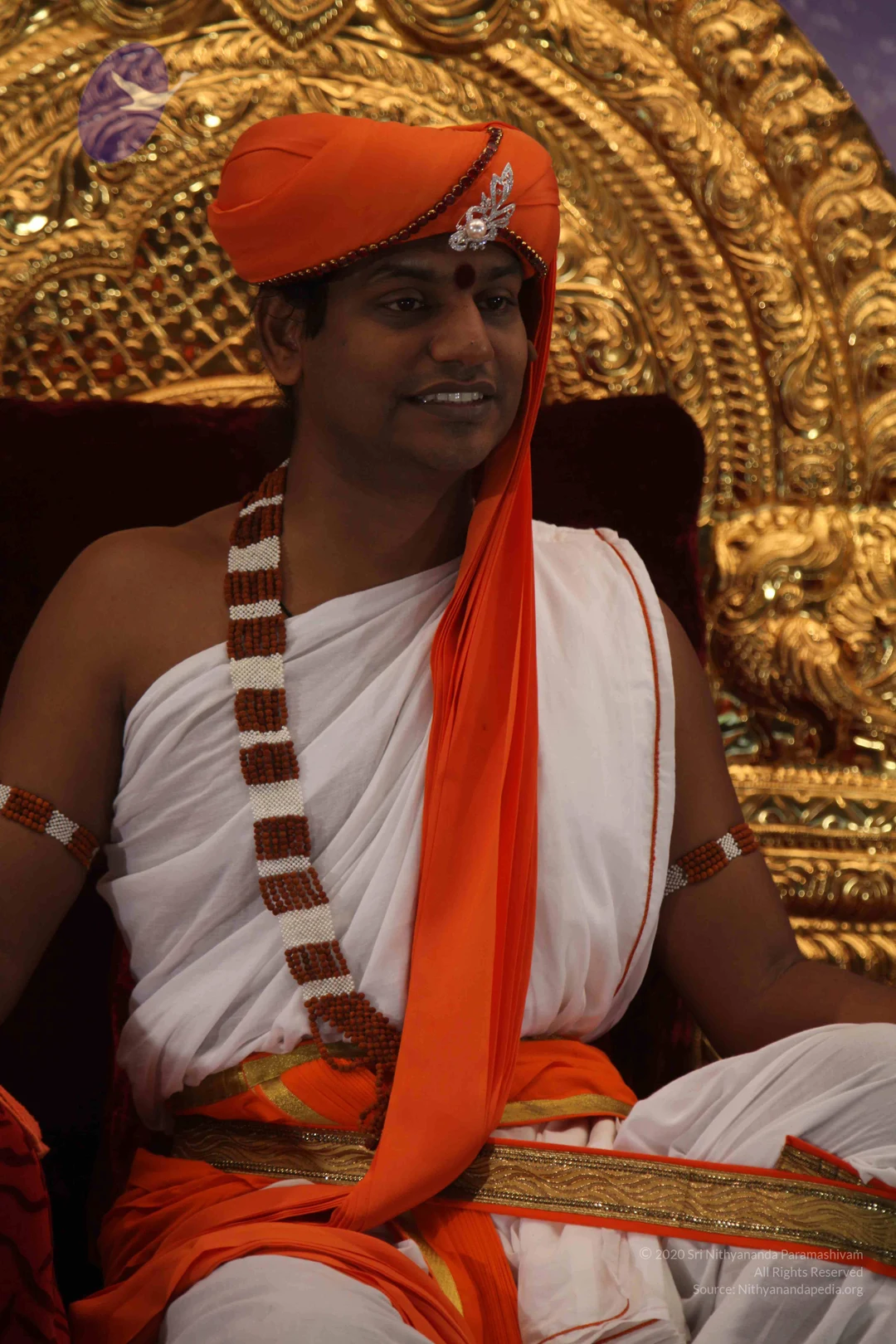
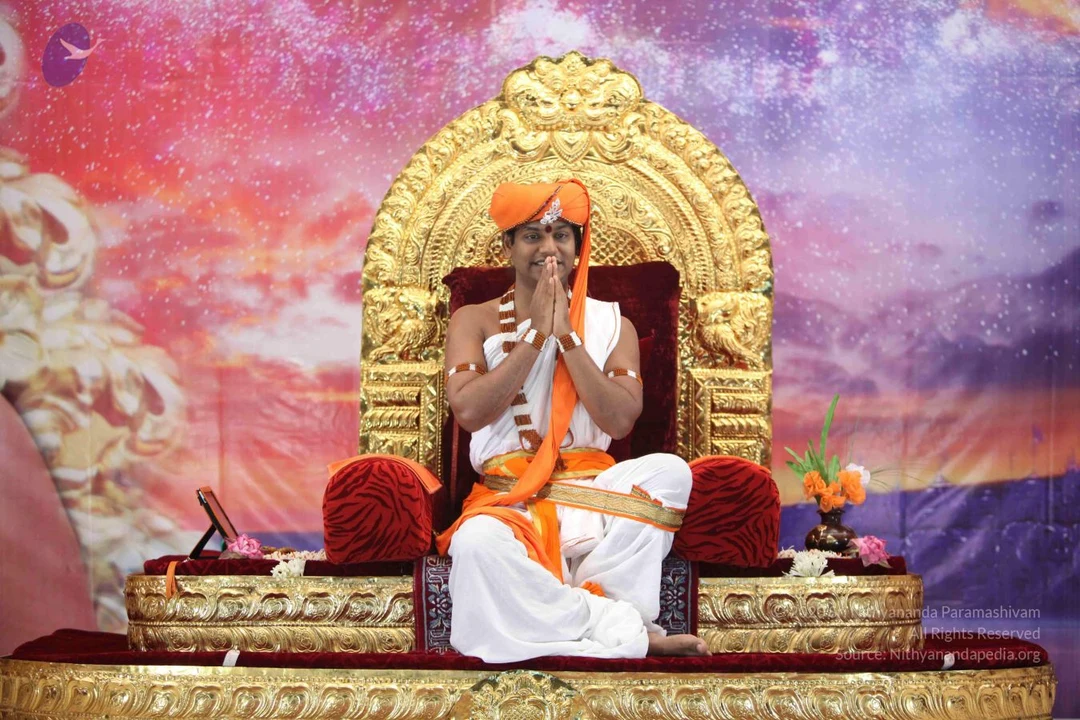
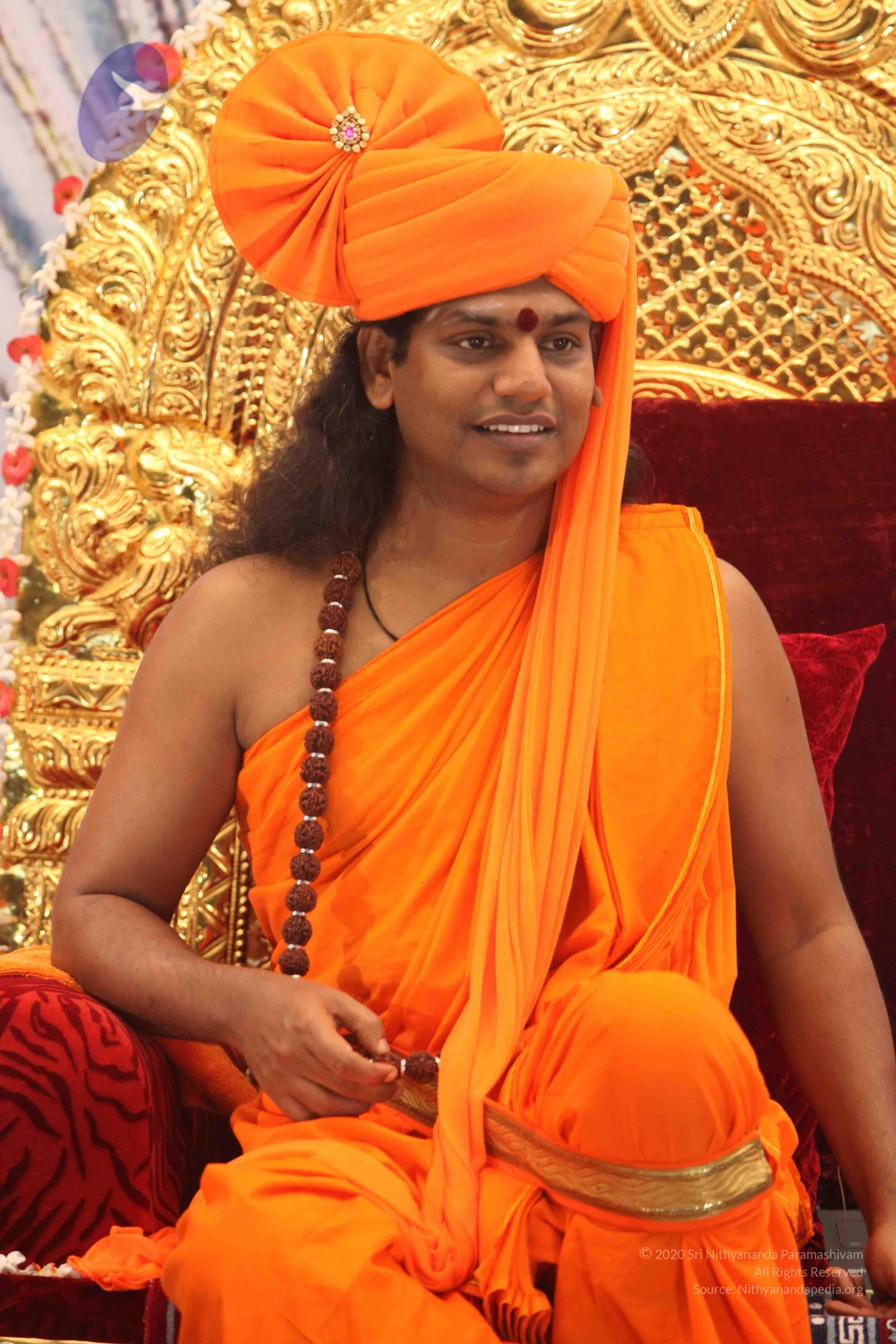
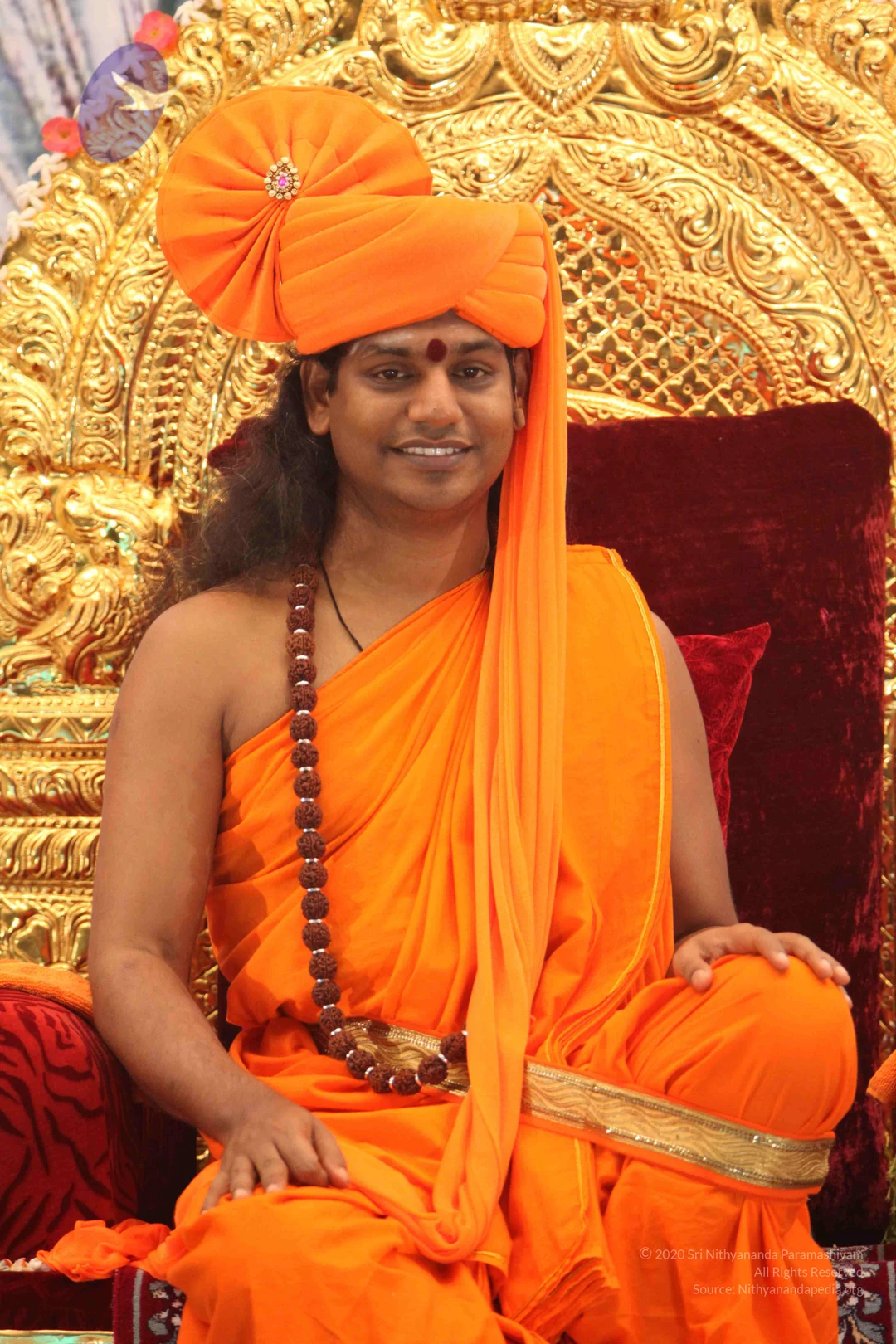
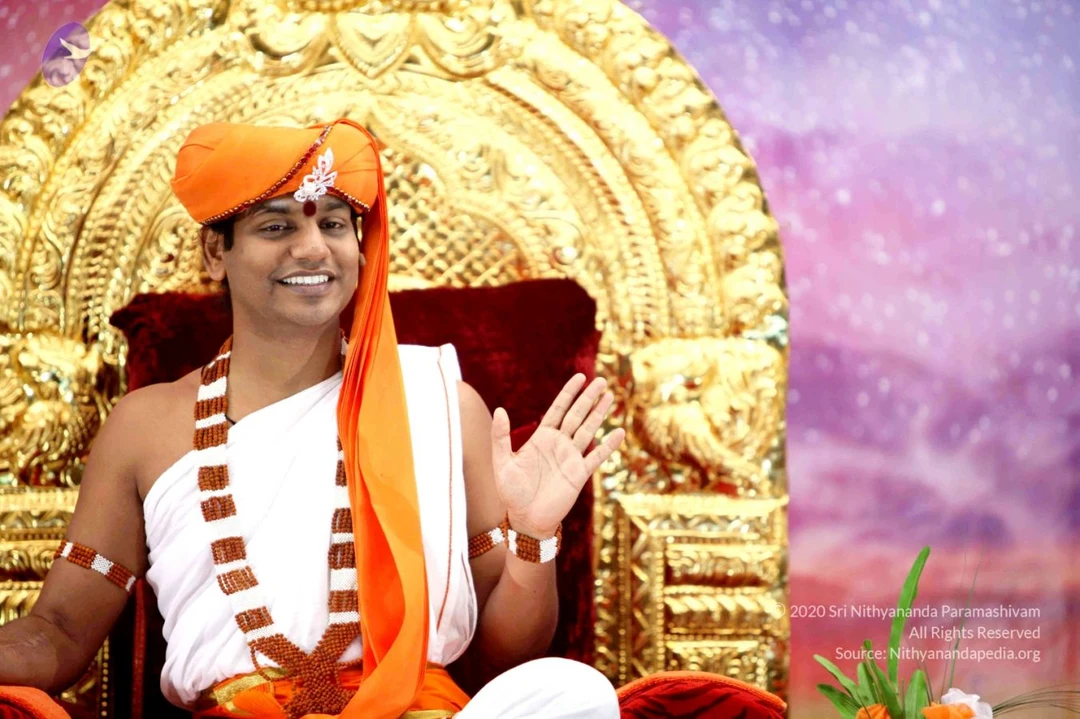
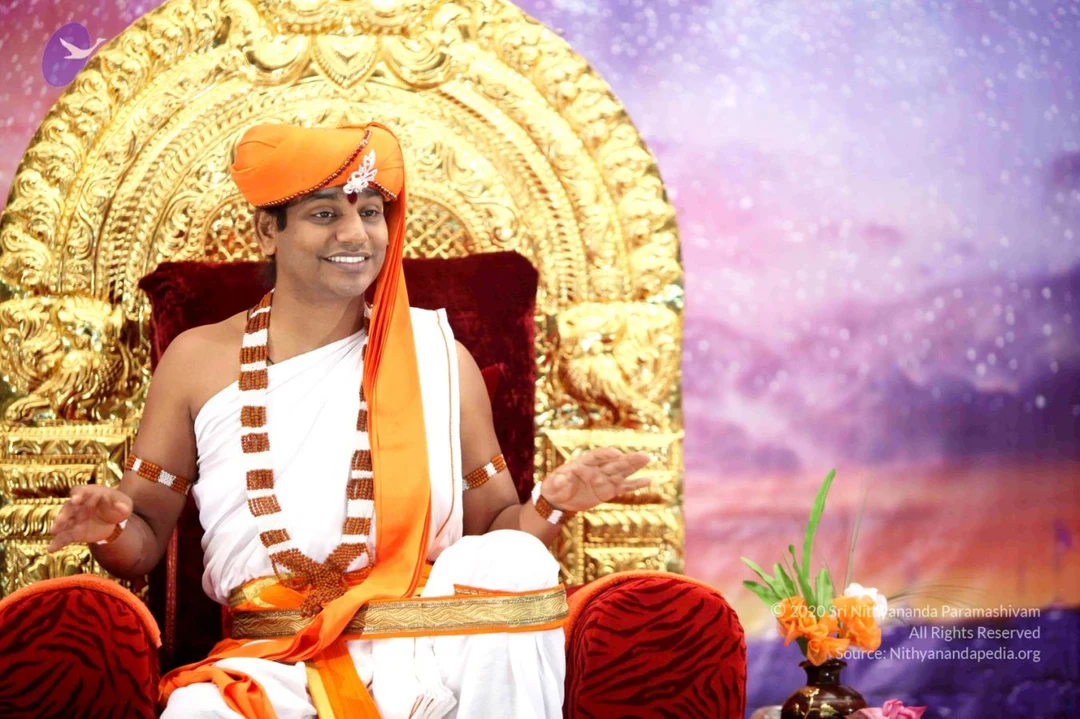
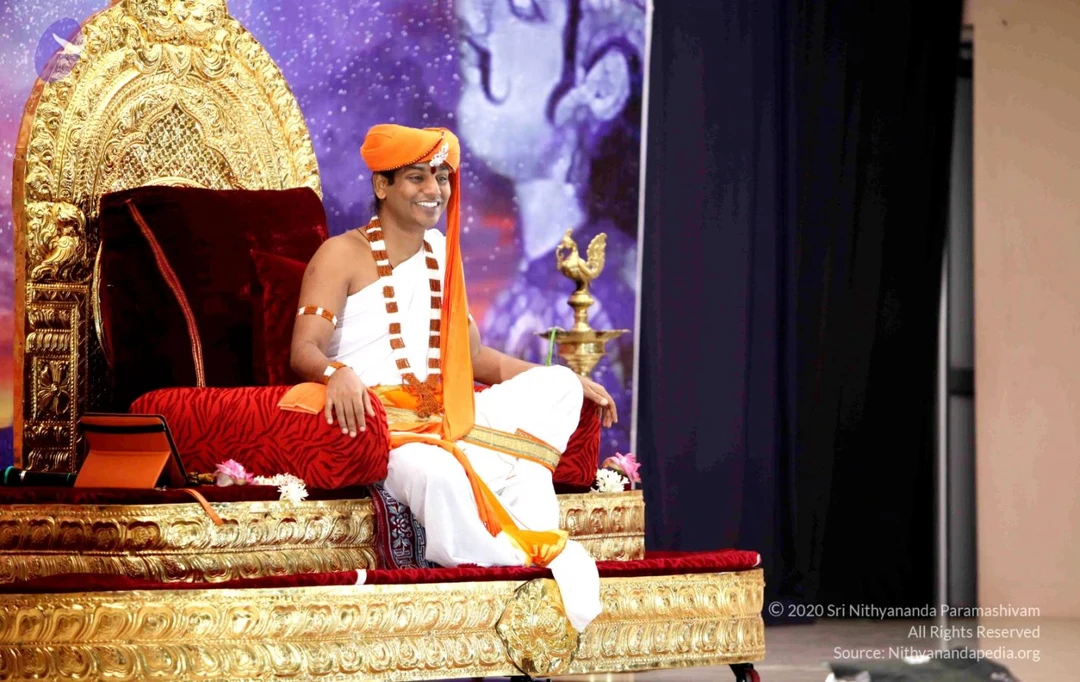
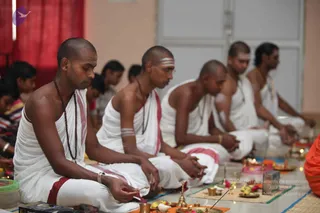
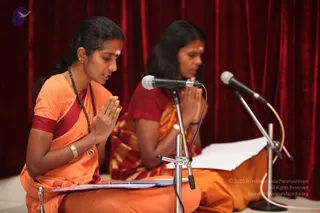
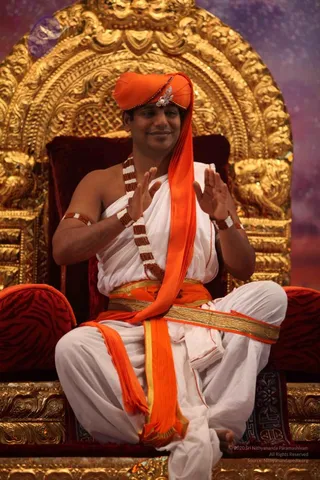
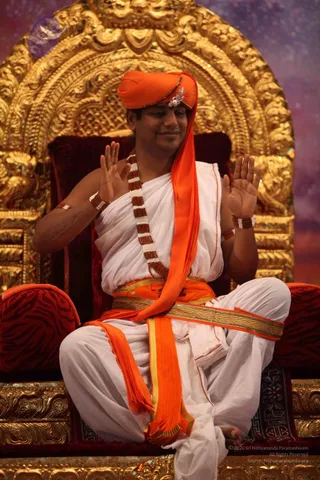
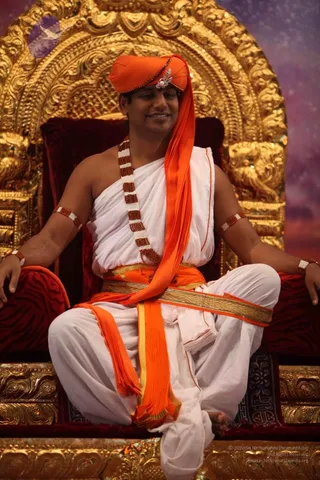
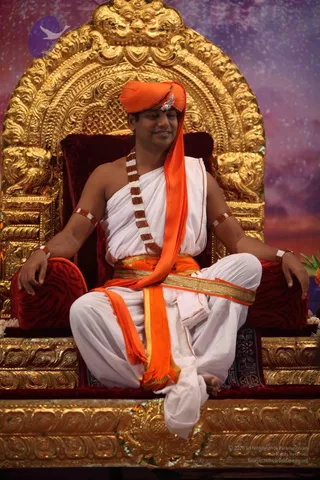
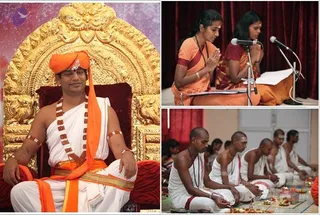
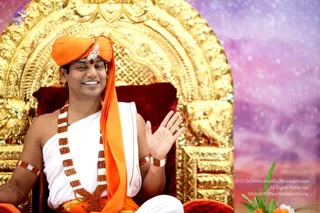
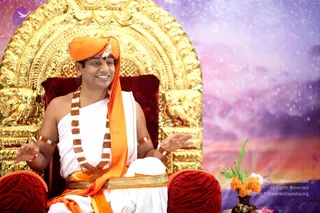
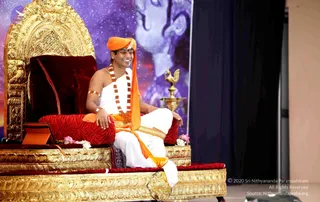
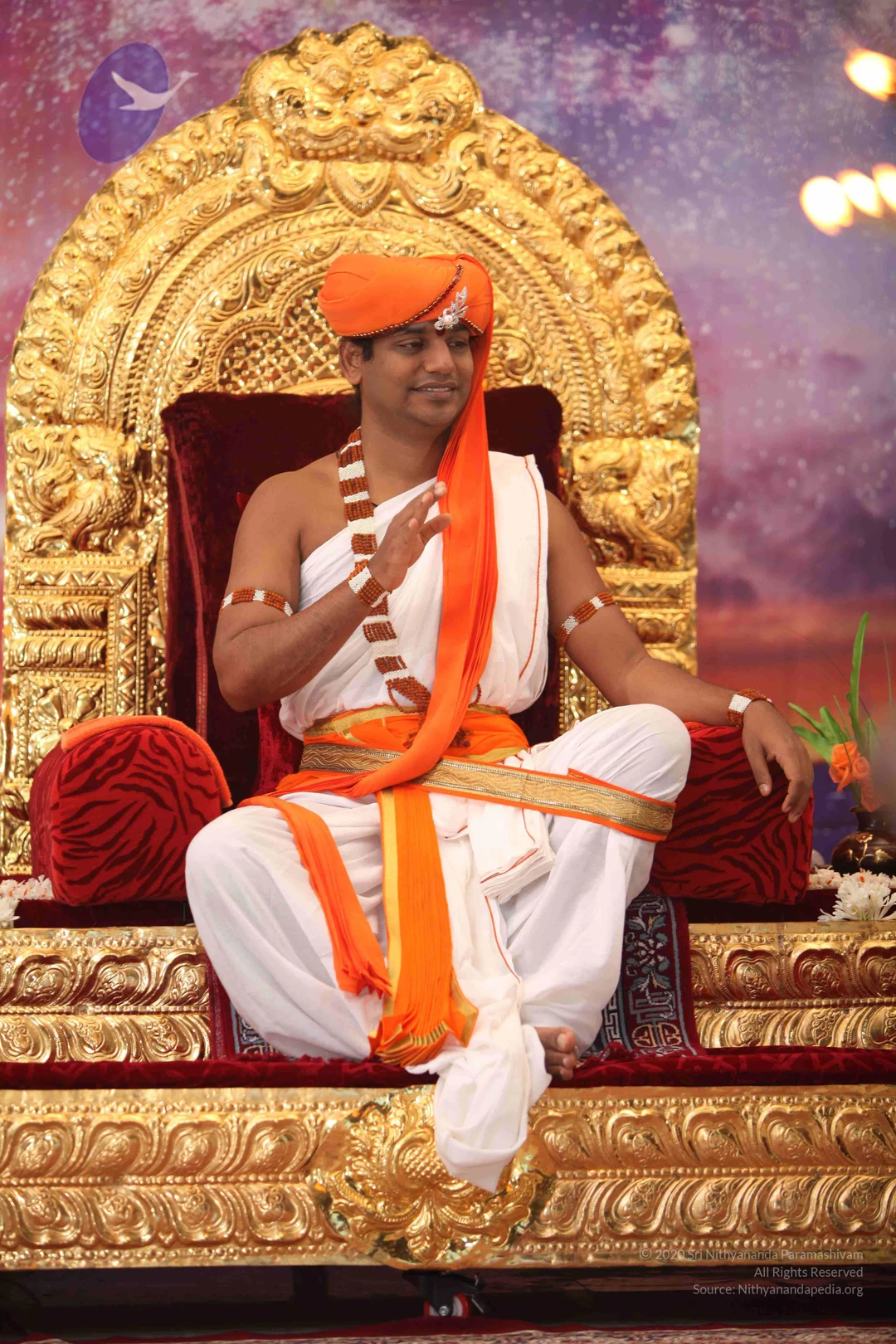
Five men in white ritual dhotis sit cross-legged in a row on a white floor during a puja. Several wear rudraksha malas and white and red forehead markings; the nearest holds a small incense stick or lamp in his right hand. Brass pots, oil lamps, flowers, fruit and small brass vessels are arranged on a mat in front of them. Several children sit at the left edge, and an orange-robed figure is partly visible at the right edge. A red curtain and white doors form the background.Two women sit side by side with palms pressed together in anjali mudra, reciting or chanting before microphones on stands. The woman on the left wears an orange saree with a maroon border, a rudraksha mala, a gold bangle and a small pendant, and has a vertical tilak on her forehead. The woman on the right, partly behind her, wears a red and orange saree with a tilak and also has her hands joined. Each holds a folder or sheet of paper on her lap. The background is a deep red velvet curtain. The scene suggests a satsang or chanting session.A seated man on an ornate gold throne with a red velvet cushion, in front of a purple backdrop. He wears an orange turban with a silver brooch, an orange sash with gold border over white dhoti-style clothing, and a rudraksha and white bead mala with matching bracelets. He sits cross-legged with palms pressed together in a greeting gesture and a faint smile. Probable Swamiji by appearance cues: orange turban and sash, rudraksha malas, and ceremonial throne seating, shown as a teaching or darshan figure.A seated man in an ornate gilded throne with carved golden arch and red velvet cushions, against a purple cosmic backdrop. He wears an orange turban with a silver brooch, a white dhoti-style garment, an orange shawl draped over one shoulder, an orange and gold sash at the waist, and a long rudraksha mala with white beads. He sits cross-legged with both palms raised outward in a blessing gesture and a gentle smile. Appearance-based cues (orange turban, orange shawl, rudraksha mala, and throne) match the page's reference to Swamiji, so this is a probable in-person presence.A seated man on an ornate gilded throne with a carved golden arch behind him and a red velvet cushion. He wears a saffron-orange turban with a silver ornament, a long orange sash draped over one shoulder, a white dhoti-style garment, and a multi-strand rudraksha mala with white beads across his chest. Orange and gold waist band and bare feet. He holds his arms open along the throne armrests, wearing rudraksha and white beaded bracelets, and smiles. The turban, long swept sash, orange clothing and rudraksha malas are visible cues matching the page's Swamiji reference, so this is a probable Swamiji seated on a peetha throne.A seated man in an orange turban with a silver ornament and an orange-and-white draped garment sits on an ornate gold throne with a red velvet cushion. He wears a long rudraksha and white bead mala, matching arm bands, and an orange sash with gold border over white dhoti-style cloth. He smiles and gazes to the side. Behind the throne, a gilded arch with carved lions frames a pink-purple starry backdrop. Probable Swamiji is seated in ceremonial dress, identified by the orange turban, rudraksha mala and ornate throne cues.

Bhagavad-Gita-Satsang-Tamil

22 photosSource gallery
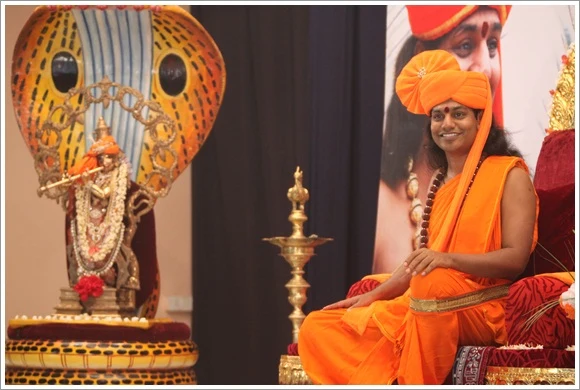
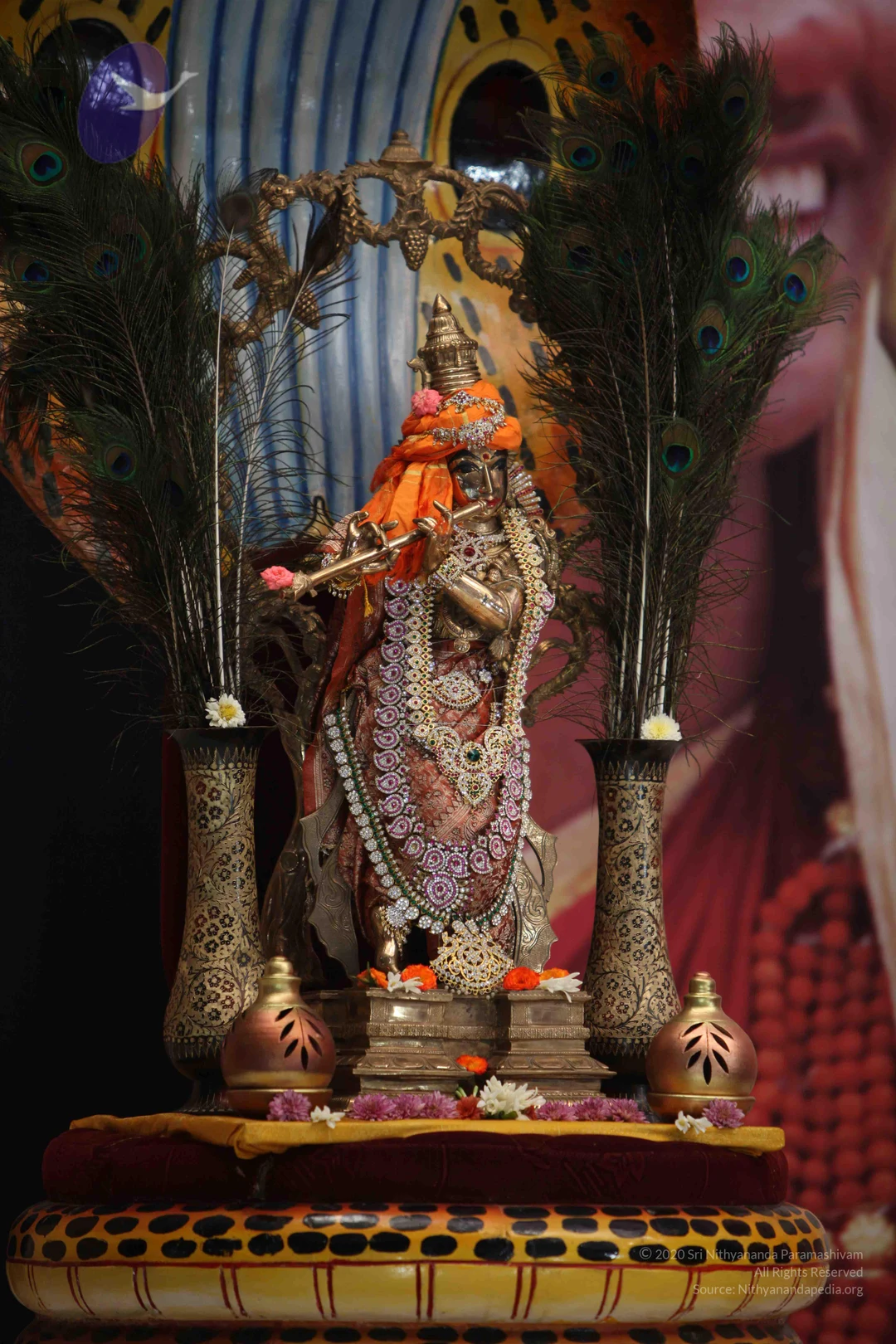
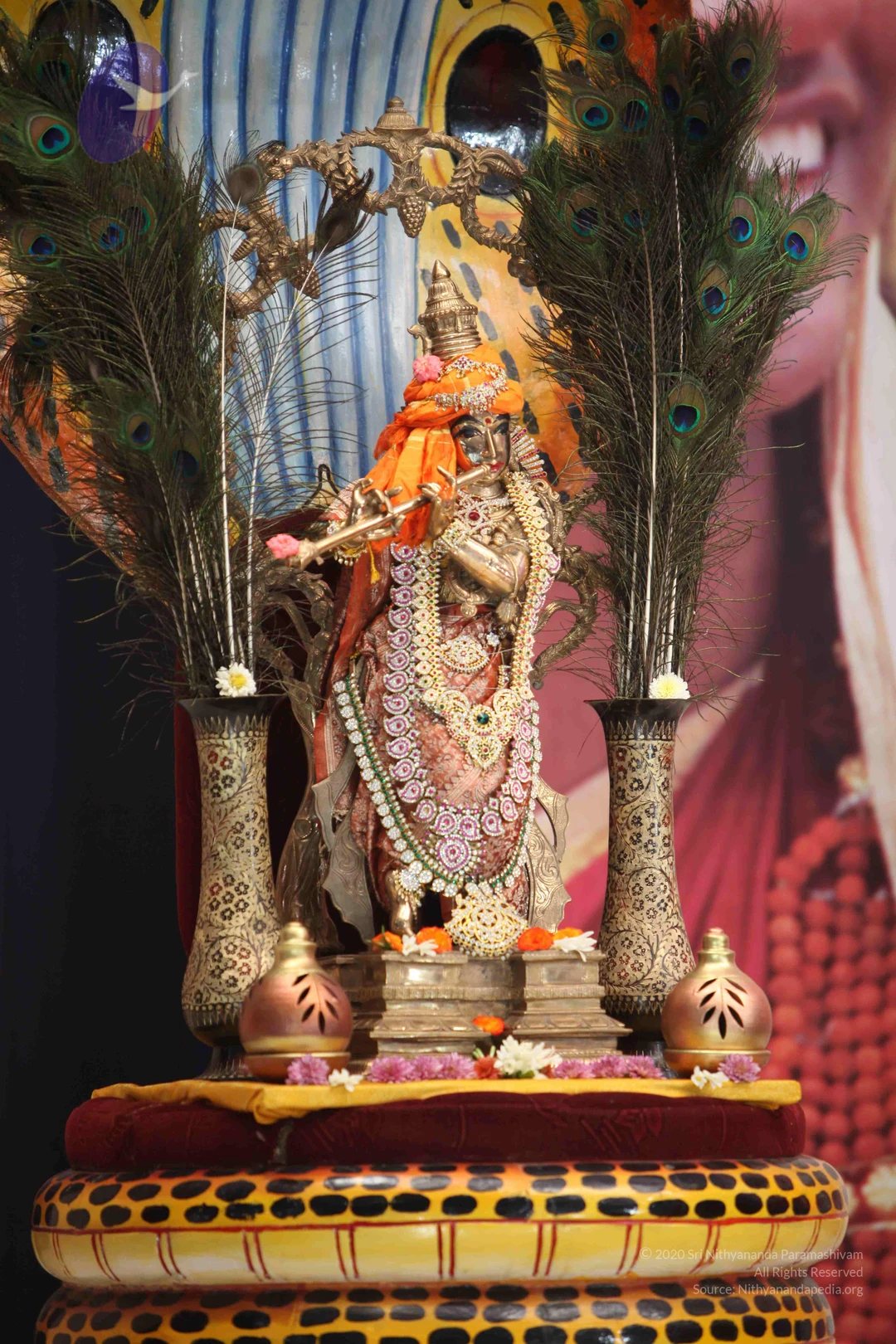
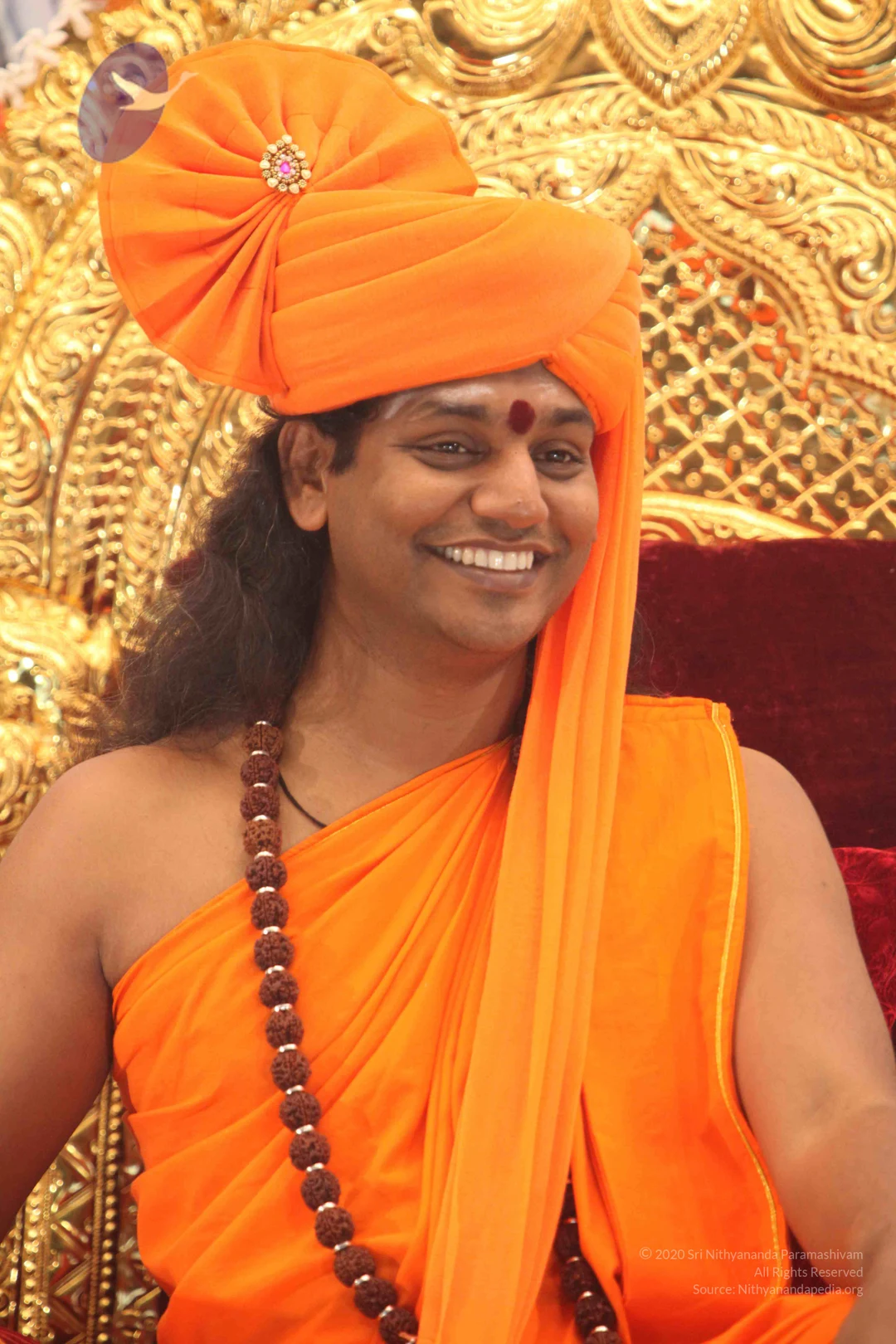
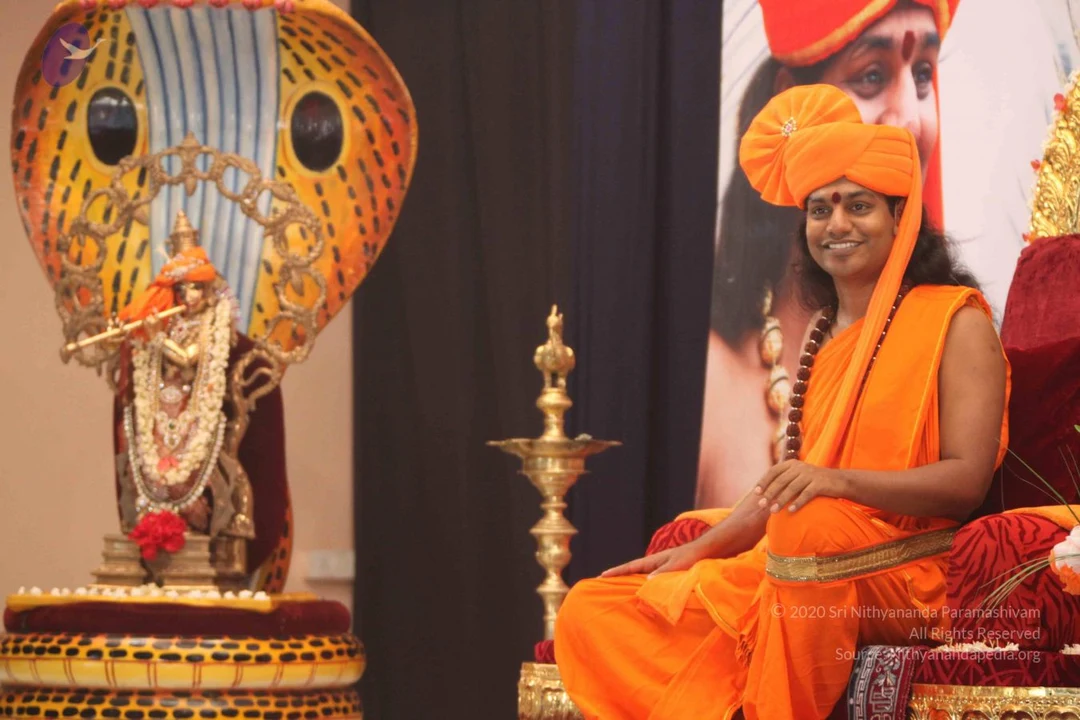
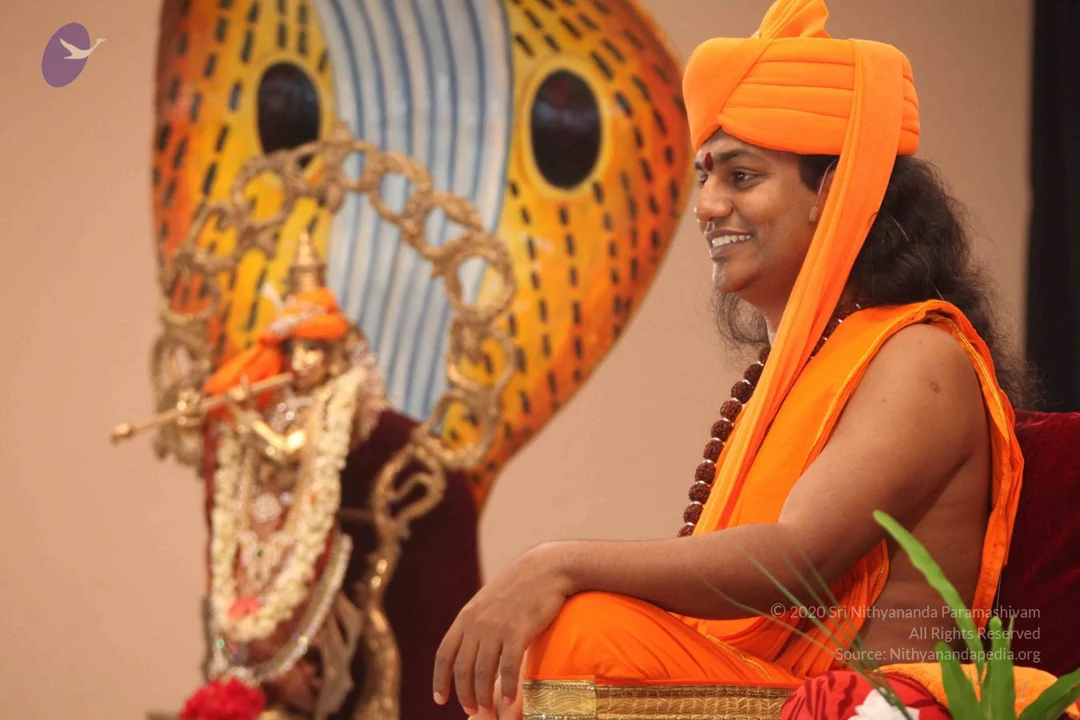
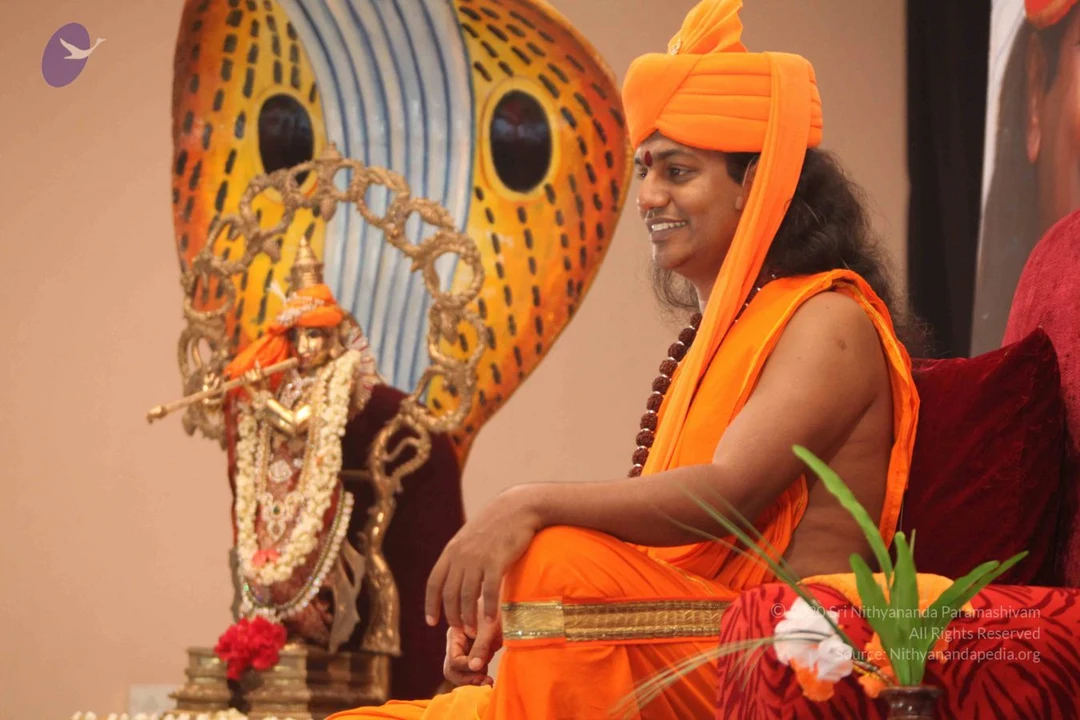
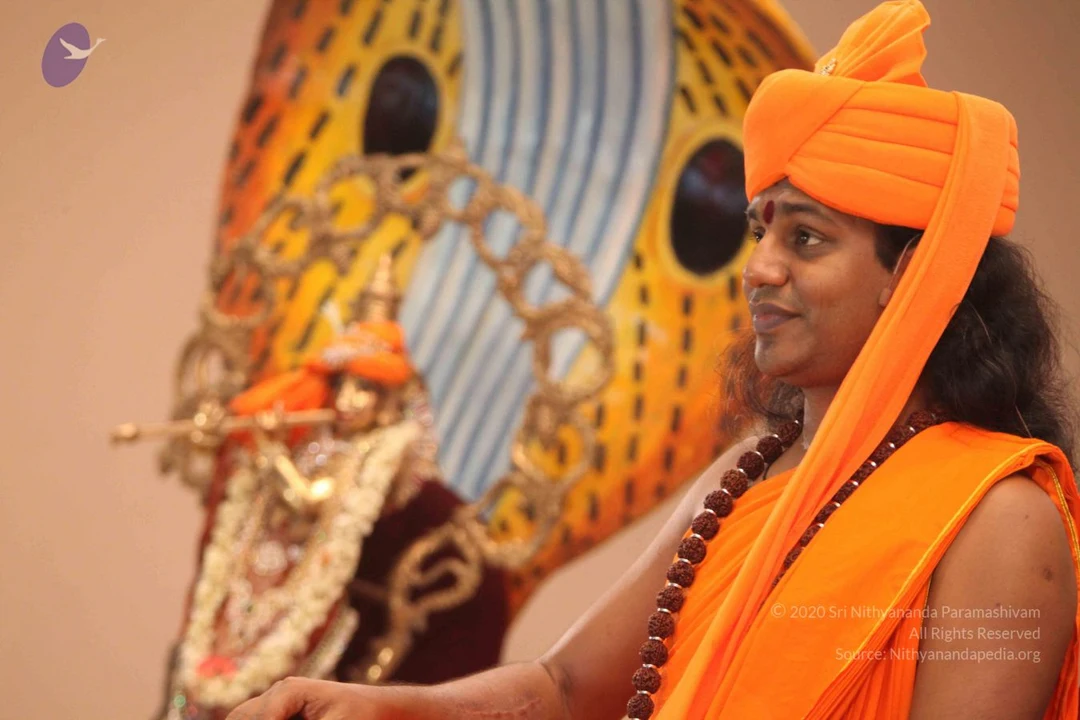
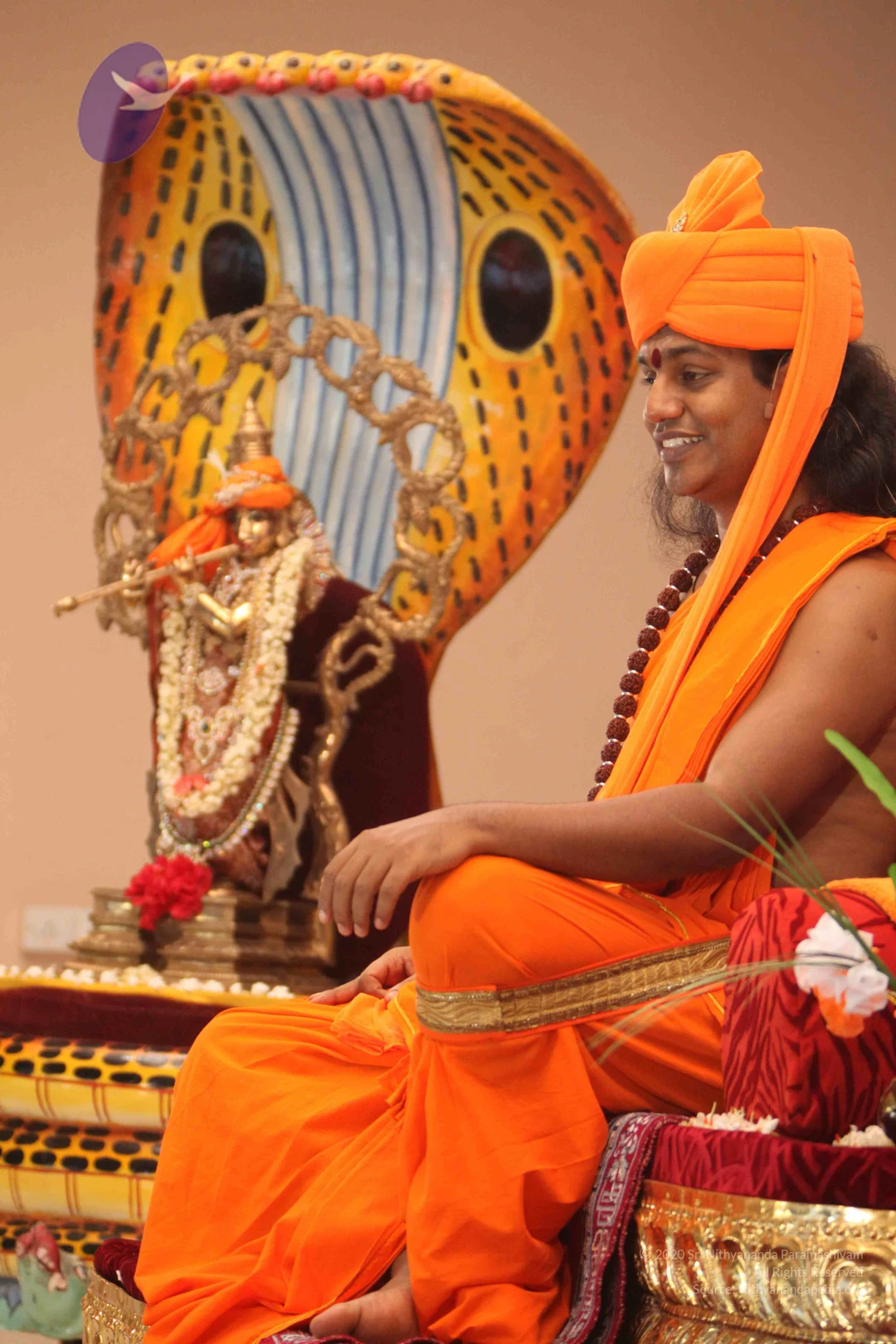
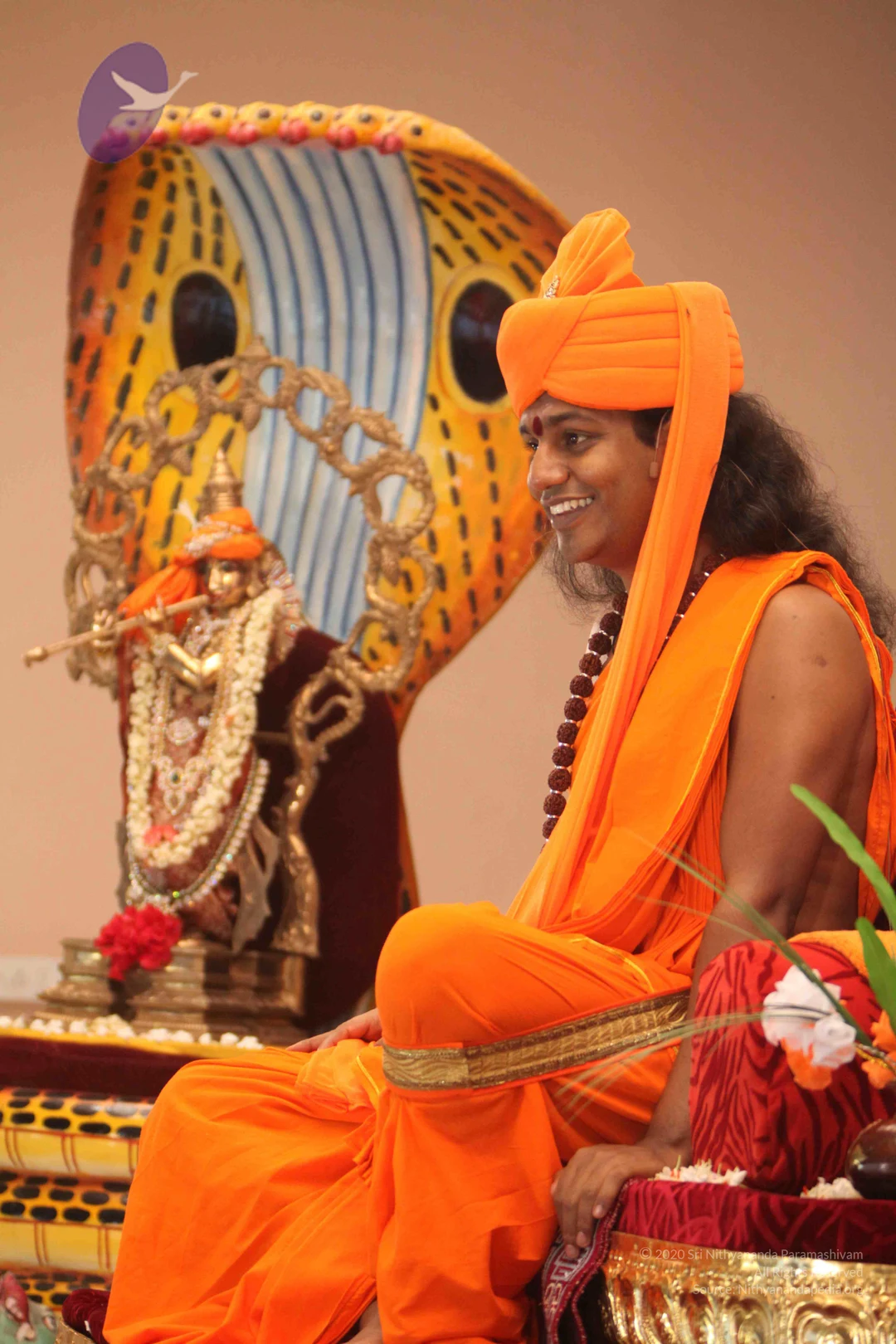
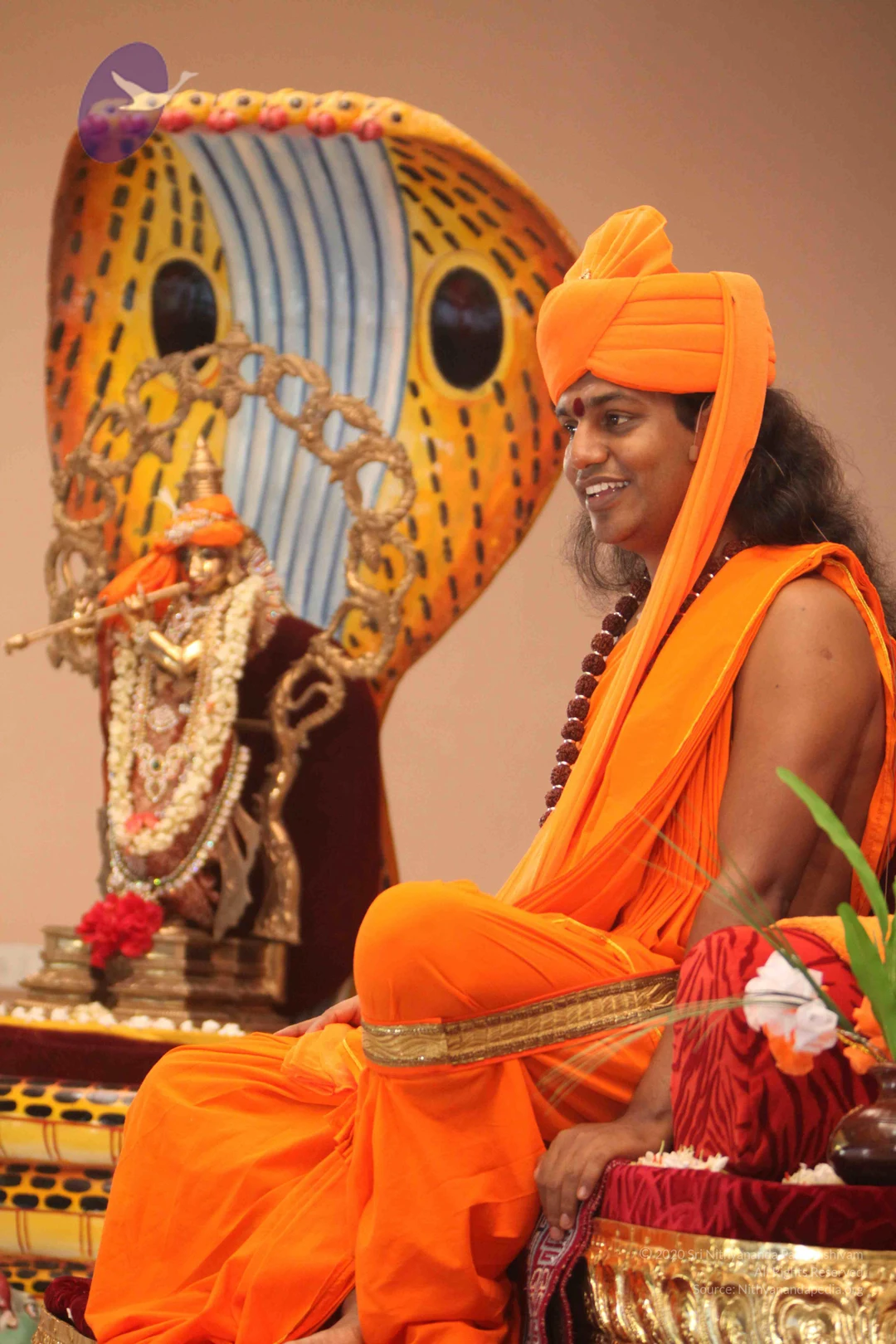
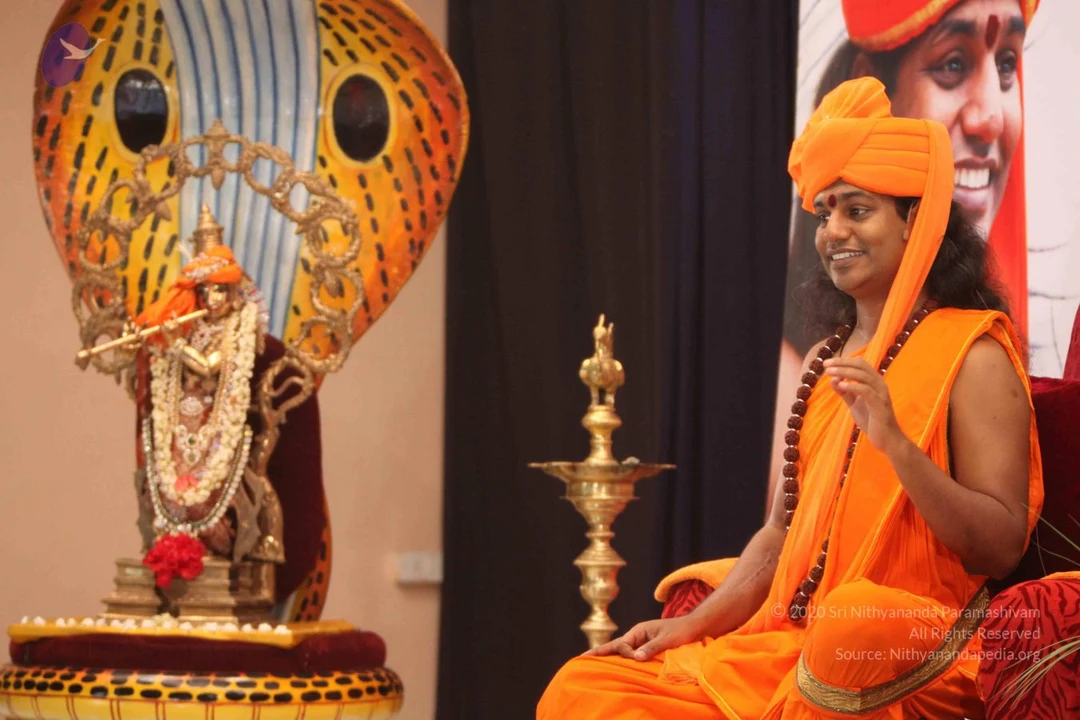
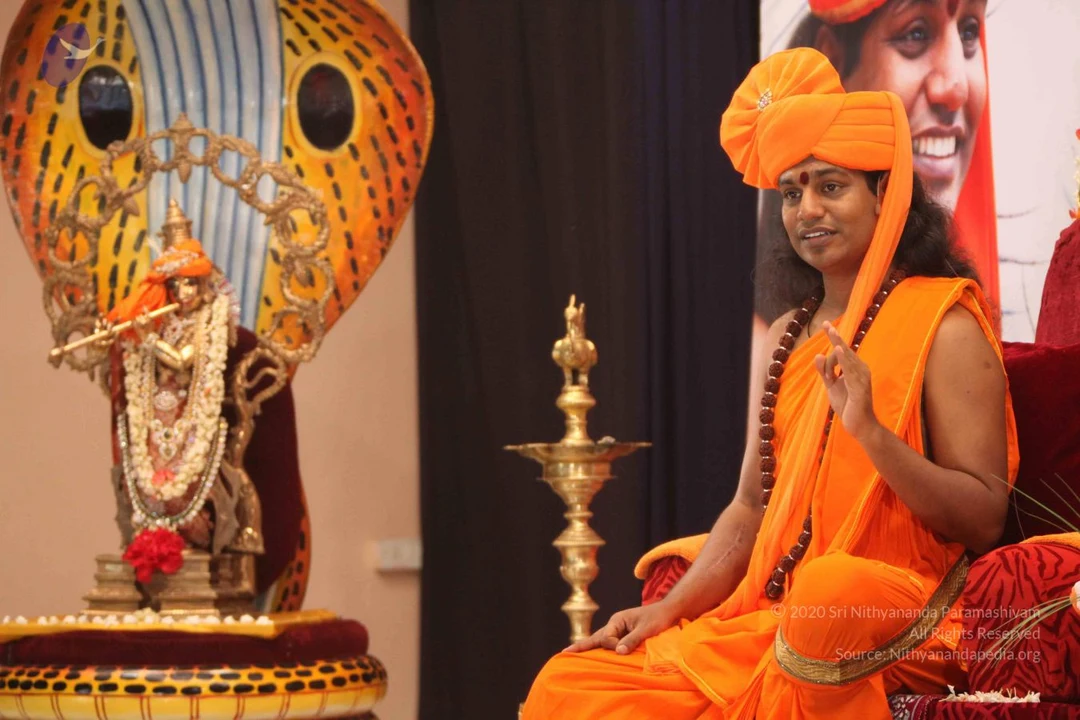
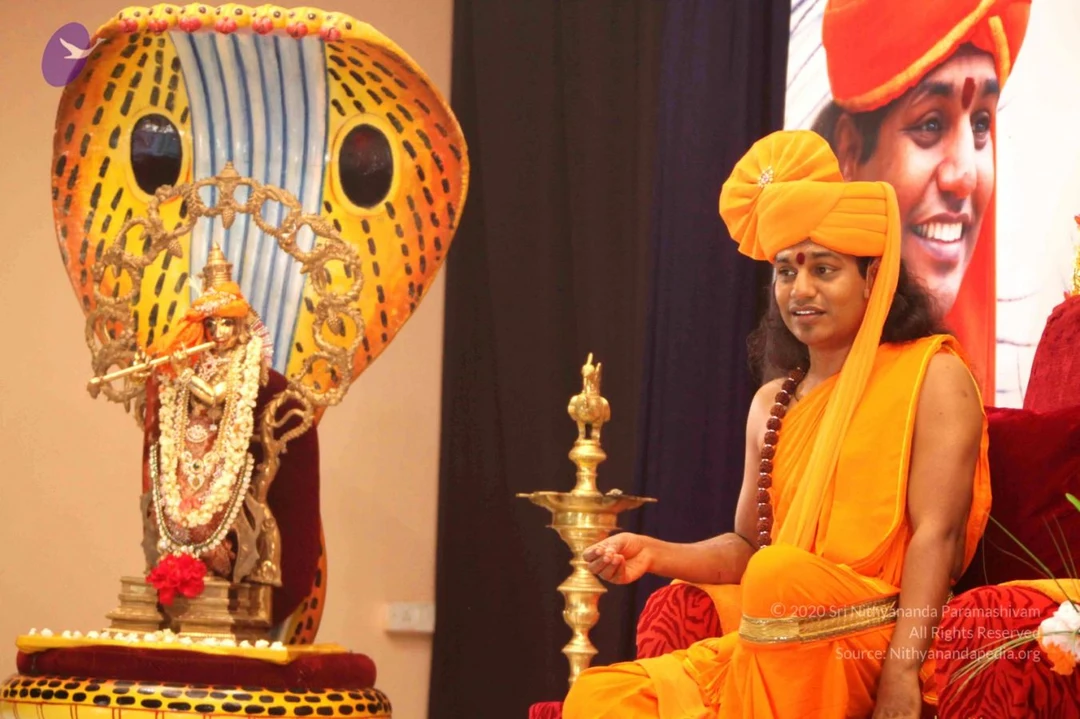
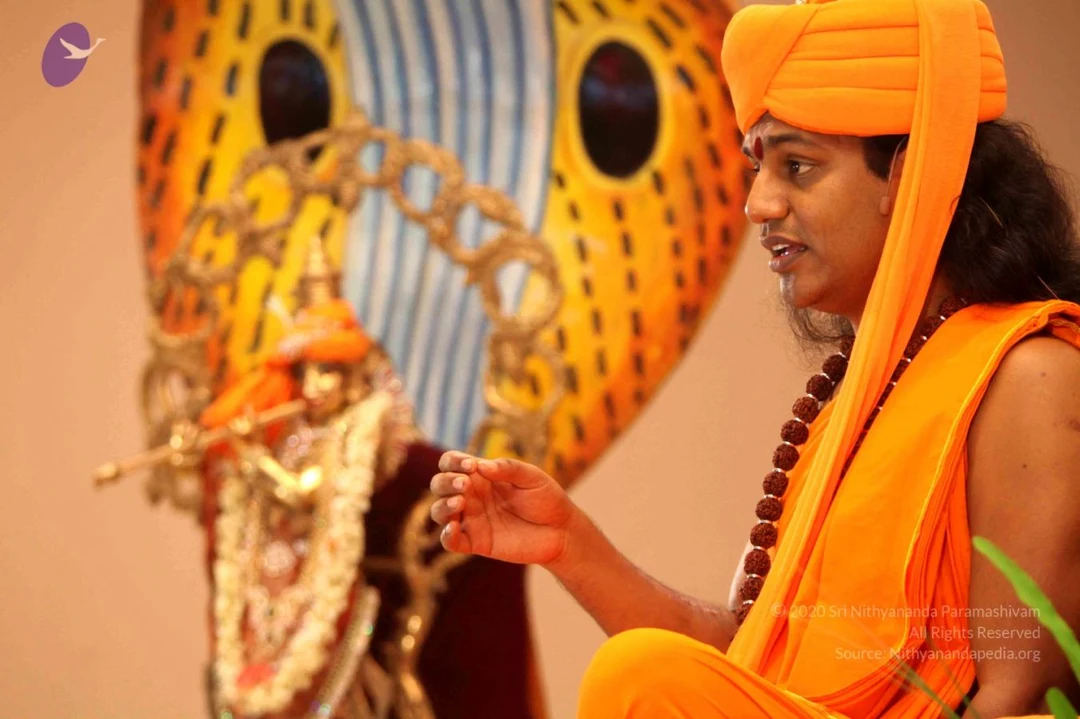
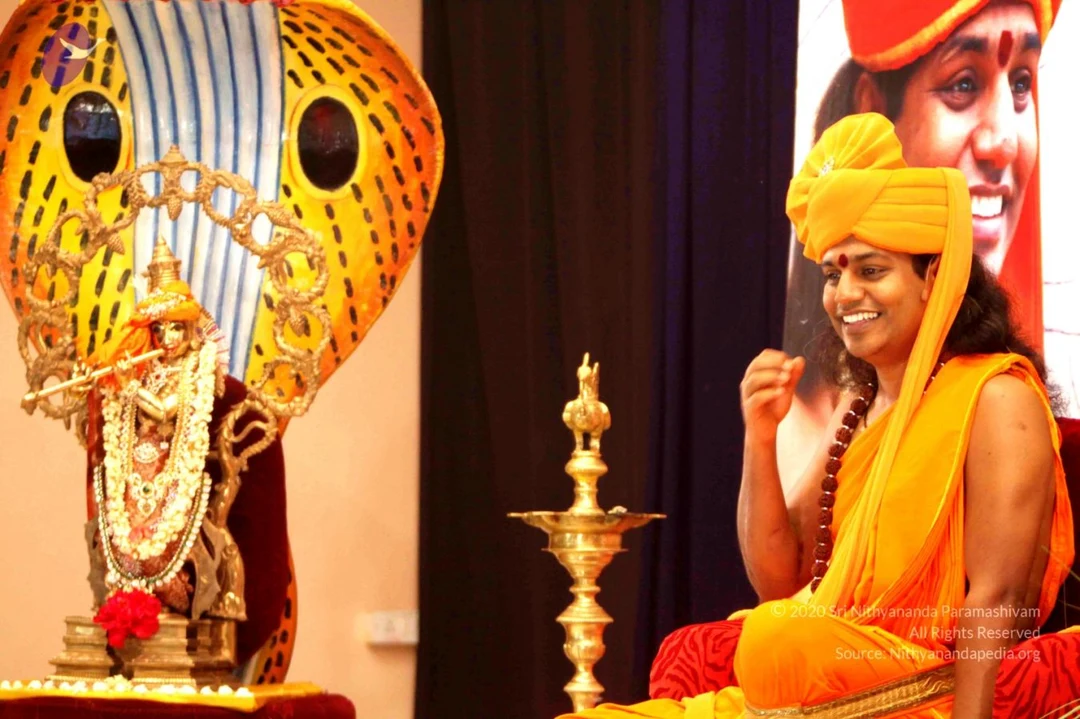
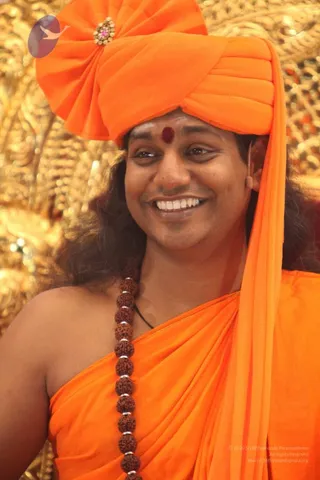
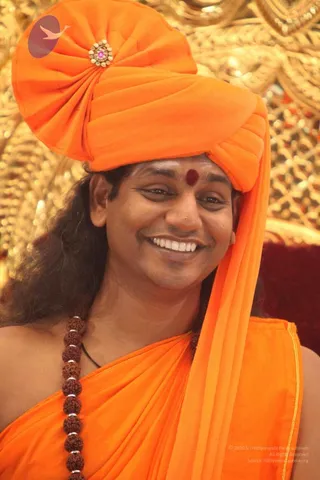
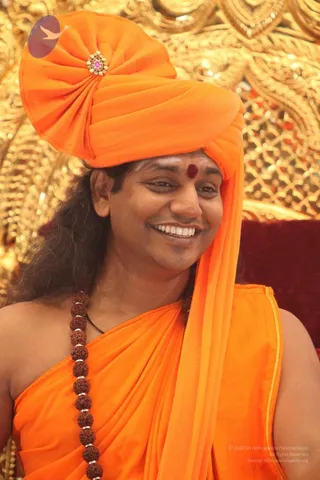
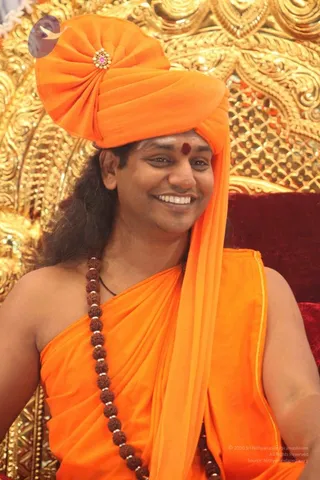
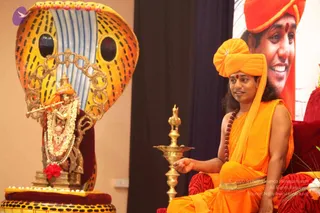
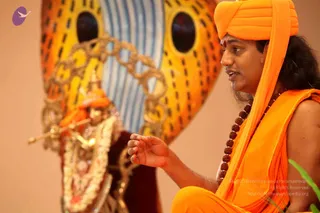
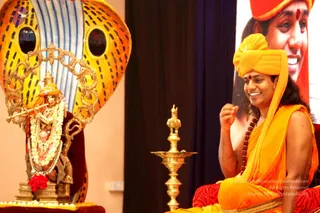
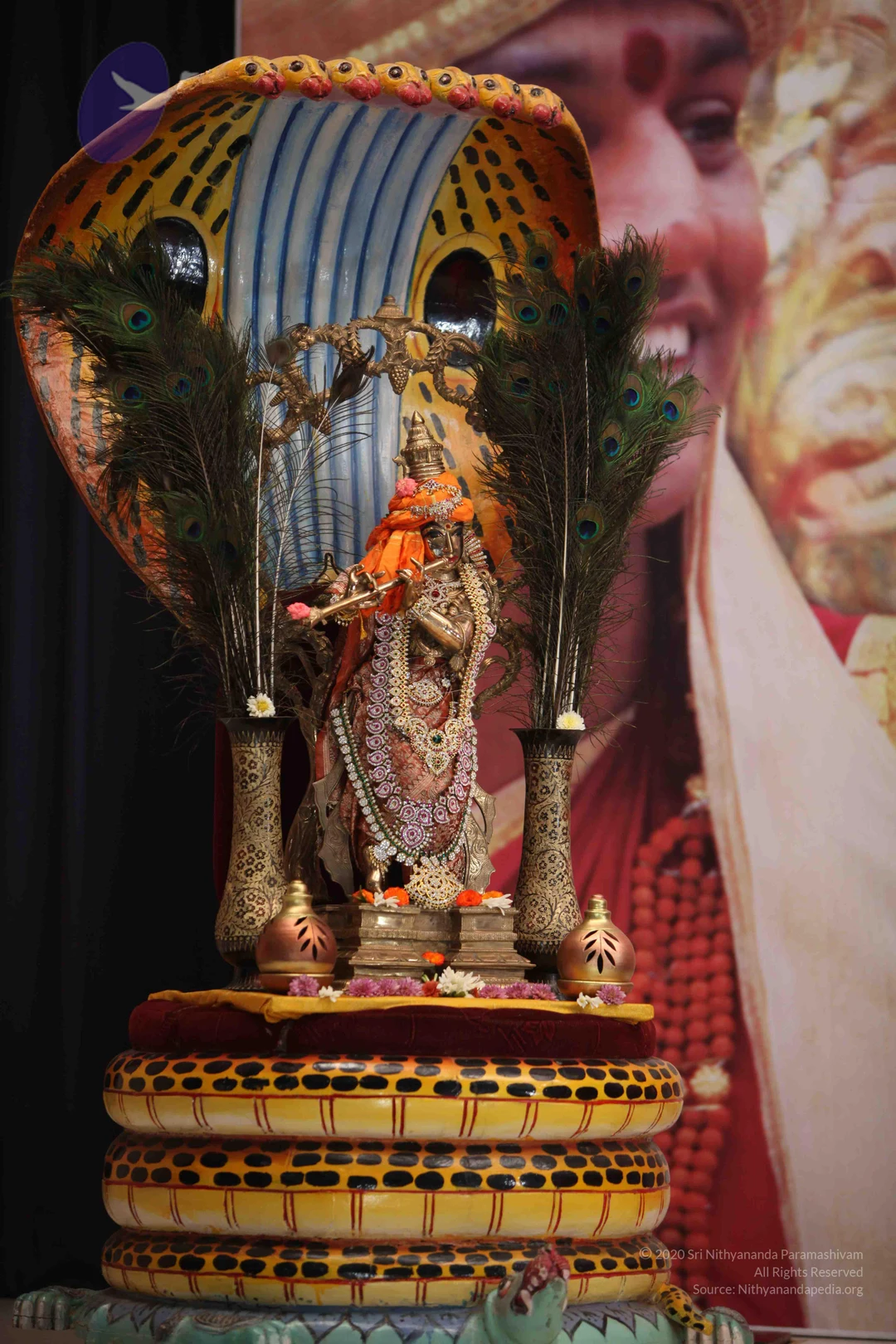
Close-up photo of a smiling man wearing a tall bright orange turban with a jewelled brooch and a red bindi on his forehead. He wears an orange draped garment over his shoulder and a long rudraksha mala with silver spacers across his chest. Long dark hair falls past his shoulders. Behind him is a blurred background of gold ornamental embroidery. Only one physical person is visible.Close-up photograph of a smiling man wearing a bright orange turban with a jeweled brooch and a red kumkum dot on his forehead. He has long dark hair, an orange shawl draped over one shoulder and a long strand of large rudraksha beads with silver spacers across his chest. Behind him is ornate gold embroidered or carved decoration. Appearance-based candidate, probable Swamiji (probable): the orange turban, saffron shawl, rudraksha mala and long hair are distinctive visible cues of a swami-style presentation, in a single physical person seated in person.Close-up photo of a smiling man wearing an orange turban fastened with a jewelled brooch, an orange shawl draped over one shoulder and across the chest, and a long rudraksha mala with silver spacers. He has a red bindi on his forehead and long dark hair falling behind his shoulder. Behind him is ornate gold carved decoration and a red velvet surface. Swamiji (probable): the appearance cues of the orange turban, saffron clothing, rudraksha mala and long hair are distinctive, and the page indicates Swamiji is at this event, so the man is labelled as the probable Swamiji in person.A smiling man in orange saffron clothing sits on an ornate gold-carved throne with a deep red velvet cushion behind him. He wears a large orange turban fastened with a jewelled brooch, a red kumkum dot on his forehead, and a long rudraksha mala draped over his bare shoulder. An orange shawl falls over his other shoulder. Swamiji (probable) is shown here by the saffron robes, long swept hair, rudraksha mala and ornate turban, and is seated in an in-person portrait-style pose.A seated man in saffron-orange robes and an orange turban sits on a red-cushioned throne with a gold armrest, smiling and resting one hand on his lap. A rudraksha mala hangs at his chest and a gold-coloured waist sash is visible. Beside him stands a golden oil lamp and a decorated figure of a flute-playing deity murti, adorned with white flower garlands and a red flower, under a large cobra-hooded canopy. A large portrait printed with a figure in orange headwear hangs behind. The setting is a stage with a dark blue curtain. Probable Swamiji seated on the throne, matching the saffron robes, turban, and rudraksha mala cues; the portrait behind shows a second figure in orange headwear.A smiling man in orange turban and orange shawl sits on a red cushioned seat at right, bare-chested under the wrap, wearing a long rudraksha mala and a red tilak on his forehead; he rests one forearm on his knee. Beside him at left is a small Krishna murti with a flute, white floral garland and gold ornaments, set before a large painted orange-and-yellow serpent hood with blue stripes and gold chain motifs. A red flower and green plant sit at the lower edge. a person: the seated man's orange turban, shawl and long rudraksha mala match the presentation the page describes, though his appearance is not certain enough to confirm identity. A satsang-style discourse setting.

Adikailaasa

6 photosSource gallery
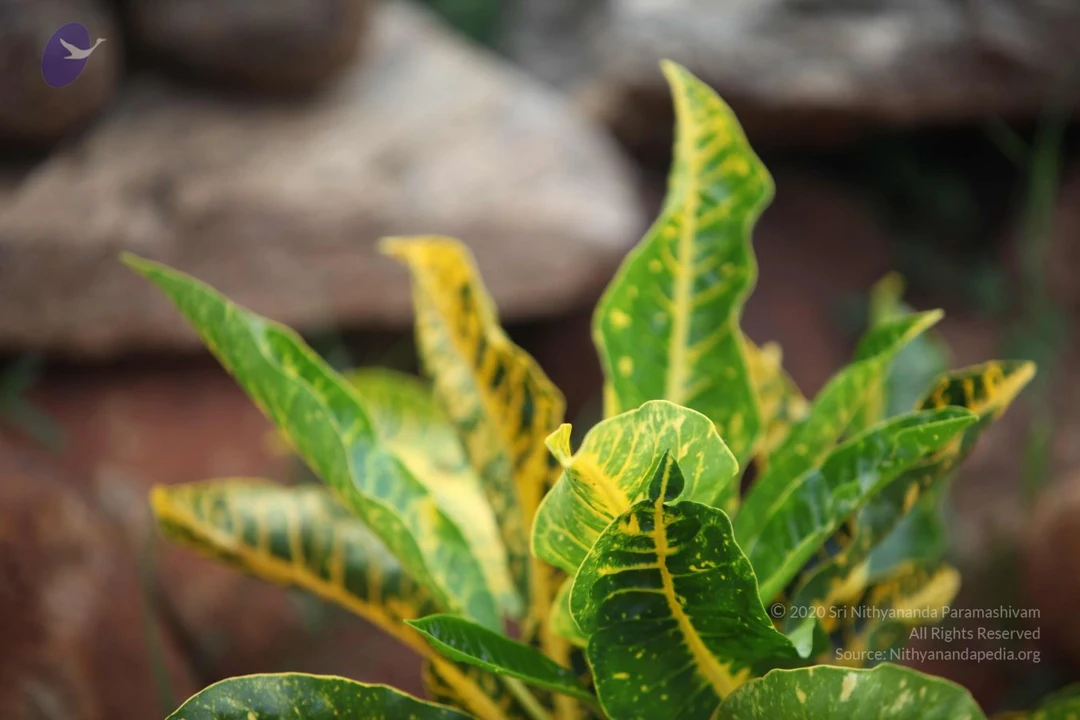
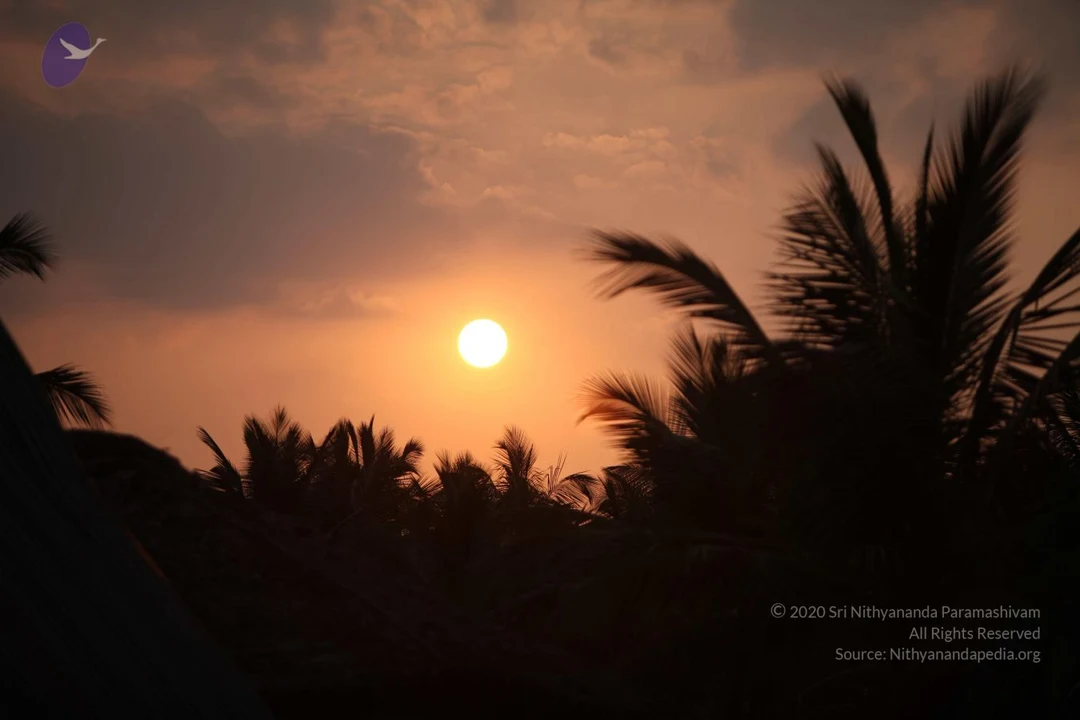
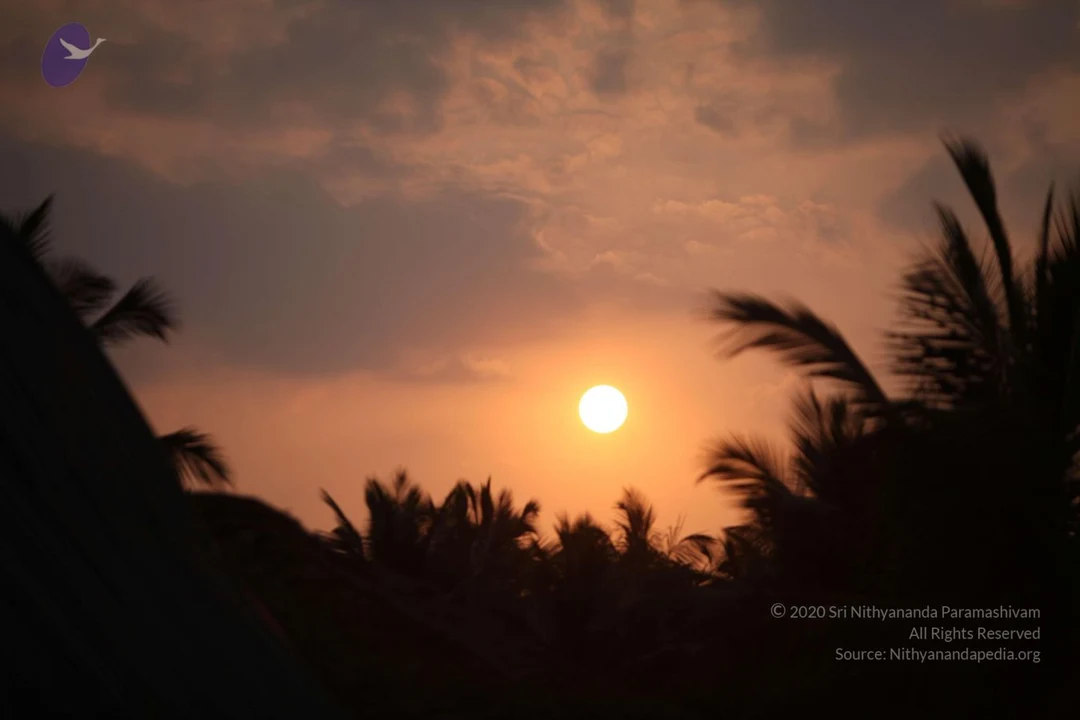
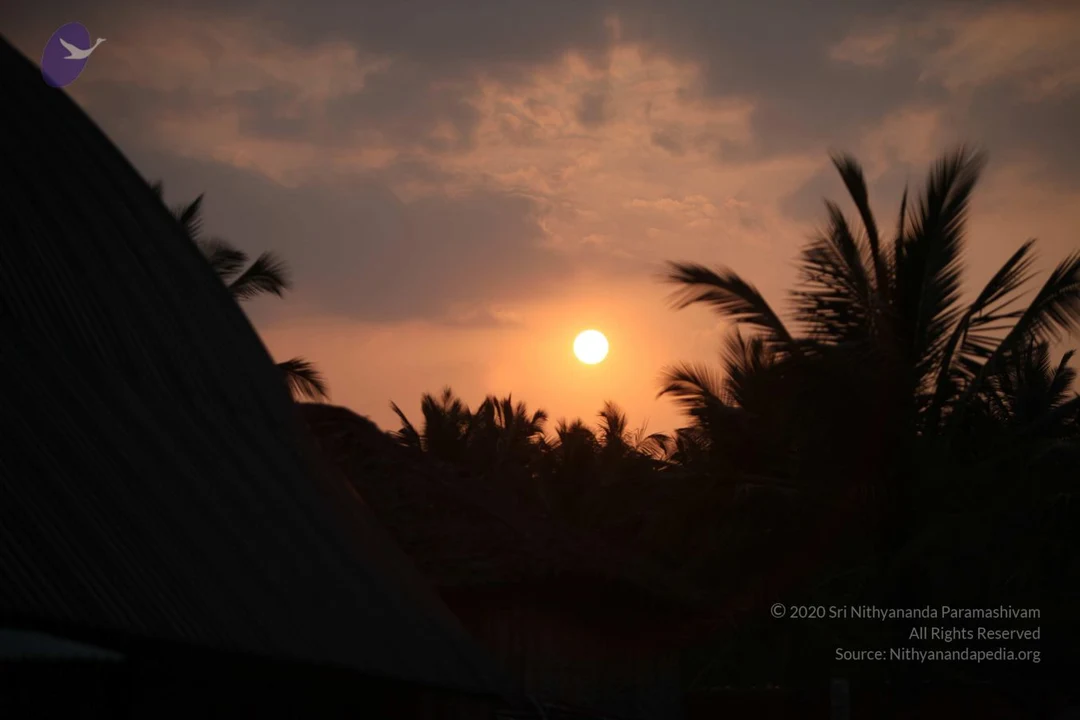
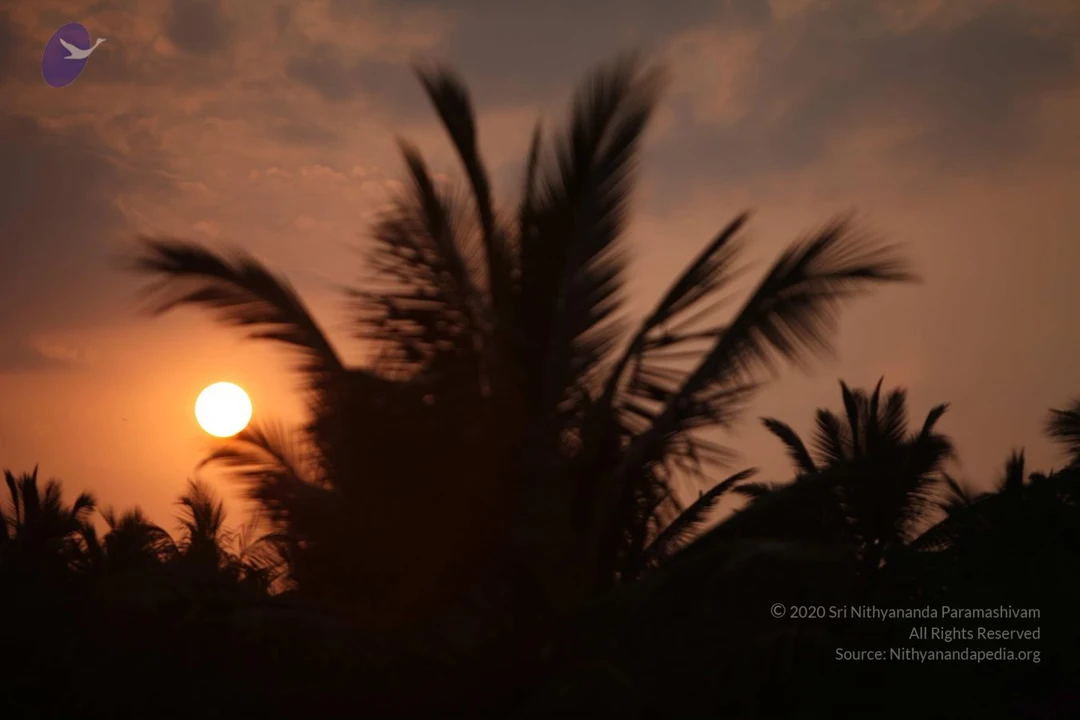
Backlit silhouette photograph of ornate golden-brown metal fixtures. A single partially visible face profile appears in shadow among the ornaments, with no clear identification possible. Dark foreground and bokeh highlights frame the scene.A close-up photograph of a potted croton plant with glossy green leaves streaked and blotched with bright yellow veins and patches, forming a dense fan of foliage. The background is softly blurred, showing rough reddish-brown stone and rock surfaces. No people, deities, or ritual objects are visible.A sunset over a tropical landscape: a bright orange sun sits low in a hazy, peach-coloured sky with dark clouds above. Silhouetted palm fronds and coconut palms fill the foreground and right side, with a dark shape of a roof or structure at the left edge. No people or a person are visible in the scene.A dusky orange sunset over silhouetted palm trees. The round white sun sits low in a hazy sky of grey and peach clouds, with feathery palm fronds in the foreground on the right and a dark shape at the left edge. No people are visible.A photograph of a sunset over a tropical scene. A pale orange sun sits low in a hazy sky with soft clouds, framed by dark silhouetted palm fronds on the right and the sloping edge of a corrugated roof on the left. No people, deities or ritual activity are visible.A photograph of a sunset with a glowing orange sun low on the left, partly obscured by the silhouetted fronds of tall palm trees swaying in the wind. The sky is hazy with warm orange and grey clouds. No people or ritual activity are visible, and the scene is a quiet natural landscape.

Special-Photos

7 photosSource gallery
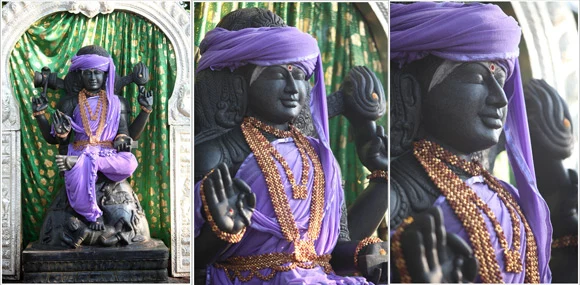
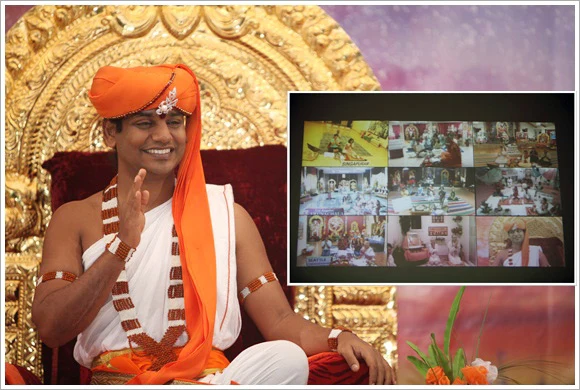
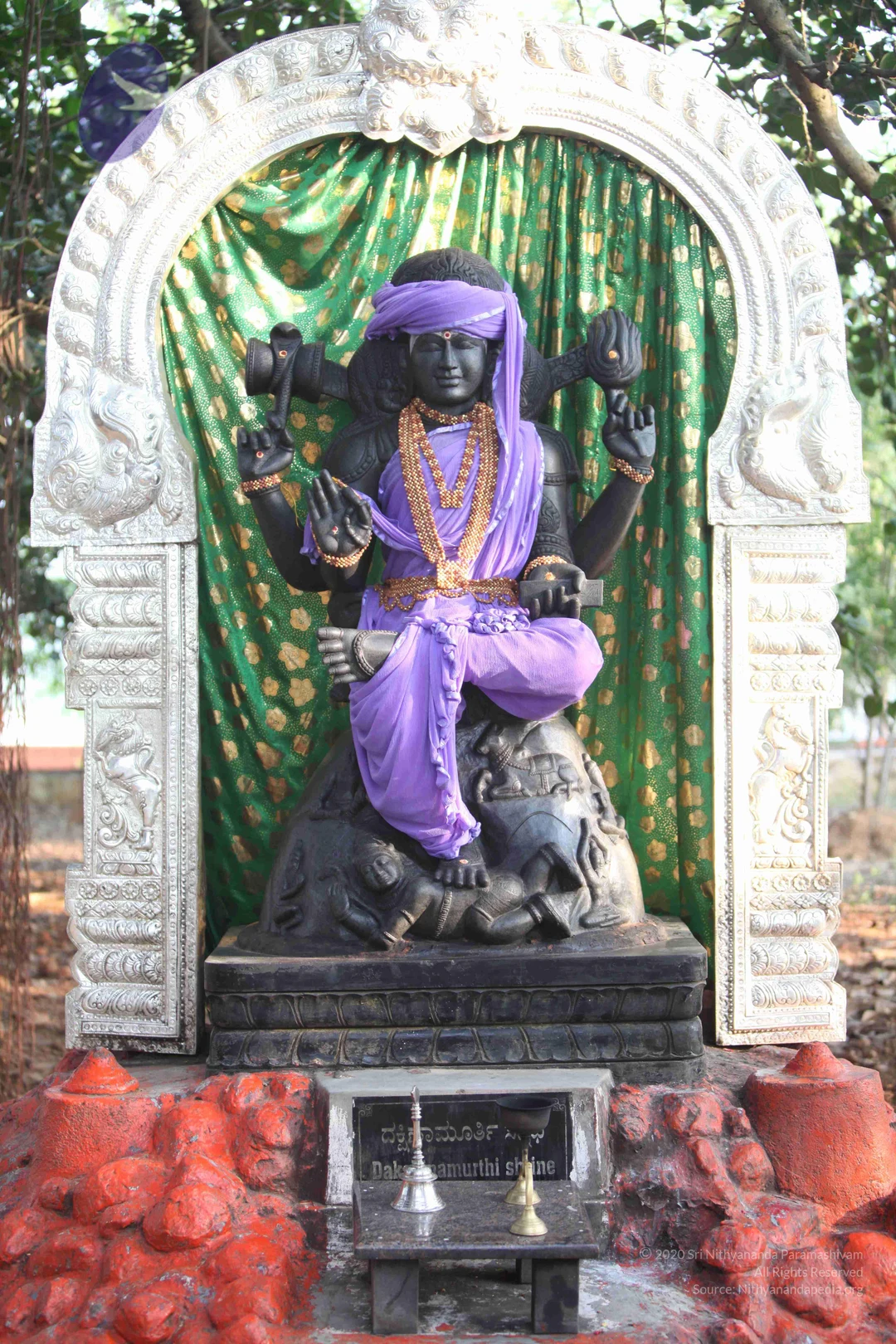
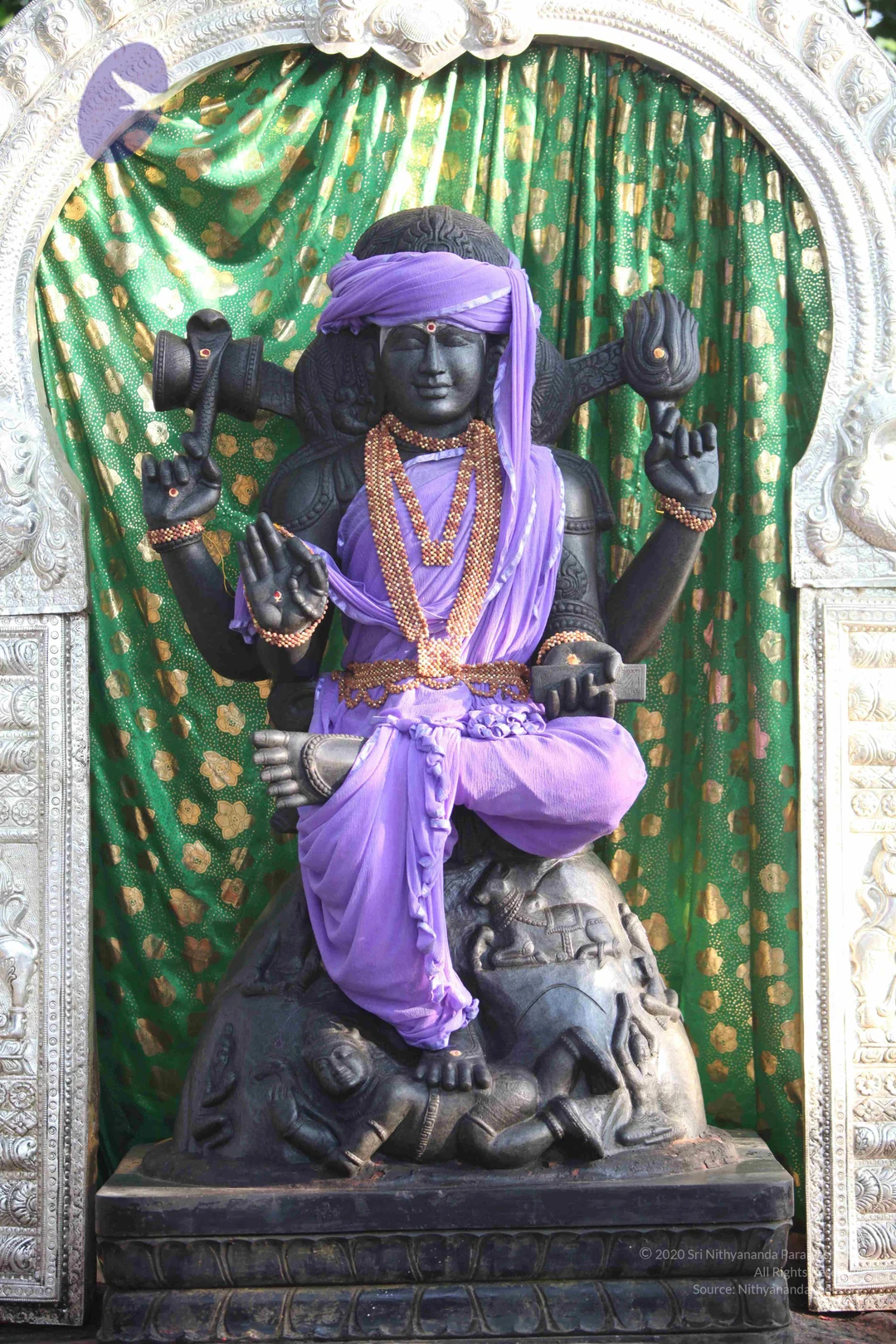
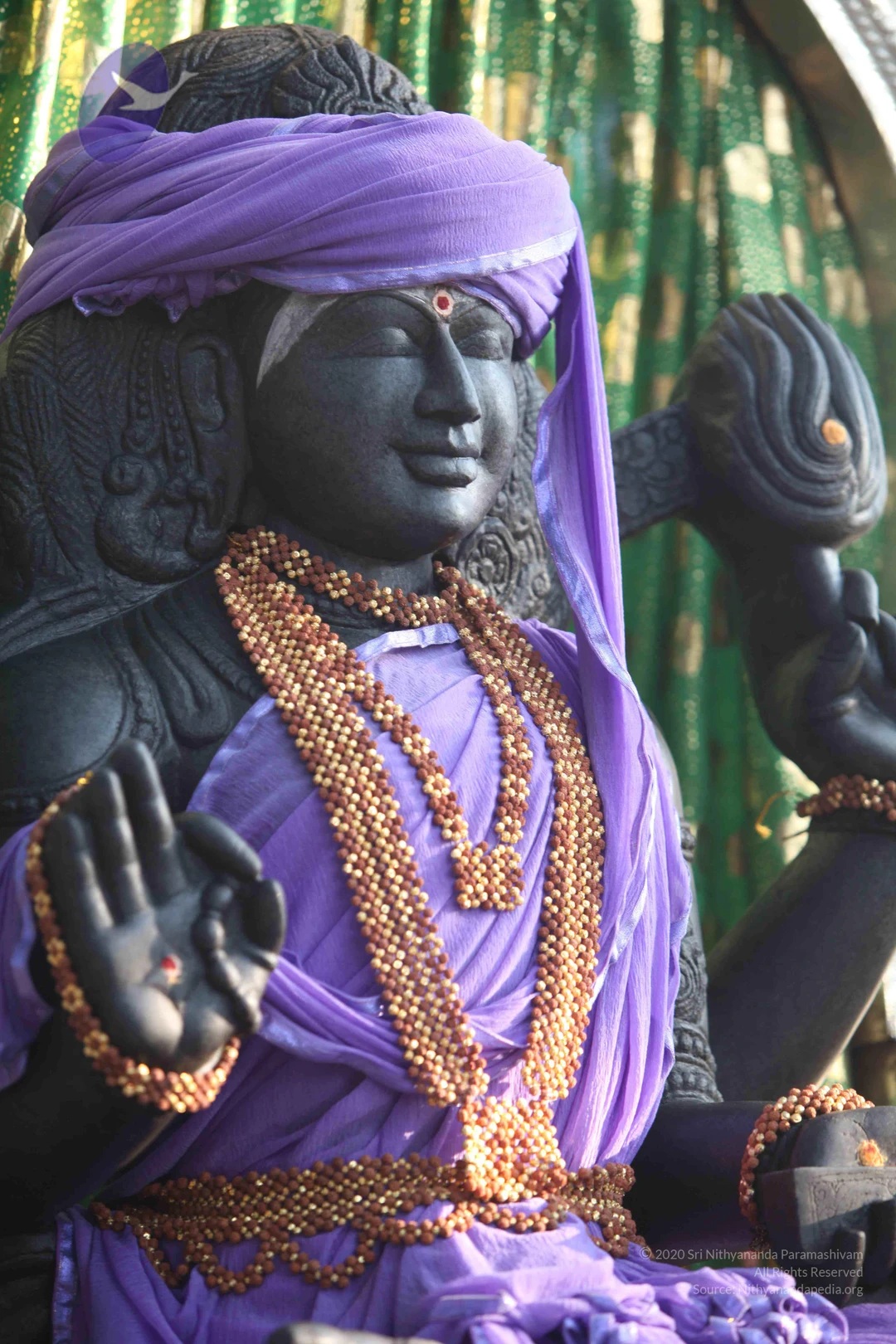
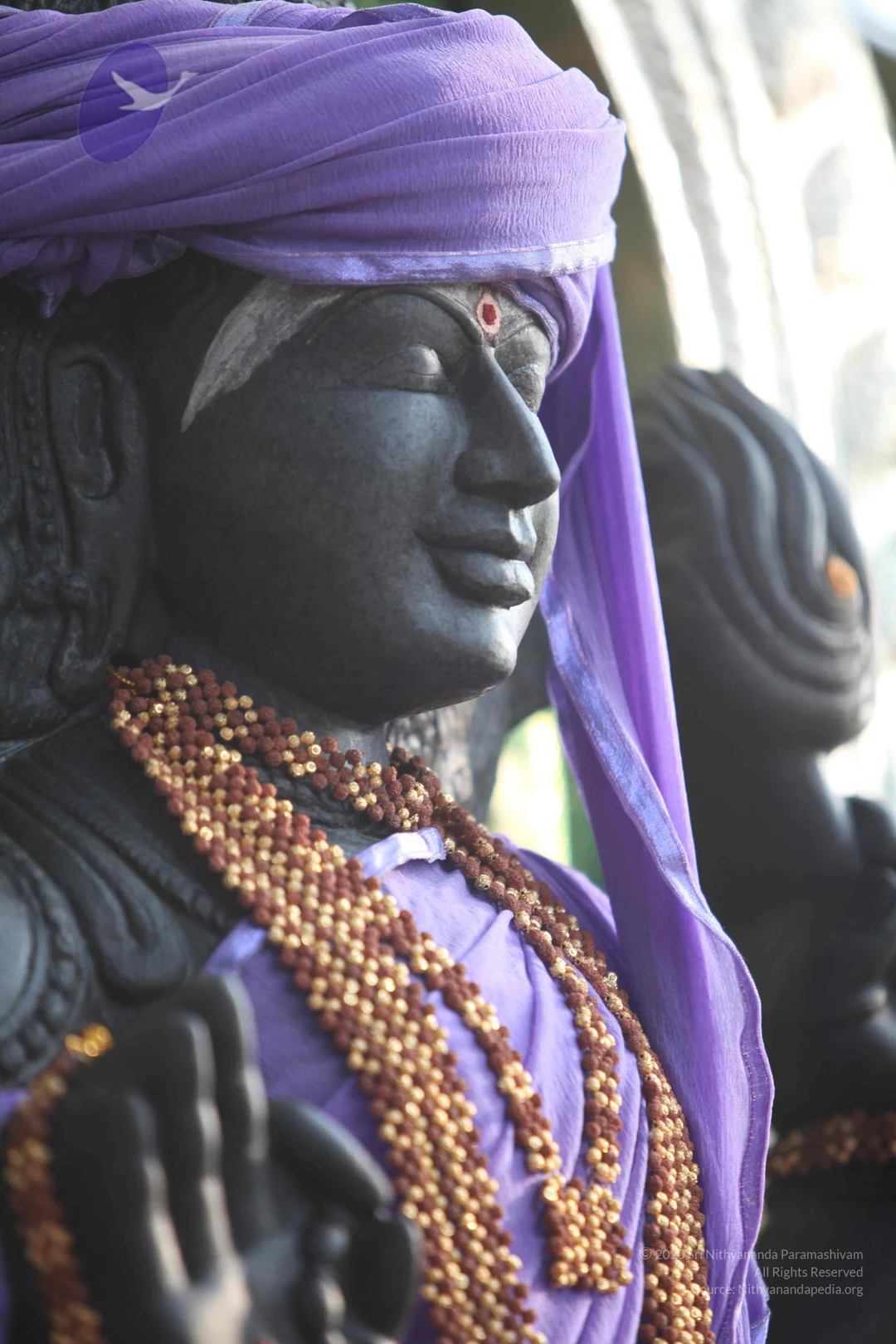
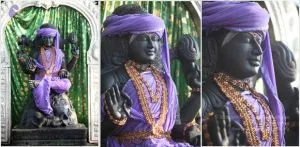
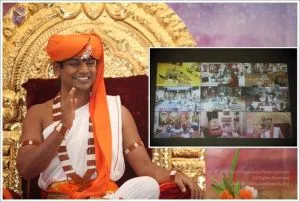
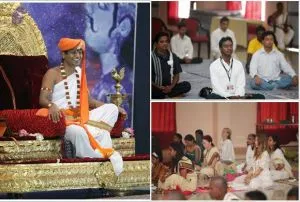
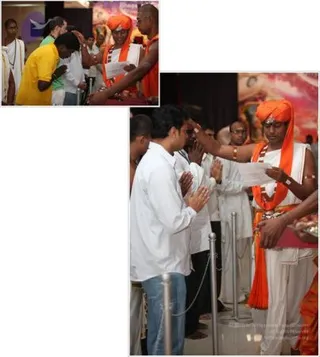
A three-panel graphic collage of photographs. The top panel shows a large, gnarled banyan-type tree with an exposed root network and a person in light clothing standing beside its trunk. The bottom-left panel shows a dense, shaggy tree trunk with a person in orange clothing standing at its base. The bottom-right panel shows a shrine area with a seated figure in a lighter garment near a small structure and a man in orange standing nearby. The collage has no visible readable text.A collage of three photographs of a black stone statue of a four-armed deity seated on a pedestal, dressed in a purple turban and purple draped cloth with ornate gold-and-orange beaded necklaces and garlands. The statue holds ritual objects in its hands and sits before a green backdrop with a small figure at its feet. The three panels show close-ups of the head, turban and necklaces from different angles. Because the figure is a statue, no physical people are present.A three-panel collage of photographs from a KAILASA event. The large left panel shows a man seated cross-legged on a red cushioned seat before an ornate golden throne, wearing an orange turban, orange shawl over white dhoti, a rudraksha mala and gold necklace, with orange armbands. Probable Swamiji cues include the orange turban, saffron shawl, rudraksha mala and ceremonial gold necklace. Upper right panel shows two women in orange and red saris with hands in anjali mudra at a microphone and reading stand. Lower right panel shows several bald men in white dhotis and white shawls seated before puja offerings, apparently performing a ritual.A collage of two images. The main panel shows a smiling man seated on an ornate golden throne, wearing an orange saffron turban, a white and orange shawl over a white garment, and rudraksha-style beads, gesturing with his right hand while seated beside an orange floral arrangement. An inset screen on the right shows a grid of small photographs of people in a video or presentation, not physical people in the scene. Ornate gold throne and saffron colours dominate the main panel.A three-panel collage graphic. The large left panel shows a man in orange robes with a saffron head wrap and rudraksha malas seated on an ornate gold throne with red cushions, a blue-and-gold backdrop behind him. The upper right panel shows a seated group of men in white clothes with a young man in a dark jacket among them, sitting on a red floor. The lower right panel shows a seated group of people in white and orange clothes in a hall with red walls and a man in orange robes at the center. The man on the throne is an appearance-based probable Swamiji candidate with distinctive saffron attire, rudraksha malas and a crown-like head wrap, and the page indicates Swamiji at this event. Collage panels contain pictured people, but the image itself has no physical people in the scene.A two-panel photograph collage of an ashram event. In the large lower panel, a man in an orange turban, orange shawl and white robe with a saffron sash stands at right, holding a sheet of paper and touching the forehead of a man in a white shirt and jeans with palms pressed together. Behind him, several men in white with folded hands wait in line behind a chrome stanchion rail, and a backdrop of painted clouds and sky stands at the top right. In the smaller upper-left panel, a robed man in an orange turban and sash blesses a man in a yellow shirt who bows with hands folded, while others in white stand nearby. Both panels show devotees receiving blessings, with no legible names or captions visible in the scene.

Temple

7 photosSource gallery
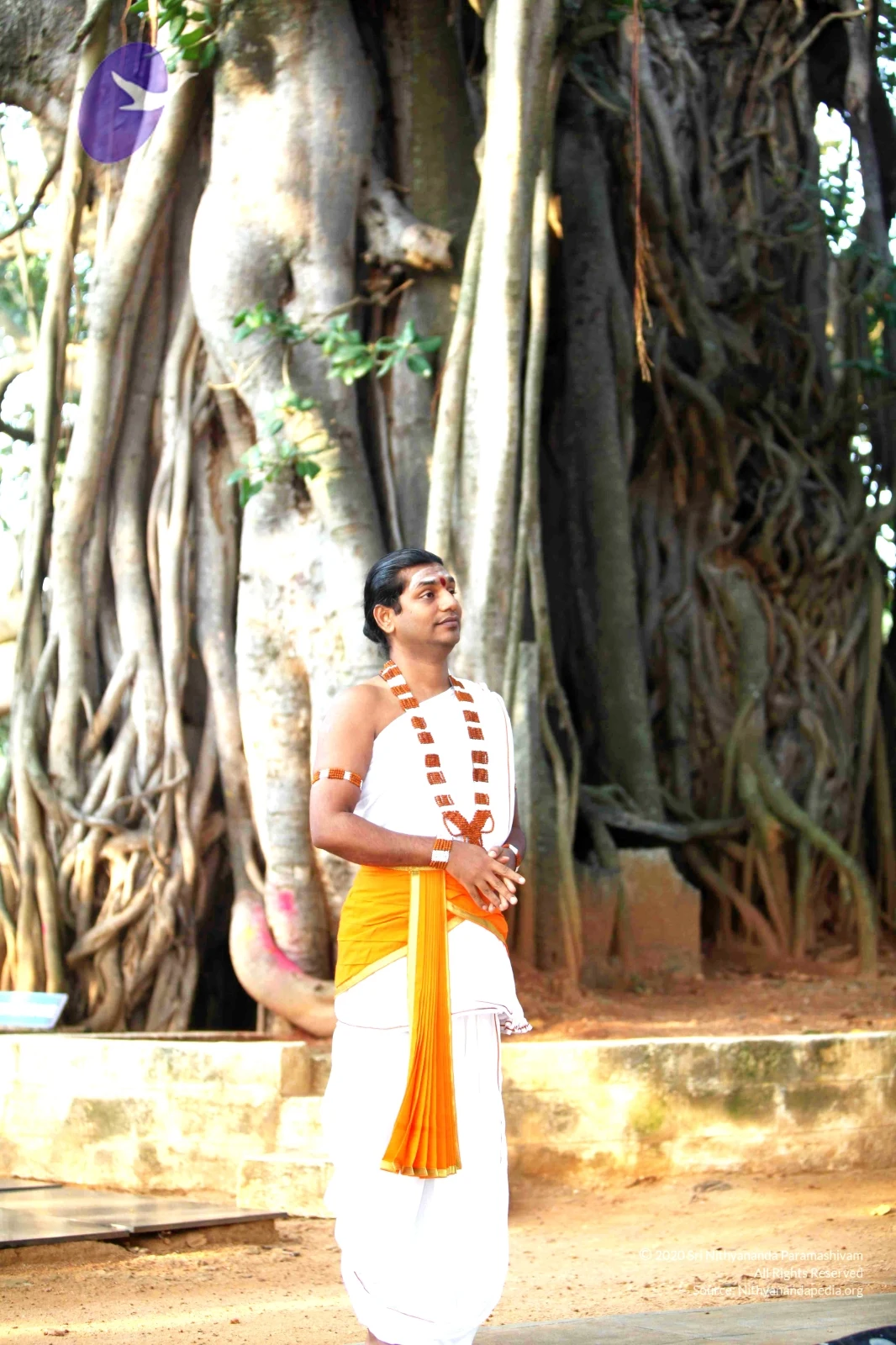
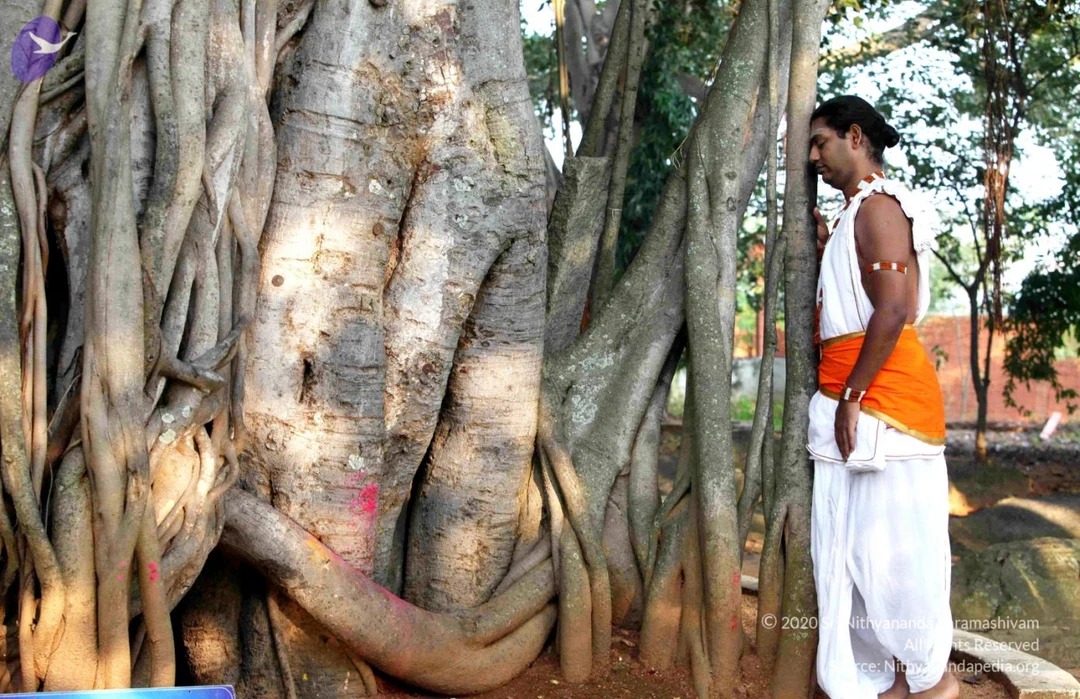
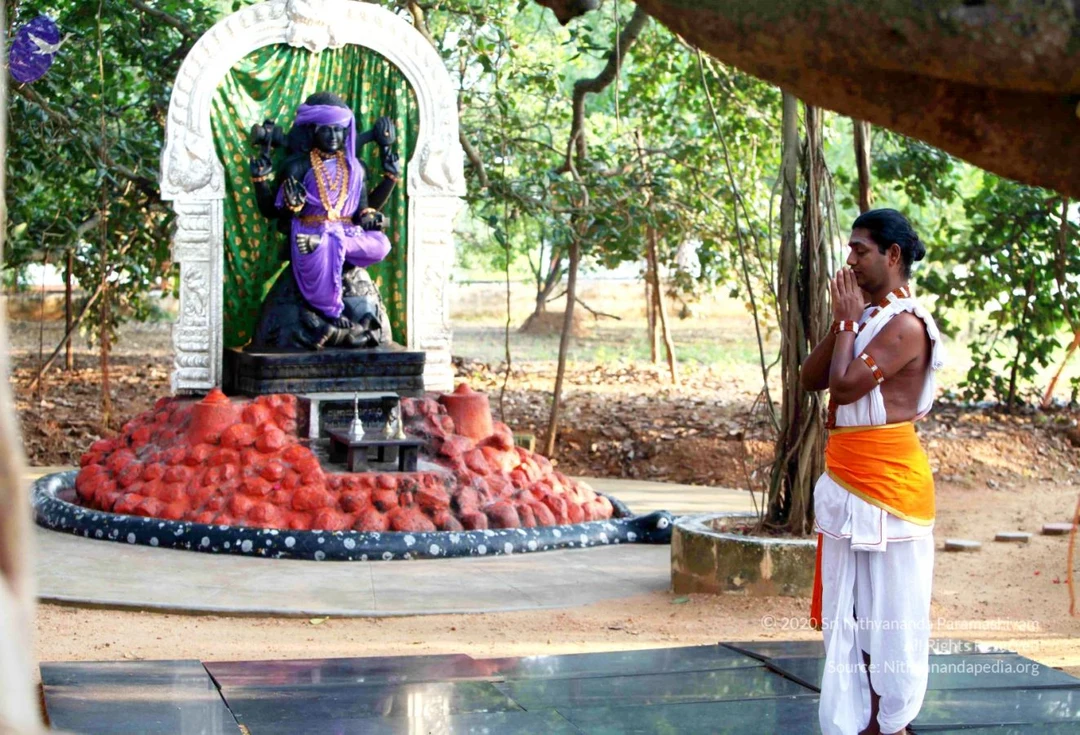
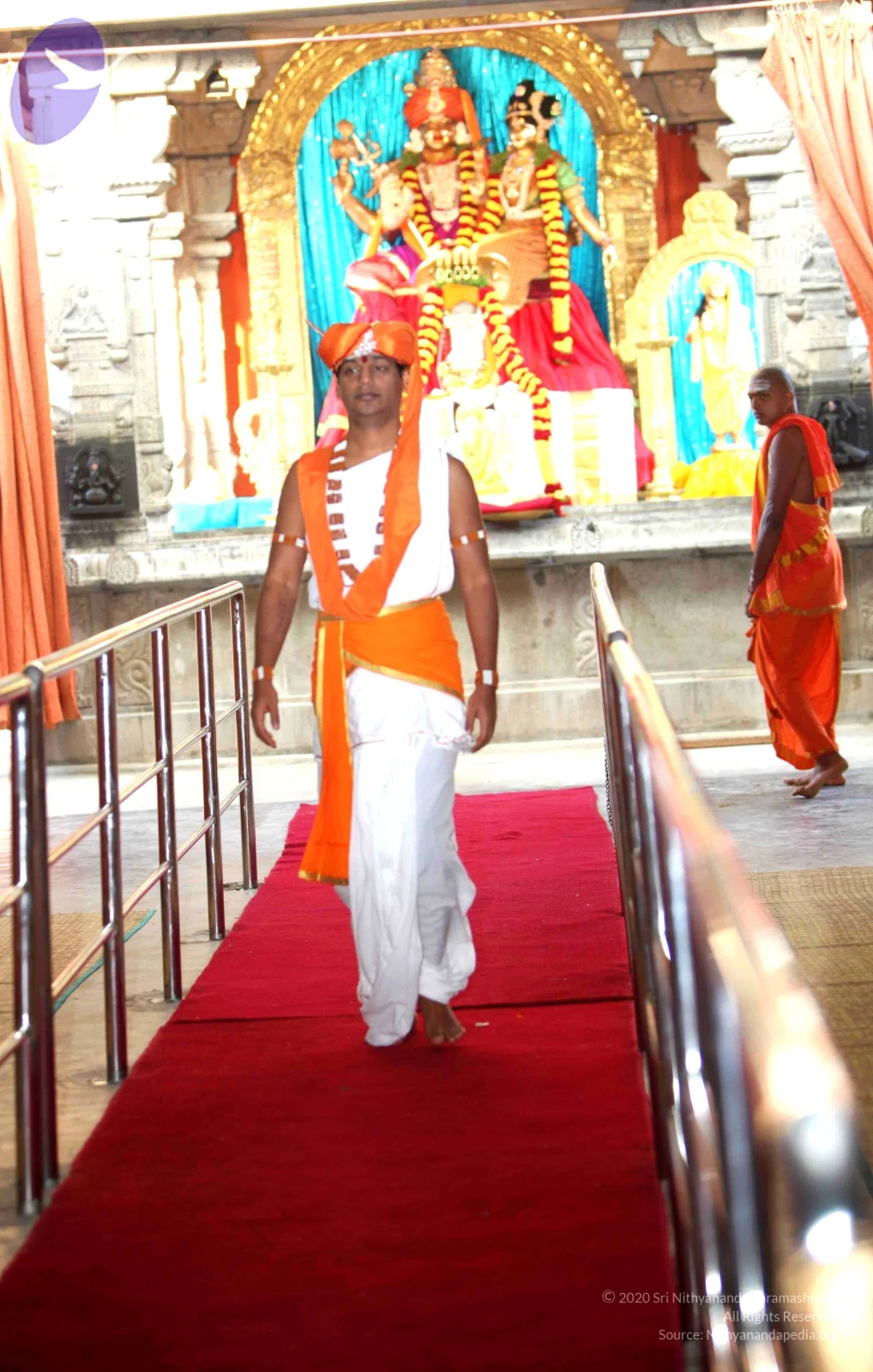
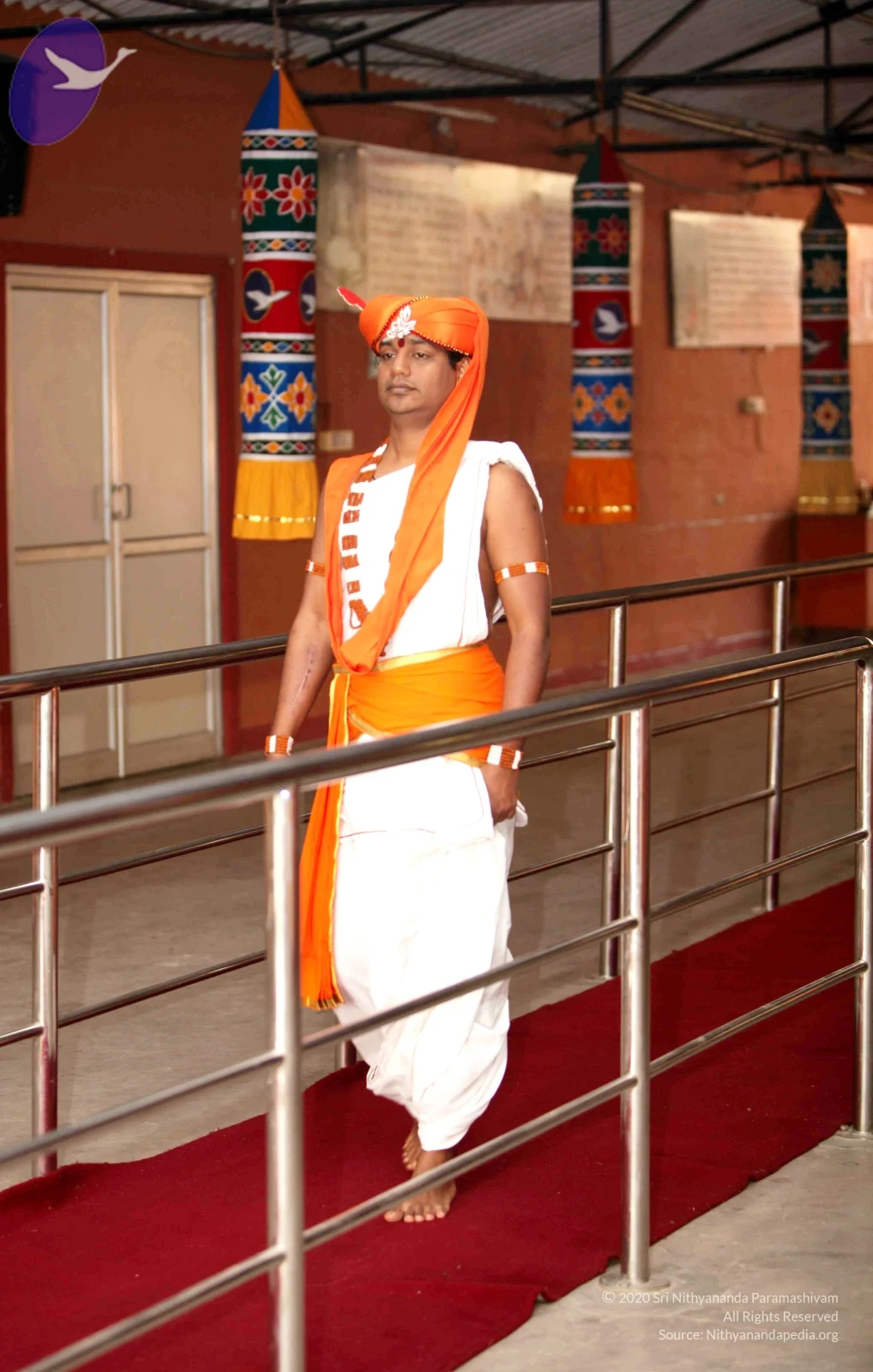
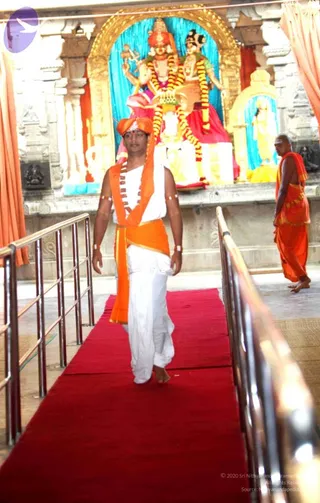
A man in a saffron-orange turban with a small ornament at the front walks barefoot across a stage, wearing white dhoti-style trousers, an orange sash and a white-and-orange cloth draped over one shoulder. He wears a long rudraksha-style mala with white beads, matching beaded armlets and wristbands, and a red tilak on his forehead. Behind him a red ring-shaped frame hangs from a red pole under a pale tent canopy, and a figure in yellow sits at the left edge.A standing man in white dhoti and white shoulder cloth with an orange-saffron sash draped over one shoulder and tied at the waist, wearing a rudraksha-style bead mala with a bead bracelet and armlet. He has a red tilak on his forehead, holds his hands together at his waist, and looks upward. Behind him are massive banyan tree trunks with dense aerial roots, and a low stone platform sits at his feet on a dirt ground. The figure's appearance is consistent with a presentation of a person in ritual dress, but the cues are not distinctive enough to confirm identity, so this is a devotee-style presence described by role only.A man stands pressed against the trunk of a large, sprawling banyan tree, his head resting on the bark with his eyes closed. He wears a white dhoti, an orange-saffron sash or cloth draped at the waist and across the body, a white shoulder cloth, and a bead necklace; a copper-coloured band is on one upper arm and a bracelet on his wrist. Thick aerial roots hang and wrap around the trunk, with faint red vermilion marks on the bark and a brick wall and green foliage behind. The figure's appearance does not clearly establish a specific identity, so this is an uncertain candidate in a devotional, tree-hugging pose.Outdoor photo at a shrine under trees. A black stone deity murti with four arms, wearing a purple cloth and a gold-and-red bead necklace, stands in a white arched niche backed by green drapery. In front, a large mound of red offerings. A standing man in white dhoti with an orange-saffron cloth draped over his left shoulder and sides, bare-chested, with rudraksha-style beads at his arms and neck, holds his palms together in anjali near the shrine.A barefoot man in a white dhoti and orange sash with an orange turban walks down a red carpet runner inside a temple hall. Beside him, a shaved-headed man in orange robes walks in the background. Behind them stands a shrine with a deity murti decorated with red and yellow marigold garlands, flanked by a larger deity figure with a trident and a red-robed goddess figure, all set against a turquoise backdrop with orange curtains on either side.A barefoot man in white dhoti and white upper cloth walks along a red carpet between silver metal railings inside a hall with an orange-brown wall. He wears an orange turban with a white ornament, an orange shawl draped over his shoulder, an orange waist sash, white and orange bangles on his wrists and upper arm, and a red mark on his forehead. Hanging behind him are tall decorative fabric banners with red flower, blue bird and green geometric patterns and yellow fringed bottoms, beside framed white papers on the wall. The appearance is a person candidate given the orange turban, shawl and ceremonial adornments, but the identification is uncertain.

Bhagavad-Gita-Satsang
10 photosSource gallery
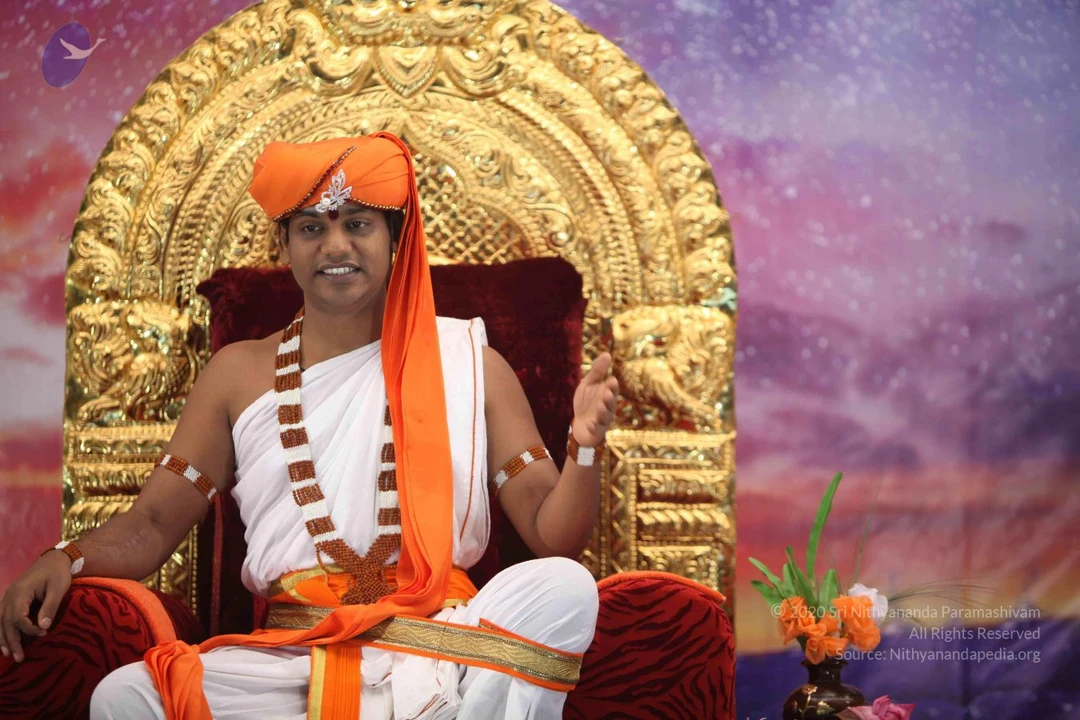
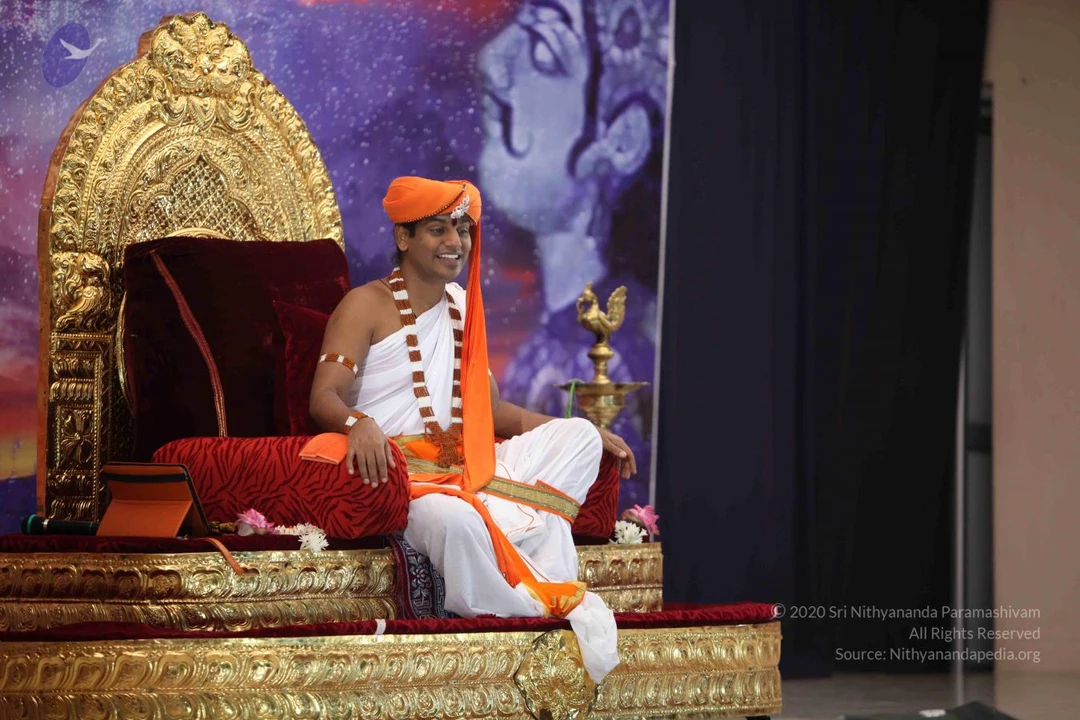
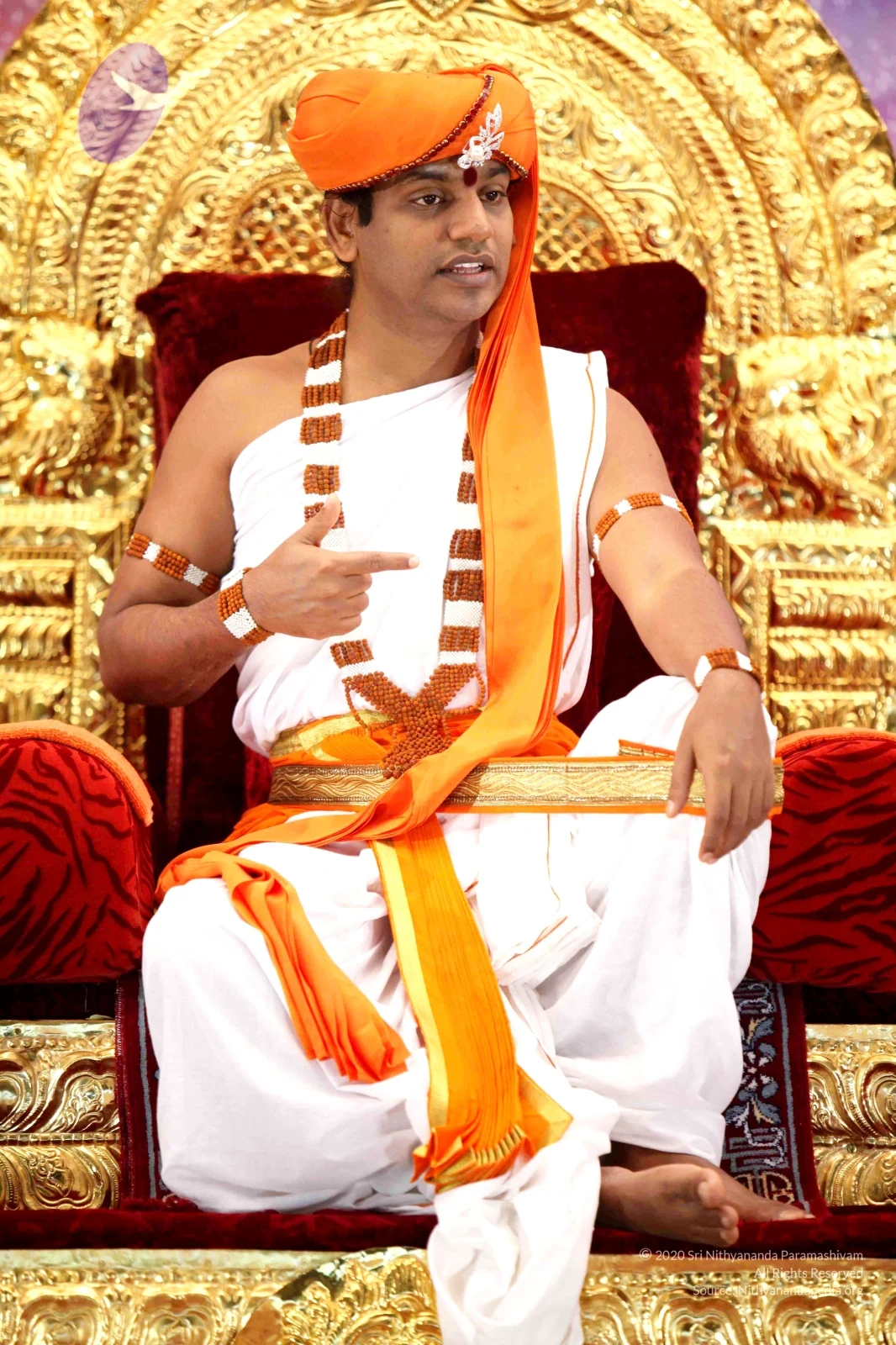
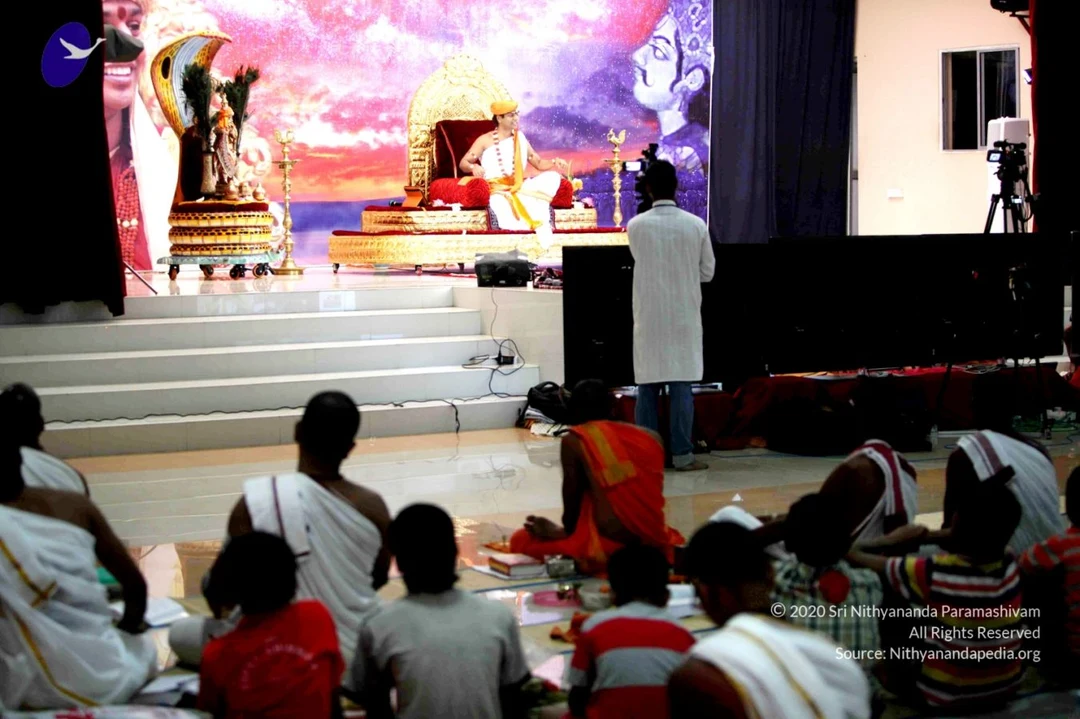
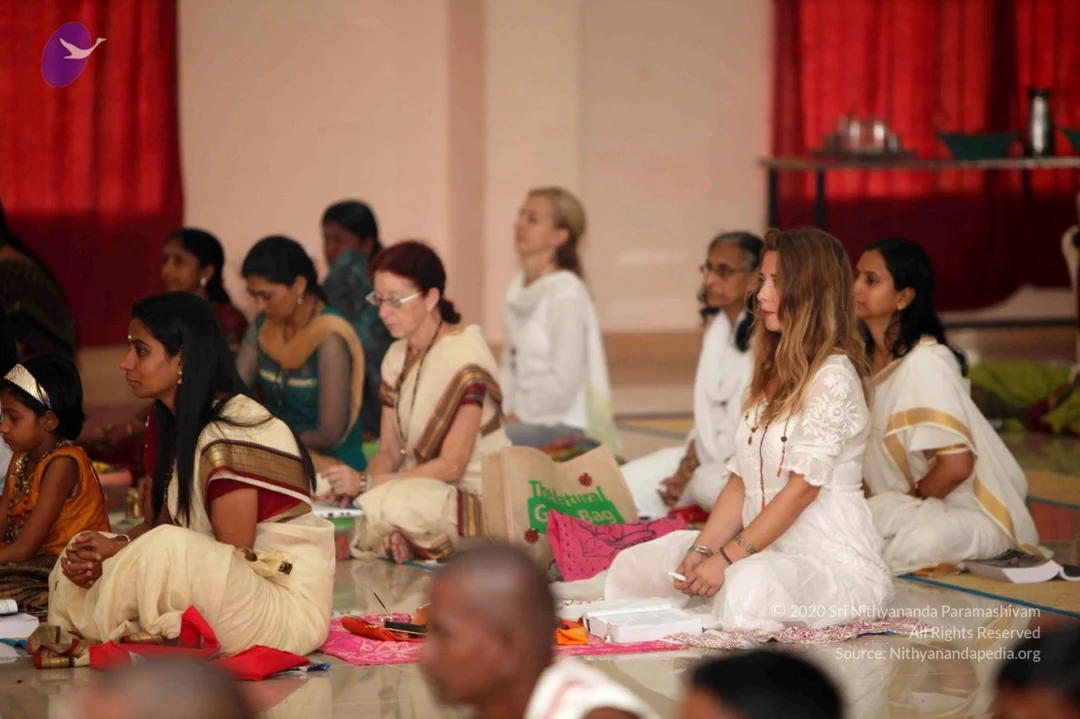
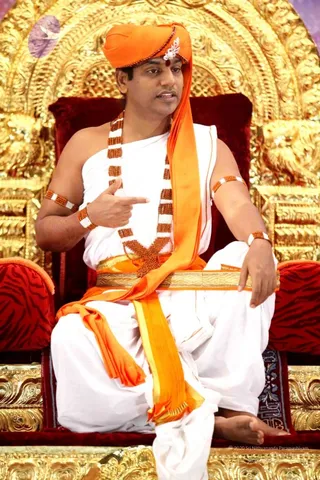
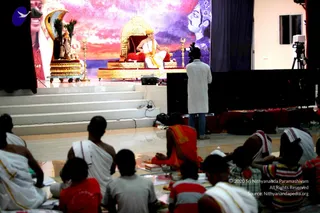
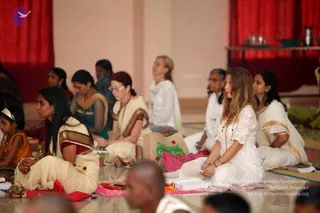
A seated man in an orange turban with a small white ornament and red bindi sits on an ornate gold throne with a deep red velvet cushion. He wears a white dhoti-style garment, an orange shawl draped over one shoulder, a long brown-and-white rudraksha mala, and beaded bracelets on his upper arm and wrist. He smiles and raises one open hand in a gesture of address. A pink-and-violet sky backdrop and orange flowers appear at the lower right. a person is shown in these ceremonial cues, seated as a discourse speaker.A seated man on a red velvet throne with a gilded, ornately carved backdrop gives a discourse, pointing with his right index finger. He wears an orange turban with a white jewelled brooch and a red tilak, a white dhoti with an orange-and-gold sash, an orange shawl draped over one shoulder, and a long rudraksha mala with white beads. Rudraksha bands with white beads are on his upper arms and wrists. He is barefoot and sits cross-legged on a gold-embossed footrest. Swamiji (probable): the orange turban, rudraksha malas, ornate gold setting and shawl are the qualifying cues, shown as a teacher in a satsang discourse.A seated man on an ornate gold throne with carved lions and a red velvet cushion, smiling and gesturing with open hands. He wears an orange turban with a white ornament at the forehead, a red bindi, a white dhoti-style garment, an orange shawl draped over one shoulder, a long beaded brown rudraksha-style mala, and beaded armlets. A vase of orange flowers stands at right against a pink-purple sky backdrop. Swamiji (probable): the orange turban, orange shawl, beaded mala and ornate throne are the cues, and he is presented as the discourse speaker.A discourse hall with a raised stage backed by a painted sunset backdrop showing a cloud-filled sky and a portrait of a deity with a crown. A person in ornate golden-yellow and white robes with a rudraksha mala sits on a golden throne with red cushions, with a golden kalasha-shaped arch and a small deity murti with brass lamps on a decorated cart to the left. In the foreground, a row of seated devotees in white dhotis and colourful shirts face the stage, one man in an orange robe sits cross-legged at the front holding a book. A man in a white shirt stands at the right beside a video camera on a tripod. Cables and equipment are visible on the stage floor.A man seated smiling on an ornate gold throne with red velvet cushions, wearing an orange turban and orange sash over white garments, with a rudraksha mala garland and a bare upper arm band. A brass oil lamp stands beside him on the right. Behind is a painted backdrop of a deity in purple and blue tones. Swamiji (probable): the man on the throne shows an orange turban, orange sash and rudraksha mala, matching his presentation in the event context, so he is marked as a probable in-person candidate.Photograph of a seated group of women in a hall with red curtains and white walls, sitting on mats on a polished floor during a satsang-style gathering. In the foreground a woman in a cream saree with a red and gold border sits cross-legged, and a woman in a white dress with a red bead necklace holds a small white object. Nearby a woman in white with a shawl sits with eyes lifted, and another woman in white with a gold-bordered shawl sits to the right. Bags including a green 'Natural Green Bag' and a pink bag sit on the mat. Blurred heads of others in the foreground. No identifiable a person figure is visible.
Bhagavad-Gita-Satsang-Tamil

4 photosSource gallery
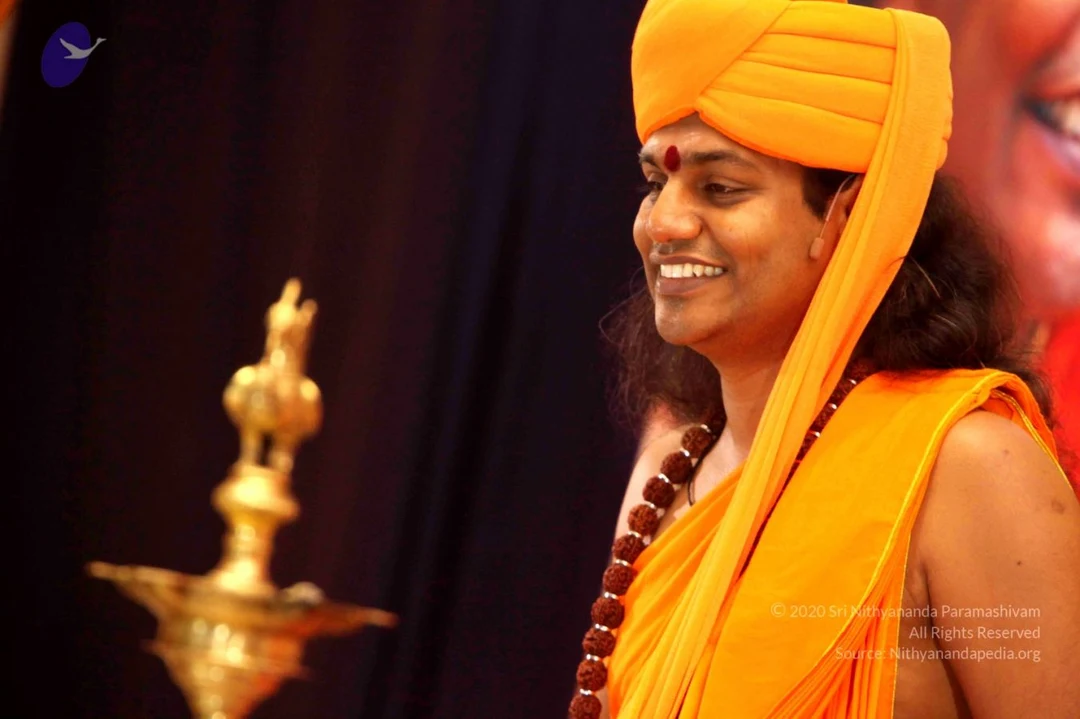
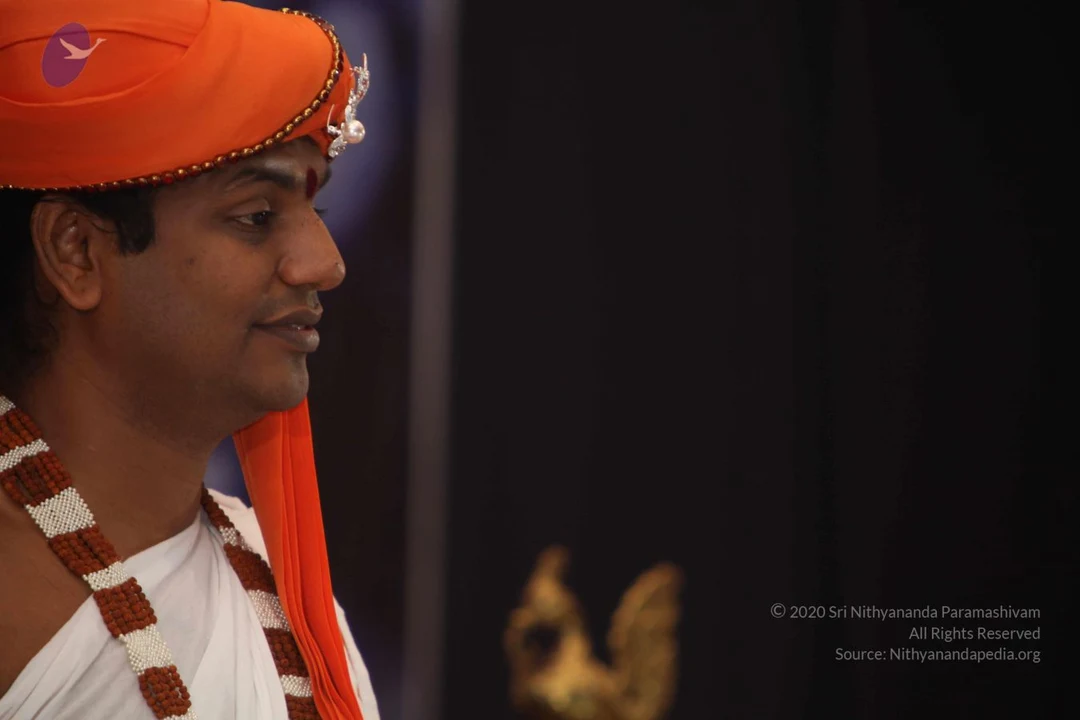
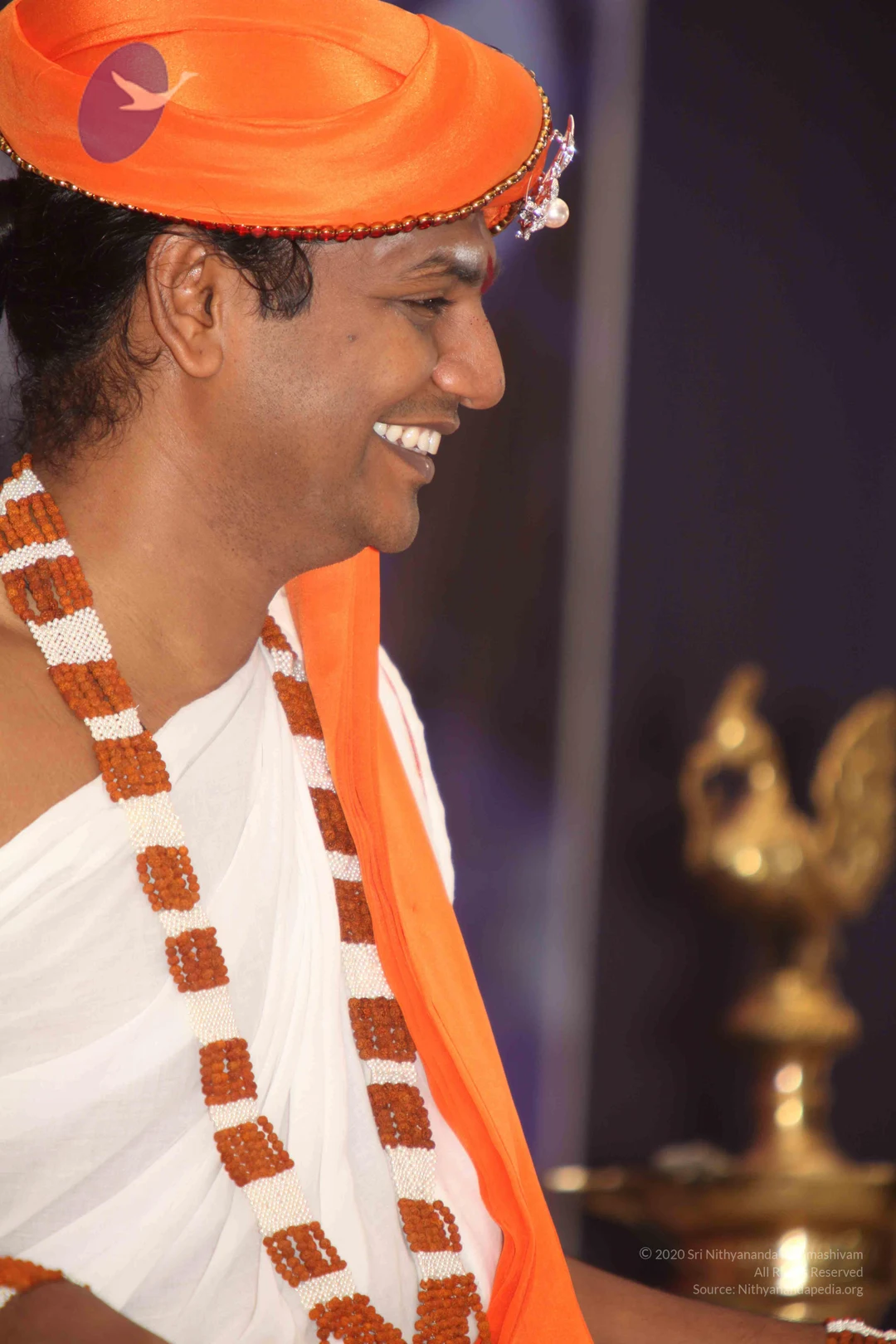
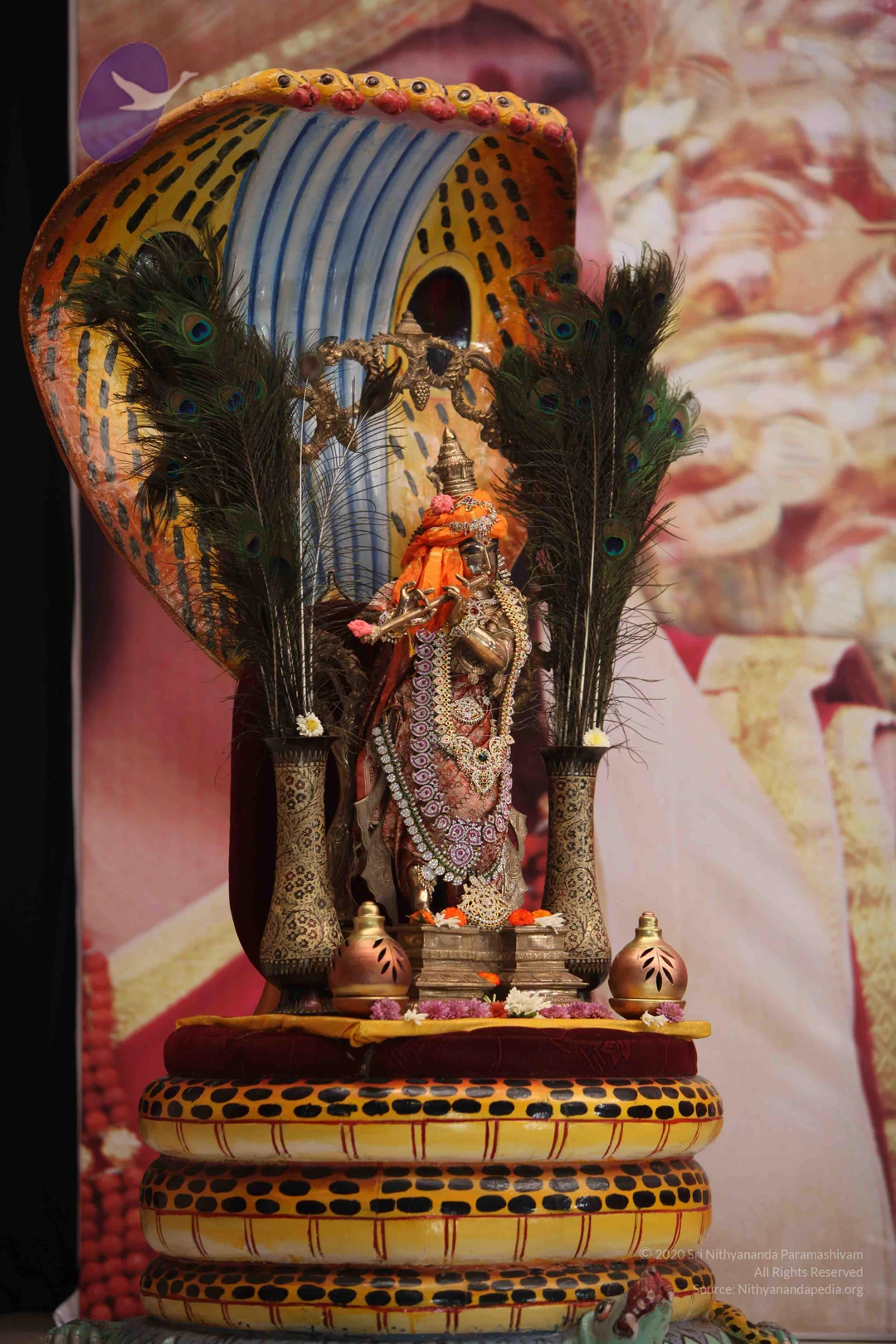
A seated man in saffron-orange robes and an orange turban sits on a red cushioned seat beside a brass oil lamp (deepa) with a bird-topped stem. Around his neck hangs a rudraksha mala, and he wears a gold-toned waist sash. Beside him stands a small gold-toned deity murti of Krishna playing a flute, adorned with white flower garlands and red flowers, framed by a large orange-and-yellow cobra hood. Behind him a banner shows a smiling man in an orange turban with a red tilak. a person in saffron robes and rudraksha mala, seated as a teacher.A seated man in saffron-orange robes speaks while gesturing with his right hand during a discourse. He wears an orange turban, a draped orange shawl, a red bindi and a long rudraksha mala with dark beads, and has long swept-back hair. Behind him is a large painted backdrop of a yellow and orange elephant-headed deity with a golden crown and garland, beside a small figure of a deity murti in a garland. Indicates a Bhagavad Gita satsang setting. Swamiji (probable): the speaker has long hair, an orange turban and shawl, and rudraksha mala.A seated man in saffron-orange robes and a matching yellow turban smiles and gestures with a raised hand during a discourse. He wears a rudraksha mala and a red bindi, and sits on a red cushioned seat. Beside him stands a brass oil lamp with a bird finial. To the left, a deity murti of Krishna holding a flute, garlanded with white flowers and backed by a golden cobra hood, sits on a red-draped stand with a red flower offering. A banner portrait of a smiling figure in red headwear appears behind him, beside dark blue drapes. Swamiji (probable): the seated speaker wears saffron robes, a turban and a rudraksha mala, the presentation of a discourse teacher, with a banner portrait behind him.A smiling man in a saffron-orange turban and matching orange shawl stands beside a tall brass oil lamp with a figurative base against a dark blue curtain. He wears a red bindi on his forehead and a long rudraksha mala, and his bare shoulder is visible. The lamp in the foreground is a traditional oil lamp, not a fire pit. Swamiji (probable): a bearded sannyasi in saffron turban and orange shawl with rudraksha mala, matching the page's presence claim, though only one person is visible.
Special-Photo

1 photoSource gallery
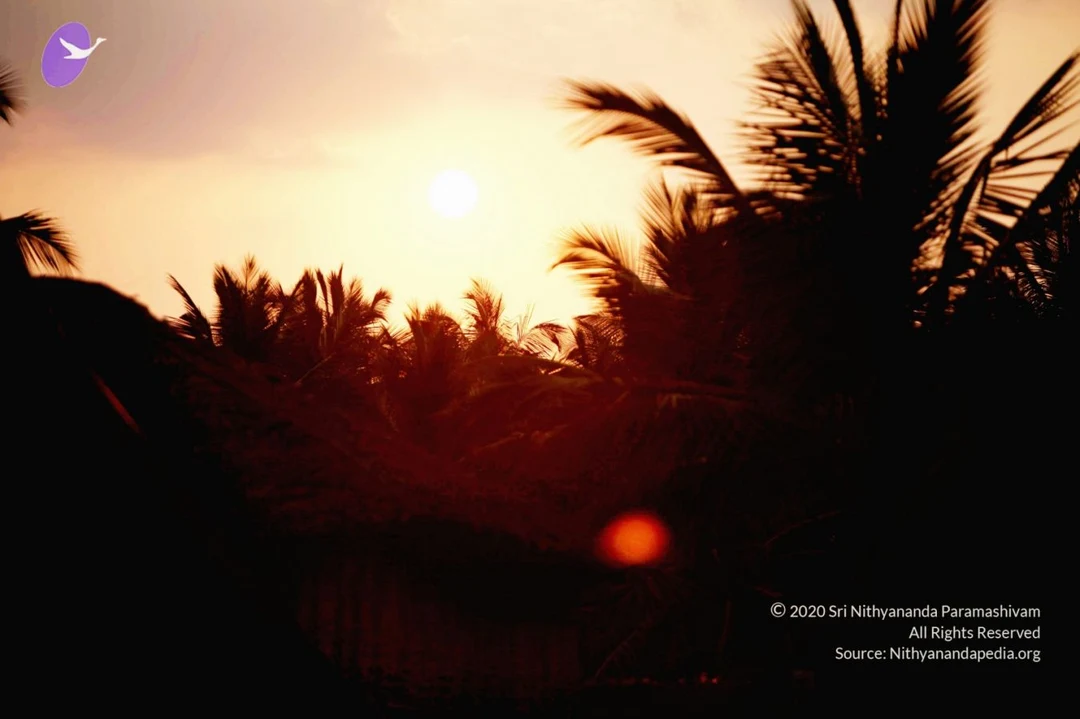
A silhouetted landscape at sunset: dark palm fronds. A soft red lens flare sits in the lower centre. No people, deities or ritual activity are visible. A small purple bird logo appears in the upper left corner.