Skip to content
Monday

19 October 2015

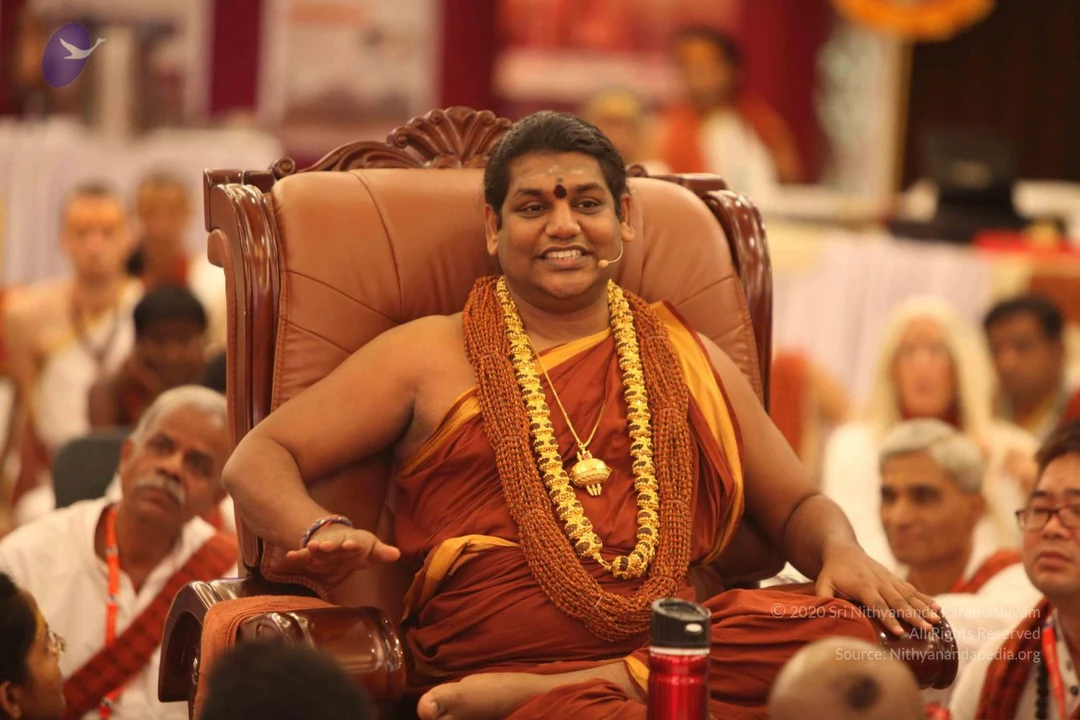
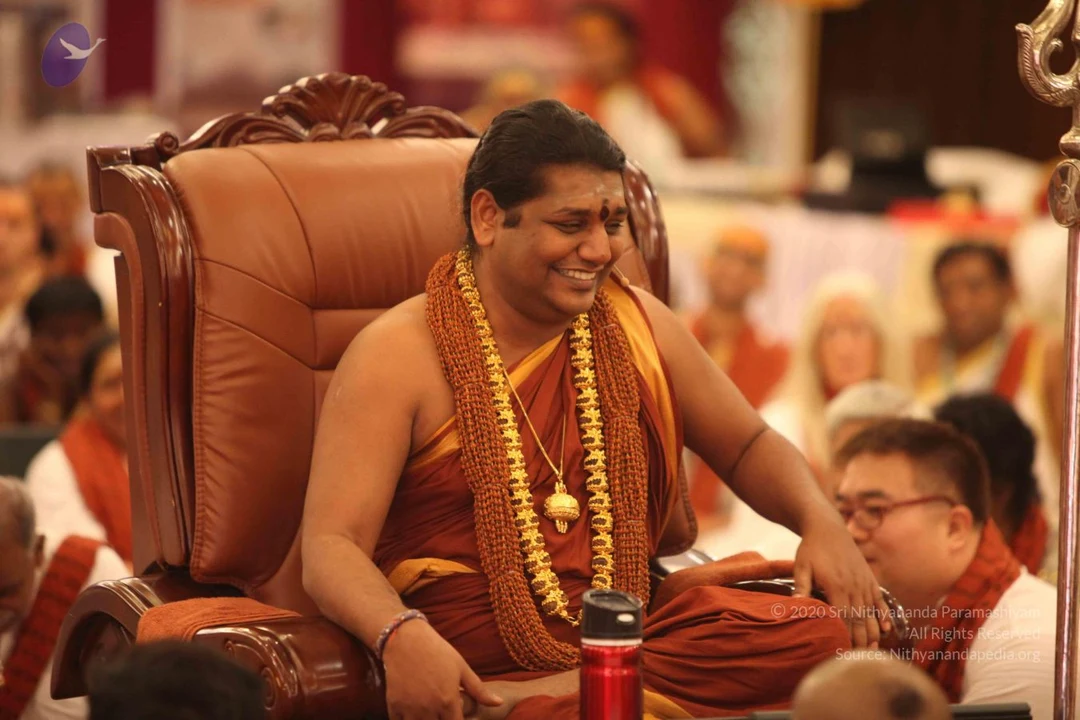
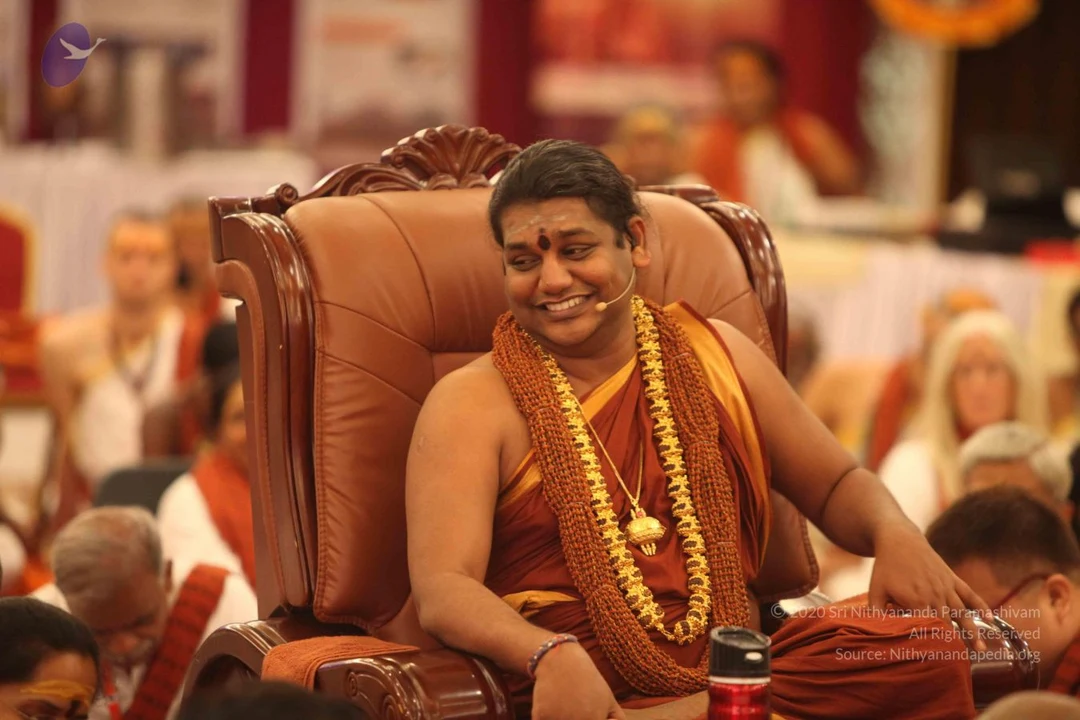
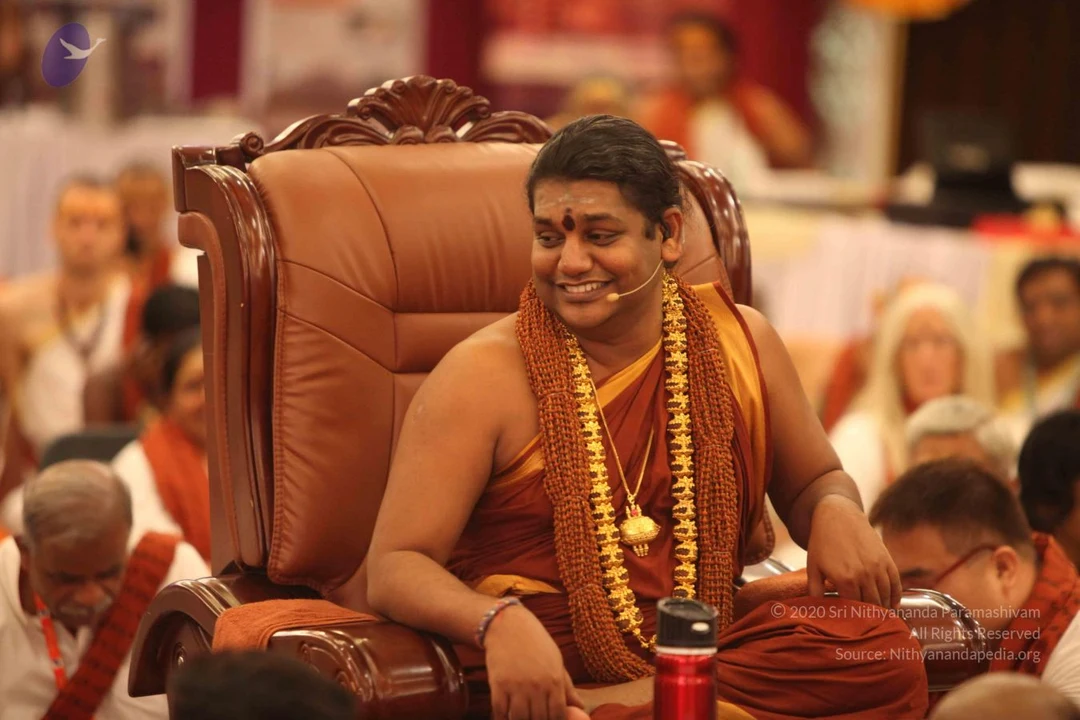
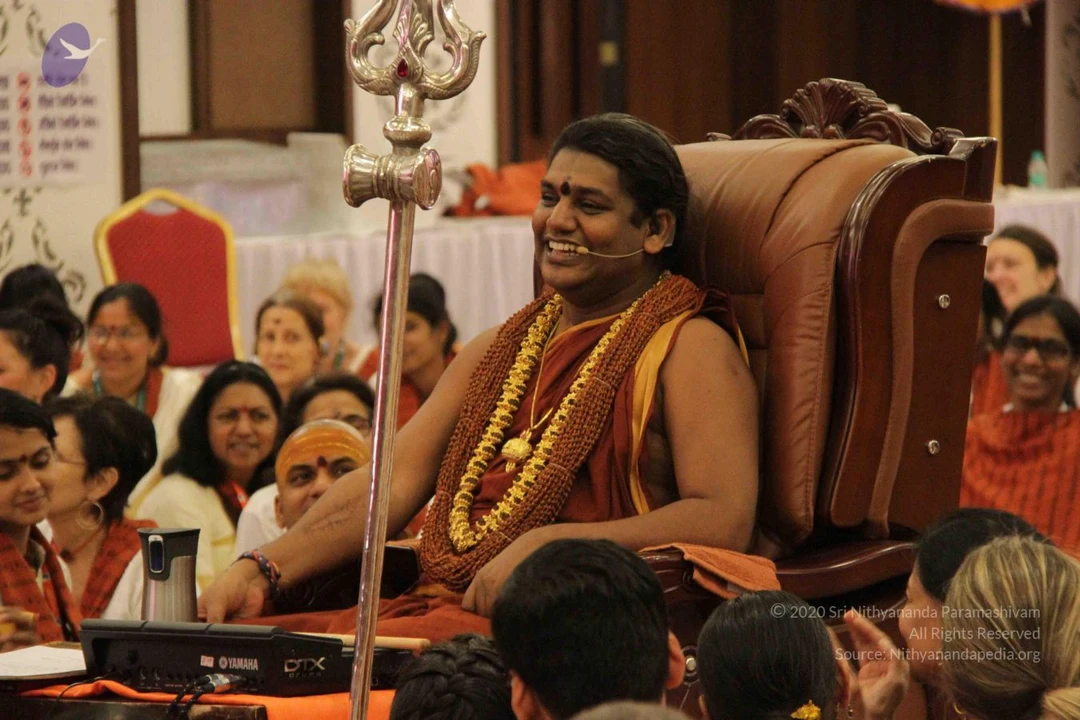
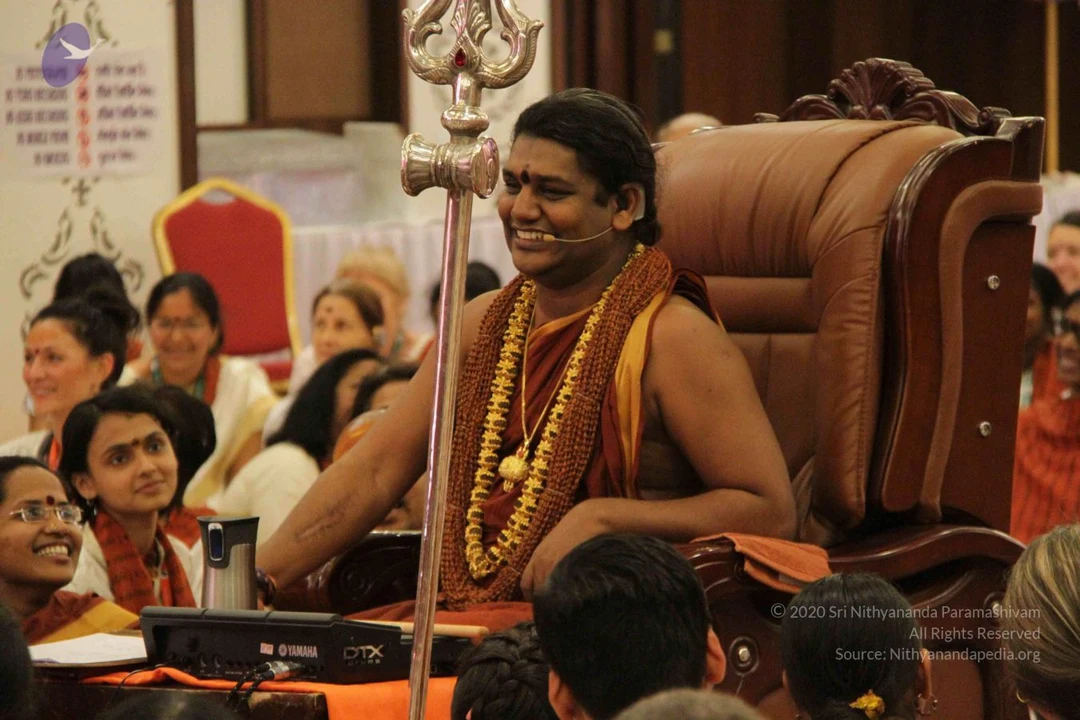
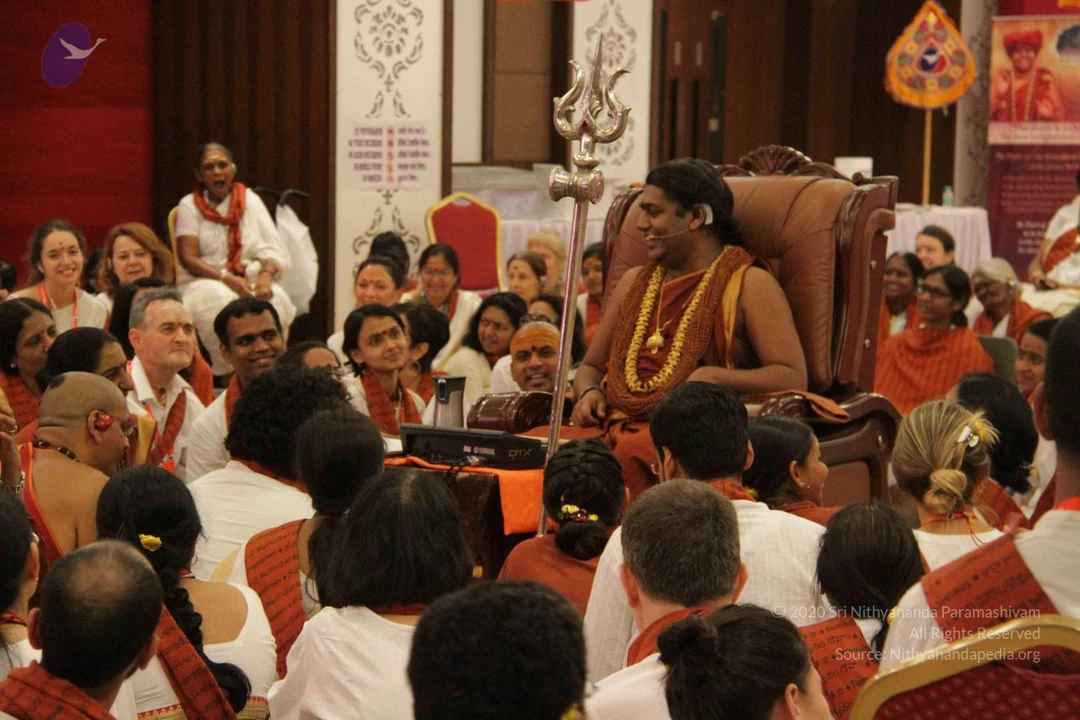
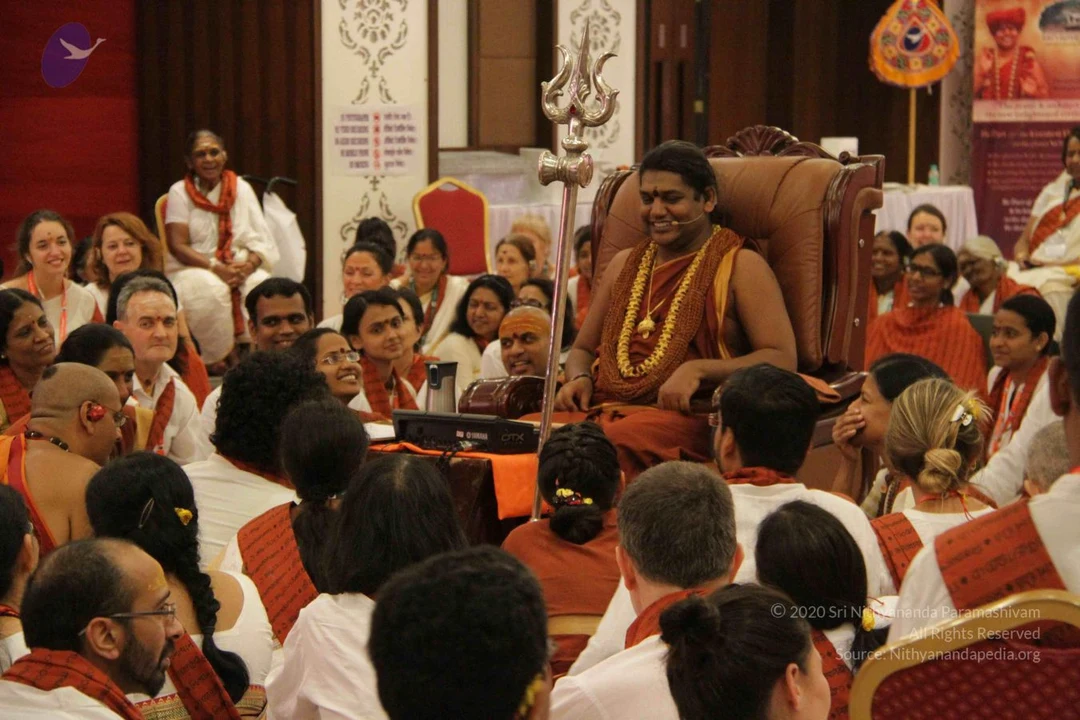
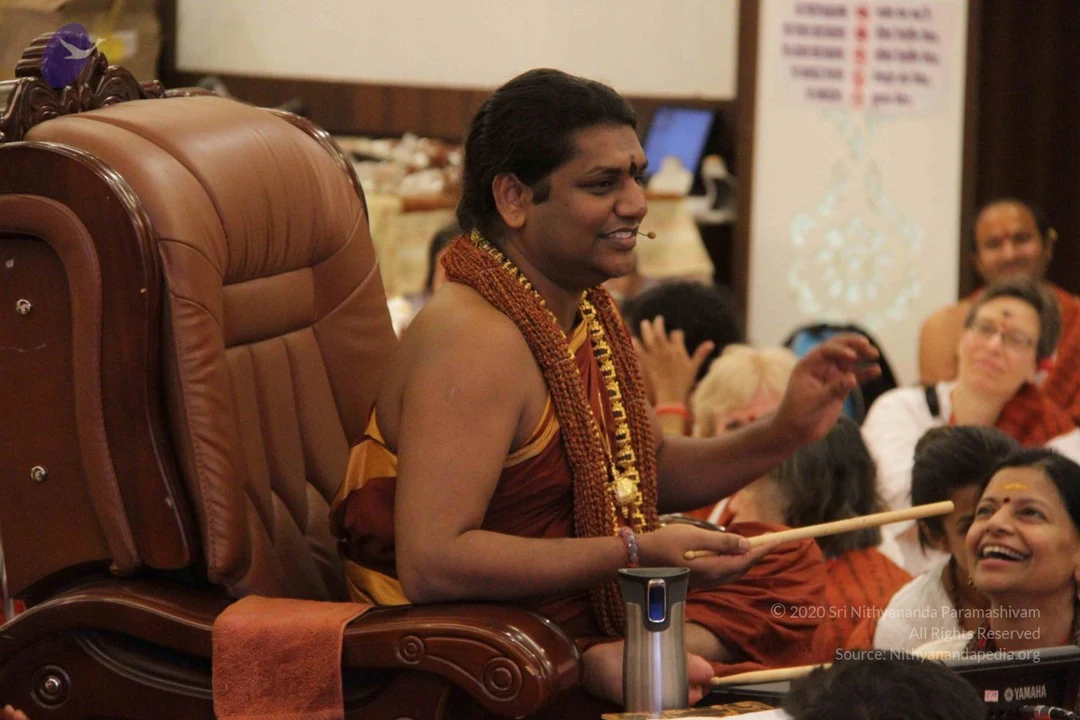
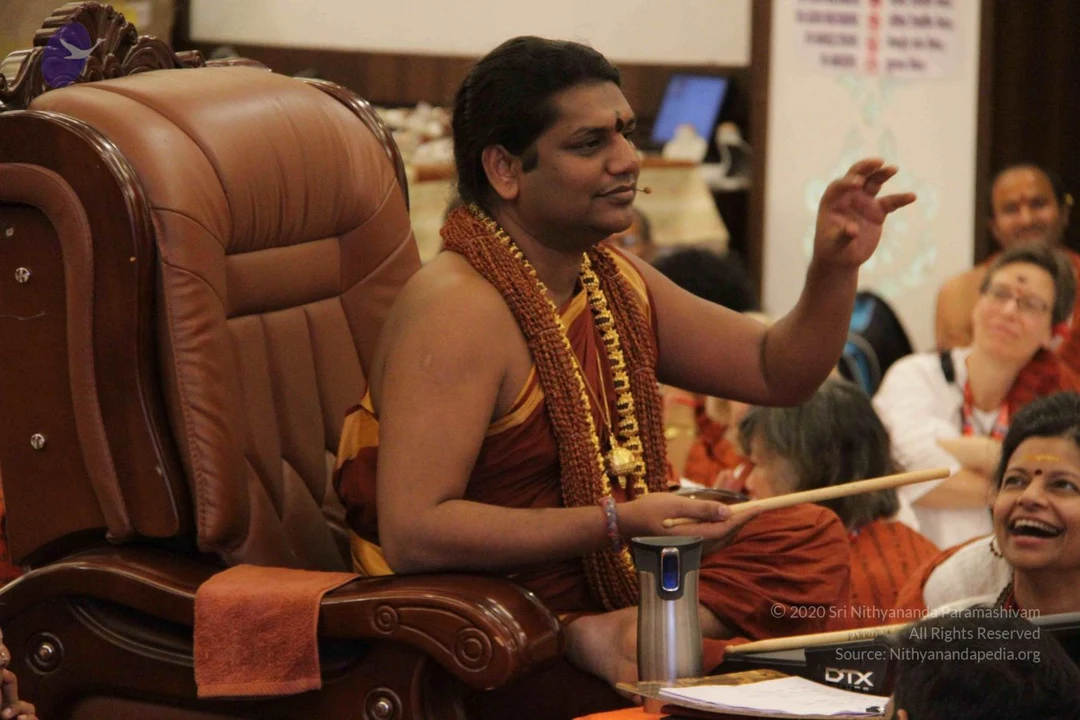
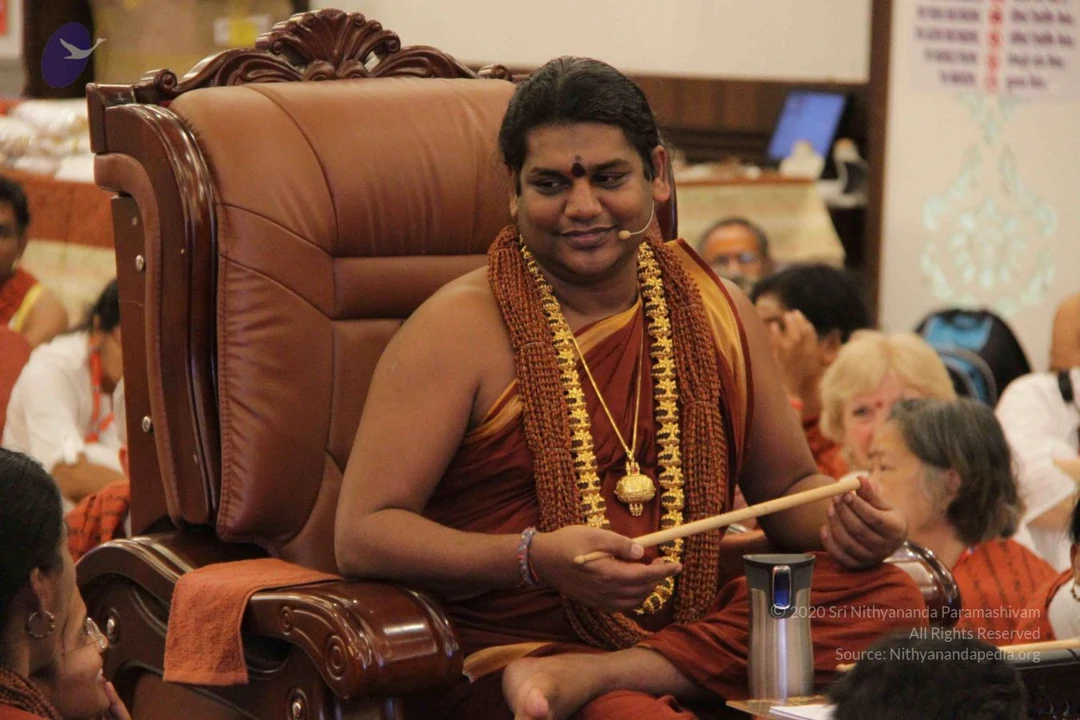
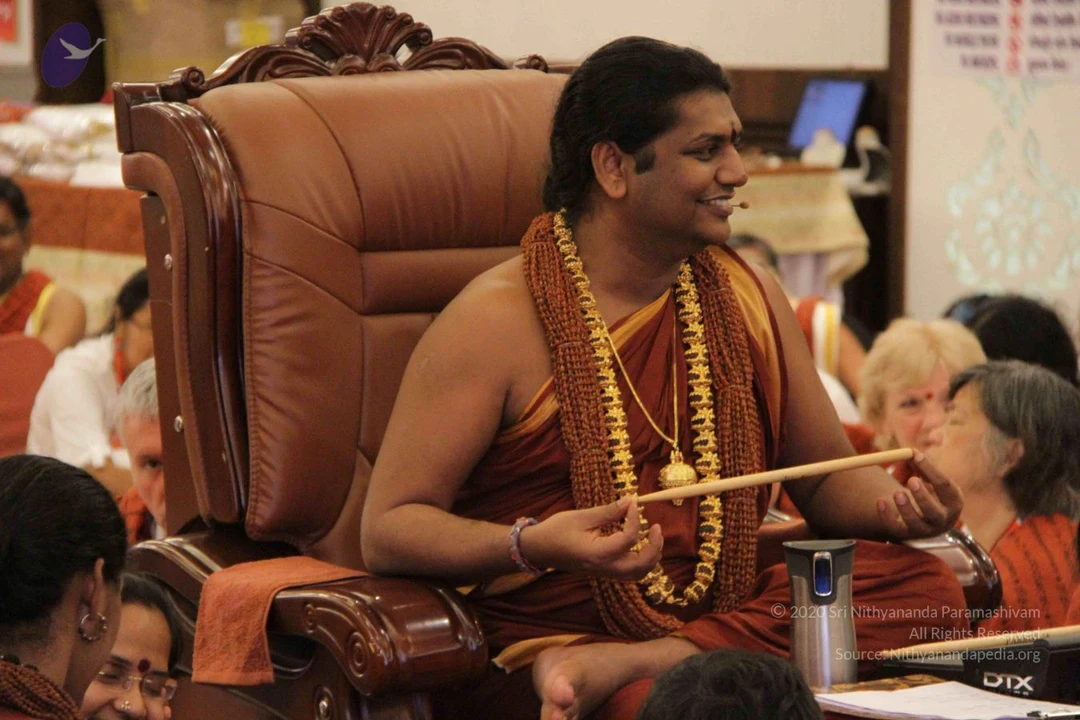
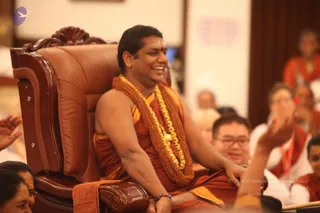
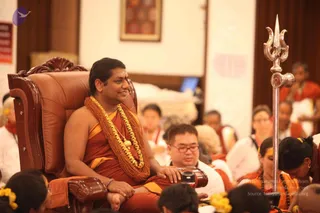
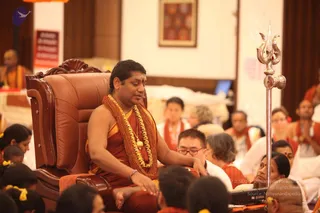
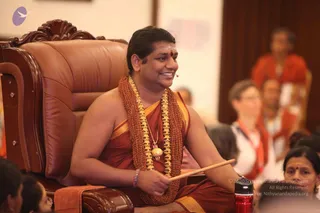
Shivoham Process & Q & A || Part 1 || IA || 19 Oct 2015

Dated photos
593
Source pages
1
Media
11
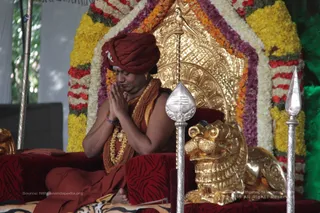
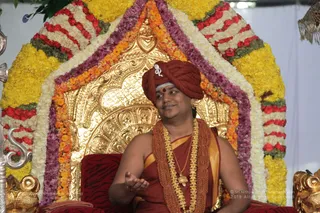
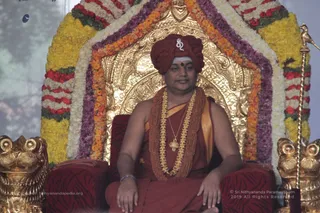
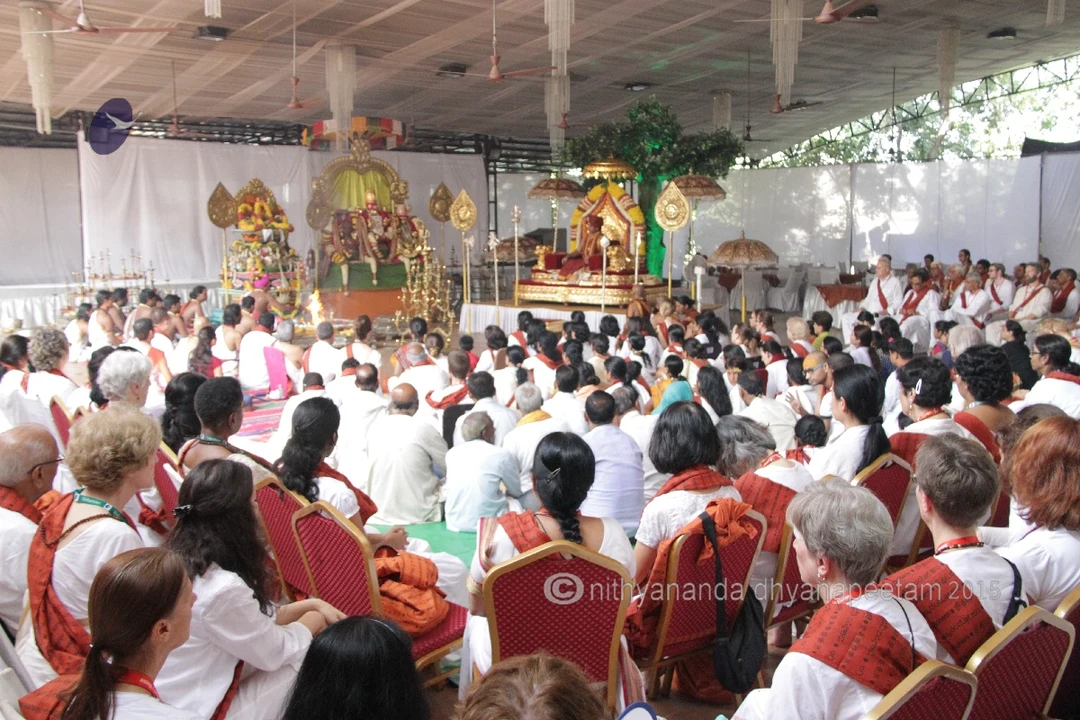
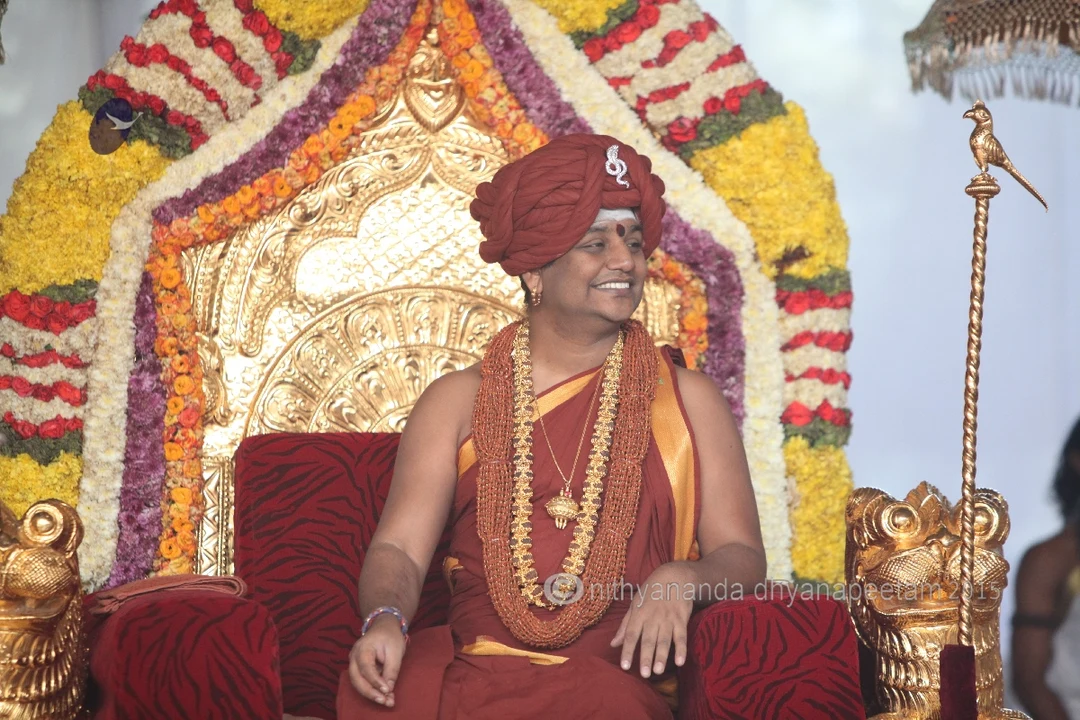
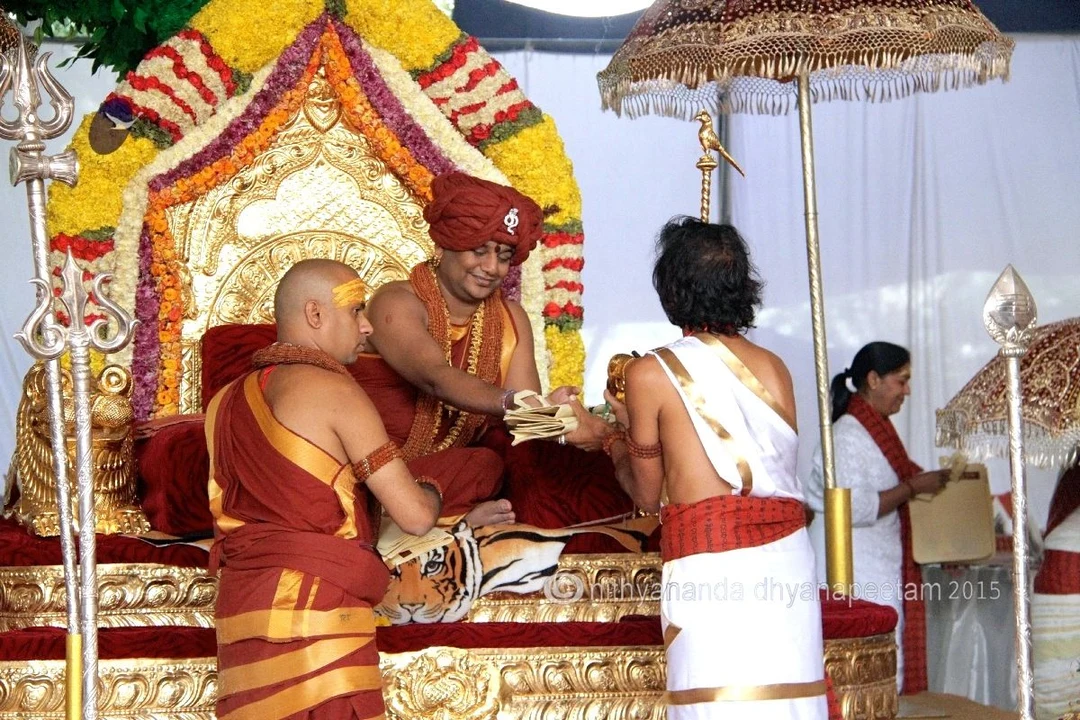
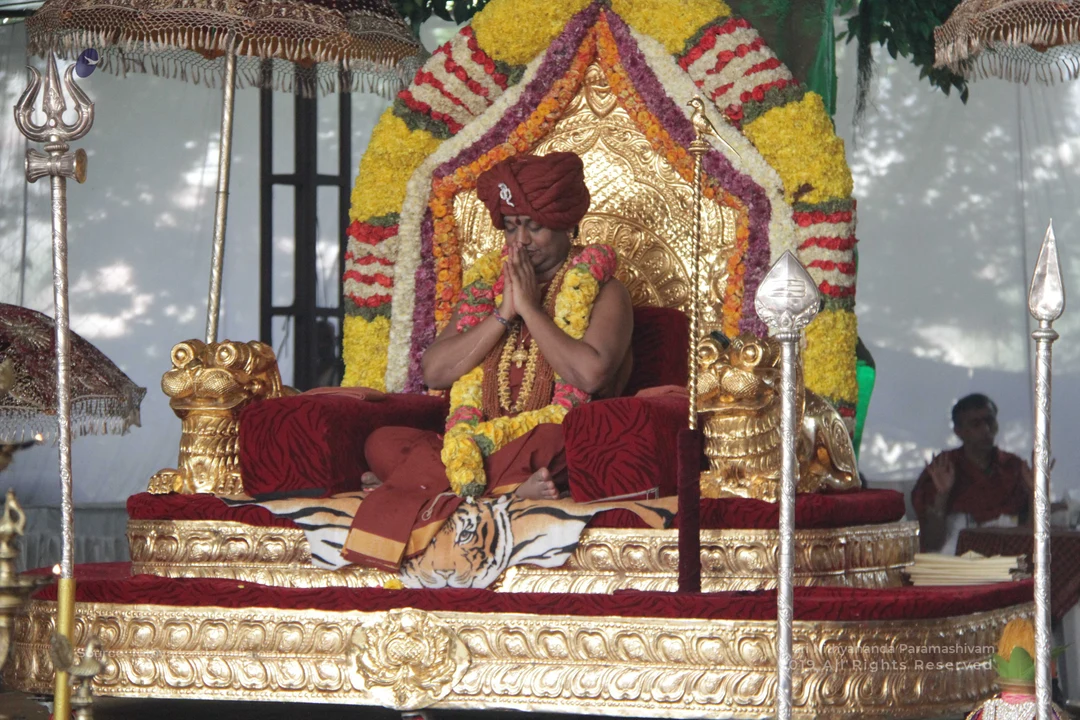
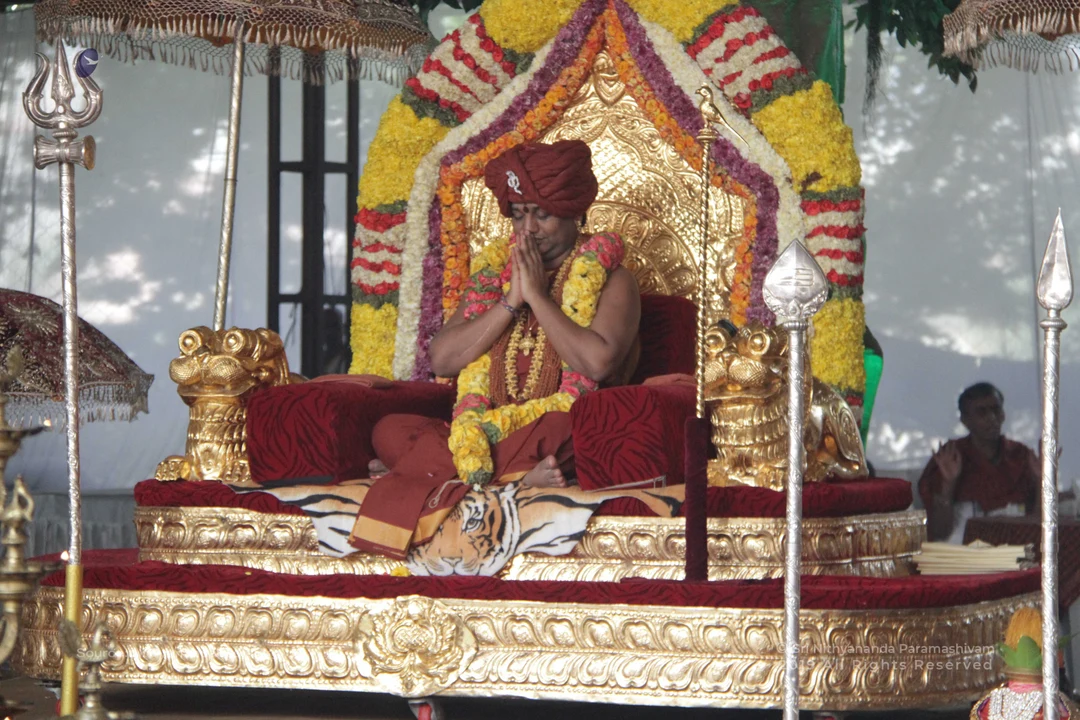
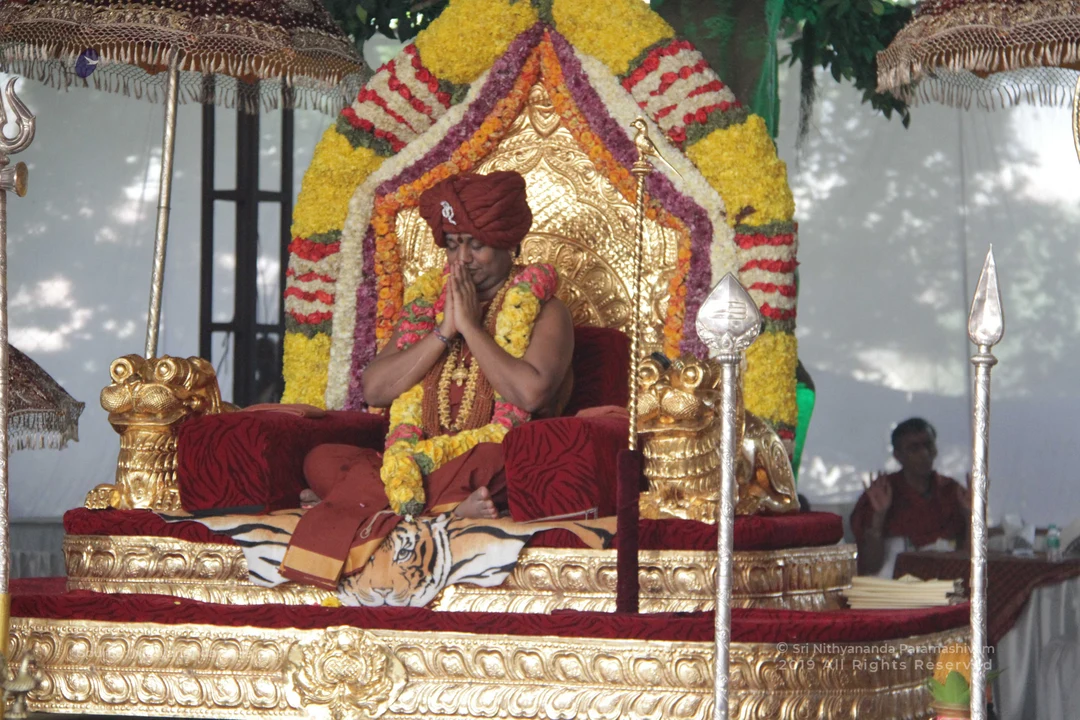
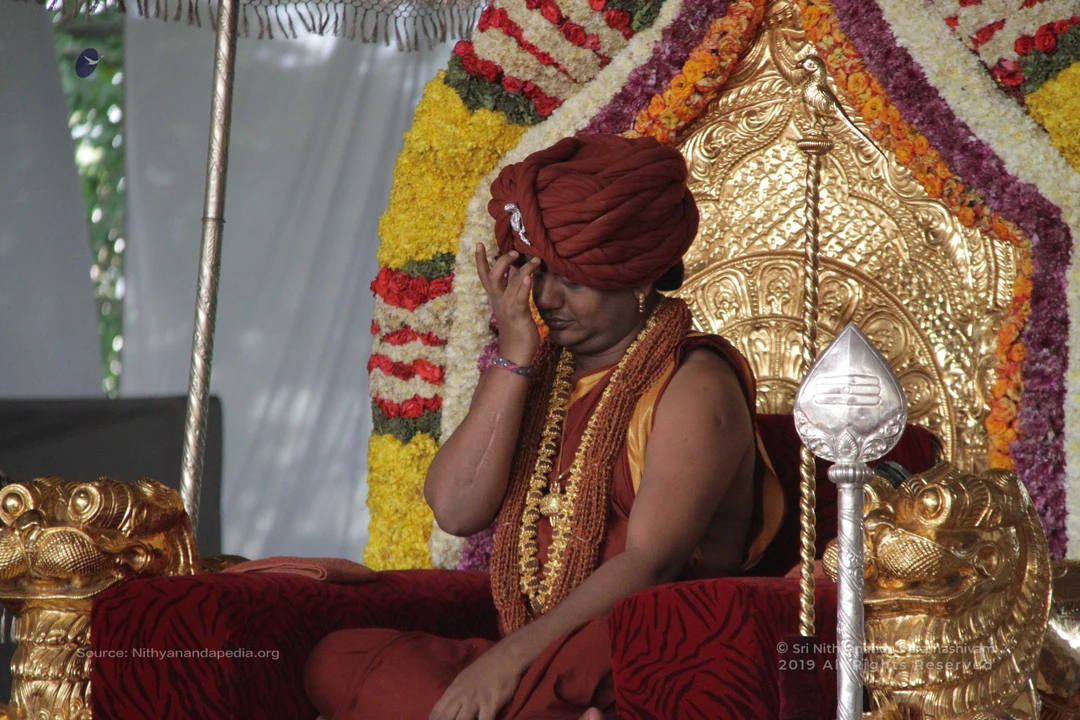
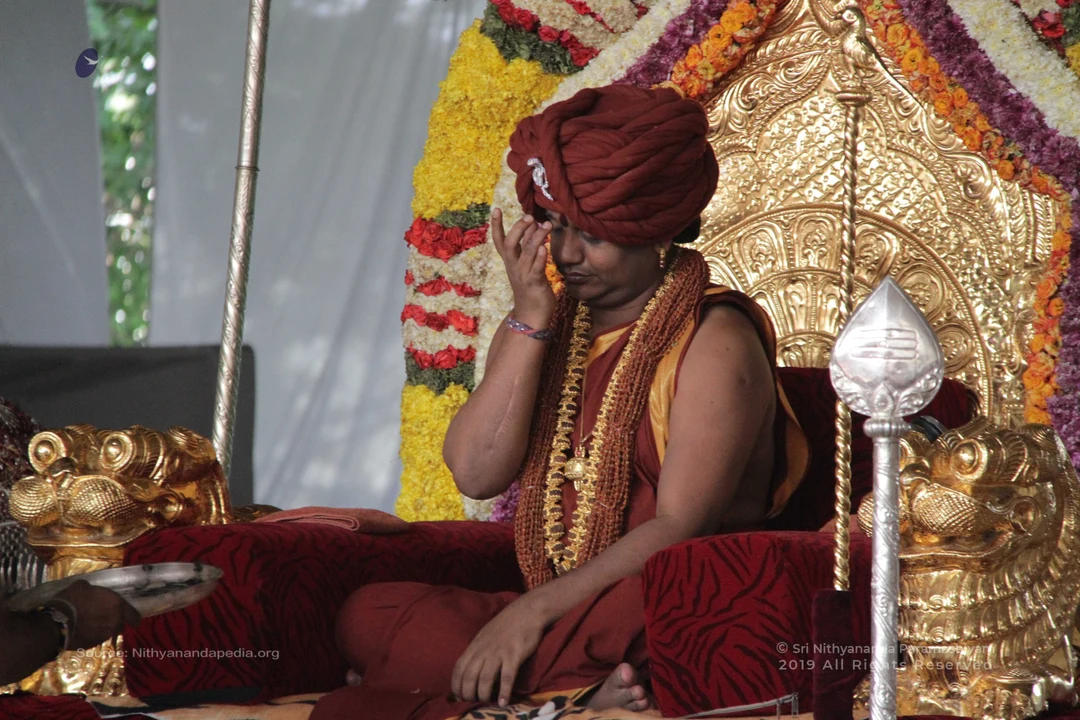
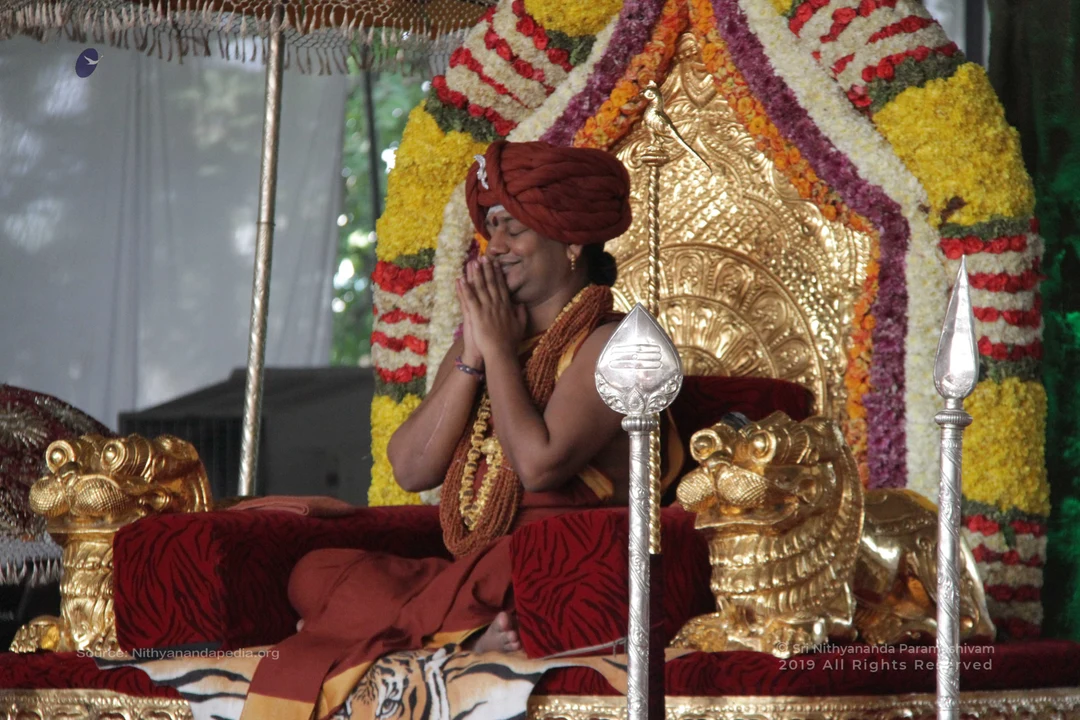
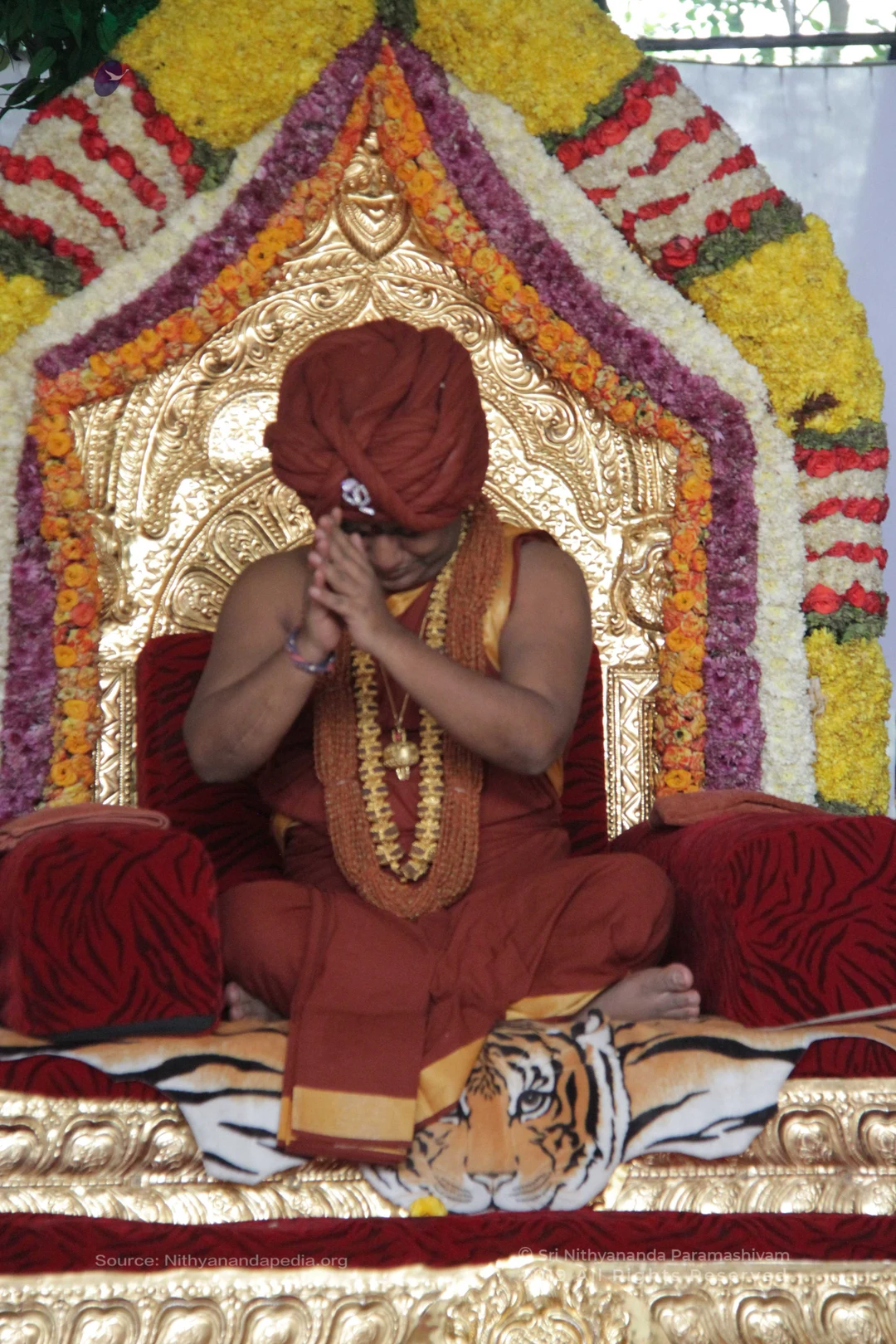
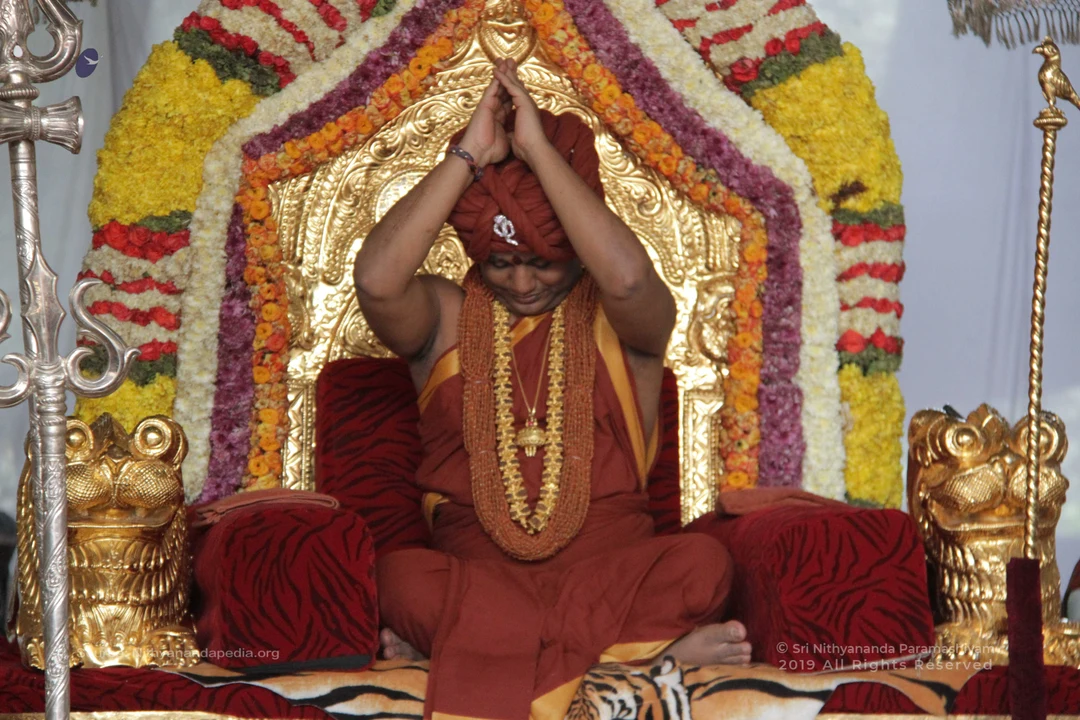
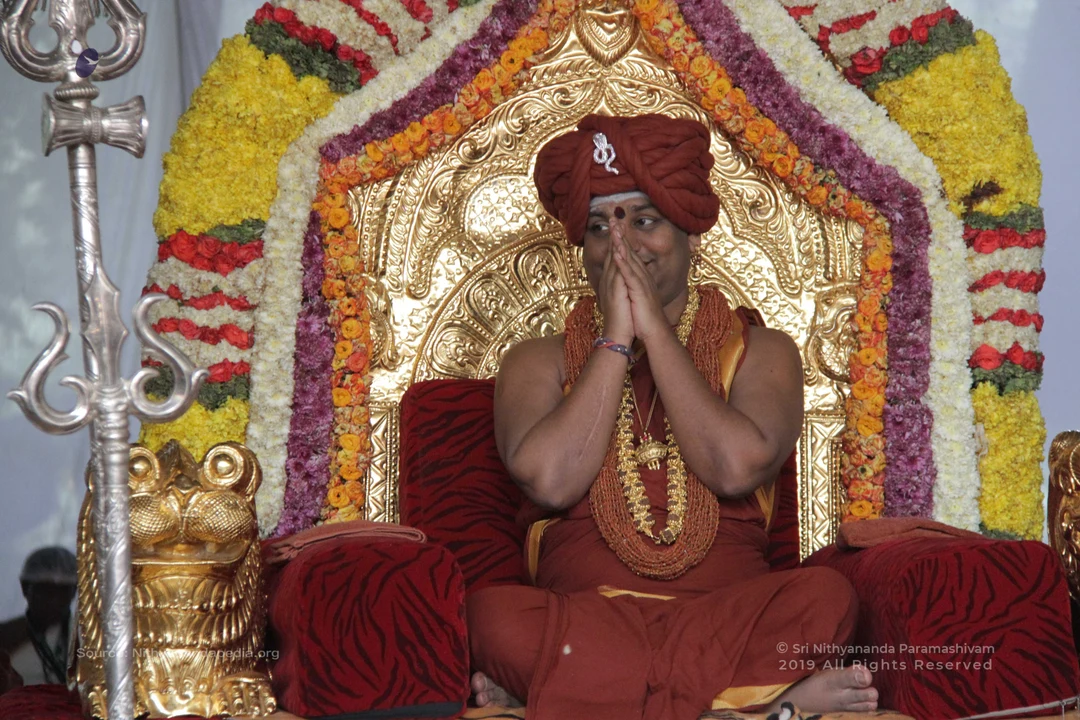
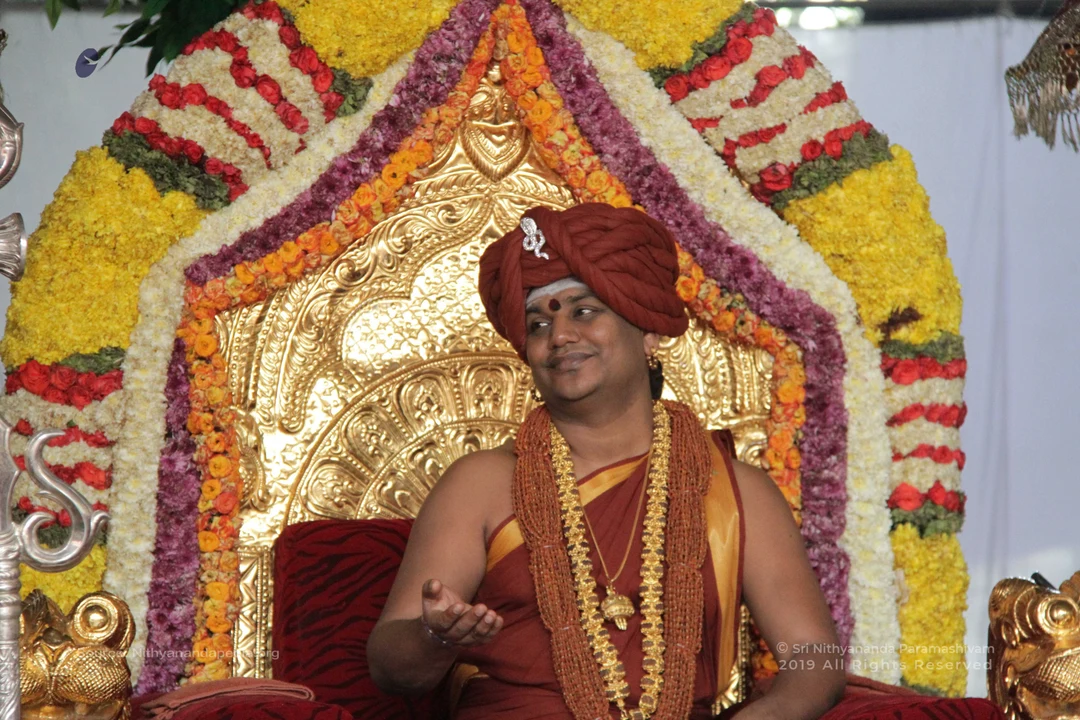
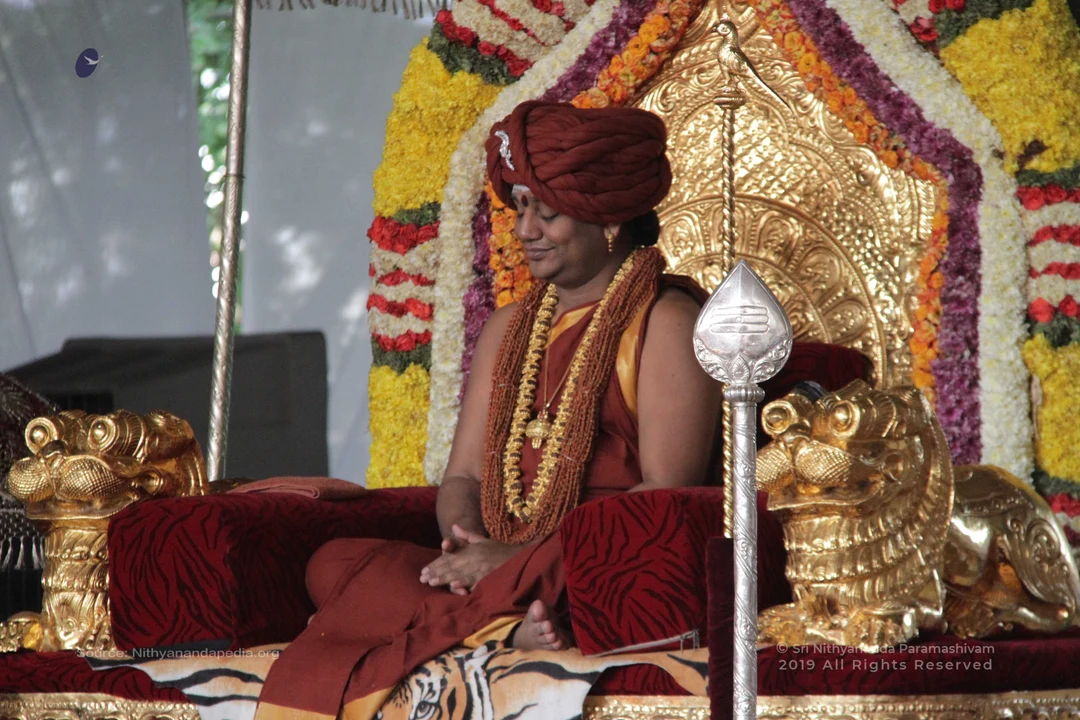
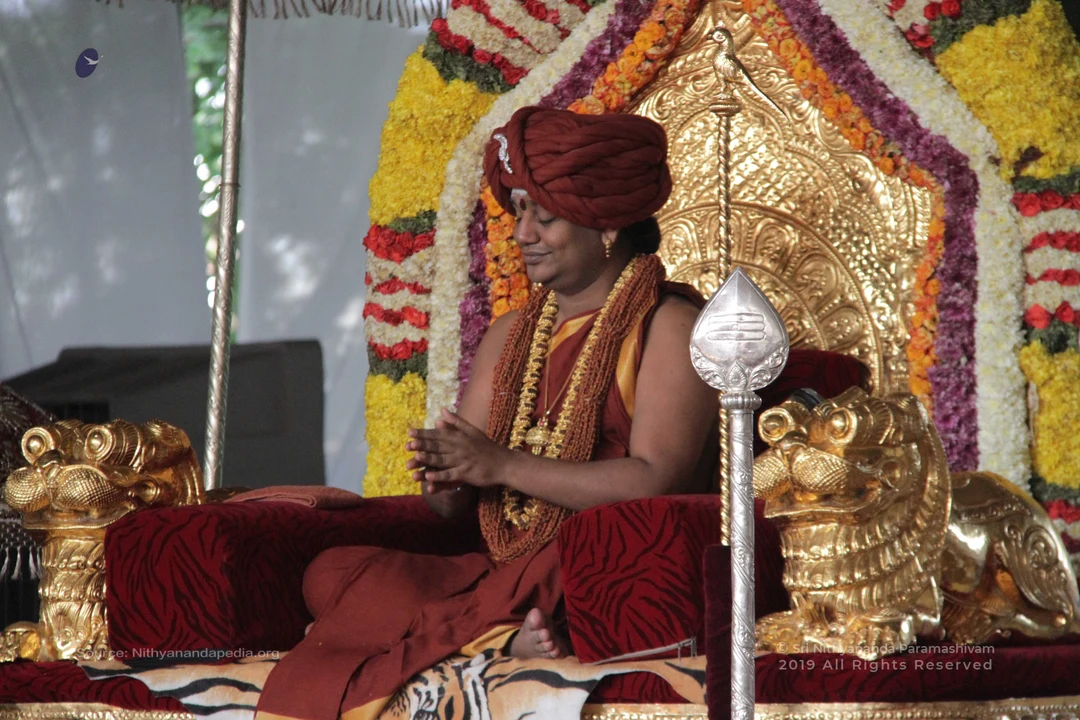
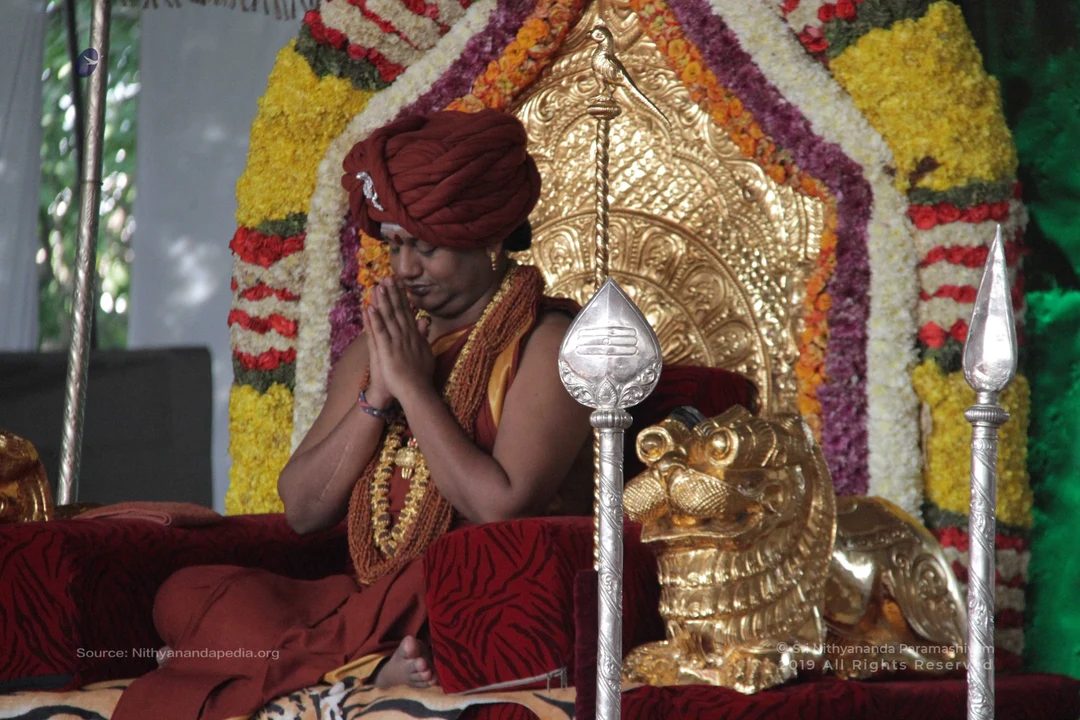
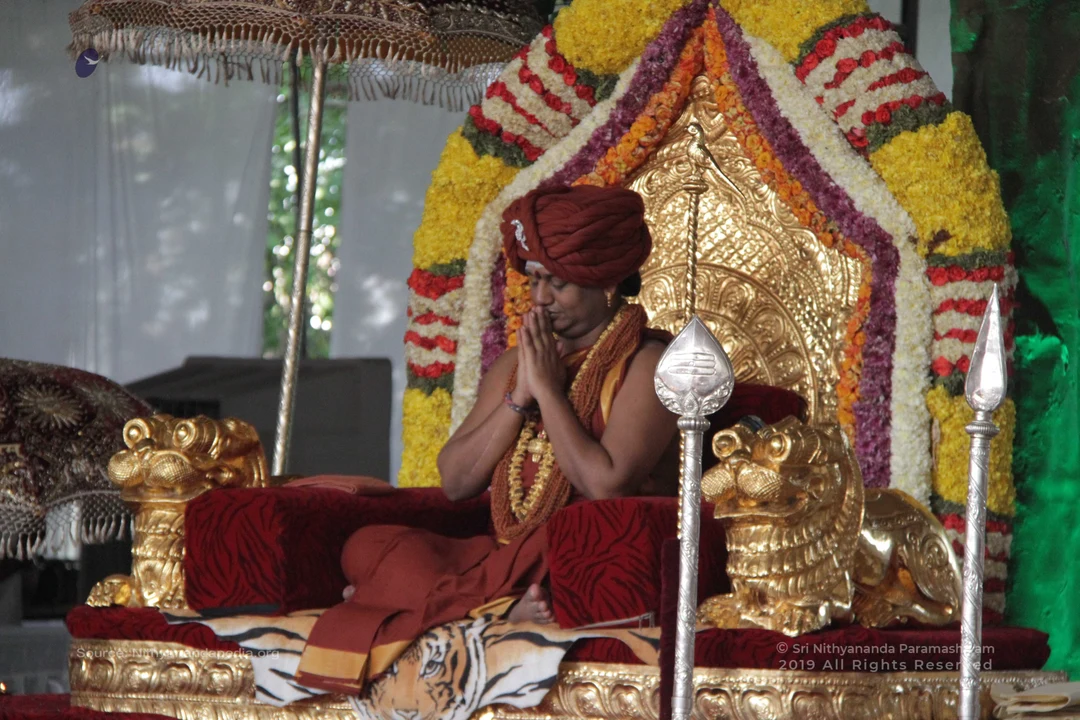
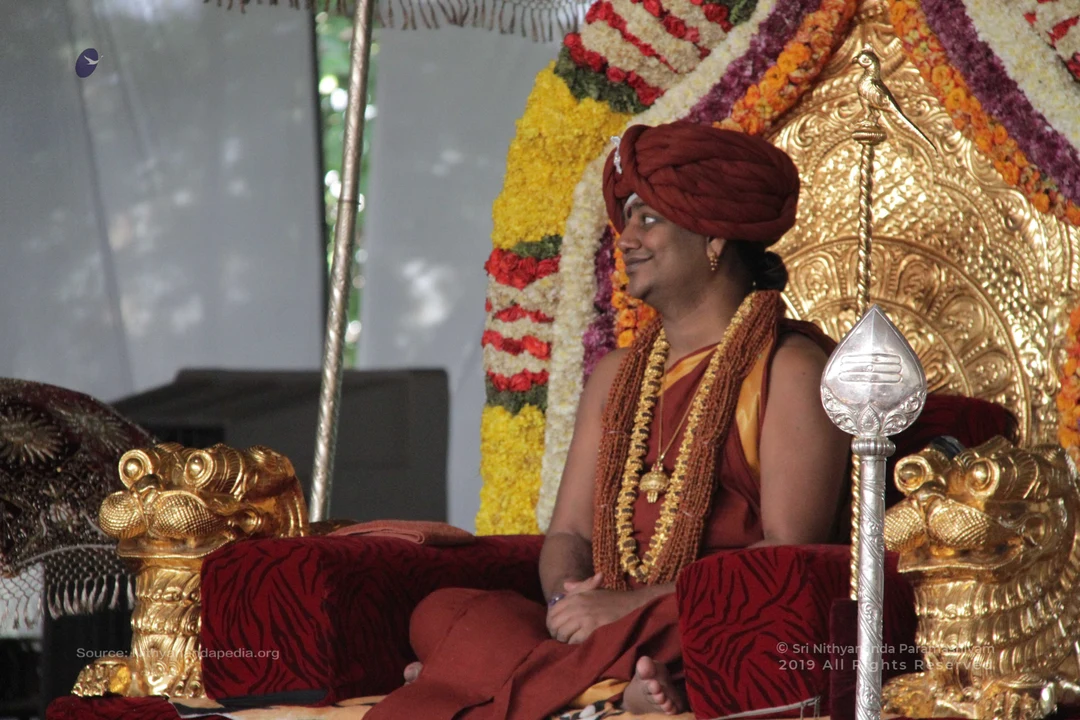
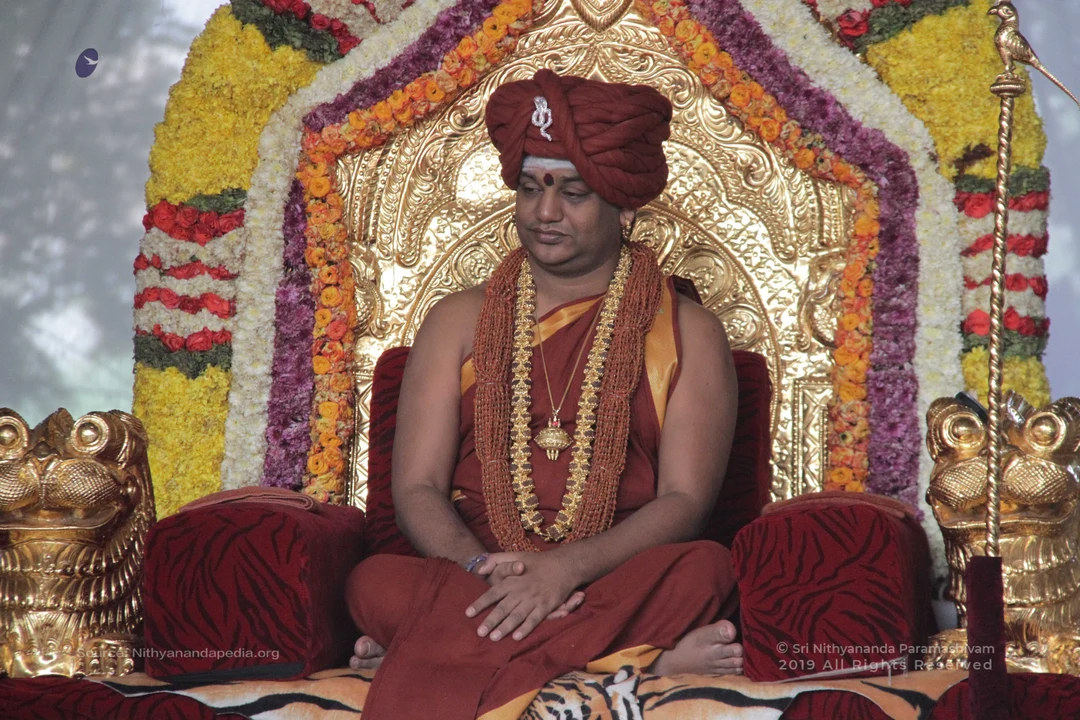
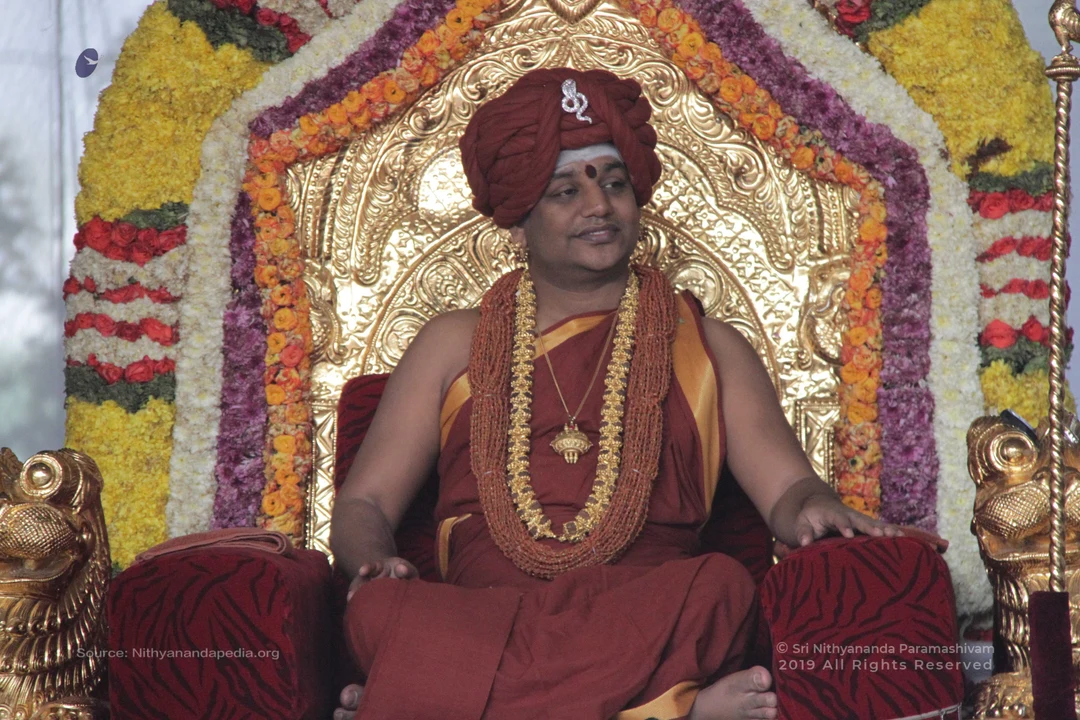
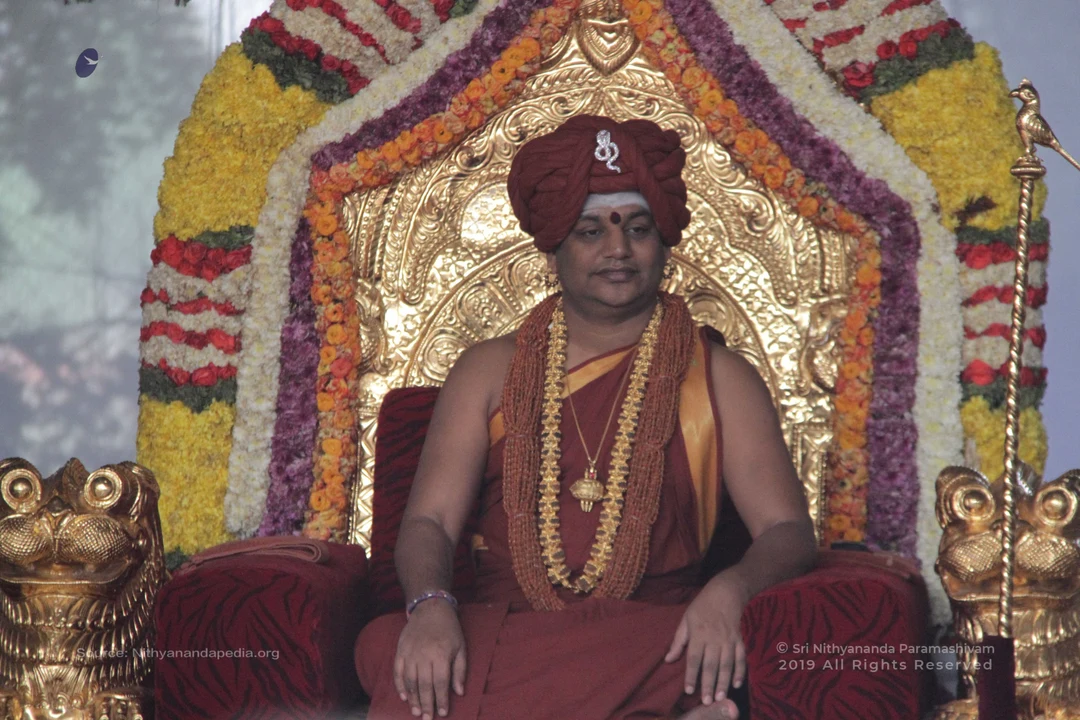
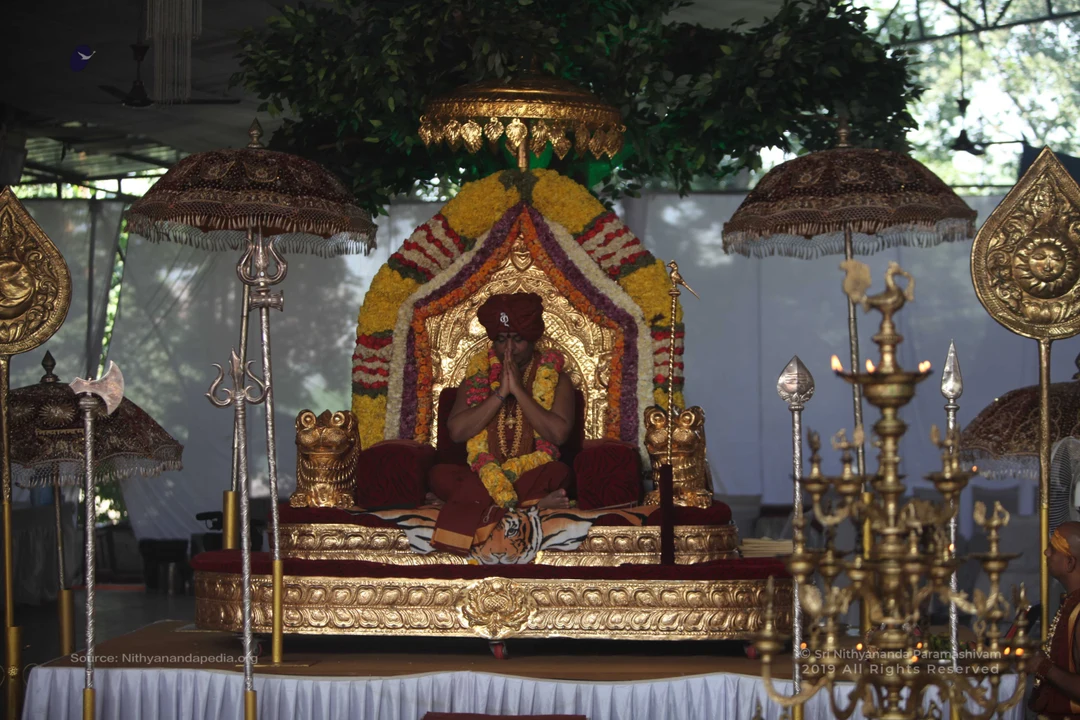
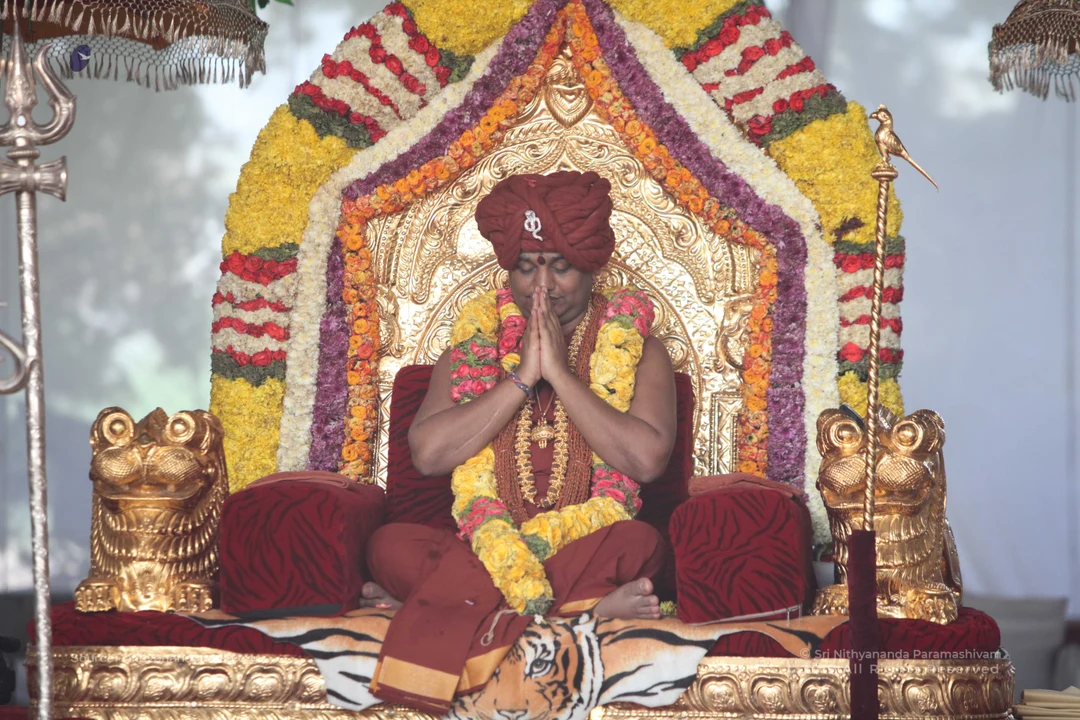
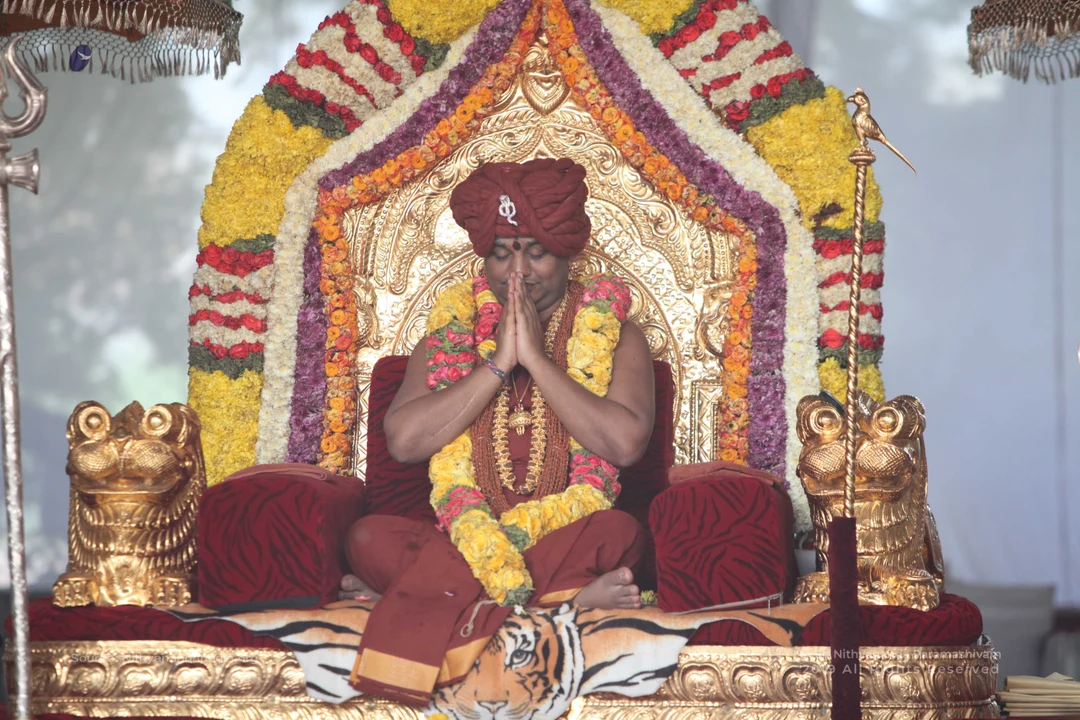
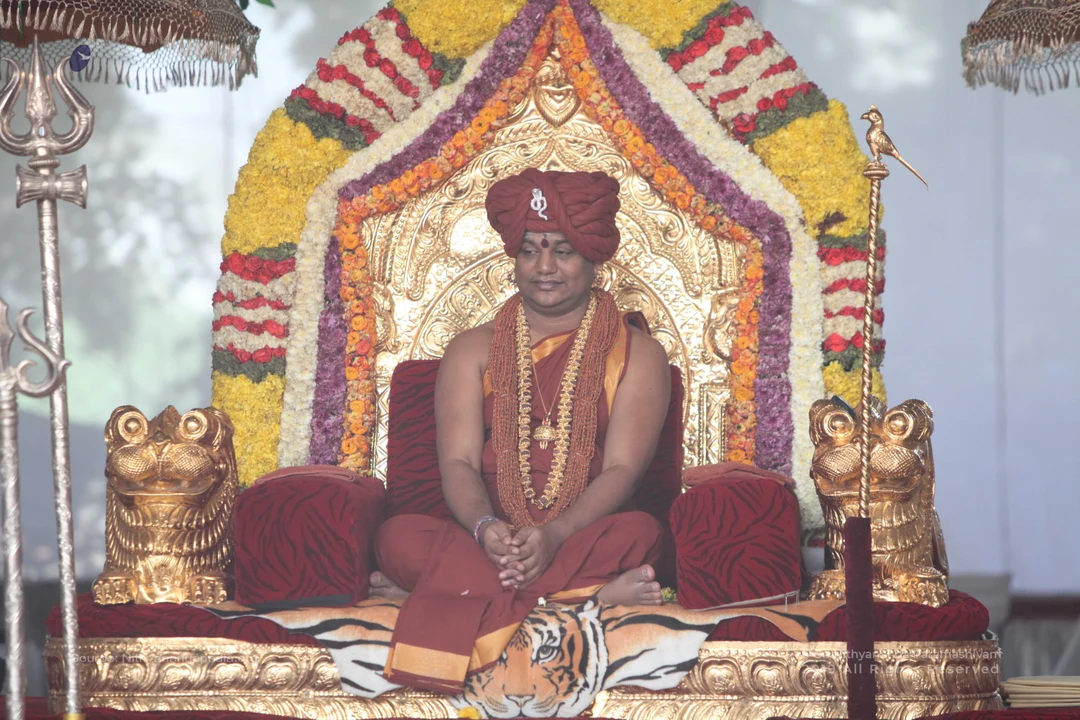
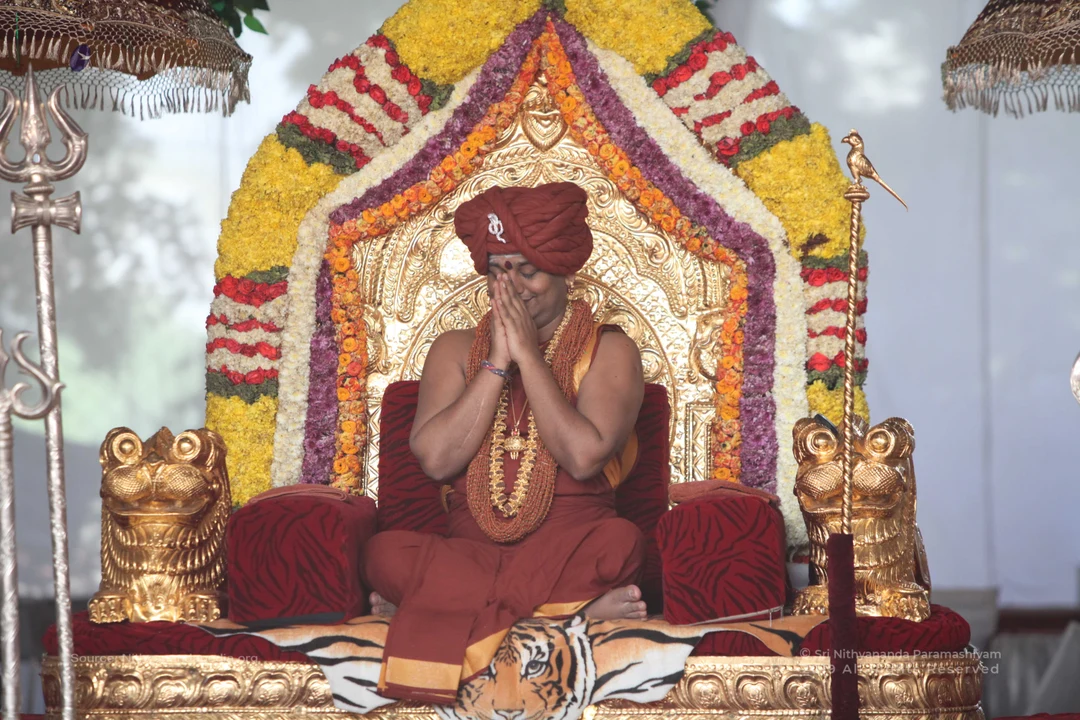
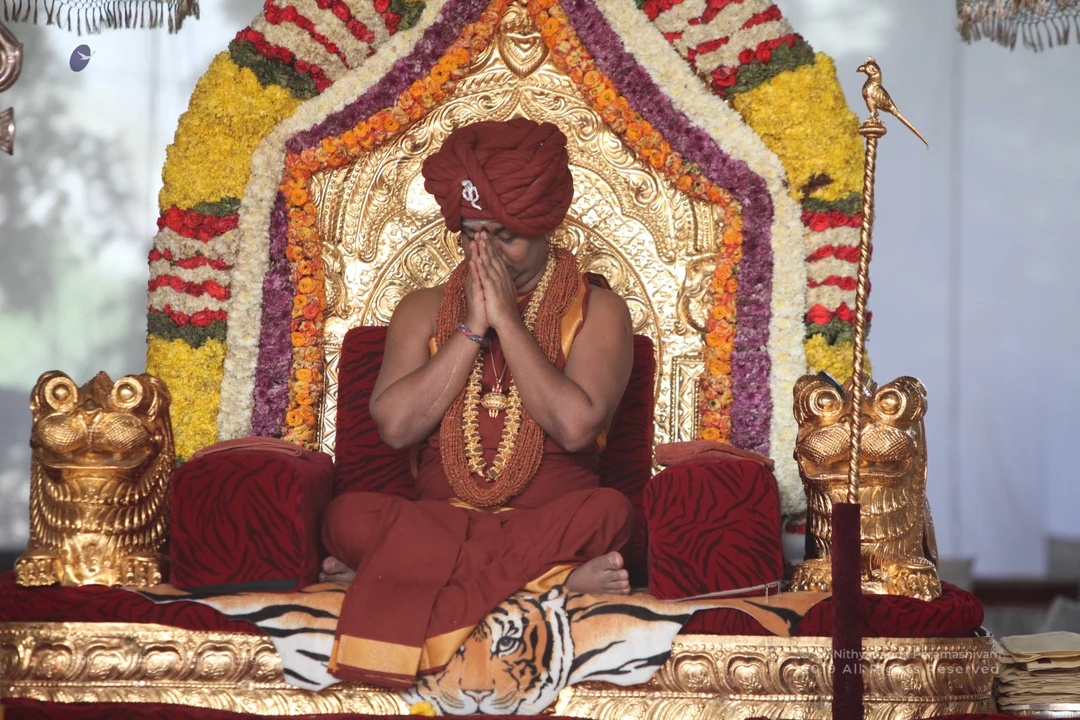
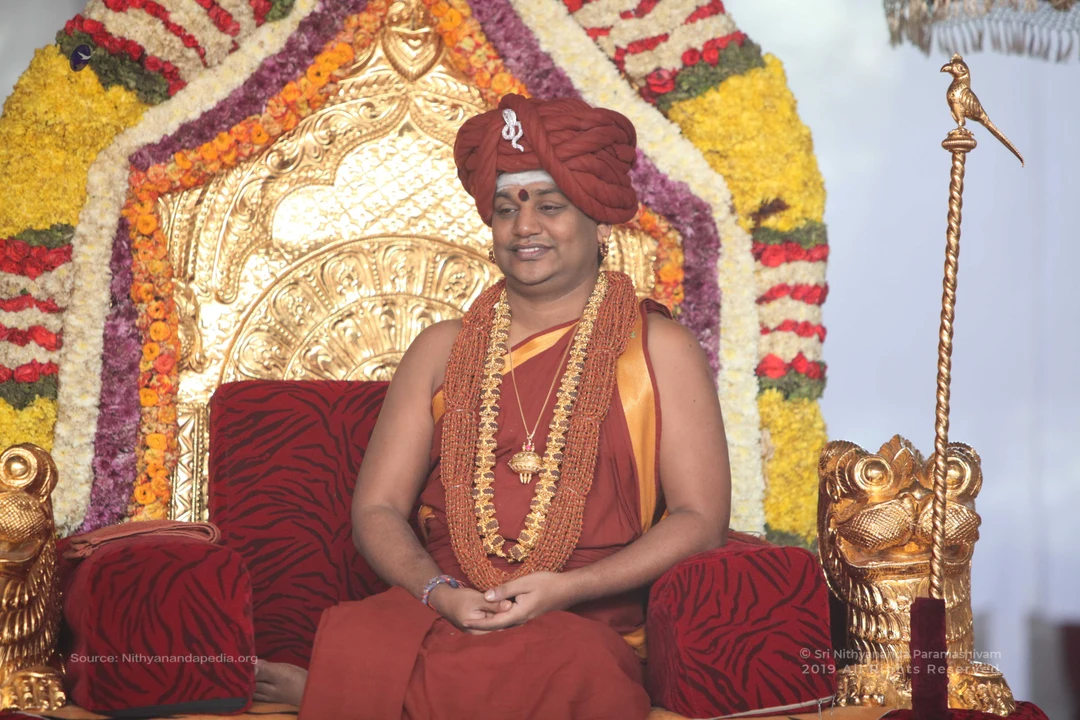
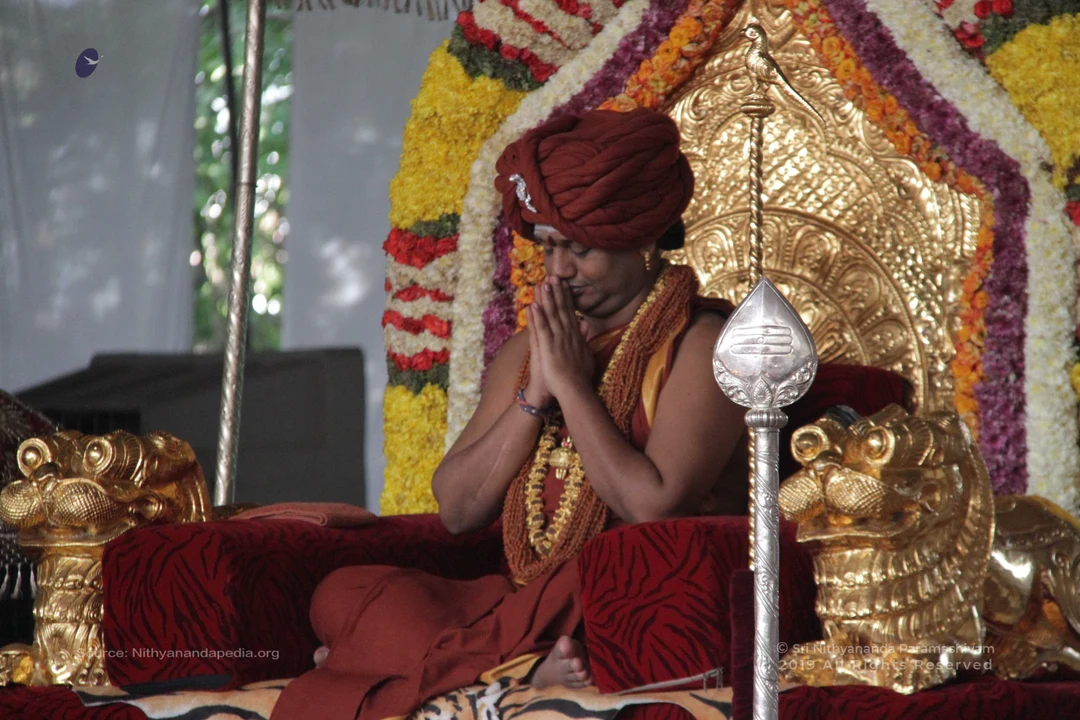
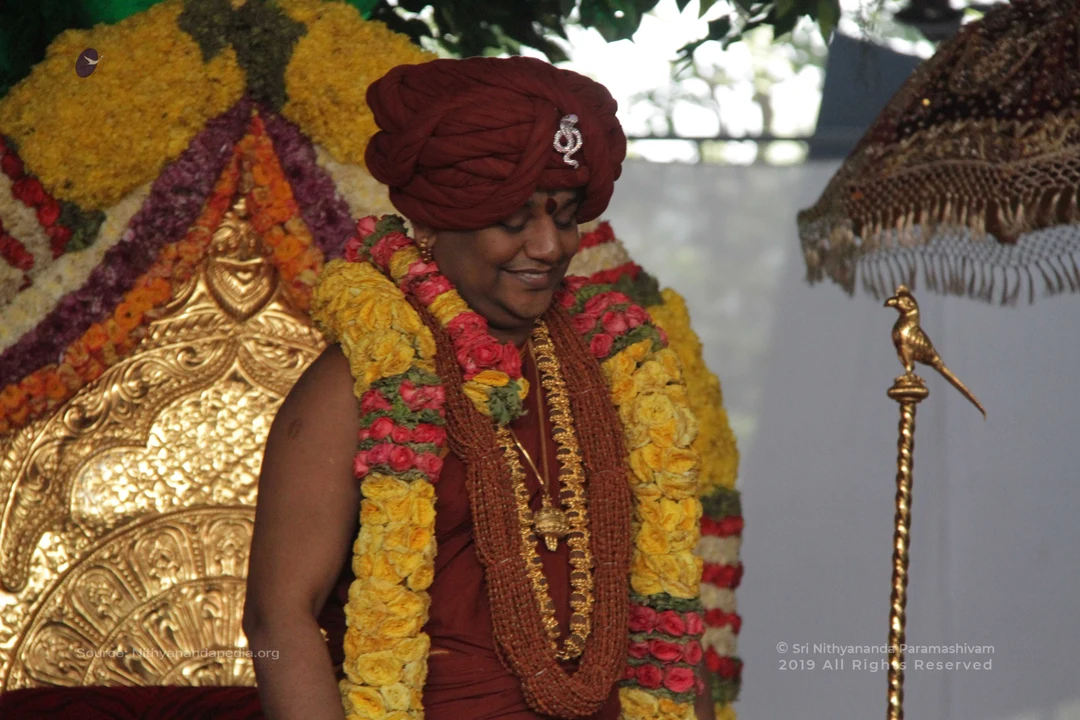
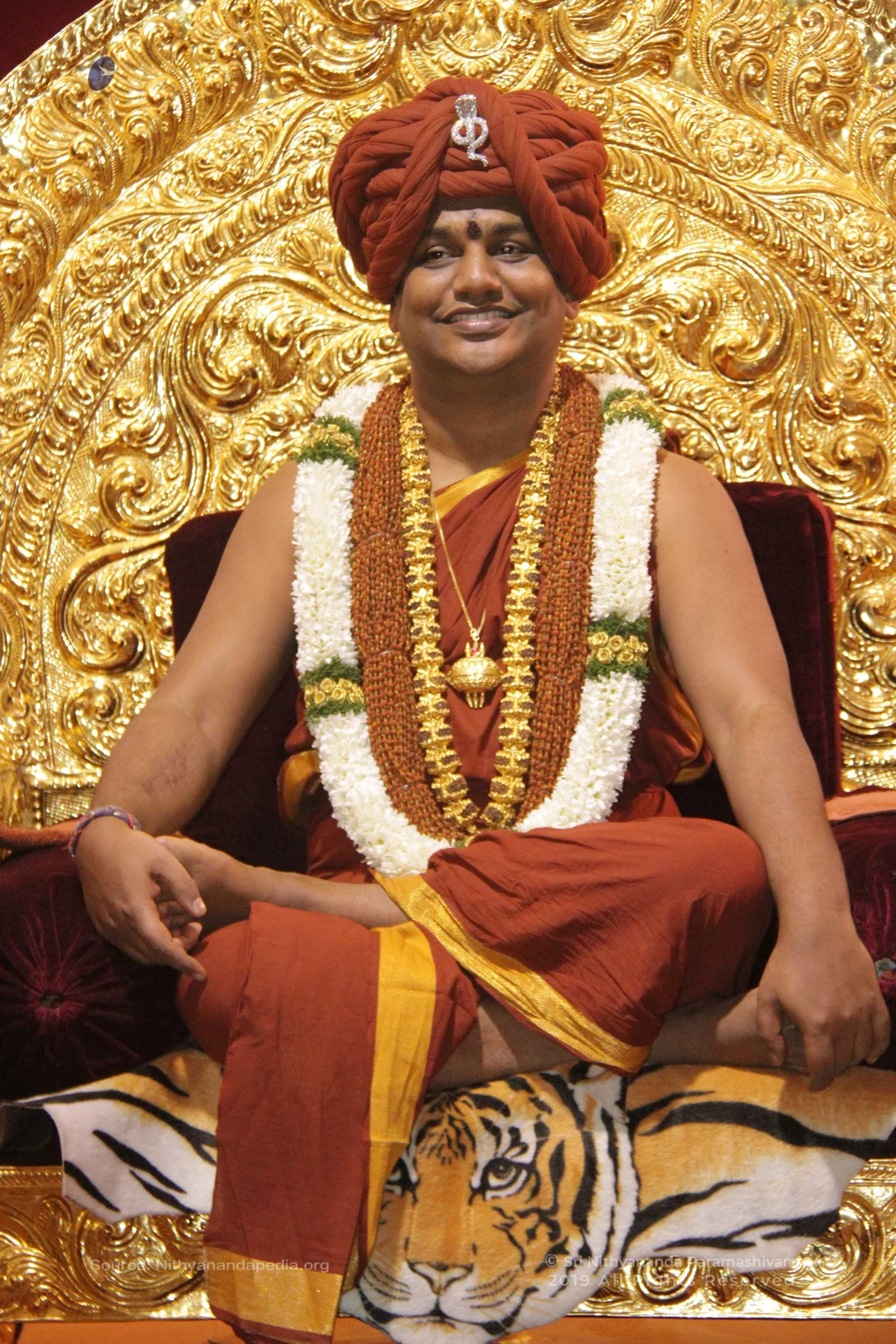
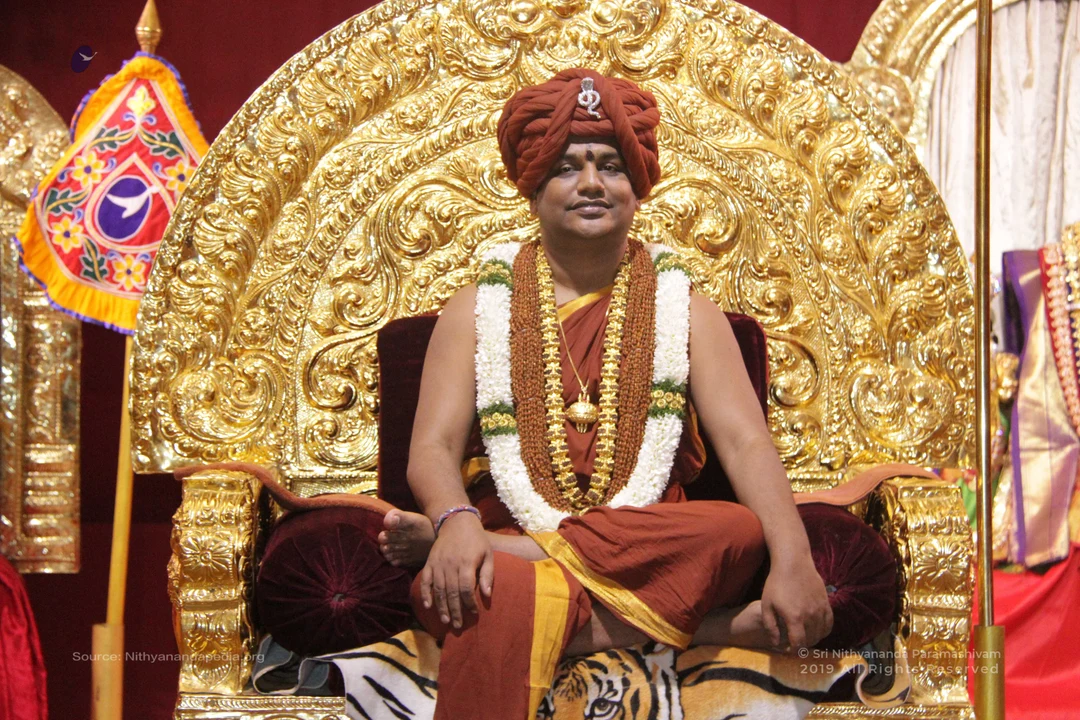
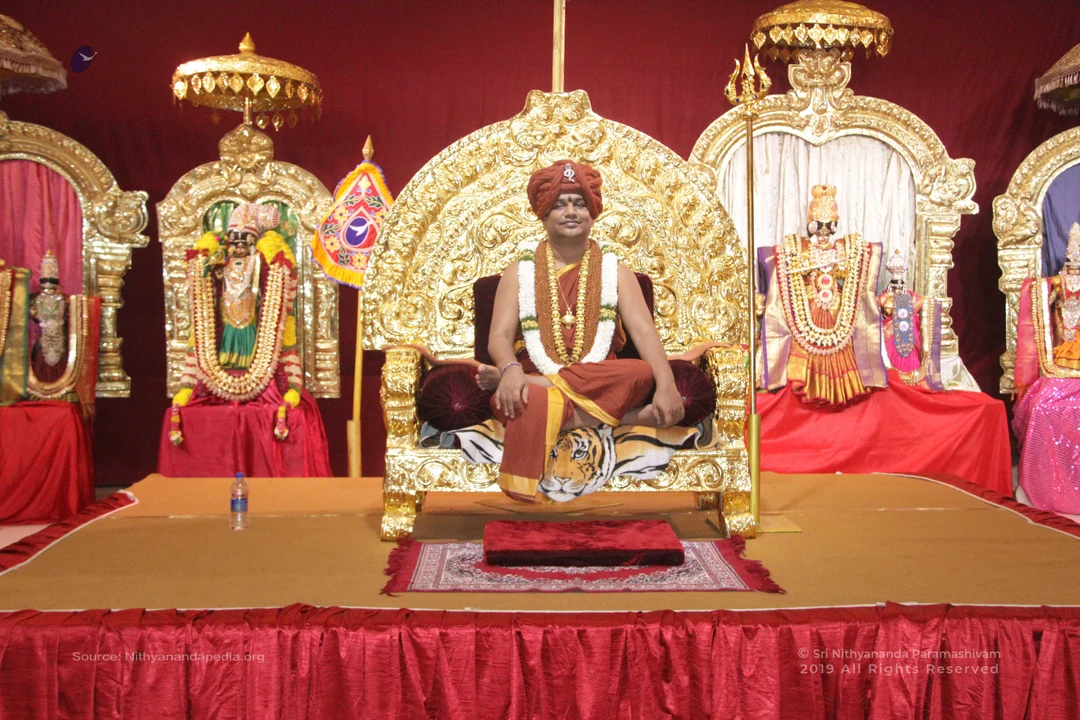
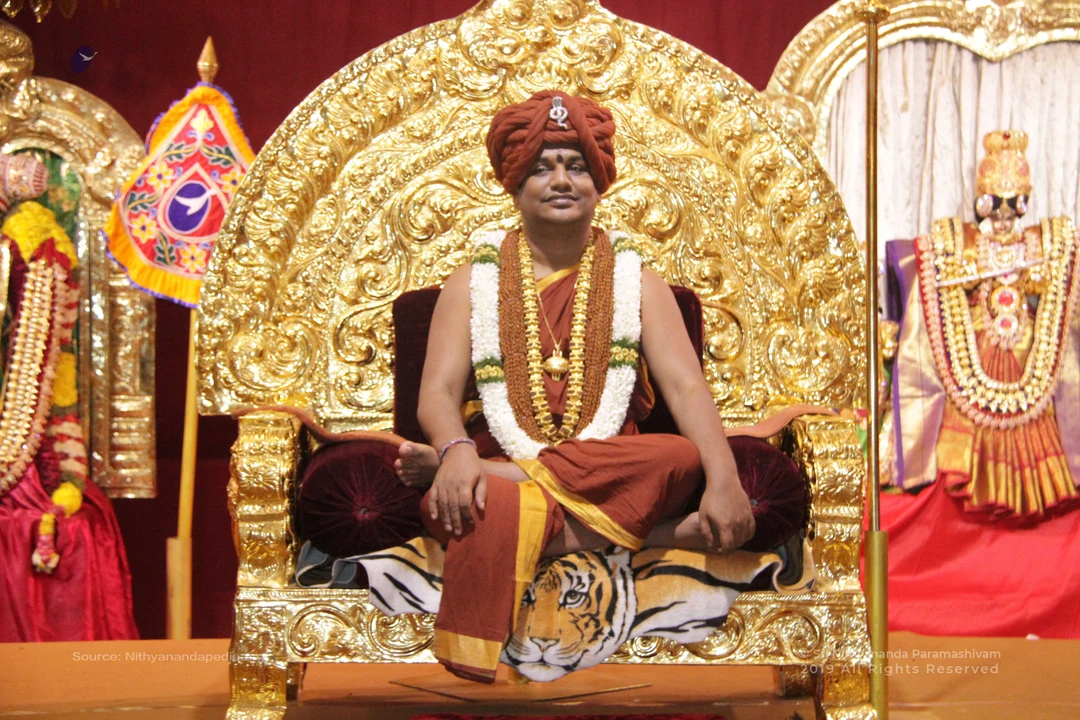
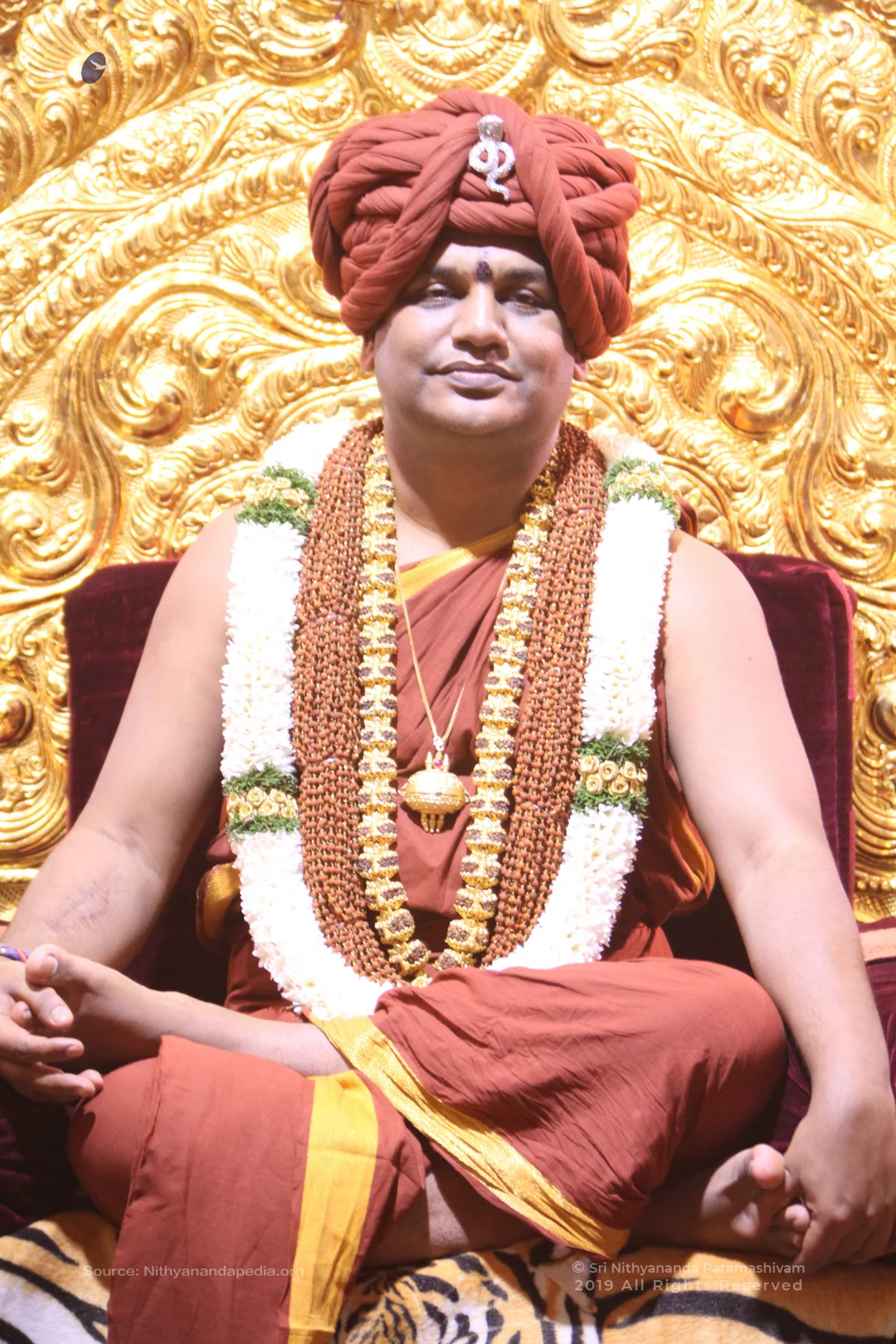
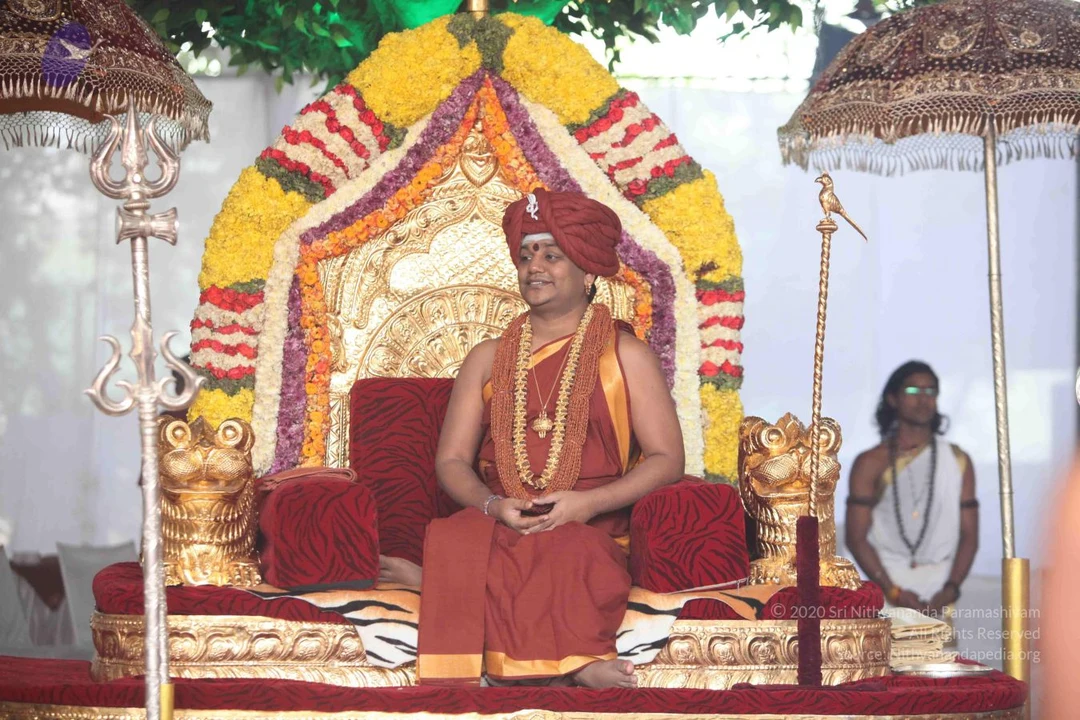
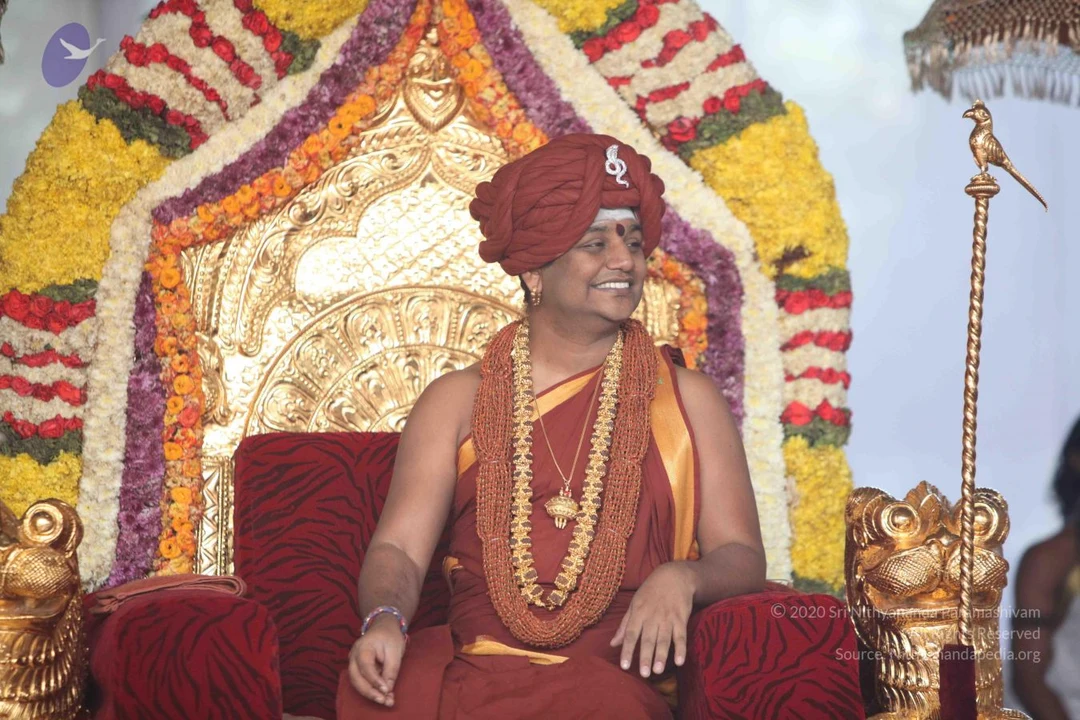
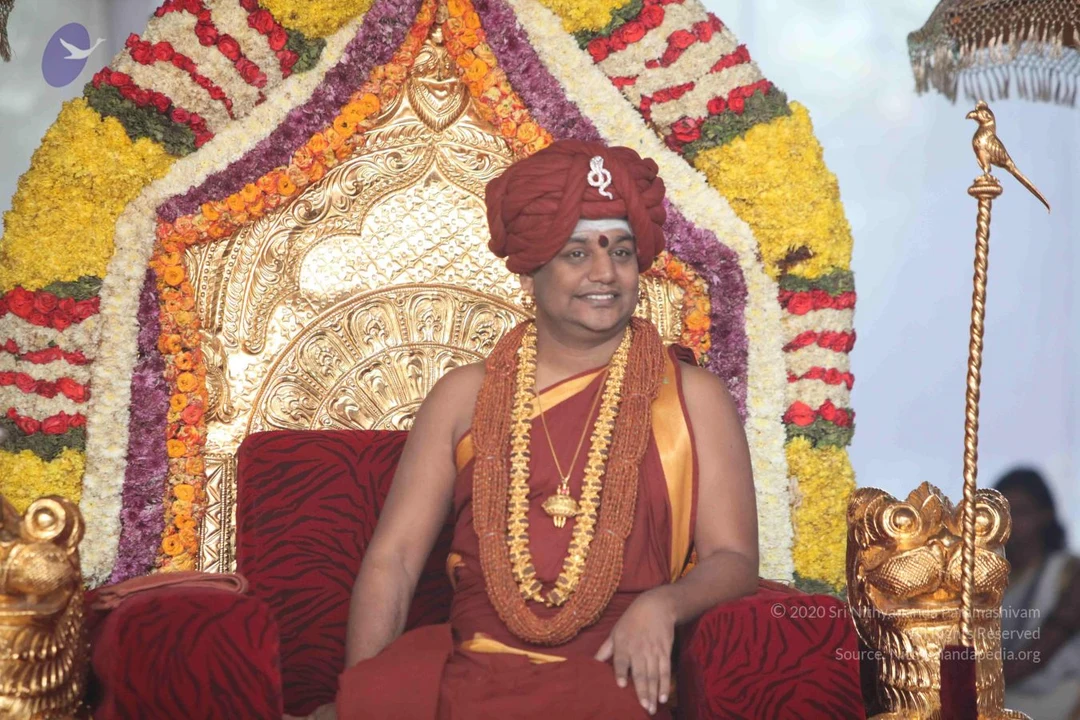
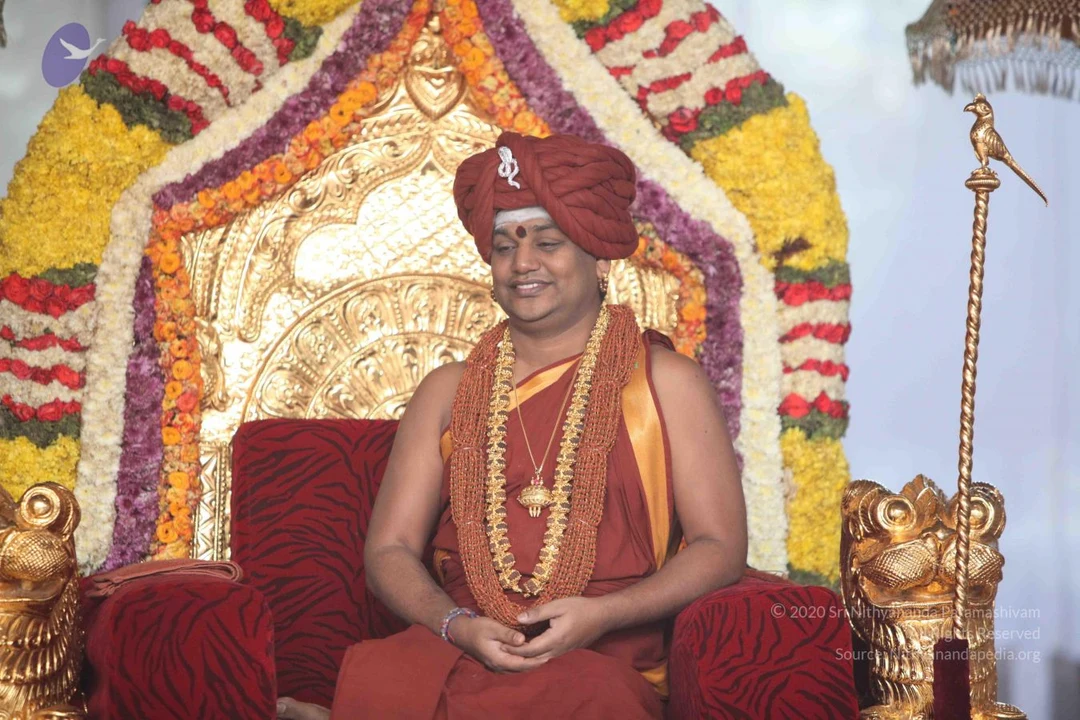
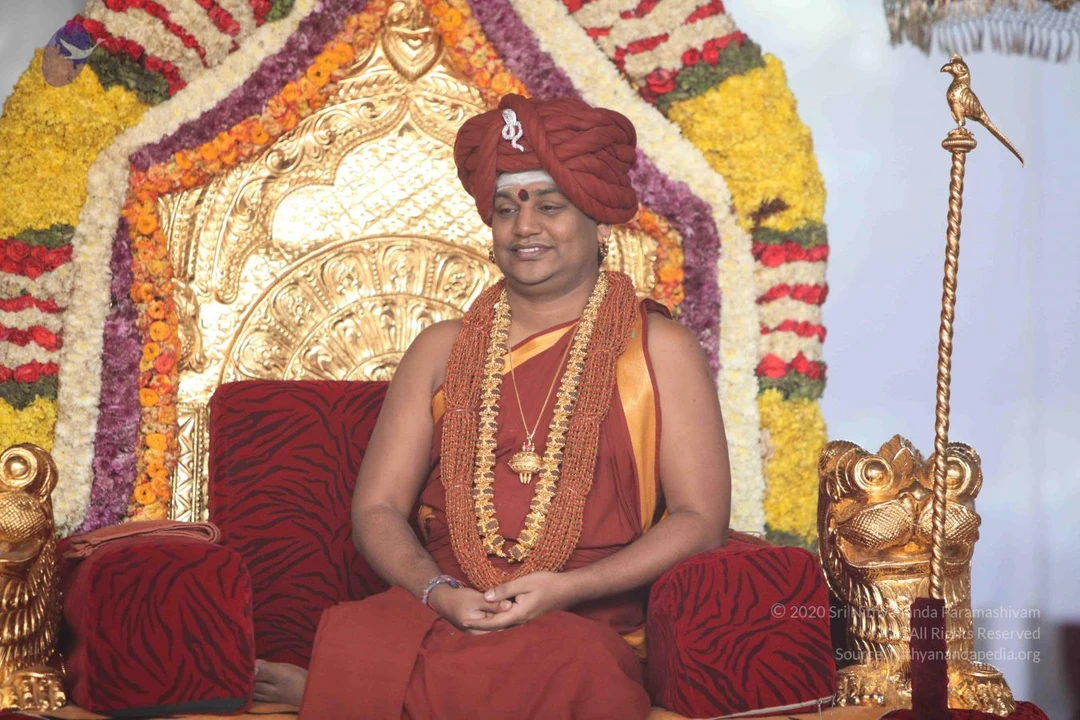
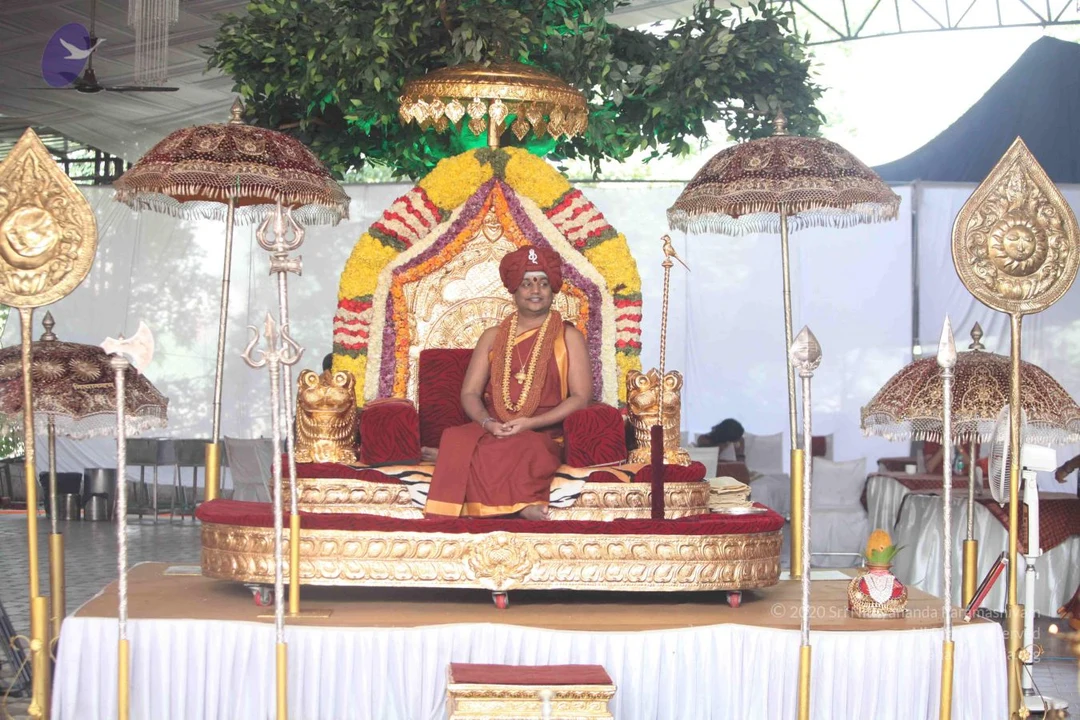
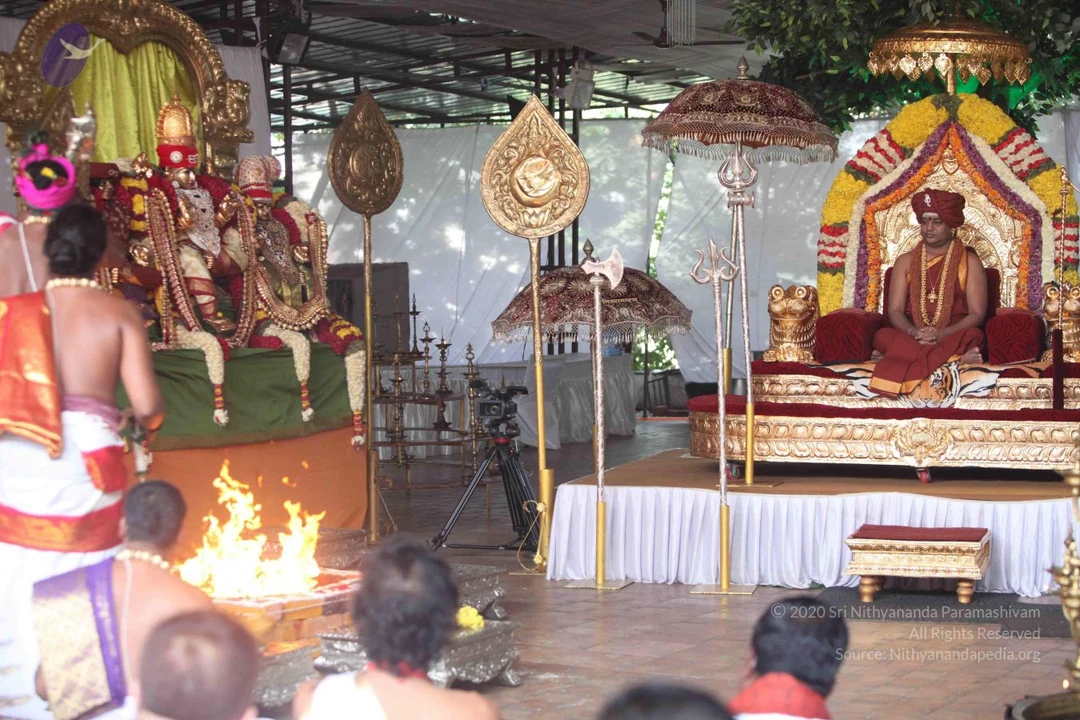
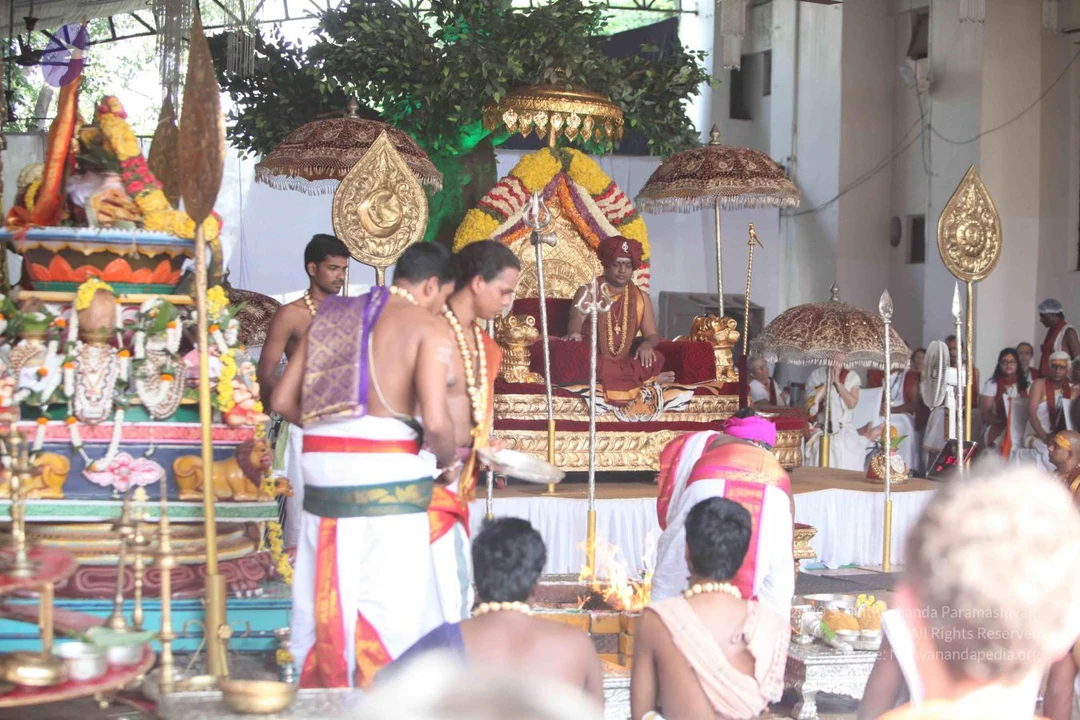
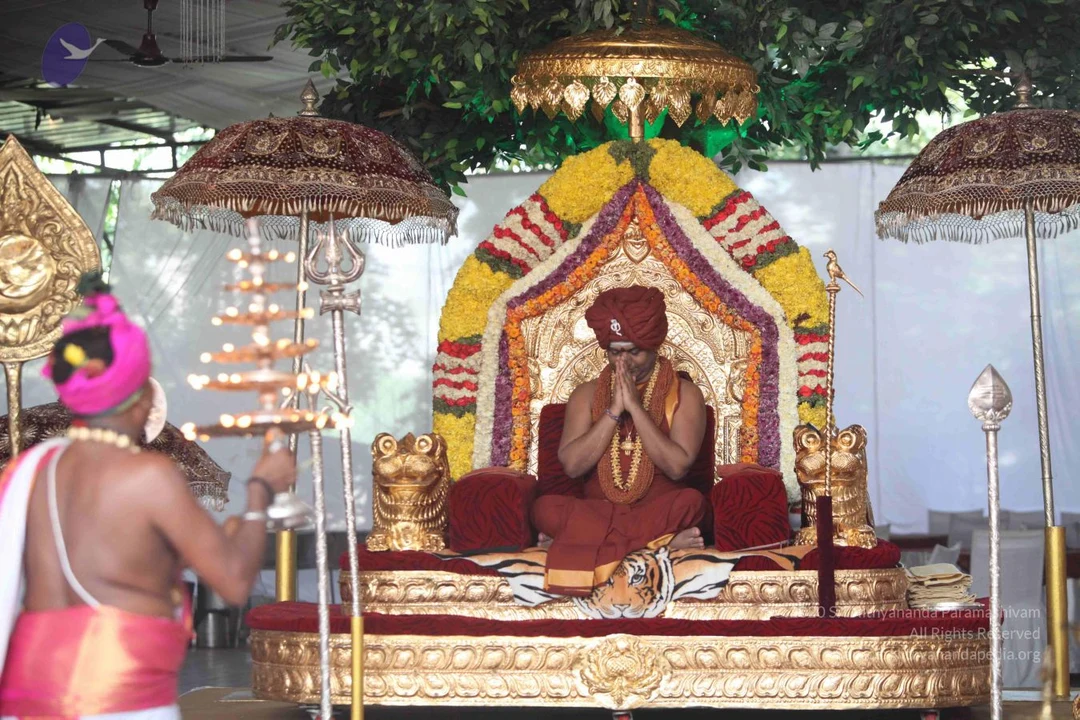
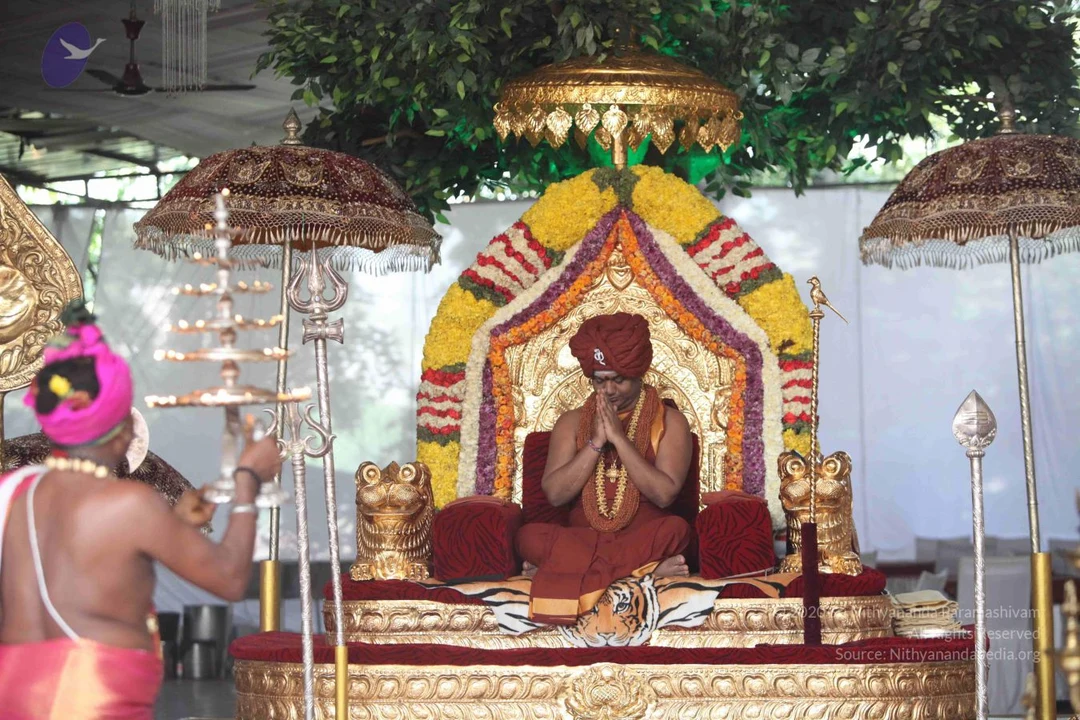
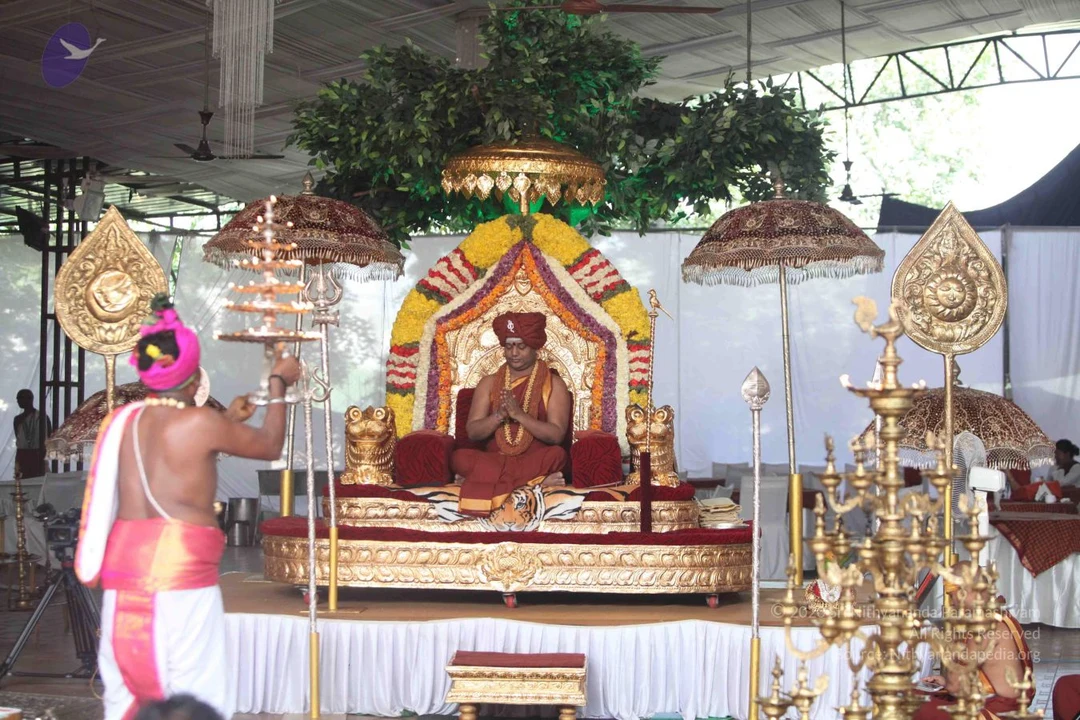
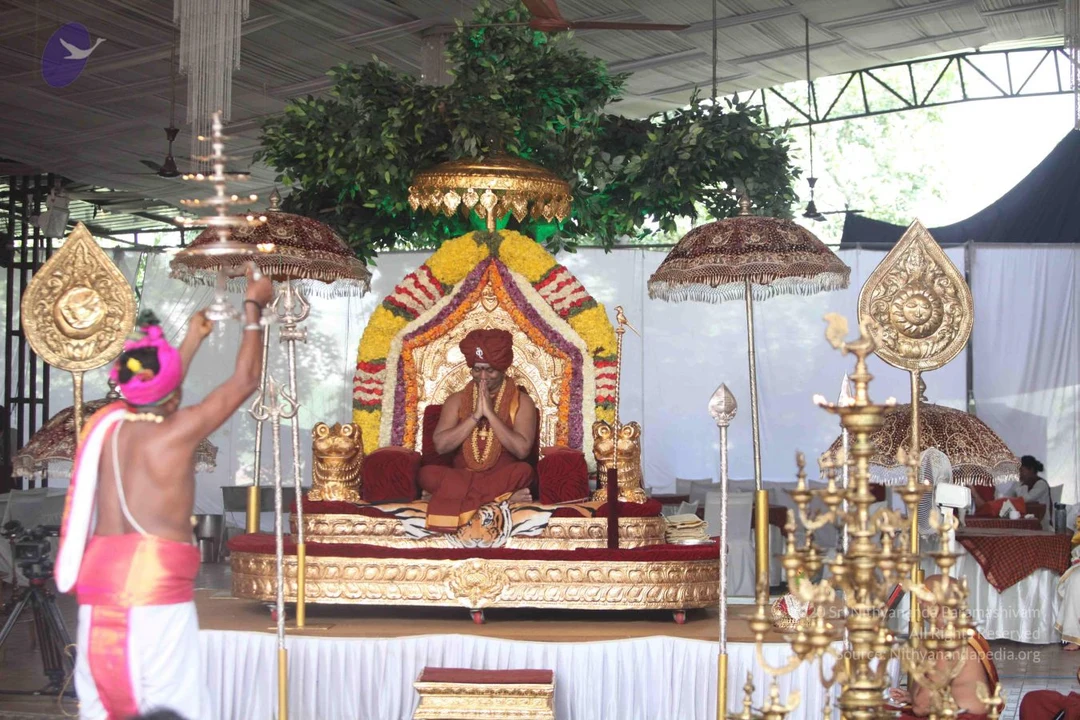
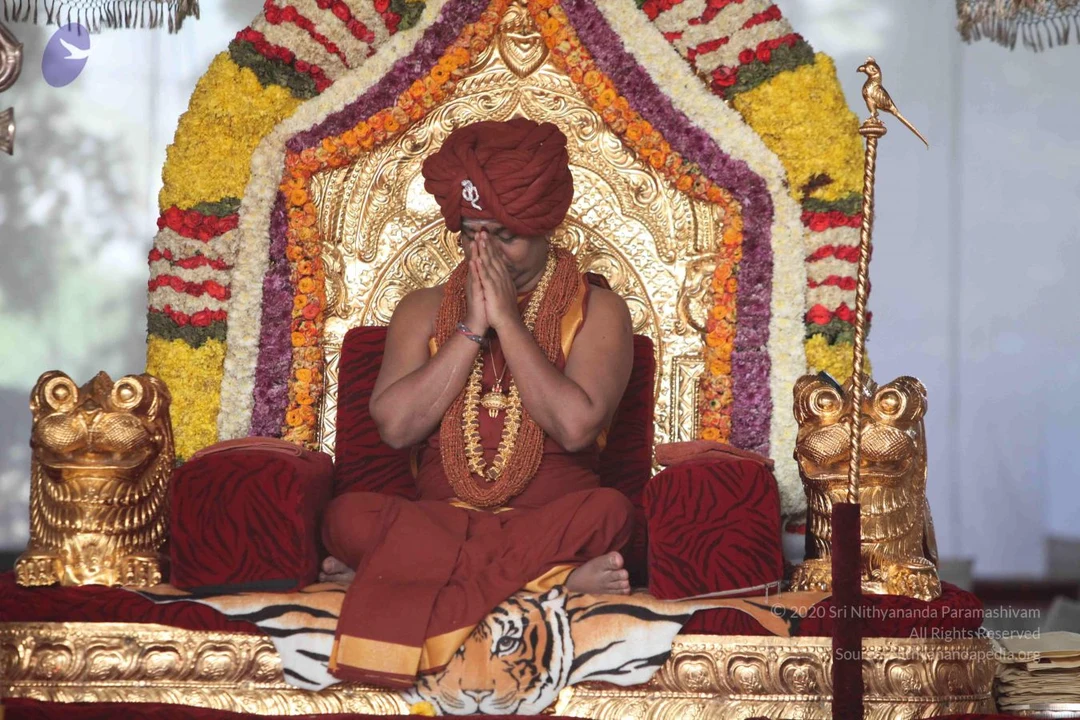
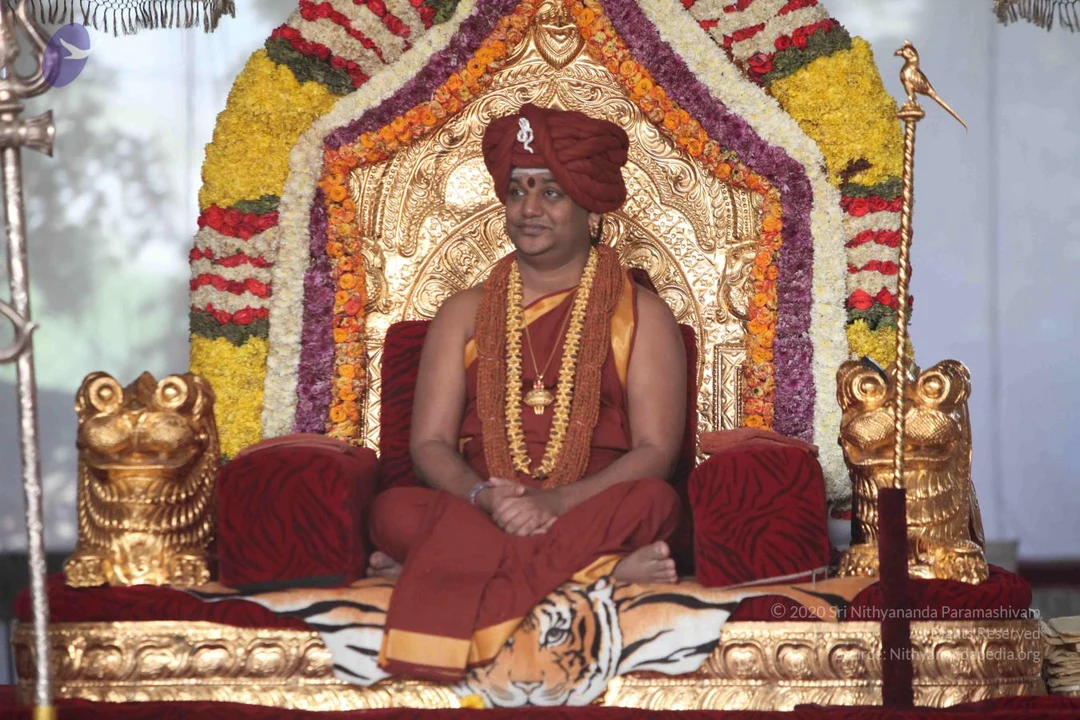
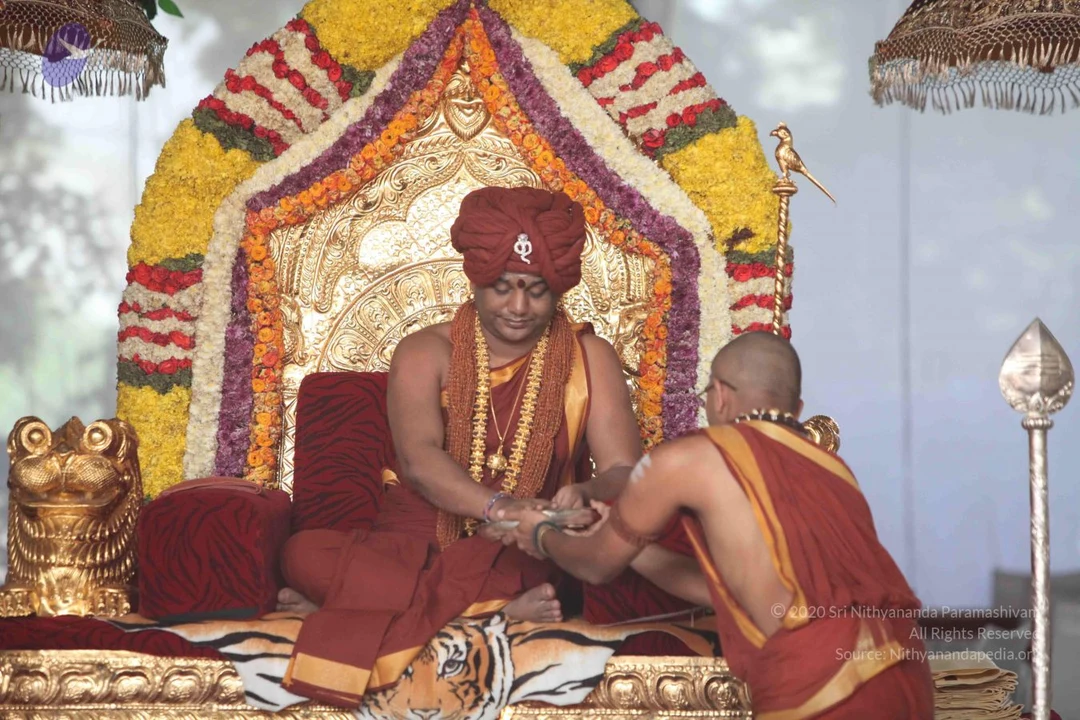
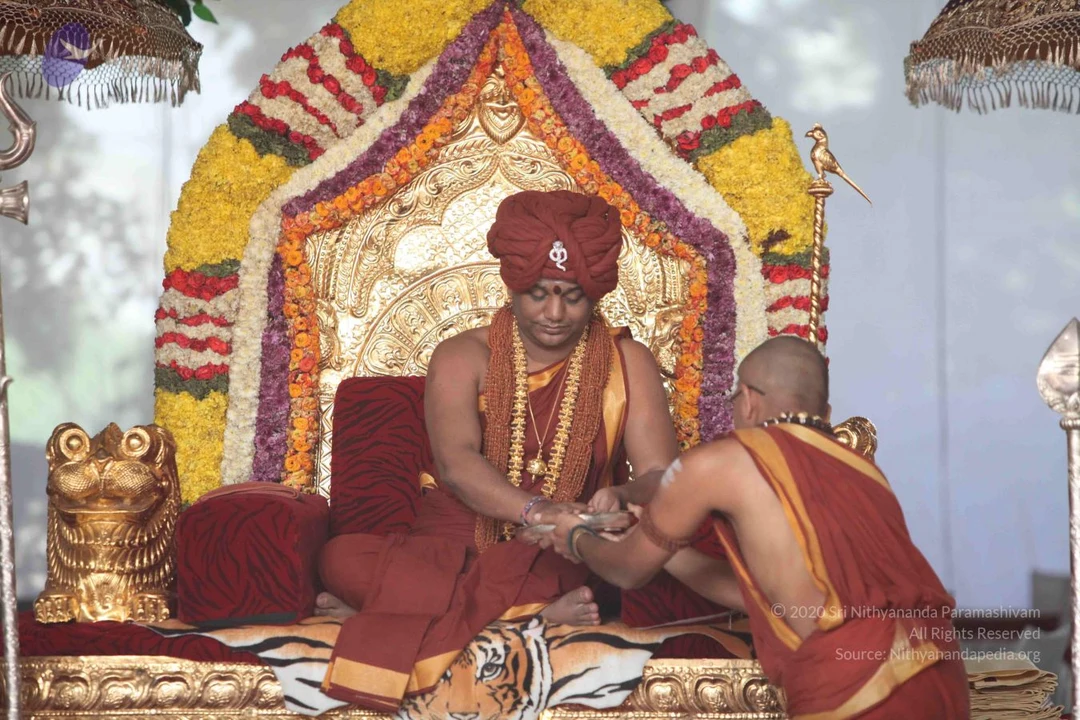
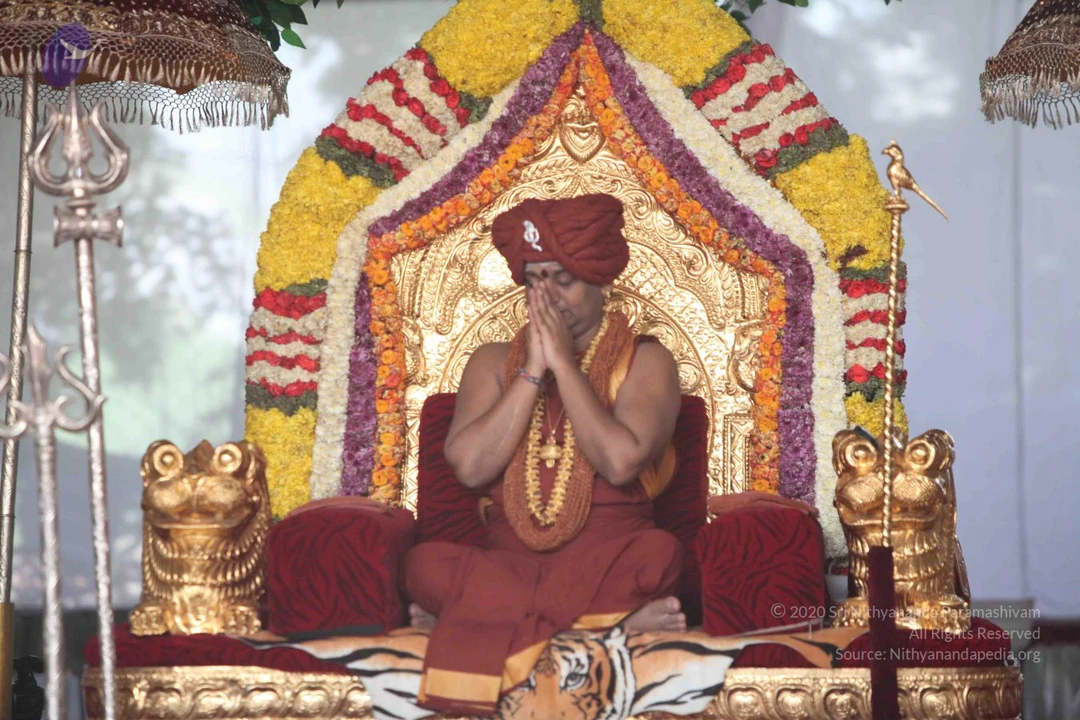
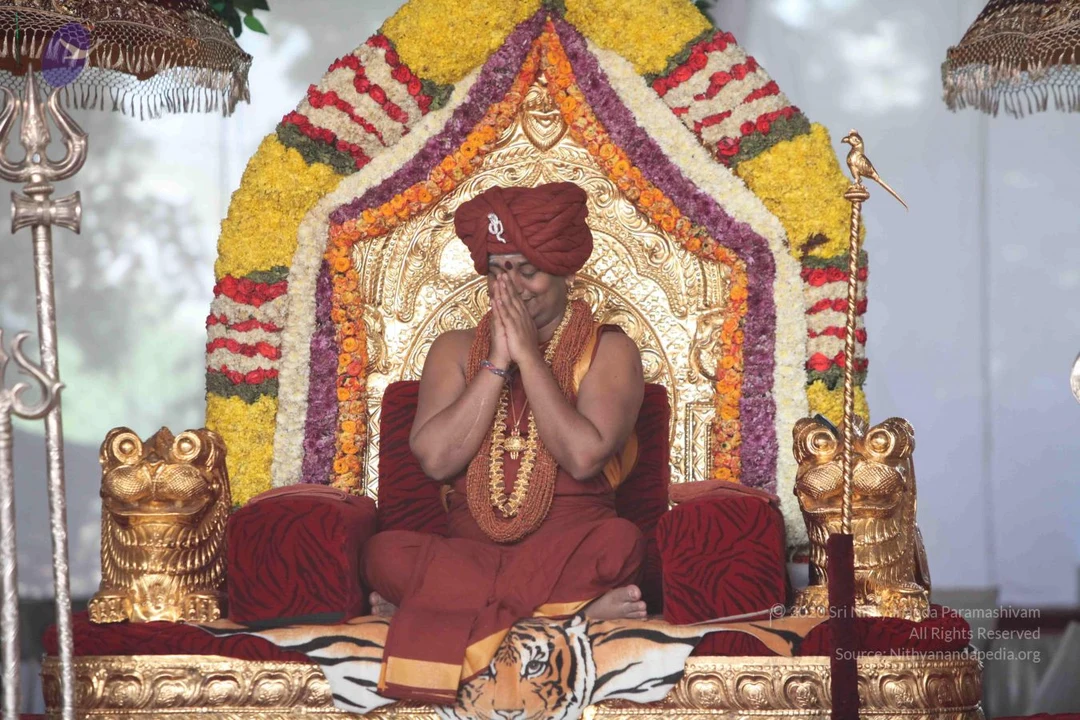
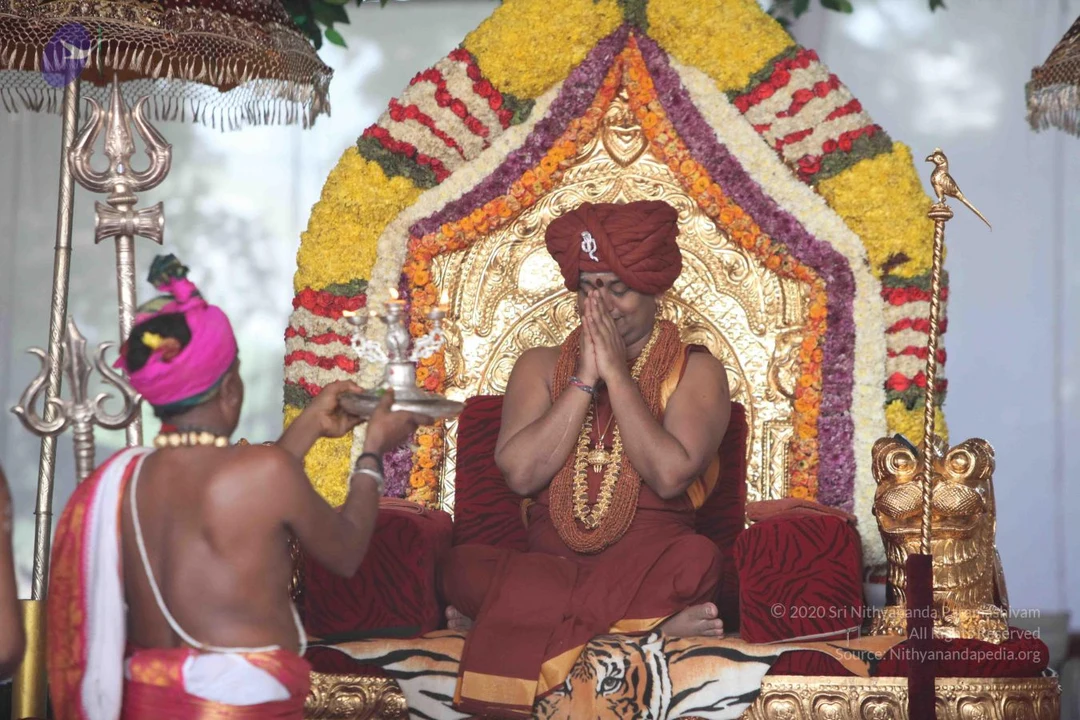
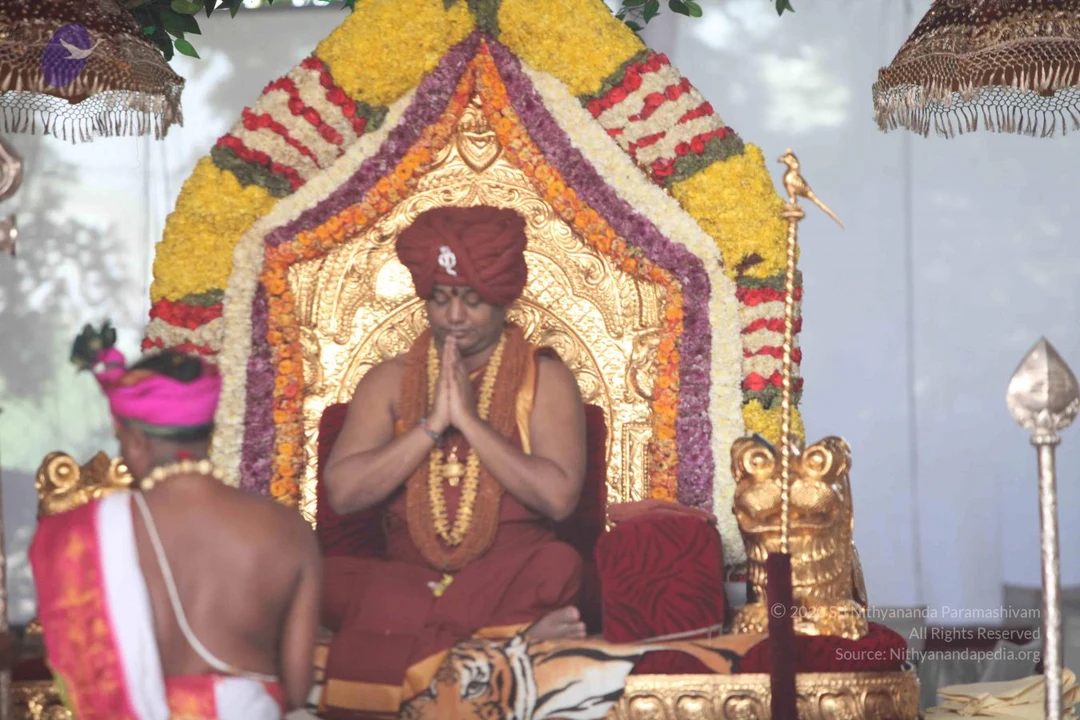
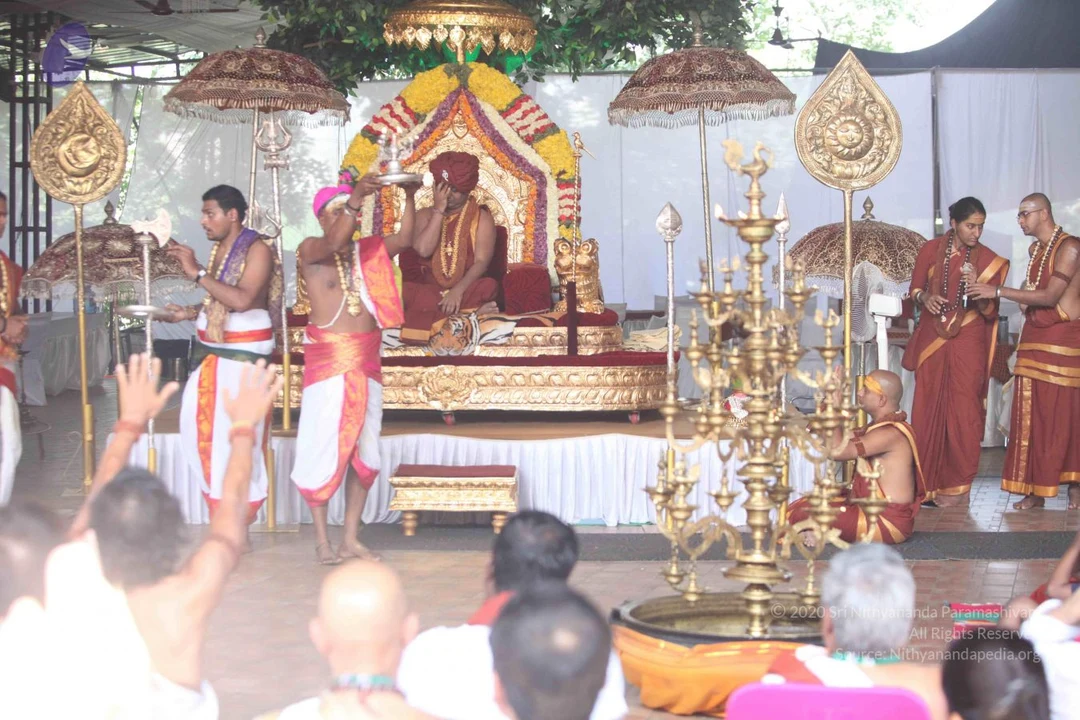
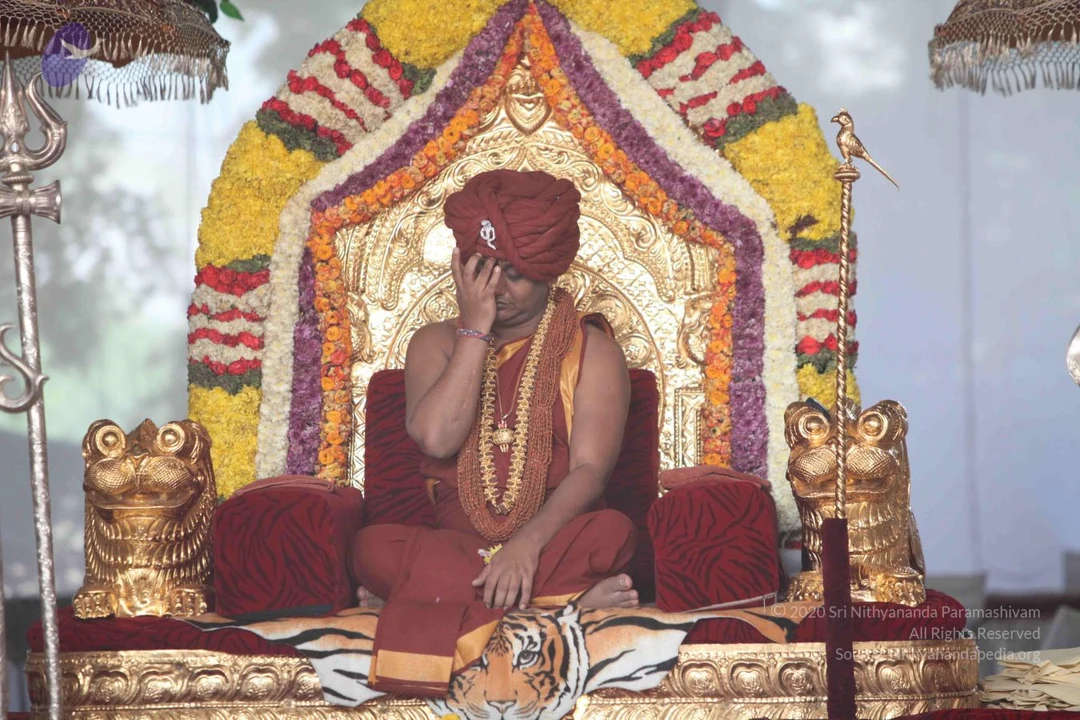
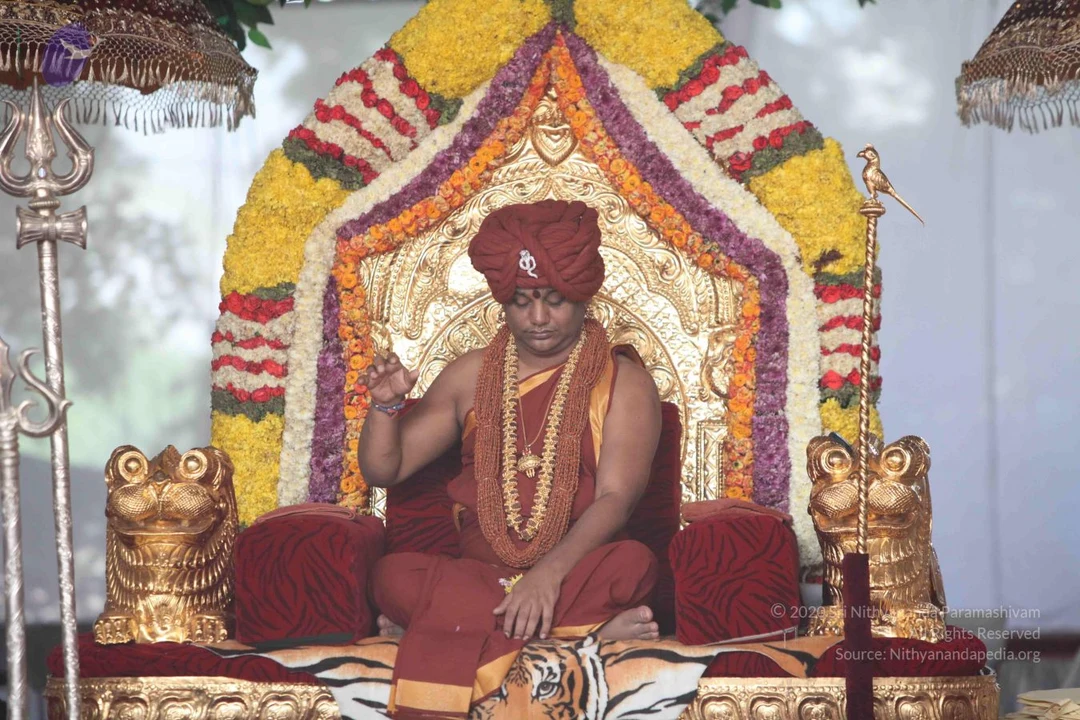
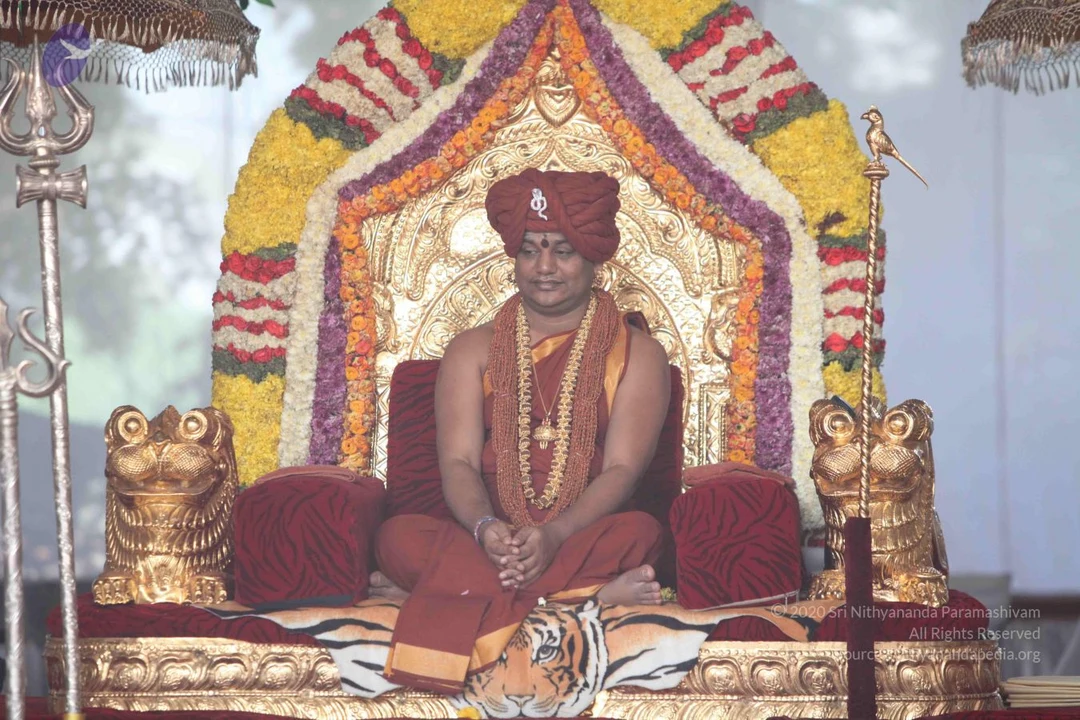
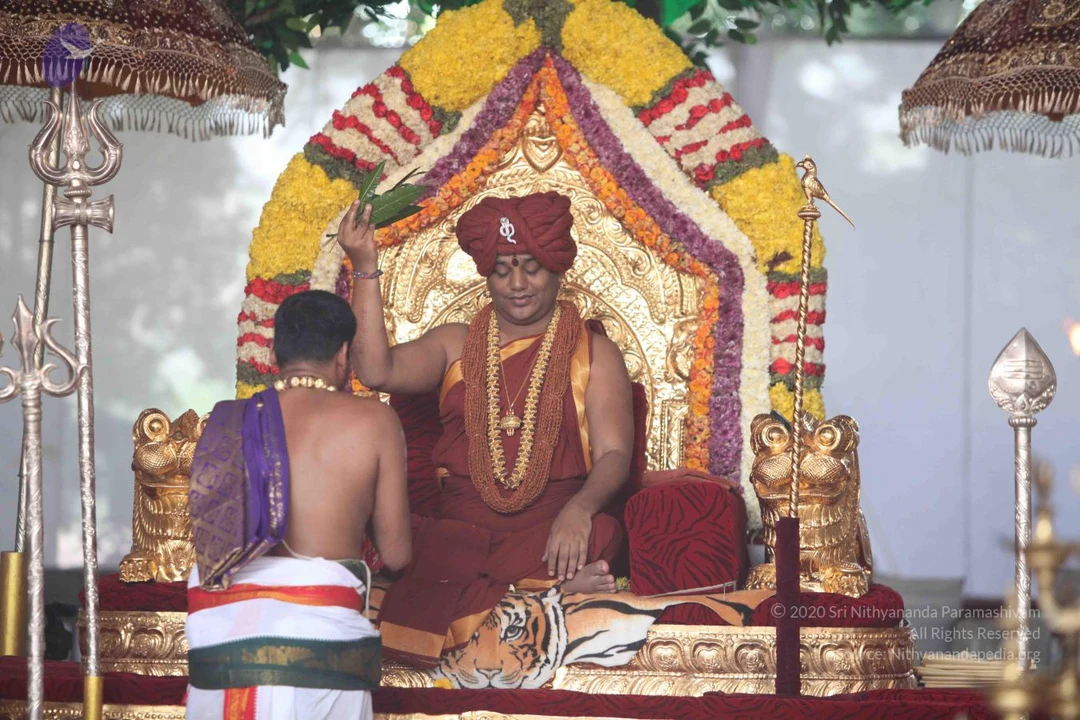
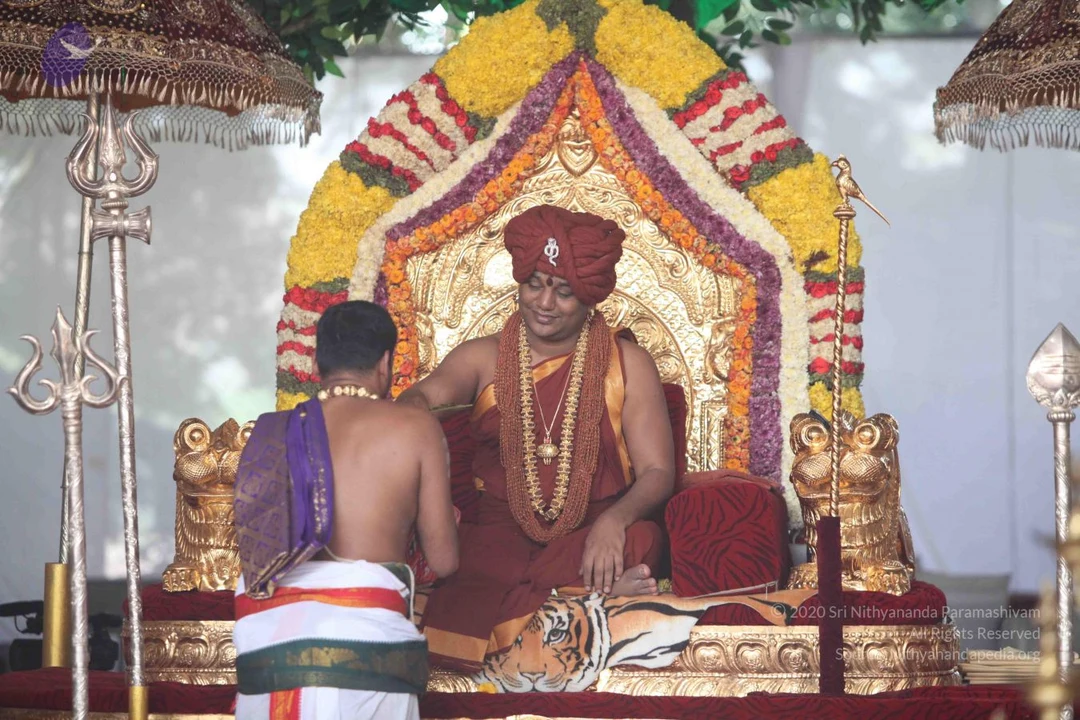
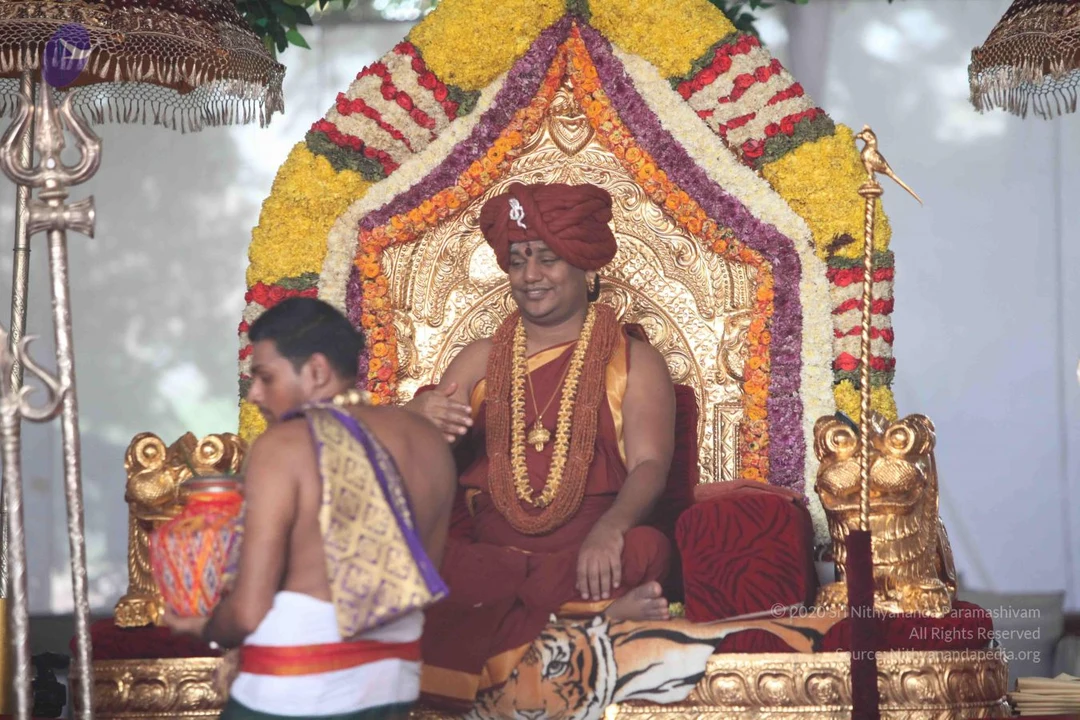
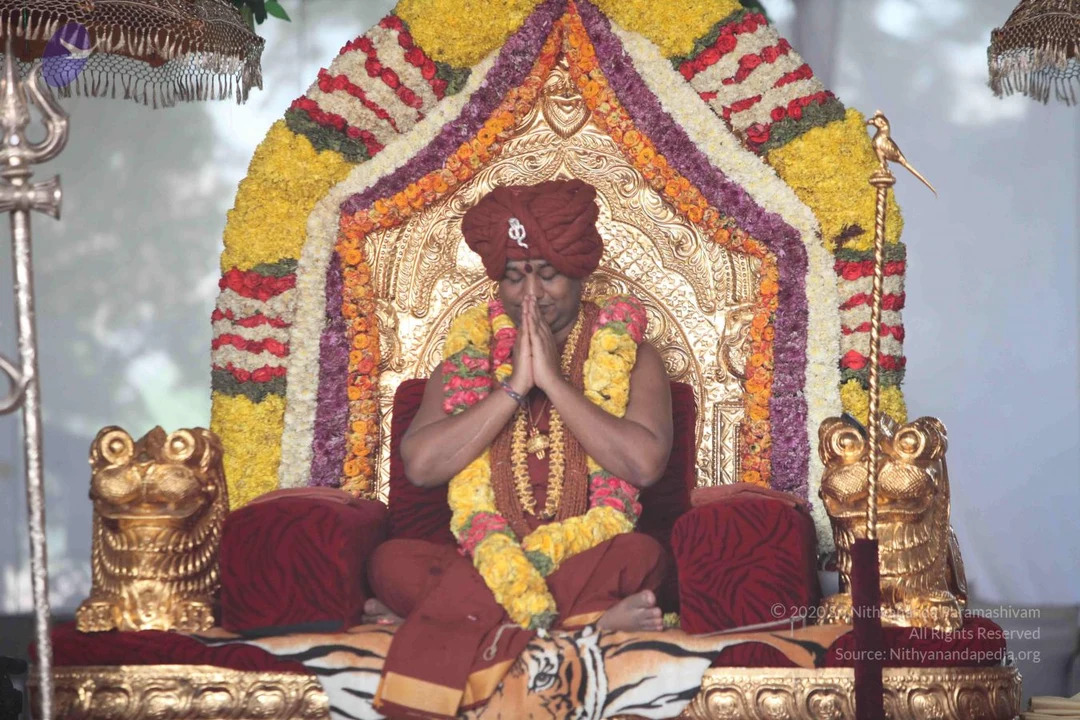
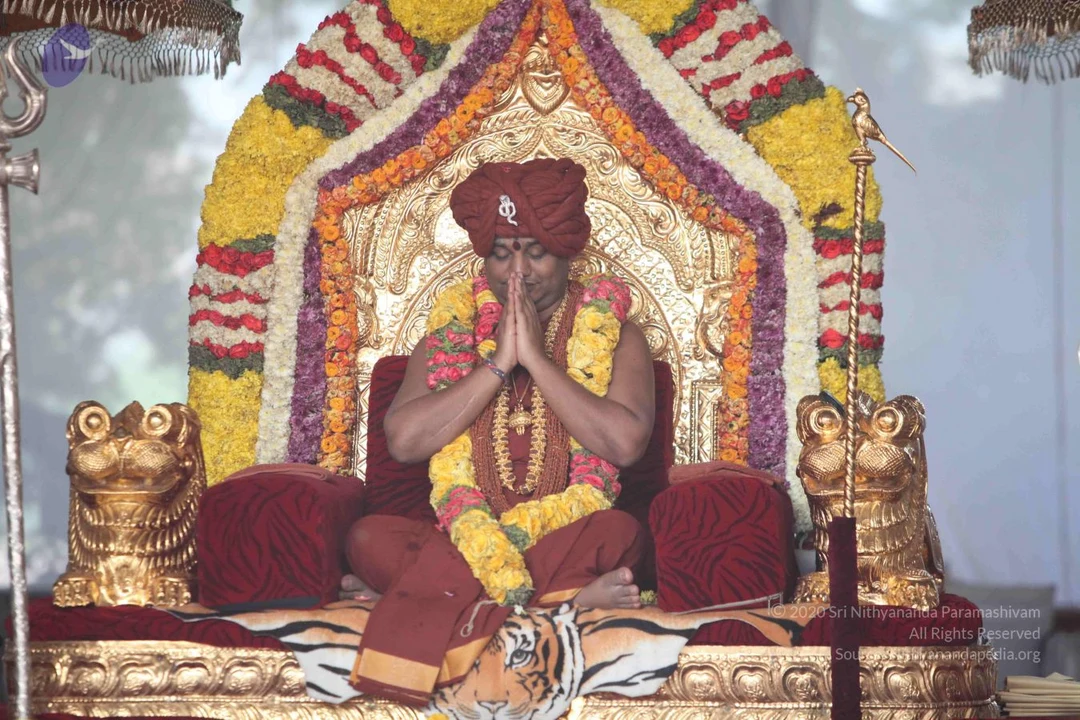
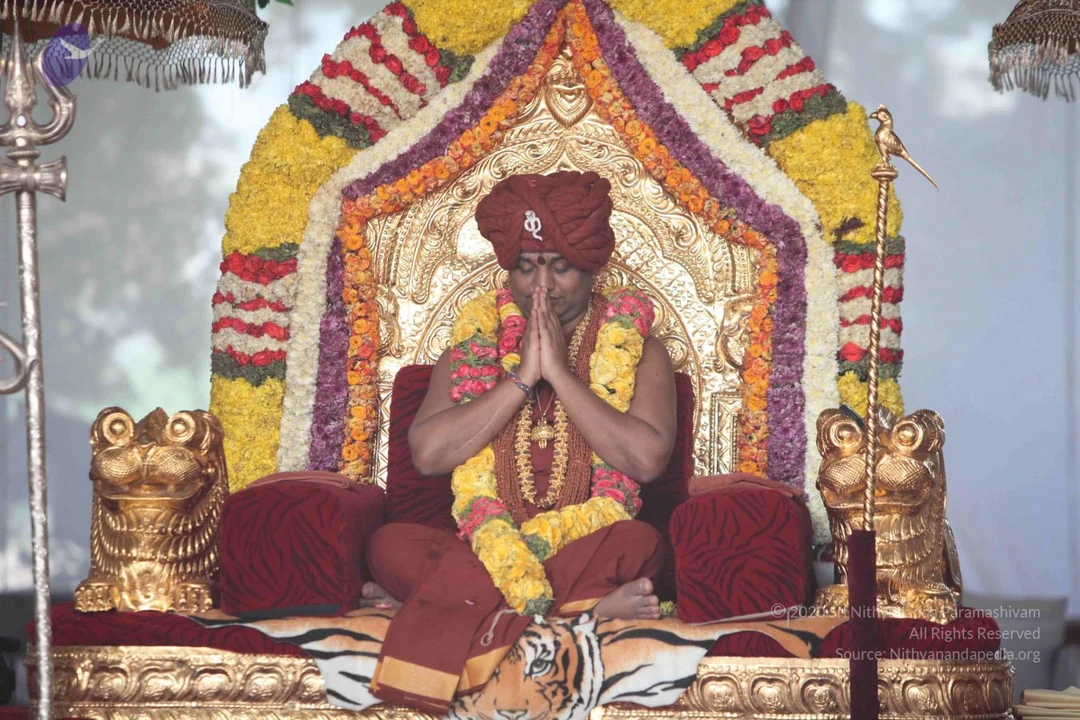
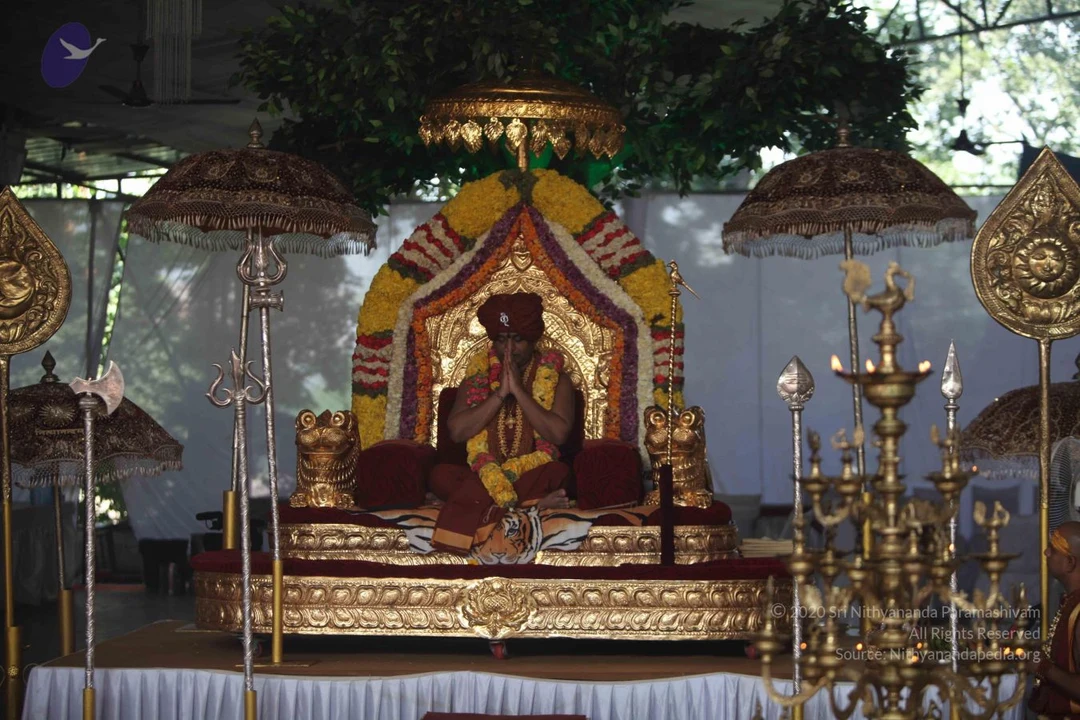
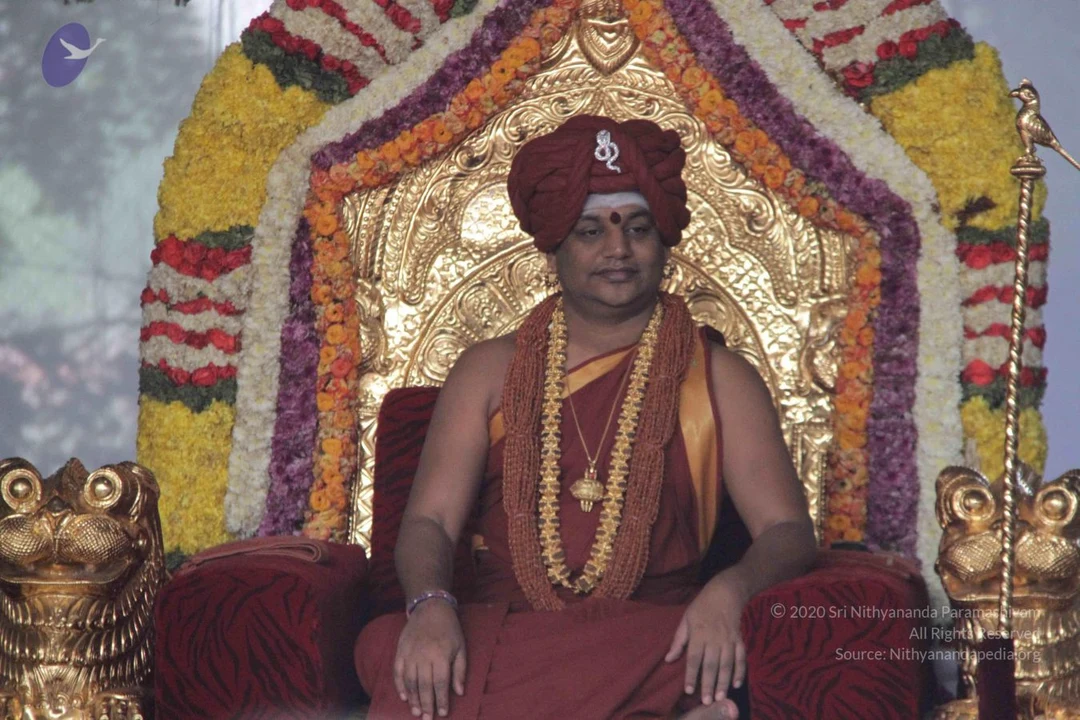
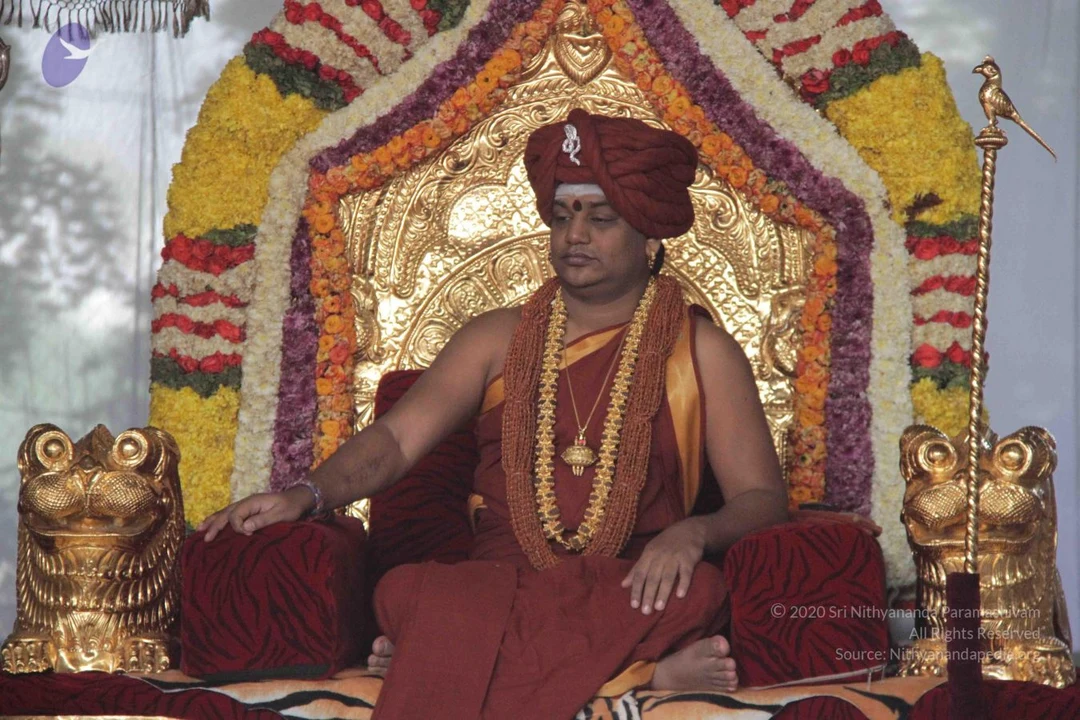
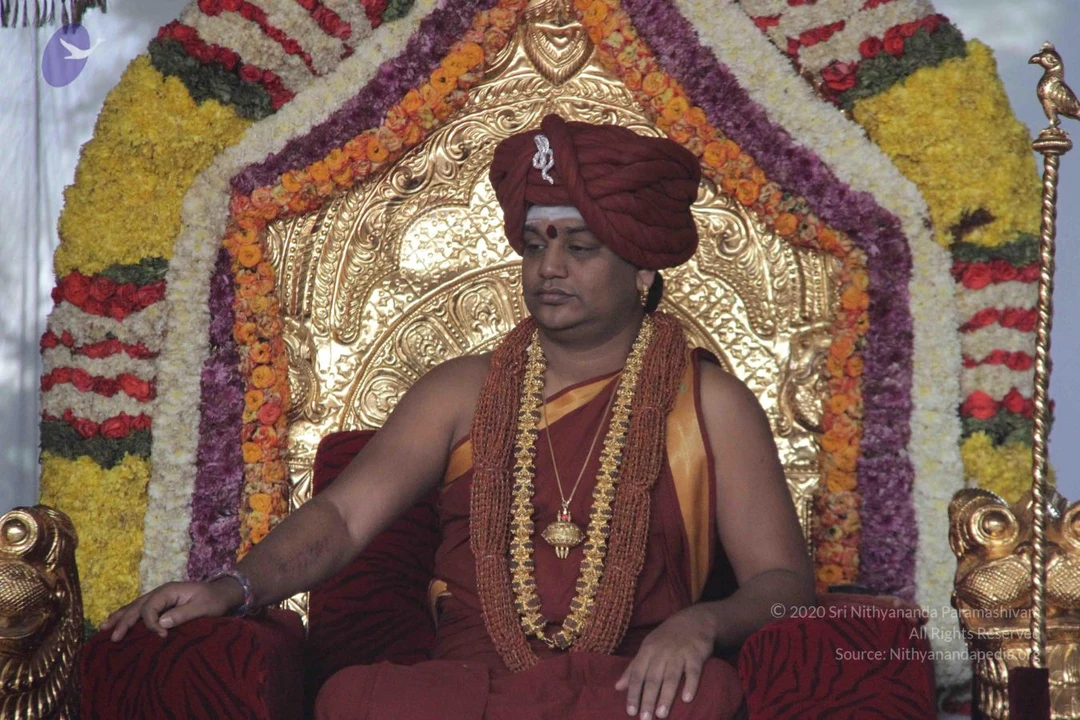
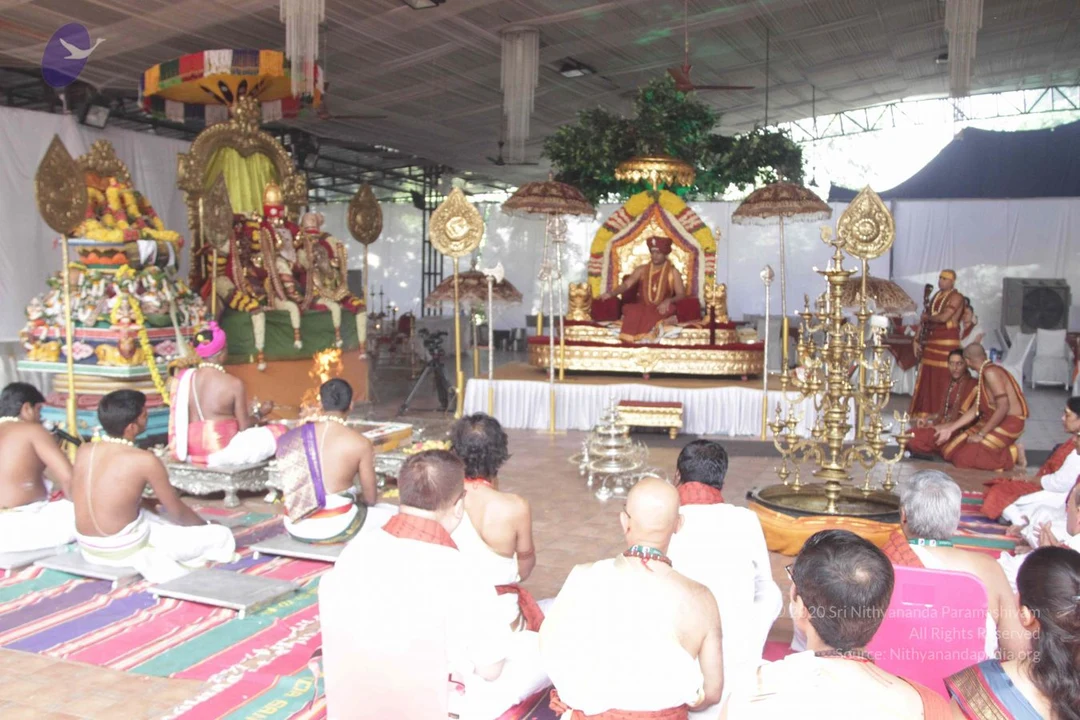
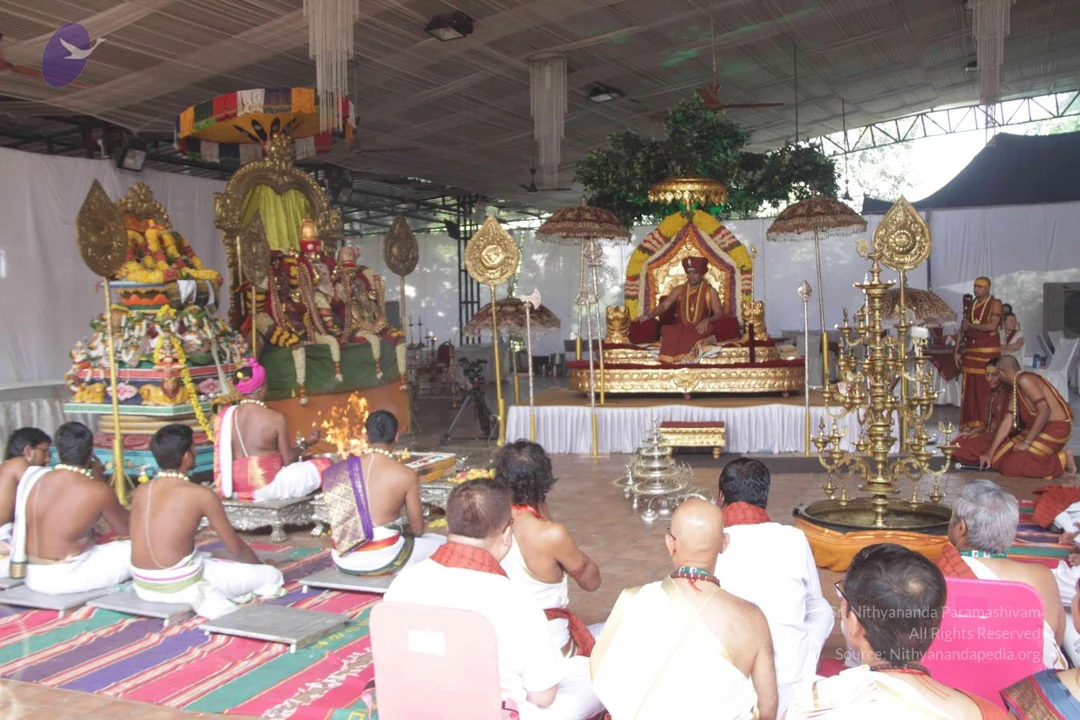
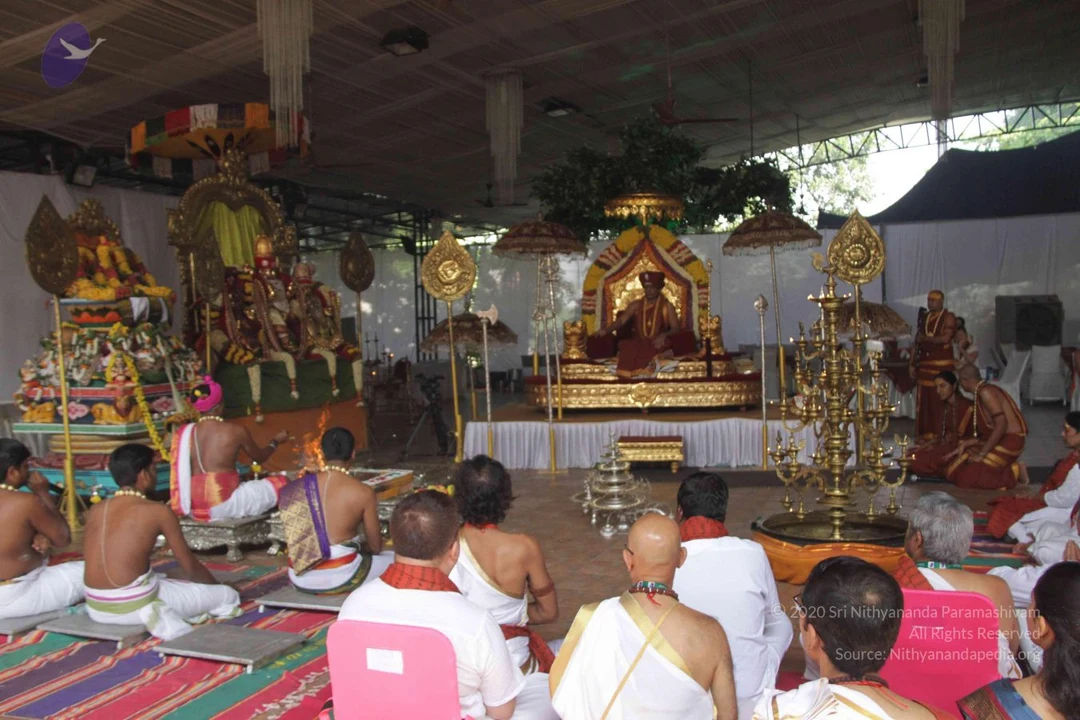
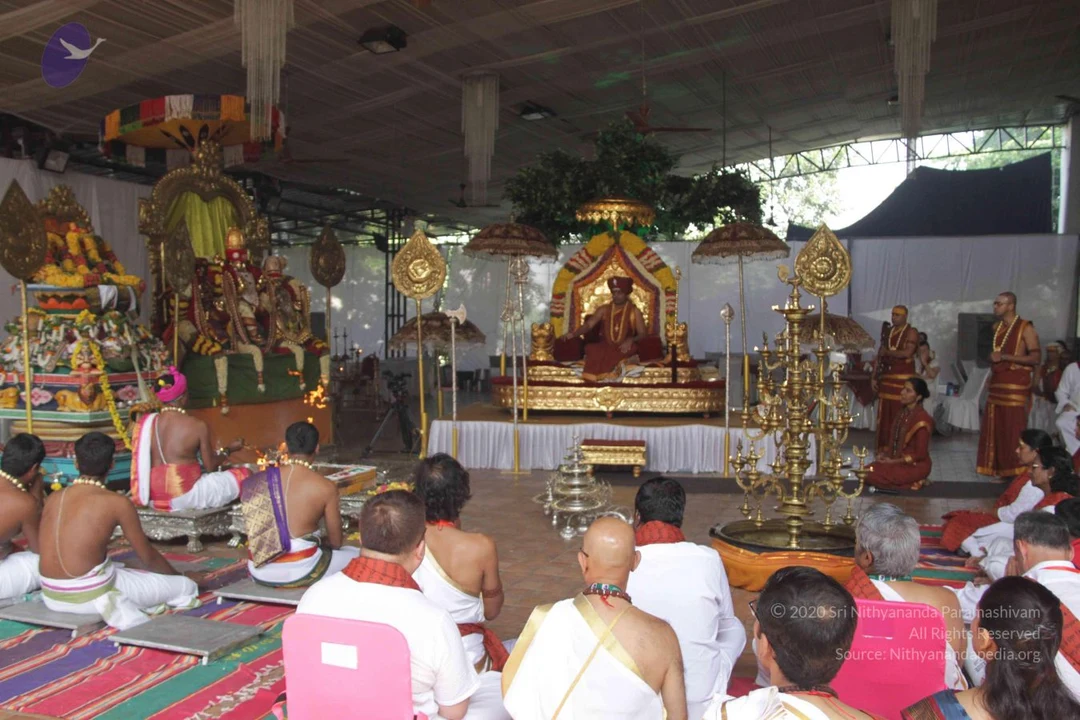
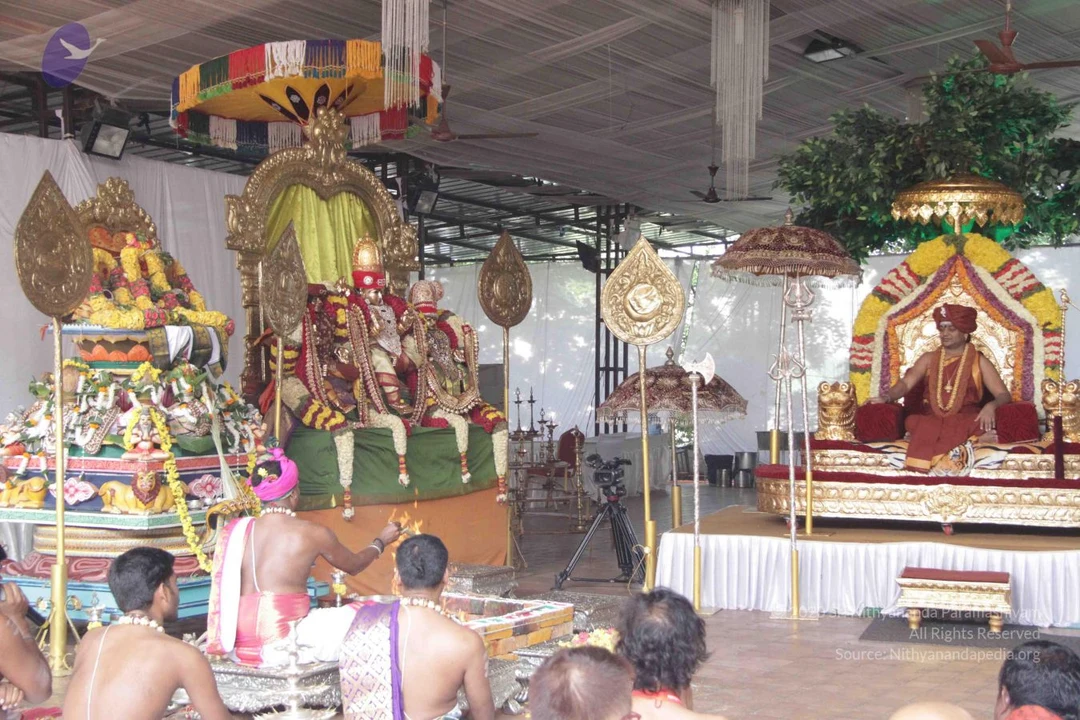
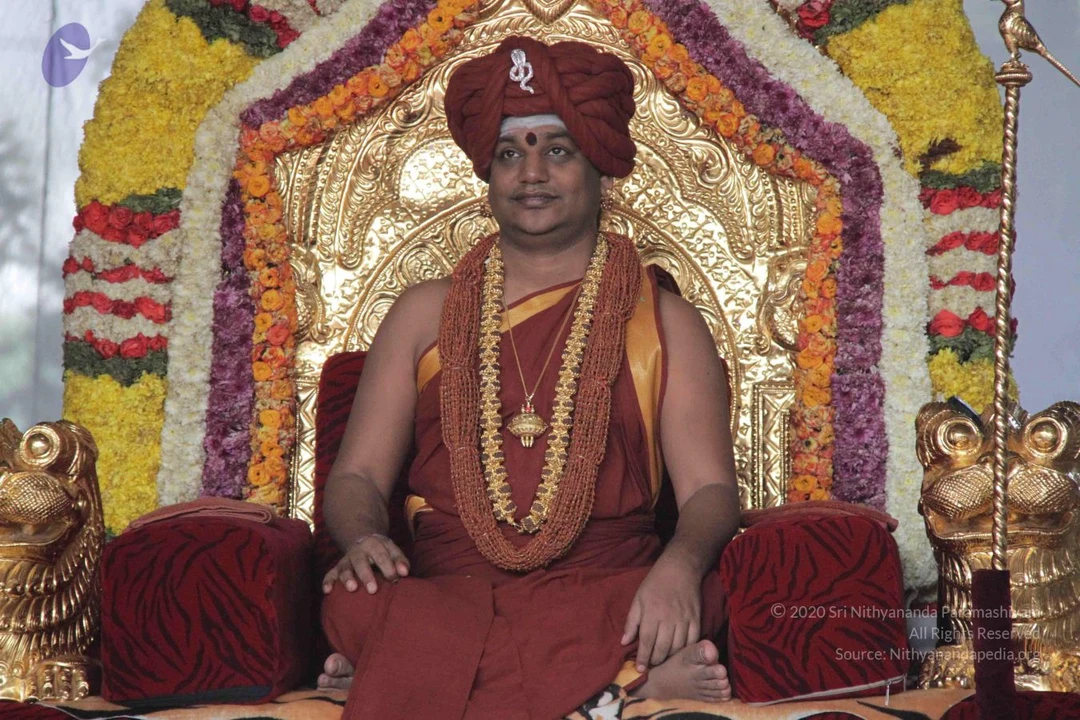
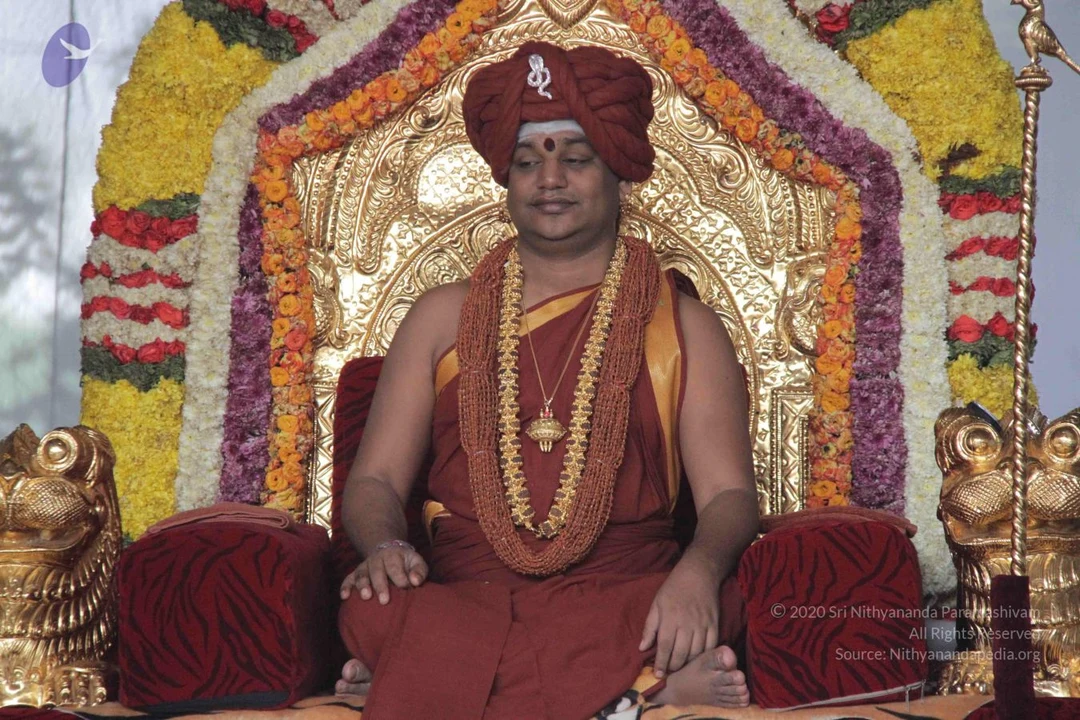
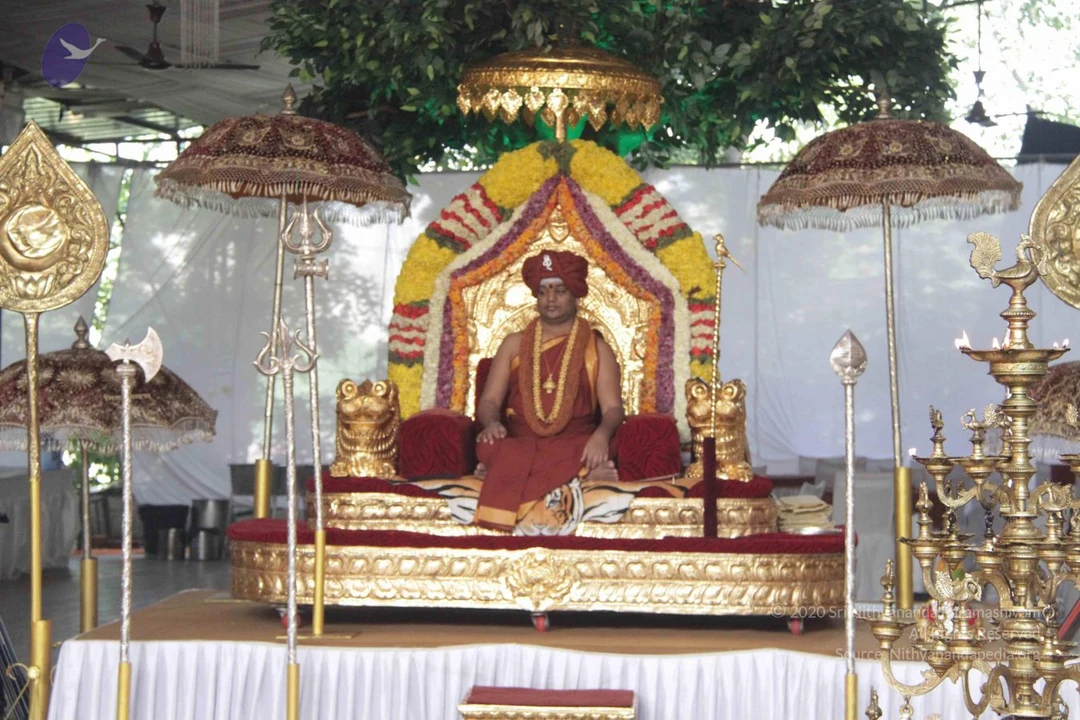
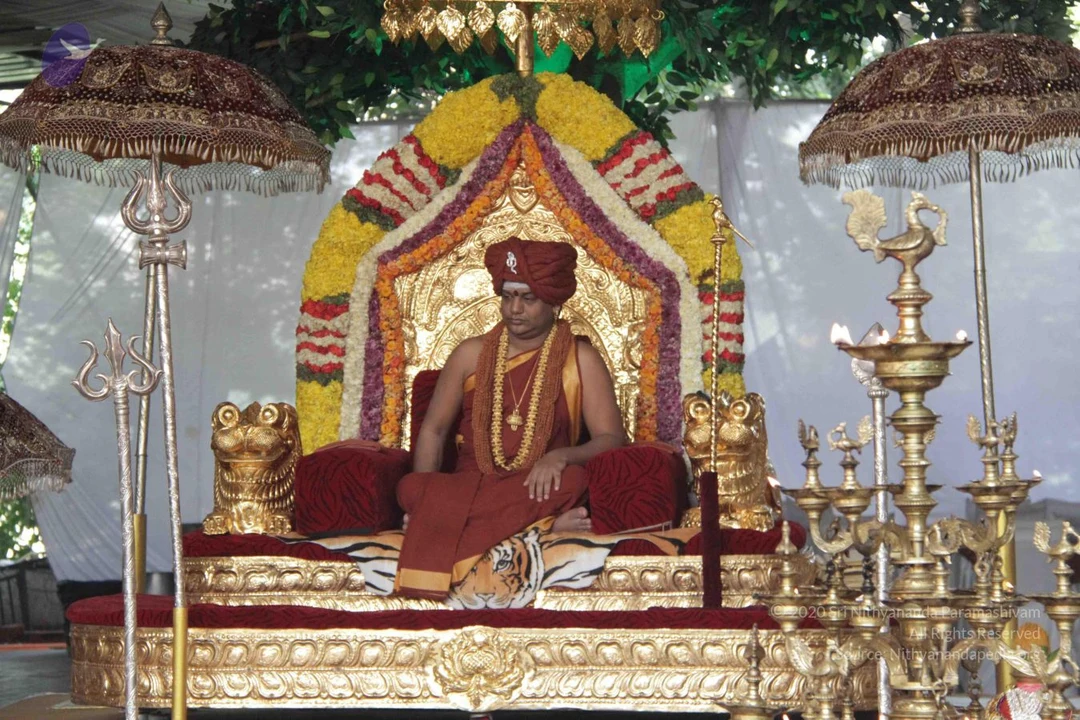
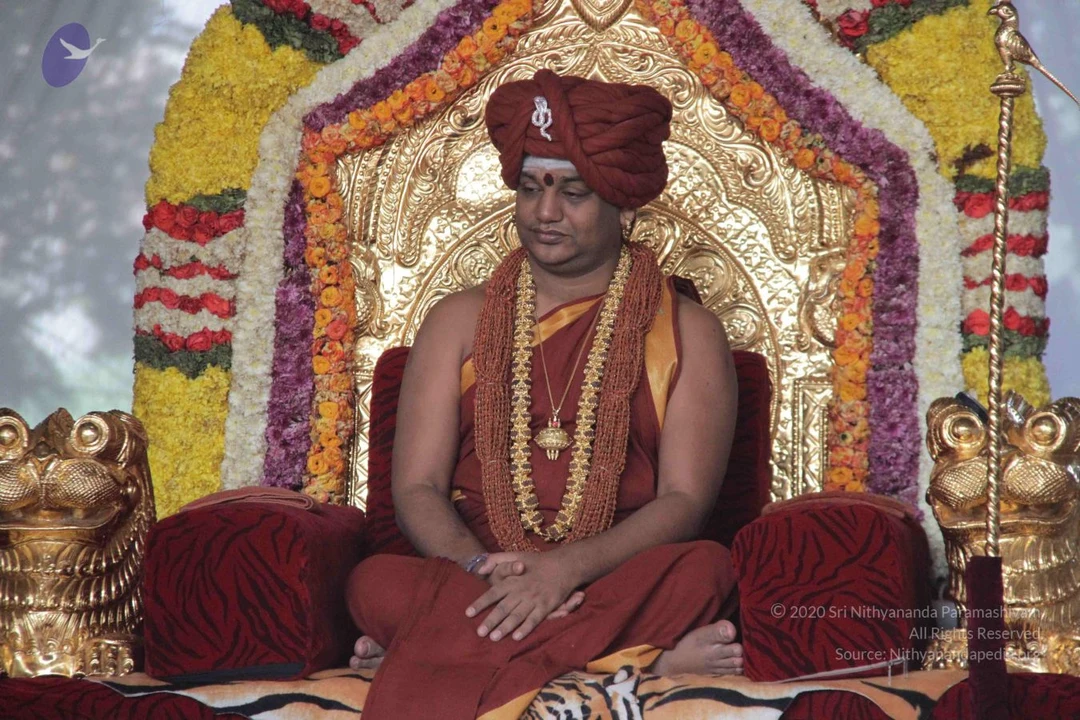
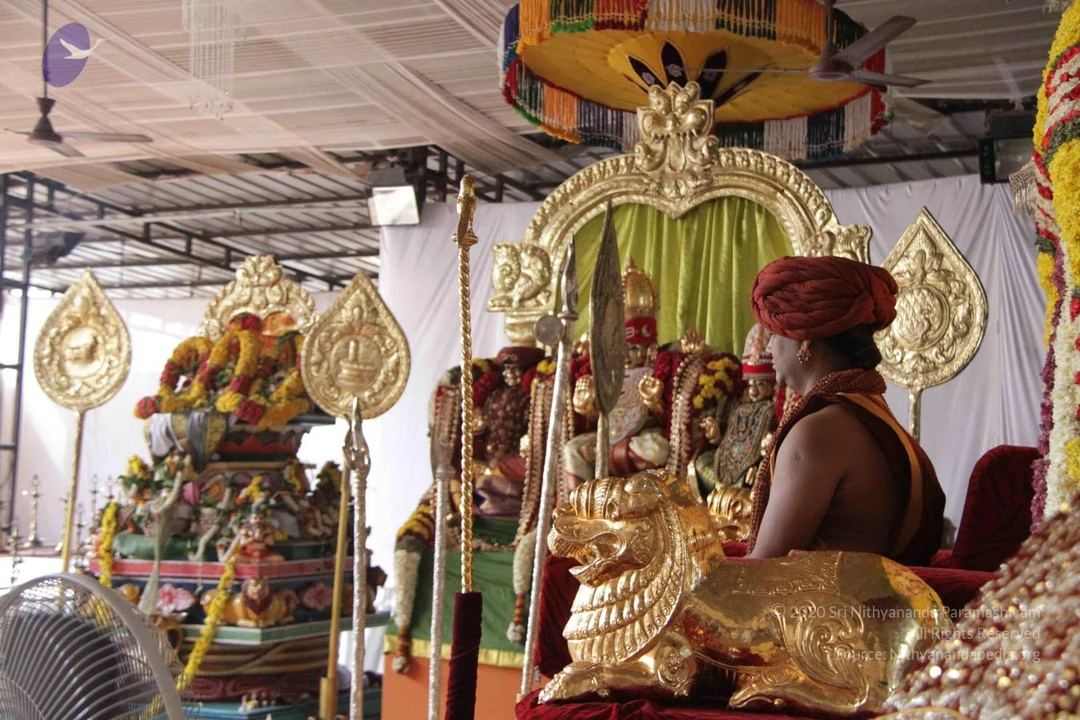
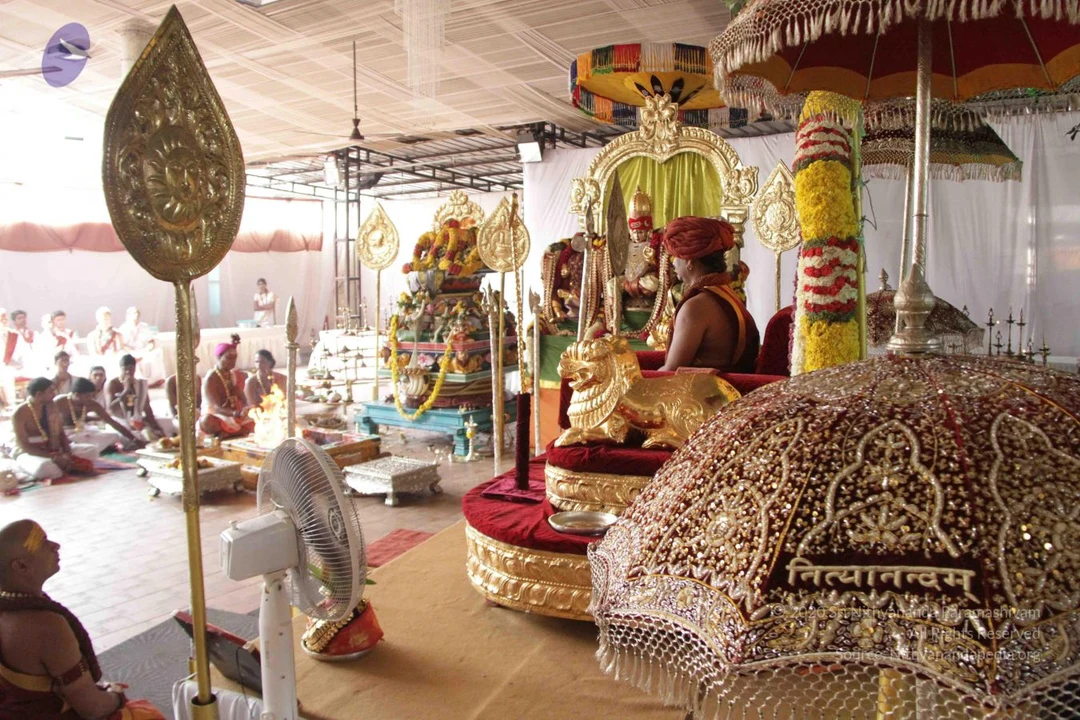
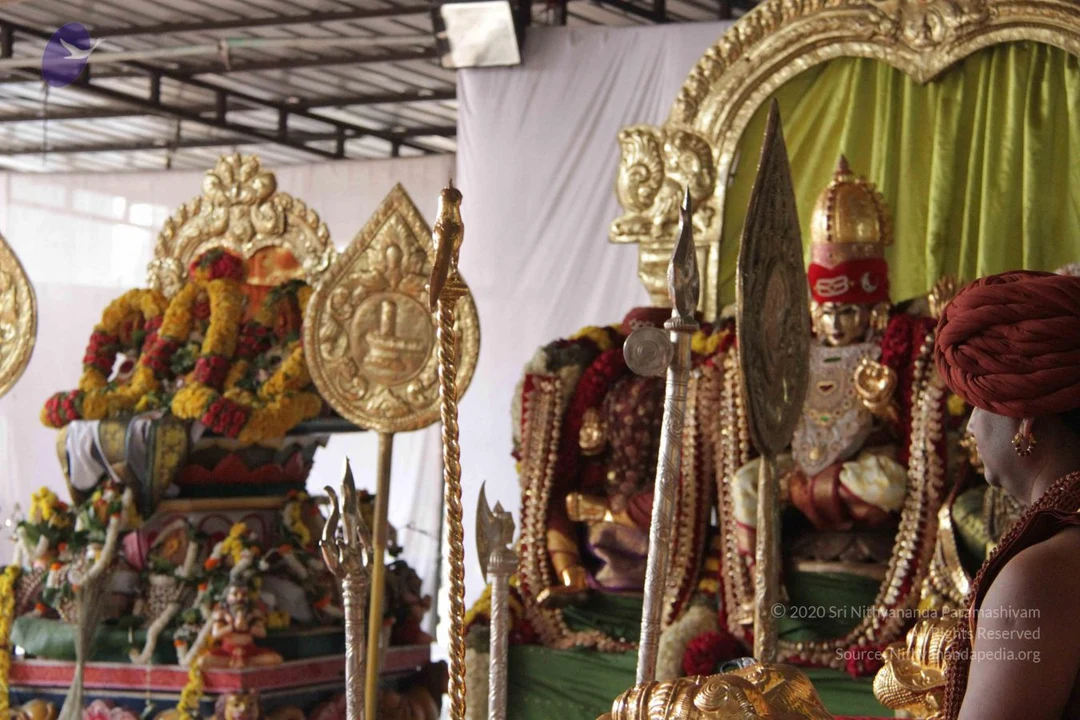
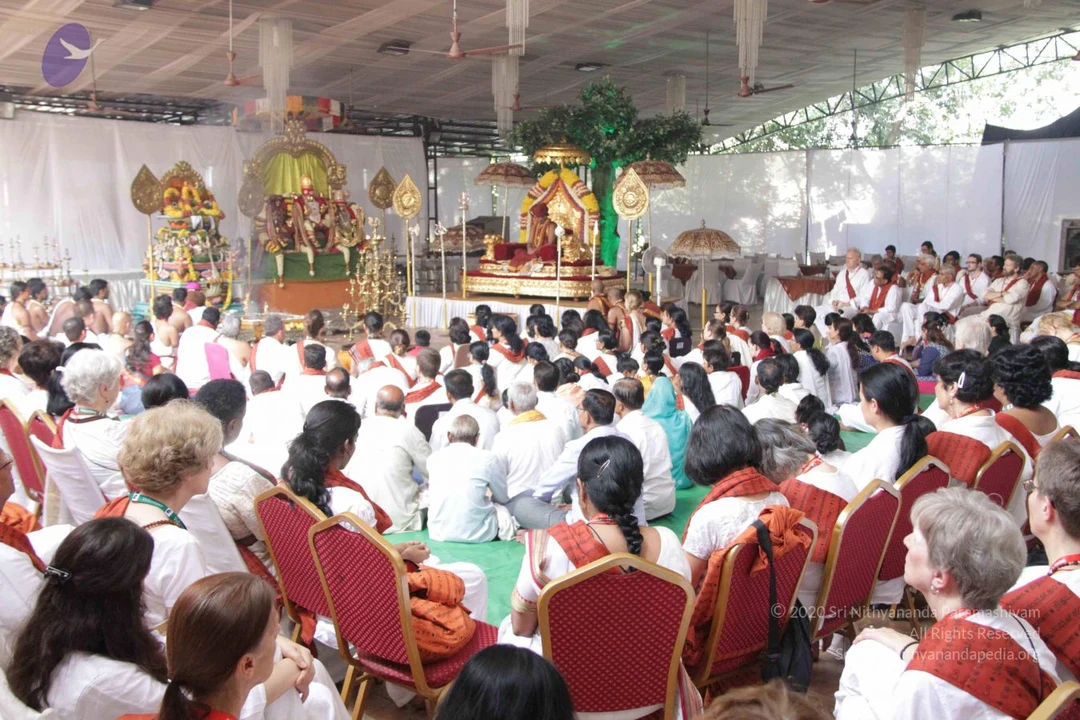
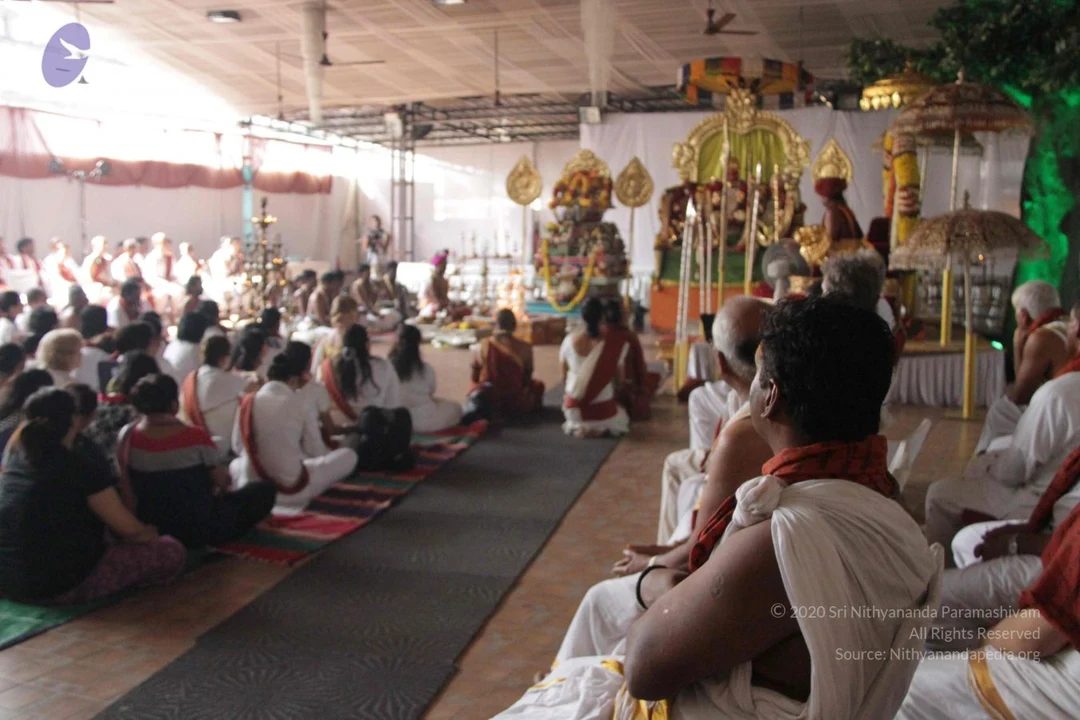
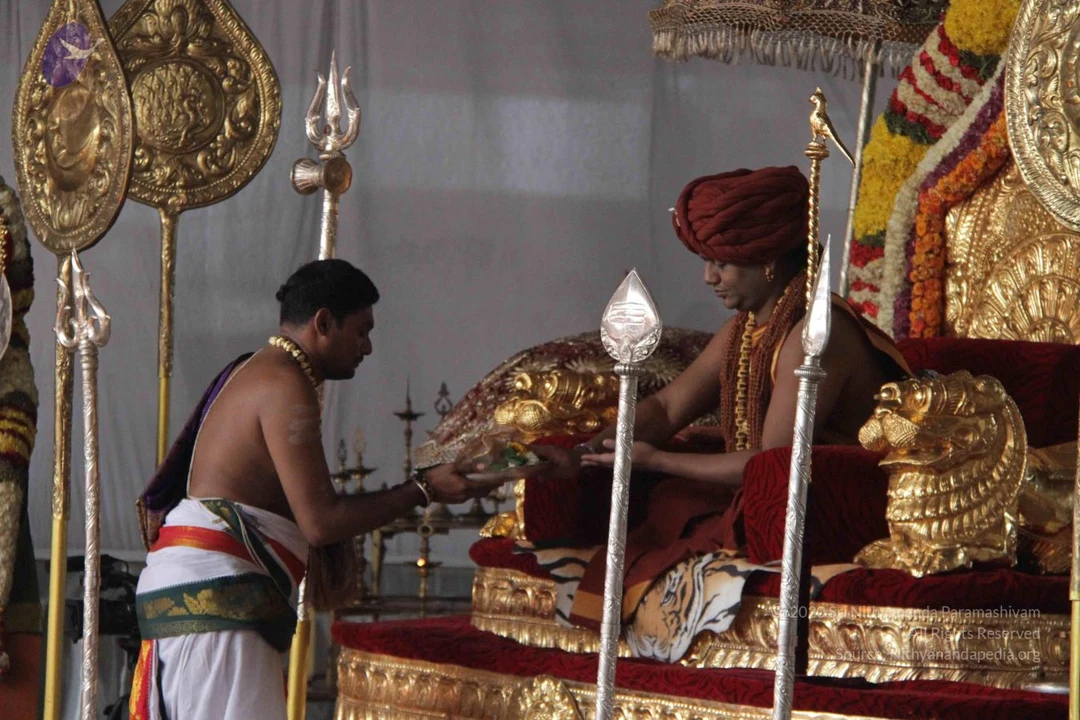
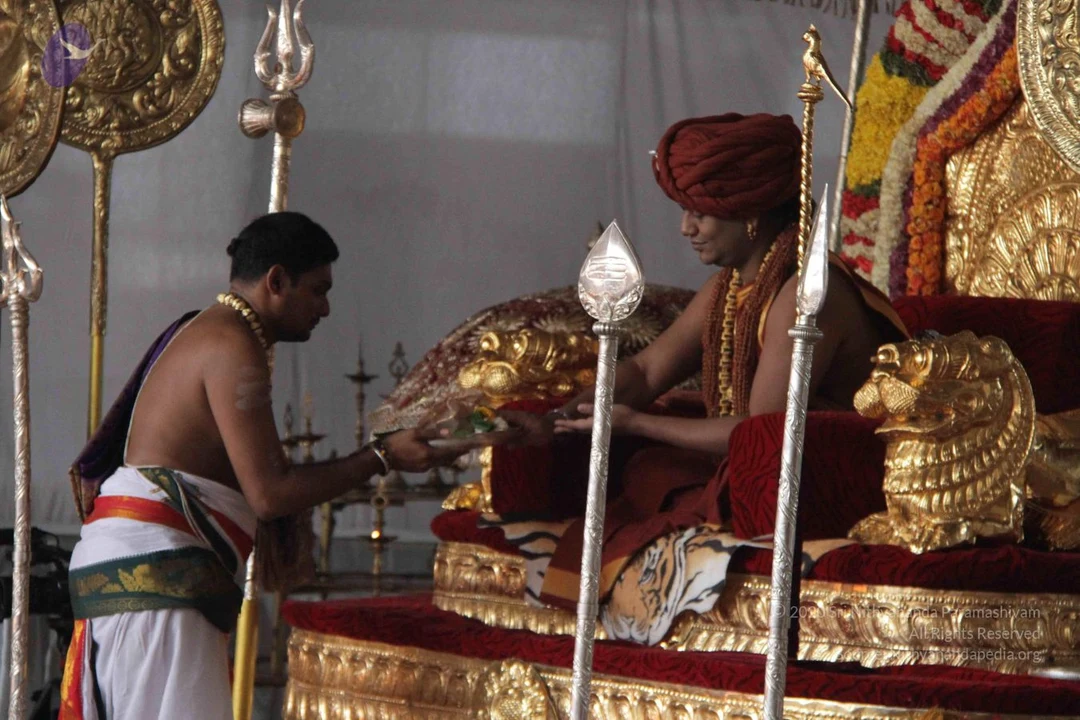
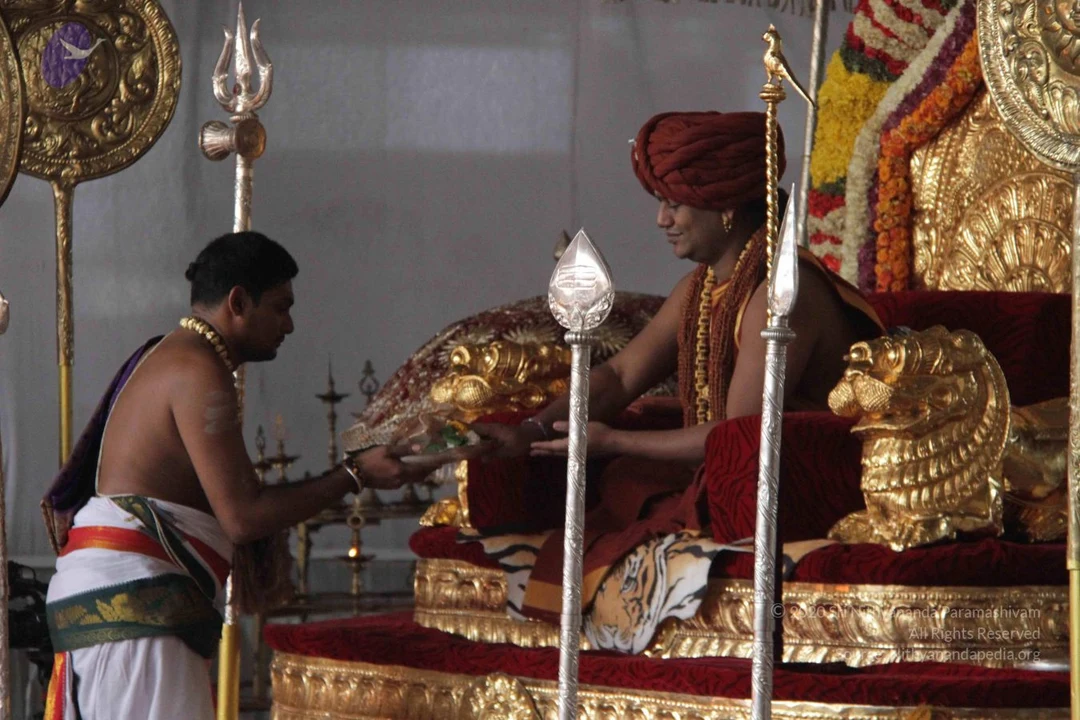
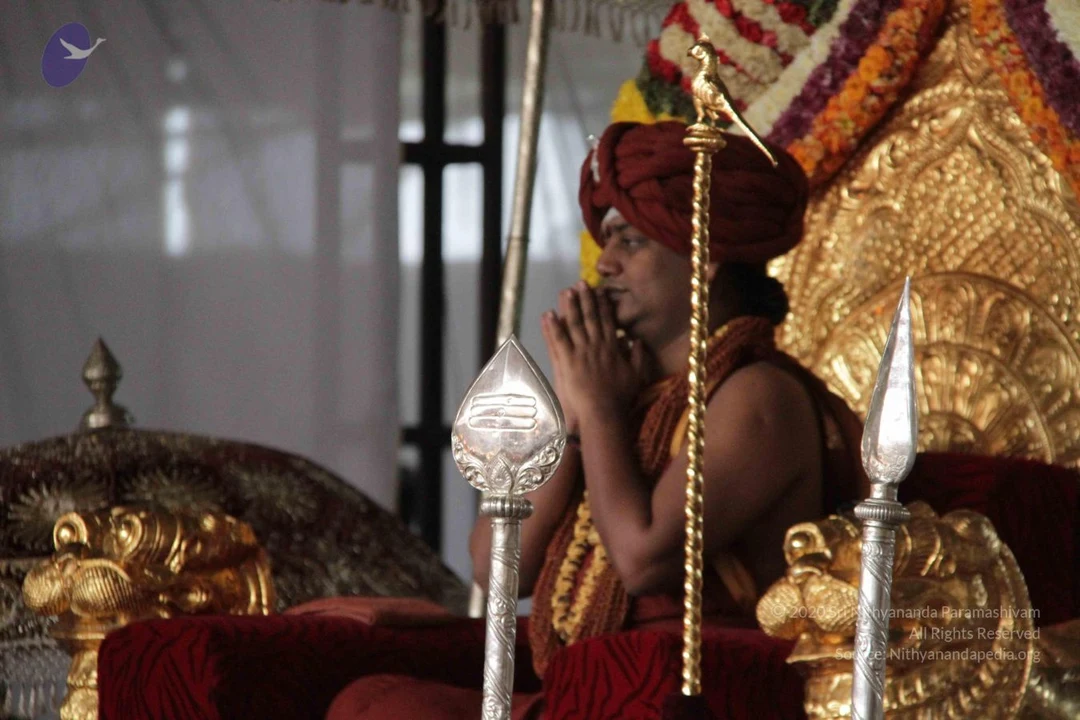
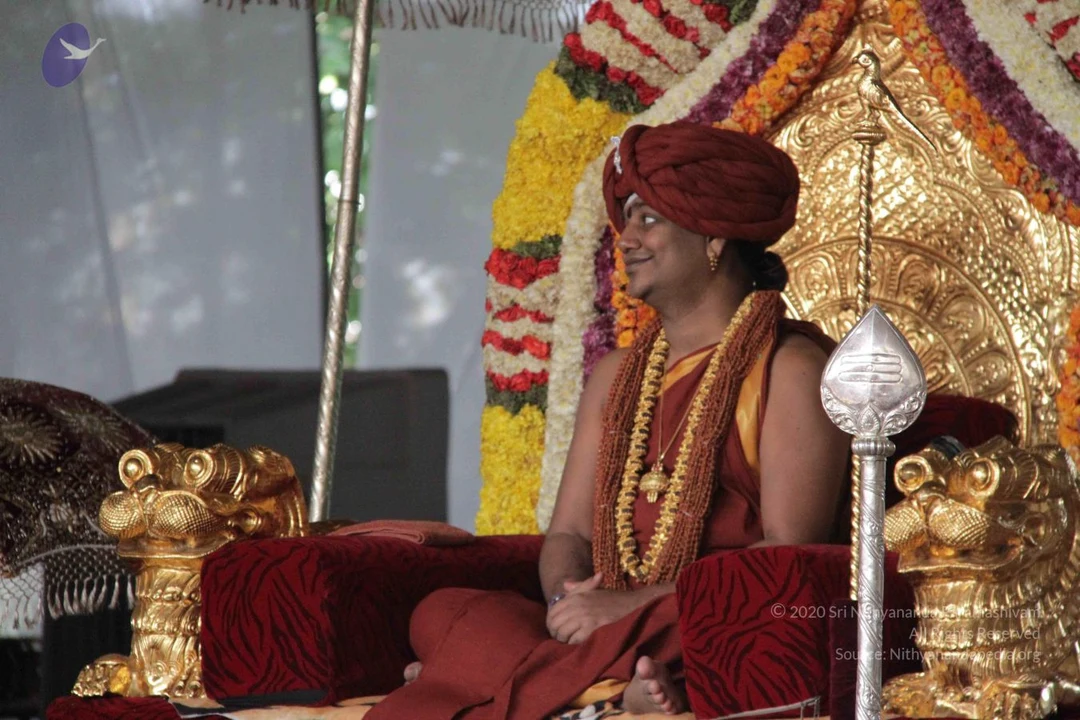
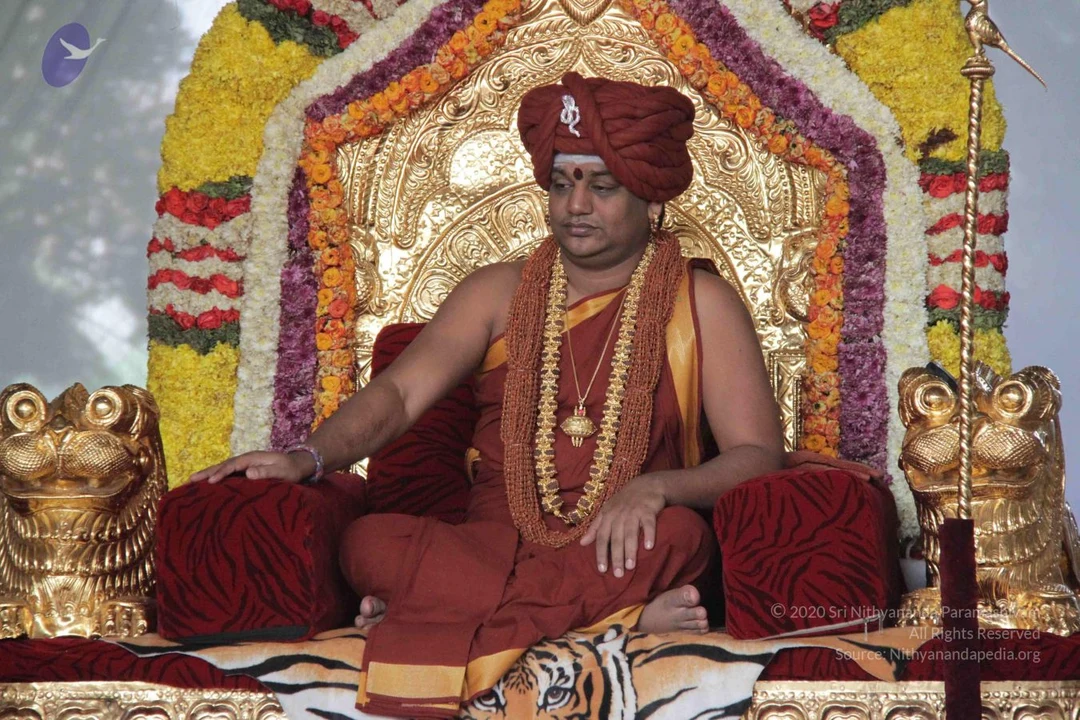
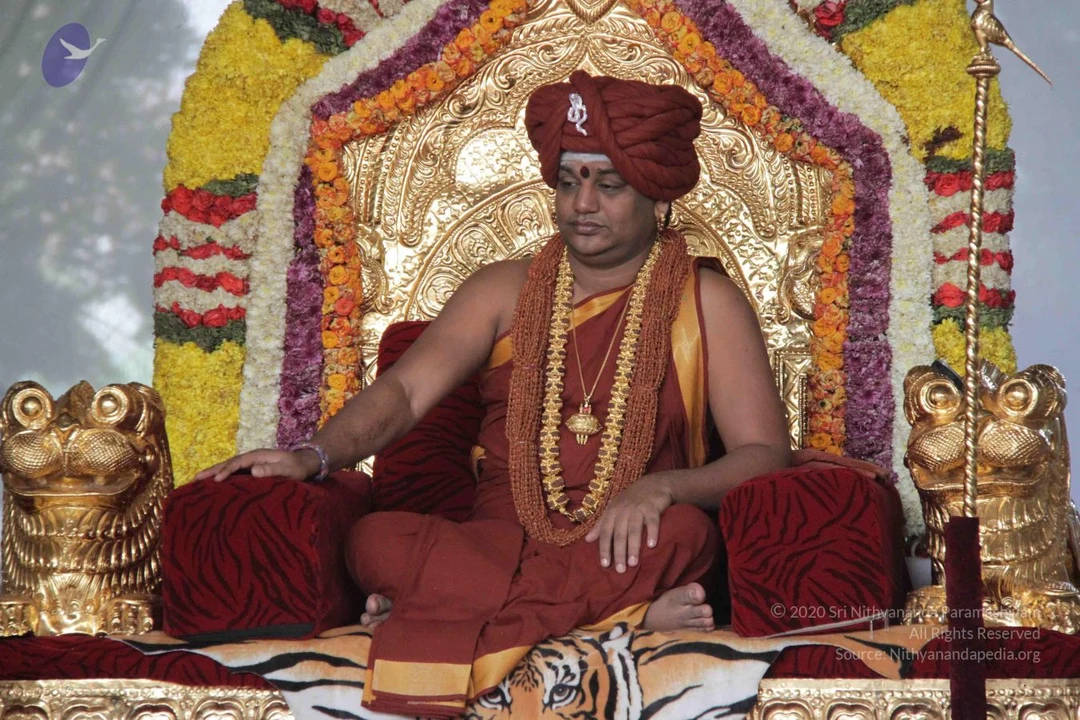
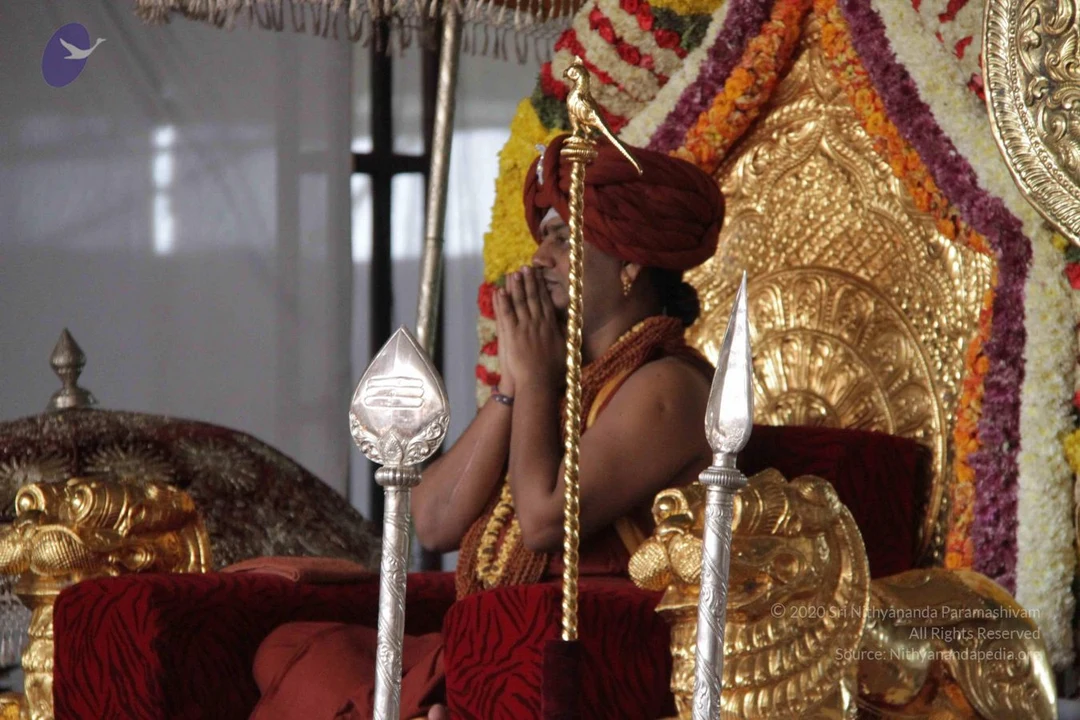
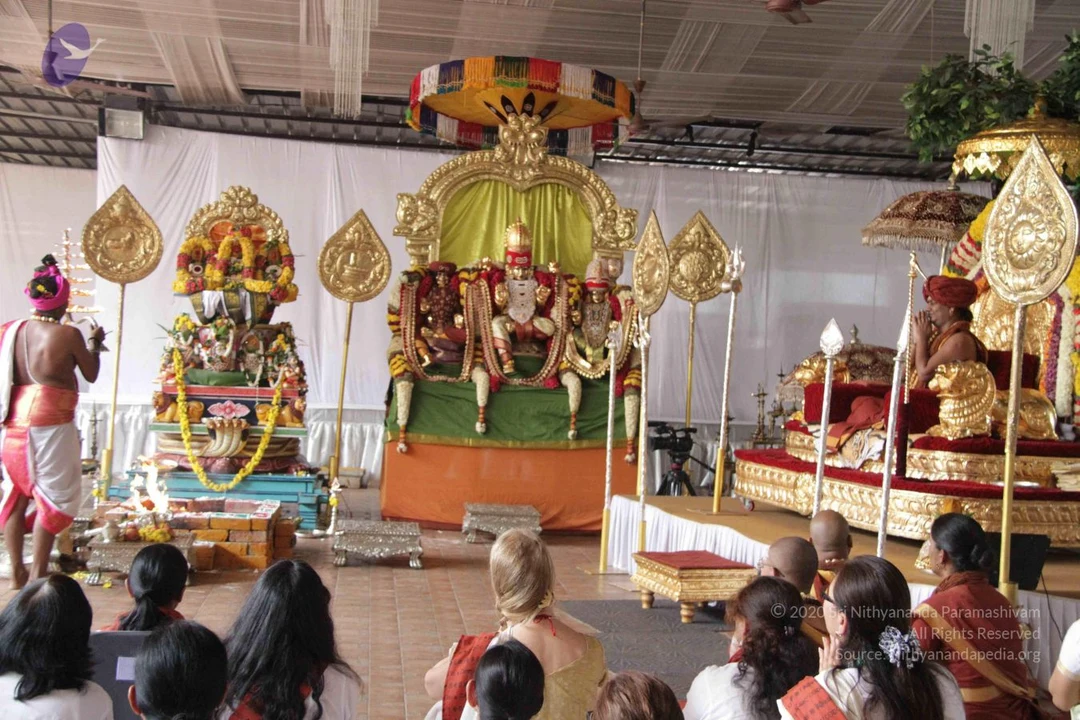
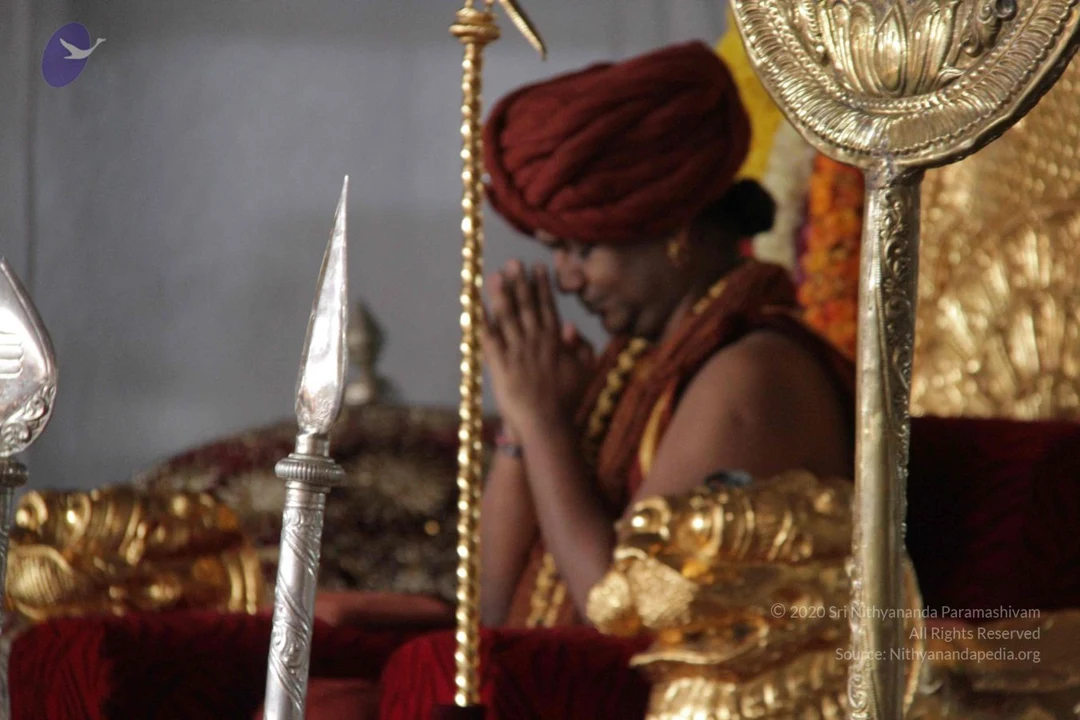
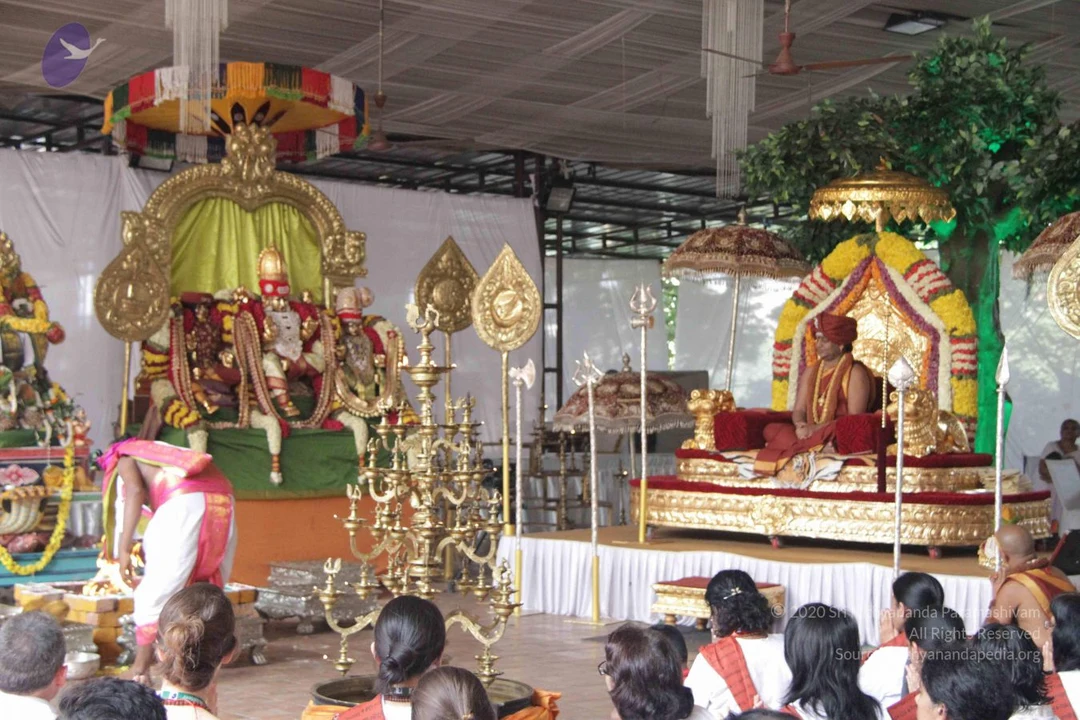
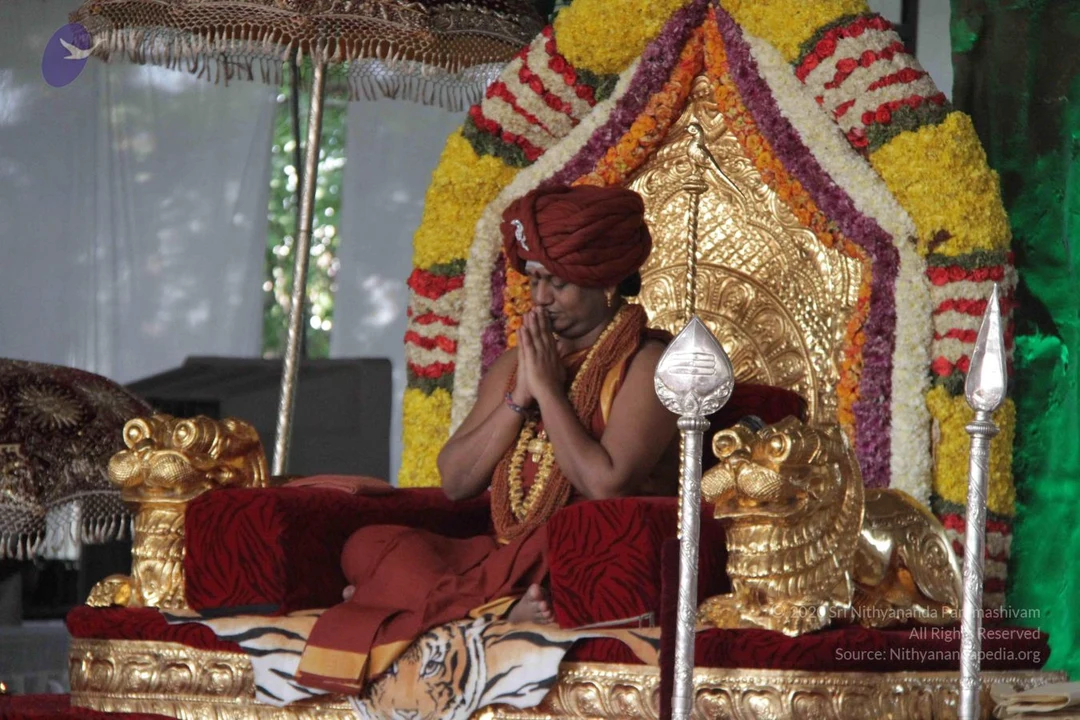
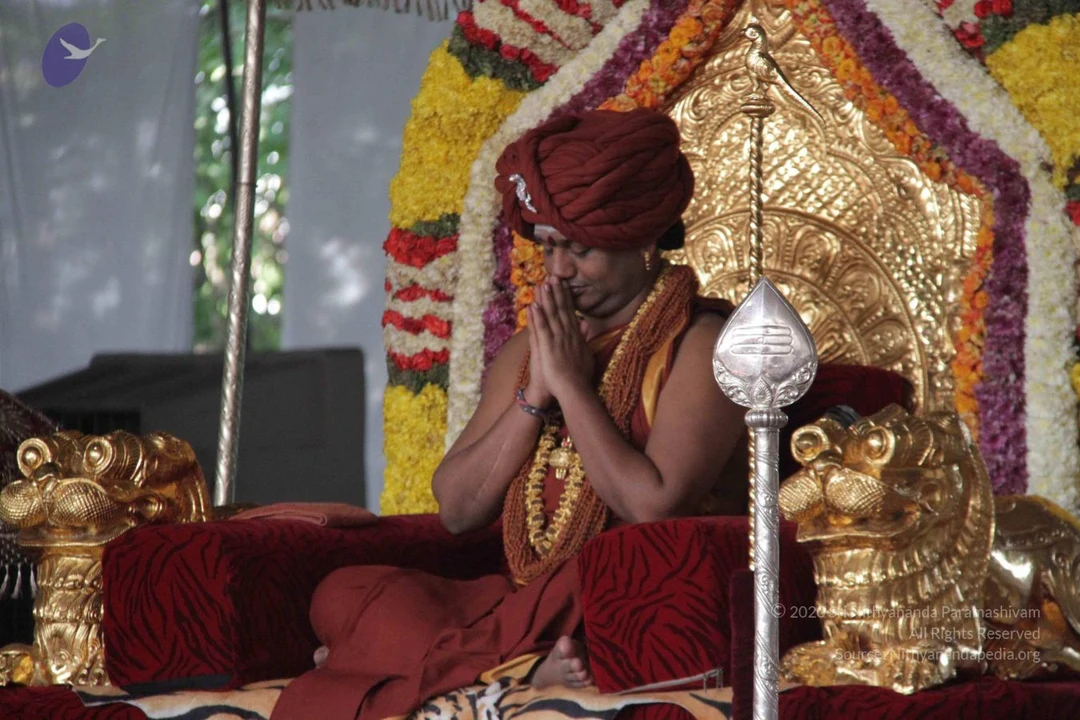
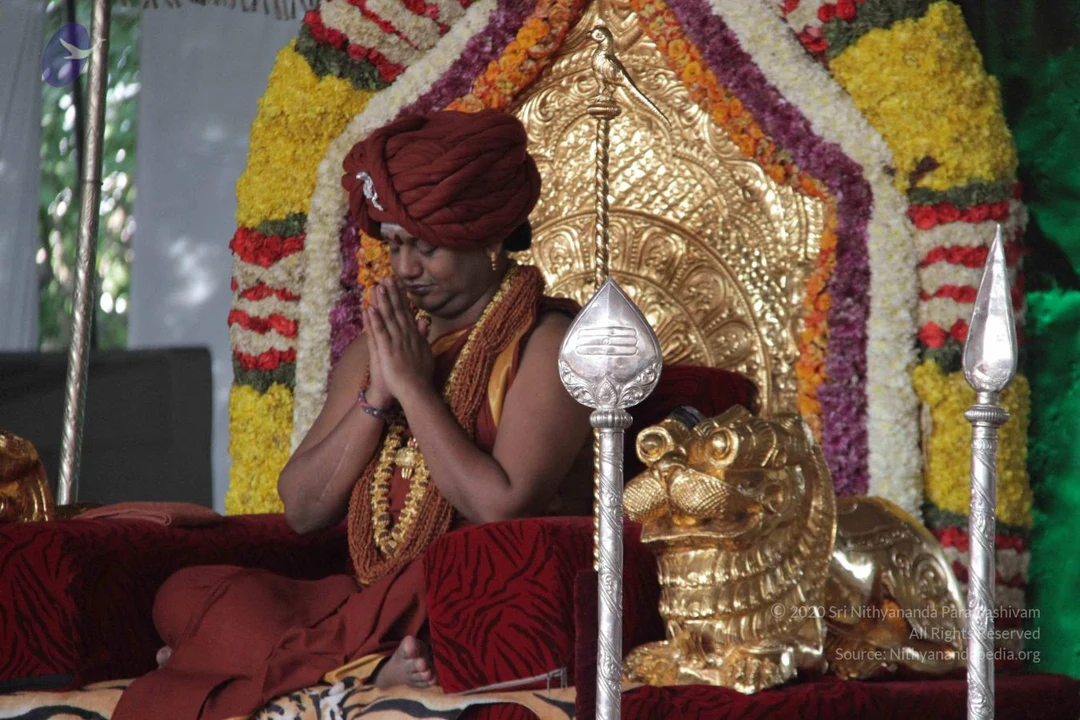
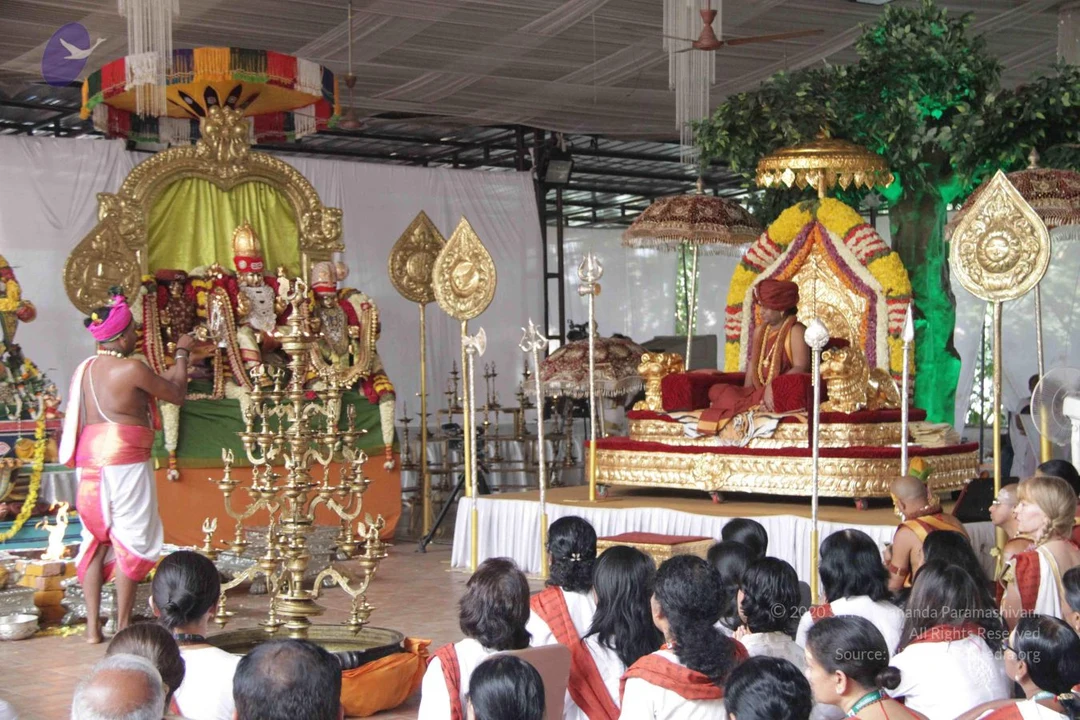
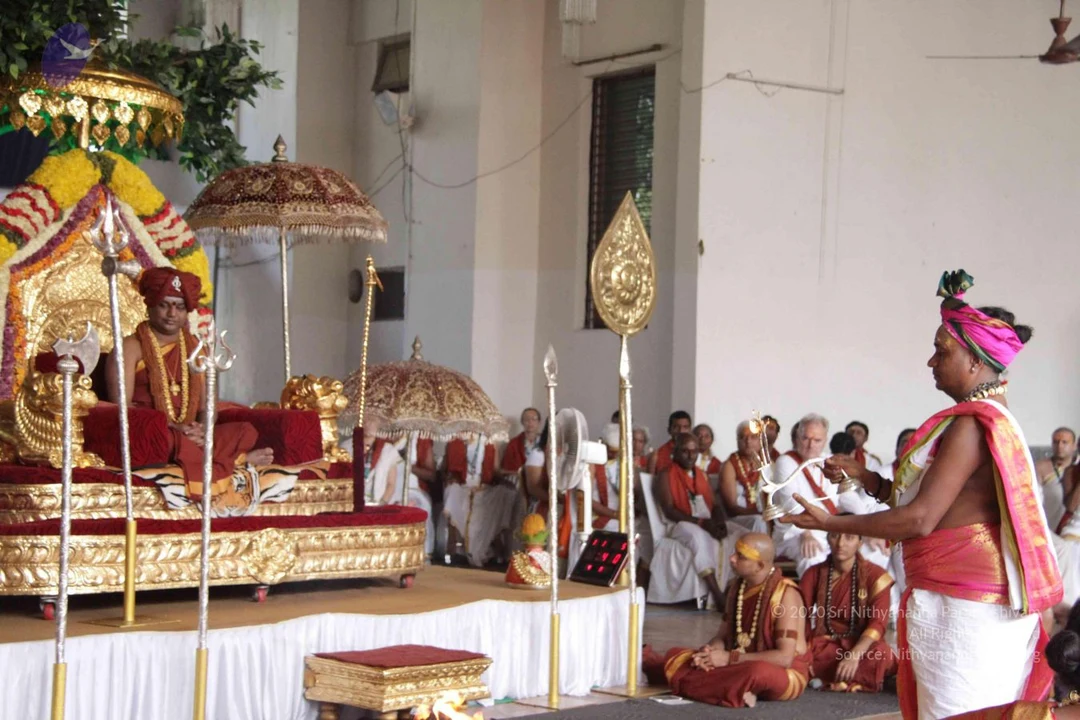
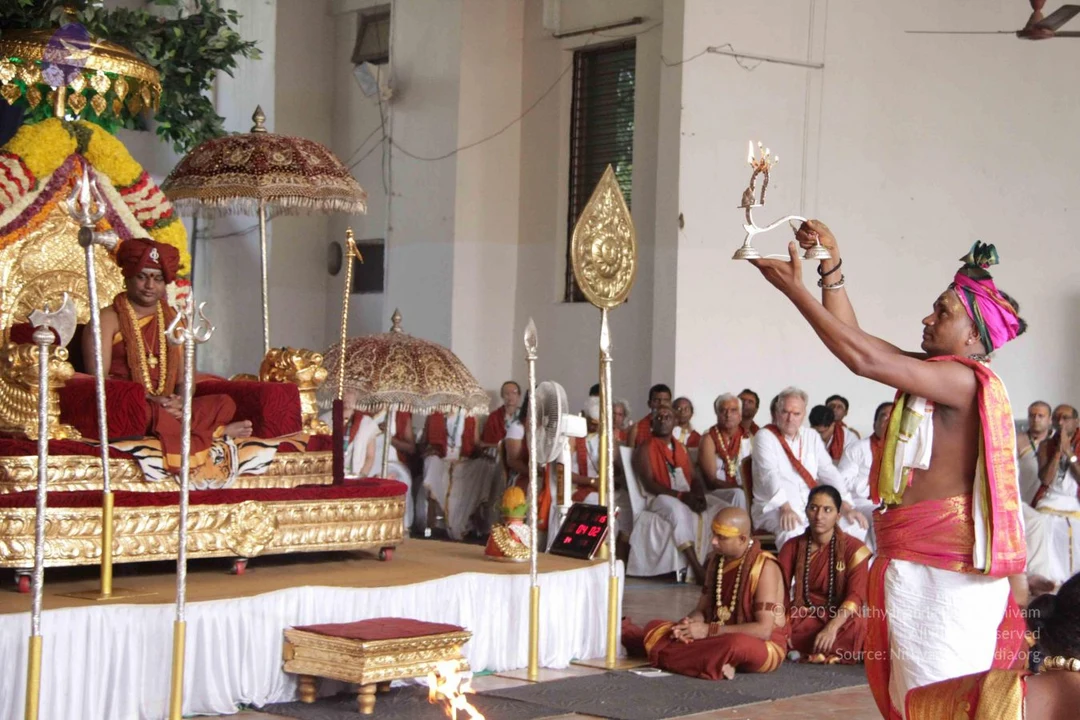
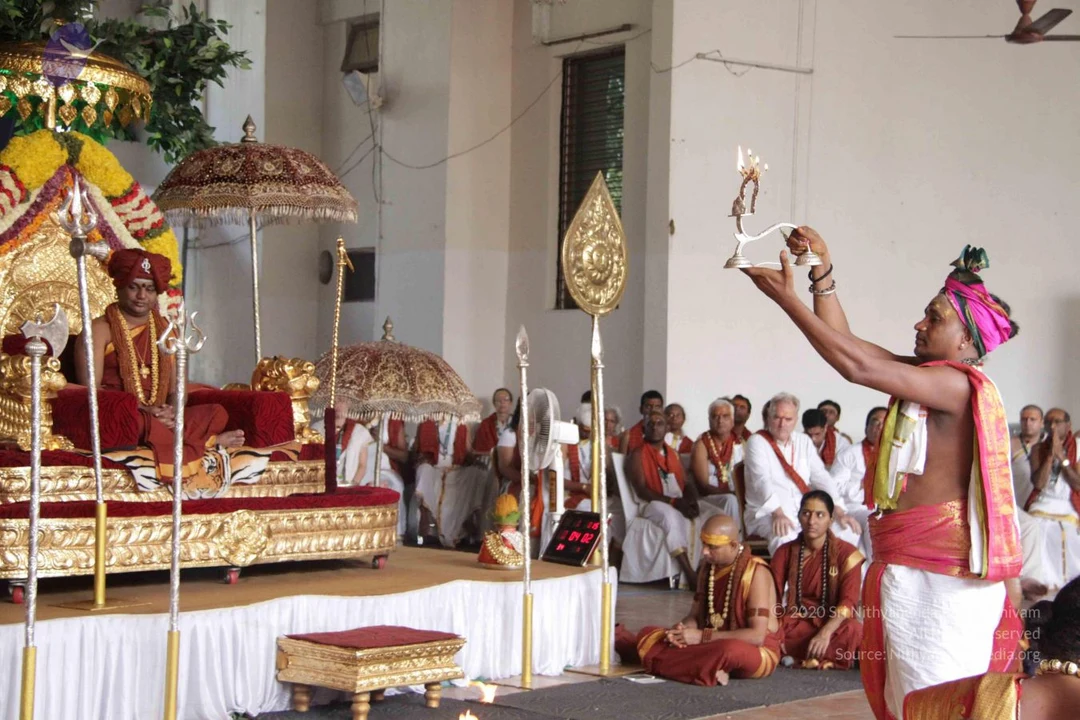
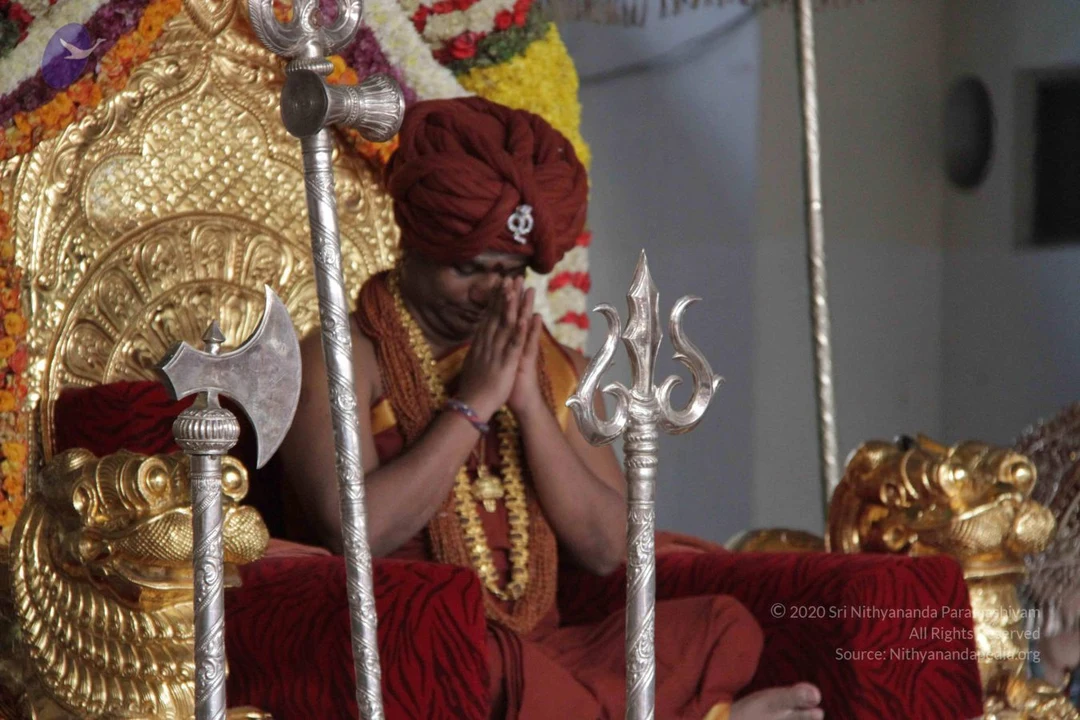
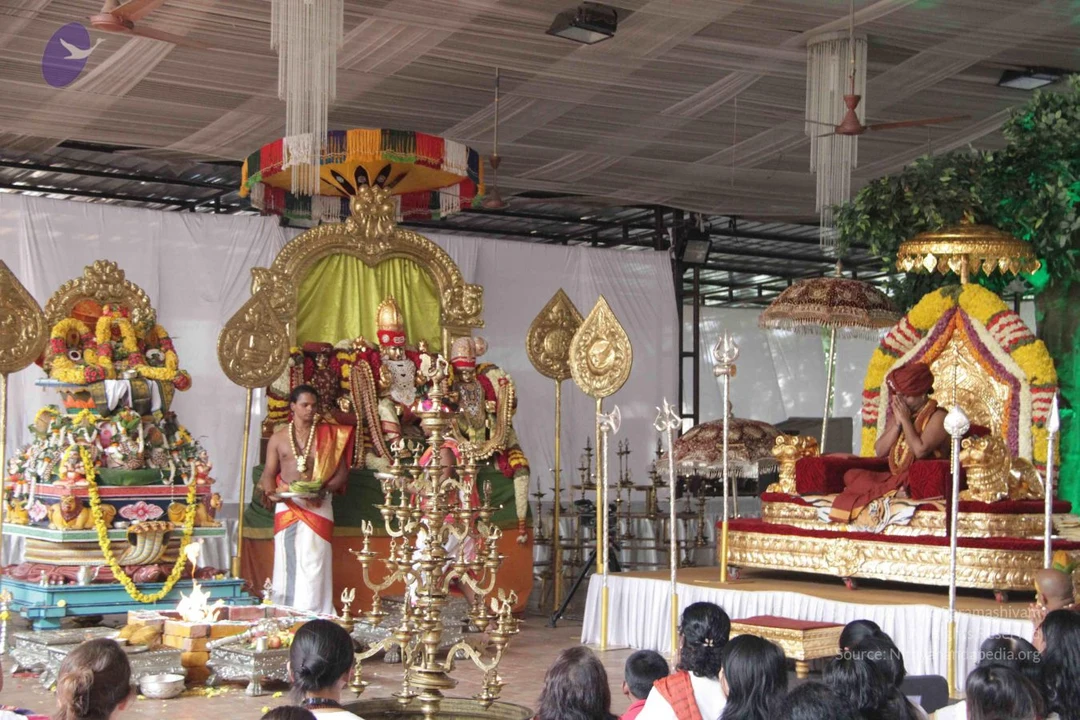
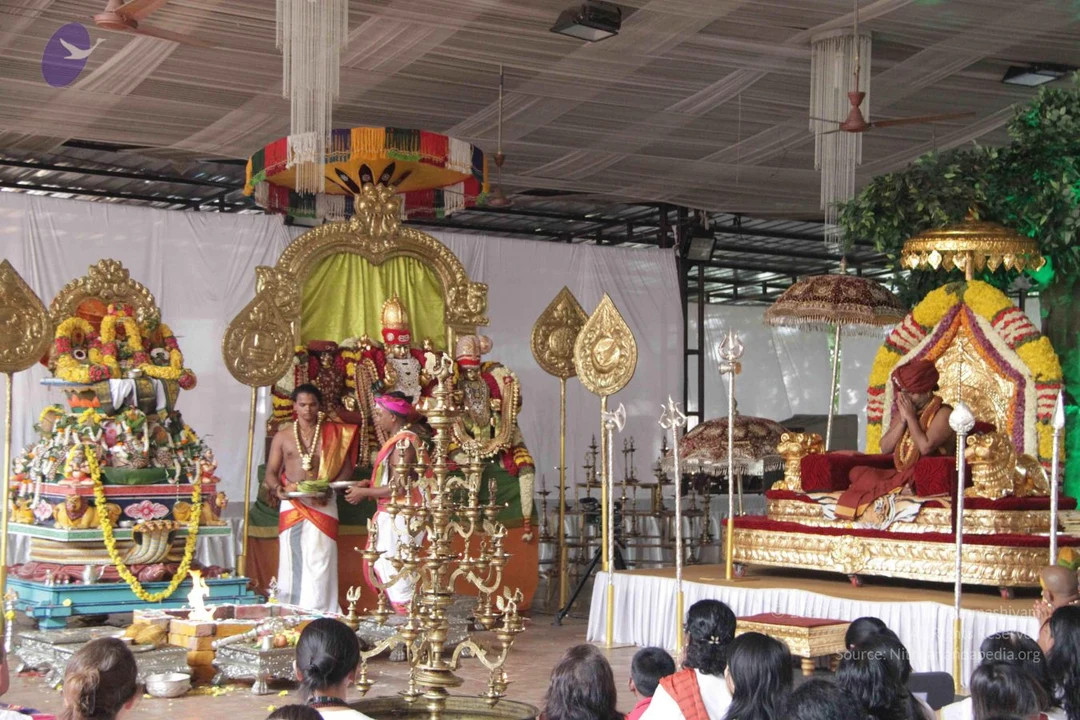
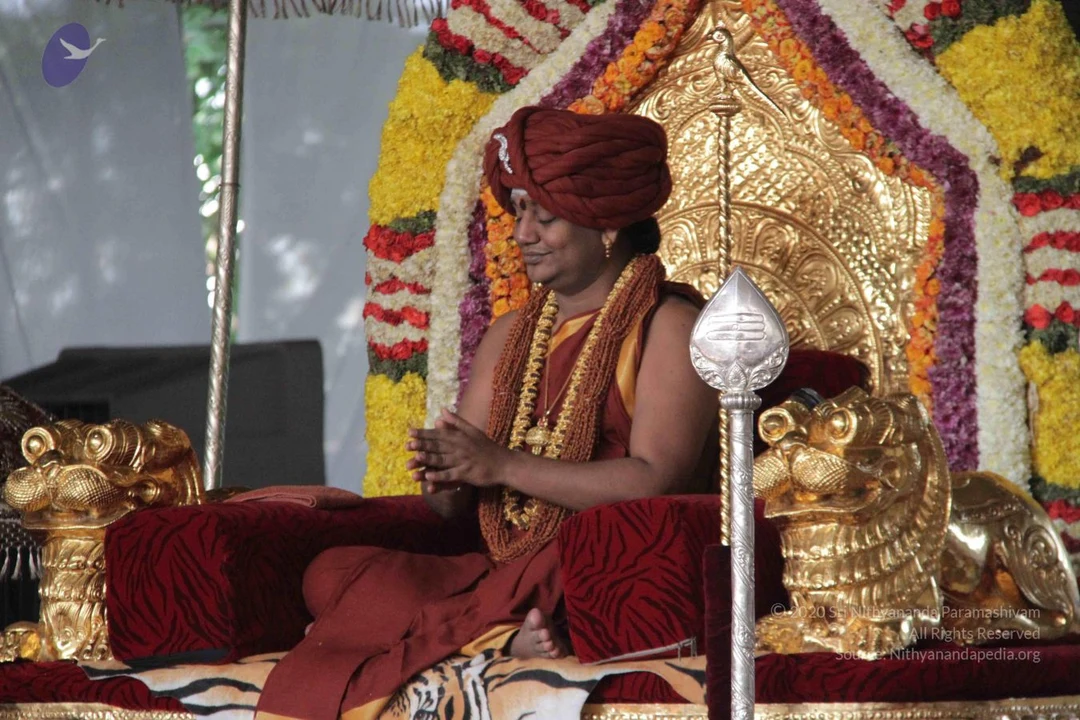
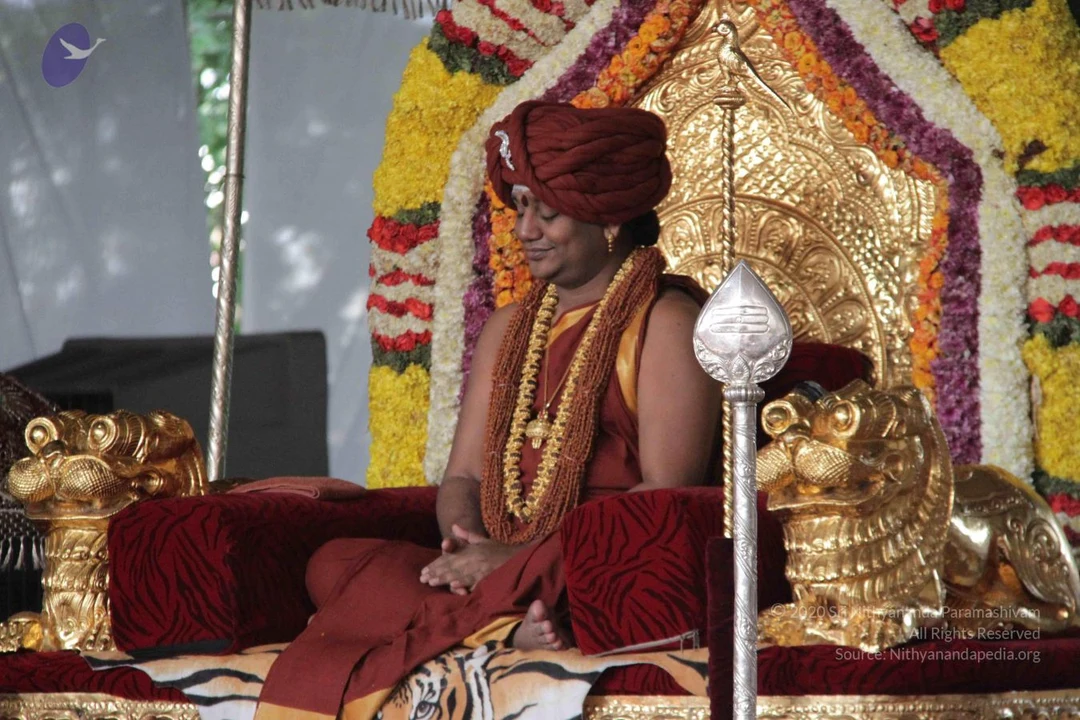
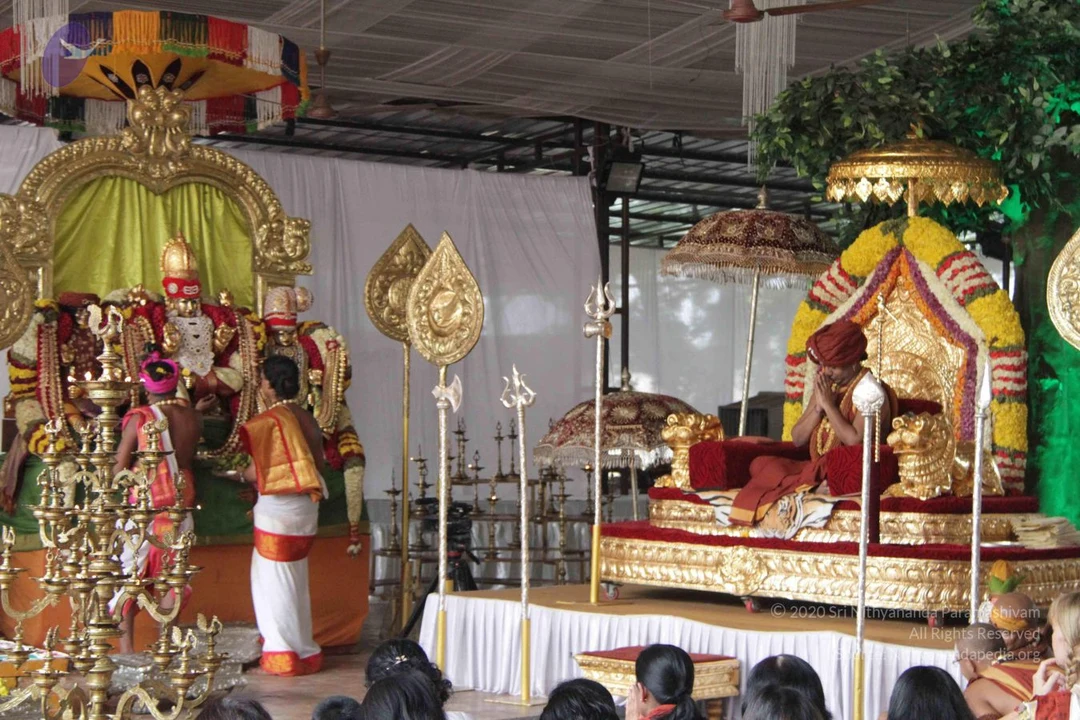
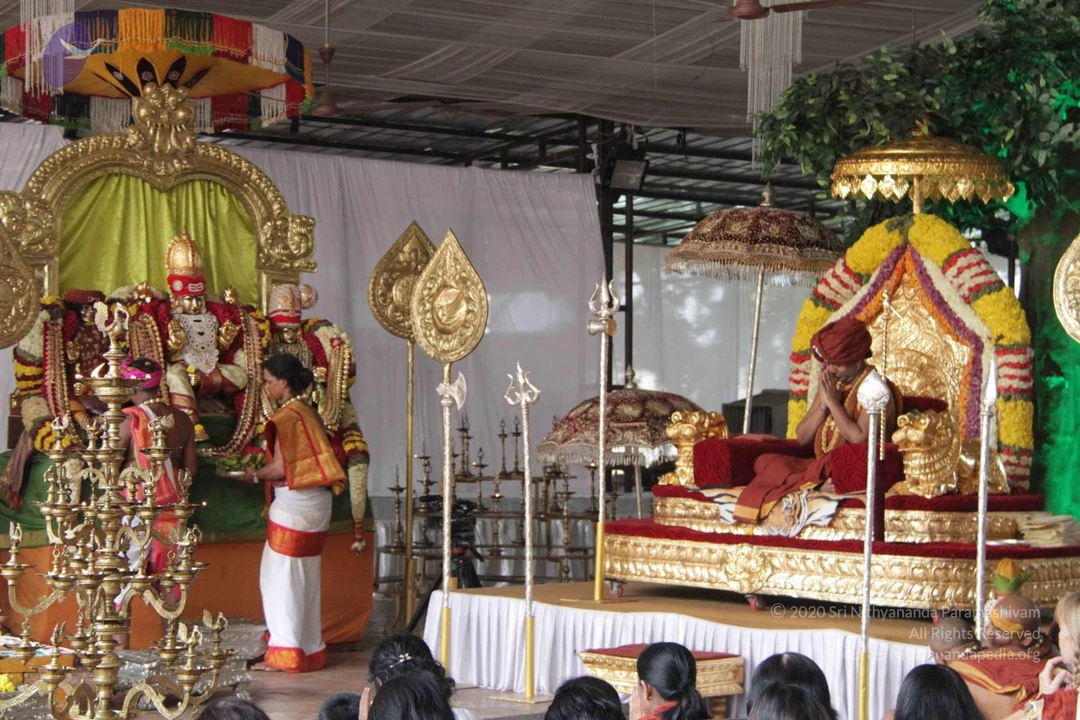
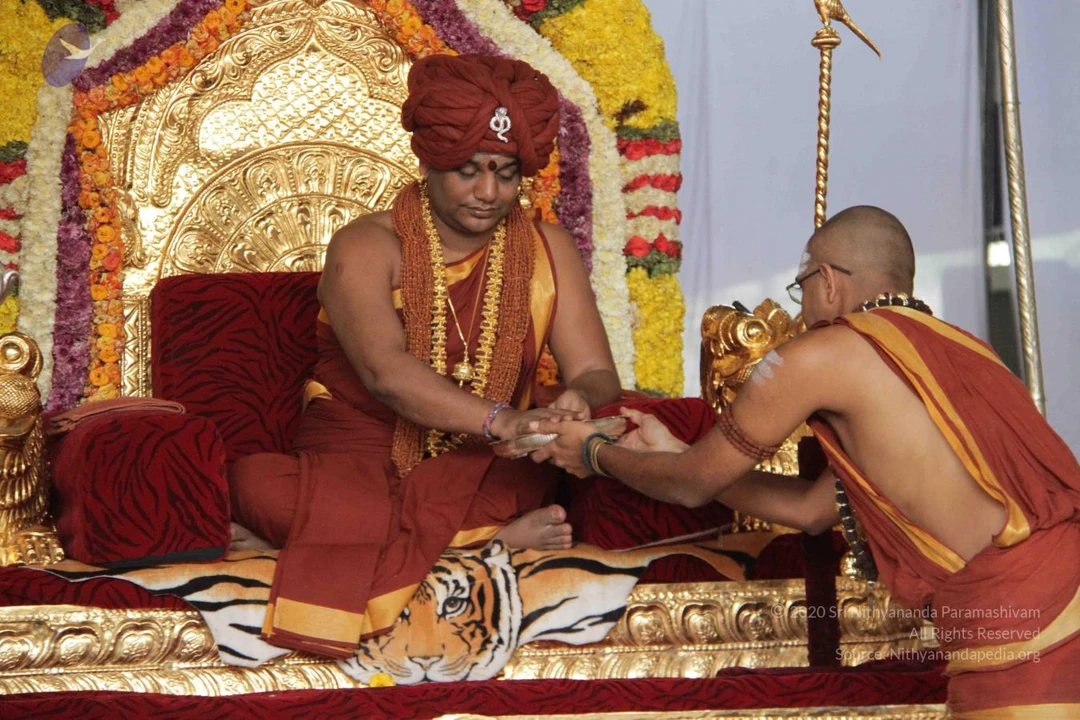
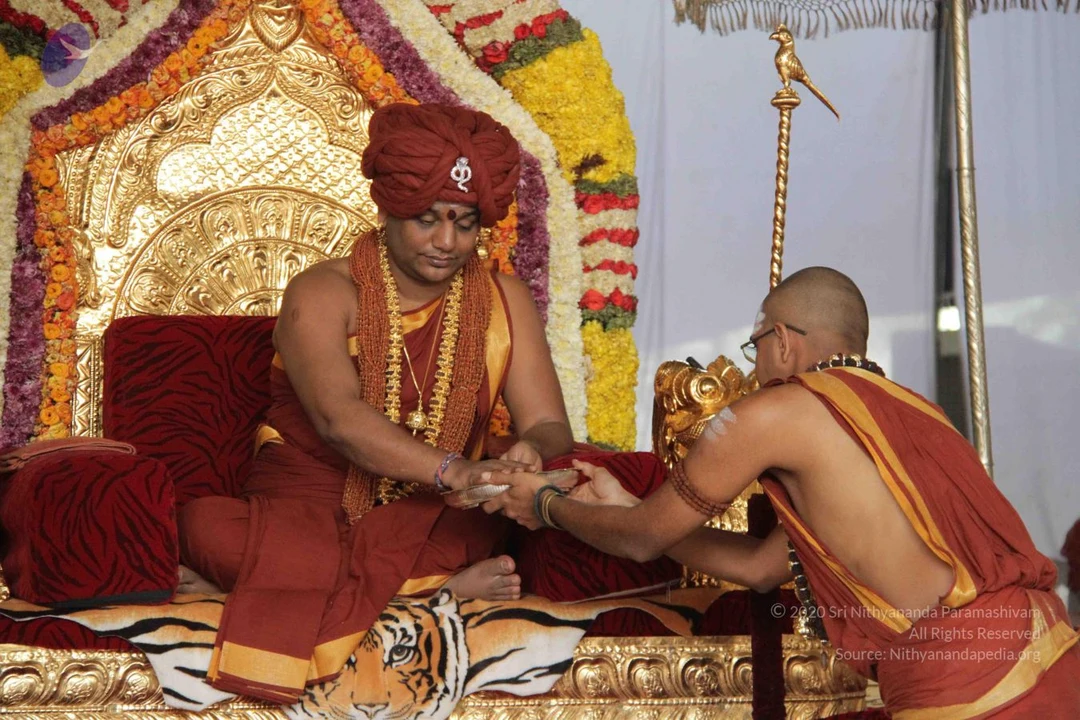
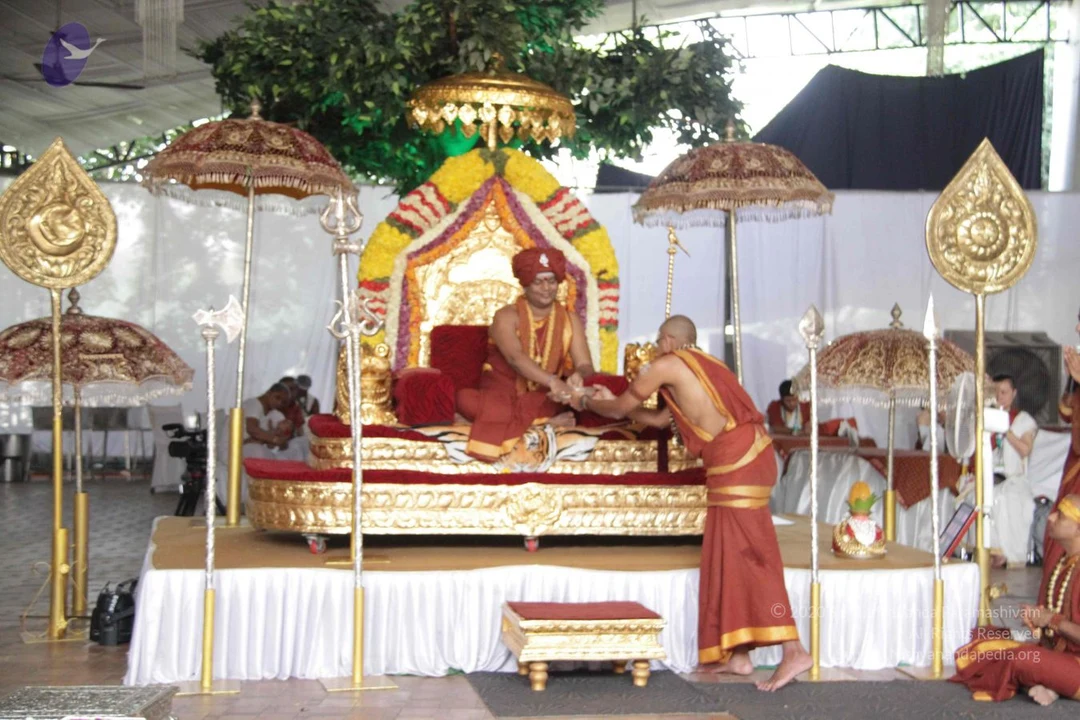
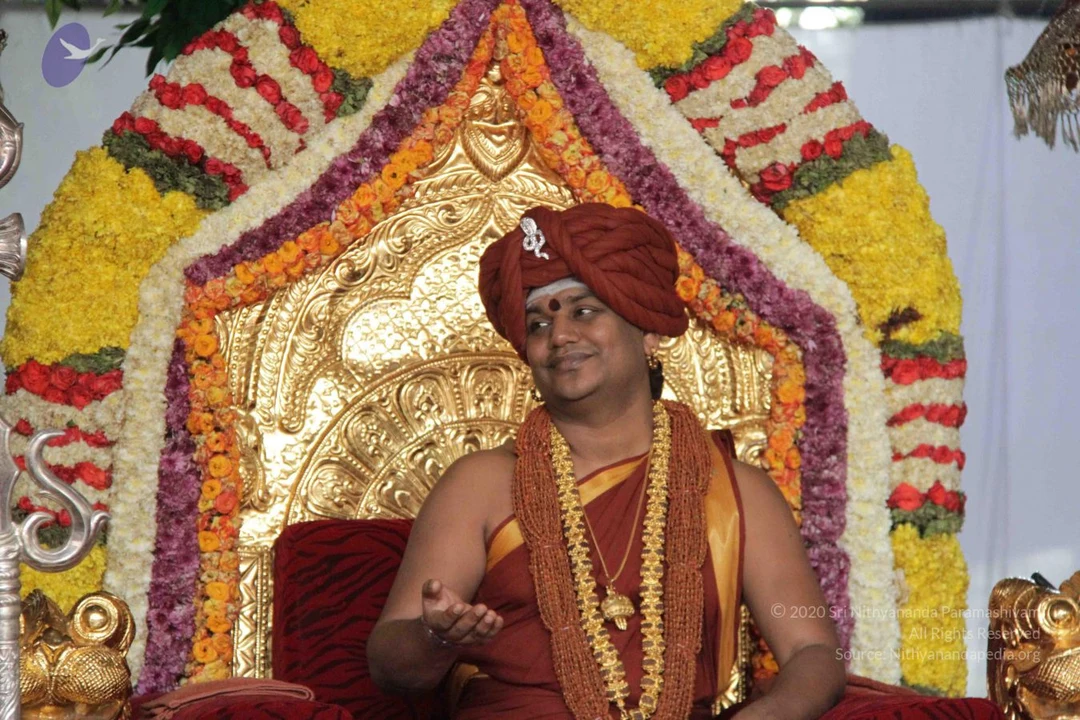
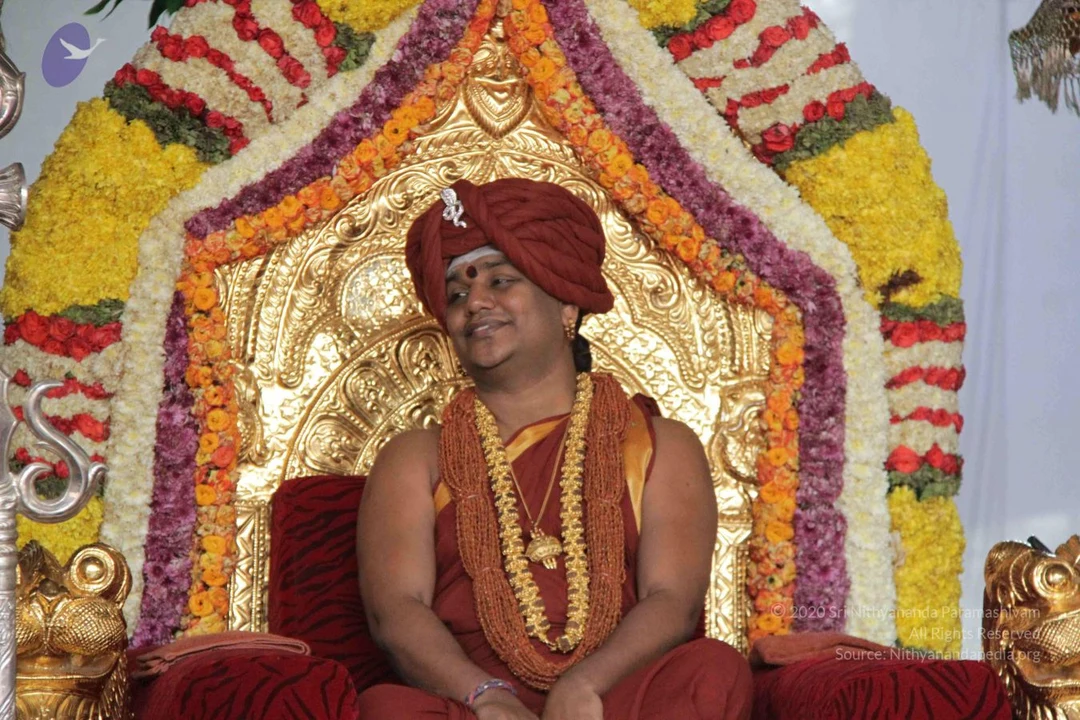
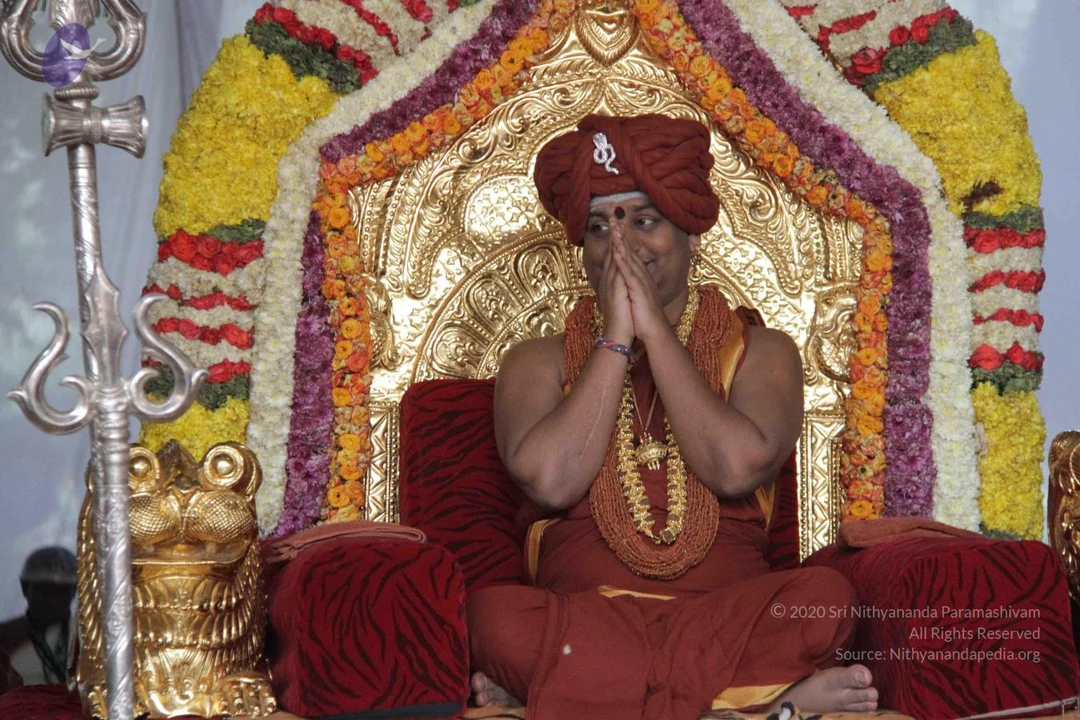
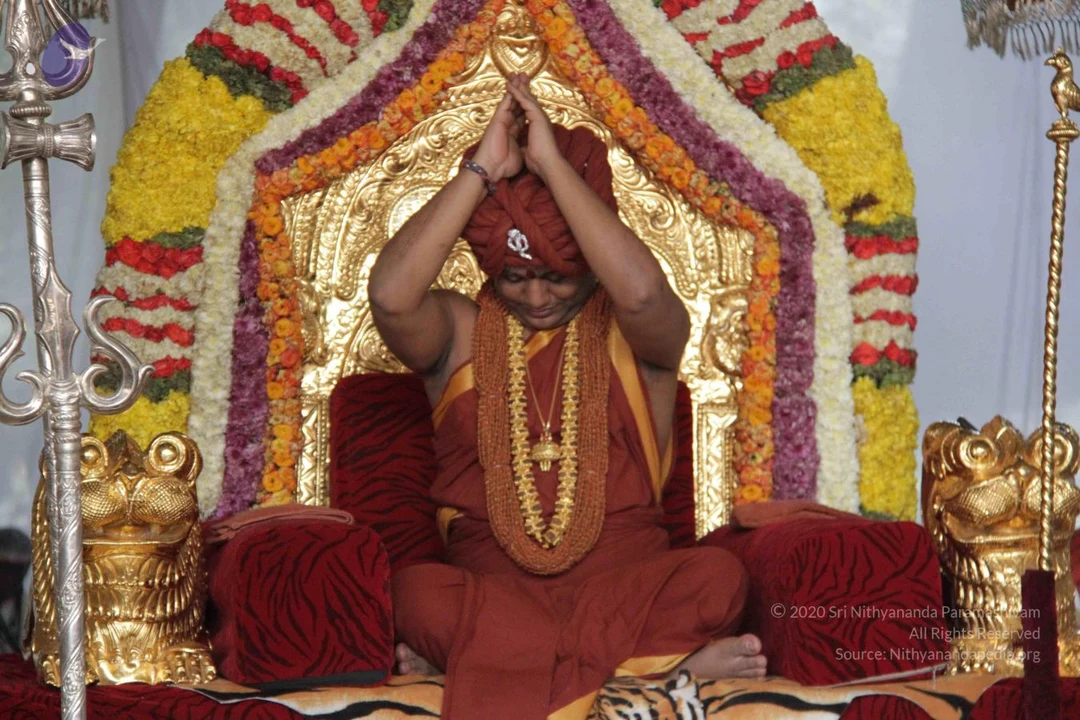
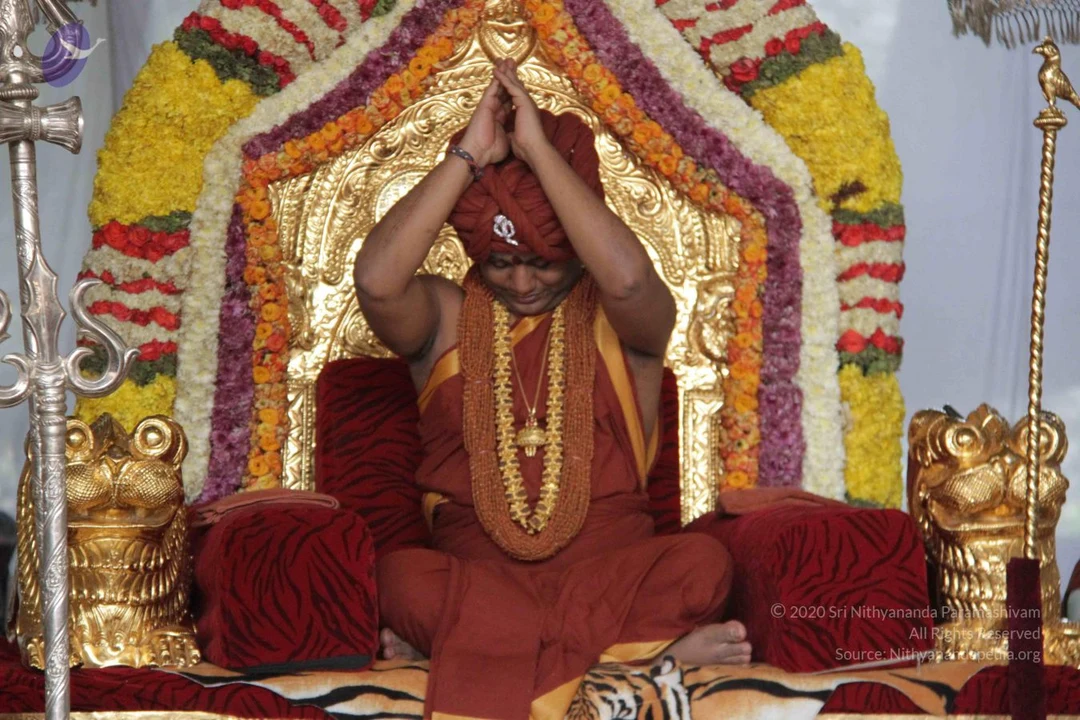
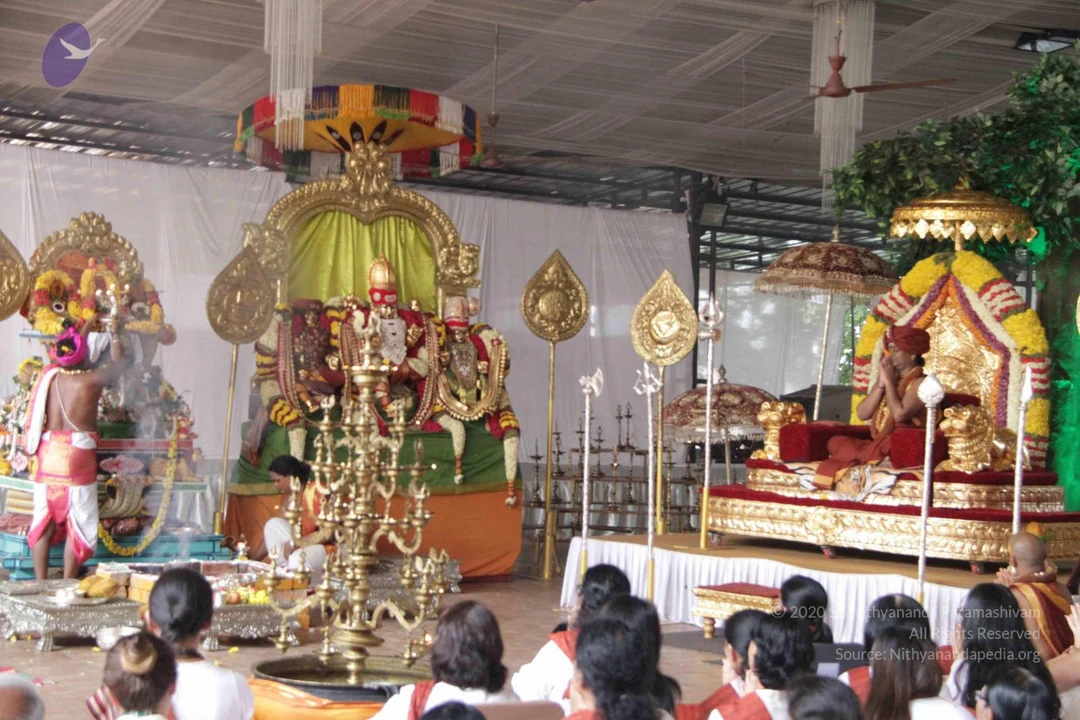
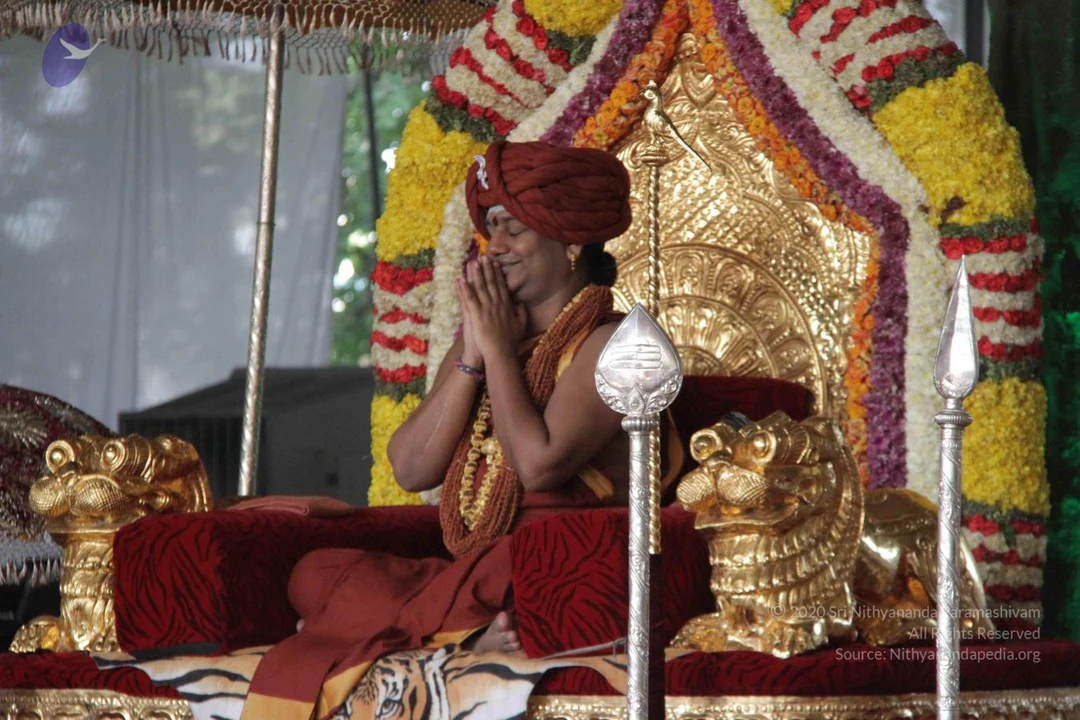
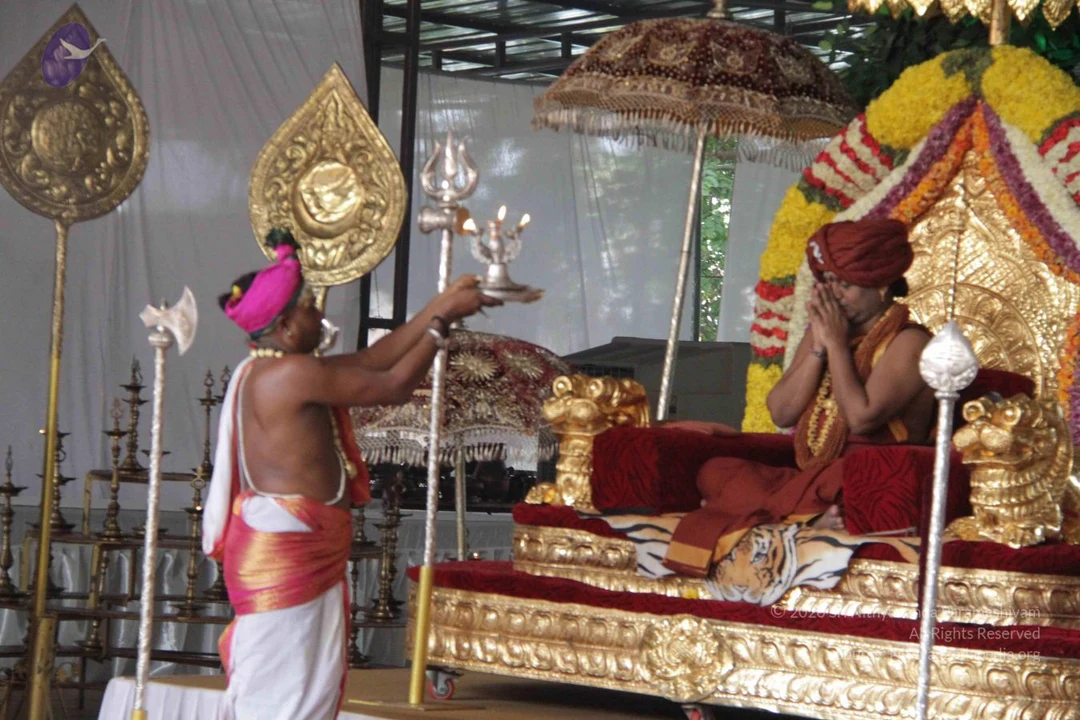
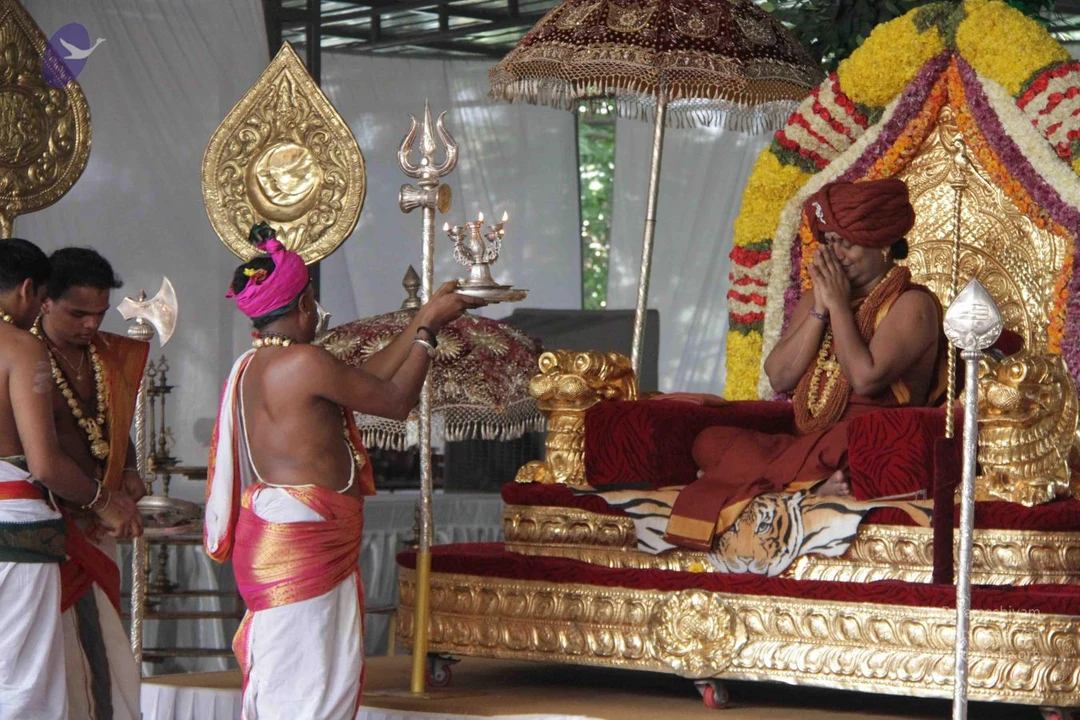
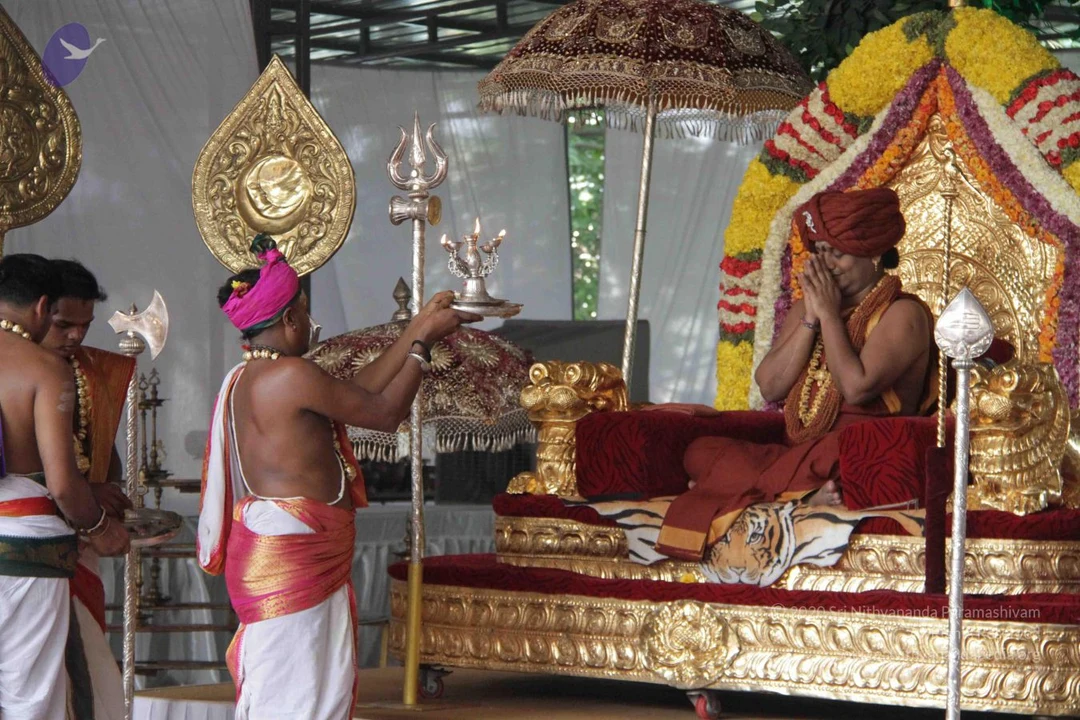
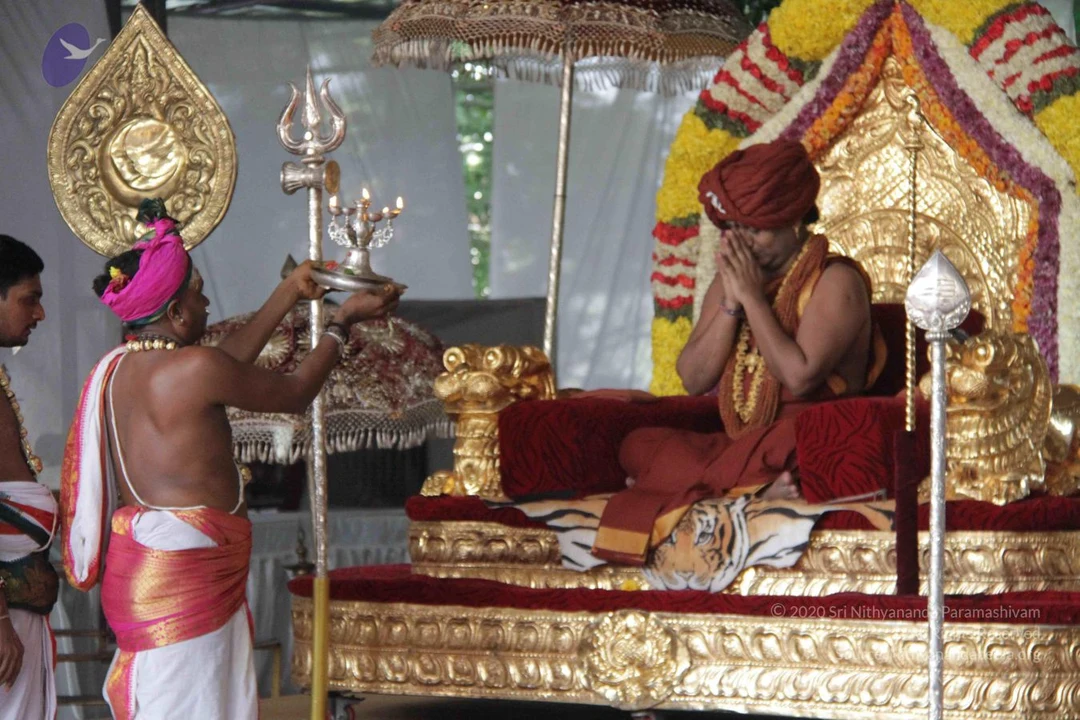
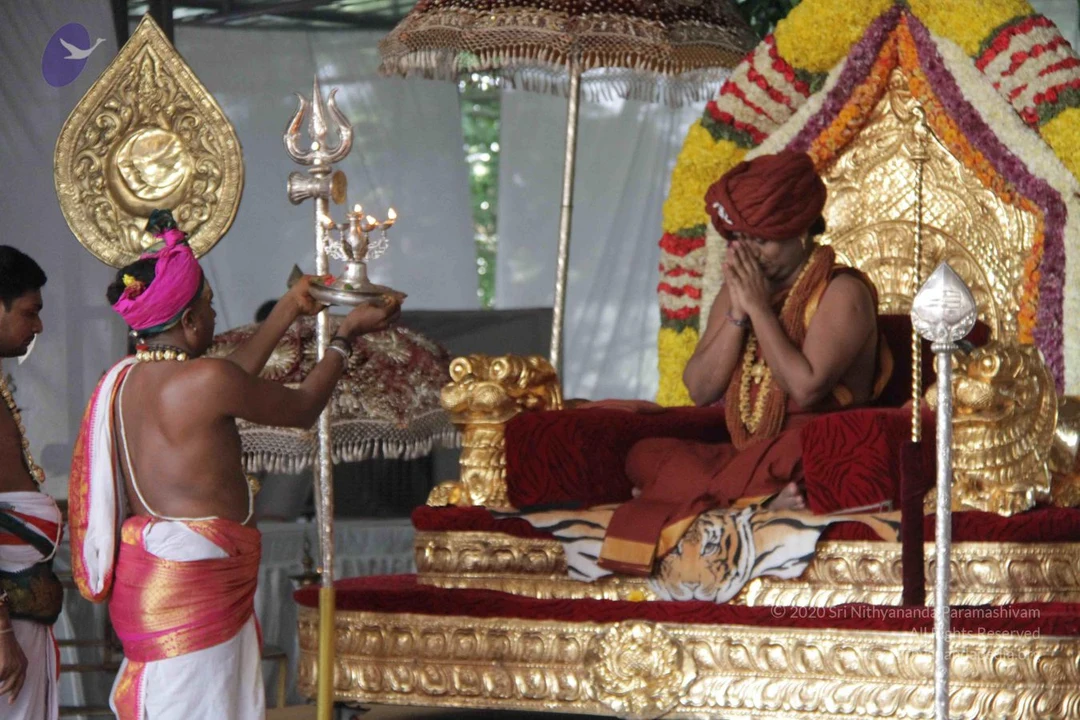
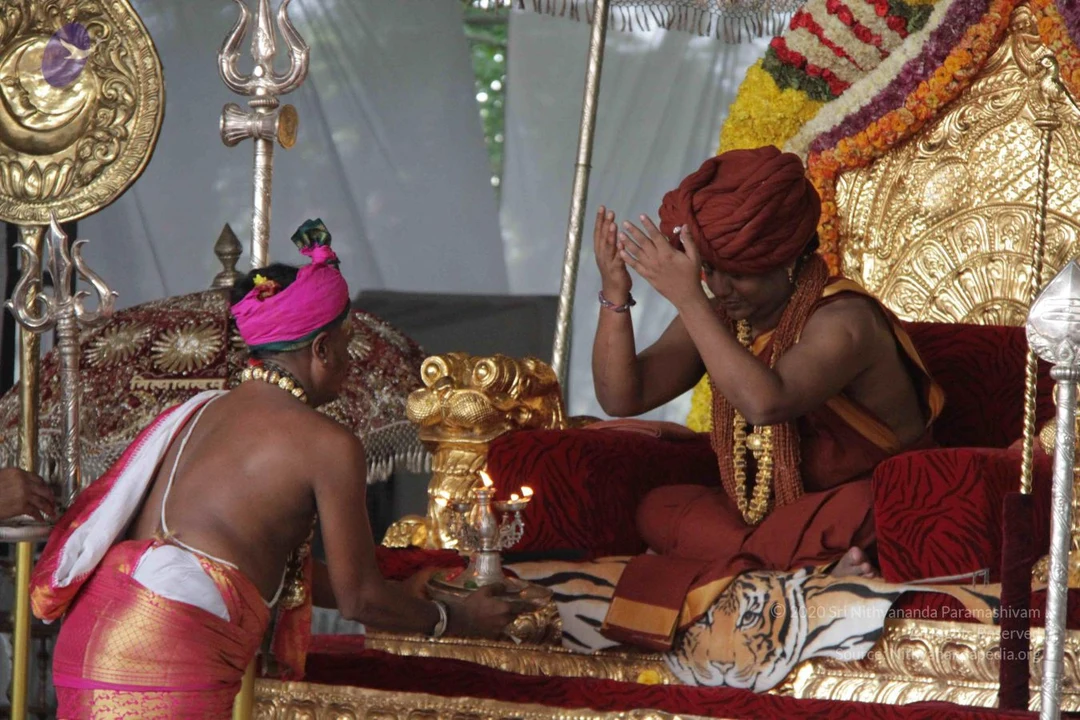
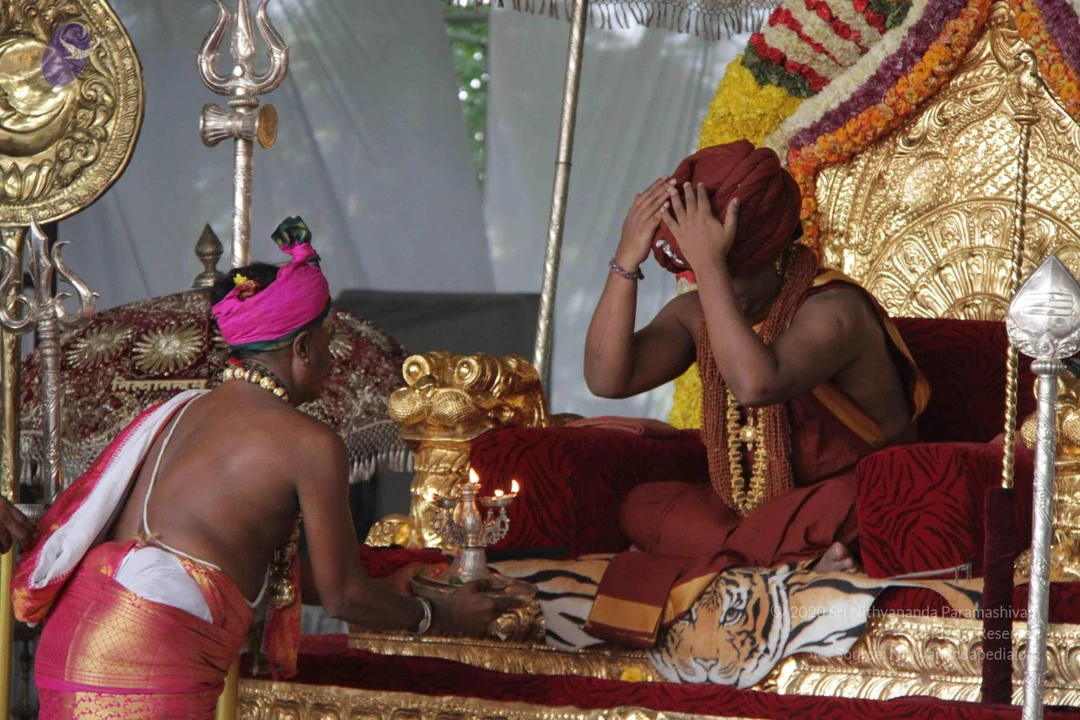
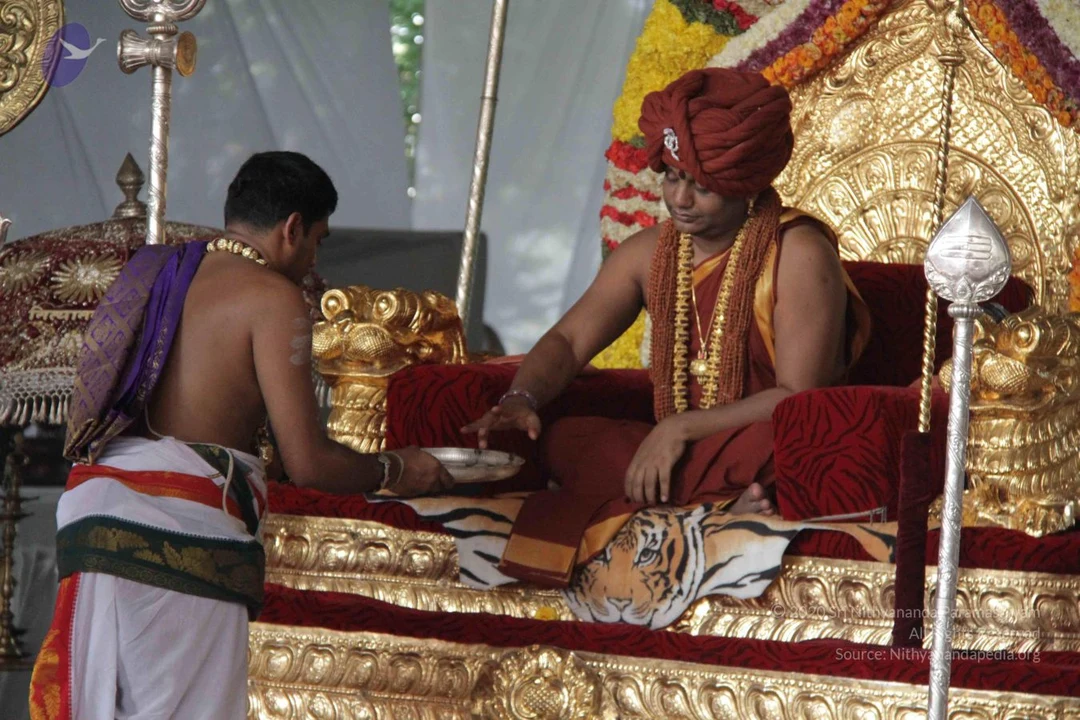
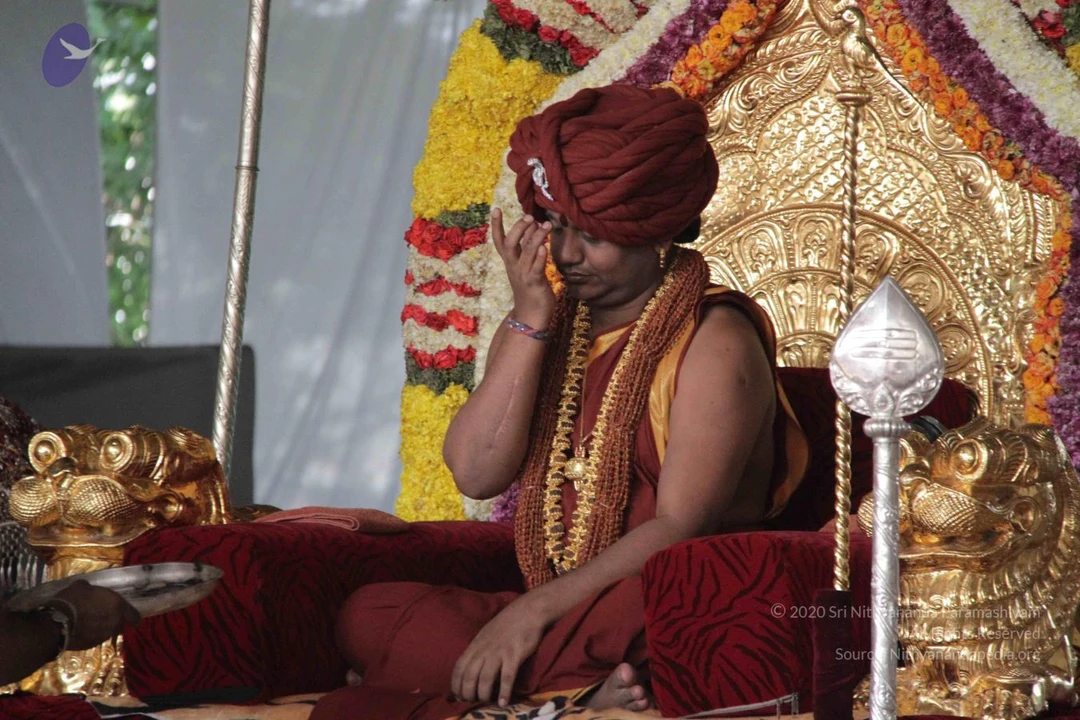
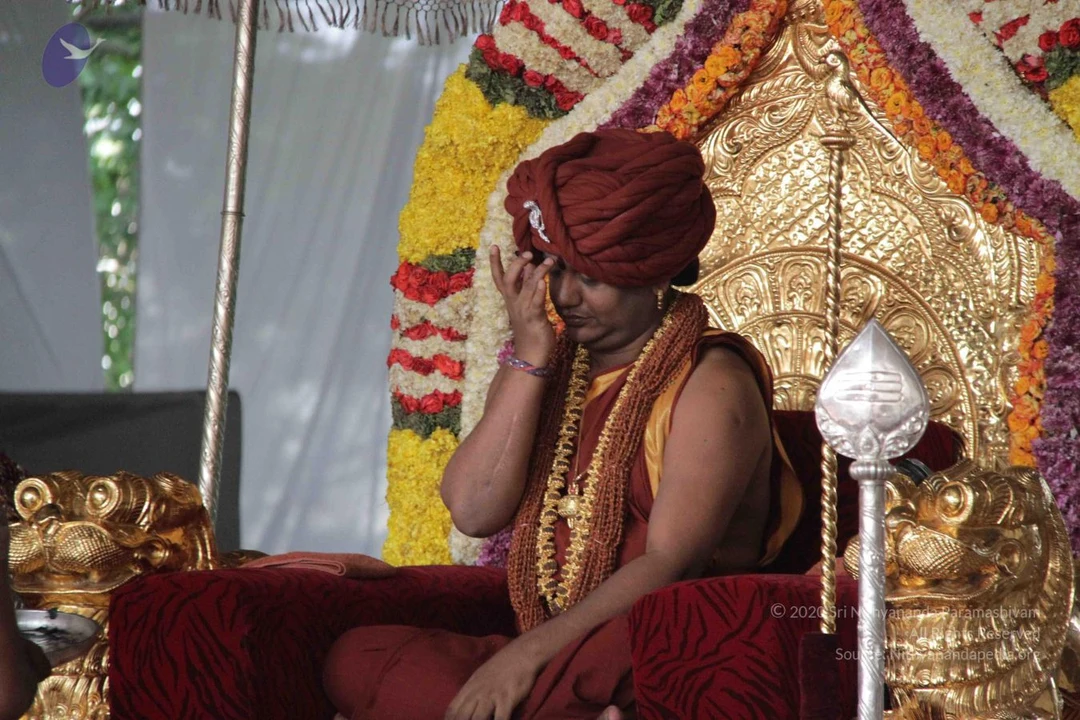
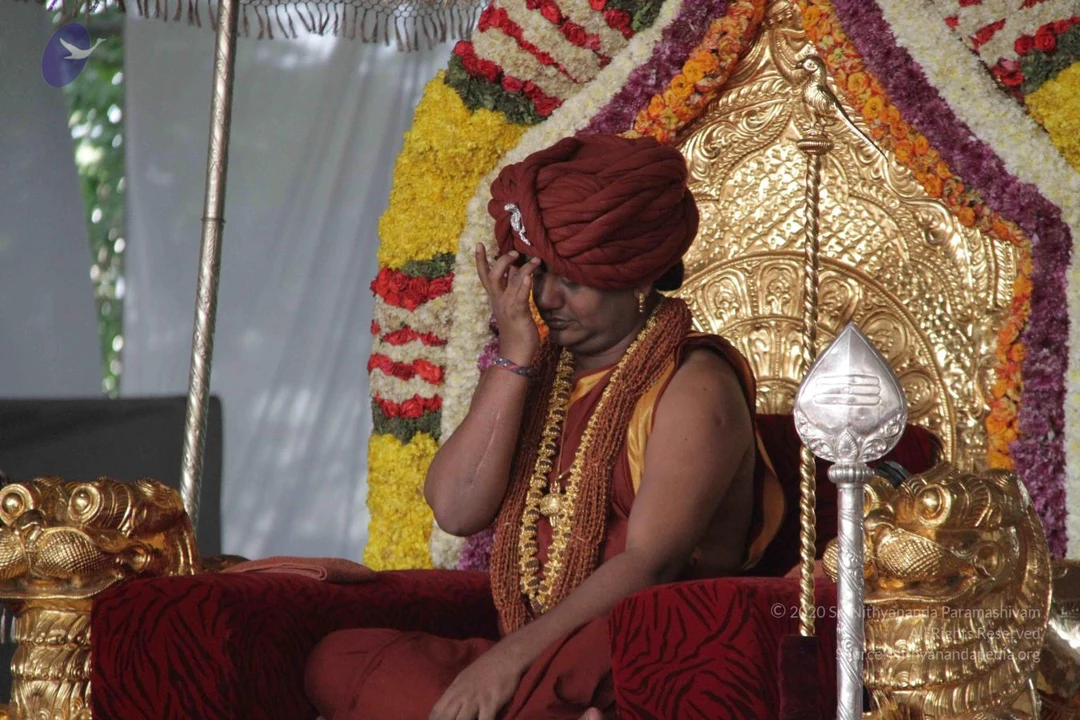
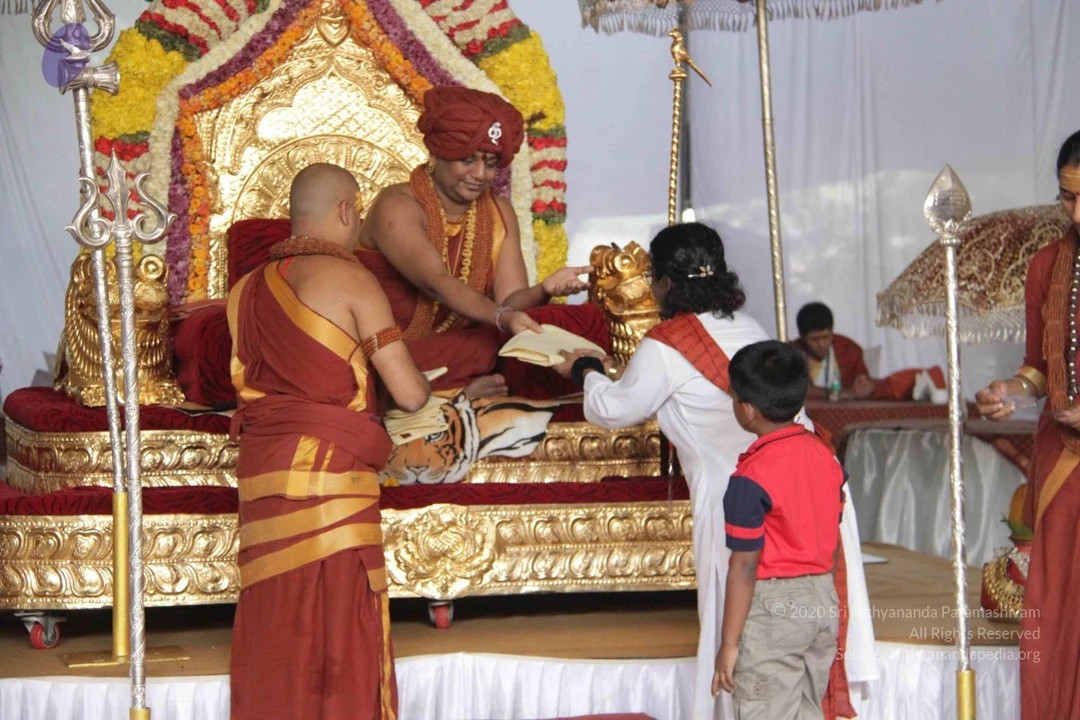
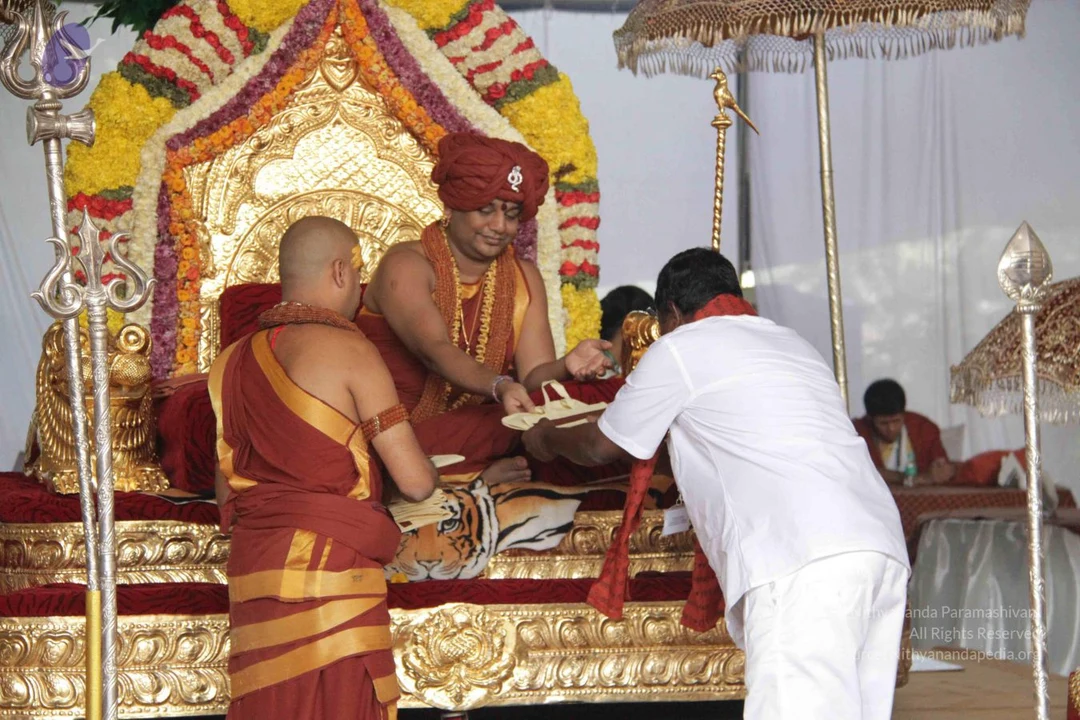
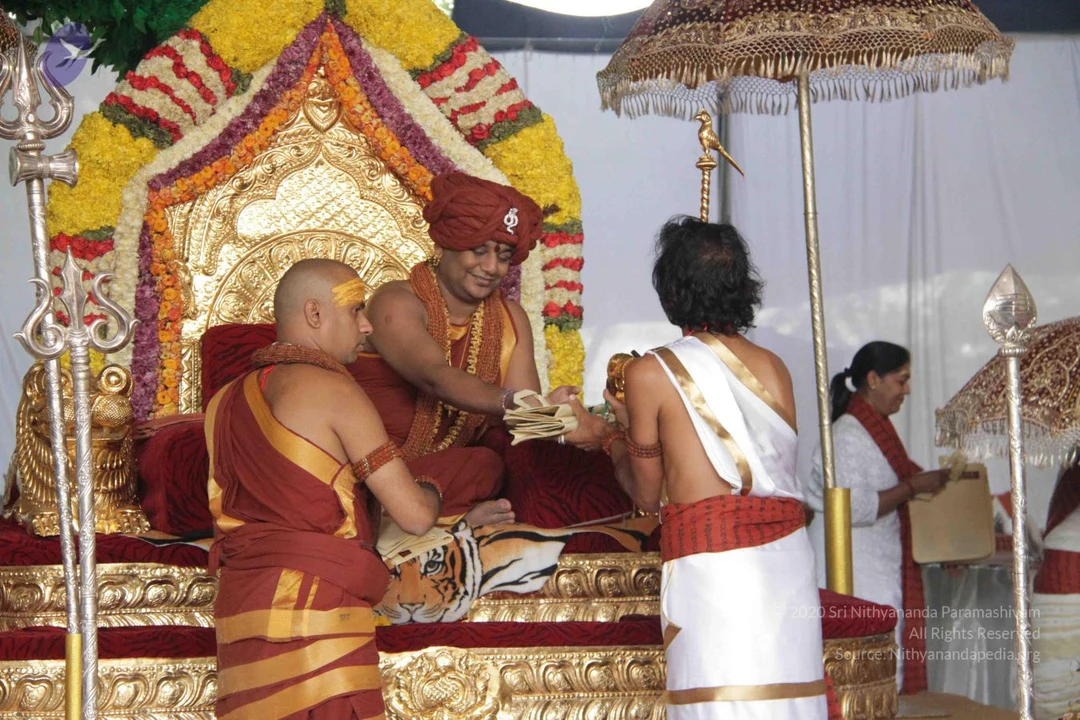
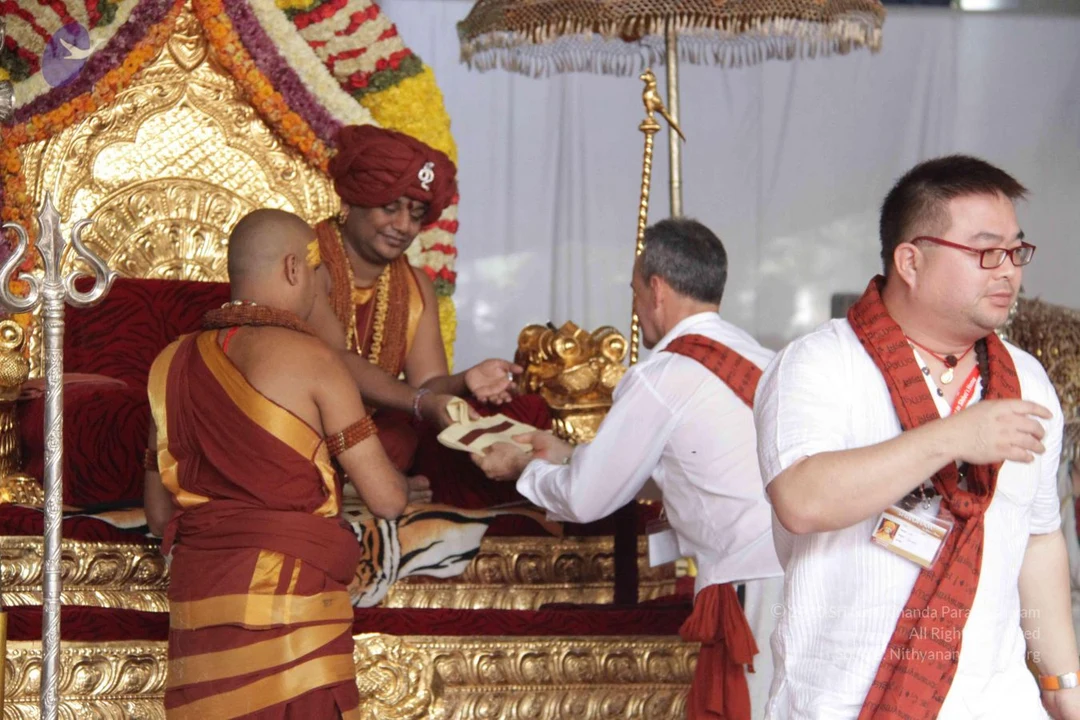
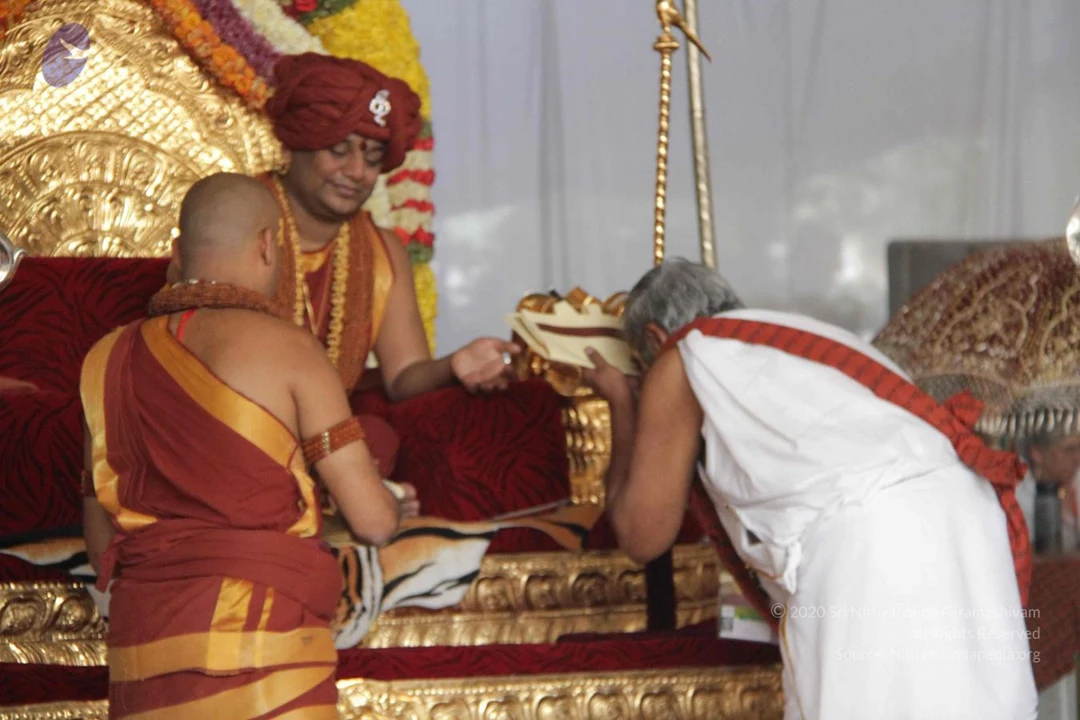
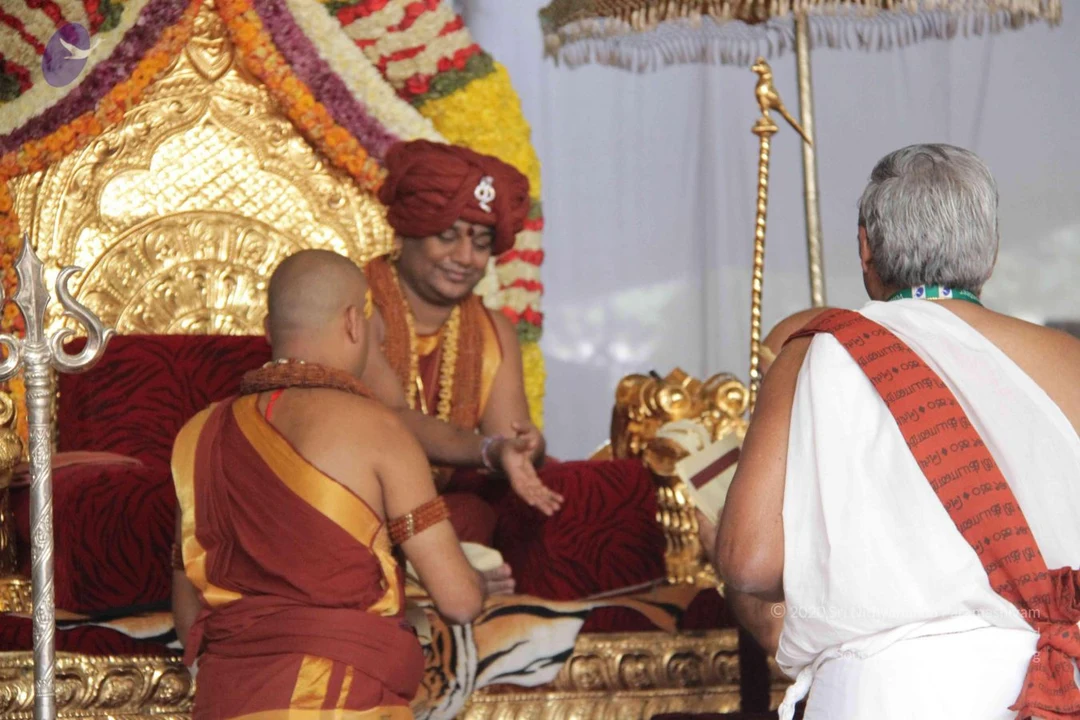
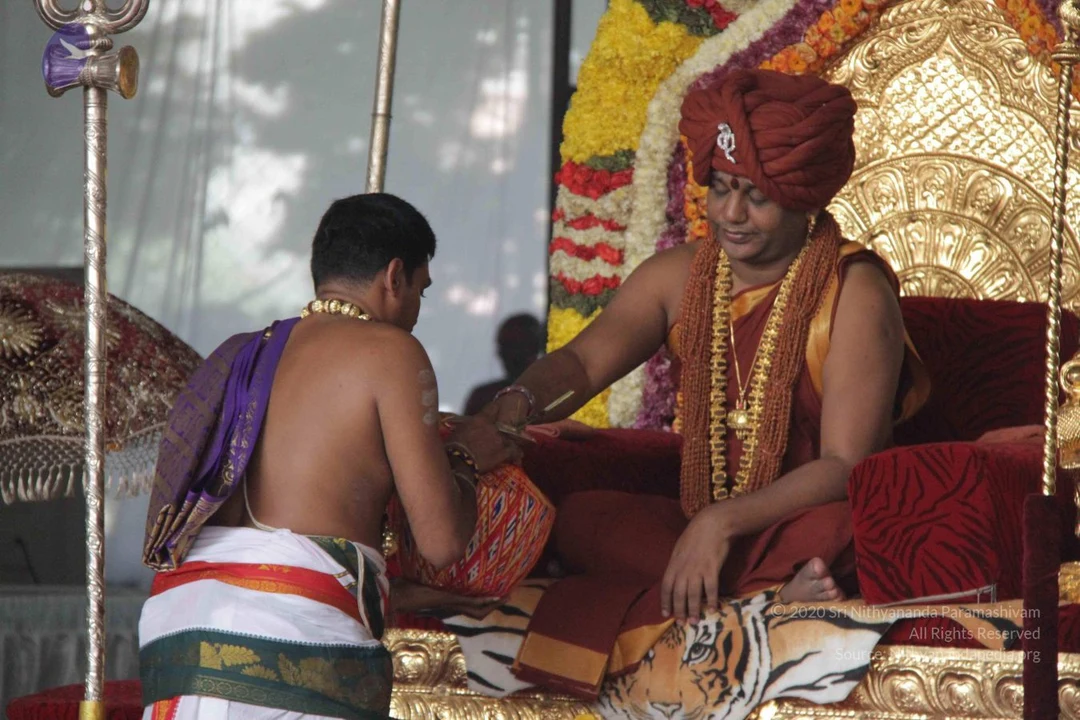
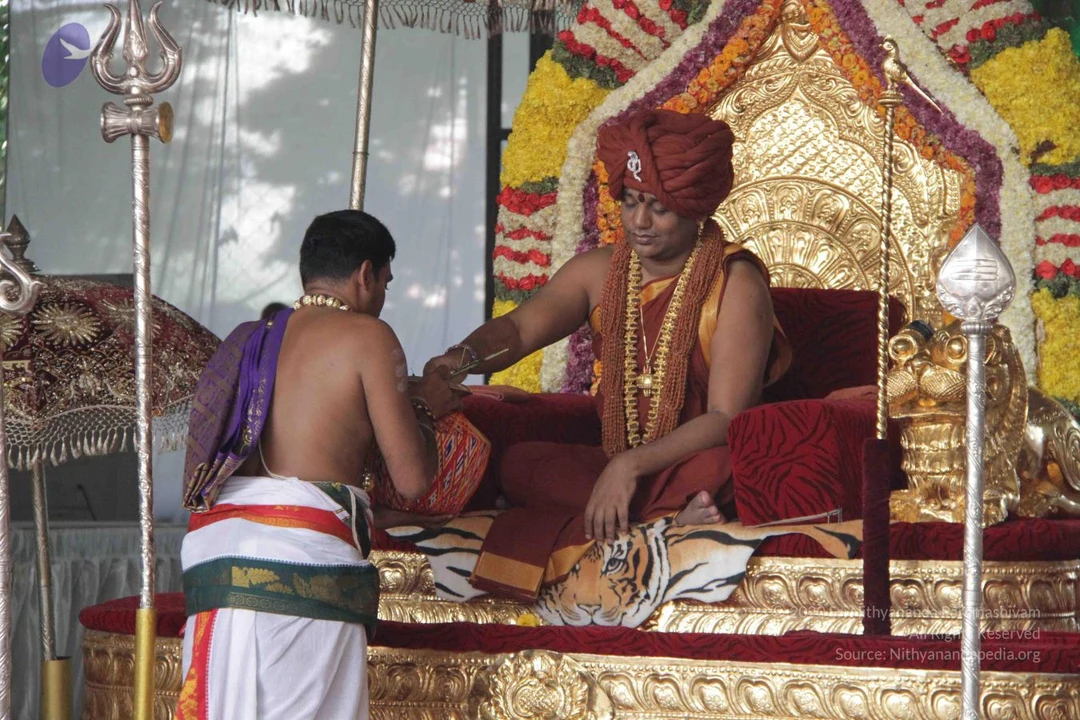
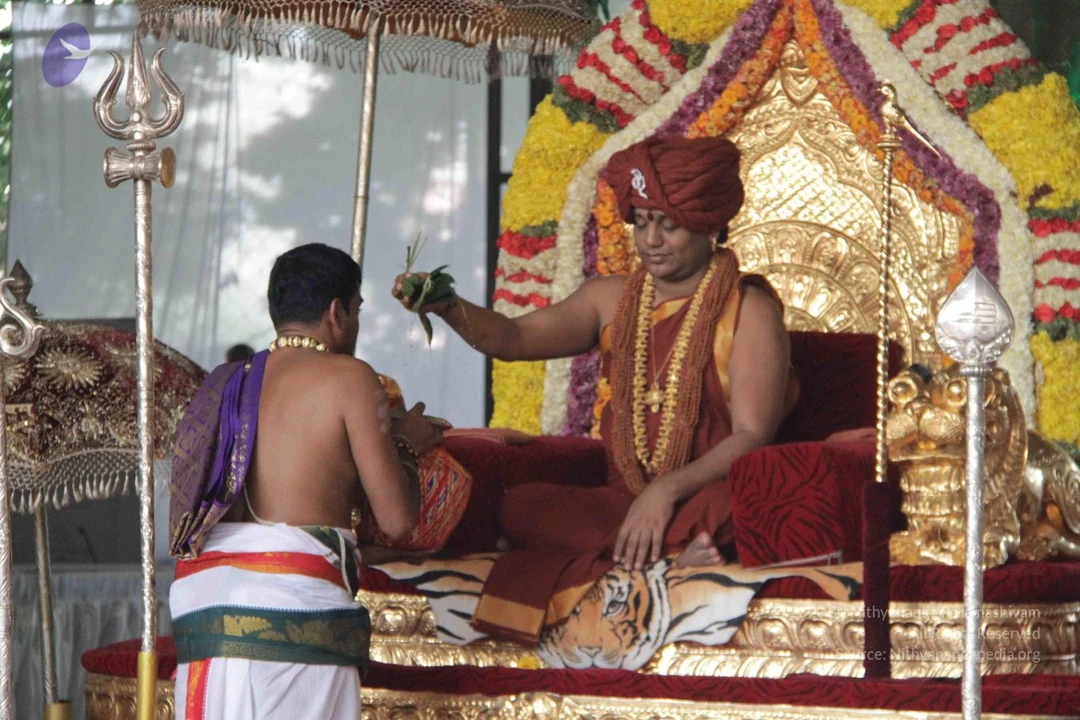
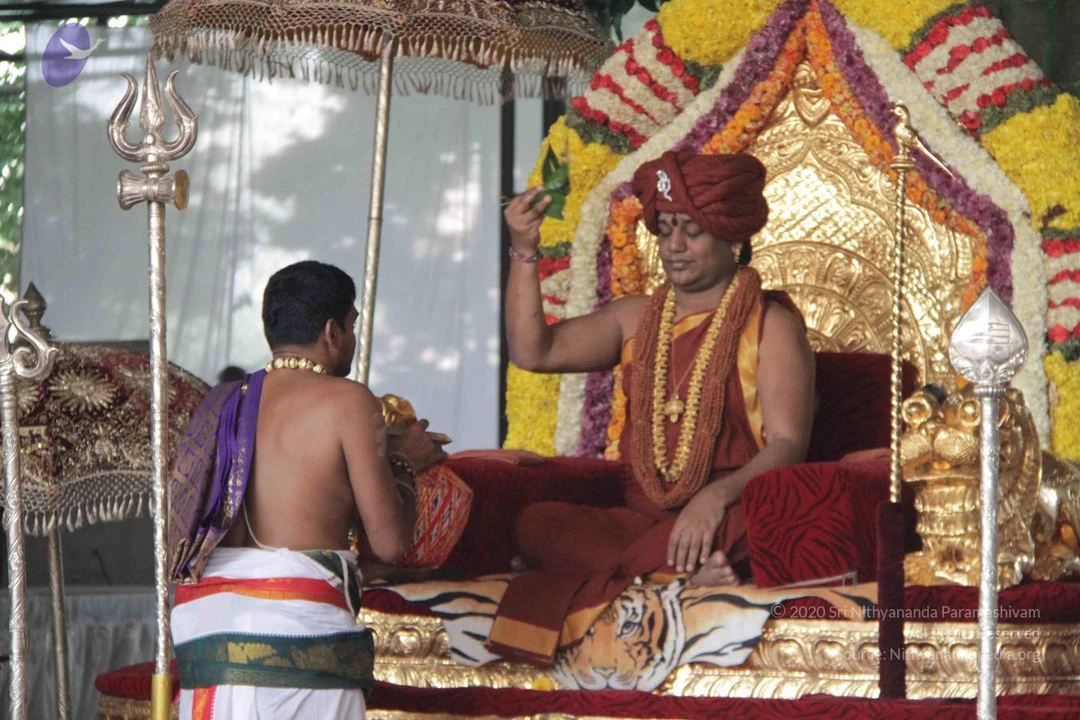
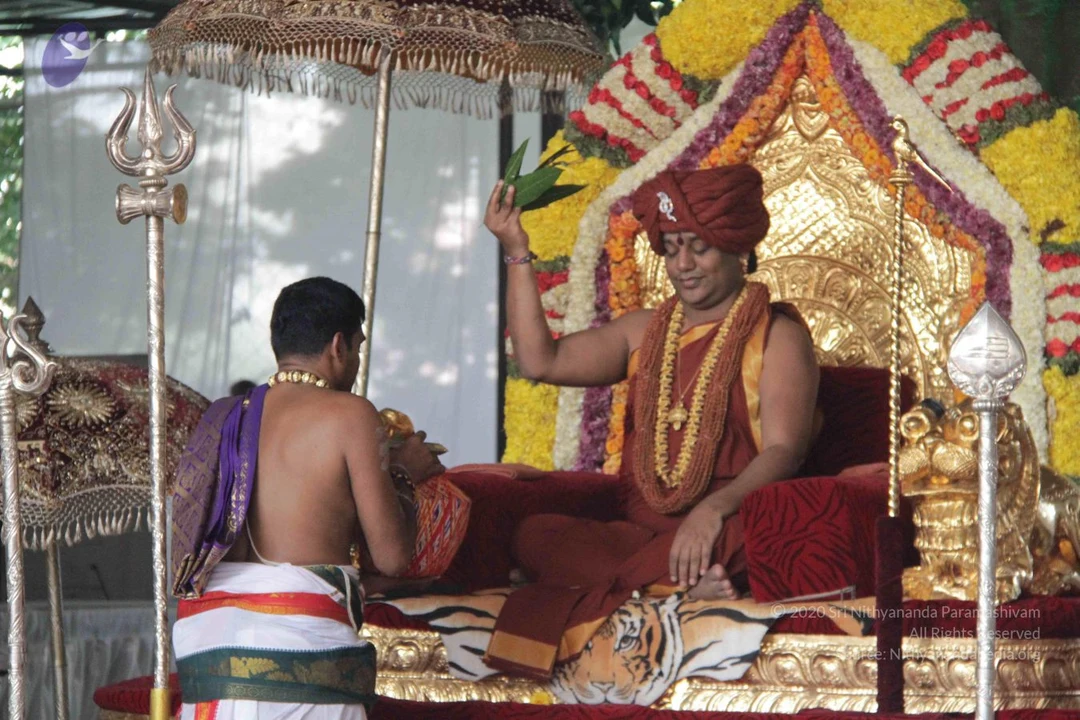
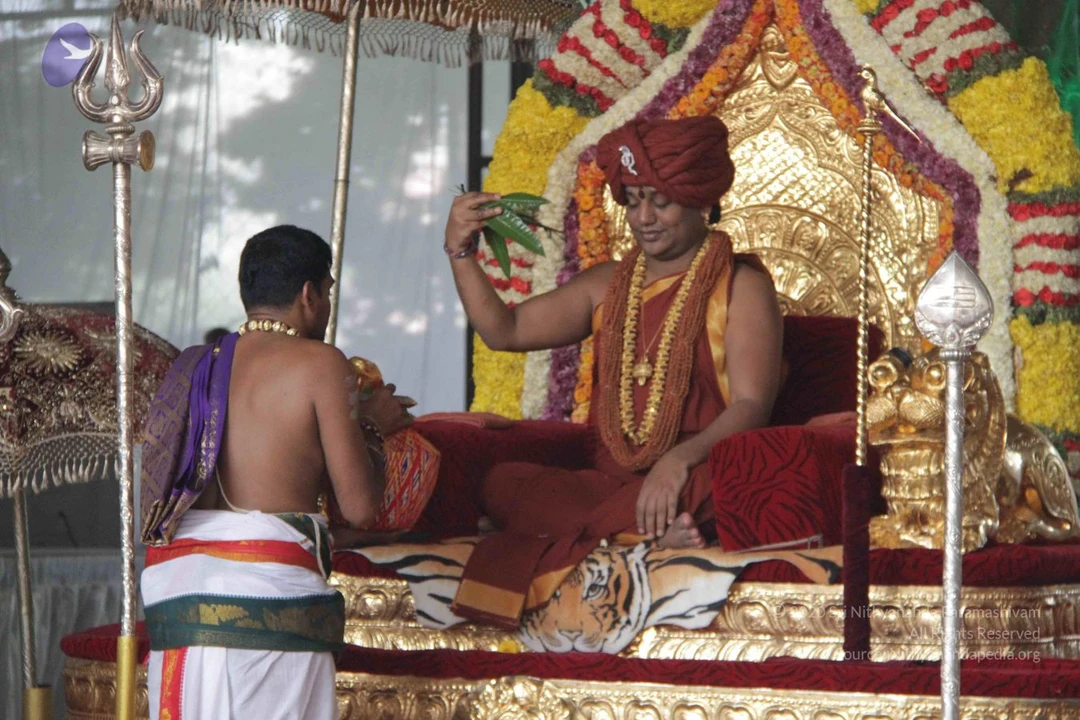
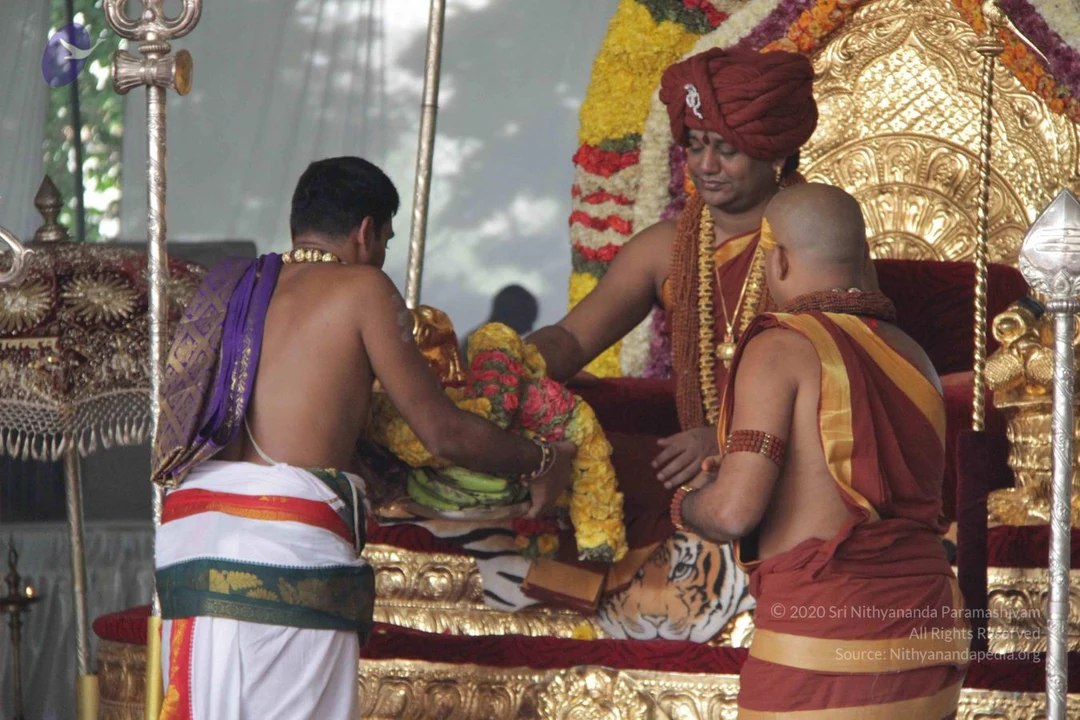
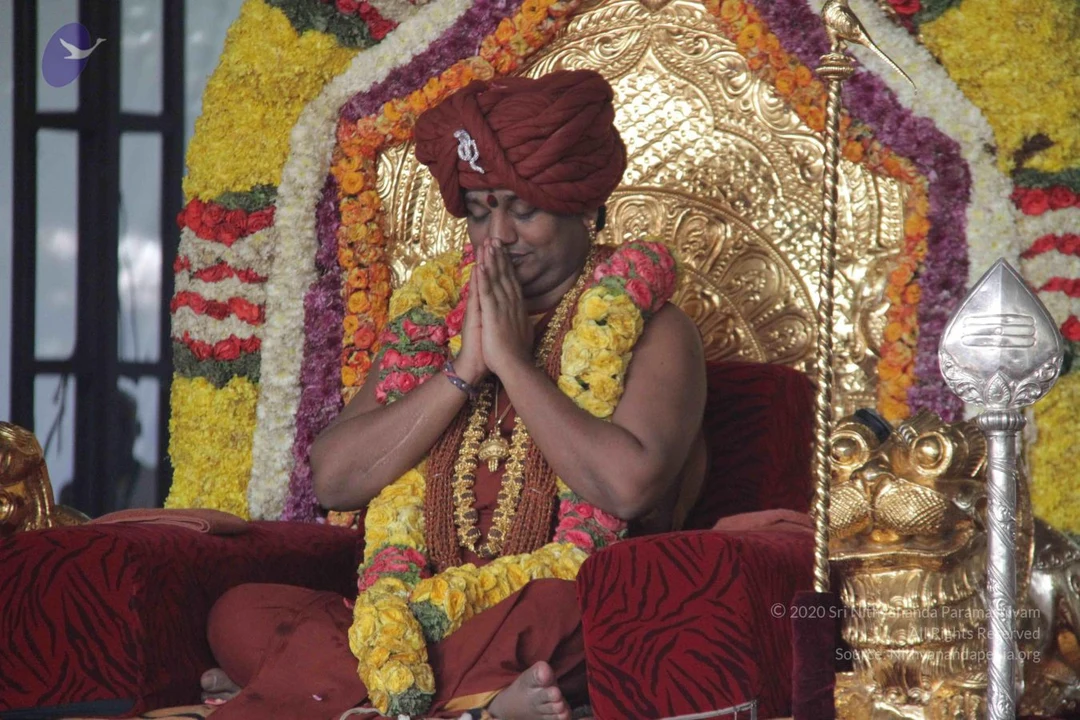
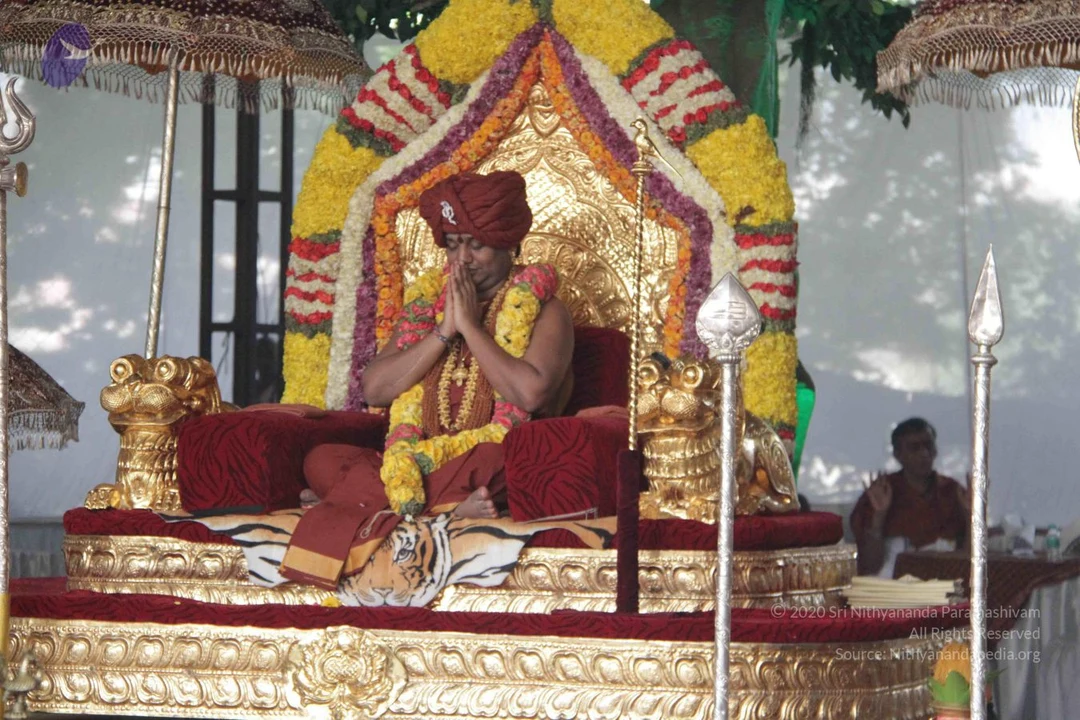
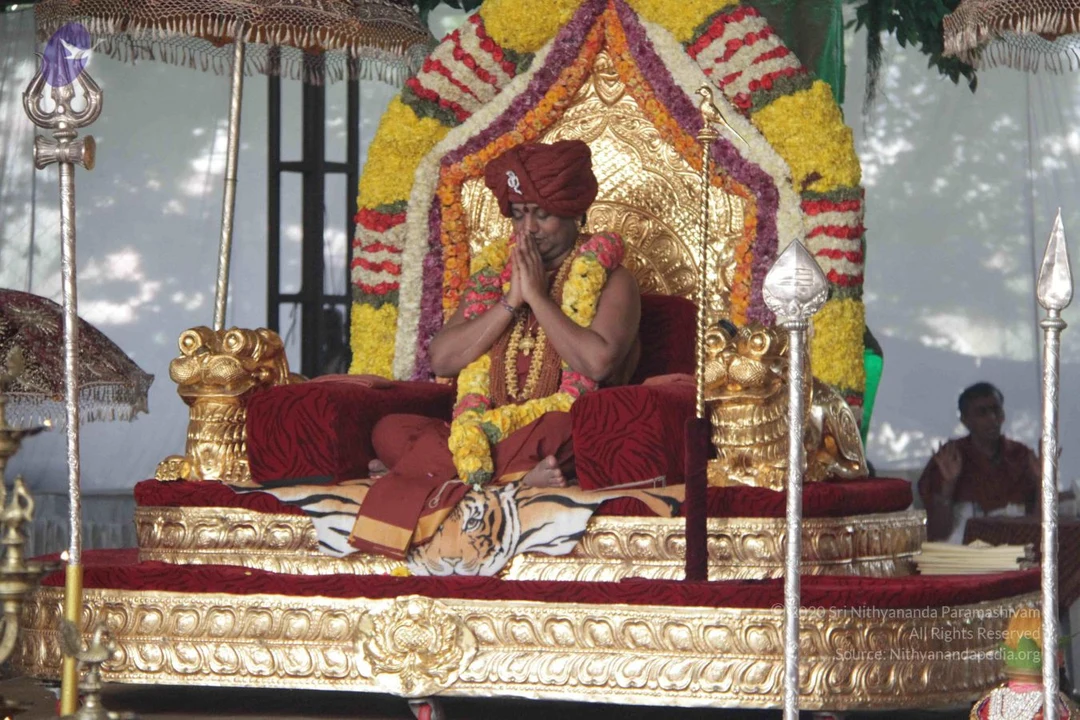
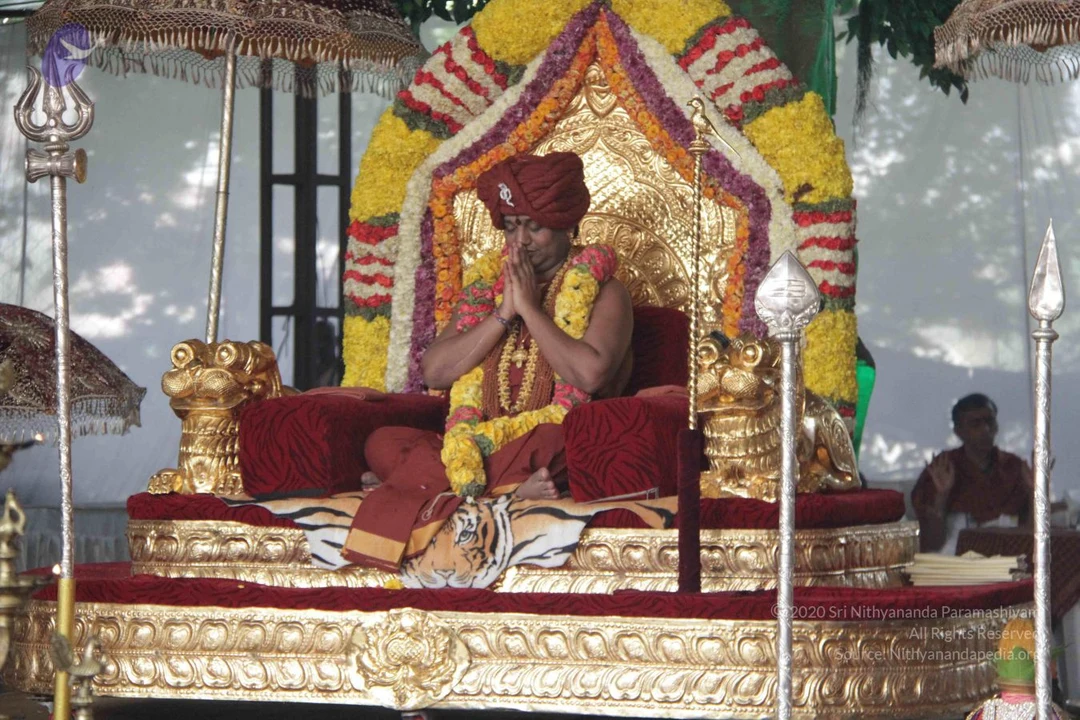
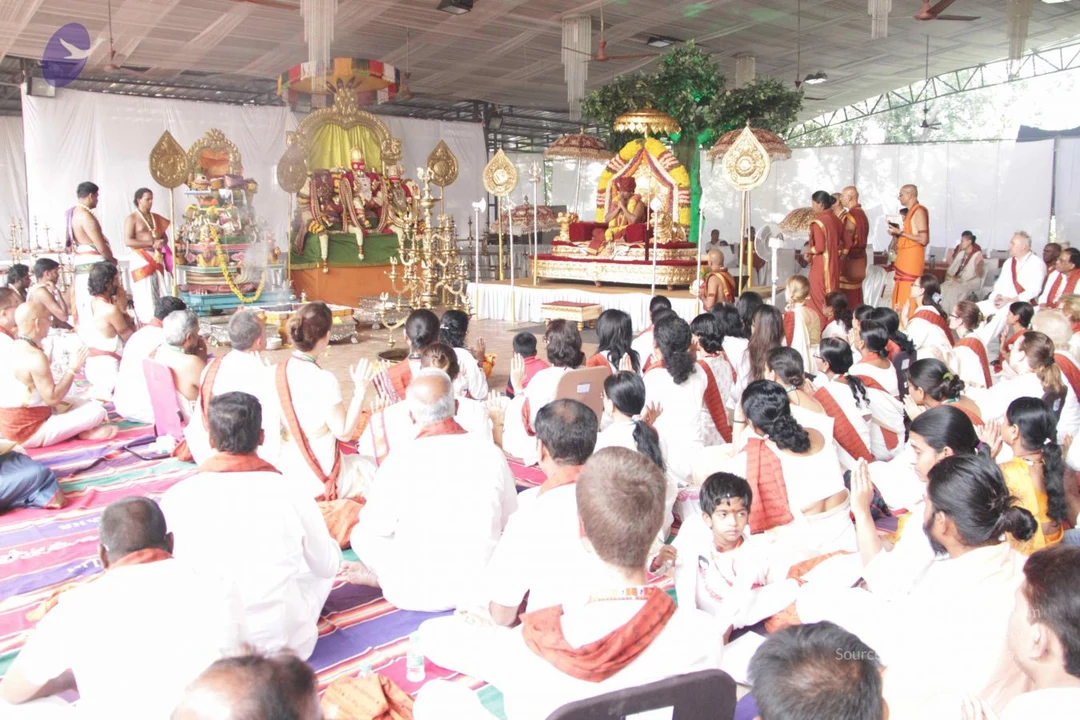
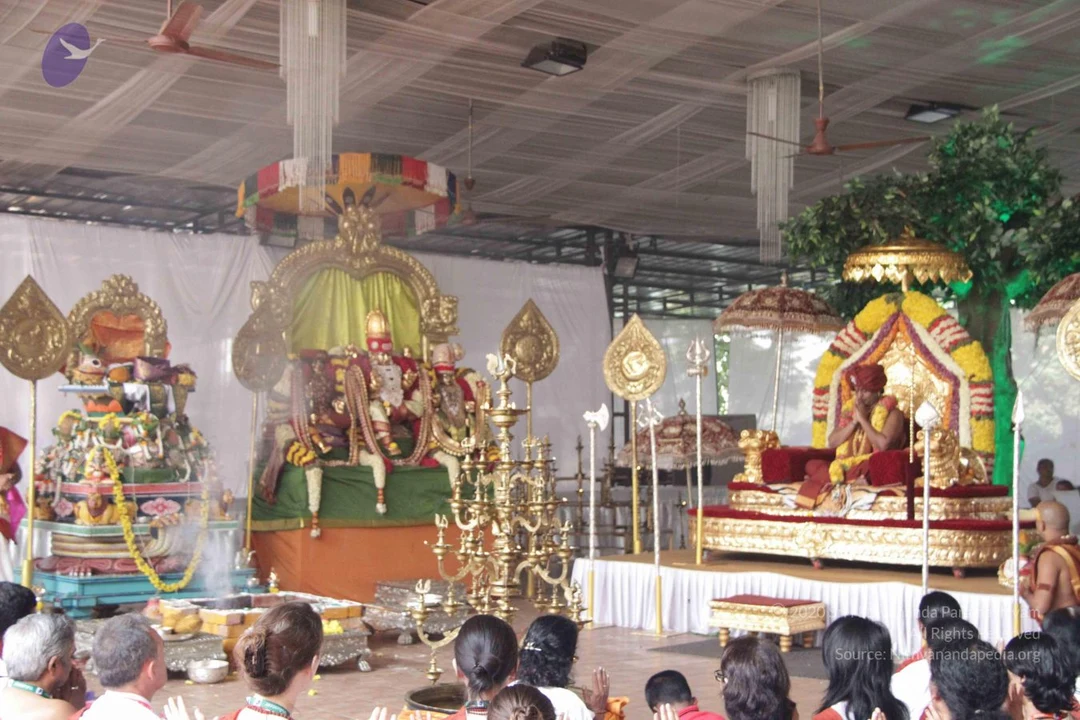
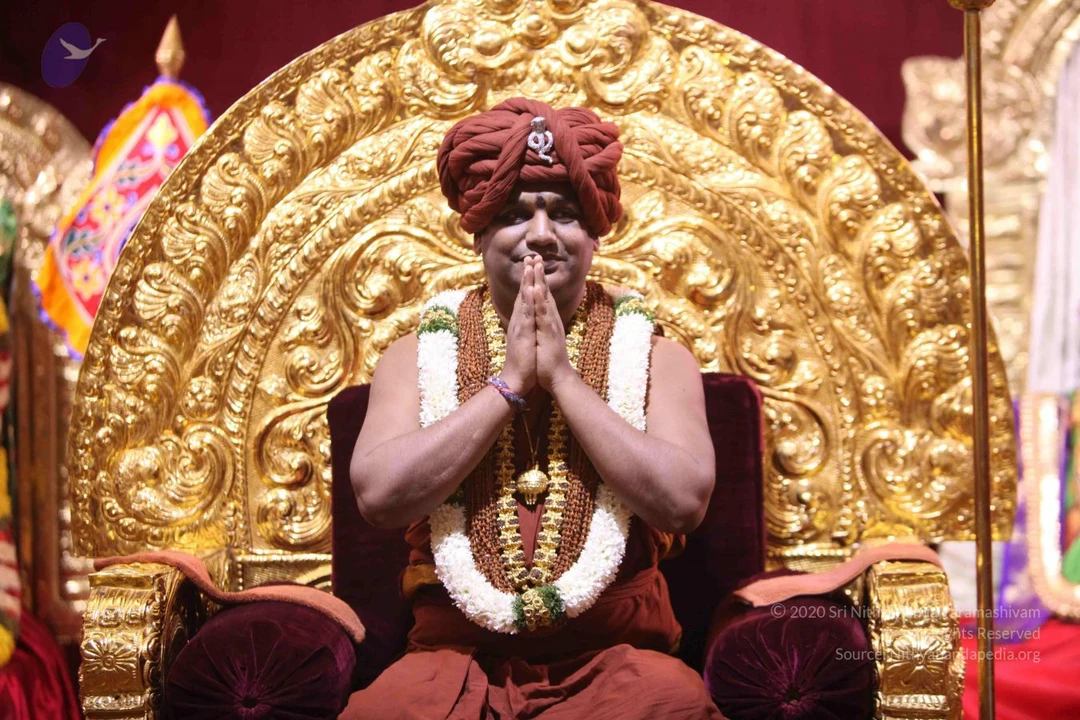
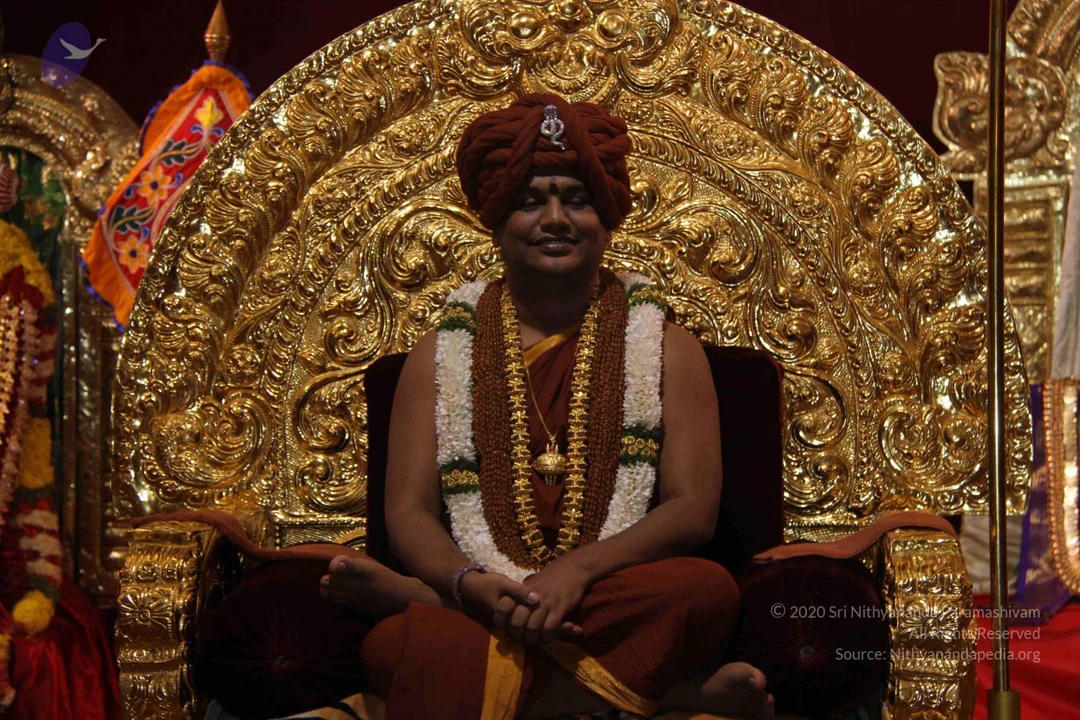
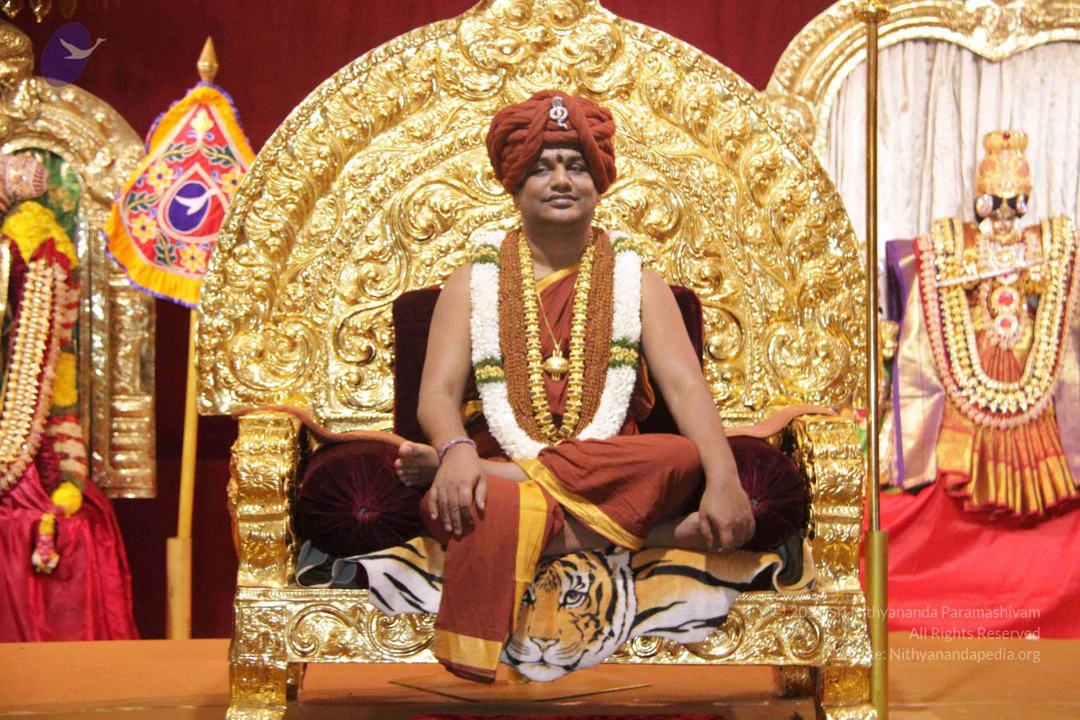
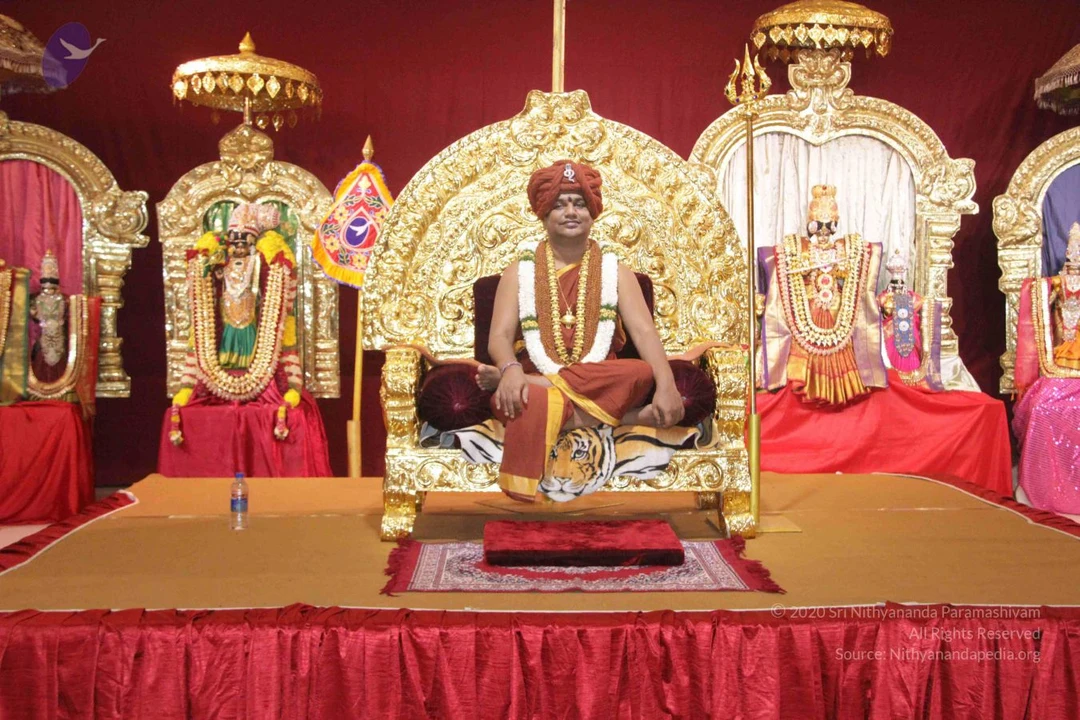
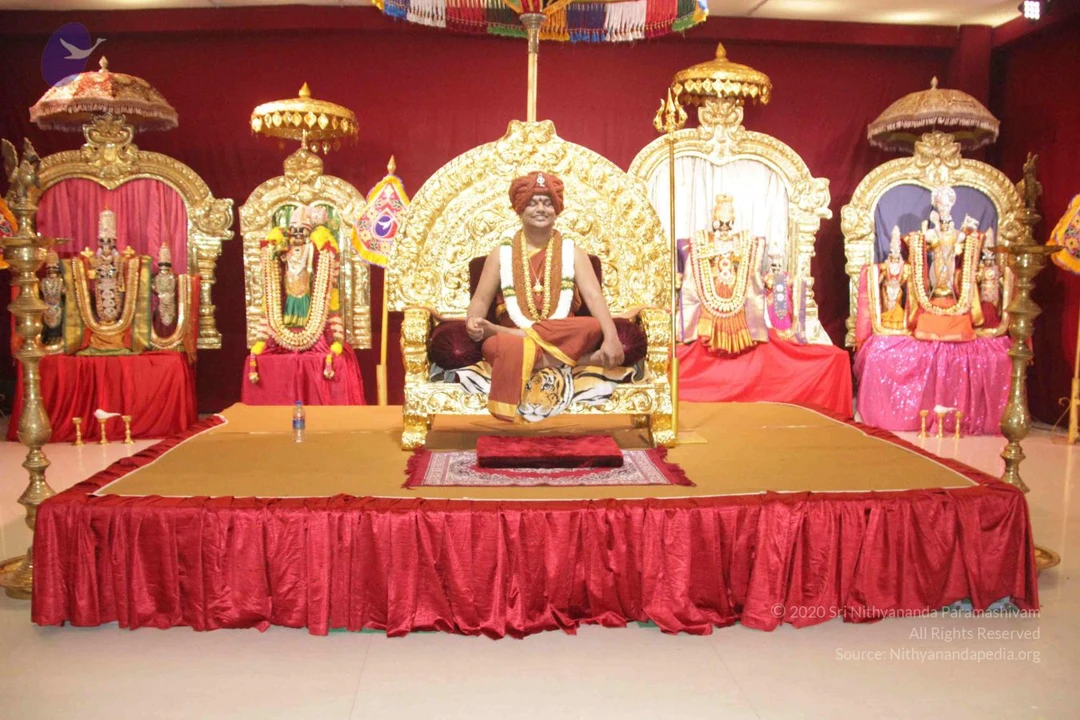
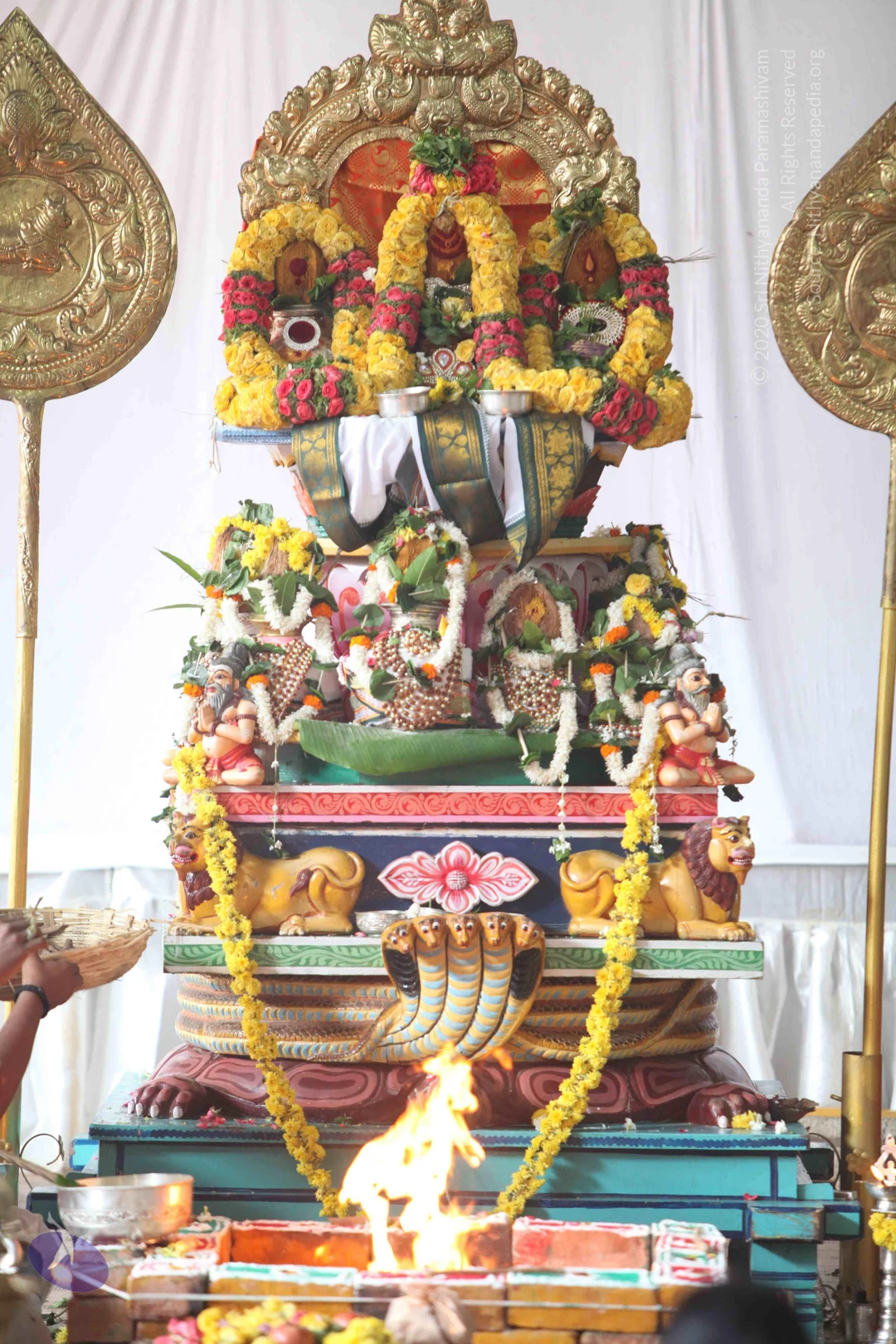
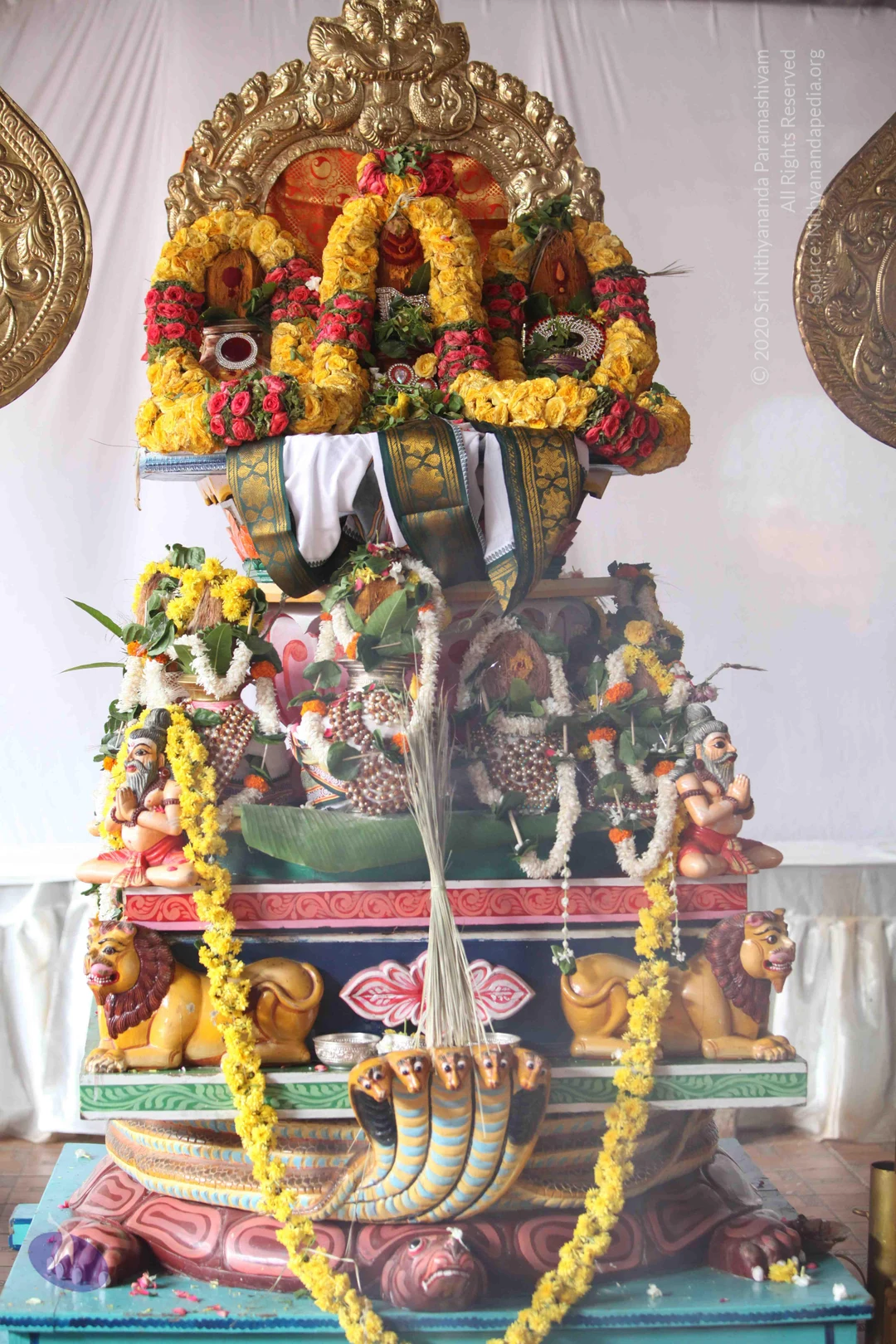
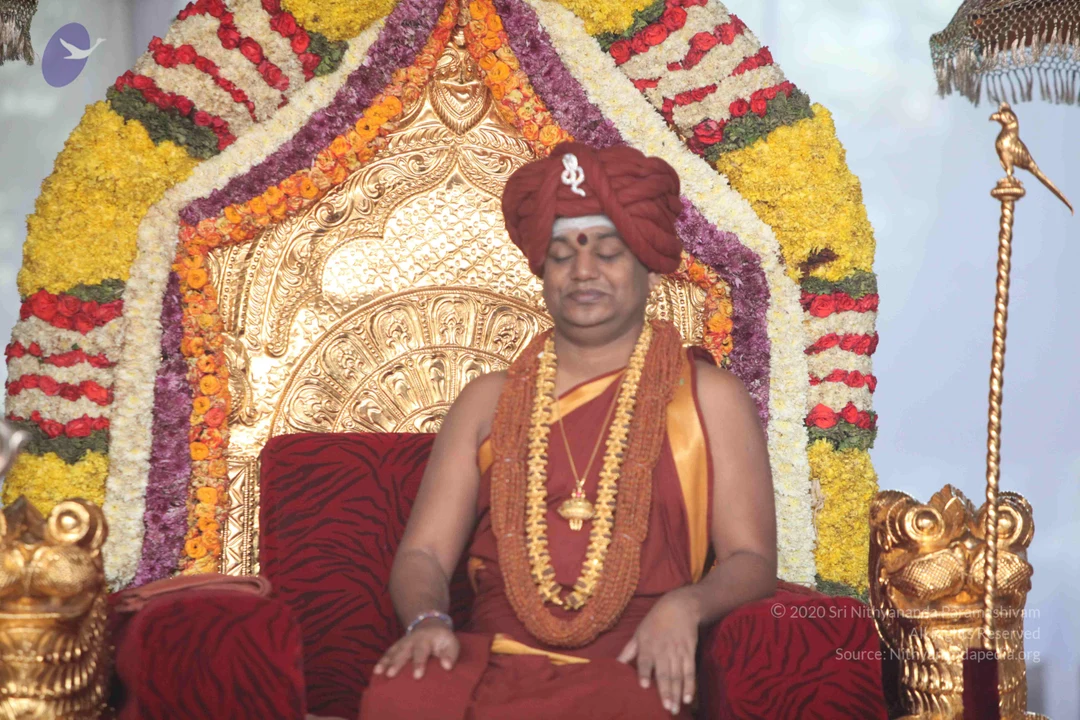
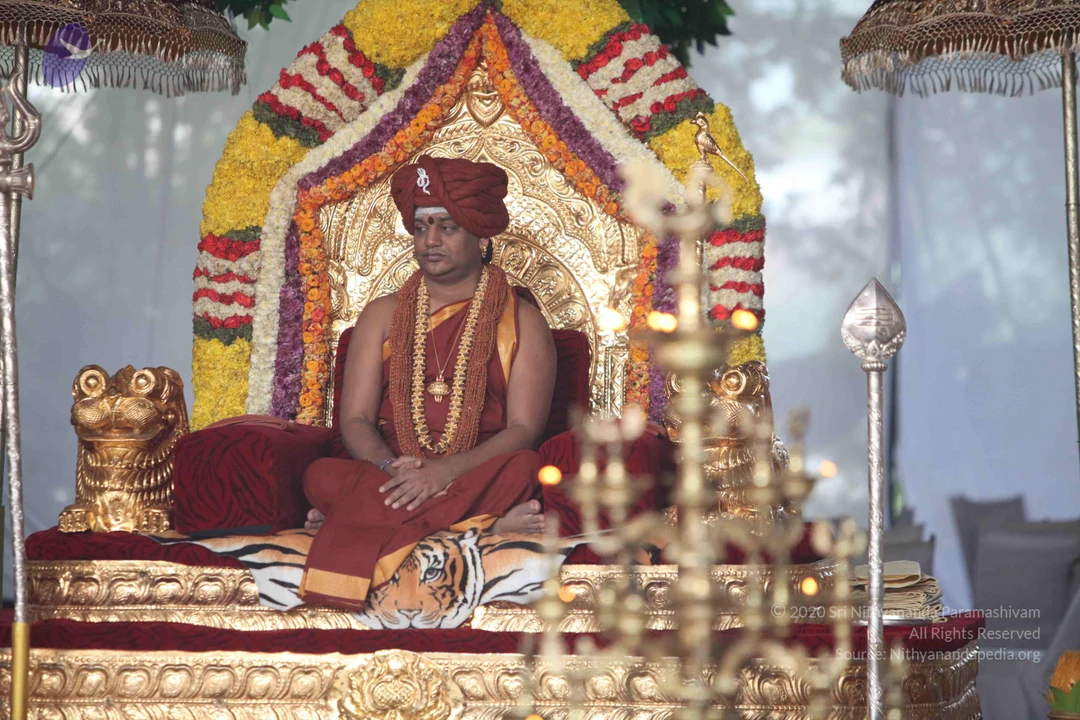
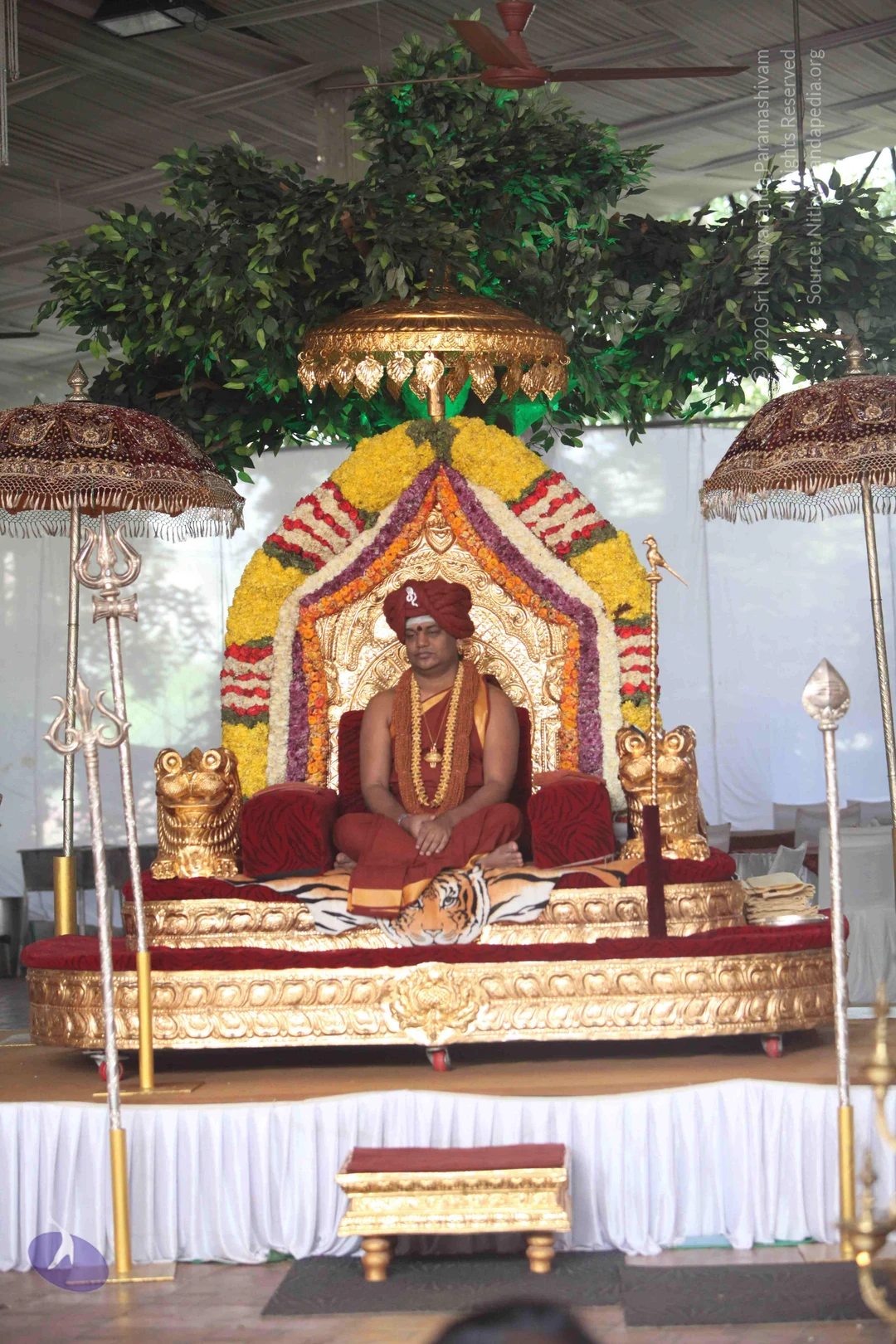
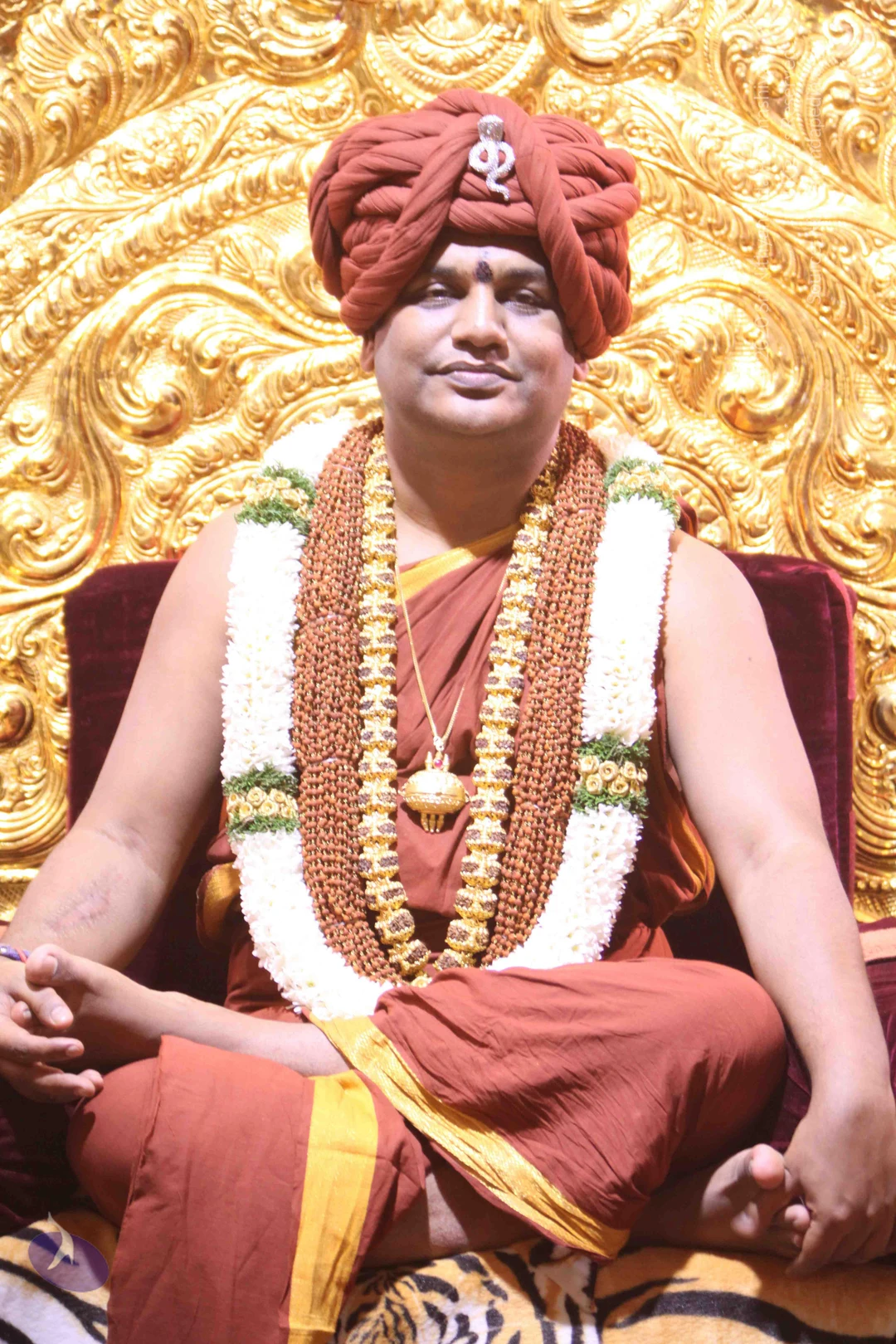
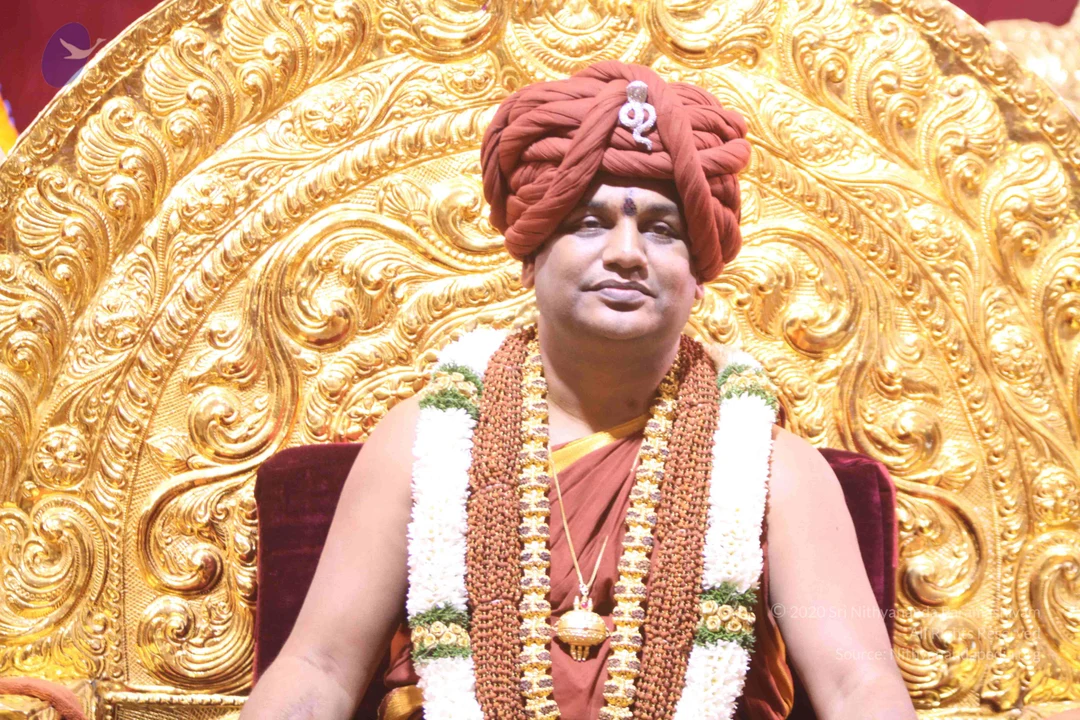
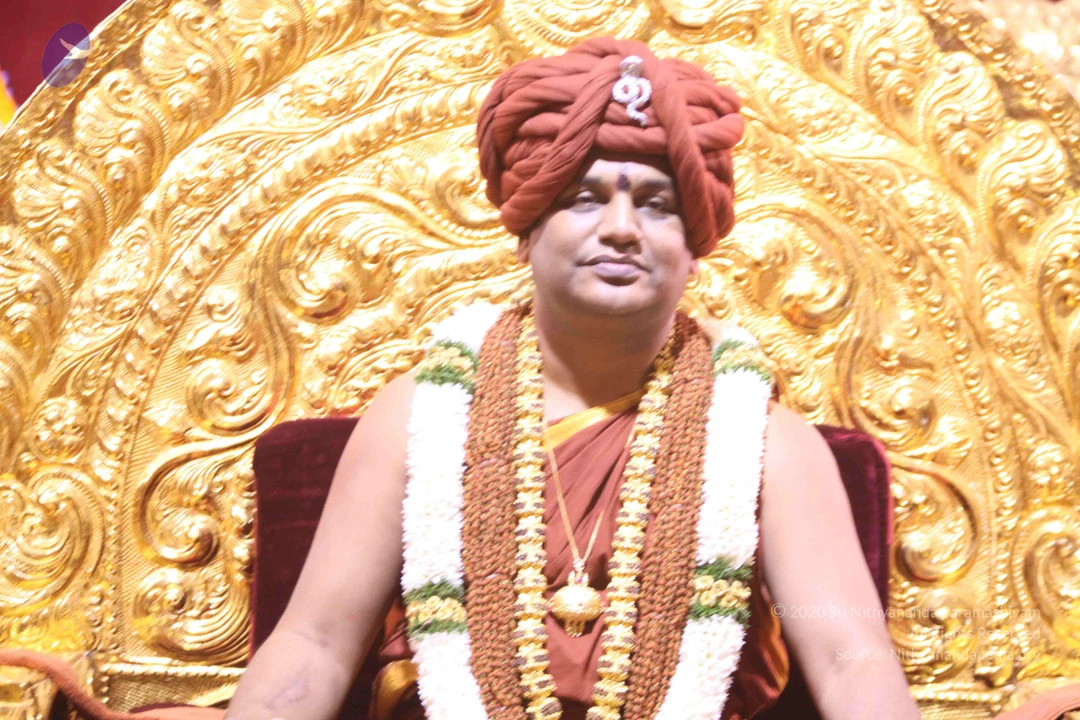
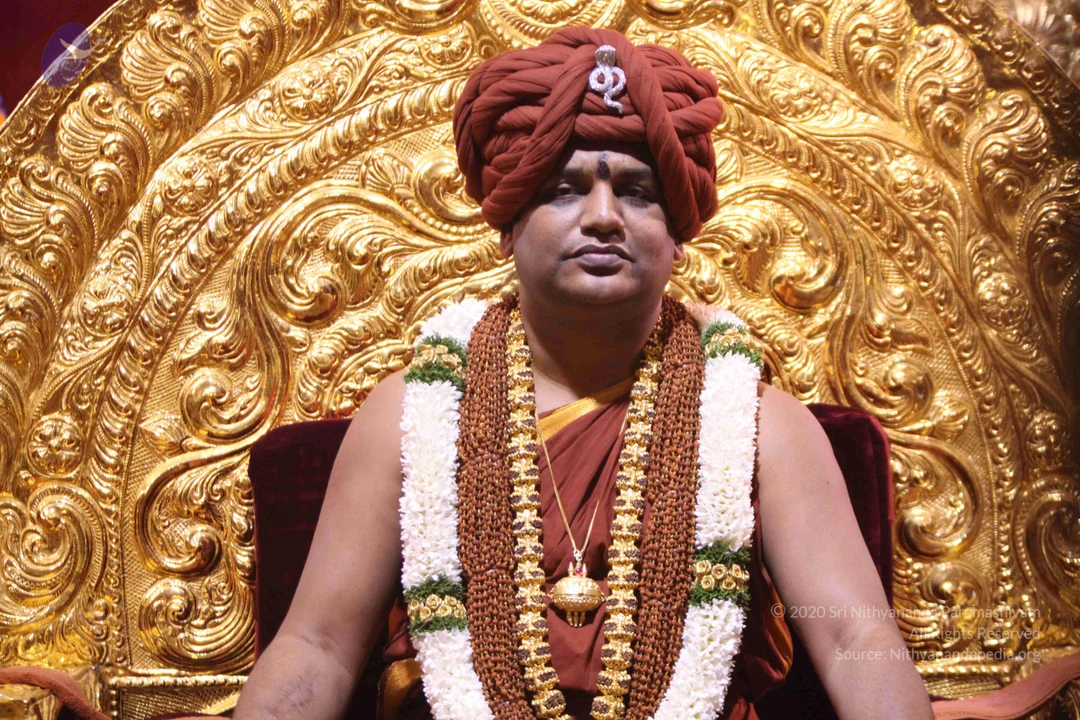
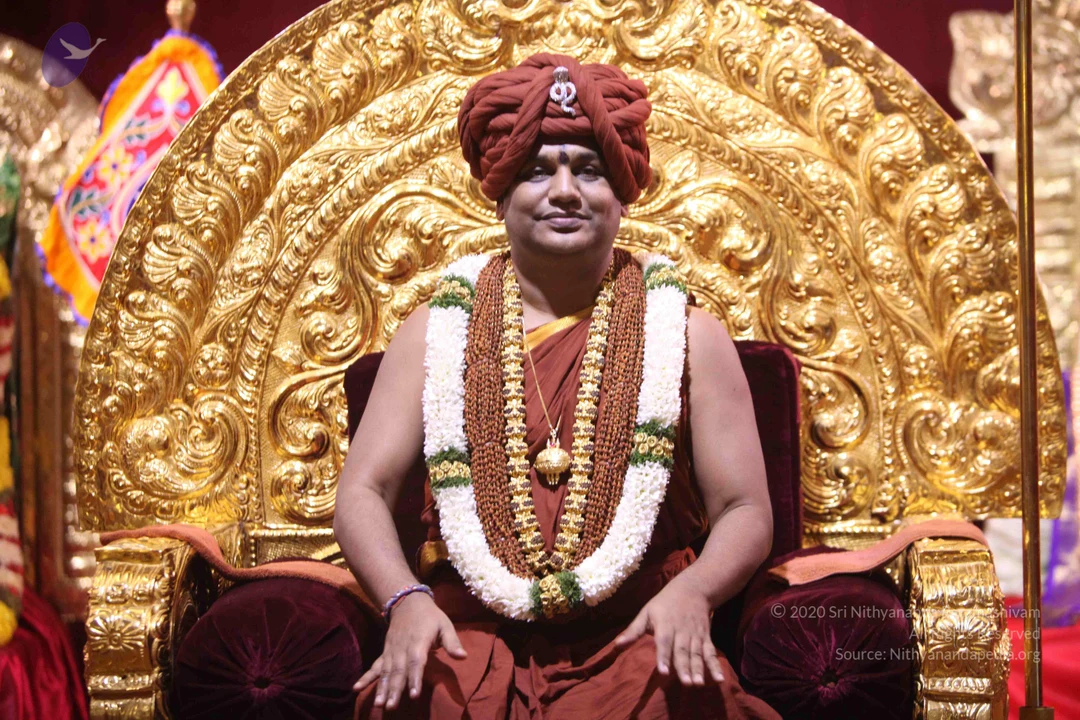
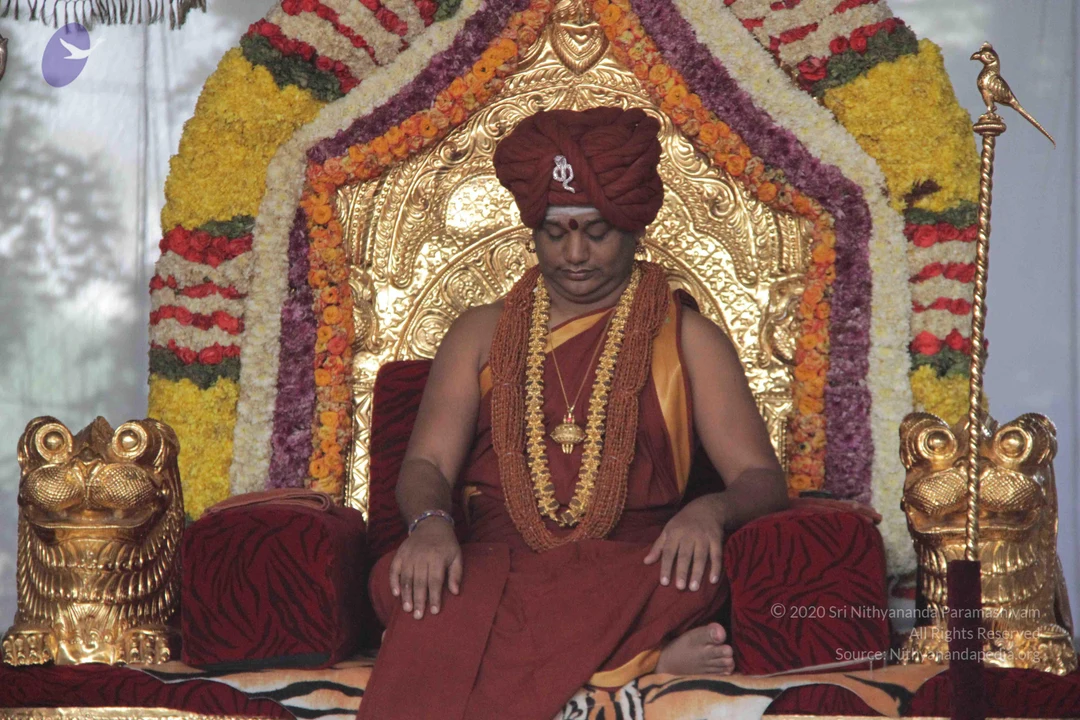
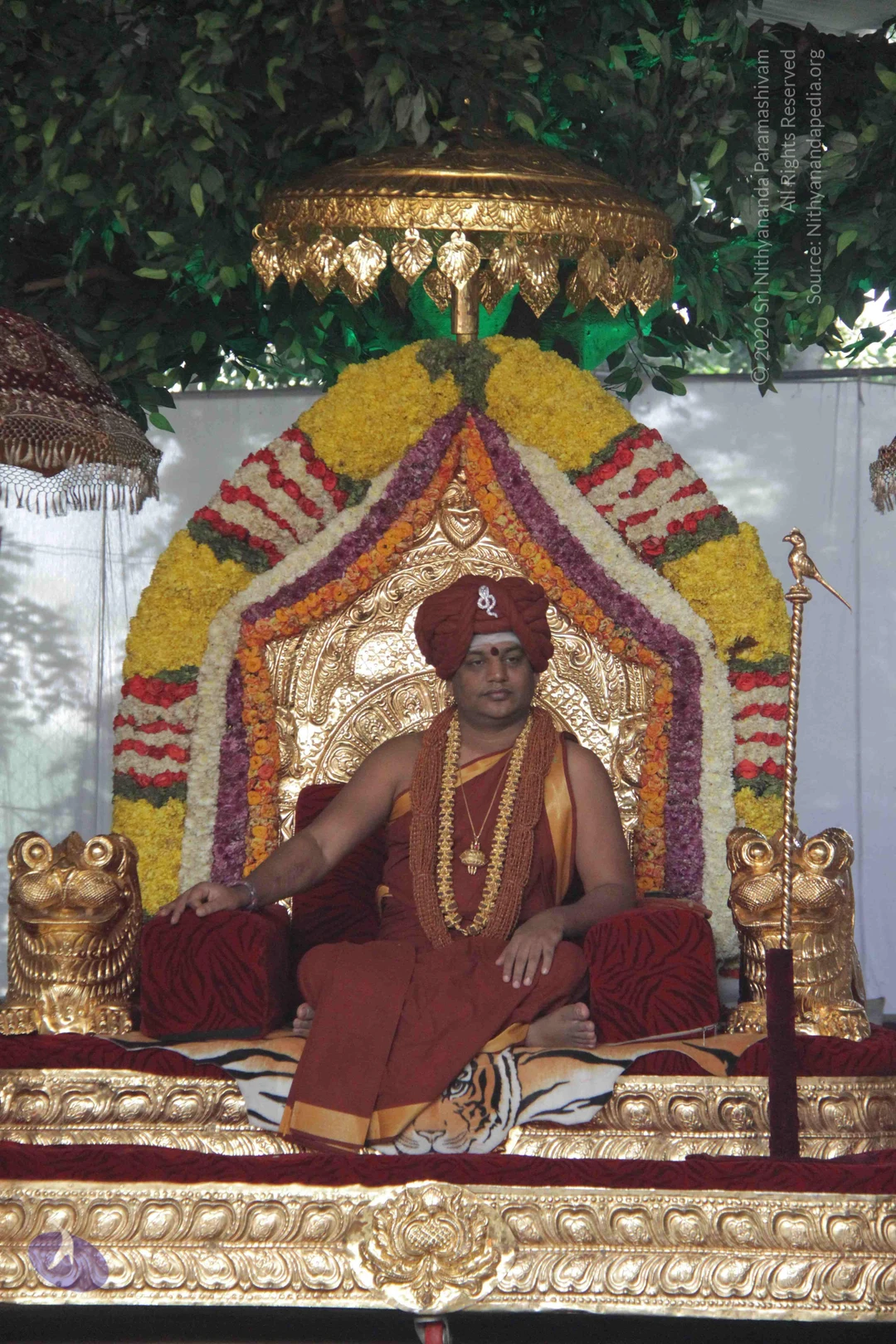
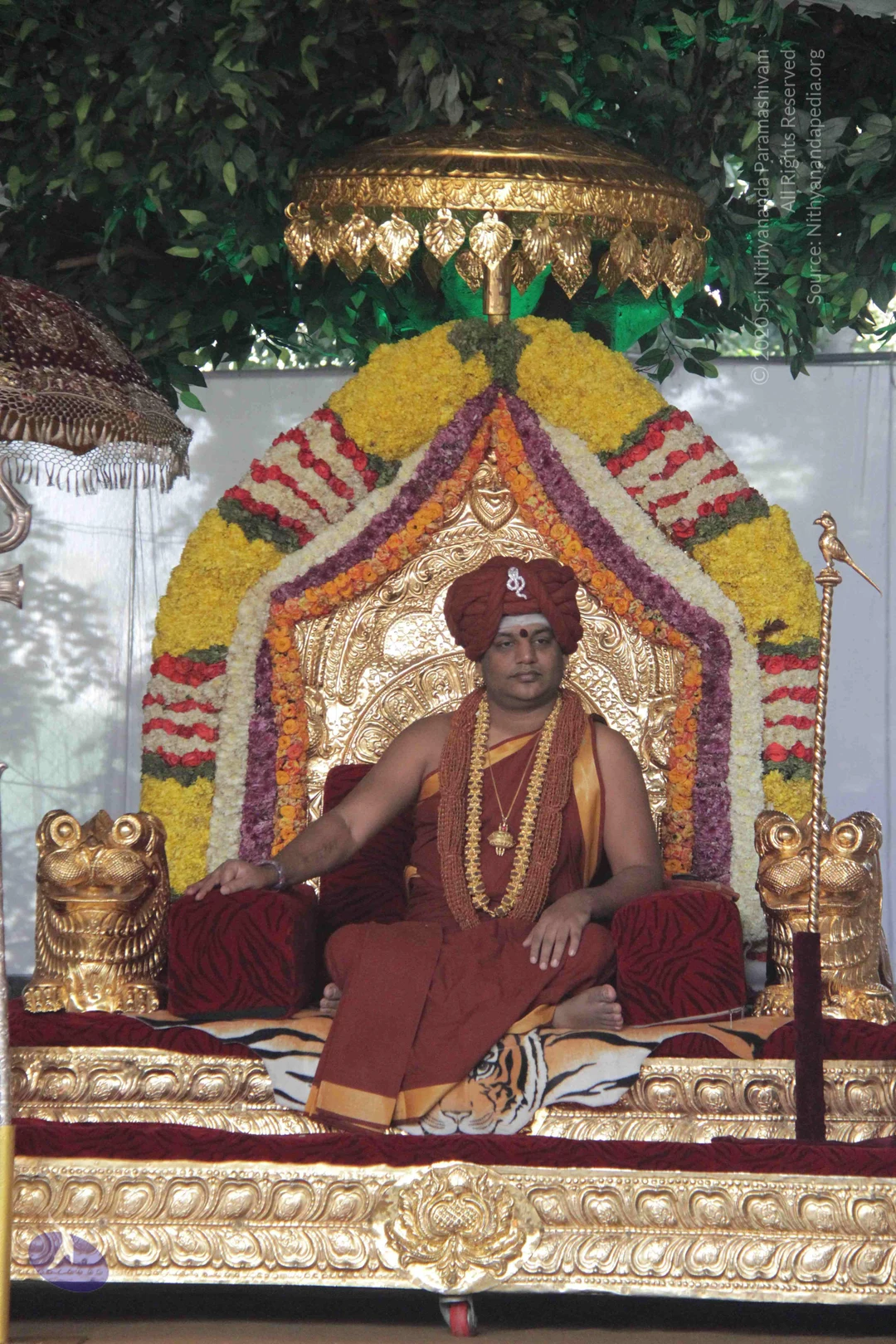
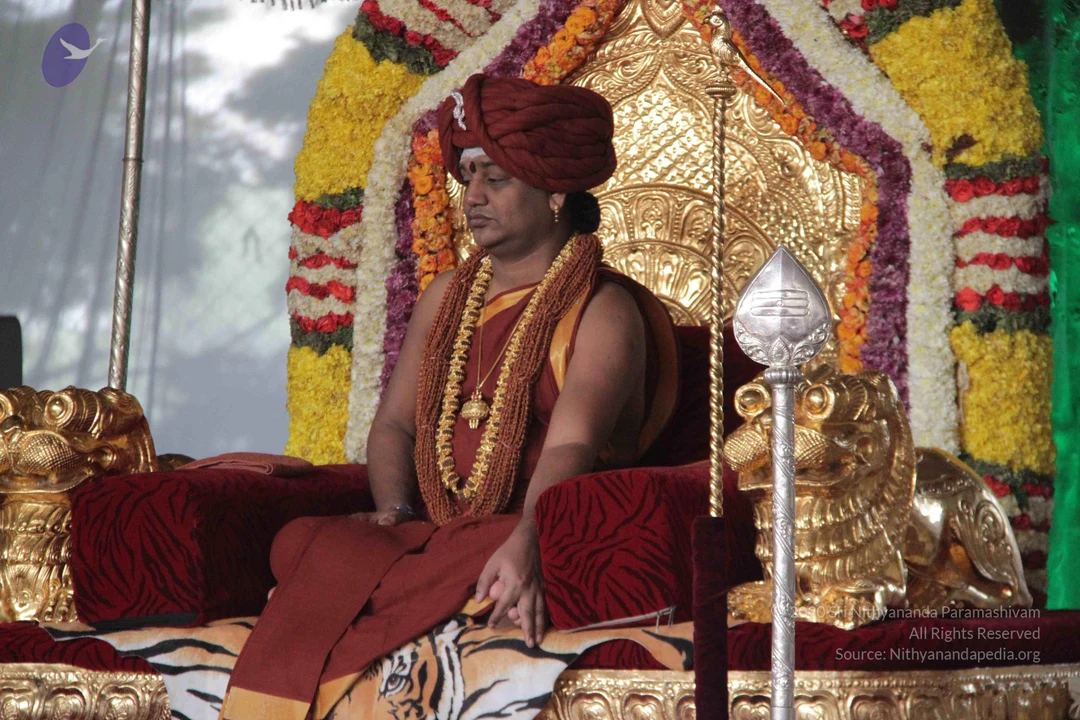
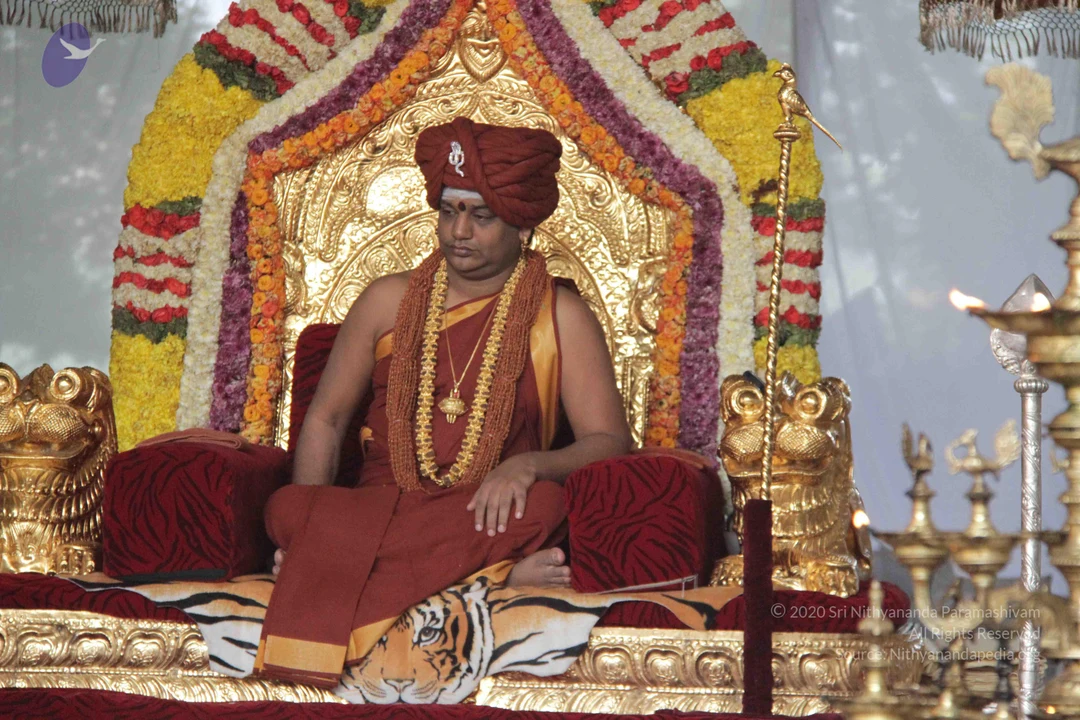
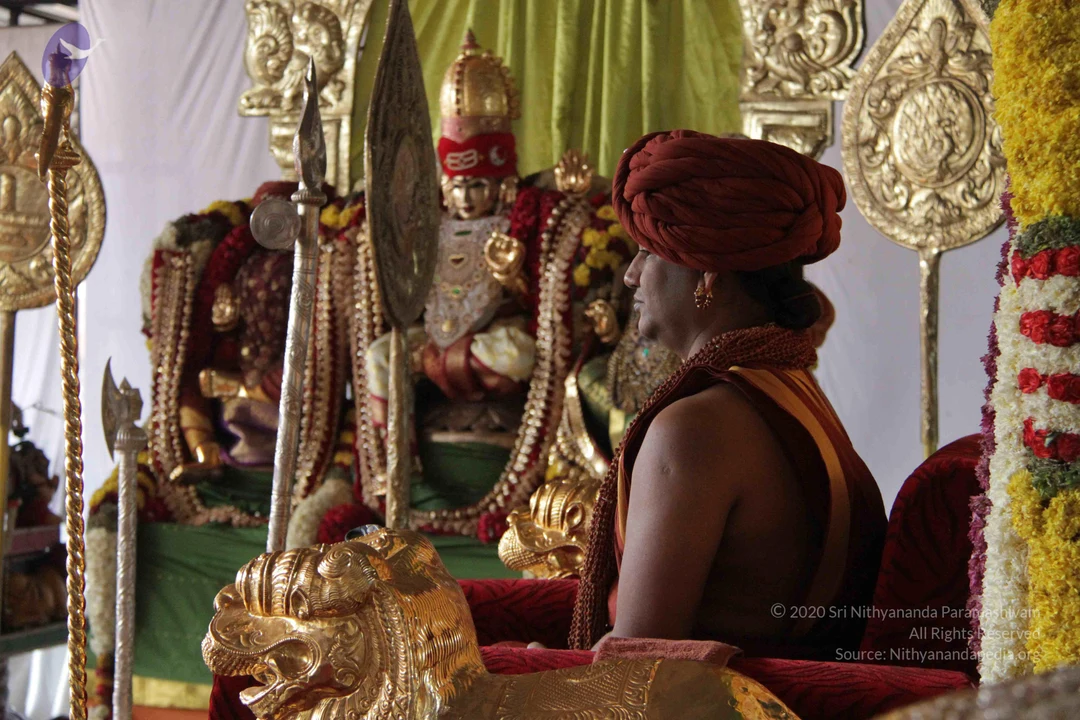
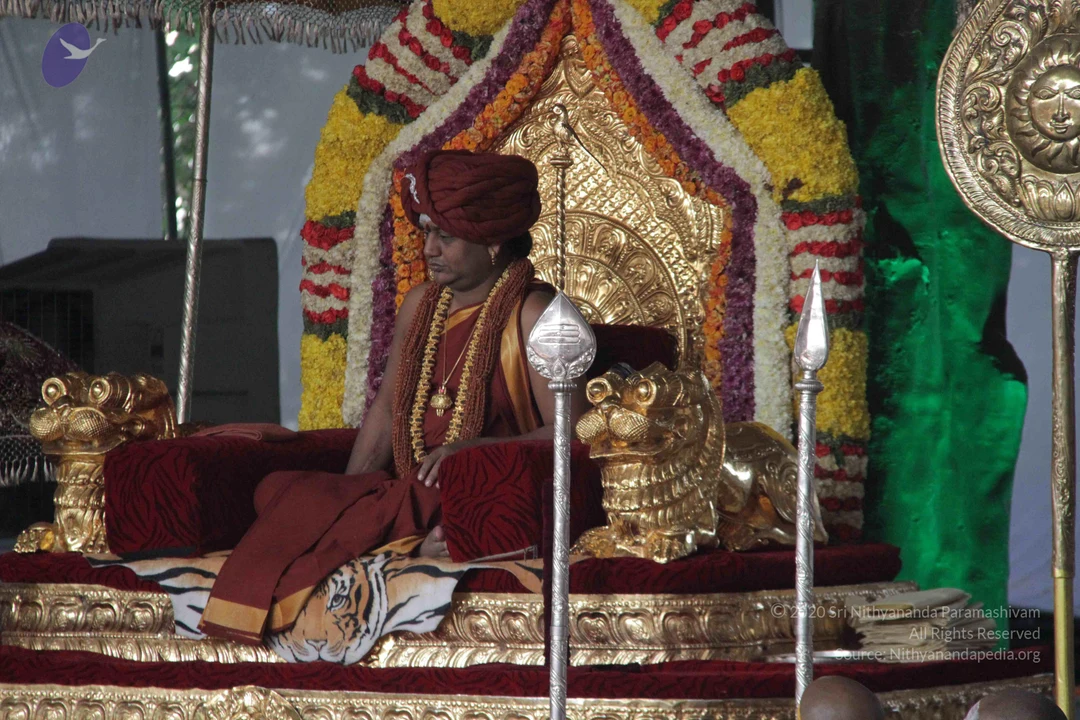
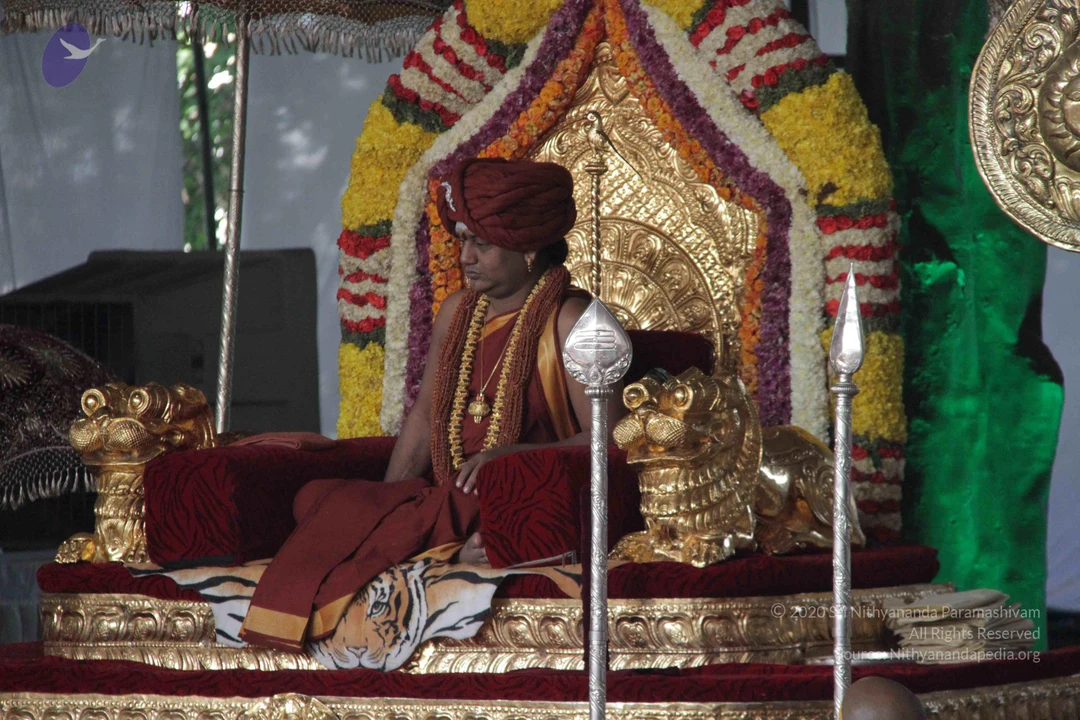
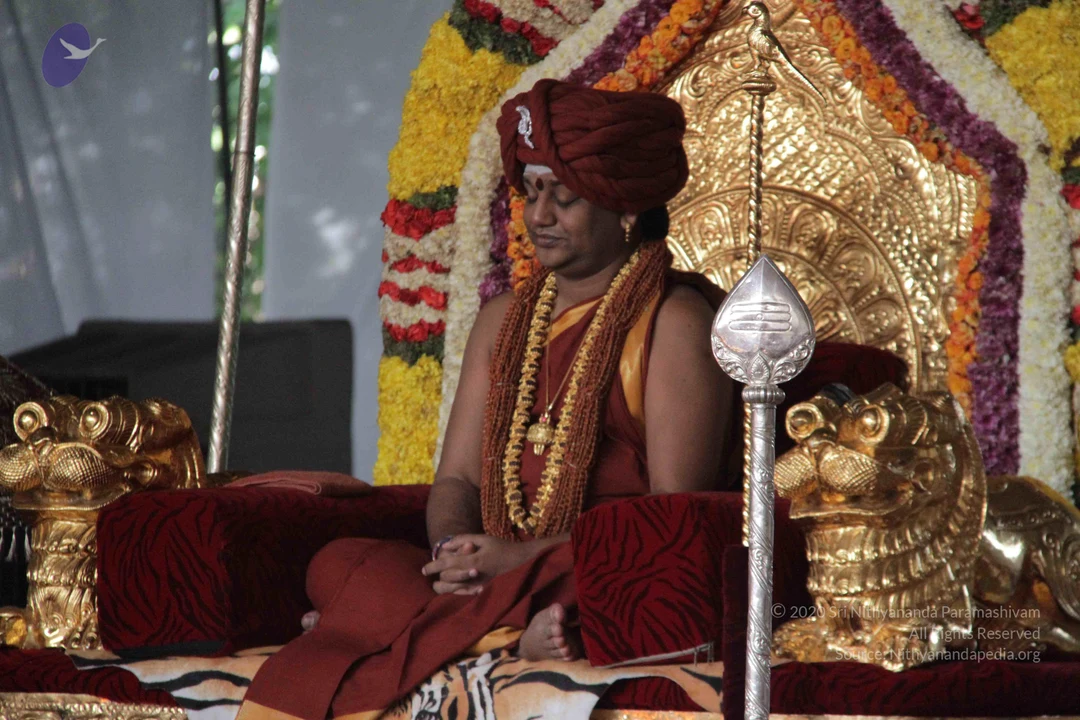
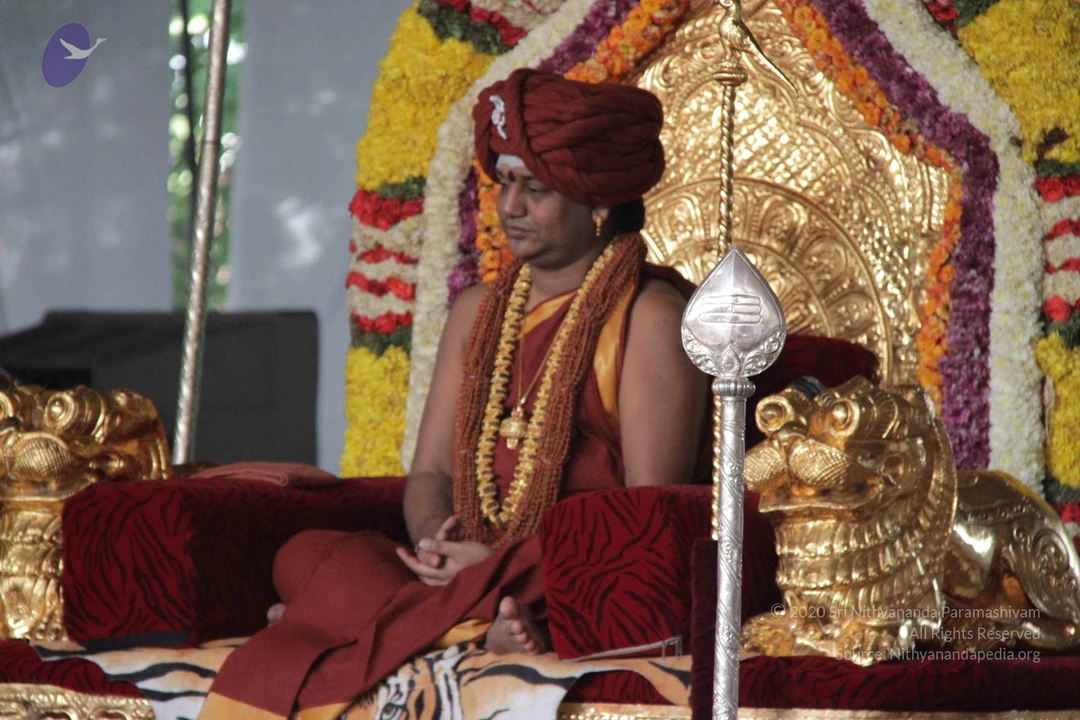
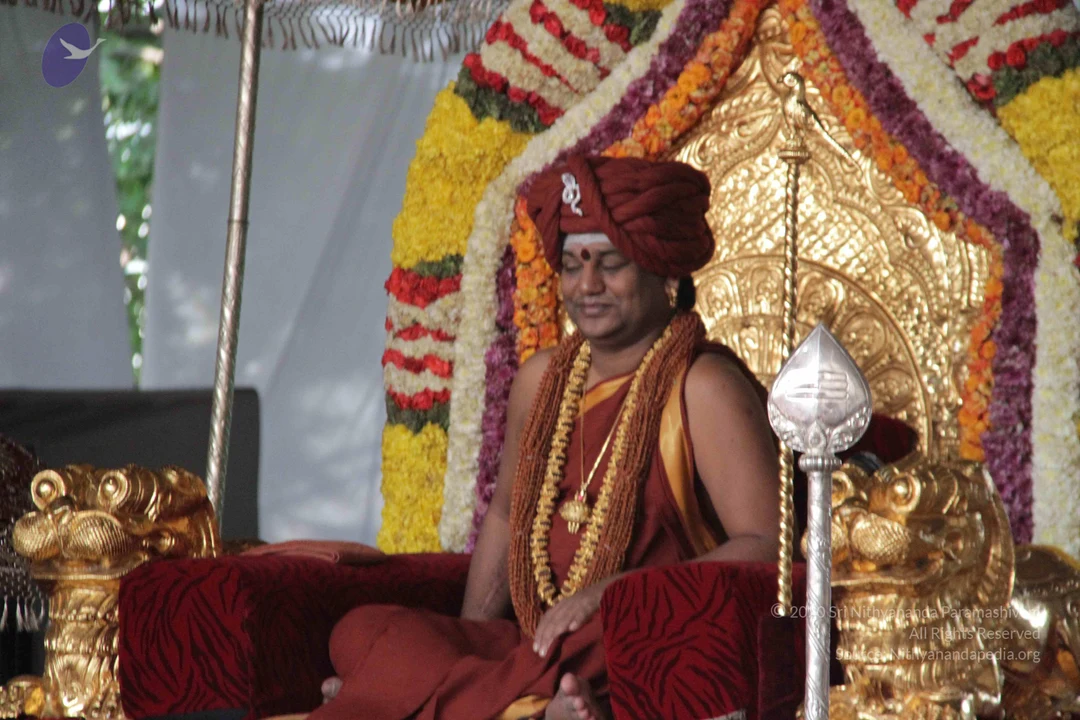
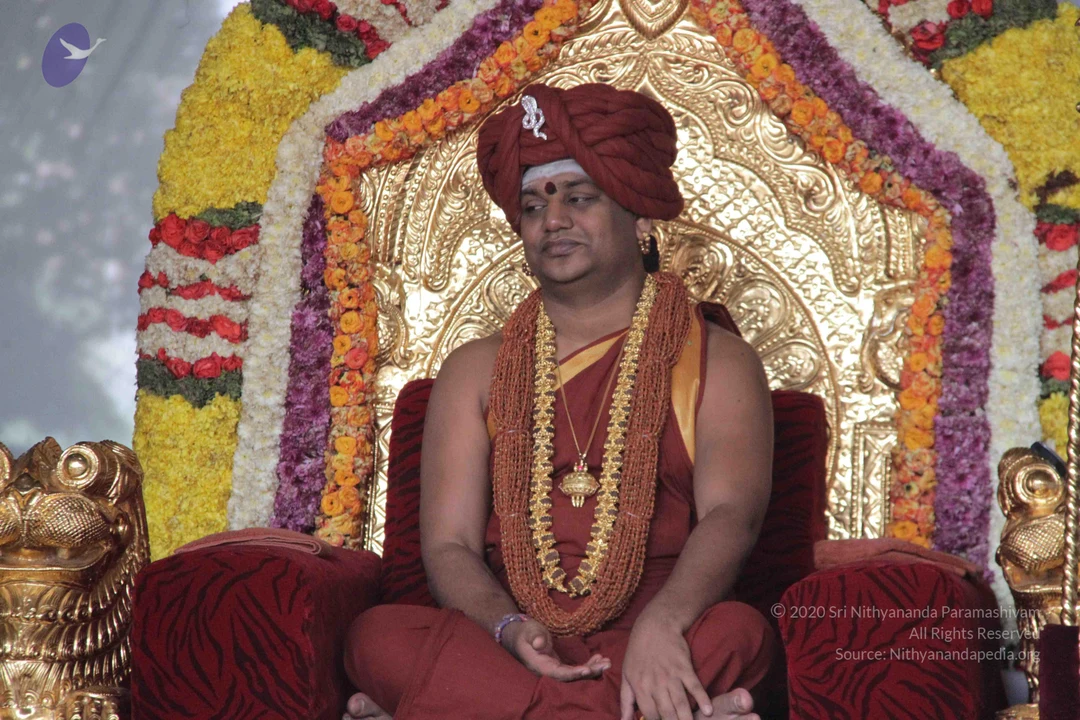
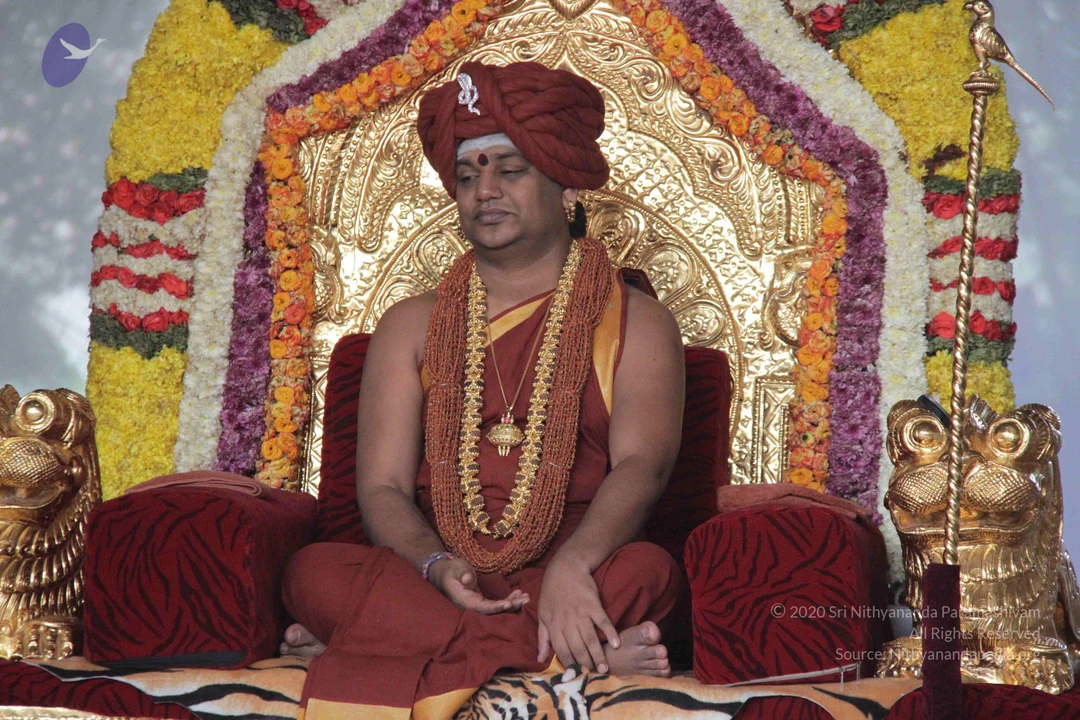
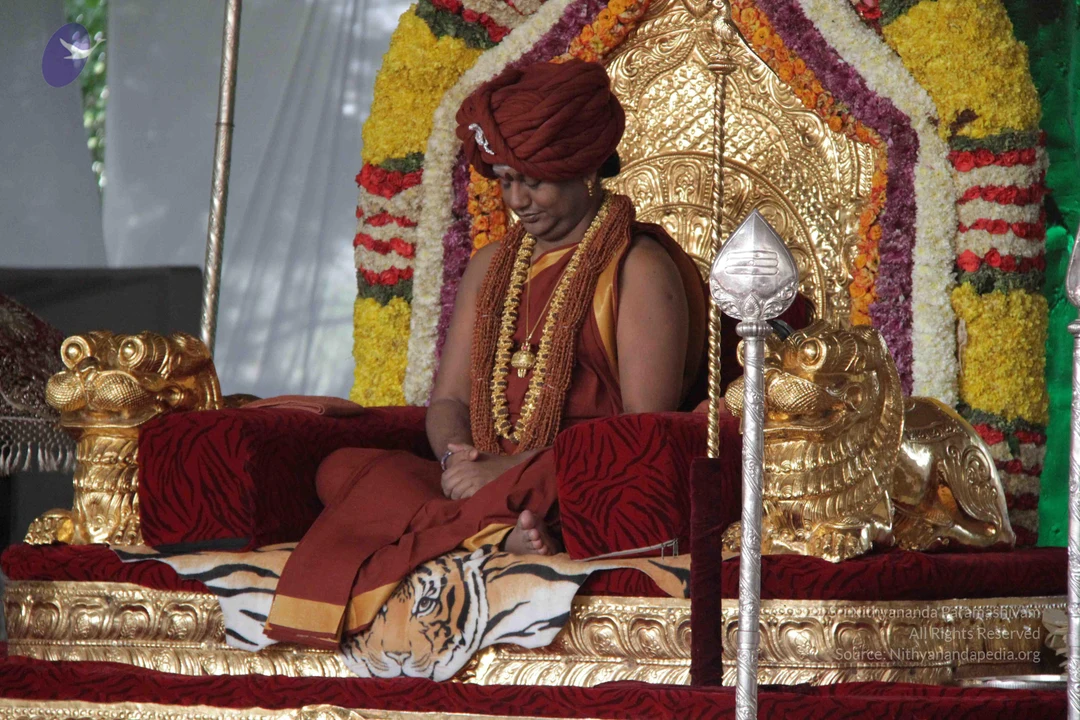
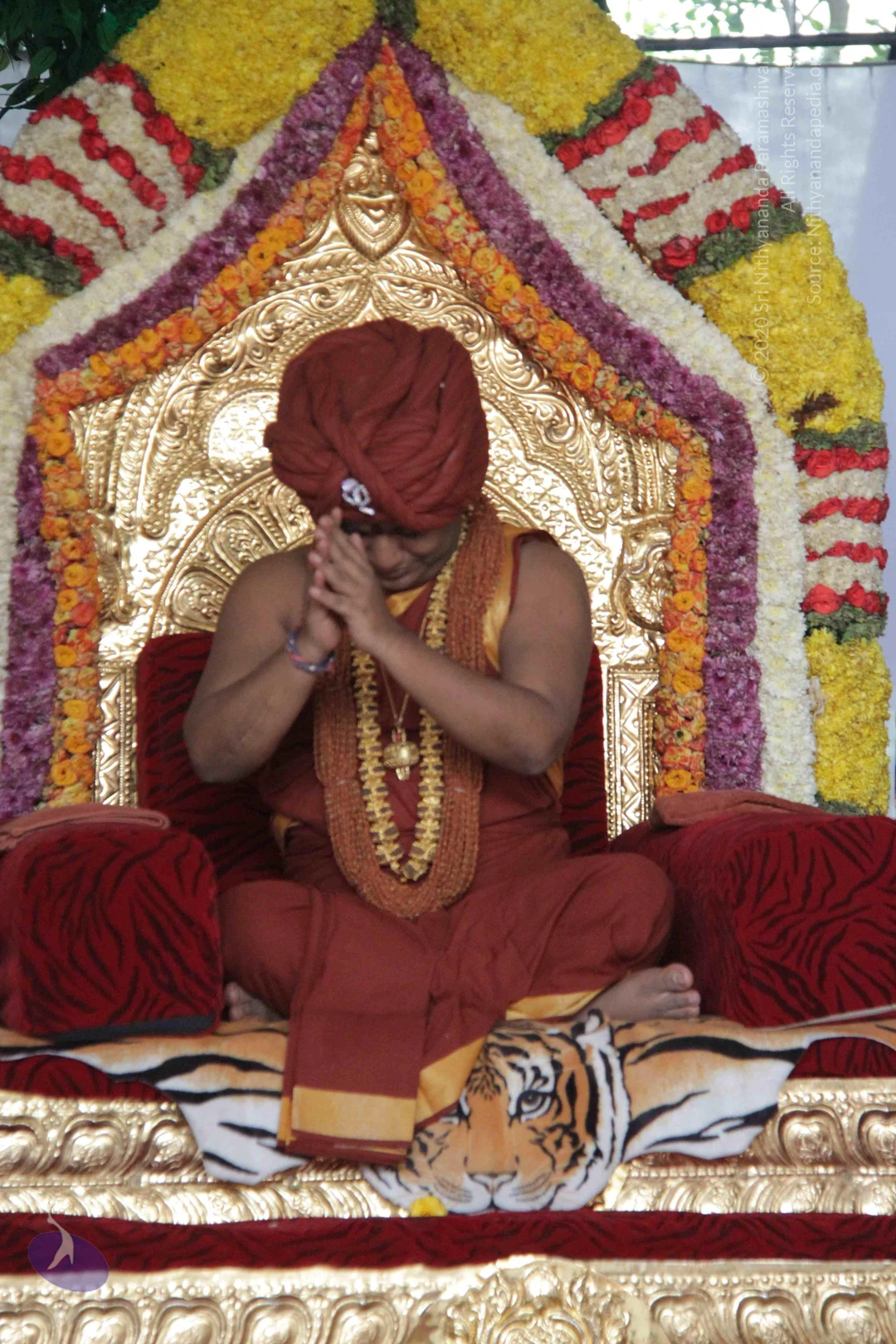
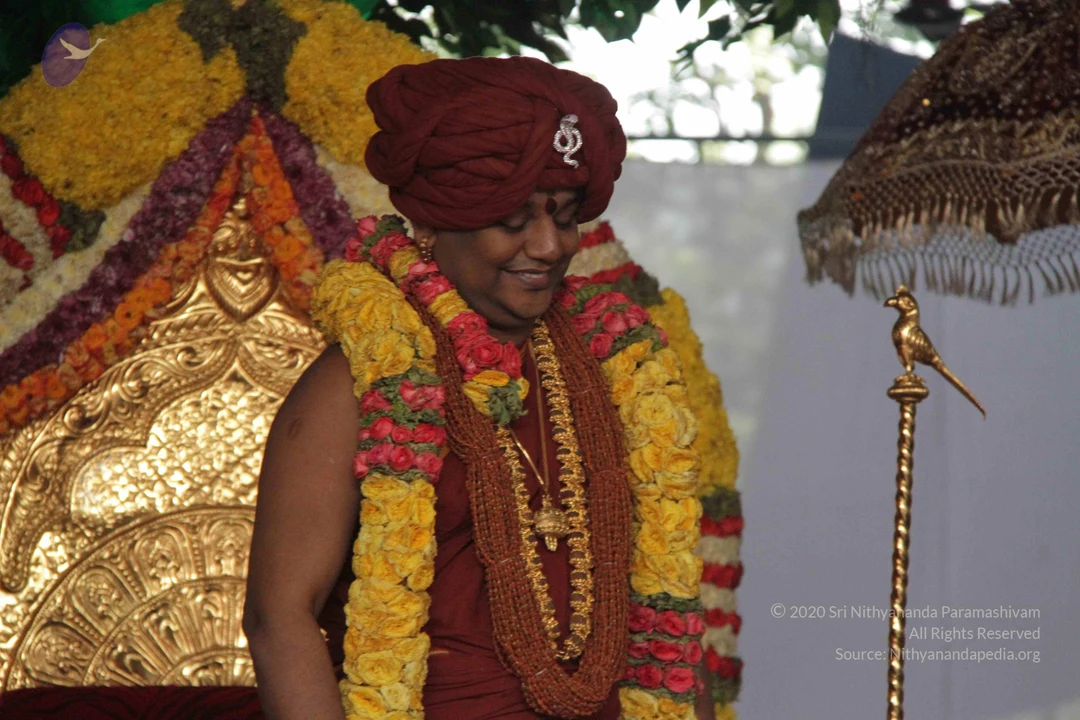
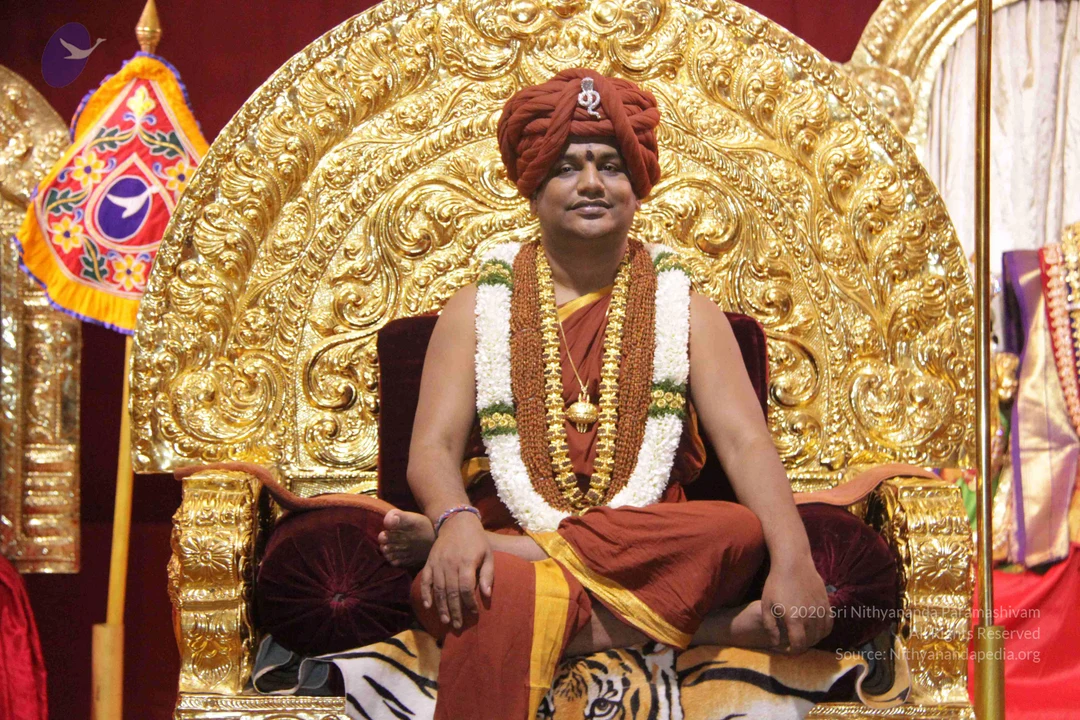
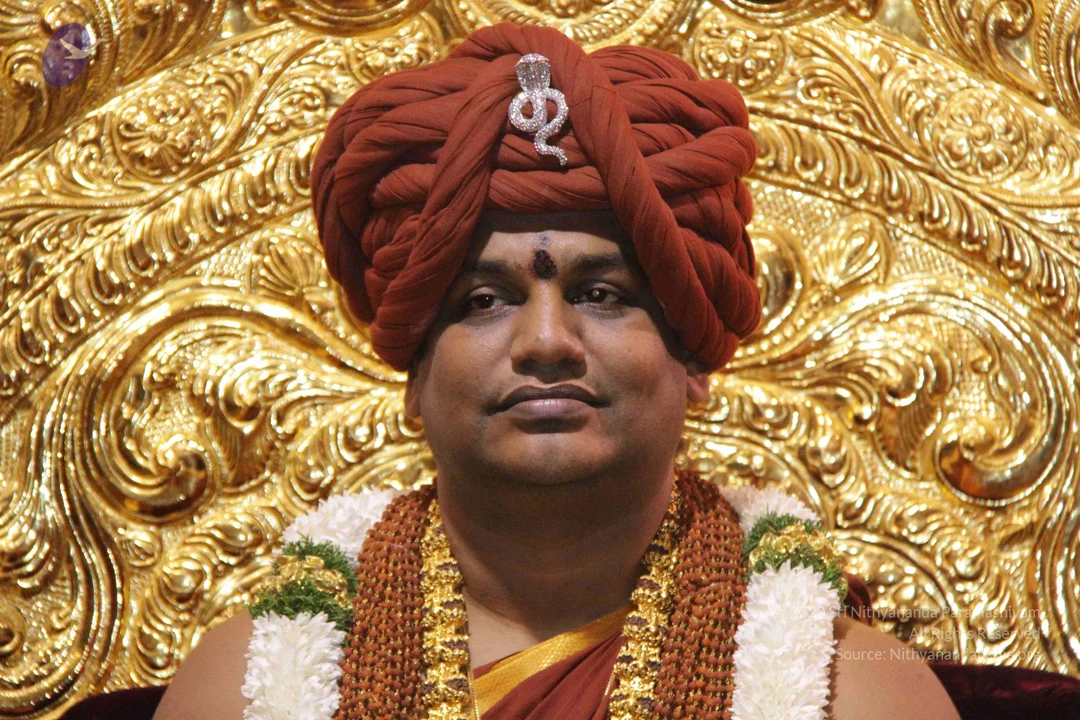
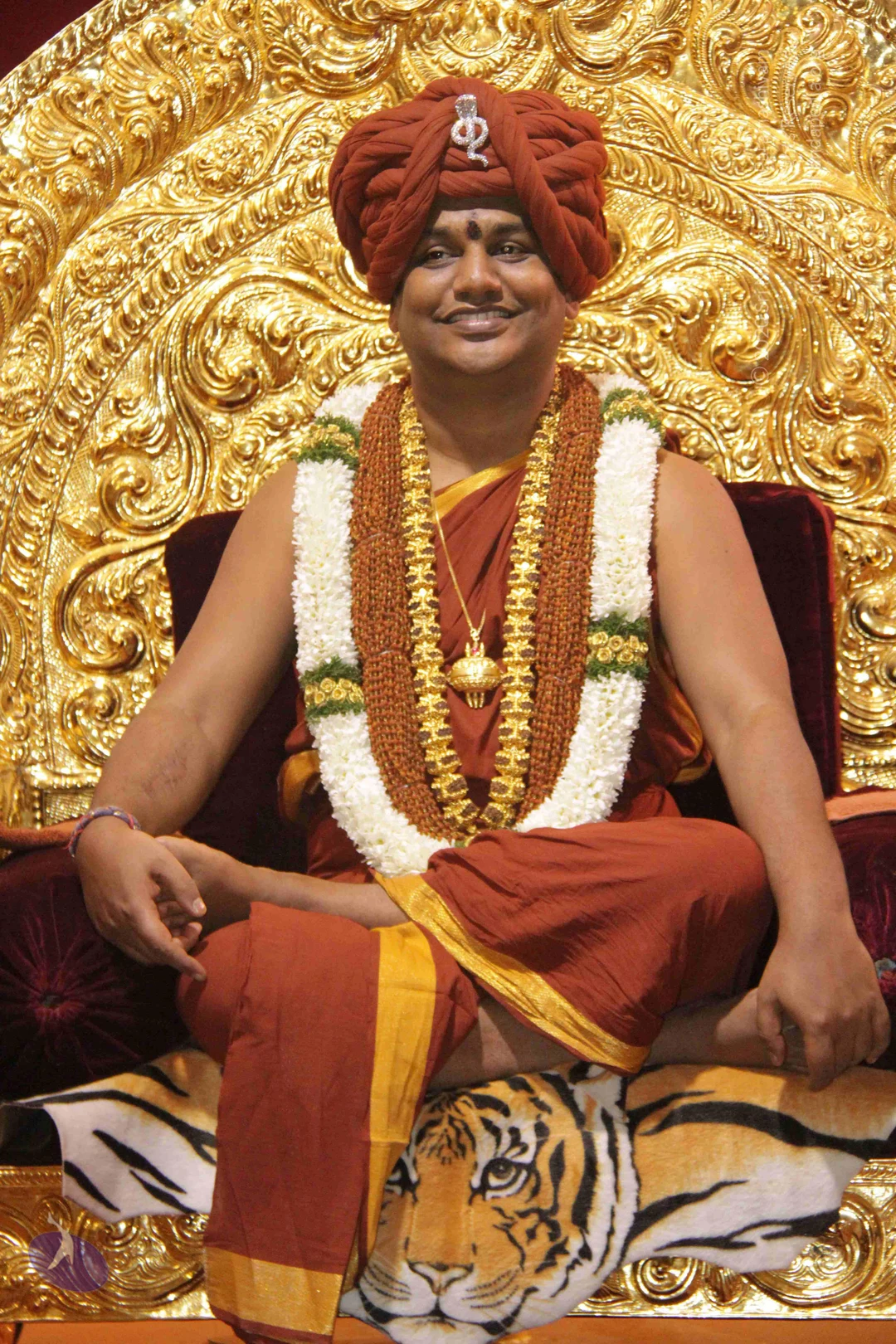
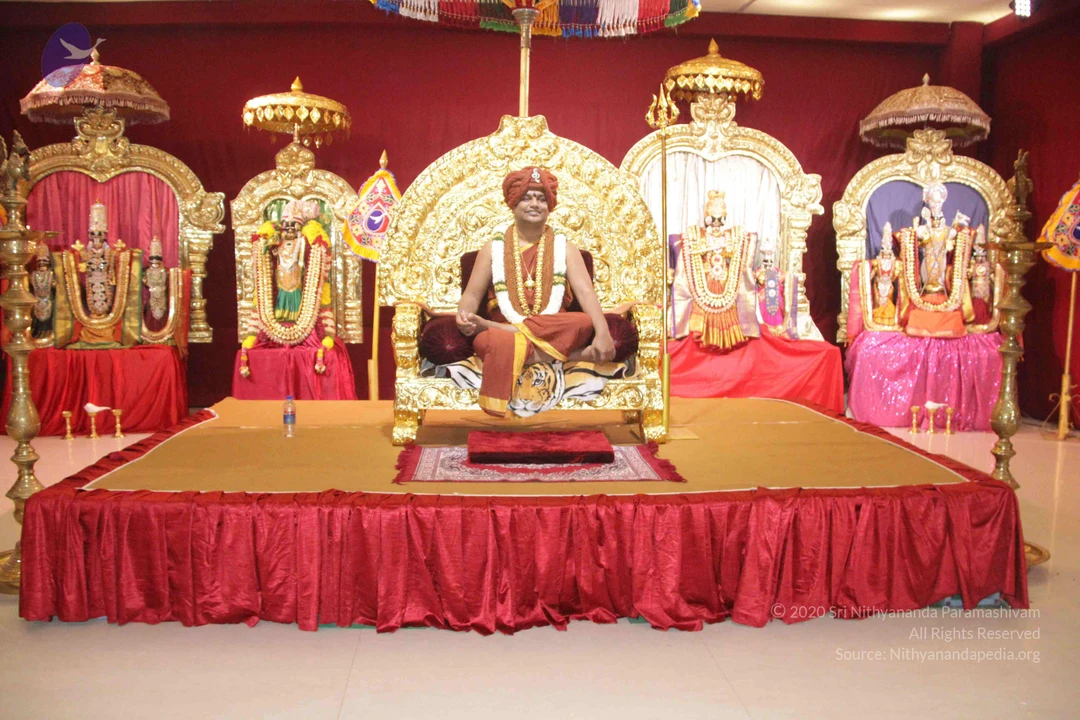
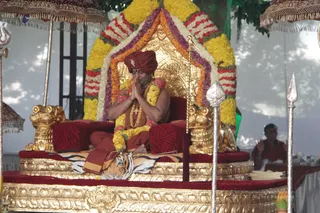
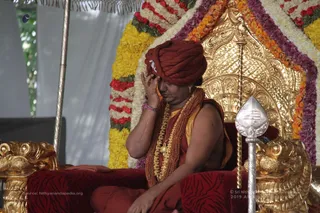
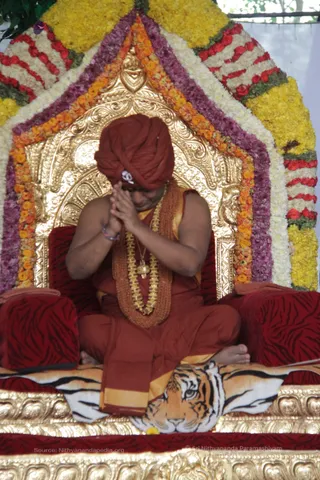
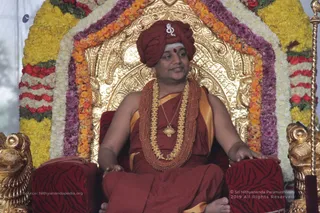
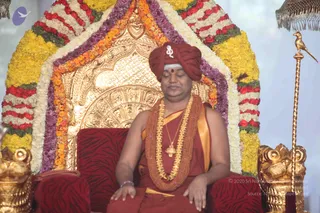
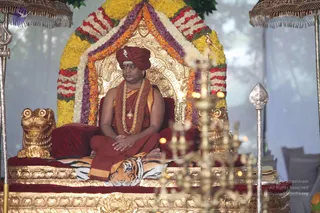
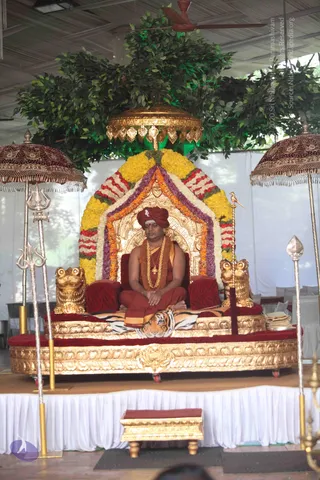
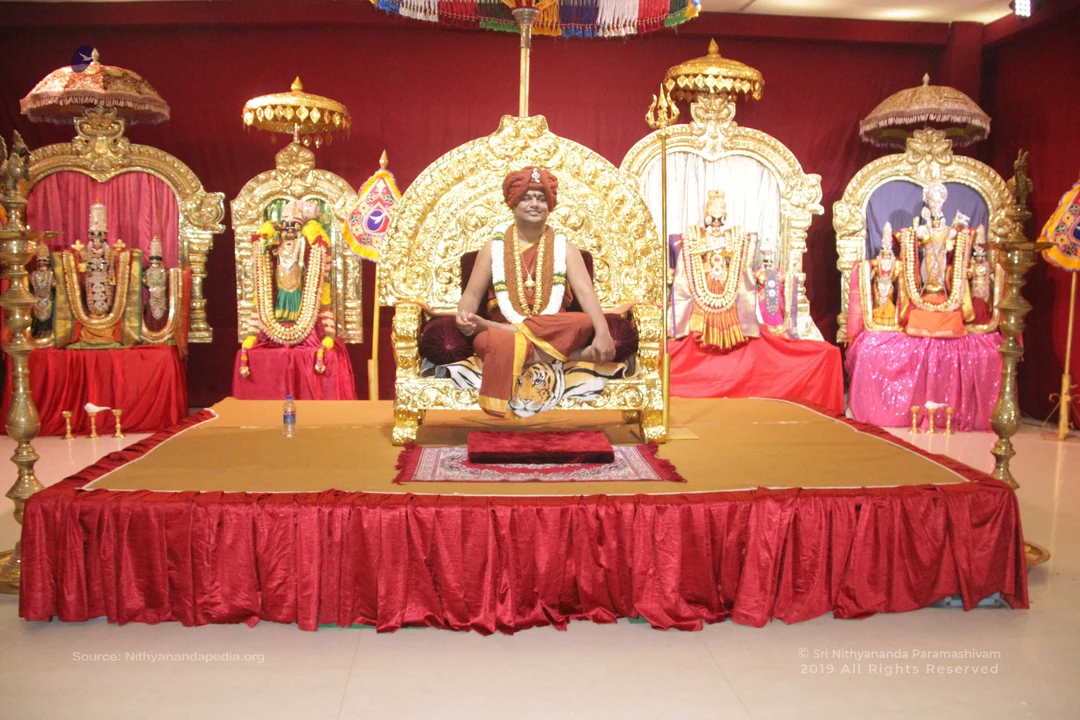
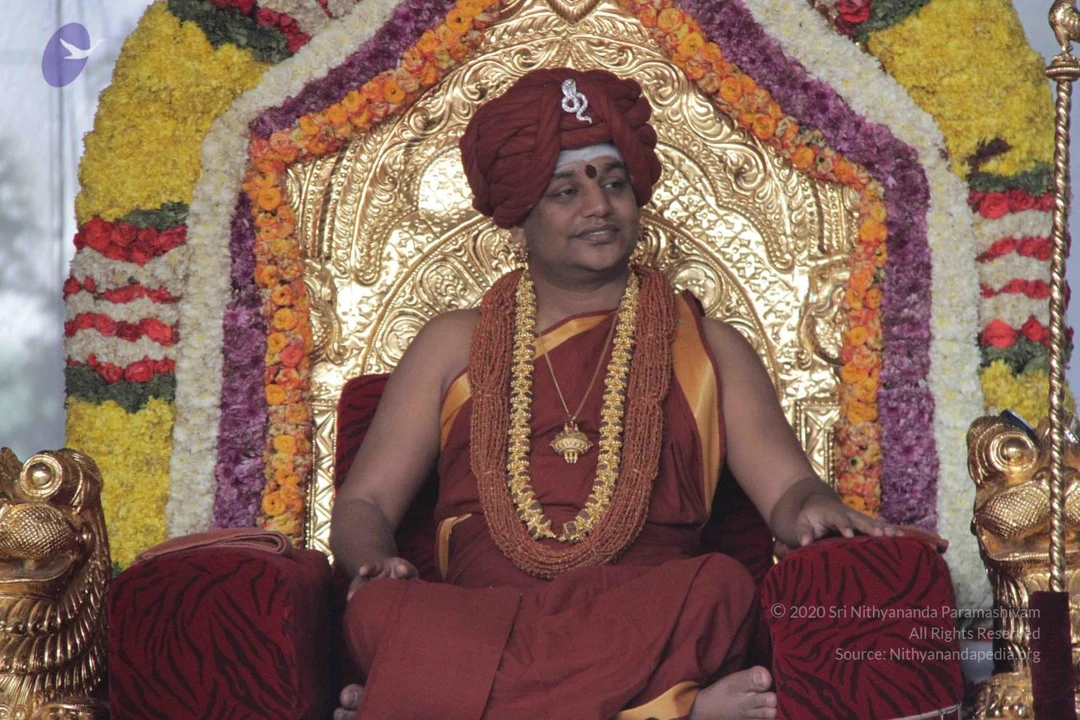
A seated figure in a deep red-maroon turban and rust-orange robes sits with palms pressed together in namaste on a red and black tiger-striped cushioned seat. Behind is an ornate gold throne-back framed by garlands of marigolds, roses and white flowers. A gold lion-form armrest and silver trident-tipped staffs flank the seat. A rudraksha-style mala hangs across the chest and a small shivalinga emblem is visible on the turban. The scene is an outdoor stage setting.A seated man in a maroon-red turban with a silver ornament and a red tilak on his forehead sits on an ornate gold throne with carved sides. He wears a long orange-and-maroon garment, multiple rudraksha-style beaded mala necklaces in orange and gold, and a gold pendant. His right hand is extended palm-up in a gesture of teaching. The throne is framed by a tall arch of marigolds, red roses, white flowers and green leaves, with gilded lion-like carvings at the lower corners.A seated man in a maroon-red turban with a silver emblem sits on an ornate gold throne decorated with garlands of orange marigolds, white jasmine and red flowers. He wears a deep red-orange robe with a golden-yellow sash, a rudraksha mala with a large gold pendant, and a long gold garland. A small red bindi and white tilak mark his forehead. Gold lion-head armrests flank the throne, and a gold staff topped with a bird rests at the right. Probable Swamiji (in-person appearance cues: red turban, rudraksha mala, ornate gold ceremonial necklace, saffron-toned robe), seated in darshan on a peetha throne at Adikailaasa, Bengaluru during an Inner Awakening session.

October 19 2015

Original wiki page
Contents

Title

Shivoham Process & Q & A || Part 1 || IA || 19 Oct 2015

Description

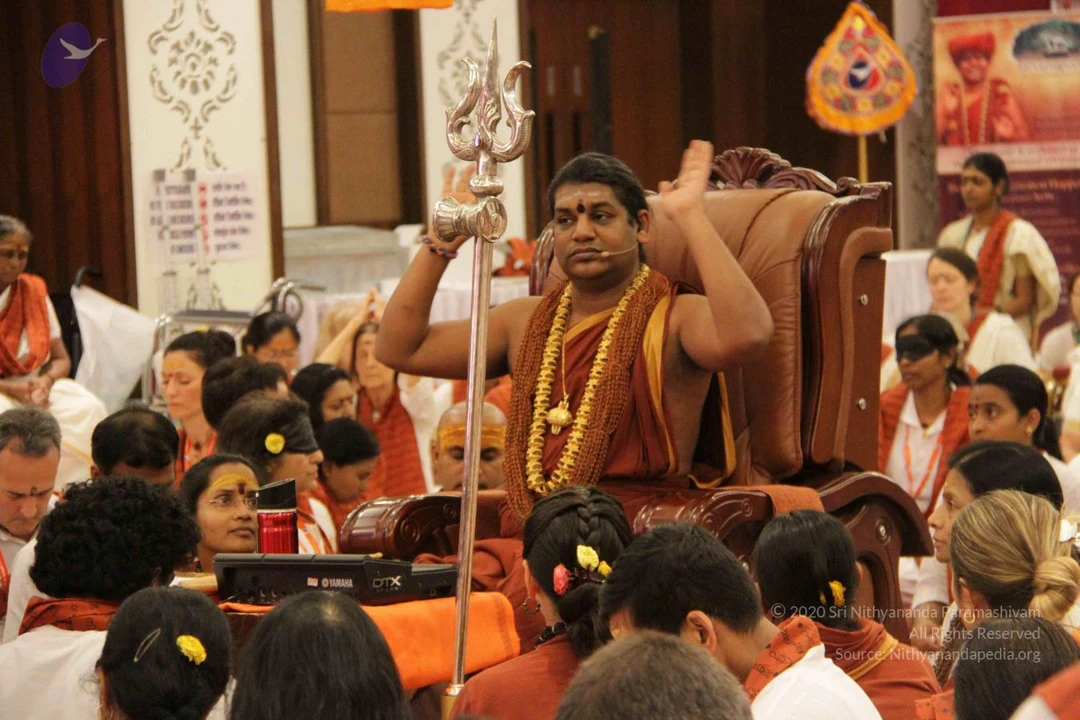
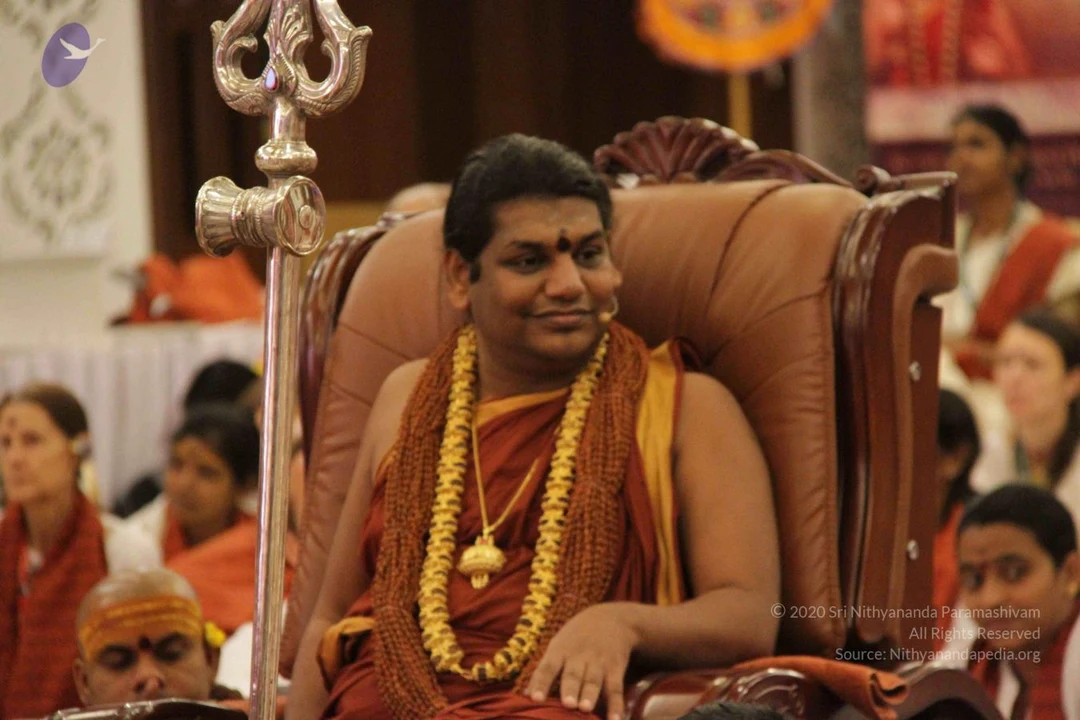
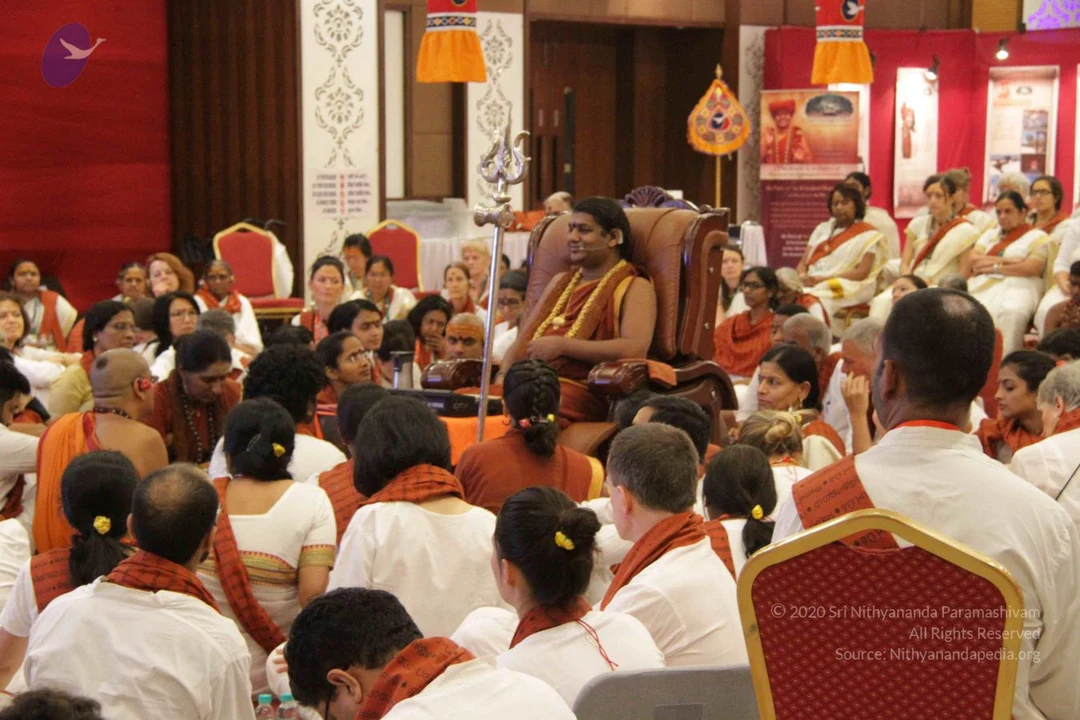
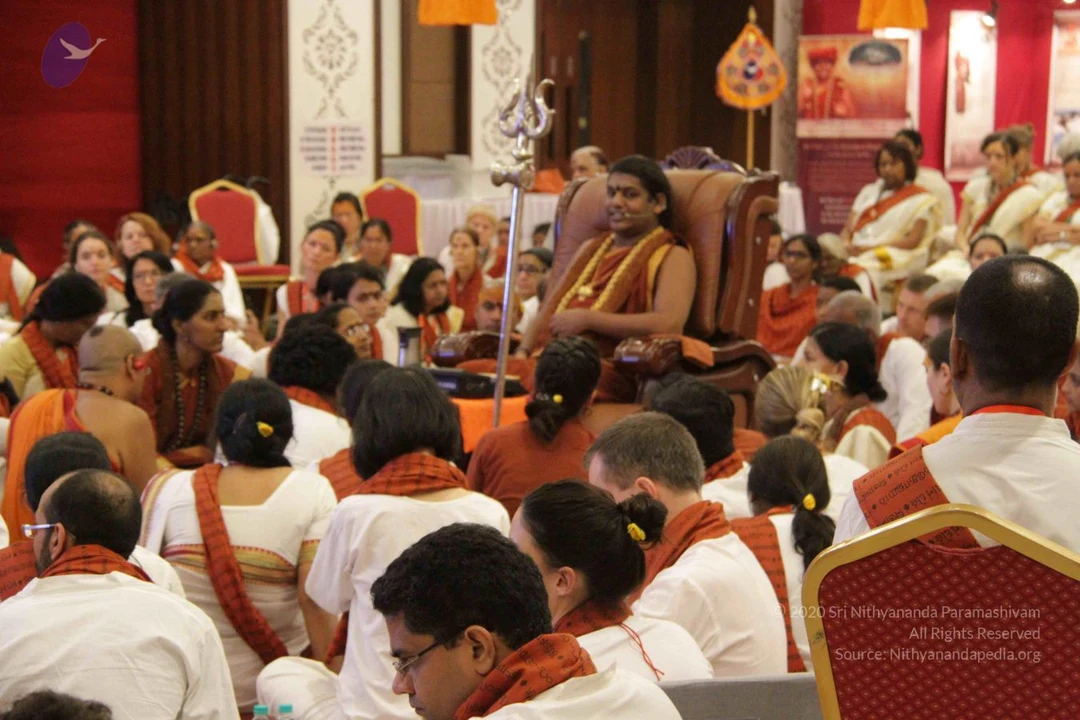
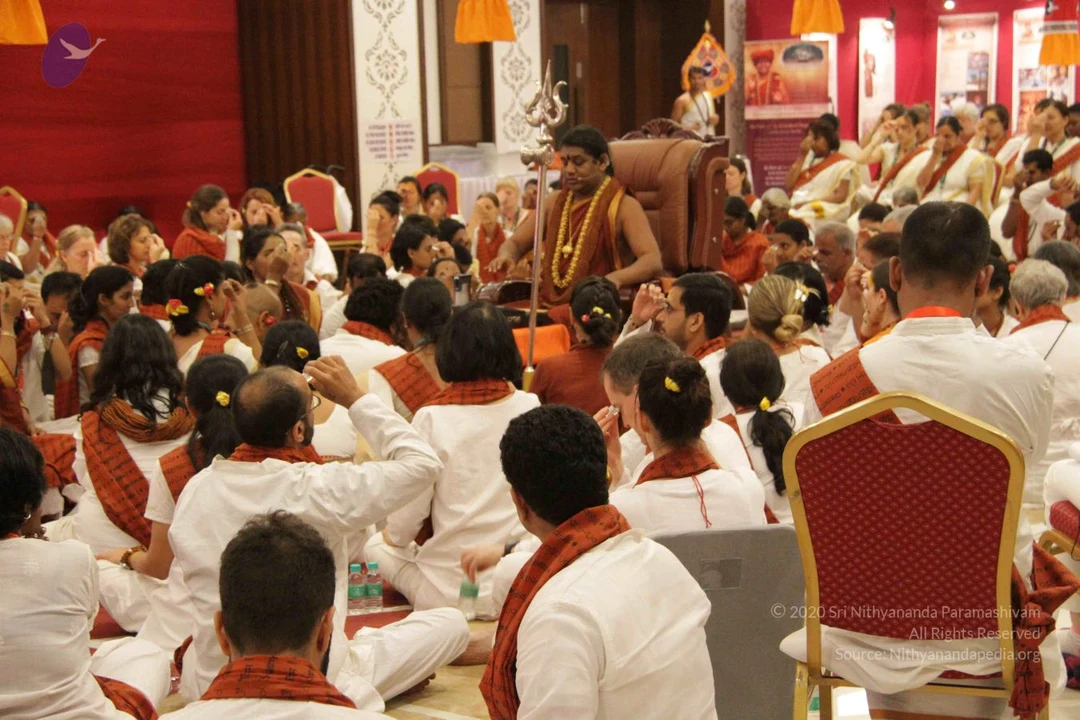
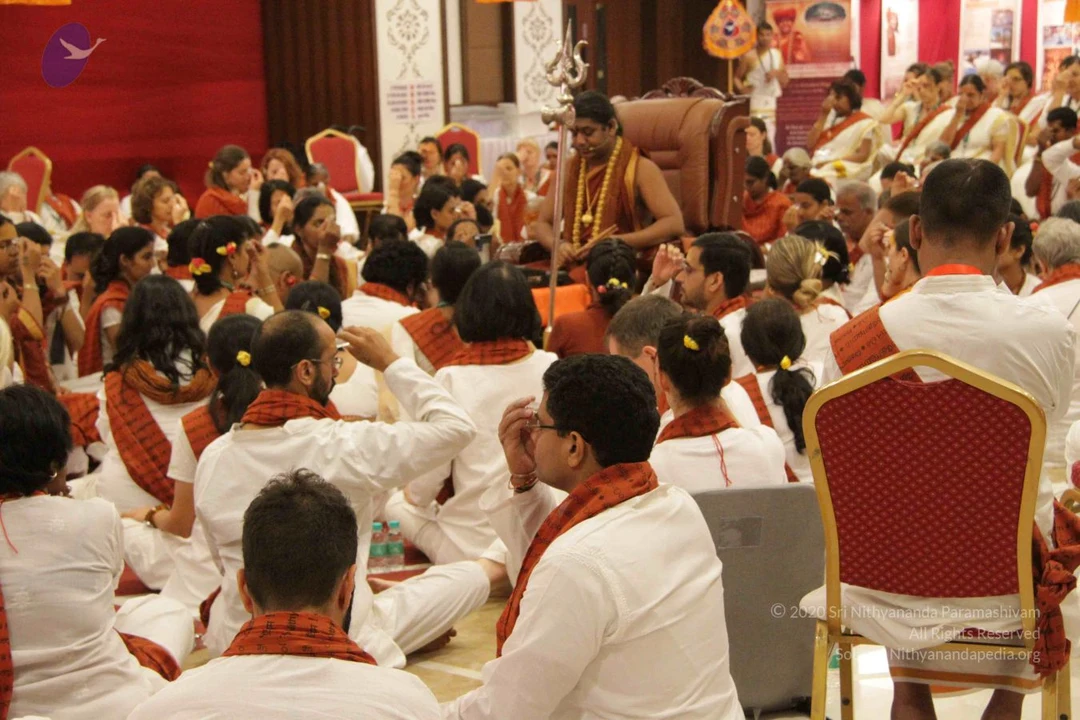
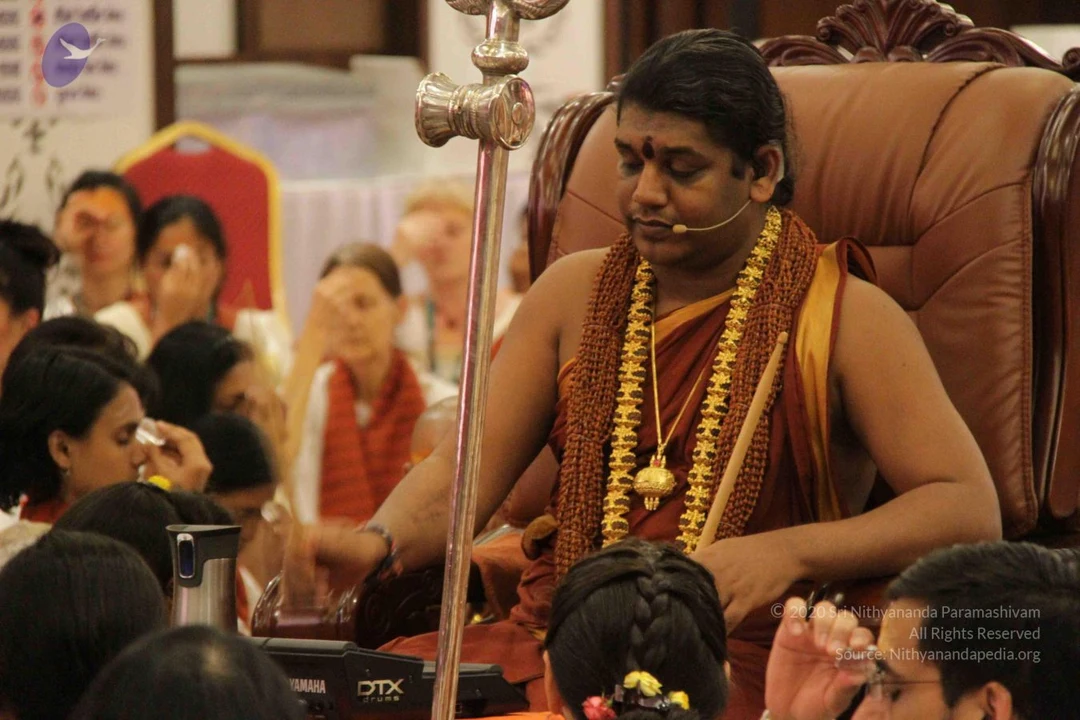
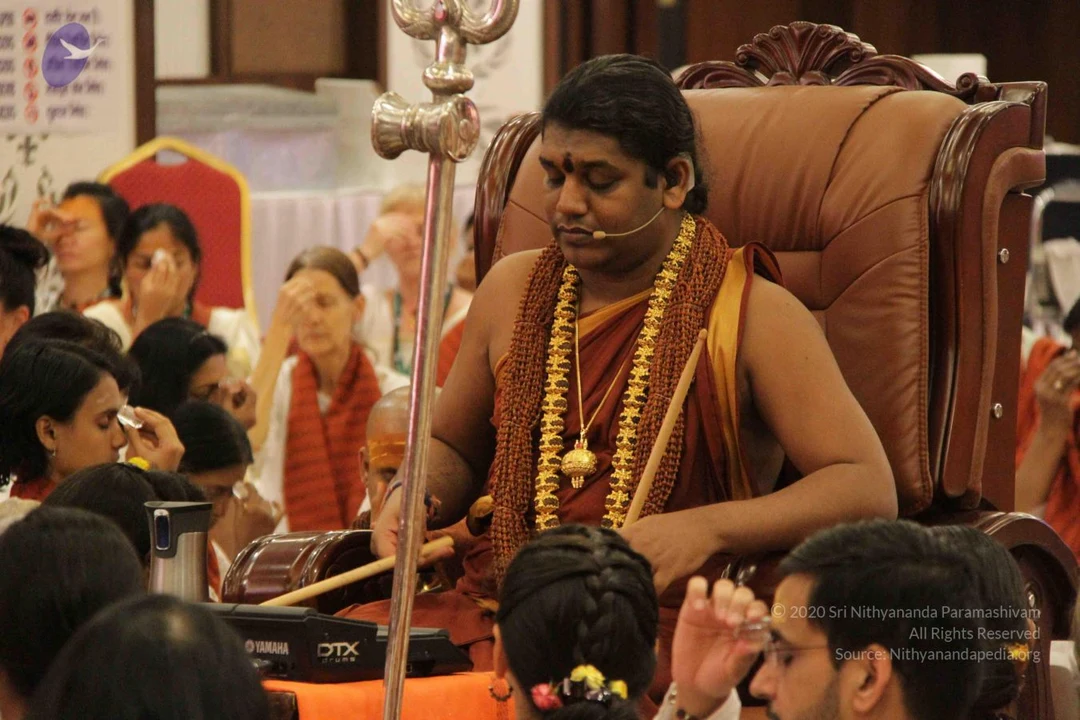
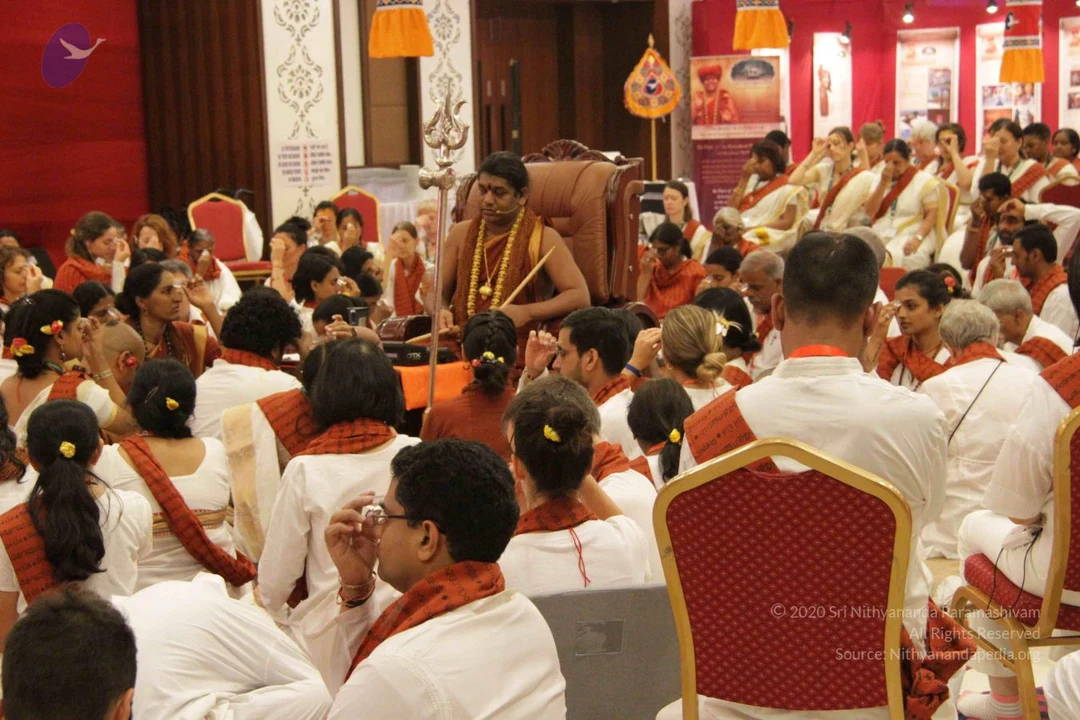
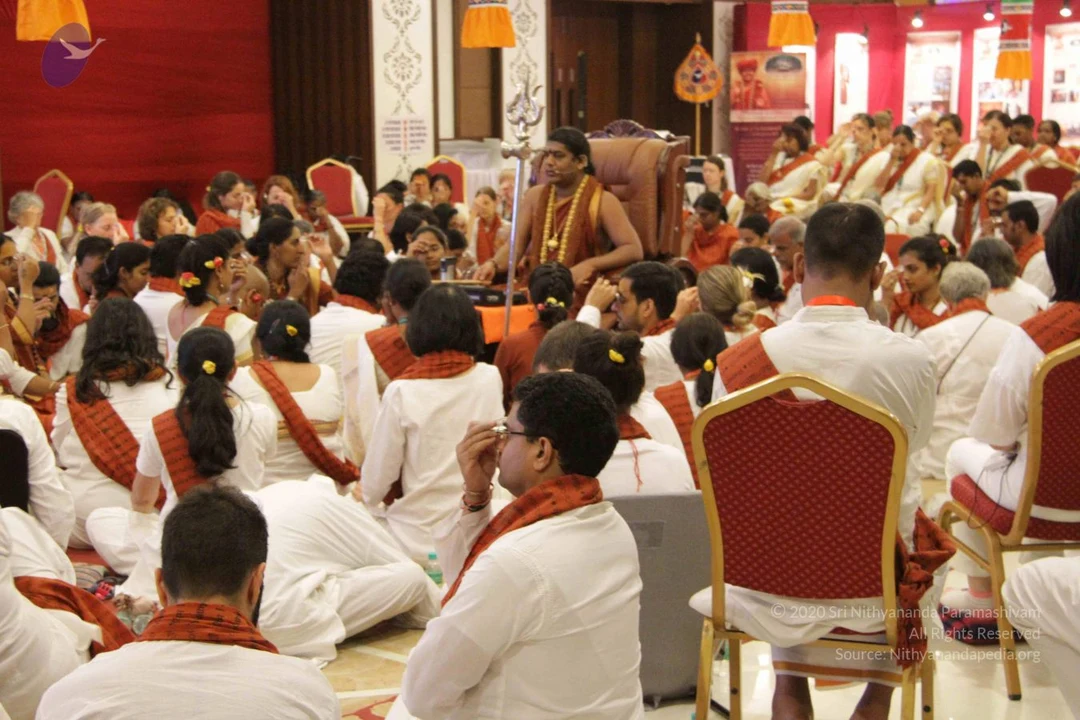
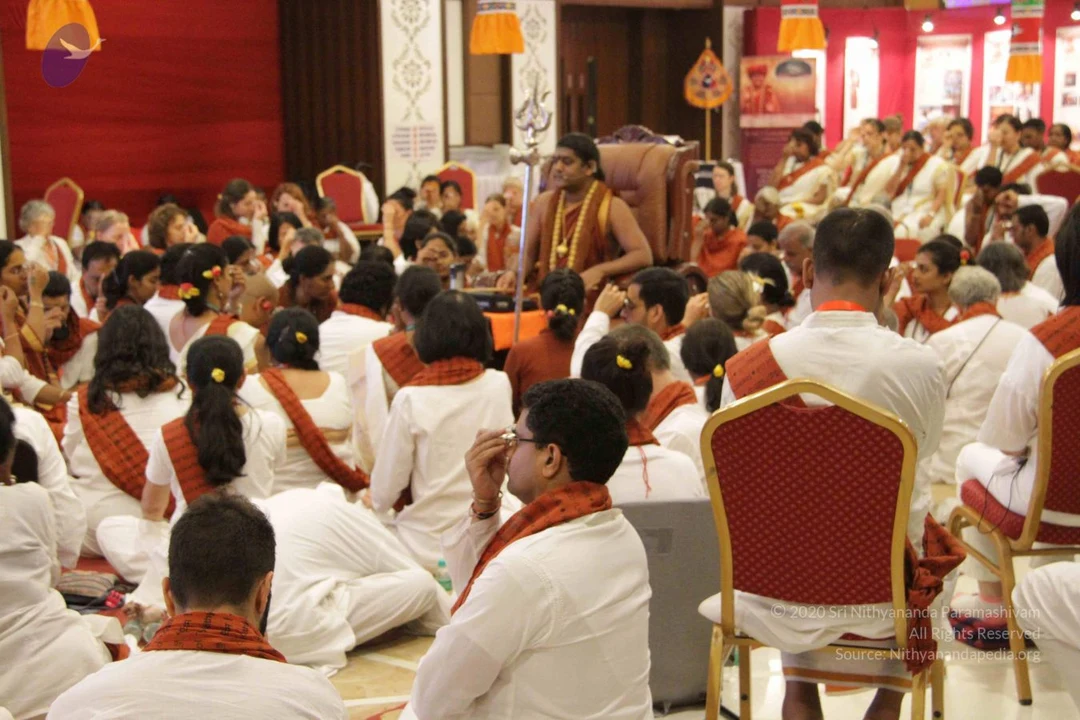
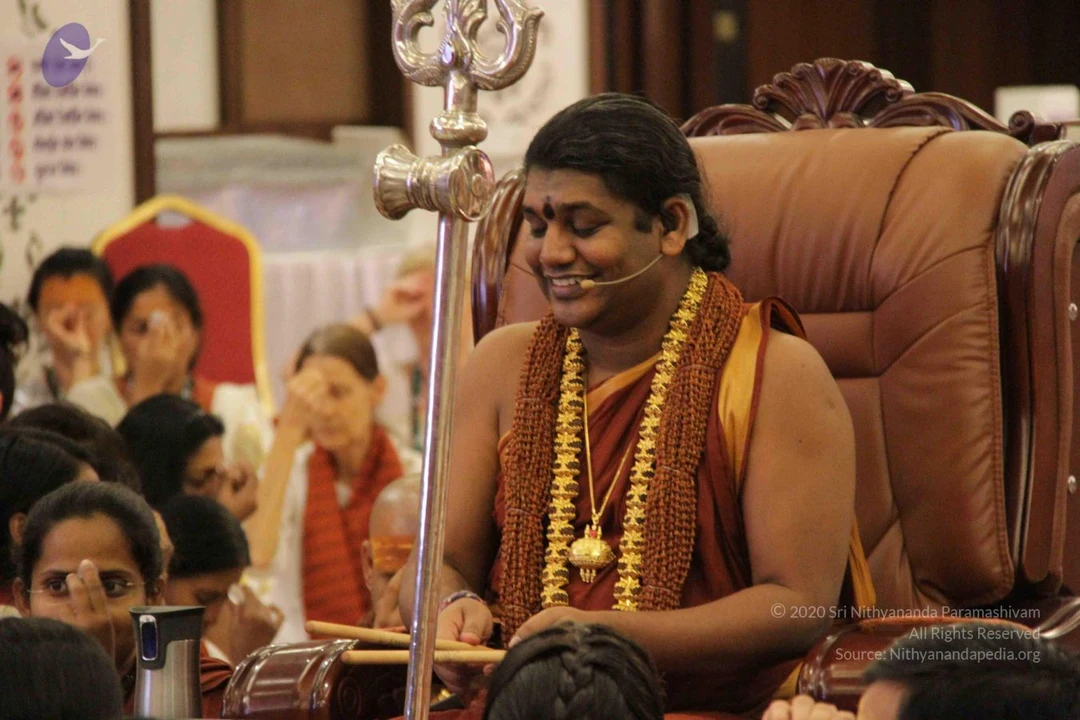
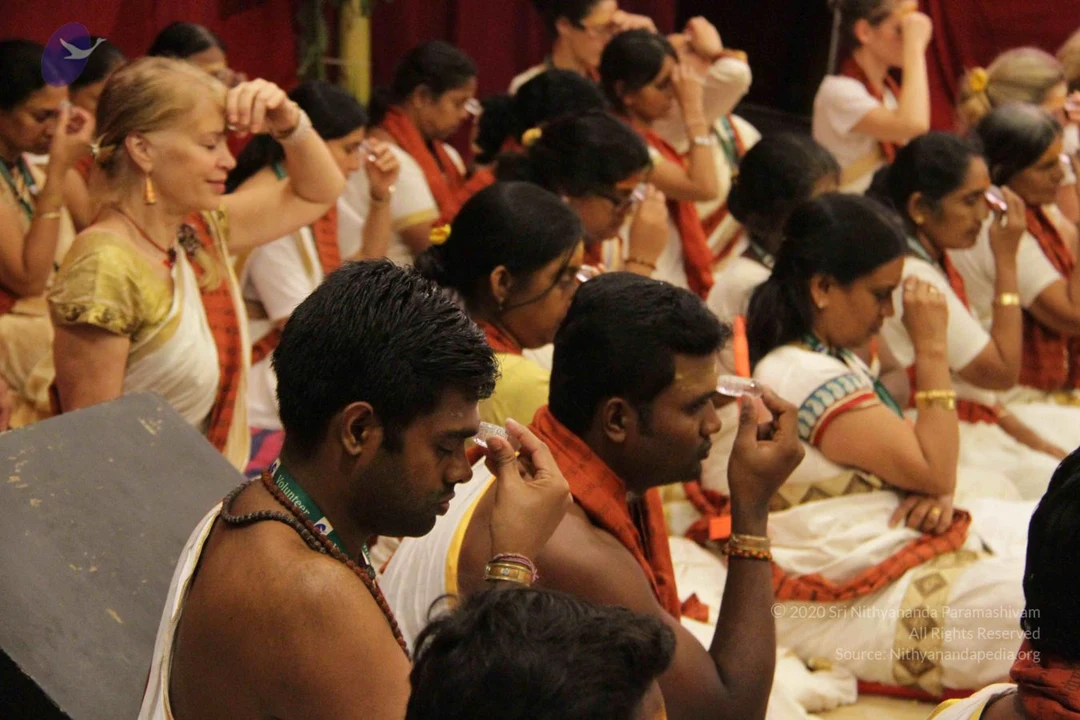
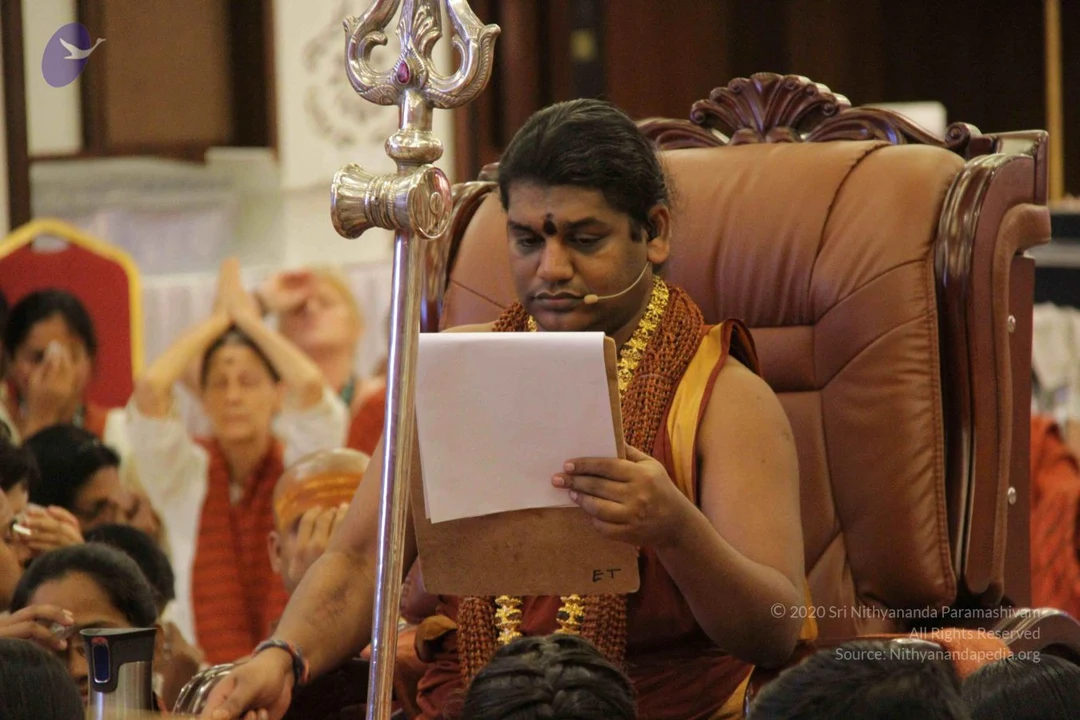
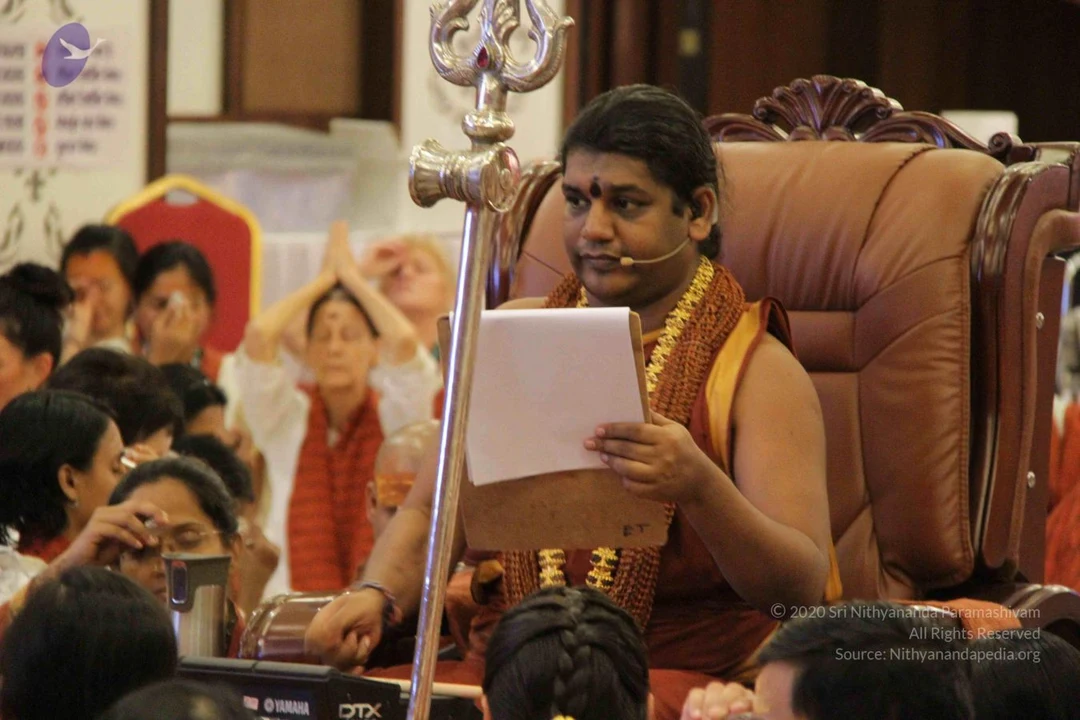
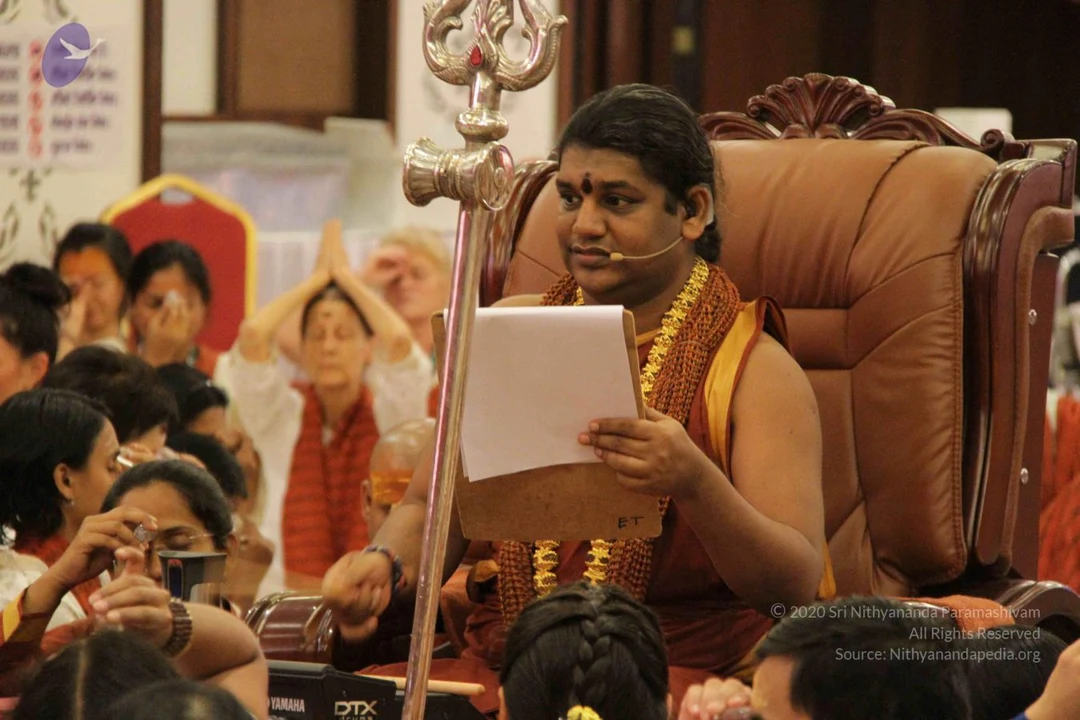
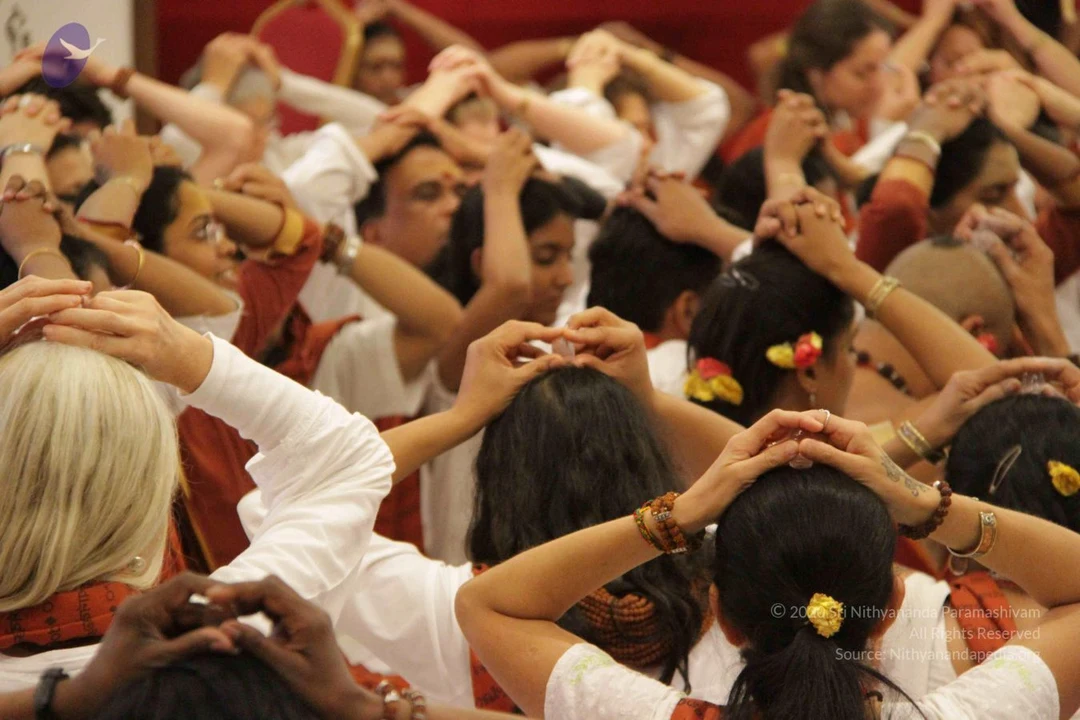
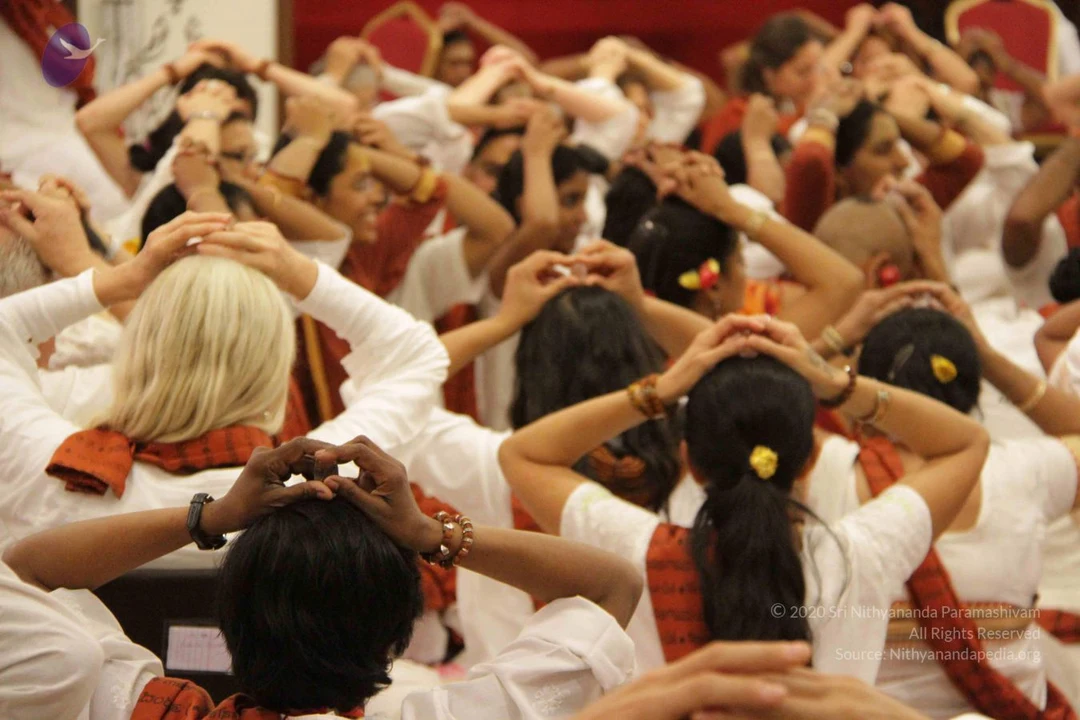
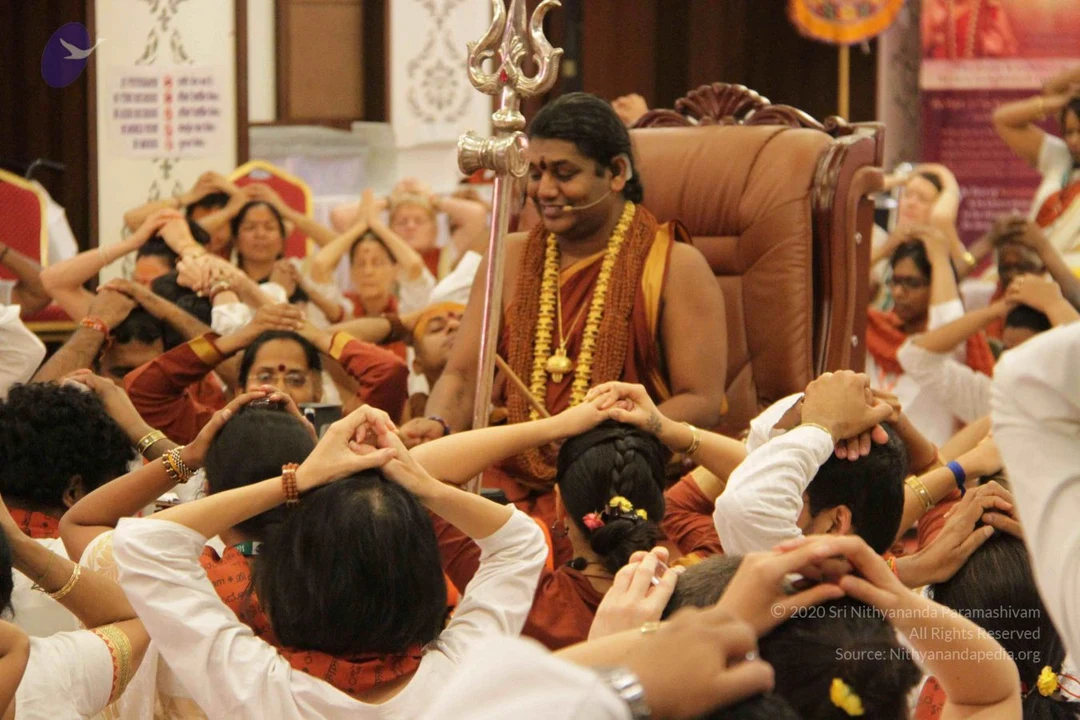
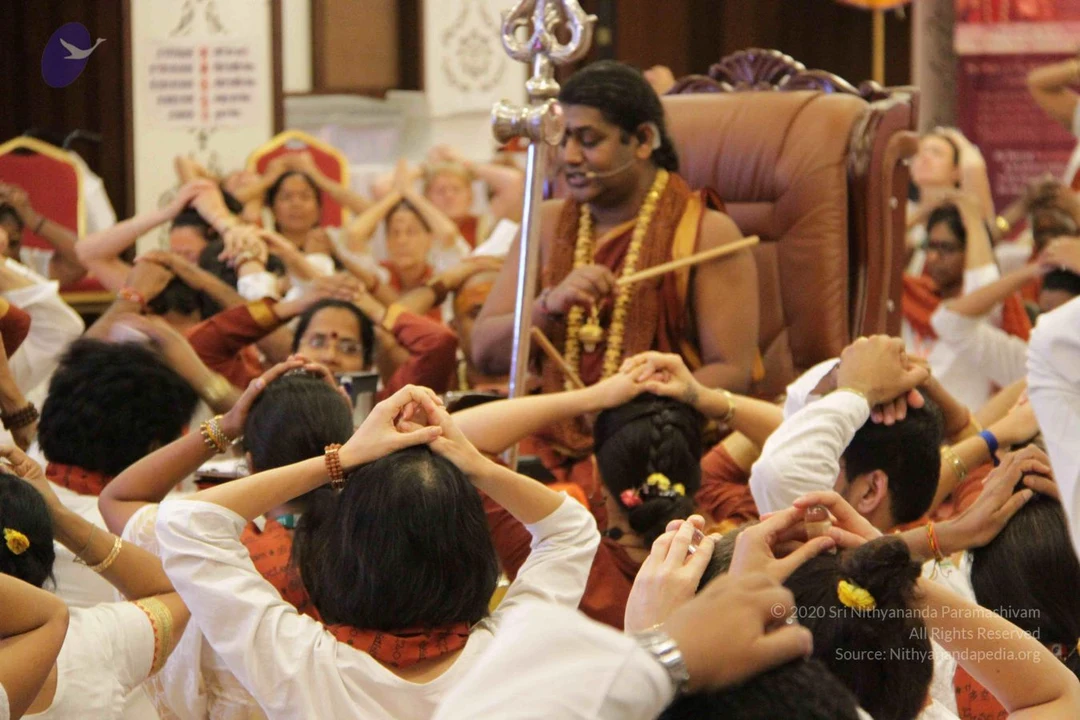
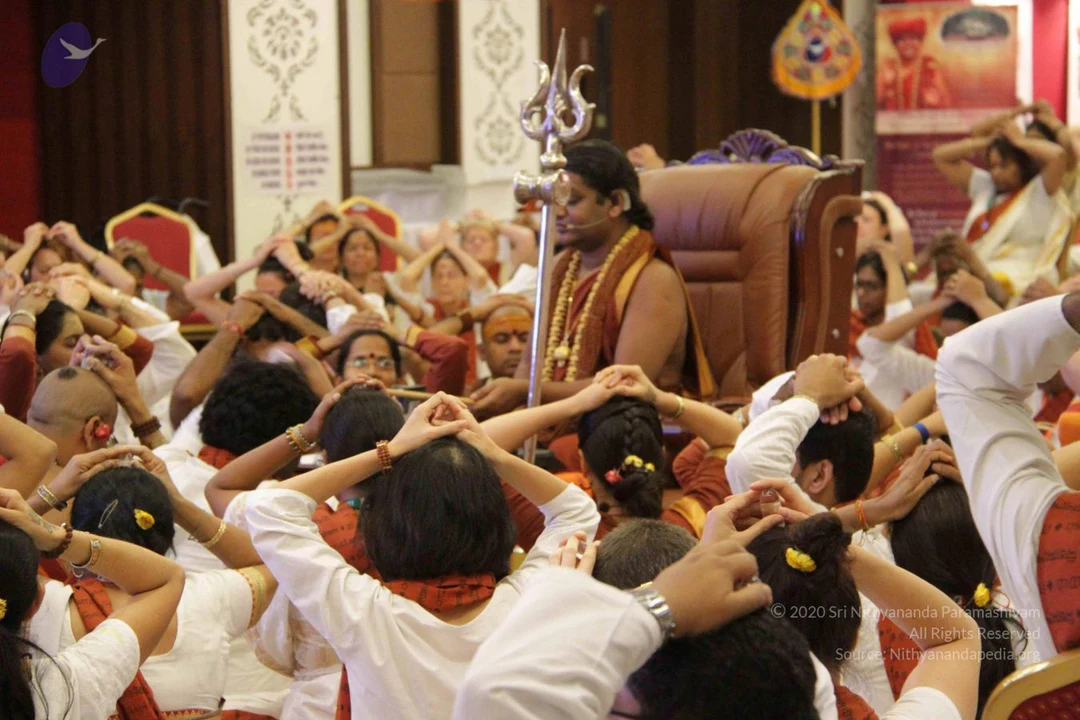
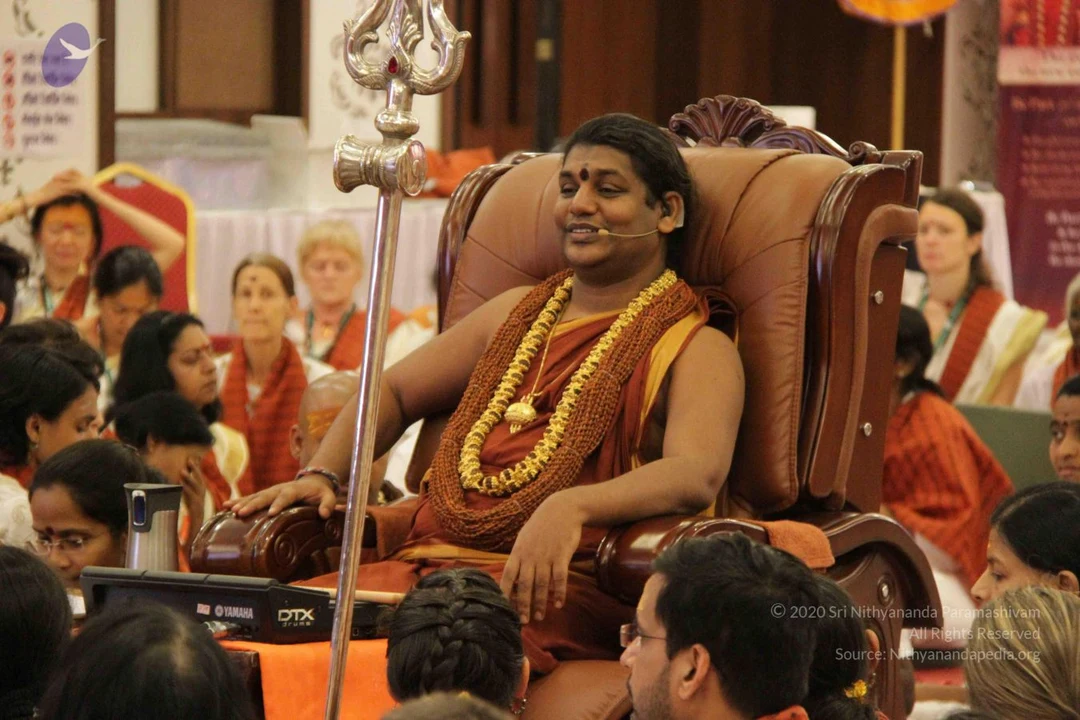
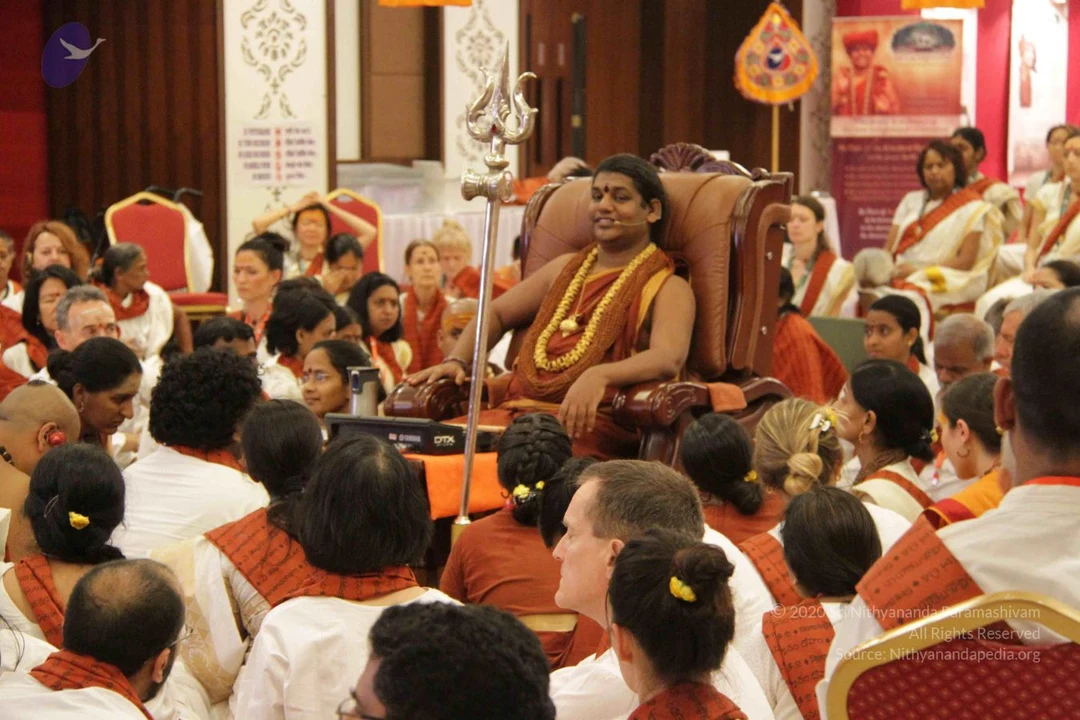
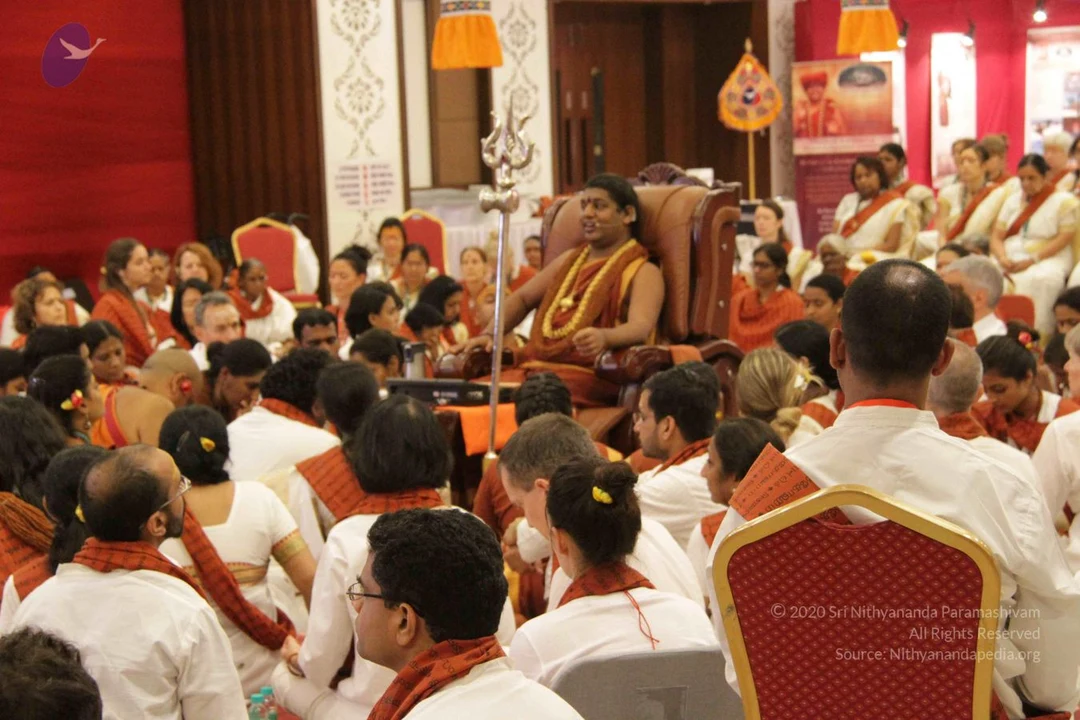
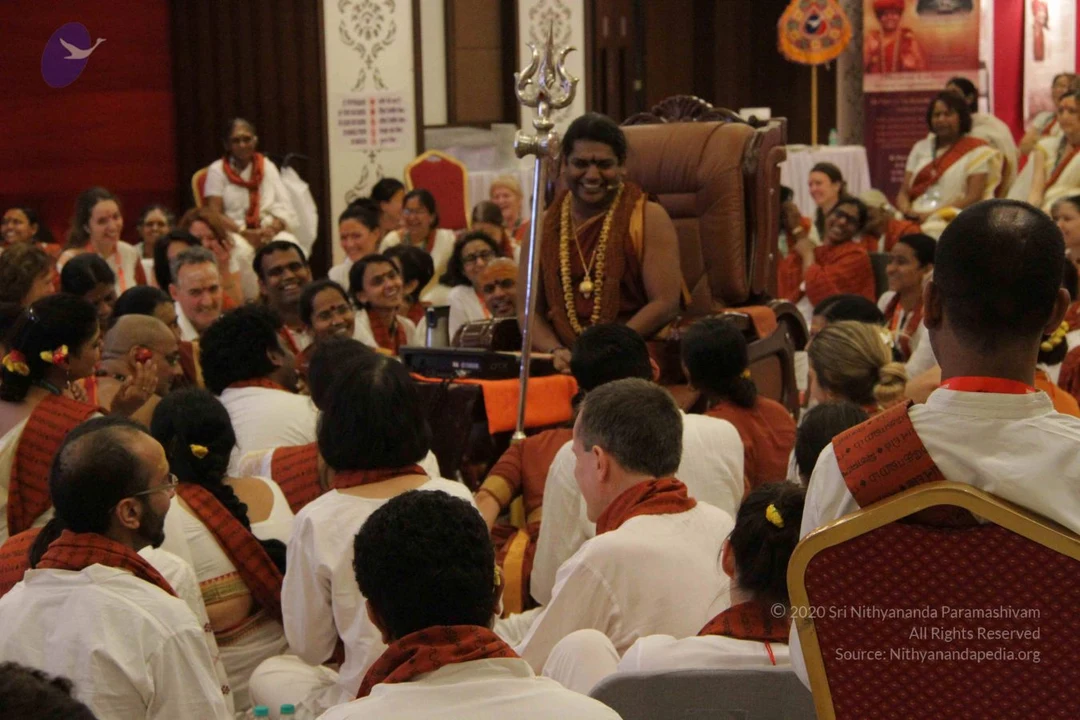
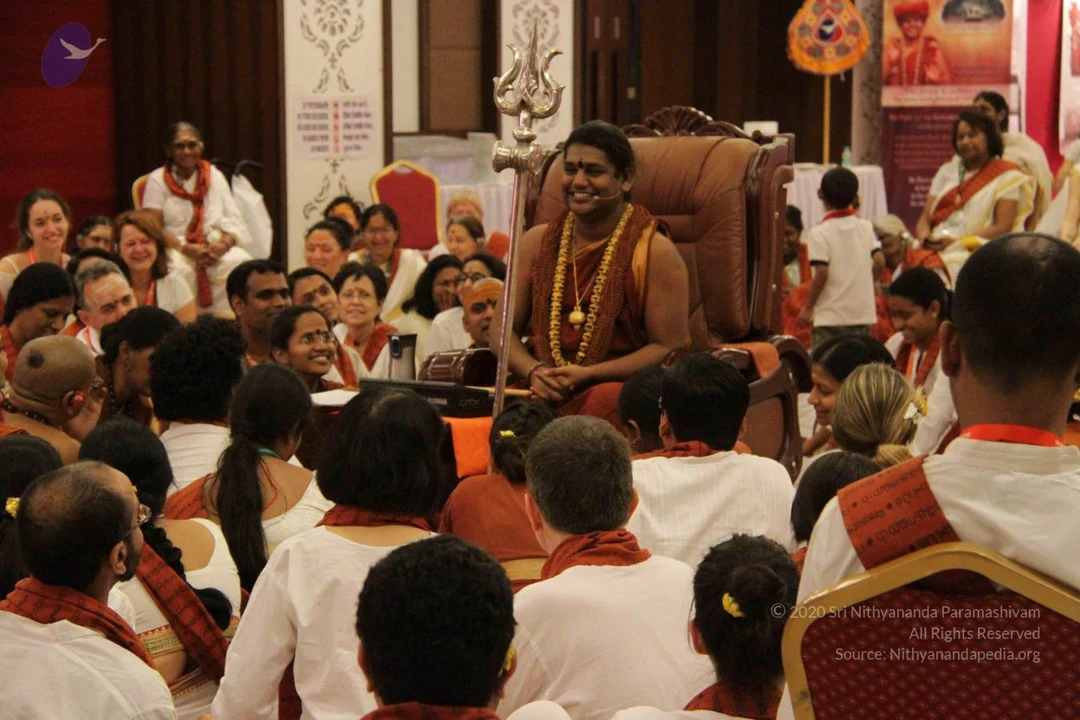
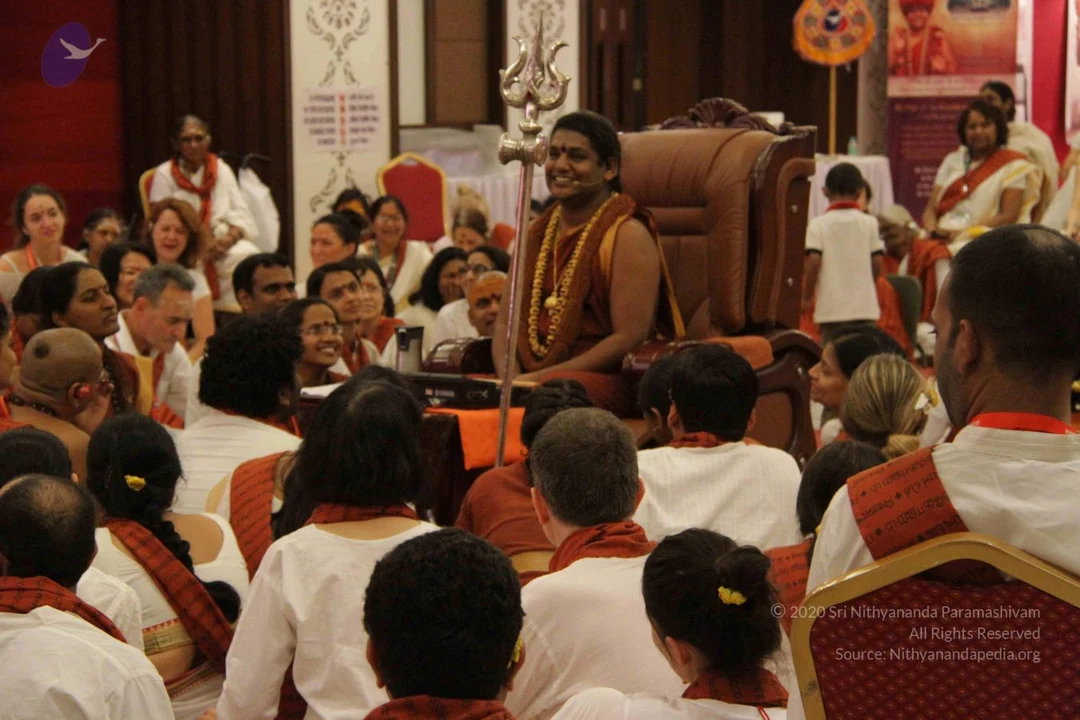
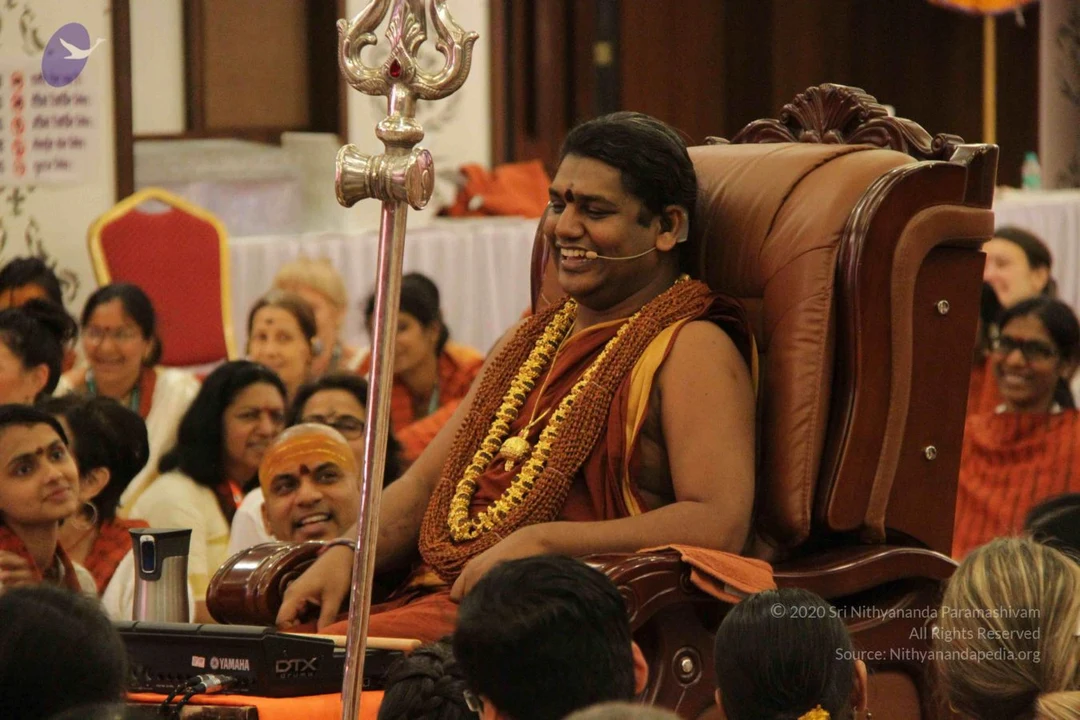
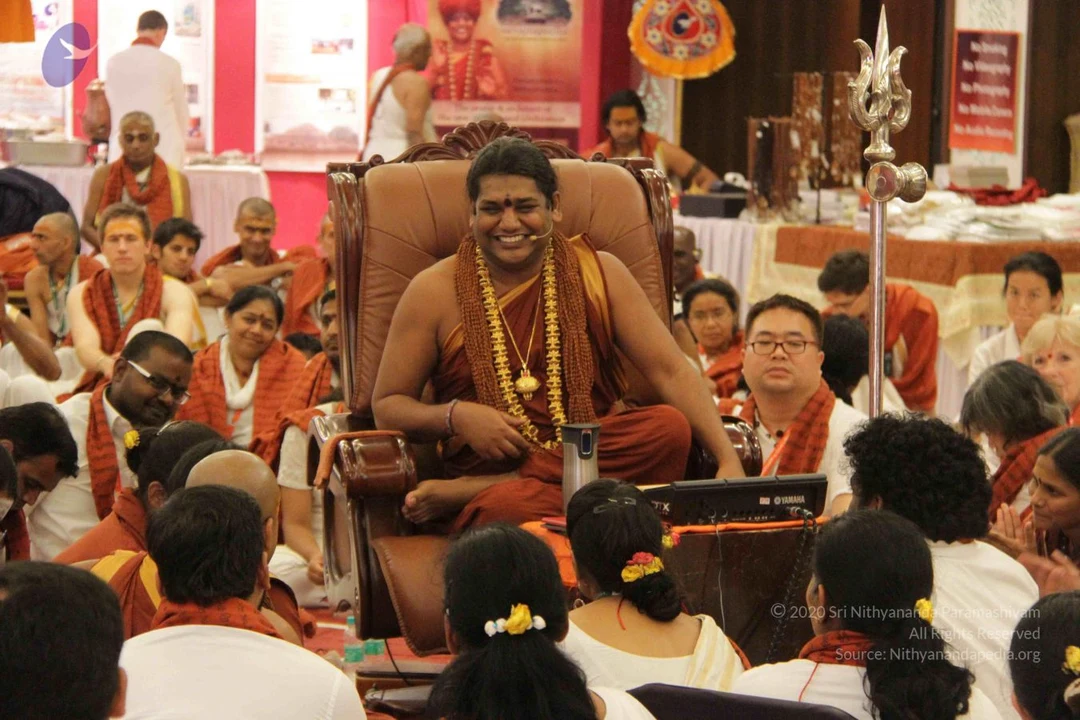
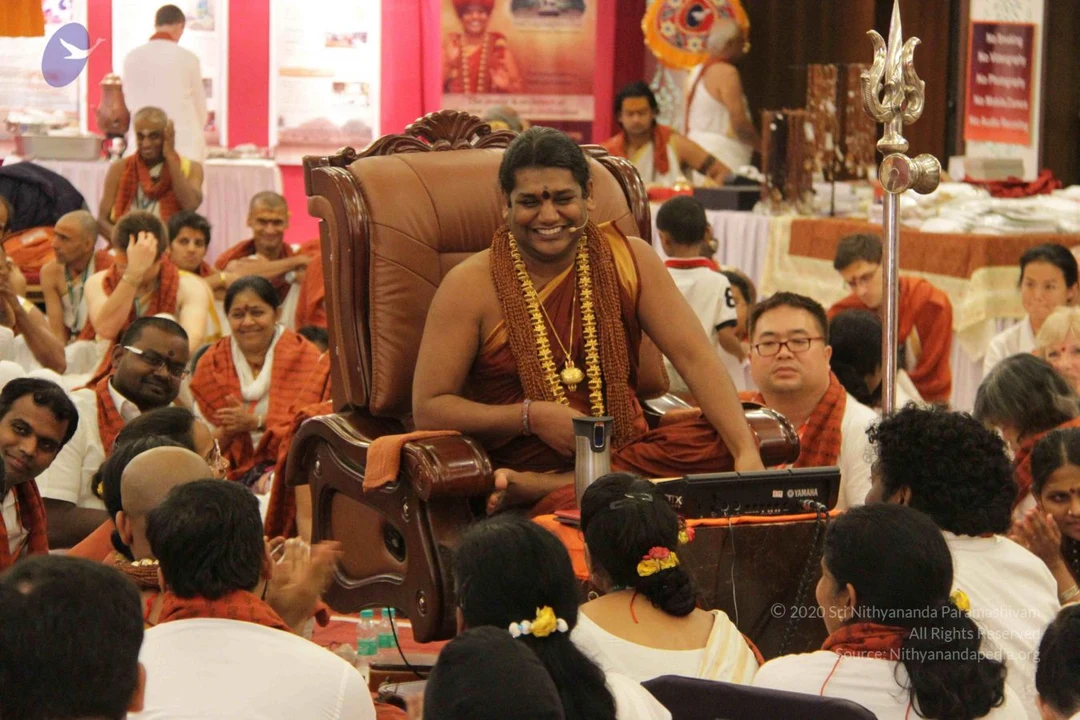
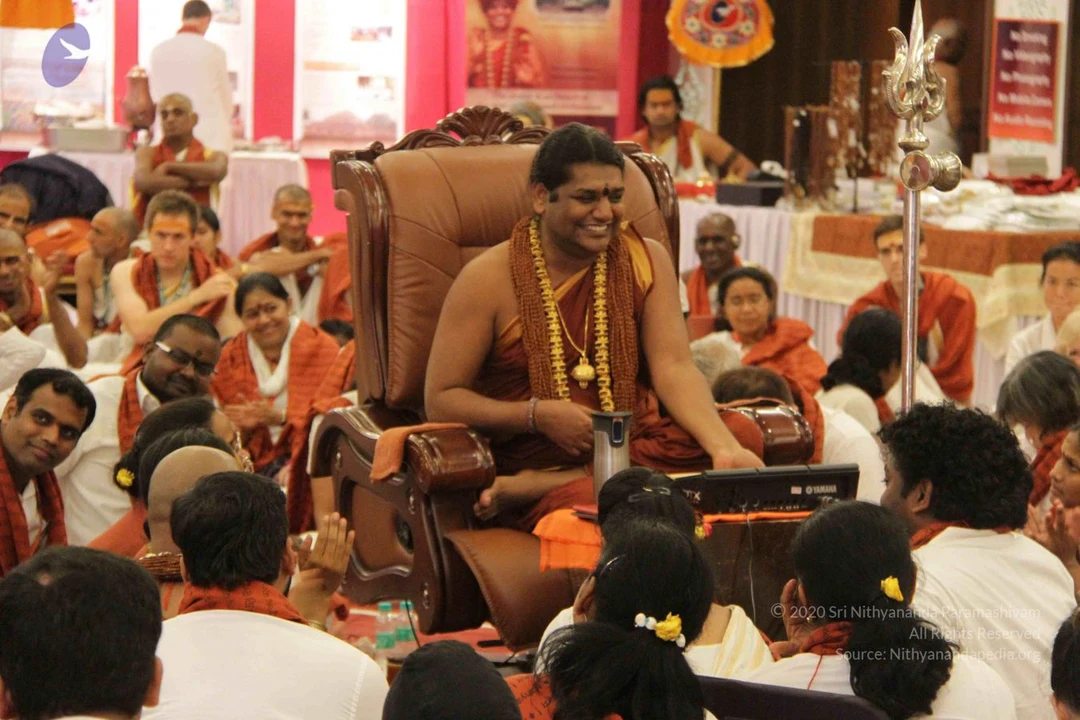
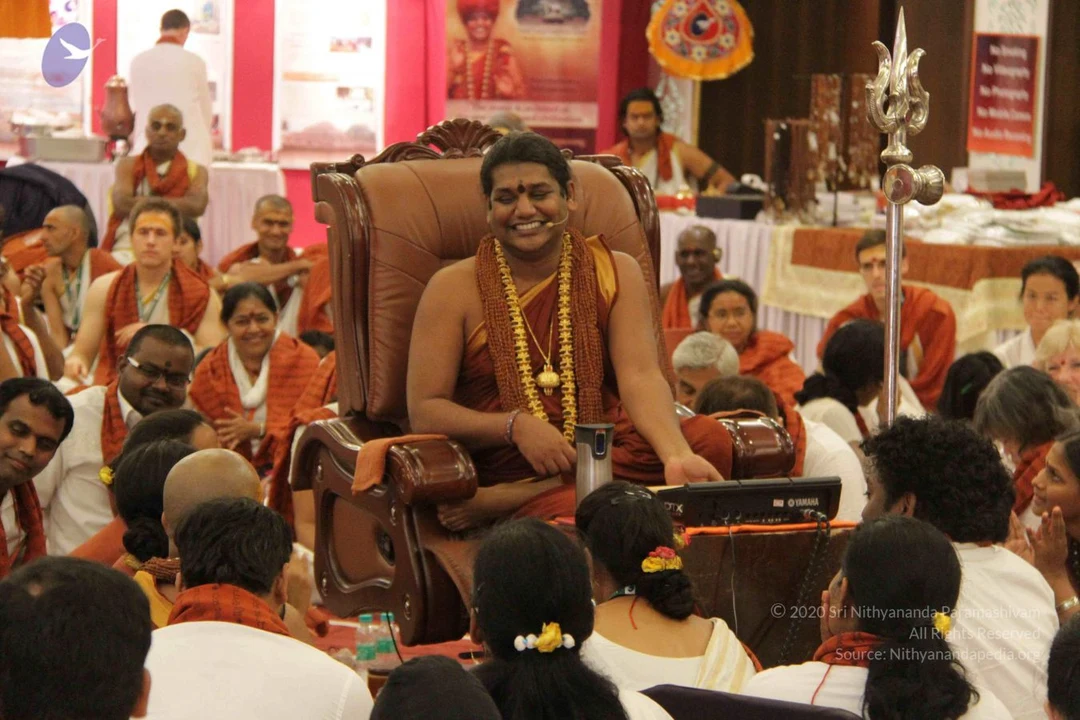
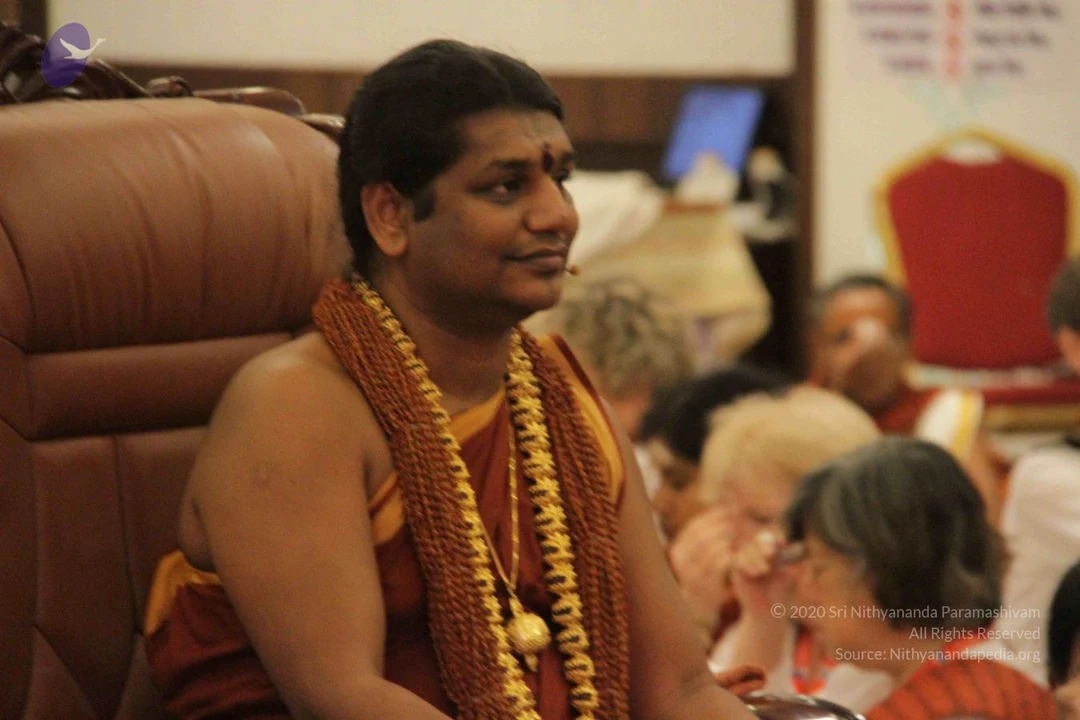
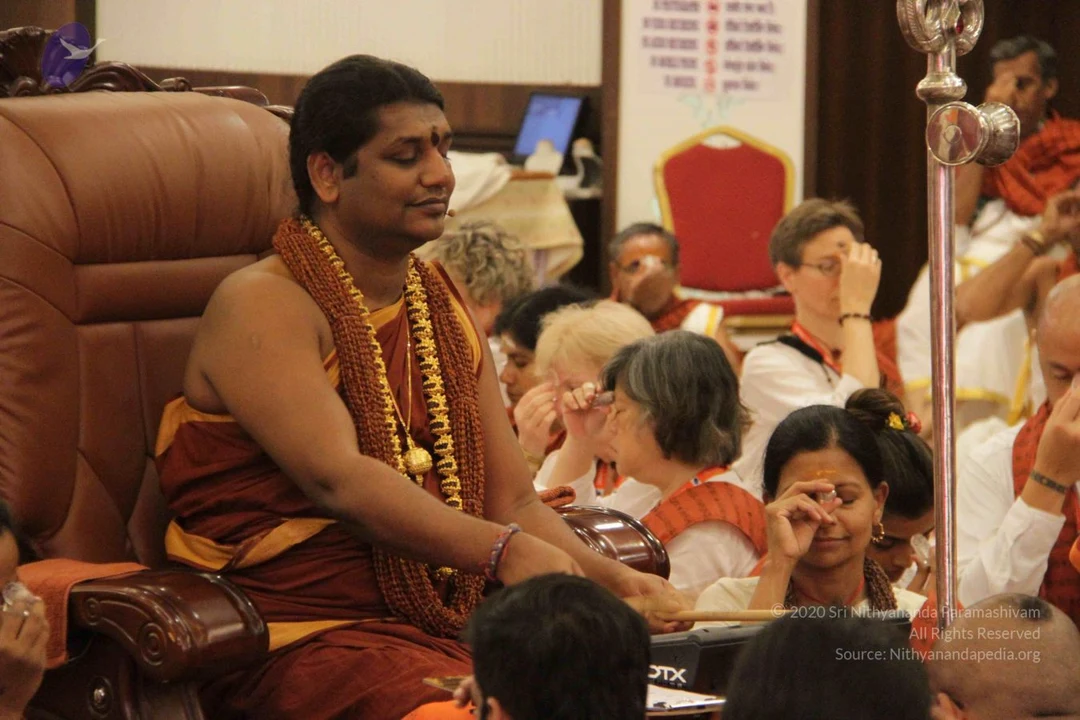
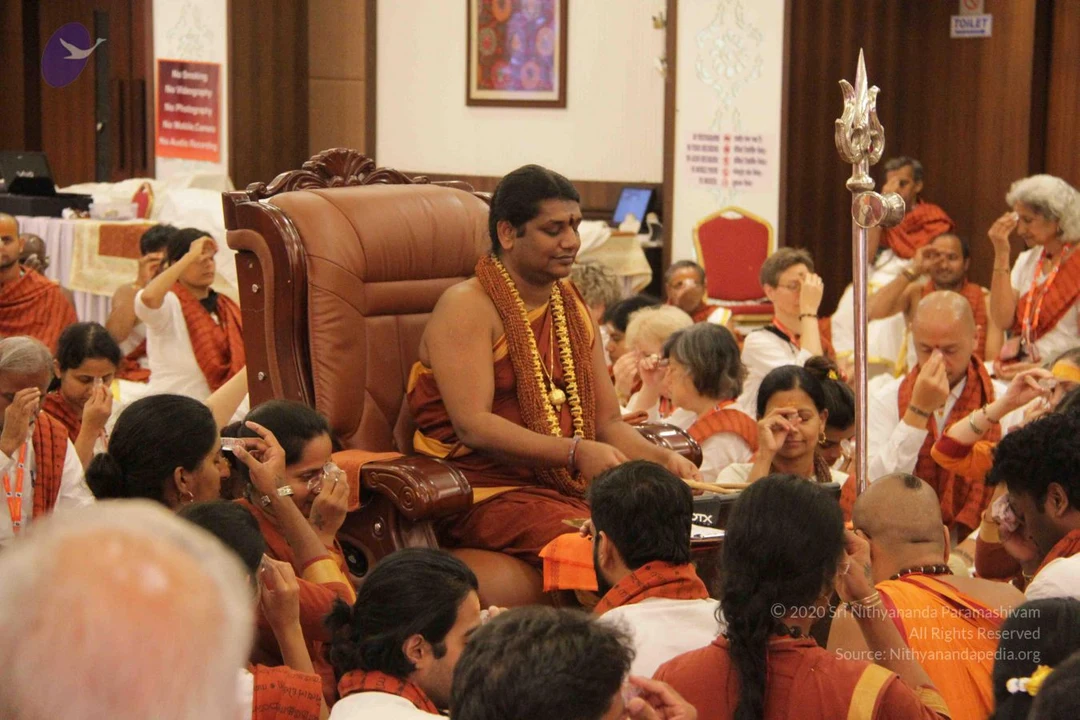
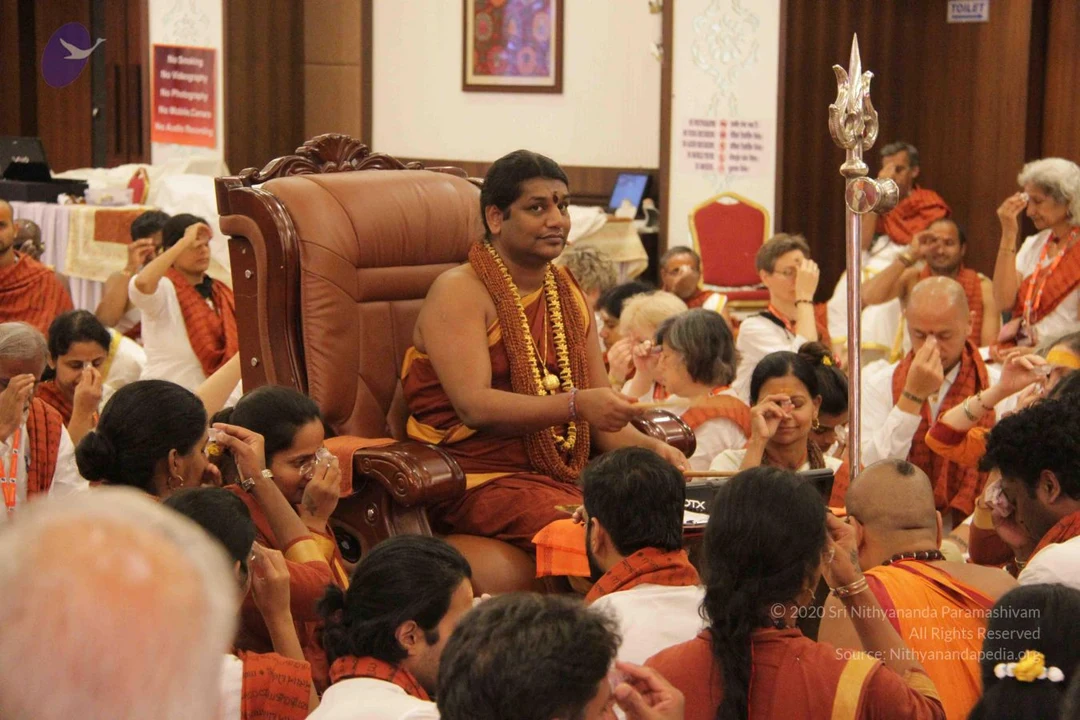
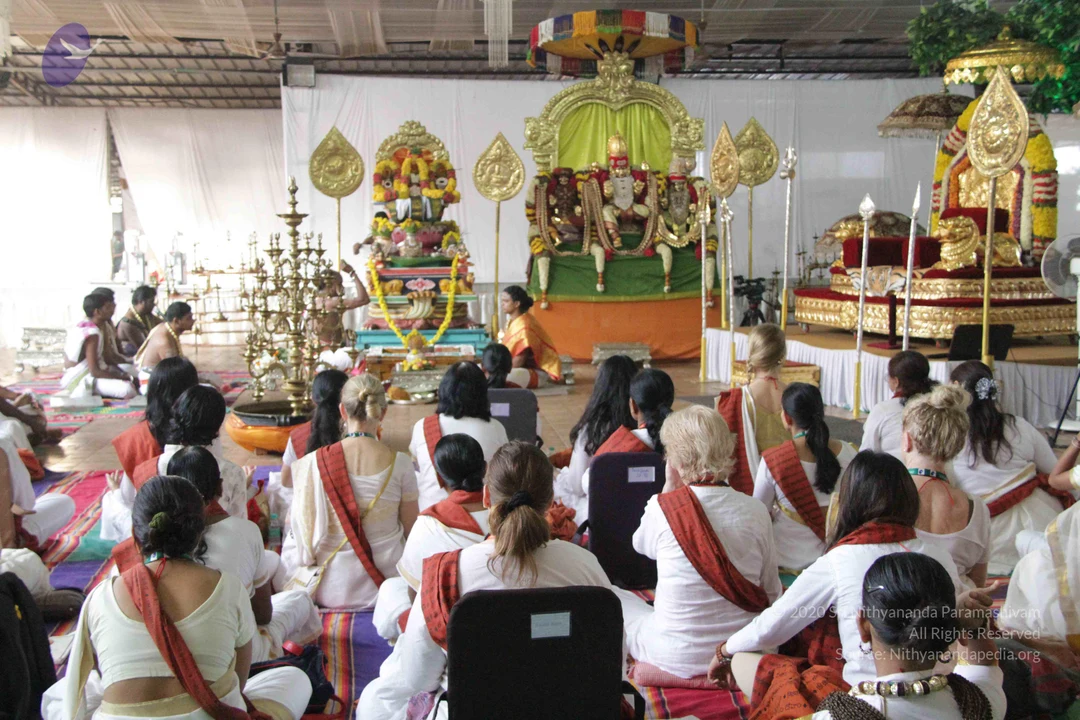
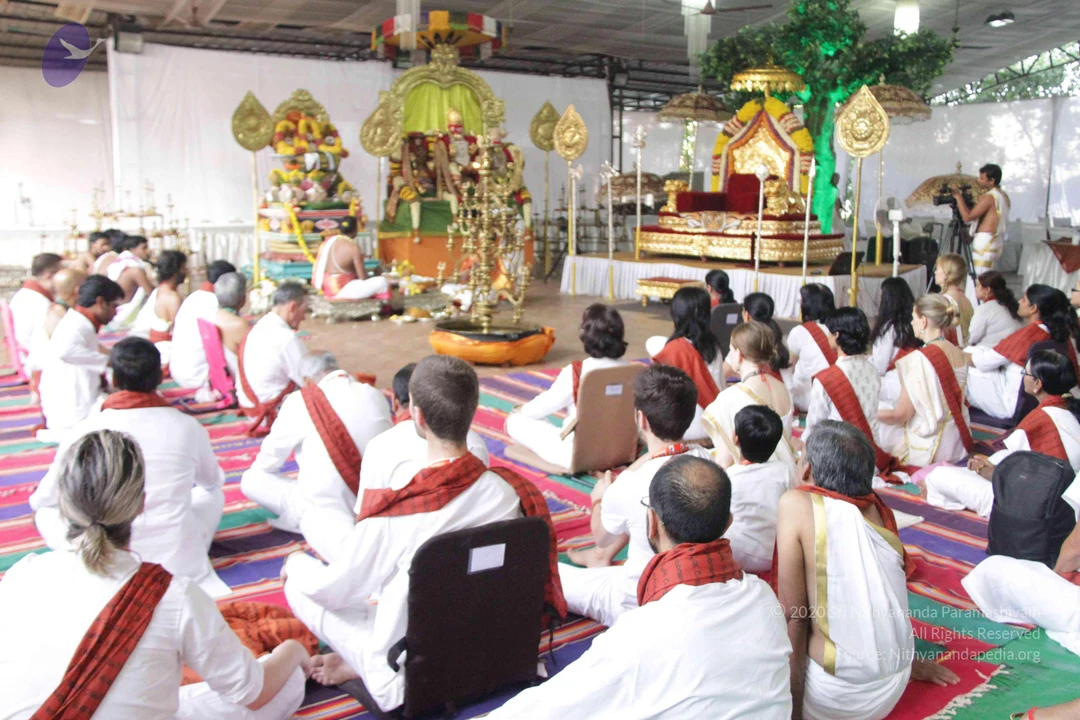
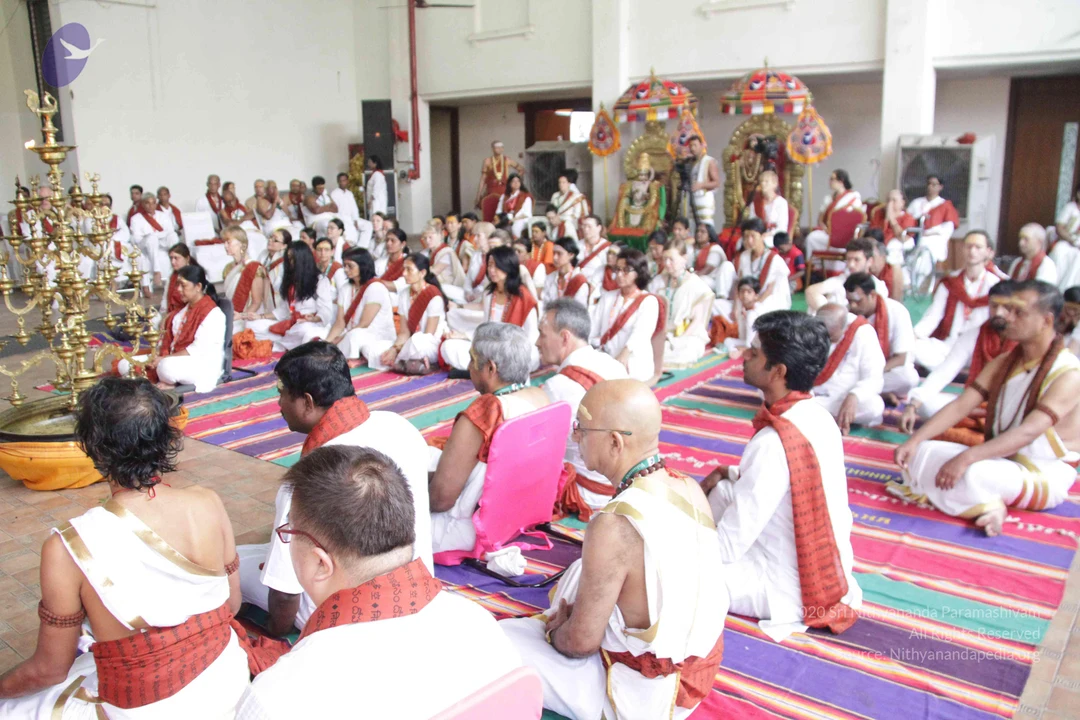
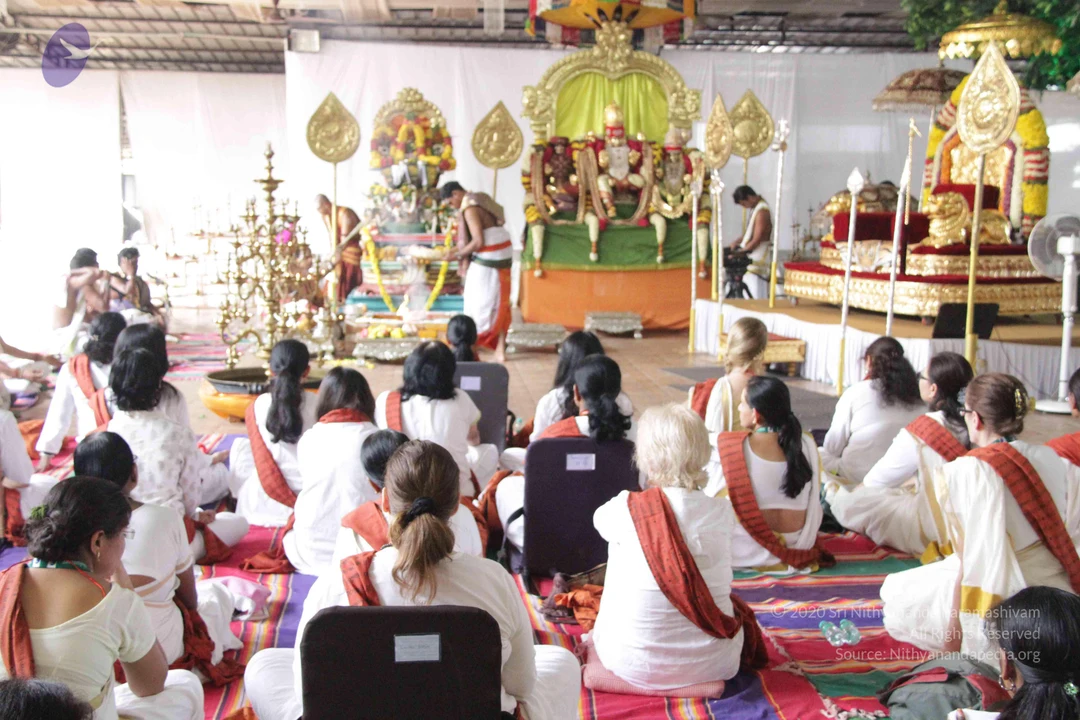
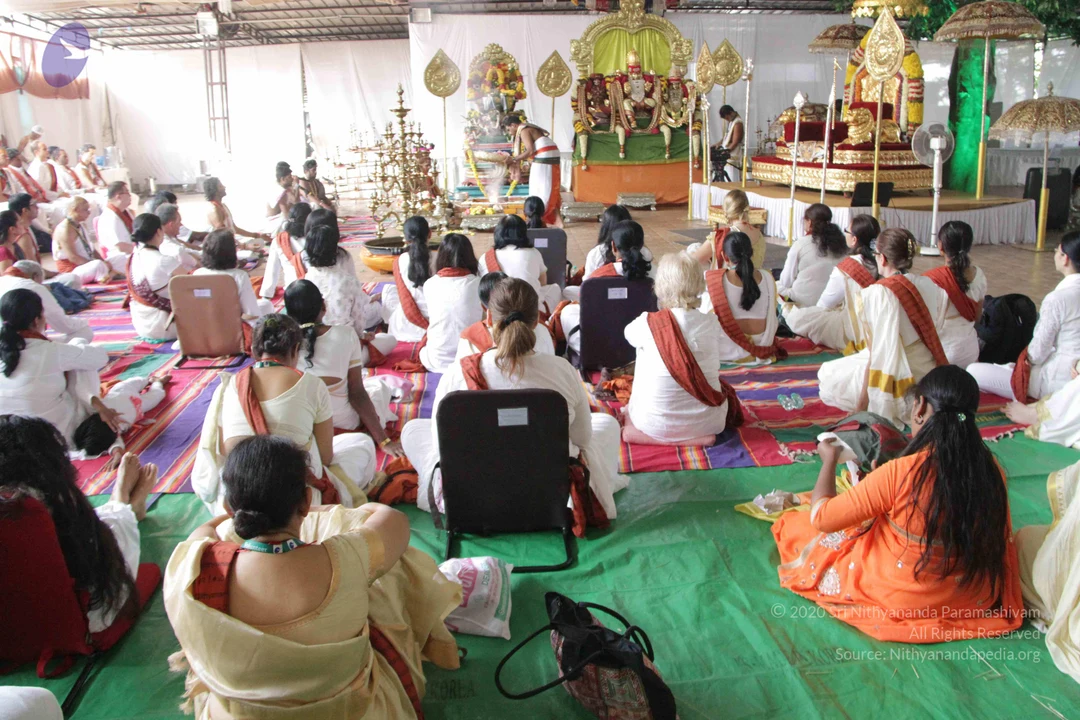
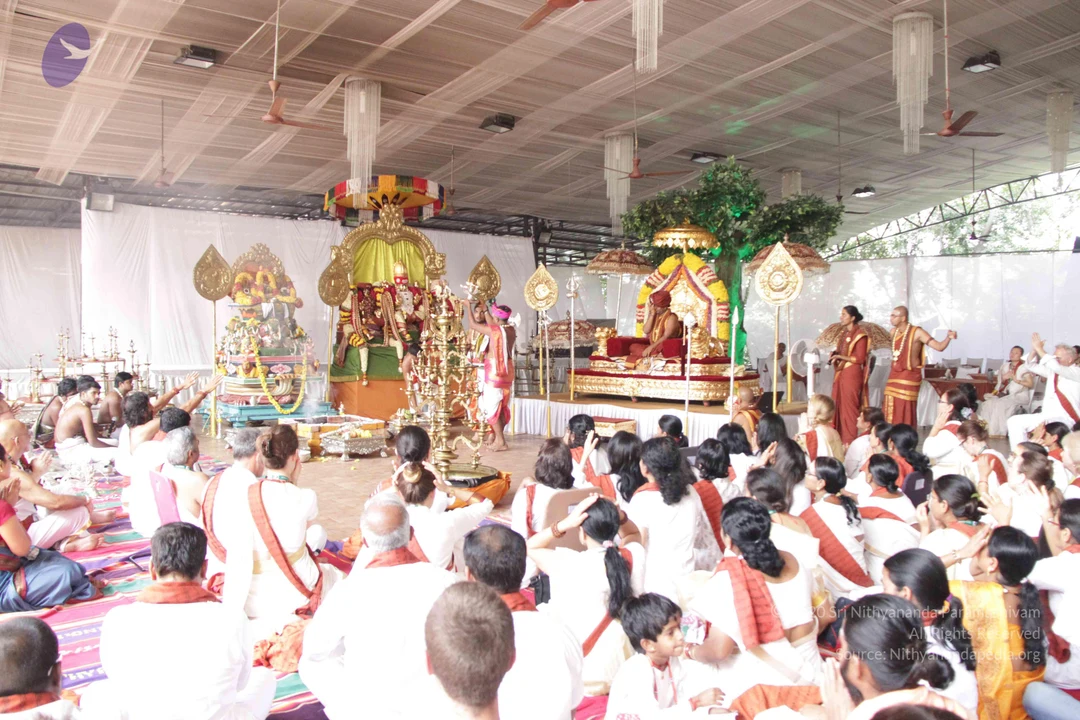
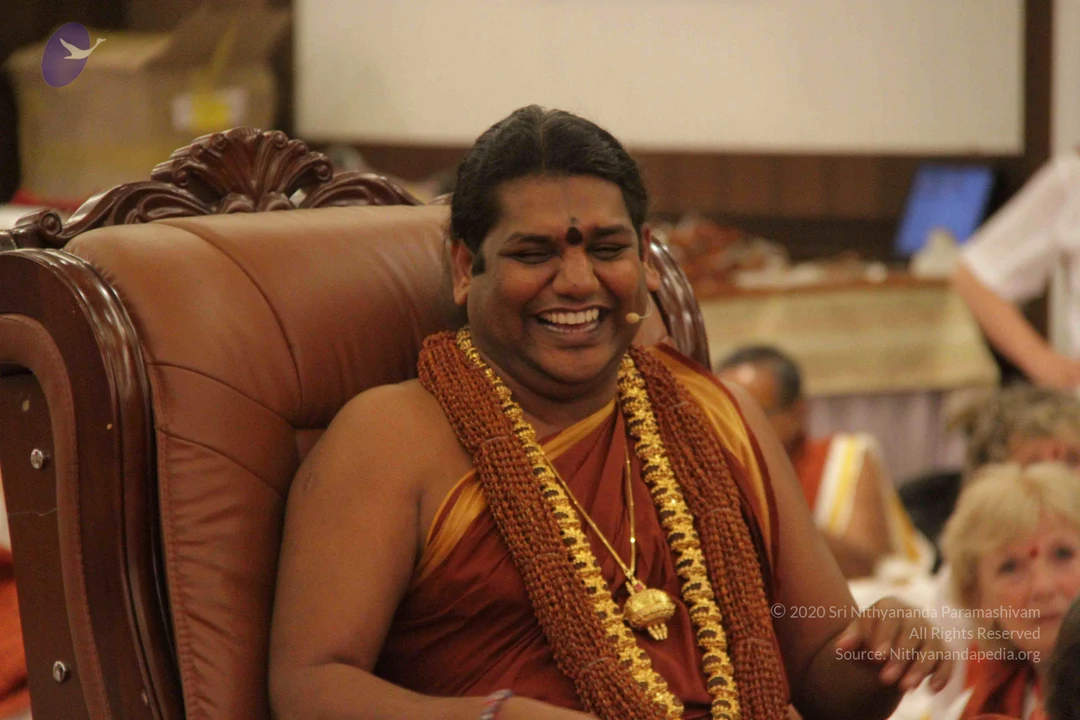
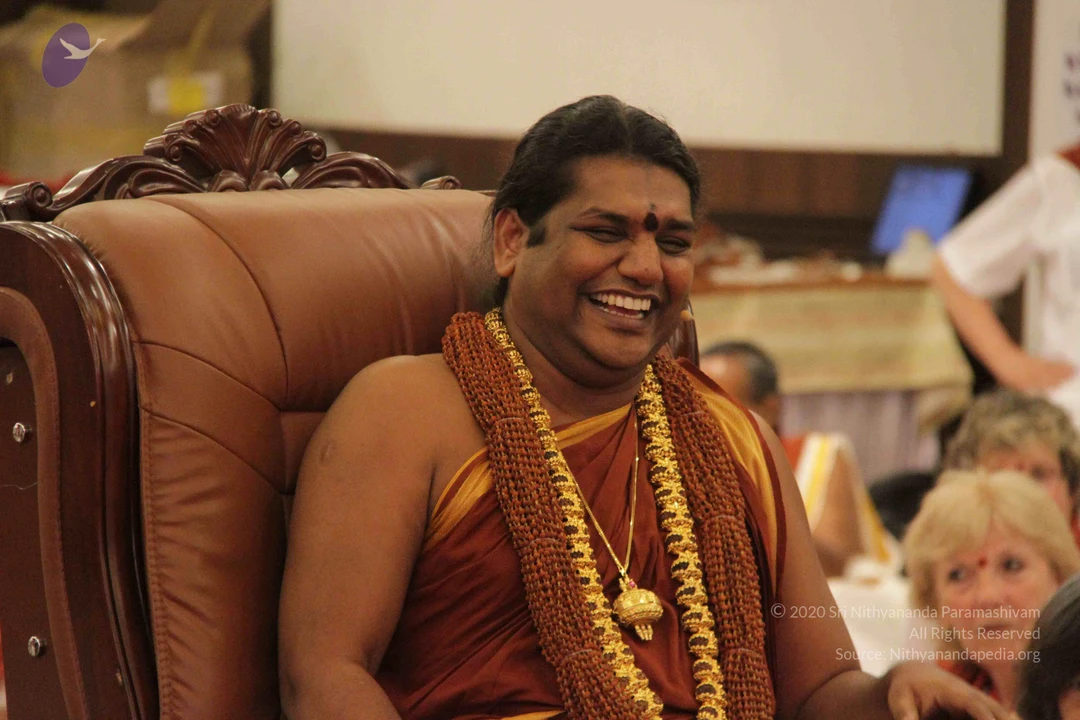
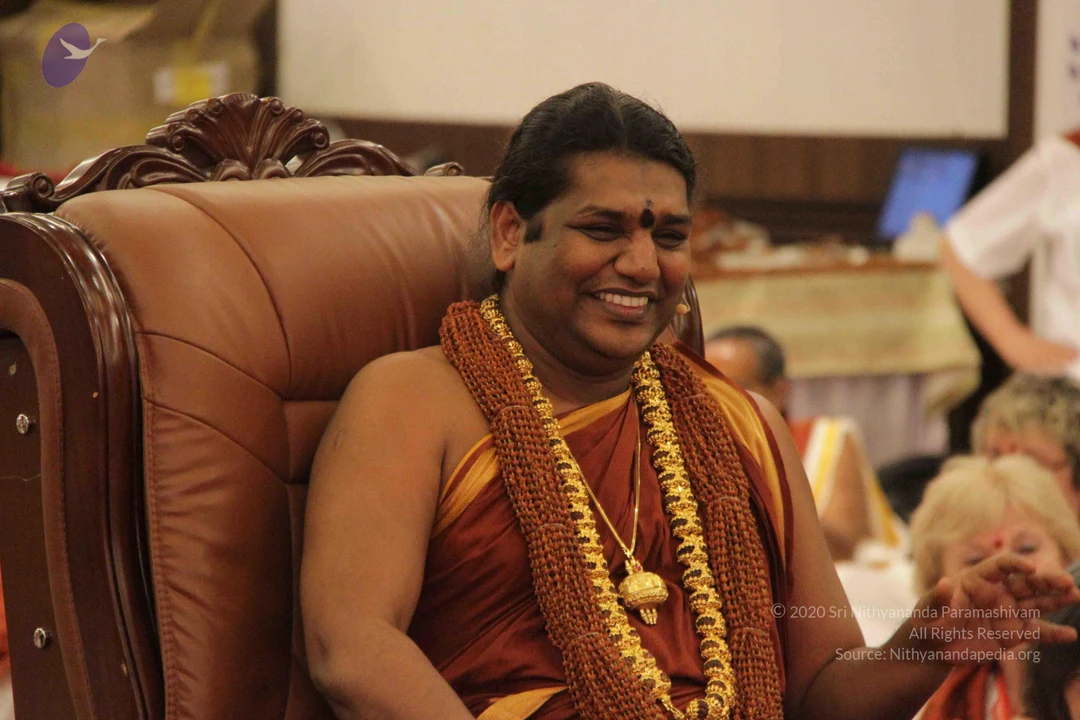
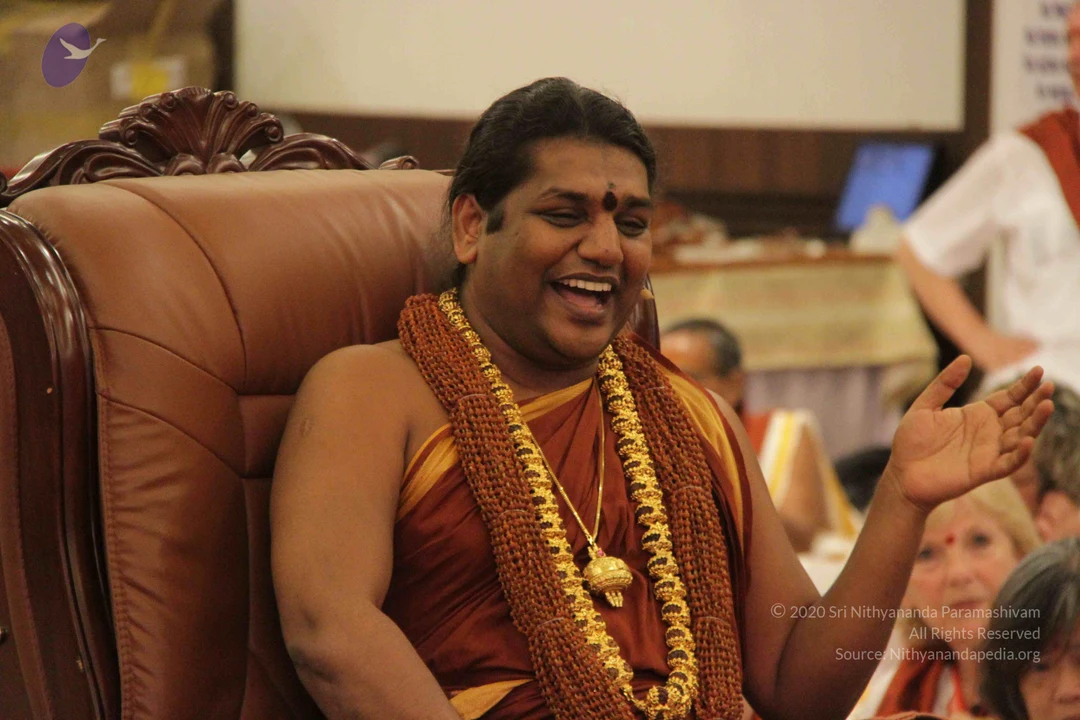
Name Of The Program: Inner Awakening Session on: Shivoham Process & Q&A Part 1 Date : 19 October 2015 Venue : Adikailaasa, Bengaluru, India

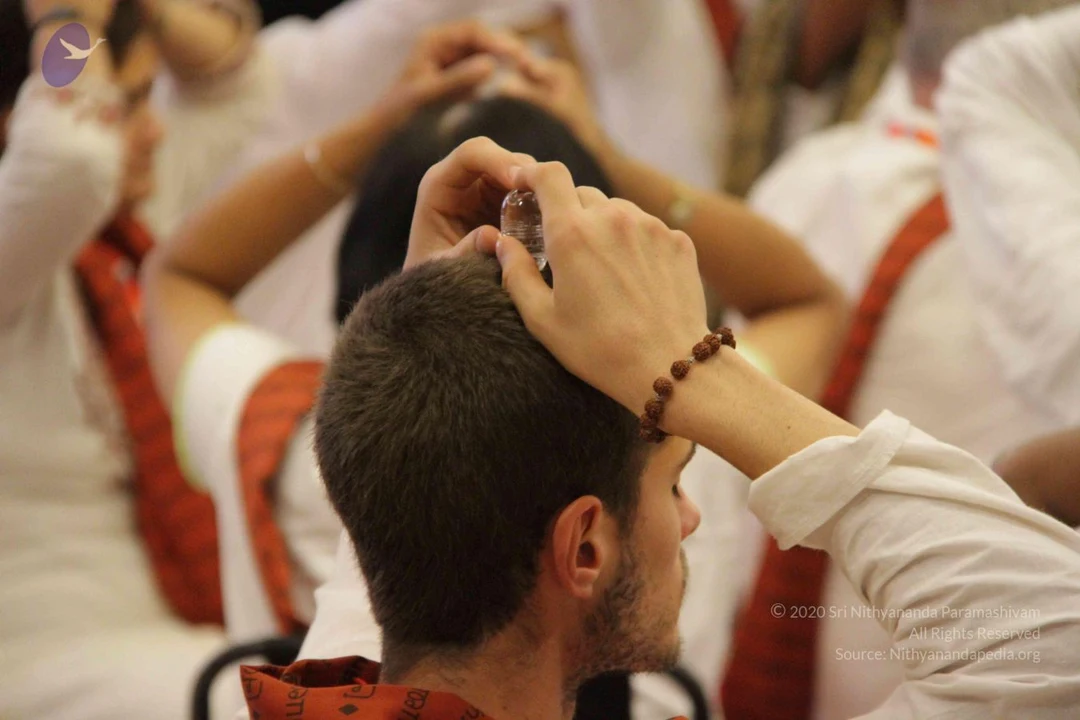
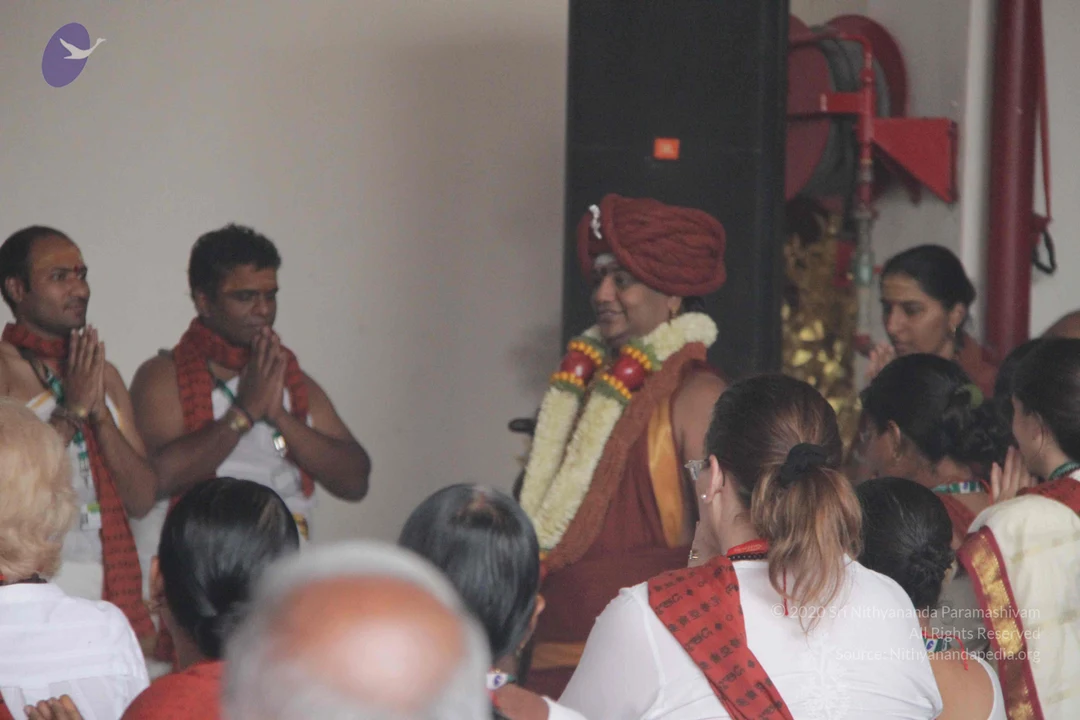
In this video, we see the Supreme Pontiff of Hinduism HDH #Nithyananda Paramashivam take the Inner Awakening delegates through the Shivoham process. Shortly after, we see His Divine Holiness answering questions on topics such as mantras, mudras and devotion.

The Supreme Pontiff of Hinduism Jagatguru Mahasannidhanam His Divine Holiness Nithyananda Paramashivam (HDH) is the reviver of #KAILASA - the ancient enlightened civilization and the great cosmic borderless Hindu nation. Revered as the incarnation of Paramashiva - the primordial Hindu Divinity, HDH has a following of 2 billion Hindus worldwide with de facto spiritual embassies in over 150 countries. He has worked untiringly for over 26 years for the revival of Kailasa, for global peace and to give super conscious breakthrough to humanity. He has survived the worst persecution of multiple assassination attempts on person and on character by anti-Hindu elements. He is collecting, organising, preserving, time capsuling, decoding, spreading and reviving 20 Million source books of Hinduism and the 64 sacred arts & sciences like Ayurveda, music, dance, sculpting, astrology, vastu and much more. Close to 20,000 hours of HDH’s timeless talks have been recorded till date (Sep 2020), which are a treasure trove of powerful cognitions to solve individual and global problems of any kind.

Link to Video:

VideoAudio

Title

Shivoham Process & Q & A || Part 2 || IA || 19 Oct 2015

Description

Name Of The Convention: Inner Awakening Session on: Shivoham Process & Q&A Part 2 Date : 19 October 2015 Venue : Varanasi, India

In this video, we see the Supreme Pontiff of Hinduism HDH #Nithyananda Paramashivam take the Inner Awakening delegates through the Shivoham process. Shortly after, His Divine Holiness discusses topics such as Apath Sanyas, and answers questions on how sound and pattern are closely linked.

The Supreme Pontiff of Hinduism Jagatguru Mahasannidhanam His Divine Holiness Nithyananda Paramashivam (HDH) is the reviver of #KAILASA - the ancient enlightened civilization and the great cosmic borderless Hindu nation. Revered as the incarnation of Paramashiva - the primordial Hindu Divinity, HDH has a following of 2 billion Hindus worldwide with de facto spiritual embassies in over 150 countries. He has worked untiringly for over 26 years for the revival of Kailasa, for global peace and to give super conscious breakthrough to humanity. He has survived the worst persecution of multiple assassination attempts on person and on character by anti-Hindu elements. He is collecting, organising, preserving, time capsuling, decoding, spreading and reviving 20 Million source books of Hinduism and the 64 sacred arts & sciences like Ayurveda, music, dance, sculpting, astrology, vastu and much more. Close to 20,000 hours of HDH’s timeless talks have been recorded till date (Sep 2020), which are a treasure trove of powerful cognitions to solve individual and global problems of any kind.

Link to Video:

VideoAudio

Title

Shivoham Process & Q & A || Part 3 || IA || 19 oct 2015

Description

Name Of The Program: Inner Awakening Session on: Shivoham Process & Q&A Part 3 Date : 19 October 2015 Venue : Adikailaasa, Bengaluru, India

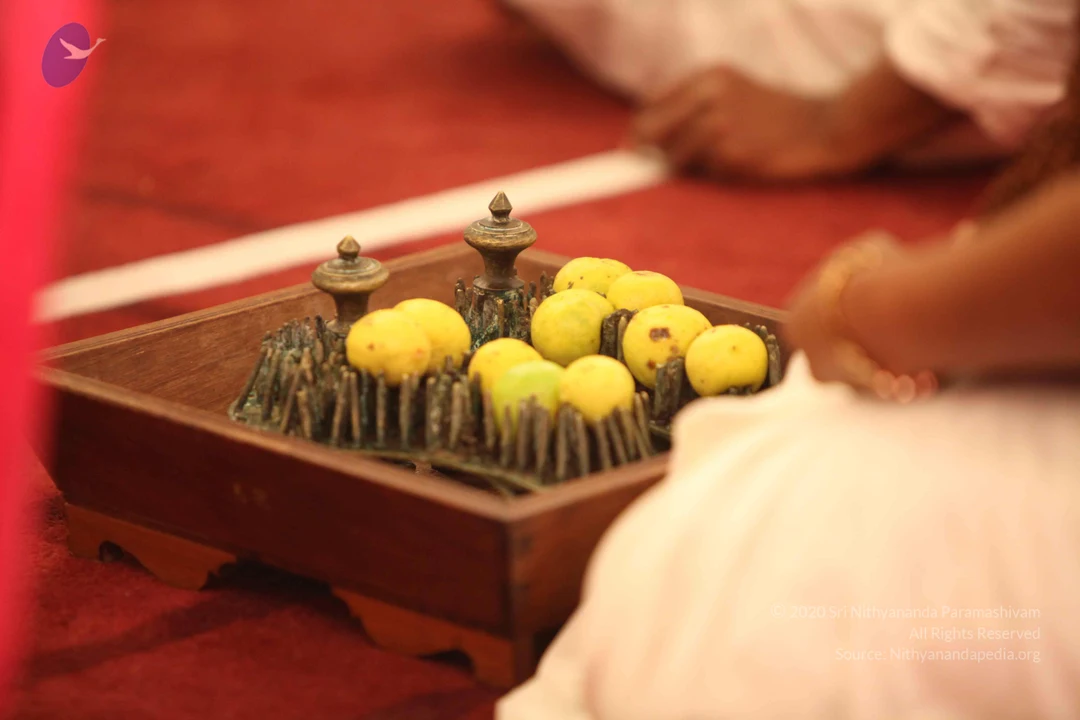
In this video, we see the Supreme Pontiff of Hinduism HDH #Nithyananda Paramashivam answer some questions posed by the Inner Awakening delegates. We hear about how we can decalcify our pineal gland, and why it is important to try to learn how to live ‘off the grid’, in an attempt to return to living as naturally as possible. His Divine Holiness also shares some pearls of wisdom on how best to take the herb, Haritaki, and its many healing properties.

The Supreme Pontiff of Hinduism Jagatguru Mahasannidhanam His Divine Holiness Nithyananda Paramashivam (HDH) is the reviver of #KAILASA - the ancient enlightened civilization and the great cosmic borderless Hindu nation. Revered as the incarnation of Paramashiva - the primordial Hindu Divinity, HDH has a following of 2 billion Hindus worldwide with de facto spiritual embassies in over 150 countries. He has worked untiringly for over 26 years for the revival of Kailasa, for global peace and to give super conscious breakthrough to humanity. He has survived the worst persecution of multiple assassination attempts on person and on character by anti-Hindu elements. He is collecting, organising, preserving, time capsuling, decoding, spreading and reviving 20 Million source books of Hinduism and the 64 sacred arts & sciences like Ayurveda, music, dance, sculpting, astrology, vastu and much more. Close to 20,000 hours of HDH’s timeless talks have been recorded till date (Sep 2020), which are a treasure trove of powerful cognitions to solve individual and global problems of any kind.

Link to Video:

VideoAudio

Title

Shivoham process & Q & A || Part 4 || IA || 19 Oct 2015

Description

Name Of The Program: Inner Awakening Session on: Shivoham Process & Q&A Part 4 Date : 19 October 2015 Venue : Adikailaasa, Bengaluru, India

In this video, Supreme Pontiff of Hinduism HDH #Nithyananda Paramashivam answers some more insightful questions from the Inner Awakening delegates during this Shivoham Q&A. We hear from His Divine Holiness about the importance of Ayurveda and the Gurukul system in India, and the reason for which a spiritual name is chosen by the Master, for a disciple.

The Supreme Pontiff of Hinduism Jagatguru Mahasannidhanam His Divine Holiness Nithyananda Paramashivam (HDH) is the reviver of #KAILASA - the ancient enlightened civilization and the great cosmic borderless Hindu nation. Revered as the incarnation of Paramashiva - the primordial Hindu Divinity, HDH has a following of 2 billion Hindus worldwide with de facto spiritual embassies in over 150 countries. He has worked untiringly for over 26 years for the revival of Kailasa, for global peace and to give super conscious breakthrough to humanity. He has survived the worst persecution of multiple assassination attempts on person and on character by anti-Hindu elements. He is collecting, organising, preserving, time capsuling, decoding, spreading and reviving 20 Million source books of Hinduism and the 64 sacred arts & sciences like Ayurveda, music, dance, sculpting, astrology, vastu and much more. Close to 20,000 hours of HDH’s timeless talks have been recorded till date (Sep 2020), which are a treasure trove of powerful cognitions to solve individual and global problems of any kind.

Link to Video:

VideoAudio

Title

Shivoham Process & Q & A || Part 5 || IA || 19 Oct 2015

Description

Name Of The Program: Inner Awakening Session on: Shivoham Process & Q&A Part 5 Date : 19 October 2015 Venue : Varanasi, India

In this video, we see the Supreme Pontiff of Hinduism HDH #Nithyananda Paramashivam take the Inner Awakening delegates through the Shivoham process. Shortly after, we see His Divine Holiness answering questions on topics such as mantras, mudras and devotion.

The Supreme Pontiff of Hinduism Jagatguru Mahasannidhanam His Divine Holiness Nithyananda Paramashivam (HDH) is the reviver of #KAILASA - the ancient enlightened civilization and the great cosmic borderless Hindu nation. Revered as the incarnation of Paramashiva - the primordial Hindu Divinity, HDH has a following of 2 billion Hindus worldwide with de facto spiritual embassies in over 150 countries. He has worked untiringly for over 26 years for the revival of Kailasa, for global peace and to give super conscious breakthrough to humanity. He has survived the worst persecution of multiple assassination attempts on person and on character by anti-Hindu elements. He is collecting, organising, preserving, time capsuling, decoding, spreading and reviving 20 Million source books of Hinduism and the 64 sacred arts & sciences like Ayurveda, music, dance, sculpting, astrology, vastu and much more. Close to 20,000 hours of HDH’s timeless talks have been recorded till date (Sep 2020), which are a treasure trove of powerful cognitions to solve individual and global problems of any kind.

Link to Video:

VideoAudio

Title:

Nithyananda Times, 19th October, 2015

Description

The Daily Video Magazine of the Nithyananda Sangha Meenakshi Celebrations in Varanasi

Link to Video:

Photos From The Day:
Facebook Link

https://www.facebook.com/ParamahamsaNithyananda

Photos Of The Day:

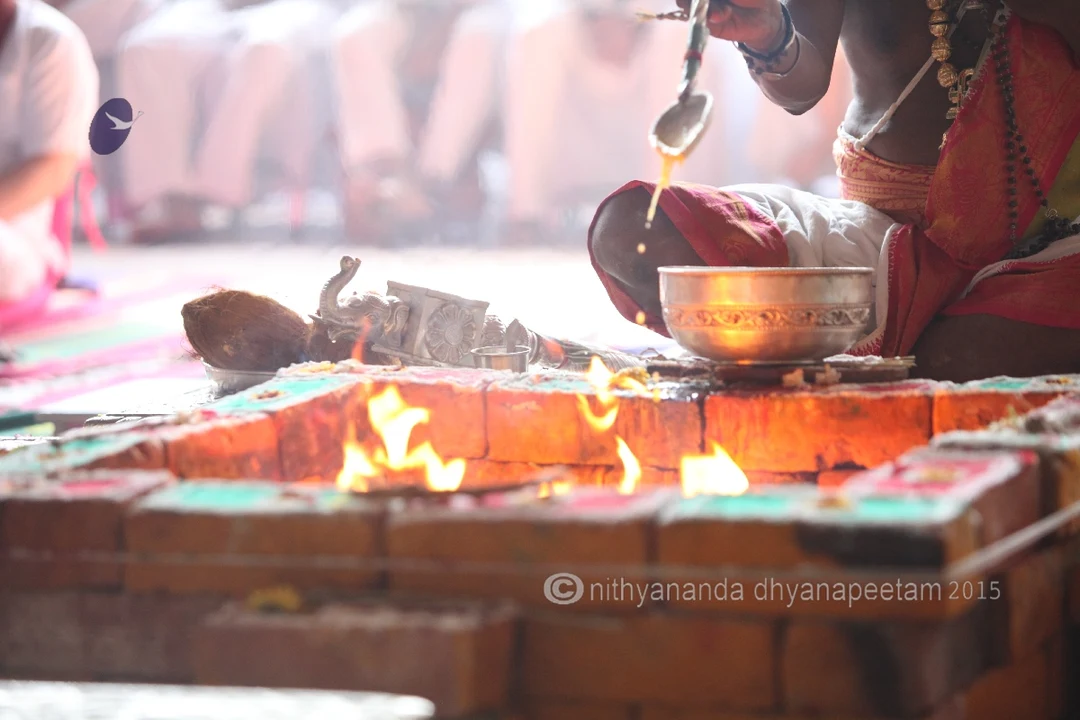
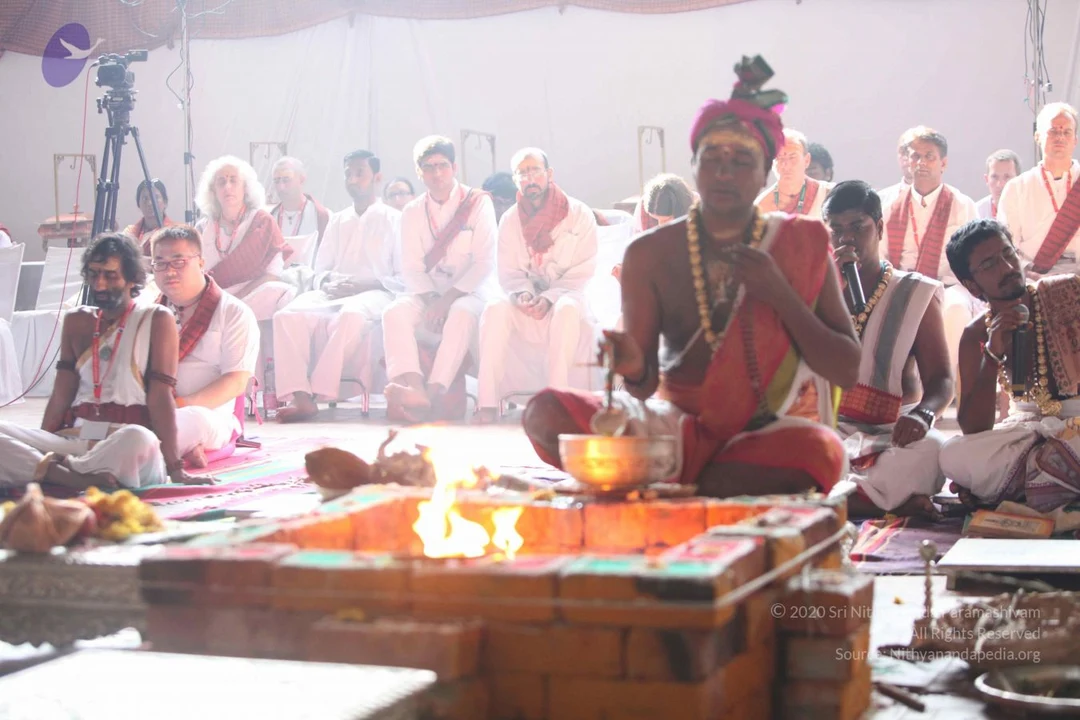
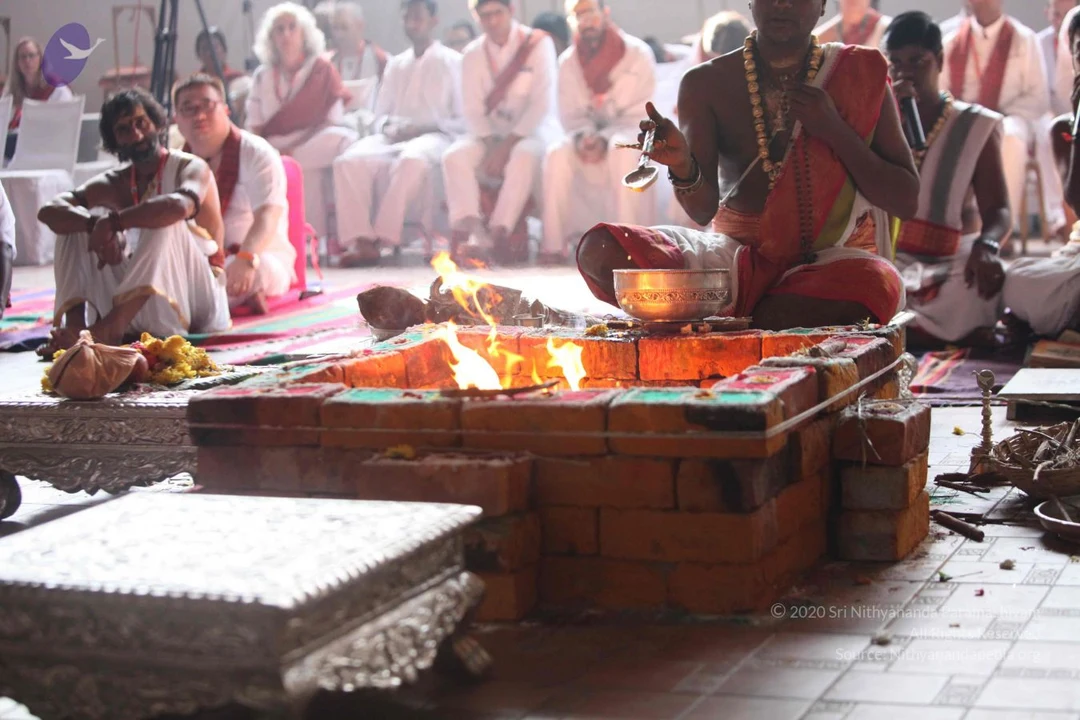
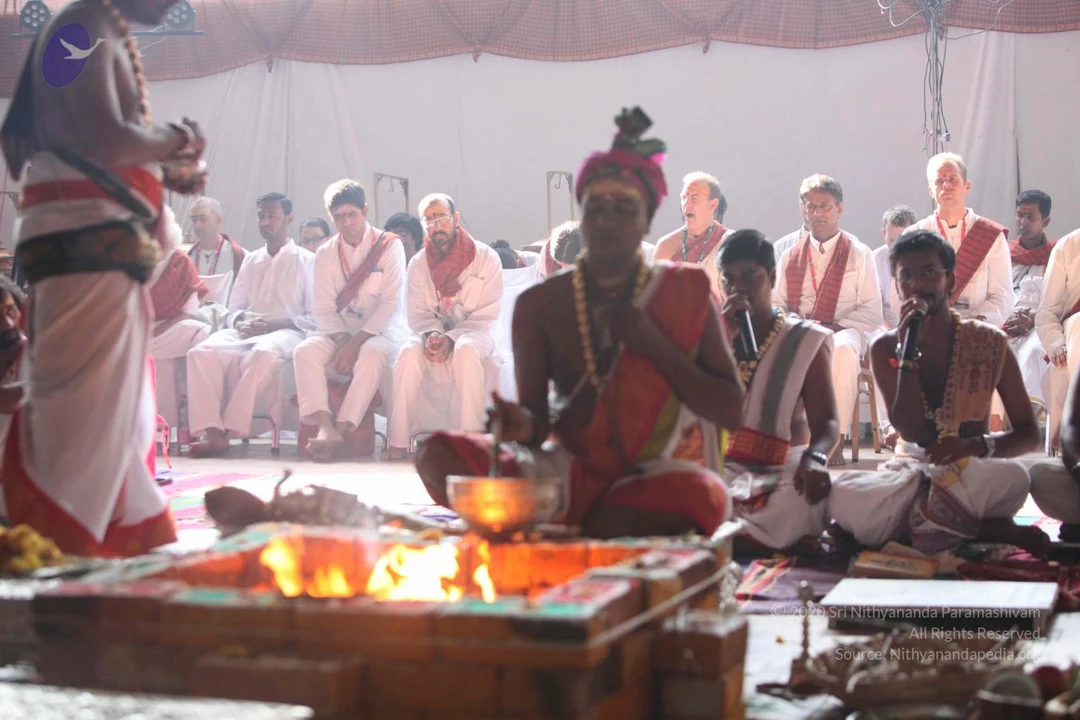
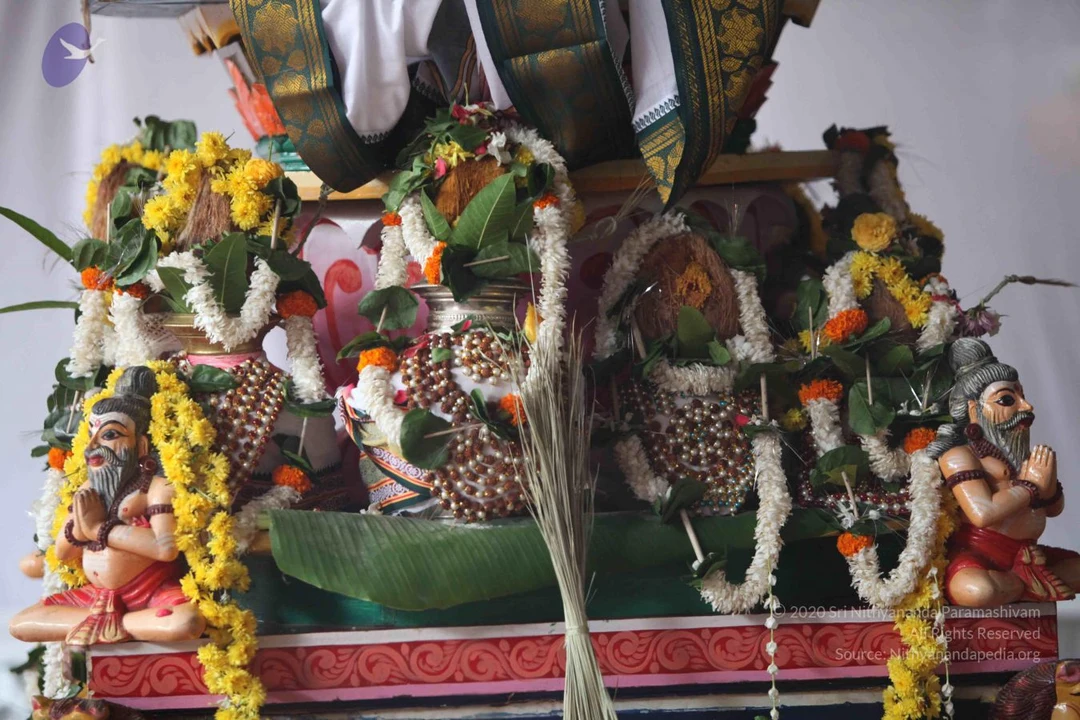
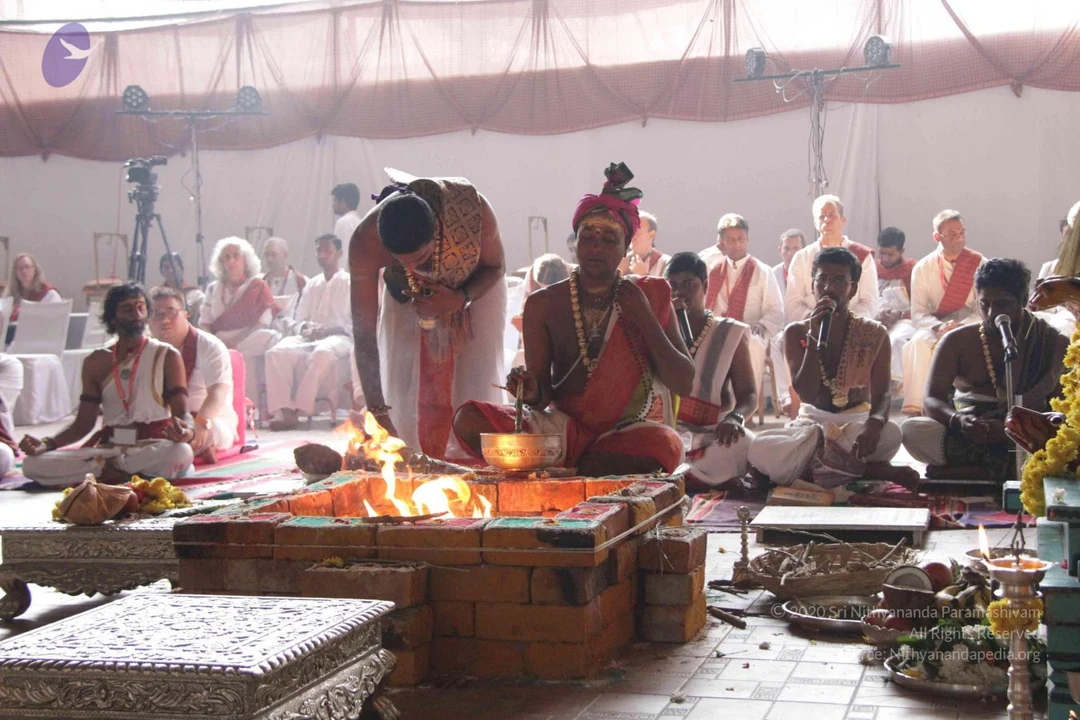
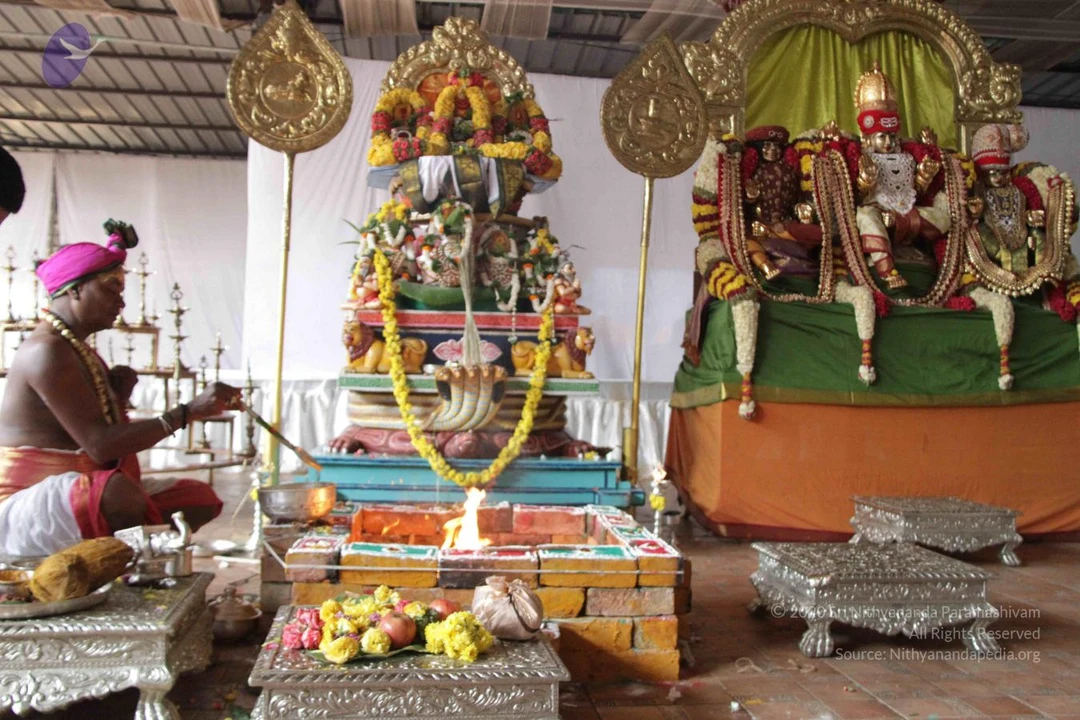
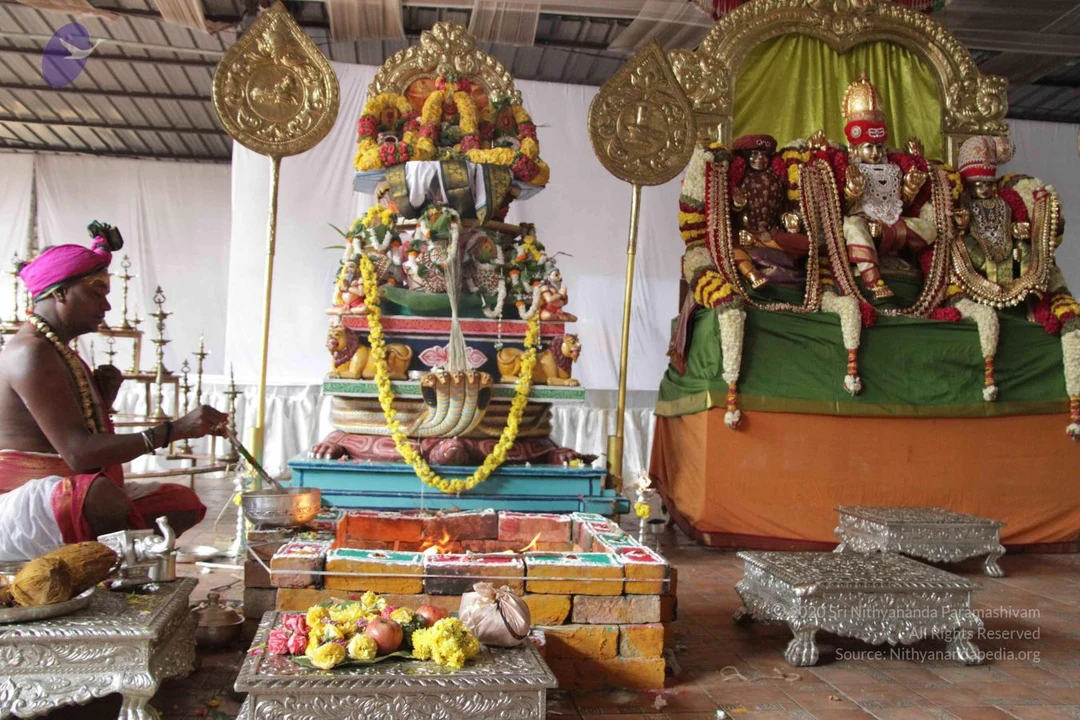
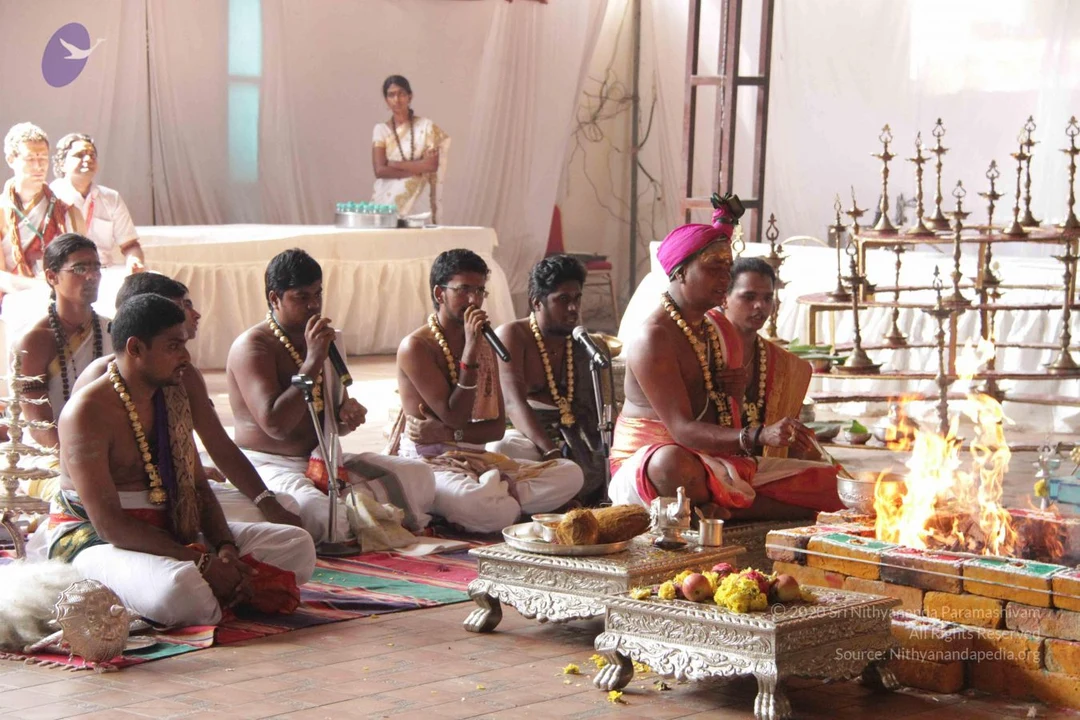
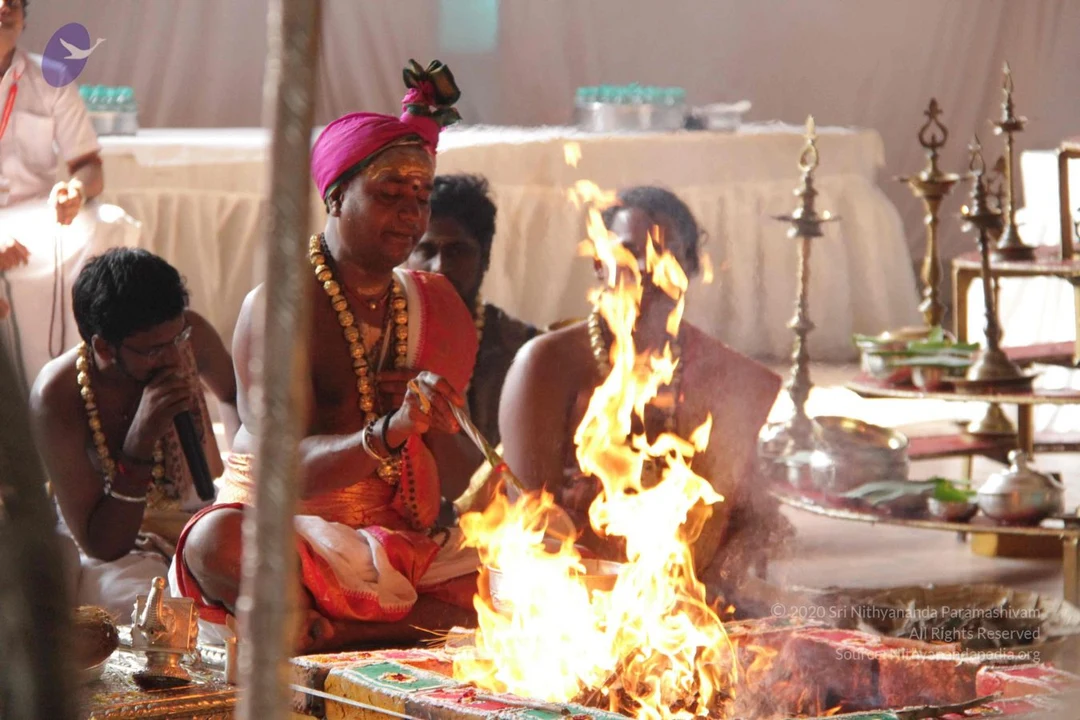
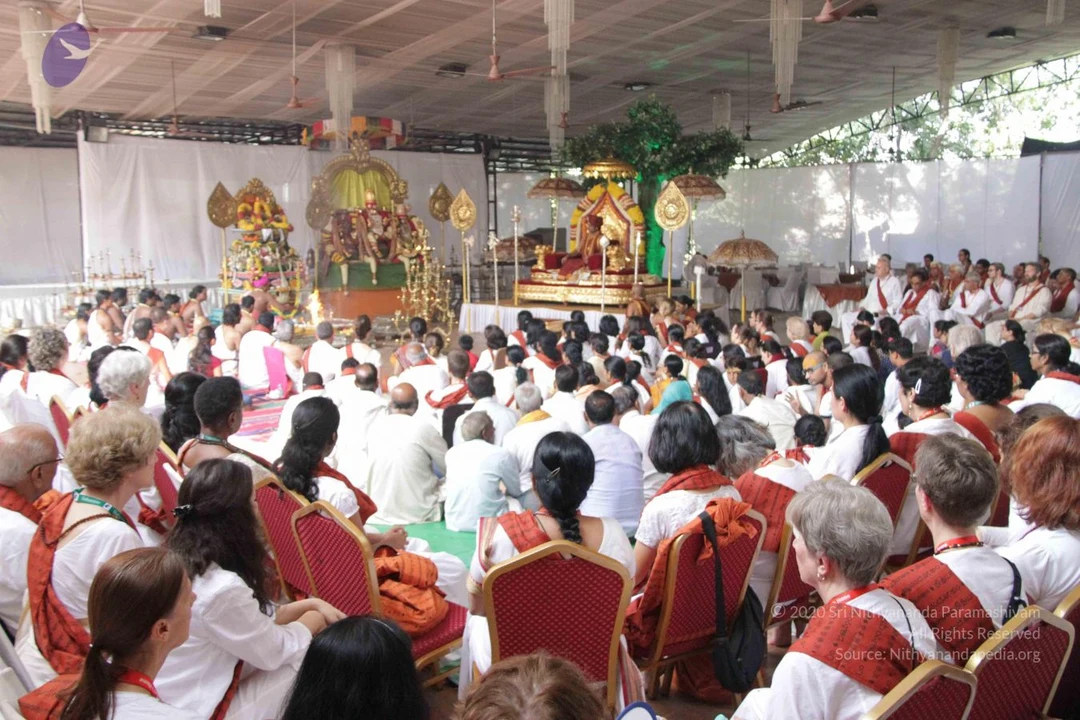
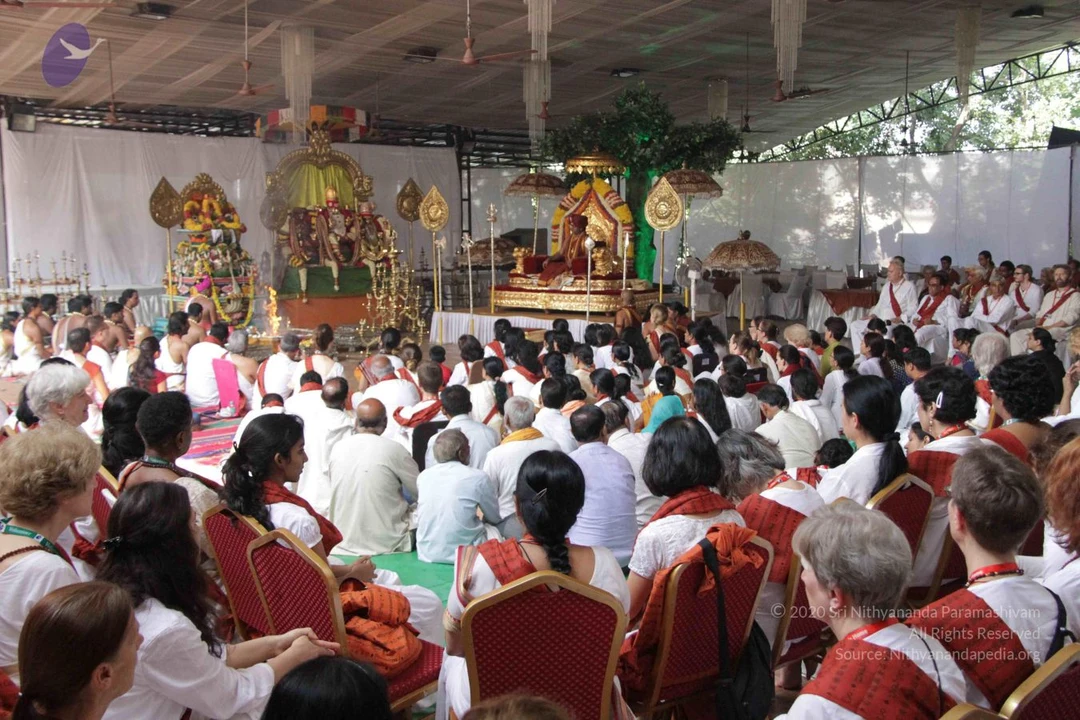
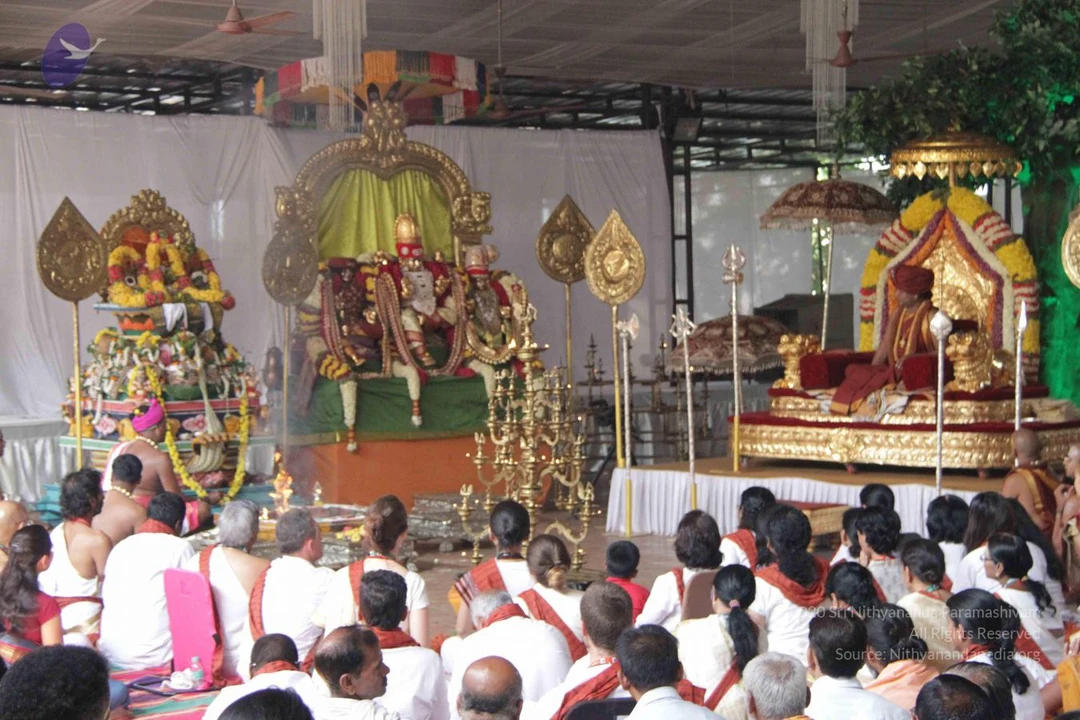
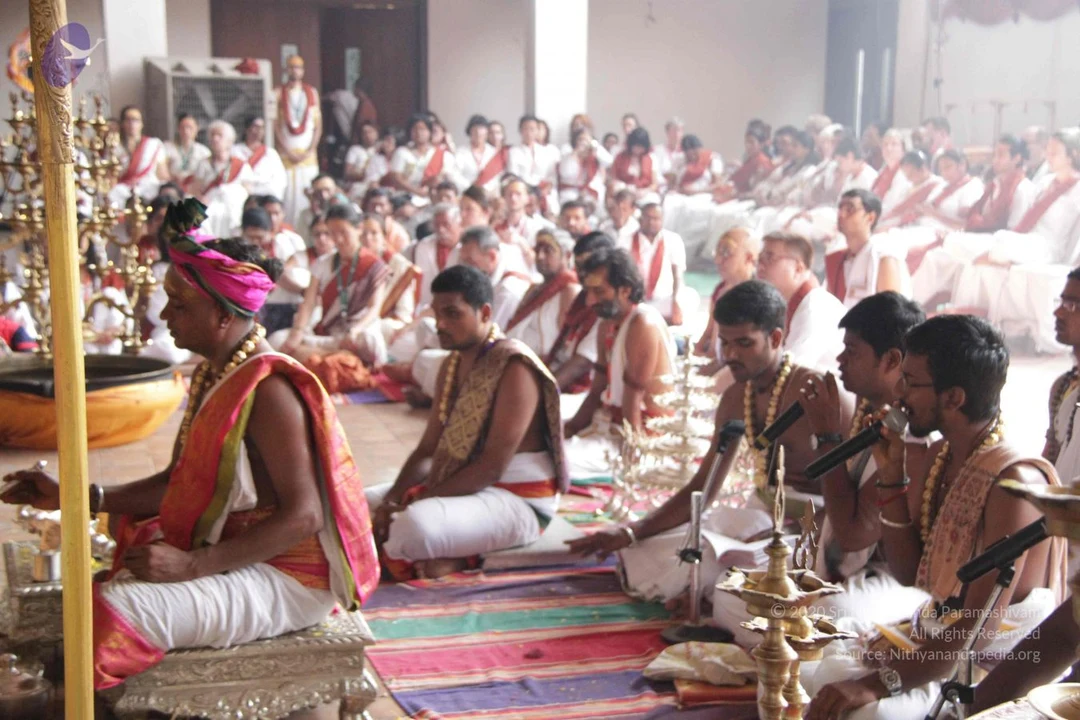
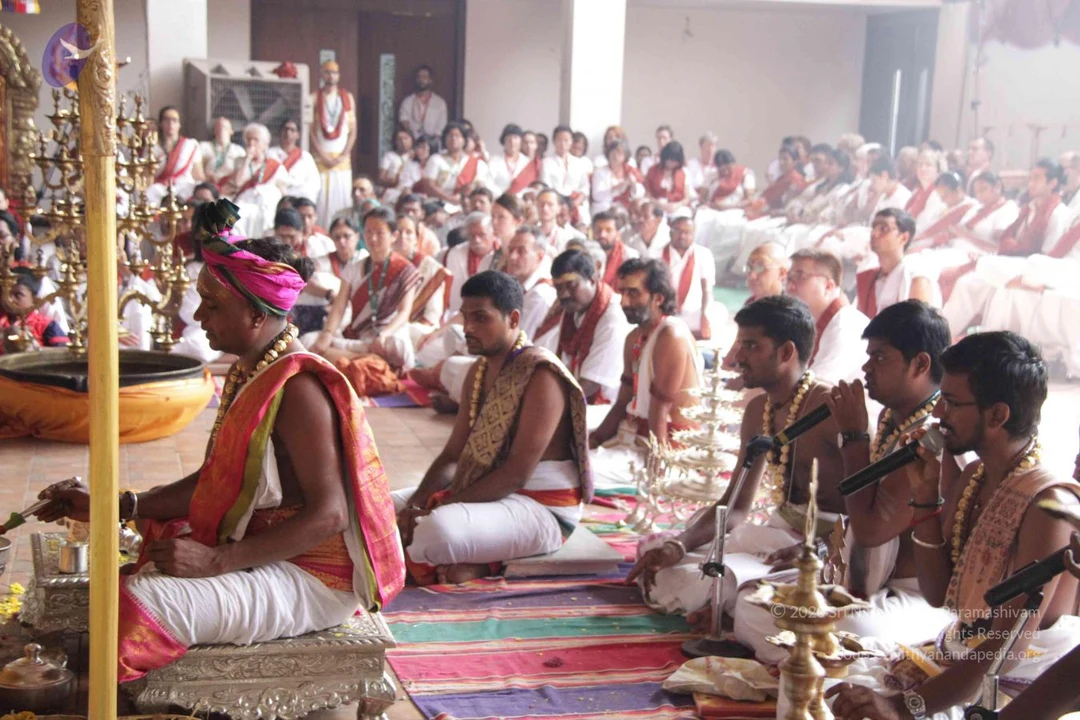
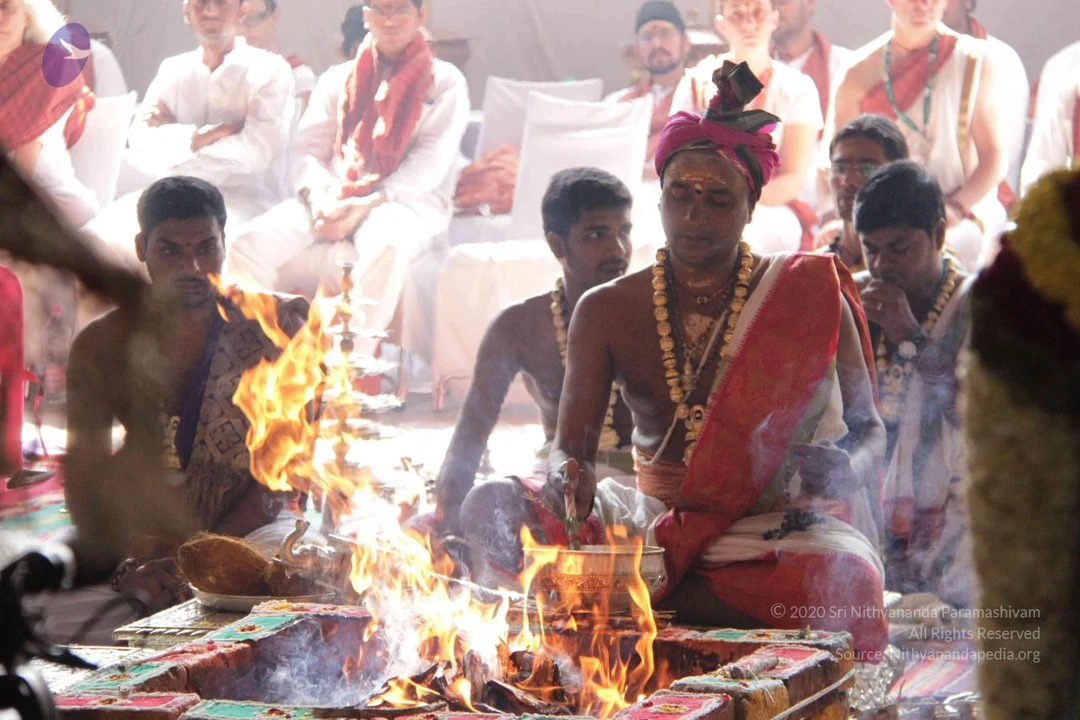
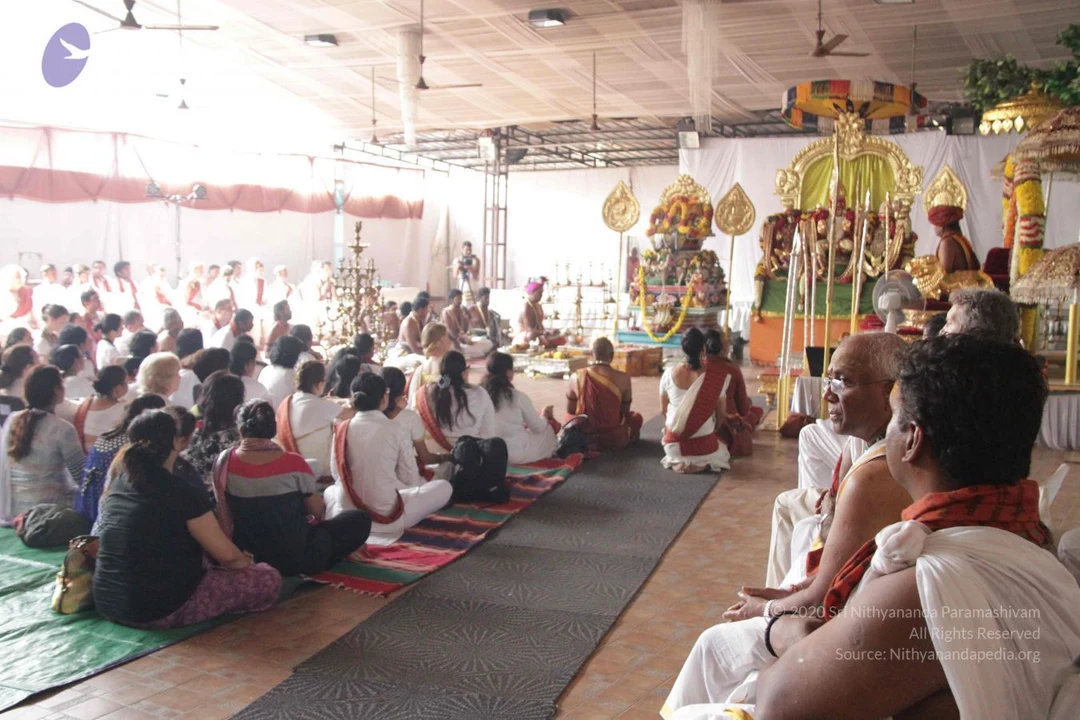
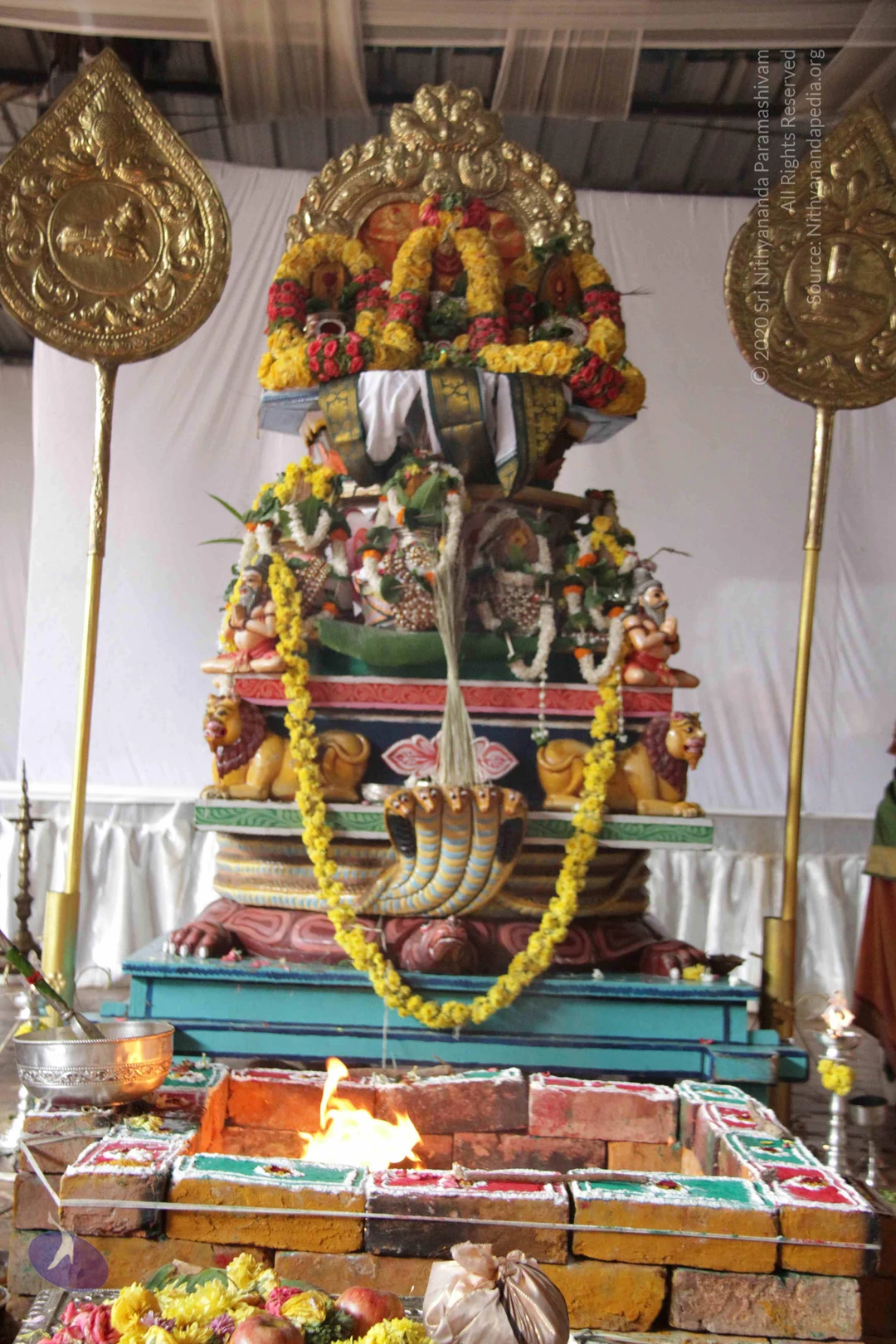
Rudrahoma

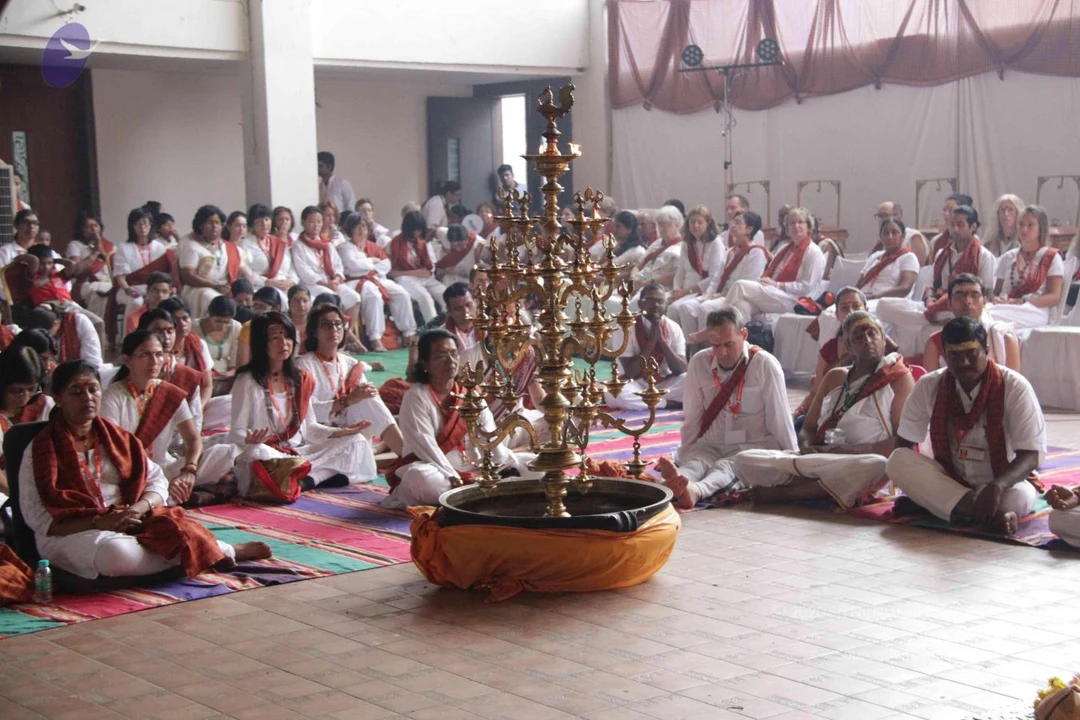
Shivoham

01-INNER-AWAKENING

Photos from this day

View all 593 photos

Photos From The Day:
23 photosSource gallery
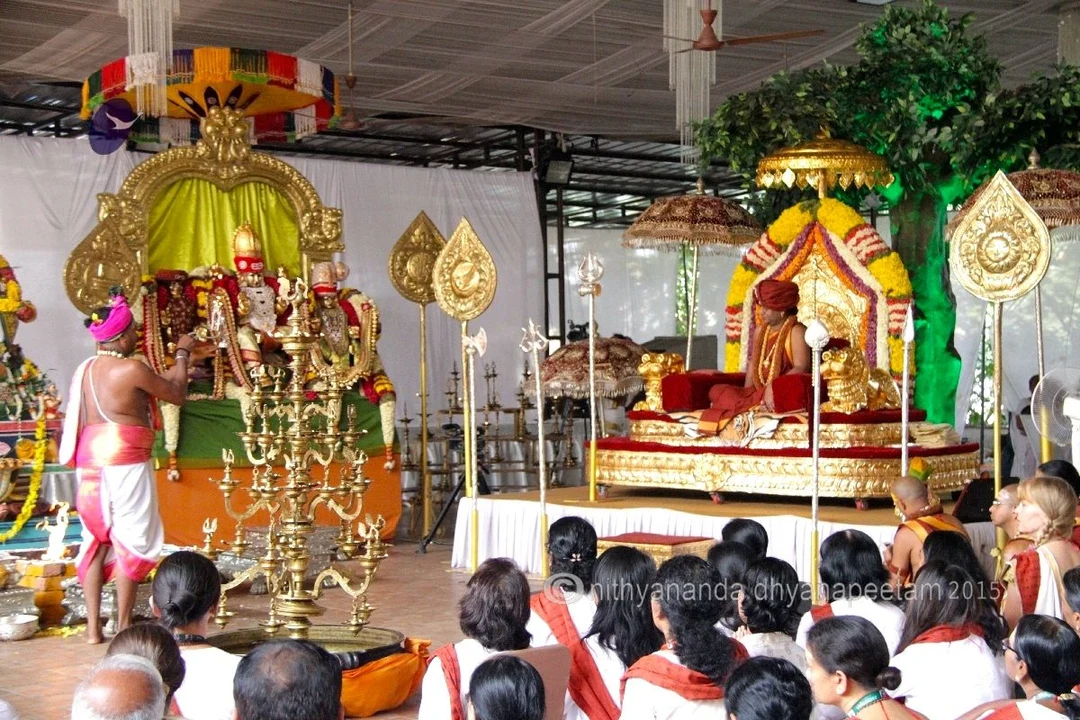
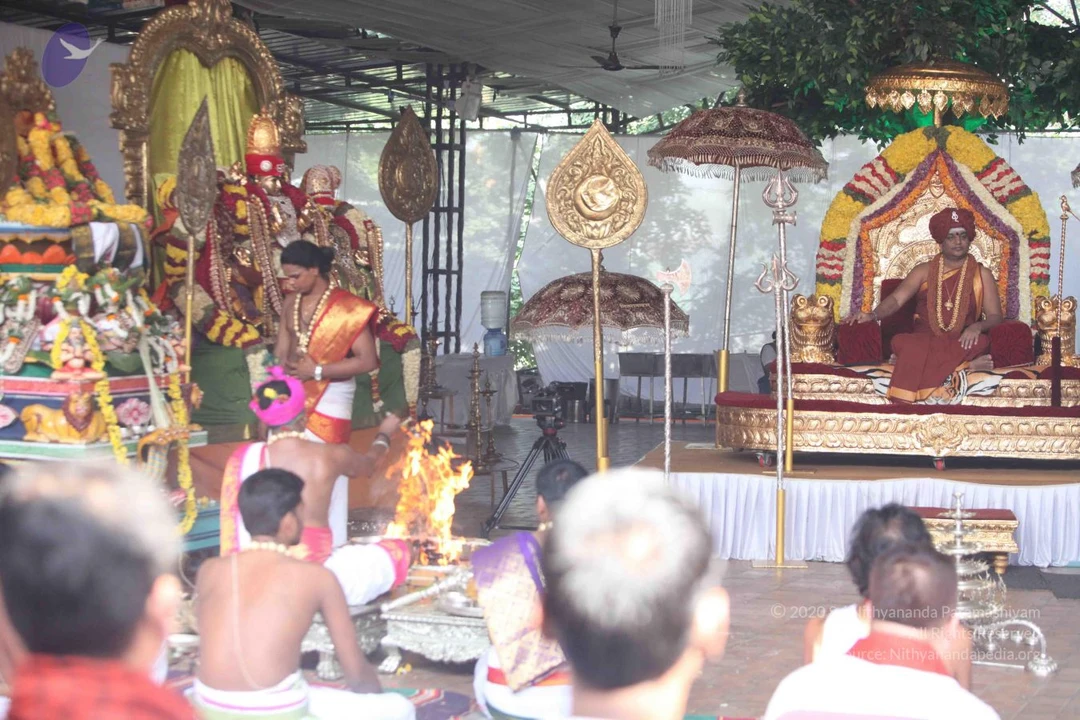
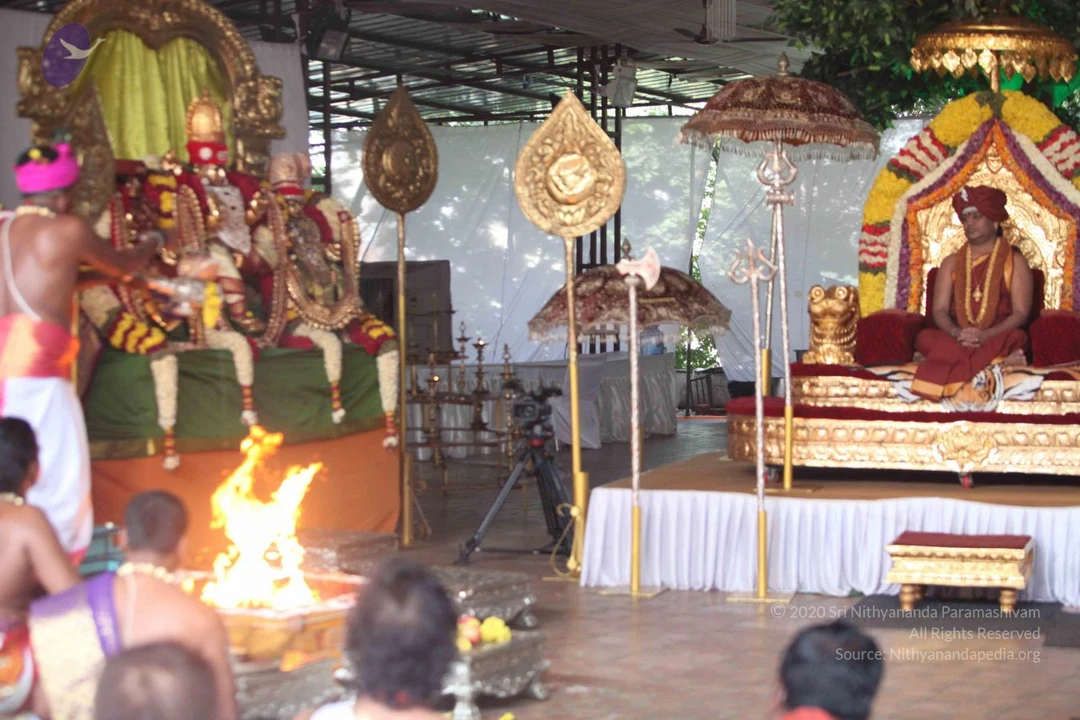
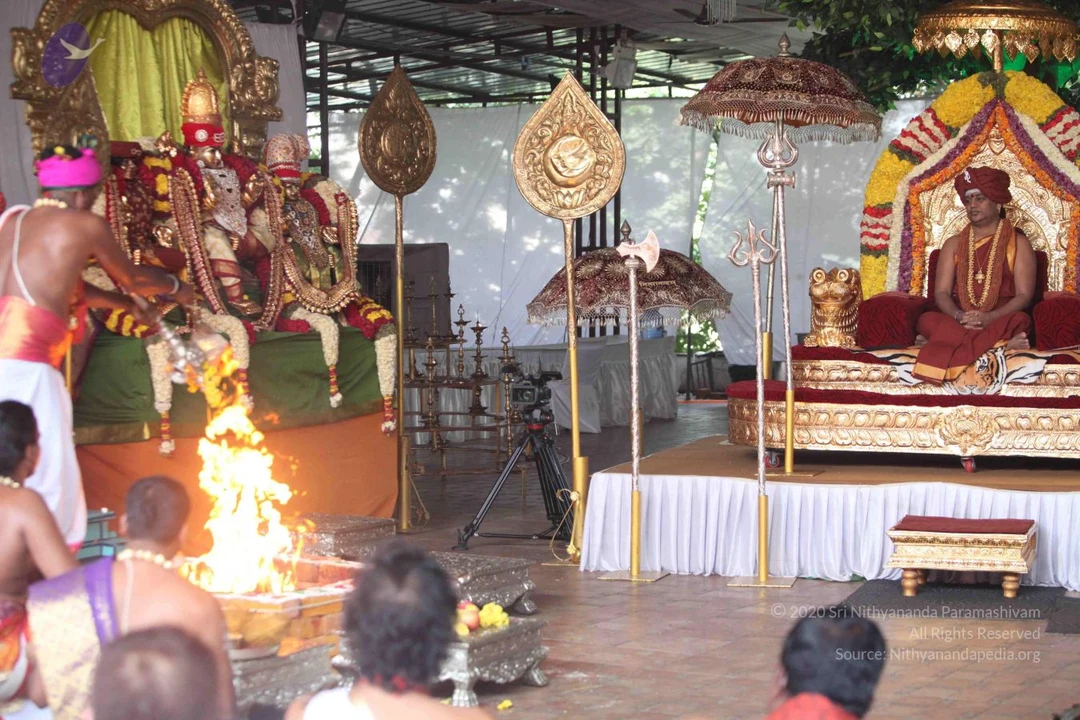
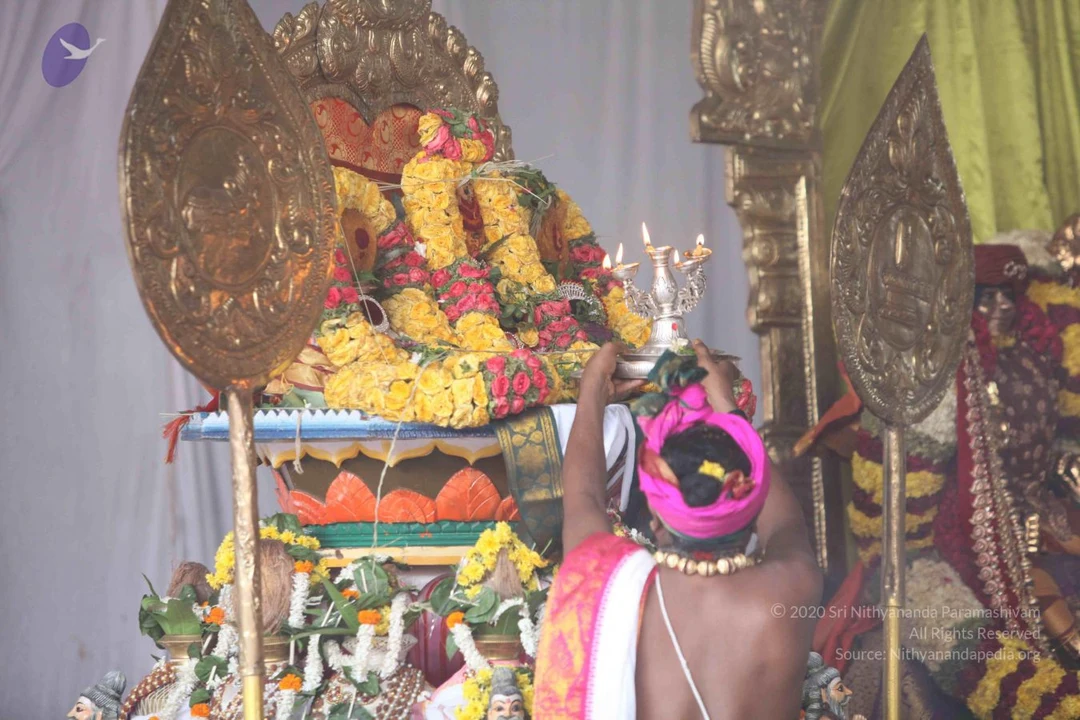
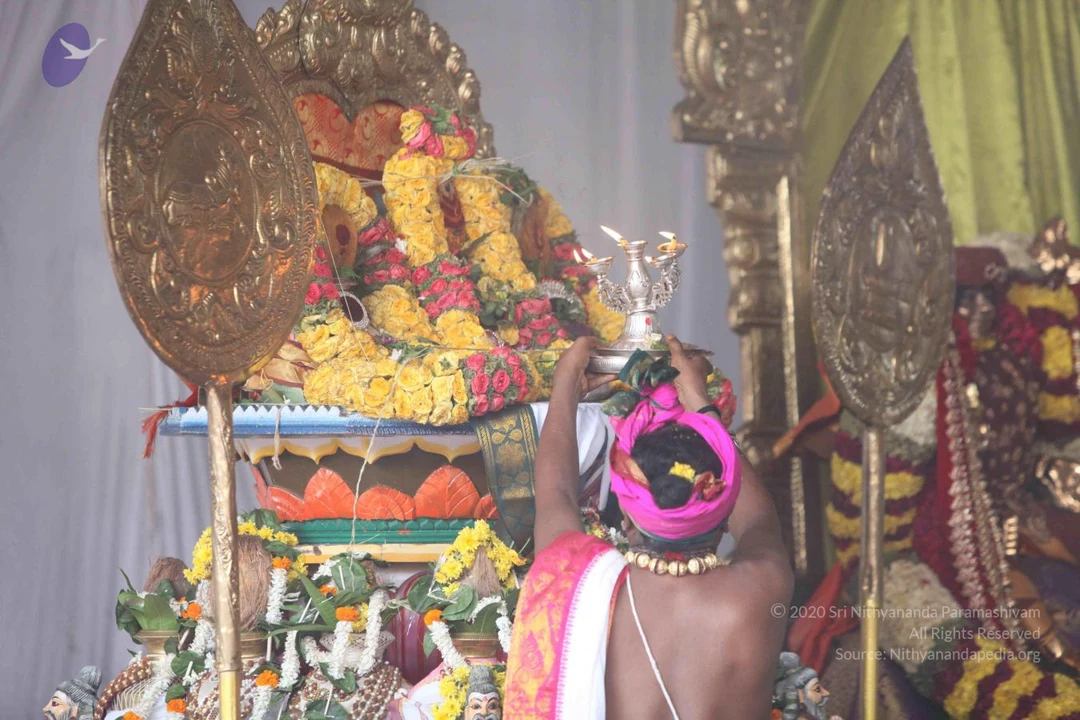
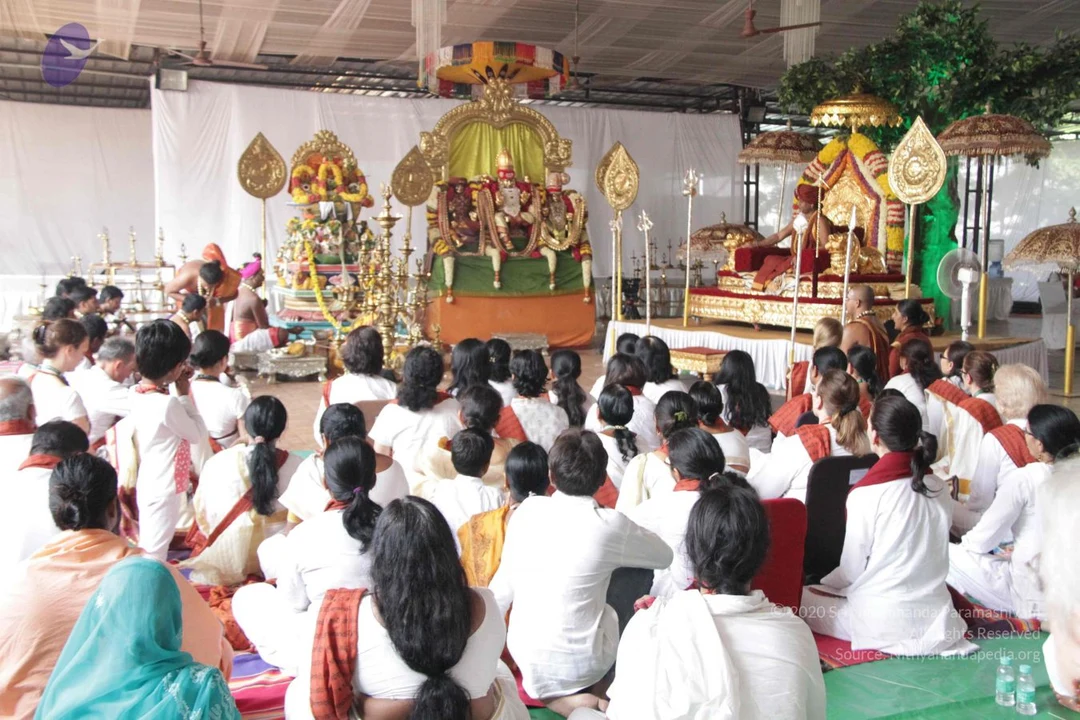
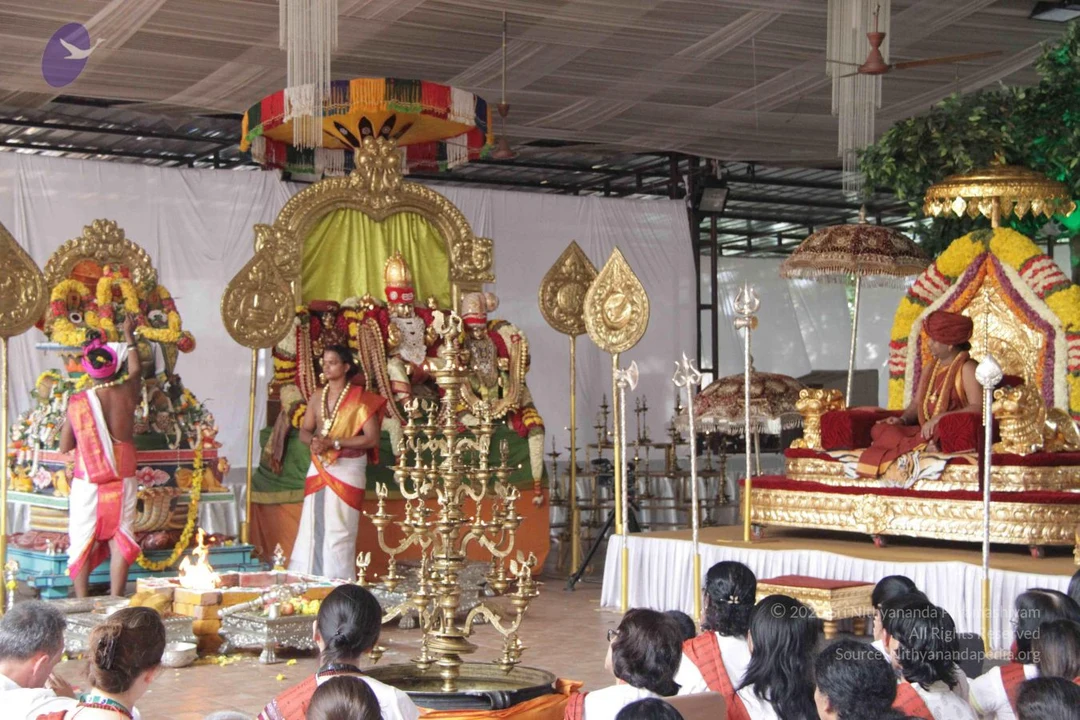
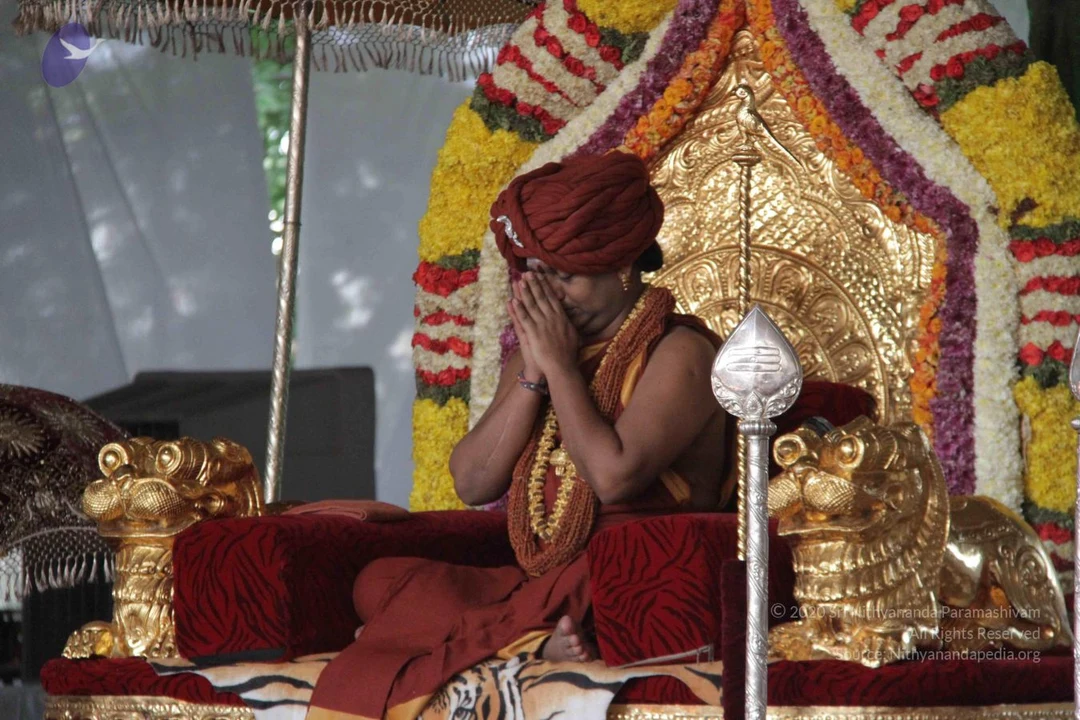
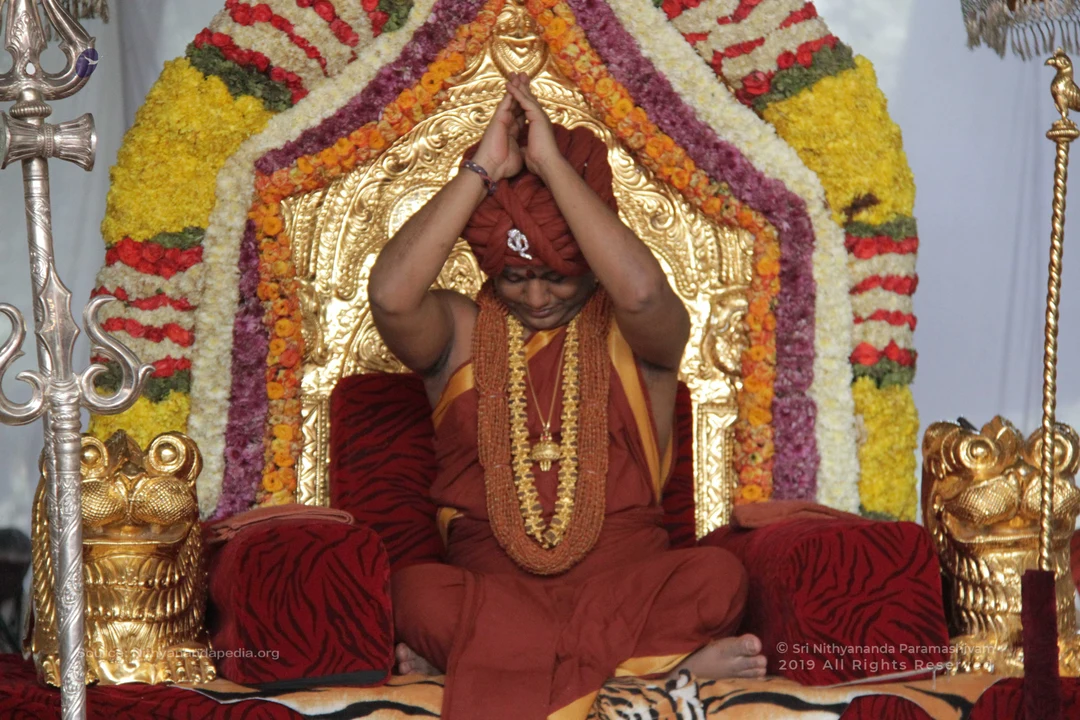
A seated man in red-and-maroon clothing sits on an ornate gold throne with carved lion-head armrests, a tiger-skin cloth draped over the platform. He wears a red turban, a long yellow-and-pink flower garland and a gold necklace, and holds his palms together in front of his chest in an anjali gesture. Behind him a gold arch is decorated with yellow, orange, purple and pink flower garlands, and gold-and-silver staves with finials and ornamented parasols frame the throne. A second person in red robes sits at the right edge beside a table with offerings. The setting is an open tent with light fabric walls and dappled shade.A seated figure in a deep red turban and saffron-orange robe sits on an ornate golden throne with carved lion-head armrests, draped in red tiger-striped upholstery. He wears a long gold necklace and rudraksha-style beaded malas, touching his forehead with one hand. Behind him the throne is framed by garlands of red roses, yellow marigolds and white jasmine. A silver staff topped with a Shiva trident rests beside the throne, and a fringed canopy pole stands at left. Outdoors, with greenery and white drapes behind.A seated person in a maroon turban and maroon-orange robes sits with palms pressed together in namaste at chest level, eyes lowered. A rudraksha mala and a gold pendant hang at the neck. The seat is a gilded throne with an arched backrest, framed by a garland arch of yellow marigolds, red roses and orange and pink flowers, set on a tiger-striped cloth. The person is shown on a throne with an arched floral garland, in a setting marked by the photo credit overlay.A seated man in a maroon-red turban with a silver ornament and a red tilak on his forehead sits on an ornate gold throne with carved sides. He wears a long orange-and-maroon garment, multiple rudraksha-style beaded mala necklaces in orange and gold, and a gold pendant. His right hand is extended palm-up in a gesture of teaching. The throne is framed by a tall arch of marigolds, red roses, white flowers and green leaves, with gilded lion-like carvings at the lower corners.A seated figure in a deep red-maroon turban and rust-orange robes sits with palms pressed together in namaste on a red and black tiger-striped cushioned seat. Behind is an ornate gold throne-back framed by garlands of marigolds, roses and white flowers. A gold lion-form armrest and silver trident-tipped staffs flank the seat. A rudraksha-style mala hangs across the chest and a small shivalinga emblem is visible on the turban. The scene is an outdoor stage setting.A seated man in a maroon turban with a silver emblem and red-orange robes sits on an ornate gold throne framed by marigold, rose and purple flower garlands. He wears a heavy rudraksha mala and a long gold necklace with a pendant, and his hands rest on maroon cushions with tiger-stripe pattern. Golden lion-head armrests and a gold staff flank the throne. Swamiji (probable) is seated in a teaching posture, identified by the rudraksha mala, turban, saffron-maroon clothing, and ceremonial gold necklace. The image is a photograph of a stage-style satsang setting.

Rudrahoma

197 photosSource gallery
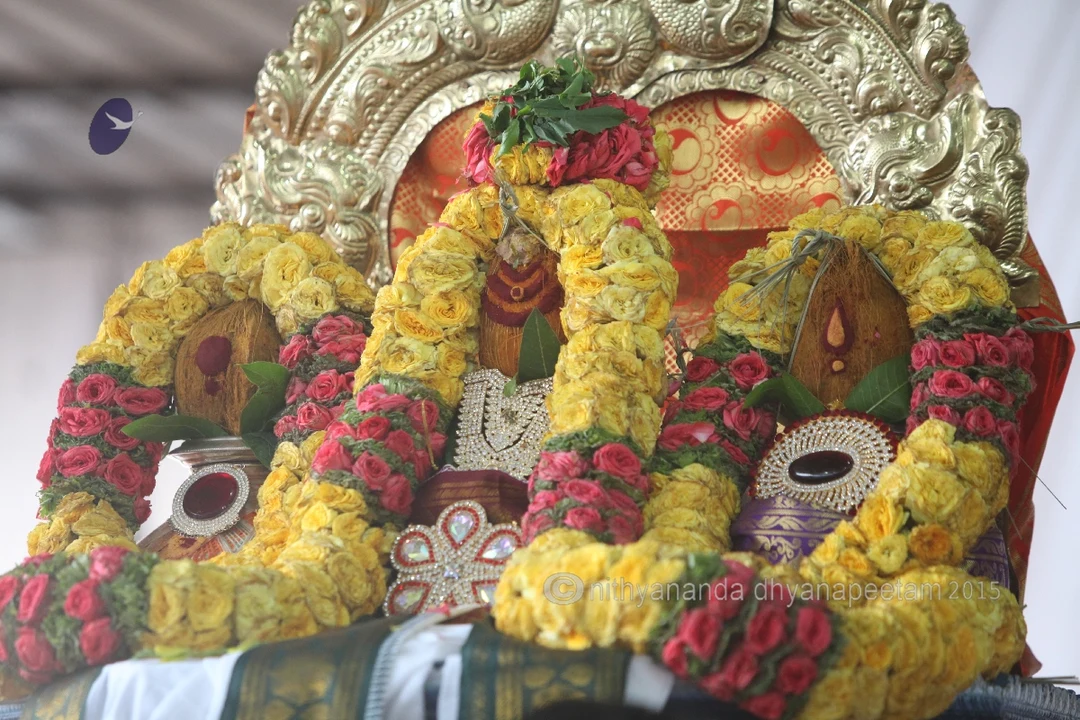
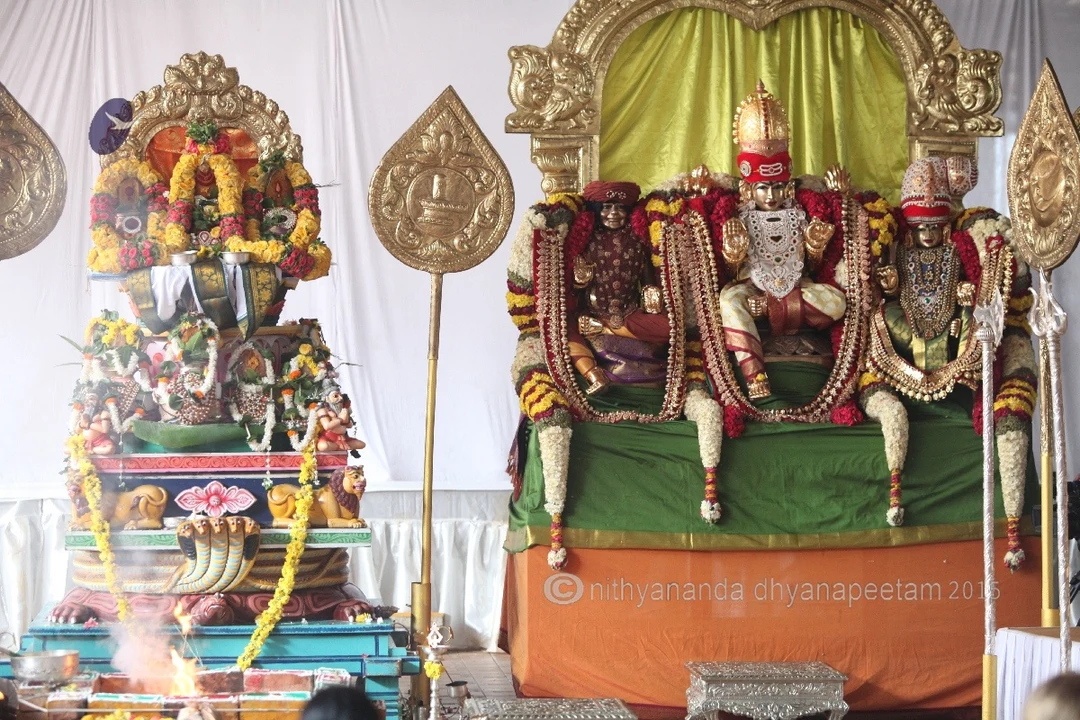
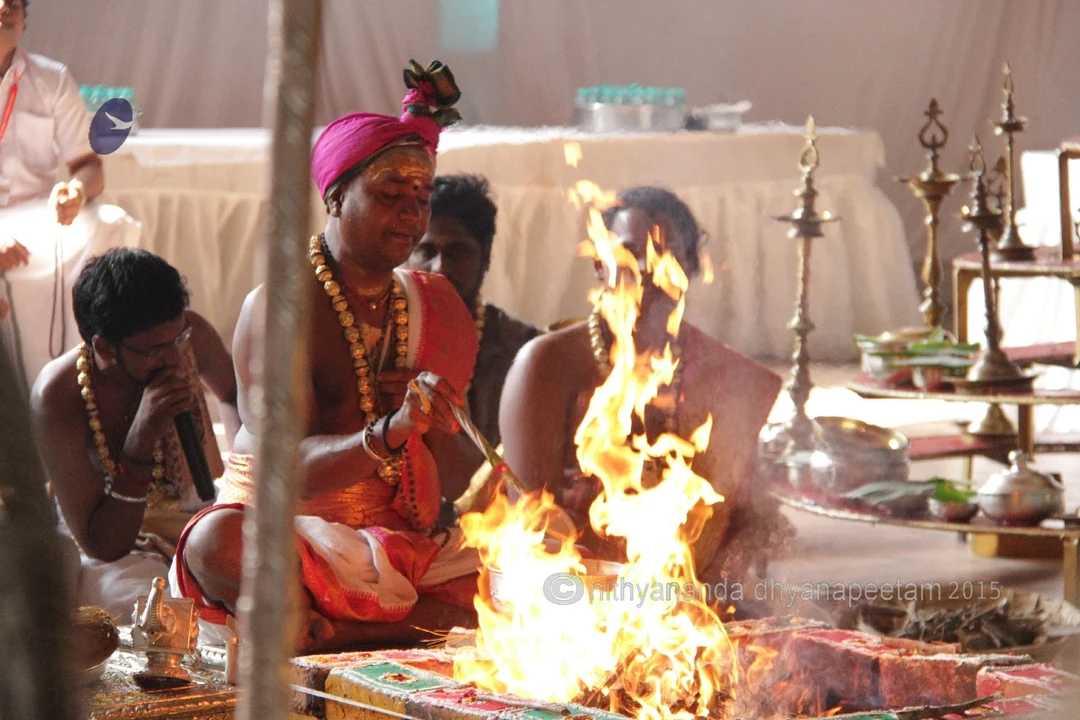
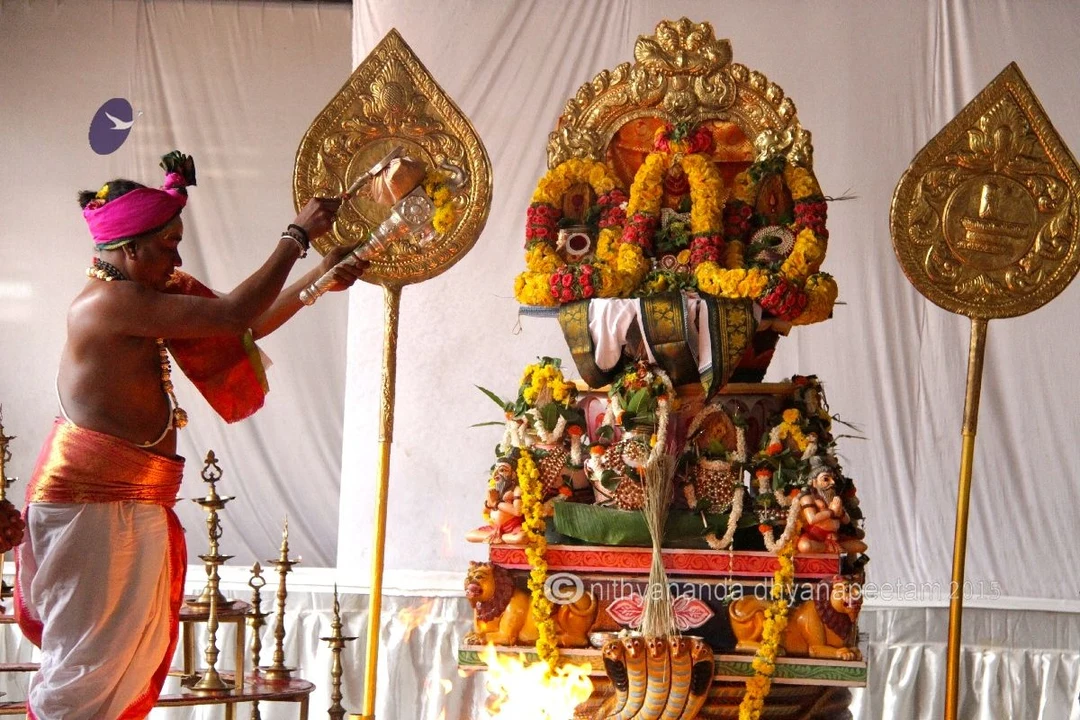
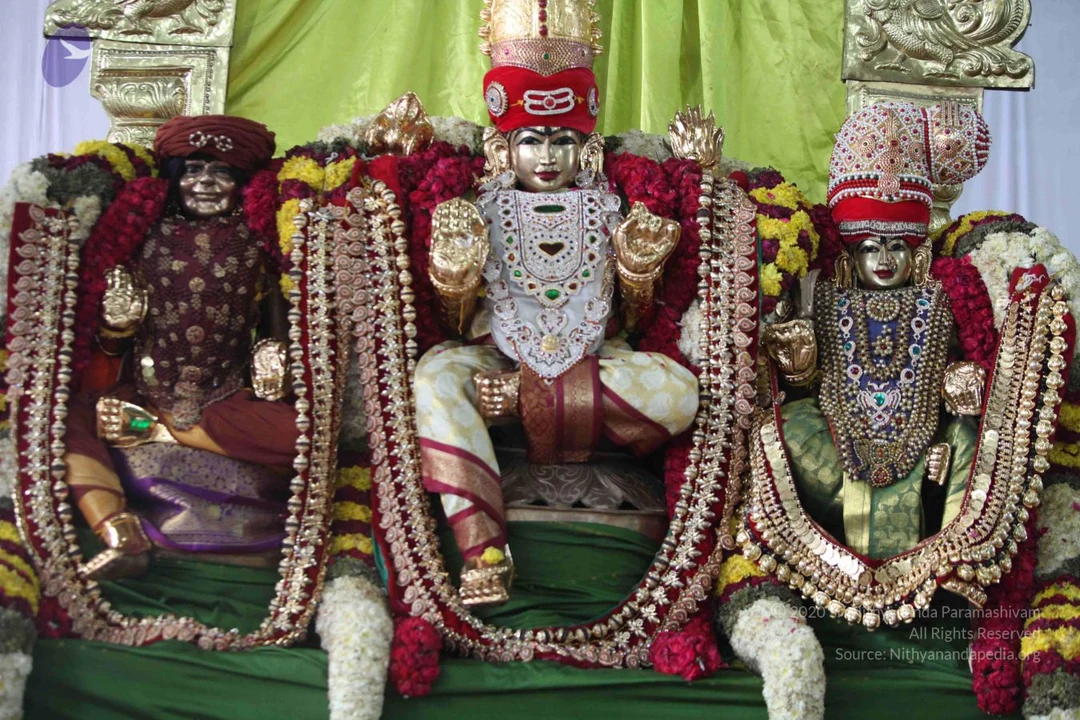
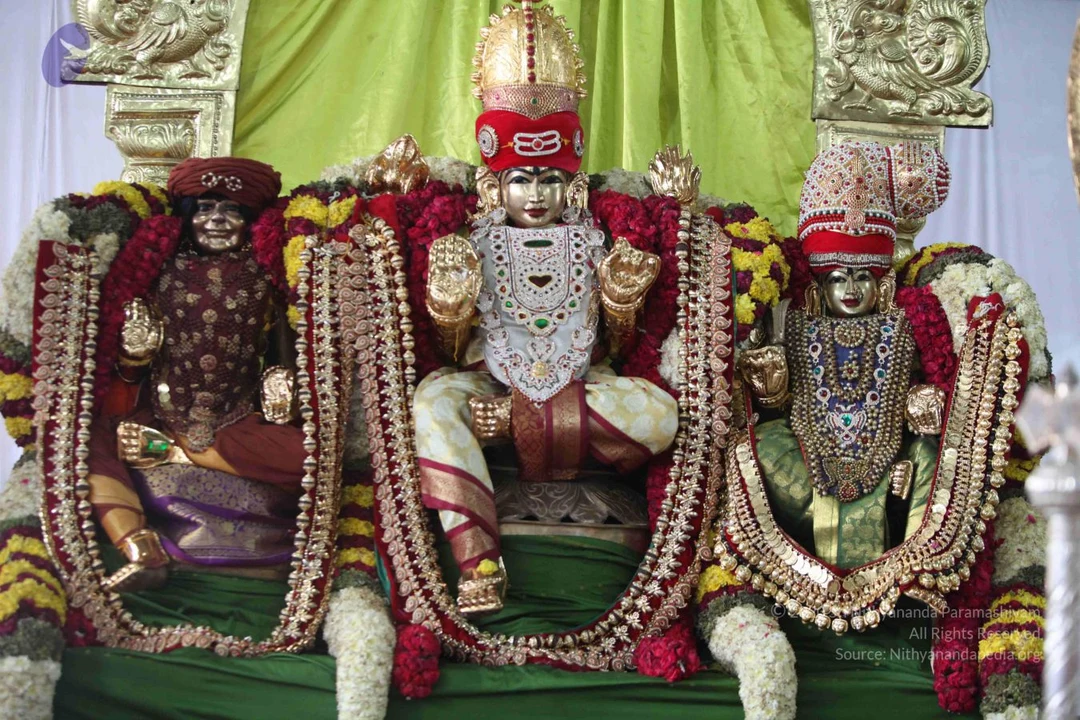
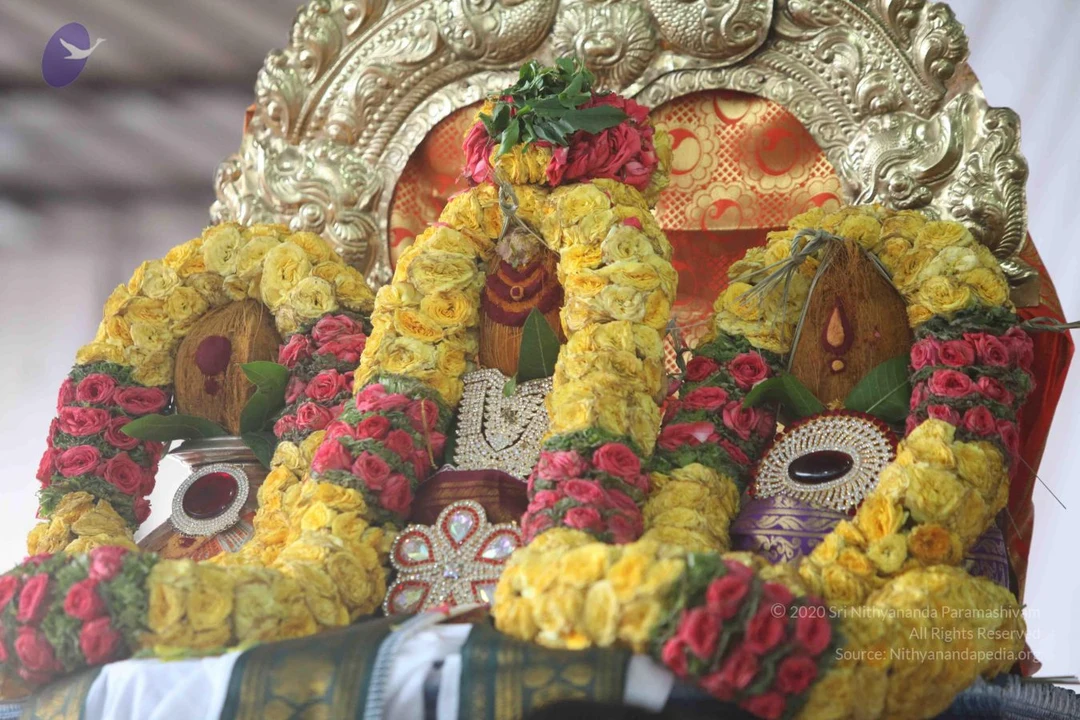
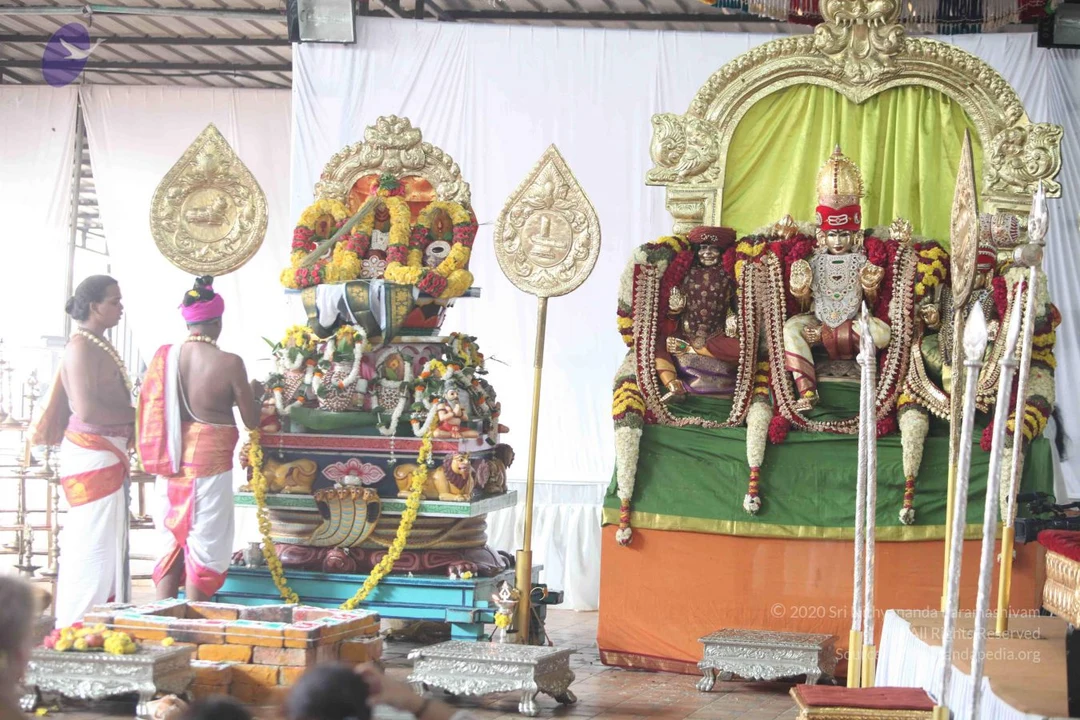
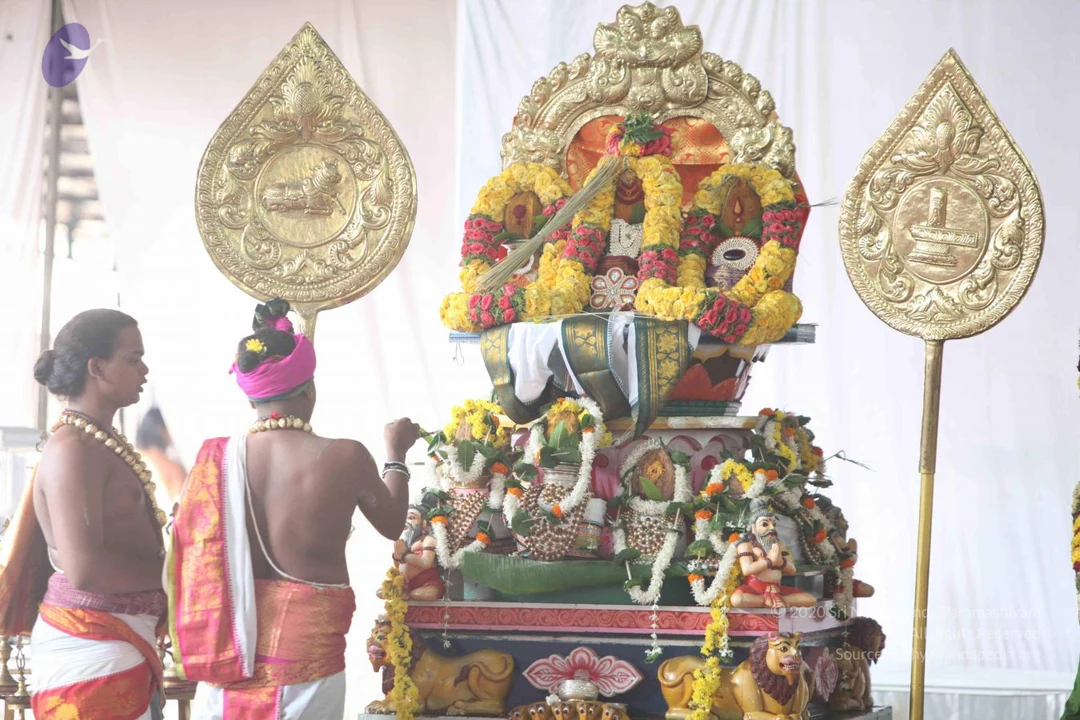
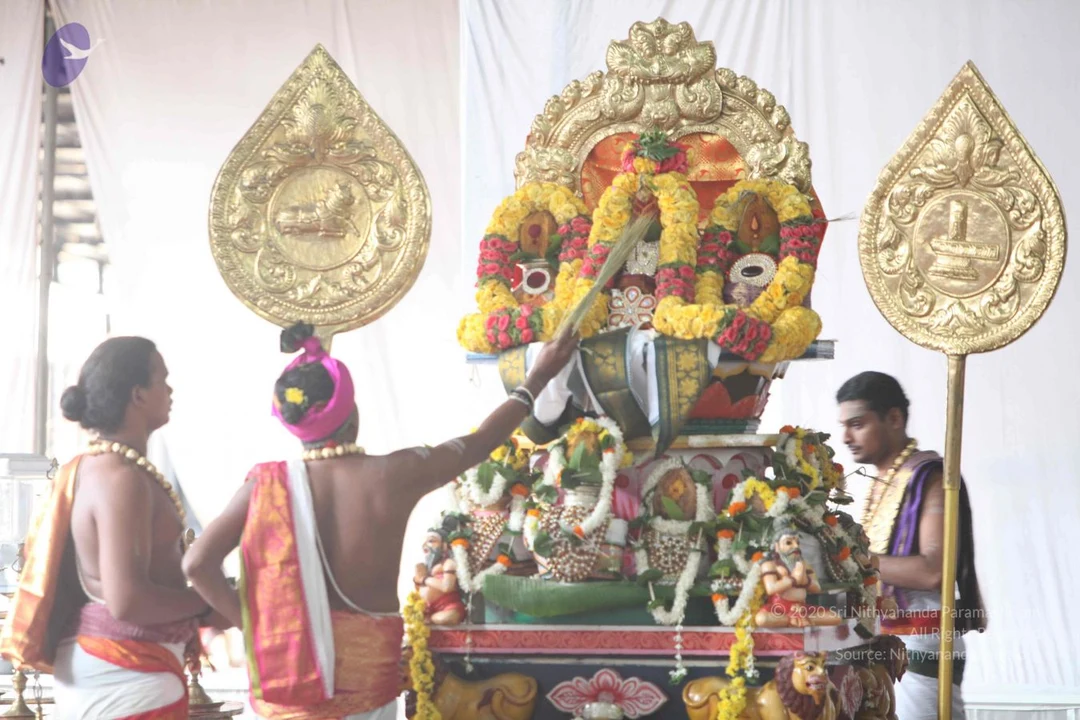
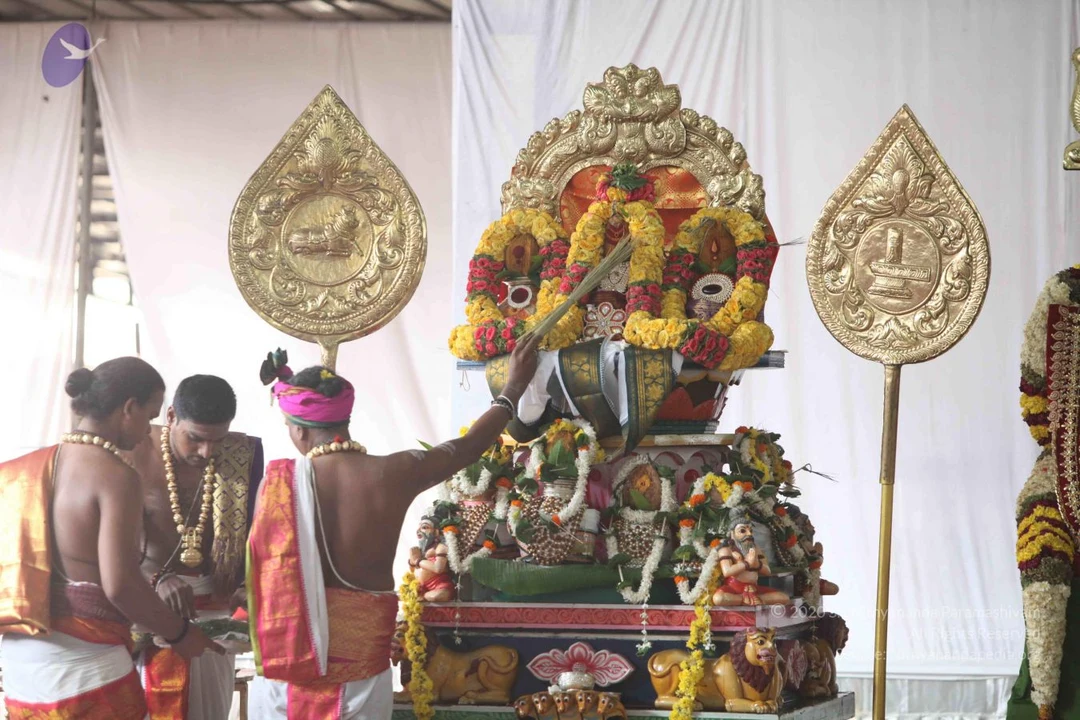
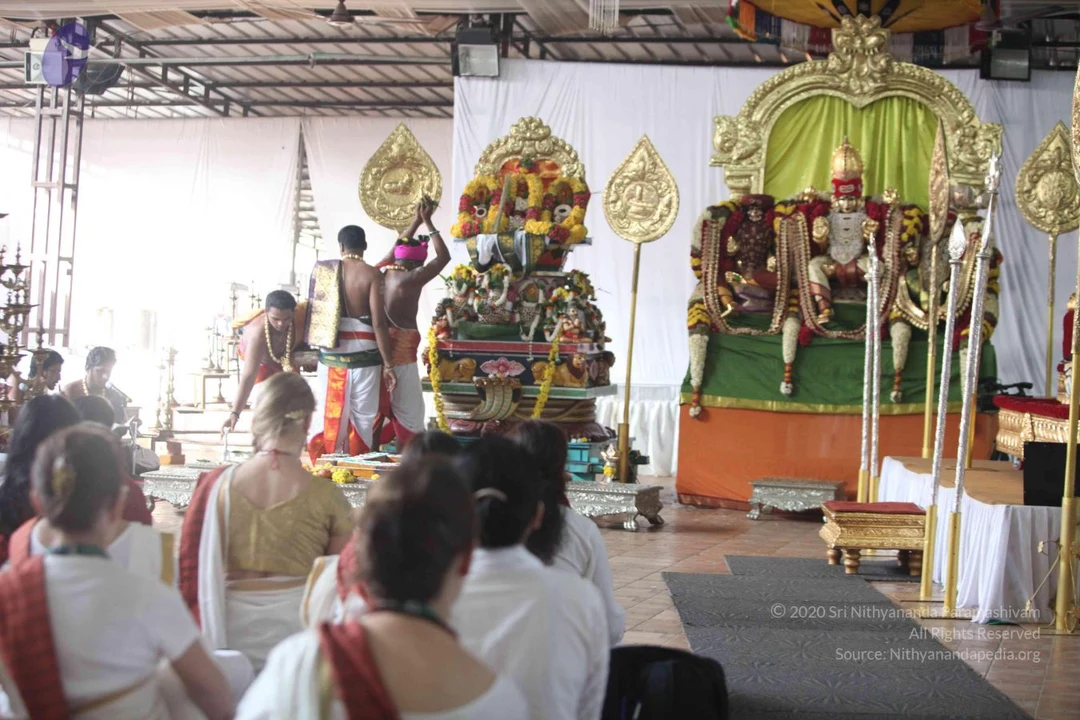
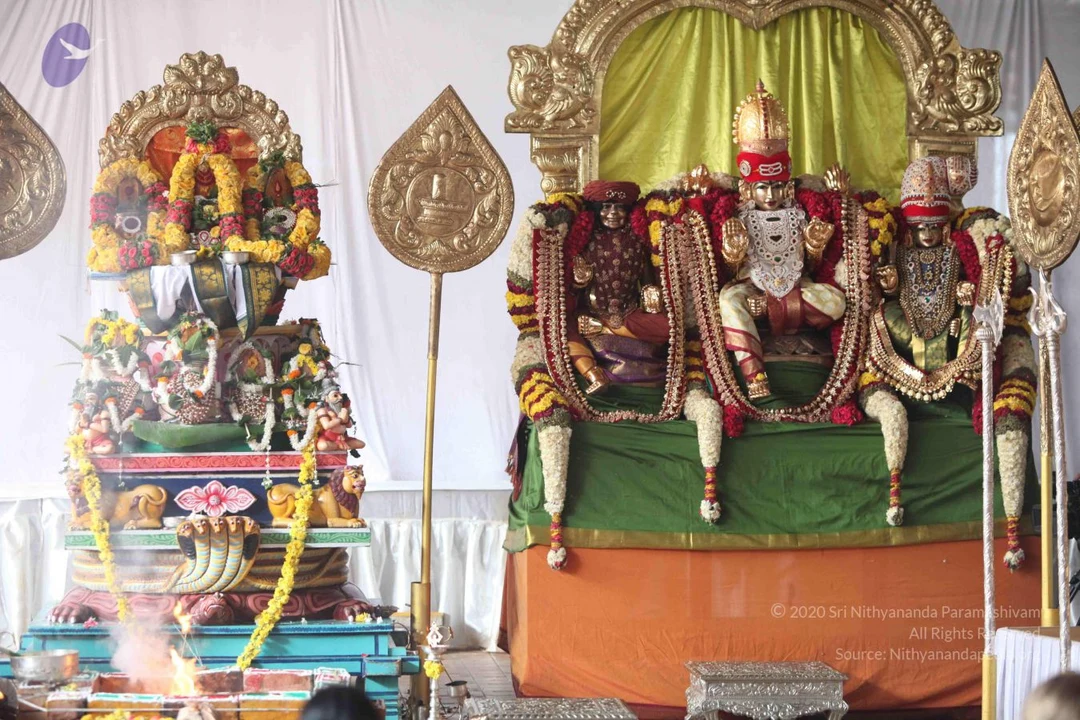
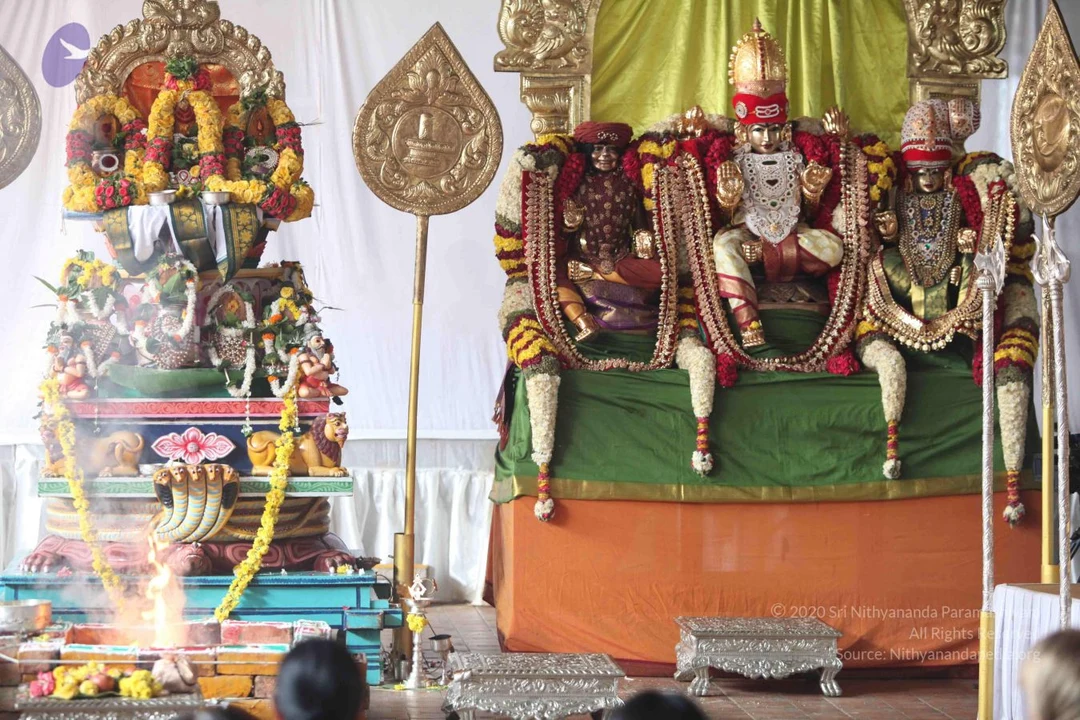
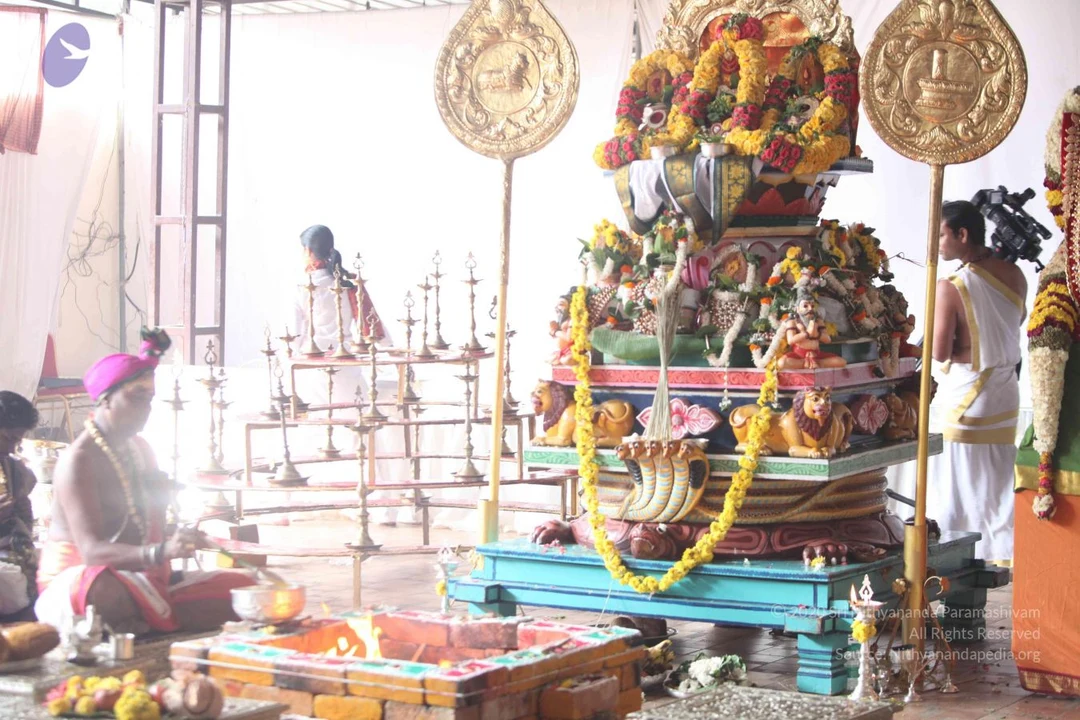
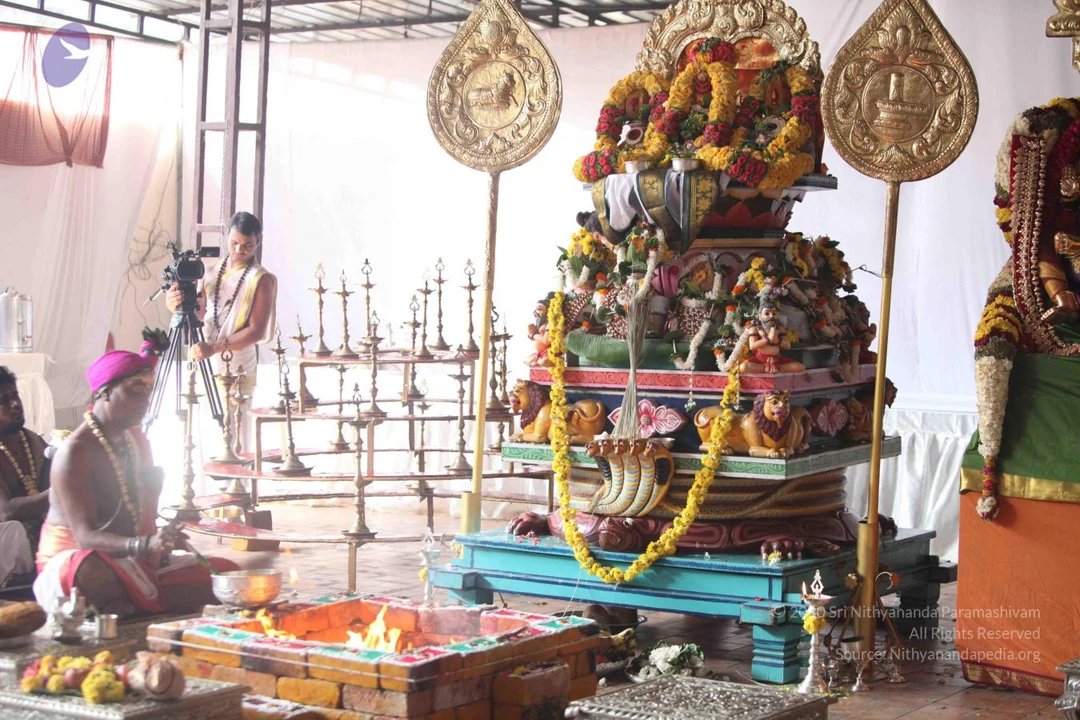
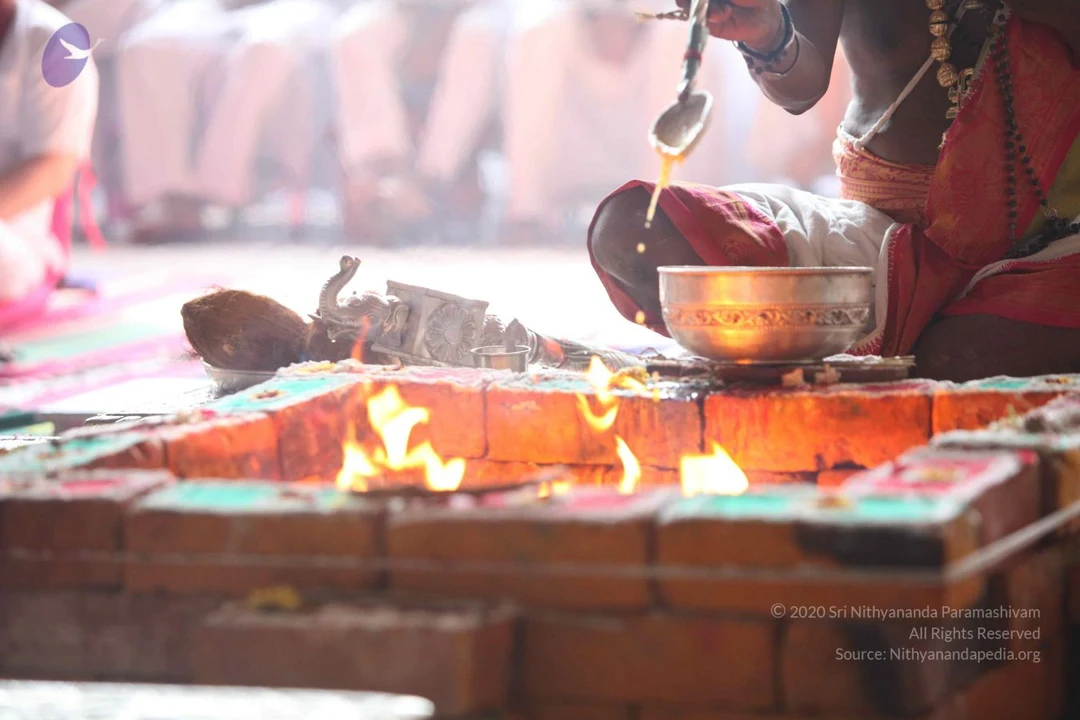
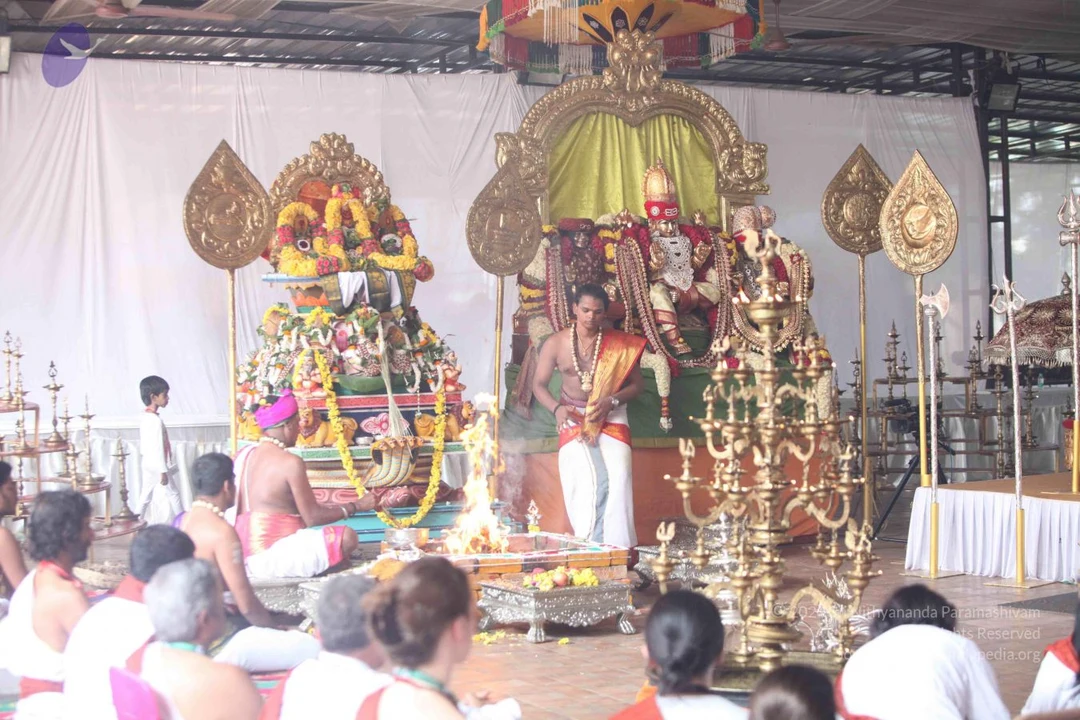
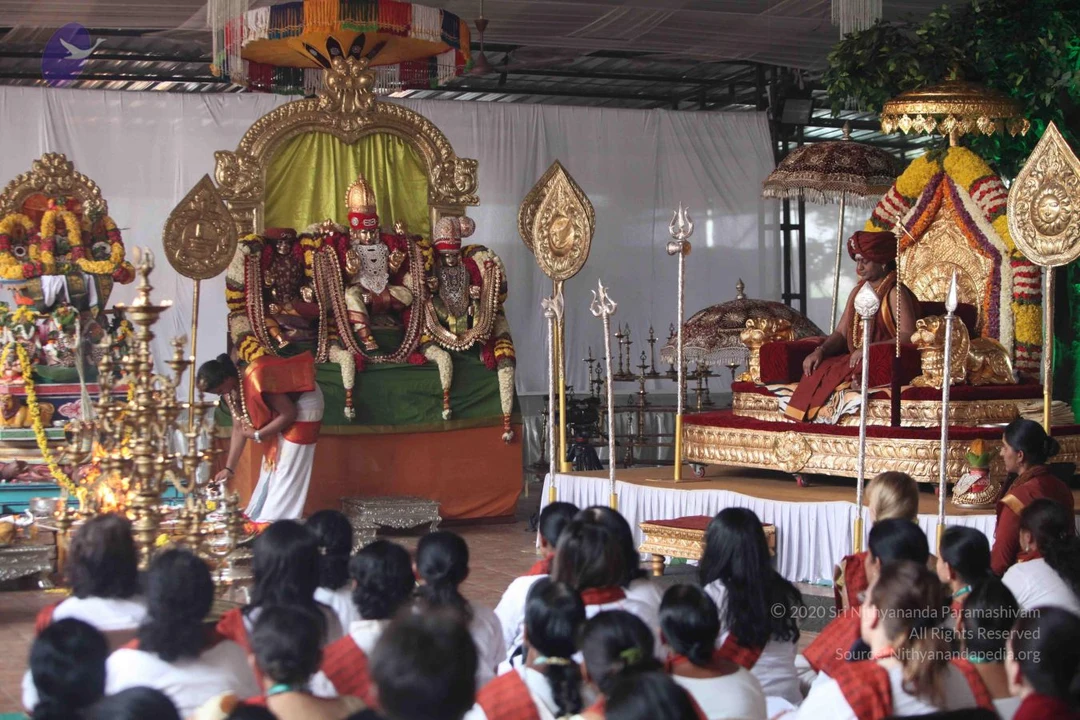
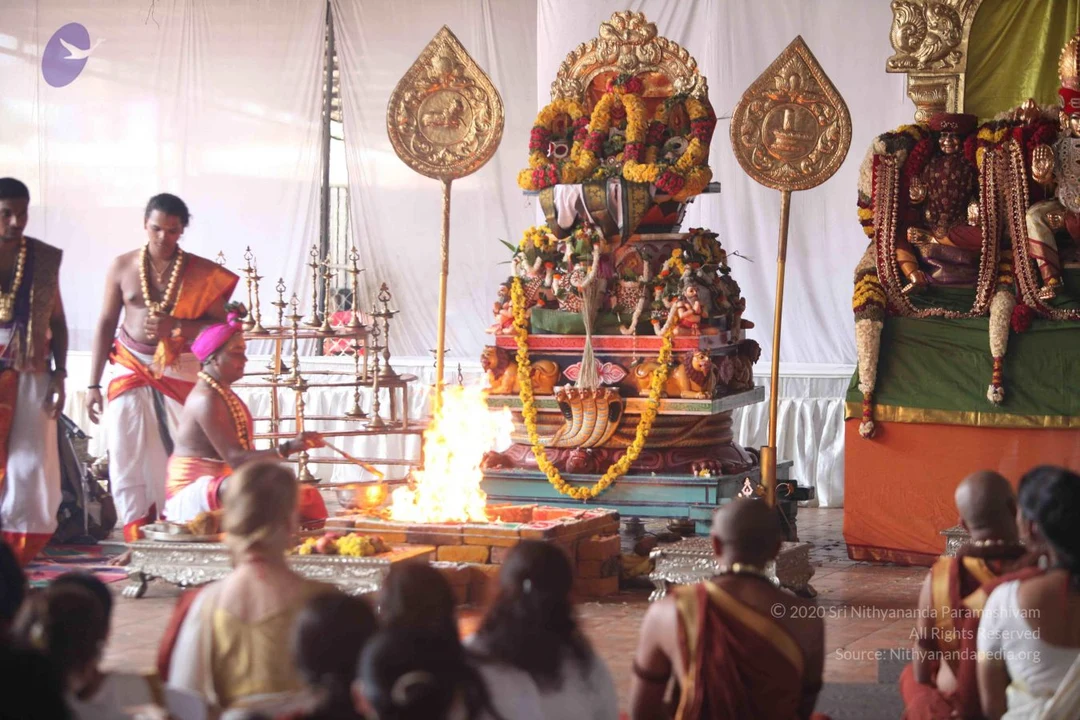
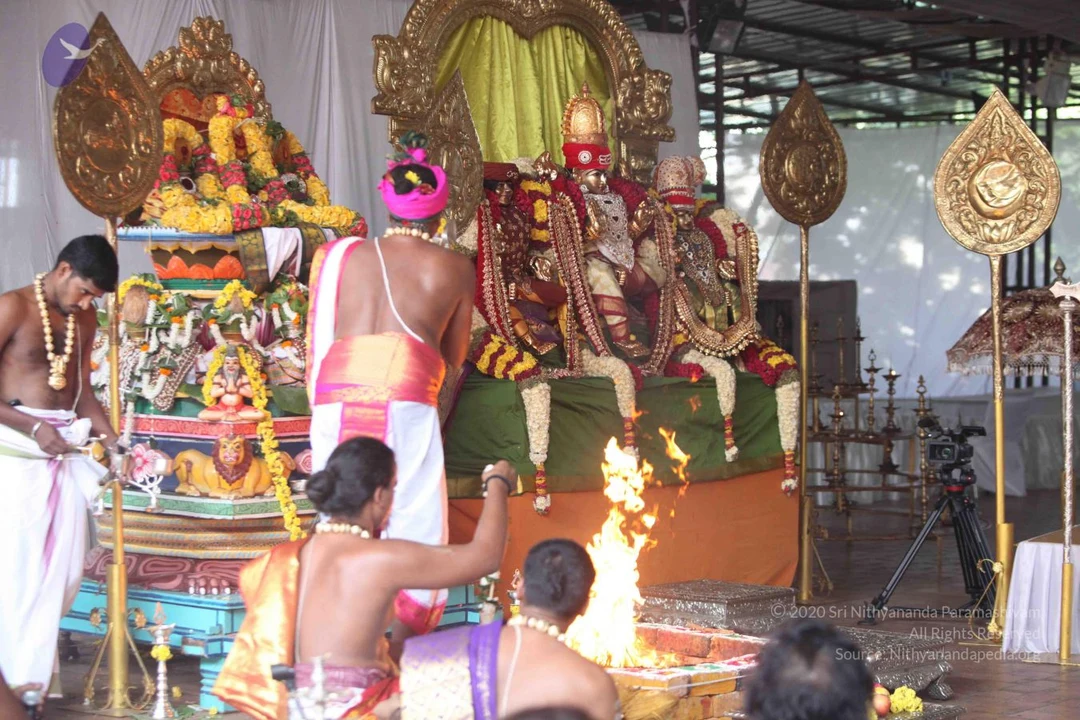
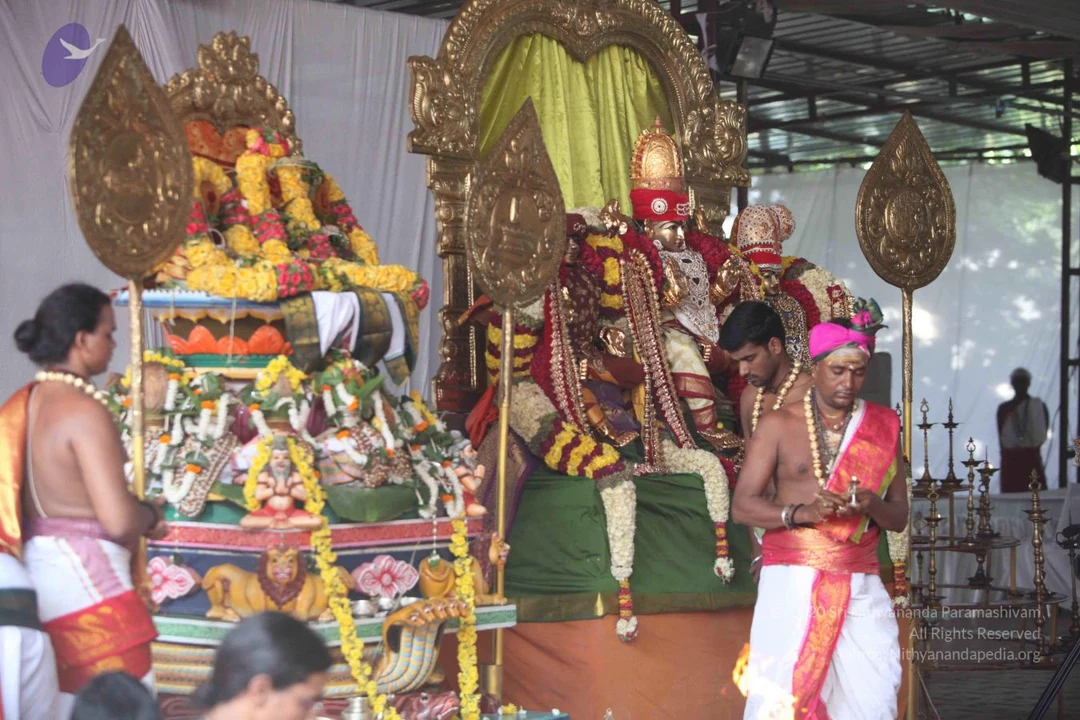
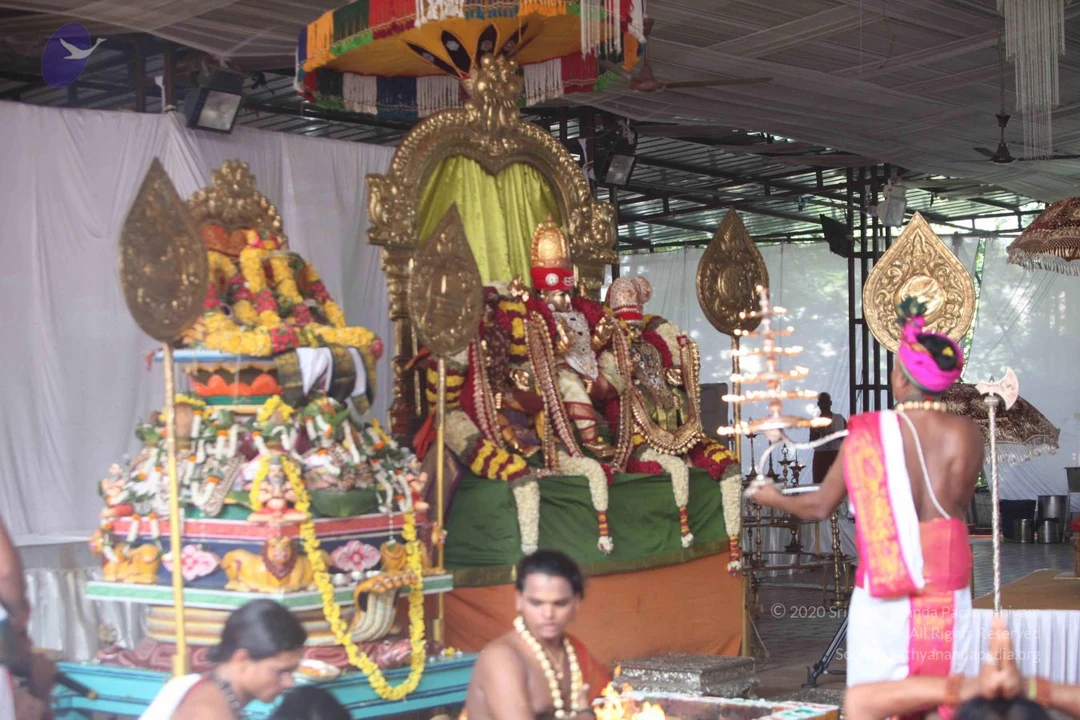
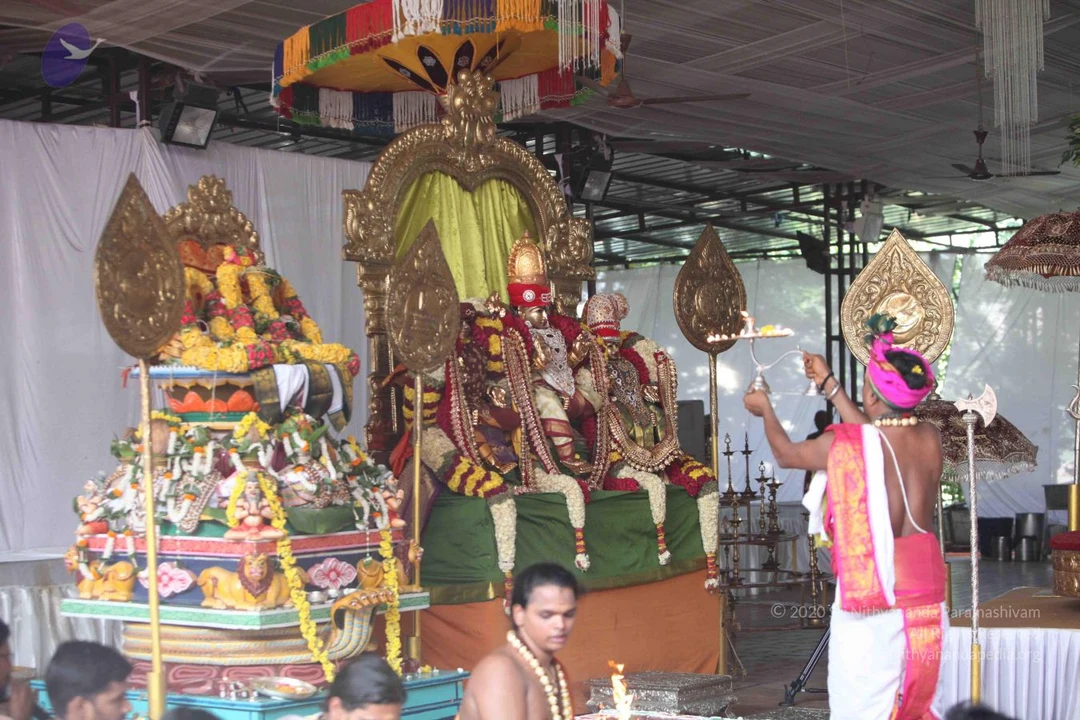
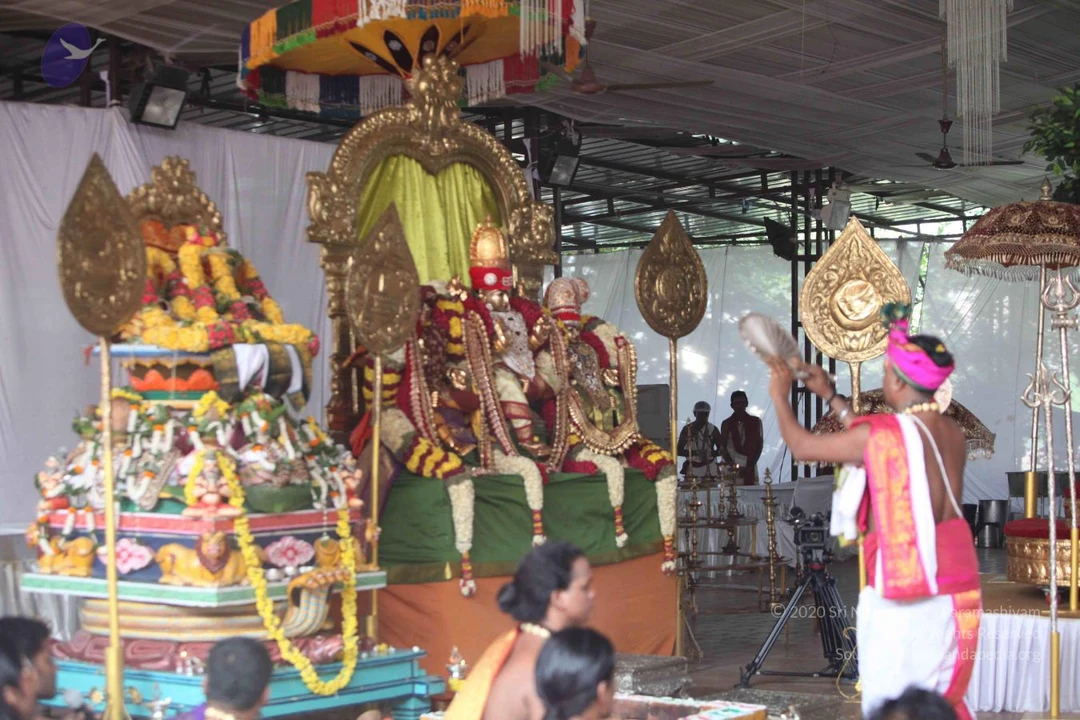
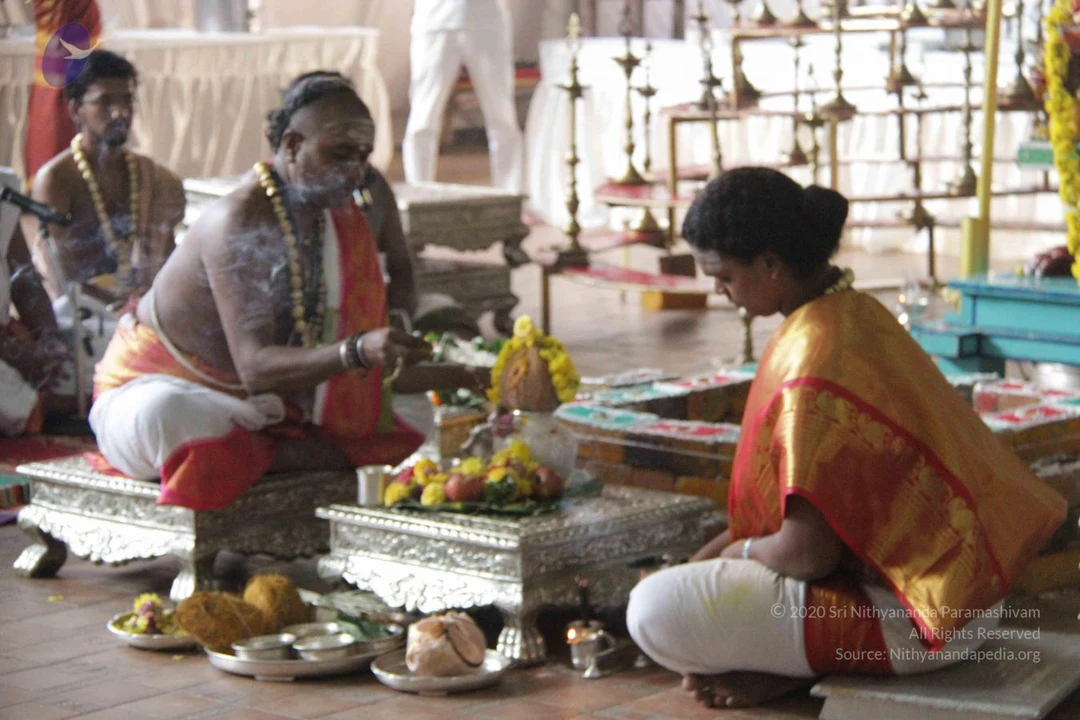
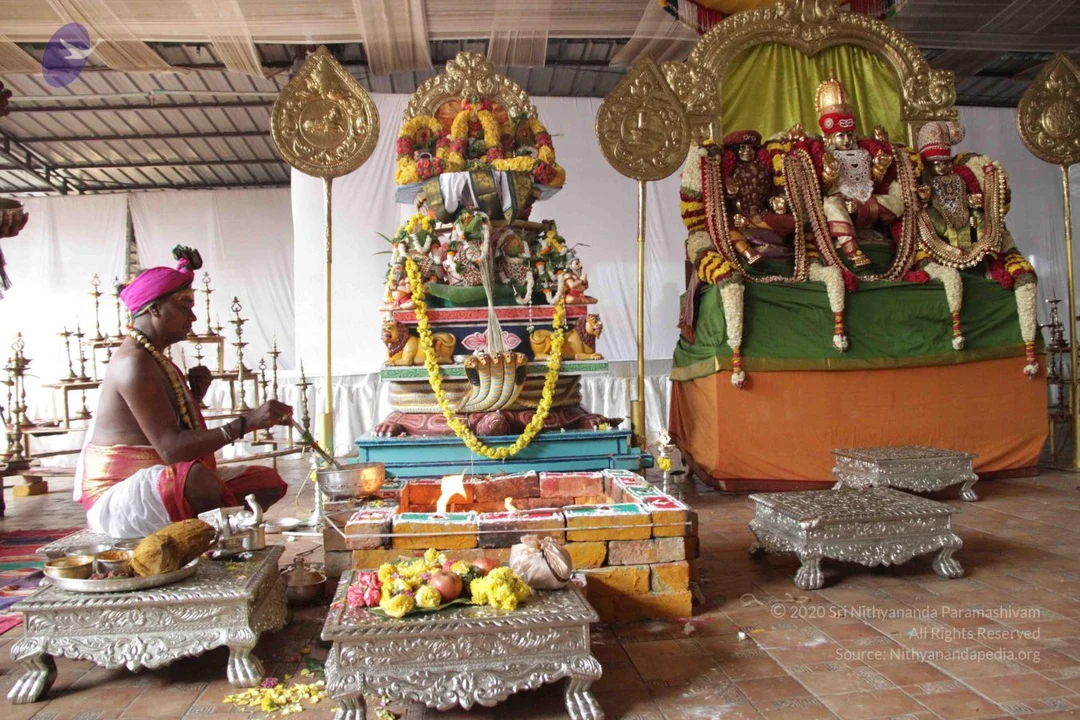
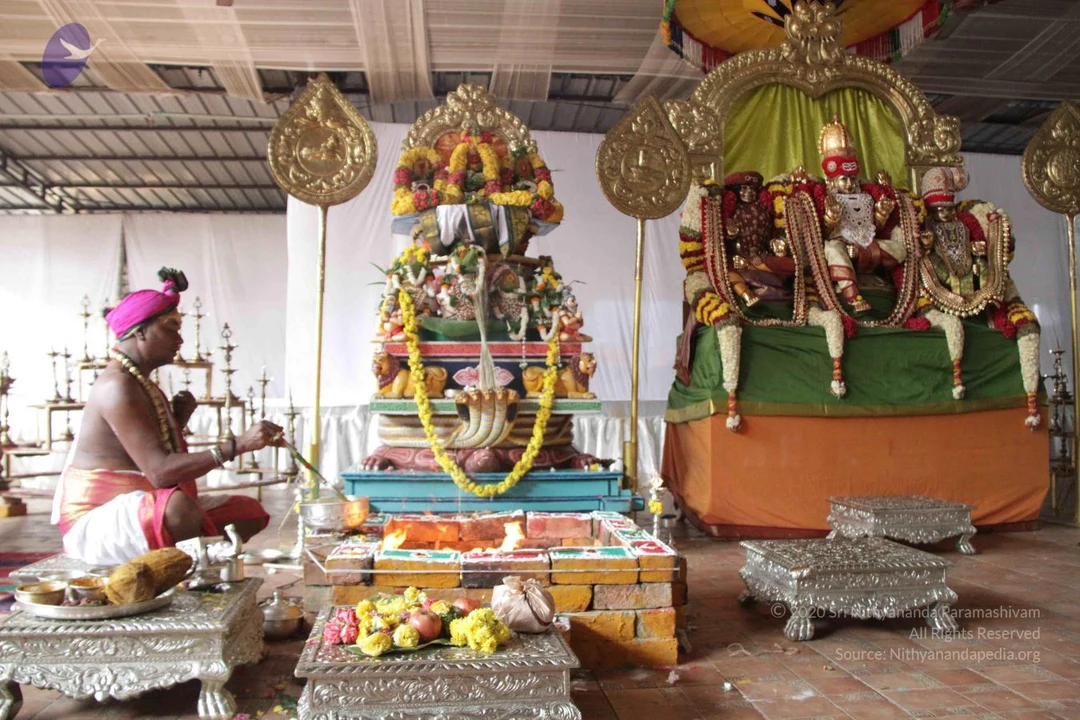
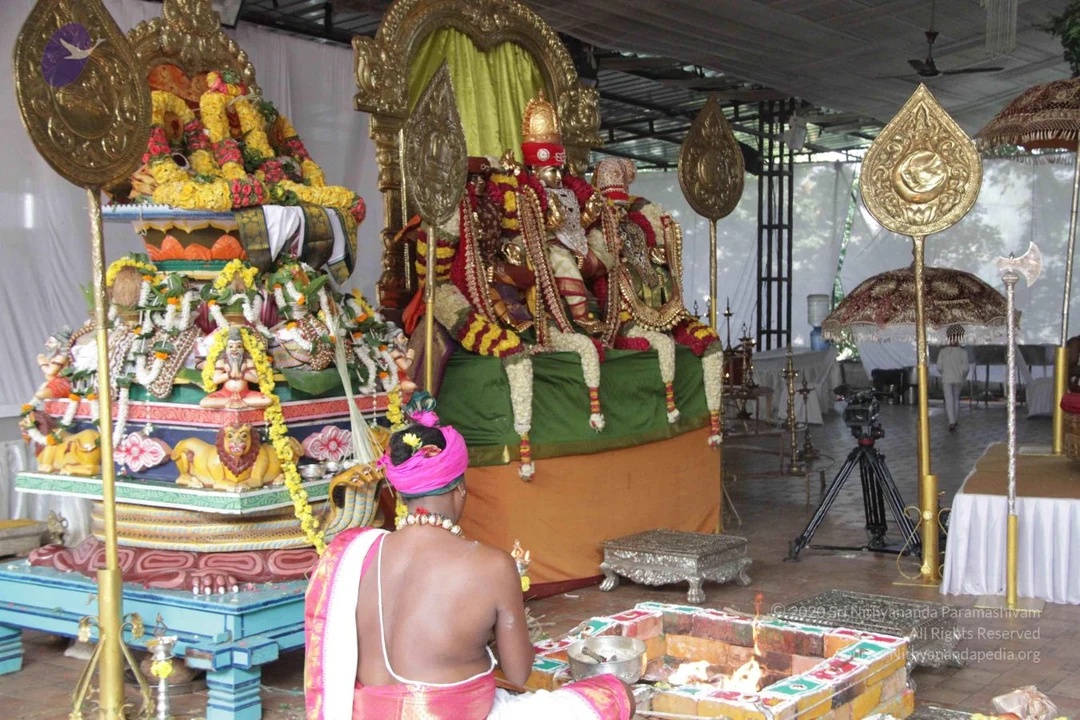
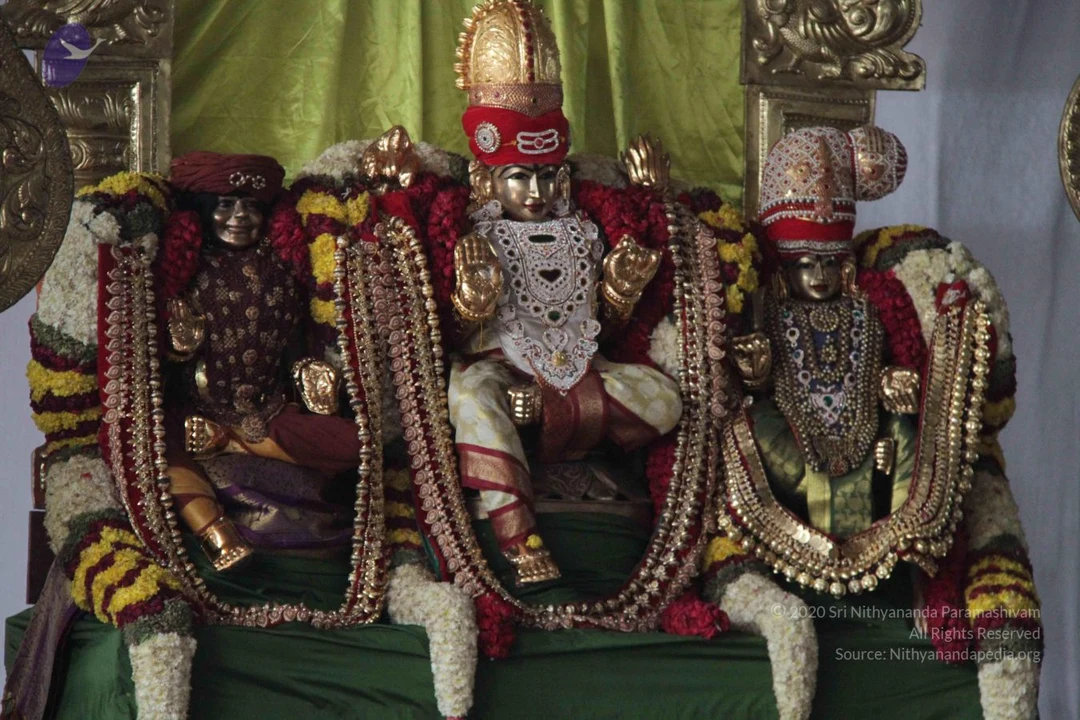
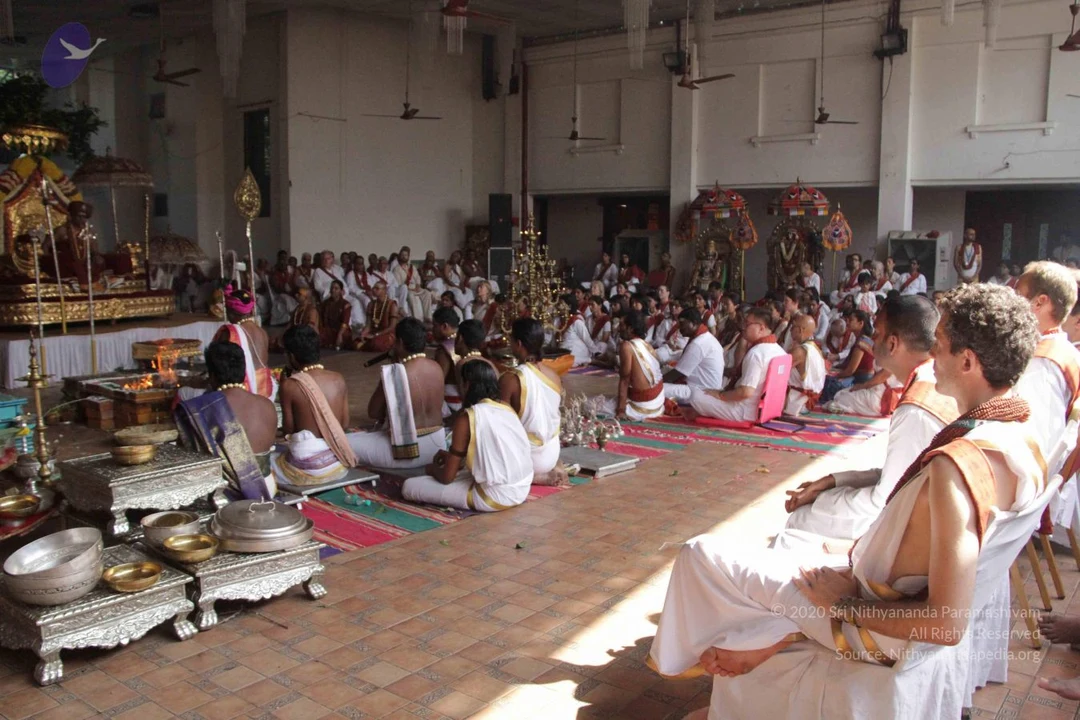
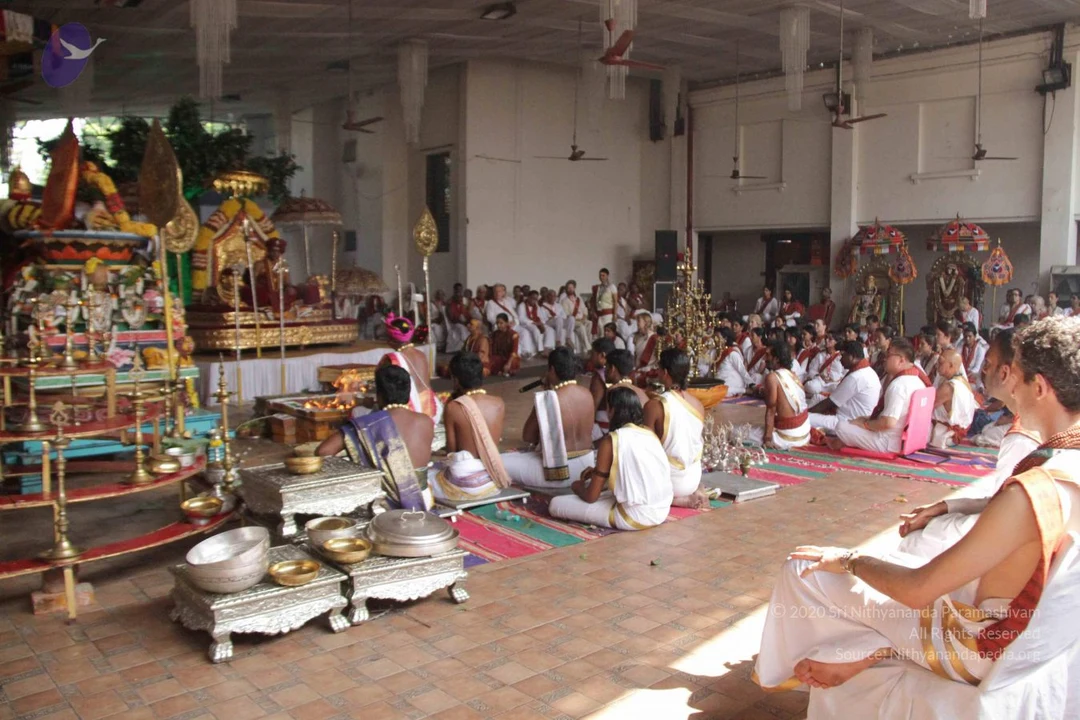
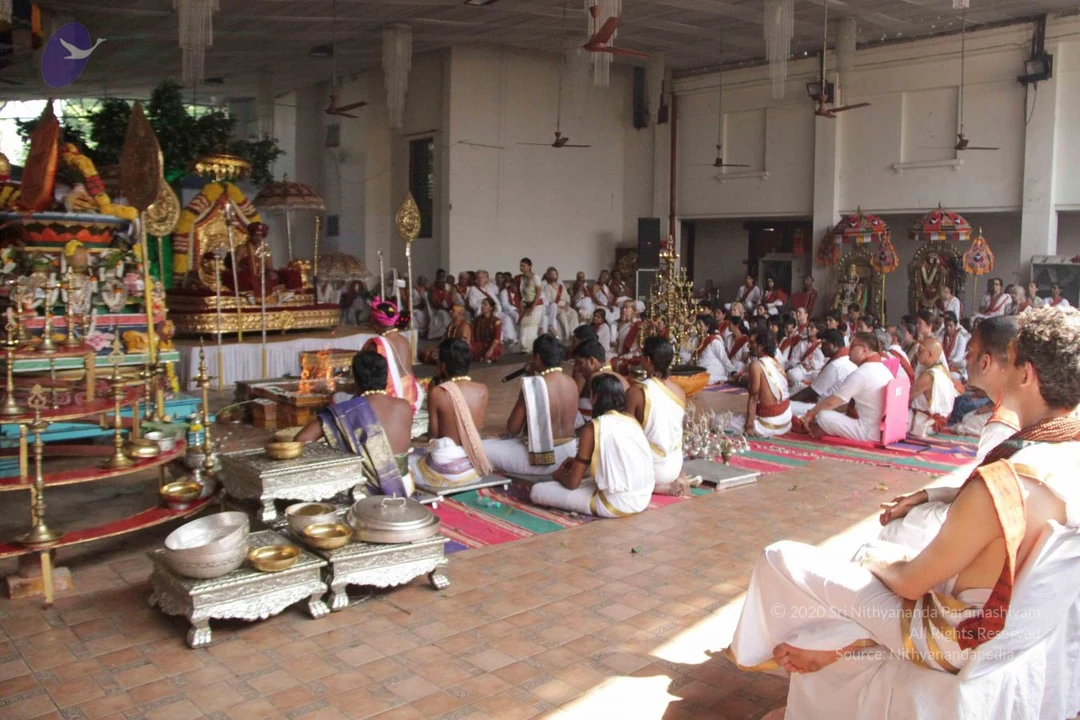
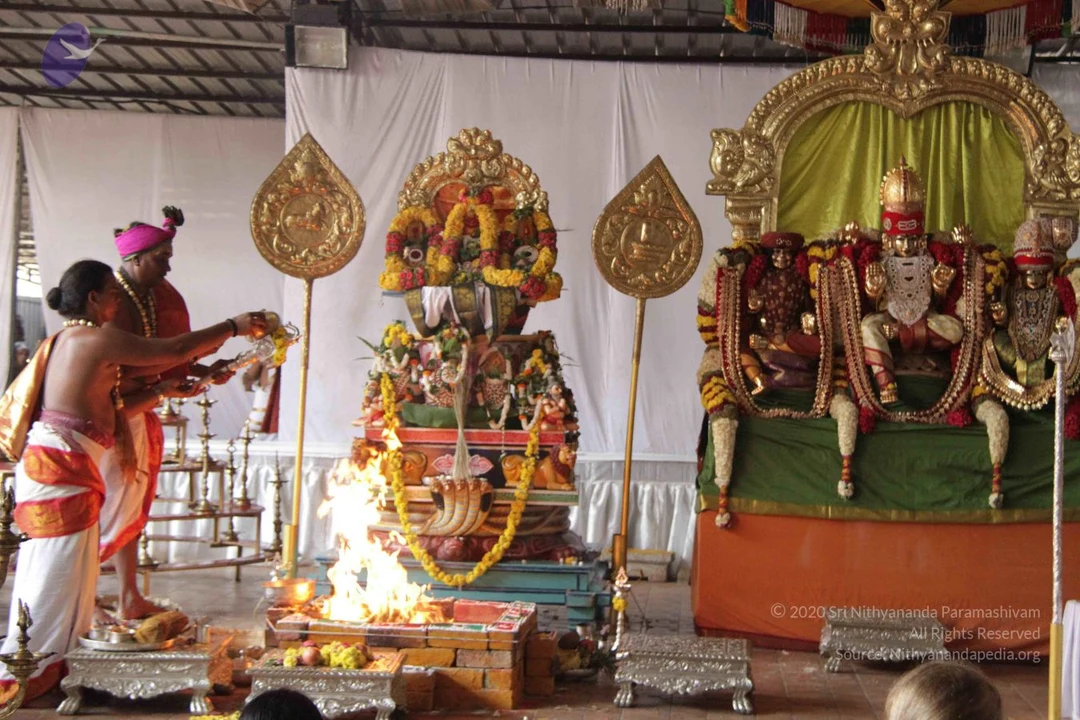
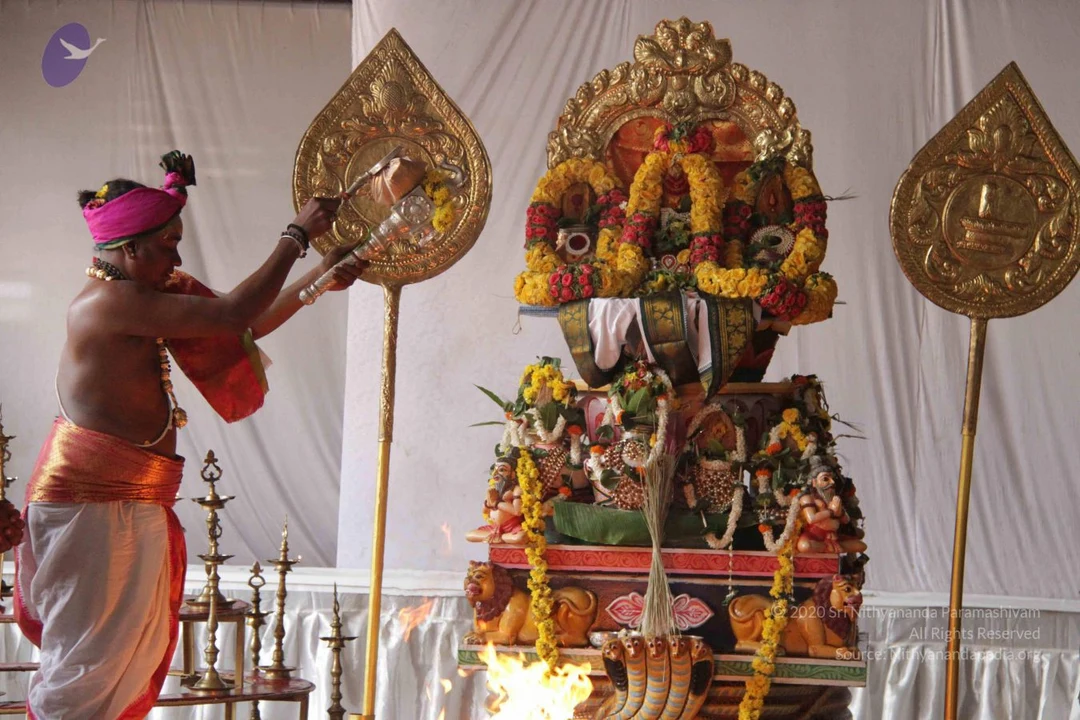
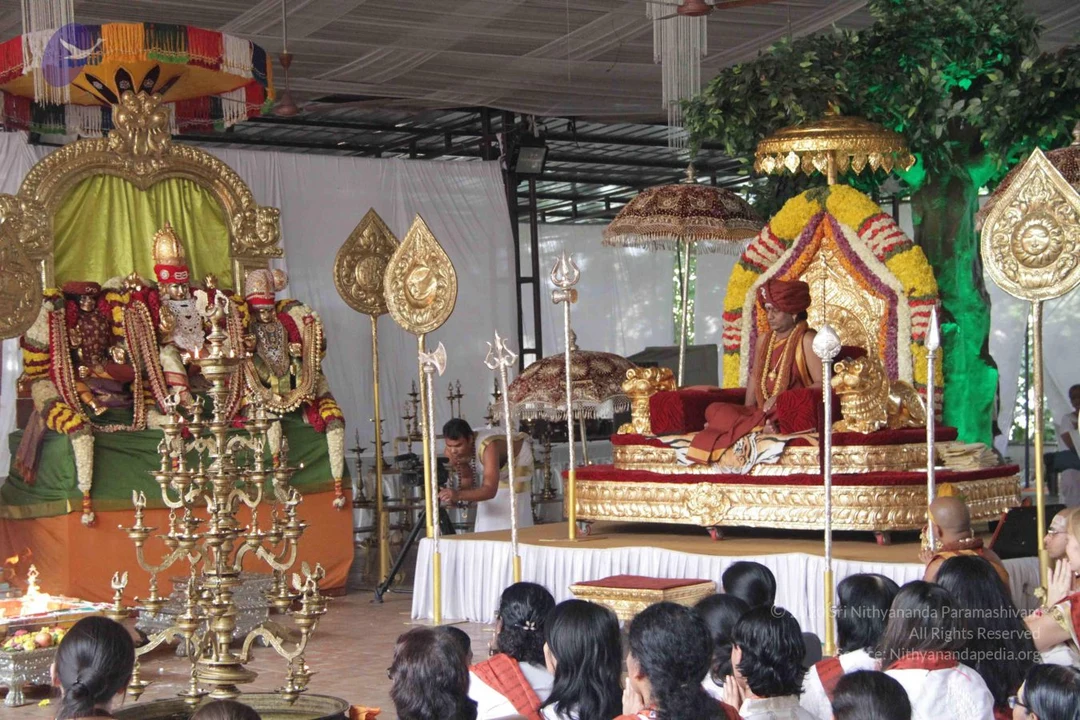
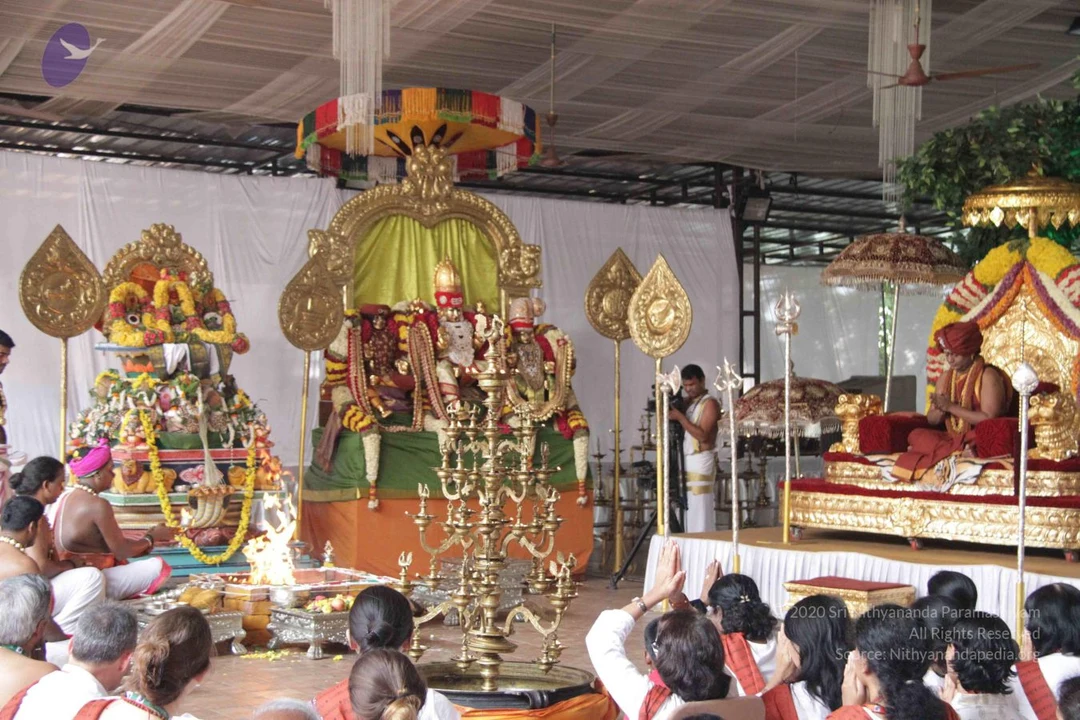
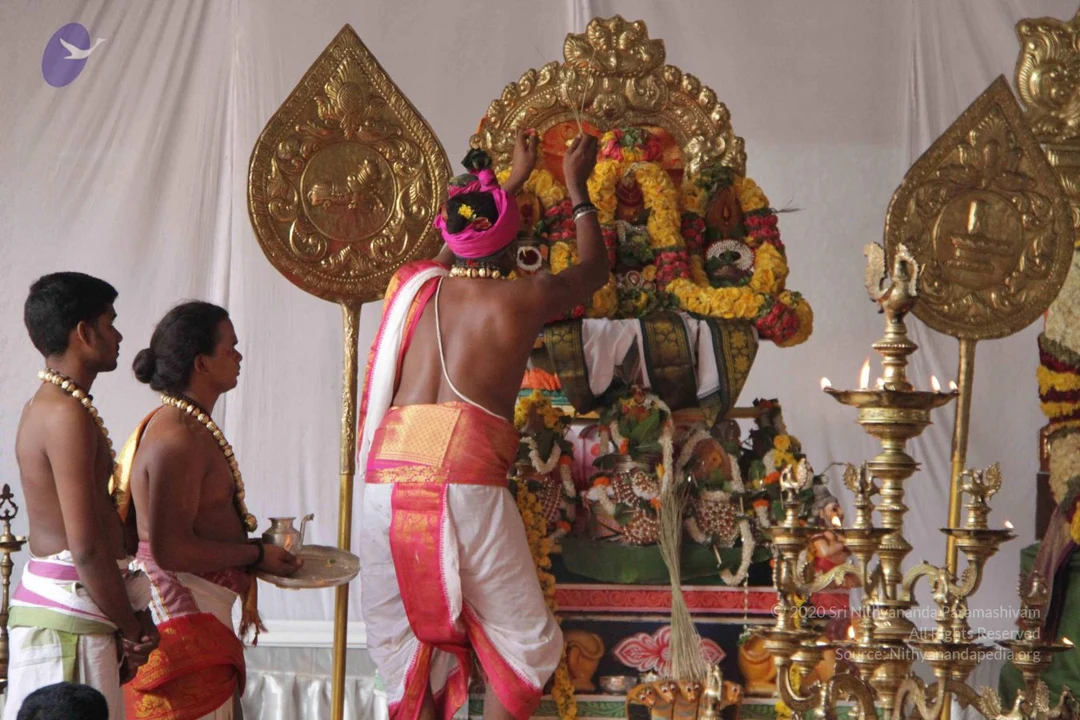
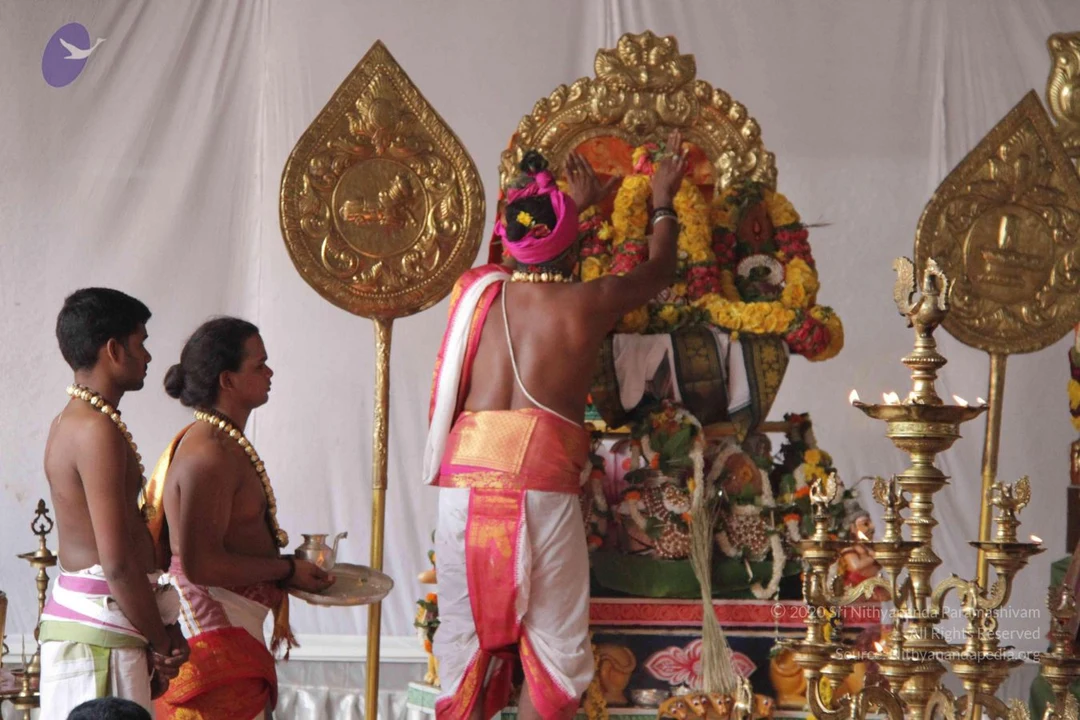
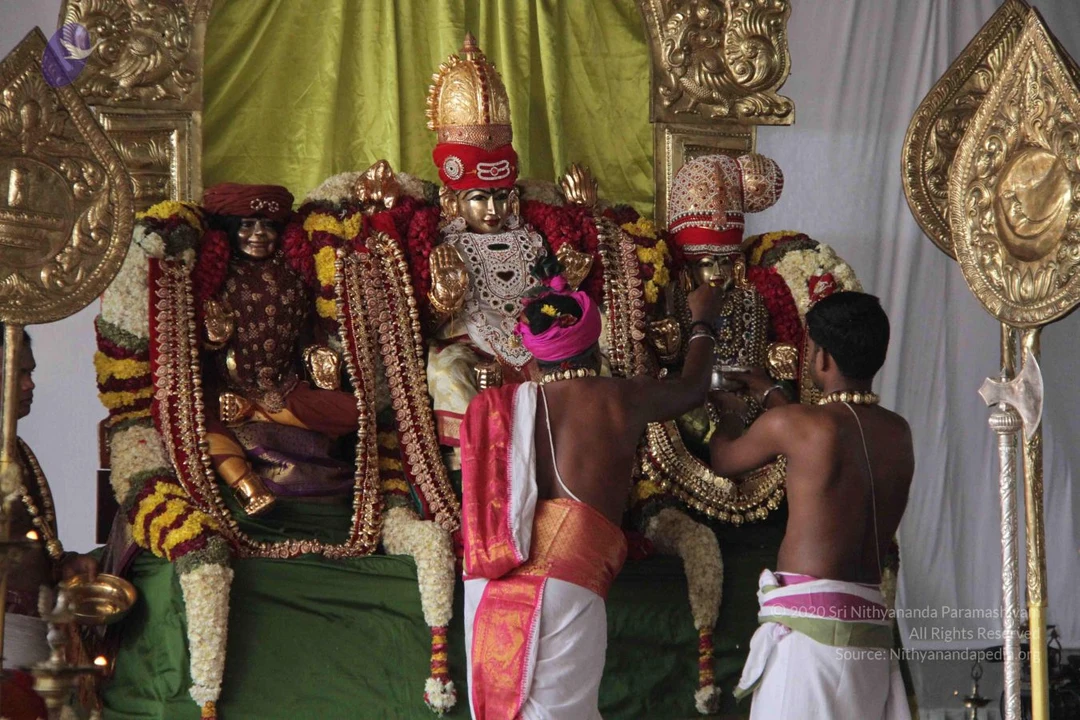
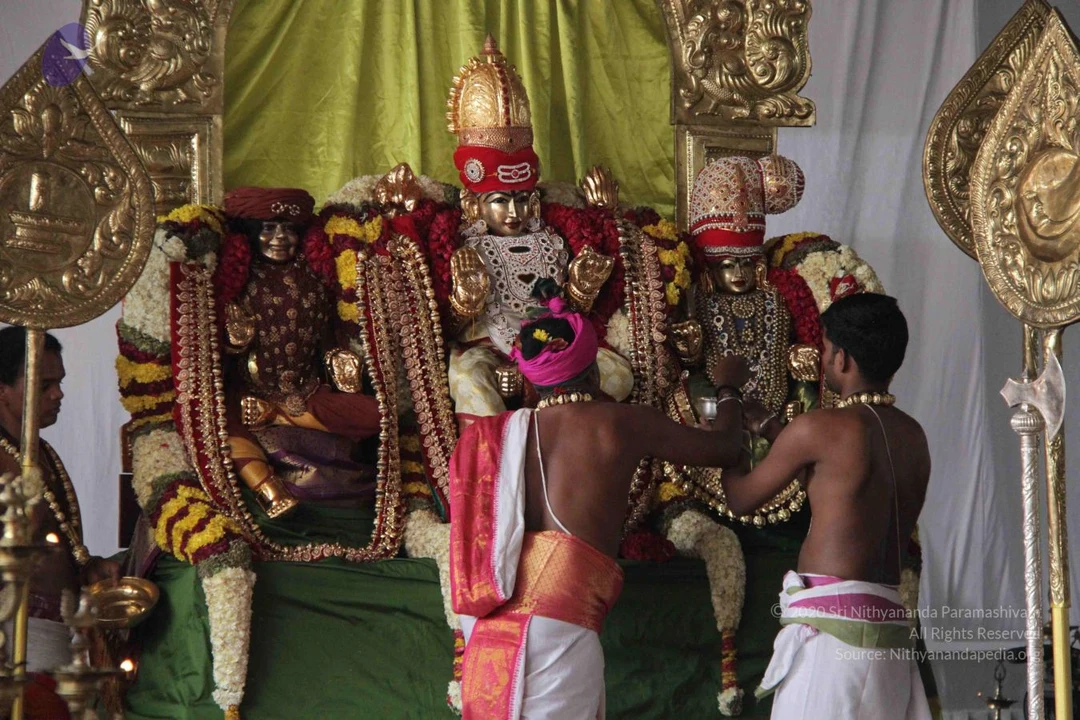
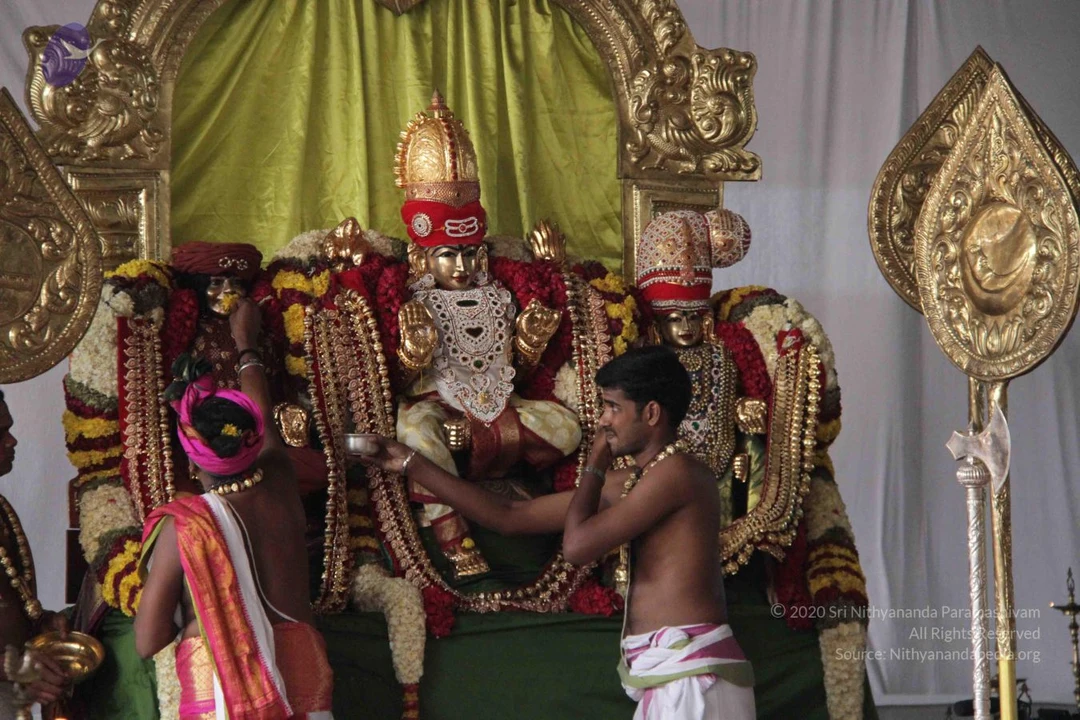
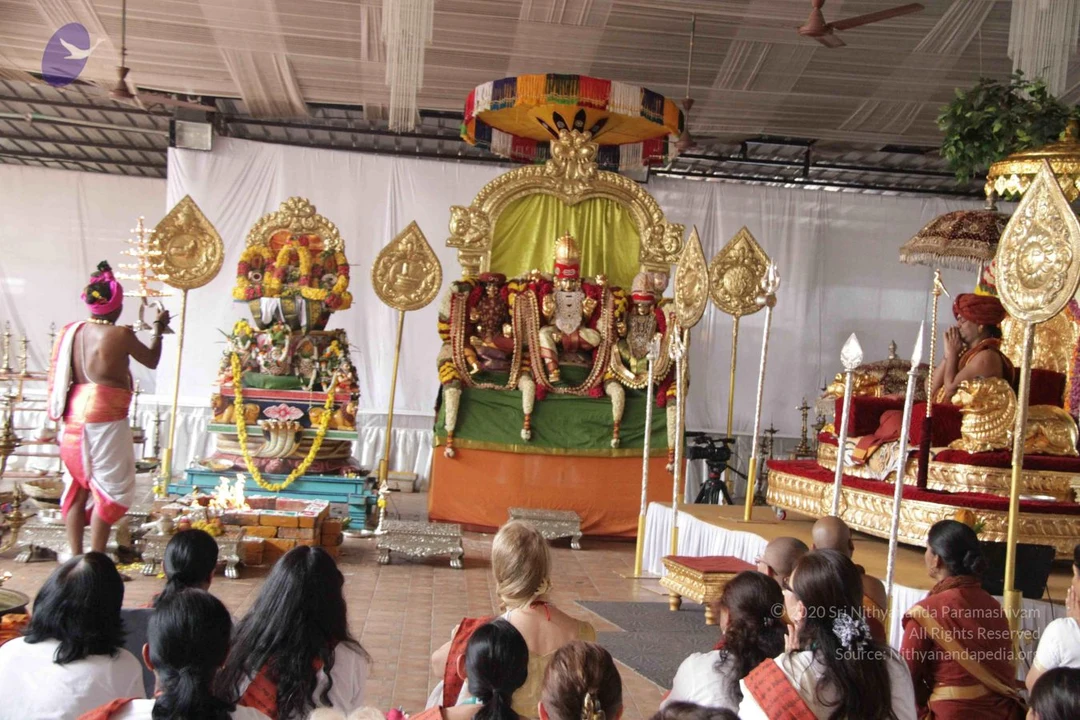
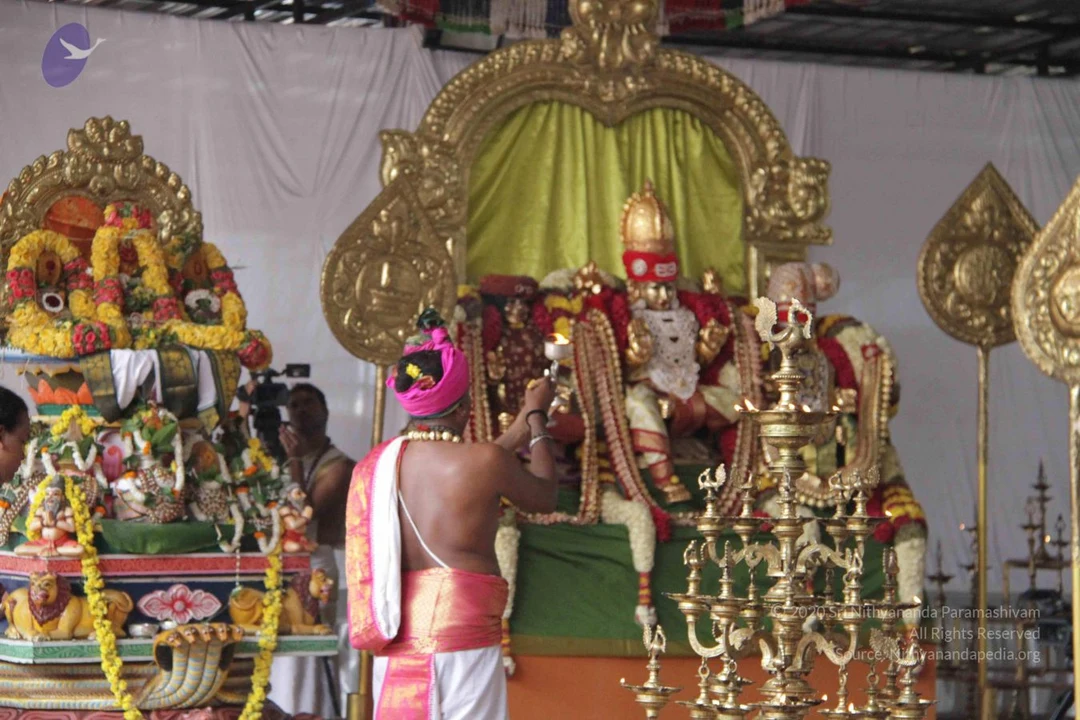
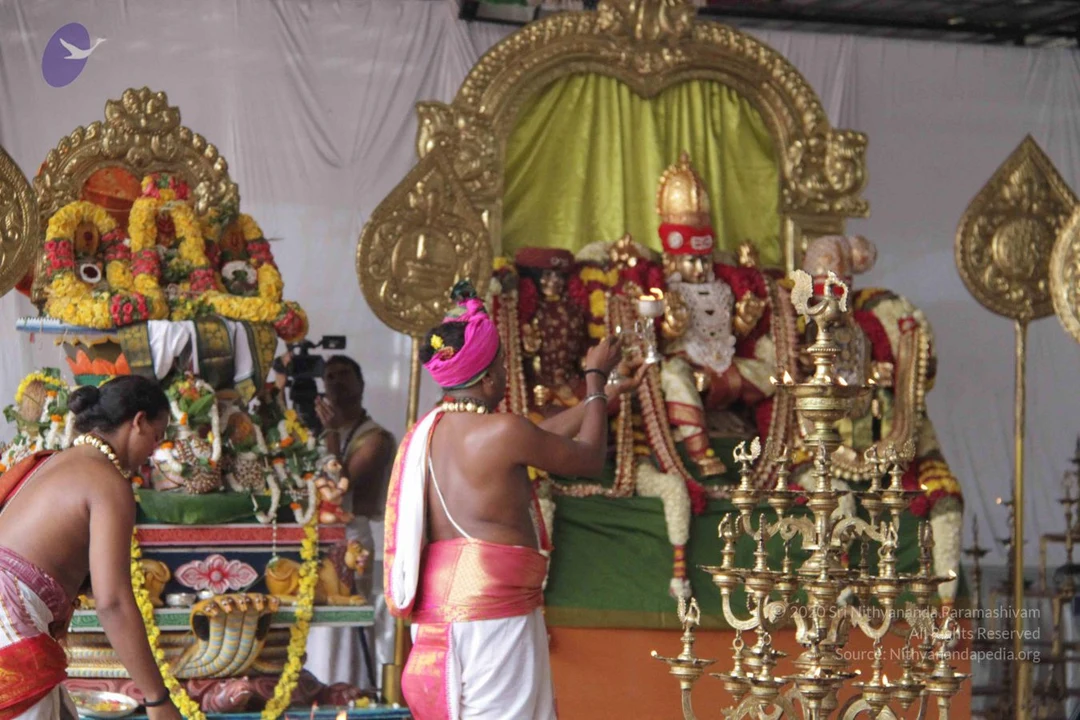
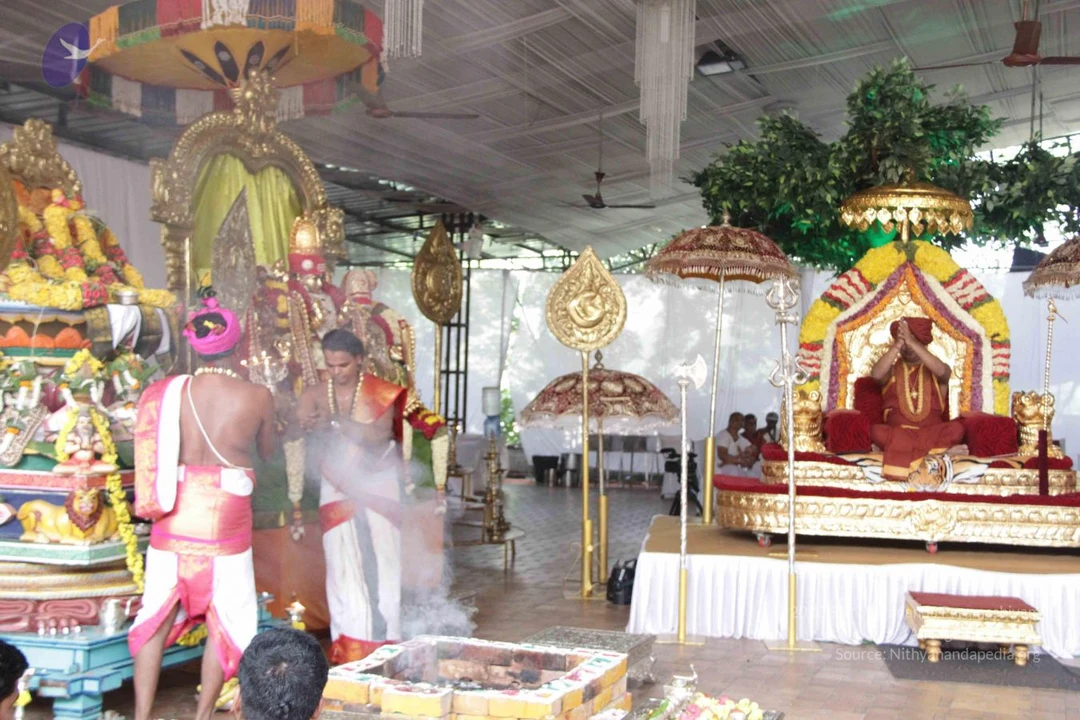
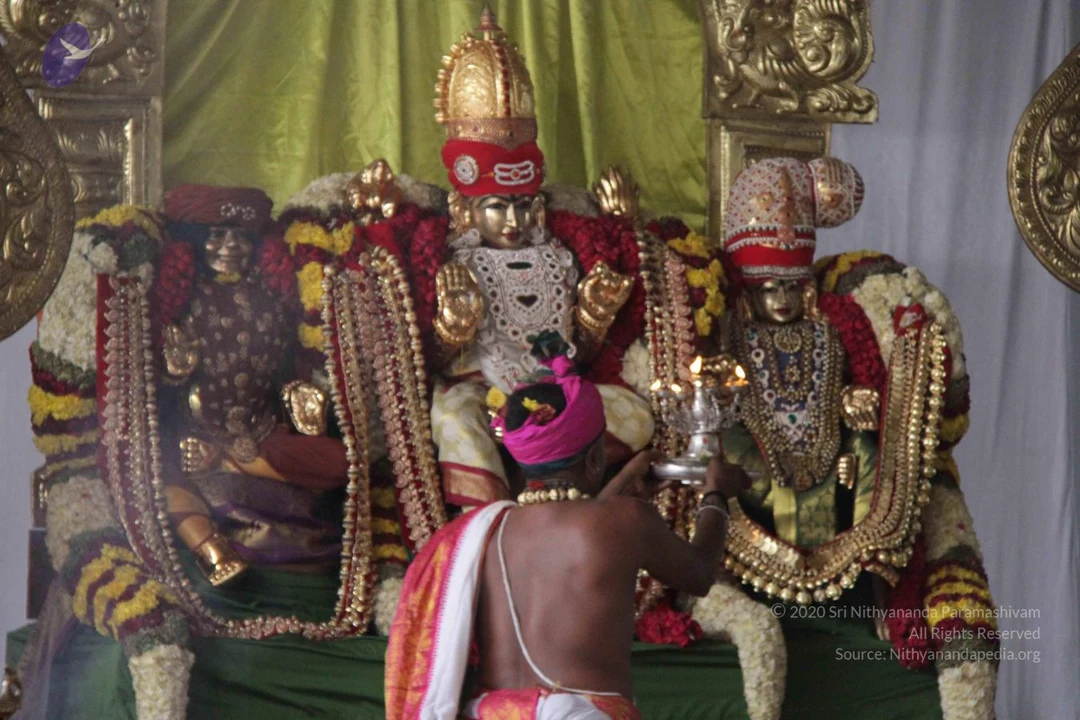
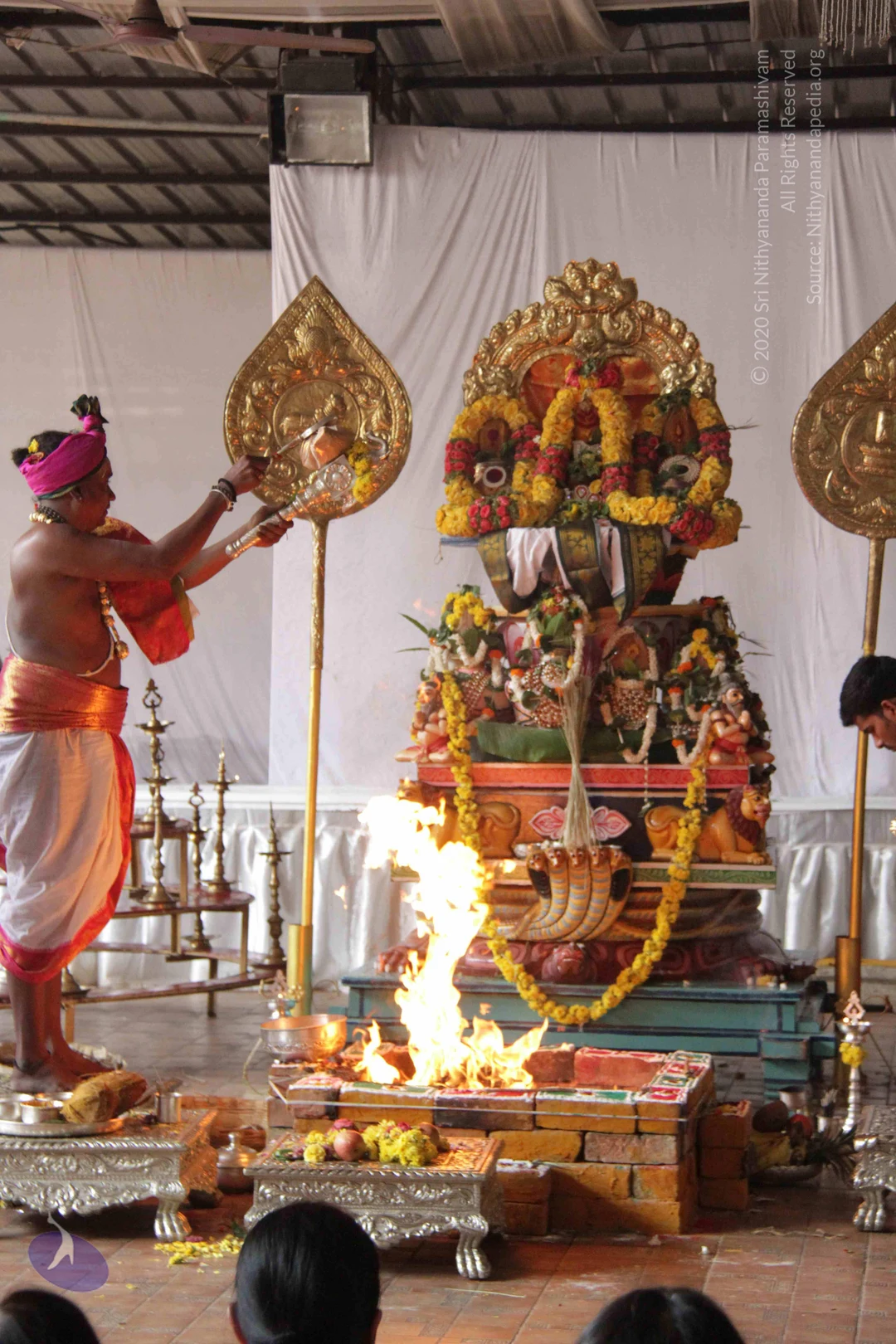
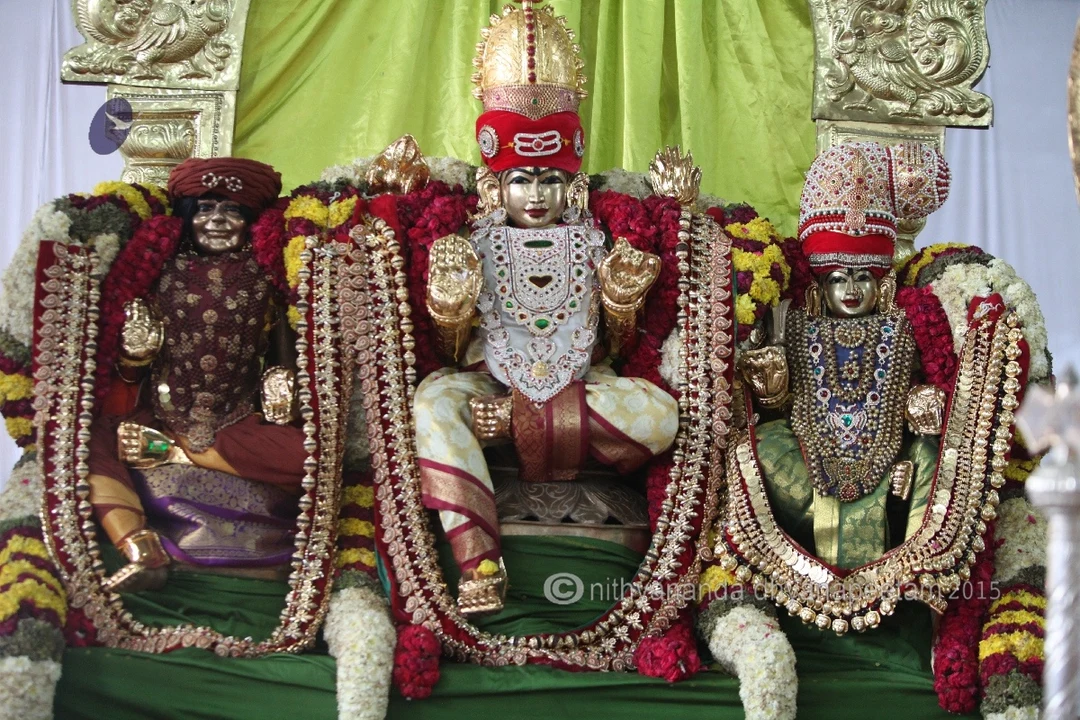
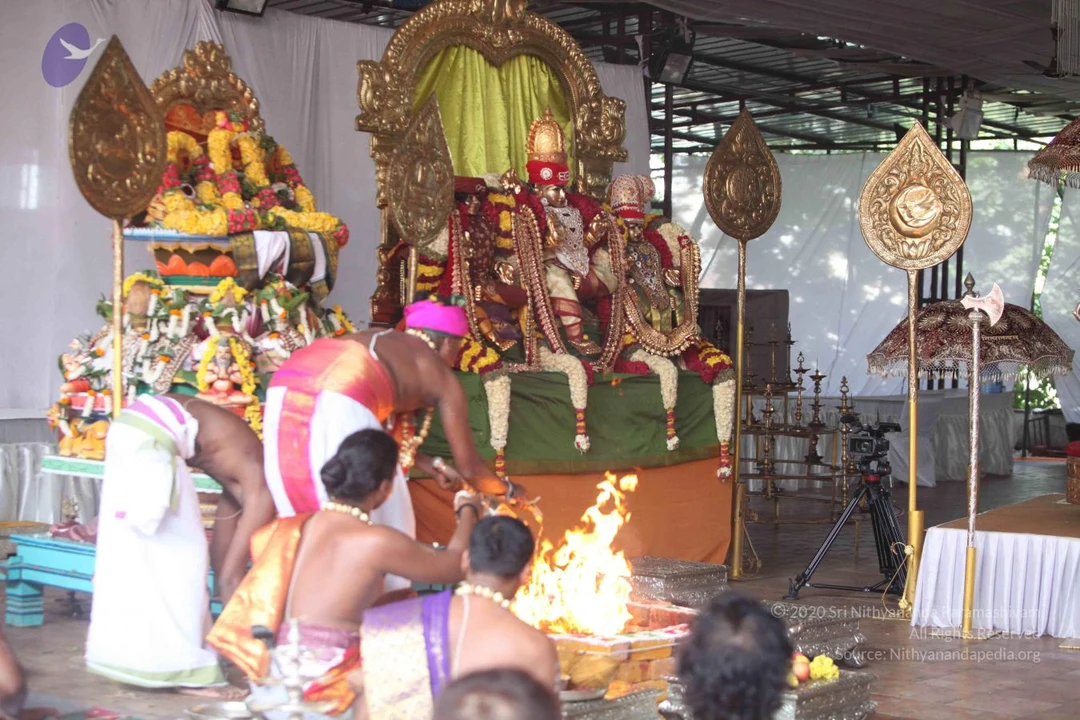
Three metal murti figures seated side by side on a green cloth-covered platform, decorated with red and white garlands and gold-toned borders. The central figure wears a red and gold crown with a white ornamented chest piece, holding hands raised in blessing, with white dhoti-style garments patterned in gold. The figure on the left wears a maroon embroidered tunic, a red turban and gold armlets, while the figure on the right wears a red and gold headdress, a heavy beaded necklace and green garments. Deity murti setting with ritual decoration.A photograph of three ornately decorated murtis seated side by side on a green-draped dais with a green cloth covering the seat. The central figure, a deity murti with a gold crown, red tilak-marked headpiece and a white jewelled chest ornament, sits cross-legged with a gold-patterned lower garment. The figures on either side wear red and gold turbans and heavy gold and gemstone necklaces, with garlands of red roses and white flowers draped over the seat and gold-bordered red shawls. Gold ornamental pillars frame the scene.Close-up of a decorated ceremonial seat or peetha with an ornate gilded backrest carved with scrollwork and a red patterned cloth behind it. Two large garlands of yellow and pink roses with green leaves are draped over the front, with coconuts tied to the sides and a jewelled gold ornament and rubies set in gold in the centre. No people are visible. Fresh flowers and bright gold details dominate the frame.Temple-style ritual setting with two priests in white dhotis and ceremonial shawls standing at left before a tall decorated ritual structure garlanded with yellow and orange flowers. Right, a large golden throne-like seat with a green canopy holds two seated deity murtis adorned with garlands, jewelry and a crown, flanked by ceremonial staffs and gold-tipped spears. A brick-lined fire pit with flowers sits in front, with silver stands and a white draped backdrop. The priest at left wears white with a bare upper body and mala; the other wears a pink and orange shawl and pink turban. No clearly identifiable a person candidate is visible.A decorated ritual setup under a white tent: a tiered golden-and-red shrine structure draped with yellow and red marigold garlands, a gold-bordered cloth, and carved lion and figure statues at its base. Two priests stand in front with bare upper bodies, one in a pink headcloth and orange-and-white dhoti, the other wearing a shell-and-bead necklace and white dhoti; one raises his hand toward the shrine. Large gold leaf-shaped ceremonial fans with motifs stand on either side. No identifiable a person figure is visible.A temple-style ritual photograph shows a decorated deity murti on an ornate altar draped with flower garlands of yellow marigolds and red roses, with a golden kalasha-like crown and gold-framed arches behind it. Two priests stand in front: one bare-chested in white dhoti and a pink-and-orange turban with a fan-like whisk raised toward the deity, and another in white dhoti and orange shawl wearing a beaded necklace, with a third attendant at right holding a gold staff and wearing a purple-and-gold garment. Small lion and elephant figures decorate the base. A white tent canopy forms the background.
Shivoham
266 photosSource gallery
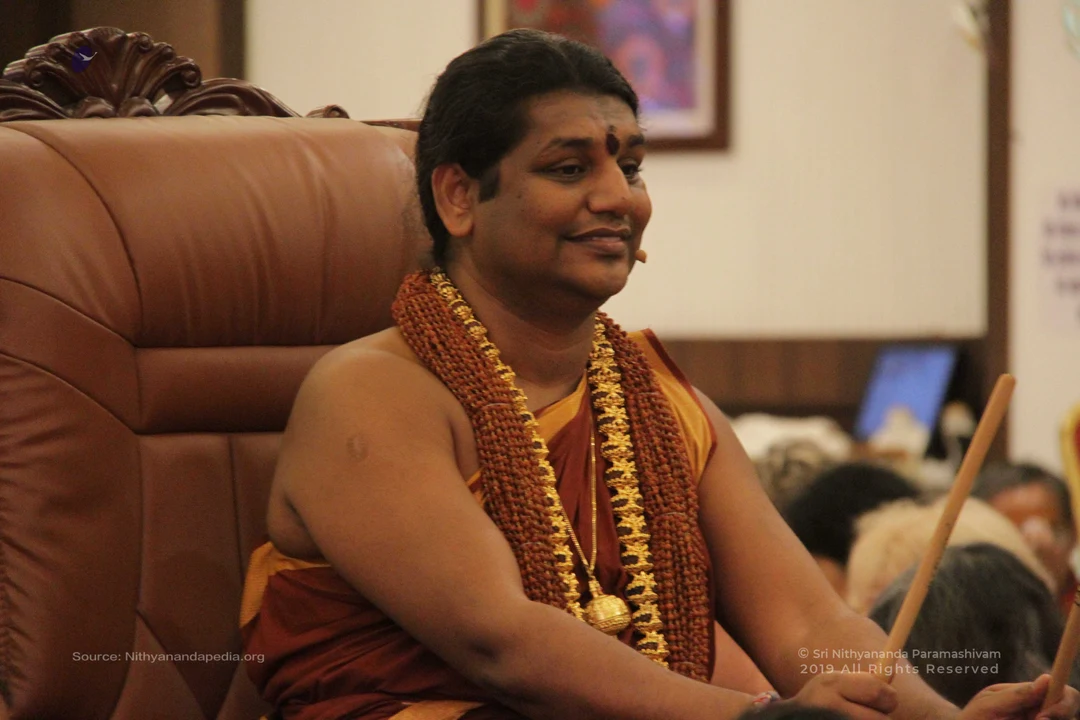
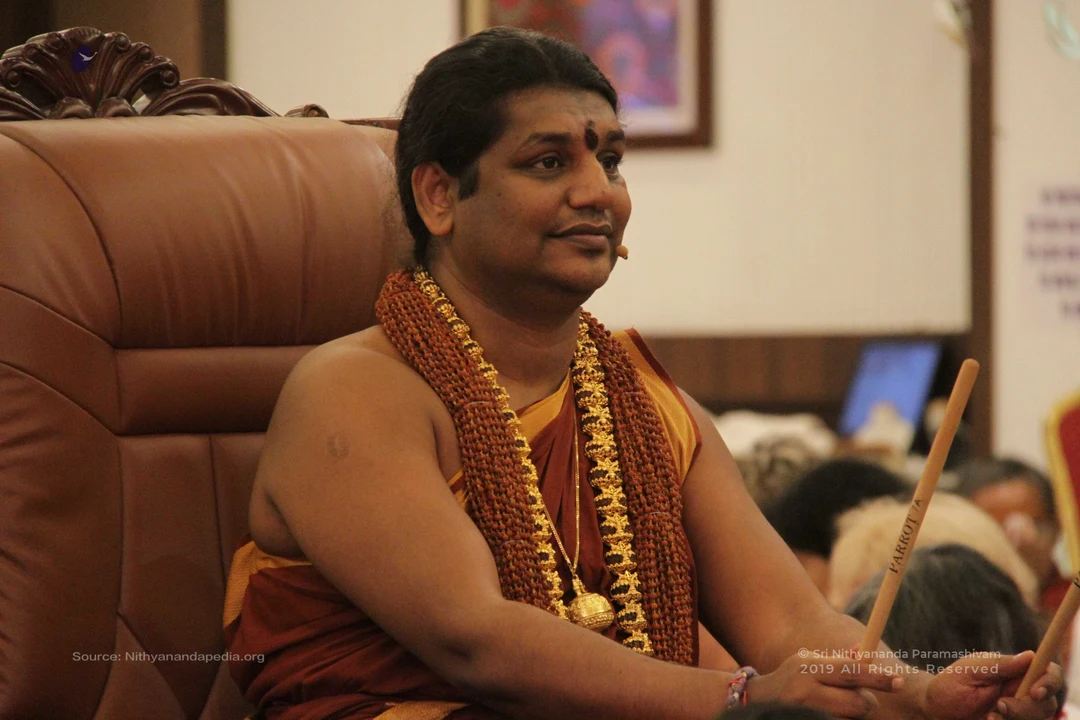
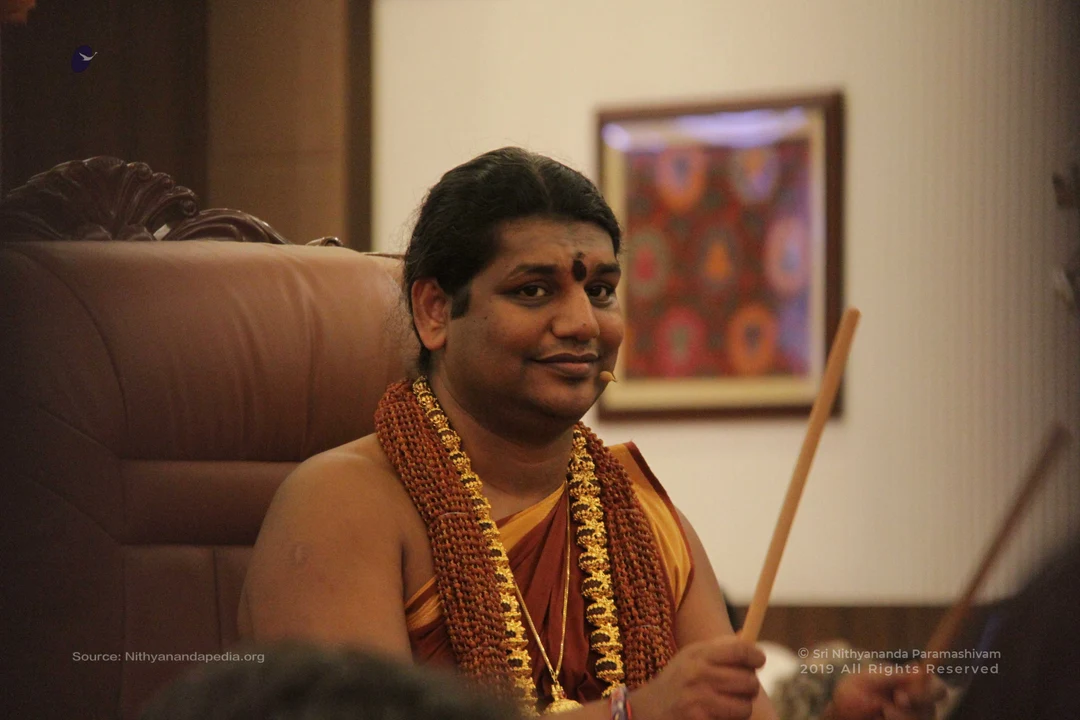
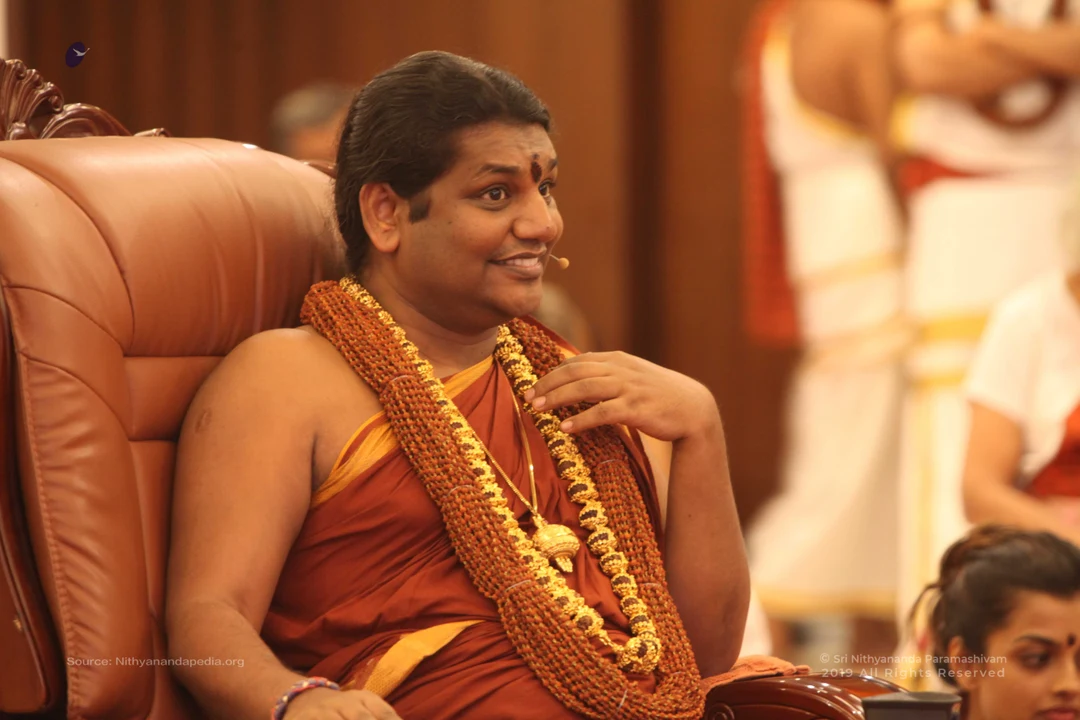
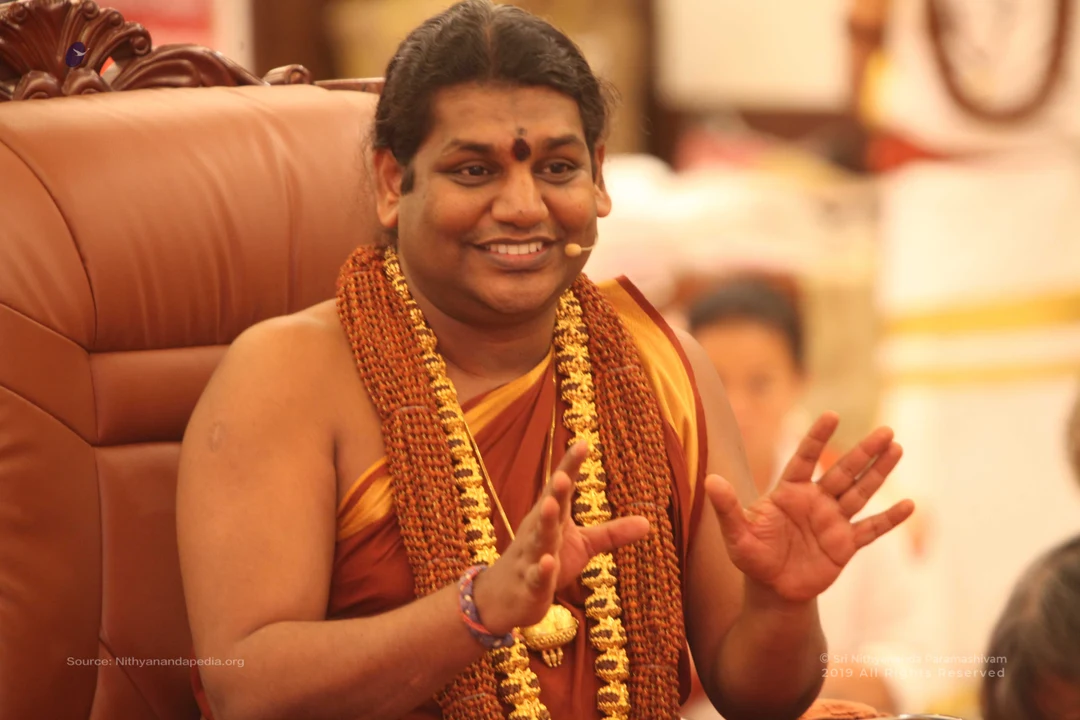
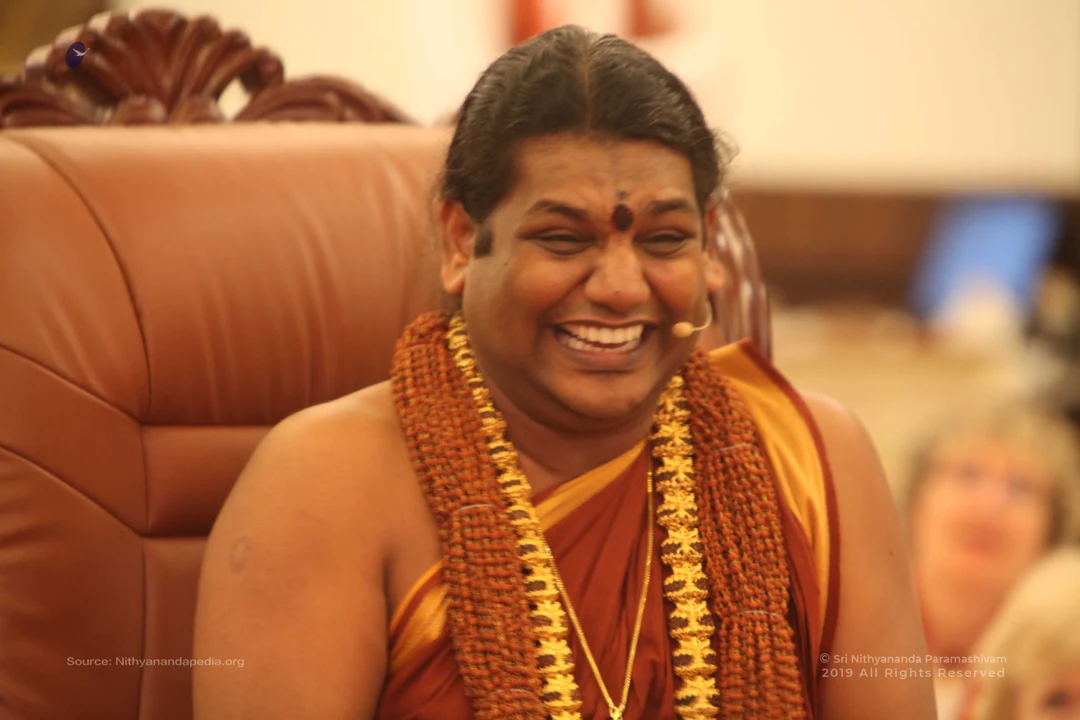
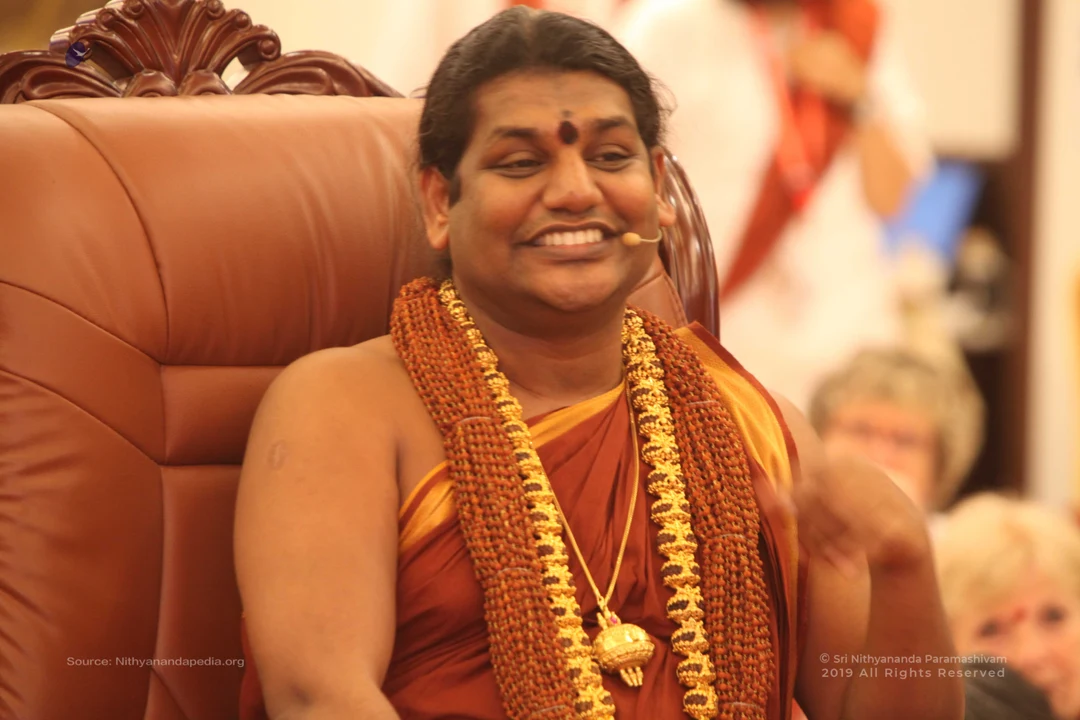
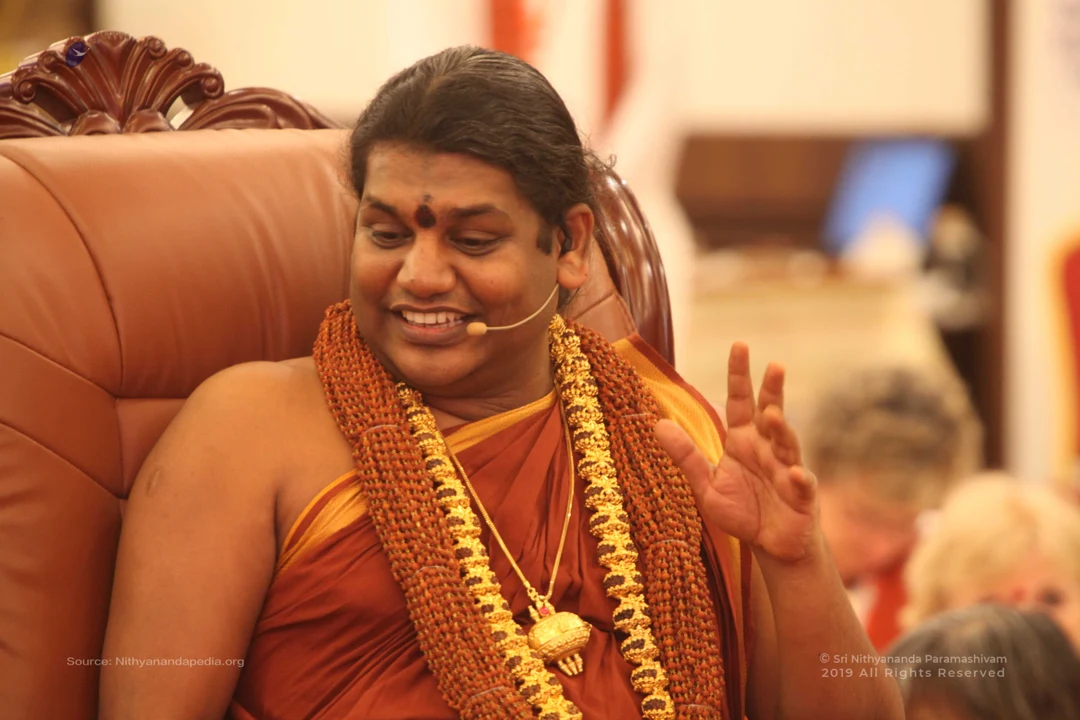
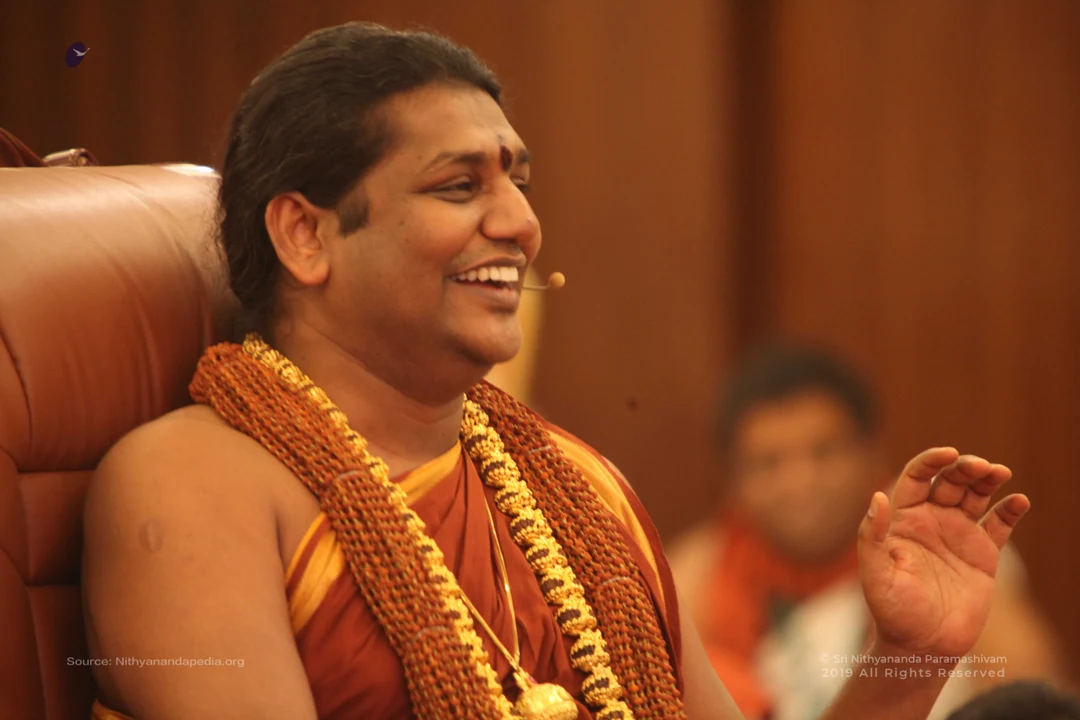
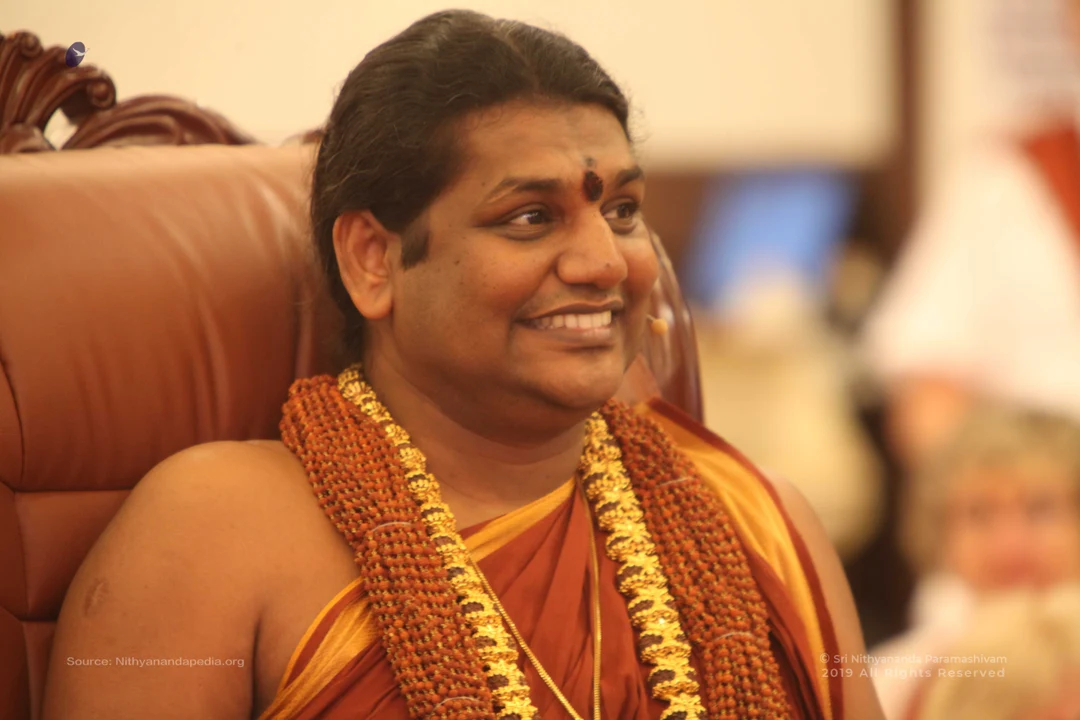
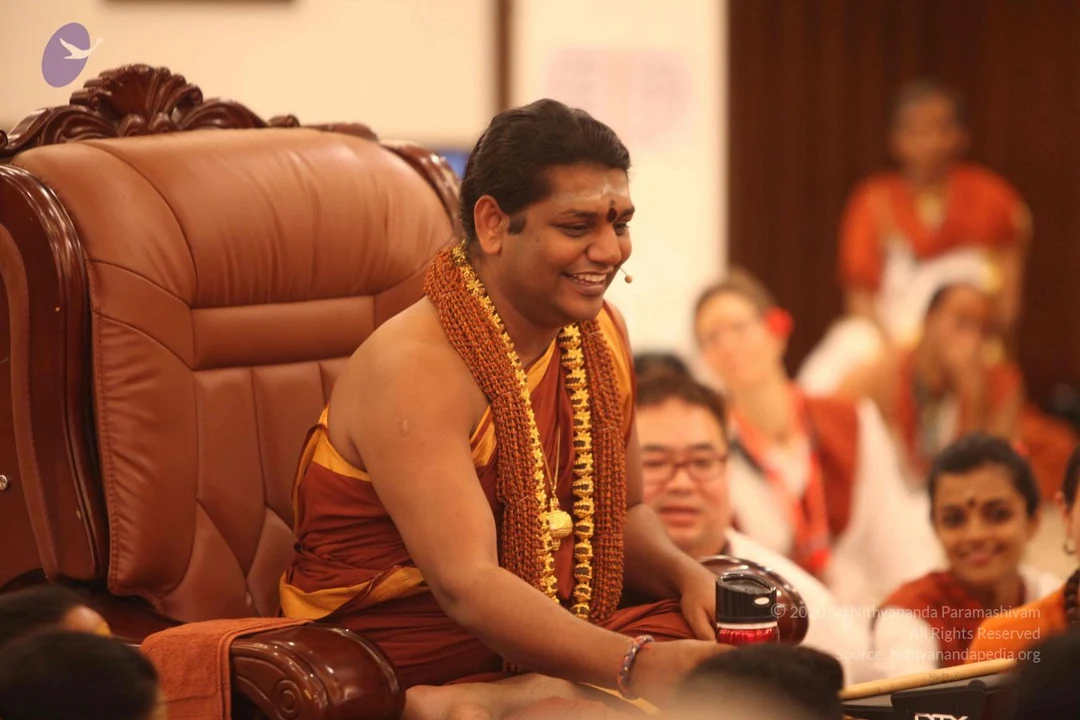
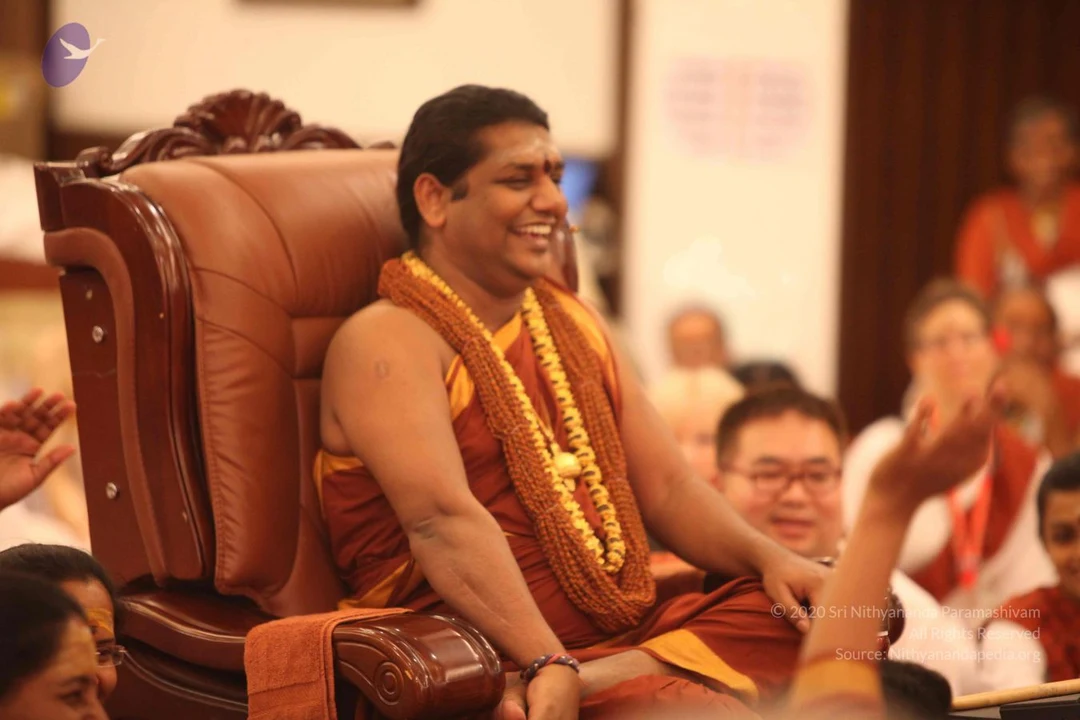
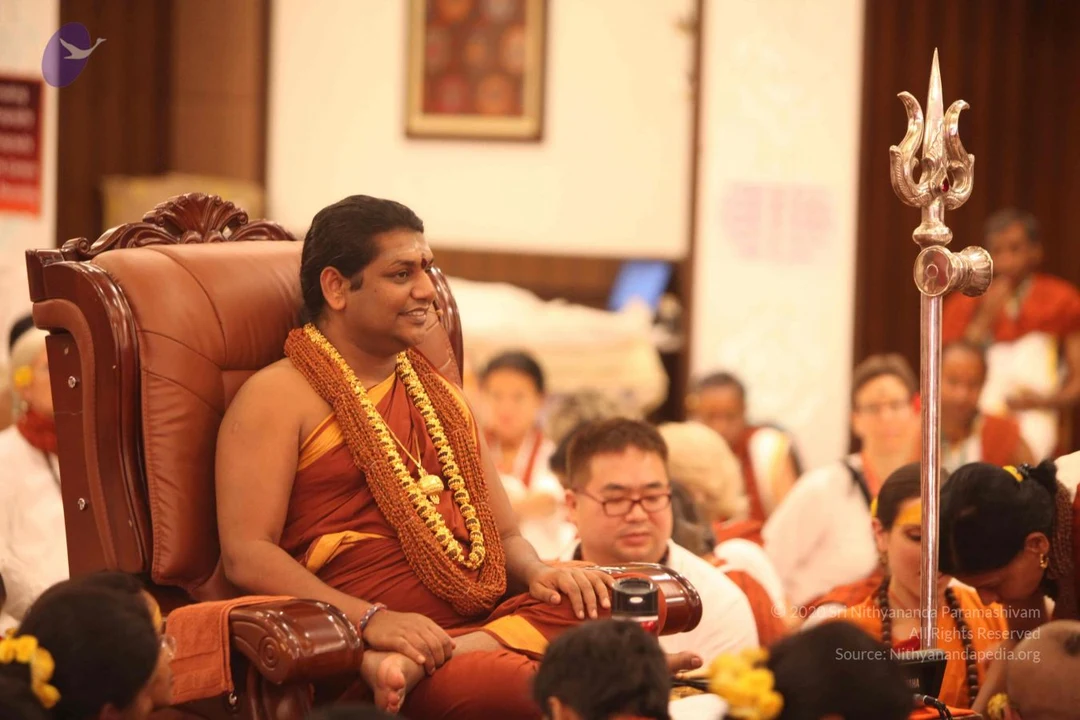
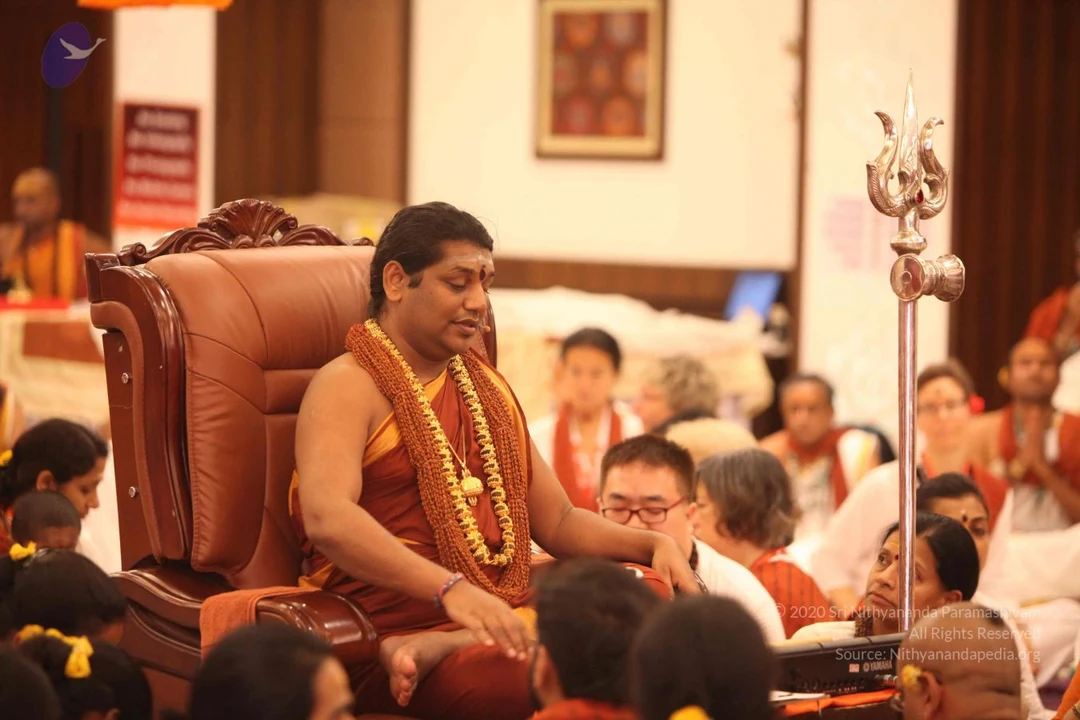
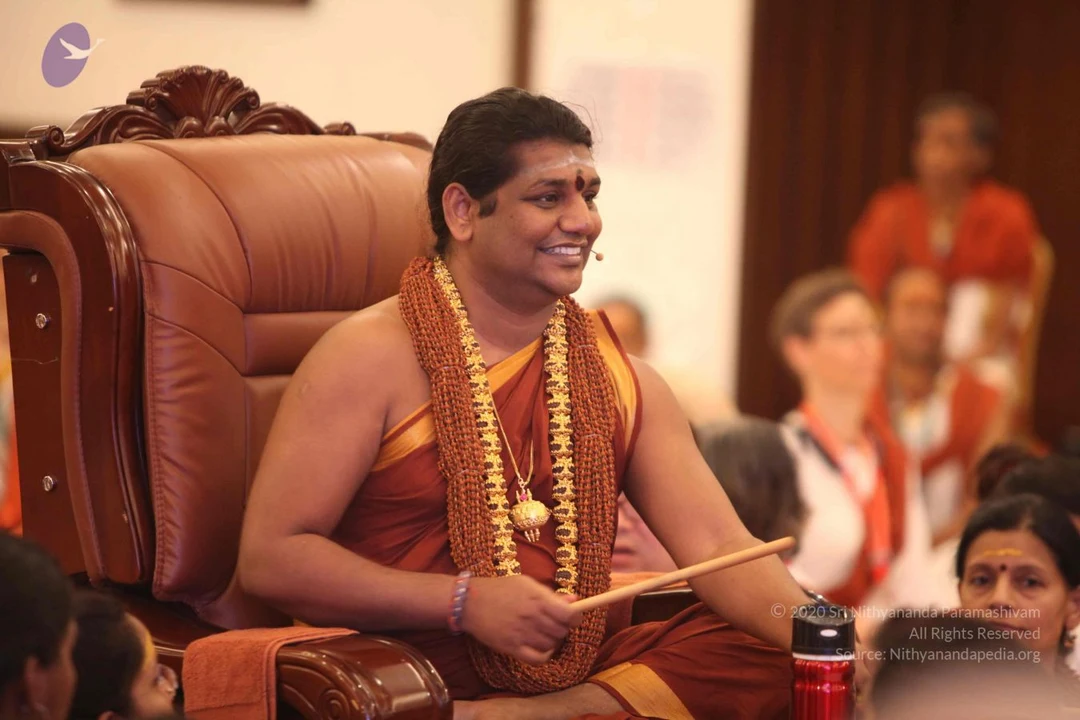
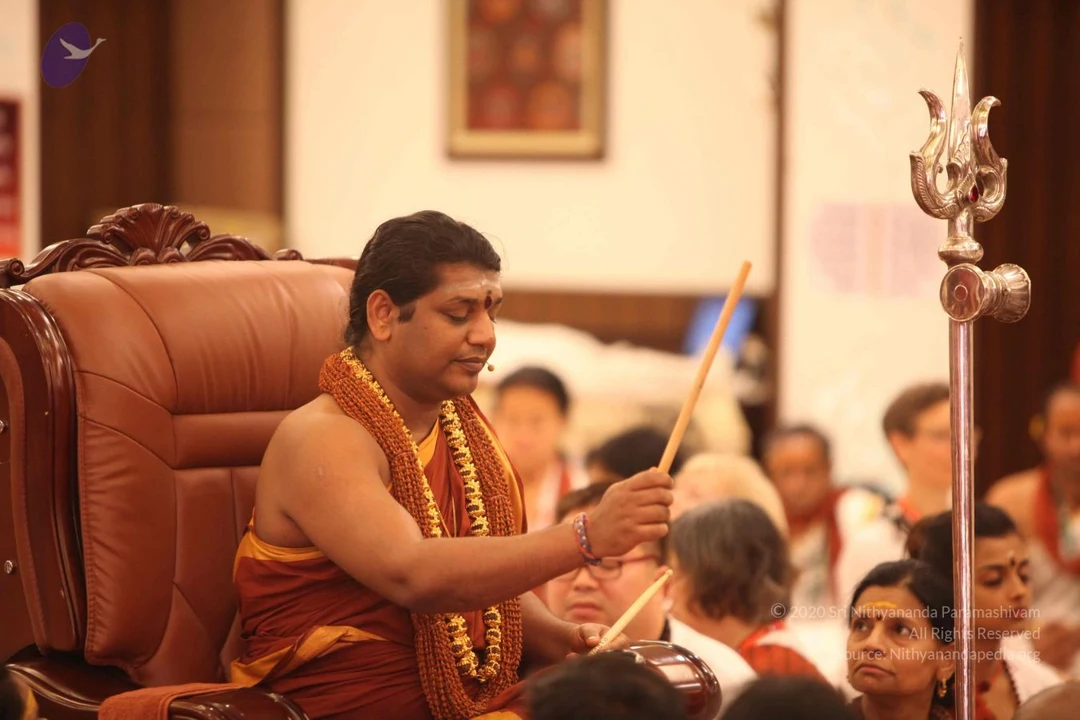
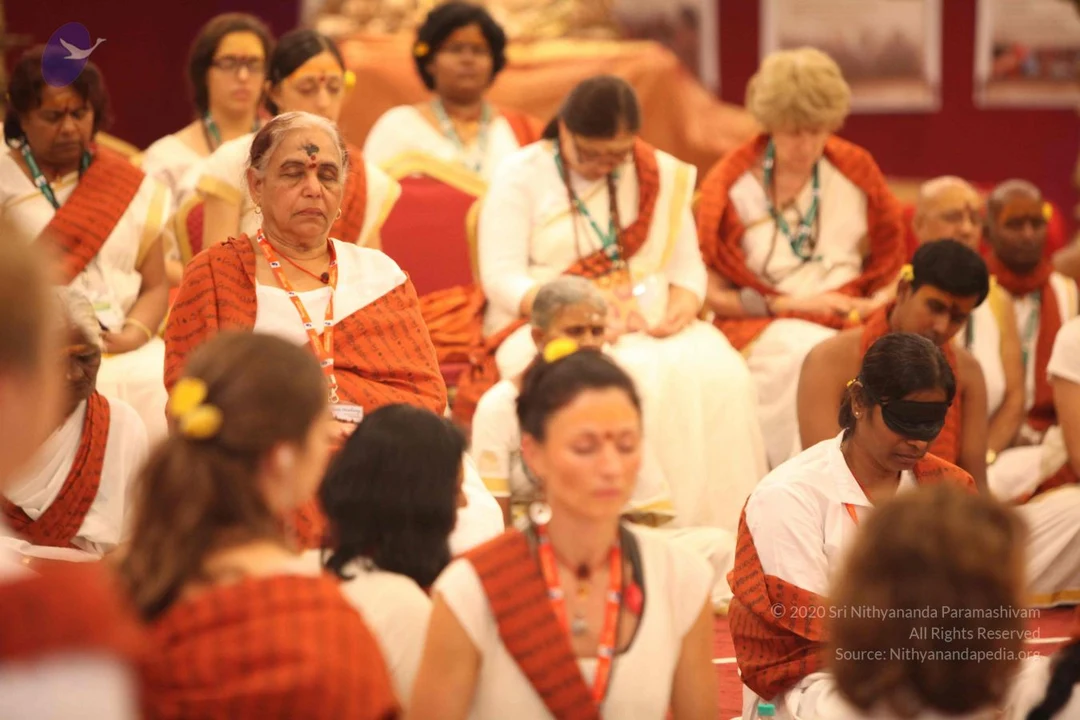
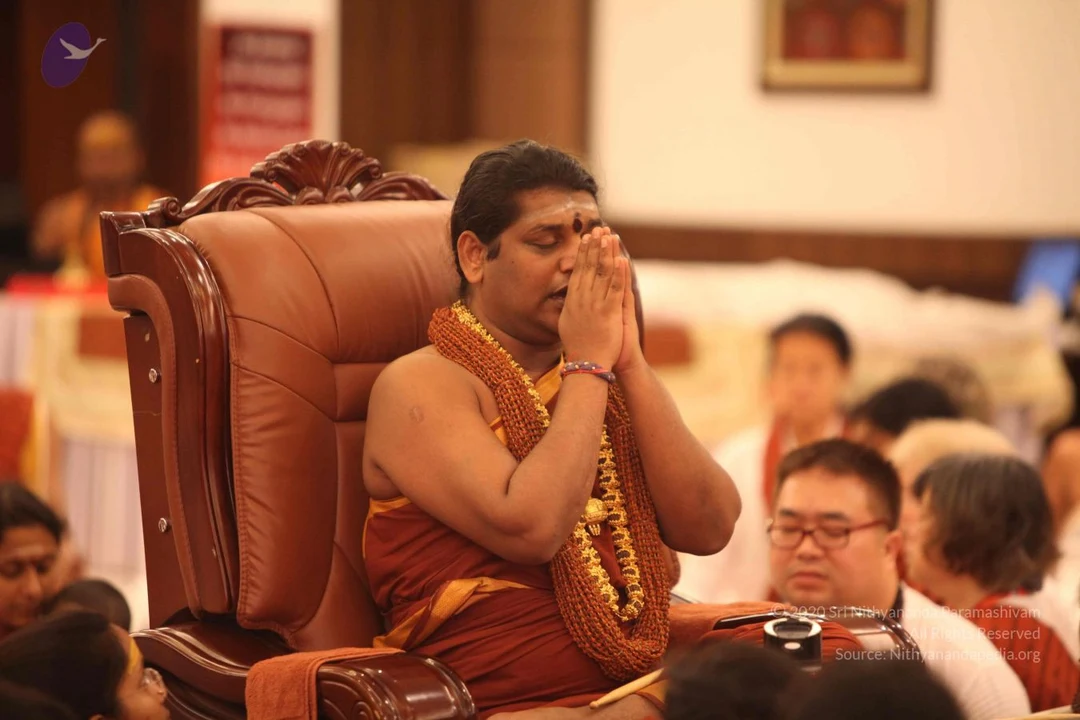
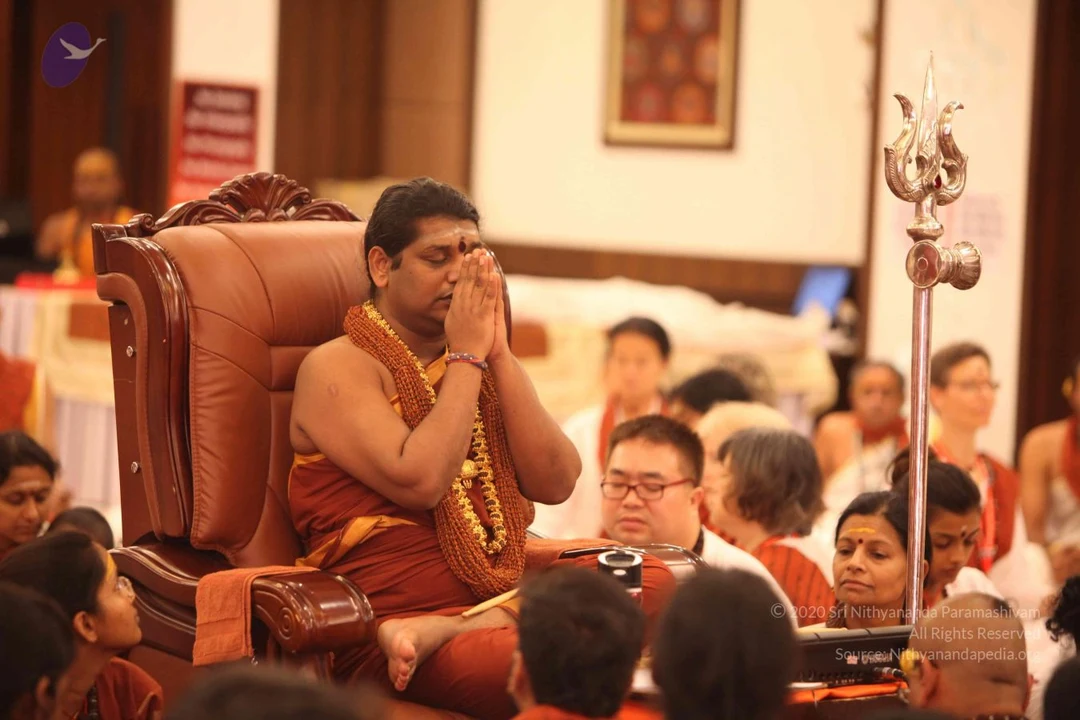
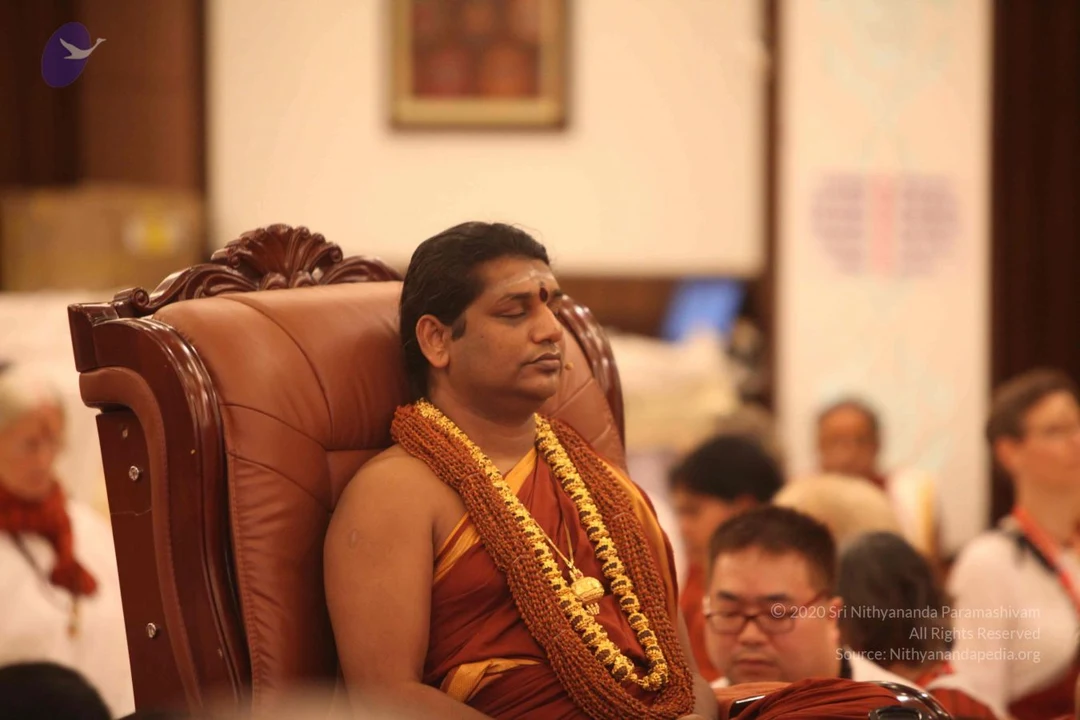
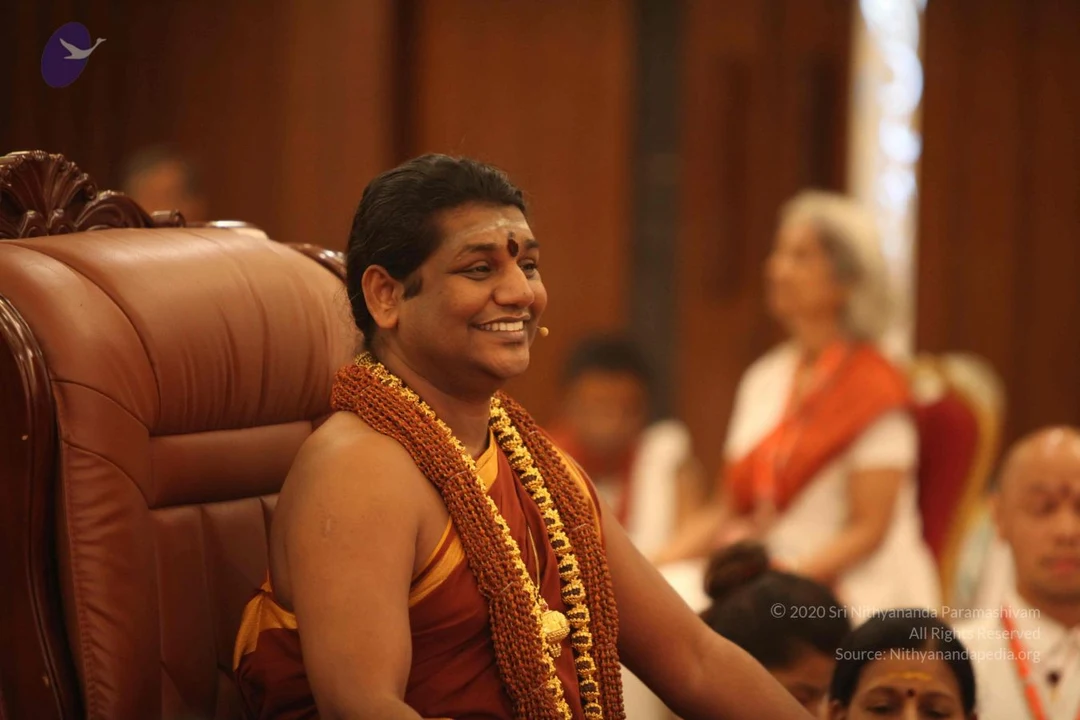
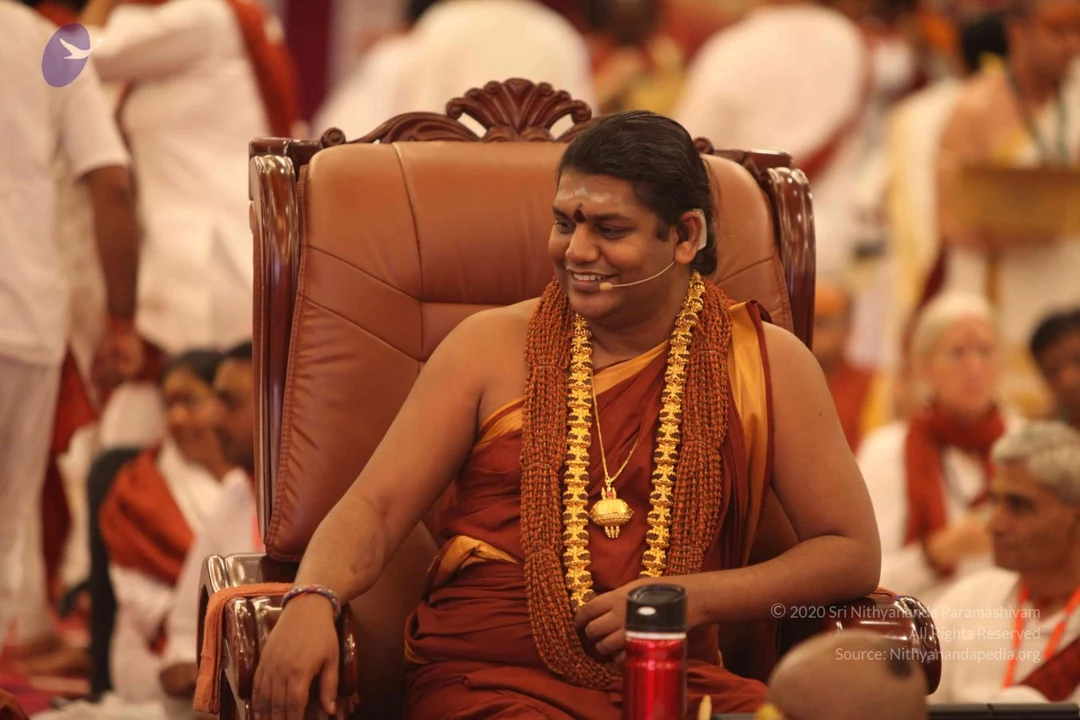
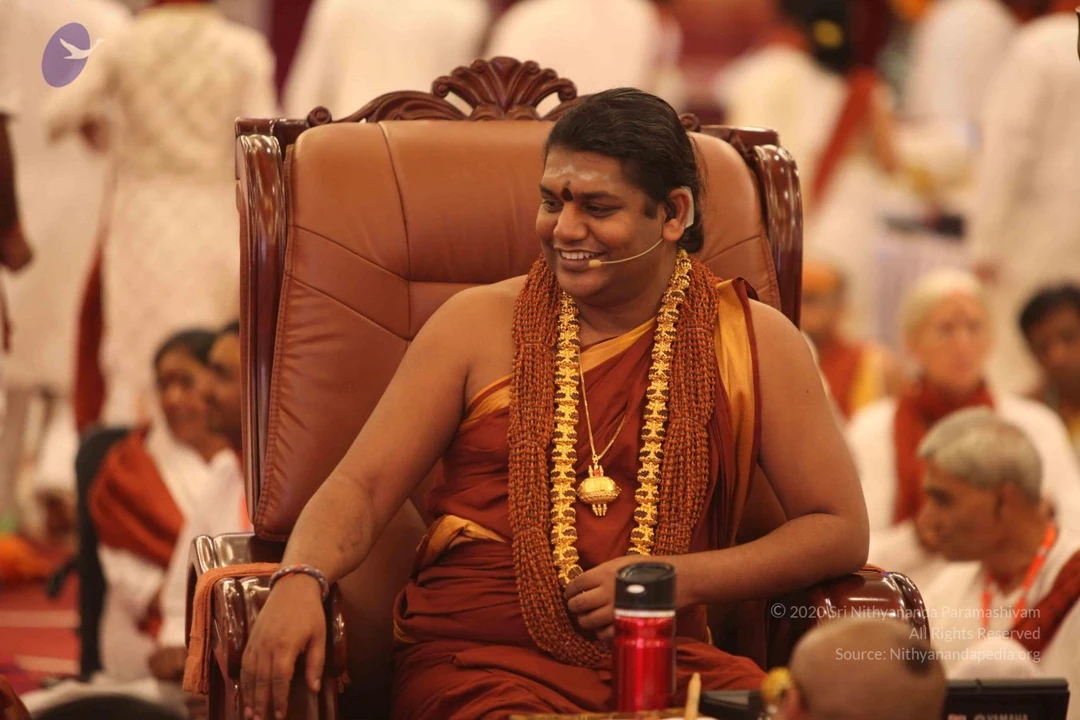
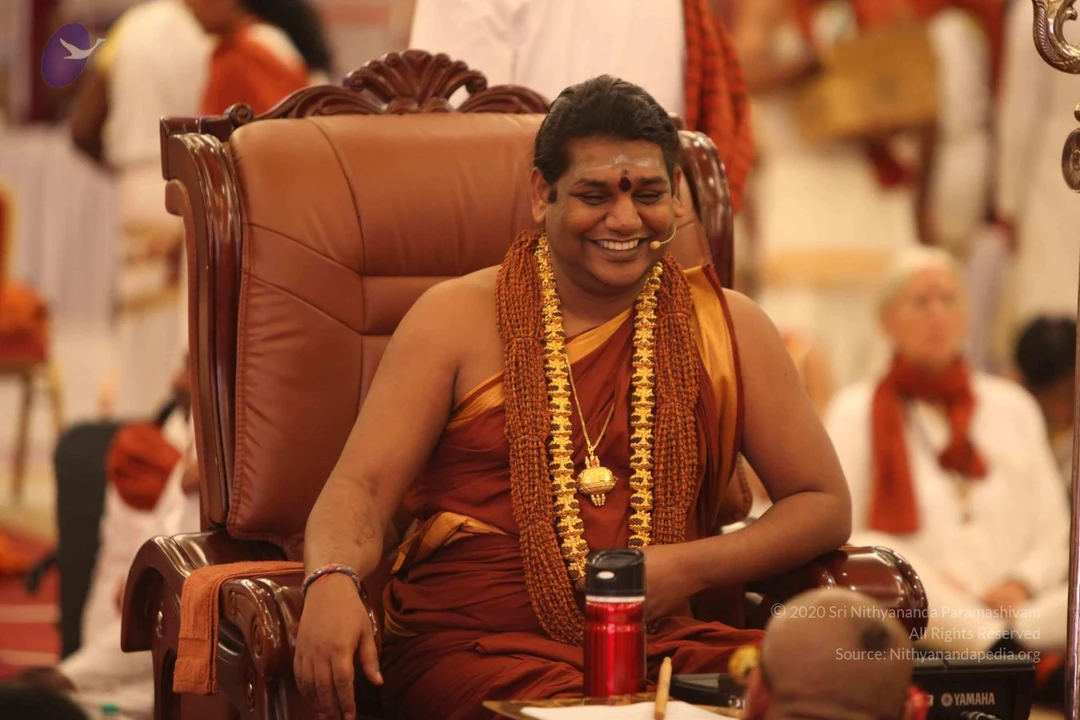
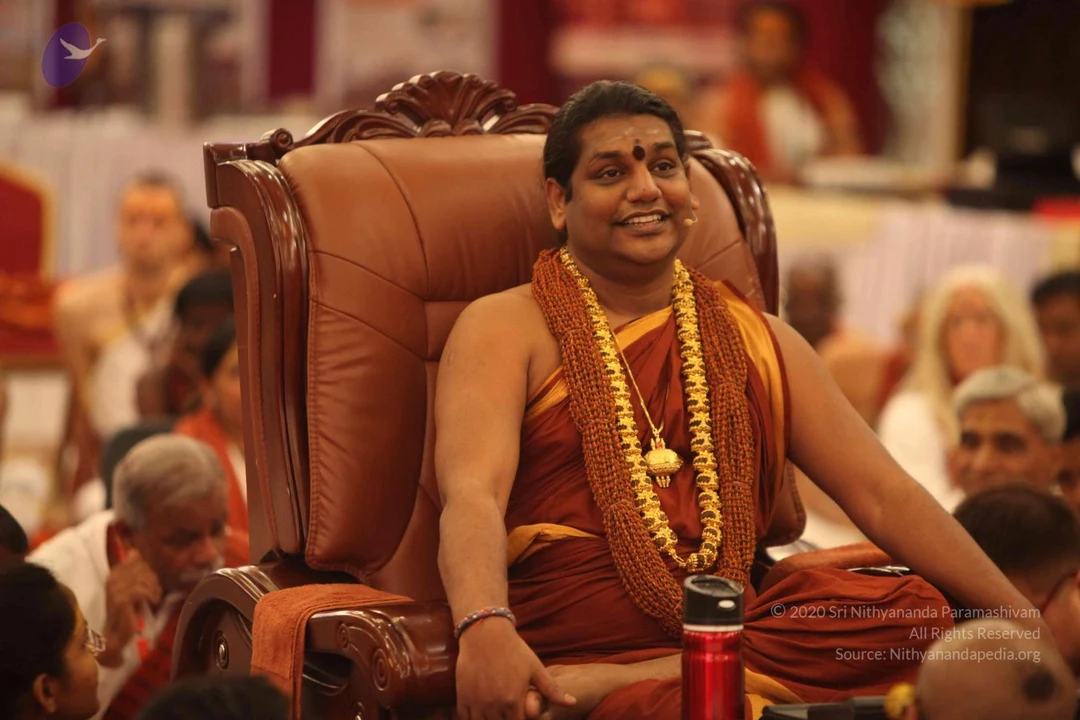
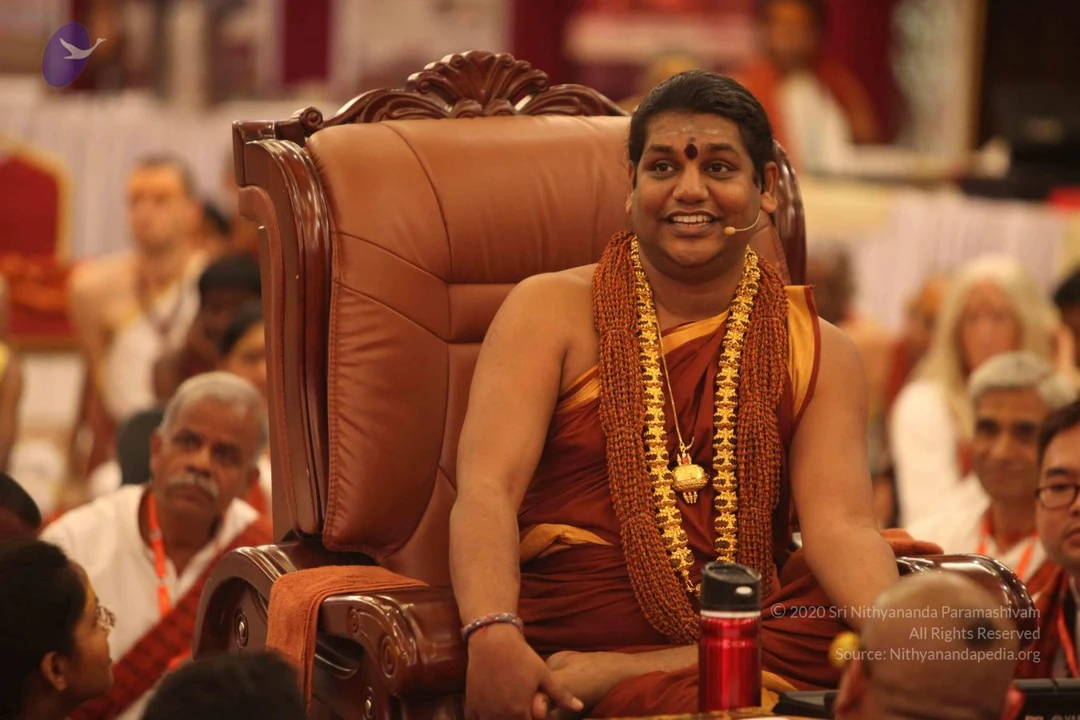
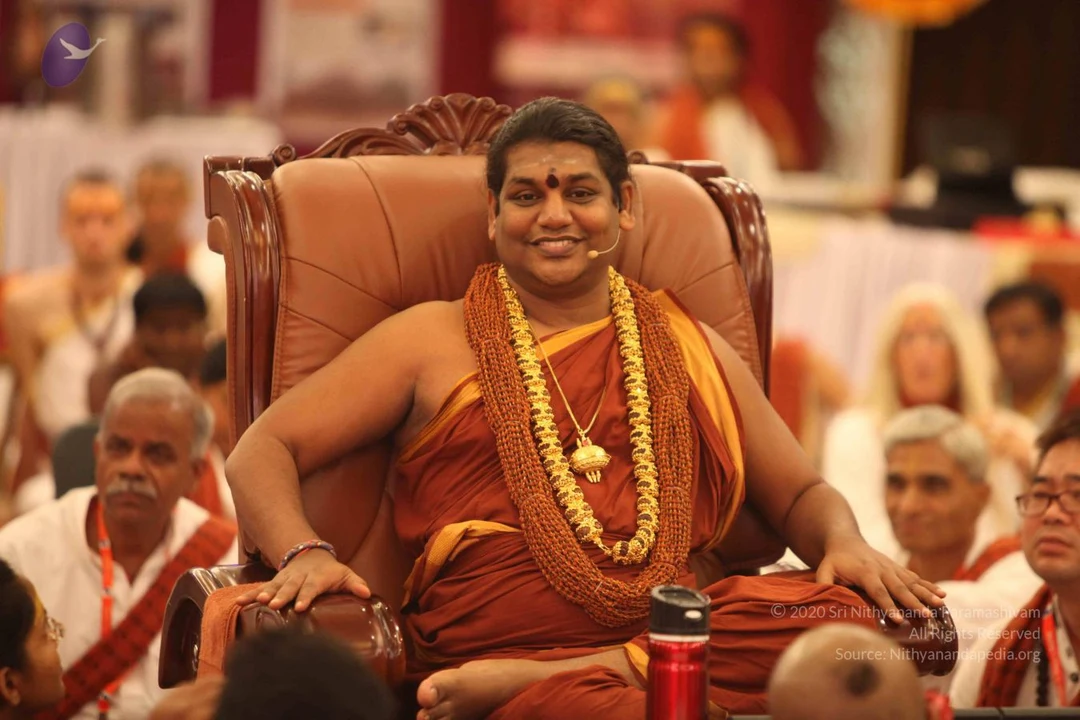
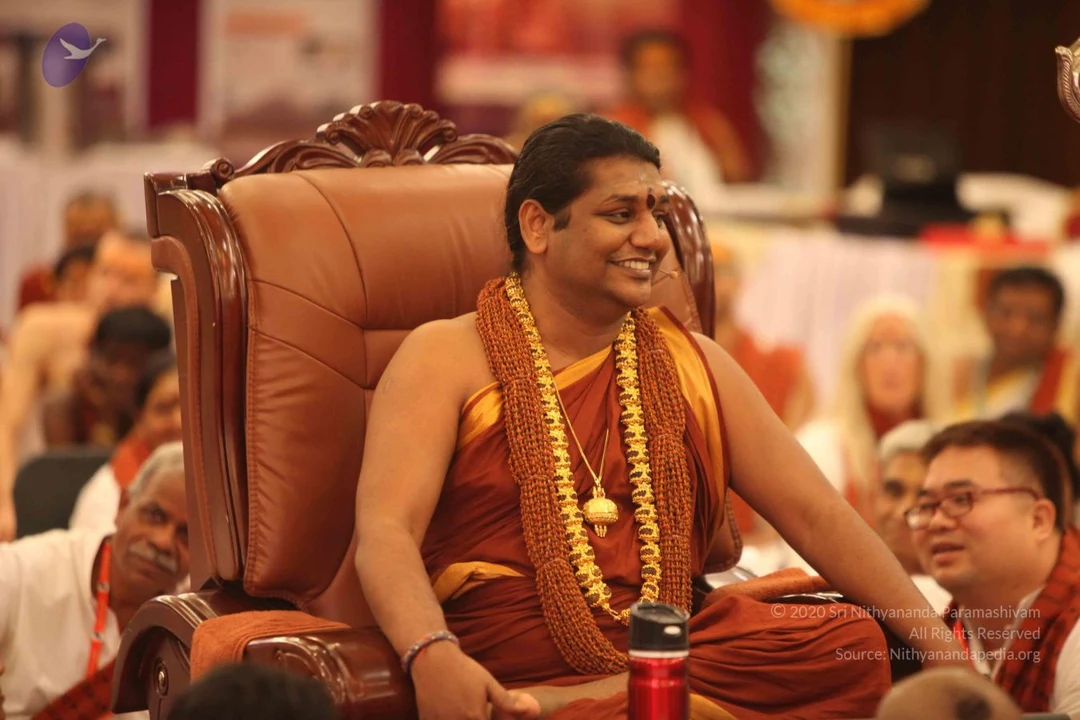
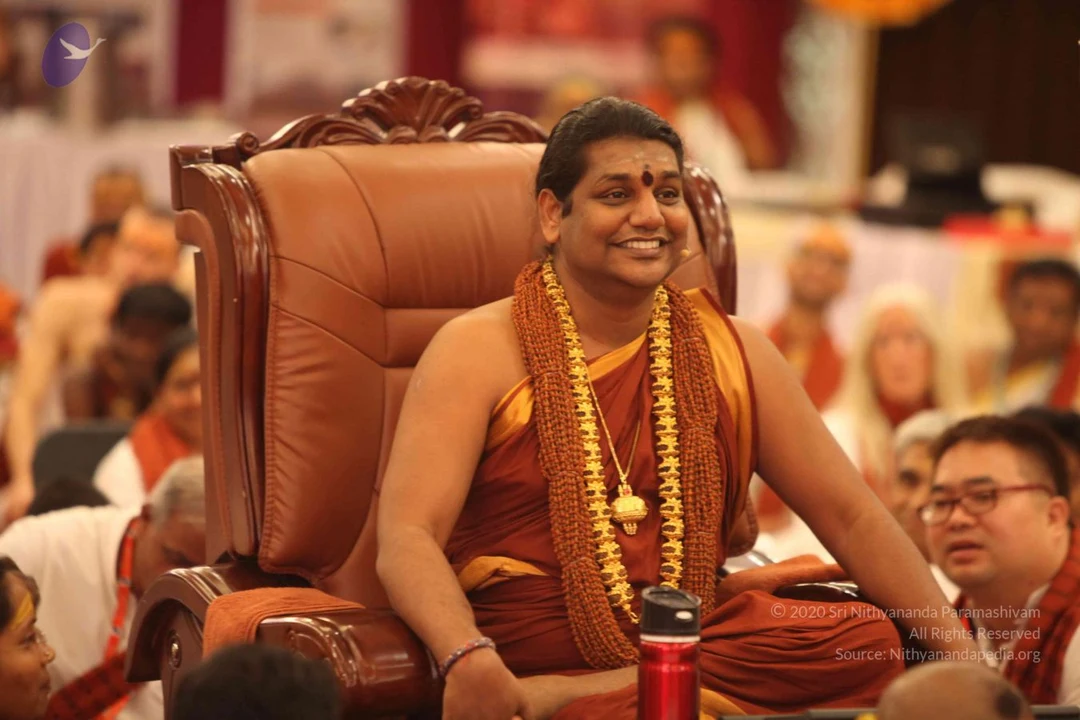
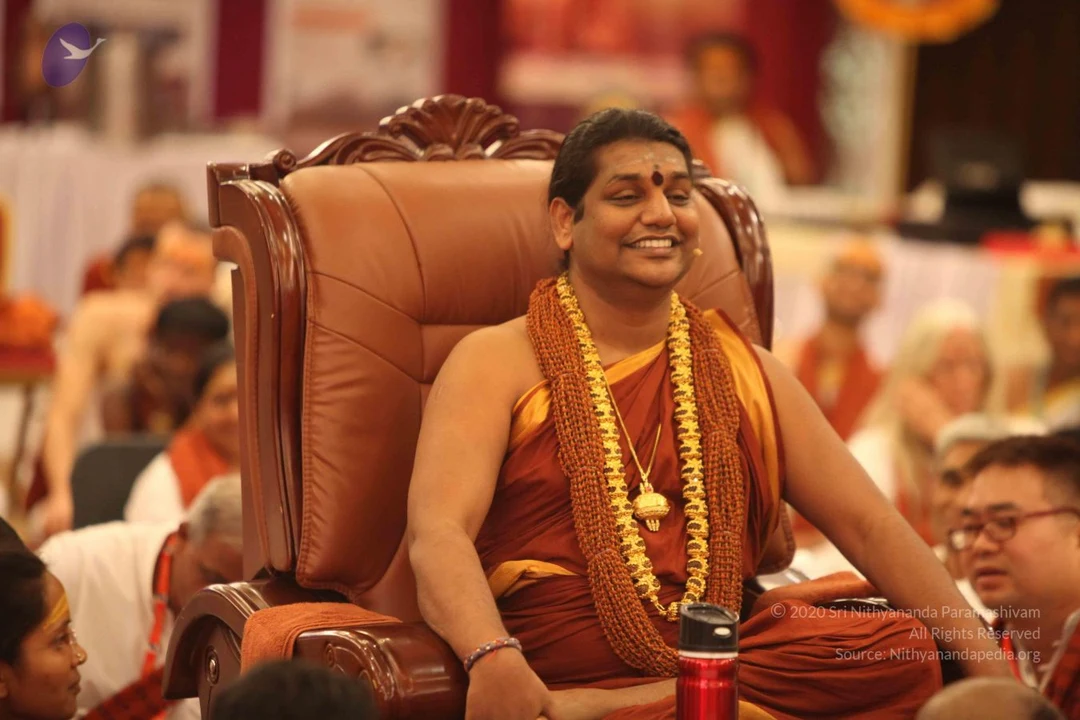
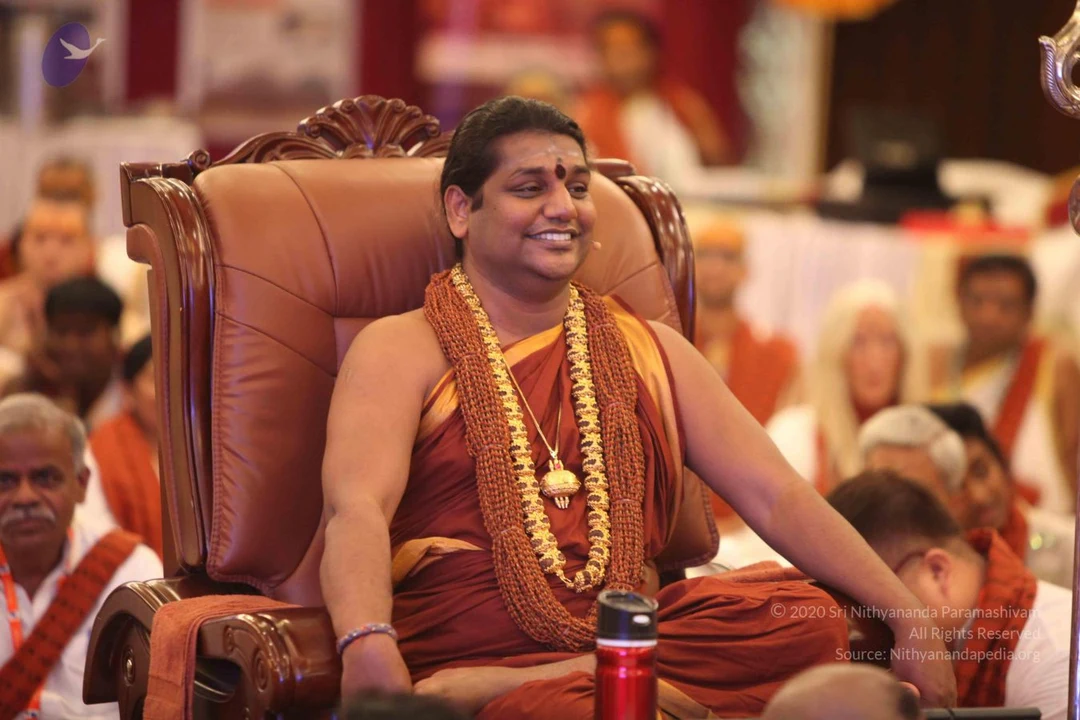
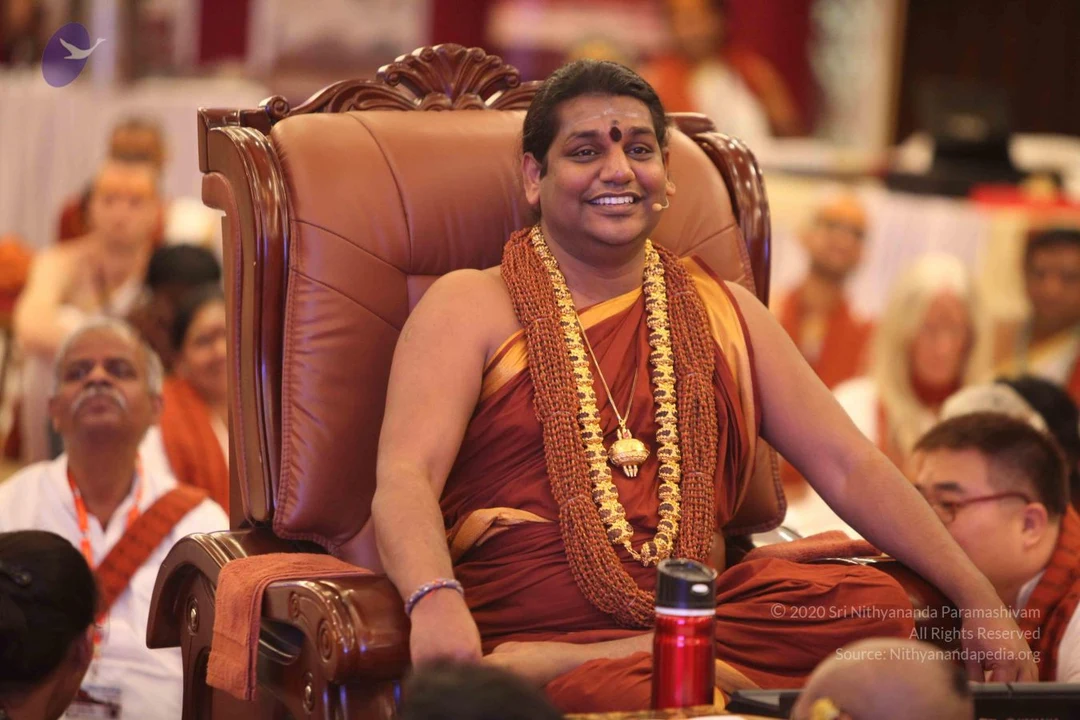
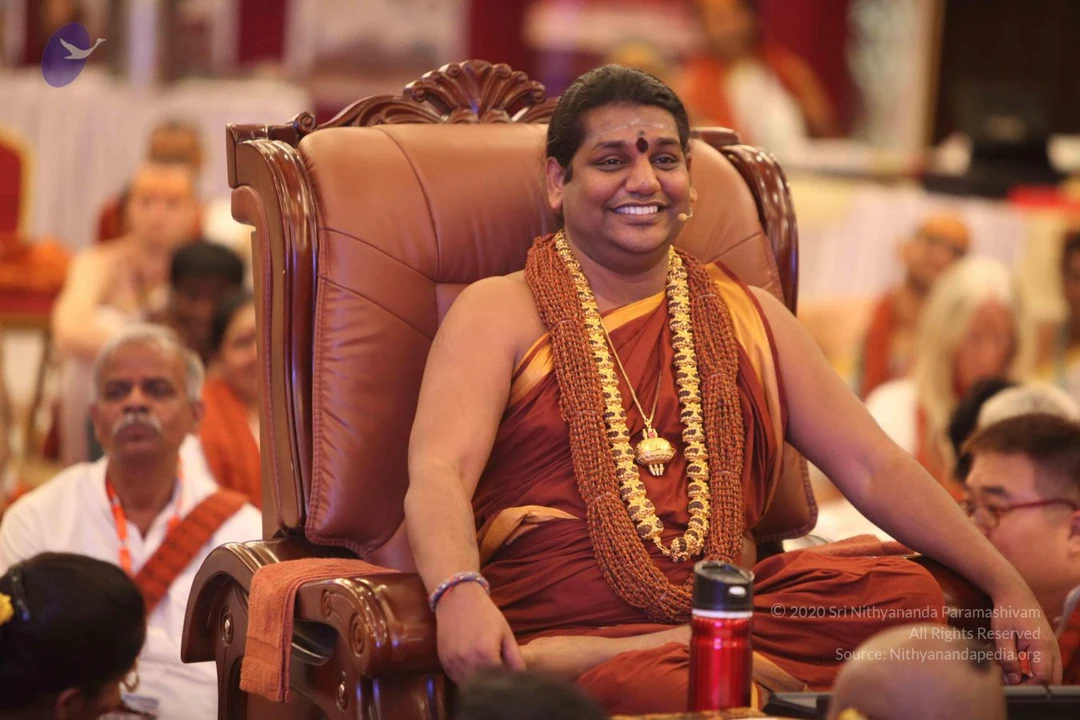
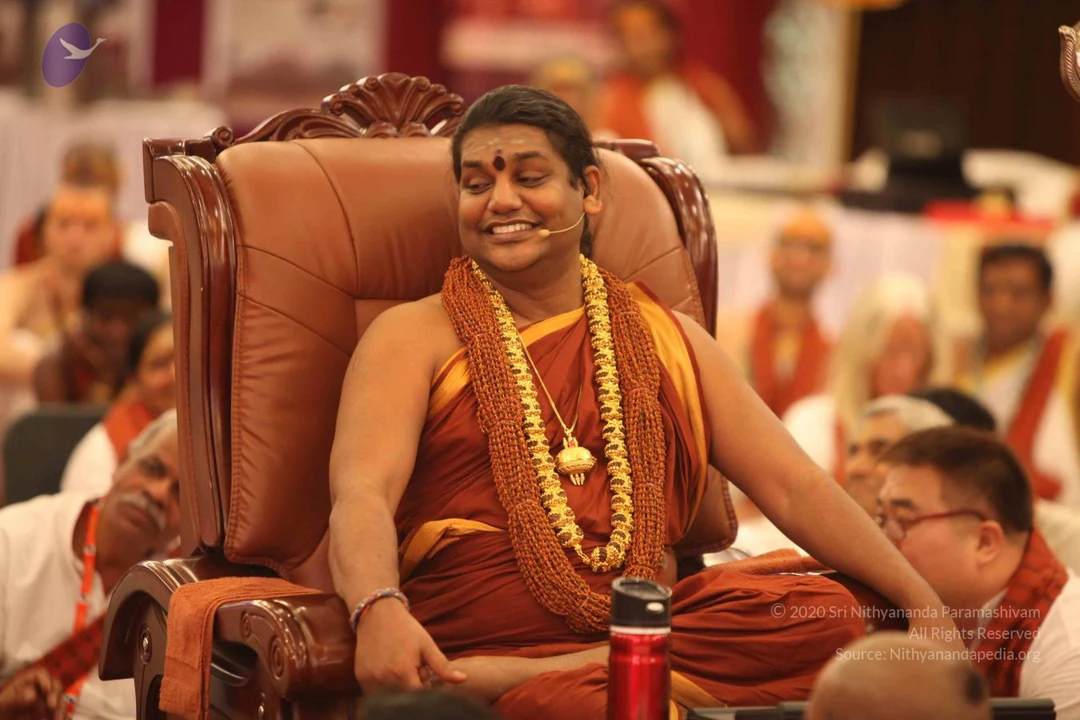
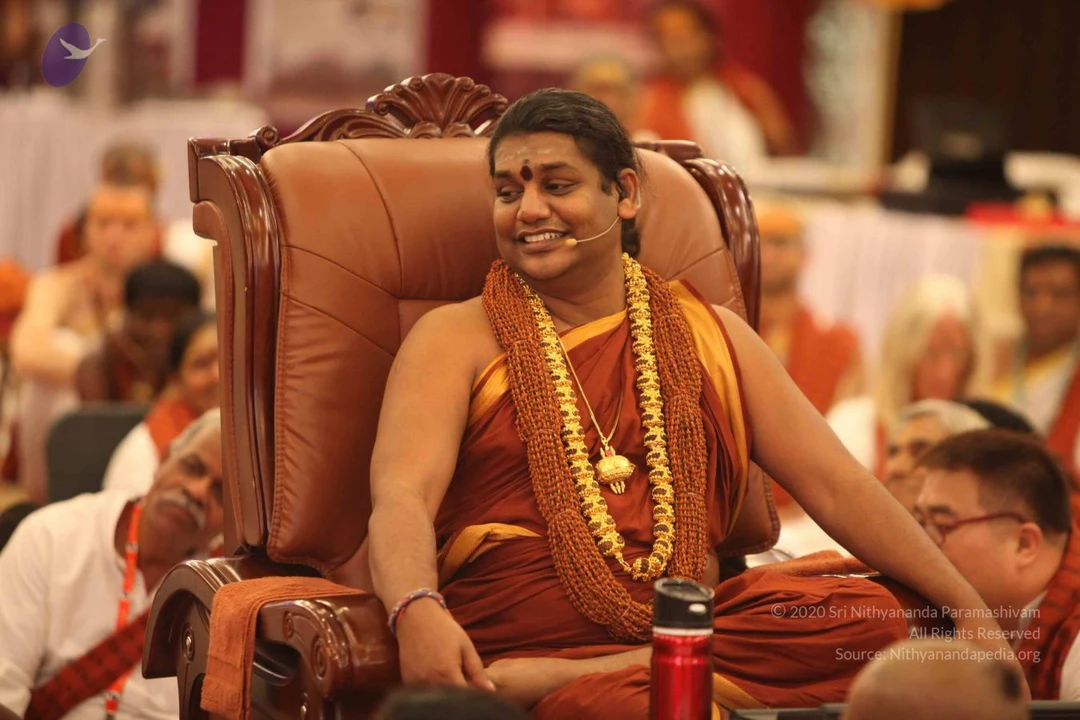
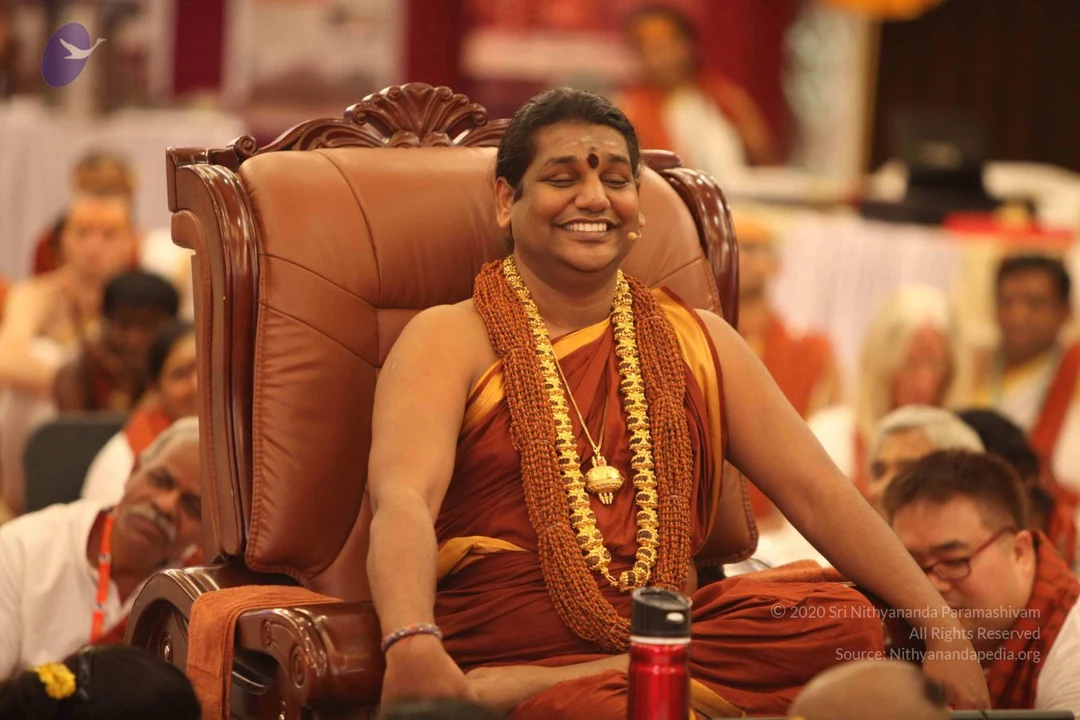
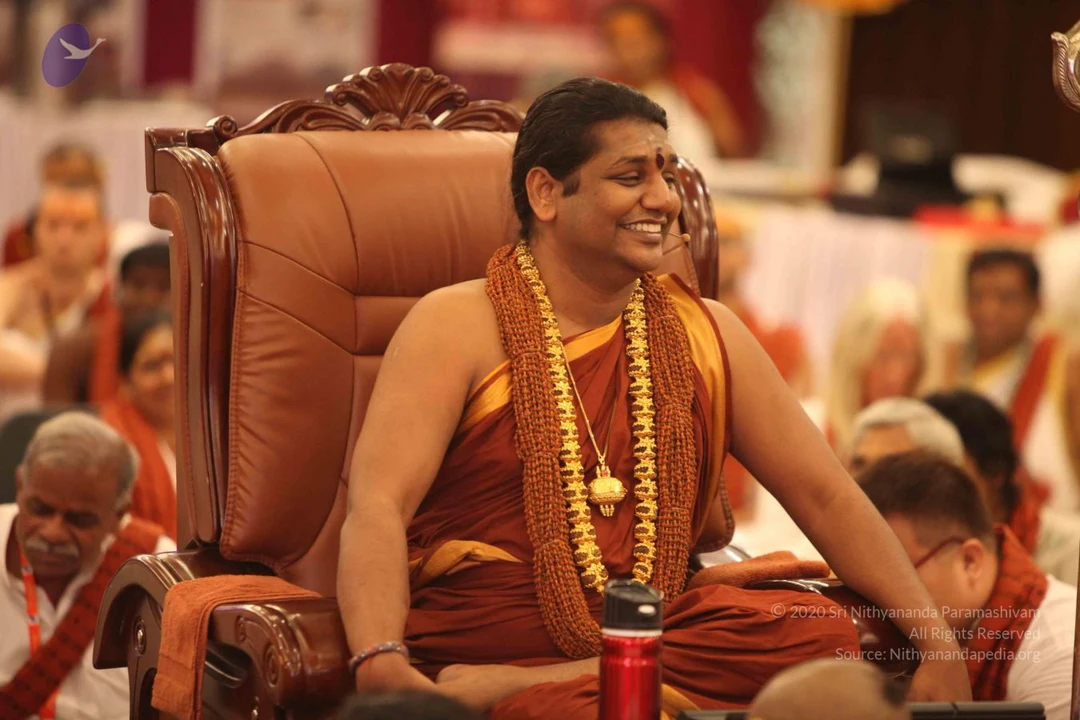
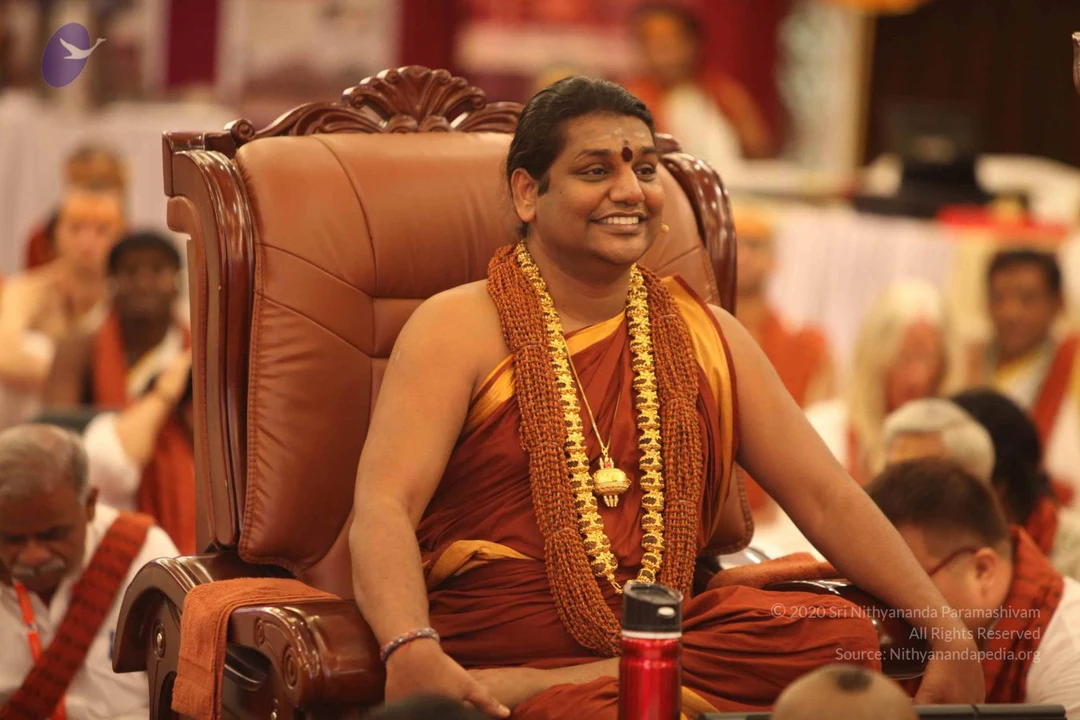
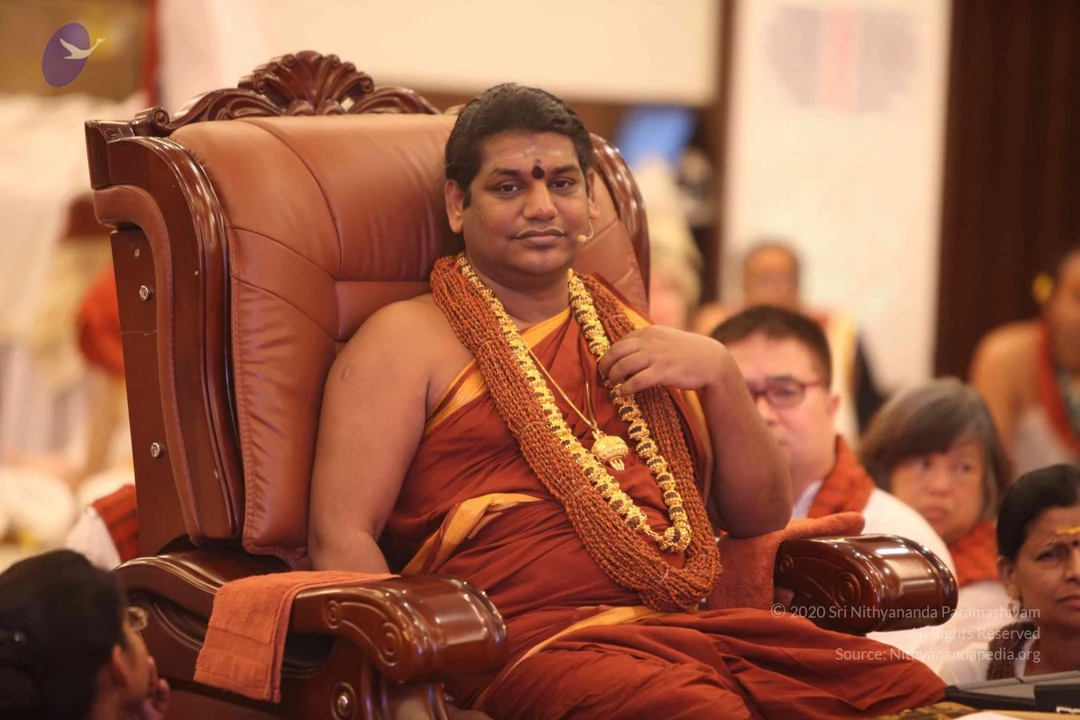
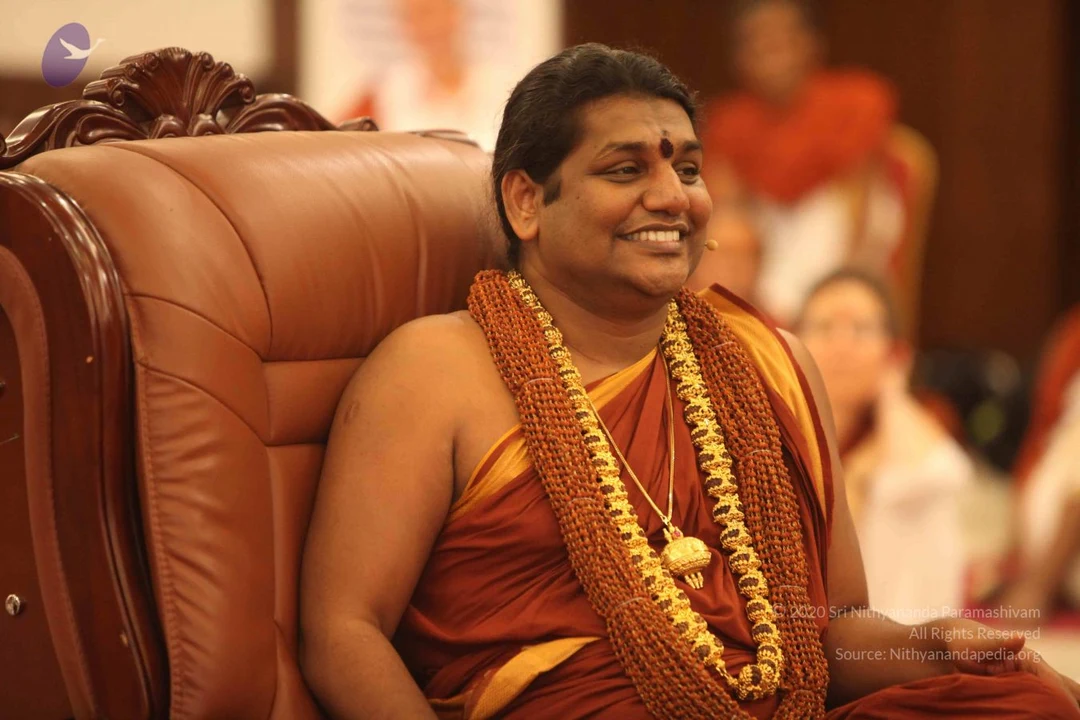
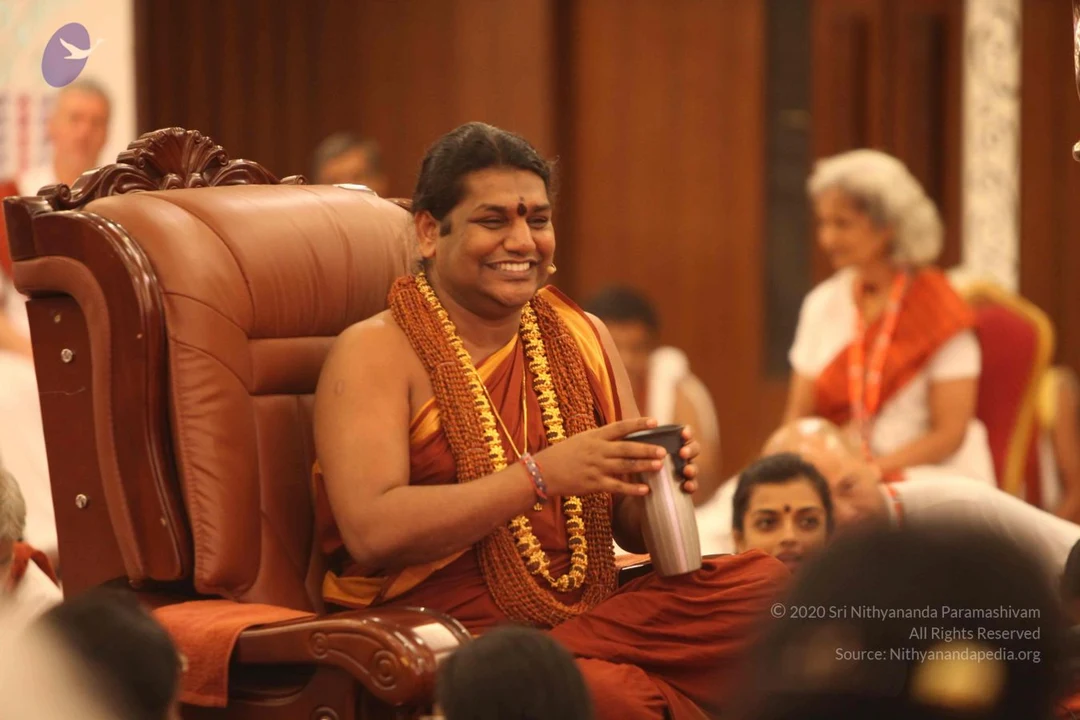
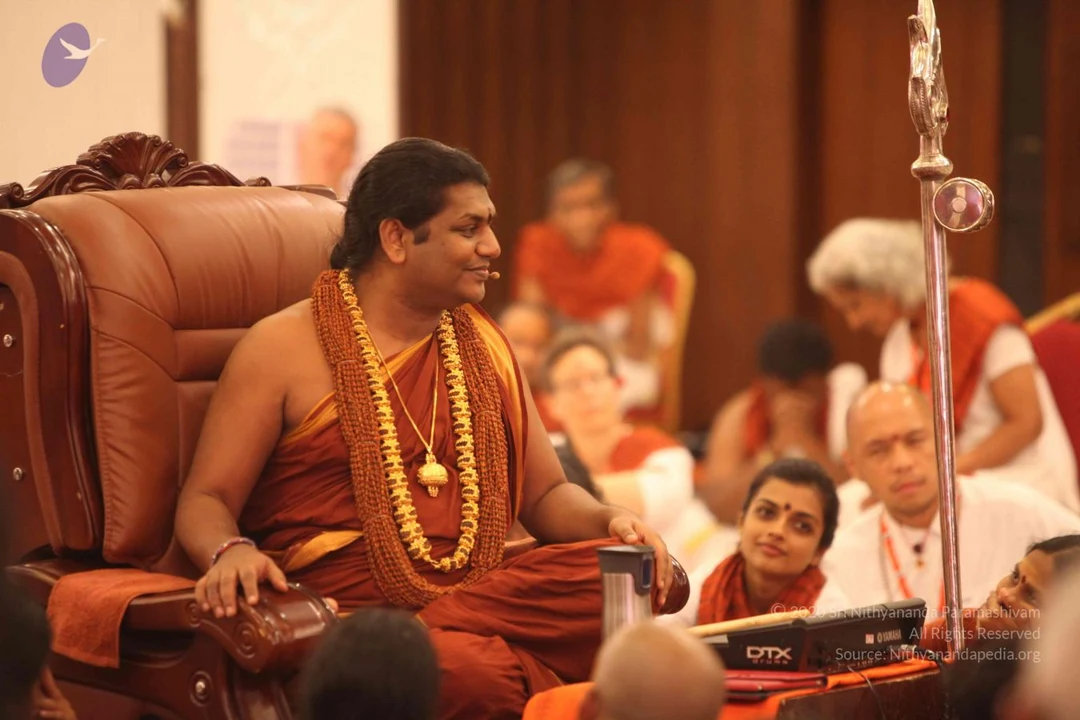
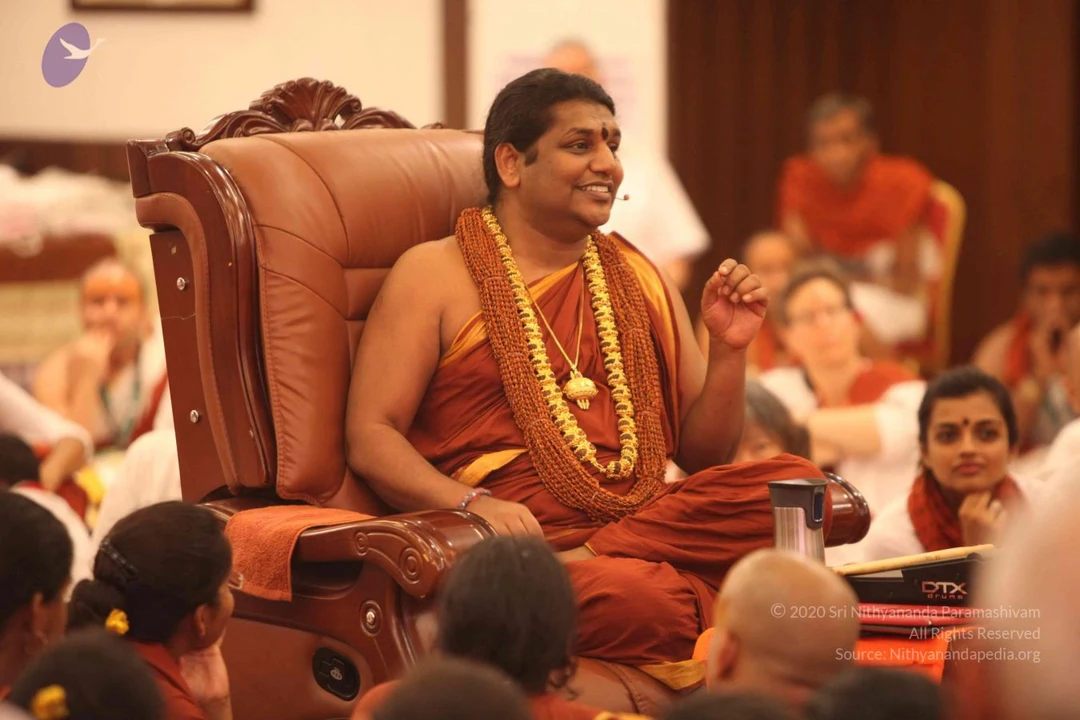
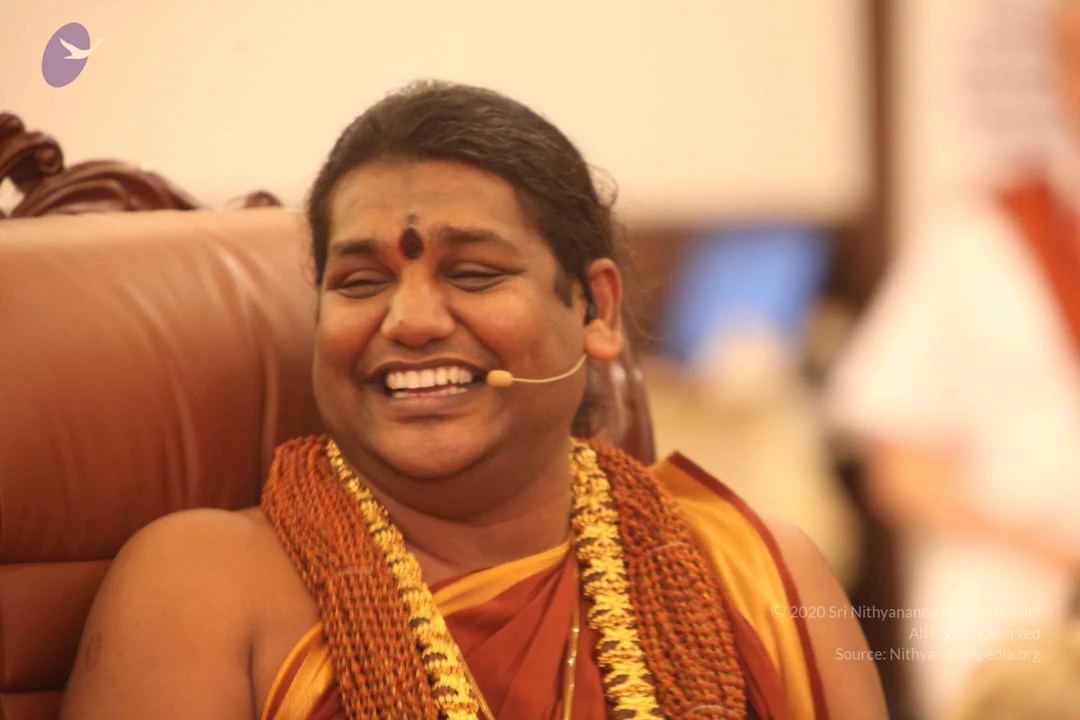
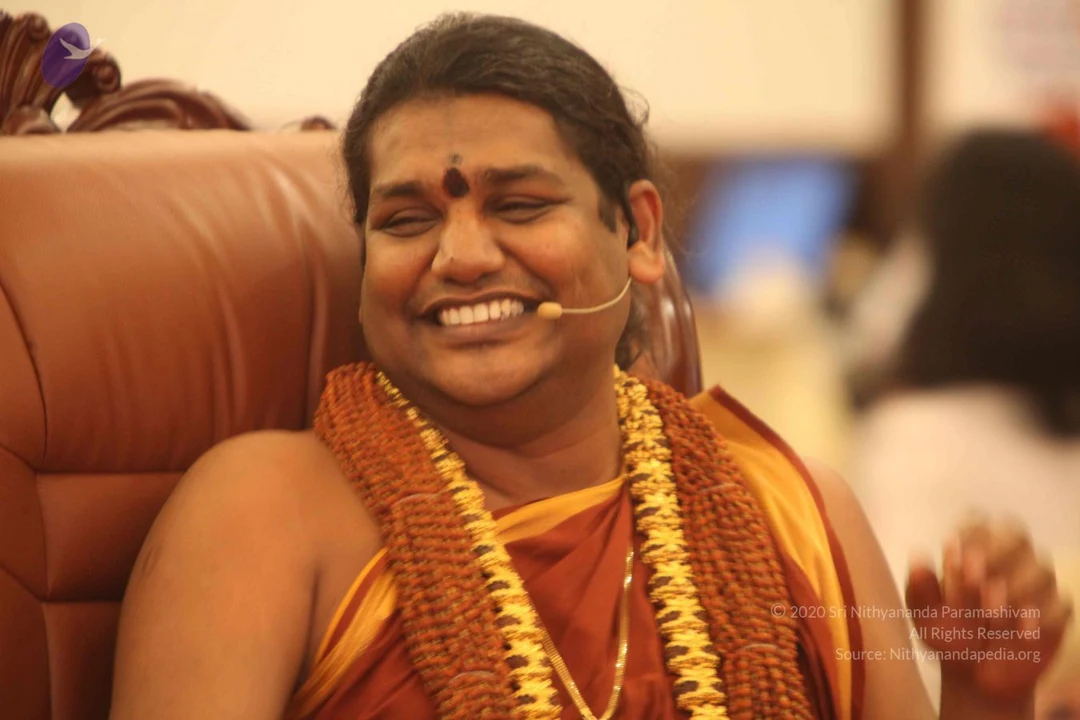
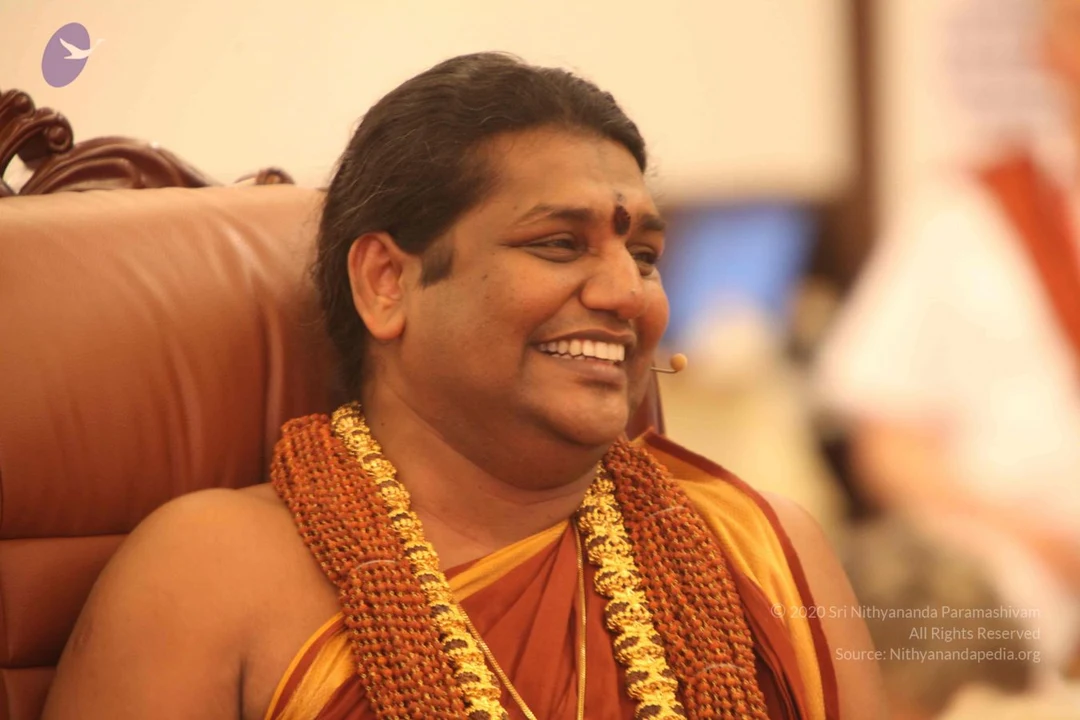
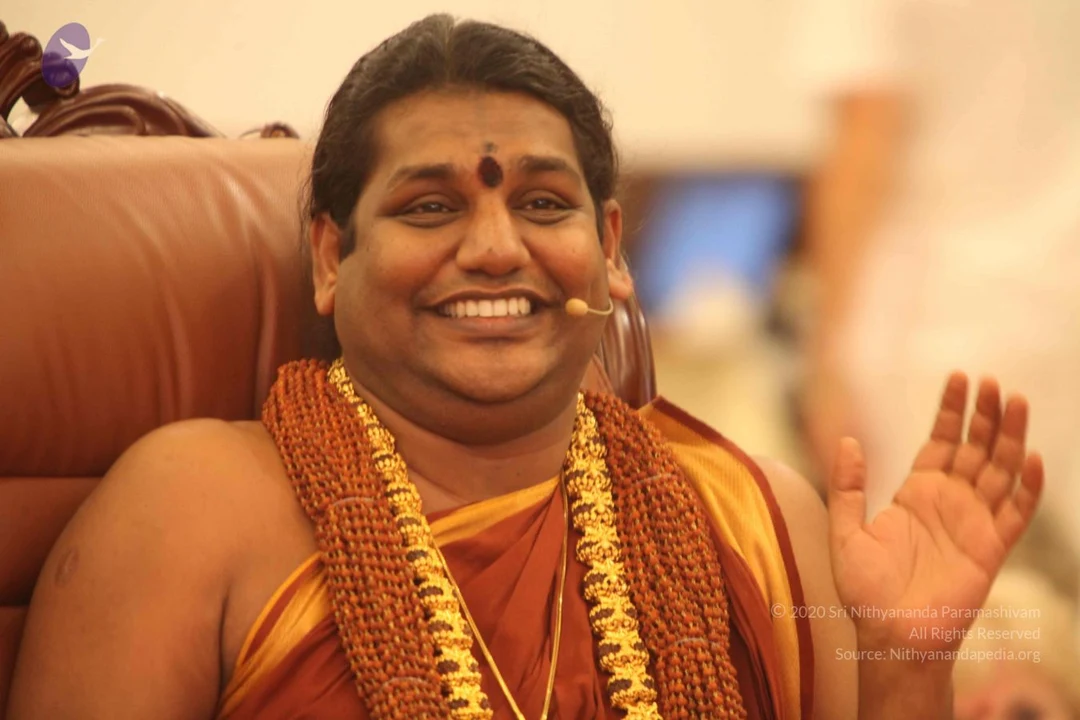
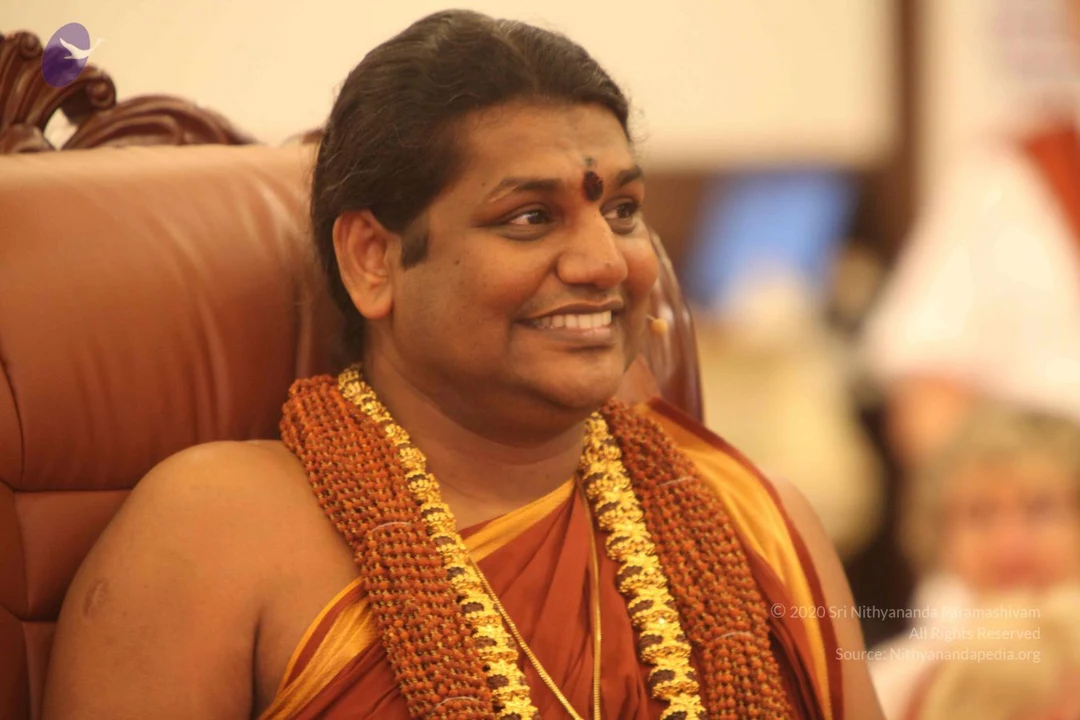
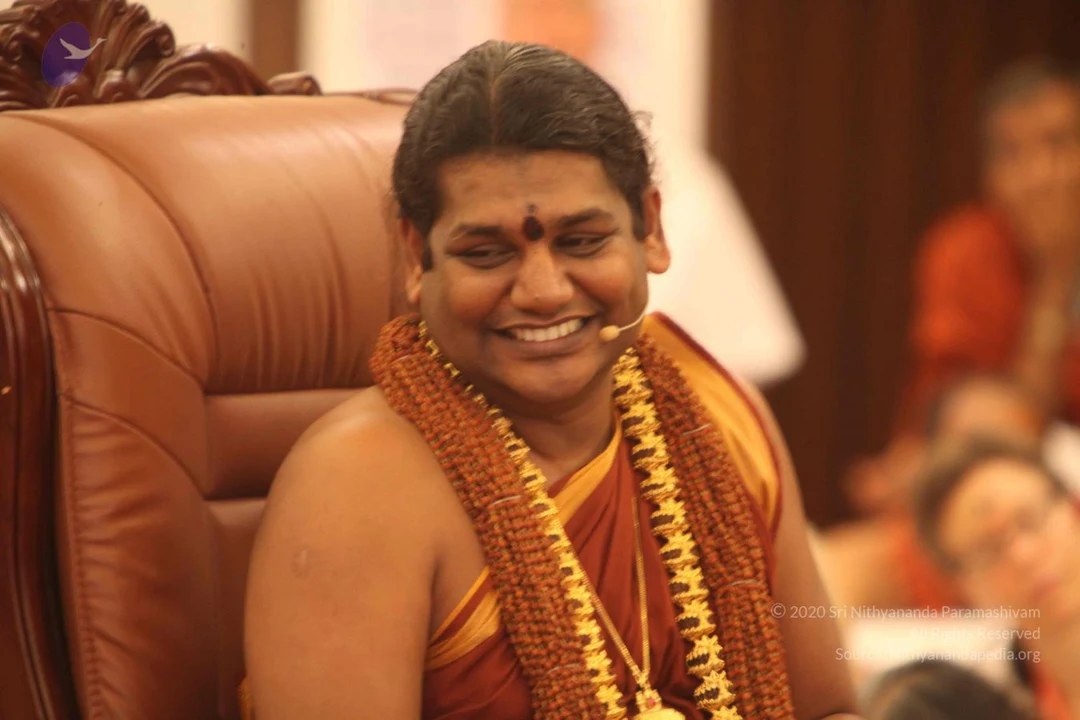
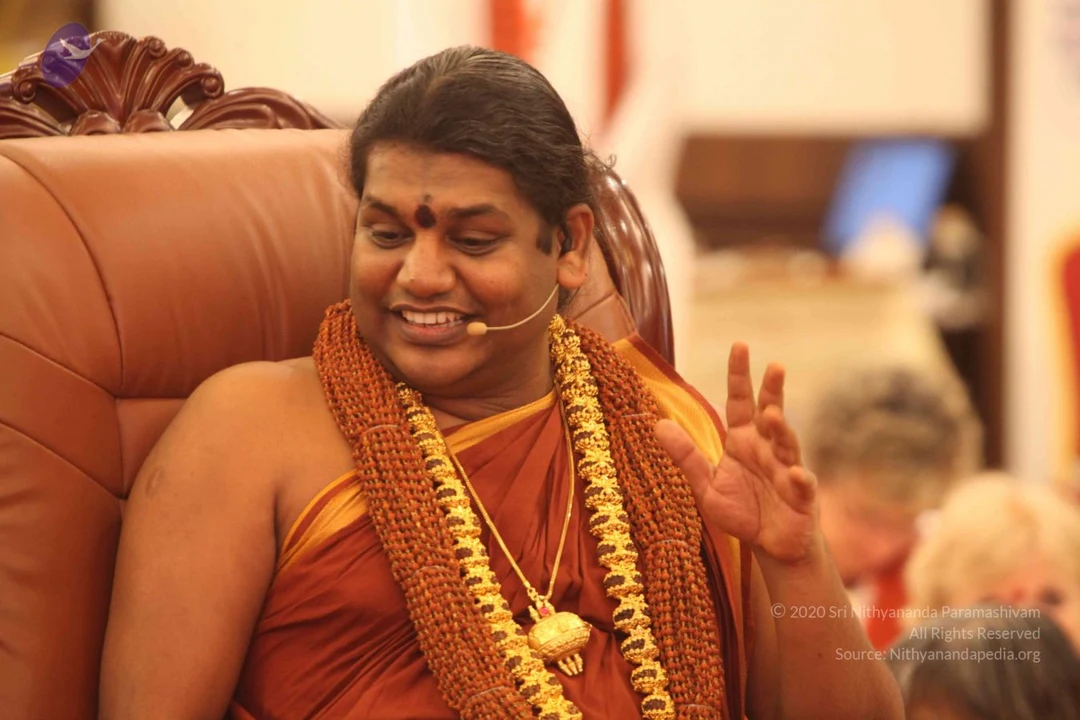
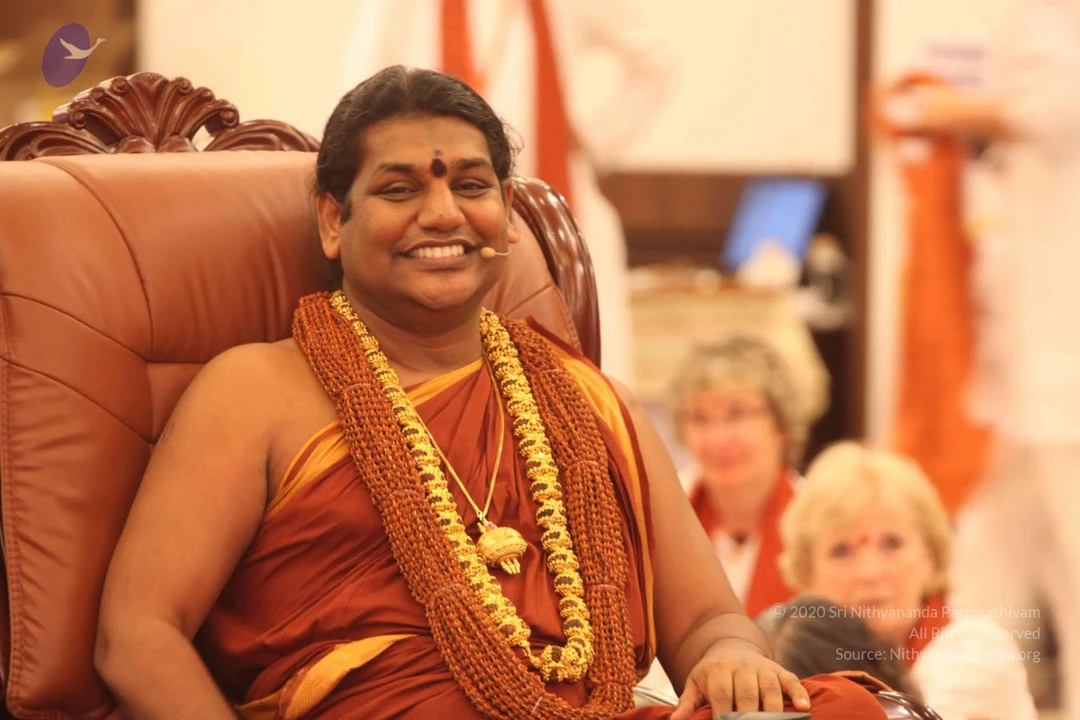
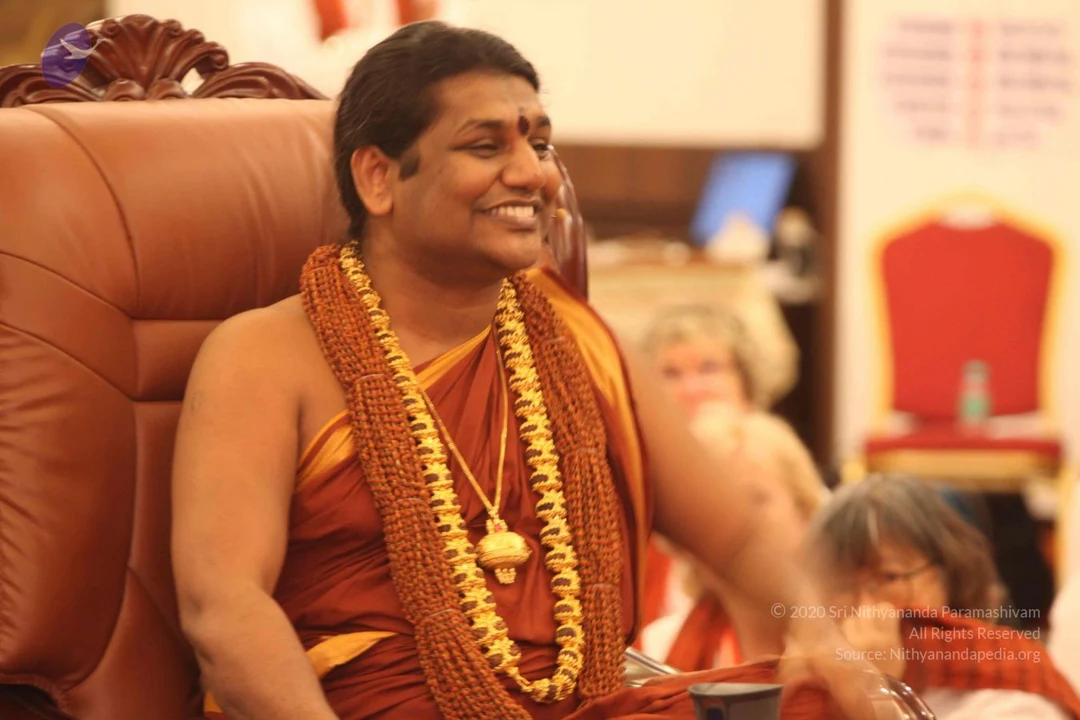
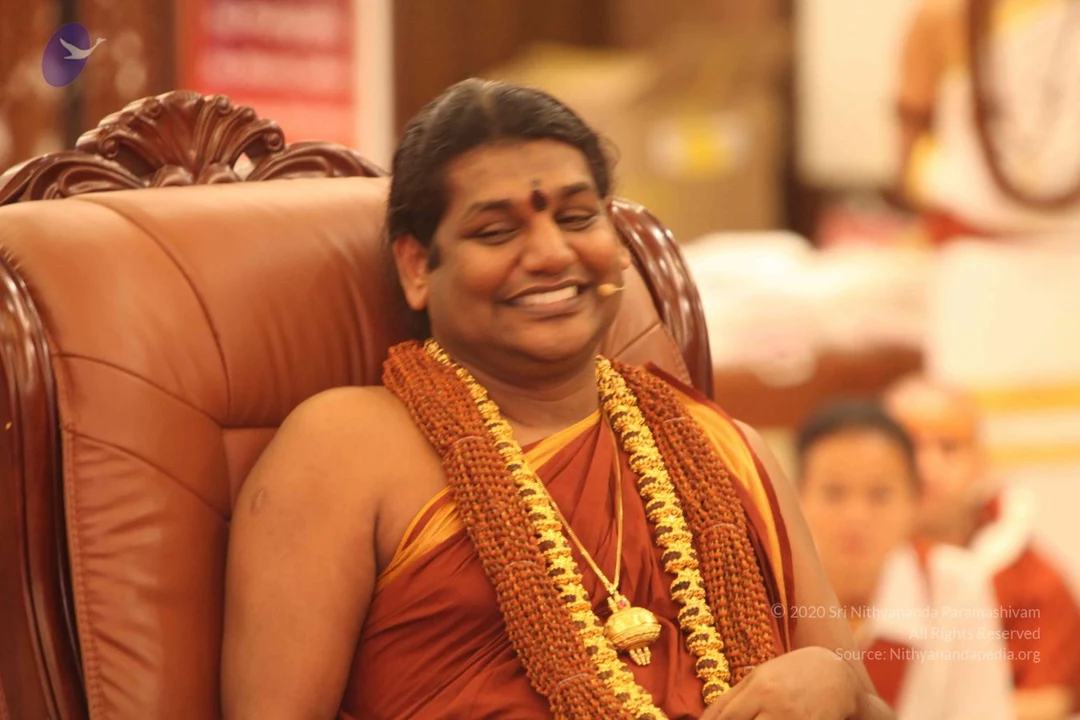
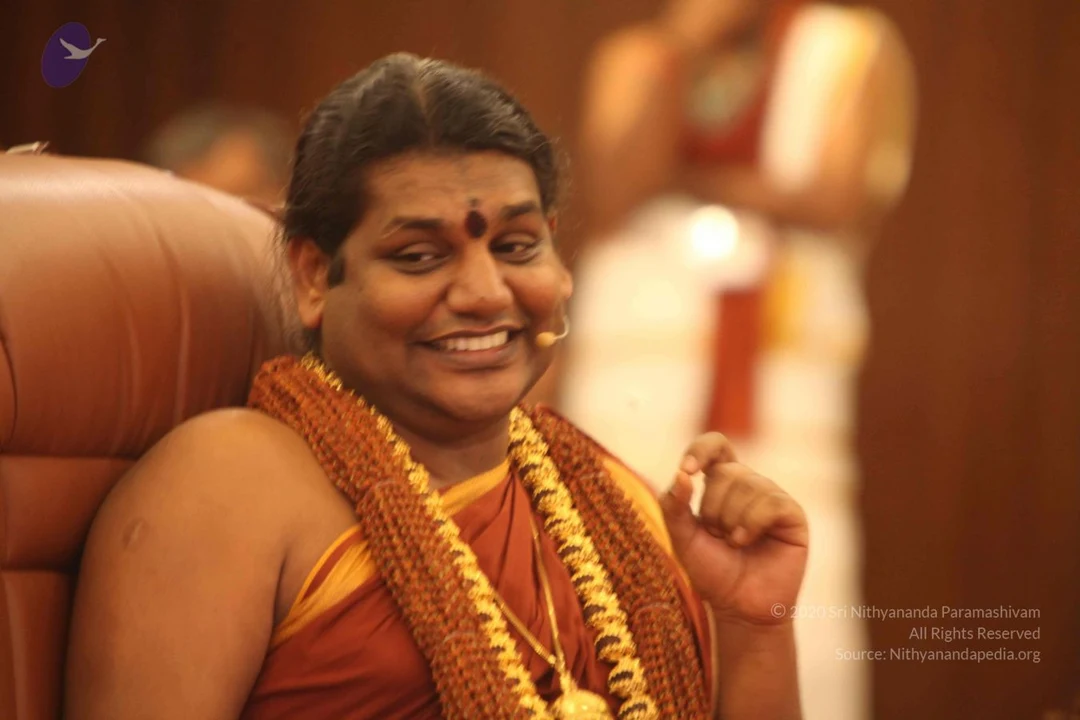
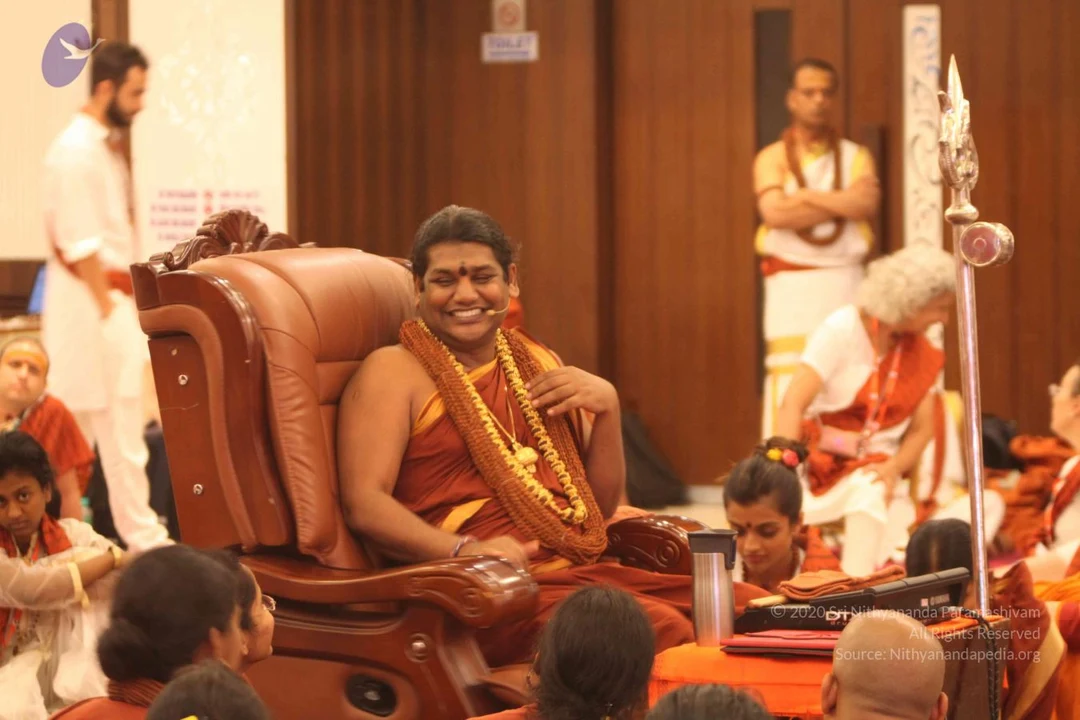
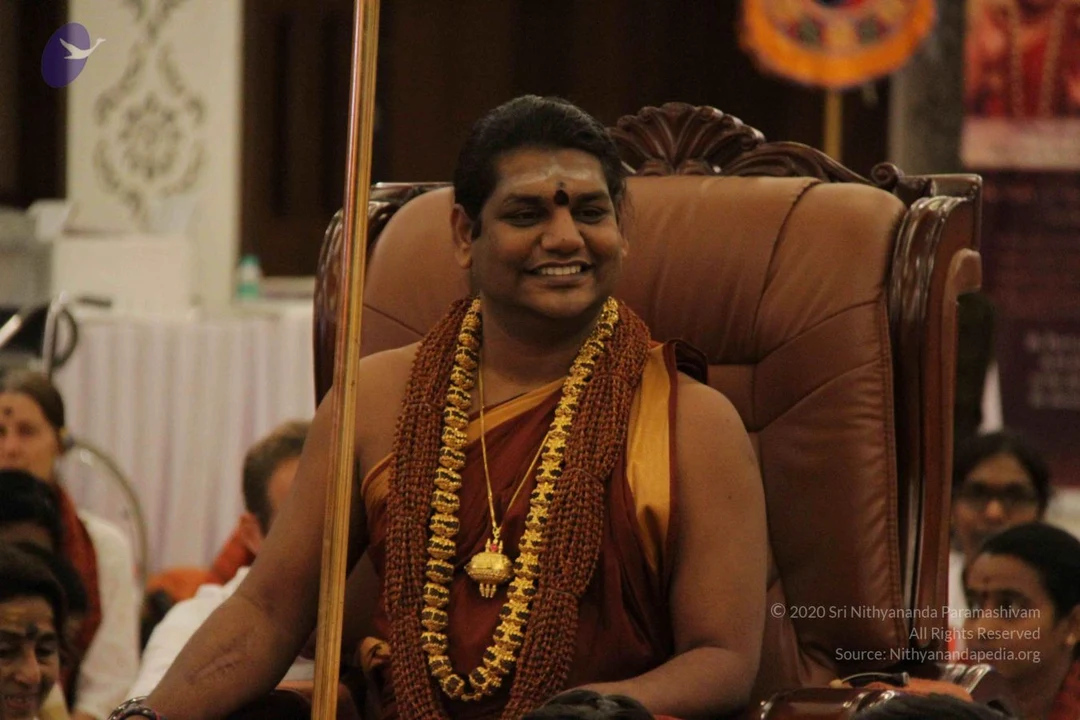
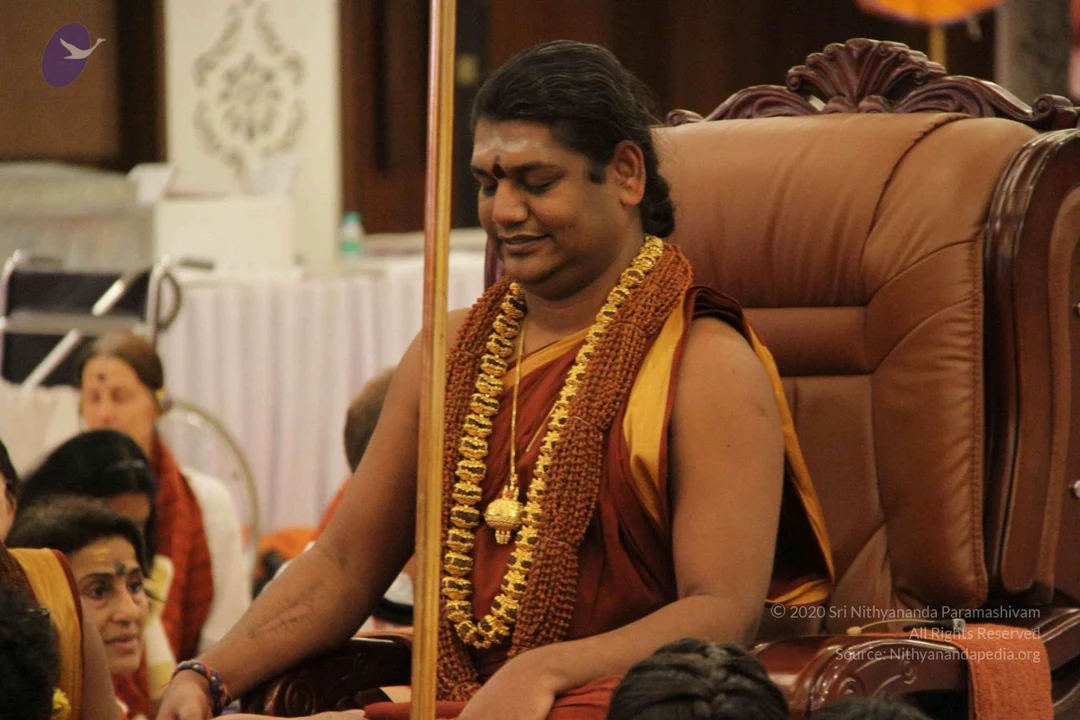
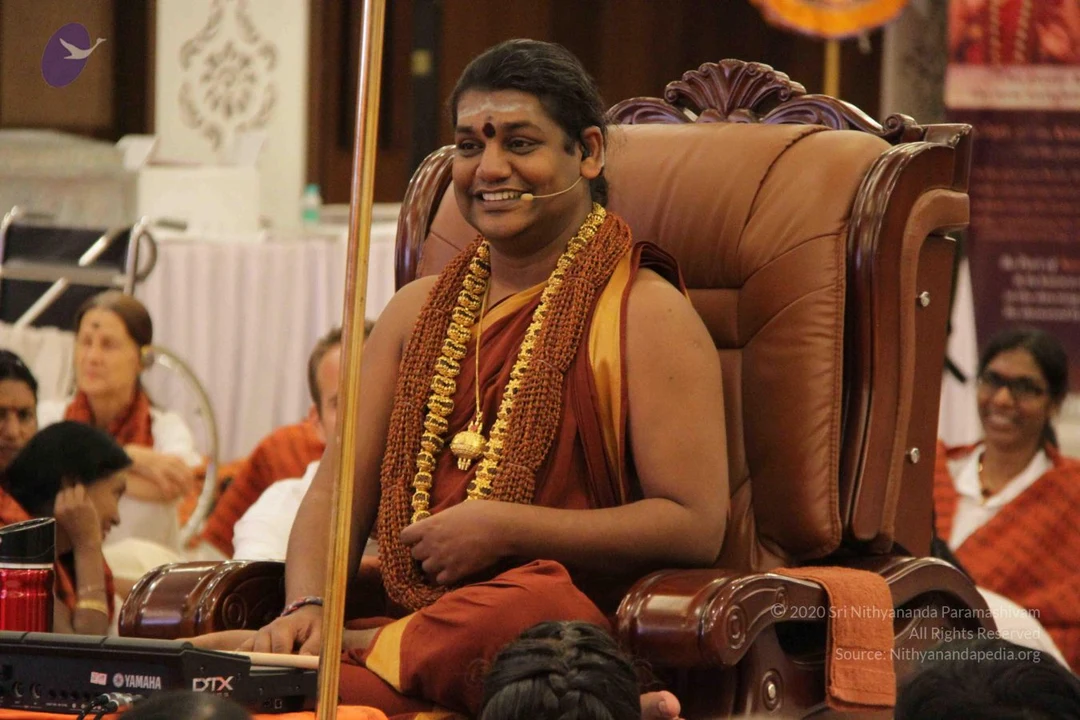
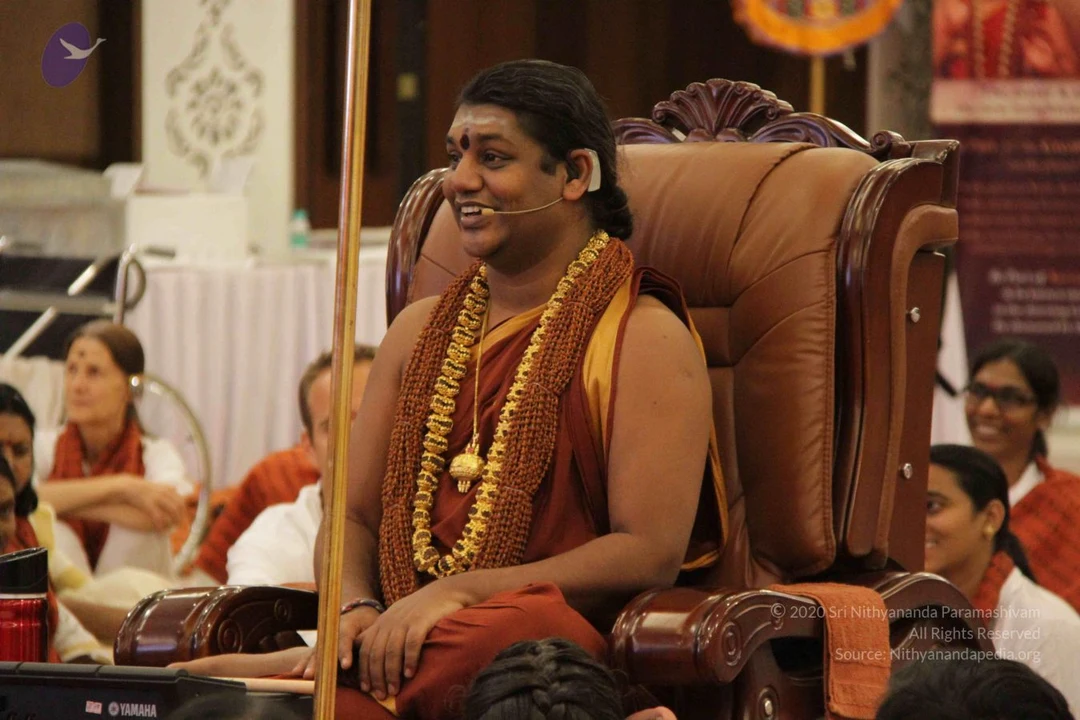
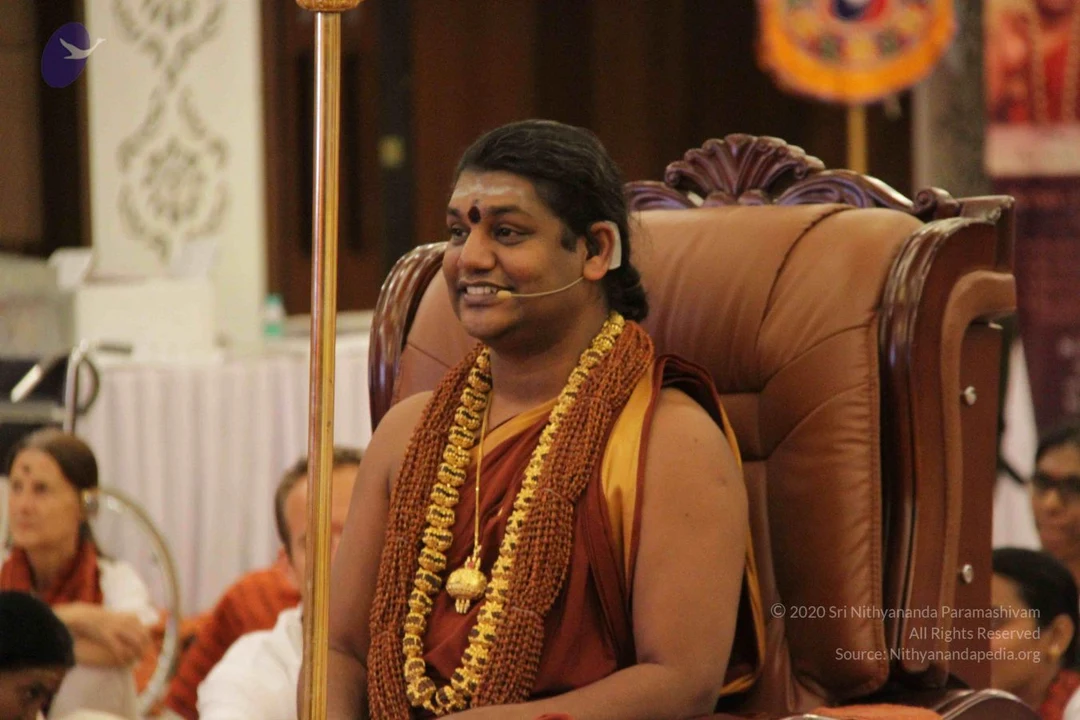
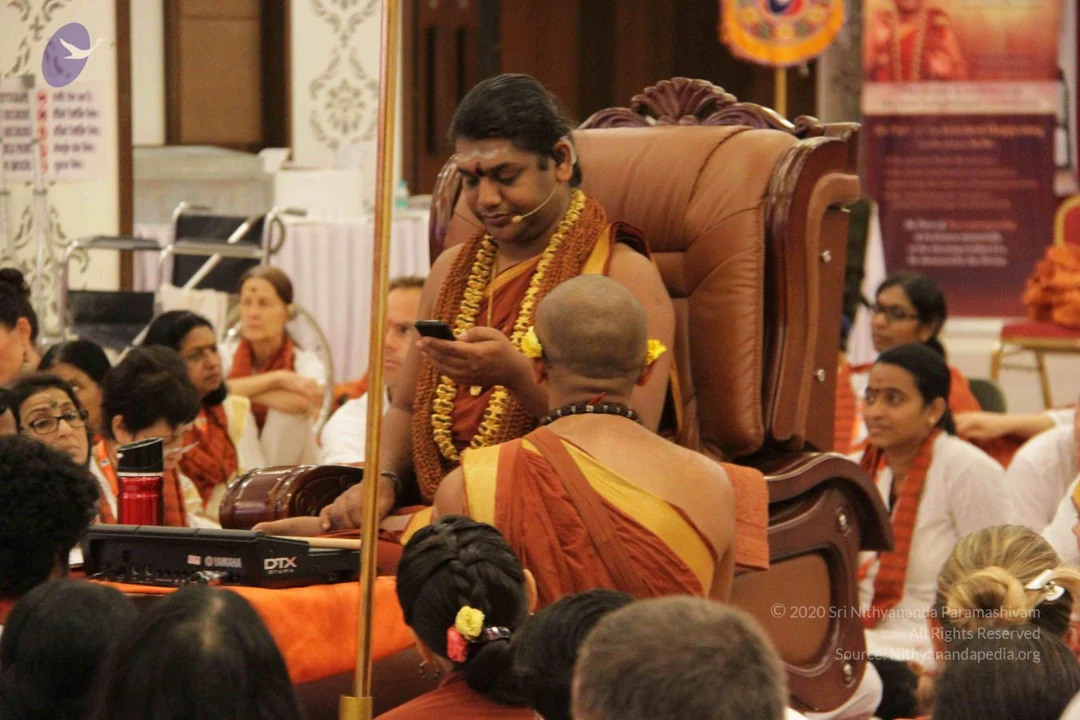
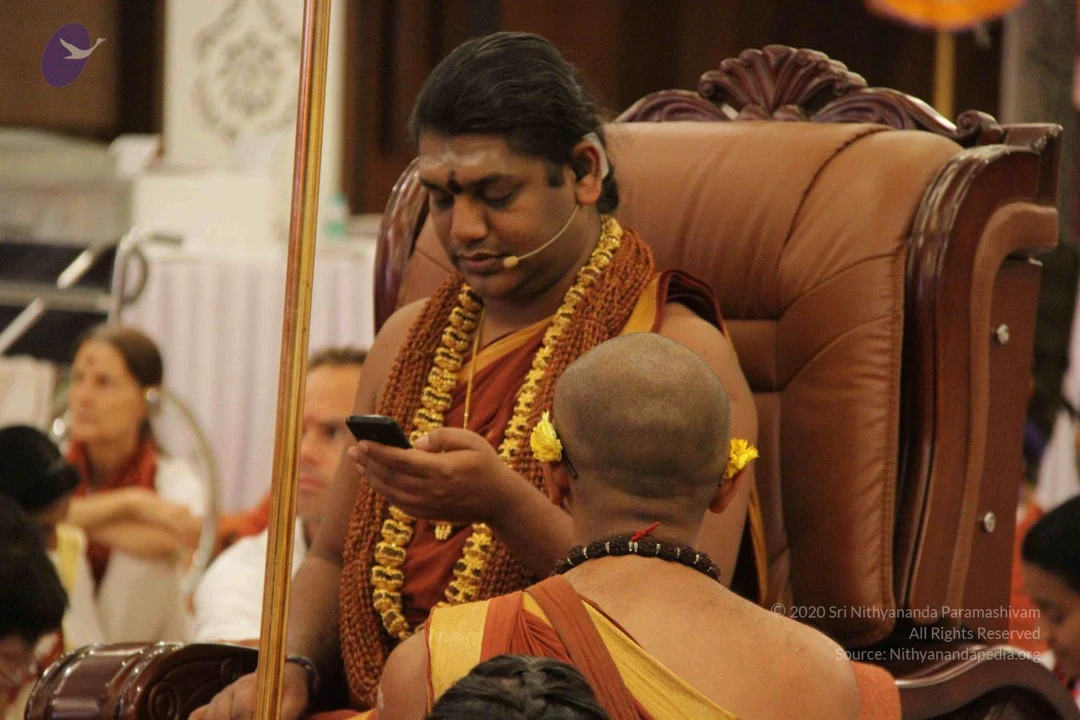
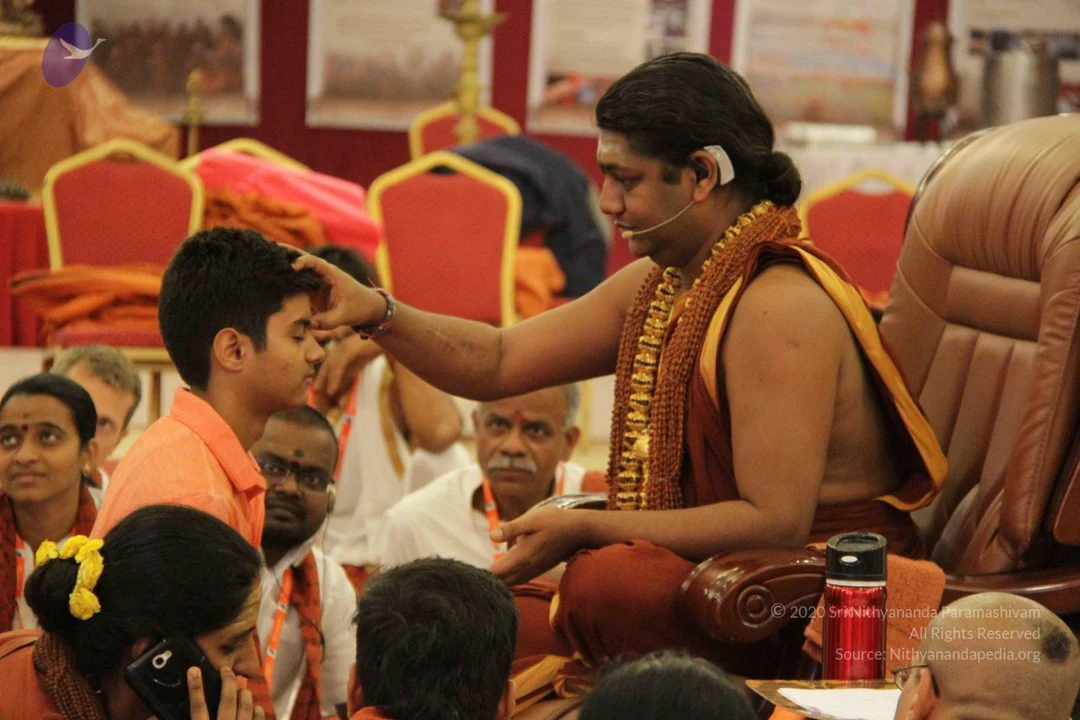
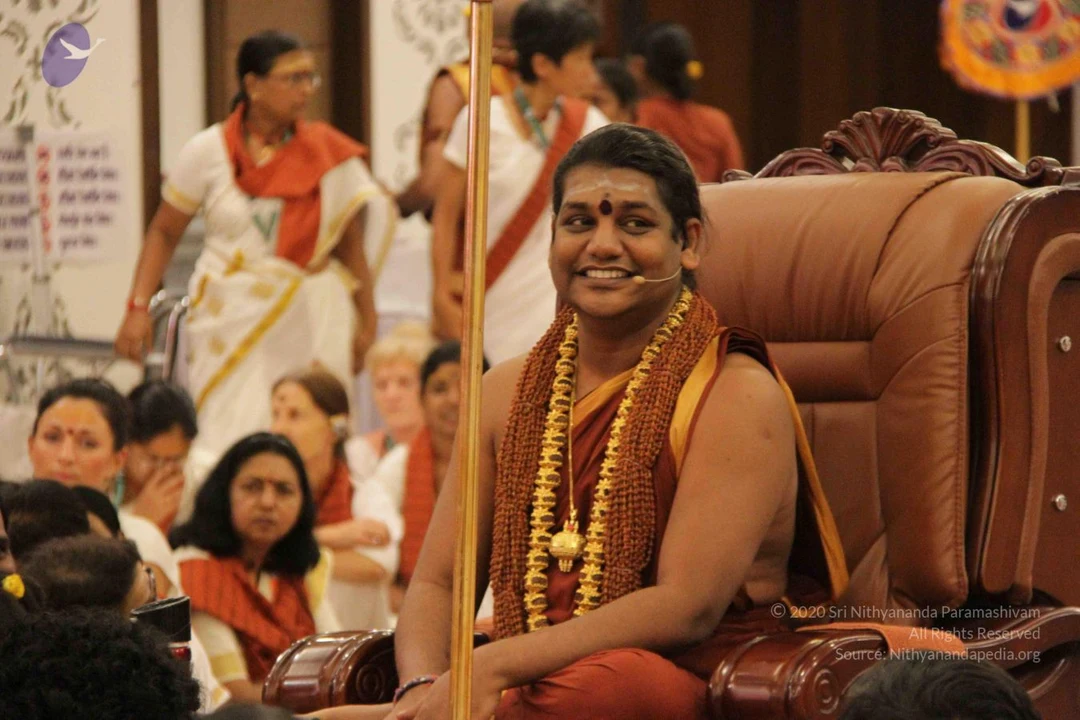
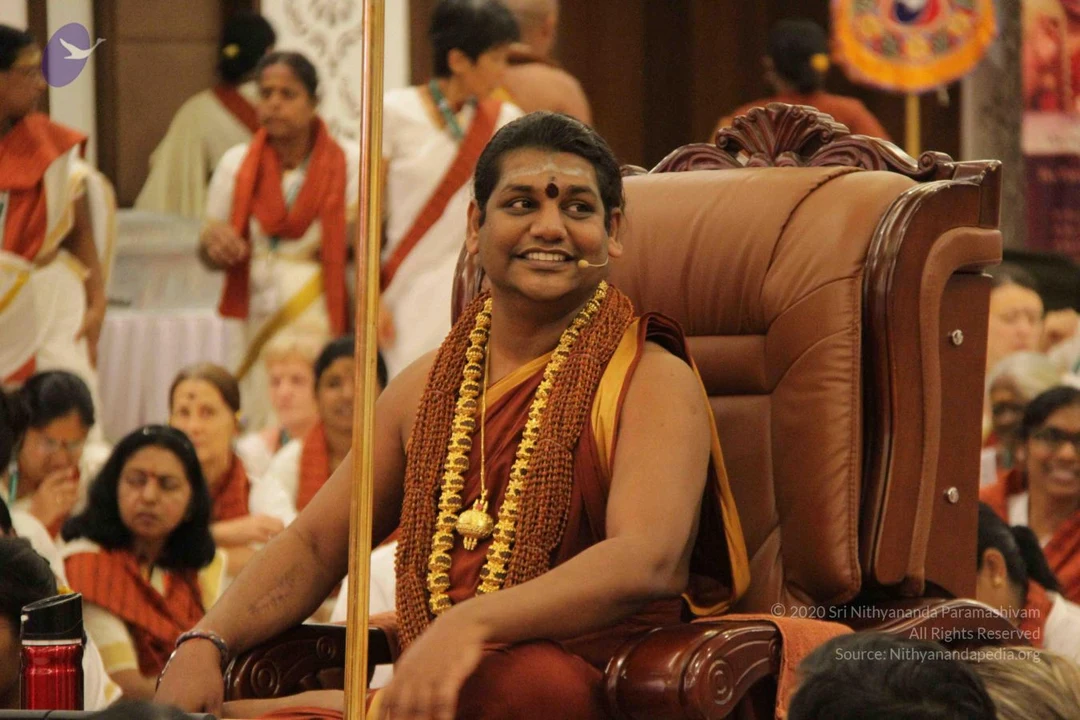
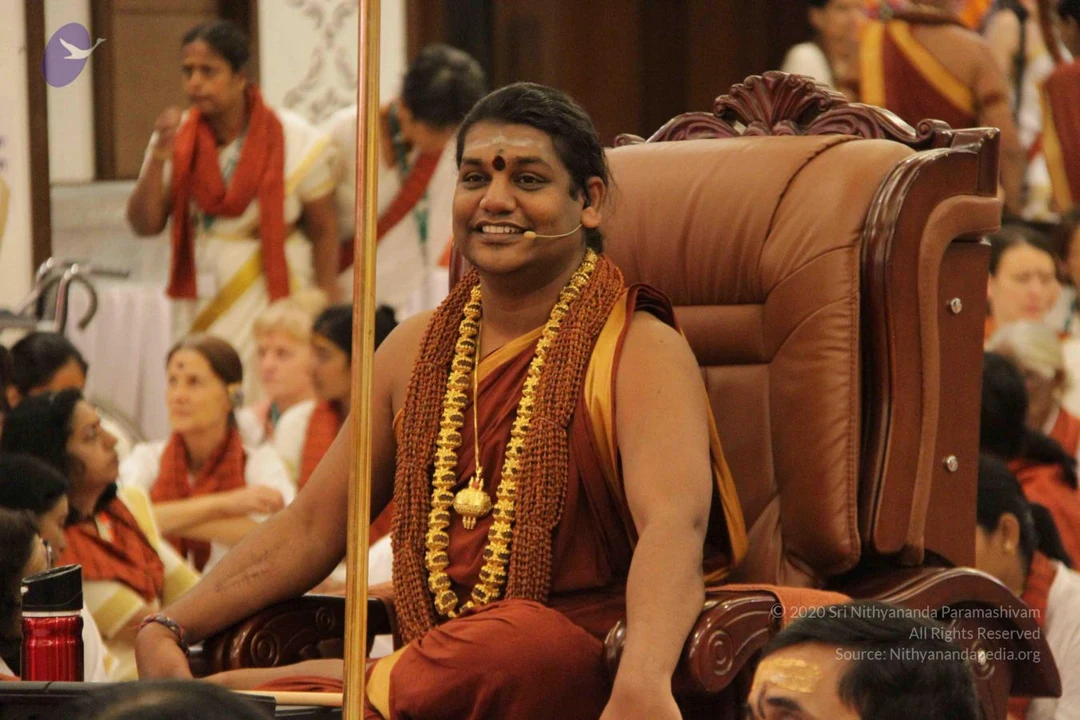
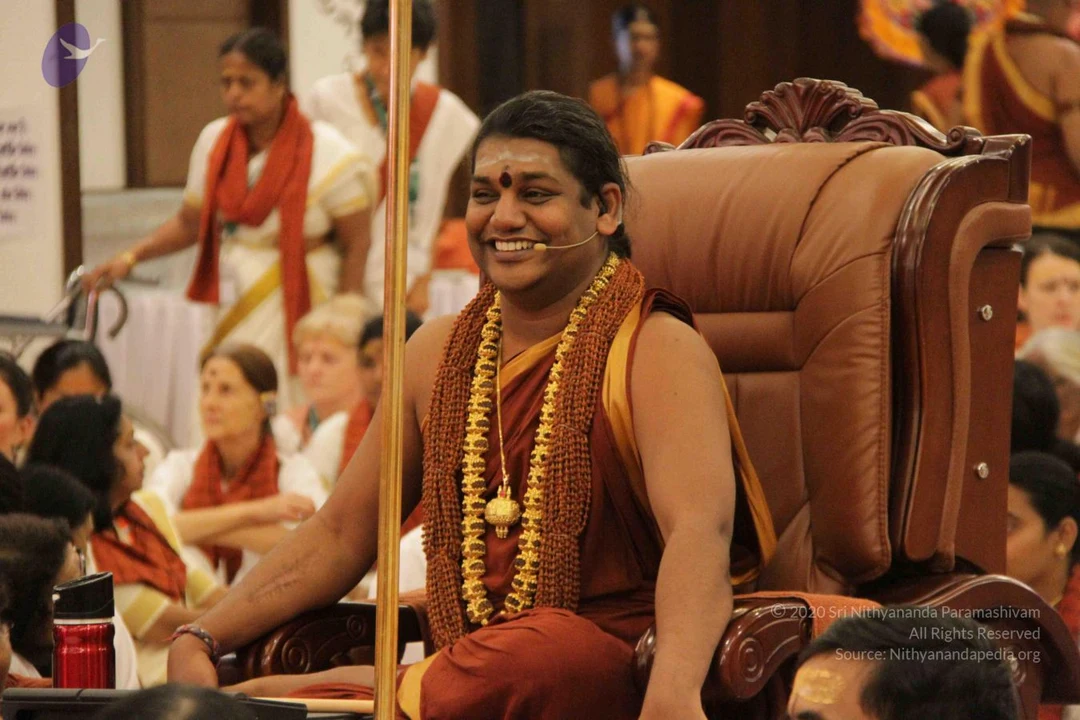
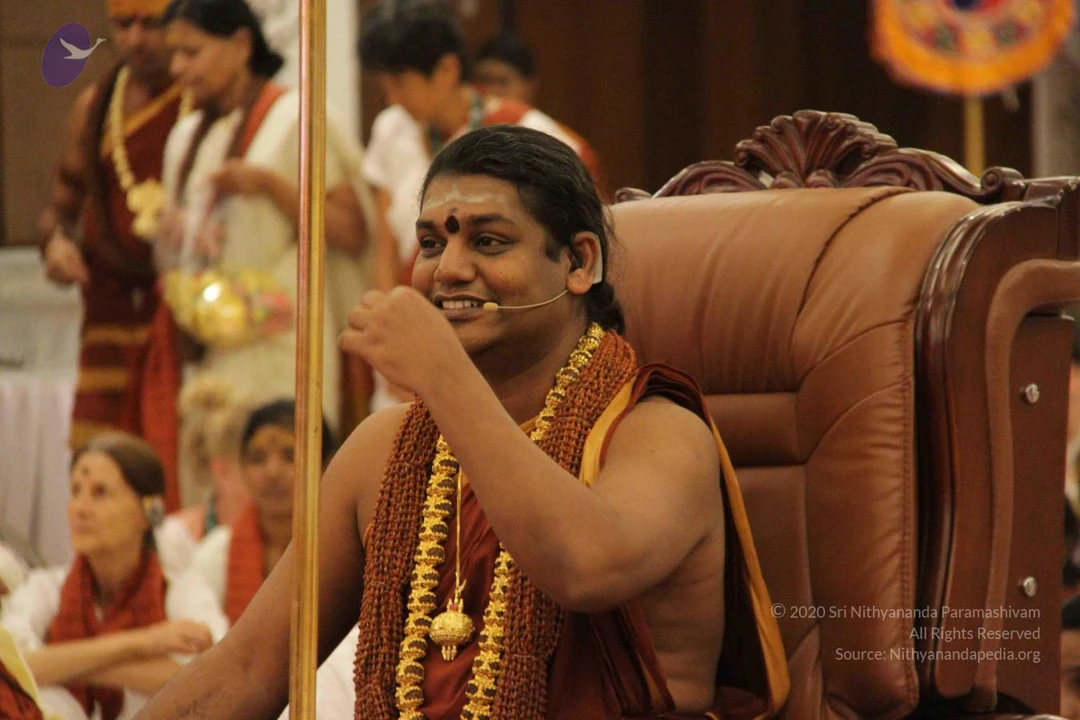
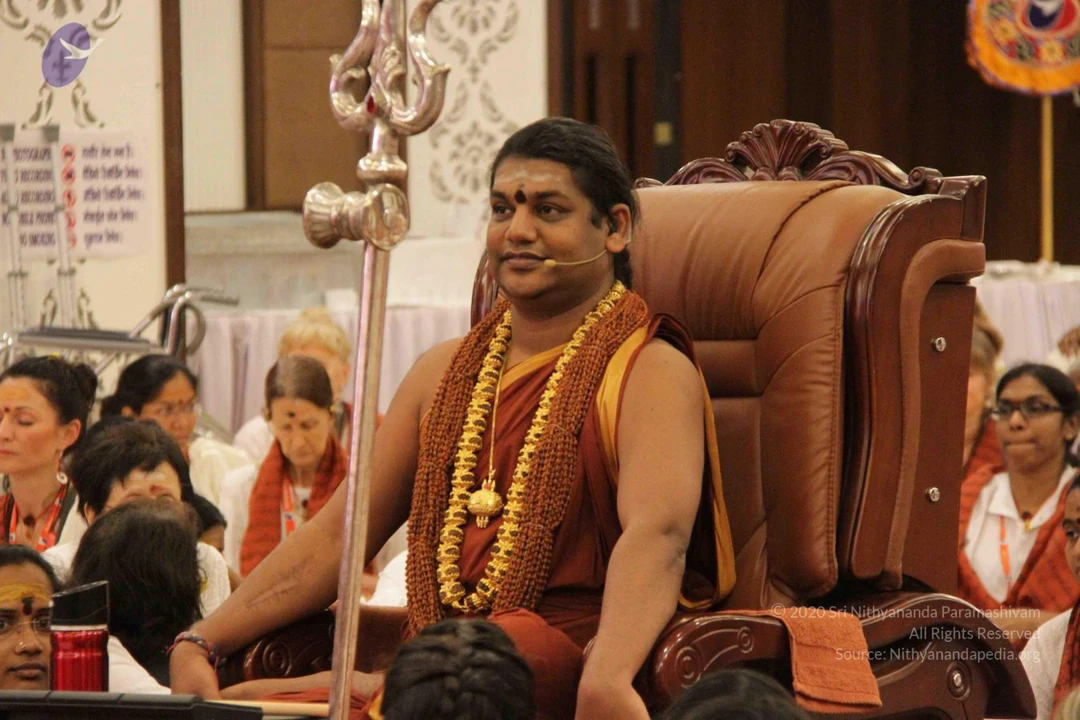
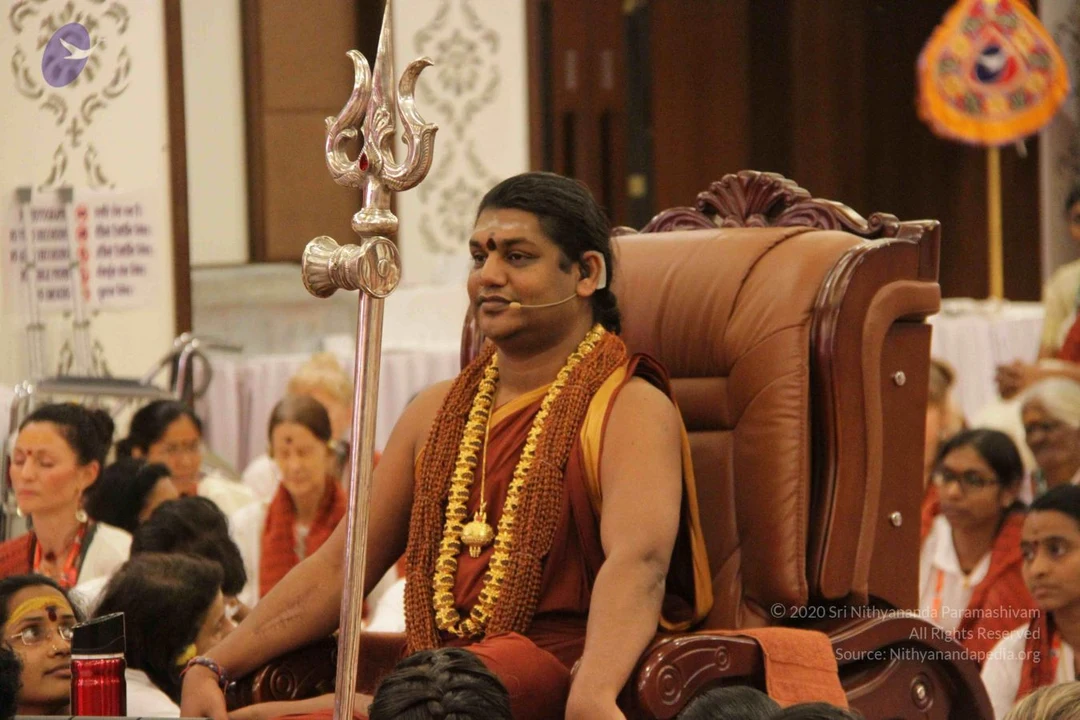
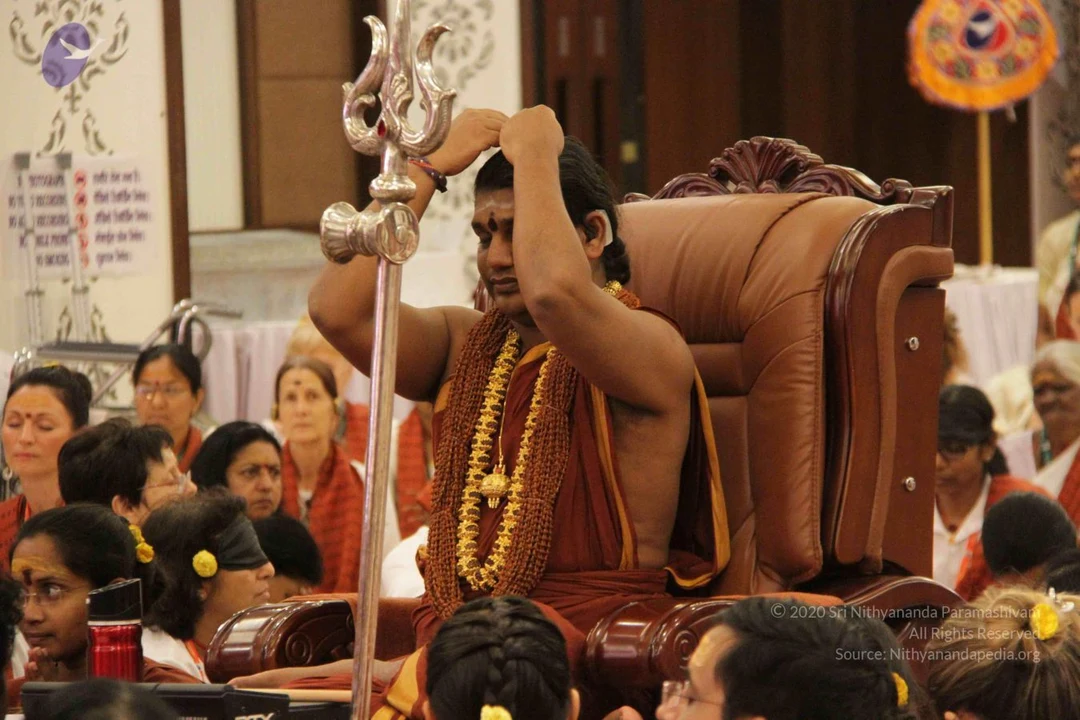
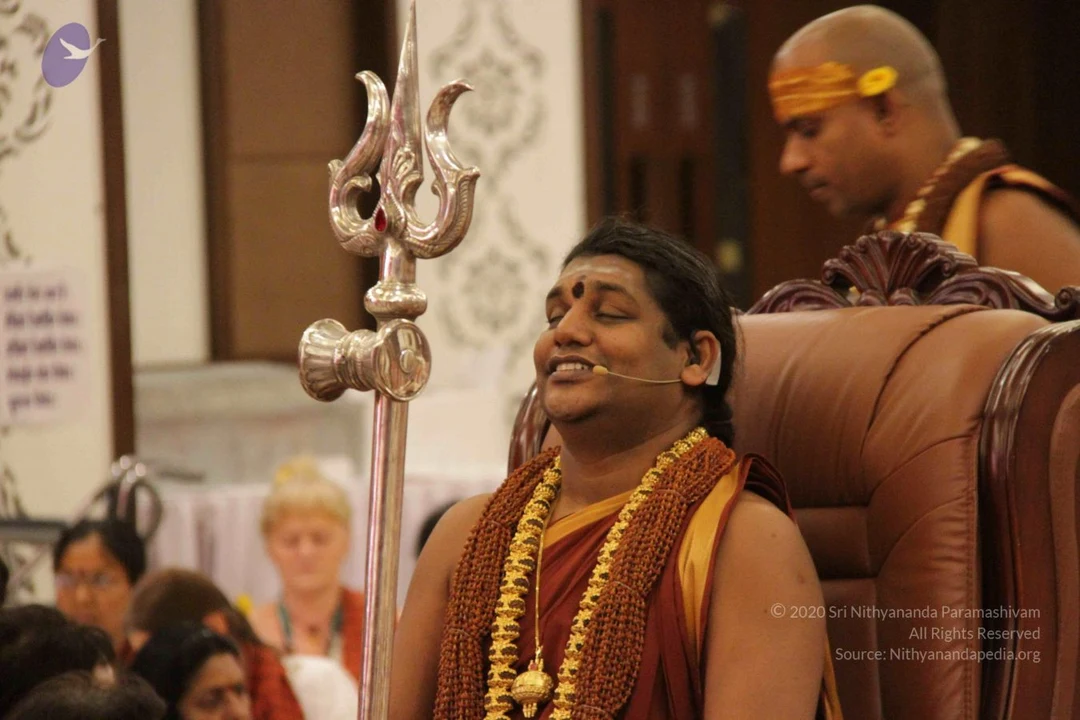
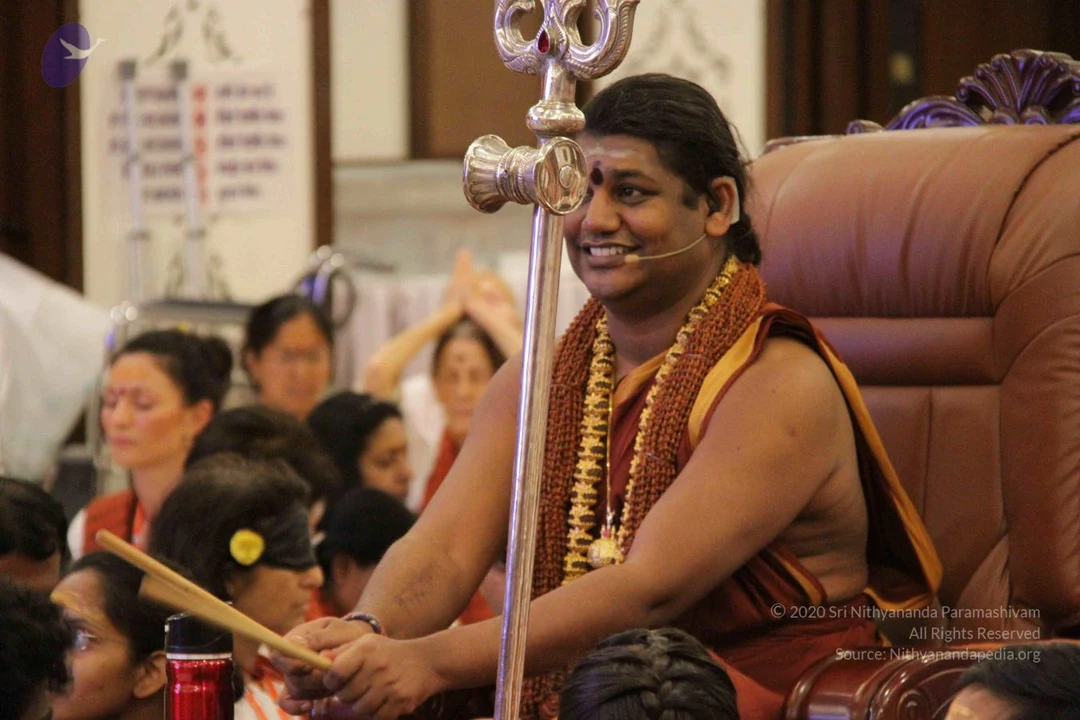
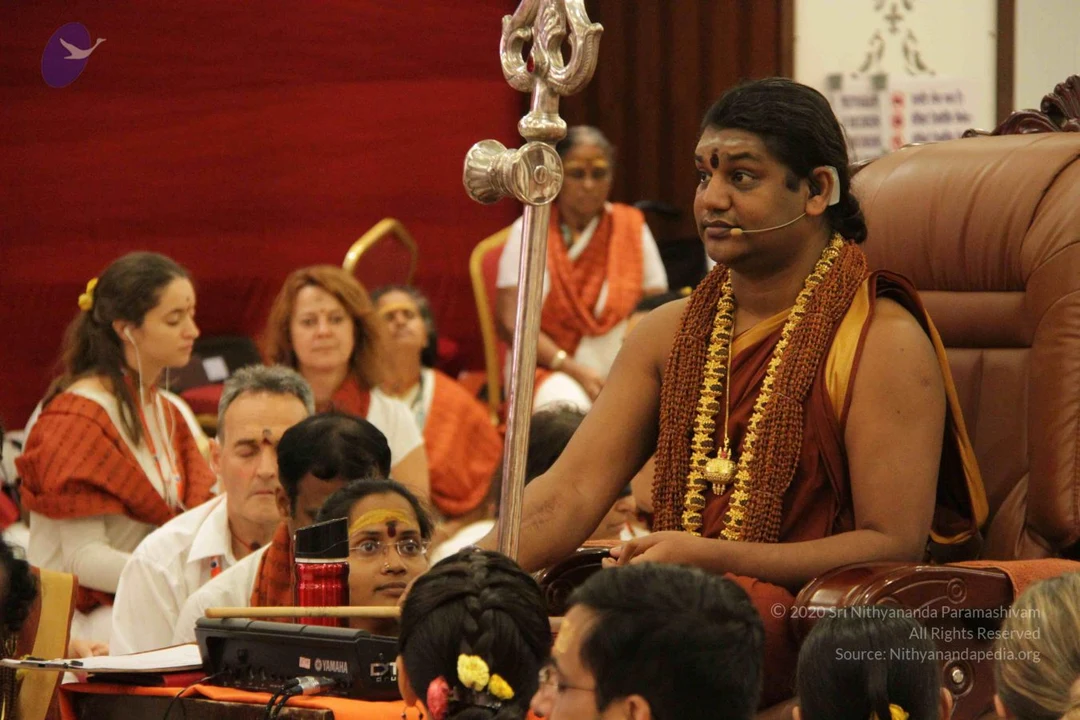
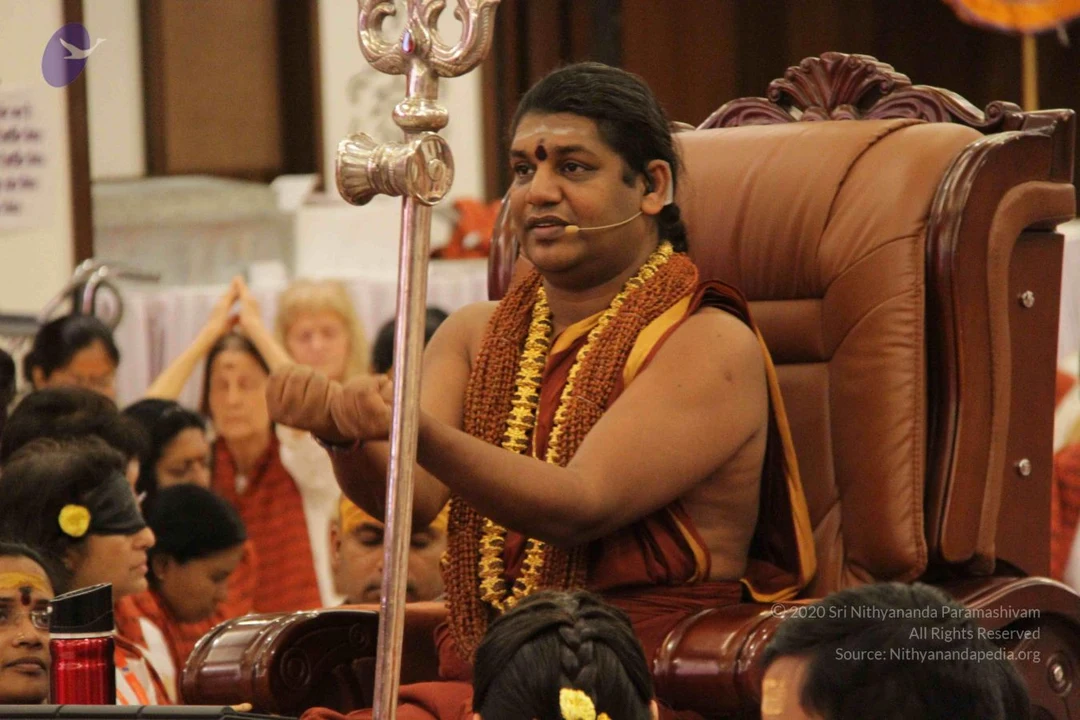
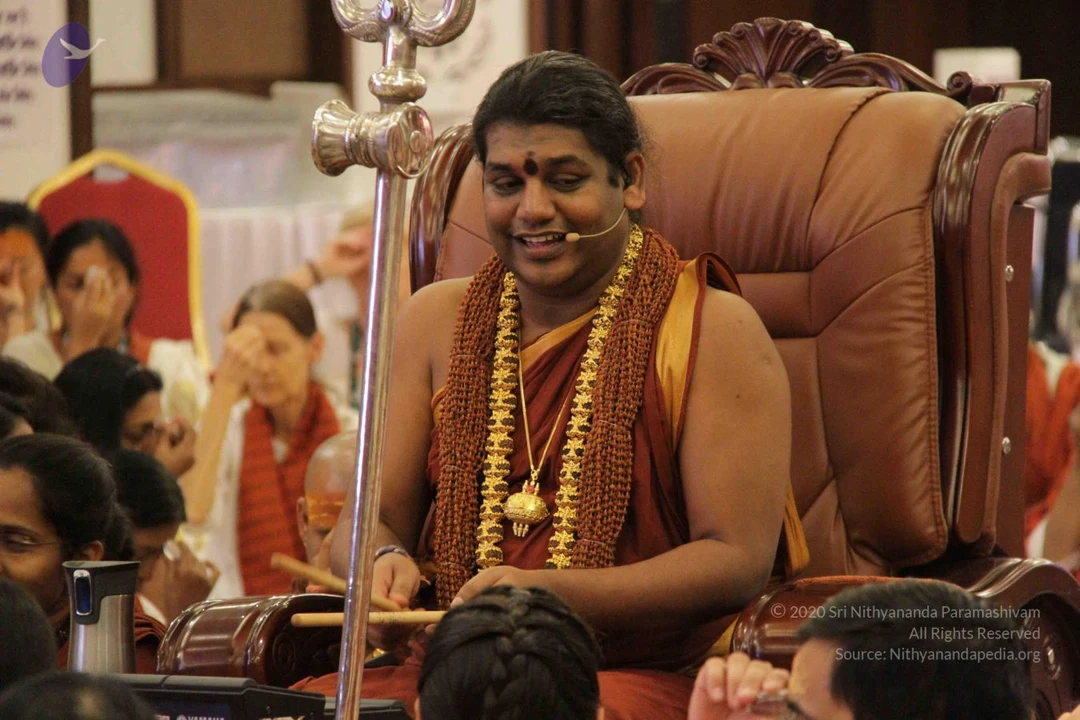
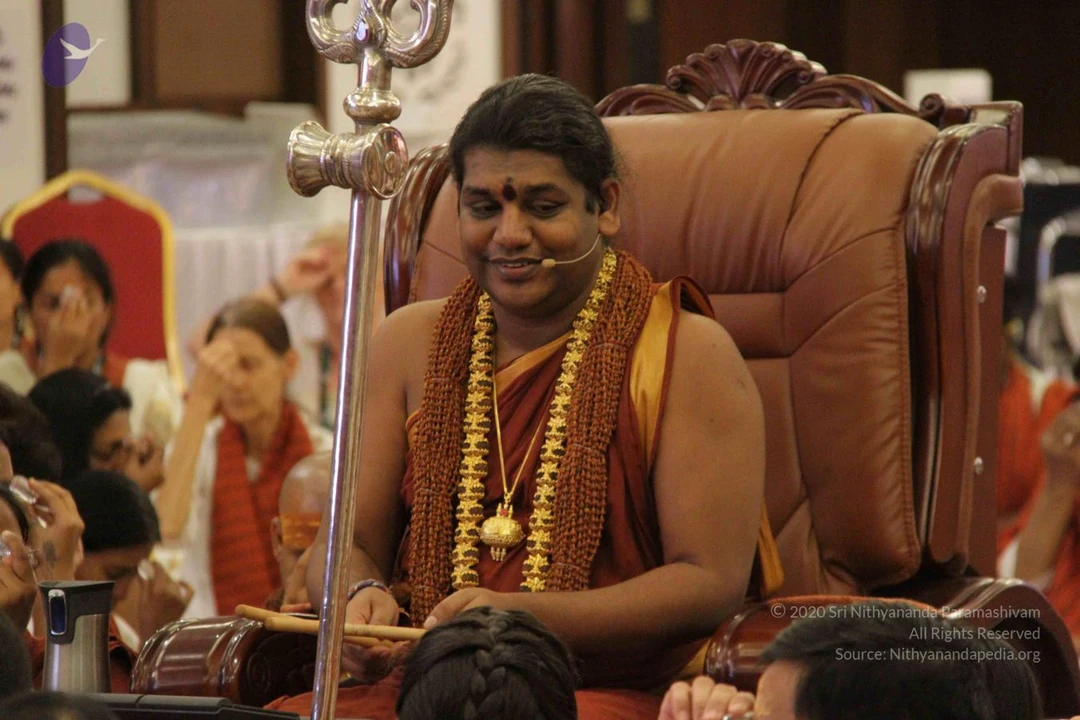
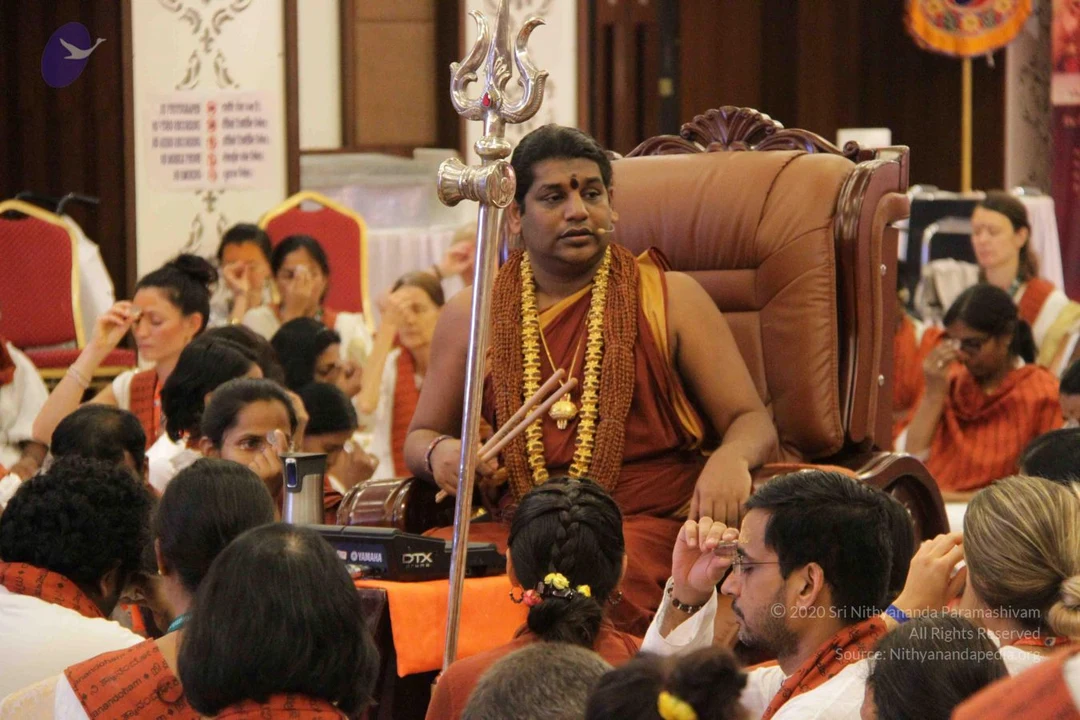
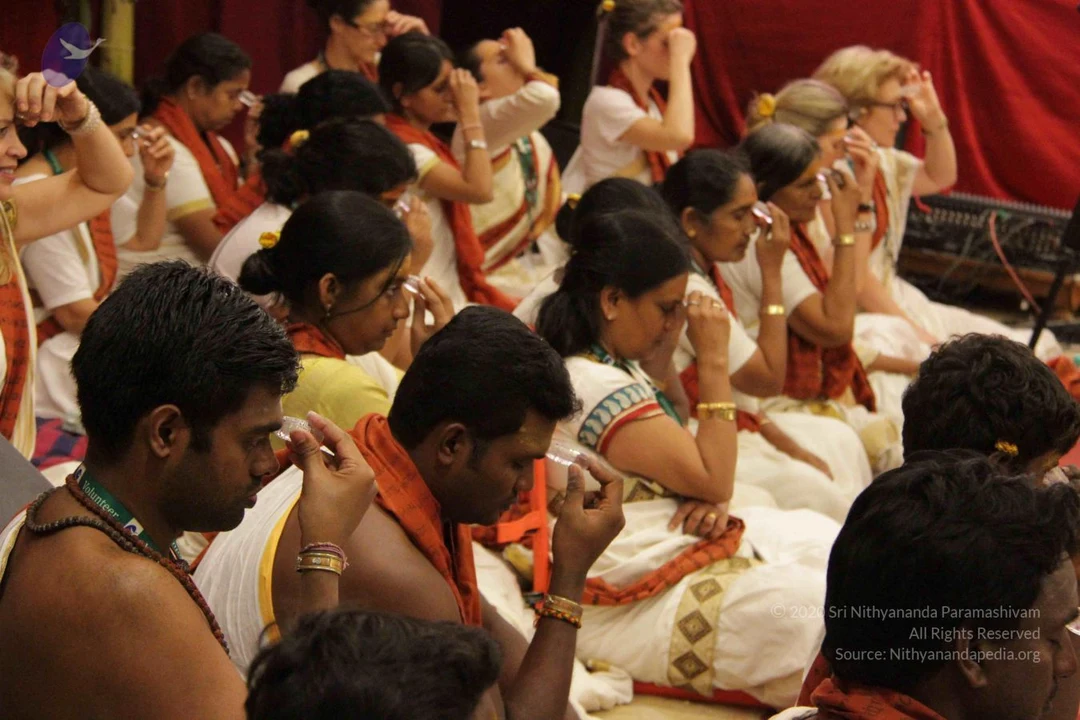
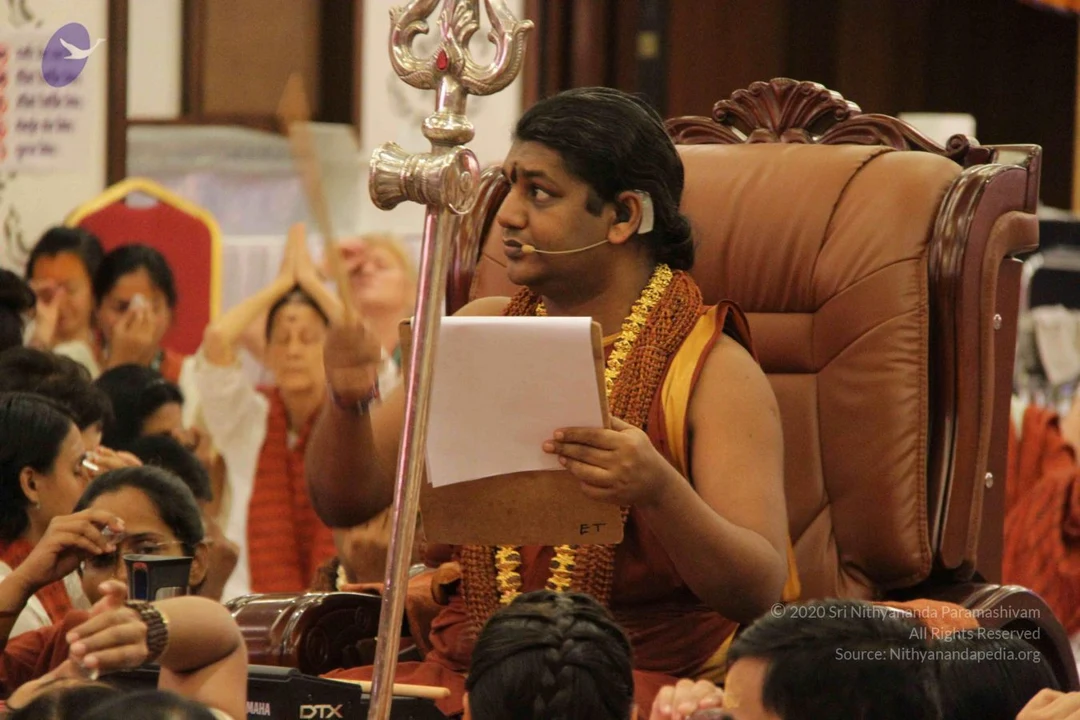
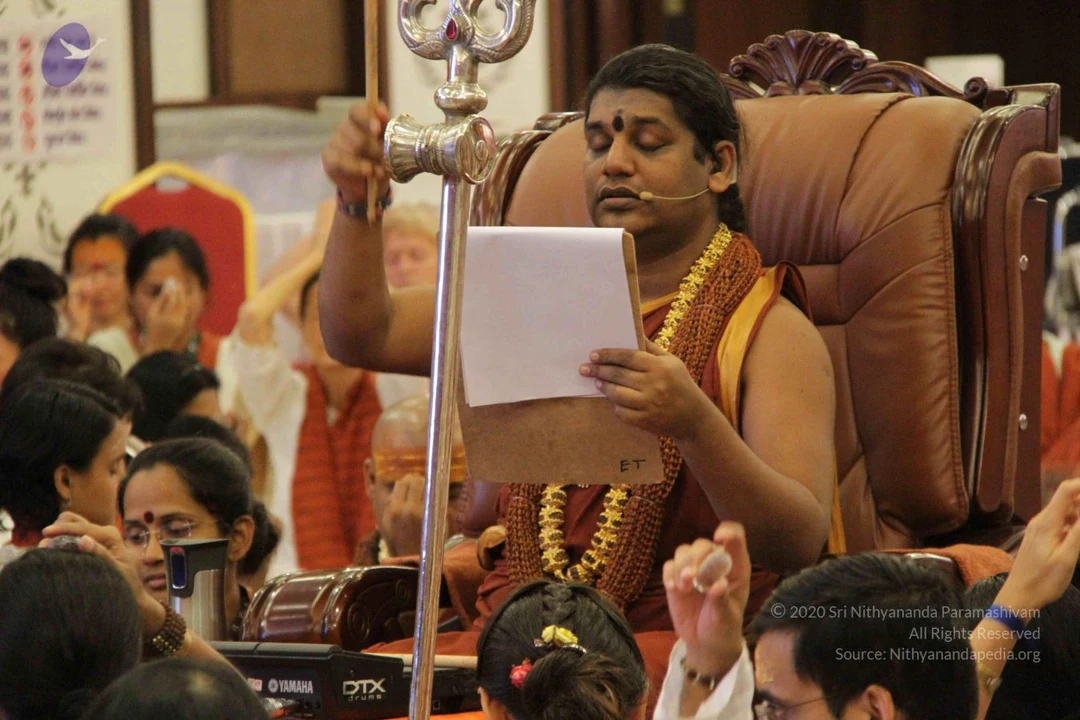
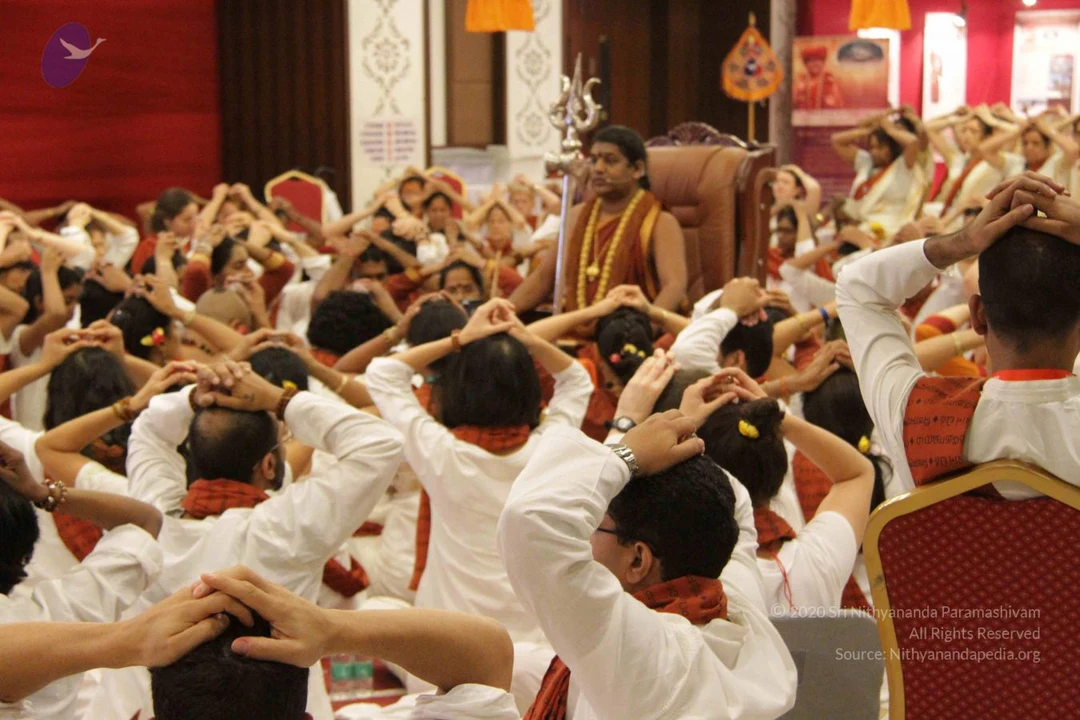
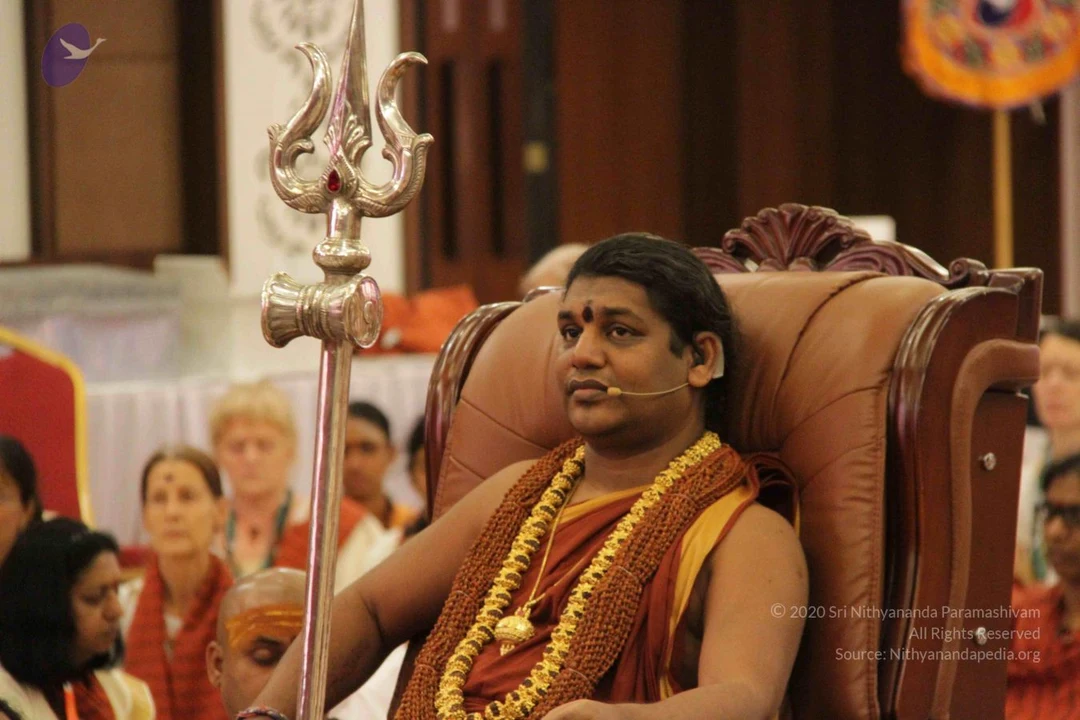
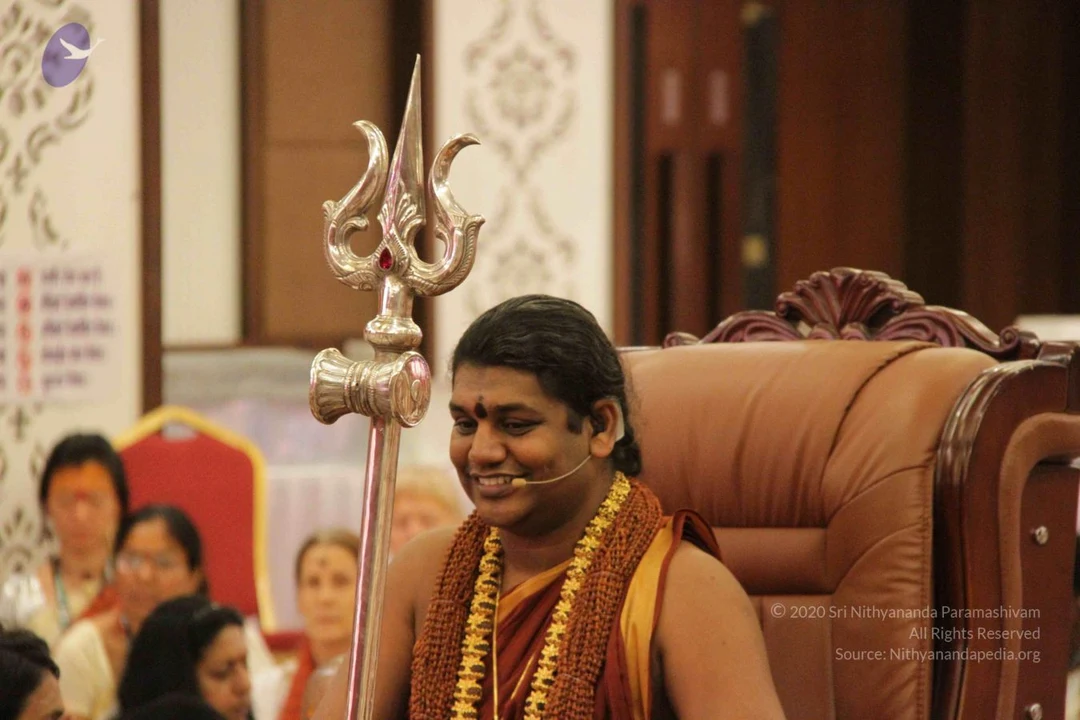
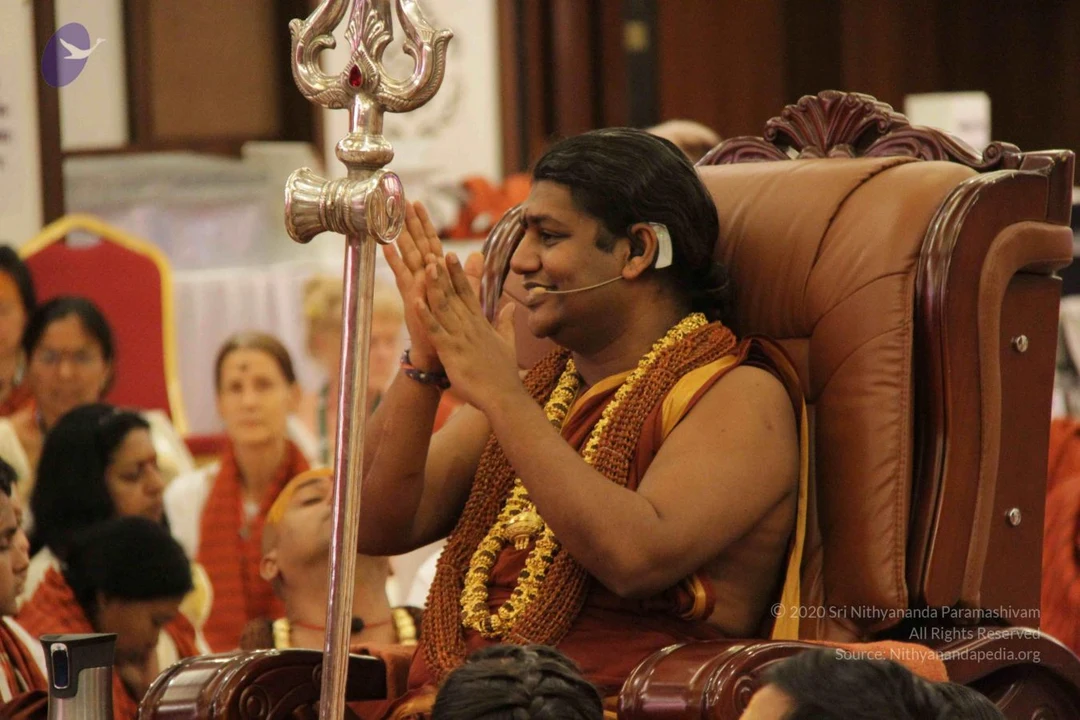
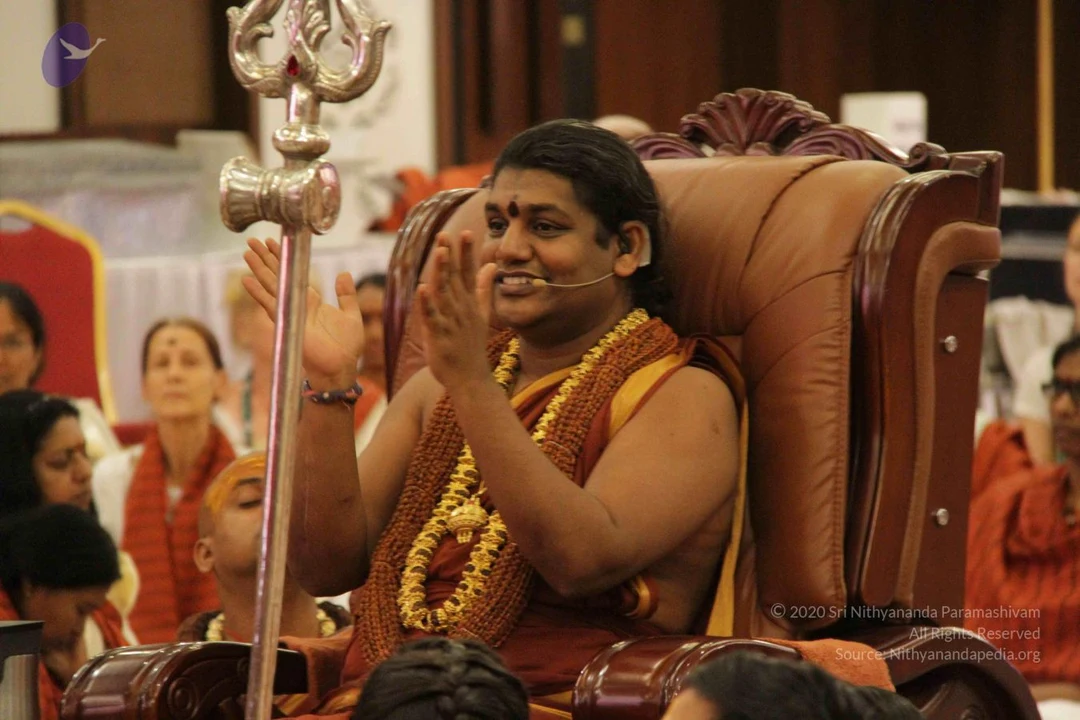
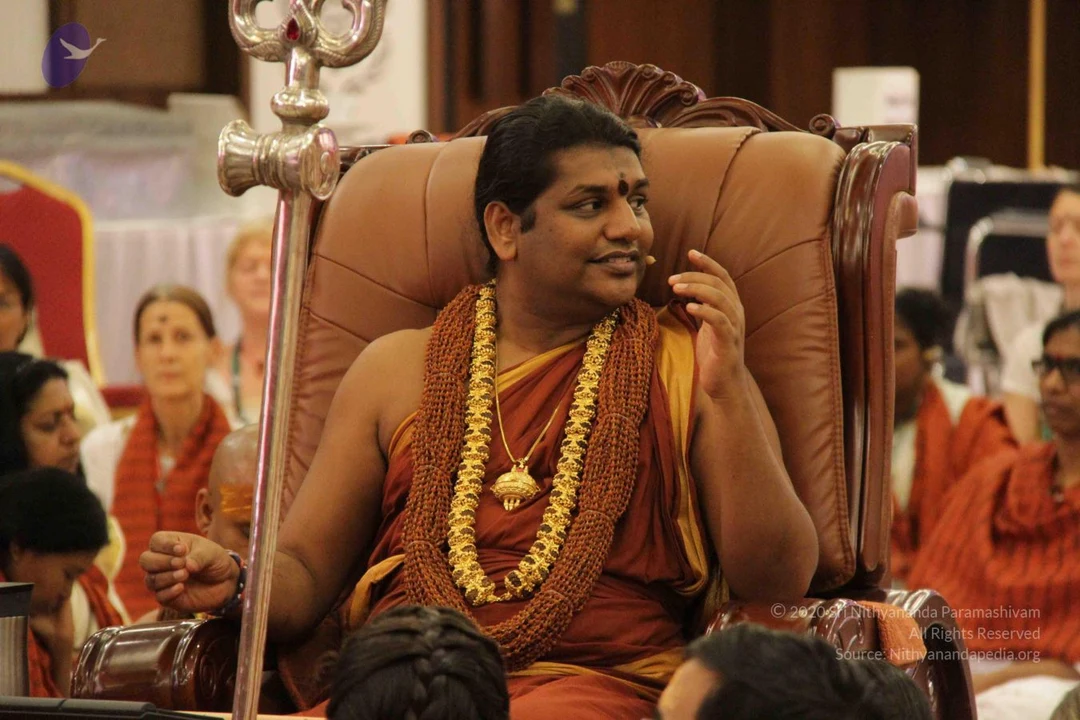
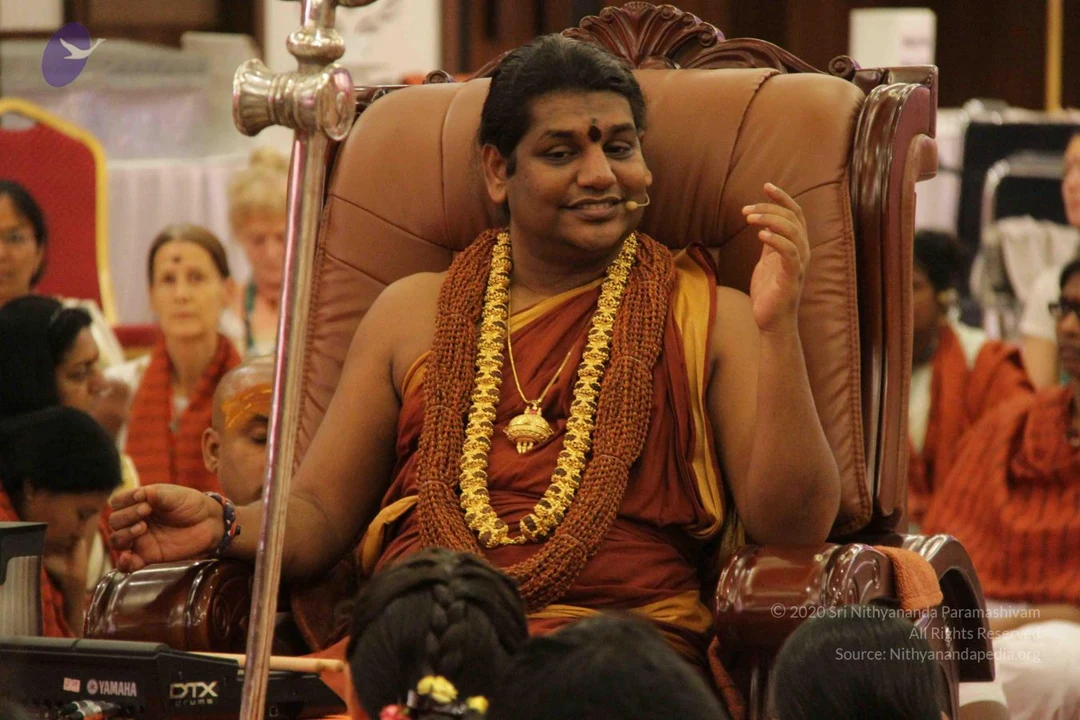
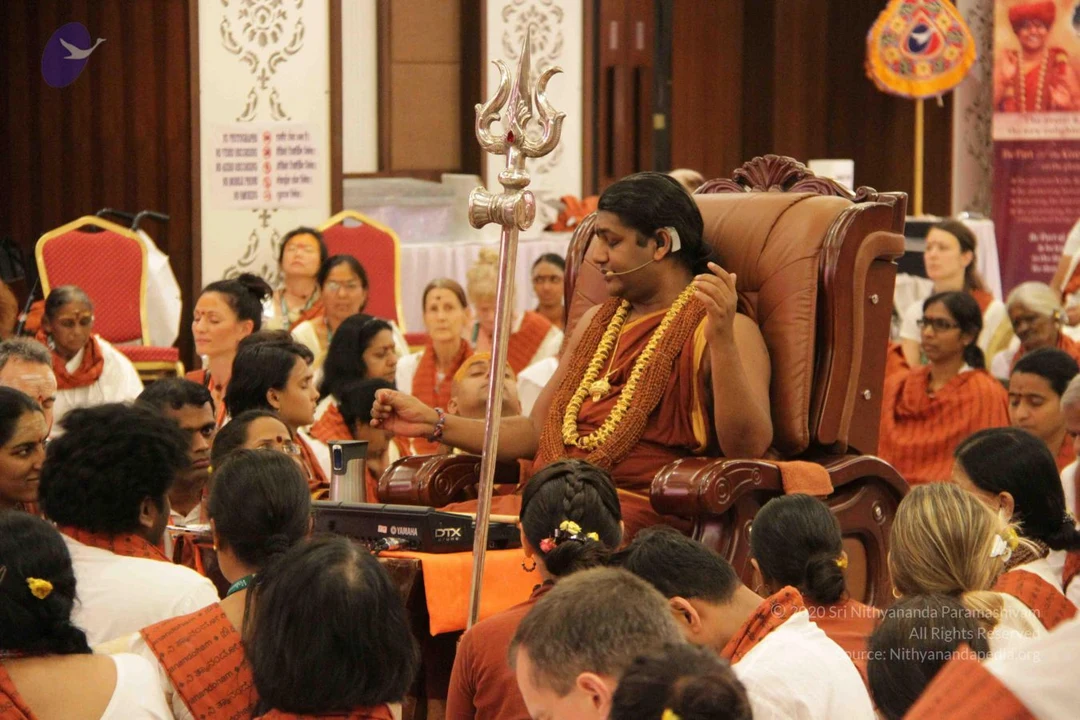
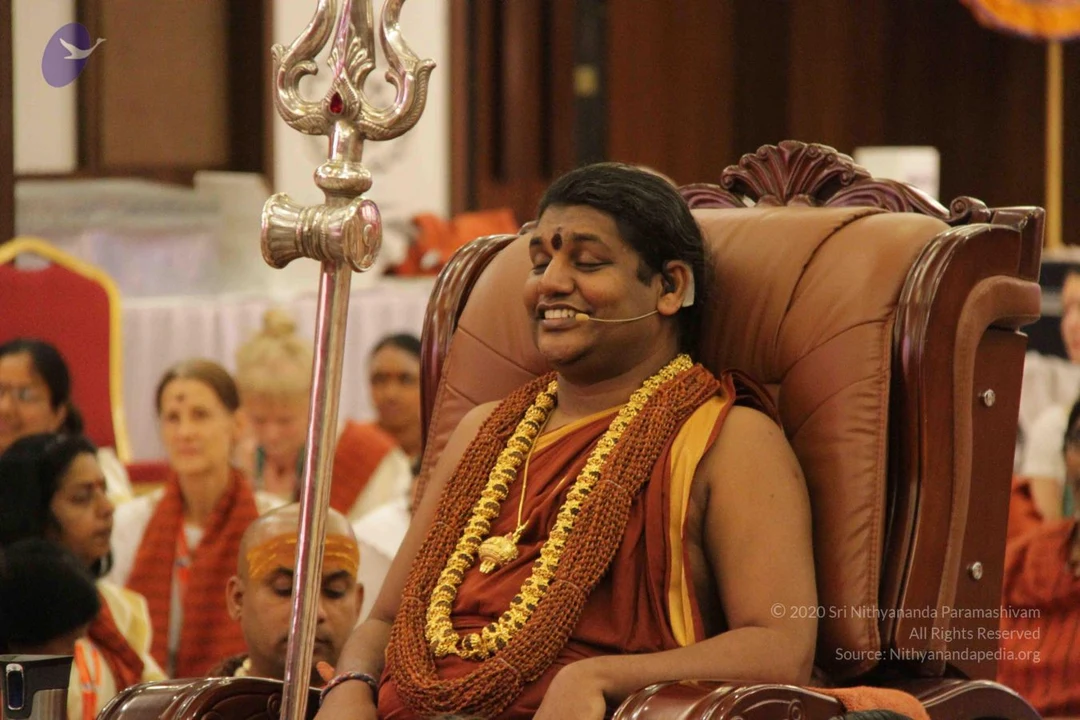
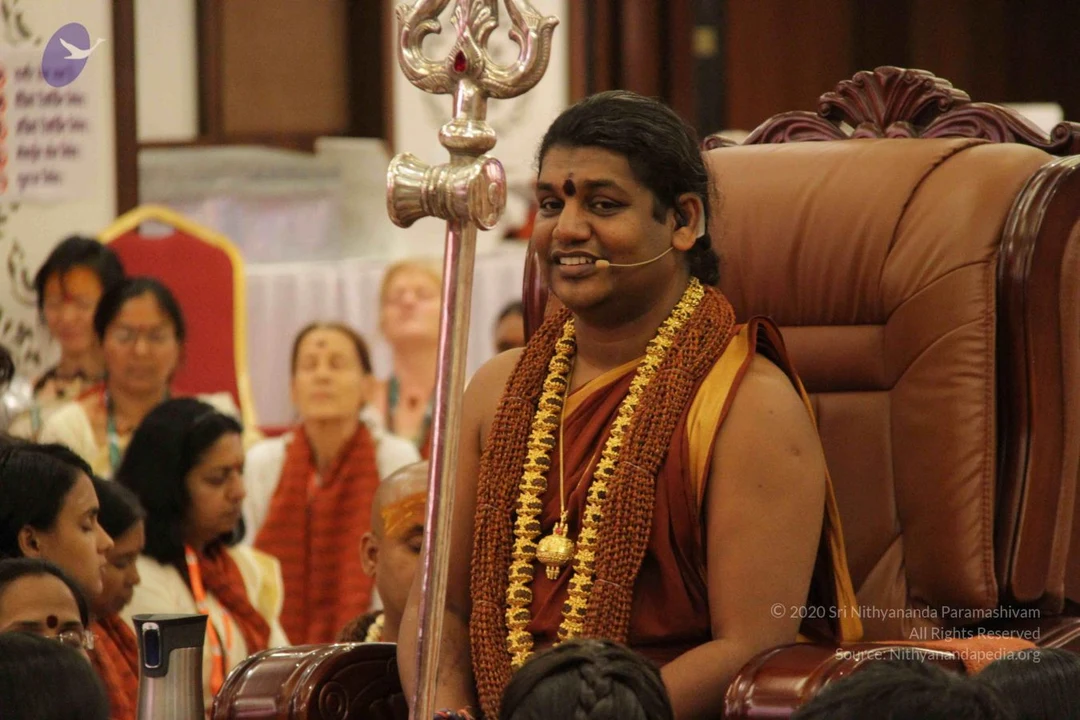
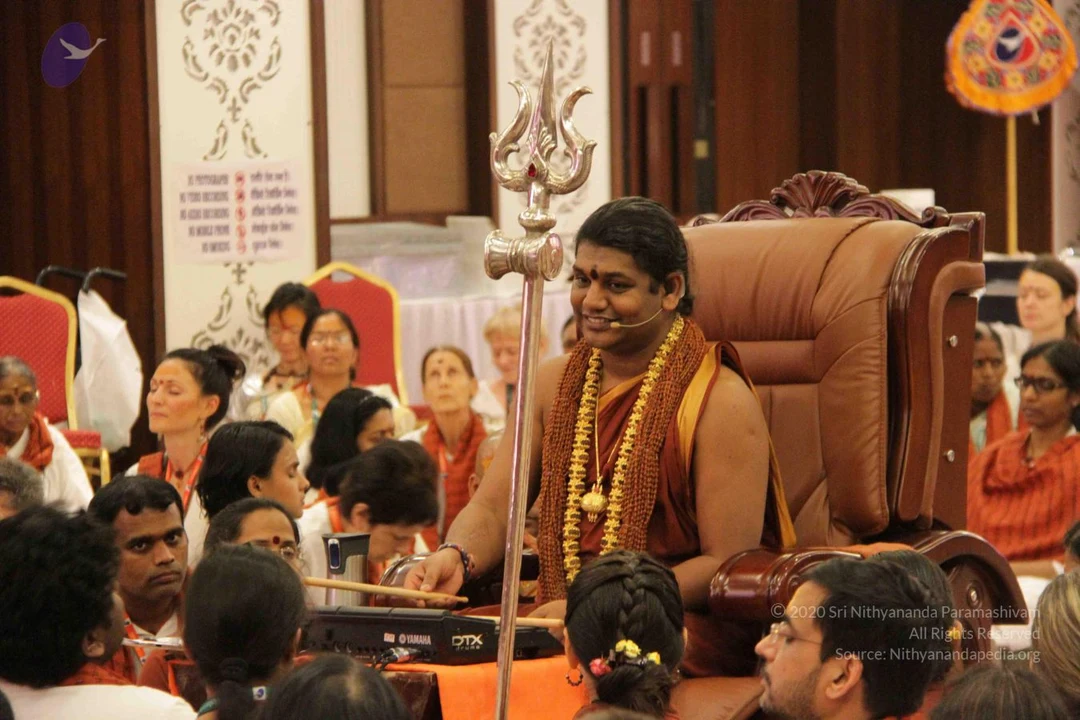
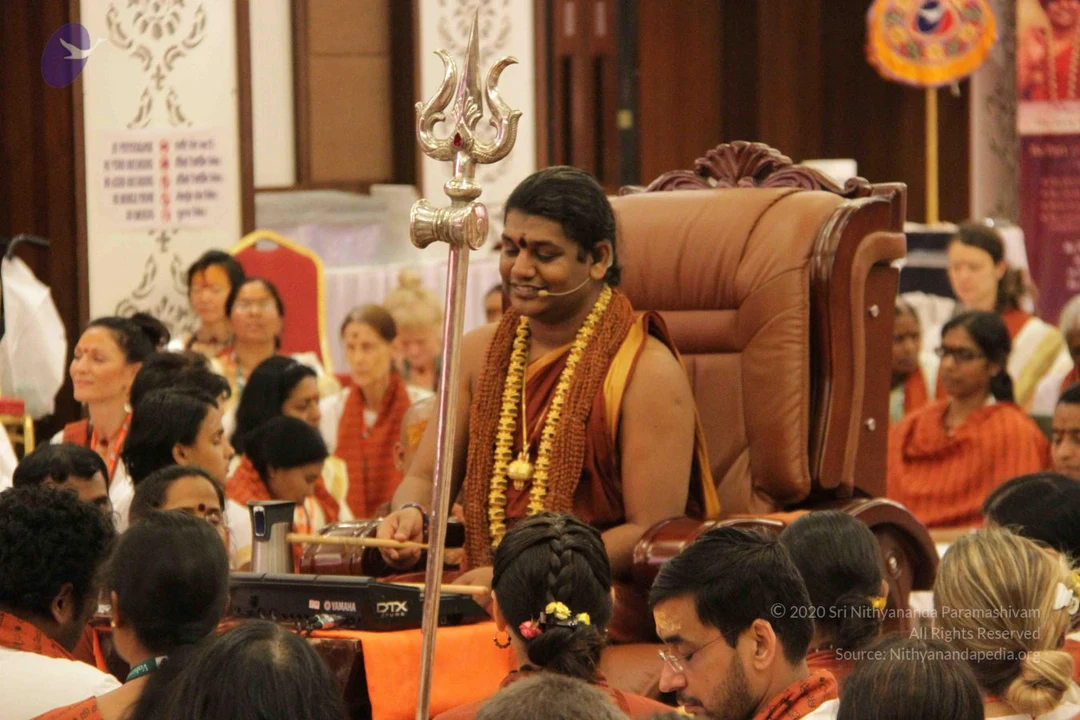
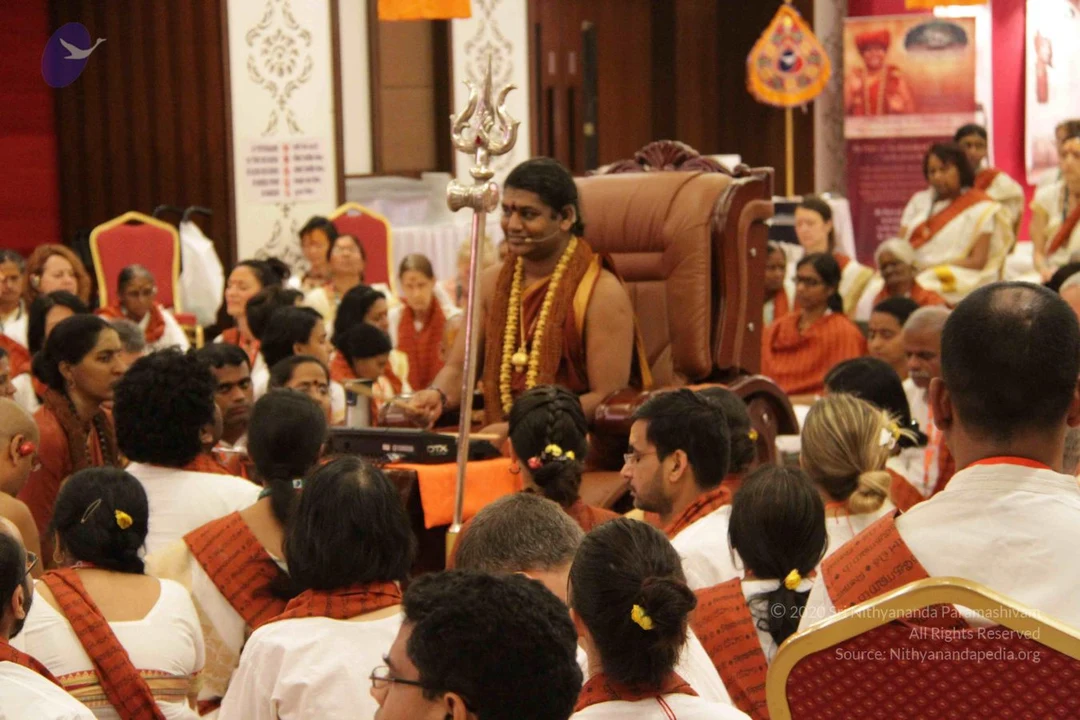
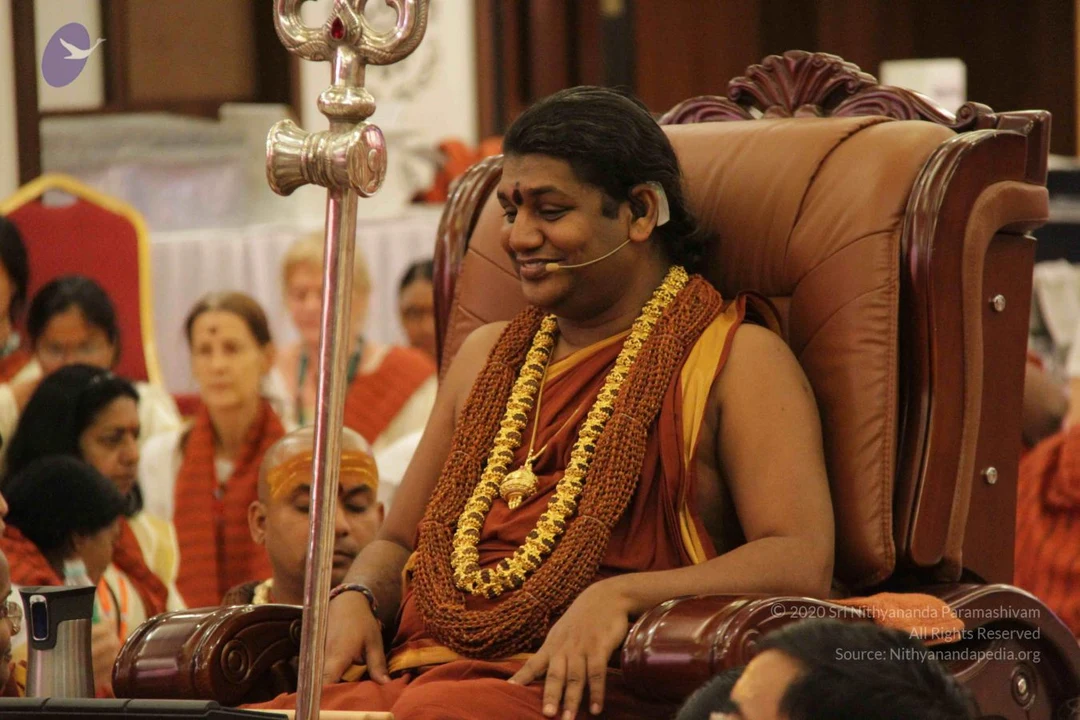
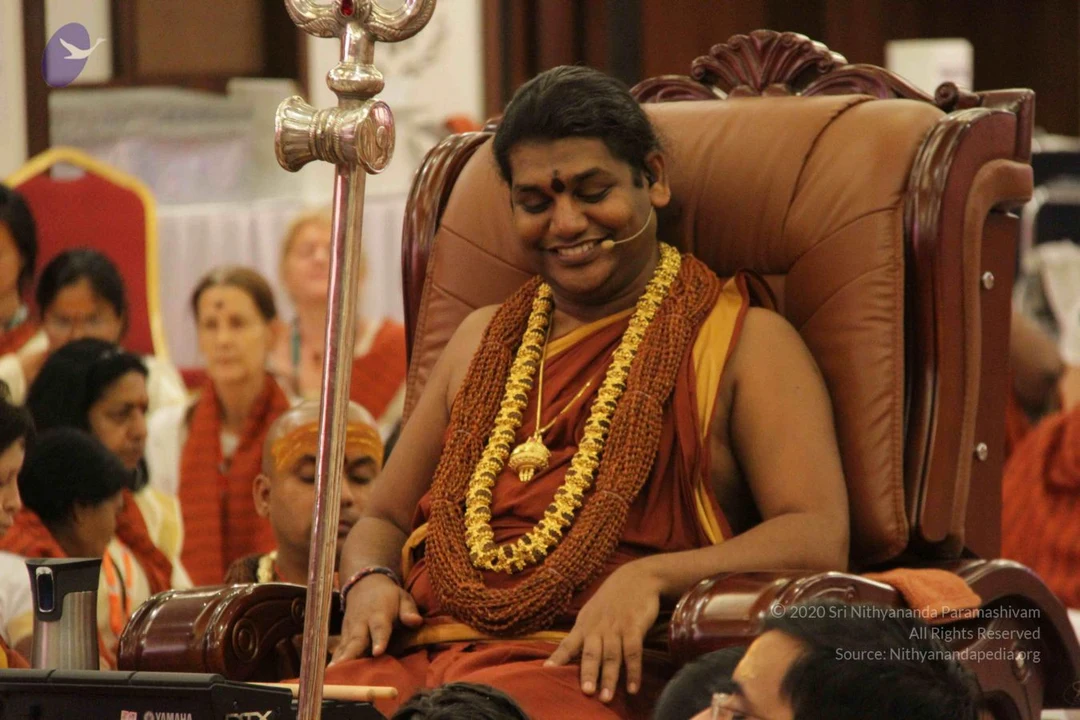
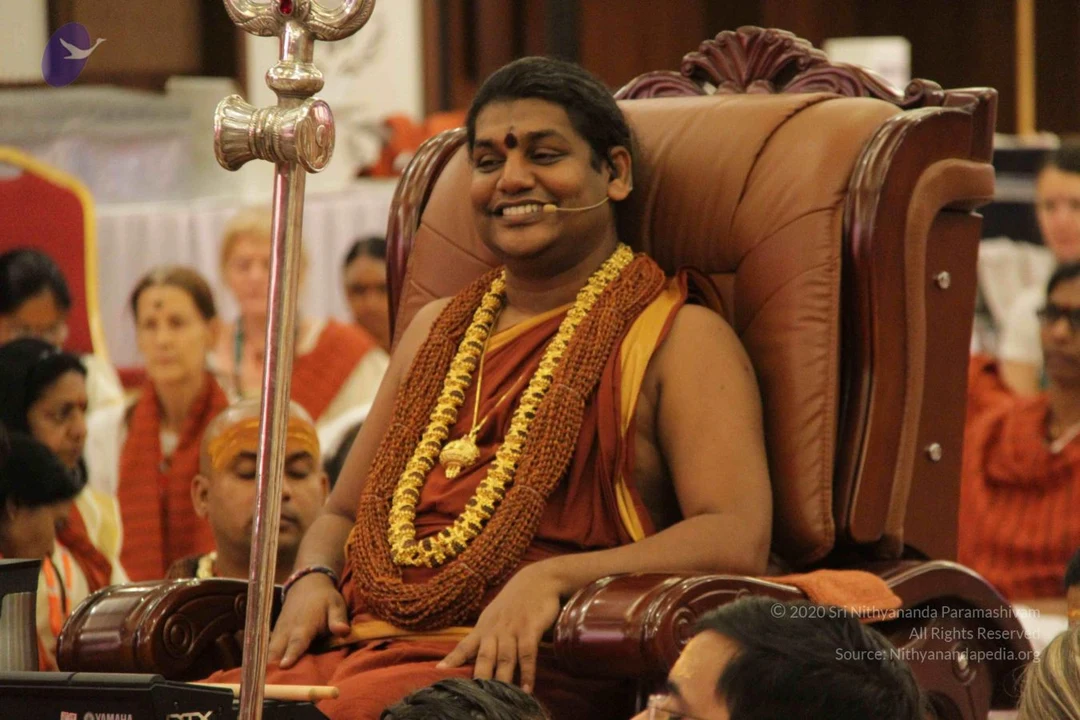
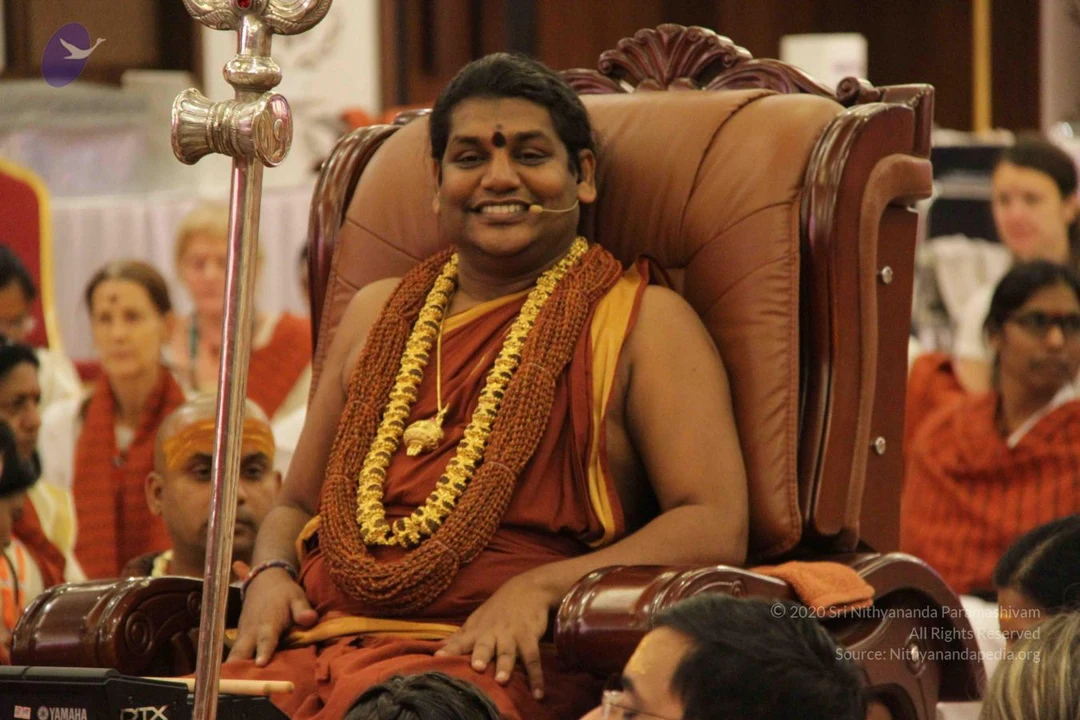
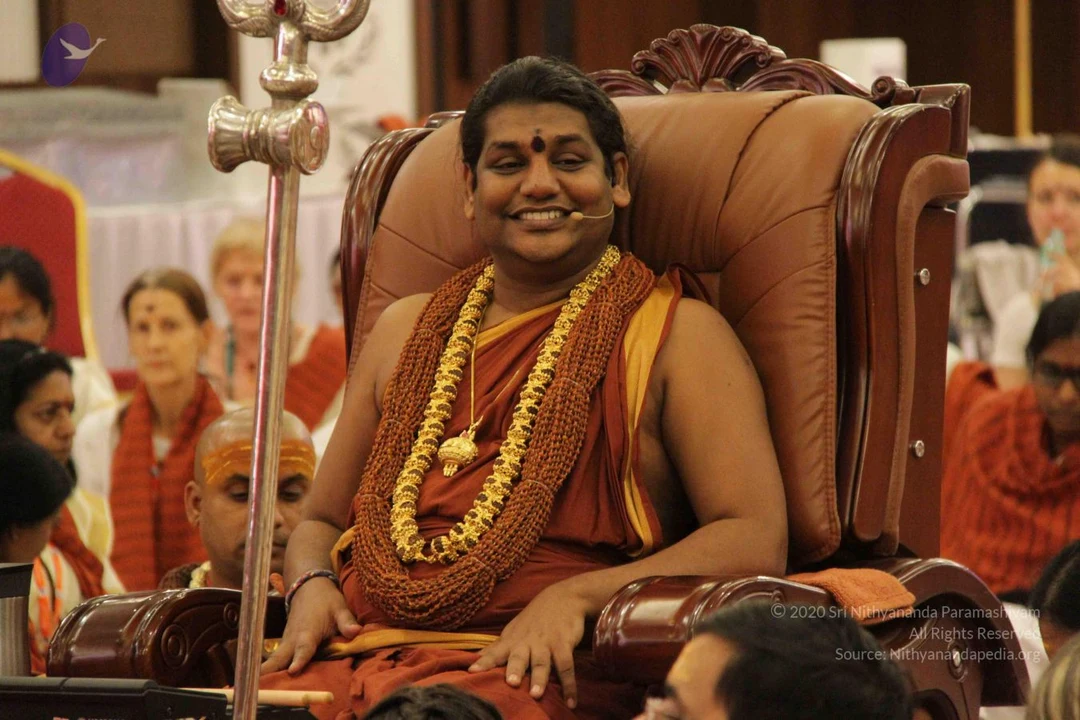
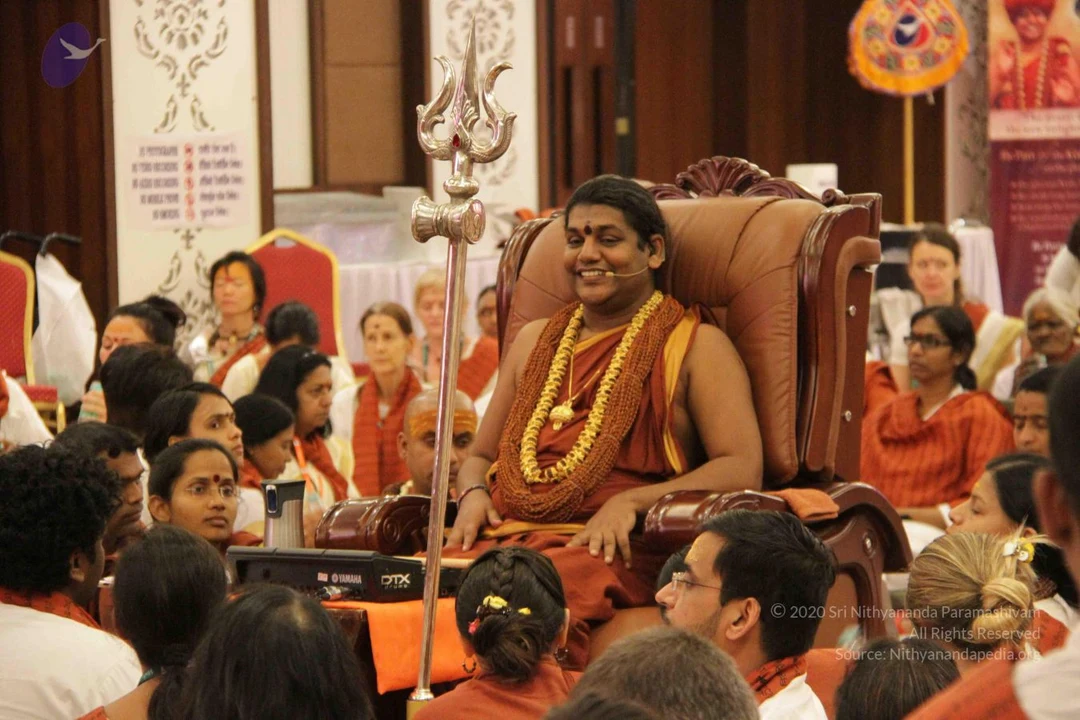
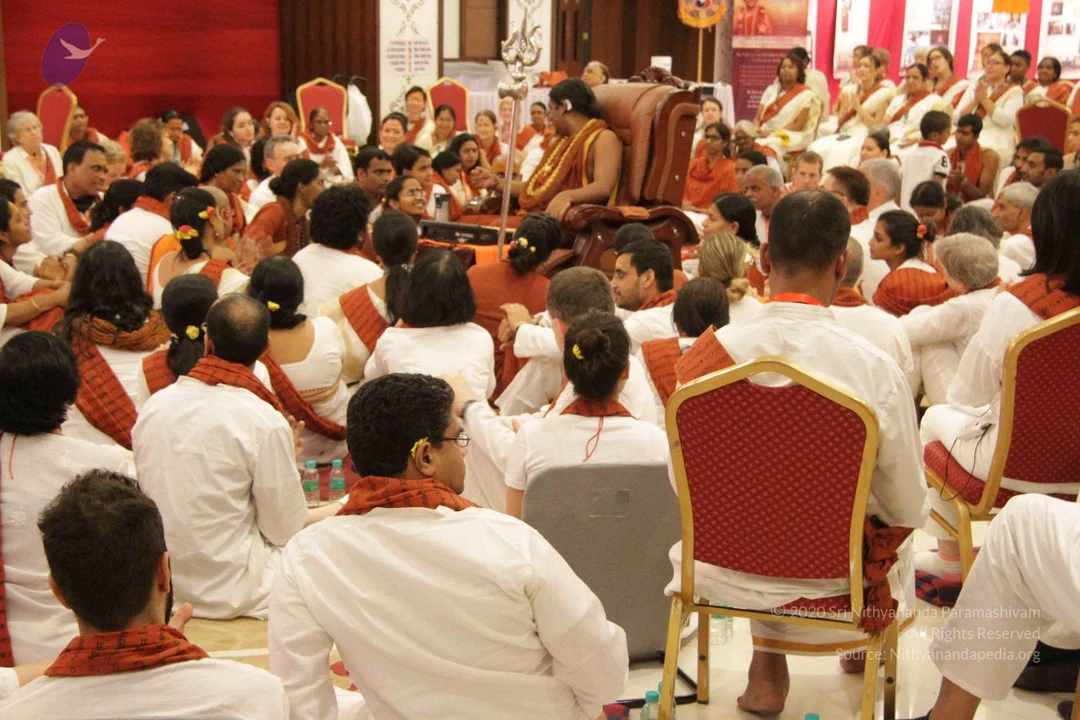
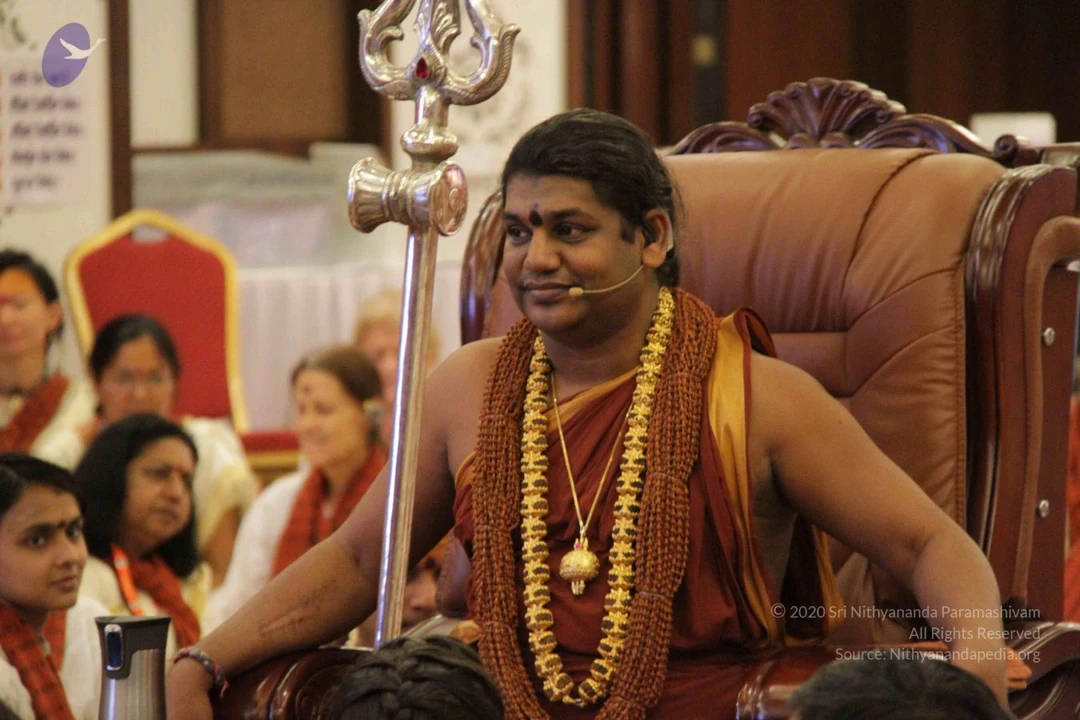
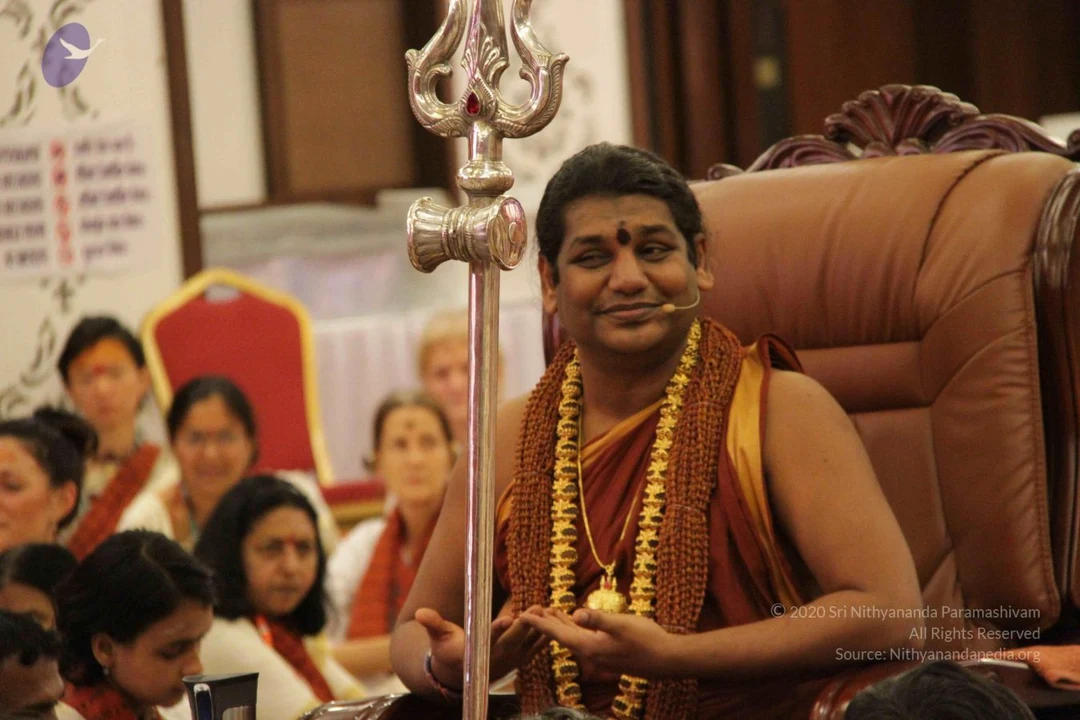
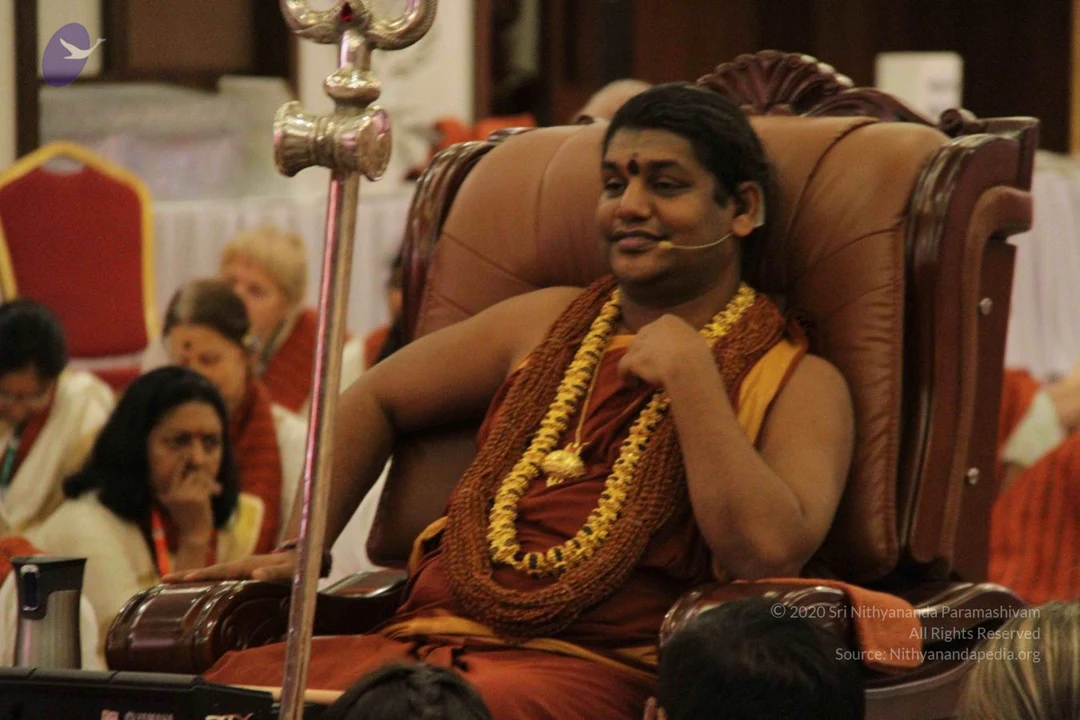
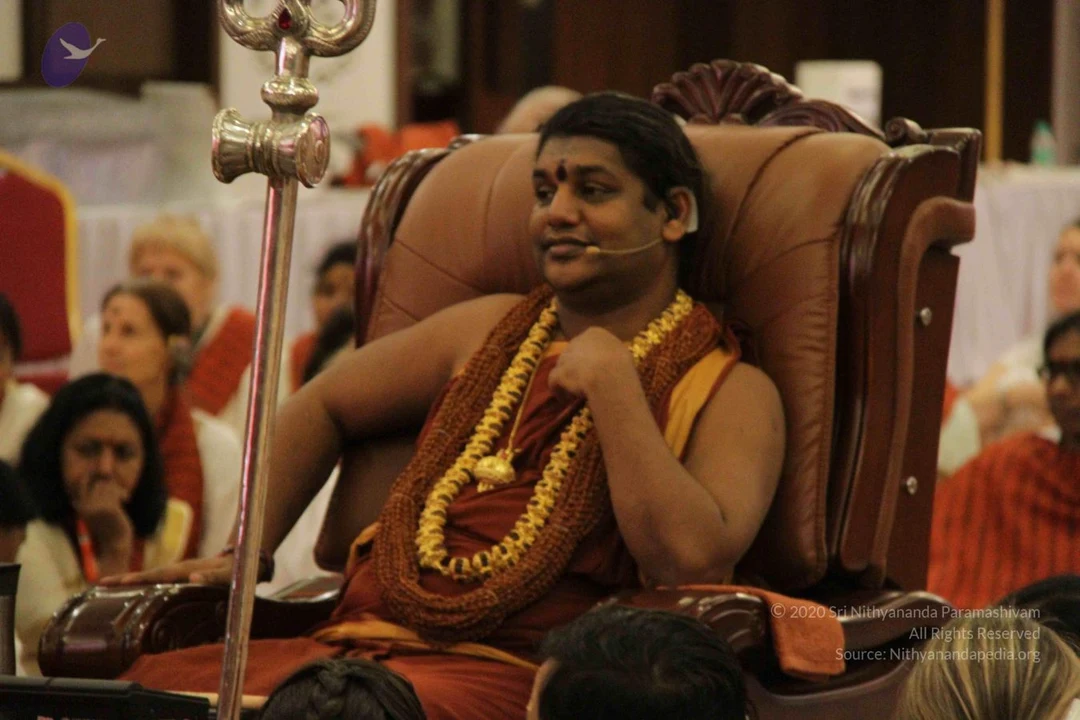
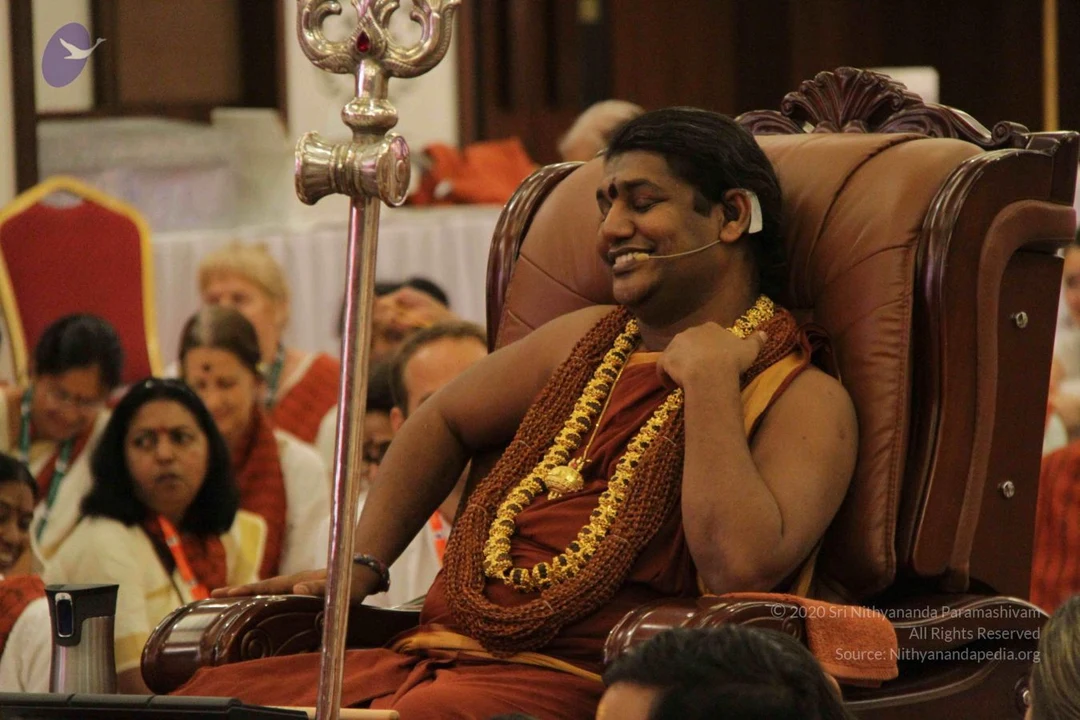
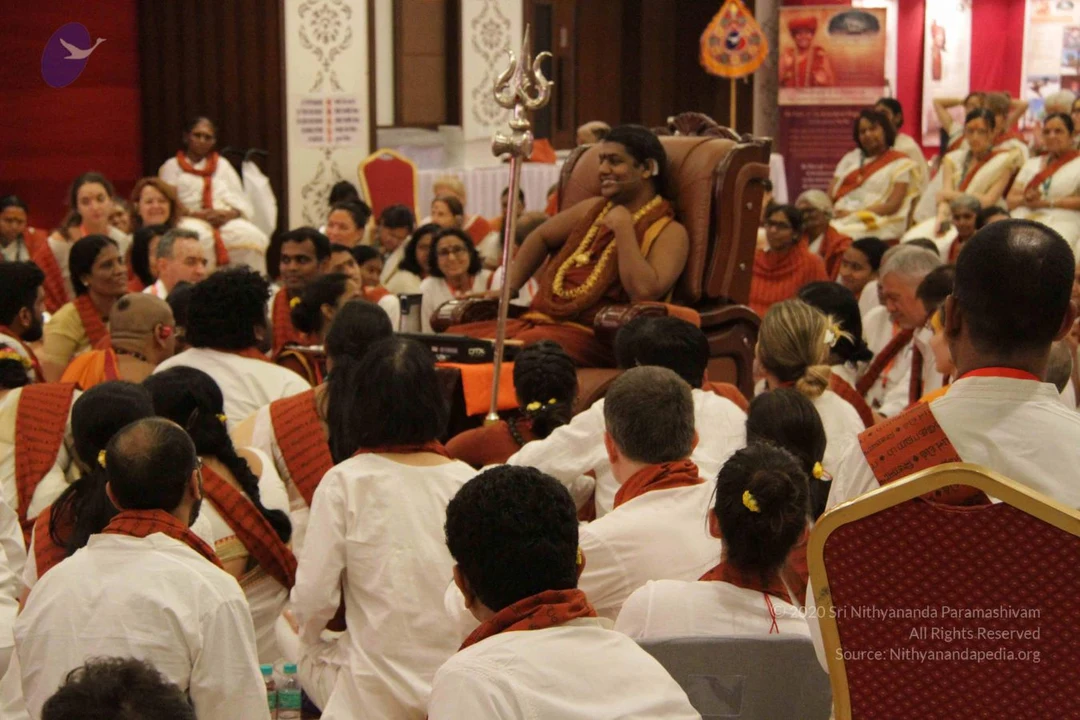
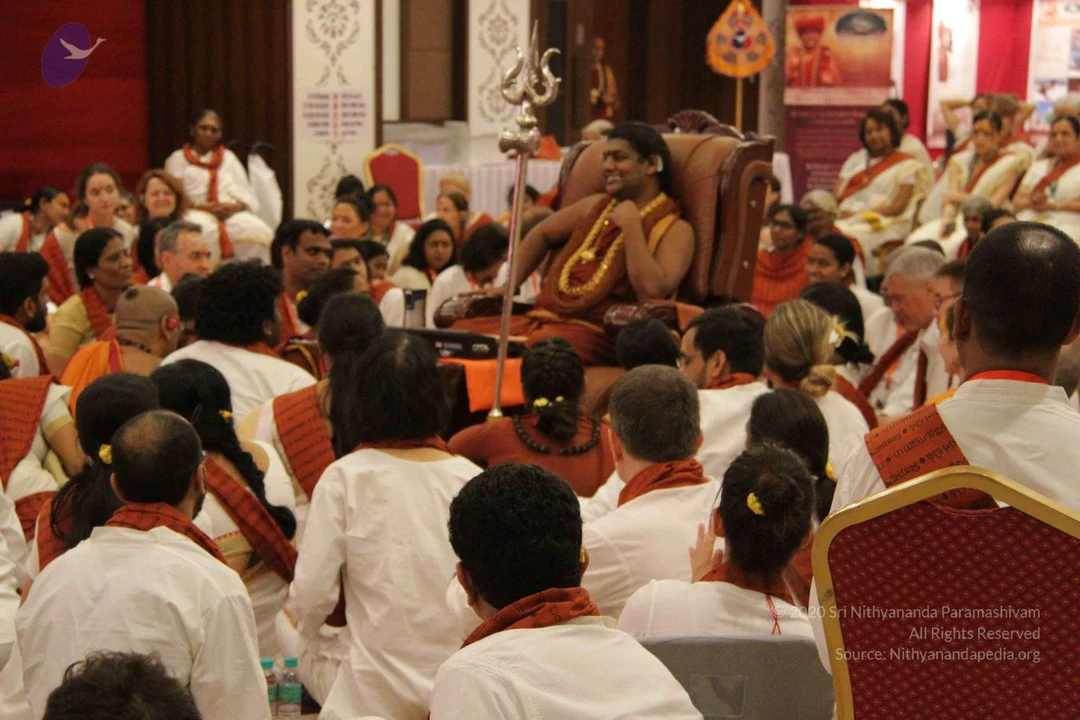
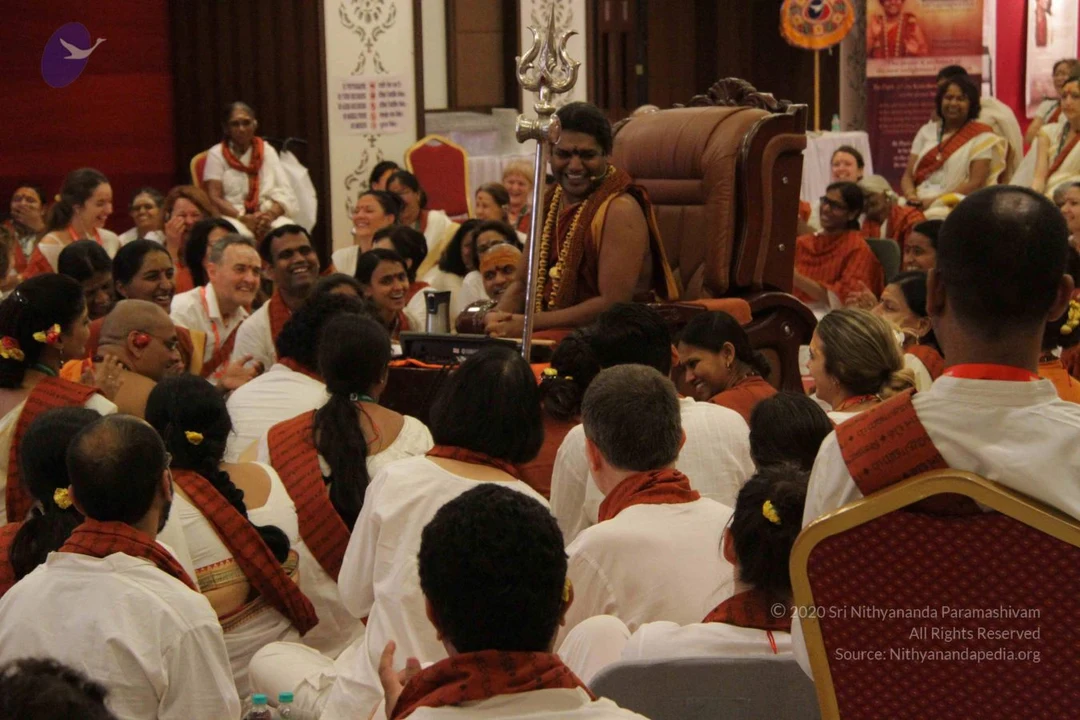
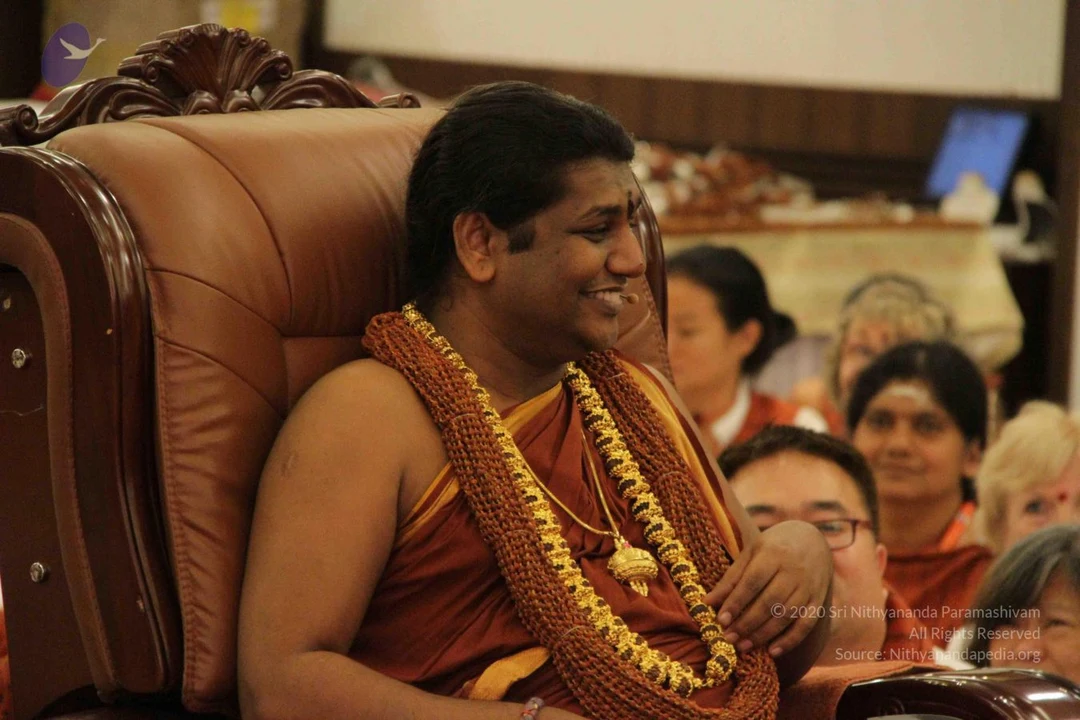
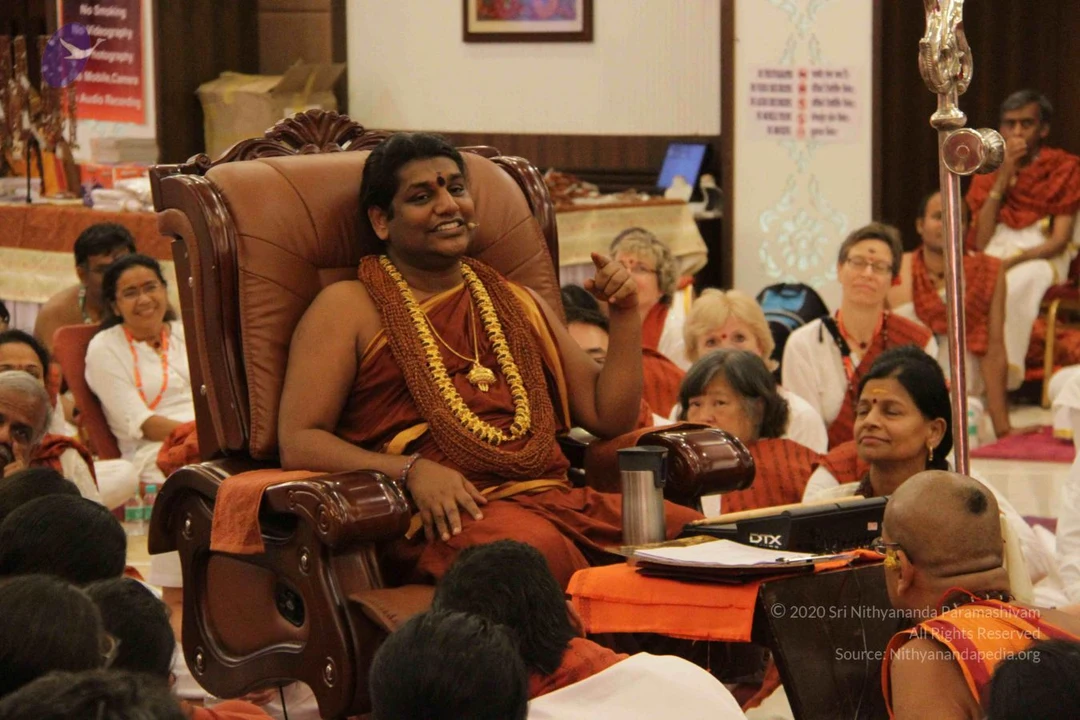
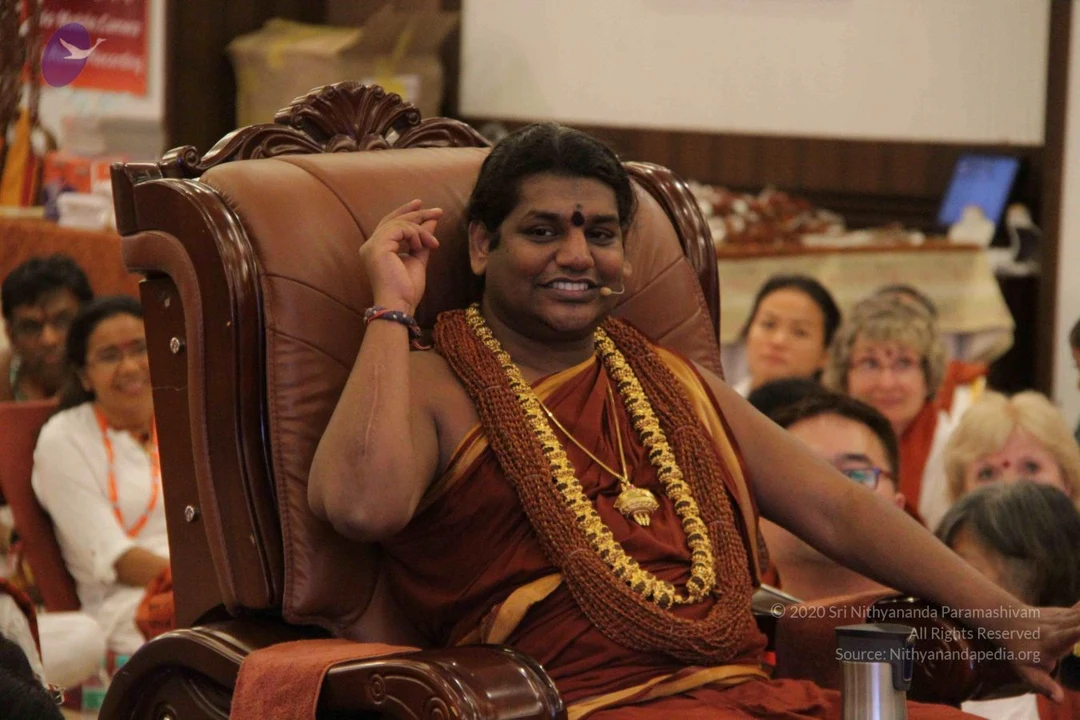
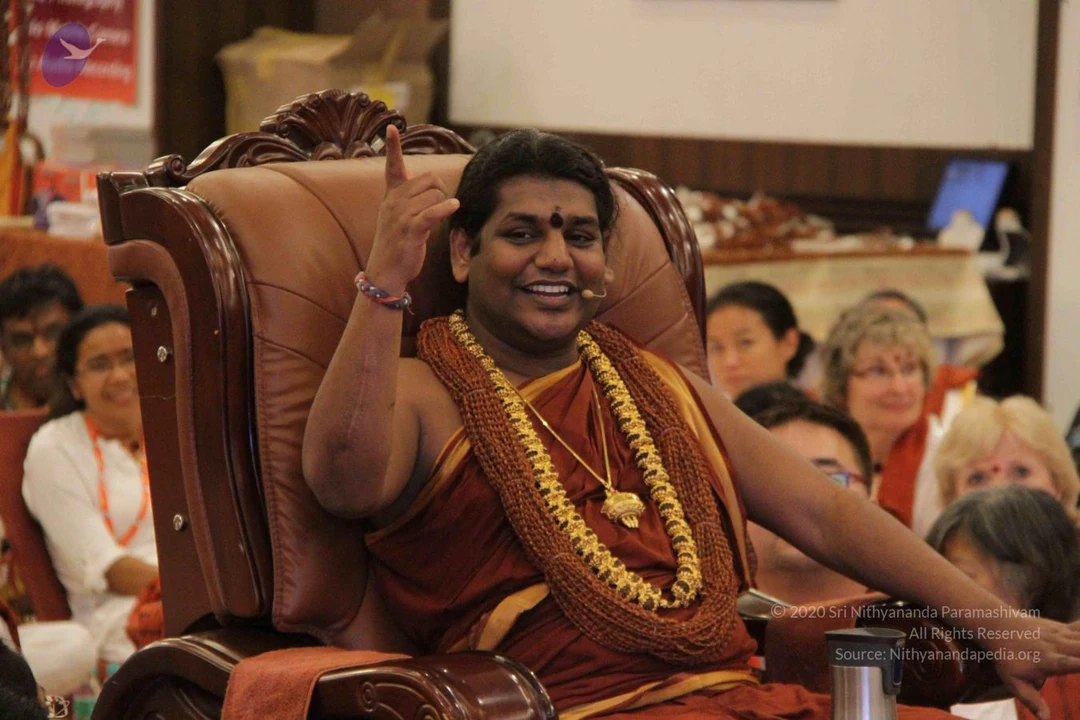
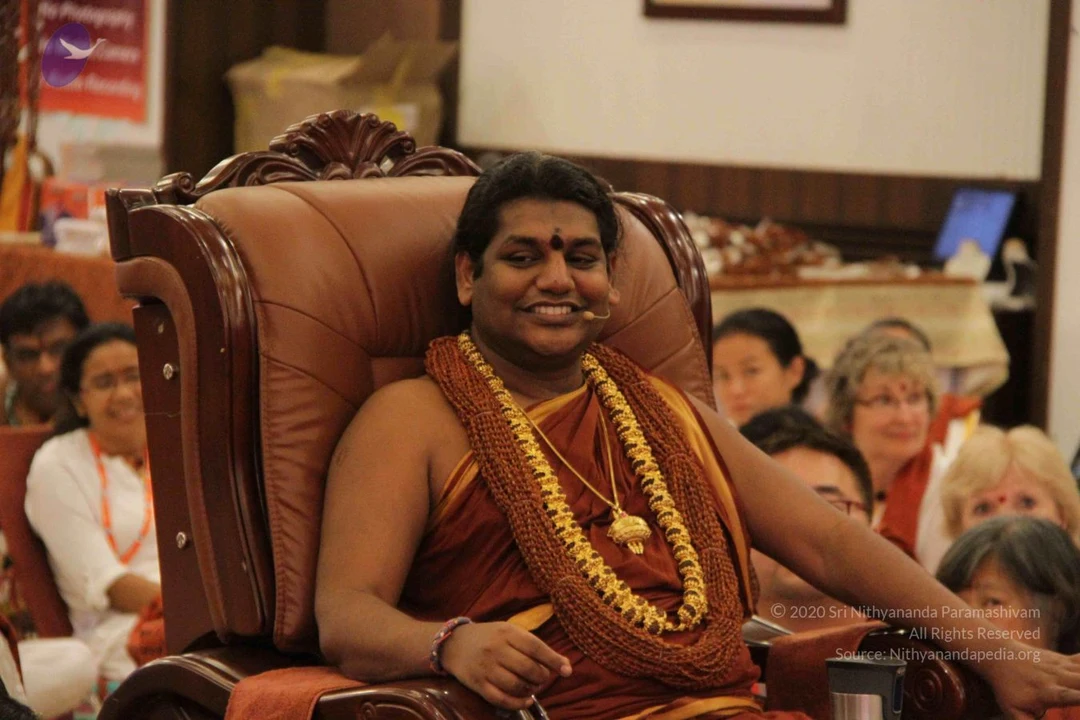
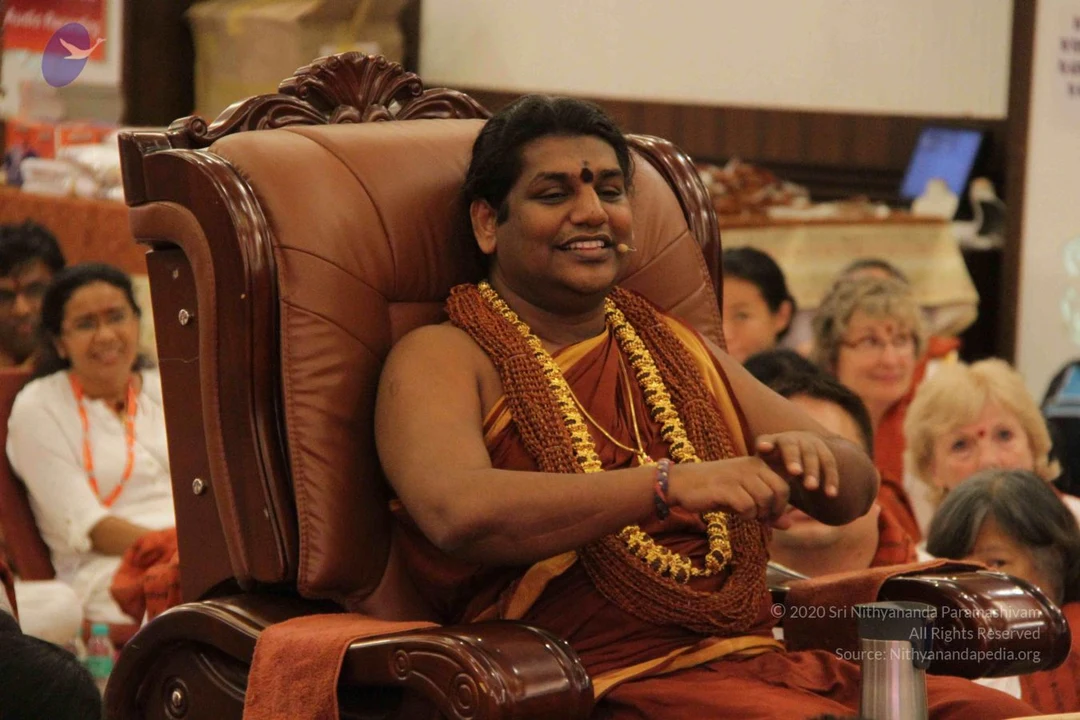
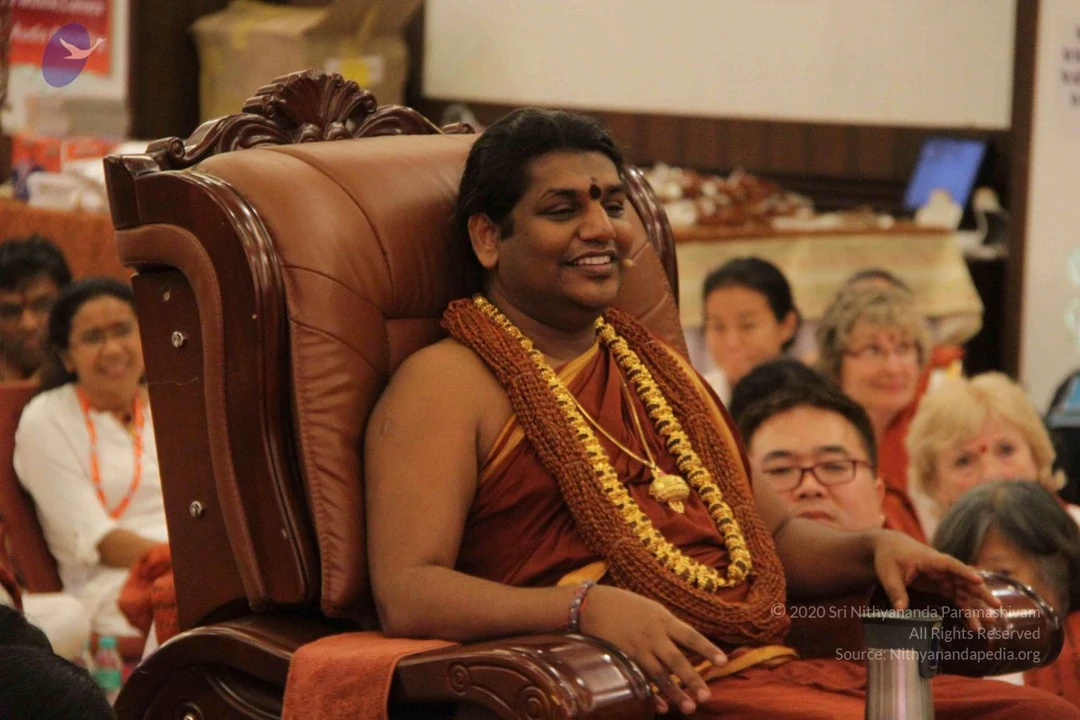
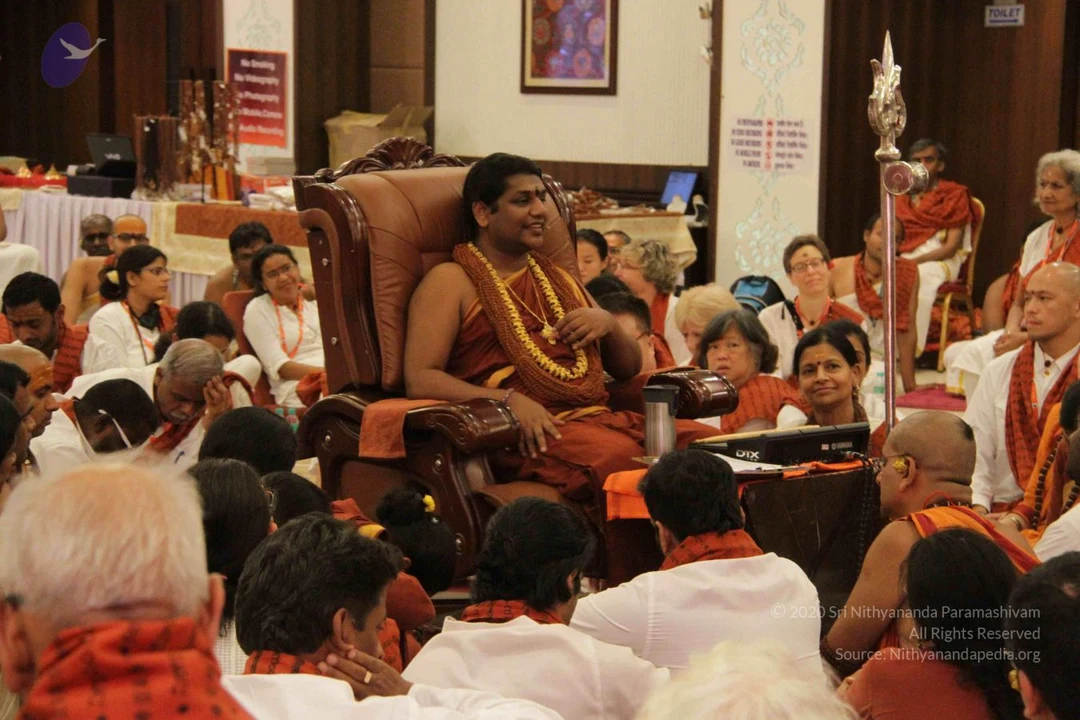
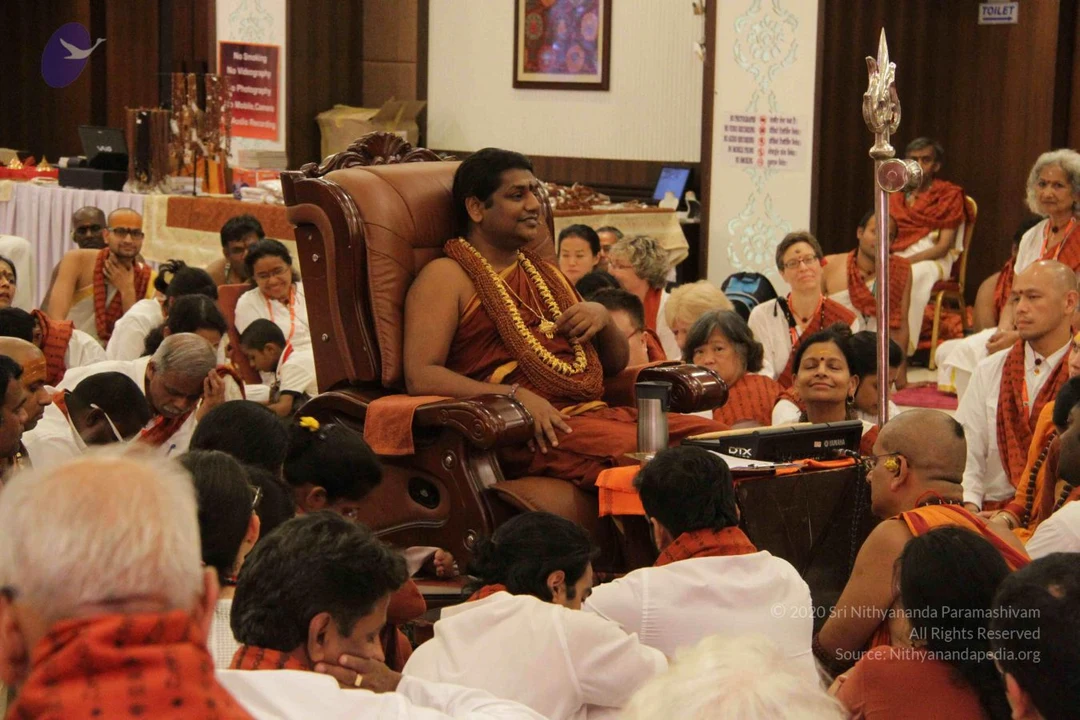
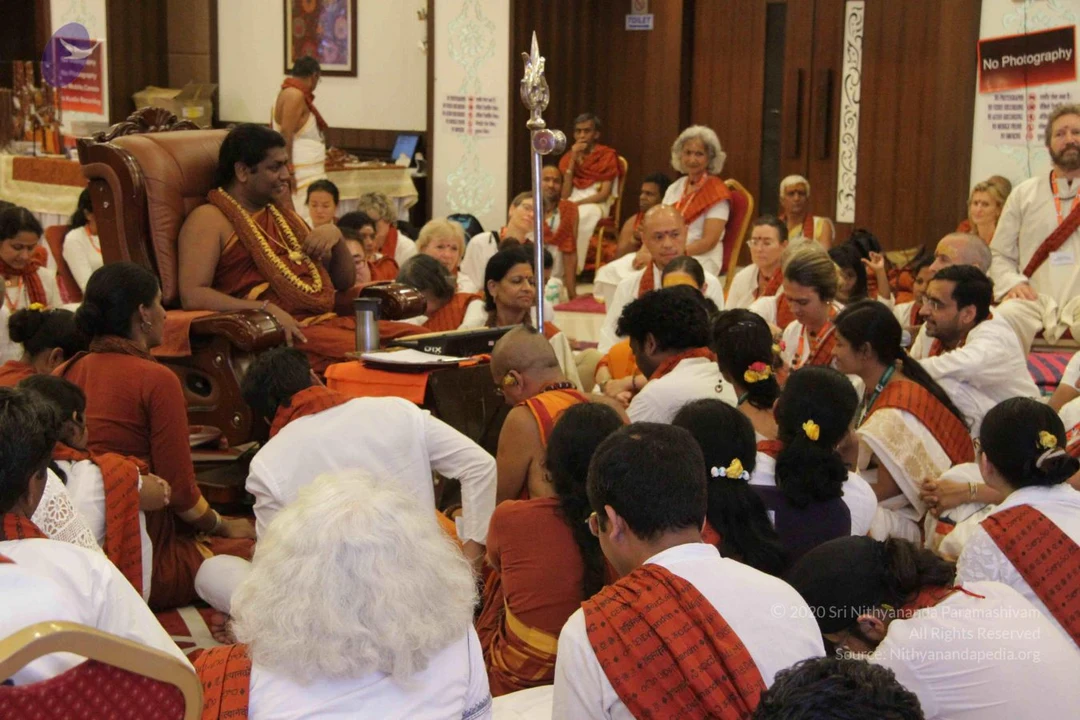
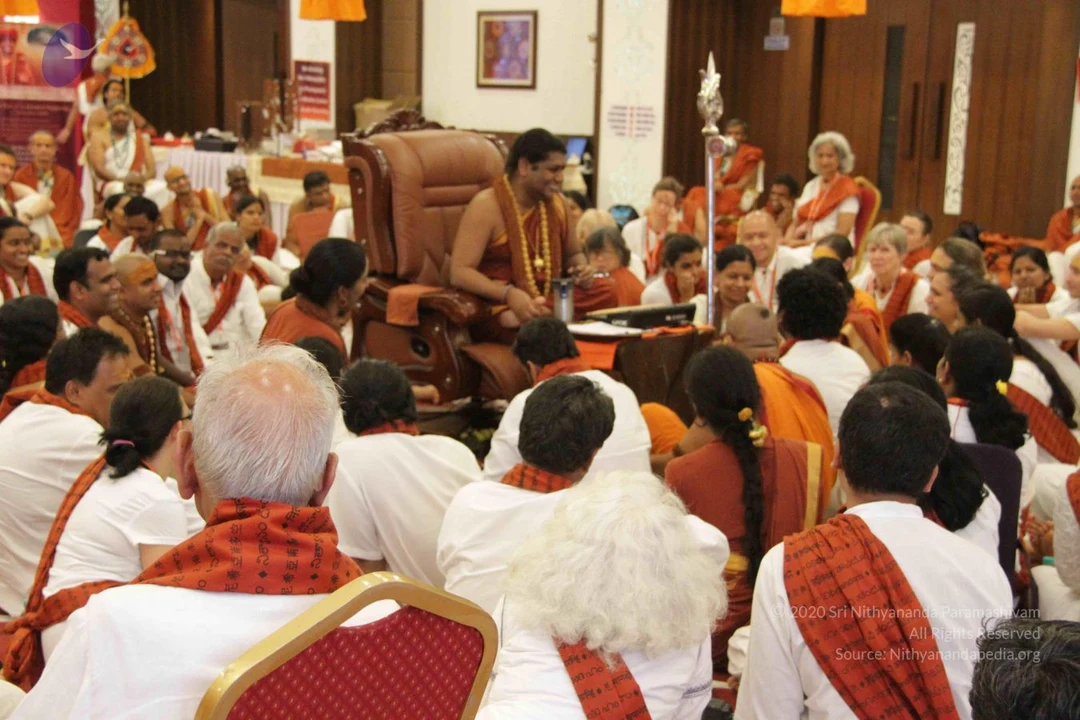
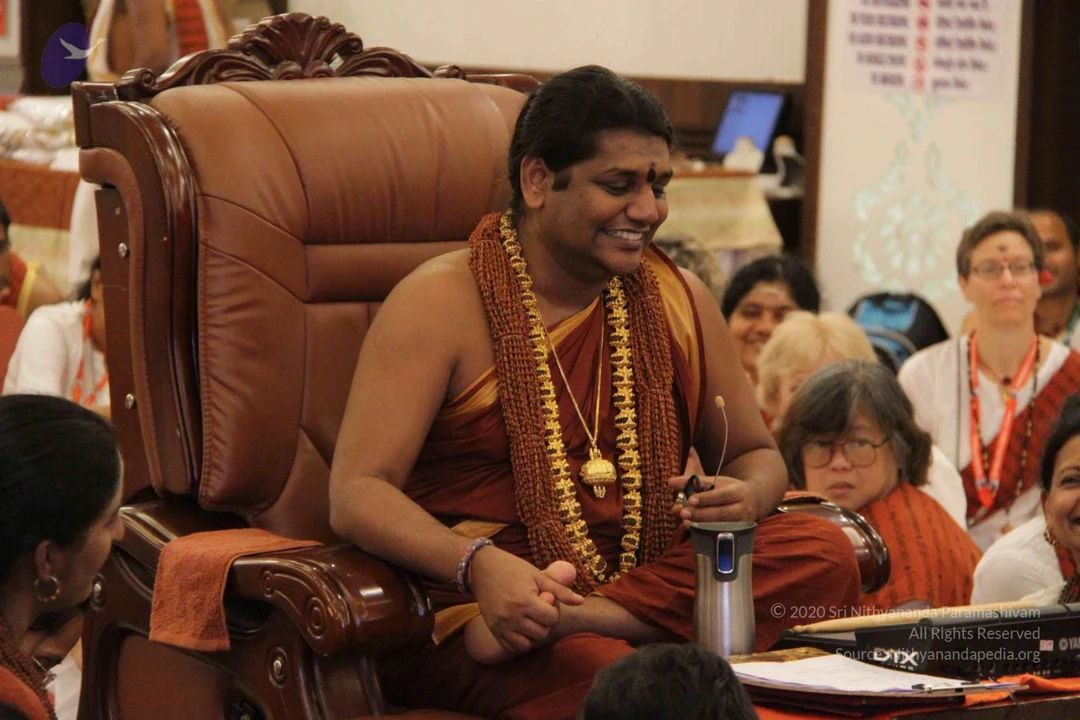
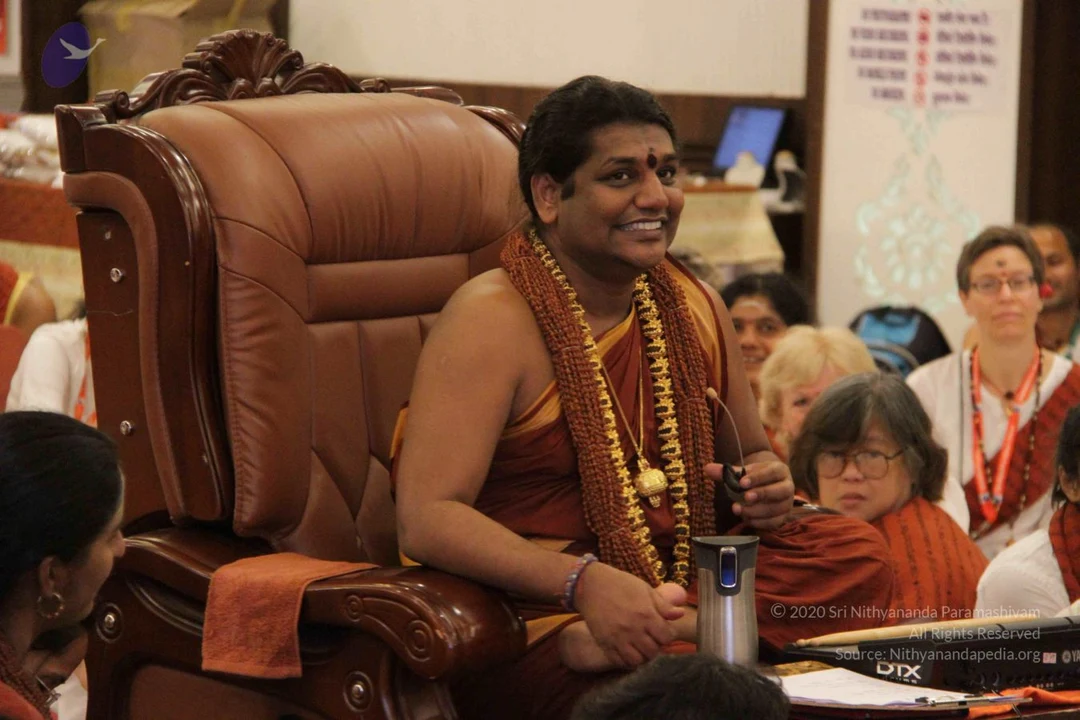
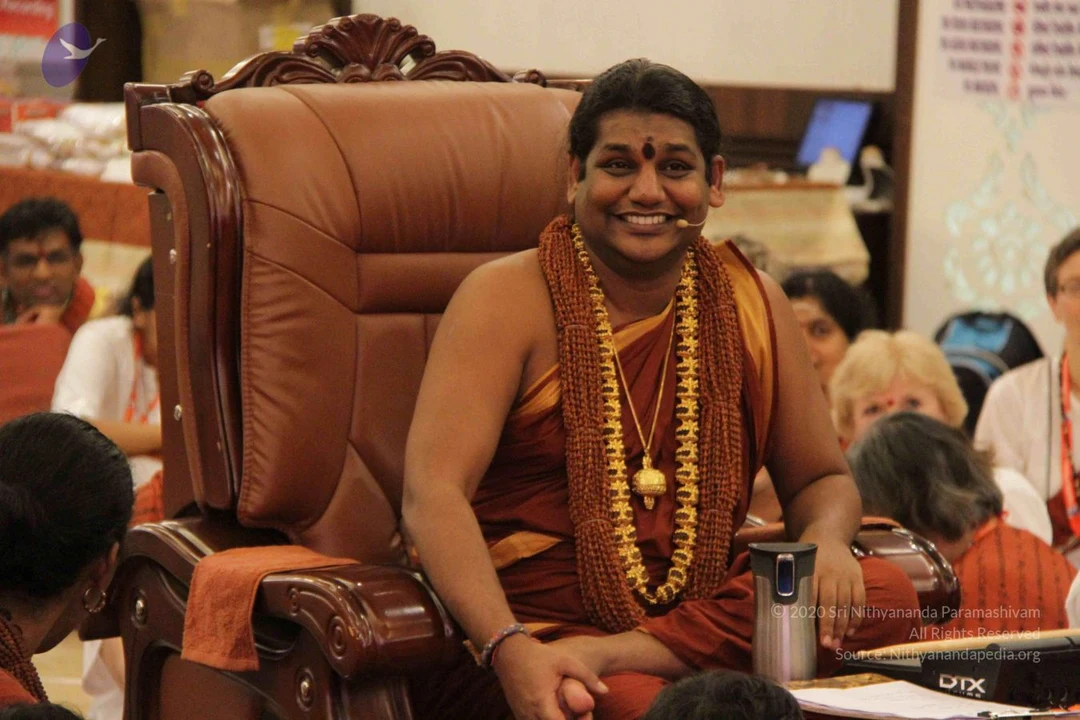
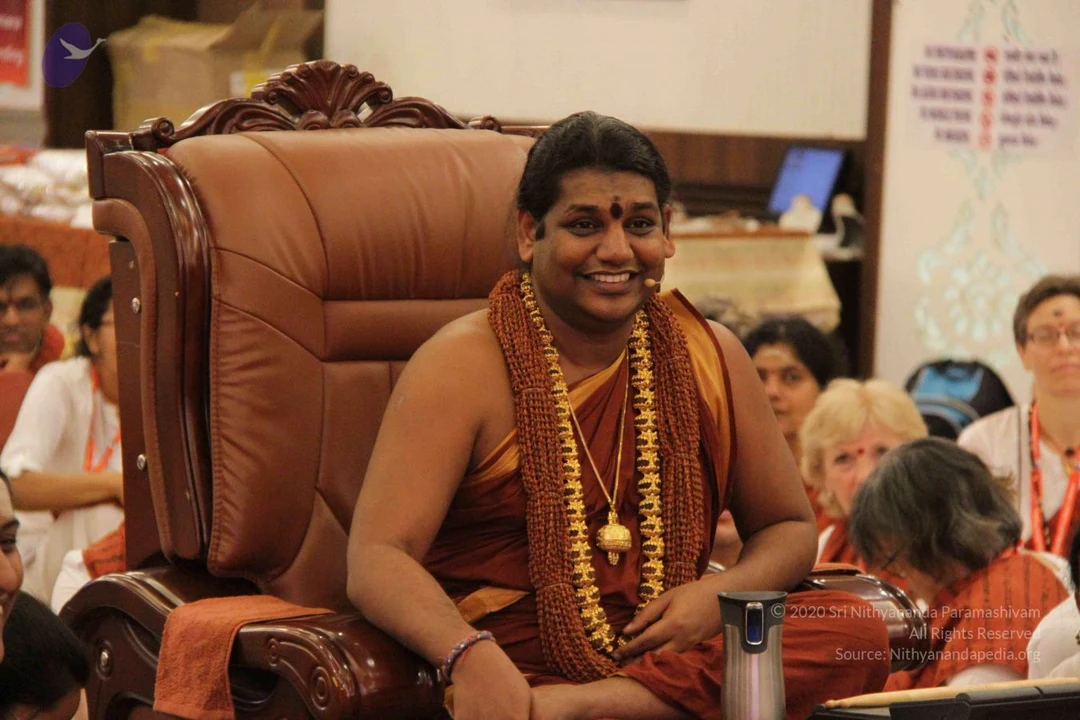
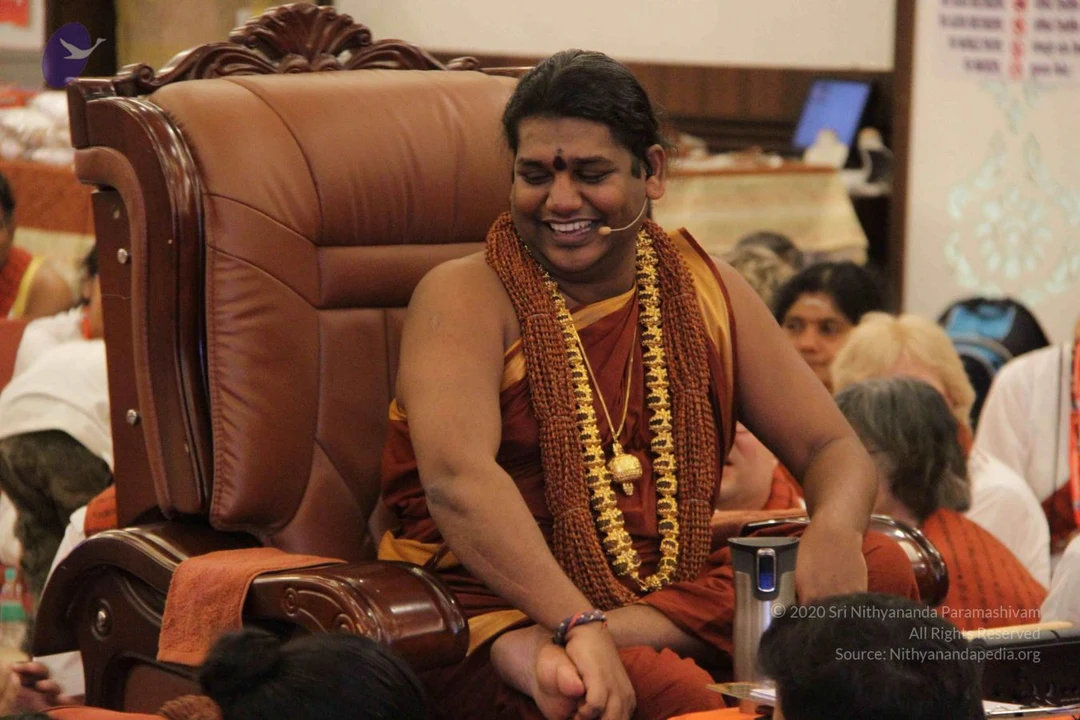
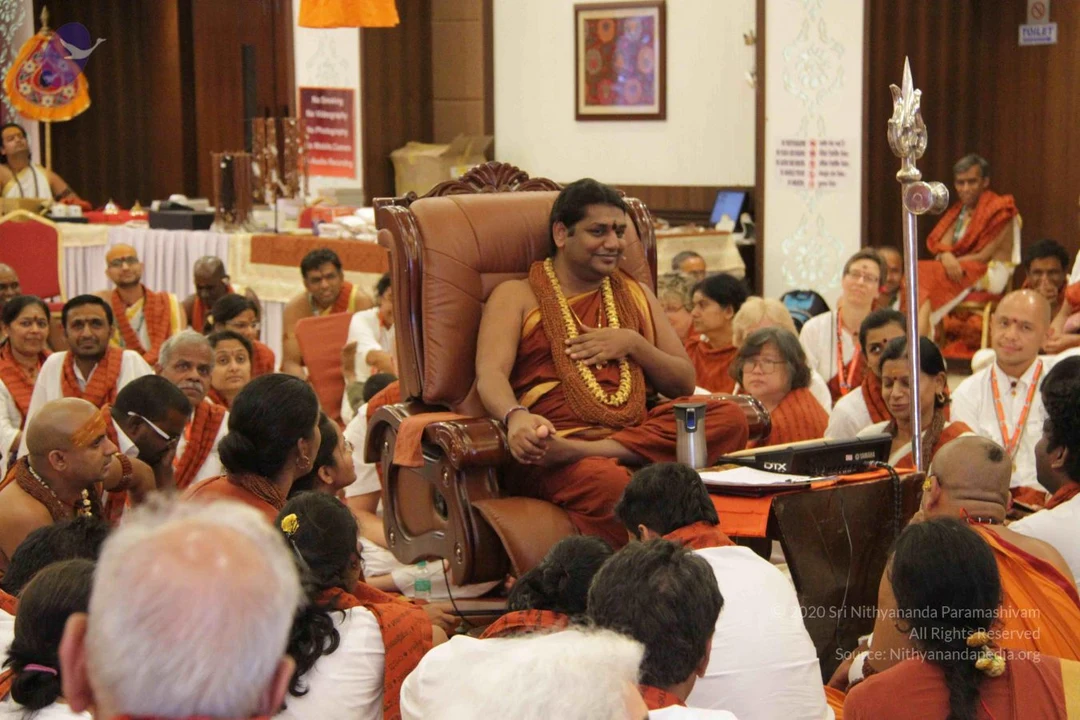
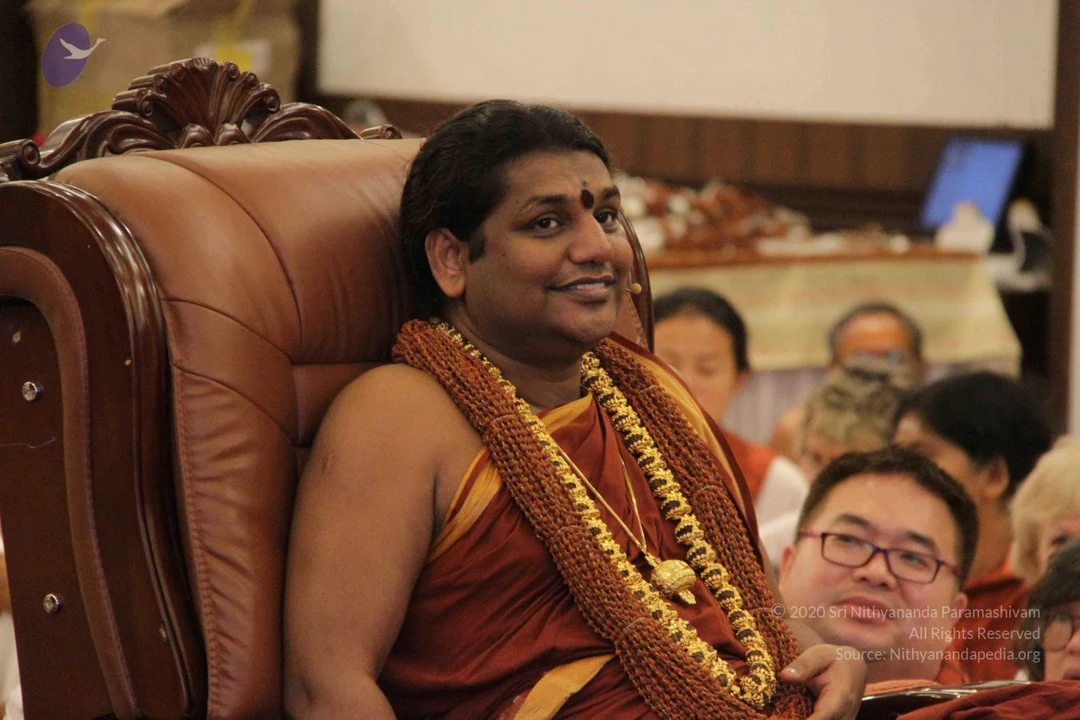
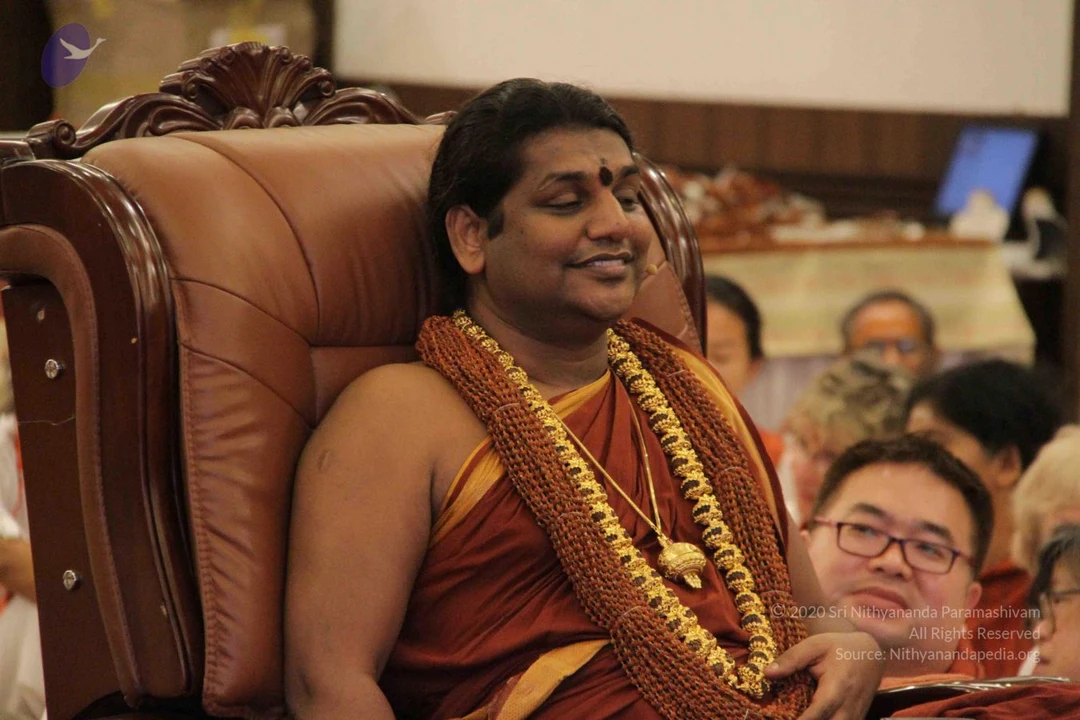
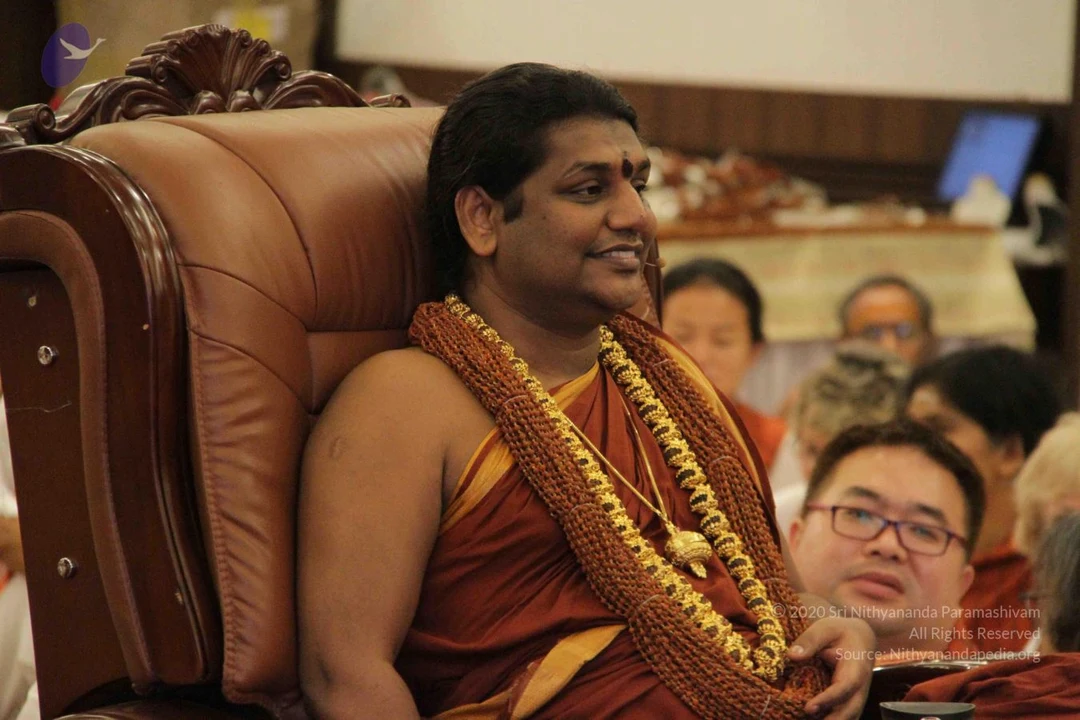
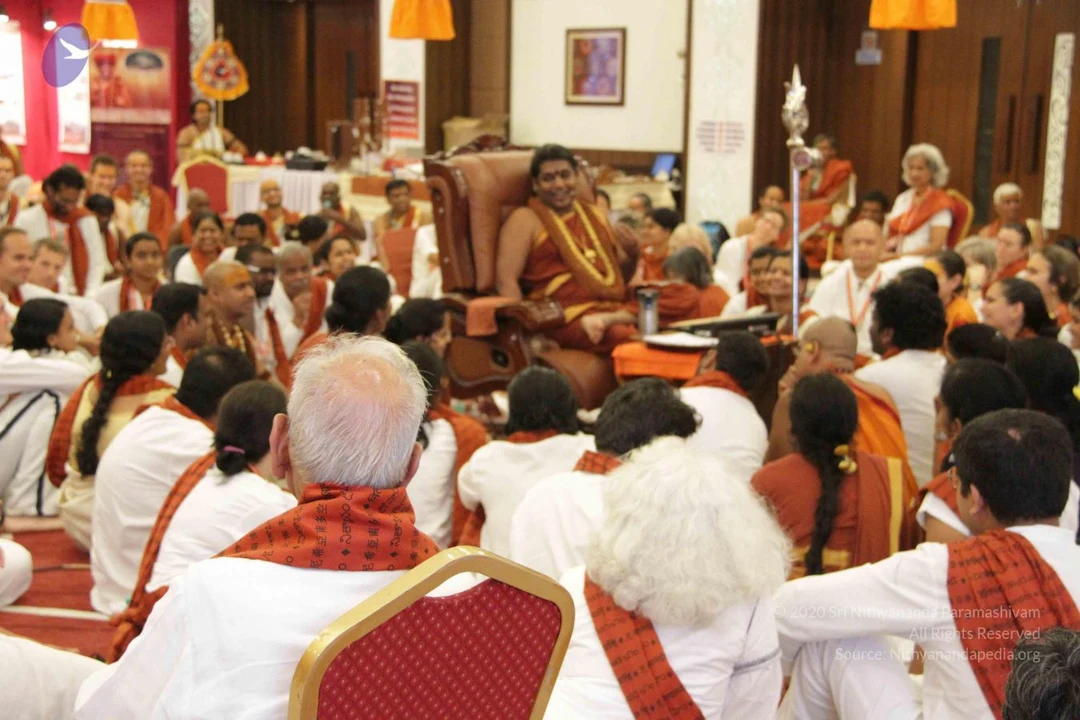
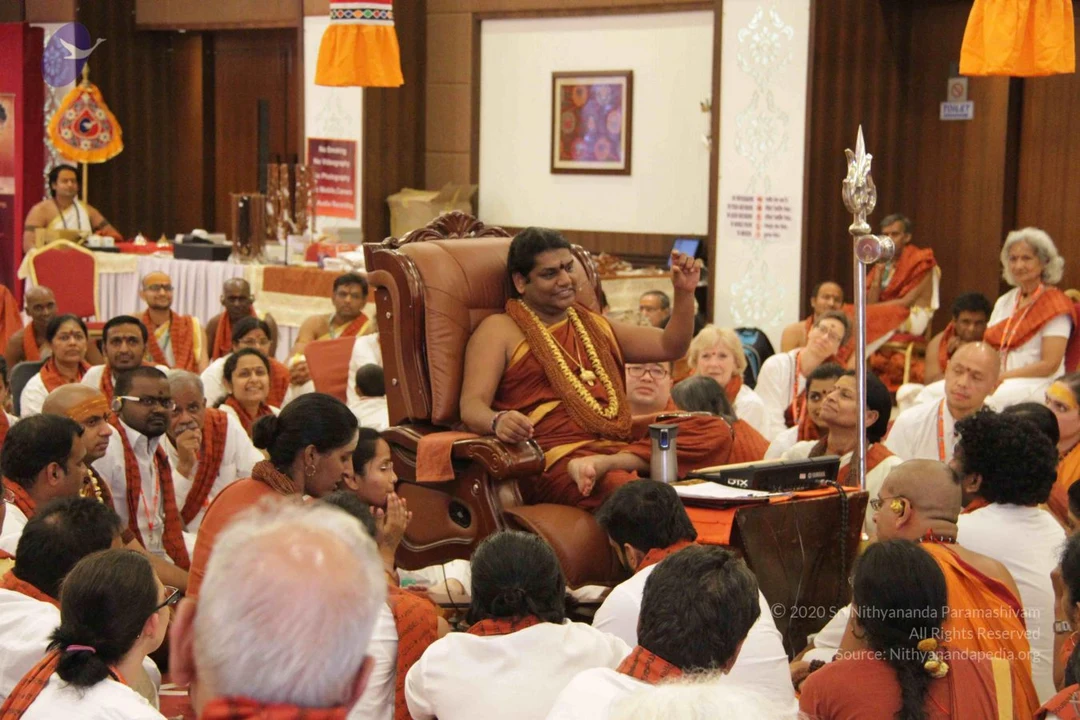
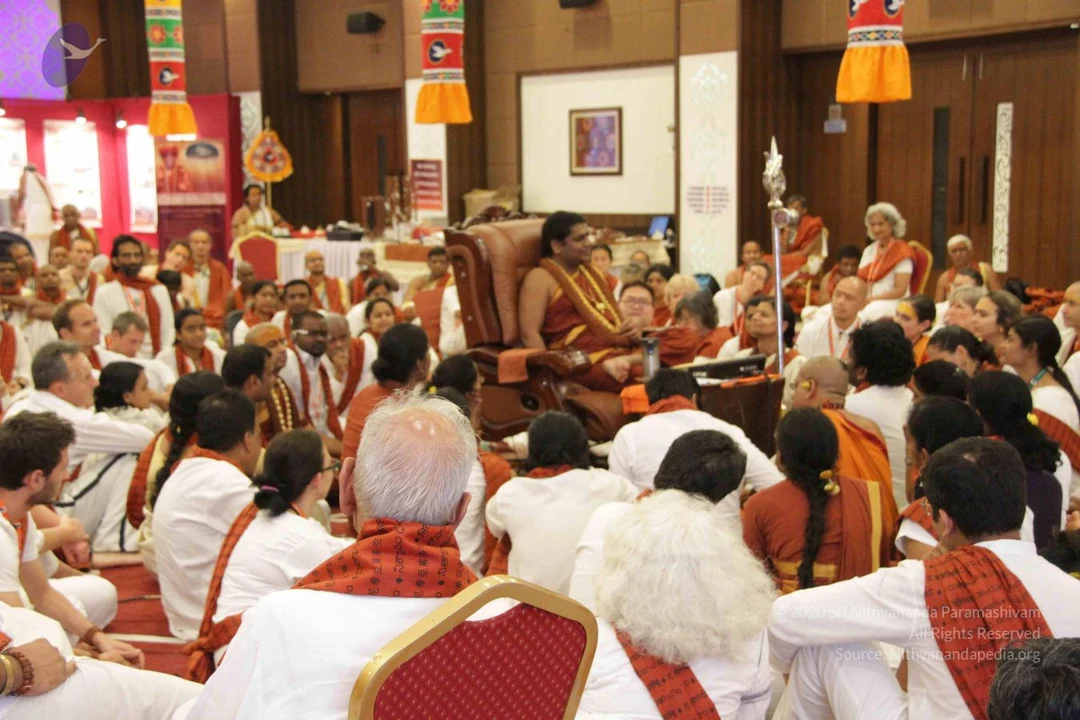
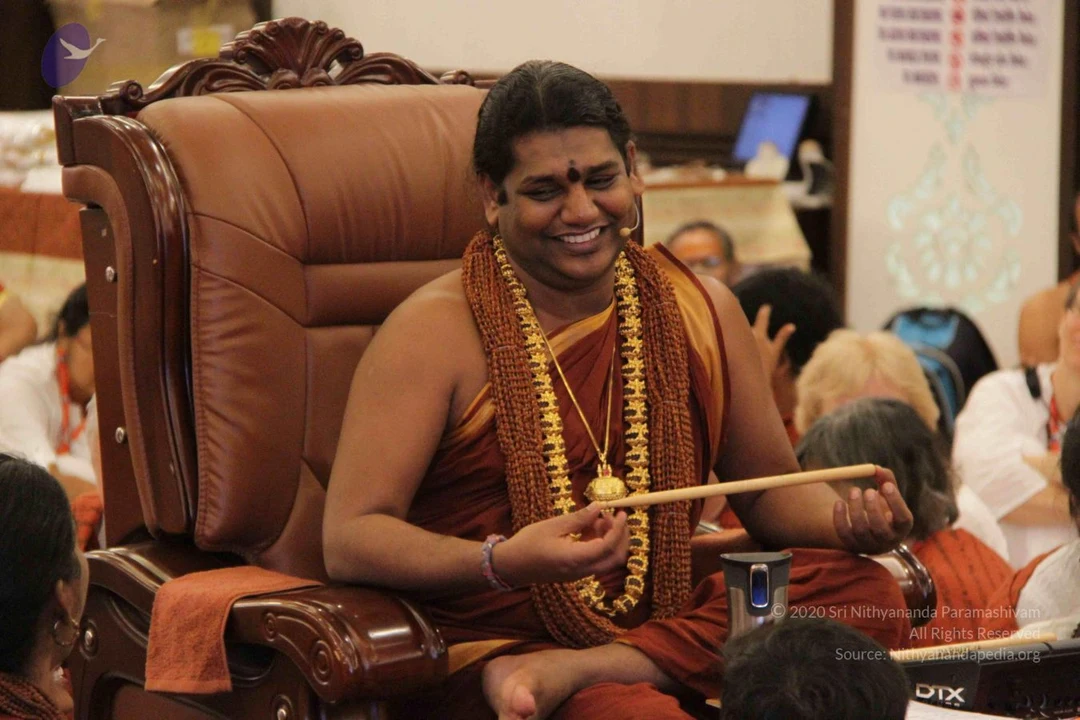
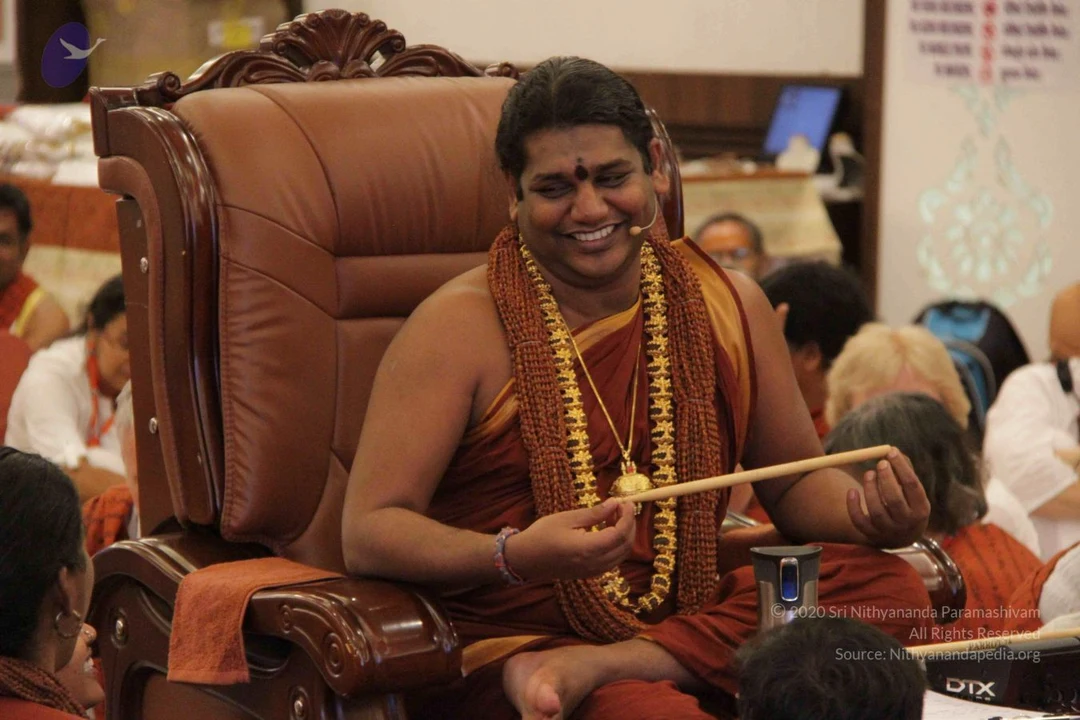
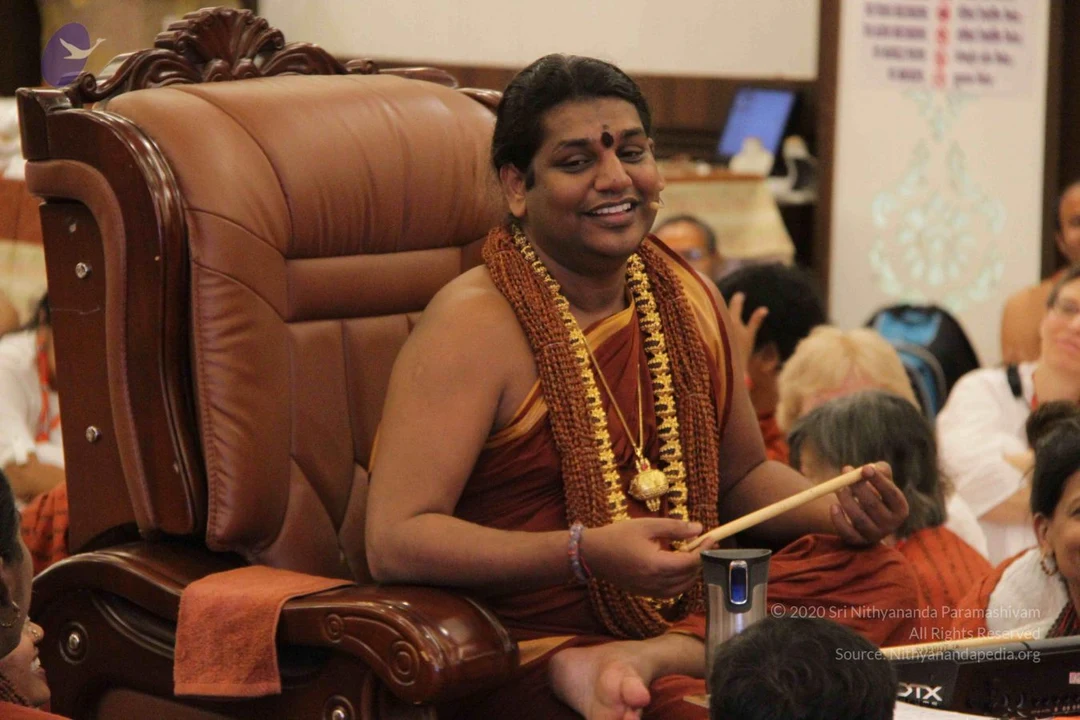
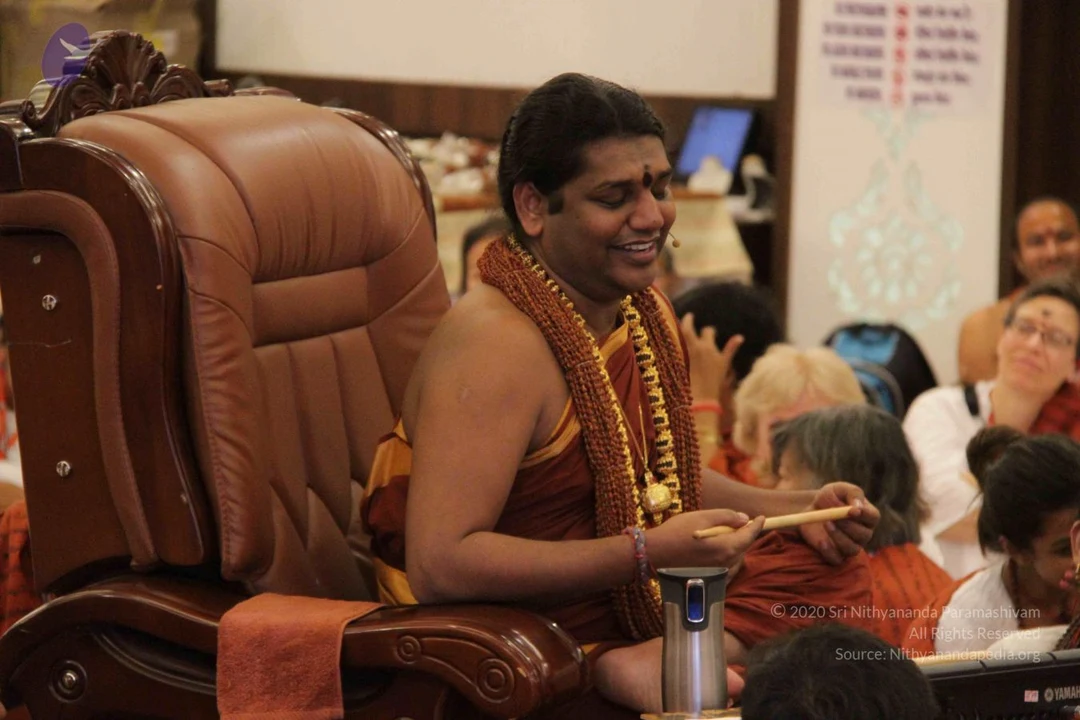
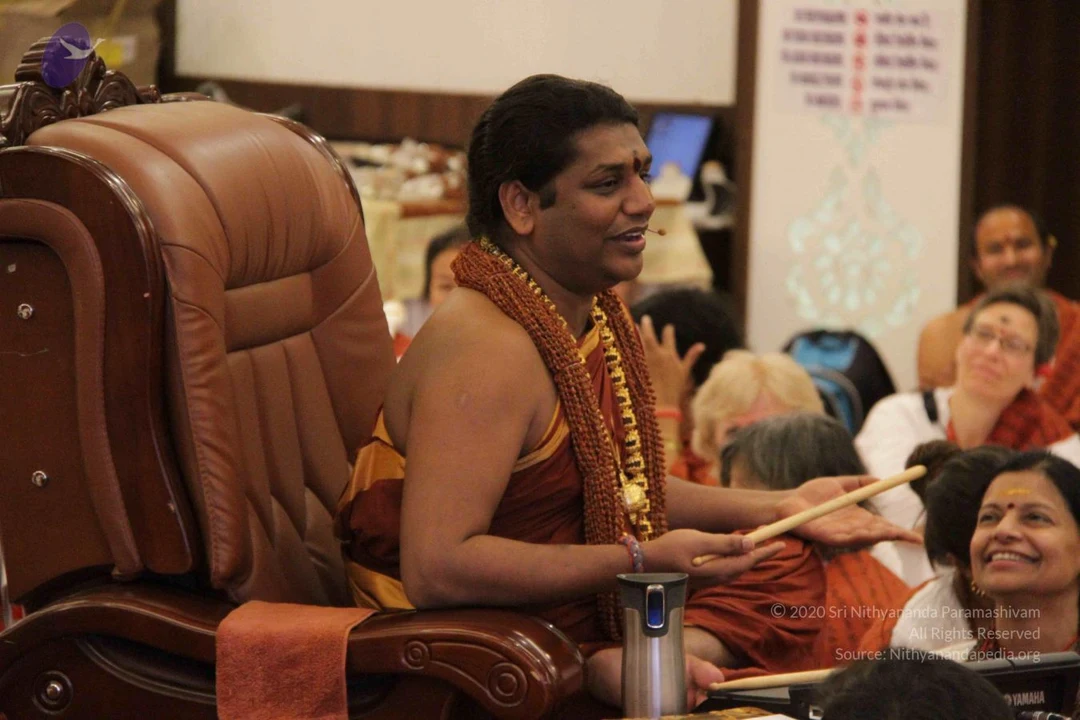
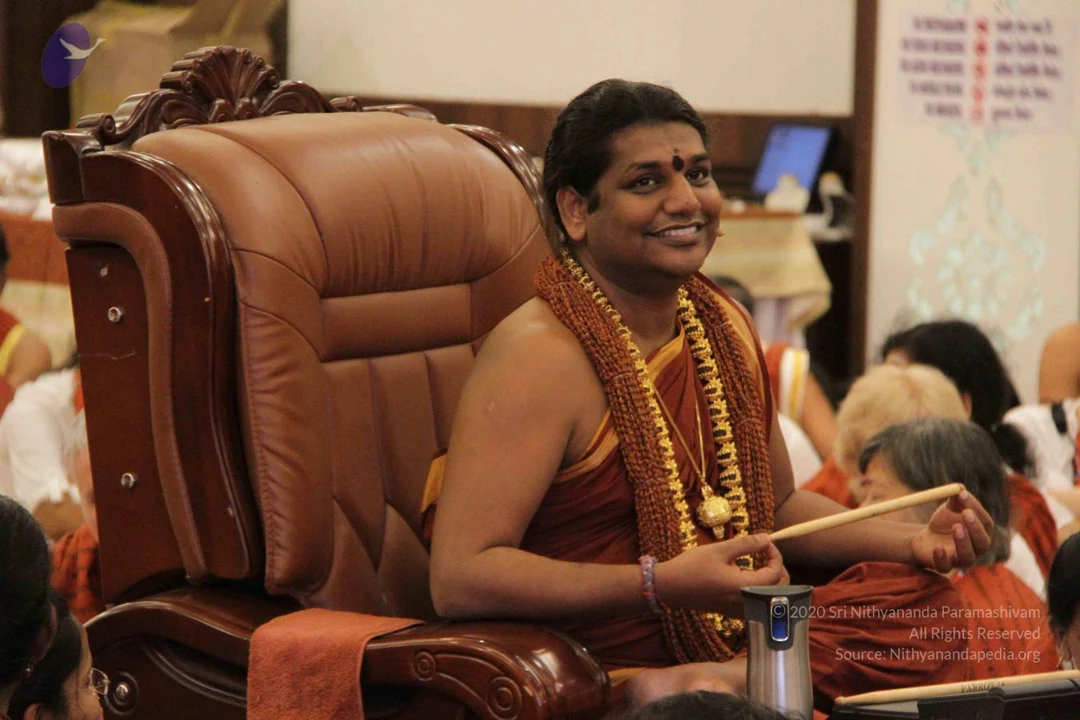
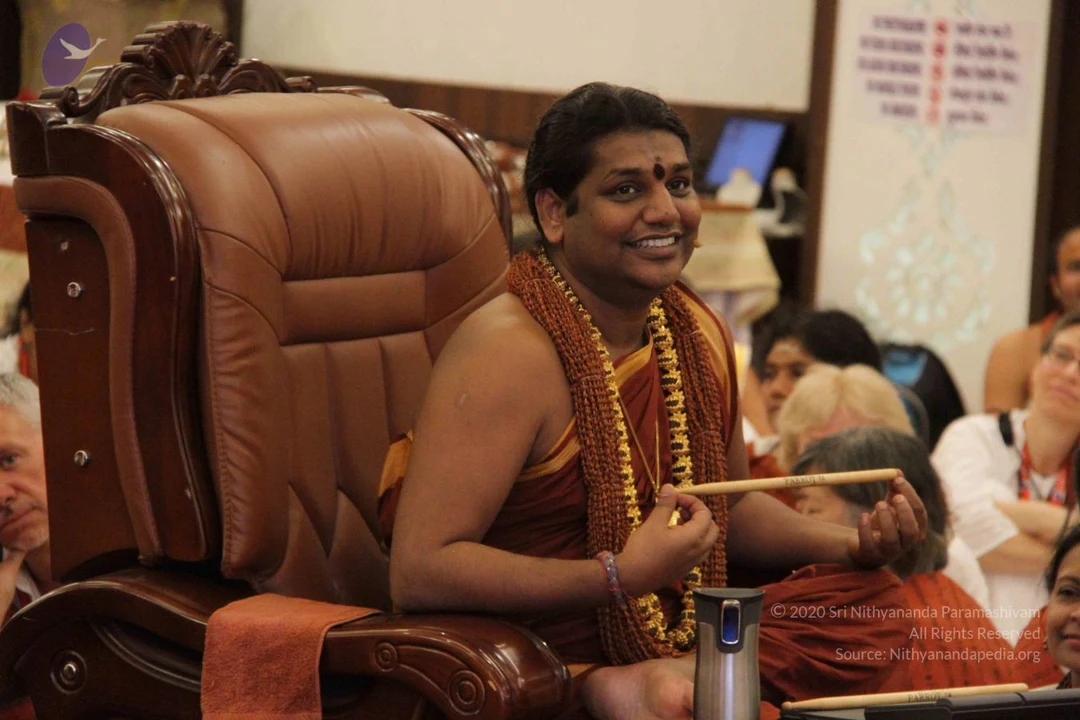
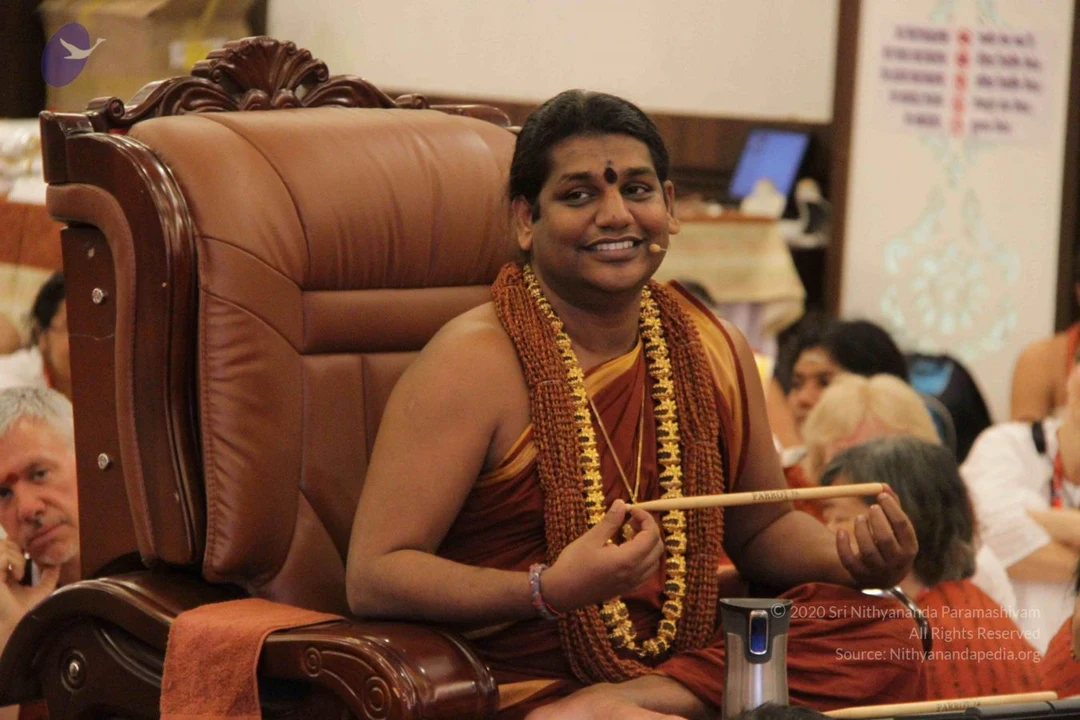
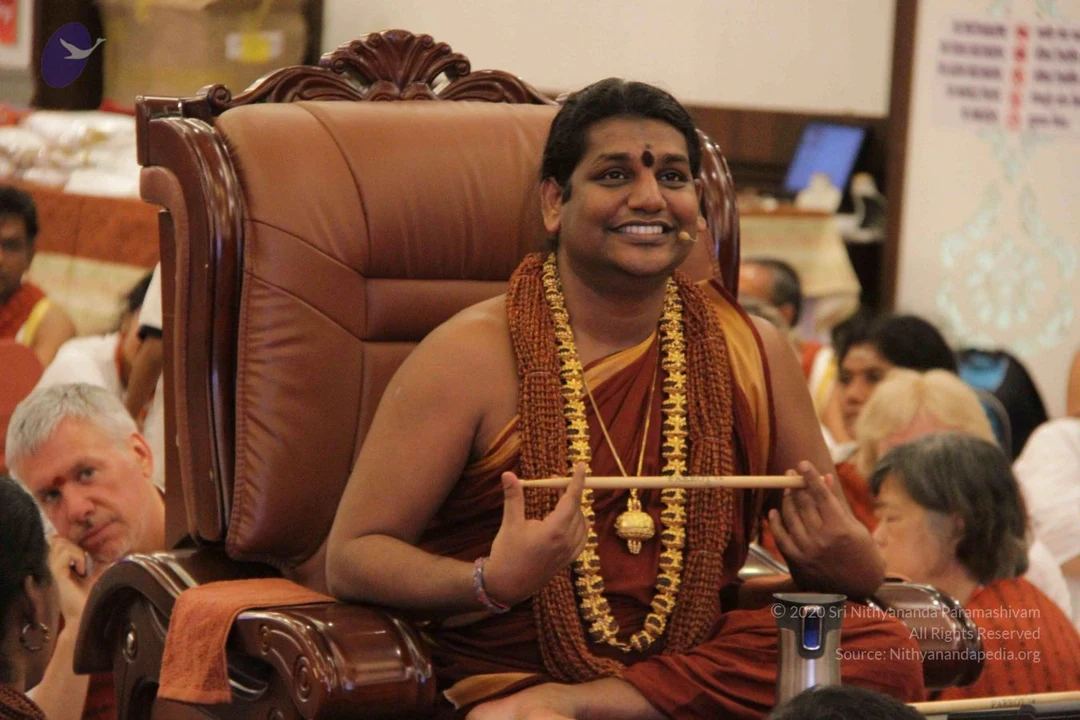
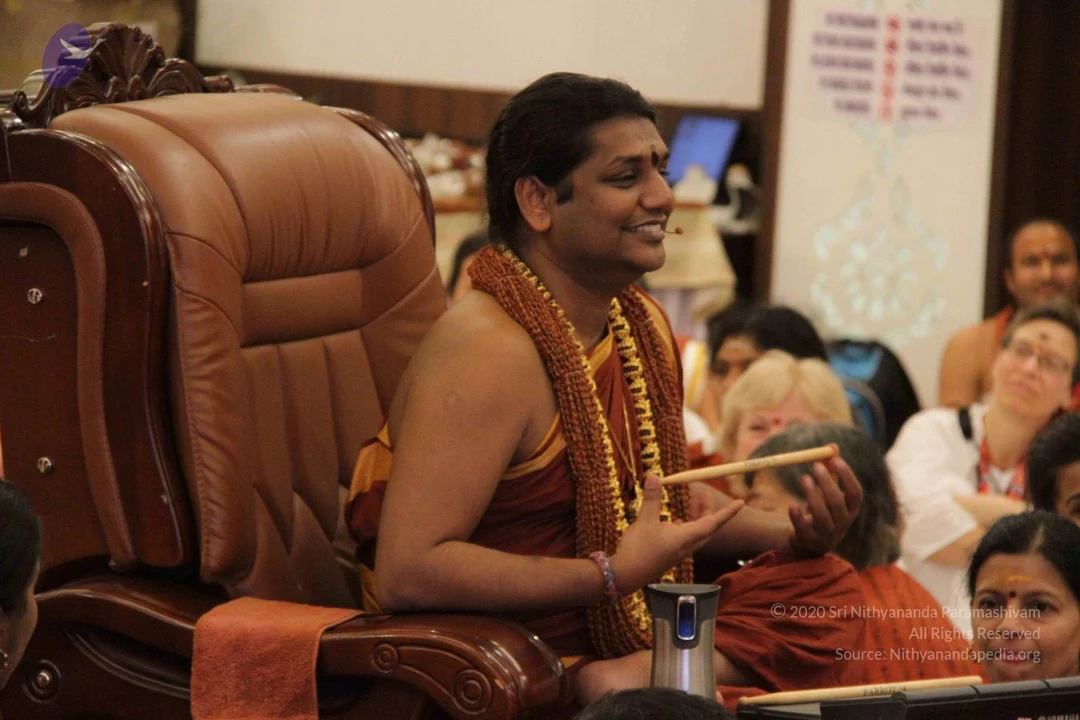
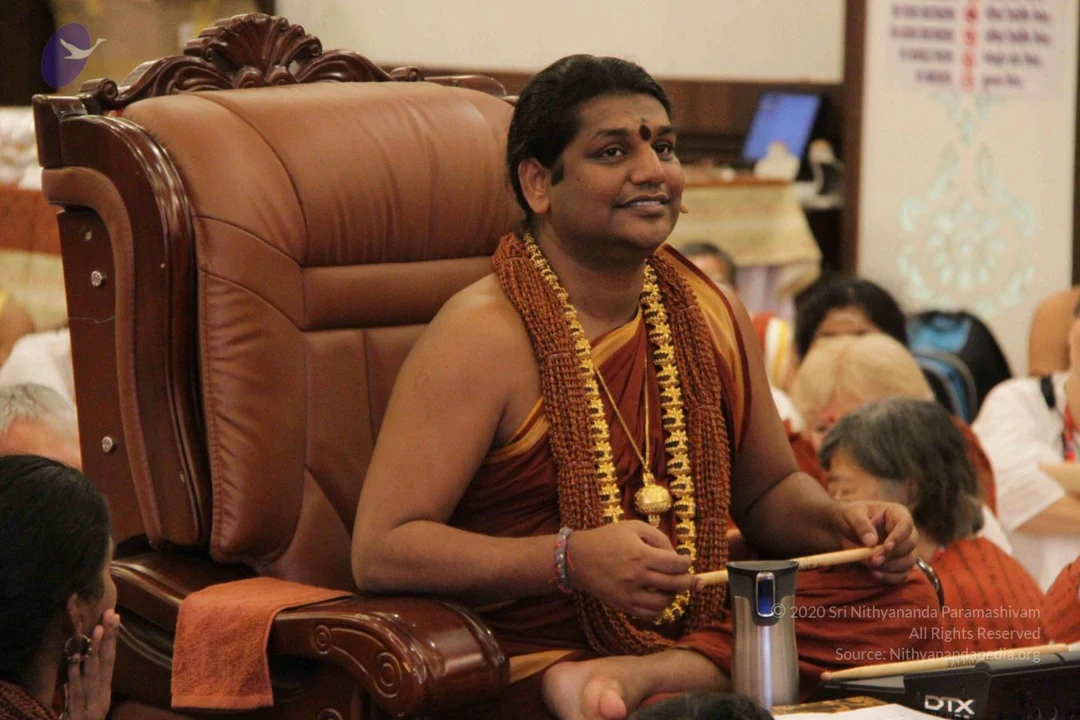
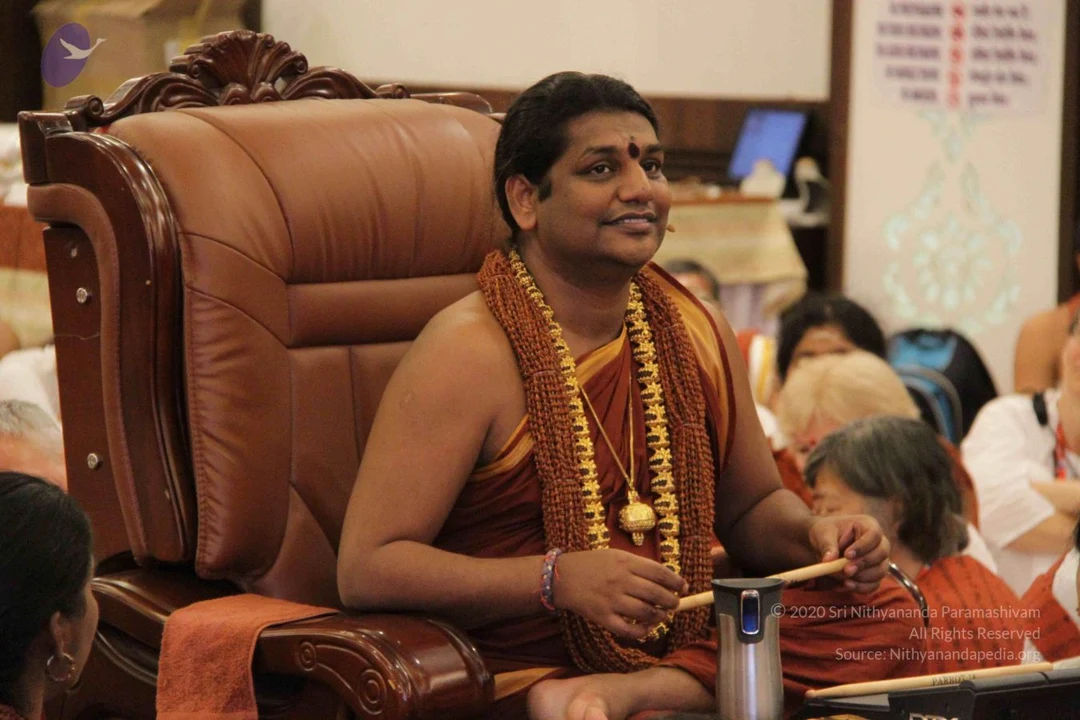
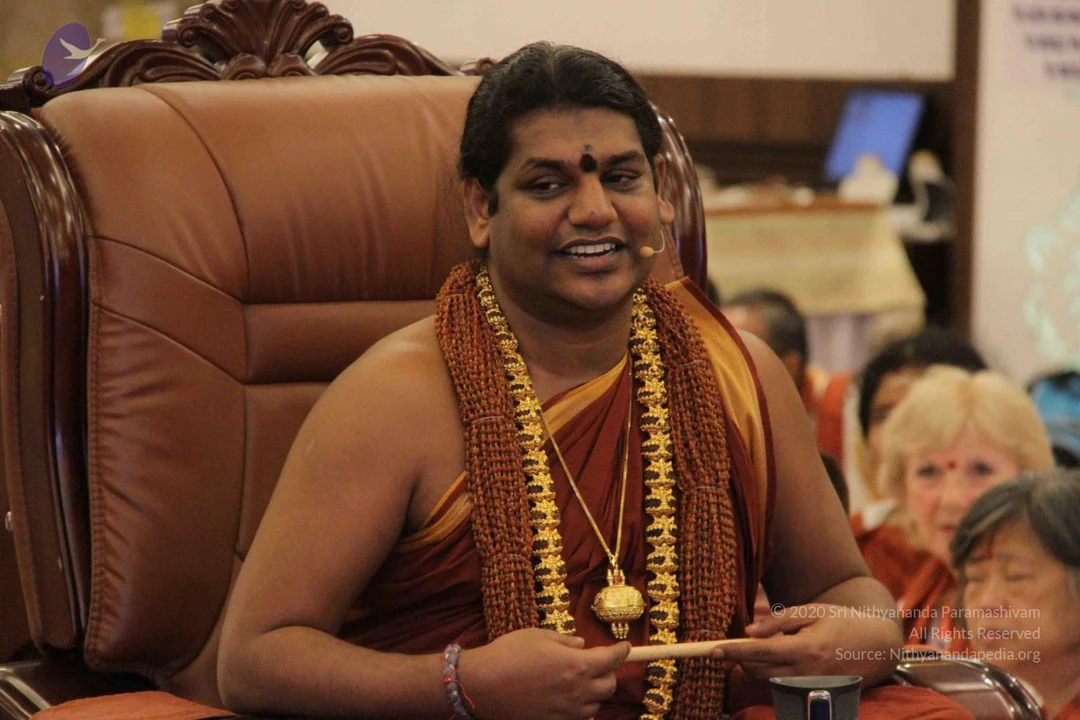
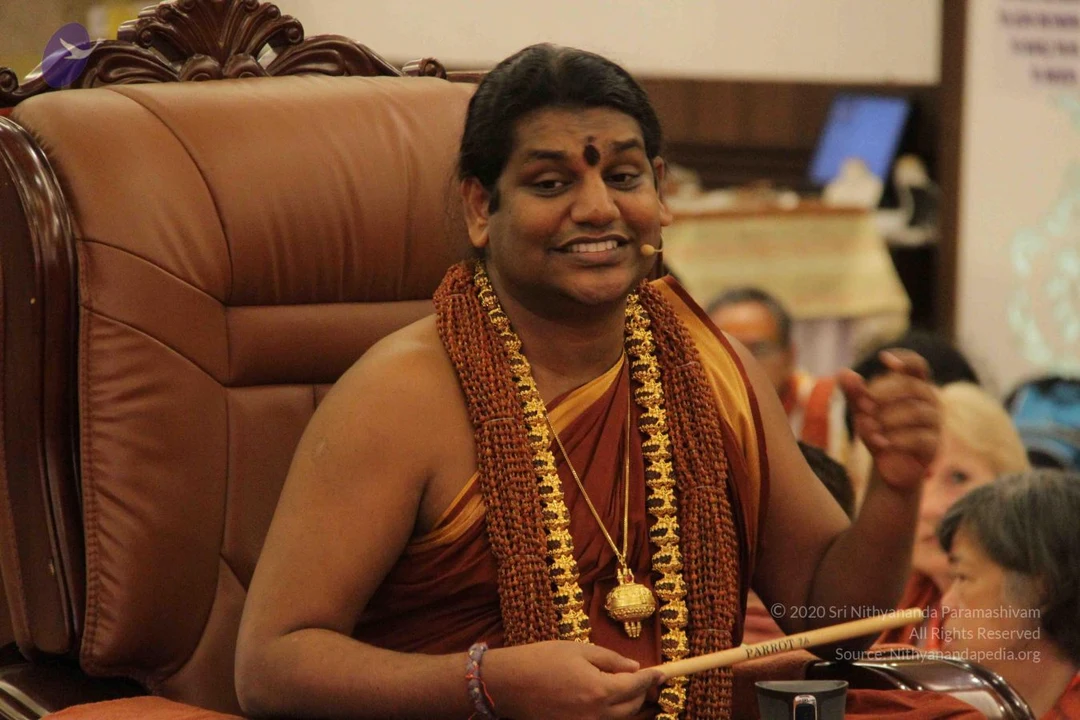
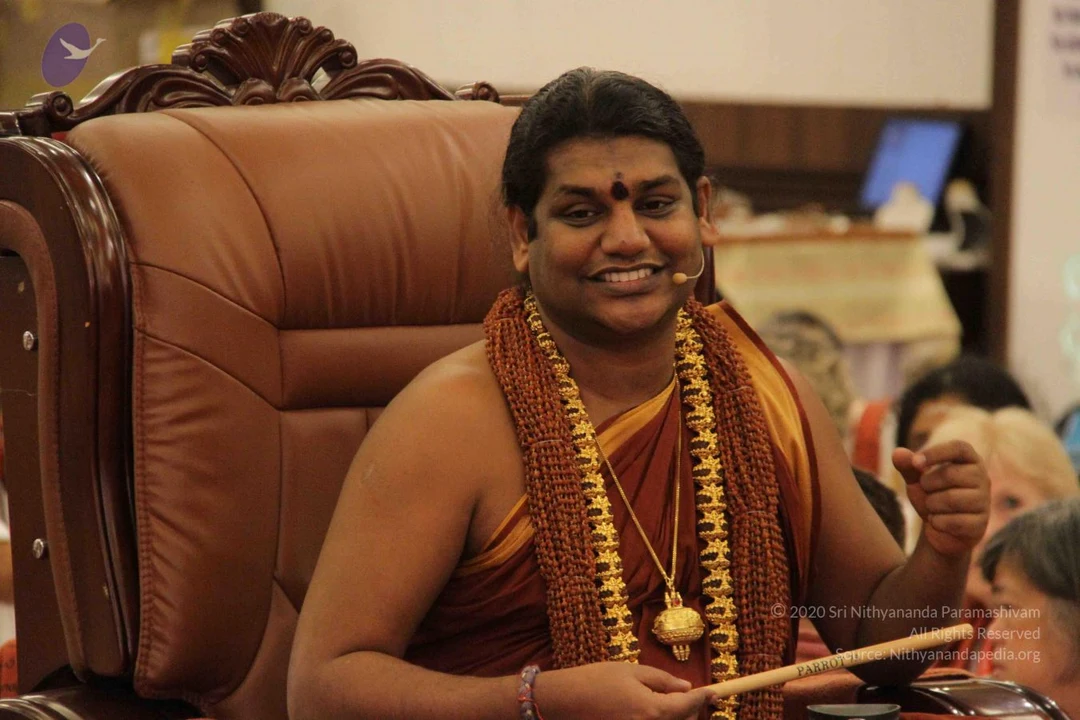
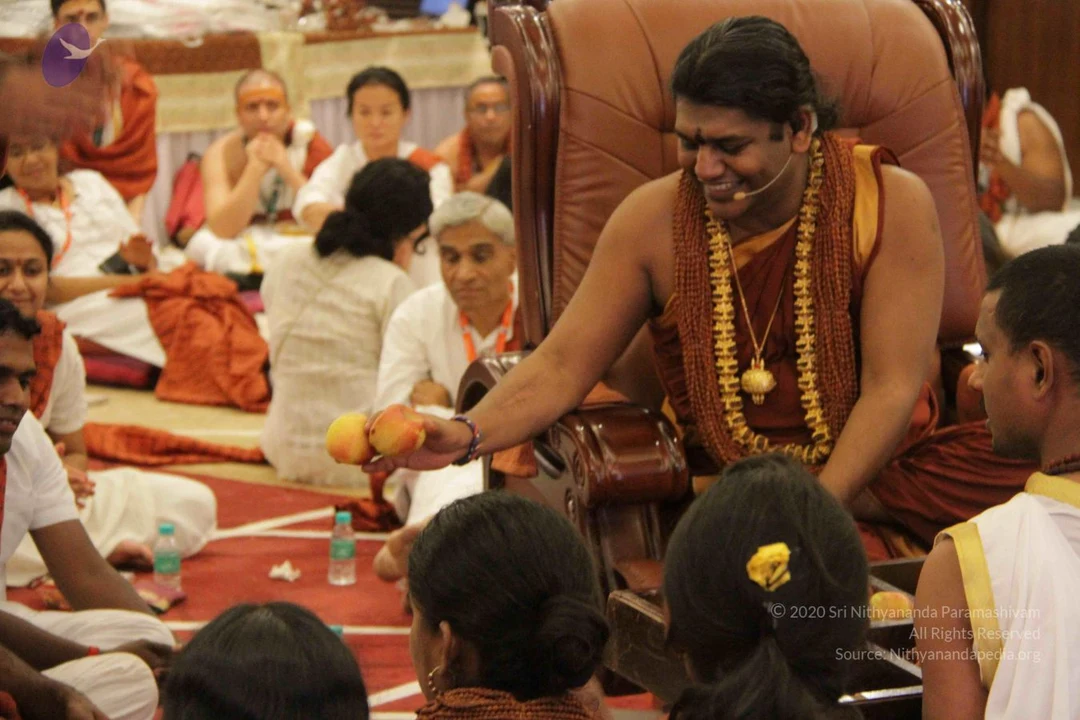
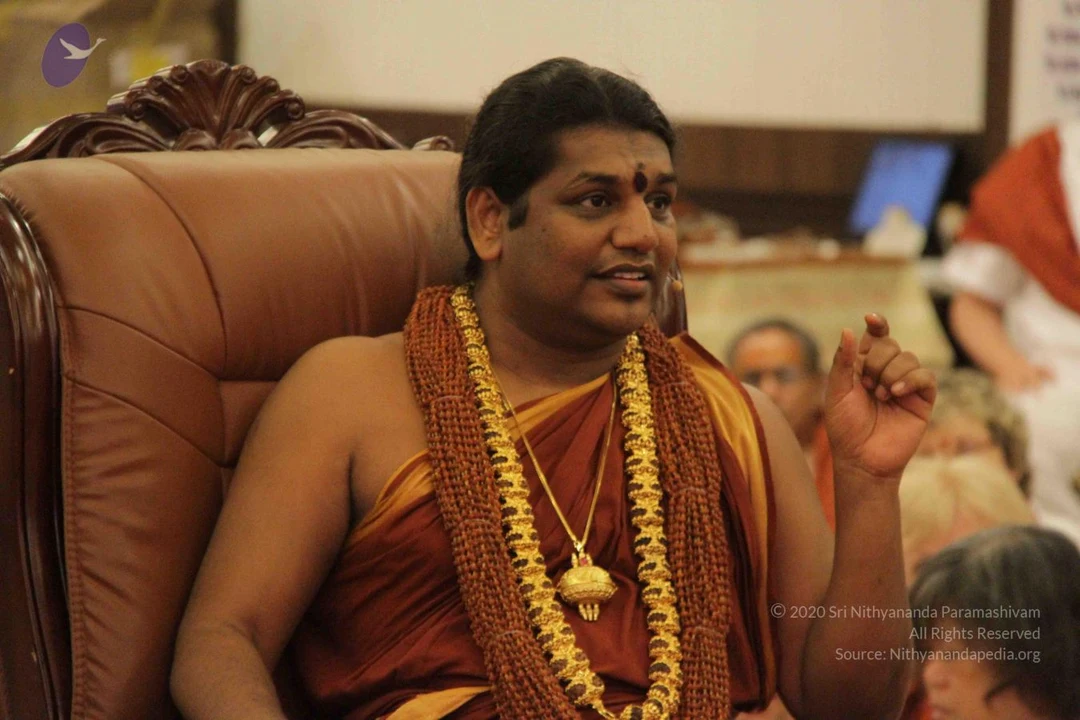
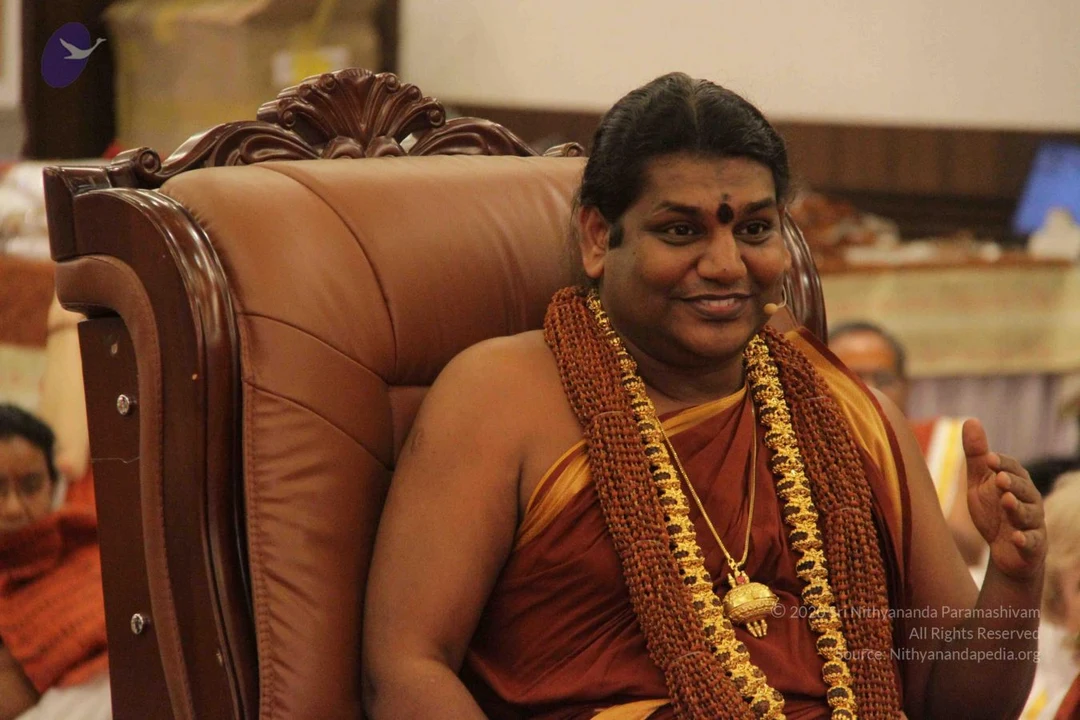
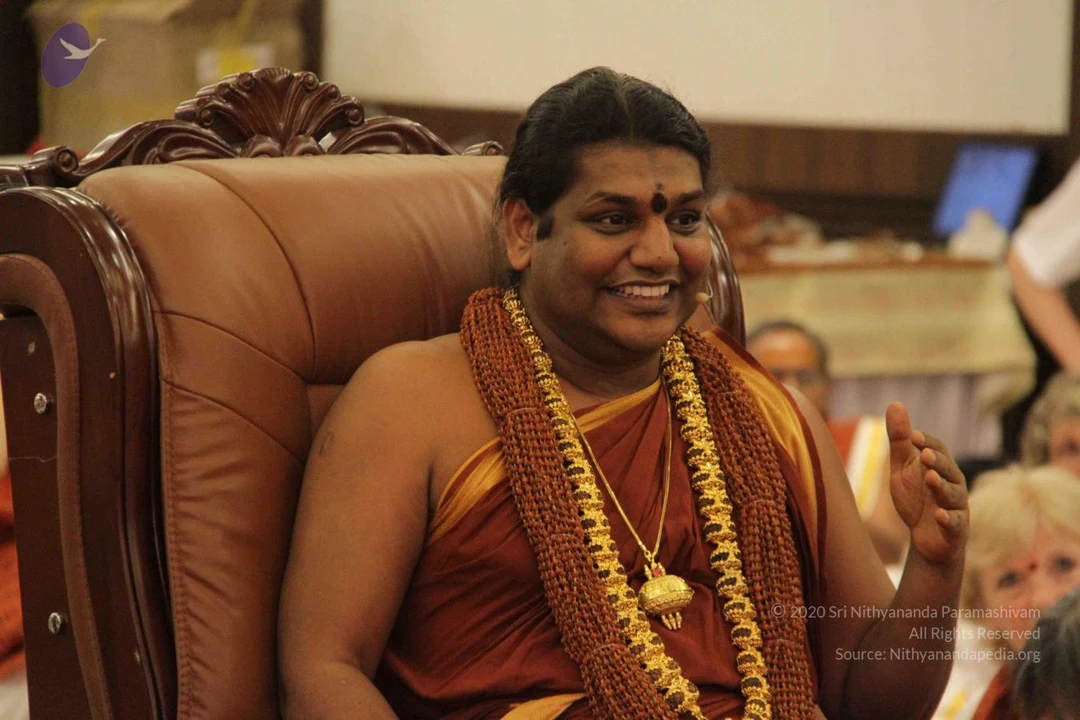
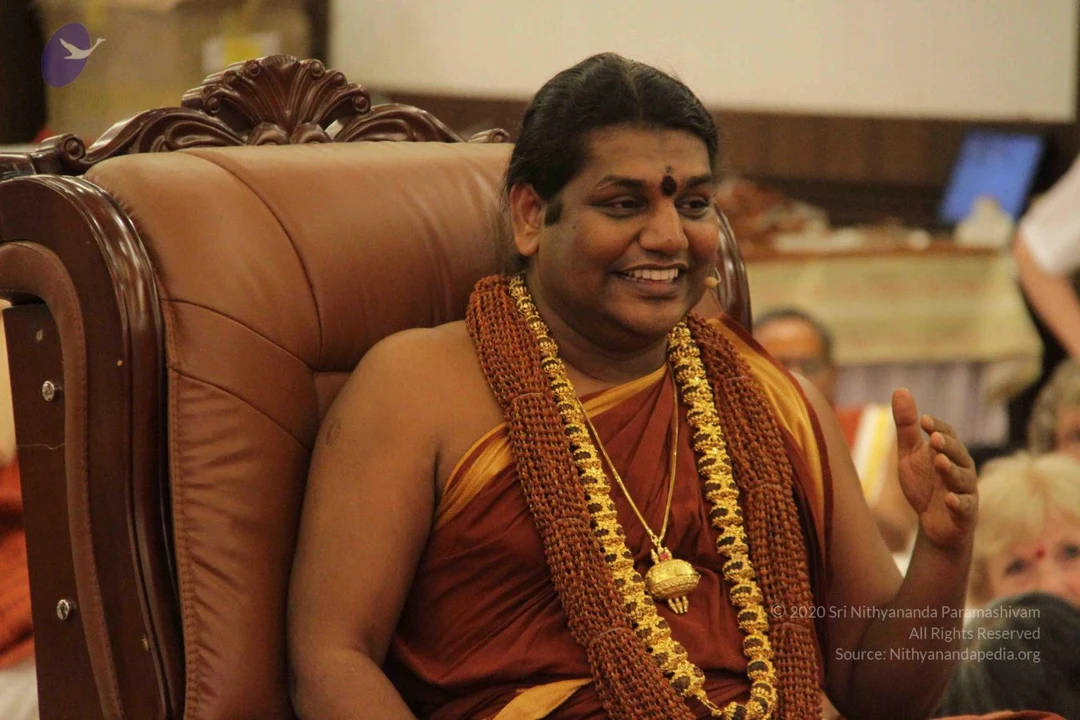
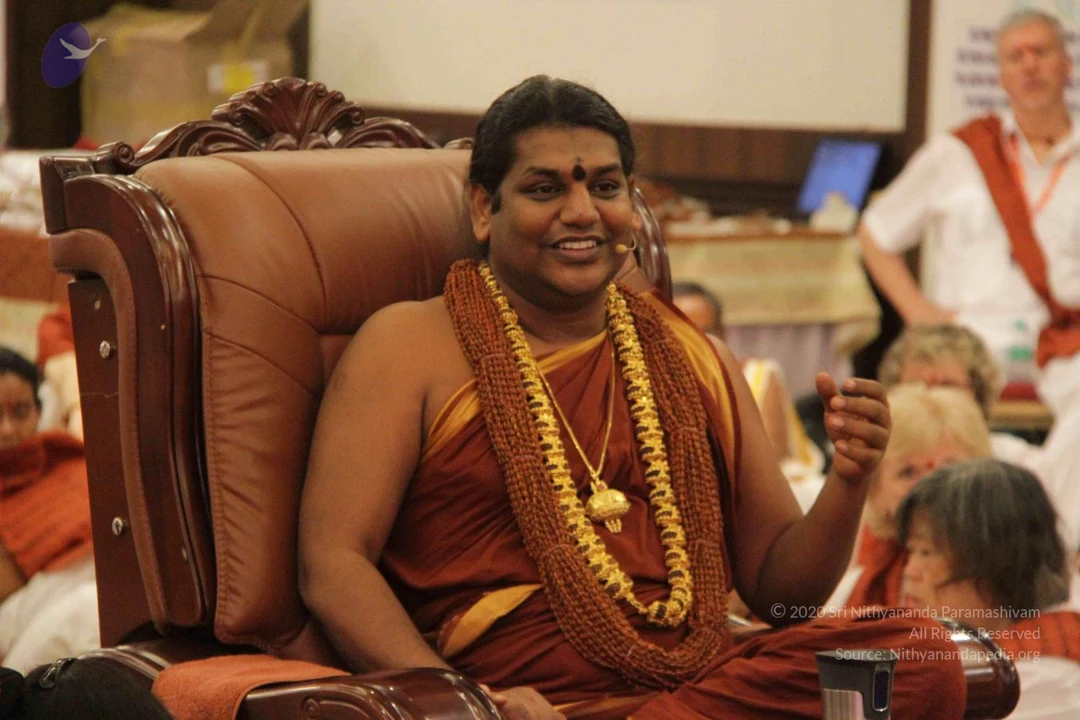
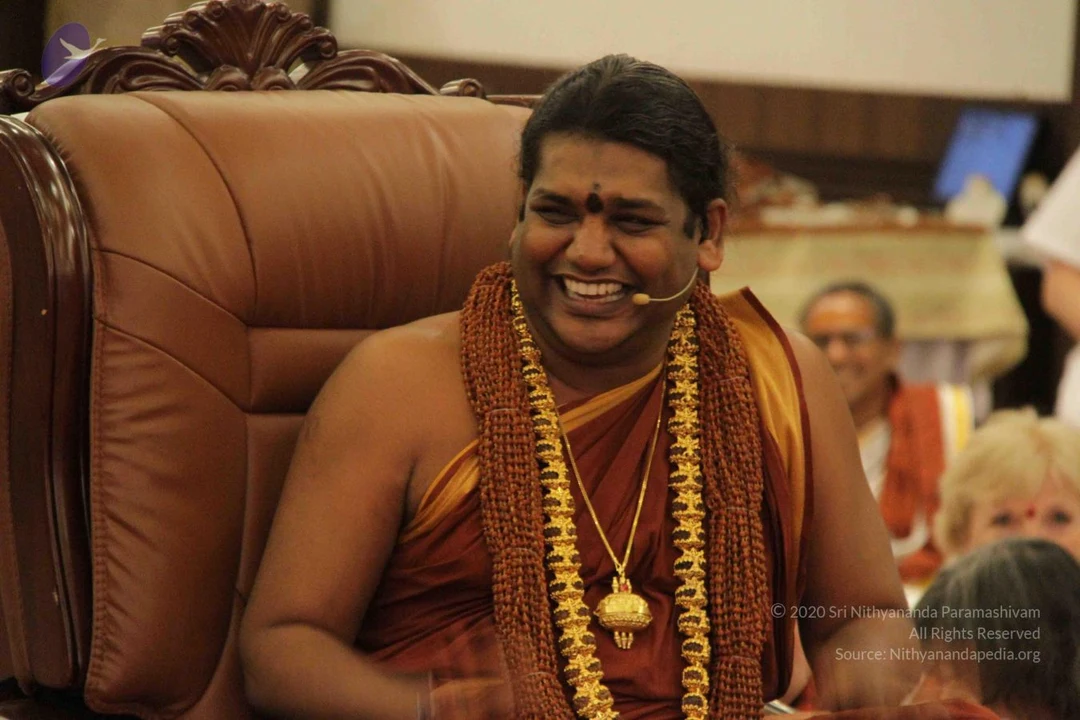
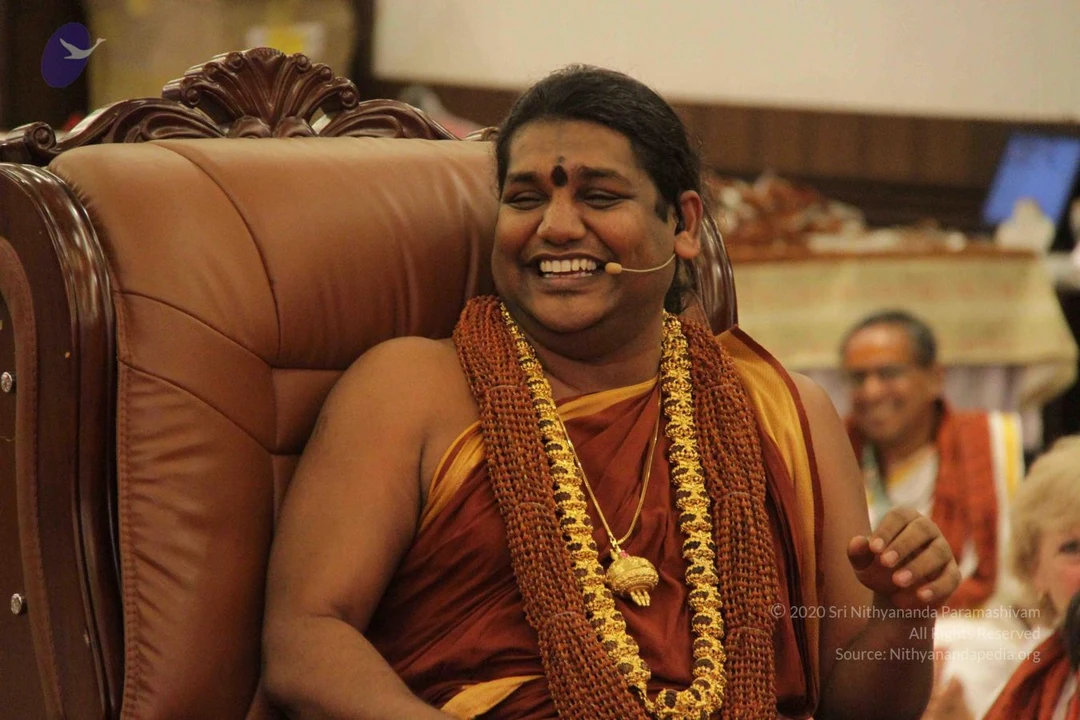
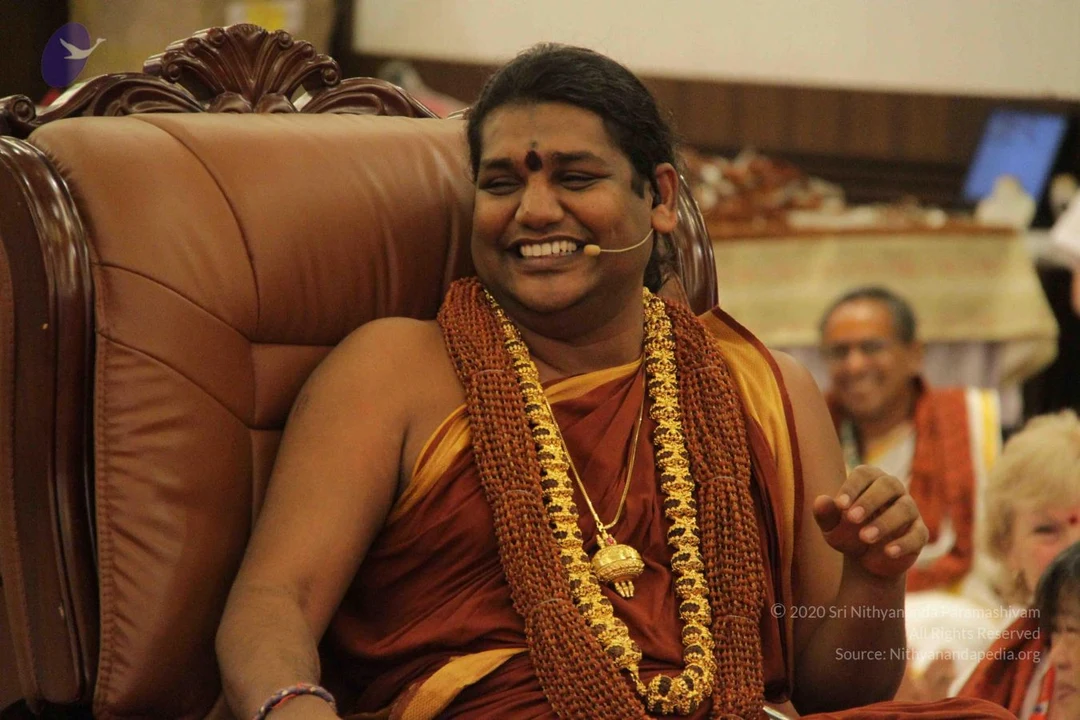
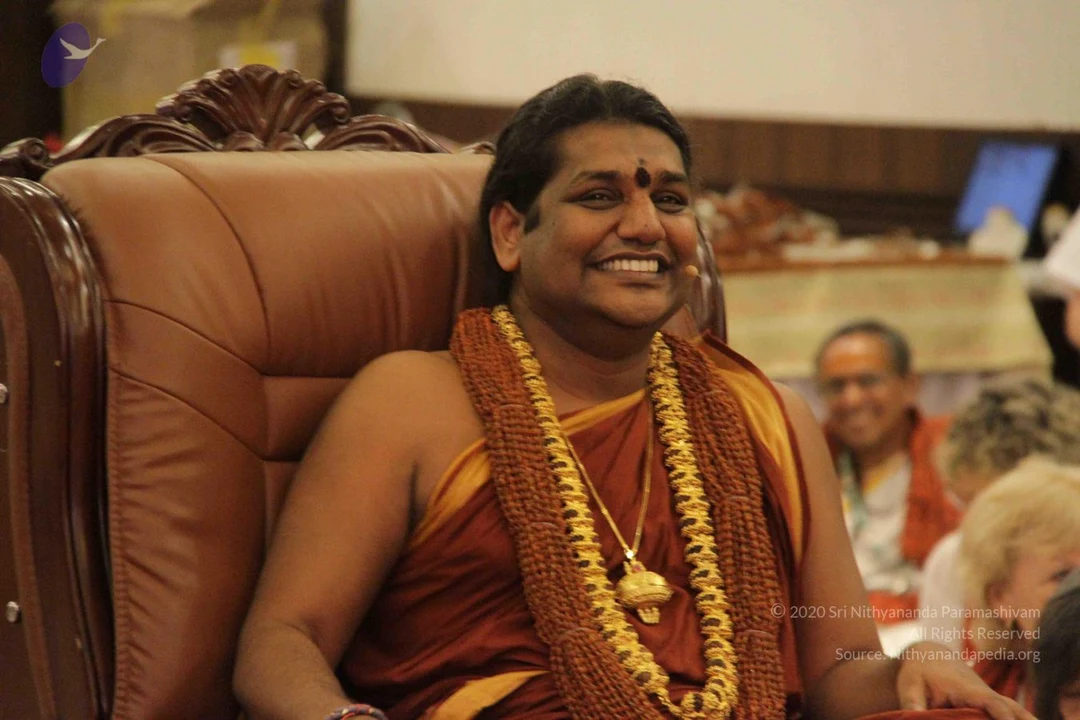
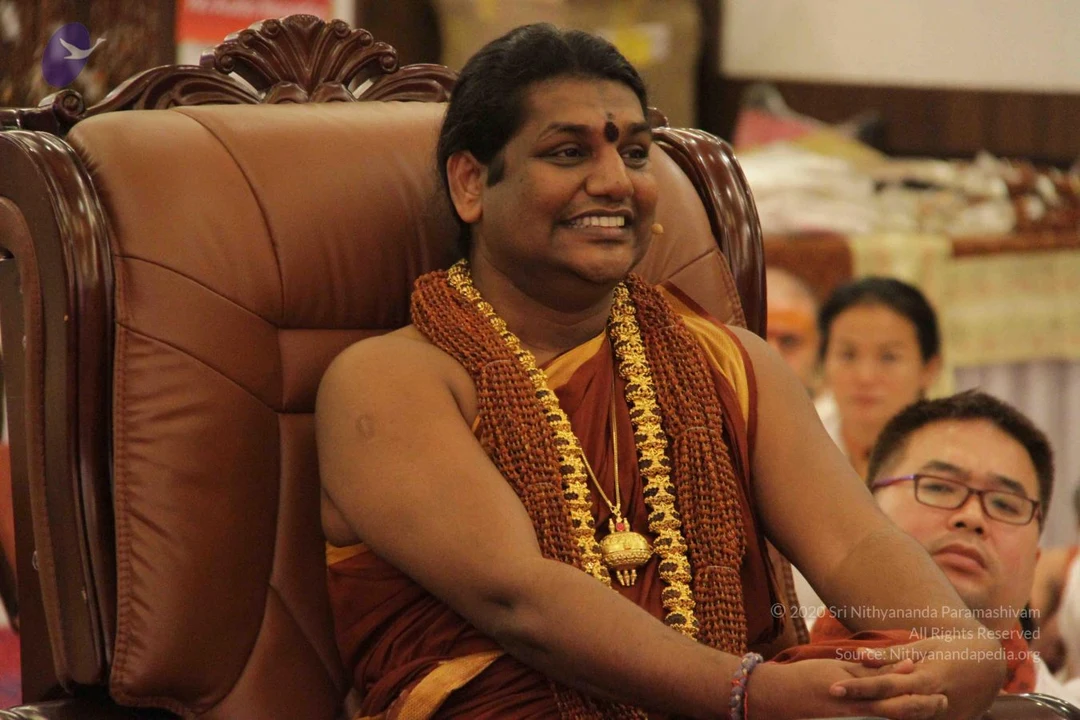
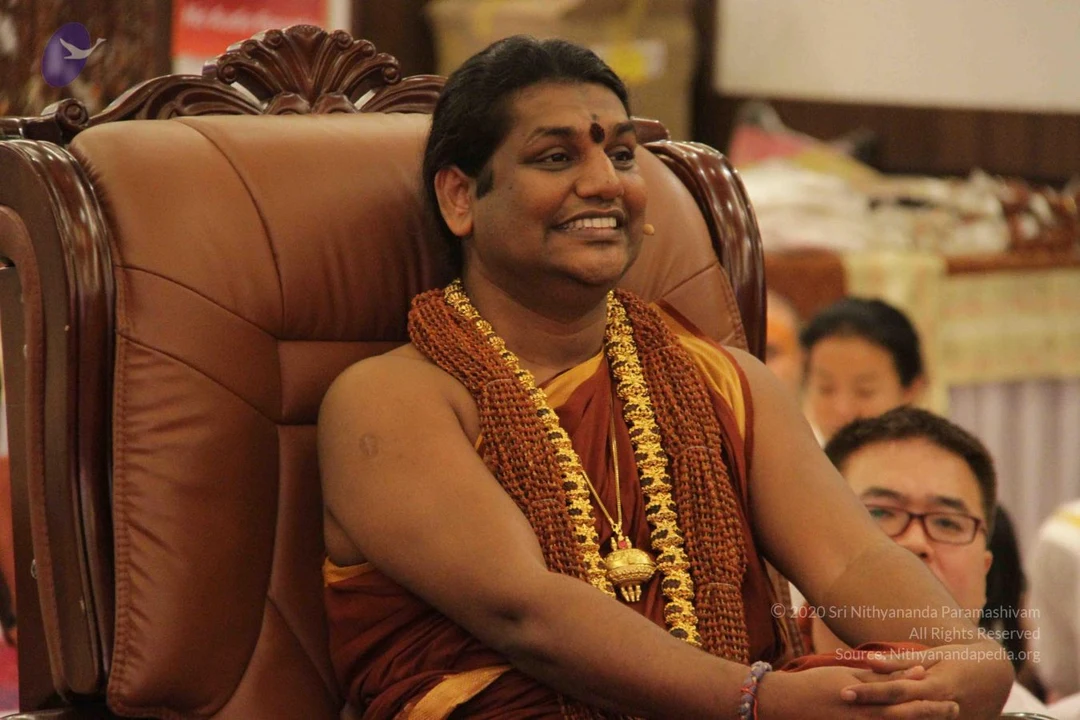
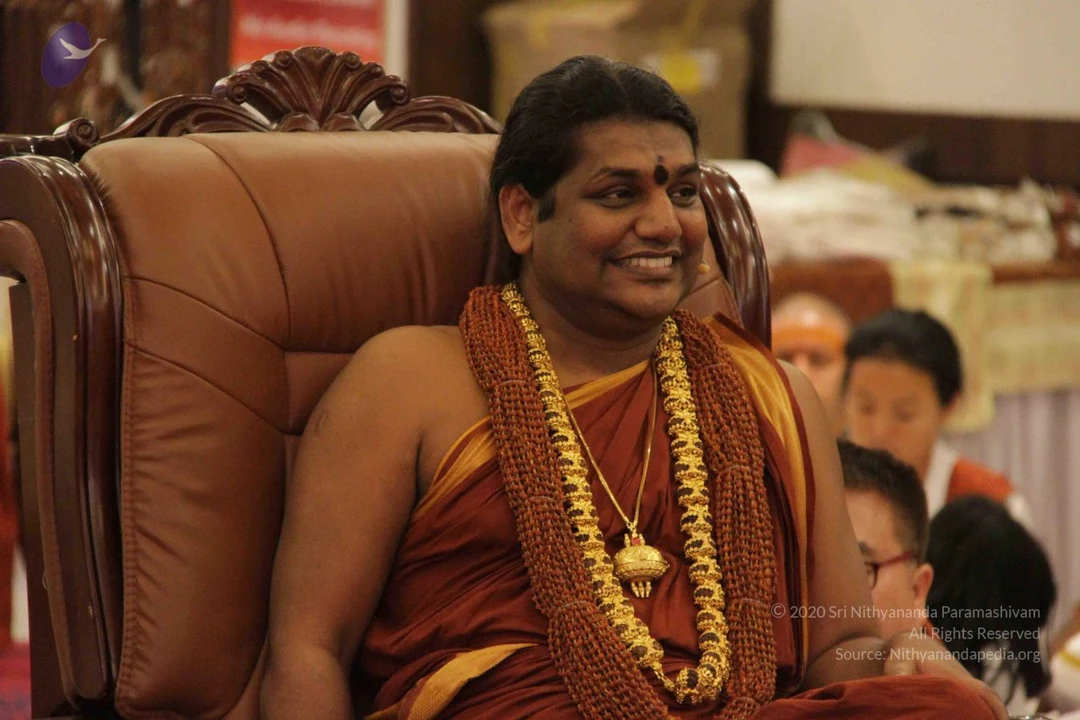
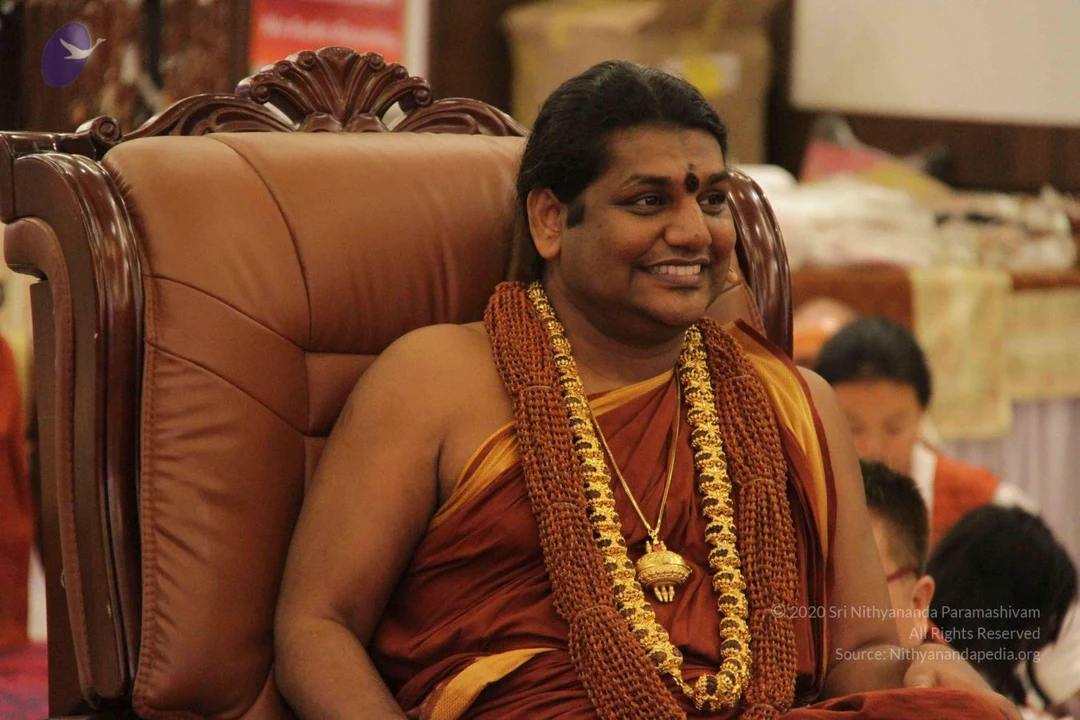
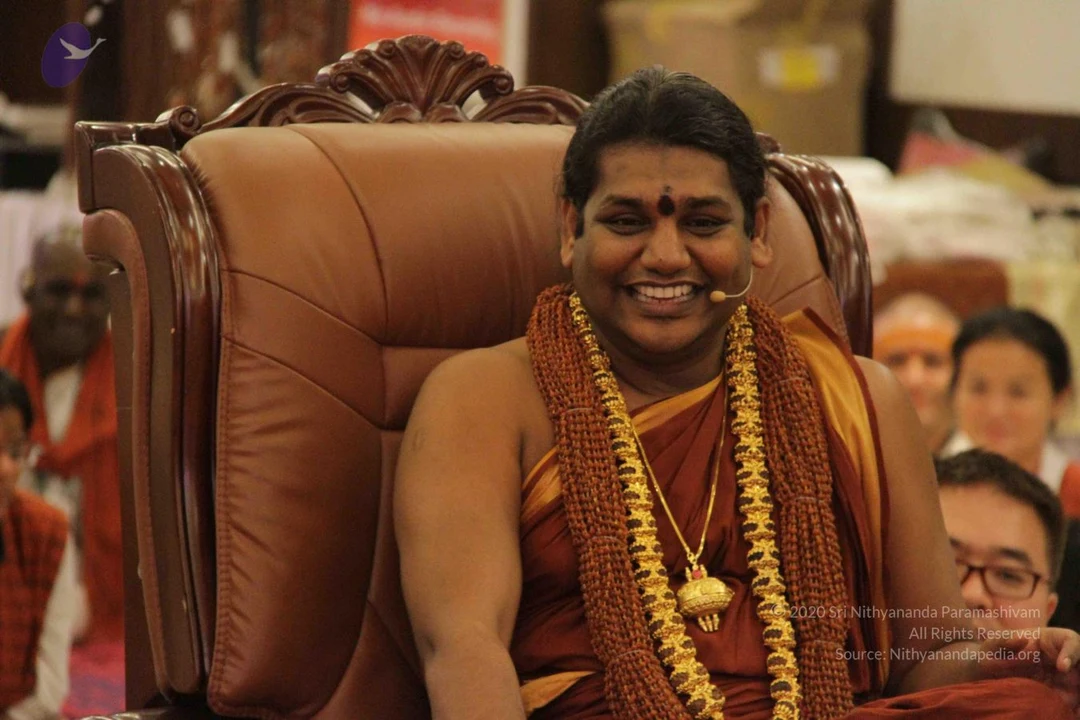
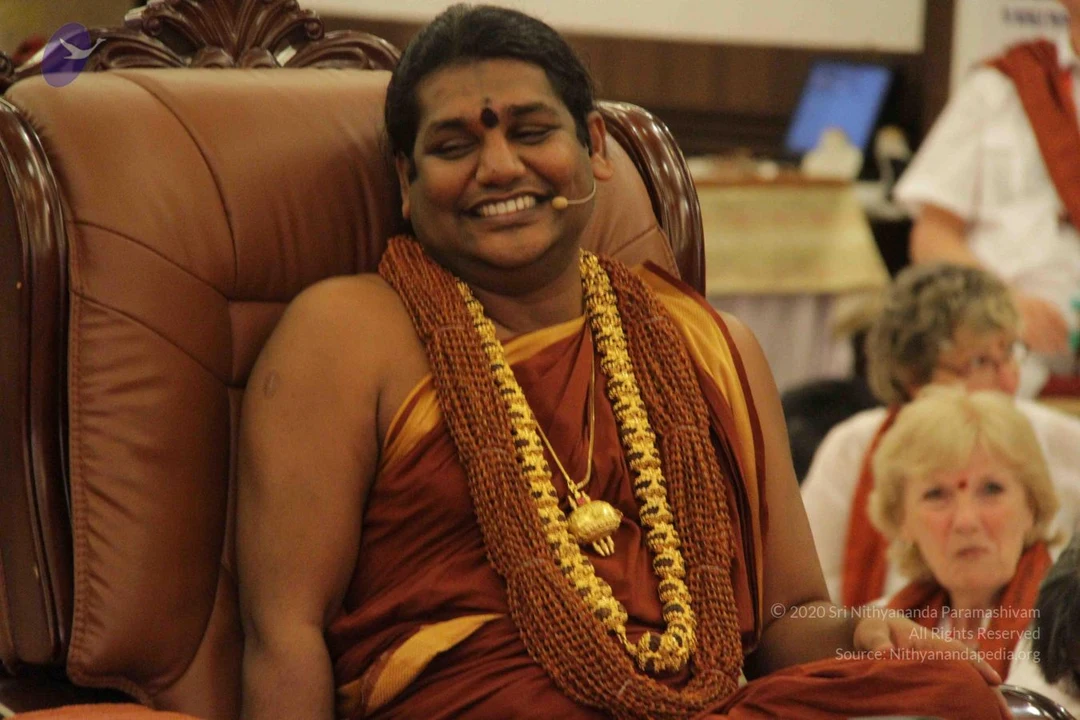
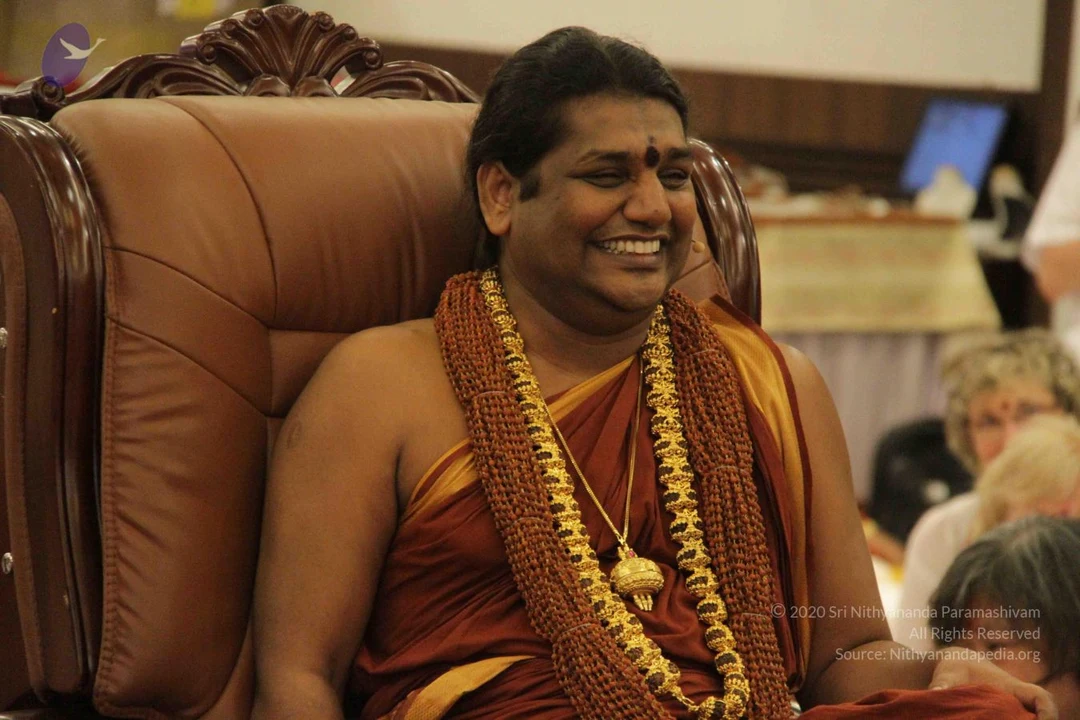
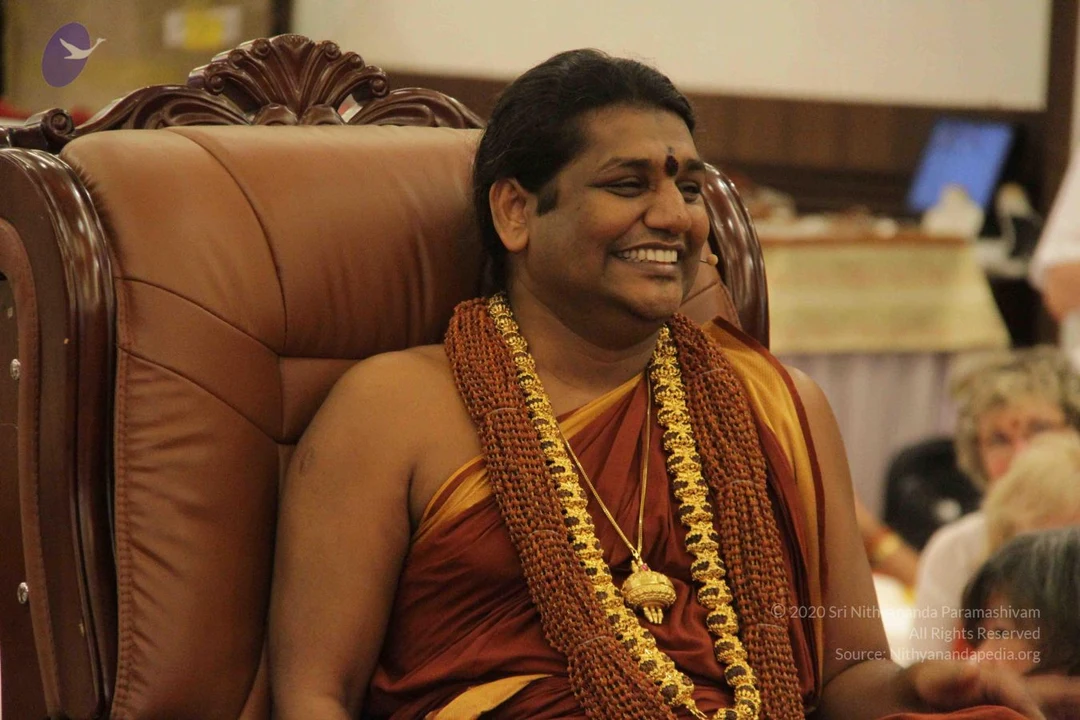
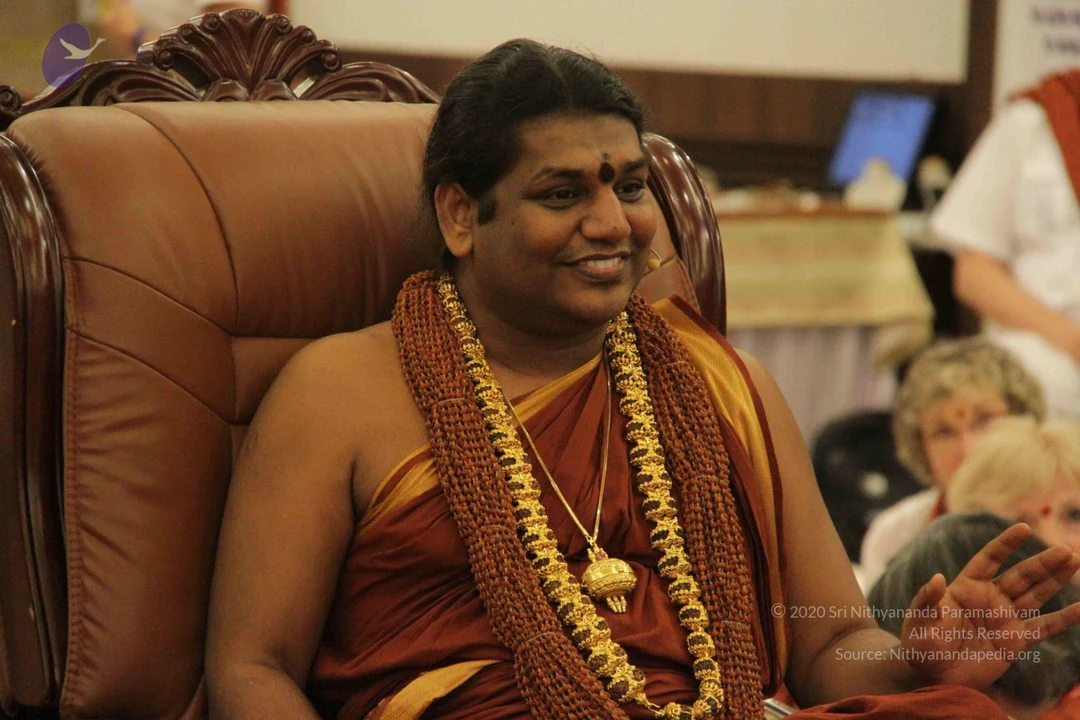
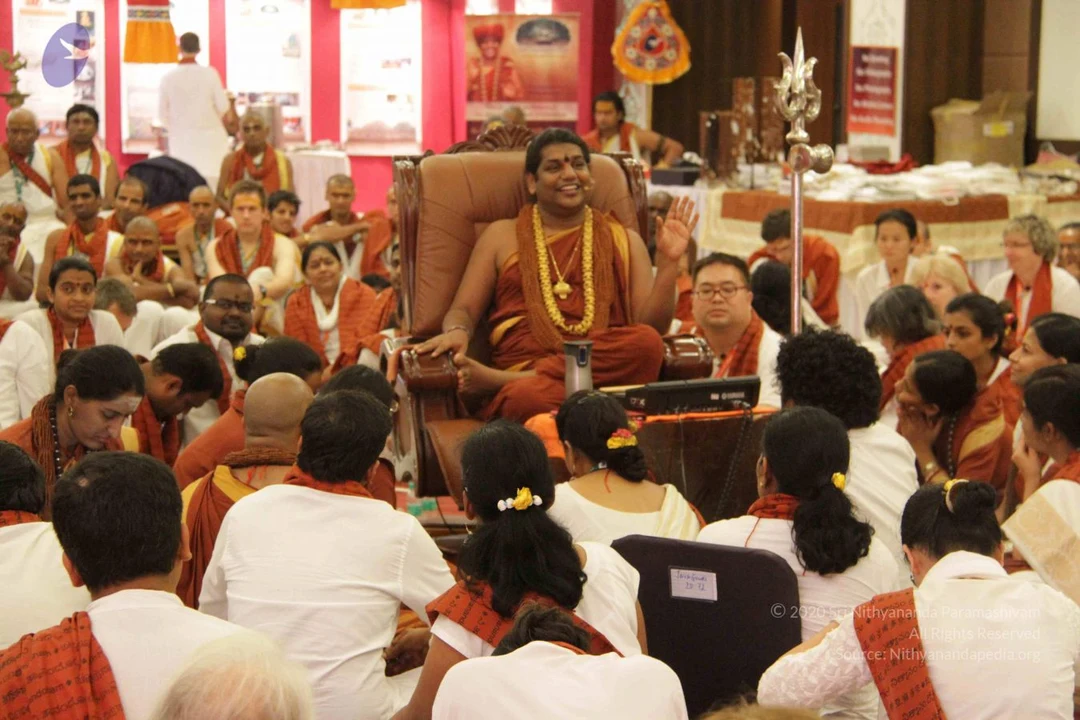
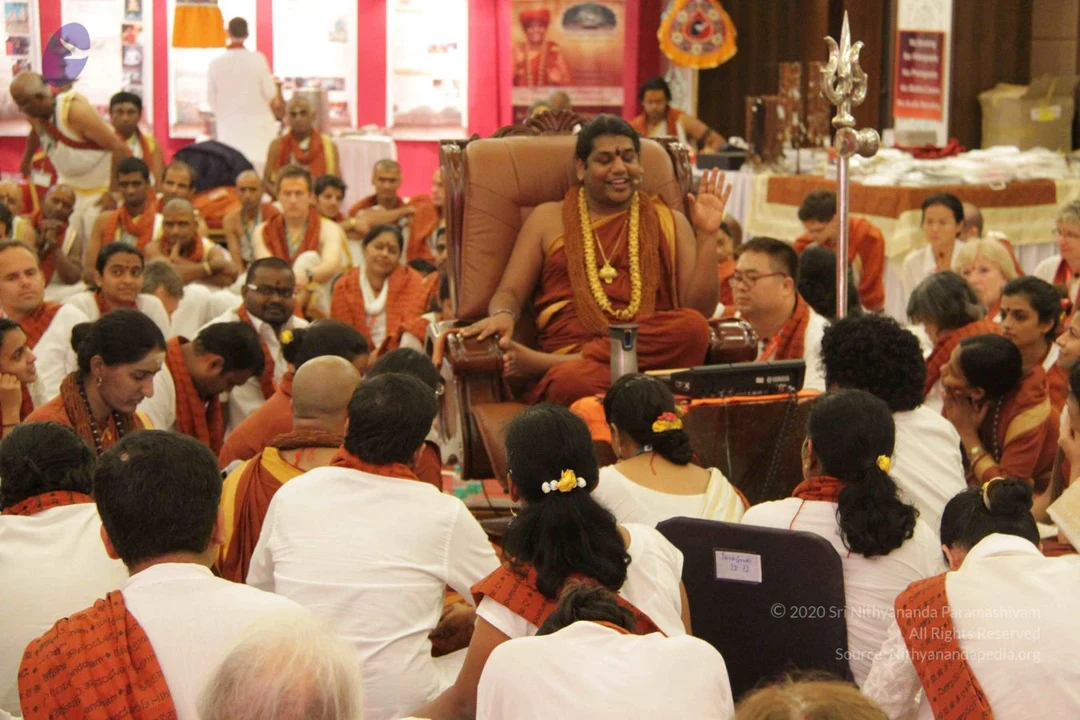
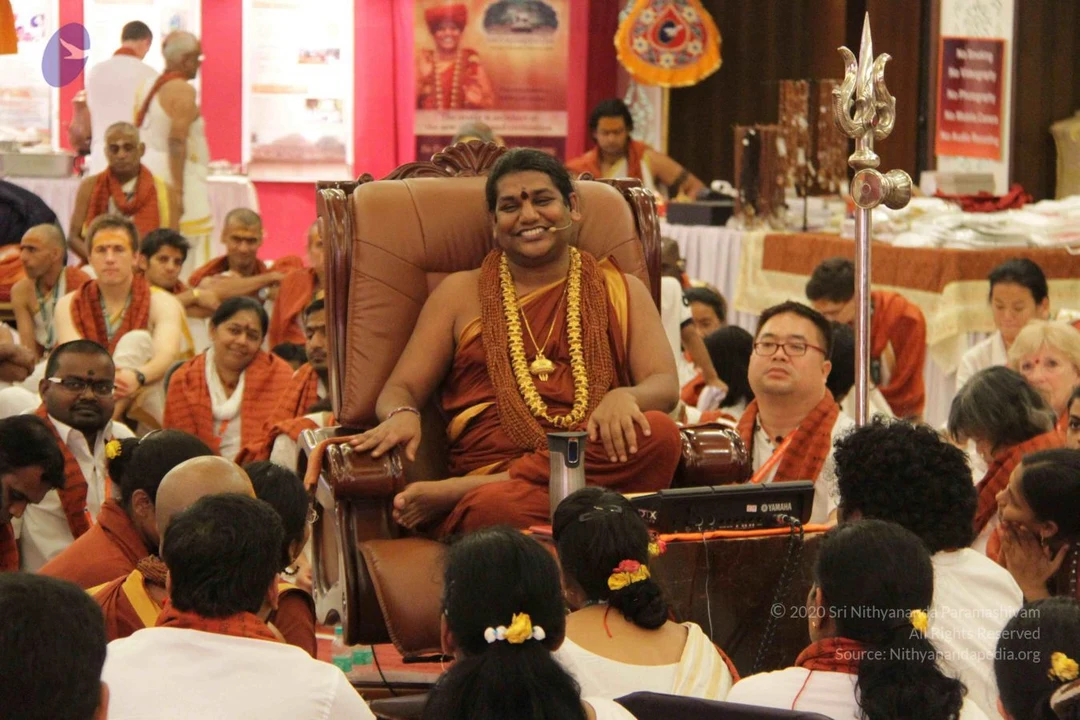
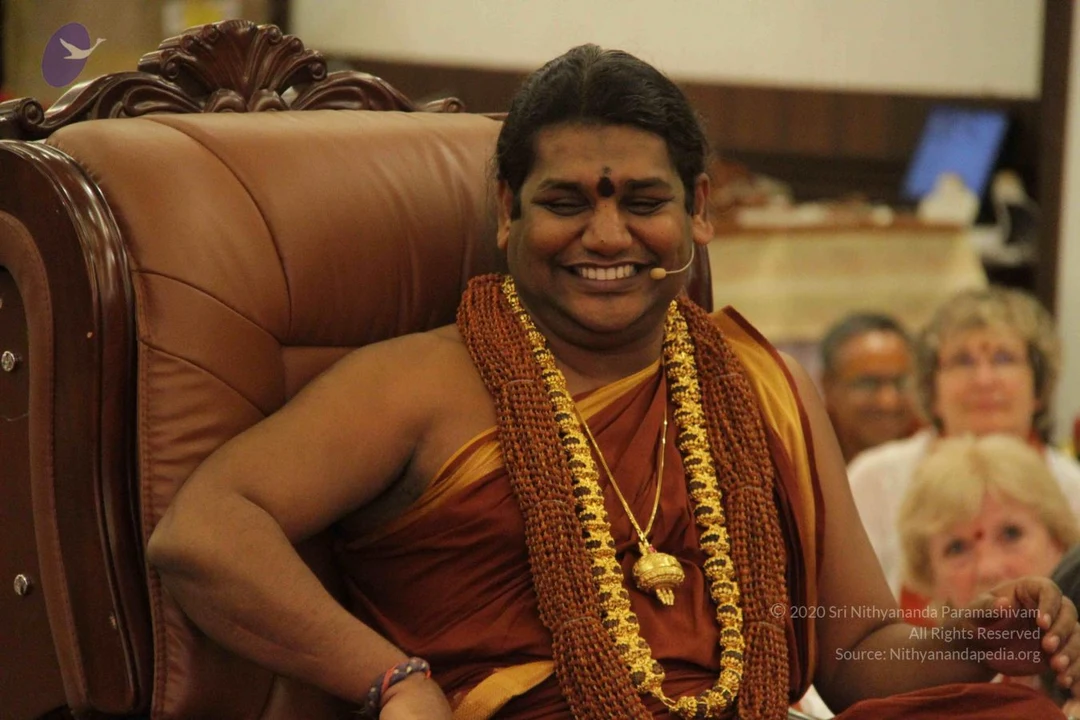
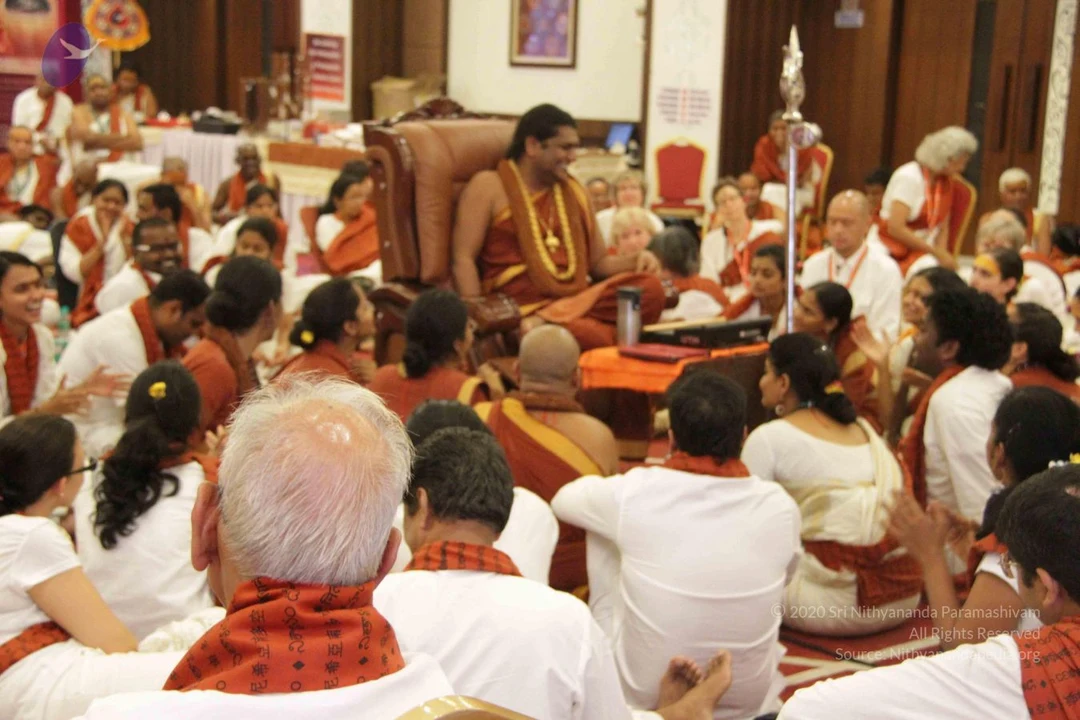
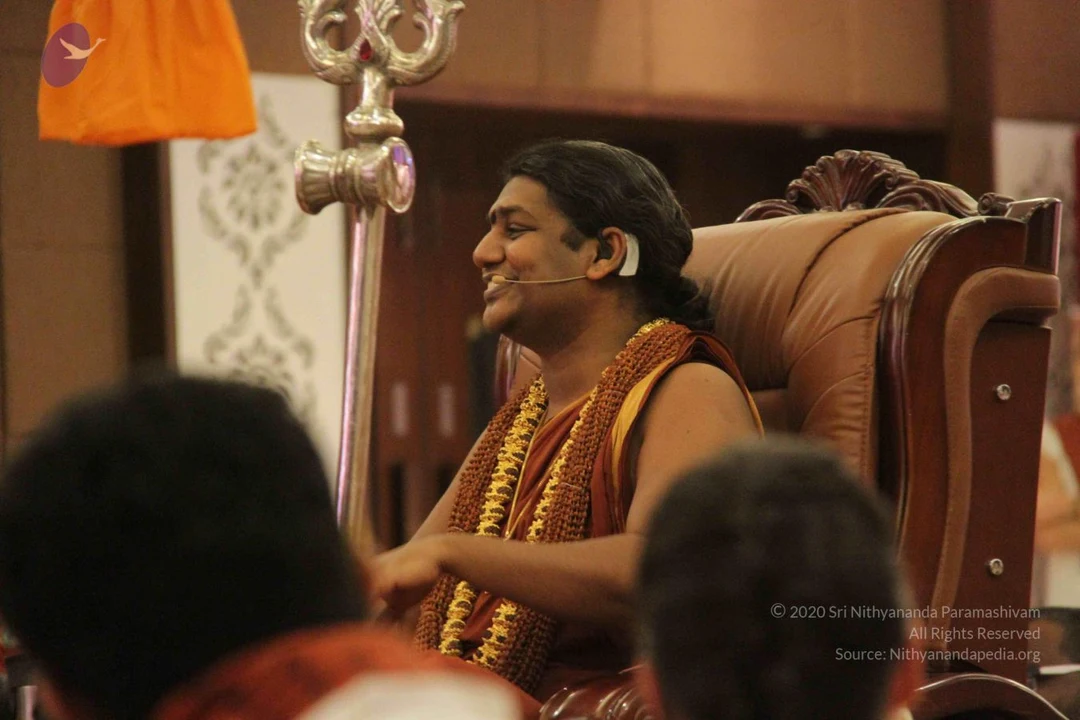
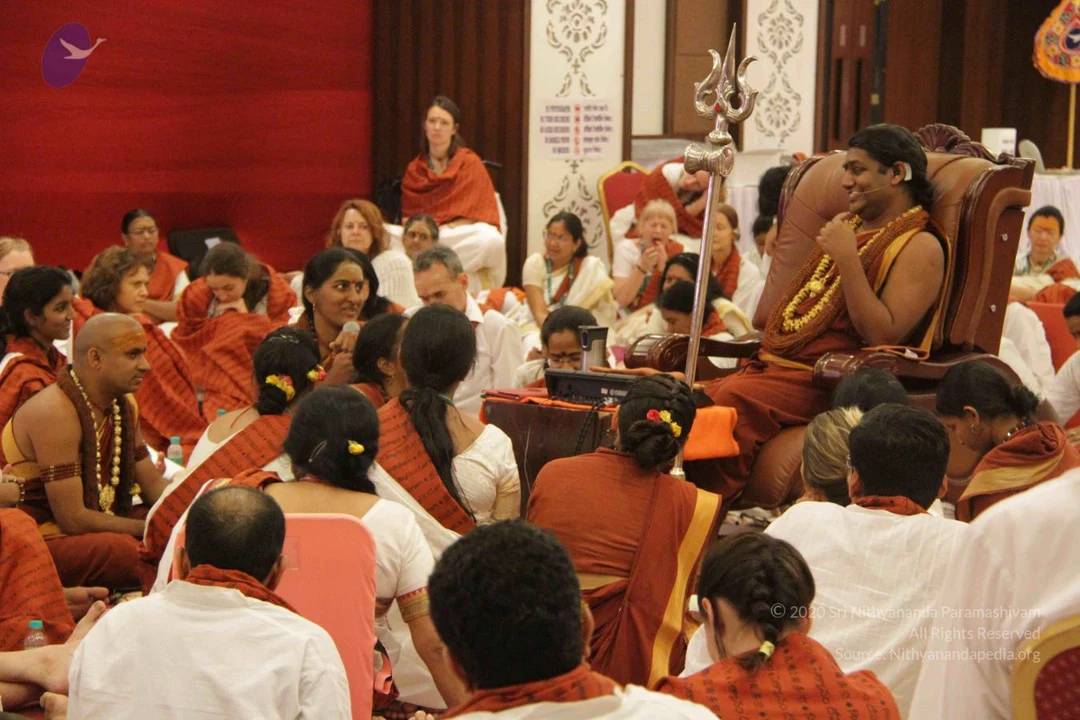
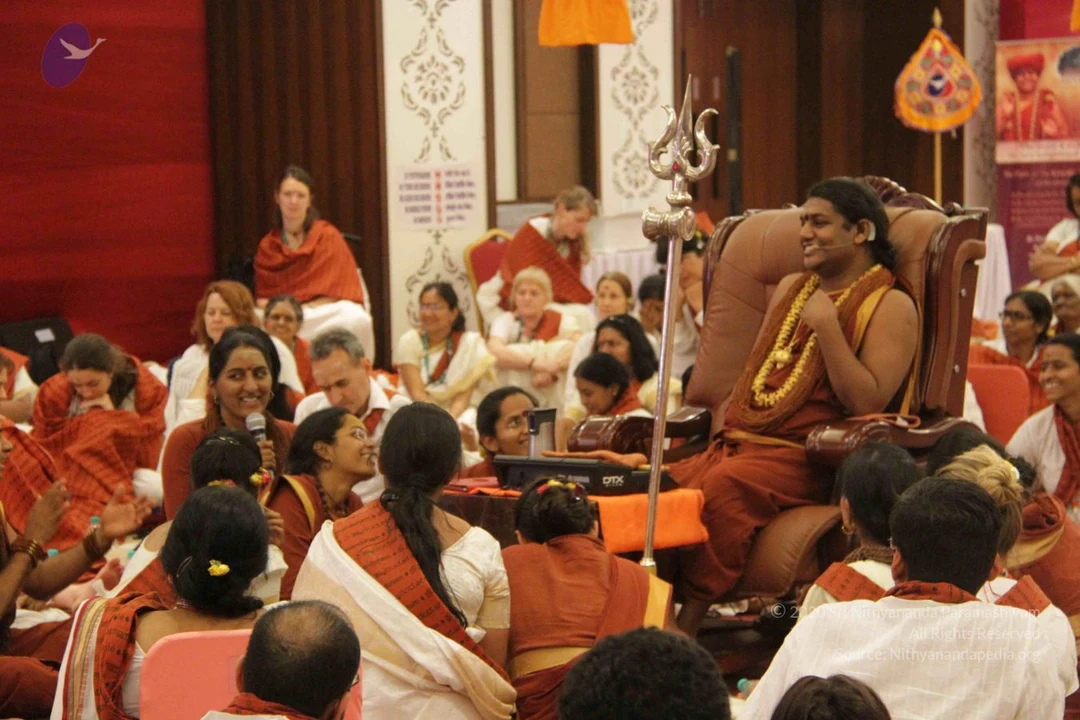
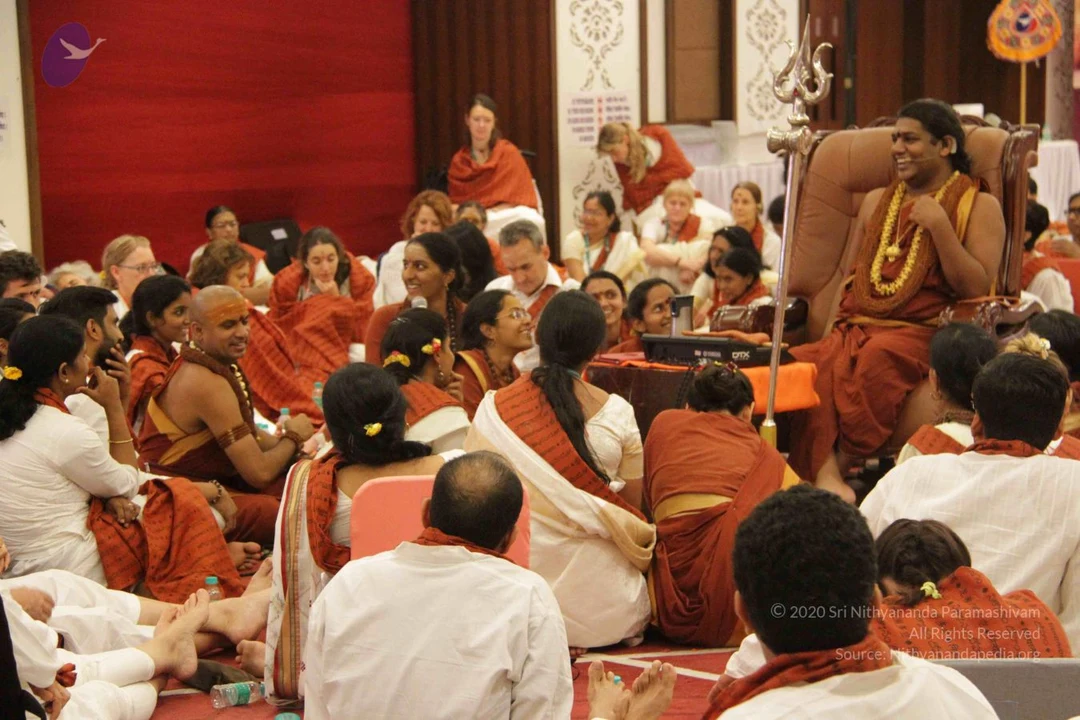
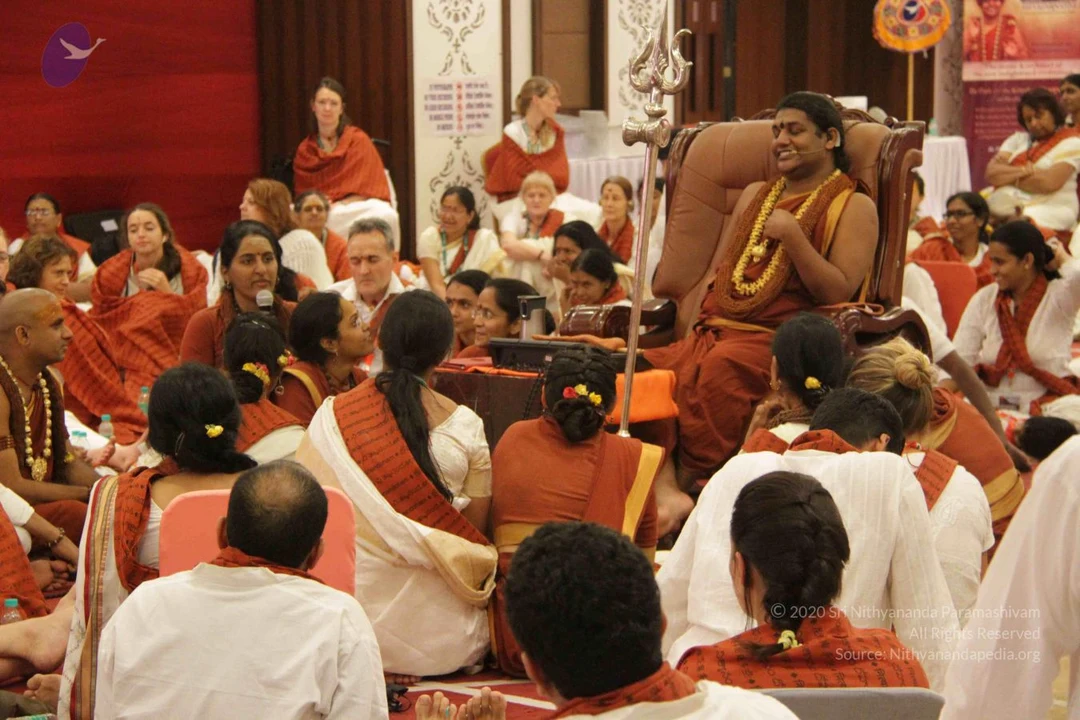
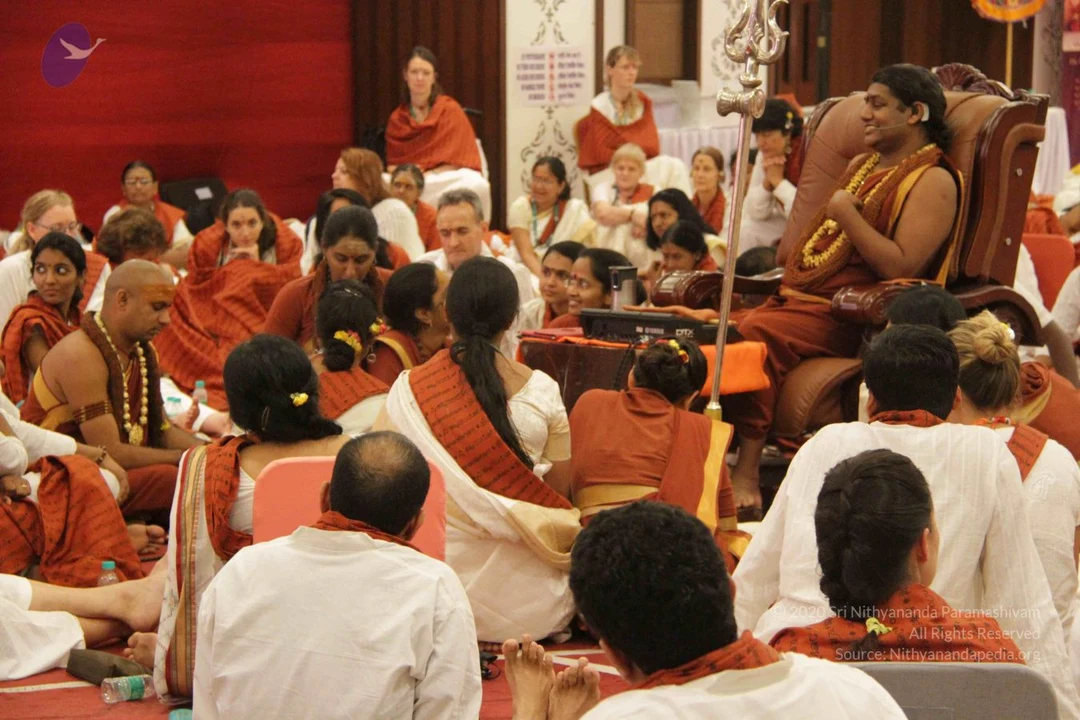
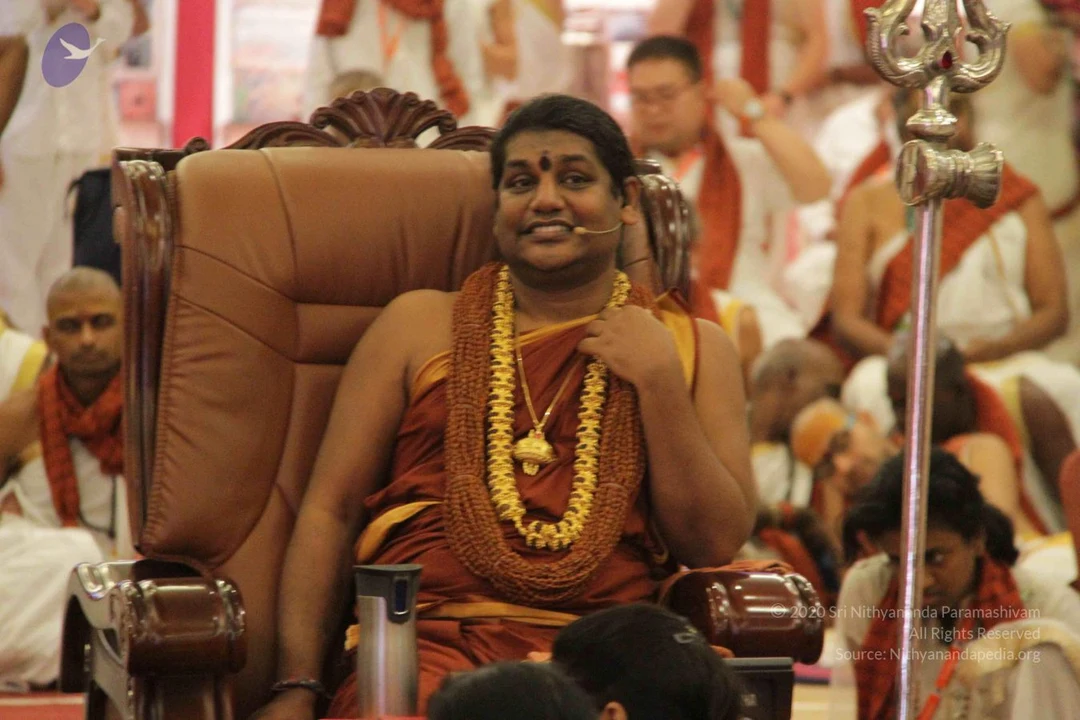
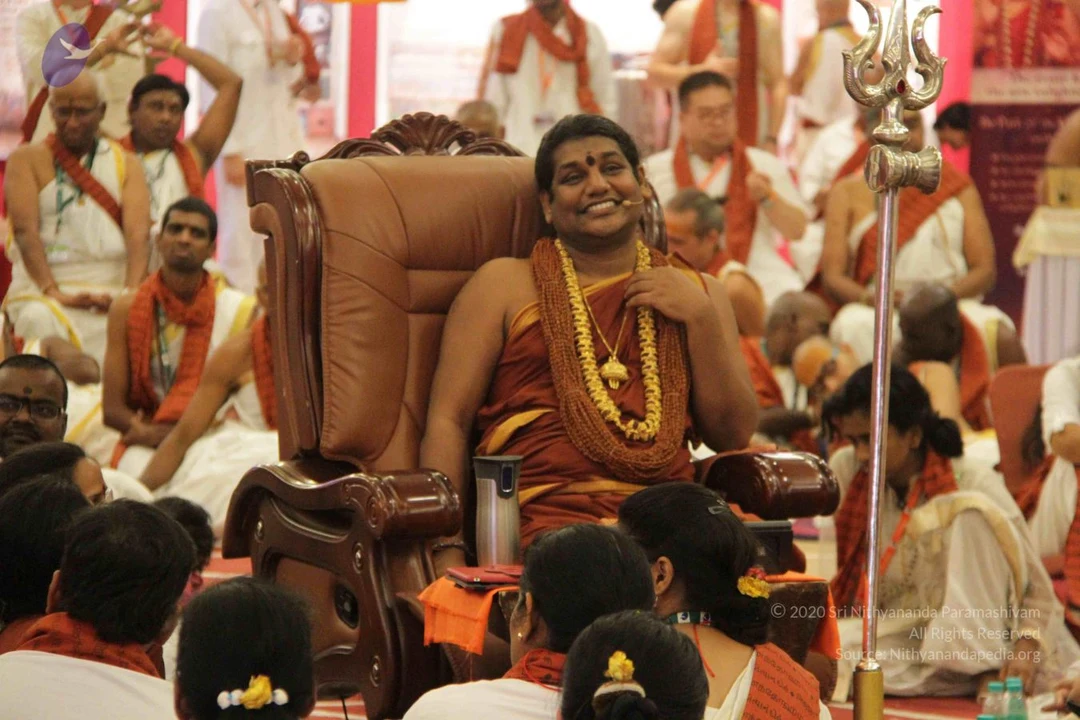
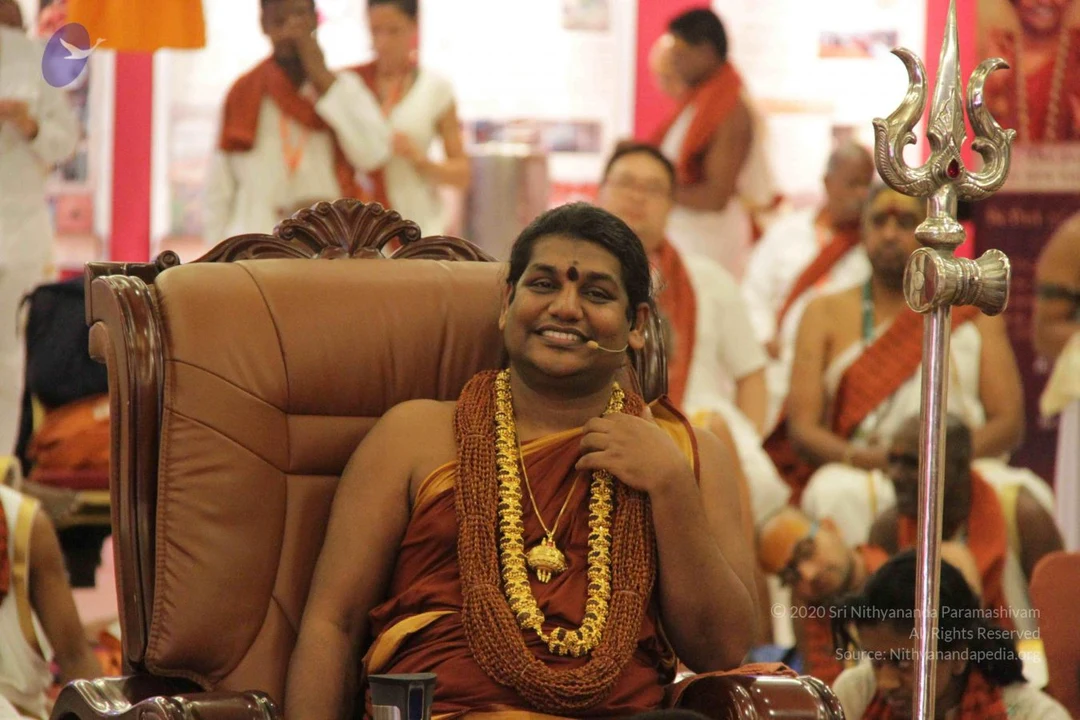
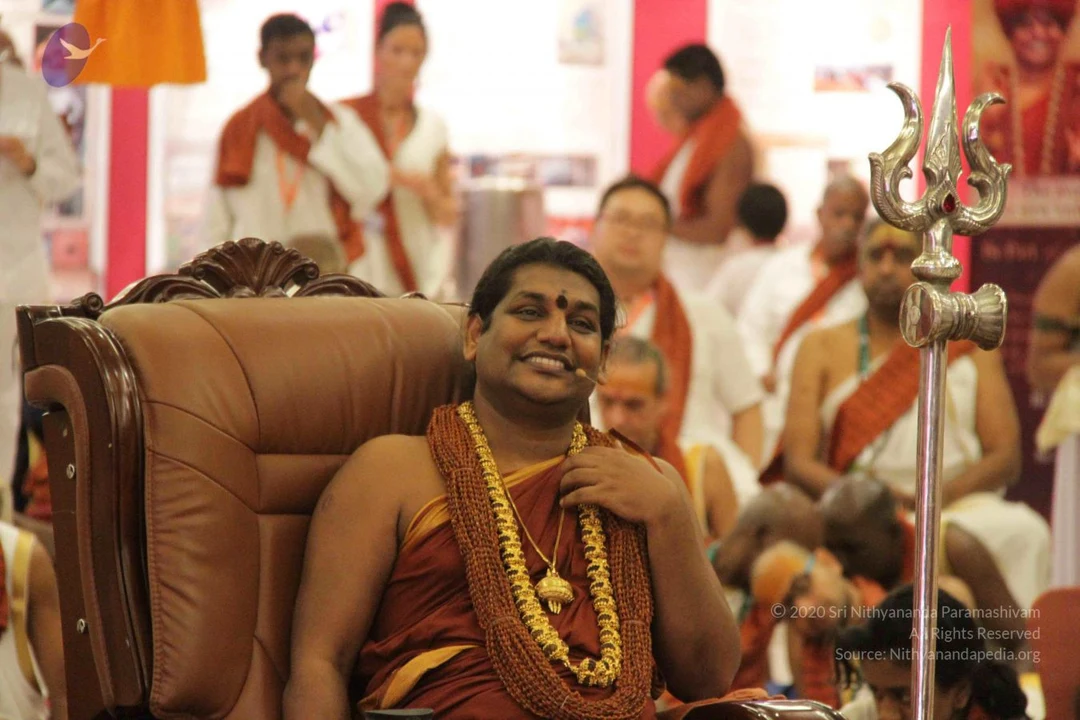
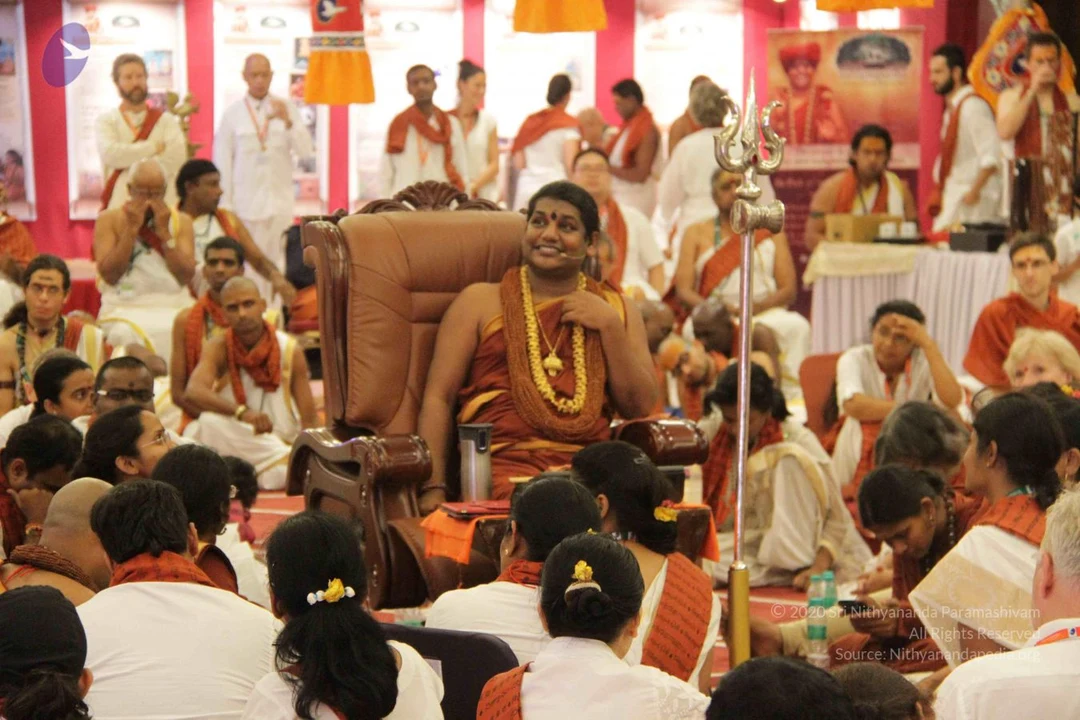
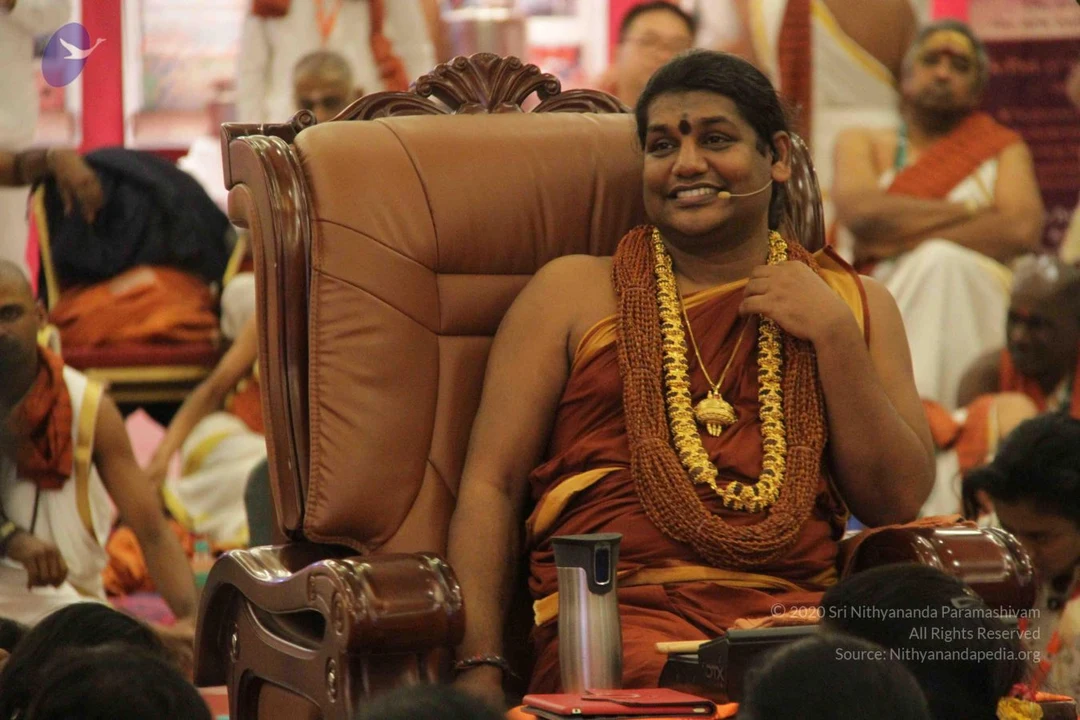
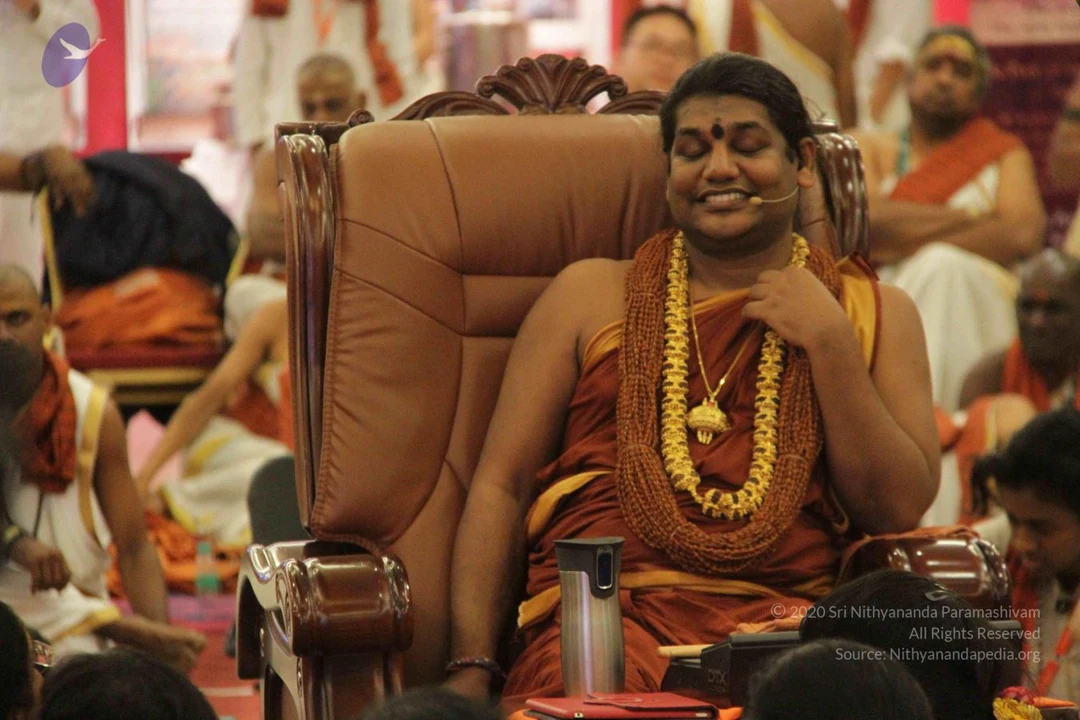
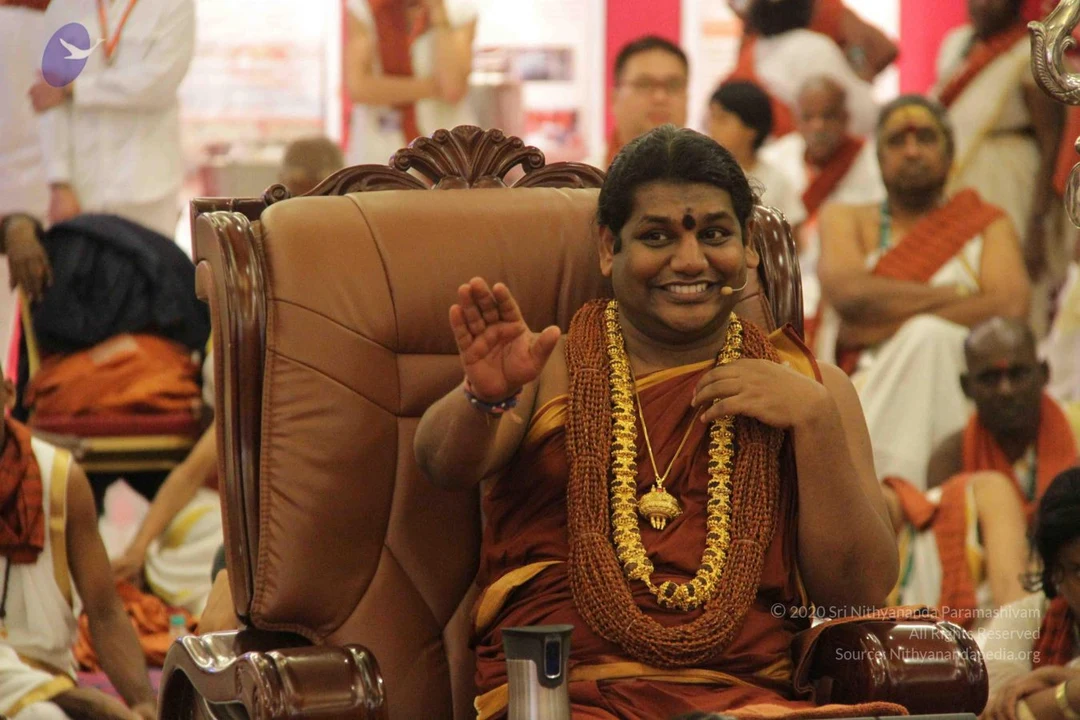
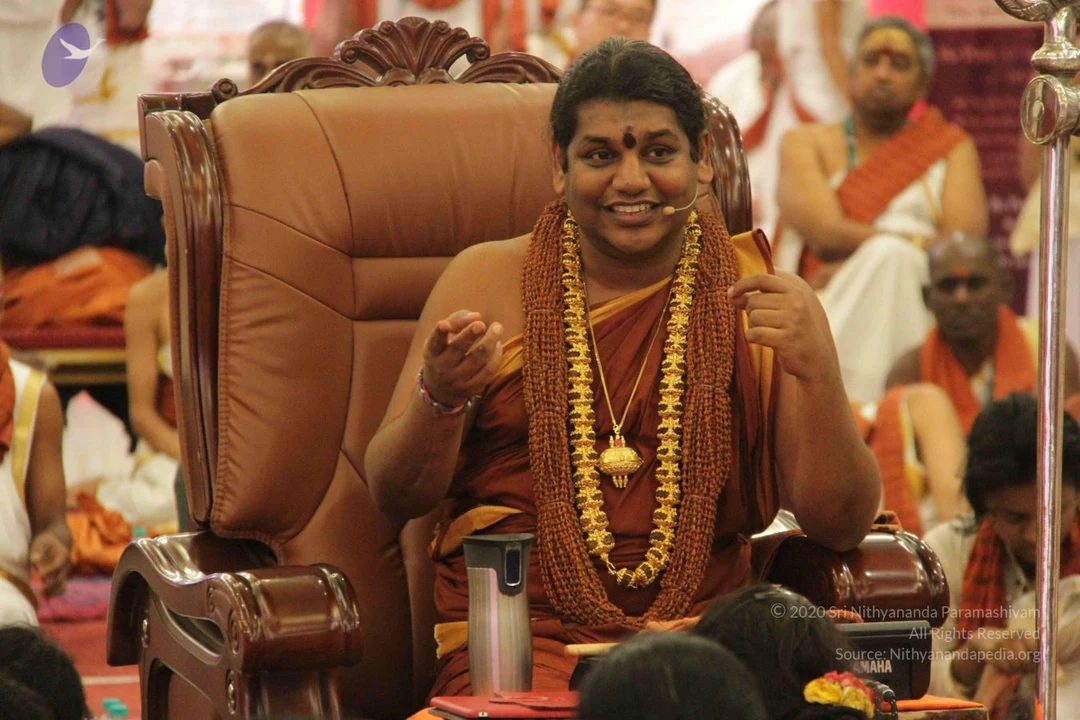
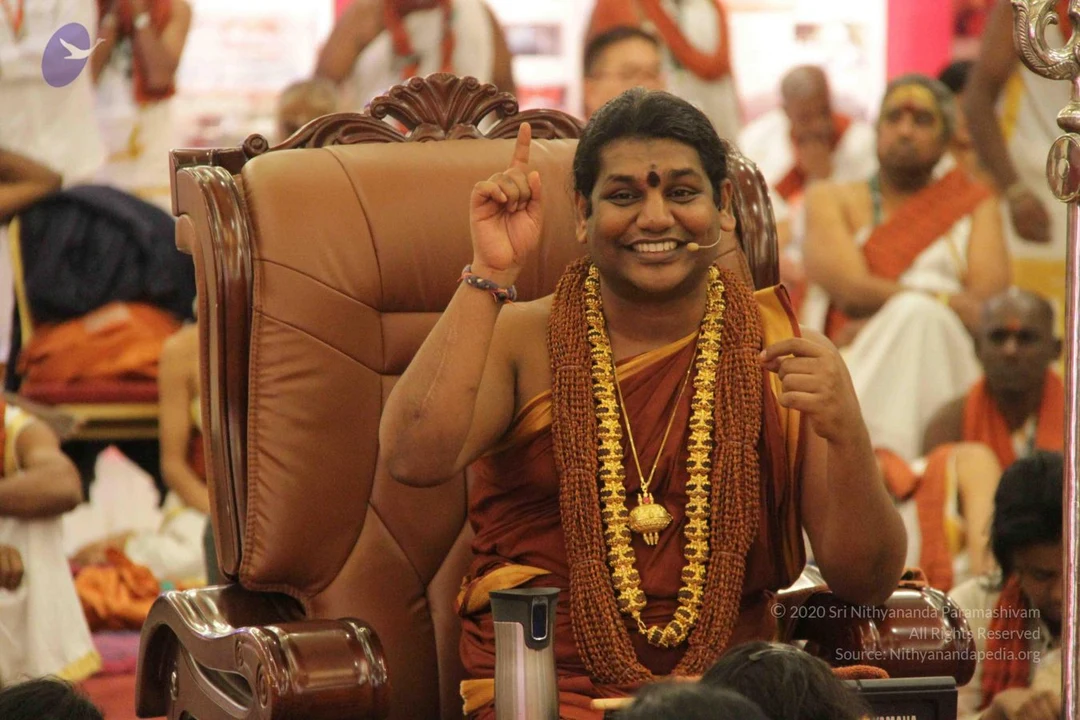
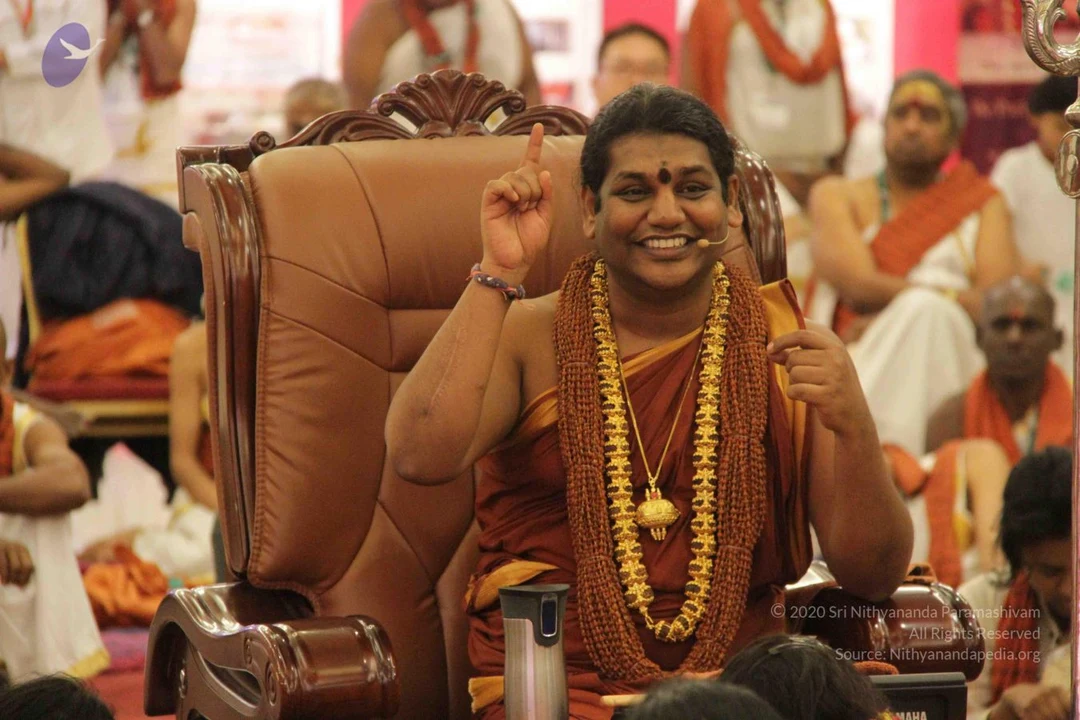
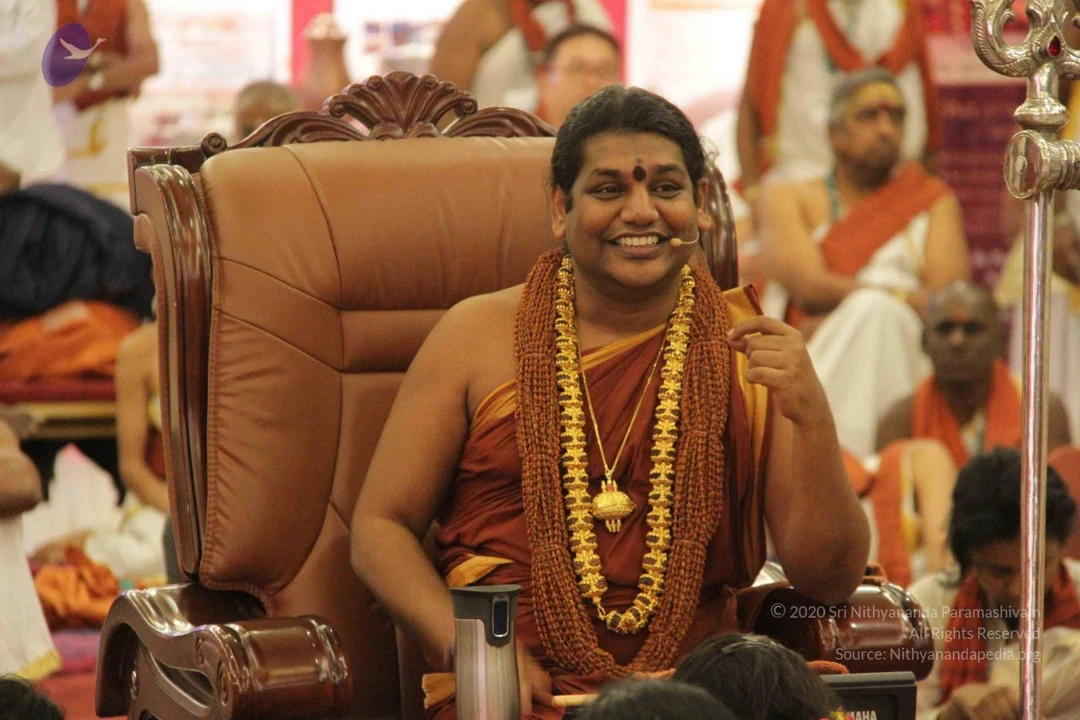
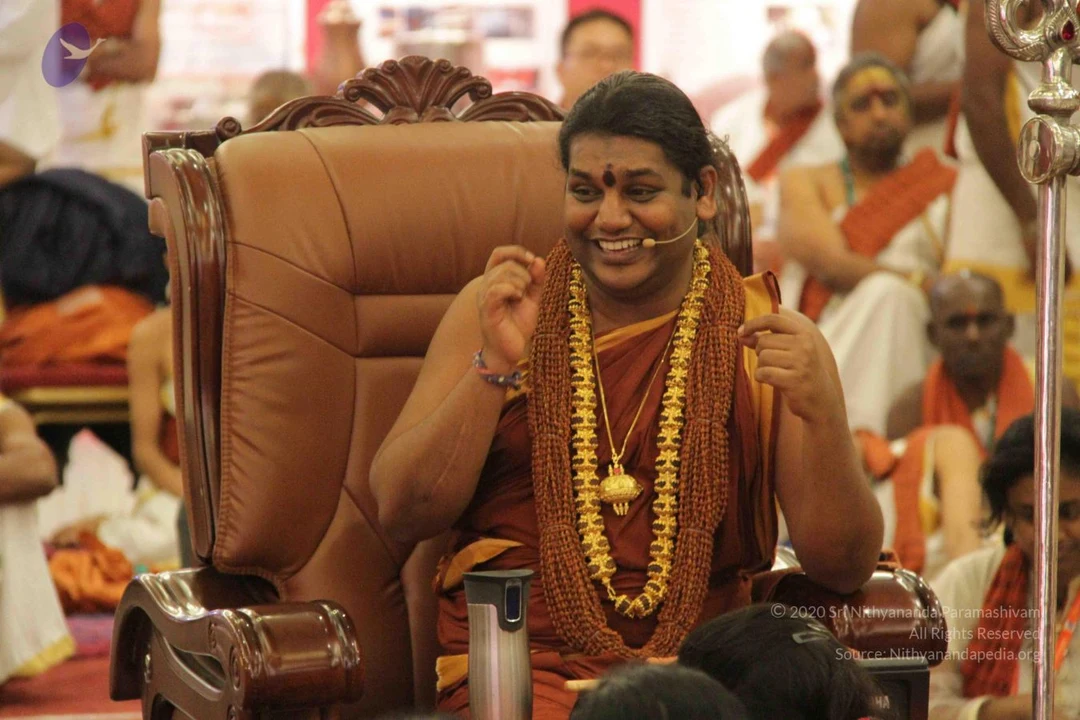
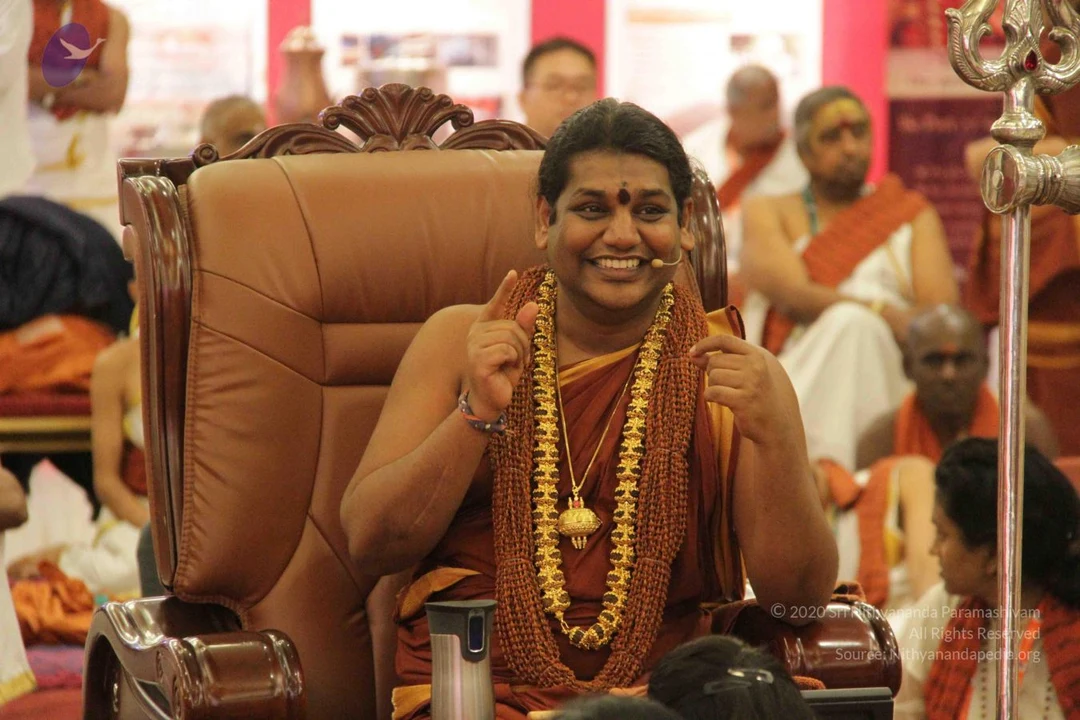
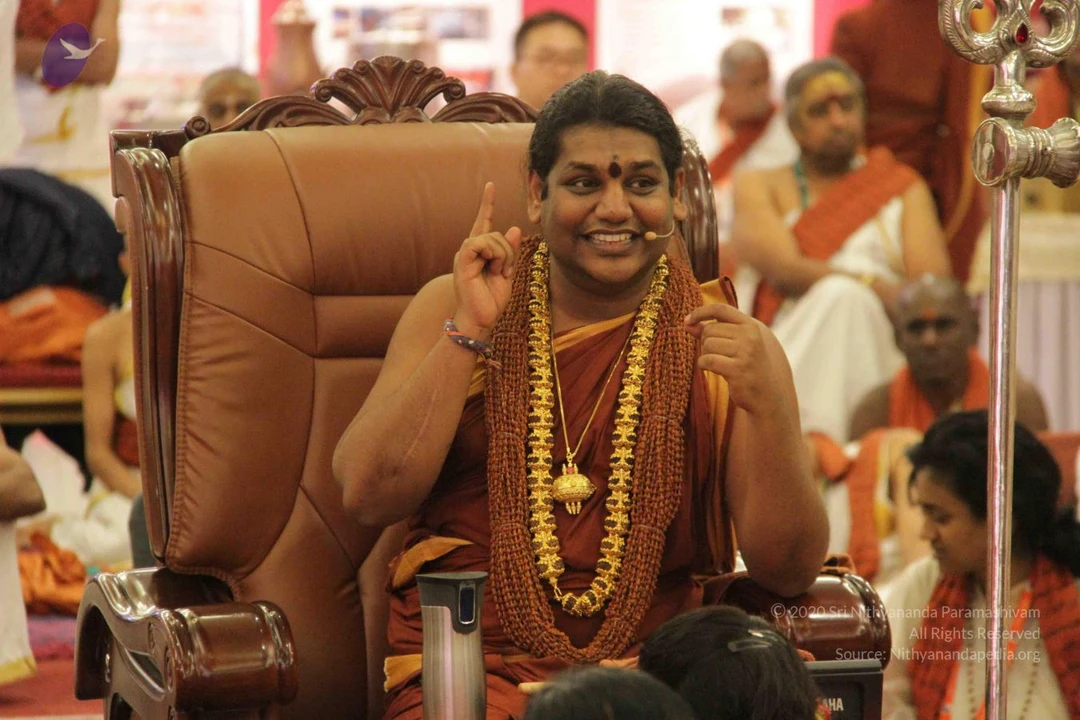
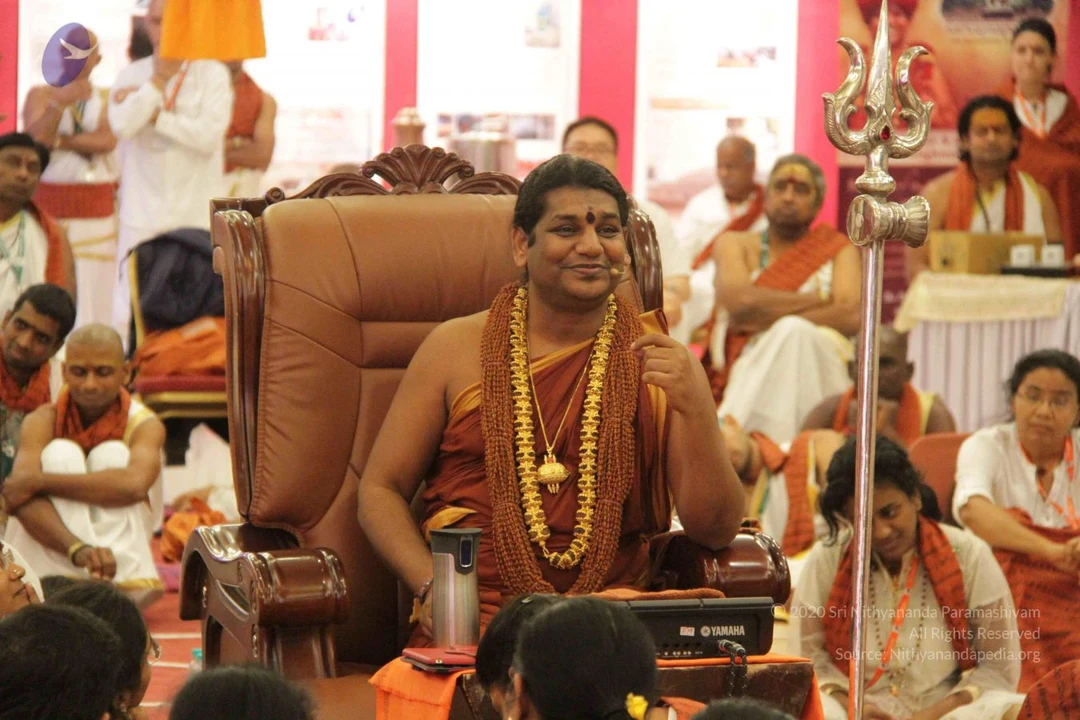
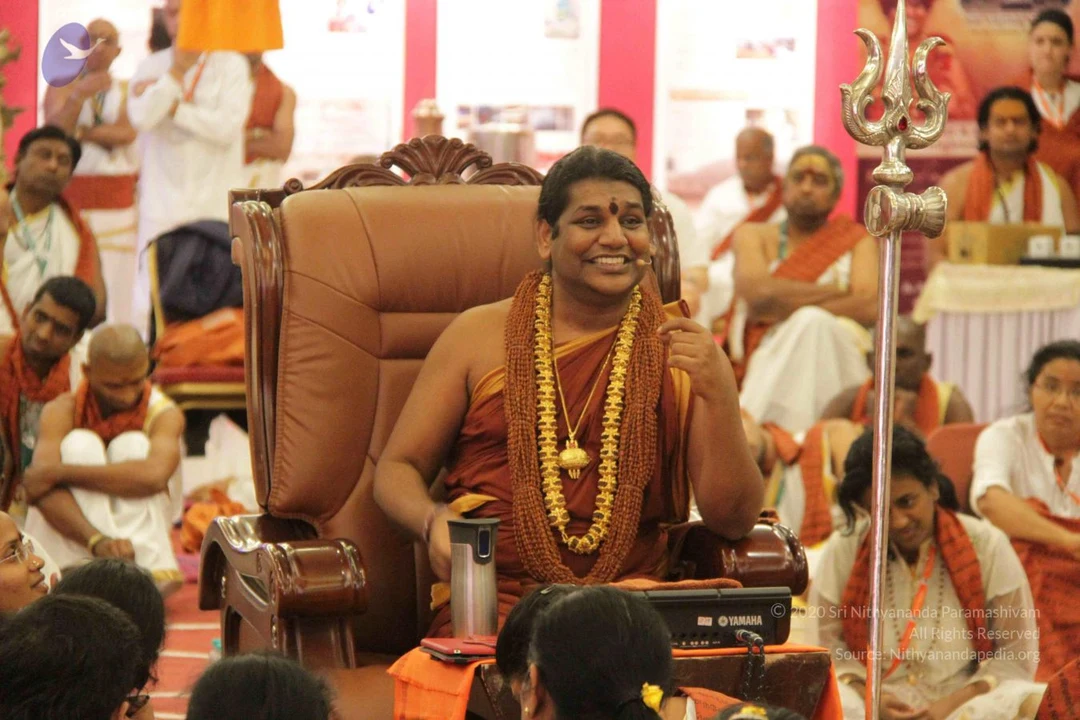
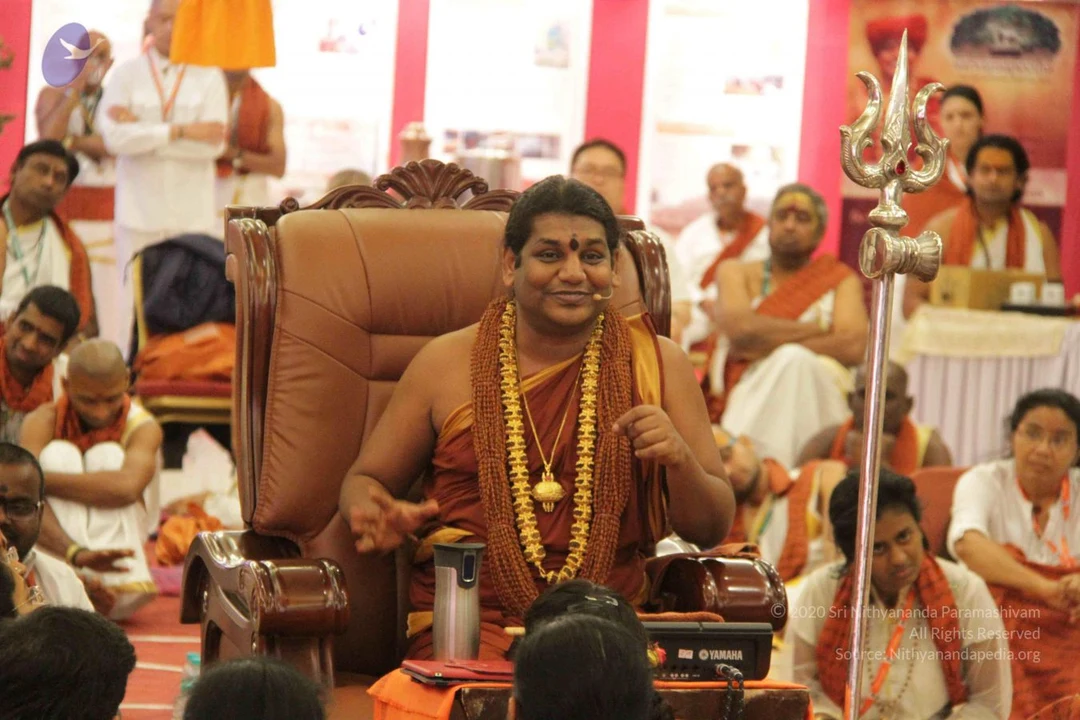
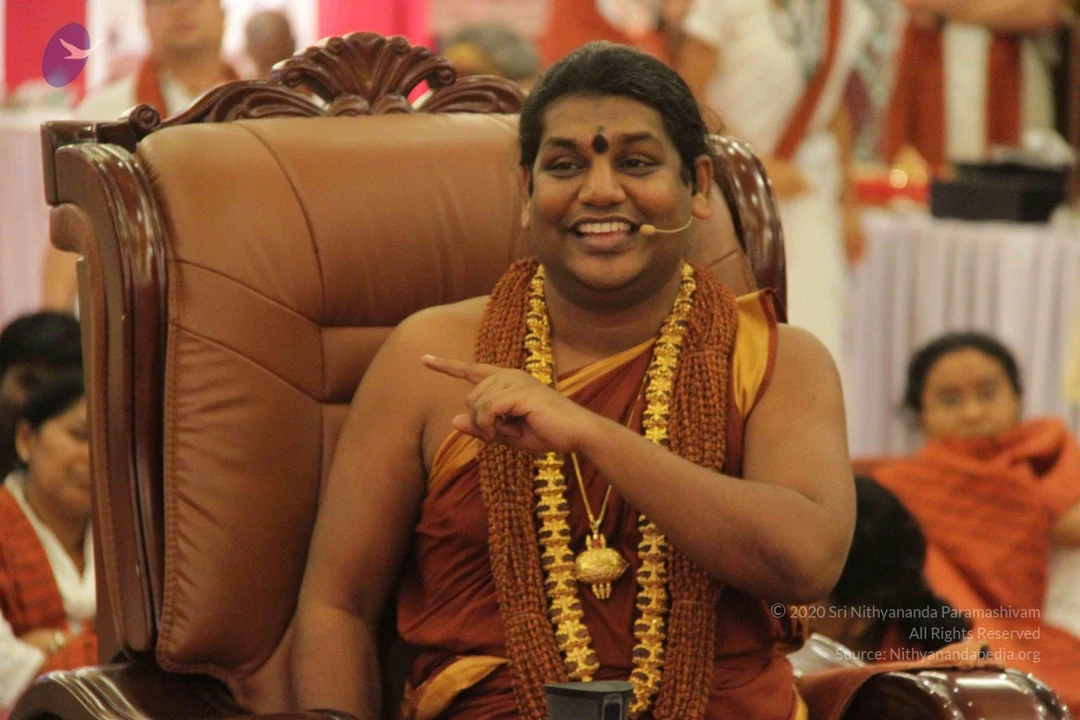
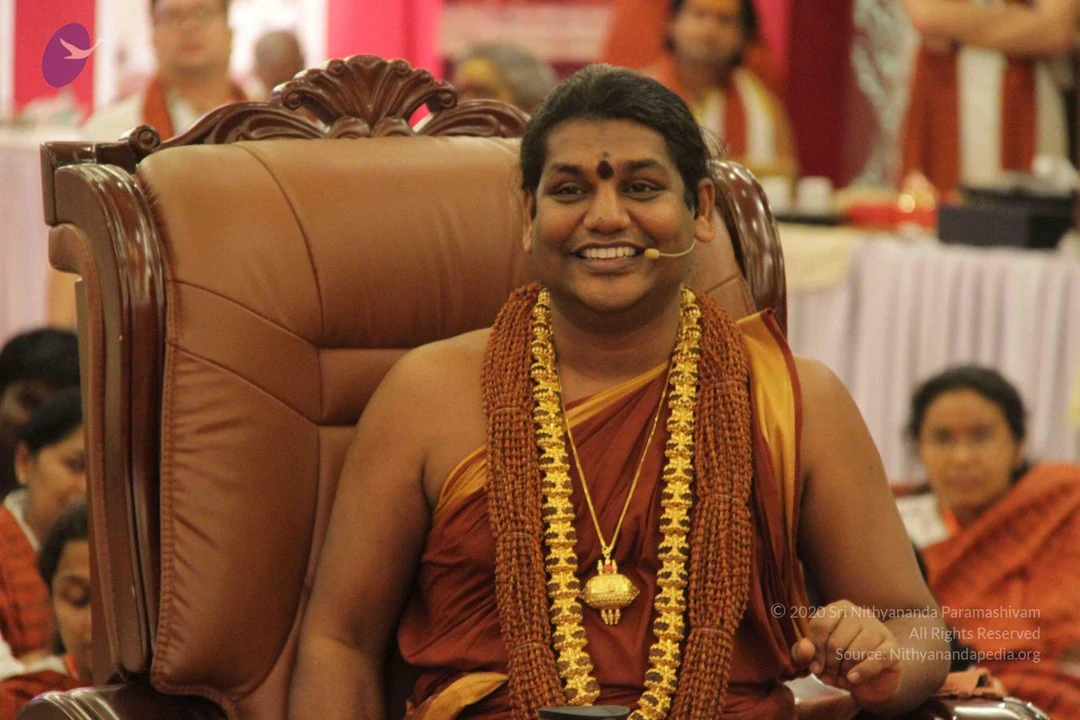
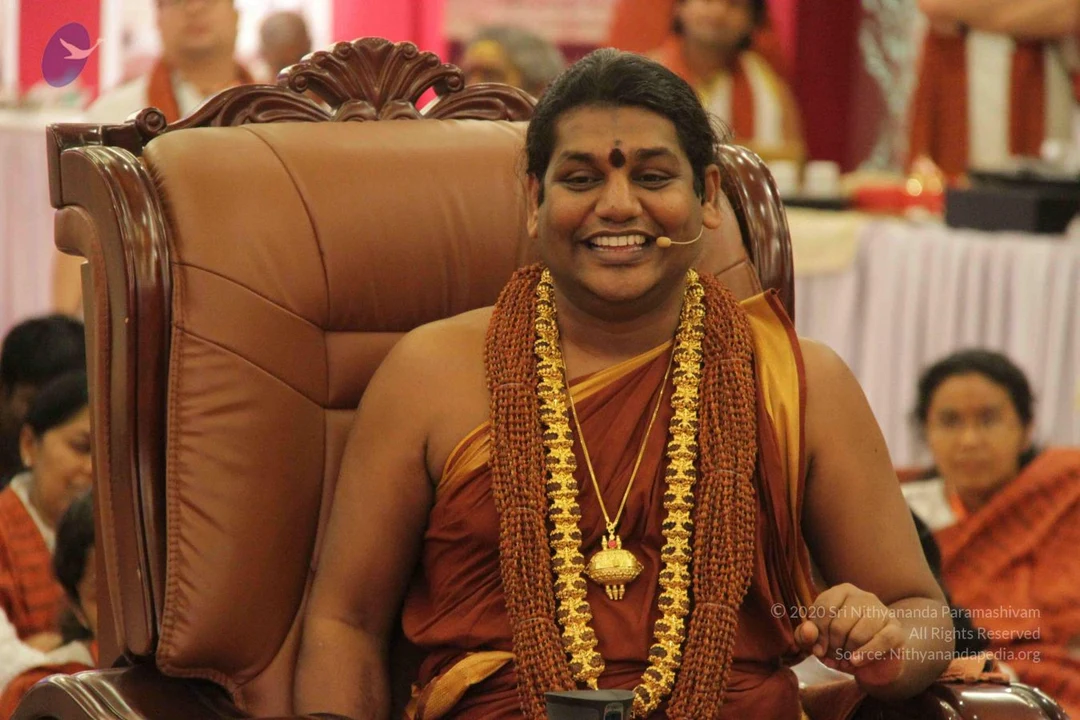
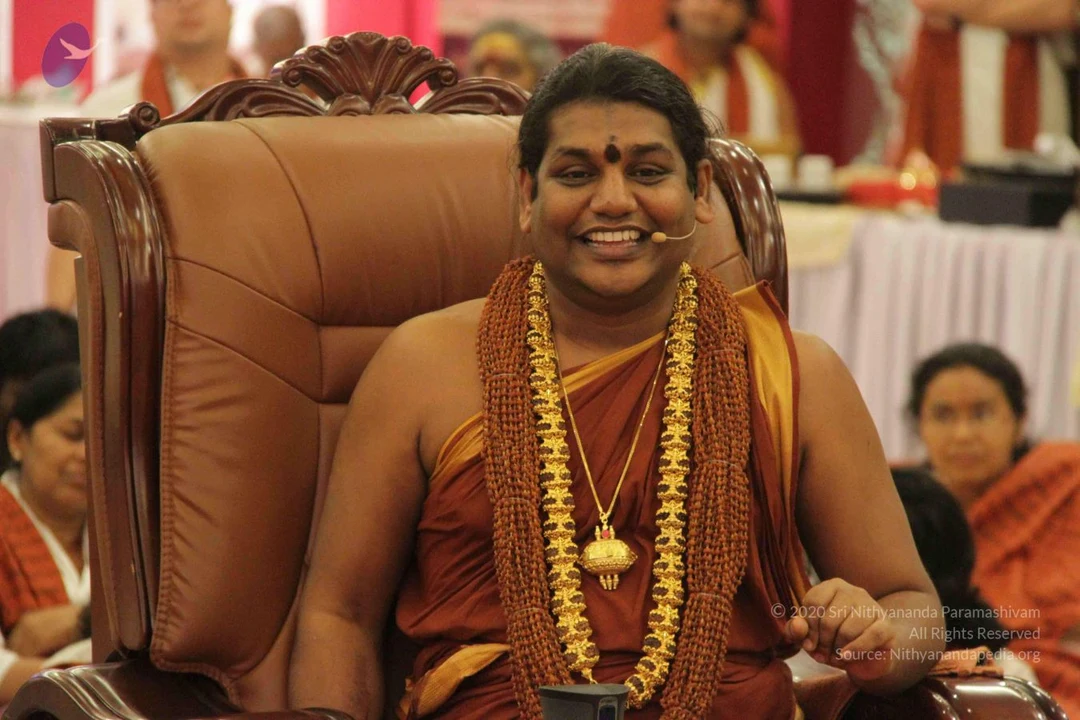
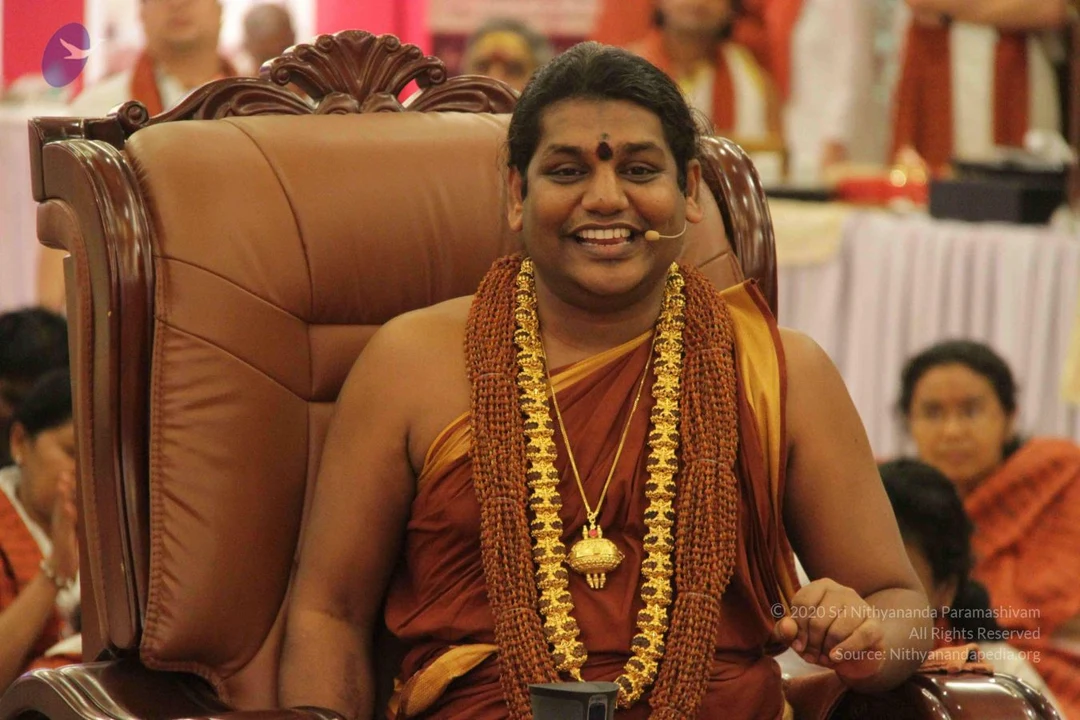
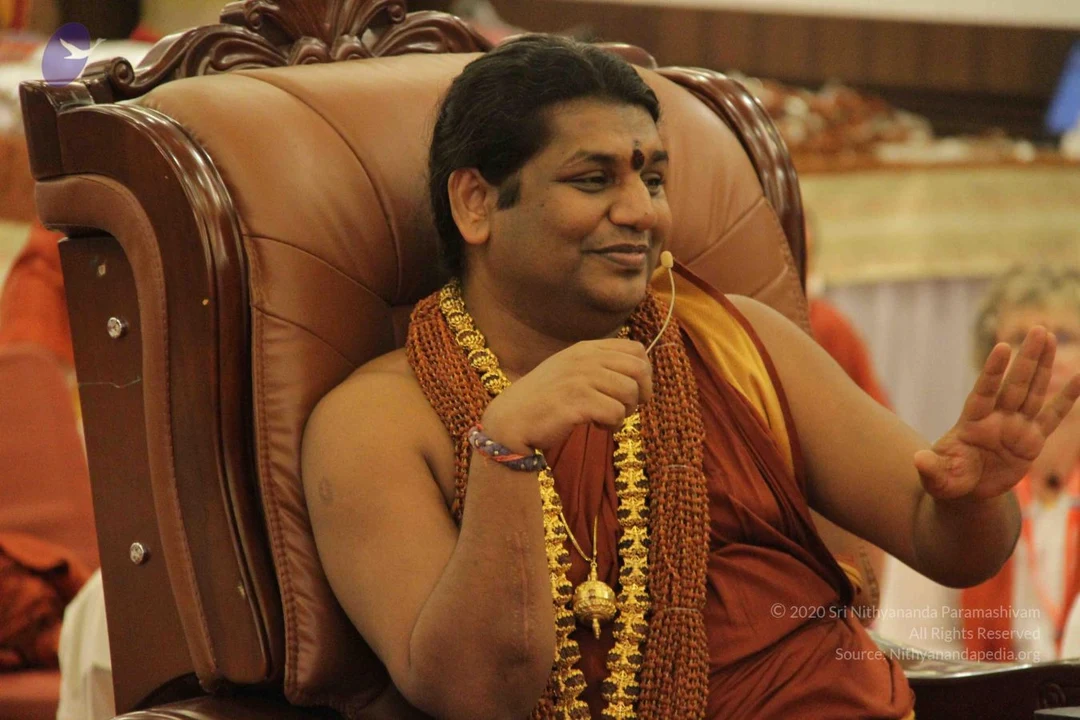
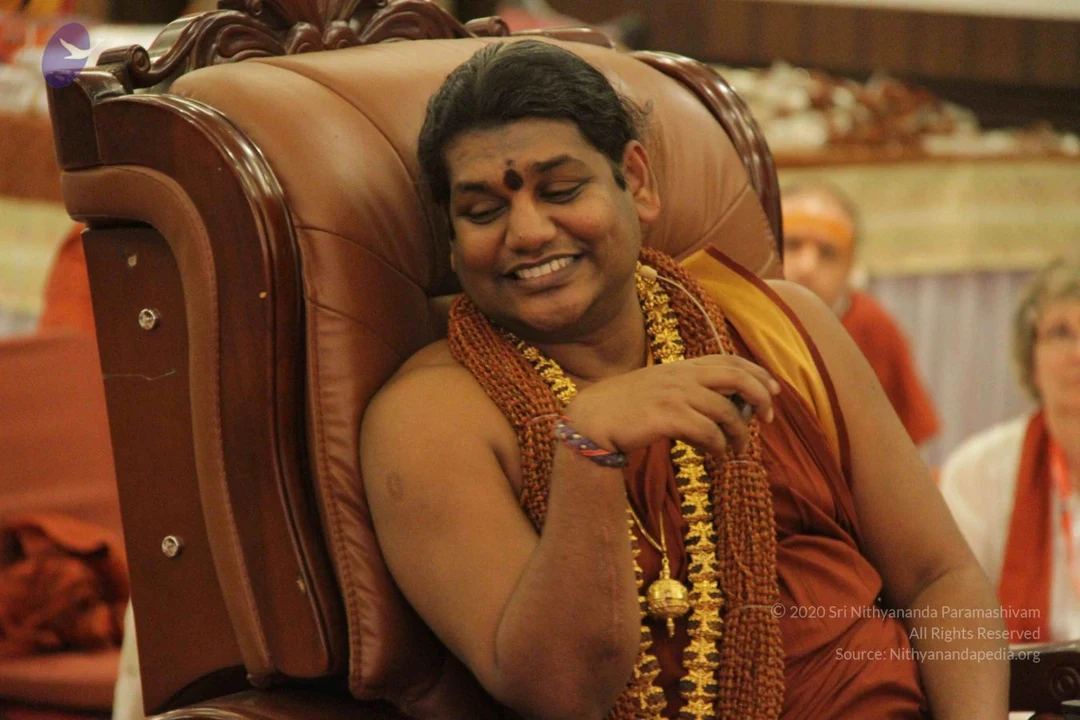
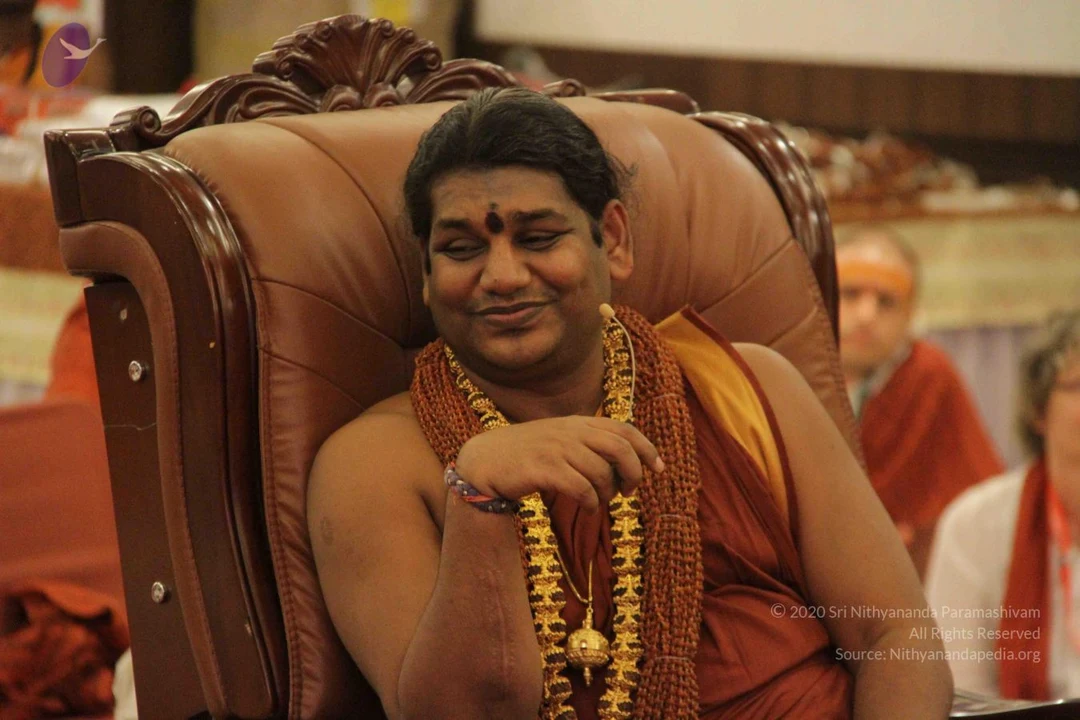
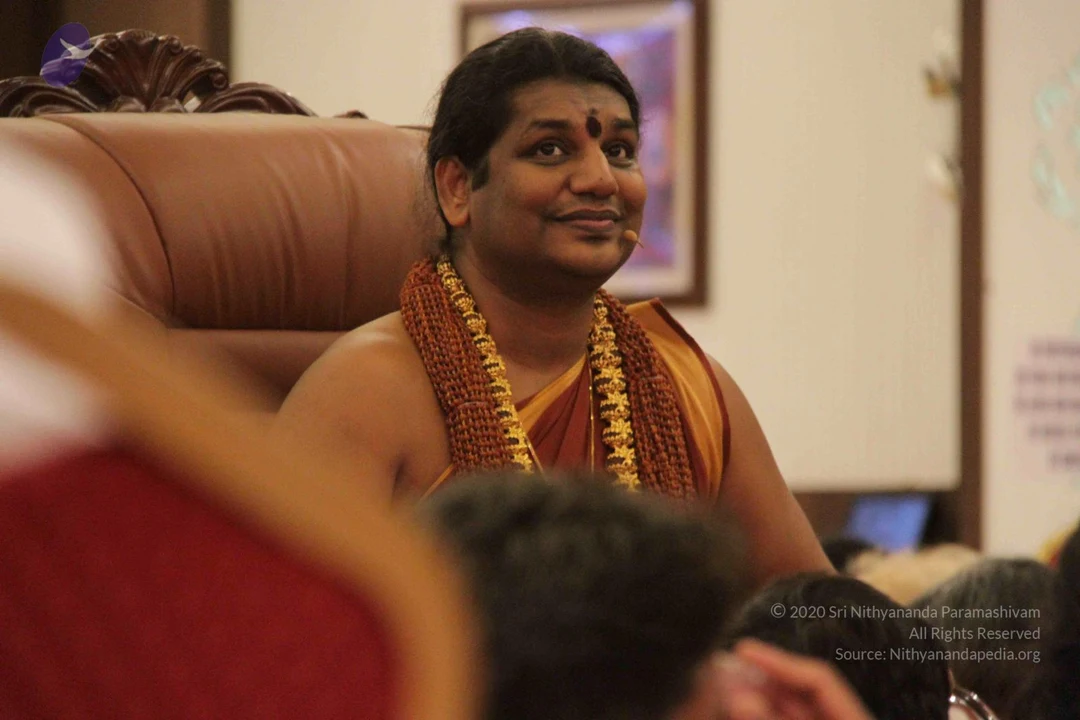
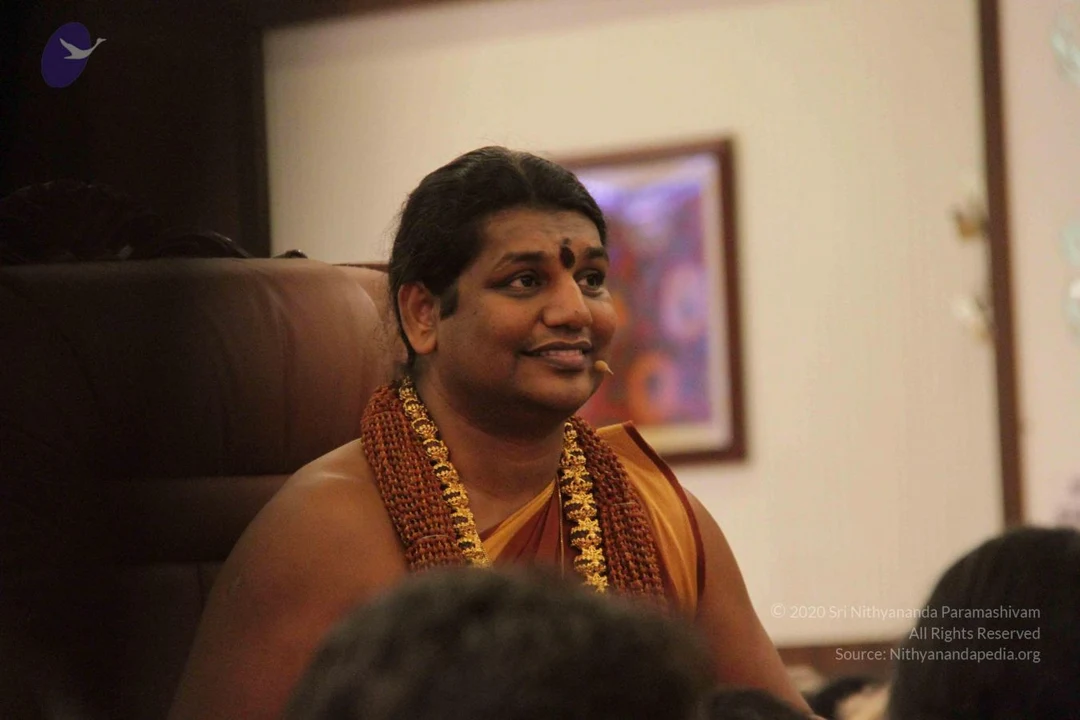
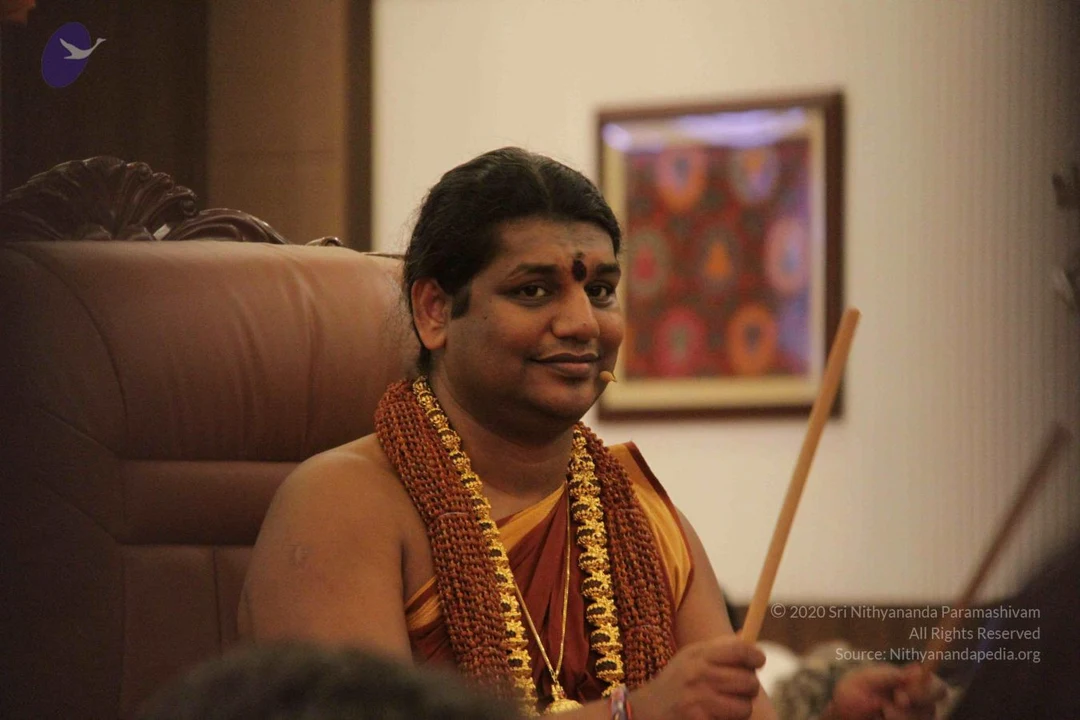
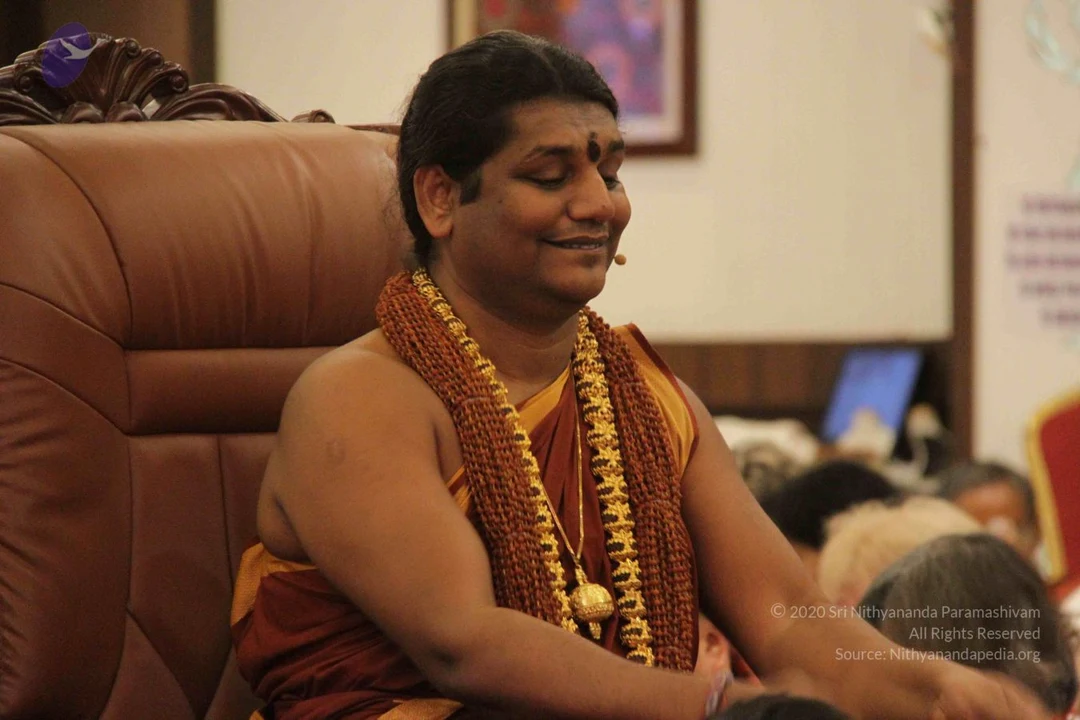
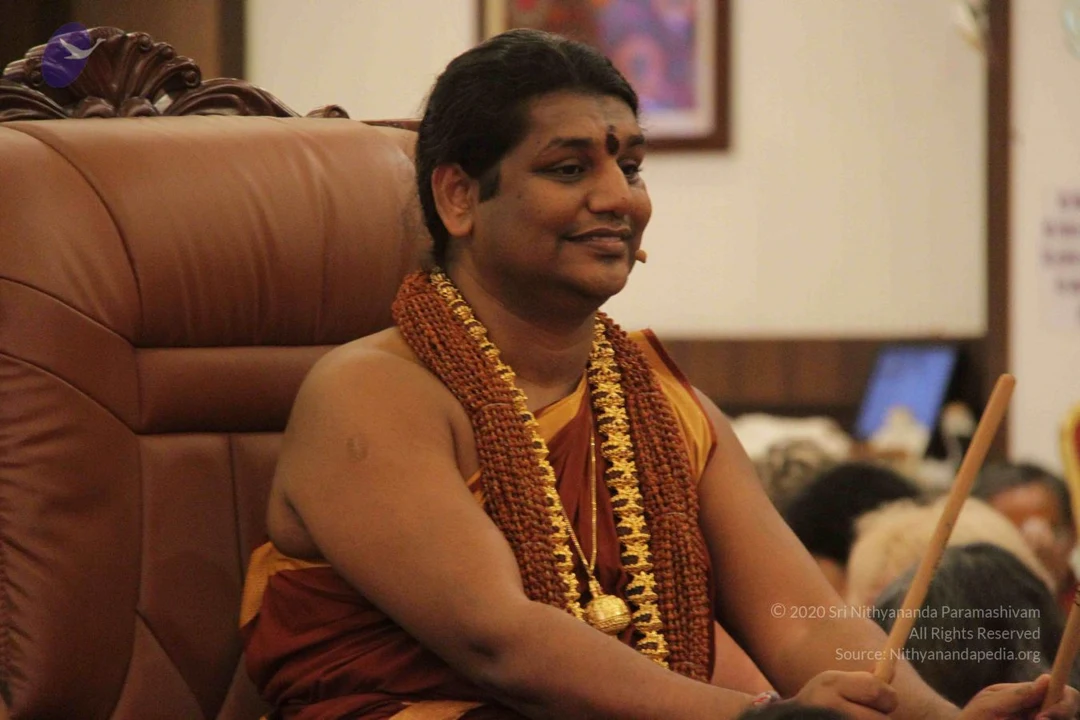
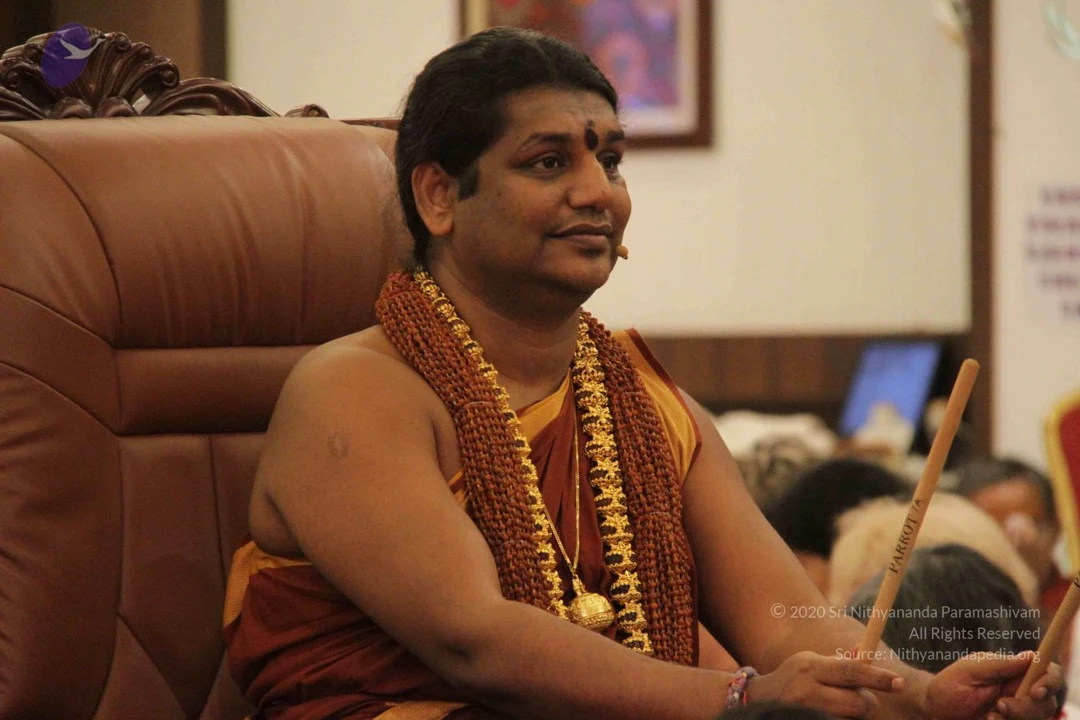
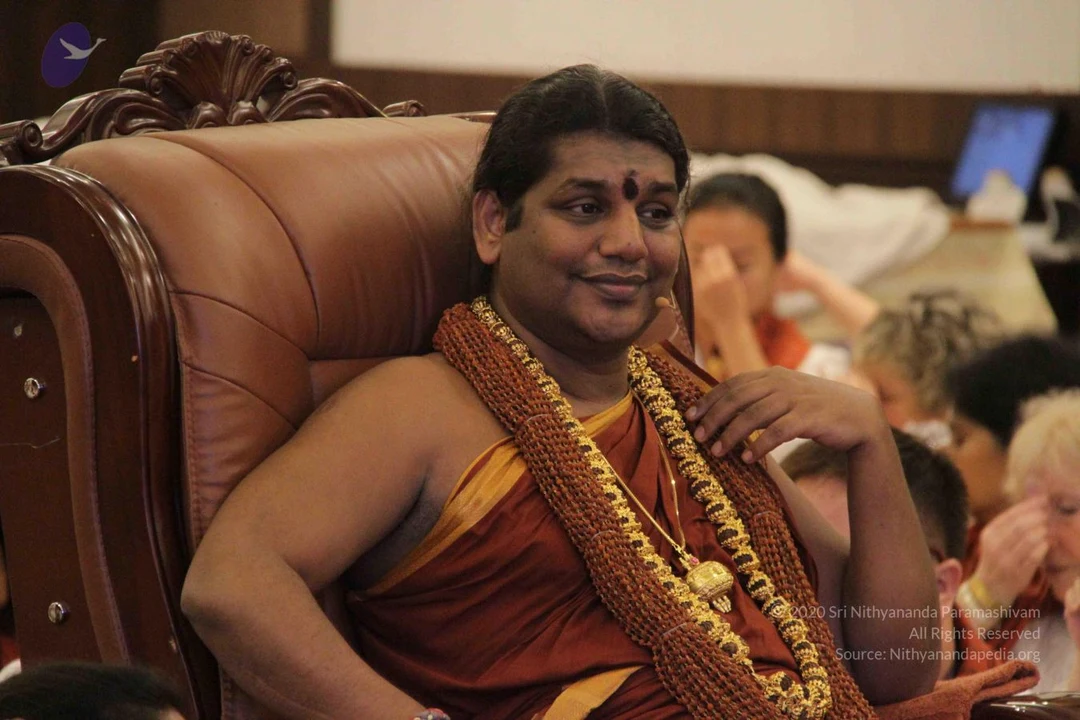
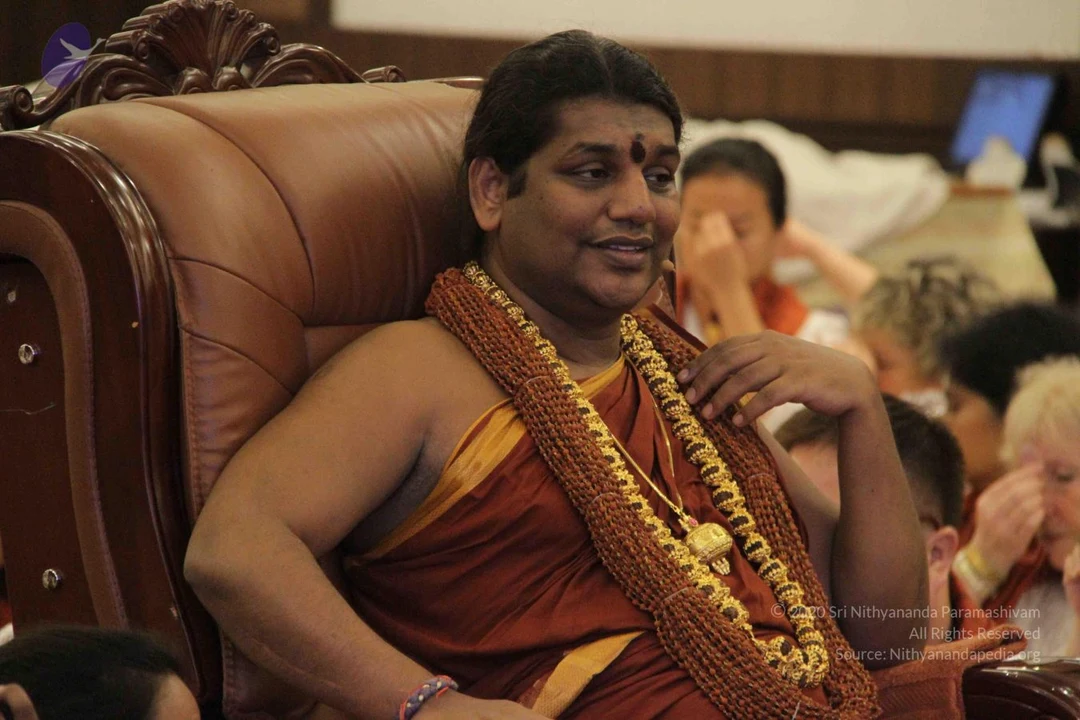
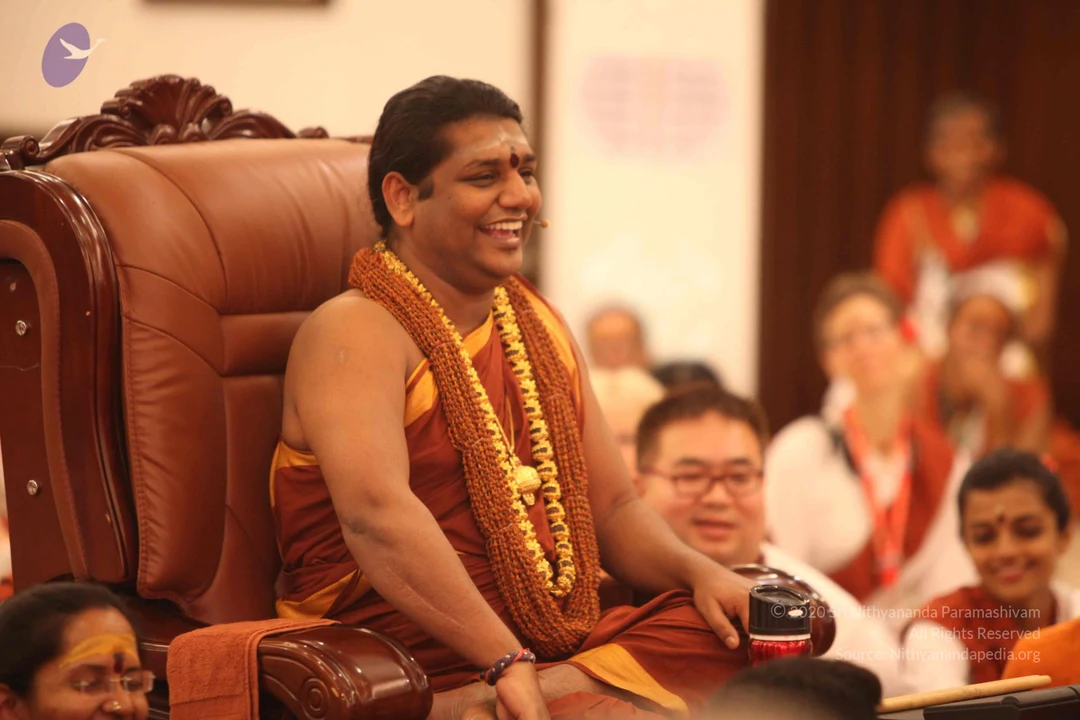
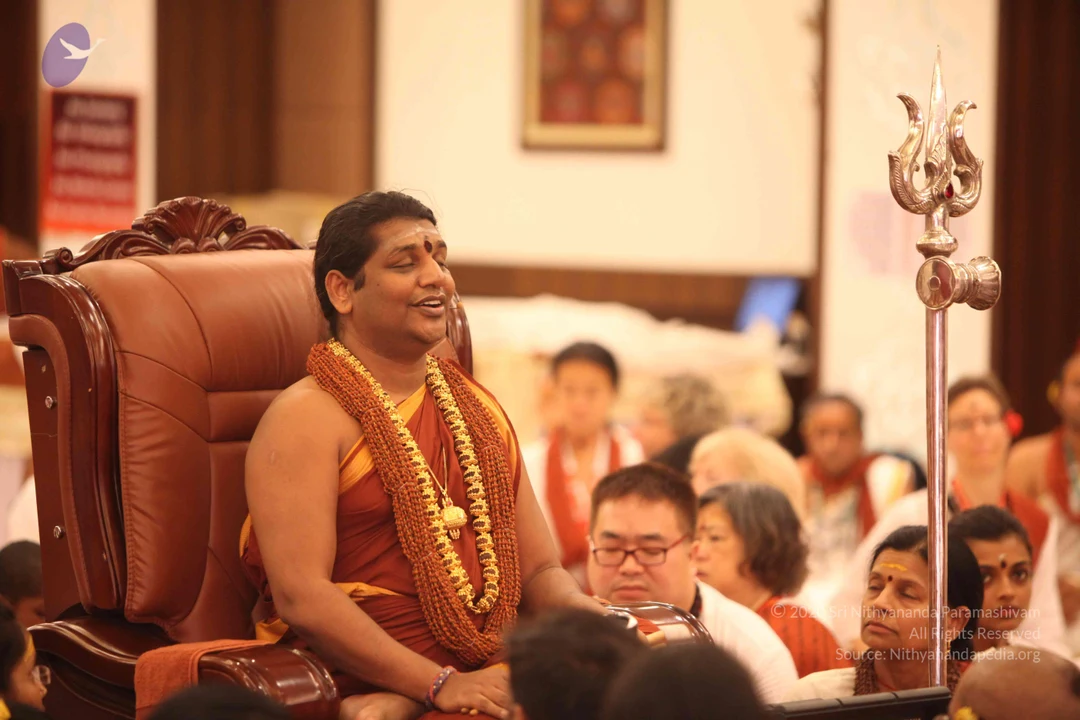
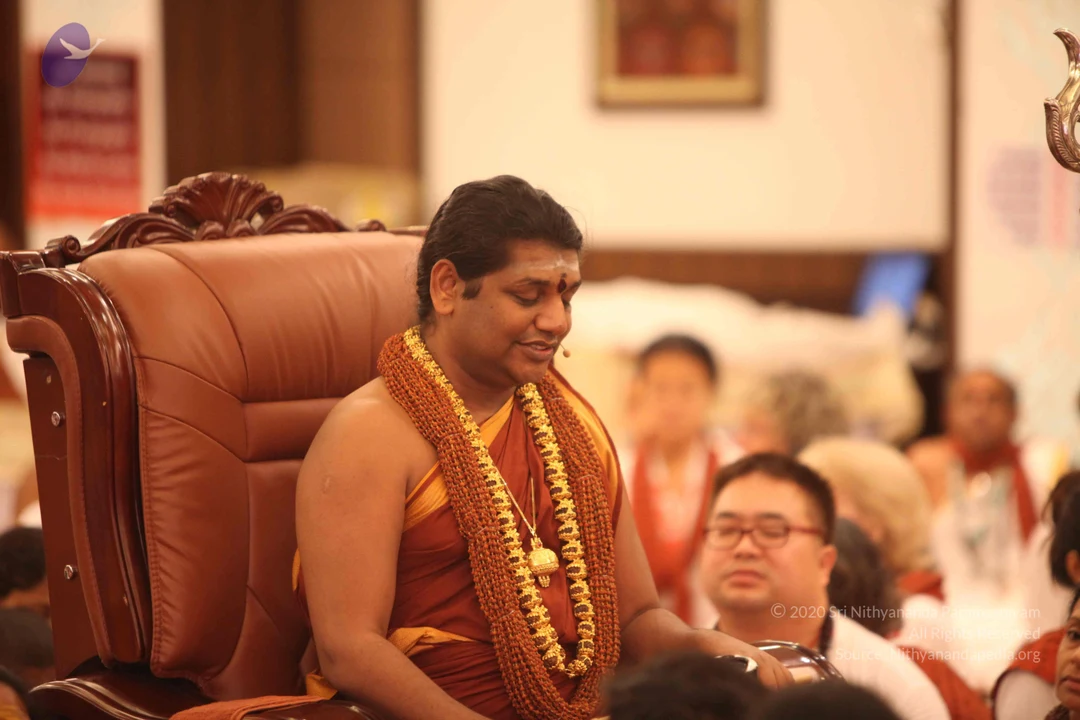
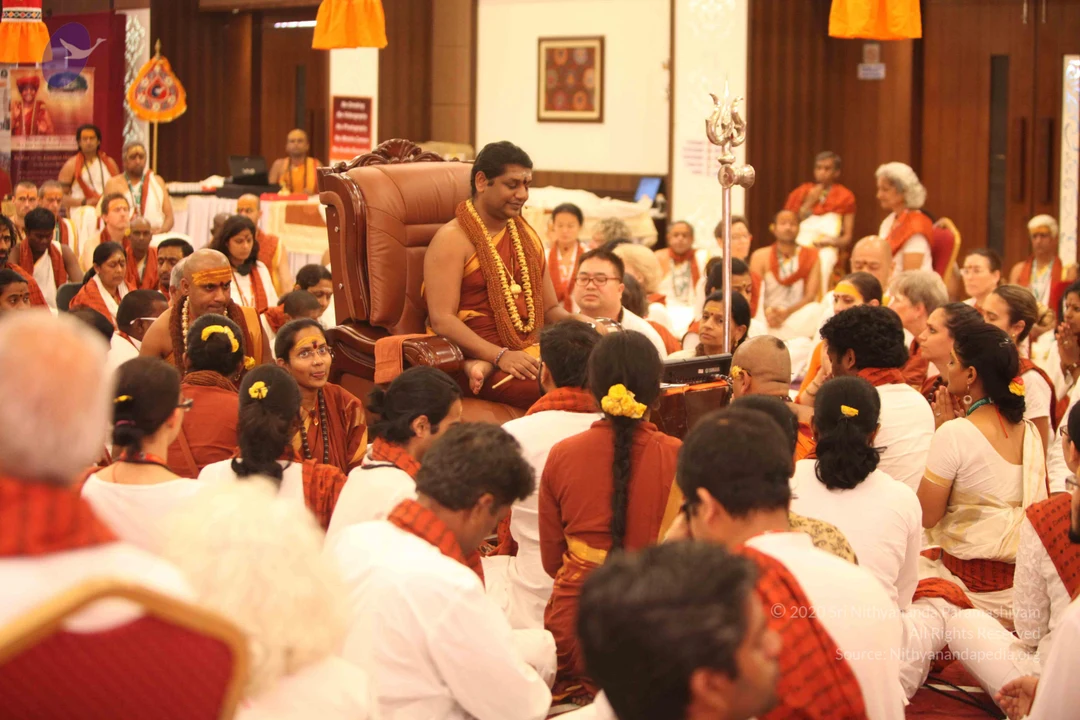
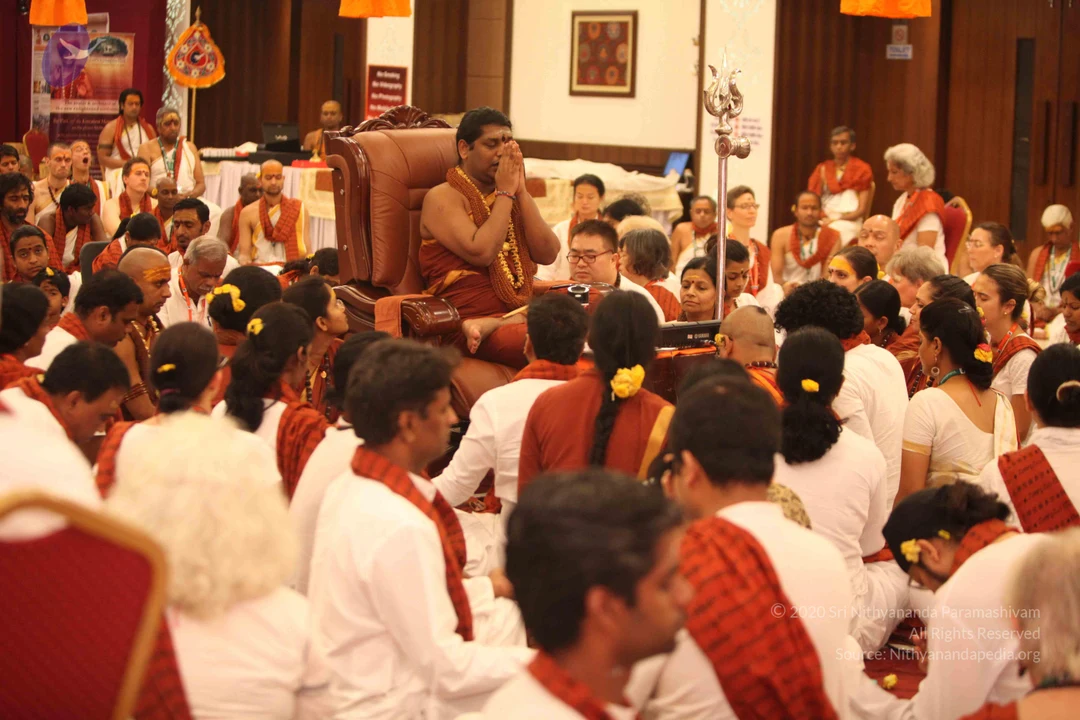
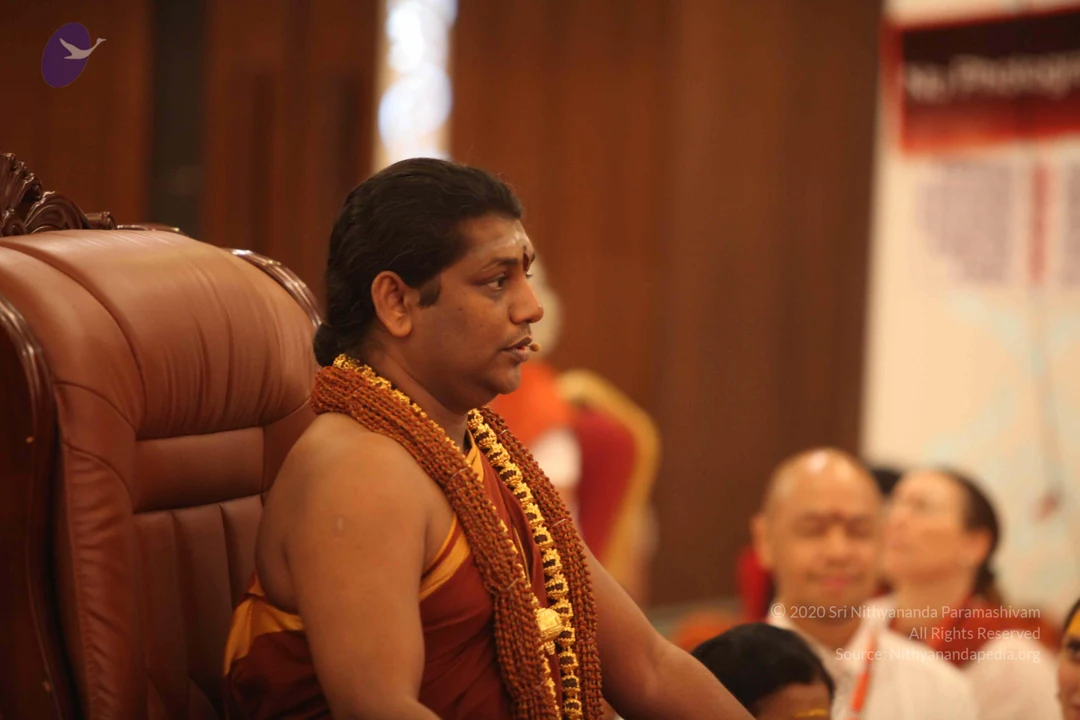
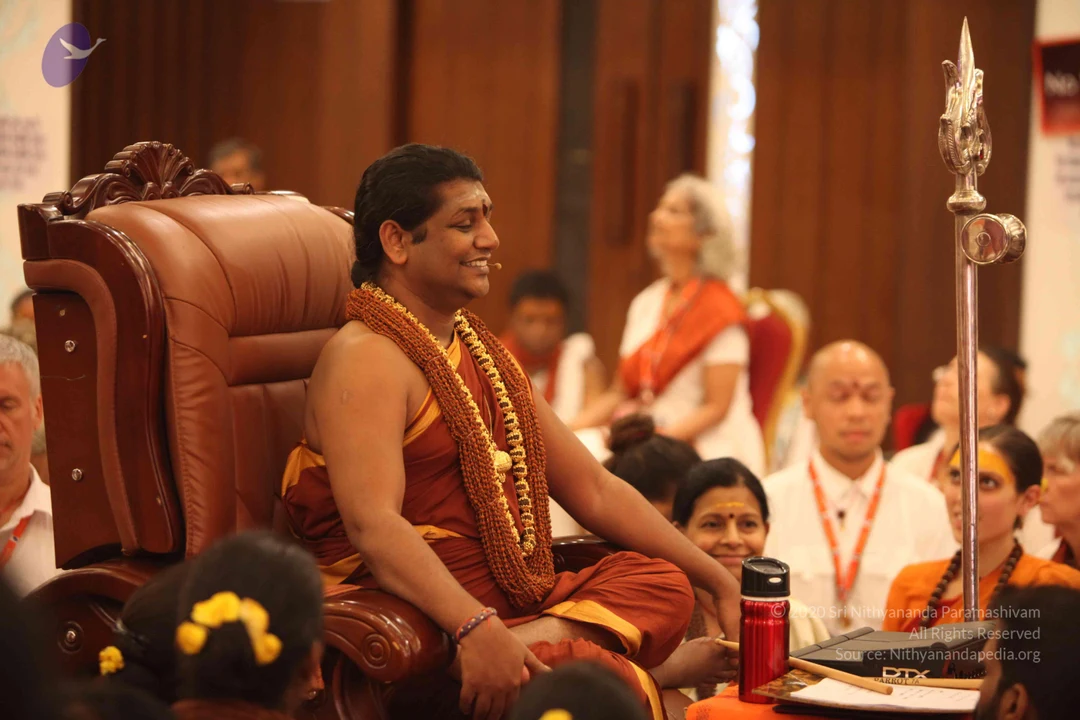
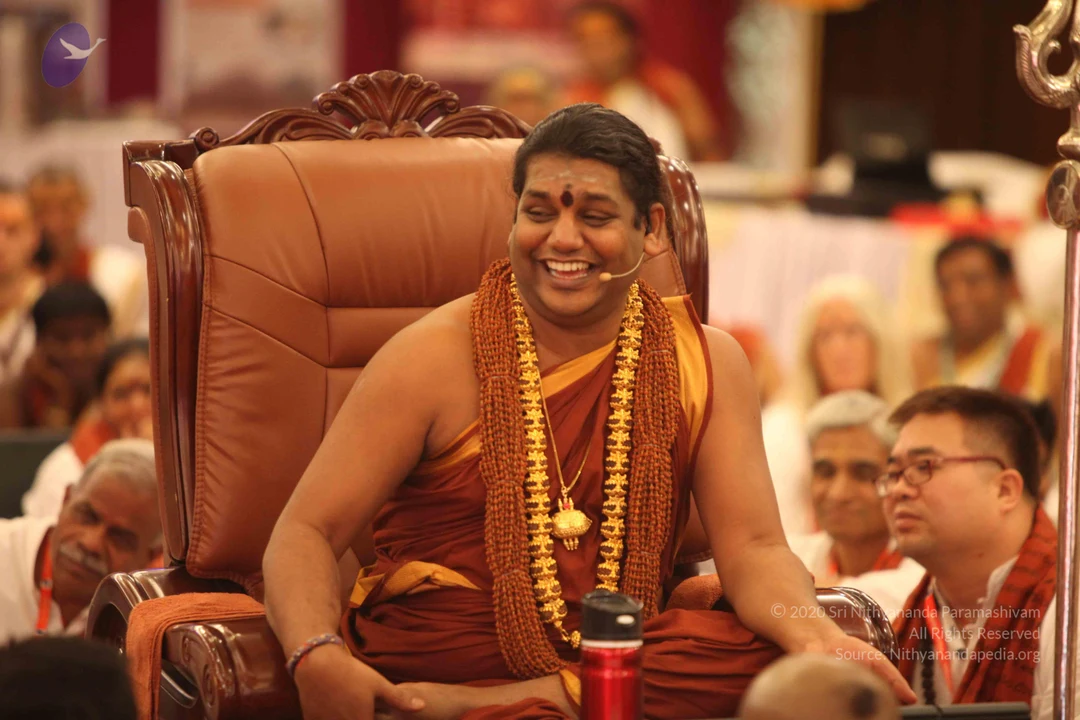
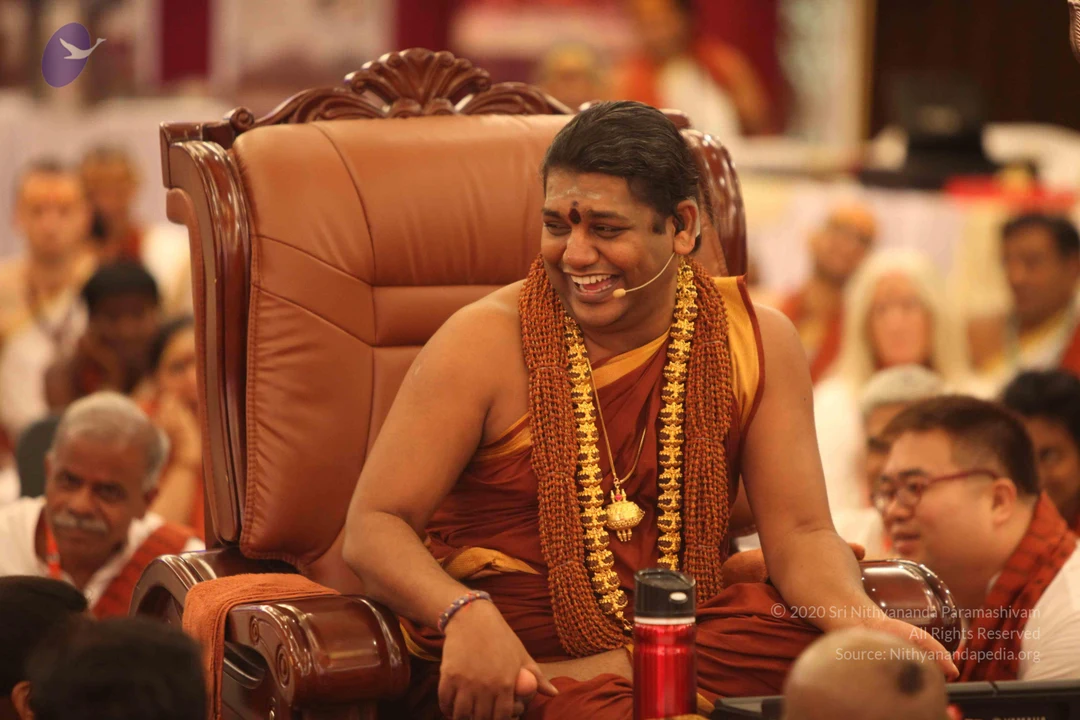
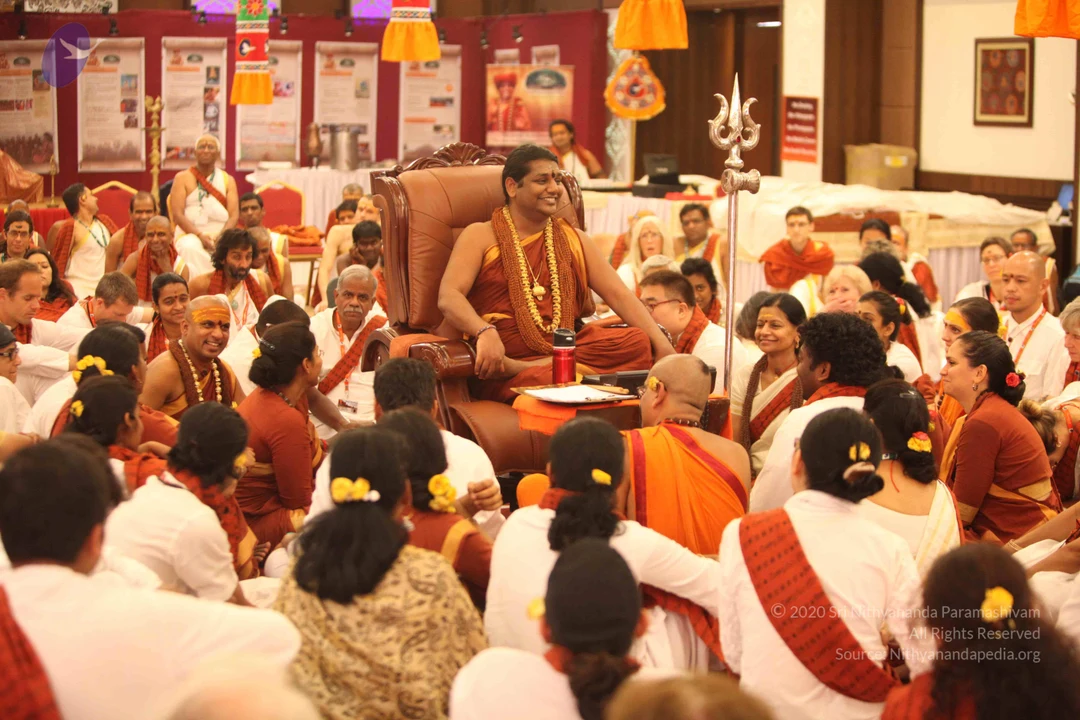
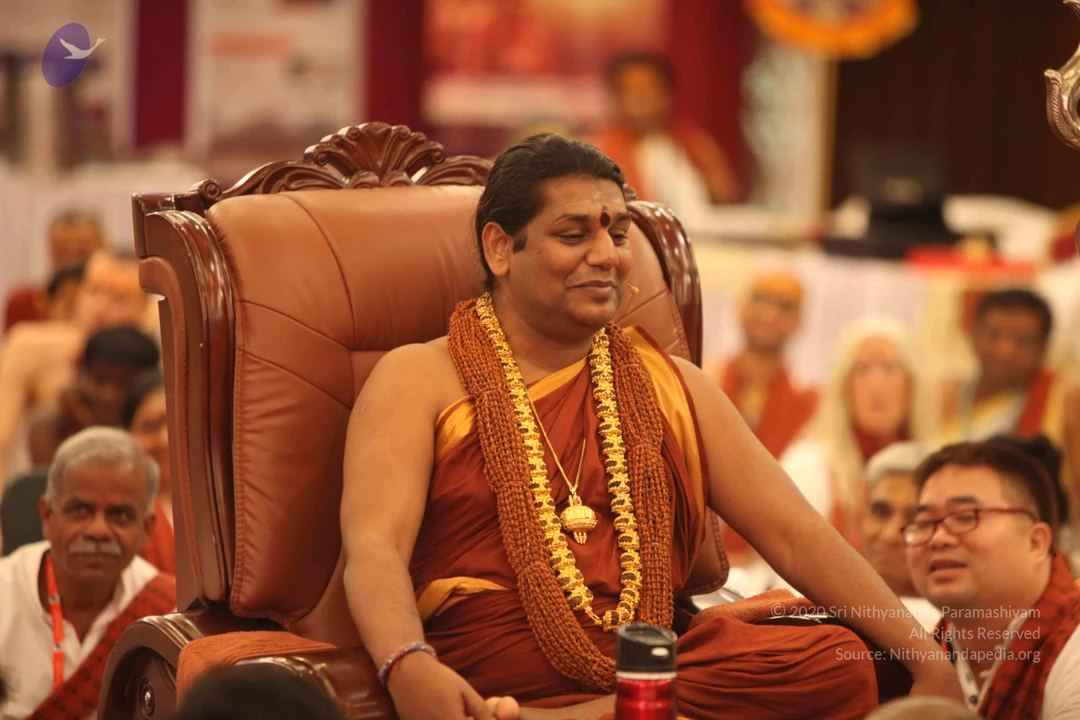
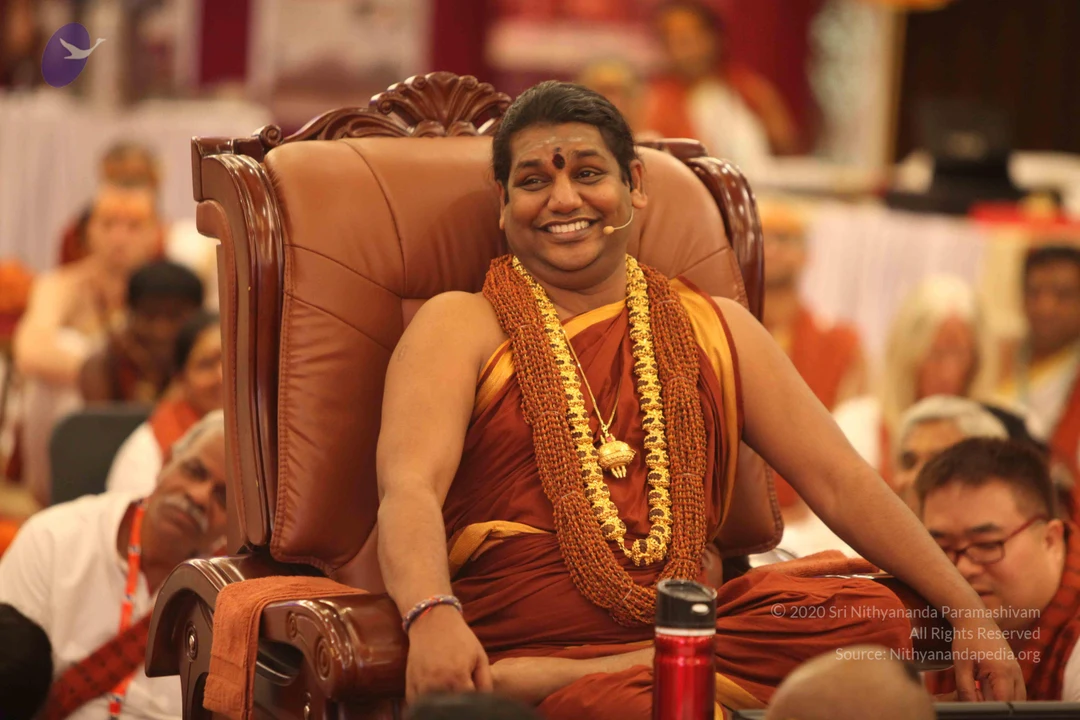
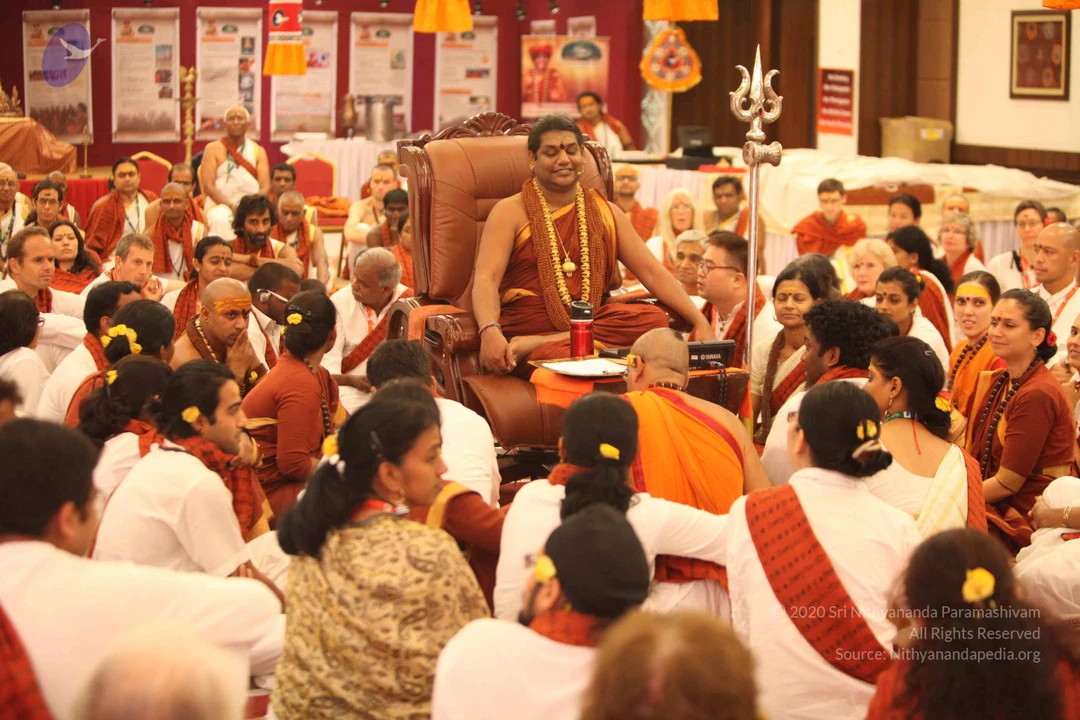
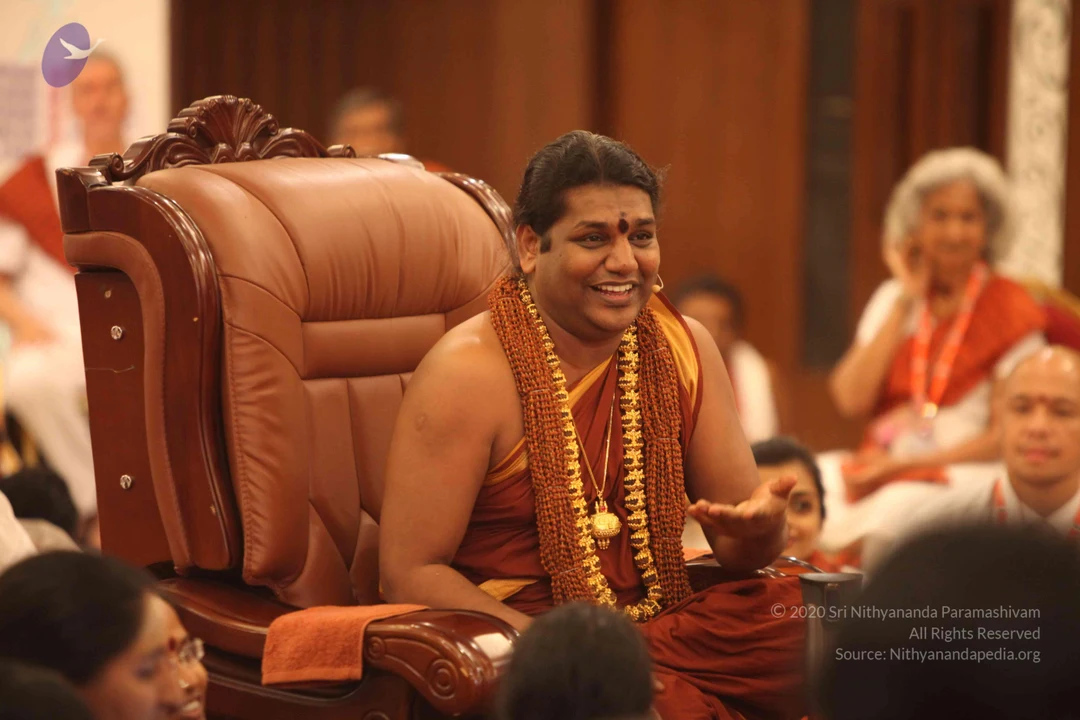
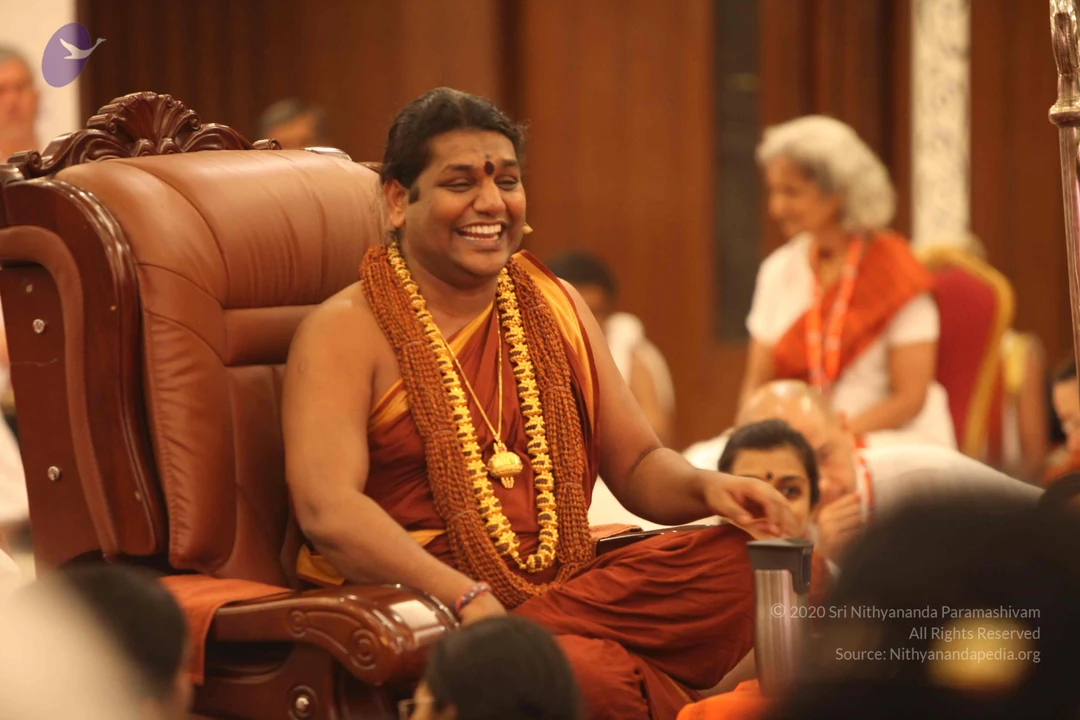
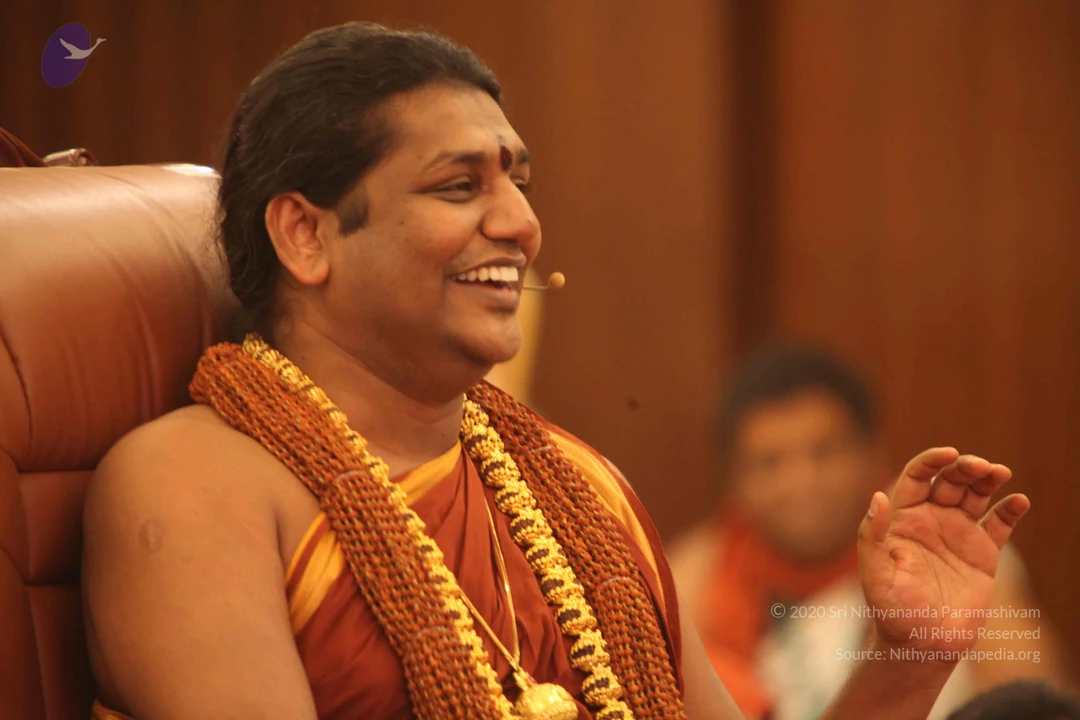
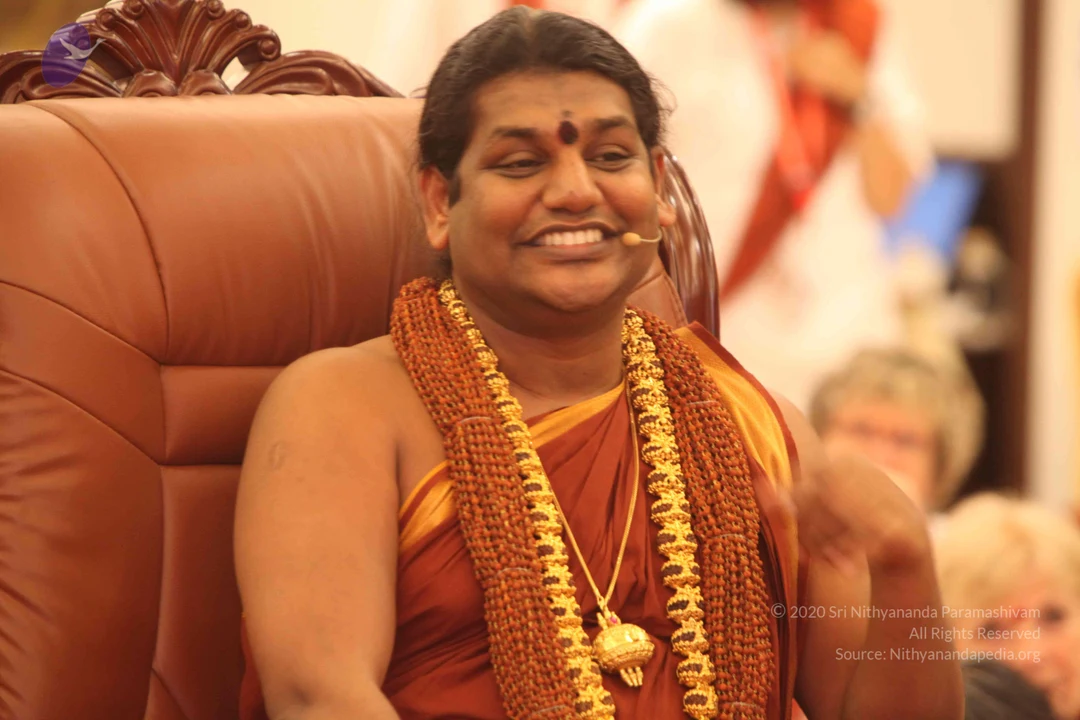
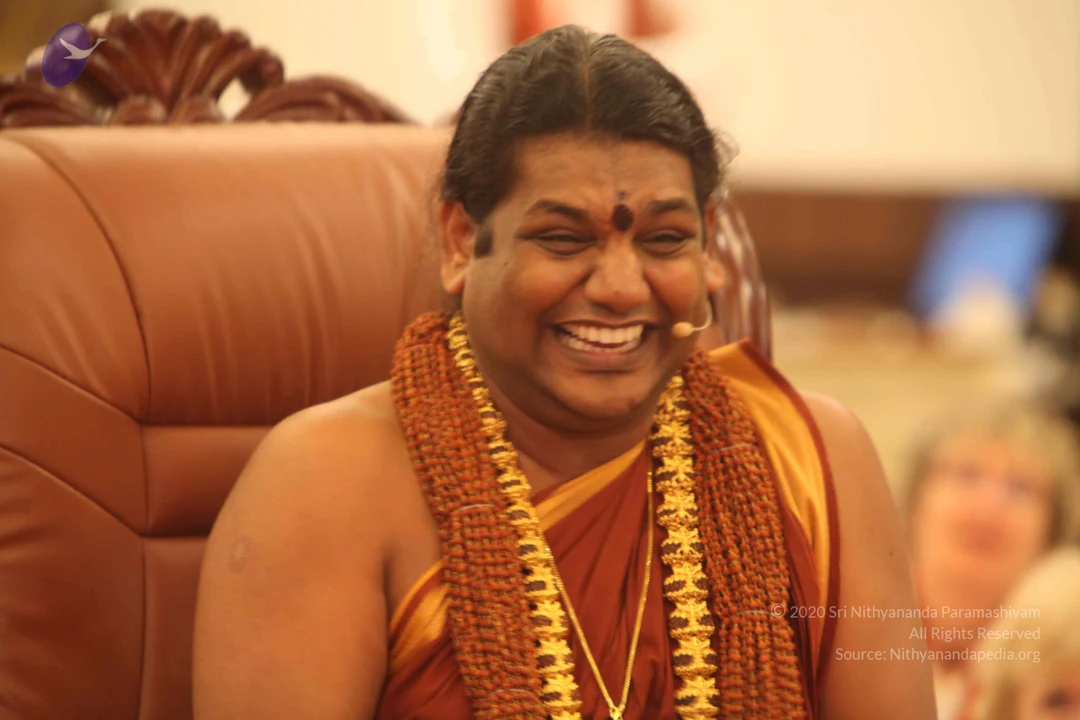
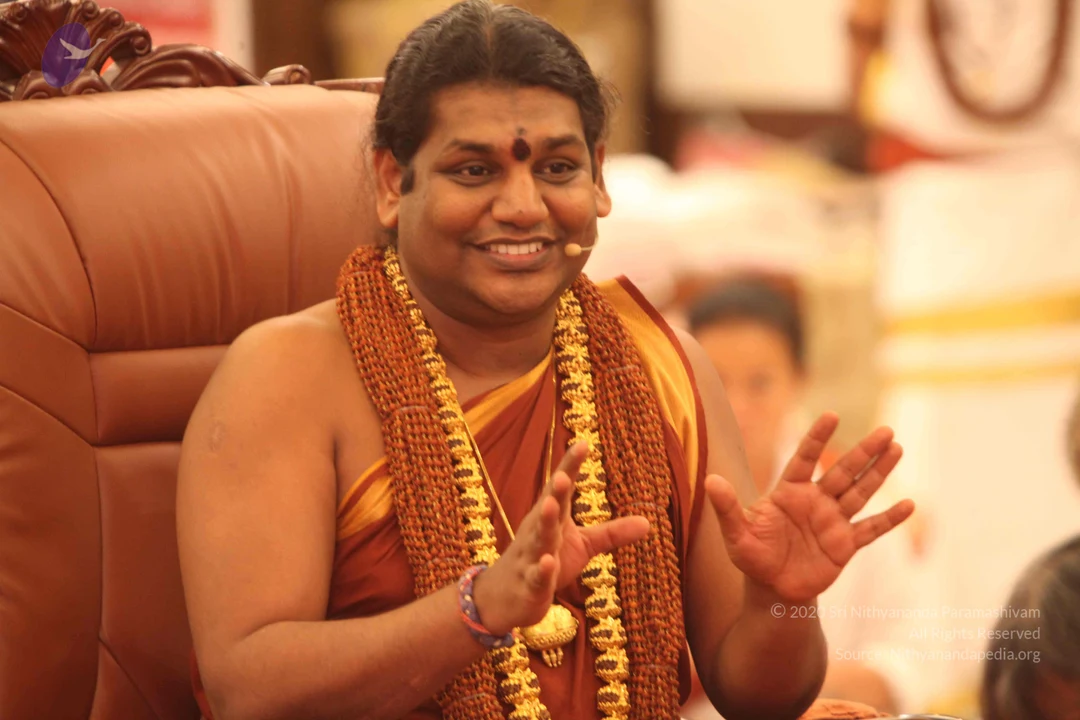
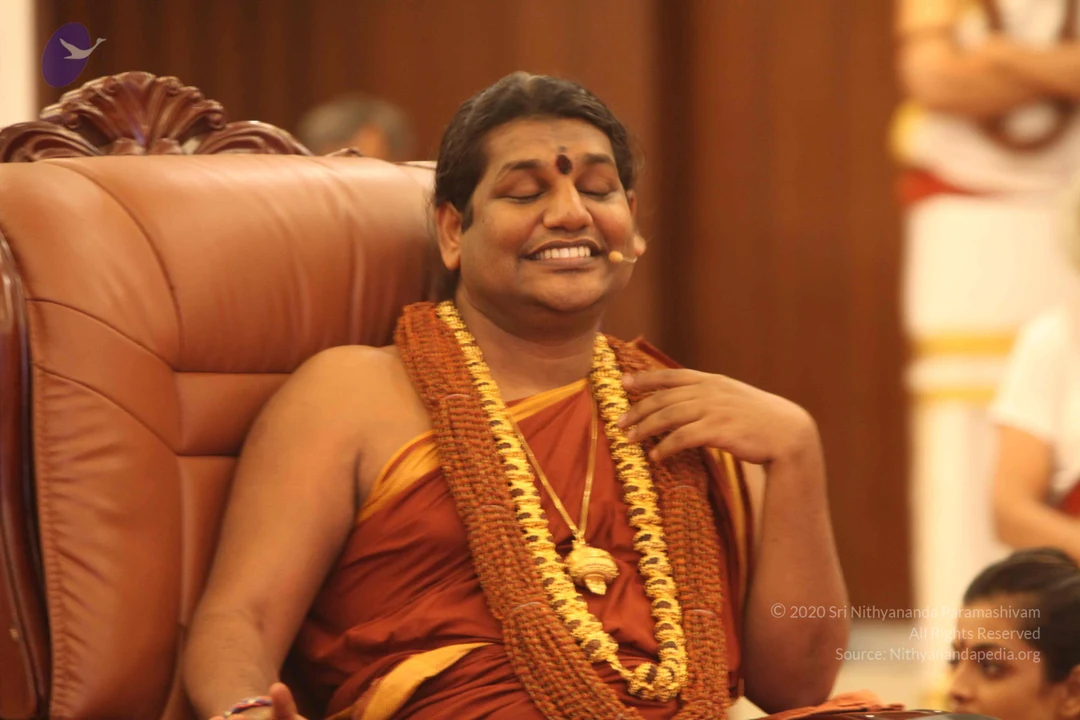
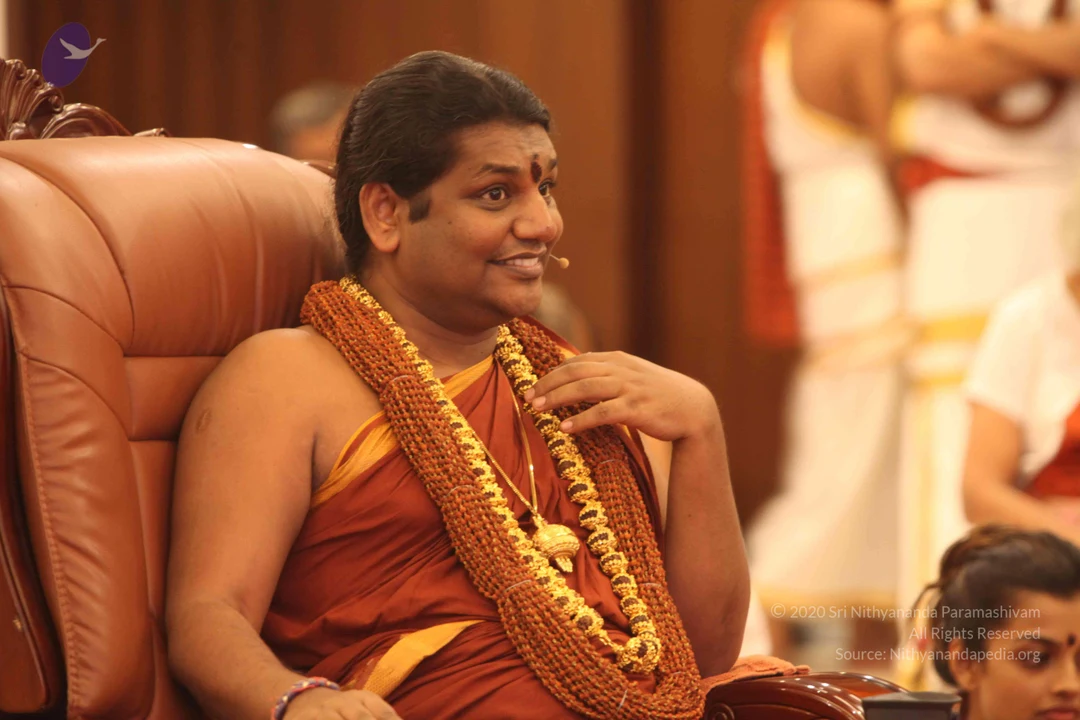
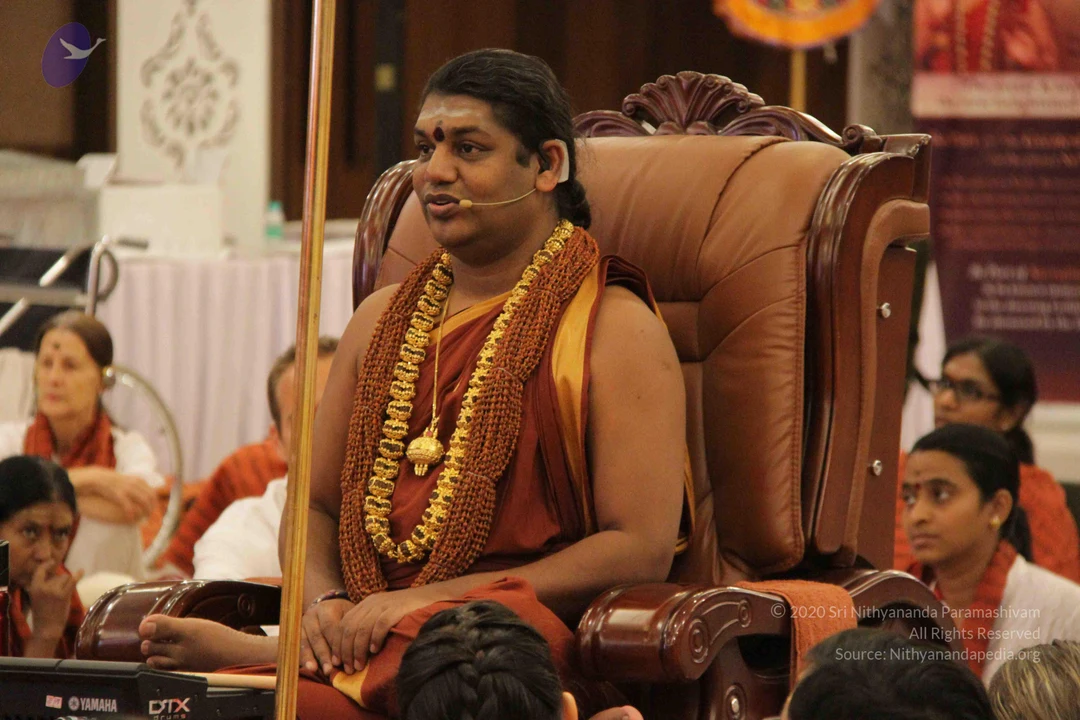
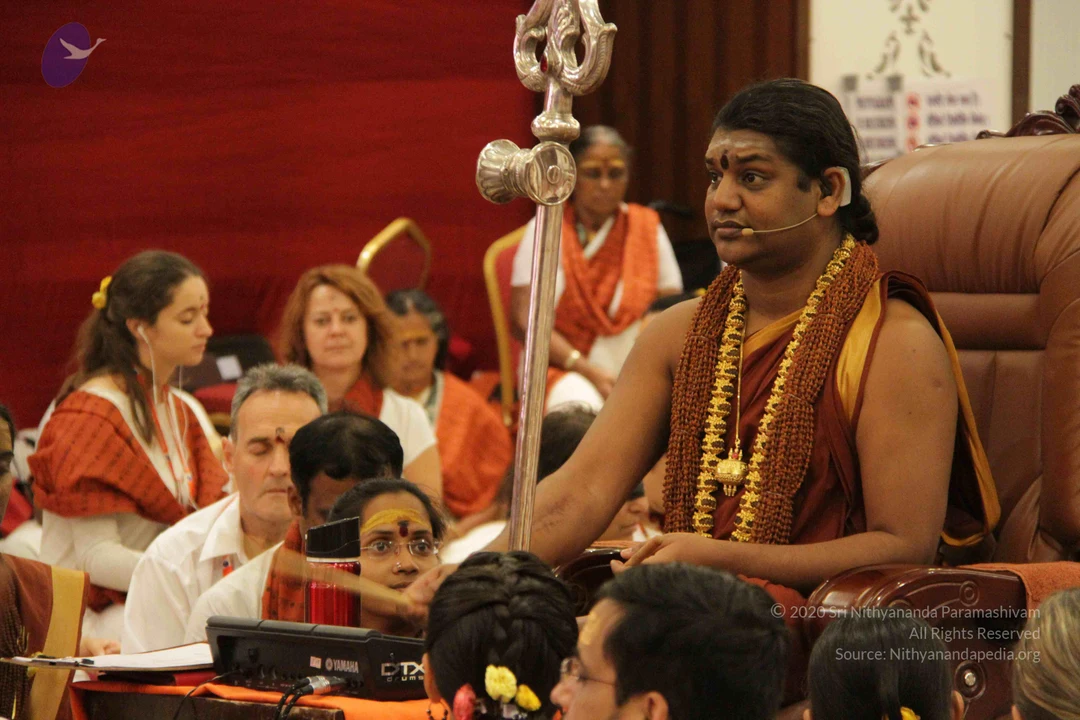
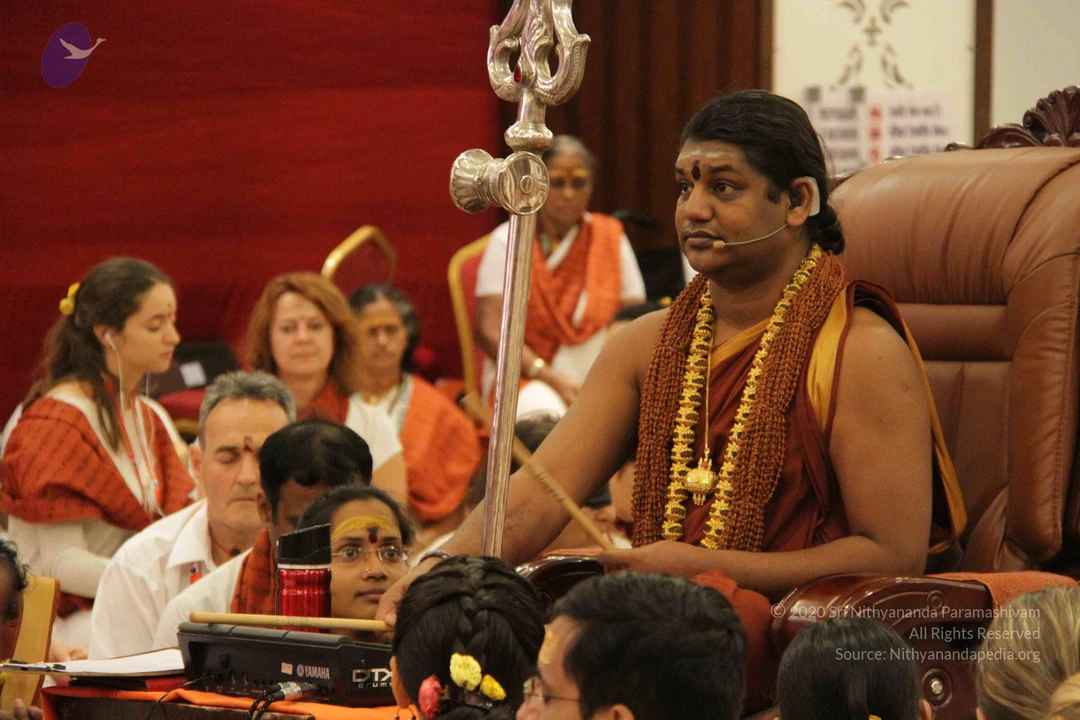
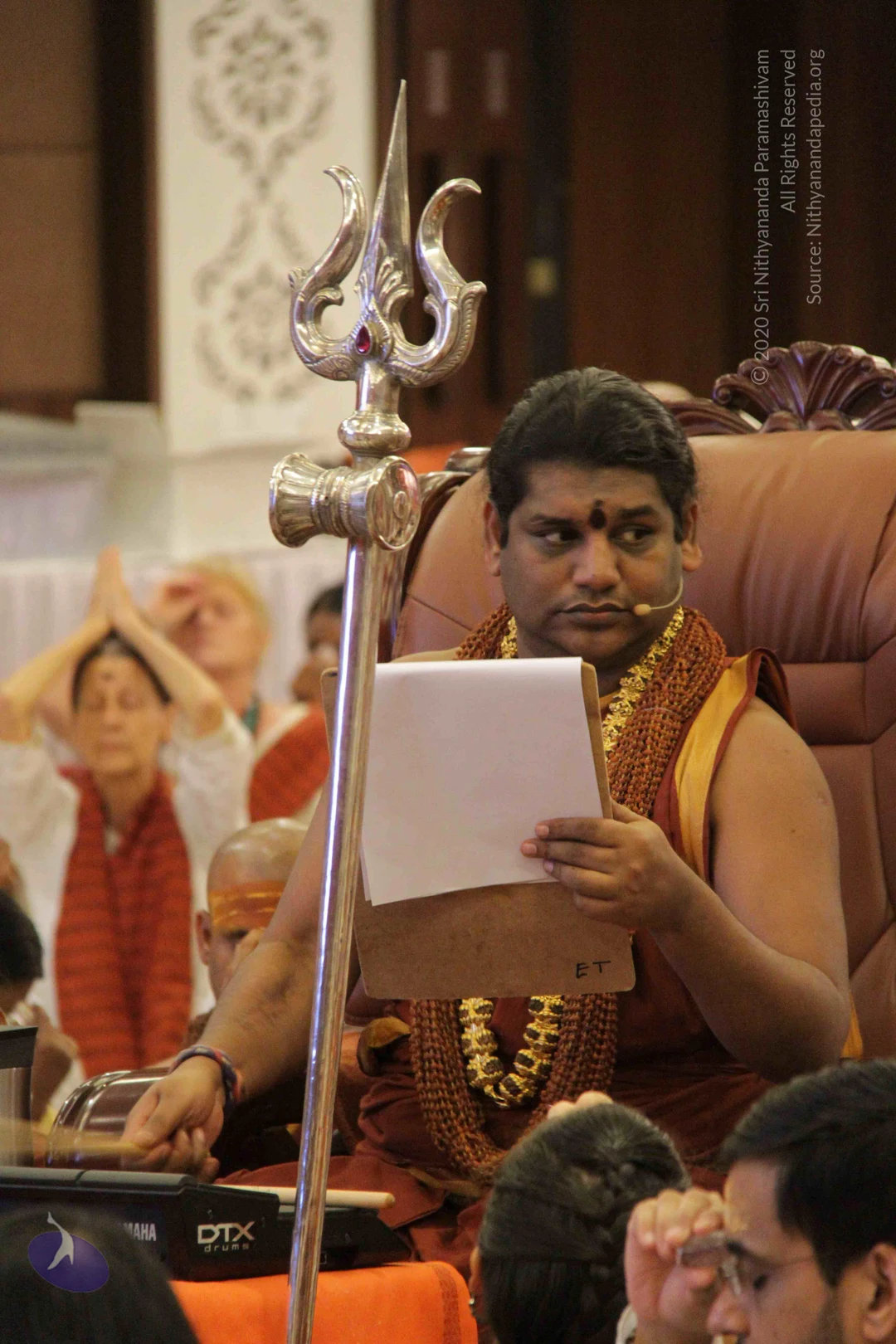
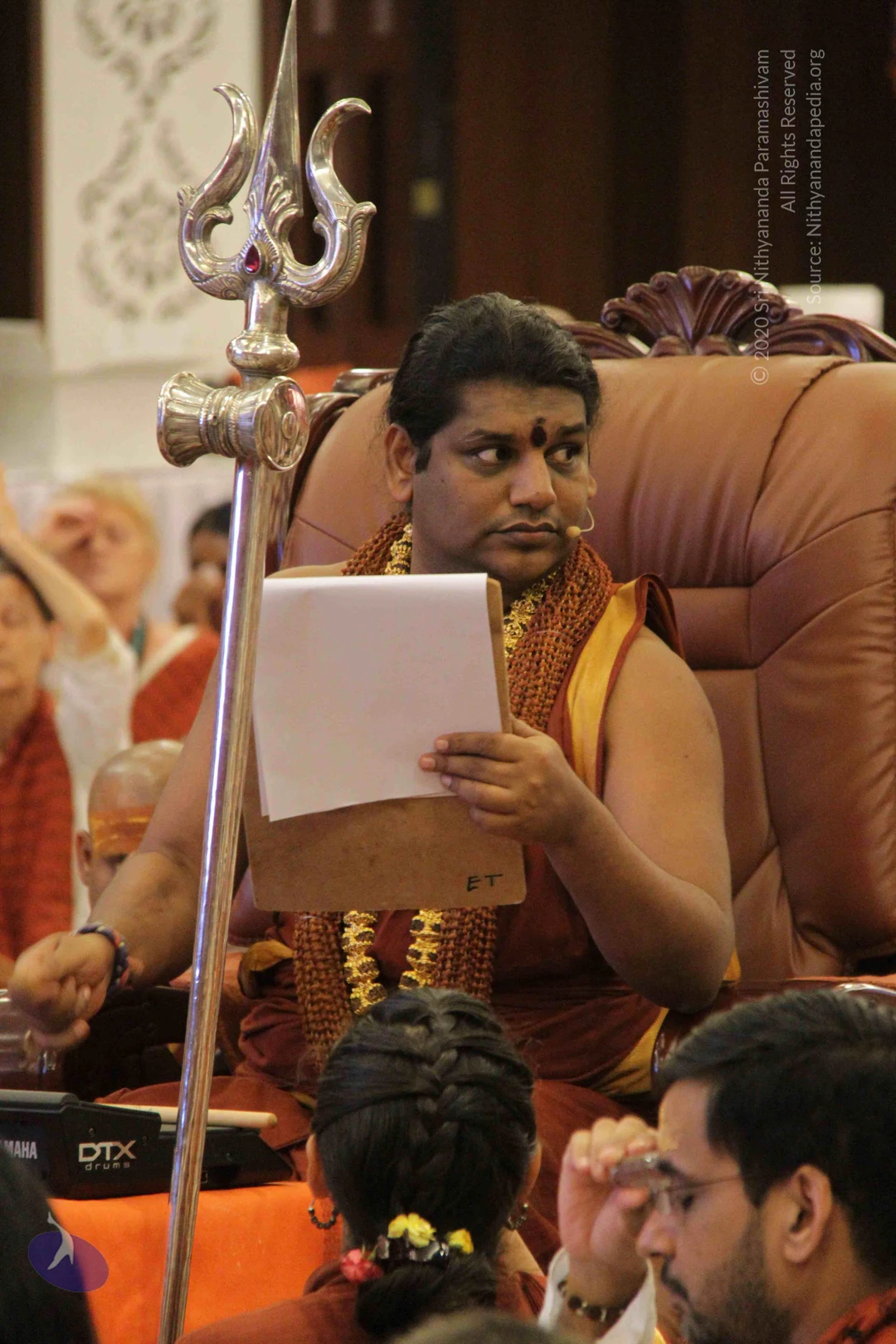
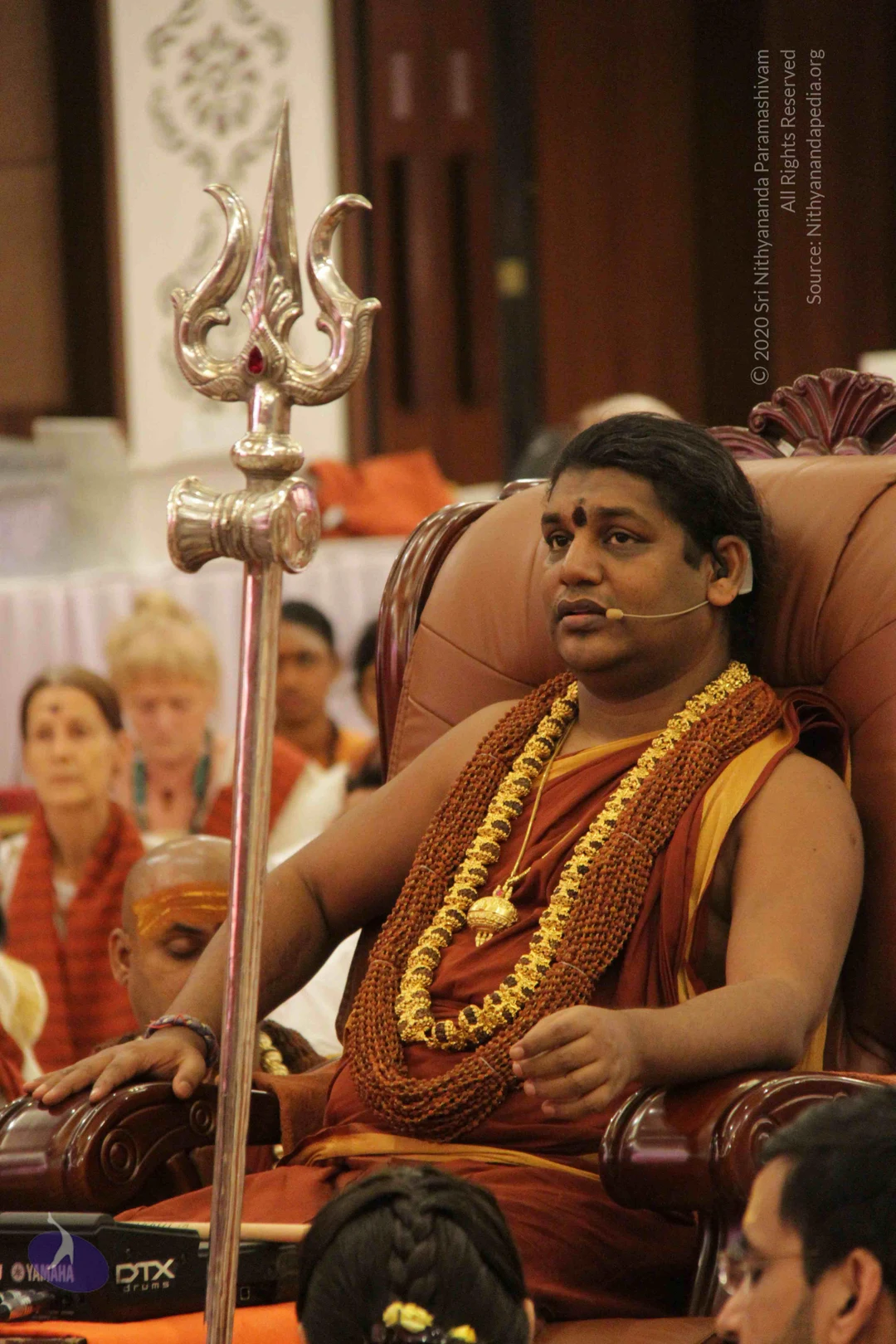
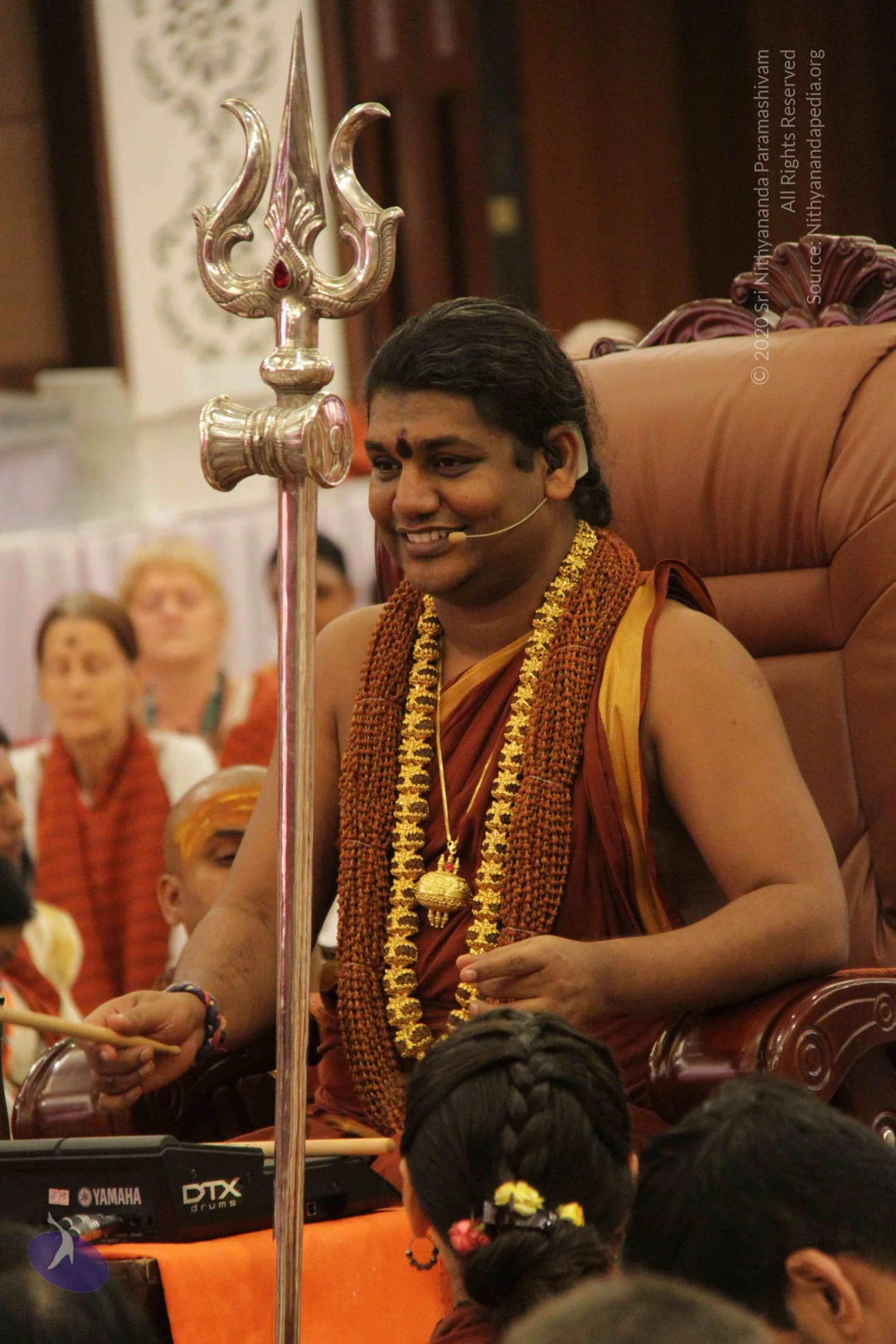
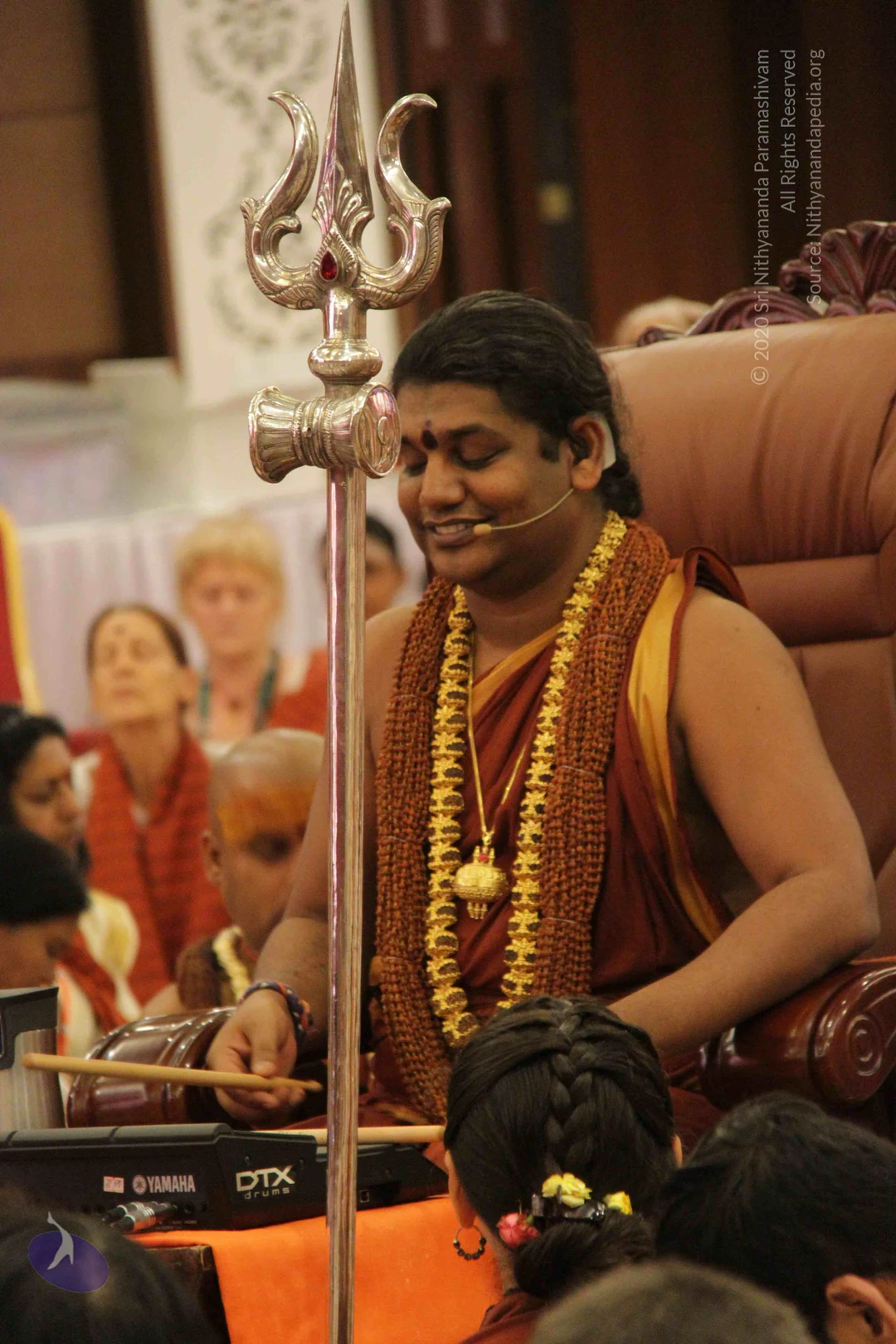
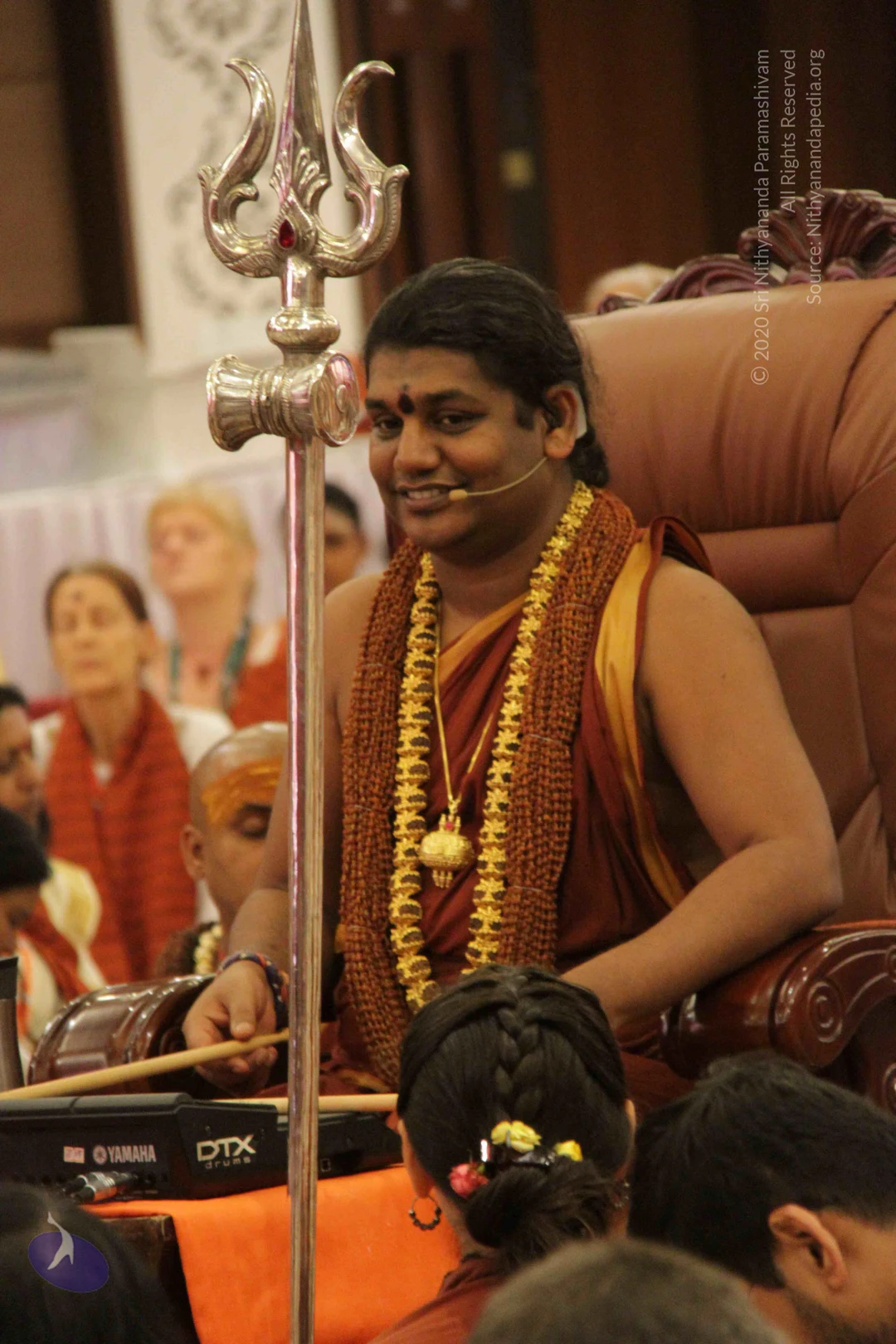
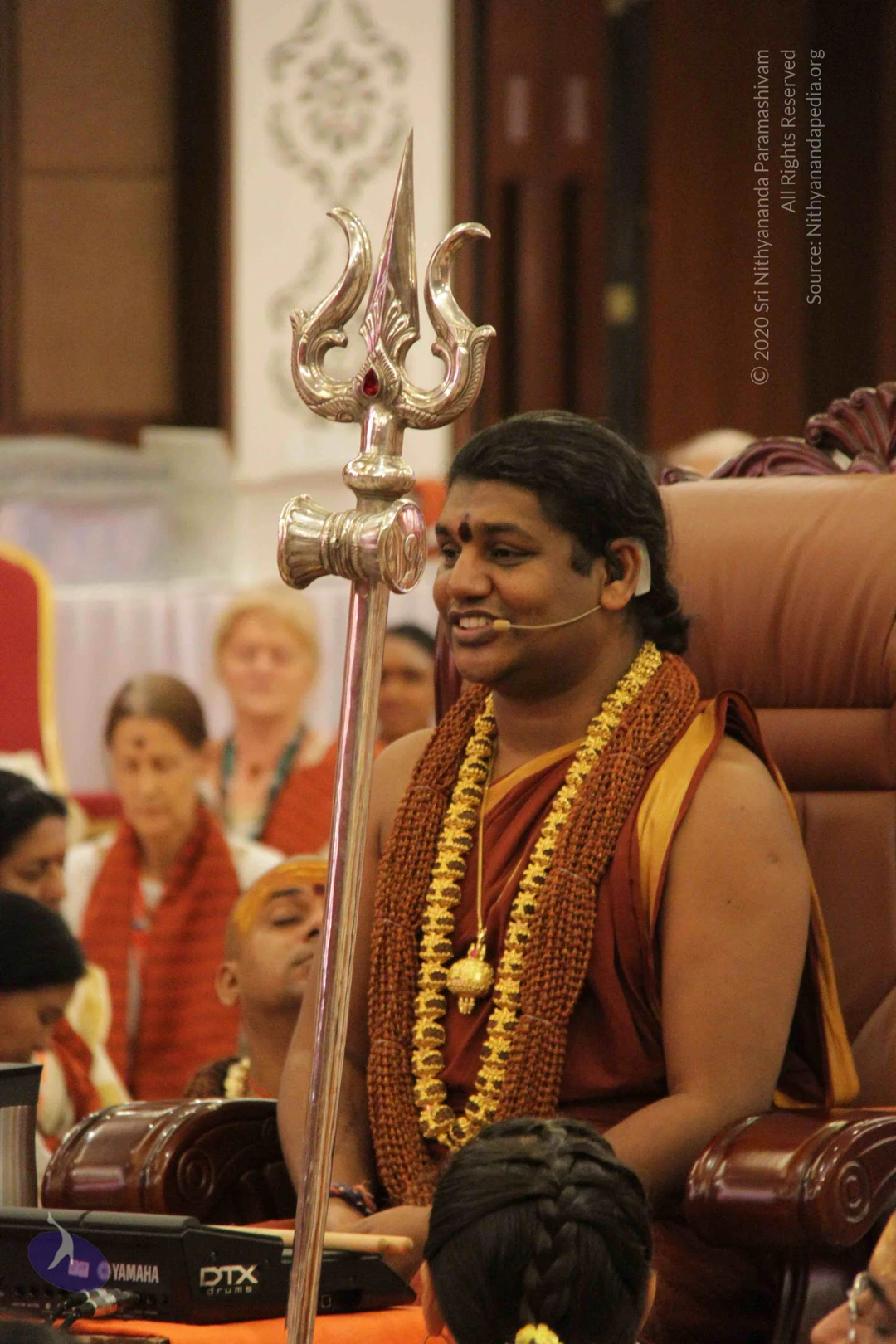
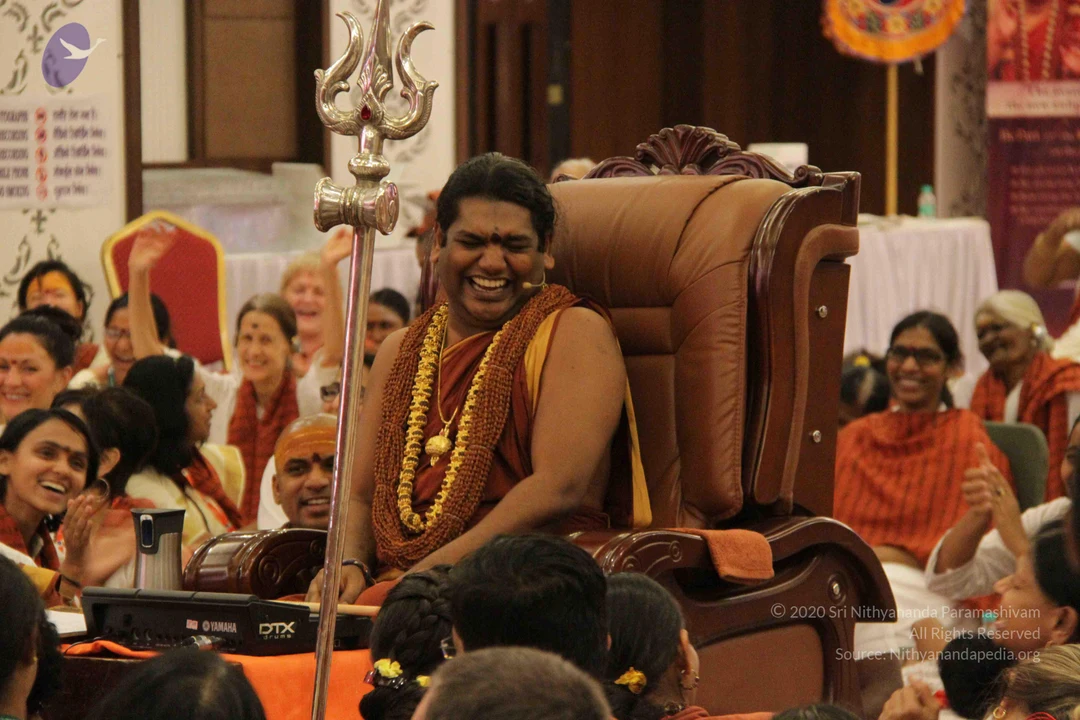
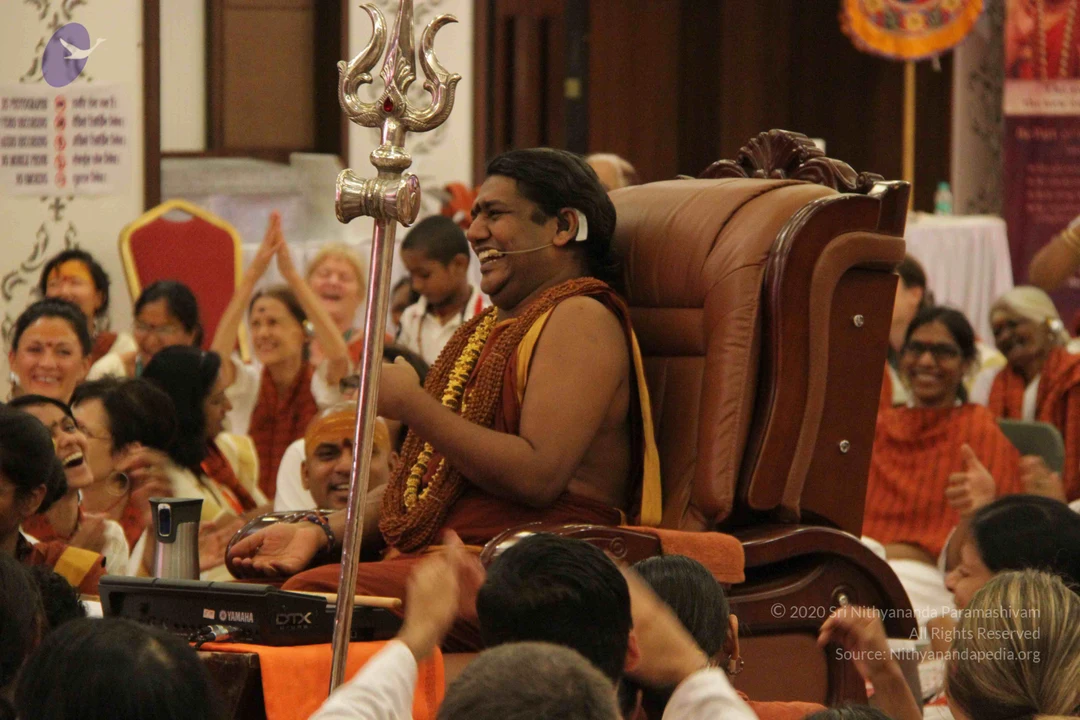
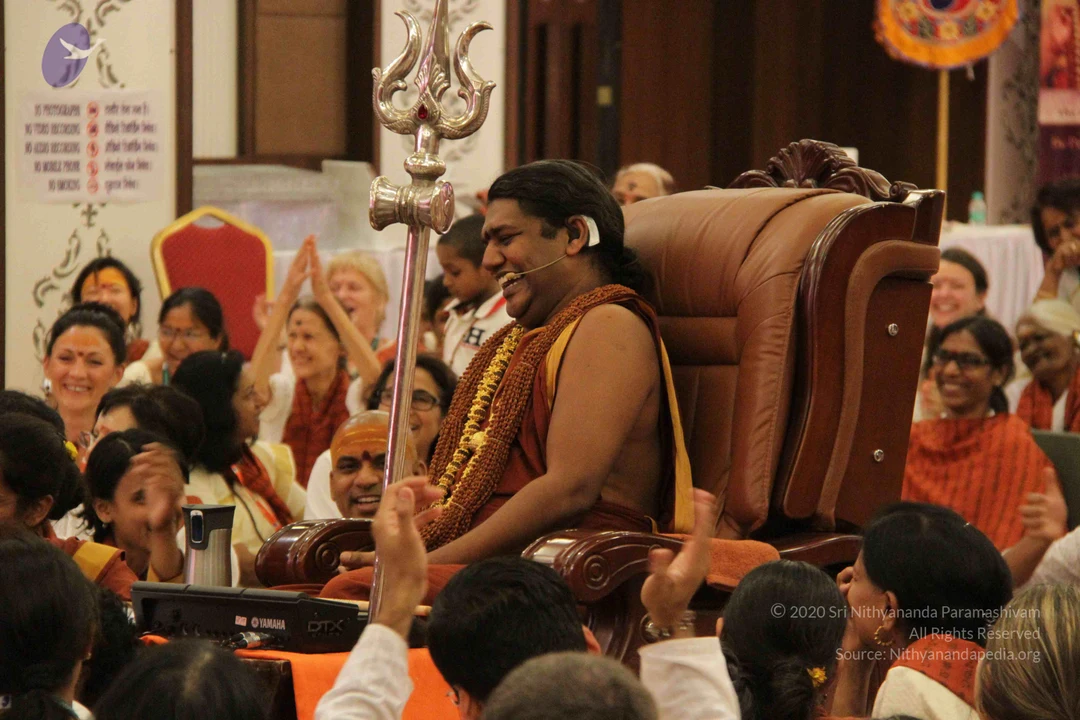
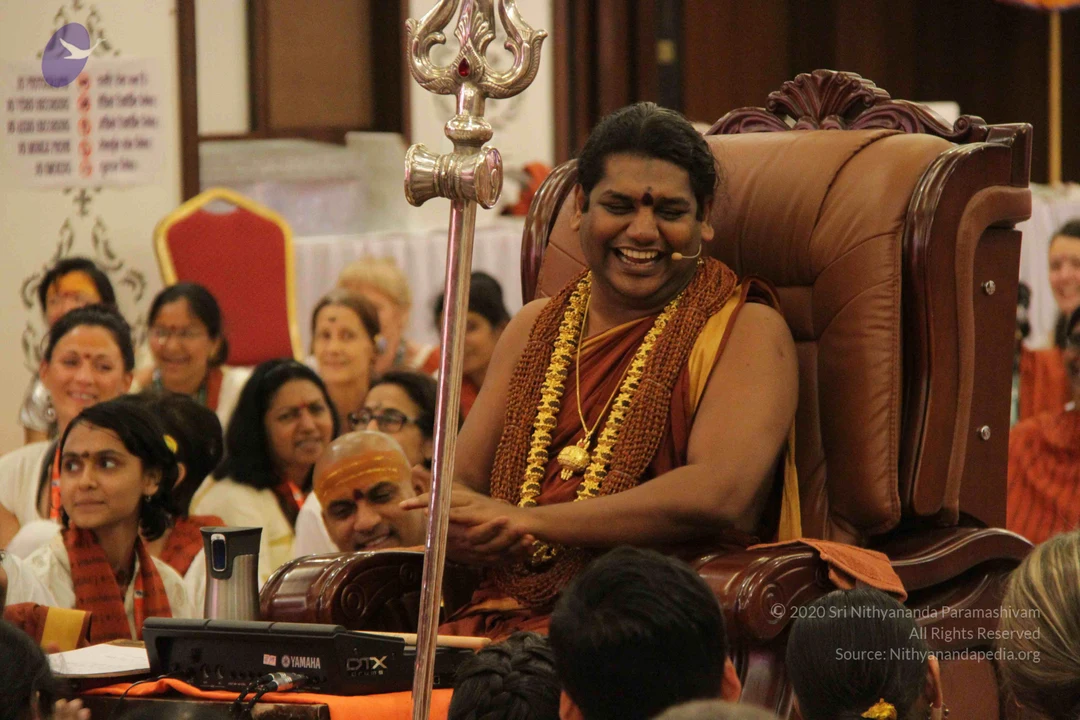
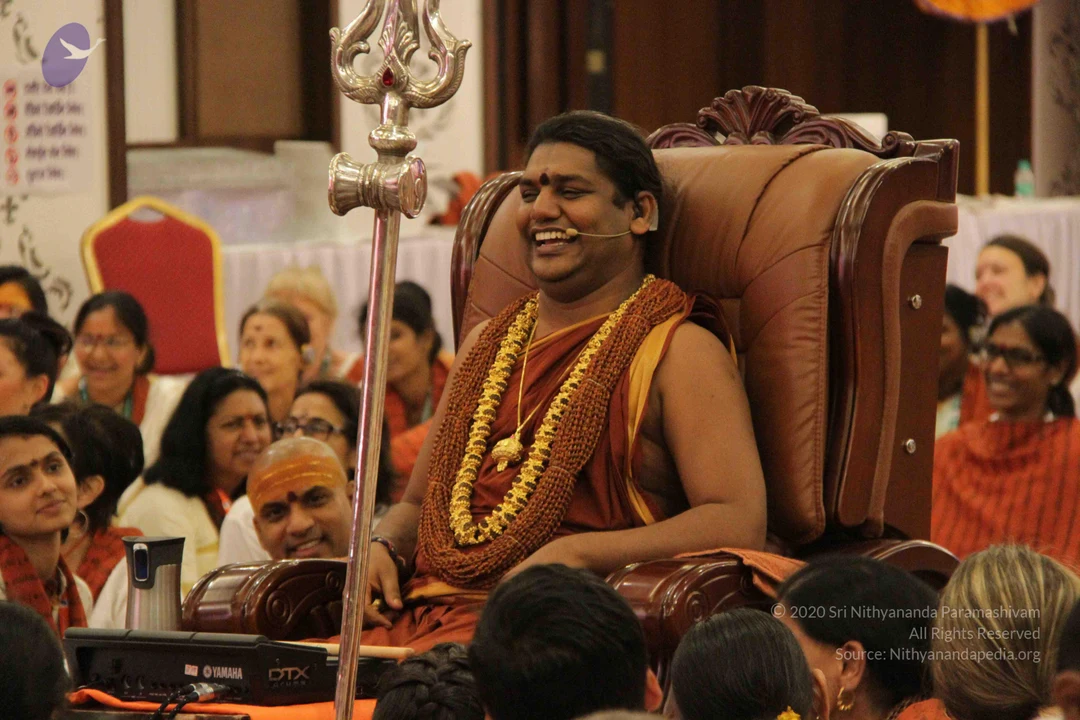
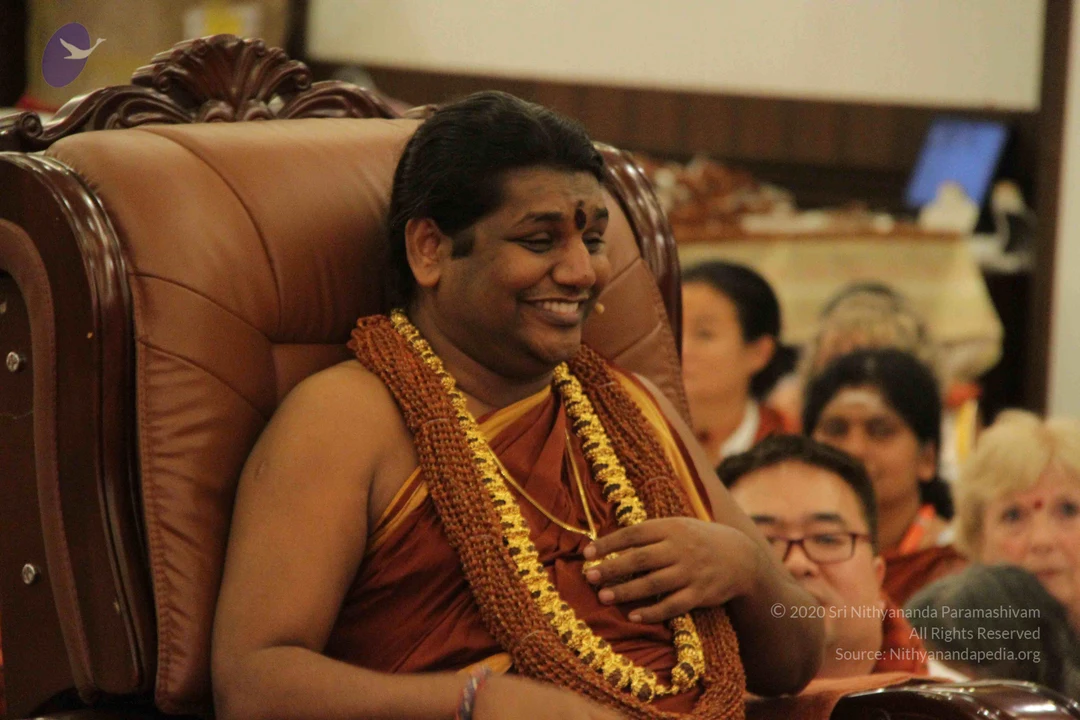
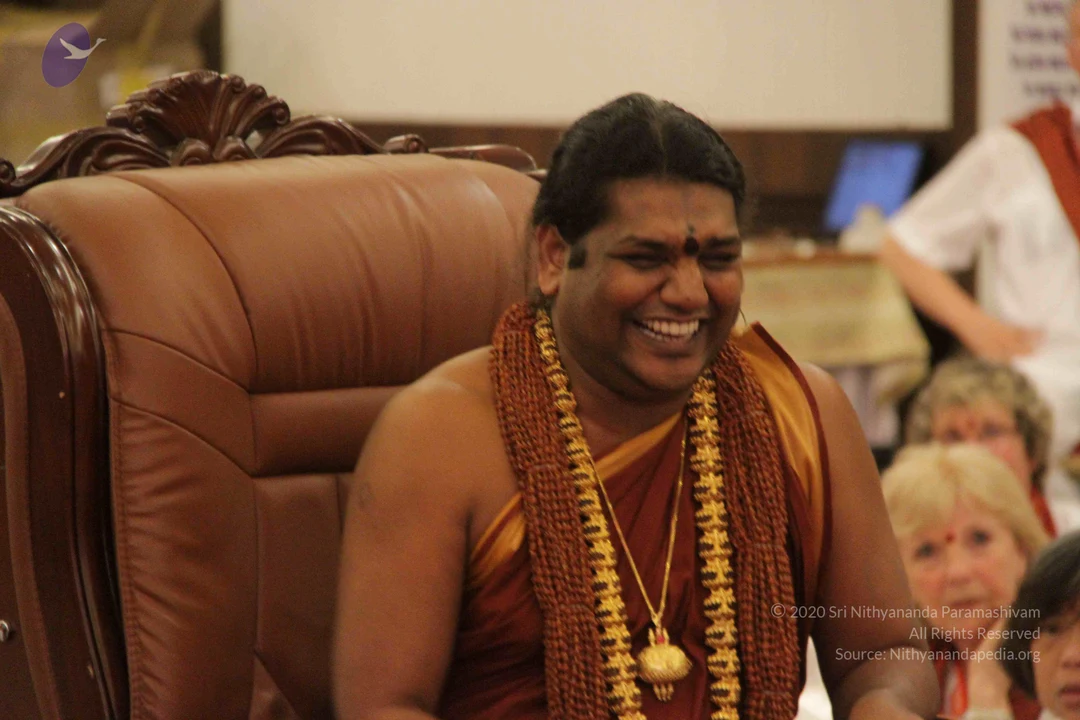
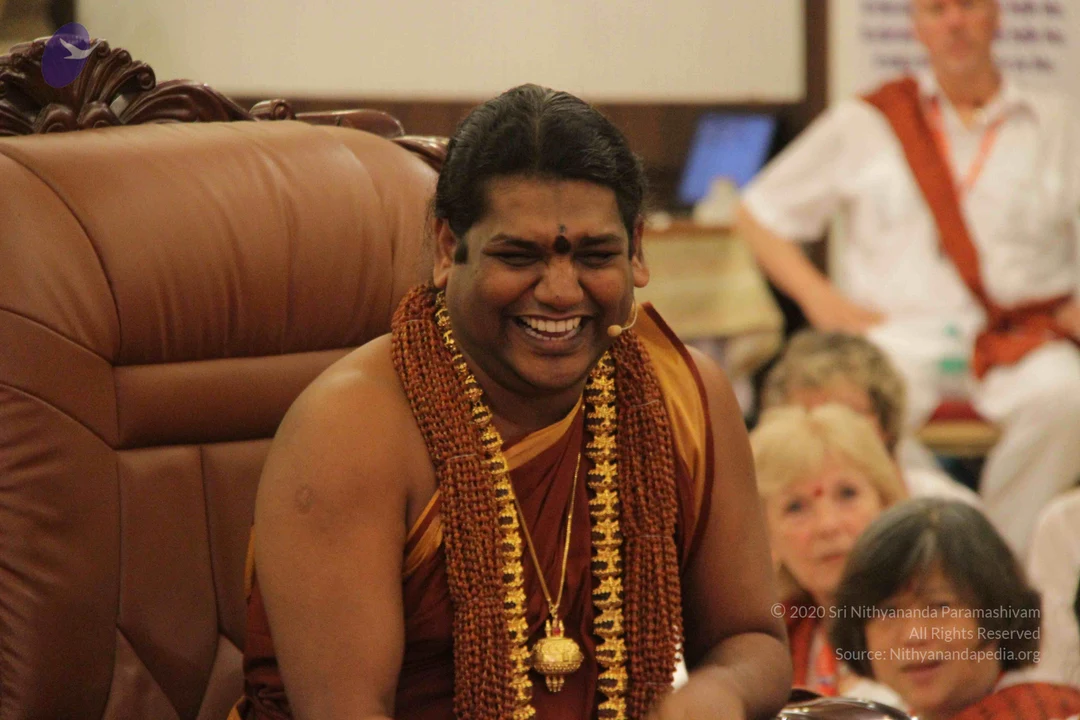
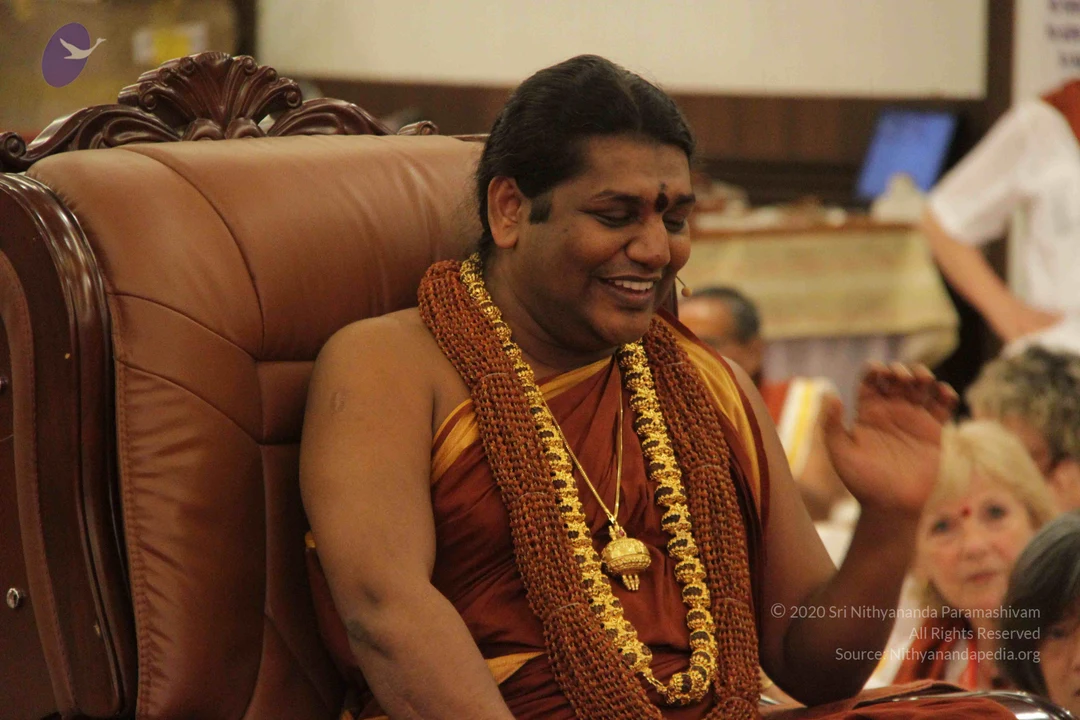
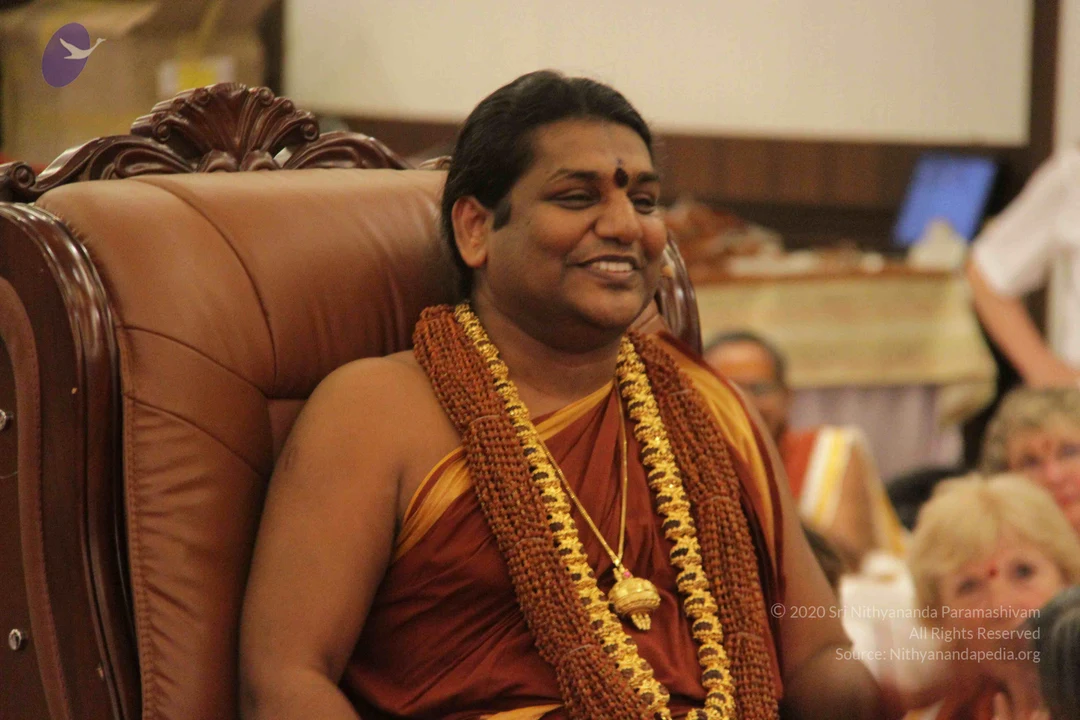
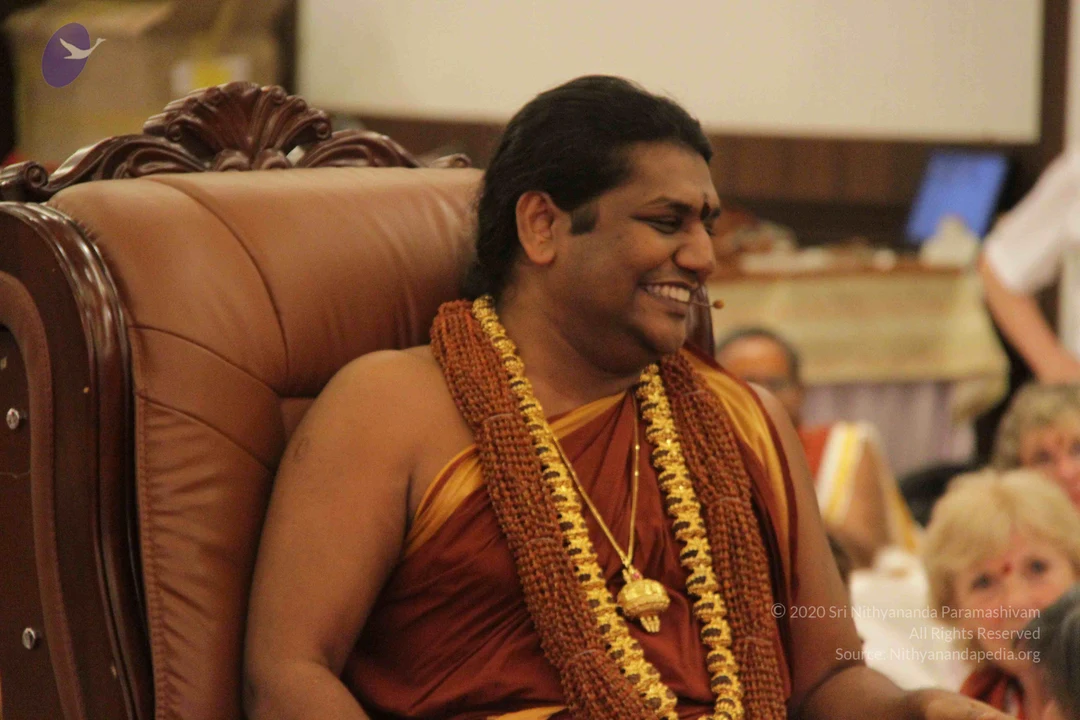
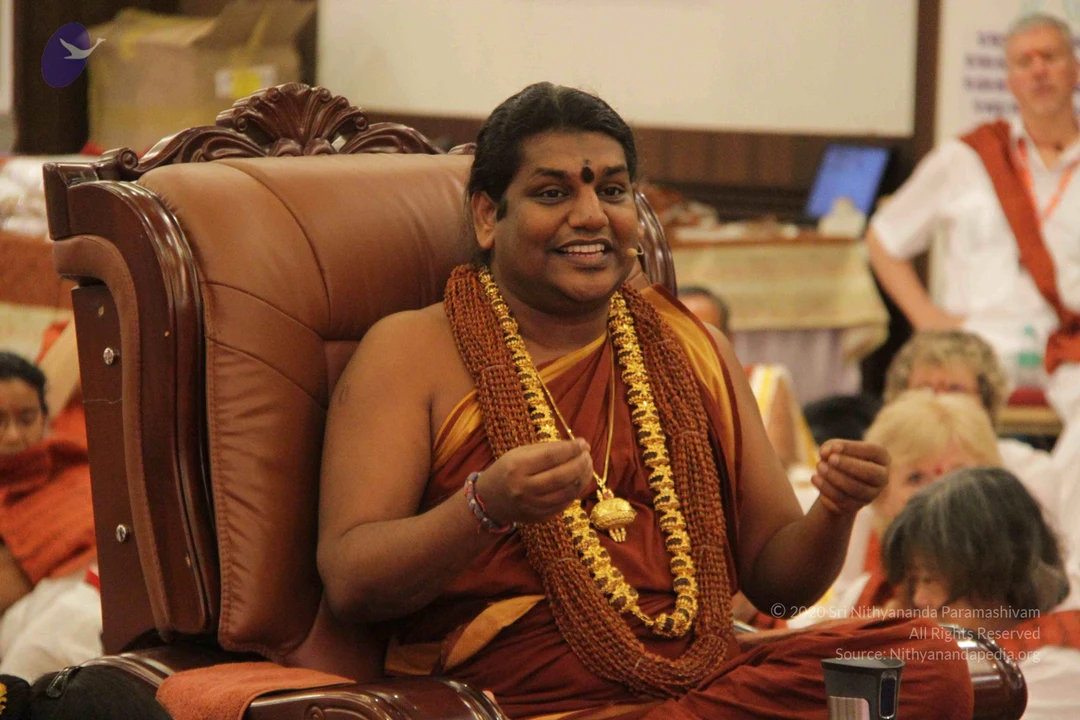
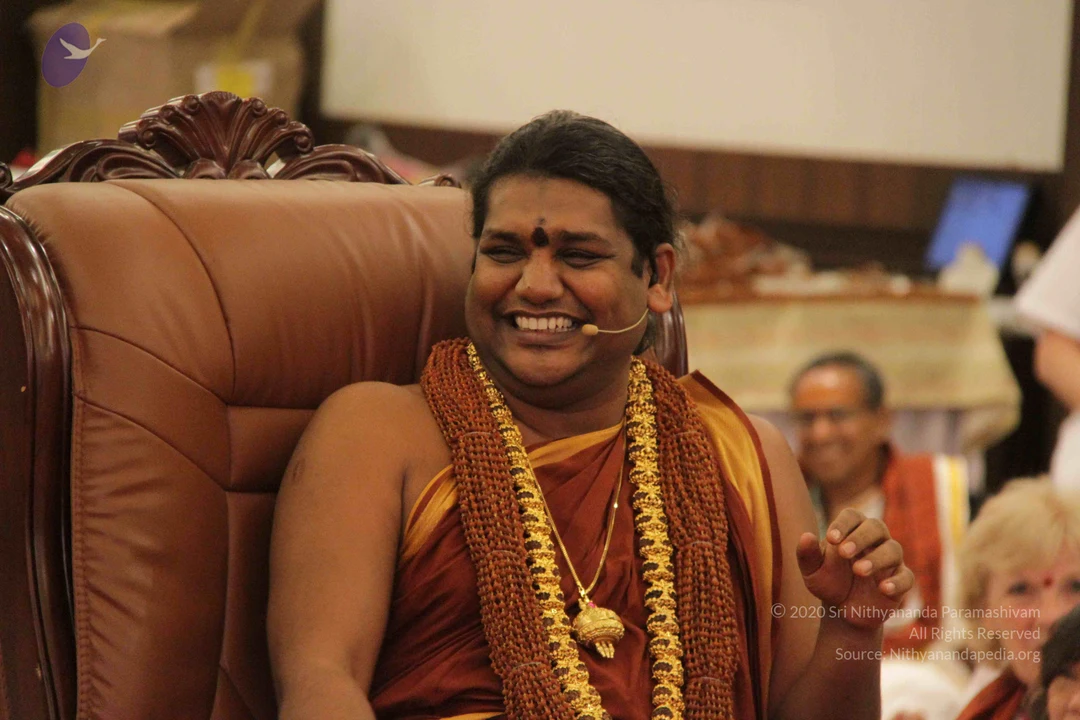
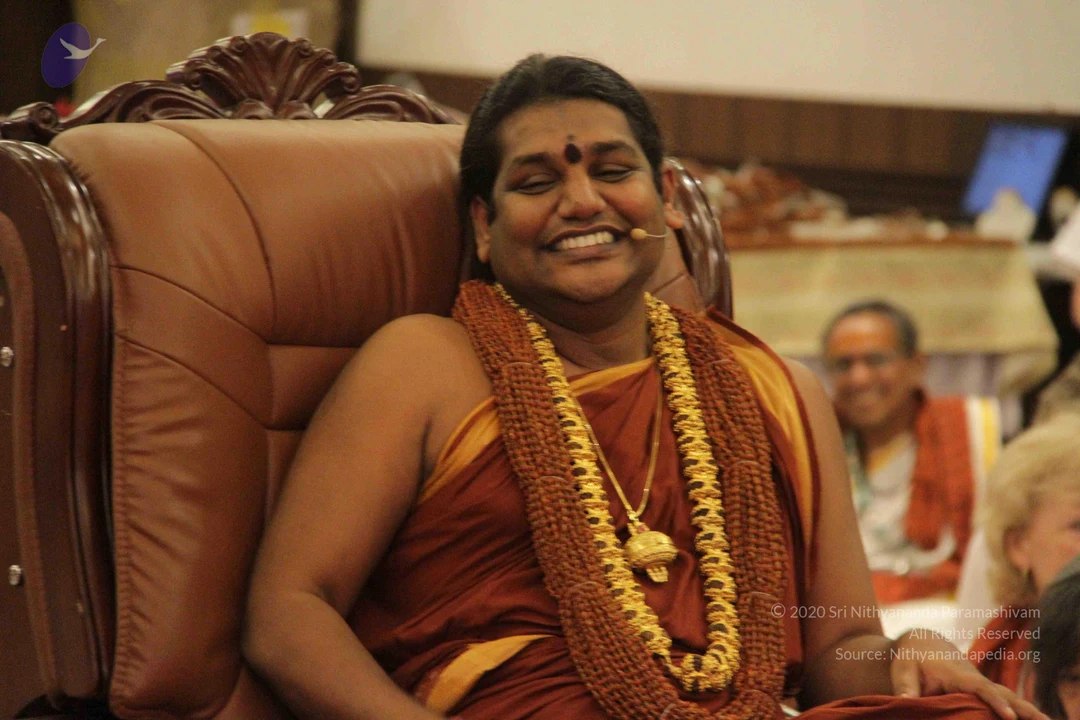
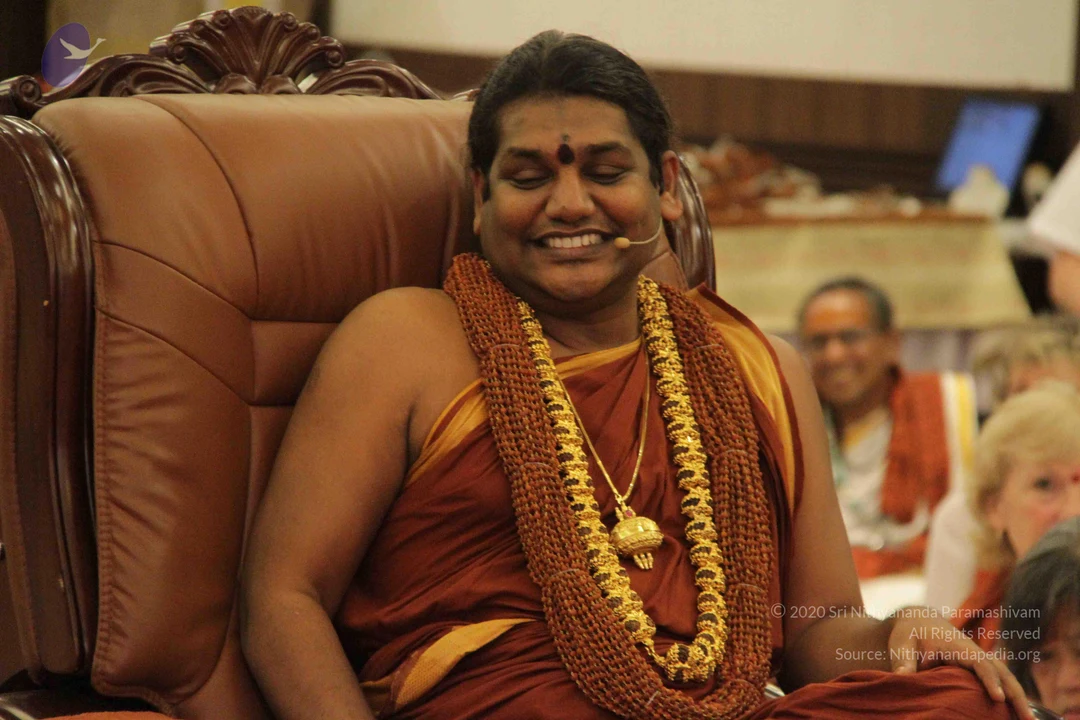
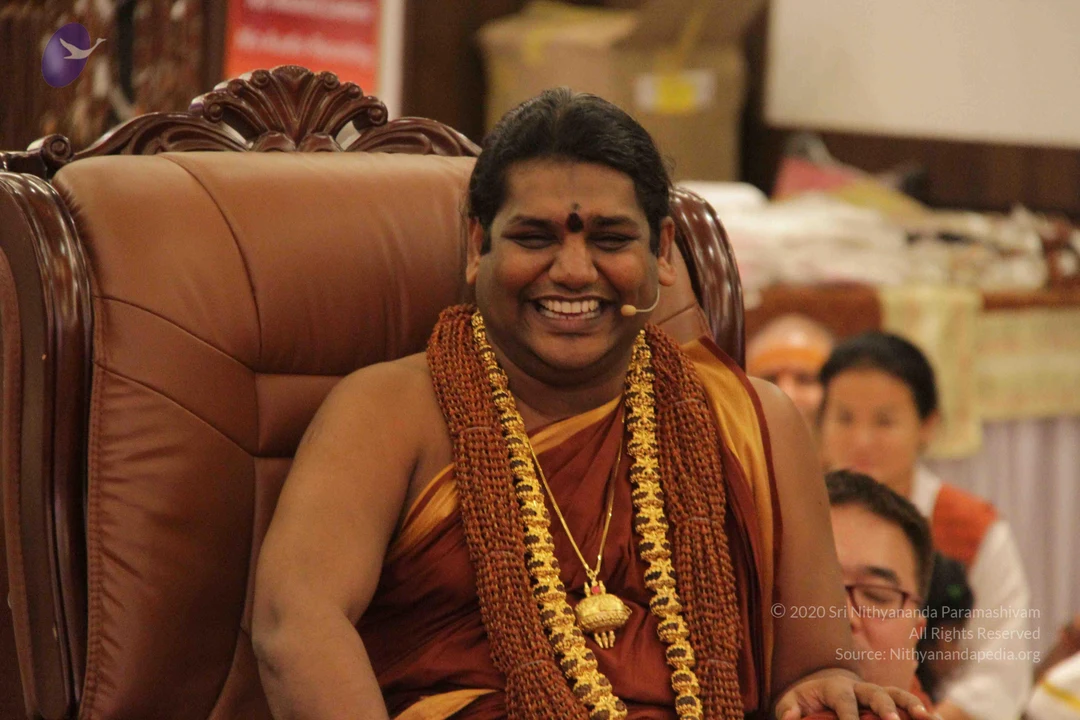
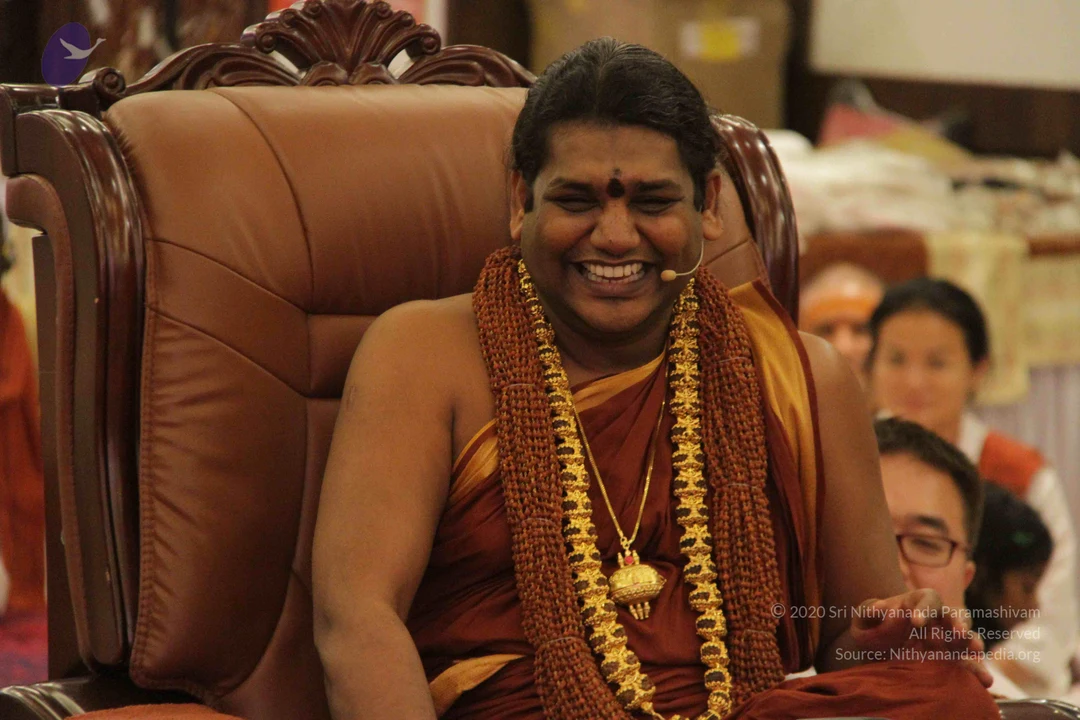
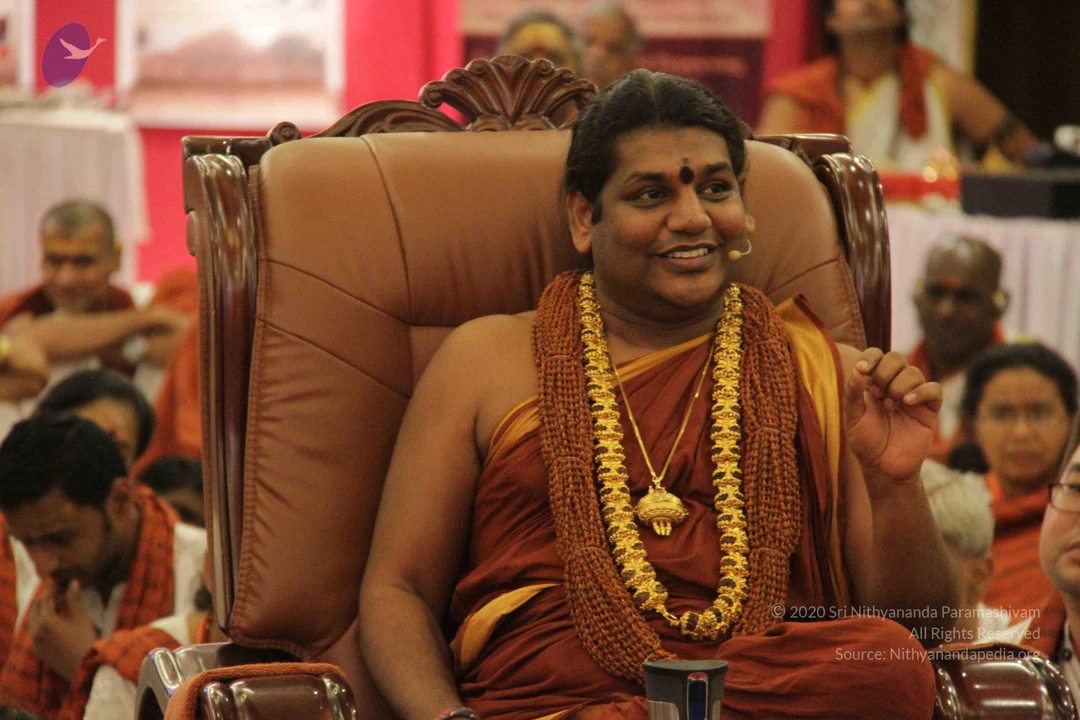
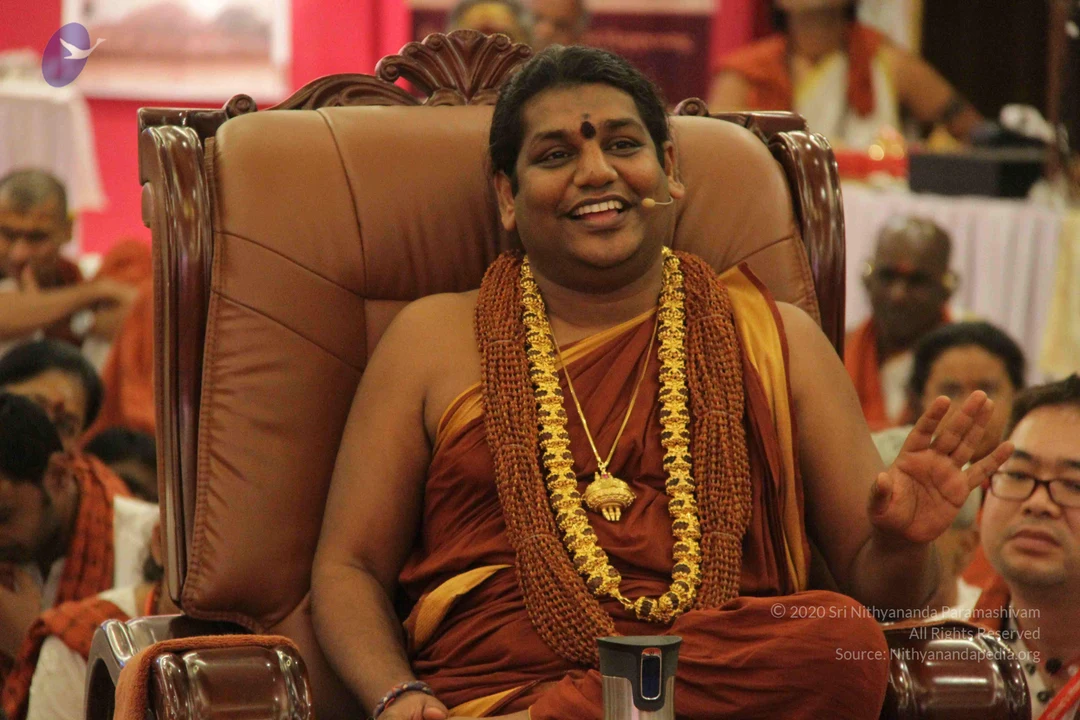
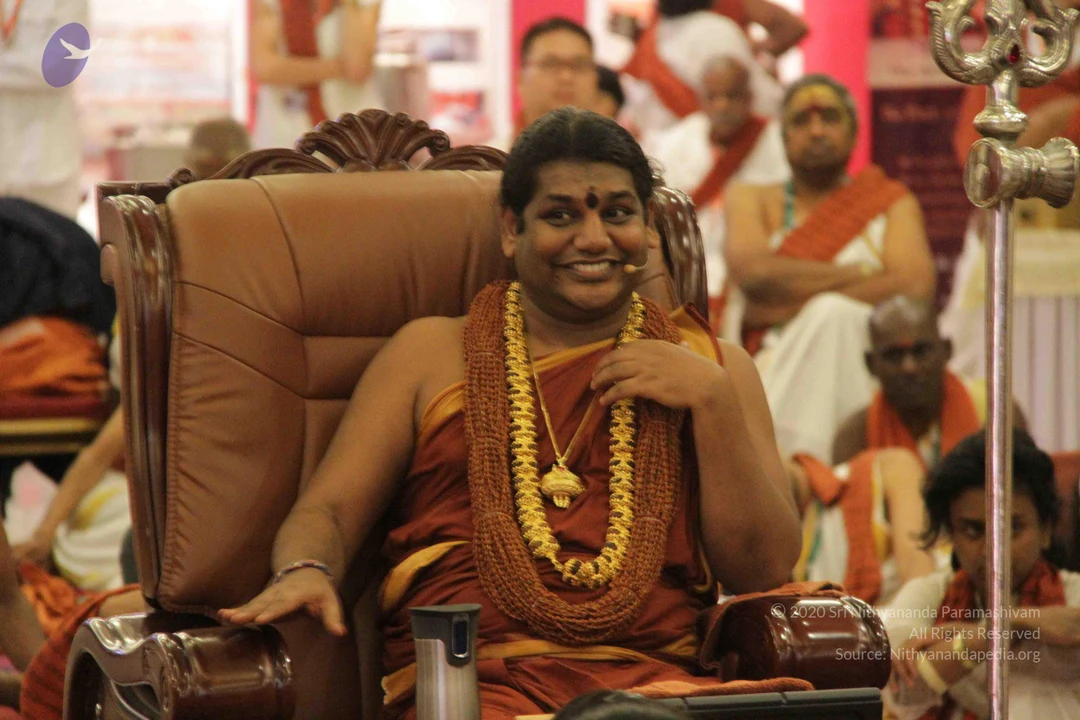
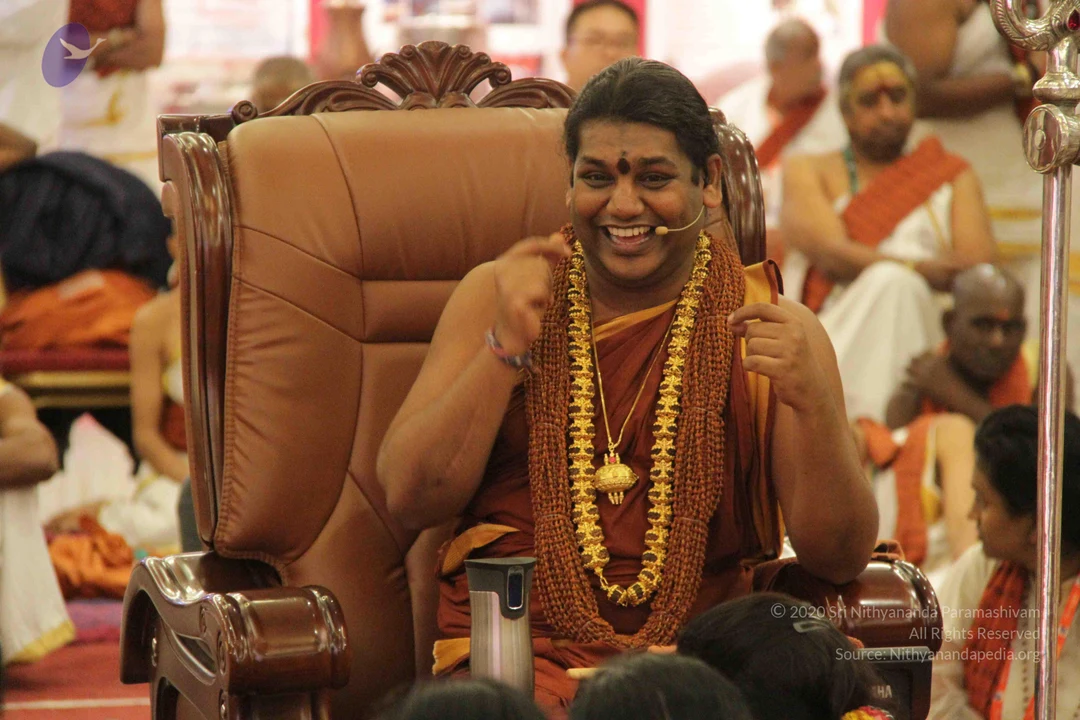
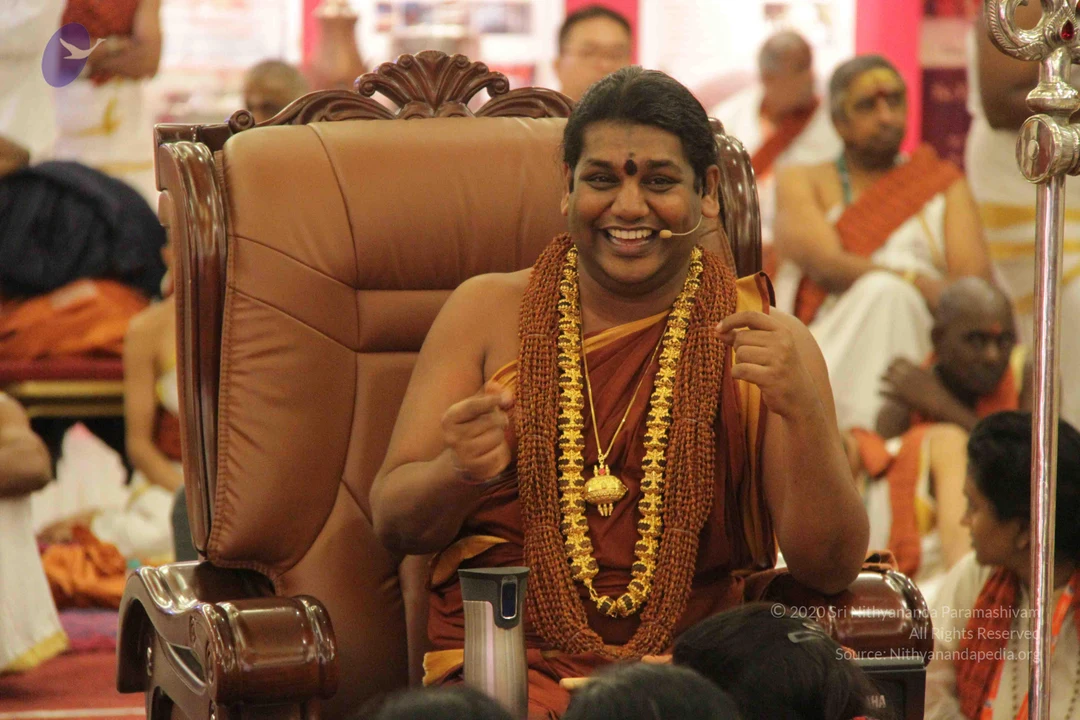
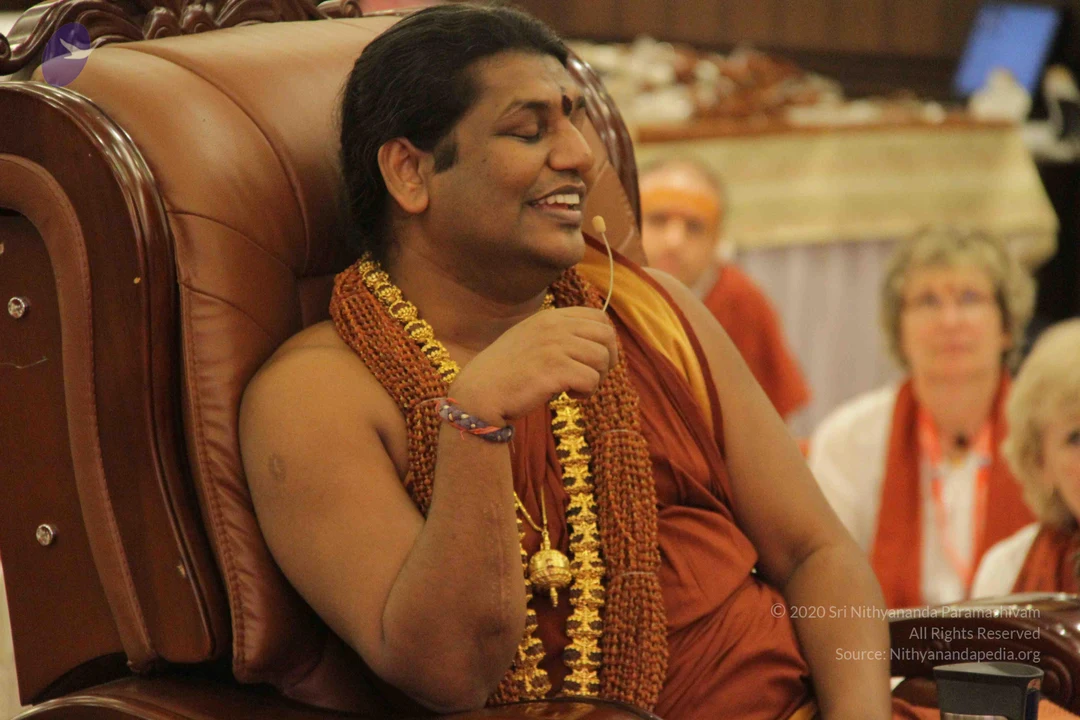
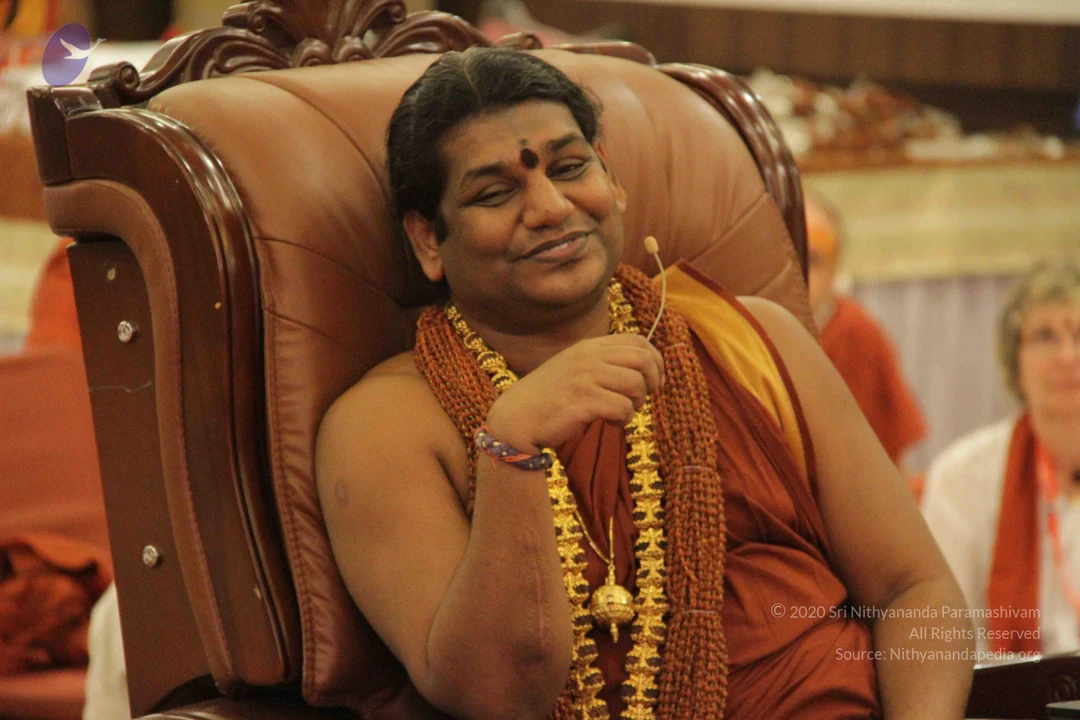
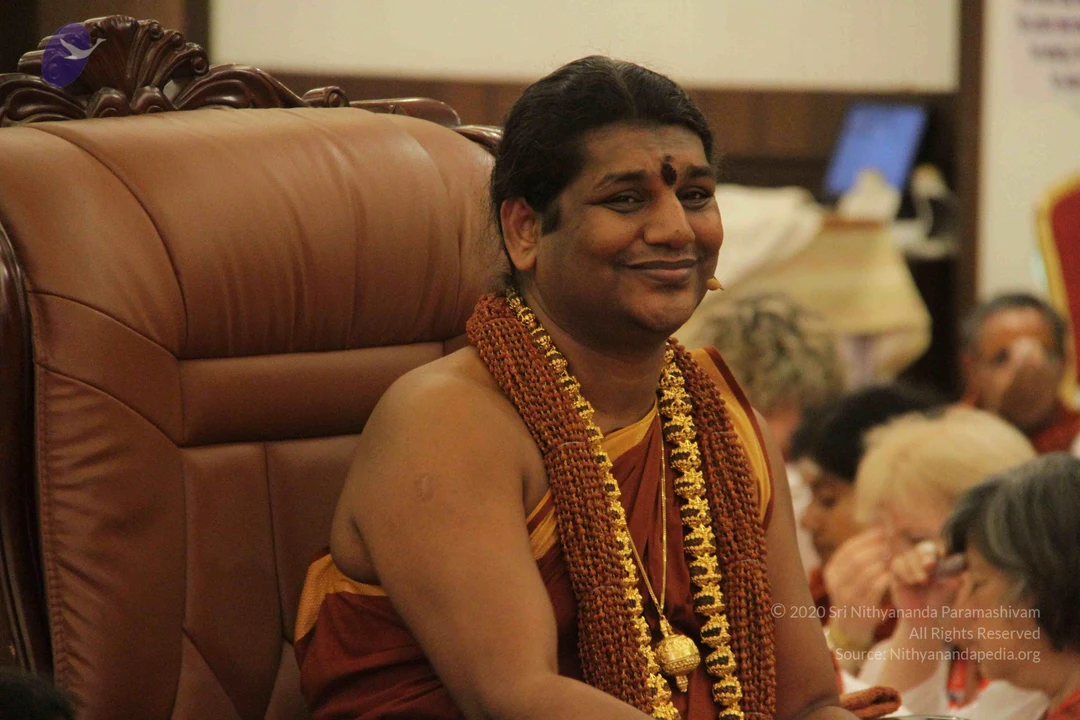
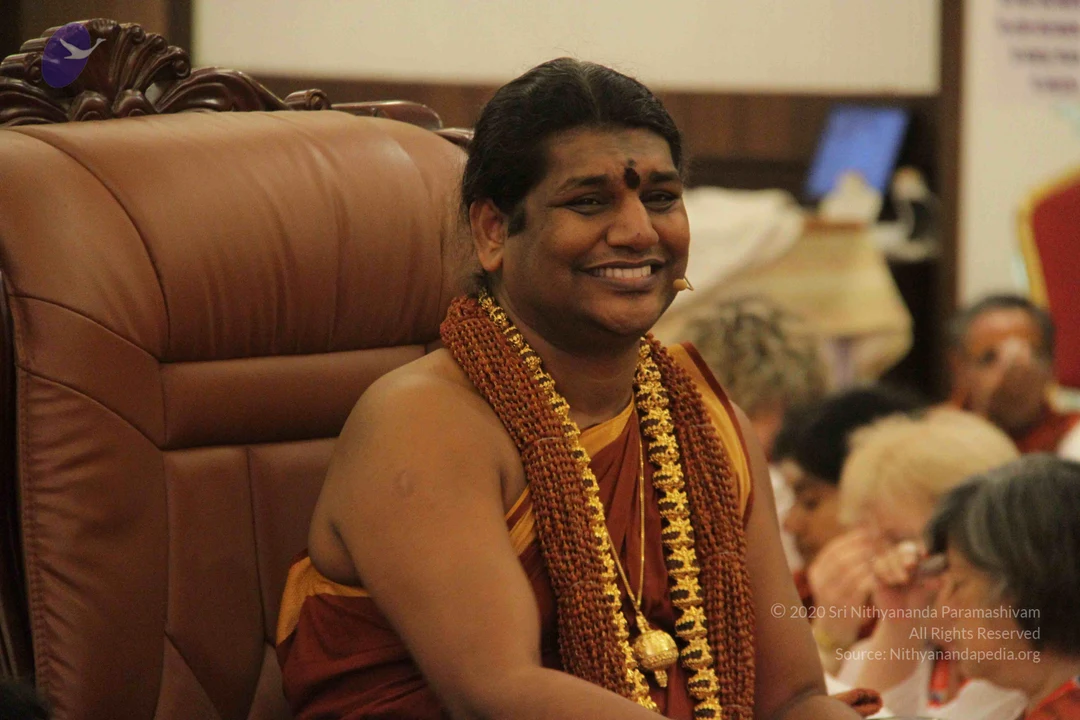
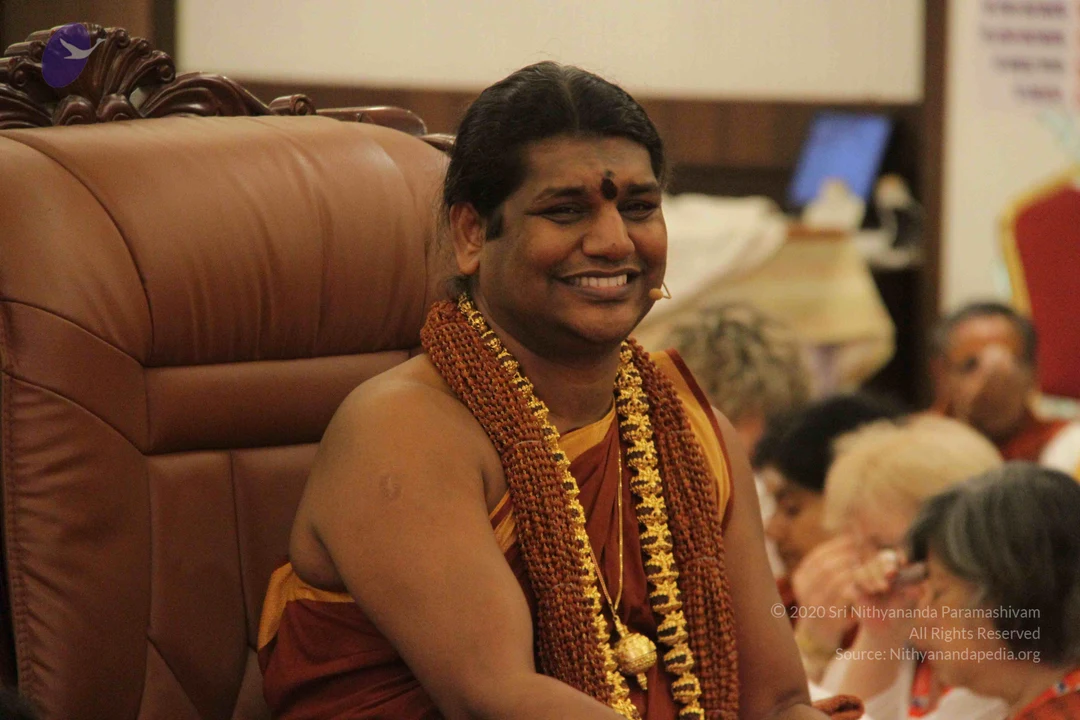
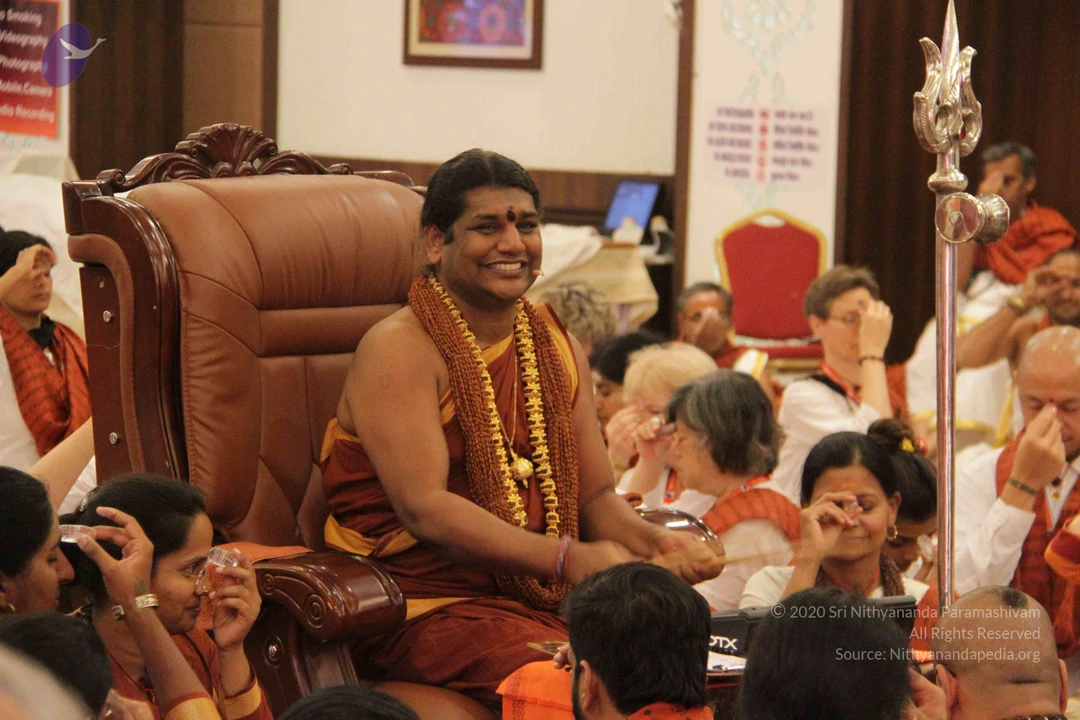
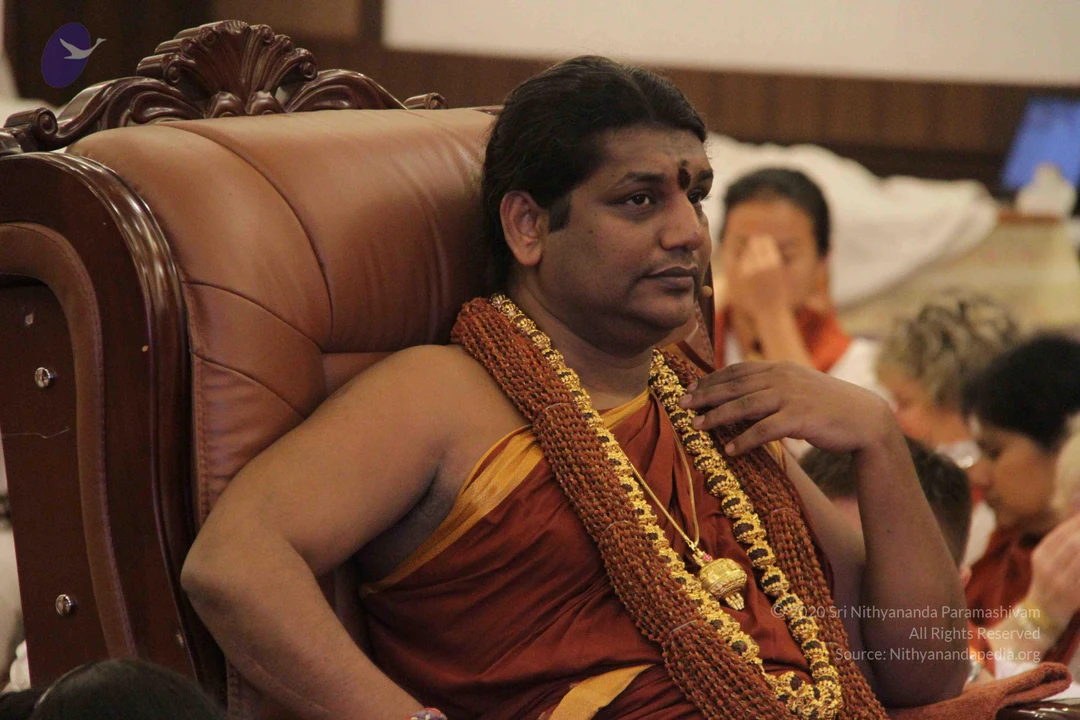
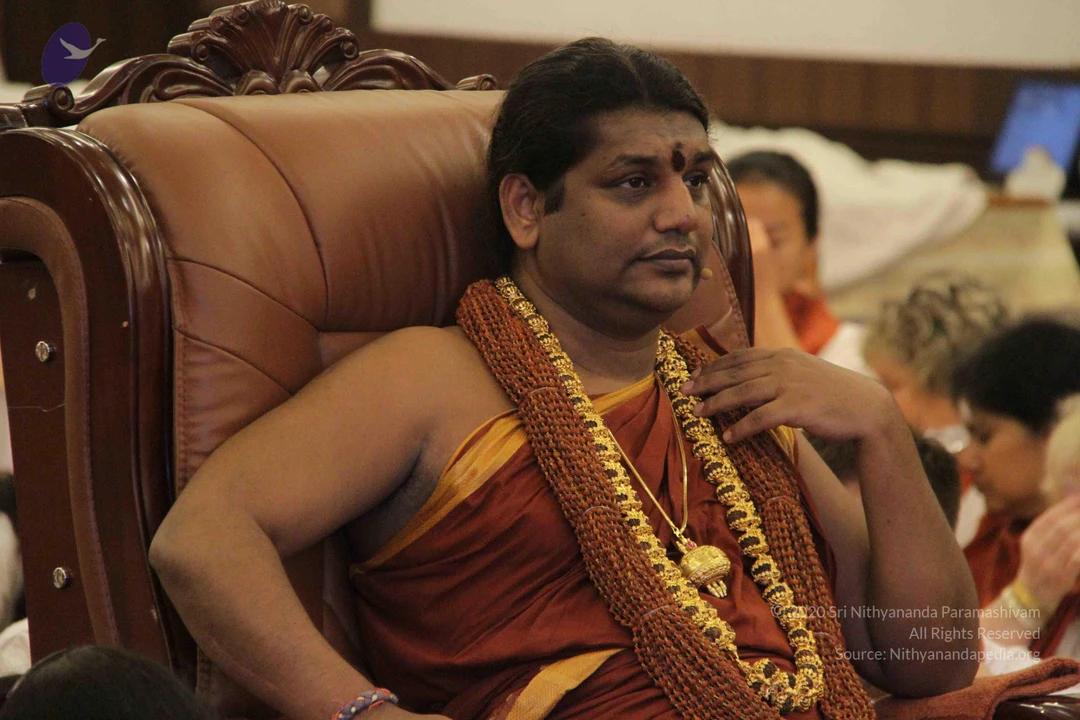
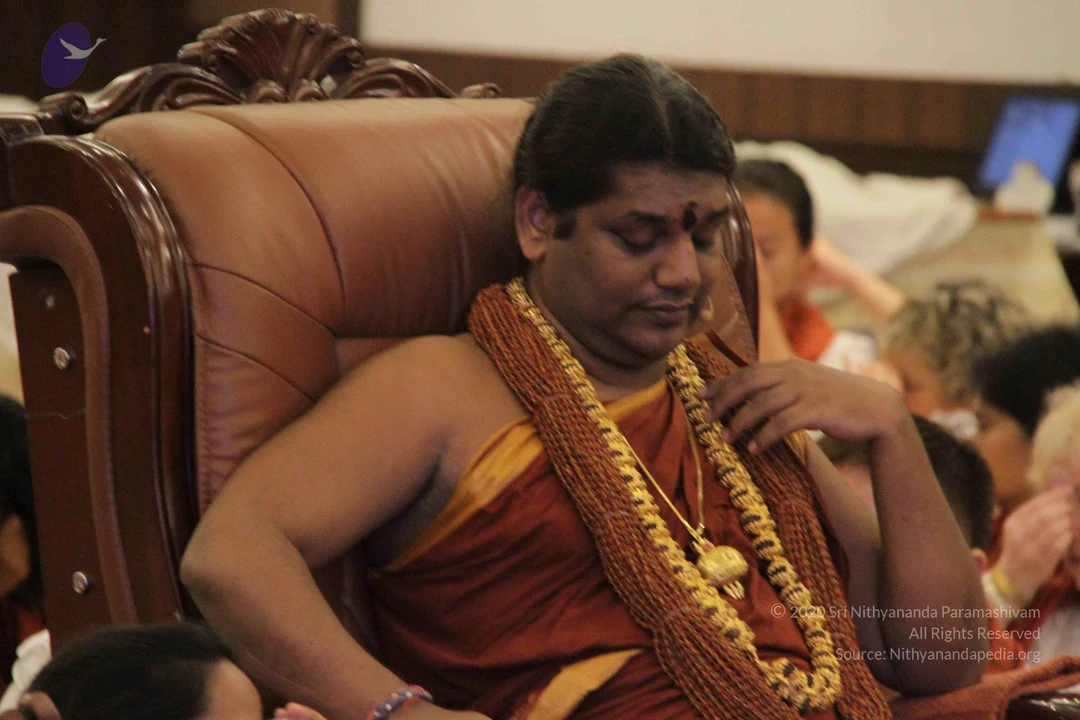
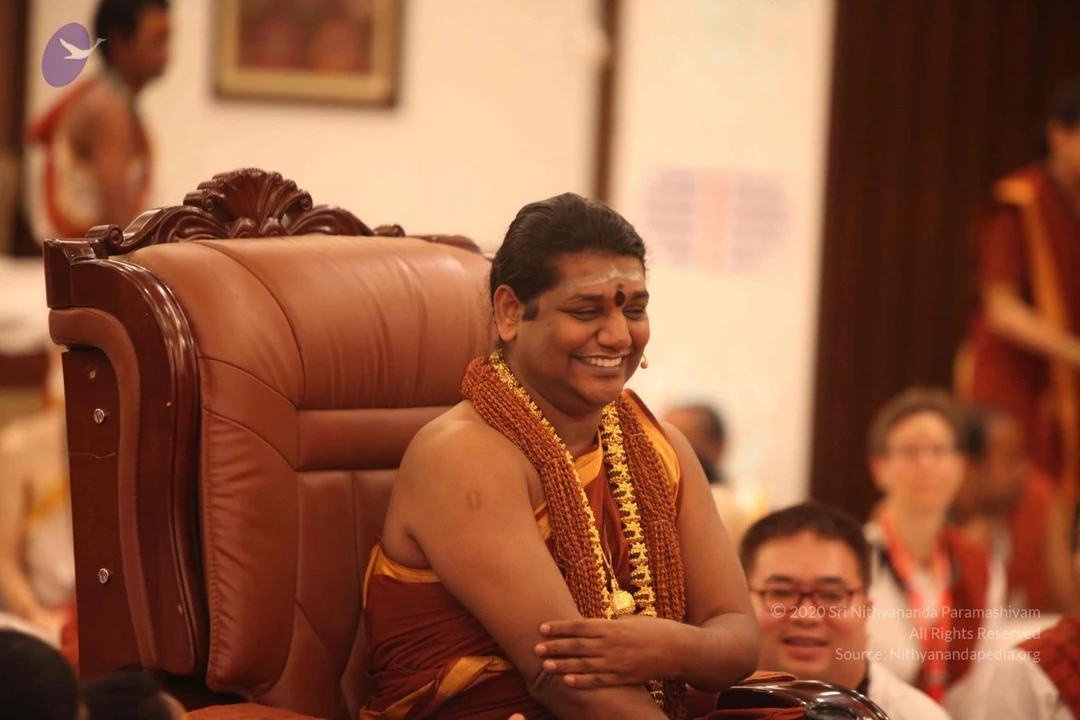
A smiling man sits on an ornate brown leather throne with carved wooden arms at a seminar hall. He wears rudraksha mala beads in layered strands, a gold-toned ceremonial necklace, an orange-red wrap over bare shoulders, and a red bindi with white forehead markings. His arms are folded and his head tilted in amusement. Behind him, attendees in white and orange ritual clothing stand and sit, and a woman with glasses wears a lanyard. a person (appearance cues: rudraksha malas, gold necklace, orange-red wrap, seated on a throne), seated in a teaching session.A man seated on a large brown leather throne-style chair, smiling broadly, wears an orange and saffron cloth draped over his bare upper body and a long layered necklace of rudraksha beads and gold-toned ceremonial garlands with a gold pendant. He has a small red-and-white forehead mark, a short ceremonial thread at the wrist, and a small clip-on microphone at his collar. Beside him a small red-lidded vessel sits on the armrest. Behind him, blurred devotees in orange and white clothing sit in a hall with wooden paneling, and a woman in orange with a red flower in her hair smiles nearby. A tiny printed copyright and source caption appears on the lower right of the image. The seated man is an appearance-based a person candidate with rudraksha mala and ceremonial garlands; he is presented as the teacher of the session.A smiling man with short dark hair and a light vibhuti mark on his forehead sits on a large brown leather throne-style chair with carved wooden armrests. He is bare-shouldered, wearing a rust-orange and gold cloth, with a long beaded rudraksha-style mala and a yellow-and-white flower garland around his neck. Around him, seated devotees in orange and white clothing watch and raise hands, and a woman with a yellow mark on her forehead is in the lower left foreground. A large white-walled hall with a wooden door behind forms the setting. a person is seated on the throne with clear saffron clothing and mala cues.A seated man in saffron-orange robes sits in a large carved brown leather throne chair, wearing a thick rudraksha-style mala of brown beads and a yellow-and-white flower garland, with a gold pendant at his chest. He smiles and rests his hand on the armrest, bare-footed. A tall silver trident stands at right. Around him, seated devotees in white and orange clothing, including a man in a white shirt with glasses and women with flowers in their hair, face him in a hall with cream walls and framed artwork. a person: the seated man in saffron robes, rudraksha mala and flower garland on the throne is a candidate for a person, based on those cues.A seated man in orange-saffron robes sits on a large brown leather throne-style chair, legs crossed and bare feet visible, with a rudraksha mala of beads and a gold pendant around his neck and a small tilak on his forehead. He rests one hand on the armrest and speaks to a seated audience. A tall silver trident stands to the right. Around him, devotees in orange and white clothes sit on the floor and in chairs, some with folded hands, and a woman in a pink top and glasses sits near the front. A framed painting hangs on the cream wall behind. The setting resembles a discourse hall with a person-style presentation; the man is an appearance-based a person candidate given the throne, saffron clothing, rudraksha mala and gold pendant.A smiling man in saffron-orange and gold-bordered robes sits on an ornate brown leather throne-like chair, wearing multiple strands of rudraksha beads and a gold ceremonial necklace with a pendant. He holds a thin wooden stick in his right hand and has a small red-and-yellow mark on his forehead. A small microphone is visible near his face. Behind him, seated devotees in orange and white clothing listen, including a woman in a white top and red bindi-marked forehead in the lower right. A red water bottle sits on the right armrest. The setting appears to be a seated discourse or satsang hall. Swamiji (probable) is seated in the centre, presenting cues of long swept-back hair, rudraksha malas and ceremonial gold necklace.
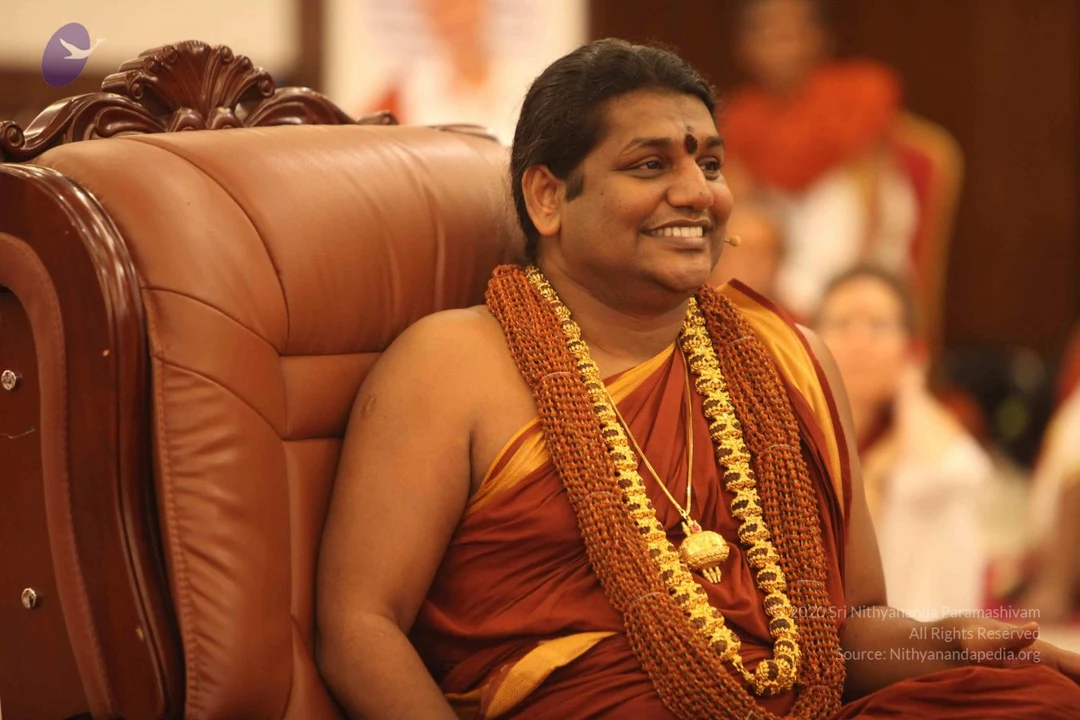
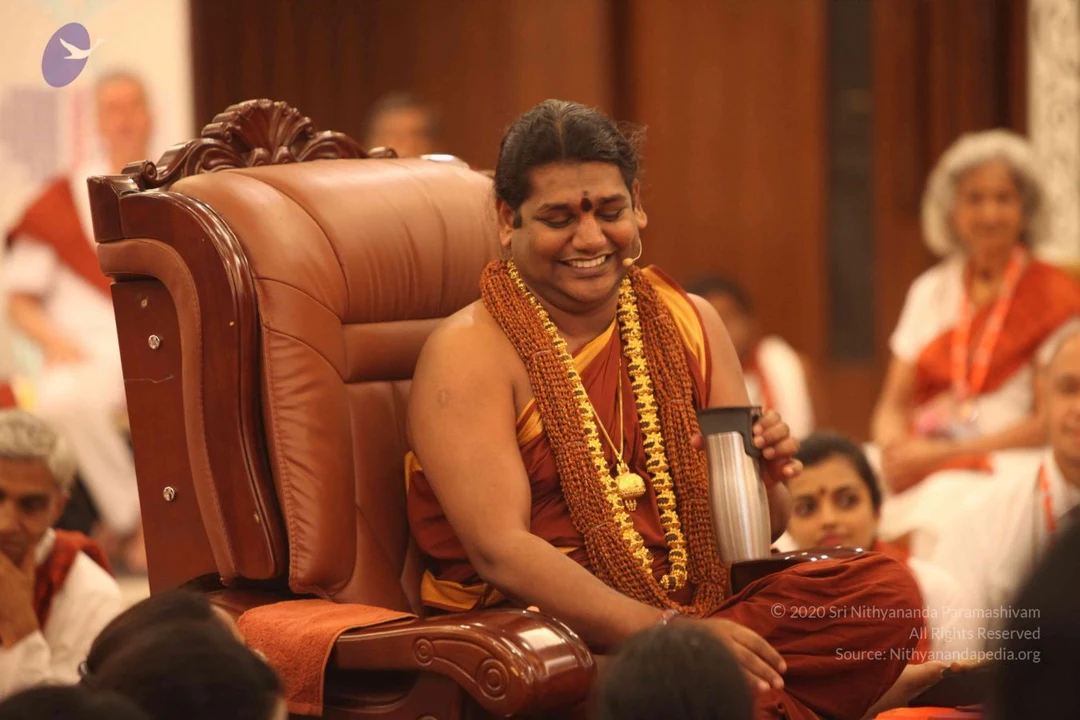
01-INNER-AWAKENING

14 photosSource gallery
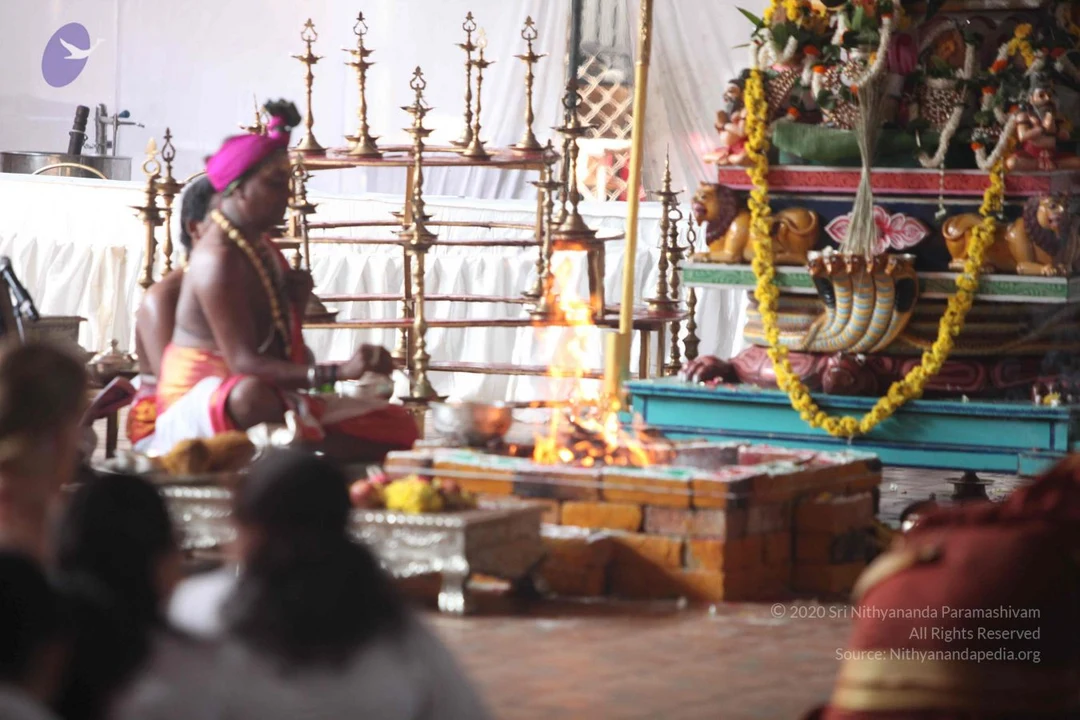
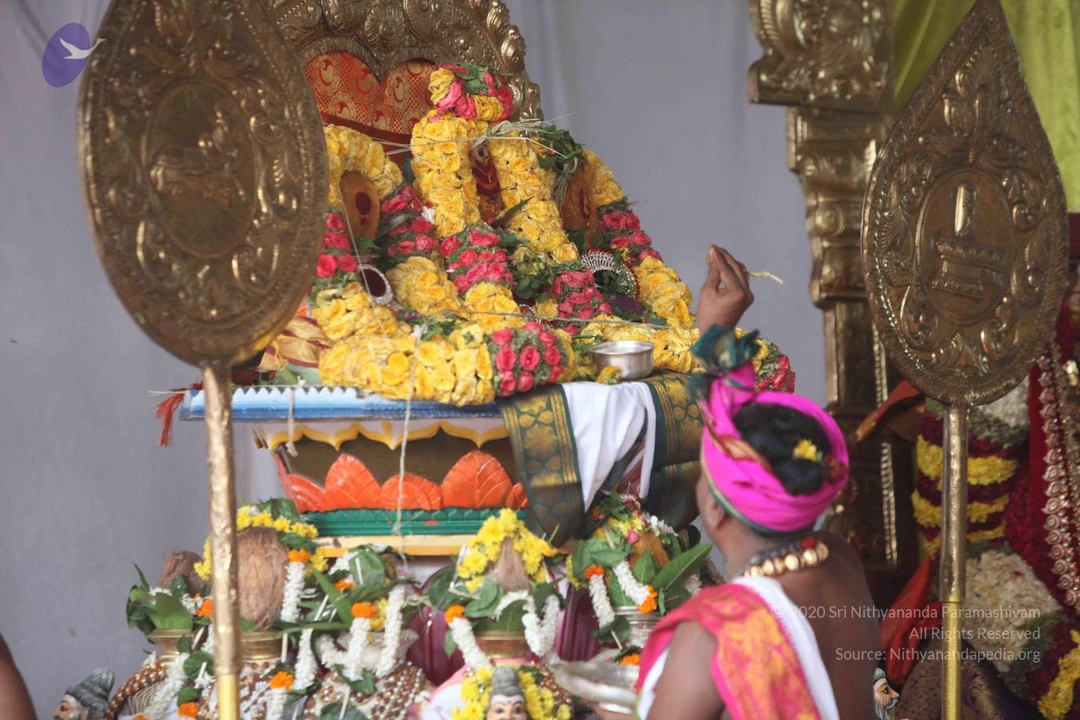
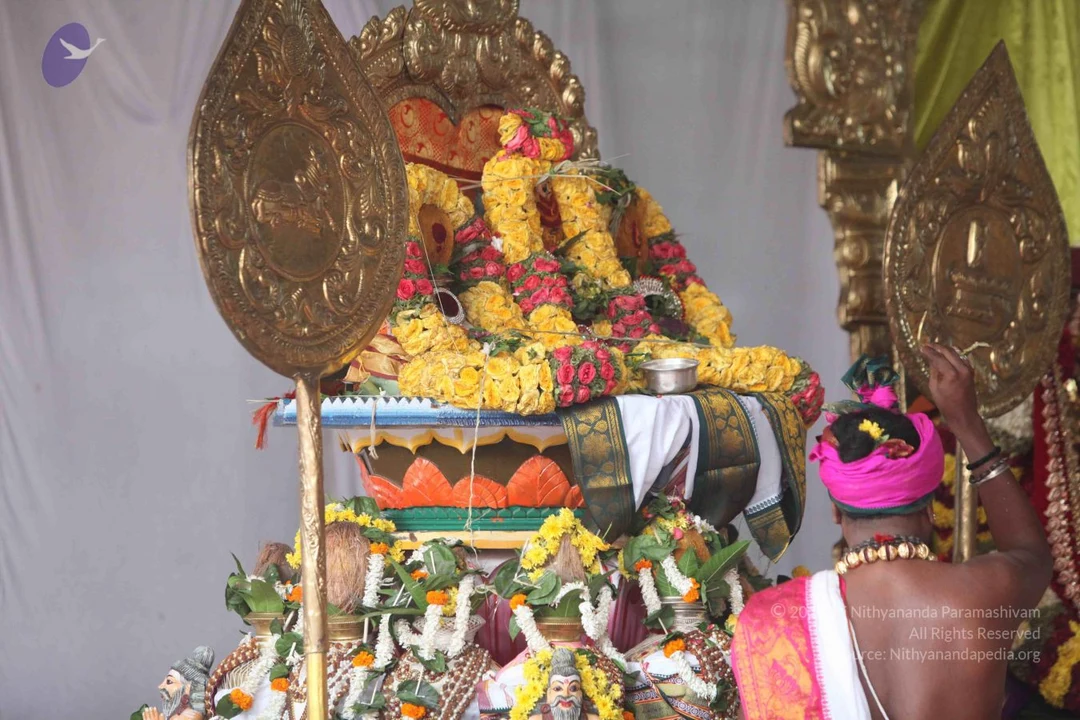
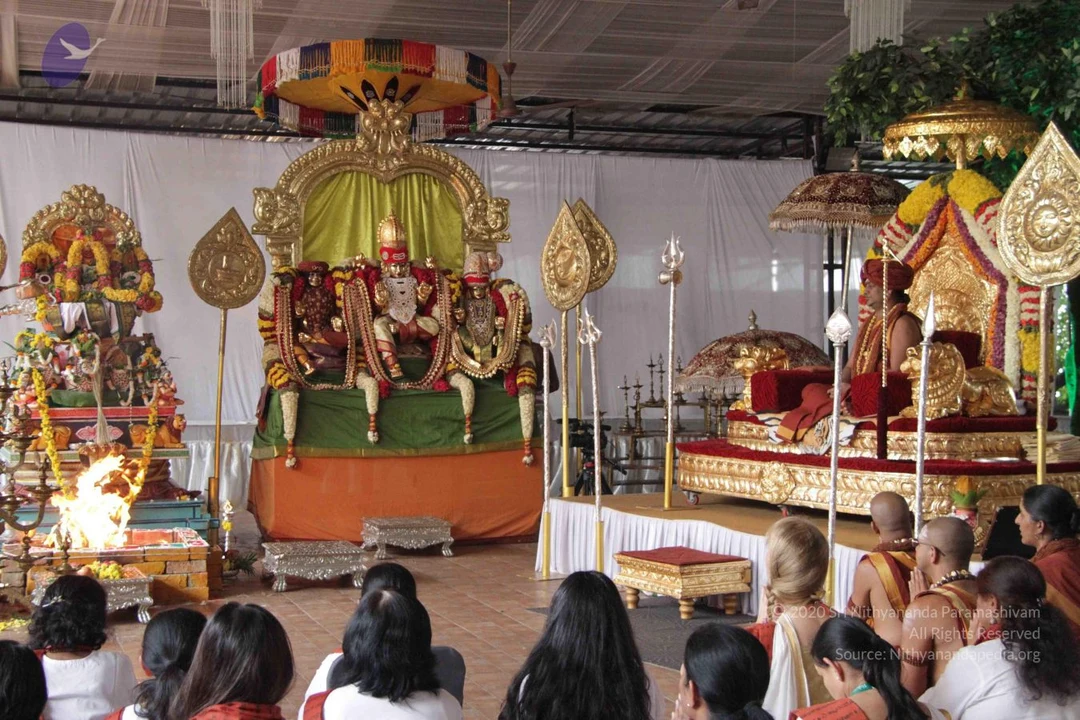
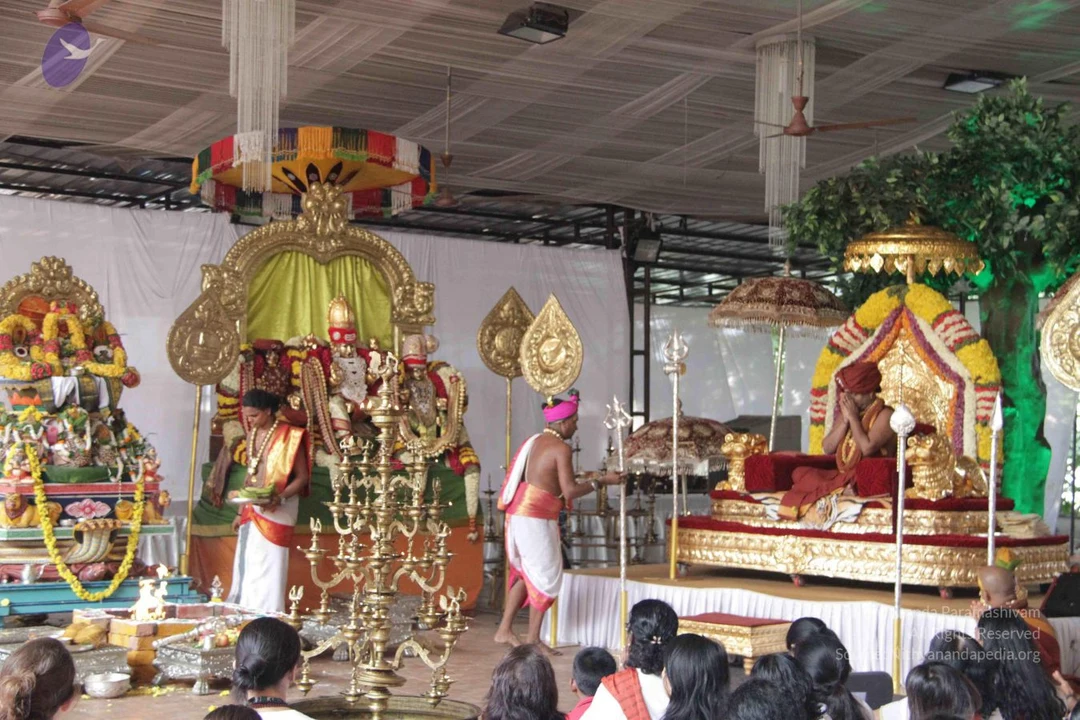
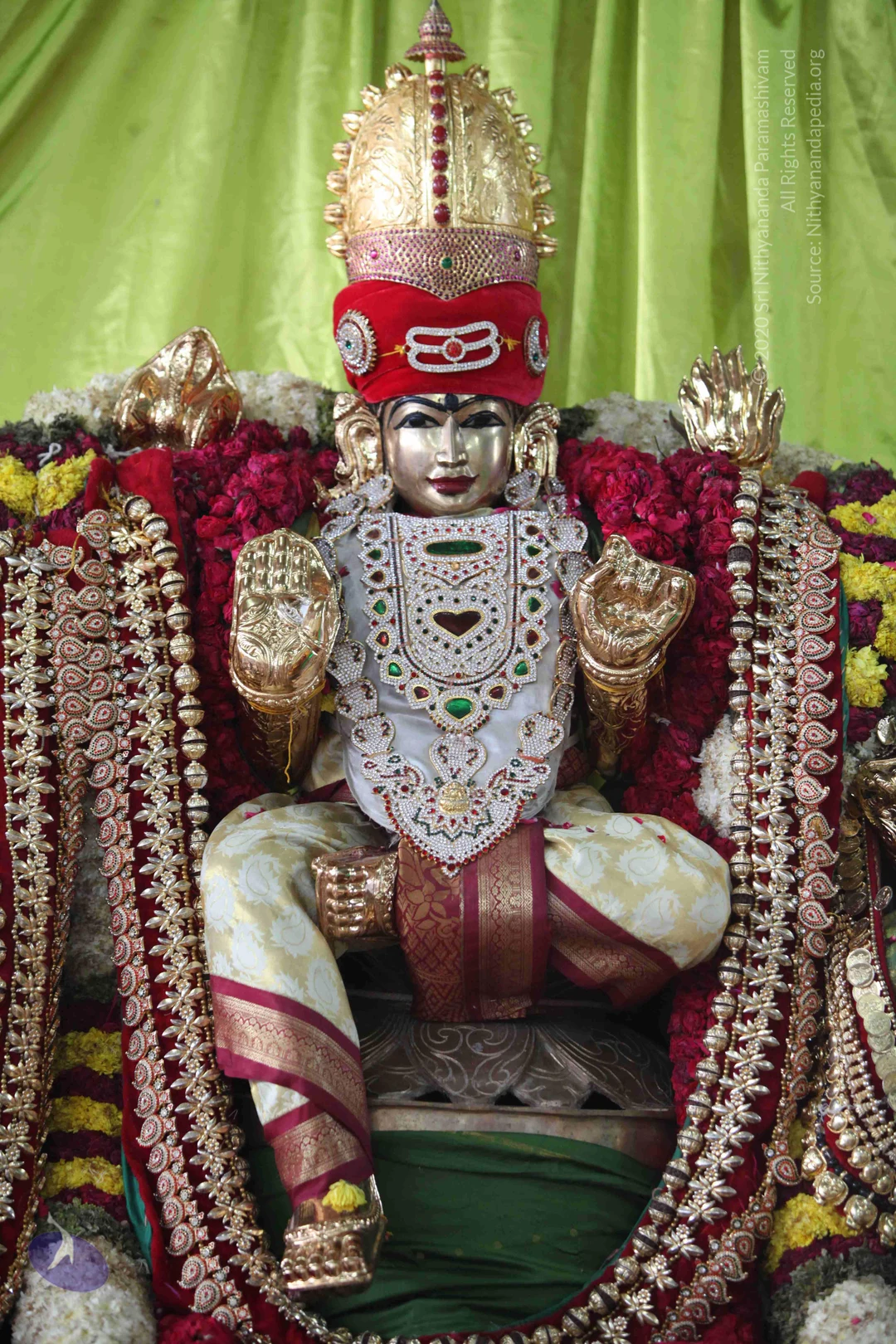
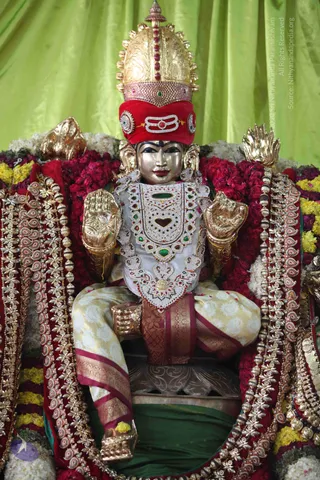
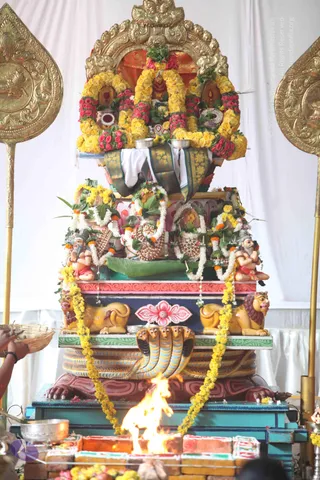
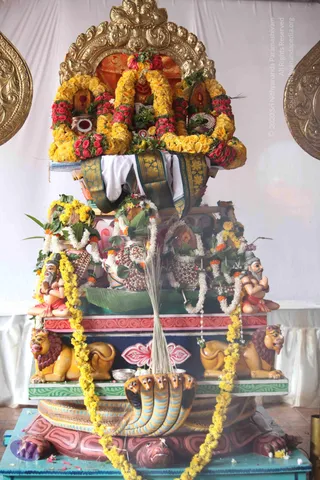
A silver-faced deity murti seated on a flower-decorated throne before a lime-green silk backdrop. It wears a gold crown with red and green stones and a red velvet band bearing a white bead Shiva lingam emblem. A jewelled white and gold necklace with a heart-shaped green-and-red centrepiece covers its chest. Gold-colored hands are raised in blessing postures, and a cream and gold brocade dhoti with red borders is draped over its lap. Red and white flower garlands and red velvet trimmed with gold lace frame the figure, and a gold kalasha-like finial rises at the top.Photograph of an elaborately decorated altar or peetha in a temple-style setting, tiered and painted in turquoise, red and green. Two painted figures of seated sages with folded hands sit on the upper tier, flanked by two golden lions. A carved multi-headed cobra with raised hoods rests on a turtle base at the front. The structure is heavily garlanded with yellow and pink flowers, mango leaves and white jasmine, with silver bowls and a kalasha-like vessel at the top under a gold-embossed arch. A ceremonial fire burns on brick bricks in front of the altar, with a silver bowl and a brass lamp nearby, and a hand holding a basket of offerings at the left edge. Gold ceremonial fans frame the sides against a white draped backdrop. No living people are clearly visible apart from partial hands at the edges.A decorated ceremonial altar or throne-like structure with a golden arched backdrop, draped in yellow and red flower garlands, green leaves, and a green and gold bordered cloth. Below, a tiered pedestal features painted figures of seated sages with folded hands, two golden lions, and a multi-headed serpent (naga) coiled over a turtle base. Coconuts, metal vessels, and a bundle of grass sit among the offerings. No people are visible.A man seated on a red and maroon upholstered throne with a golden embossed backrest, framed by a dense arch of marigolds, roses and white flowers in yellow, orange, red and purple. He wears a dark red turban with a white emblem, a red-orange robe with a golden sash, and a long rudraksha mala with a pendant, eyes closed, hands resting on the armrests. A golden bird finial stands at the right edge beside a golden lion-form armrest. Swamiji (probable): the figure wears a red turban, rudraksha mala and saffron-toned robes, and is seated on a ceremonial throne, consistent with the page's reference to Swamiji at this event.A seated figure in a red-maroon turban and matching saffron-red robes sits cross-legged on an ornate gold throne with a tiger-striped cloth draped over the seat. The throne is backed by a semicircular arch of marigolds and white and red flower garlands in yellow, orange, purple and white. A long rudraksha-style bead mala and a gold chain hang on the chest. Gold lion-form armrests flank the seat, and a brass oil lamp with lit flames stands in the foreground beside silver ceremonial staffs and a canopy. The figure has a calm, closed-eyed posture with hands resting in the lap. Swamiji (probable) is seated centrally, identified by the turban, saffron-red robes, rudraksha mala and gold necklace on the throne.A seated figure in a maroon-red turban and matching maroon-red robes with a gold-and-rudraksha necklace sits cross-legged with eyes closed on an ornate gold throne. The throne is decorated with gold lion heads, a tiger-striped cloth, red cushions, and a heavy arch of yellow, orange, purple and white flower garlands. A gold canopy hangs above under a leafy green backdrop, with two ornate maroon parasols and silver trident staffs flanking the throne. A gold footstool and a white draped stage front sit below, under a ceiling fan. Swamiji (probable): the seated figure wears a turban, rudraksha-style necklace and saffron-red robes on a royal throne, the appearance consistent with the page's identification, though not certain.