Skip to content
Monday

10 October 2011

Life is External Expansion

Dated photos
281
Source pages
1
Media
2
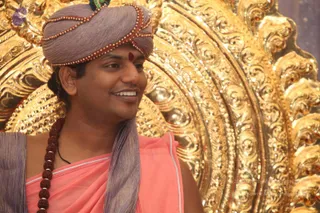
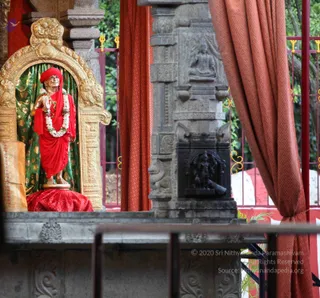
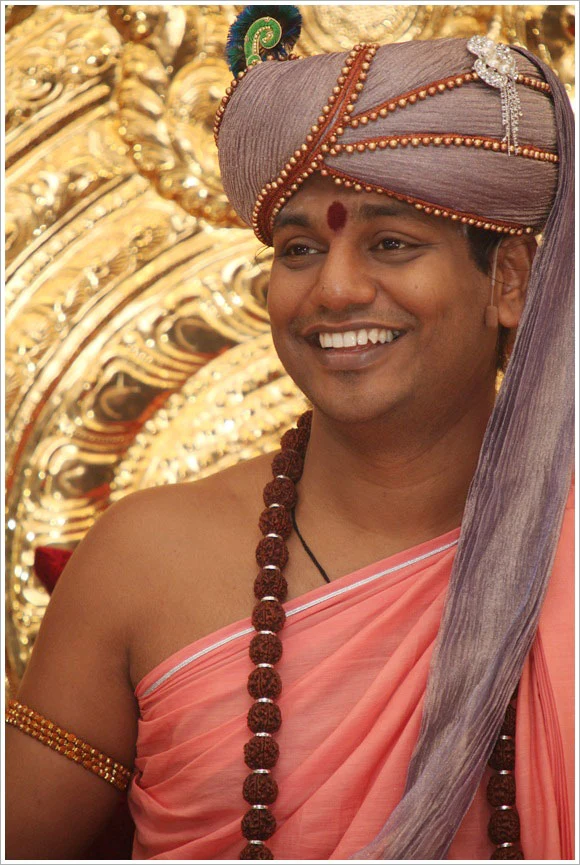
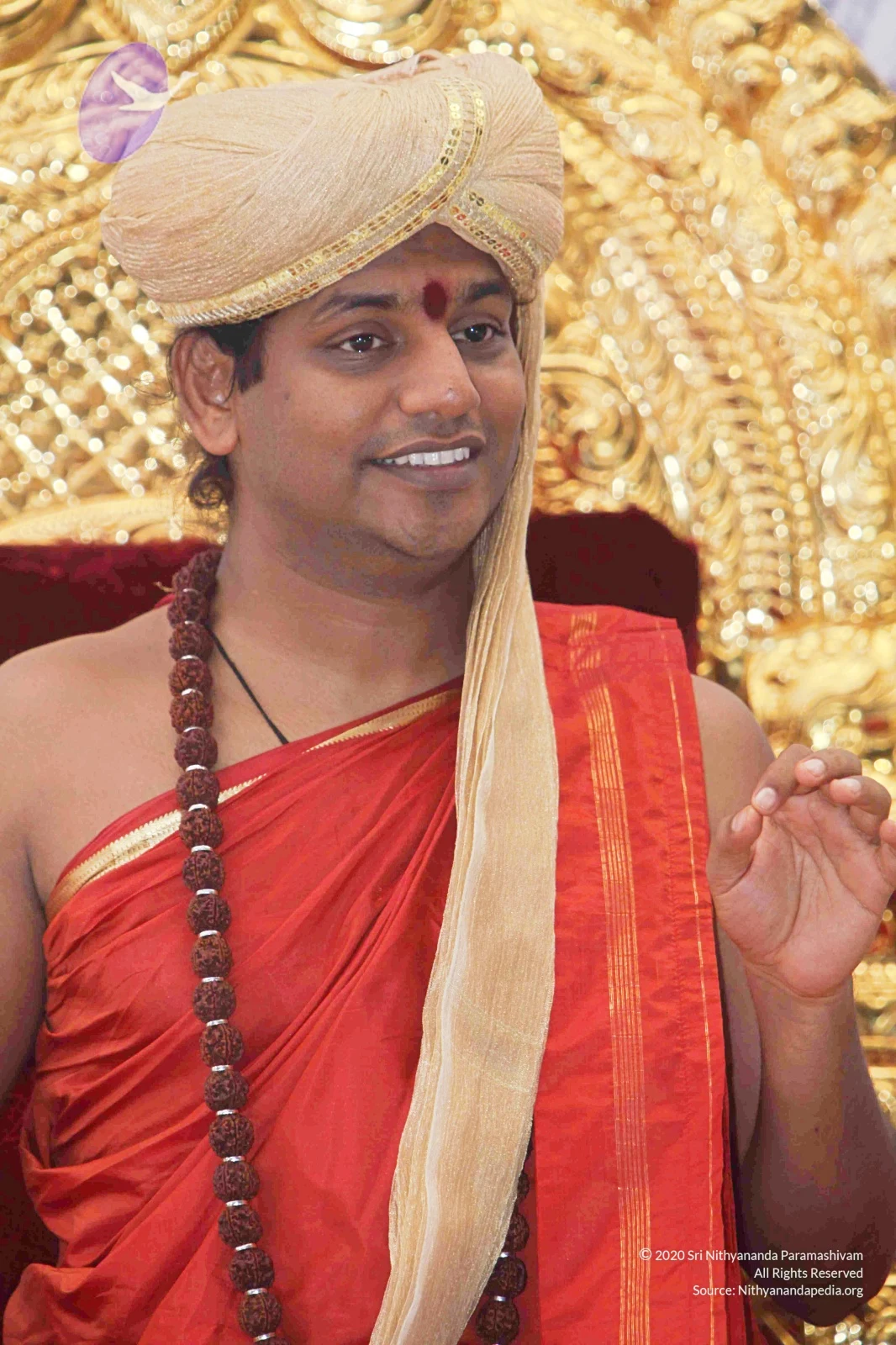
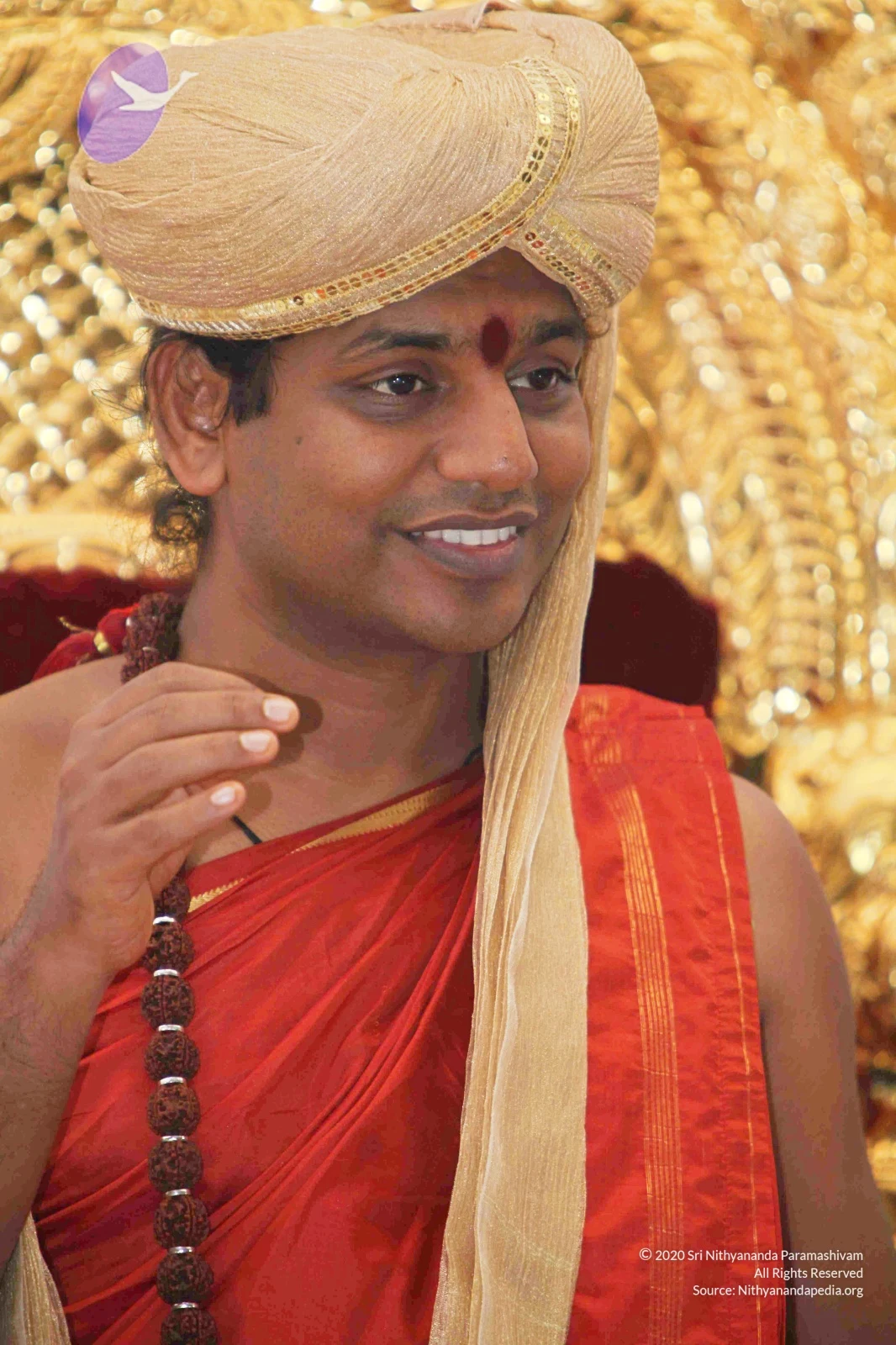
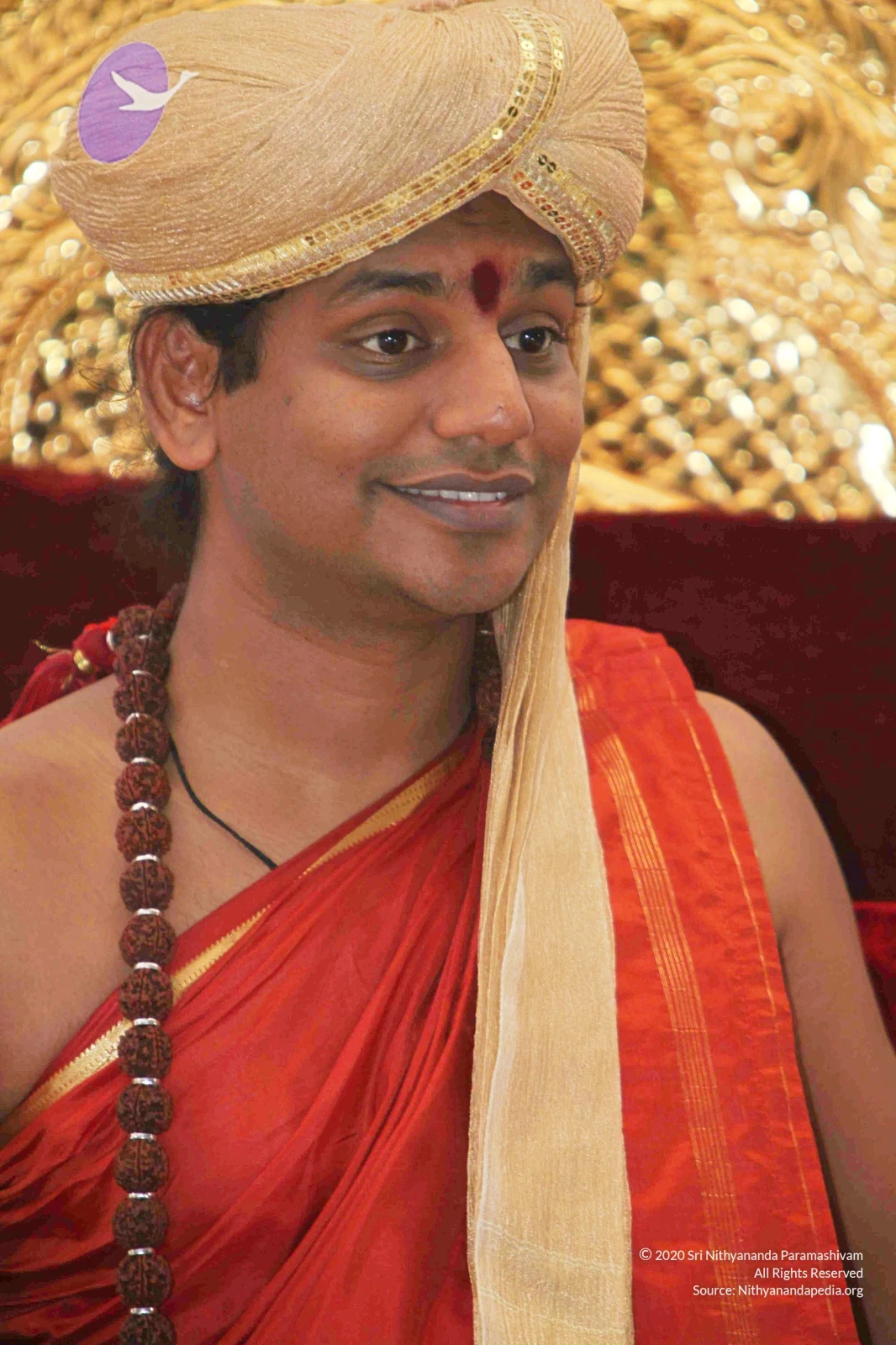
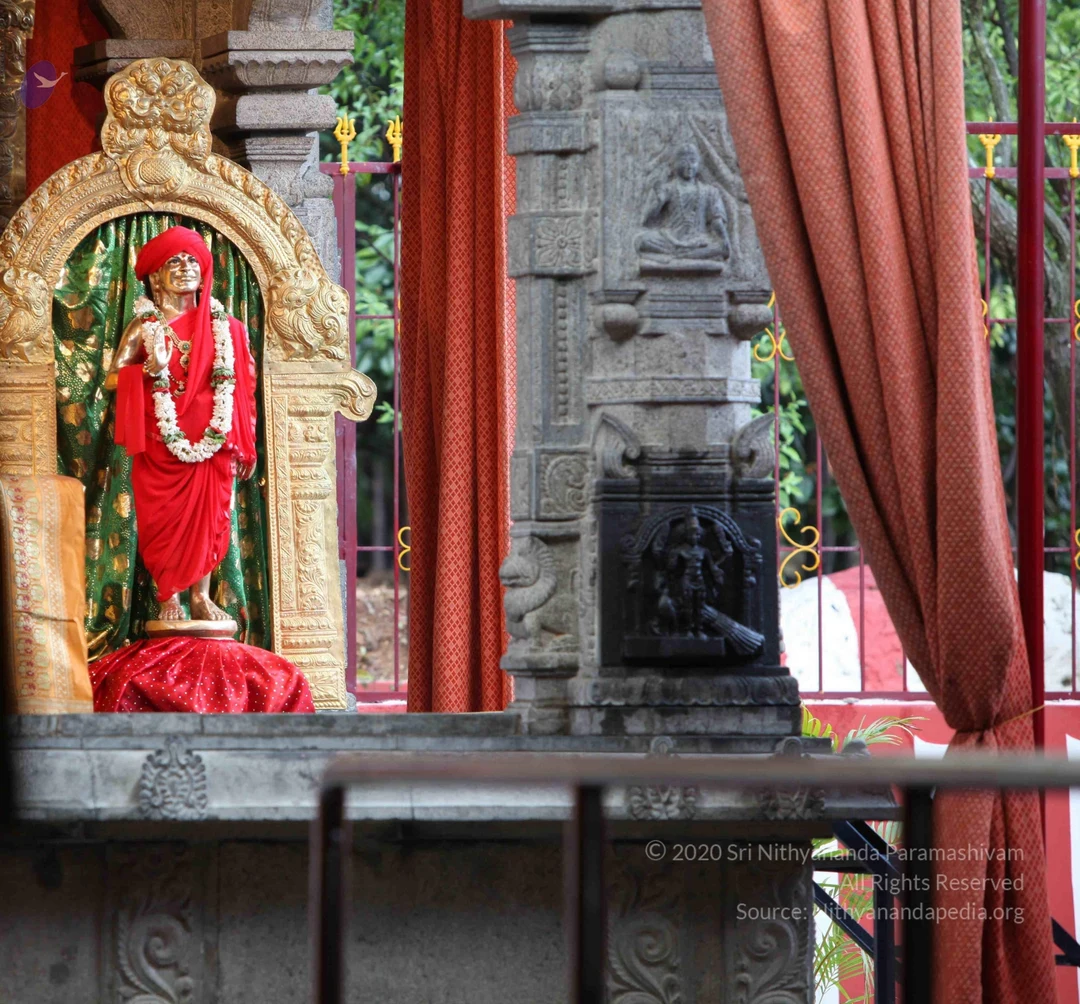
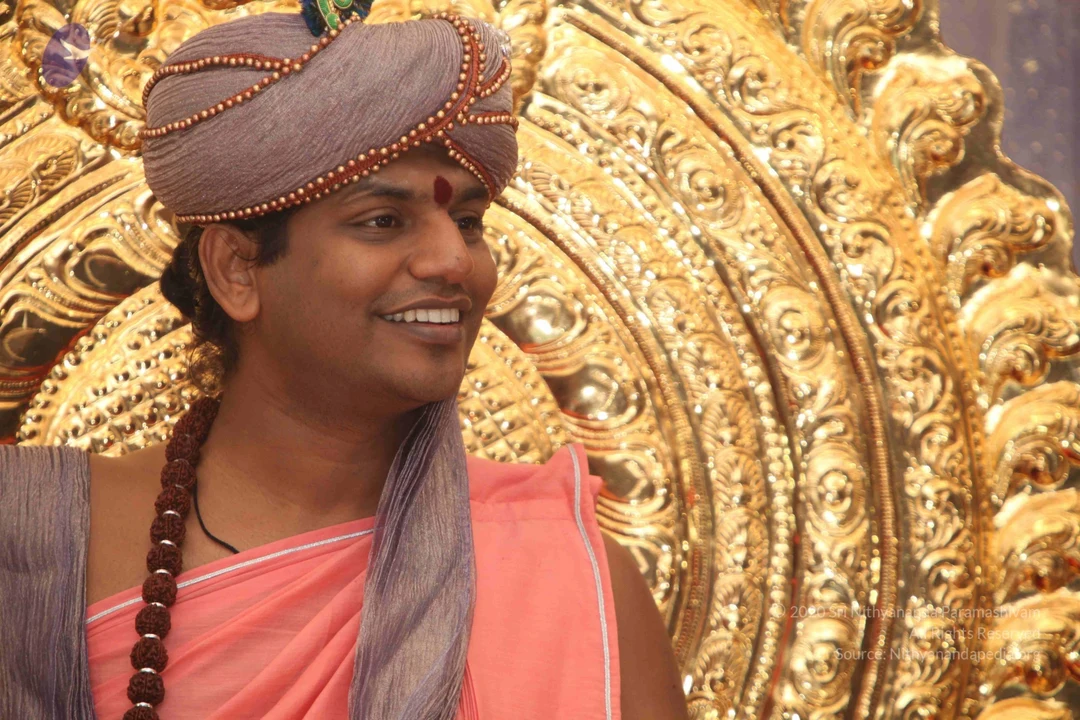
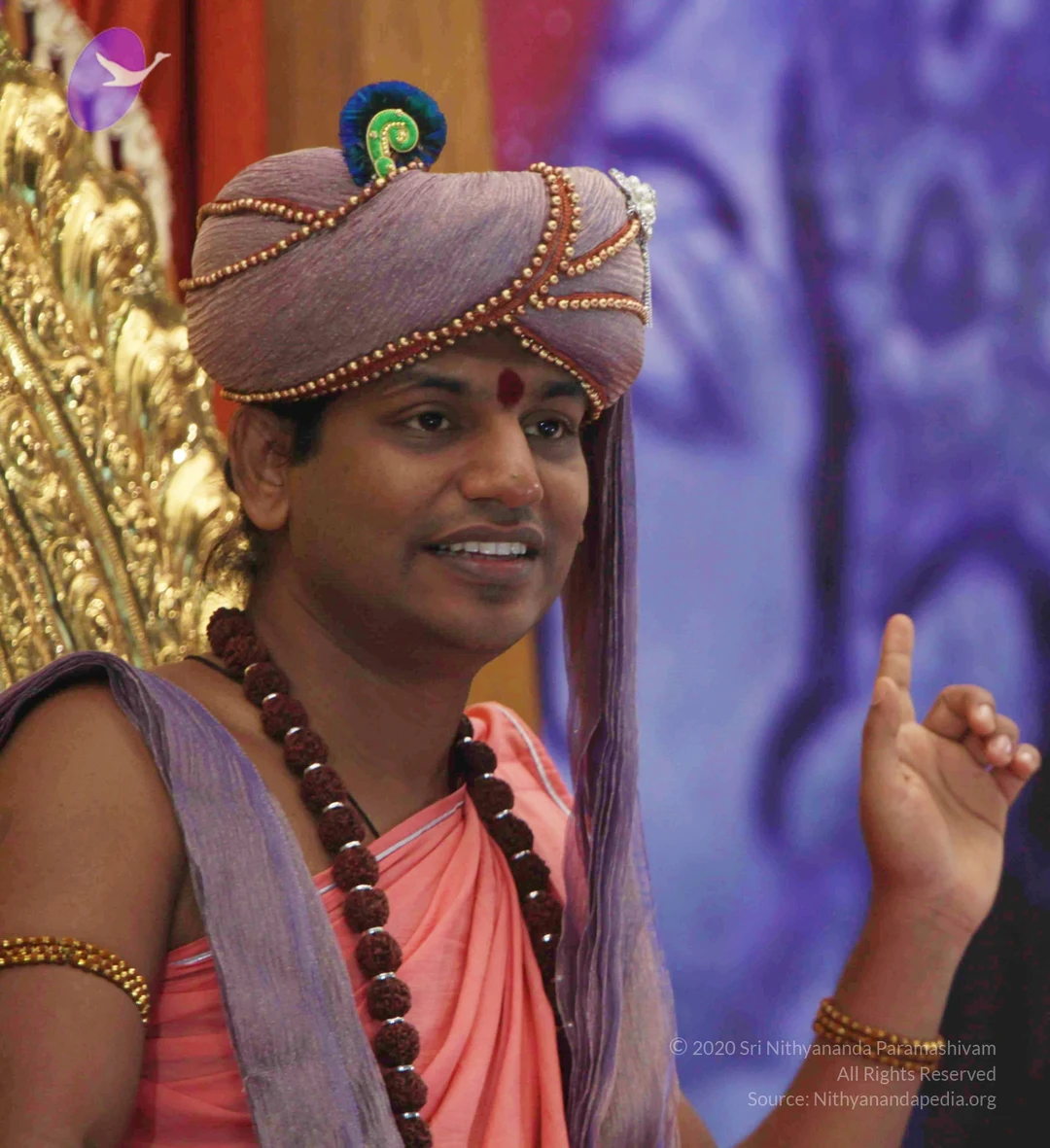
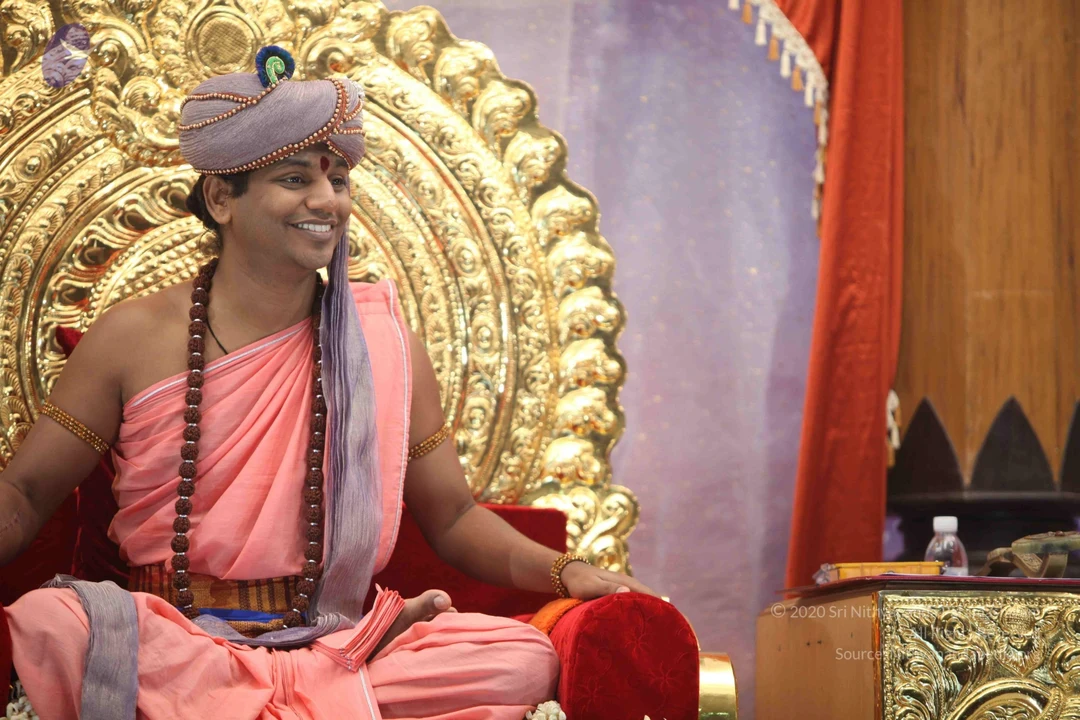
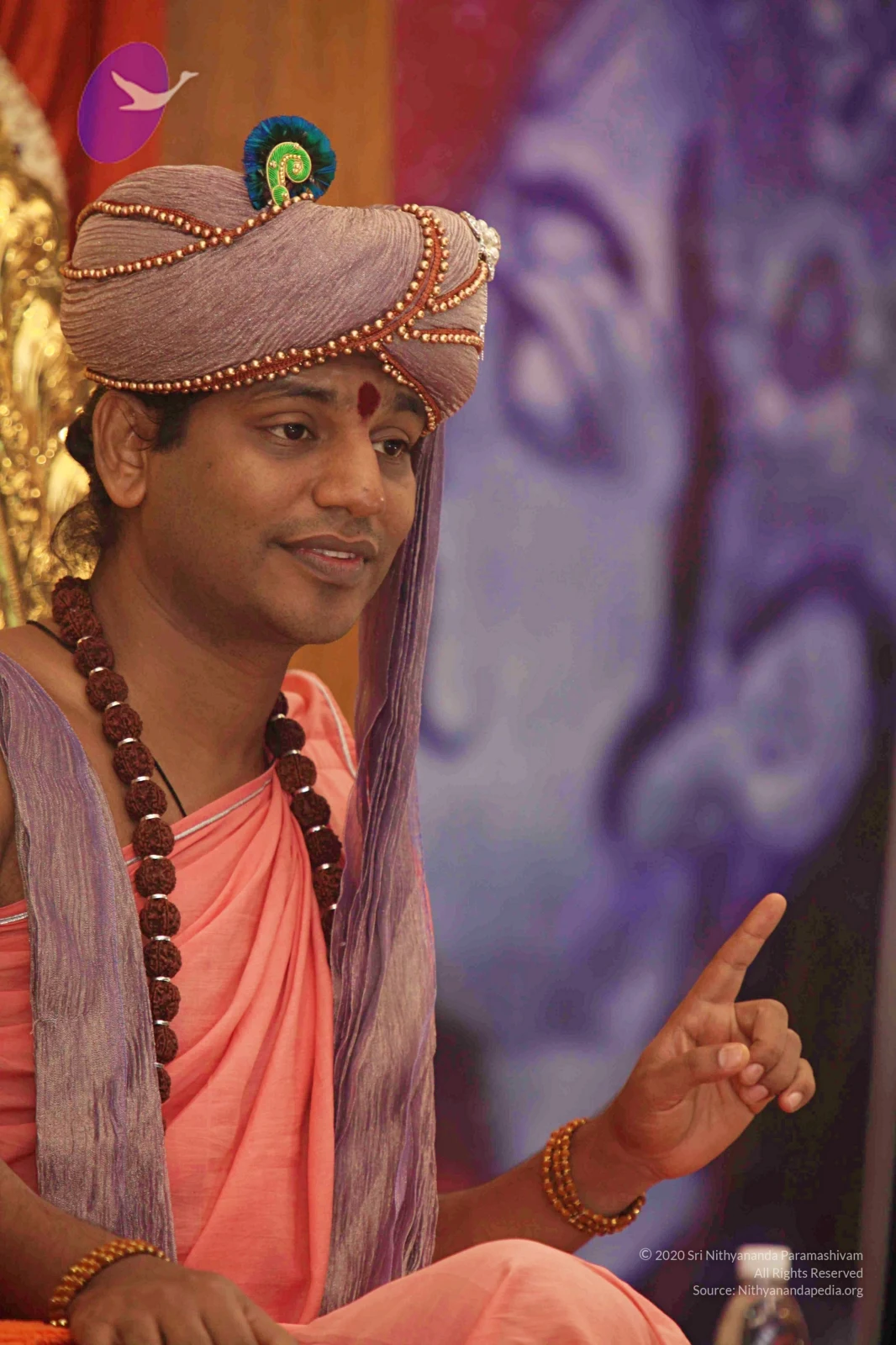
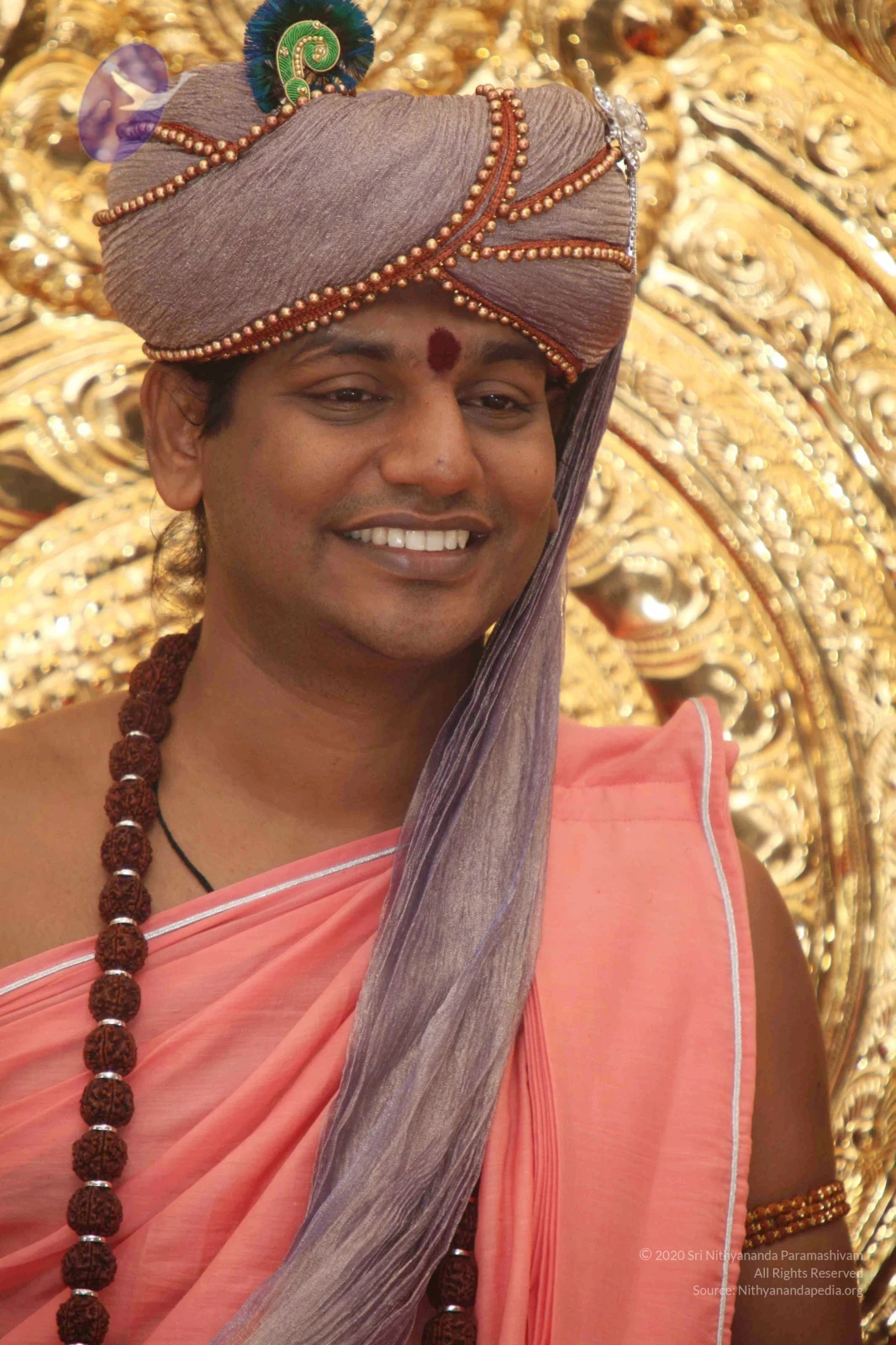
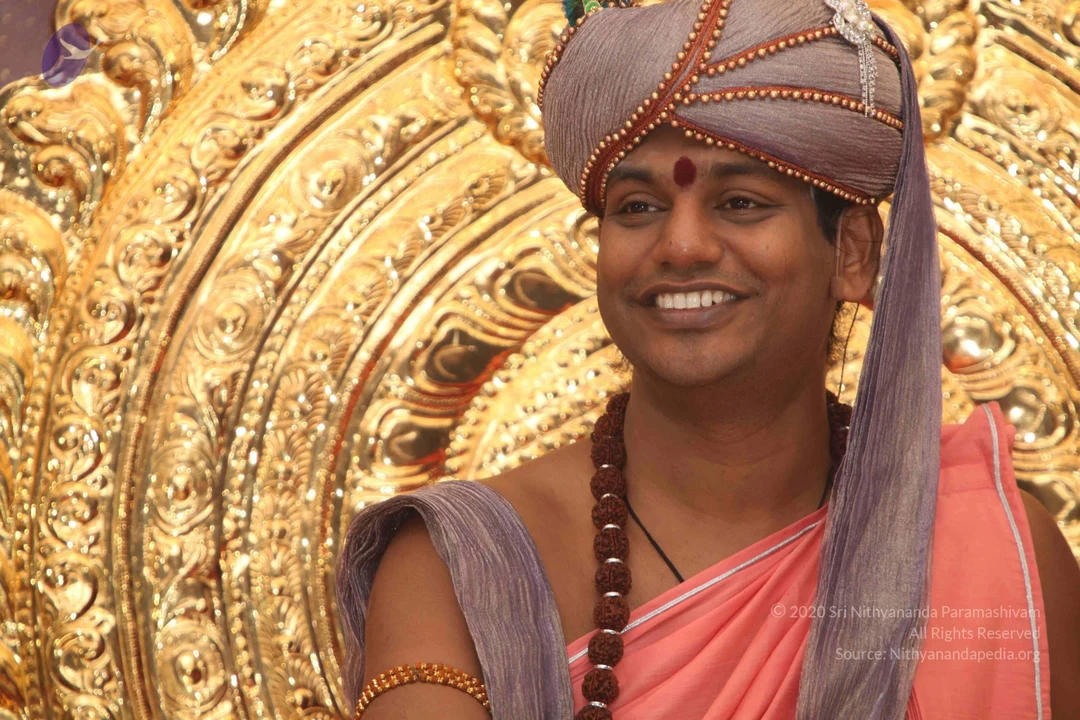
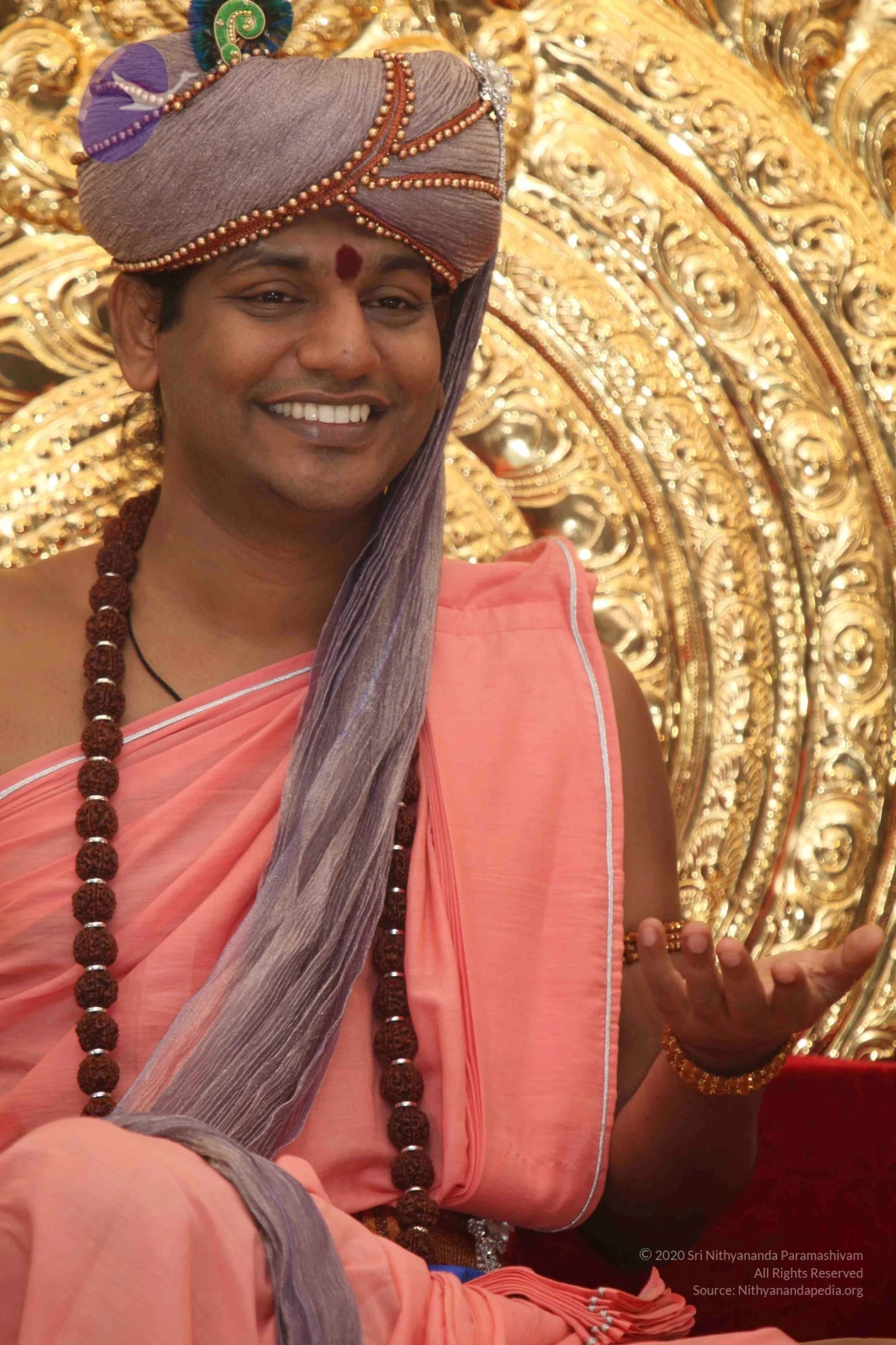
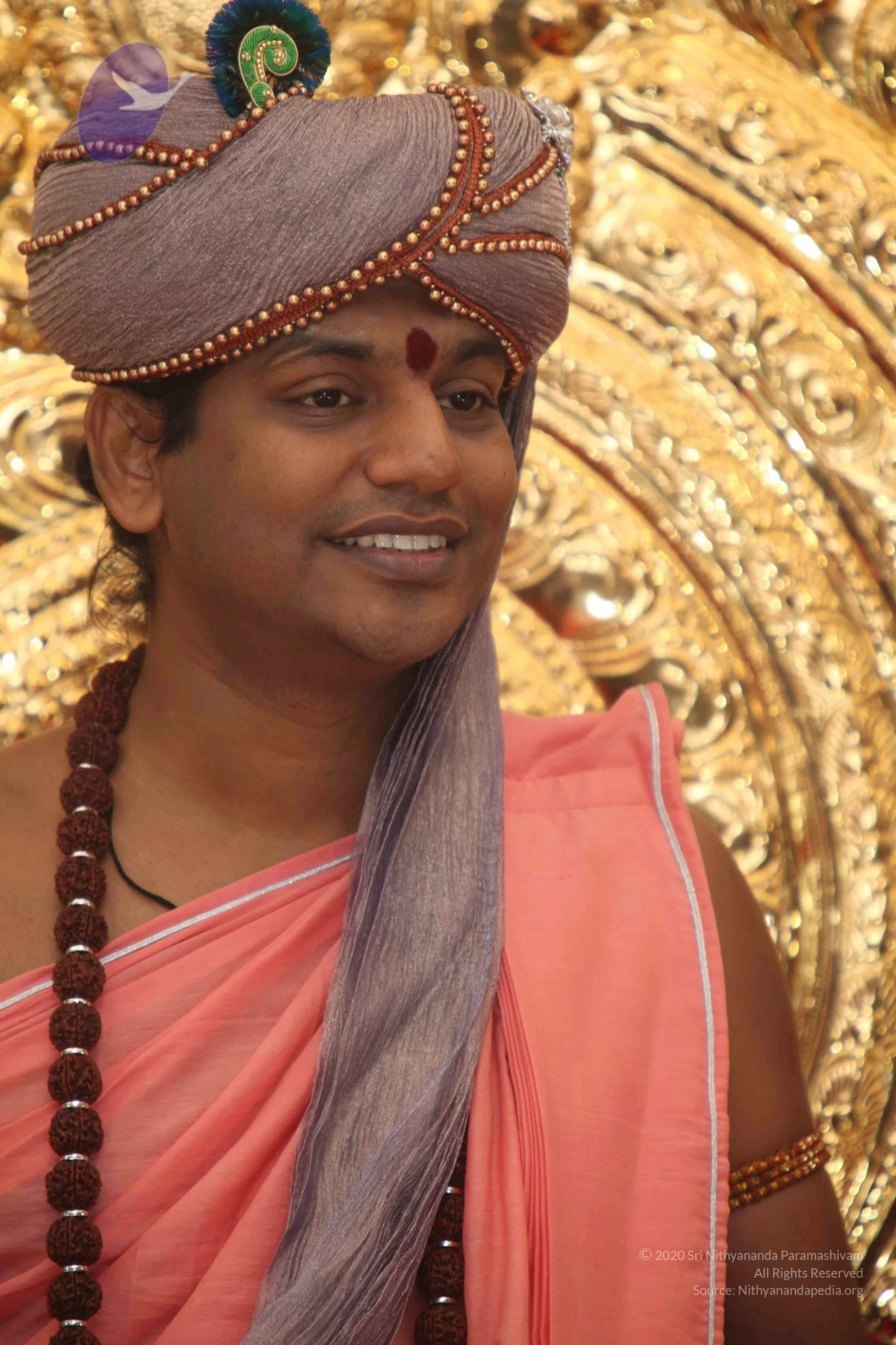
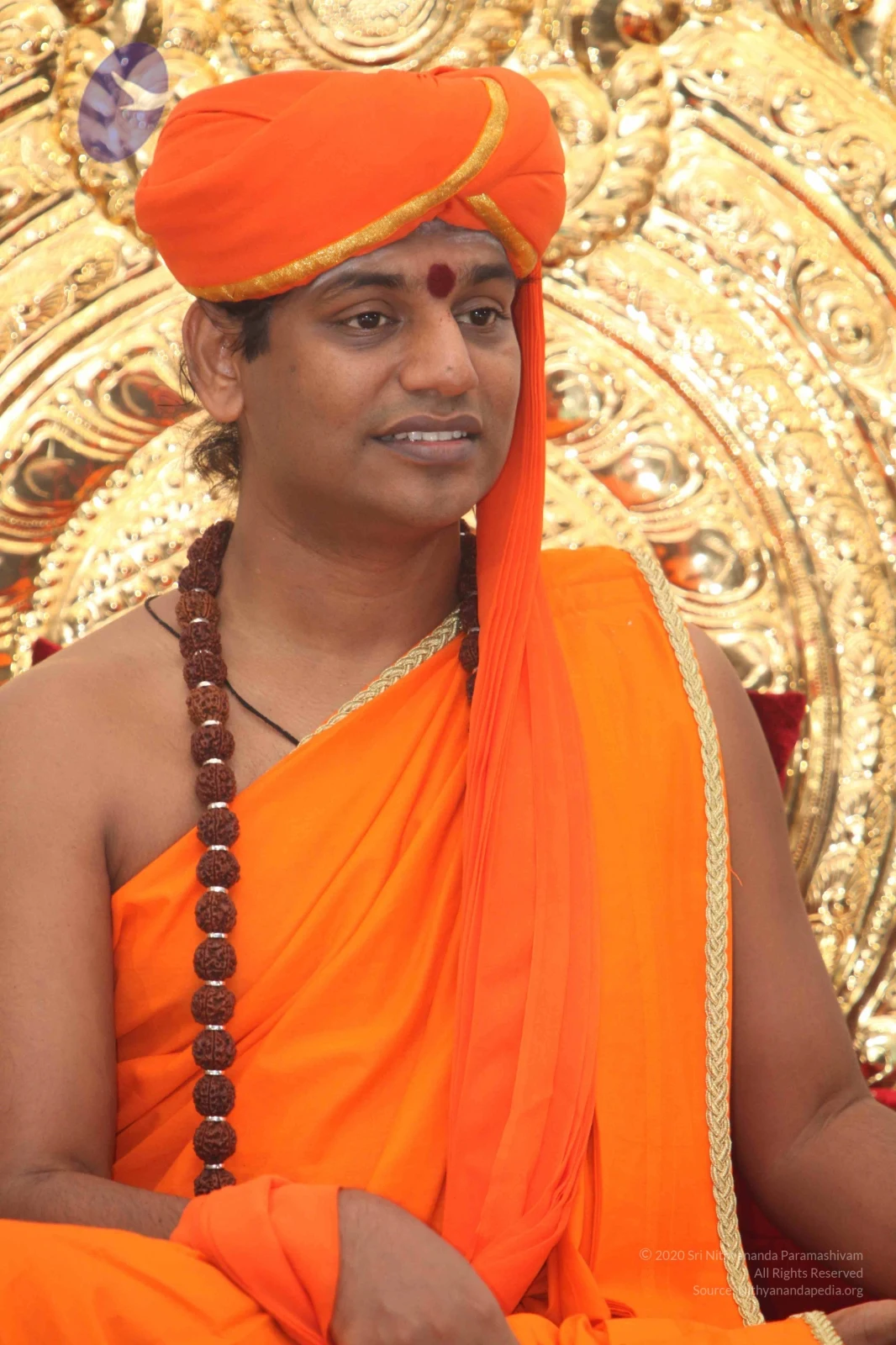
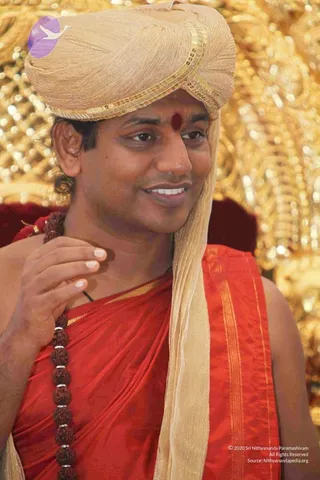
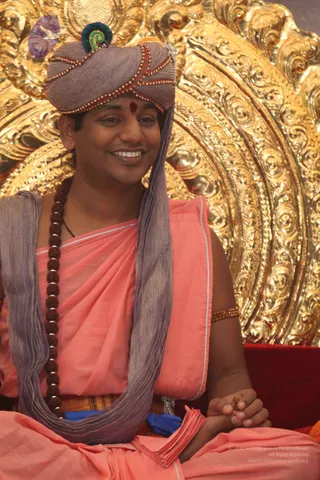
A smiling man in a lilac-grey turban decorated with a beaded red-and-gold band and a green ornament stands before an ornate gold repoussé backdrop with swirling floral and scroll patterns. He wears a red bindi on his forehead, a rudraksha mala of dark beads hanging over one shoulder, a peach-orange sannyasi-style garment and a grey-lilac shawl.A photograph of a temple shrine niche framed by grey carved stone pillars and orange drapery. Inside a gilded arch stands a statue of a male sage in red garments with a red head wrap, a white flower garland, and a raised hand in blessing, set against a green brocade backdrop. Beside it, a black stone relief shows a seated deity figure on a stone wall, and a seated figure is carved high on the pillar. Red and gold metal railings and greenery are visible behind. No living people are present.

October 10 2011

Original wiki page
Contents

Title:

Life is External Expansion

Link to Video:

VideoAudio

Transcript:

Bhagavad Gita

Life is eternal expansion

DATE: Day 43: Oct 10th 2011

Unless there is somebody in your life who brings the eternal truth into practical instructions, eternal truth into practical life, spirituality is not going to help you in anyway. You yourself cannot make it. Understand if you yourself are trying to make eternal truths into livable living reality you may be using the pirated version of the software. The problem with the pirated version is no service, no customer care. When you are in danger you are in danger; that’s all.

I have seen many people saying...’ehhhh what’s the need for a guru’. Come on! Still the coding system is with them… with the Masters. See the difference. See Arjuna is also talking the same logic. ‘Ehhh life is impermanent. Why should we kill them? I am retiring becoming sadhu’. But Bhagawan is completely talking something opposite. Actually it should be like this Arjuna should be saying come on I am going to fight and kill all these fellows and Bhagawan should be saying no, no see they are all your friends and relatives how can you kill them out of your greed for the land. Come on become a sadhu I will initiate you. You are my first goudiya sampradaya sanyasi, Krishna sampradaya sanyasi. That should have happened. But completely opposite is happening. See the fun. But Bhagawan is saying come on that is not right. Don’t try to escape. Fight!!

If a normal man who tries to read scriptures and try to make use of the spirituality to enrich his life by himself what he would have thought? Naturally any logical man will come to the conclusion why fight? Retire, be a sadhu; that is the solution you will come up with. That is why I am saying if you have come to that decision you are using pirated software. You are not using, you are not having original version.

Bhagawan is making the eternal truths into practical reality in Bhagawad Gita in Arjuna’s life. This word tasmad uttistha kaunteya yuddhaya krta niscayah this is the smruti for Arjuna. All of you also have a powerful smruti. Please understand the practical instruction you are supposed to follow will be always powerful than the eternal truths because the practical instructions straight away works on your life. But everybody is happy with eternal truths. That is why 1000s of people go to temples and shrines of the dead masters but very few people go to live with the living Master.

See 1000s go to the Master’s shrines and temples where they are not physically alive but with a living Master very few go because the smruti - the day to day instruction will be too strong. See if you need to sit and listen ‘ehhh life is impermanent. You change the body just like you change the cloth’. If you need to sit and listen this it is not a big thing. You will be happy to do this whole day. But the next word ‘come on tasmad uttistha kaunteya yuddhaya krta niscayah . Get up oh Kounteya for war’ then comes the problem. The smruti the day to day instrution will be more powerful more strong than the smruti-eternal truths. That is where the problem comes. That is why nobody wants a living Master who will give smruti to them who will give day to day instructions to them.

Everybody wants shruti the eternal truths so that they can bend as they want. Everybody wants gold to make jewels as it fits with their body. But Masters always make jewelry and give you the readymade jewelry and tell you to change the shape of your body for jewelry. They say come on 17 inch biceps build it now. They make jewelry and give you and then tell you... ‘ehhh for this jewelry build your body’. That is where the problem starts. Everybody likes gold but nobody likes readymade jewelry; because now for this readymade jewelry you have to make your body. Bhagawan naturally makes only 30 inch odiyana and asks you come on bring your waist to 30 inch. But you want gold to make 60 inch odiyana; the waist band. You feel no, no, no give me the gold I will make 60 inch waist band. But Bhagawan says no I already made the jewelry, it is 30 inch waist band; come on reduce your belly, reduce your tummy. This is the difference between shruti and smruti the eternal truths and day to day life style.

With this verse Bhagawan ends giving instructions. One more truth you need to understand very beautifully Bhagawan says you will achieve heaven even if you die. What’s the meaning of that word? Let me be very honest. I do not believe if you die in a war even if it is a dharmic war you will have a special place where all the Rambha Menaka Urvashi will come in front of you and dance and give you the somarasa and all that. I do not believe. So what Bhagawan must be saying through these words hato va prapsyasi svargam jitva va bhoksyase mahim. If you are killed prapsyasi svargam you will achieve the svarga. See if you die in expansion process you will have such a deep satisfaction, even while you leave your body that deep feeling fulfilled is heaven.

Life is expansion understand; it’s eternal expansion. Understand I will constantly be expanding you. Your pattern or concept of feeling homely means ‘Nothing….Wow I don’t need to do anything. I can just stretch my leg in the easy chair and sip cup of coffee and there will be a worker to wash my clothes and dry it and iron it and even if I want they can put it on me. The idea of feeling home for you is different; the idea of real home is different. You see constantly I will be putting you in uncertainty and making you expand. When you settle with the feeling of unsettled, when you are feeling homely with the feeling of not feeling homely, when the expansion becomes your rest, when the constant running is the space you are having vacation, you are done!! Till then I will not let you feel, I will not allow you to feel the pseudo homely feeling; pseudo settled feeling...that will be pseudo moksha which Shishupala gives to all his wives, his dasis; not what Krishna gave for his gopikas.

Krishna never let his gopas and gopikas settle down. Every day some demon will come. If there is no demon he will poke at the Indra and make Indra to fight with the gopikas. Just because his gopikas and gopis loved Krishna and wanted to live around him this fellow has made all kinds of hell for them. Either some demon will come to kill this fellow, if there is no demon is coming everything is going well he will poke at the Indra and call him for a fight like I am poking many Indras now. And those fellows will come and shower heavy rain and create big trouble. Then this fellow will pick up the big hill and keep it under his small little finger and show his valor. What a drama!!!

Understand you should be flying in jet speed but your inner space should be in completely in rest, in restful awareness. Start resting; start relaxing in restful awareness, being highly creative and productive. That is your life. In the high speed running be in restful awareness, be witnessing, be a witness. Life is expansion. In the expansion process even if you die you will have the tremendous fulfillment. That is what Bhagawan says hato va prapsyasi svargam- even if you die you will achieve heaven. That fulfillment is heaven.

Decide even if you die, go through the proper direction-the direction of expansion, so that you will achieve the extraordinary fulfillment, which is heaven. I tell you this one word uttistha kaunteya yuddhaya krta niscayah; this shows Hinduism, Vedic tradition is for life. It is not anti life, it is not against life; it is for life. I wanted all of you to carry this sacred secret as message of Hinduism, message of Vedic tradition, message of Bhagawad Gita, message of Bhagawan. We are for life. Even if death comes on the way to life you will have the fulfillment of heaven but life should not come on the way to death. Death should come on the way to life. Be always on the way to life. Sit with this one sacred secret; internalize this one sacred secret - life is for living. We are for life in every step.

Photos:
Photos Of The Day:

Photos Of The Day:

Temple
Paduka-Puja
Thiruvannamalai-Ashram-Temple

Thiruvannamalai-Pada-Puja

Bhagavad-Gita-Satsang-Tamil

Thiruvannamalai-Kalpataru-Darshan

Thiruvannamalai-VIP-Visit

Thiruvannamalai-Doctors-Meet

Thiruvannamalai-Night-Walk

Arunachala

Highlights

Photos Of The Day:

PadaPuja

BGSatsang

BGSatsang

01-Temple

20111010_Photo_1000_IMG_1103_CMP_WM

02-BG-Satsang

03-BG-Satsang-Tamil

Photos from this day

View all 281 photos

Photos:

14 photosSource gallery
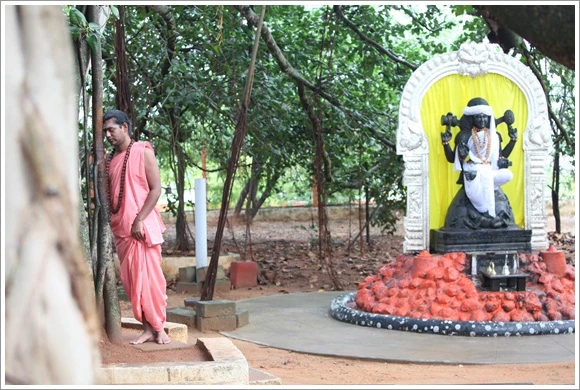
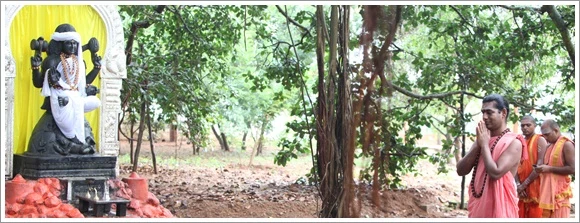
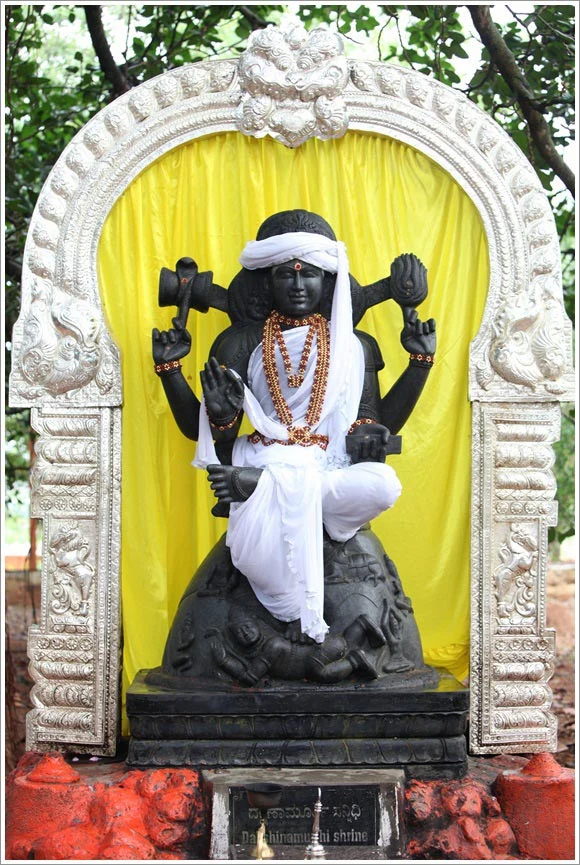
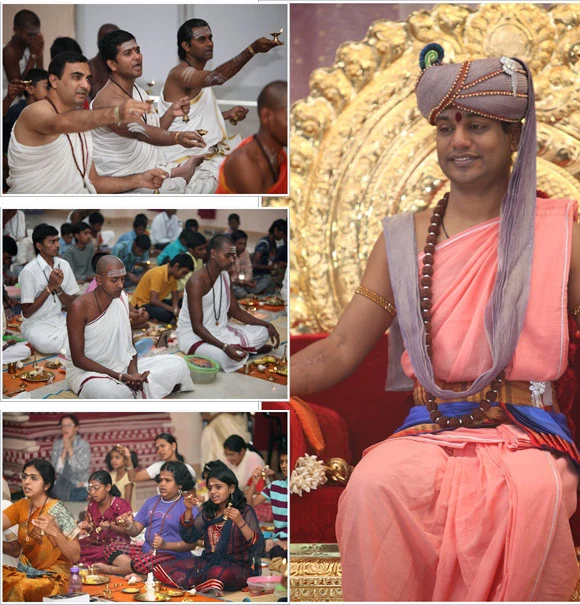
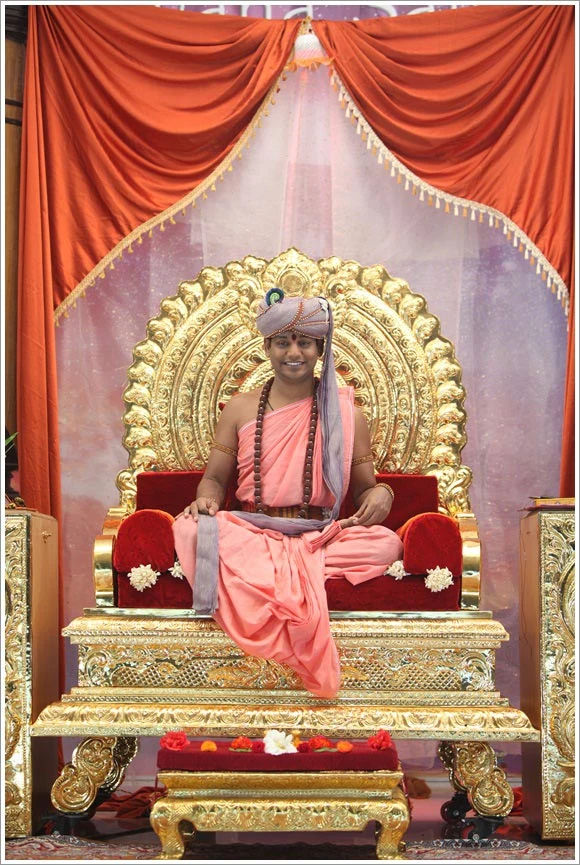
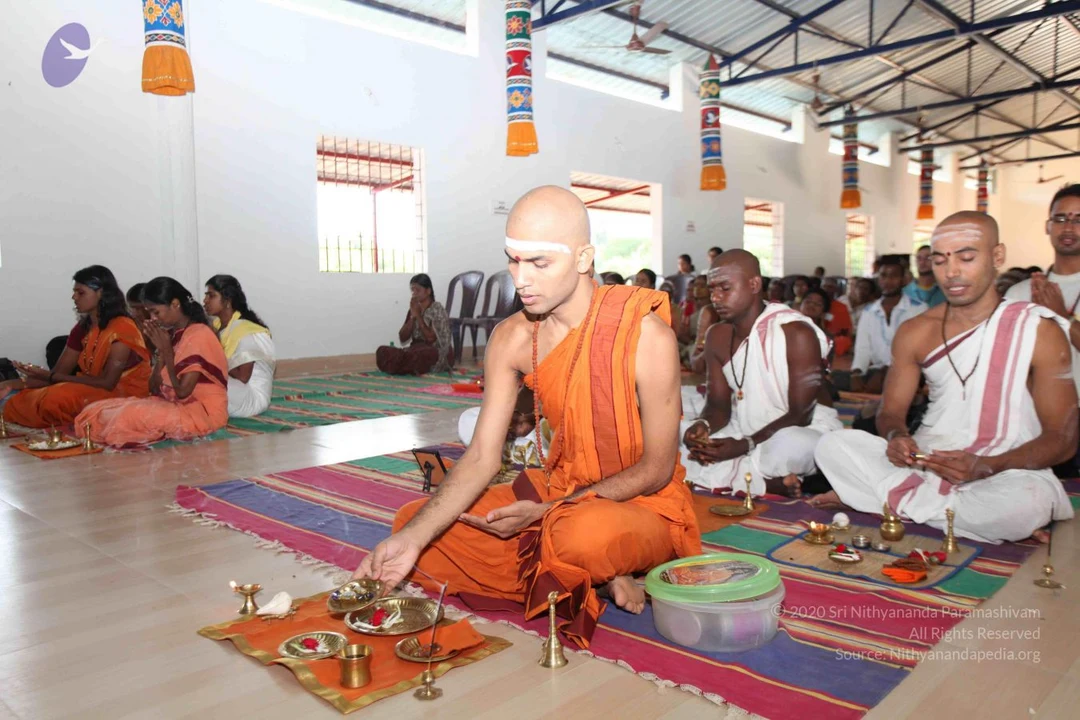
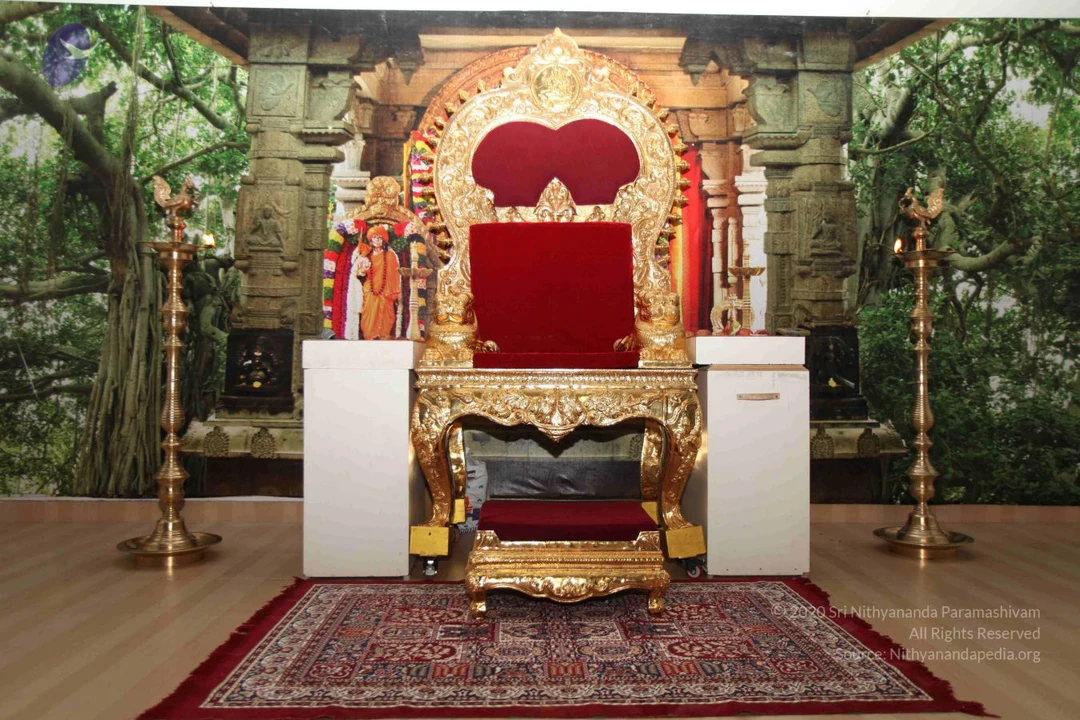
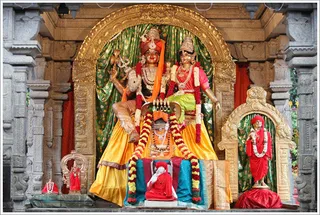
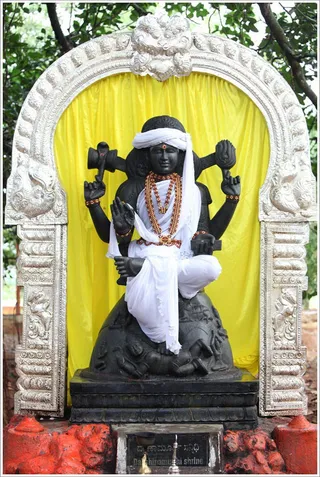
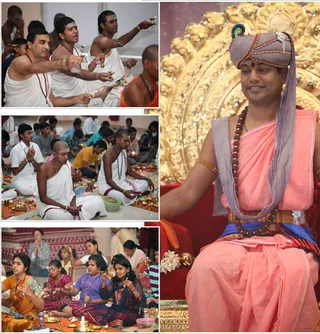
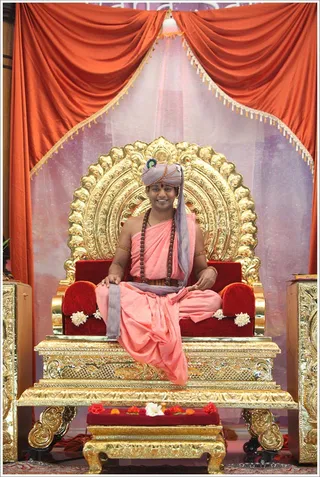
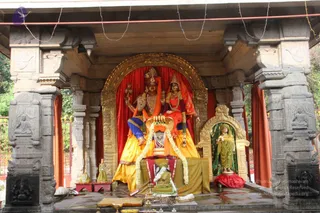
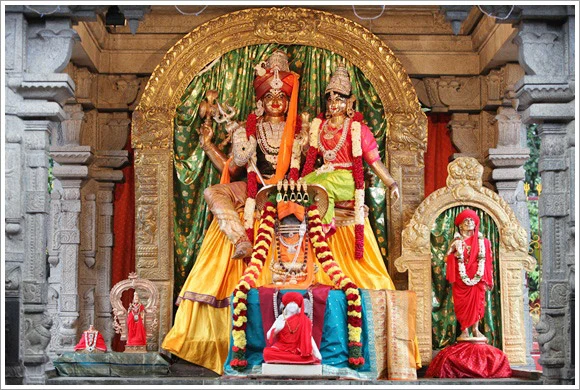
A temple shrine photograph showing a large gilded deity murti pair seated on a throne-like yellow and orange cloth-draped platform under a gold arched canopy. The central deities wear red and gold garments, ornate crowns and gold necklaces, with red and white floral garlands draped across them. Green curtains hang behind, and carved stone pillars frame the scene. In front, a small figure in red robes and a red head covering sits on a cushioned seat, and a smaller red-clad deity stands in a niche at the right. No physical people are visible in the photograph.A young man in a saffron-orange dhoti and shawl stands barefoot beside a tree trunk in an outdoor grove, holding a rudraksha mala. To the right, a black stone deity murti with four arms and a white dhoti-draped figure sits within an ornate white arched shrine with a yellow backdrop, set on a circular platform heaped with red kumkum powder and bordered by black stones. Brick pillars and dirt ground surround the shrine among bare and leafy trees. The man's appearance does not clearly establish identity, so he is described only by role as a sannyasi.A wide outdoor photograph beneath a leafy tree at a shaded forest clearing. On the left stands a dark stone deity murti with a tall white crown and garlands, set in front of a yellow-curtained shrine arch, with a heap of orange-red powder on the ground. Three men in saffron-orange robes stand to the right. The foremost man, bare-headed with a rudraksha mala around his neck, holds his palms together in anjali. Two other monks in orange stand behind him, one with a shaved head, and the scene suggests devotional worship near the murti.A black stone statue of Dakshinamurthy seated in a shrine niche with a yellow cloth backdrop and an ornate silver-coloured arch. The four-armed deity wears a white dhoti and white shawl, a white headcloth, rudraksha malas and bead necklaces, and sits on a dark rock base with a small figure beneath. A plaque at the base reads Dakshinamurthi shrine. Trees frame the shrine, and a red-painted pedestal sits in front. No living people are visible.A four-panel collage of photographs from a KAILASA event. The large right panel shows a seated man in a pink saffron-toned robe with a lavender turban and a rudraksha mala, a gold bangle on his wrist, seated on a red throne with a gold backdrop; he has a sash of blue and gold. The left panels show men in white dhotis and shawls performing ritual gestures and offering with a kalasha-like vessel, a group of young men in white seated in rows before brass plates of offerings, and women in saris seated with plates of food and oil lamps. This is a graphic collage, so no physical people are counted in the frame itself.A seated man in pink sannyasi robes sits cross-legged on an ornate gold throne with a red velvet cushion and white flower garlands on its armrests. He wears a lavender turban with a peacock-feather ornament, a long wooden rudraksha mala, and gold bangles. Behind him hang orange draped curtains with tassels and a sheer lavender backdrop. A red and orange floral offering sits on a gold pedestal before the throne, and gilded side panels frame the scene.

Temple

3 photosSource gallery
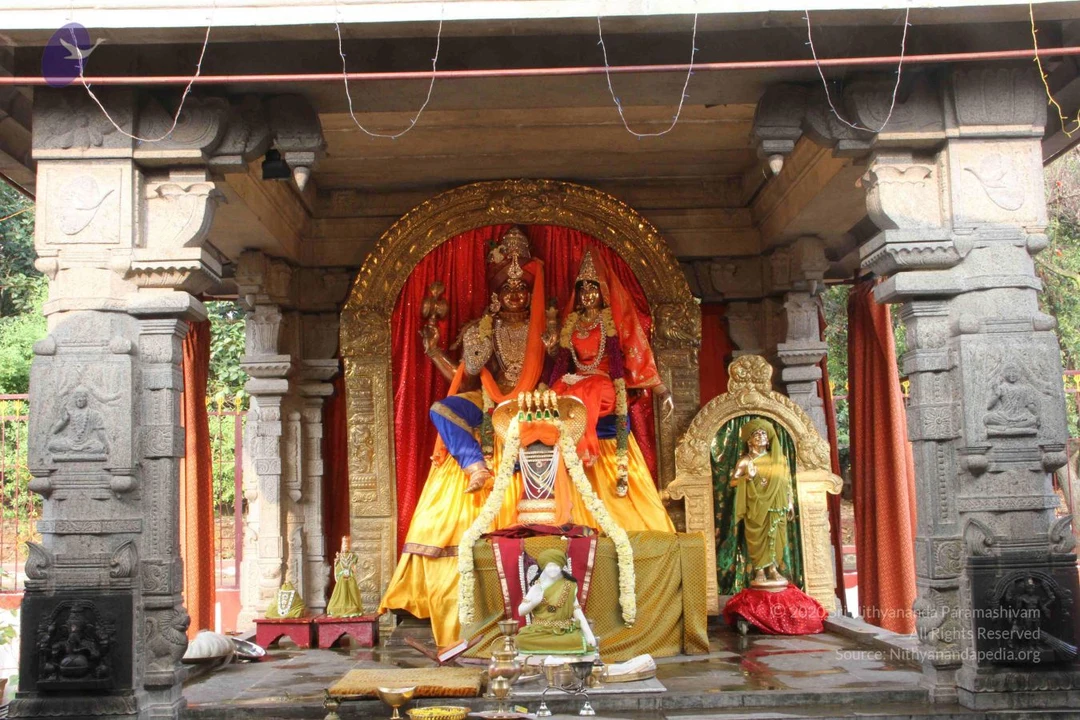
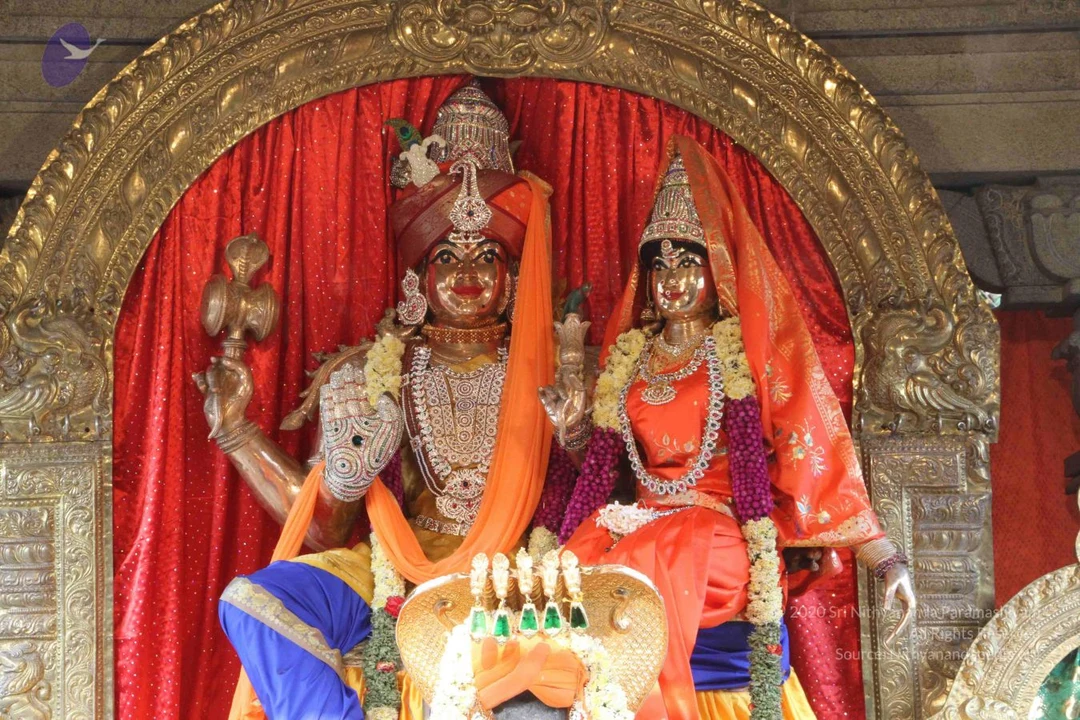
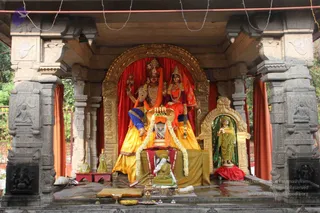
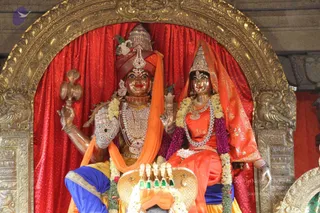
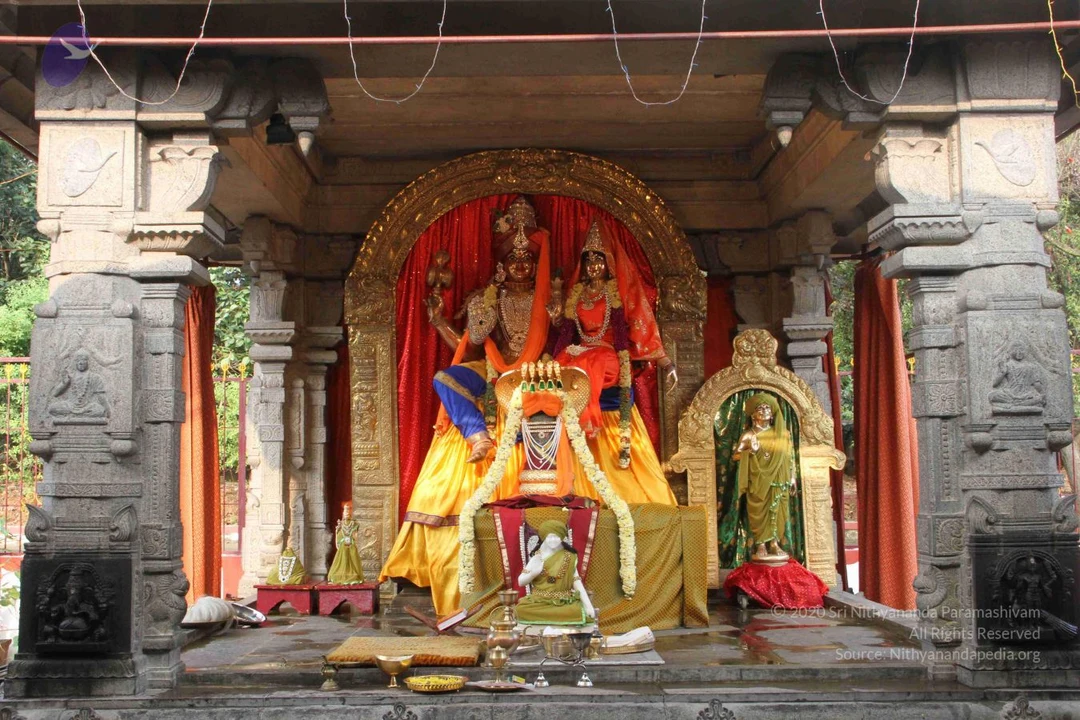
A temple shrine with carved grey stone pillars and an arched golden frame housing deity murti. Two large seated or standing deity figures are dressed in yellow and orange garments with garlands, flanked by red and gold curtains. A central raised seat holds a small figure with a white garland, with brass lamps, a bell, and a brass pot in the foreground on a wet stone floor. Smaller figures stand to the right in a green-curtained niche. No people are visible.A photograph of an outdoor temple shrine with grey granite pillars carved with figures and a stone roof. At the centre sits a pair of deity murti dressed in saffron and yellow silk, with a golden arched prabhavali behind them and red drapes framing the shrine. Garlands of white flowers hang over the figures and the pedestal, and small brass lamps and offerings stand on the floor in front. A green-robed standing figure, possibly a devotee statue, stands to the right. Strings of lights run across the top of the canopy.Two large metal deity murtis sit side by side on a raised golden peetha before a red curtain framed by an ornate gold arch. The taller murti on the left wears a red and gold crown, a flowing orange shawl, a jewelled necklace and bangles, and holds a trident-like staff. The figure on the right wears a pointed gold crown, an orange veil and an orange-and-red garment with a white jewelled necklace, and both wear fresh garlands of white and purple flowers. Green and gold lamp-like items are arranged at the front, and no physical people are visible.

Paduka-Puja
33 photosSource gallery
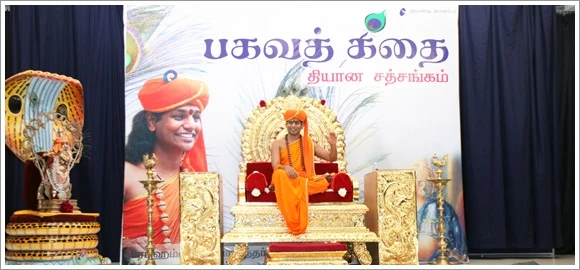
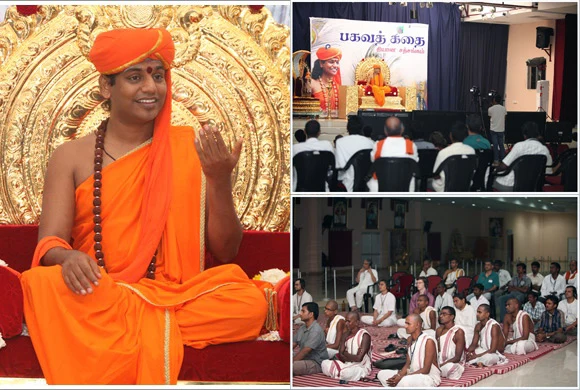
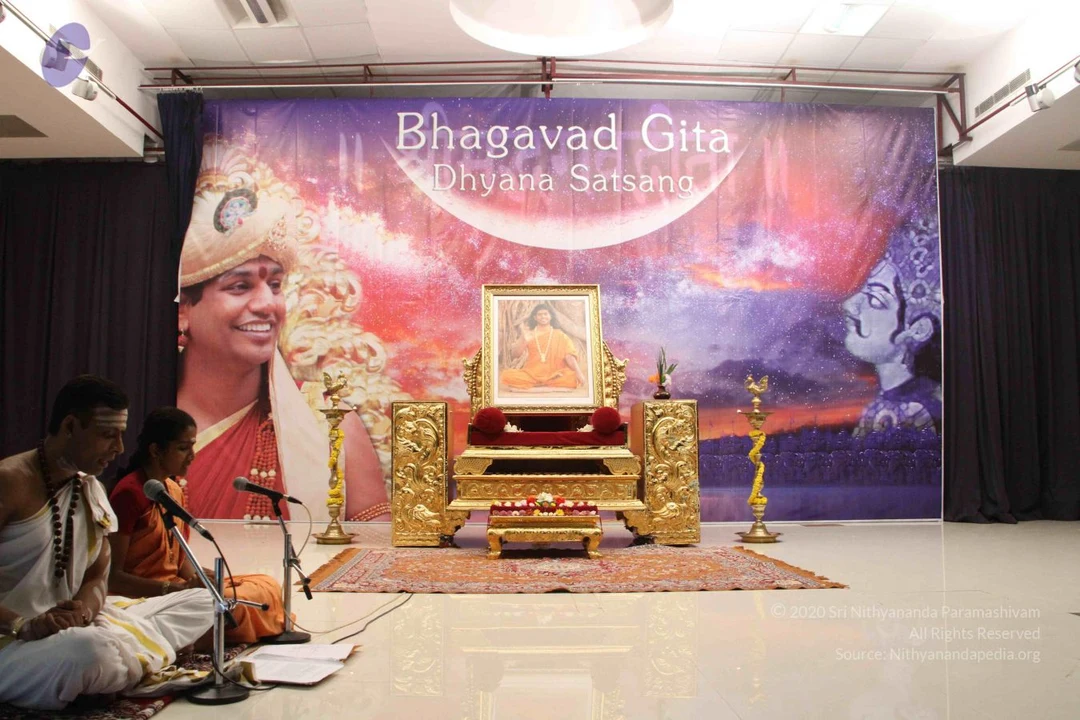
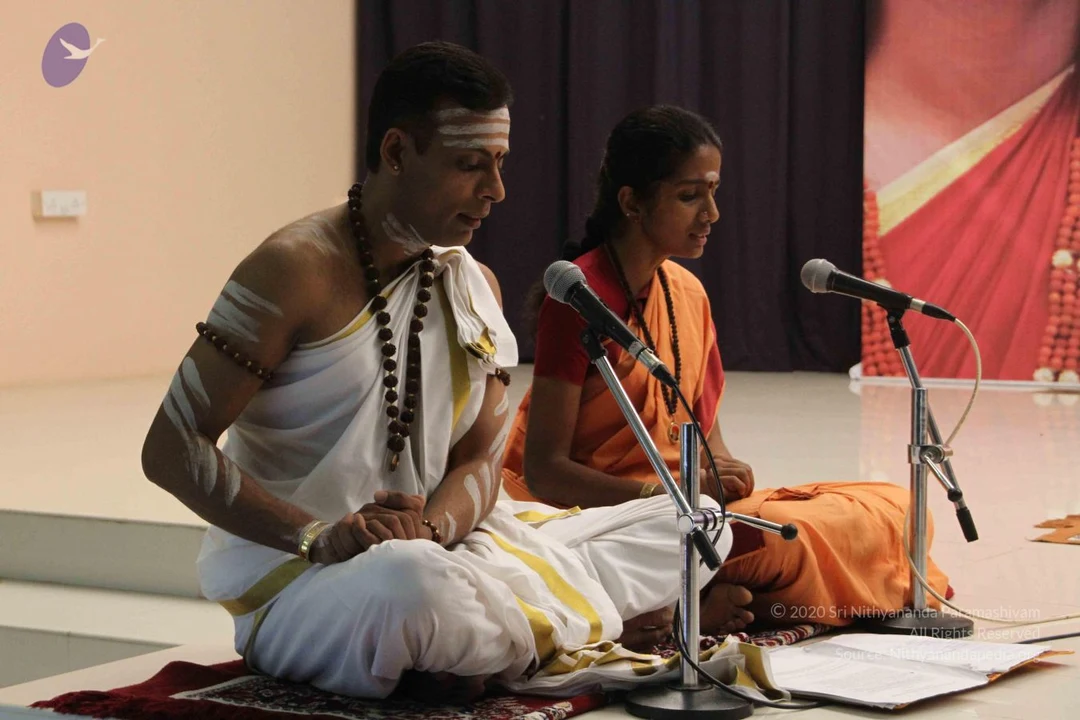
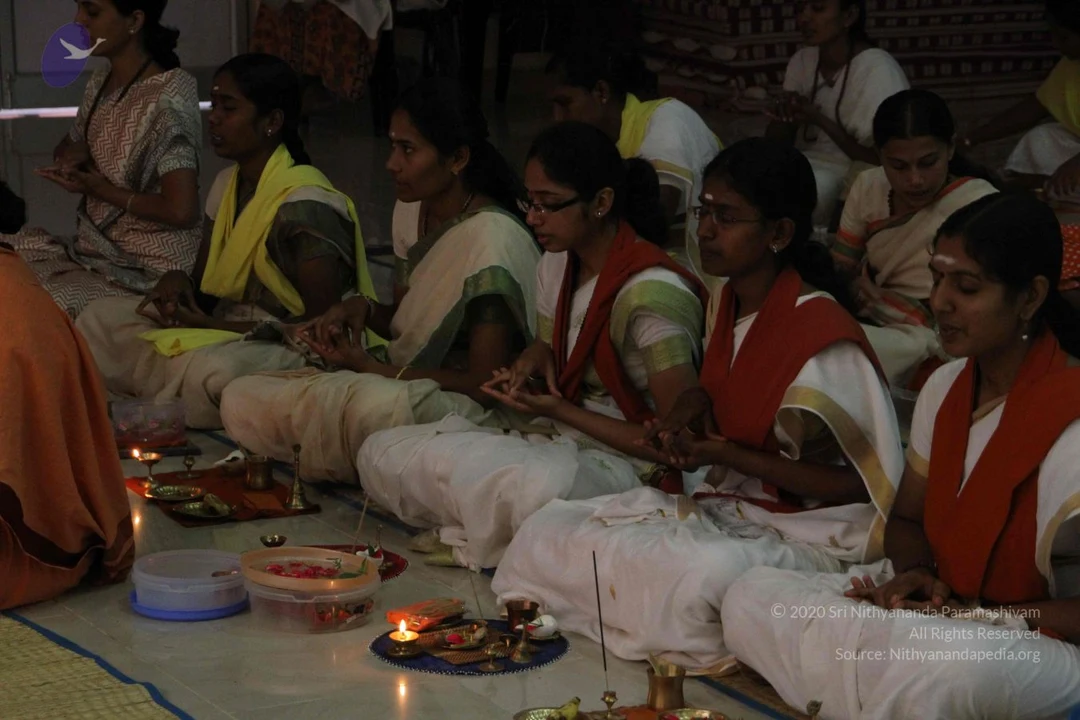
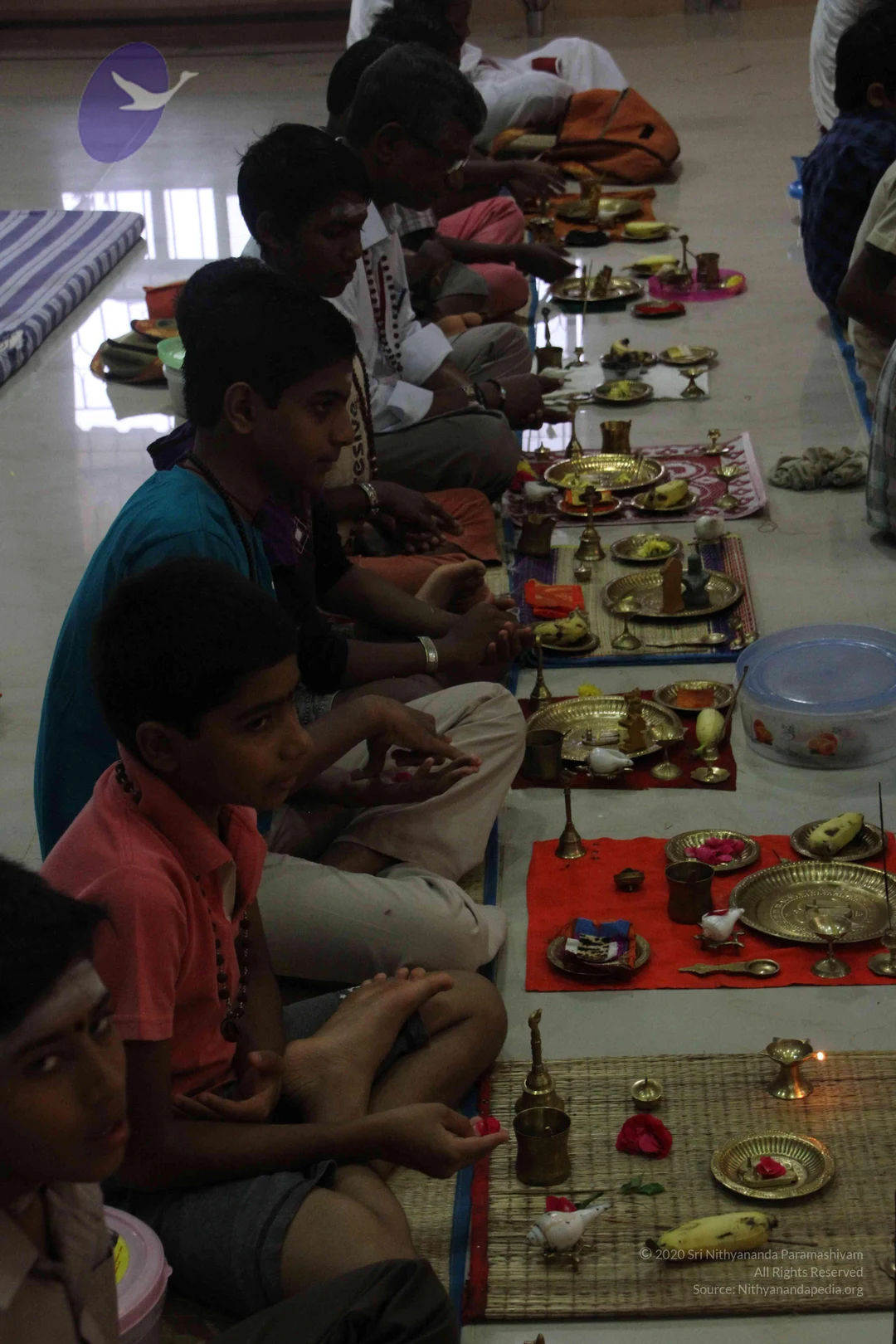
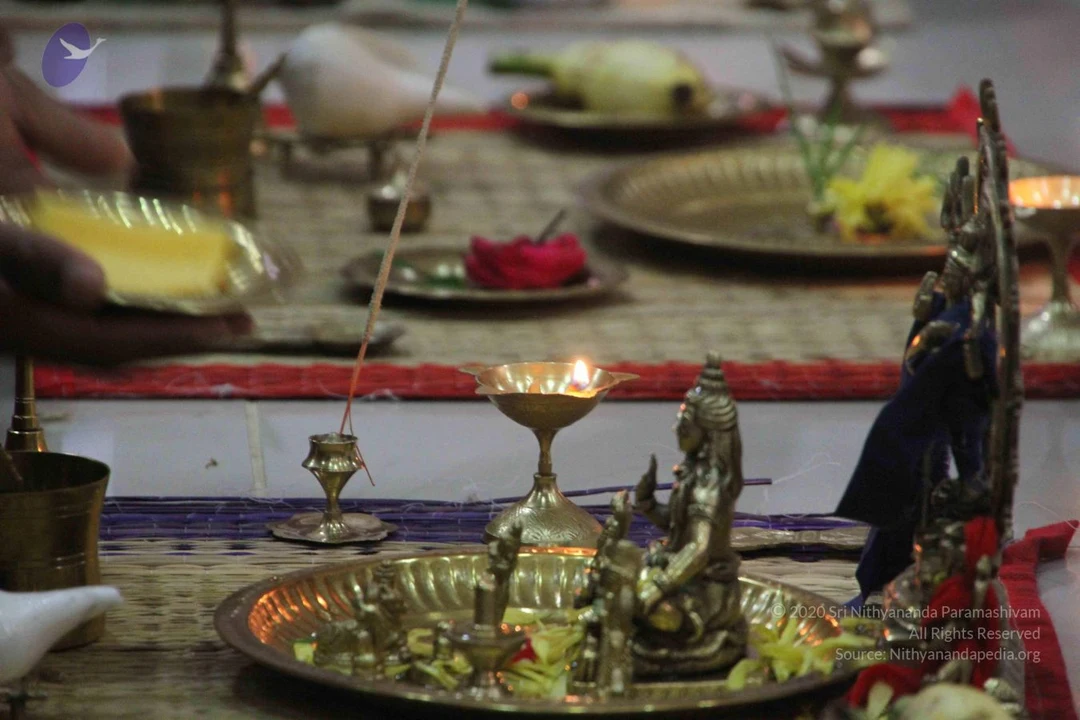
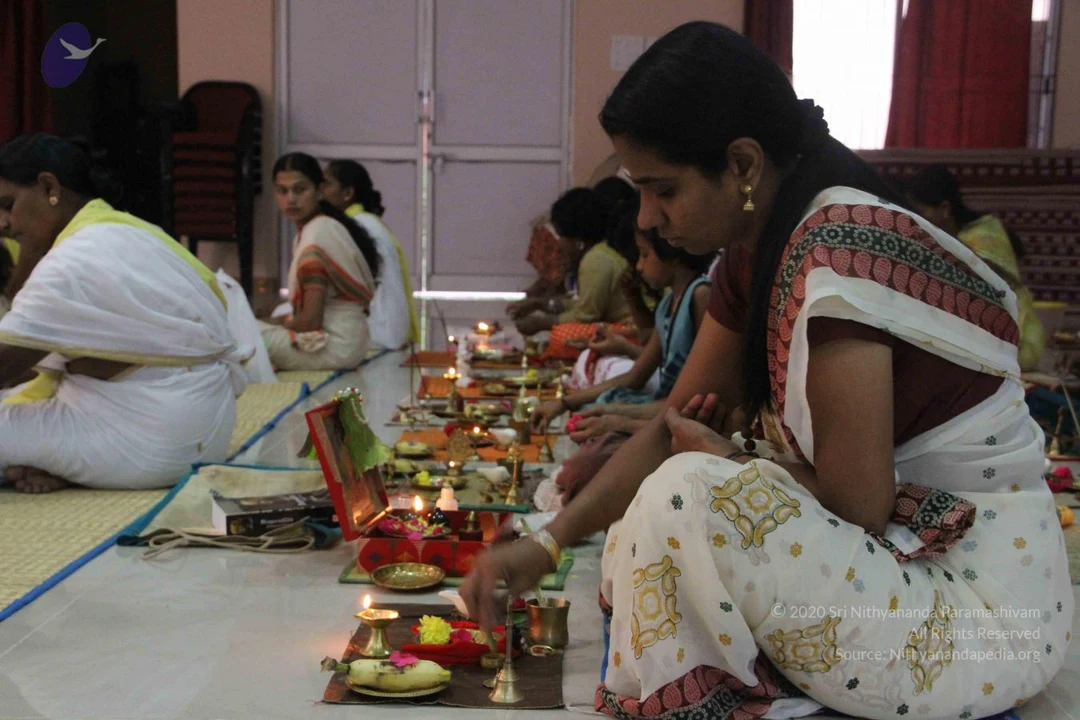
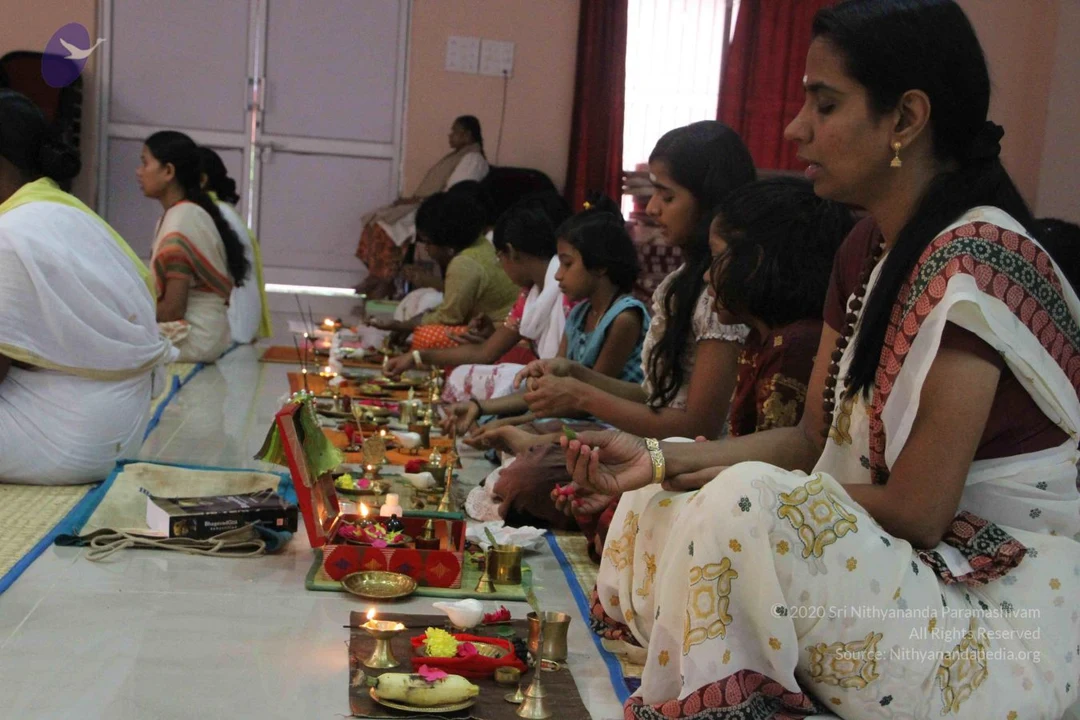
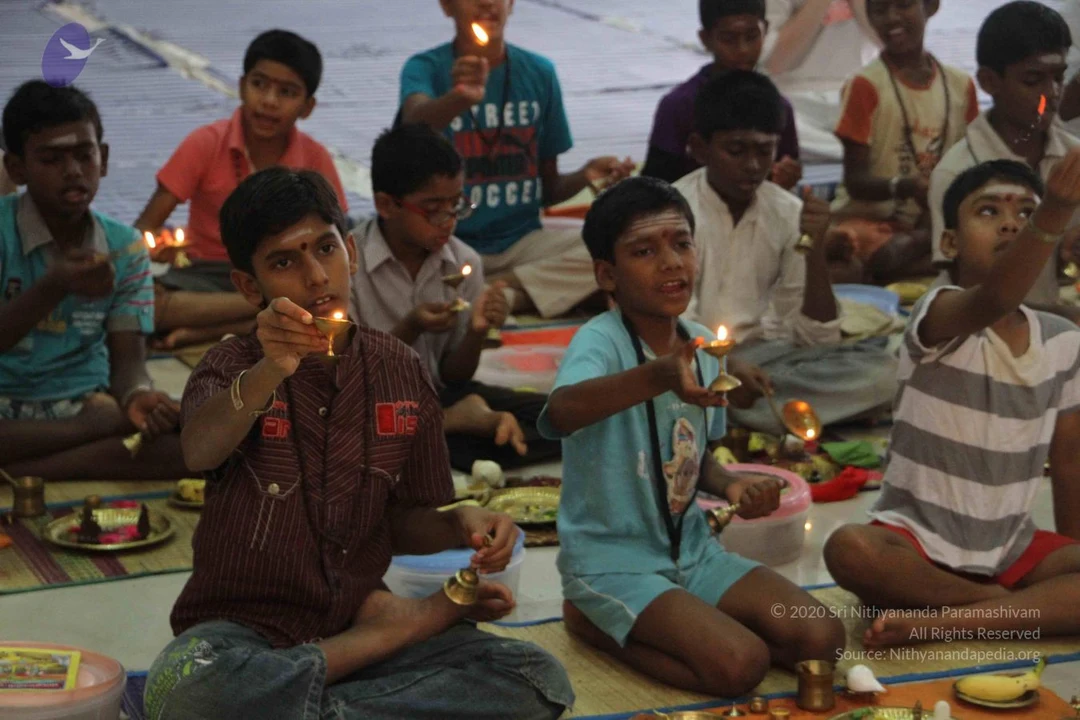
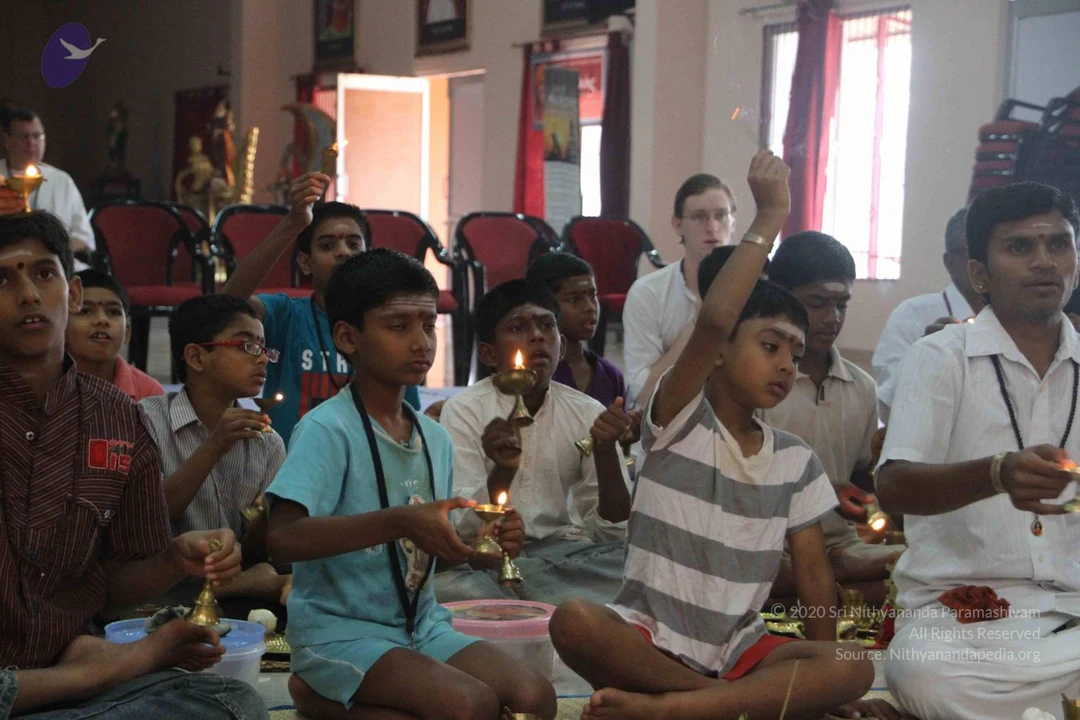
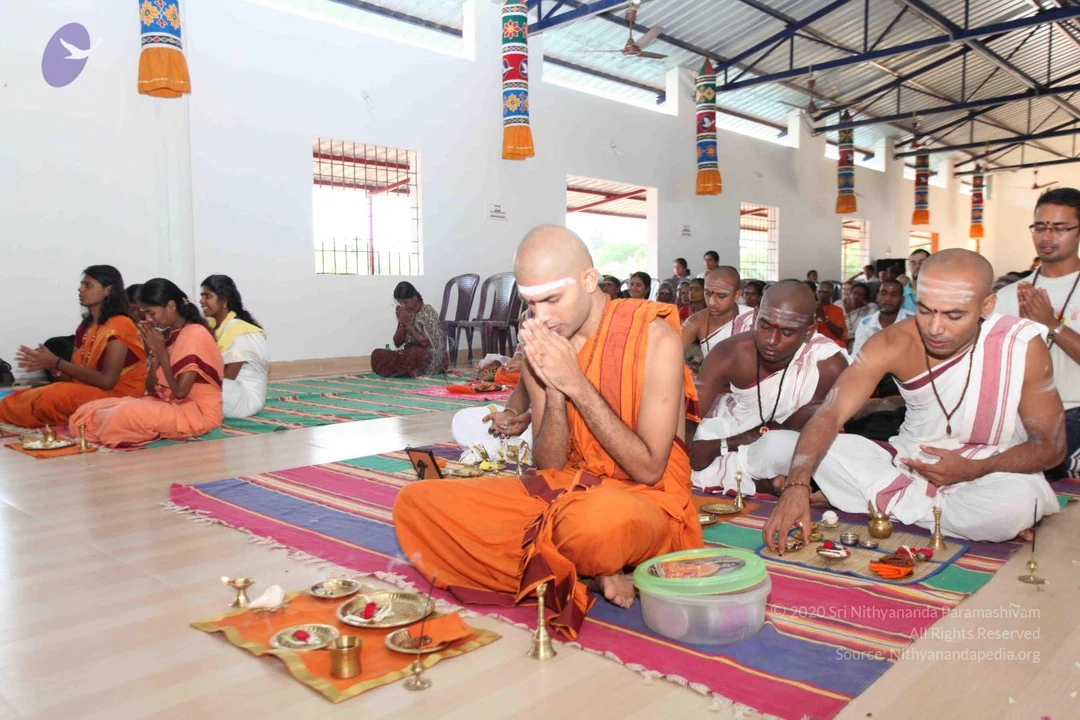
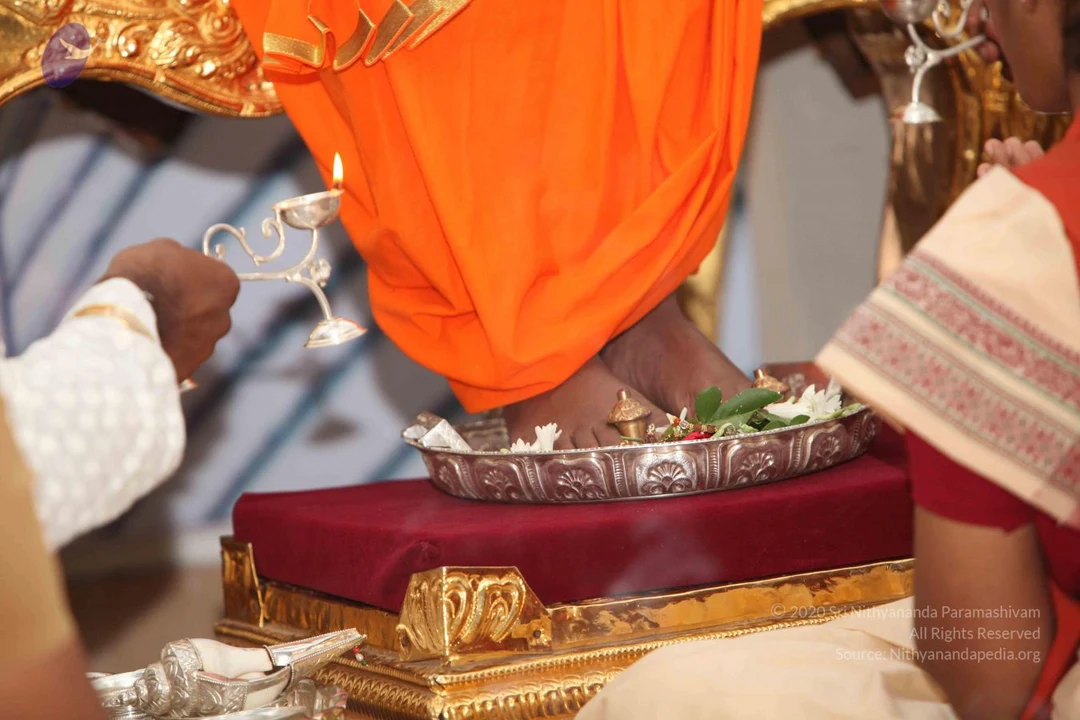
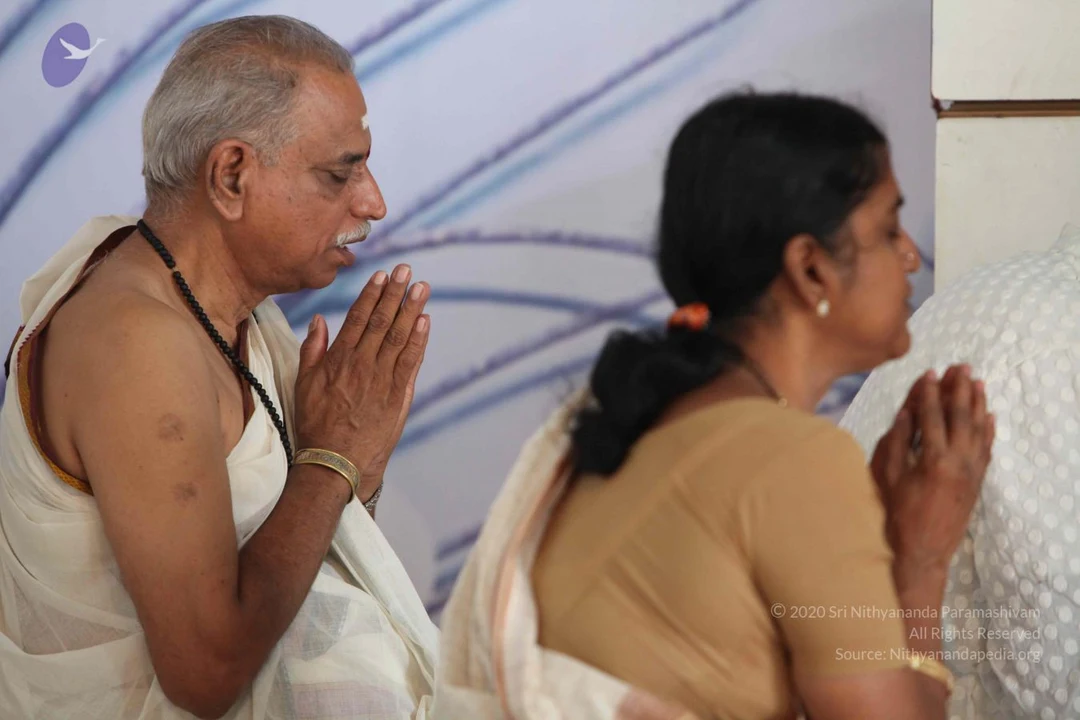
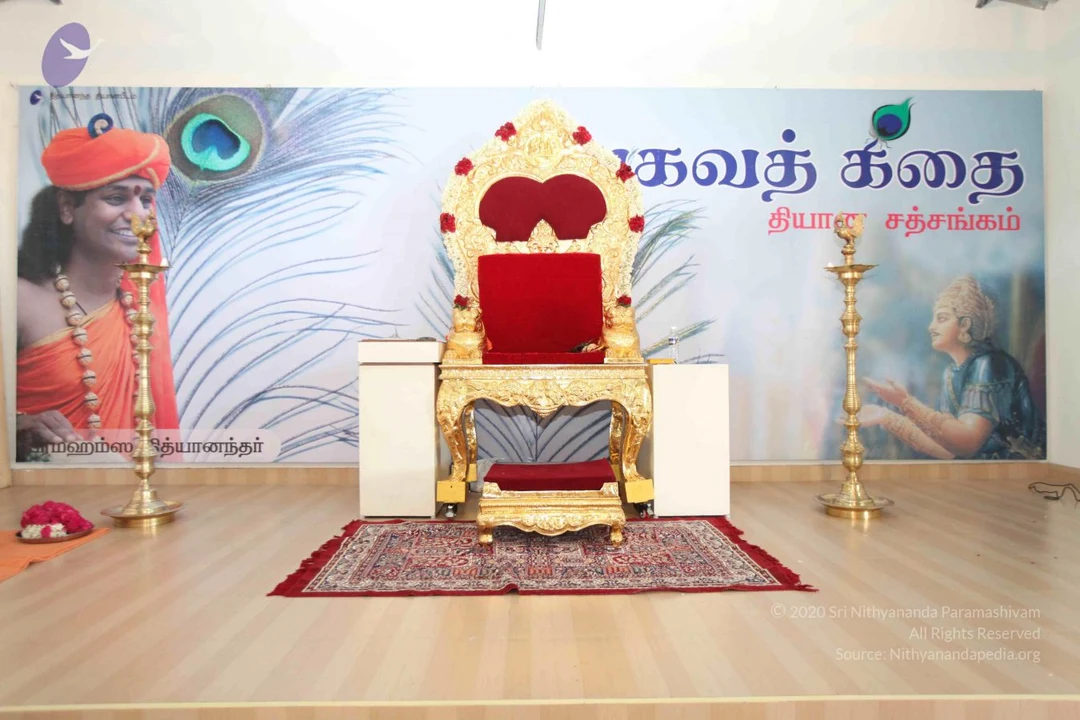
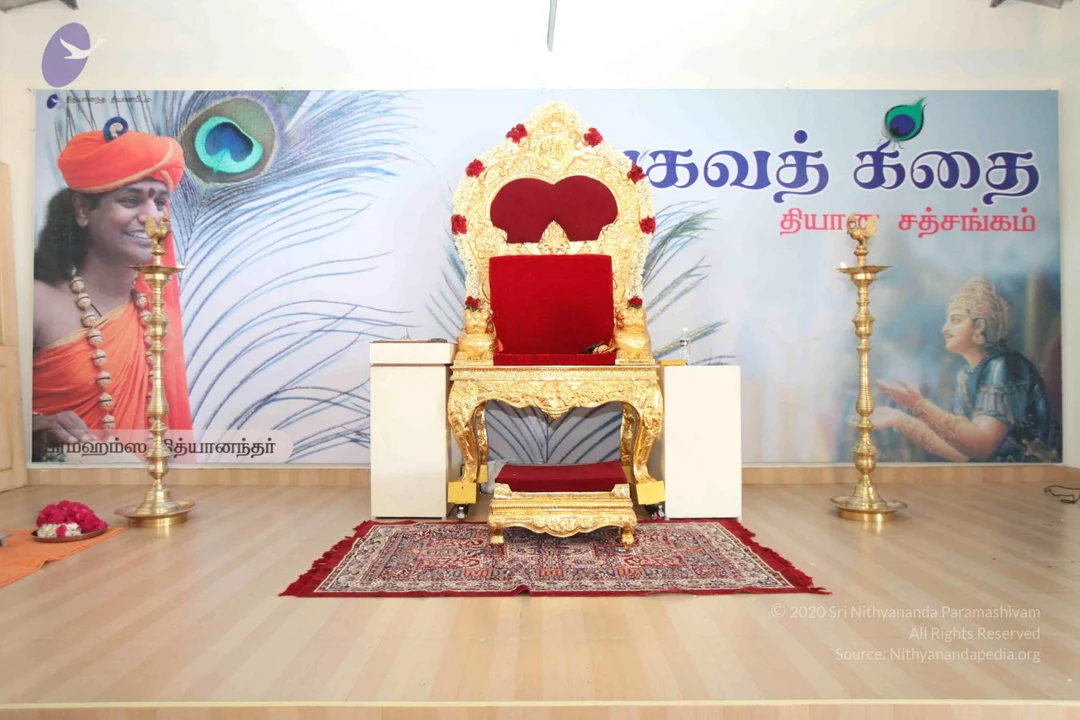
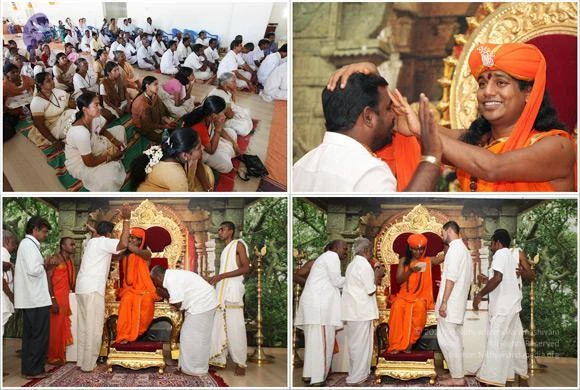
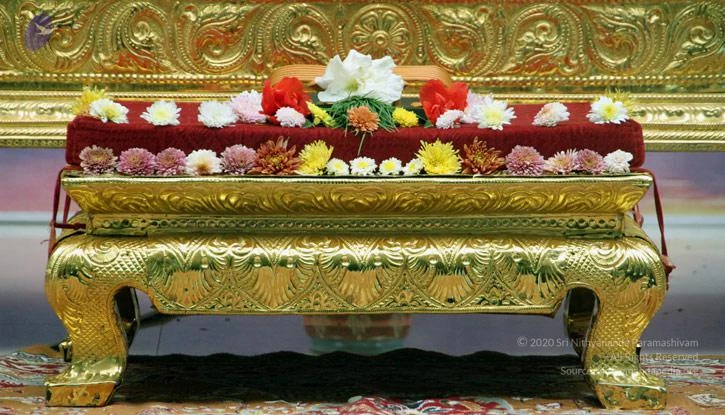
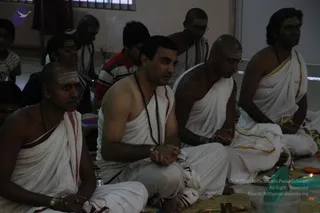
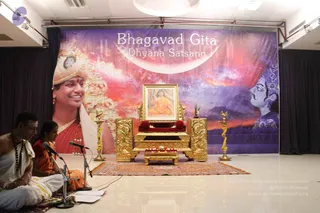
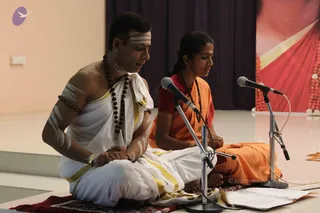
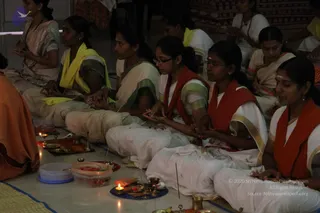
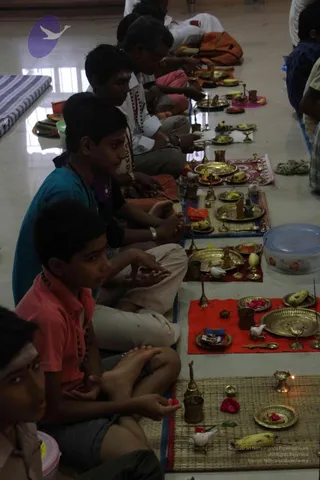
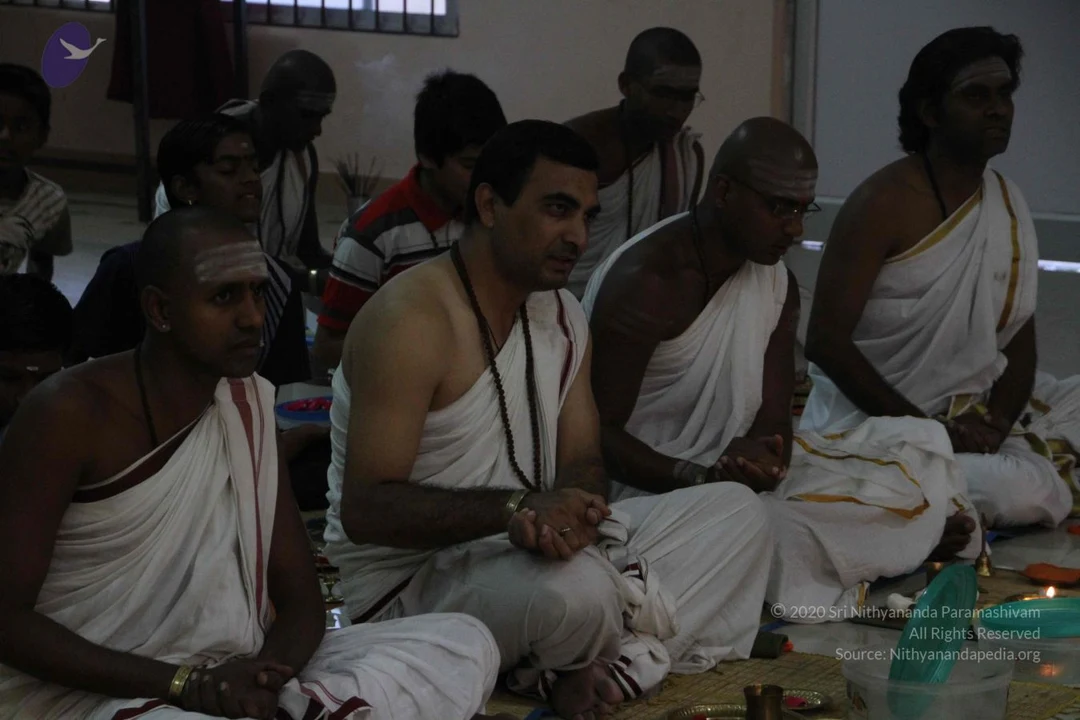
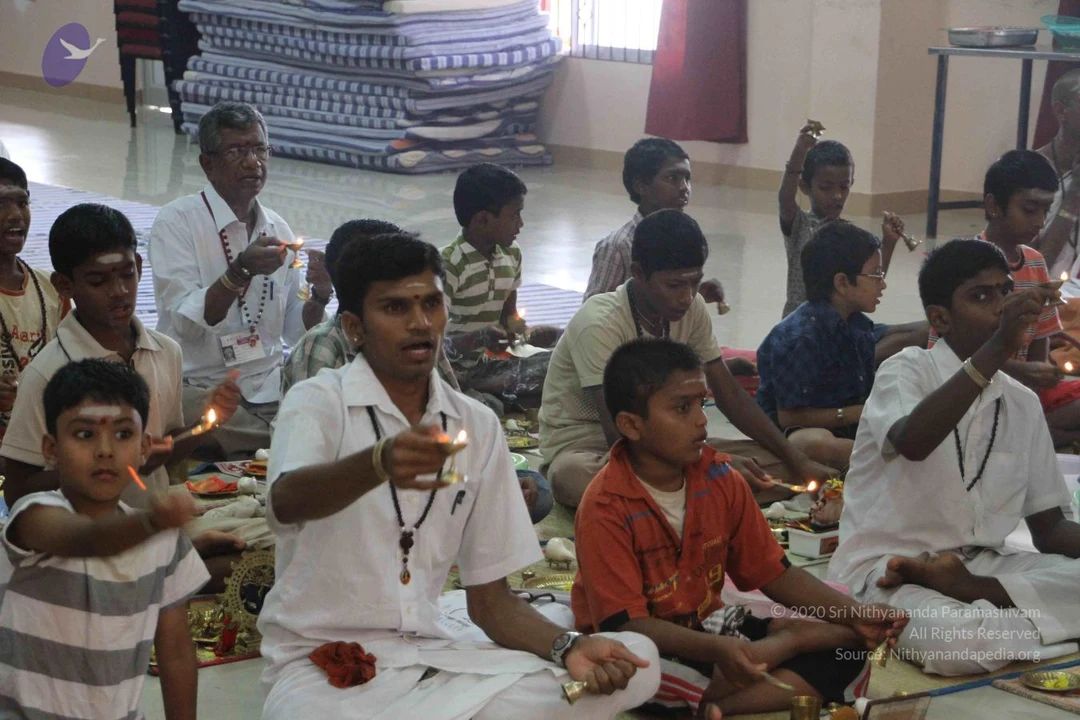
A photograph of a group of men seated cross-legged on a mat indoors during a ritual, all in white dhotis and white upper cloths, several with sacred ash marks on their foreheads. In the centre, a man with short dark hair and rudraksha beads around his neck, wearing a white cloth over his shoulders, looks toward the left with his hands folded. Behind them, younger people in striped shirts sit among the group, and incense sticks burn in the background. In the foreground right, a small brass vessel and an oil lamp sit beside a plate of offerings on the floor. No one in the scene is clearly identifiable as a person by the visible cues, so the seated man is described by role only.A satsang stage set for a Bhagavad Gita Dhyana Satsang. A large backdrop shows a smiling man in a saffron-and-white turban with a rudraksha mala and ornate gold necklace, beside a purple-blue painted figure in a crown. At centre stands an ornate gold-carved throne with a red cushion, holding a framed portrait of a seated saffron-robed figure, flanked by brass lamps with yellow garlands and a flower-covered tray. Two people sit cross-legged on the left at microphones: a man in white dhoti and shawl wearing mala beads, and a woman in an orange sari. The floor has a patterned rug and a white marble stage.A photograph of two people seated cross-legged on a red patterned mat at a stage with microphones on stands. A man on the left wears a white dhoti with gold borders, a white shawl, a dark rudraksha mala, gold bangles and white sandalwood markings on his forehead and arms, and reads from a sheet of paper. Beside him a woman in an orange sari with a red blouse, a dark rudraksha mala and a small forehead mark sits with her hands folded in her lap, eyes lowered. Behind them is a red and white draped backdrop with garlands. The setting appears to be a discourse or satsang.A photograph of women seated cross-legged on a white marble floor during a ritual, several with hands joined or raised in devotion. Several wear white dhoti-style cloth with gold borders and red or saffron shawls; others wear yellow shawls or a patterned sari. A seated figure at the left edge wears an orange garment. Before them are brass oil lamps with a lit flame, a brass bowl, a plate of red flowers, and a burning incense stick, with plastic containers of offerings nearby. The scene suggests a puja or satsang.A photograph of a long row of people seated cross-legged on the floor of a bright hall, facing brass puja thalis arranged on mats along the ground. The brass plates hold bananas, rose petals, small brass bells, cups and a lit oil lamp, with a red cloth mat in the foreground and a white bird figurine among the offerings. Several boys and men in white, pink, teal and orange clothing sit with hands joined or resting near the offerings, some with tilak marks on their foreheads. Rudraksha beads are visible on a boy in a red shirt. The setting suggests a group puja or ritual offering in an ashram-style hall.A photograph of an empty ornate gold-leaf pedestal or throne stool with carved legs and a red velvet cushion on top, decorated with a line of white, pink, yellow and orange chrysanthemums and red flowers, a large white flower at centre. Behind it is a gilded embossed backdrop. No people are visible.

Thiruvannamalai-Ashram-Temple
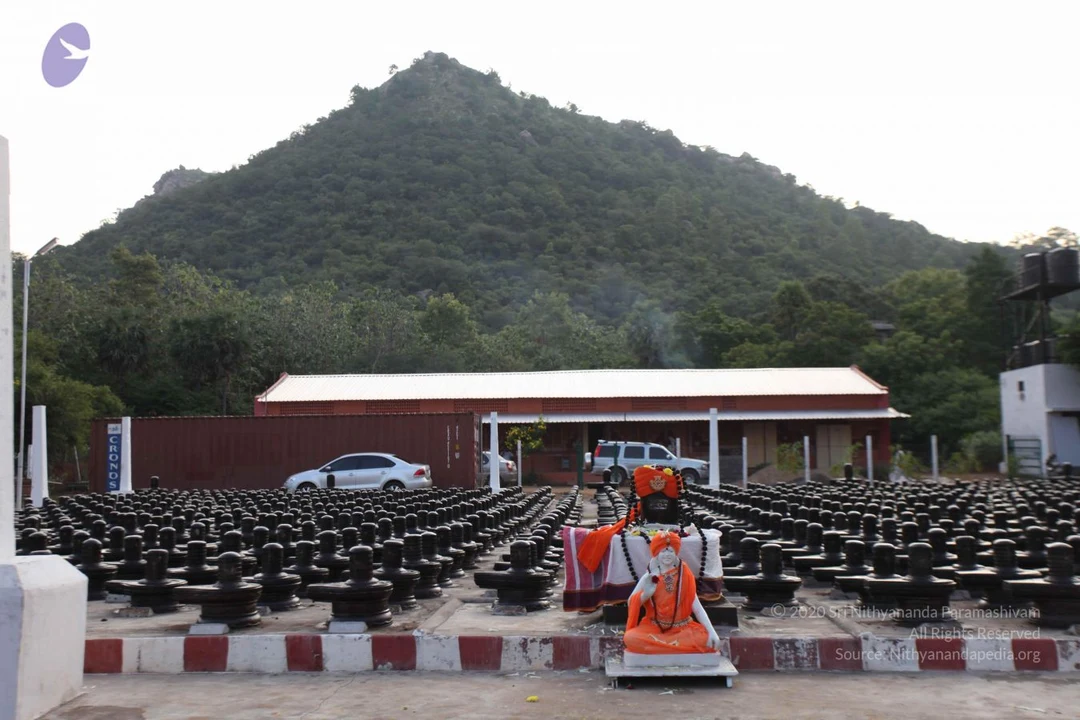
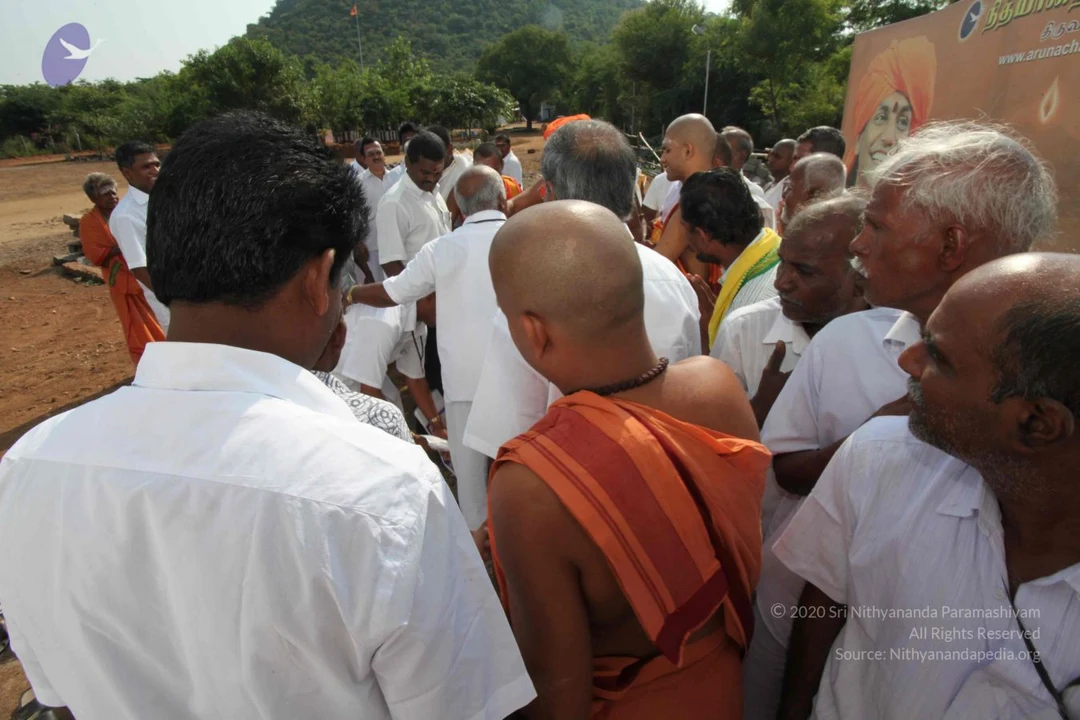
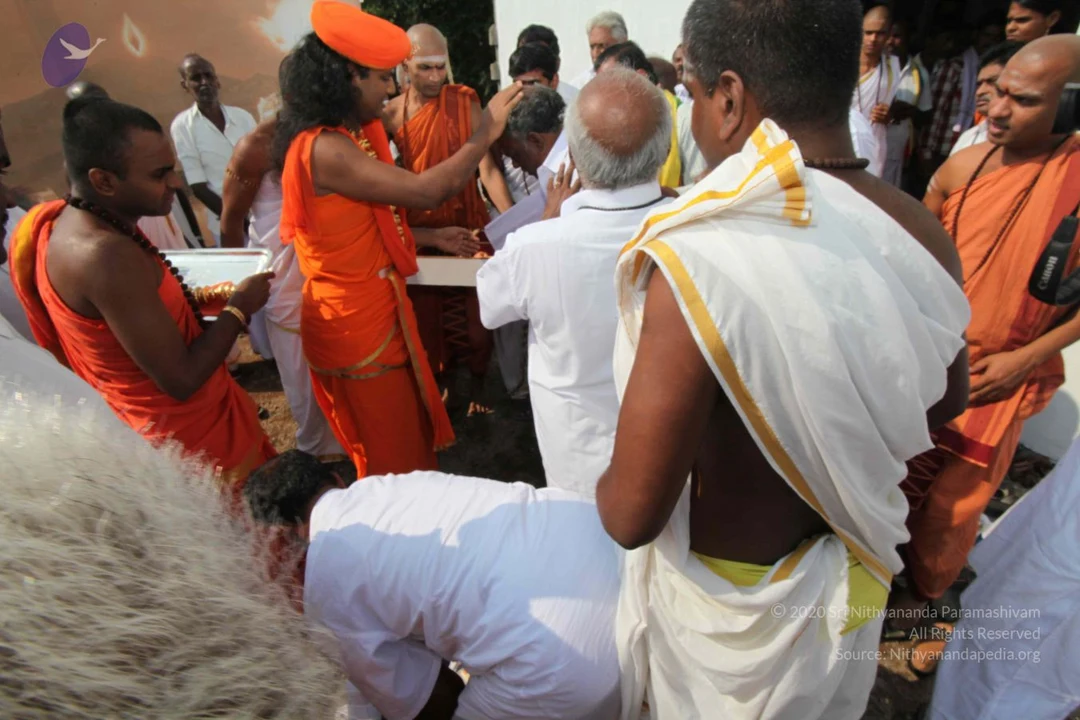
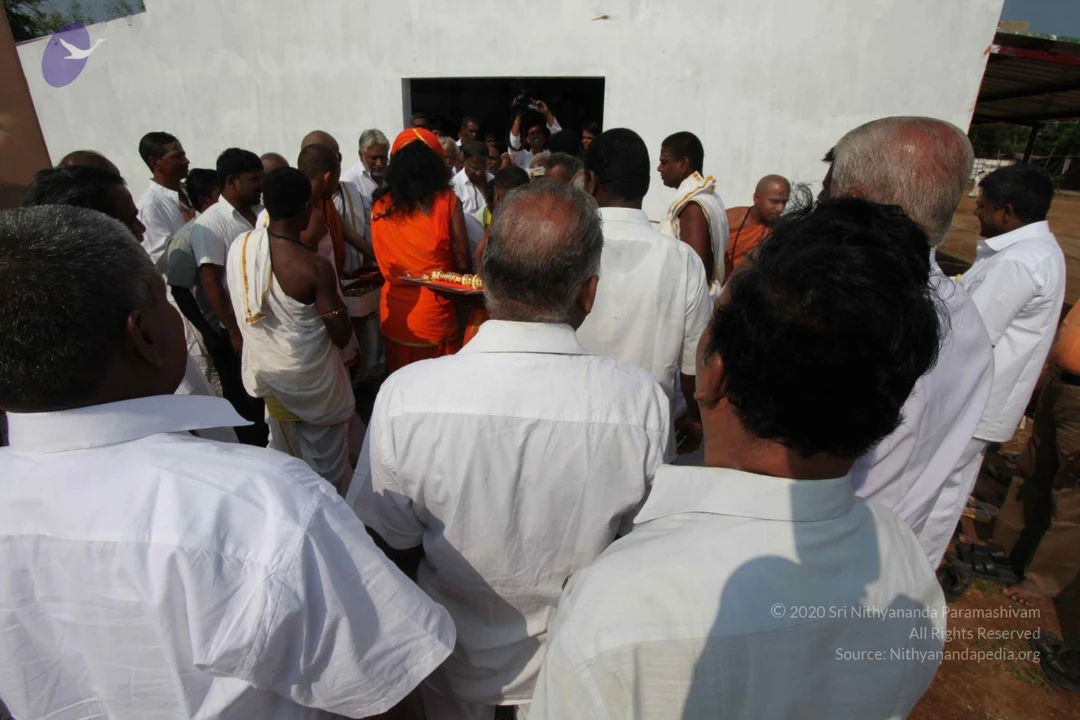
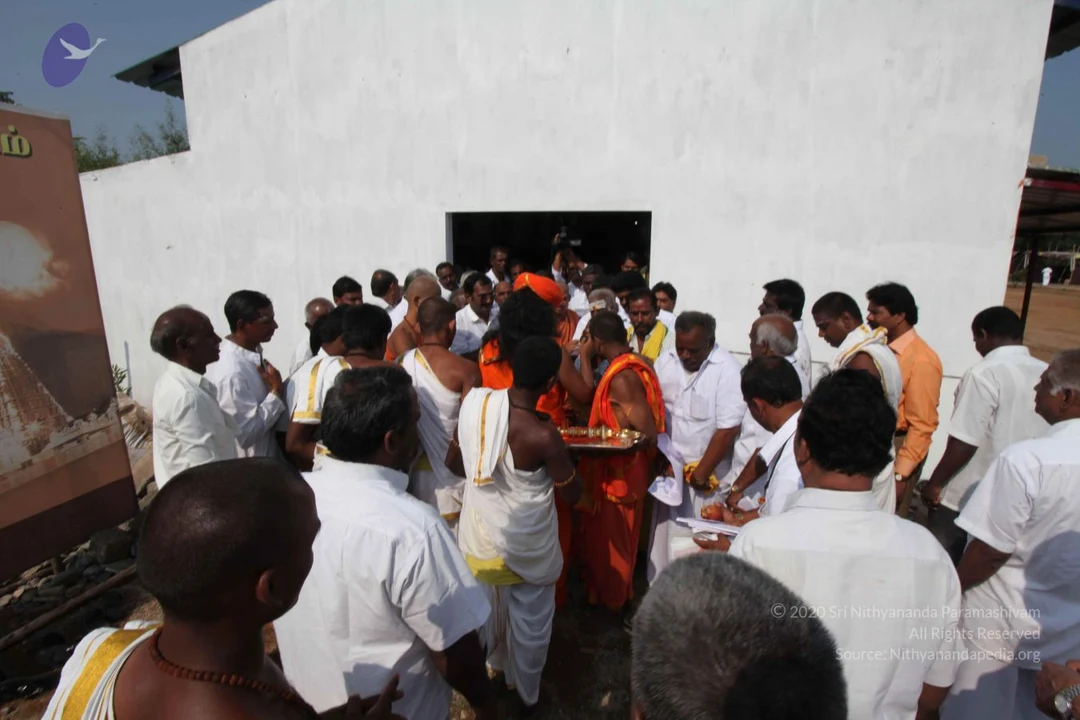
24 photosSource gallery
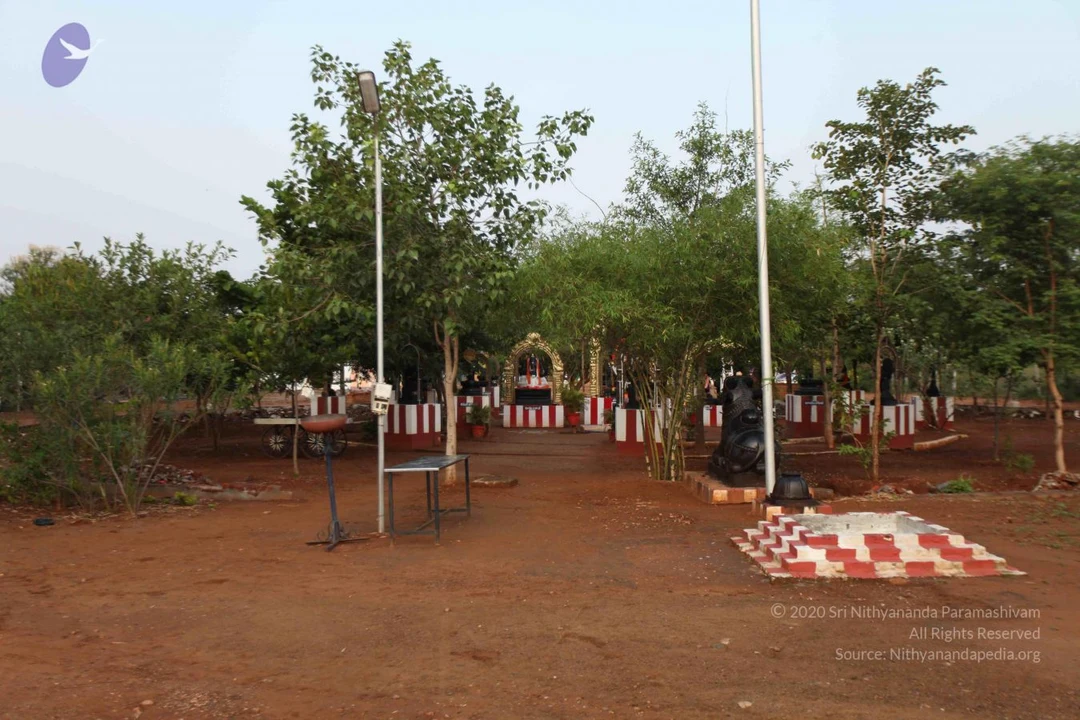
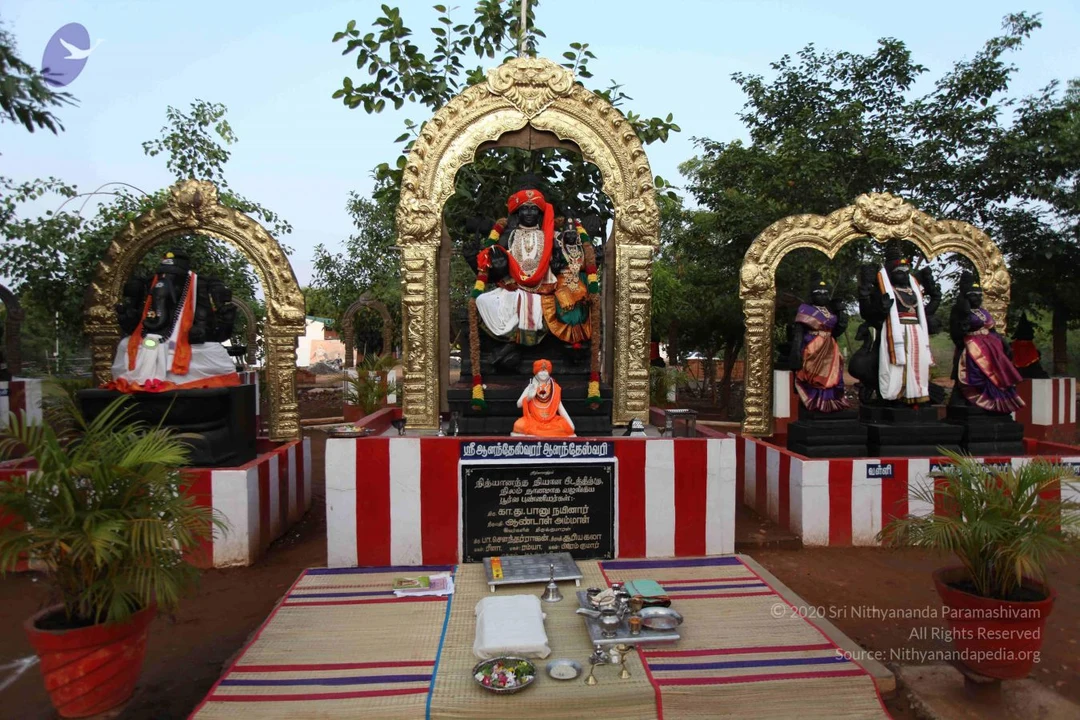
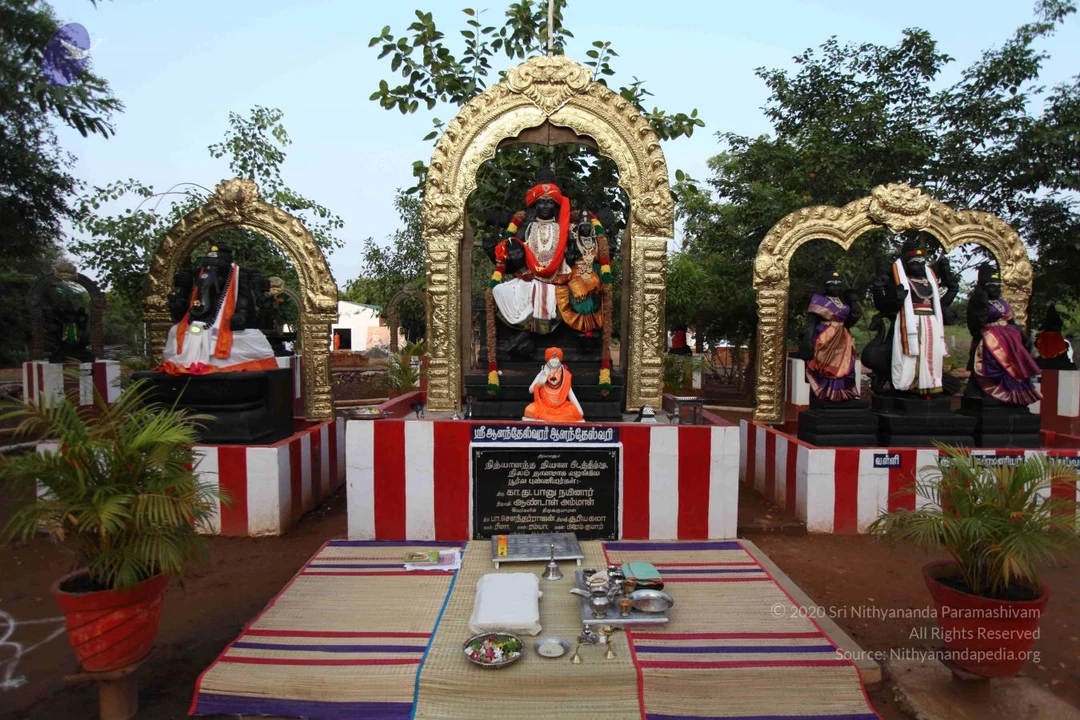
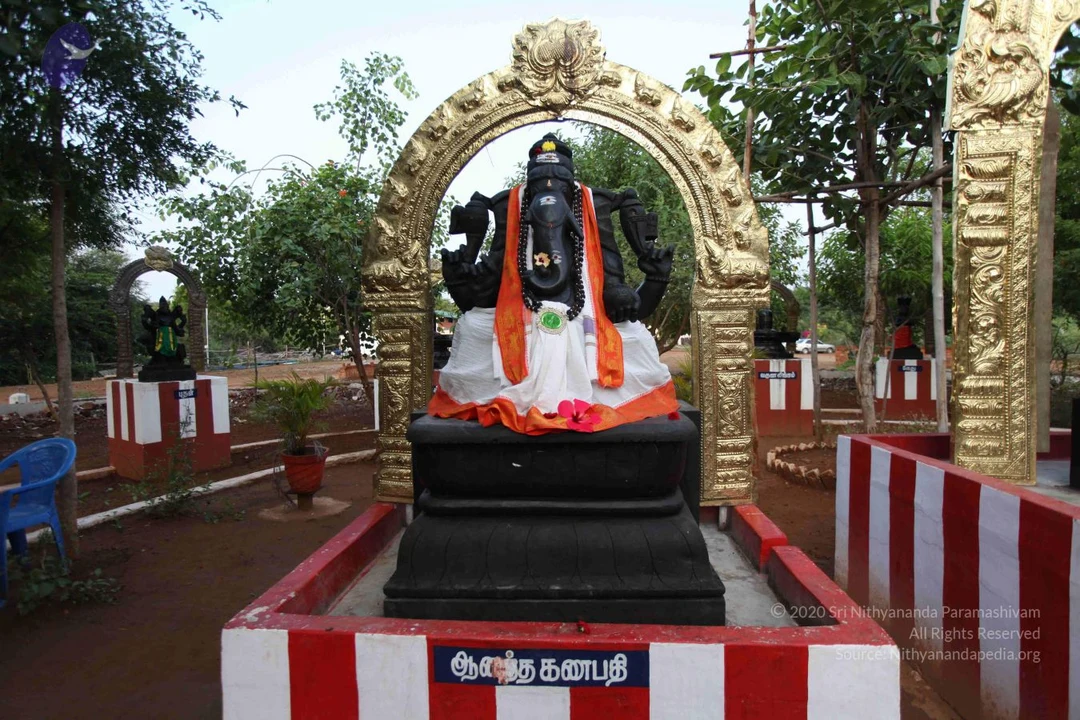
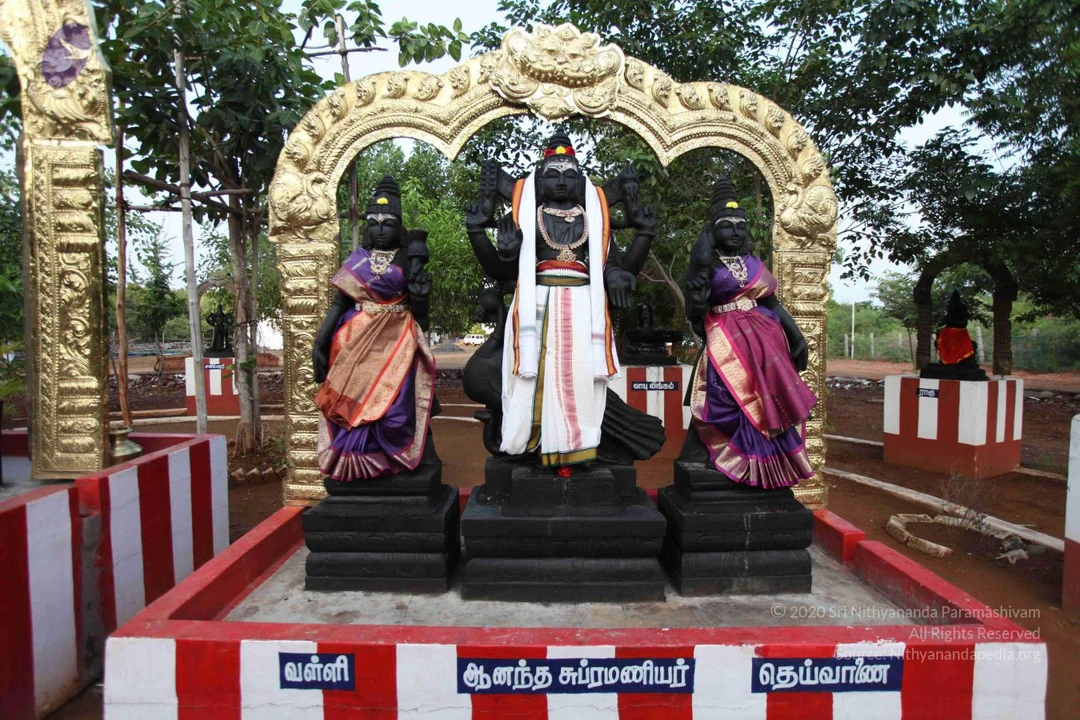
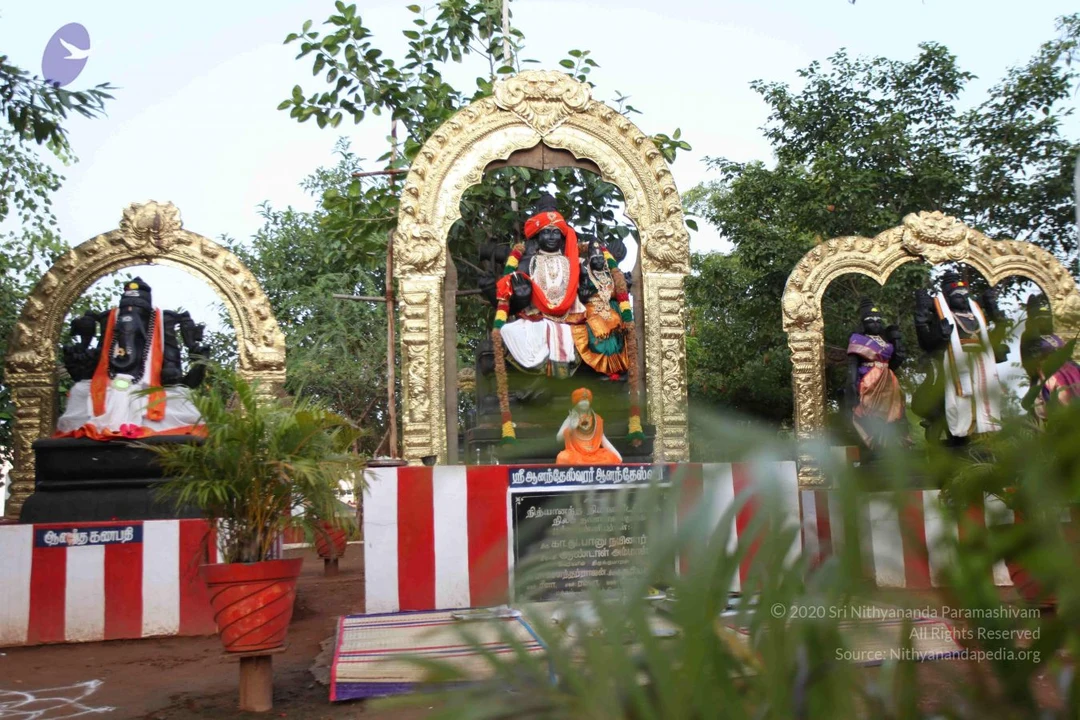
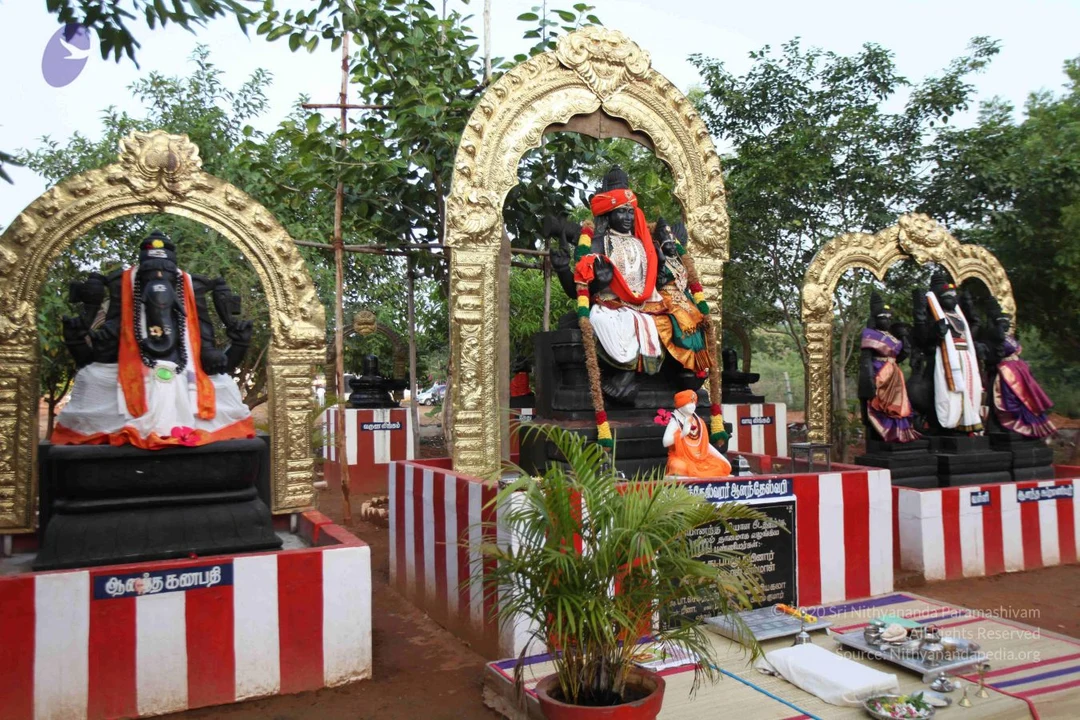
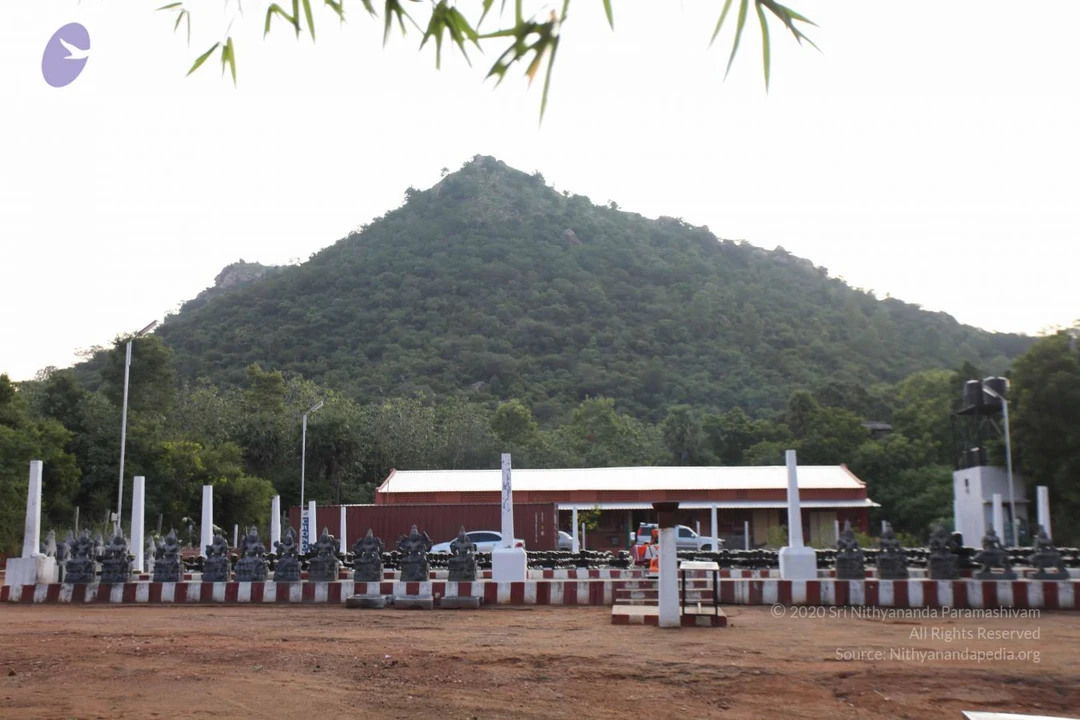
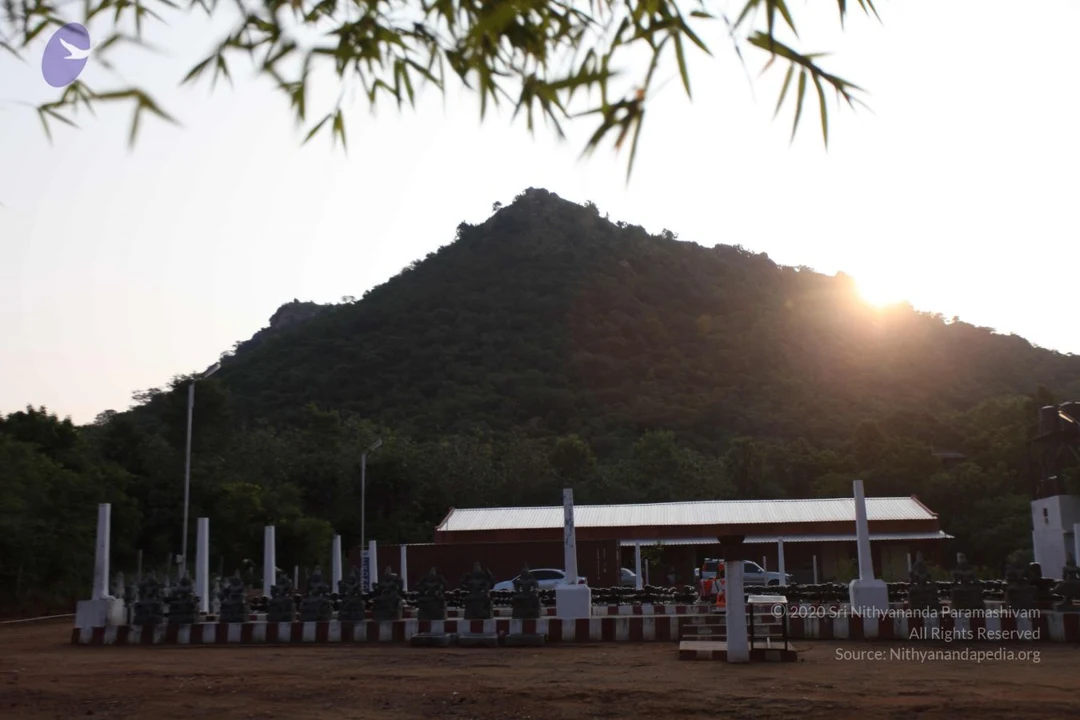
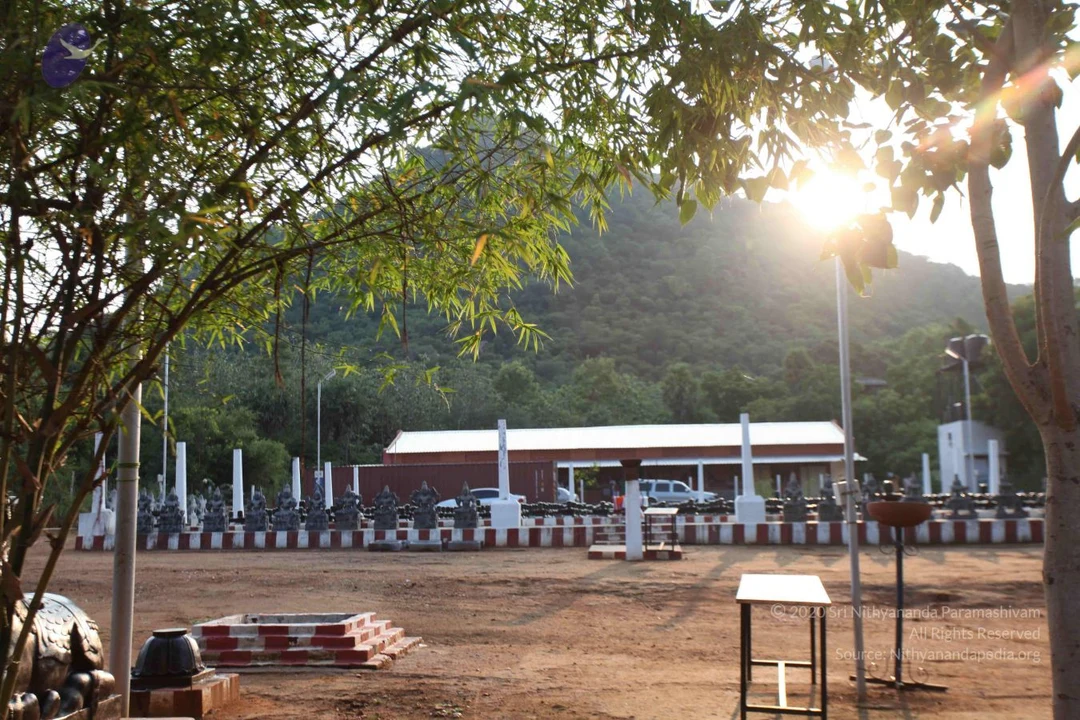
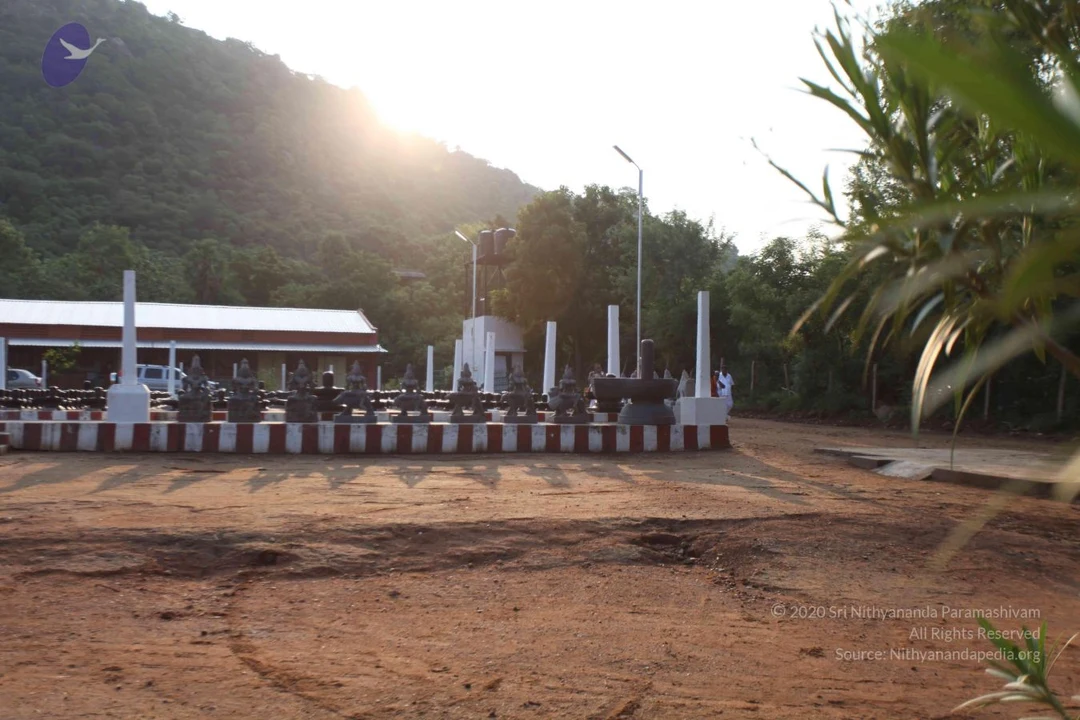
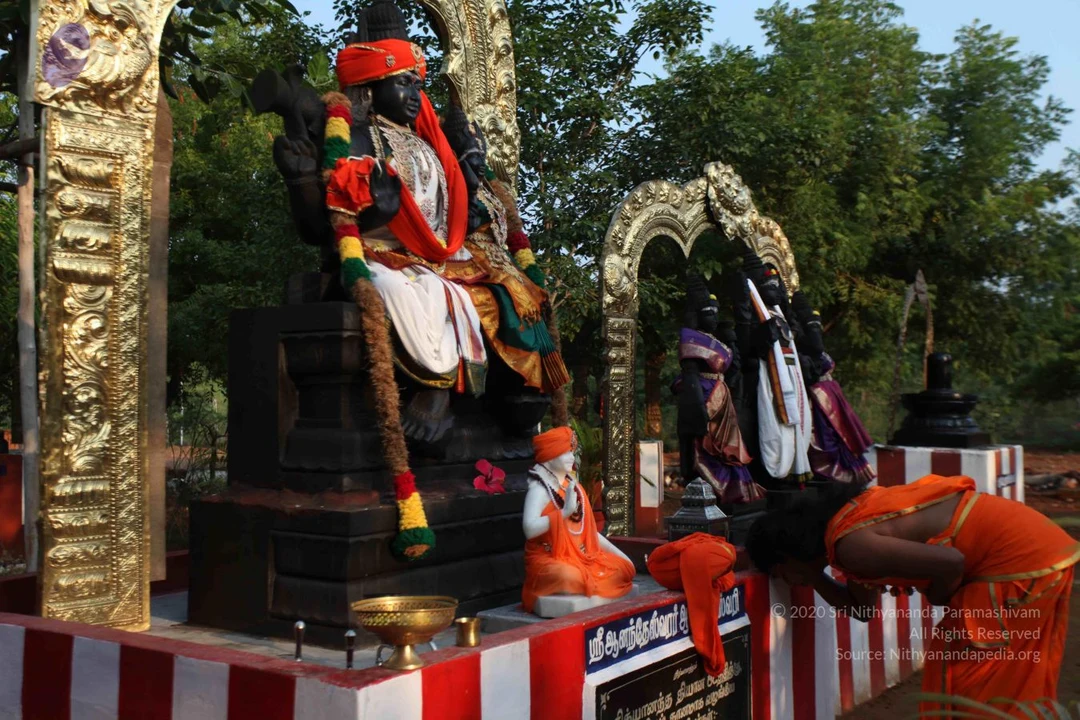
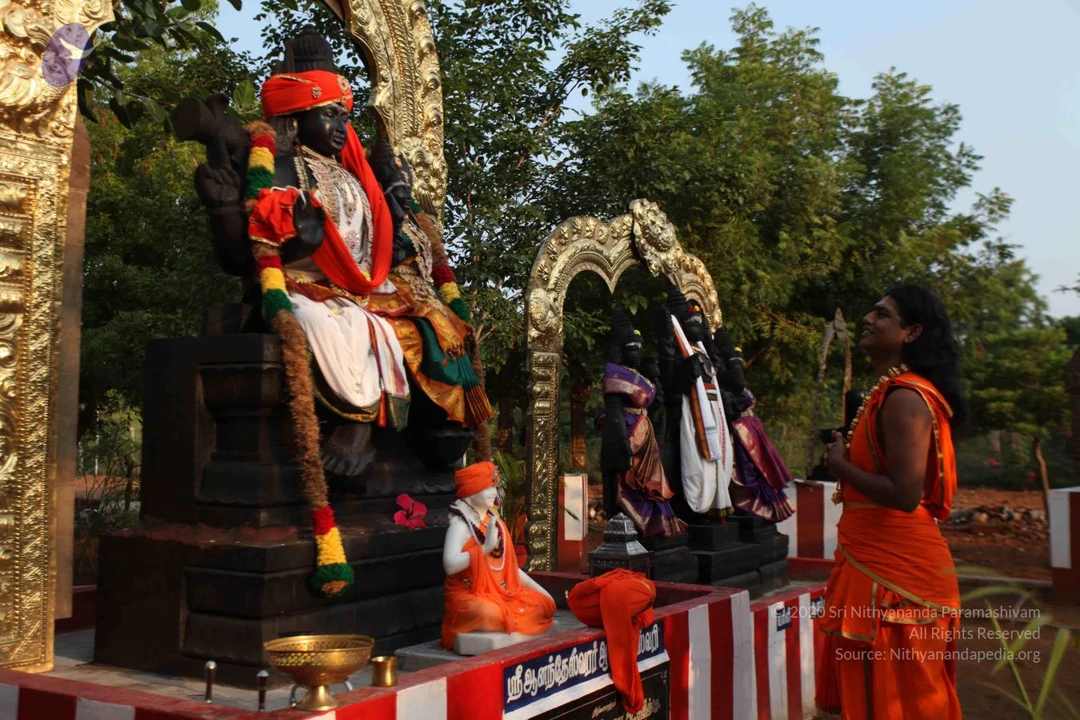
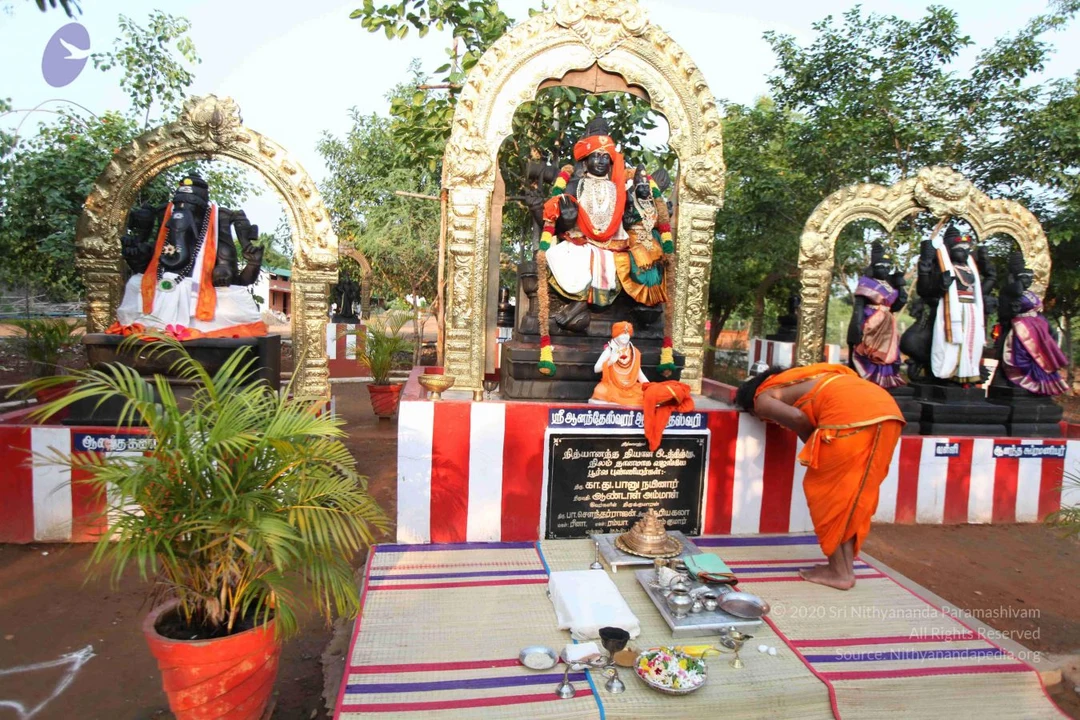
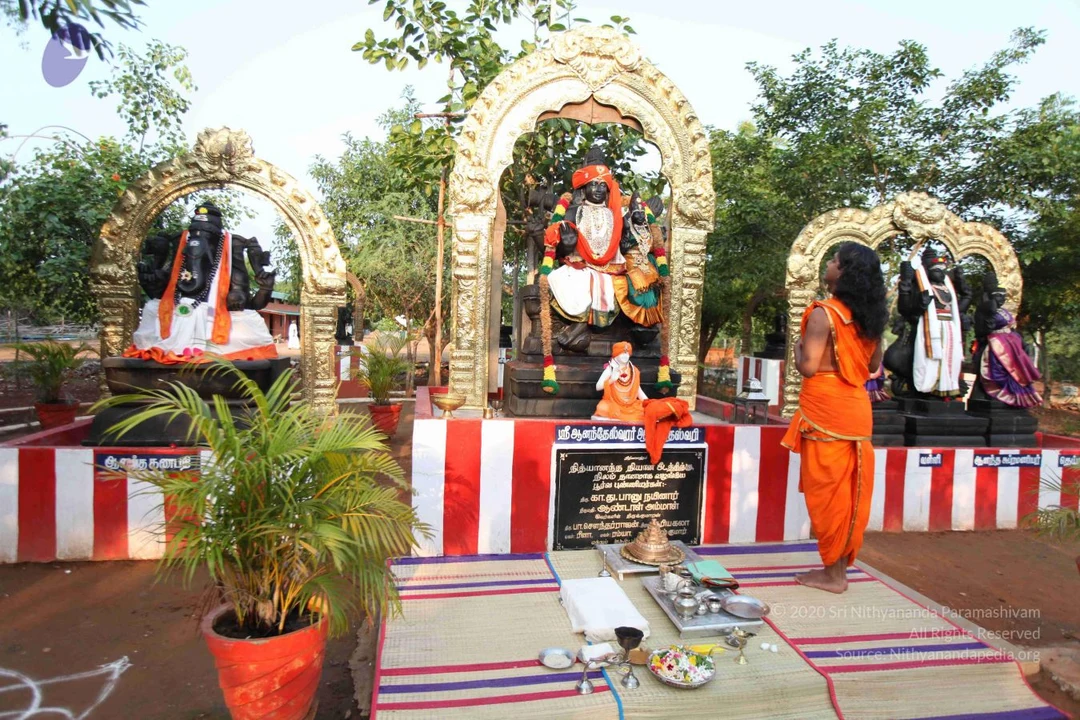
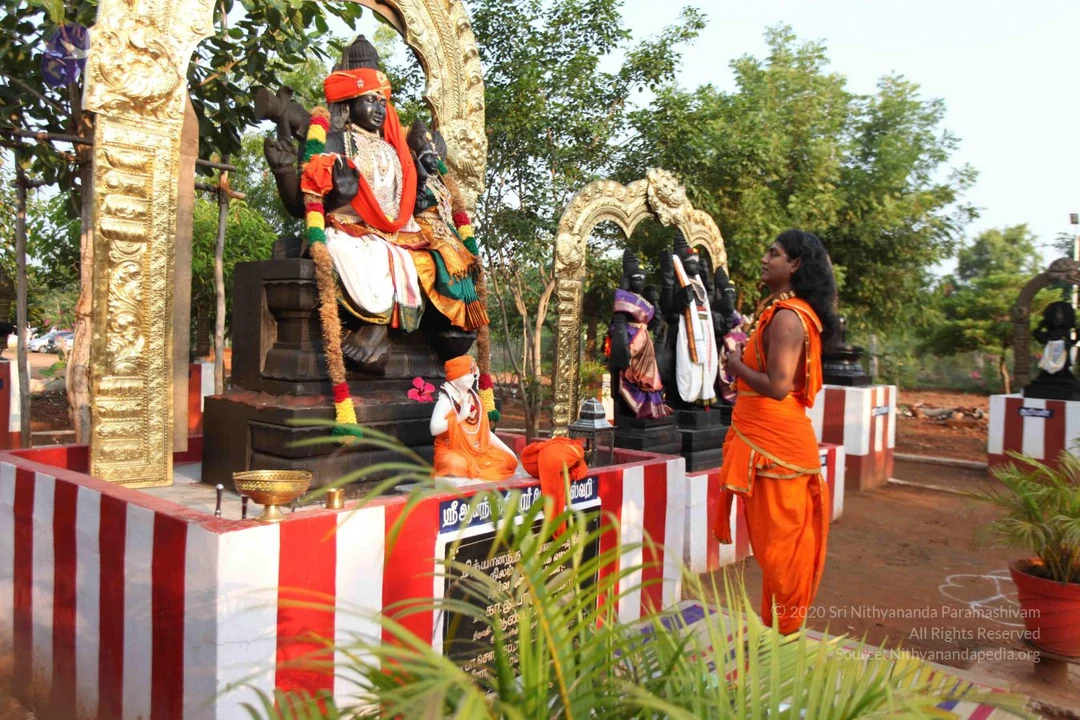
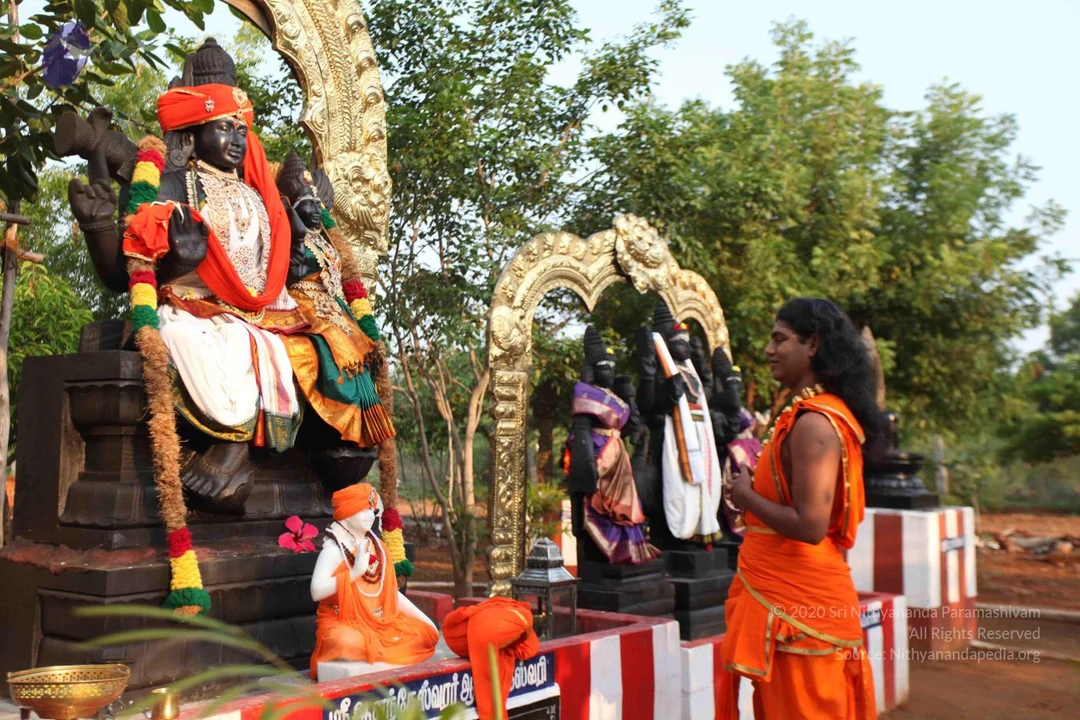
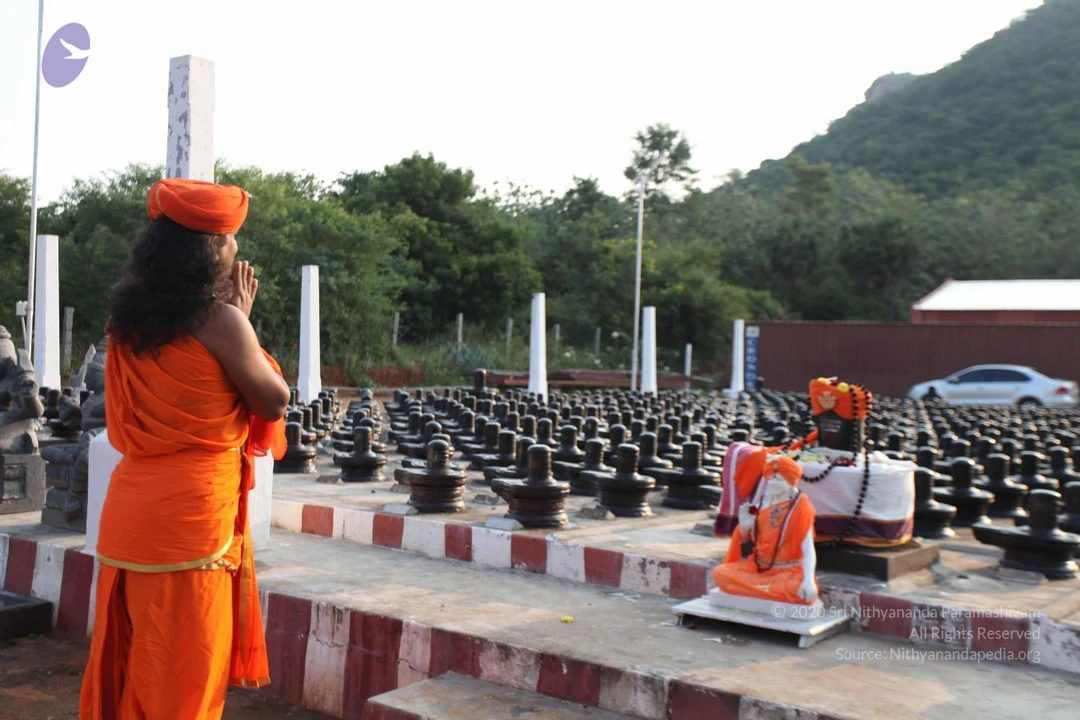
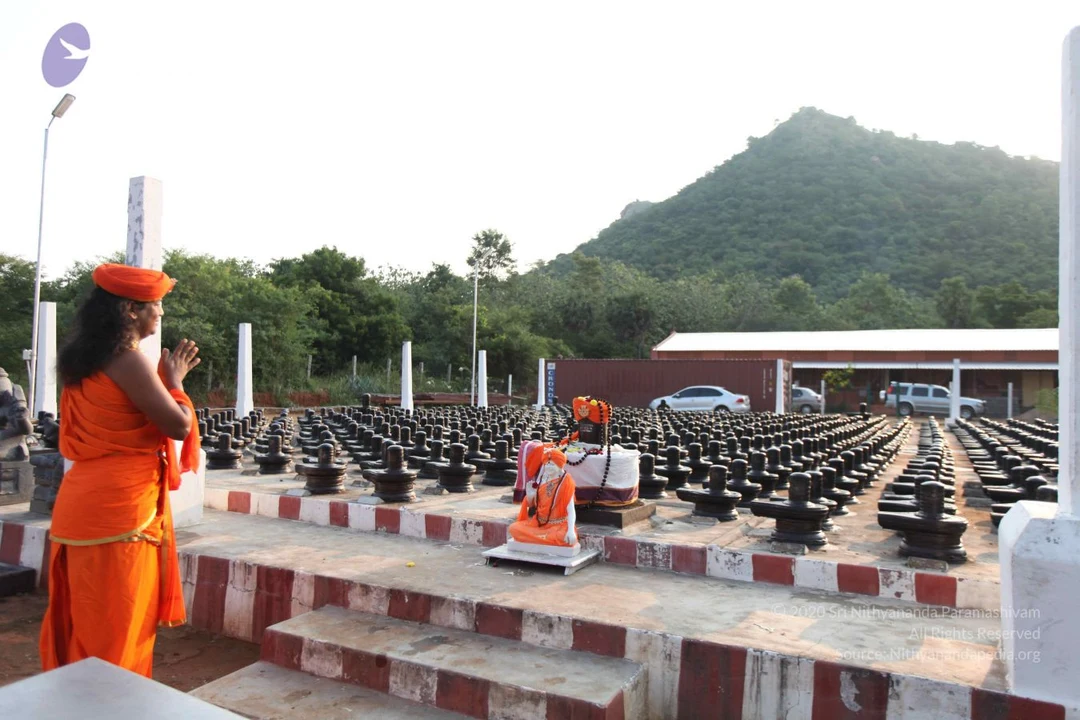
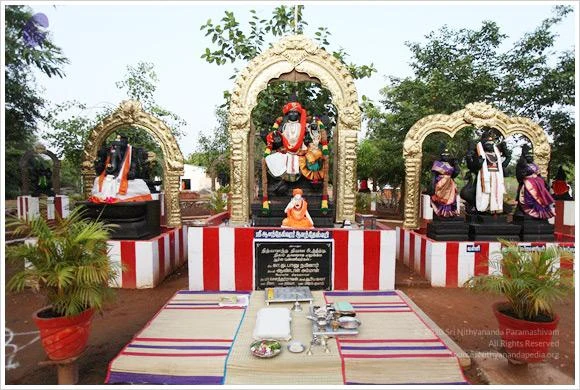
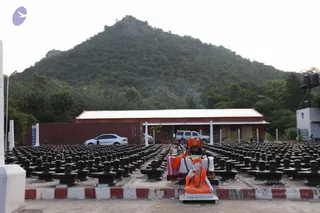
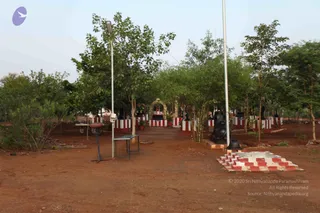
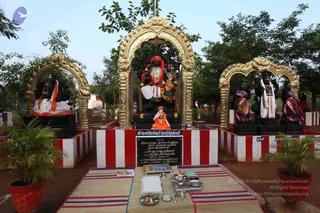
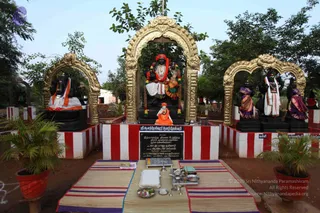
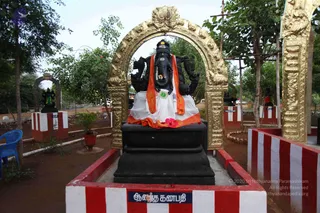
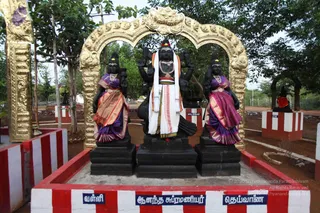
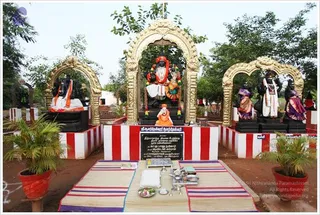
A photograph of an outdoor temple courtyard with rows of dark black stone lingams on short circular pedestals, arranged in a grid across the paved ground. In the foreground centre stands a seated figure with an orange and gold head covering and orange robe with a white garment, and a rudraksha-style bead necklace, placed on a low white platform. Behind them is a long low red-roofed hall with white pillars, a silver car and a white car parked nearby, a red shipping container at left, and a forested hill rising in the background. A white and red painted kerb borders the lingam field.Outdoor photograph of an open red-earth grounds with scattered young trees and bamboo clumps. Several small shrines painted with red and white bands stand in a row, with a gold-framed arched niche in the background holding a deity murti. A large dark stone Nandi bull sits on a raised platform at right beside a tall lamp pole, and a red-and-white striped square base with a small shivalinga-style stone sits in the foreground. A metal table and a stone plinth stand at left. No people are visible.Outdoor shrine in a leafy compound with three gold-framed arched niches on raised red-and-white striped platforms. The central niche holds black stone deity murtis adorned with a red garland, a white garland and a garlanded figure in ornate clothing. A small seated figure in orange robes sits in front of the central platform. Flanking niches hold black stone murtis in white and purple garments. Striped mats in front carry brass lamps, flower offerings, a thali and a white cloth, indicating puja. A black plaque with white Tamil lettering stands on the central platform. Potted palms and trees surround the shrine under a pale sky.A photograph of an outdoor temple shrine with a central golden arched niche housing a black stone deity murti dressed in a red and white cloth with garlands, flanked by two smaller golden-arched shrines holding black stone murtis draped in white and orange cloth. A seated saffron-robed figure sits on the floor in front, though no physical people are otherwise present. Below, a black plaque with Tamil script sits on red-and-white striped plinths, with woven mats, brass oil lamps, a kalasha-style brass pot and a plate of flowers and fruit laid out in front. Trees and a sky background frame the scene.Outdoor photograph of a large black stone Ganesha murti seated on a black pedestal inside a red and white striped enclosure. The elephant-headed deity wears a white dhoti, an orange and saffron shawl, a rudraksha-style bead mala, and a flower placed at the base. Two gold-painted arches frame the shrine, with smaller shrines and green trees in the background. A Tamil name plate sits on the front of the base.Outdoor shrine photograph of a black stone deity murti of Murugan (Subramanya) standing at centre on a black pedestal, with a multi-armed form holding a spear-like weapon, wearing a white dhoti and orange shawl, a gold chest garland and a crown. Flanking him are two black stone female figures, Valli on the left and Deivanai on the right, each in purple and orange saris with gold borders and jewellery. A gold-painted arch frames the group, with trees and a red-and-white striped base in front. Tamil and English labels on the plinth read Valli, Ananda Subramaniyar and Deivanai, and small shrines sit in the background.

Thiruvannamalai-Pada-Puja
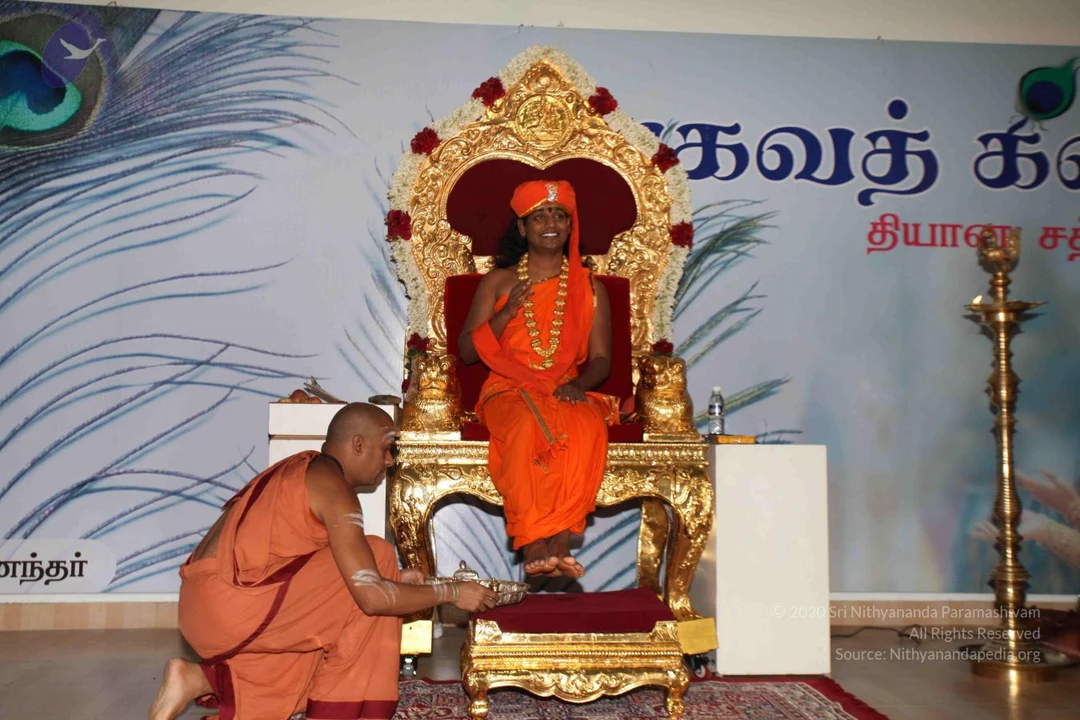
28 photosSource gallery
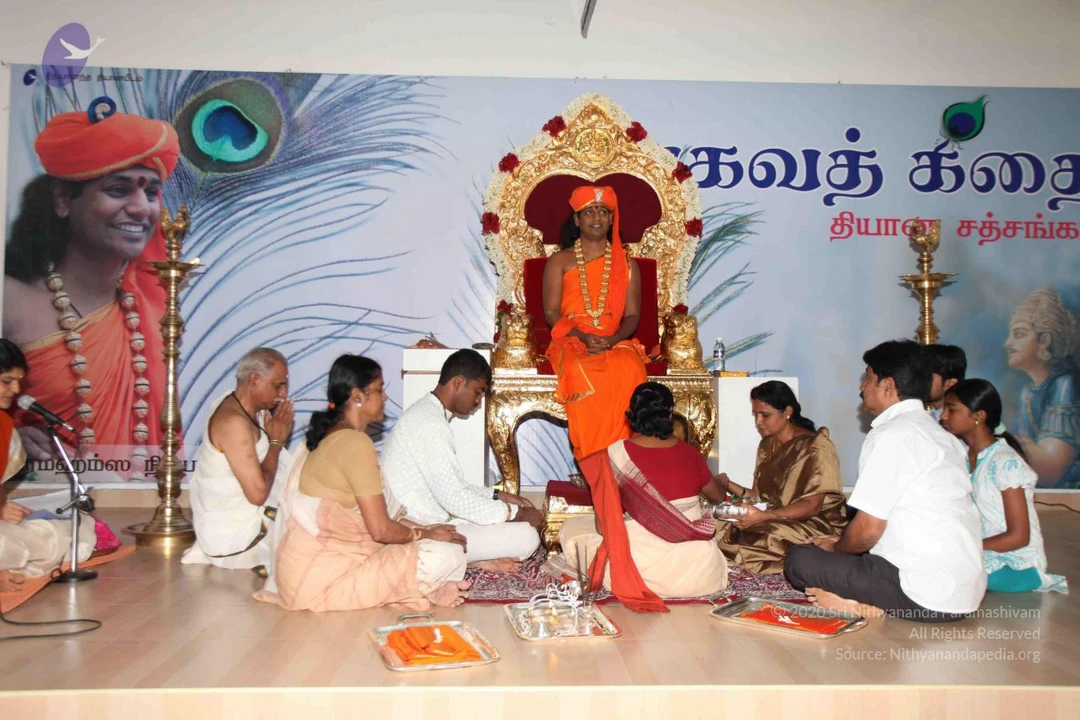
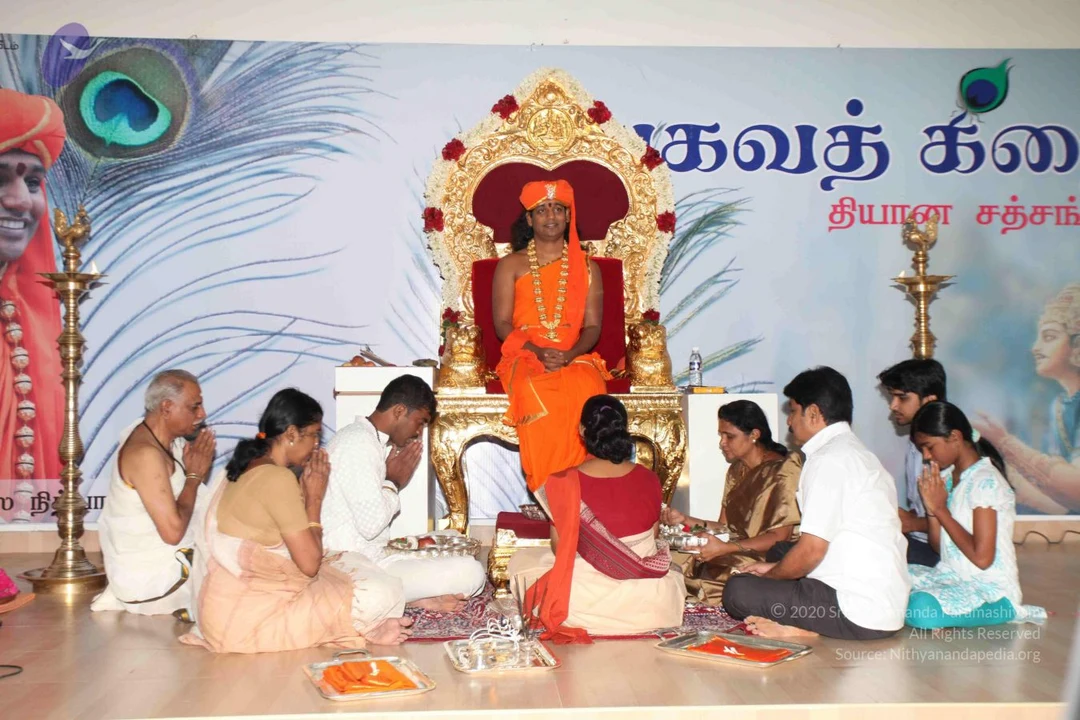
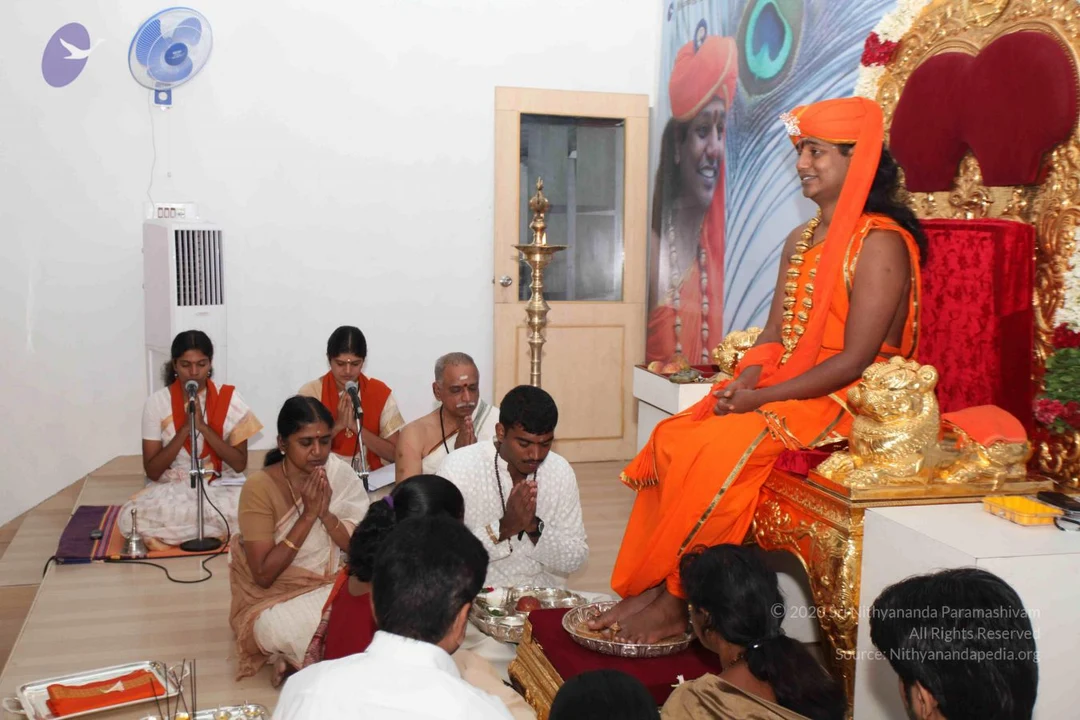
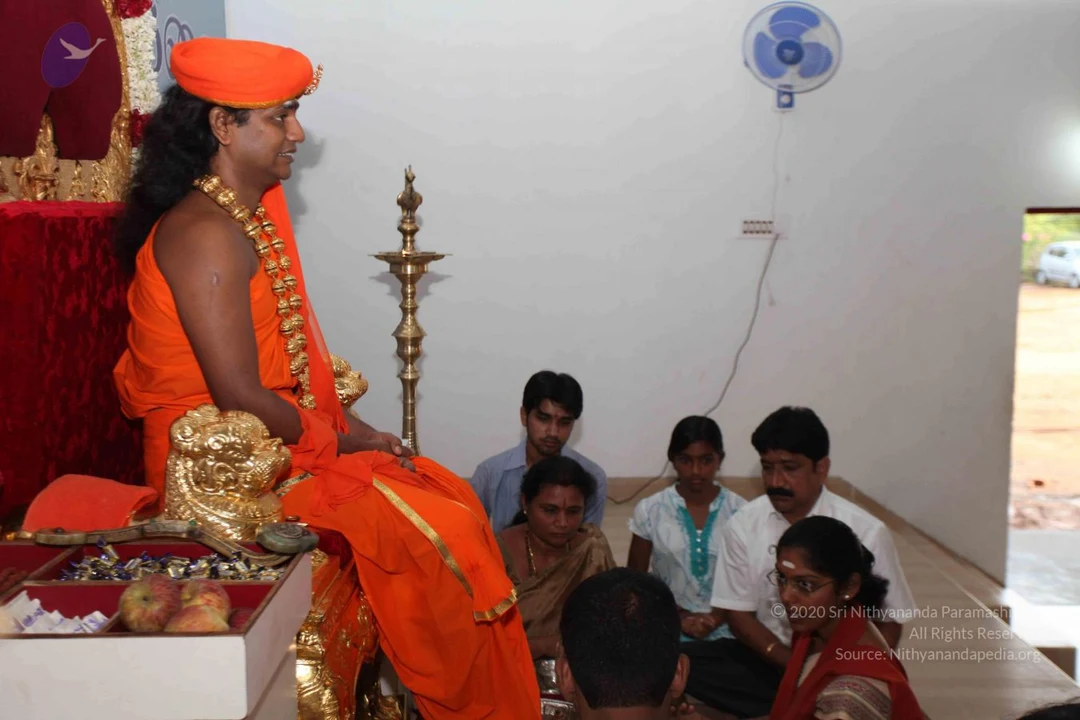
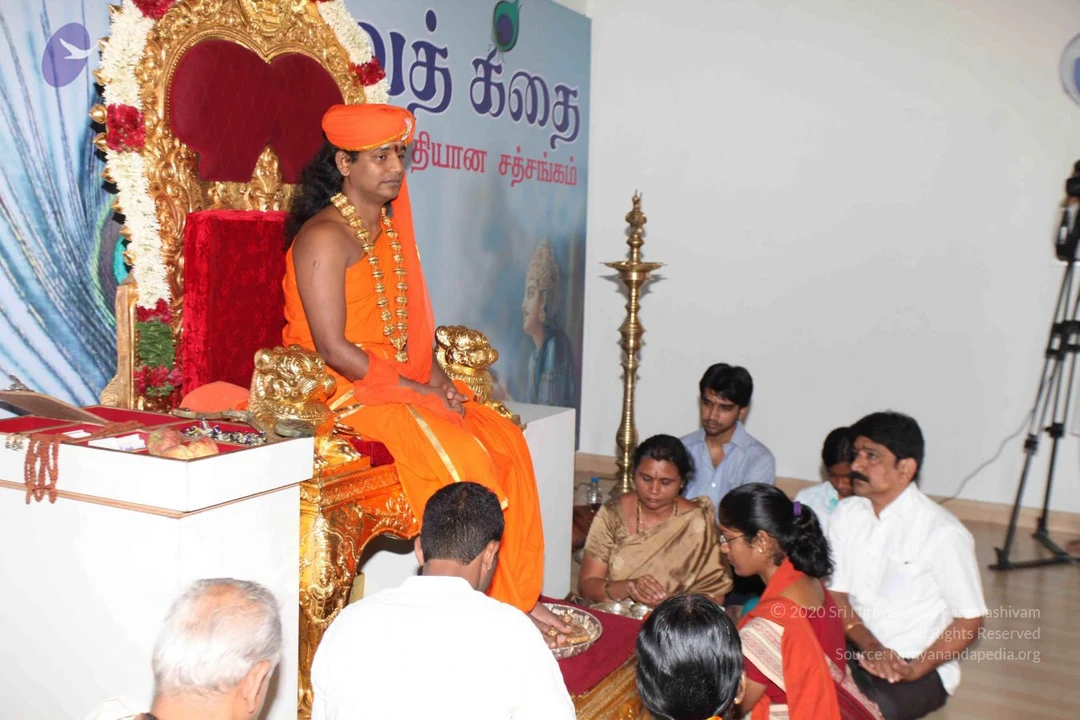
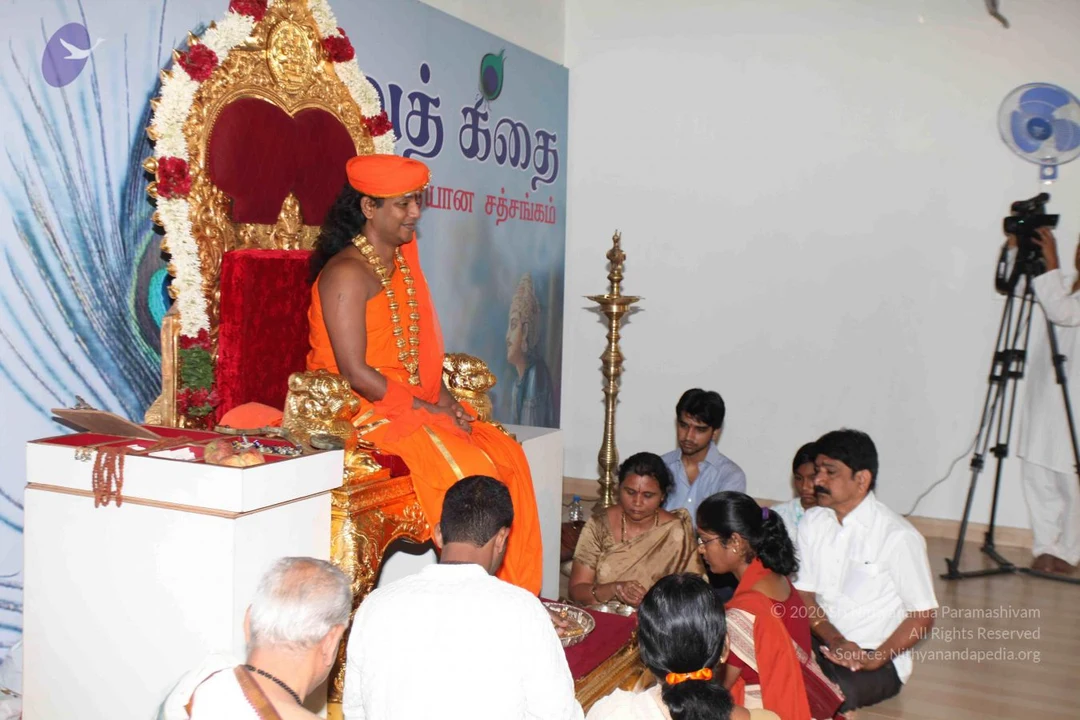
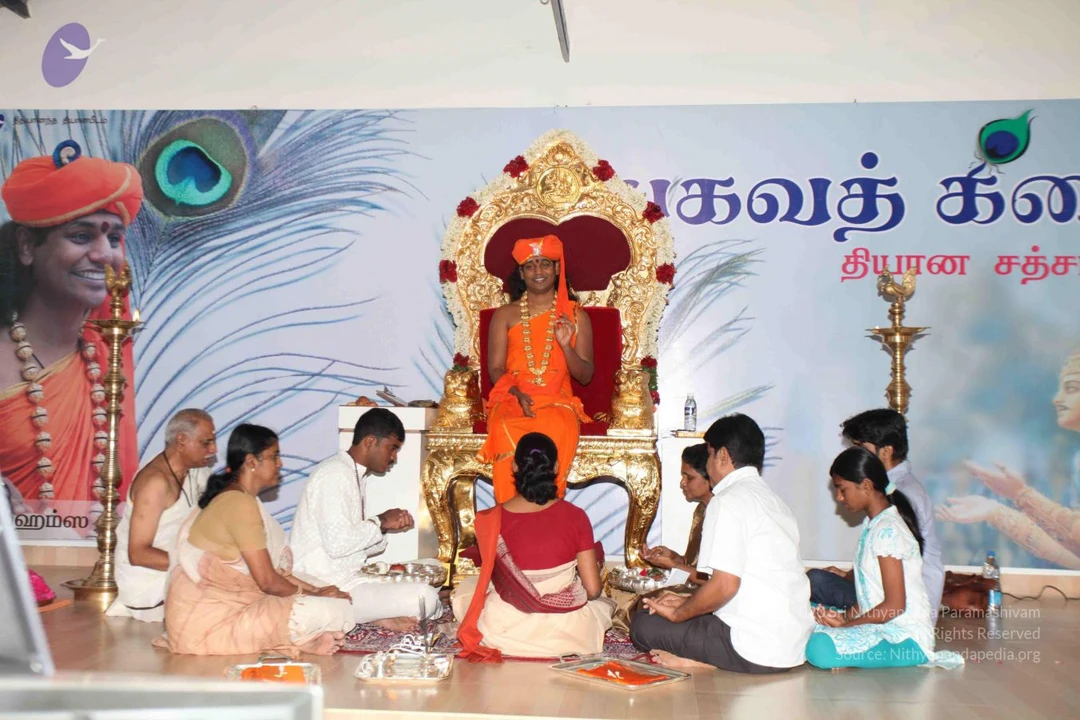
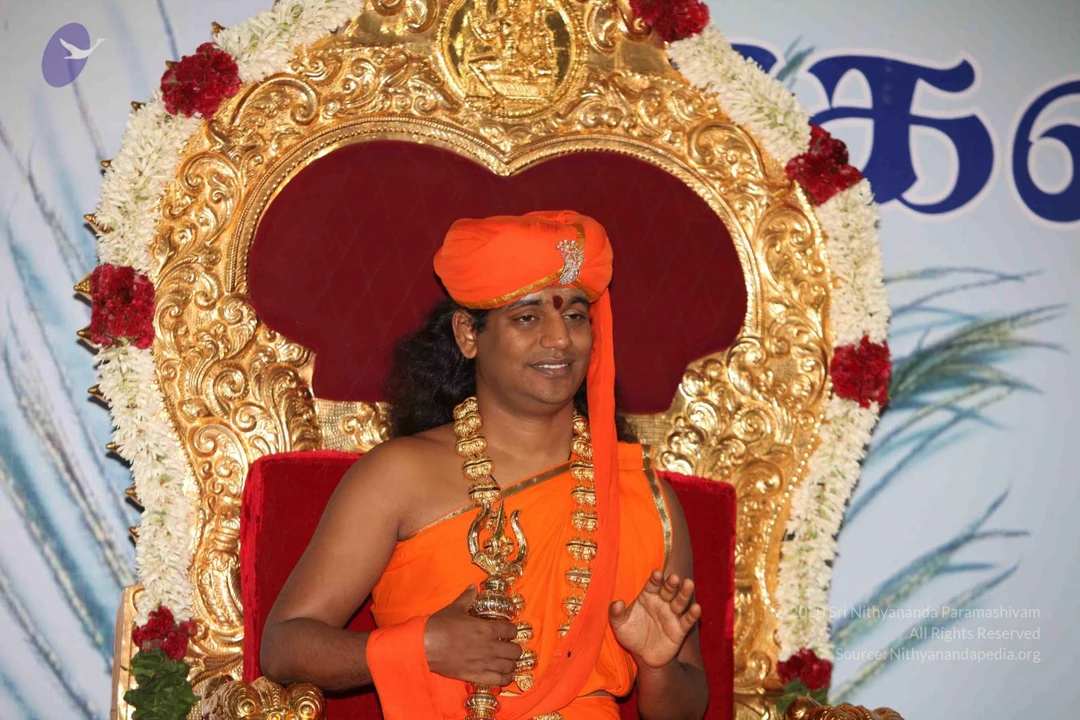
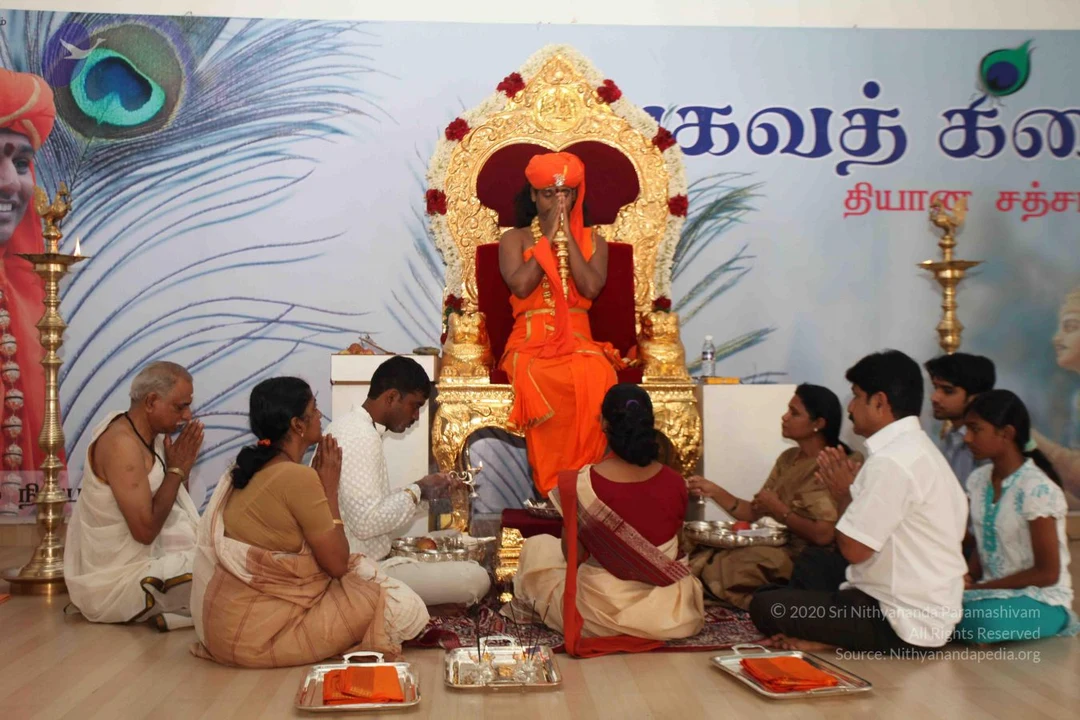
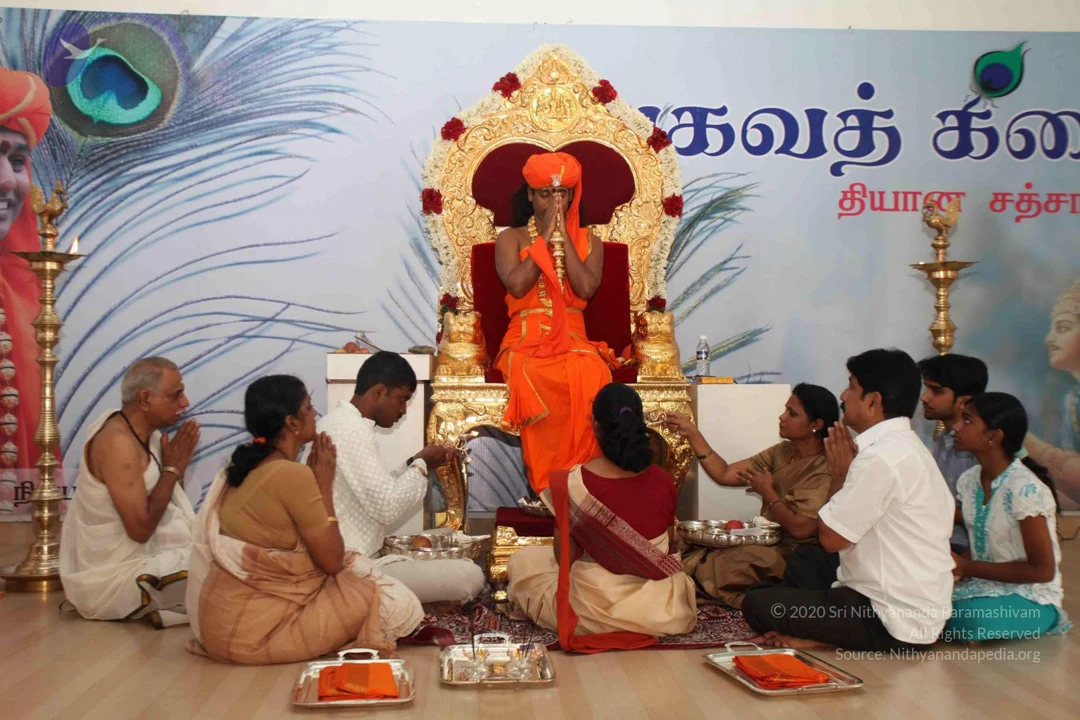
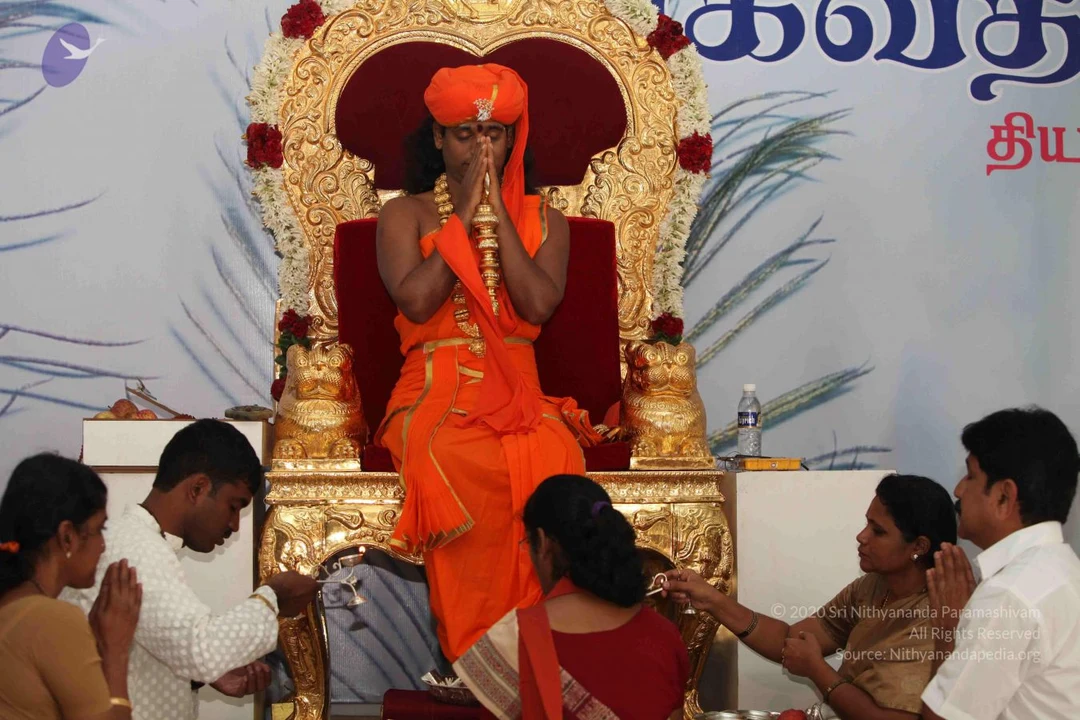
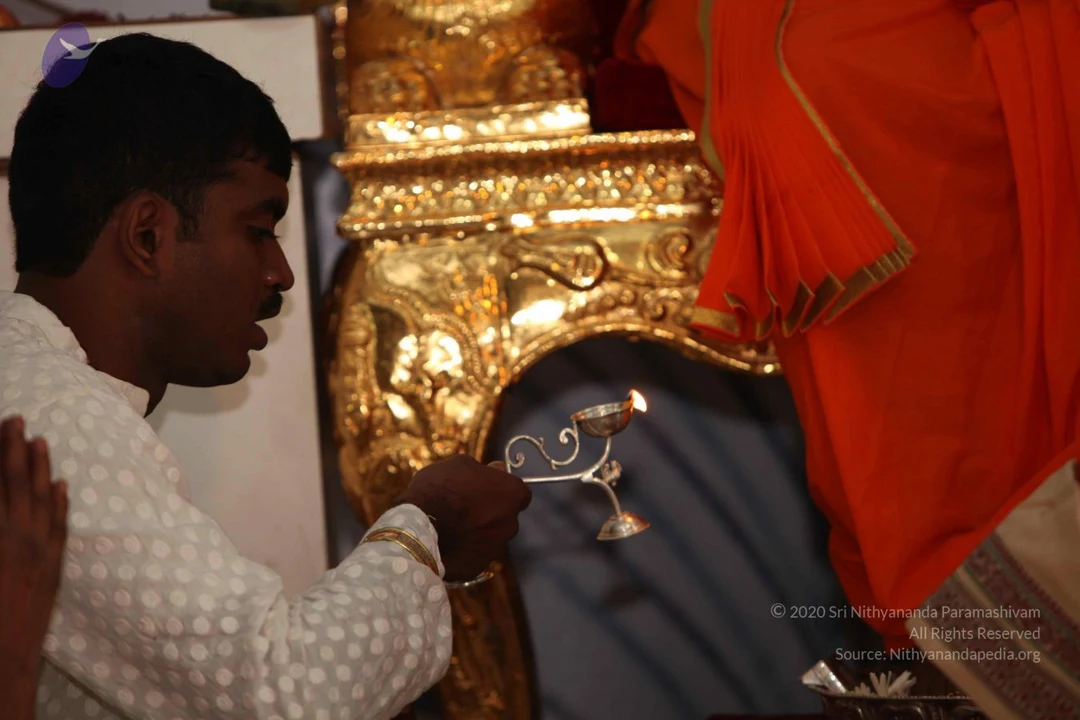
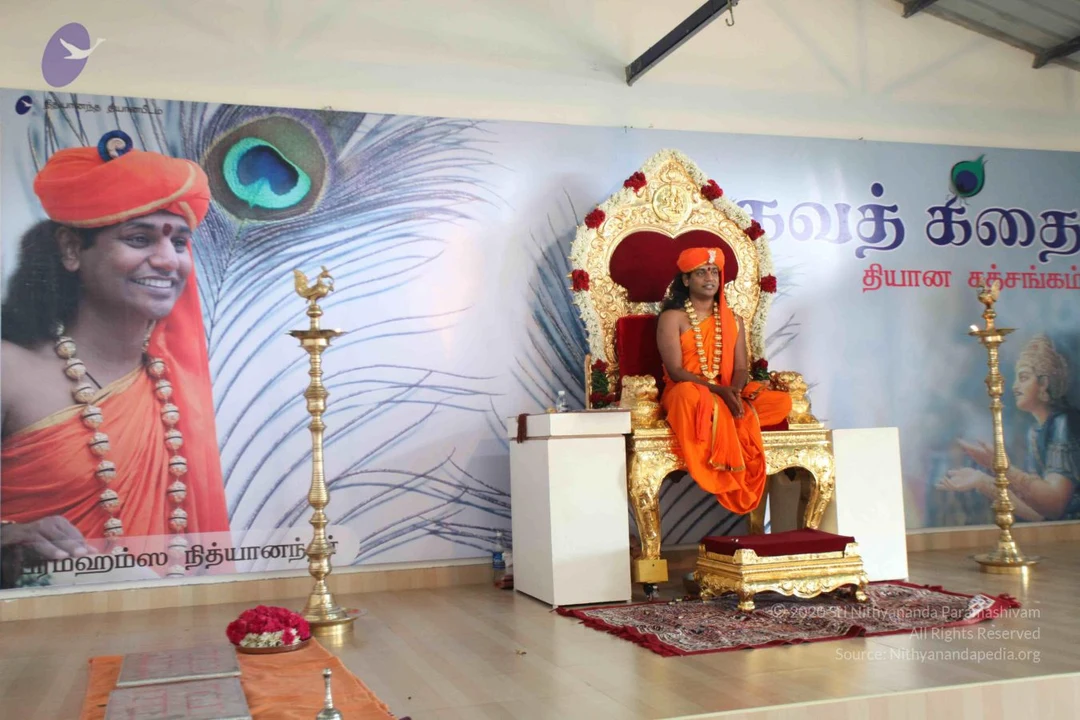
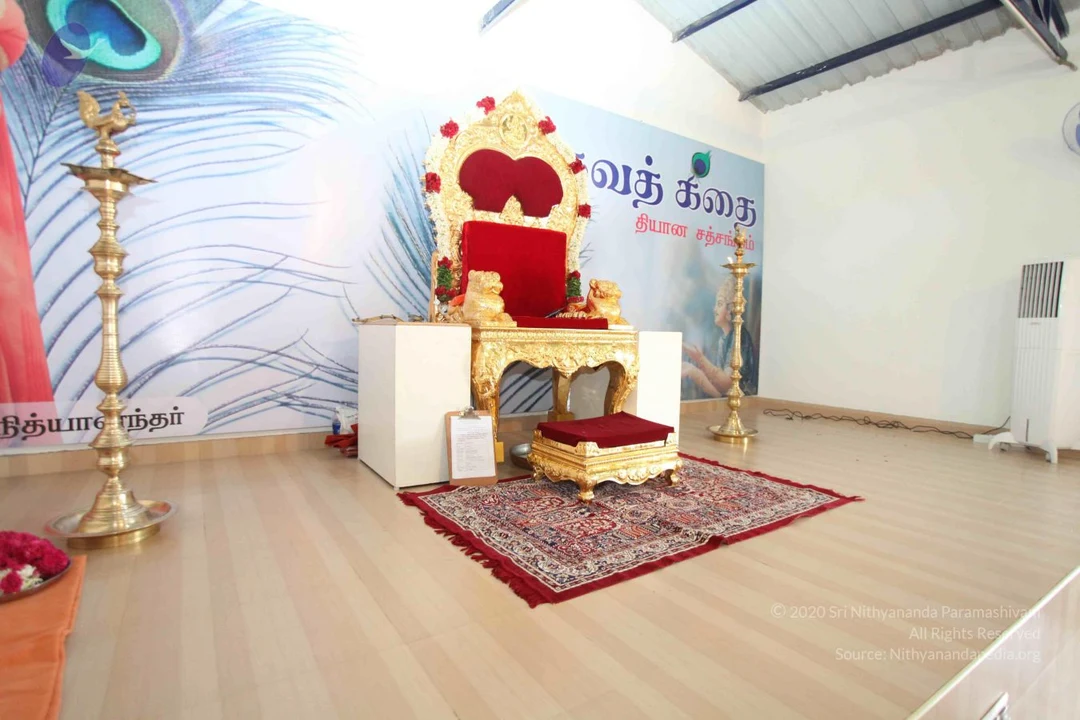
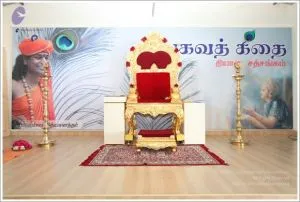
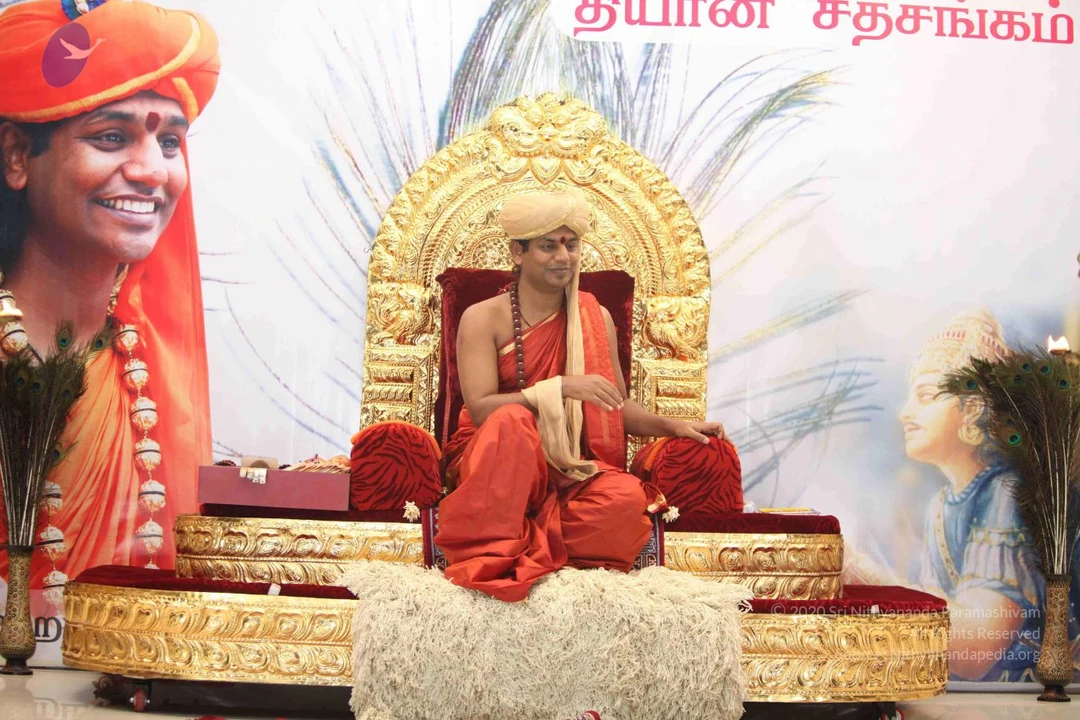
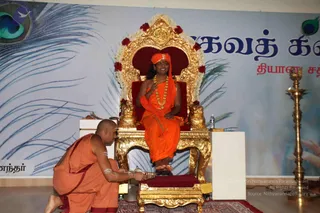
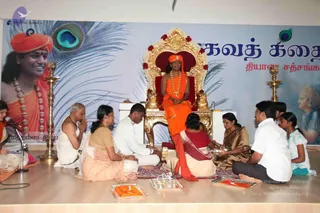
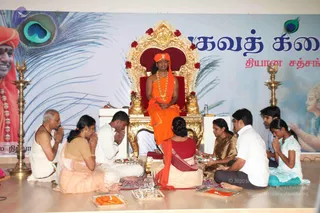
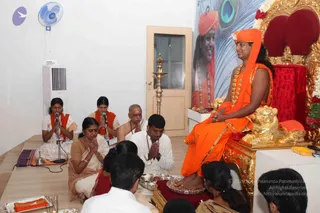
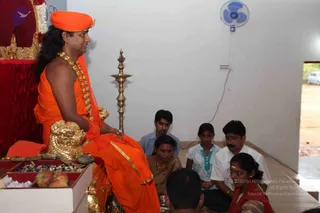
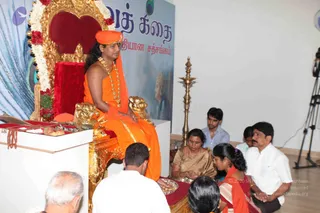
A photograph of a seated figure on an ornate gold throne with a red cushion, draped with white flower garlands and red blooms, in a hall with a peacock-feather backdrop. The seated person wears an orange turban, orange robe and a long beaded necklace, with bare feet on a golden footstool. A kneeling priest in orange robes with white ash markings on his arms and forehead offers a silver tray or vessel near the footstool. A tall brass oil lamp stands at the right, and a water bottle sits on a white table. A Tamil banner with the word 'Bhagavat Gita' is partly visible. a person is the seated figure, identified by the orange turban, orange robe, long beaded mala and throne-seated position.A satsang stage with a central figure seated on an ornate gold throne with a red cushion, draped in orange robes, an orange head wrap, and a long rudraksha mala with a gold pendant. Flanking the throne are gold lamps and a small table. Several devotees sit cross-legged on the floor: a bald elder in white with hands folded in namaskar, women in saffron, beige and red saris, a man in white kurta, a man in white shirt, and a girl in a light blue dress. Trays of orange cloth and brass items sit before them. Behind is a banner with a peacock feather motif, a portrait of a smiling man in orange with a rudraksha mala, and Tamil text reading satsang. a person appearance is unclear, so the central figure is described by role only.A photo of a satsang on a stage with a banner behind it showing a peacock feather motif, a smiling figure in orange, and Tamil script reading 'பகவத் கீதை' style lettering with 'தியான சத்சங்' beneath. A figure in orange robes, an orange head wrap, and a beaded mala sits on a gold-and-red ornate throne decorated with white and red flowers. Seven people sit on the floor before him in prayer postures with hands folded; some wear white, one a pale orange saree, another a brown saree, and a girl wears a light blue dress. Brass oil lamps stand on either side, and metal trays holding orange cloth and offerings rest on the floor in front.A seated figure in orange saffron robes and an orange head wrap sits on a gilded golden throne with red cushions, a golden lion-form support at its base and a red velvet back. Beaded rudraksha-style malas and ornate gold necklaces hang on the chest. Before the throne, several devotees kneel with palms pressed together in namaste on a wooden floor: two women in white and saffron shawls, a man in white dhoti with a kneeling younger man in white kurta, and others in the foreground. Brass plates with offerings, a brass oil lamp and a small bell lie nearby. Behind the throne, a large poster shows a smiling figure in orange robes beside a peacock-feather backdrop. a person is the seated figure in orange on the throne, identified by appearance cues of orange robes, ornate gold necklaces and a throne.Indoor satsang or darshan scene in a plain white-walled room. A man seated on a gold-and-red ornate throne wears a bright orange turban, orange wrap, and a long gold necklace of beads, with long dark hair; he is bare-shouldered and smiling. Beside him stands a brass oil lamp. Five devotees sit on the floor: a young man in a light blue shirt, a woman in a brown sari with gold jewellery, a girl in a light blue-and-white outfit, a man in a white shirt, and a woman in a red sari with a bindi. A tray in the foreground holds apples and sweets, and a golden lion-shaped armrest is visible.A seated man in an orange saffron dhoti and orange turban sits on an ornate gold and red velvet throne, wearing a long beaded gold-toned necklace and bare upper body with orange shawl draped over one shoulder. Several seated devotees in white shirts, a woman in a beige sari, and a woman in a red sari sit on the floor in front of the throne, with a brass oil lamp stand (kuthuvilakku) beside the throne. A white pedestal holds red-and-white flowers, a rudraksha mala and ritual objects. The backdrop shows a peacock feather motif and a Tamil banner reading satsangam, with a tripod camera at right. a person appears to be the orange-robed man on the throne, given his saffron clothing, orange turban, long hair and ceremonial gold necklace, and he is shown in a discourse setting.

Bhagavad-Gita-Satsang-Tamil
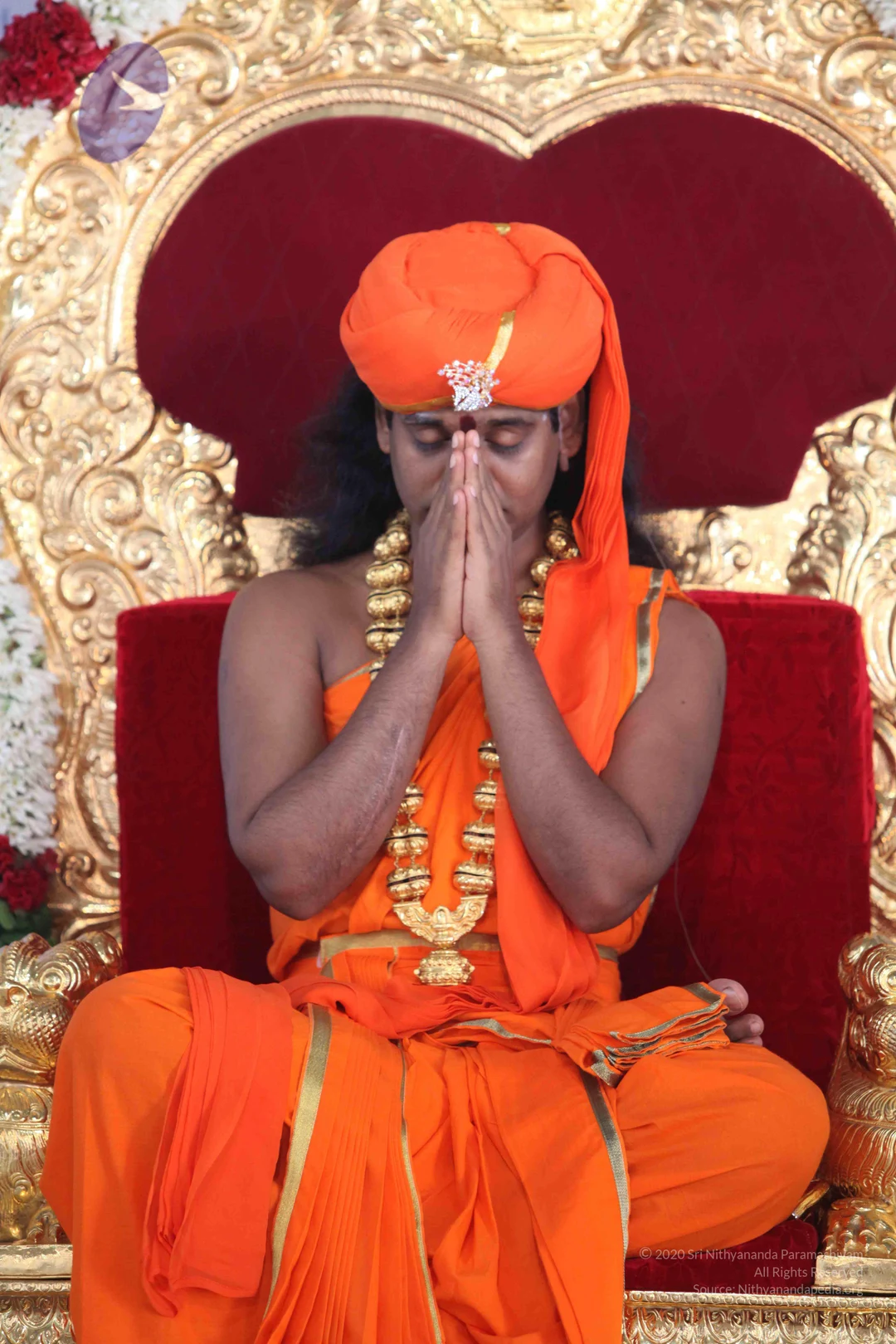
33 photosSource gallery
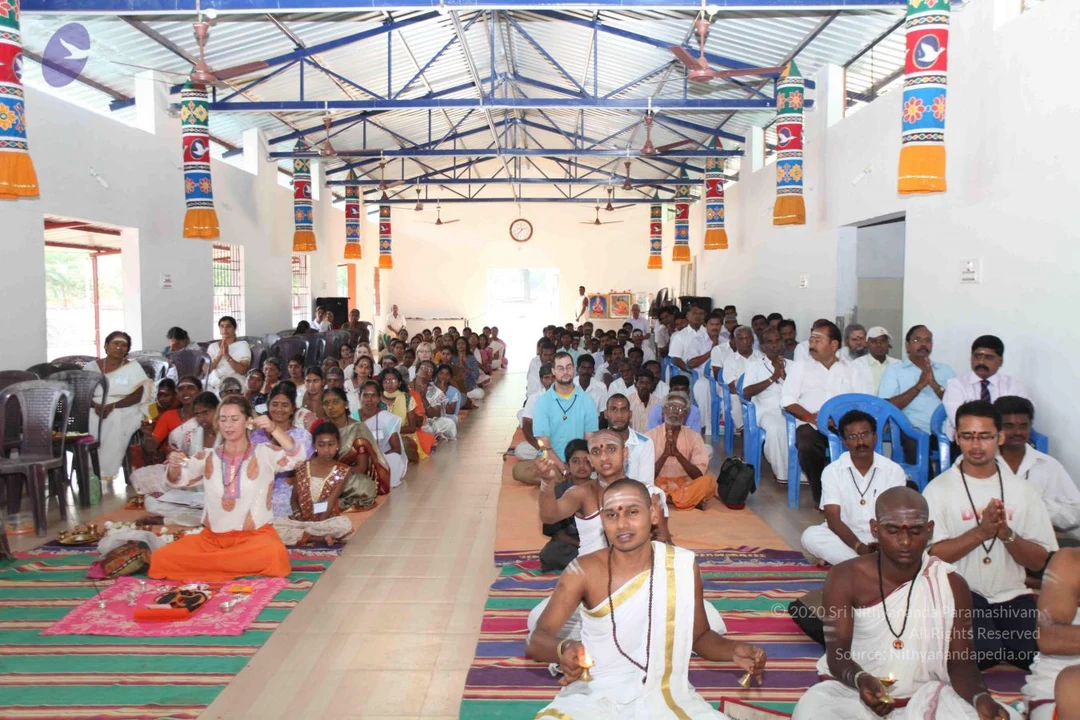
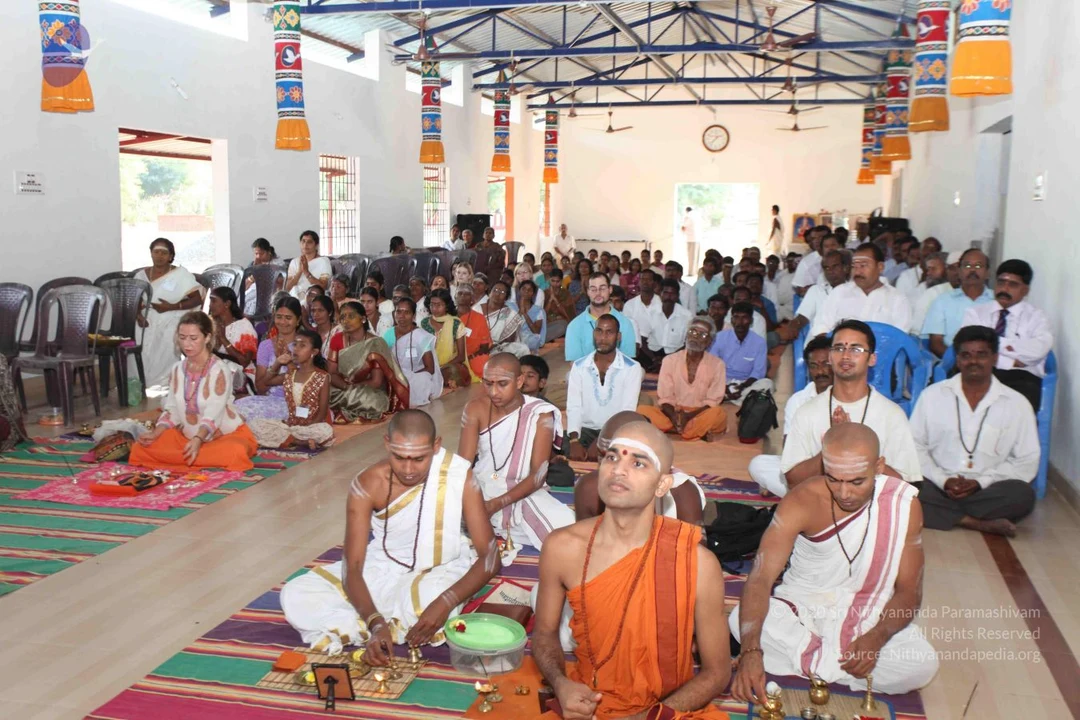
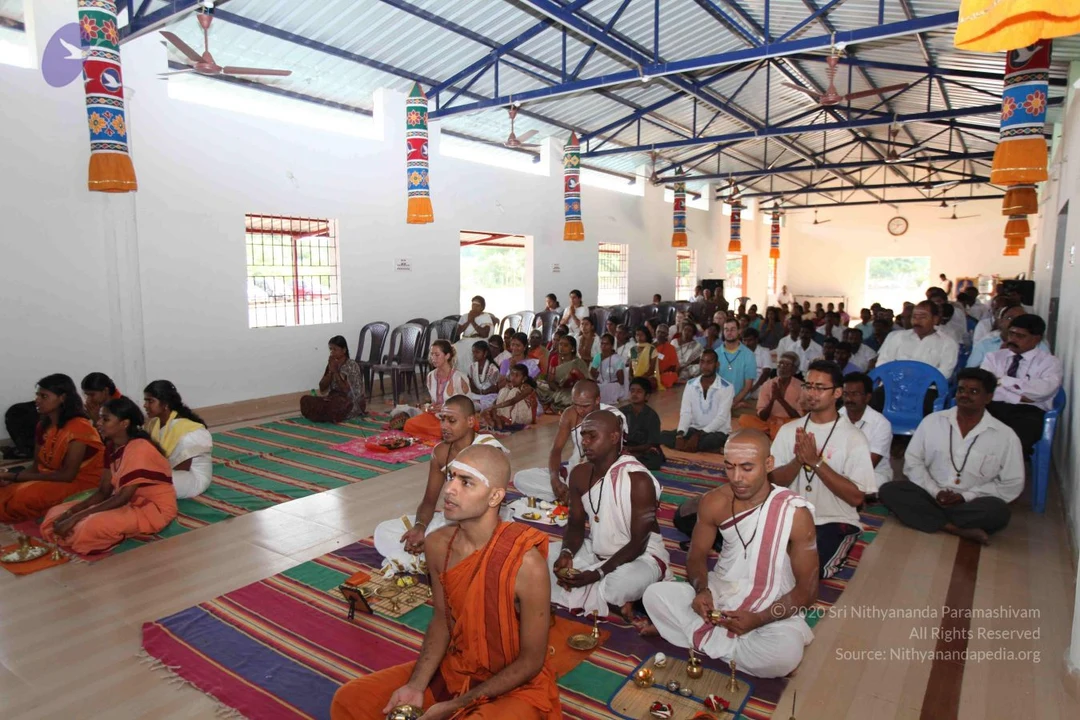
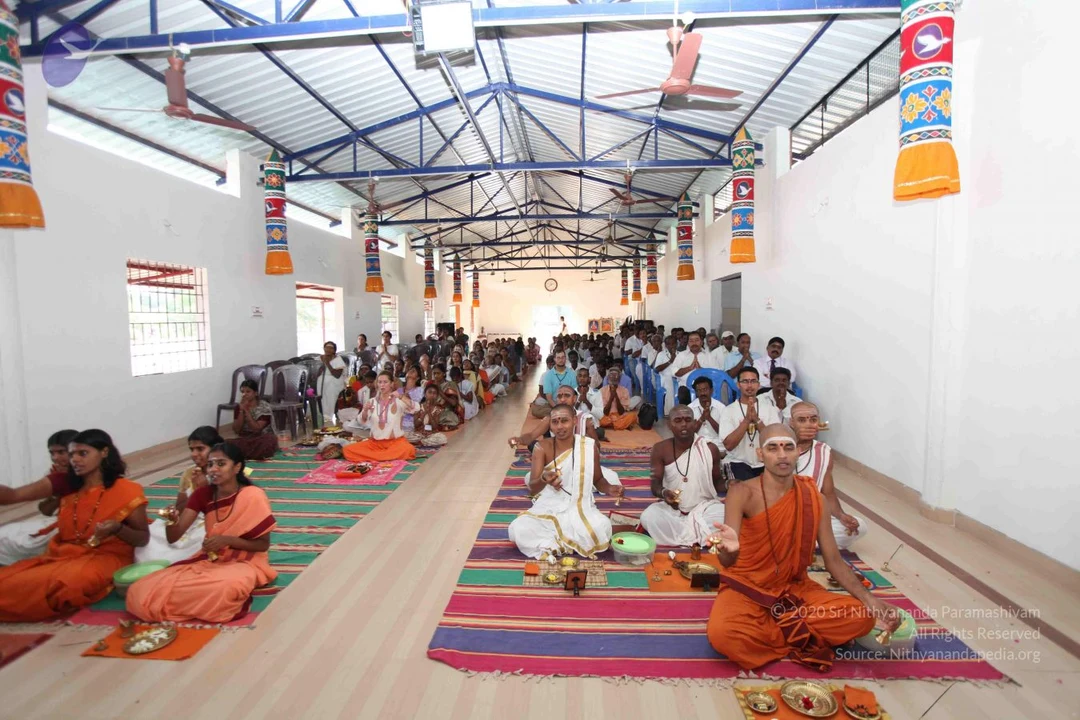
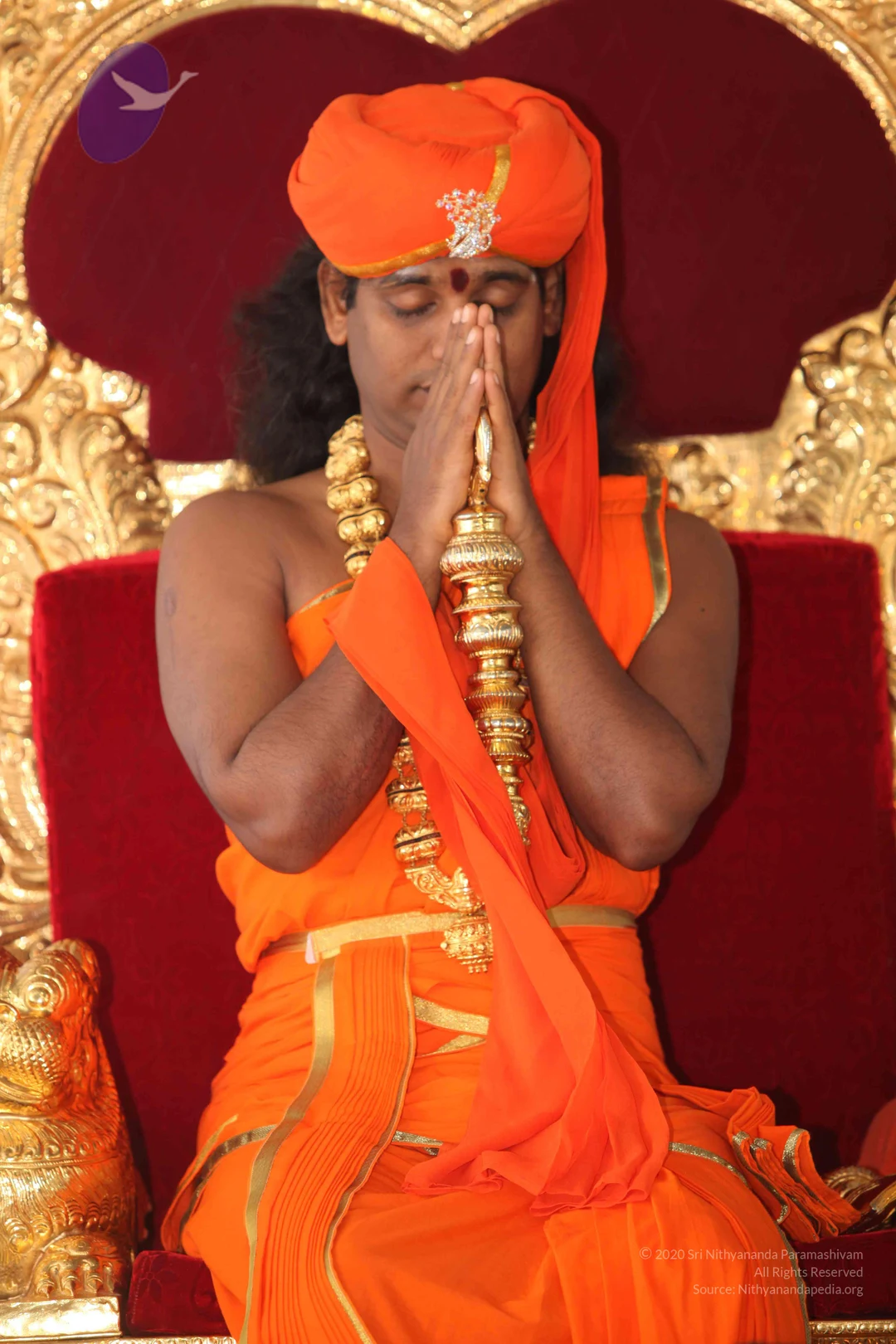
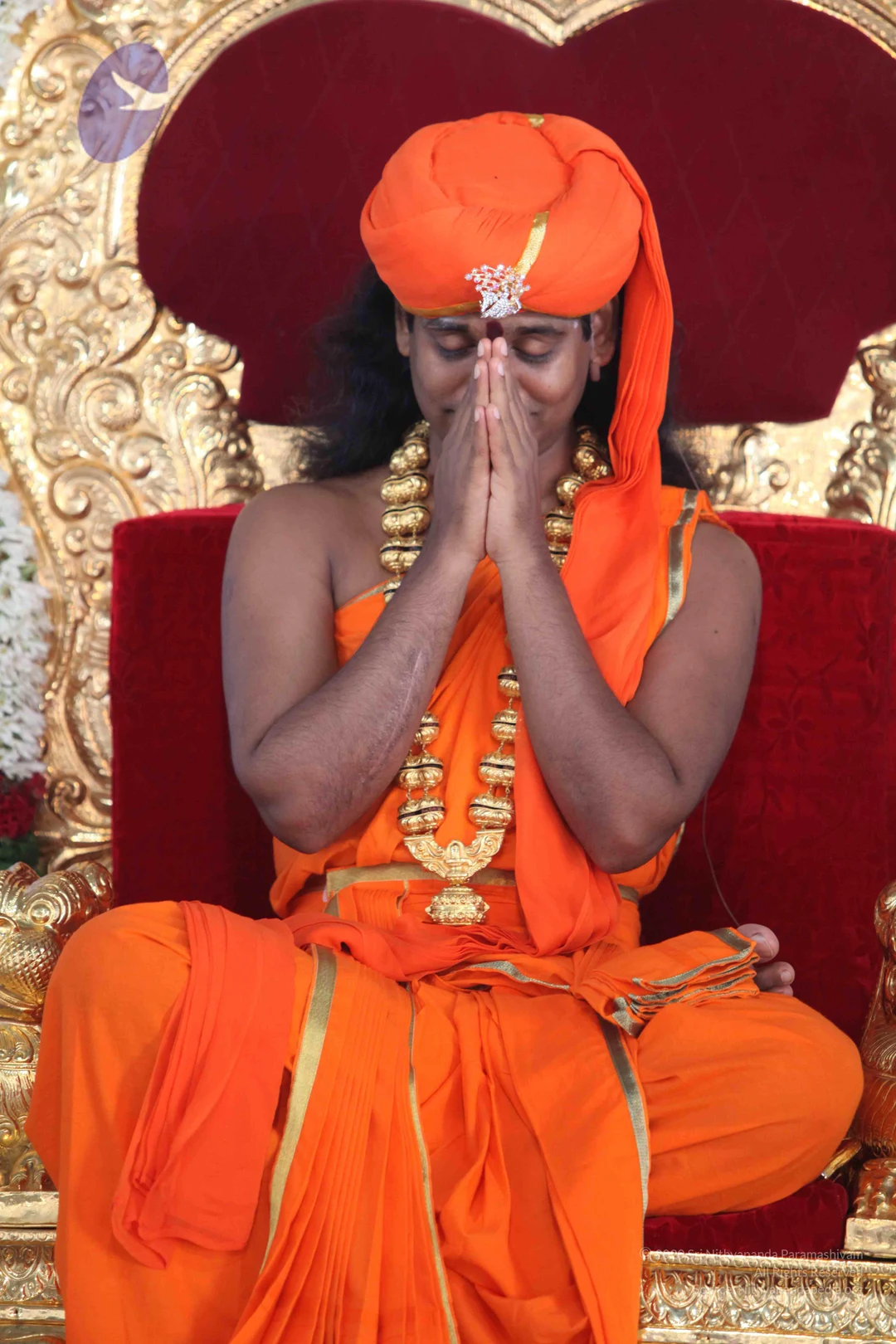
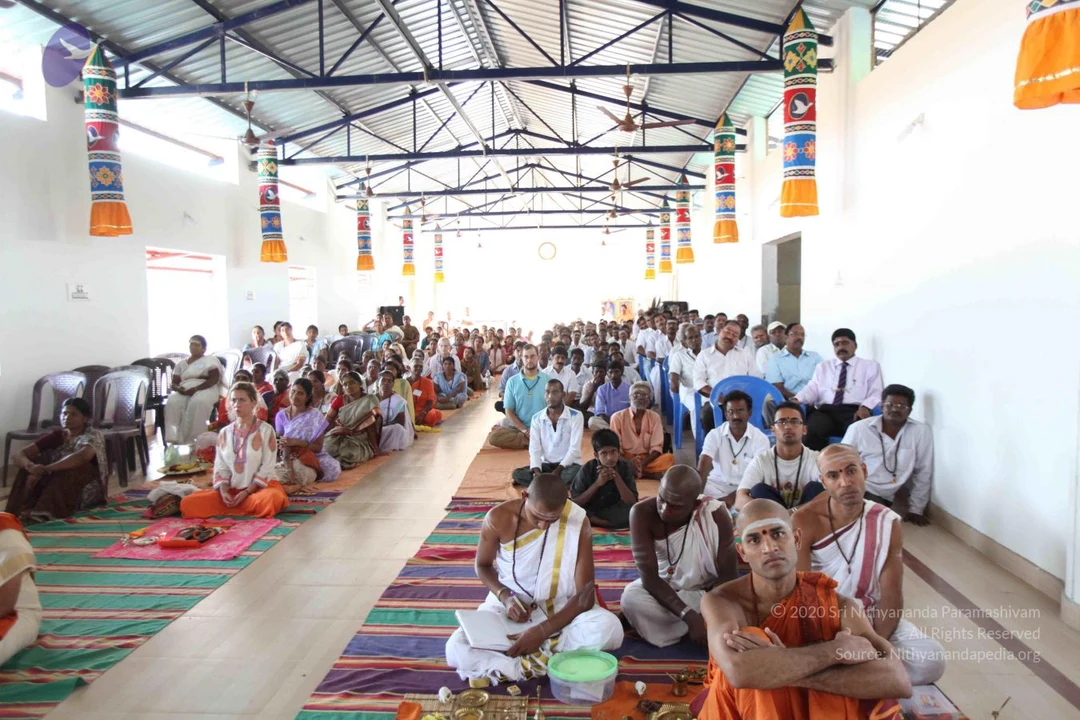
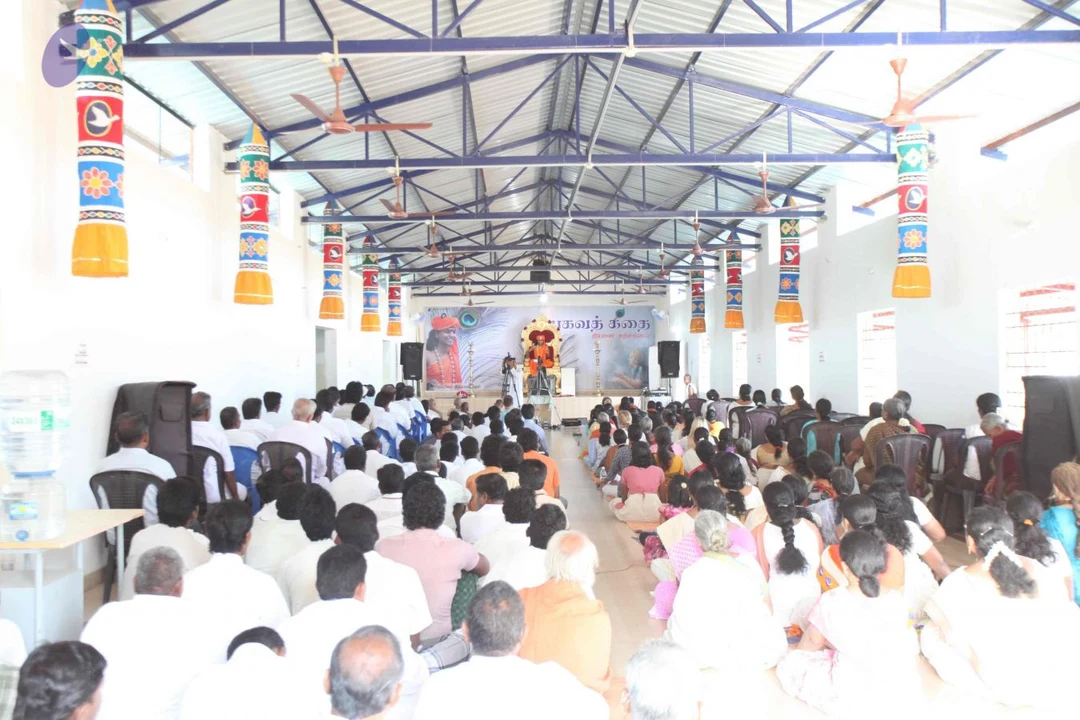
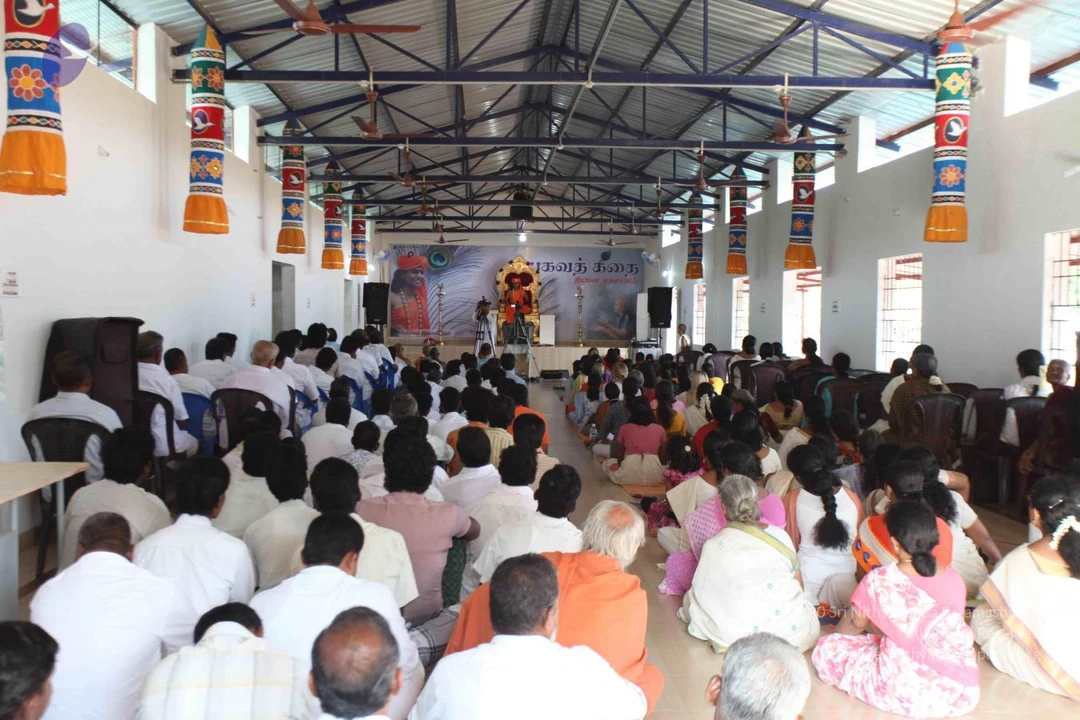
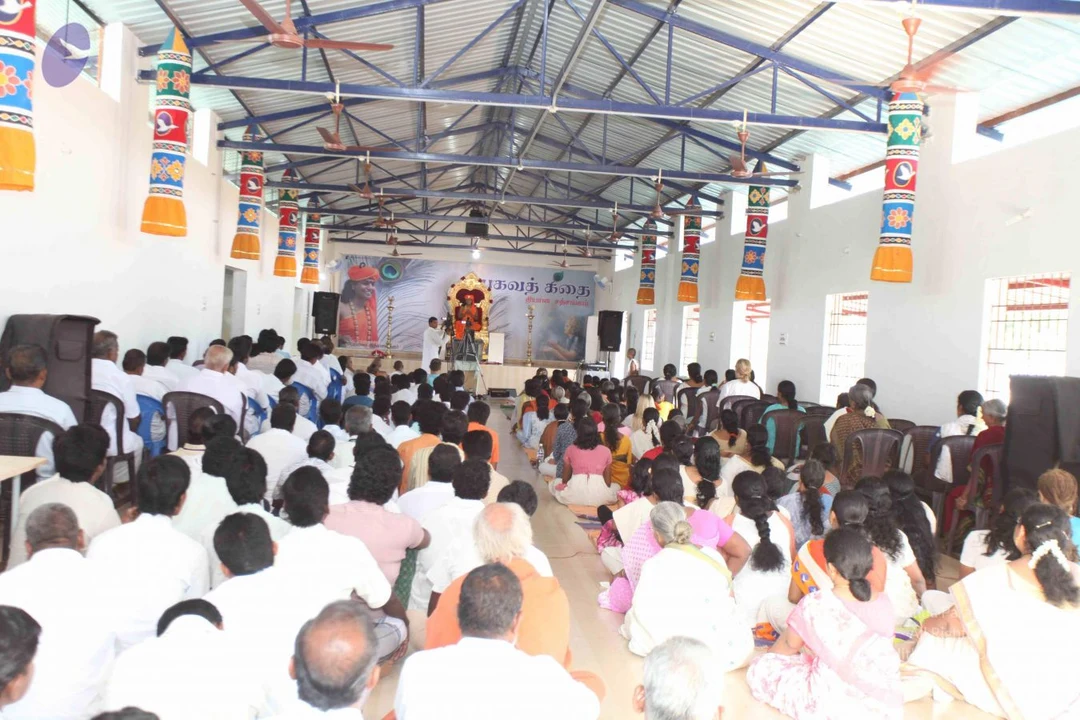
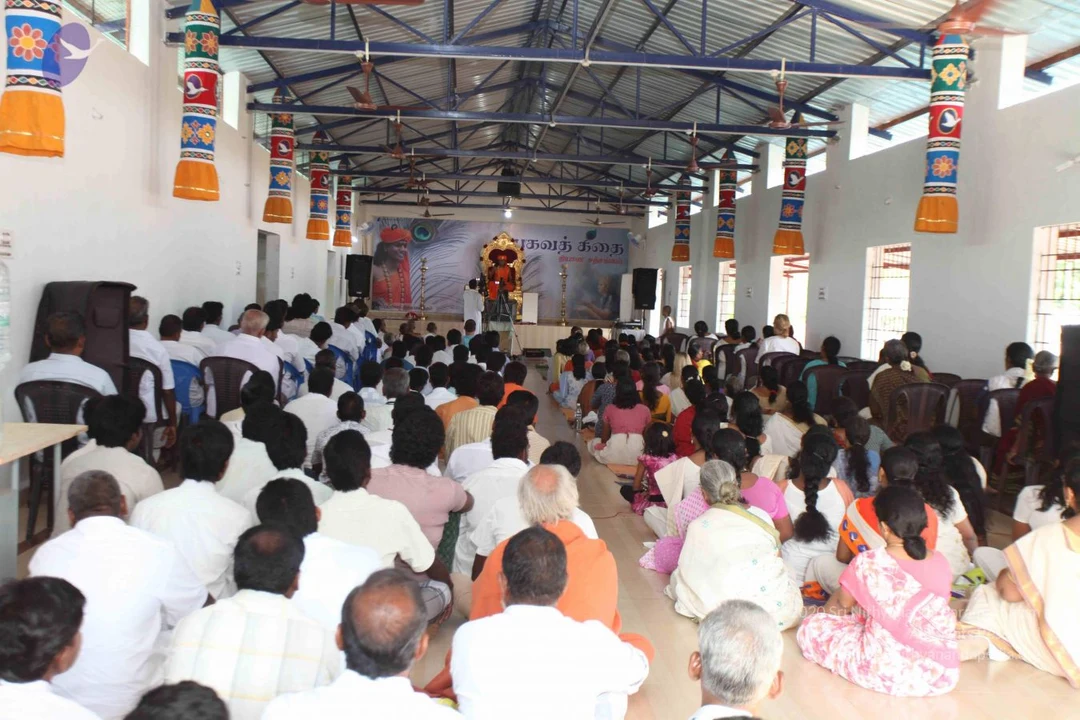
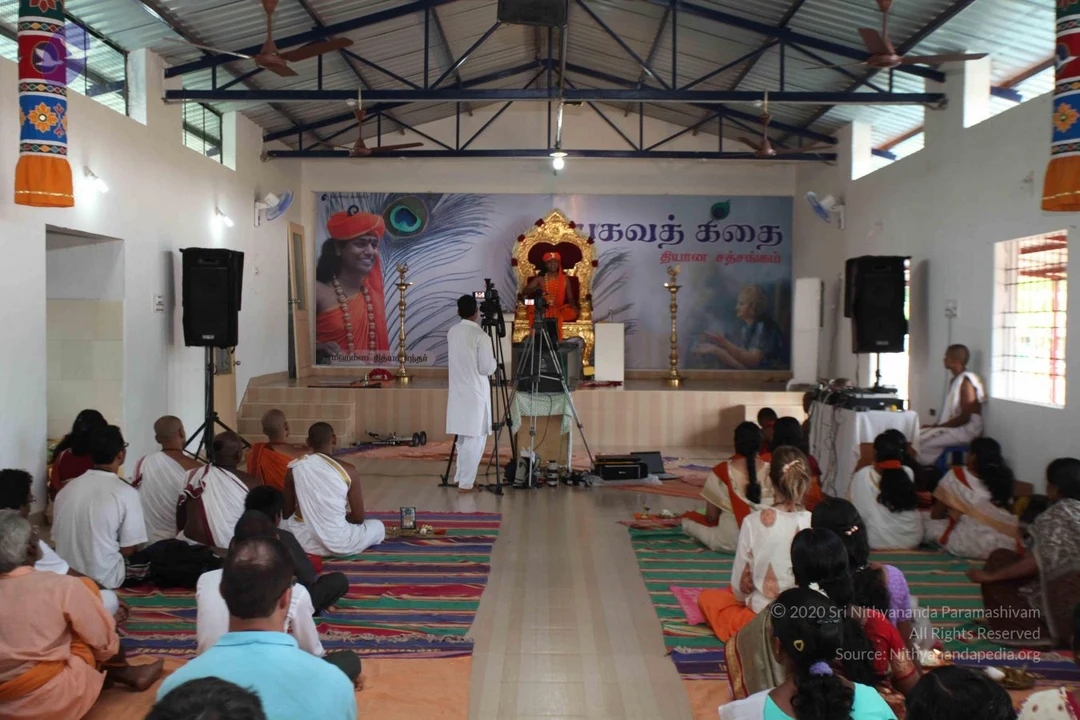
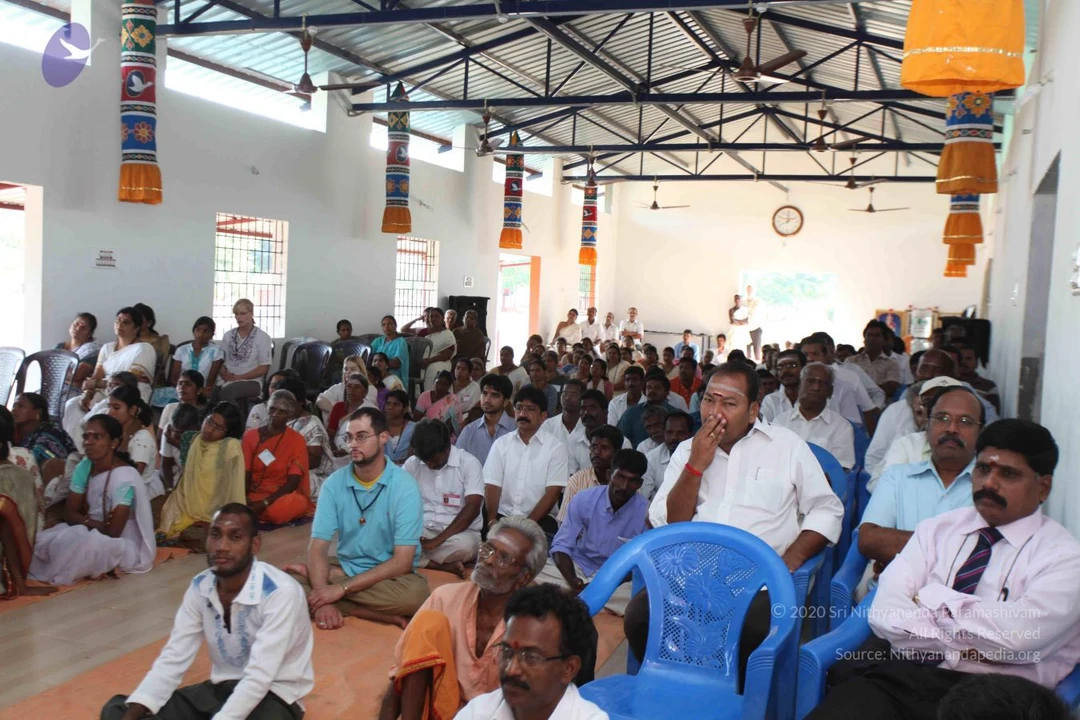
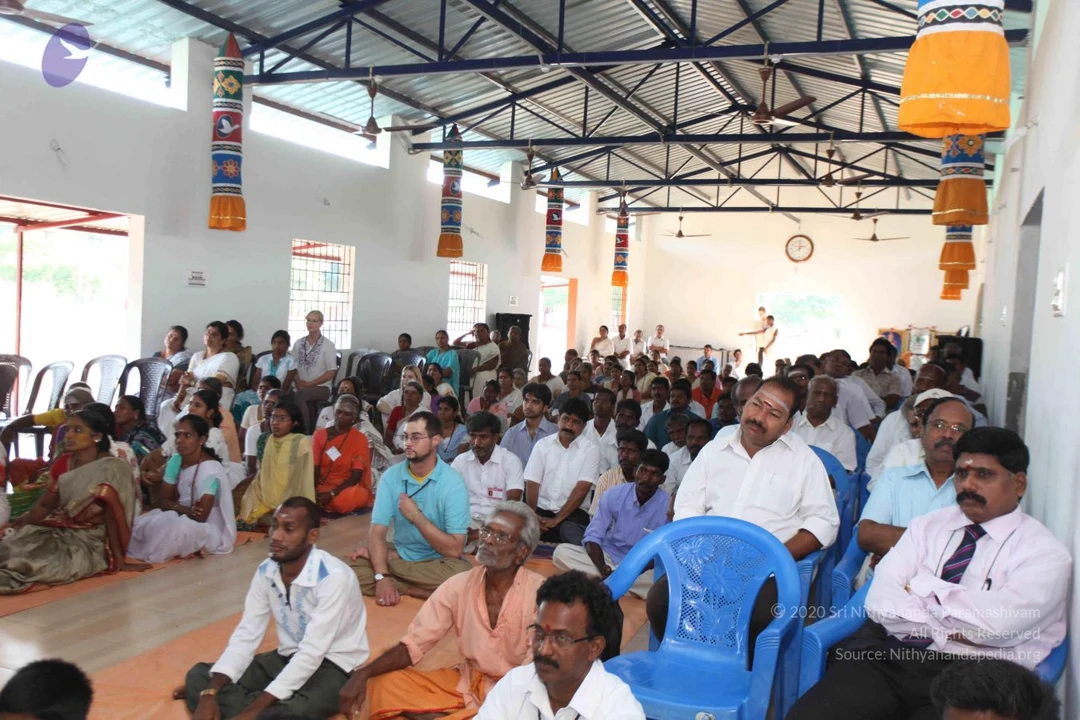
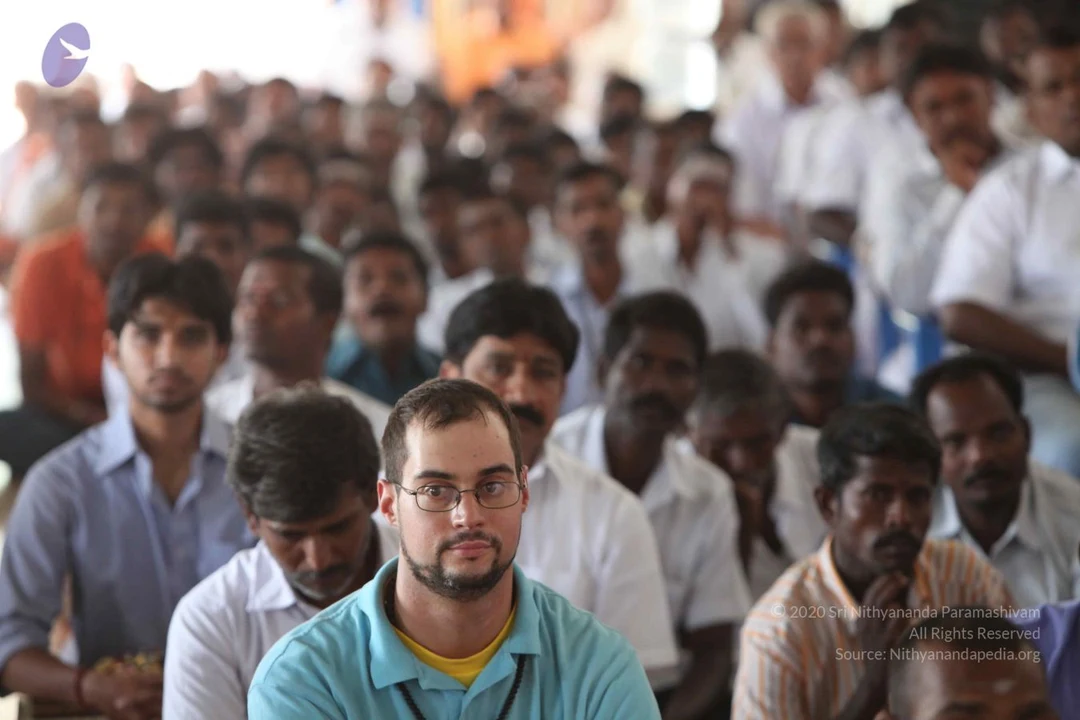
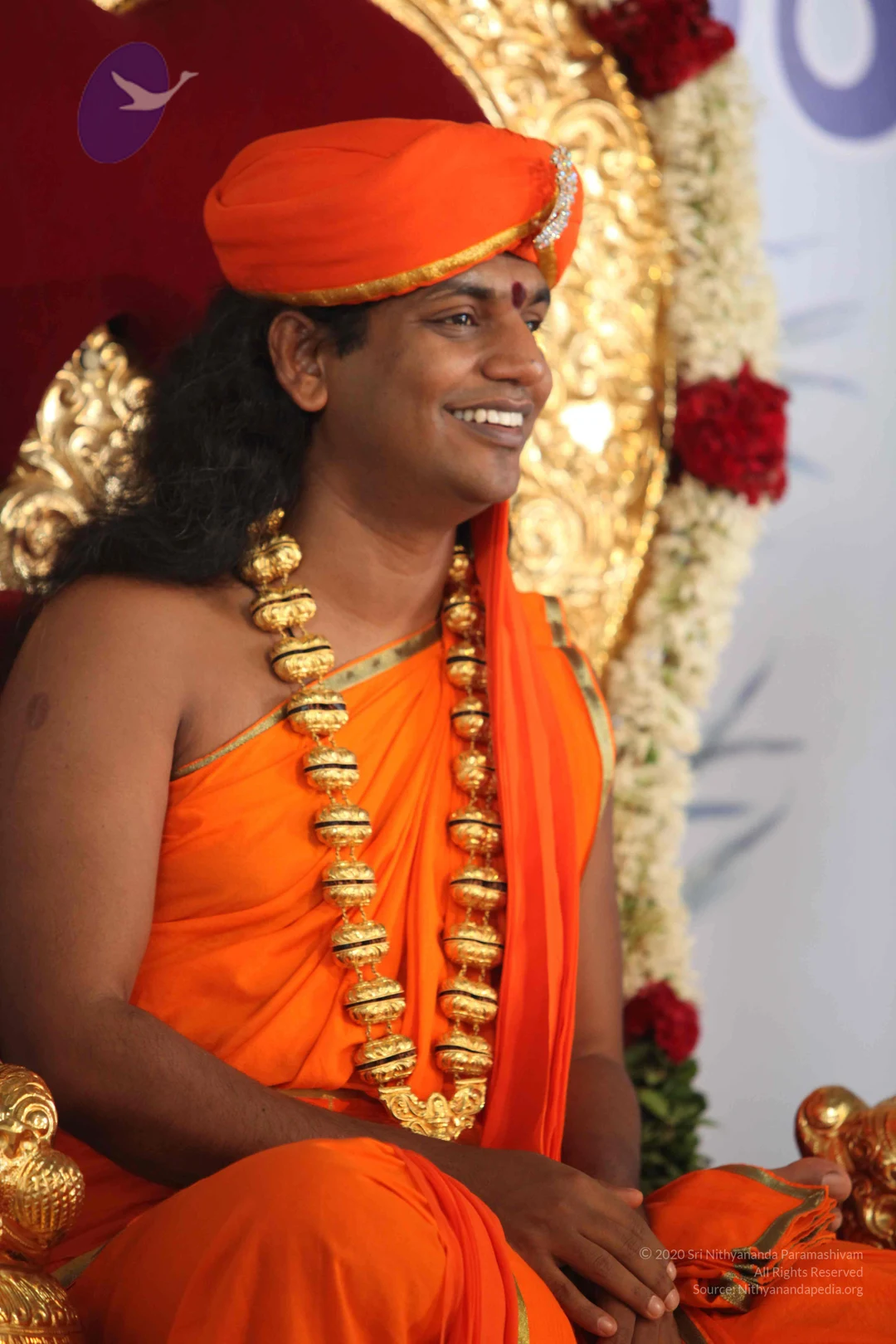
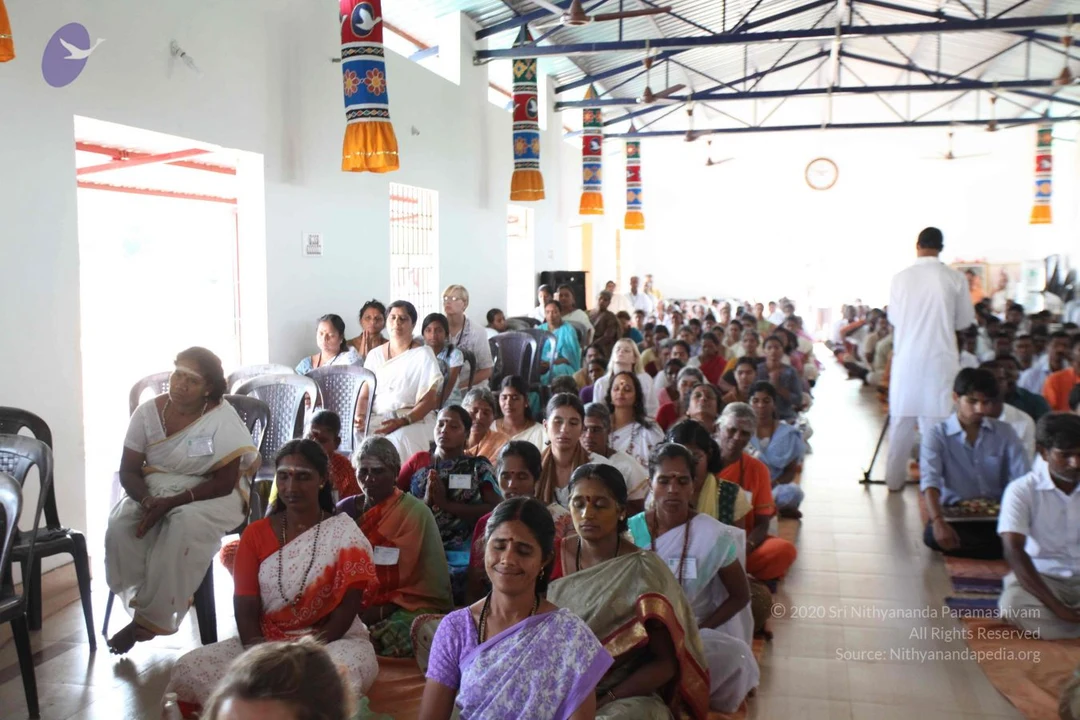
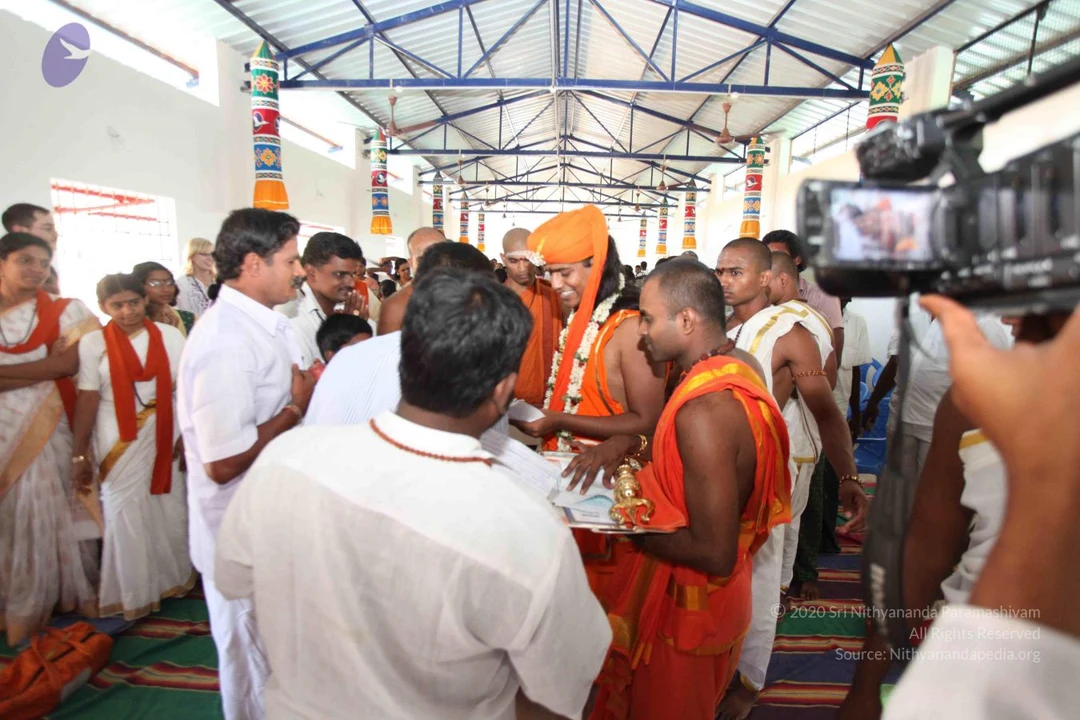
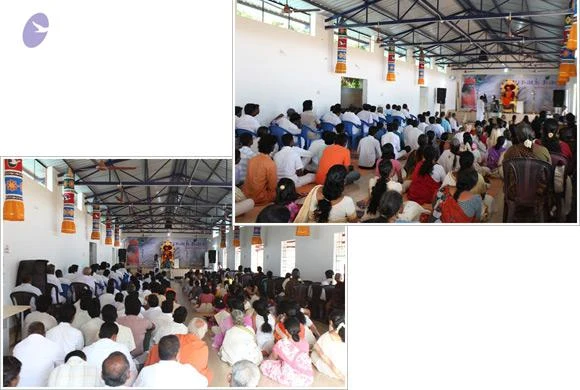
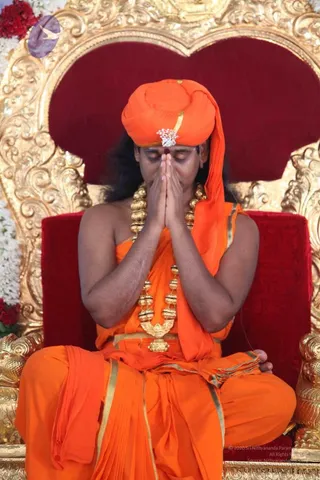
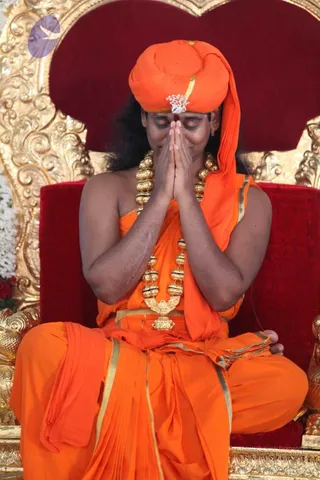
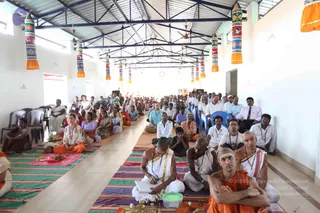
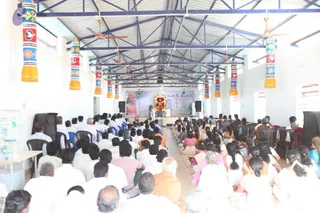
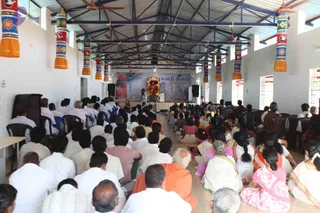
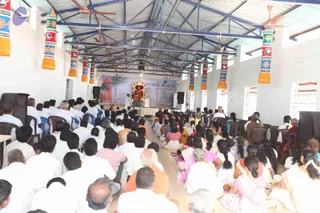
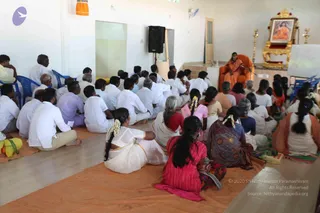
A man seated cross-legged on an ornate gold-and-red throne with his palms pressed together in namaste and eyes closed. He wears an orange turban with a small silver ornament, an orange shawl draped over one shoulder, an orange cloth wrapped at the waist with gold borders, and a heavy gold necklace of large beaded links with a central pendant. White and red flowers decorate the throne backrest. The throne has gold lion-shaped armrests. A small circular logo appears at the top left.A seated man in orange saffron robes and an orange turban with a jeweled brooch sits with eyes closed and palms pressed together in anjali mudra at chest level. He wears a heavy gold bead mala with a gold pendant and a red tilak on his forehead. He sits on an ornate gold and red velvet throne with a red backrest, with white flowers visible at the left edge. Appearance-based identity is uncertain, so the figure is described by role as a seated man on a throne offering greeting.Wide view of a large white hall with a corrugated roof, blue steel beams and ceiling fans, decorated with hanging multicoloured fabric banners in orange, blue and red. Rows of seated devotees fill the floor on striped mats, many women in saris and men in white shirts. In the foreground, three shaven-headed sannyasis sit on the mats: one in white dhoti with a gold border writes in a notebook, another in white dhoti and mala sits in the middle, and one in saffron-orange robes with arms crossed and a white forehead mark sits at the front. Brass lamps and offerings lie on the floor before them. Roughly sixty to eighty people are visible.A large indoor hall with a white-walled interior and blue steel roof trusses holds a seated audience of many devotees facing a raised stage. Dozens of people sit on the floor and in chairs, many in white dhotis and shirts, saris and kurtas. Colourful decorated cloth banners hang from the ceiling, one with a painted bird. On the stage, a seated figure in a saffron-orange robe sits before a backdrop bearing Tamil text and a painted image. Ceiling fans, floor fans, and water jugs complete the scene.A large hall with white walls and a corrugated roof, filled with seated devotees on the floor and in chairs facing a stage. Men in white shirts and dhotis sit in the front rows, while women in pink, orange and red saris sit to the right. On the stage at the far end, a figure in orange robes and a red-and-orange headdress sits on a golden throne before a banner reading a Tamil title. Tall decorative cloth banners in orange, blue and red hang from the ceiling, and brass lamps flank the stage.Wide view of a discourse hall filled with seated audience, mostly men in white shirts and dhotis with some women in pink, yellow and red saris and salwar kameez, sitting on mats facing a stage. On the stage backdrop a banner reads a Tamil title with an illustrated figure in saffron and red robes beside a peacock feather motif. A central figure in saffron-orange robes sits on a decorated seat at the stage front, flanked by brass lamps. Red, orange and blue hanging decorative tassels with floral patterns line the ceiling beams, and ceiling fans hang overhead.

Thiruvannamalai-Kalpataru-Darshan

28 photosSource gallery
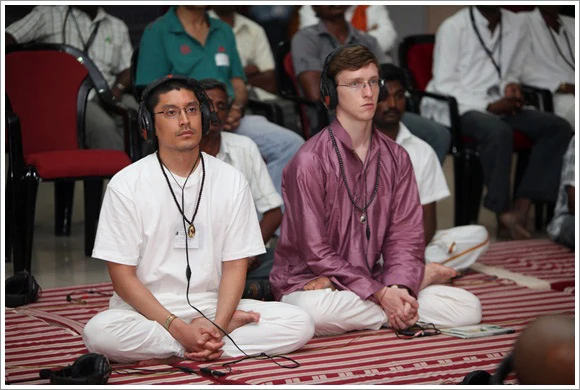
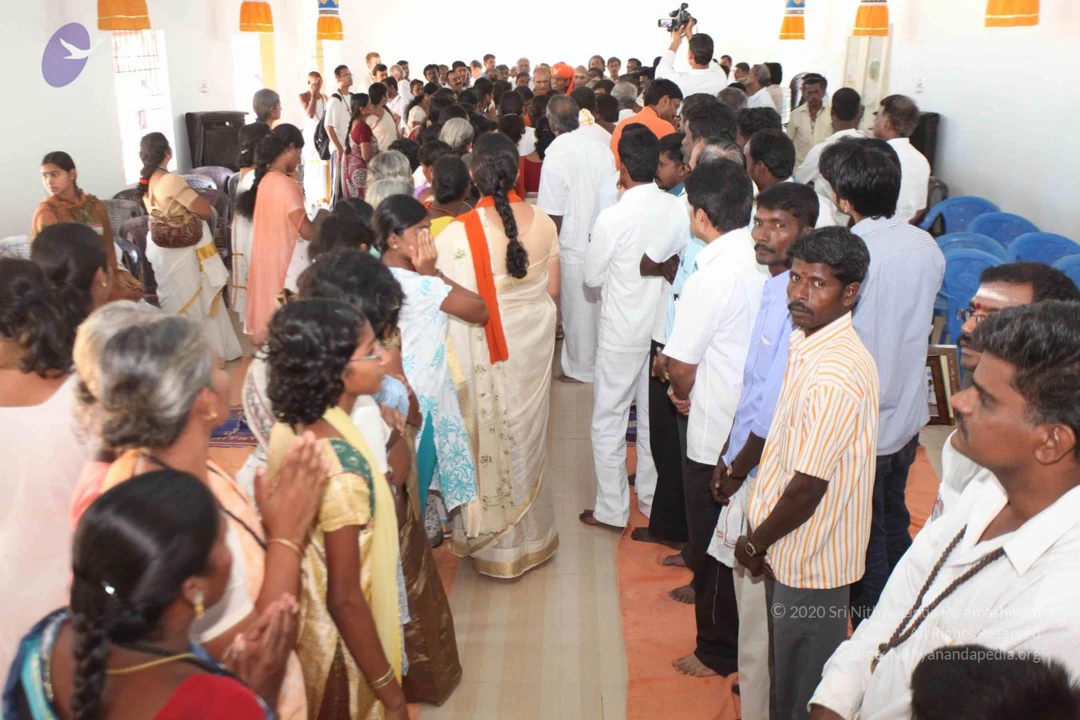
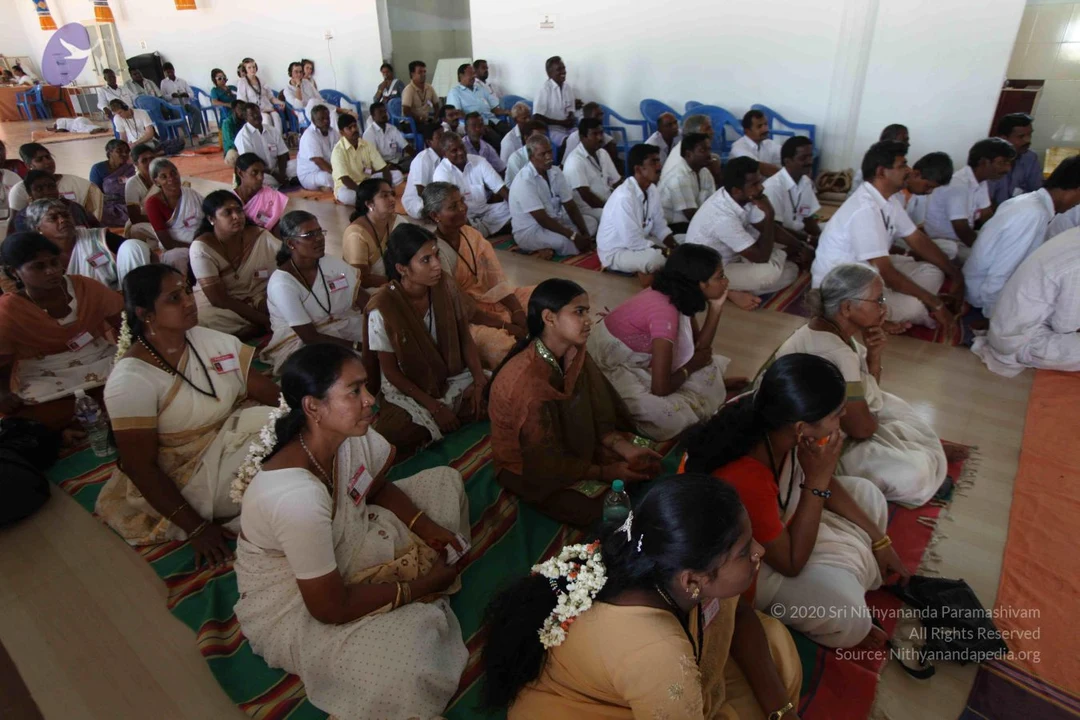
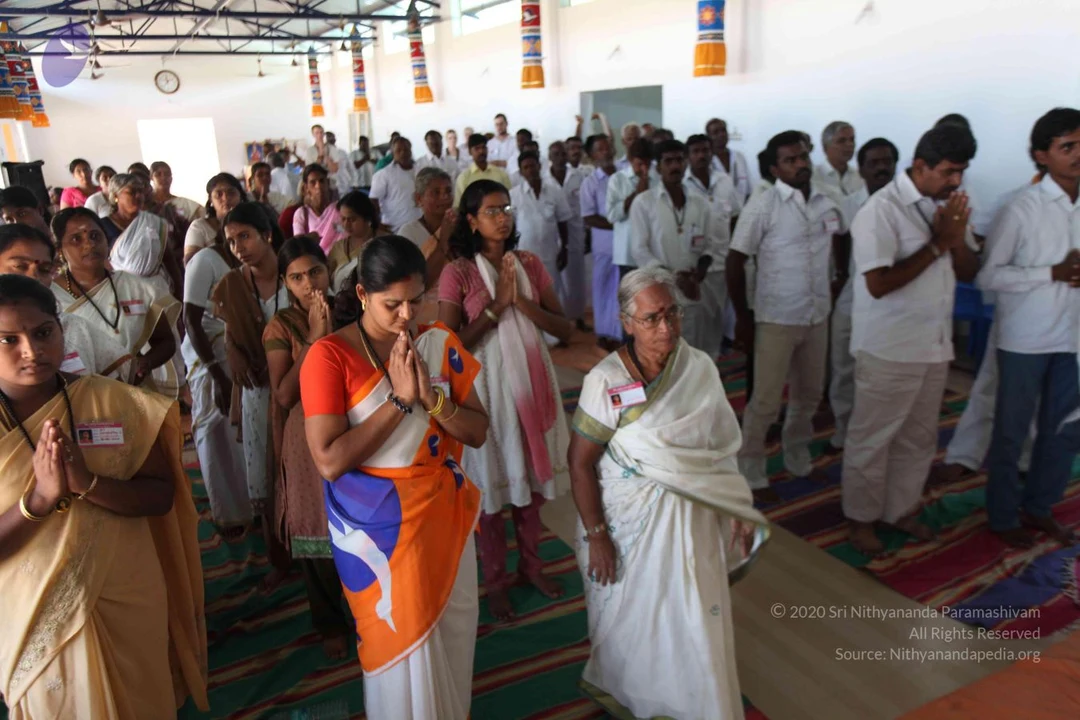
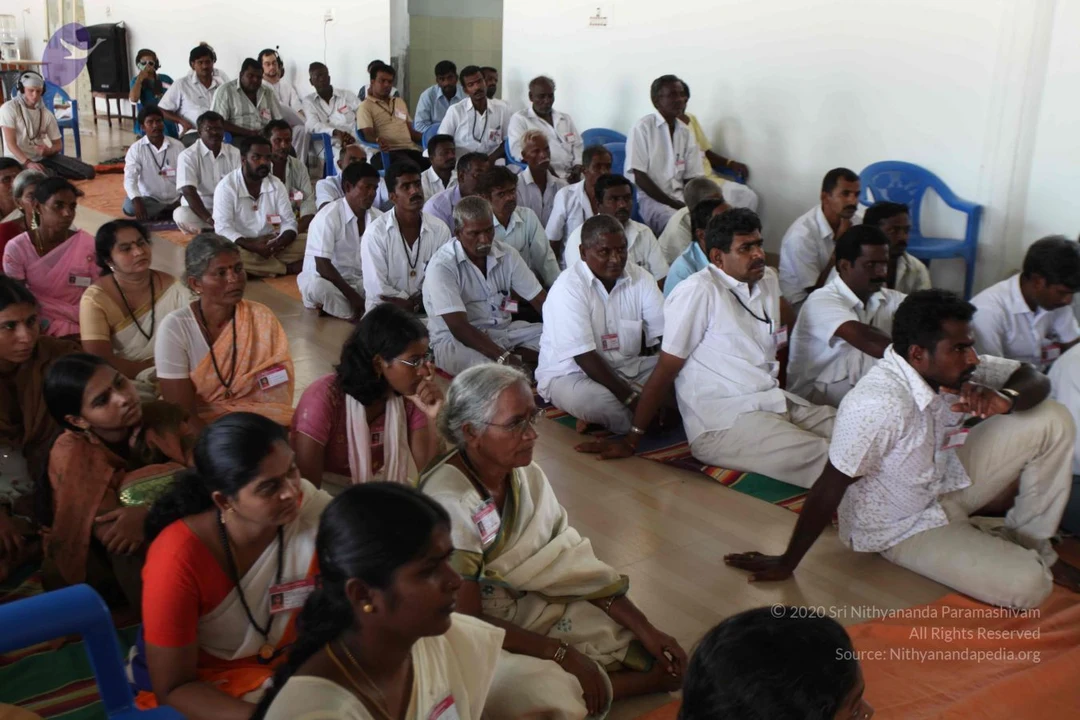
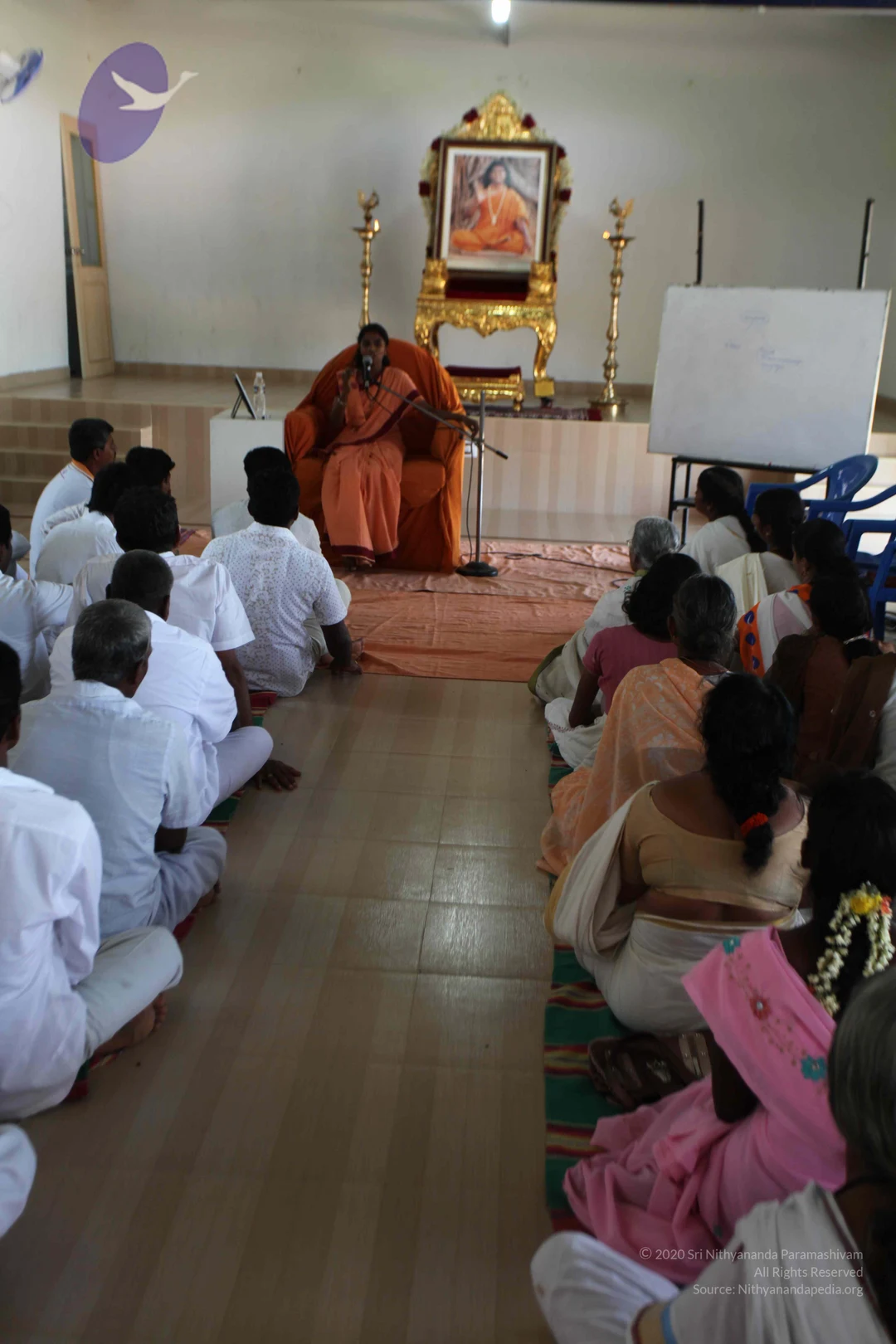
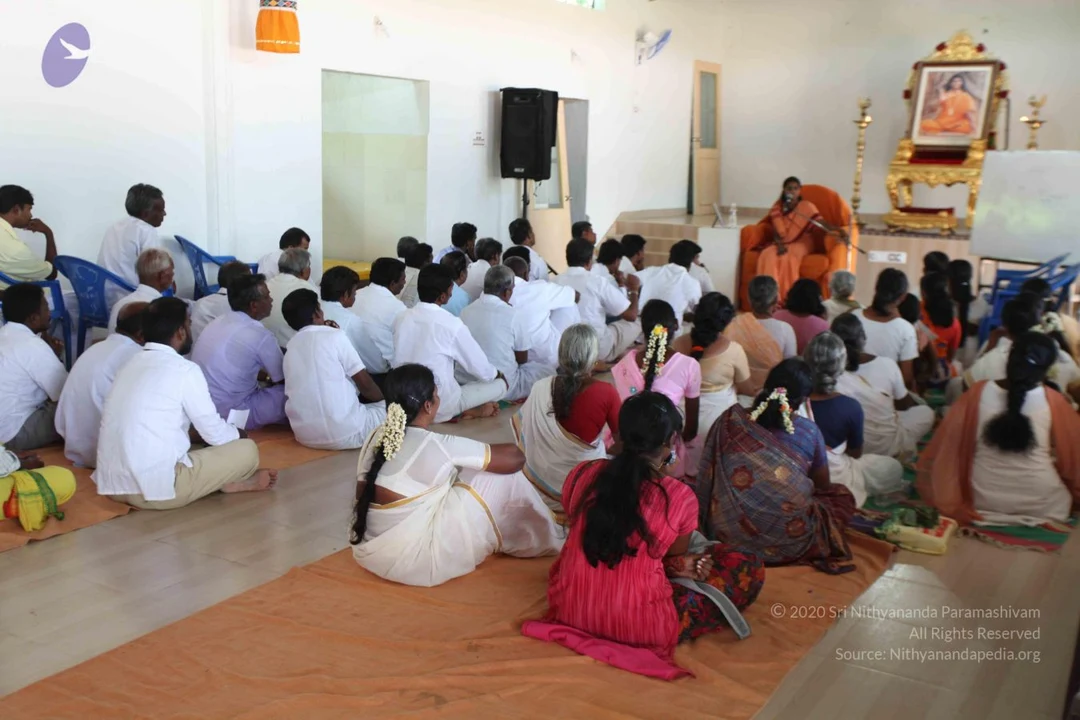
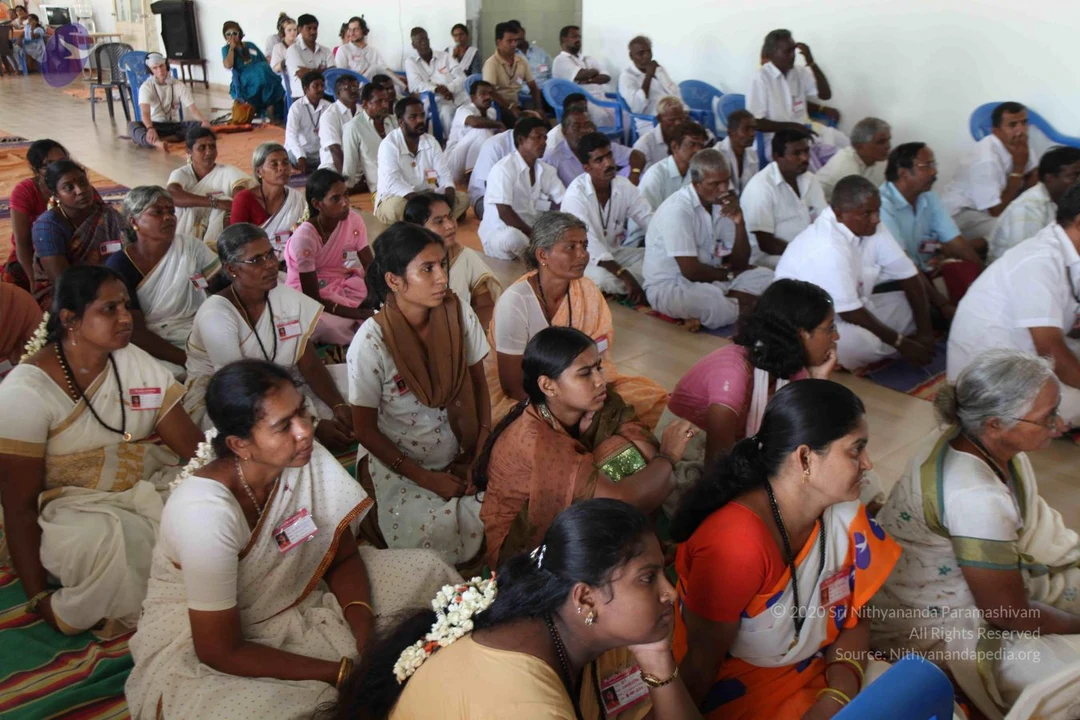
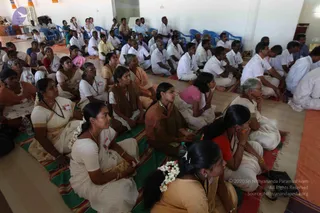
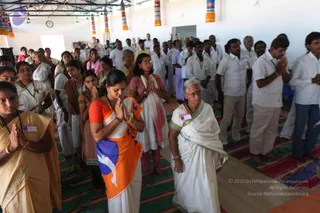
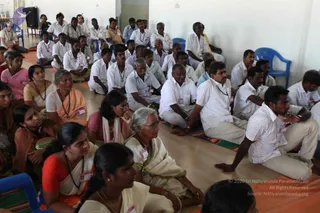
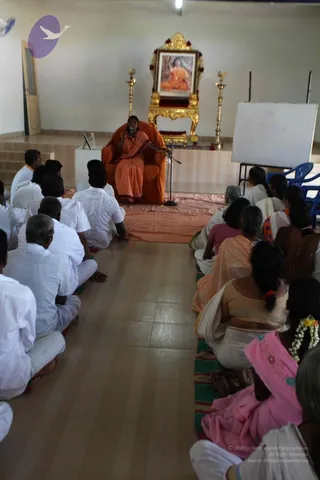
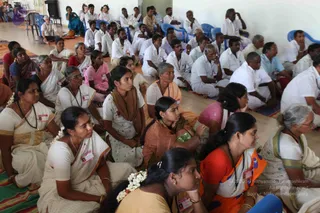
A seated audience fills a bright hall with cream walls and orange-and-white floor mats. Women in white and cream sarees, several with white flower garlands in their hair and rudraksha-style necklaces, sit cross-legged on striped green and red mats in the foreground, listening attentively. Behind them rows of men in white shirts and white dhotis sit on the floor and in blue plastic chairs. The scene reads as a satsang or discourse audience; no speaker is visible.A photograph of a hall with white walls and a striped floor mat where a group of devotees stand with palms pressed together in anjali mudra. In the foreground a woman in an orange and white saree with a blue border stands centre, with a woman in a cream saree with gold border beside her and a woman in a yellow saree at left. Behind them men in white shirts and dhotis stand in rows, and a clock and hanging decorative banners hang on the walls. Several participants wear name badges and rudraksha malas. No a person is visible in this image.Photograph of a seated audience inside a plain white-walled hall with blue plastic chairs at the back and orange-and-green mats on the floor. Many devotees sit cross-legged or on their heels, mostly men in white shirts and white dhotis or trousers, several wearing ID lanyards, along with women in cream, pink, orange and red saris and salwar. Some attendees wear headphones for translation. A woman in the front left wears a red-orange sari and a black bead necklace. The people look attentively toward the front, with no speaker or stage visible in the frame.A woman in an orange sari sits in an orange armchair on a low platform, speaking into a microphone on a stand, as a satsang or discourse is held in a plain hall. Behind her hangs a gold ornate throne-style frame holding a portrait of a robed figure in orange seated in meditation, flanked by two brass lamps. Seated on the floor in rows on mats are devotees: men in white shirts and dhotis on the left, and women in saris including orange, pink and cream on the right, one with flowers in her hair. A whiteboard stands at right and a blue plastic chair is visible beside it.A photograph of a satsang discourse in a white-walled hall. A speaker in orange robes sits on an orange-cushioned chair on a raised platform at the far end, speaking into a microphone. Behind him hangs a framed portrait of a figure in orange robes, flanked by ornate gold-coloured stands. Rows of seated devotees fill the floor on orange mats: men in white shirts and dhotis, women in white and coloured saris with jasmine flowers in their hair, and a few elders. A black speaker stands to the left of the platform. The portrait's subject is not otherwise identified, and the speaker's identity cannot be confirmed from appearance.A photograph of a seated audience at a satsang or discourse hall with pale walls and a wooden floor. Many devotees sit on mats and blue plastic chairs, mostly in white clothes: women in white saris and men in white shirts and dhotis. Several women wear orange or peach saris, and one young woman wears a brown shawl over a patterned top. Some have white jasmine flowers in their hair and wear event identification badges. Most listen attentively, with a few looking to the side. A speaker sits in the upper left corner.

Thiruvannamalai-VIP-Visit

1 photoSource gallery
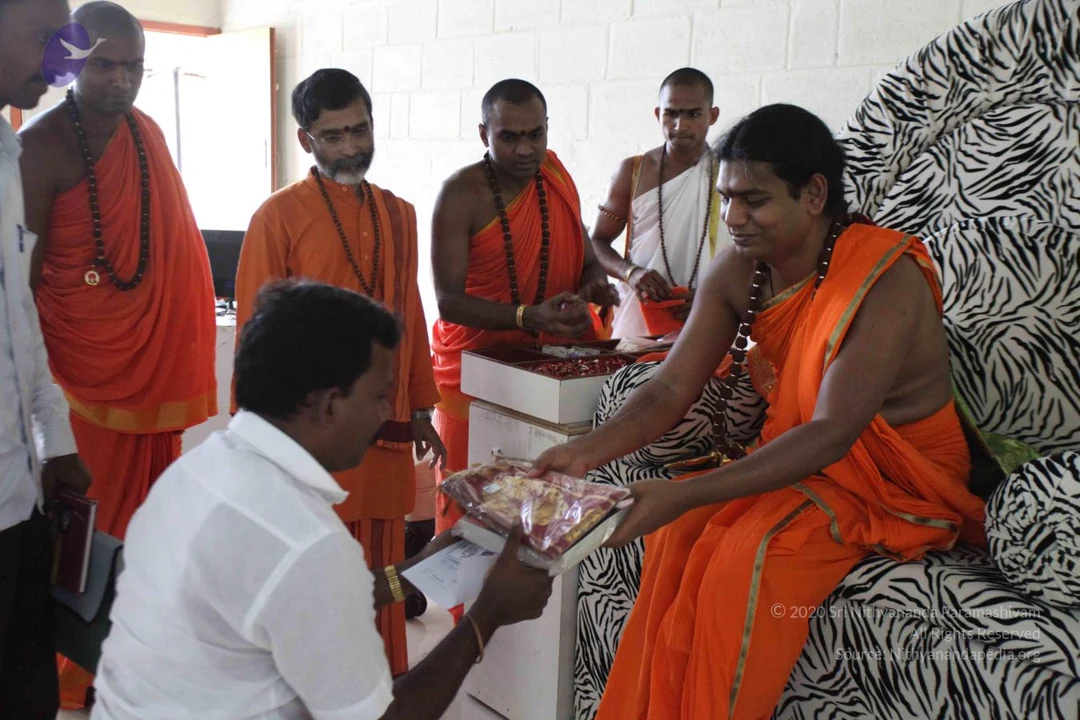
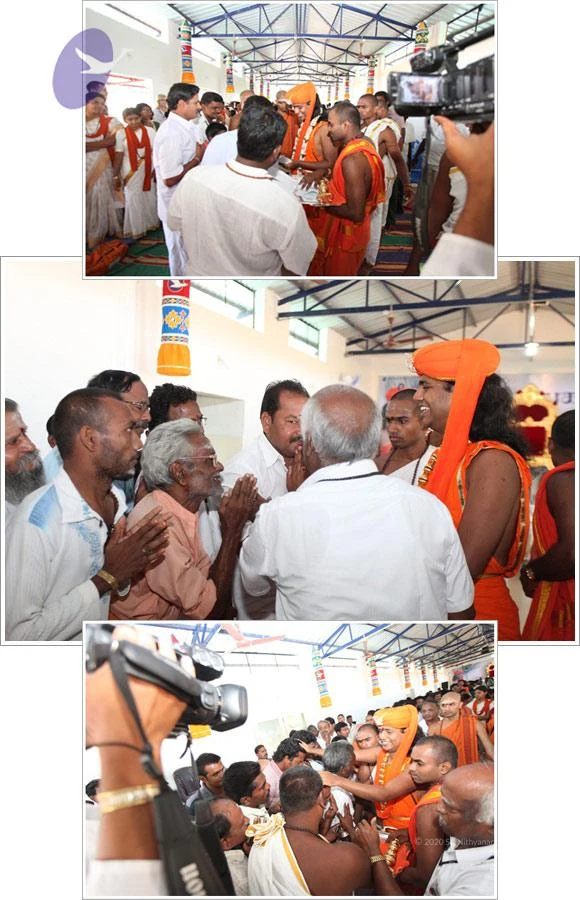
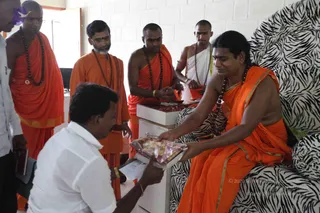
A seated man in an orange saffron garment with a long rudraksha mala and hair swept back sits on a zebra-striped chair, receiving a sealed packet from a kneeling man in a white shirt. Behind him, several monks in orange robes, one in white with a shaved head, stand around a white box holding red and orange items. The room has white cinder-block walls and a window at left. The seated man shows a person cues: long swept-back hair, saffron clothing and a rudraksha mala, but the identification is uncertain.

Thiruvannamalai-Doctors-Meet

27 photosSource gallery
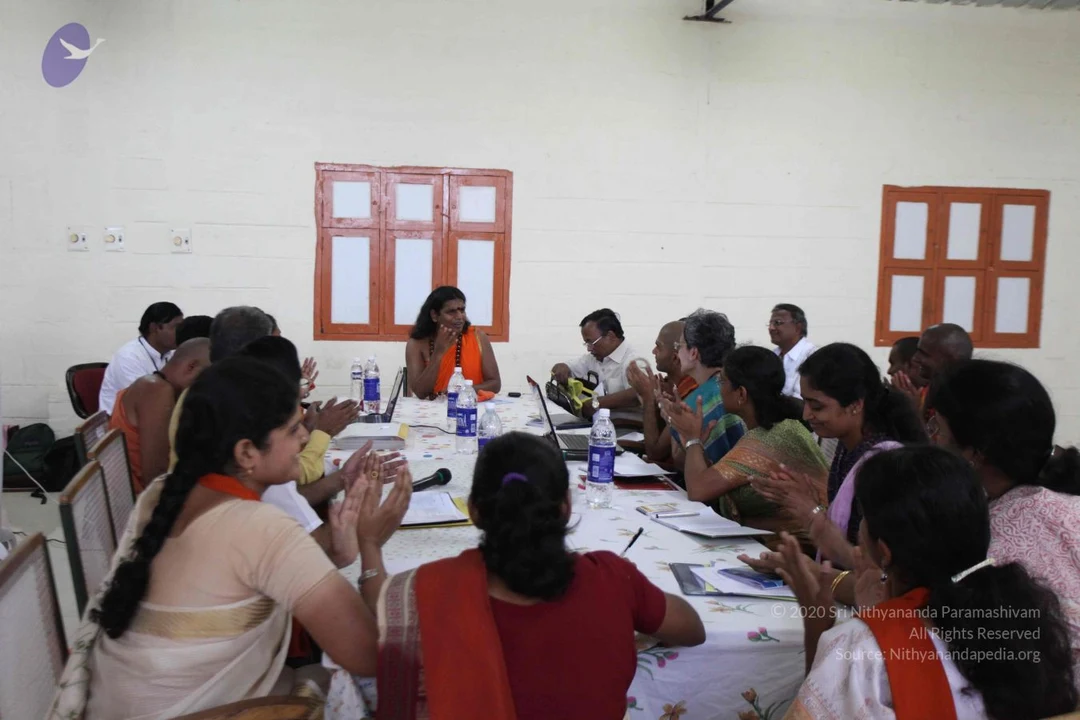
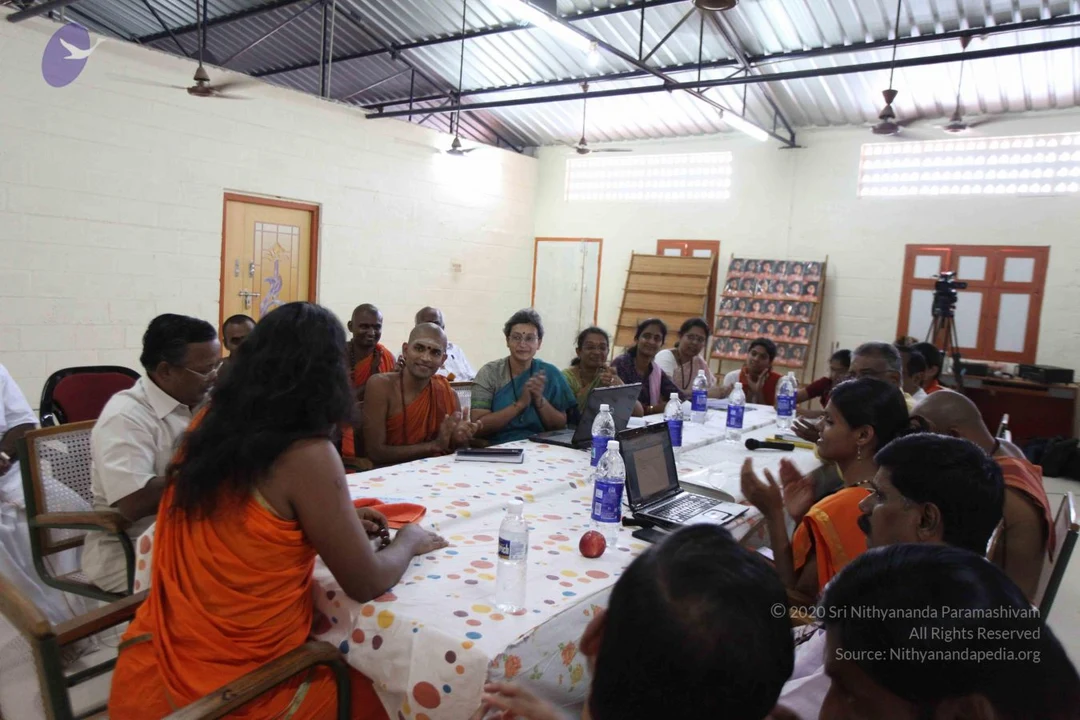
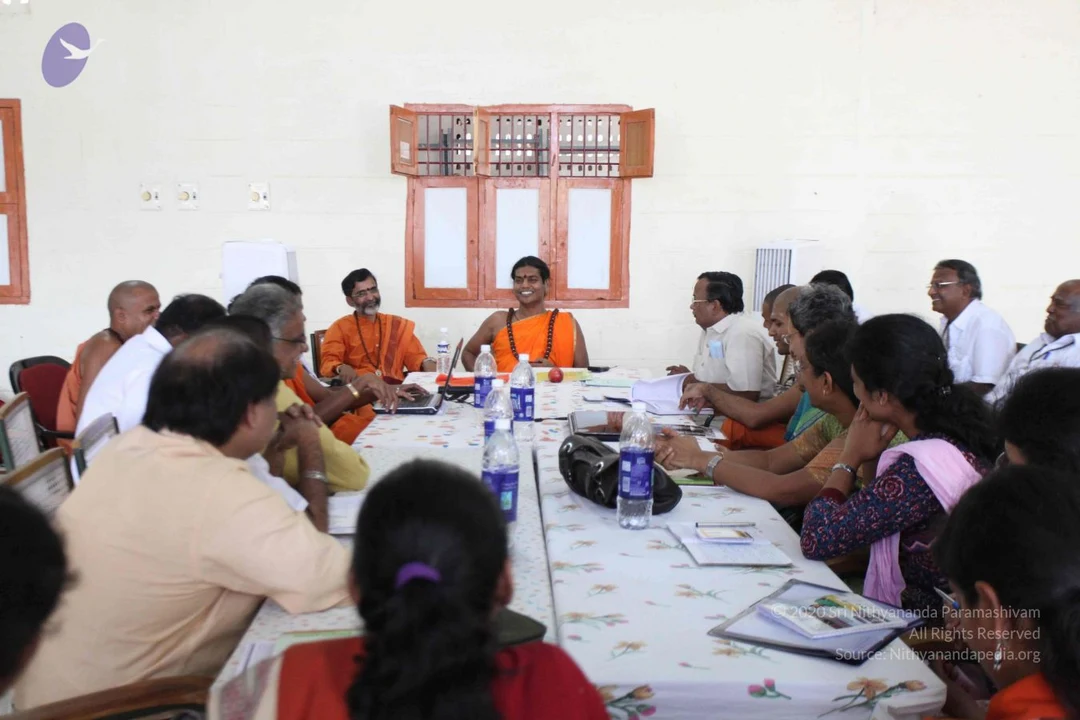
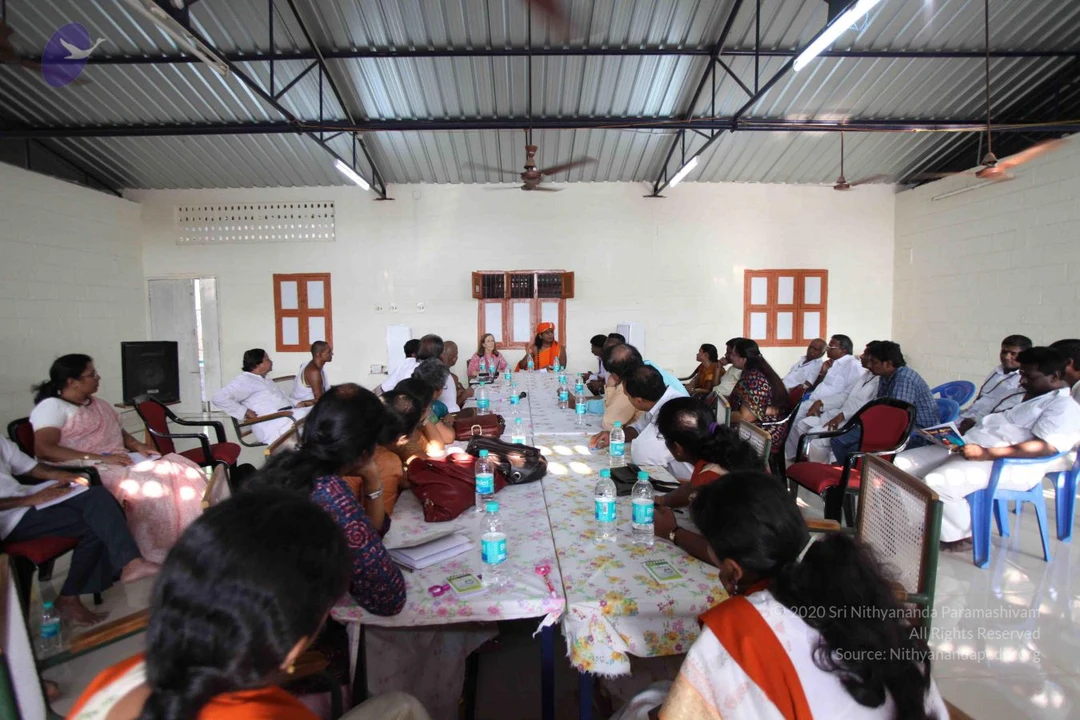
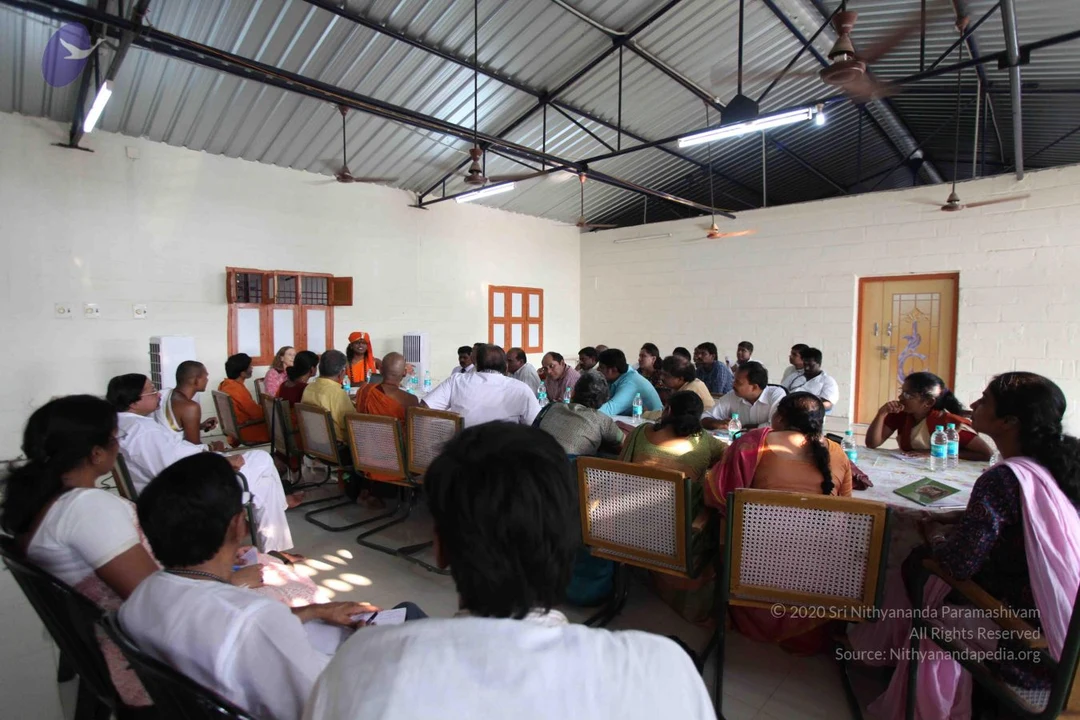
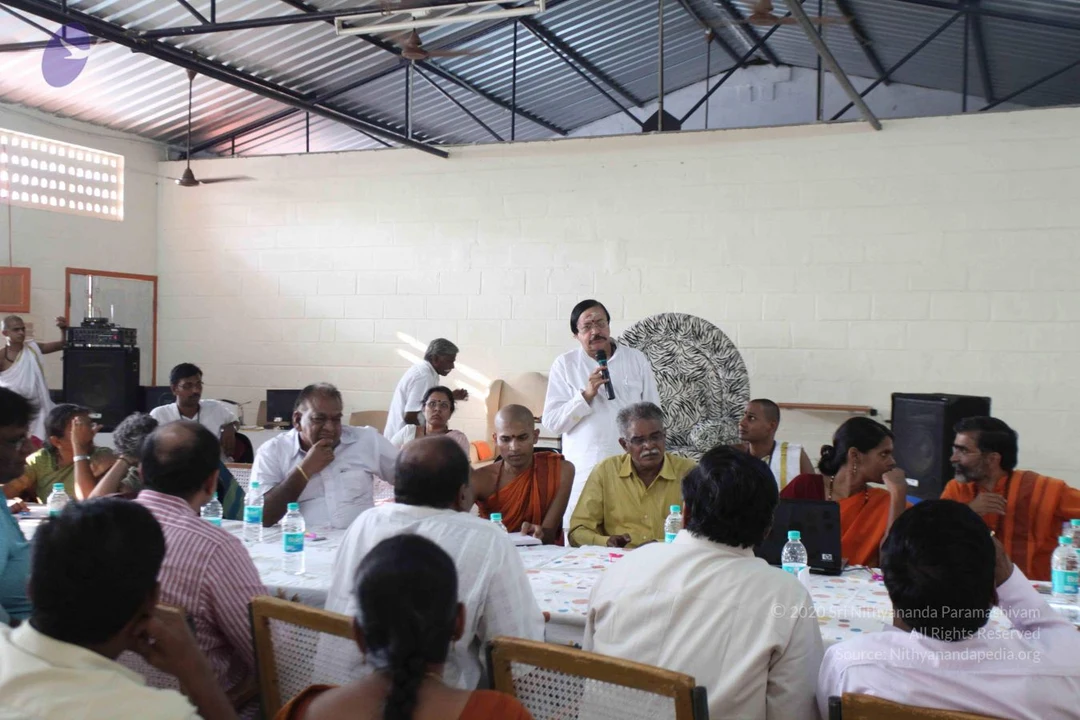
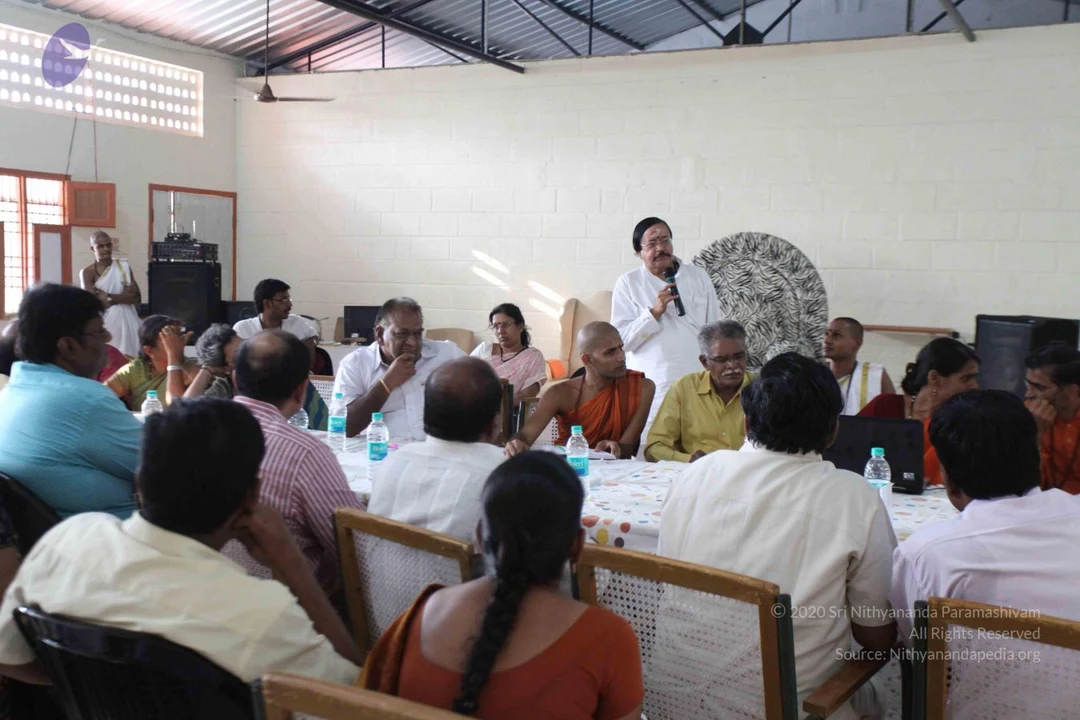
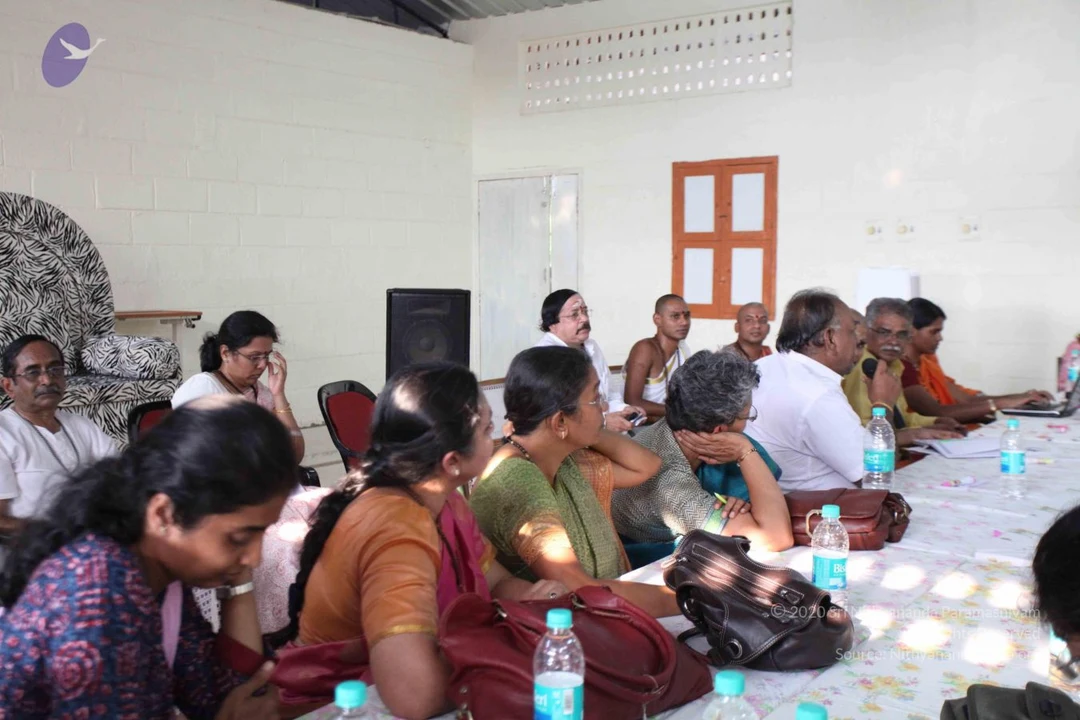
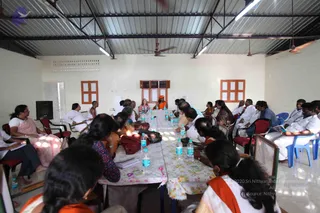
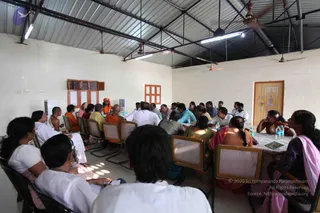
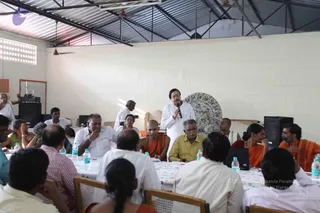
A group meeting around a long table covered with a floral tablecloth in a plain white room with orange-framed windows. A person in an orange robe with long dark hair and a rudraksha mala sits at the head of the table, facing the group. Several participants in white shirts, saris and salwar kameez, some wearing orange shawls, sit along both sides and clap. Water bottles, laptops, notepads and a microphone sit on the table. Chairs line the left edge of the frame.A photo of a group meeting seated around a long table covered with a colourful dotted cloth, with water bottles and open laptops on it. A bald man in saffron robes sits at the centre-left, palms pressed together, beside a woman in a teal sari. Several women in saffron and maroon attire sit along the table, and a man in a white shirt sits at the left edge. A woman in orange sits with her back to the camera in the foreground. A tripod-mounted camera stands at the right, and a wall displays a grid of framed photographs. Ceiling fans hang from a corrugated roof above the room.A photograph of a meeting in a plain room with cream walls and brown-framed windows. Around a long table covered with a floral cloth and water bottles, a central woman in an orange sari with a red bindi sits smiling, flanked by a man in orange robes with a rudraksha mala on the left. Attendees in white shirts, pale yellow and green clothing and a woman in a blue-and-pink outfit sit around the table, many with papers, folders and laptops. A shaved-headed monk in orange and a man in white sit at the left edge. Several people are seen from behind in the foreground.Indoor meeting in a plain white-walled hall with a corrugated metal roof and fluorescent tubes. Long tables covered with floral cloths are arranged in a U shape, with water bottles and papers on them. Around 25 people sit in red and blue plastic and wooden chairs, many women in saris and men in white dhotis and shirts. At the head of the table a figure in saffron-orange robes sits near a woman in pink. Bags and folders lie on the tables, and a small flat-screen TV stands at the left wall.A photograph of a meeting or satsang in a plain white-walled hall with a corrugated metal roof, ceiling fans and fluorescent tubes. Rows of cane-backed chairs and tables face a central group. A bald man in saffron/orange robes sits at the centre-left, and a woman in an orange sari stands near the back-centre. Many attendees in white shirts and dhotis, saris and salwar, sit listening, some taking notes. Water bottles sit on the tables. Wooden windows and a wooden door with a decorative carving are visible. Around 30 people are seen.A photograph of a meeting in a plain hall with a corrugated metal roof, ceiling fans and white-washed walls. A man in a white shirt and white dhoti stands at the centre holding a microphone and speaking. Seated around a long table covered with a patterned cloth and water bottles are many participants, including a shaved-headed monk in orange robes, a man in a yellow shirt, a woman in an orange sari and a bearded man in orange. A zebra-print chair sits behind the speaker. The page does not indicate a person is present, and no one here is identified by appearance.

Thiruvannamalai-Night-Walk

11 photosSource gallery
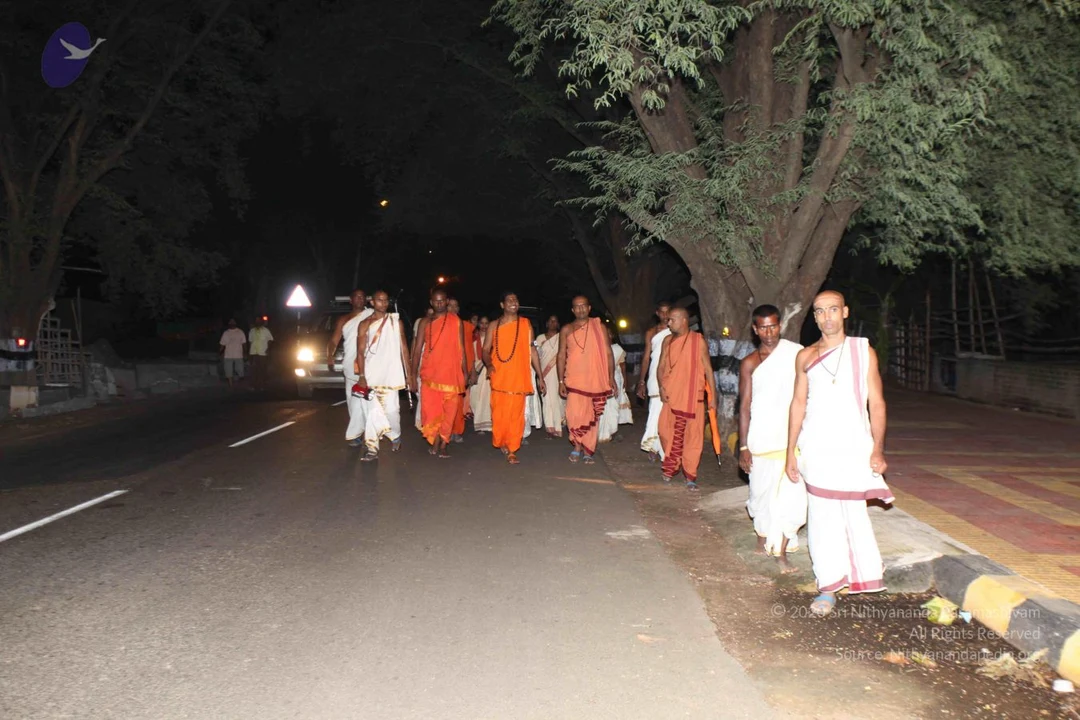
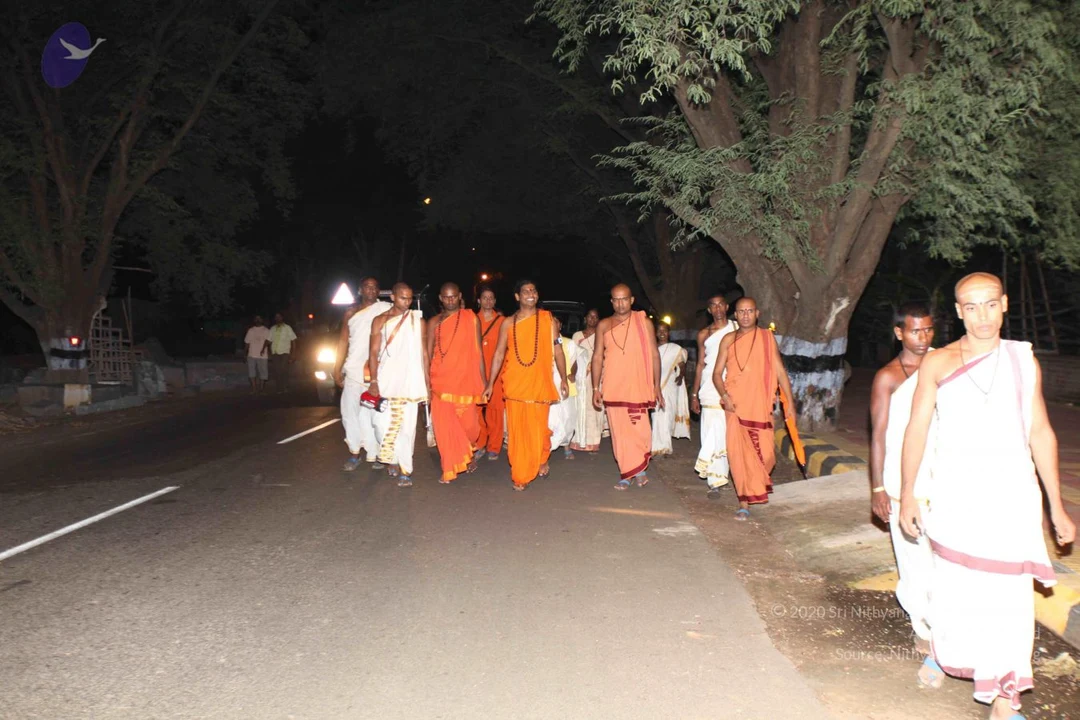
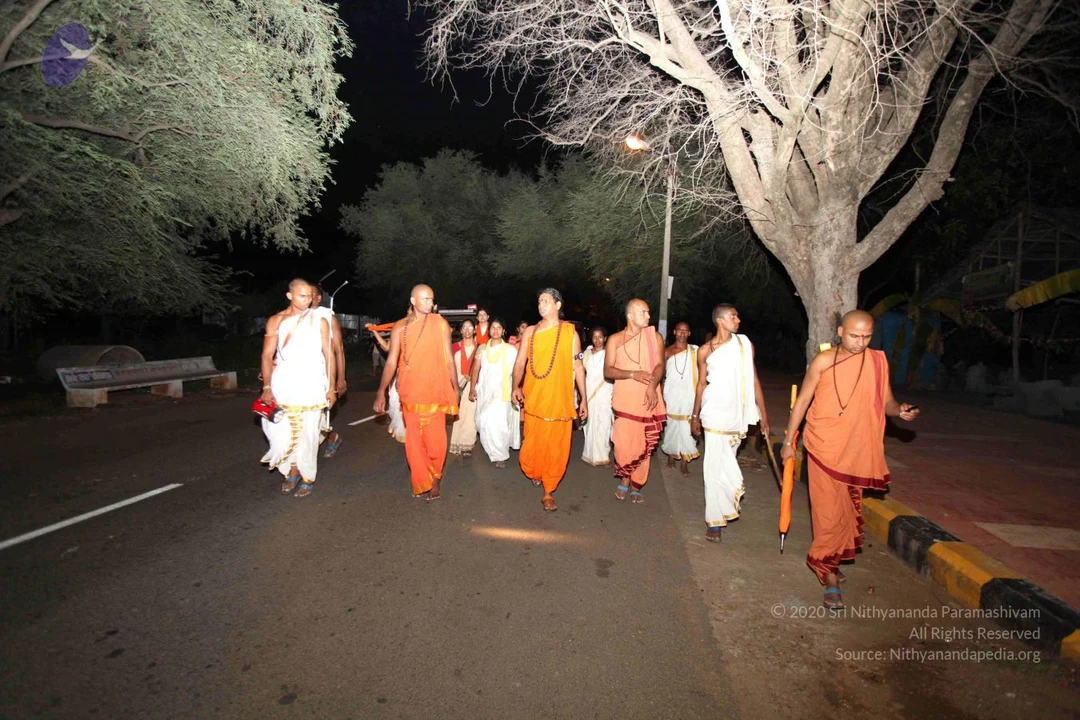
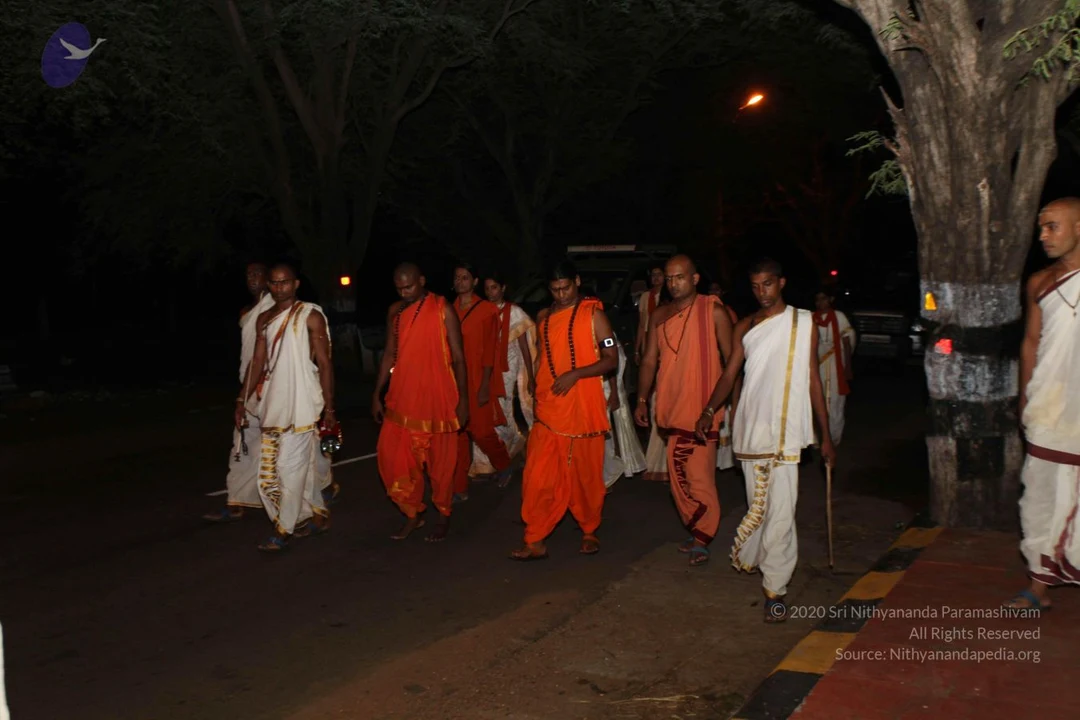
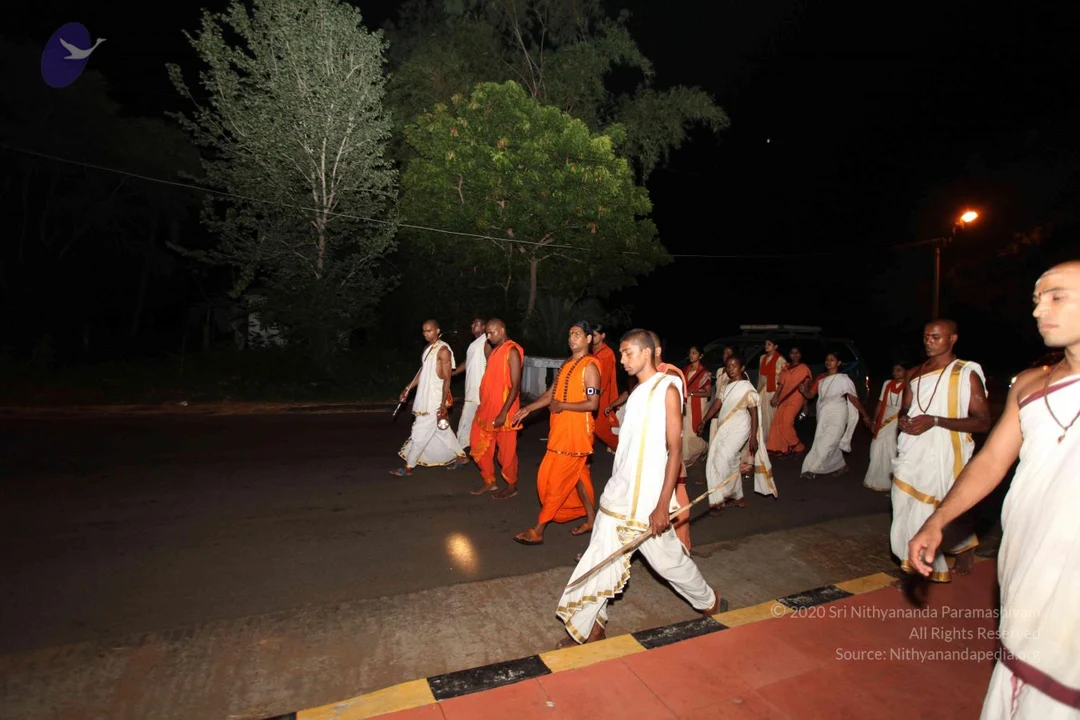
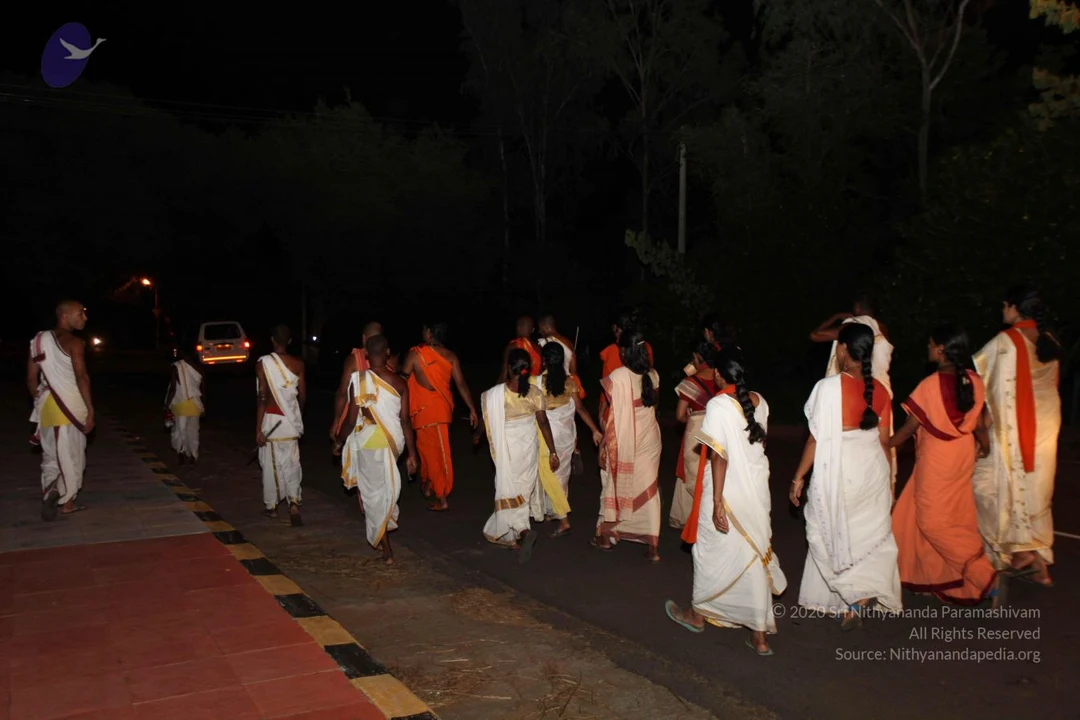
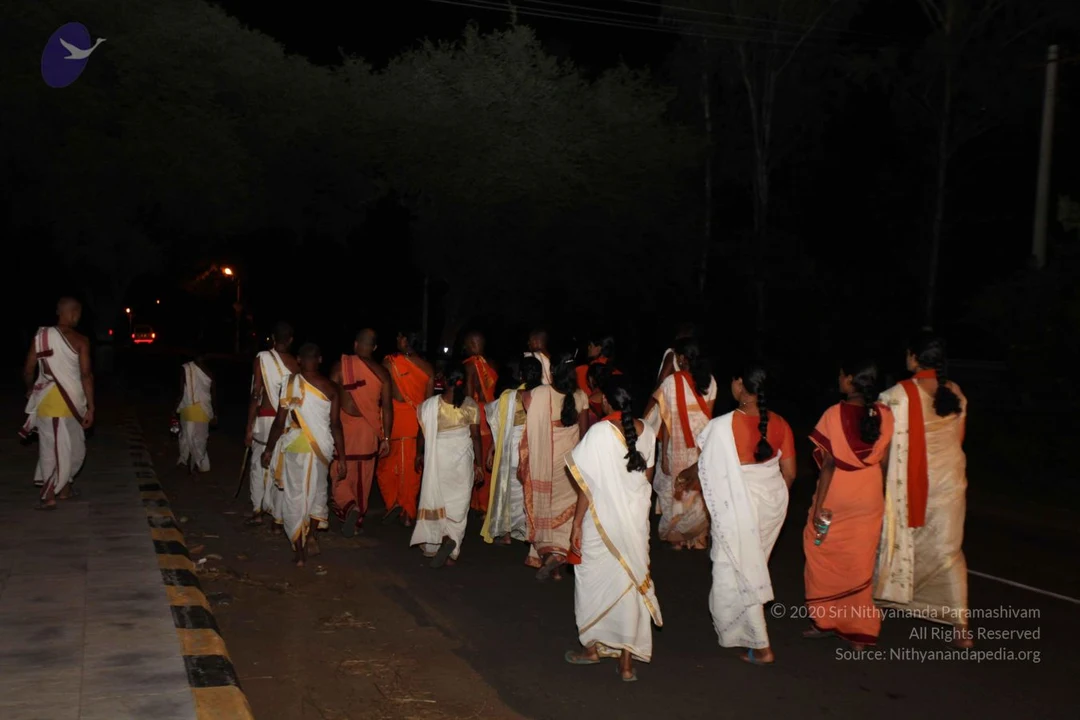
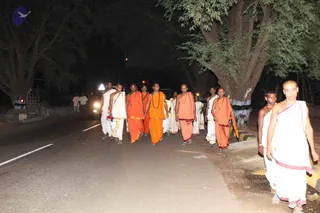
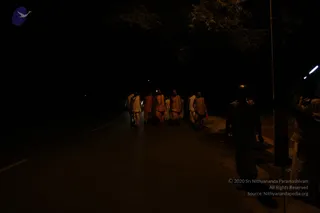
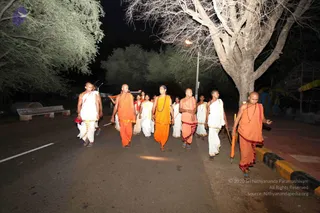
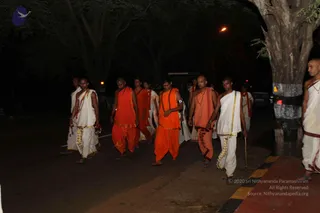
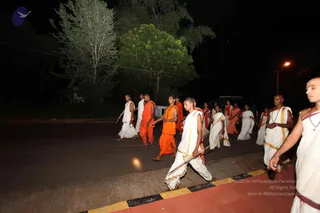
Night photograph of a group of about a dozen men walking in a line along a dark tree-lined road. Most wear white dhotis and some wear saffron-orange robes; several carry rudraksha malas. The man in the centre front wears an orange robe and a beaded necklace, and the man at the far right wears a white dhoti with a red-bordered cloth over his shoulder. Headlights of a vehicle and a small triangular road sign are visible on the left, and a large tree stands on the right, with a pavement and kerb along the right edge.Night photograph of a group walking along a tree-lined road toward the camera. Most men wear saffron or orange robes with rudraksha malas, some with shaved heads, while others wear white dhotis and shawls with maroon borders. Two figures on the right wear white clothing and carry no visible objects. Large trees and a dark sky frame the scene, with a vehicle's headlights visible in the background.Night photograph of a dark road where a group of about ten people in saffron and white clothing walk away from the camera toward a faint distant light. Several walkers wear orange or saffron robes and some carry sticks or bags. On the right edge, a person in dark clothing stands near a roadside pole and a lit streetlight. Trees are silhouetted against the dark sky, and the road has white lane markings.Night procession on a paved road lined with bare and leafy trees and a street lamp. A group of about a dozen people walks toward the camera. Most men wear saffron-orange robes with rudraksha malas, shaved heads, and white dhotis with gold borders; one man in the centre wears an orange garment and a long rudraksha mala. Several women in white saris walk among them, and a man on the right holds an orange umbrella while another carries a red bag. A pale orange shawl is visible on a figure in the background.Night photo of a group of men walking along a dark road beneath trees, past a streetlamp. Most wear saffron-orange cloth with rudraksha malas; others wear white dhotis with gold borders and bare upper bodies. One man in the centre wears an orange robe and a long necklace of beads, while a man on the right in white clothing holds a walking staff. Several women in white and red saris walk behind them. Parked vehicles and a lit lamp are visible.Night photograph of a procession walking along a paved road beside a grass verge with a red-and-yellow painted kerb. Many devotees walk in a line; men wear white dhotis with gold borders and bare upper bodies, some in saffron/orange robes, and women wear white saris with gold borders alongside orange-clad figures. A few carry long staffs. Trees and a street lamp are visible in the dark background, and a parked vehicle sits at the edge of the road.

Arunachala

8 photosSource gallery
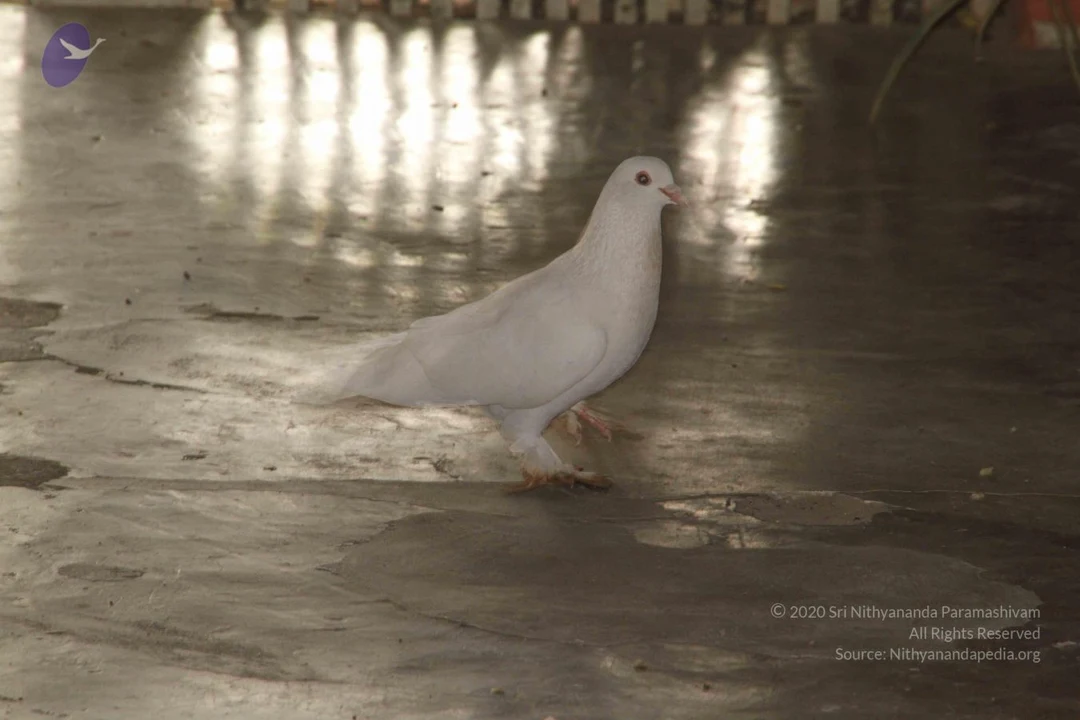
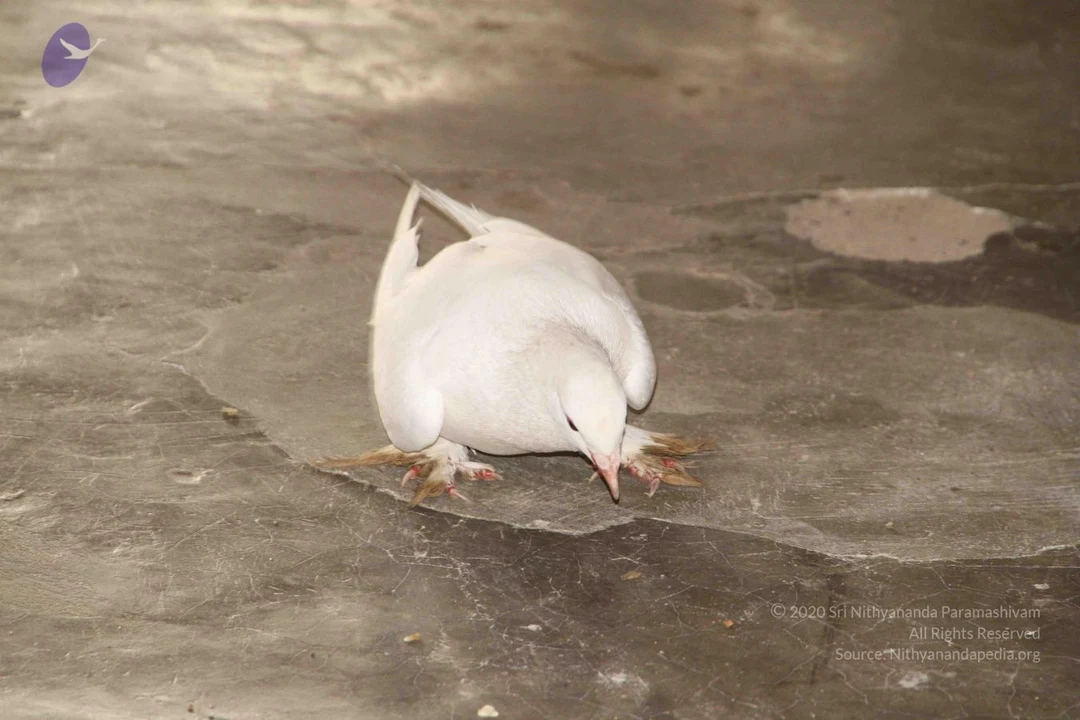
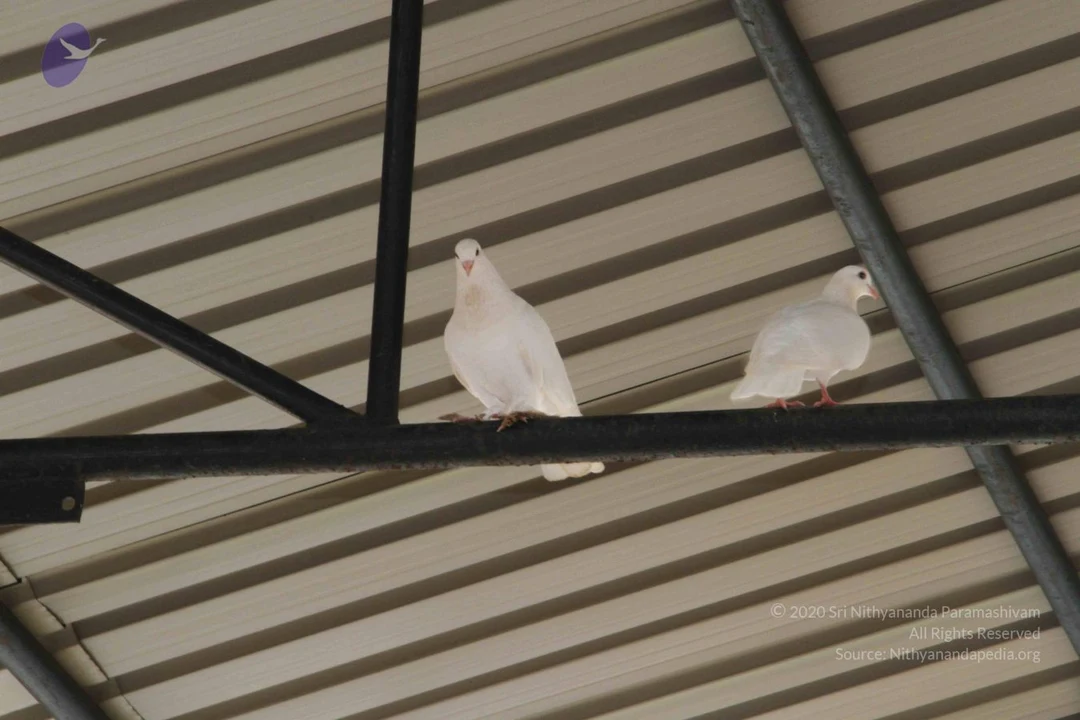
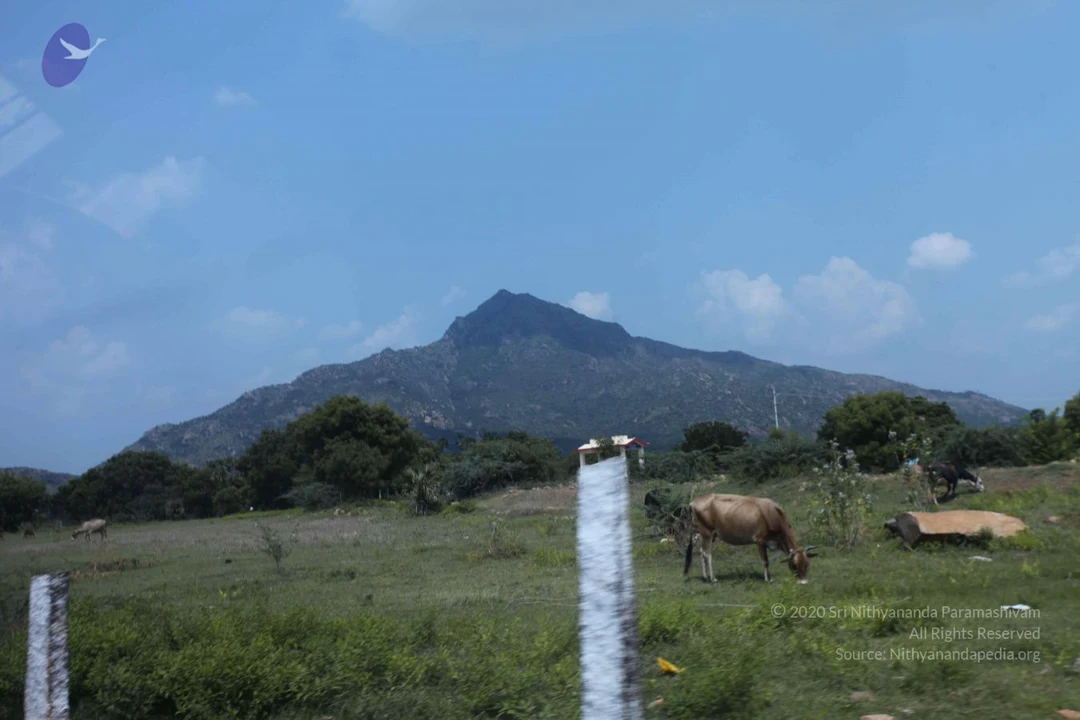
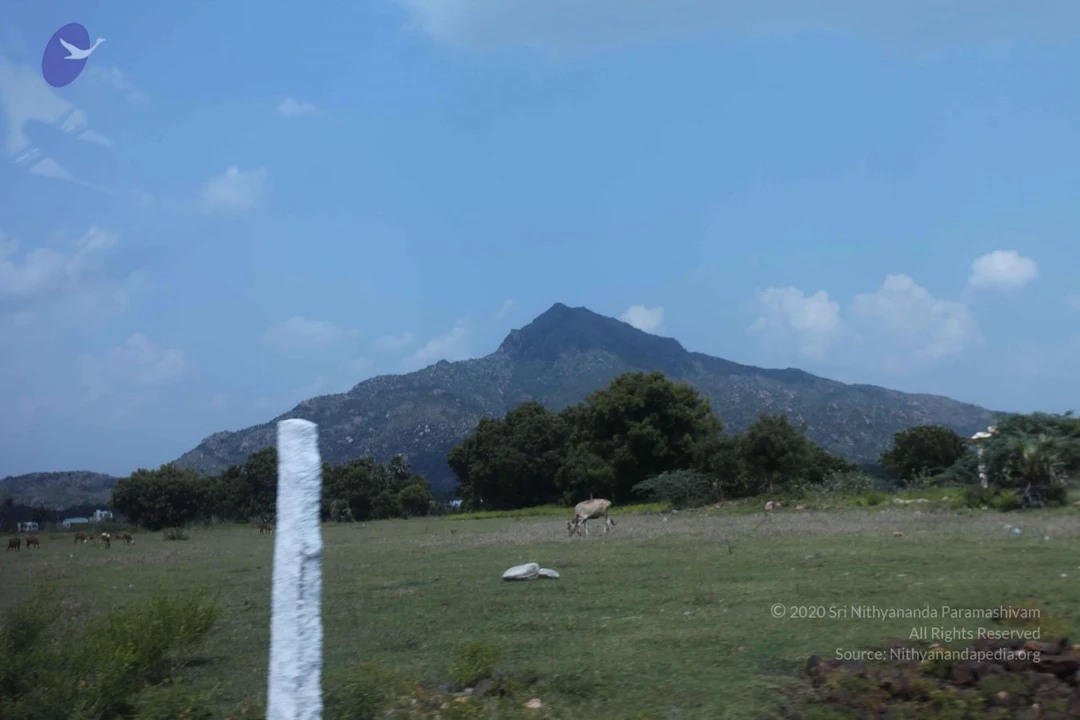
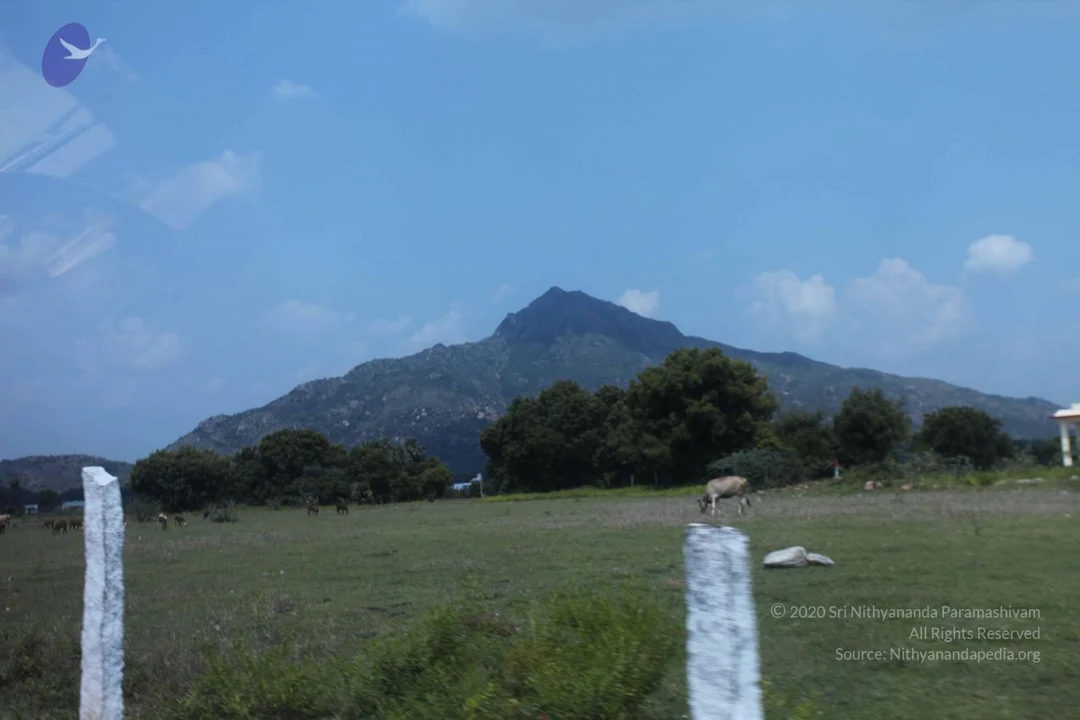
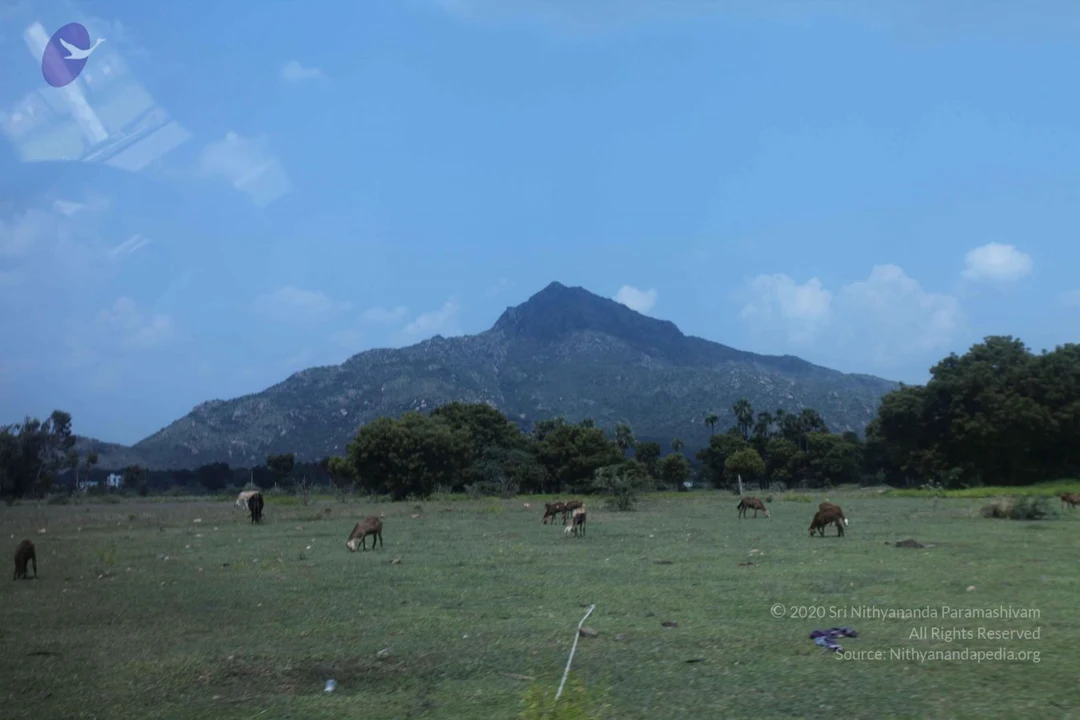
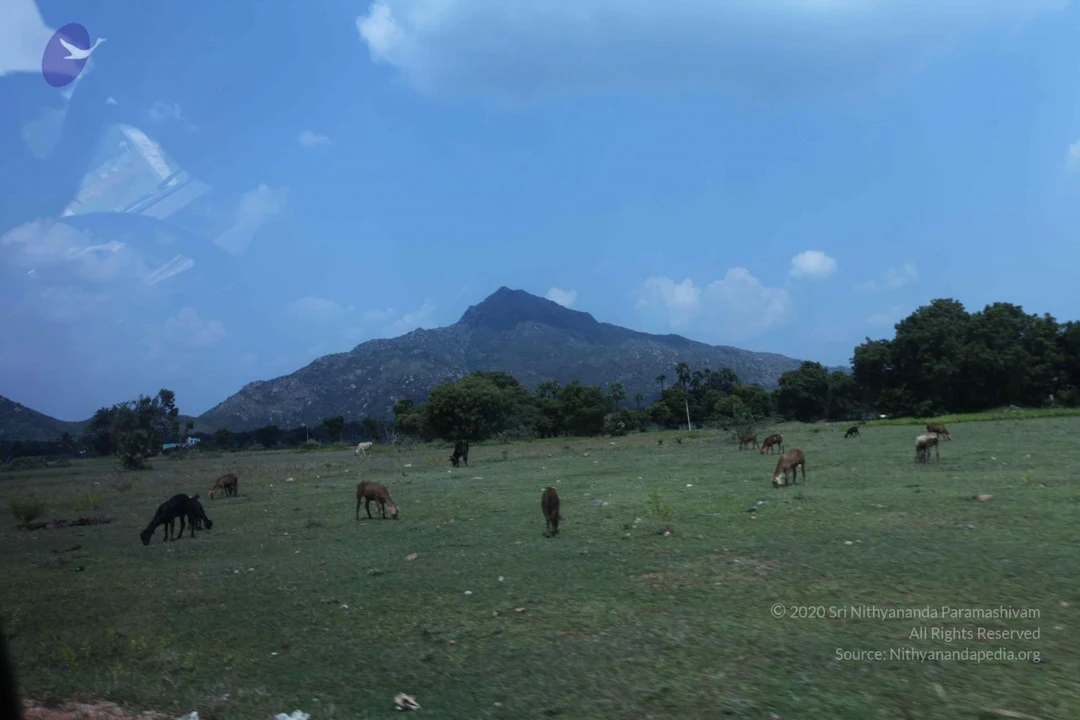
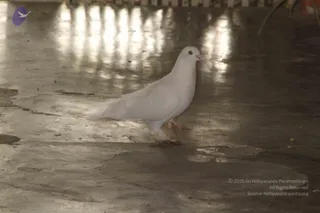
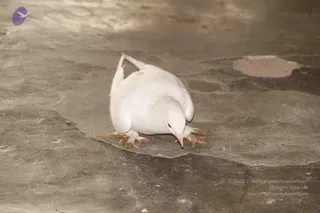
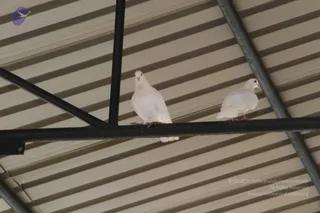
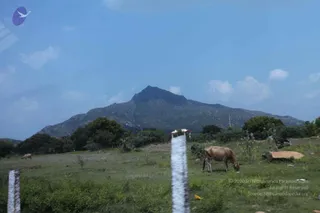
A white pigeon with pink-red feet and a small red eye walks across a damp, grey concrete floor. Sunlight reflects in pale patches on the wet ground behind it, and a white fence or railing is visible at the top edge of the frame. No people are present.A white pigeon with feathered feet stands on a grey stone floor, head bent low as it pecks at small scattered crumbs. Its wings are folded against its body and its tail feathers are raised. The floor shows weathered cracks and faint light patches. No people are visible. A small purple logo appears in the top-left corner, and a copyright notice is printed at the lower right.Two white doves perch on a black metal horizontal beam beneath a pale corrugated metal ceiling. The bird on the left faces the camera with a small orange beak and reddish feet, while the bird on the right stands in profile with its tail turned toward the viewer. Diagonal black steel supports and a thin pipe frame the composition. No people are visible in the scene.A rural landscape photograph taken from a moving vehicle, showing a rocky, forested mountain peak rising under a pale blue sky with scattered white clouds. In the foreground, a grassy field holds several cattle: a brown cow grazing at the center, another animal lying near the right edge, and a few more further back. A white vertical fence post stands in the foreground, and a small roadside structure with a red roof sits near the base of the hill, framed by green trees and shrubs. No people are visible.A photograph of a grassy open field under a pale blue sky with scattered white clouds. A tall white-painted pillar stands at the left edge. A brown and white cow grazes in the middle distance, with a few more cattle at the far left, and a rounded grey boulder sits on the grass. Beyond the field, a dense line of green trees and a rocky, hazy mountain ridge rise behind them, with a pointed peak at its centre.A photograph taken through a vehicle window of a green grassy field under a blue sky with scattered clouds. A rugged rocky mountain with a pointed peak rises in the background, with dense green trees along its base. Several brown goats graze across the field, and one lone goat stands in the foreground near a grey rock. White-painted concrete fence posts frame the left and right edges of the view. A small white structure sits at the far right edge. No people are visible.

Highlights

14 photosSource gallery
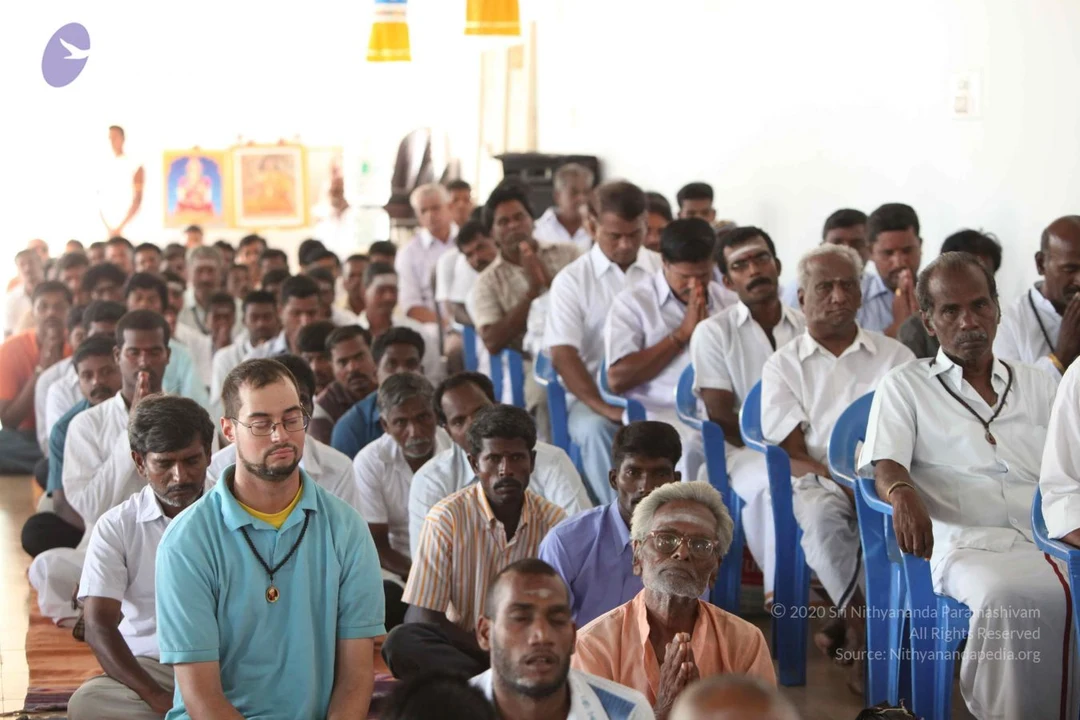
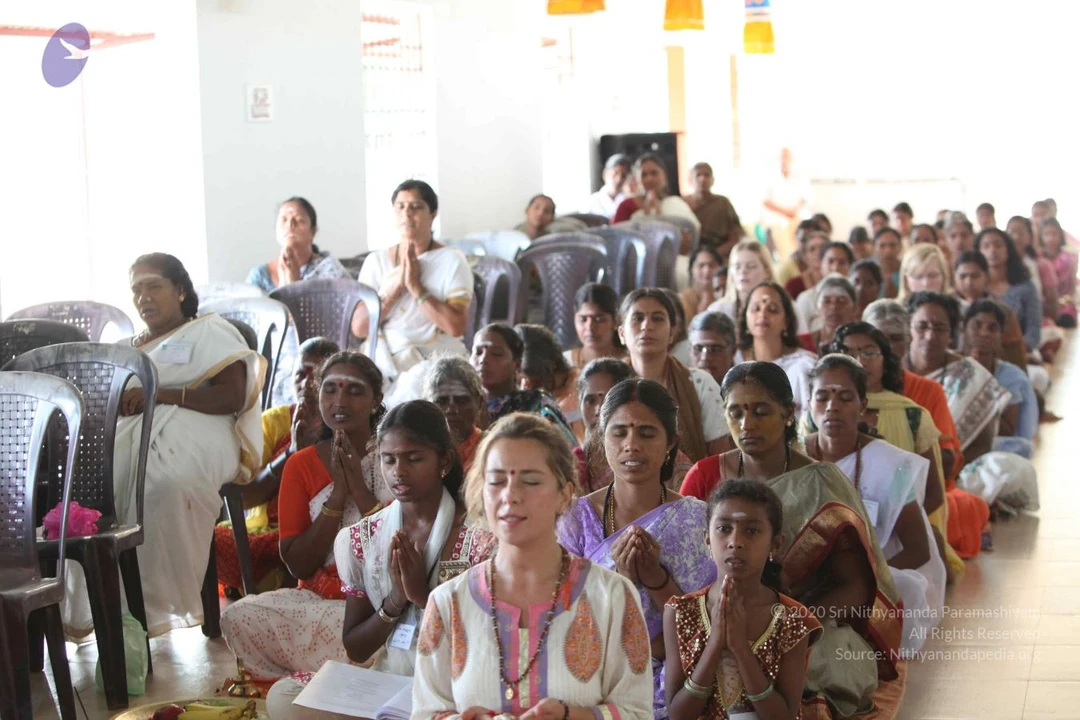
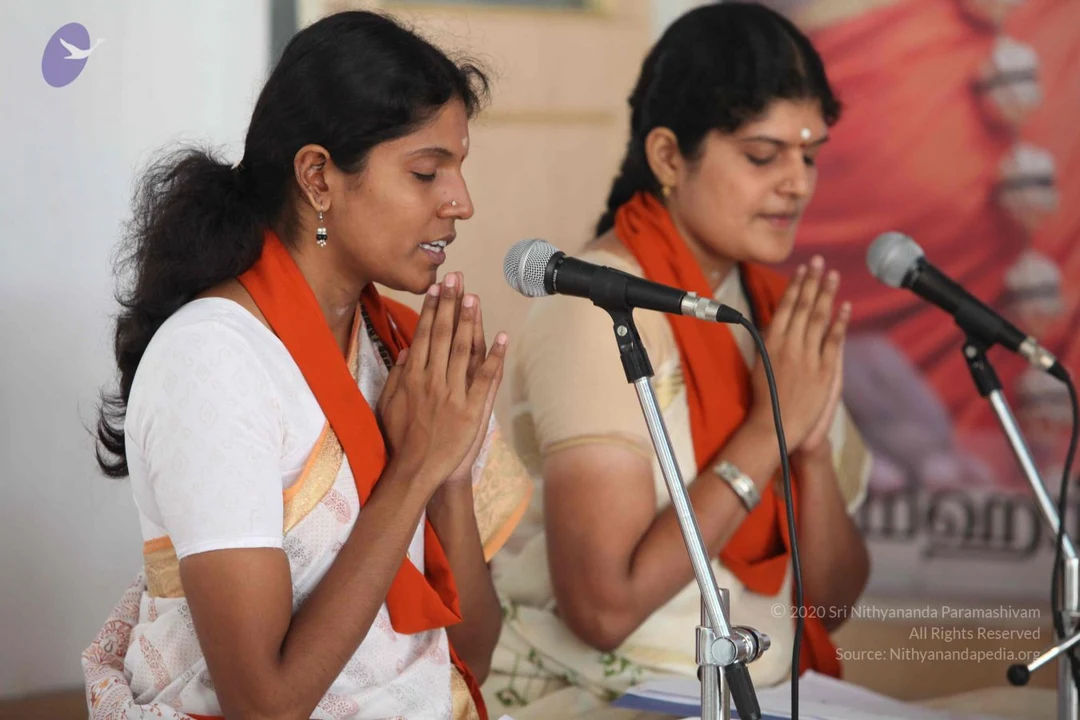
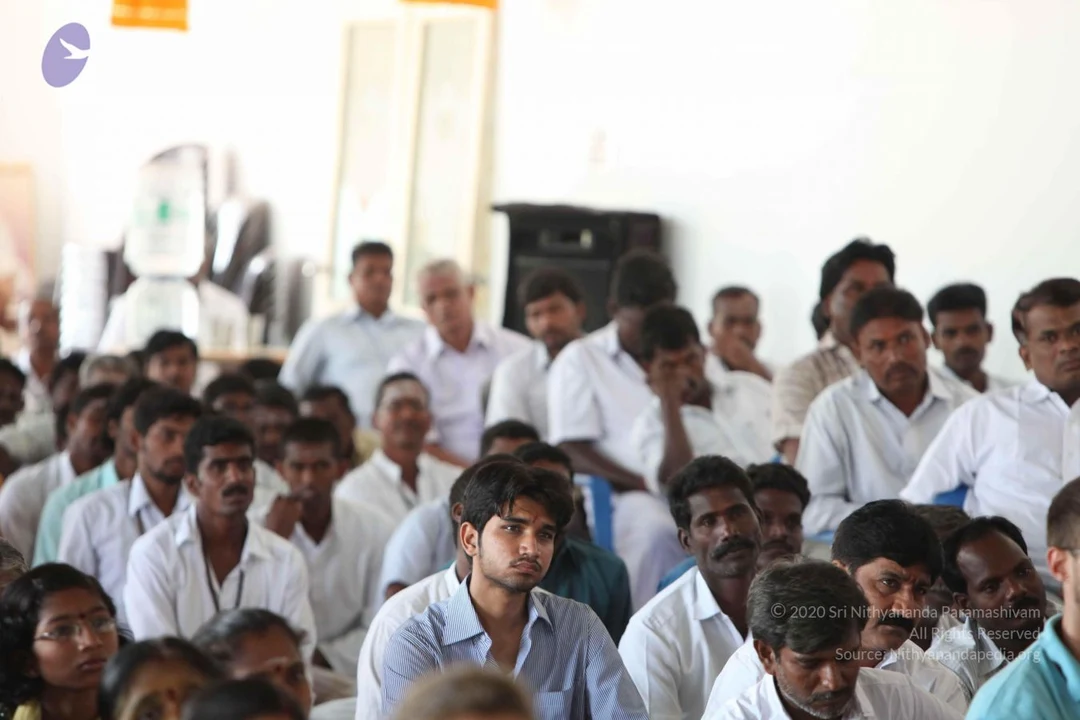
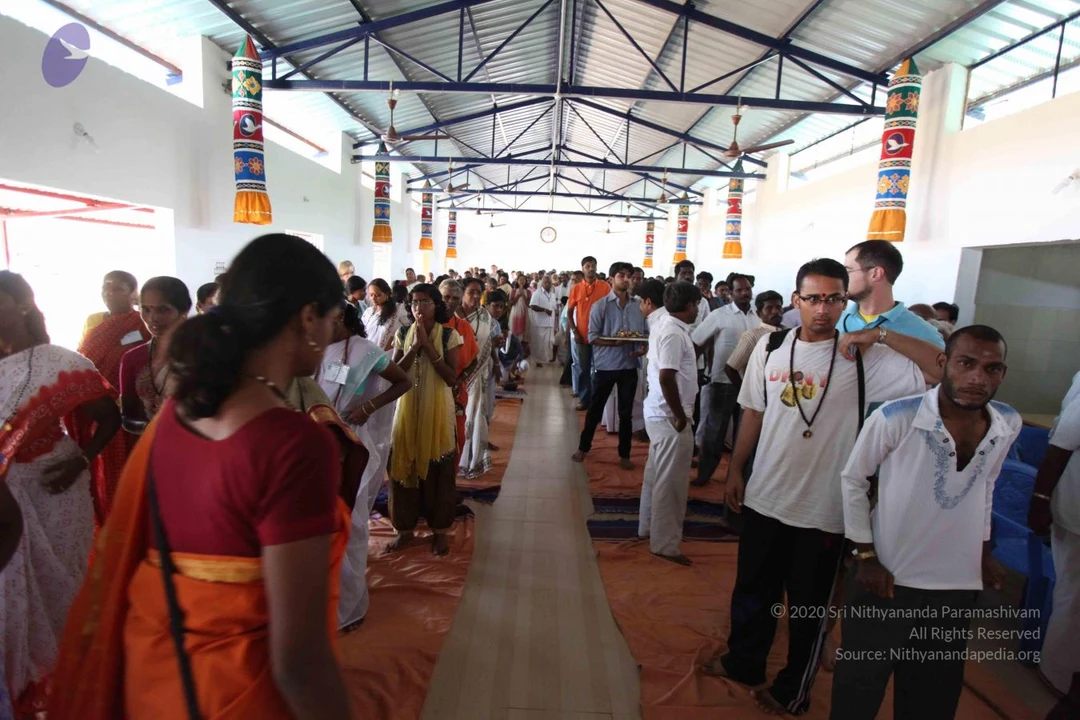
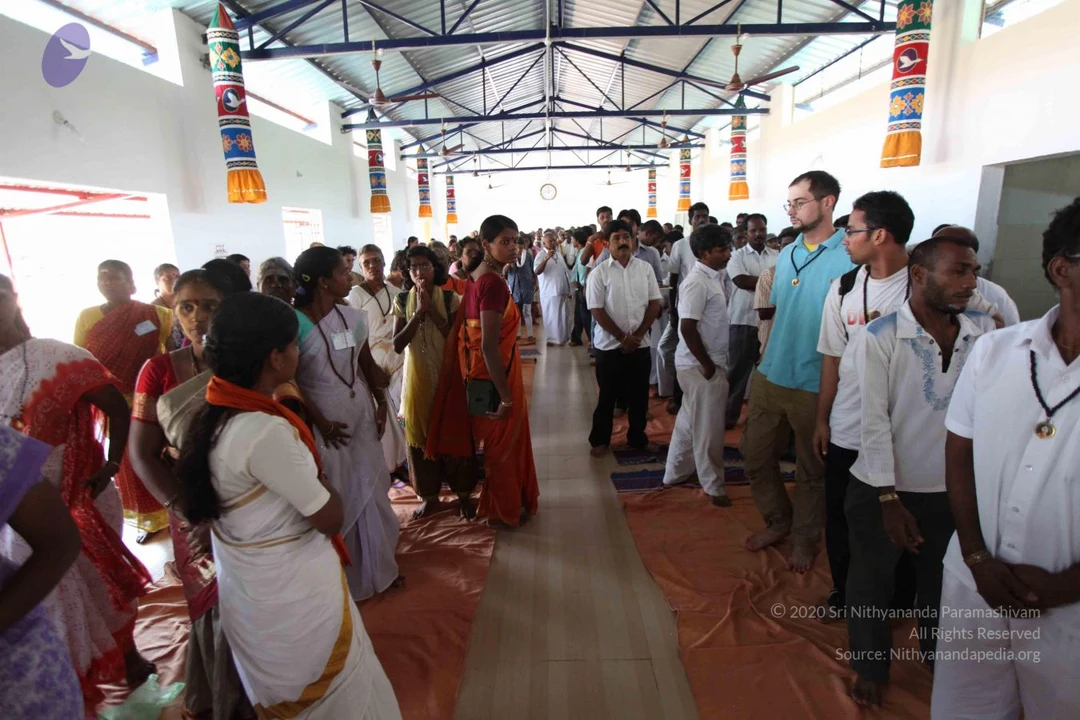
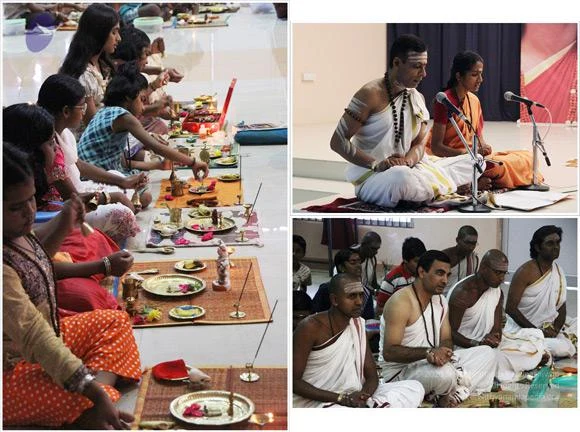
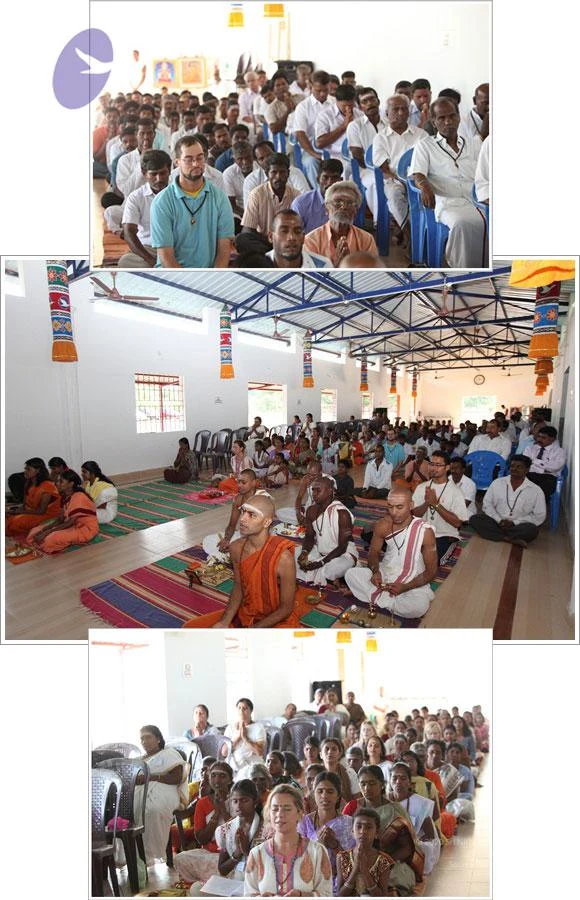
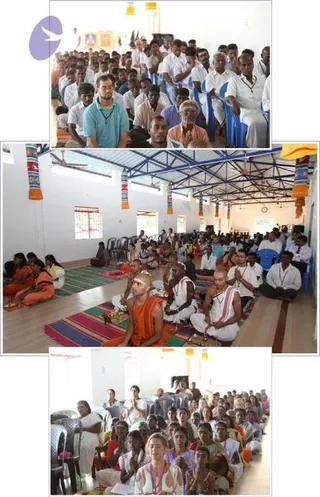
A three-panel collage. The large left panel shows a row of seated devotees, mostly women and girls in red, orange and patterned saris and salwar, behind low wooden-style puja tables with brass plates, lamps, incense sticks, flower petals and small offering dishes. The upper right panel shows two people seated on a stage before microphones: a man with bare upper body and white dhoti and a woman in an orange sari, with a small table of ritual items. The lower right panel shows a line of men in white dhotis and shawls seated in meditation, one wearing a rudraksha mala. The collage pictures ritual activity; no a person candidate is visibly identifiable from appearance.A four-panel collage of close-up photographs showing hands tying or handling threads and ritual items. Top left, a hand with a red-banded wrist and a bare arm rests on fabric. Top right, hands hold a small lit oil lamp or wick near colorful cloth. Bottom left, a hand with bangles and red thread holds a red object against a patterned background. Bottom right, a hand holds a thin white thread or string. No full faces are visible and no swami figure is shown.A collage of three panels. The left panel shows a close view of a brass oil lamp with a lit flame on a dark background. The upper right panel shows a group of people seated on the floor in a line, some in white and some in light clothing, in what appears to be an indoor room. The lower right panel shows a row of people seated on the ground with orange and red cloth, some with items in front of them, in an indoor setting. The image is a graphic composed of photographs, with no clear identifiable ritual name visible.A two-panel graphic collage with a dark background, each panel holding a grid of small photographs. The upper panel has a central bright green rectangular block. The lower panel shows a dense mosaic of multicoloured images with people in varied clothing. No readable text is visible at this resolution, and the photographs depict assorted scenes of people in ceremonial and everyday settings.An outdoor shrine with a central gold-framed arch housing a black stone deity murti decorated with a red floral garland and a white cloth. Flanking gold arches hold additional black stone murtis, one wearing a purple and gold cloth. Red-and-white striped plinths support the statues. In front, woven mats hold brass plates, a small lamp, a kalasha-like vessel and food offerings on banana leaves. A lone seated figure in orange-saffron clothing sits on the central plinth area, with a black plaque with Tamil text in front. Potted plants and trees surround the scene under an overcast sky.Collage of three photographs from an ashram satsang hall with white walls, blue-framed chairs and a metal roof with ceiling fans. Top panel shows a seated crowd of men in white shirts and dhotis, with a man in a teal shirt in front. Middle panel shows a wide hall with a mat-covered floor where a shaved-headed man in saffron robes sits at the front with a man in white dhoti and shawl, a second man in white robes, and a row of seated devotees in white and colourful clothing, with a few seated women in orange and green saris on the left. Bottom panel shows women and girls in white and pastel saris seated with hands in anjali mudra. Crowd counts are in the dozens across the panels.

PadaPuja

3 photosSource gallery
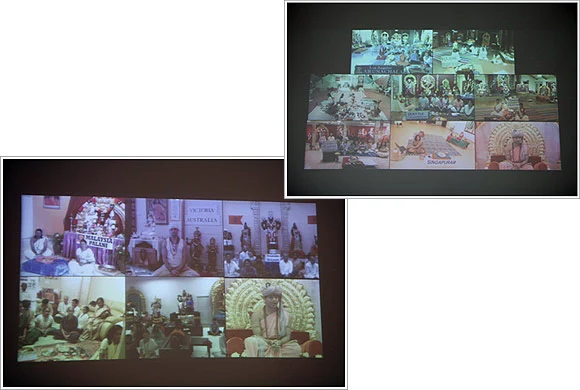
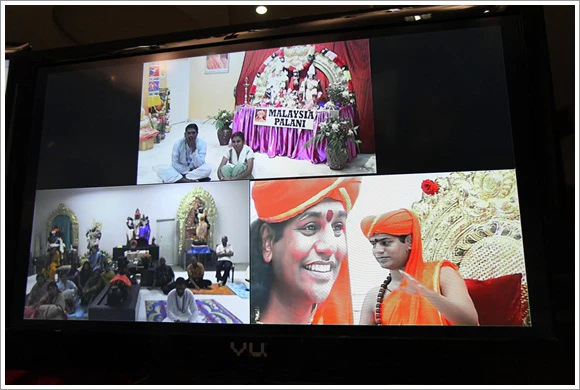
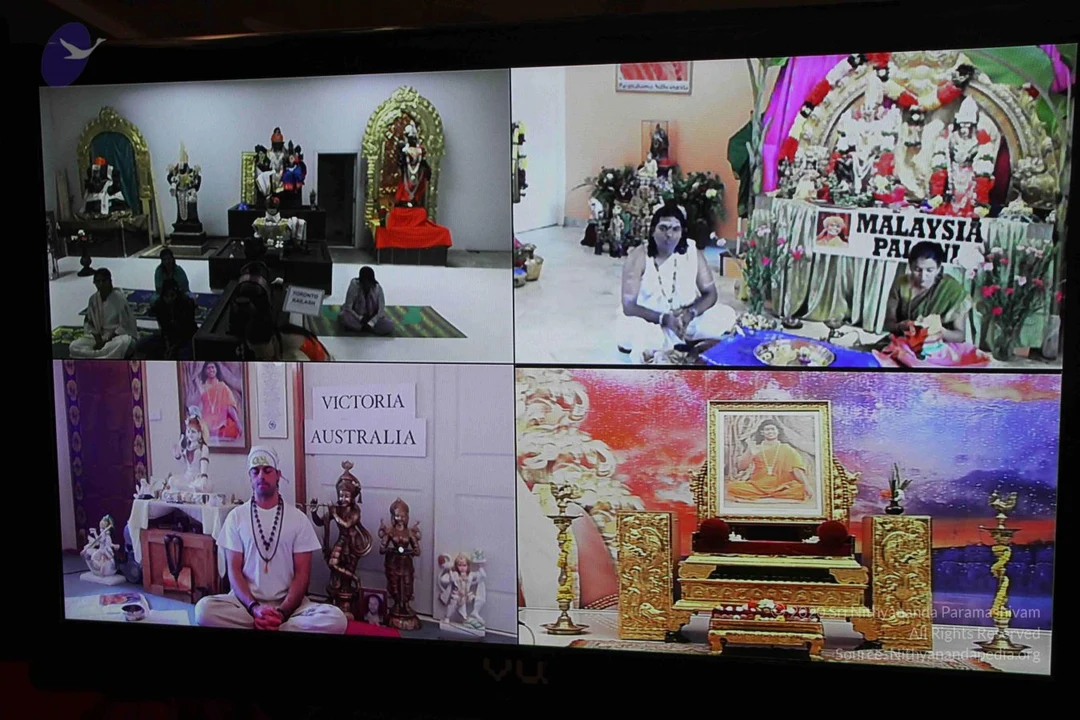
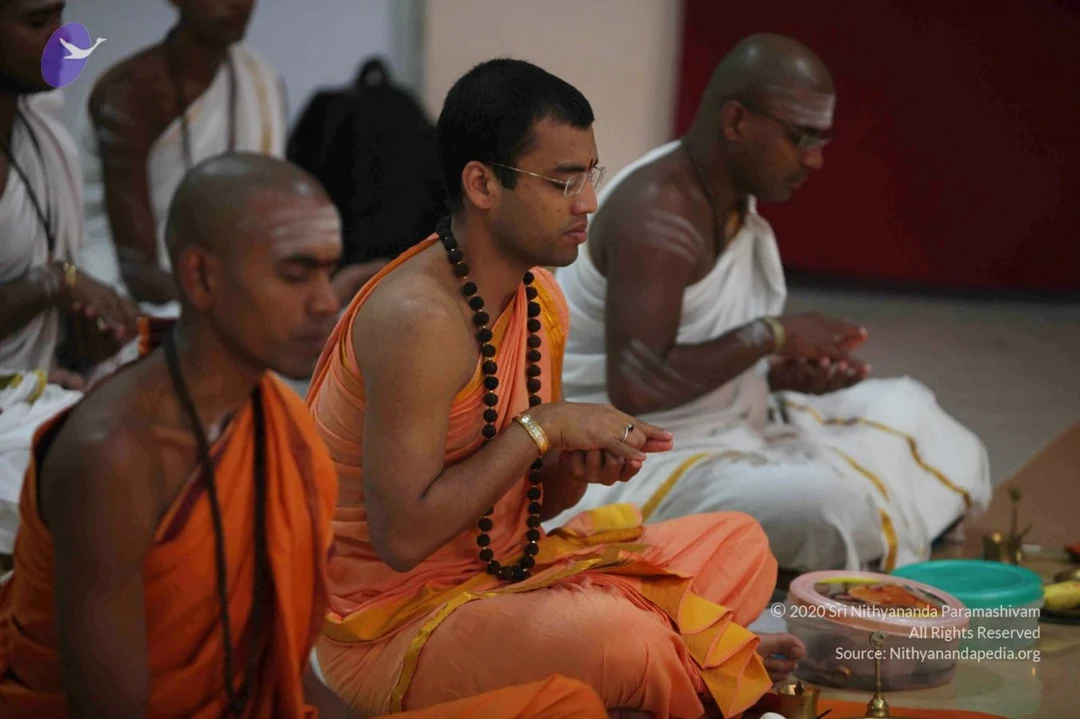
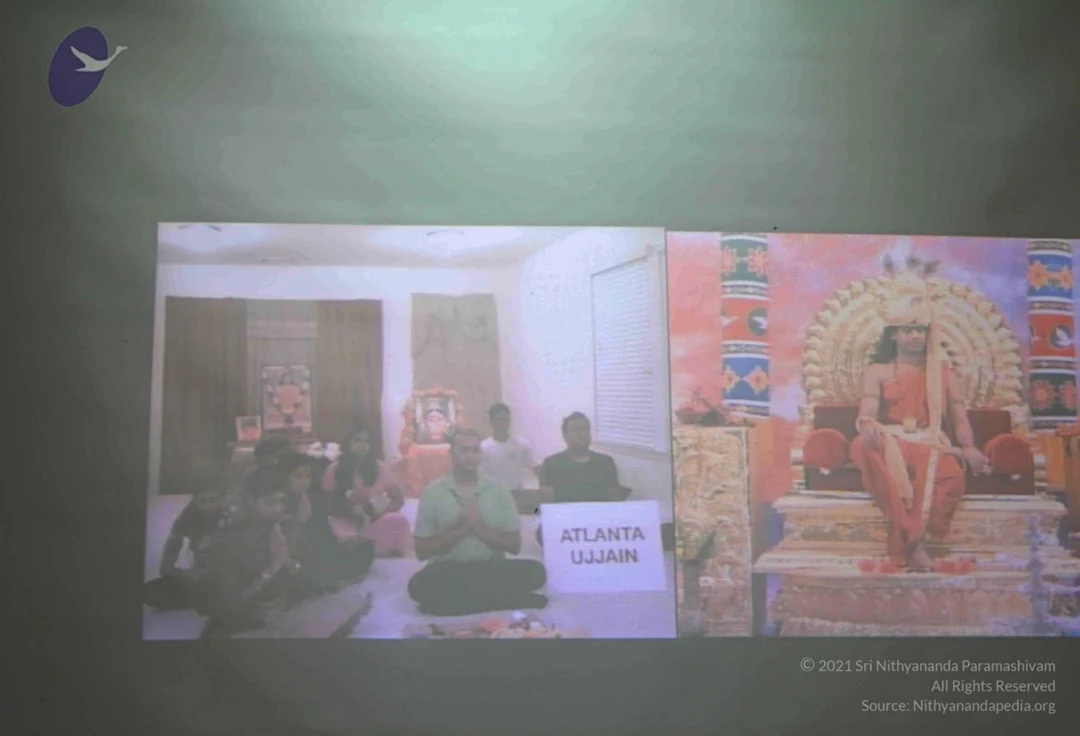
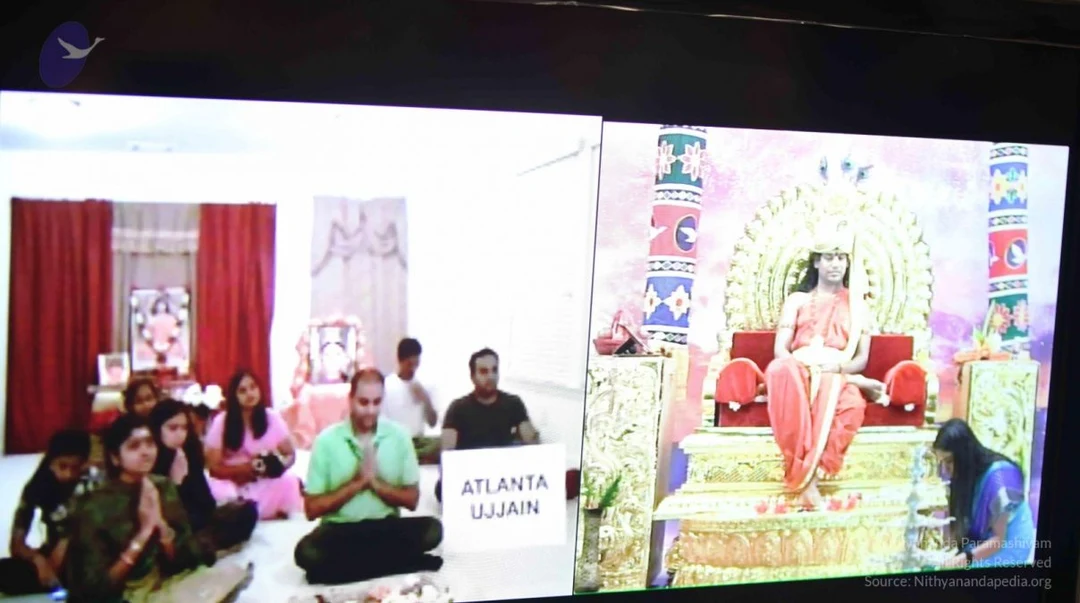
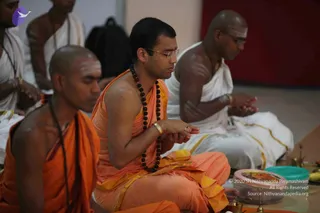
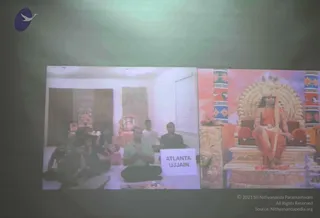
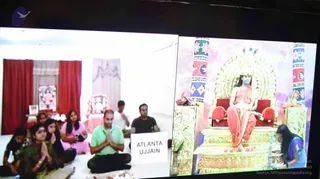
A seated group of men in a ritual setting. In the centre, a man in saffron-orange robes wearing a long rudraksha mala and wire-rimmed glasses sits cross-legged with hands joined in front of his chest, eyes lowered. To the left, a shaved-headed man in orange robes with a mala sits with eyes closed. To the right, a bald man in white dhoti and shawl with yellow borders sits with hands folded, and behind them more men in white garments sit in meditative postures. A small brass lamp and a round glass container with offerings sit on the floor in front. The scene reads as a meditation or puja gathering in an ashram hall with a red wall behind.A projected screen shows a split view. On the left, a live video feed of a group in a white-walled room: a man in a light green shirt sits cross-legged with palms pressed together in namaste, with a white sign reading ATLANTA UJJAIN beside him, while several other people sit on the floor behind him, including a man in a black shirt and a woman in pink. A framed deity picture and a small altar with flowers sit in the background. On the right, a large image shows a figure seated on an ornate golden throne with a arched gold backdrop, dressed in orange-red robes, with red cushions and decorated blue-and-white pillars beside him.A split screen from a video link shows two views. On the left, a group of about nine people sits on a white floor in a room with red curtains, a small altar and framed images; a sign reading ATLANTA UJJAIN is held up. A woman in a pink sari and several people in green, white and black sit with palms pressed together in namaskar. On the right, a figure in orange robes and a golden crown sits on an ornate gold and red throne with a golden arched backdrop and decorated pillars, with a woman in blue sari seated at the lower right. The figure's face is not clear enough to confirm identity; the throne and orange garments are the visible cues.

BGSatsang

4 photosSource gallery
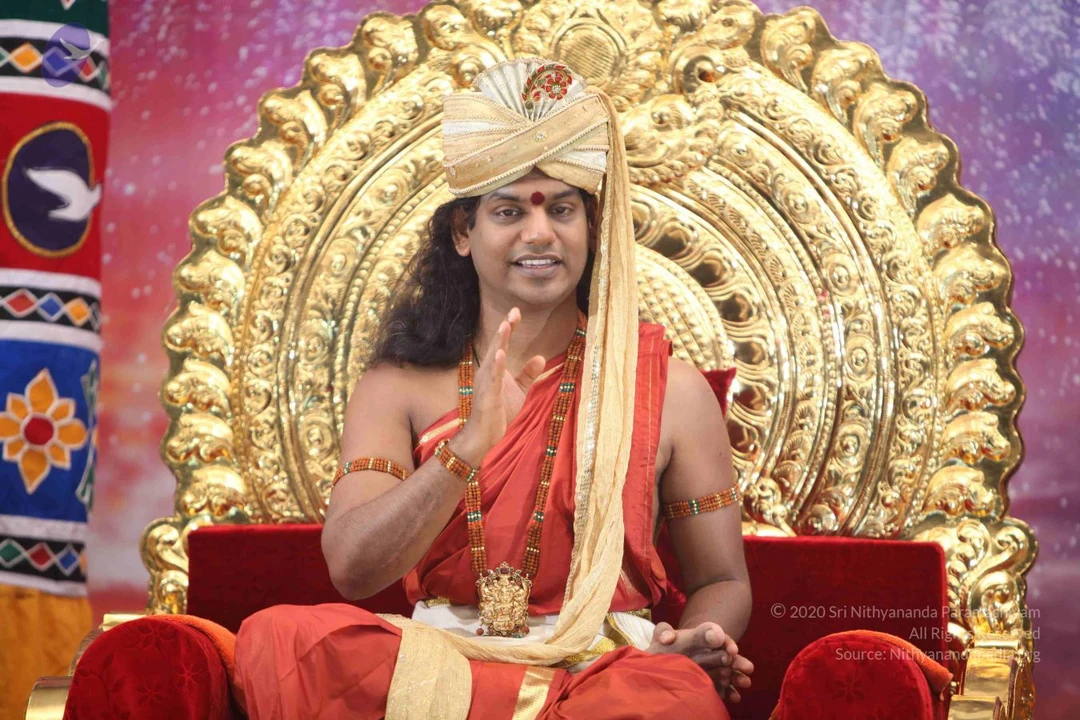
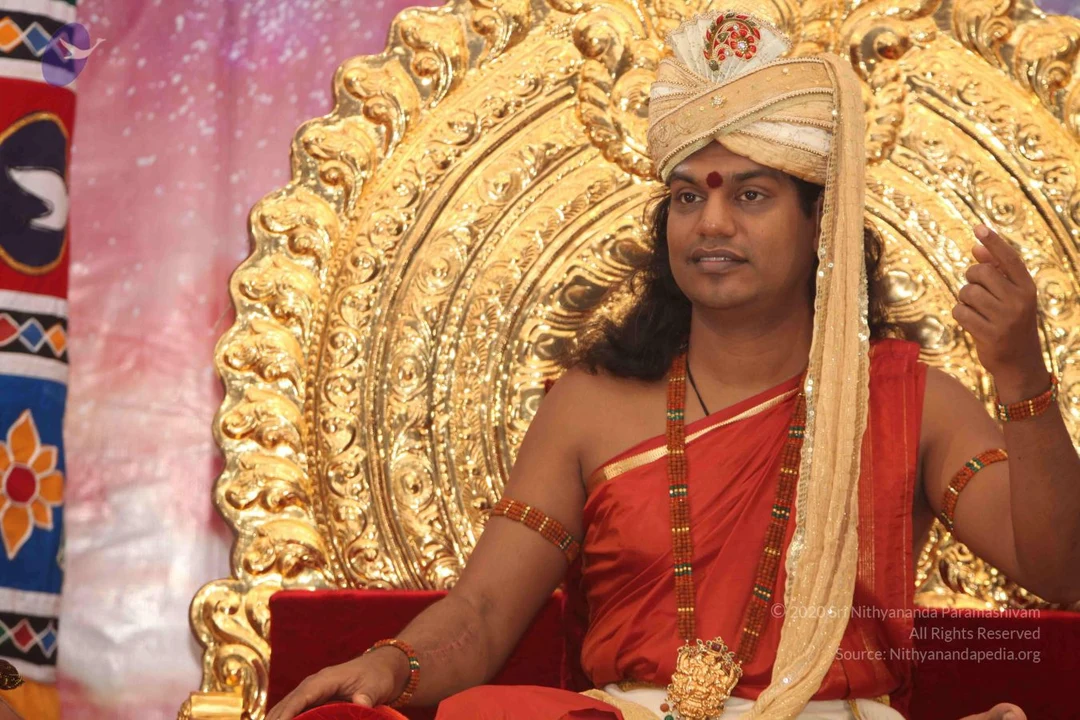
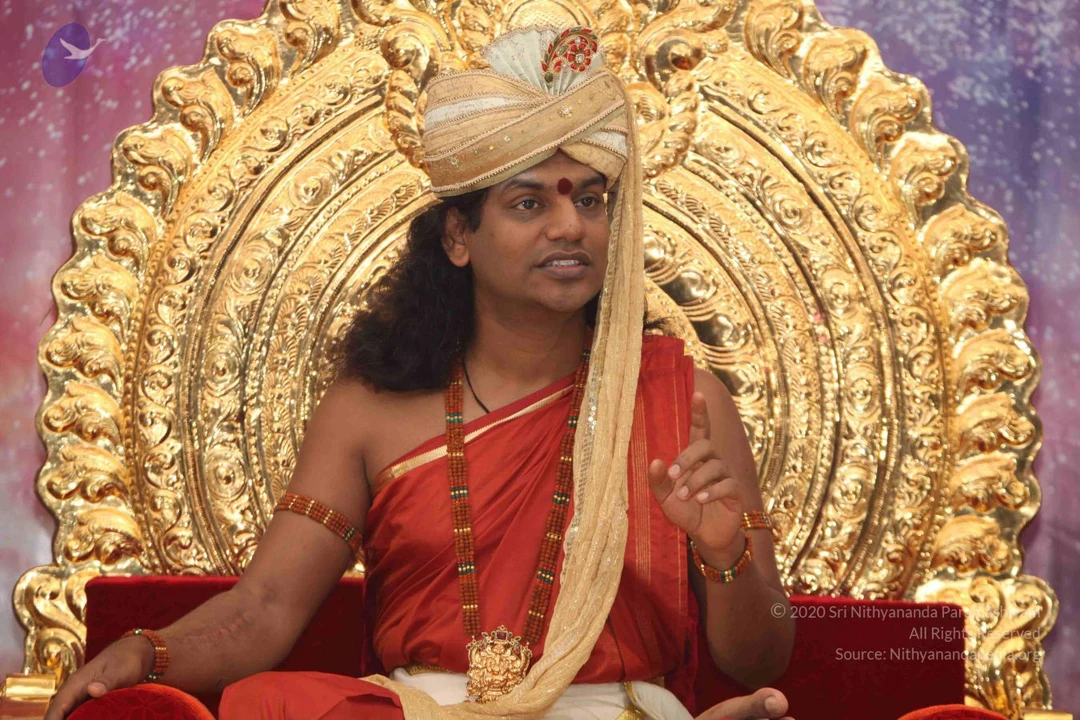
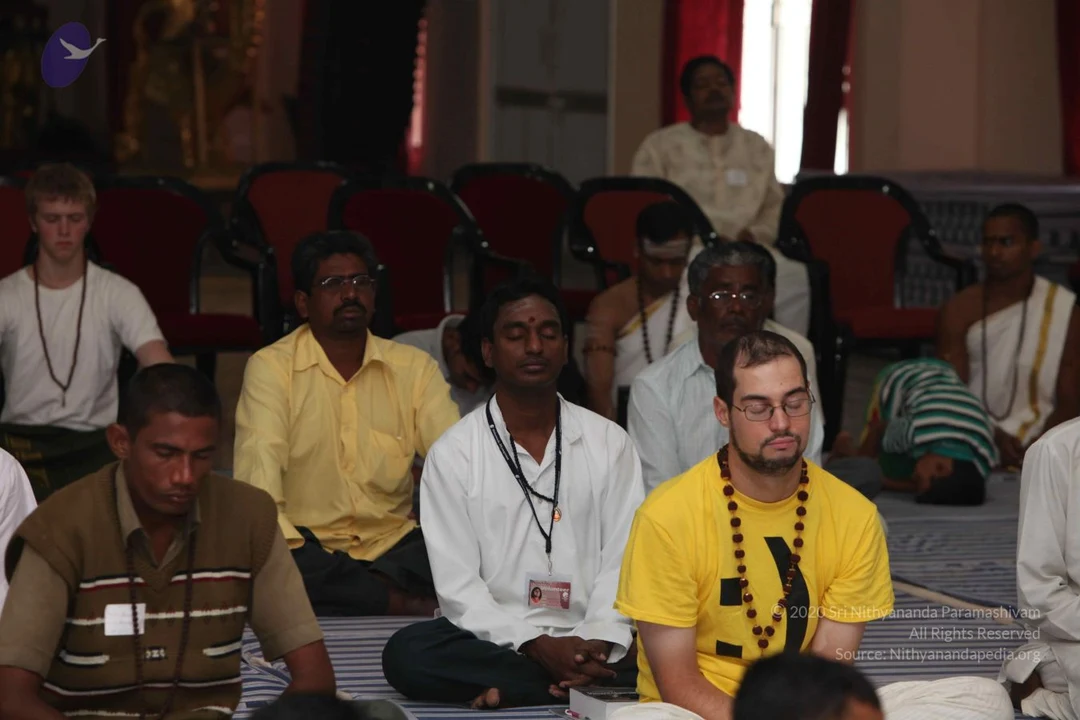
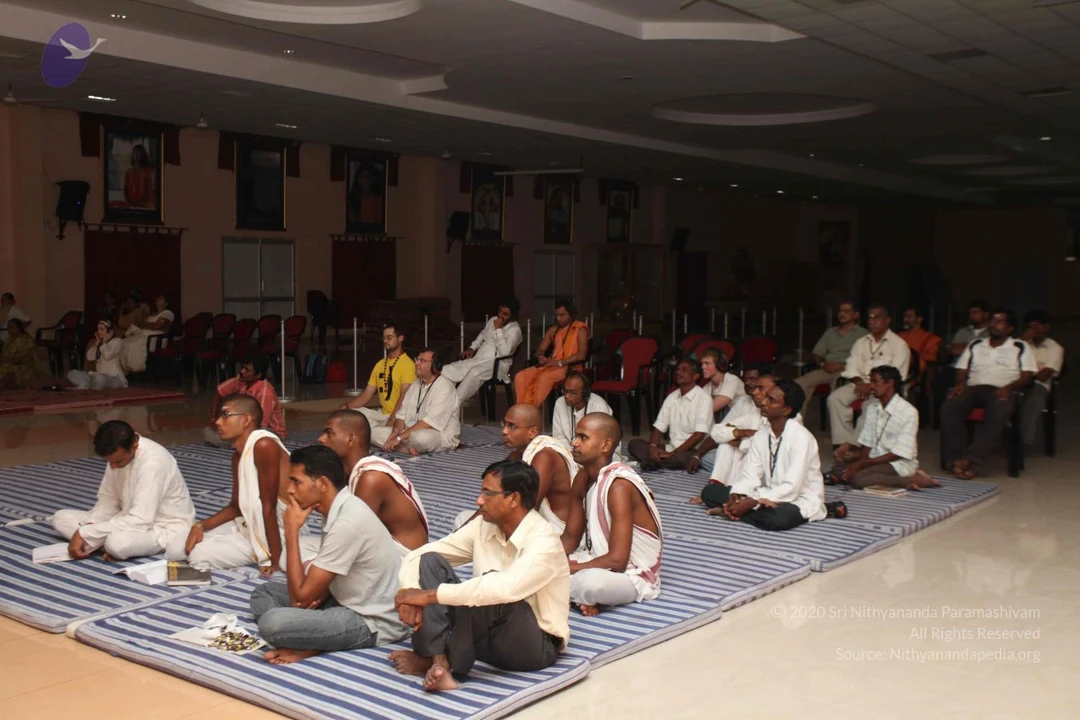
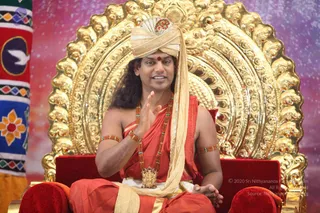
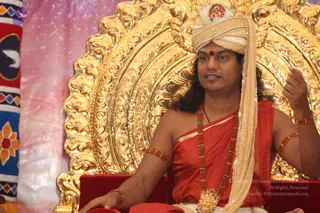
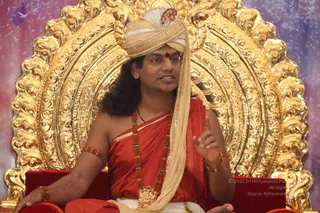
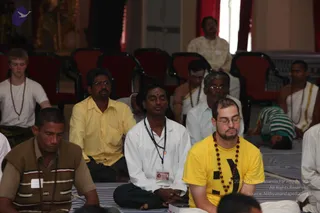
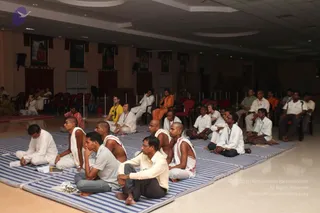
A man seated on an ornate golden throne with a red cushioned seat speaks while raising his right hand in a gesture of teaching. He wears a cream turban with a red and gold emblem, a red-orange sash over the shoulder, white dhoti with gold border, multiple beaded rudraksha-style malas and gold armbands with red beads, and a red bindi. A large gold filigree backrest frames him against a pink and purple starry backdrop, with a colourful patterned banner and dove emblem at the left edge. The scene resembles a discourse setting. a person is shown in an in_person discourse setting, wearing orange-red clothing, long hair, a turban and ceremonial gold necklace, seated on the throne.A seated man in red-orange robes and a cream turban with a red jewelled ornament speaks with his right hand raised, in front of an ornate gold throne with carved scrollwork. He wears a red bindi, layered beaded red and green rudraksha-style malas, a gold ceremonial pendant, and beaded bracelets on his wrists and upper arm, with a cream shawl draped over his shoulder. A pink and white backdrop and a patterned banner edge the frame. Lit-up audio-discourse setting. Figure appearance is consistent with a long-haired saffron-clad presenter; a qualifying candidate with several cues, presented on a throne at a discourse.A man seated on a red cushioned throne in front of an ornate gold carved backrest, gesturing with his right hand while speaking. He wears a cream and gold turban with a red jewel accent, a cream shawl draped over his shoulder, a red and gold dhoti-style garment, long hair, a red bindi, rudraksha-style beaded bracelets, and a long multi-strand beaded mala with a gold pendant. a person: he has long hair, a turban and ornate saffron-red clothing with ceremonial gold necklaces, matching the page's discourse context, though the appearance is only a candidate.A seated group of devotees meditates with eyes closed on a blue-and-white striped mat in a hall with red-cushioned chairs and a gilded shrine in the background. In the foreground, a bearded man in a yellow t-shirt wears a rudraksha mala, and beside him a man in a white shirt with a lanyard badge sits with hands folded. A man in a yellow shirt and a man in a white shirt are also seated, and a man in a white dhoti with a mala sits at right. Several other people are visible in the back rows.

BGSatsang

9 photosSource gallery
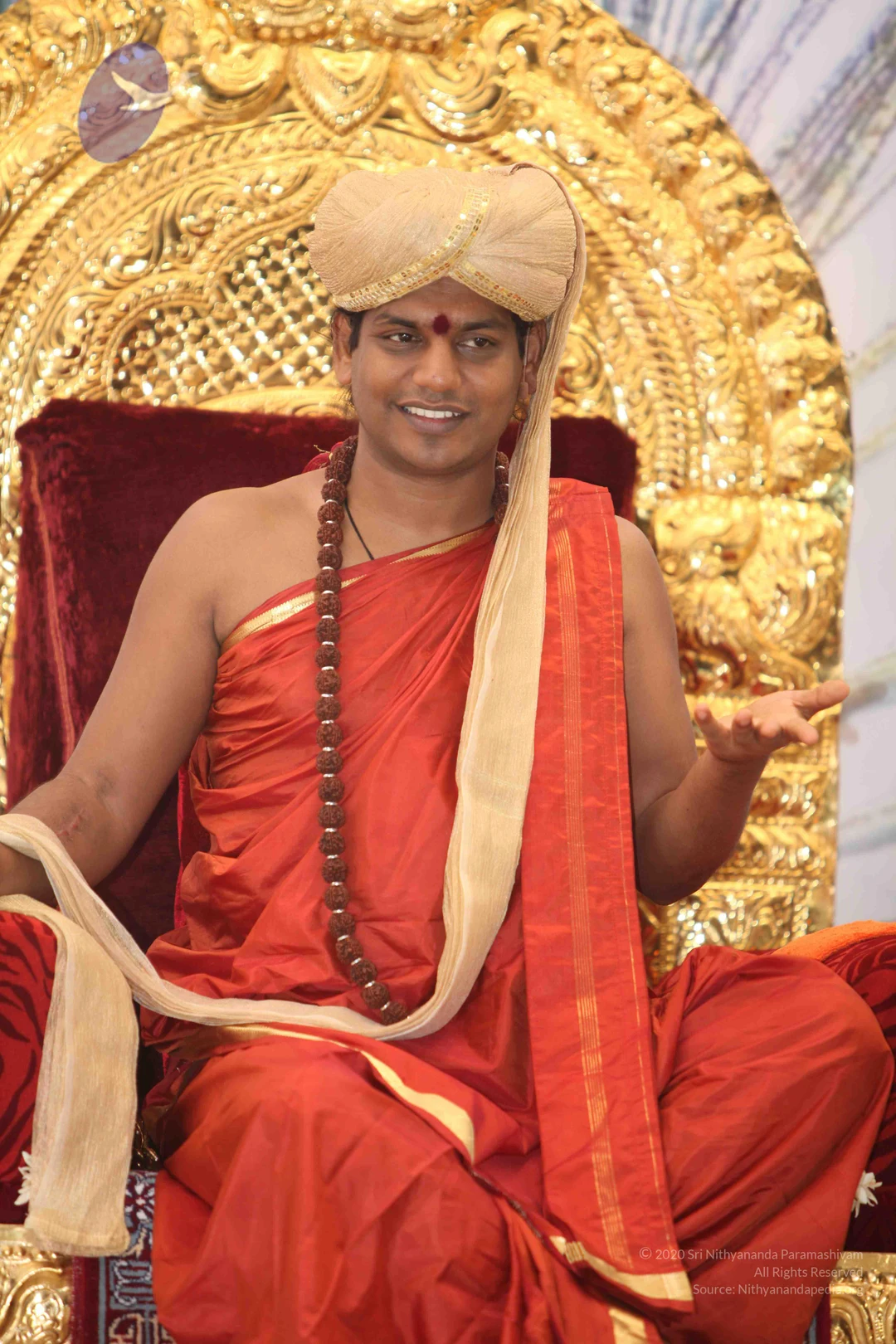
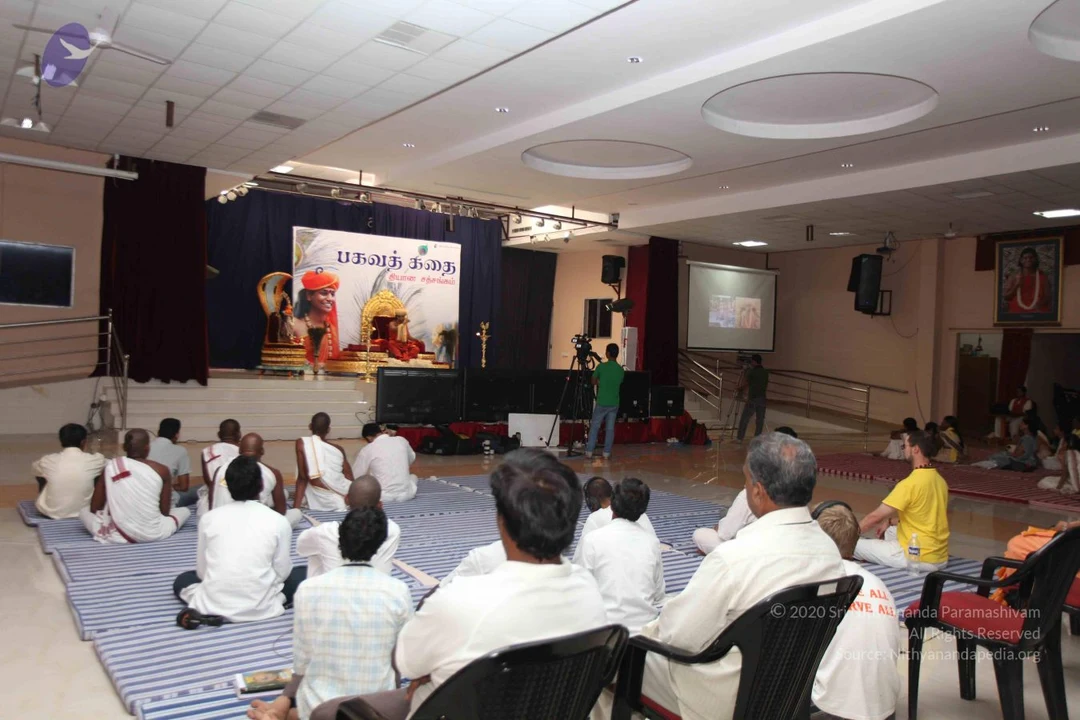
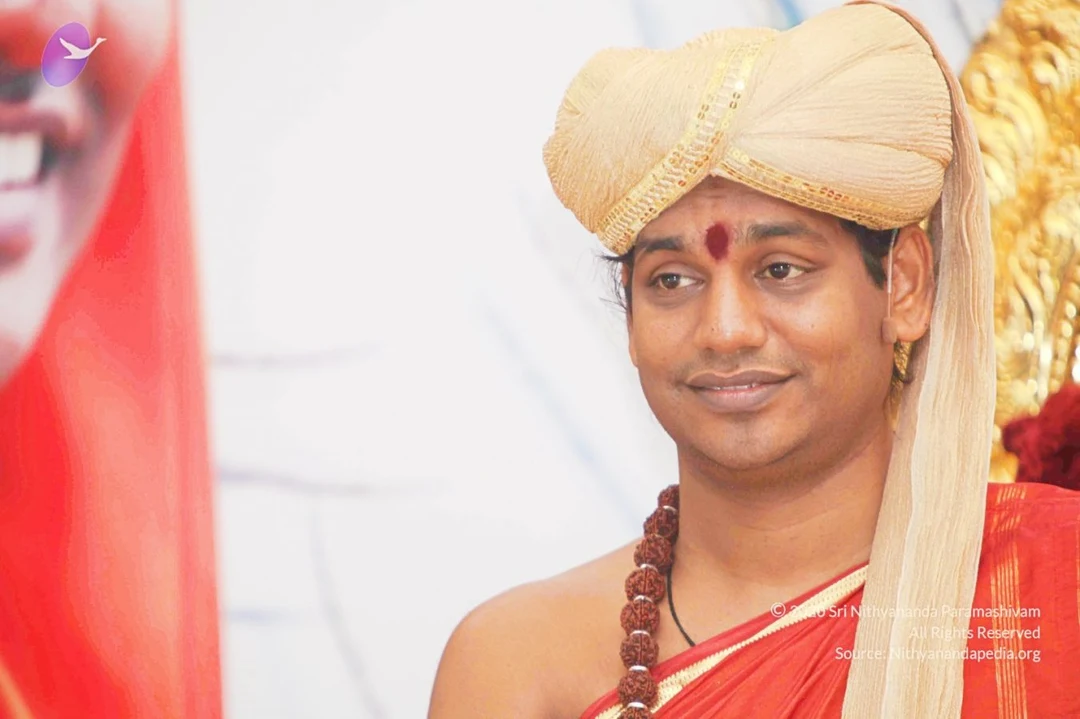
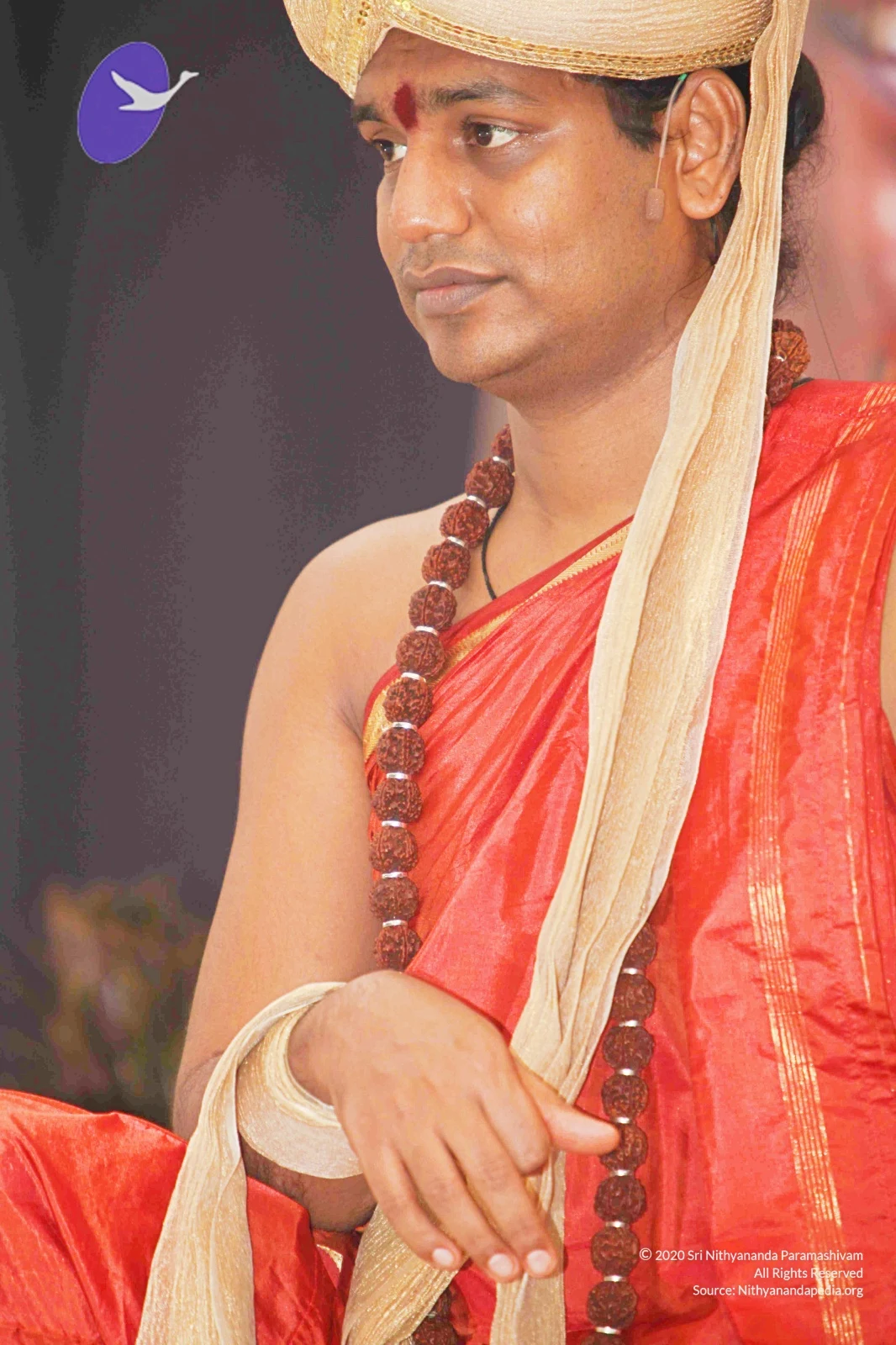
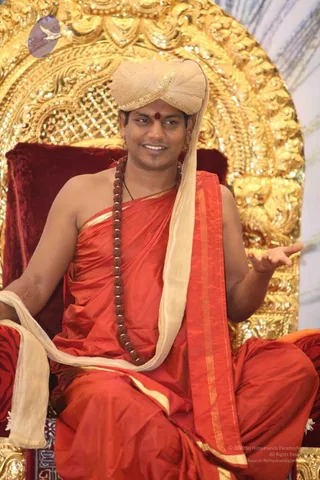
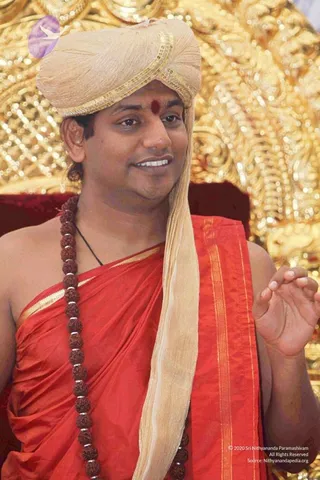
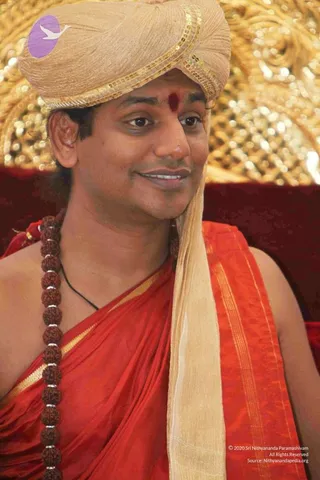
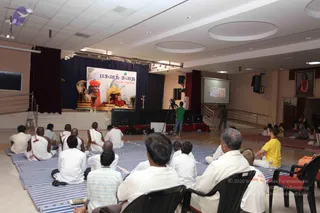
A seated man in a cream turban with a red bindi, wearing an orange-red silk robe with gold borders and a long rudraksha mala, sits on a red velvet and ornate gold throne while gesturing with one open hand and smiling. The gilded throne back has carved floral and scrollwork patterns. Appearance-based candidate: a person, seated on the throne as the teaching figure of a discourse, with his orange-red robe, turban and rudraksha mala as cues.A smiling man wearing a cream-coloured turban with gold trim and a red-orange sash draped over his shoulders, with a red bindi on his forehead. He wears a long rudraksha mala with silver spacers, and his right hand is raised in a gesture while he speaks. Behind him is an ornate gold-toned carved backdrop resembling a throne or ceremonial seat. The cues match the saffron-and-turban presentation with rudraksha malas, but the appearance is not conclusive, so the individual is described by role as a speaker seated before a gilded backdrop.Close-up photograph of a smiling man in a cream-coloured turban with gold sequin trim and a long cream shawl draped over one shoulder. He wears a red-orange garment over bare shoulders, a dark red bindi on his forehead, and holds a dark rudraksha mala with silver spacers in one hand. The background is a gleaming gold ornamental backdrop. The appearance is consistent with a presentation of a distinctive ceremonial figure, though identity cannot be confirmed from appearance.Close portrait of a smiling man in a beige sequined turban with a small purple emblem bearing a white bird, wearing a red-orange shawl with gold border over bare shoulders, a long rudraksha mala with silver spacers, a red kumkum tilak on the forehead, and a thin black cord necklace. A gold ornate backdrop with red velvet behind him. Page does not place a named swami at this event, so the person is described by role only as a presented devotee-style figure without identity claim. A printed copyright and source credit appears at lower right.A hall with audiences seated on blue-striped mats facing a stage. A backdrop banner reads a Tamil title, showing a figure in orange robes and a crown seated on a golden throne beside a golden stand, with a lamp in front. Several seated listeners wear white clothing, some with shaved heads; others sit in plastic chairs in the foreground. Cameramen film the stage, and a projection screen and a portrait of a man in red clothing hang on the walls.A seated group of devotees in a large hall listens to a discourse, sitting on blue-and-white striped mats. Front-row men wear white dhotis and kurtas, some bare-chested with white cloths over their shoulders, one in a grey shirt with glasses and another in a cream shirt, with small items like a rosary and papers placed before them. Behind them rows of people sit on red chairs and mats; a woman in orange robes is visible among them. Framed portraits hang on the wall at the back, and a yellow-shirted man and figures in saffron appear mid-hall. Warm ceiling lights illuminate the space.

02-BG-Satsang

29 photosSource gallery
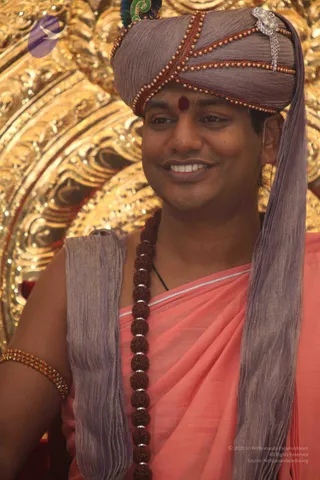
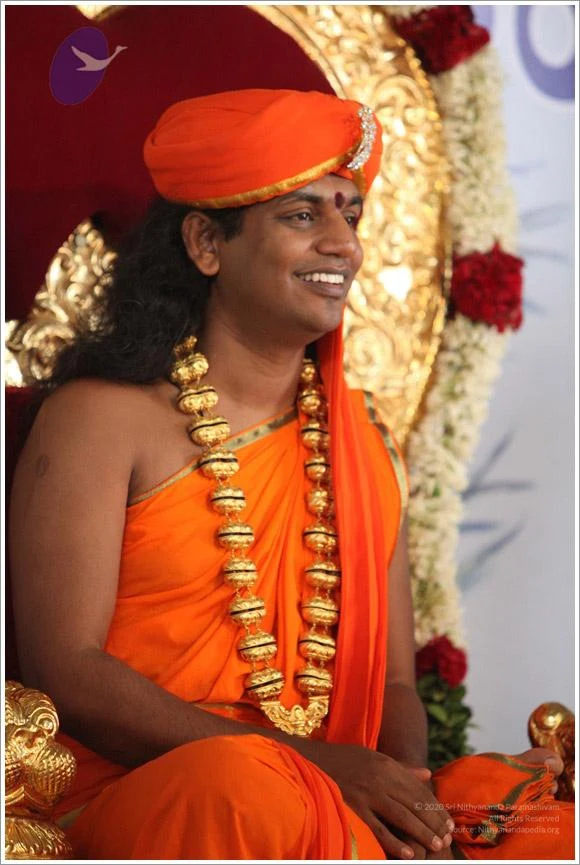
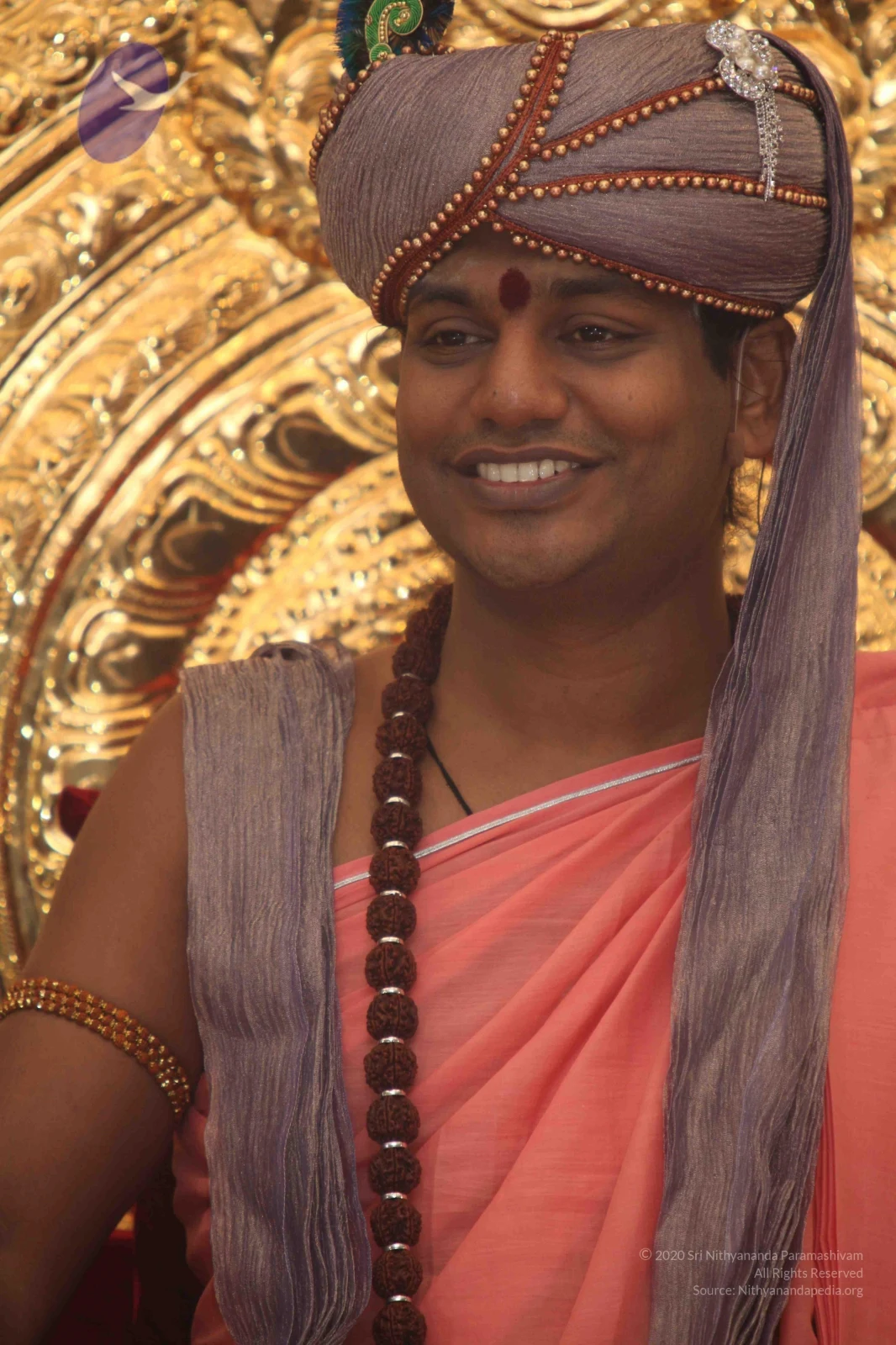
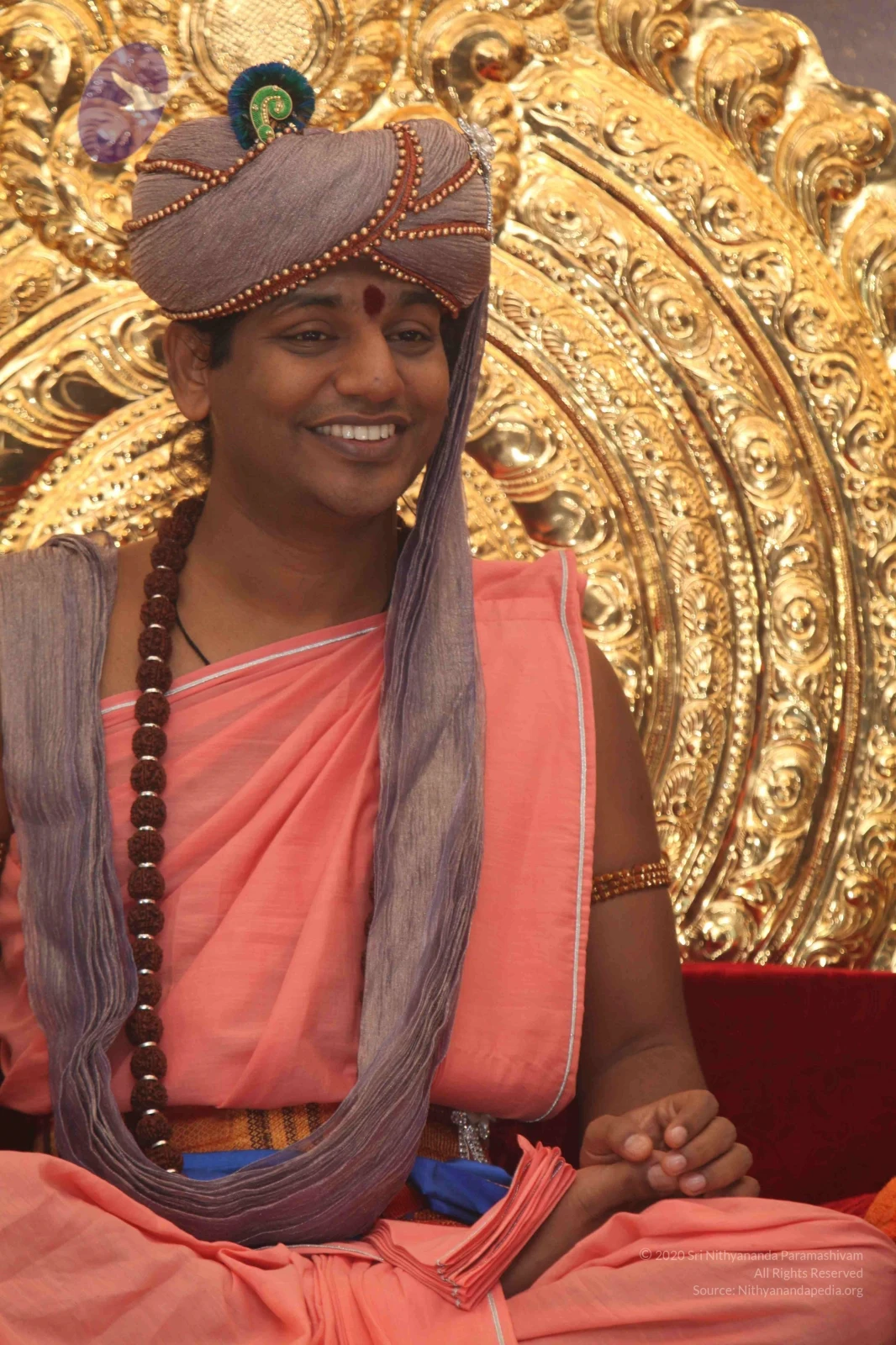
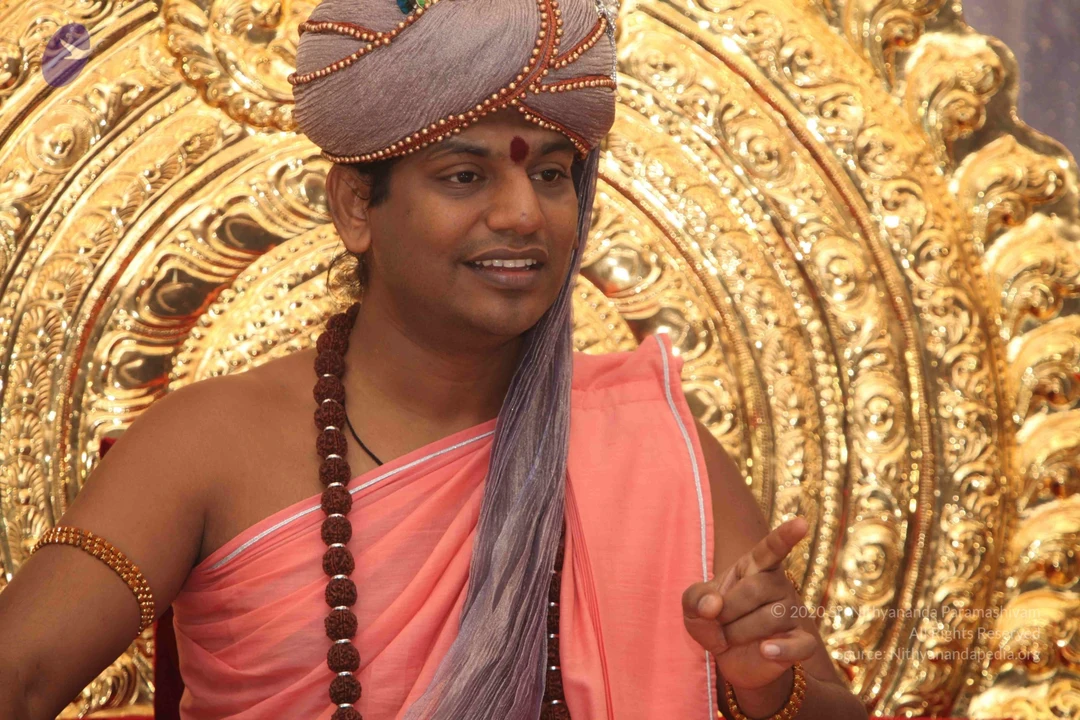
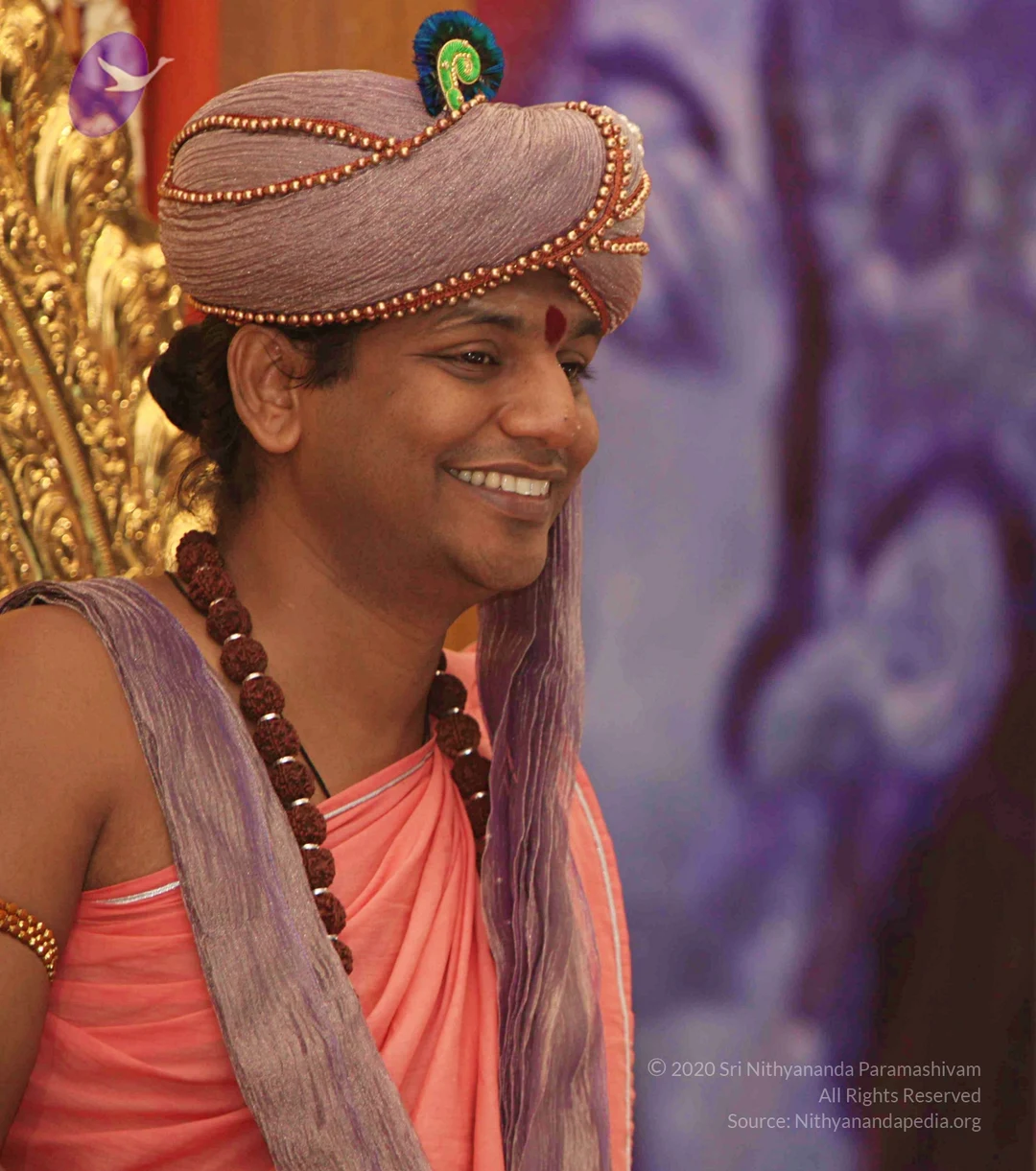
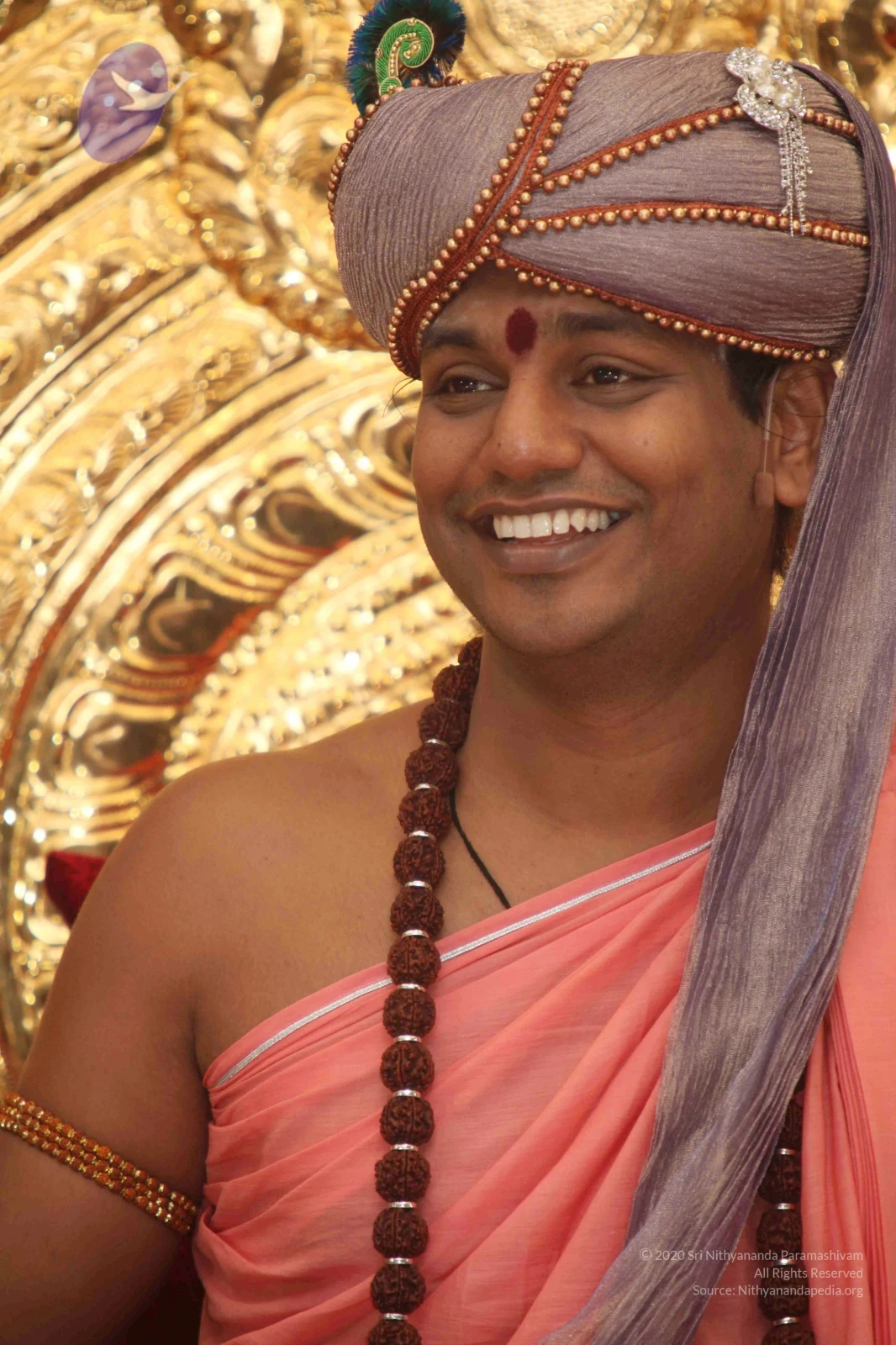
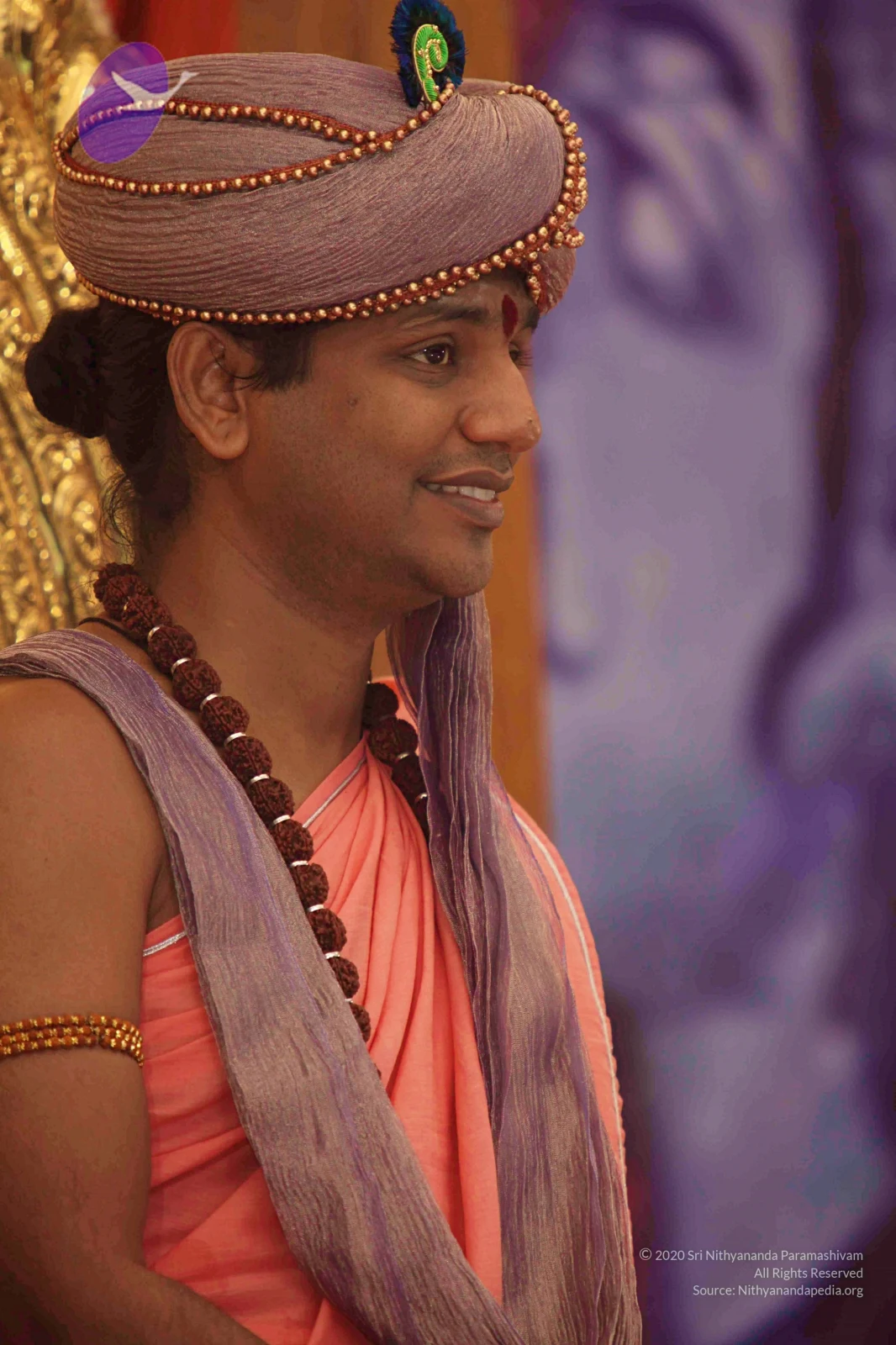
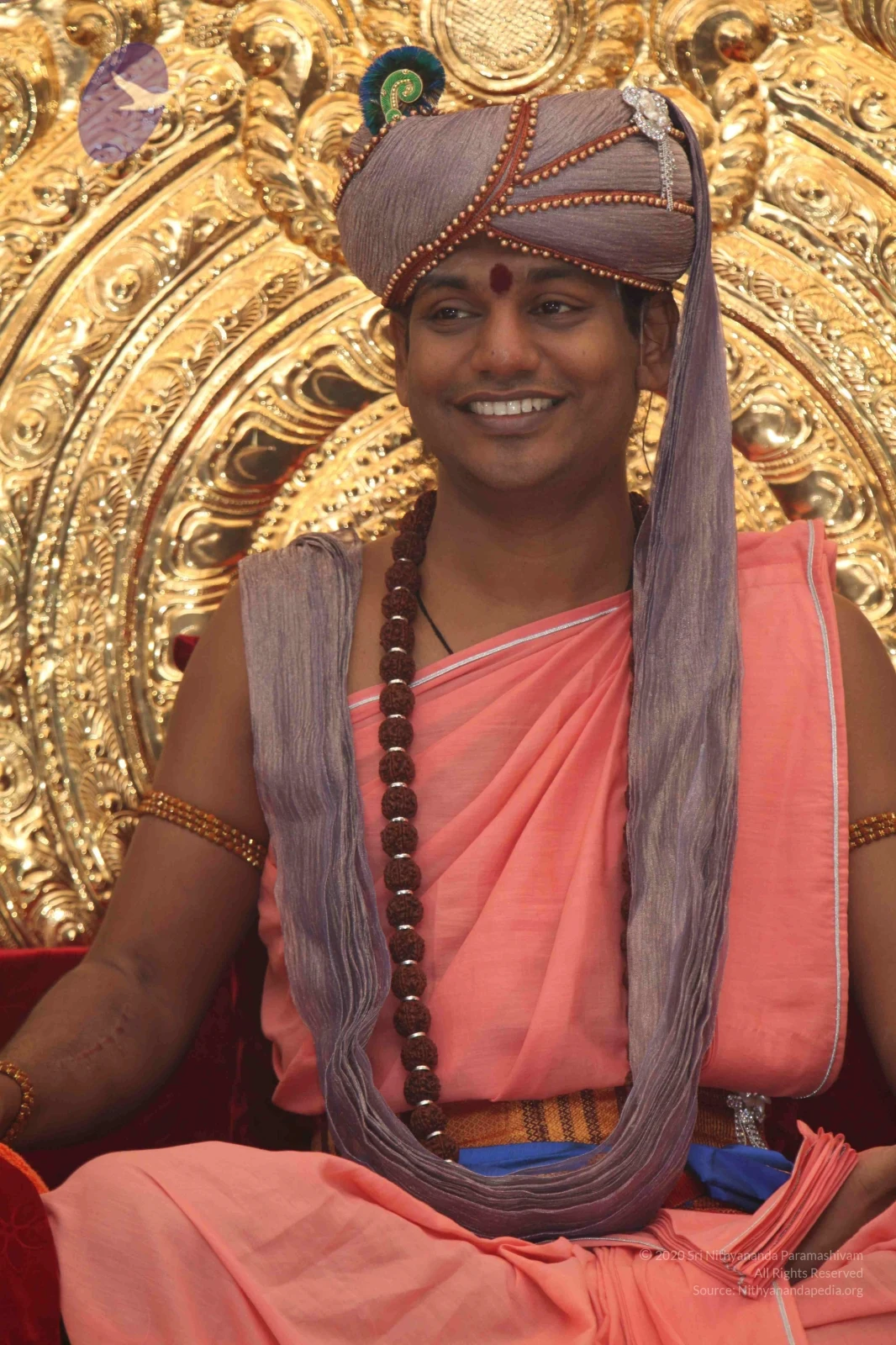
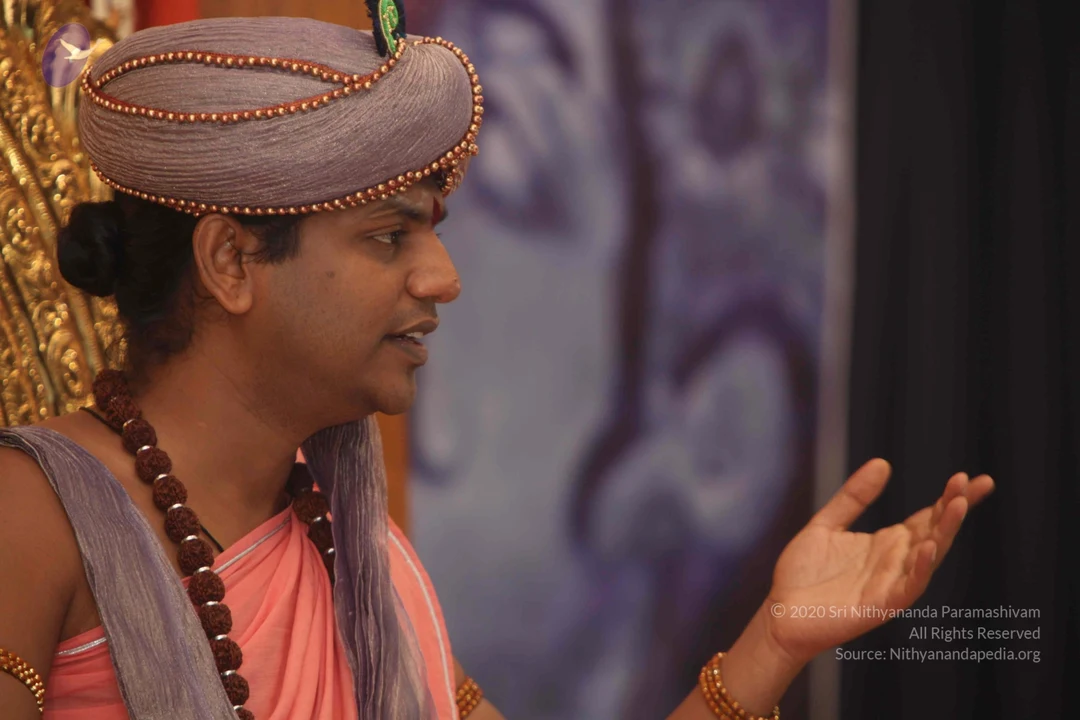
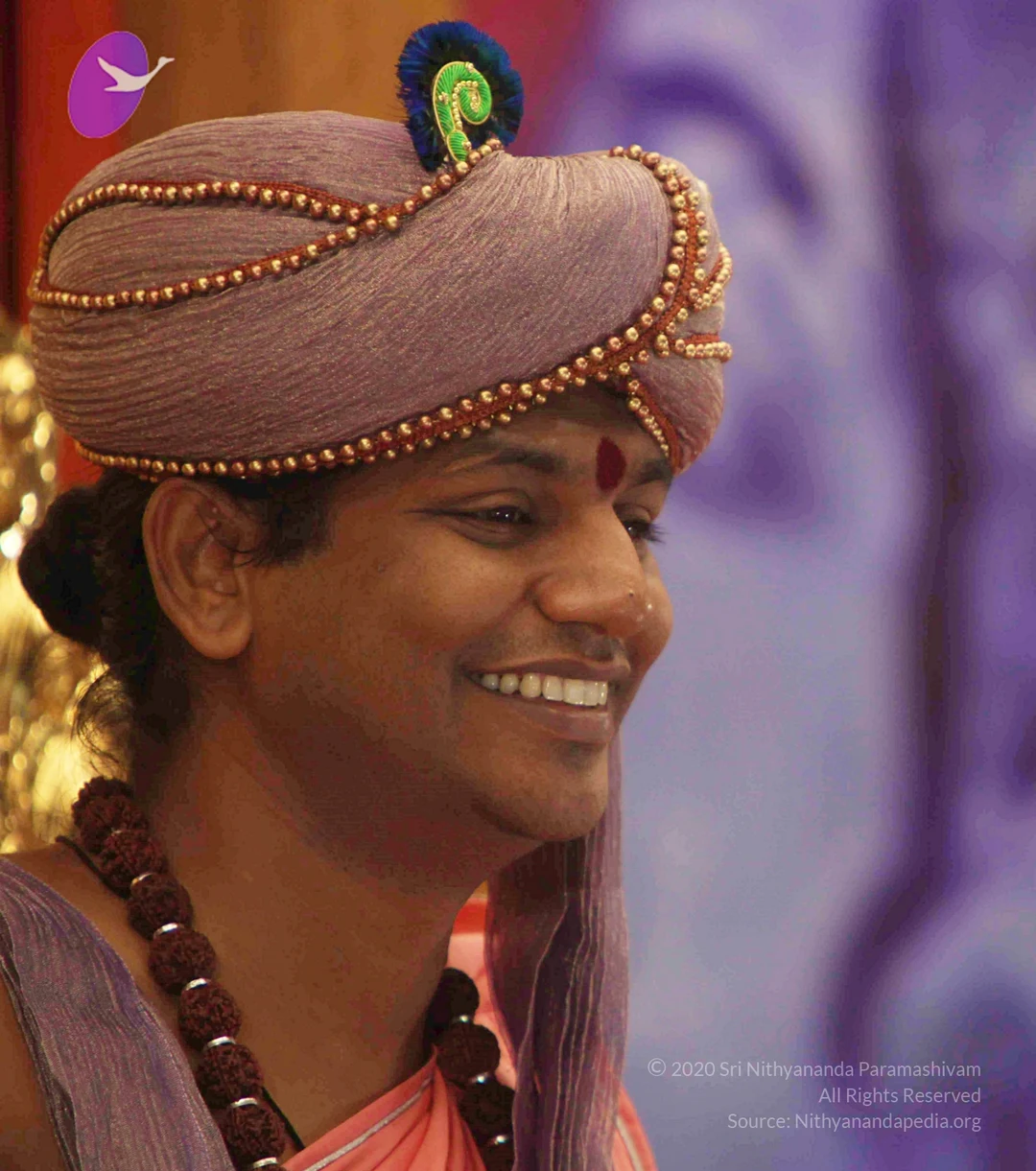
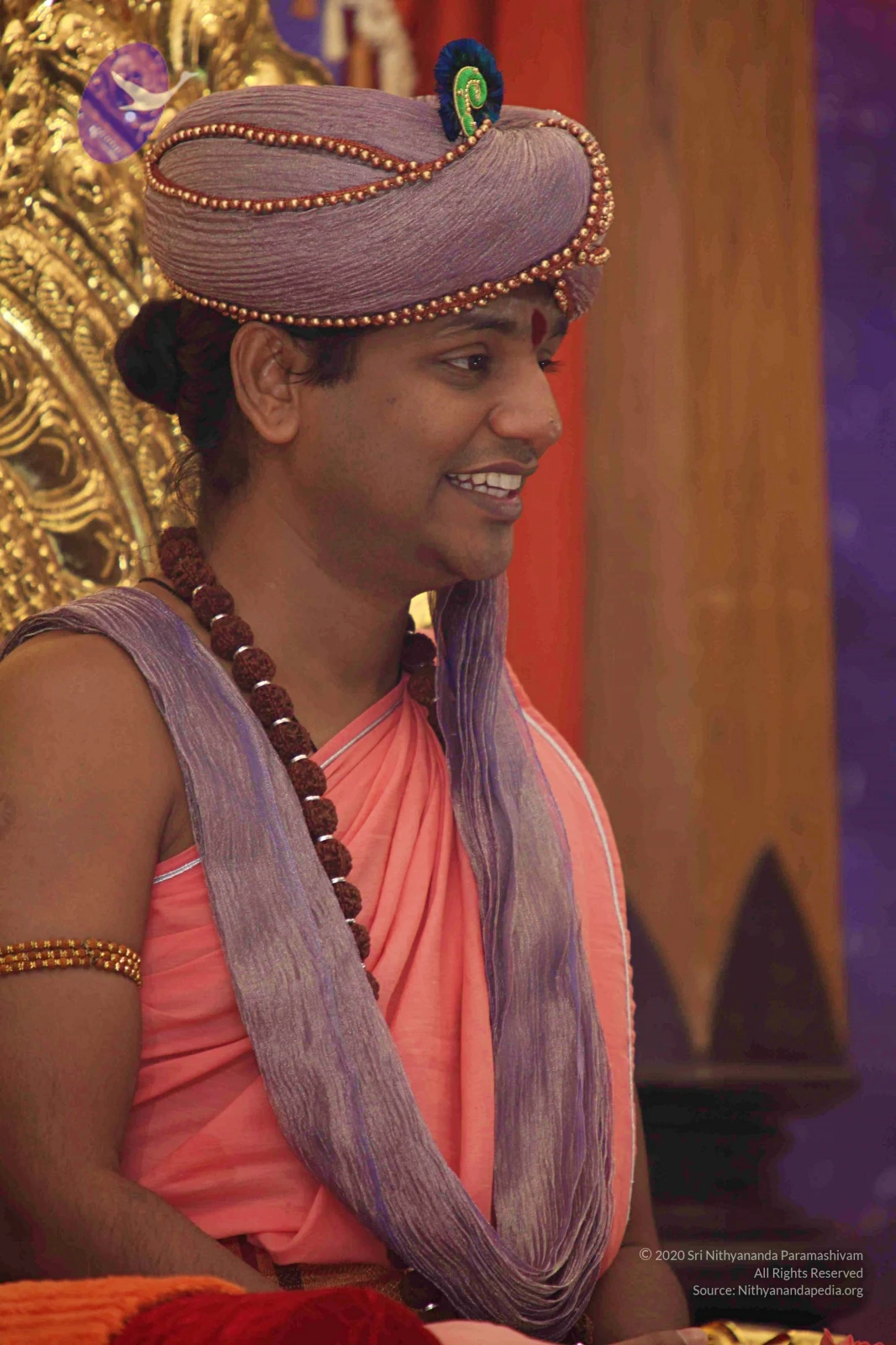
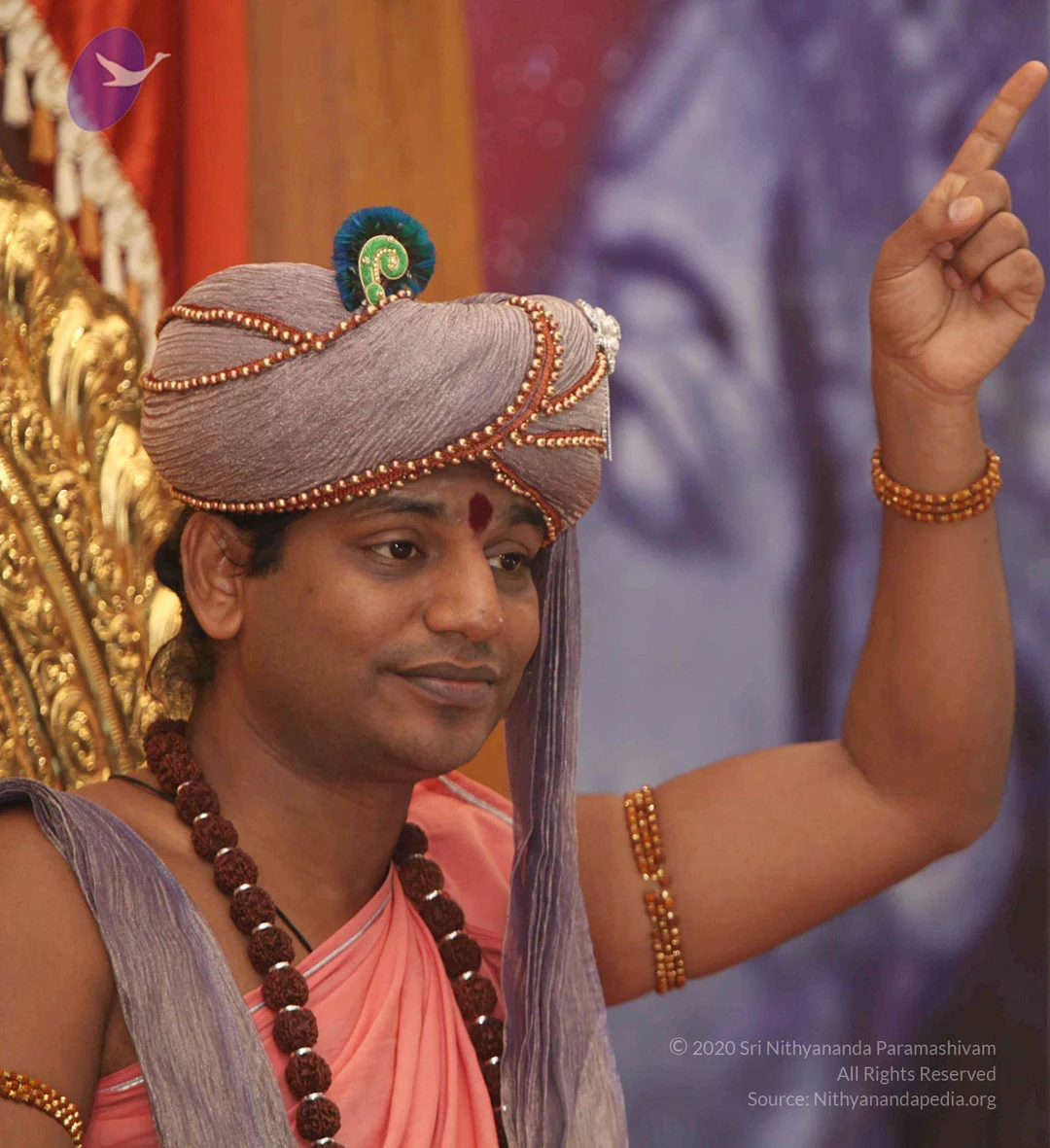
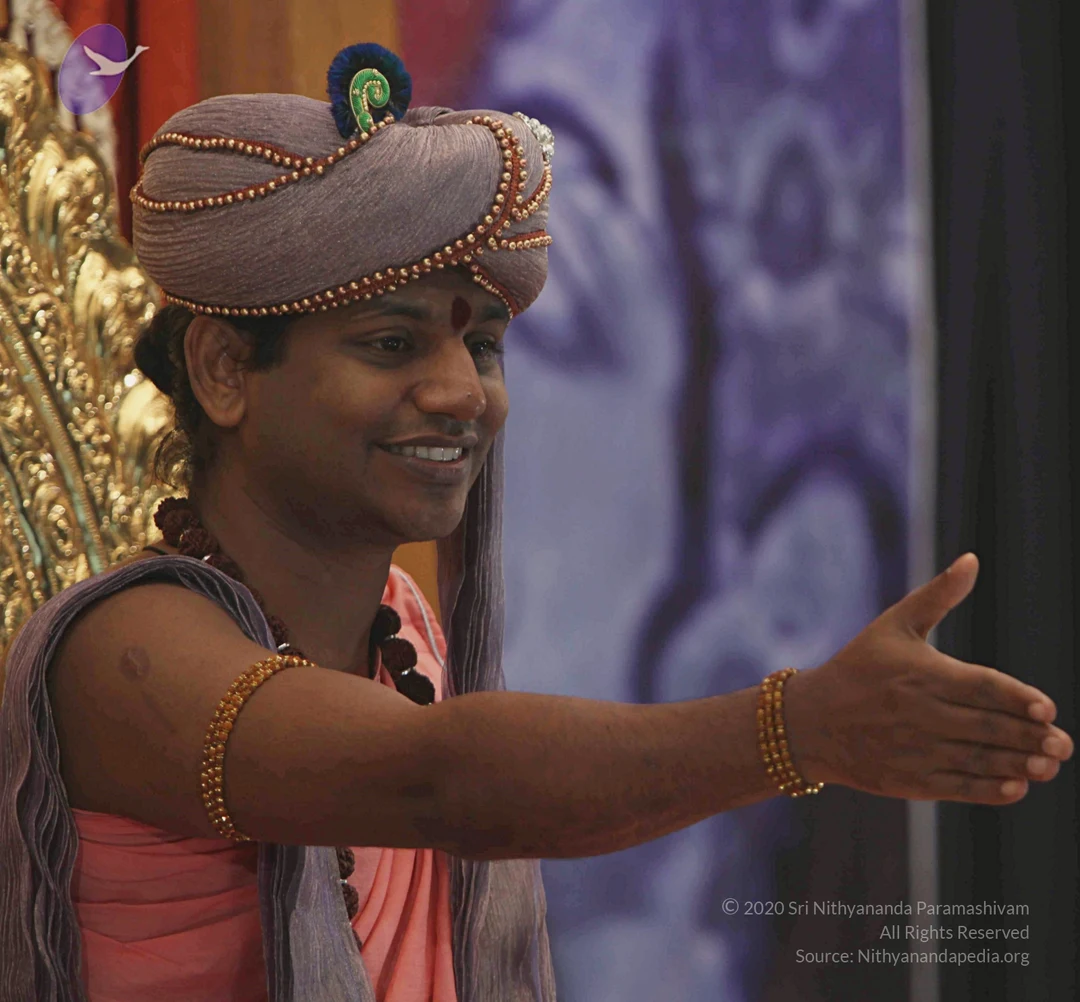
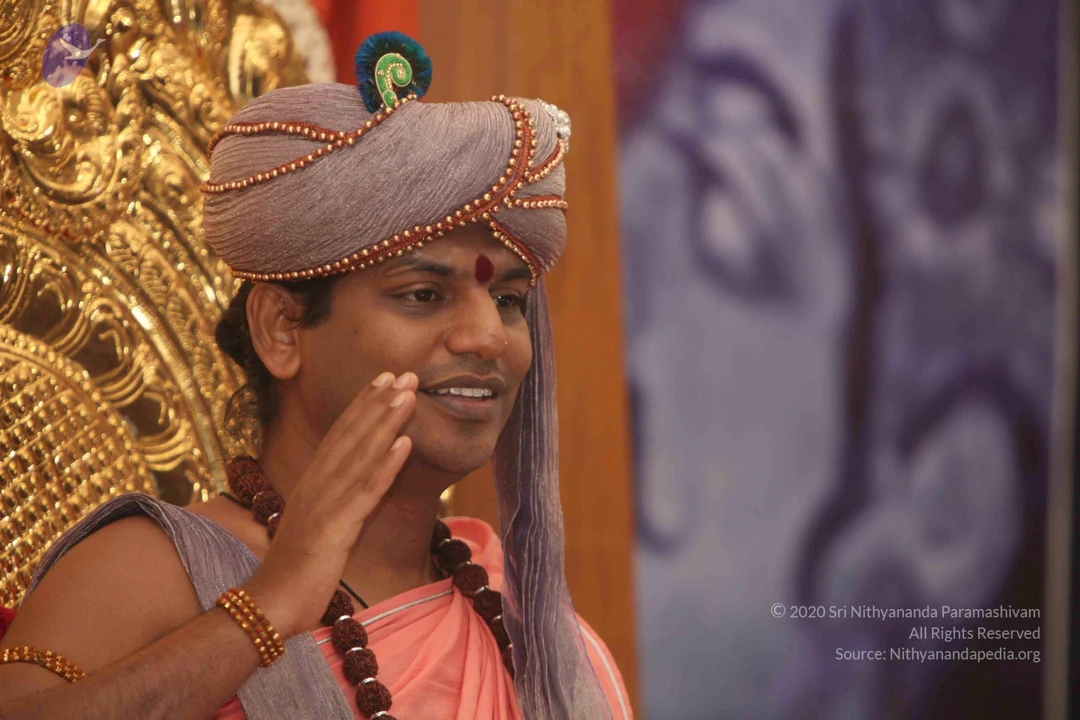
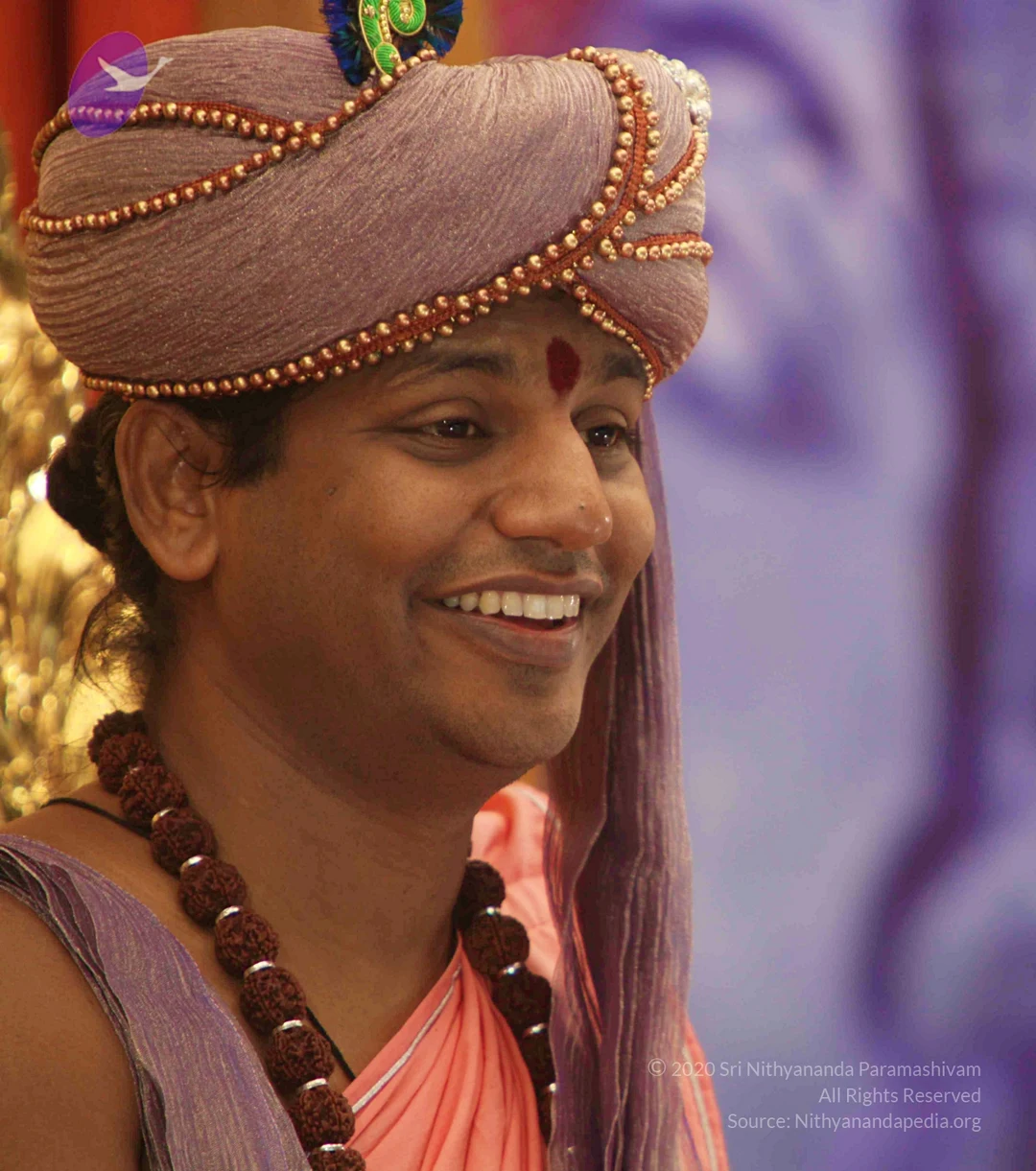
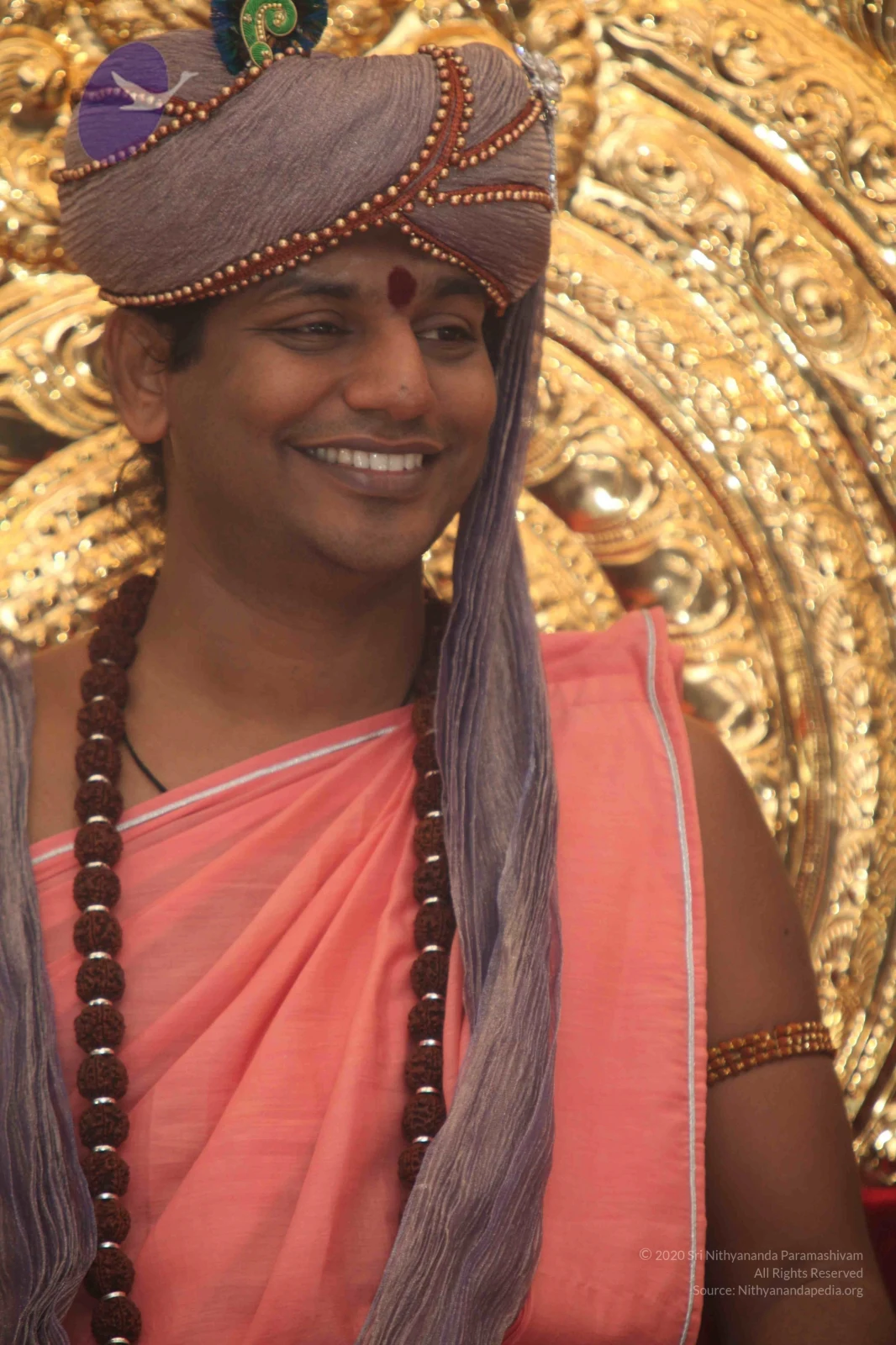
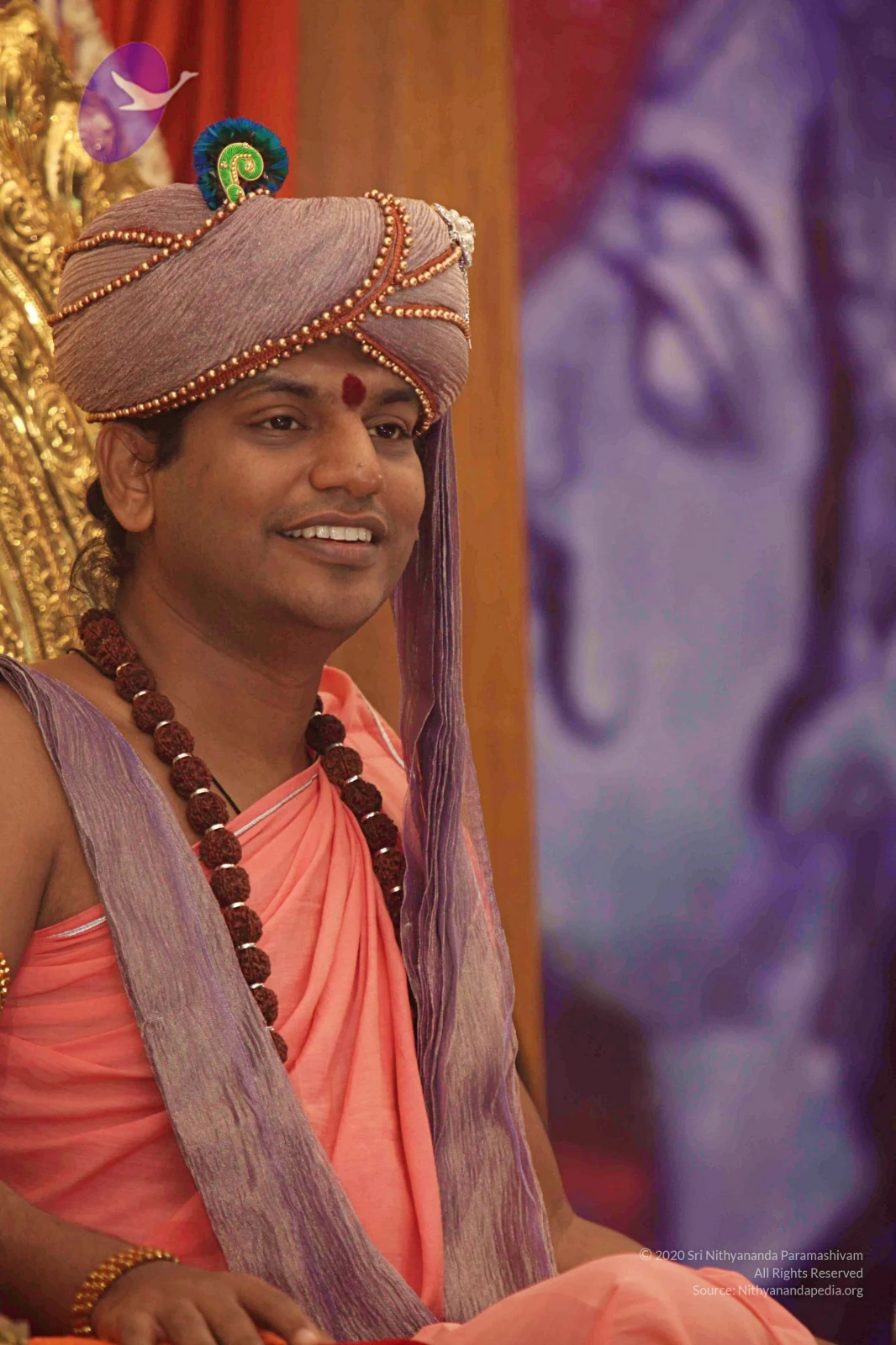
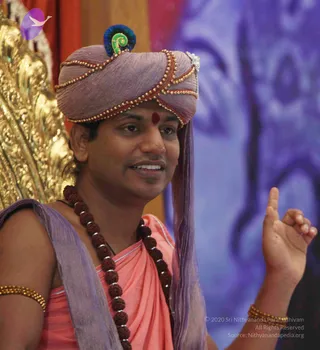
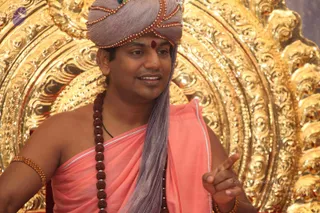
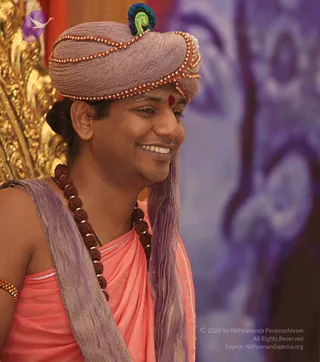
A smiling man in a lilac-grey turban decorated with a beaded red-and-gold band and a green ornament stands before an ornate gold repoussé backdrop with swirling floral and scroll patterns. He wears a red bindi on his forehead, a rudraksha mala of dark beads hanging over one shoulder, a peach-orange sannyasi-style garment and a grey-lilac shawl.A smiling man seated cross-legged in front of an ornate gold repoussé backrest, wearing a lavender-grey turban with a red bead band and a peacock-feather ornament, a red bindi, a salmon-pink robe with silver piping, a long lavender-grey shawl draped over one shoulder, a dark rudraksha mala and a beaded armlet, with his hands resting in his lap.A man seated in front of an ornate gilded throne back speaks while gesturing with his raised right hand. He wears a lavender-grey turban with gold-beaded trim and a peacock-feather ornament, a red bindi on his forehead, a saffron-orange garment over his shoulder, a lavender shawl, a dark rudraksha mala, and a gold armband. A blue and purple patterned backdrop fills the background.A man wearing a lavender-grey turban with red-and-gold beaded trim and a red tilak on his forehead sits in front of an ornate gold repoussé backdrop. He wears a salmon-pink shawl draped over his bare shoulder, a long grey wrap falling over his chest, a long rudraksha mala of dark beads, and a gold bangle on his upper arm. He gestures with his right hand while speaking. a person: the turban, saffron-toned shawl and rudraksha mala are visible cues, and he is seated in a ceremonial gold setting. This is an in-person speaker during a satsang discourse.A smiling man in a lilac pleated turban decorated with a beaded gold-and-red trim and a green-and-blue peacock feather ornament stands before an ornate golden chair. He wears a salmon-pink draped garment over one shoulder, a lilac shawl, a dark rudraksha mala necklace and a gold armlet, with a red bindi on his forehead. The background is a soft purple and lilac painted wall.

03-BG-Satsang-Tamil
11 photosSource gallery
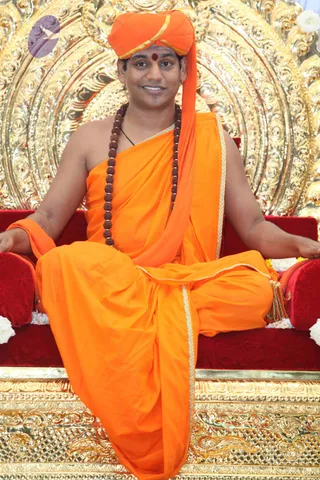
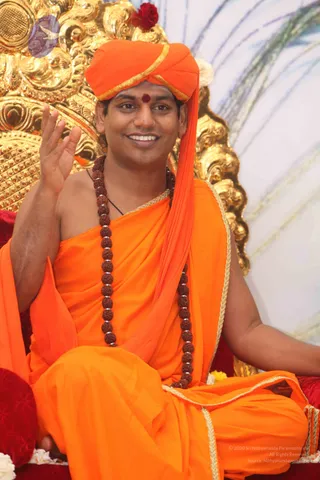
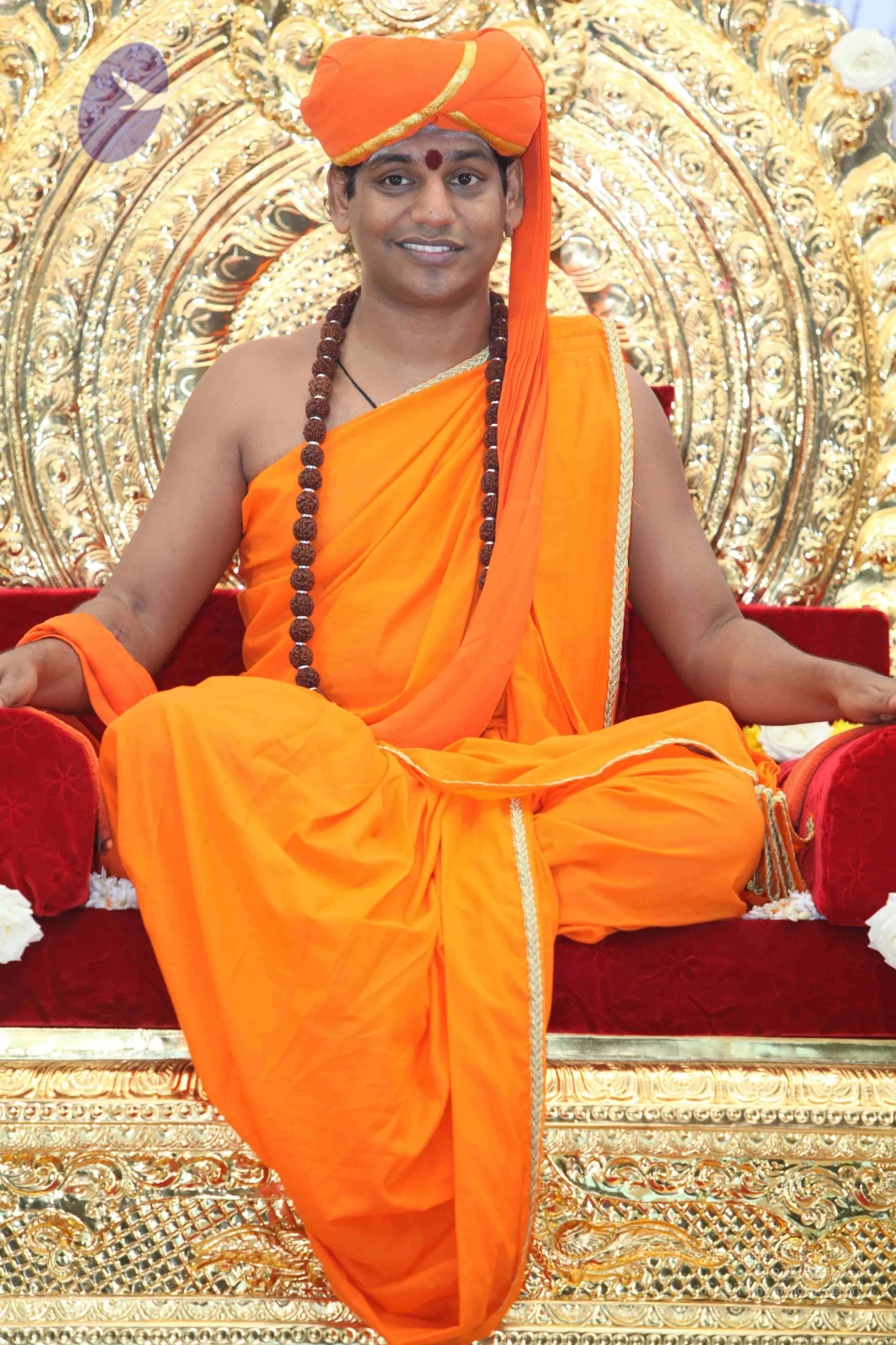
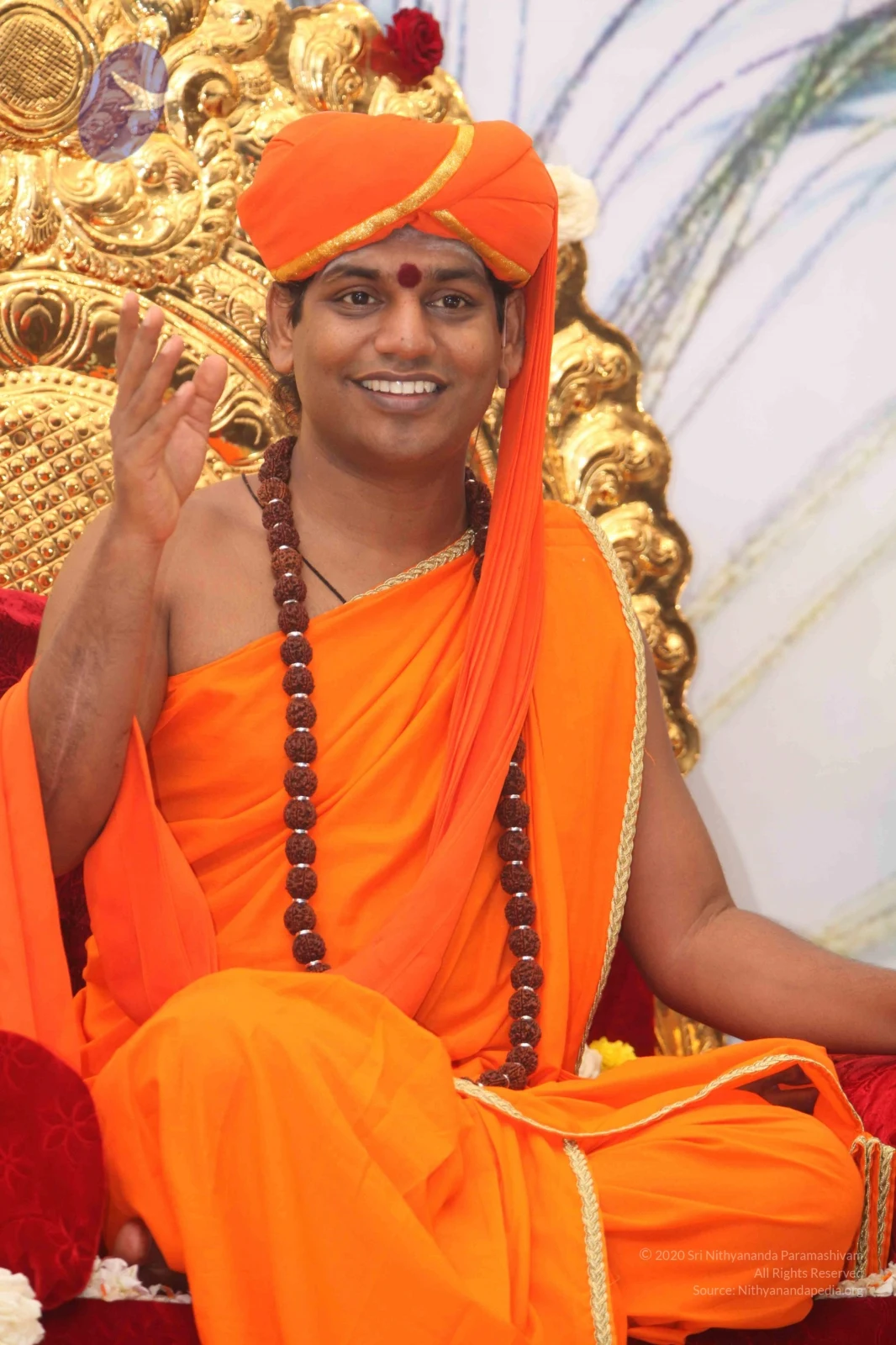
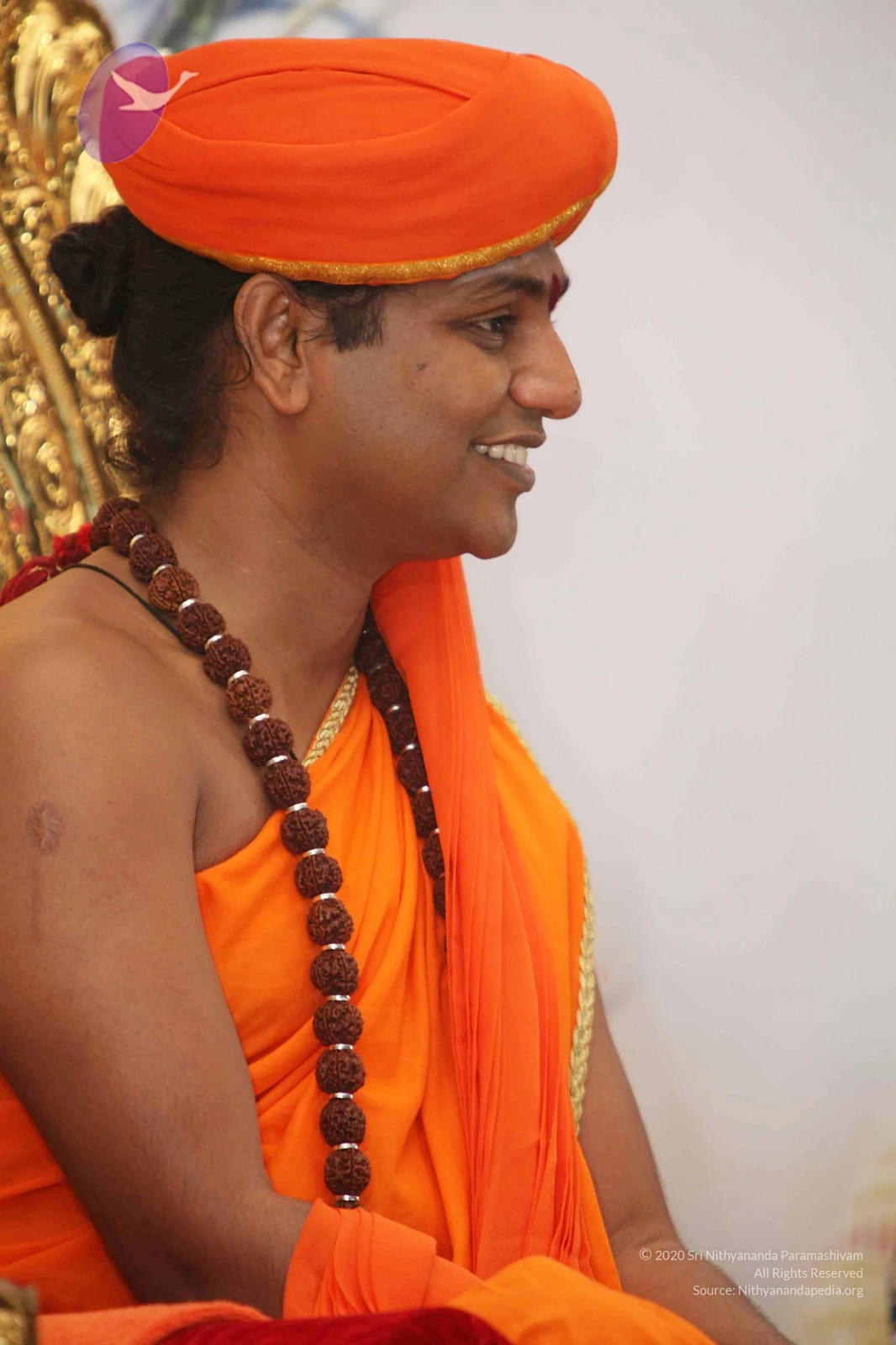
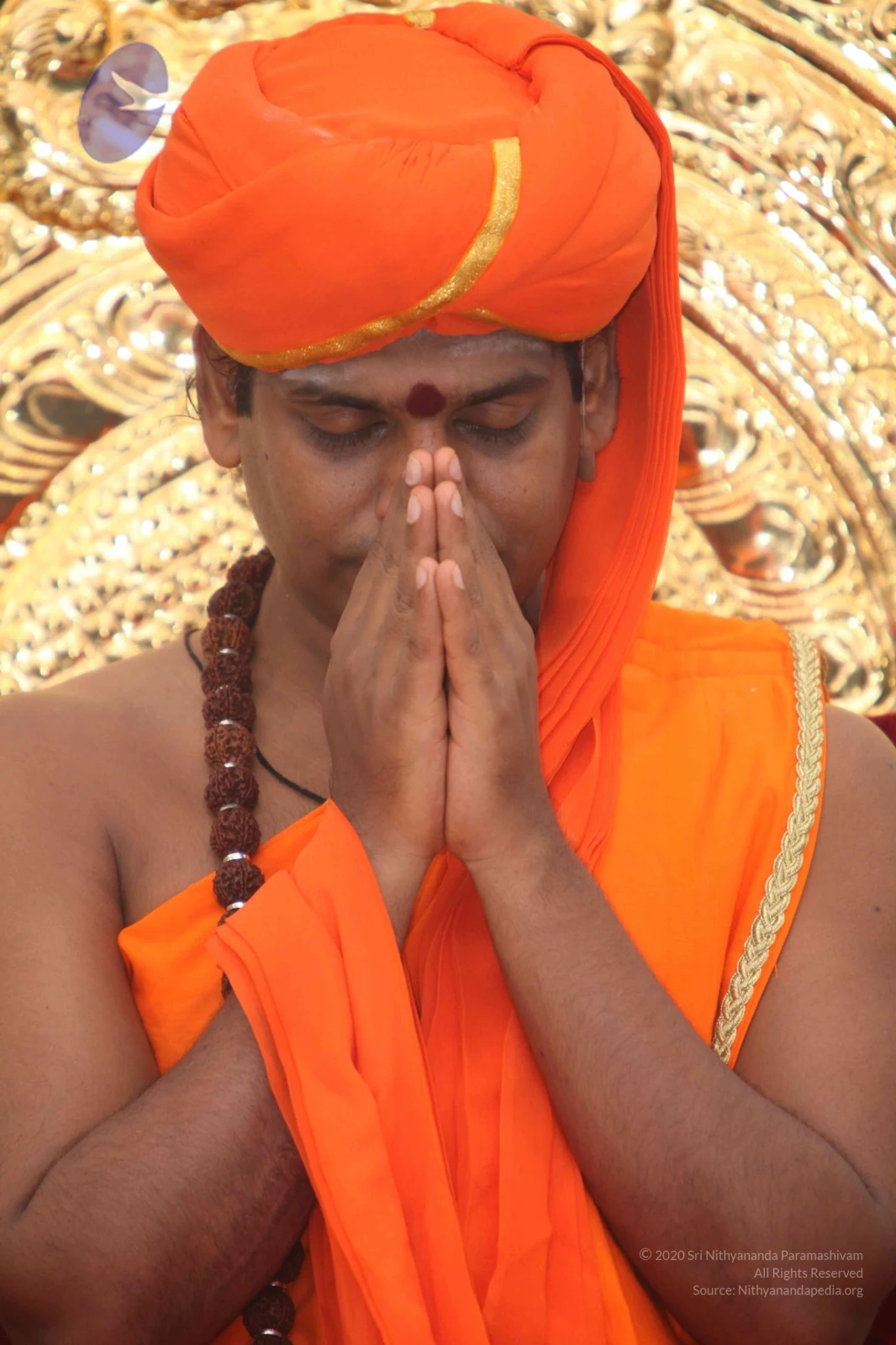
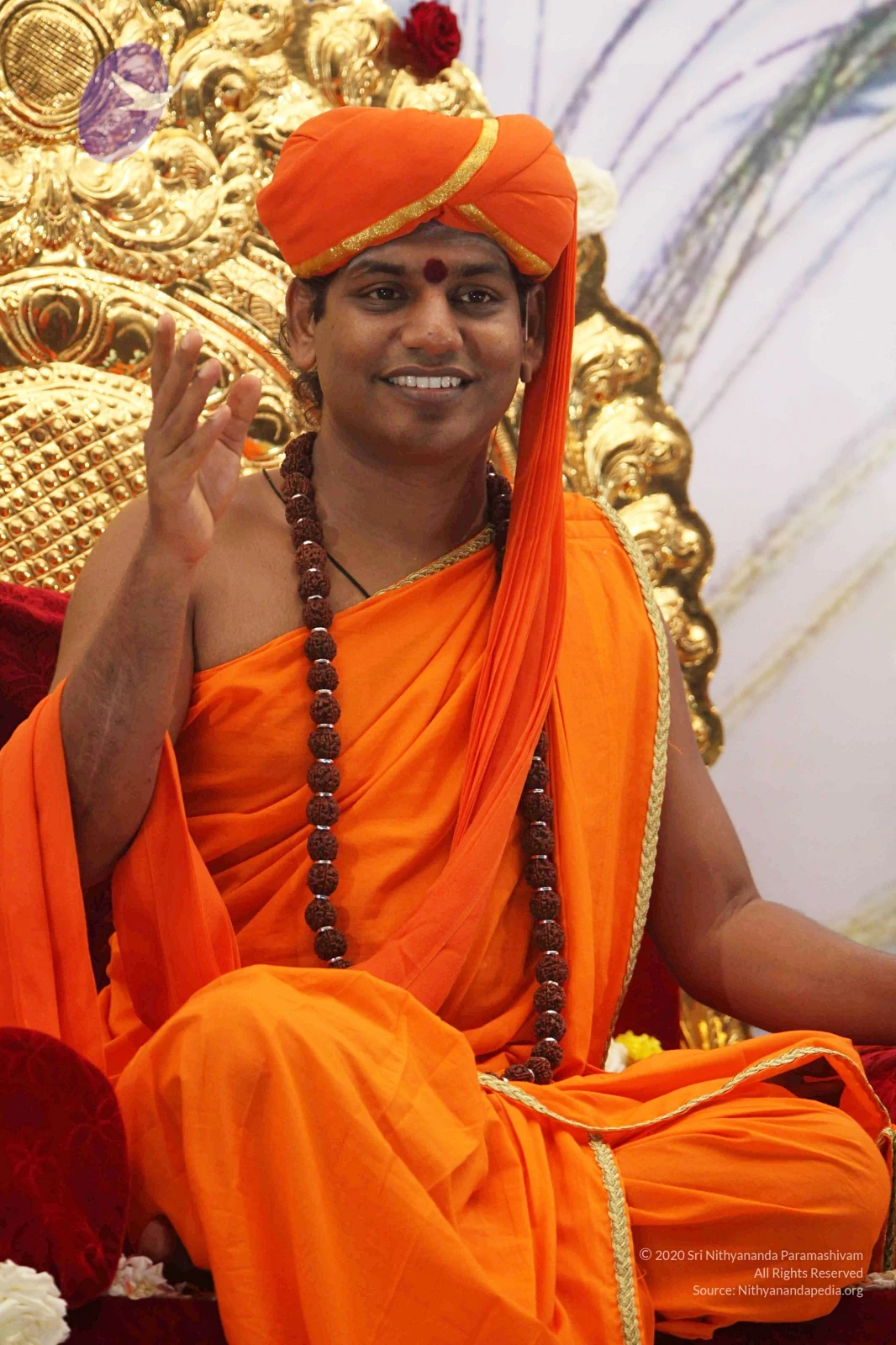
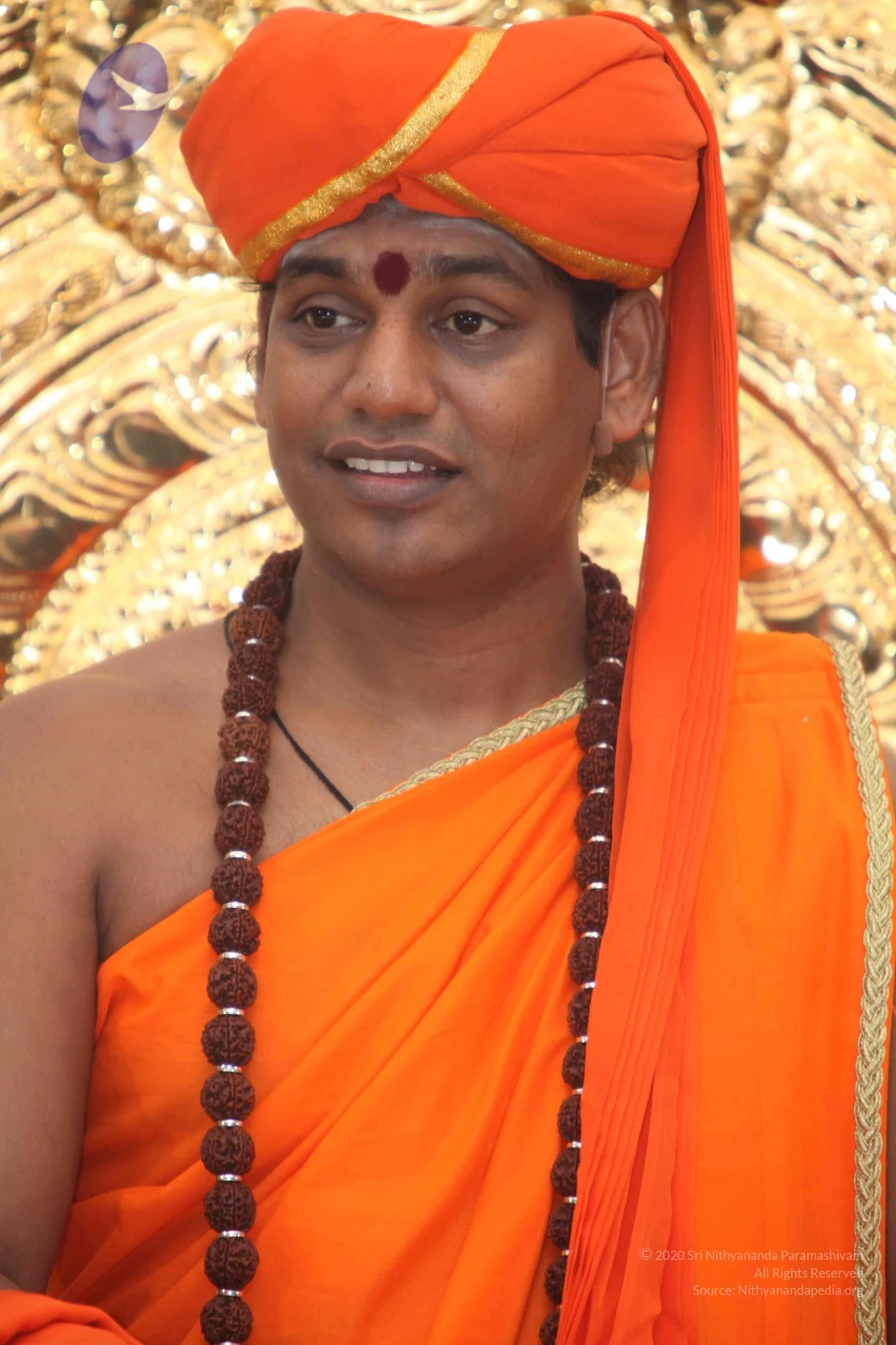
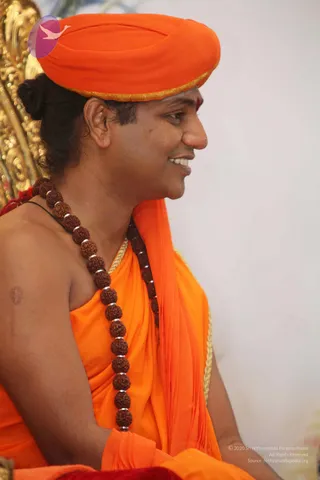
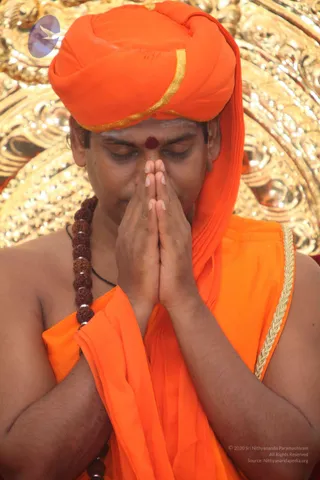
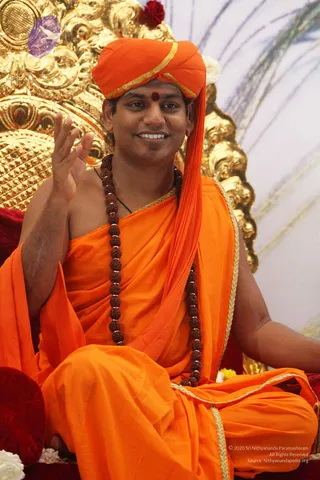
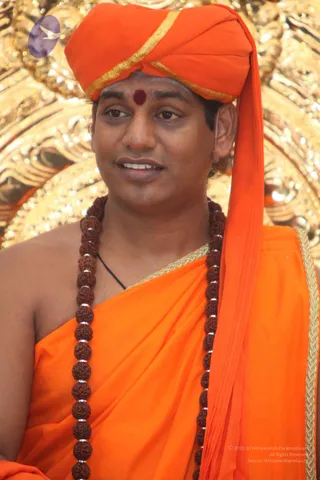
A seated man in an orange saffron turban and orange draped robe with gold trim sits cross-legged on a red velvet throne with gold ornate carved backrest and base. He wears a long rudraksha mala of brown beads, a red bindi on his forehead, and holds his hands open on the armrests. White flowers lie on the throne. A small circular logo appears at upper left.A smiling man sits cross-legged on a red cushioned seat in front of an ornate gold throne backdrop, raising his right hand in a gesture of address. He wears an orange turban with a gold-edged fold, an orange robe with gold trim, and a long strand of rudraksha beads across his chest, with a red bindi on his forehead. Red and white flower petals lie near him, and a painted wall with feathery designs is behind the throne. The appearance-based cues of turban, saffron robes, rudraksha mala and throne match a person candidate. The page says he was not at this event, so the candidate's presence is uncertain, and the swamiji value is unsure.Side-profile photograph of a smiling man seated against a golden ornate chair, wearing a bright orange turban, orange robe draped over the shoulder with gold trim, and a long strand of brown rudraksha beads with silver spacers across the chest. A red vertical mark is on his forehead. The background is plain and pale.A close-up photograph of a man with eyes closed and palms pressed together in anjali mudra at his chest, wearing an orange turban with a gold border, an orange shawl with gold braided trim, and a rudraksha mala around his neck. A red bindi marks his forehead. Behind him is an ornate gold repoussé backdrop. Appearance-based cues are a saffron turban and rudraksha mala, but the identity is uncertain, so he is described only by role as a devotee in prayer.A smiling man sits cross-legged on a richly gilded throne, raising one hand in a gesture of teaching. He wears an orange-saffron turban with a gold border, an orange robe with gold trim, and a long dark rudraksha mala with silver spacers. A red bindi marks his forehead. Behind him stand ornate gold carved panels and a white-and-blue patterned backdrop. Red roses and white flowers lie near the throne. Based on his saffron robes, turban, rudraksha mala and throne, he is a person seated in discourse.A man wearing an orange turban with gold border, a red bindi on his forehead, and an orange shawl with gold trim over his shoulders. He wears a long multi-strand rudraksha mala with silver spacers and speaks while looking to the side. Behind him is an ornate gold-toned carved backdrop.

October 10 2011

1 photoView all
A photograph of a temple shrine niche framed by grey carved stone pillars and orange drapery. Inside a gilded arch stands a statue of a male sage in red garments with a red head wrap, a white flower garland, and a raised hand in blessing, set against a green brocade backdrop. Beside it, a black stone relief shows a seated deity figure on a stone wall, and a seated figure is carved high on the pillar. Red and gold metal railings and greenery are visible behind. No living people are present.