Skip to content
Saturday

4 December 2010

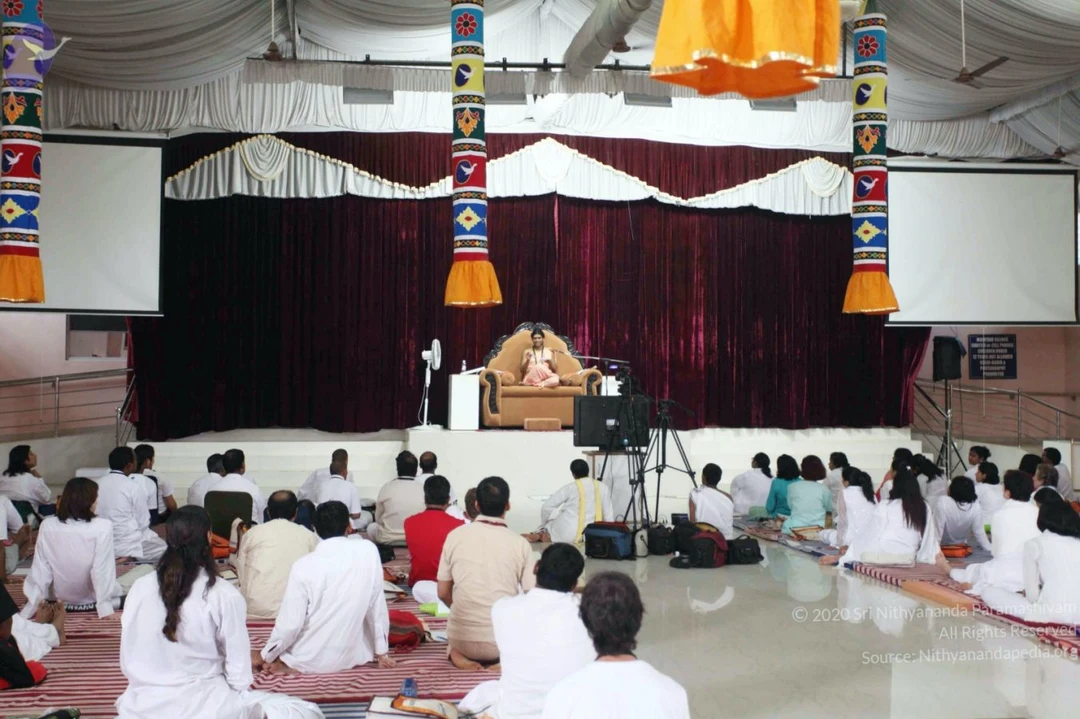
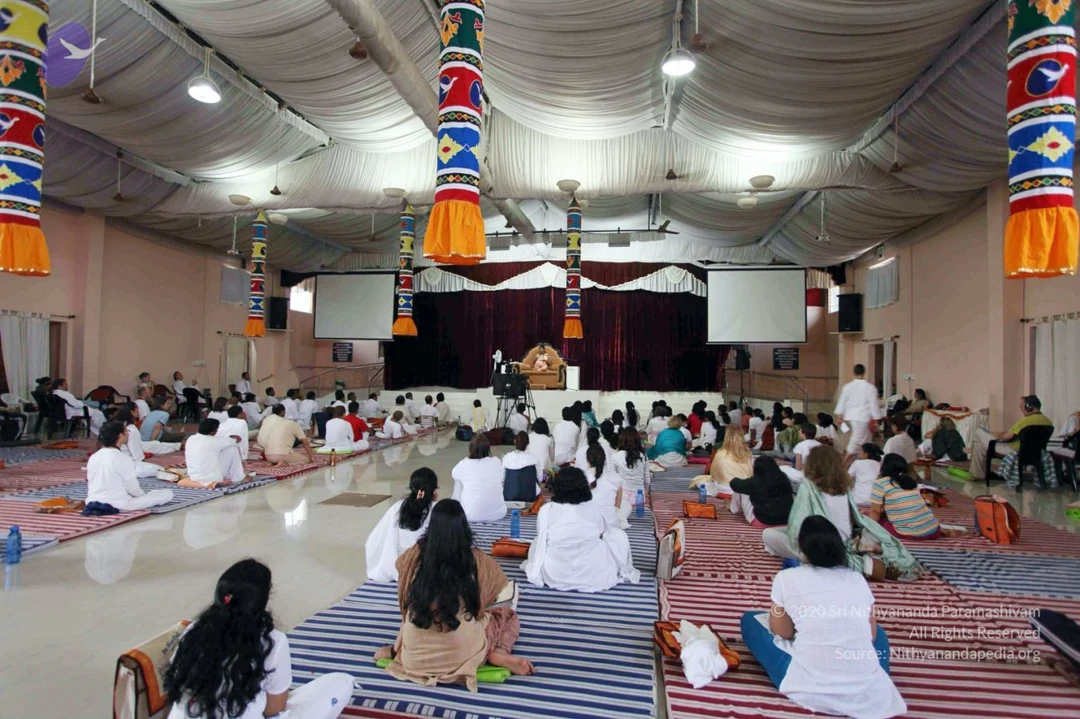
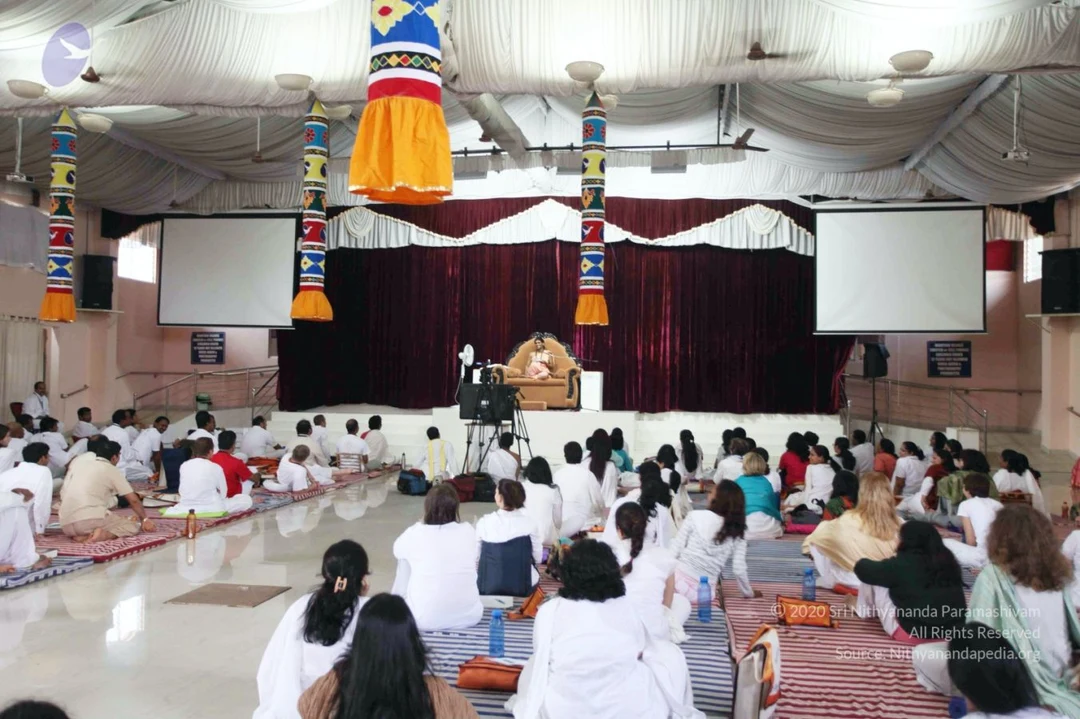
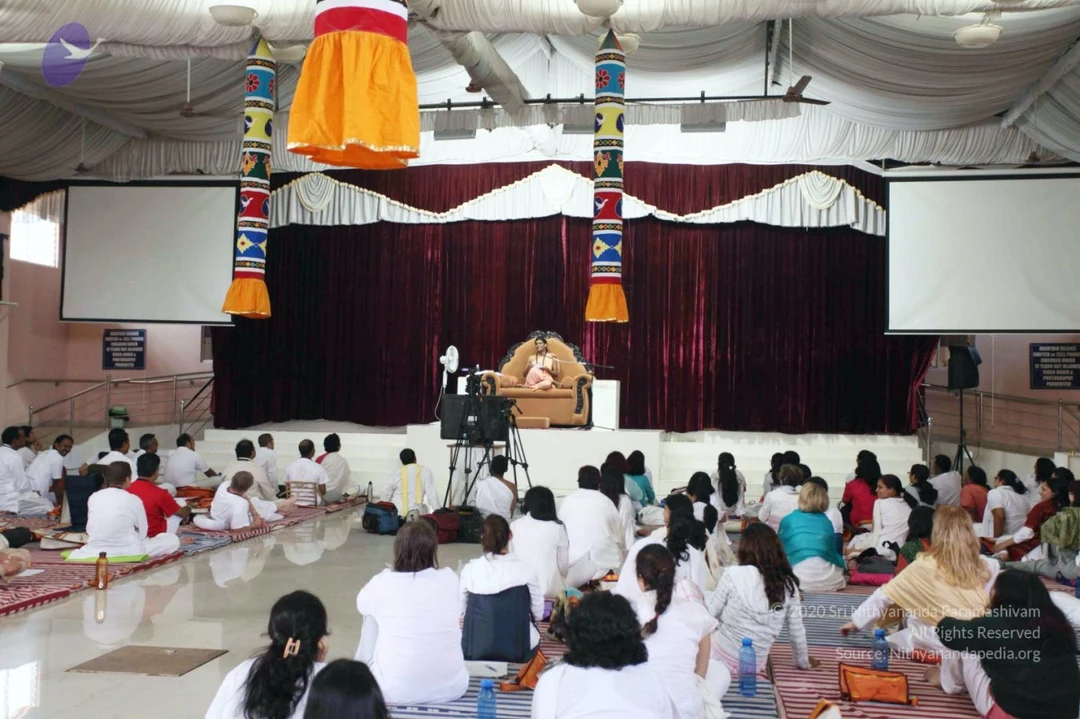
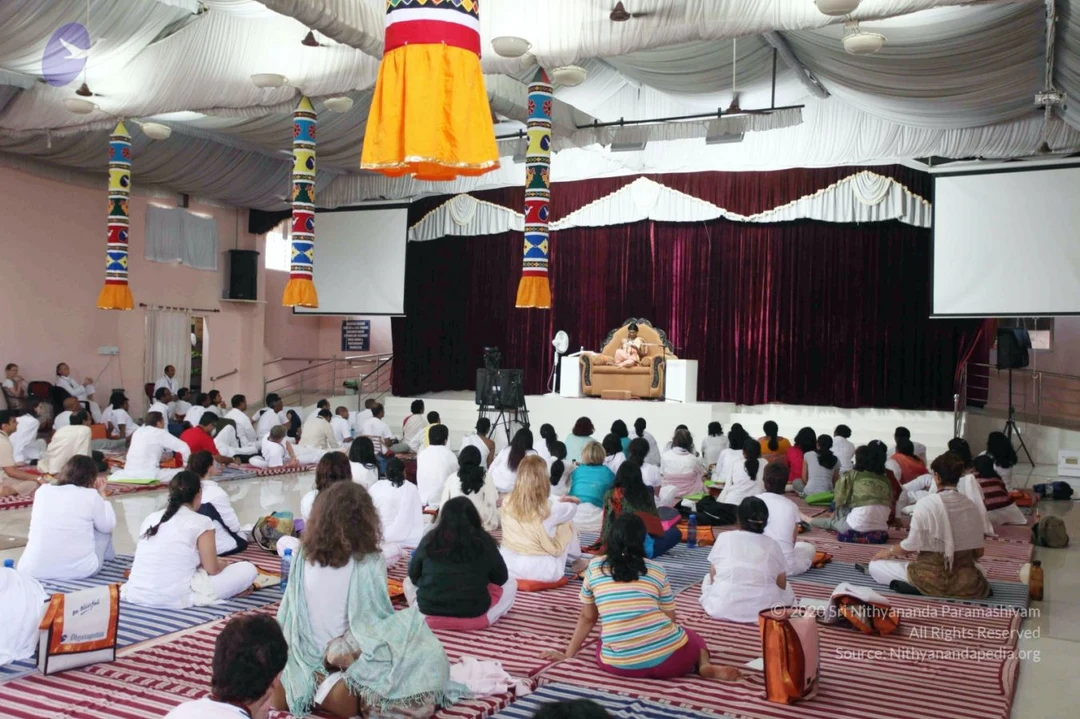
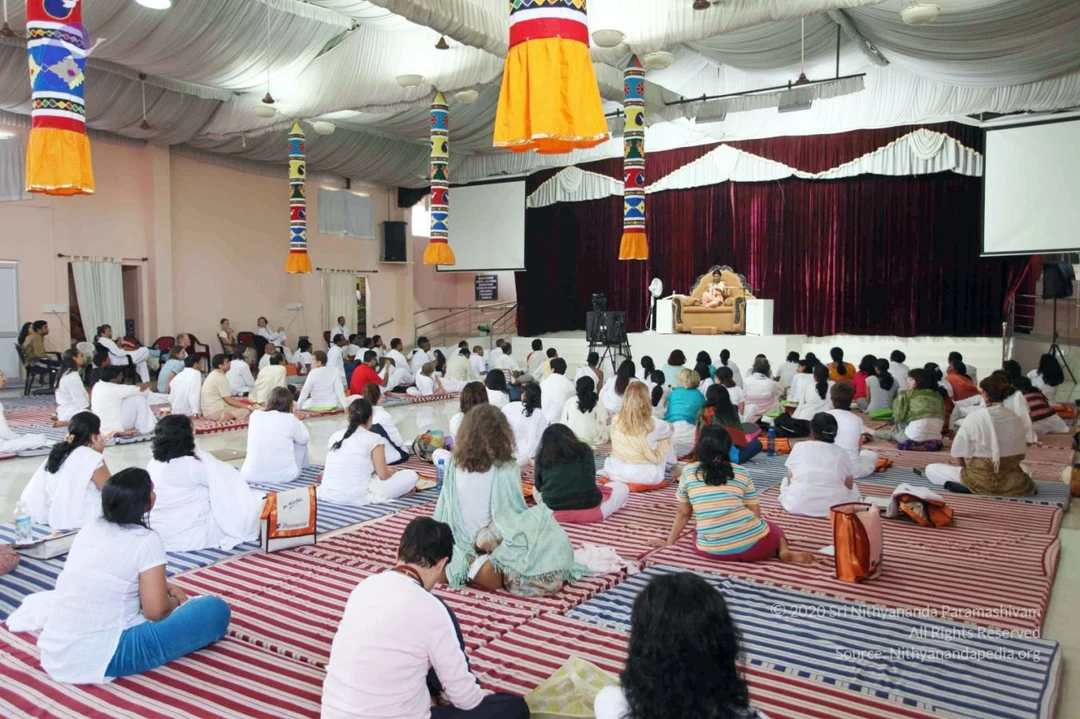
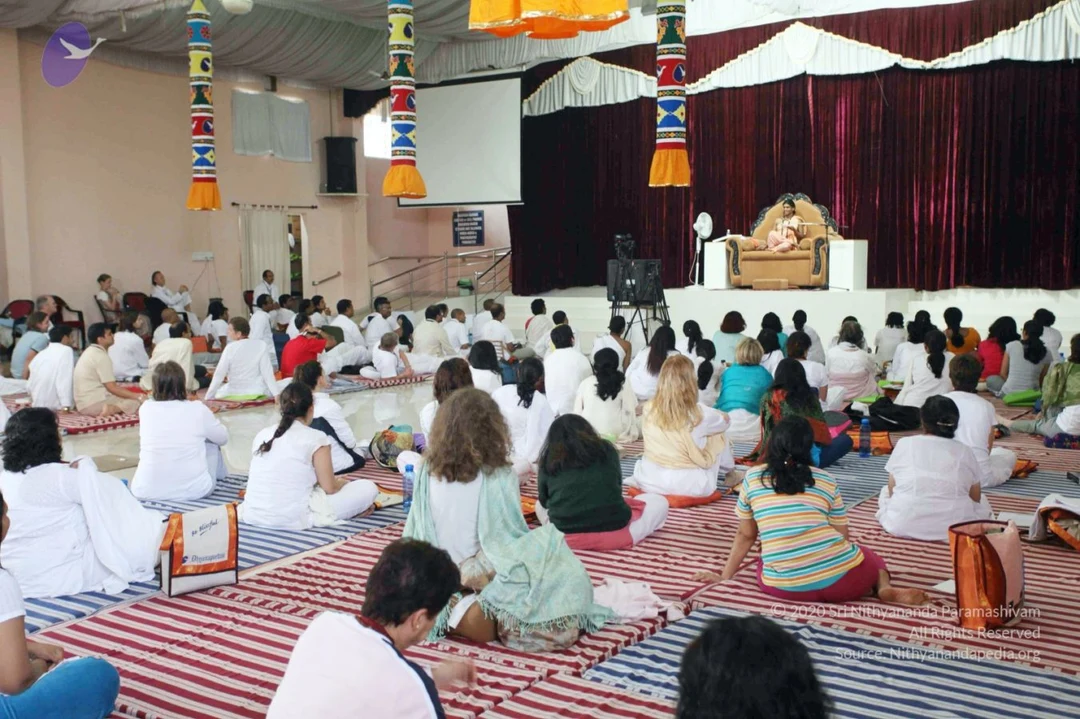
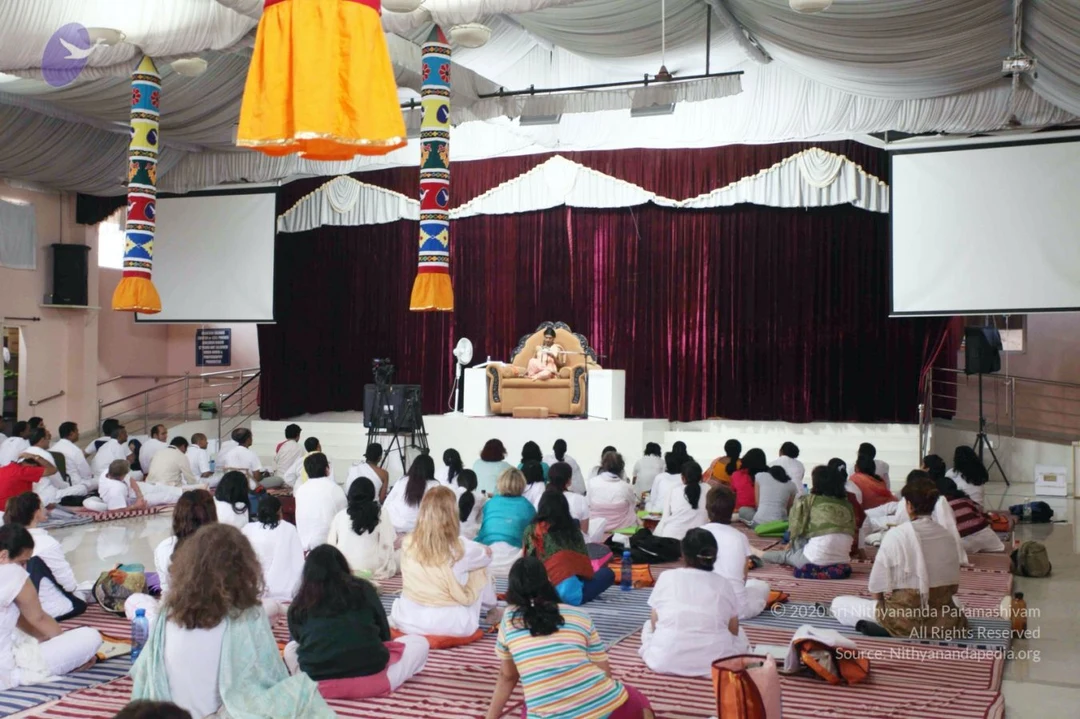
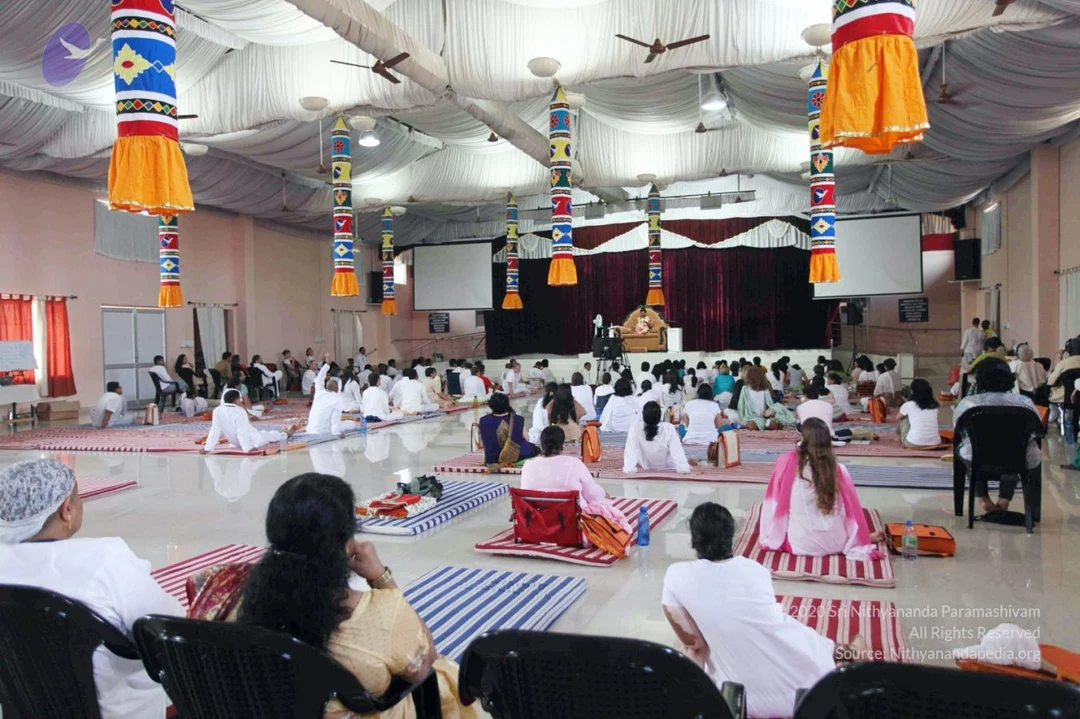
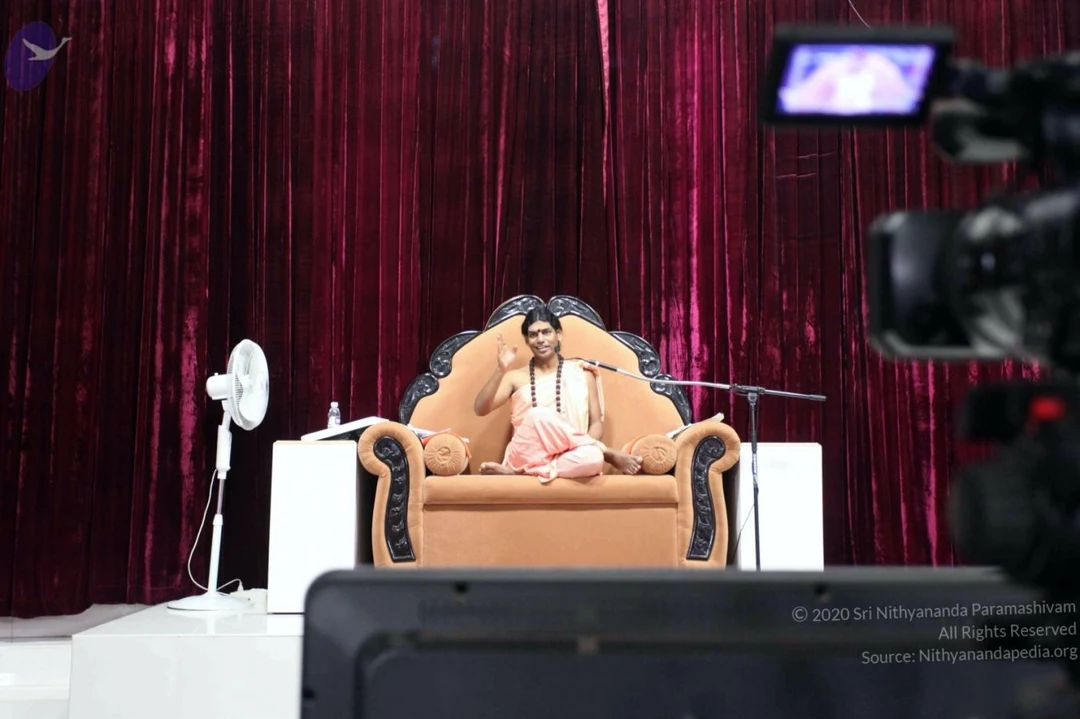
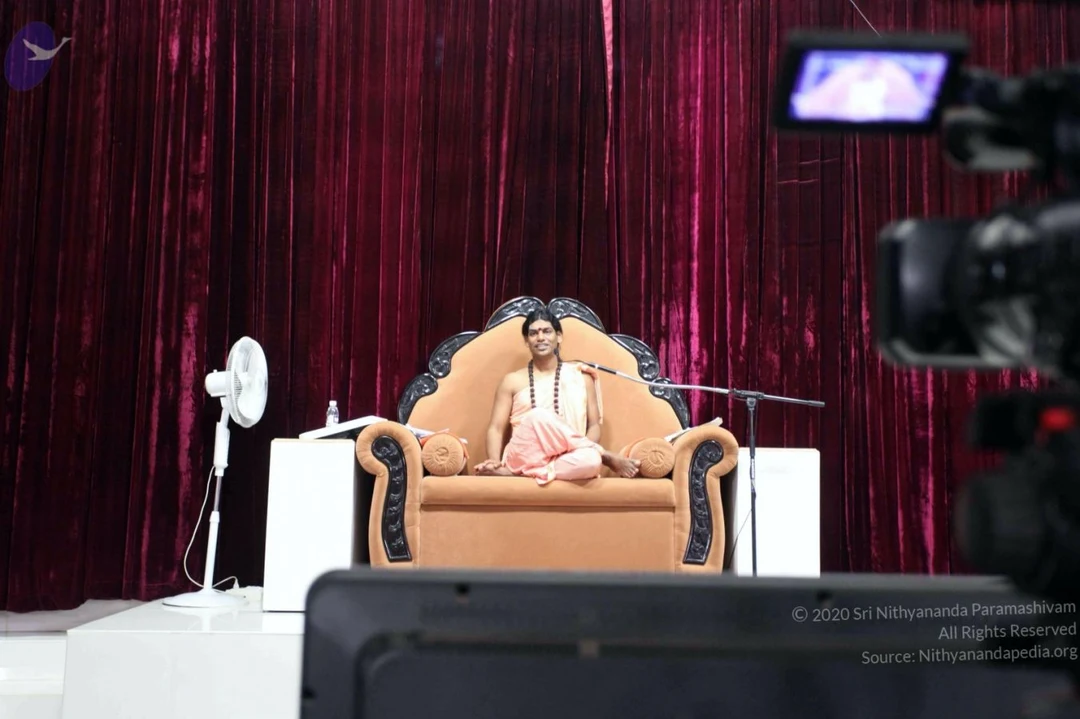
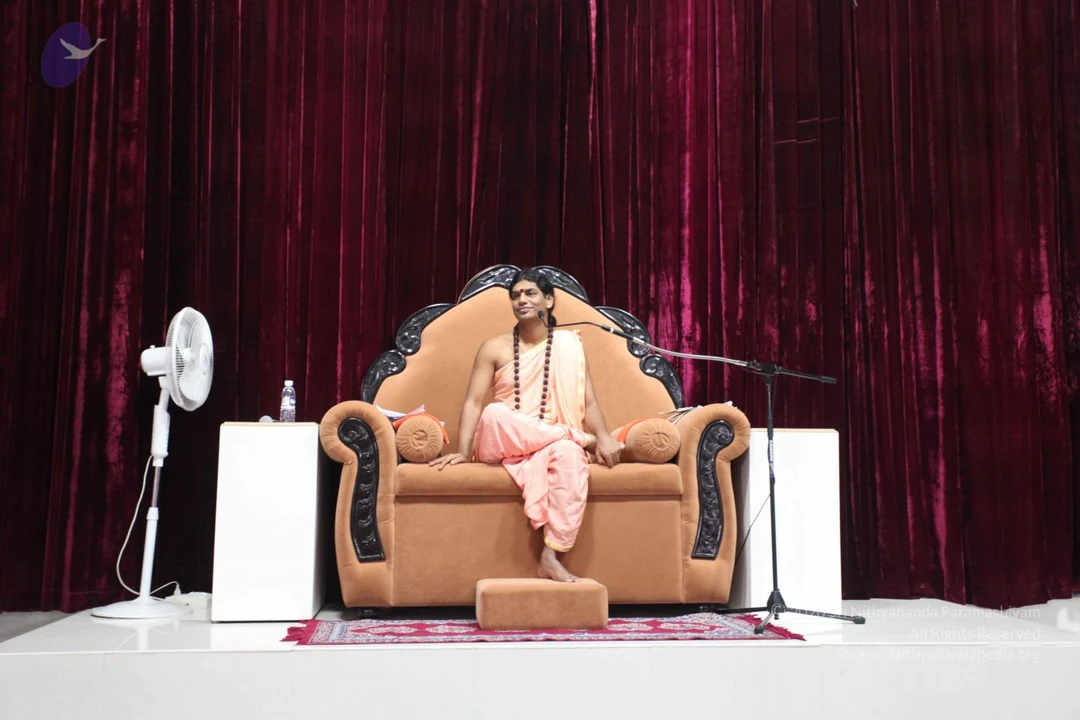
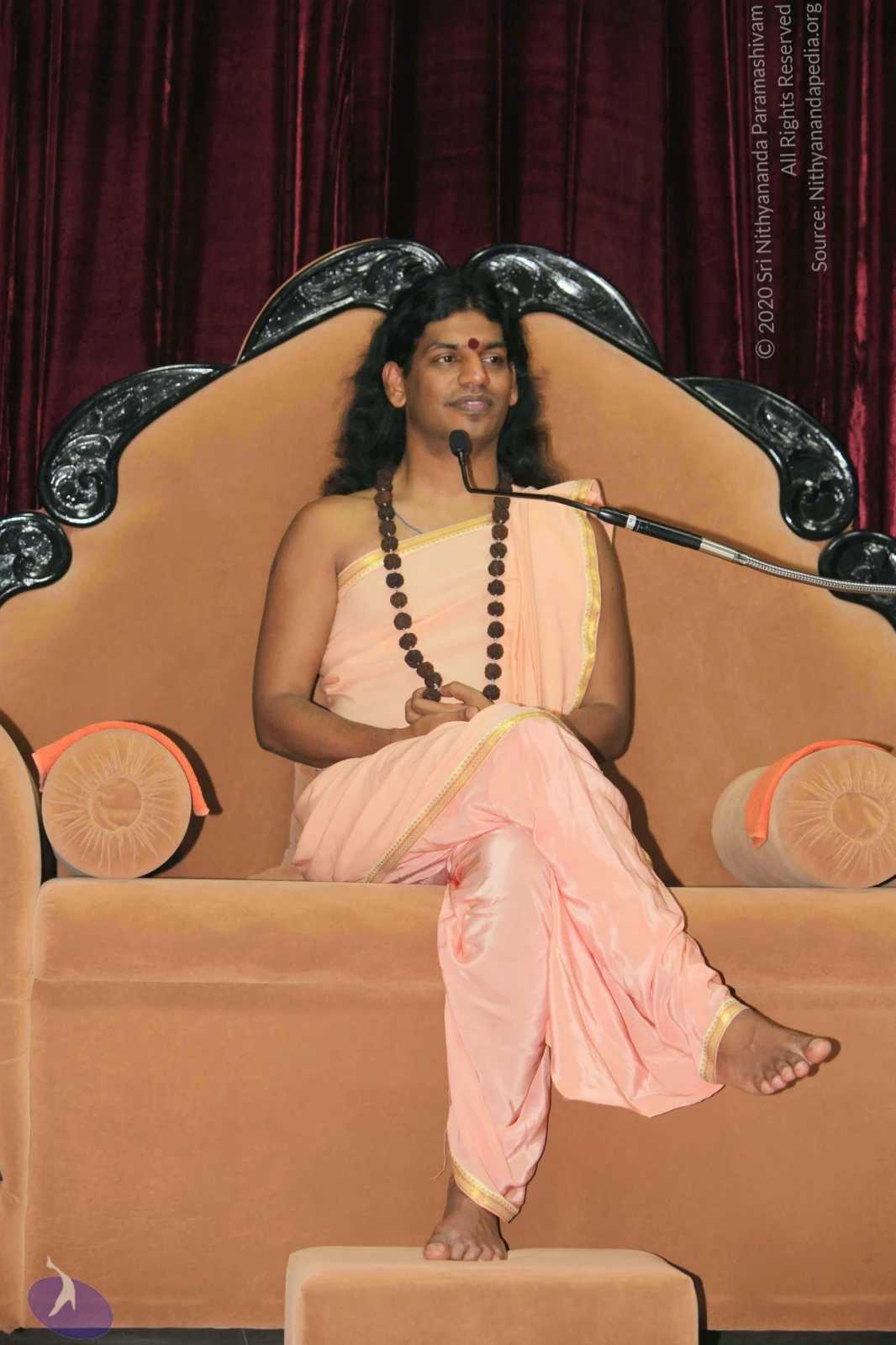
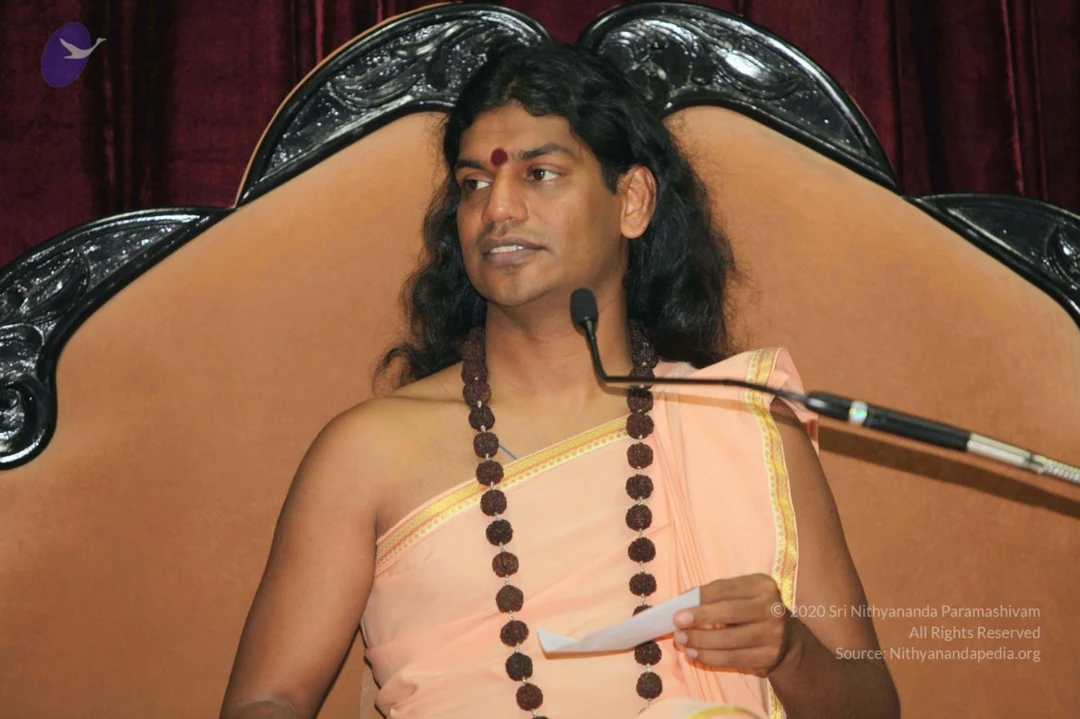
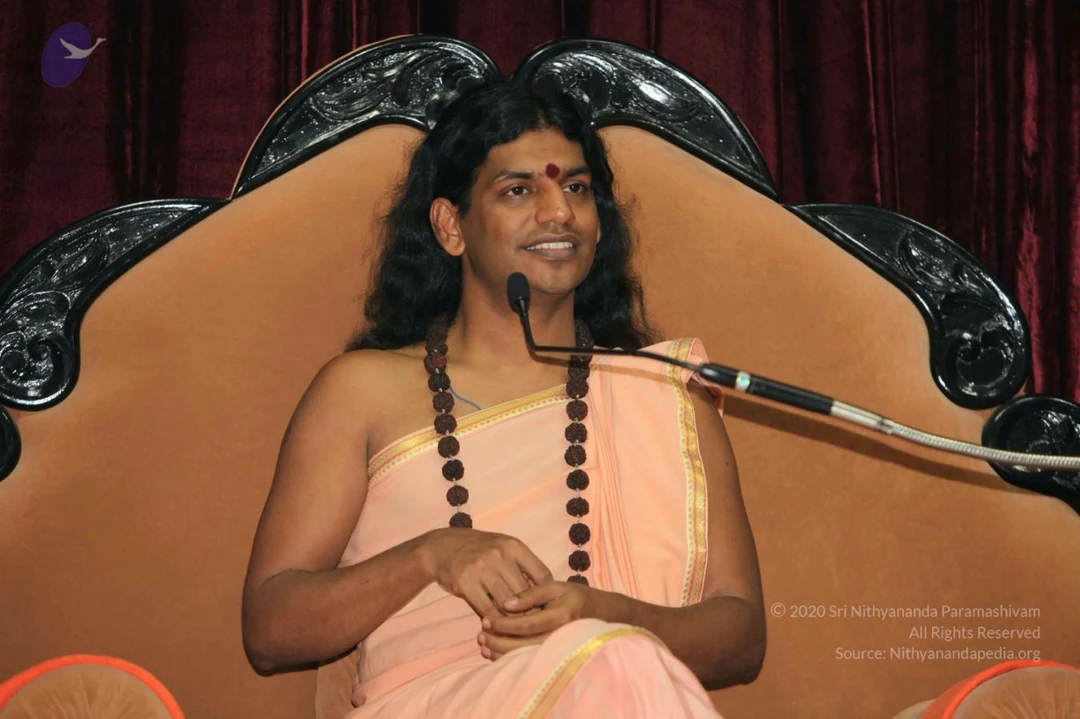
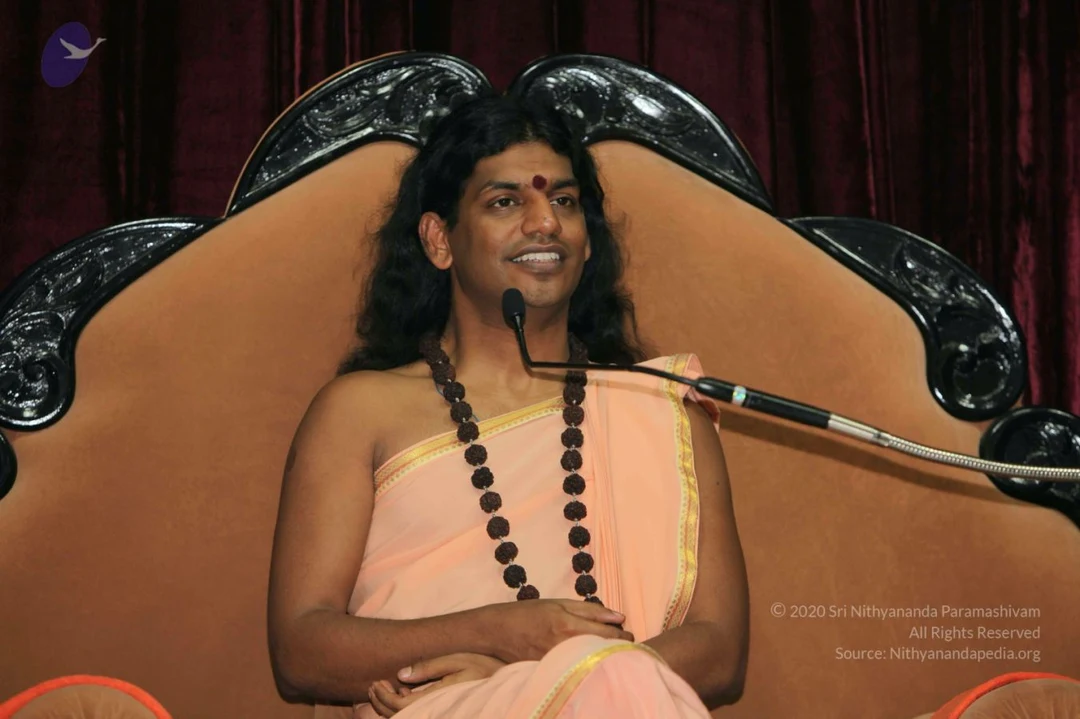
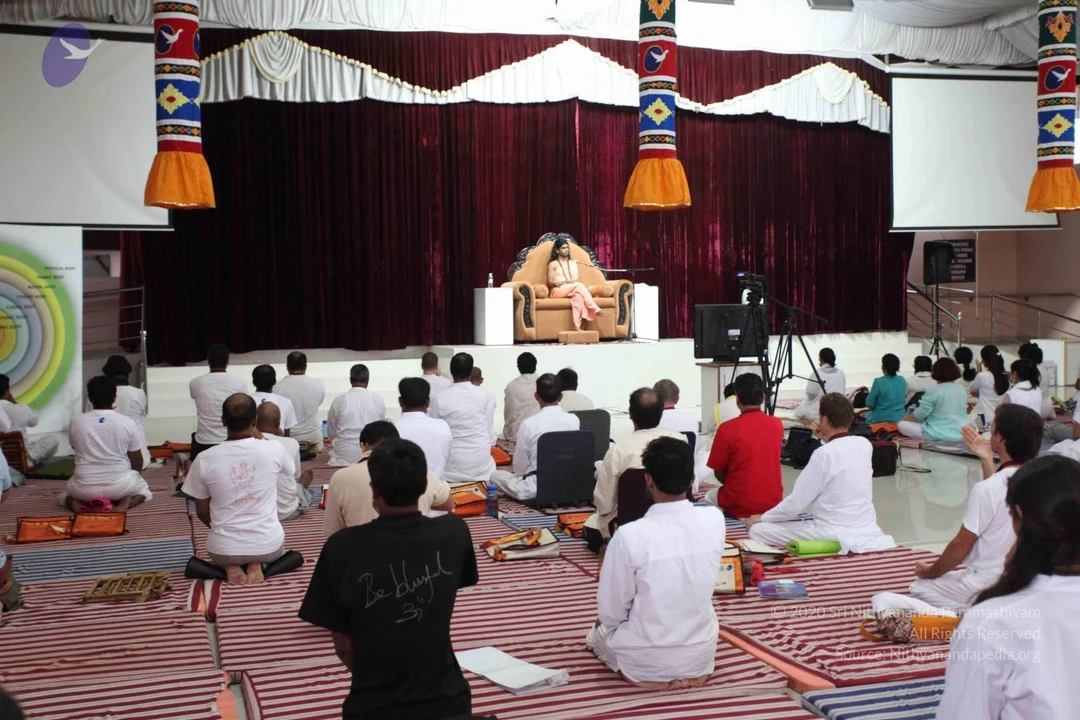
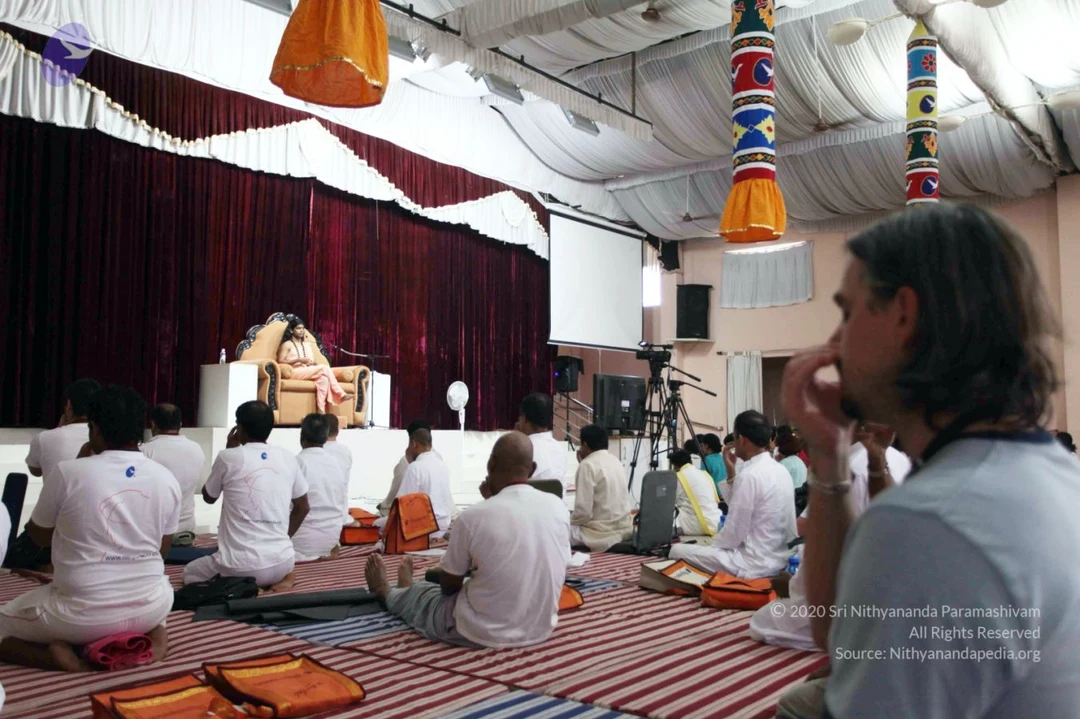
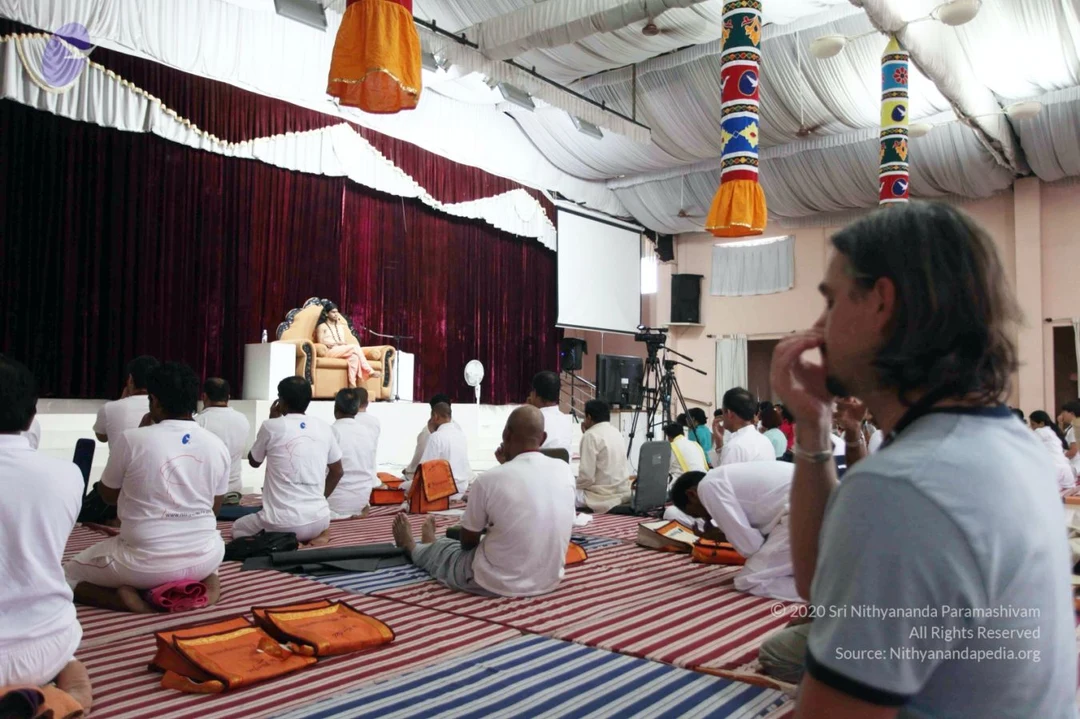
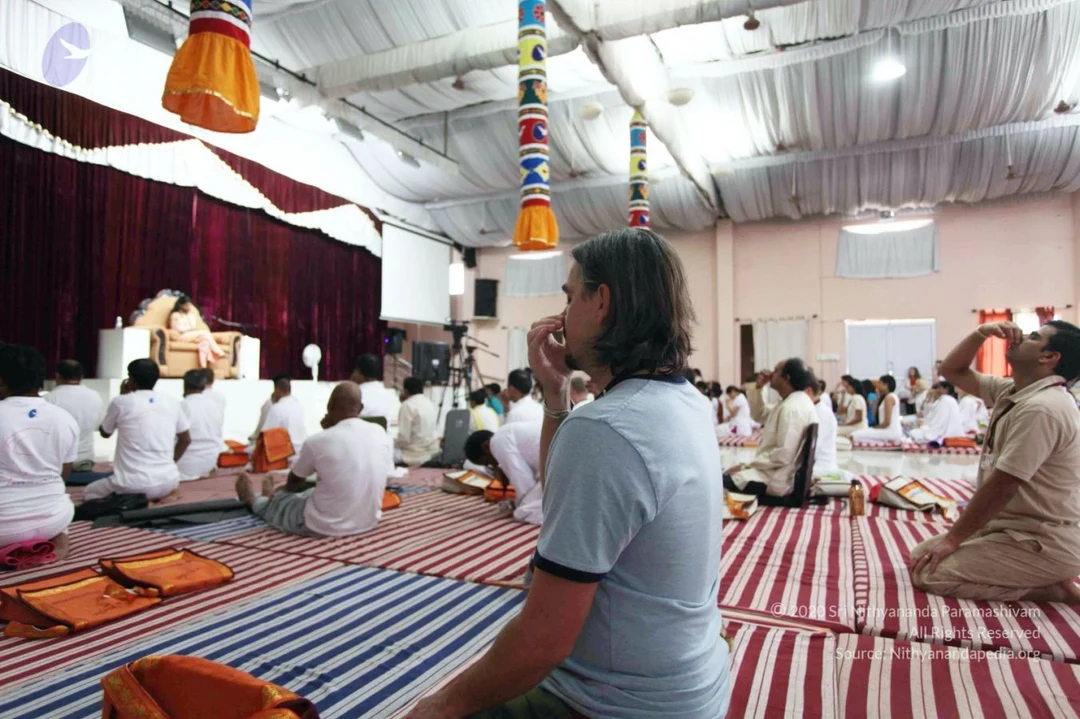
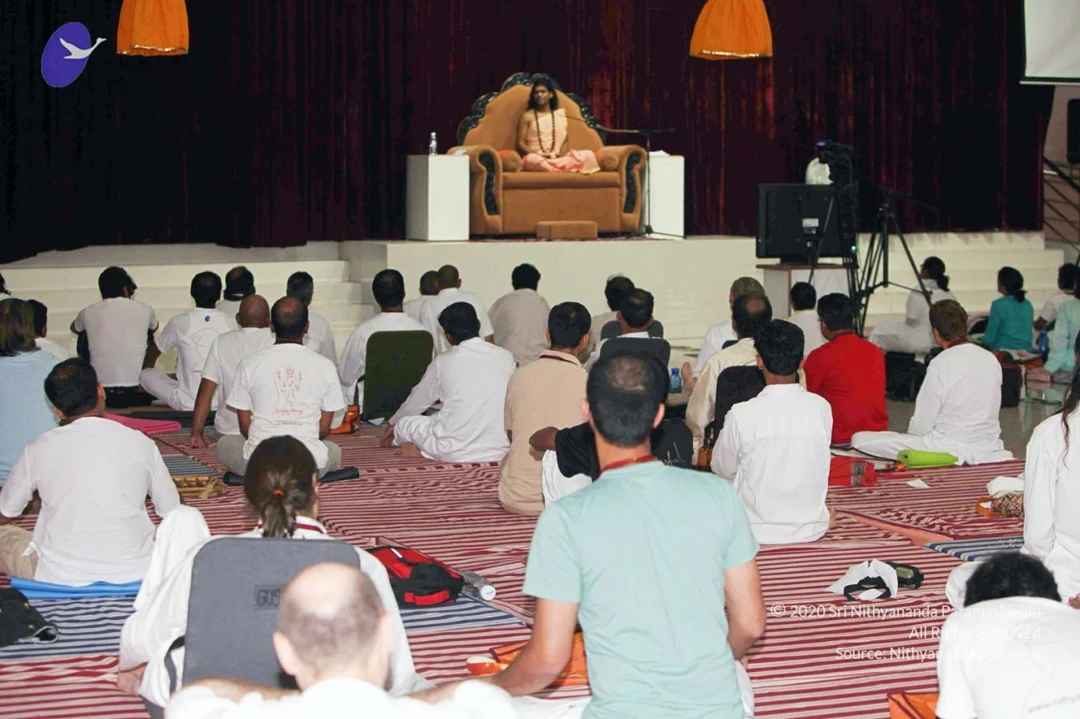
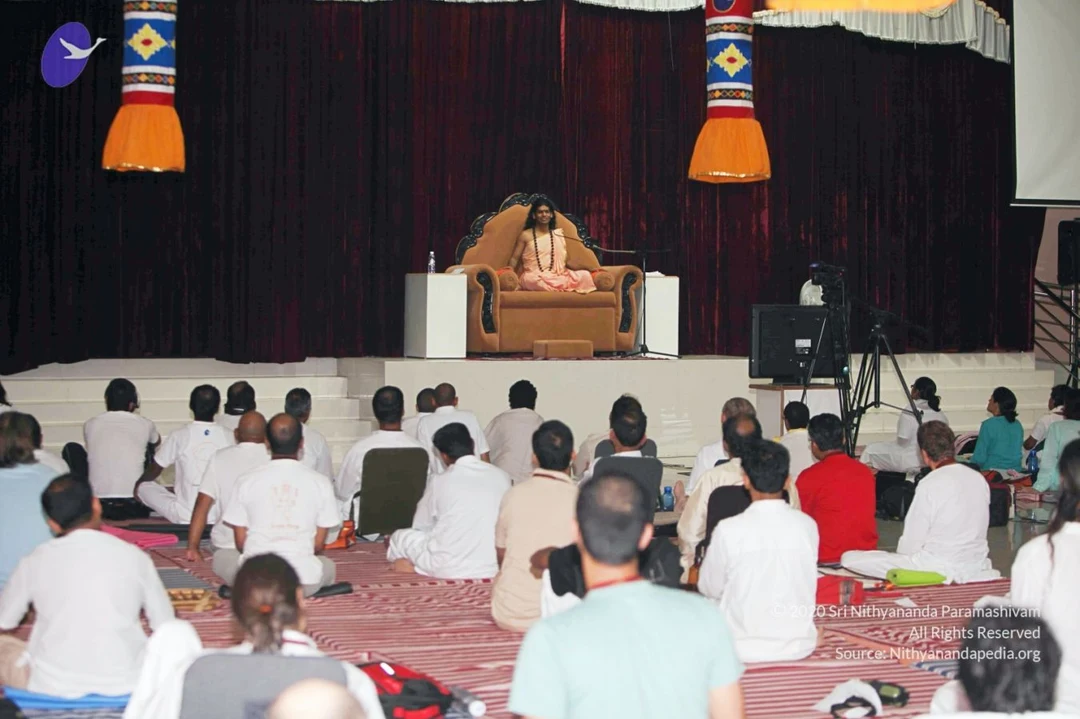
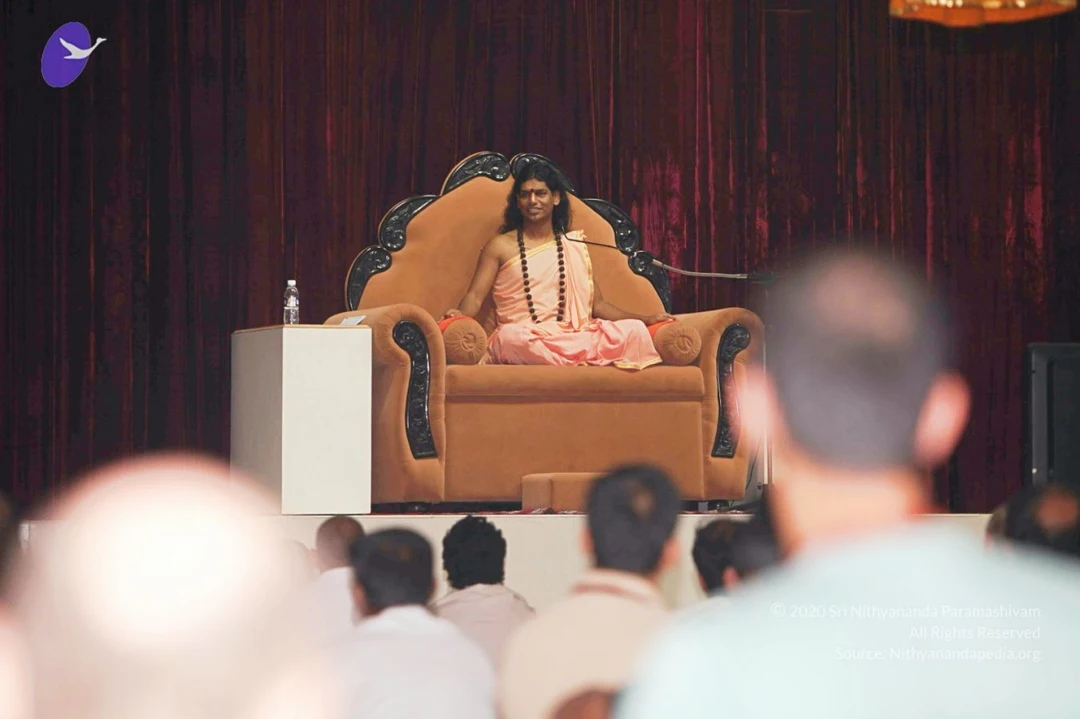
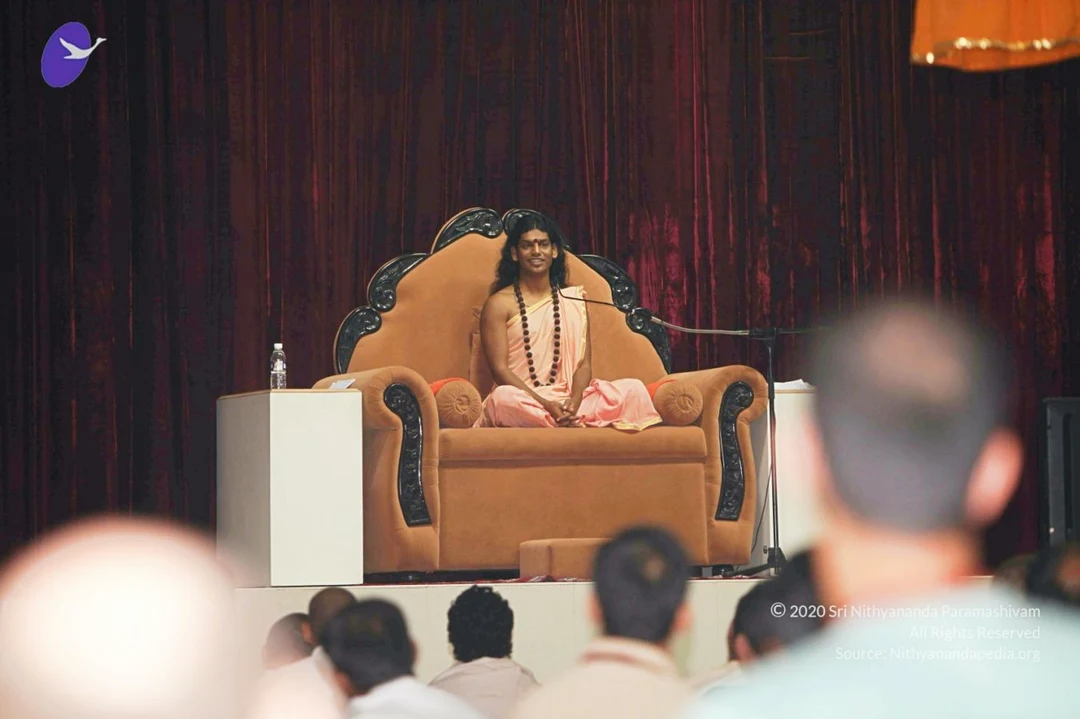
Unrevealed Mysteries of Mystics (Siddha Tradition) - Nithyananda Morning Satsang 04 Dec 2010

Dated photos
520
Source pages
1
Media
6
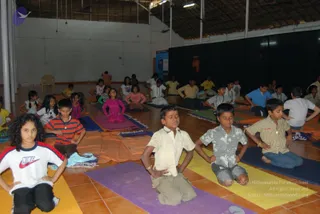
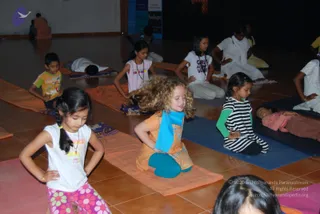
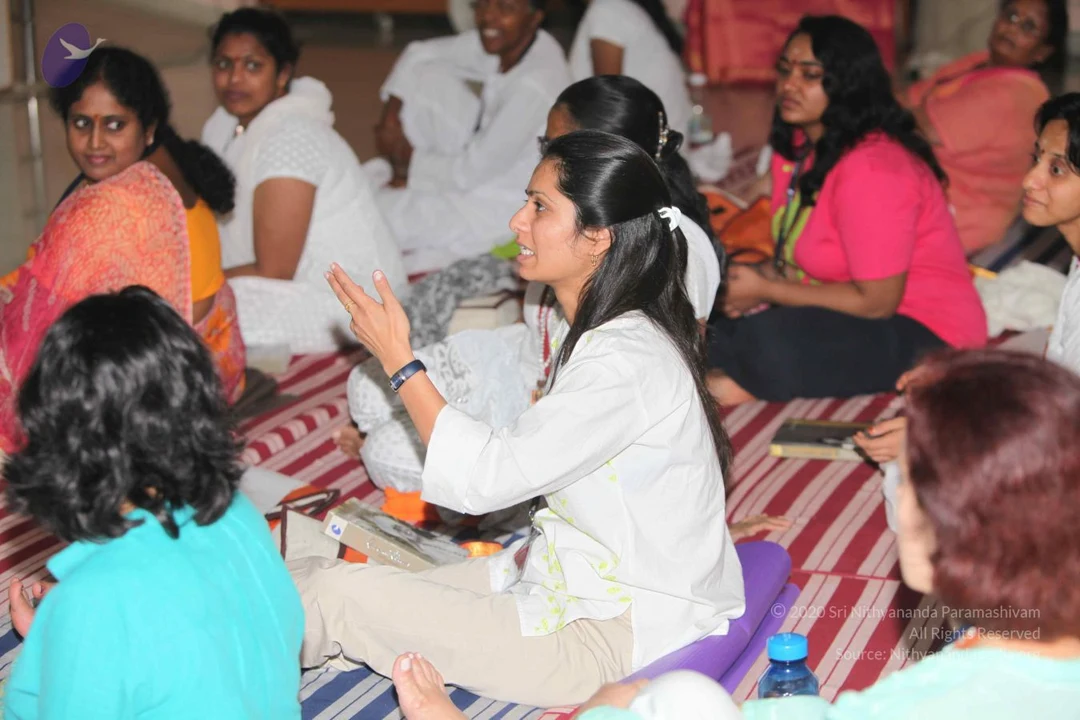
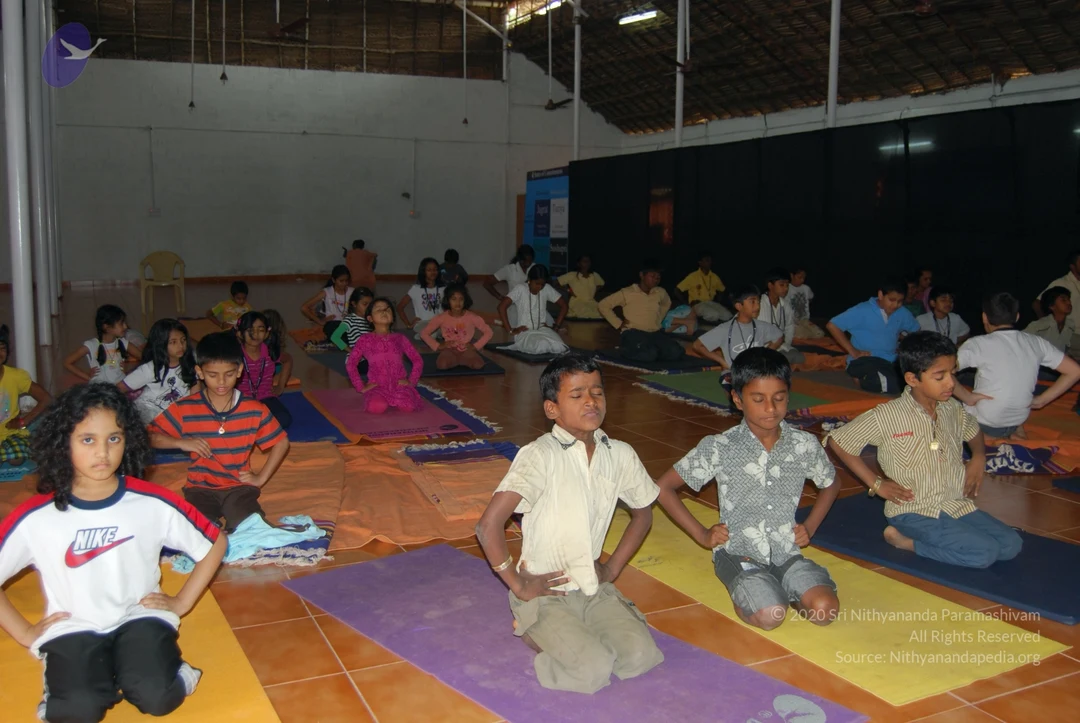
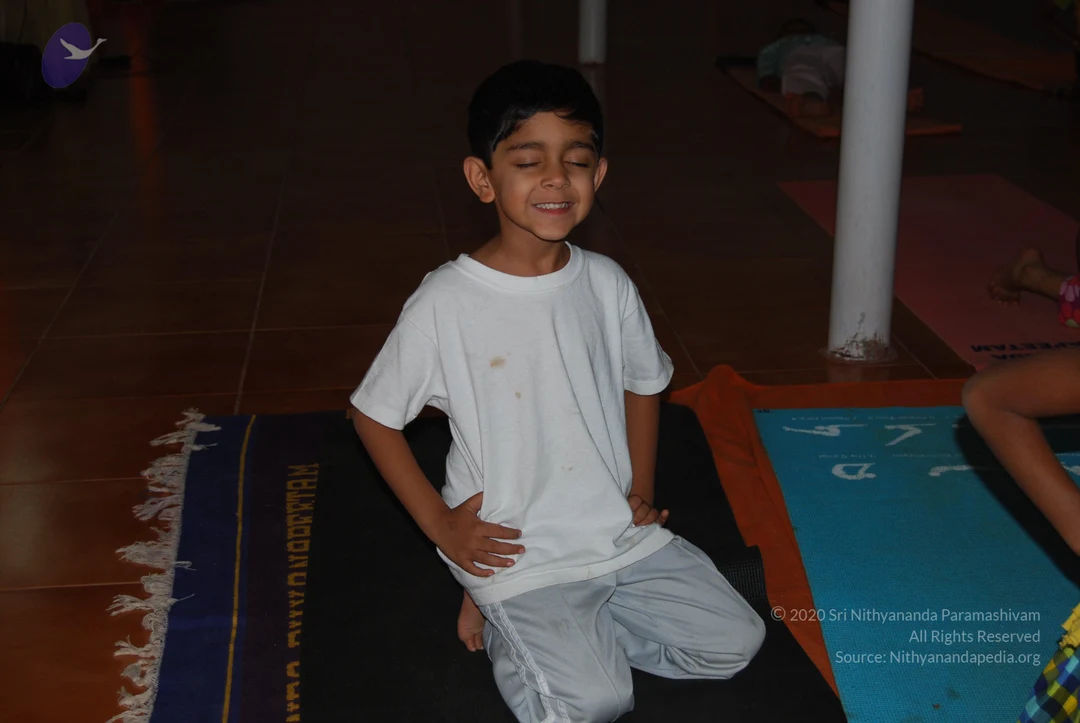
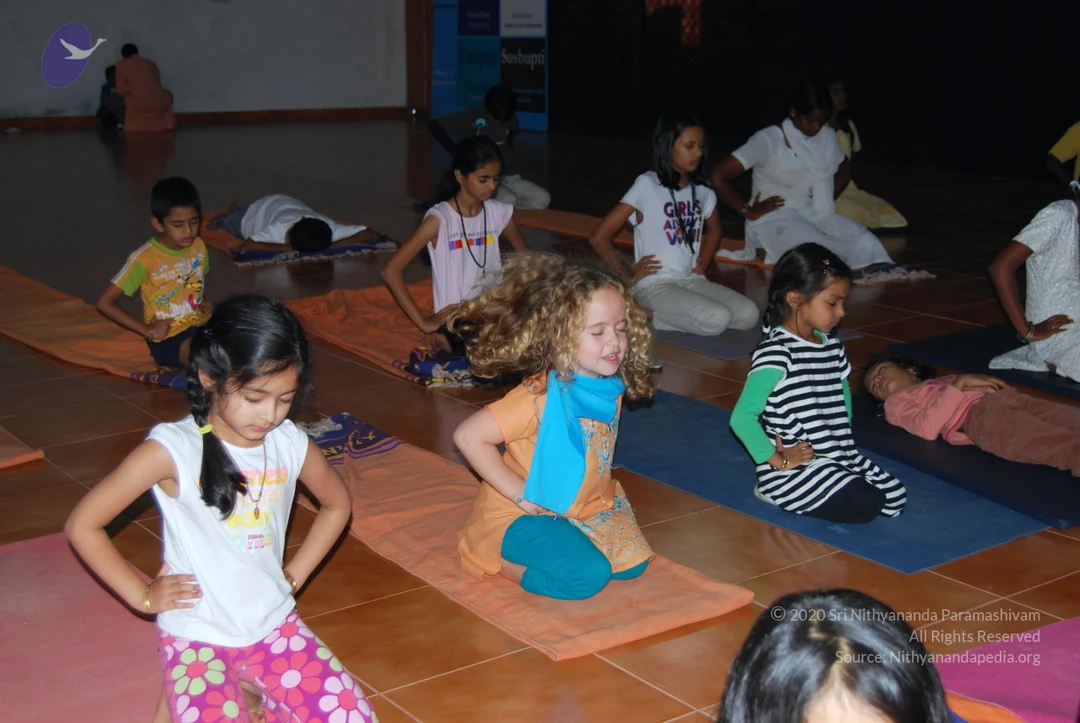
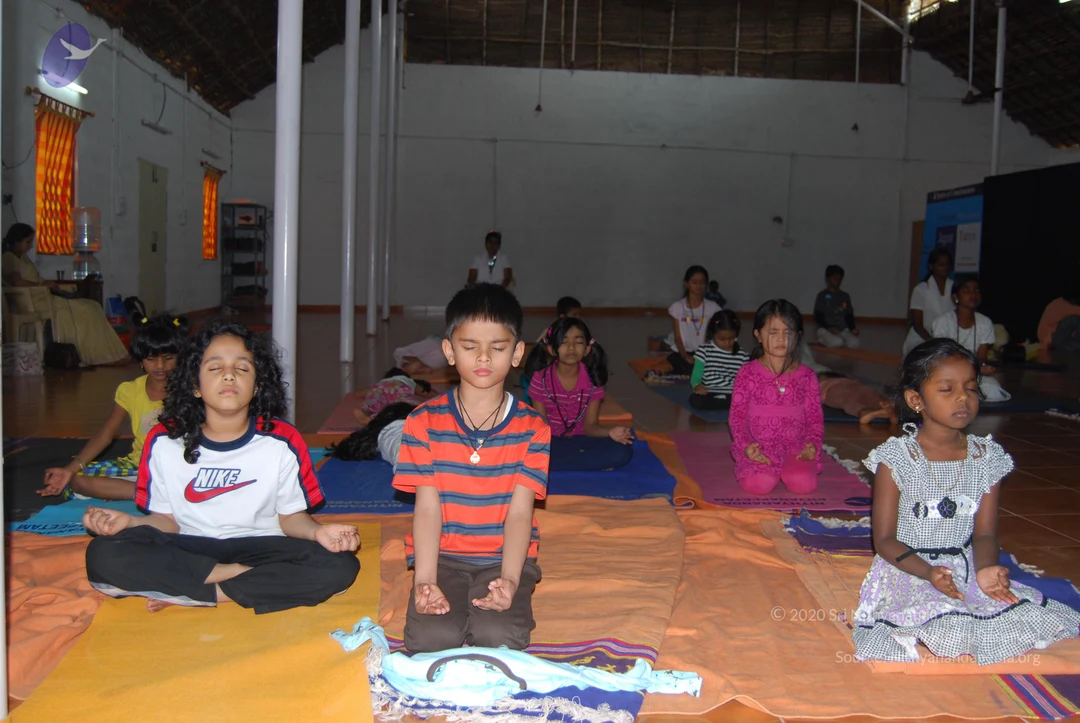
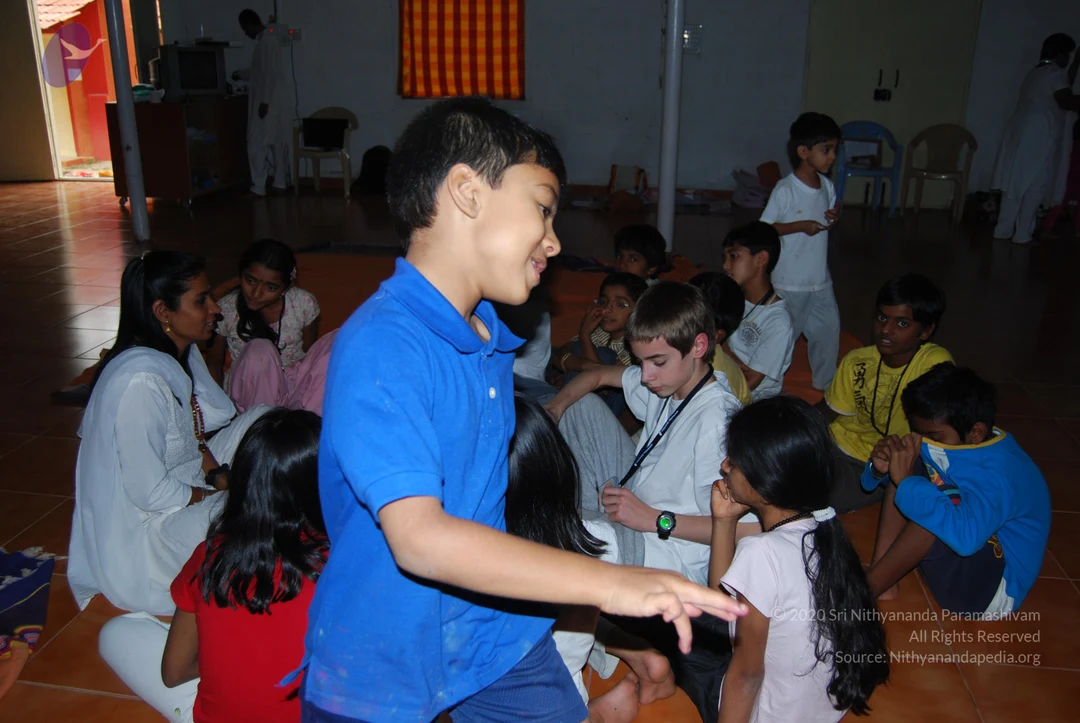
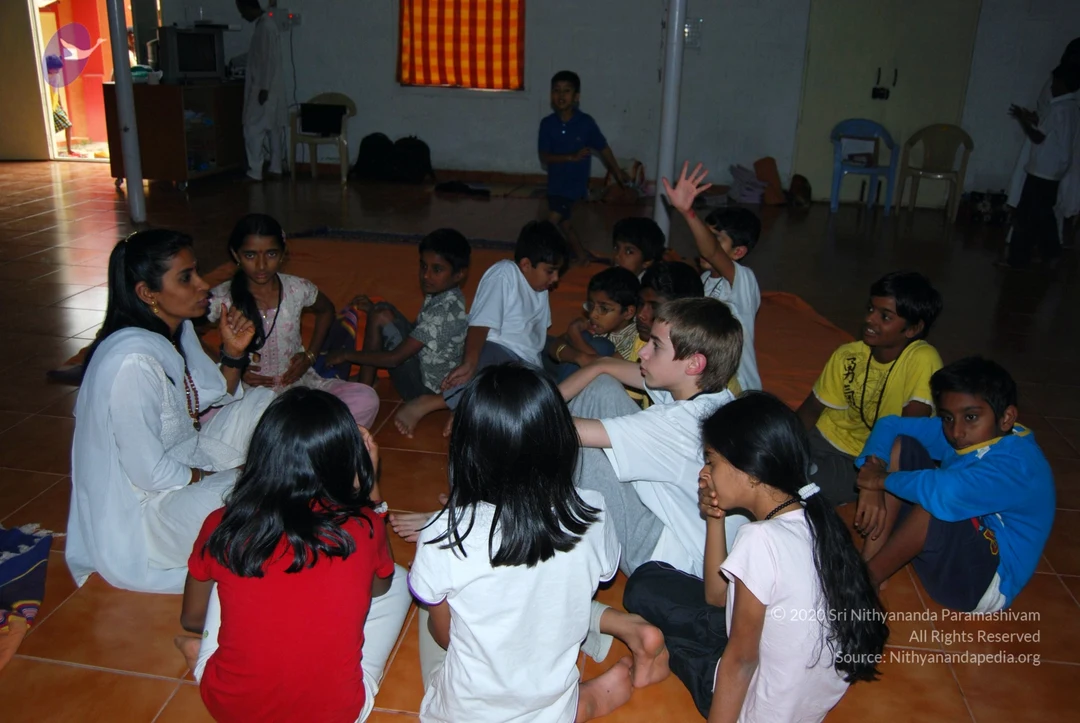
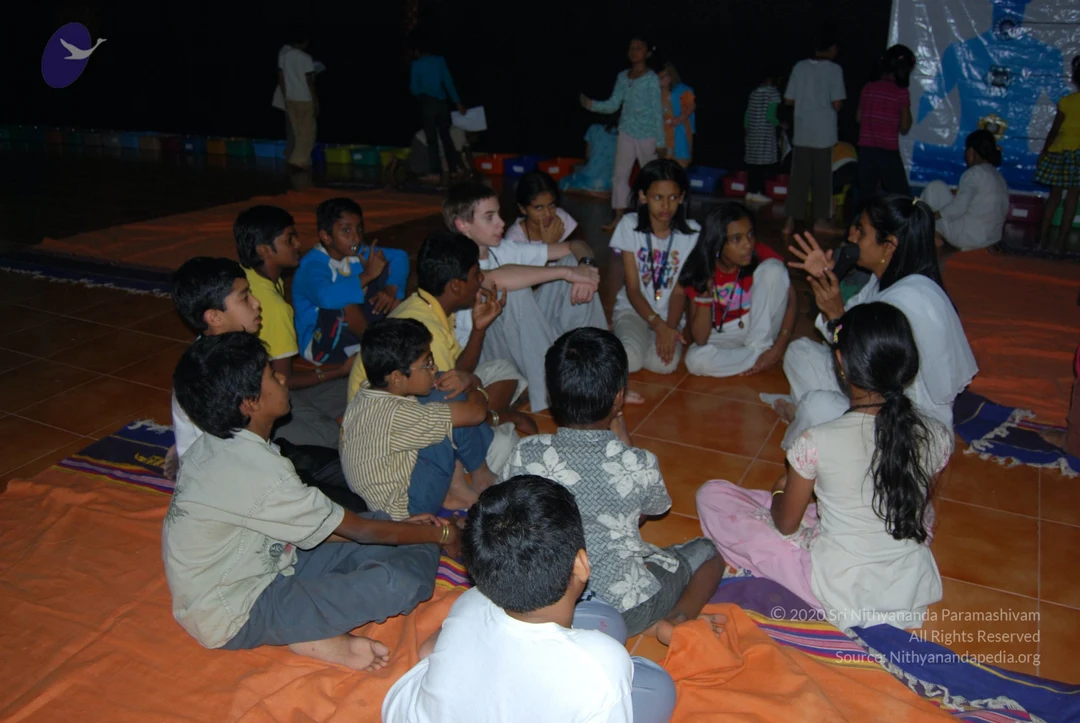
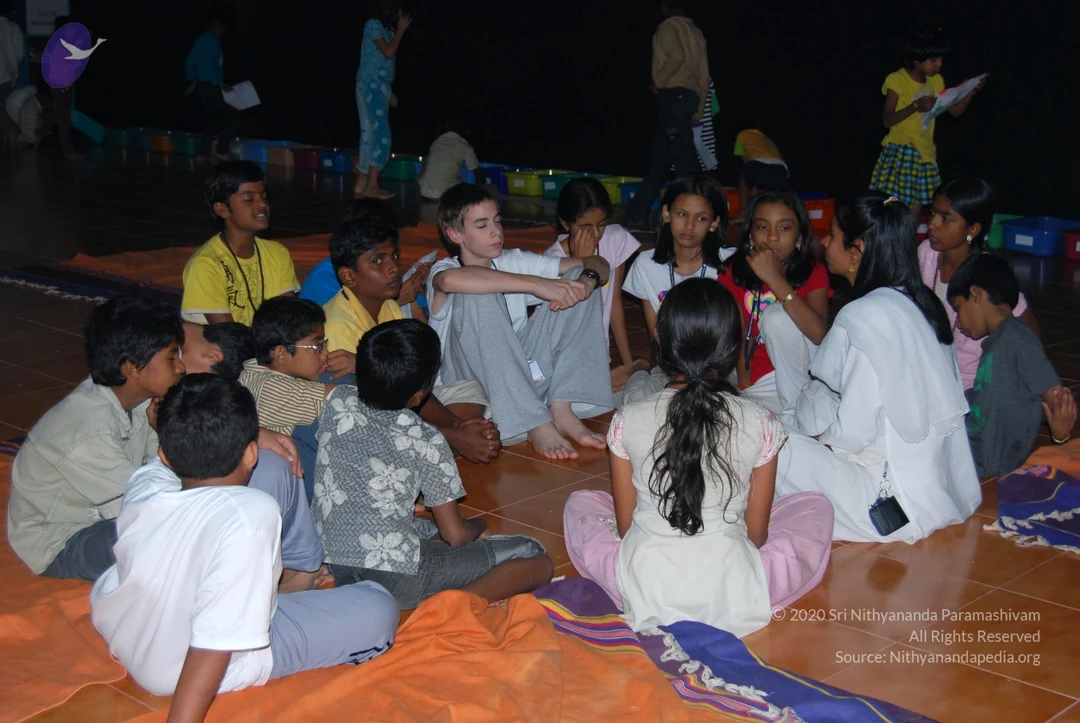
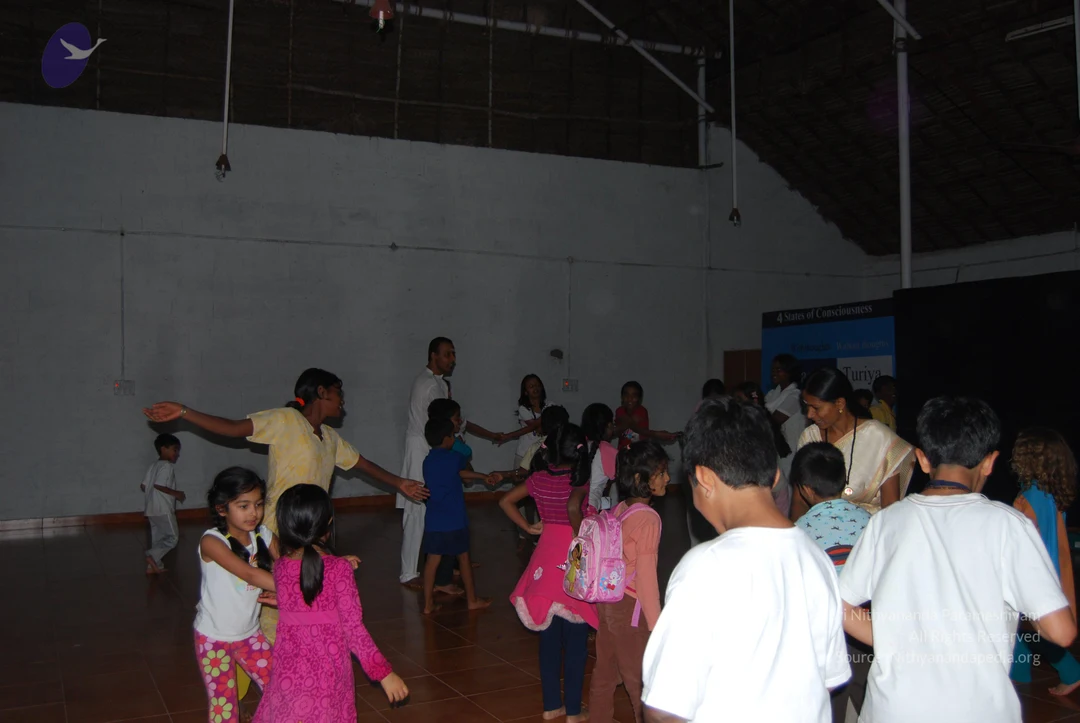
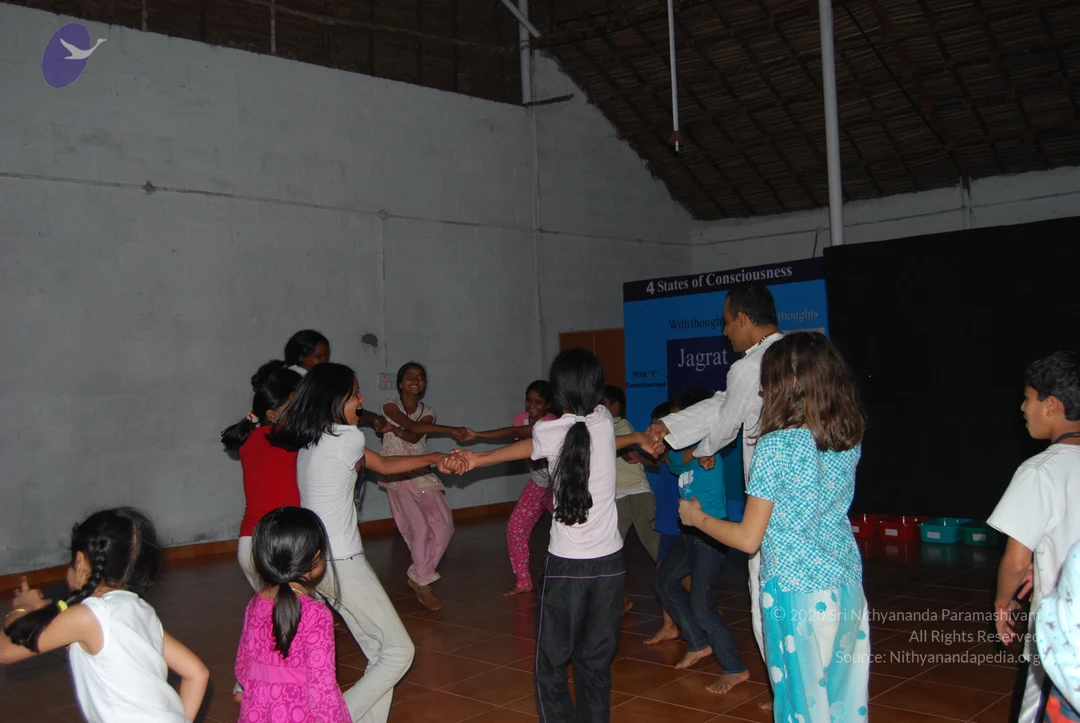
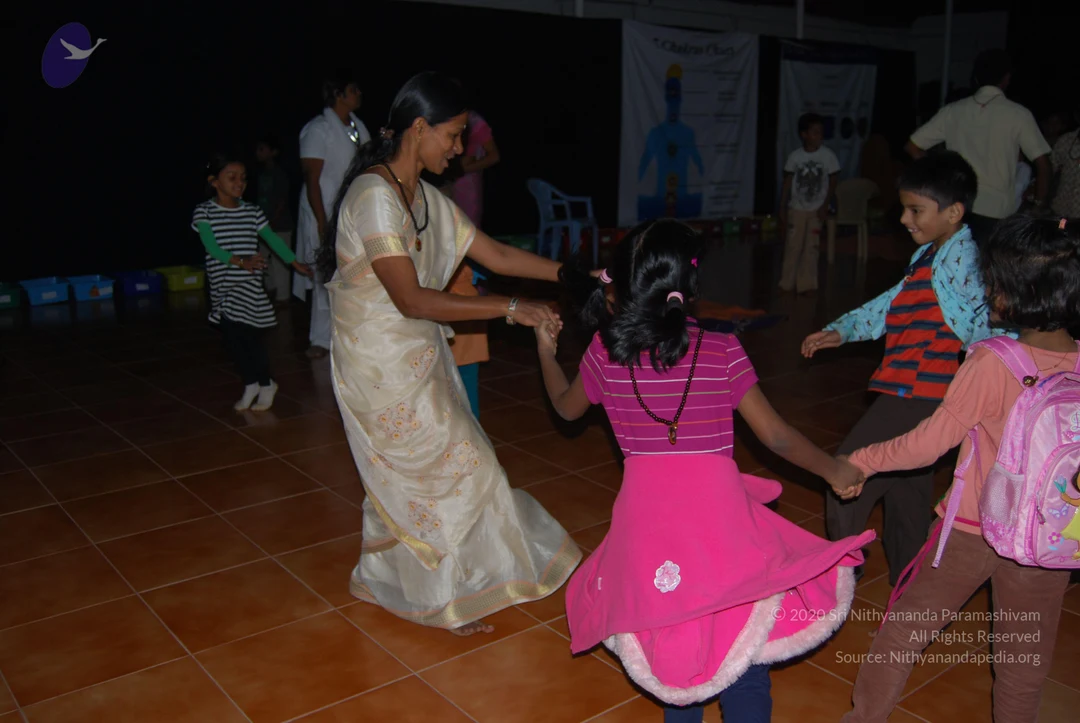
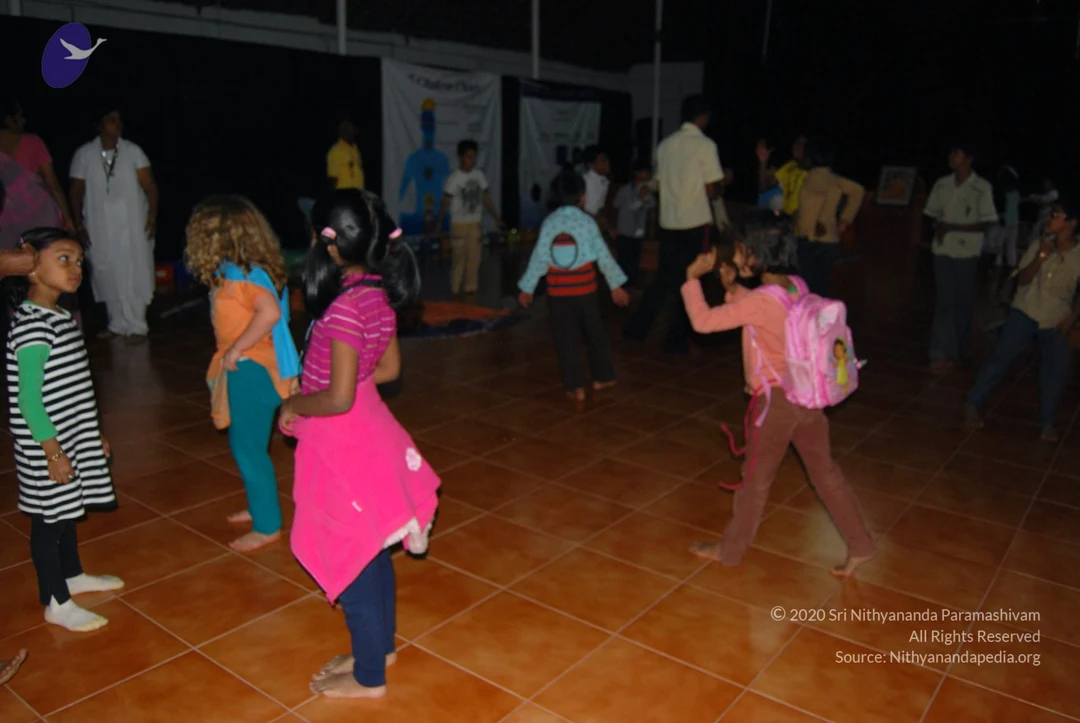
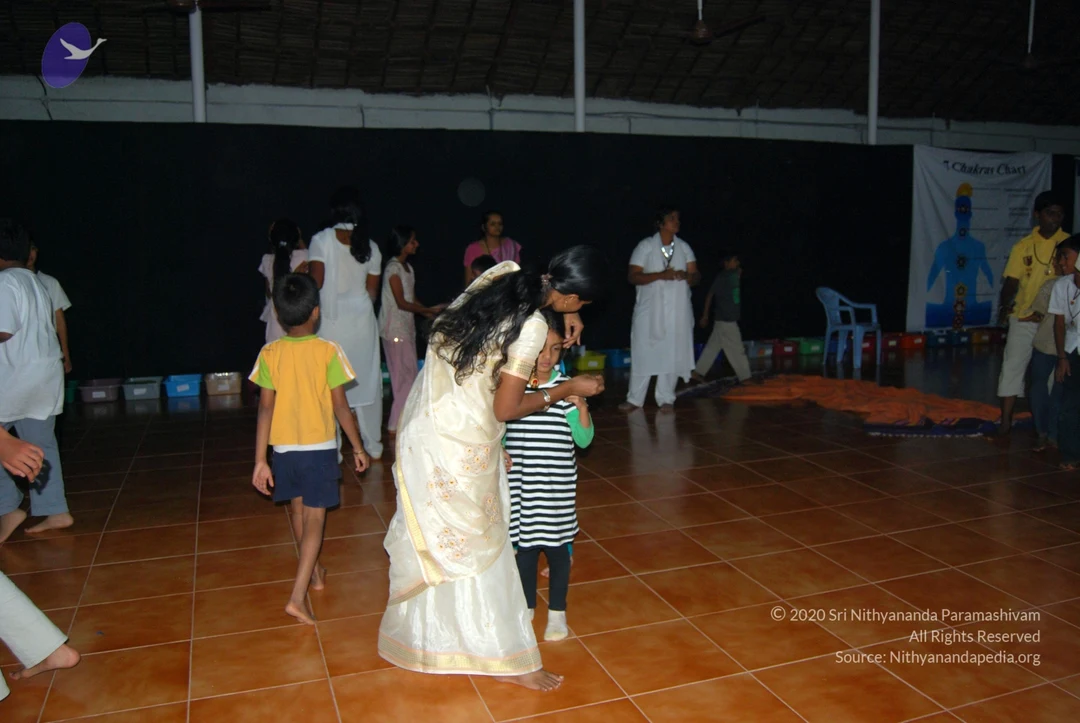
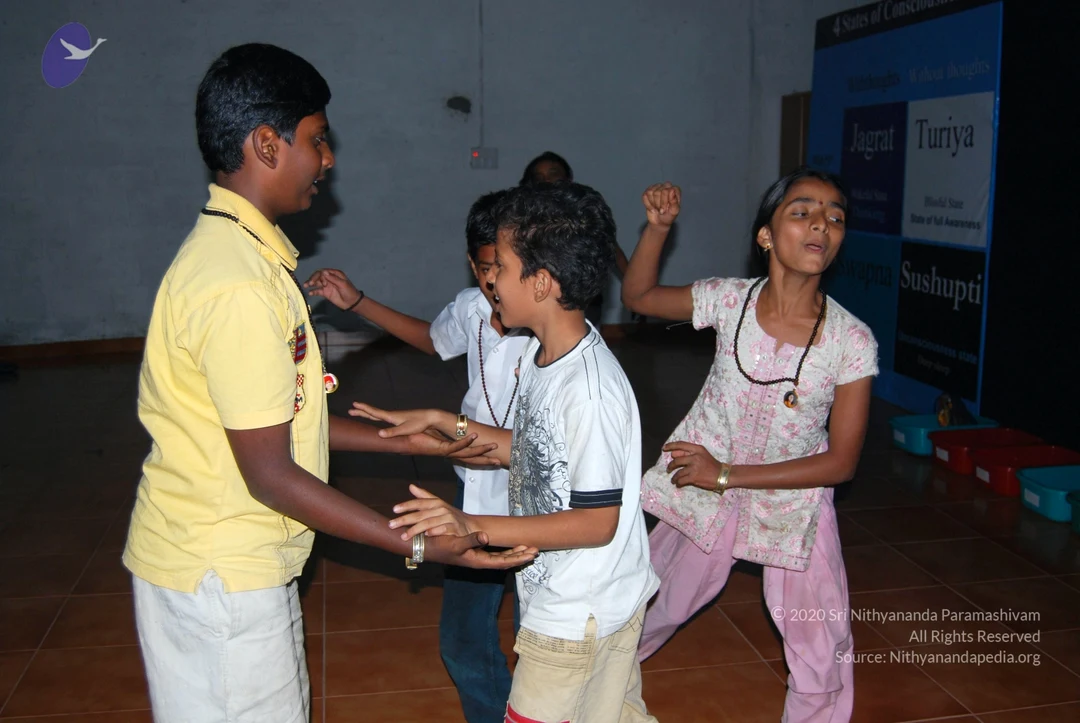
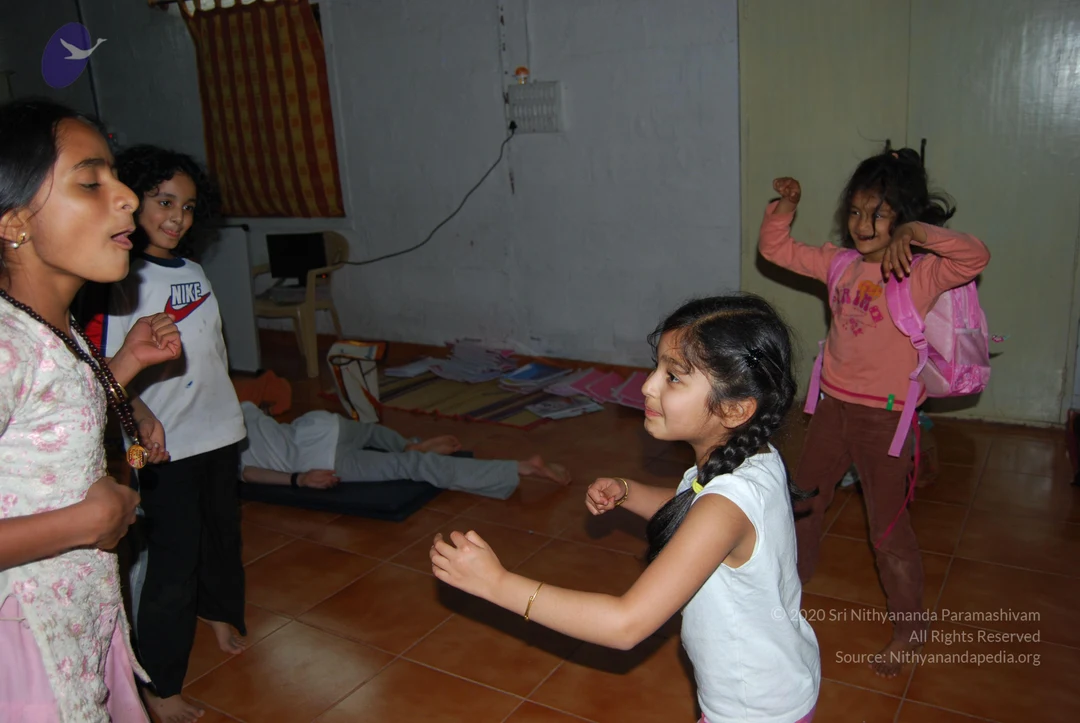
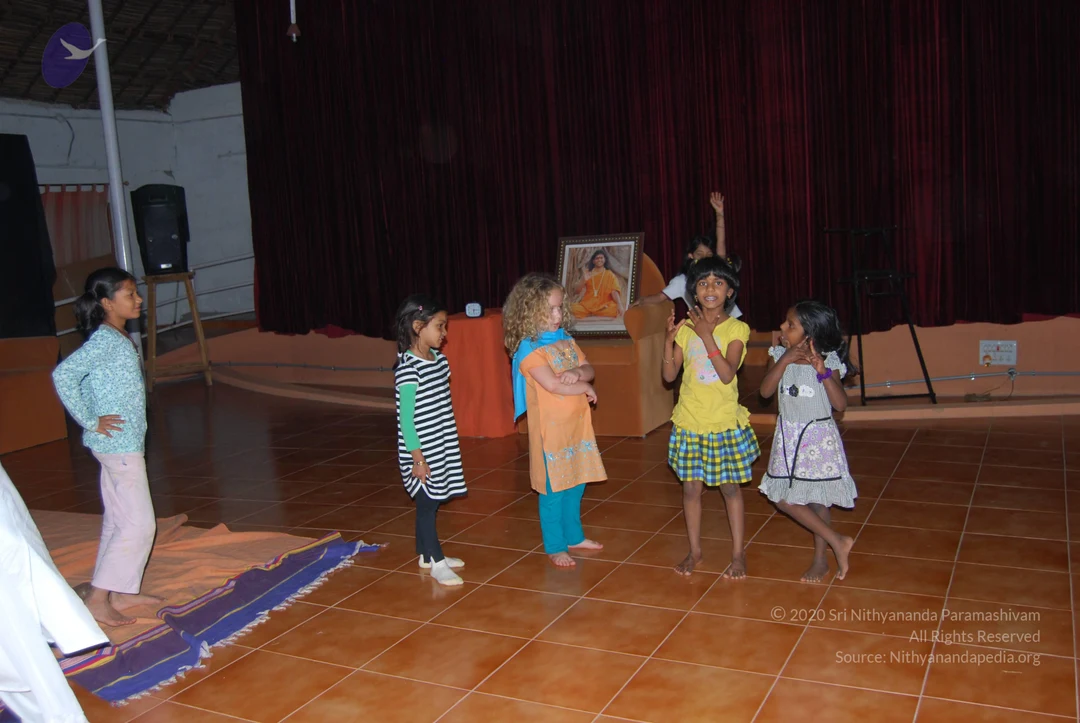
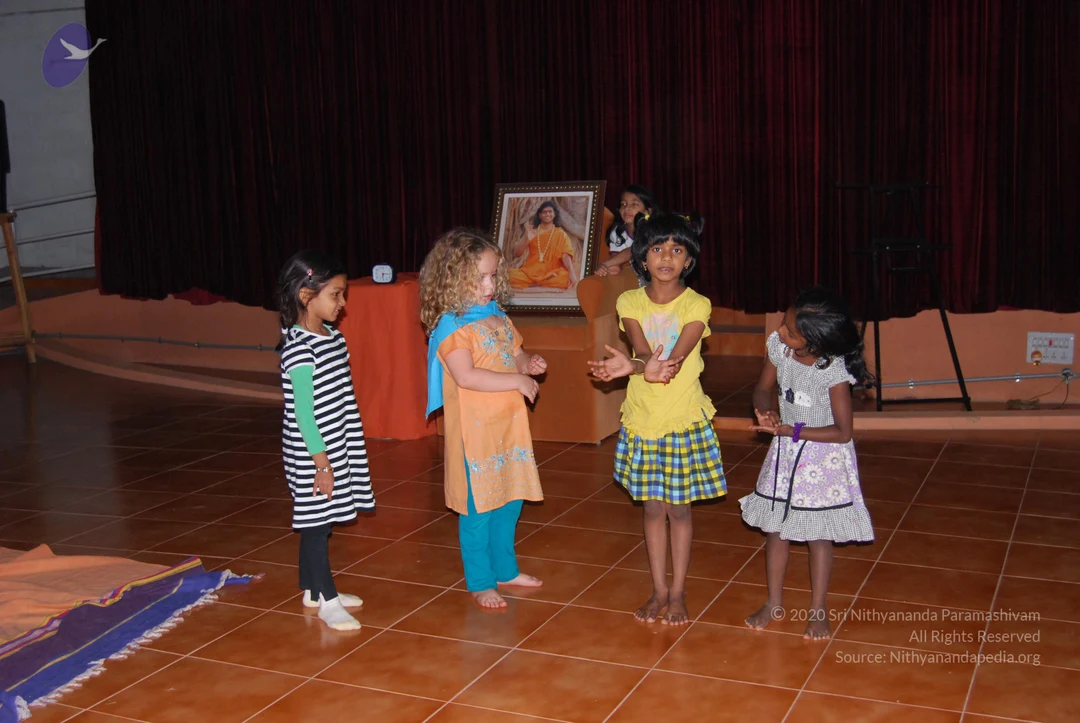
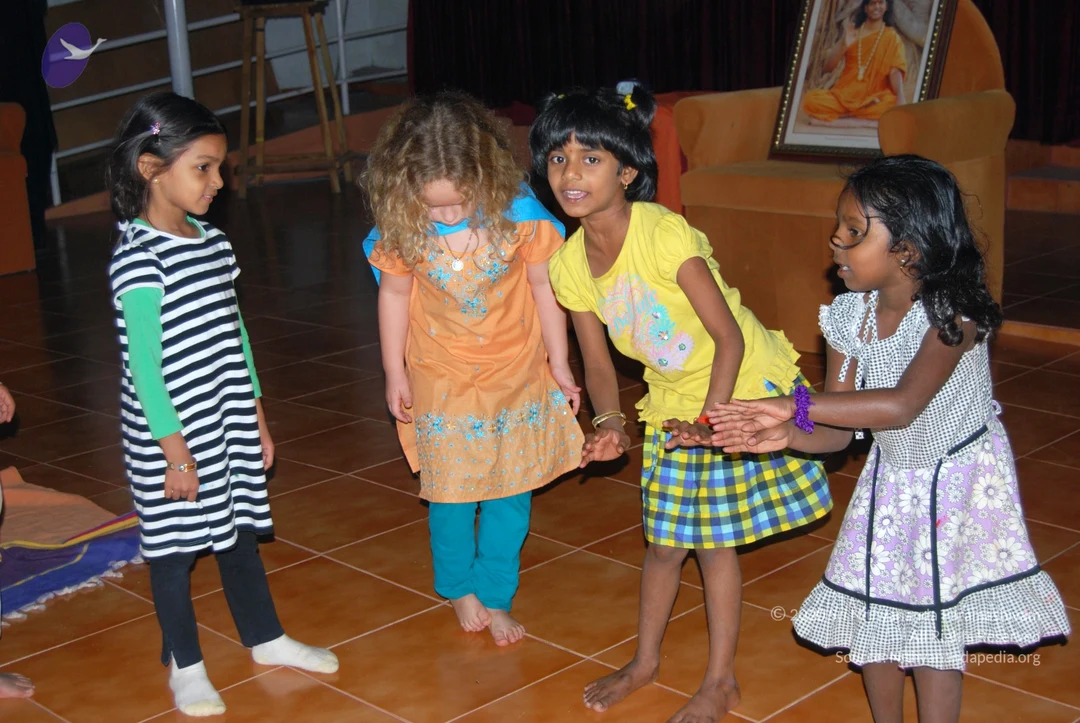
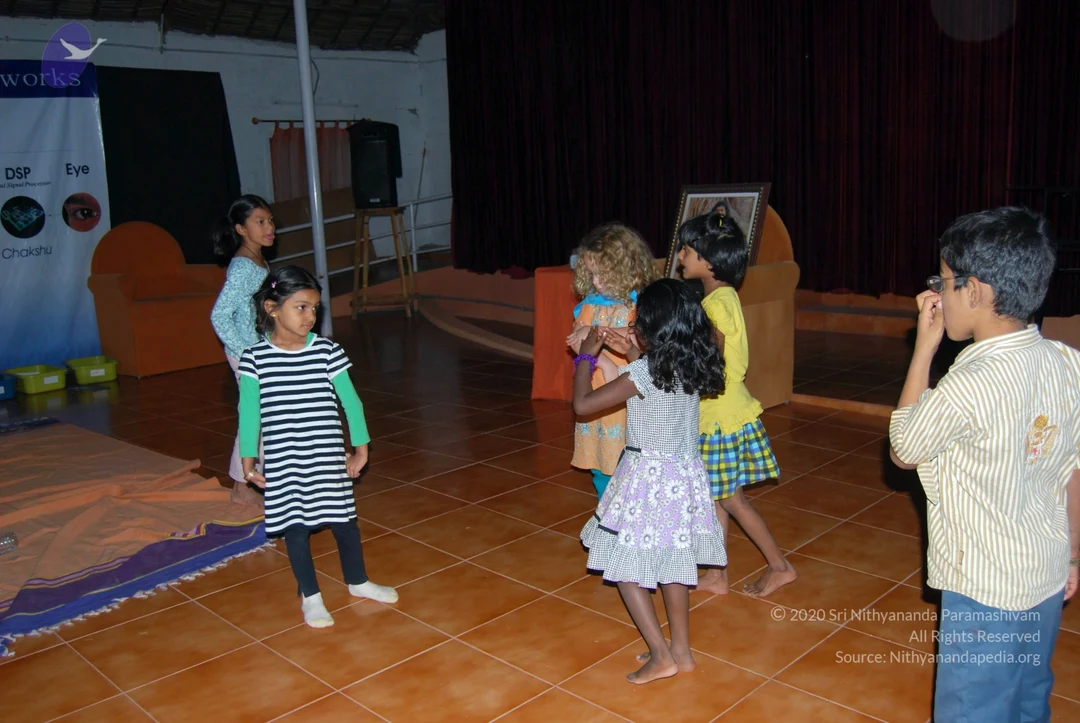
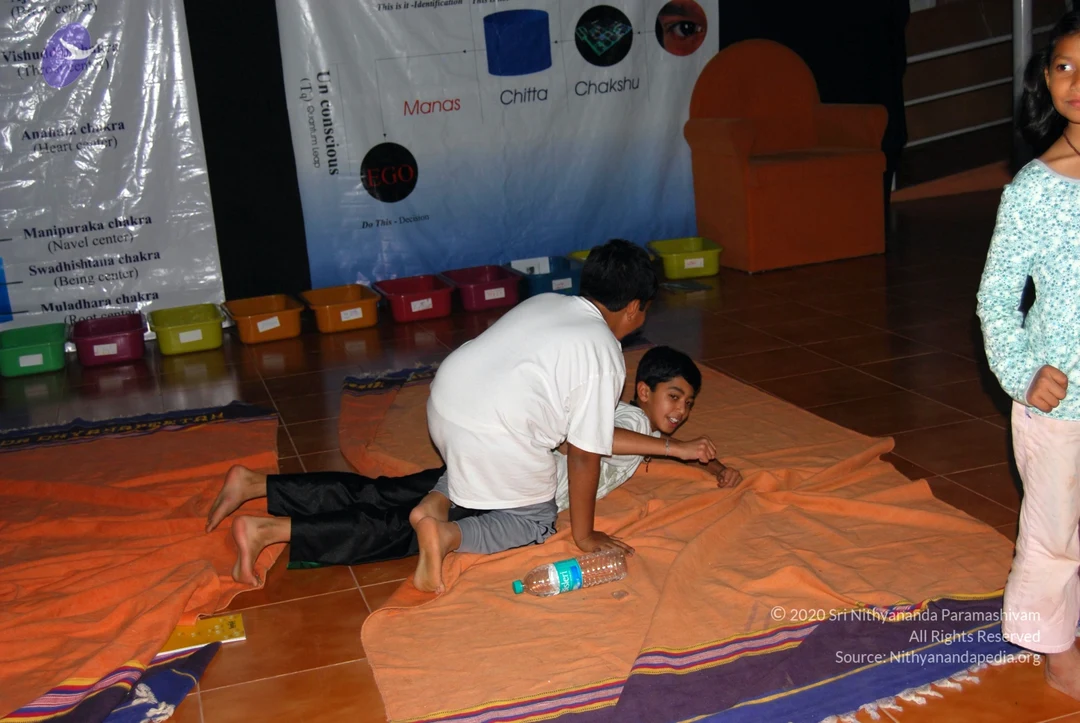
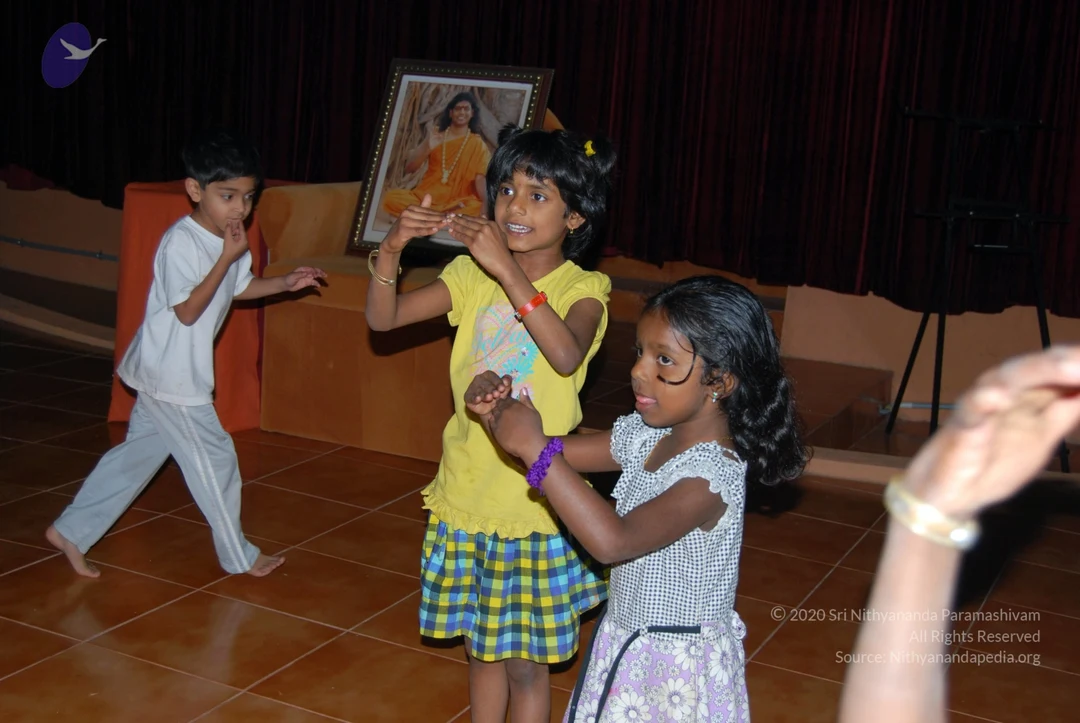
A large indoor hall with a tiled orange floor and a corrugated roof, filled with children seated cross-legged on colourful yoga mats in meditation posture. In the foreground a girl in a white Nike t-shirt and black pants sits with hands on her knees, a boy in an orange-striped shirt sits beside her, and a boy in a cream shirt and khaki trousers sits with eyes closed on a purple mat. Further back many more children in white, yellow, blue and pink clothes sit in rows, some wearing lanyards. No adult leader is clearly visible; a few people sit near the back wall beside a blue banner and a black curtain.Photo of children and teenagers seated on colourful yoga mats on a tiled floor, eyes closed in meditation or breathing practice. In the foreground, three boys sit cross-legged: the left boy in a white short-sleeved shirt and khaki trousers with gold bangles, the middle boy in a grey patterned shirt and grey shorts with hands on his knees, and the right boy in a striped beige shirt and dark trousers with hands resting on his hips. Behind them, more participants sit on mats in white, blue and grey shirts. On the upper right, a blue poster shows a human figure outline with chakra diagrams labelled Anahata chakra (Heart centre) and Manipura chakra. a person-related meditation session.A group of children and some adults practise yoga poses on mats in a large hall with tiled floor. In the foreground a girl in a white tank top and pink floral pants stands with hands on hips, while a curly-haired girl in an orange top with a blue scarf kneels with her back arched. A girl in a striped top with green sleeves kneels beside a child lying on a pink-and-brown mat. Behind them, adults in white kneel and recline on mats, and a boy in a yellow shirt stands among them. Blue and orange mats and cushions cover the floor, with a banner and dim lighting in the background.

December 04 2010

Original wiki page
Contents

Title:

Unrevealed Mysteries of Mystics (Siddha Tradition)==

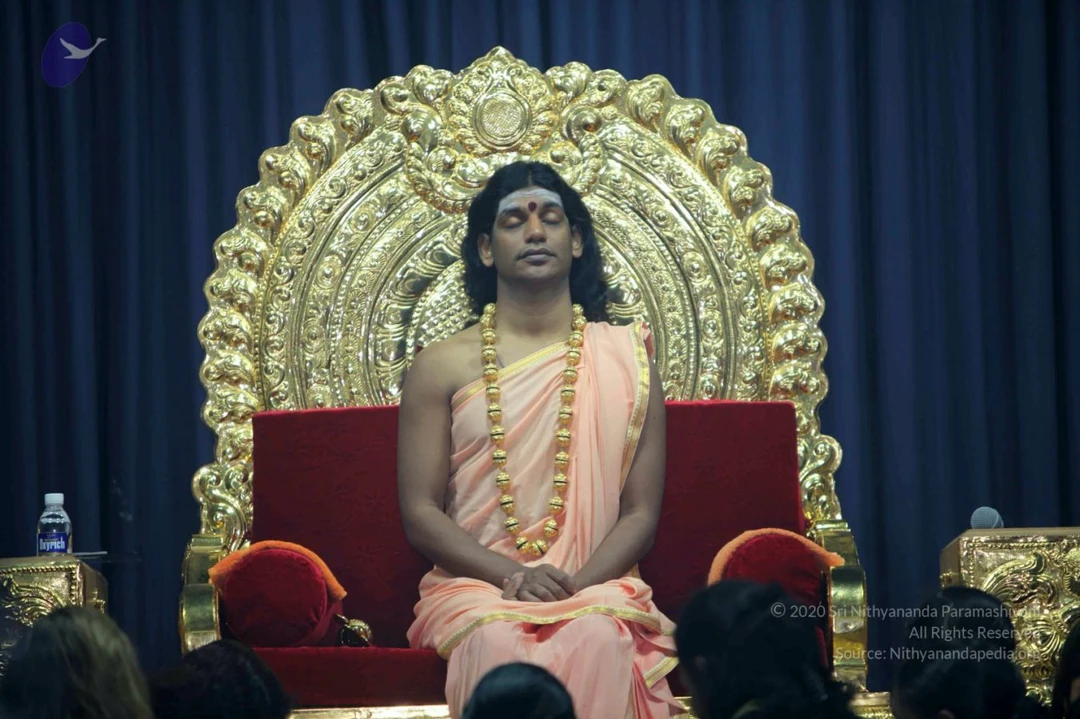
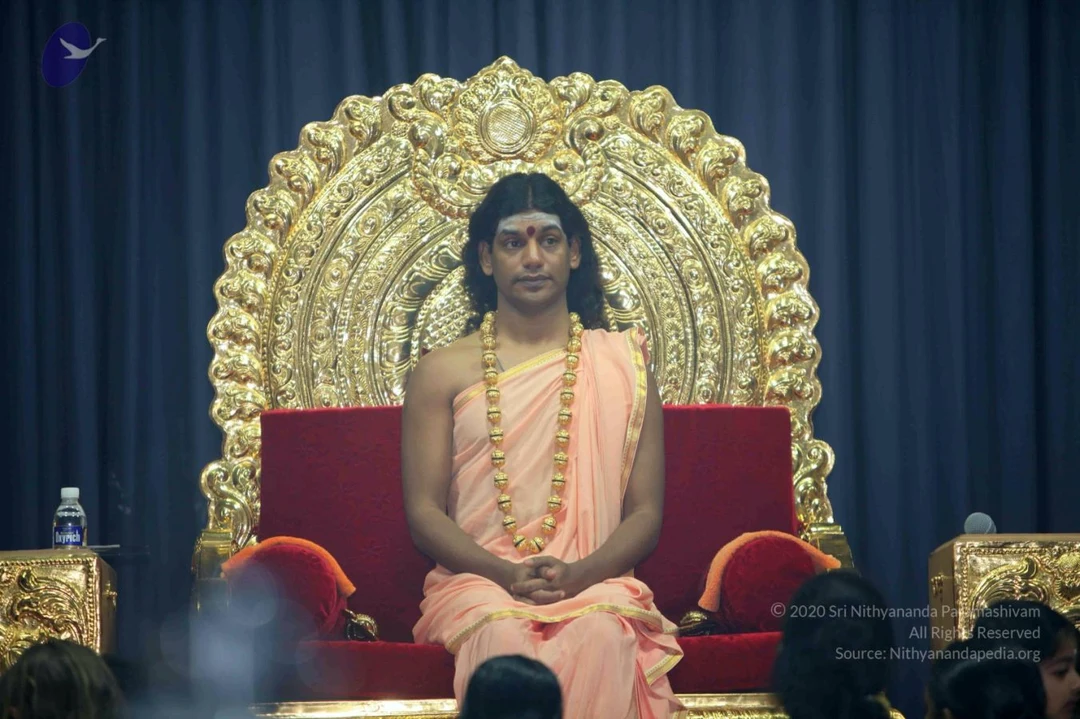
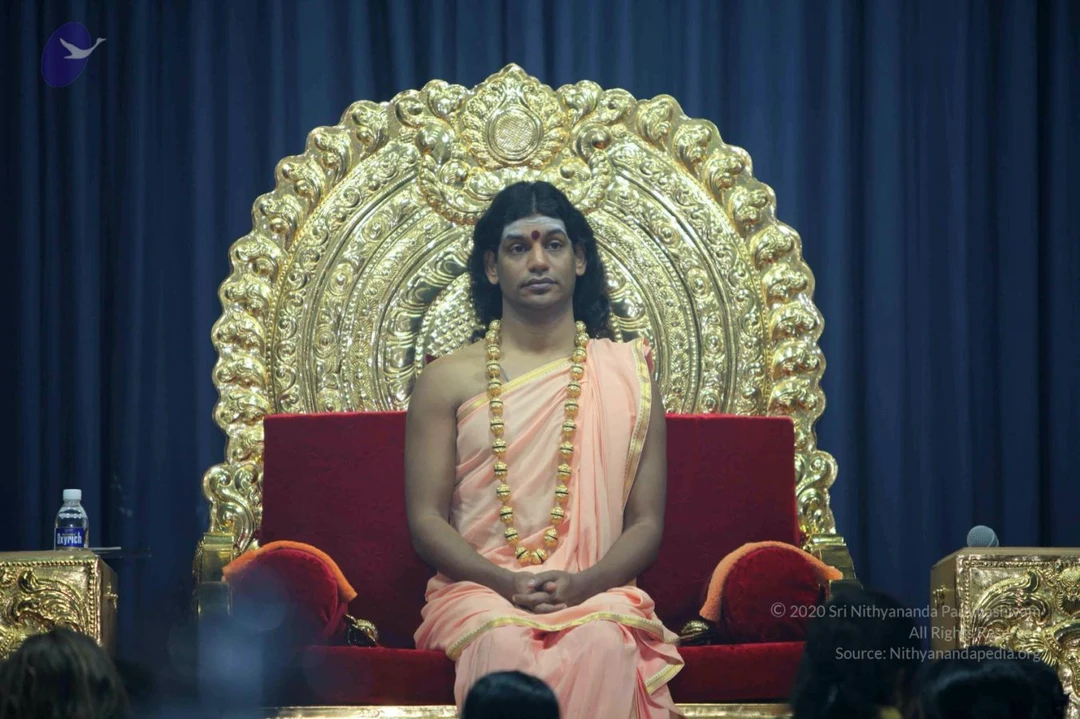
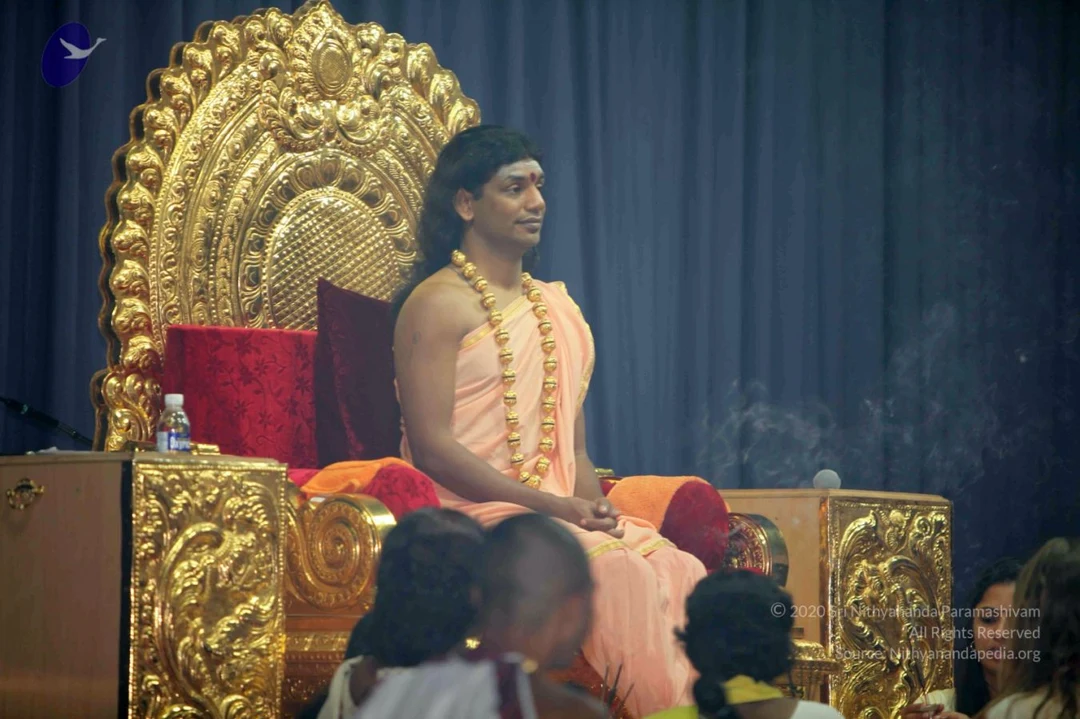
Unrevealed Mysteries of Mystics (Siddha Tradition) - Nithyananda Morning Satsang 04 Dec 2010

Narration

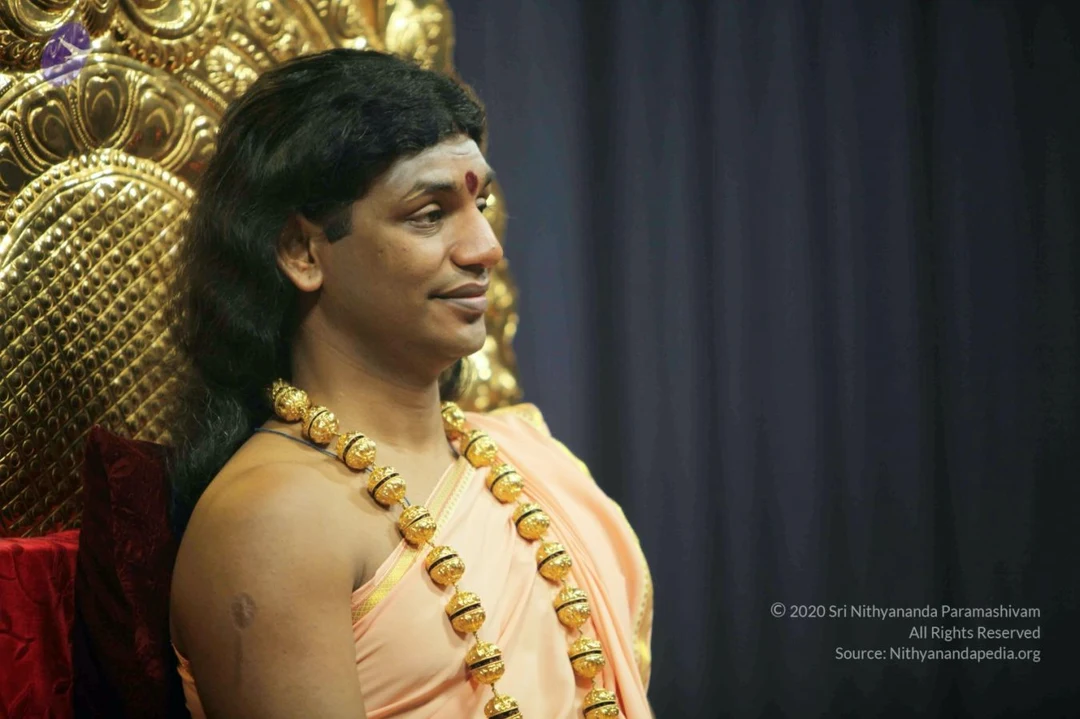
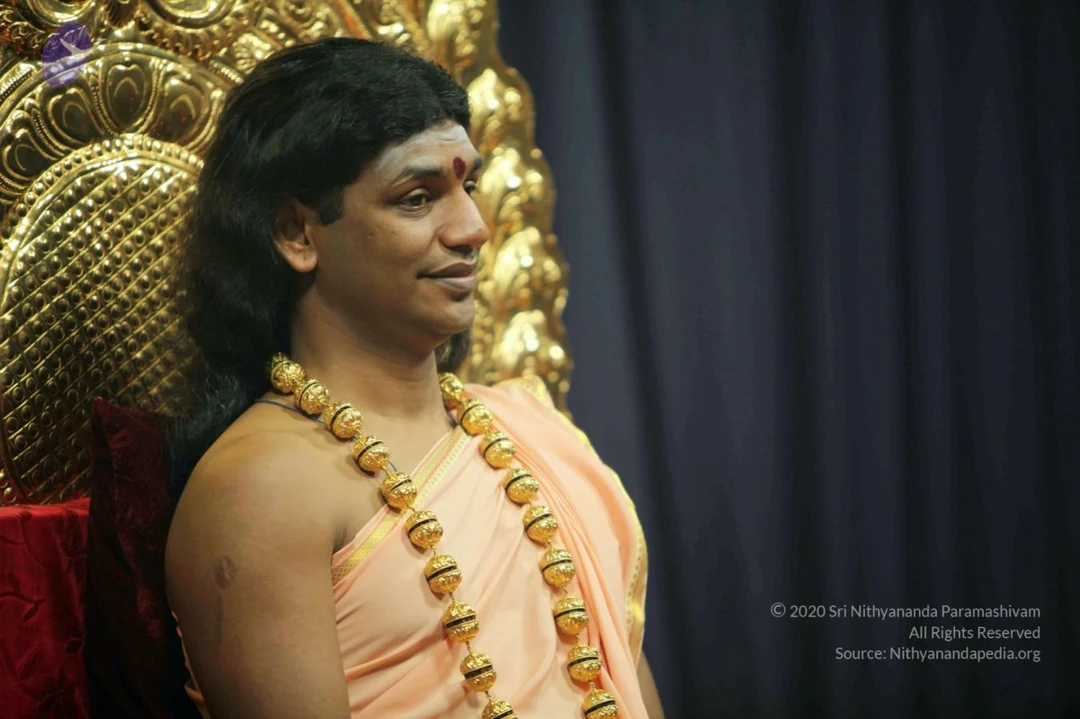
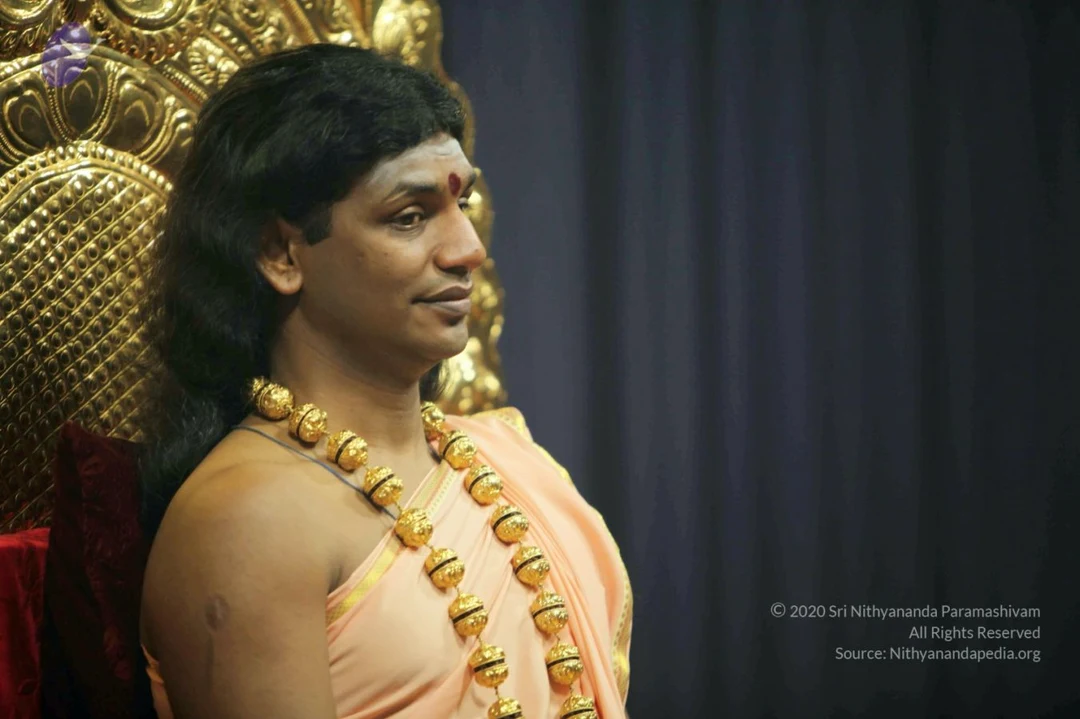
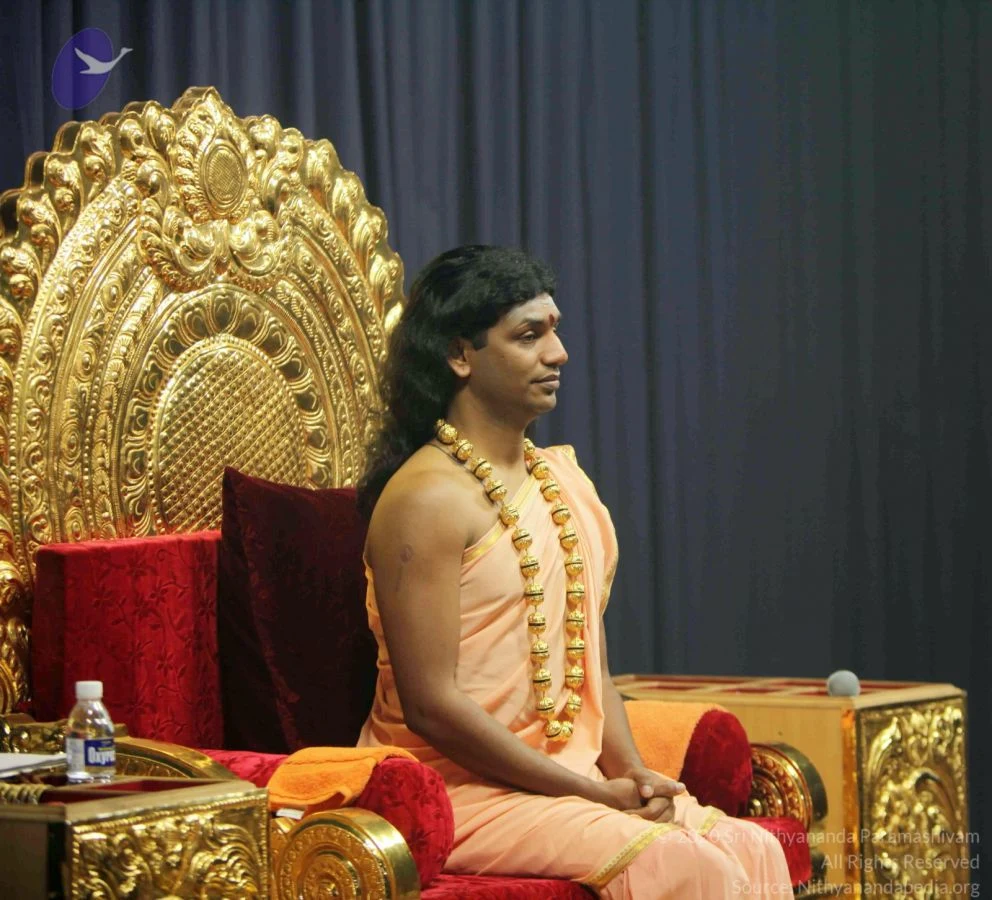
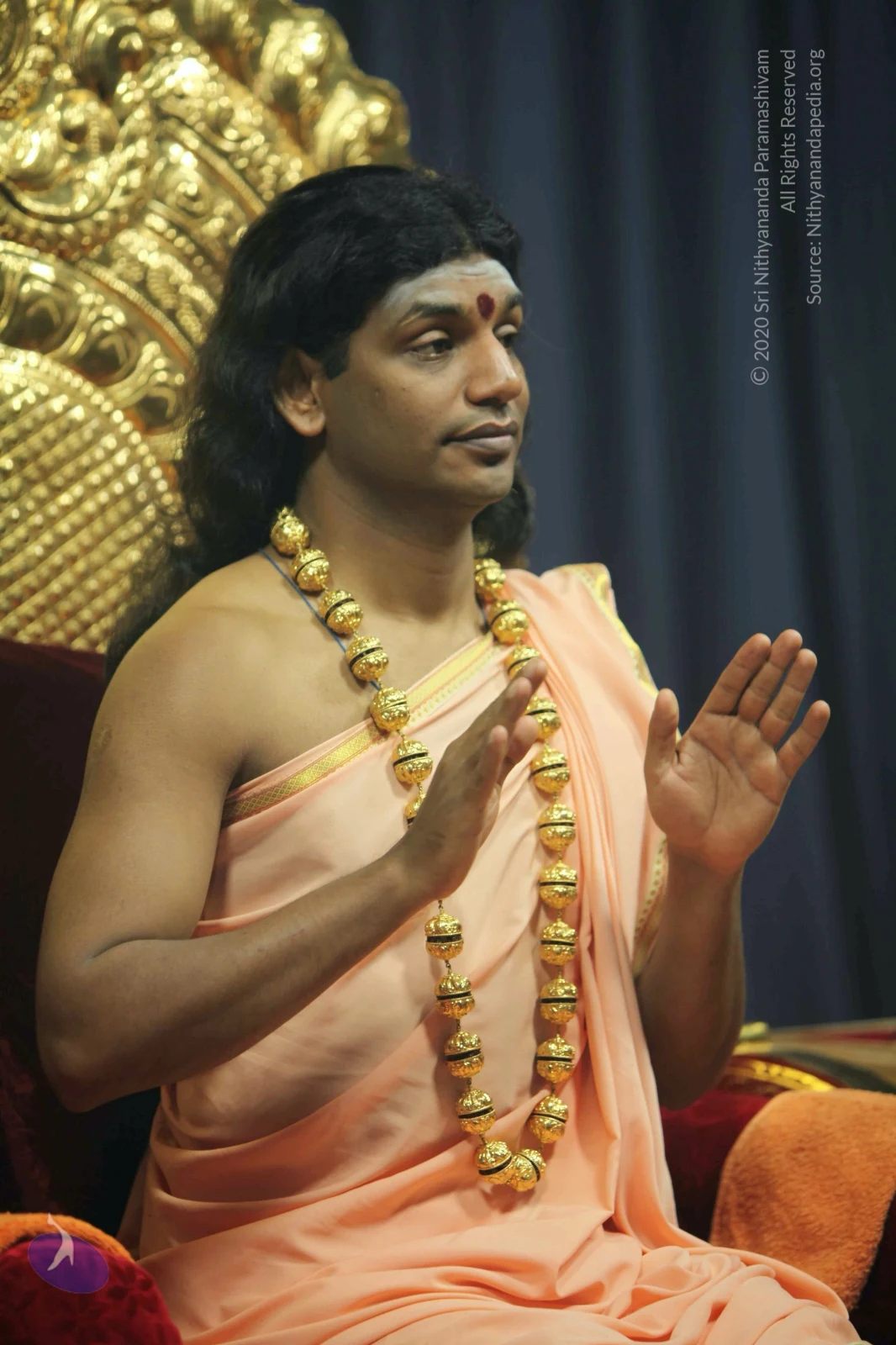
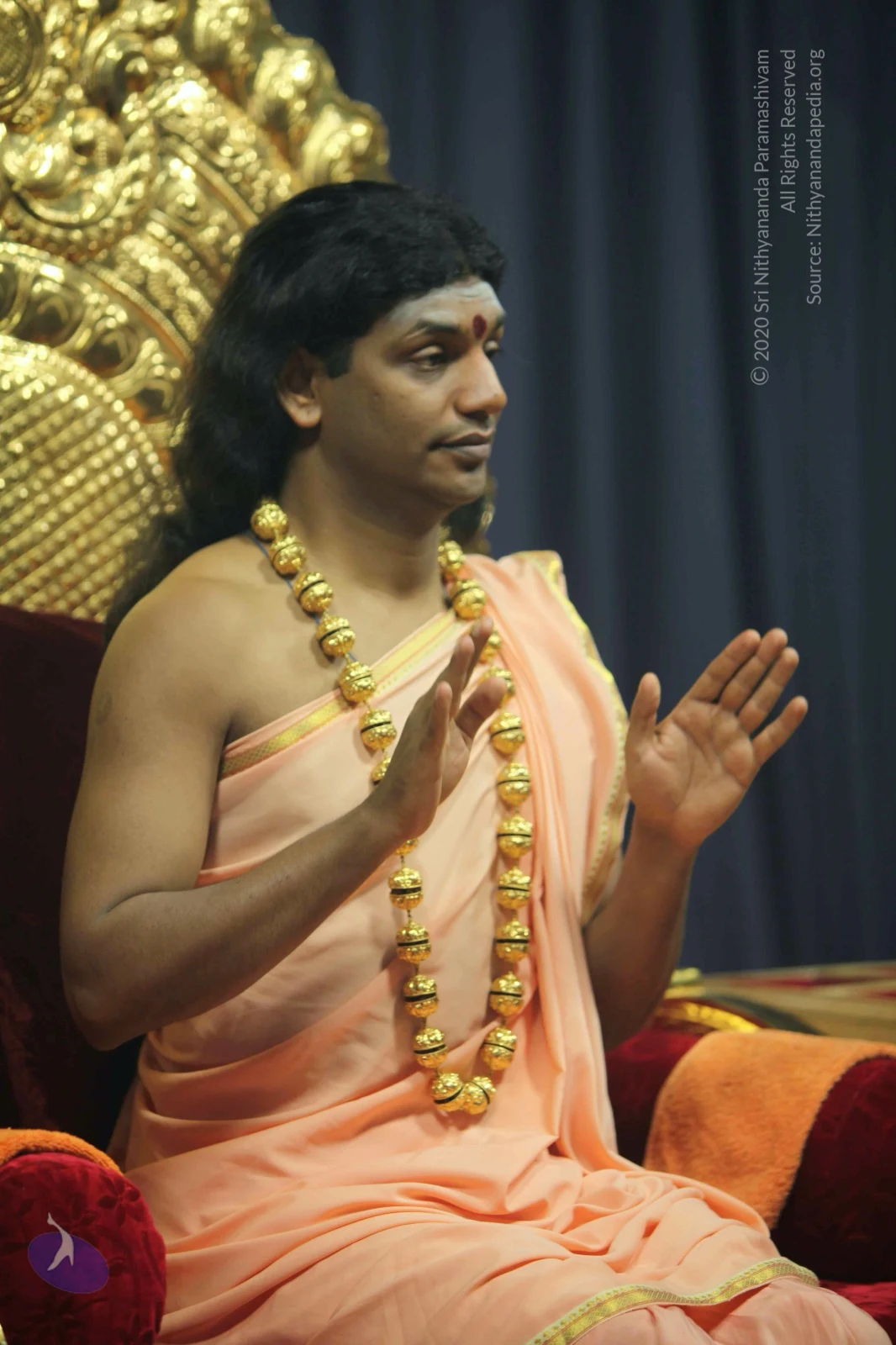
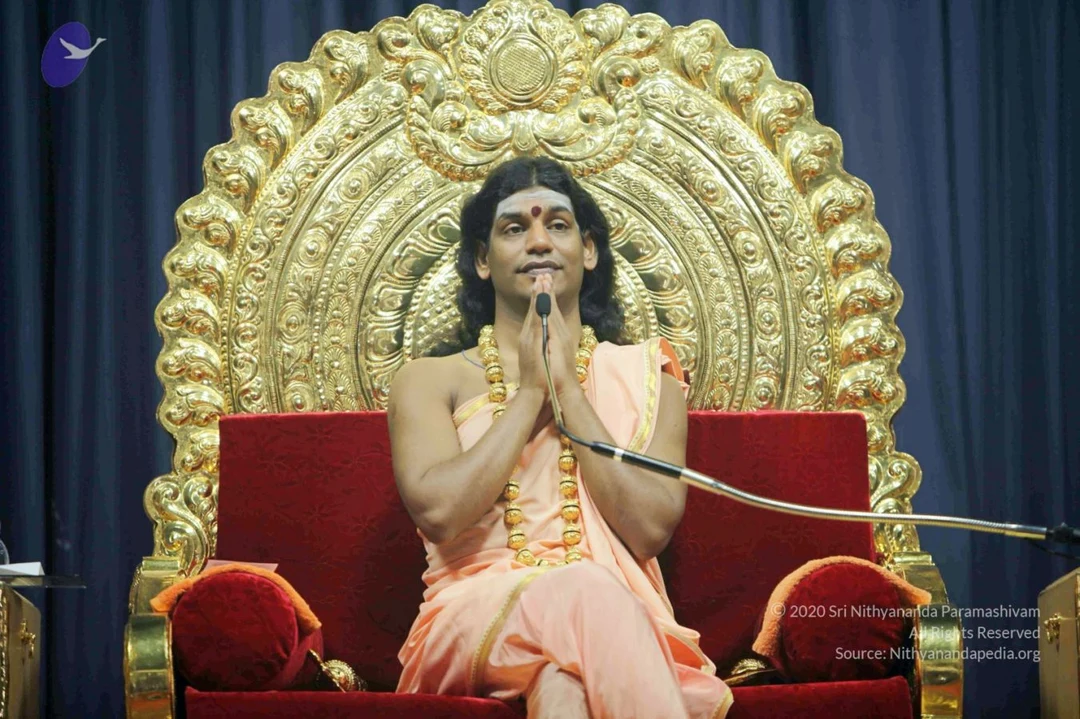
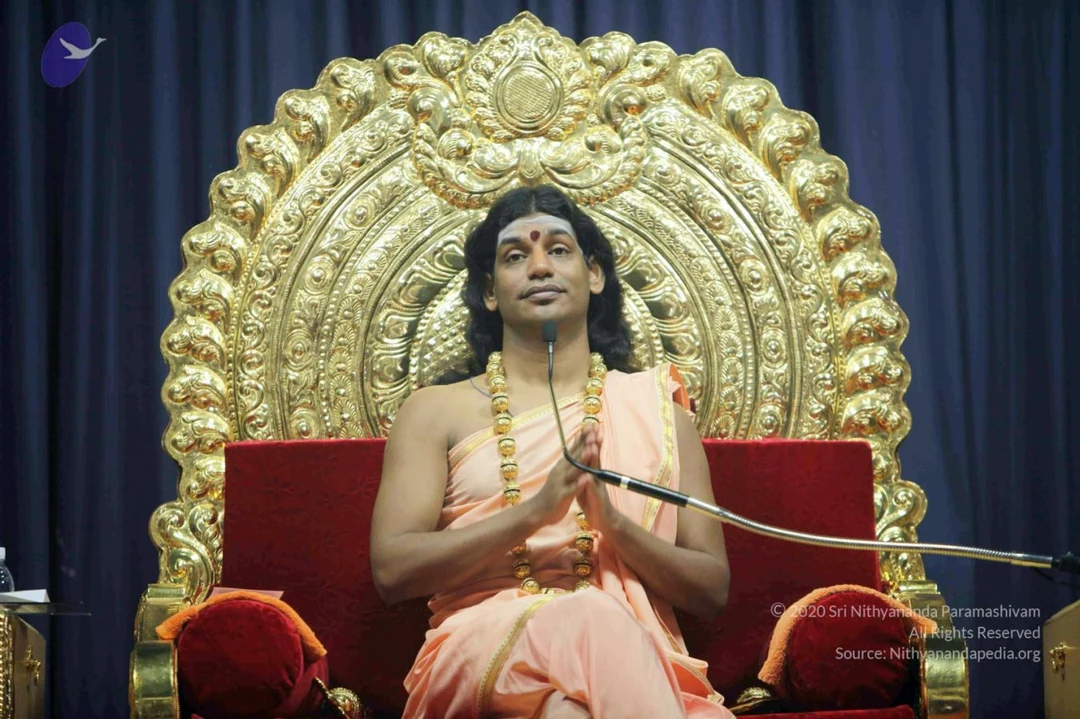
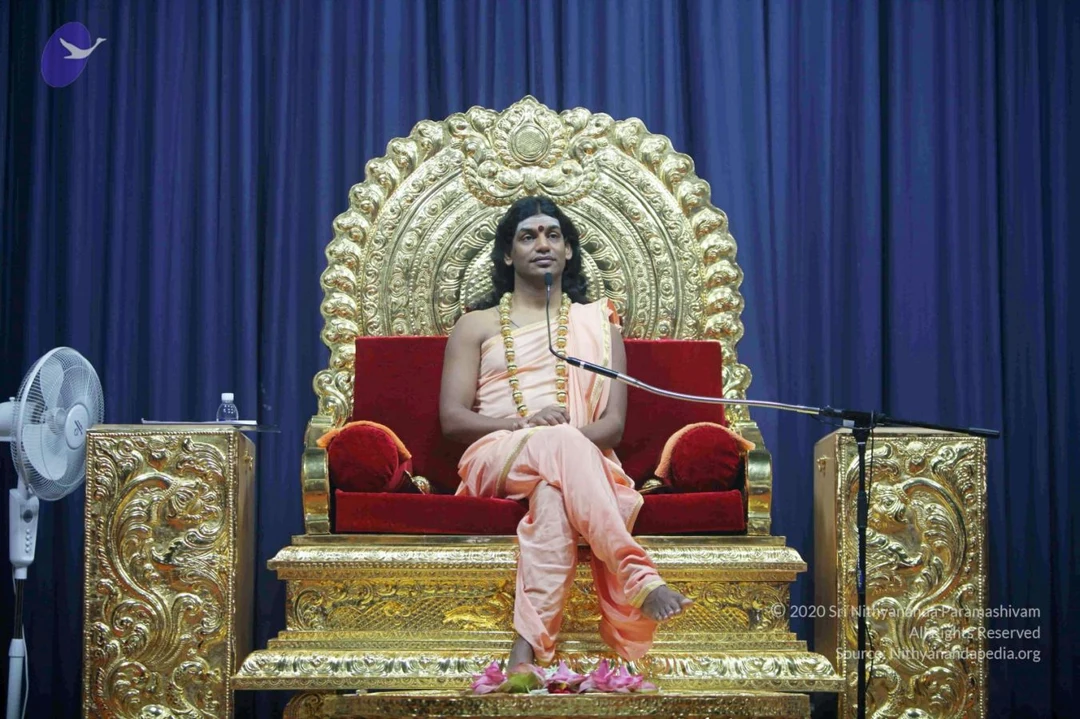
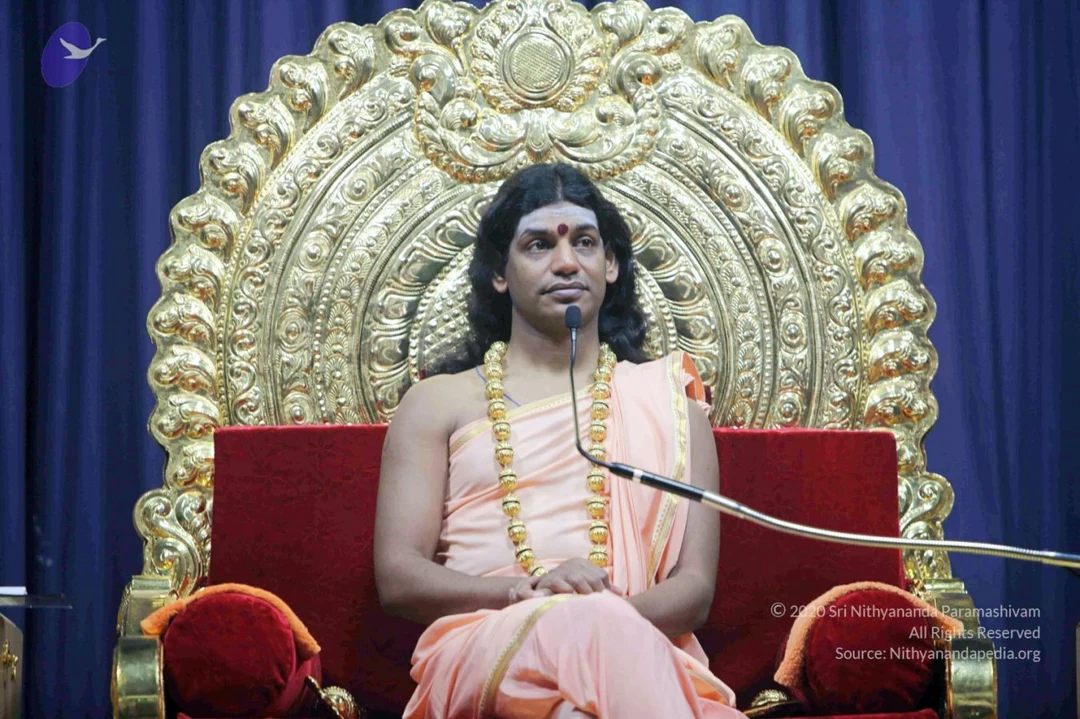
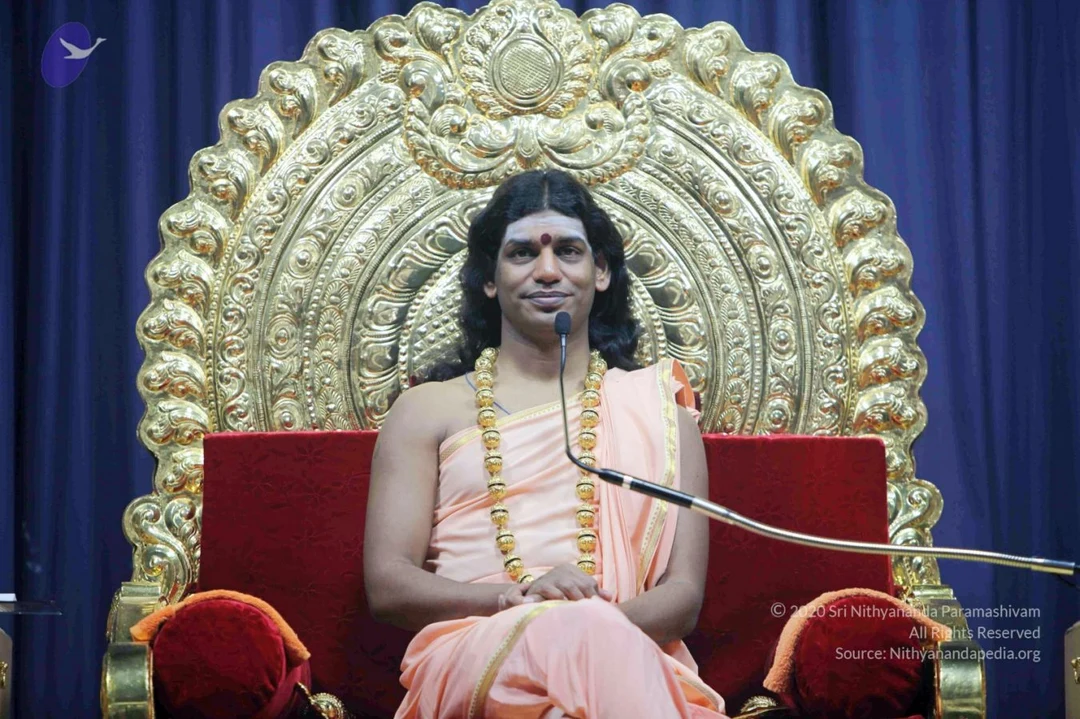
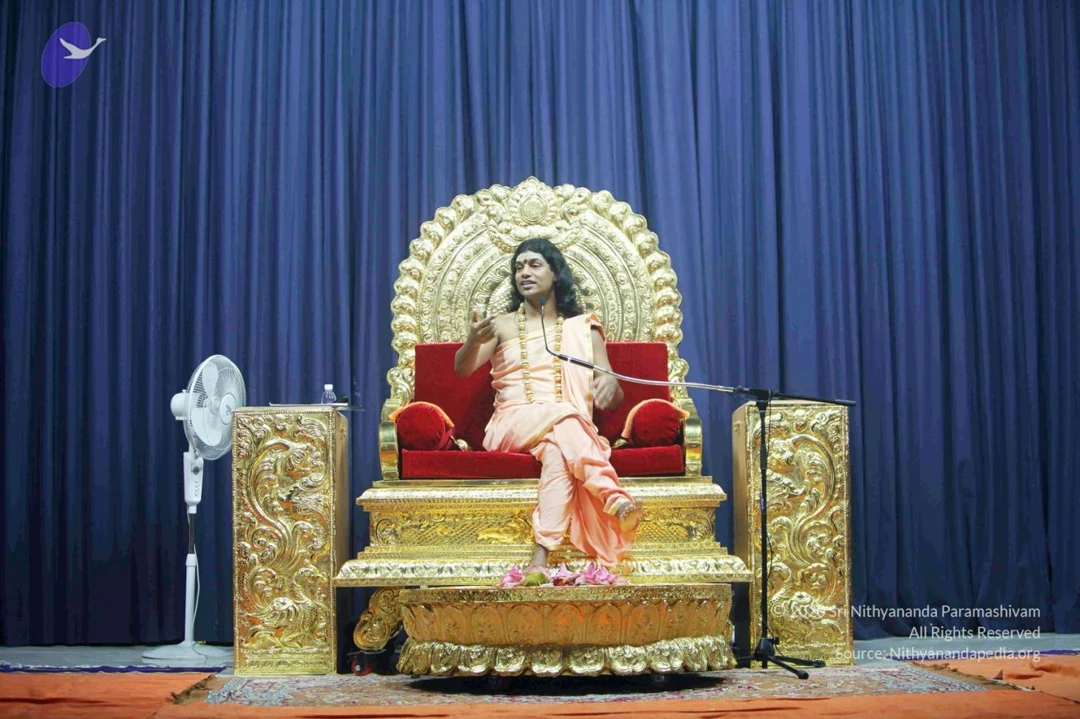
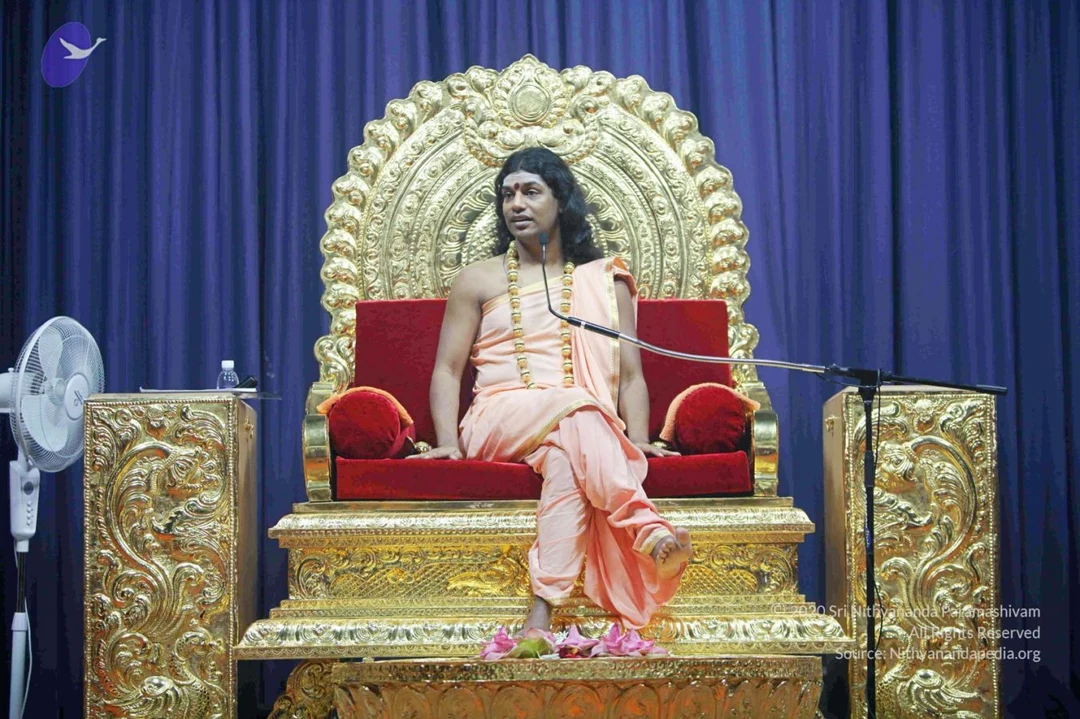
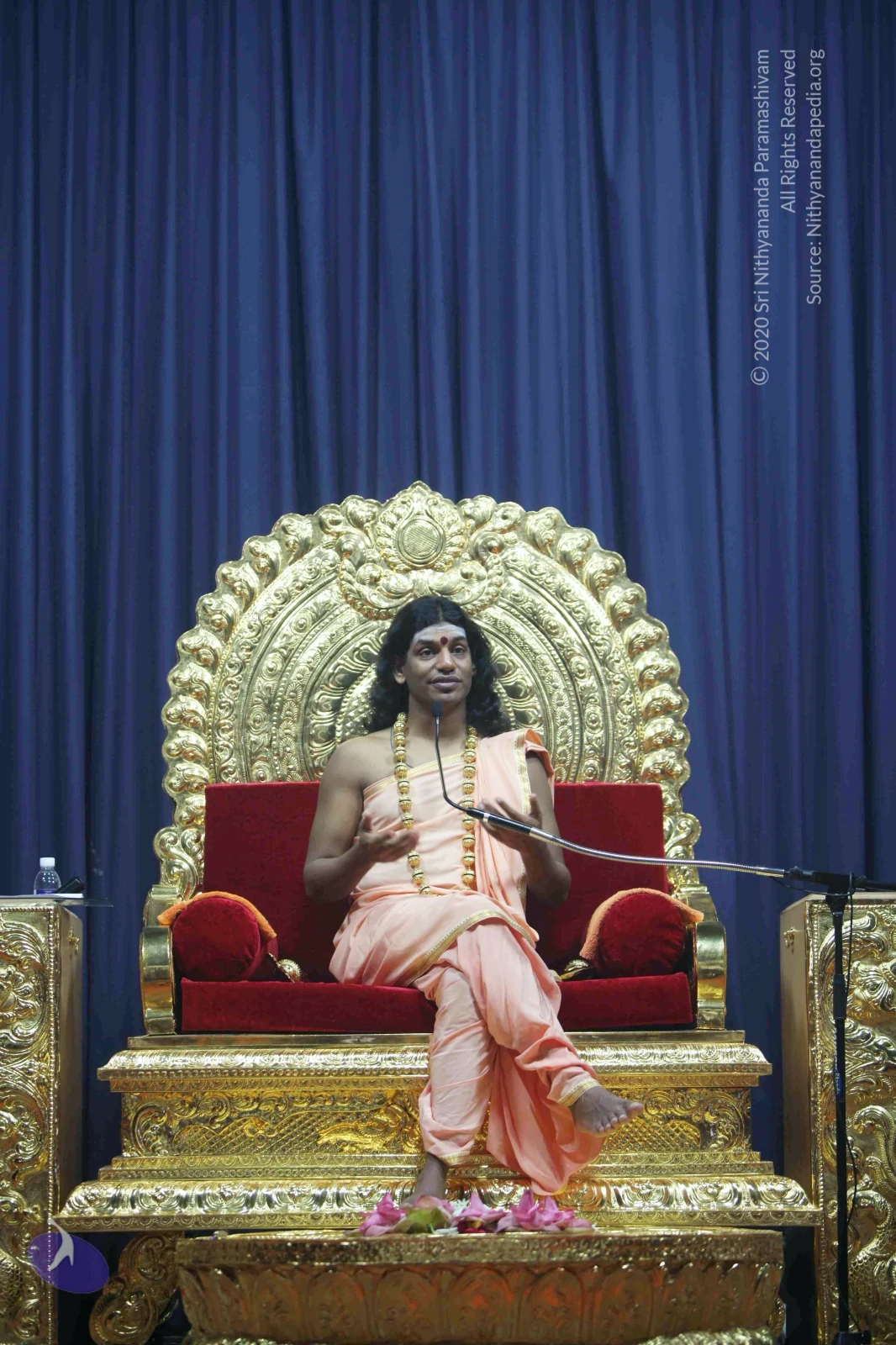
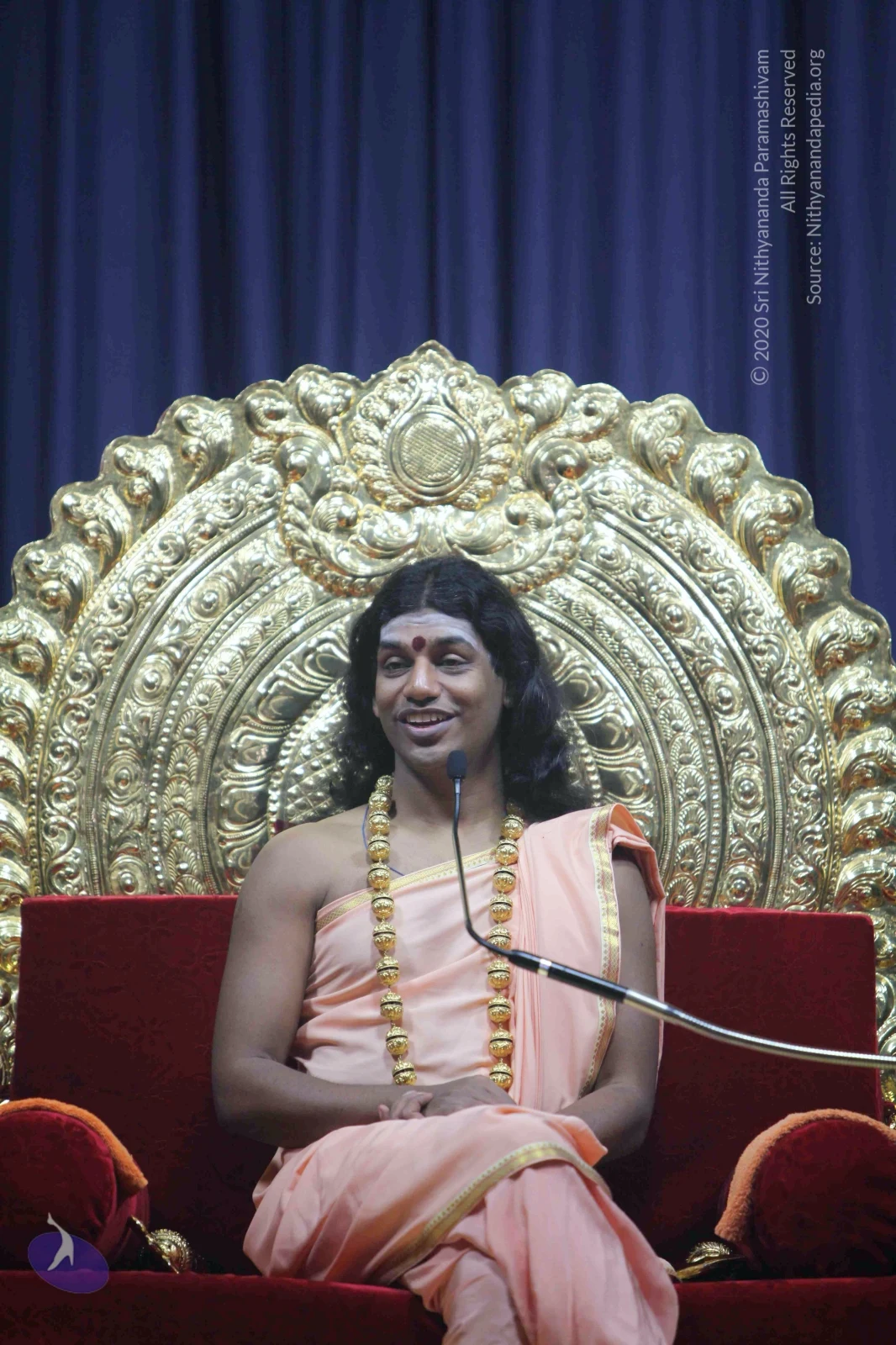
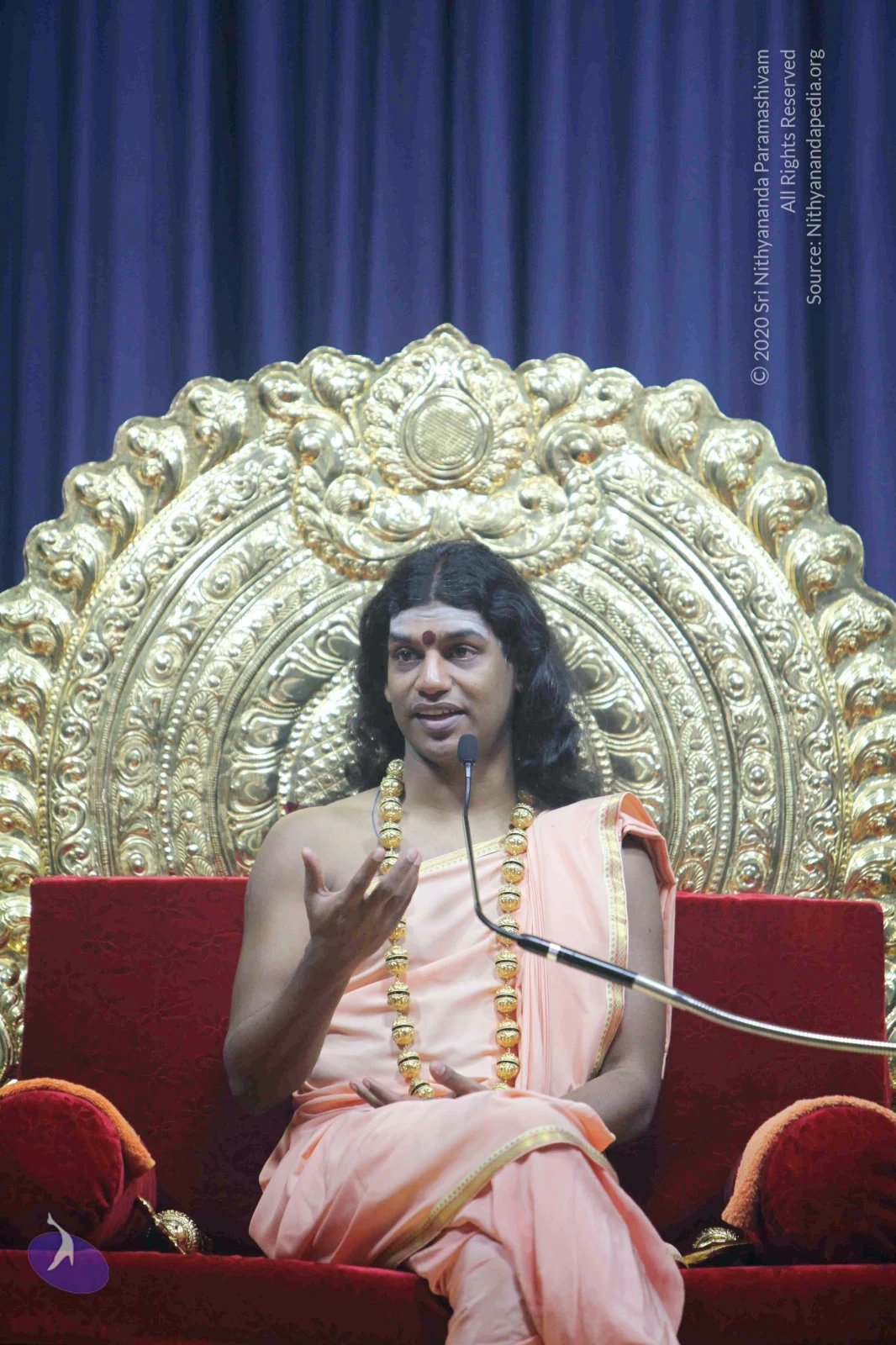
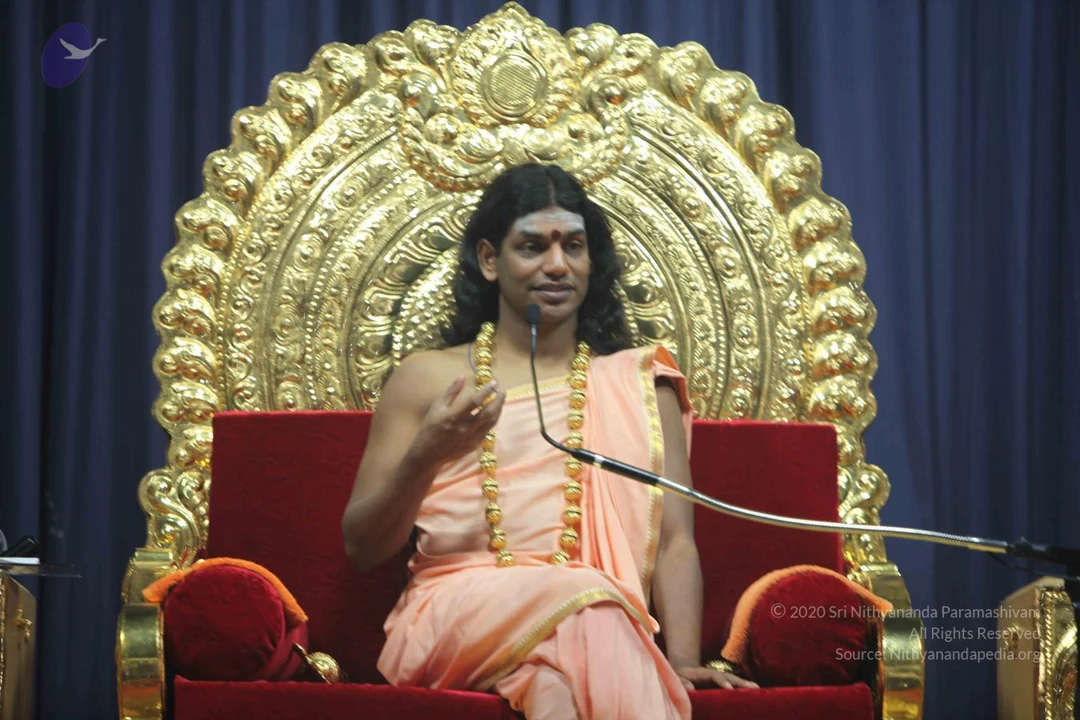
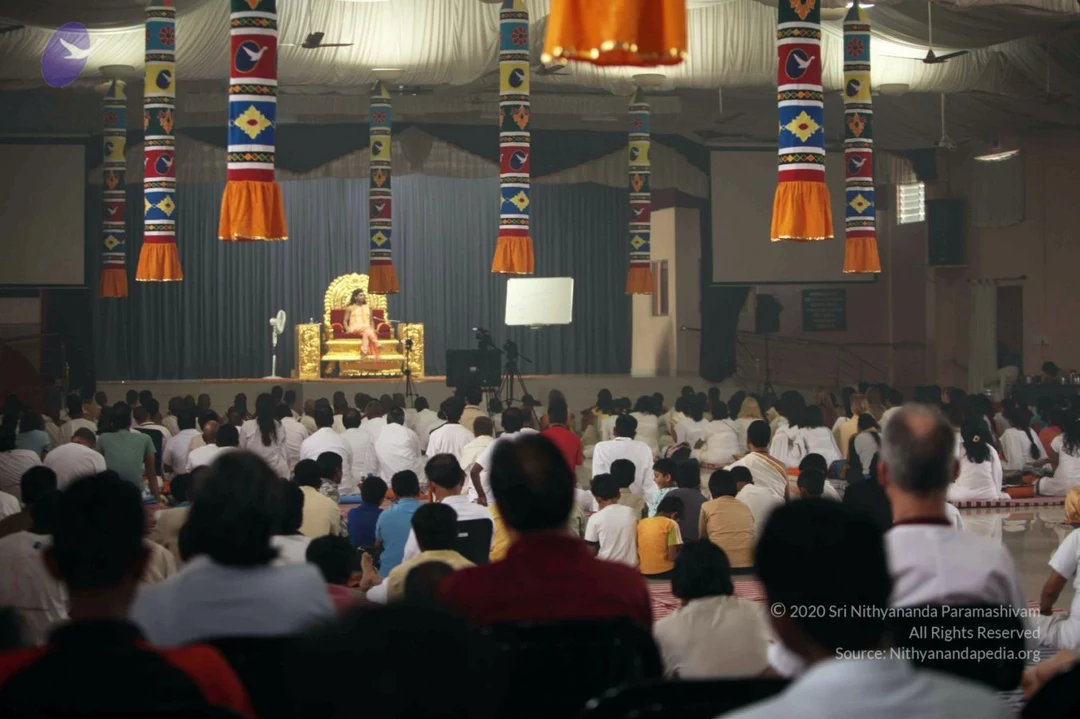
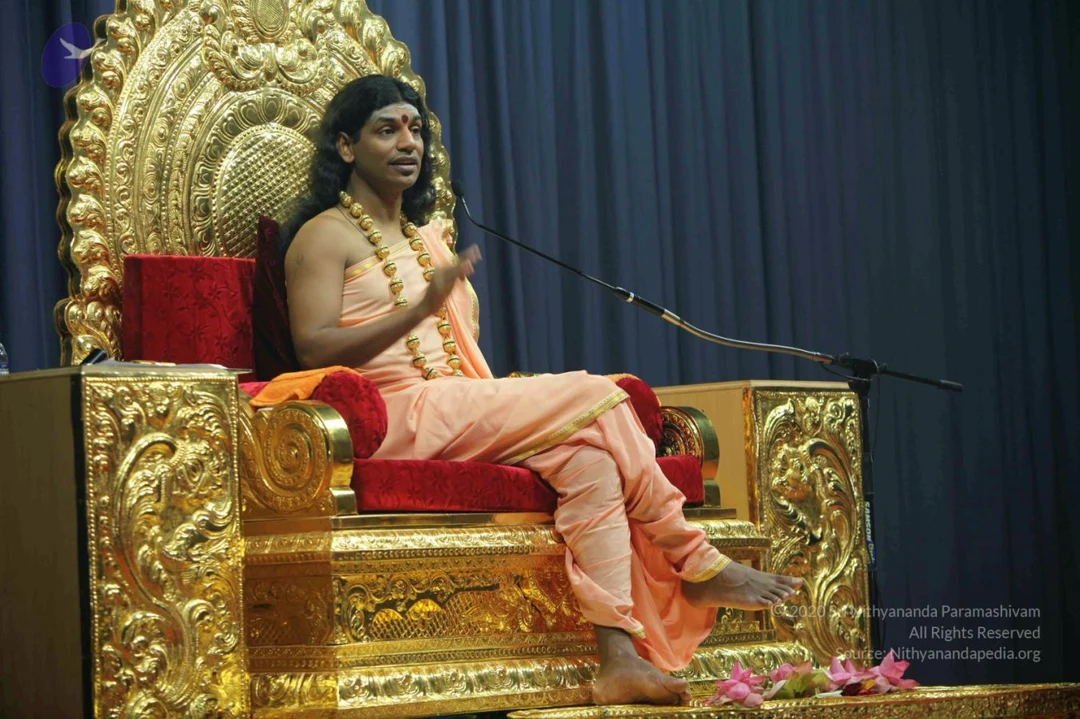
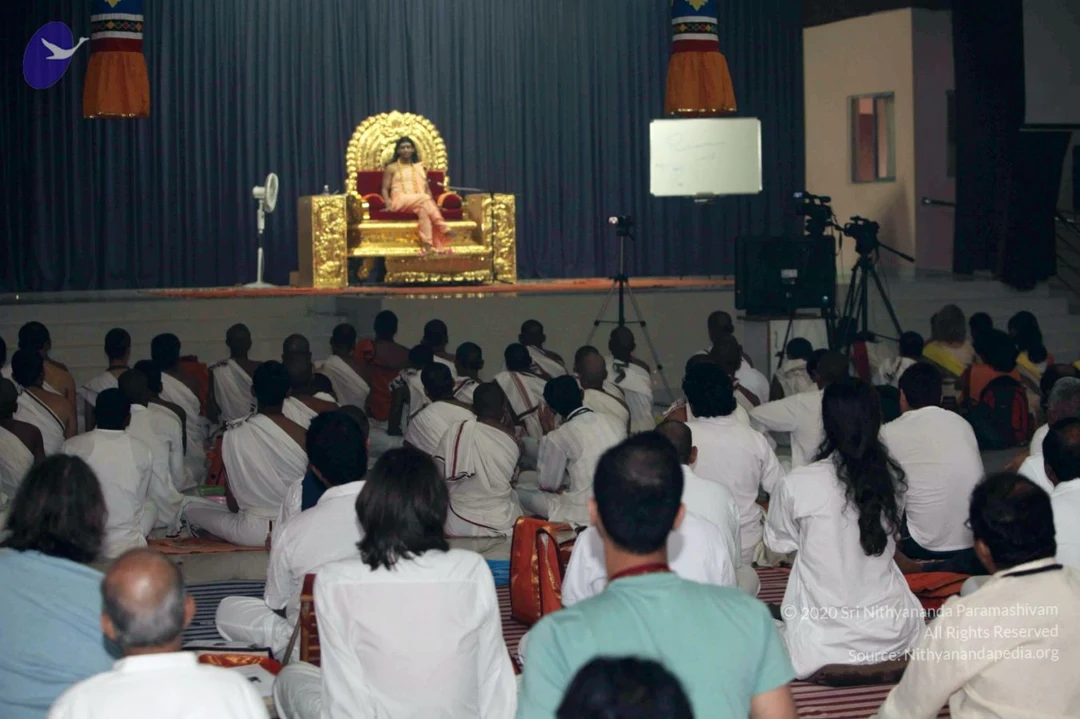
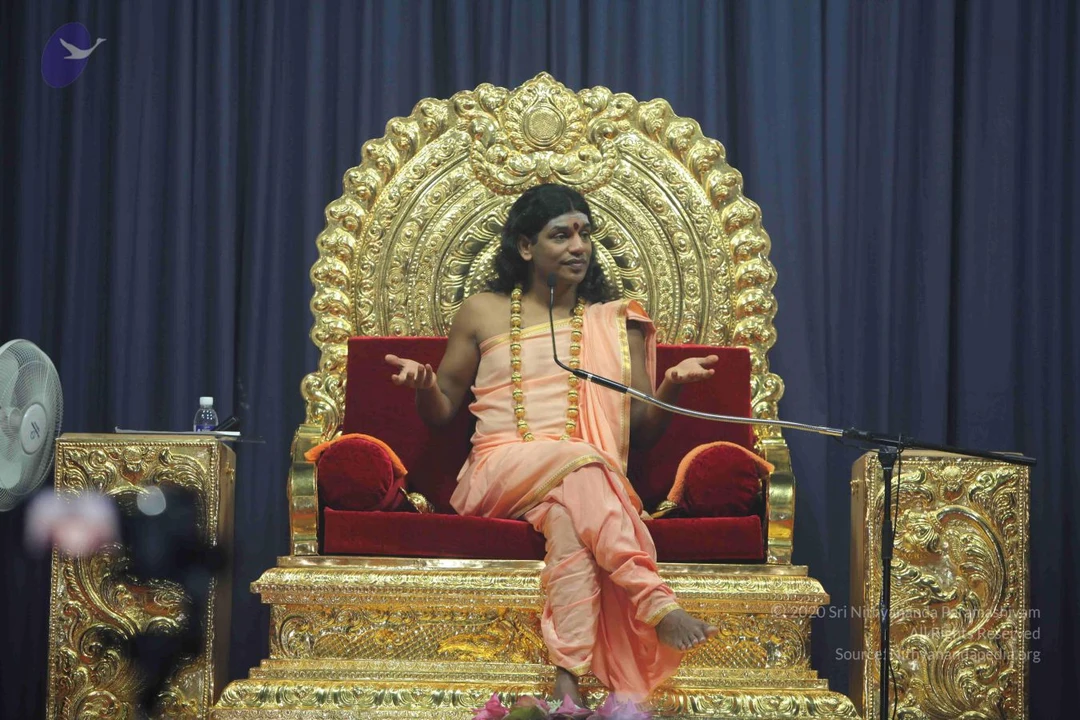
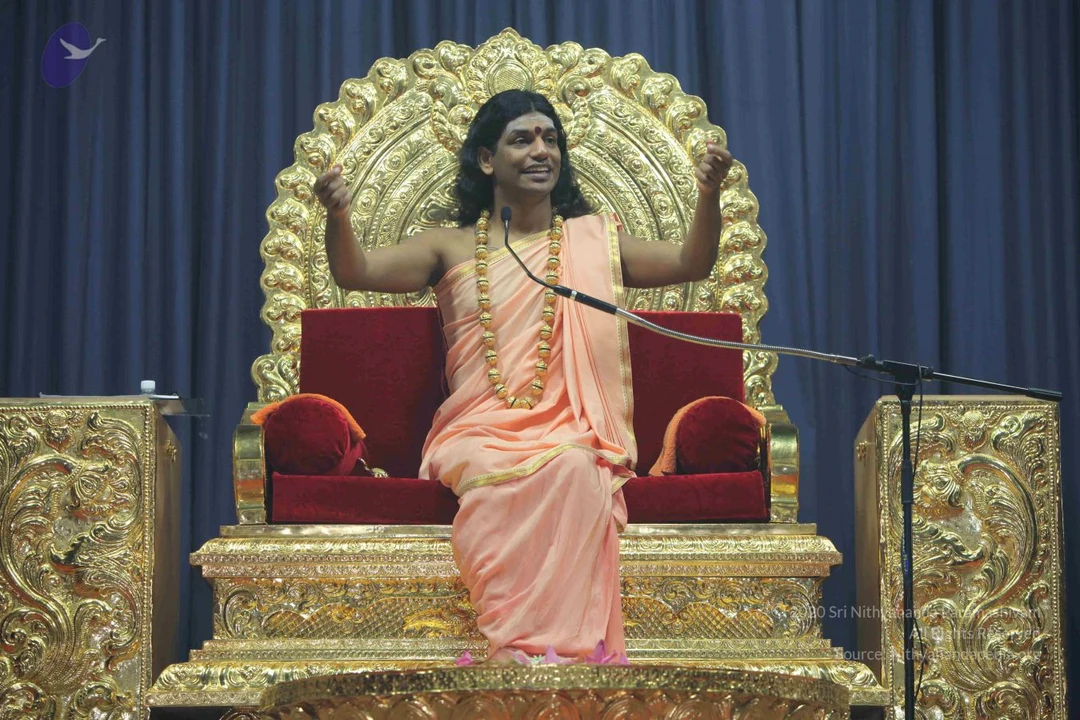
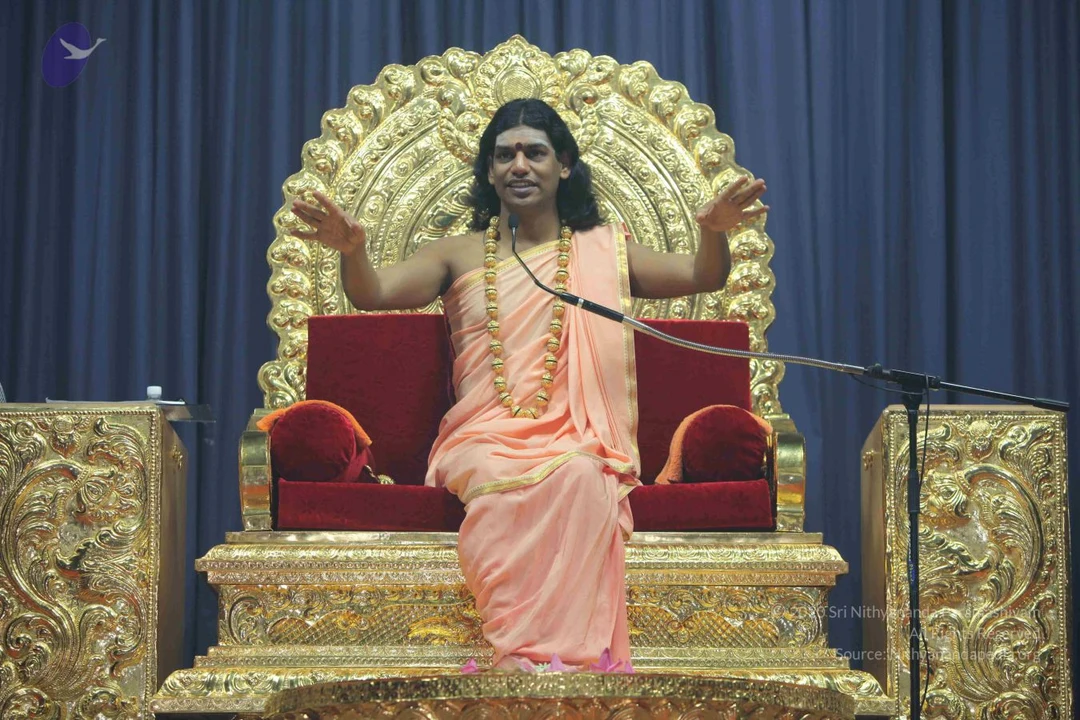
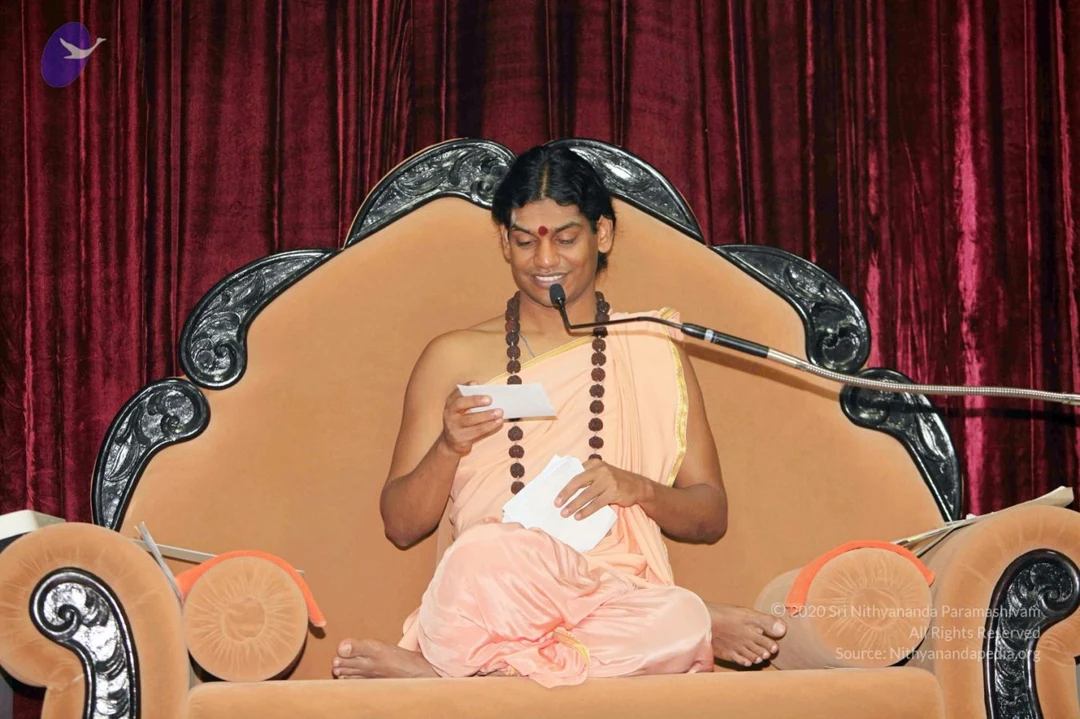
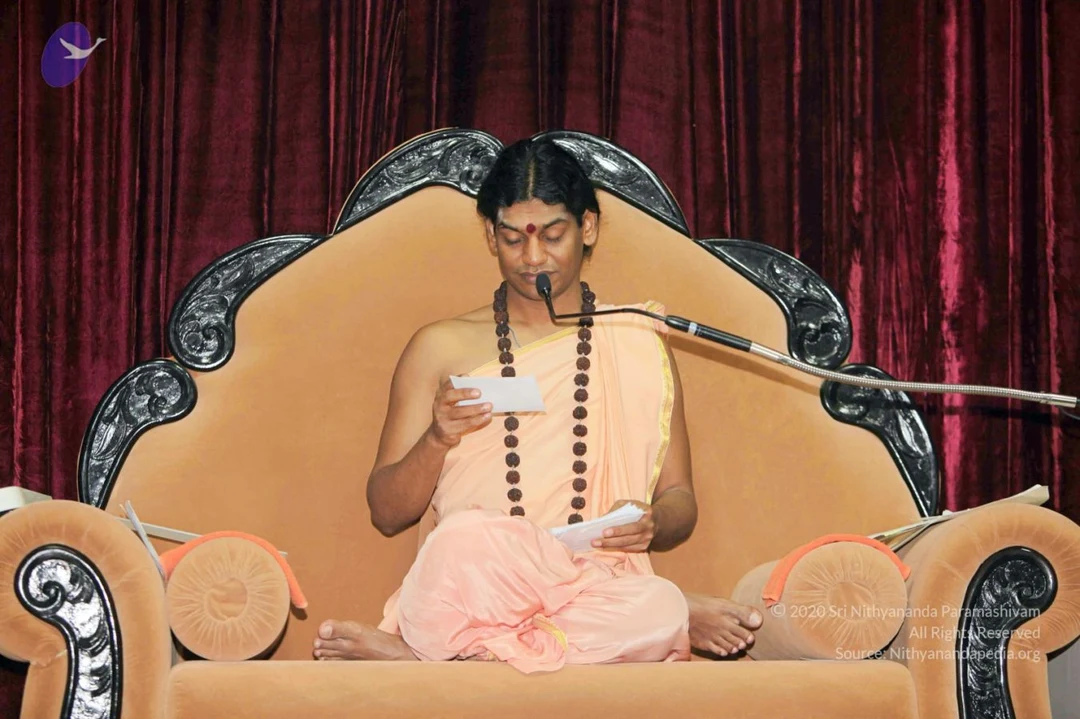
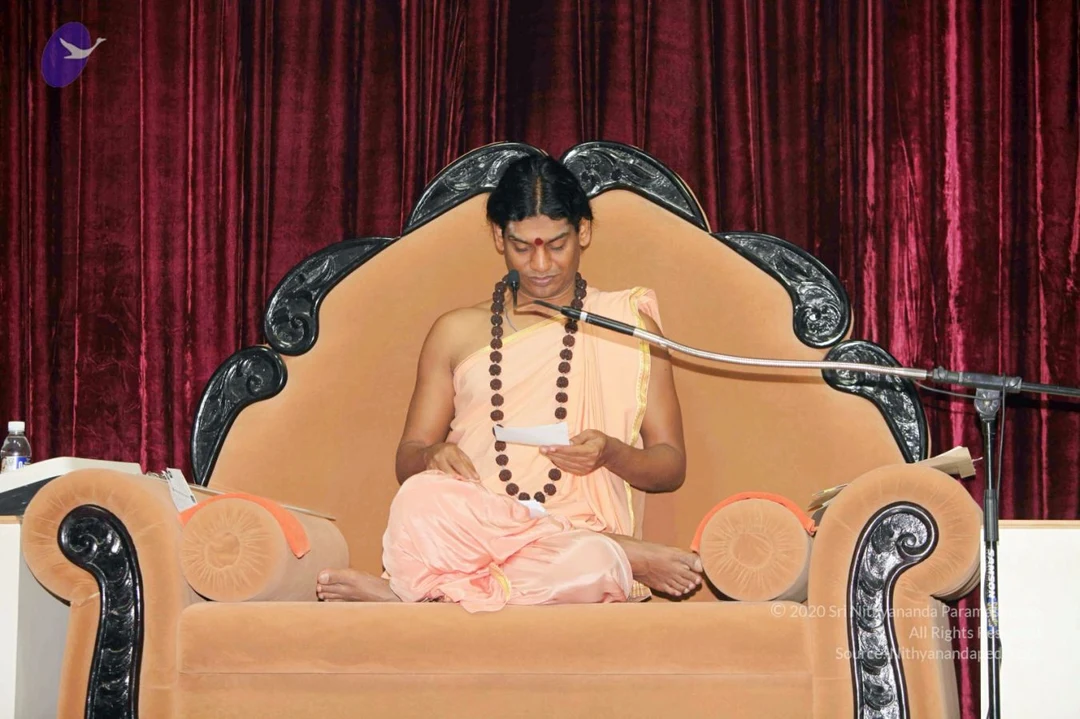
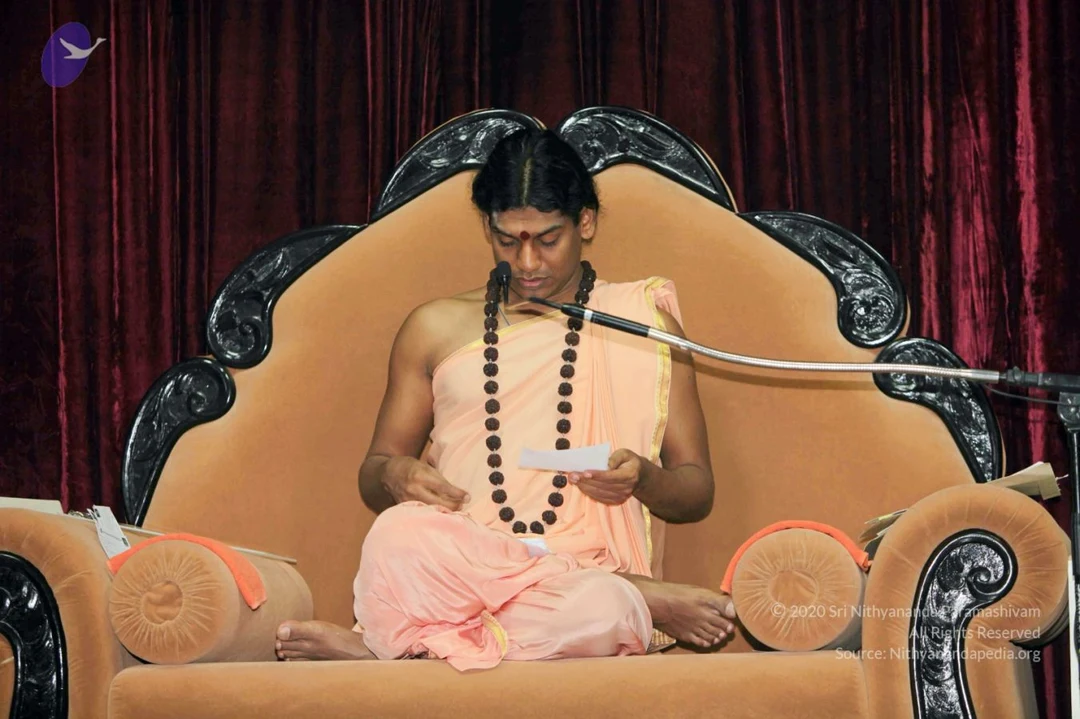
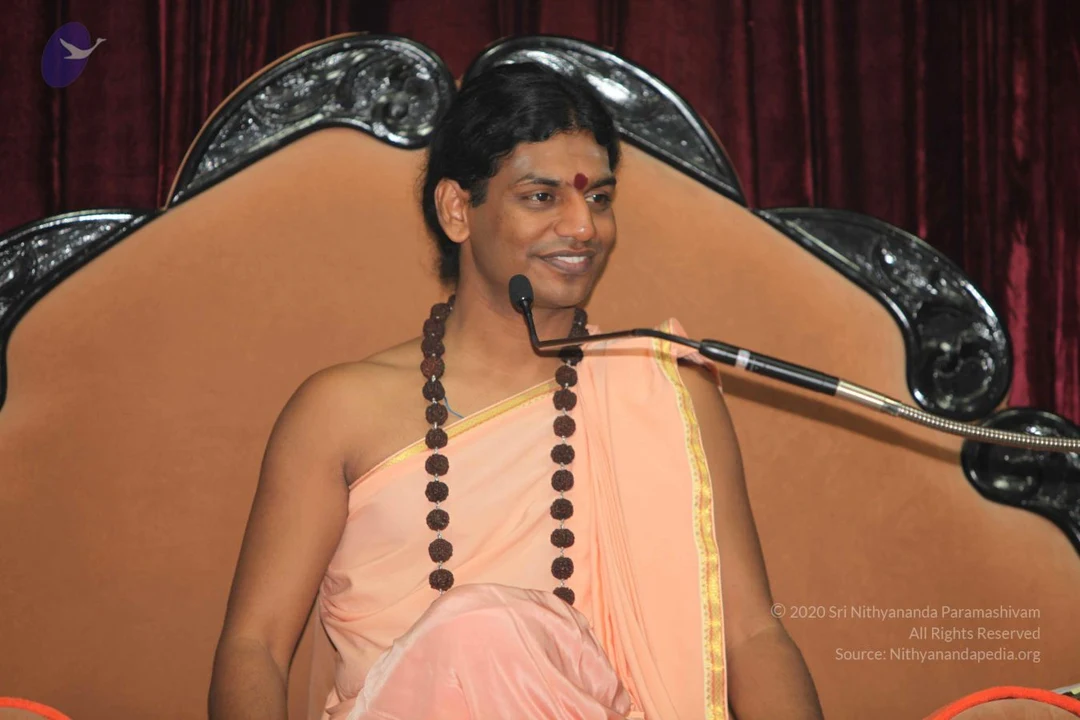
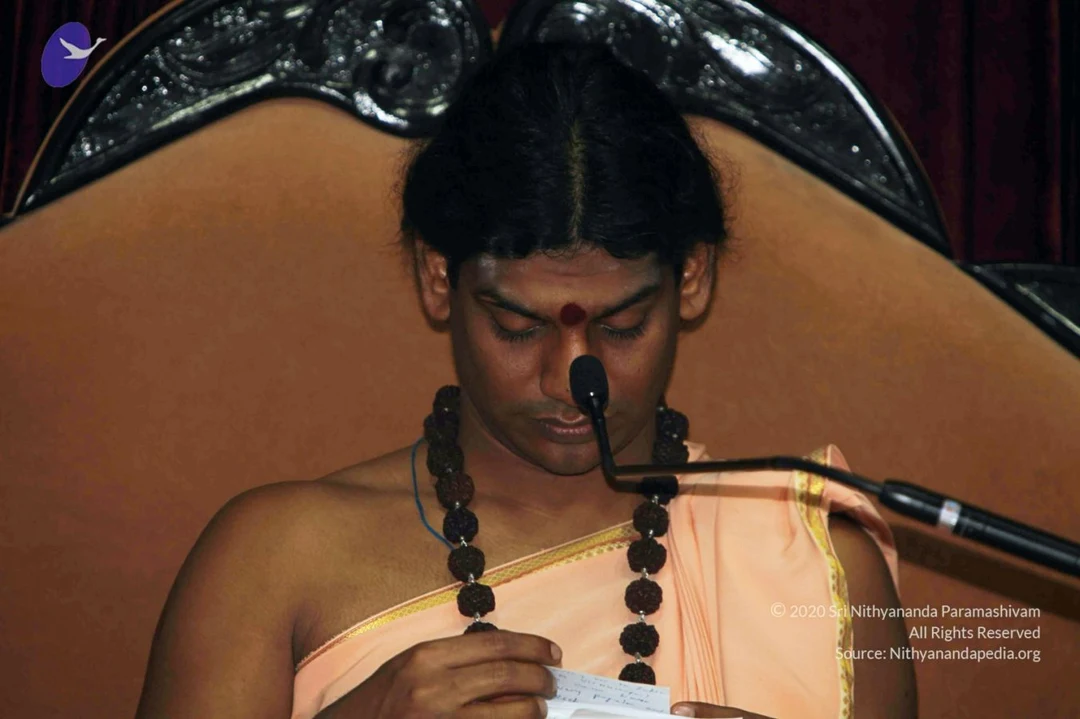
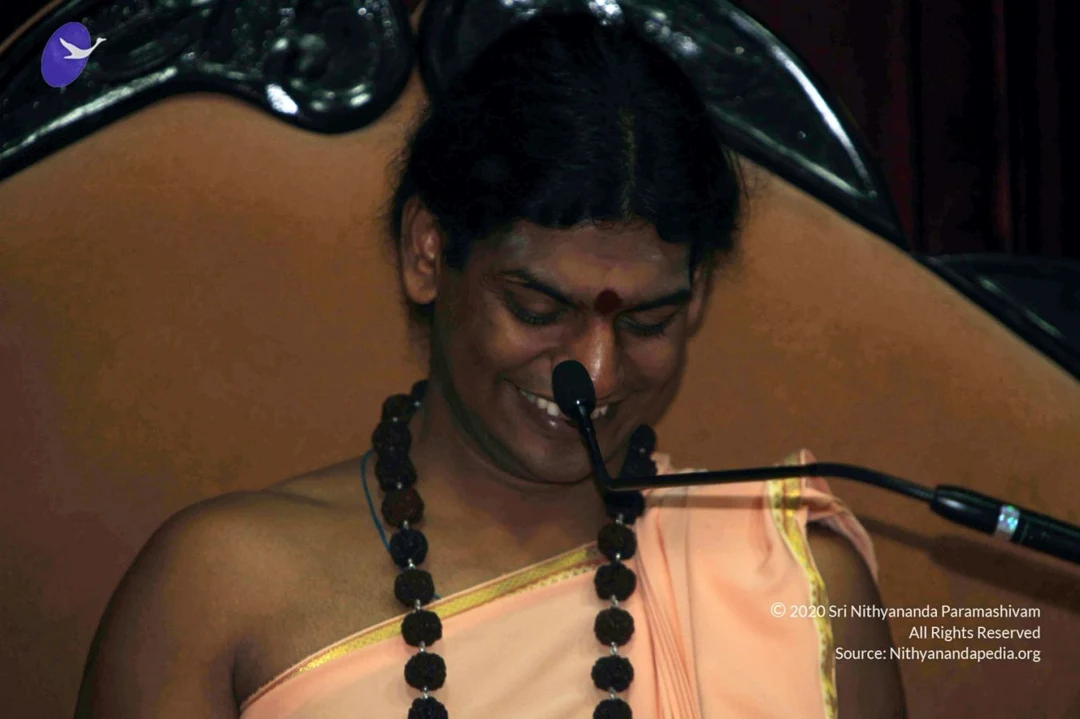
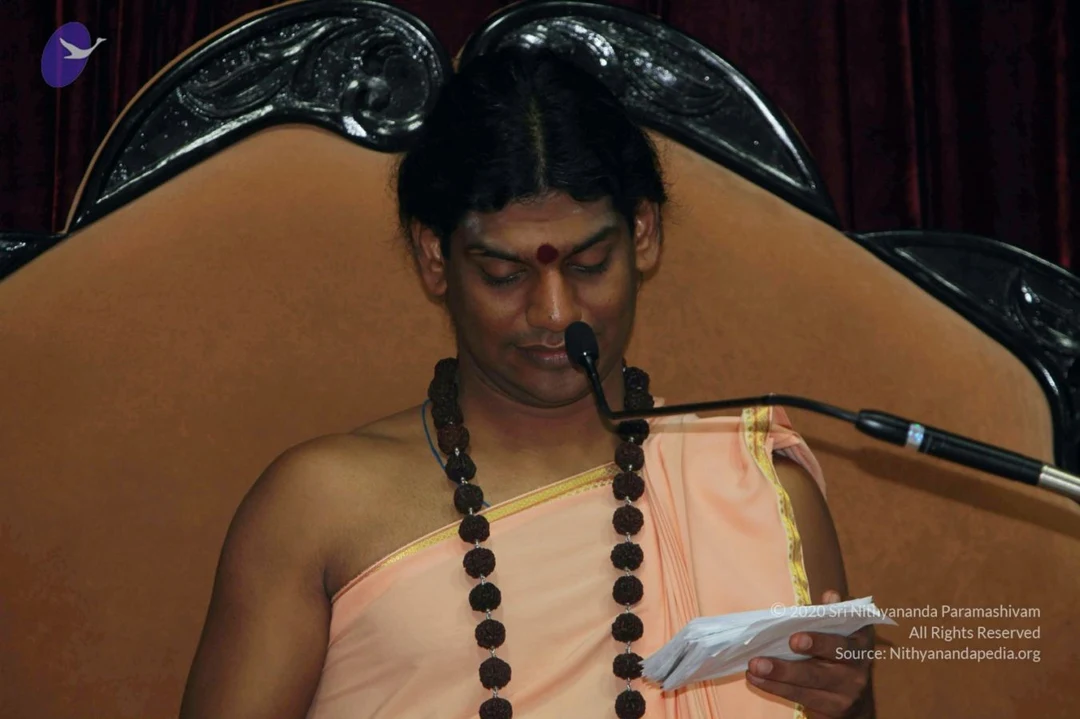
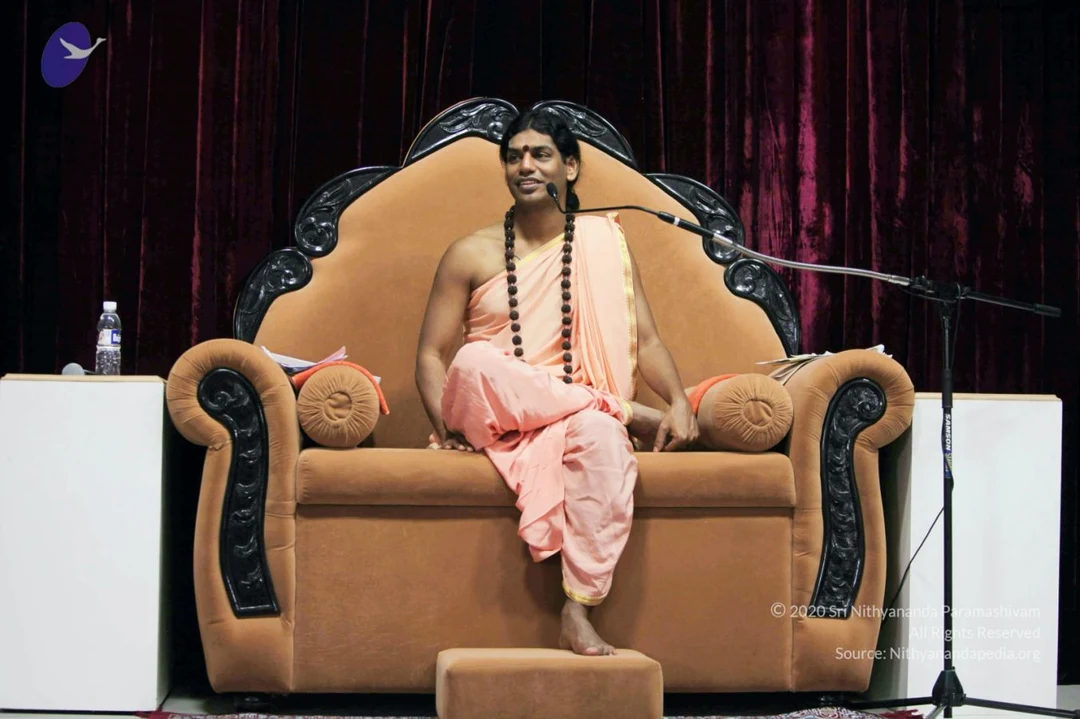
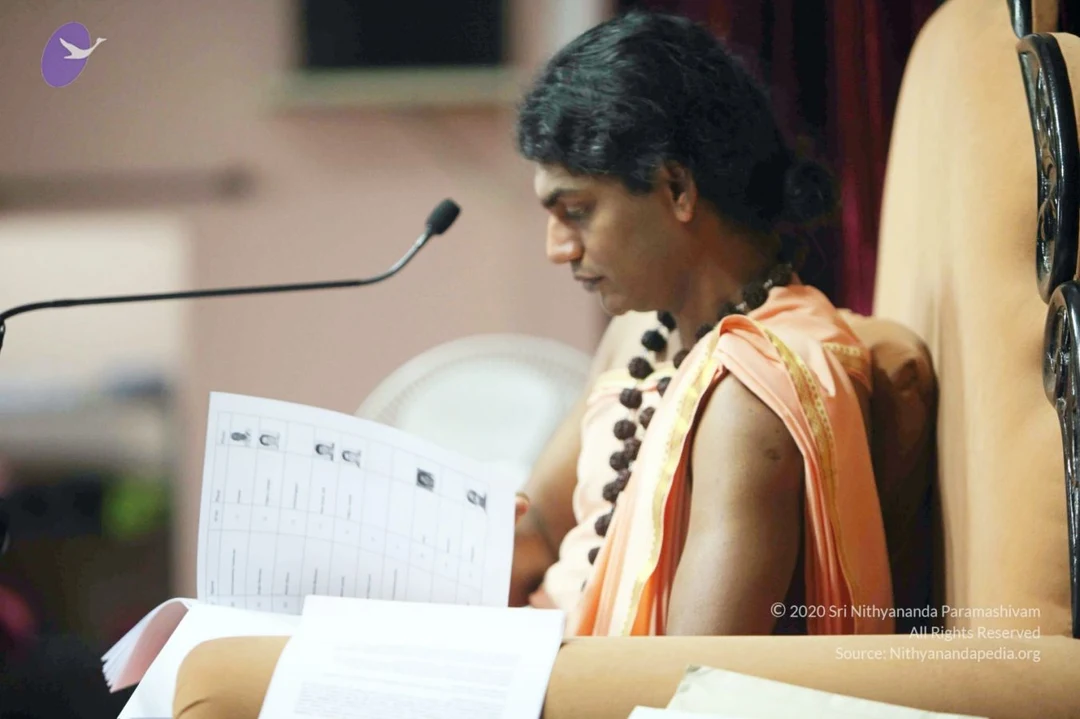
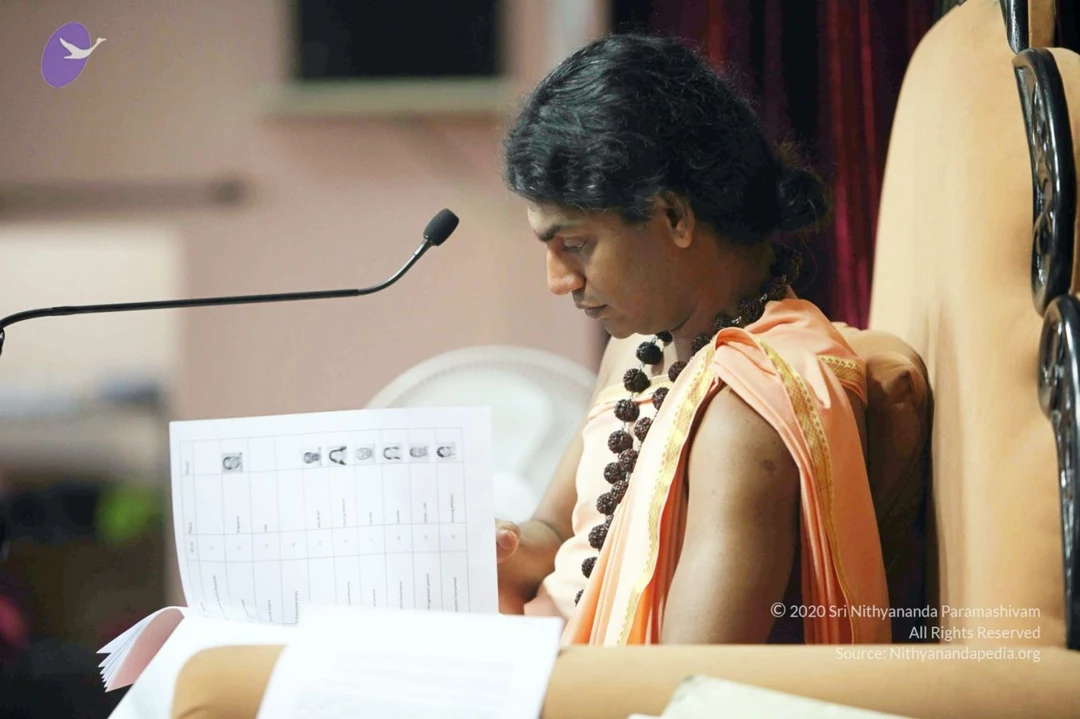
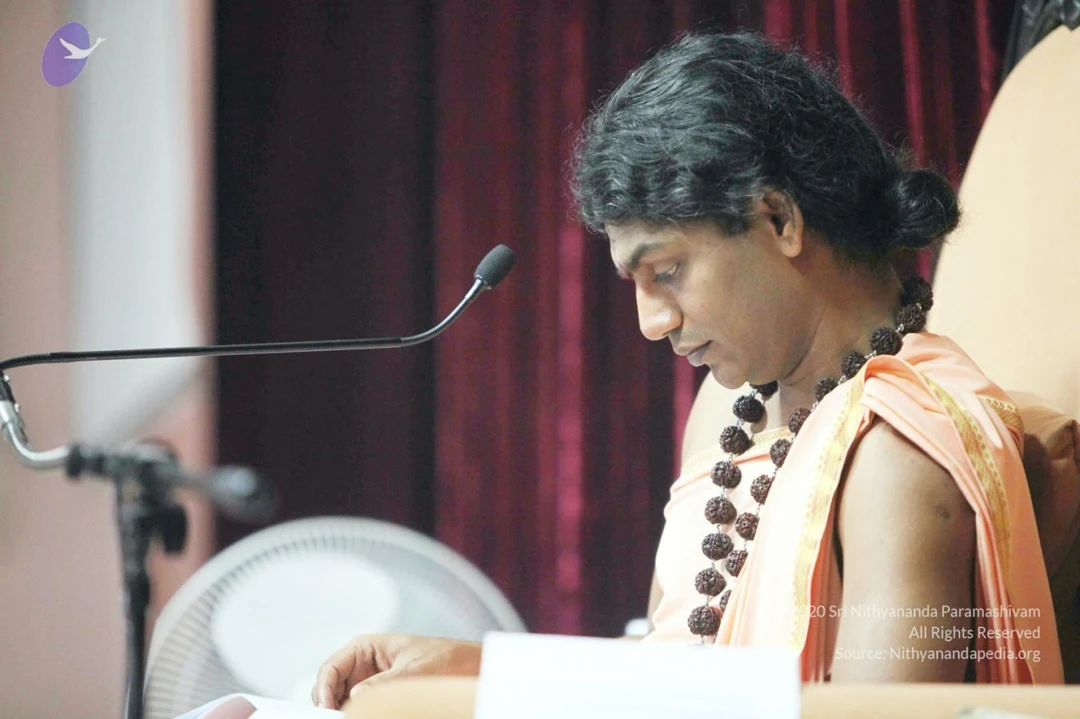
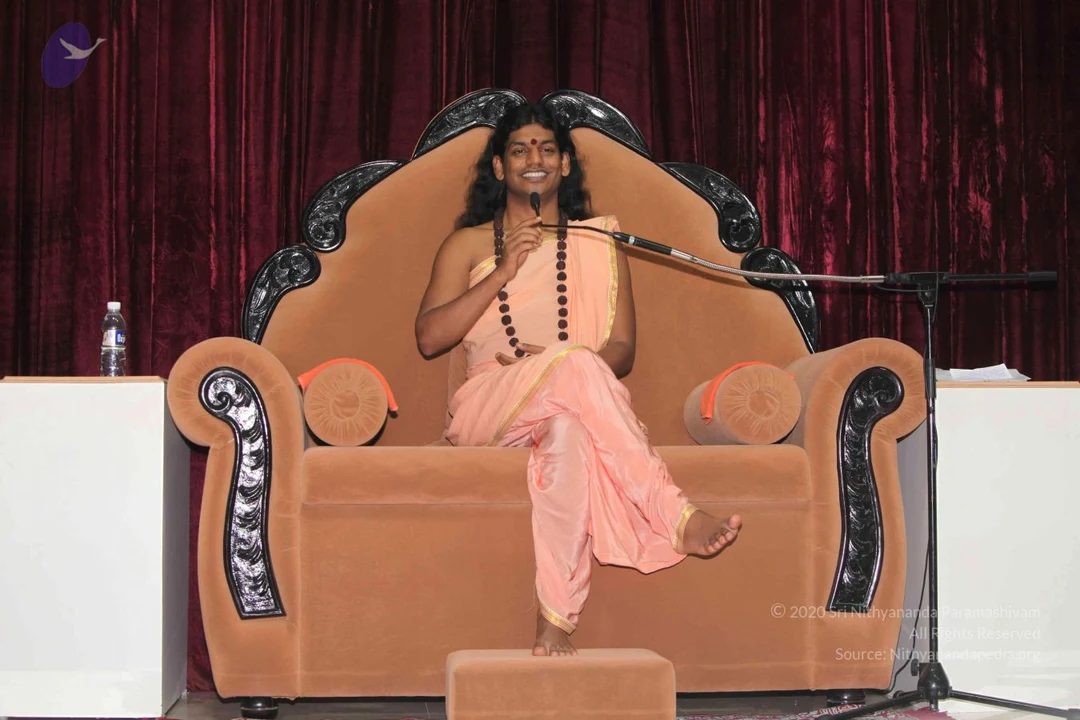
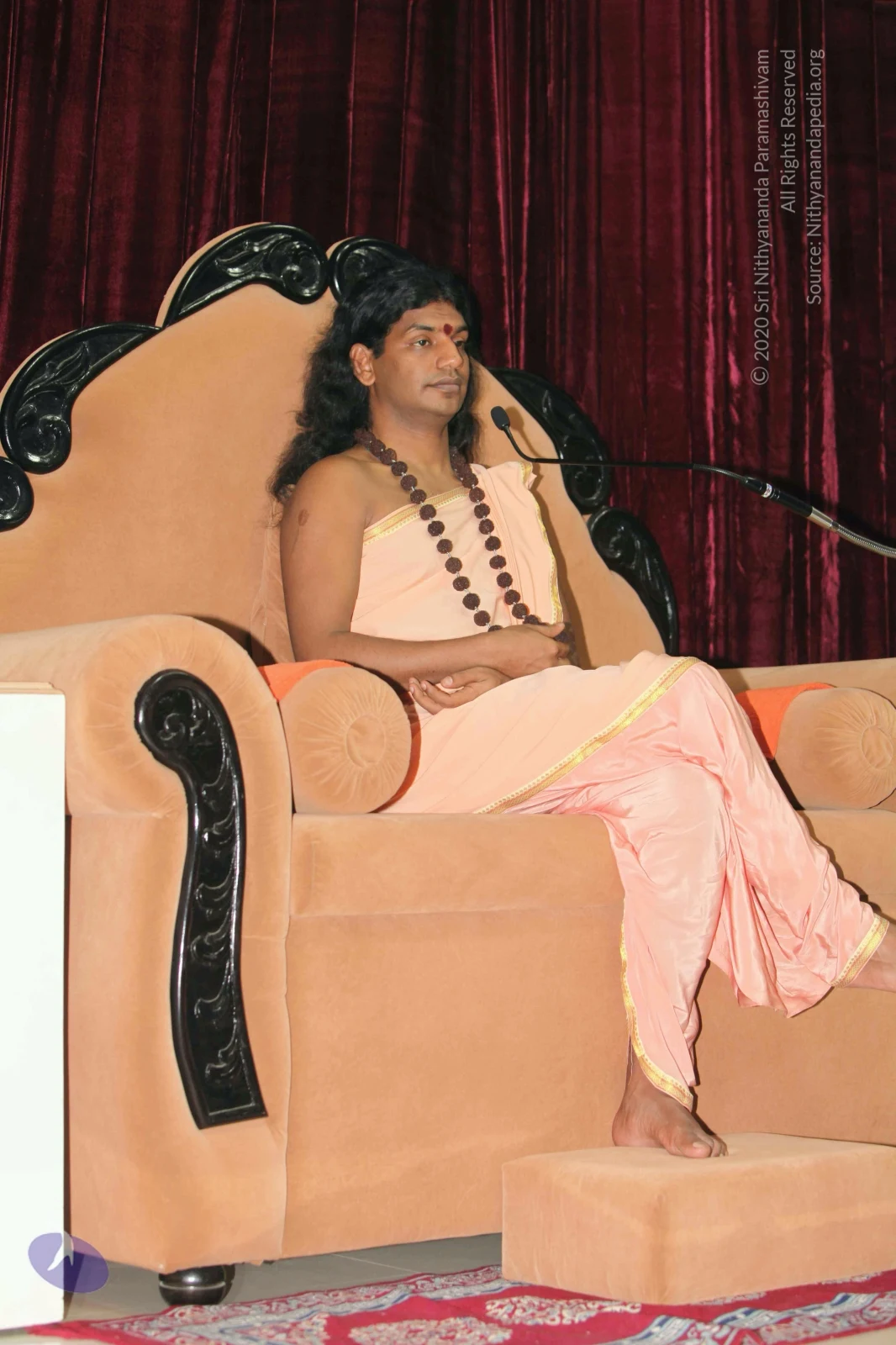
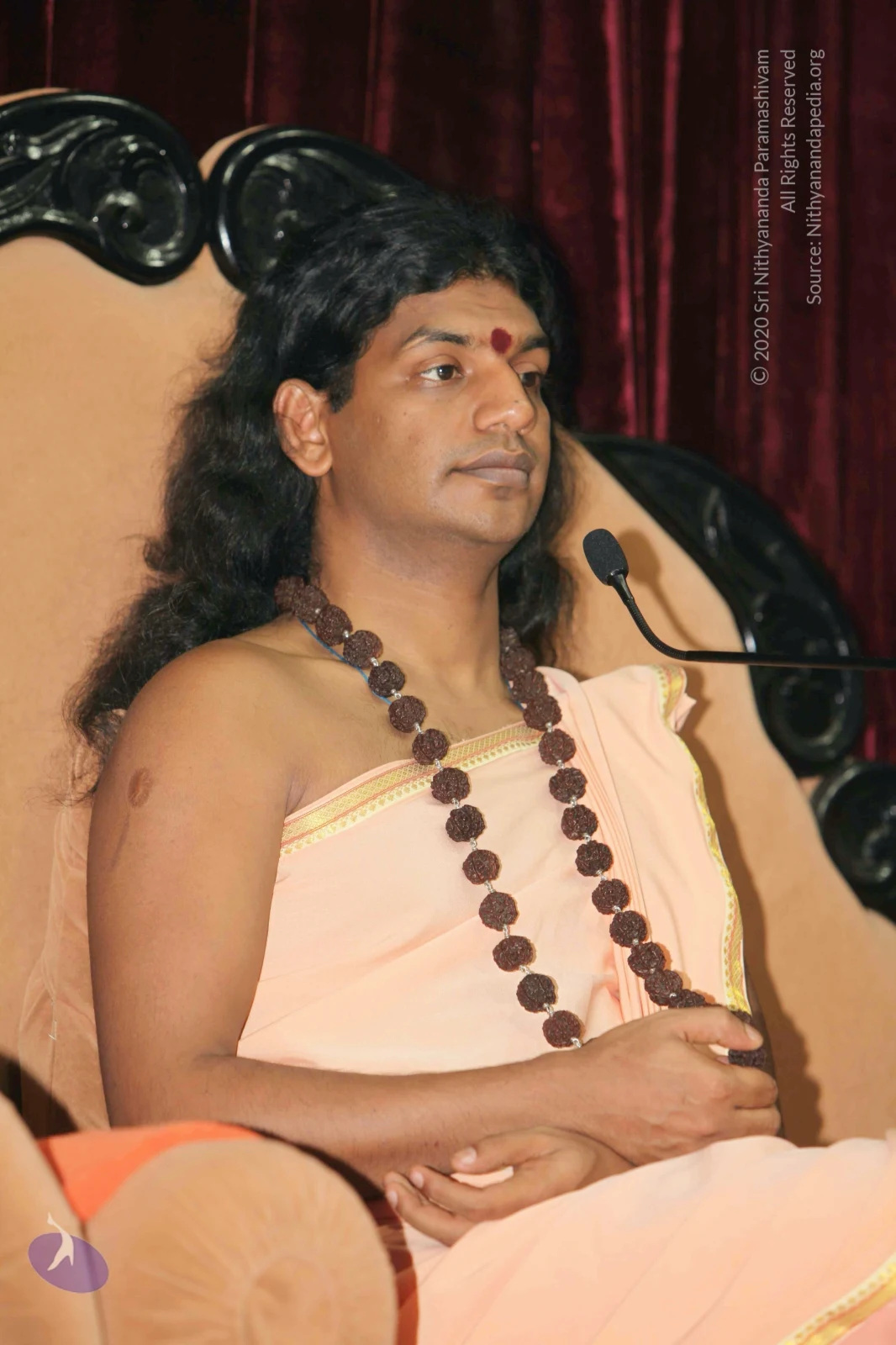
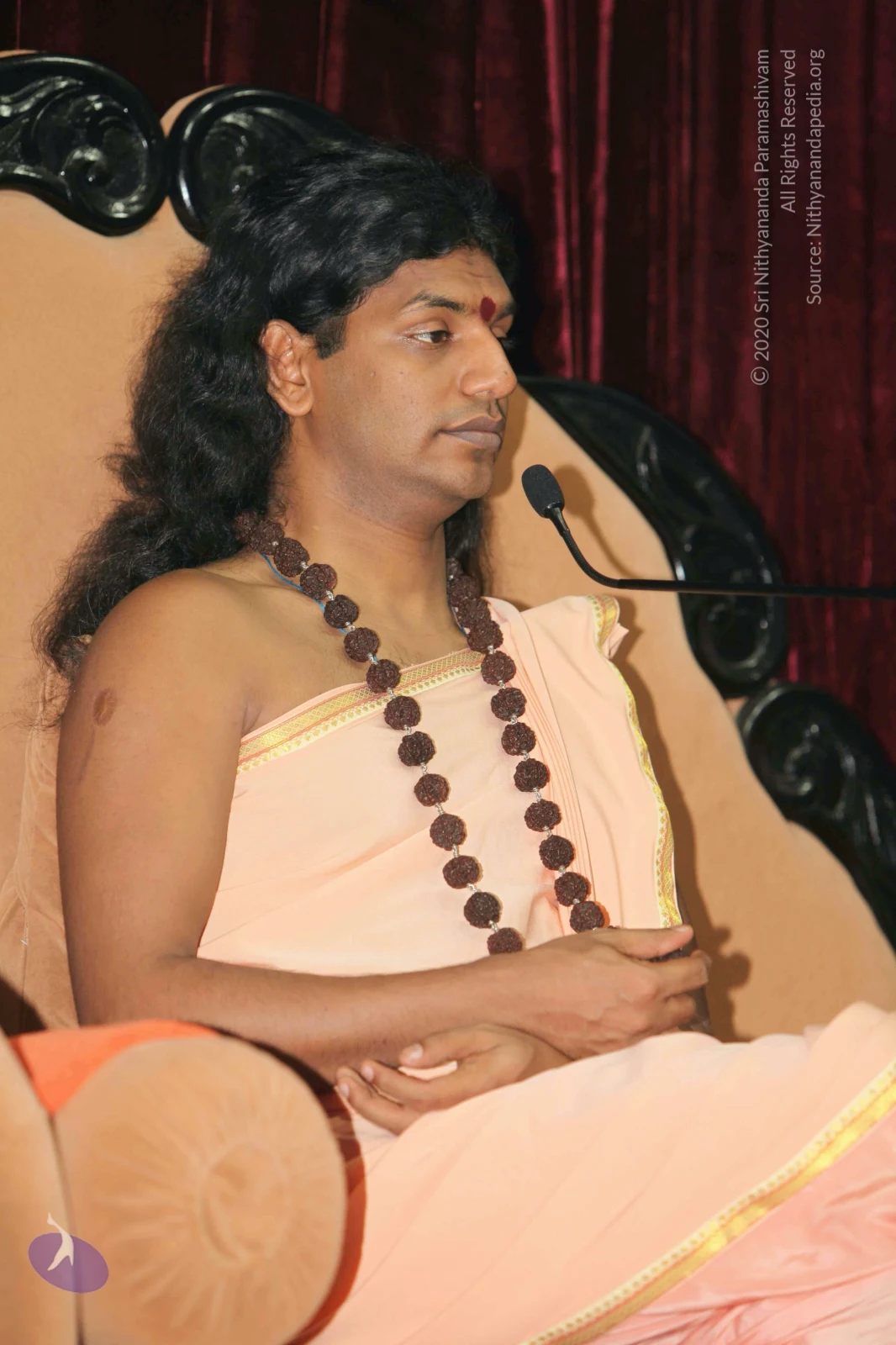
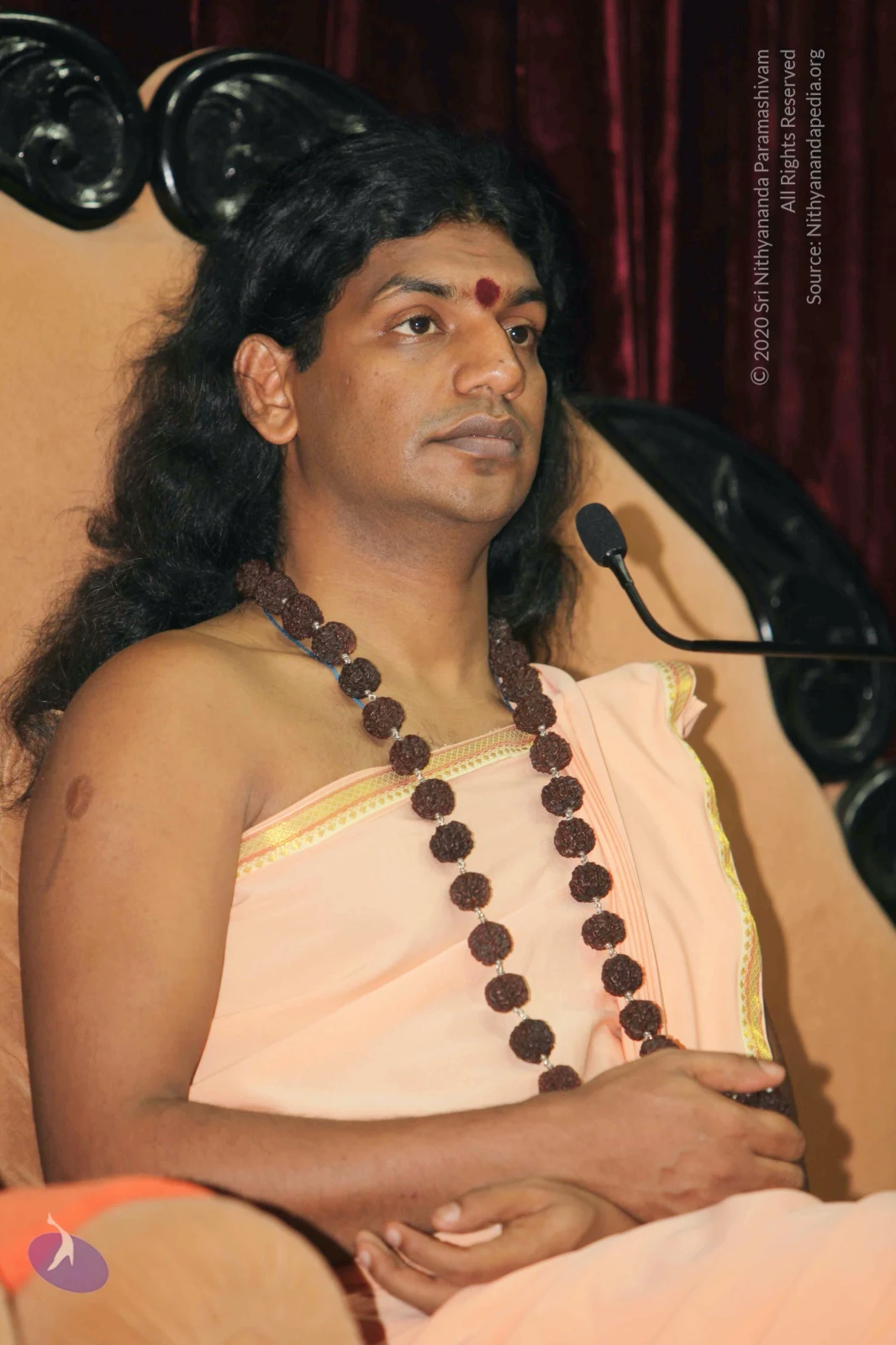
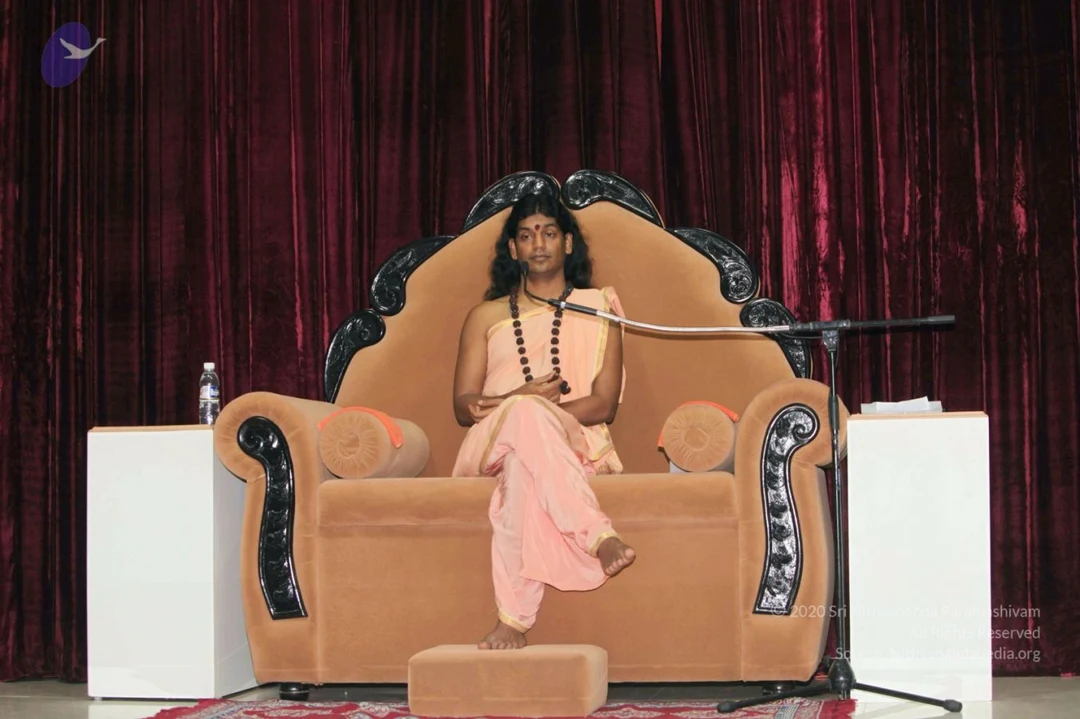
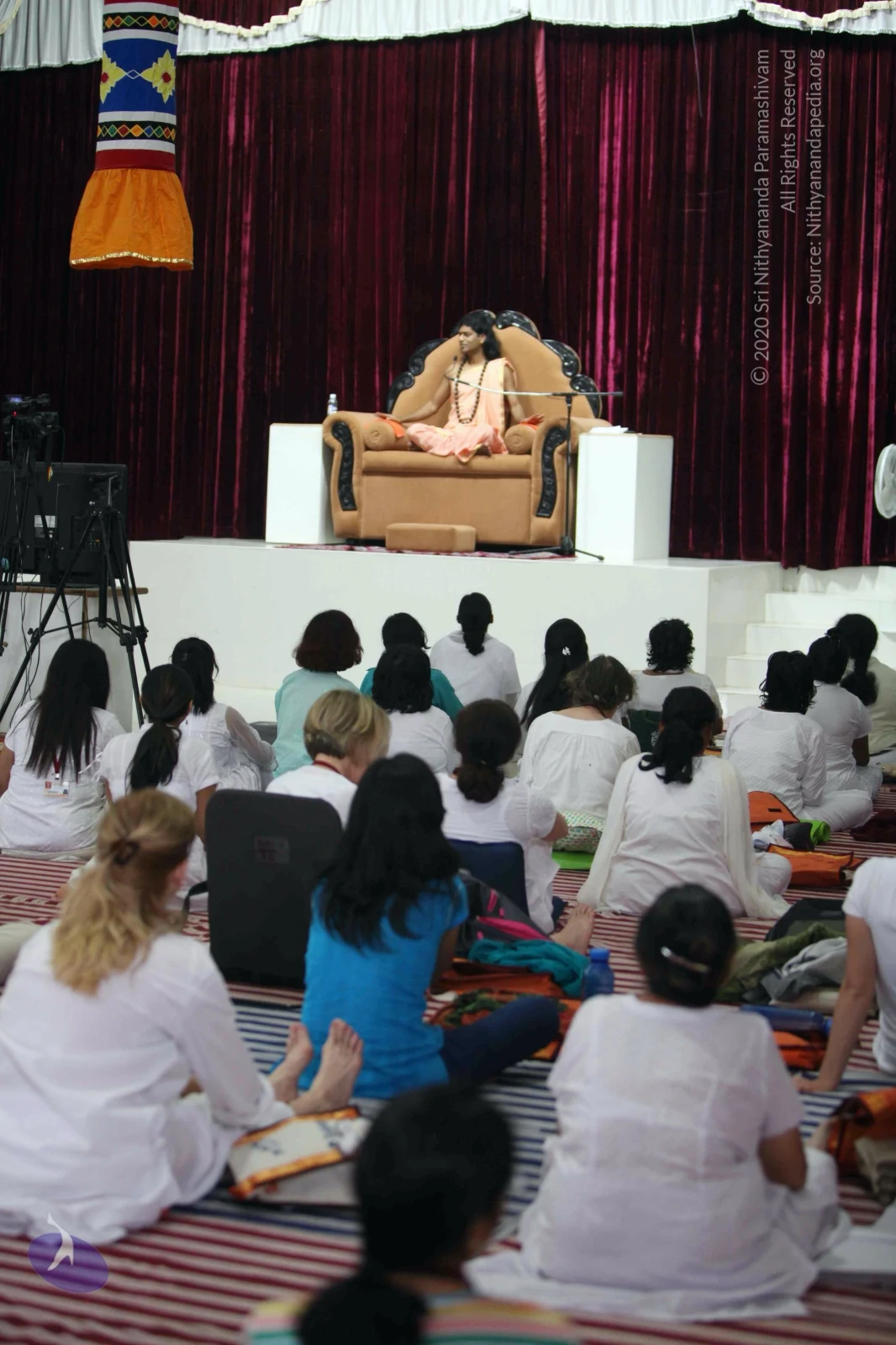
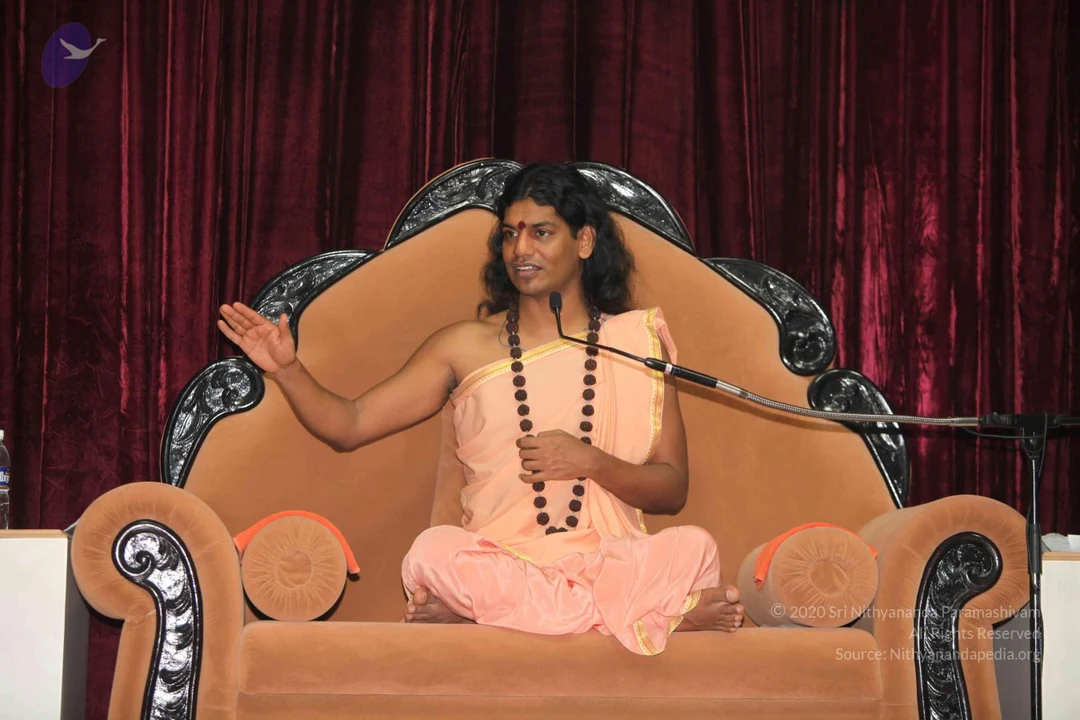
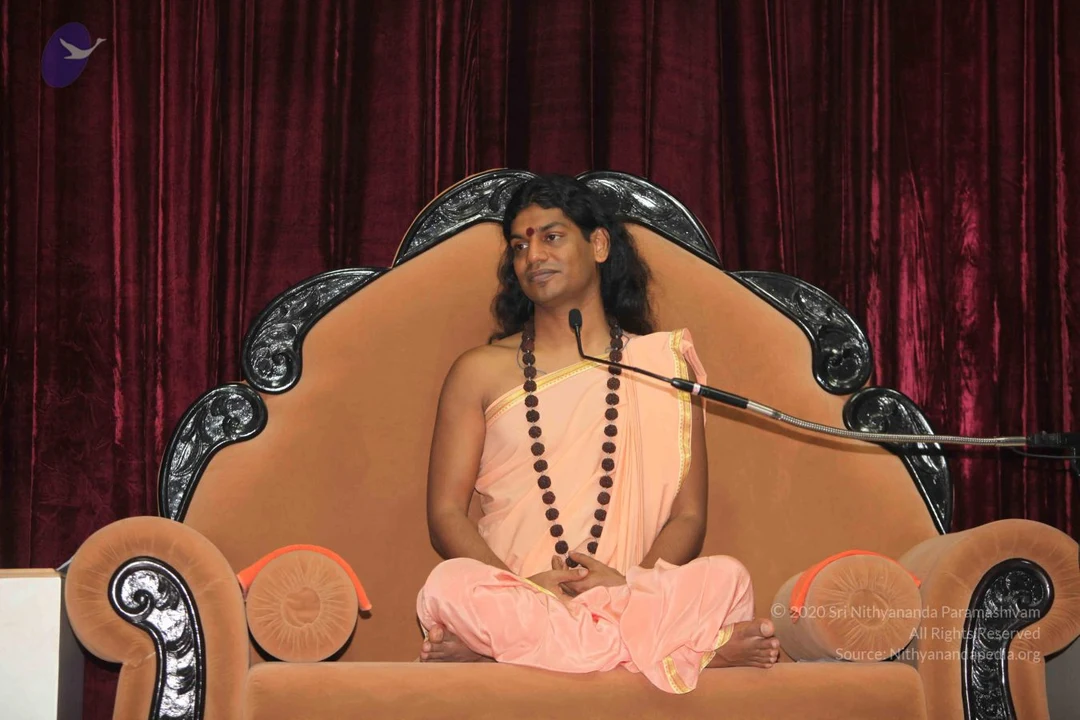
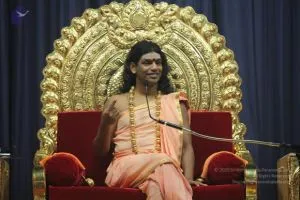
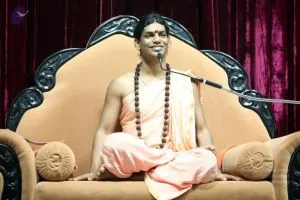
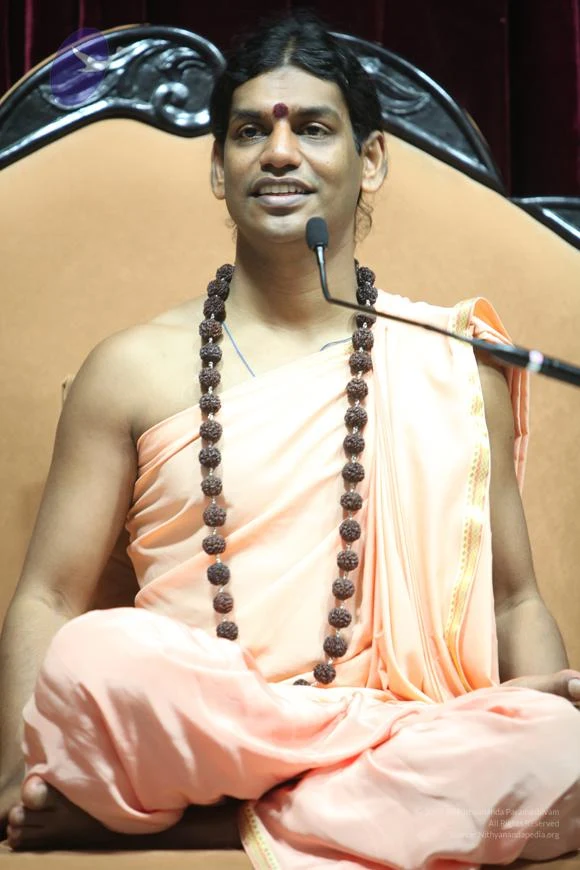
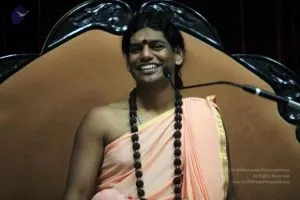
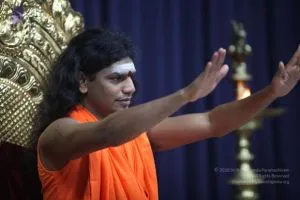
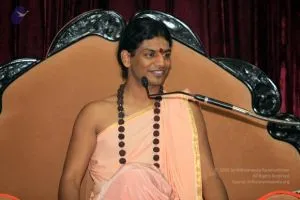
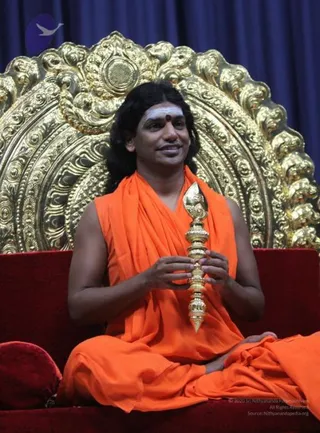
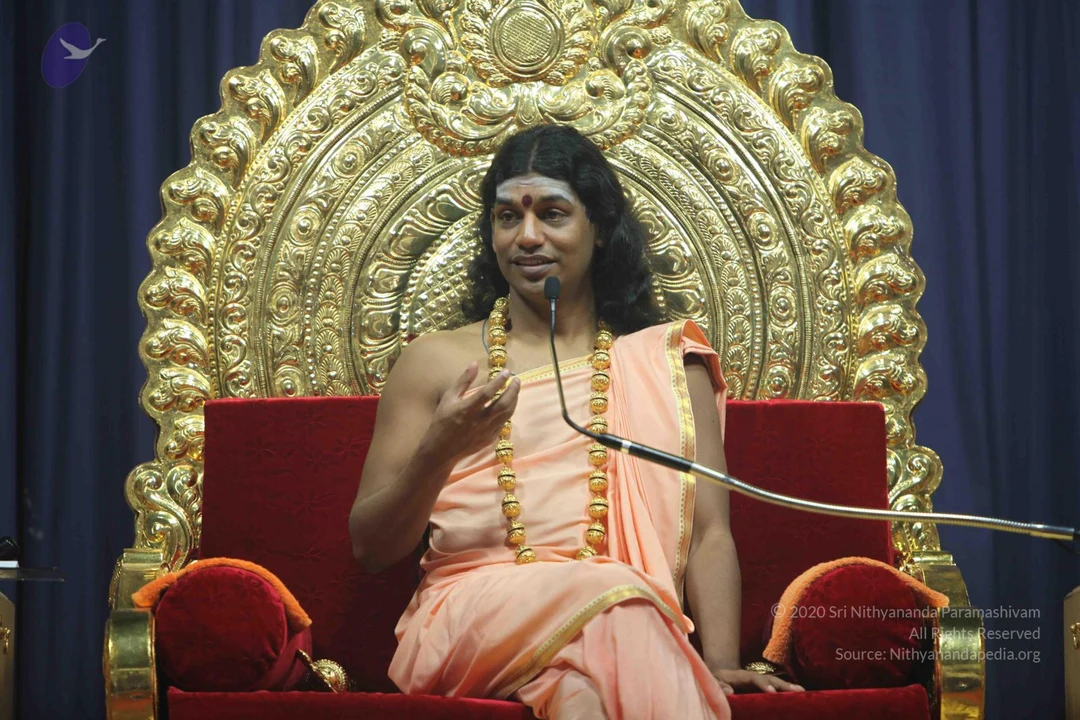
The Supreme Pontiff of Hinduism, Jagatguru Mahasannidhanam, His Divine Holiness, Bhagavan Nithyananda Paramashivam, expounded on the Cosmic Principles of Mystics during the live public talk - Nithyananda Satsang, Siddha Tradition Series. In this talk entitled Siddha Tradition Unrevealed Mysteries of Mystics, The Supreme Pontiff of Hinduism revealed how we have 72,000 nadis in the body and if at least 10,000 is centered towards from where you are reflecting, and all the other 62,00 is reflecting on which you are reflecting, you will be balanced. He asked that just one or two hours of your life be spent on being centered on the higher ideals where all your actions and thinking are centered on the source from which you are reflecting. He shared that if you are centering on what is, from where you are reflected, physically you will express miracles.

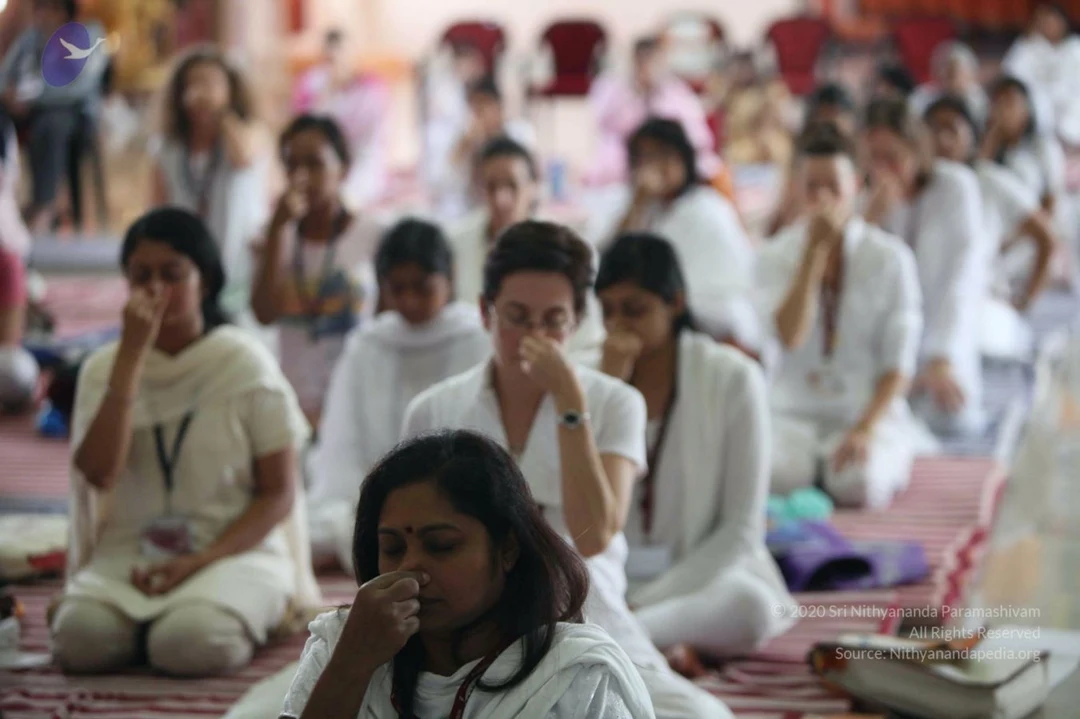
His Divine Holiness also spoke on the topic of Body is GreenHouse during day 4 of the Inner Awakening Program where He answered individual questions from the delegates. He shared you should grow in Consciousness where your body should be a greenhouse for Consciousness, nursery for new man.

Video and Audio

Unrevealed Mysteries of Mystics (Siddha Tradition)

VideoAudio

Transcript

Sadashiva samarambam shankaraacharya madhyamaam Asmadaacharya paryanthaam vande guru paramparaam.

0:52 I welcome you all with my love and respects. Today’s subject is ‘Unrevealed Miracles of Mystics’. Whoever reveals the unrevealed is incarnation. Unrevealed should not just disappear without being revealed to the world. With this tremendous compassion and love the human consciousness should experience the unrevealed super consciousness. With this, vision, beings who reveal the super consciousness to the human consciousness are only called incarnations and some of the miracles they have performed. I will try to express few words.

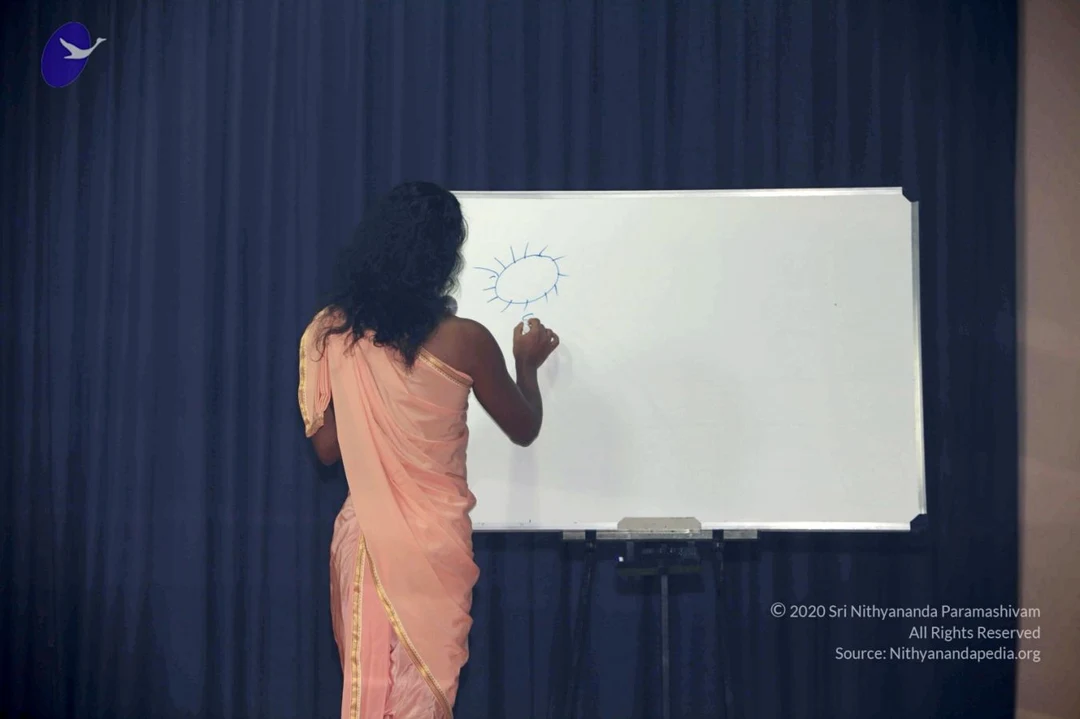
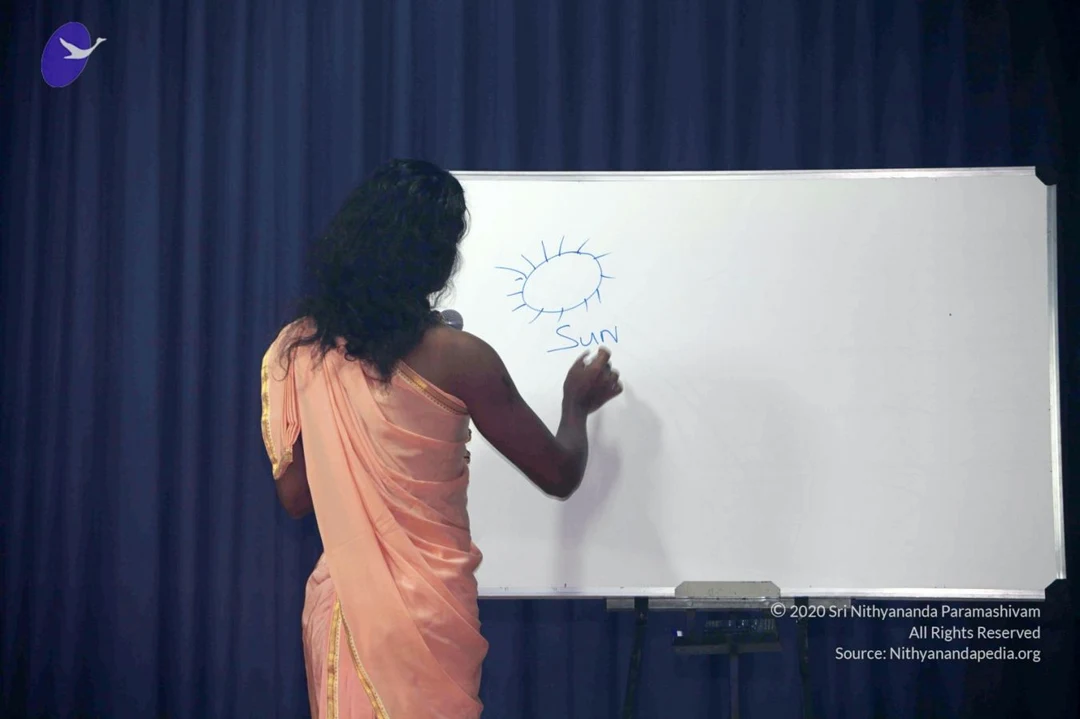
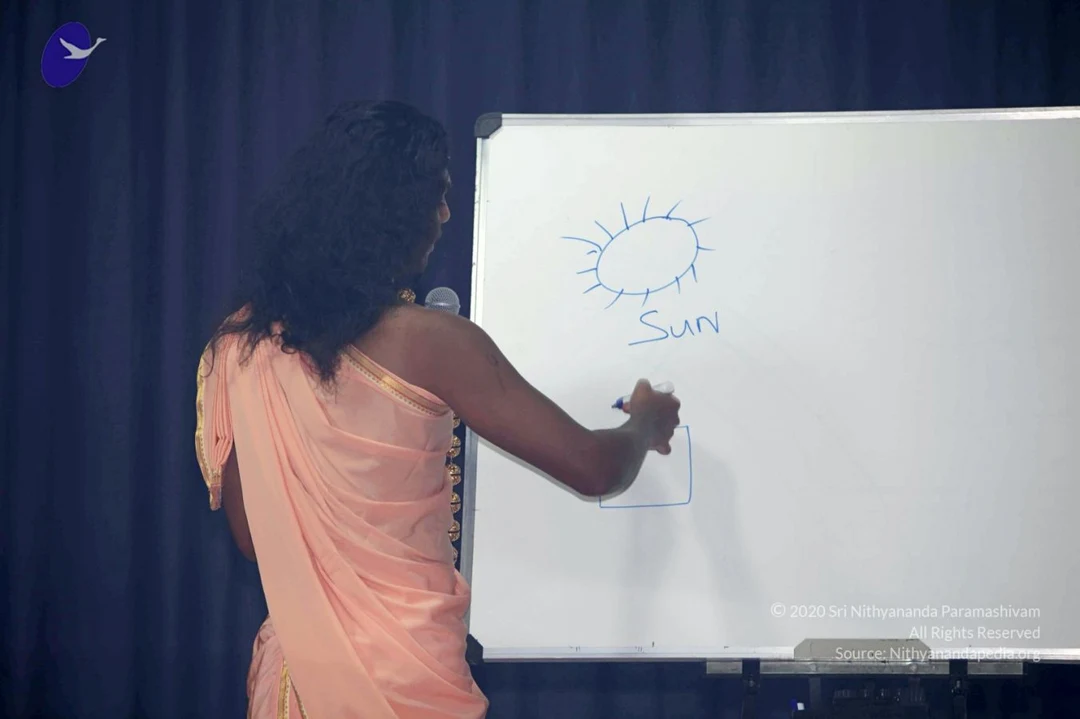
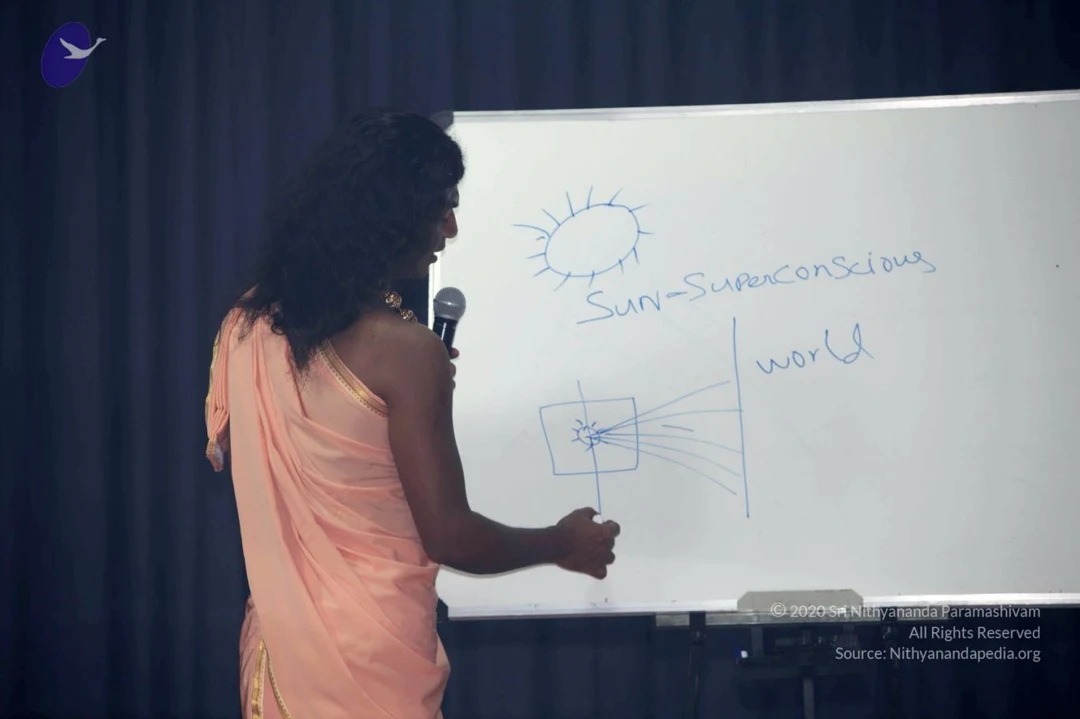
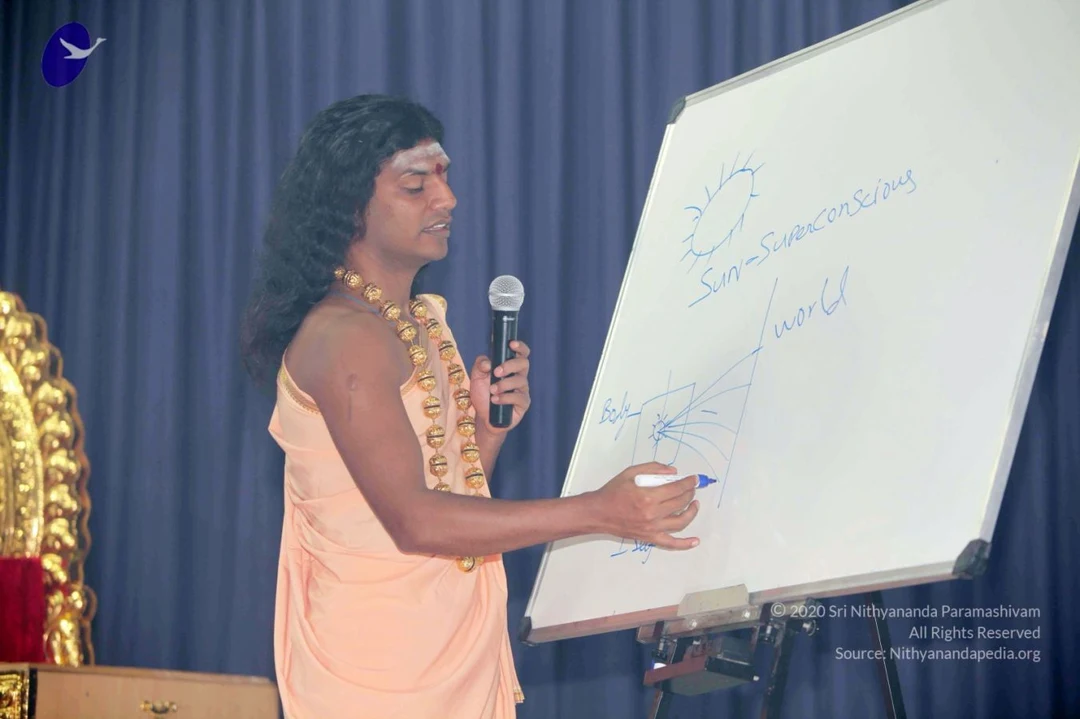
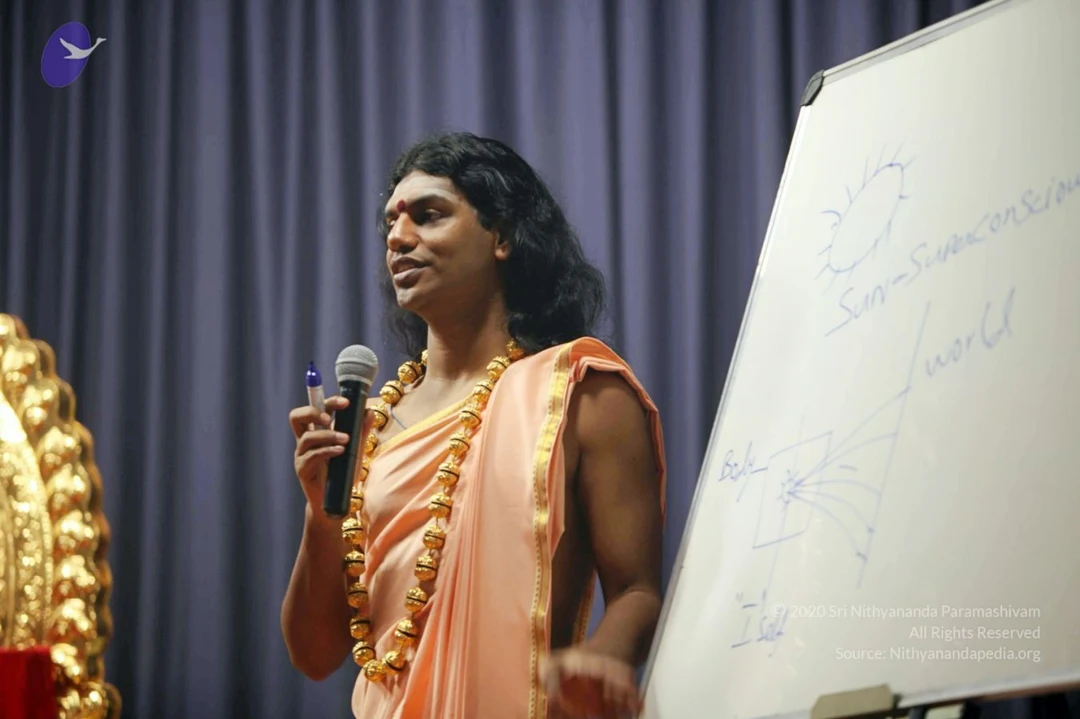
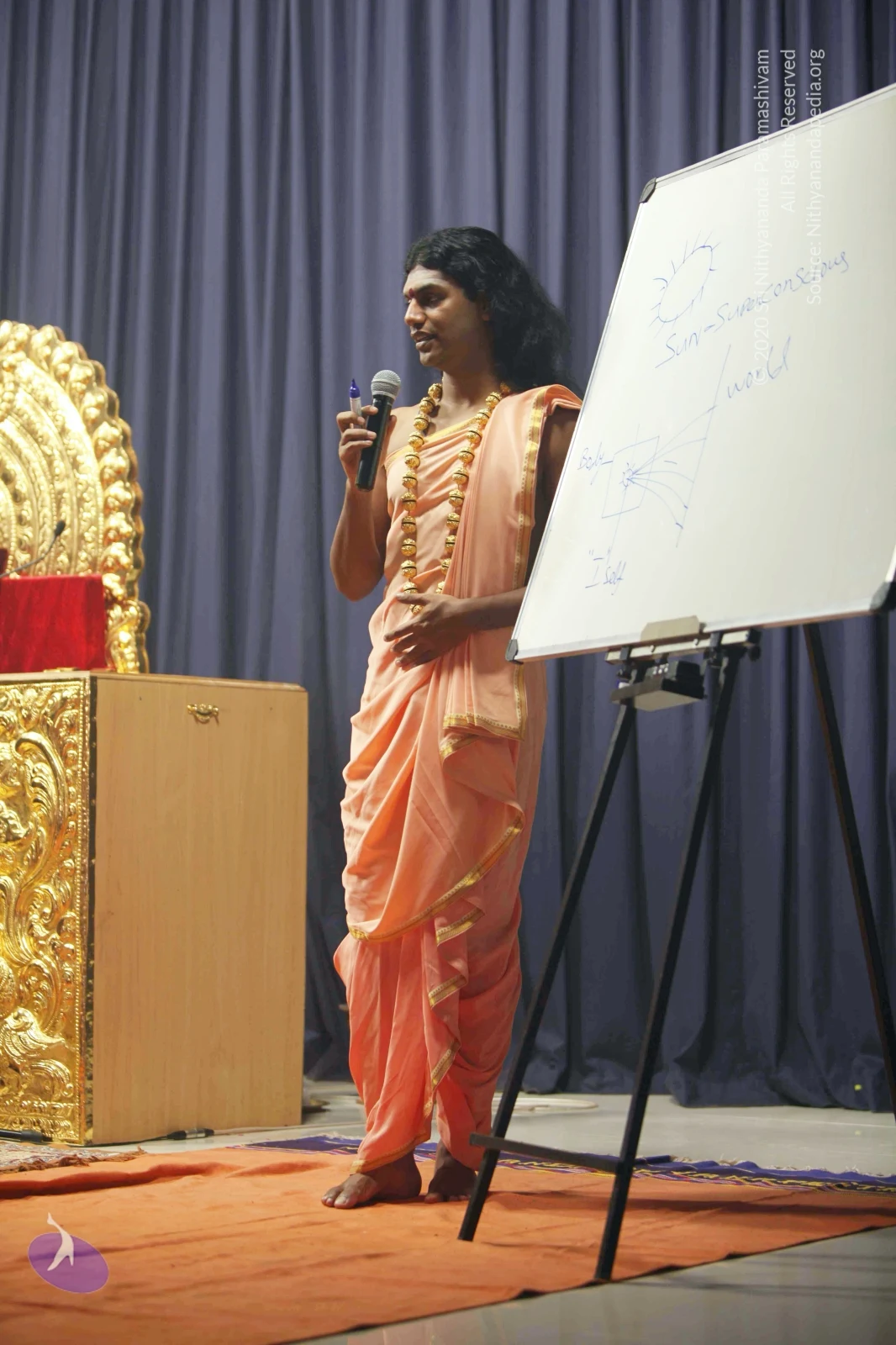
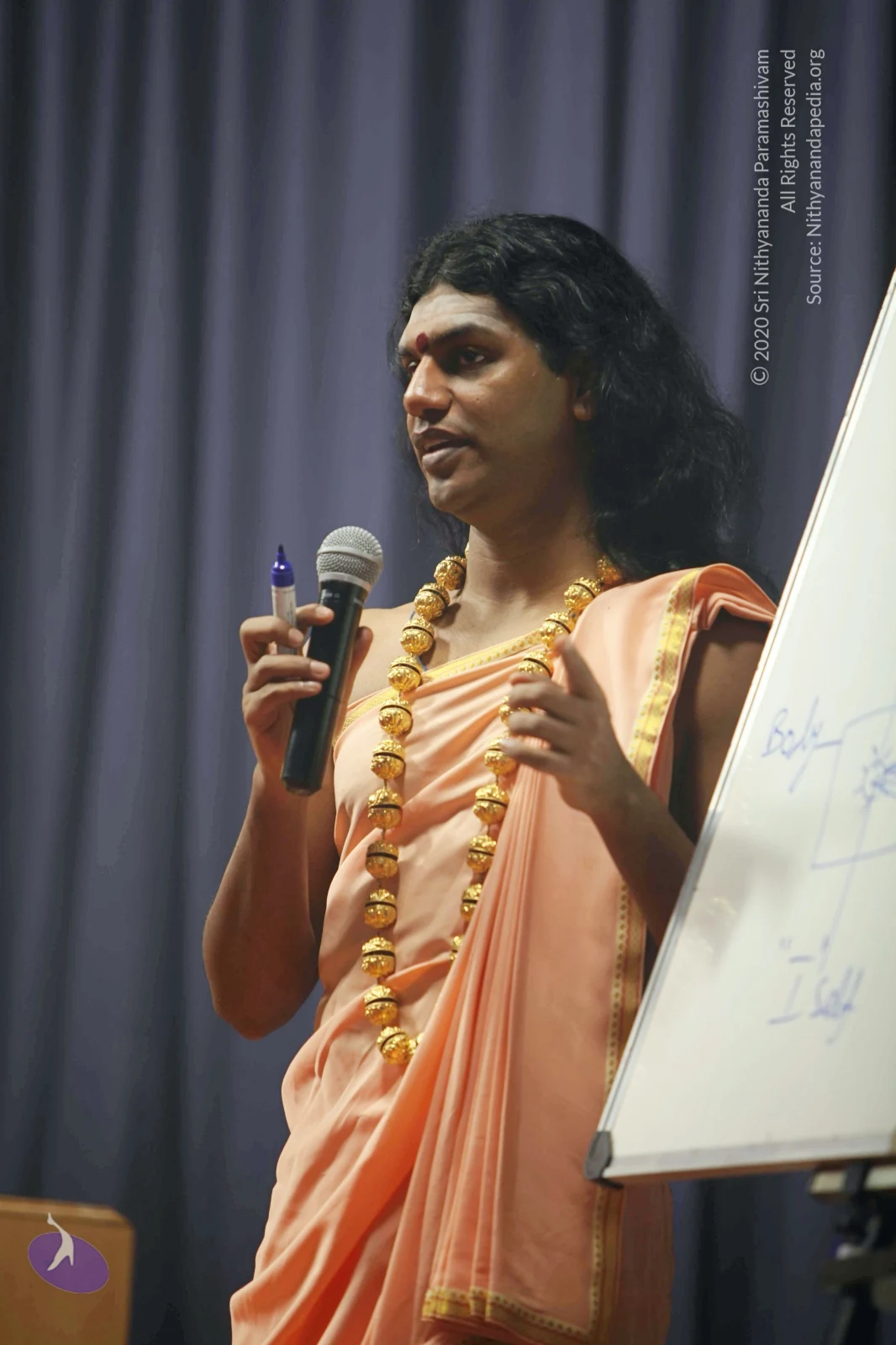
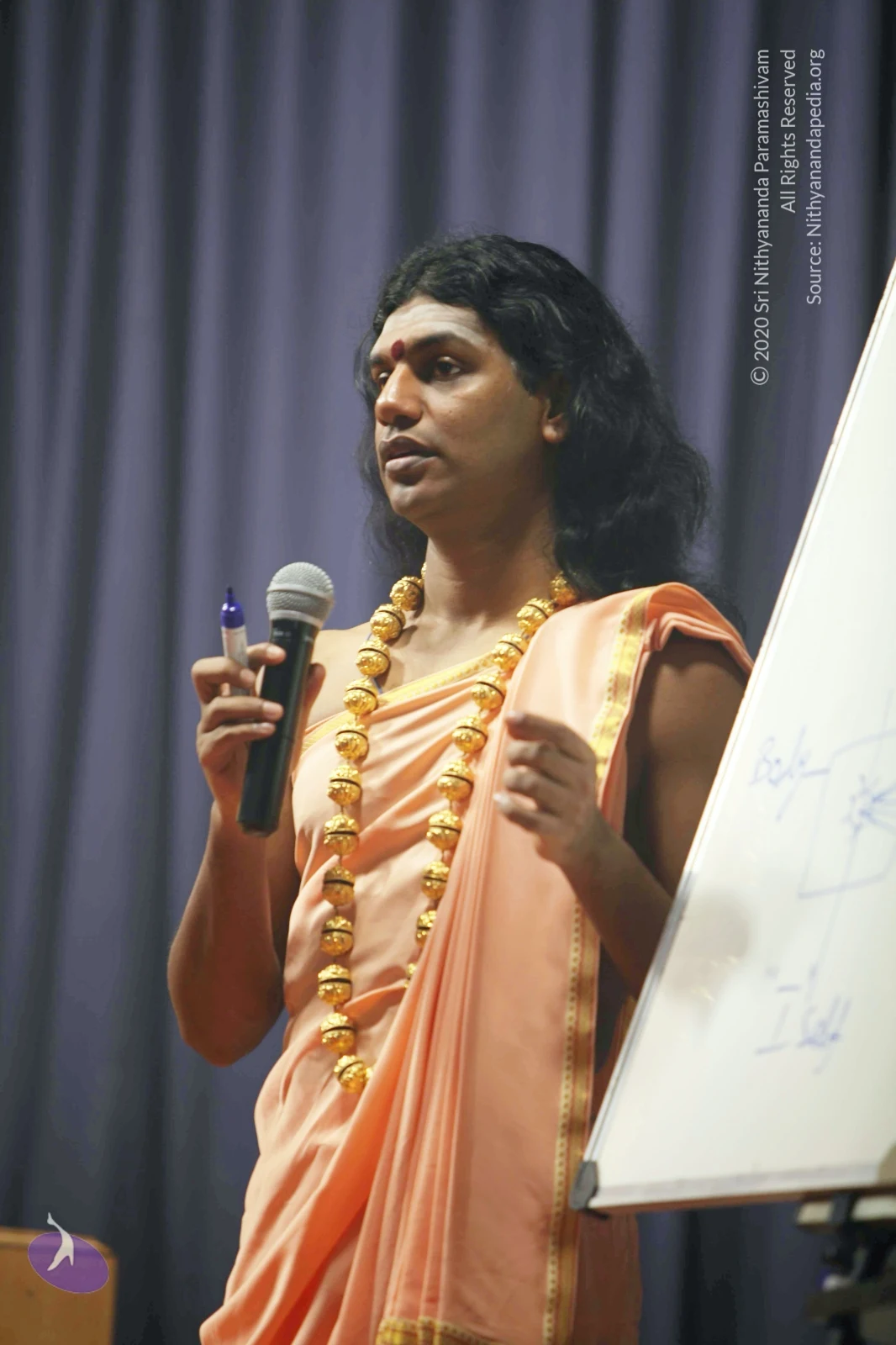
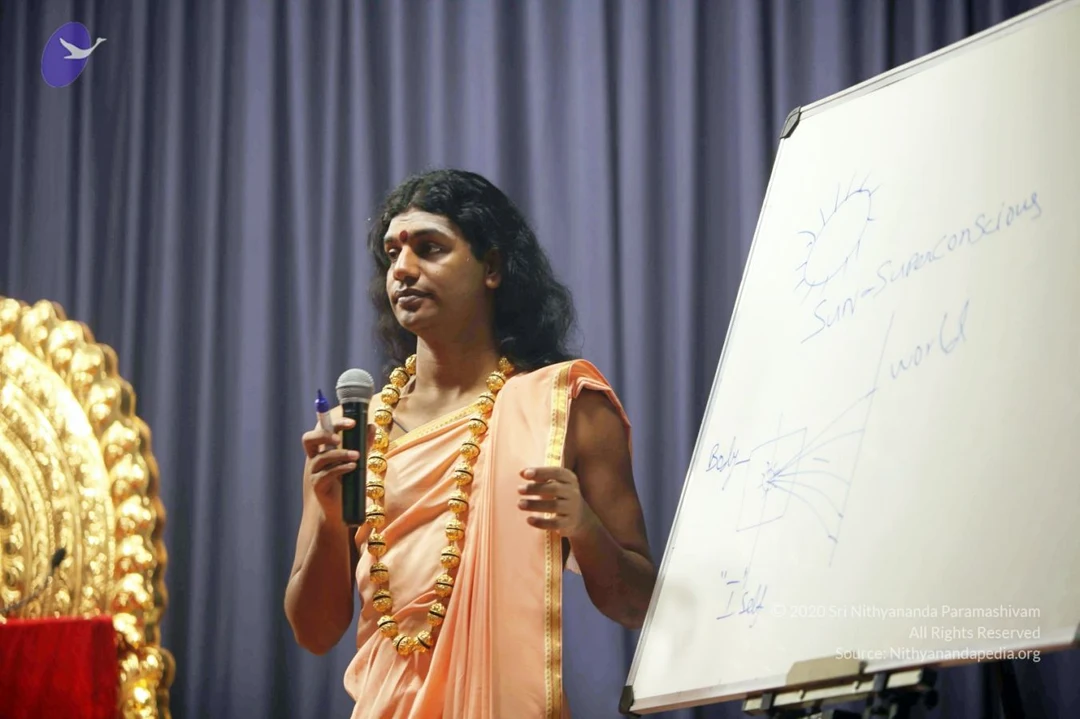
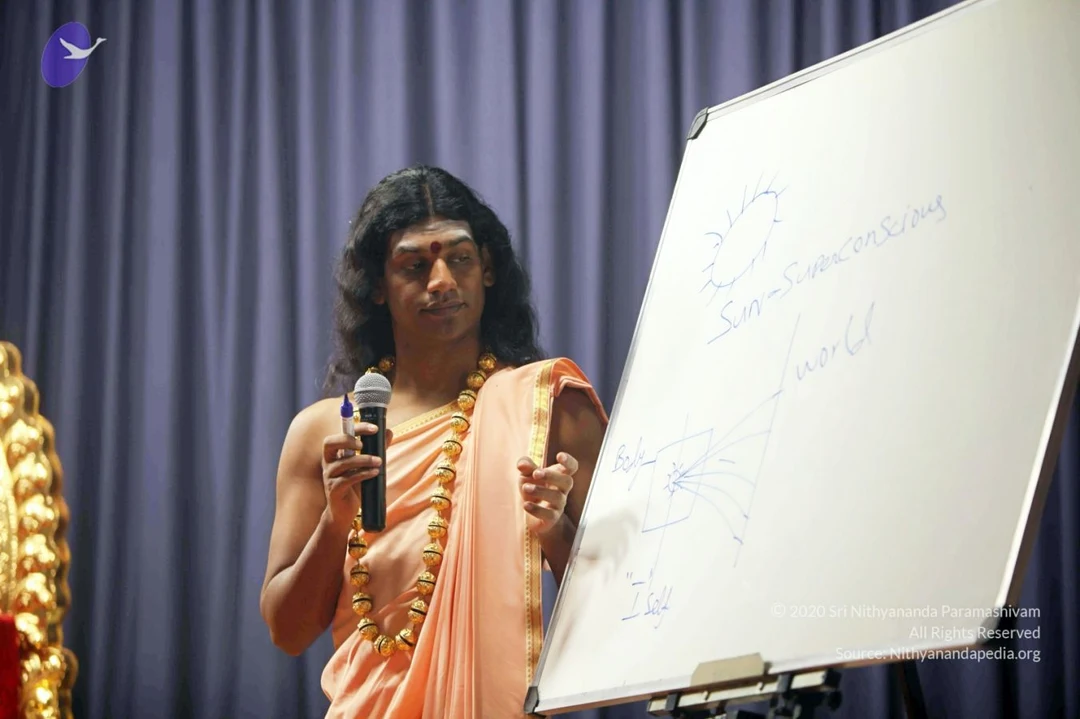
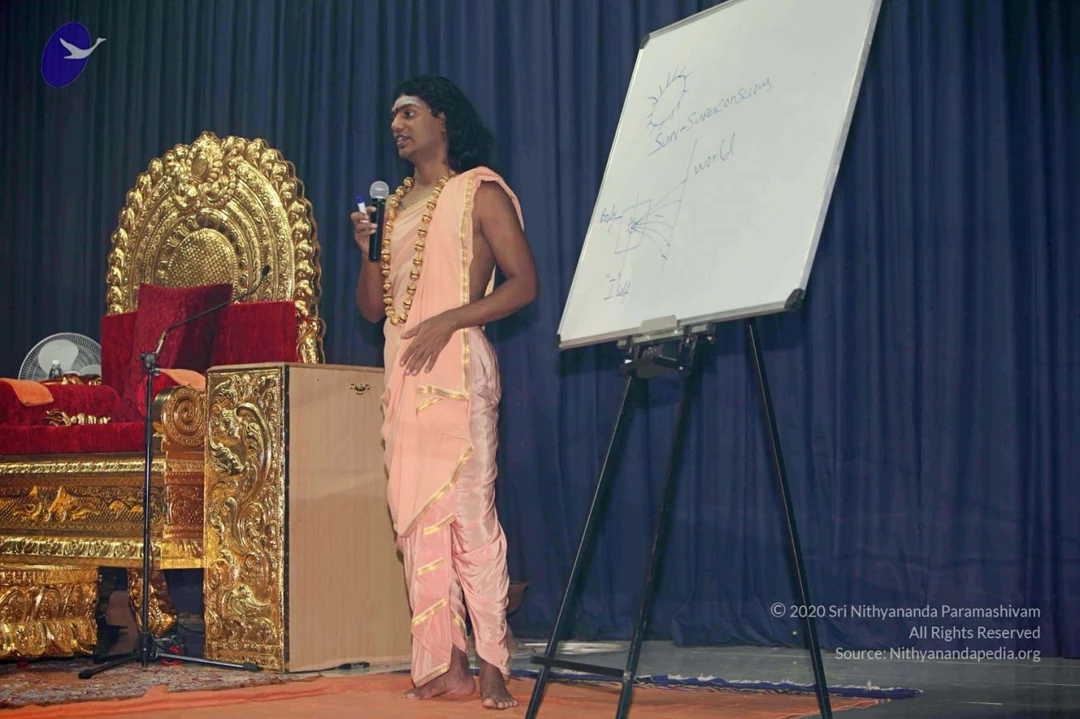
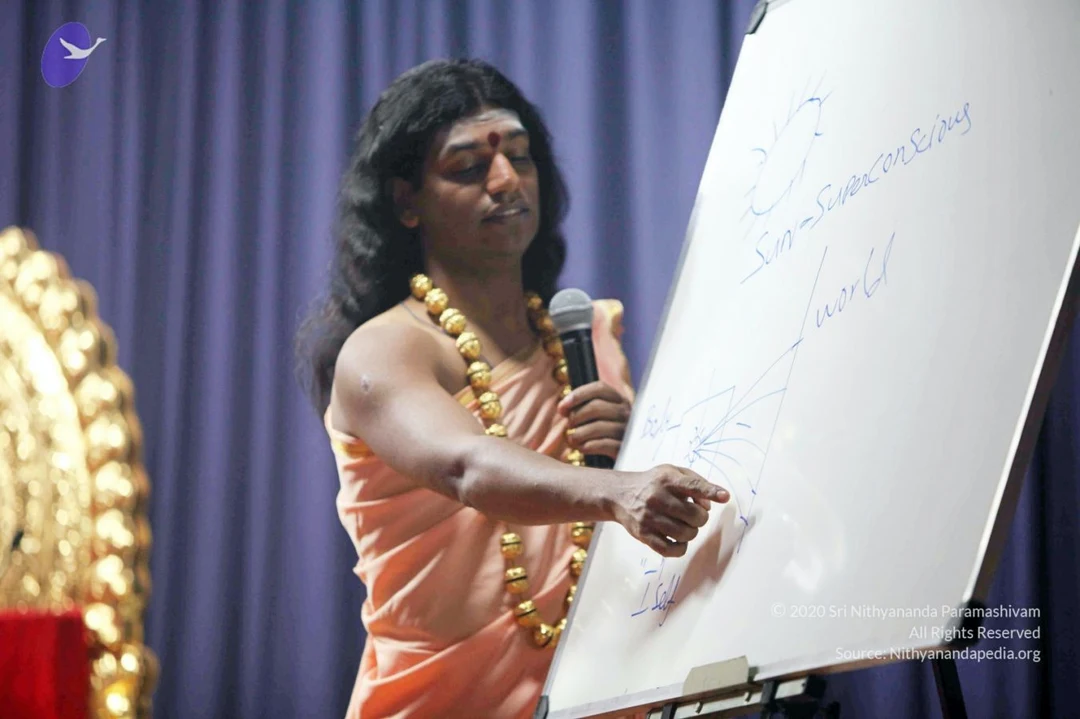
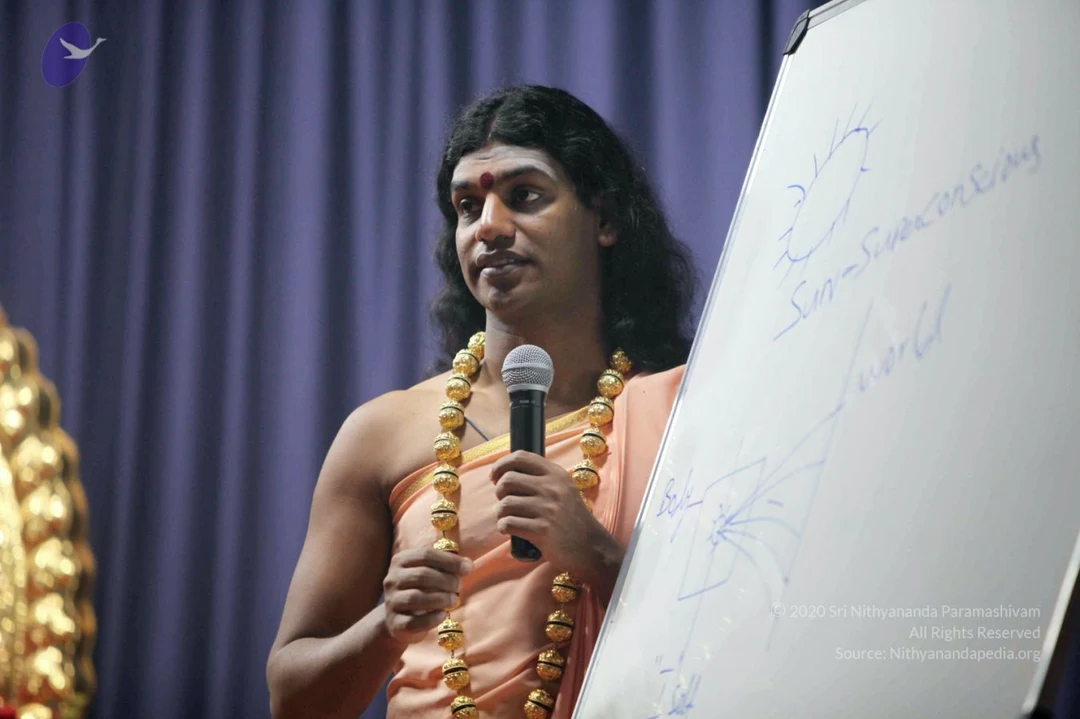
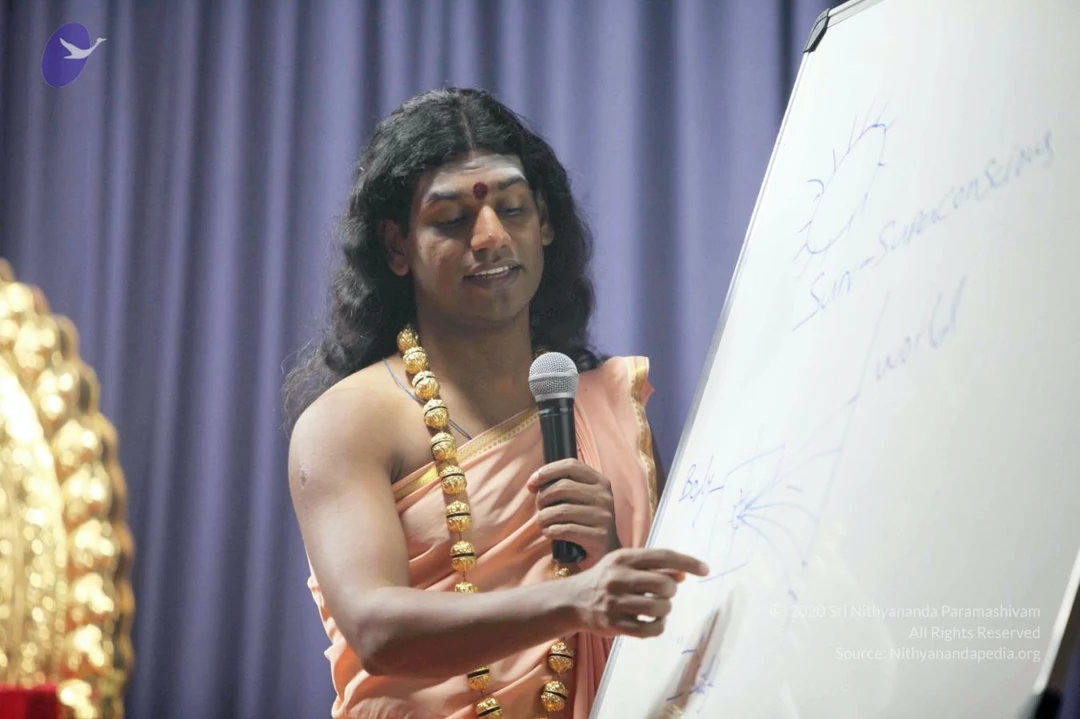
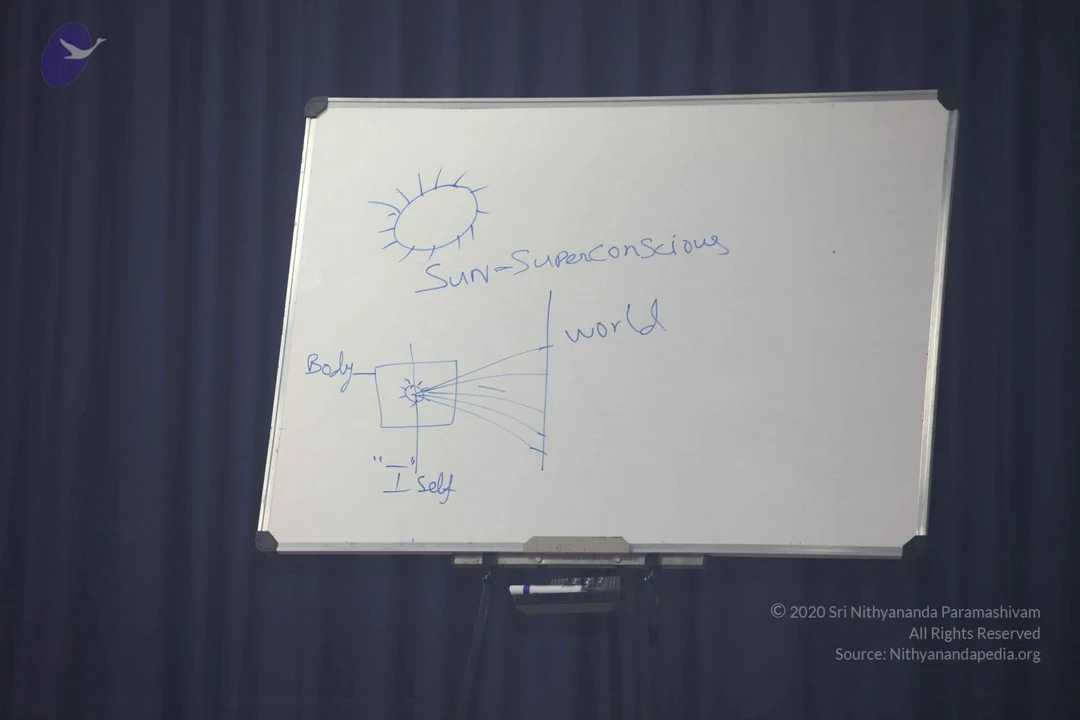
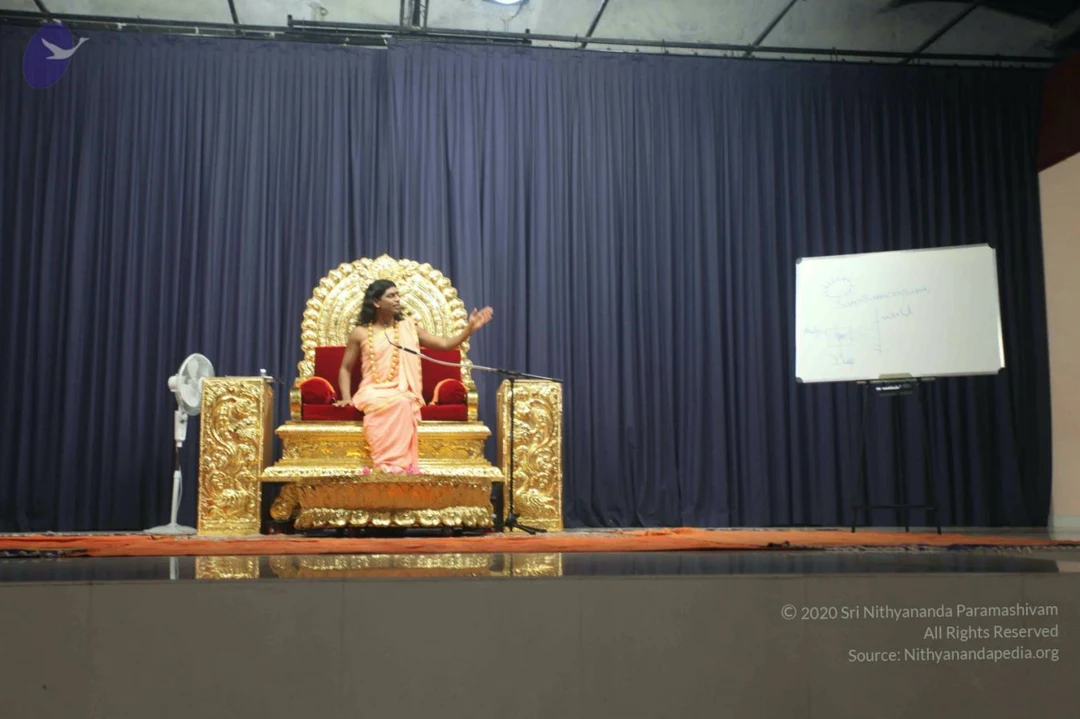
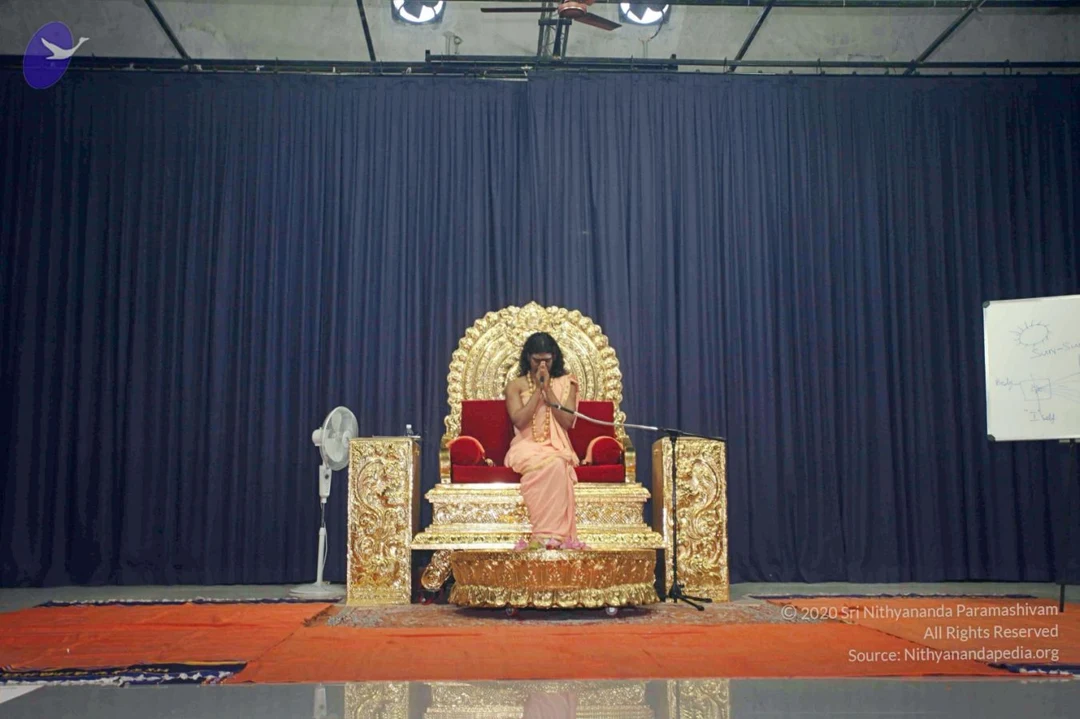
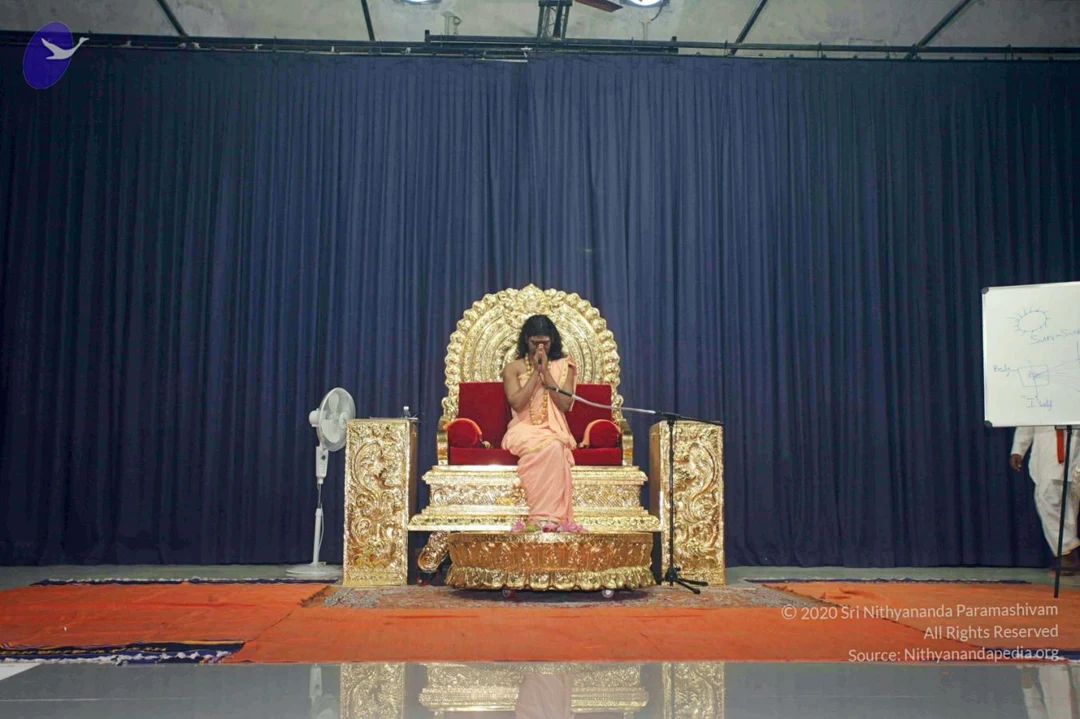
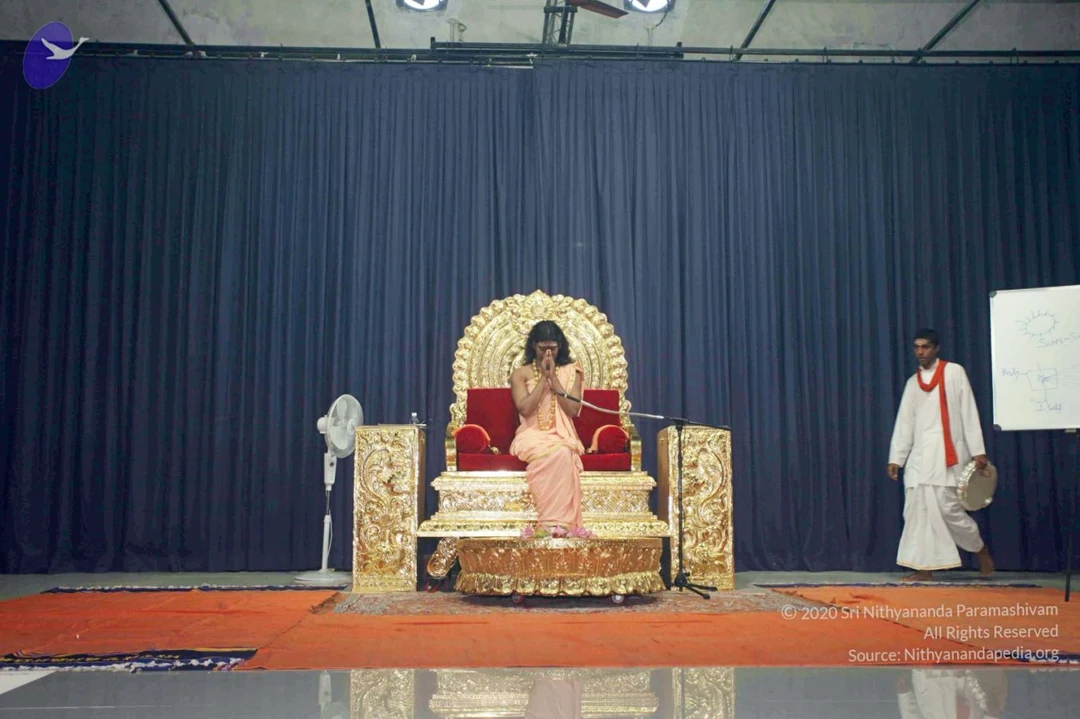
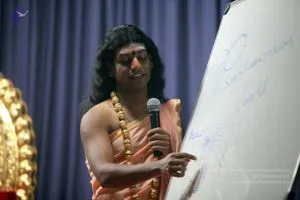
2:20 Please understand I will give you a simple example, kind of a diagram. I will just try to explain with an example. This is sun and you are like a mirror; your body is like a mirror. Sun rays fall in the mirror and reflection is created. That light falls on something, this reflection’s light, this is what is world. The sun is super consciousness, the reflection in the mirror is the 'I' the individual self which you feel and this mirror is the body. The reflection, the light on which the light falls, the reflection falls, is the world. Now, all your suffering is because of, this reflection when it falls on the world, it chooses some part and rejects some part. It does just does not look up to its source. It starts losing itself in what is being seen and starts liking, taking up something, starts rejecting, frightened about something. Please understand complete secret of death will be can be experienced with this.

4:47 I will tell you with this understanding how the mystics perform miracles. Here there is something in the world which is understood by this reflection; which this reflection starts liking. There is something which this reflection starts hating. Whenever something is liked by this reflection because this reflection is the reflection of consciousness it does not keep quiet, it changes the very form of the mirror; body itself. Please understand if you are continuously fantasizing about food the very quality of your body changes, if you are continuously fantasizing about music the very quality of your body changes. If you are continuously fantasizing about sex the very quality of your body changes. The reflection not just keeps quiet. It works on the body and changes the very quality of the body. The reflection instead of looking at the things on which it is reflecting if it looks back from where he is reflecting, that is sadhana and enlightenment. If he is looking only on the things on which he is reflecting that is what we call the ordinary mundane life of fear and greed and this not knowing what to do with the life.

6:59 Yesterday one devotee told me in the energy darshan. Swamiji I don’t know what to do with my life. Oh God! I really felt, no……I felt her suffering. I felt her pain and…..of course at least she is fortunate she is here. In few days the clarity is going to happen, the transformation is going to happen and naturally she will know what is and what she wants to and what should be; all that. But how many billions of people in the planet earth are there, having life and not knowing what to do with the life. Oh God I can tell you that is the worst thing which can happen to human being; having life but not knowing; because on each line there is so much of plus and minus. You do not know what you really want; too much choice without having the choice-less awareness.

8:08 Please understand, if I am asked to kill any one negative energy in the planet earth the first thing I will pick up is having too much of choice without choice-less awareness. That is the worst state to be in. The choice-less awareness, please understand with choice-less awareness if you have too much of choices you will just know you can enjoy everything. That makes you multi dimensional. Without choice-less awareness too much of choice just makes you depressed and you do not know what to do with the life. Please understand each ray comes out of reflection, works through one of your nadi; one of your nadi. You have 72000 minor nadis, 24 major nadis, one central nadi. These are some of the revelations from the mystics. But I don’t have any scientific reference or the any scientific proof for it. It’s the experience of siddhas.

9:29 Please understand, each attraction, for example you are attracted to certain food. So one of your nadi will be engaged; means that reflection will use that particular nadi to retain the memory about that food and craving about the food and the necessity for that food and the satisfaction which you enjoy when you have that food. That whole file will be in that one nadi. If you are afraid of something, one nadi will be used to keep the file about that fear and that object. If you are using too many nadis, you are caught in what you are seeing. If you are retrieving yourself, if you are turning yourself towards from where you are reflected, not on which you are reflecting, please understand on which you are reflection is worldly life, from where you are reflecting is spiritual life. If your life is flowing towards on which you are reflecting, it is worldly life; pravritti in Sanskrit we call. If your life is reflecting on from where you are reflecting it is called nivritti; an enlightenment life.

11:12 So too many nadis engaged on what is being seen without having the center of what is seen is what I call without having choice-less awareness having too much of choice. Modern day kids, one of the major disease modern day kids are suffering is this disease. This is responsible for drugs, teenage suicide and heavy, heavy, heavy depression youth face in the modern age. Please understand one of the worst thing I found in the modern age youth is they lose the innocence of childhood, the joy of being a youth, very young very quickly; because too much of choices are put in front of them without having the choice-less awareness. I can tell you it’s almost like hundred varieties of food which you really love are put inside, in front of you and just your tongue is cut off; exactly the same thing.

12:45 I tell you if you are living with too much of choice without choice-less awareness you are ghost; you are not a being, you are ghost. You need to be afraid of you; not about anybody else. You don’t need anybody to destroy your life, you are enough. You are enough unto yourself; one of the major suffering modern day youth is facing. Understand I am giving this message to modern day youth from all over the world especially Indian kids. Indian kids are losing their roots. In US they have a word American born confused desis for the NRI kids; ABCD American born confused desis. Not only NRI kids, even in India RNI kids; I am talking about RNI kids that tremendous depression and cluelessness about the life and chaos they are going through.

14:02 Understand just if the reflection is towards on which he is reflected, what is going to happen? Naturally the mirror is going to get tired filled with dust disturbed and any moment he may turn and the reflection of the super conscious will stop reflecting on the mirror. I am warning, giving a strong spiritual warning to Indian youth. Please understand getting back to the vedic lifestyle is not an option for you. Now it is a medicine for you. Now the only remedy the Indian youth has is getting back to the vedic tradition; vedic understanding about life. I am not saying drop your jeans and iPad and iPod and cell phone and no…..but I am saying the culture put into your head along with those instruments. Those instruments are poor, innocent. But the idea to live with too much of choices without choice-less awareness is the dangerous idea; that is what is dangerous idea.

15:50 In the 72000 nadis if at least 10000 is centered towards from where you are reflecting, all other 62000 is reflecting on which you are reflecting, you will be balanced. All I am asking is just to dedicate 10000; means maybe one hour or two hour of your life being centered on the higher ideals; your actions and thinking, at least one hour or two hour being centered on the source from which you are reflecting. That’s all I am asking; nothing else. Or just perish; nothing else. And Indian youth is the largest number of youth in the world. India is the youngest country in the world. If you guys are not going to survive it is danger for the planet earth. That is why I assumed the body of Indian youth because I am going to work on them. They are my first priority. They are my first priority. The planet earth needs to be saved. If it has to be saved it can be saved only by Indian youth.

17:24 Too much choice without choice-less awareness is the greatest danger we are facing. And I just wanted to give you the deeper mysteries of this nadi science which I explained now. I think all of you are able to catch the basics of what I am saying. Your body is the mirror. The super consciousness is the sun that is reflecting on you. The reflection which is felt in the body is the individual self. That reflections reflection whatever you are seeing is the world. In that reflection, some part which you are seeing you like some you don’t like and through 72000 ray line you see this. In that 72000 all 72000 is spent on what is seen without being the source of seeing; the super consciousness, you are in depression; essence, thats the essence.

18:29 If you just in that 62000 if you just divert 10000 up; from where you are reflecting, you will have a complete balance. If you divert 50% towards where you are reflecting you will be already living a jeevan mukta life. You don’t need to divert more than 50% that’s enough. The remaining 50% have a playful on what you are seeing or just have a little joyful fear and joyful greed and playful worry. You can have all that you can have all that and play with all of them; nothing wrong. It’s great. But little bit of centering on the choice-less awareness; at least 10000 nadis in the 72000 being centered on from where you are reflecting is essential. That is essence of life and essential in life.

19:50 If that centering on what is, from where you are reflected, is established, physically you will express miracles. Understand physically you will express miracles. Just yesterday night after the darshan I took the batch of these mediums to our akhada, akhada is the place where we have our gym. All the fellows who sat as medium they lifted at least two to three times of their own weight. That much weight they lifted. Please understand lifting three times of your weight is not a joke. Normally they can’t even lift their weight or equalent to their weight. If somebody is 50 kg, they lifting 50 kg is not a joke. Took them to the akhada, just awakened the kundalini, at least twice, some people up to thrice……weight just like that they lifted; nothing else. And after that they were saying we don’t even know that we lifted so much weight. It feels like a zero, zero weight.

21:09 When the kundalini is awakened more than 10000 nadi of you is centered on what is seen. Please understand it is centered on through, sorry it is not what is seen, it is centered on from where you are reflected to super consciousness. In siddha tradition there is a sutra, when the kundalini is awakened if you can lift equalent to your body weight its called bala. One bala if you have, one nadi, the left or right will be perfect. If you are able to lift twice your weight when that awakening happens, I am not talking about normal weight lifting practice and training, no. When that experience happens, when that levitation happens, when that awakening happens, if you are able to lift twice your weight it’s called two bala; the pingala and idagala; both will be active, alive. If you are able to three times lift thrice your weight then all three nadis will be alive; means at least 10000 of your nadis among the 72000 is centered towards the source from where you are reflecting; means super consciousness.

22:48 Physically they showed yesterday the power of kundalini, when the kundalini awakens, one of our brahmacharini just she is 50, she lifted 120 kg. She is only 50 kg weight. She just lifted 120 kg. And there are some more who lifted 140 just twice or thrice of their weight. Just the power of kundalini shakti. Ordinarily they can’t lift more than 20 or 30 kg; just like not only they lifted, they were actually coming forward. They said no Swamiji we will lift thrice our weight. I said relax not in the same day. You guys may get enlightened too soon. Let’s do it properly so that your body is also ready; physically showing the power of the nadi; power of the nadi.

23:45 I can even show with you guys, even with participants. Normally maximum how much you are able to lift and just when that levitation happens when that energy explosion happens how much you are able to lift, it will be at least three times more and you will not have any pain any damage. I am responsible. I am telling you. But don’t do it on your own. Do in controlled condition with the proper support and help. So these all practices should not be done on your own. It should be done directly under the guidance of the Master, because only then I will know whether it is kundalini awakening or your own some hallucination.

24:27 One part of you being centered on the source from which you are reflecting is the essential teaching which I am trying to transmit in today’s satsang. That’s what I am trying to transmit in today’s satsang. Actually in that 72000 if less number of nadis you see, I can give you the example like, from the reflection how many rays are flowing that rays can be considered as nadis. 72000 rays are flowing. In that 72000 if less are flowing outward you can change your body any time easily. The reflection can change the mirror. Enough this mirror is too tired too old, come on lets go to the next mirror. Because from the reflection not much to be identified. Go to the next mirror; that’s all.

25:35 Understand I can just make time out of consciousness. Because I am completely free from on which I am reflecting. All my 72000 nadis are centered from which I am reflecting not on which I am reflecting. I will talk on deeper lines of how retrieving the nadi flow from on which you reflected to from which you reflect and the benefits of it. How you can heal your body, change your body, play with your body and enjoy being in the body on next sessions.

26:33 Let you all achieve, experience, live, express and radiate the eternal bliss, Nithyananda. Thank You. 26:51

Title:

Looking Back to the Source

Description

In this powerful discourse taken from Inner Awakening, living enlightened master and avatar Paramahamsa Nithyananda throws light on living enlightenment and sharing eN-effect using an example of reflecting mirrors. He describes who is a master, what is life, what is death, what are engrams and what is enlightenment. Watch this short discourse to know more.

Watch, share and like the video's and Subscribe to our channel to be notified of the next upload. click http://bit.ly/20j90wr to subscribe.

Video and Audio

Looking Back to the Source

VideoAudio

Title:

Body is Greenhouse - Talk by Nithyananda in Inner Awakening

Video

Body is Greenhouse

VideoAudio

Photos Of The Day:

Pada Puja
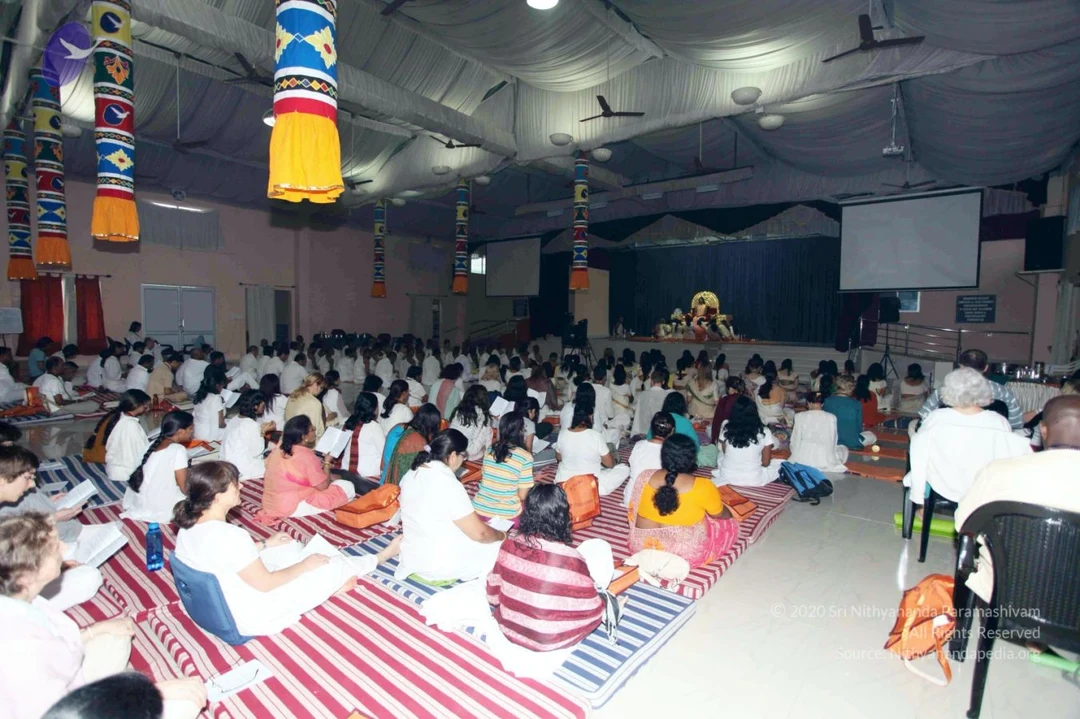
Satsang

Sarva Darshan

Inner-Awakening-Day-4

Photos Of The Day:

PADA-PUJA

NITHYA-SATSANG

SARVA-DARSHAN

TEMPLE

INNER-AWAKENING-SESSION-BY-HDH

LUNCH-BREAK

DARSHAN

1-En-Genius-Sessions

Photos from this day

View all 520 photos

Pada Puja
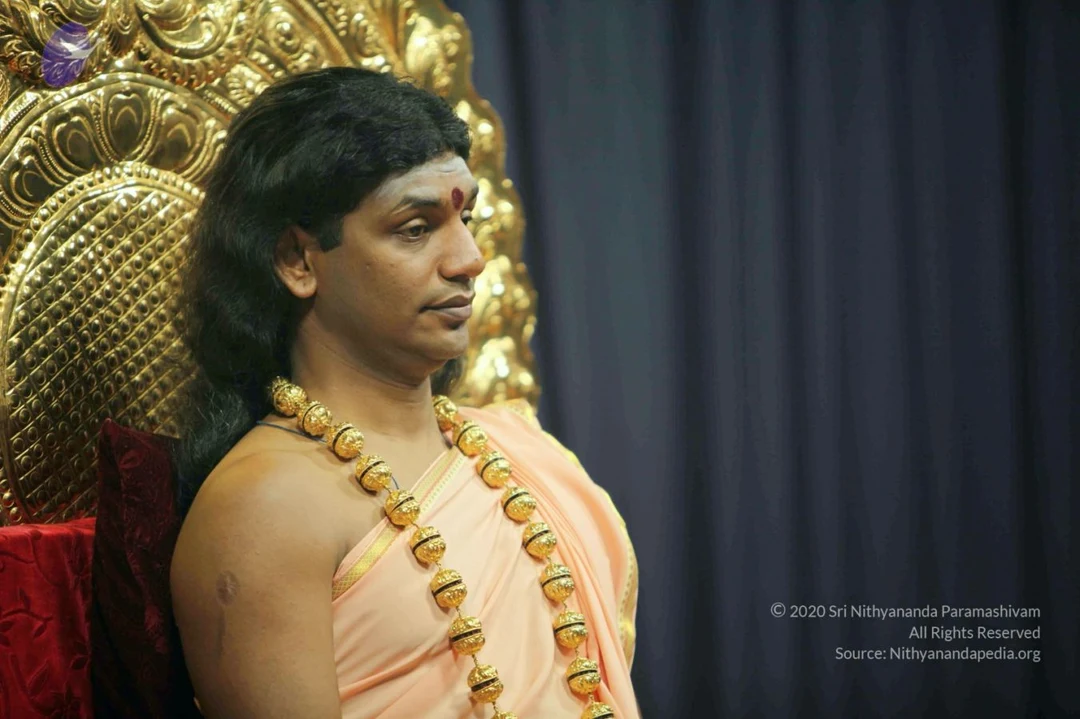
79 photosSource gallery
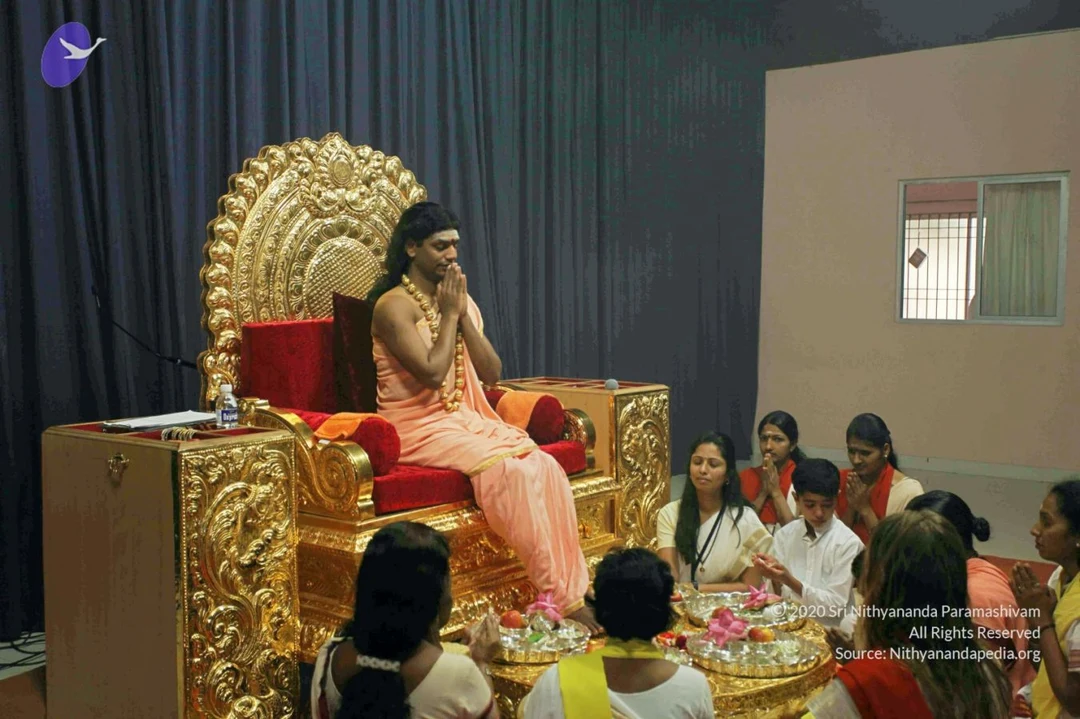
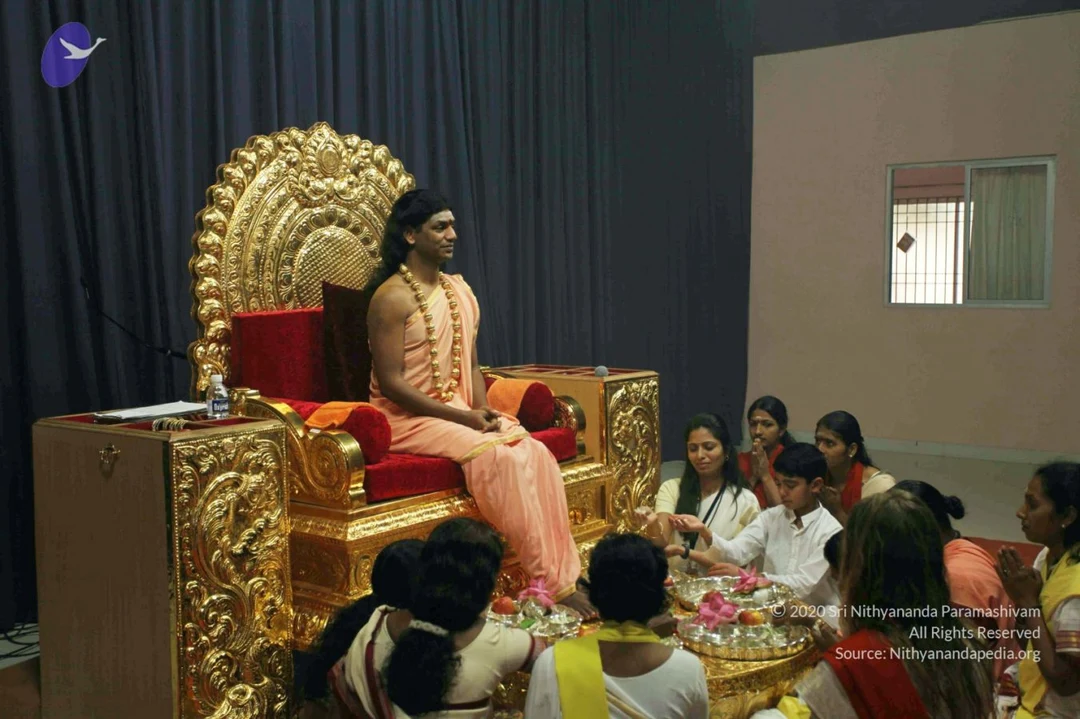
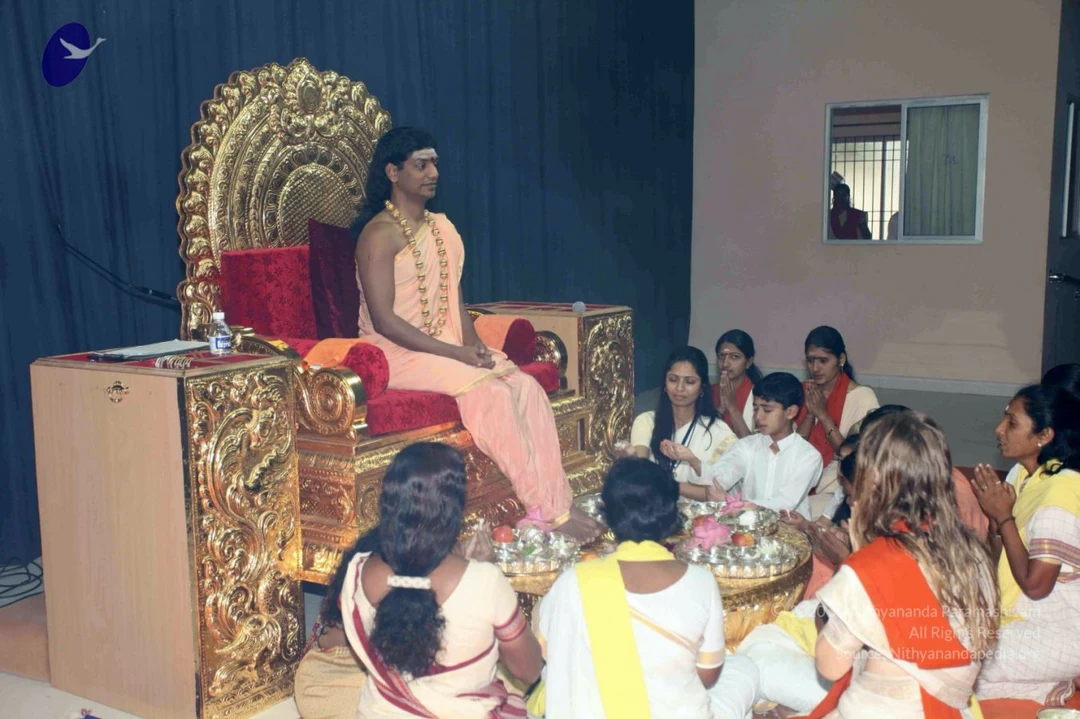
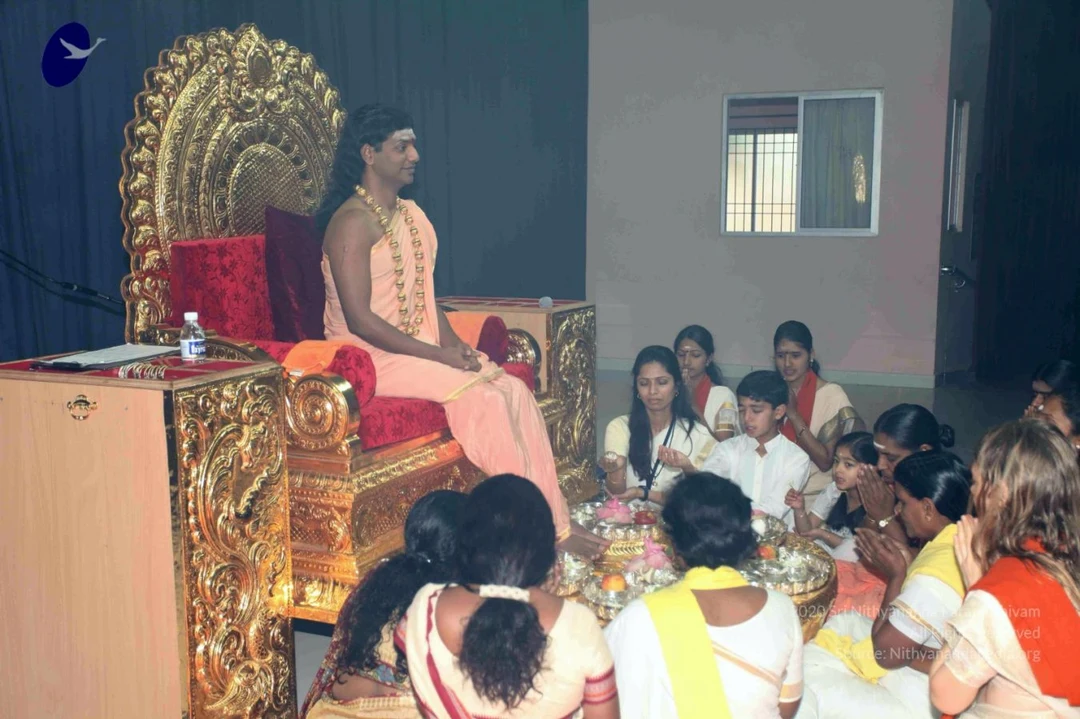
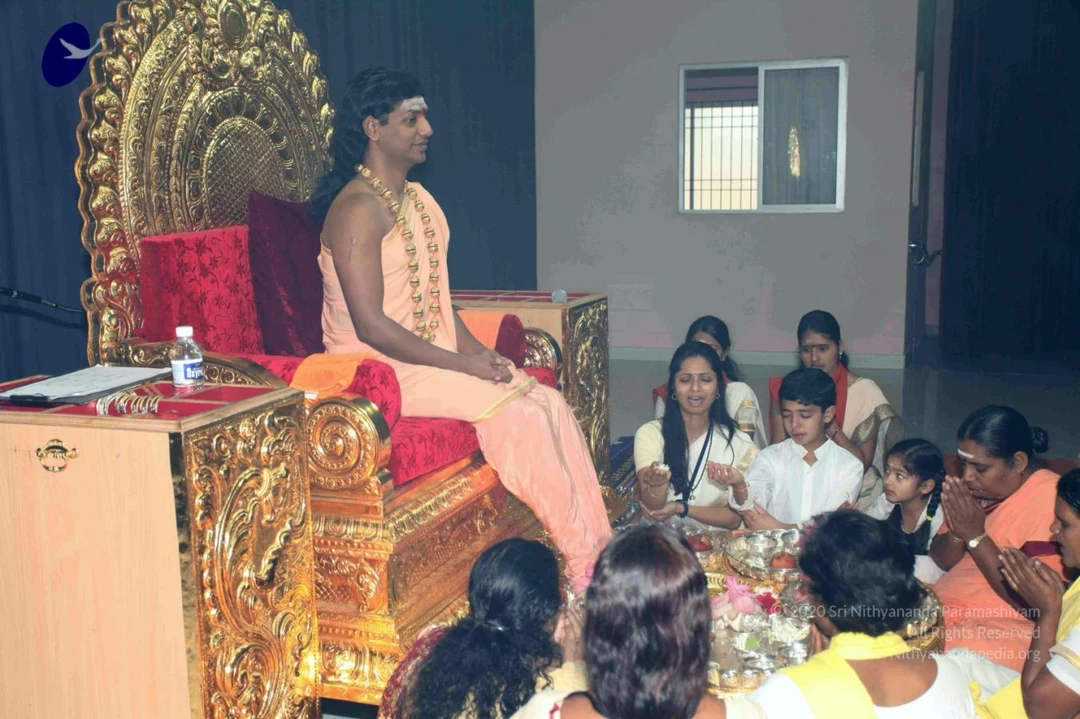
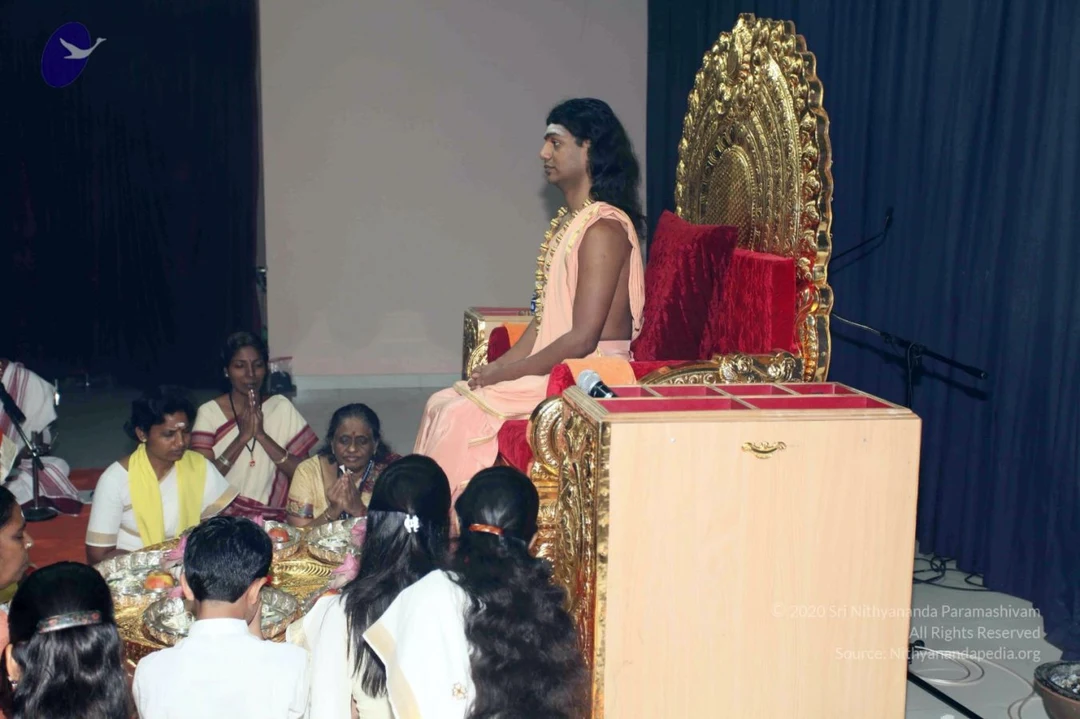
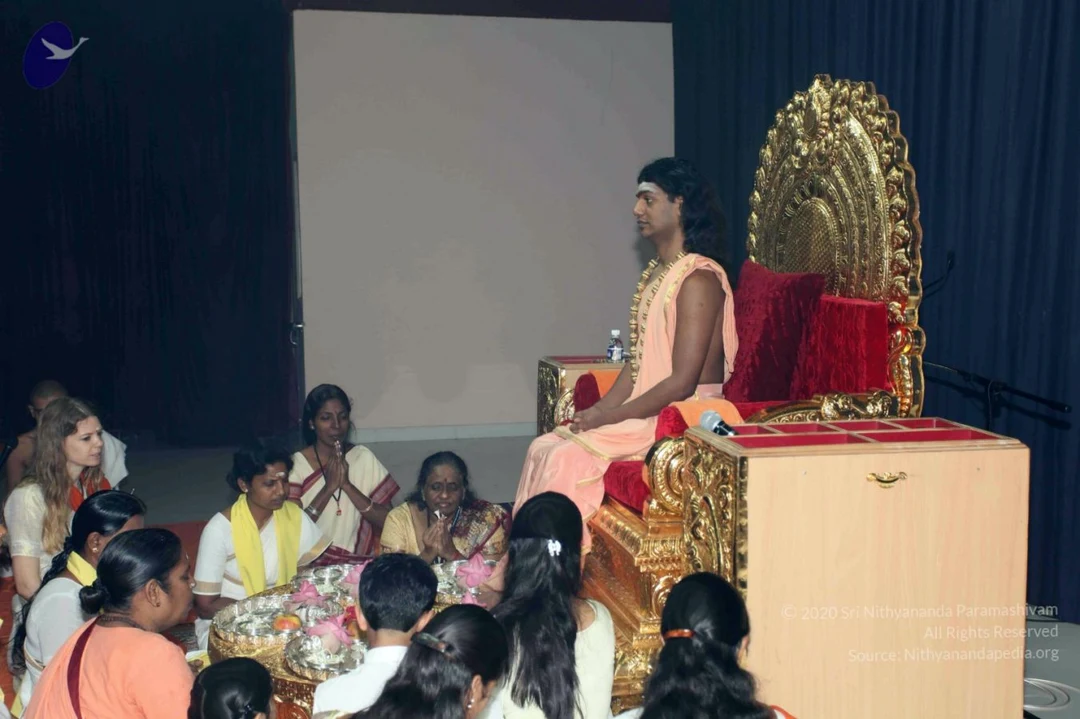
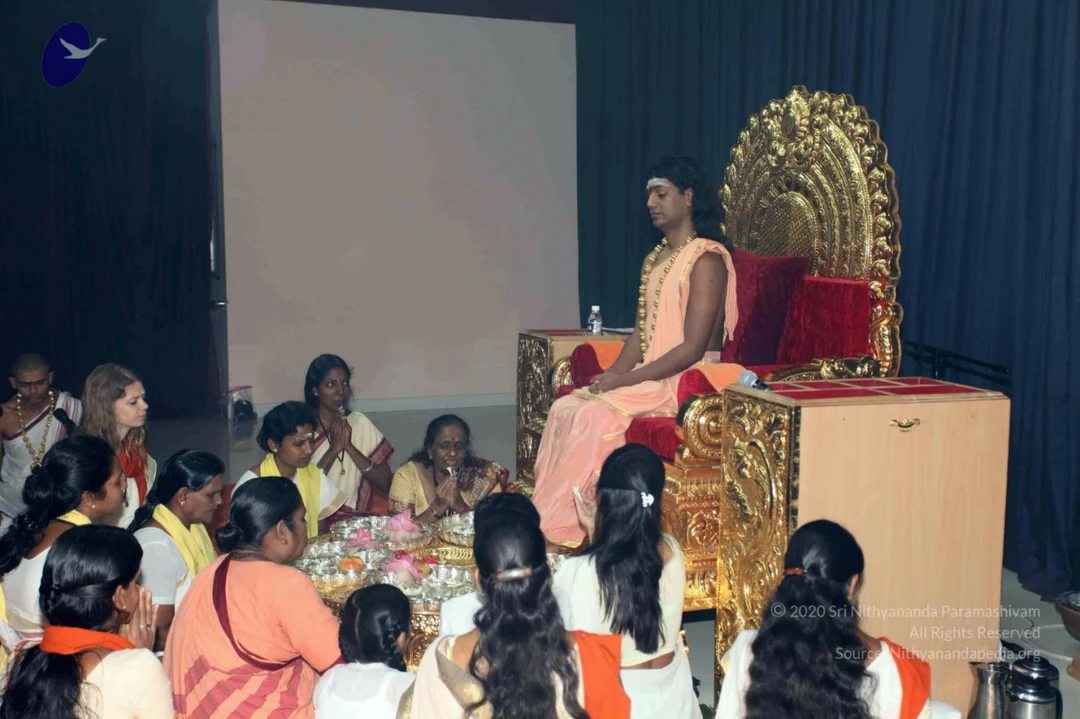
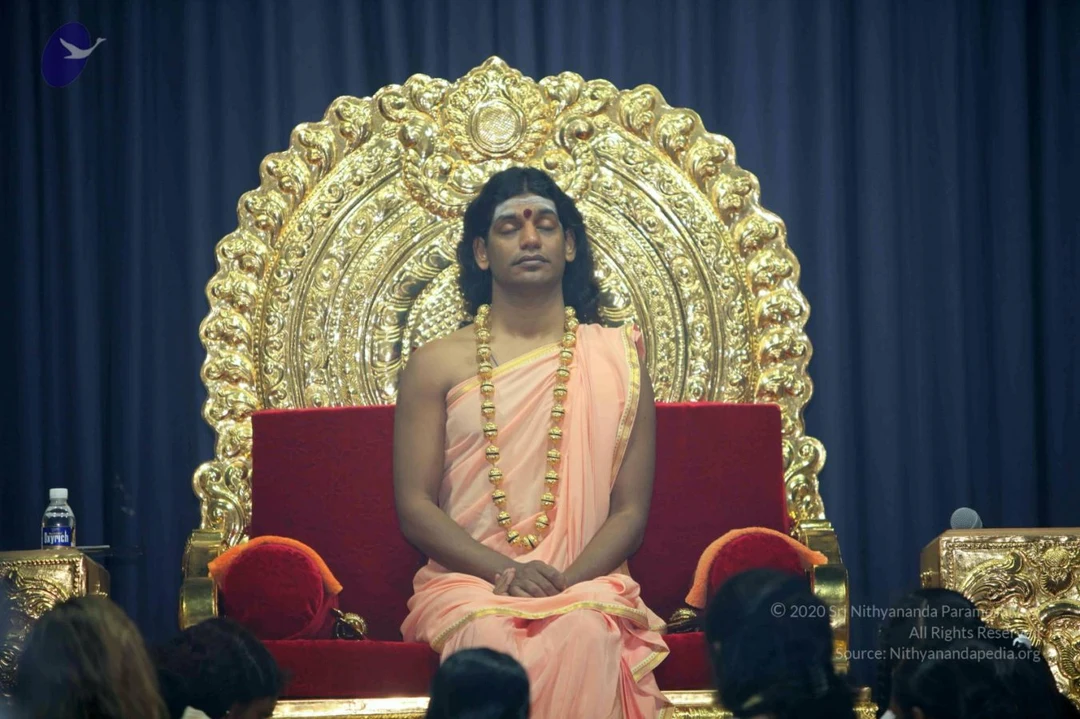
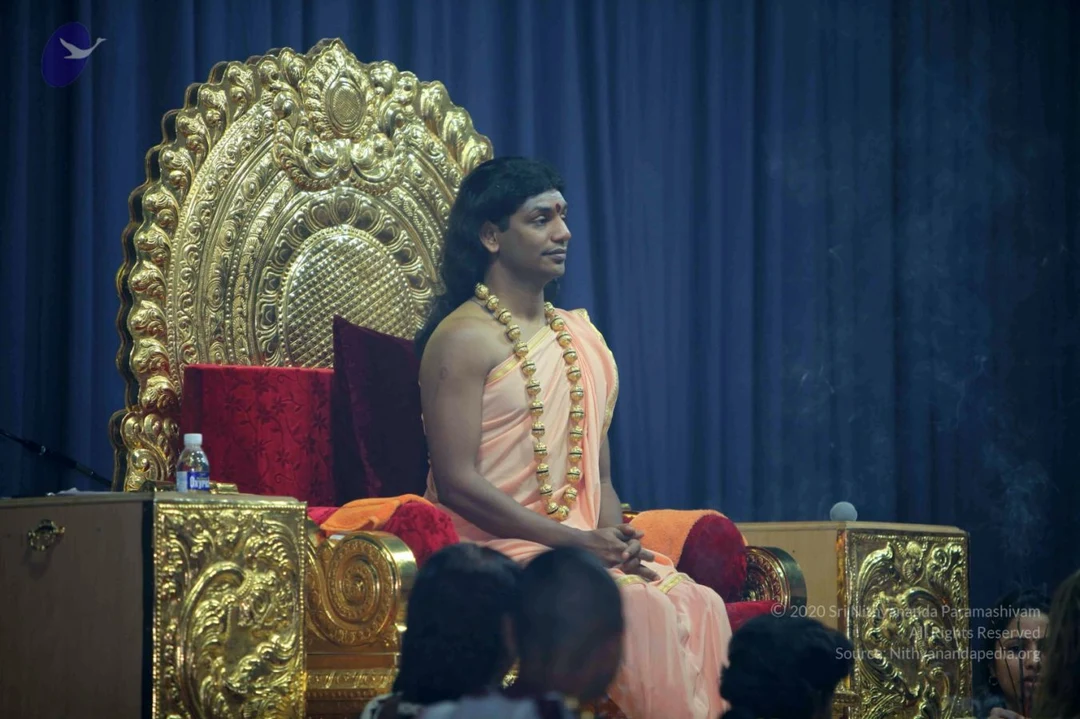
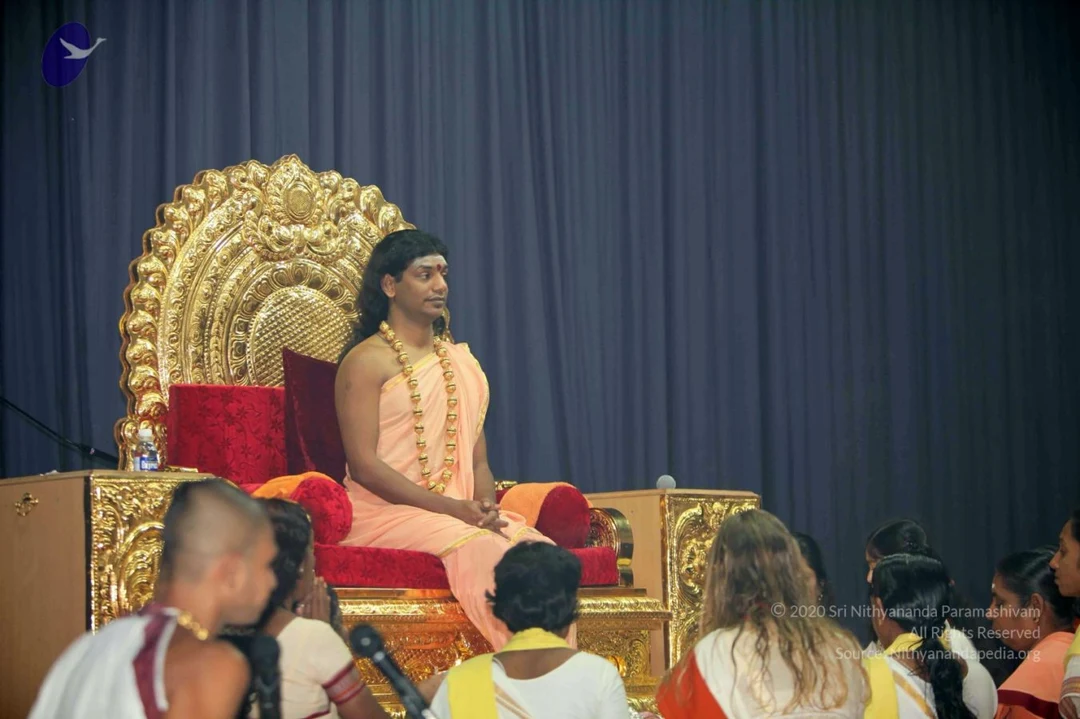
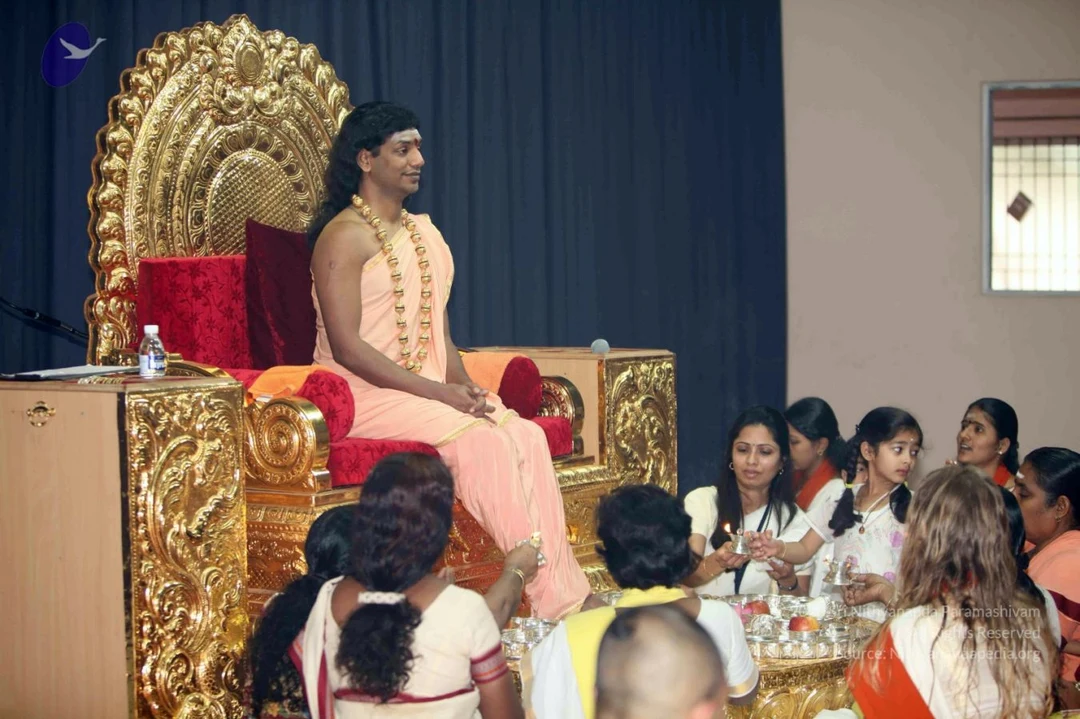
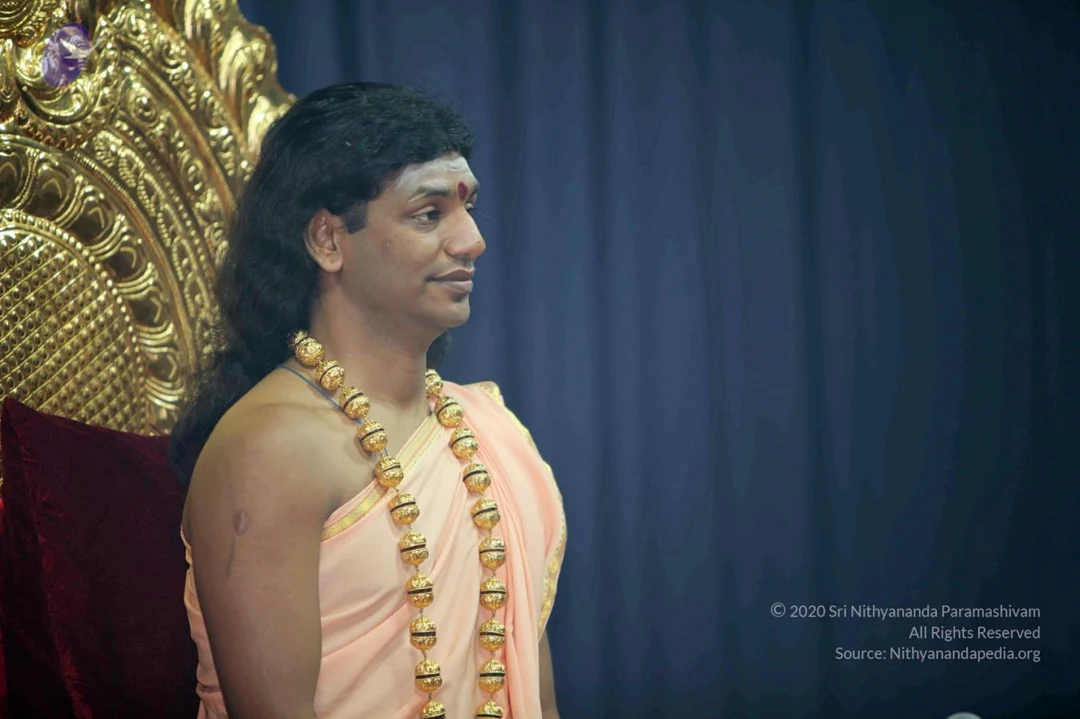
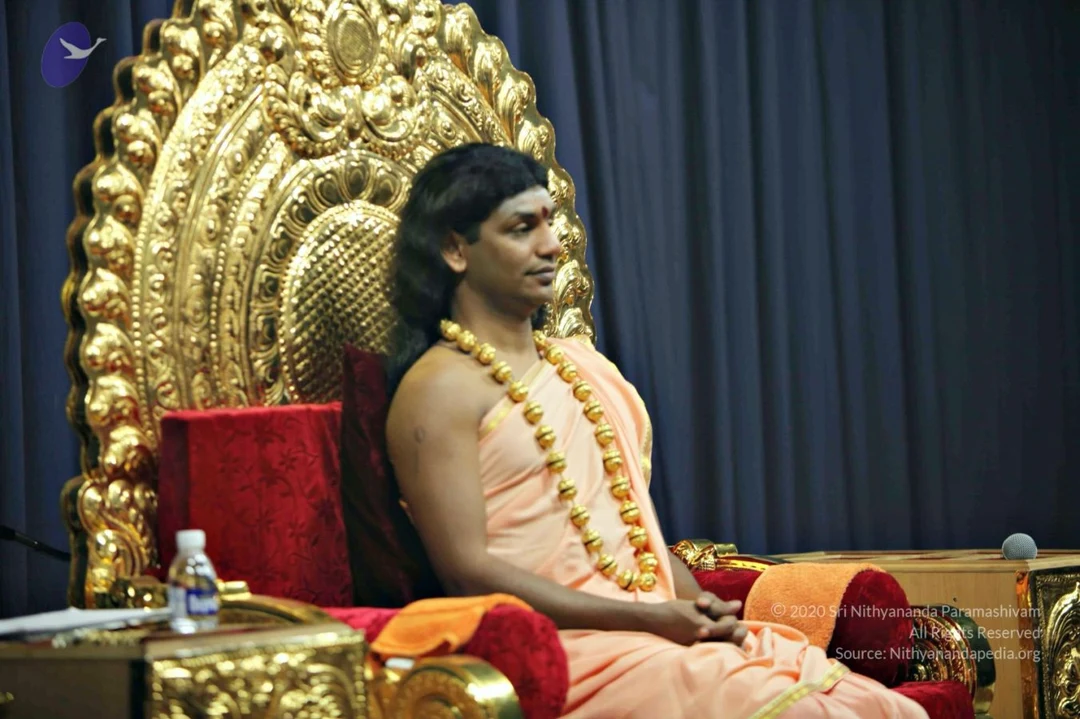
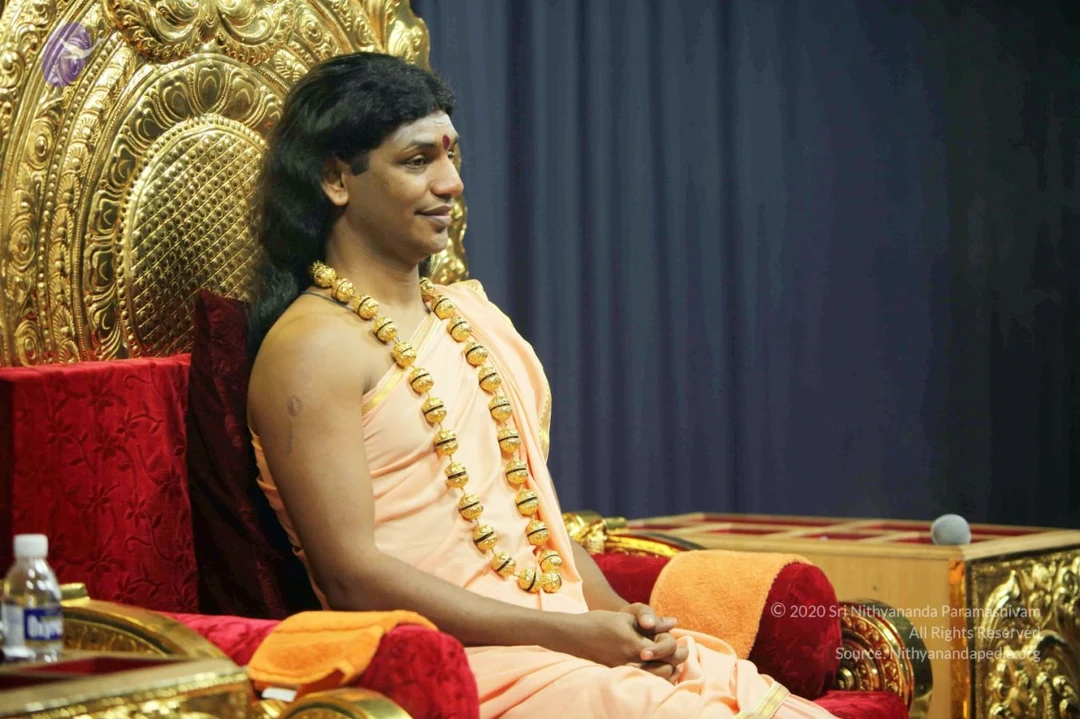
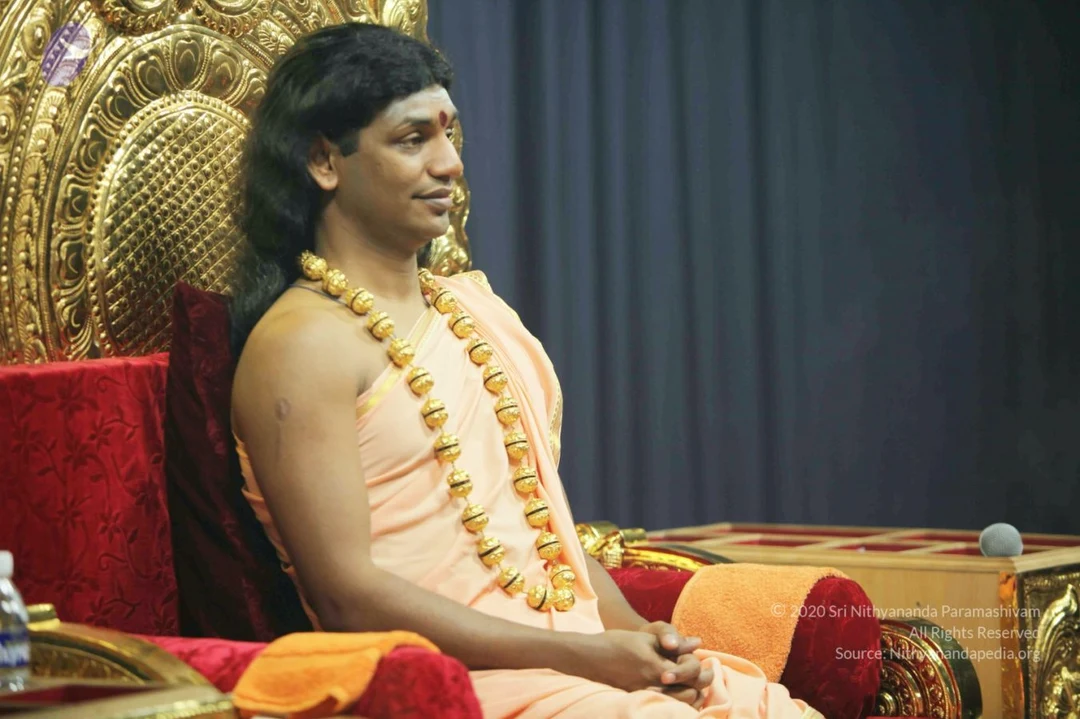
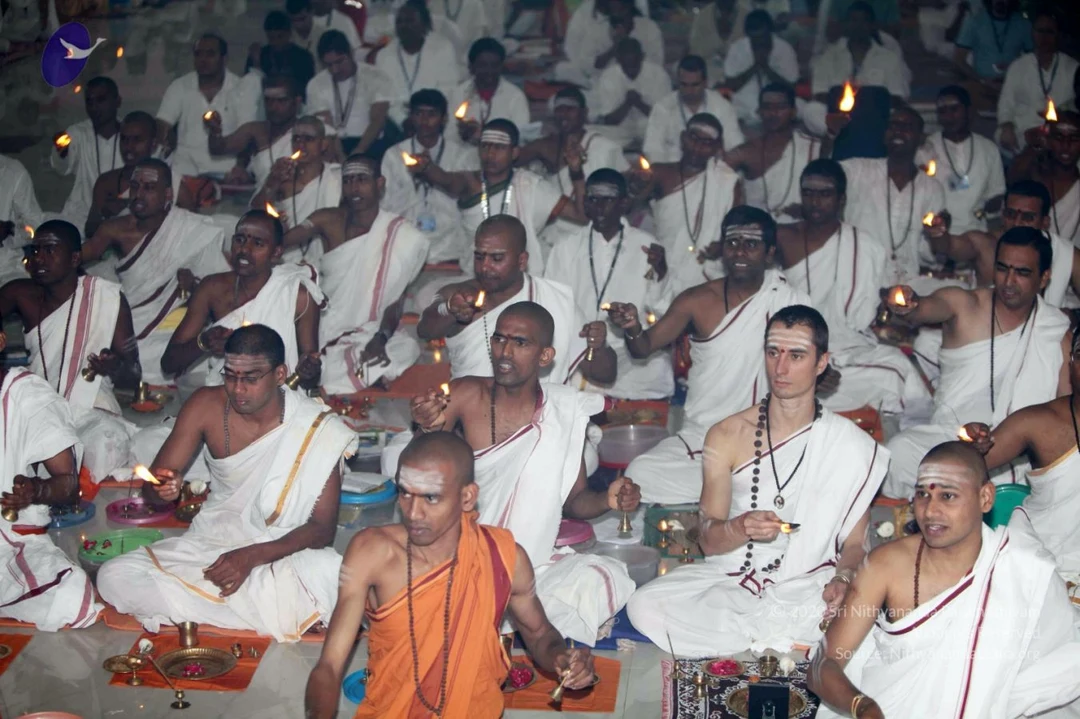
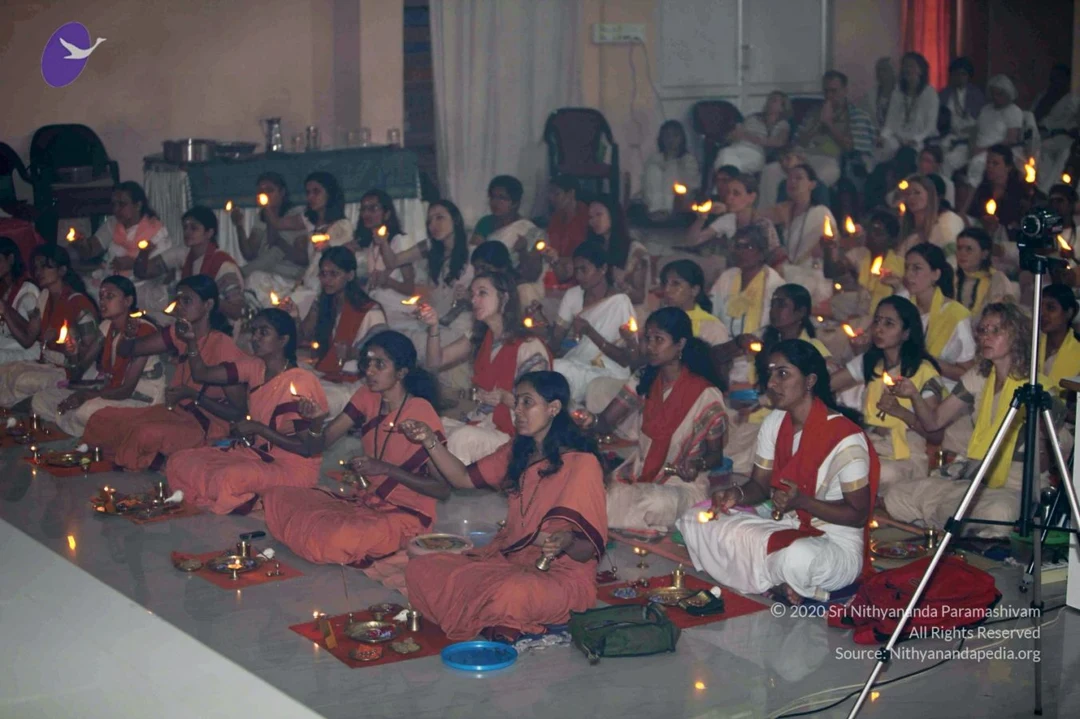
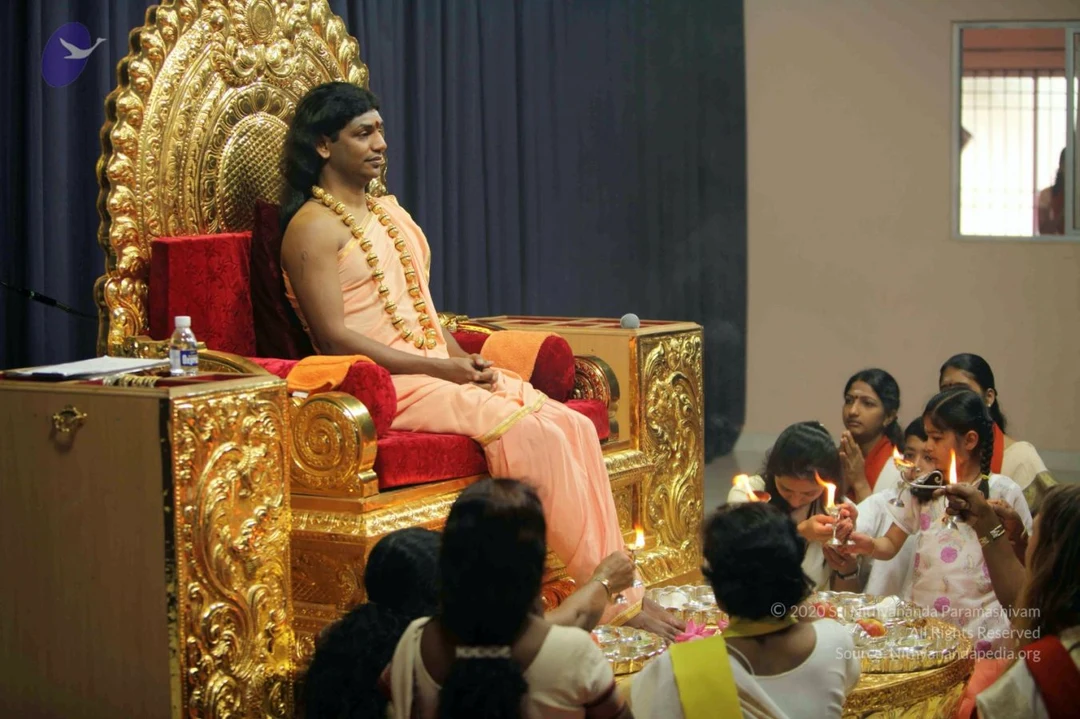
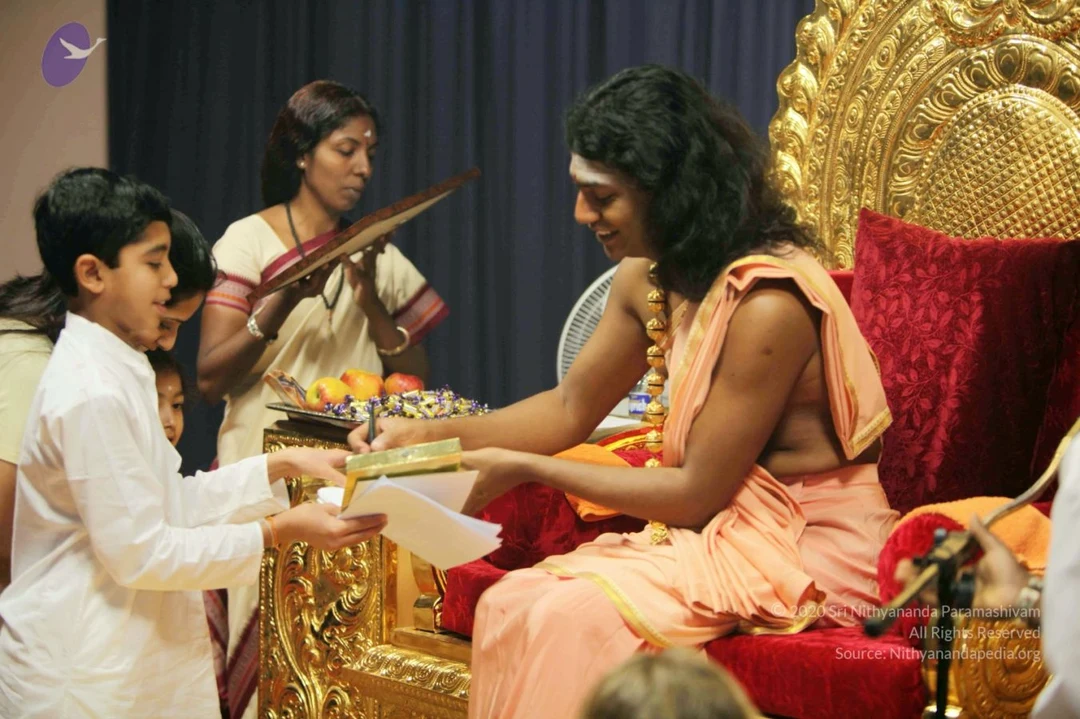
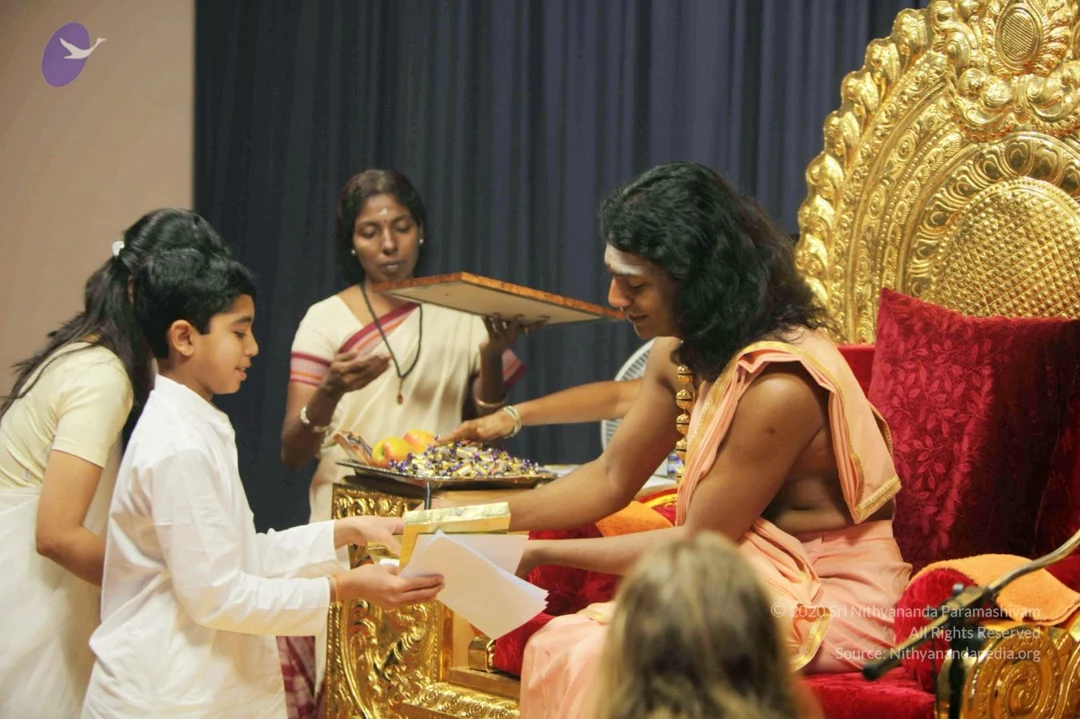
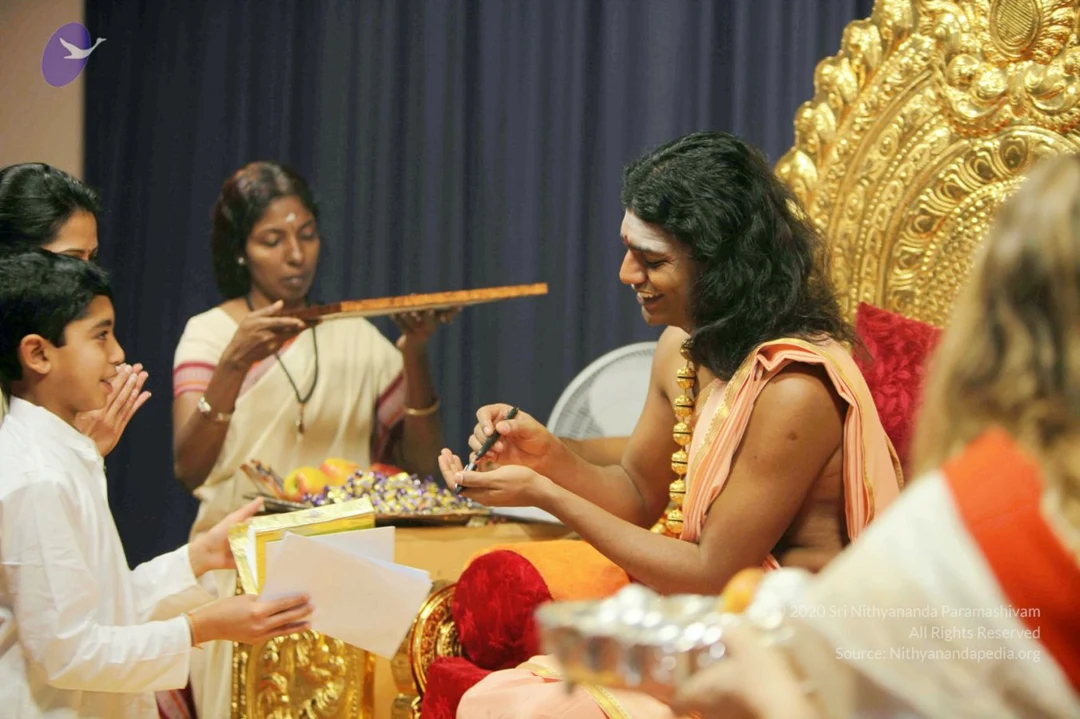
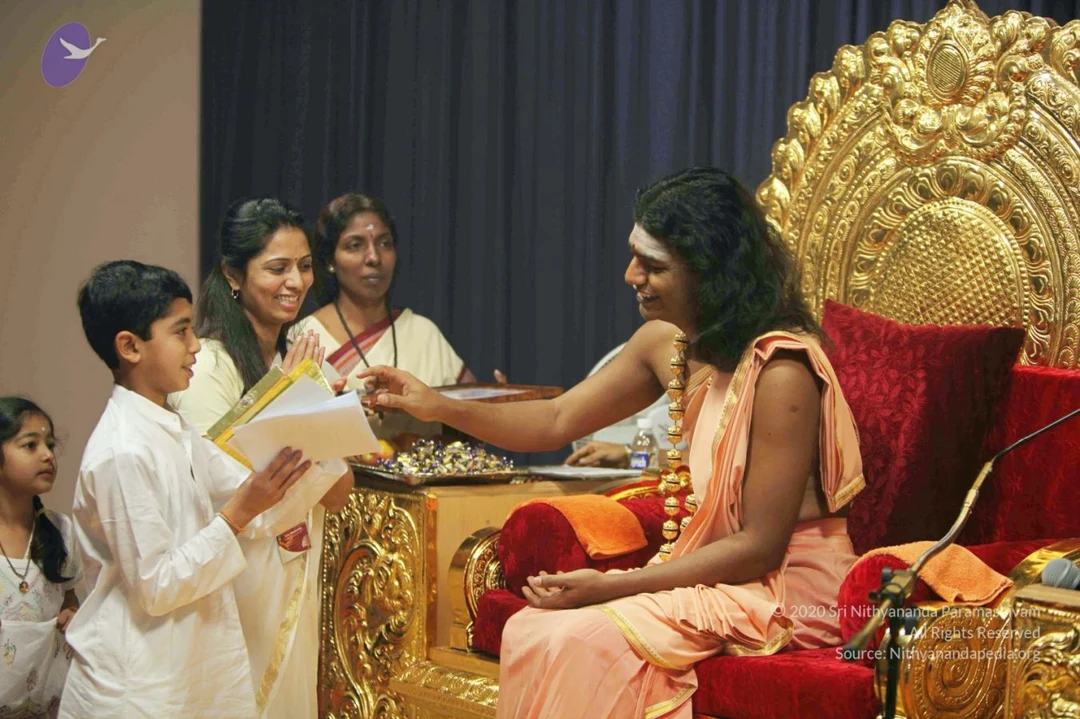
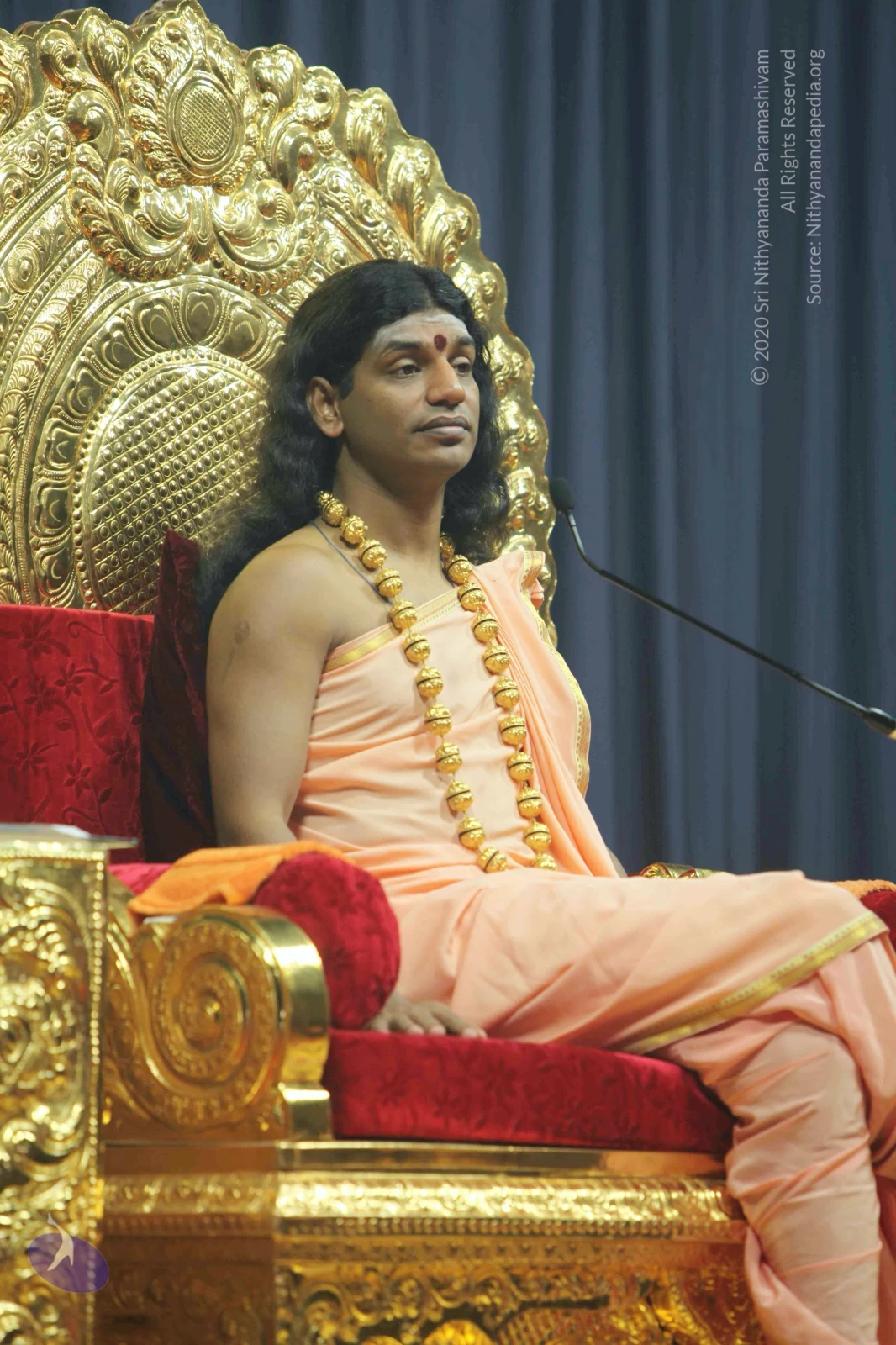
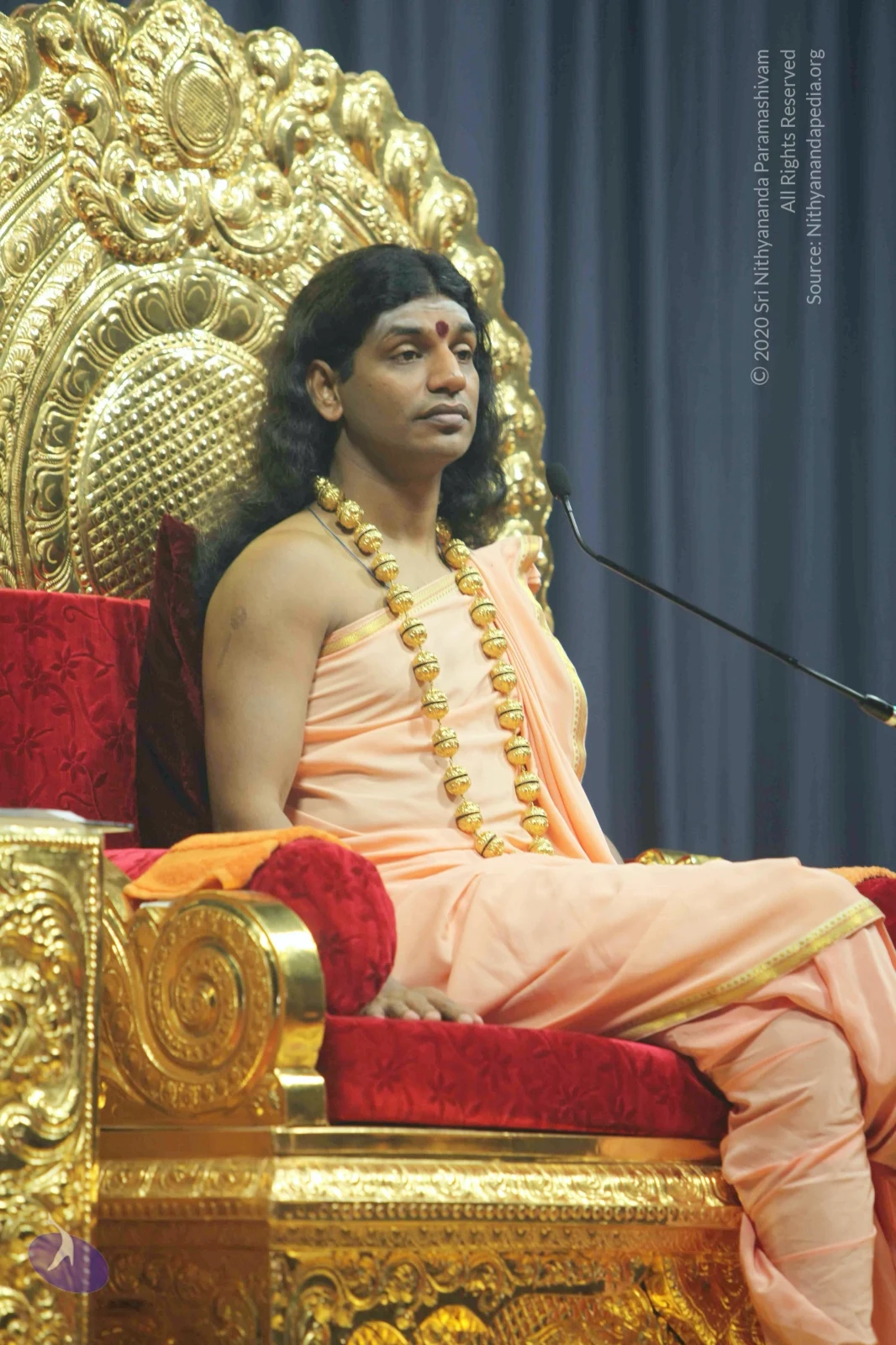
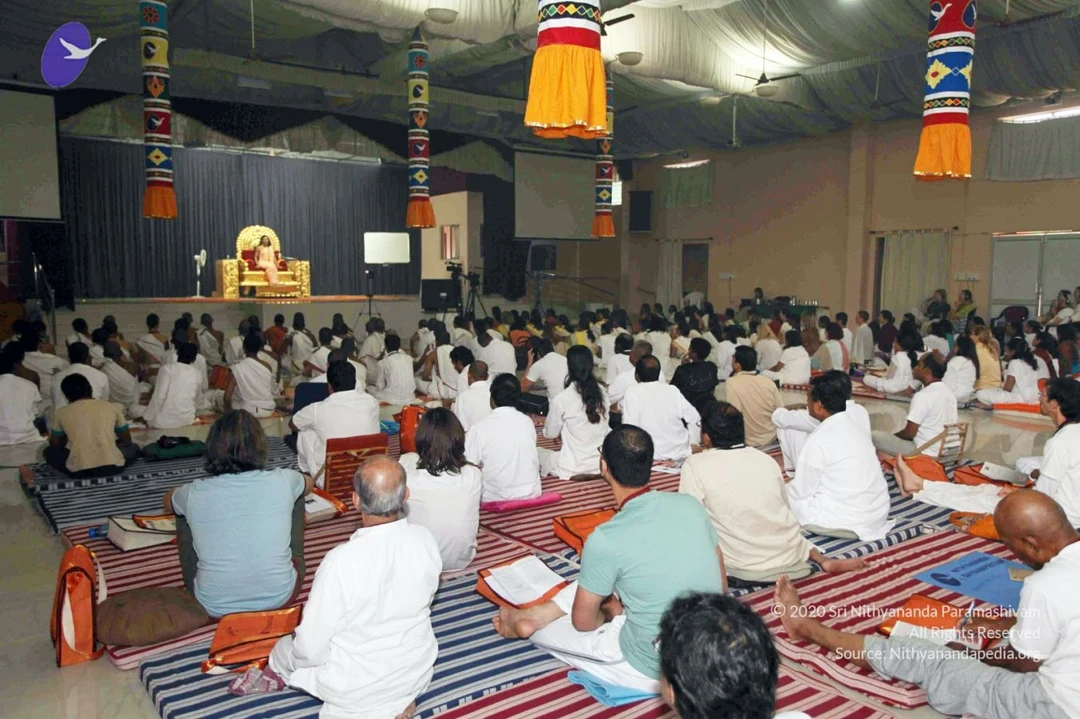
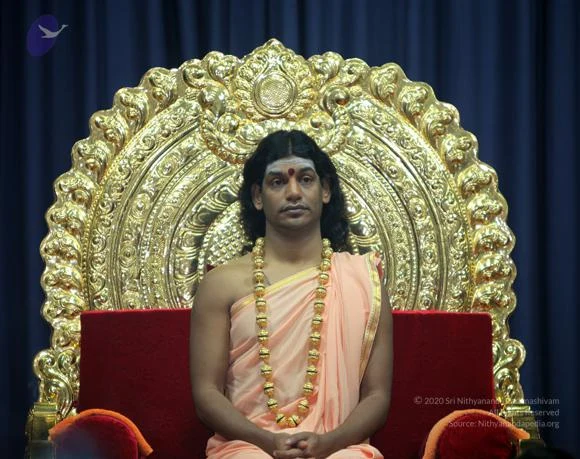
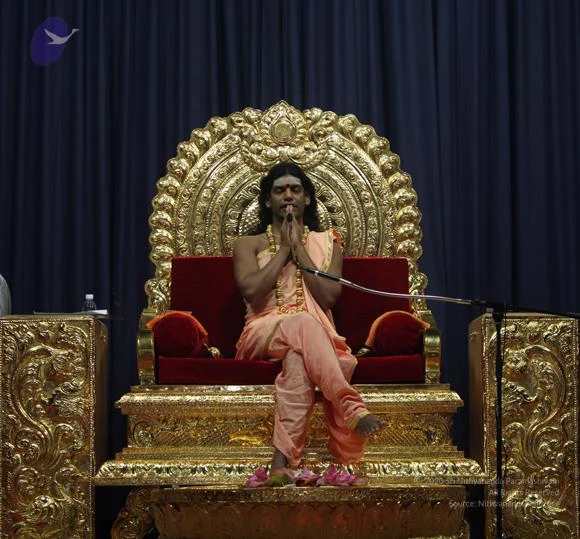
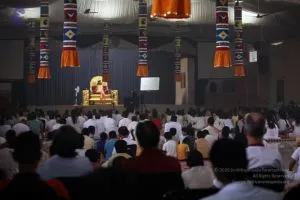
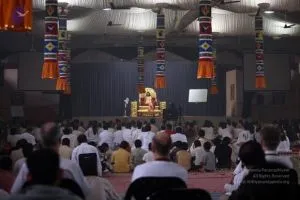
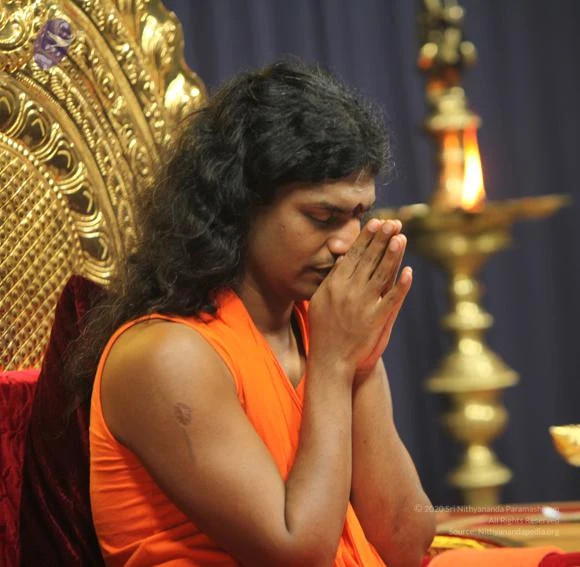
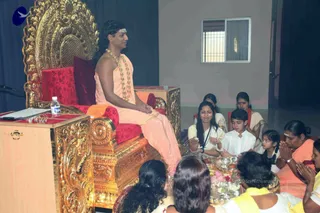
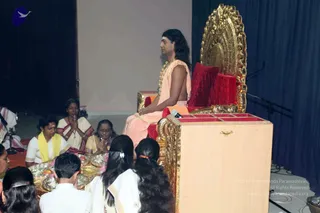
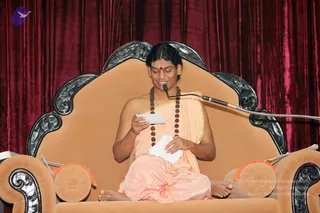
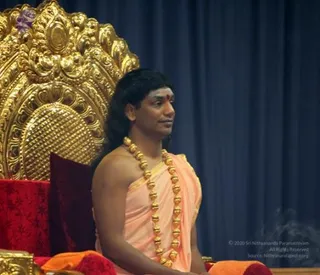
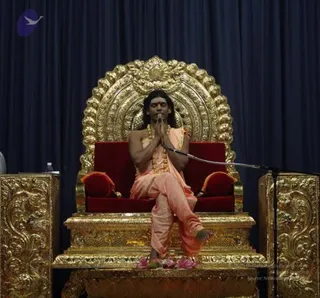
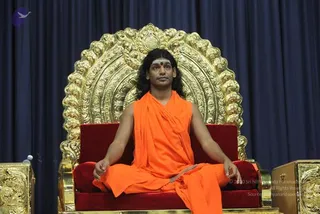
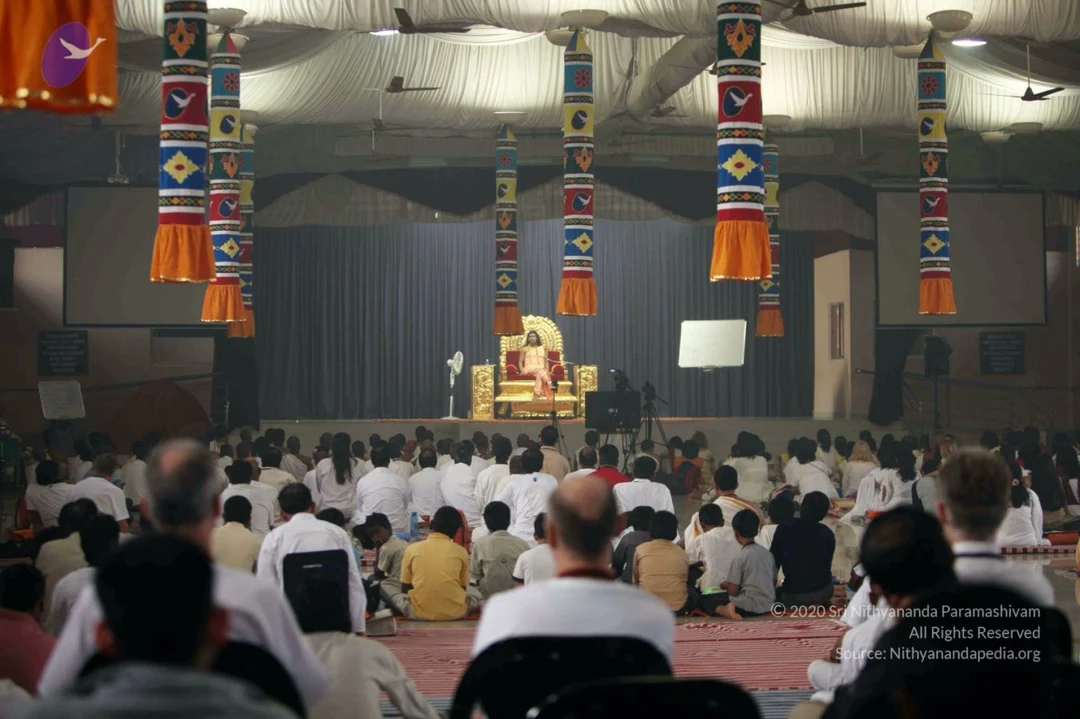
A seated man with long dark hair sits on an ornate gold throne with red cushions, hands pressed together in namaste, wearing a peach-coloured dhoti-style garment and a gold-and-beaded necklace; he appears to be the a person candidate, with long swept-back hair, ceremonial gold necklace and saffron-peach ceremonial clothing. Before him, devotees sit on the floor: a woman in white and a young boy in white with hands in anjali, a woman in a red shawl with hands folded, and others in red and orange shawls. Two gold trays with flower petals and offerings sit on the floor in front of the throne. A small water bottle and microphone stand sit on a gold side table; a blue curtain hangs behind, and the room has a beige wall with a window.A man with long swept-back dark hair sits on an ornate gold throne with red cushions, wearing a peach-orange shawl draped over his body and a long gold-beaded garland around his neck. He faces forward with a calm expression and his hands rest on his lap. Before him, seated on the floor, are several women and a boy in white, dressed in cream, white, red and yellow saris and kurtas. Some hold their hands in anjali or offer flowers and fruit on silver plates with pink petals. A small microphone stand is at the left, a water bottle sits on the gold side table, and a dark blue curtain hangs behind the throne. Appearance-based probable Swamiji (Nithyananda Paramashivam) seated on the throne, with long hair, orange shawl and gold beaded garland as cues; the page indicates he presided at this satsang.A seated man with long swept-back dark hair, a garland of rudraksha beads and a peach-coloured wrap sits on an ornate gold-and-red throne with carved gold panels, a small water bottle and microphone on a gold side table. Several women and a boy in white sit on the floor before him in front of brass trays of flowers and offerings; some are in white saris with red or yellow borders, one wears an orange shawl, and their hands are folded in prayer or raised in greeting. A glass door and a blue drape form the background. A probable Swamiji (long swept-back hair, rudraksha mala and wrap in his colouring) presides as the central figure of the satsang setting; the page identifies the event as a December 2010 satsang.A seated man in a pale peach-pink robe with a gold-bead necklace sits on an ornate gold-and-red throne on a low stage, hands folded in his lap, speaking toward the audience. Dark long hair falls past his shoulders. Before the throne, a semicircle of devotees sits on the floor: a woman in white with a lanyard and a boy in white kneel with palms pressed together, while women in orange, red and yellow saris sit behind brass and silver plates of flowers, fruit and offerings. A water bottle and microphone stand on a wooden lectern at left. A plain blue curtain and a window frame the background. Swamiji (probable) is identified by the throne, long swept-back hair, gold-bead necklace and pale robe, presented as the speaker at a satsang.A photograph of a satsang hall where a man with long swept-back dark hair sits on an ornate gold-and-red throne, wearing a peach-coloured dhoti-style wrap and a long strand of gold and rudraksha beads. A water bottle and papers sit on a wooden side table at left. Around the base of the throne, a woman in white with a shawl, a young boy in white, a girl and several women in saffron and orange saris sit on the floor with hands folded or holding small items, beside a silver tray with flowers and offerings. Other seated audience members are visible in the foreground, and a window with grille stands in the pale wall behind. Swamiji (probable): the seated man on the throne shows long swept-back hair and a rudraksha-style necklace with a ceremonial gold cord, and sits in a position of honour as the satsang speaker.A seated man with long dark hair, wearing a pink draped garment and a gold-trimmed necklace, sits on an ornate gold throne with red cushions at a satsang talk. A wooden lectern with a microphone stands in front. Seated devotees on the floor include a woman in a yellow shawl, a woman in a white and maroon saree with hands folded in anjali, and an older woman with hands pressed together. Children and young women in white sit in the foreground with their backs to the camera. Backdrop is a navy curtain and a blank screen. Swamiji (probable): the seated speaker has long swept-back hair, a pink shawl and an ornate gold necklace, placed on a throne, consistent with his role as speaker.

Satsang

70 photosSource gallery
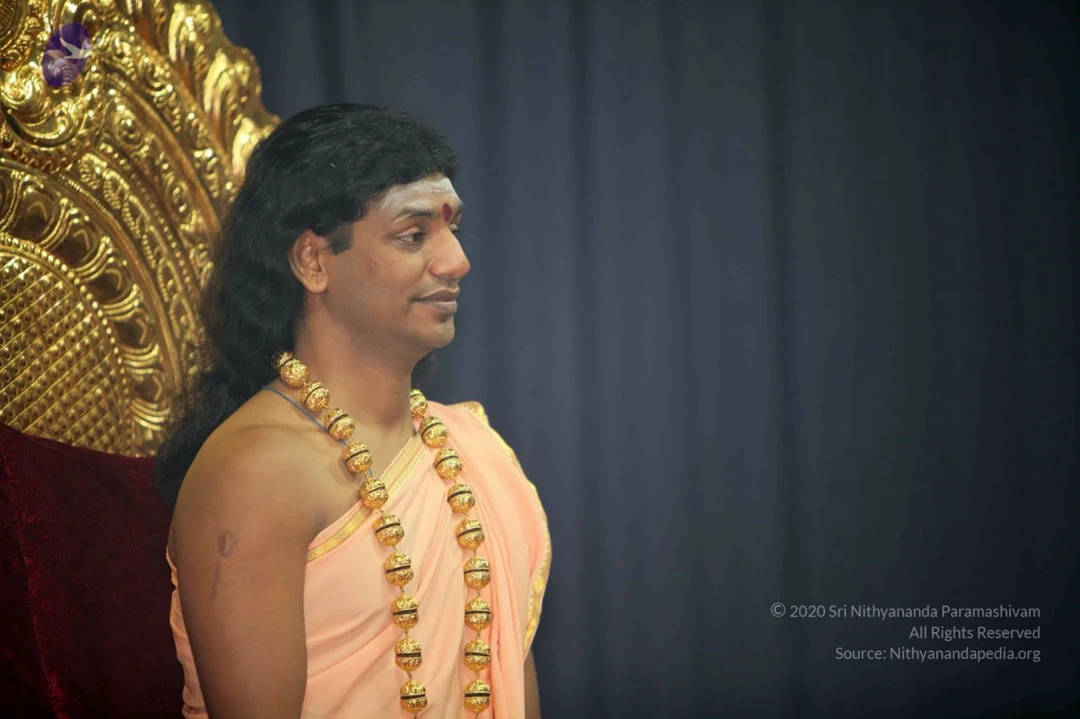
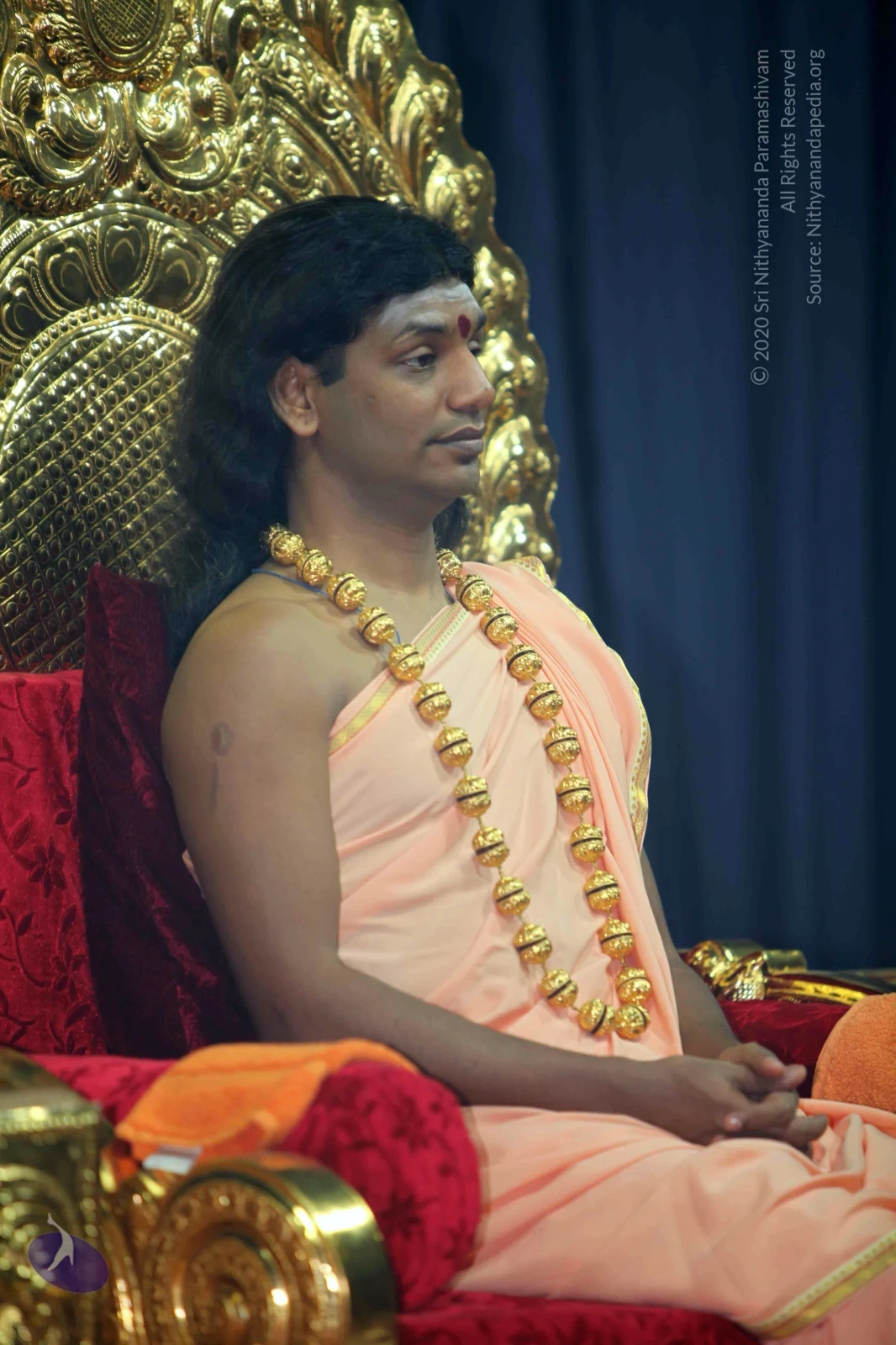
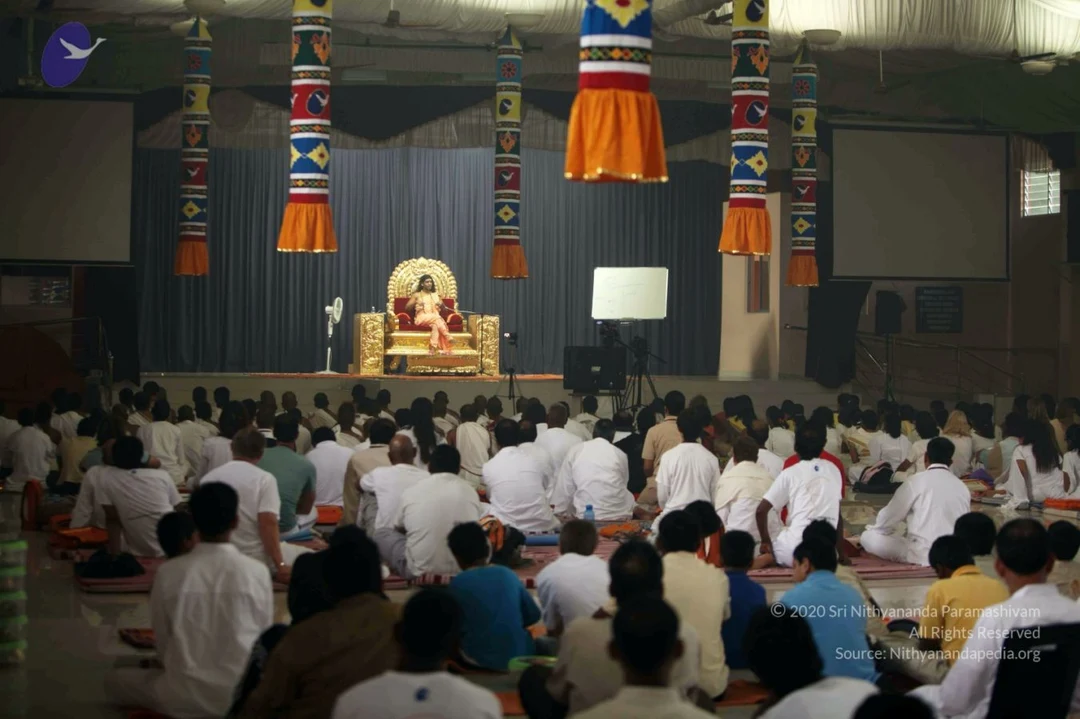
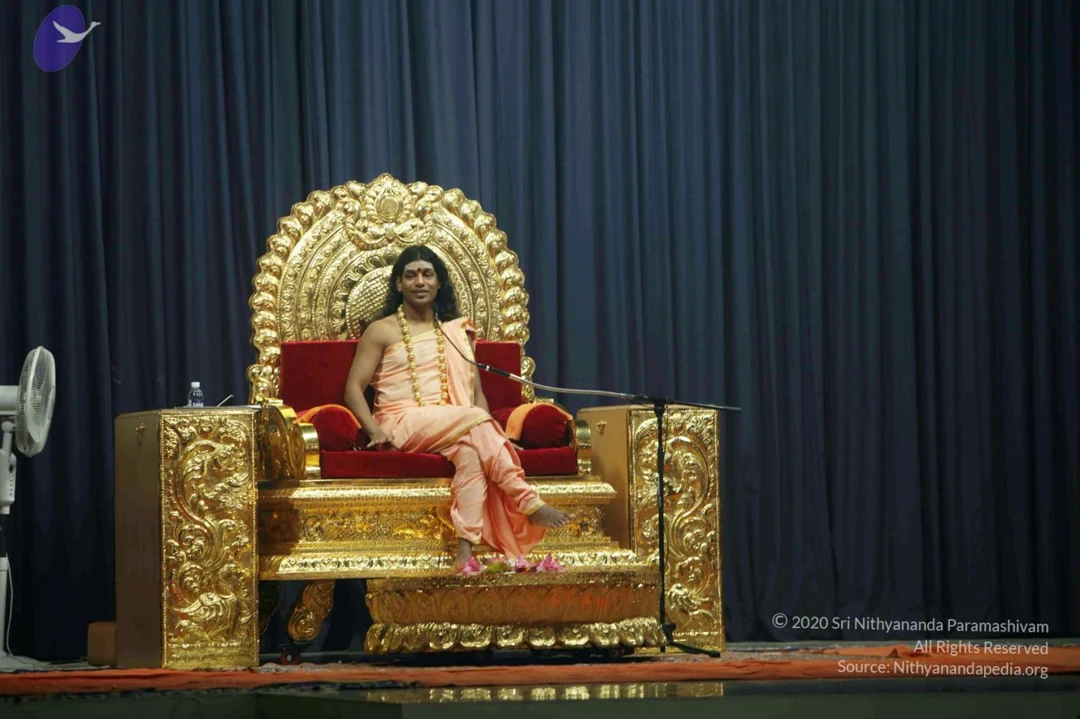
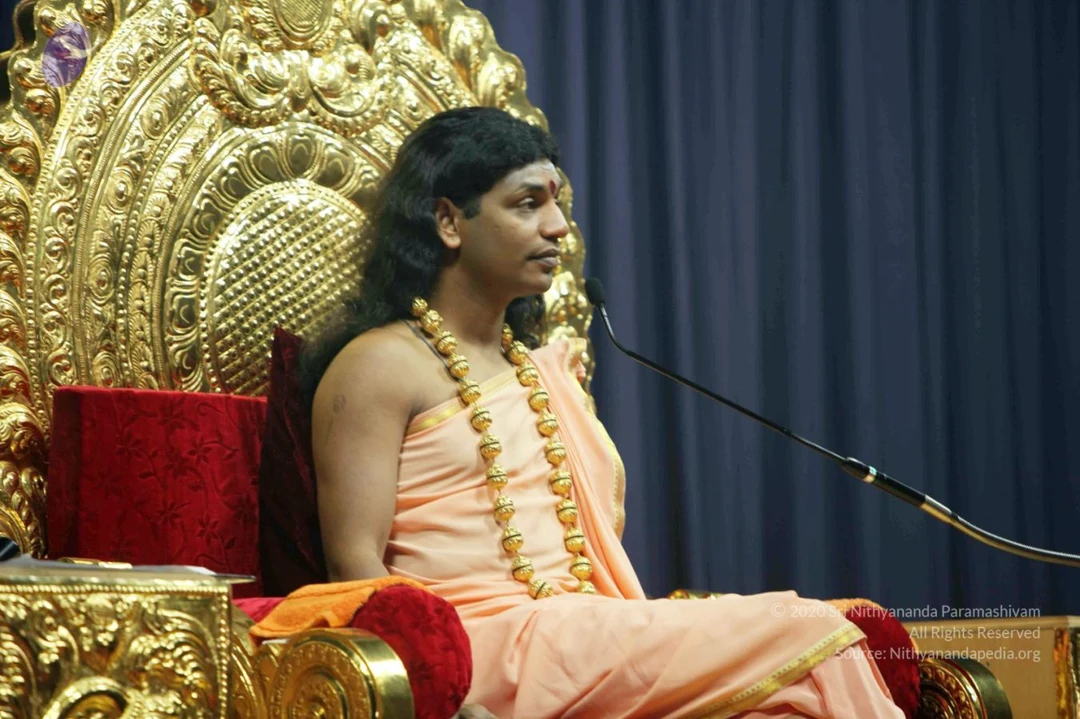
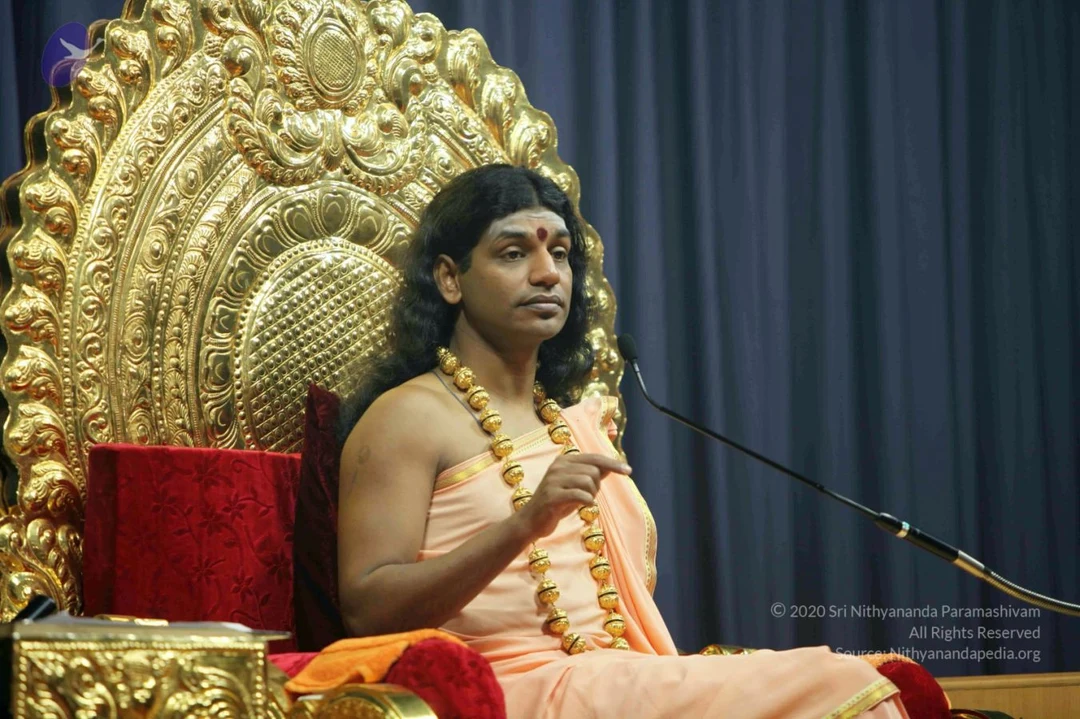
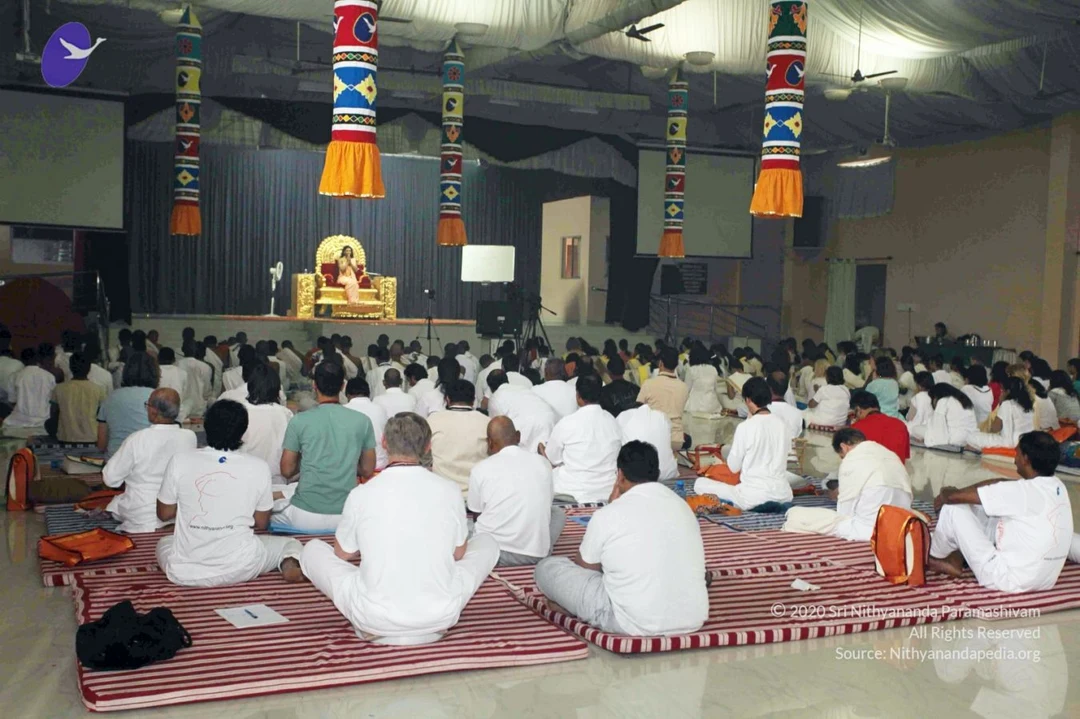
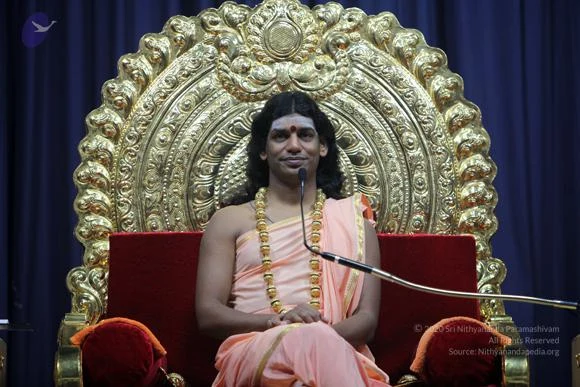
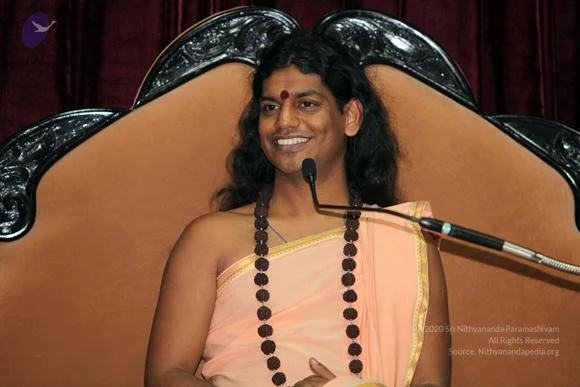
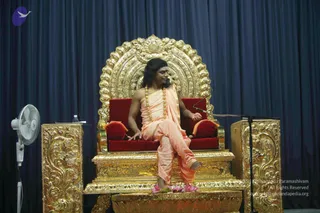
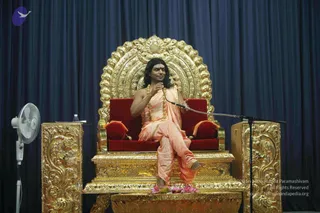
A man with long dark hair sits cross-legged on an ornate gold throne with red velvet cushions, in front of a dark blue draped curtain. He wears a peach-orange shawl over the shoulder and matching orange trousers, with a beaded gold-and-rudraksha style mala around the neck. His feet rest on pink flower petals placed on the gold platform. A microphone stands beside him and a white pedestal fan is at left. a person is the seated figure, identified by his long swept hair, ornate orange ceremonial clothing and beaded mala around the neck, seated as the speaker on the throne.A man sits on an ornate gold throne with red velvet cushions in front of a dark blue draped curtain, seated with one leg crossed over the other and bare feet resting on pink flower petals. He wears a peach-orange saffron-toned cloth wrap over his shoulder and matching draped garment, a long beaded mala necklace, and a small red bindi, with long dark hair swept back. His right hand is raised near his chin in a contemplative gesture while he speaks into a microphone on a stand. A white pedestal fan stands at left and a small water bottle sits on a side table. The ornately carved gold side panels and throne back frame the seated speaker during a talk.A man with long dark hair and a small red bindi sits on an ornate gold throne with a tall, scrolled backrest and red cushioned seat, his palms pressed together in namaskar and eyes closed. He wears a peach-coloured dhoti-style garment with gold border and a shoulder wrap, plus multiple beaded necklaces of gold and brown beads. A microphone on a flexible stand is near his face, a water bottle sits on a side table at left, and a deep blue curtain forms the backdrop. Clothing and colours suggest a satsang setting; the figure appears to be a probable Swamiji (probable) seated in a presiding role, with the appearance-based cues of long hair, saffron-toned clothing and rudraksha-style beads.A man seated on an ornate gilded throne with a red cushioned seat and a large gold-embossed backrest, eyes closed and palms pressed together in anjali mudra before a microphone on a flexible stand. He wears a peach-orange saffron-toned dhoti and wrap with gold border, a long gold-bead necklace, and a red bindi on his forehead, with long dark hair swept back. The appearance matches the Swamiji (probable) presentation, with long swept-back hair, ornate gold-and-orange clothing and a golden necklace, seated on a throne as a teacher addressing a satsang. A blue curtain forms the backdrop.A man seated on an ornate gold throne with red velvet cushions against a dark blue draped curtain, hands pressed together in namaste near a microphone on a stand. He wears a saffron-orange dhoti and shawl, a rudraksha mala with a golden necklace, and a red tilak on his forehead; his long dark hair falls to his shoulders. Pink flower petals lie at his bare feet on the gold base, and a white pedestal fan stands to the left.A man with long dark hair sits on an ornate gilded throne with a large carved gold back and red cushioned seat. He wears a peach-orange shawl draped over his shoulders and bare chest, with a red bindi on his forehead and multiple gold-coloured beaded necklaces. His hands are pressed together in anjali mudra near a microphone on a stand, as he speaks to an audience. A deep blue curtain hangs behind him. The distinctive combination of long swept-back hair, ceremonial gold necklaces, orange shawl and a throne matches cues for Swamiji (probable), seated in a satsang setting with a microphone. A small purple logo appears at the upper left.

Sarva Darshan

14 photosSource gallery
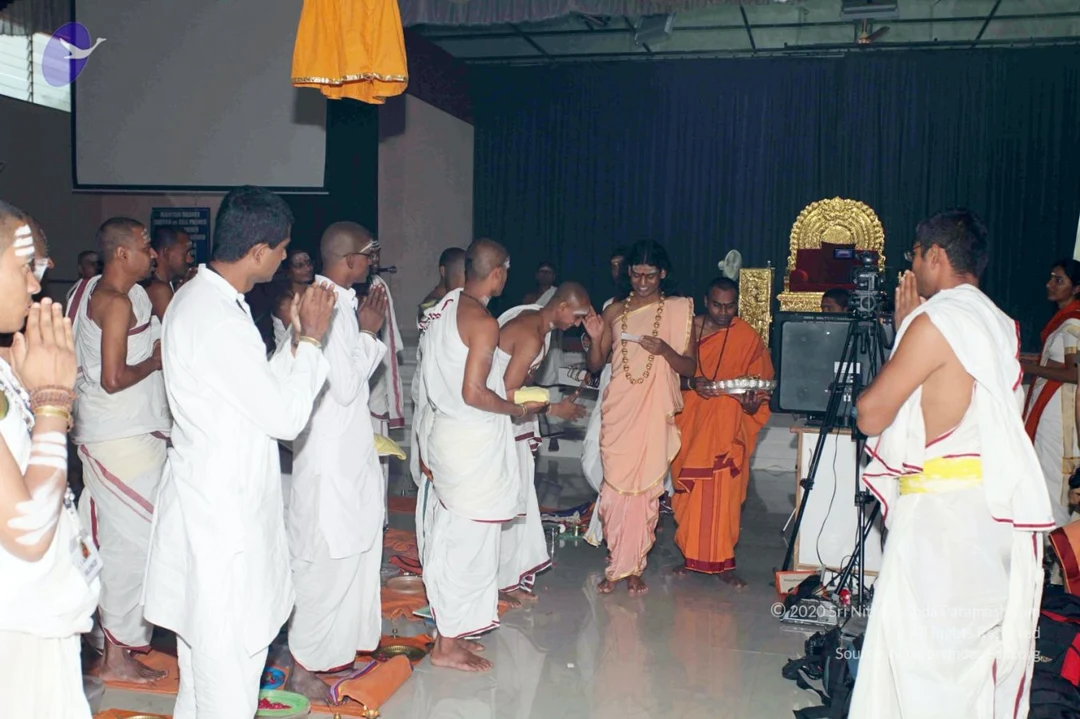
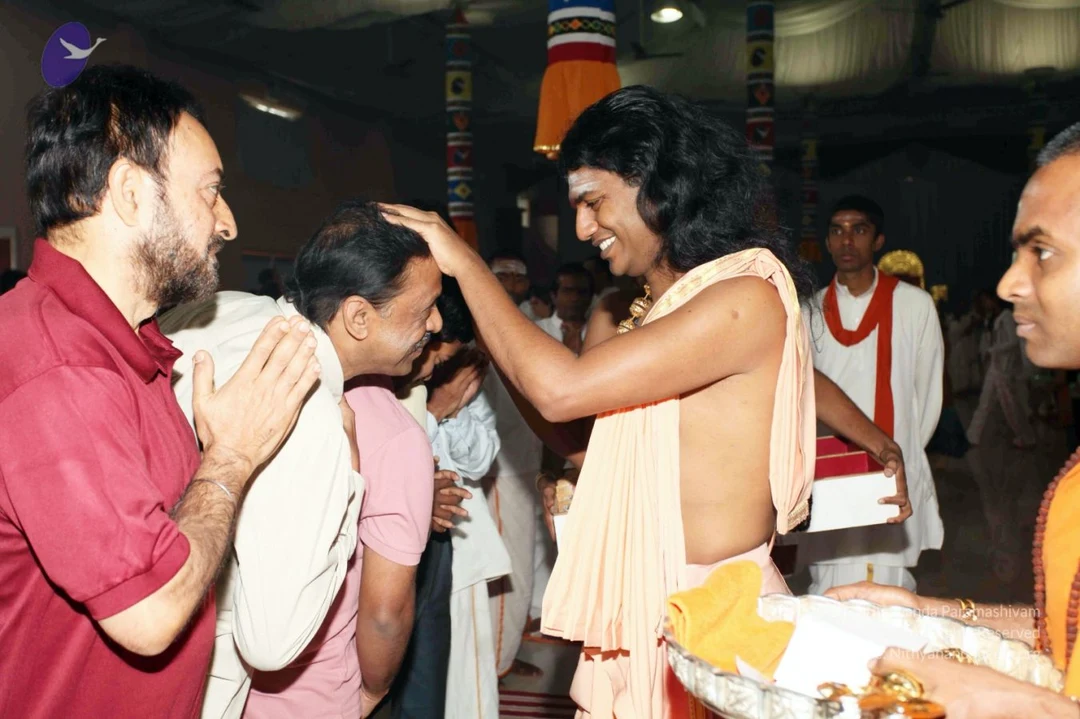
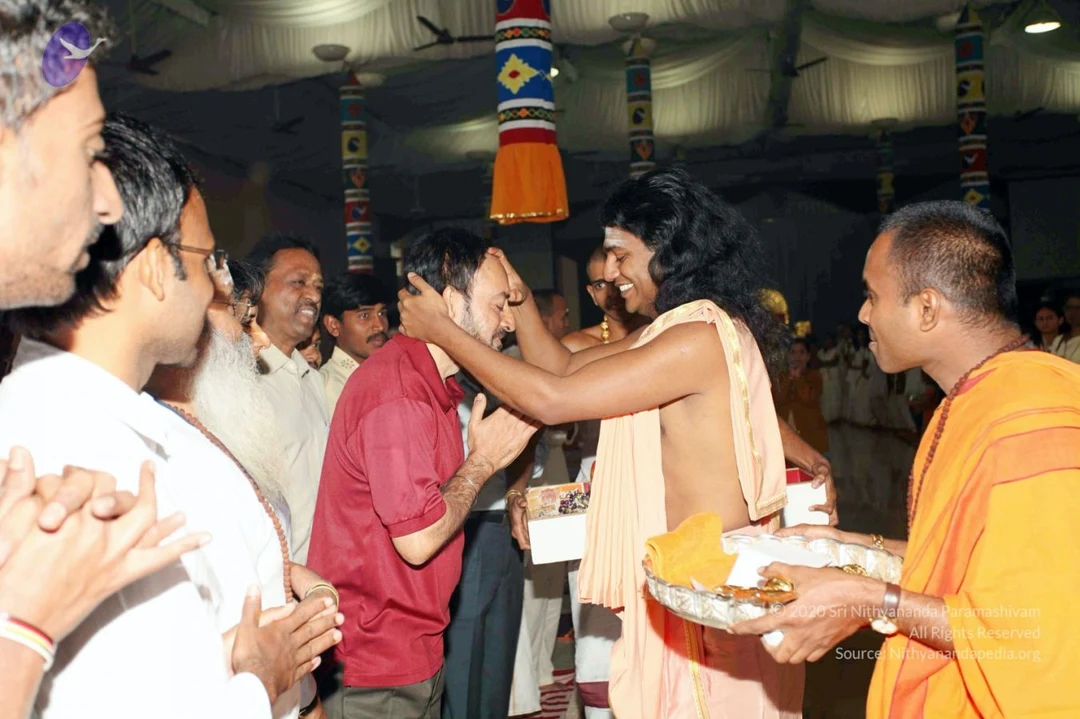
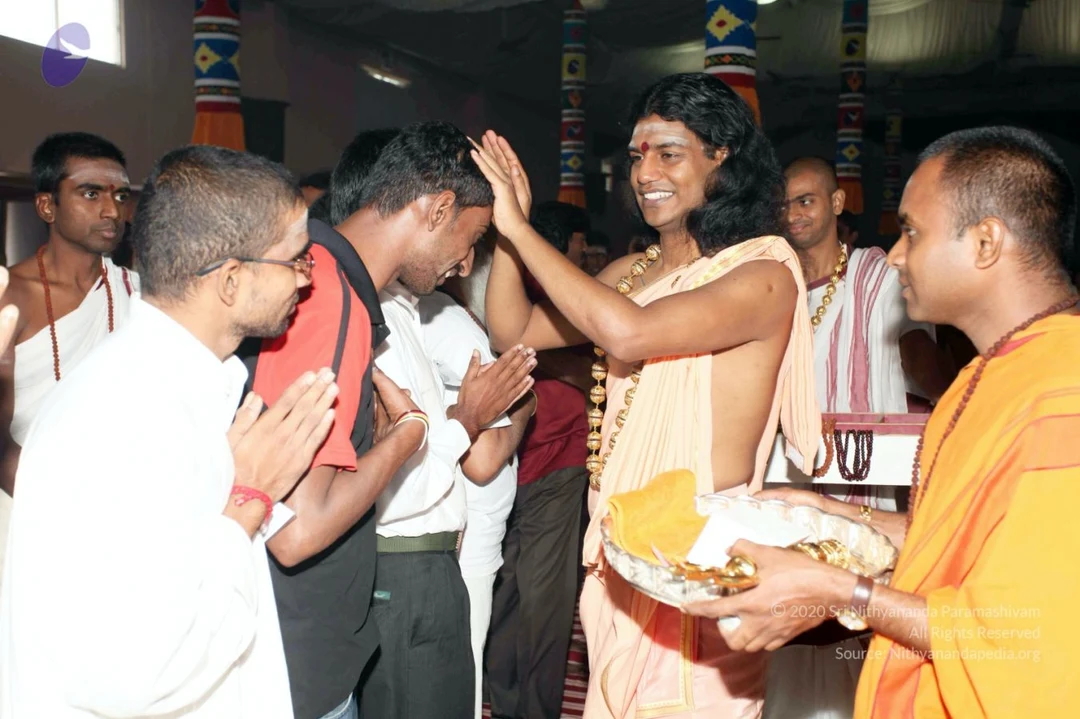
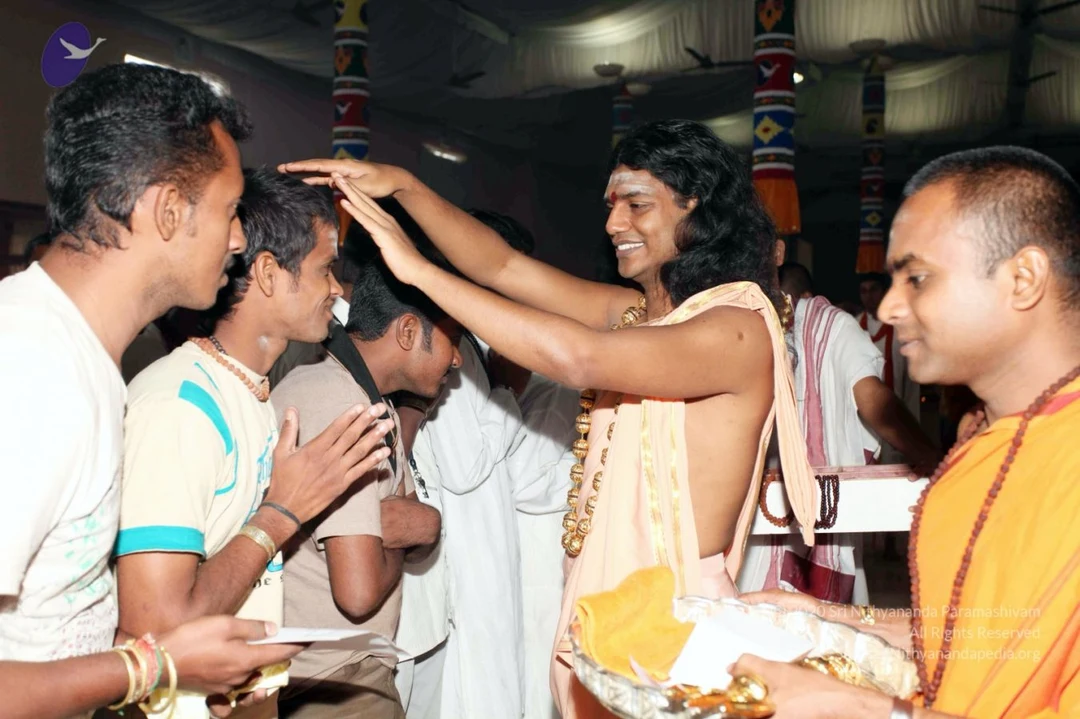
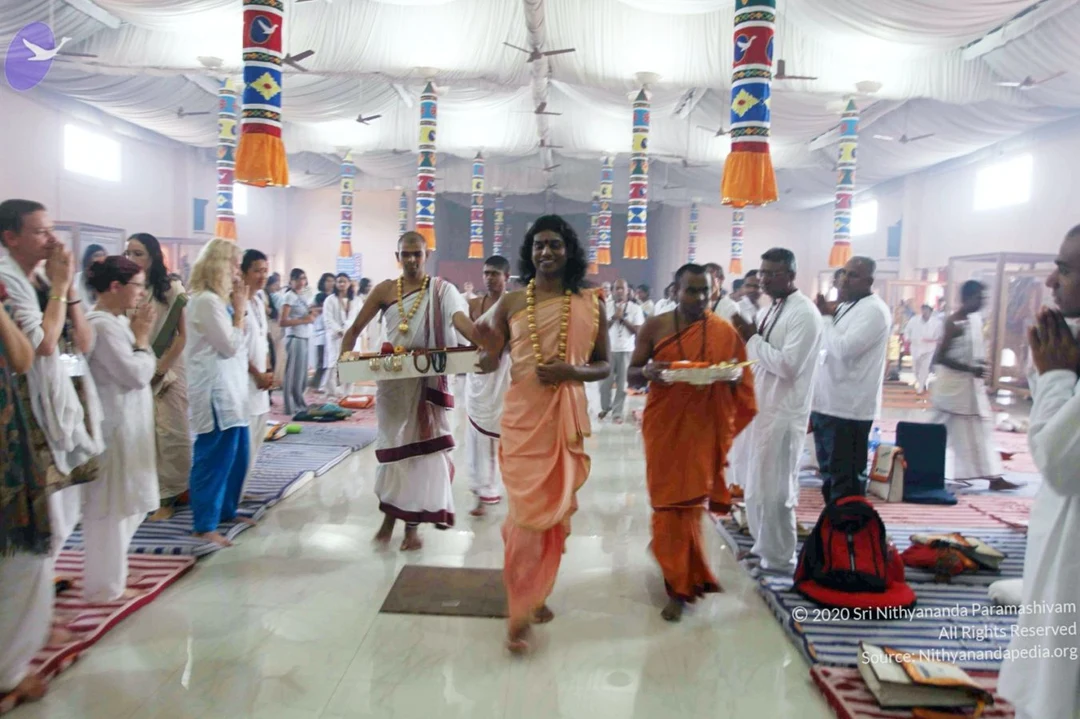
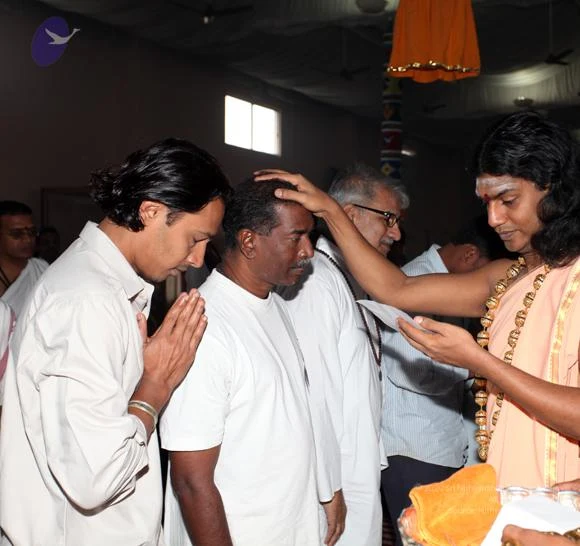
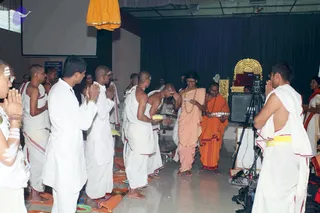
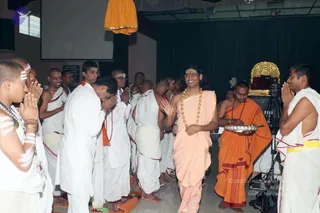
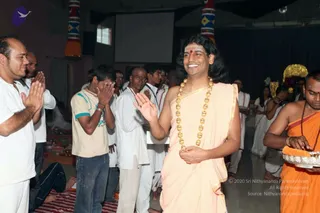
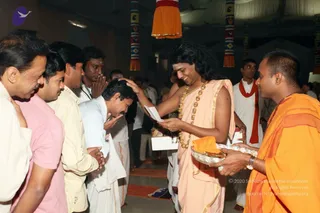
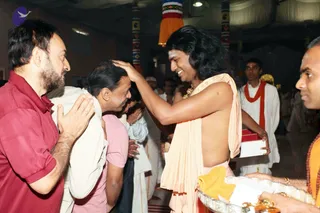
Indoor ritual scene in a hall with a projection screen and dark curtain. Many men in white dhotis and shawls stand with palms joined in namaskar, some with bare upper bodies and white sacred markings on their foreheads. A figure in a pale peach sari with a long beaded necklace holds a silver plate and is approached by a man in an orange-saffron robe holding a plate. A gold-and-red ornate throne stands at the right, next to a camera on a tripod and a speaker. Offering plates and orange cloth are on the floor. A man in a saffron robe is visible as a ritual participant, but identity is uncertain from appearance.A photograph of a hall where a line of men in white ritual dhotis and shawls stand with palms pressed together in namaste. In the centre, a smiling man with long swept-back hair wears a peach-coloured dhoti and a long gold-beaded garland, with a red bindi on his forehead, walking forward with his right hand raised in greeting. Behind him, a man in an orange robe holds a silver tray. At right, a golden throne-like seat stands near a camera on a tripod, and a projection screen hangs on the wall at upper left. Several white-clad devotees bow in respect along the walkway. The central figure is an appearance-based probable Swamiji candidate, based on his long hair, distinctive gold garland and ceremonial clothing.A photograph inside a hall with a white screen and colourful striped pillars at the top corners. A smiling man with long, swept-back dark hair, a red bindi, a pale peach shawl and a long necklace of large gold beads stands centre, right hand raised in greeting. Around him, devotees in white clothing stand with palms pressed together in anjali, and a man in white sits on a red-and-white mat at left. At right, a priest in orange robes and a rudraksha mala holds a silver tray. A gold-coloured throne is visible at the right edge, and a cameraman operates at the back.A photograph of an indoor ashram hall with a row of men in front of a tiled backdrop and hanging saffron and orange fabric. In the centre, a long-haired man in a peach-pink dhoti-style wrap and multiple gold beaded necklaces smiles while receiving a folded white paper from a bare-hand offering. Beside him, a man in an orange robe holds a silver plate with a yellow cloth, and a young man in white with a red shawl stands behind. Several devotees on the left, dressed in white and pastel shirts, have their palms joined in greeting. Cloth bunting and a white canopy frame the hall. The long-haired central figure has distinctive adornments and clothing cues consistent with the page's a person reference, though his appearance alone is not conclusive.A photograph inside a hall with hanging colourful decorative panels and orange tassels. A long-haired figure in a peach-coloured dhoti and shawl with gold trim and a large beaded necklace stands centre-right, placing a hand on the head of a kneeling man in a white shirt and white dhoti. Other devotees stand in a line on the left in shirts and dhotis, some with hands joined in namaste. On the right, a man in orange robes holds a silver tray with a cloth and a small object, and a young man in white with a red shawl stands behind. The figure in peach and the sanctity of the scene suggest a blessing or darshan exchange. Swamiji (probable) appears as the long-haired figure in peach clothing with gold-trimmed shawl and beaded necklace, performing a blessing.A photograph of an indoor gathering with a long-haired man in a pale peach wrap draped over one shoulder, bare-chested, adorned with a gold necklace, placing his right hand on the head of a bowing man in a light pink shirt. Beside them, a man in a maroon polo shirt stands with palms pressed together in namaste. Behind, people in white clothes and a white dhoti-wearing man with a red shawl stand near colourful striped pillars. At lower right, a man in an orange robe with rudraksha beads holds a silver tray with a yellow cloth and offerings. The scene suggests a blessing or darshan moment.

Inner-Awakening-Day-4

138 photosSource gallery
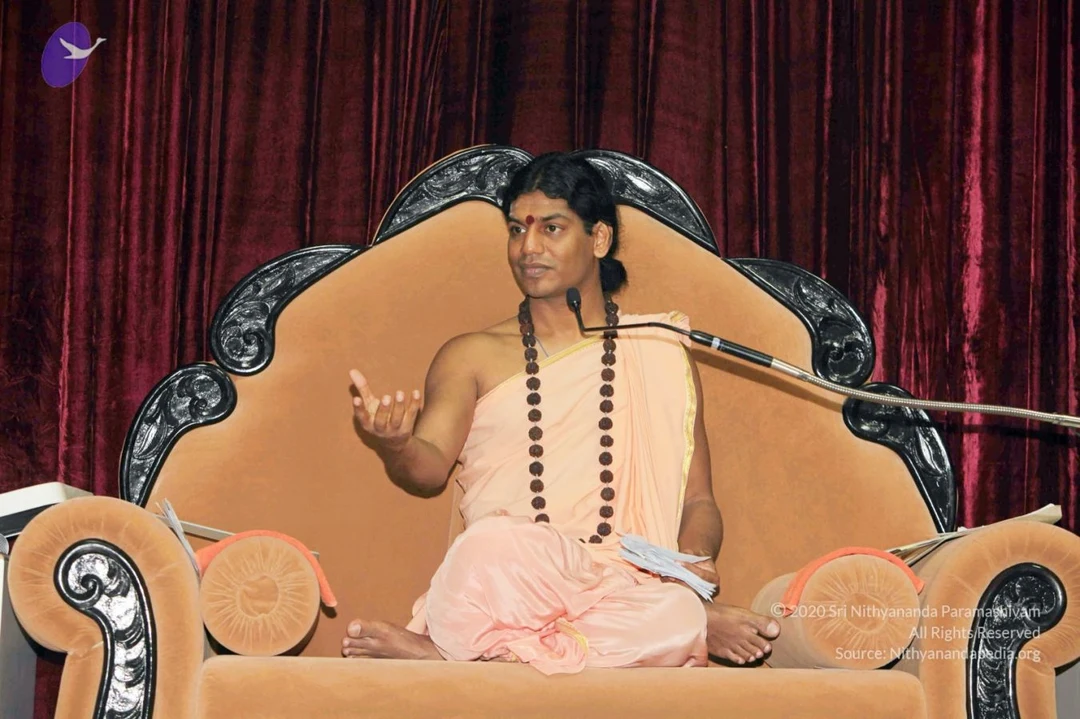
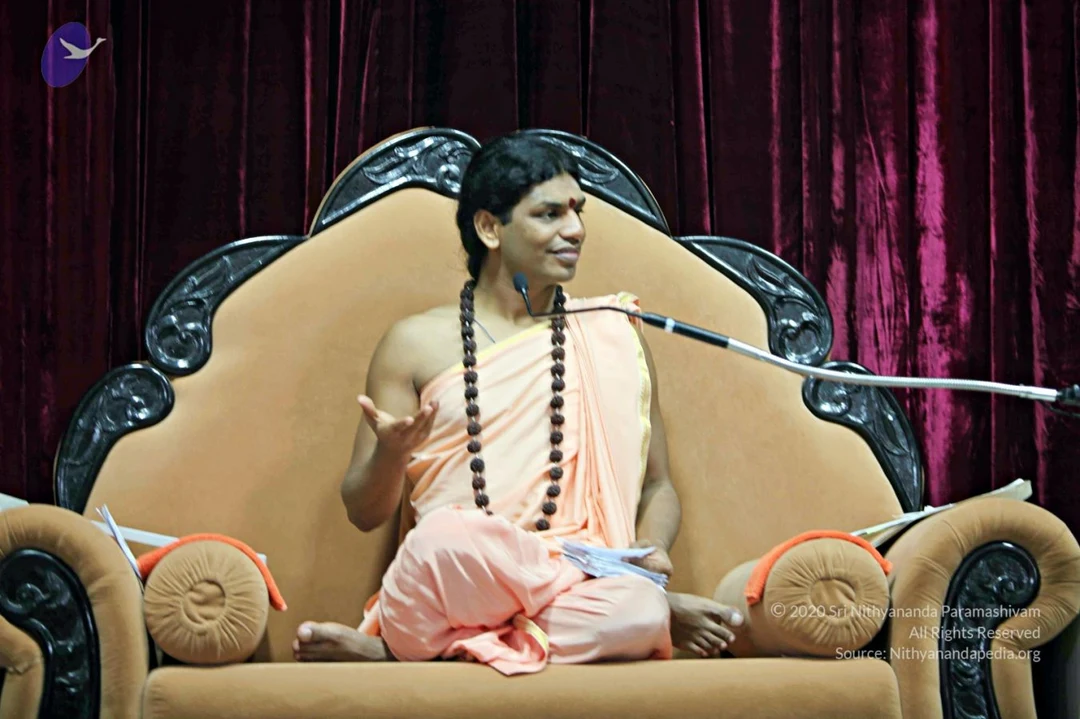
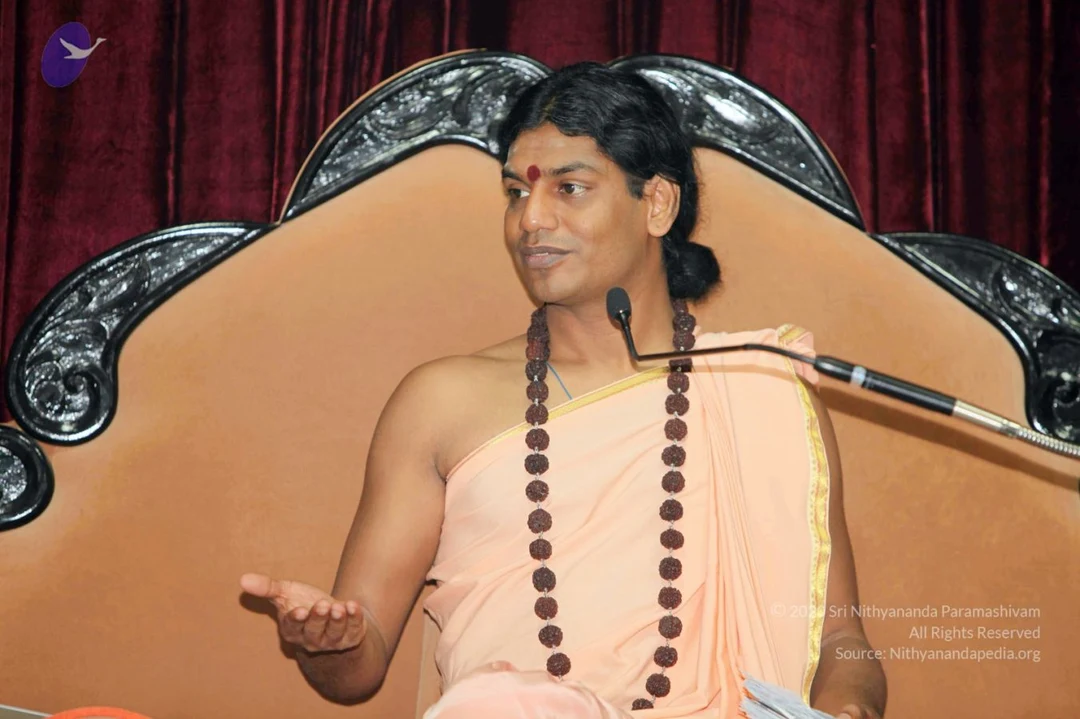
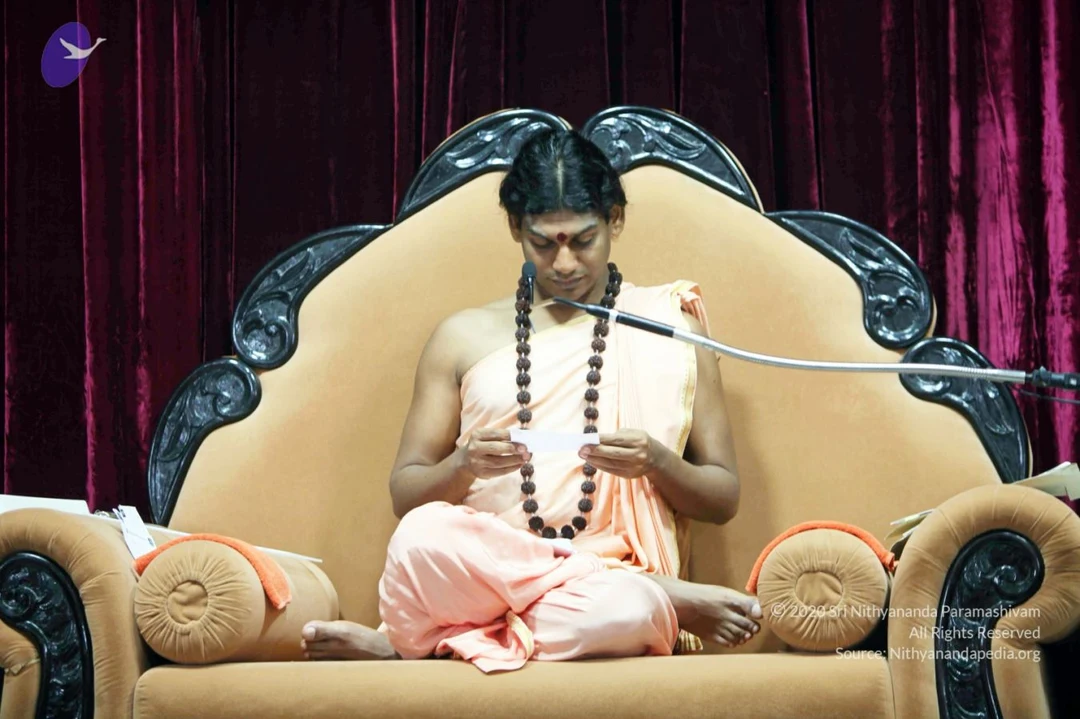
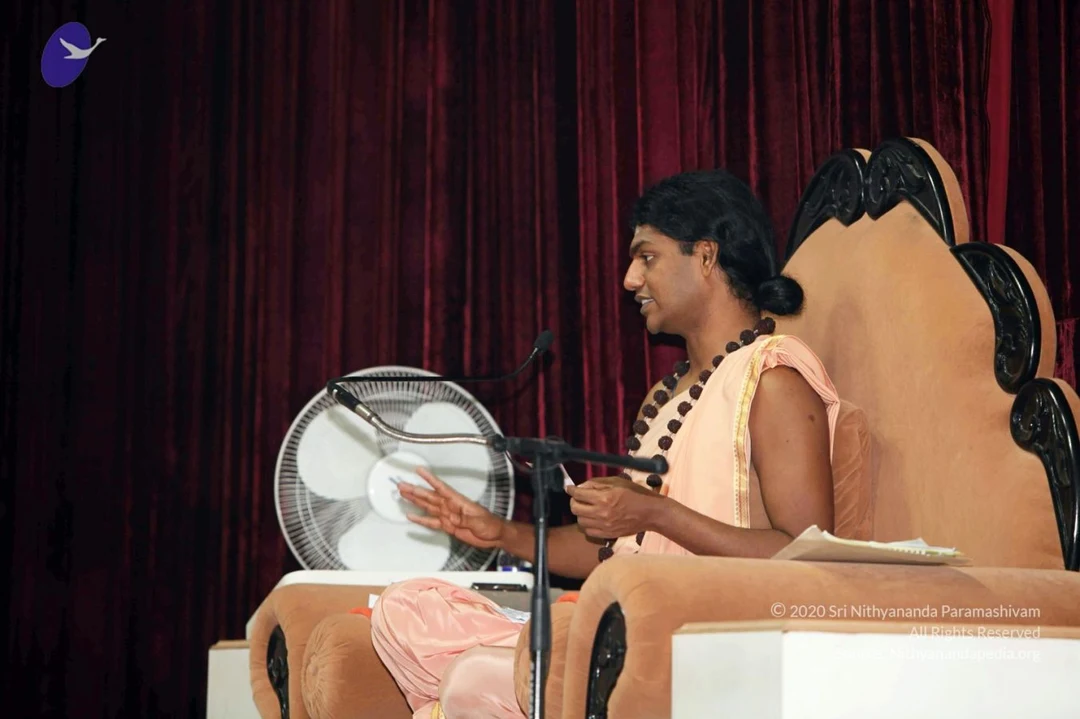
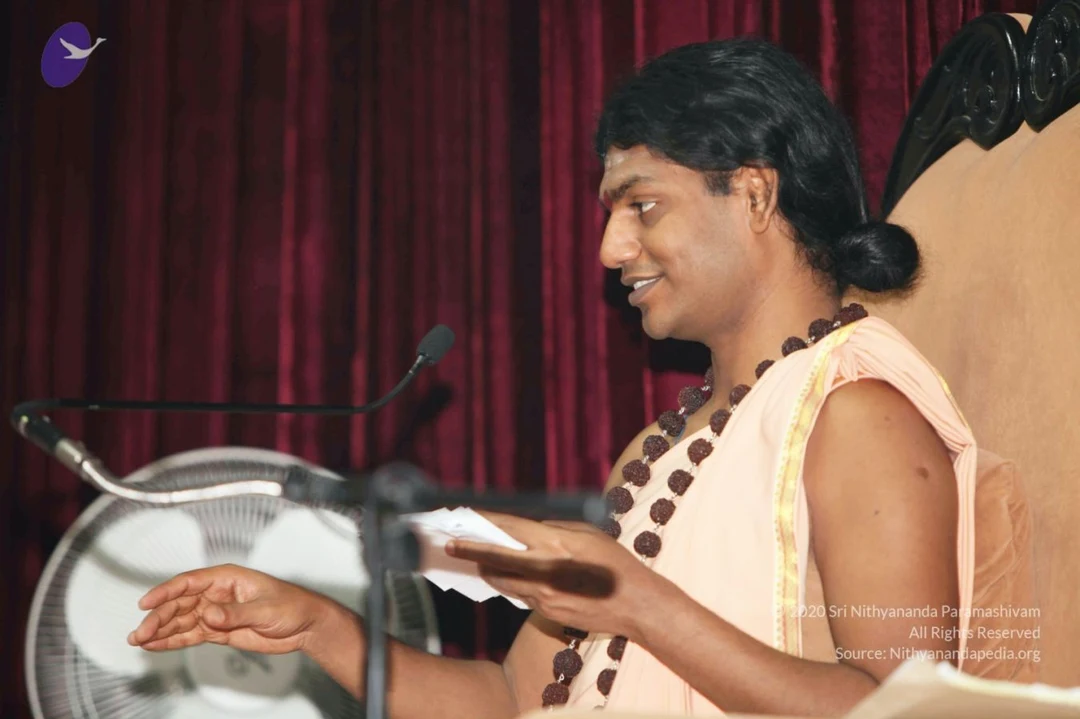
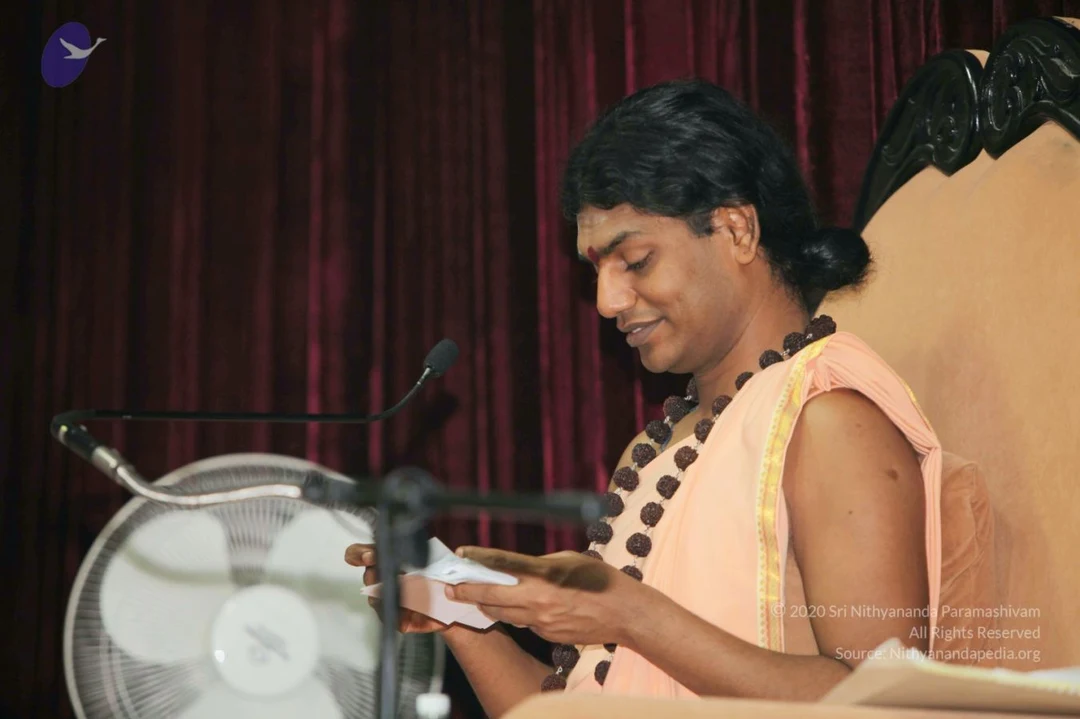
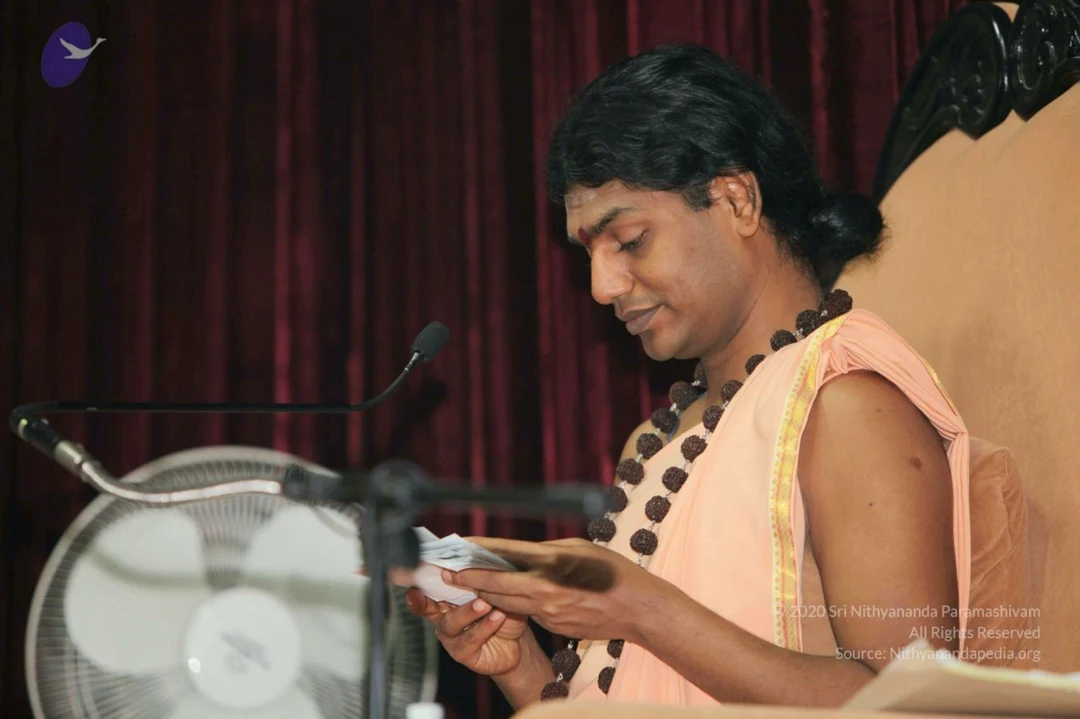
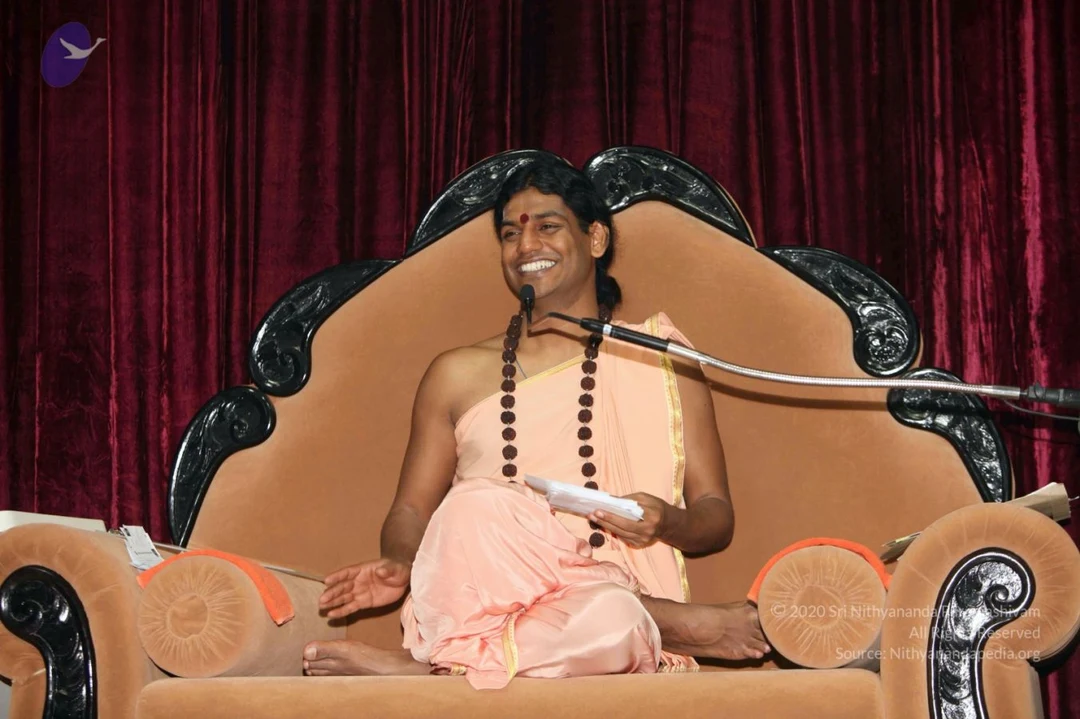
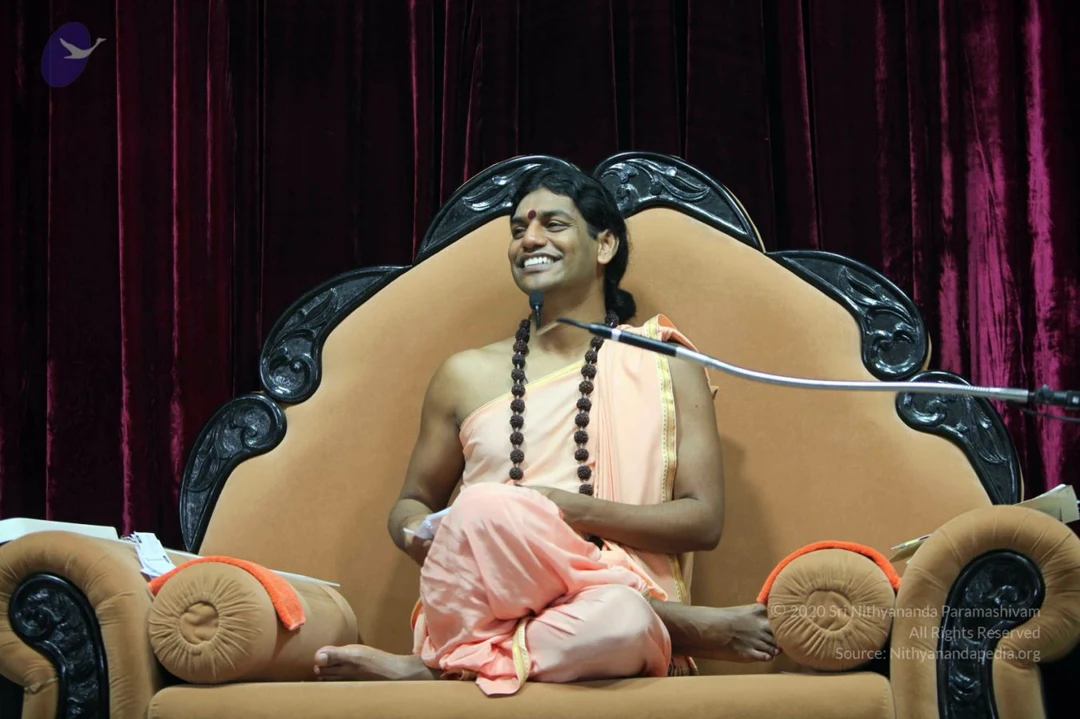
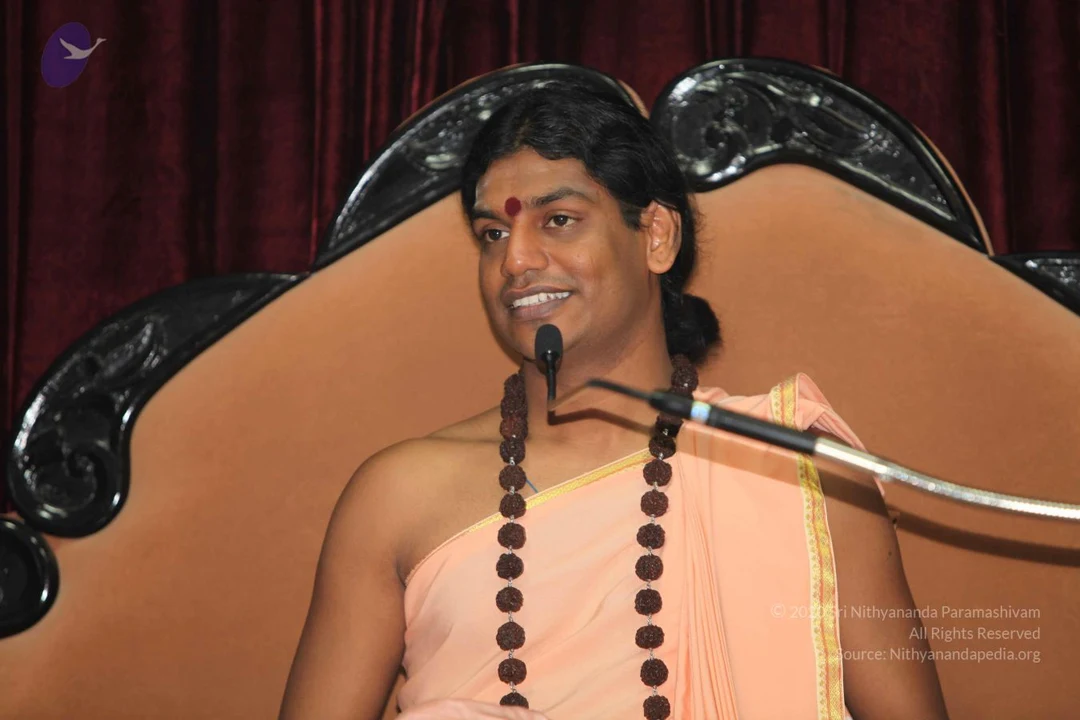
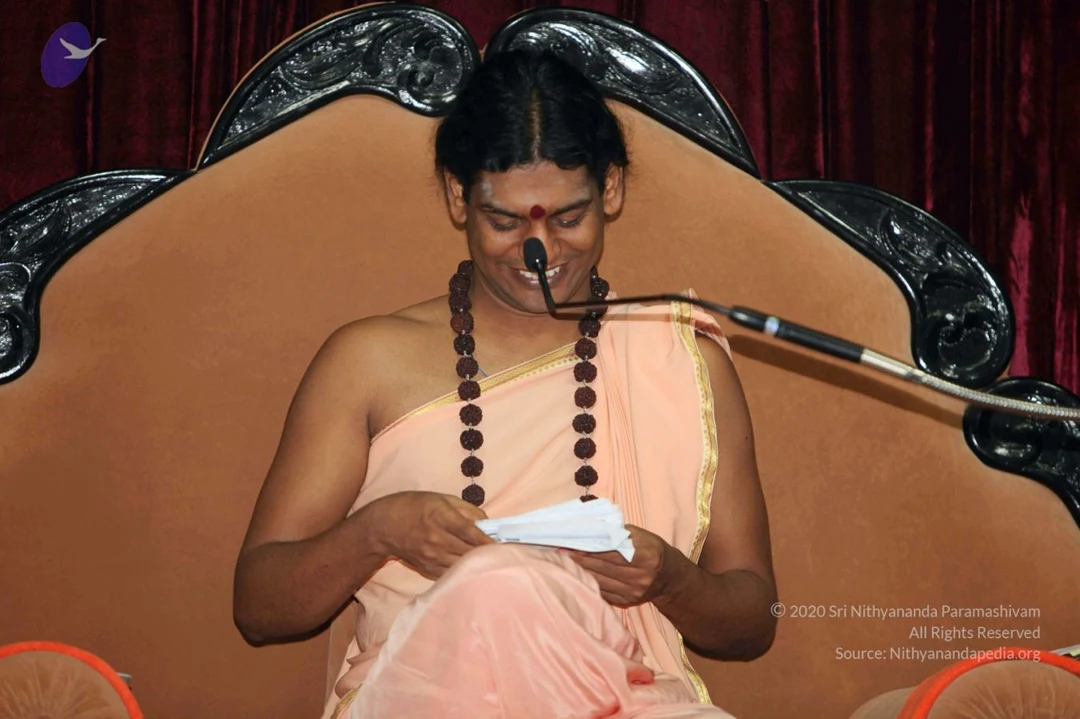
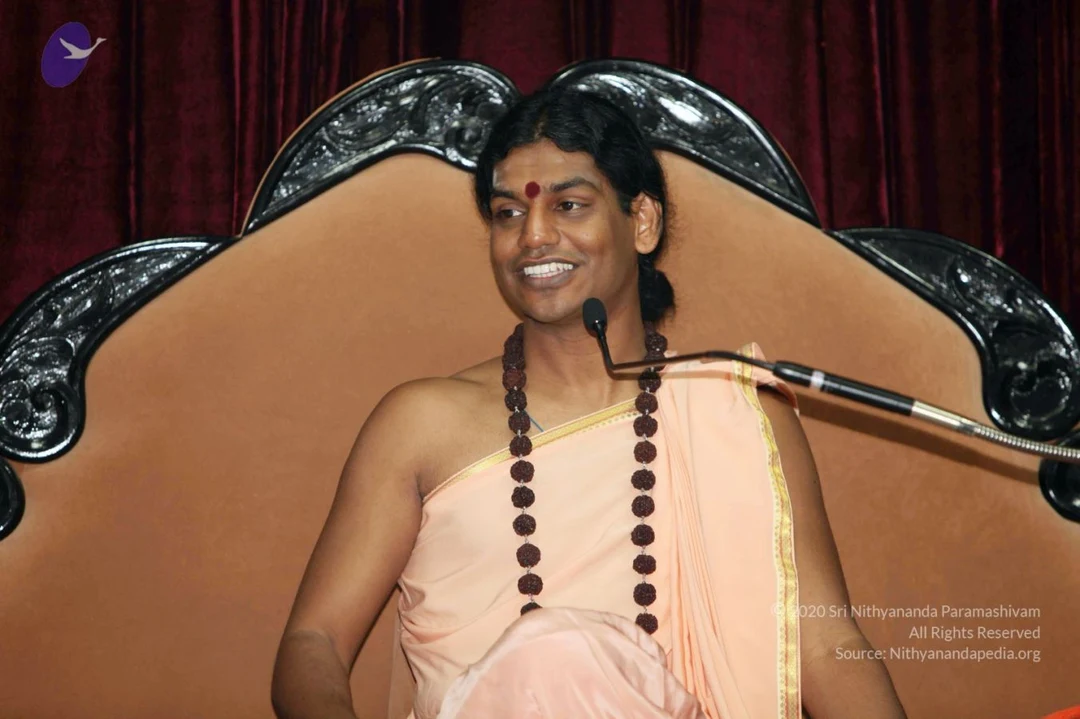
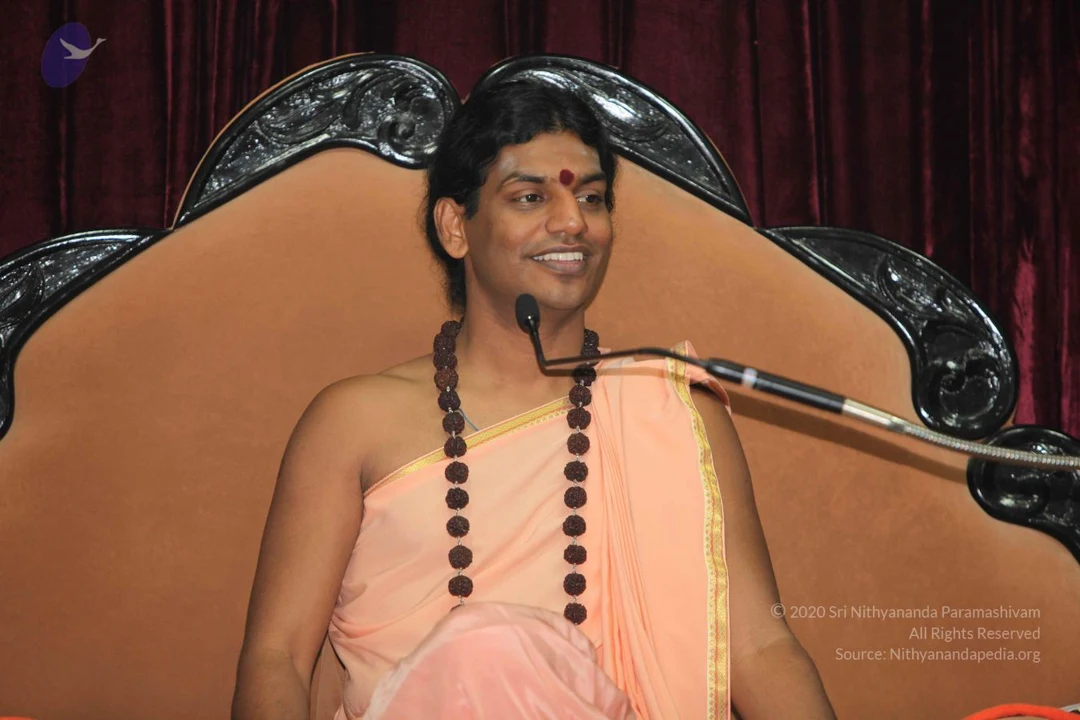
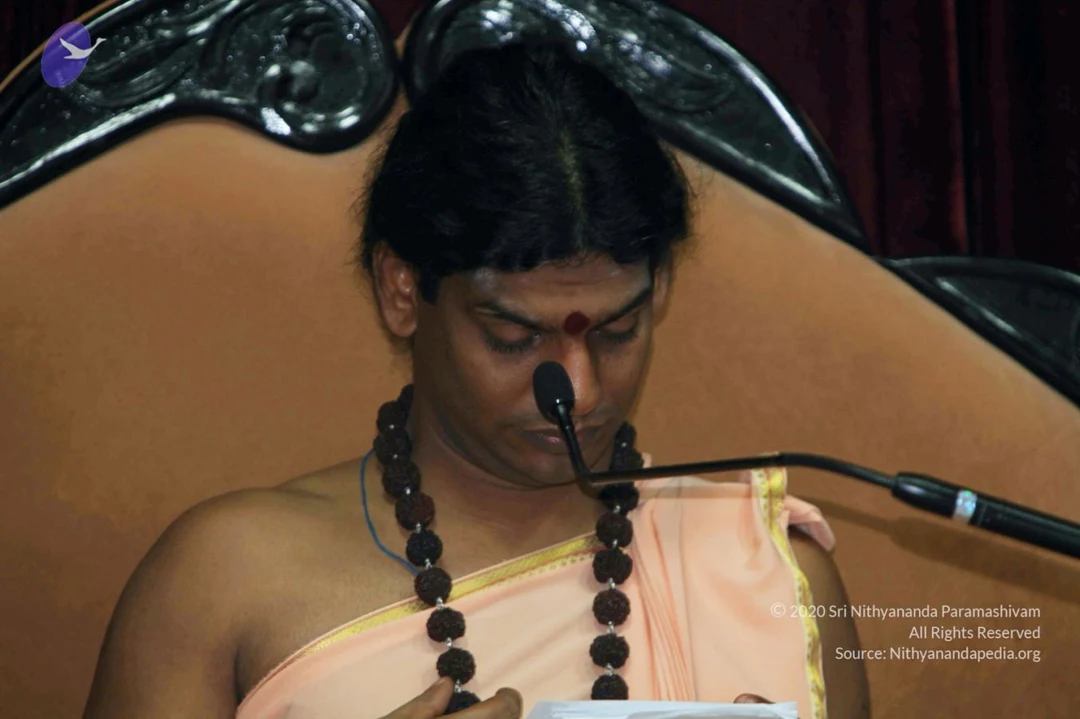
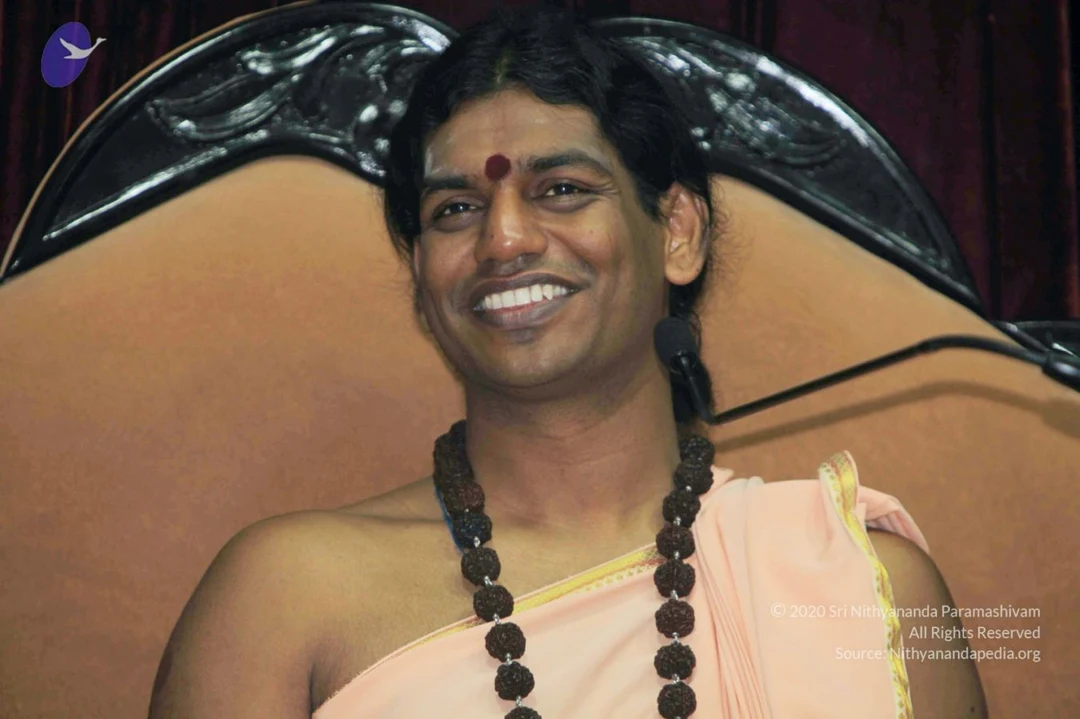
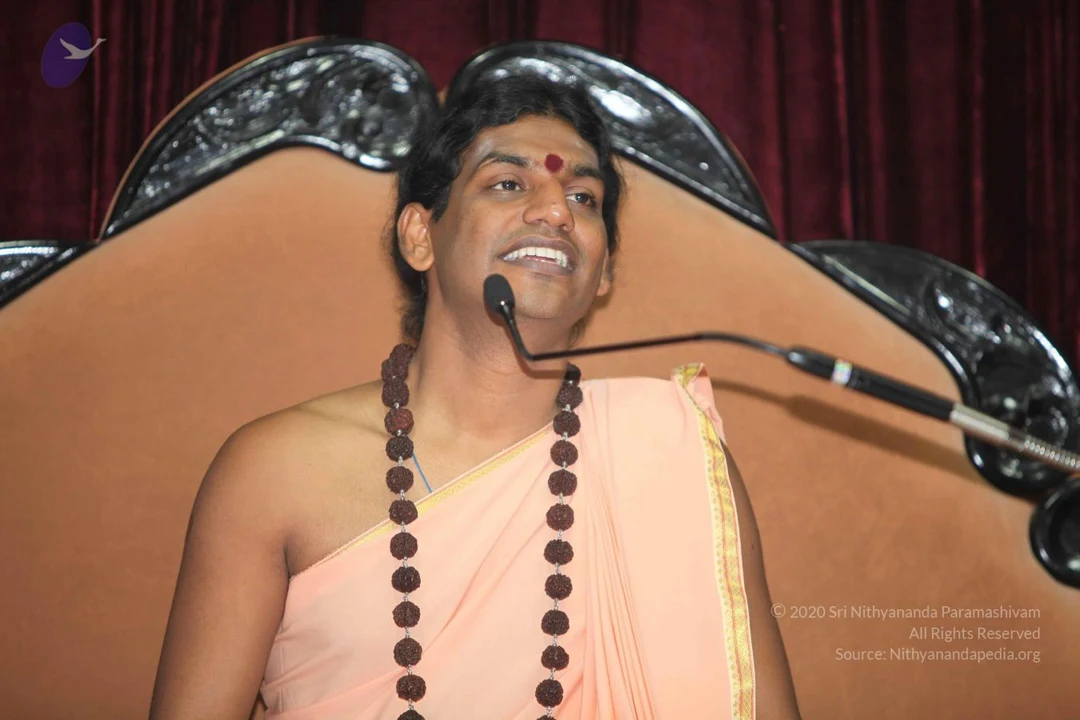
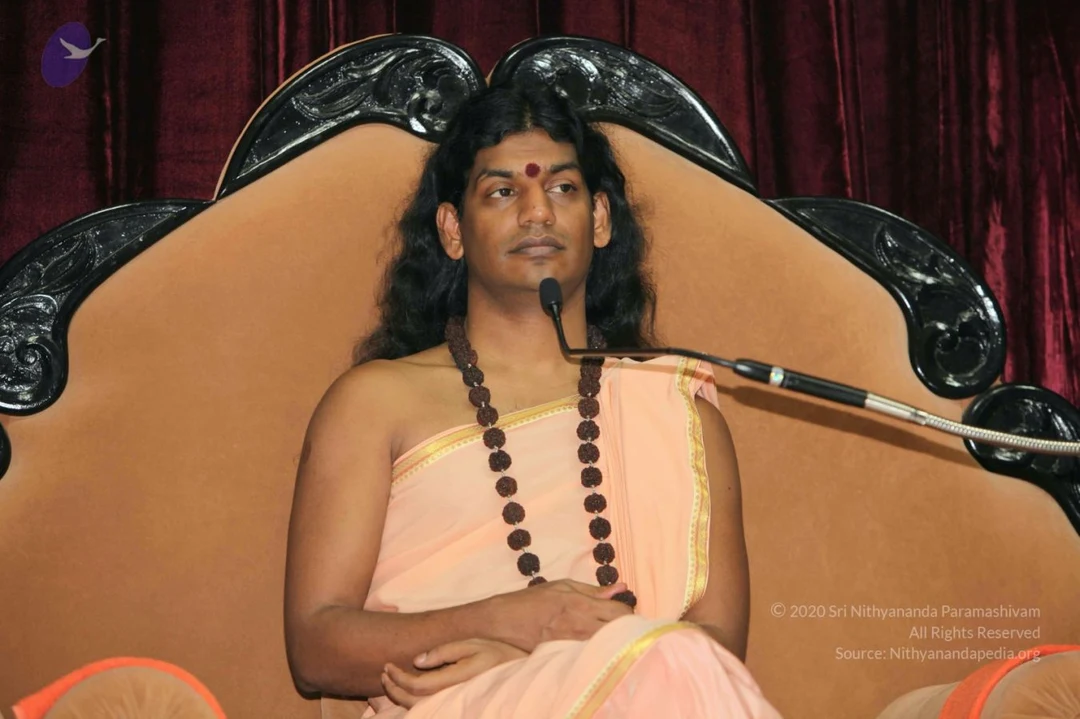
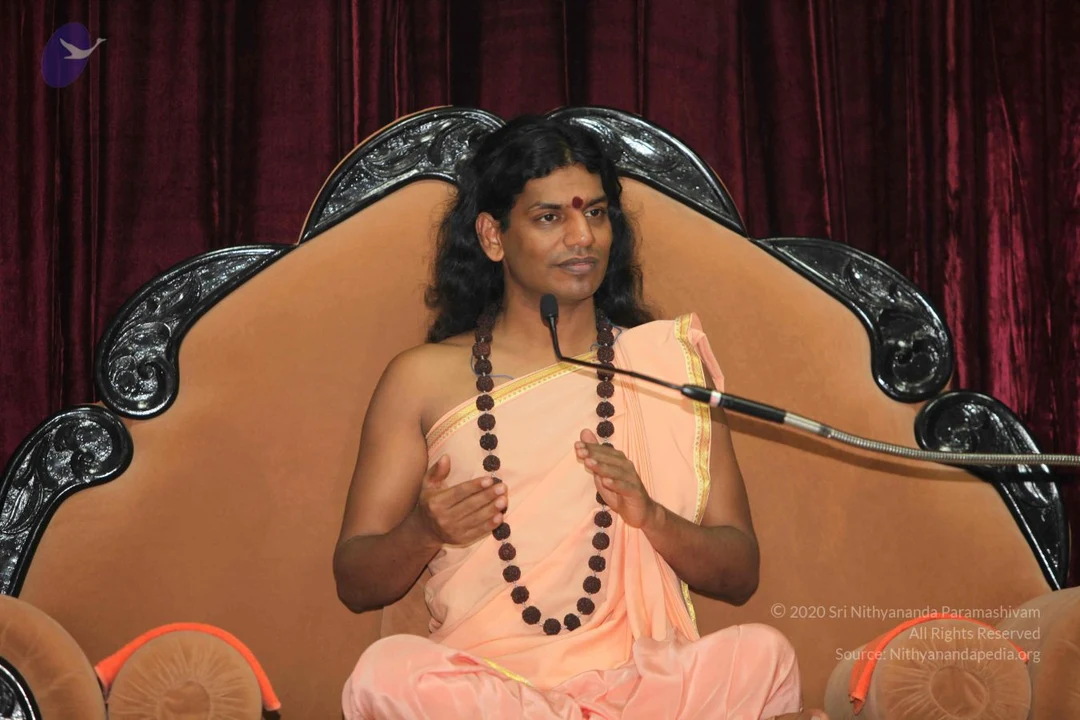
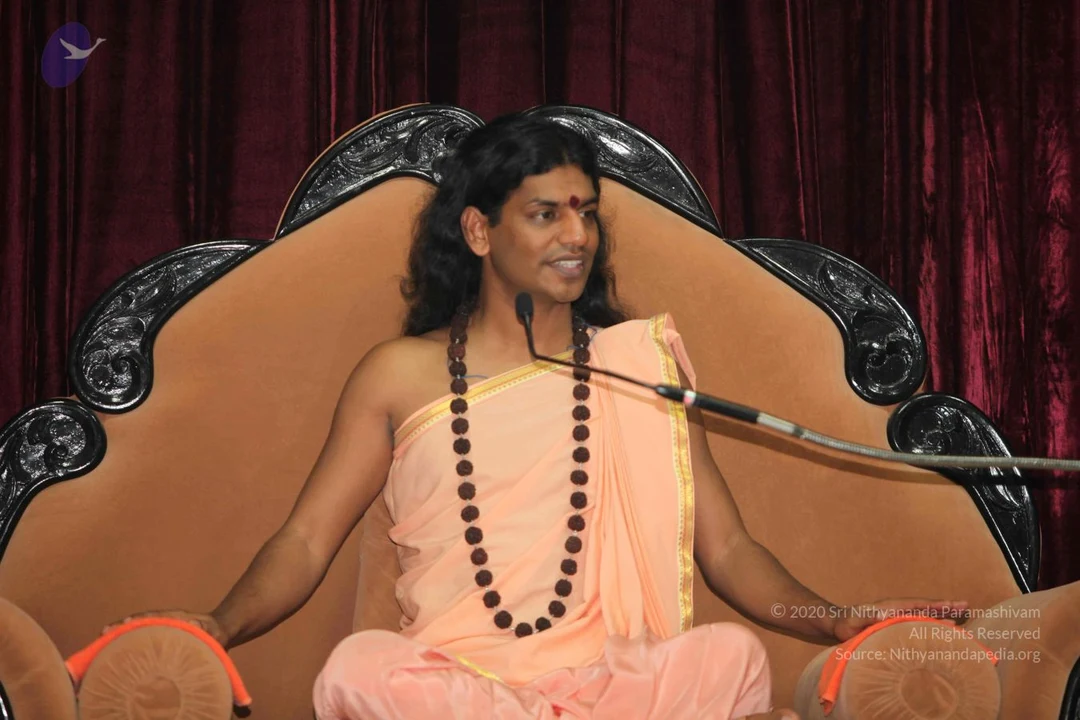
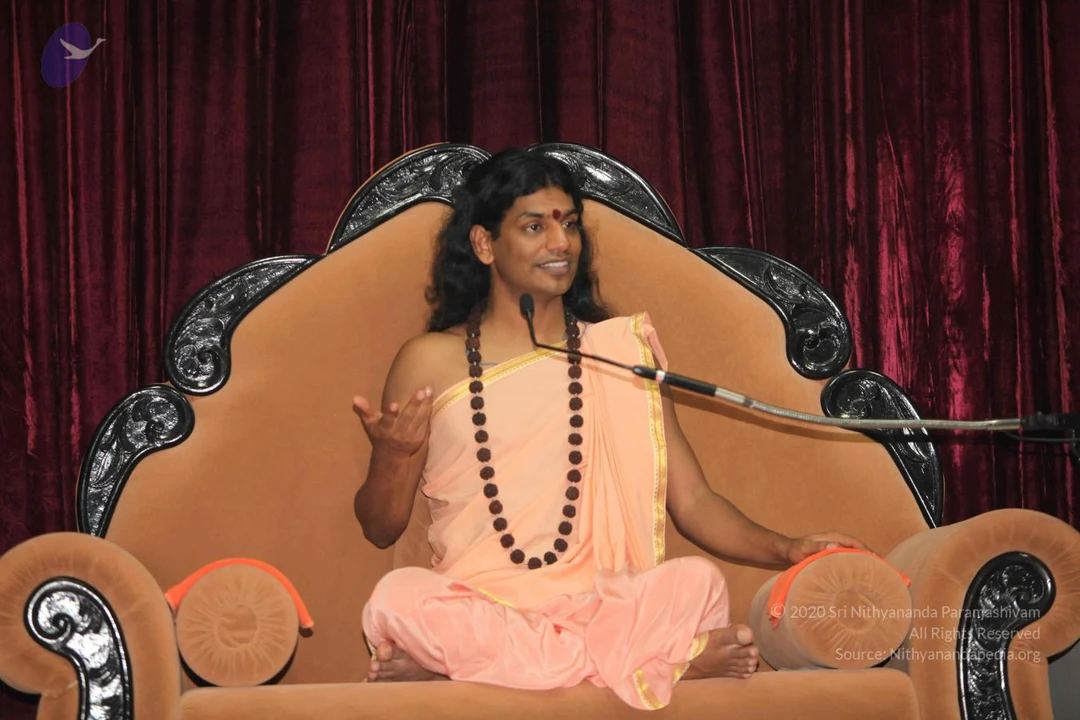
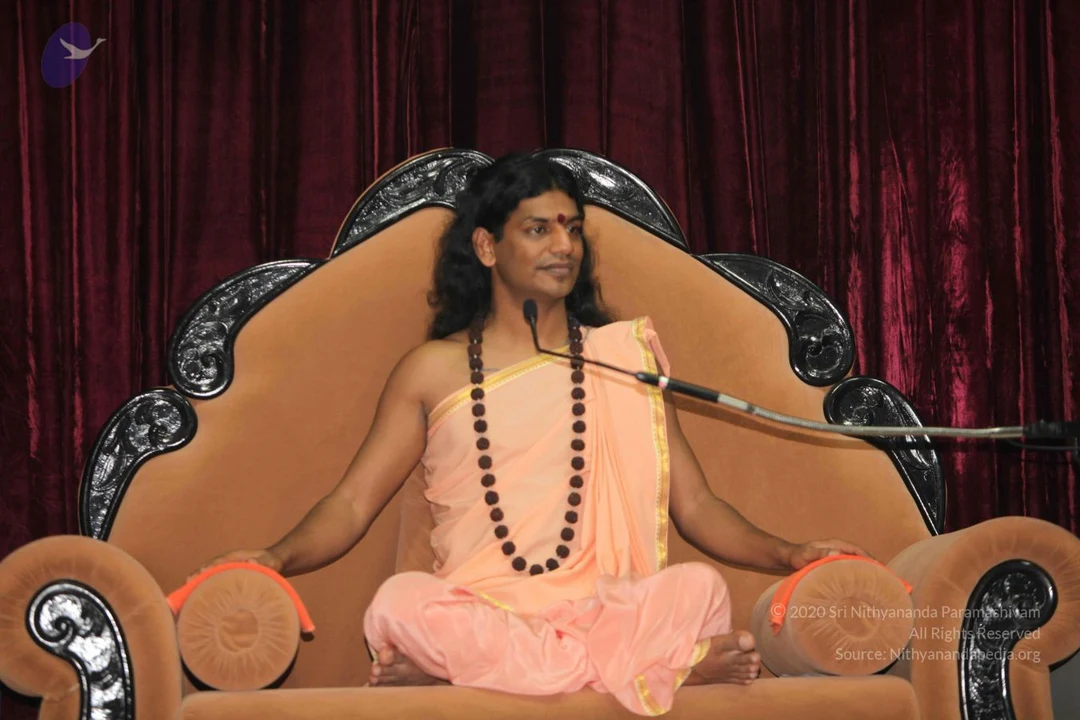
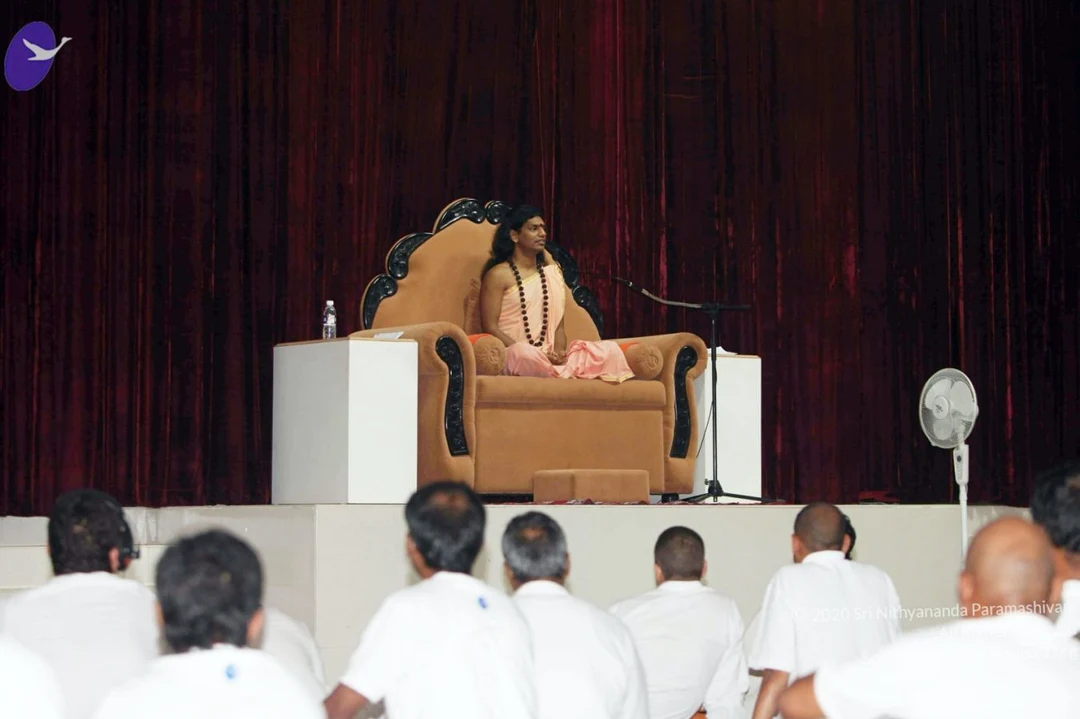
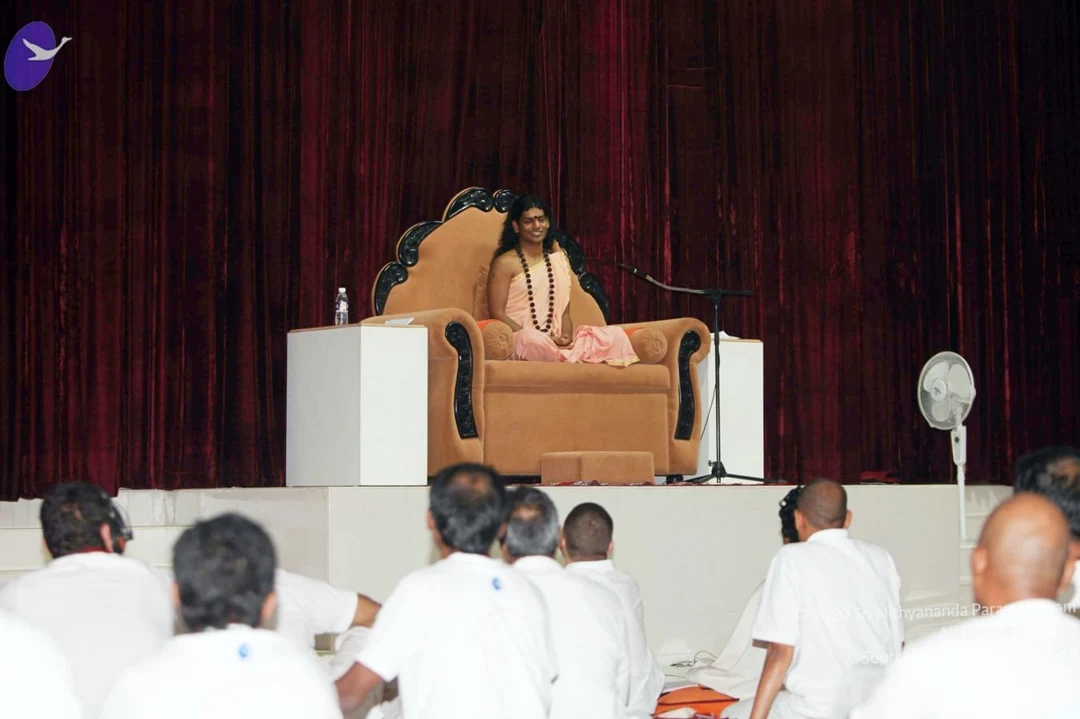
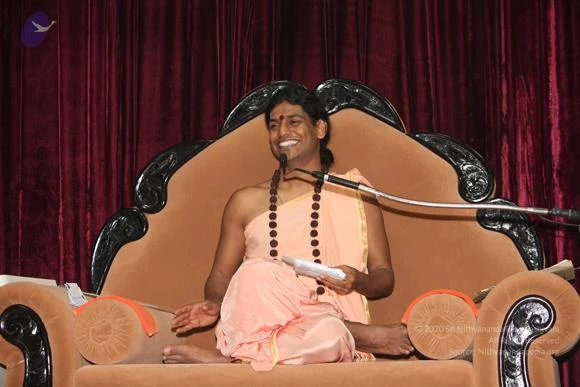
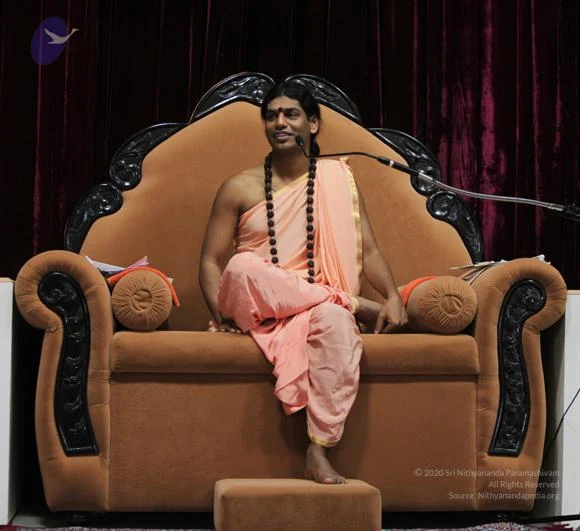
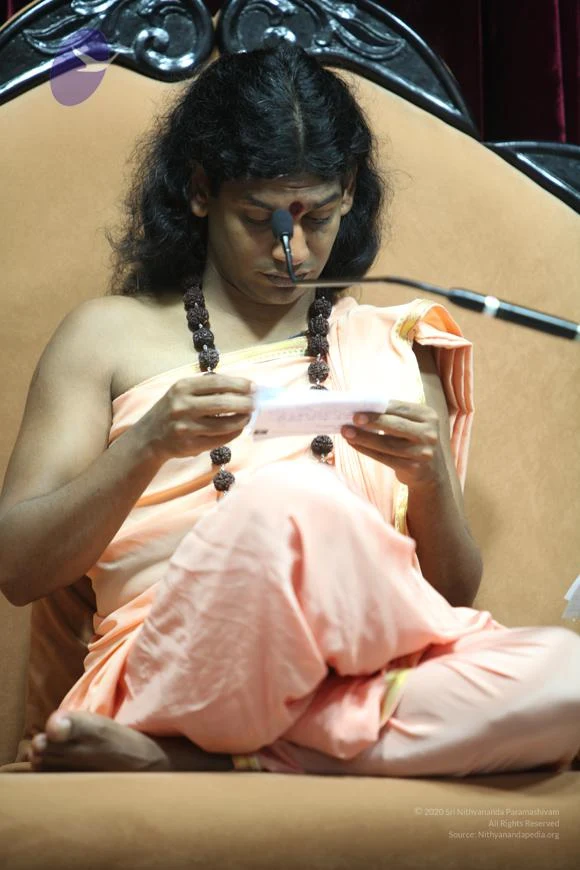
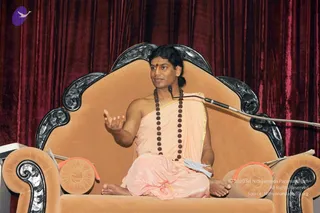
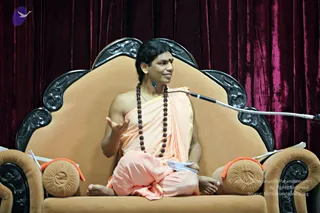
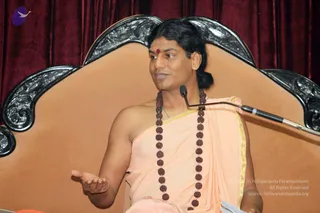
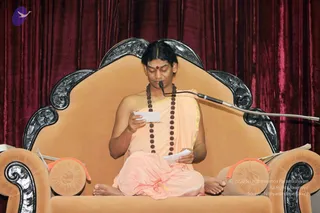
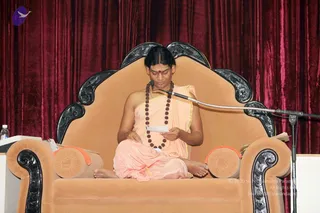
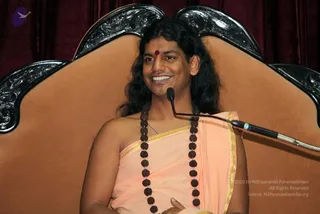
A man sits cross-legged on an ornate peach-upholstered throne with carved black wooden arms and a carved black backrest, in front of deep red velvet drapes. He wears peach-coloured draped cloth over one shoulder, a rudraksha mala of dark beads around his neck, and a red bindi on his forehead. He gestures with his right hand, palm open, while speaking into a microphone on a stand; papers rest on the armrest. The scene looks like a satsang or discourse stage.A man sits cross-legged on an ornate upholstered throne-style chair with carved black wooden armrests and a tan velvet seat, in front of deep magenta velvet drapery. He wears a peach-coloured sannyasi cloth draped over one shoulder and a dhoti-style wrap, with long dark rudraksha mala beads hanging to his lap and a red bindi on his forehead. His long dark hair is swept back, and he gestures with his right hand while holding a small bundle of papers, speaking into a microphone on a boom stand. Orange bolster cushions rest at the armrests. Swamiji (probable) appears in this image, seated as a speaker during a satsang talk, identified by the matching cues of swept-back hair, peach-saffron clothing and rudraksha mala beads.A man seated on an ornate peach-upholstered throne with a carved black wooden back, in front of deep red velvet drapery. He wears a peach saffron-toned shawl with a gold border over a bare upper torso and a long strand of rudraksha beads reaching his waist; he has a red bindi and long dark hair gathered at the back. His right hand is open in a gesturing motion toward a microphone on a stand, and a stack of papers rests at lower right. Swamiji (probable) appears as the speaker in this satsang setting, based on the rudraksha mala, swept-back hair, and ornate peach clothing.A seated person in a peach-coloured saffron-toned robe sits on an ornate orange throne with carved black wooden backrest, against deep red velvet drapes. A rudraksha mala of dark beads hangs at the chest, and a small red bindi is on the forehead. A microphone on a flexible stand is nearby. The person holds small white papers in both hands and looks down at them, smiling. Bare feet rest on the floor. The image is a photo of a talk or satsang setting. Appearance cues are a distinctive long hairstyle, rudraksha mala, and saffron-toned robe with a throne, so the figure is a person seated on the throne.A seated man in peach-colored robes with a gold-edged shawl sits on an ornate orange velvet throne with carved black wooden armrests and scrolled backrest, before deep red velvet drapes. He wears a long rudraksha mala with a red bindi on his forehead, holds white papers in both hands and reads from them, with a microphone on a flexible stand beside him. Swamiji (probable) is shown in the appearance-based label, based on long swept-back hair, rudraksha mala and saffron-toned ceremonial clothing, while seated on the throne as the speaker at a satsang.A seated man sits on an ornate peach-upholstered throne with black carved wooden armrests and backrest, in front of a deep red velvet curtain. He wears peach-coloured robes draped over one shoulder with a gold border, a long brown rudraksha mala around his neck, and a red bindi on his forehead. He holds a small white card in both hands and looks down at it, with a microphone on a boom stand near his face. Bottles of water and papers sit on a table to the left.

PADA-PUJA

3 photosSource gallery
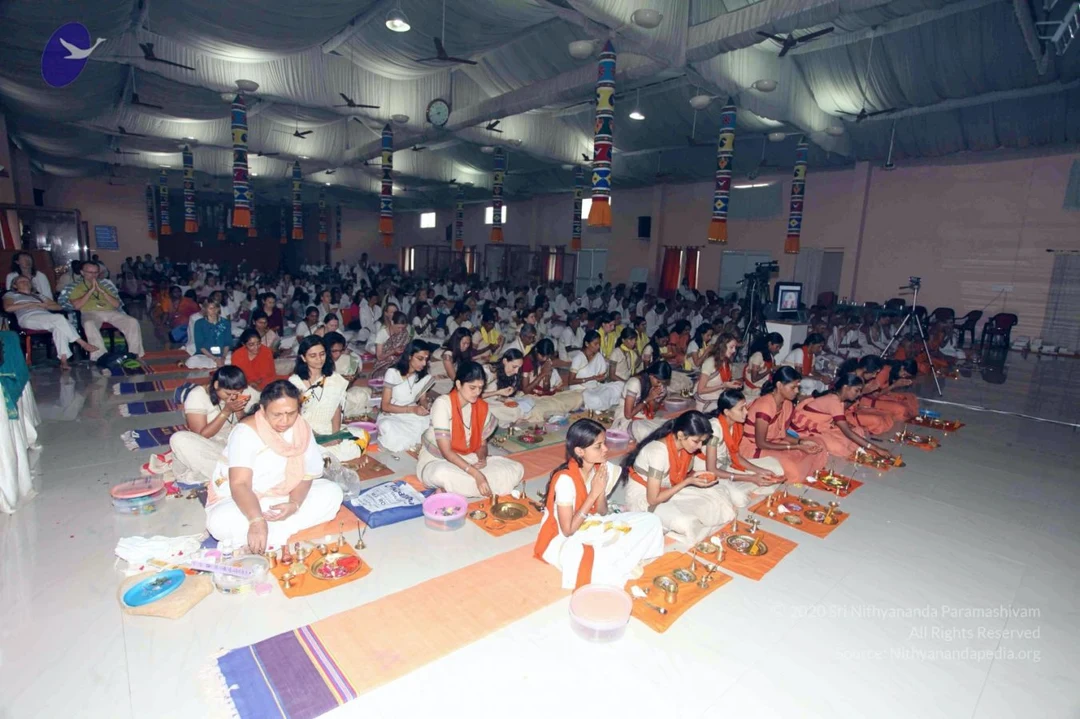
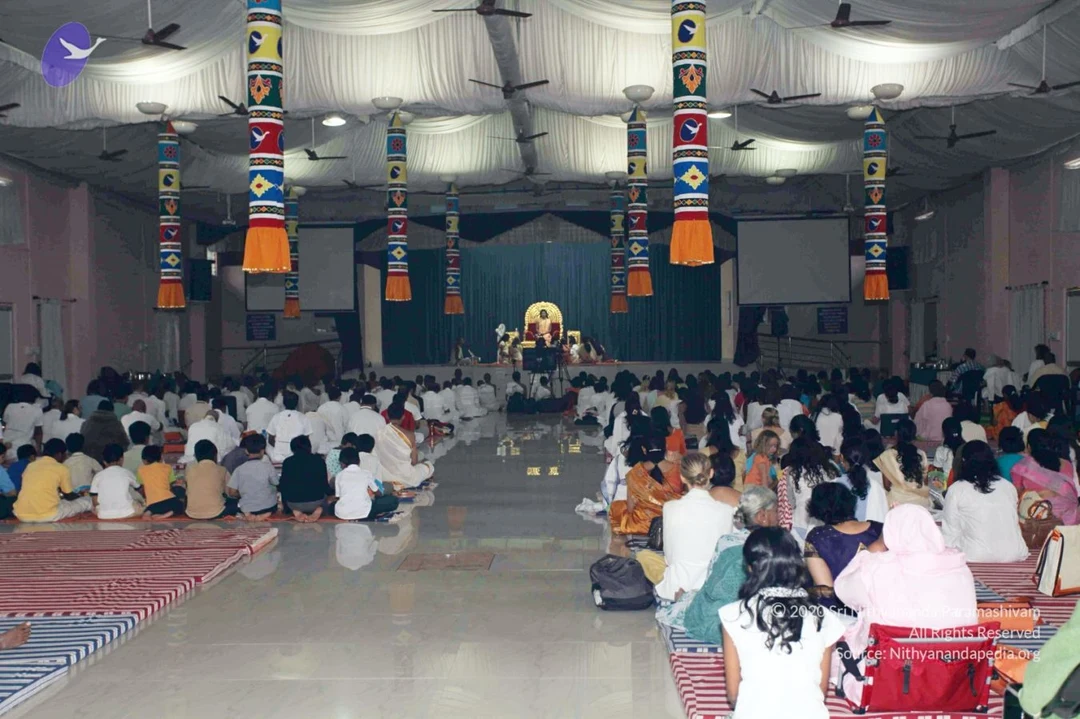
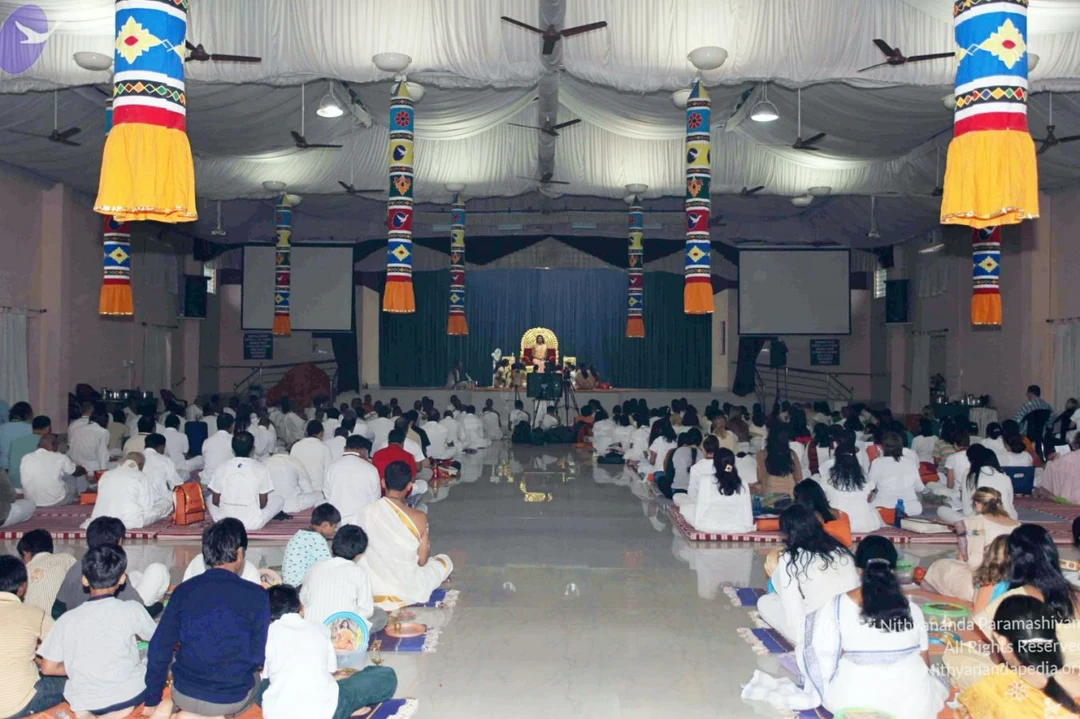
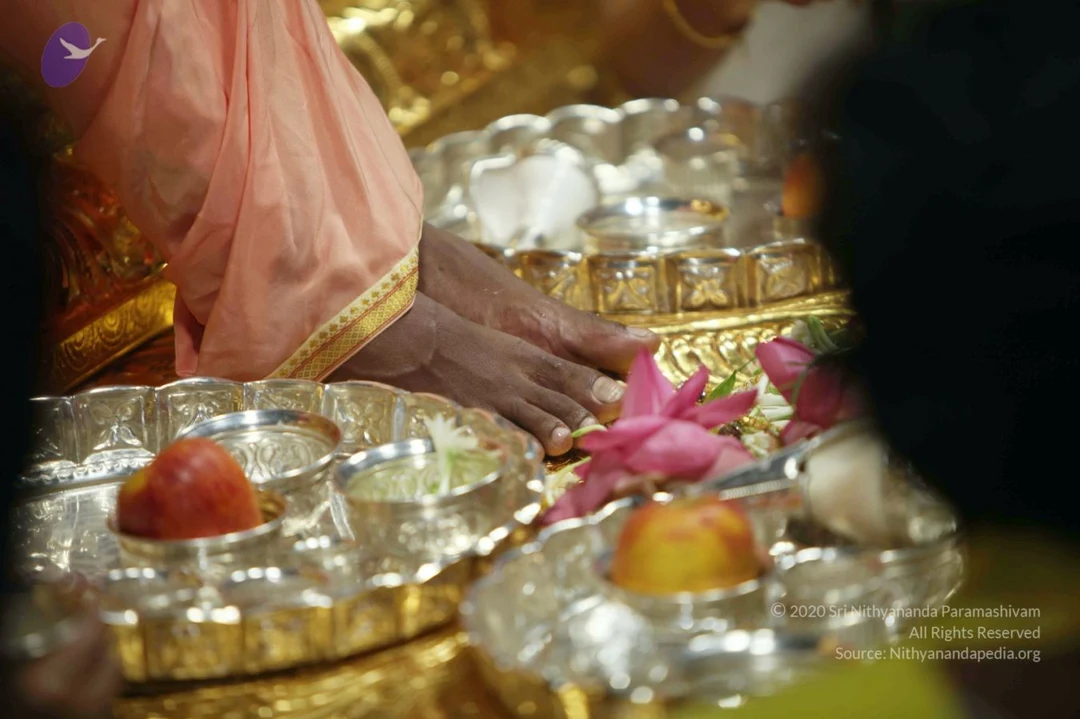
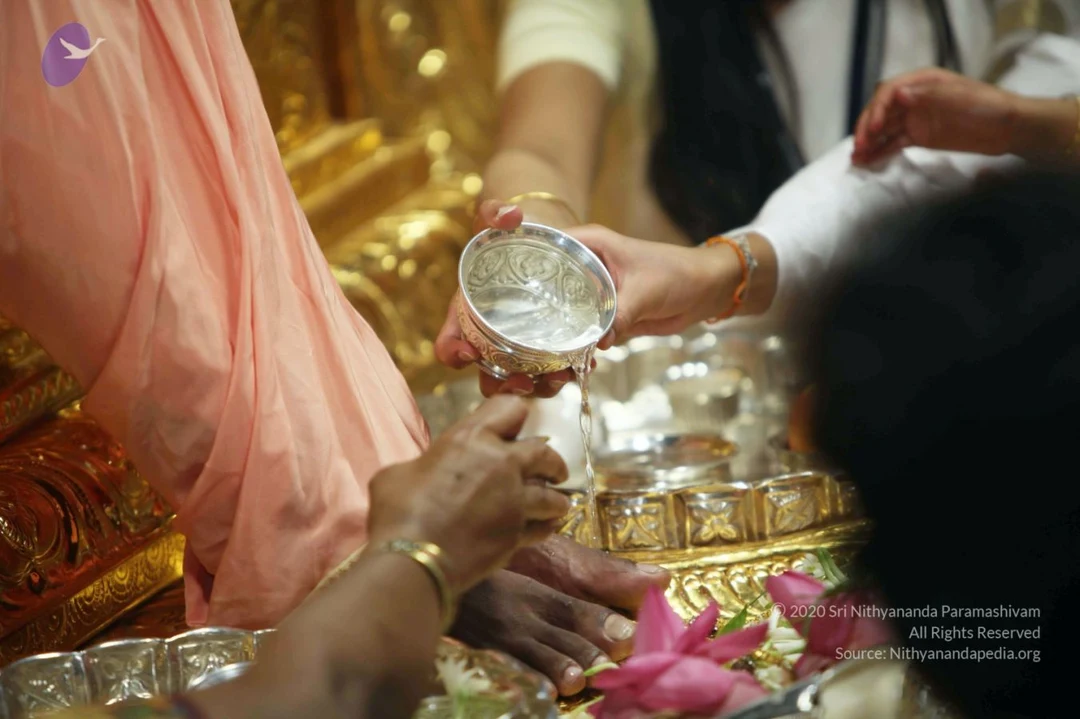
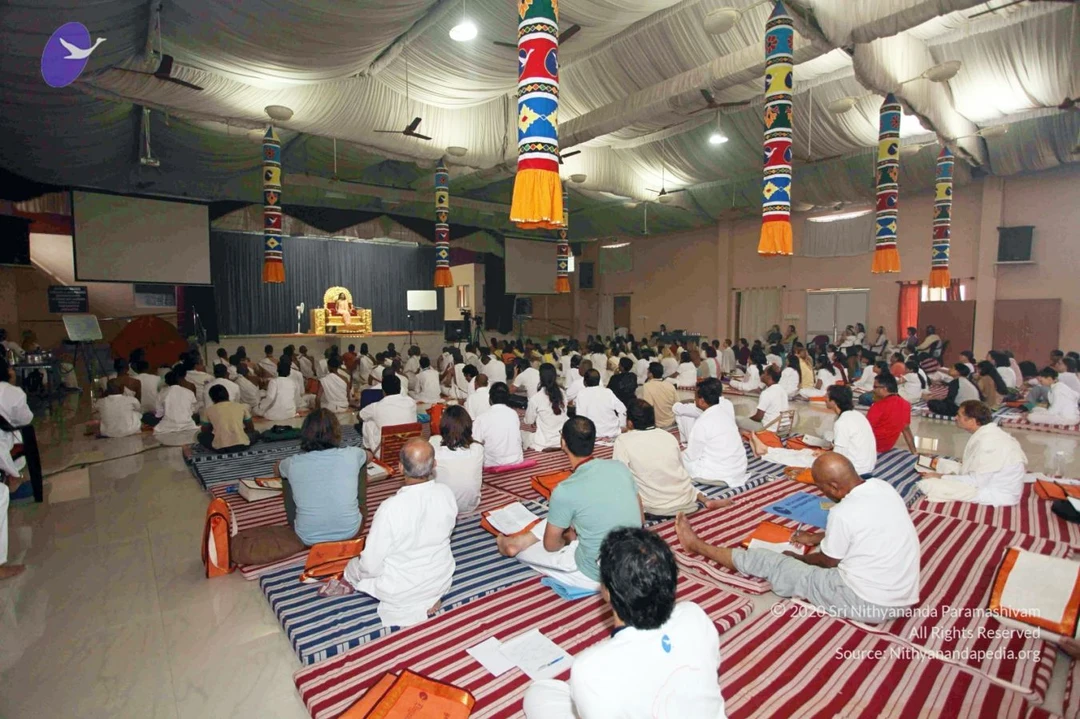
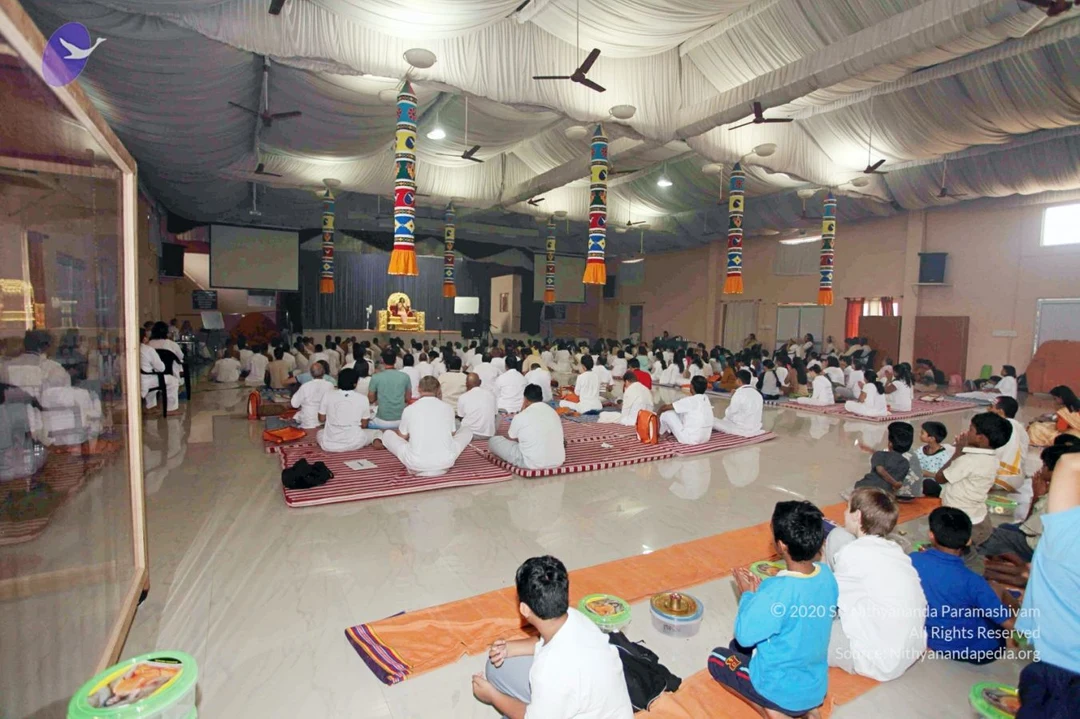
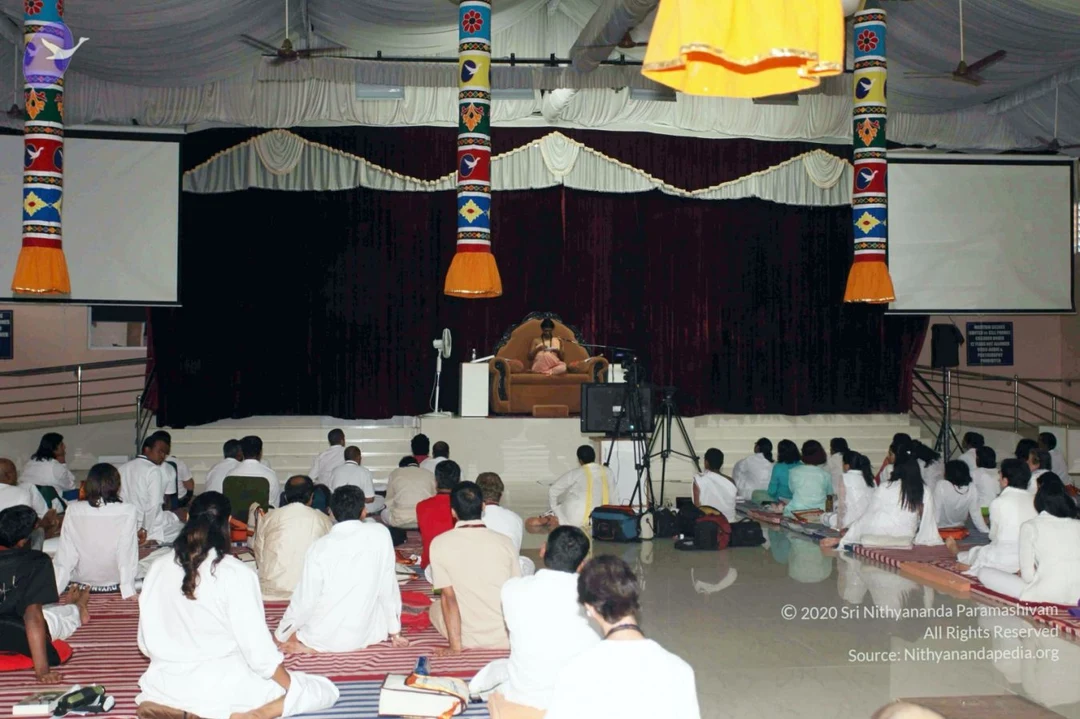
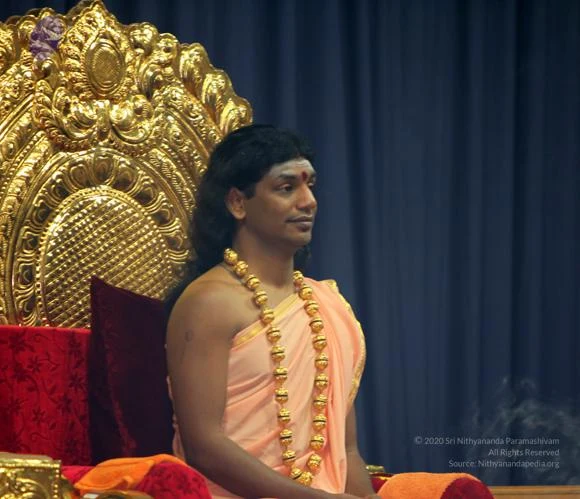
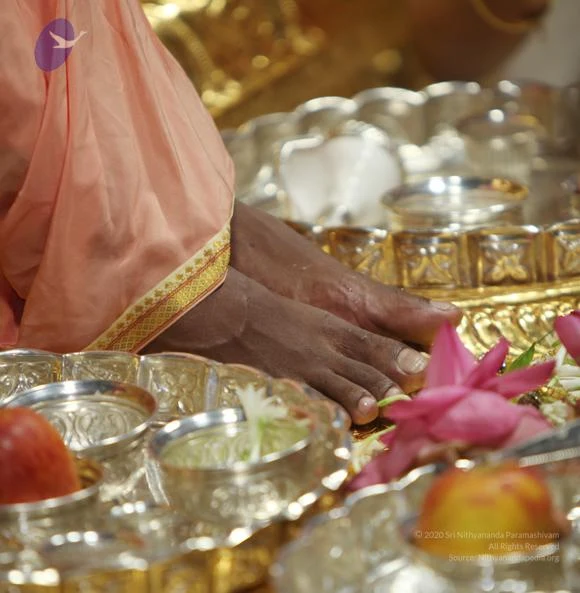
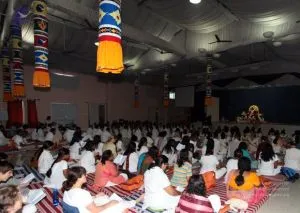
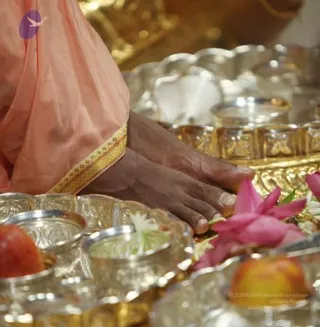
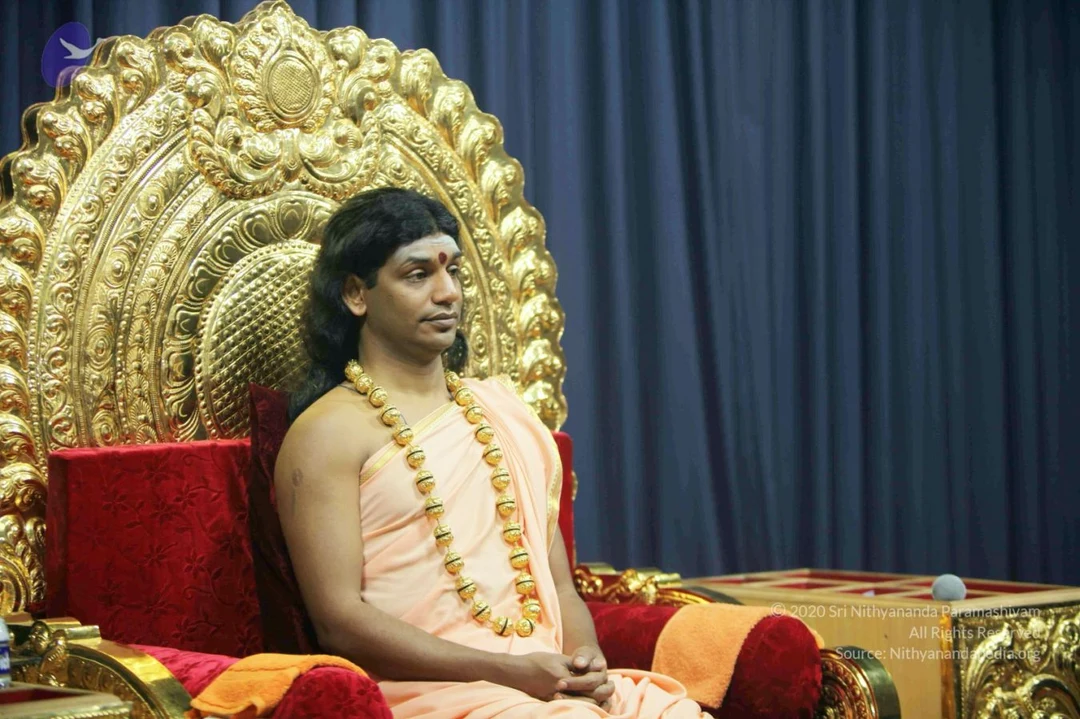
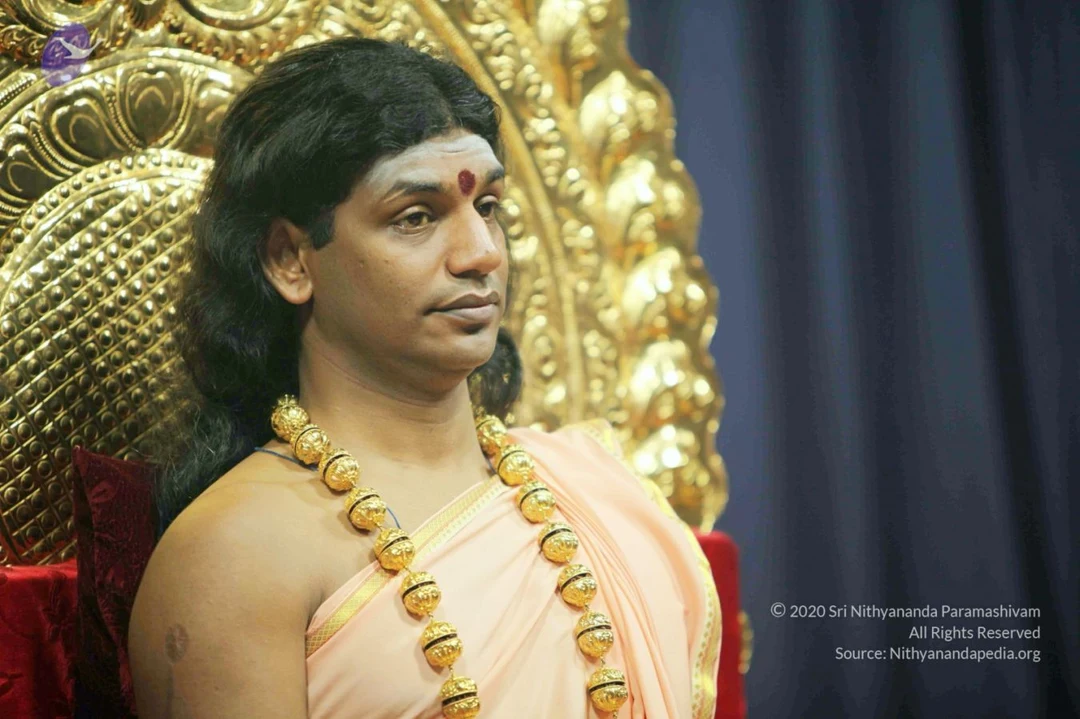
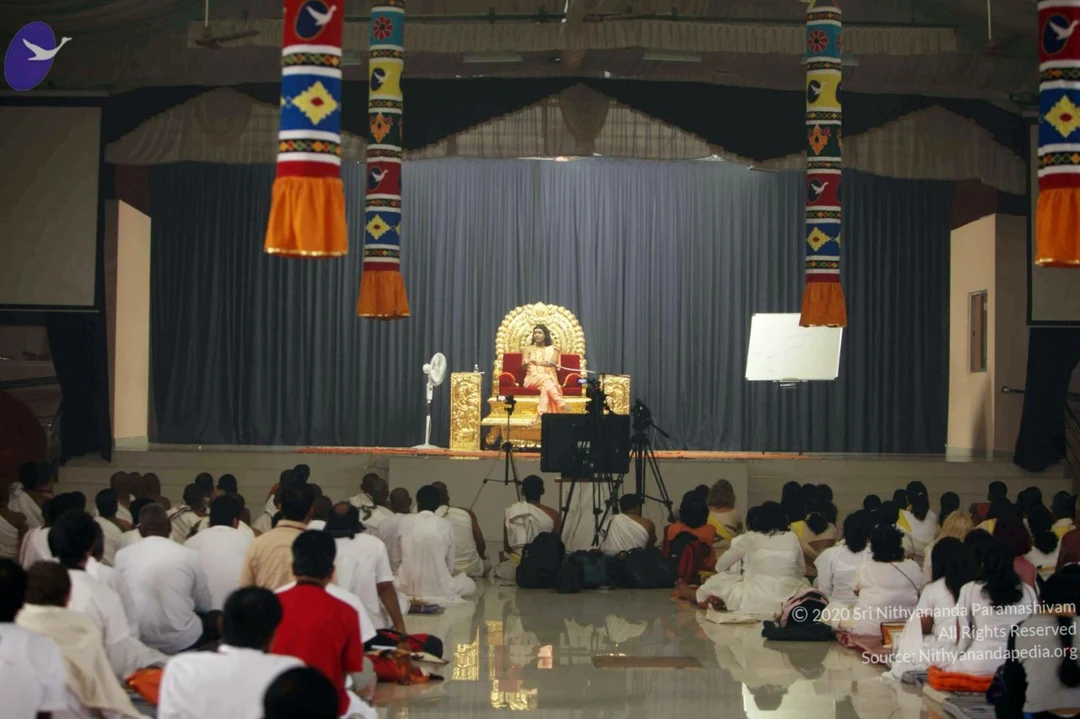
A large hall filled with seated devotees on mats, most dressed in white with some in orange, facing a stage at the front. Hanging cylindrical banners in blue, orange, red and white decorate the ceiling. A distant figure on the stage is too small and far to assess, so no a person candidate is established. Rows of attendees fill the floor for a satsang discourse.A seated man in an ornate golden throne with red cushions sits on an orange-draped dais in front of a blue curtain. He wears a peach-orange shawl draped over one shoulder and a long chain of large gold beads, with a red bindi on his forehead and long dark hair swept back. A faint trail of smoke rises at lower right. Swamiji (probable): the figure matches the expected presentation with long hair, orange-saffron clothing, gold ornaments and a throne, and sits as the central honoured speaker.Close view of bare feet resting on a golden ritual tray surrounded by silver and glass offering bowls, one holding white flowers, and a few pink lotus blossoms and an apple-like red fruit in the foreground. A person in a peach-coloured cloth with a patterned gold border kneels nearby, the feet being the visible body part. The arrangement suggests a puja or padapuja offering setting with fruit, flowers and water vessels.
NITHYA-SATSANG

12 photosSource gallery
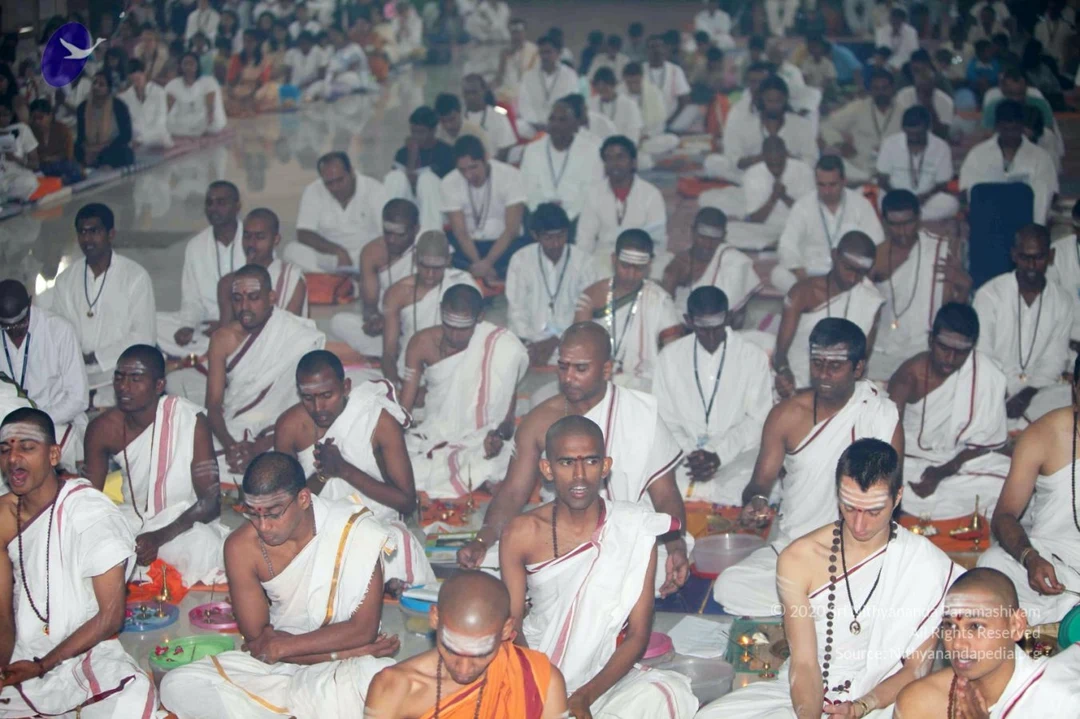
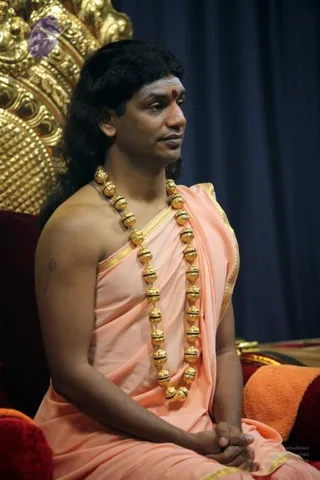
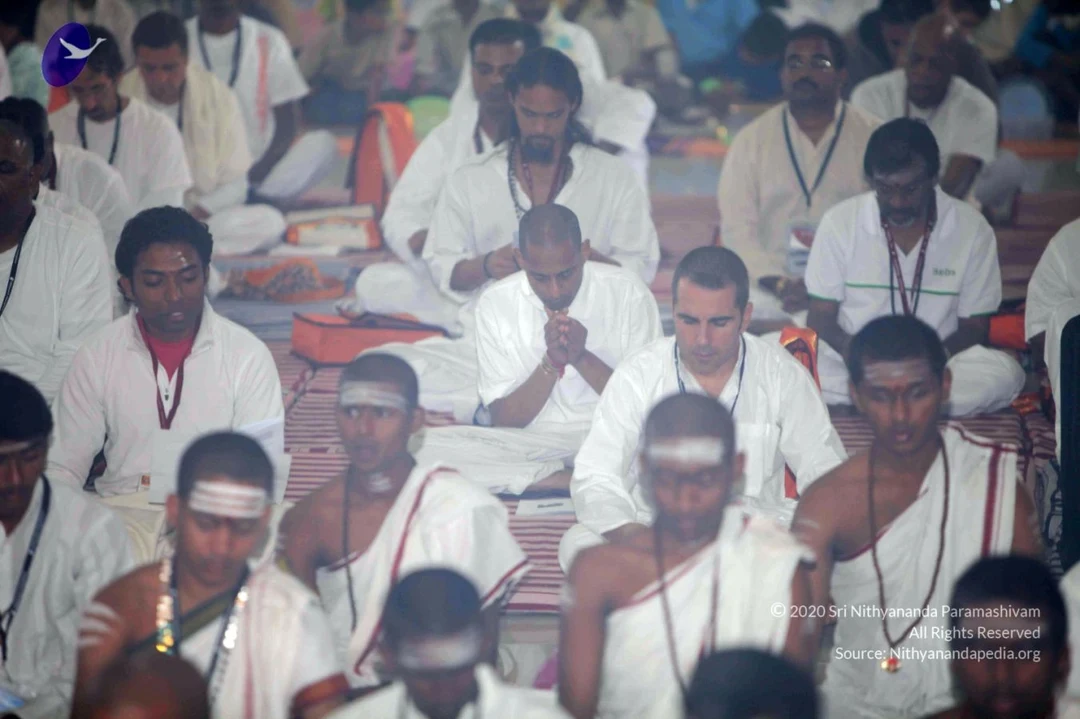
A seated man with long dark hair and a red bindi on his forehead sits on an ornate gold-and-red throne before a dark blue draped backdrop. He wears a saffron-peach dhoti-style wrap with a gold border over one shoulder and a long necklace of large gold beads, with his hands resting folded in his lap. An orange cloth lies over the throne armrest.A man with long dark hair and a red bindi sits cross-legged on an ornate gold throne with red cushions, hands pressed together in namaskar and speaking into a microphone on a stand. He wears a peach-orange robe and a multi-strand rudraksha-style beaded necklace with a gold pendant, and pink slippers. Behind him hangs a dark blue curtain, and gold carved side panels frame the dais. Swamiji (probable): long hair, an ornate gold necklace and orange-saffron clothing, seated in the central role of the satsang.A large seated gathering of men in plain white clothing fills the hall, many sitting cross-legged on white floor coverings. In the foreground, a smiling bald man wearing a white garment and a red rudraksha-style mala sits near the center, while a man on the right wears a white dhoti-style garment, a red shawl over one shoulder and a red mala, with a small brass plate of offerings or flowers in front of him. Behind them rows of attendees in white listen attentively. The scene suggests a satsang or discourse gathering, though no ceremonial activity is clearly visible.
SARVA-DARSHAN

4 photosSource gallery
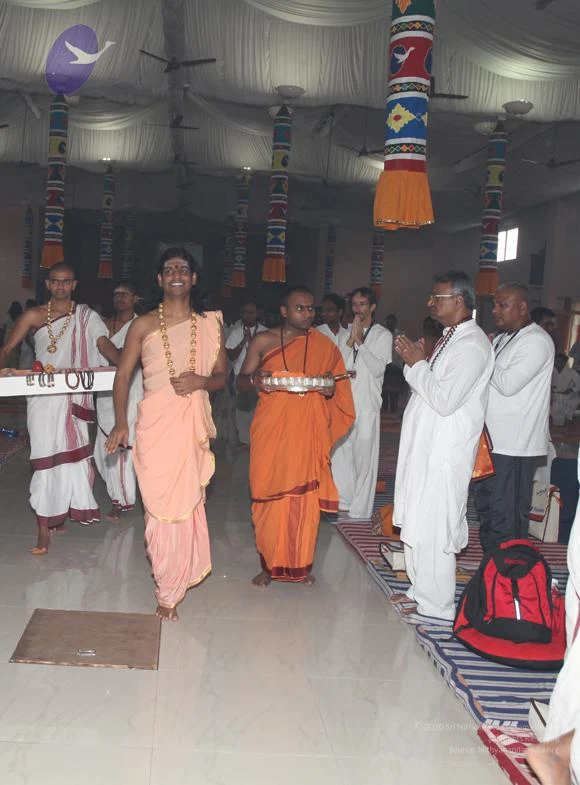
A small indoor hall with a plain light wall and a few pale fluorescent-lit fixtures. A row of seated devotees in white clothes stands and sits in a line on the left, while a figure in saffron-orange robes stands centre-right with hands joined, facing a group of people in white. The scene looks like a gathering or satsang. Several people in white ritual dress are visible, with some seated on the floor and others standing near the front.A photograph of an indoor ritual scene with a shirtless young man kneeling or standing before an offering, receiving or presenting items from a brass plate. Beside him, a man in white shirt and dark trousers stands with hands near the offering, and an older person in saffron-orange robes stands at the right edge, holding a small object. Several other people stand in the background, partly visible, one wearing a light-coloured top. The setting appears to be a temple or ashram hall with a plain wall behind. Visible people number around five.A photograph of an indoor blessing in a plain room with a dark ceiling and a hanging orange cloth. A person in a saffron-orange shawl with ornate gold necklaces and long swept-back hair stands at right, placing a hand on the head of a bald man in a white t-shirt, who is bowing. Beside them a man in white with hands pressed in anjali stands at left, and a man in glasses and a light striped shirt watches. Behind them are a brass-rimmed plate and an orange cloth on a table. Swamiji (probable): the standing figure at right wears saffron/orange clothing, long swept-back hair and ceremonial gold necklaces while performing the blessing, consistent with the page's reference to Swamiji at this satsang.A photograph inside a tented hall with white draped ceiling and colourful striped pillars. A young man with long dark hair wears a pale peach-pink shawl over his shoulders and a beaded orange-brown mala, walking forward with hands held together. Behind him, a bald man in white ritual dhoti with red border carries a white wooden tray on the left, and an orange-robed sadhu holds a silver thali of offerings on the right. On the right, white-clad devotees stand with palms joined in namaskar on a striped mat, and a red backpack lies on the floor. Attendants in white clothing walk in the background.

TEMPLE

7 photosSource gallery
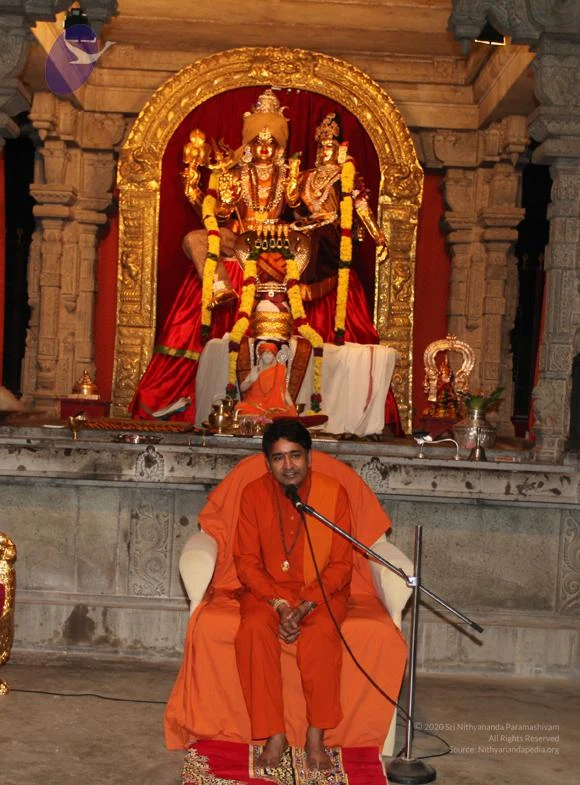
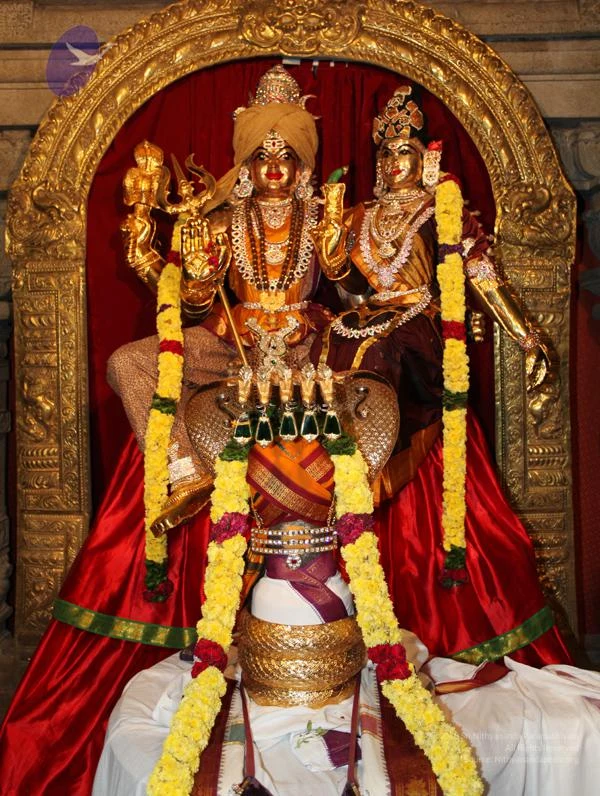
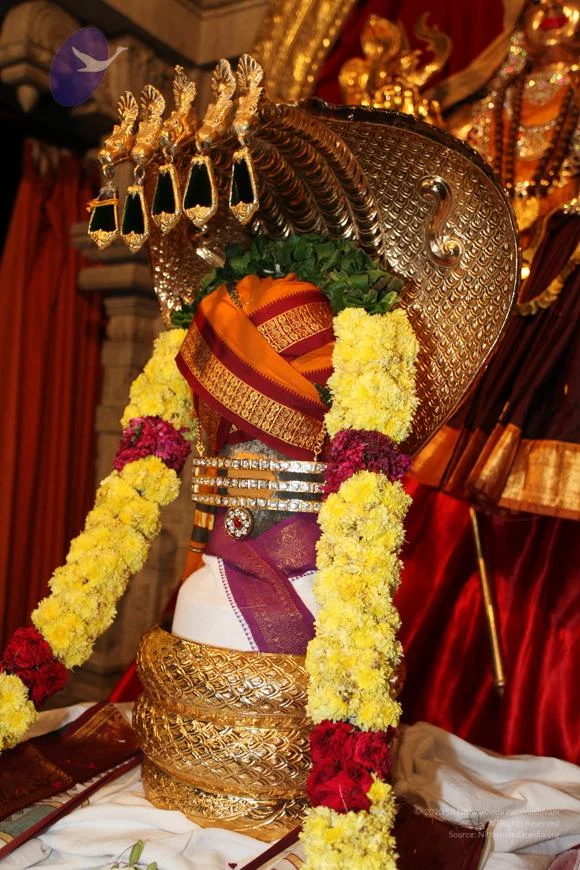
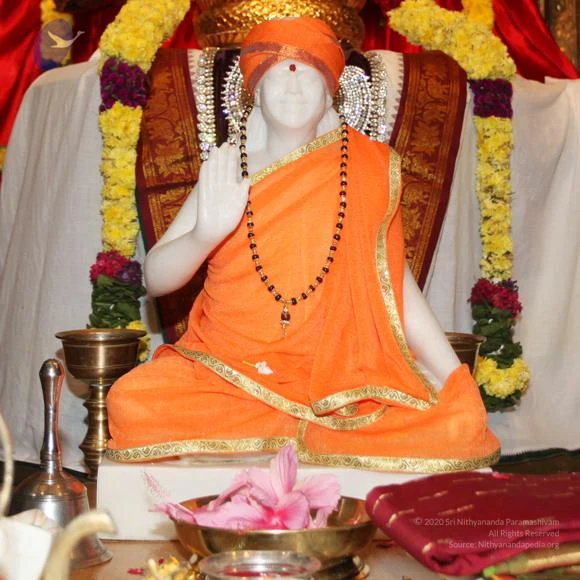
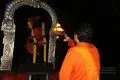
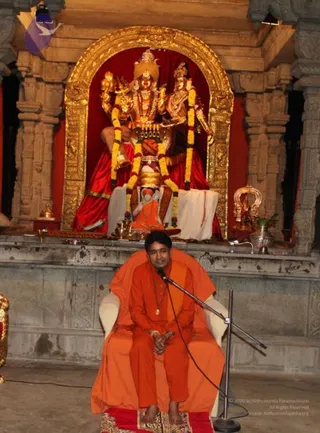
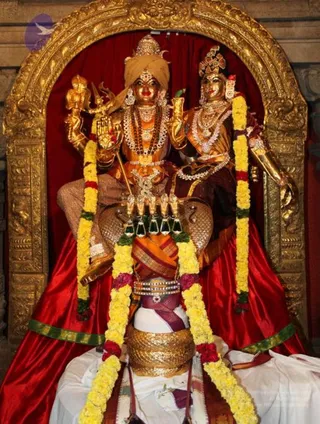
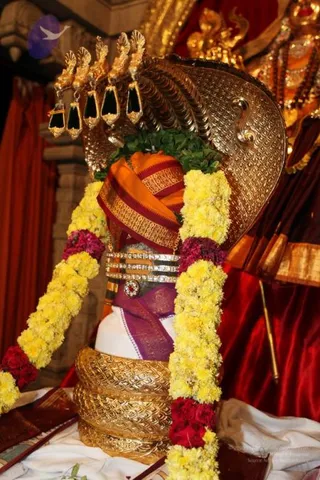
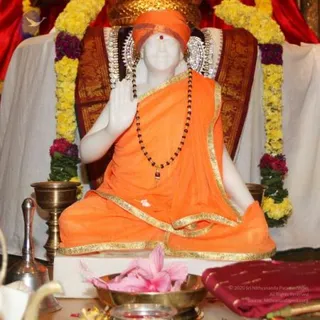
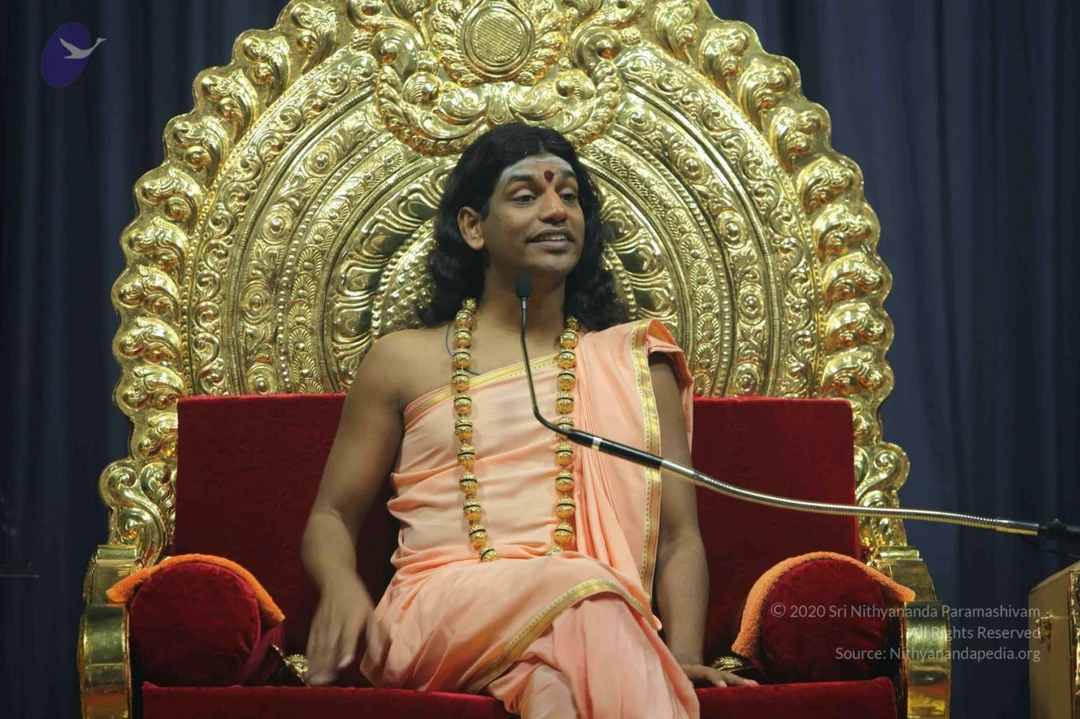
A priest in saffron-orange robes stands at the left, holding a ritual item toward an elaborately decorated shrine. Inside the shrine, a golden-gilded deity murti with a crown and multiple arms is adorned with red garments and ornaments, flanked by additional figures. Orange cloth hangs on the shrine's sides, and brass offering trays and lamps sit before the altar in a stone temple setting. The priest is performing puja before the deity.A photograph taken at night of a temple shrine with a dark stone-carved arch framing a deity murti decorated with gold and garlands. In the foreground, a man in orange saffron robes with shaved head faces the shrine, his arm raised holding a lit oil lamp or aarti flame. The scene suggests an evening puja in progress, with warm light illuminating the shrine against the dark background.A seated man in saffron-orange robes speaks into a standing microphone during a satsang in a temple hall. He sits on a white cushioned chair atop a red mat, hands folded in his lap, with a rudraksha mala around his neck. Behind him a golden-framed shrine holds a deity murti in red draped cloth, garlanded with yellow and orange flower strands, with a smaller murti and oil lamps on the altar. Carved stone pillars frame the scene. Swamiji (probable): long dark hair, saffron robes and rudraksha mala, seated in the position of the speaker.A golden murti of a seated deity couple, Shiva and Parvati, is decorated for worship in a shrine framed by an ornate gold arch against a red silk backdrop. The male figure wears an orange turban, a crown, rudraksha and gold necklaces, and holds a trident and a small object in raised hands; the female figure wears a maroon sari, gold jewellery and a crown. Yellow and white flower garlands with red accents hang over both figures, and a large gold vessel with white cloth sits in front. Statues only, no physical people visible.Close photograph of a decorated deity murti, a Shiva lingam-style form dressed with a cobra hood of gold metal behind it. The figure wears an orange and maroon dhoti-style cloth draped over the shoulders, a gold-and-stone waist band, a gold snake-like girdle and a green leaf-covered head. Thick garlands of yellow and red flowers hang down both sides, and gold earrings with green stones hang from the hood. Red curtains and gilded decorations fill the background. No people are visible.A white marble statue of a seated sannyasi-style figure in an orange saffron shawl with gold border, orange headwrap with a red bindi, rudraksha mala draped over the chest, and right hand raised in blessing. Garlands of yellow and purple flowers surround the altar, with brass oil lamps, a brass bell, a pink hibiscus floating in a brass bowl, and a red cloth at right. The setting is a temple-style shrine with red draped fabric behind.
INNER-AWAKENING-SESSION-BY-HDH

19 photosSource gallery
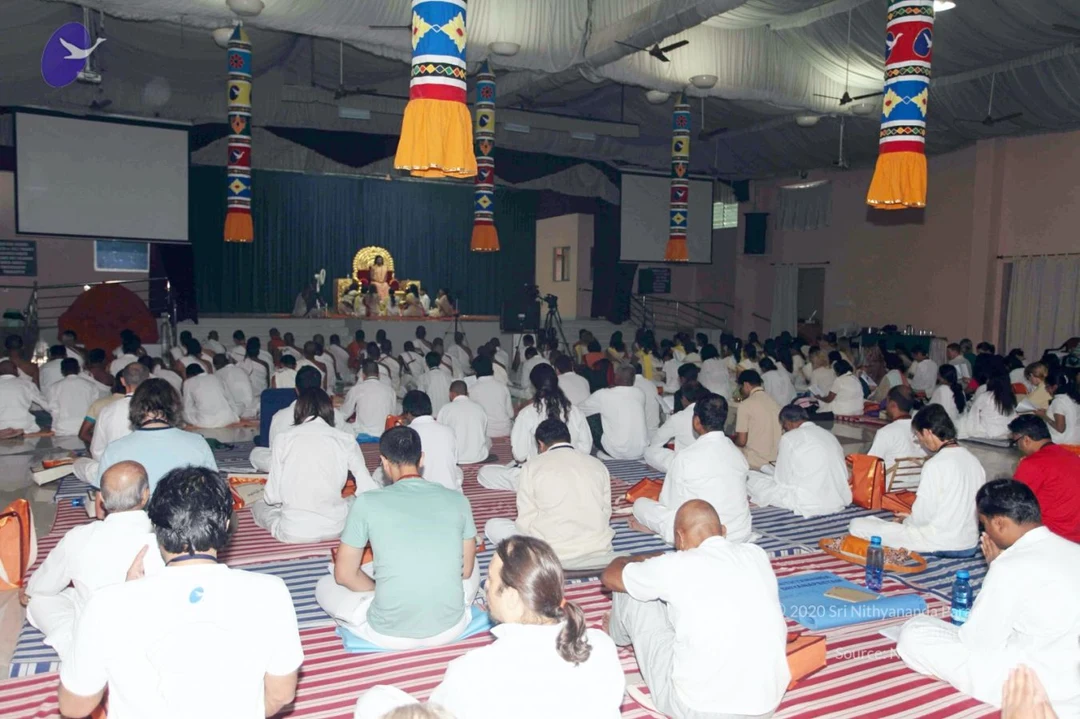
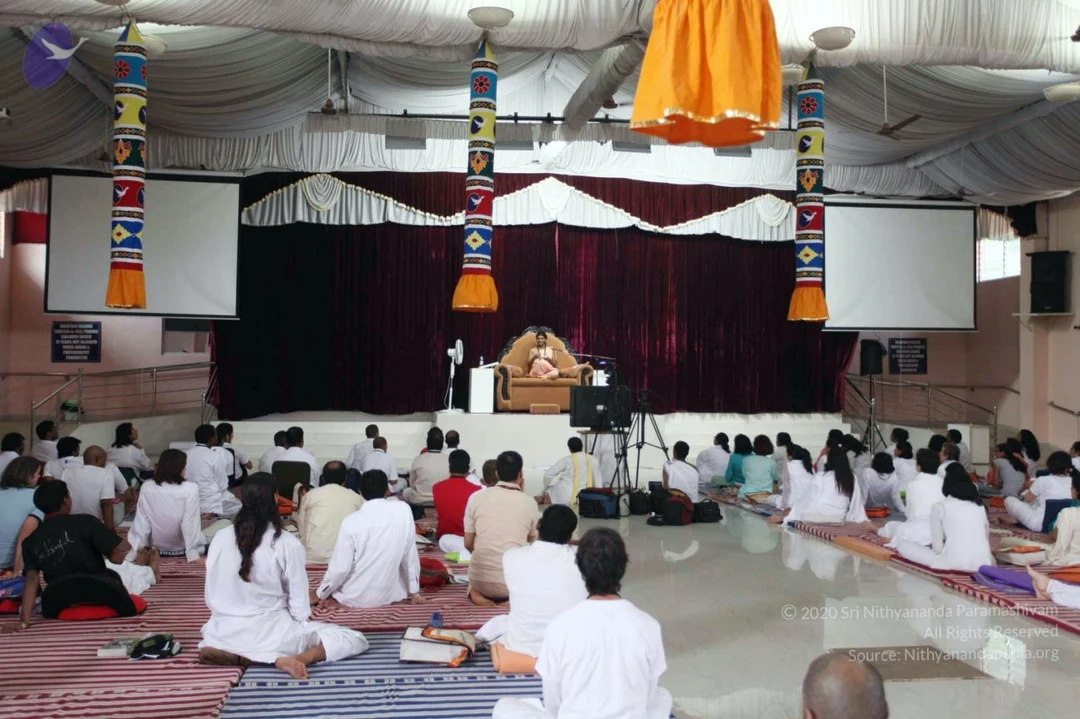
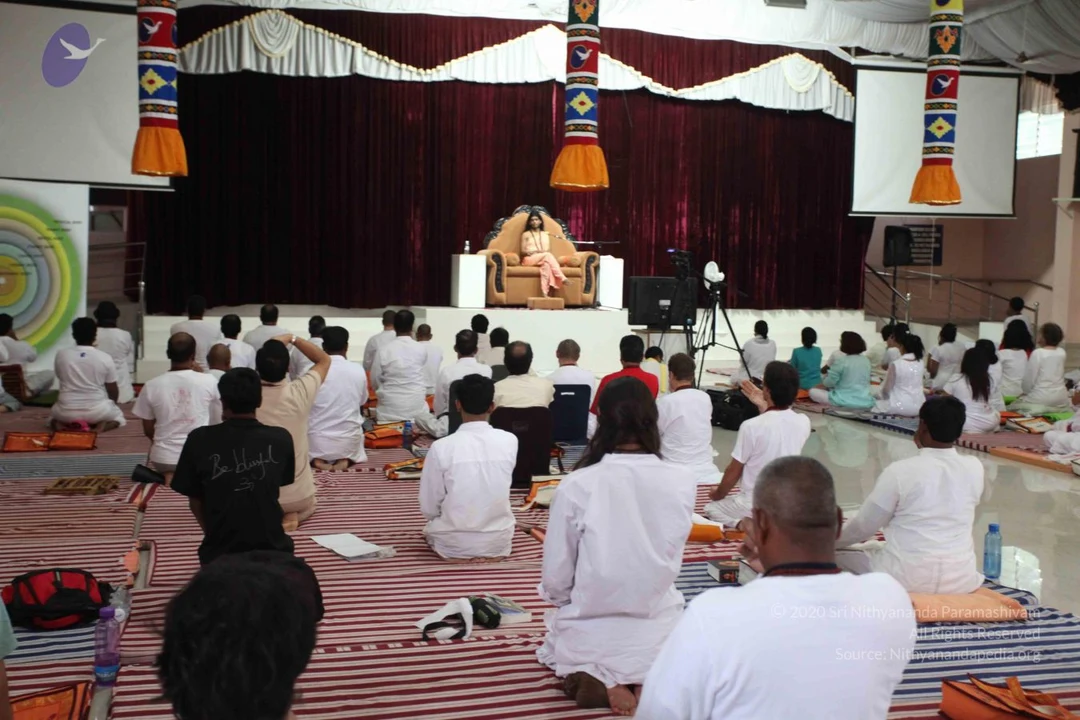
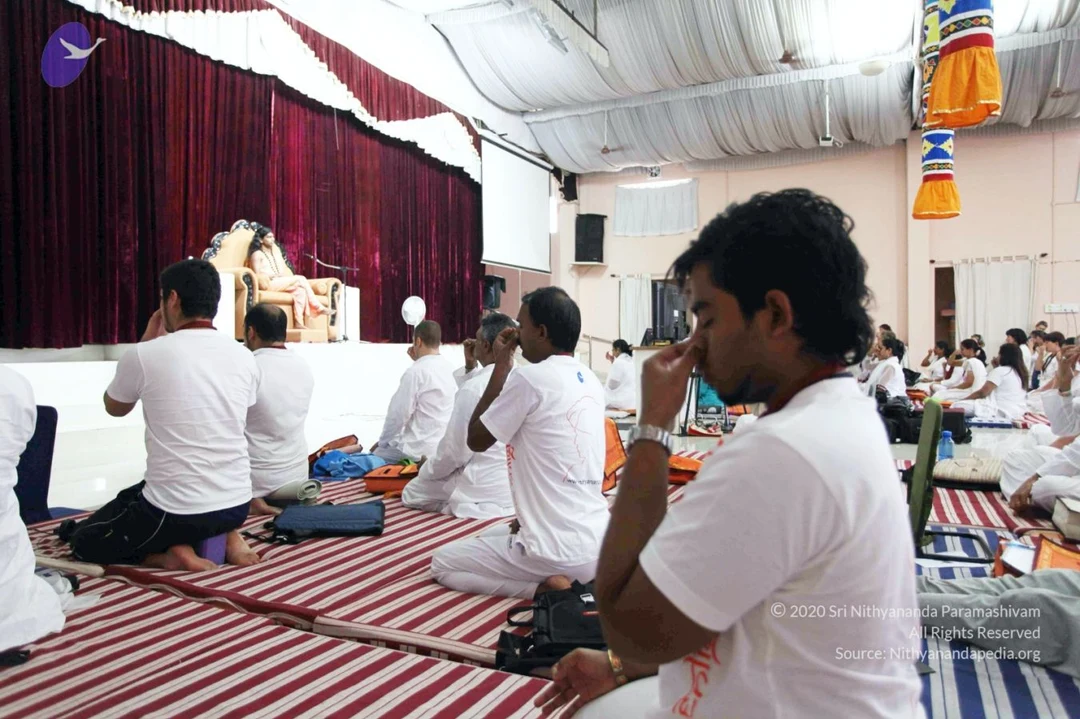
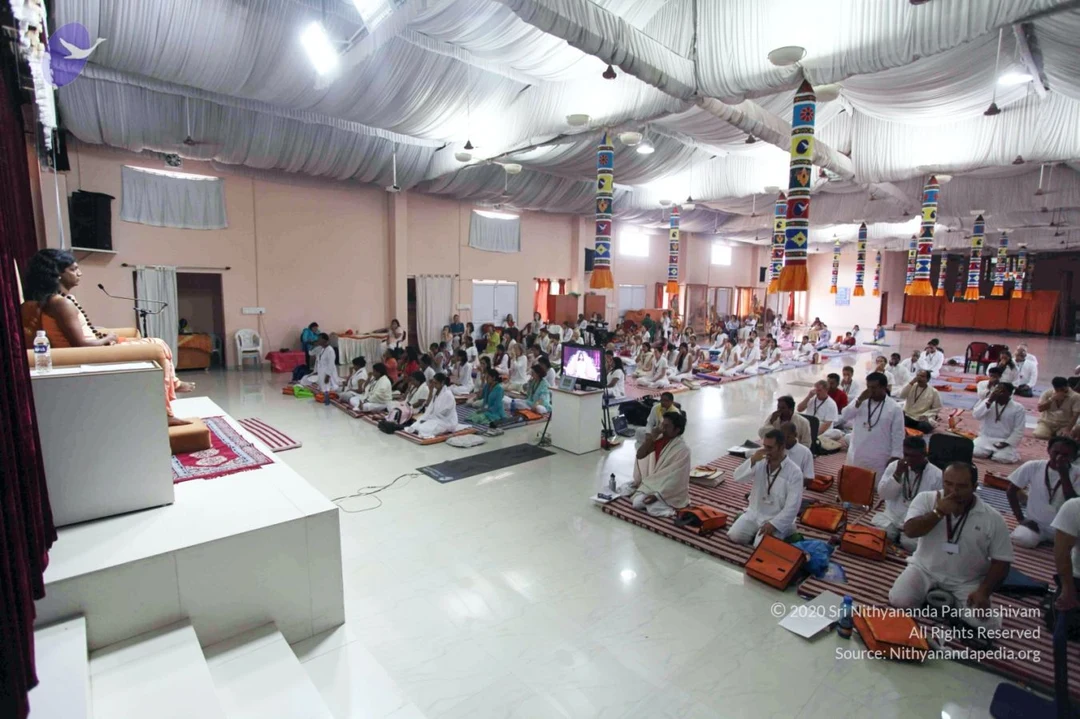
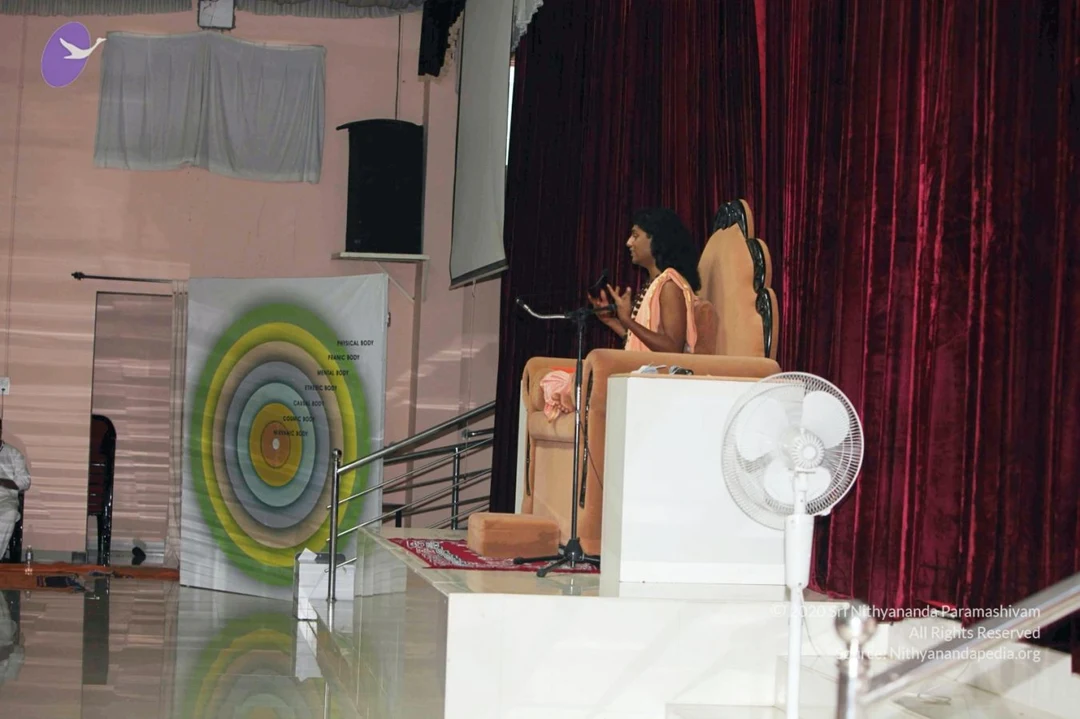
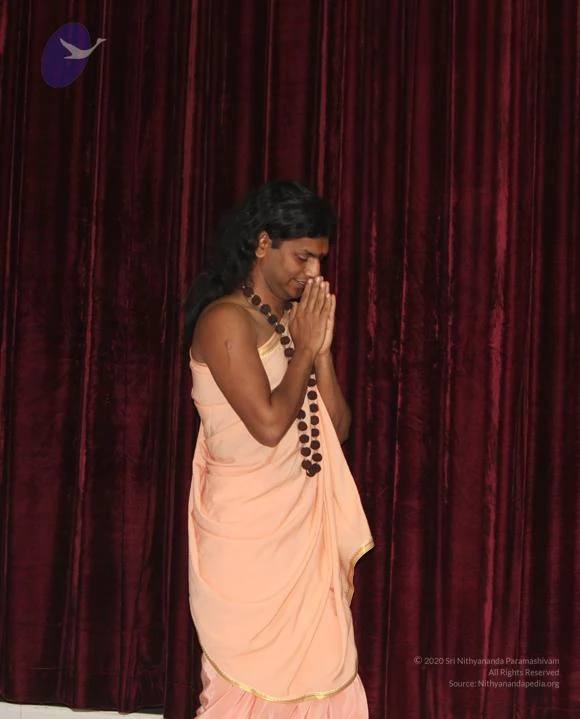
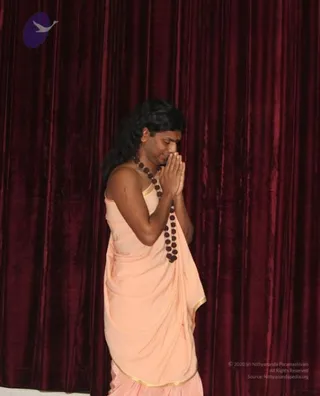
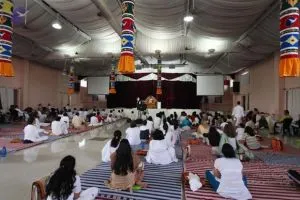
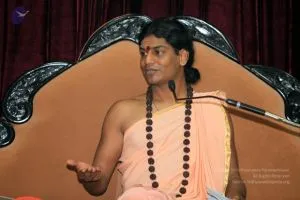
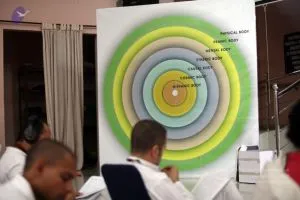
A photograph of one man standing in profile on a stage before a deep maroon velvet curtain, eyes lowered, palms pressed together in anjali namaskar at chest height. He wears a peach-coloured draped garment with a gold border, long dark hair falling past the shoulders, and a dark rudraksha mala hanging across his chest. The appearance of this man matches the a person cues of long swept hair, saffron-toned clothing and rudraksha beads, so he is a person candidate in person, though the identification is appearance-based only. No other people, deity murti or props are visible.Wide view of a large hall used for a seated satsang audience. Many devotees, mostly in white clothing, sit cross-legged on red and patterned mats across the floor, facing a raised stage at the far end. On the stage a figure in saffron-orange robes sits at a central seat in front of a red backdrop, with a projection screen and white banner beside it. Tall decorative pillars wrapped in red, white and colourful panels line the sides of the hall, and ceiling fans and white lights hang overhead.A figure with long dark hair swept back, wearing a saffron-orange shawl over a bare chest and multiple dark rudraksha beaded malas, sits on an ornate carved wooden throne with a dark red velvet backdrop behind. A red bindi mark is on the forehead and the right hand is raised, palm open, in a gesture of speaking. A microphone stand is visible at the right edge. The setting suggests a public discourse or satsang.A large white board displays concentric rings in green, yellow, grey and blue, with labels on the right that read physical body, etheric body, mental body, emotional body and similar layers. In the foreground, several seated people wearing white clothing sit with their backs to the camera, their heads and shoulders visible at the bottom edge. A grey curtain hangs at the left, and the room has a plain wall and cabinet. The scene looks like a seminar or satsang teaching session explaining the layered body diagram.
LUNCH-BREAK

5 photosSource gallery
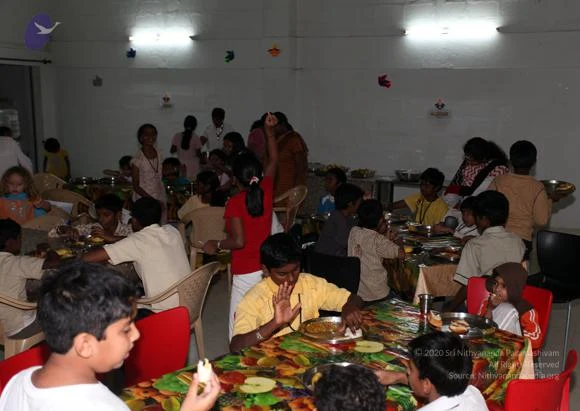
A photograph of a community kitchen serving line in a white-walled hall. A man in a white shirt and light trousers, wearing clear gloves, stands at left reaching over large steel serving pots. Beside him a woman in a white sari with a yellow border serves food from a steel vessel, and another woman in white stands at right with a steel pot in front of her. Several more people in white clothes are visible in the background near a wooden doorway. The scene suggests annadan food service, with large stainless steel vessels lined along the counter.A long, high-ceilinged hall with a pitched roof and exposed rafters hosts a seated communal meal. Rows of people in white clothing and saffron-toned garments sit at long tables covered with cloths, eating from plates and bowls. Orange and red curtains hang at the windows along the walls, and ceiling fans are visible. The room is crowded with dozens of diners photographed from a raised vantage point, many shown from behind. No individual can be clearly identified, so no a person candidate is established.A photograph of a seated group of people at a long white-draped table in an indoor hall. Several people sit closely along both sides, some with heads bowed and hands folded, others looking down at the table. The setting appears to be a dining or satsang gathering with plates and cups on the table. The surroundings are plain and muted, with pale walls and simple decor.A wide hall with a pale wall and a row of ceiling lights shows a seated audience facing the front. Many people in white and light clothing sit on rows of white chairs, with red chairs and red-and-white draped seating at the sides. The scene looks like a satsang gathering, though the front stage is far away and no individual speaker is clearly identifiable.A dining hall with white walls and fluorescent lights, where children and a few adults sit at long tables covered with colourful patterned cloths. Red and white plastic chairs surround the tables, and metal plates and bowls of food, with sliced fruit and leaves, are set out. A boy in a yellow shirt in the foreground gestures with his hand while eating, and a girl in a red top stands nearby. Several women in saris and a man in a white shirt move among the diners, and paper decorations hang on the wall.

DARSHAN

19 photosSource gallery
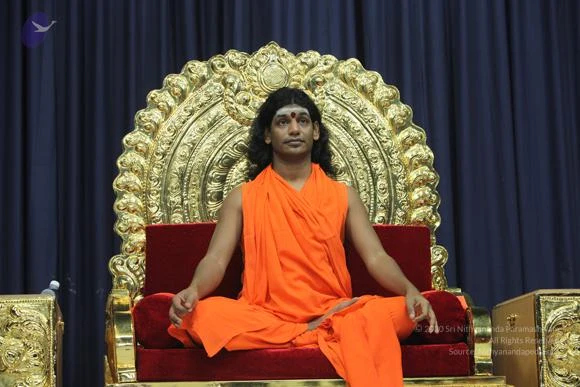
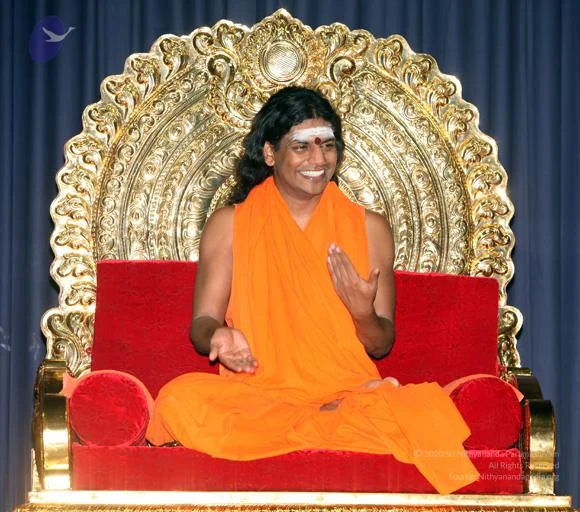
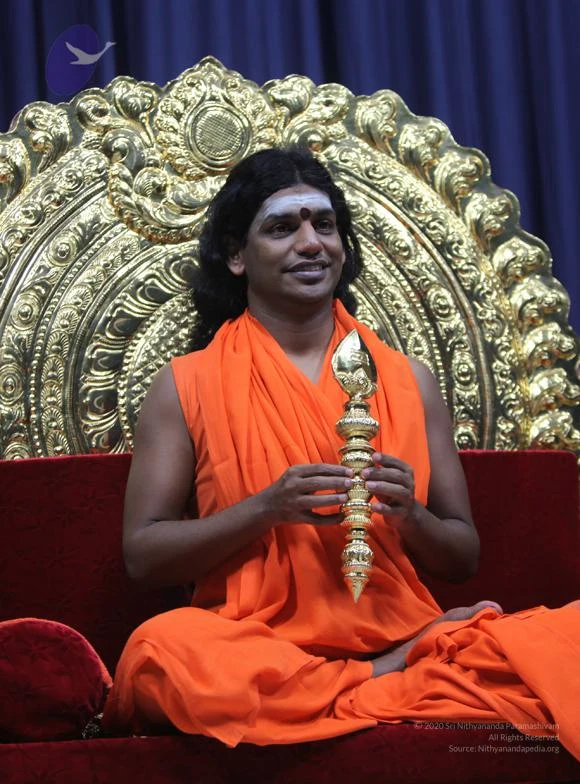
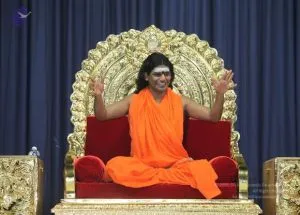
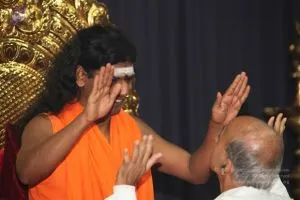
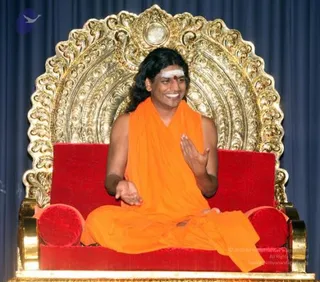
A man with long, swept-back dark hair and a tilaka mark sits cross-legged in meditation on an ornate gold-carved throne with a red velvet seat and back cushion. He wears a saffron-orange shawl wrapped over his shoulders and an orange robe, with his hands resting on his knees in a mudra. Behind him a deep blue draped curtain hangs, with gold-carved side pedestals visible at the edges and a microphone stand to the left. Swamiji (probable) is seated on the throne, with long hair, saffron clothing and an ornate gold throne setting.A man seated cross-legged on a red cushioned throne with an ornate gold carved backrest, wearing a saffron-orange robe and long swept-back dark hair, arms raised outward with palms open in an expressive gesture. Behind him hangs a deep blue draped curtain, and gold-carved armrests frame the seat. The setting is a stage or dais at a public satsang, consistent with a teaching session. One person is visible.A photograph of a saffron-robed sannyasi with long dark hair and a white vibhuti marking on his forehead, raising both hands in blessing toward a bald, grey-haired devotee in white kneeling before him. The devotee's palms are joined in namaste near his chest. Behind the figure is an ornate gold-carved throne or peetha with floral and scroll details. Two people are visible, with the blessing giver appearing to be Swamiji (probable) based on the long swept-back hair, saffron ornate clothing and seated-dais setting, though the appearance is not fully certain.A seated man in saffron-orange robes sits cross-legged on an ornate gold-and-red throne with a large gold filigree backdrop and a blue curtain behind. He has long dark hair swept back, a white sandalwood mark with a red dot on his forehead, and he smiles while raising one hand in a gesture of talk, as during a satsang discourse. Swamiji (probable): long swept-back hair, saffron robes and a seated teaching posture on a ceremonial throne. One physical person is visible.A seated man in saffron-orange robes sits on a red cushioned seat before an ornate gold-embossed throne back with a blue curtain behind. He wears long swept-back dark hair, a white tilak with a red bindi, and a draped orange shawl over a sleeveless robe. He holds a tall gold ceremonial staff with a finial in both hands and smiles. Only one person is physically present.A photograph of a long-haired man in an orange robe placing his right hand on the crown of a shaved-headed man's head during a blessing. The blessed man, in white clothing, has his palms raised and held open in front of him. The setting is an indoor room with a pale wall behind them. The orange-robed figure has long dark hair, a distinctive appearance that matches the page's reference to a person, so this is an appearance-based probable identification of a person. The recipient in white is a devotee receiving a blessing.

1-En-Genius-Sessions
130 photosSource gallery
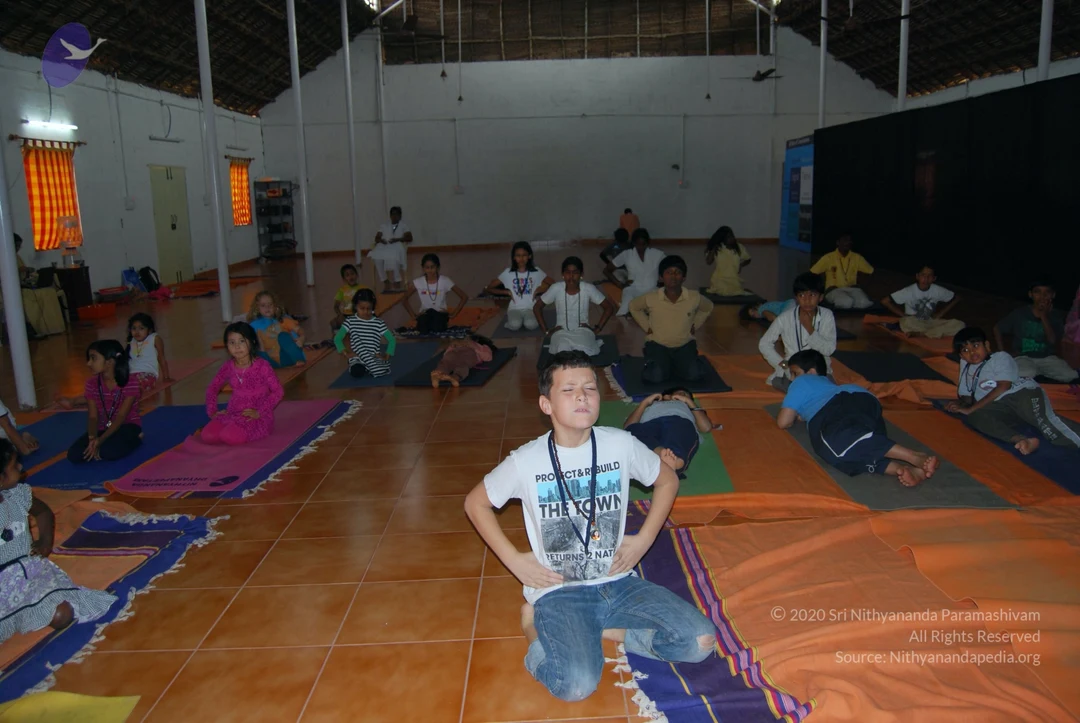
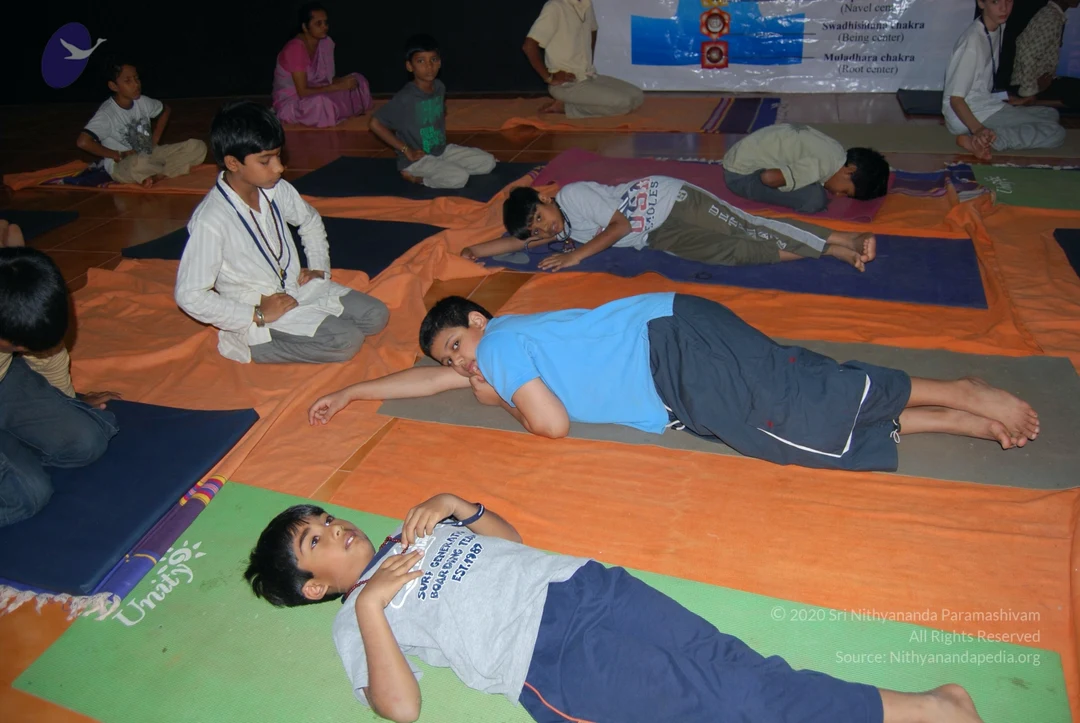
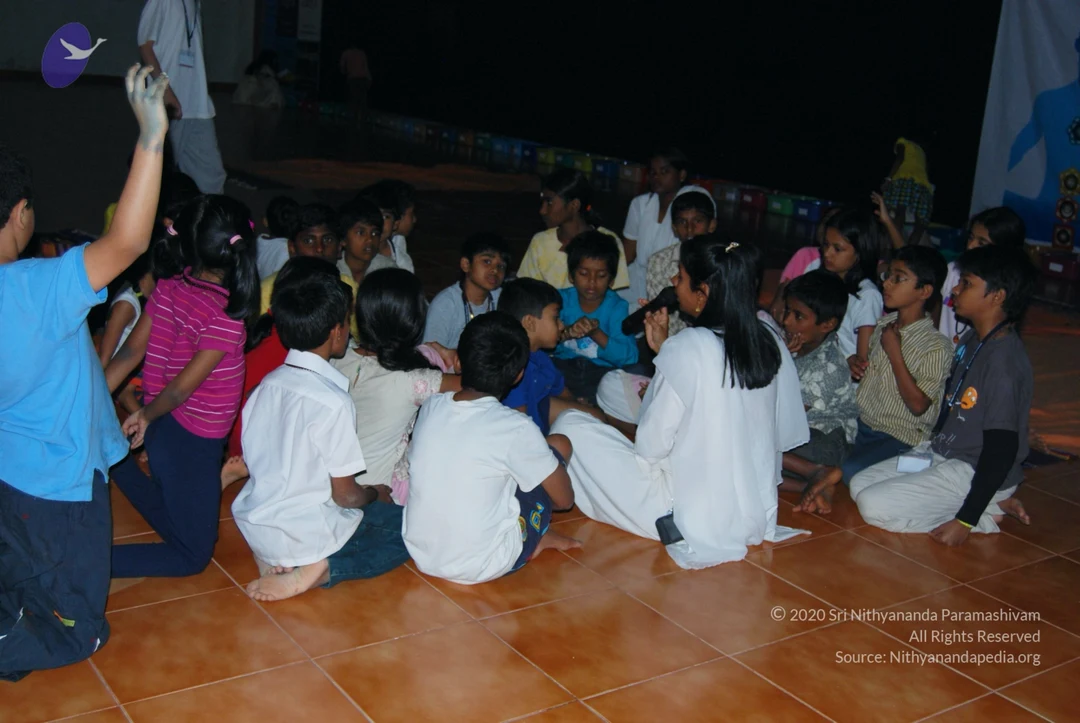
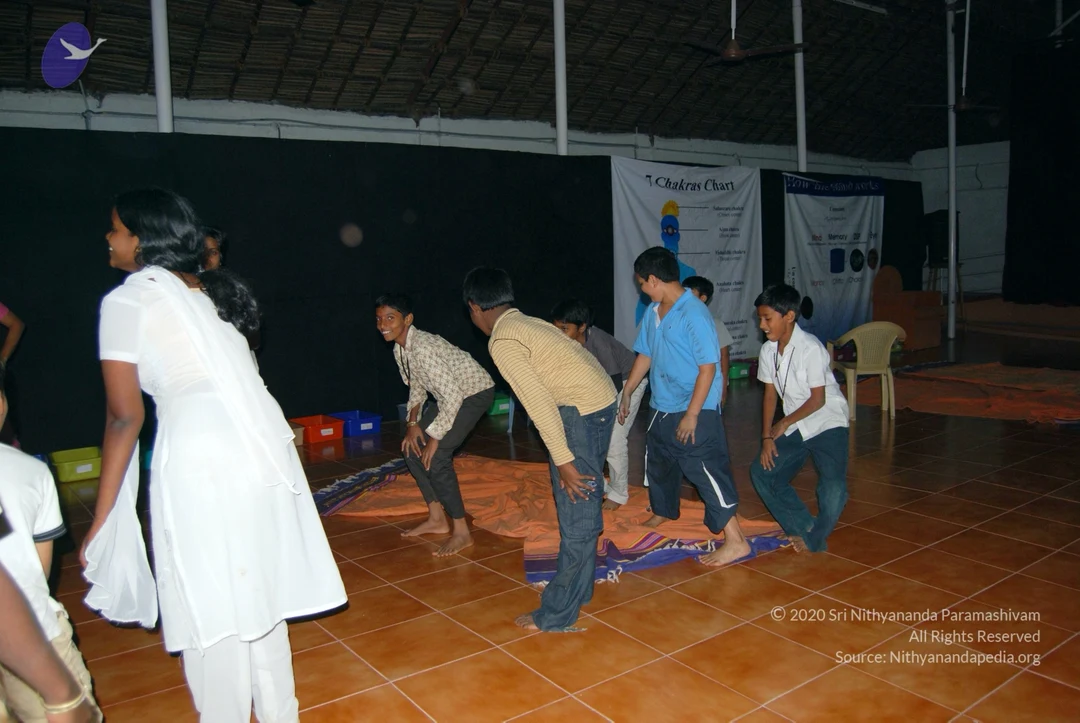
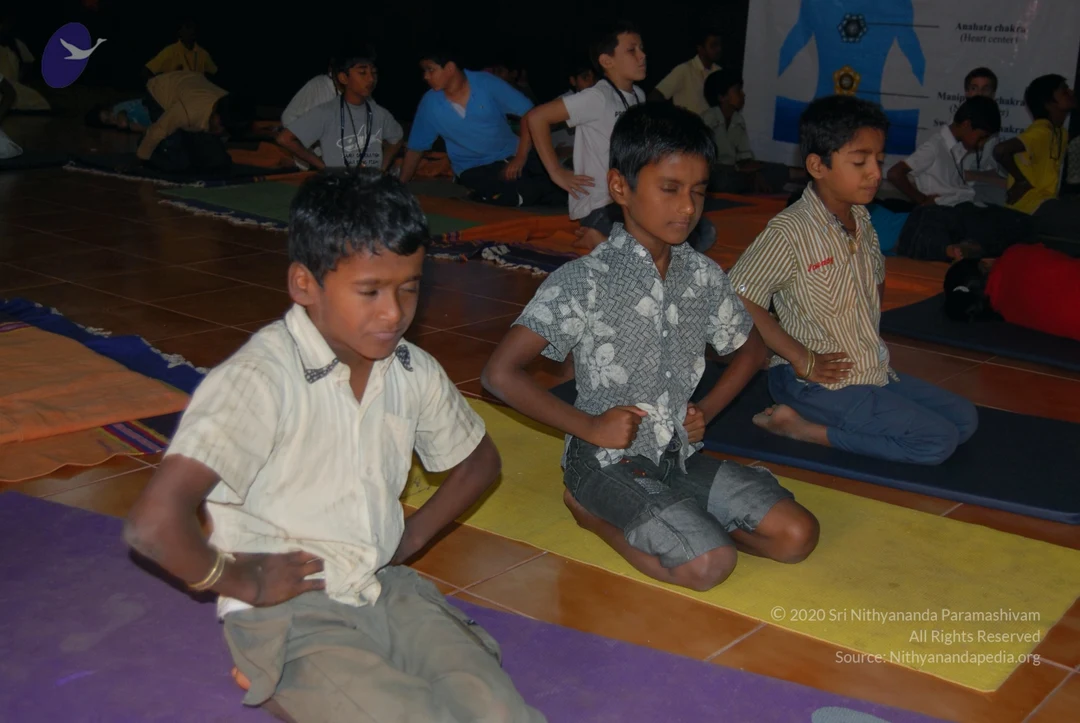
A large indoor hall with a tiled orange floor and a corrugated roof, filled with children seated cross-legged on colourful yoga mats in meditation posture. In the foreground a girl in a white Nike t-shirt and black pants sits with hands on her knees, a boy in an orange-striped shirt sits beside her, and a boy in a cream shirt and khaki trousers sits with eyes closed on a purple mat. Further back many more children in white, yellow, blue and pink clothes sit in rows, some wearing lanyards. No adult leader is clearly visible; a few people sit near the back wall beside a blue banner and a black curtain.Photo of children and teenagers seated on colourful yoga mats on a tiled floor, eyes closed in meditation or breathing practice. In the foreground, three boys sit cross-legged: the left boy in a white short-sleeved shirt and khaki trousers with gold bangles, the middle boy in a grey patterned shirt and grey shorts with hands on his knees, and the right boy in a striped beige shirt and dark trousers with hands resting on his hips. Behind them, more participants sit on mats in white, blue and grey shirts. On the upper right, a blue poster shows a human figure outline with chakra diagrams labelled Anahata chakra (Heart centre) and Manipura chakra. a person-related meditation session.A young boy in a white t-shirt and light grey trousers sits kneeling on a black mat with a blue and orange mat beside him, eyes closed and smiling, hands resting on his hips. A white pillar stands behind him in a tiled hall, with other practitioners lying on mats in the background. The setting appears to be a yoga or meditation session.A group of children and some adults practise yoga poses on mats in a large hall with tiled floor. In the foreground a girl in a white tank top and pink floral pants stands with hands on hips, while a curly-haired girl in an orange top with a blue scarf kneels with her back arched. A girl in a striped top with green sleeves kneels beside a child lying on a pink-and-brown mat. Behind them, adults in white kneel and recline on mats, and a boy in a yellow shirt stands among them. Blue and orange mats and cushions cover the floor, with a banner and dim lighting in the background.A photograph of children practising yoga inside a large hall with a tiled floor, white walls and a thatched roof with exposed beams. A boy in the foreground wearing a white t-shirt, lanyard and jeans sits with hands on his hips and eyes closed. Behind him, many children sit cross-legged or lie on coloured yoga mats in orange, green, purple and grey, several in white shirts. Orange and yellow striped curtains hang at the windows, and a black stage backdrop stands at the right. No identifiable a person figure is visible.A photograph of children lying and sitting on yoga mats laid over orange cloth on a wooden floor during a meditation session. A boy in a grey t-shirt lies on his back in the foreground on a green mat, hands folded on his chest. Another boy in a blue t-shirt and navy shorts lies on his side on a grey mat, and a boy in a white-and-blue shirt with a lanyard sits cross-legged at left. Behind them a child in a grey shirt lies face down on a mat, and an adult woman in a pink salwar sits near the top left. A white banner at the top shows chakra diagrams labelled Navel center, Swadhishthana chakra (Being center) and Muladhara chakra (Root center).