Skip to content
Wednesday

10 November 2010

Prema Bhakti - The Ultimate Path: Nithyananda Morning Satsang (10 Nov 2010) Message

Dated photos
467
Source pages
1
Media
2
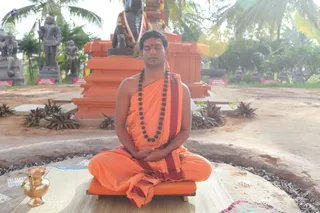
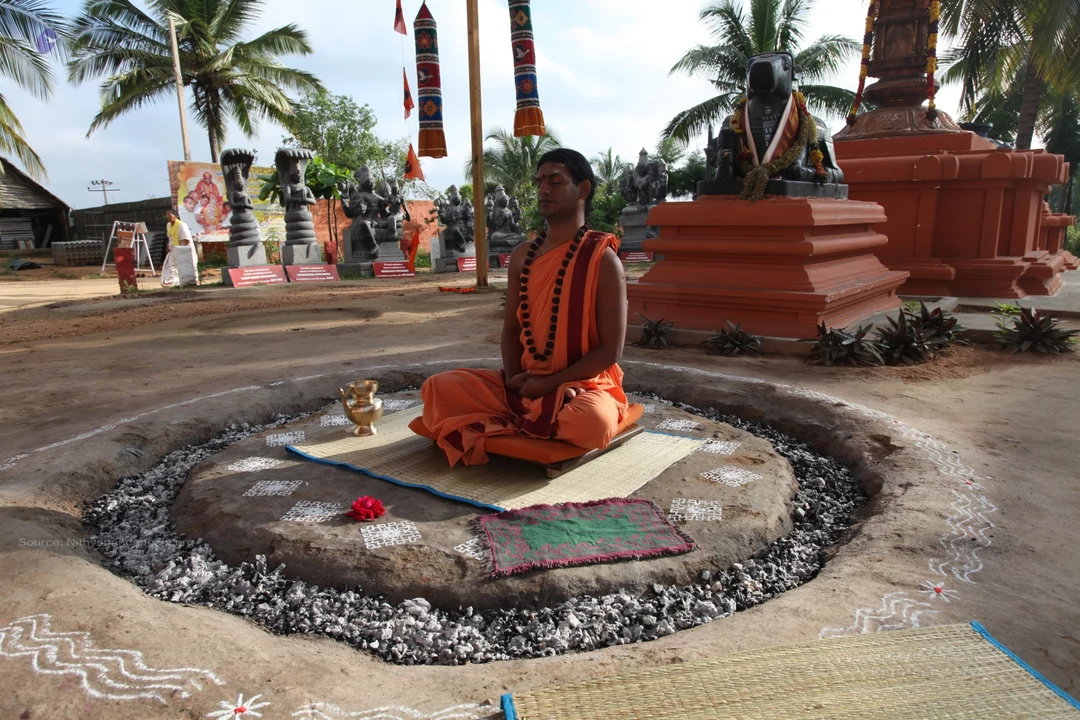
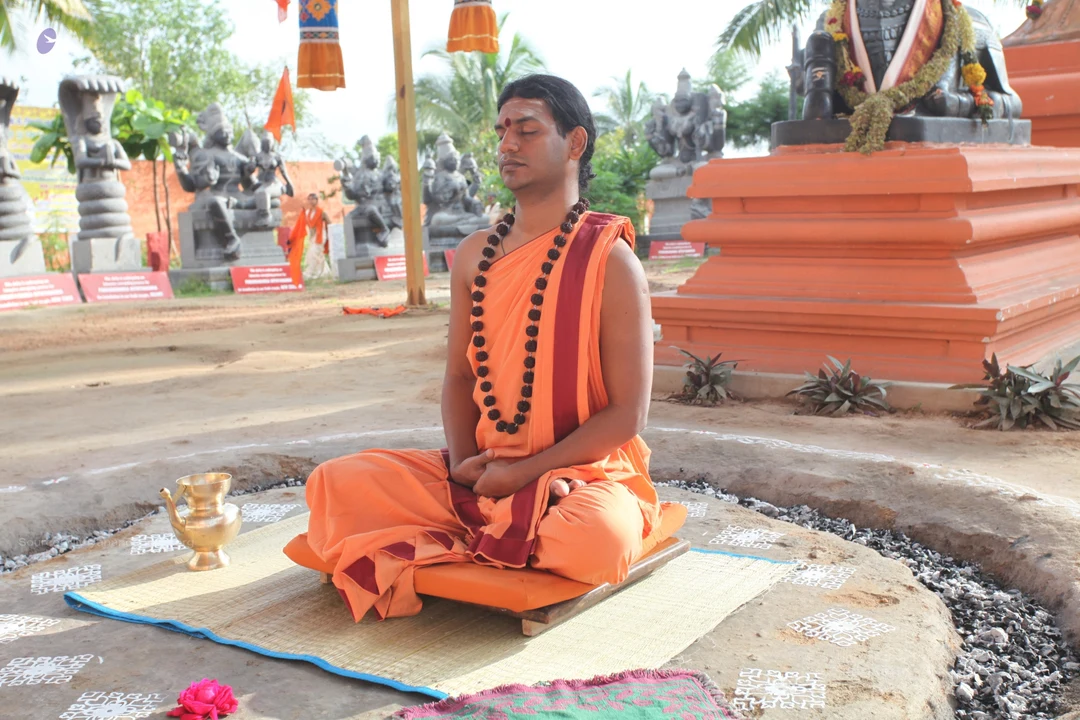
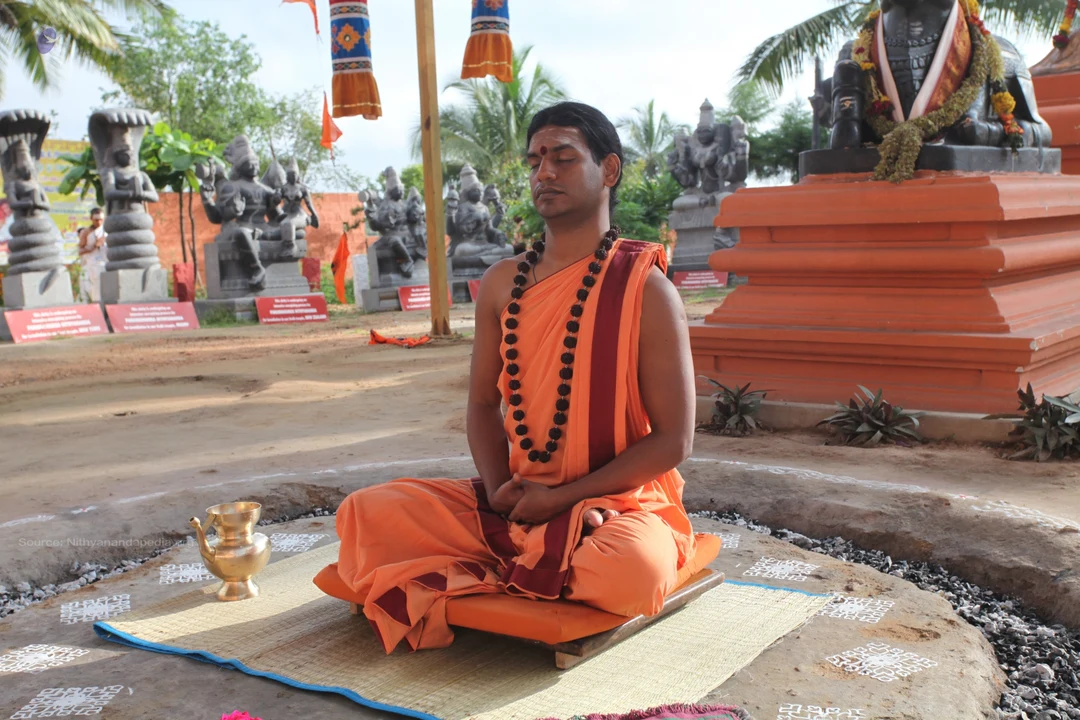
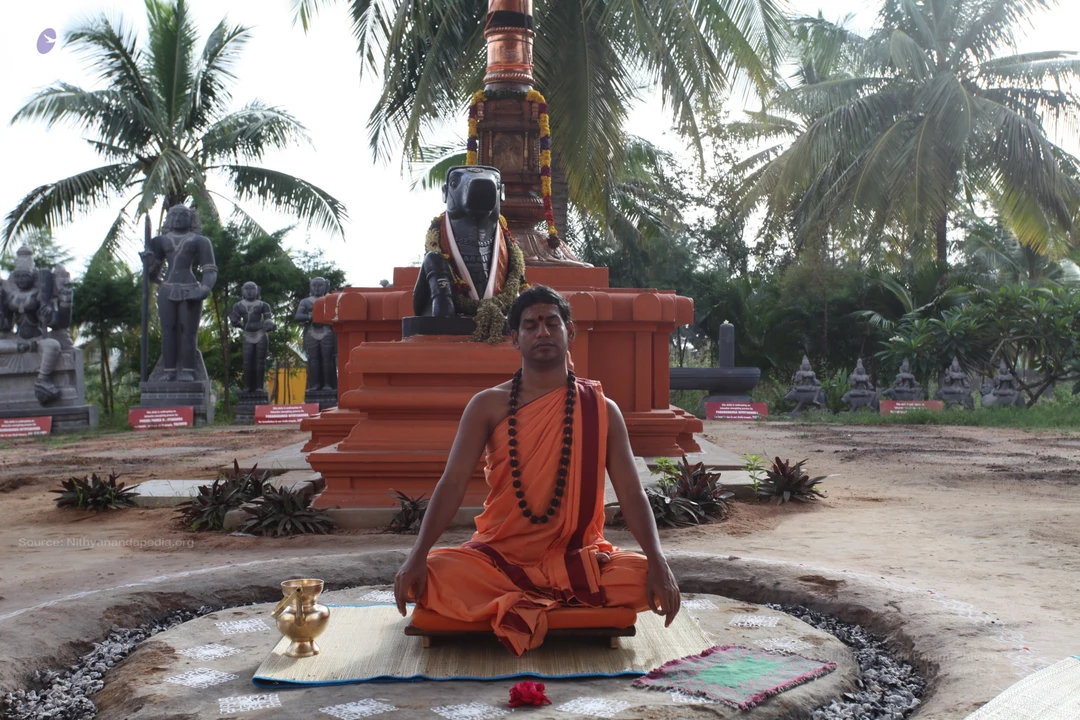
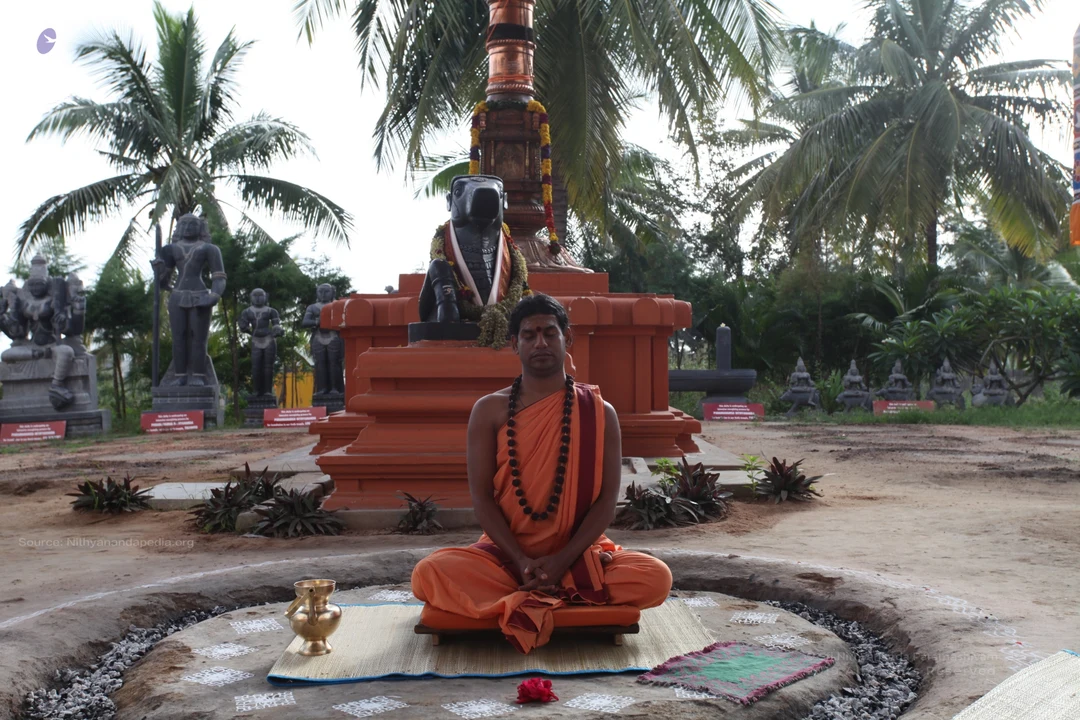
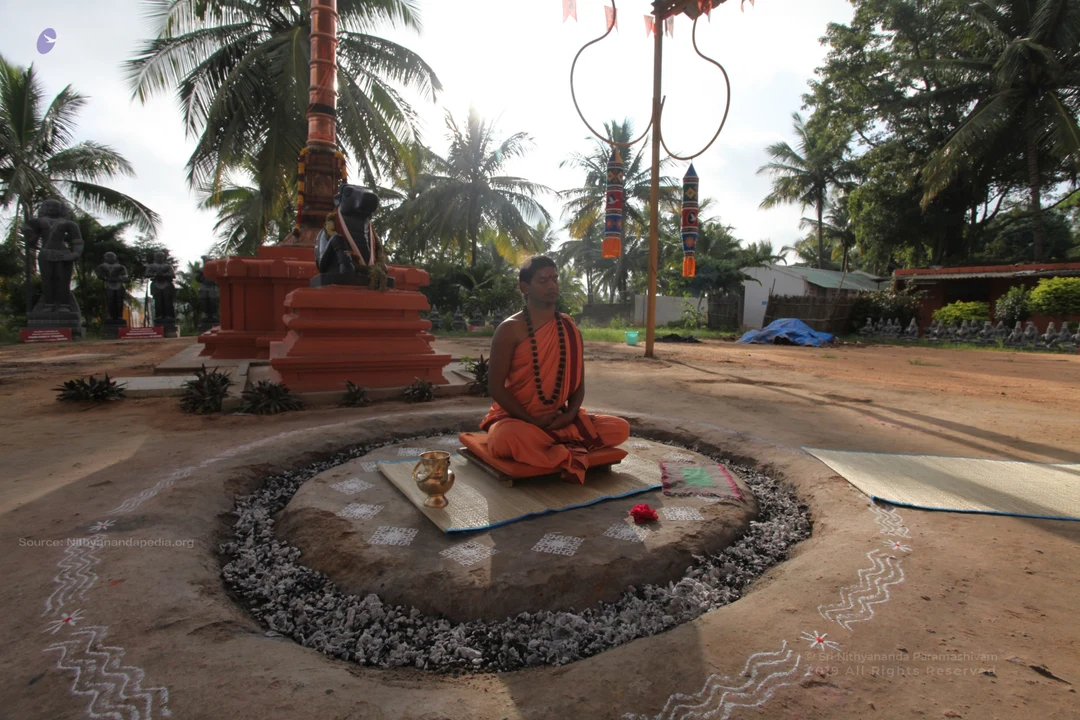
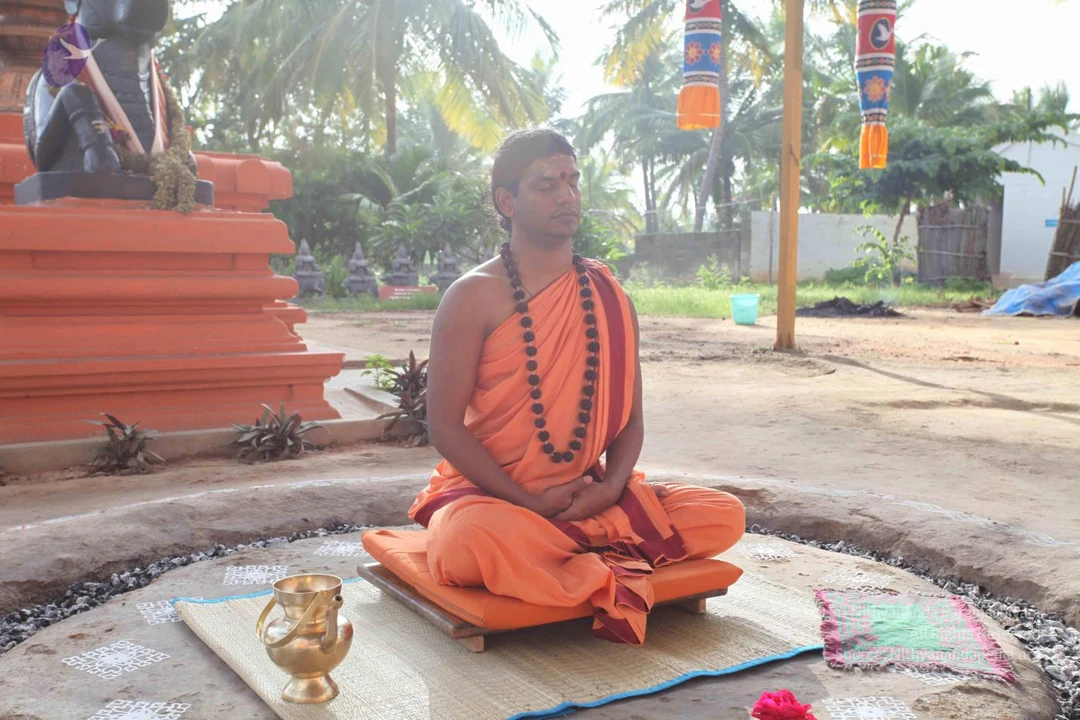
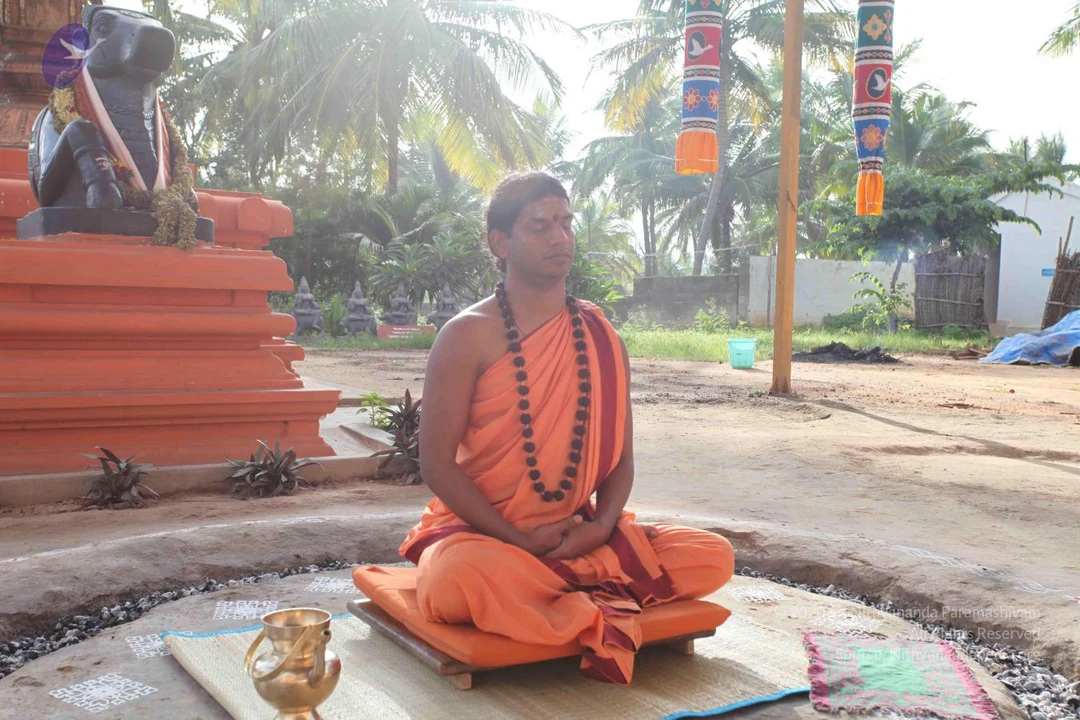
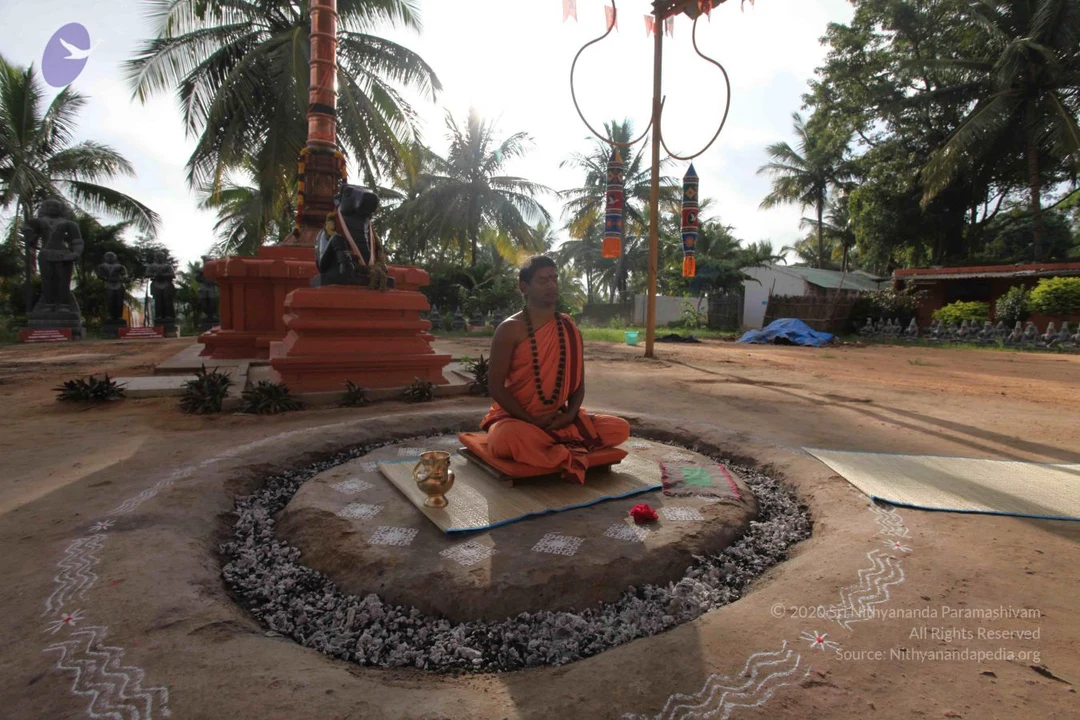
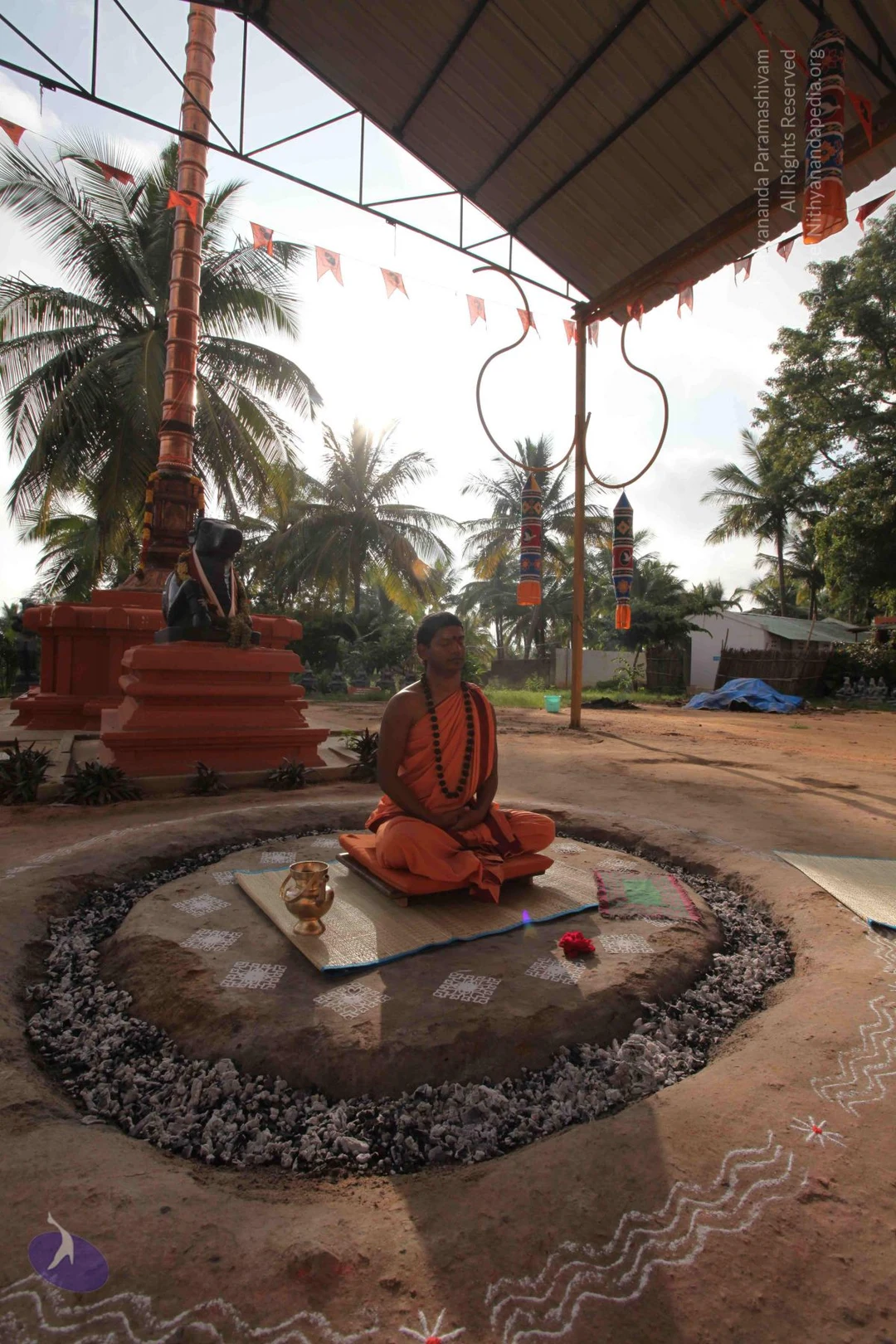
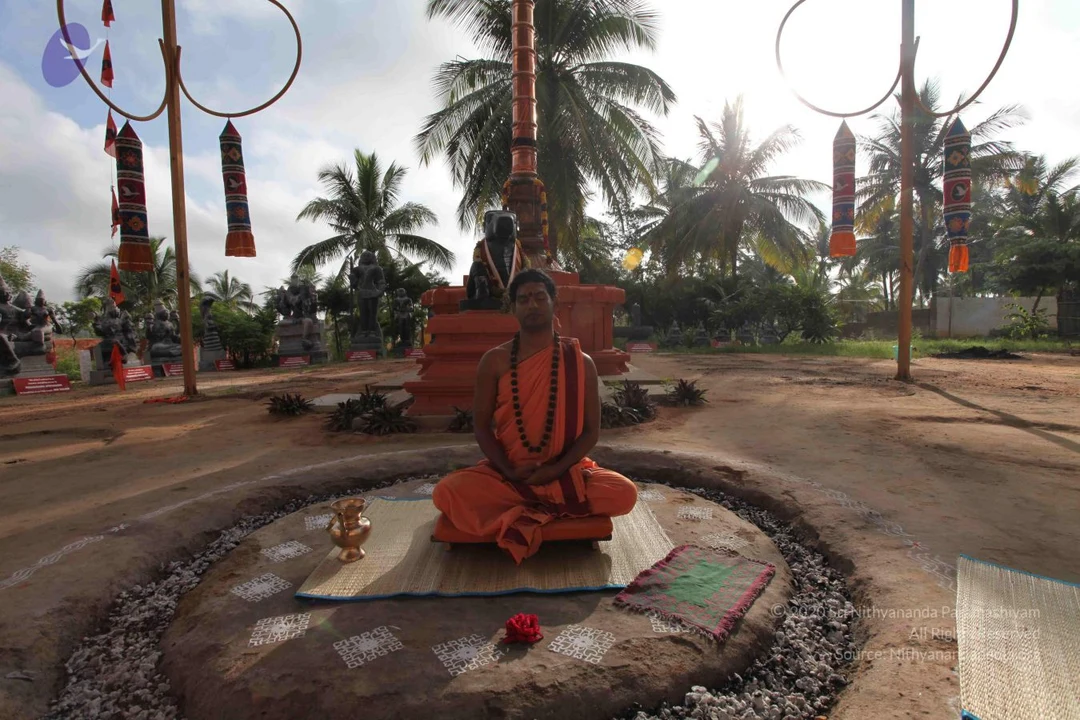
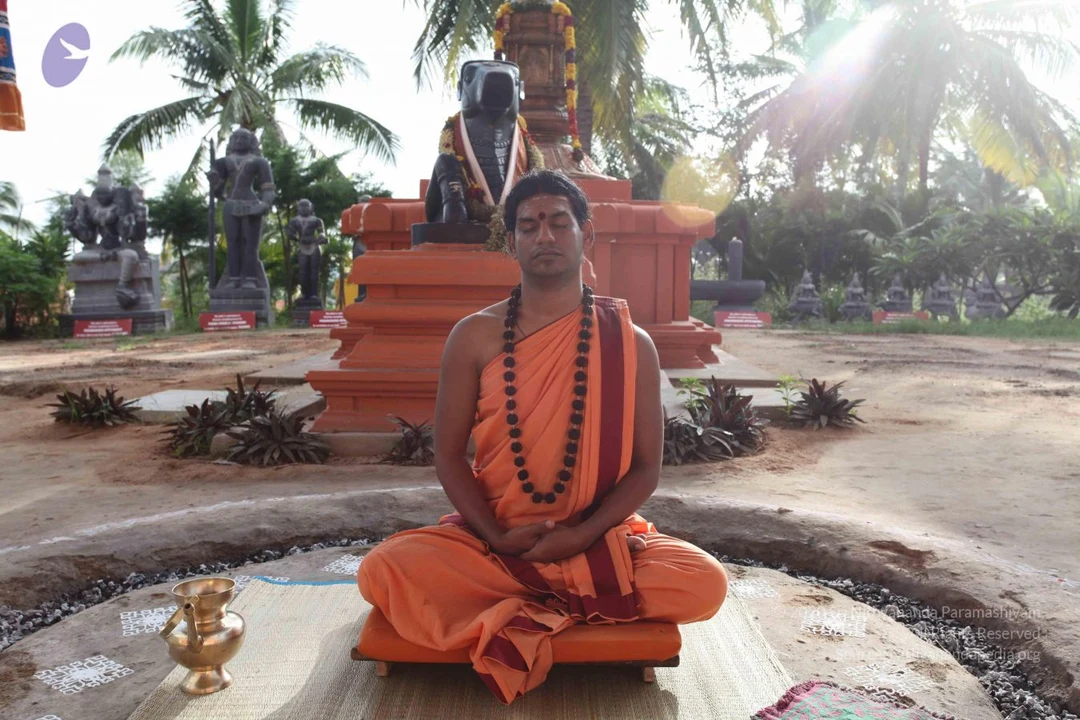
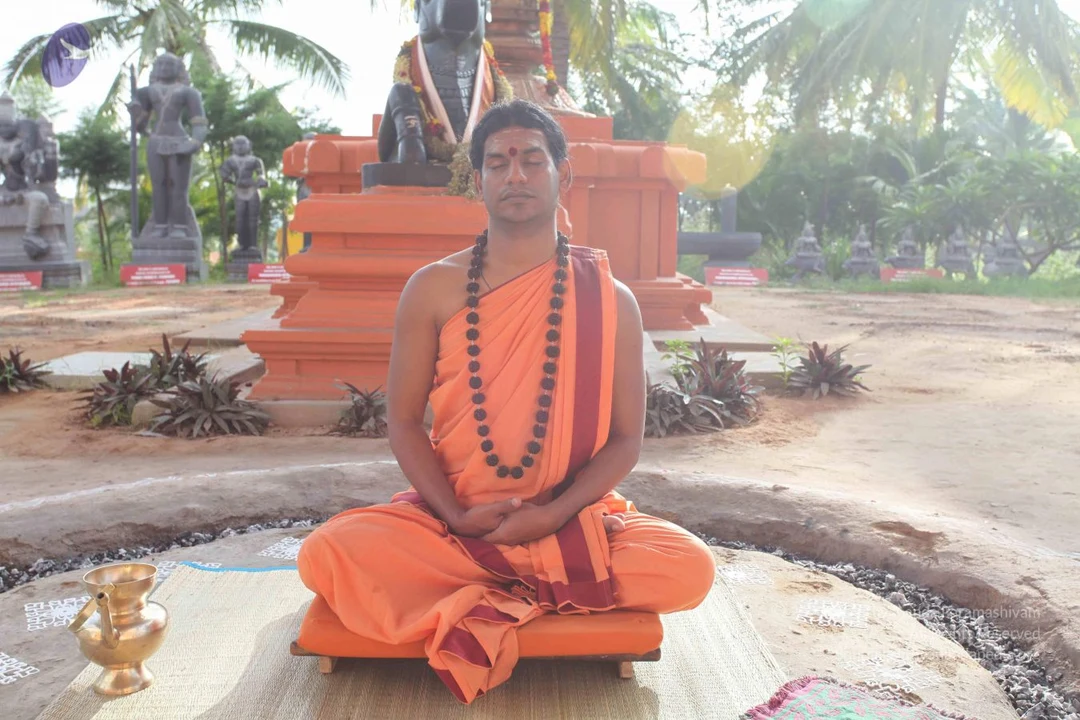
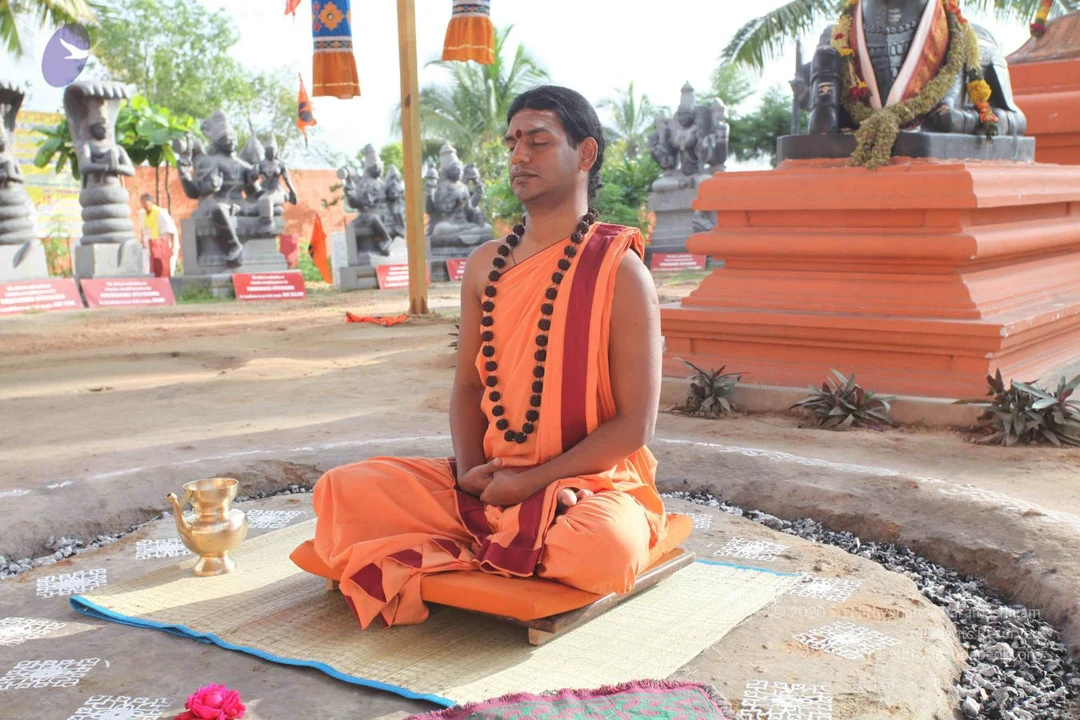
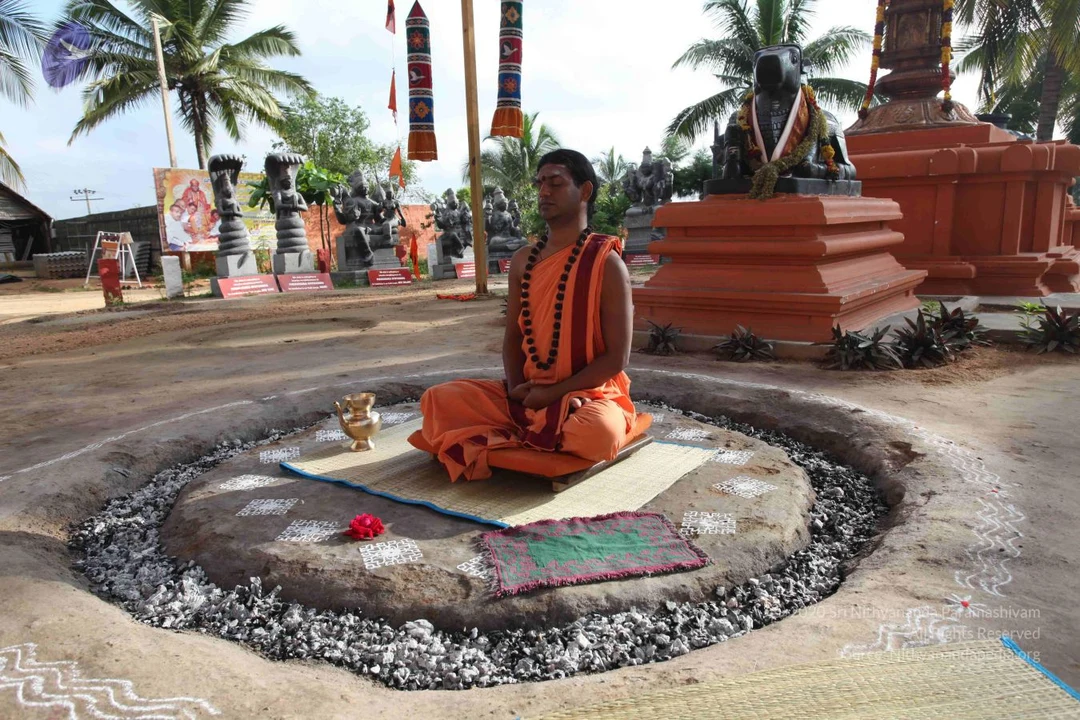
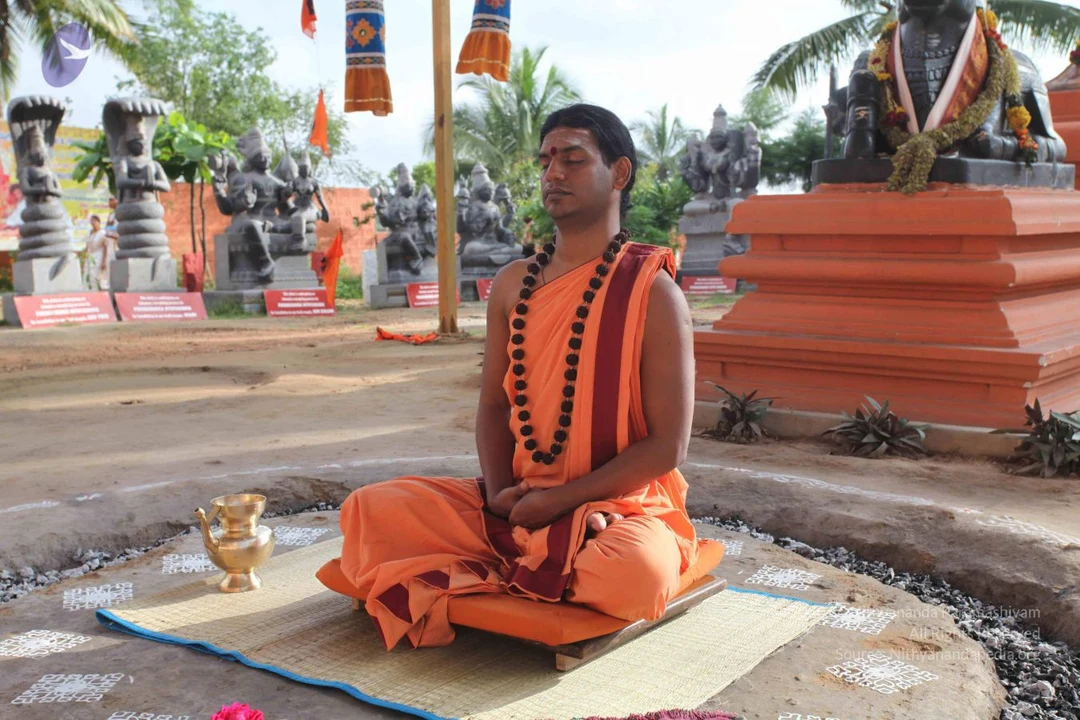
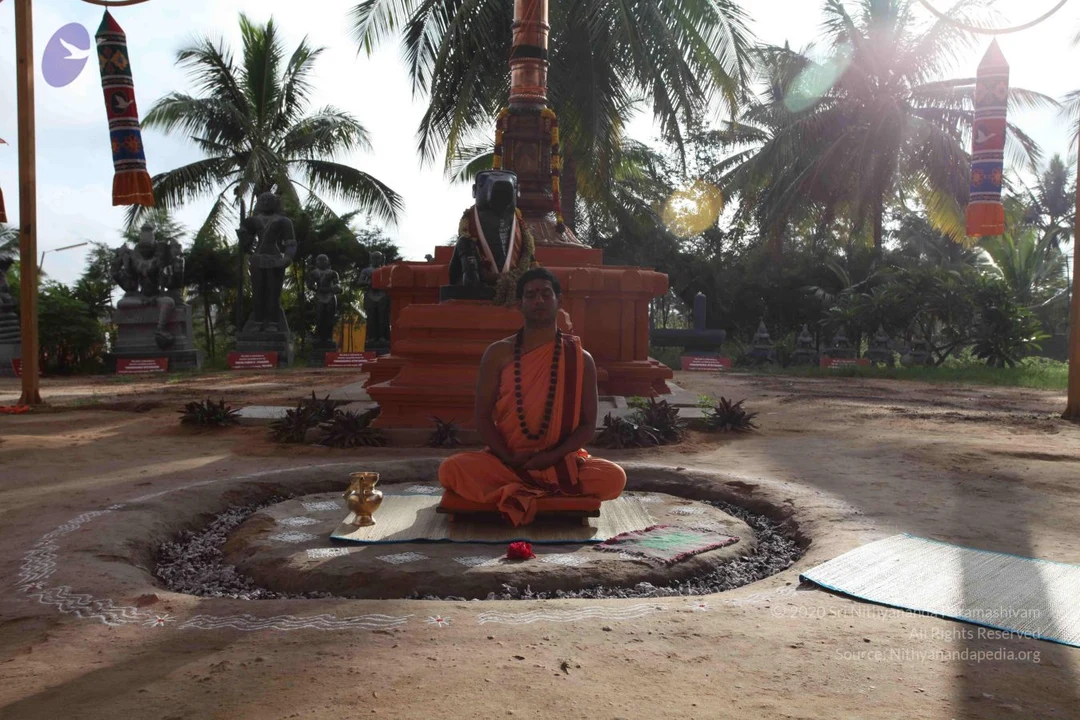
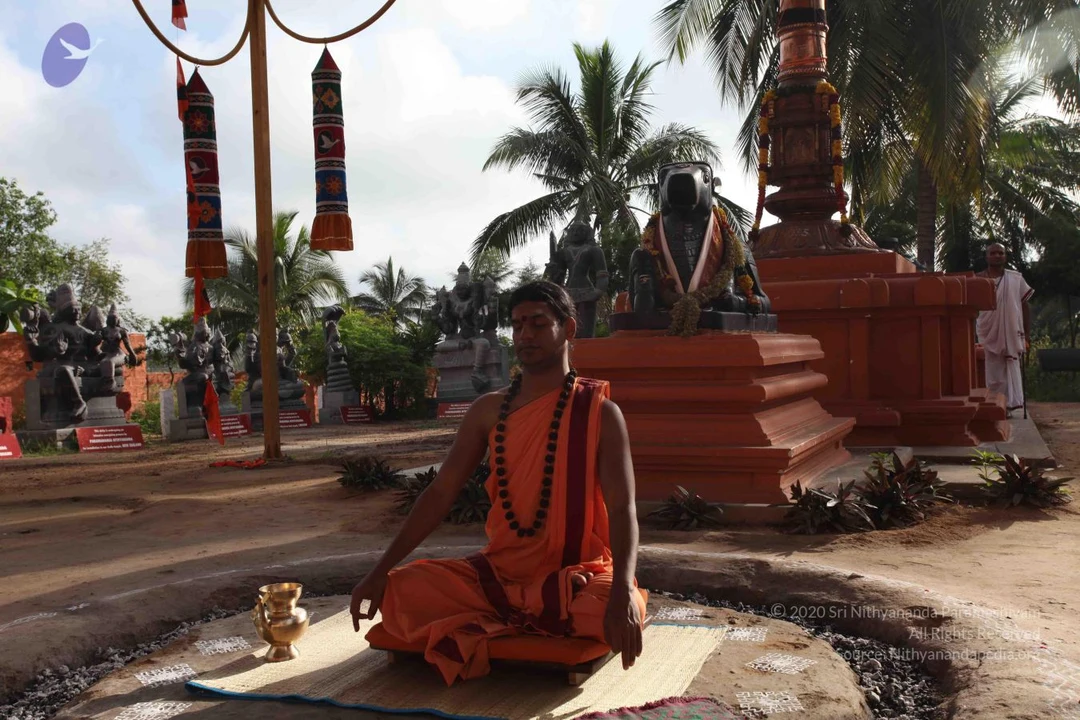
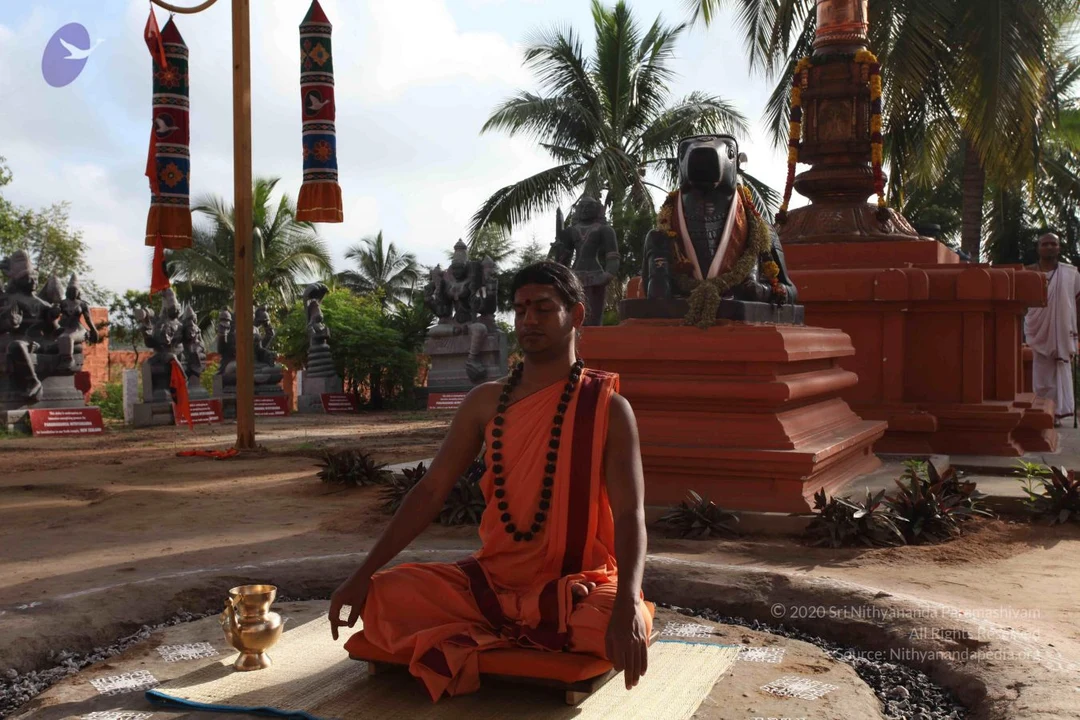
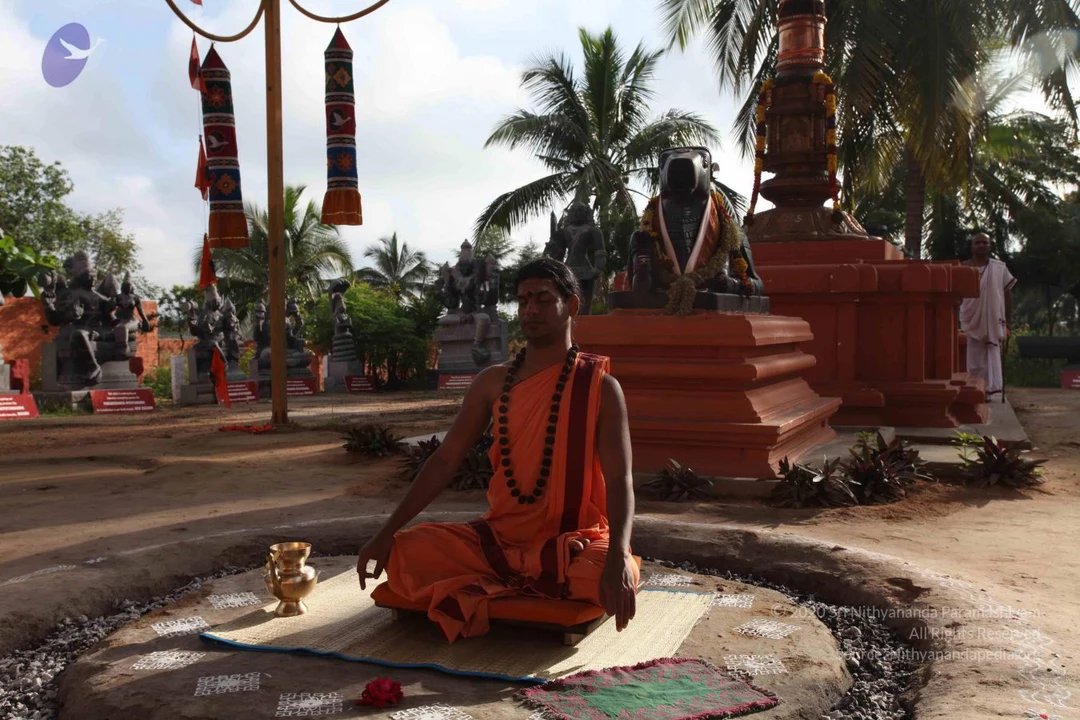
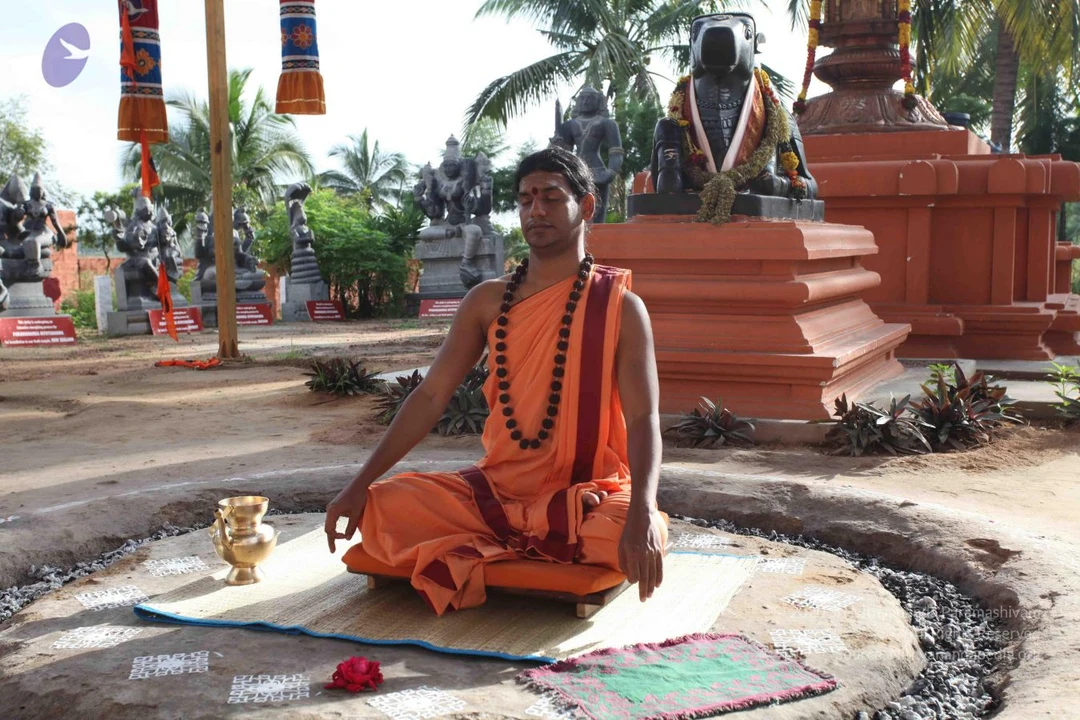
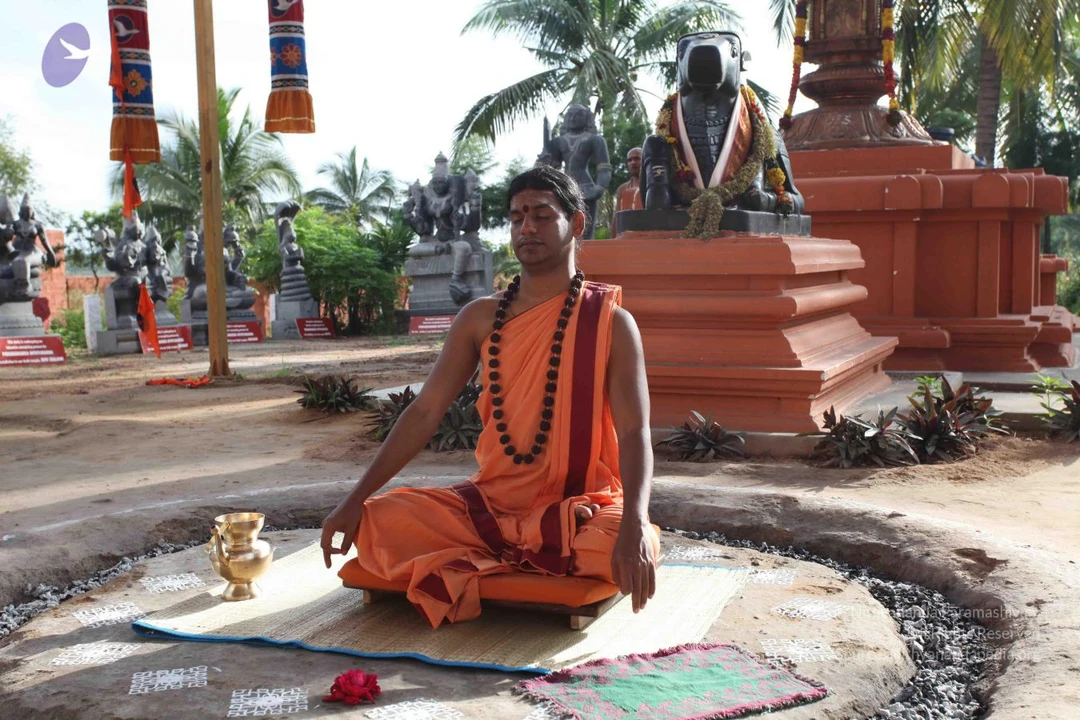
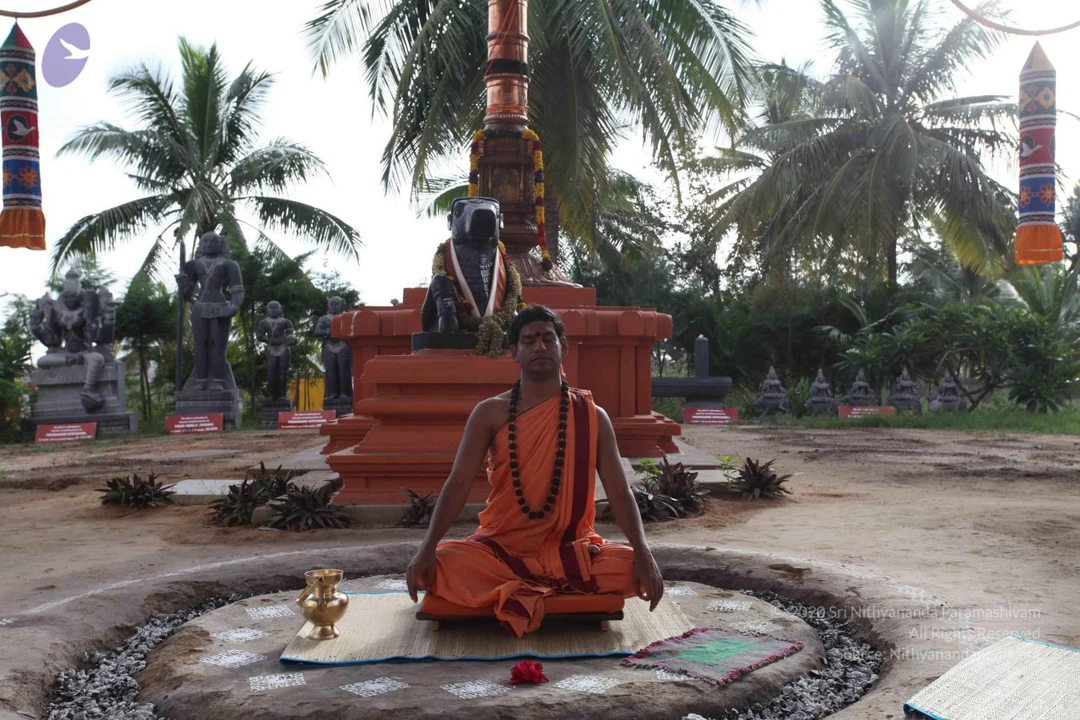
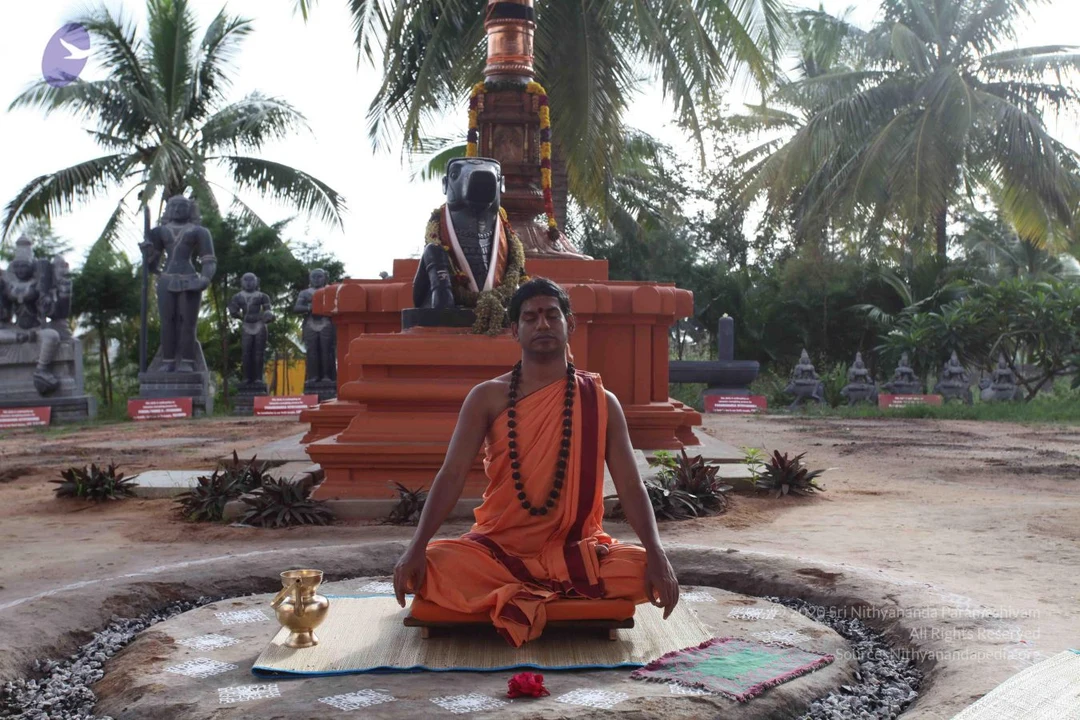
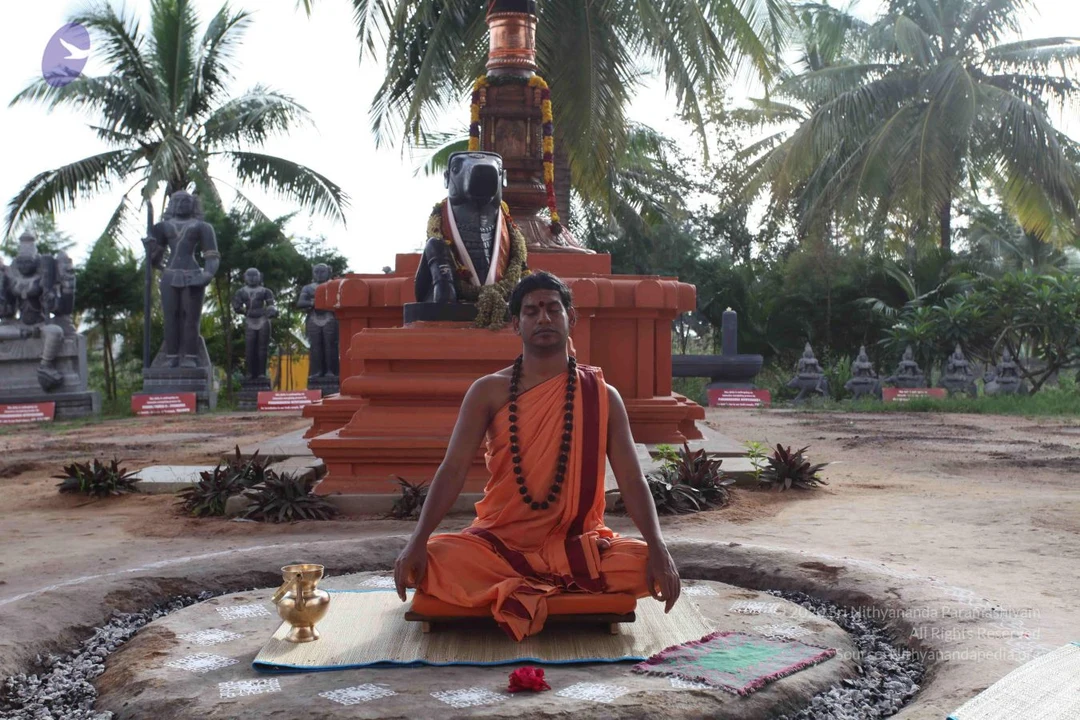
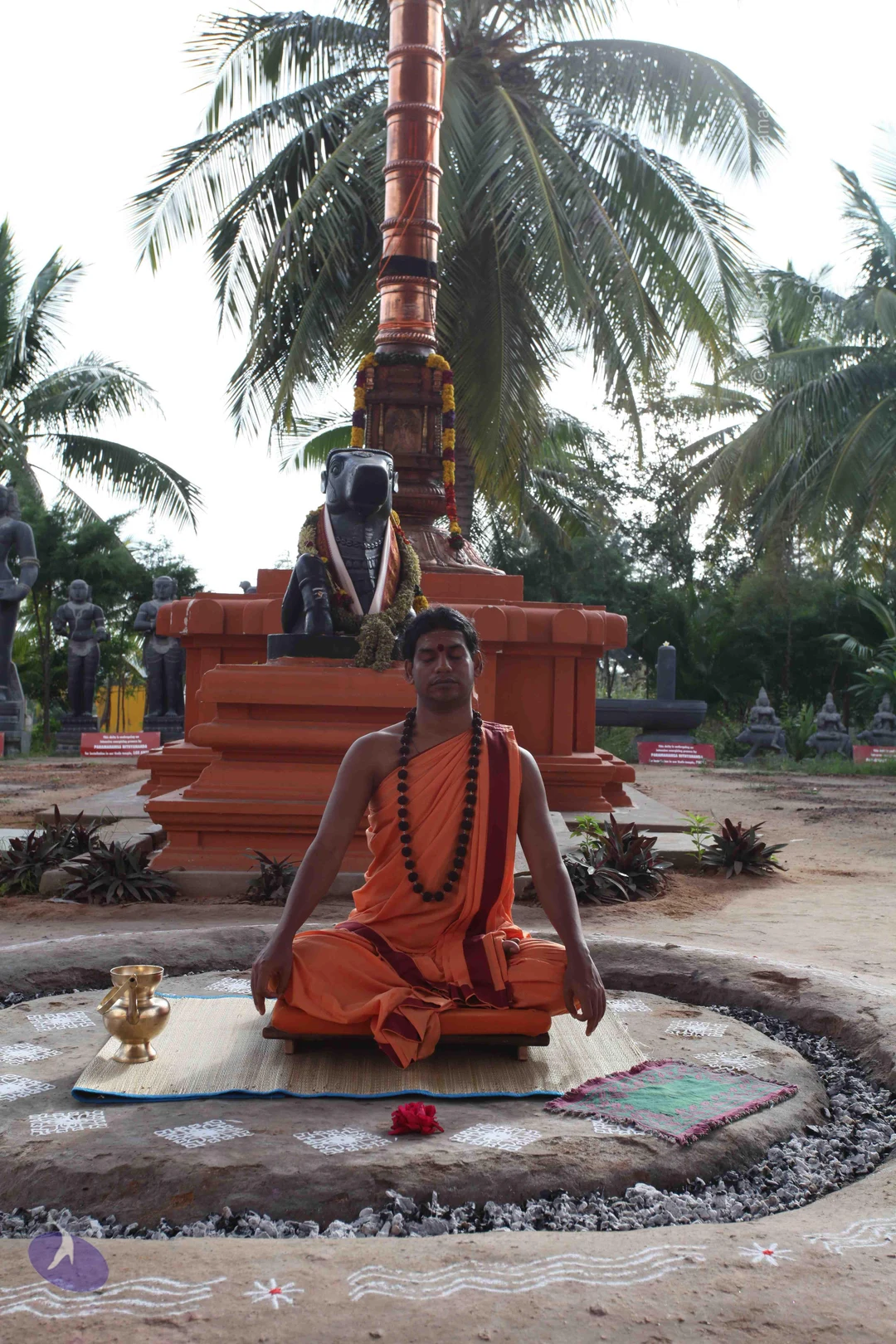
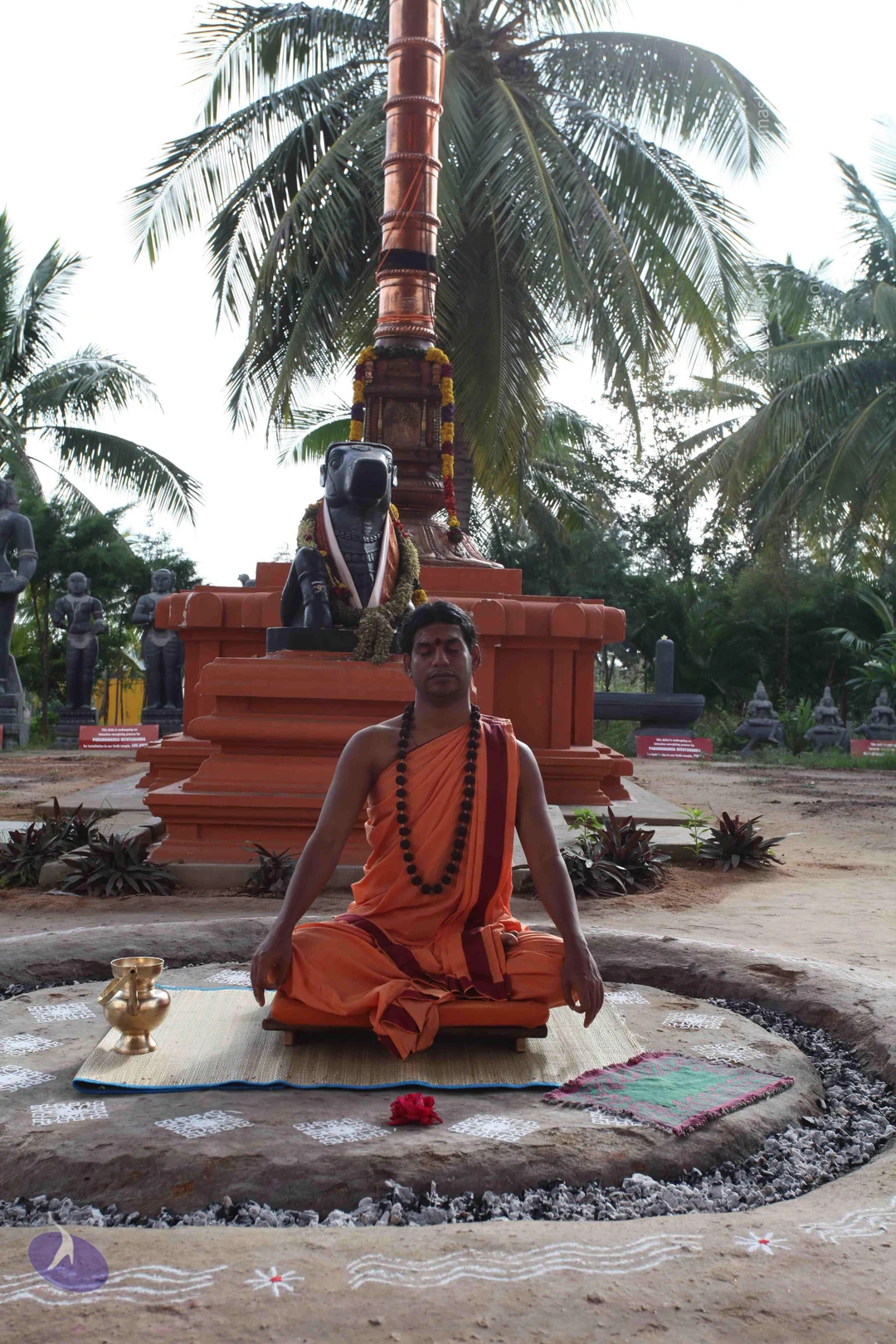
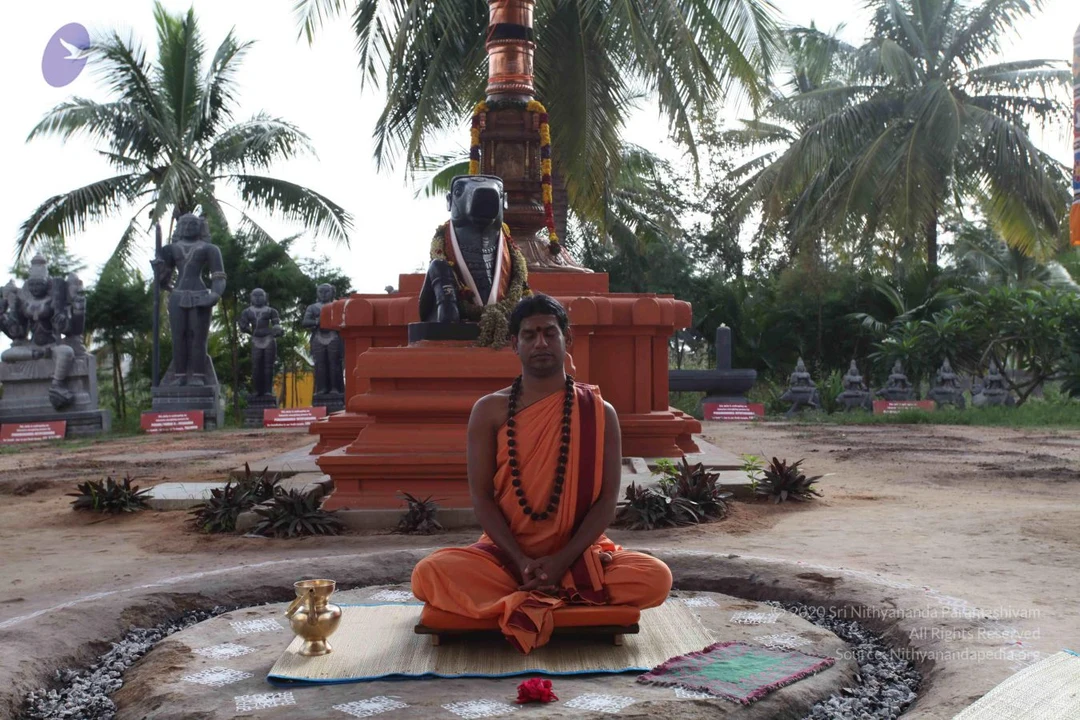
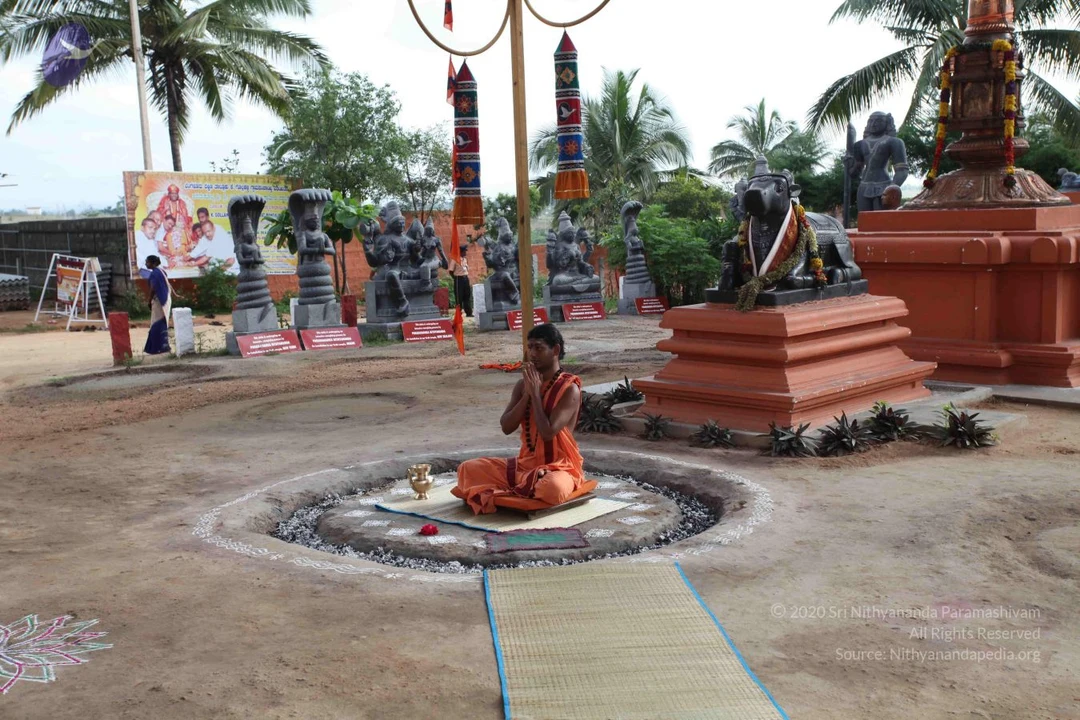
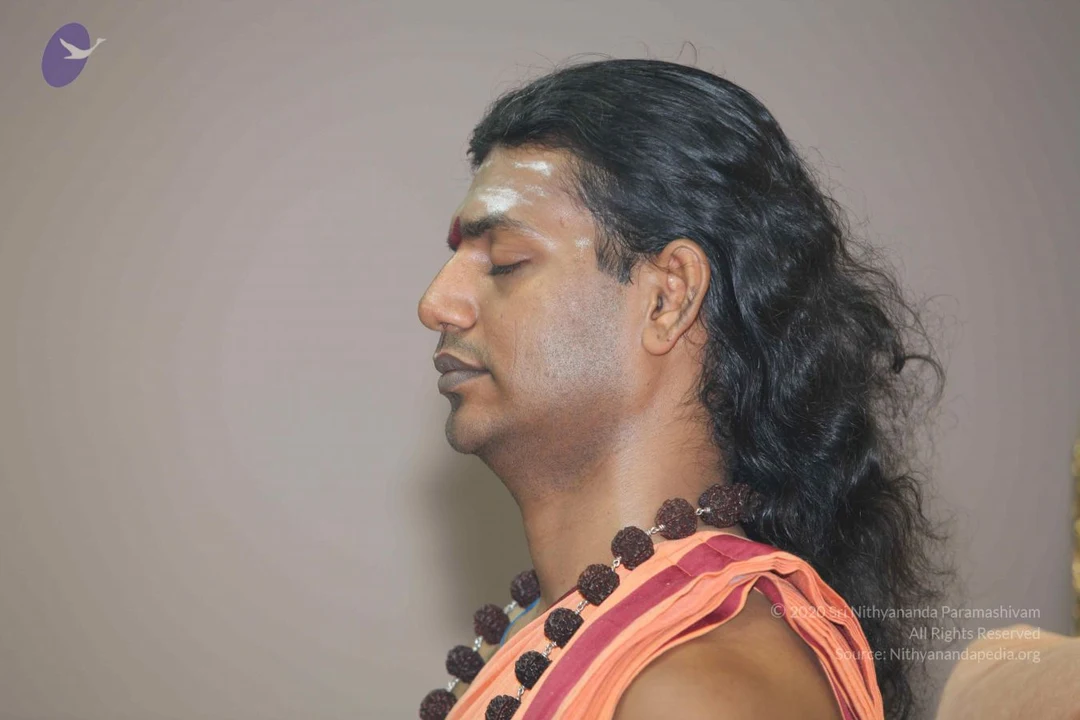
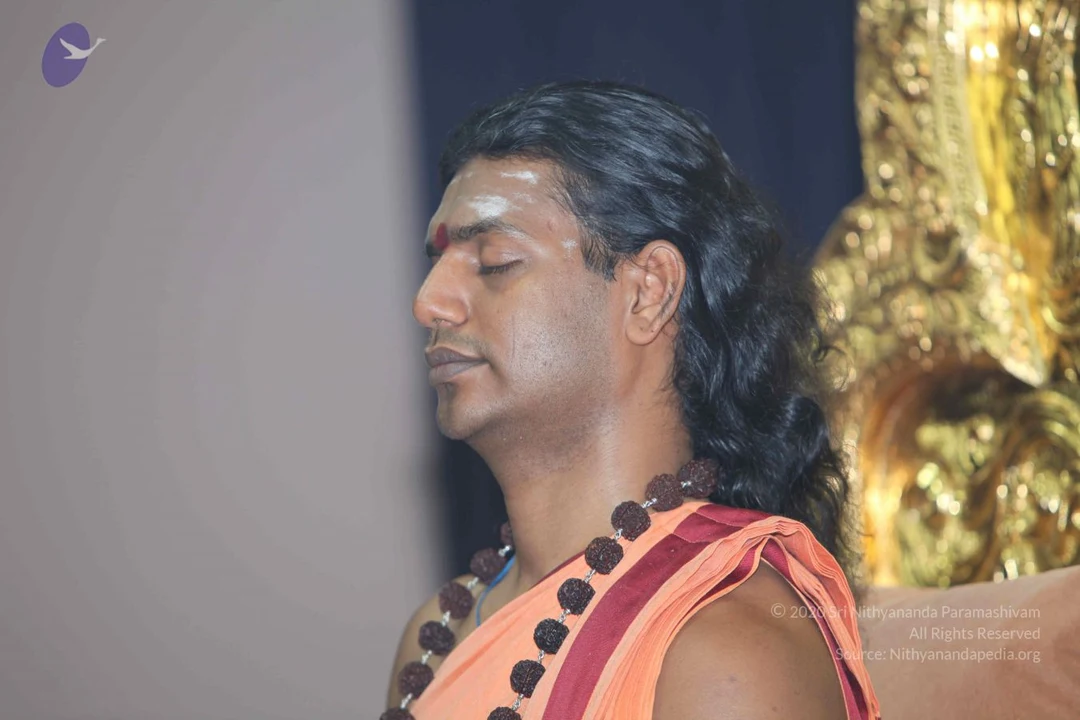
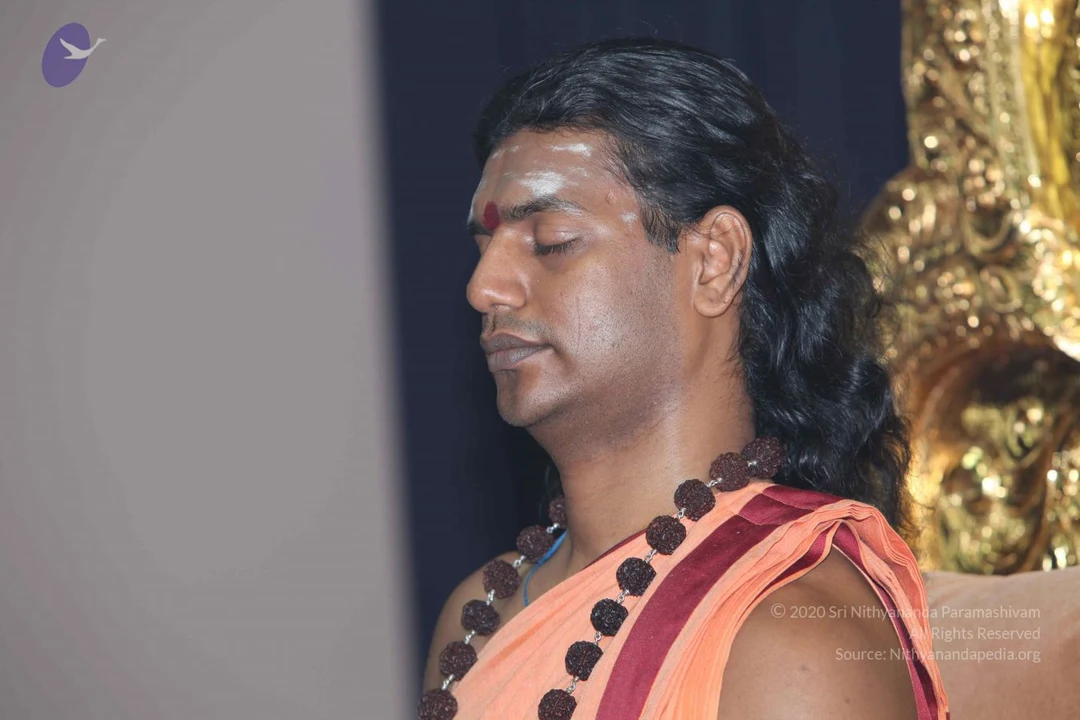
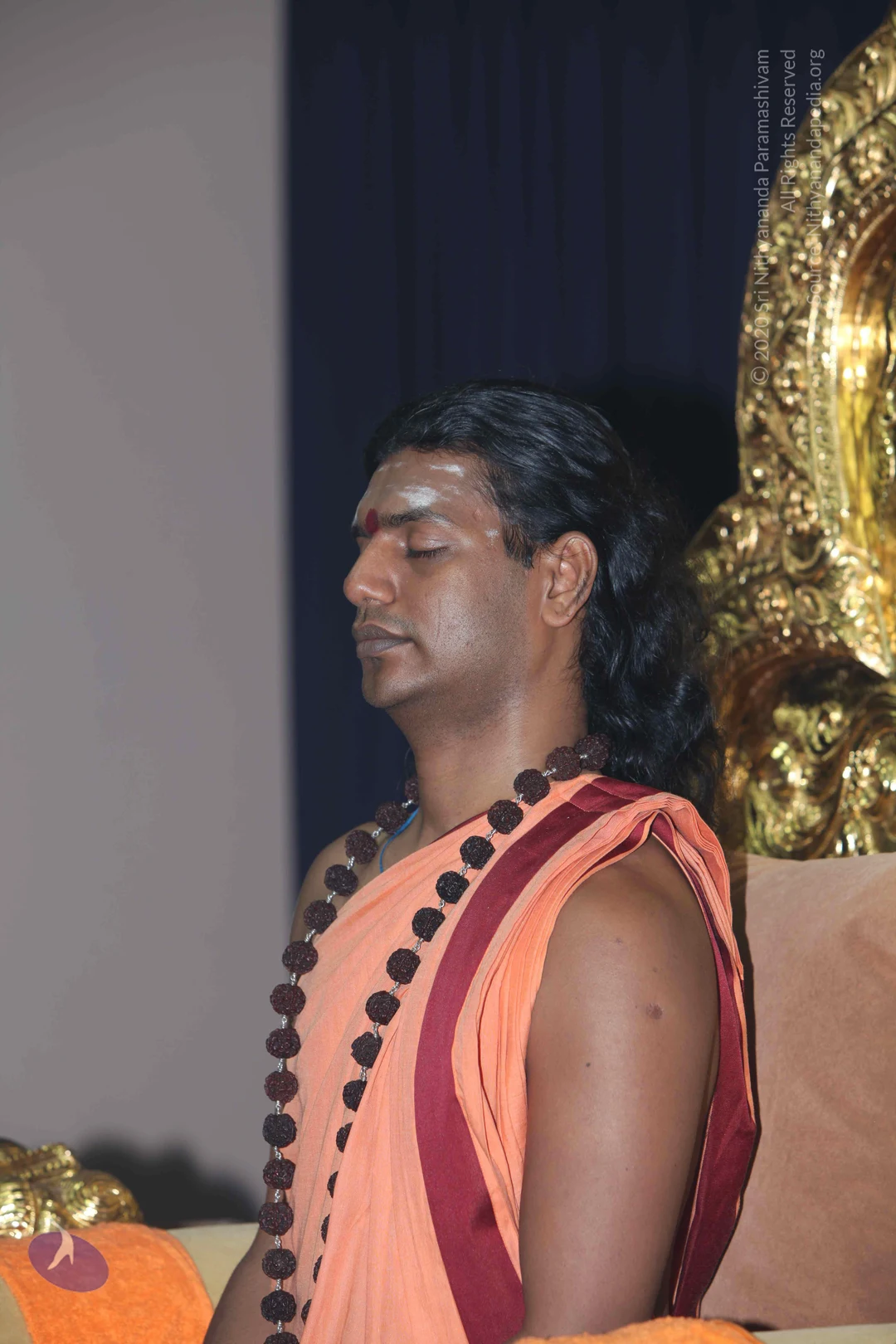
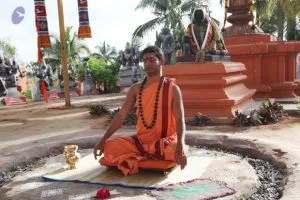
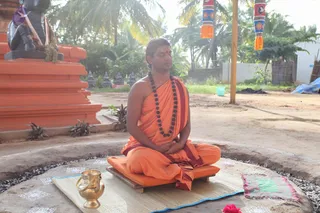
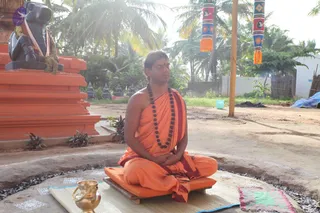
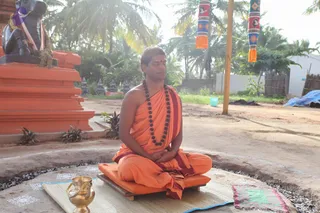
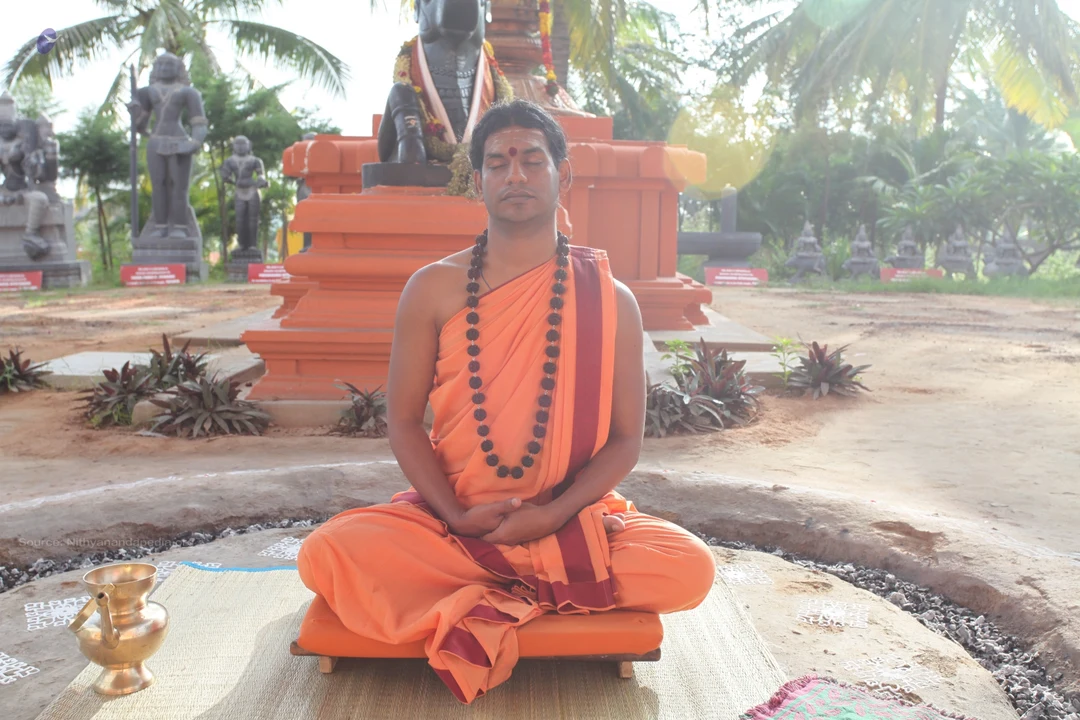
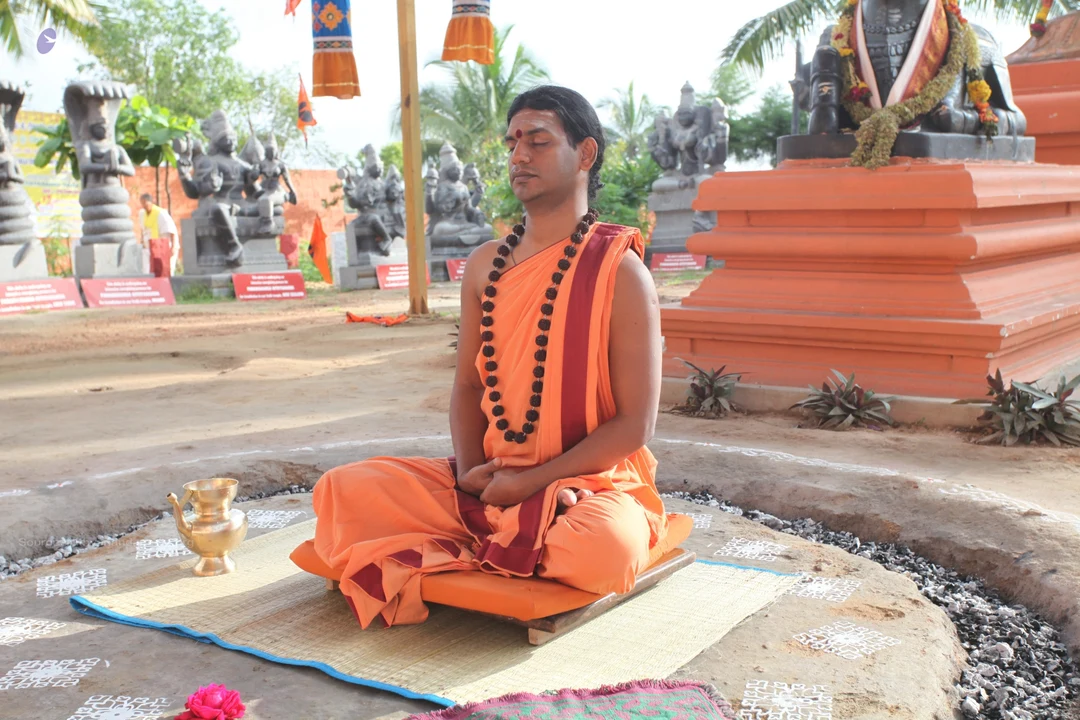
A seated man in orange robes meditates cross-legged on a woven straw mat over a stone platform outdoors. He wears a long rudraksha mala, a red tilak on his forehead, and has his eyes closed with hands resting in his lap. A brass kalasha-style vessel and a pink flower sit on the mat beside him. Behind him are a red-painted stone pedestal and a dark stone deity murti draped with a garland and a saffron sash, flanked by additional stone sculptures and palm trees. Saffron flags hang from a pole, and a small figure in yellow stands in the background.

November 10 2010

Original wiki page
Contents

Title:

Prema Bhakti - The Ultimate Path: Nithyananda Morning Satsang (10 Nov 2010) Message

Narration:

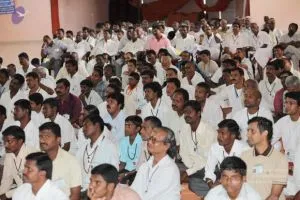
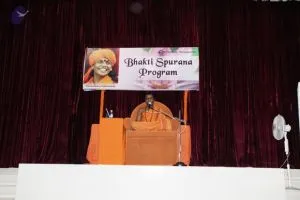
The Supreme Pontiff of Hinduism, Jagatguru Mahasannidhanam, His Divine Holiness, Bhagavan Nithyananda Paramashivam, expounded on the Cosmic Principles of Bhakti during the everyday live public talk - Nithyananda Satsang. In this talk entitled Prema Bhakti - The Ultimate Path: Nithyananda Morning Satsang (10 Nov 2010) Message, His Divine Holiness (HDH) compared His sentiment in speaking about Prema Bhakti with Ramana Maharshi’s sentiment when asked to explain The Marital Garland of Letters which He authored. “Some things are indescribable and have to be experienced” He said. Some things, which if spoken about, become degraded because the experience of prema bhakti is too sacred. His DIvine Holiness announced that He will not give a definition, but will only provide techniques for inspiration to achieve this state. His Divine Holiness concluded by saying Bhakti Spurana is the process and that going through the process, one will experience real prema bhakti.

Video and Audio:

Prema Bhakti - The Ultimate Path: Nithyananda Morning Satsang (10 Nov 2010) Message

VideoAudio

Photos:
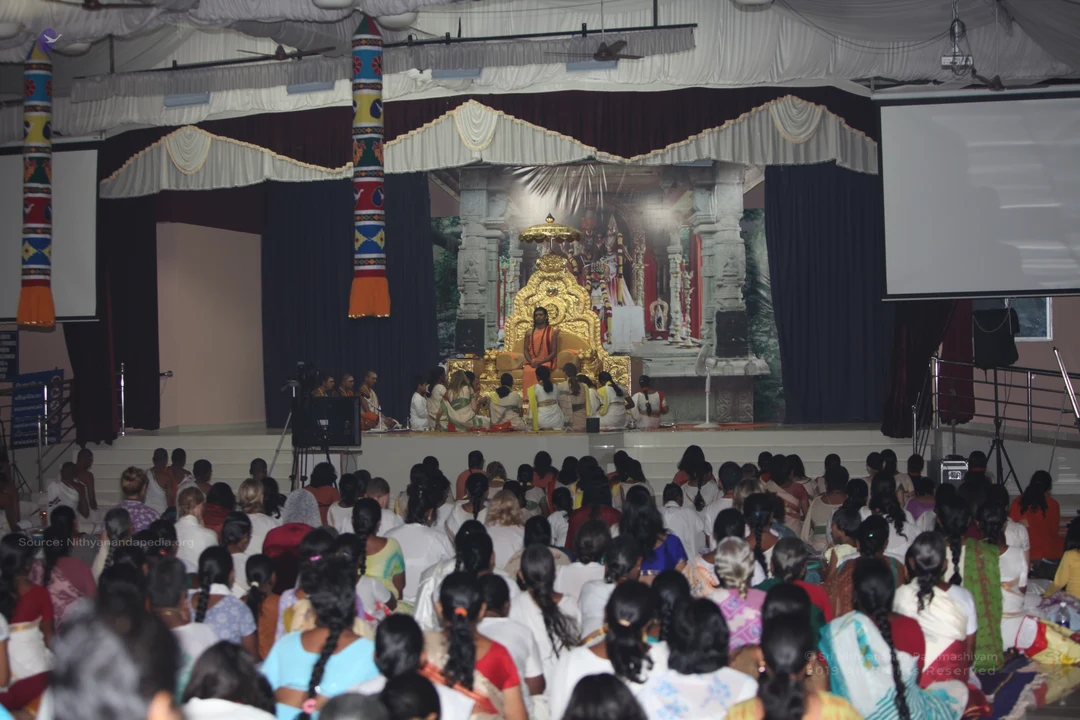
Photos Of The Day:

Panchatapas

Session

paadapja

Photos Of The Day:

PANCHA-TAPAS

HDH-AT-BIDADI-TEMPLE

SARVA-DARSHAN

PADA-POOJA

NITHYA-SATSANG

eN-Galleria

HEALERS-INITIATION-SESSION

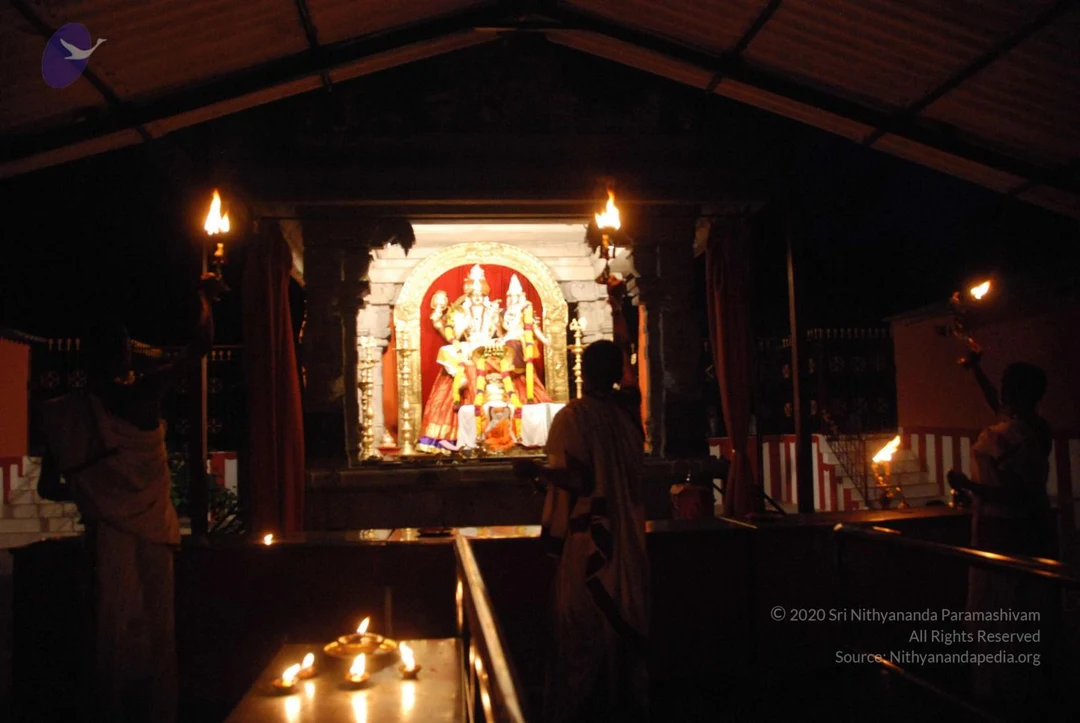
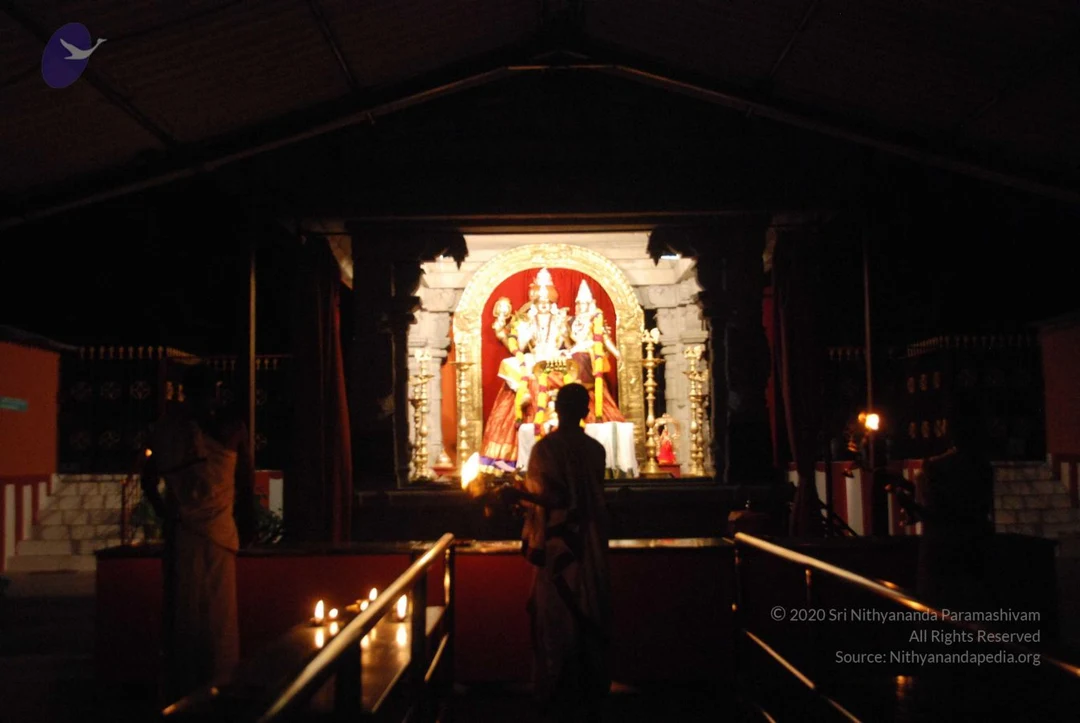
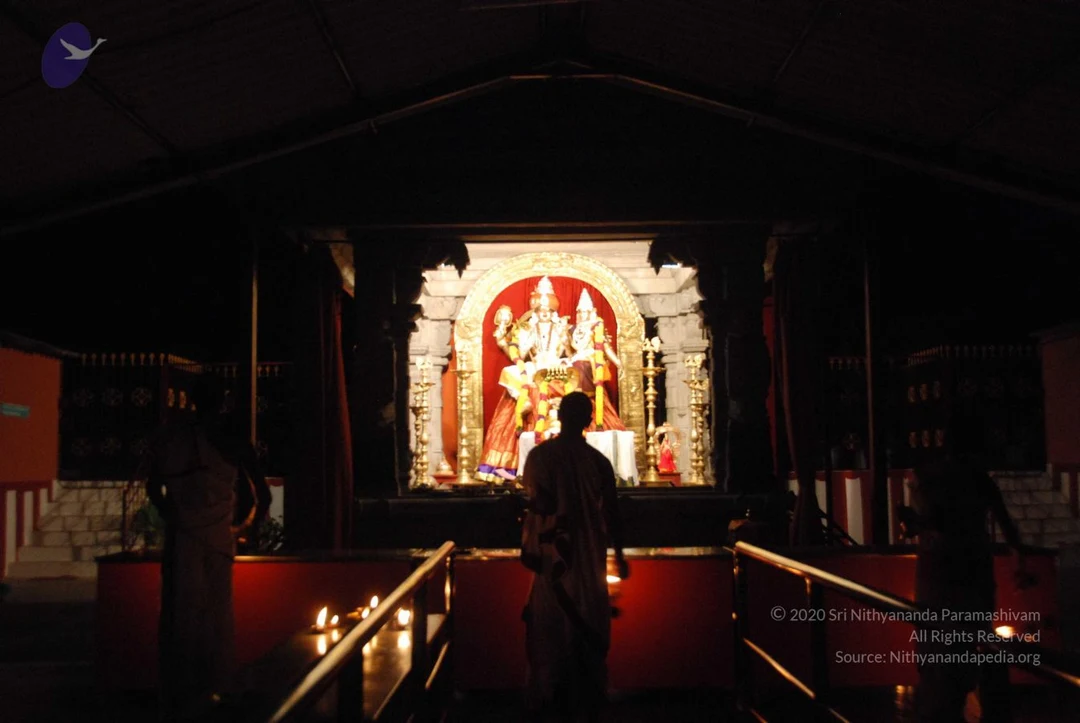
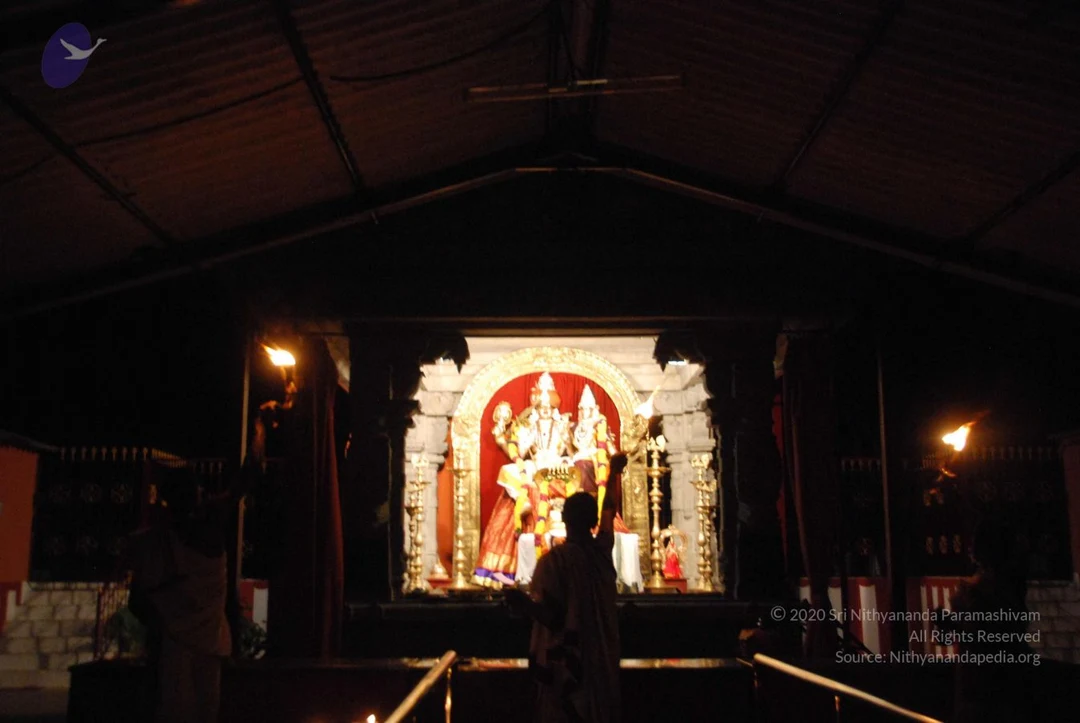
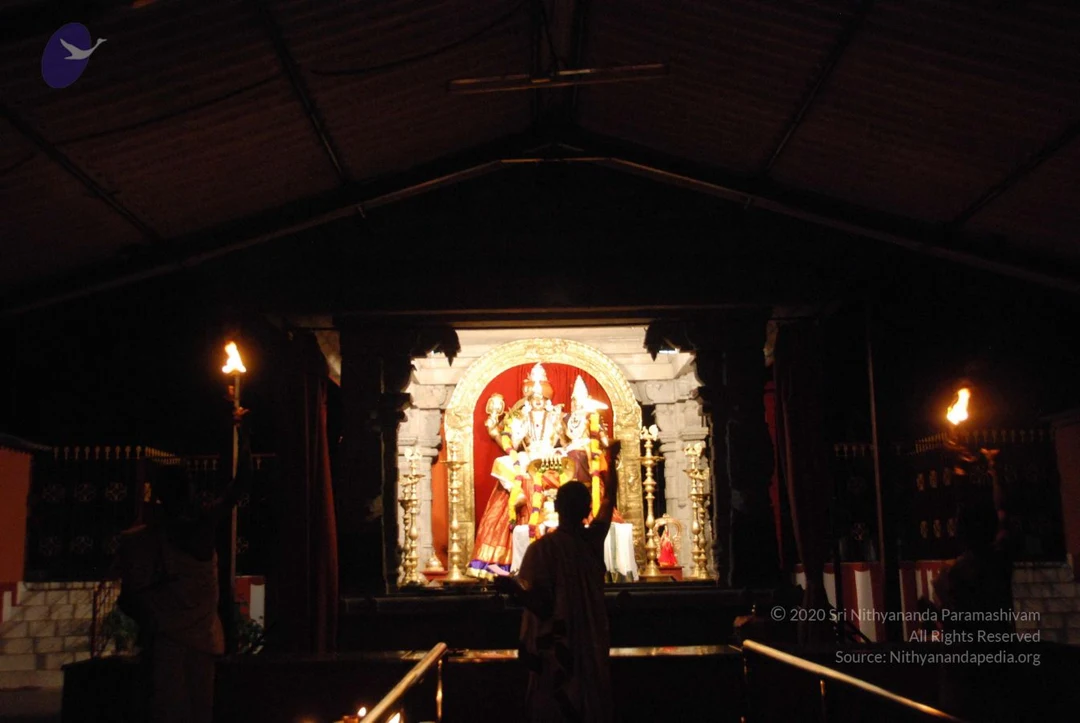
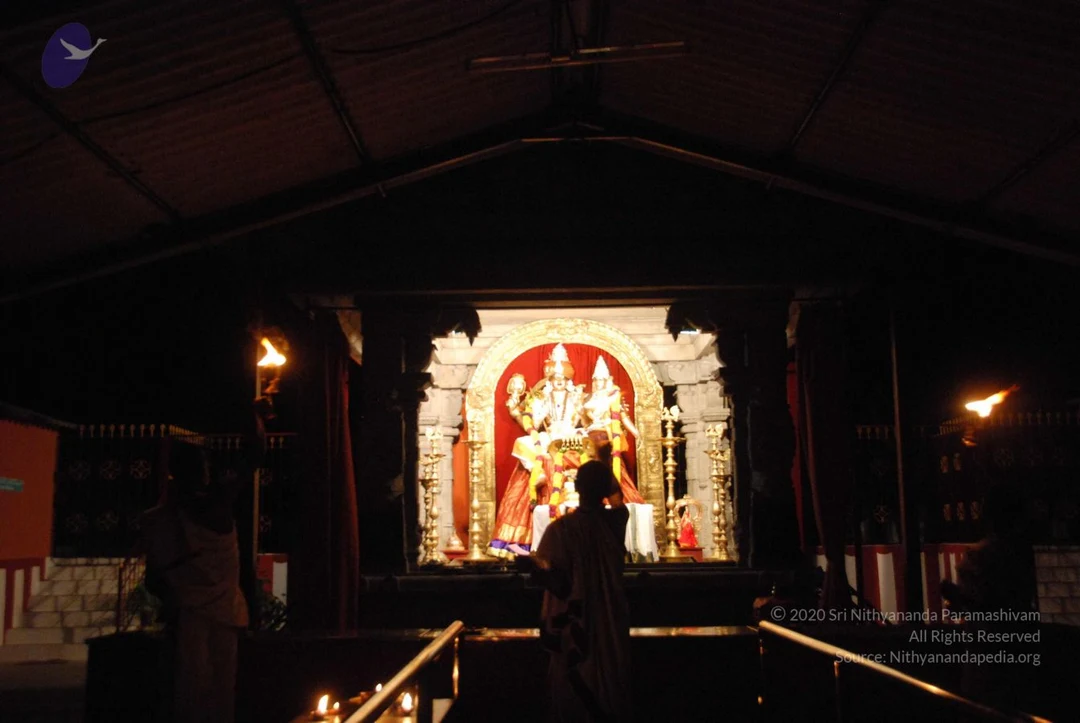
EVENING-ARATI-AT-TEMPLE

Photos from this day

View all 467 photos

Photos:
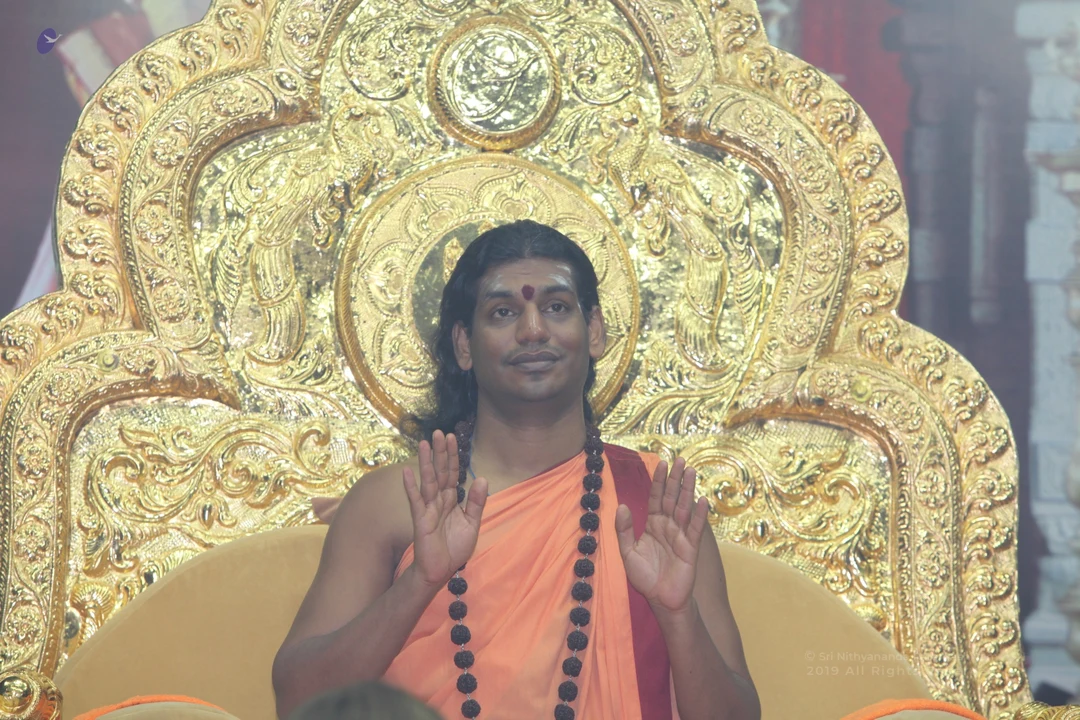
22 photosSource gallery
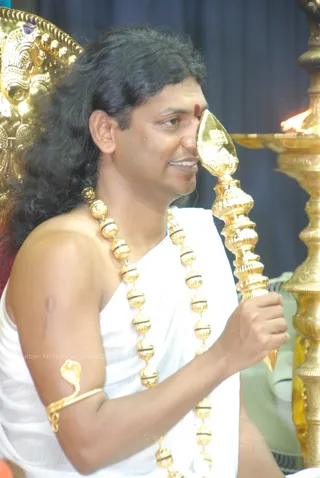
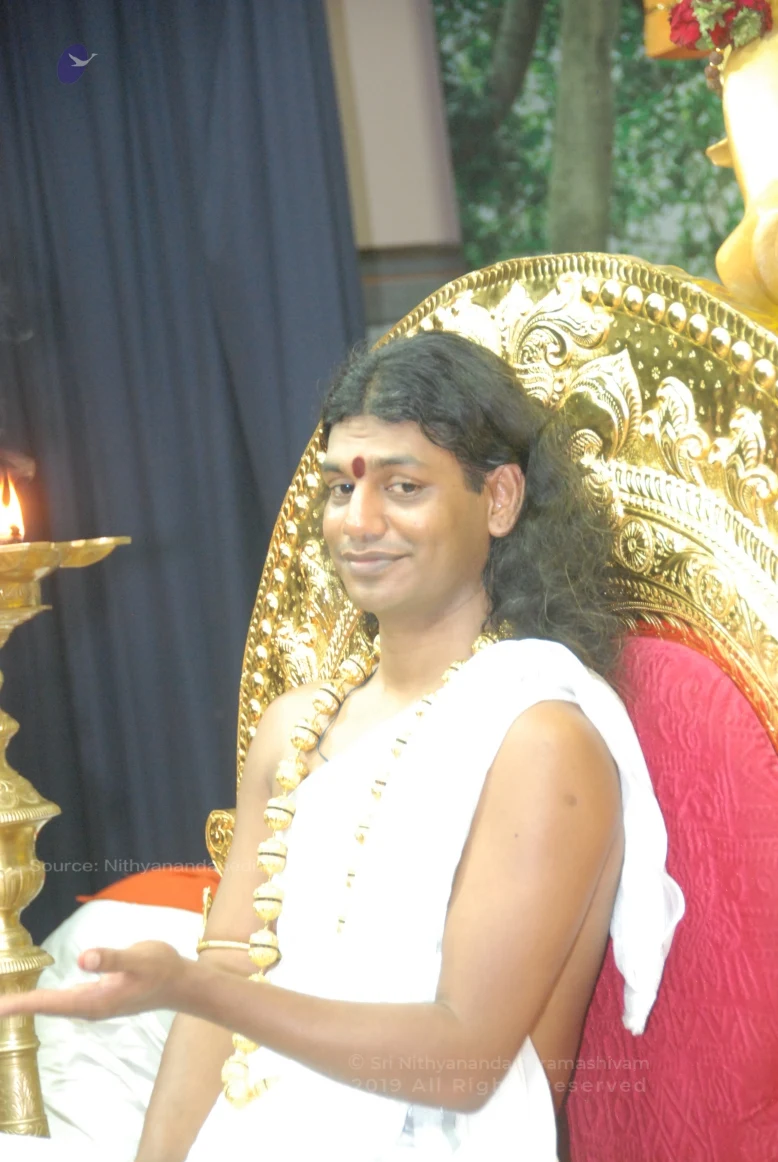
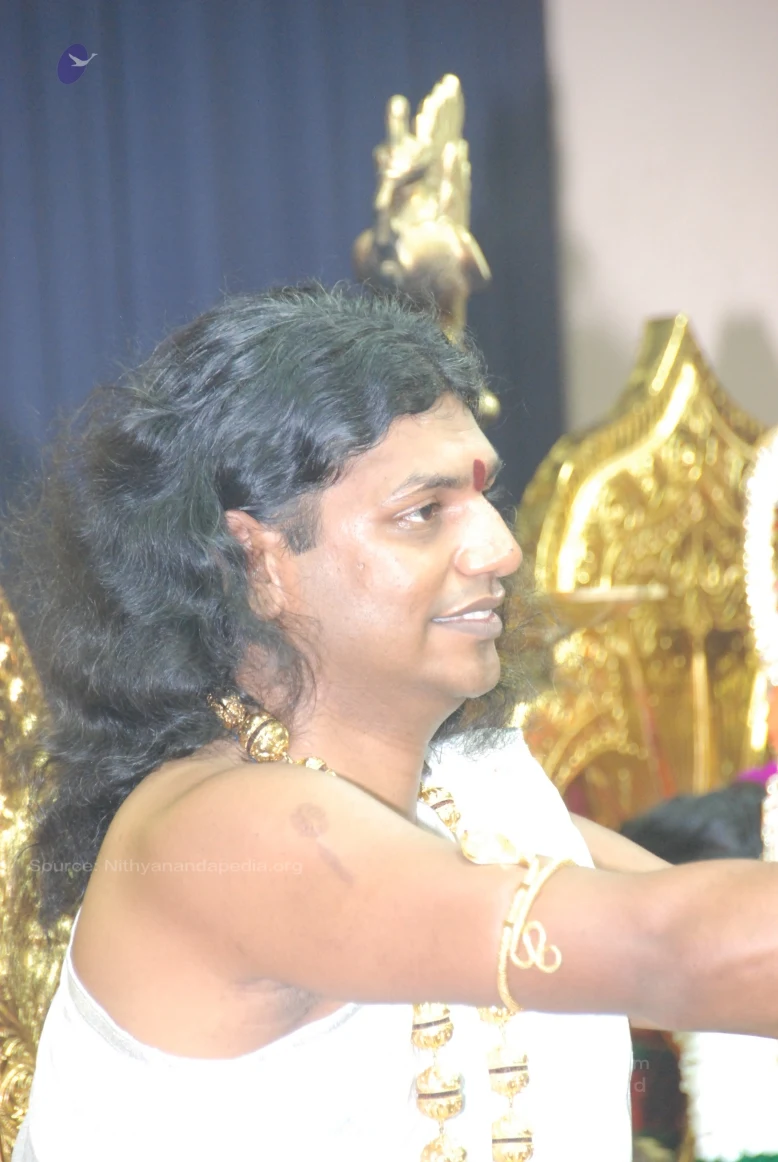
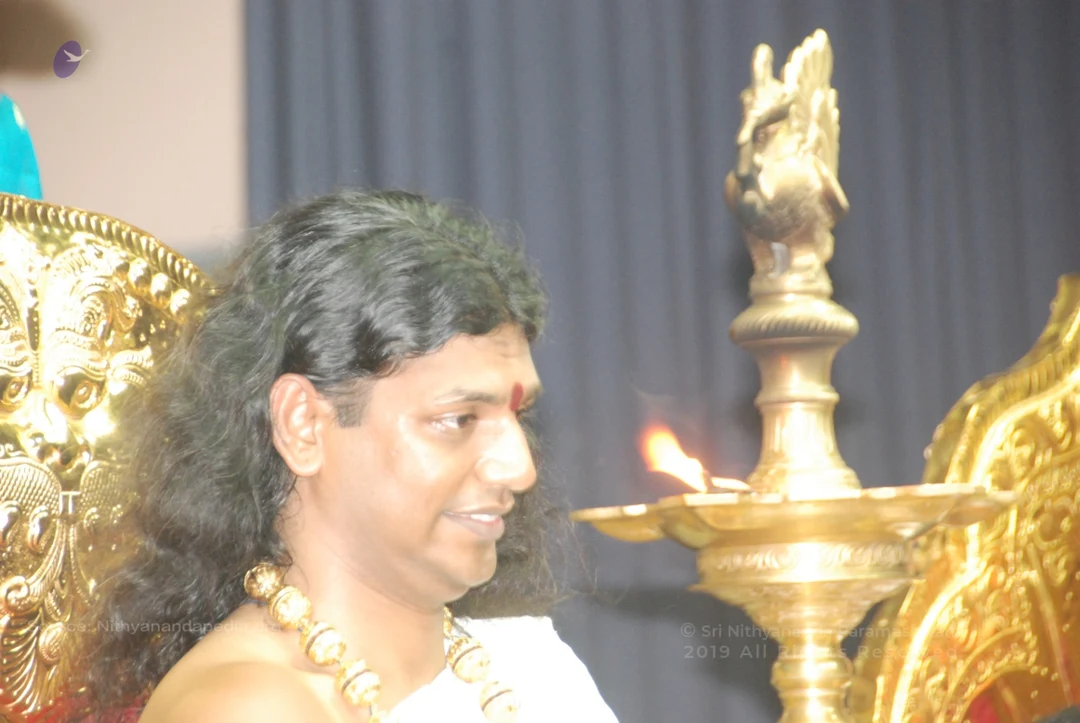
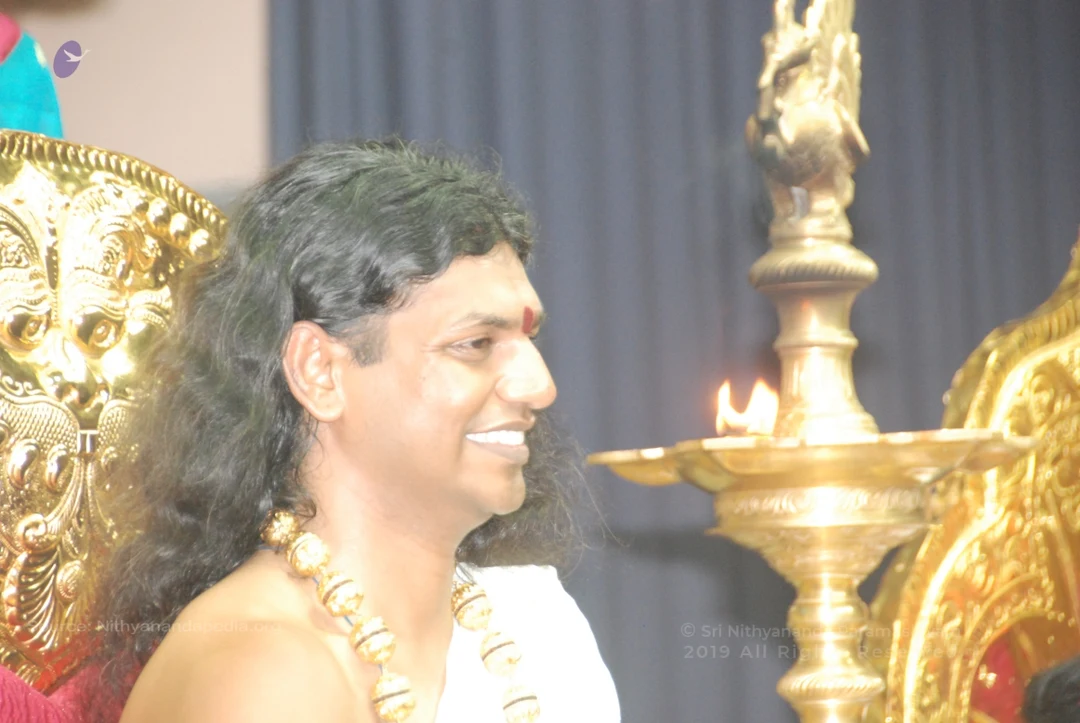
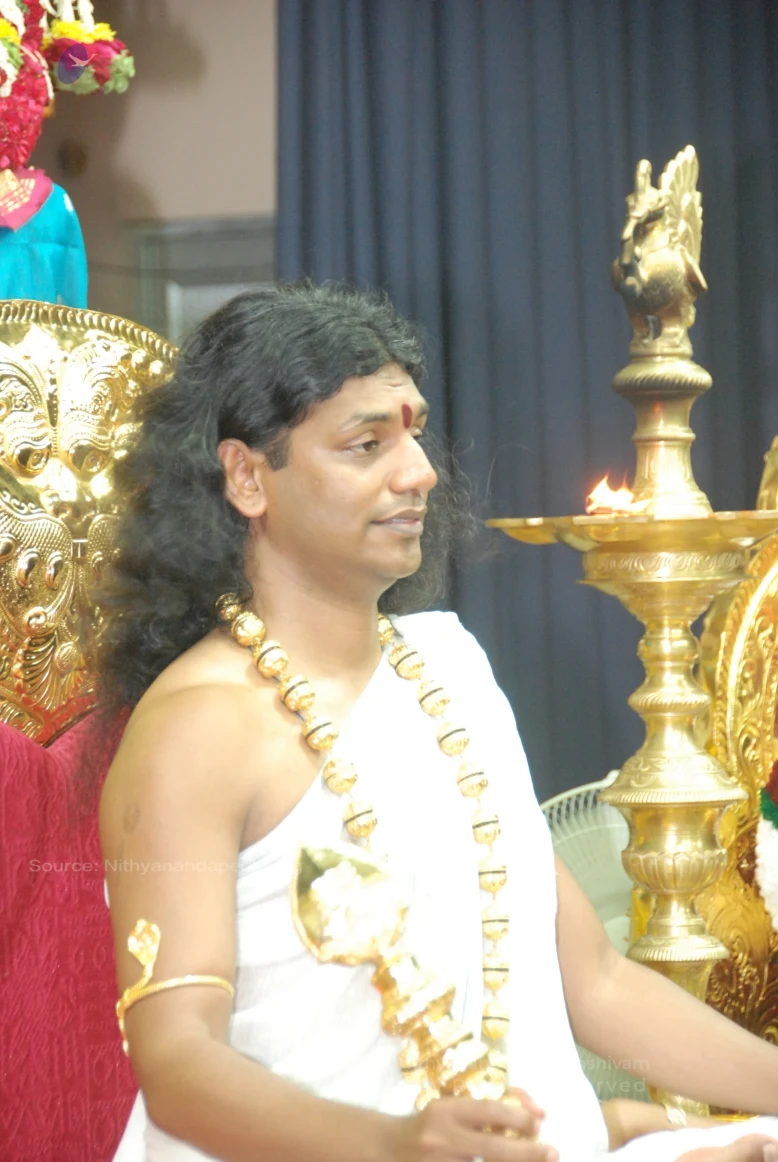
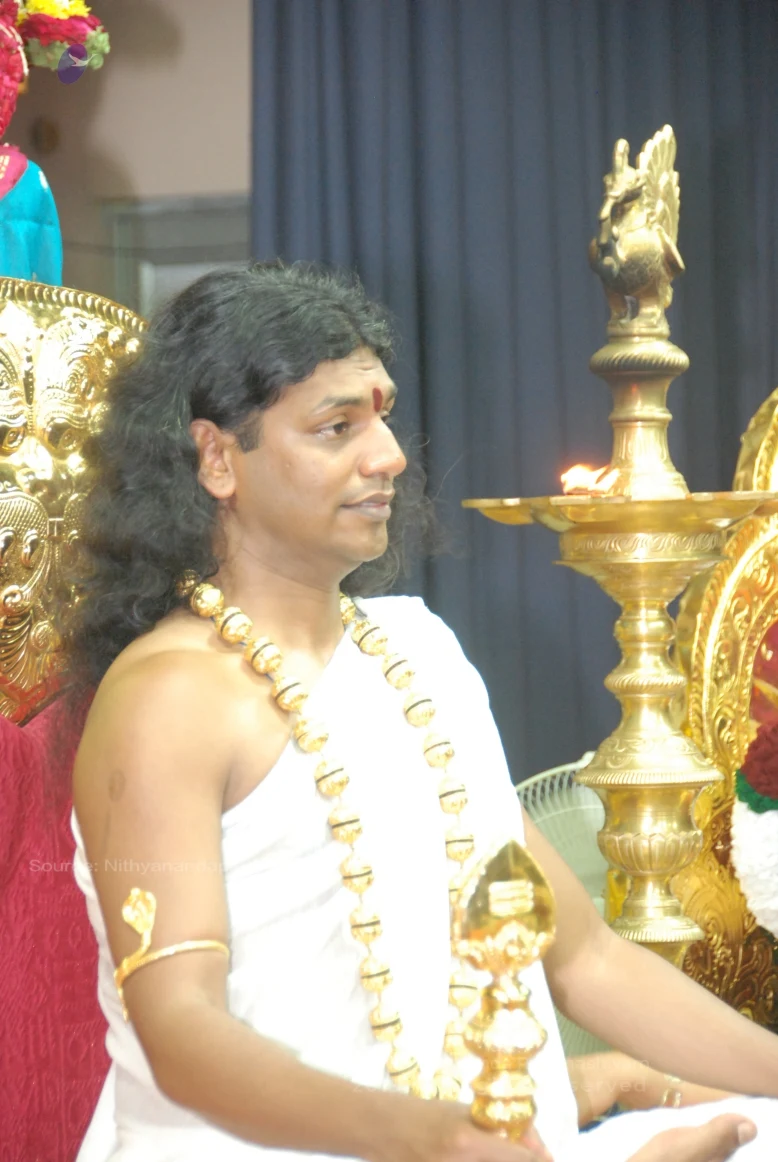
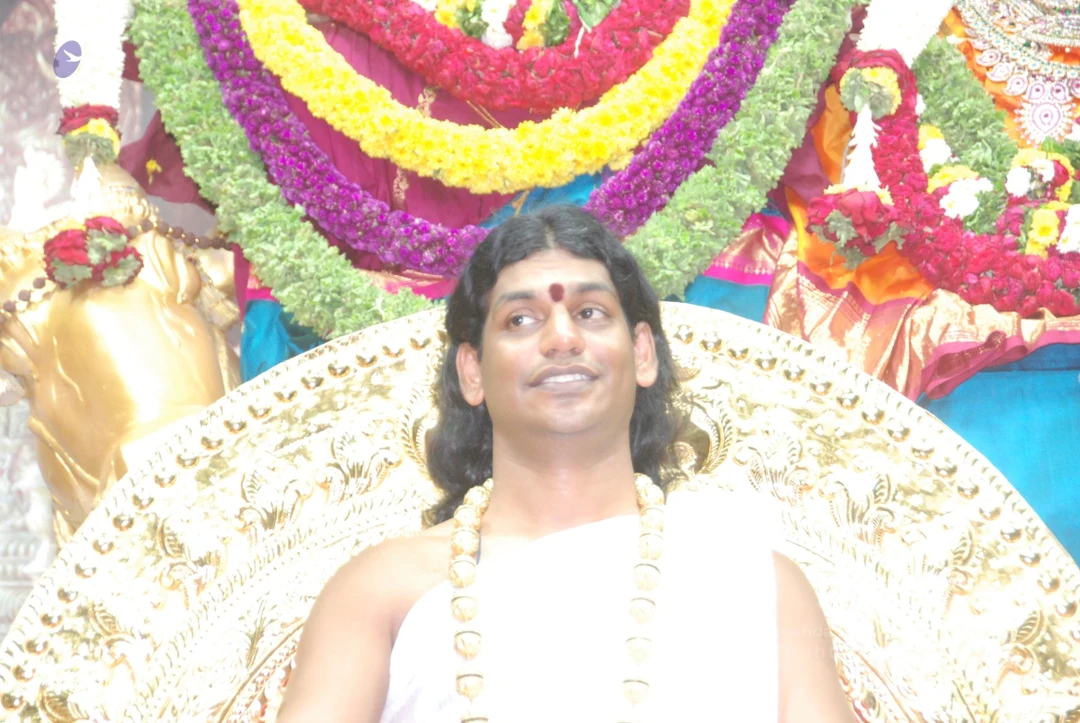
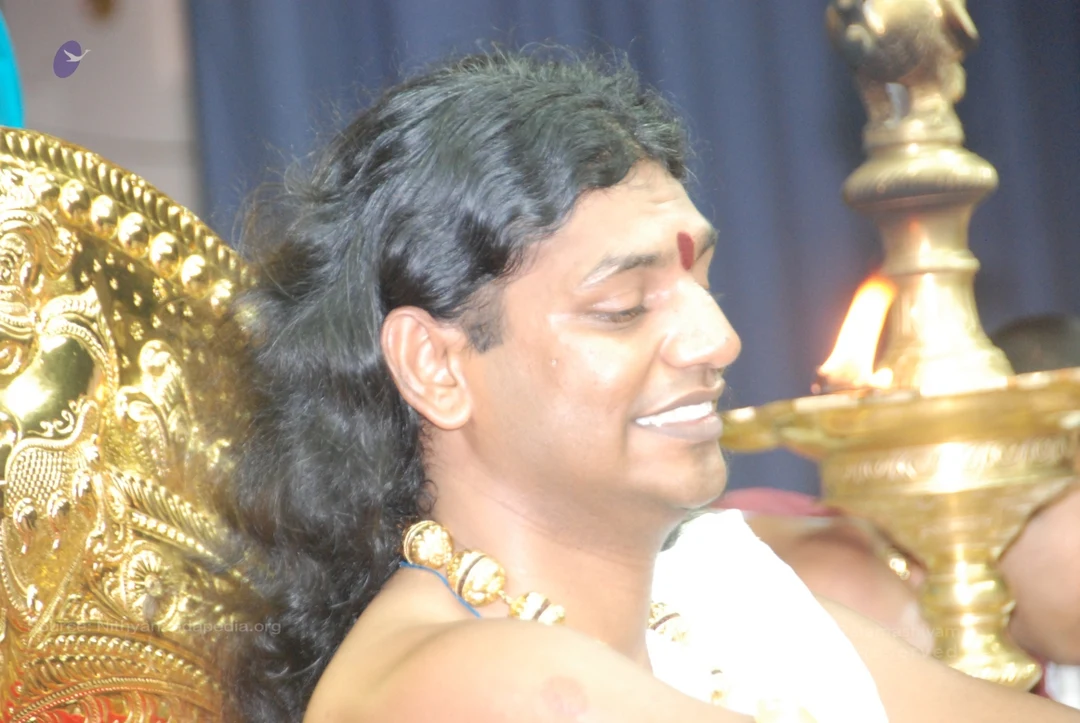
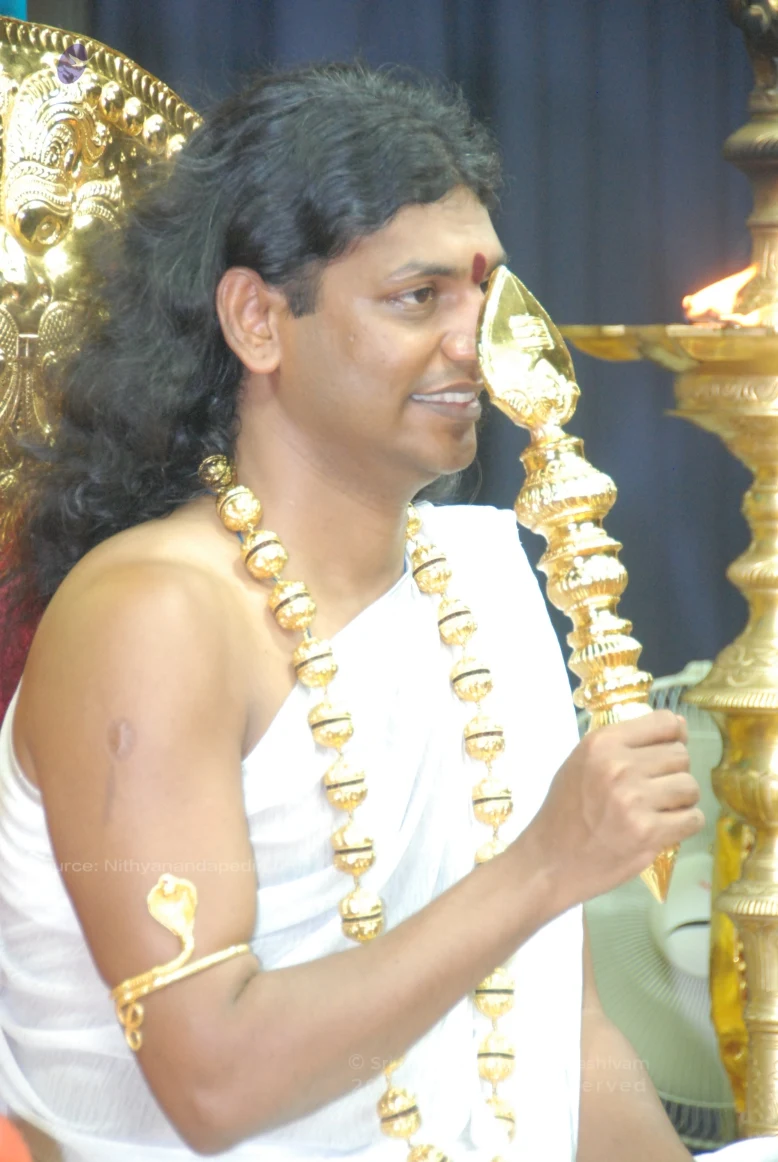
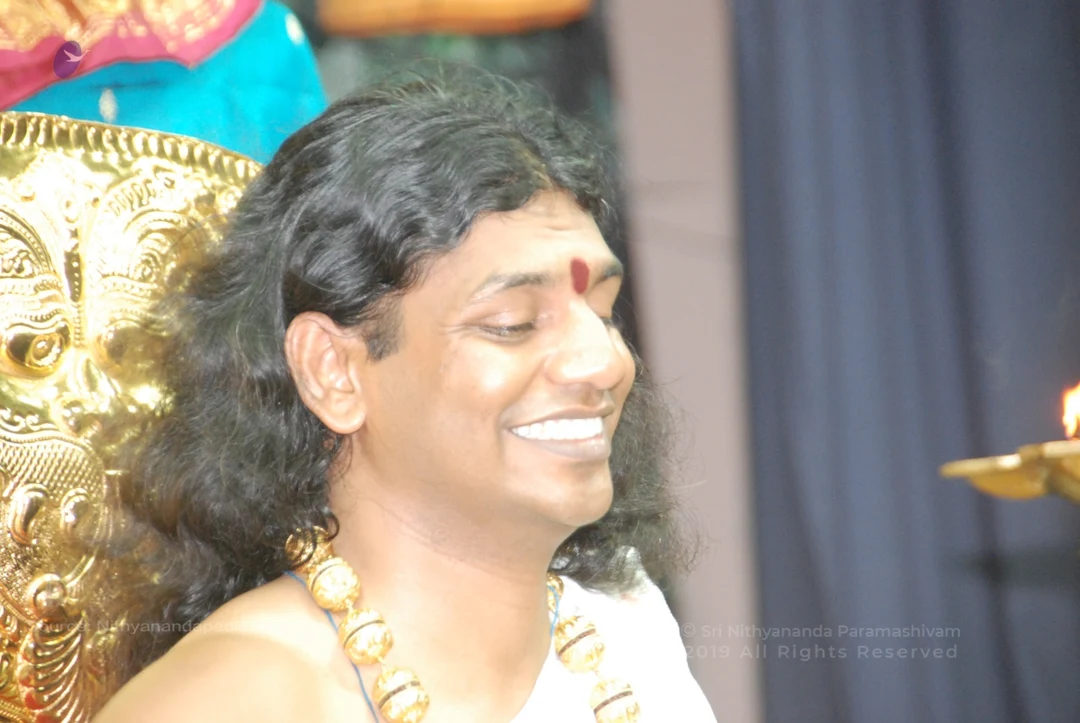
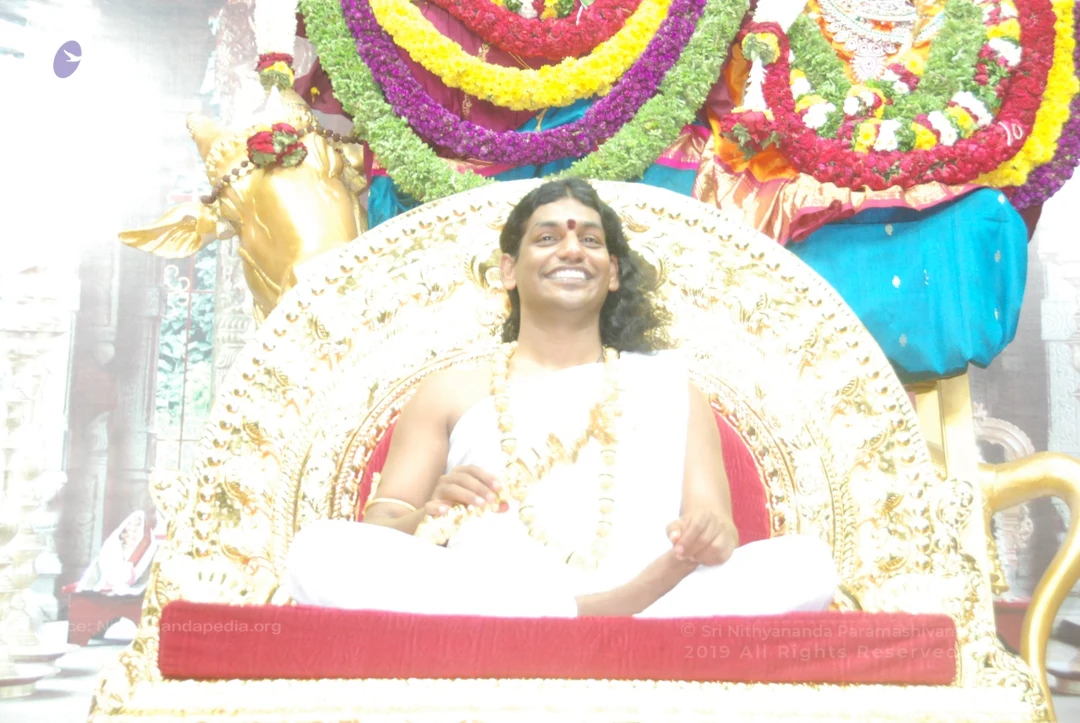
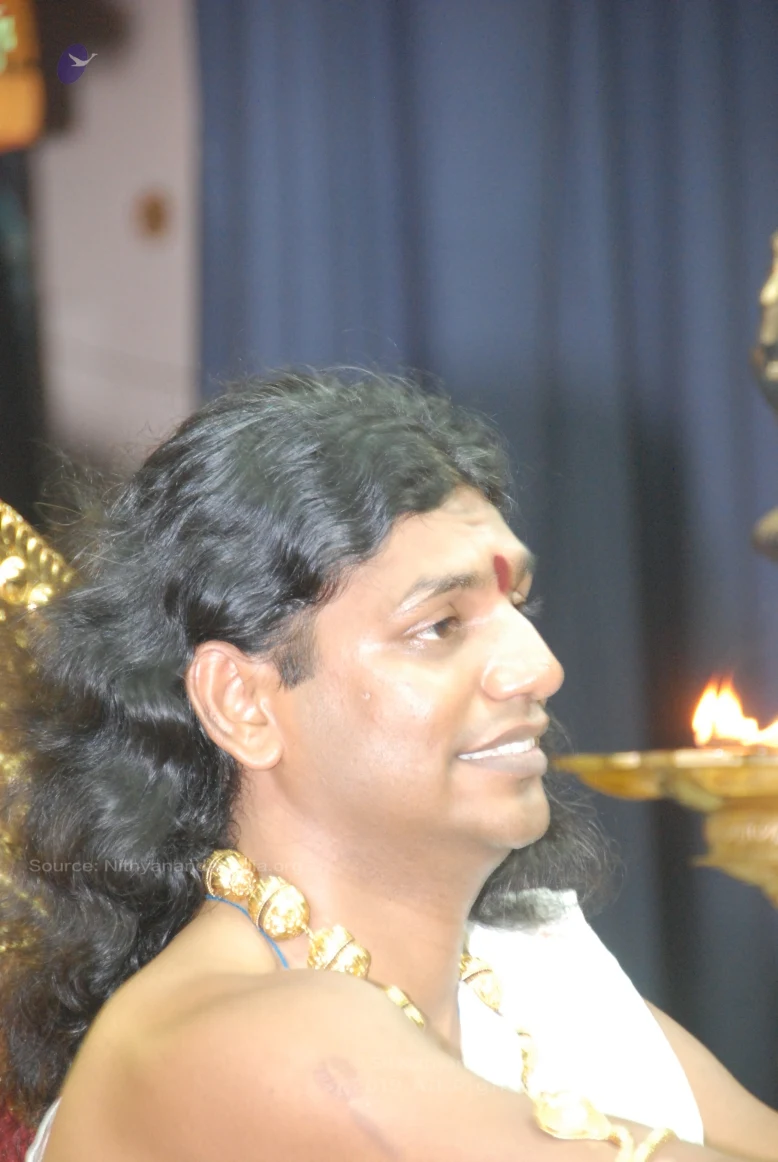
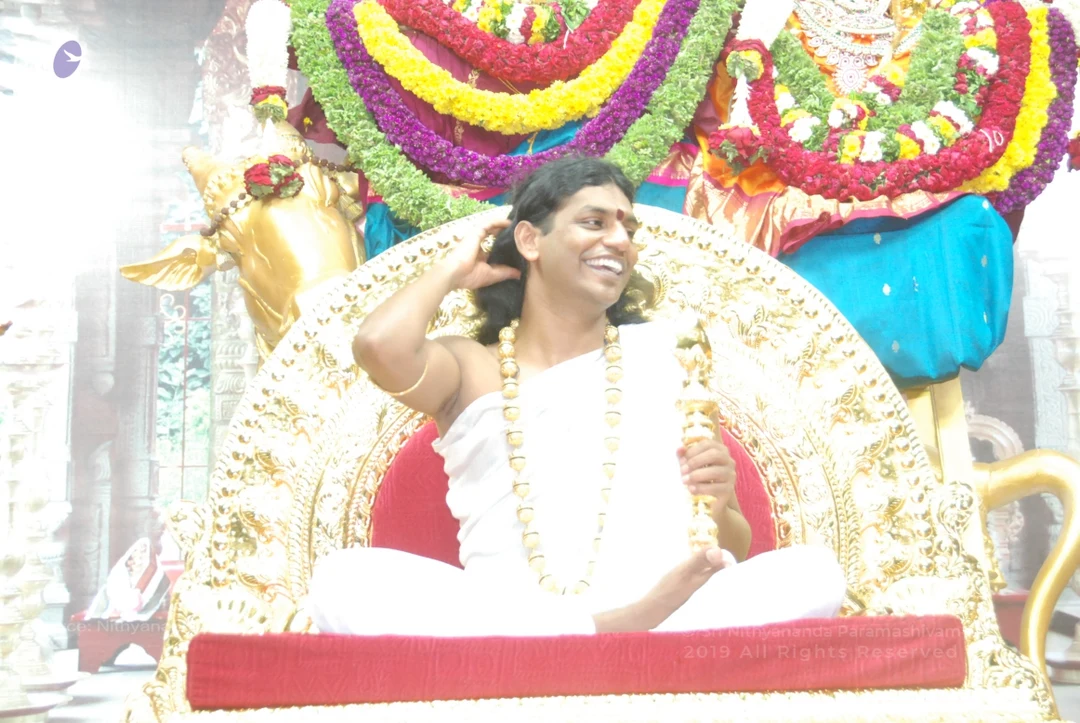
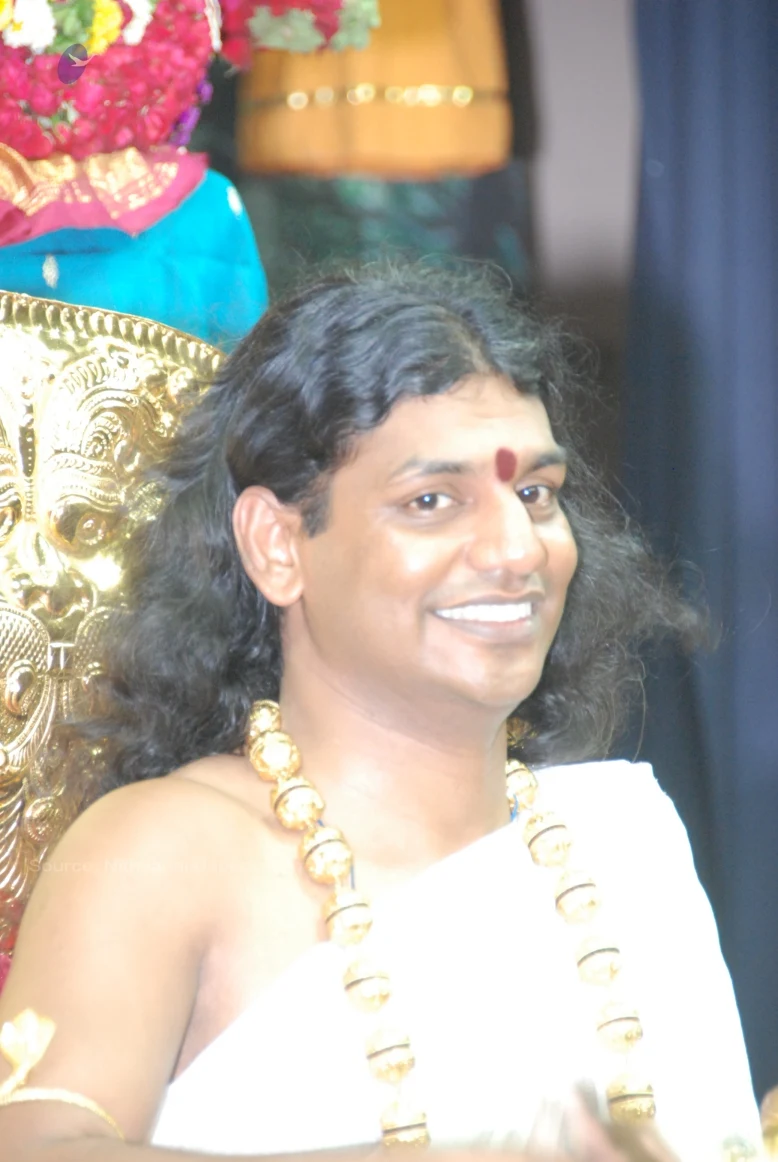
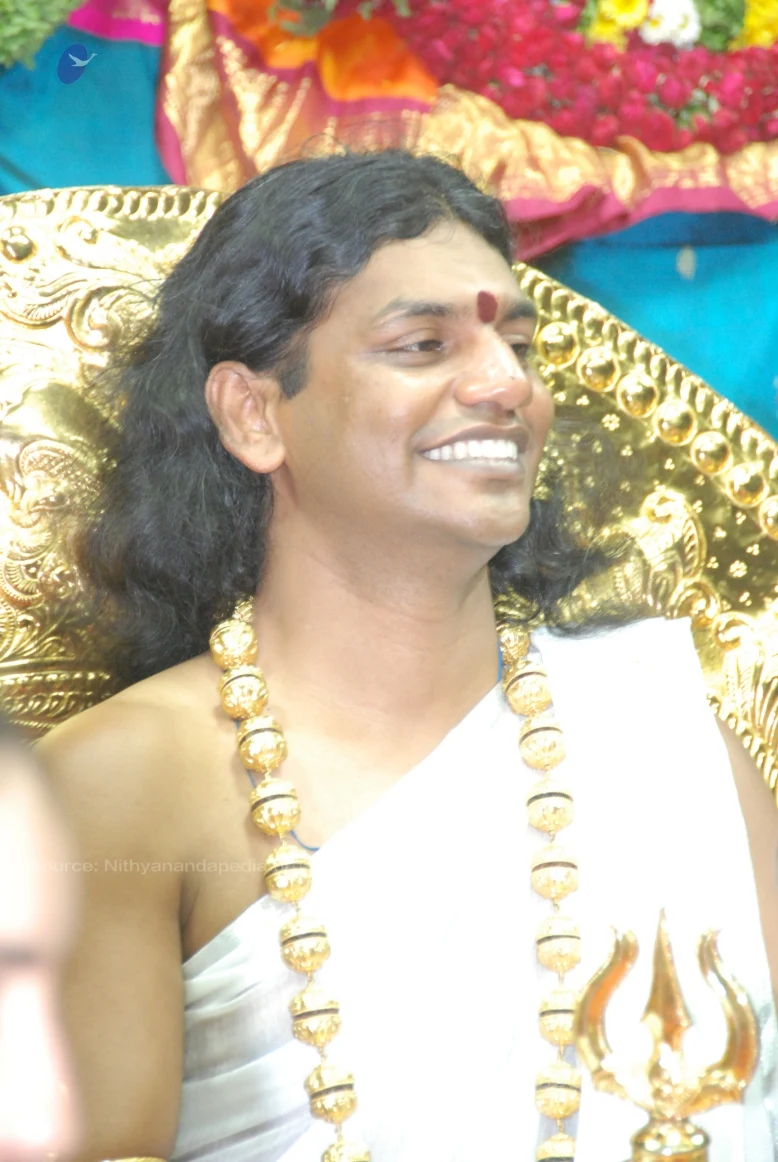
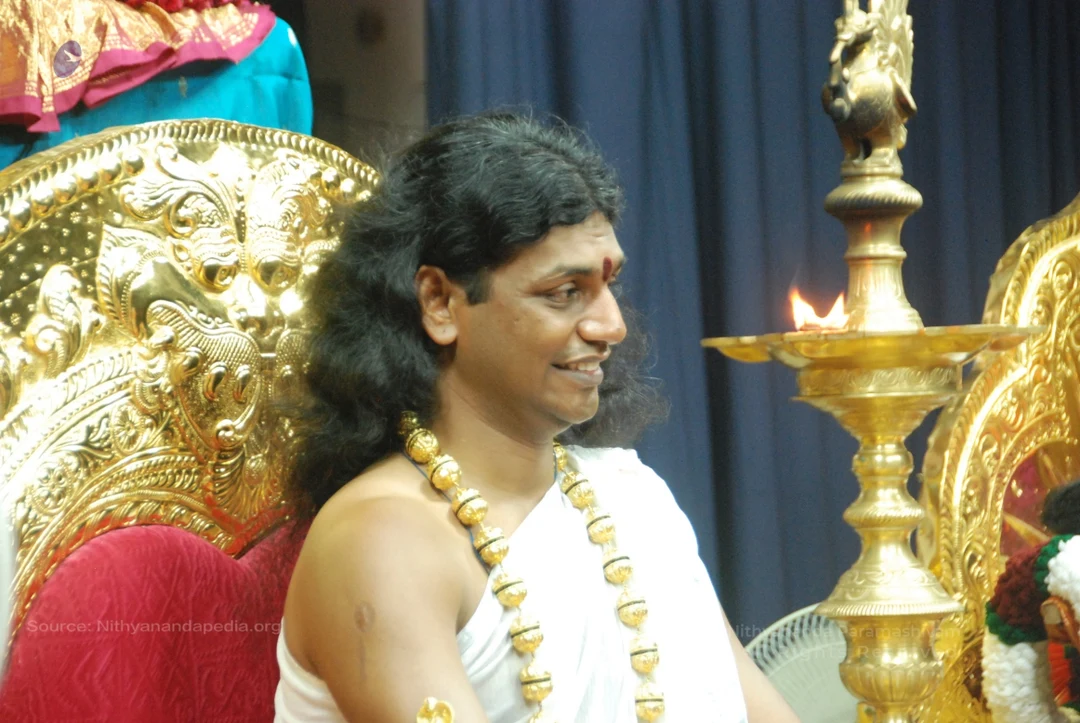
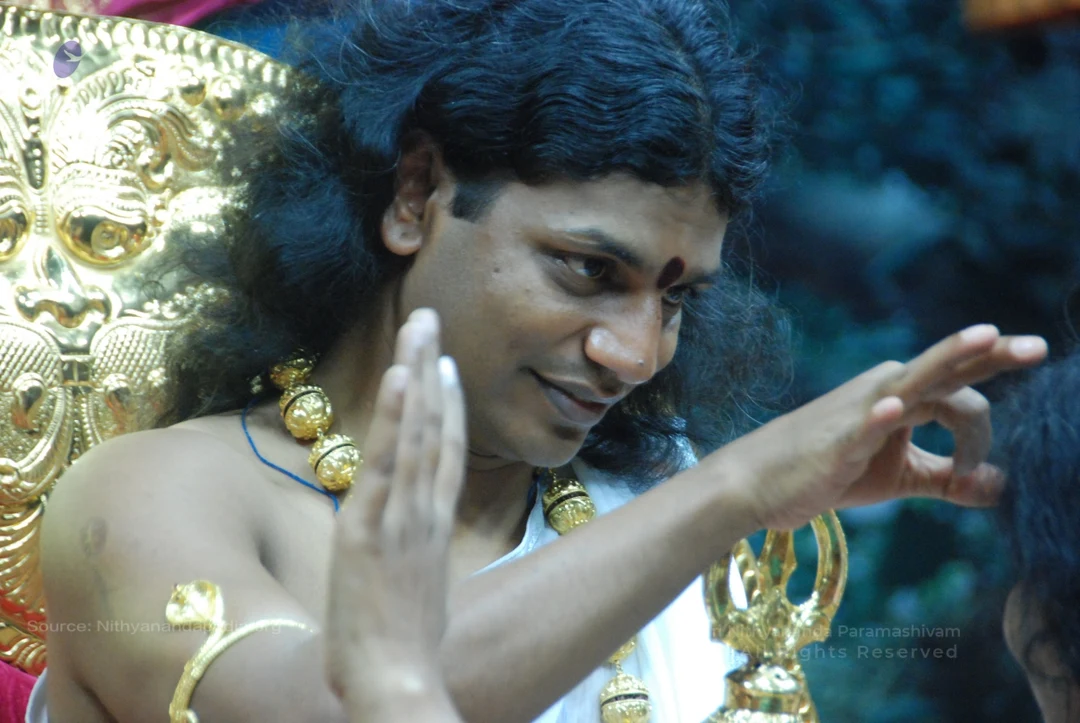
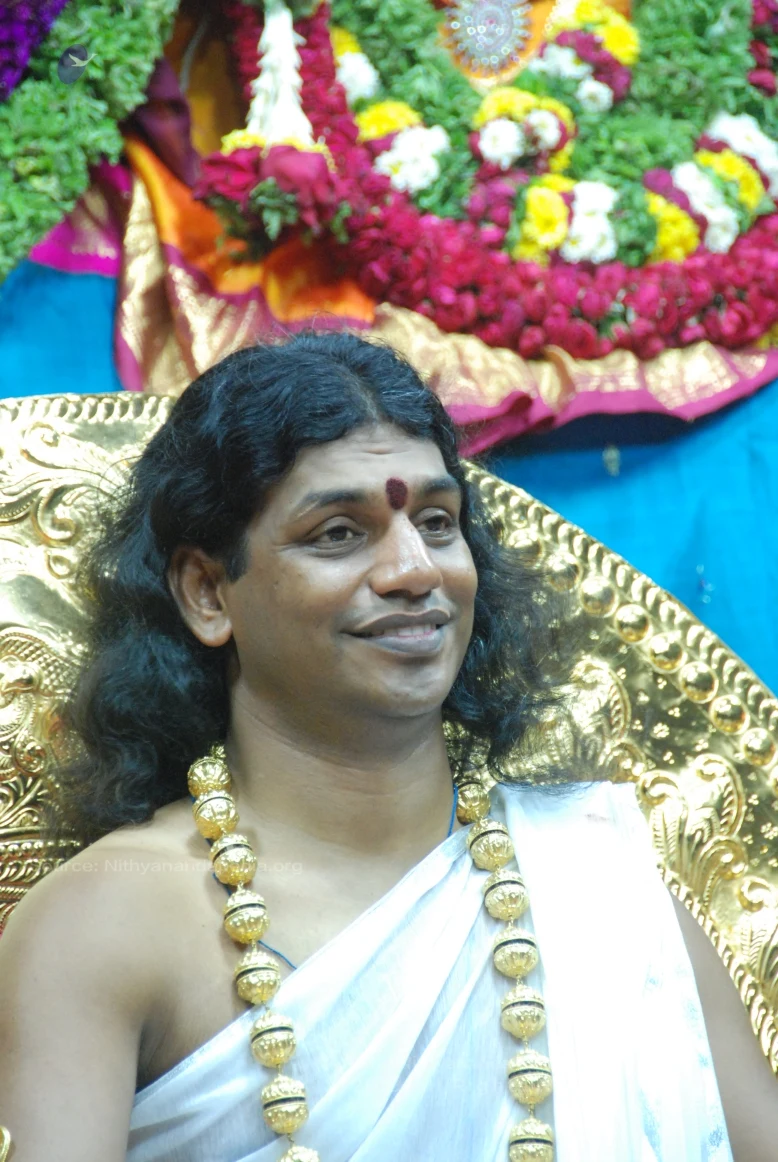
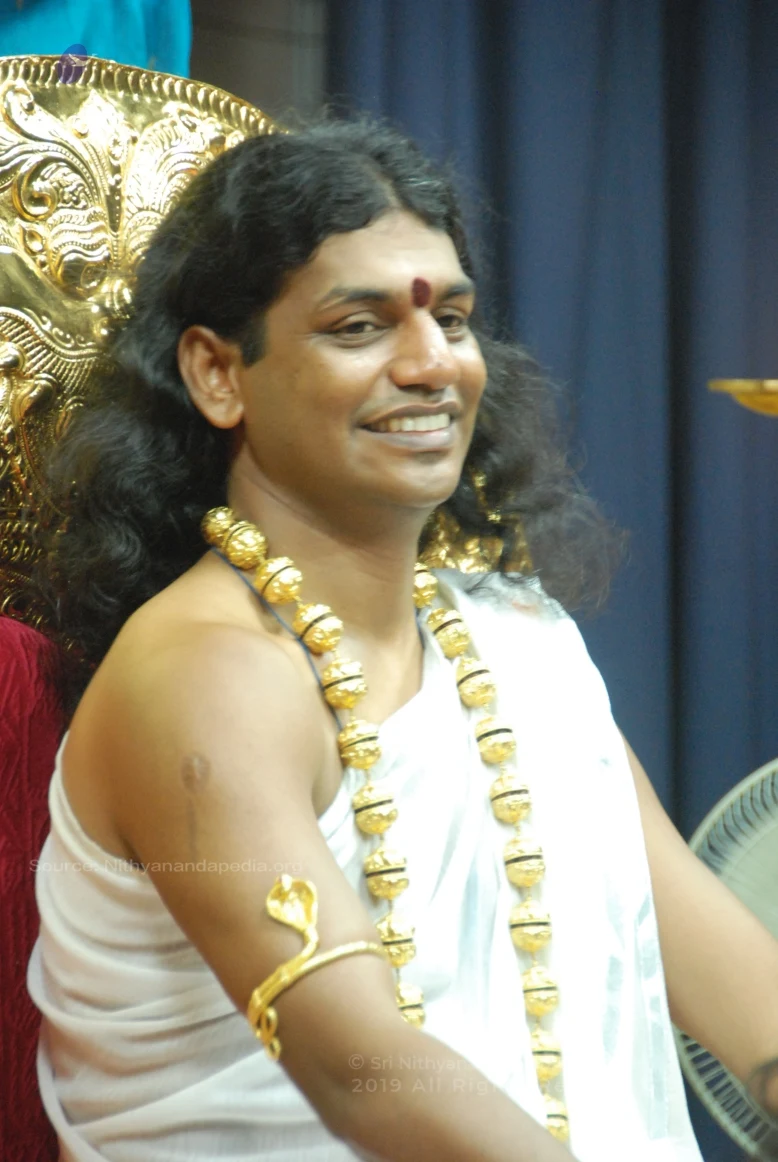
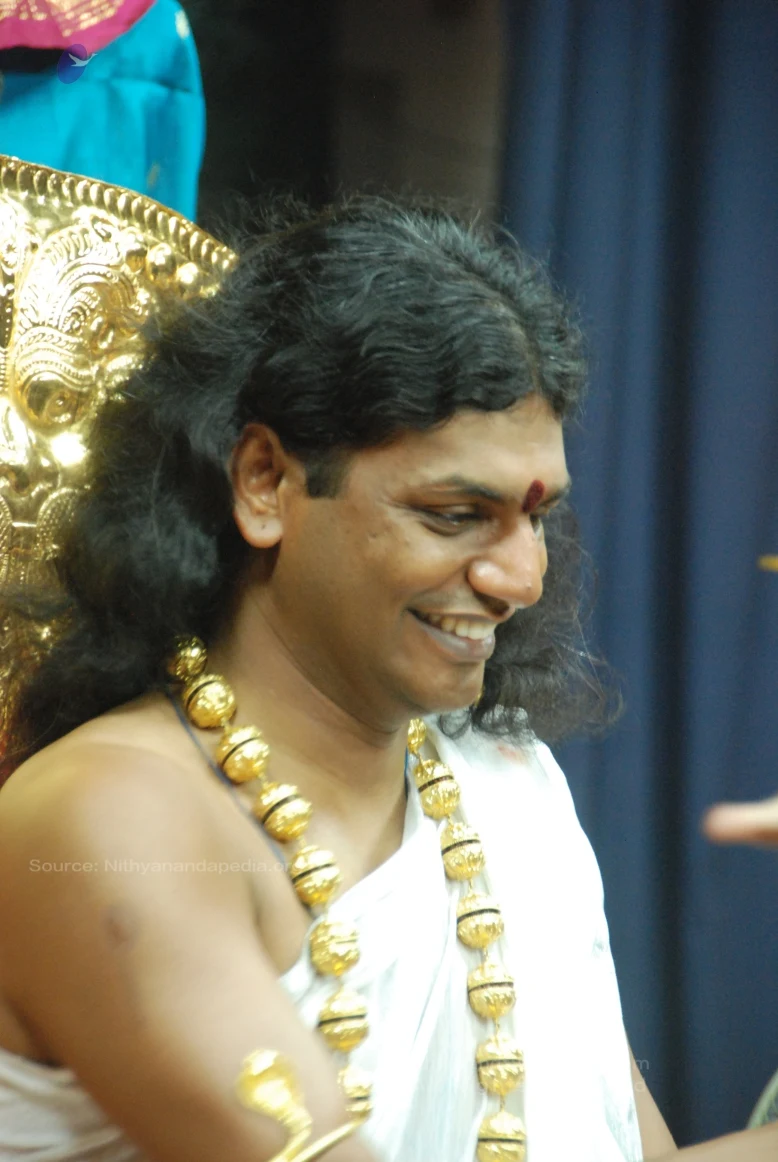
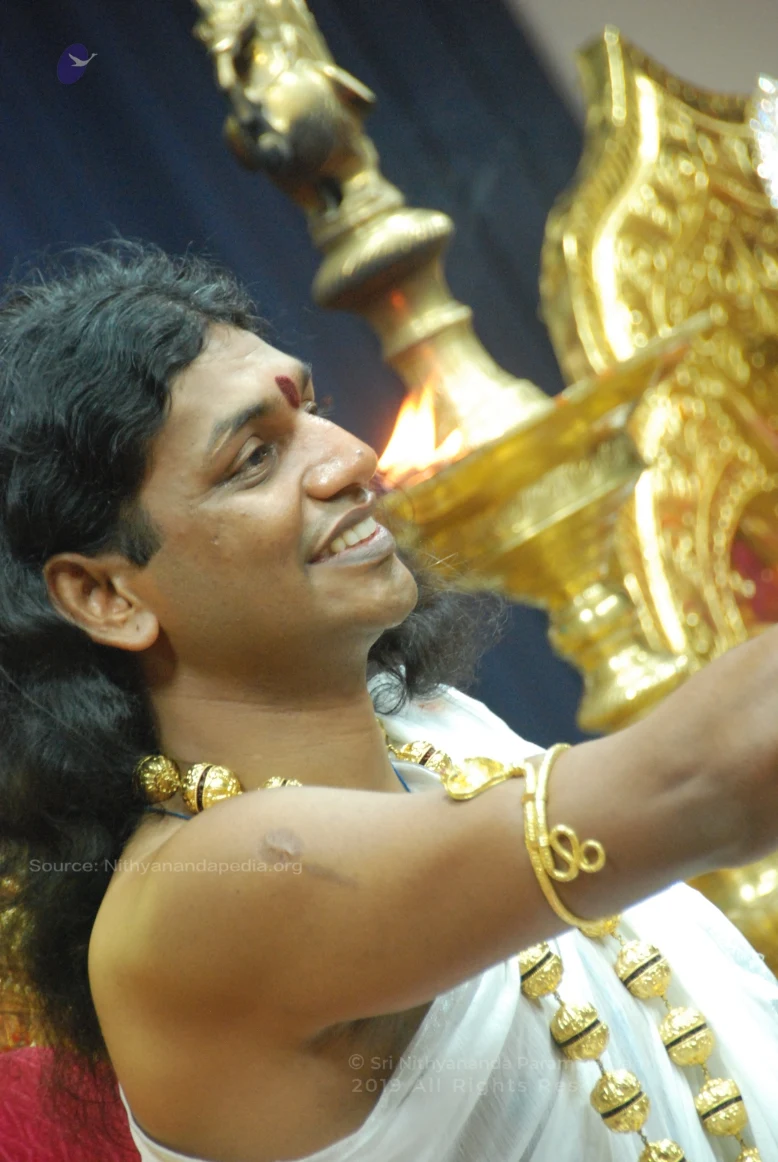
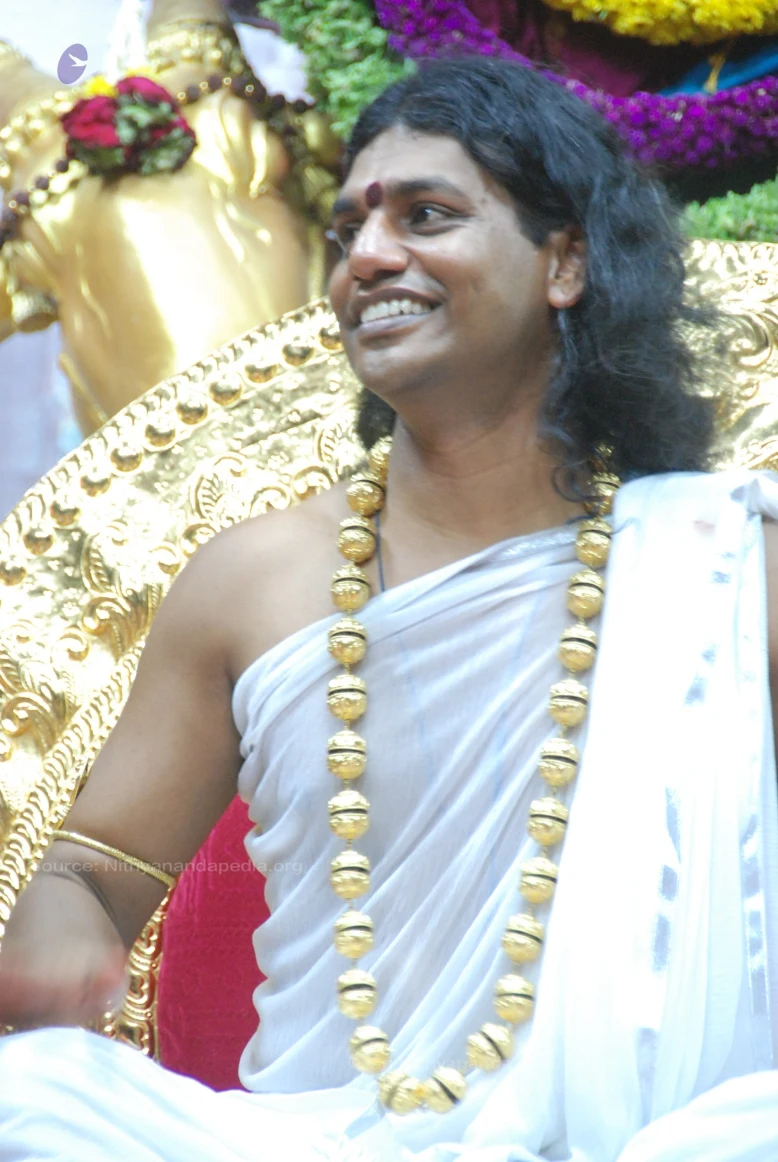
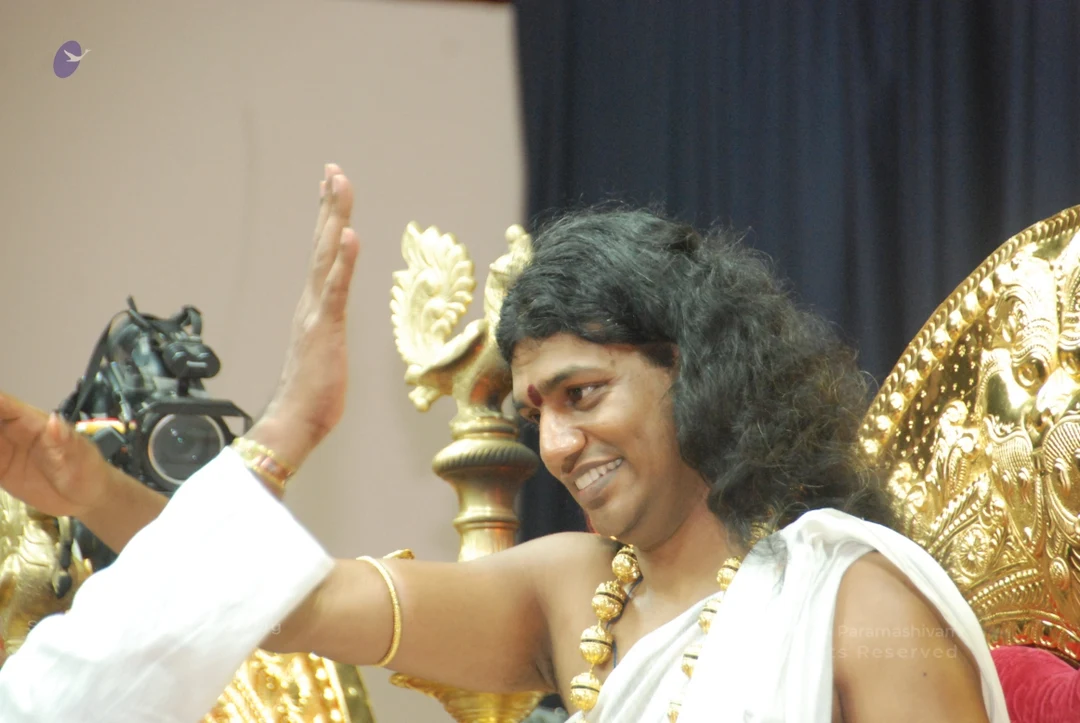
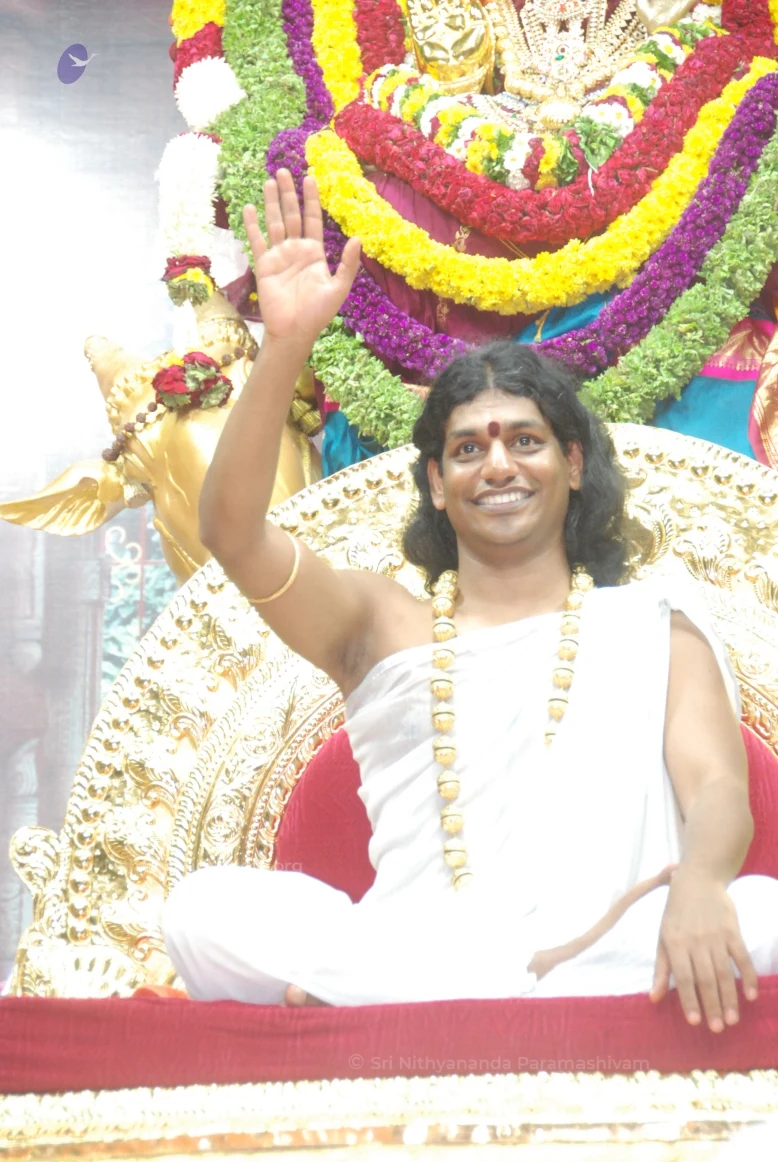
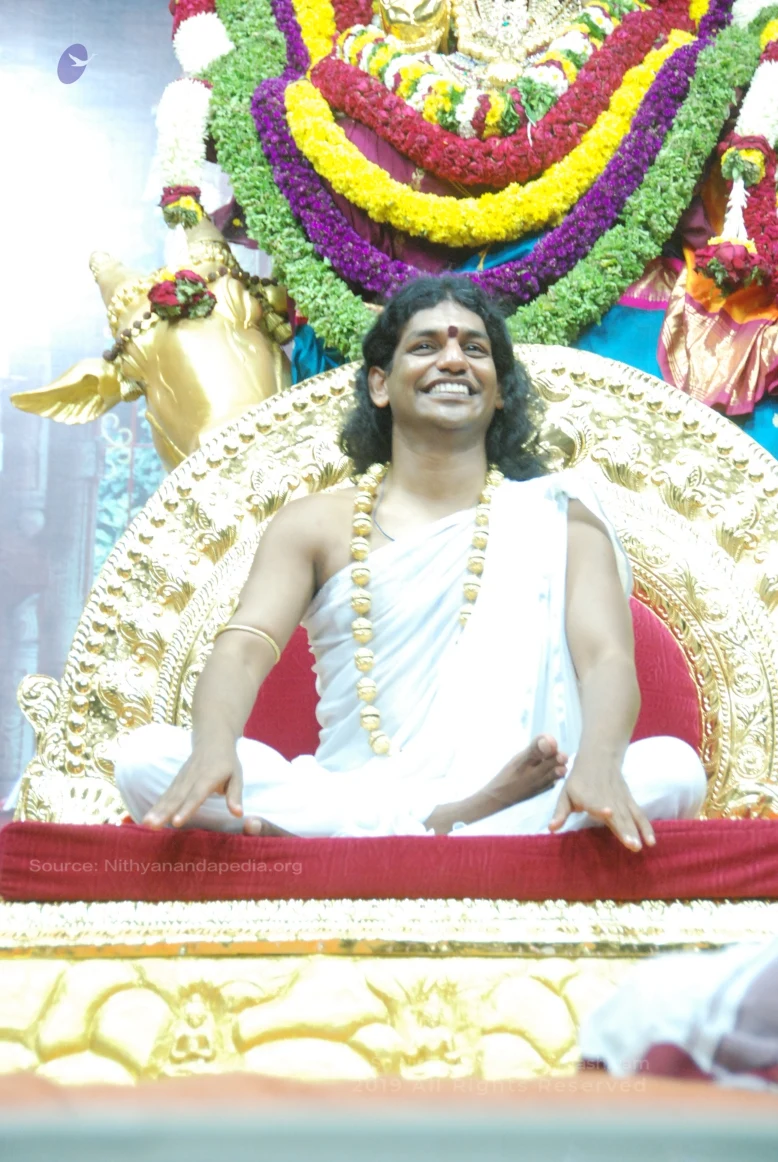
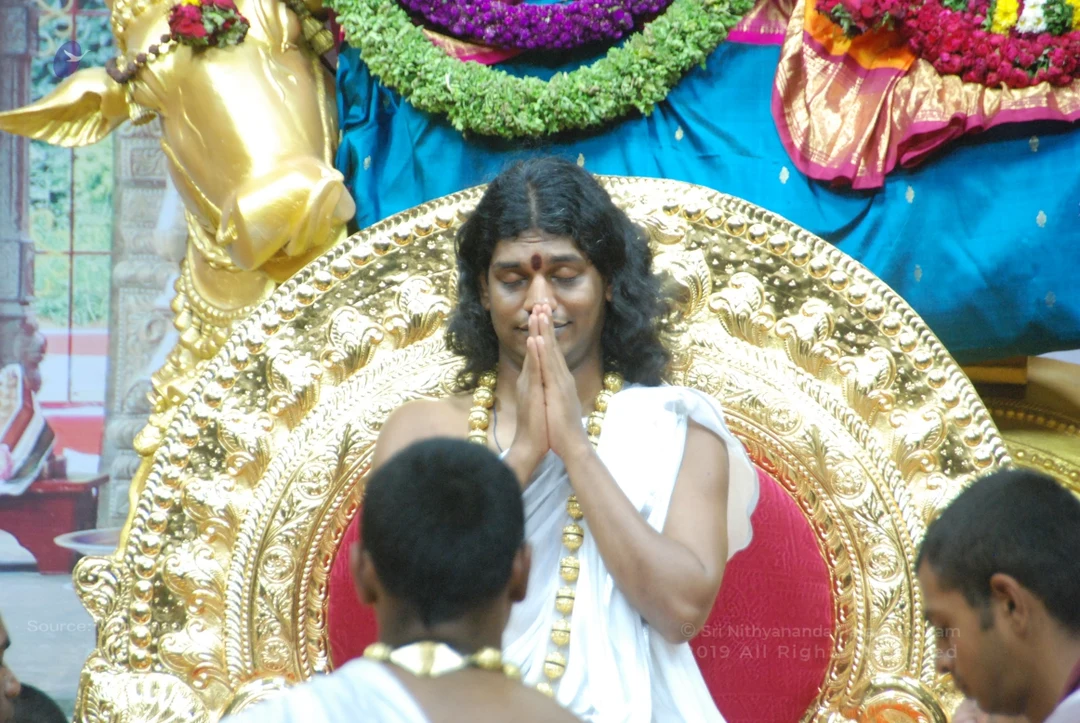
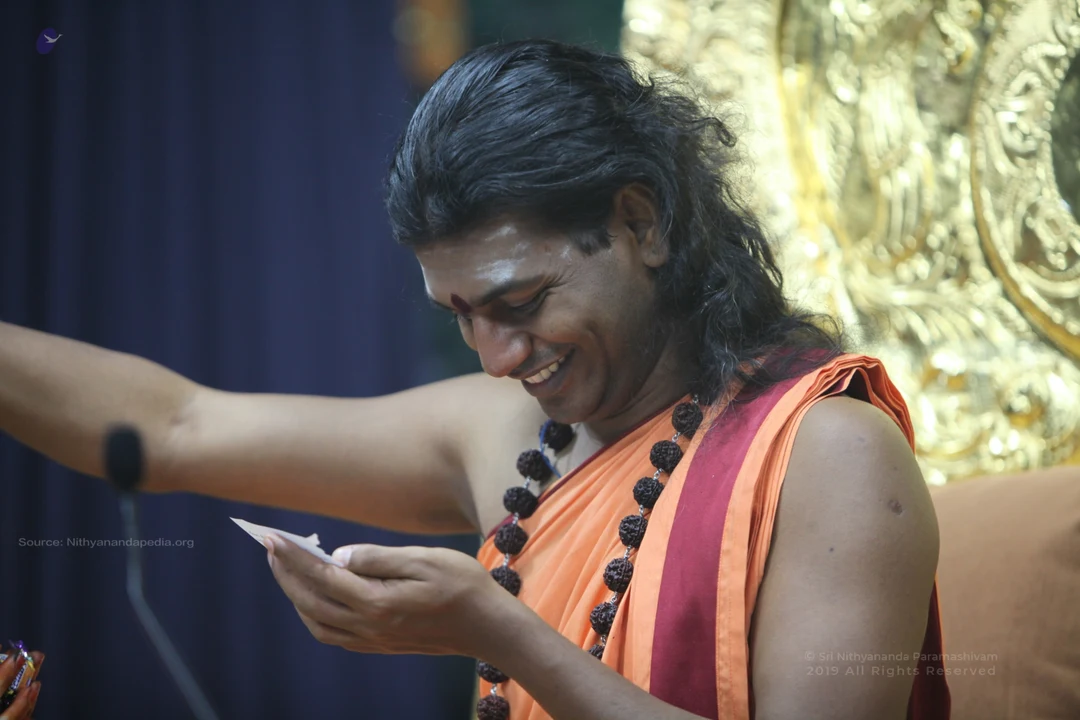
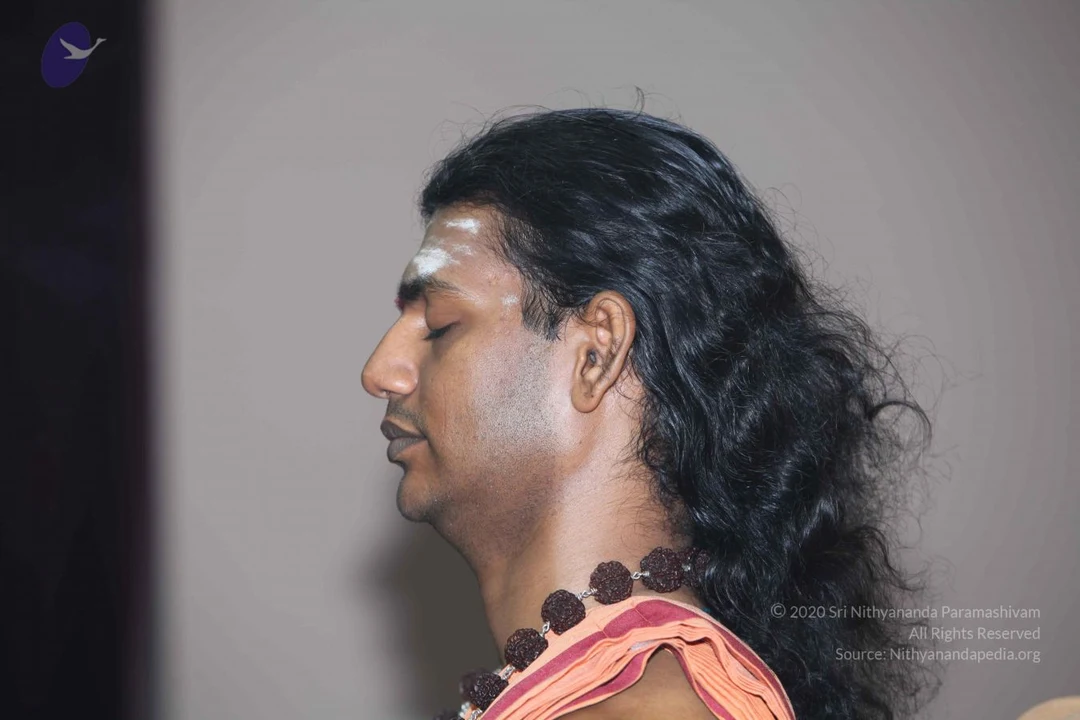
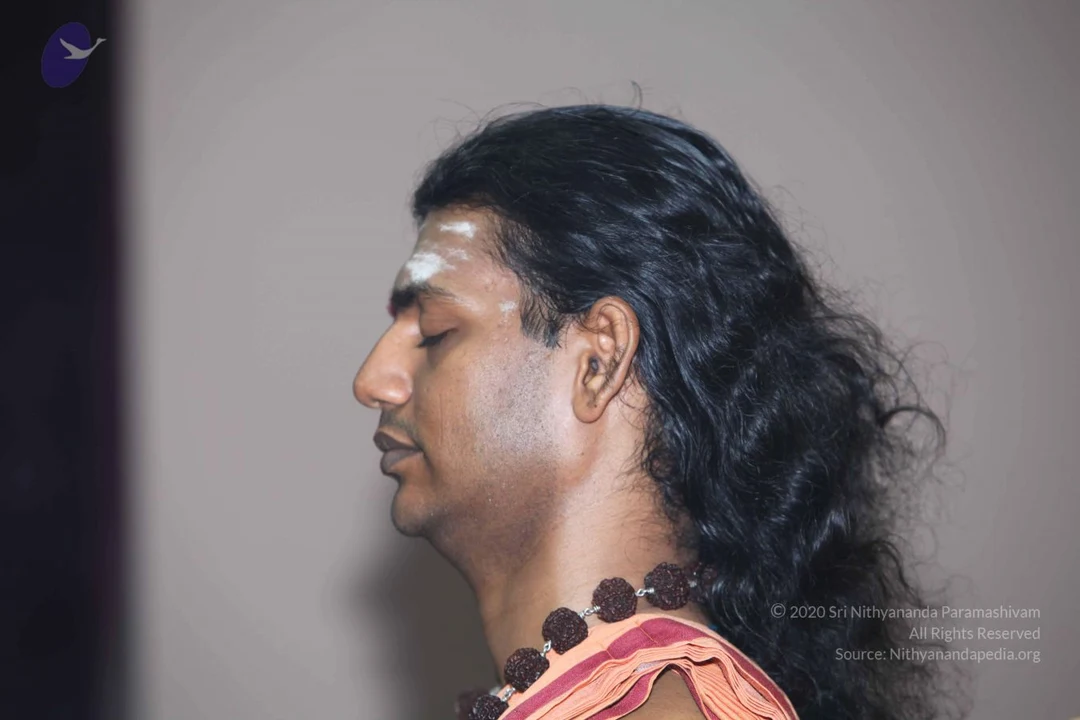
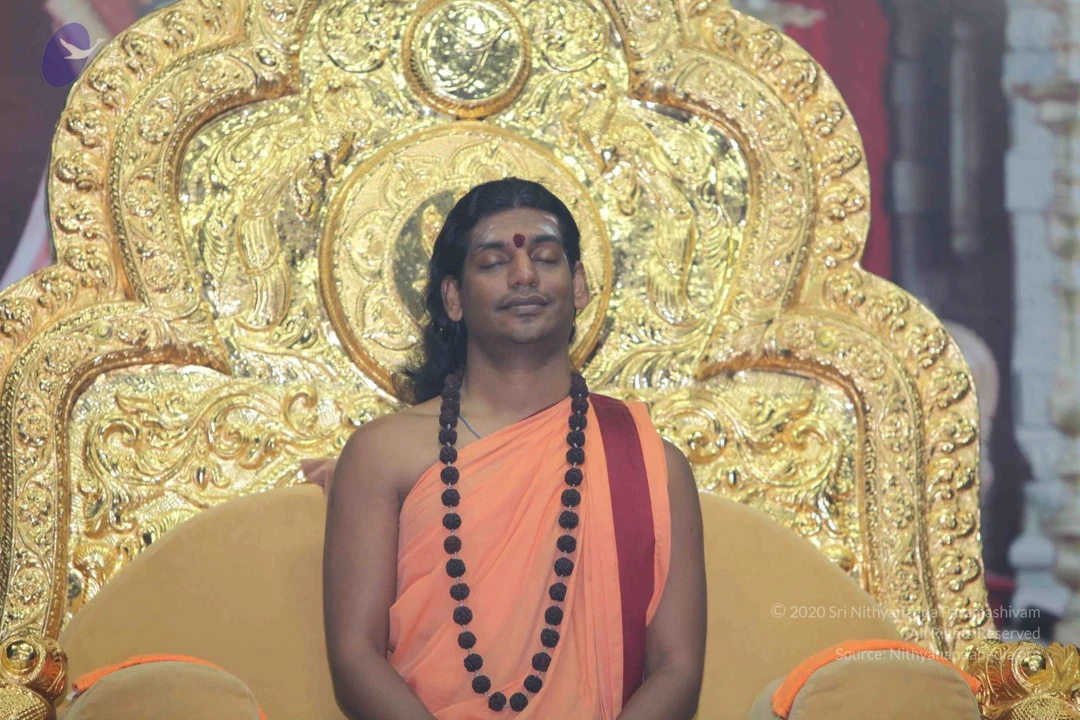
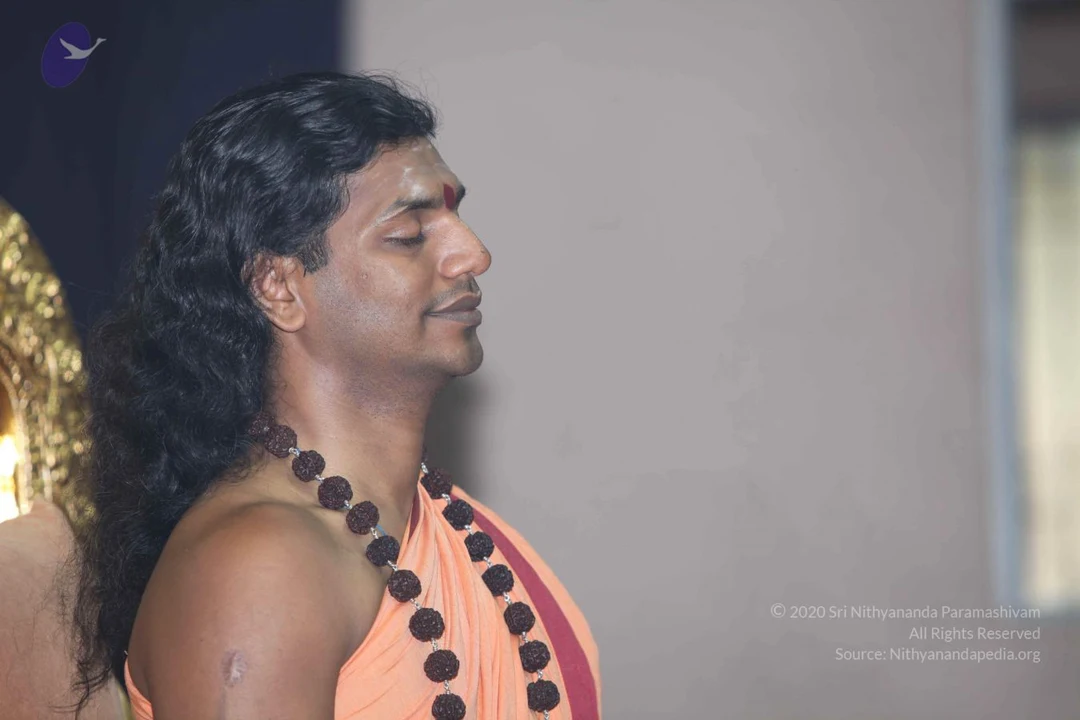
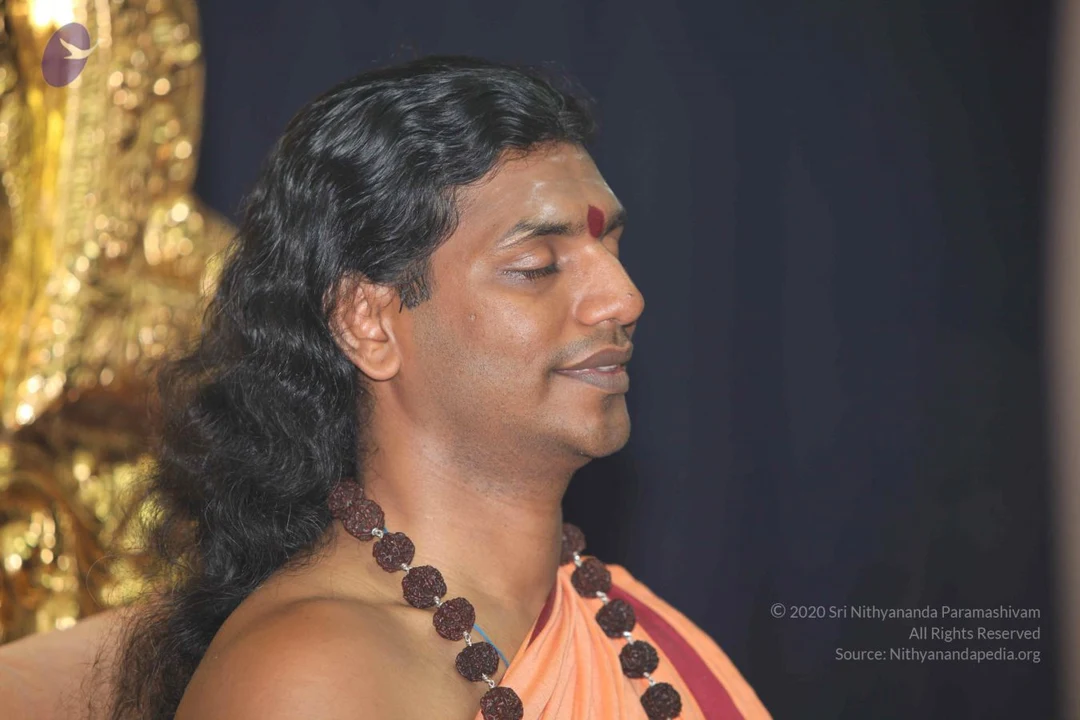
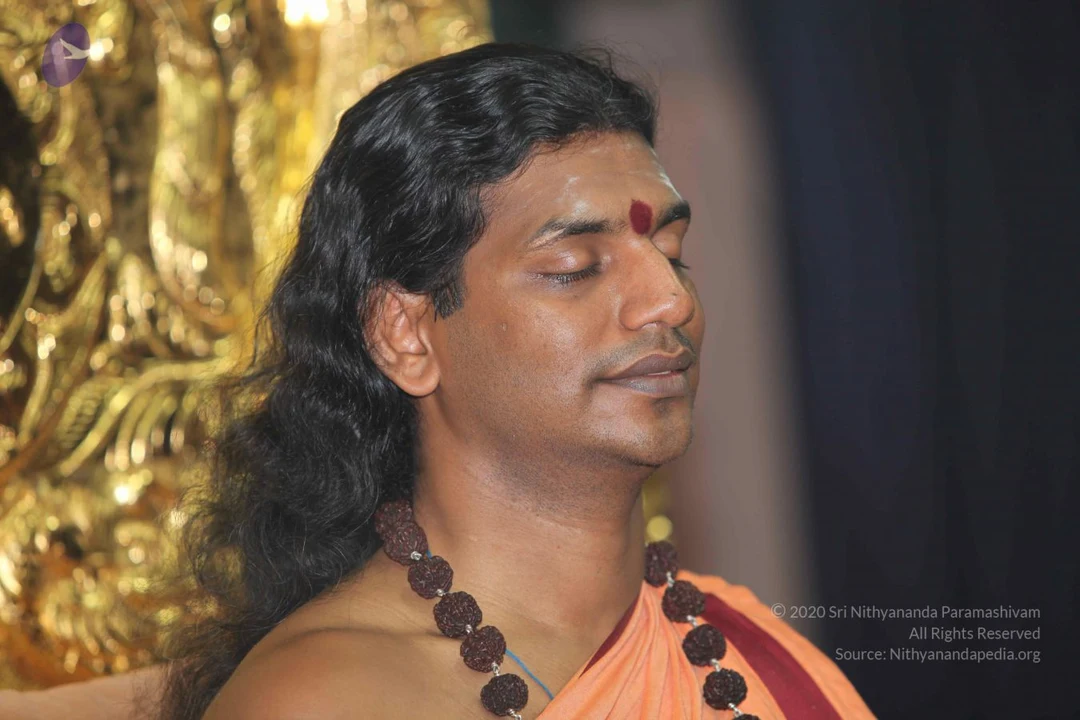
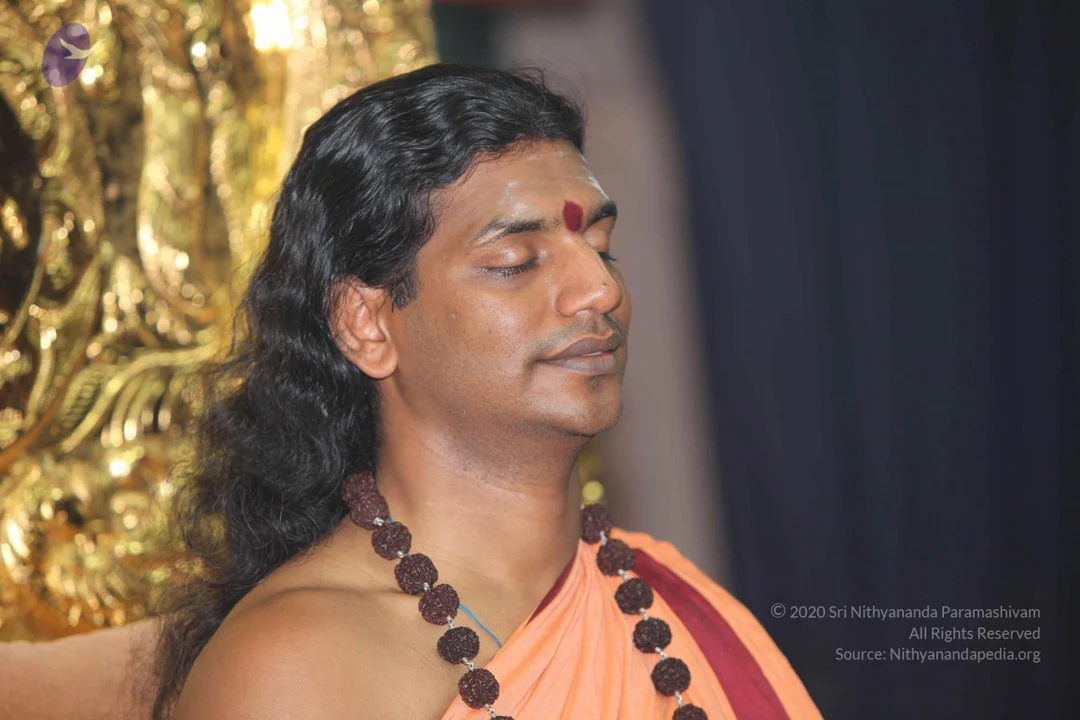
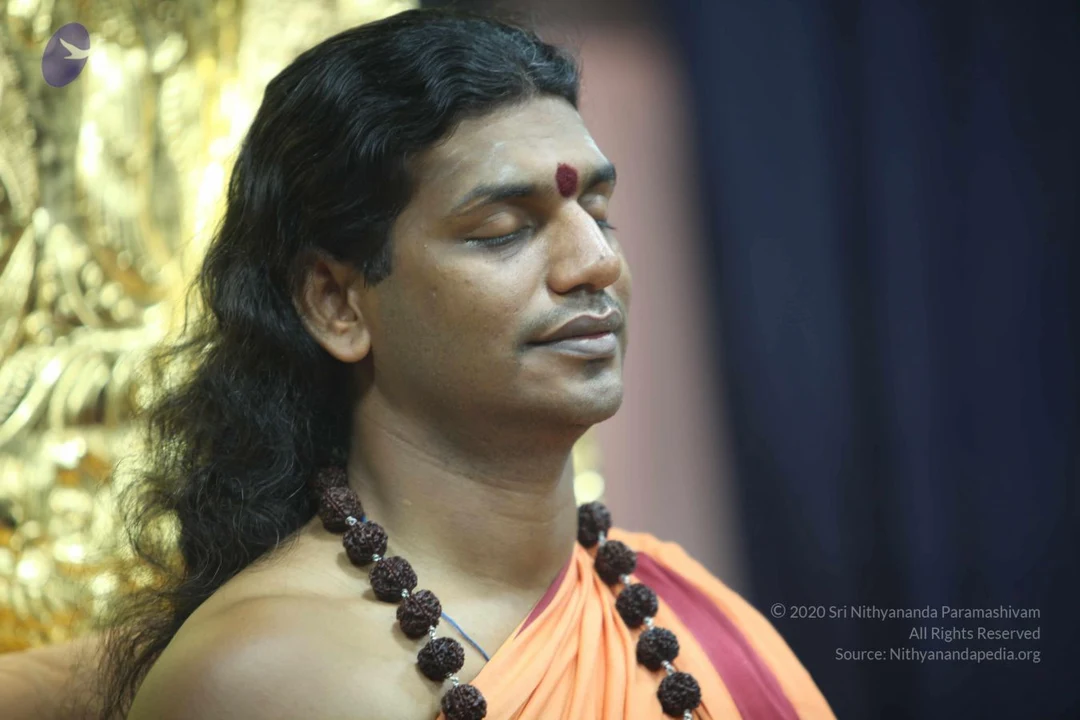
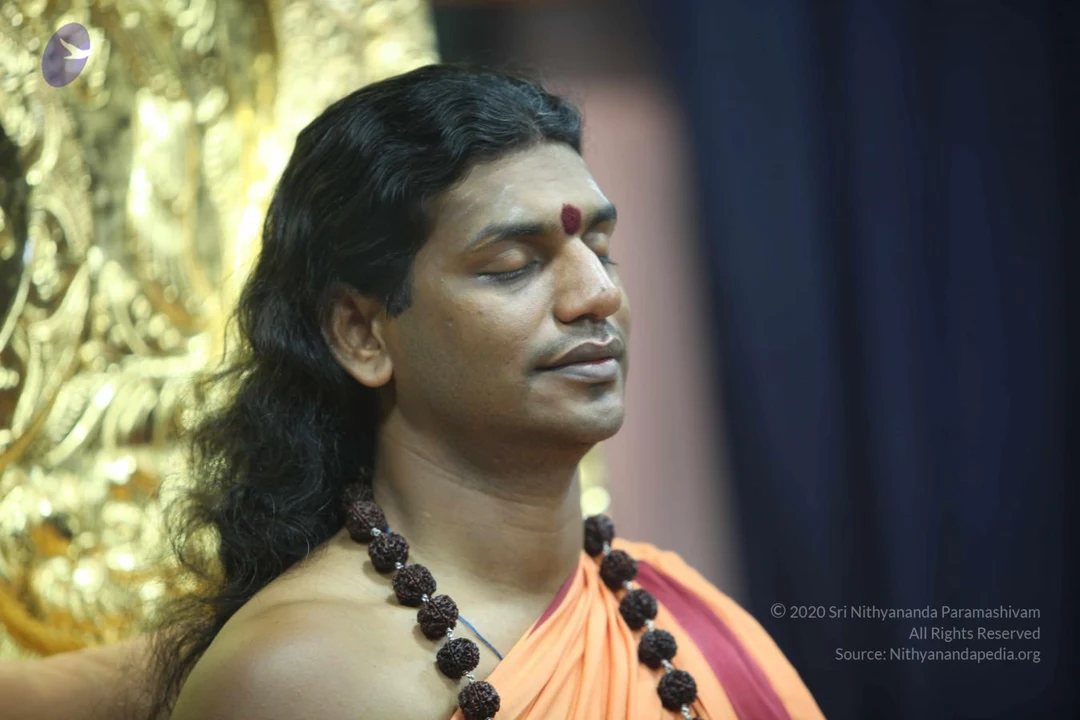
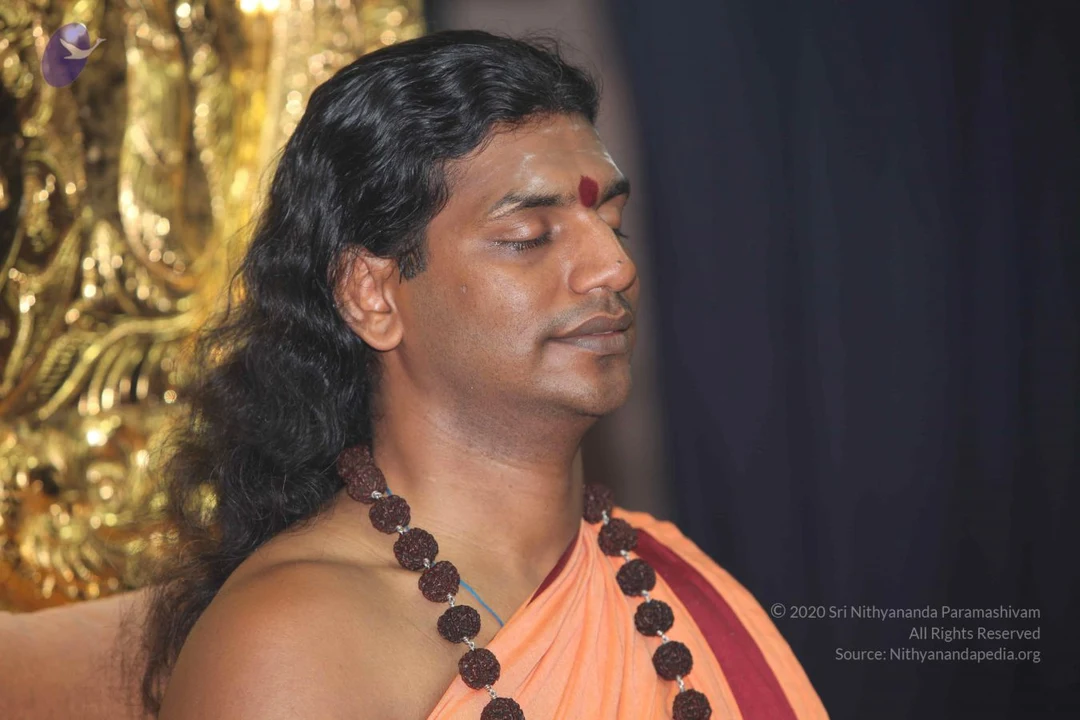
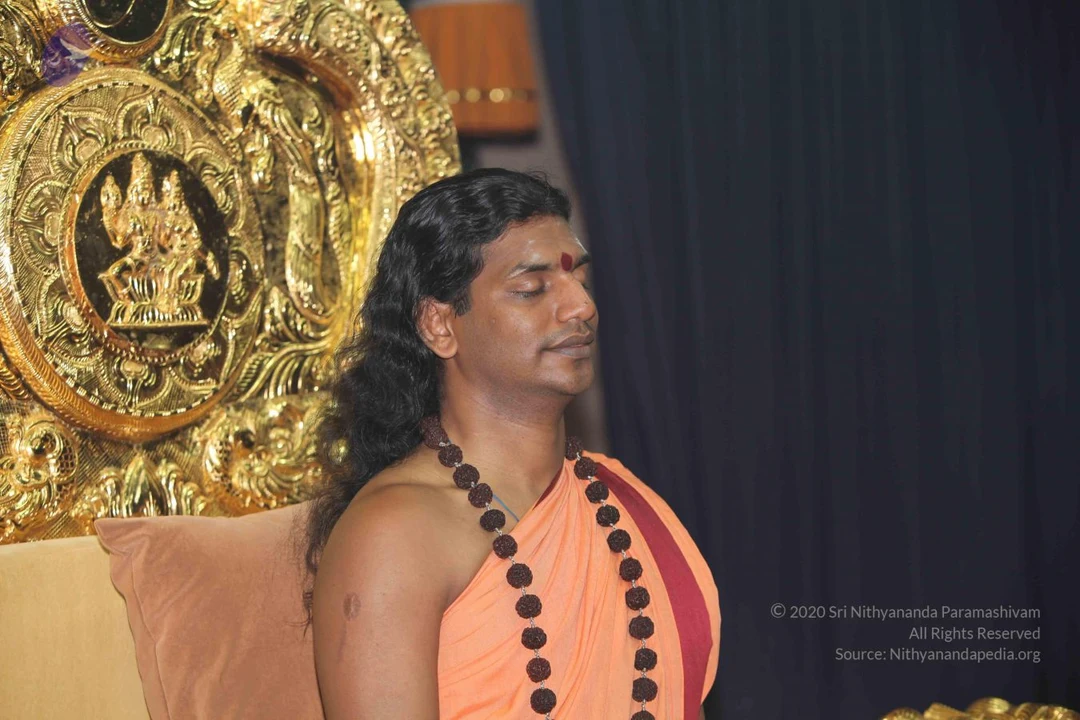
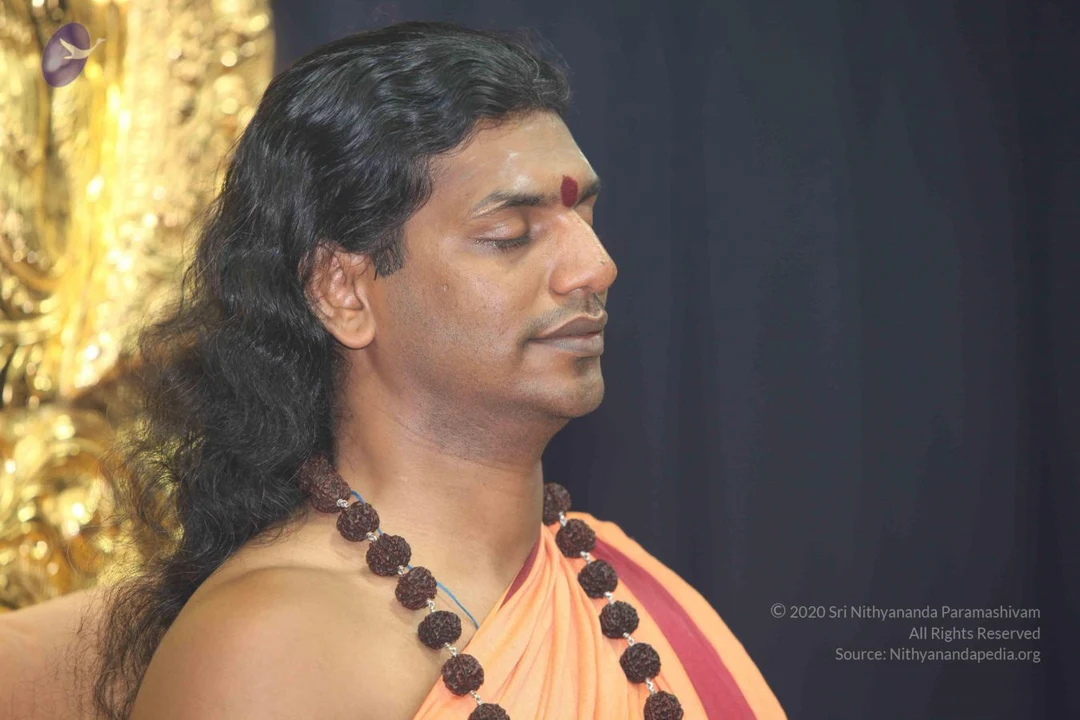
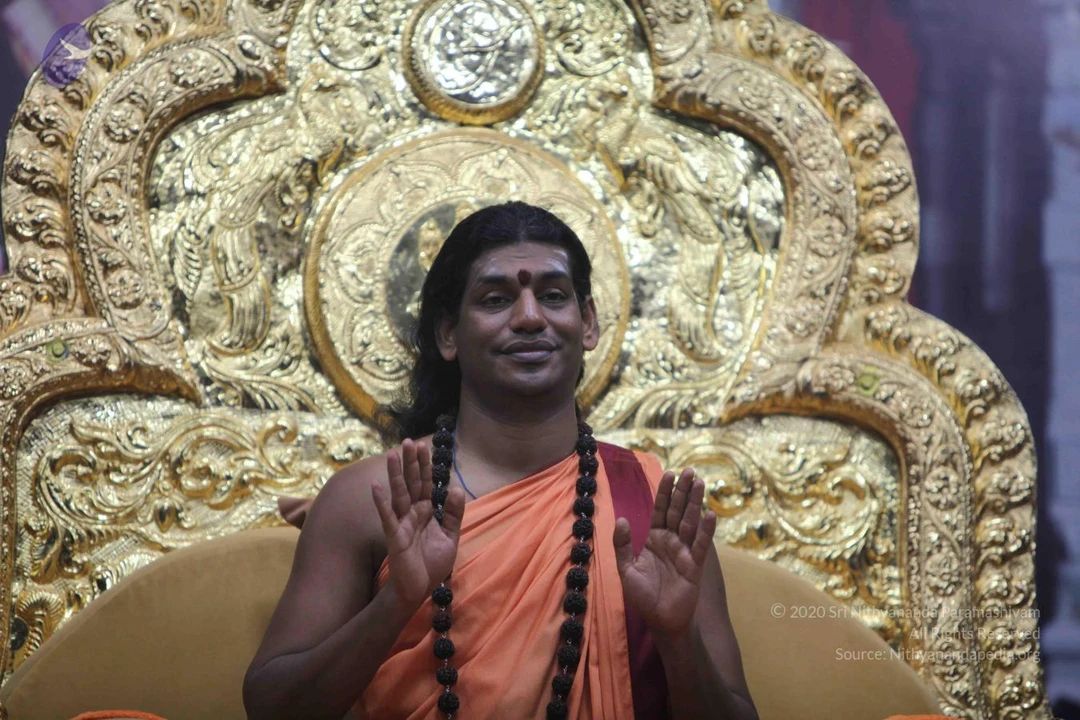
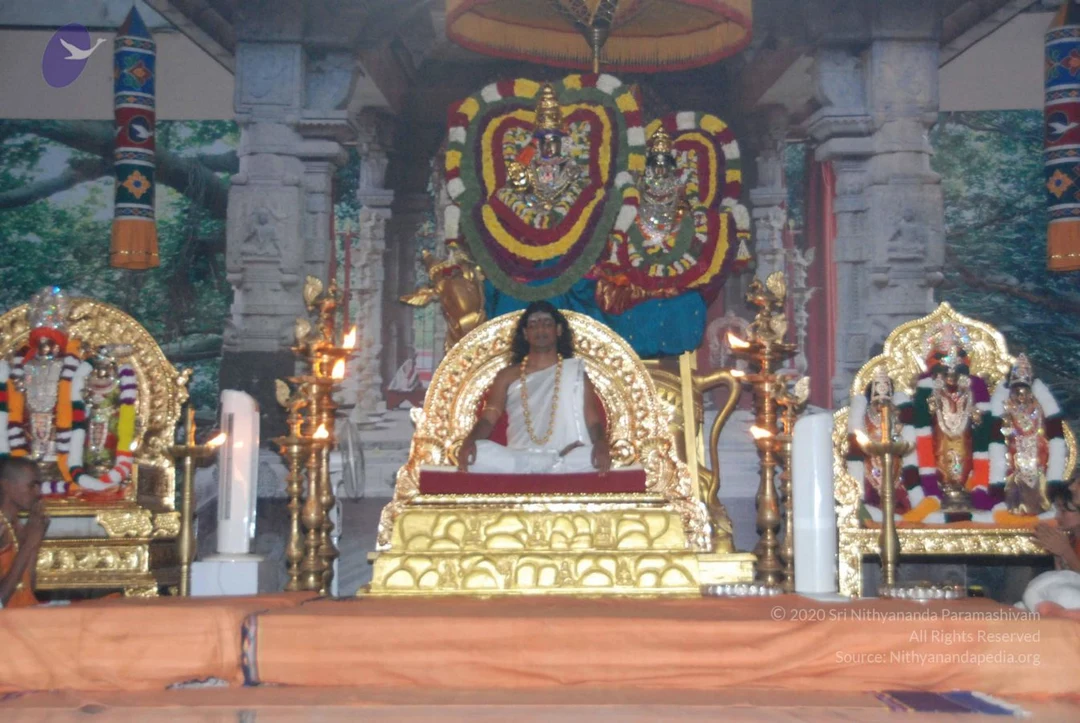
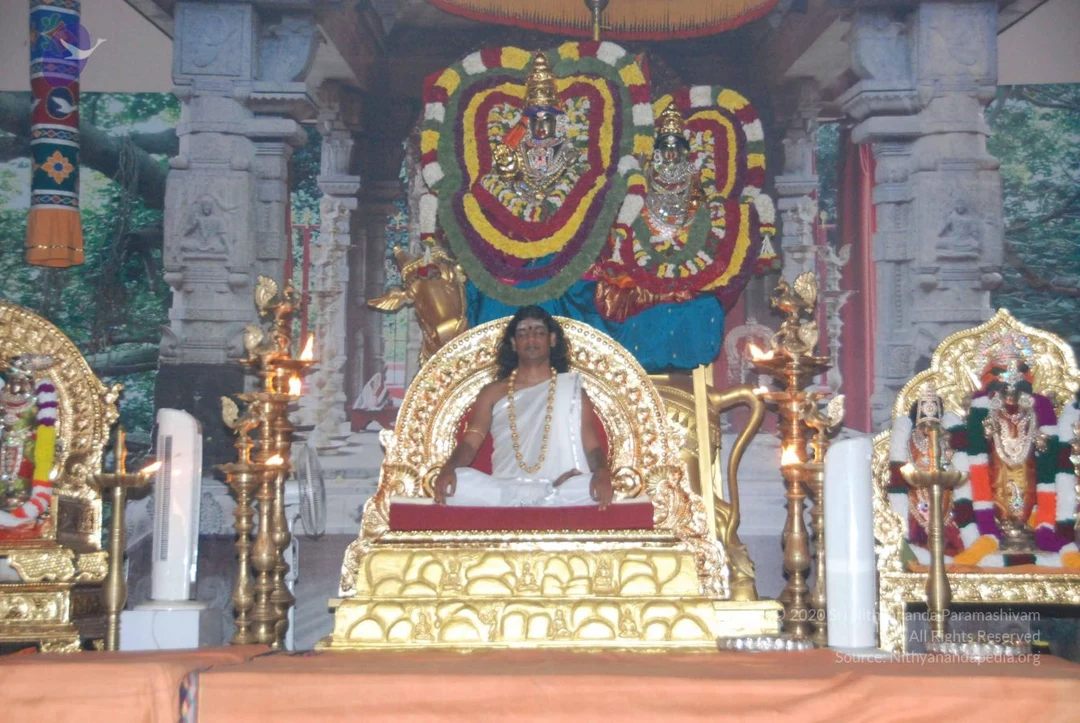
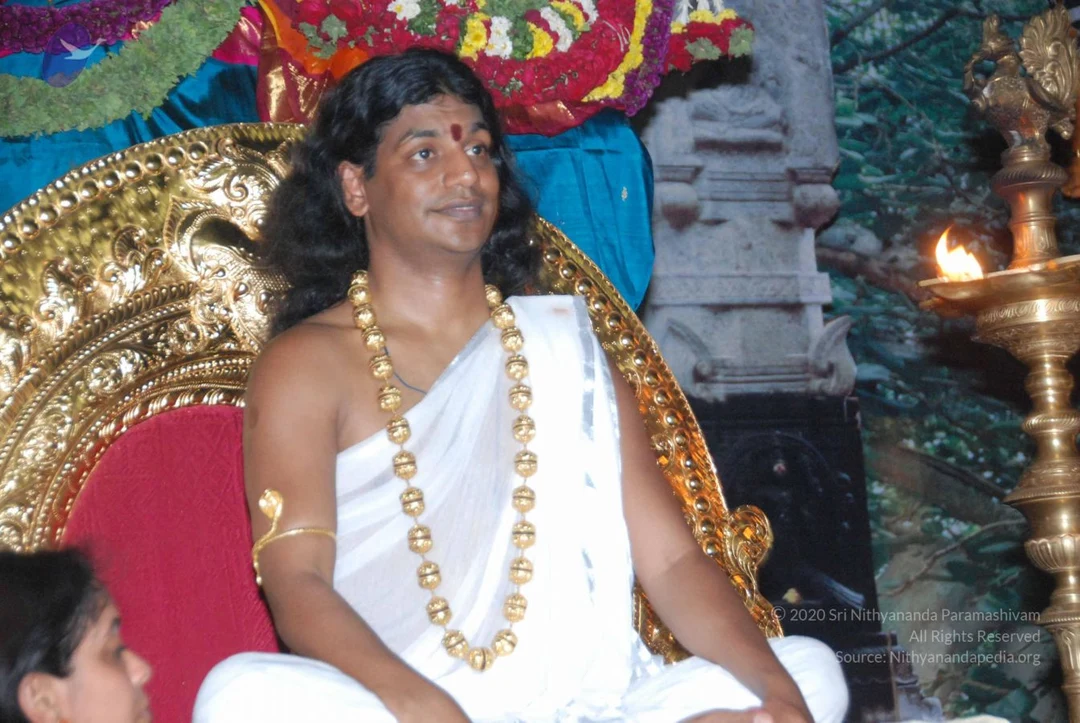
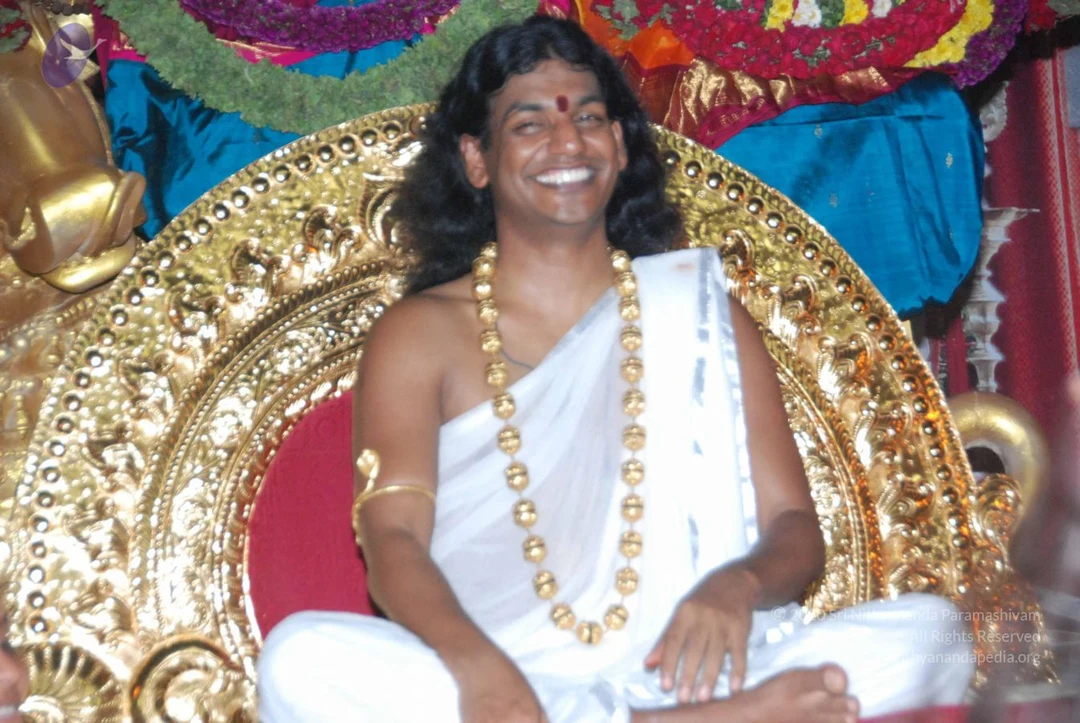
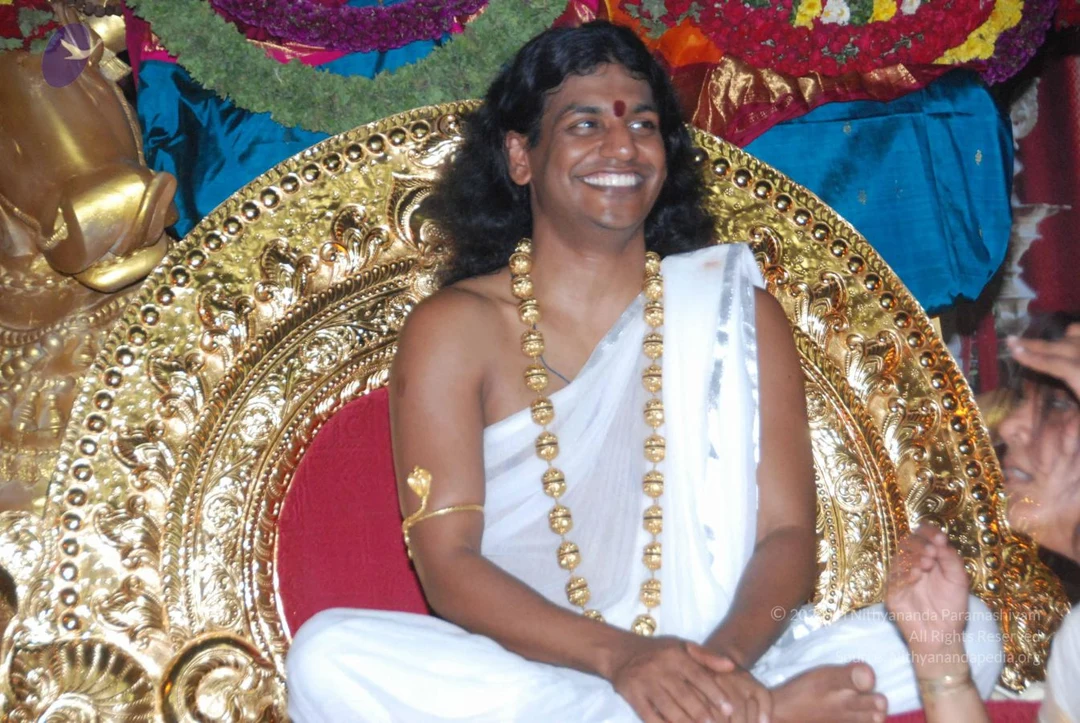
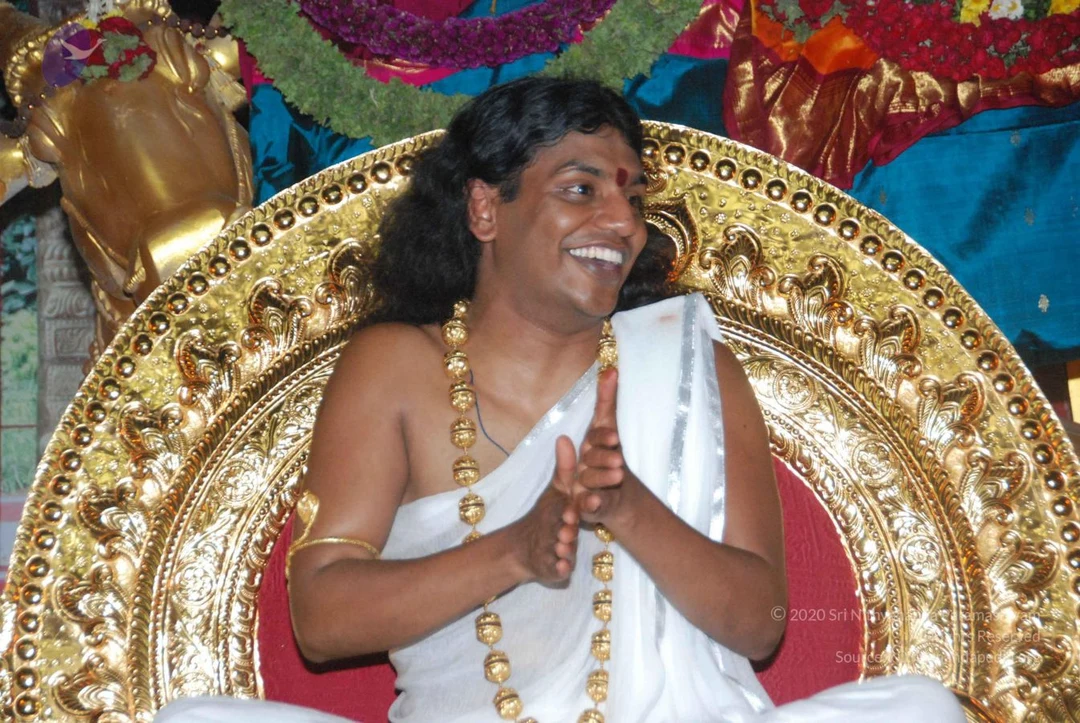
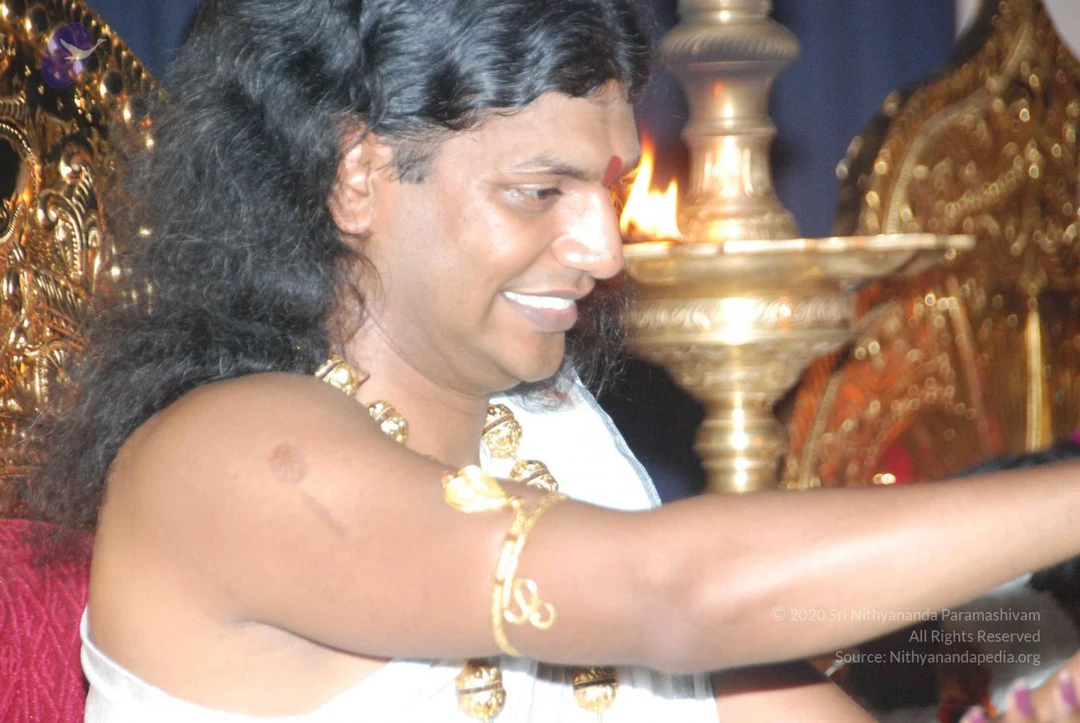
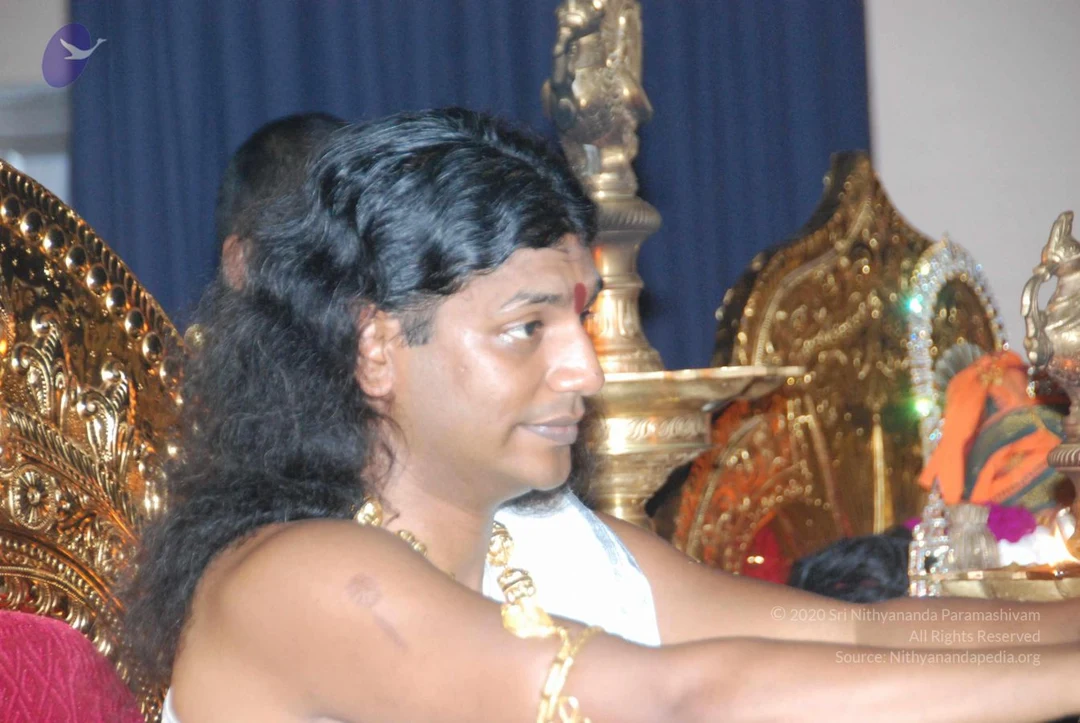
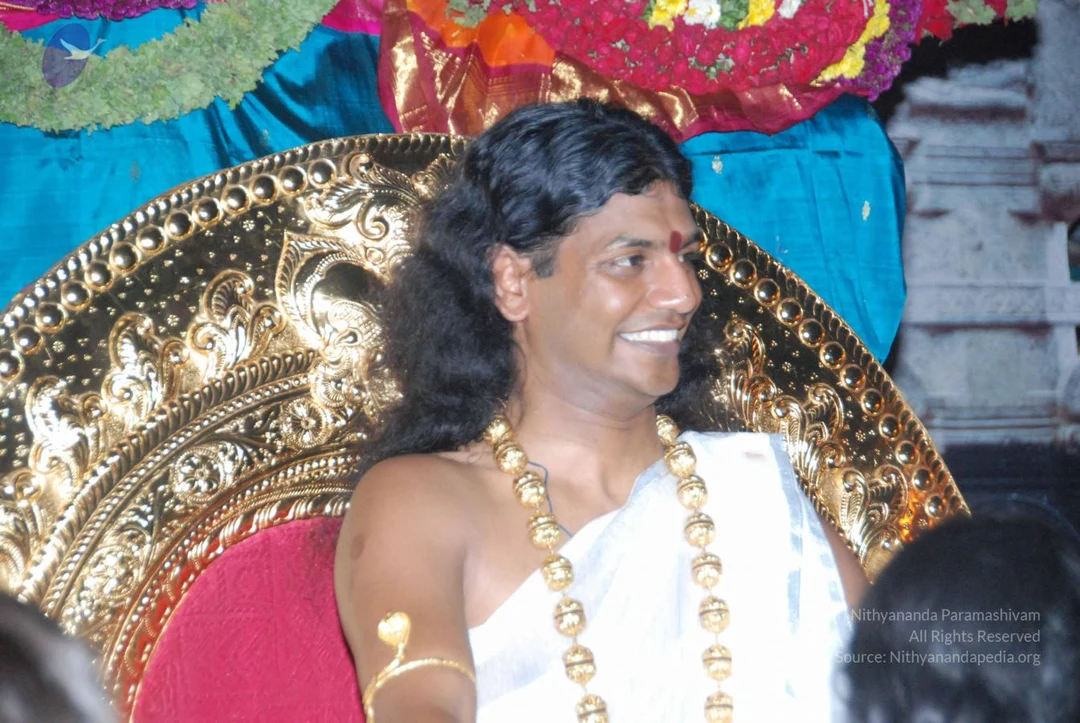
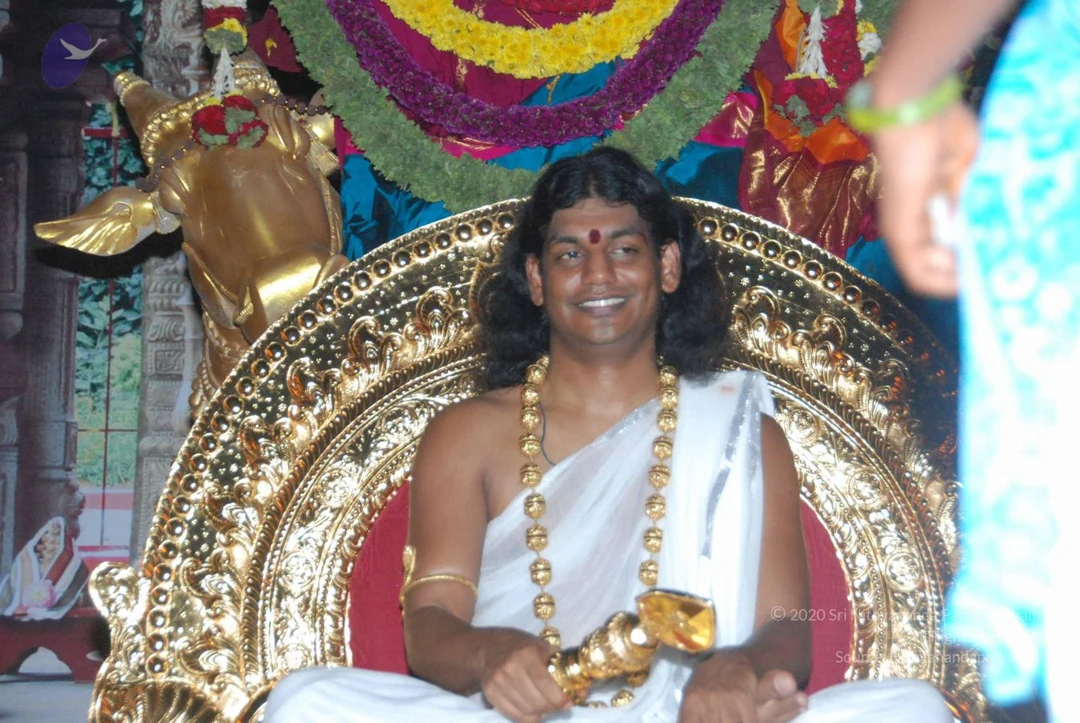
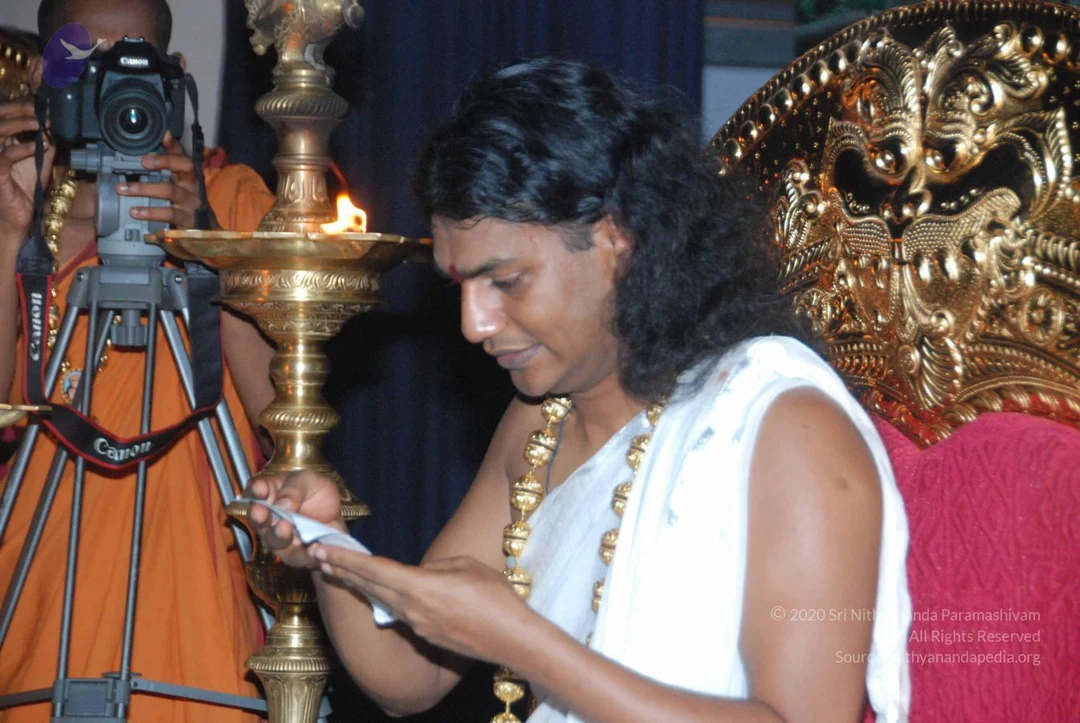
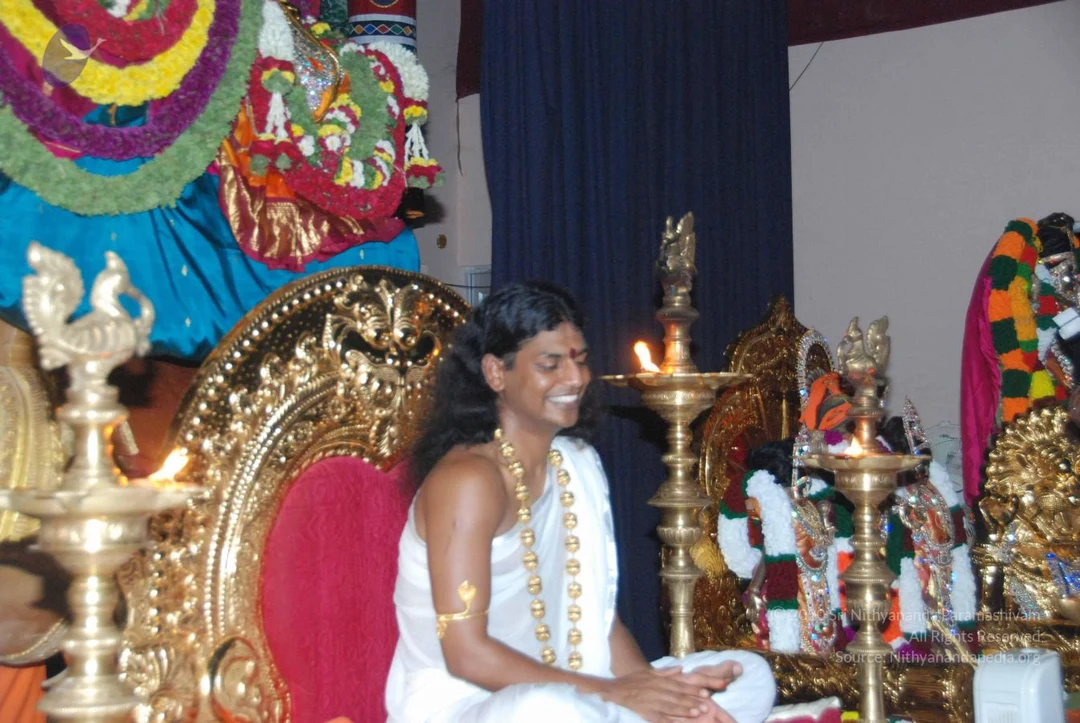
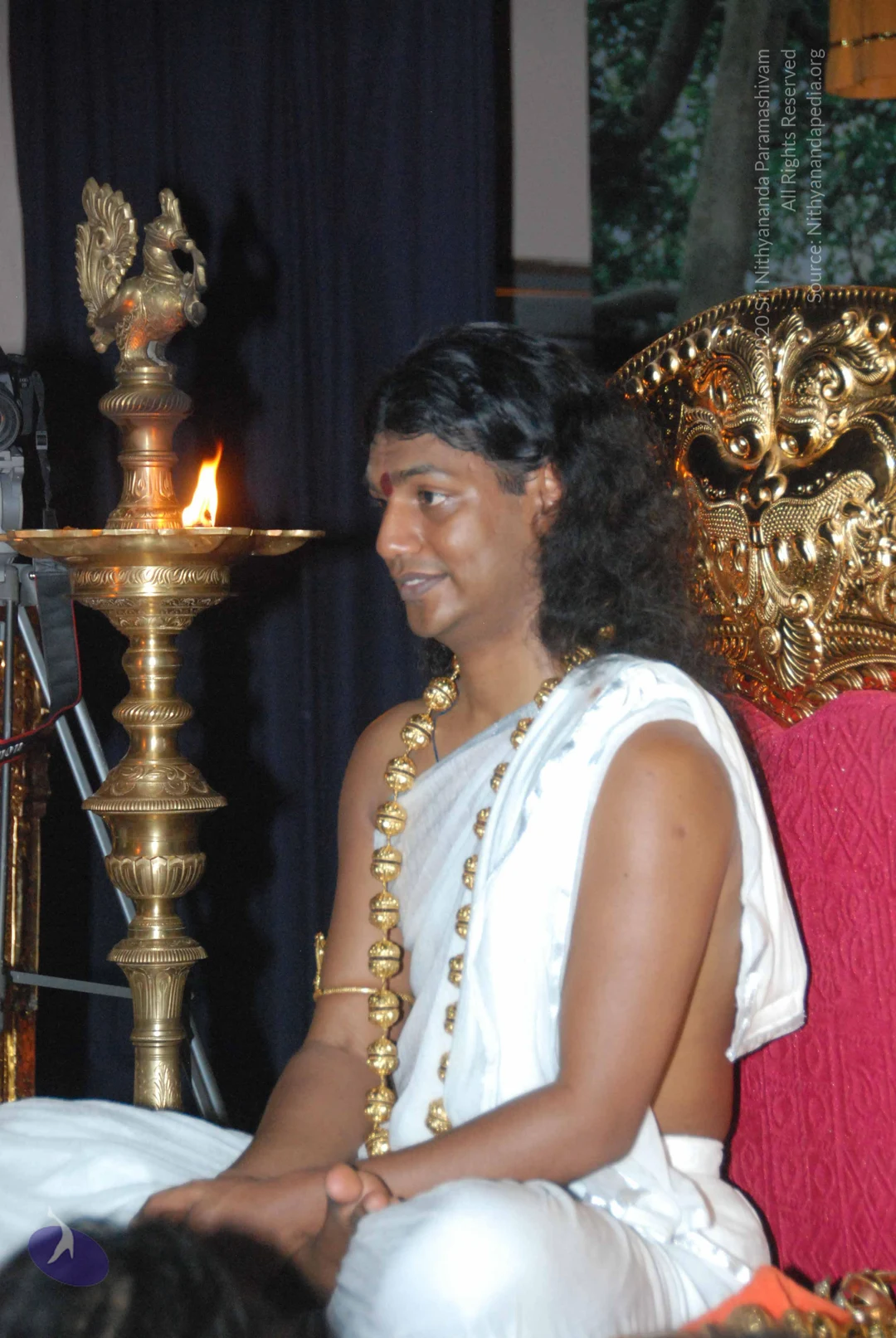
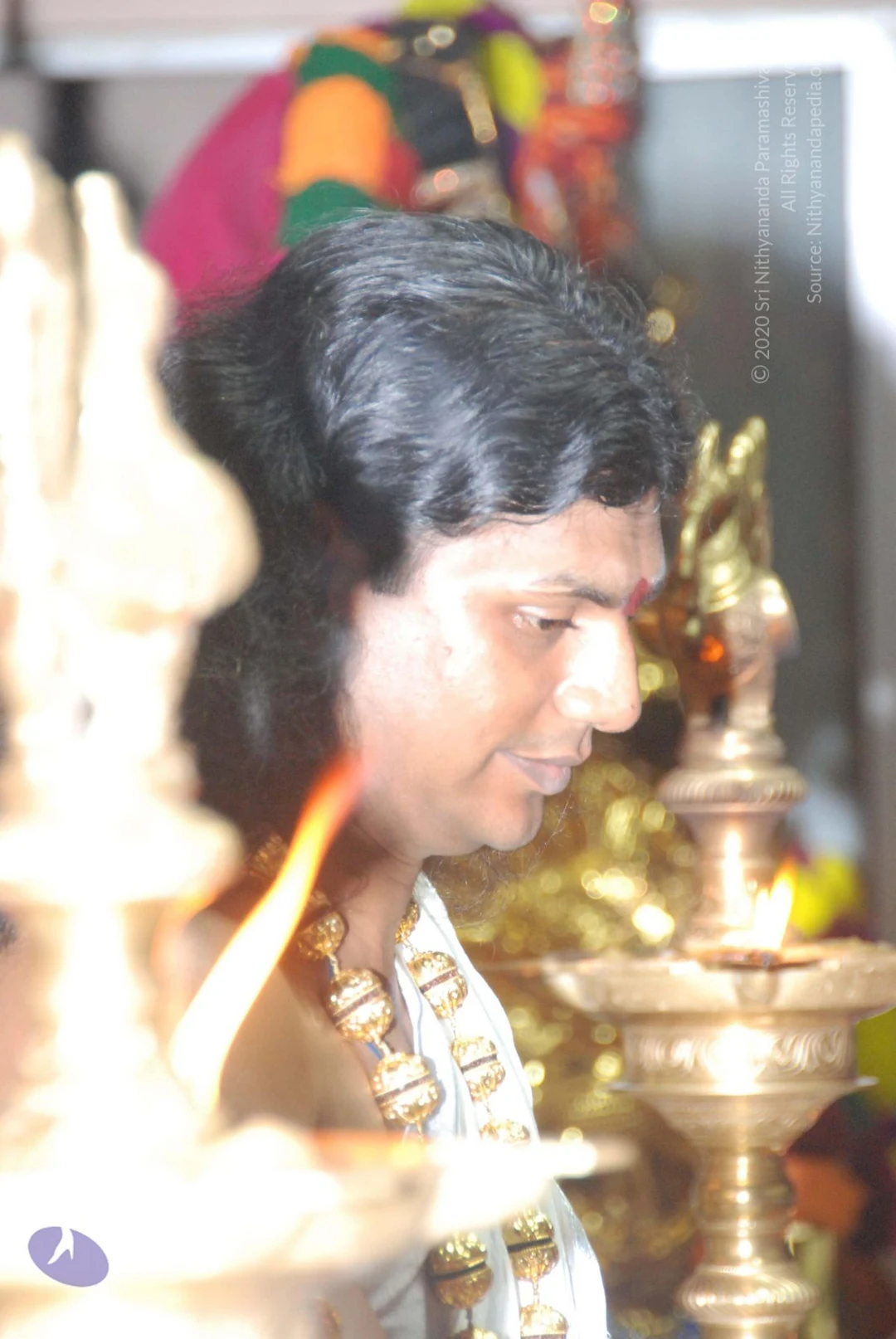
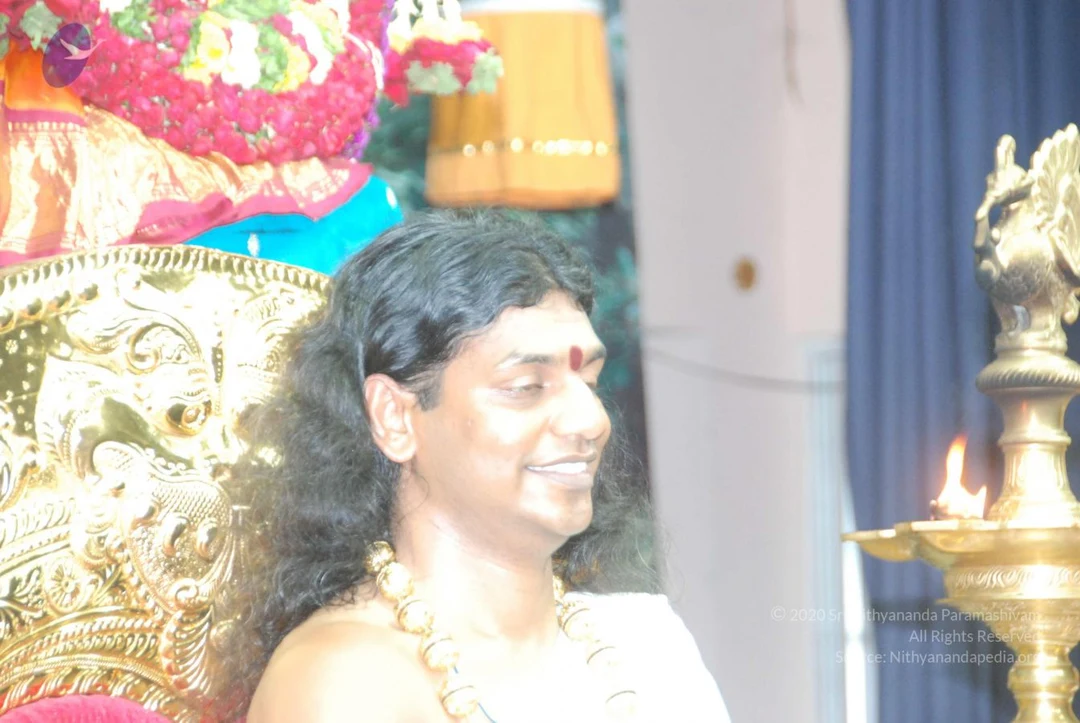
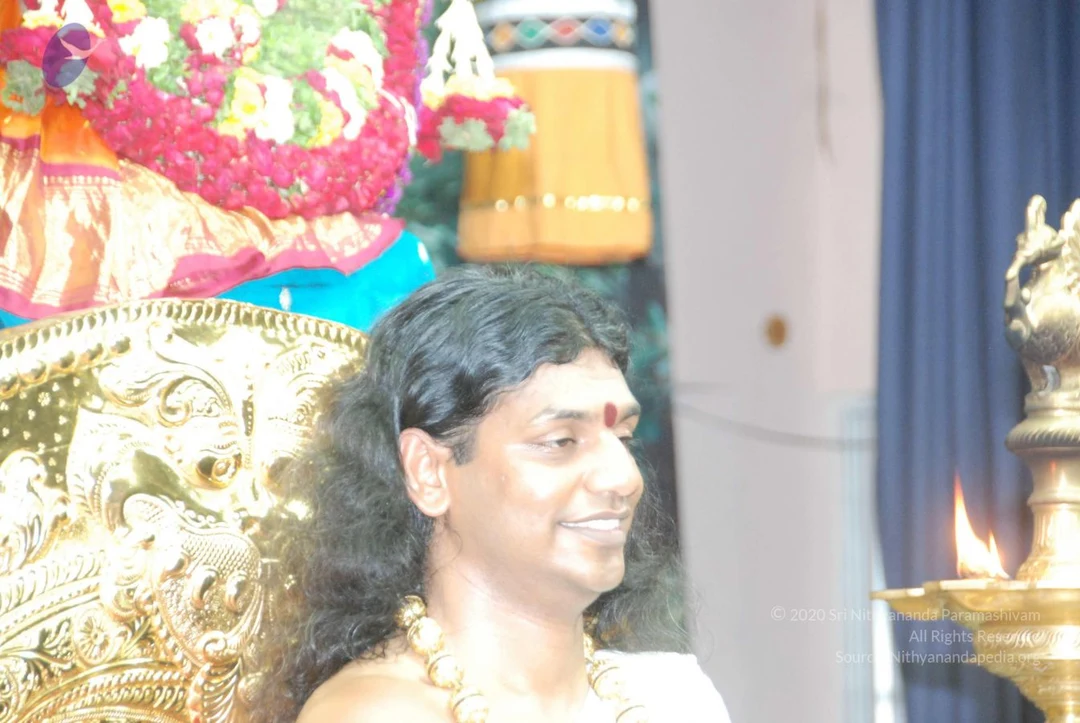
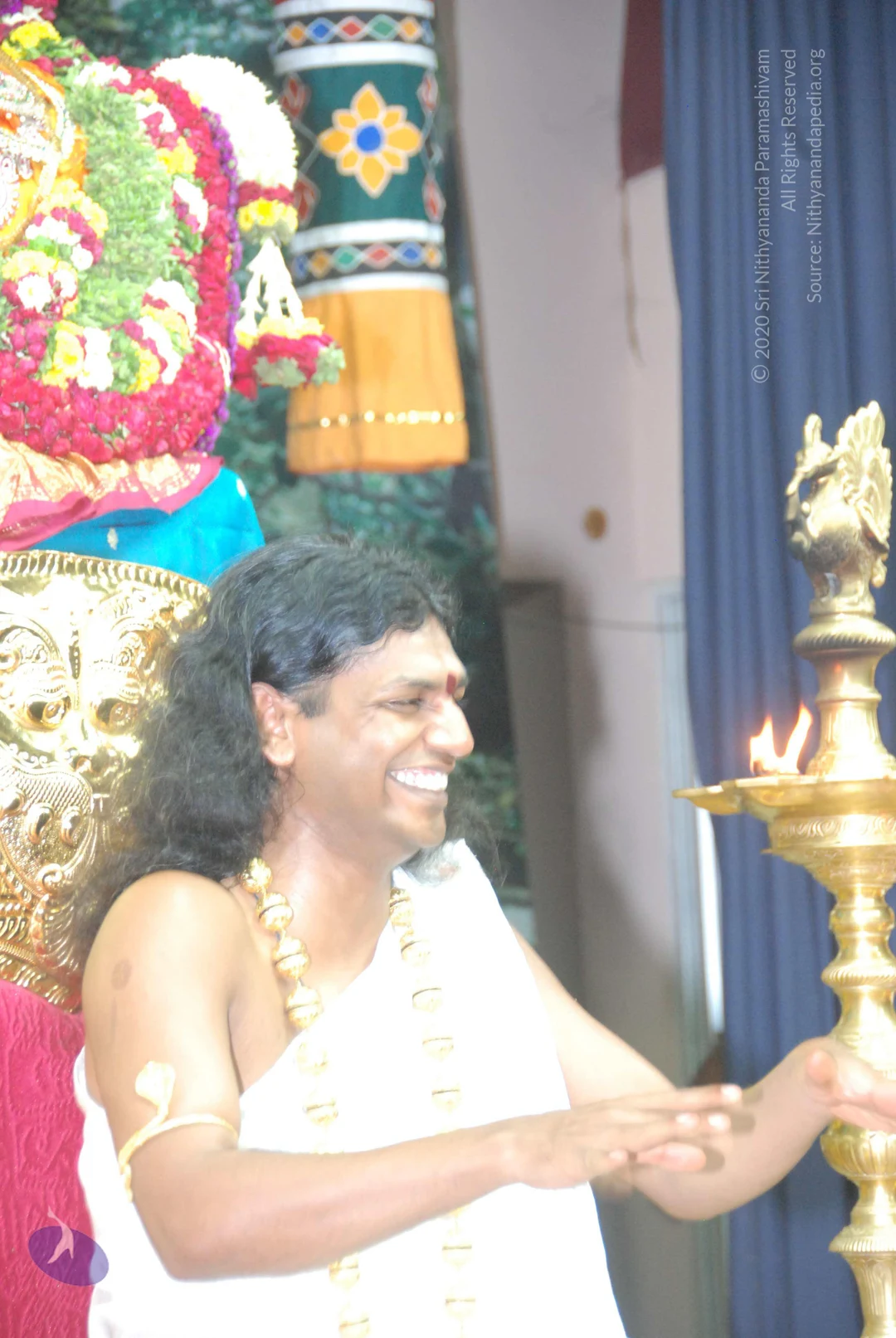
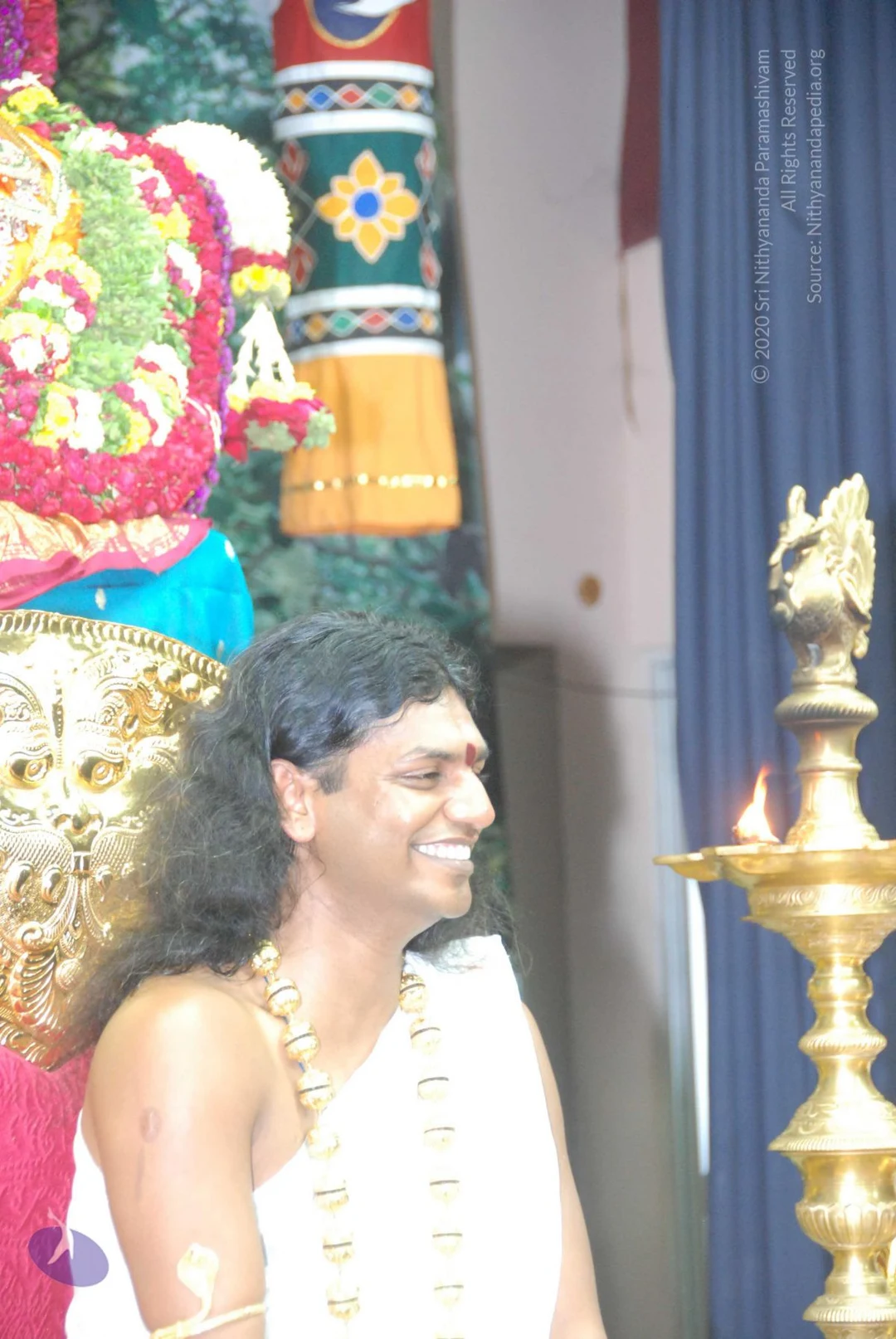
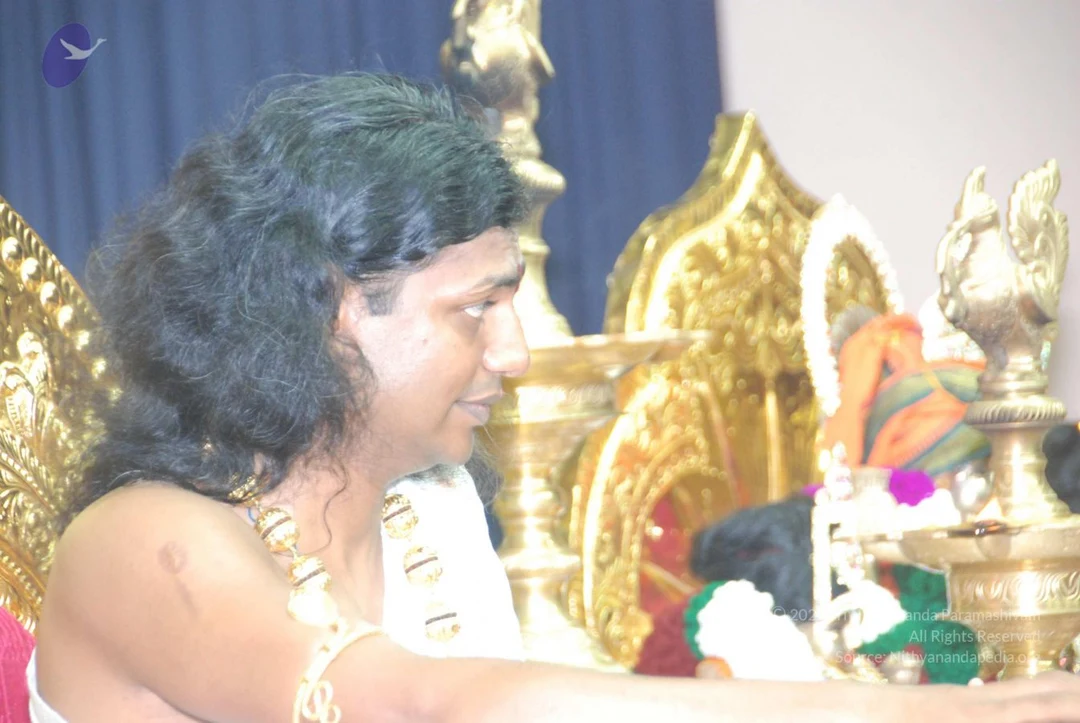
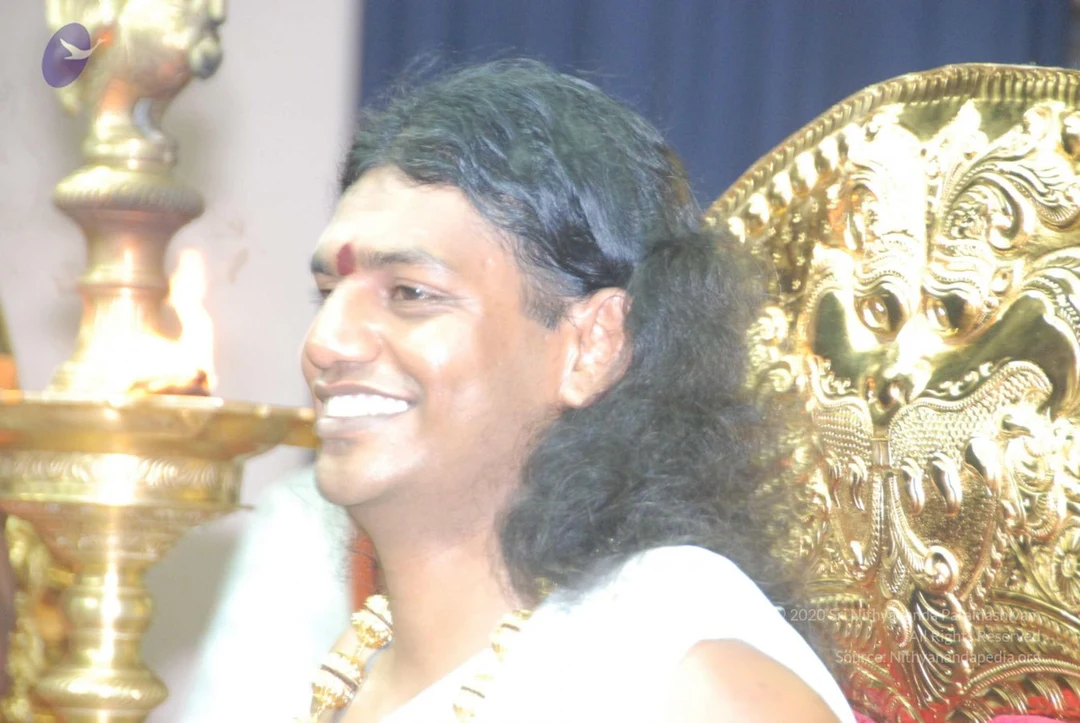
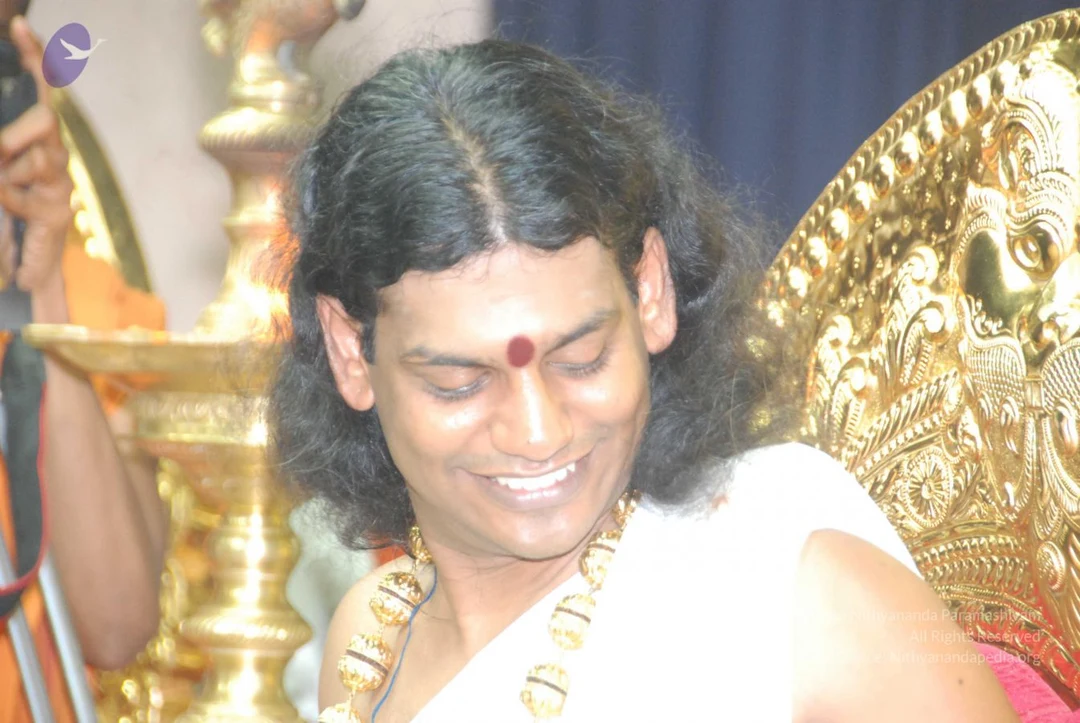
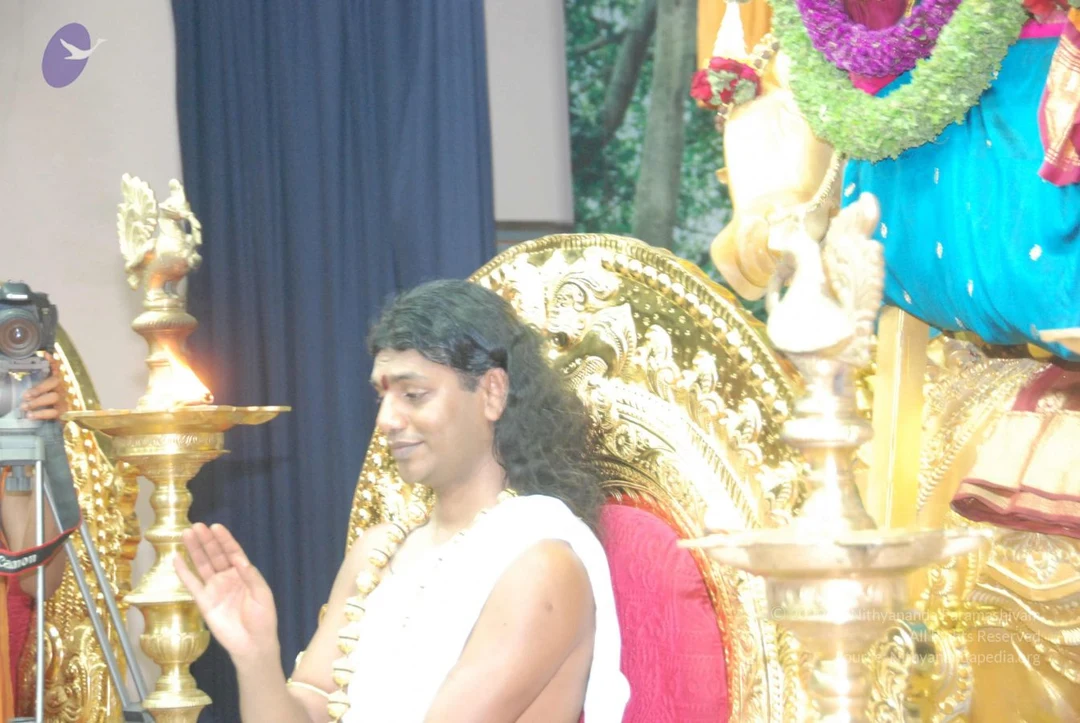
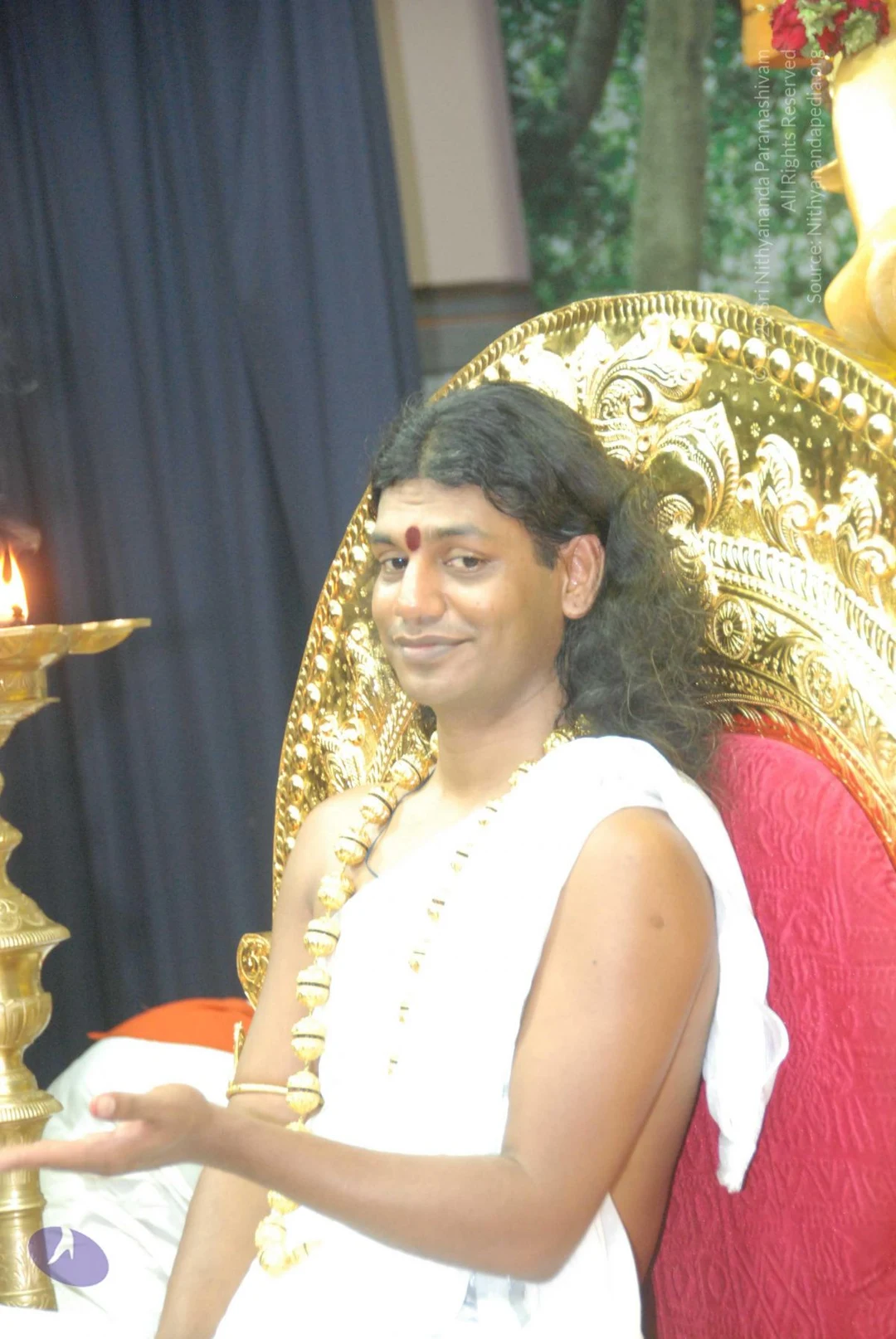
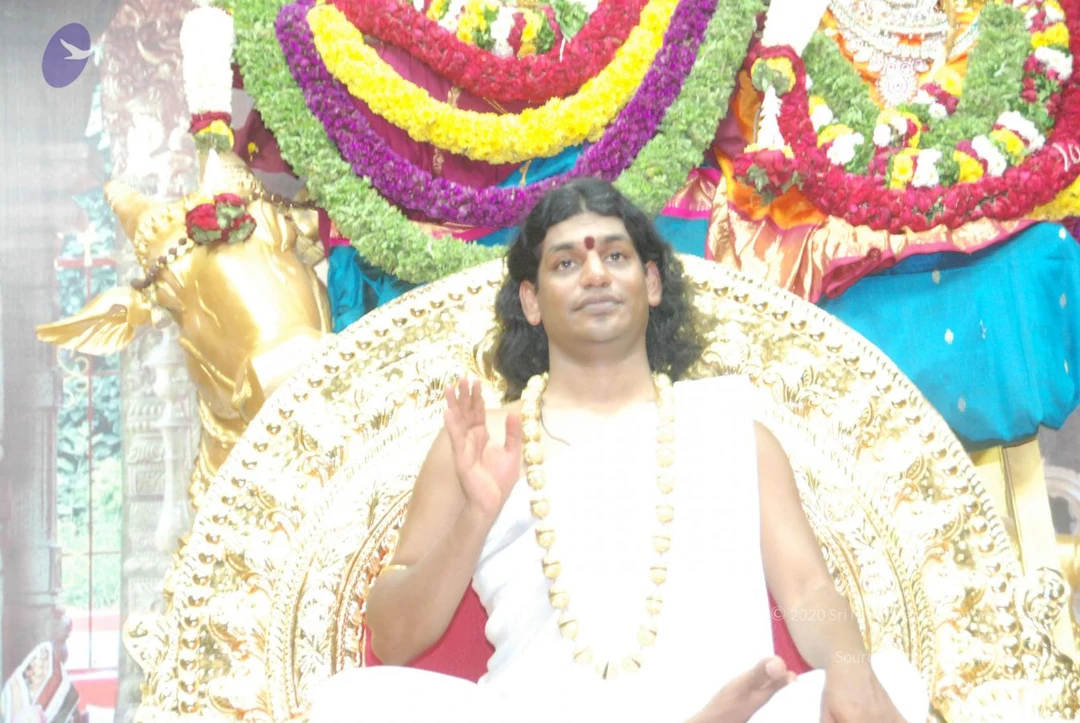
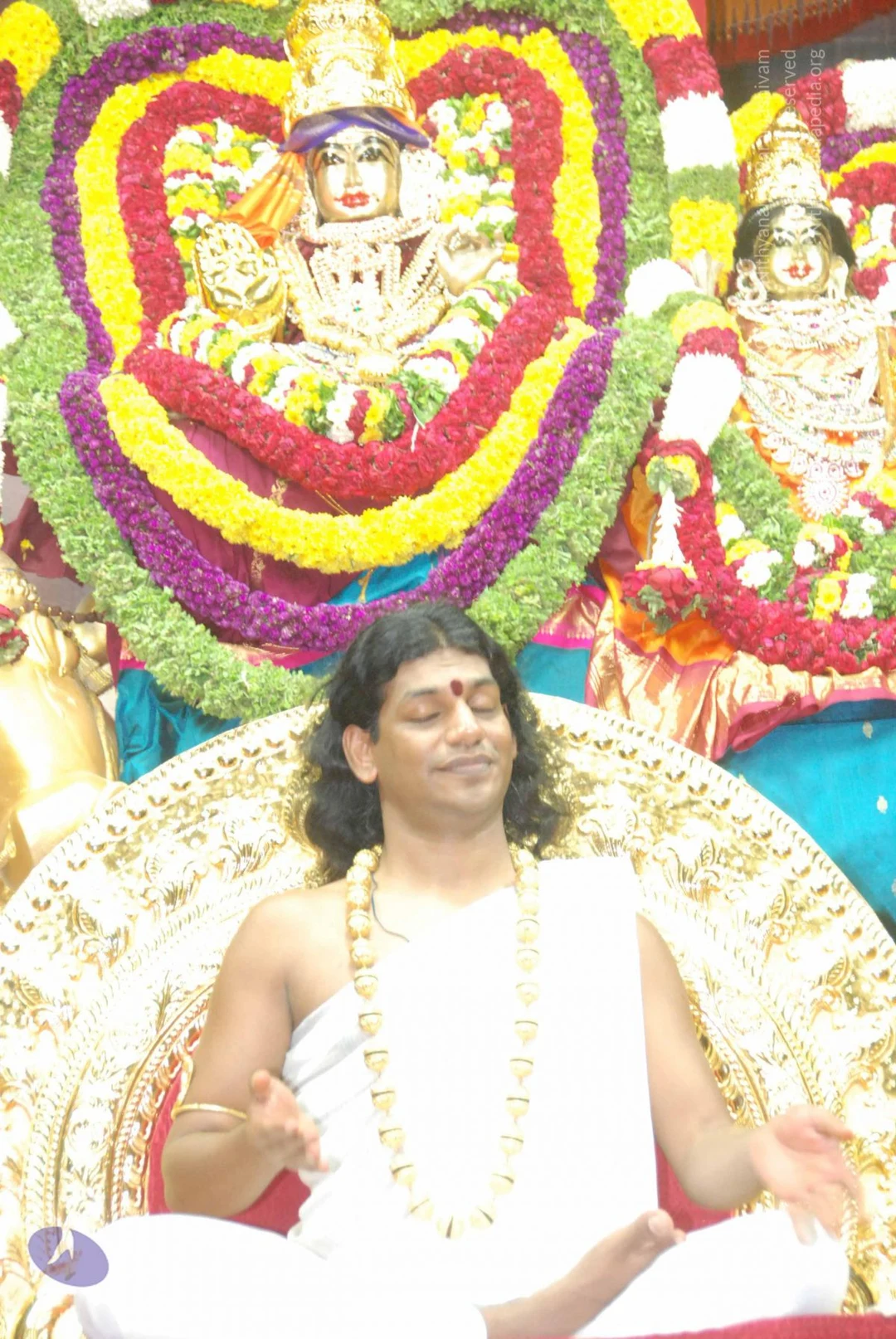
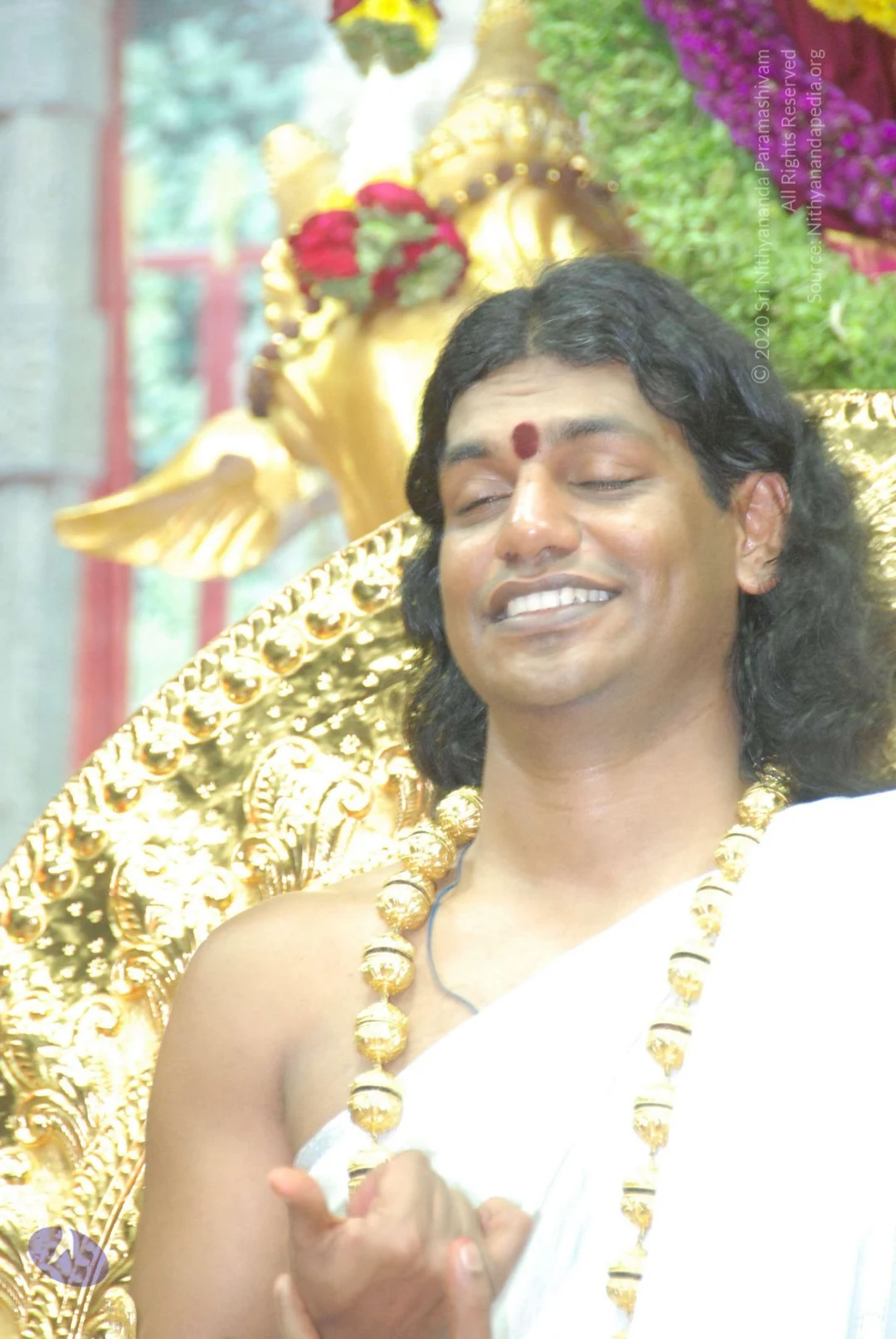
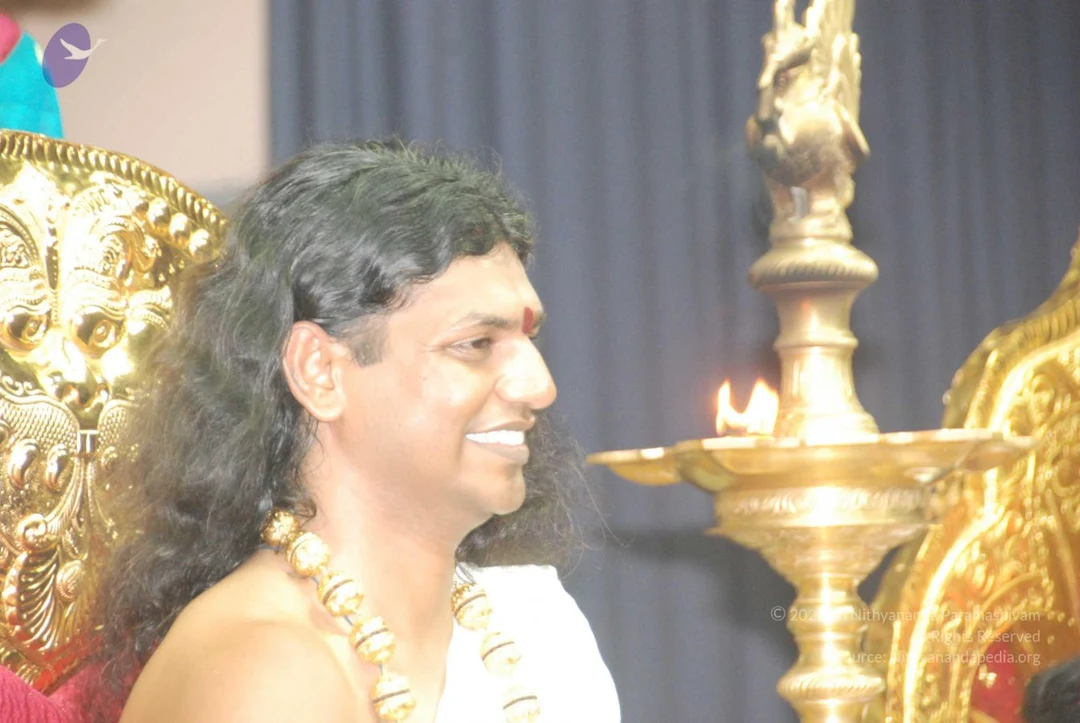
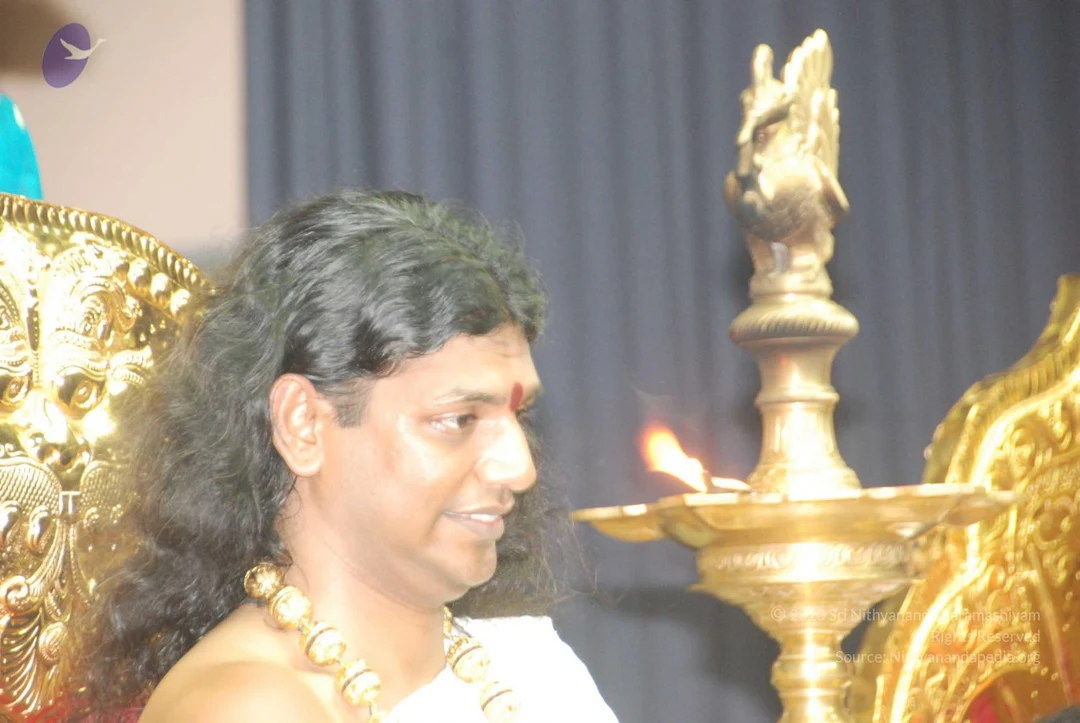
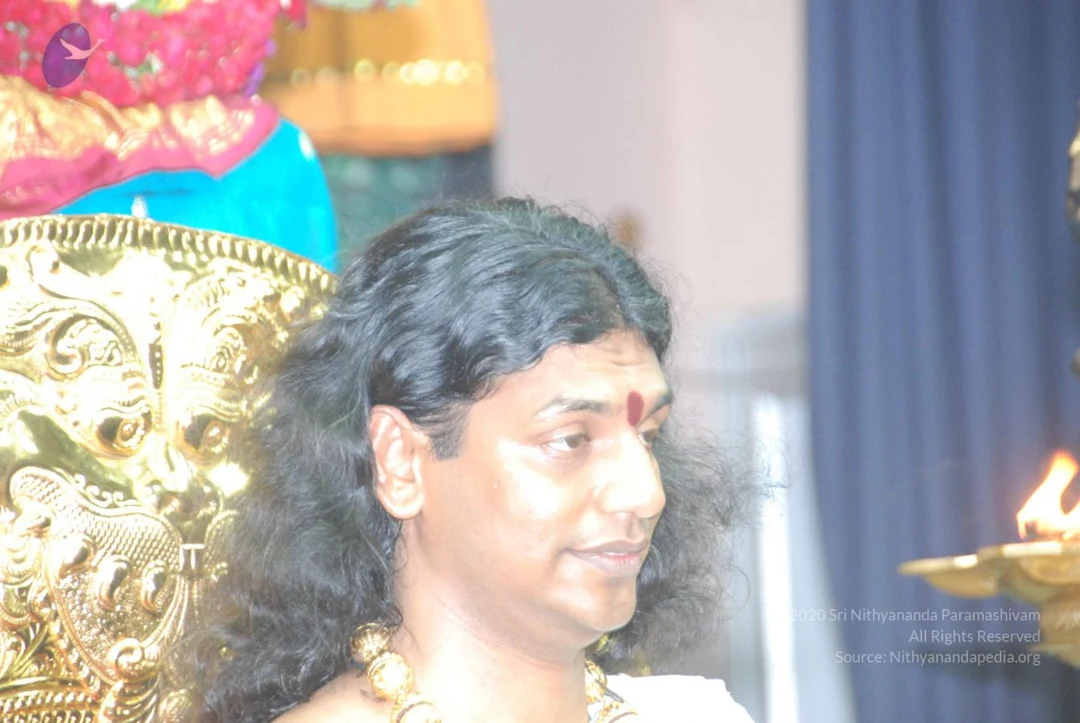
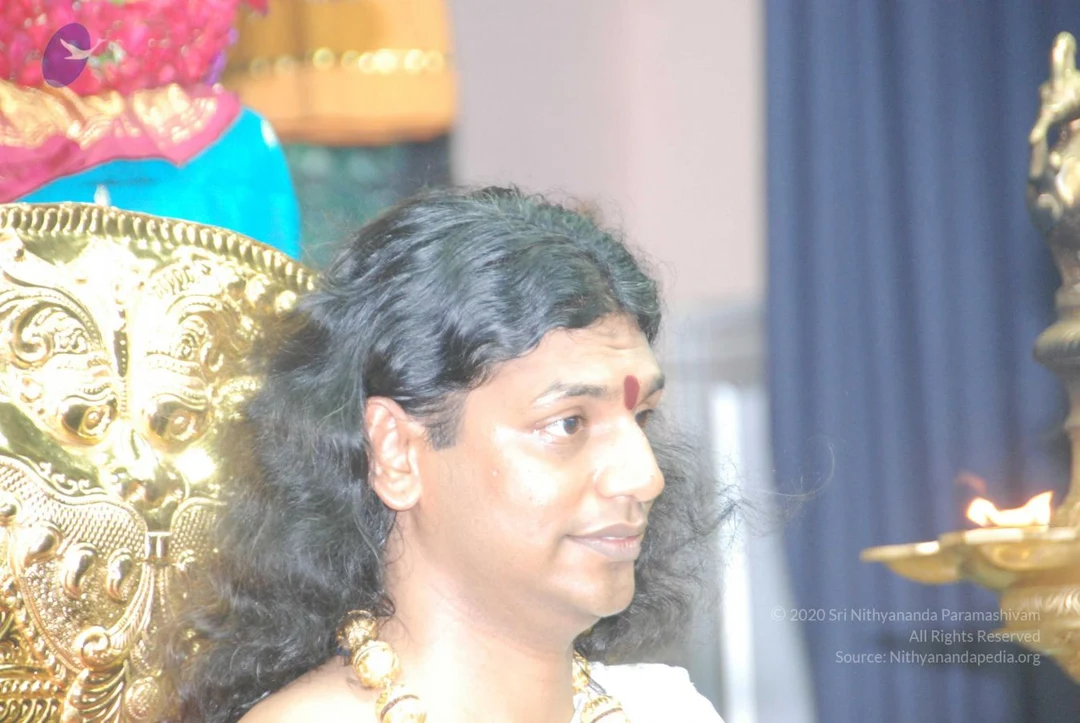
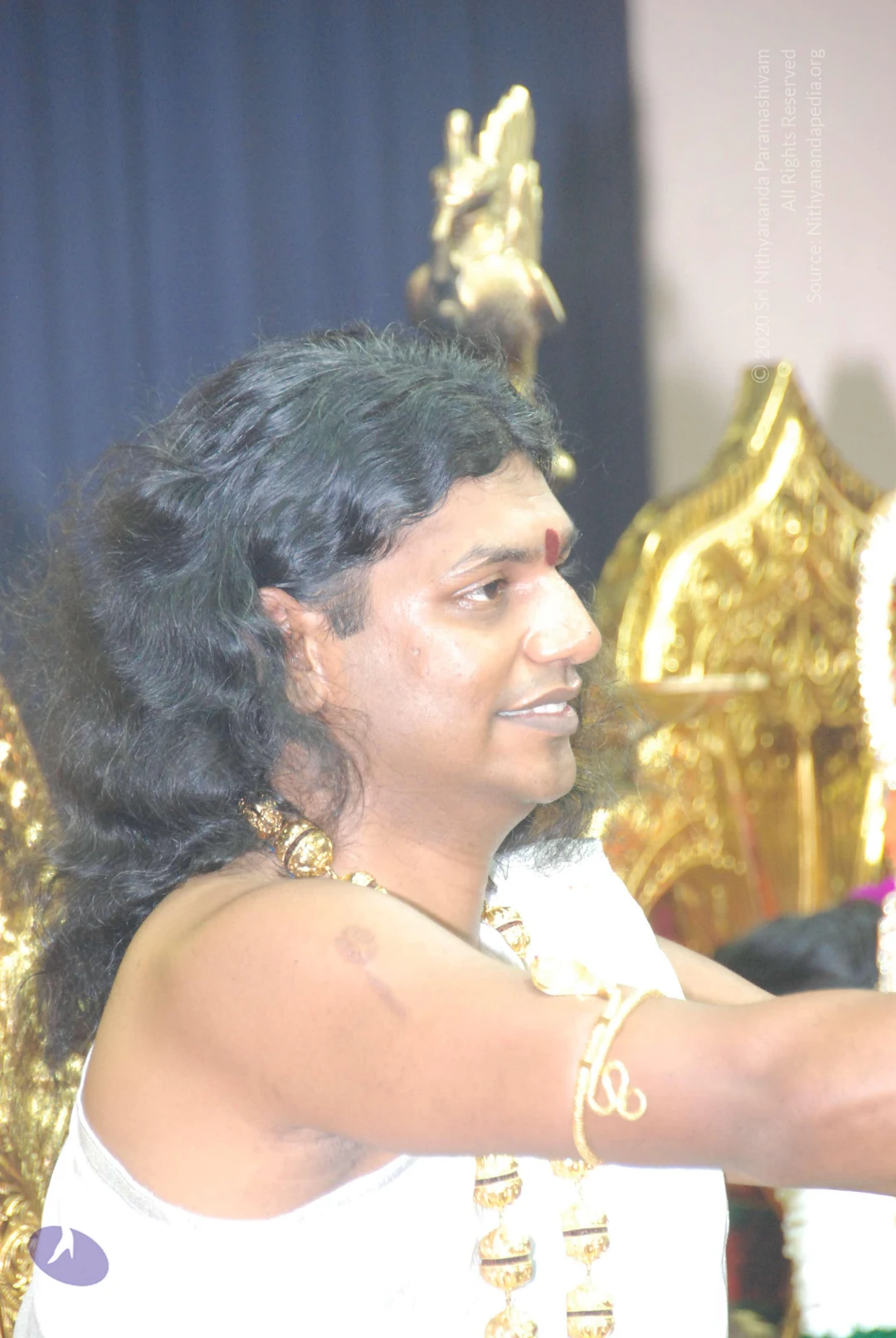
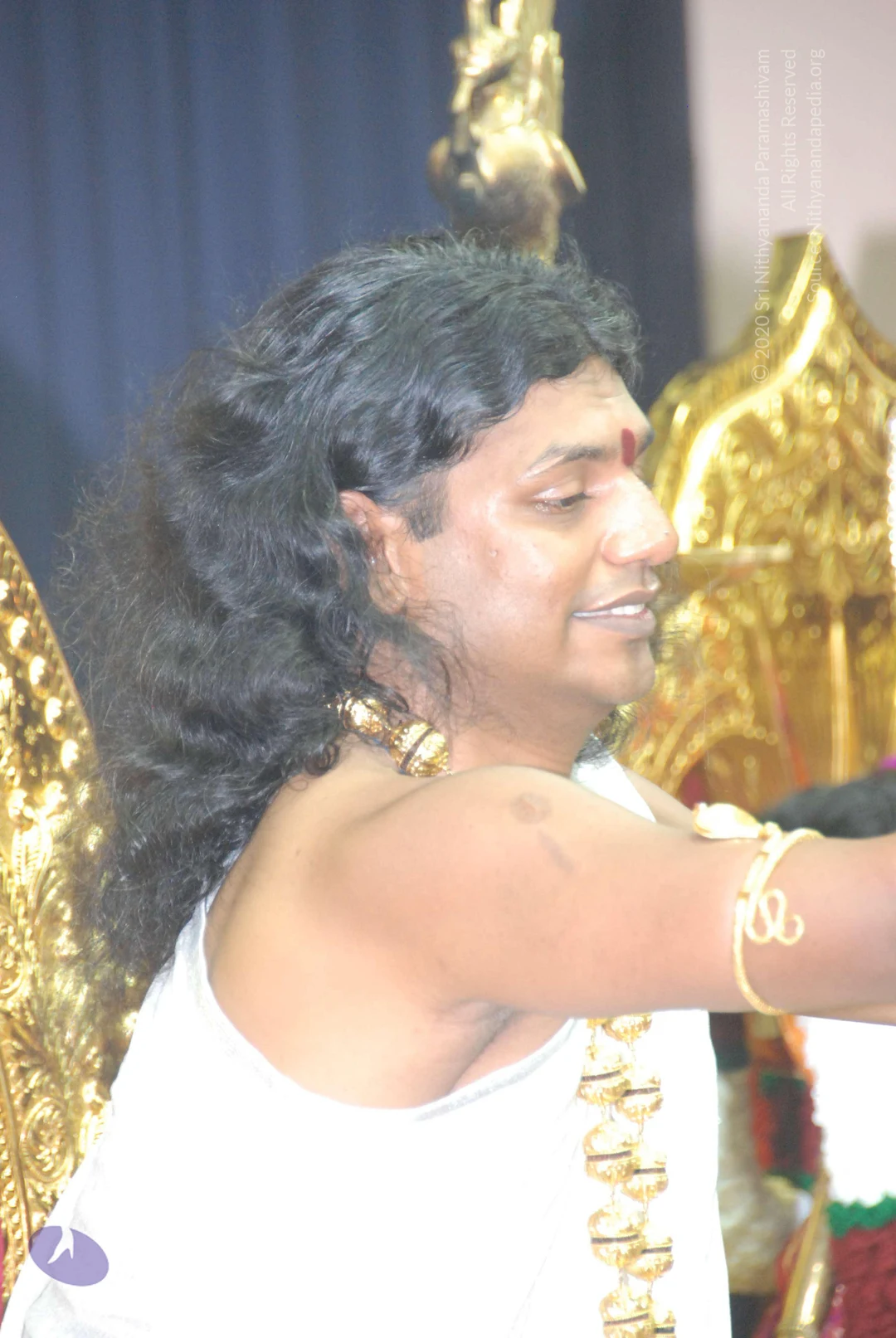
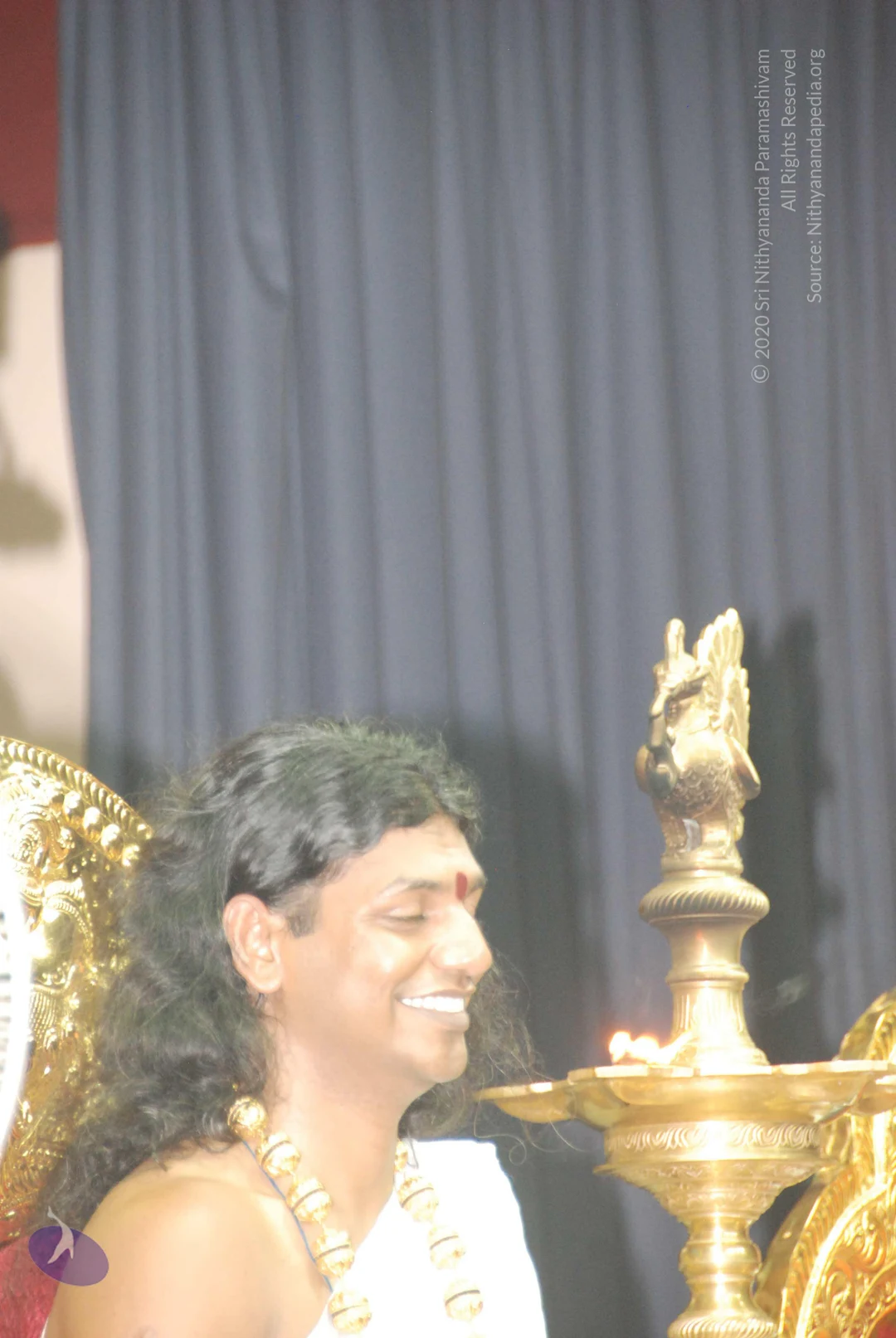
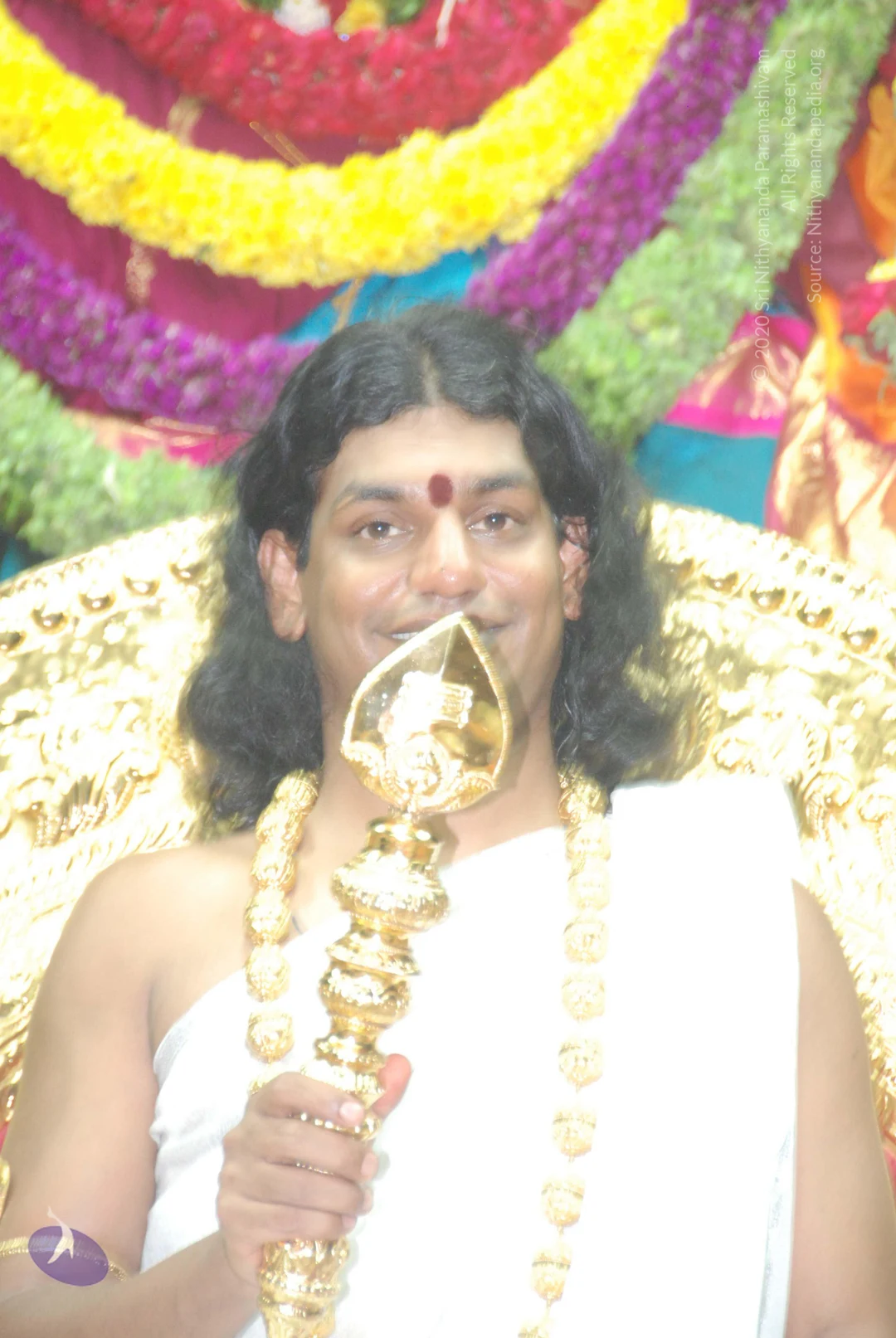
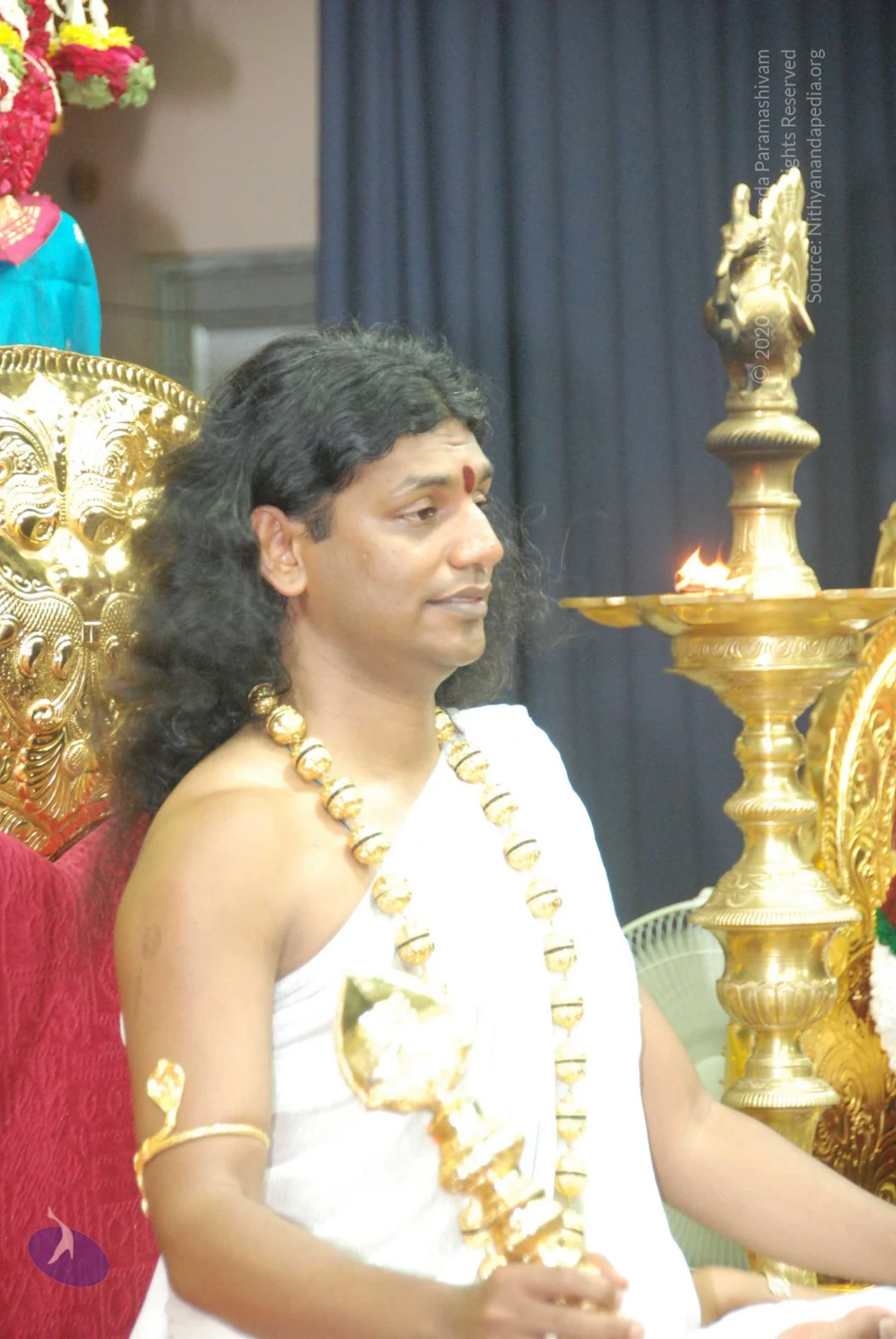
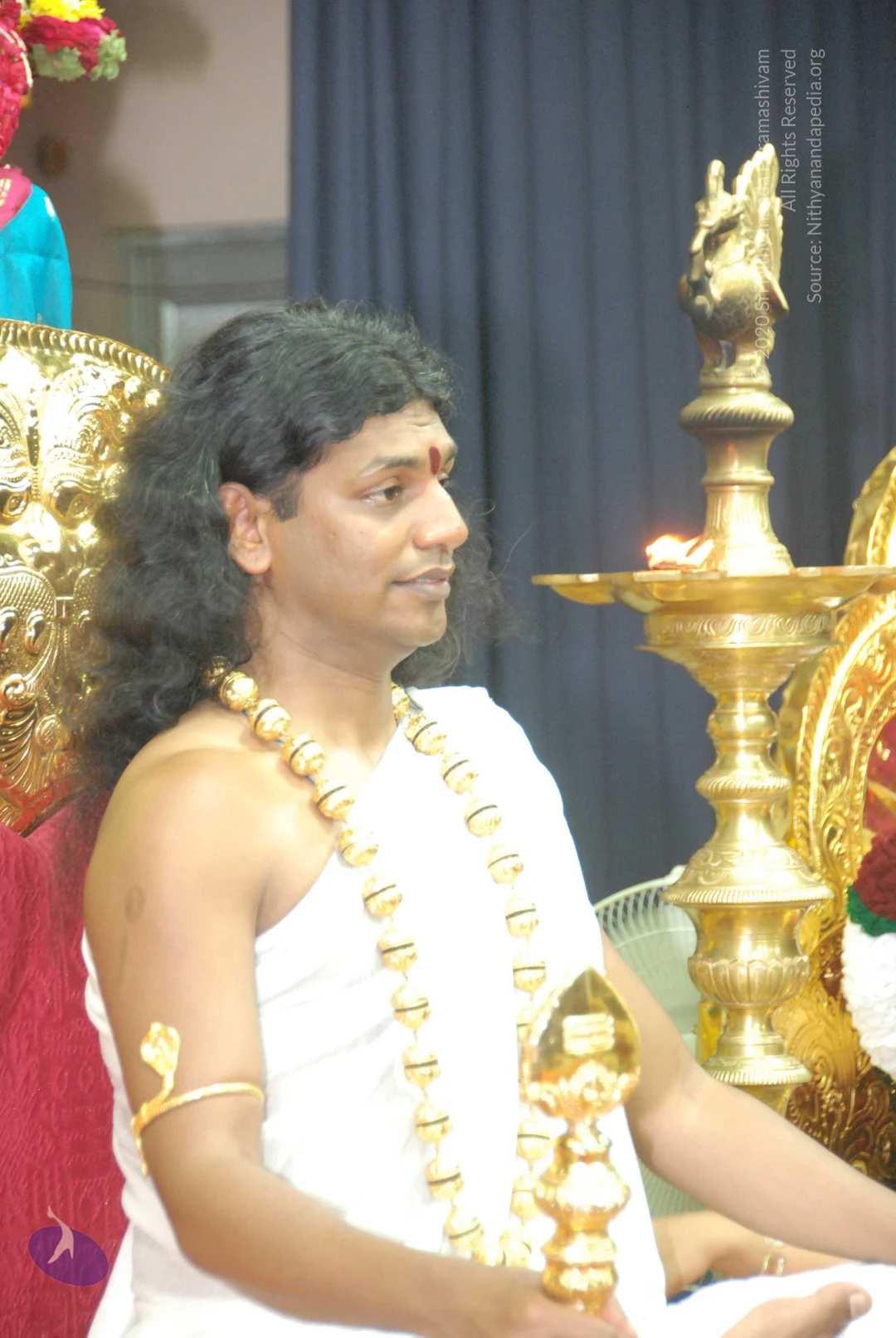
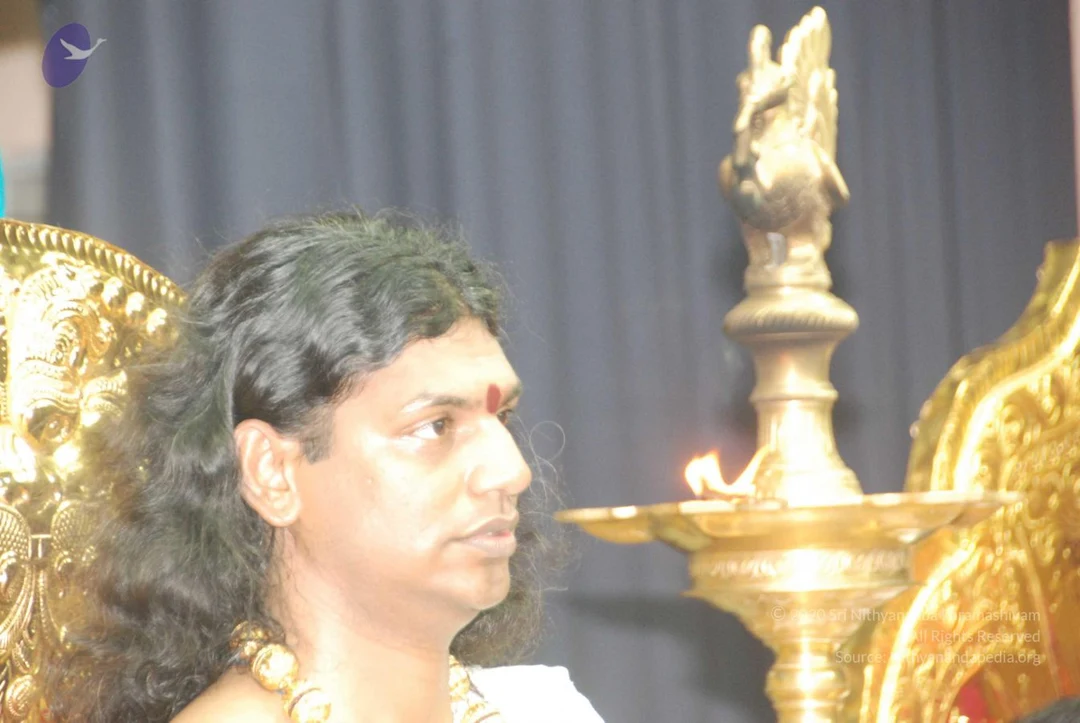
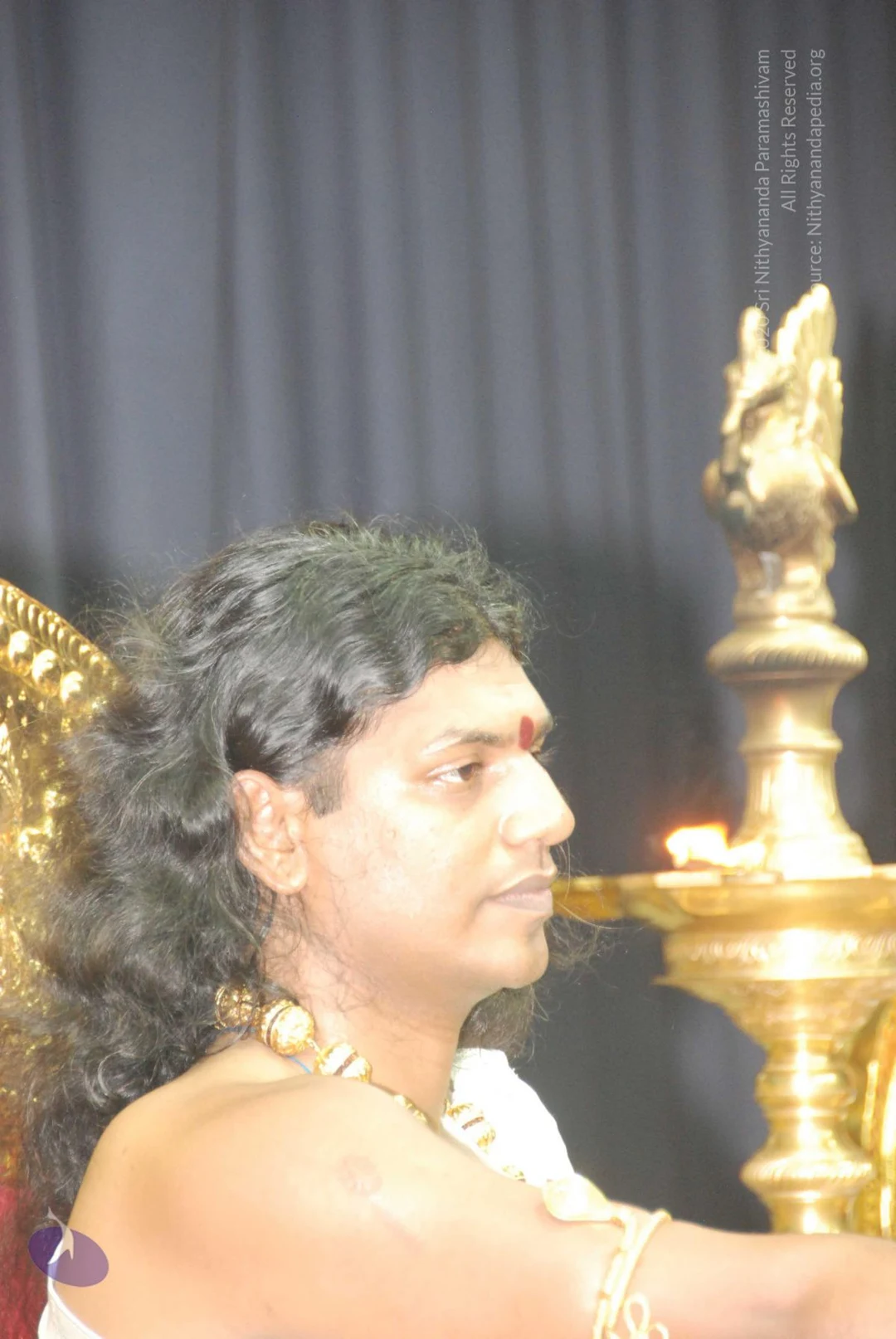
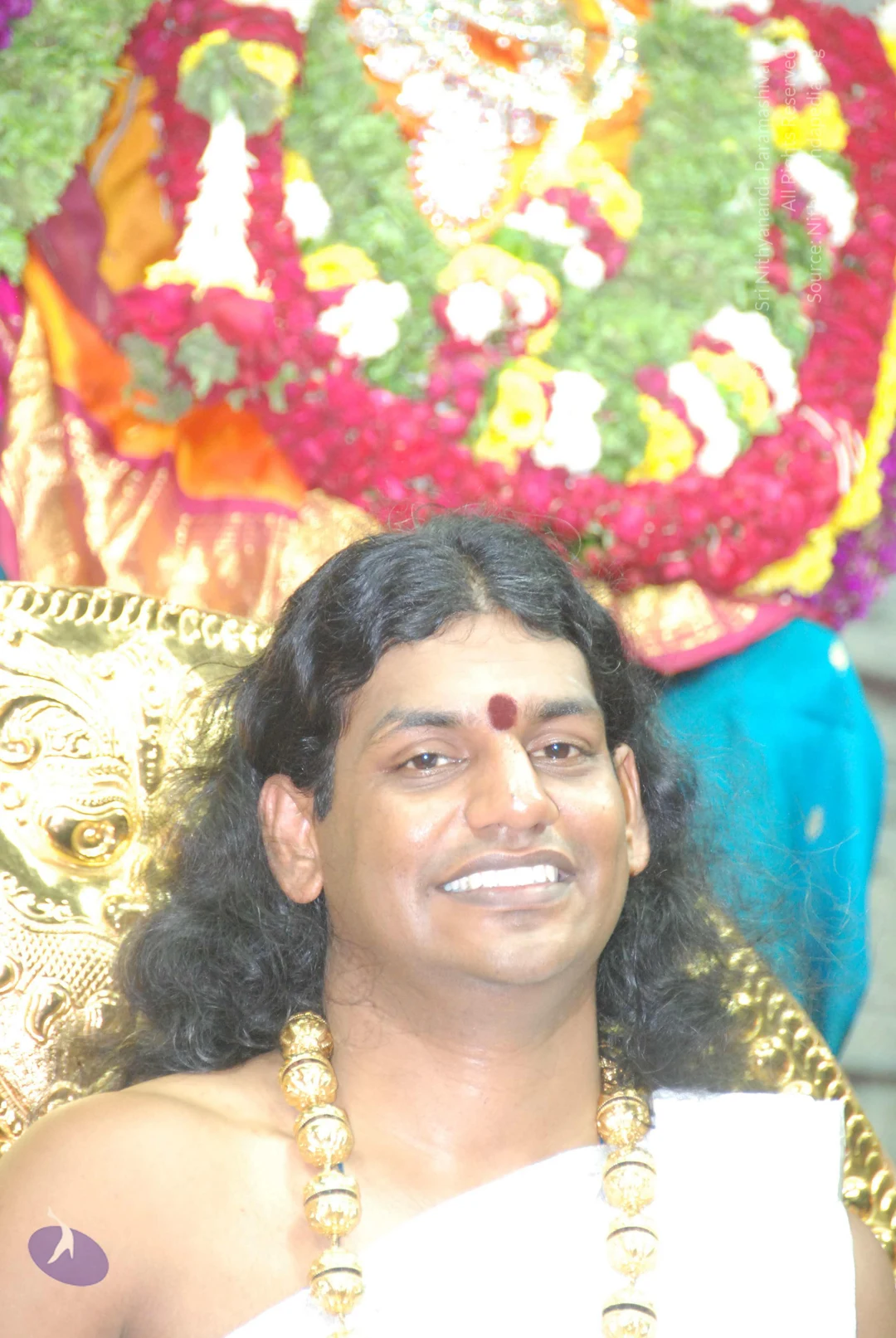
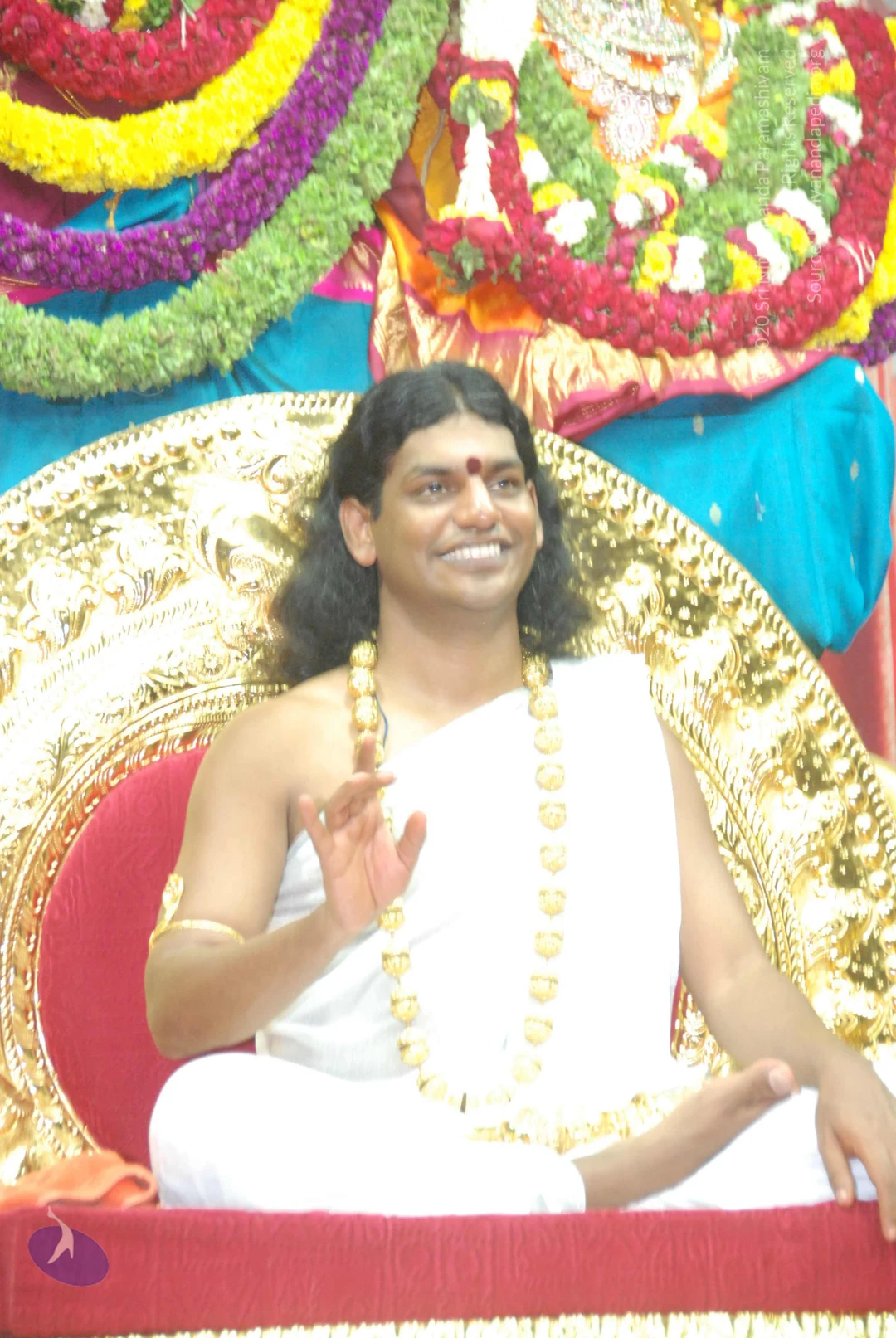
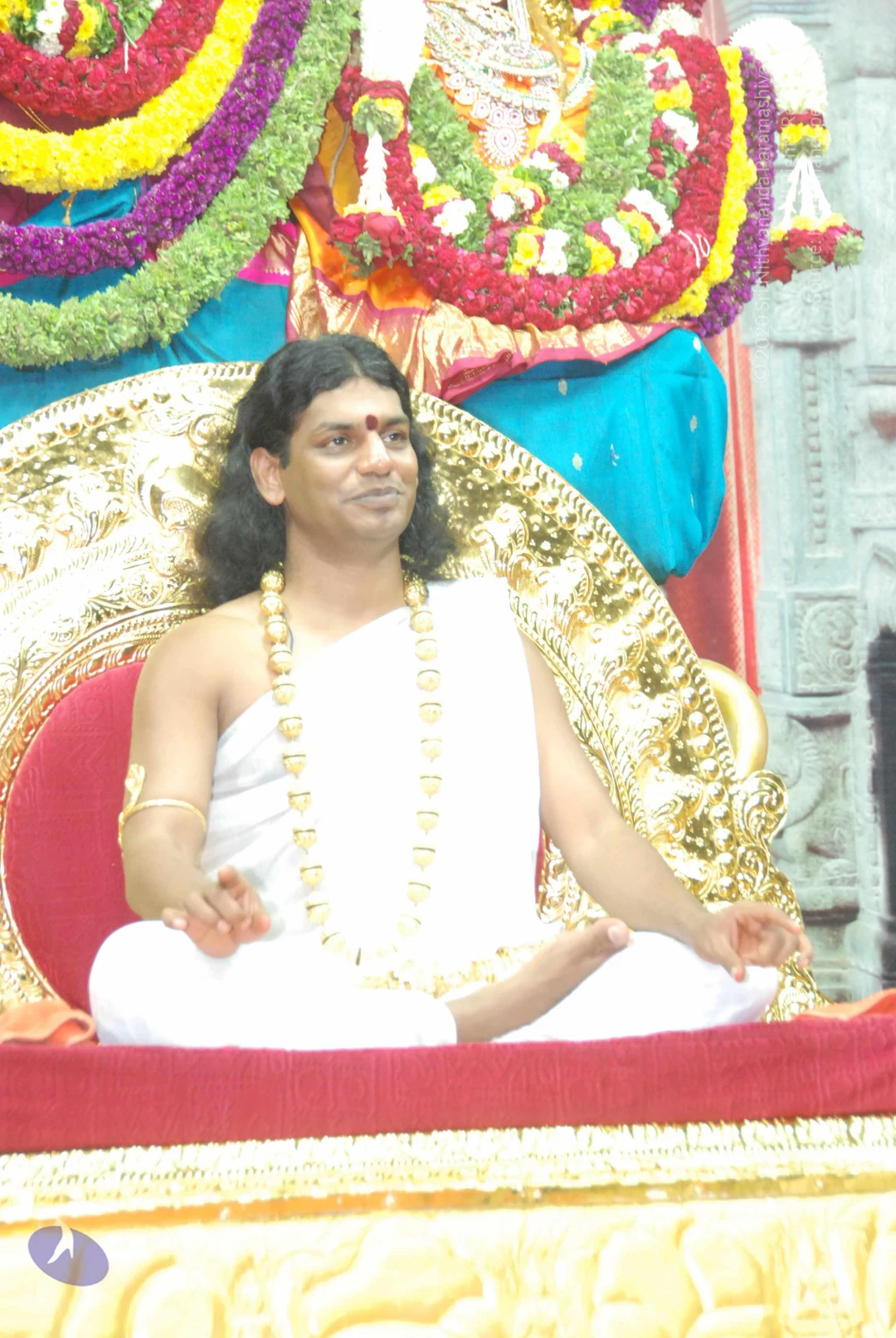
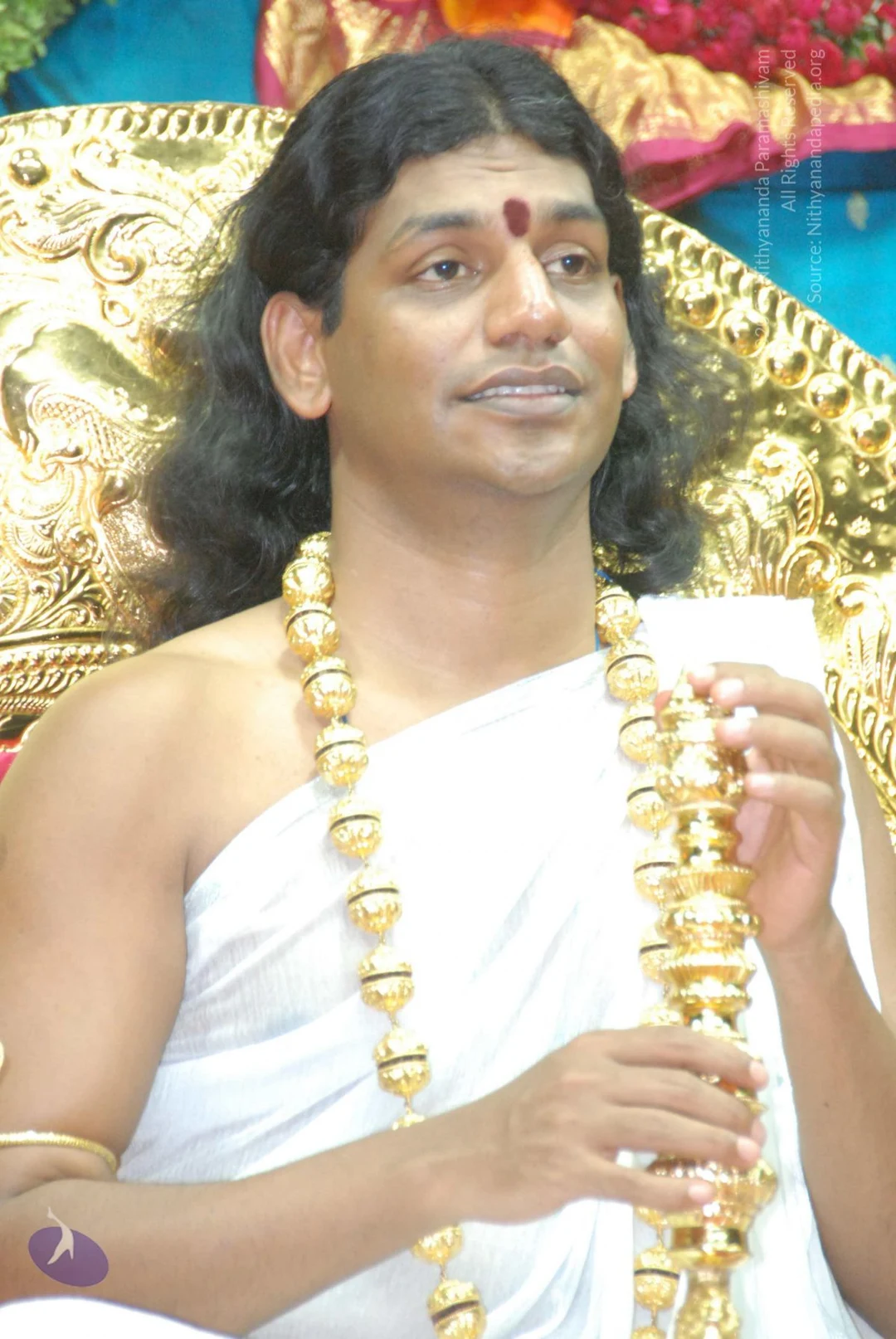
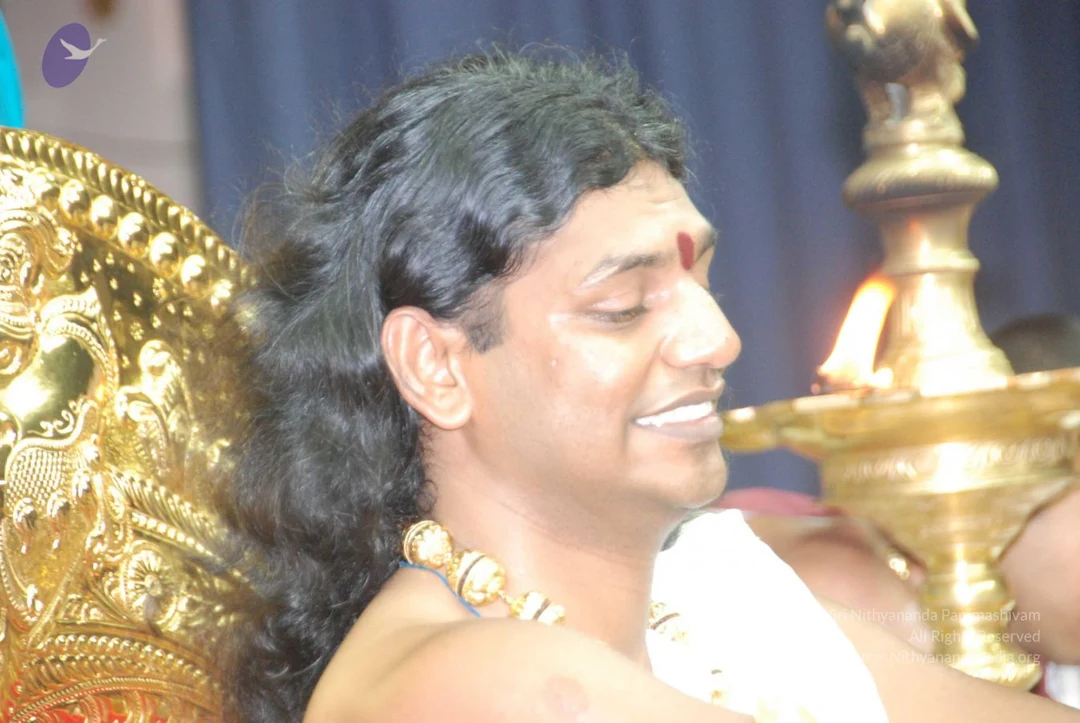
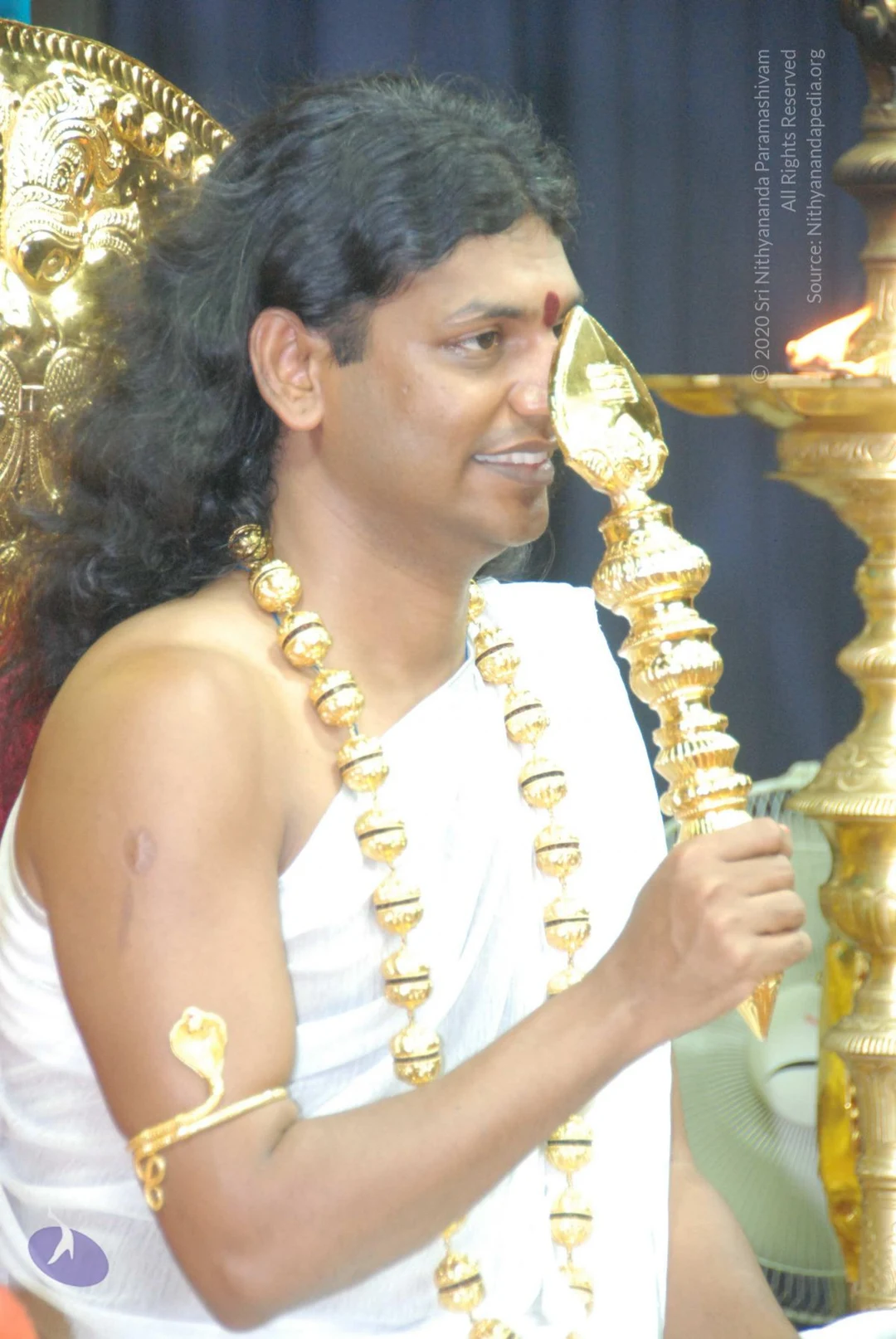
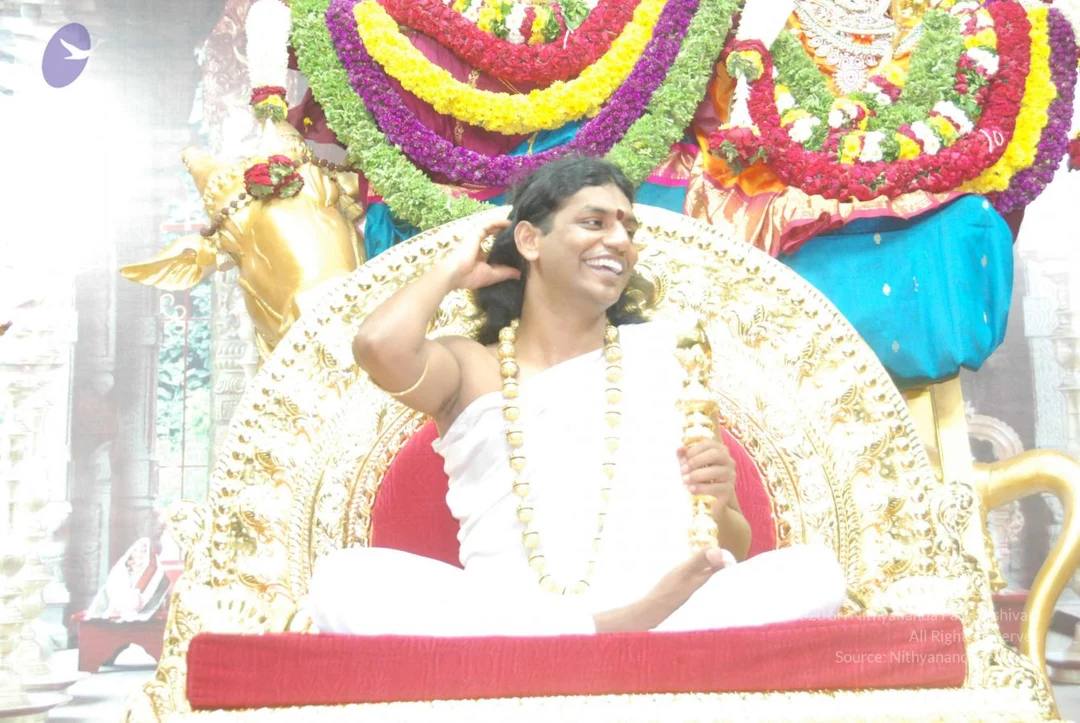
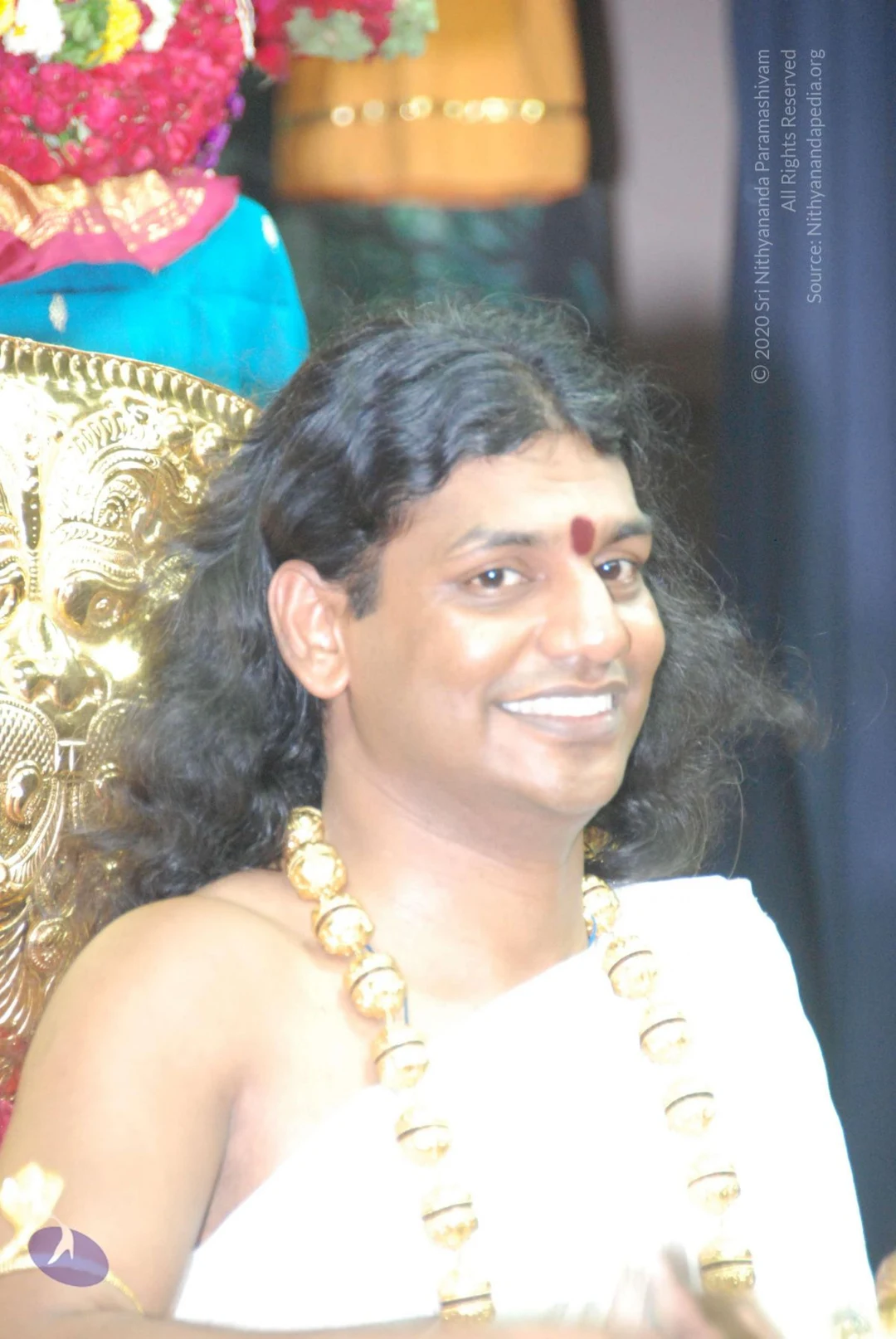
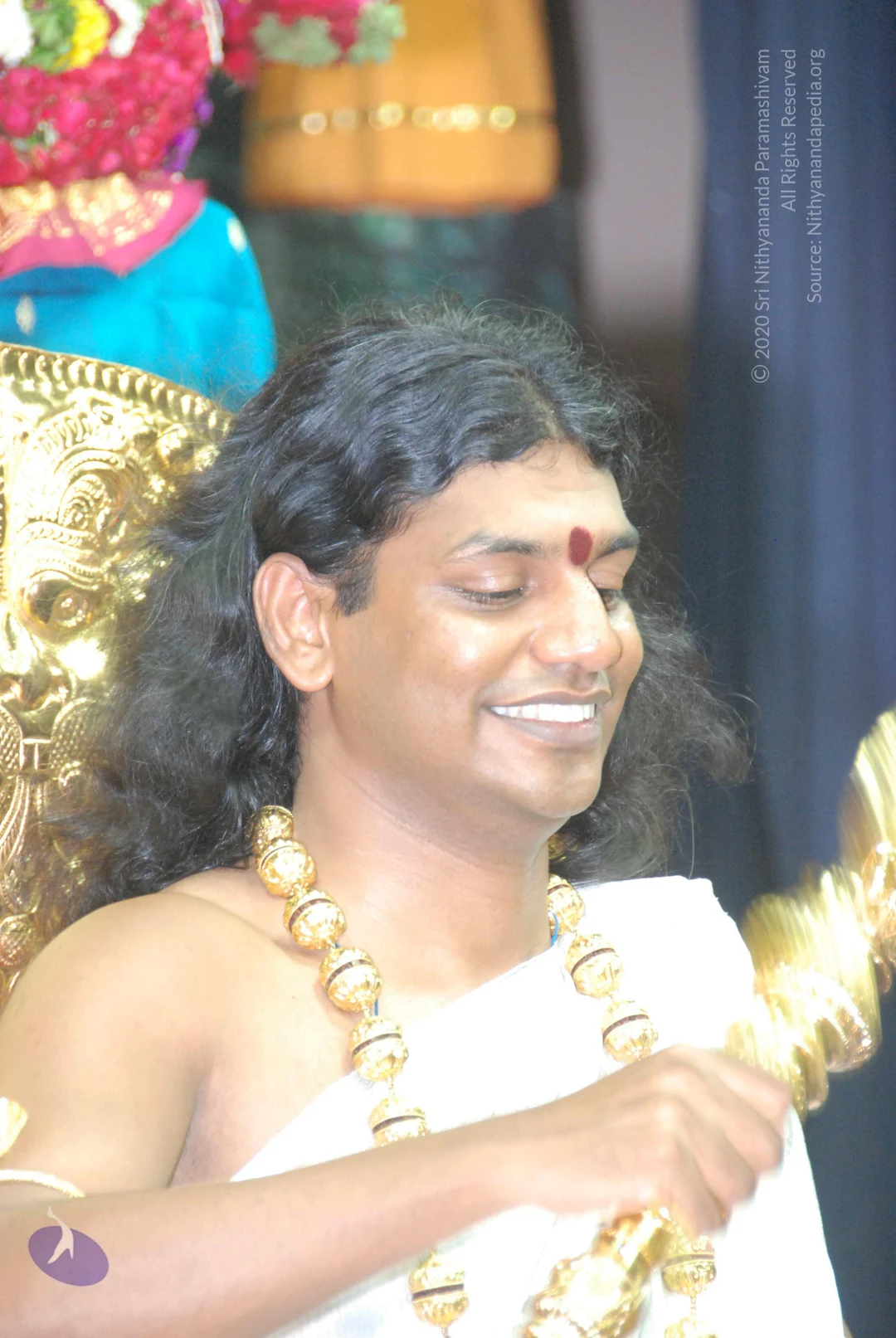
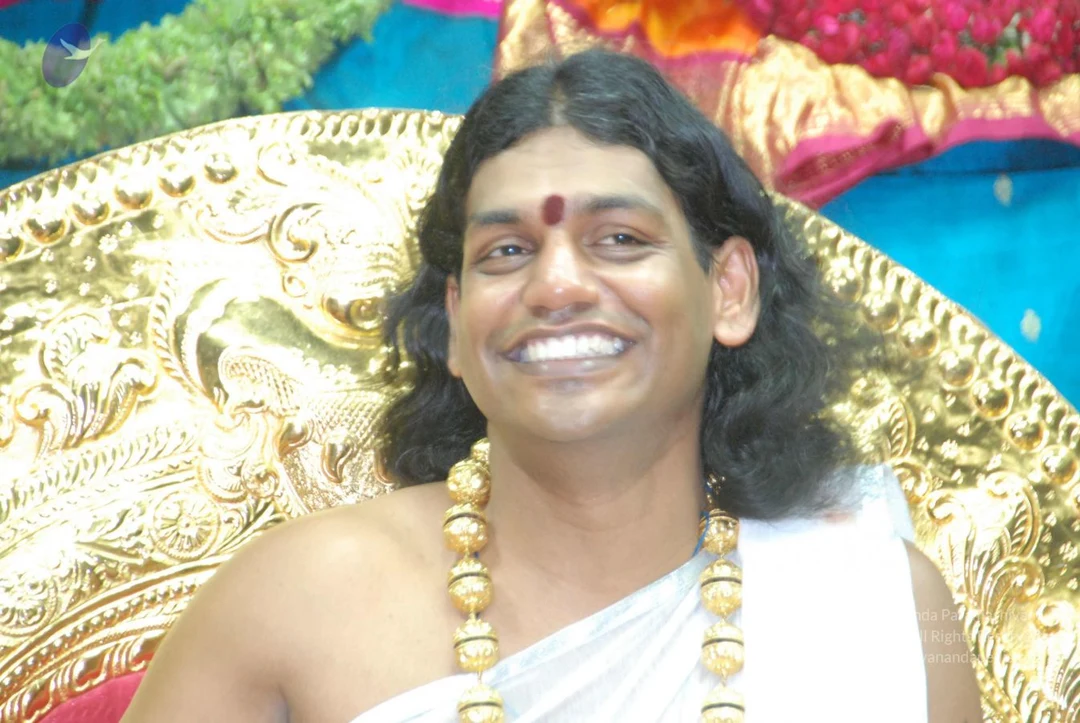
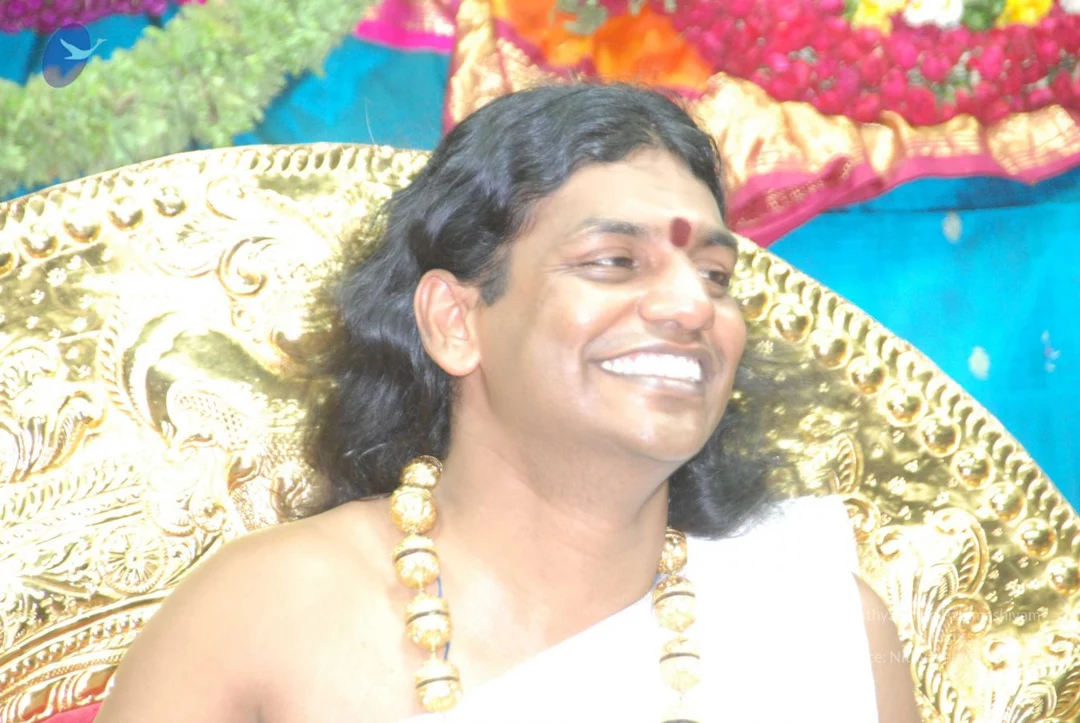
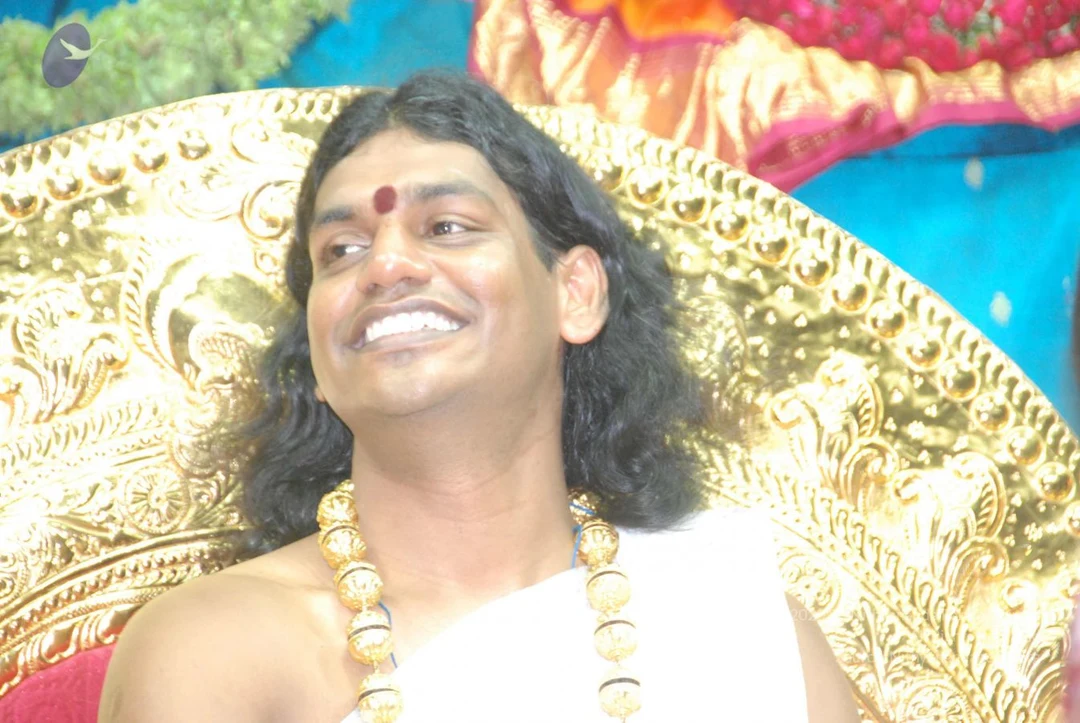
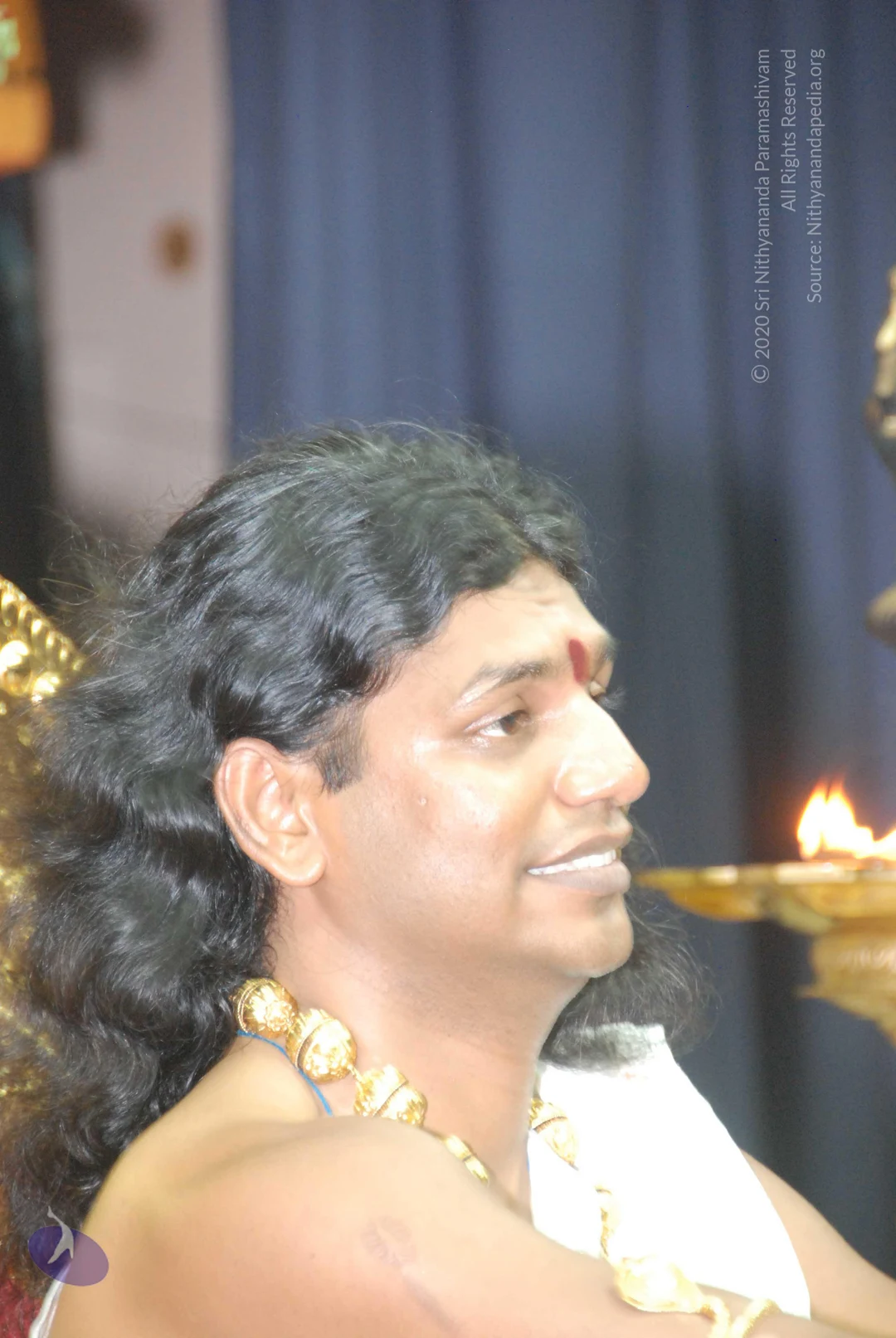
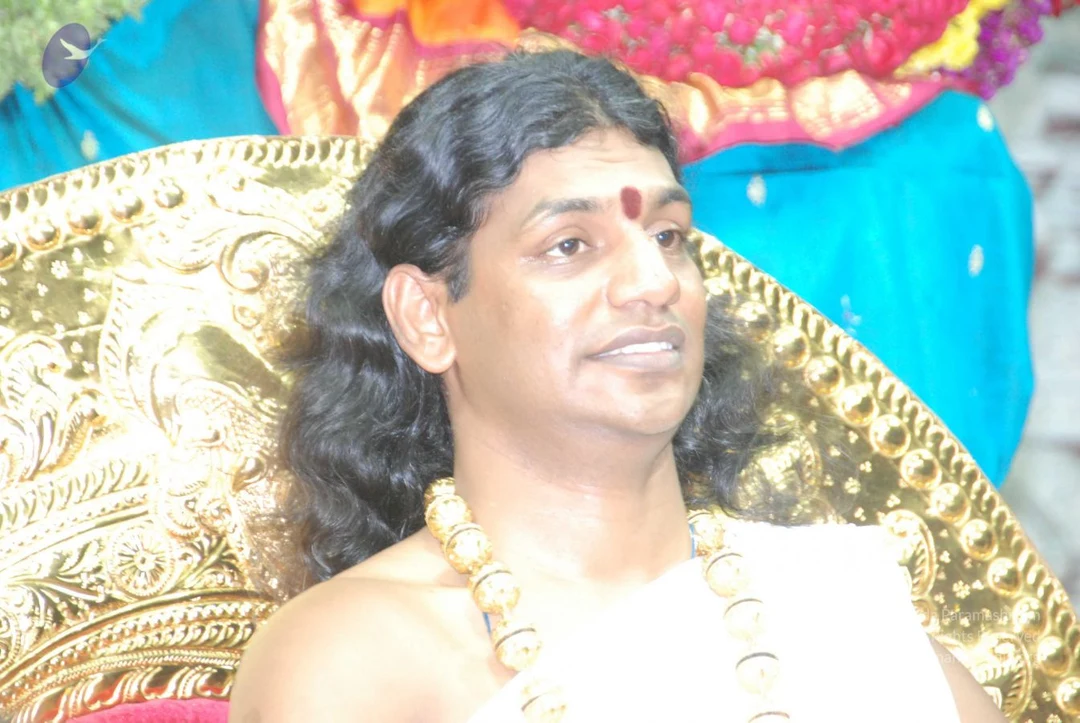
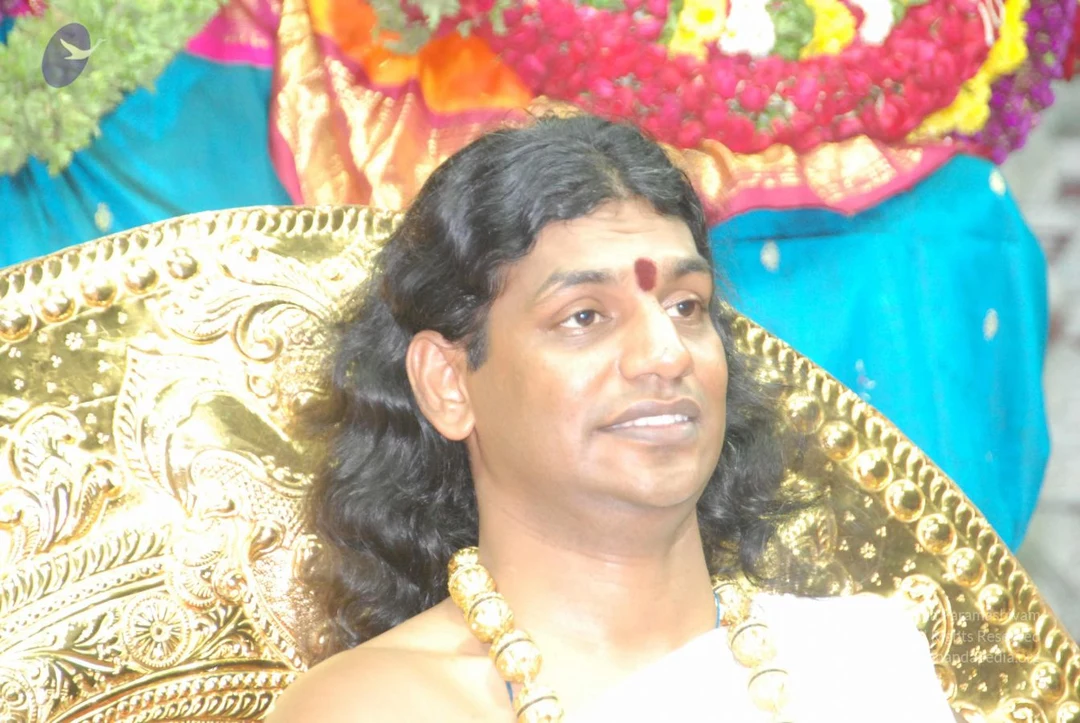
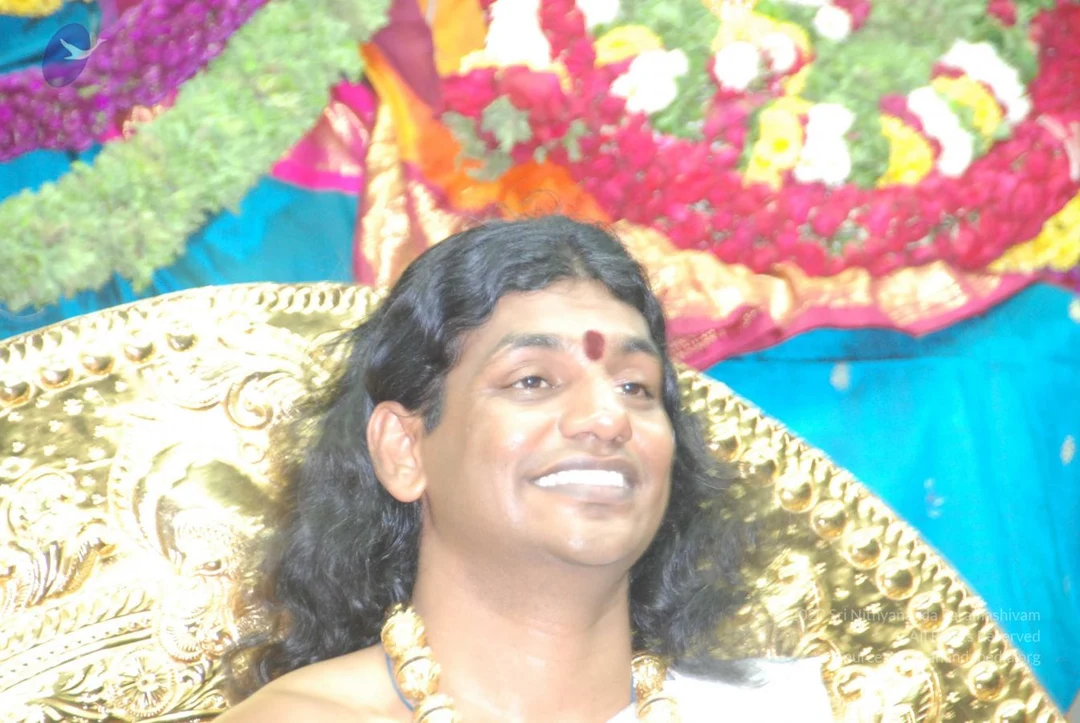
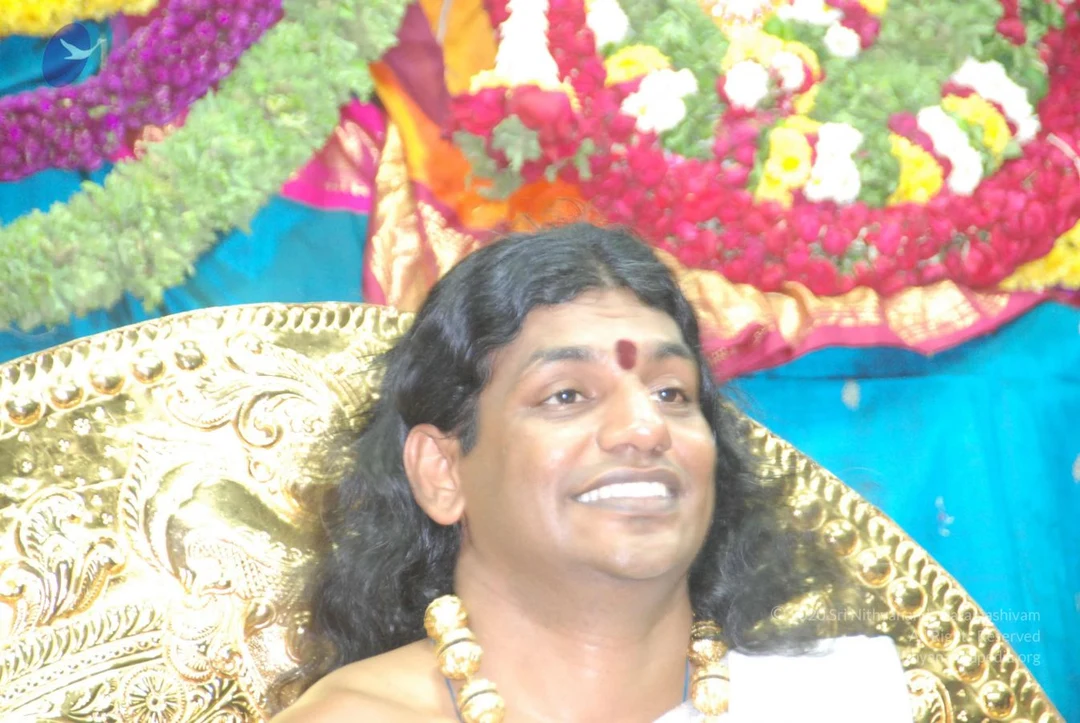
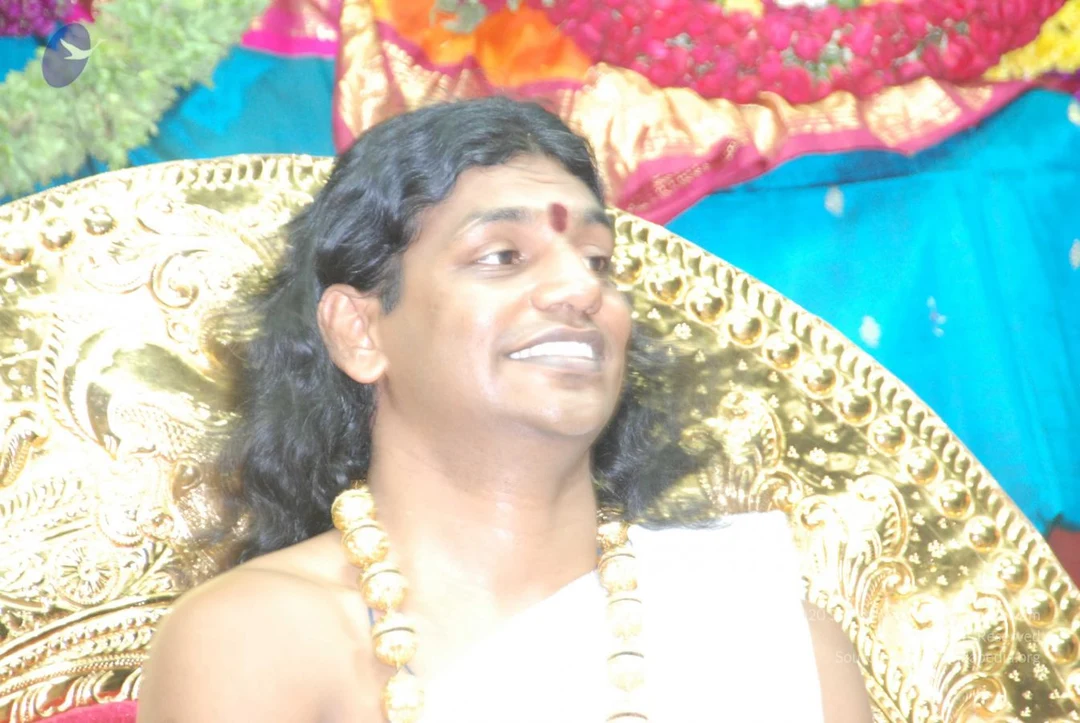
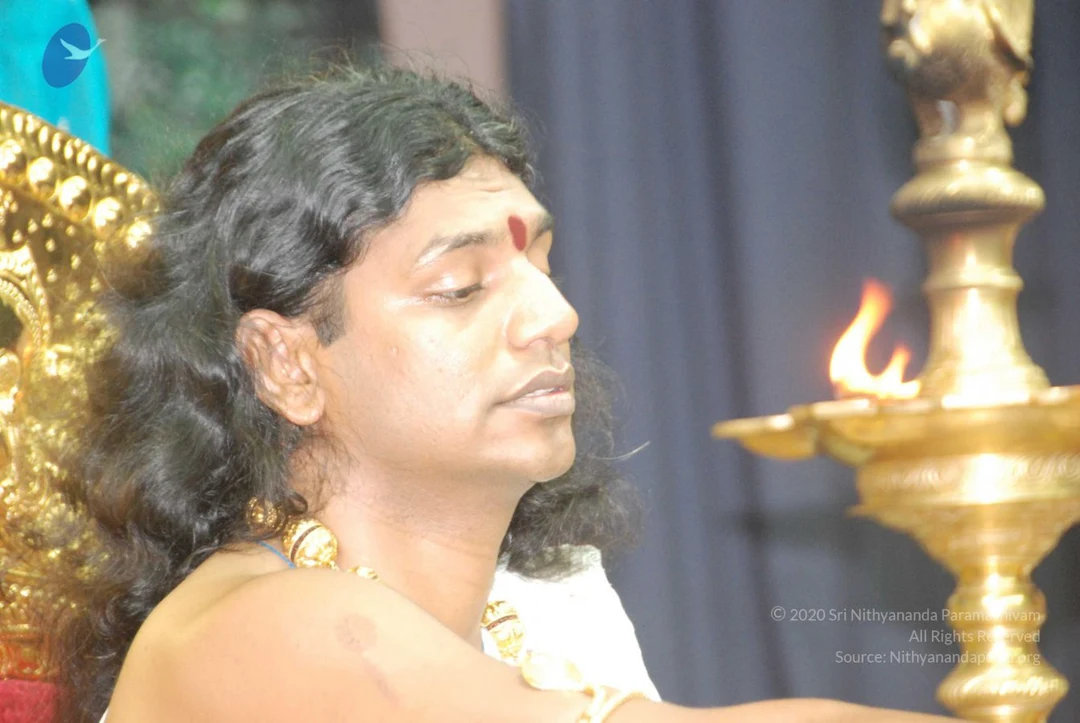
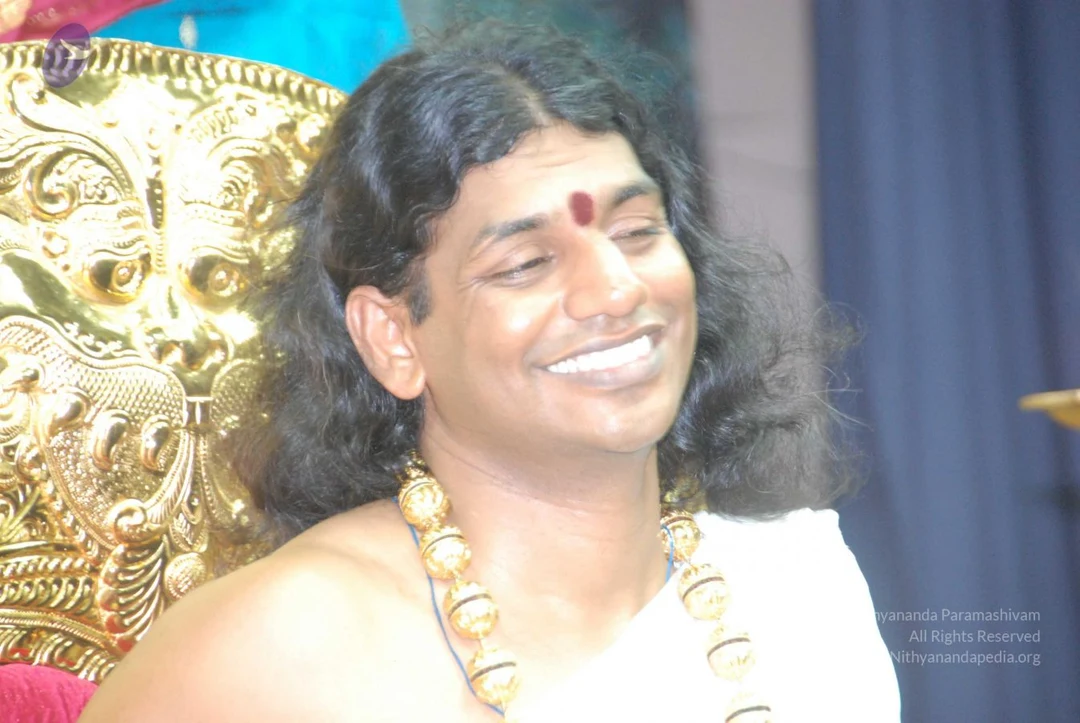
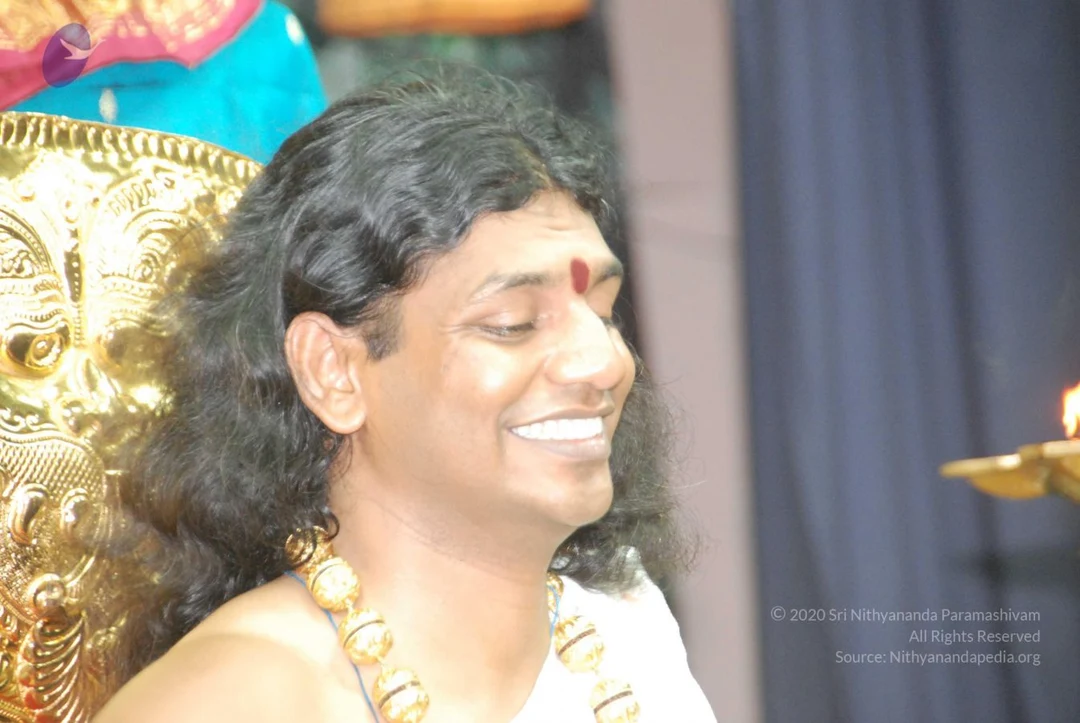
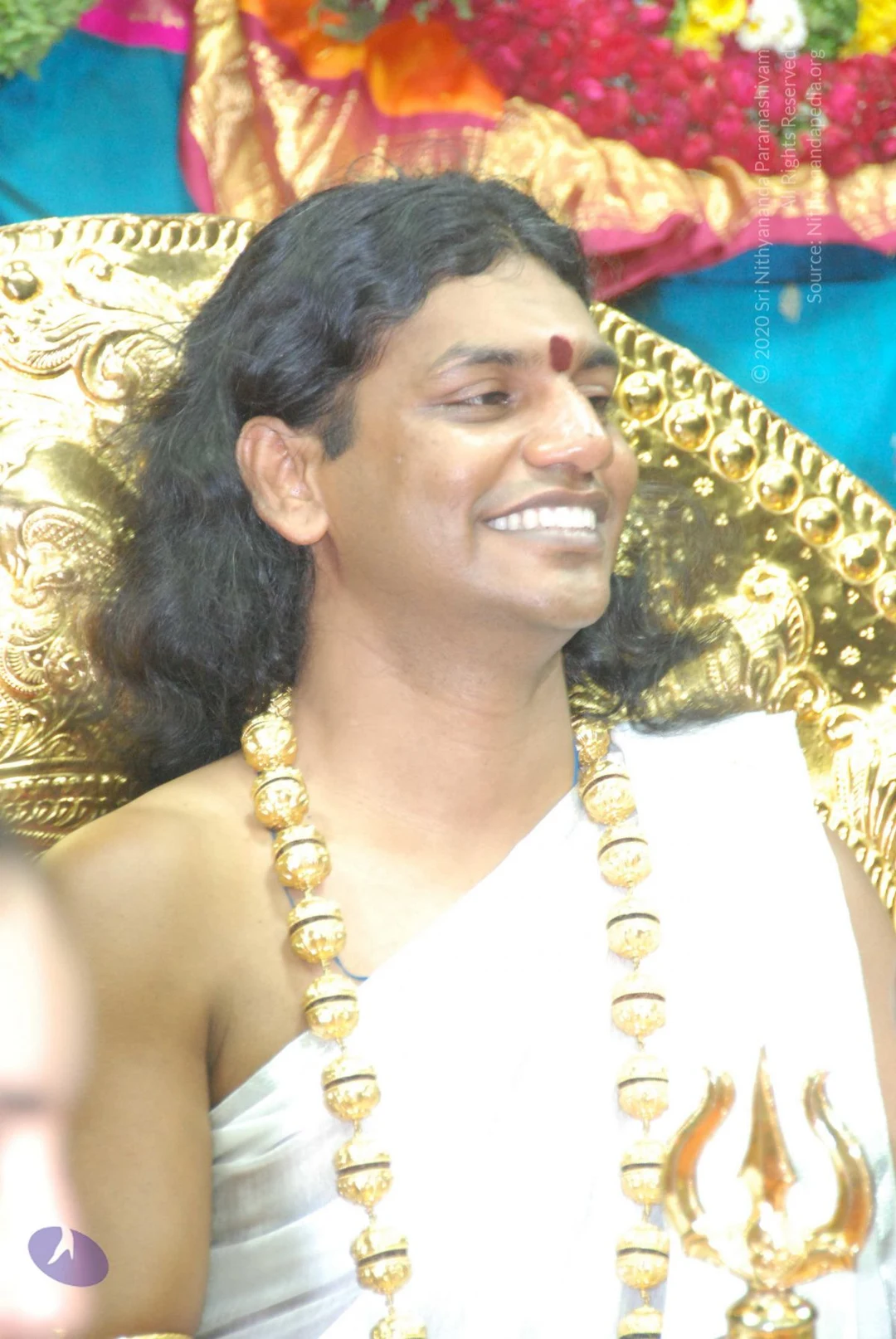
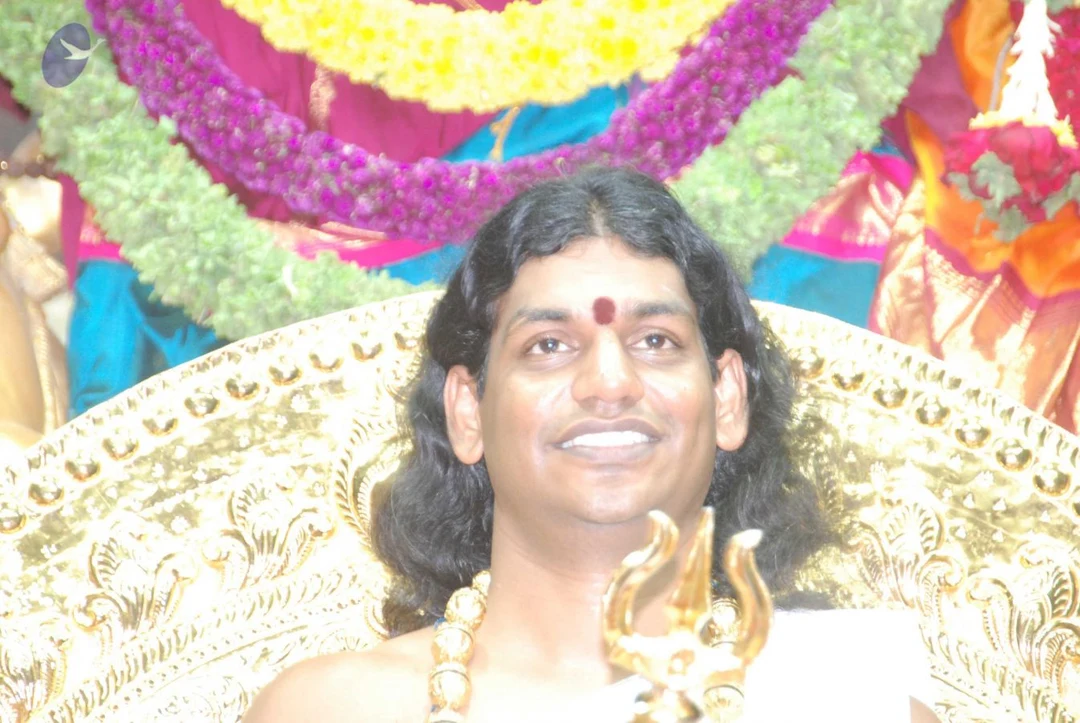
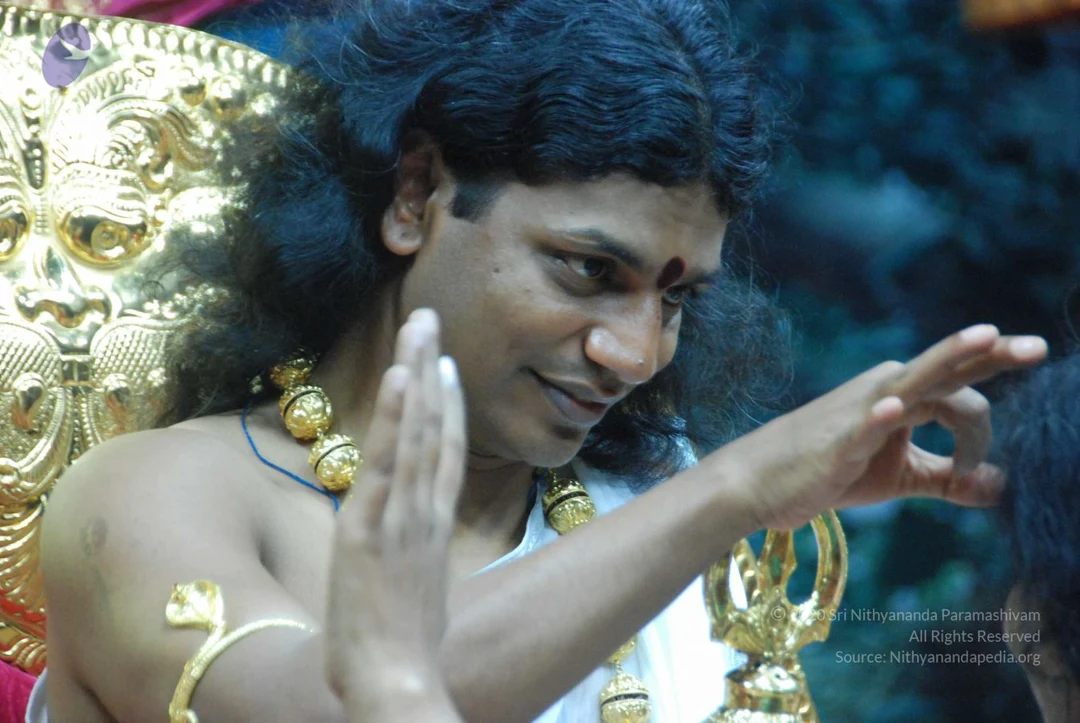
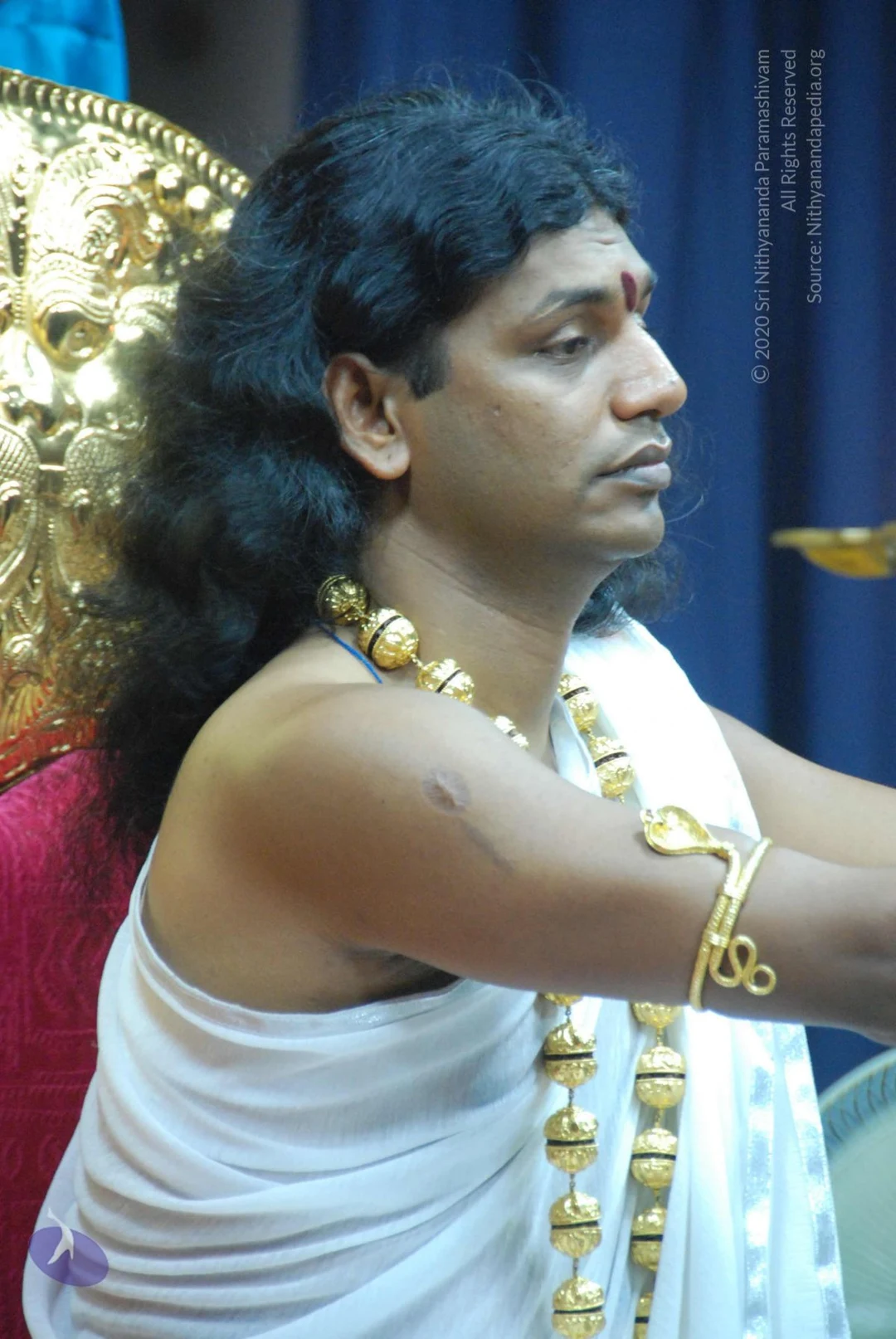
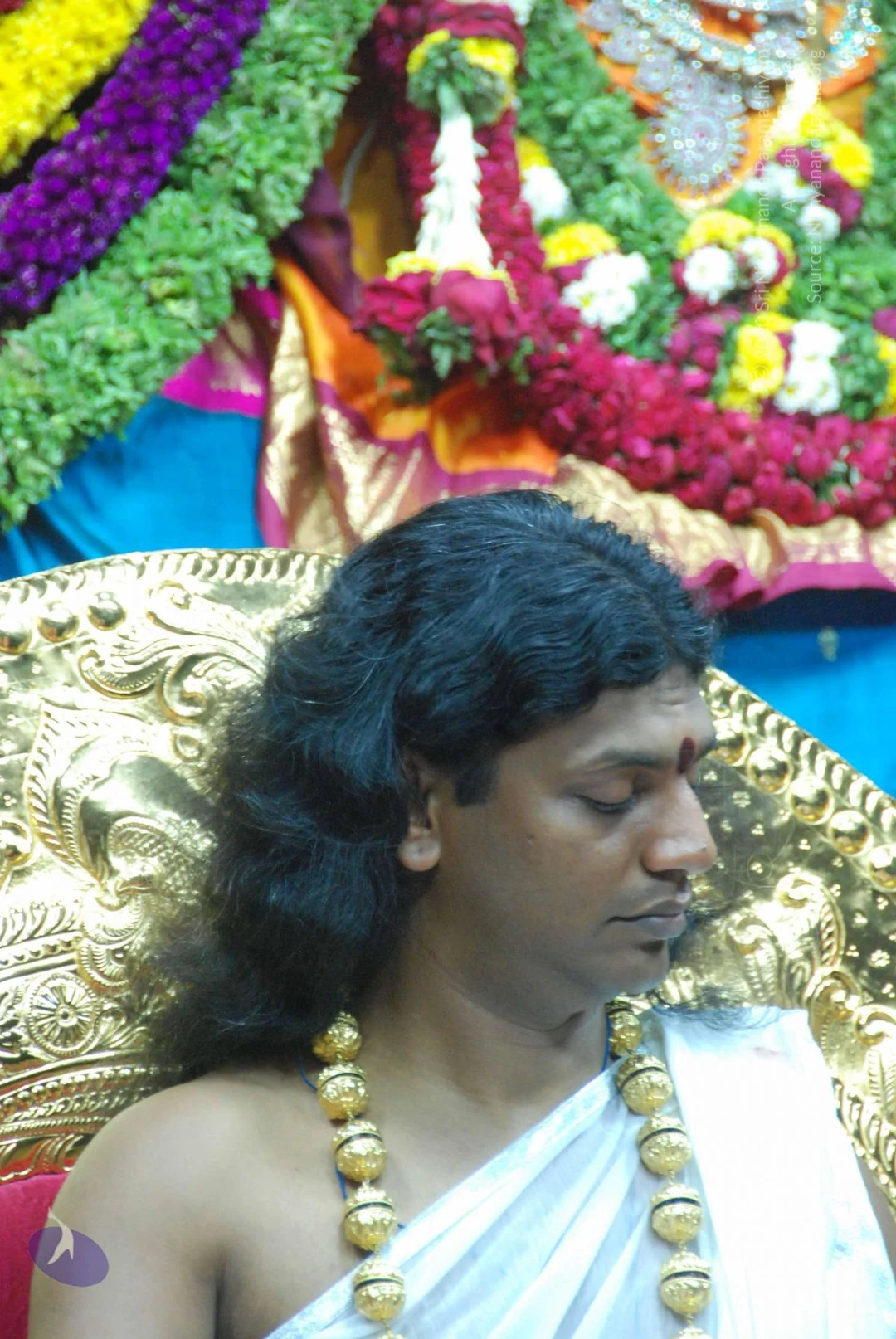
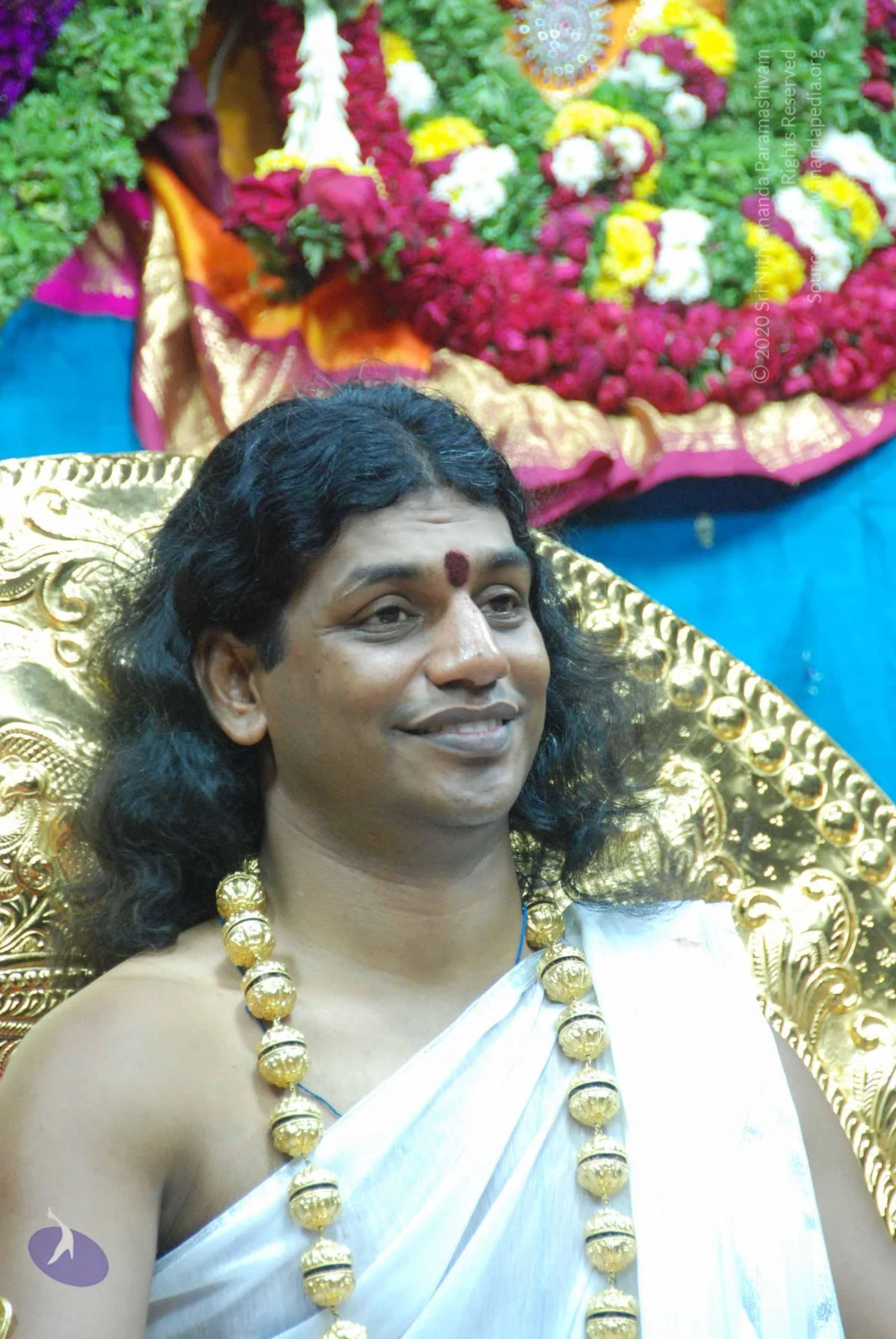
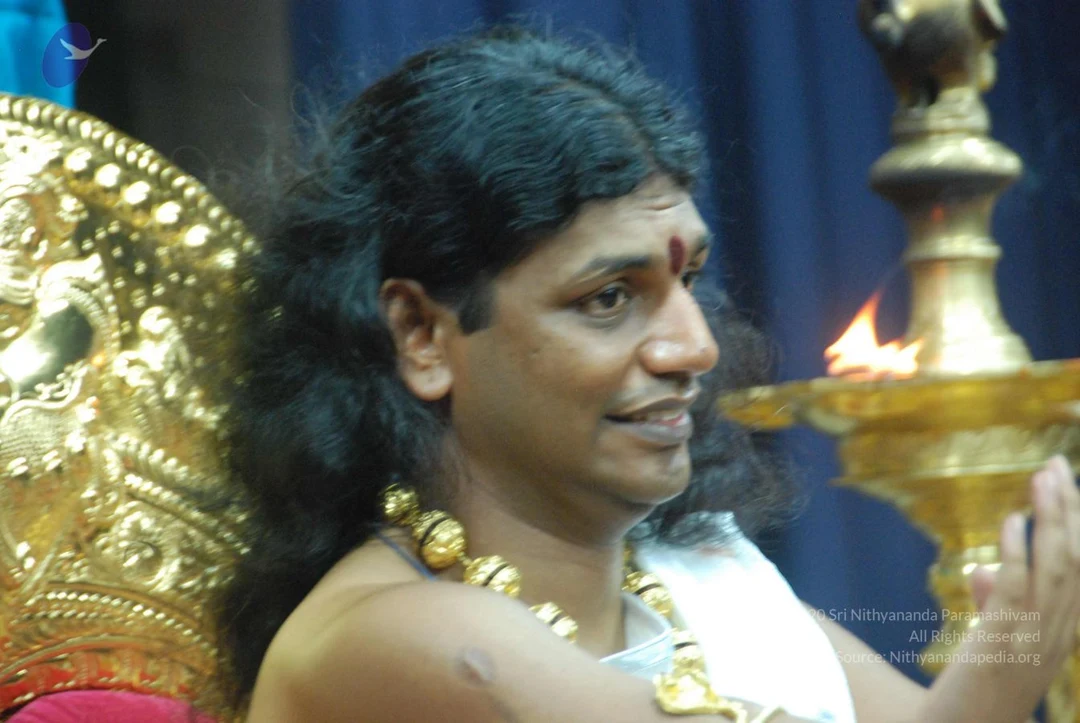
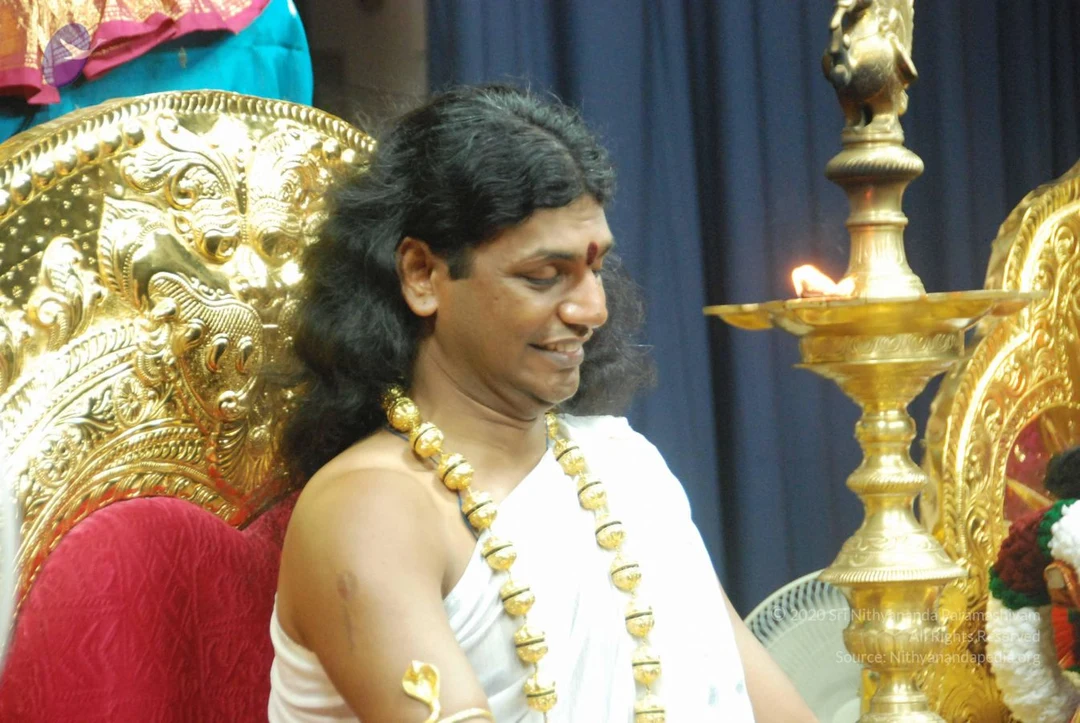
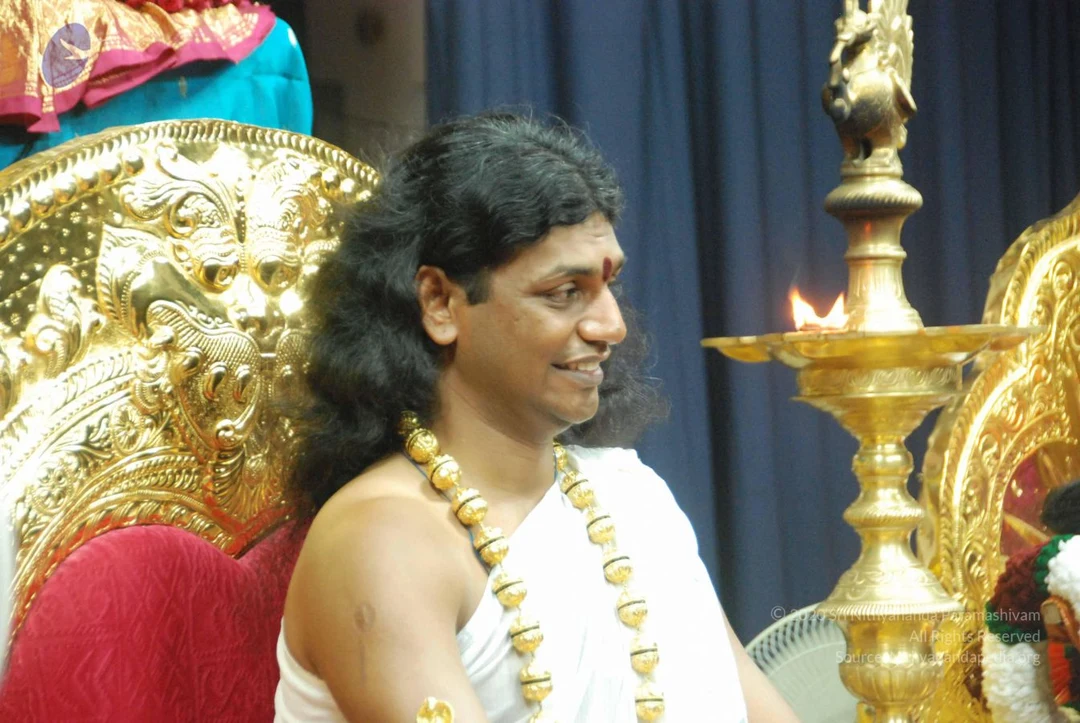
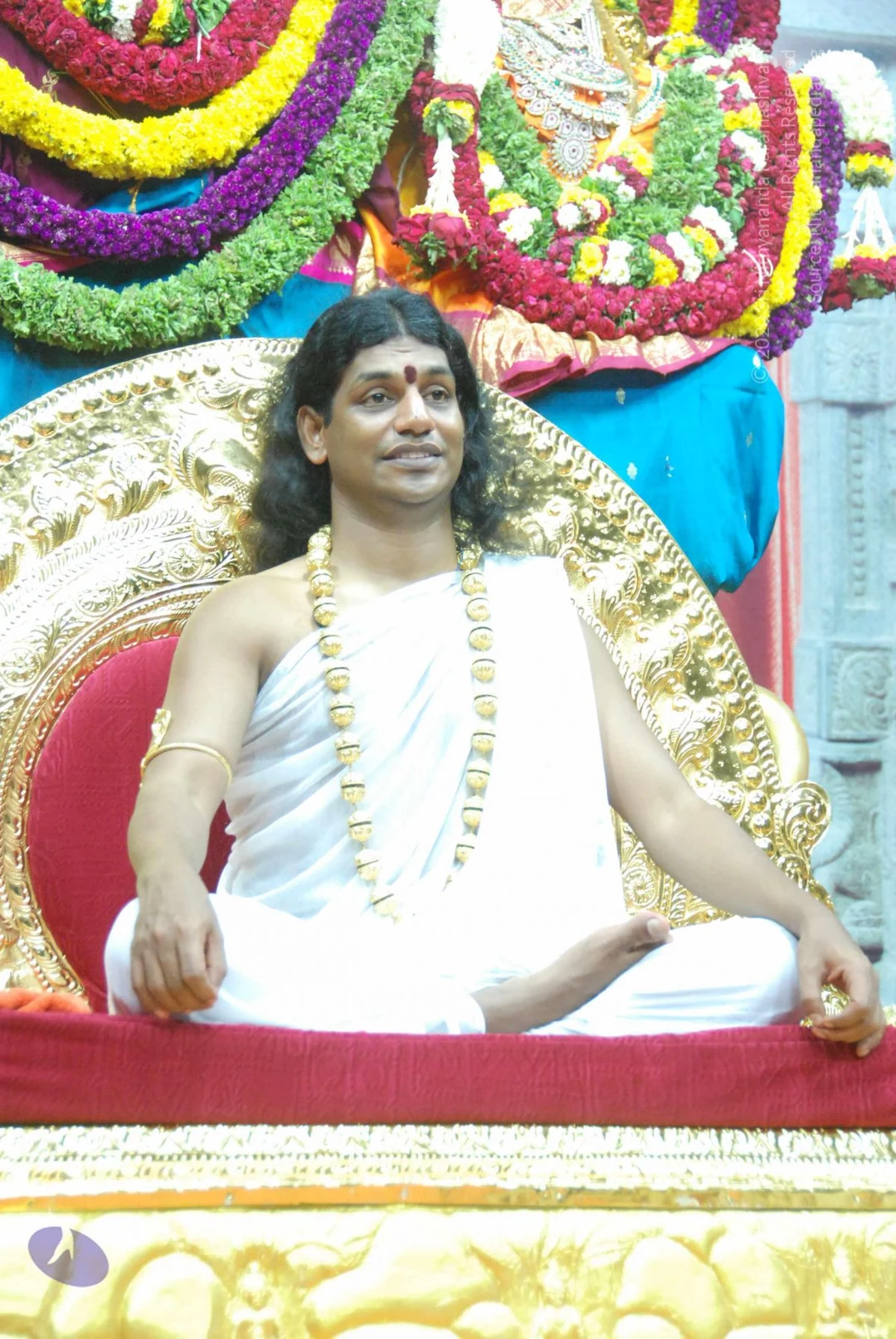
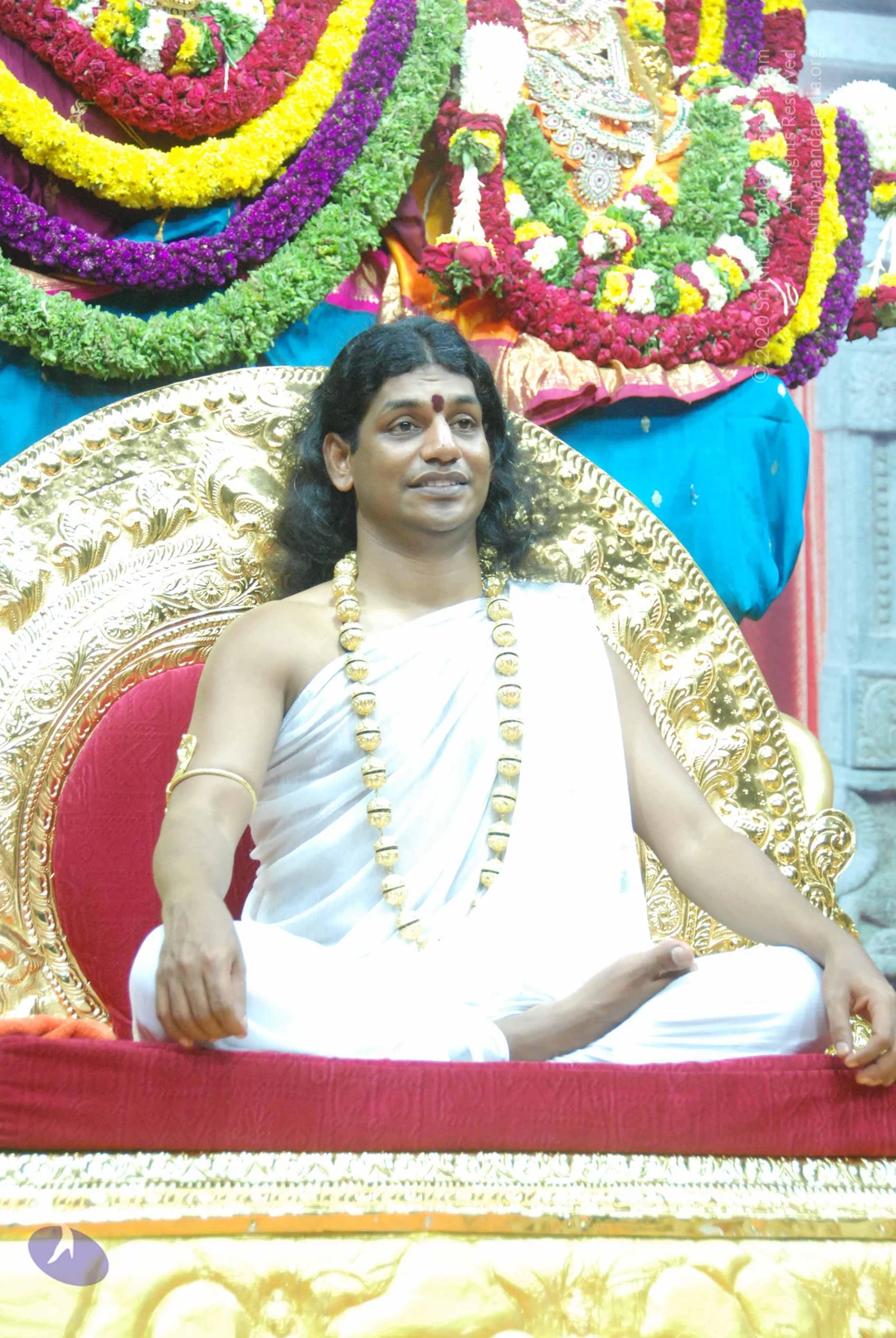
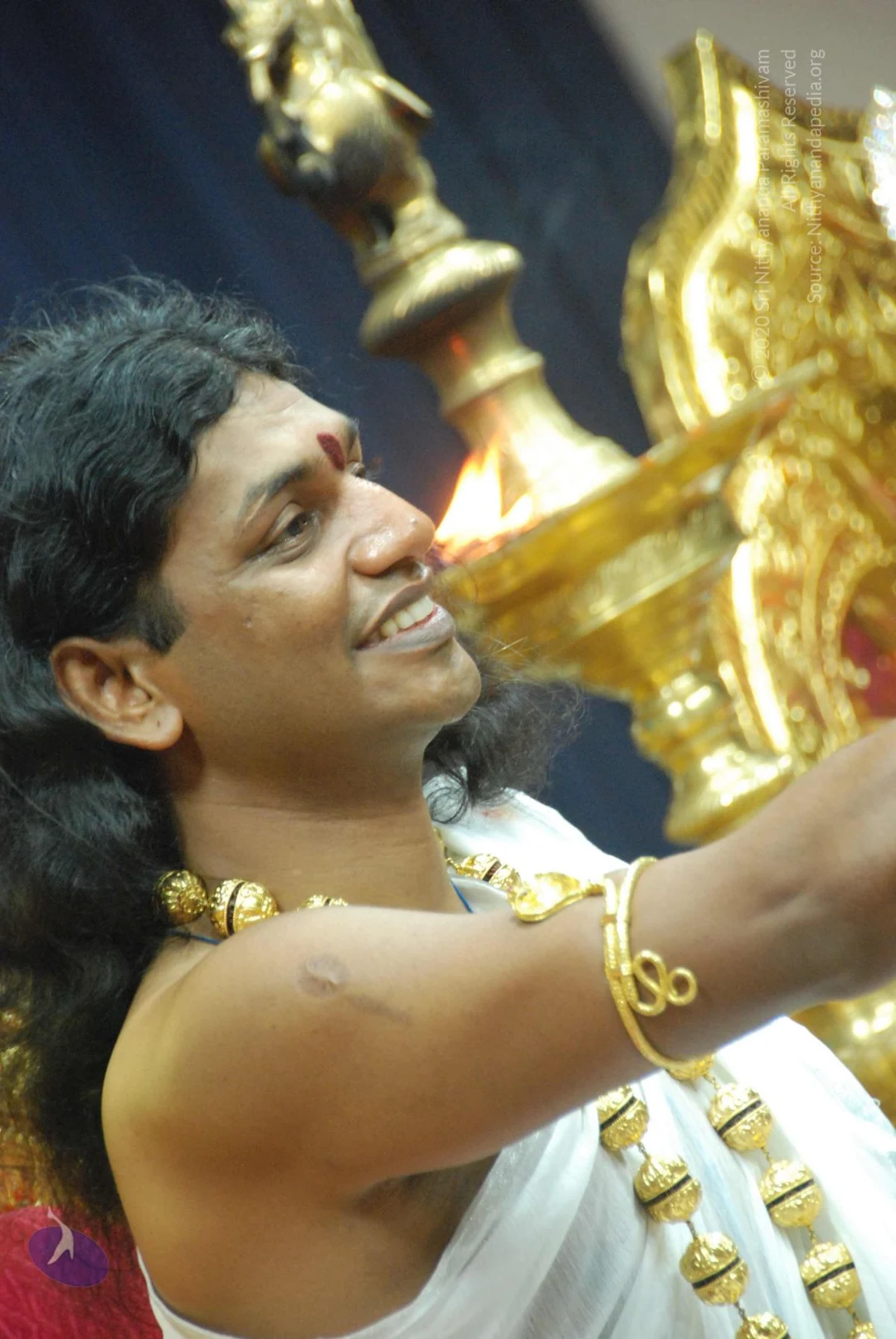
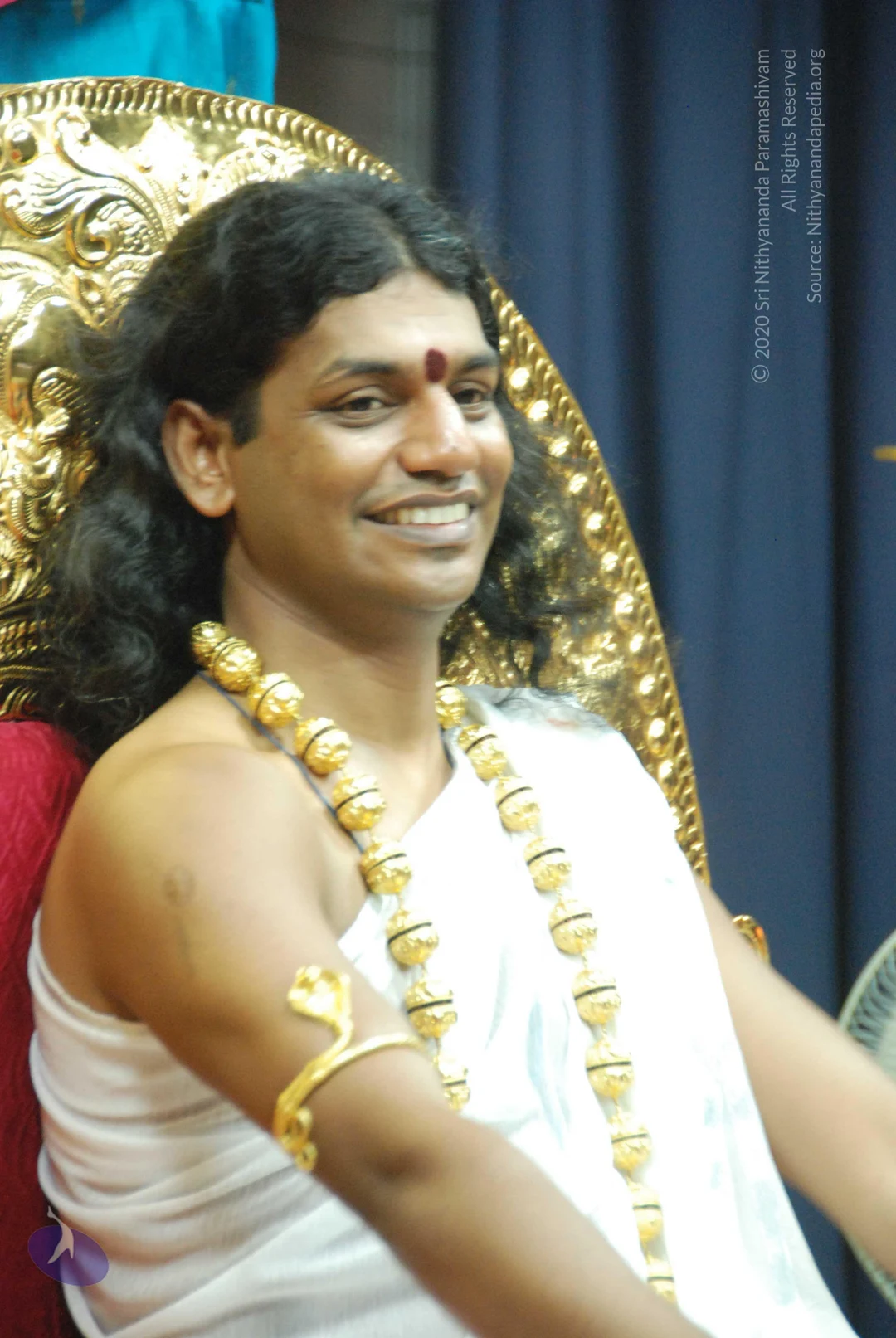
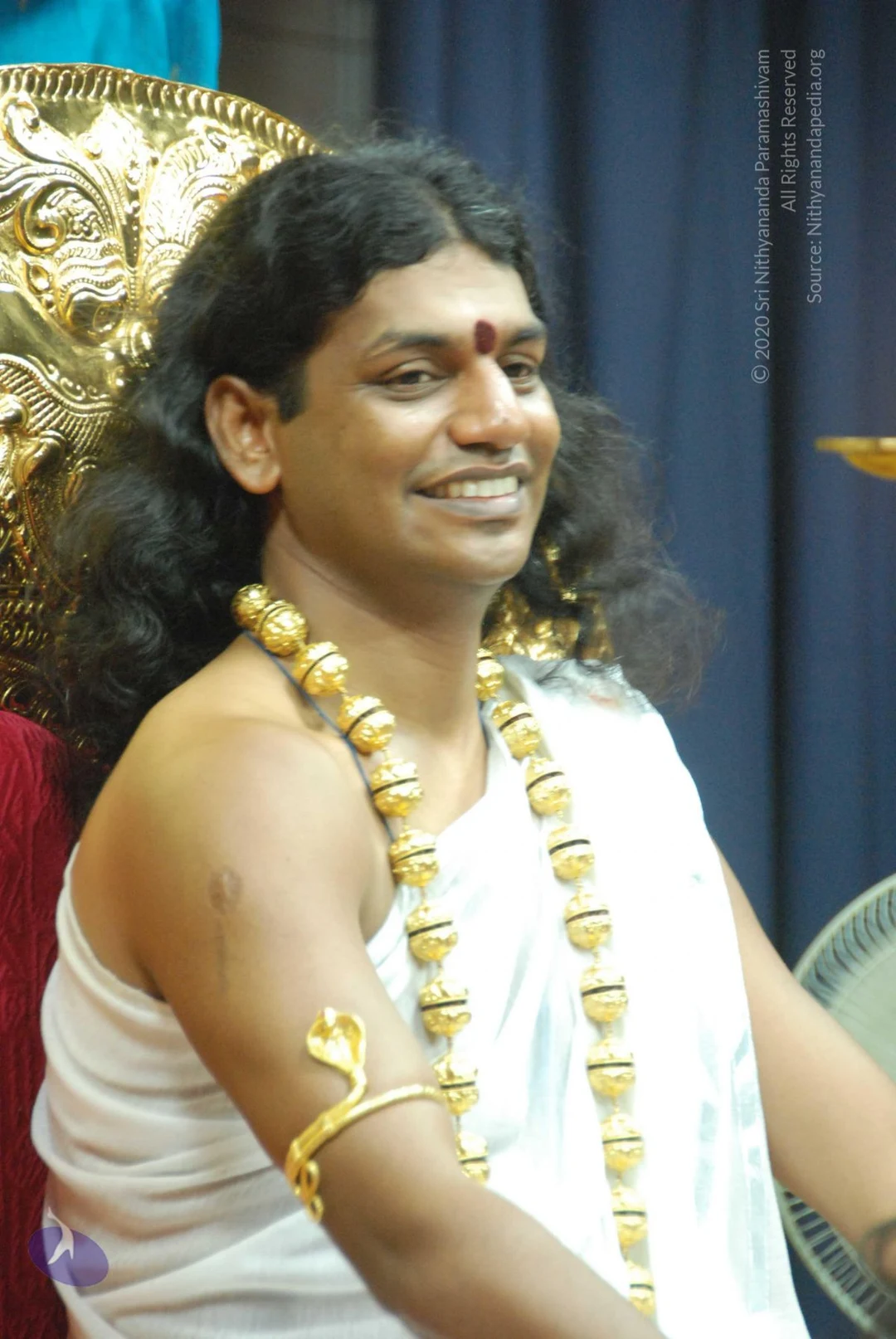
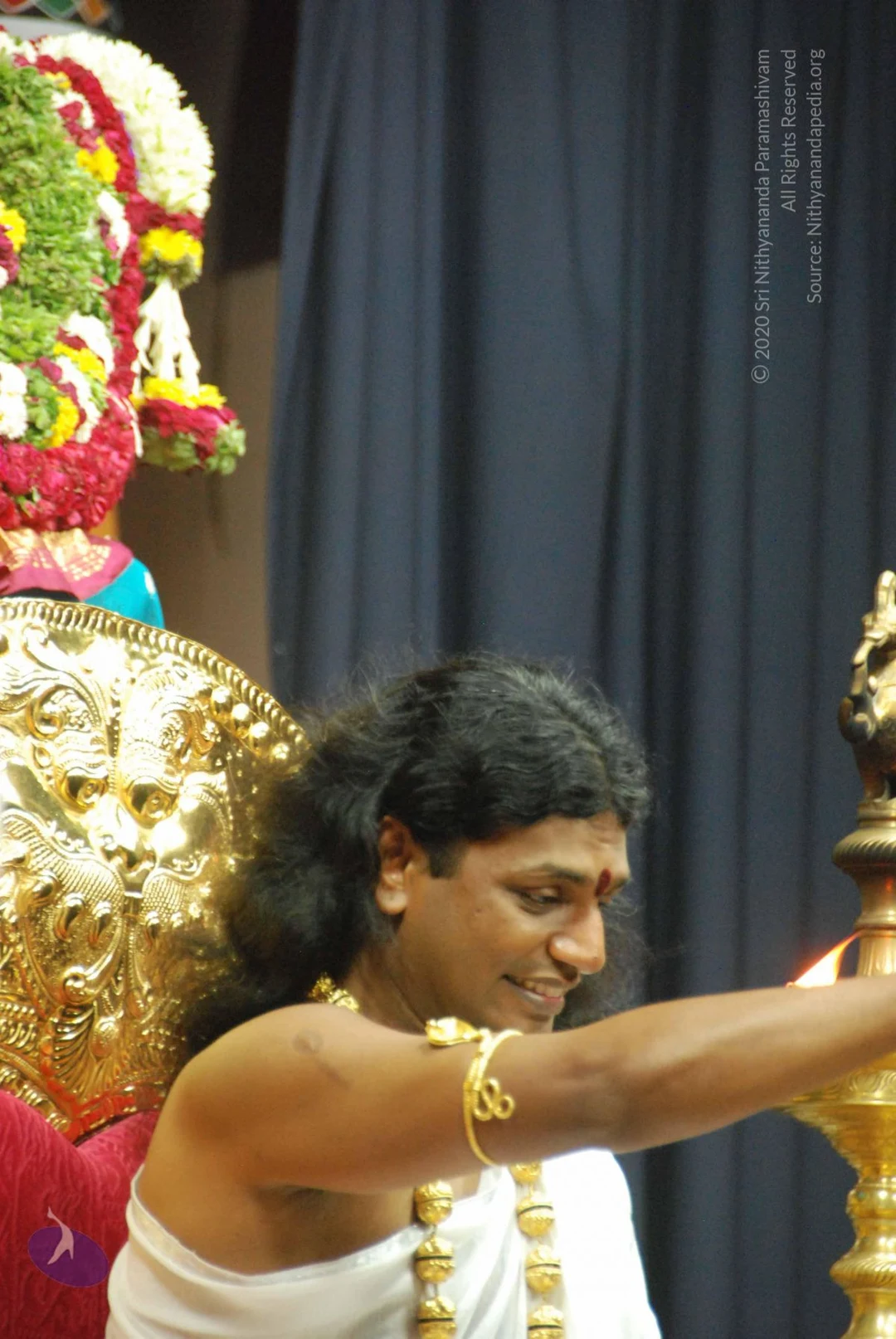
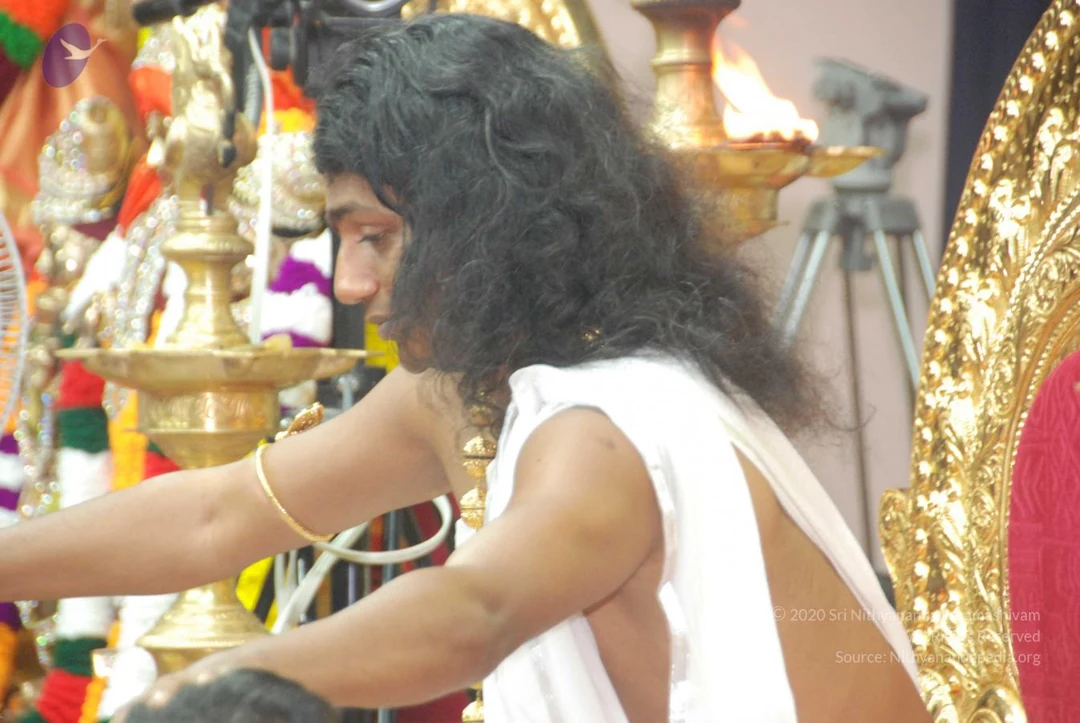
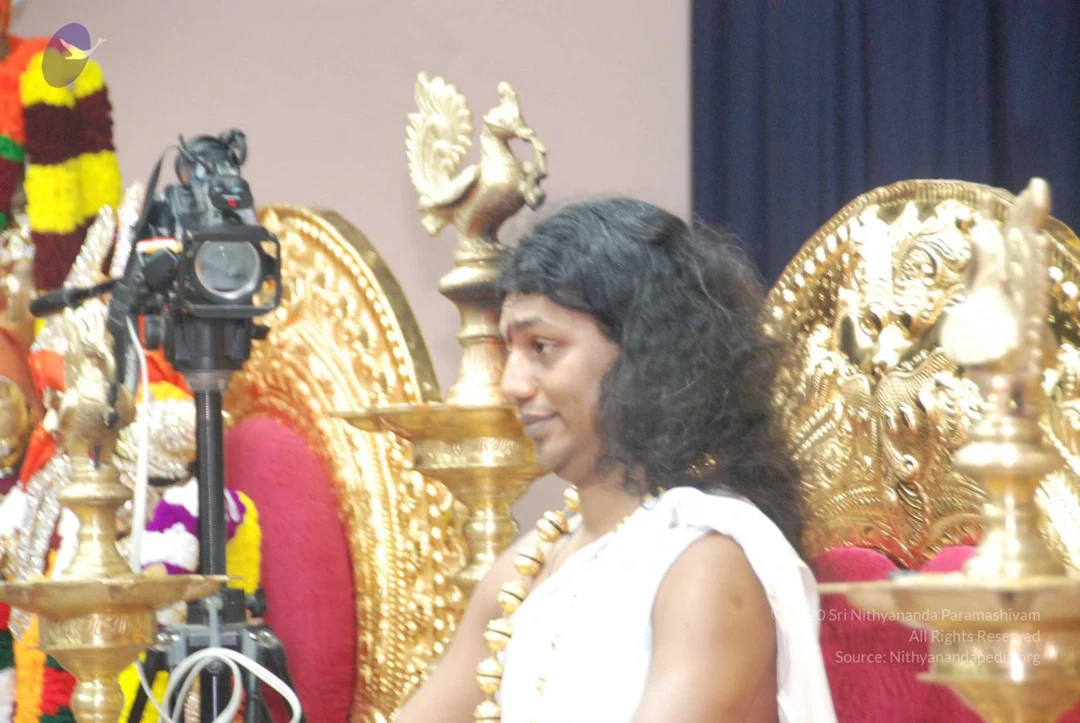
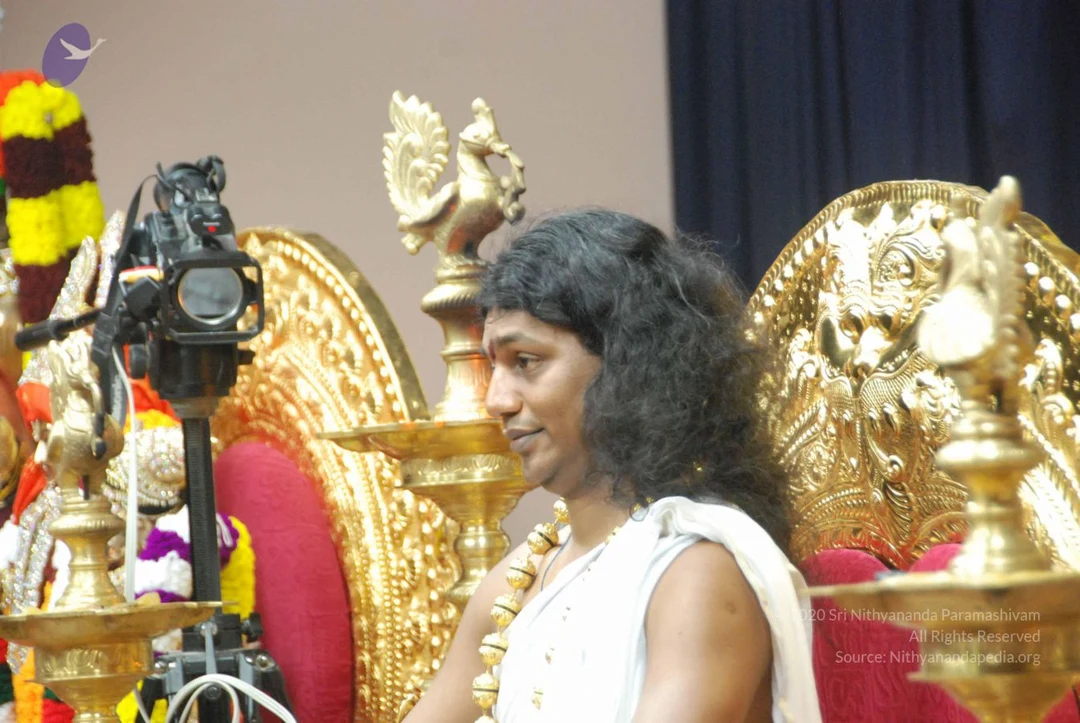
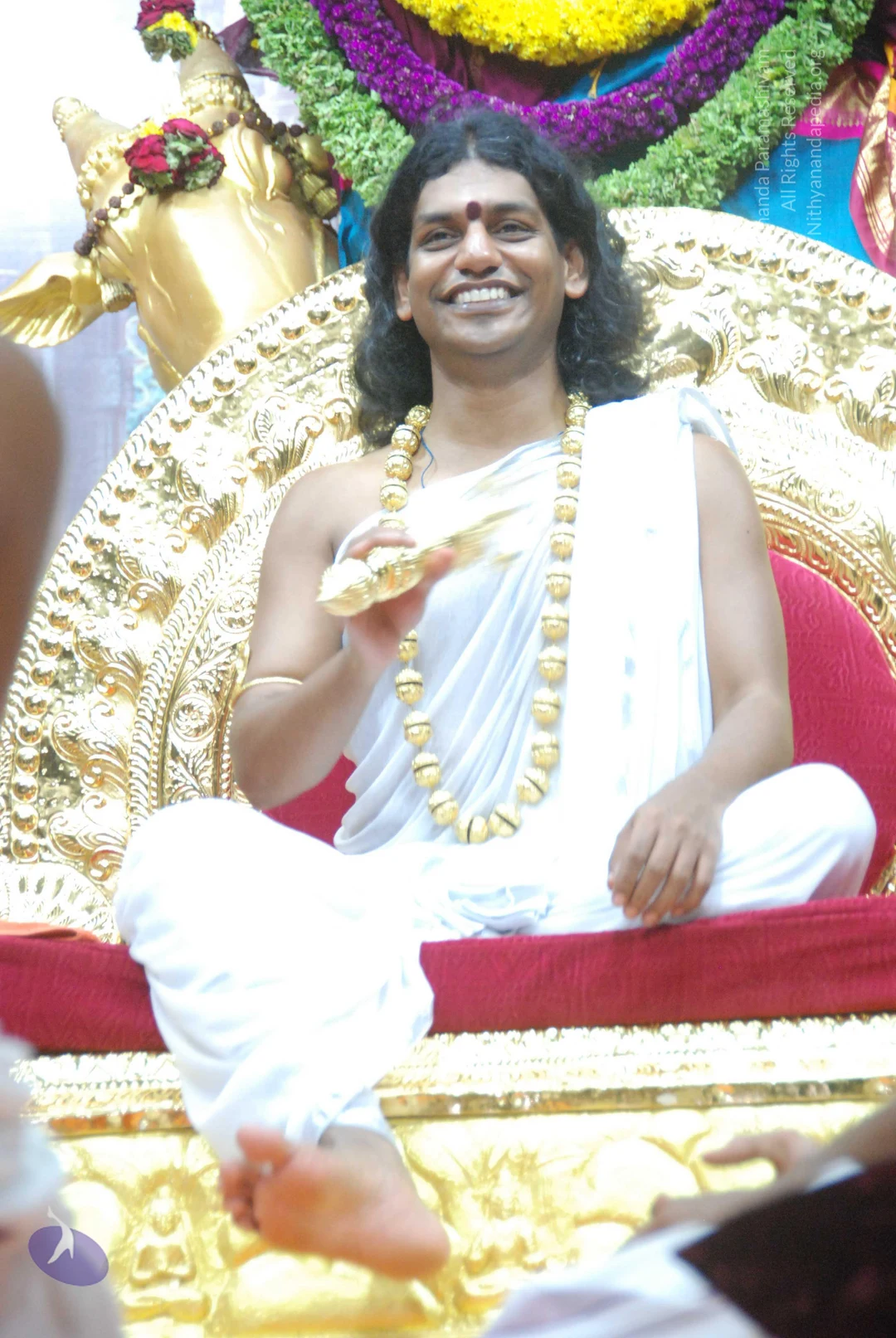
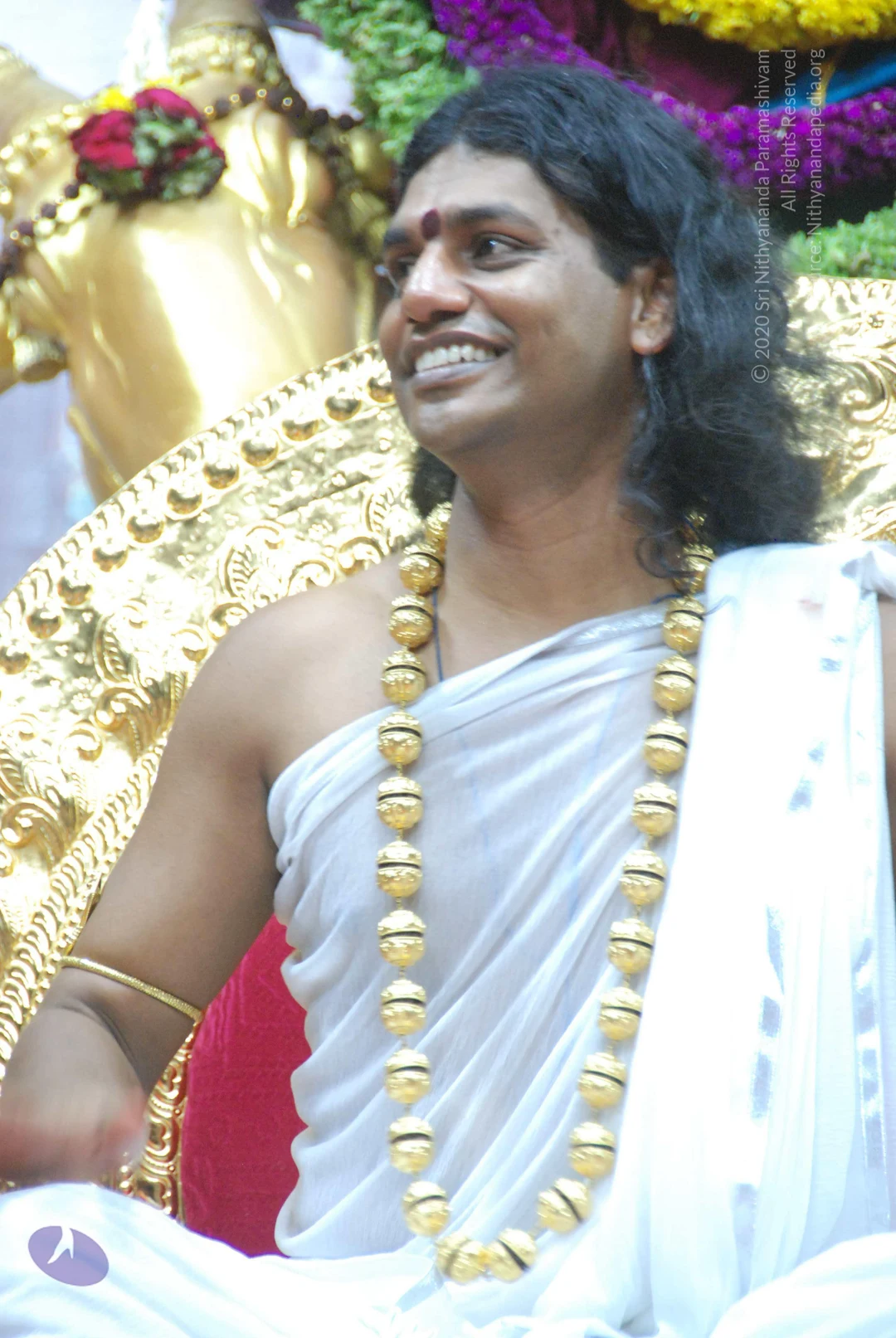
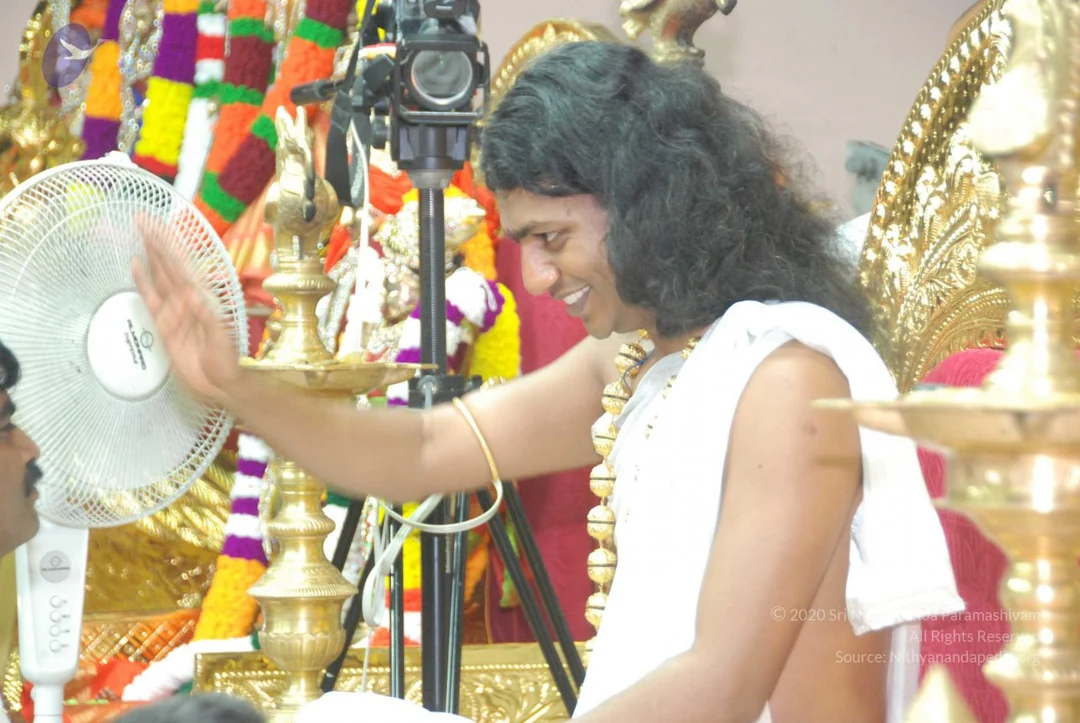
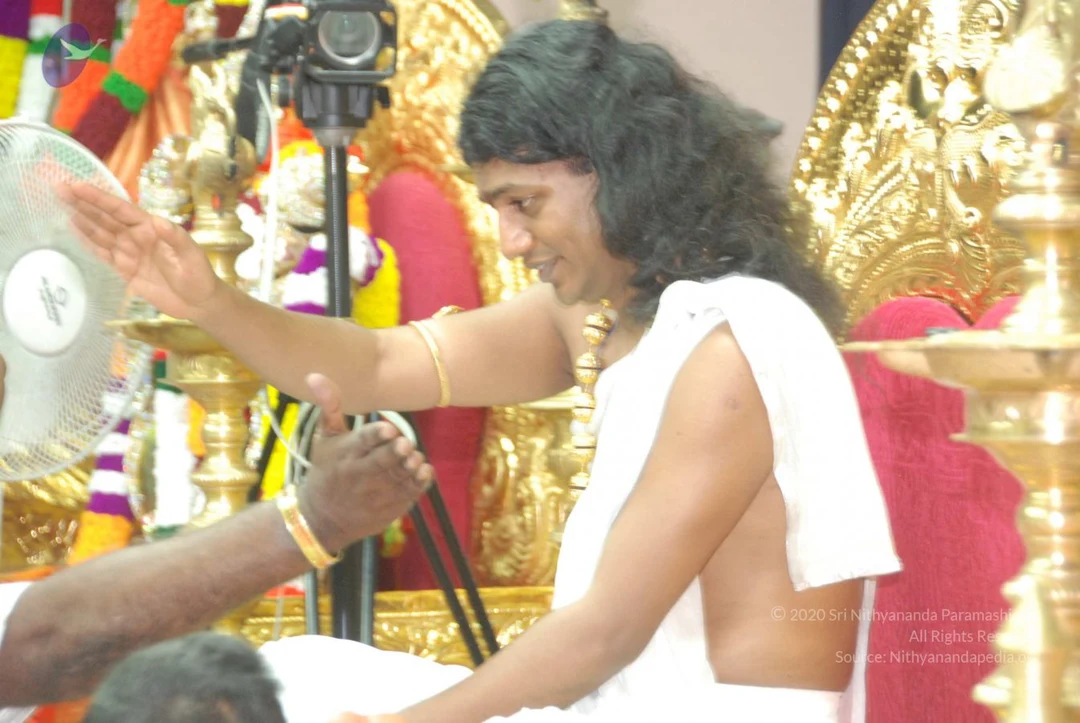
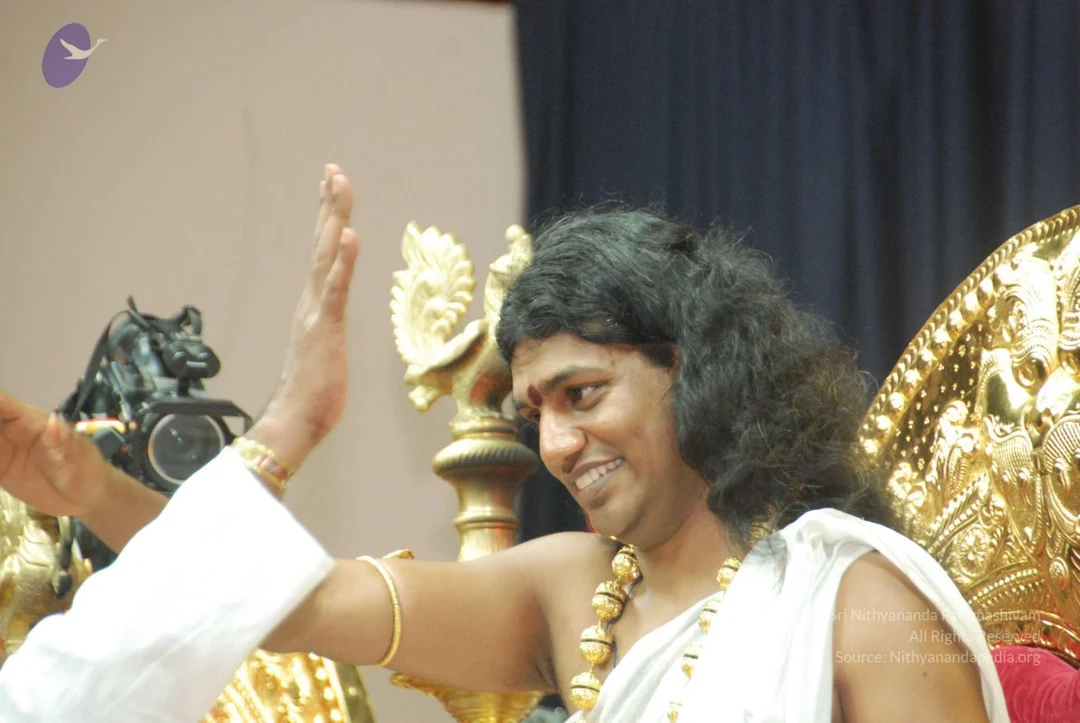
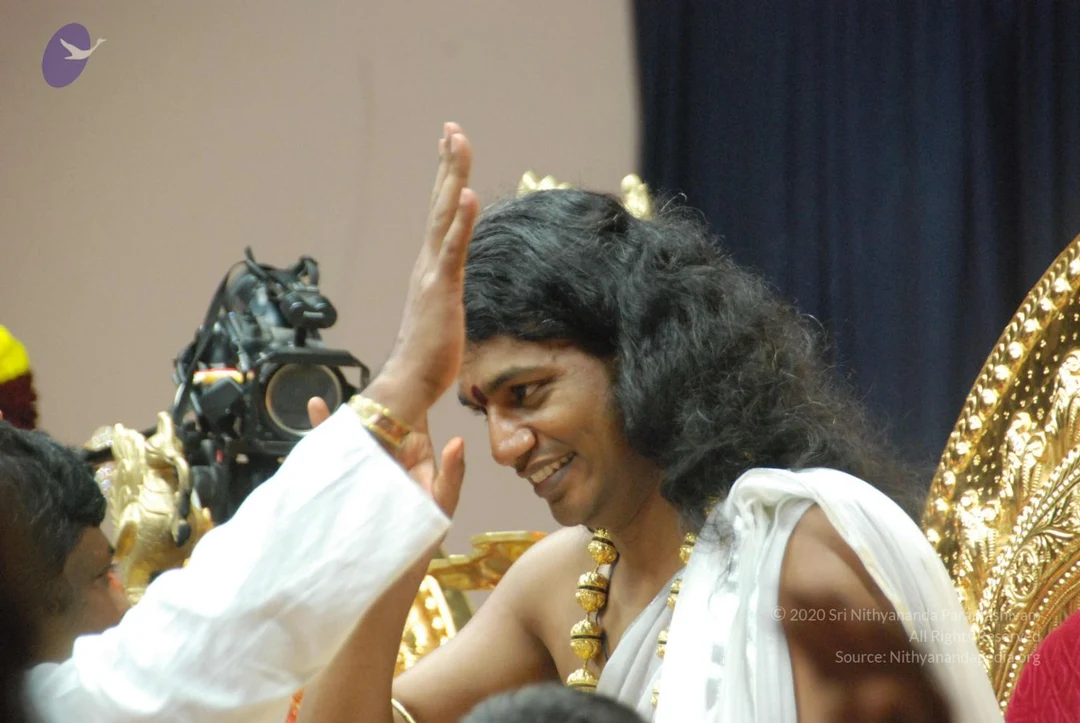
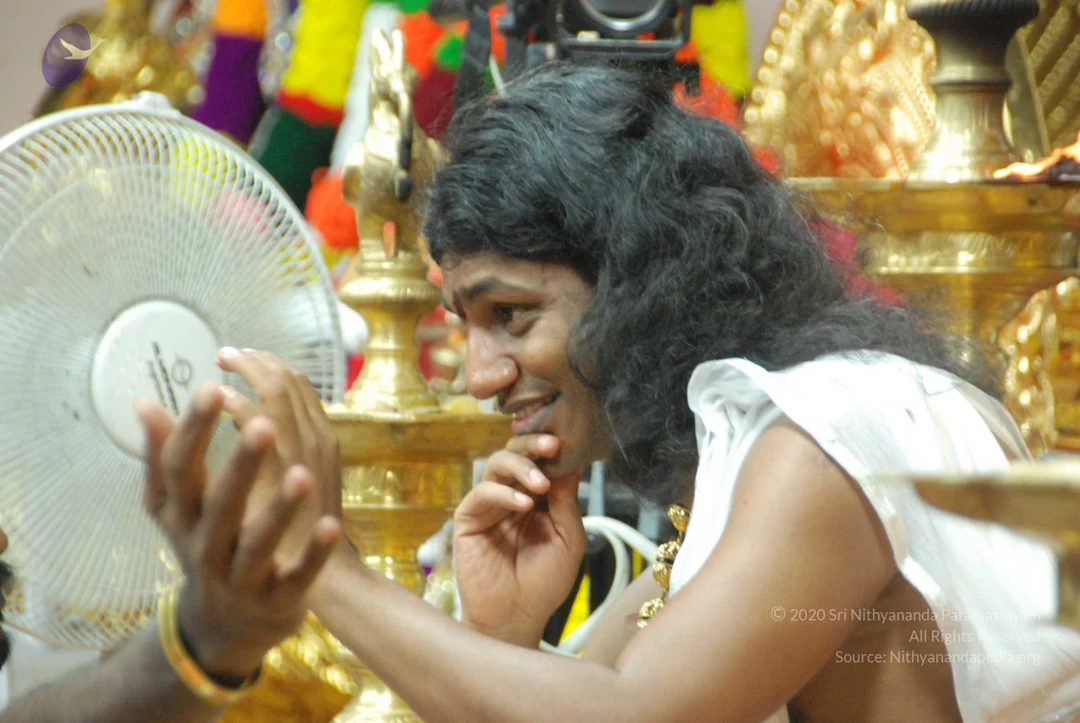
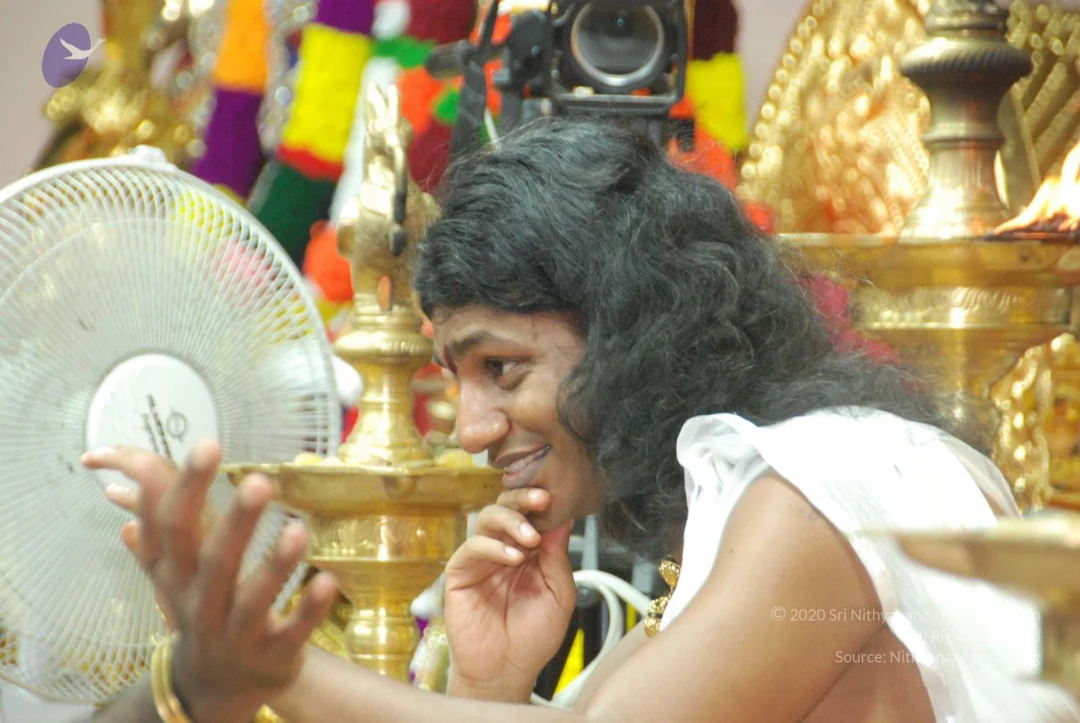
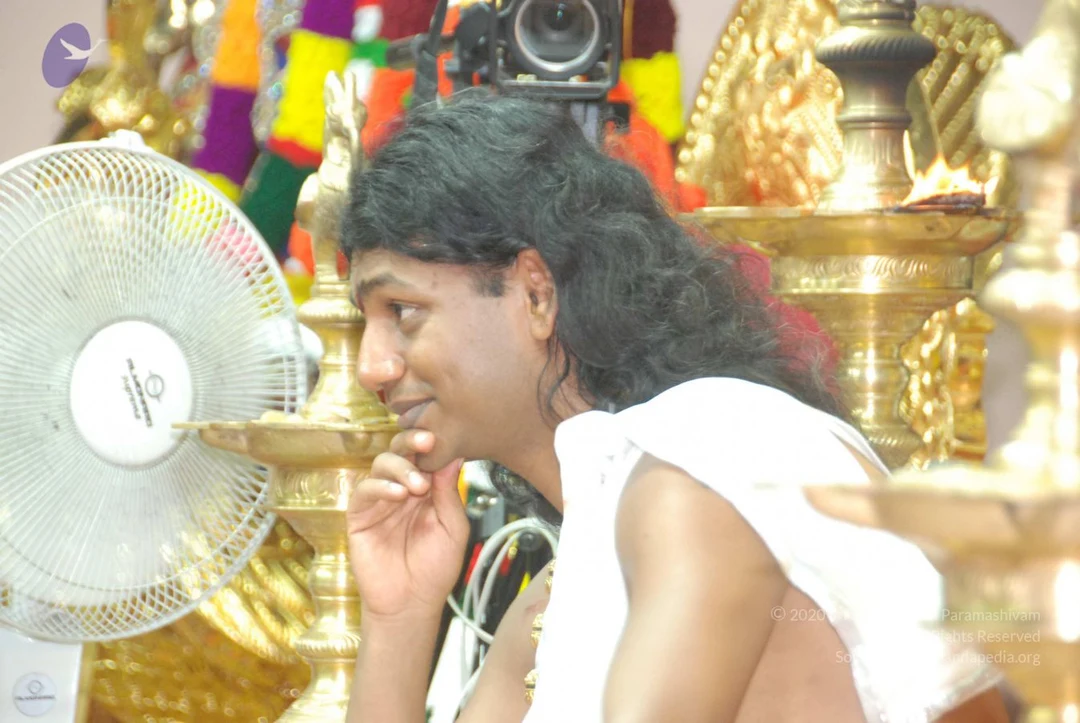
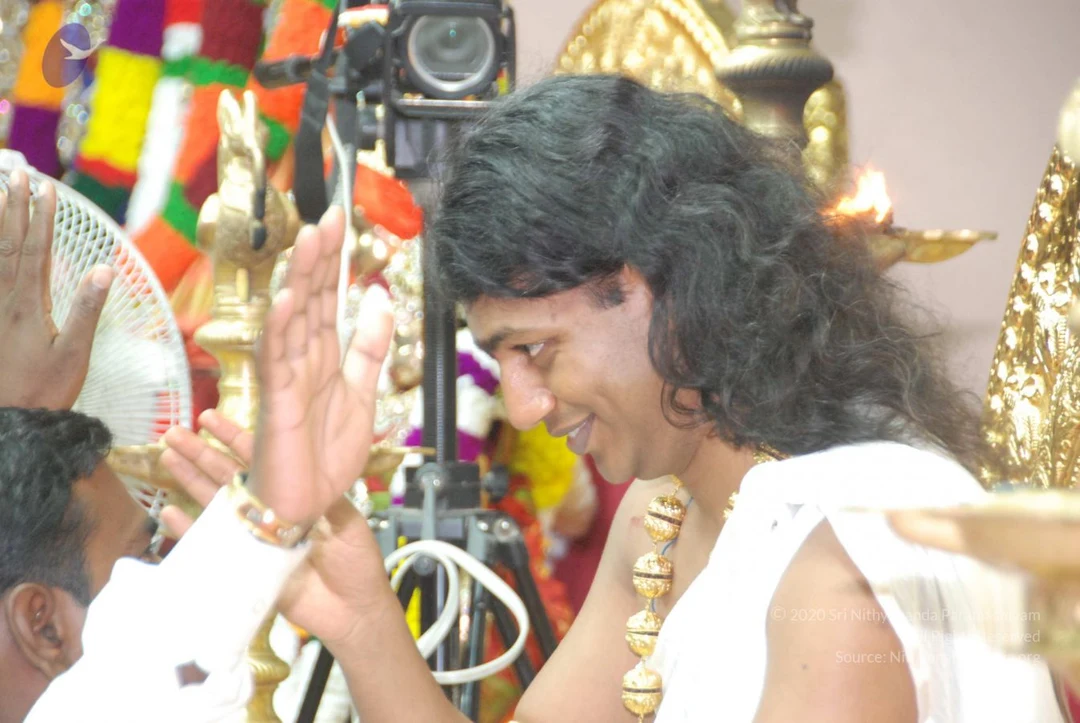
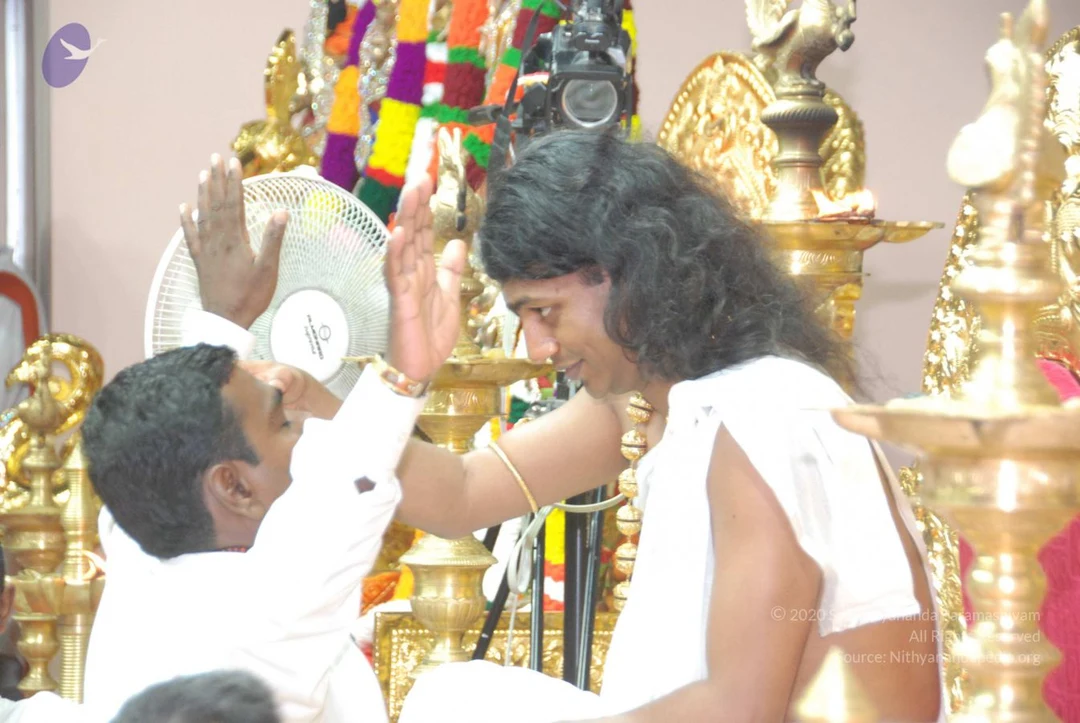
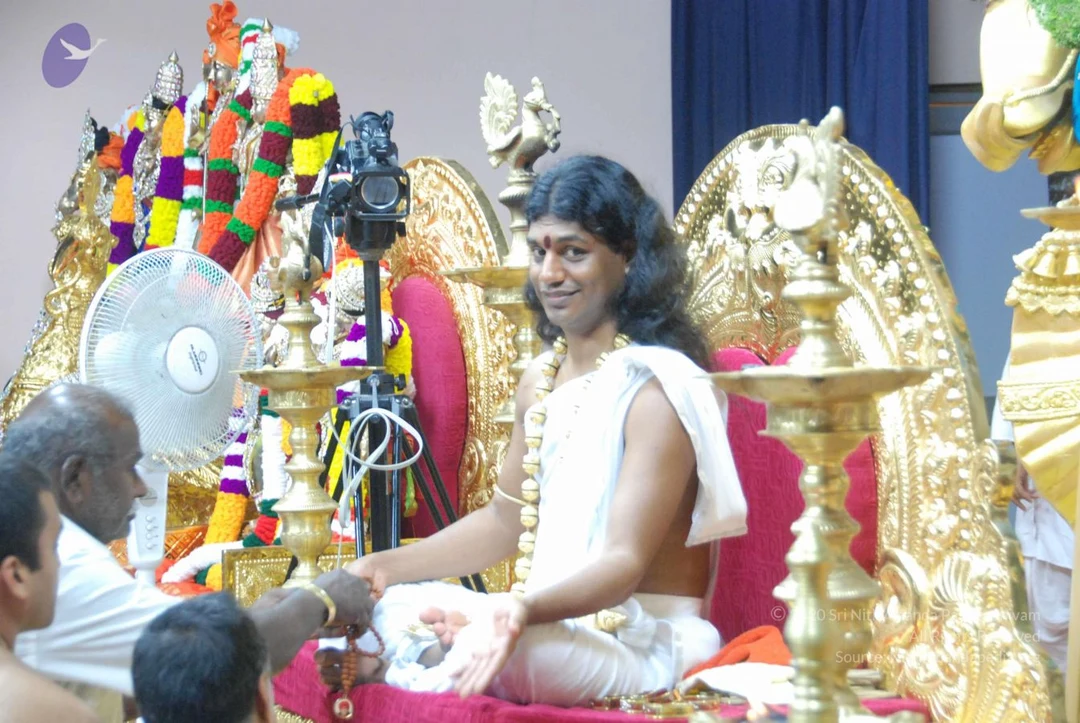
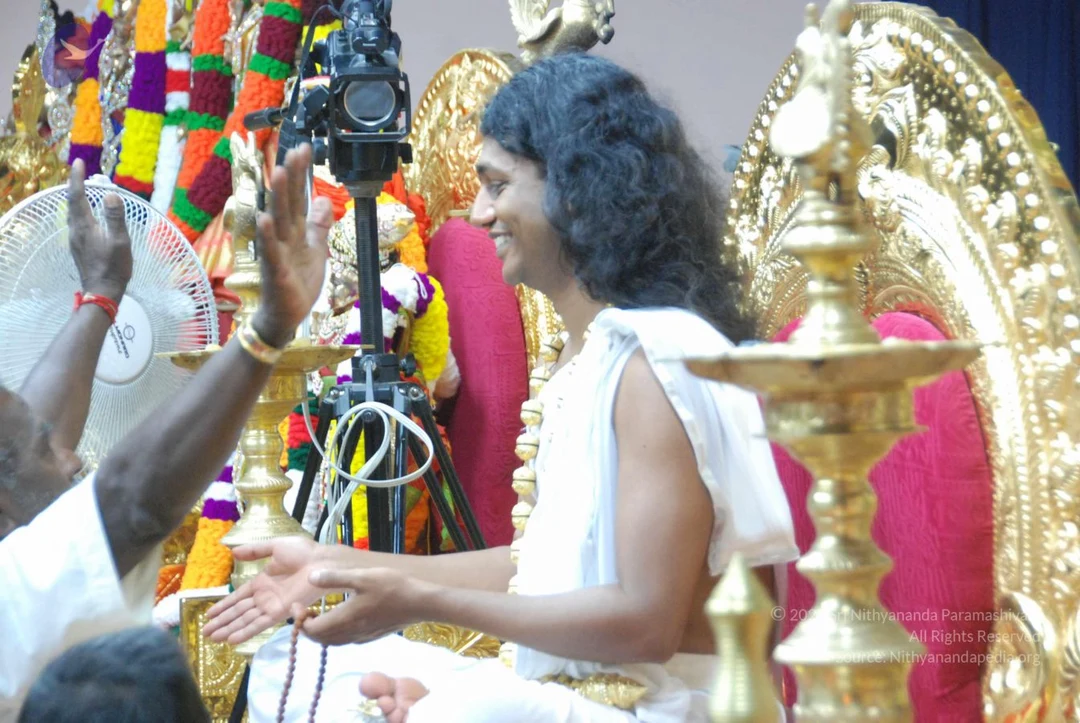
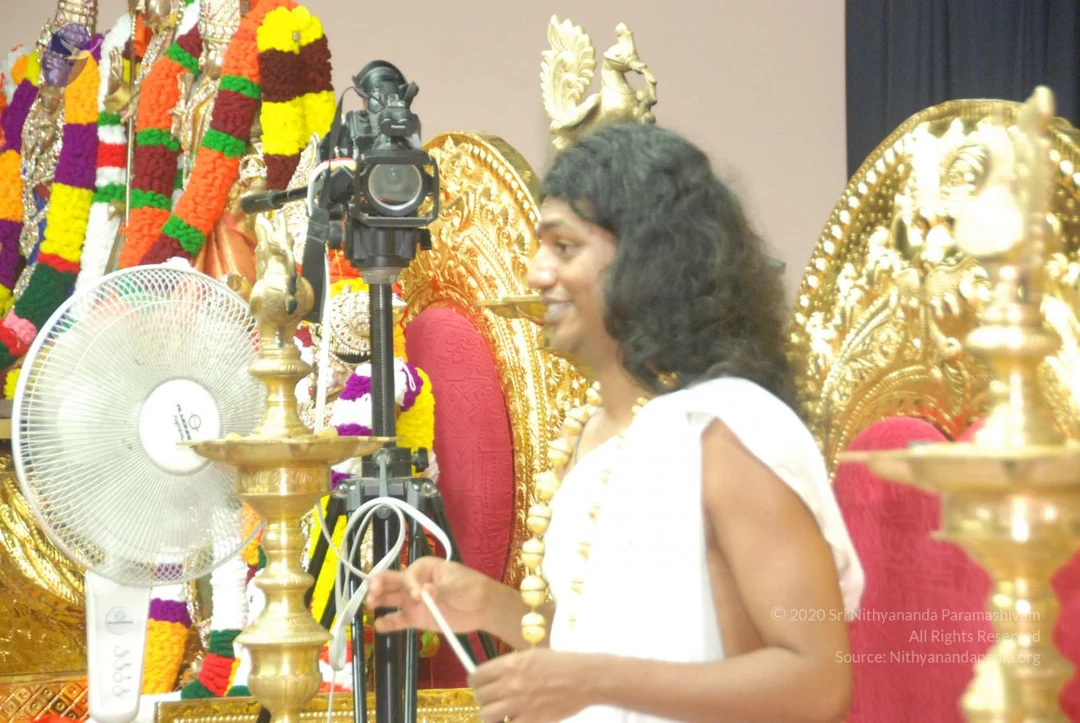
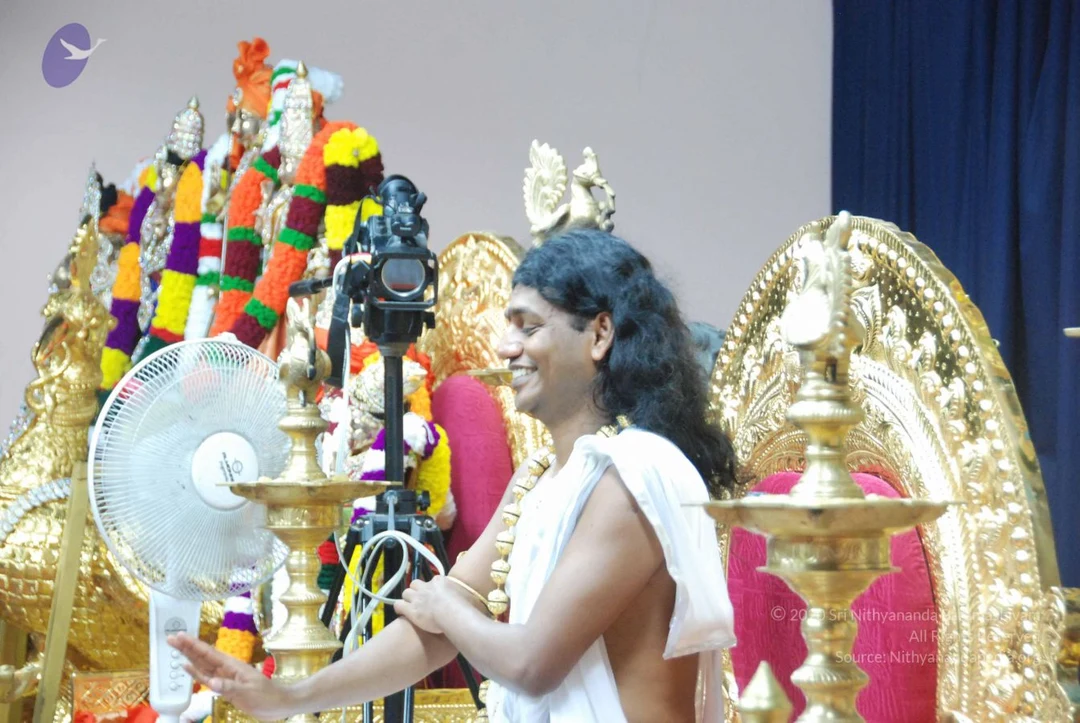
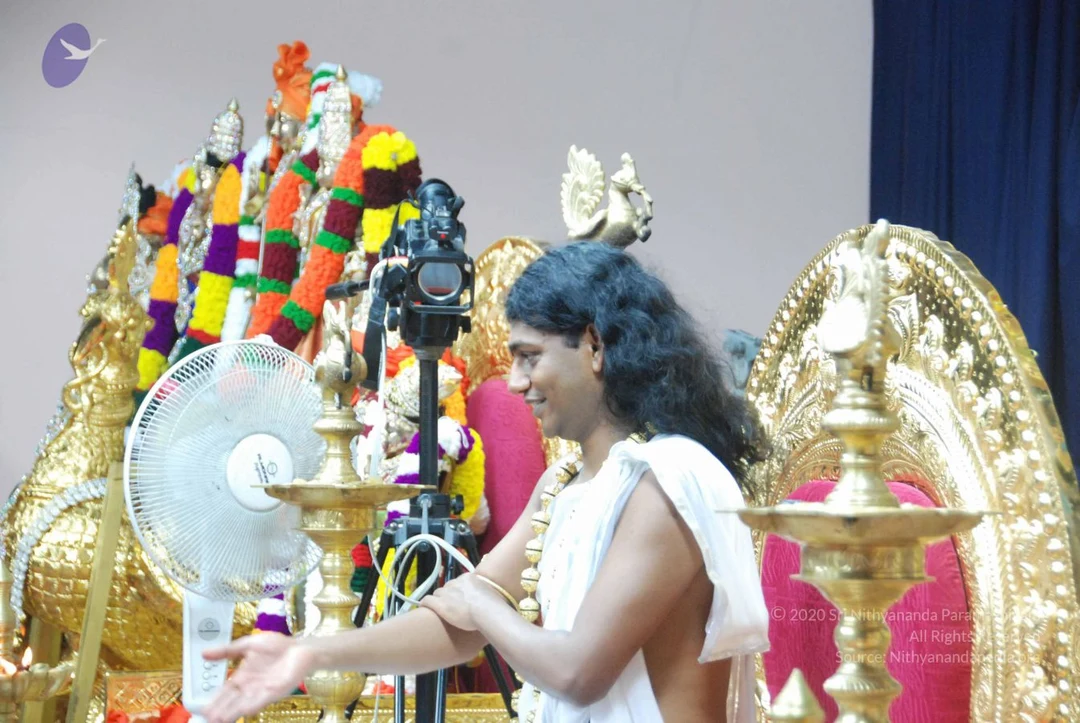
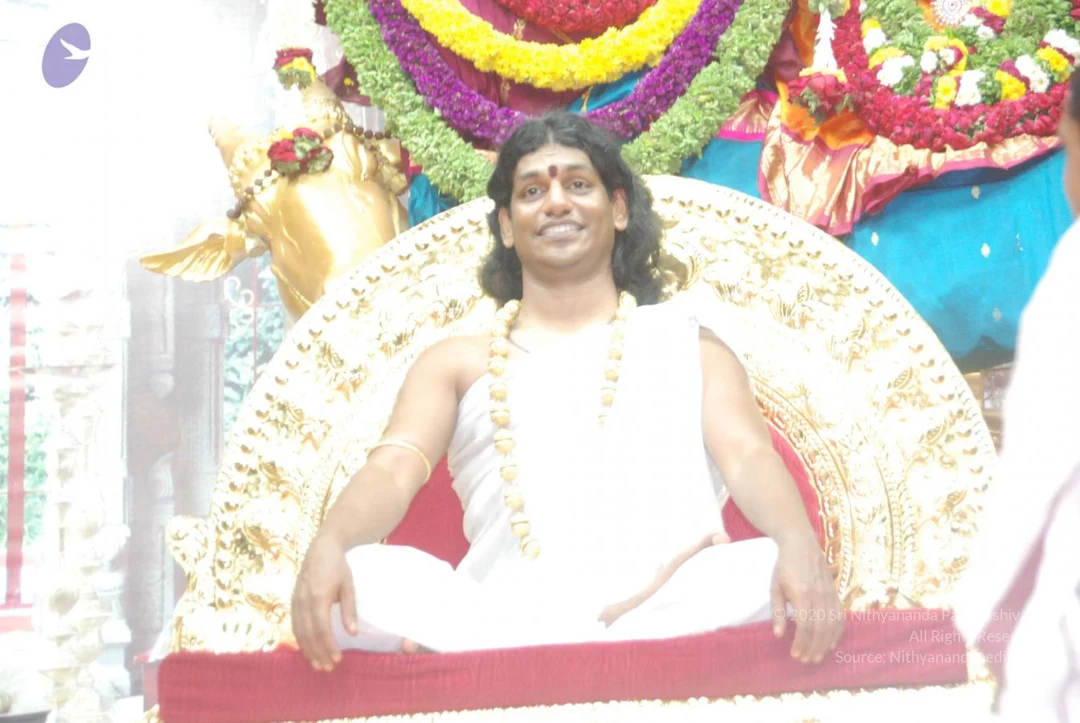
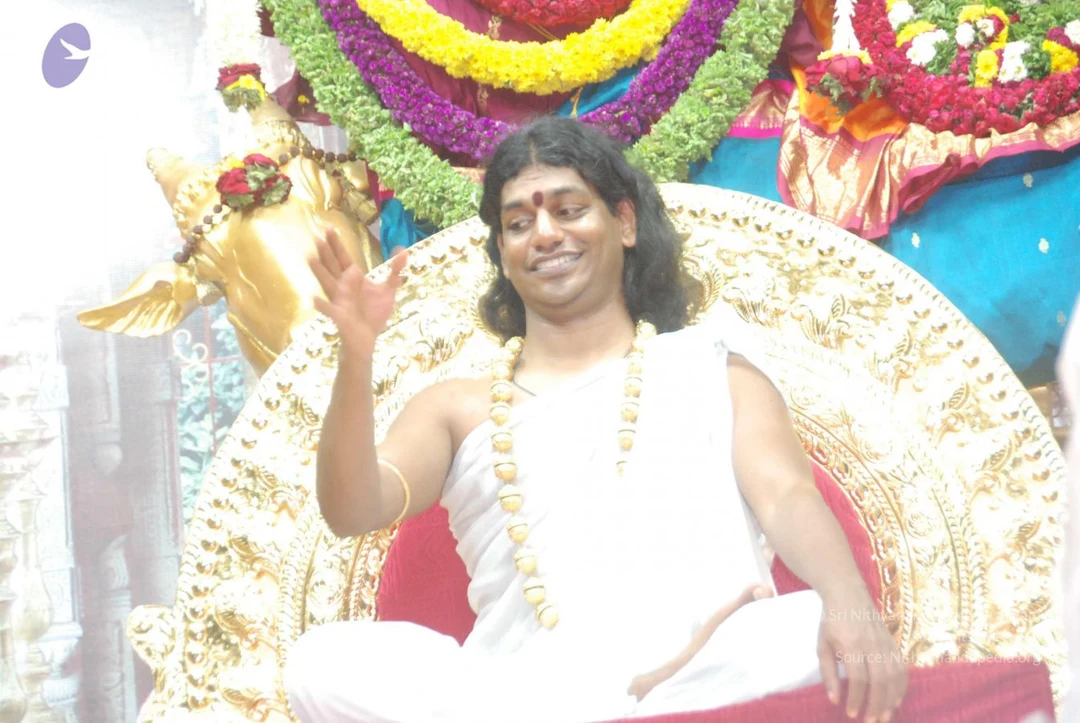
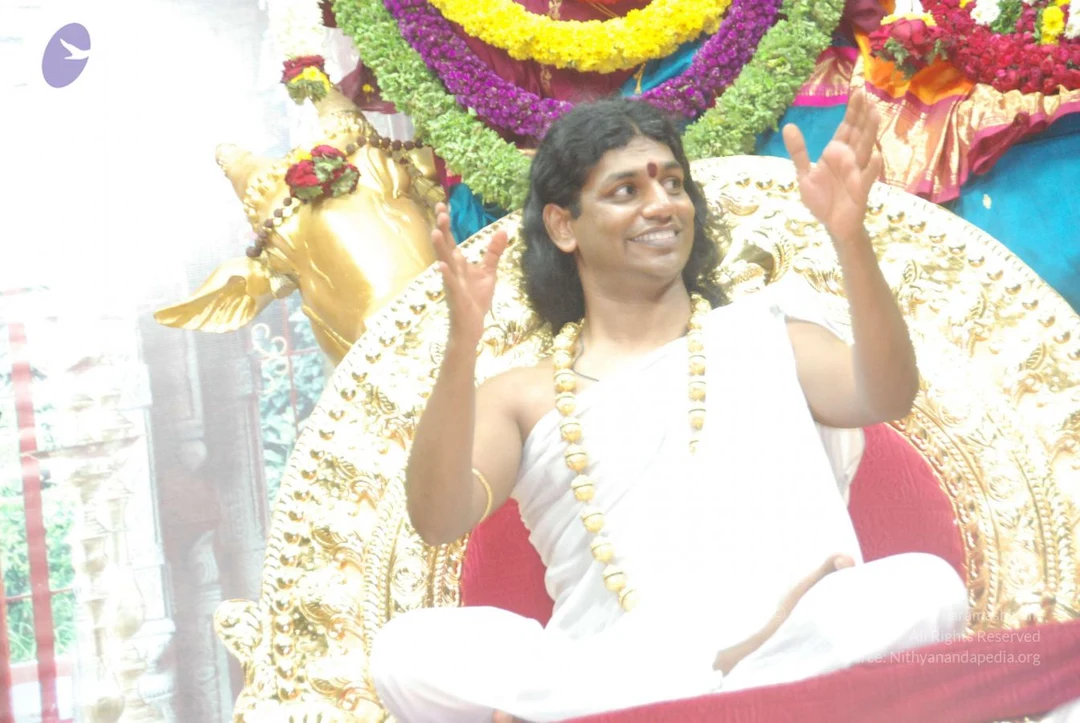
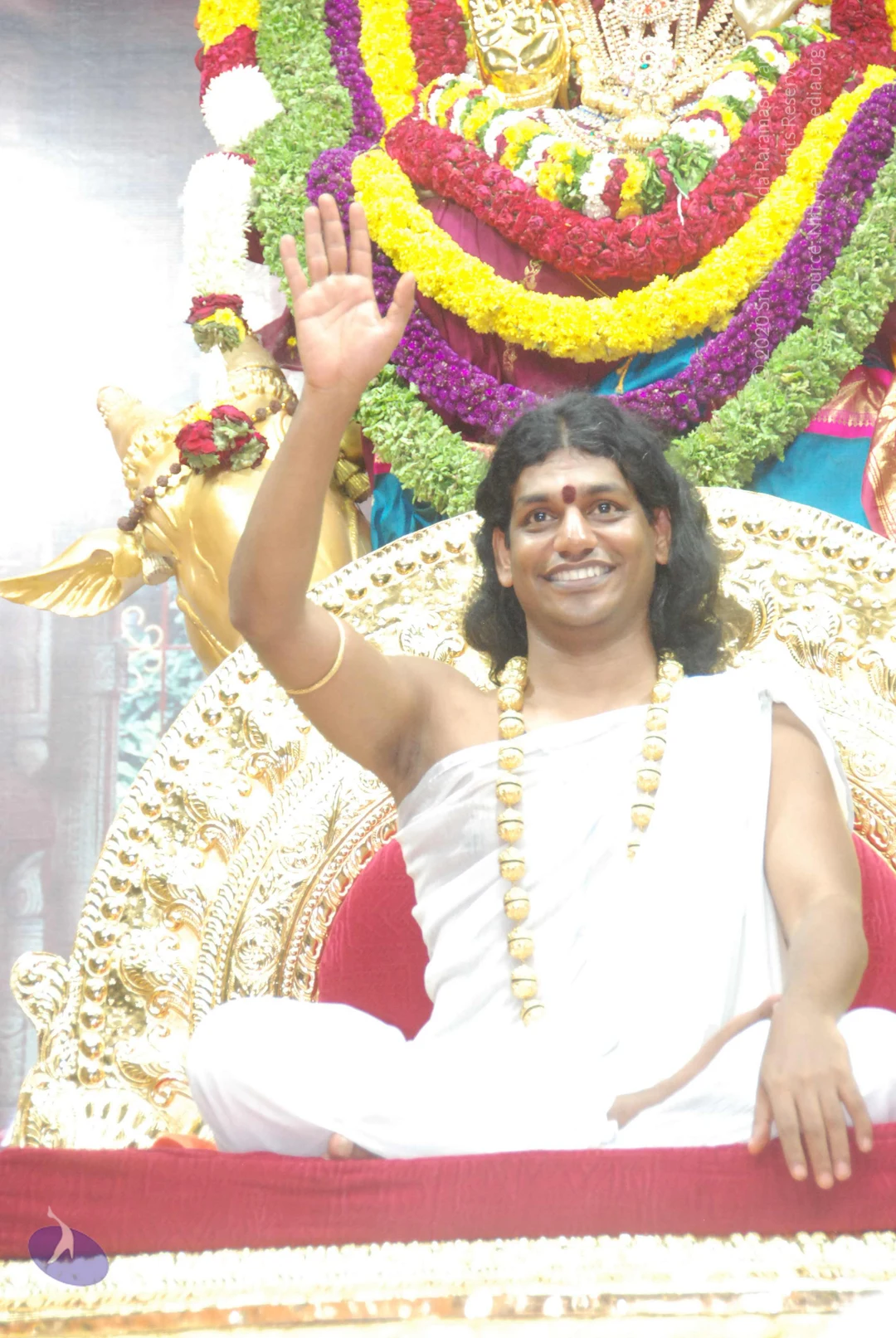
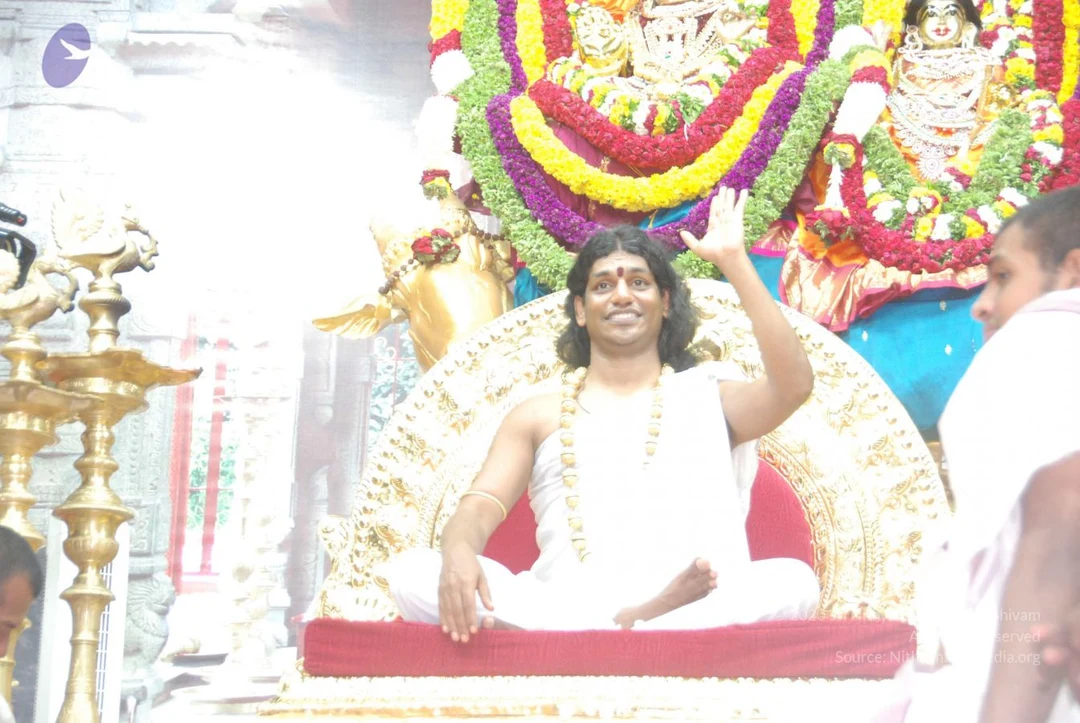
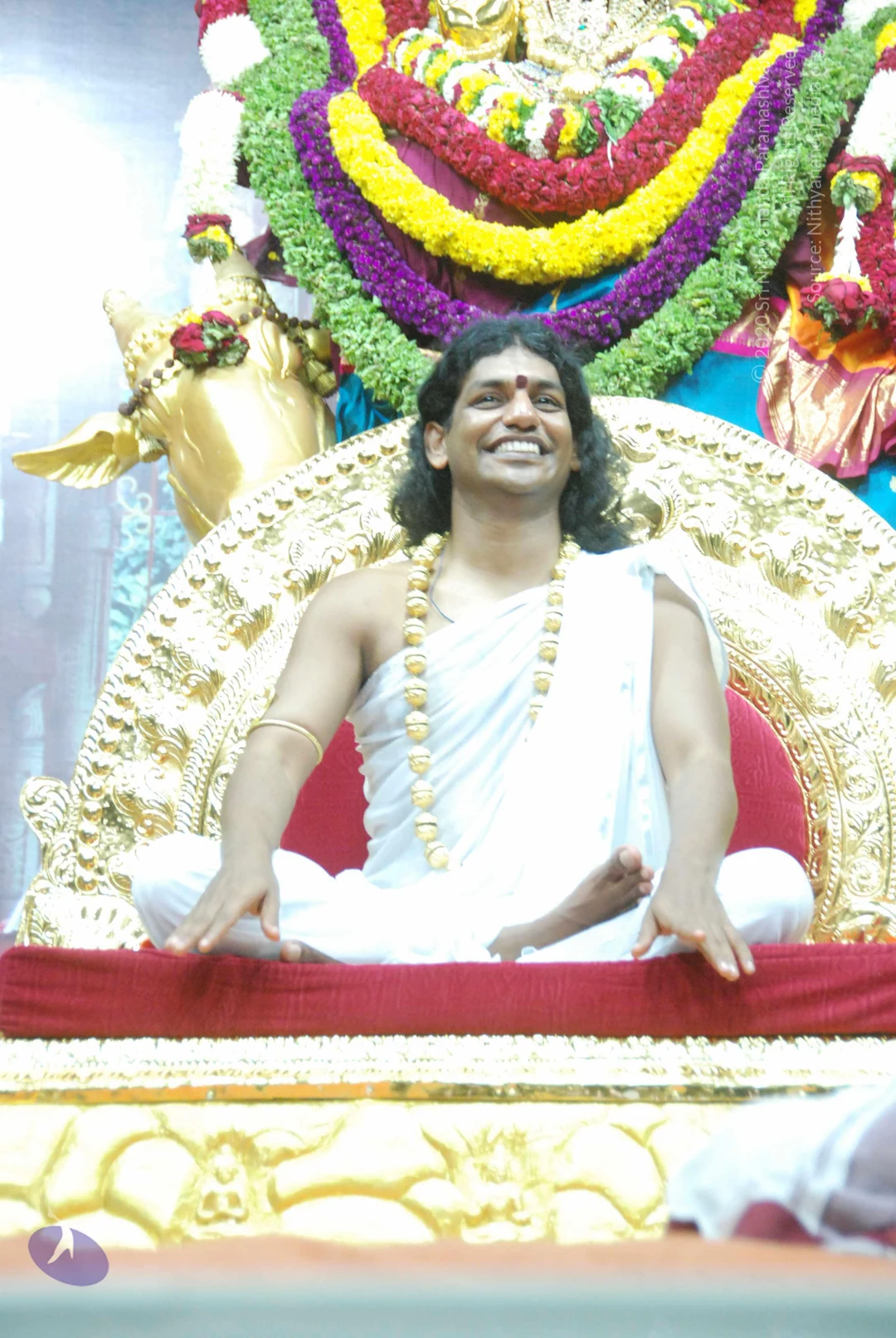
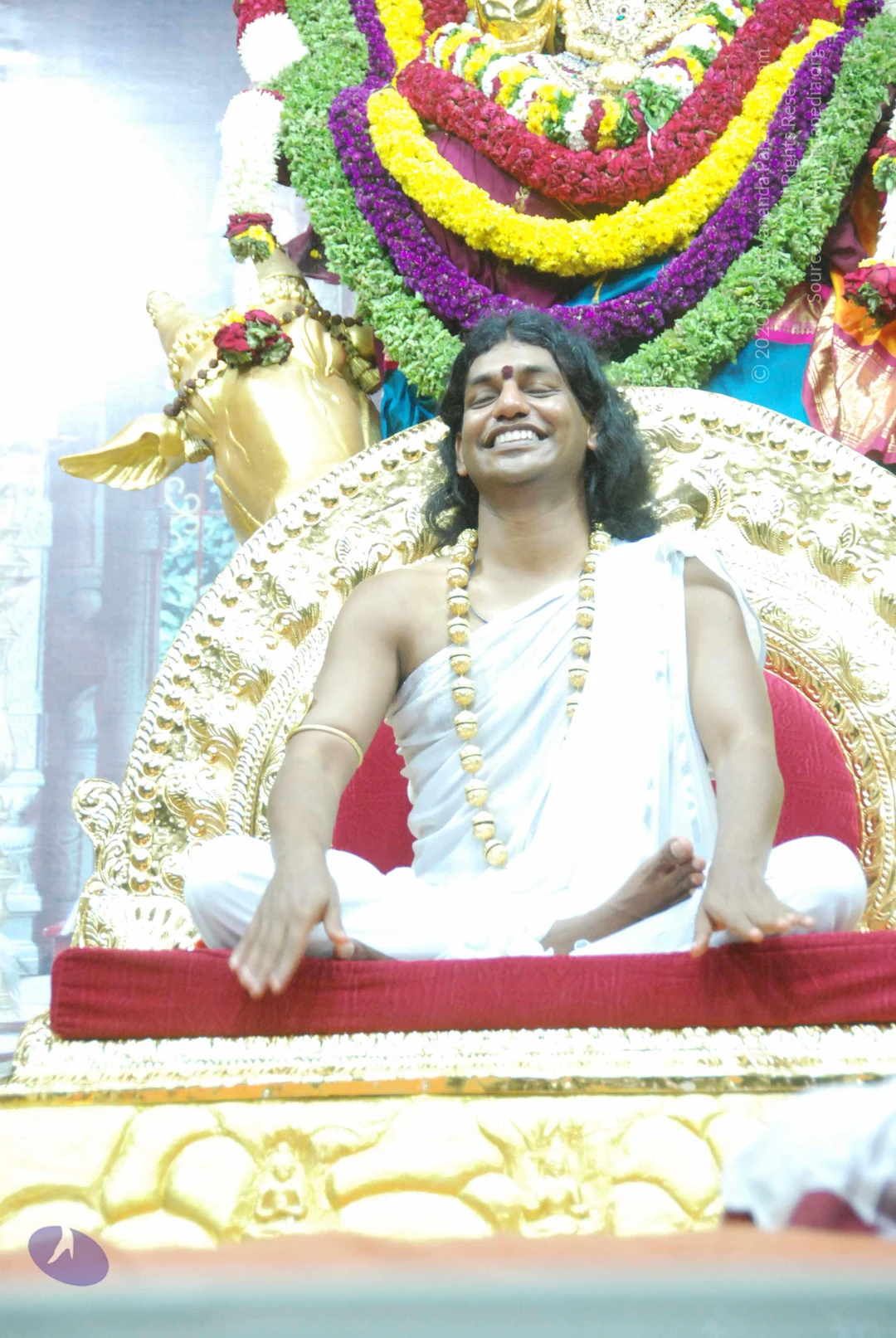
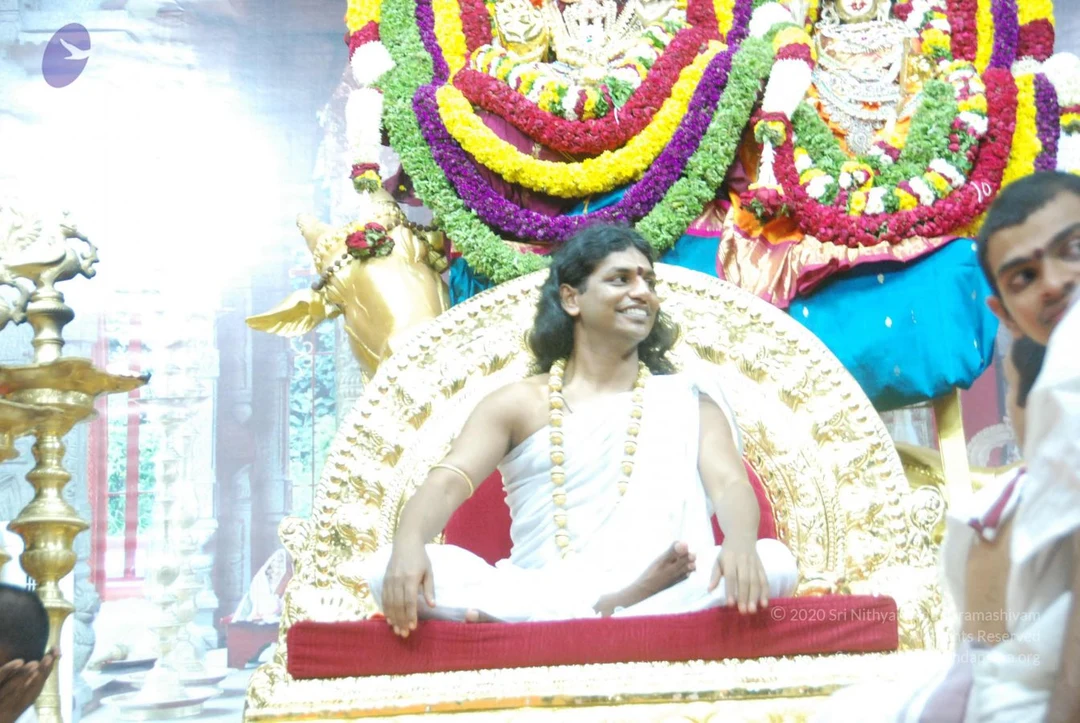
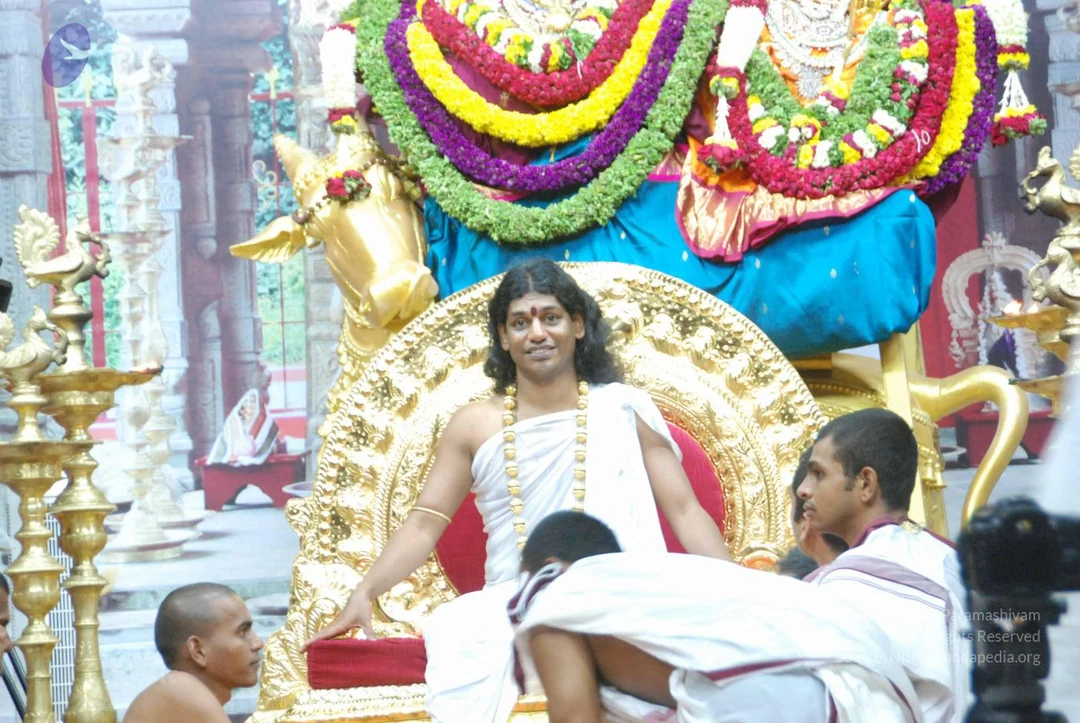
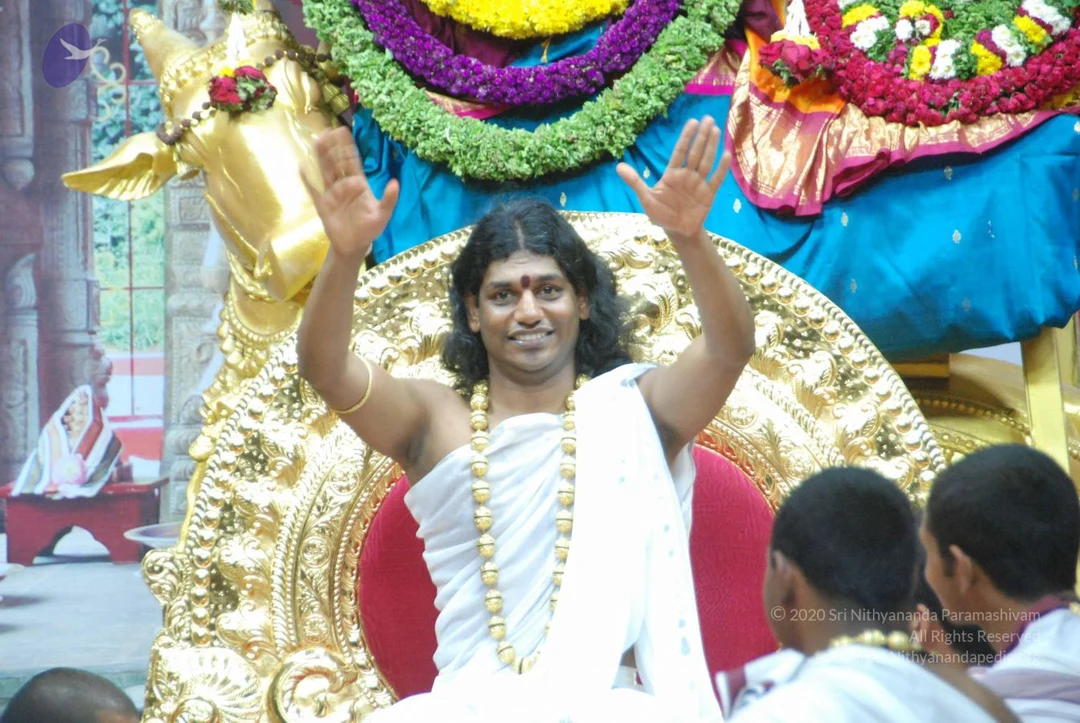
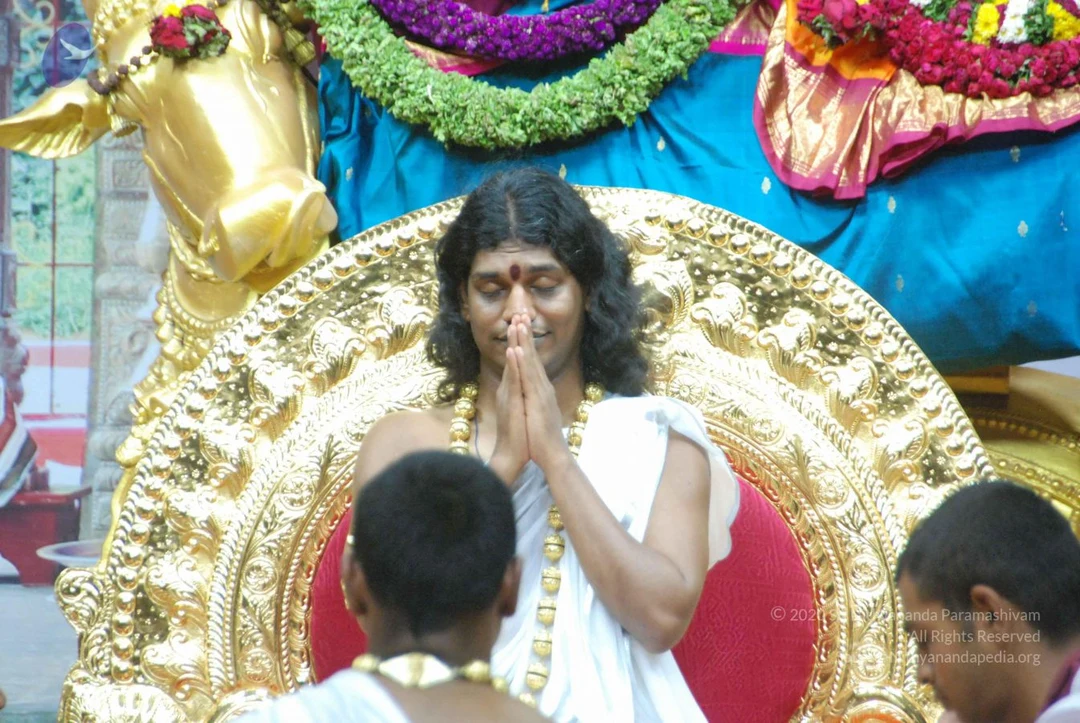
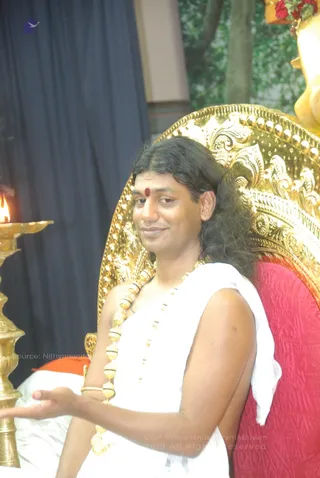
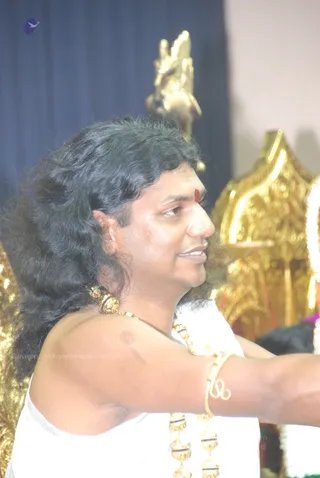
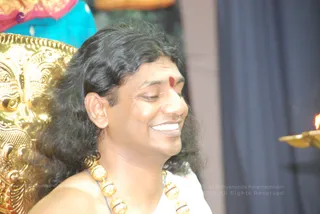
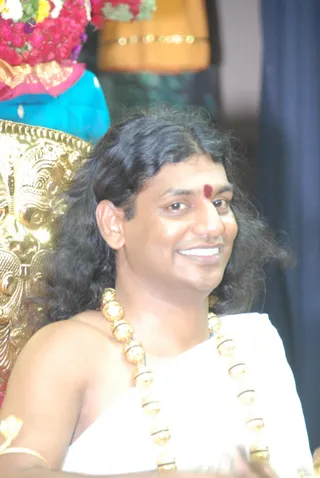
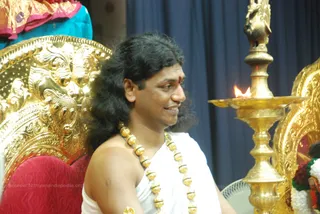
Side-profile photograph of a man with long, swept-back dark hair and a red bindi on his forehead, wearing a white garment on the shoulder and a gold necklace with beads, plus a gold bangle on his raised forearm. He appears to be gesturing. Behind him are ornate gold throne-like carvings, a golden deity murti on a pedestal, and dark blue drapery. The visible cues are limited to hair, bindi and gold adornments, so identity is uncertain and the figure is described by role and attire only.A smiling man with long dark swept-back hair and a red bindi sits before an ornate gold throne with embossed floral and figural carving. He wears a white dhoti-style wrap draped over one shoulder and a heavy ceremonial necklace of large gold beads. Behind him are garlands of red and yellow flowers and a blue draped cloth. Appearance-based candidate: a person, seated in a satsang setting, distinguished by the long swept hair, gold bead mala and throne.

Panchatapas

1 photoSource gallery
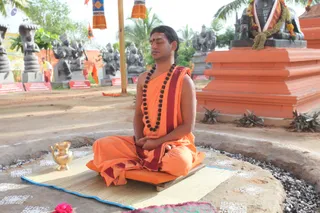
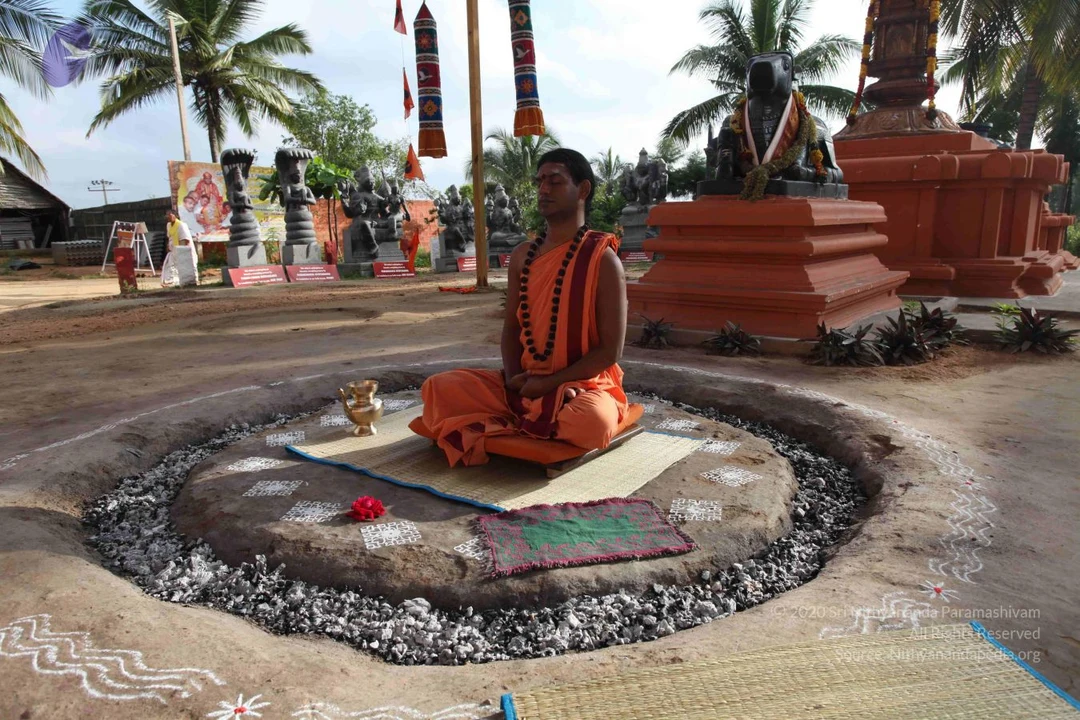
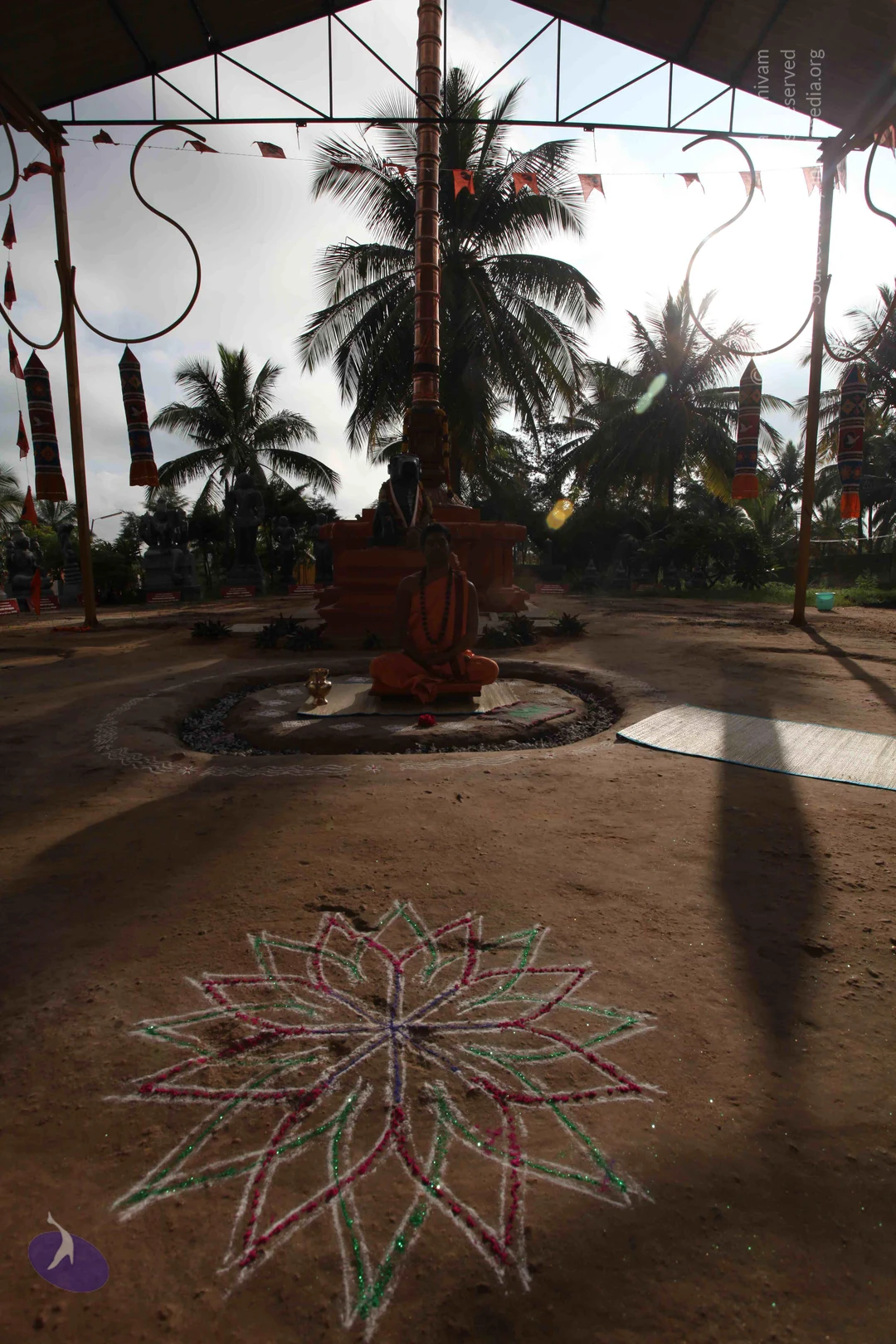
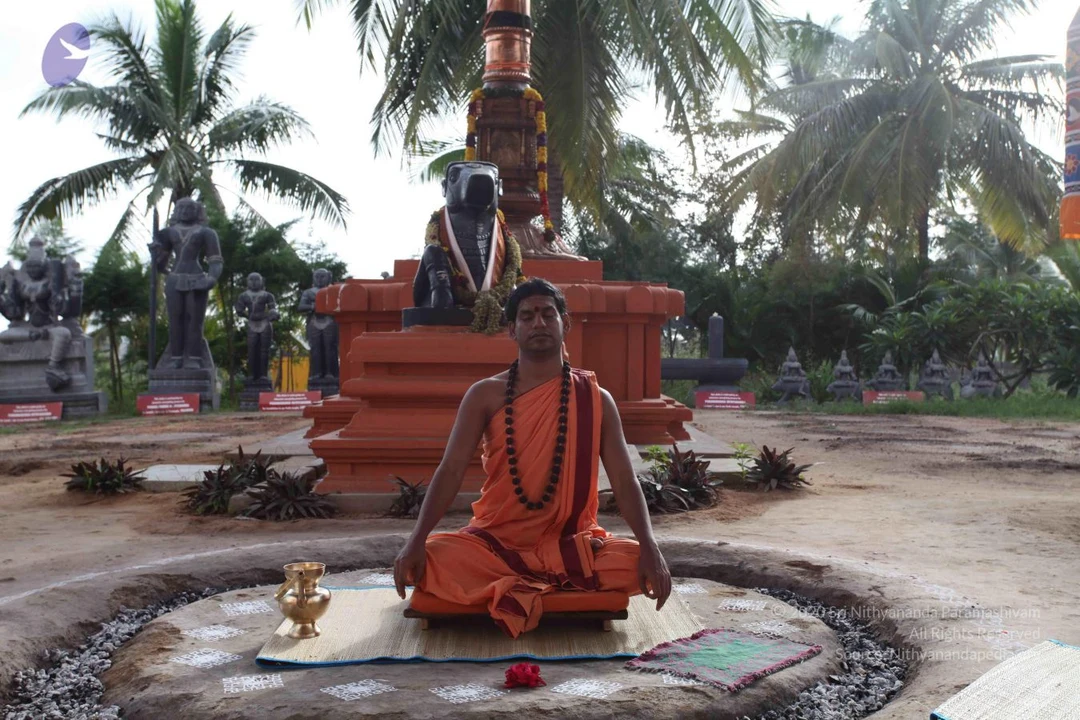
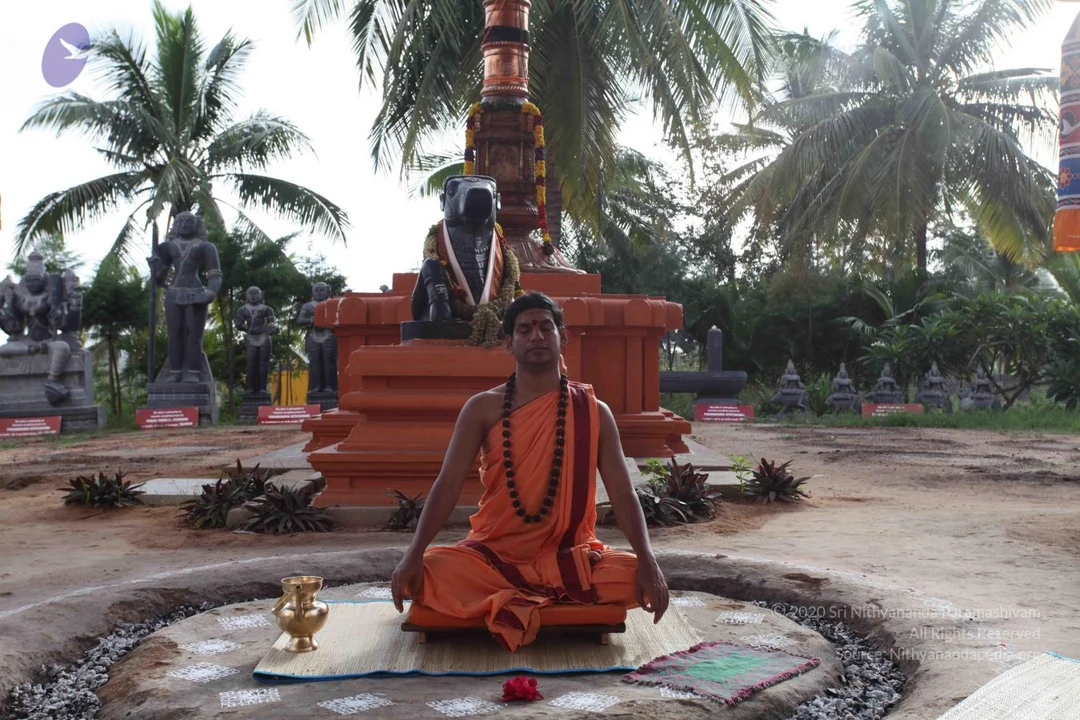
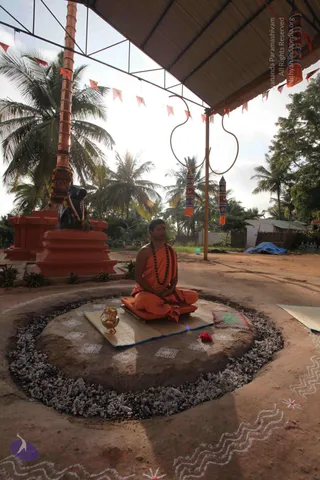
A man in saffron-orange robes sits cross-legged on a mat in an outdoor courtyard with a small brass vessel placed before him. He wears rudraksha beads around his neck and a wrap draped over his shoulders. Behind him stand a row of stone deity murti and an ornate orange temple structure with a tall gopuram. Palm trees and a paved courtyard surround the scene.

Session

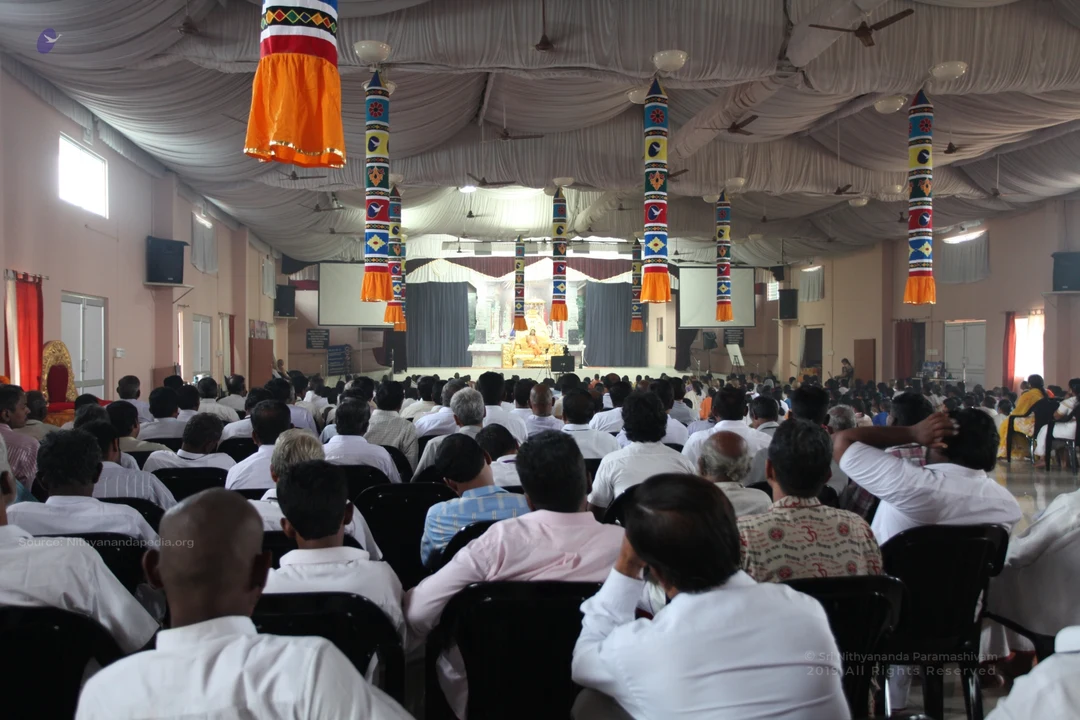
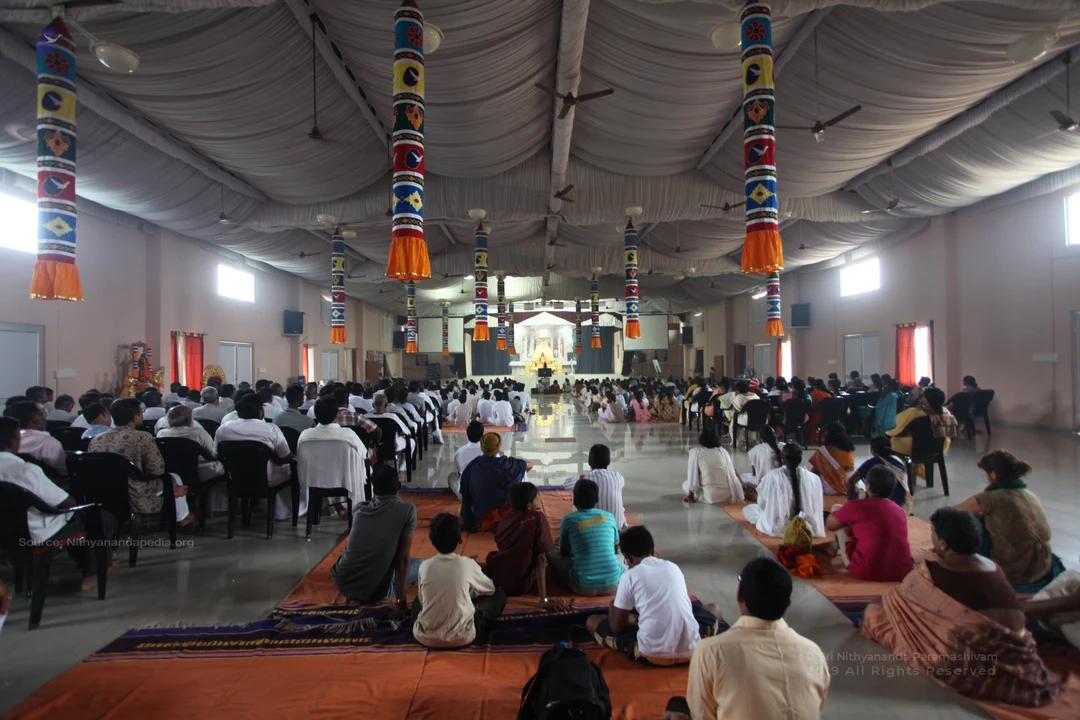
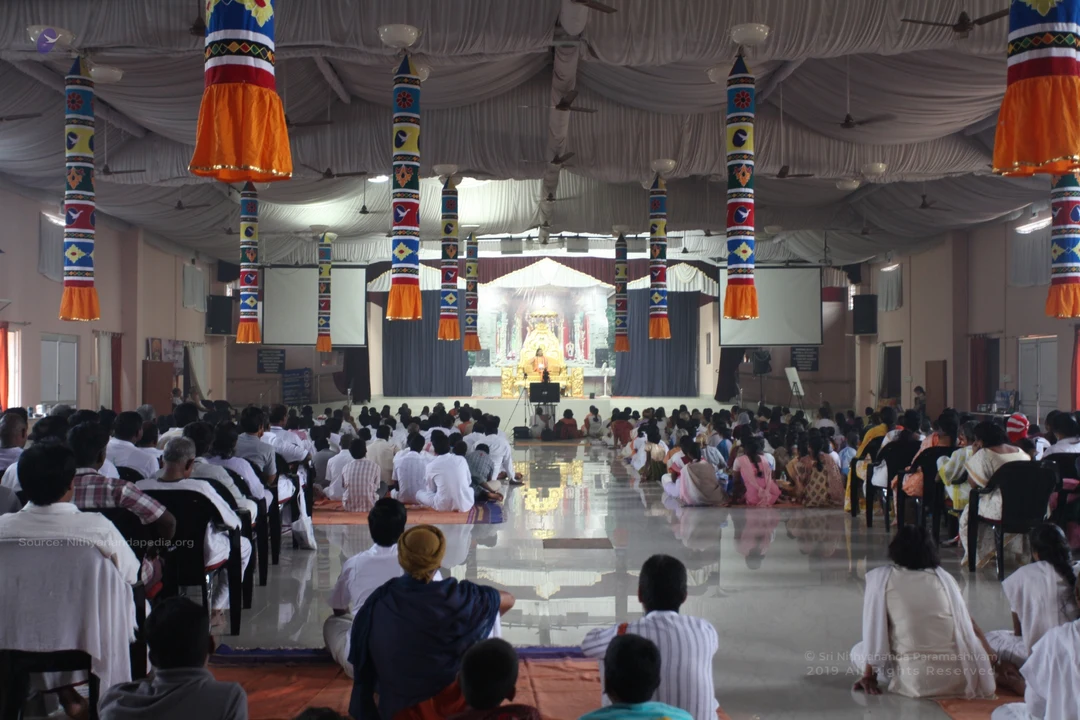
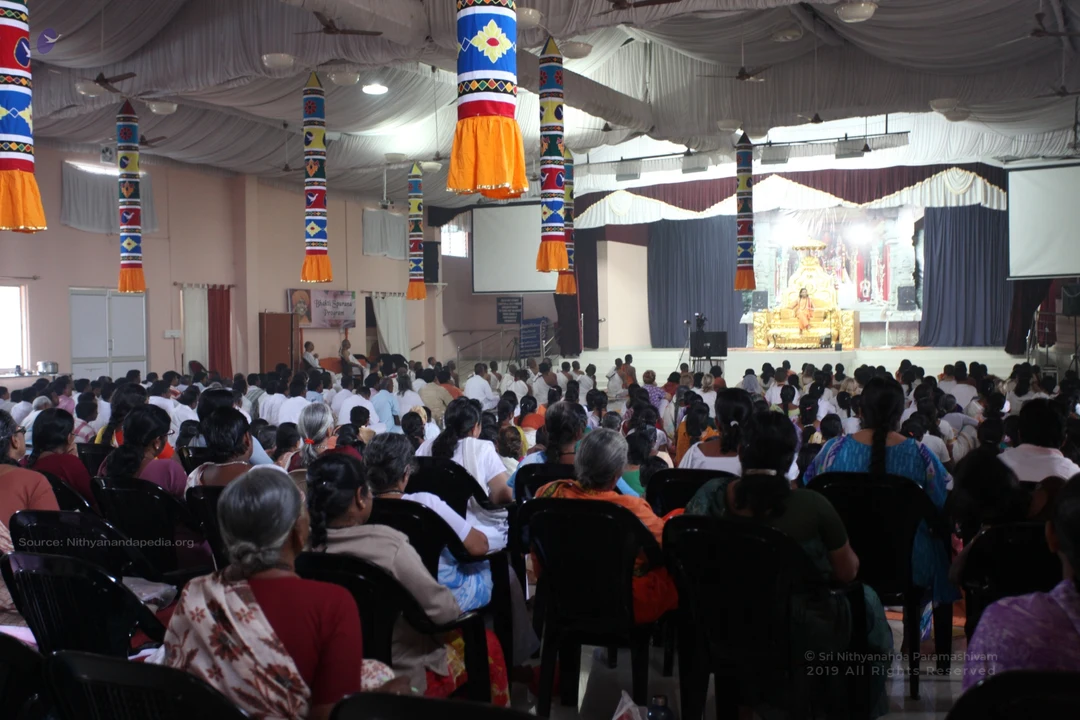
14 photosSource gallery
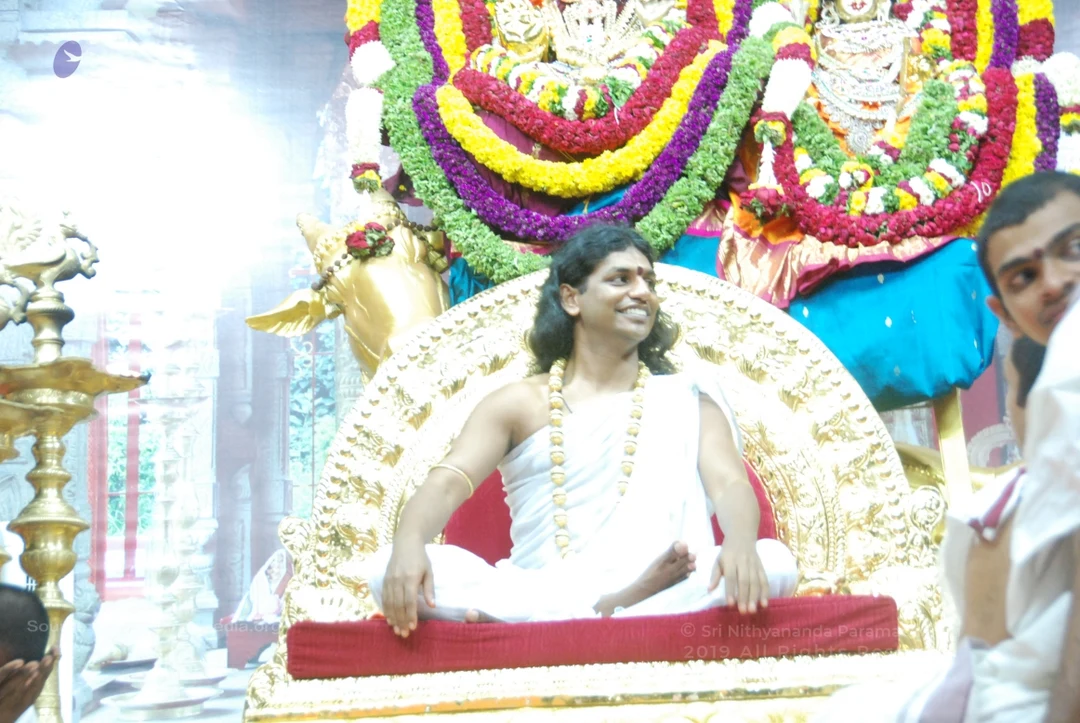
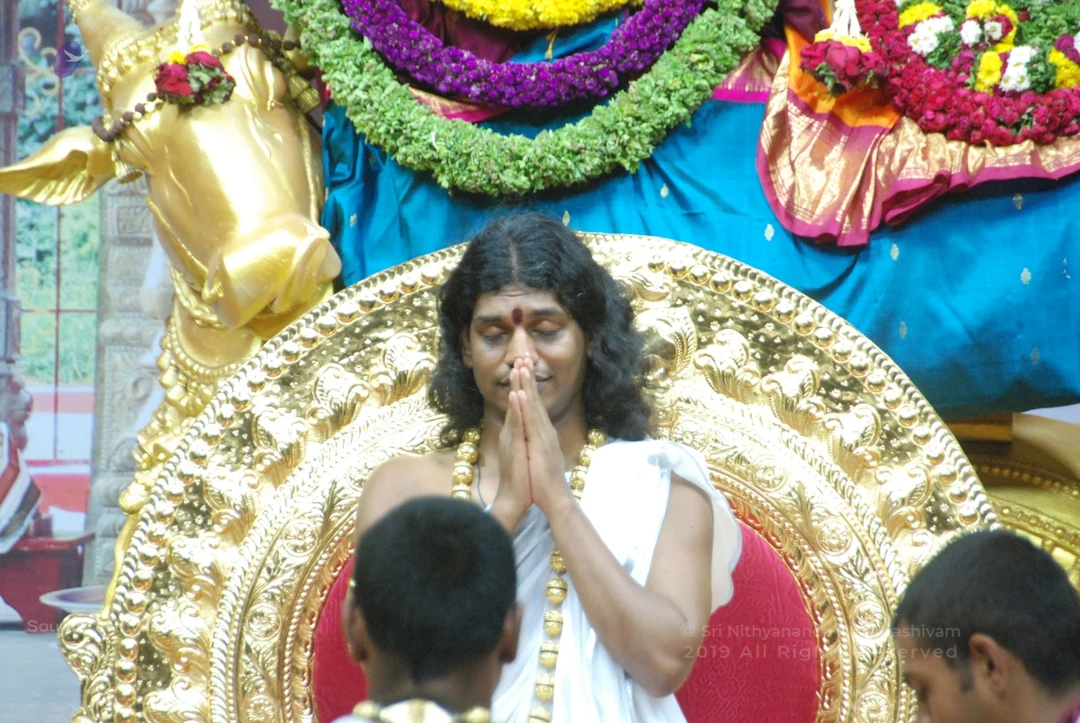
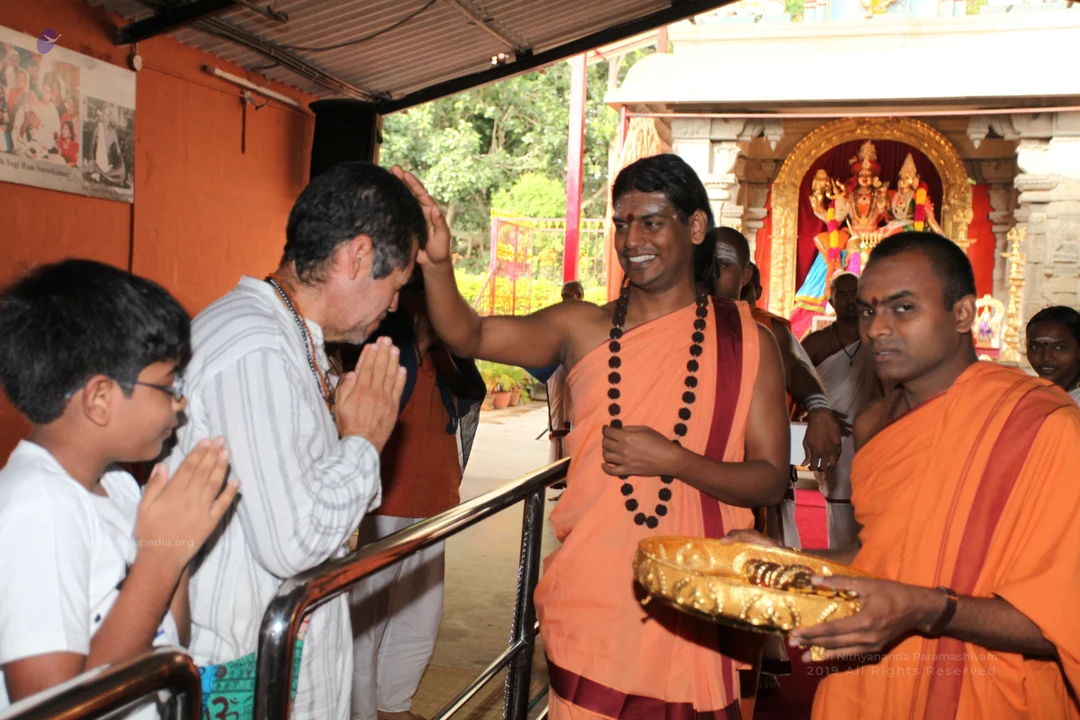
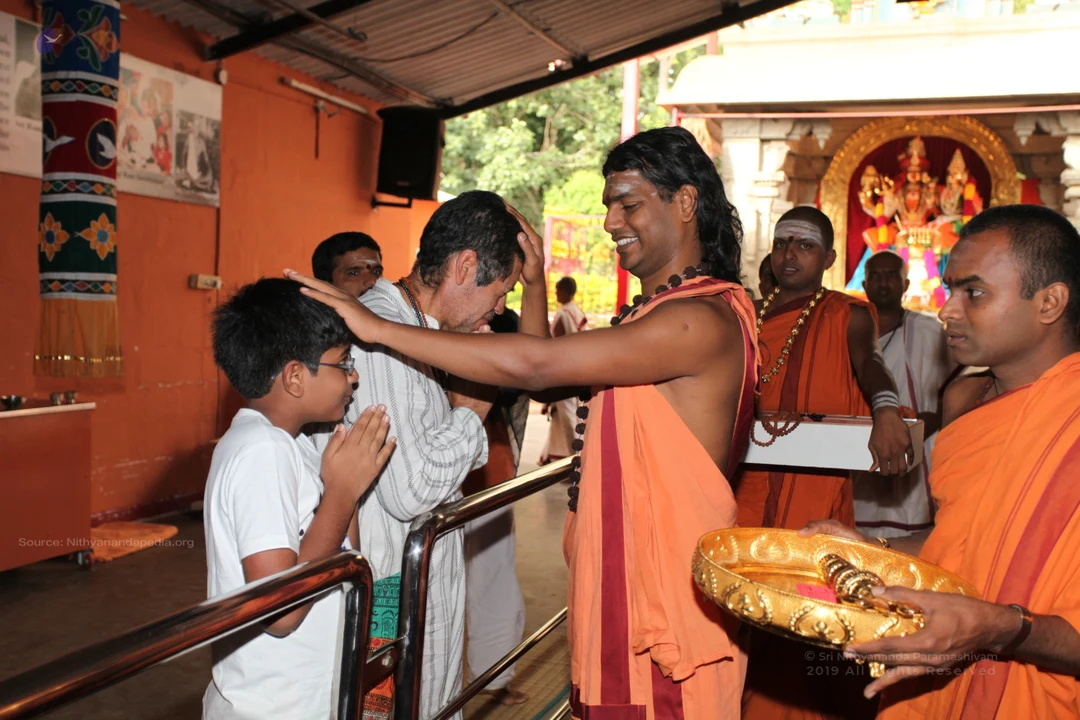
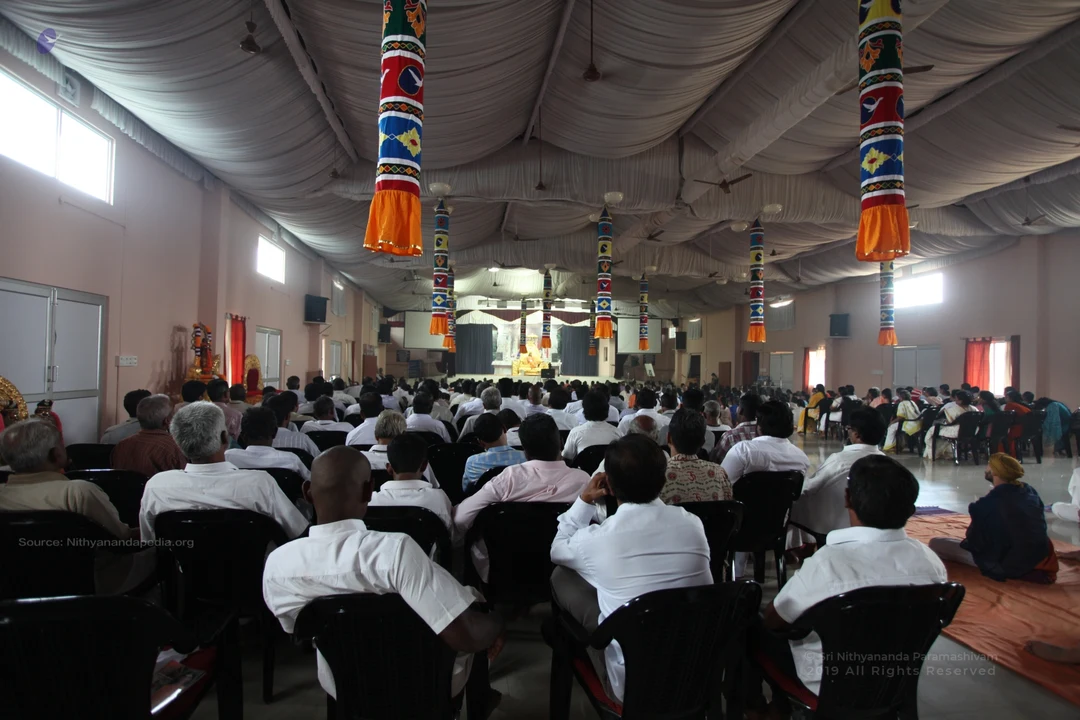
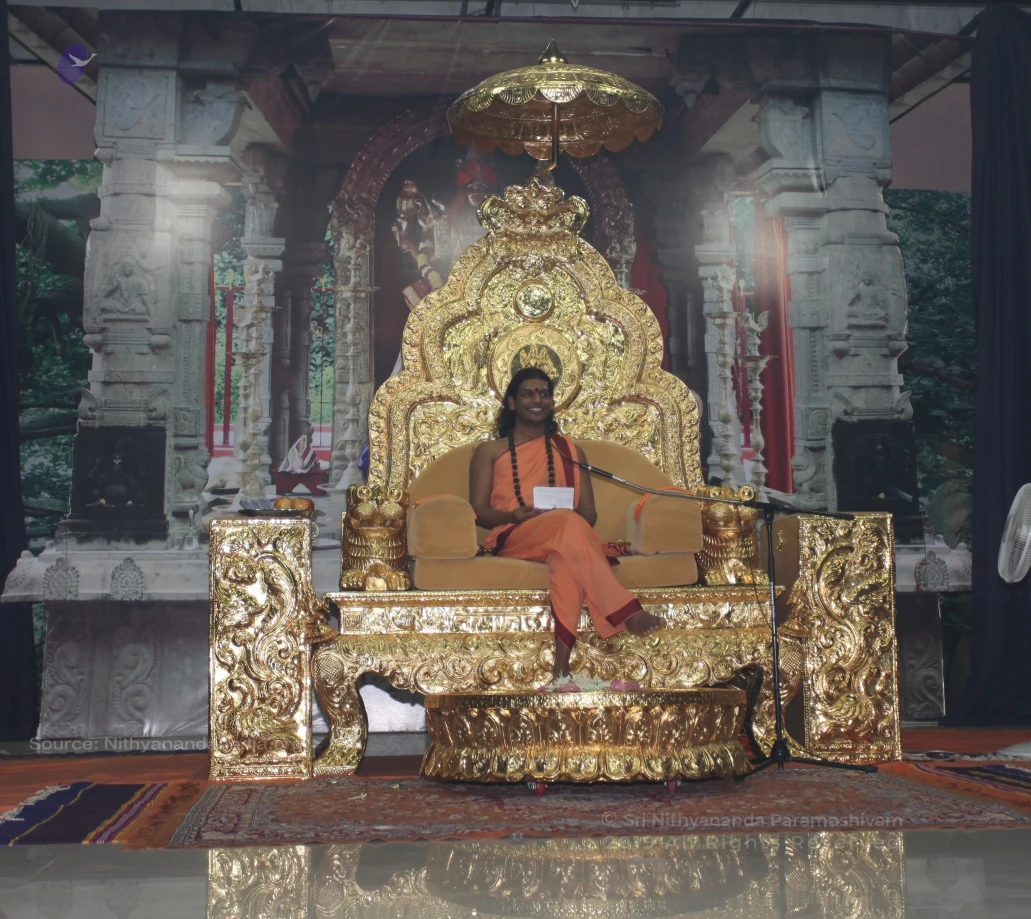
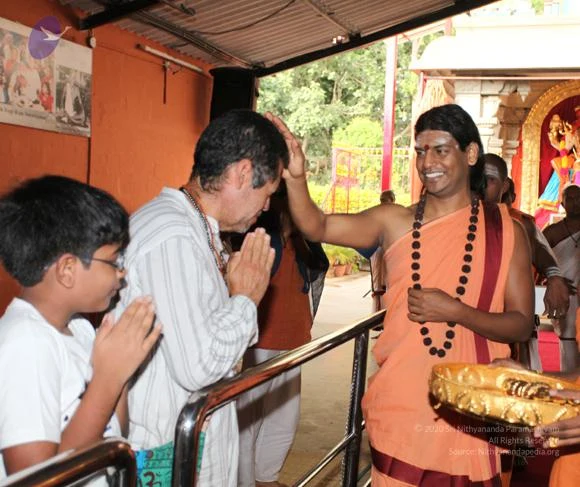
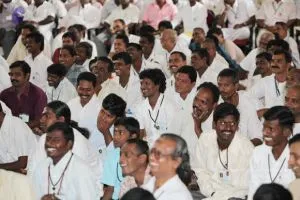
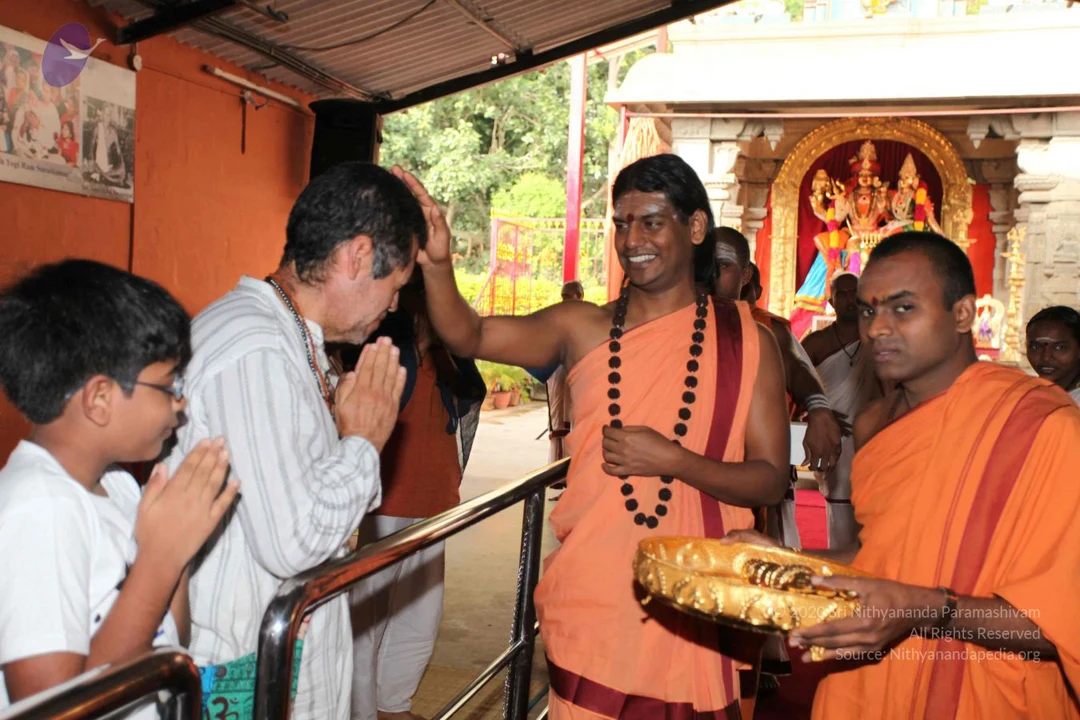
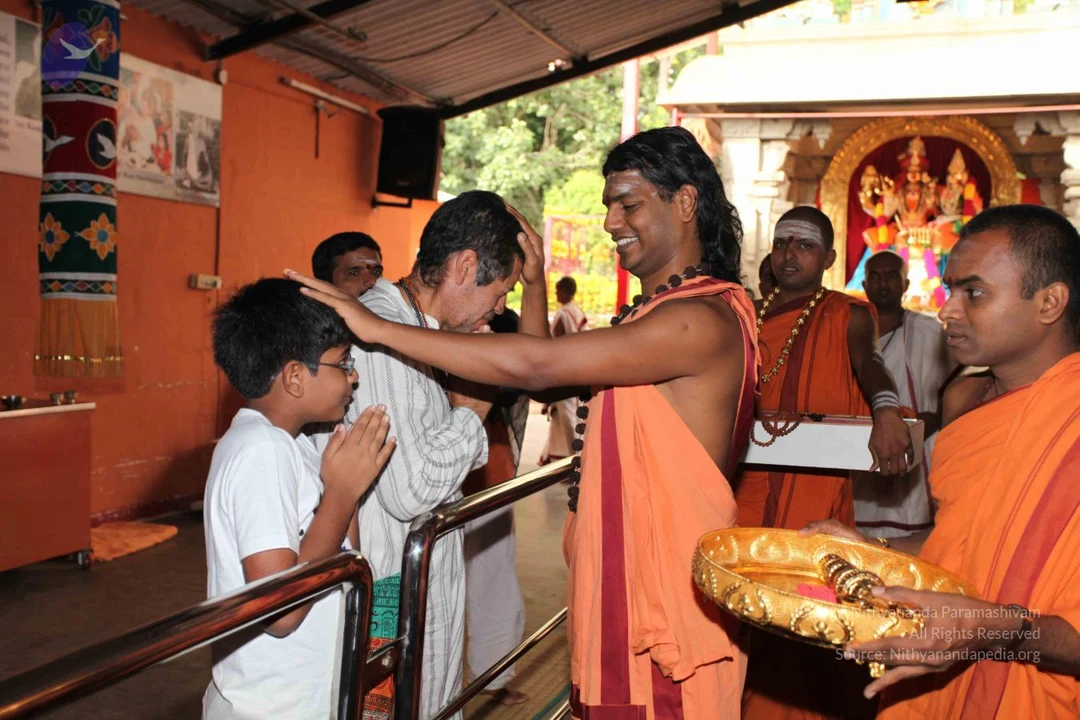
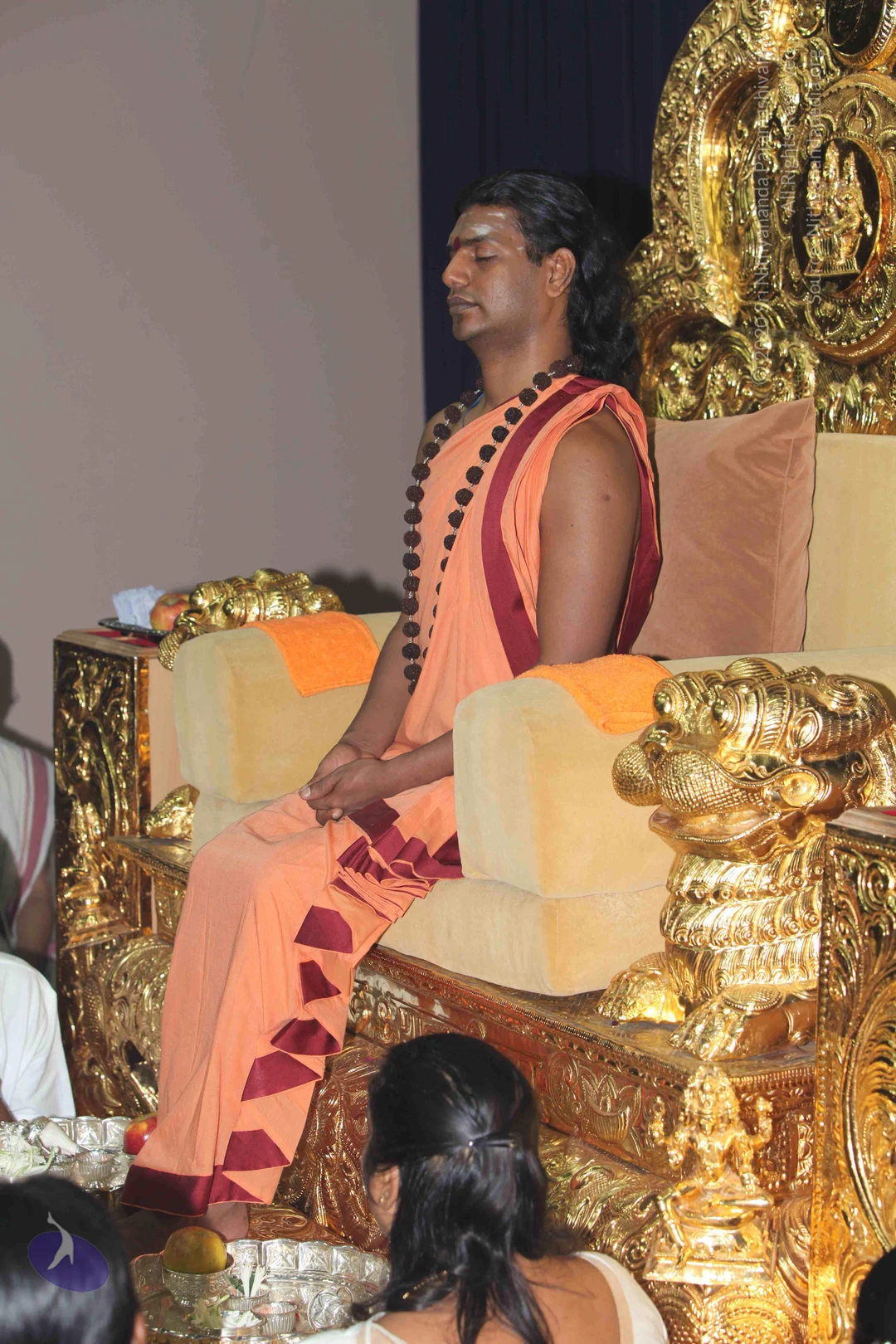
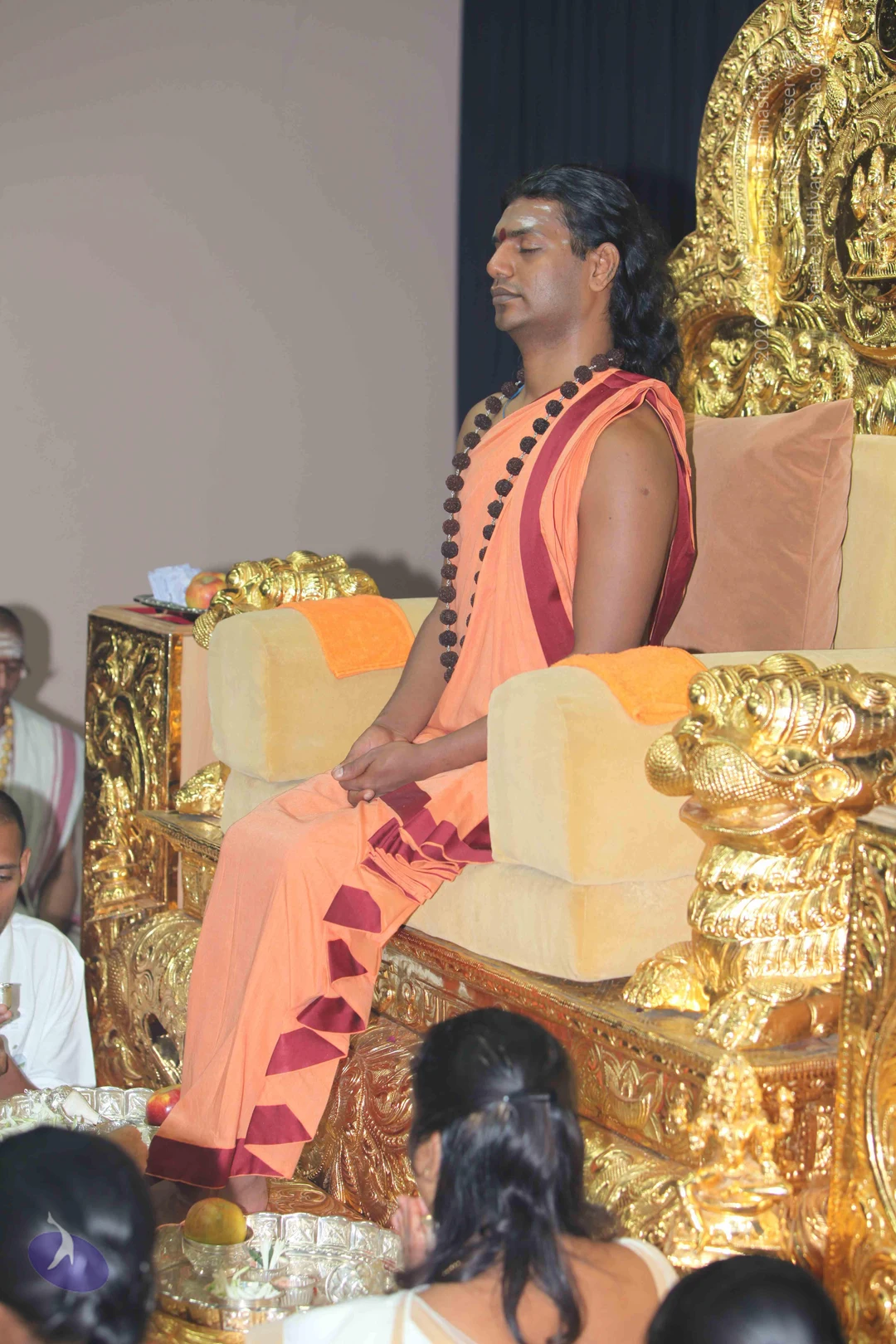
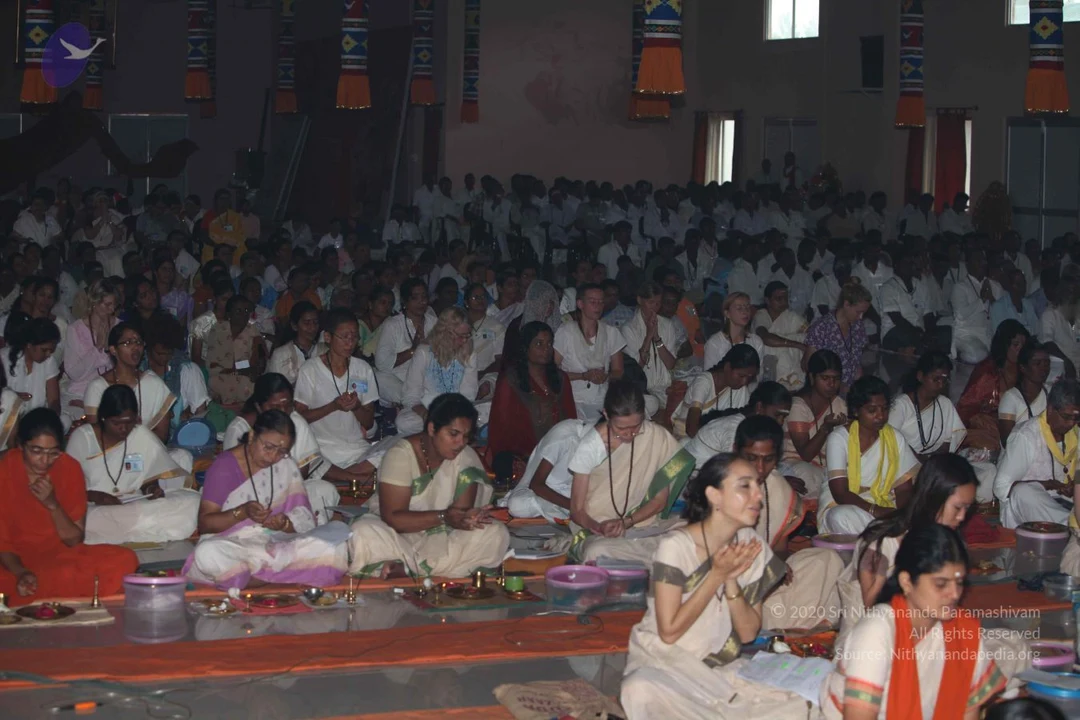
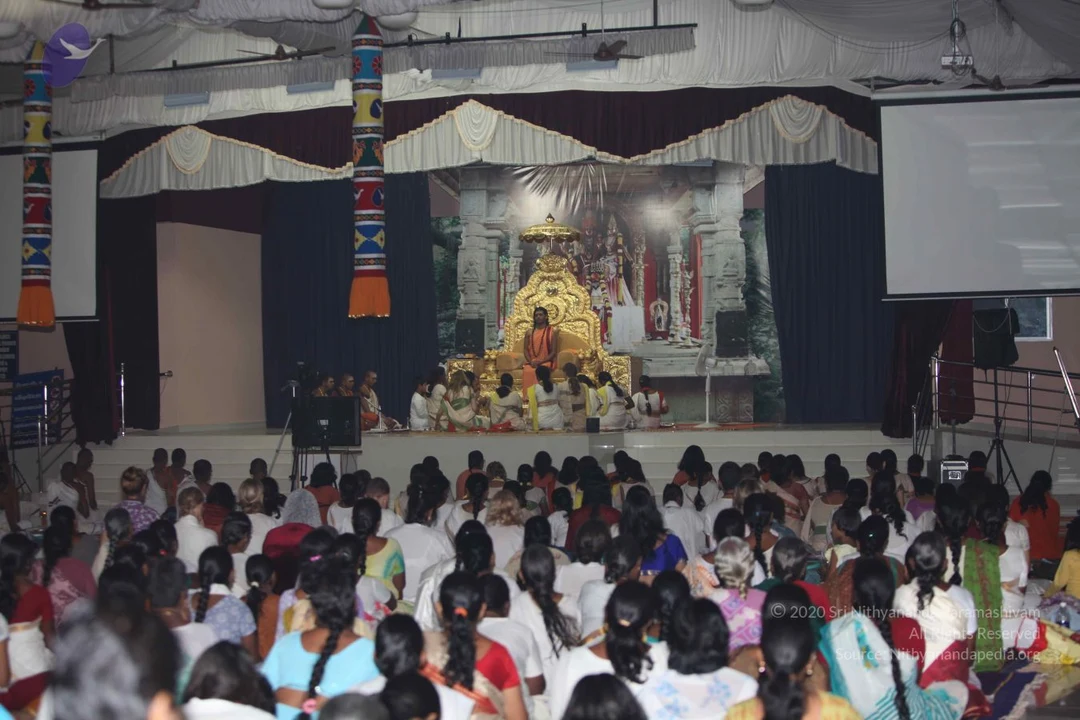
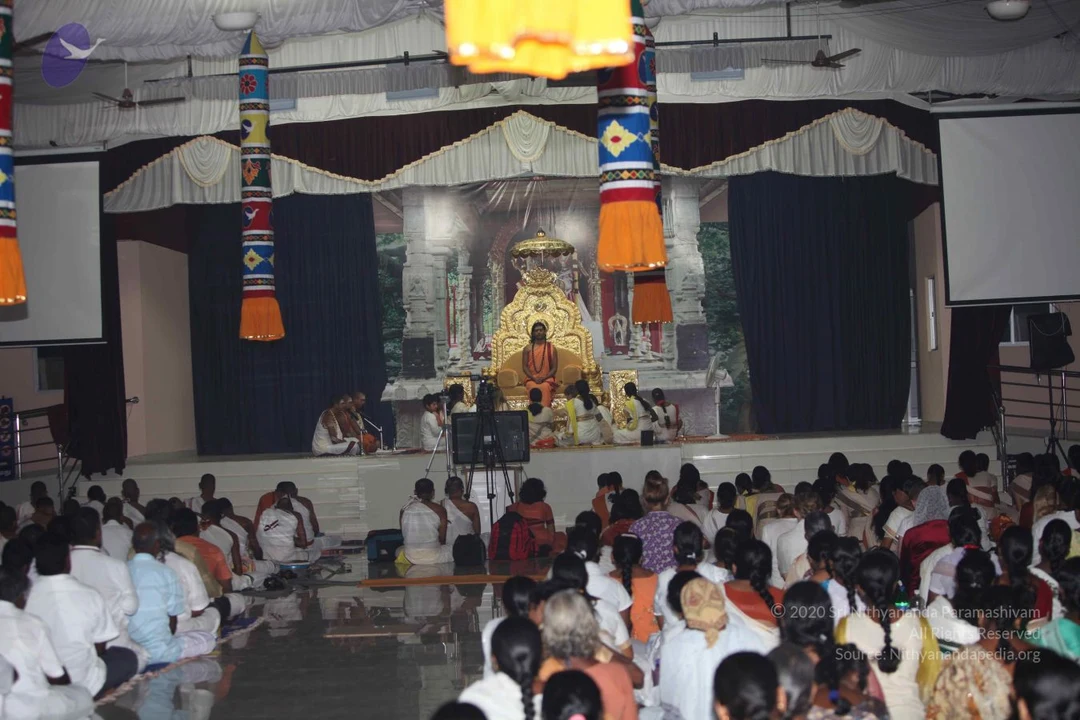
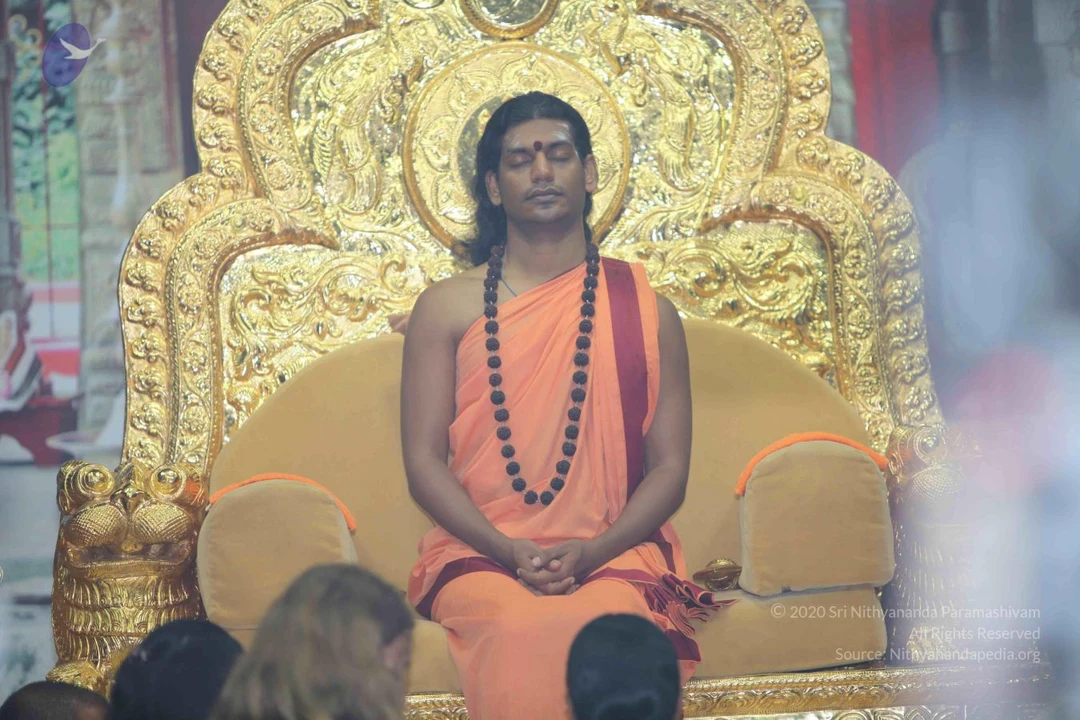
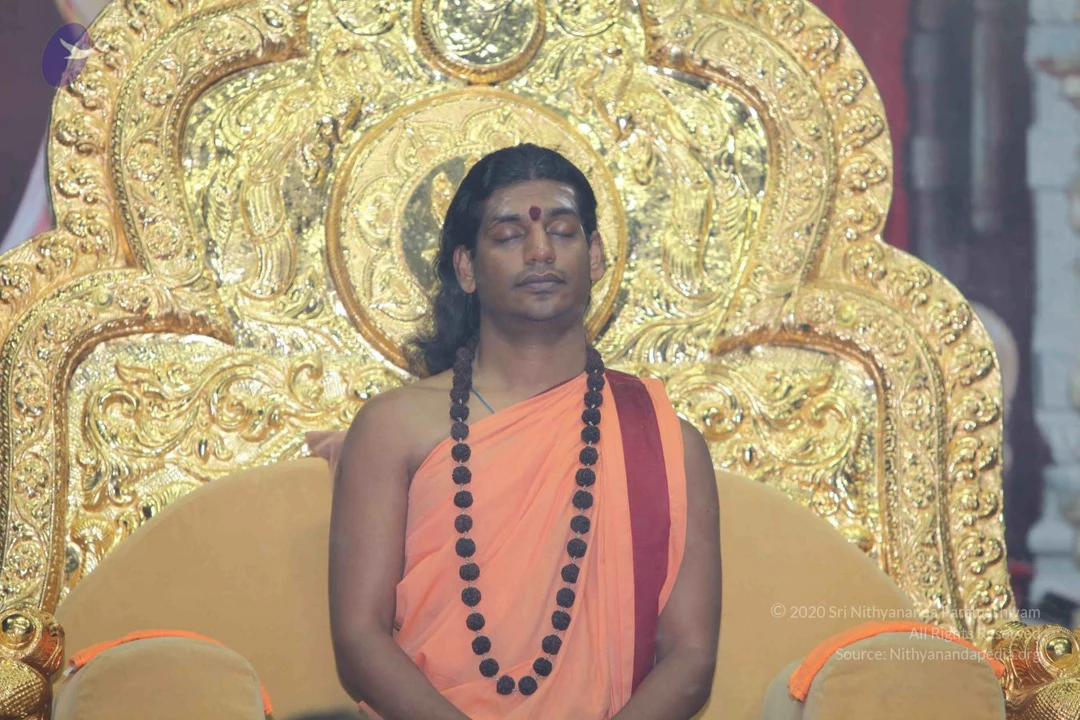
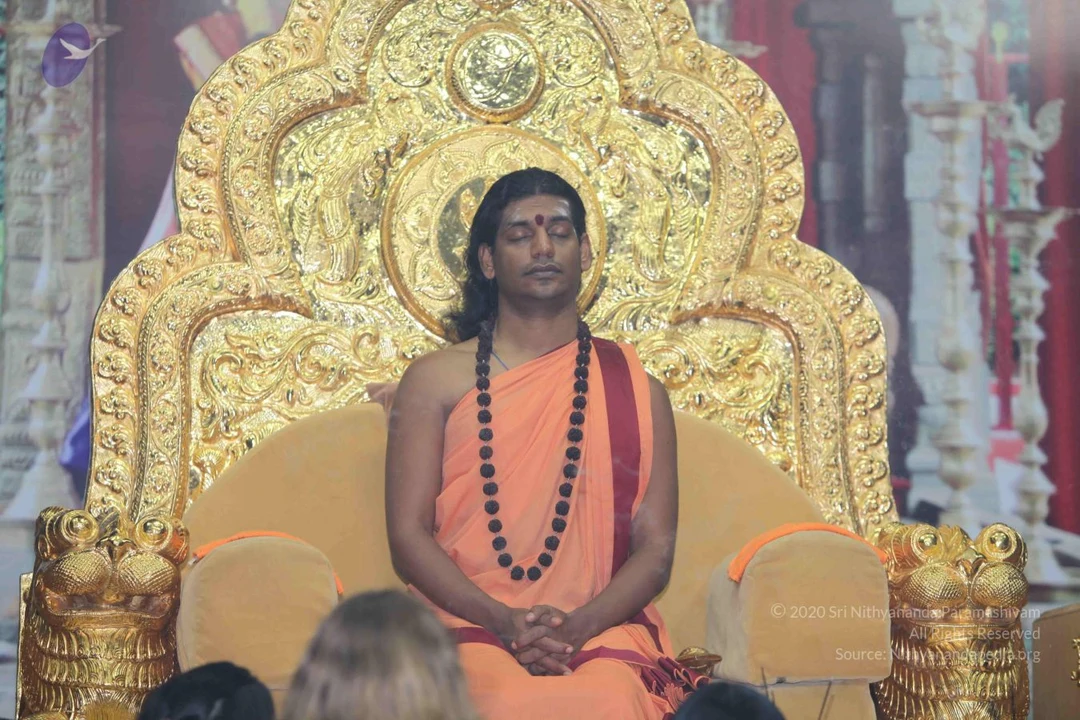
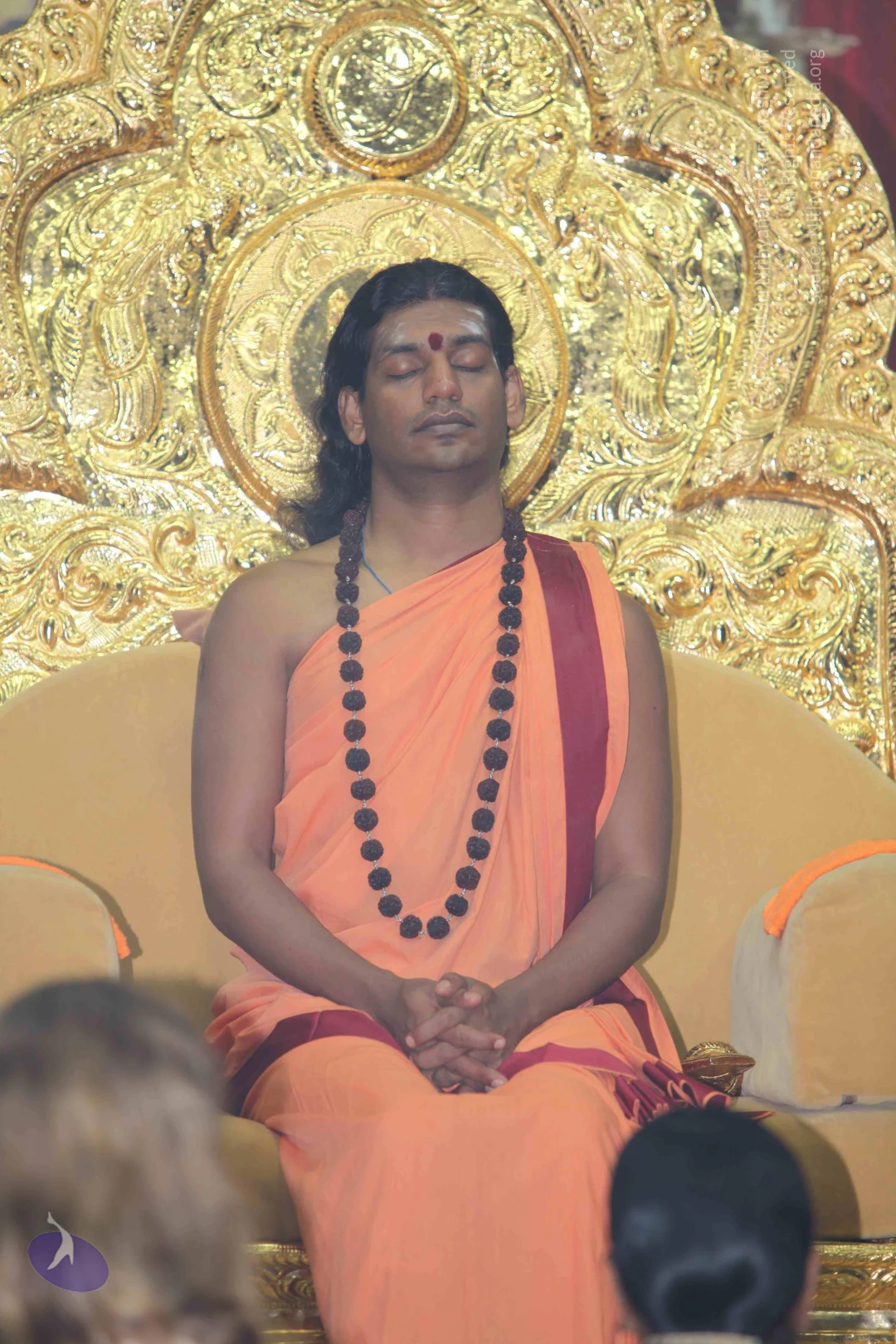
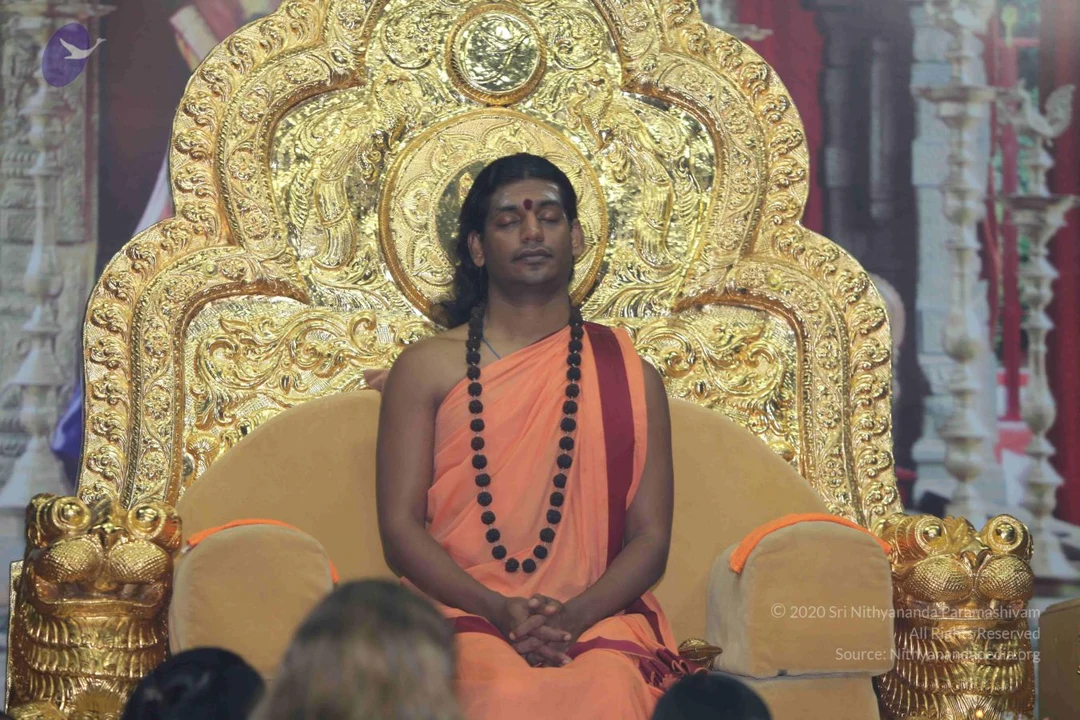
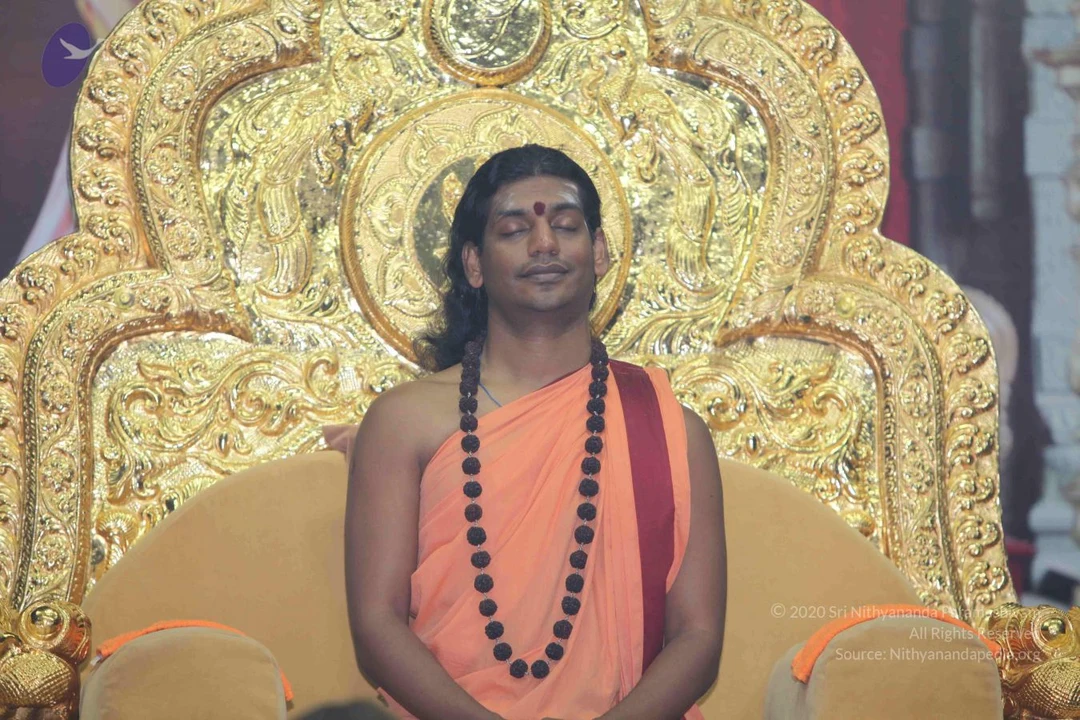
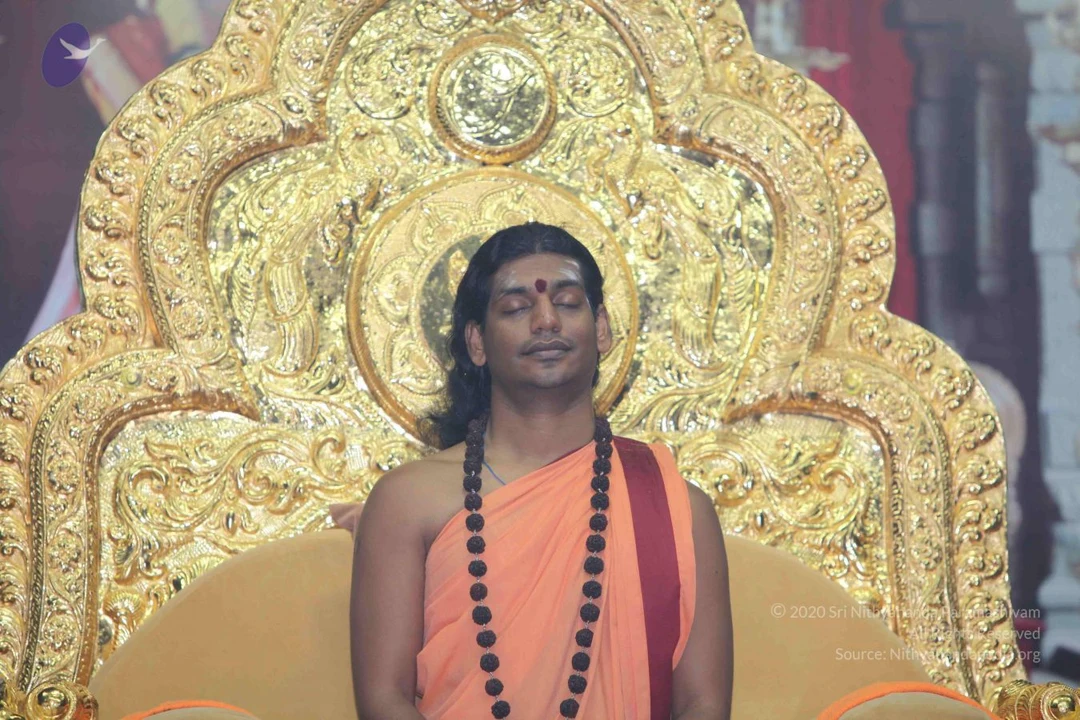
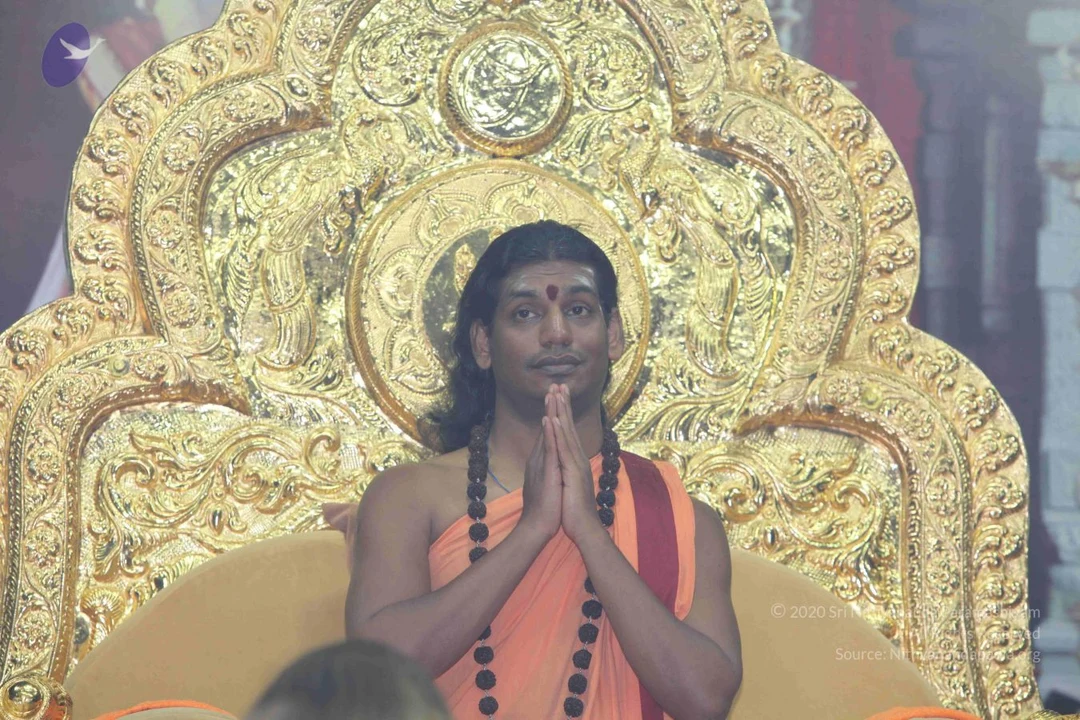
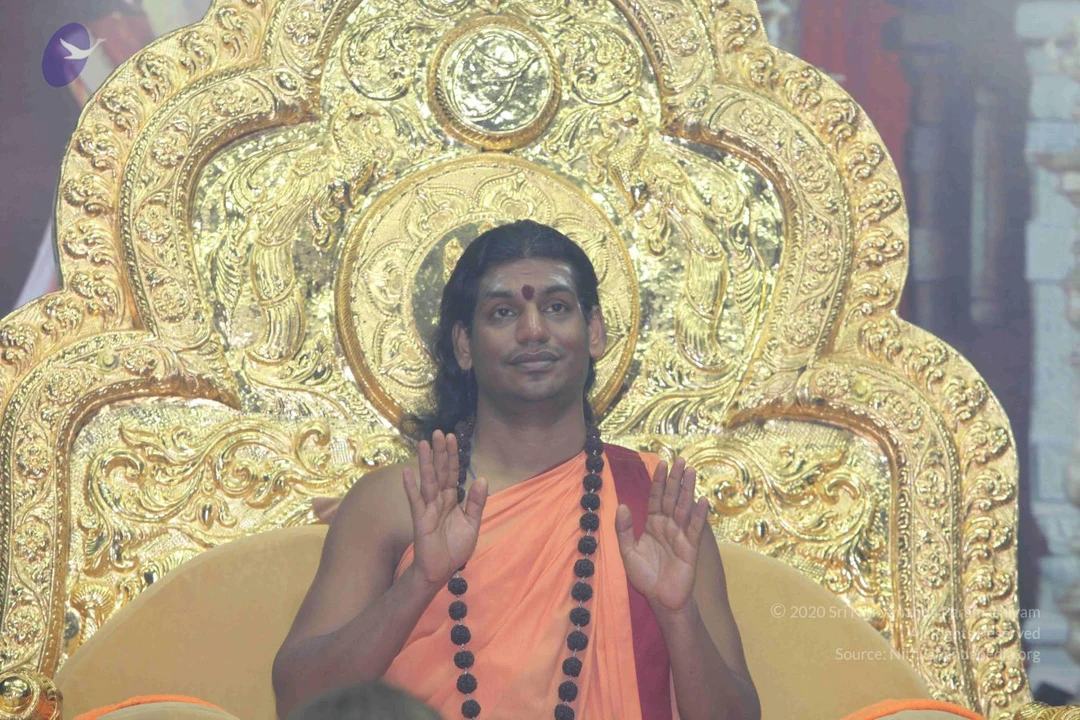
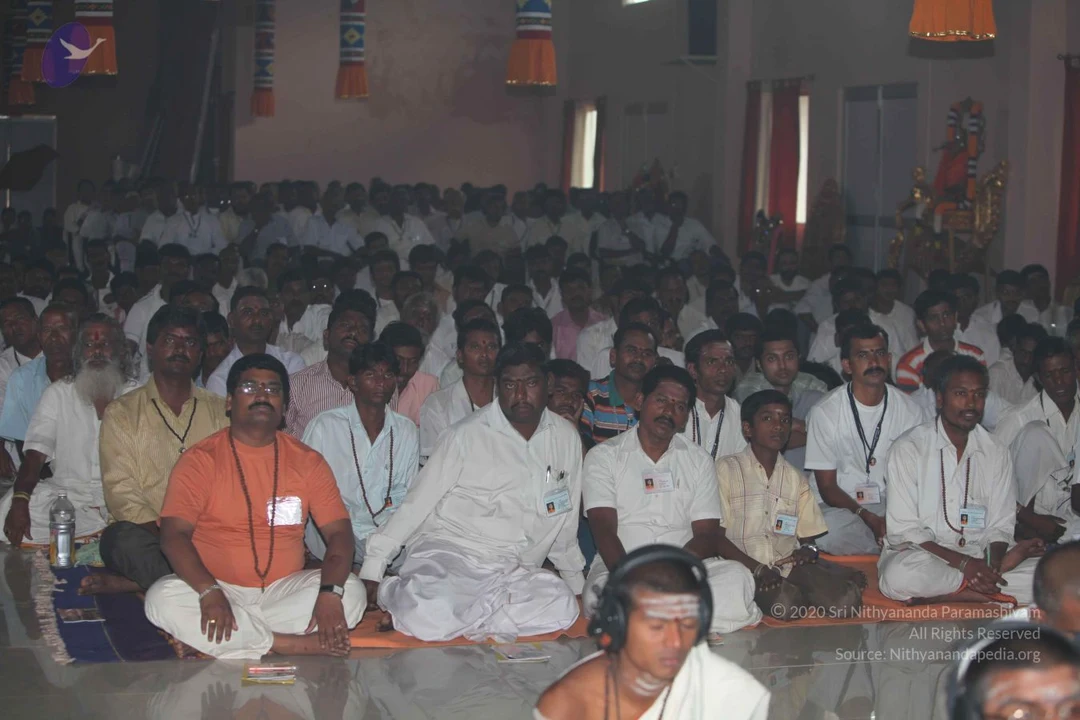
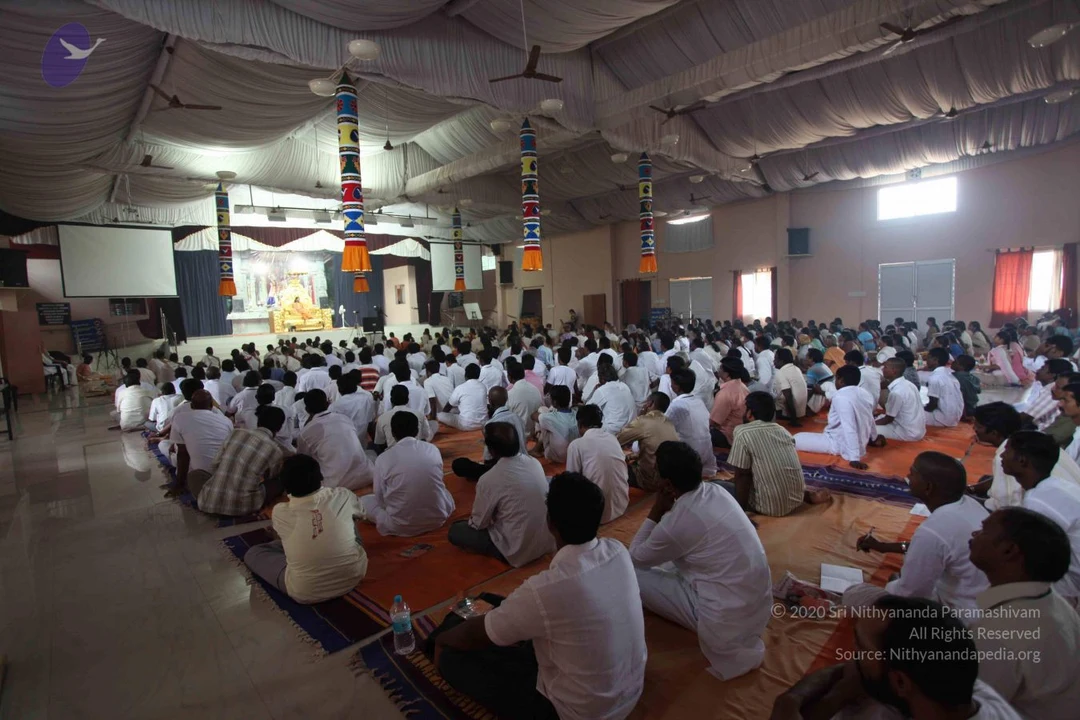
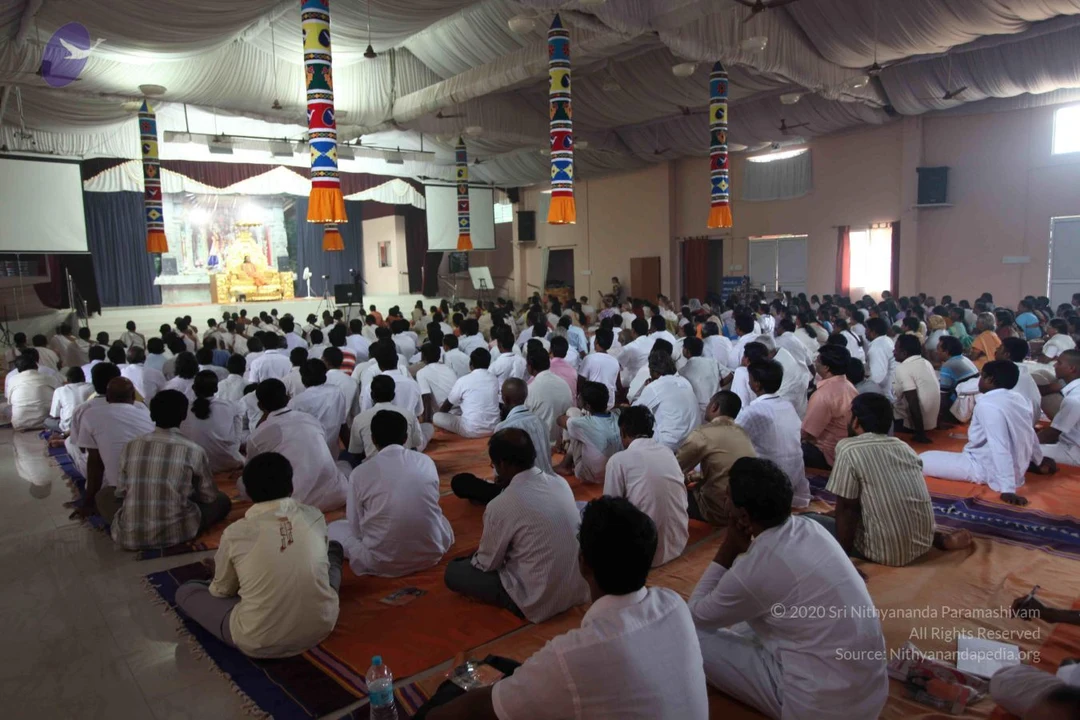
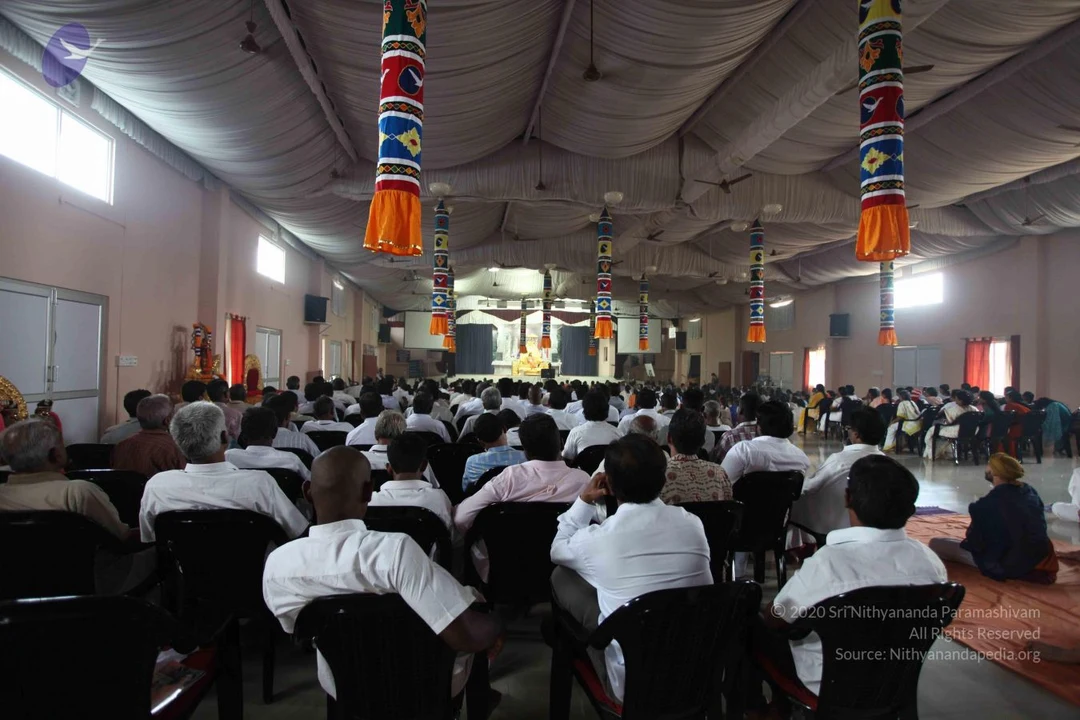
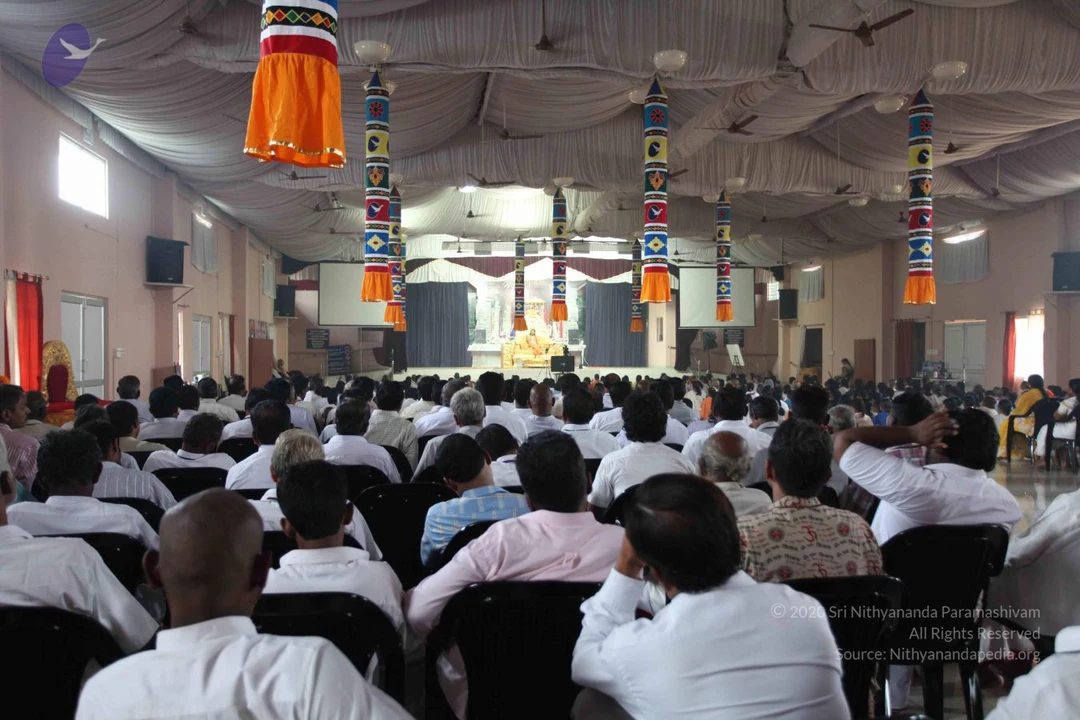
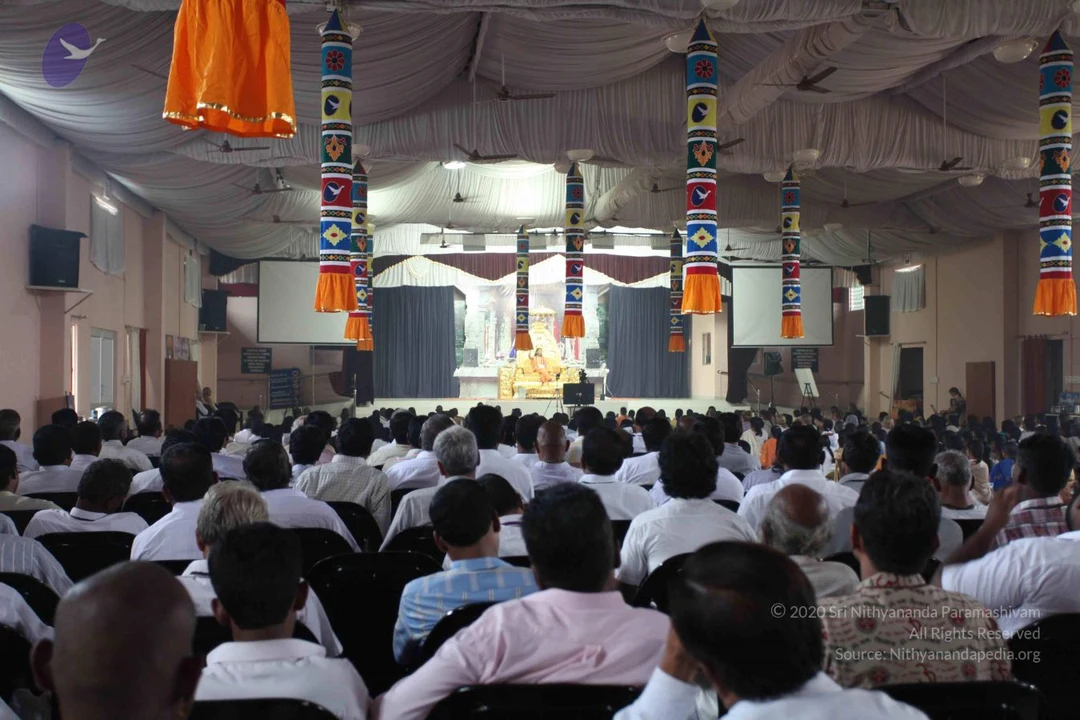
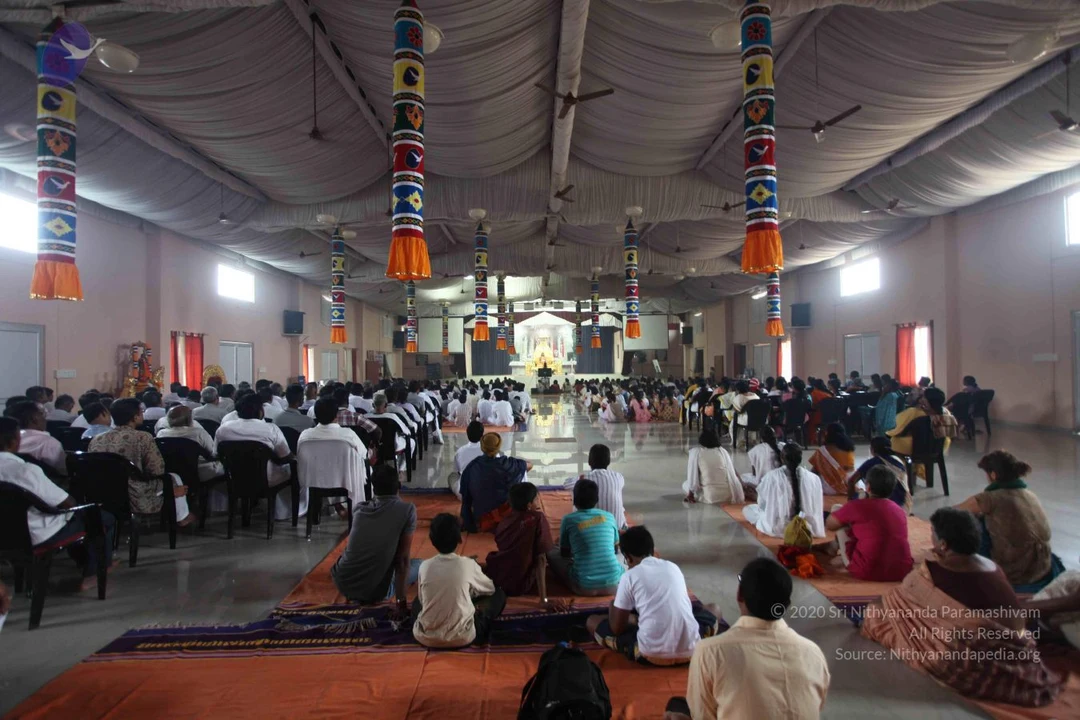
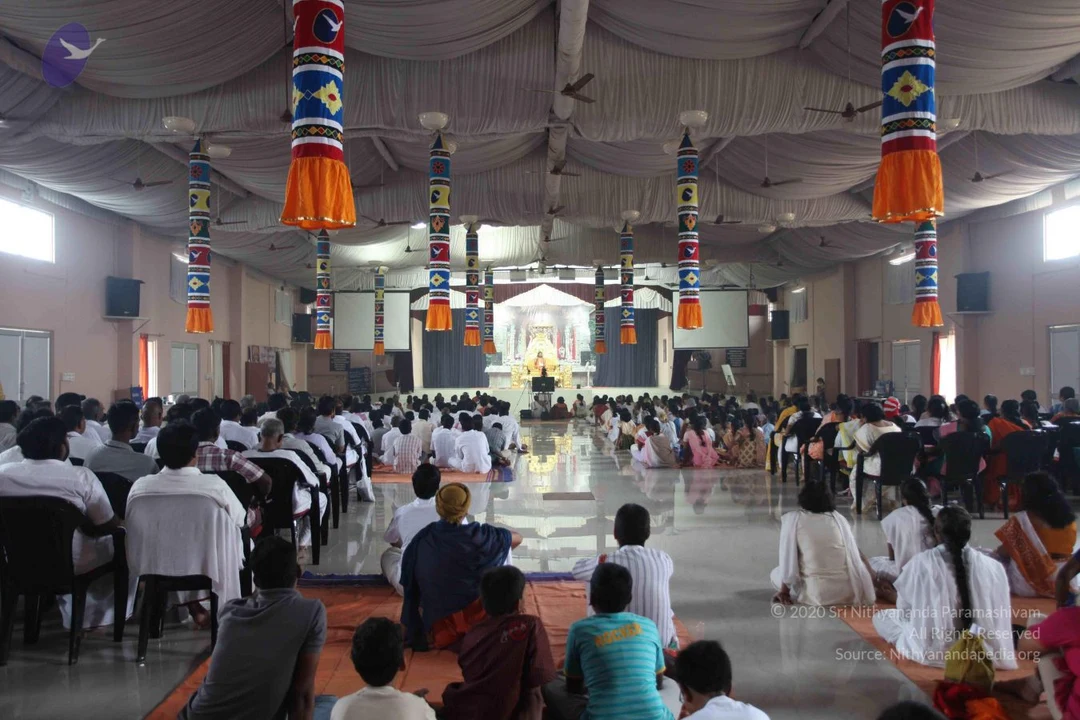
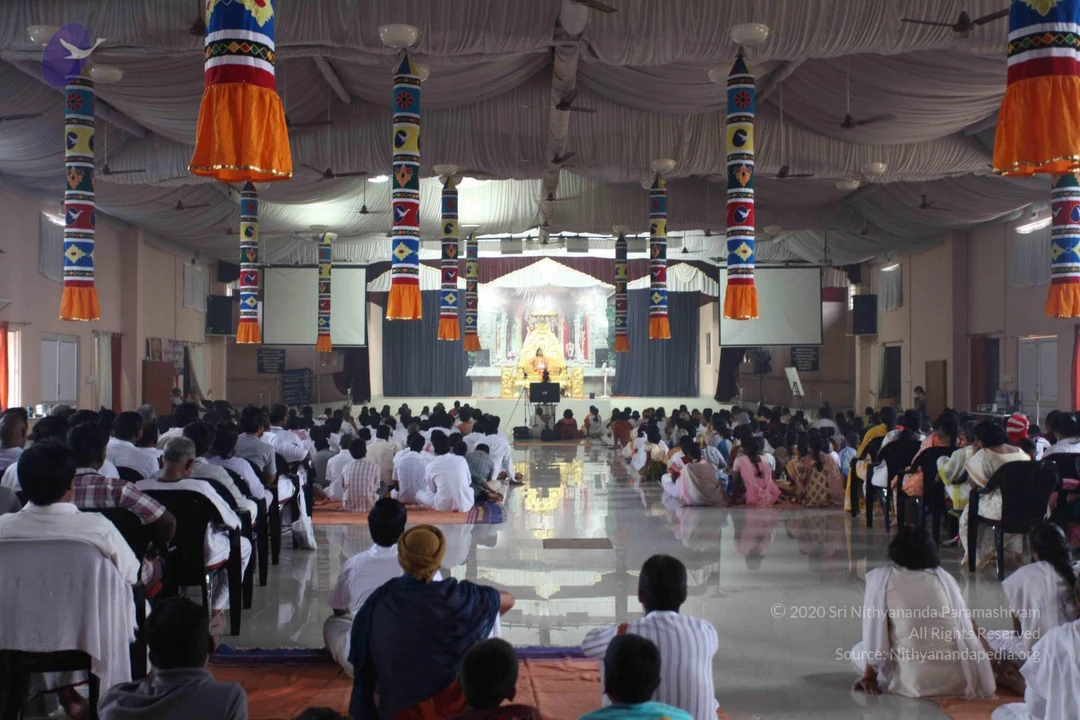
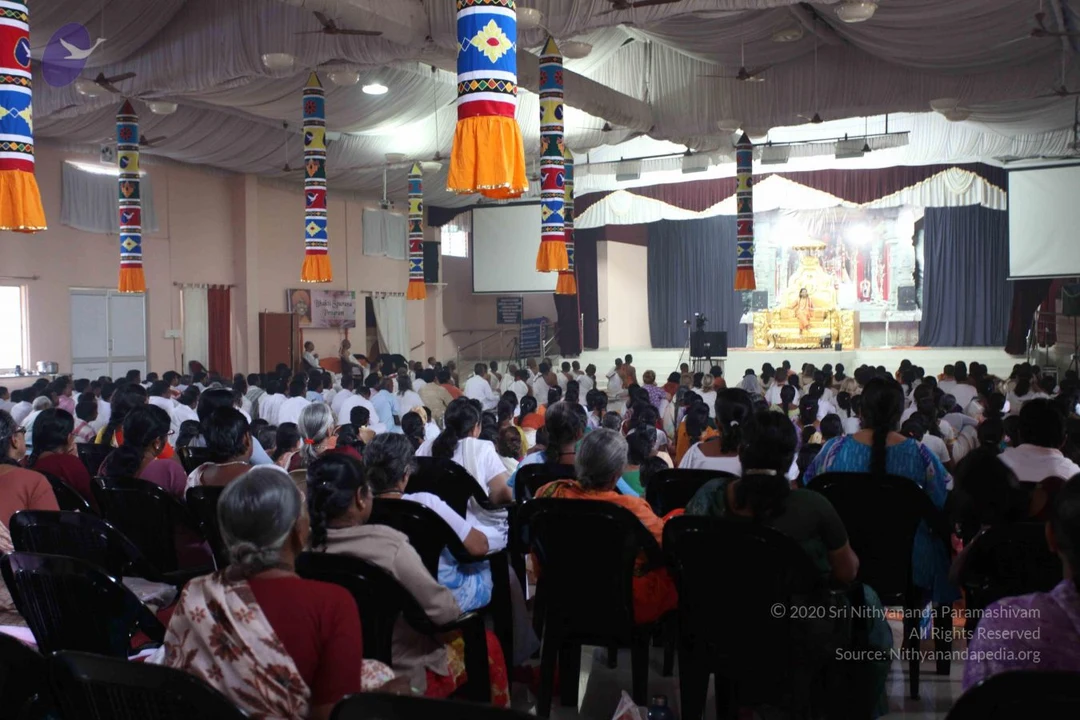
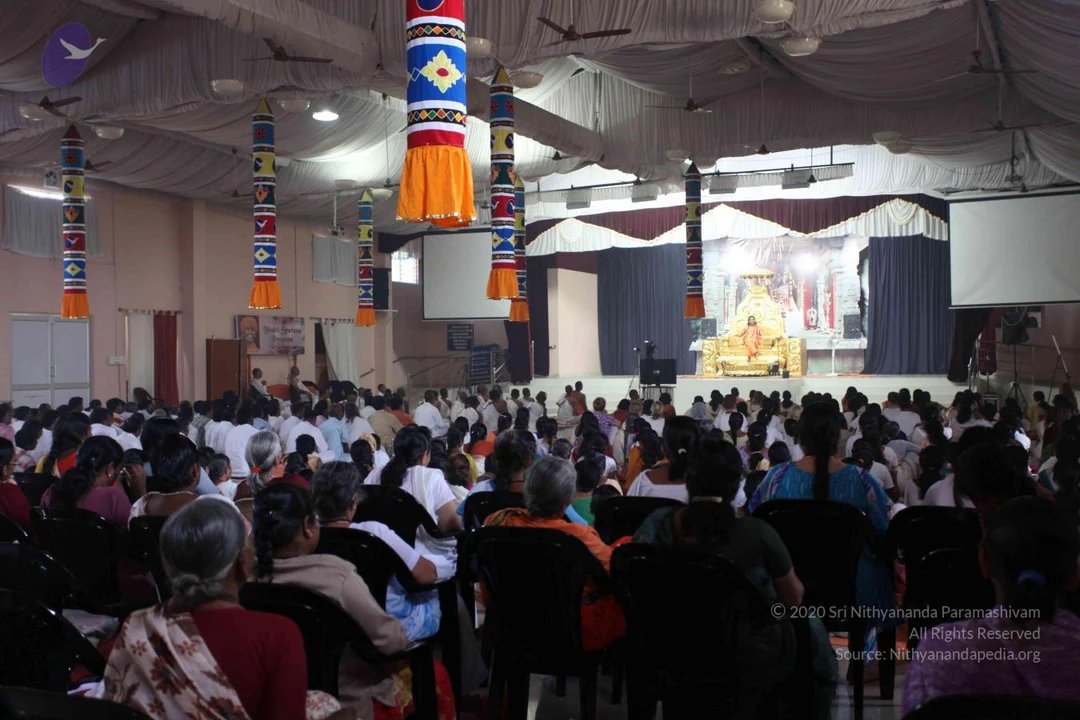
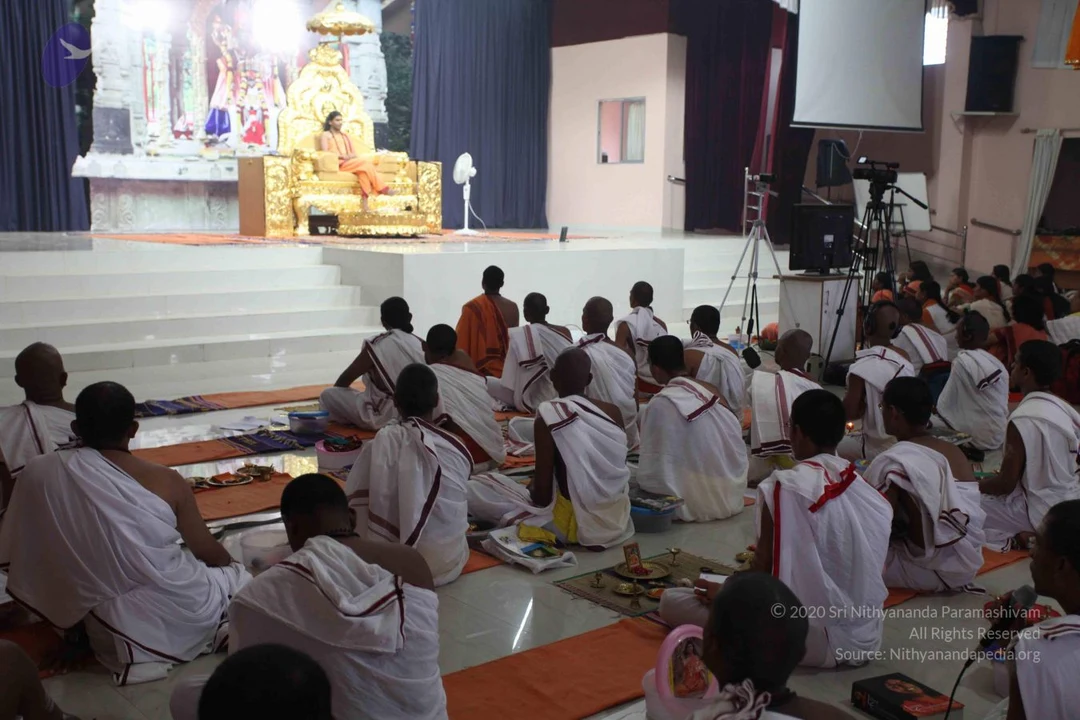
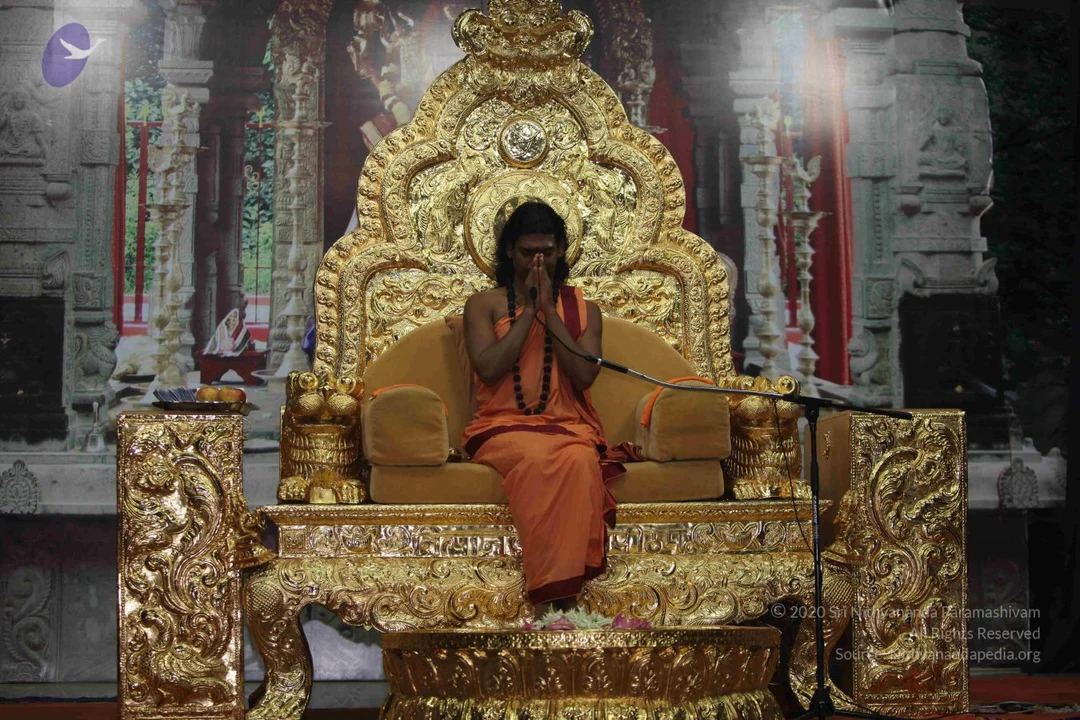
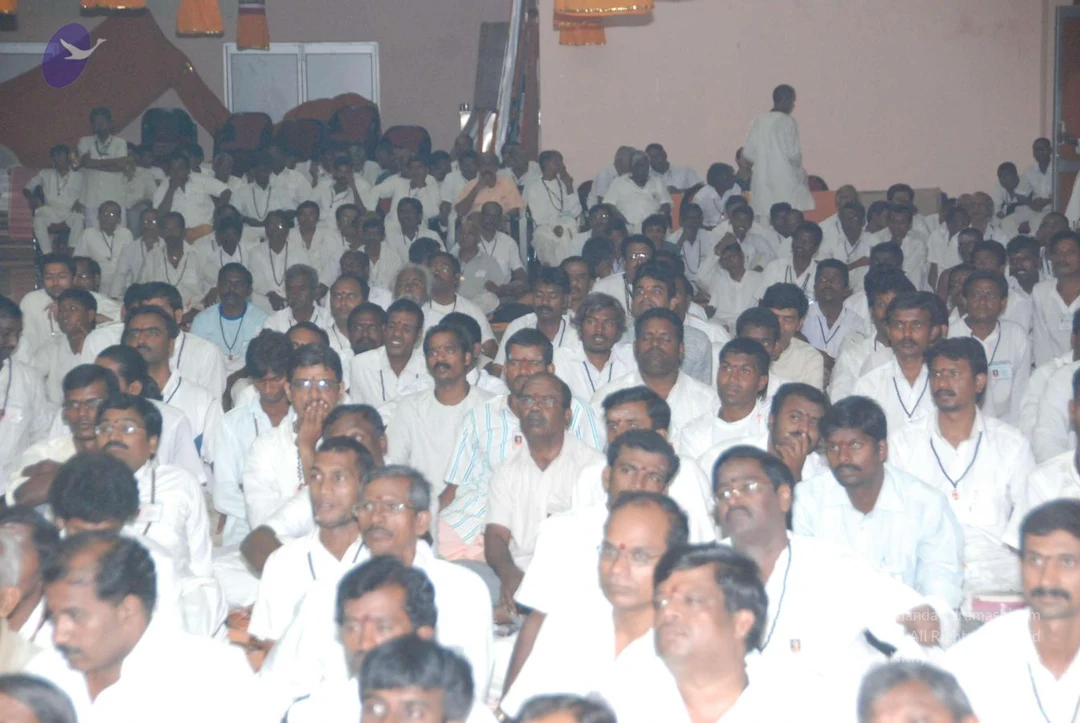
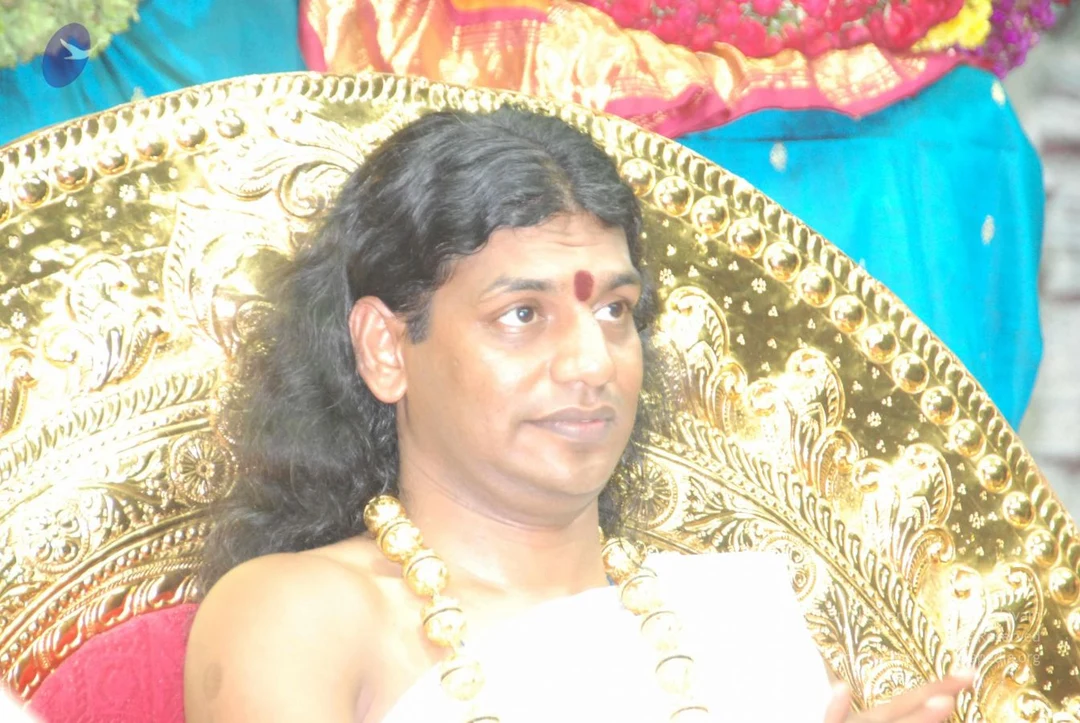
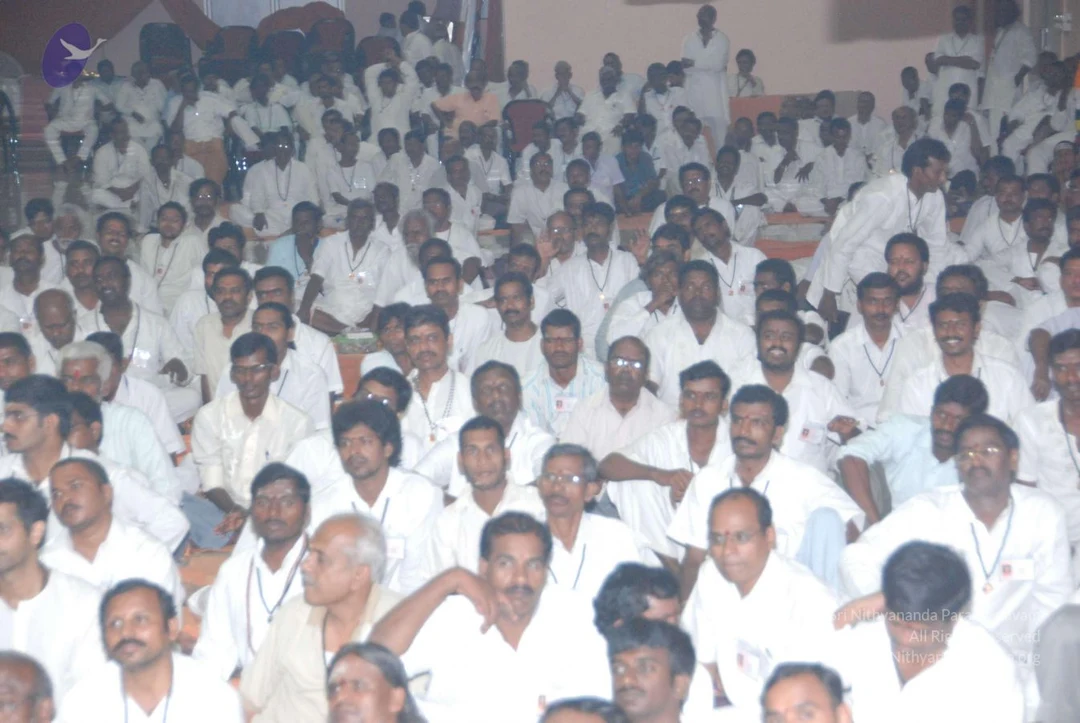
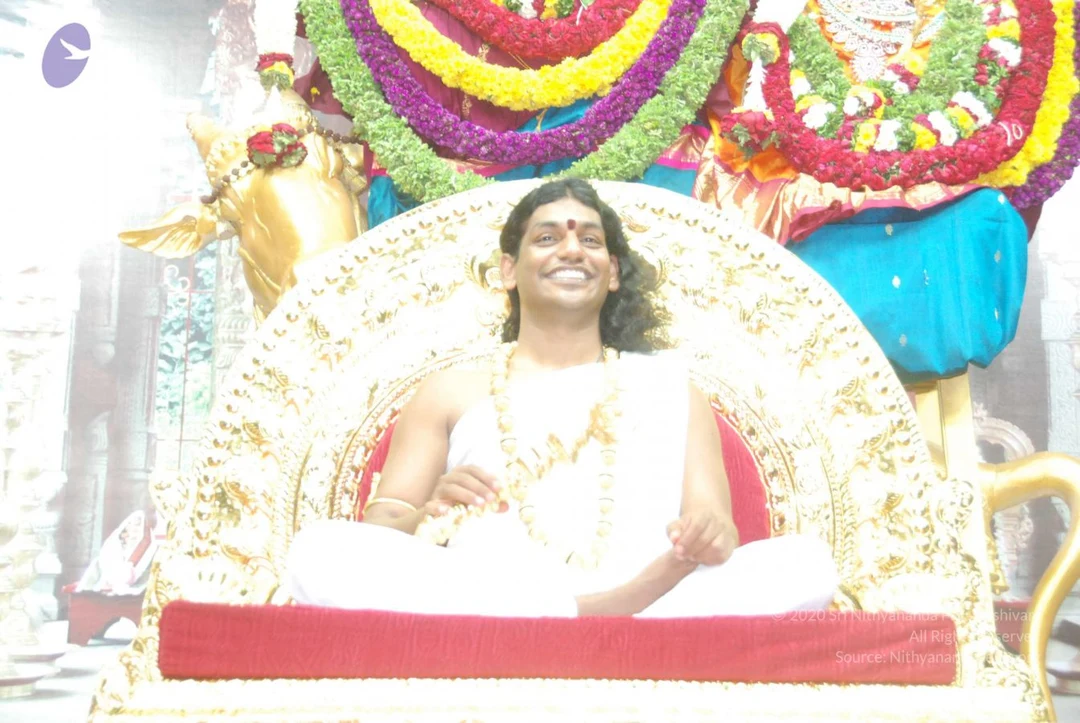
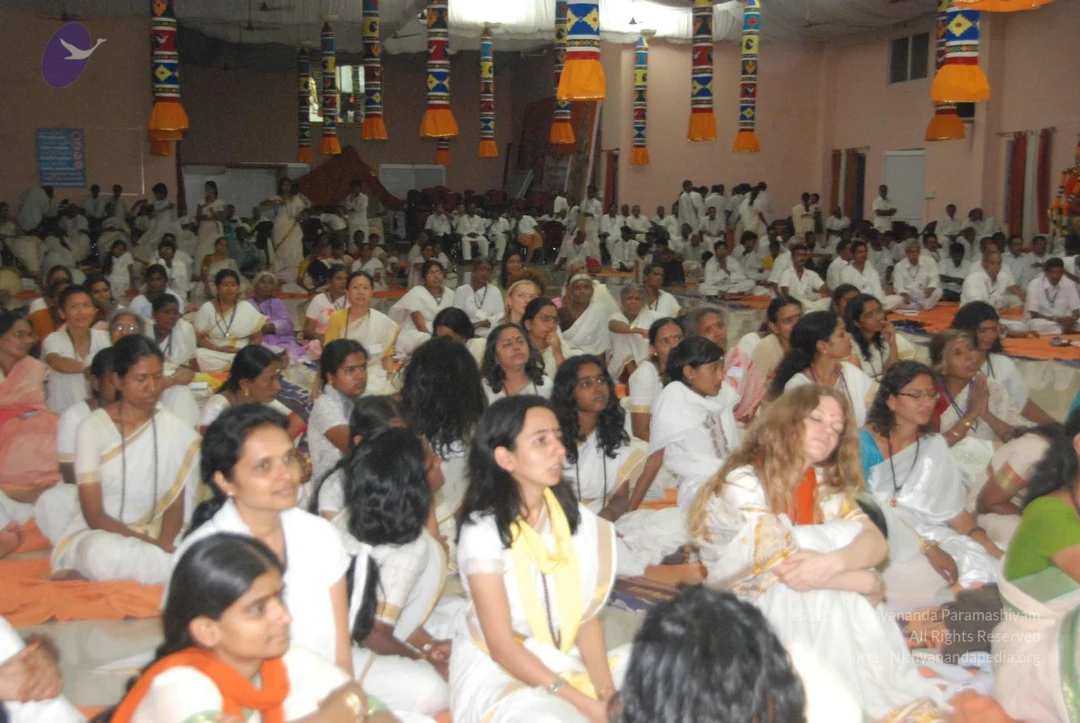
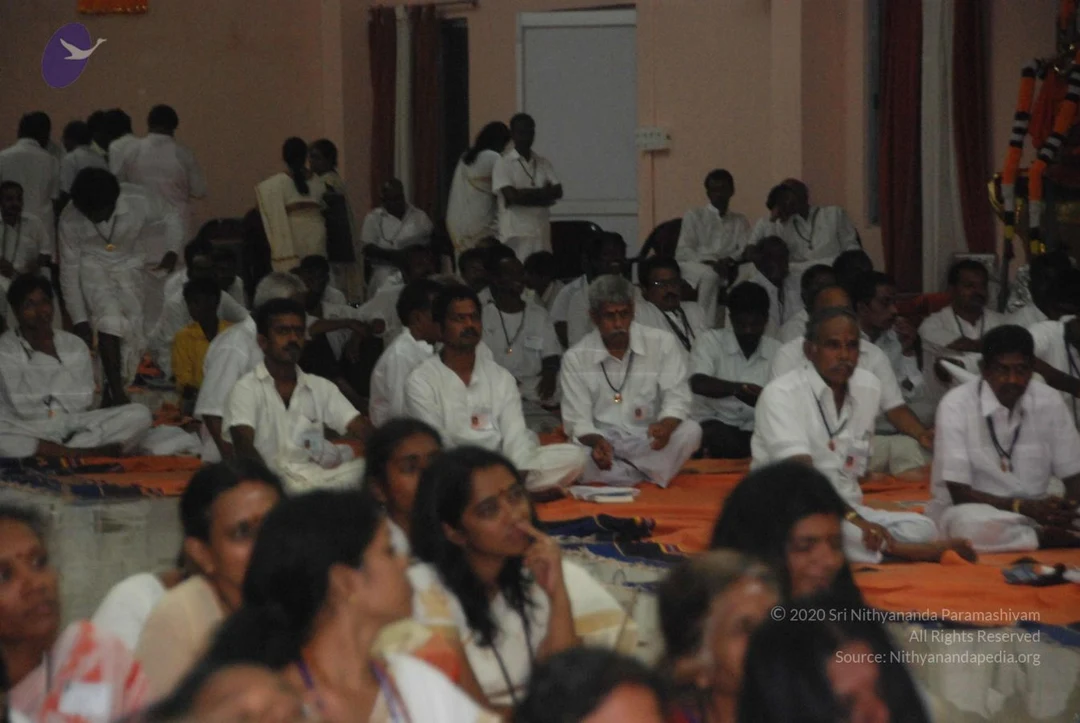
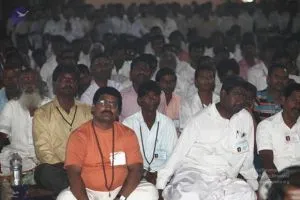
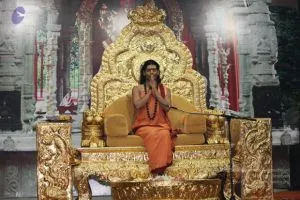
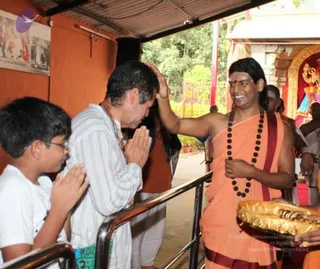
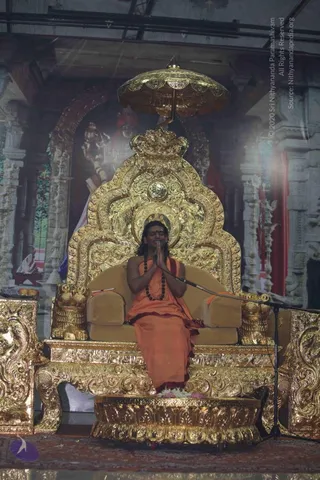
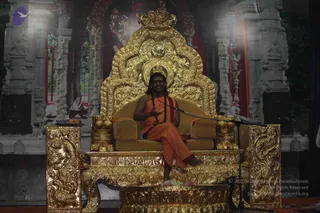
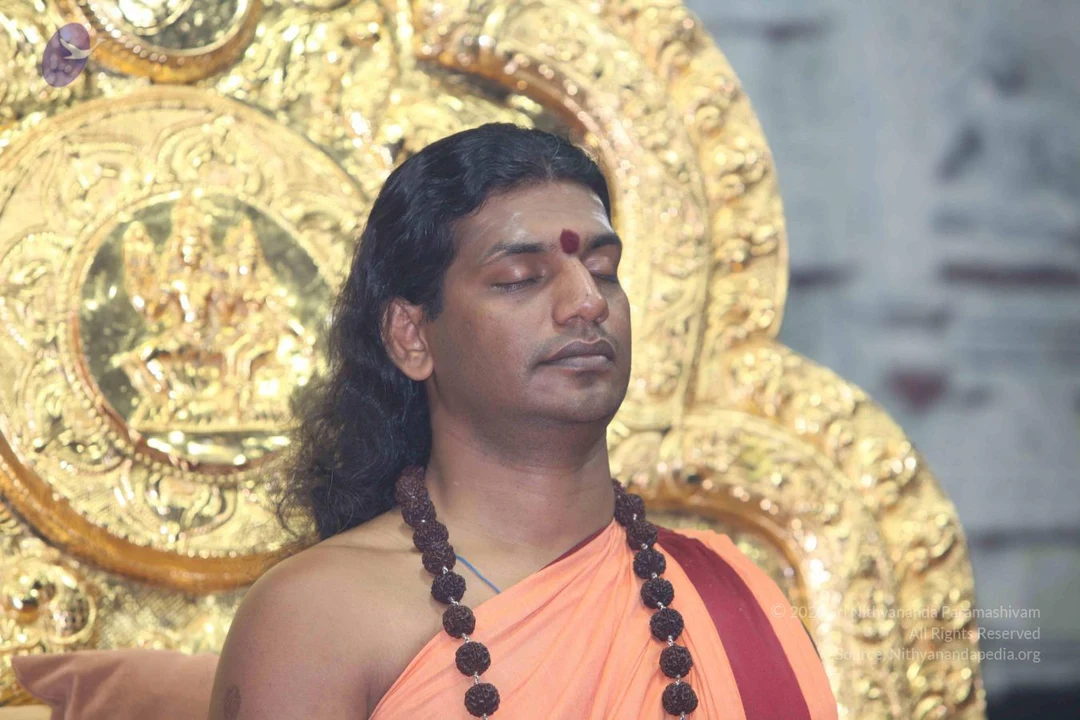
A photograph of a figure seated on an ornate golden throne with elaborate carved gilded backrest, against a backdrop of gold and red decorations. The seated person has long dark hair swept back and wears an orange-saffron garment with a rudraksha mala around the neck, consistent with a satsang setting. a person (appearance-based, page indicates a 2010 satsang), seated on a peetha in a public talk.A seated audience fills a hall at a satsang. In the foreground, a man in saffron-orange clothing with a lanyard sits cross-legged, with a rudraksha-style beaded necklace visible. Beside him, a man in a white shirt and a lanyard sits with hands together, and other men in white and light-coloured shirts sit in rows behind them, some wearing dhotis and some with white beards. The room appears crowded and dim with rows of heads extending into the background.A person seated on an ornate gold throne with carved golden panels and armrests, in front of a temple-style backdrop with pillars. The person wears saffron-orange robes and has long dark hair, with hands pressed together in a namaste gesture. A small microphone is visible near the face. The setting appears to be a satsang or public talk.A photograph at an outdoor temple-side area with an orange-painted wall and a shaded roof. A man in saffron-orange robes with long swept-back dark hair and a long black rudraksha mala stands at right, smiling and placing his palm on the forehead of a bowing devotee. The devotee wears a white striped shirt and a patterned lungi, with palms pressed together in anjali. A boy in a white shirt and glasses stands at left, hands joined in prayer. The saffron-robed figure holds a golden plate at lower right, and a colourful deity murti or shrine is visible in the background. Swamiji (probable) appears as the saffron-robed man with long hair, rudraksha mala and orange garments, blessing the devotee. The image is a photo.

paadapja

4 photosSource gallery
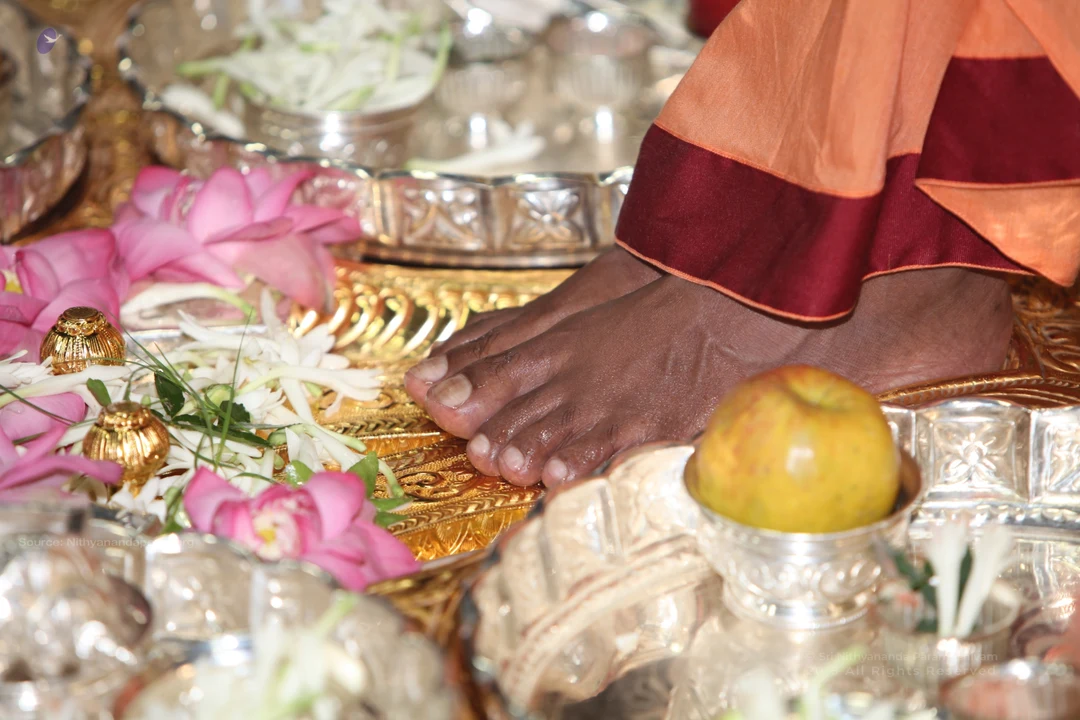
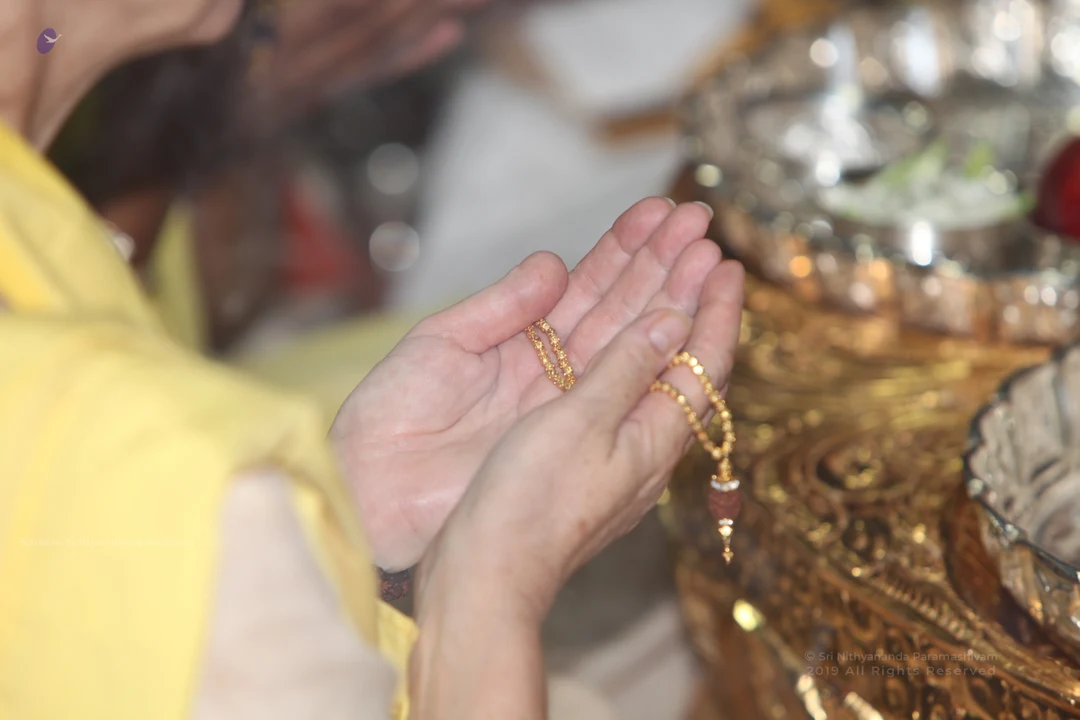
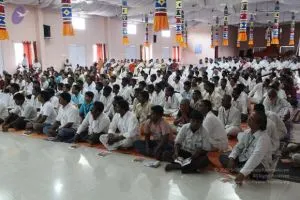
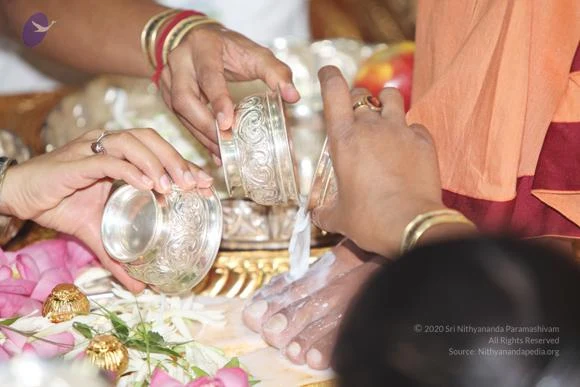
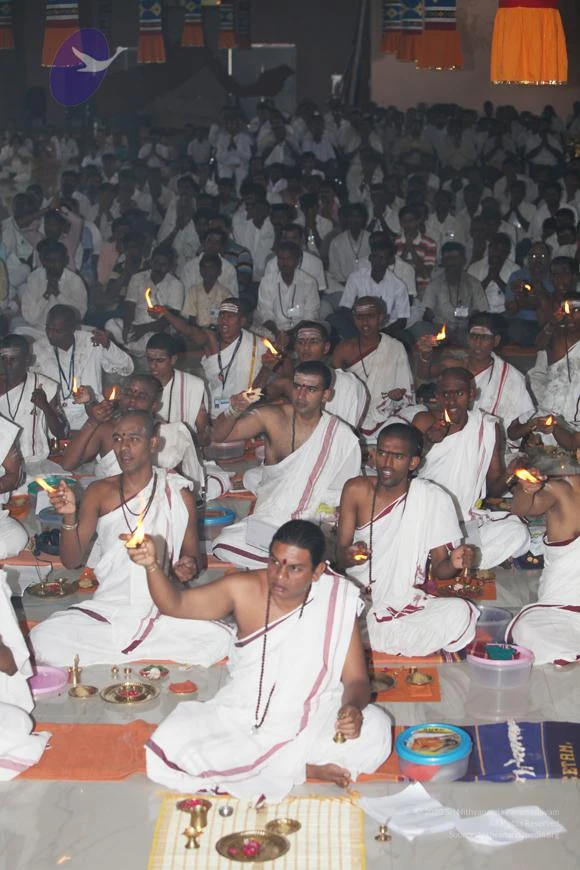
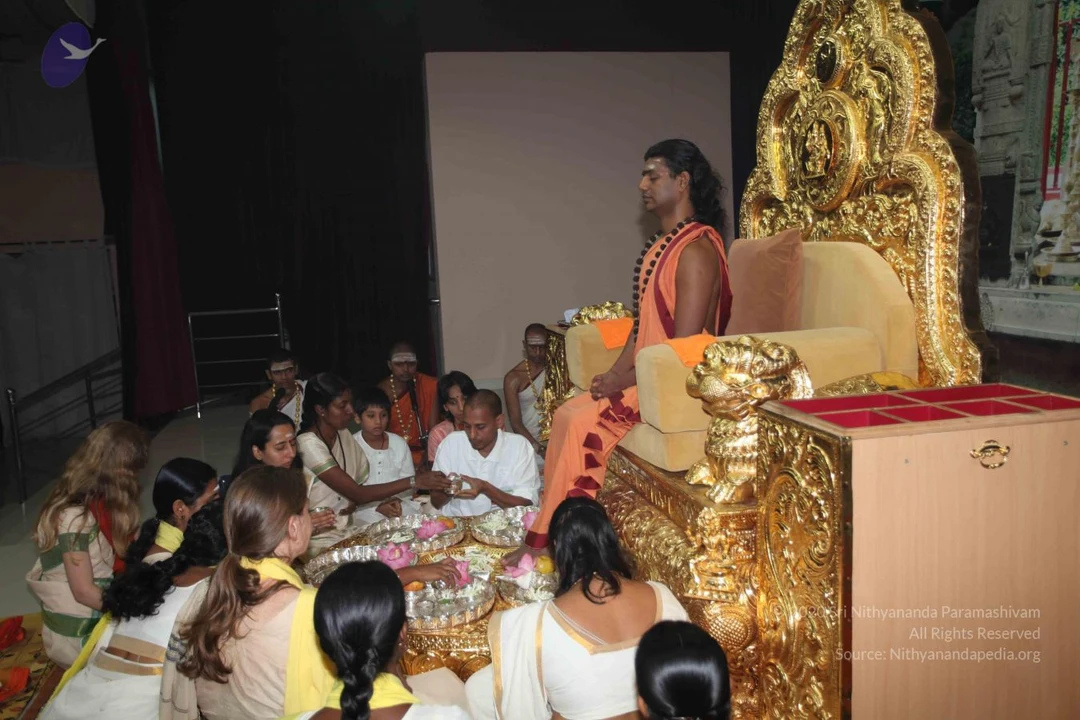
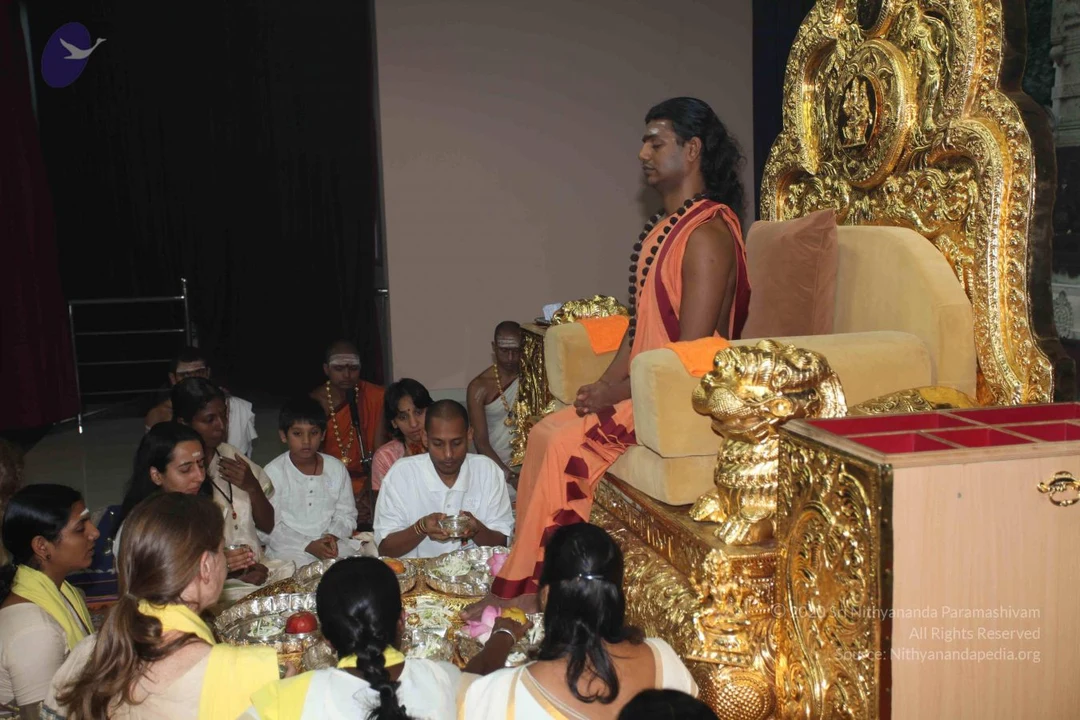
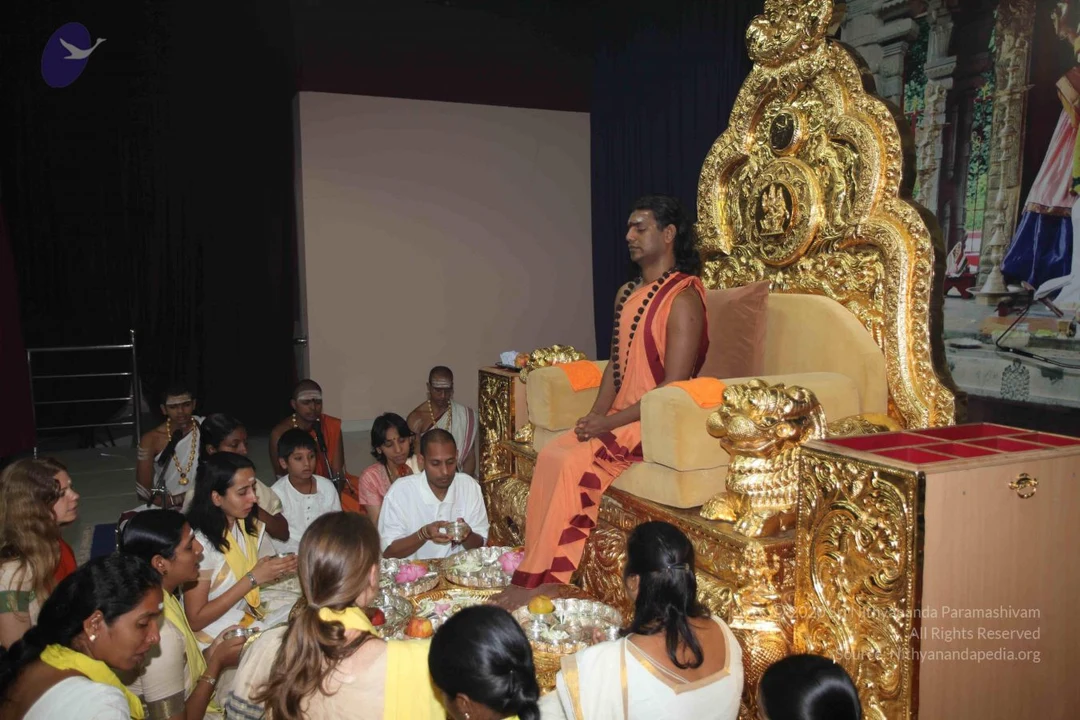
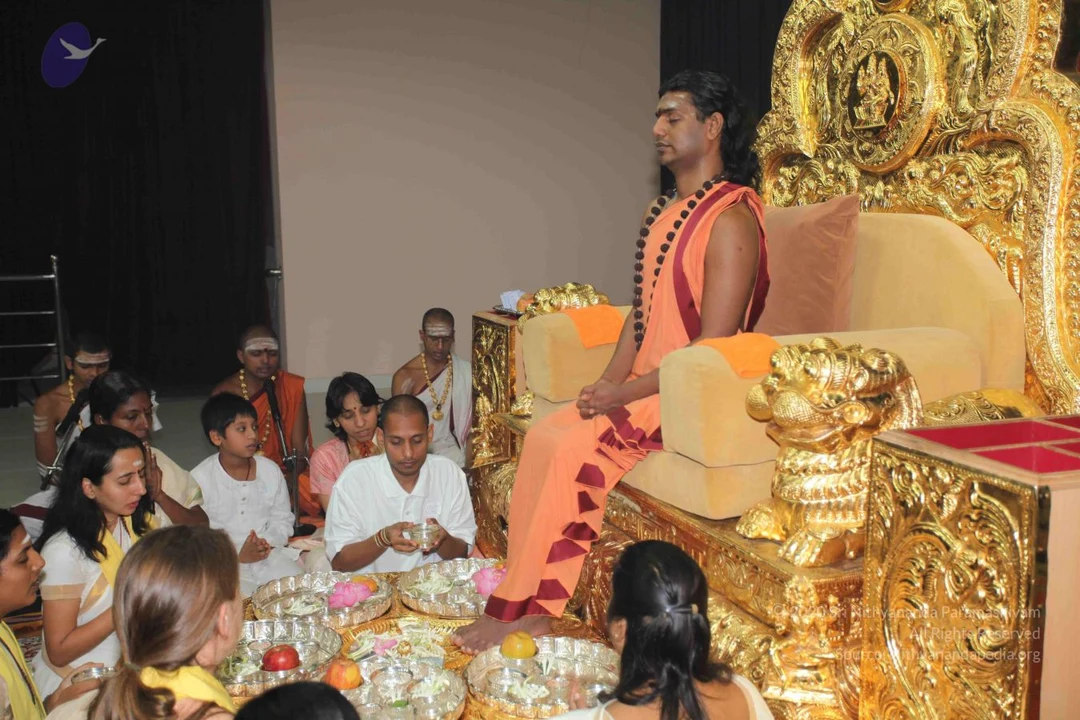
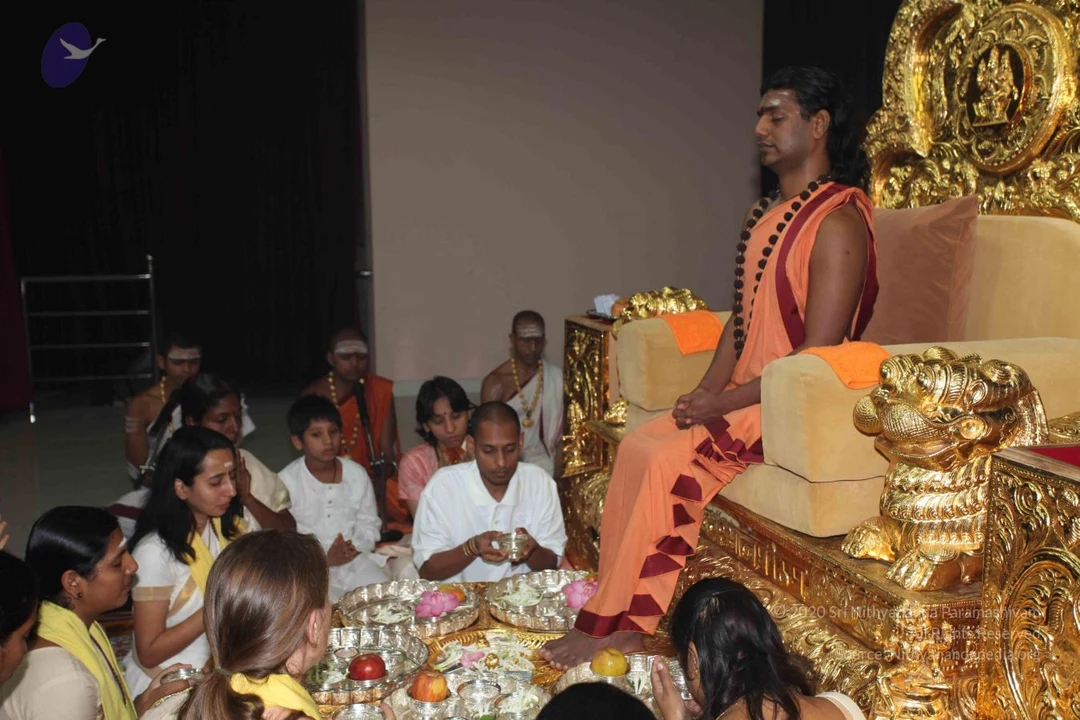
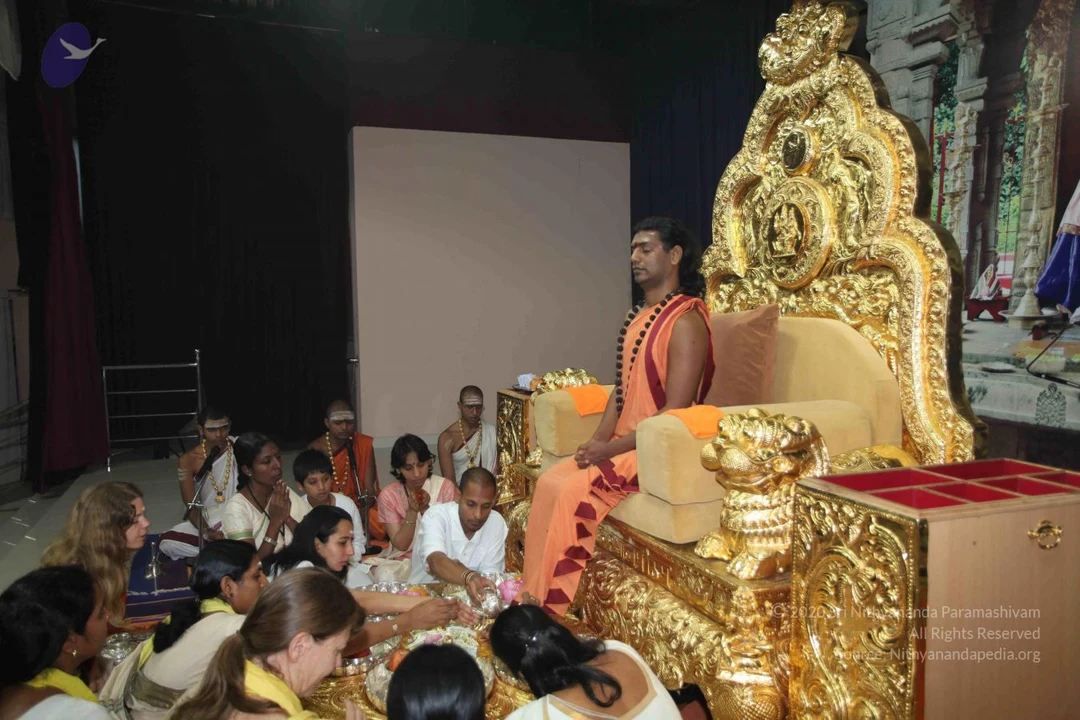
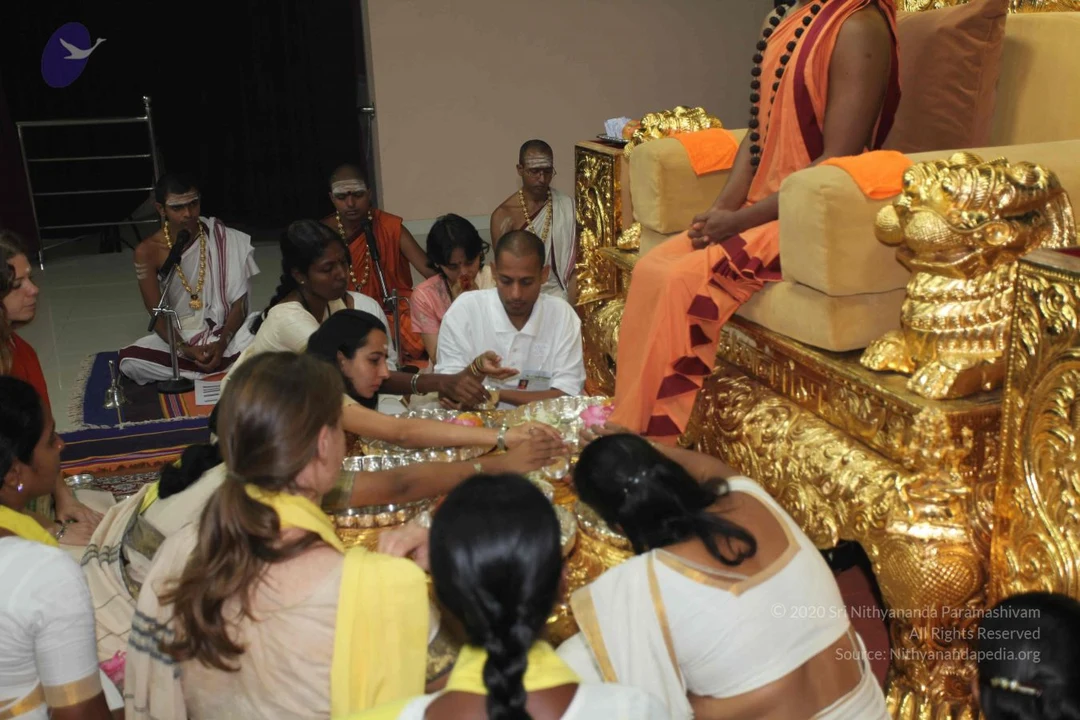
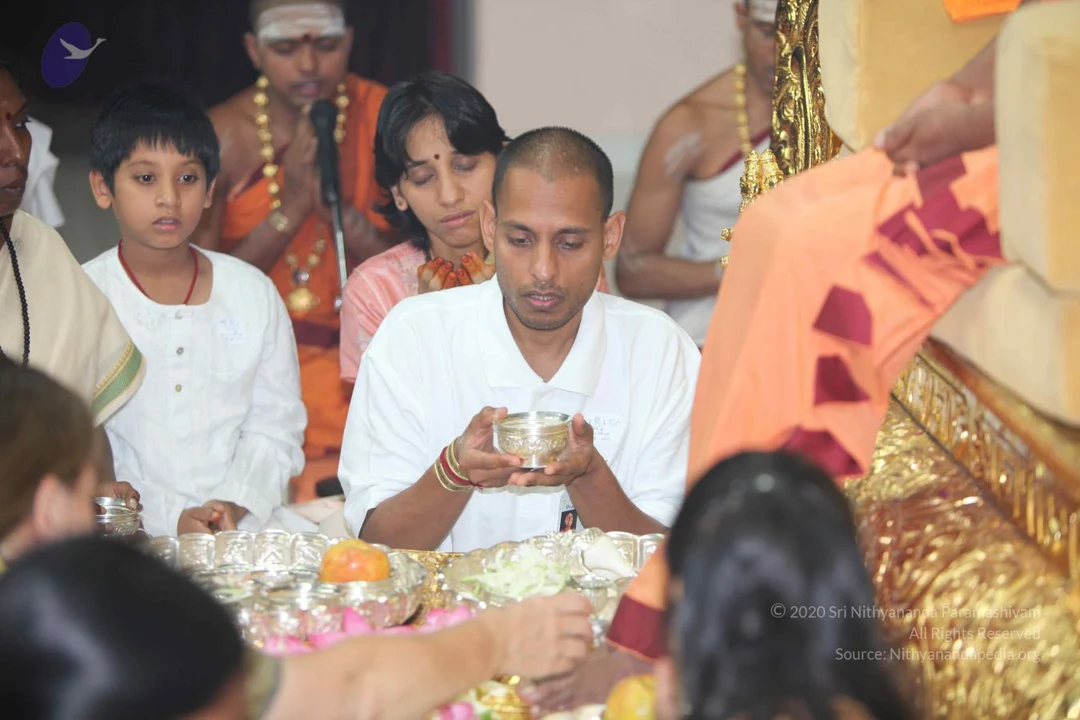
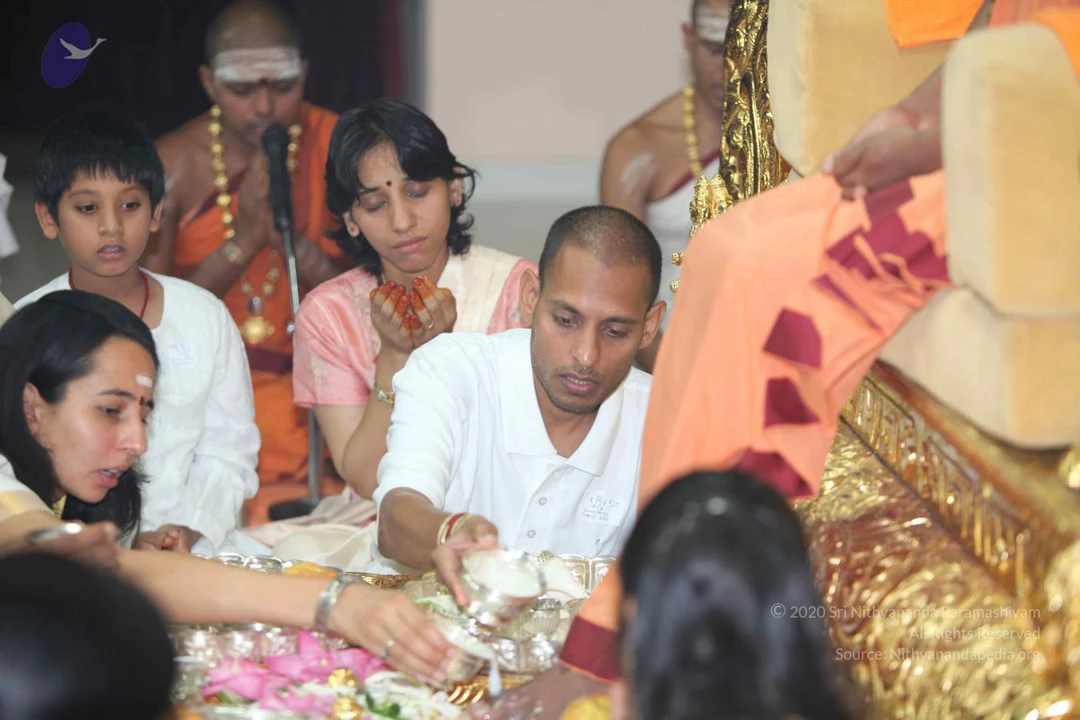
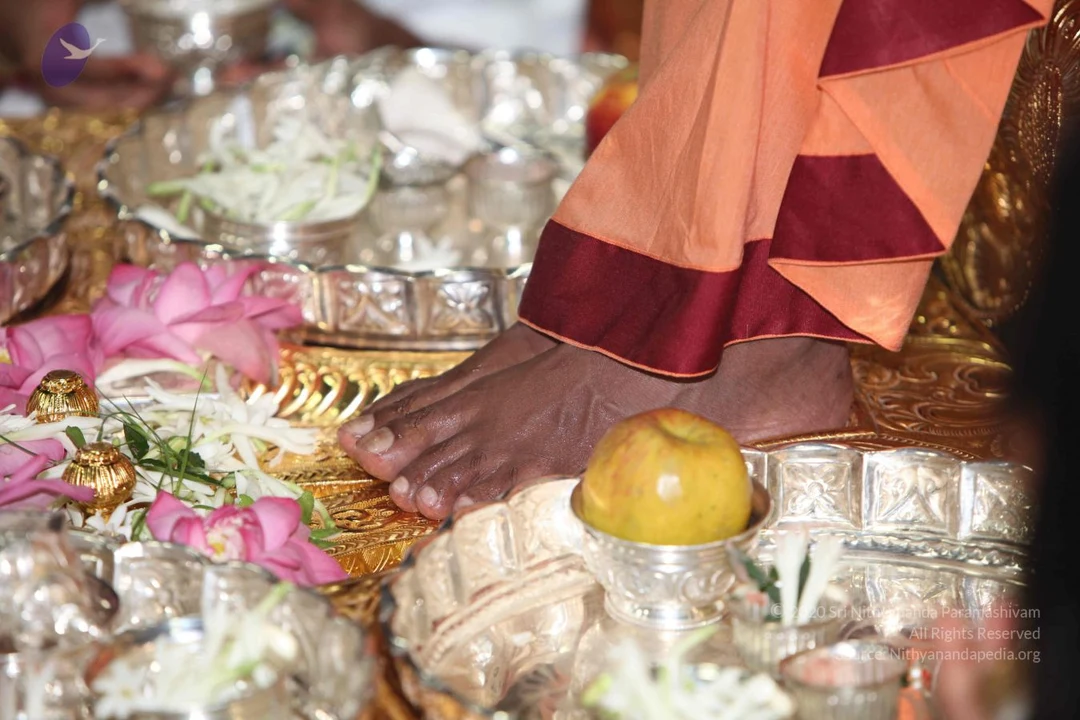
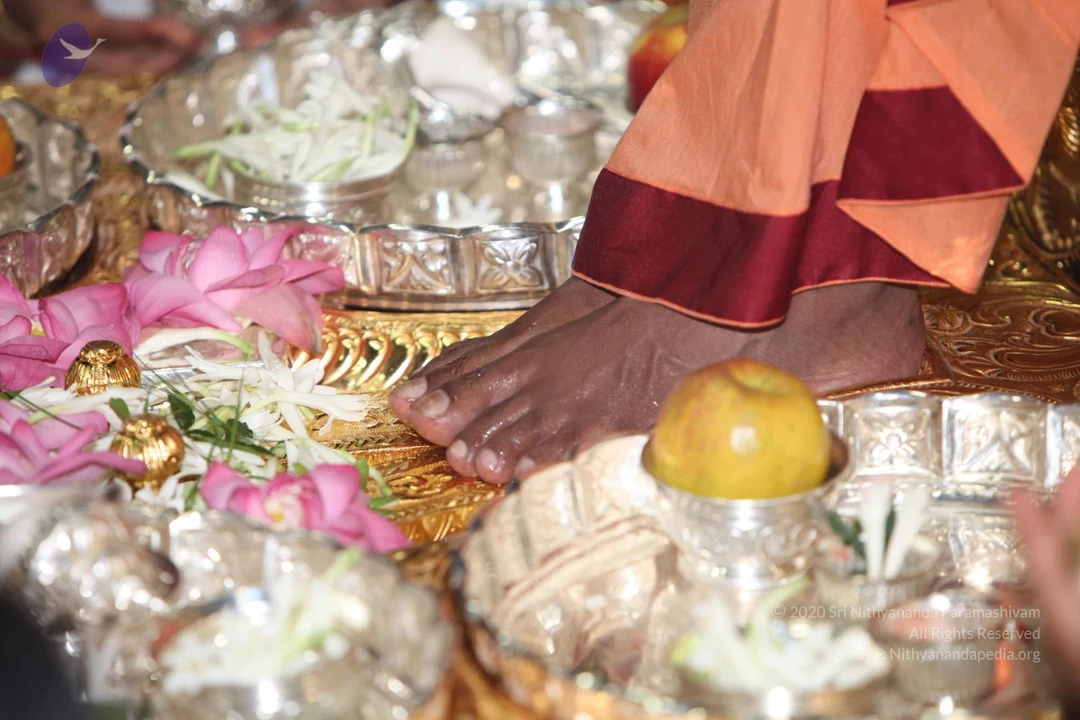
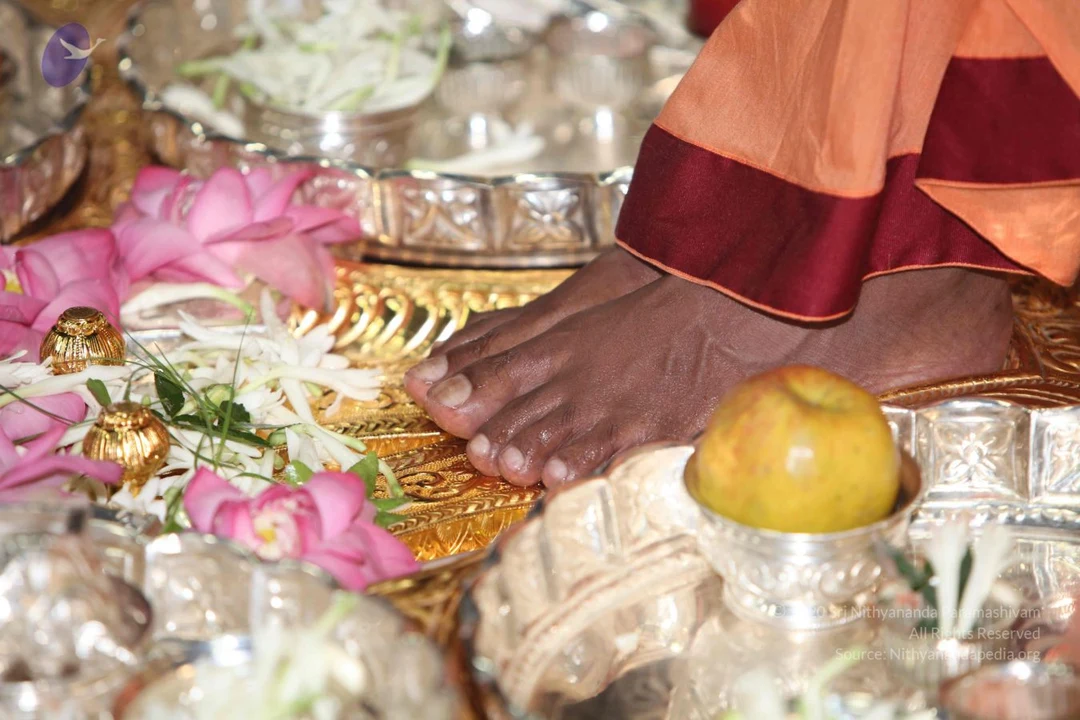
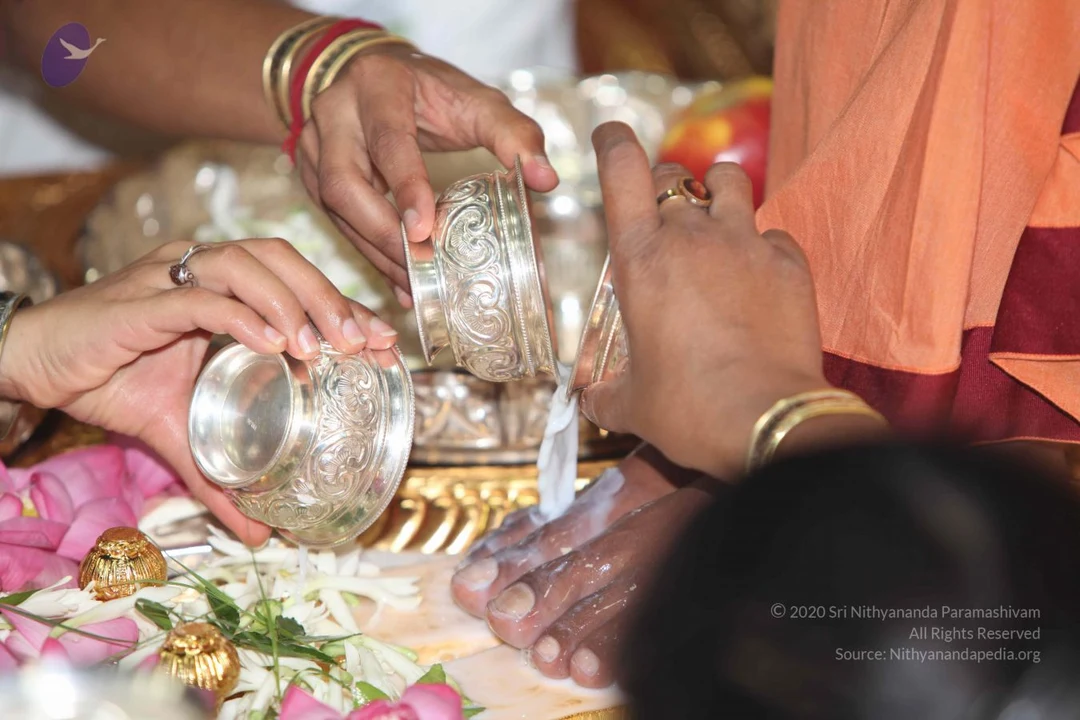
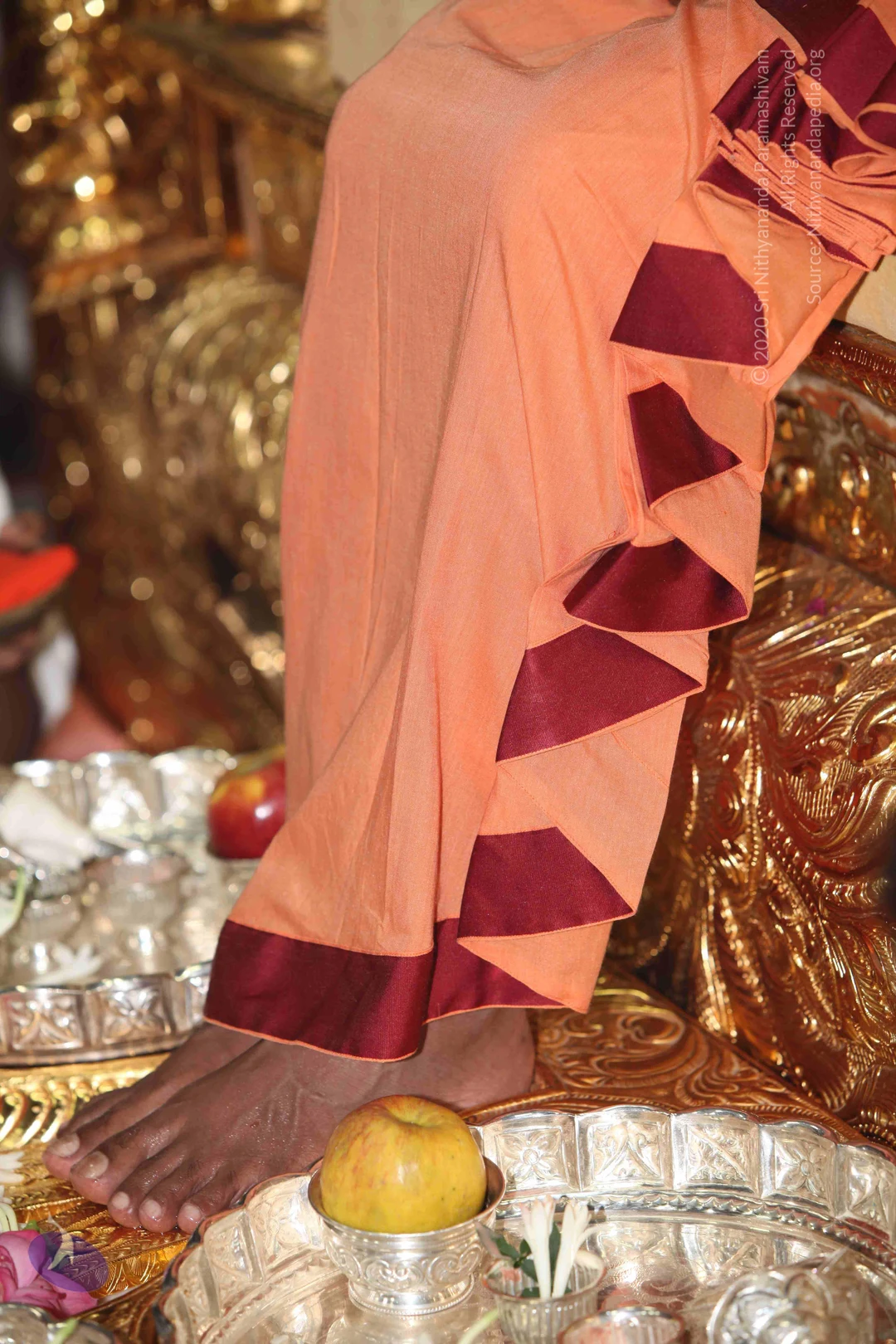
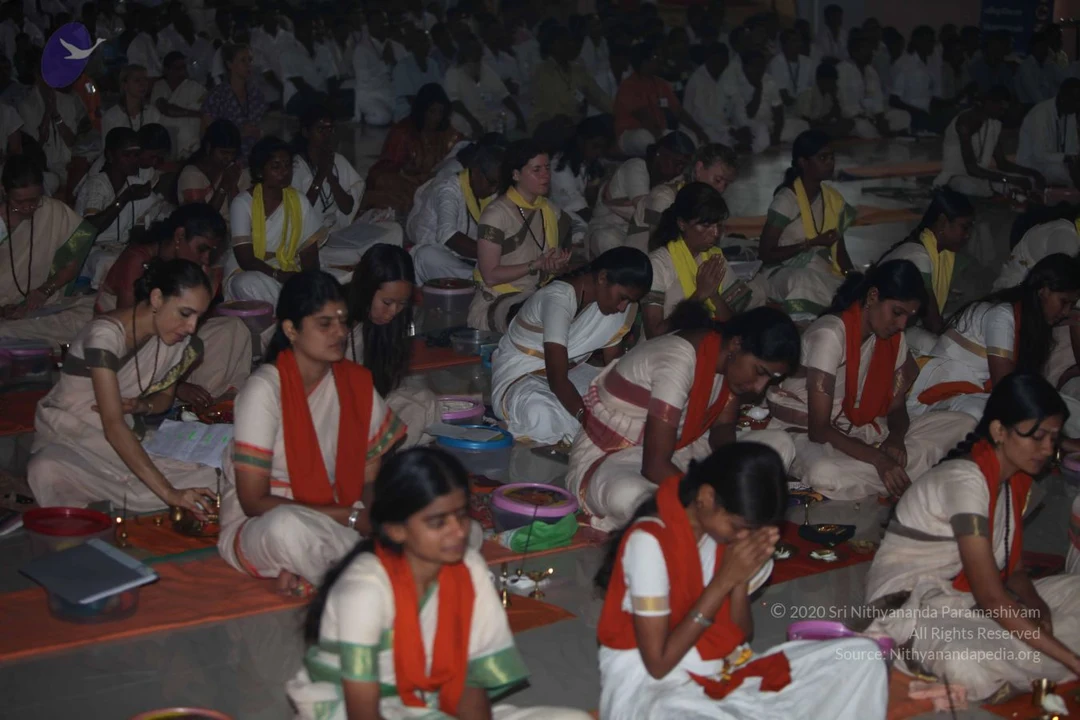
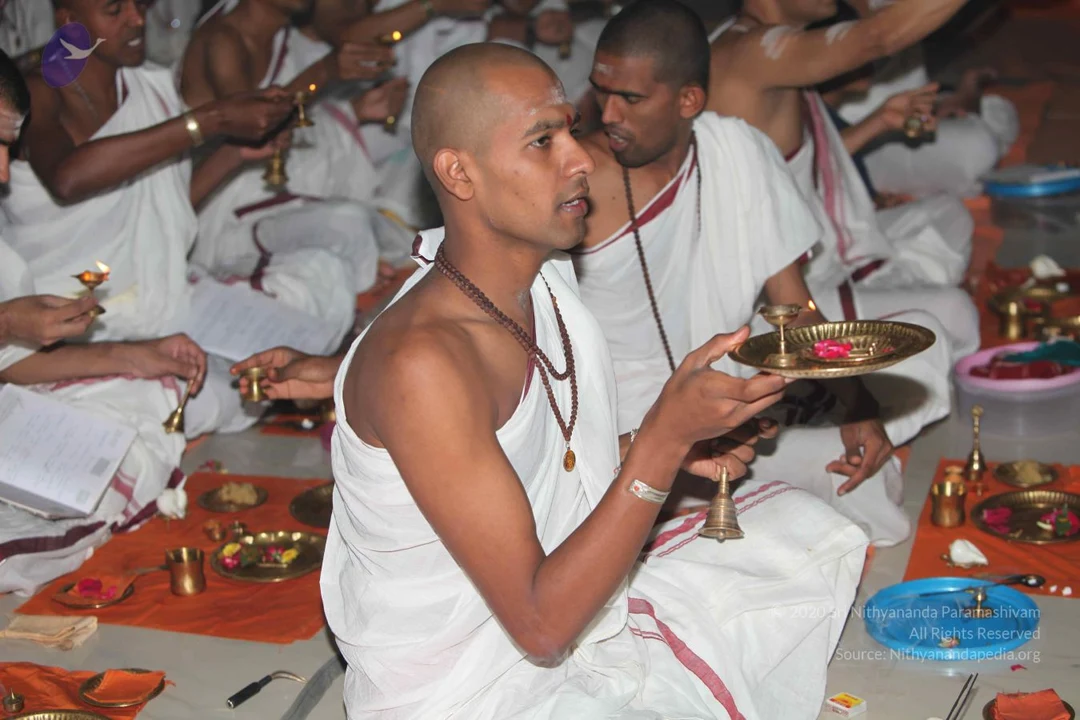
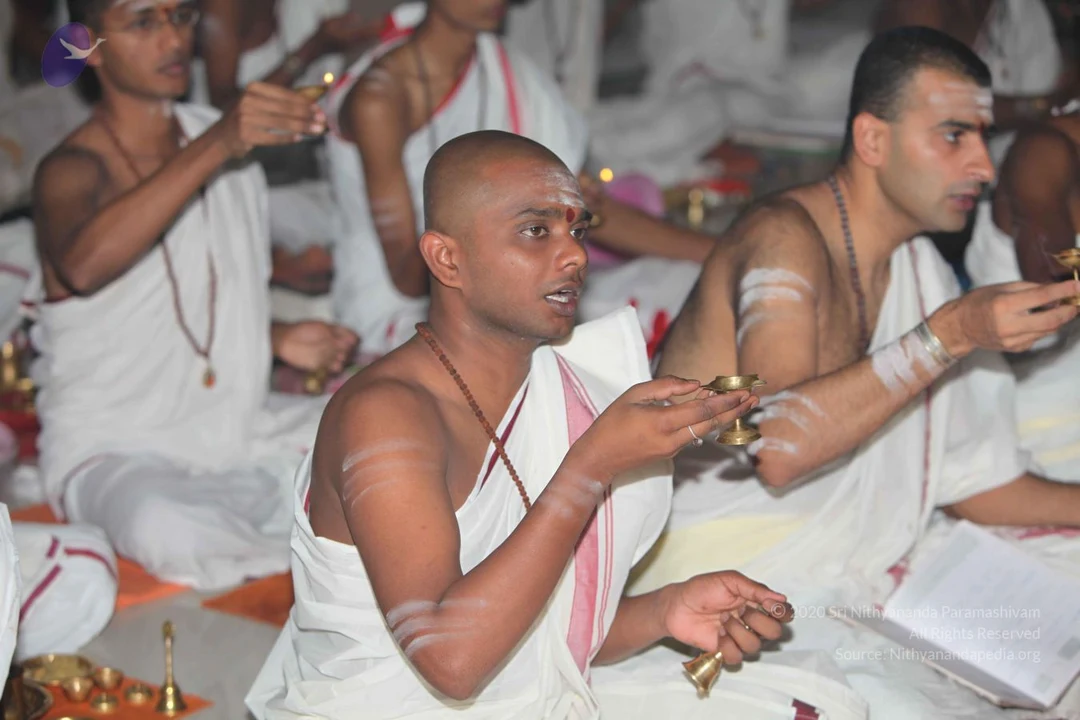
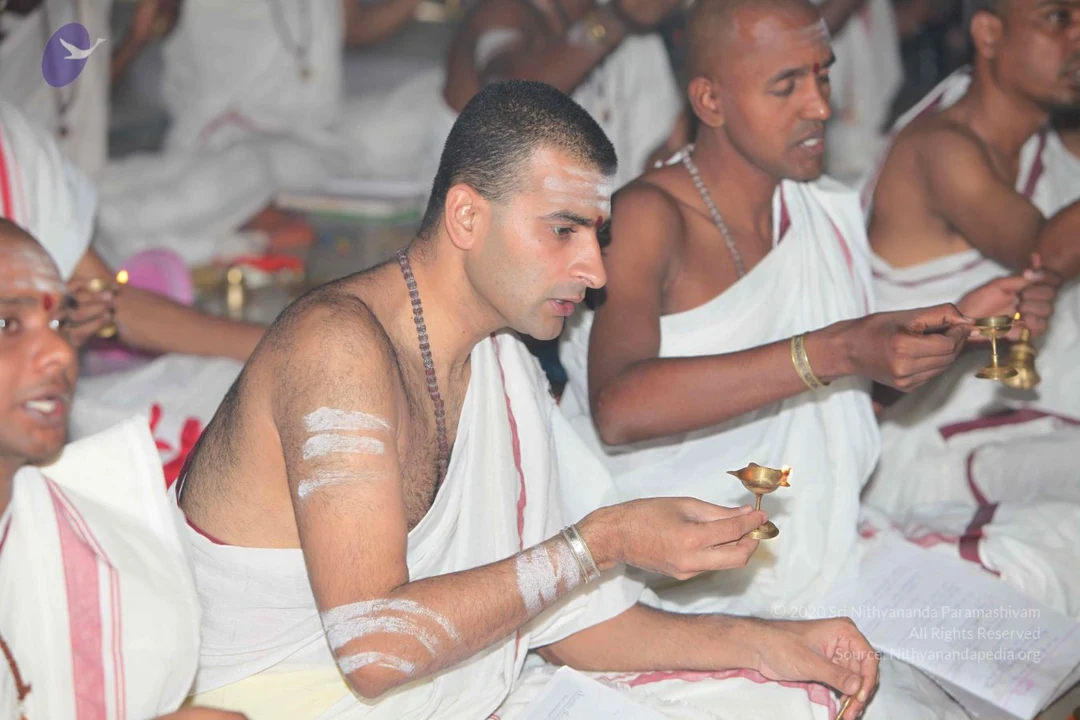
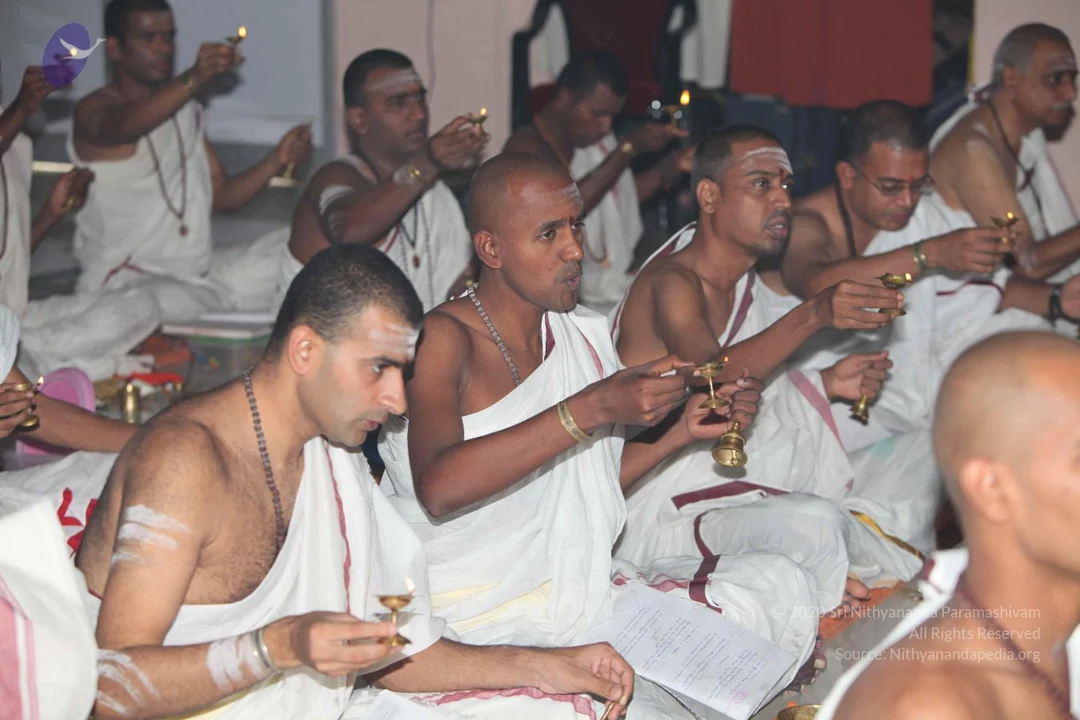
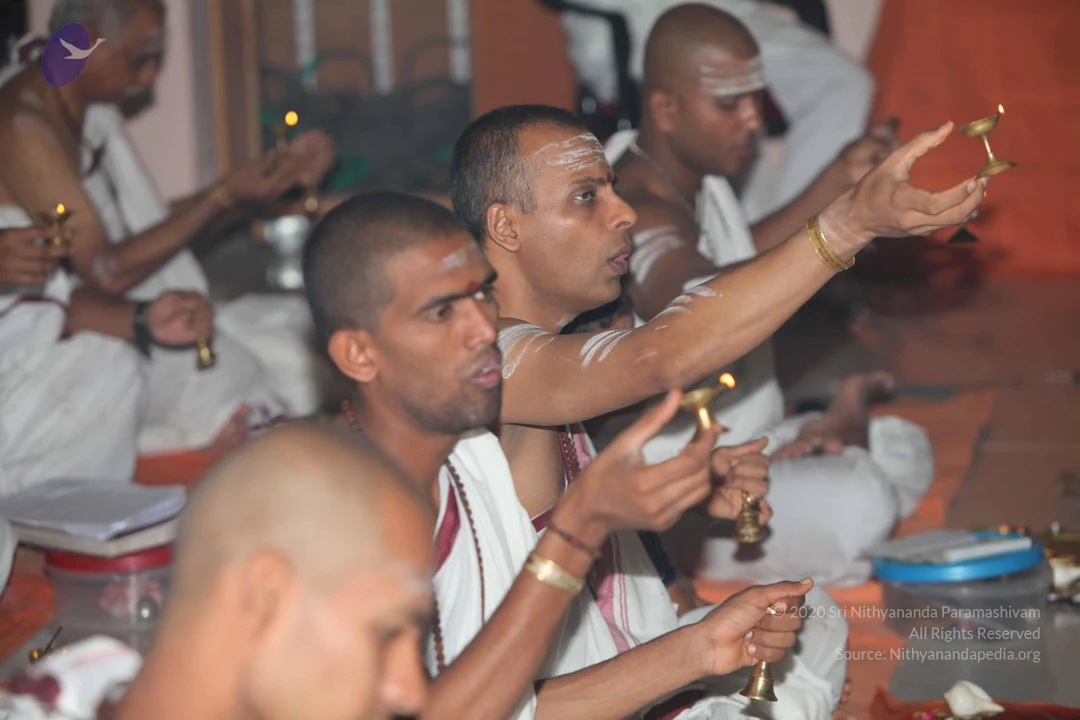
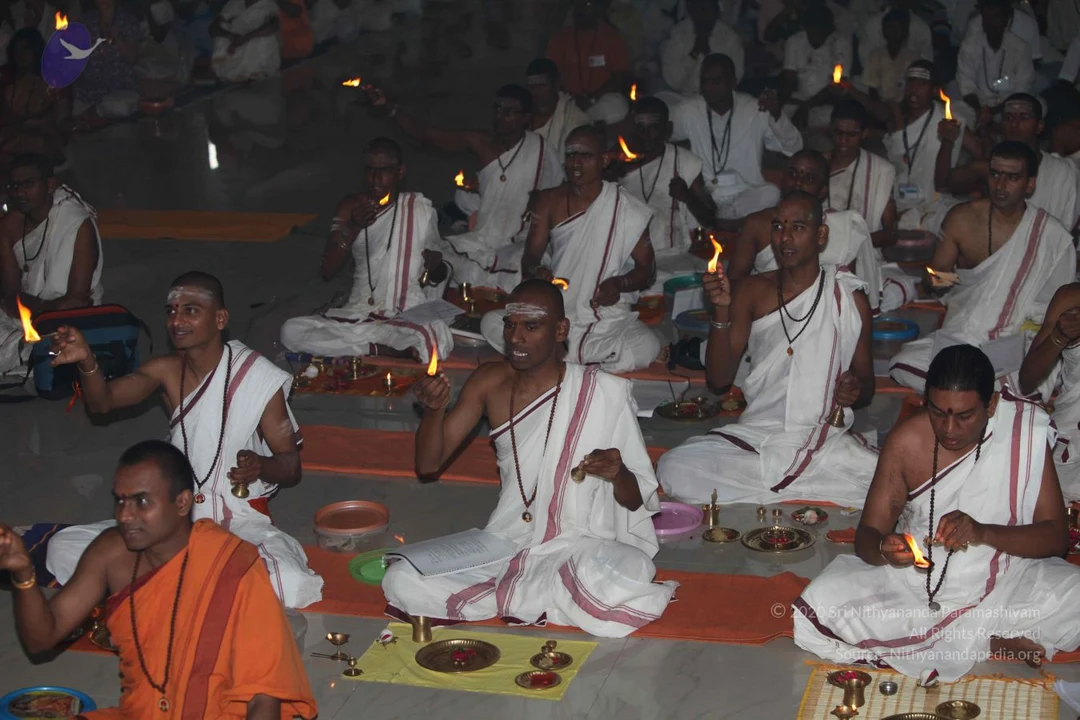
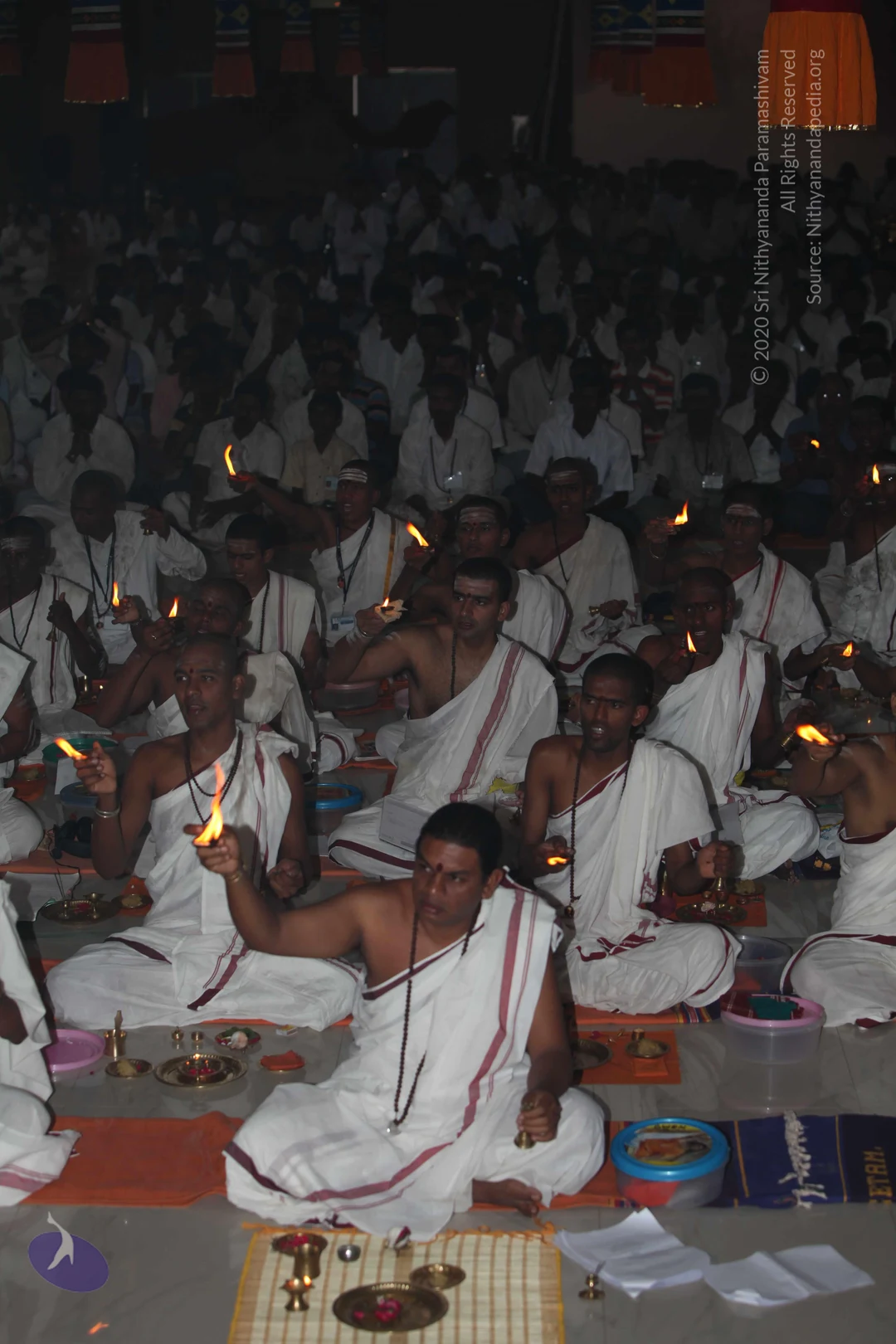
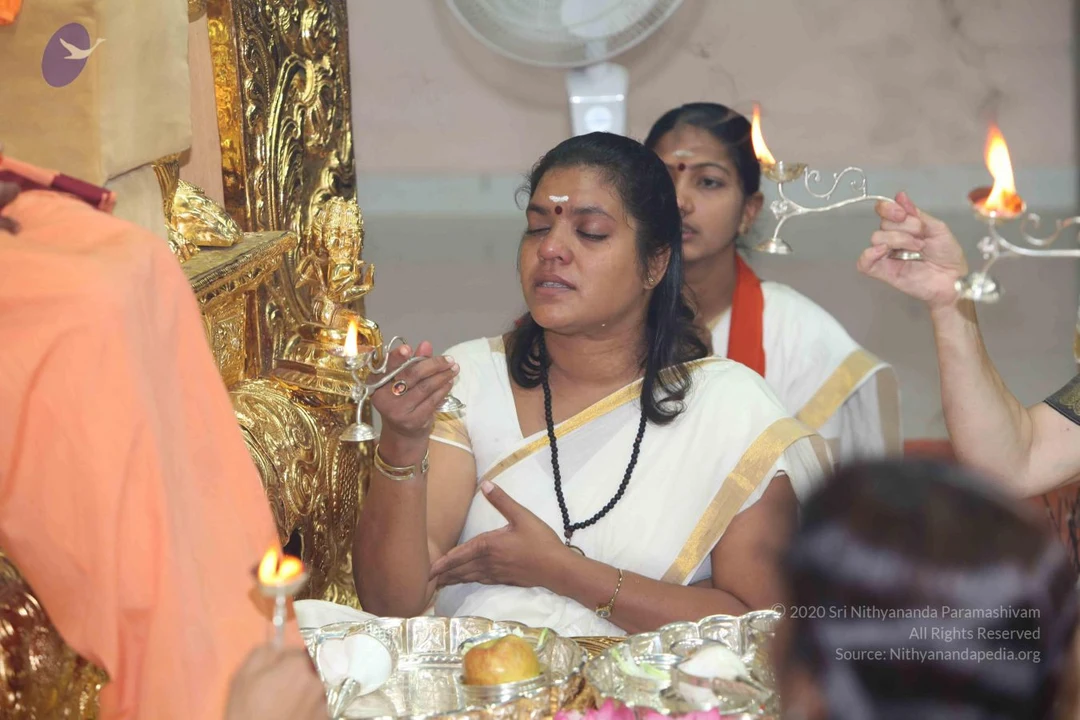
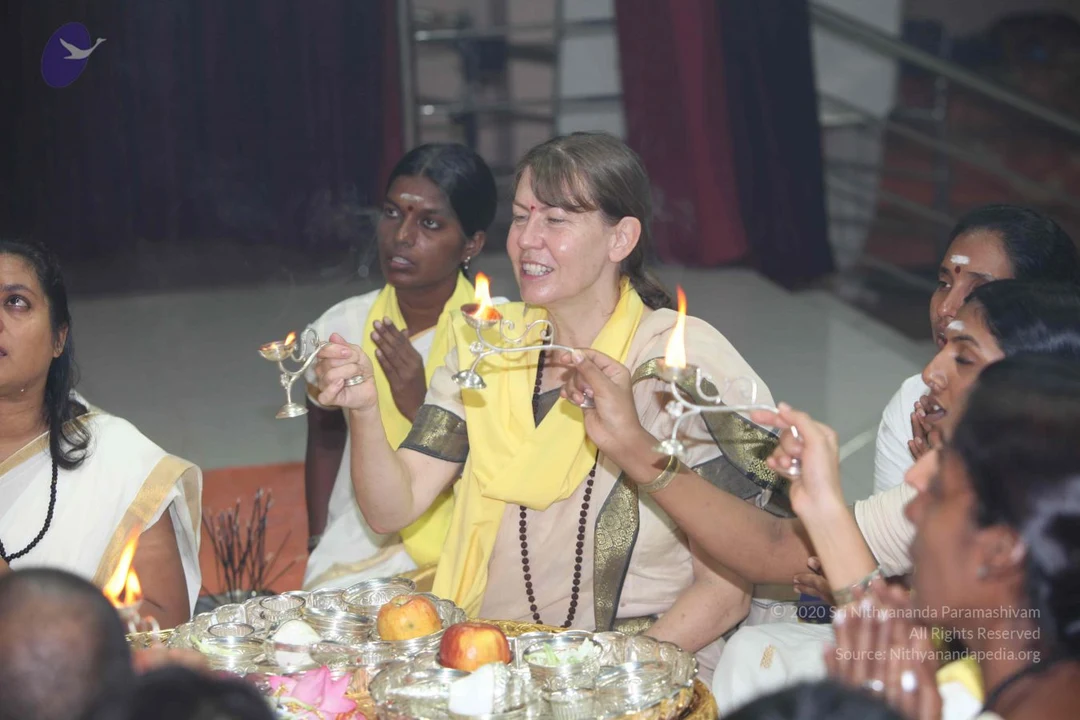
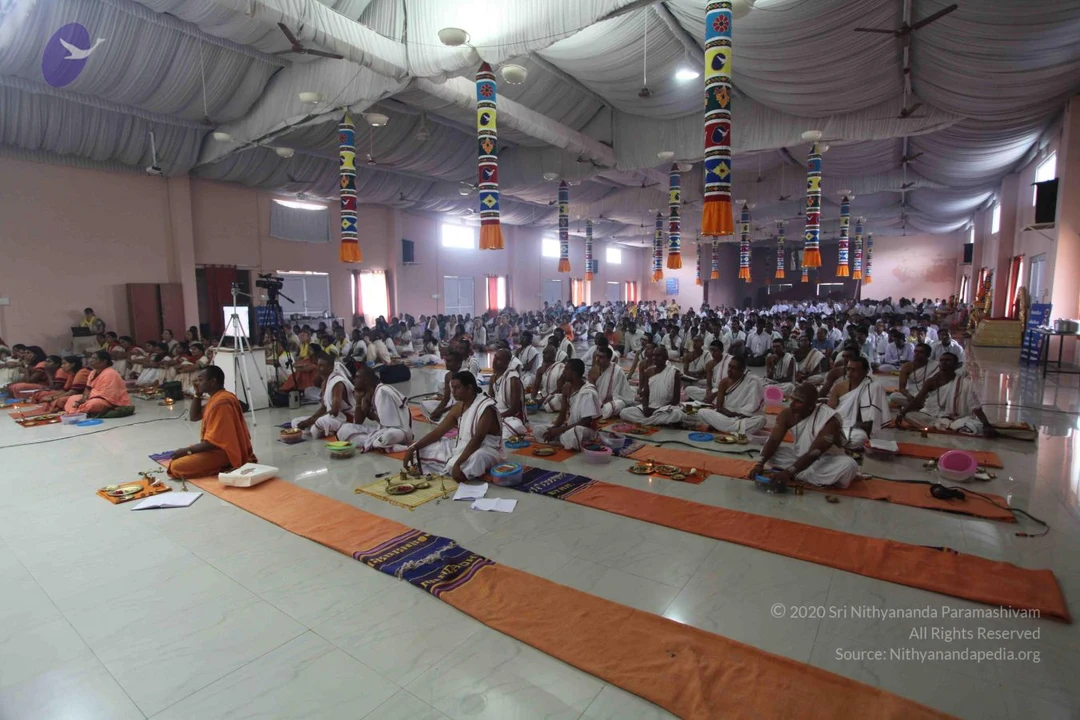
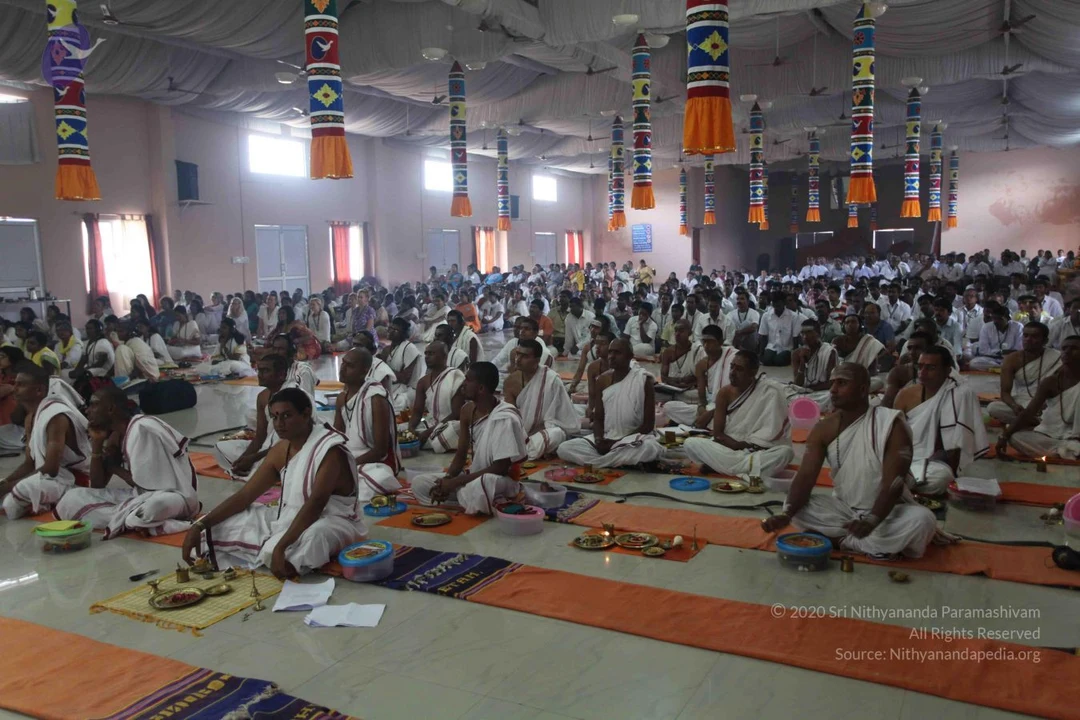
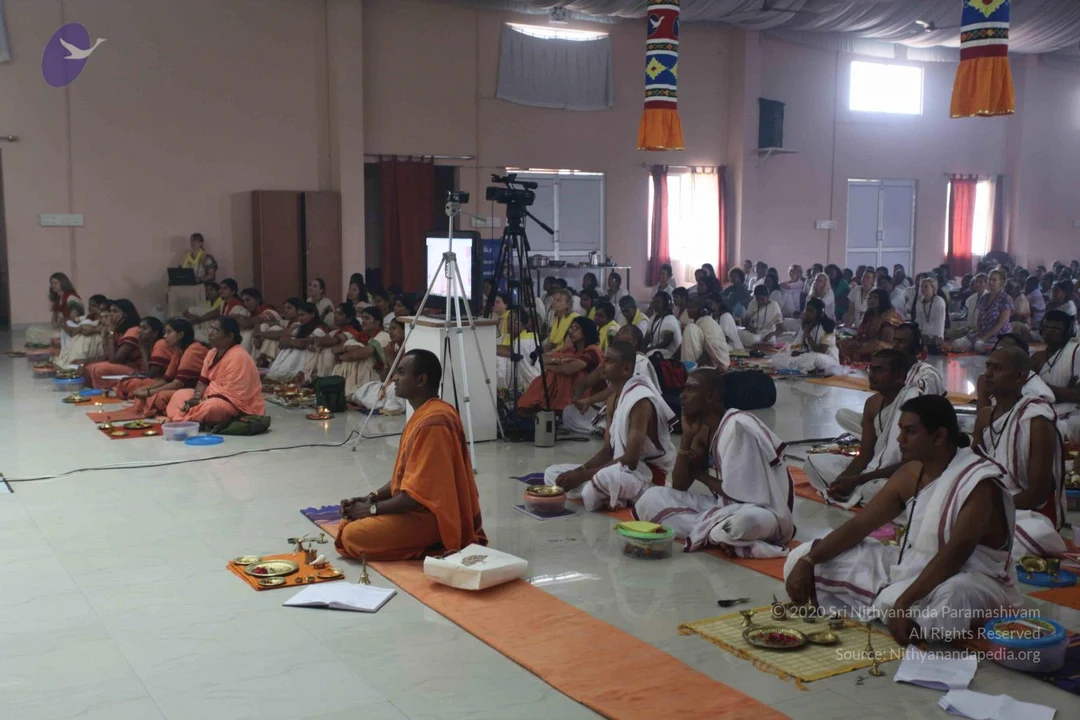
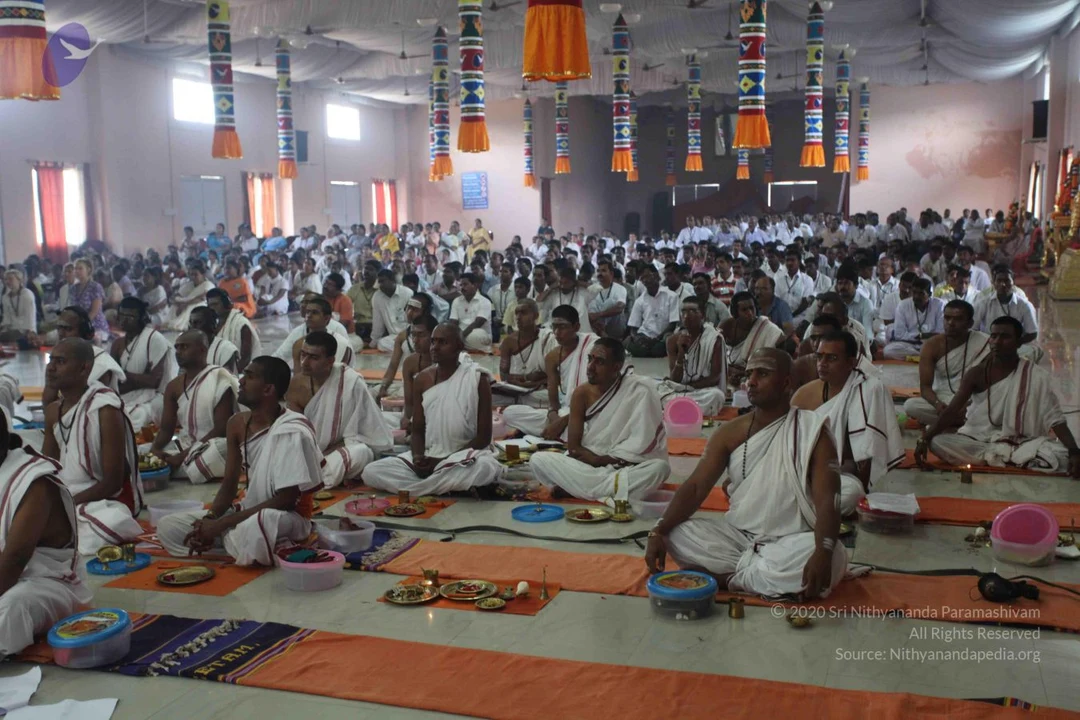
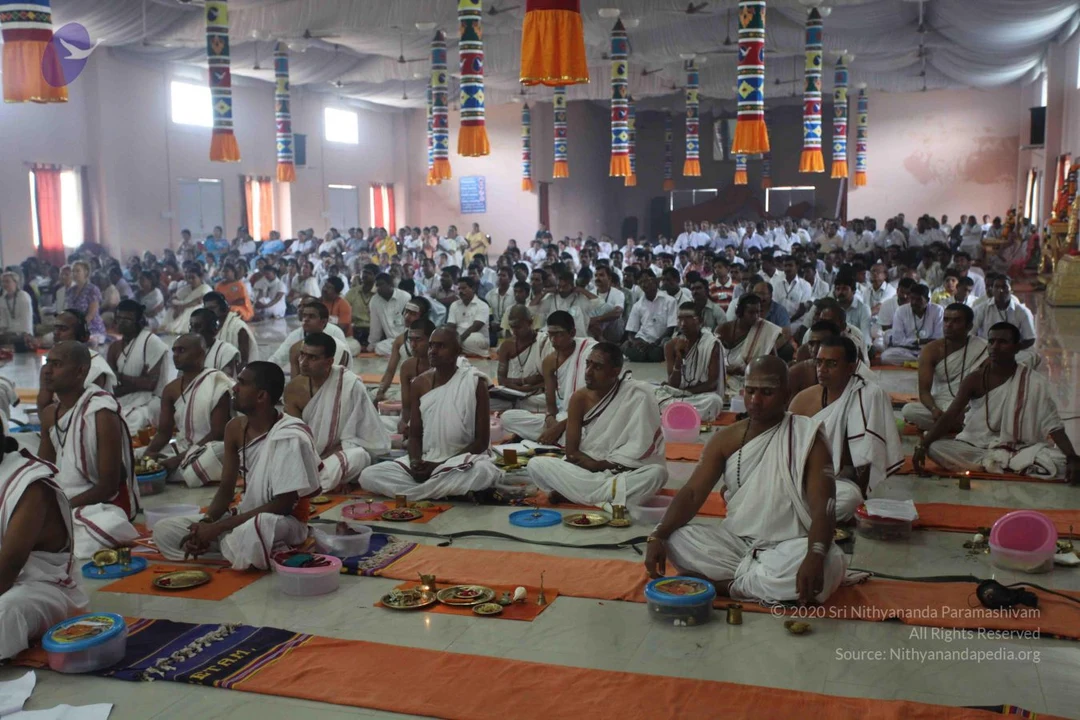
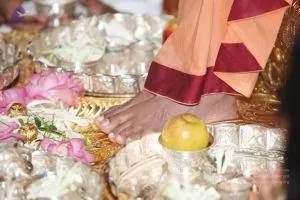
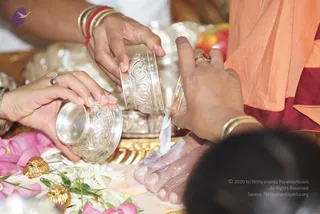
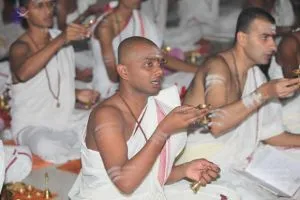
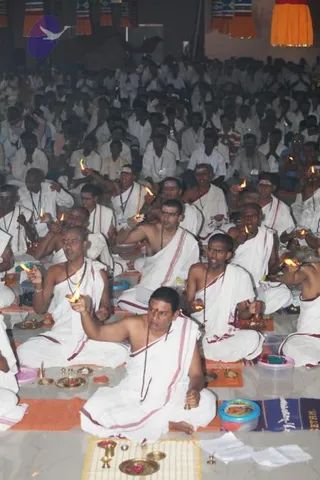
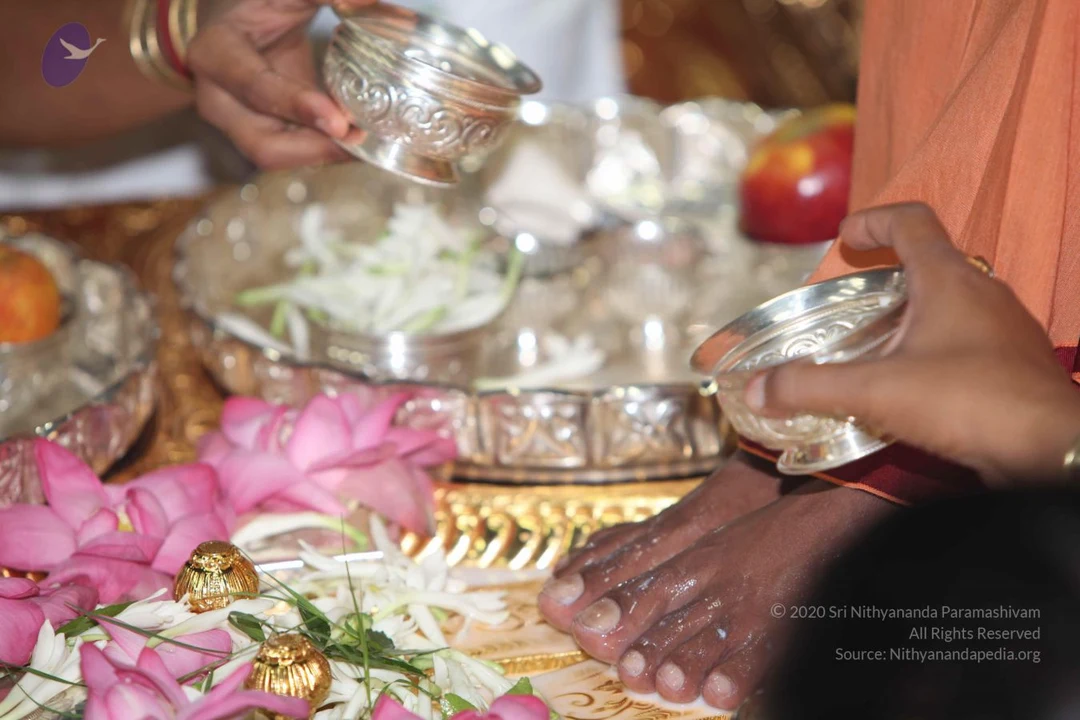
Close-up photograph of a bare foot in a saffron-orange garment with maroon border resting on a silver tray. Around the foot are silver bowls, pink lotus petals, a yellow fruit, and green leaves. The foot appears to be a devotee's offering point in a temple setting, with ornate gold metalwork visible at the edge.Close-up photograph of a ritual pouring at an altar. A person in an orange and maroon garment with gold bangles and a ring holds a silver bowl with ornate engraved designs, pouring water over another person's cupped hands. Another silver vessel and a brass dish sit on a table covered with pink and white flowers, marigold-like petals and small gold-toned kalasha-style pots. Only hands, arms and lower clothing are visible; no face is shown. This appears to be an abhishekam or handwashing ritual, with the pouring water catching the light.A large crowd of men in white traditional dhotis and white shirts sits cross-legged on a bright floor during a lamp ritual. Many hold lit oil lamps or flames, and brass puja plates with flowers, kumkum and small brass lamps sit in front of them. Several front-row men wear white dhoti with pink-edged borders and rudraksha malas, and one man in the foreground raises a lit lamp. Orange and white banners hang from the upper area, and the scene is taken from the front of the hall. The atmosphere is that of a collective aarti or puja. No figure in the scene is clearly identifiable as a person by appearance.

PANCHA-TAPAS

51 photosSource gallery
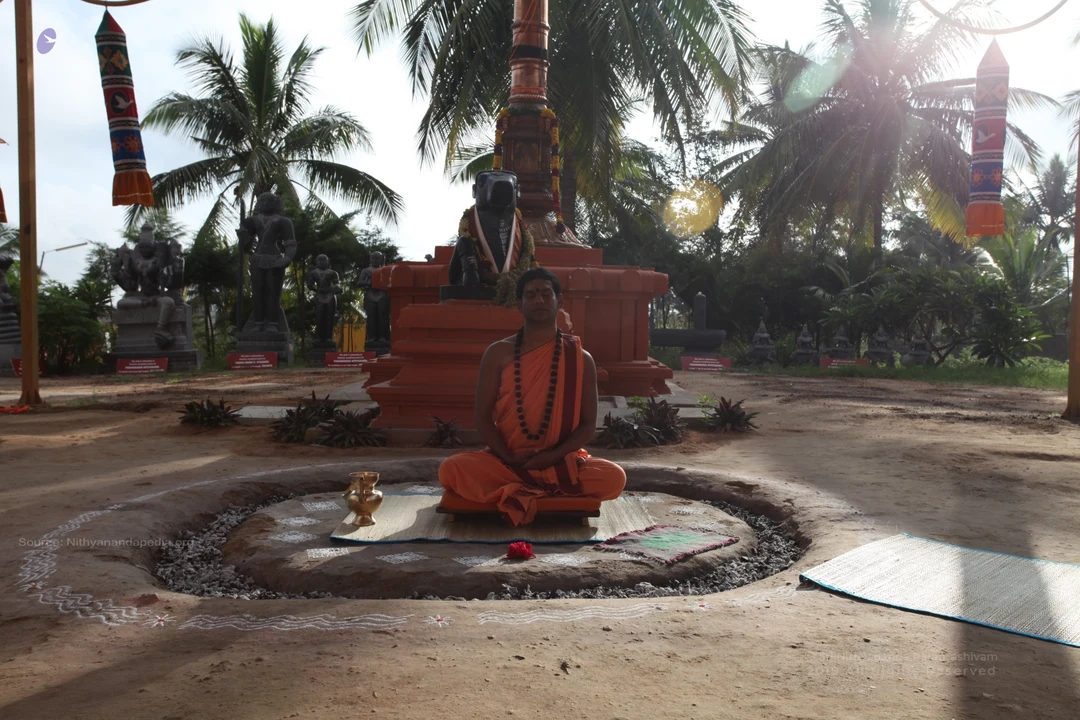
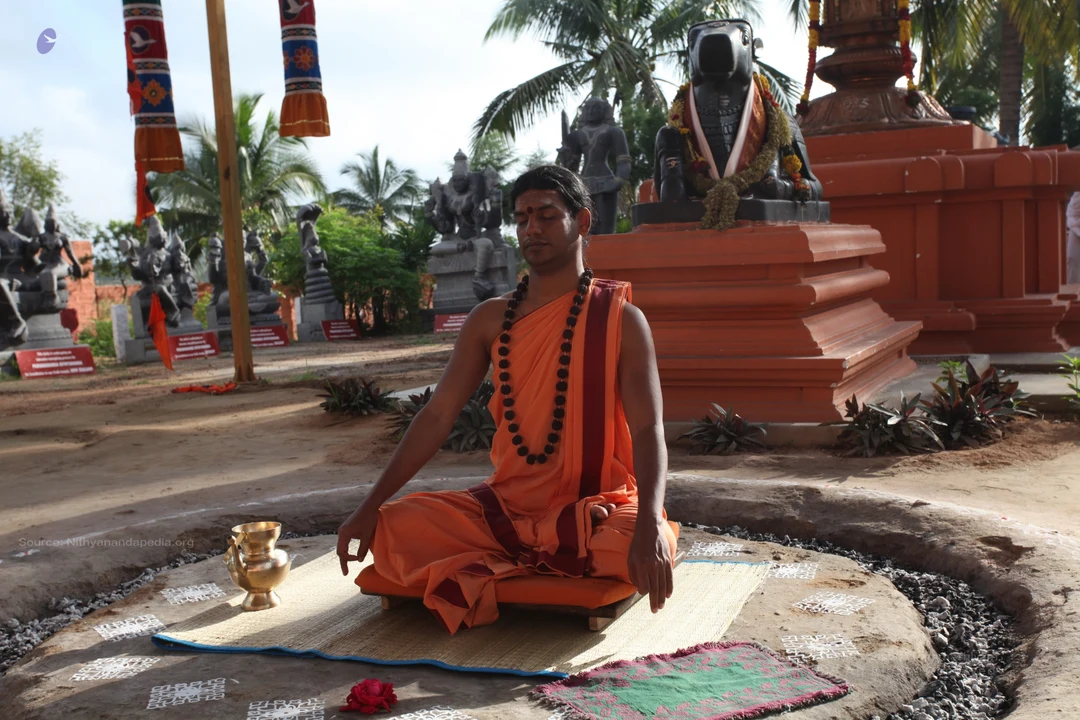
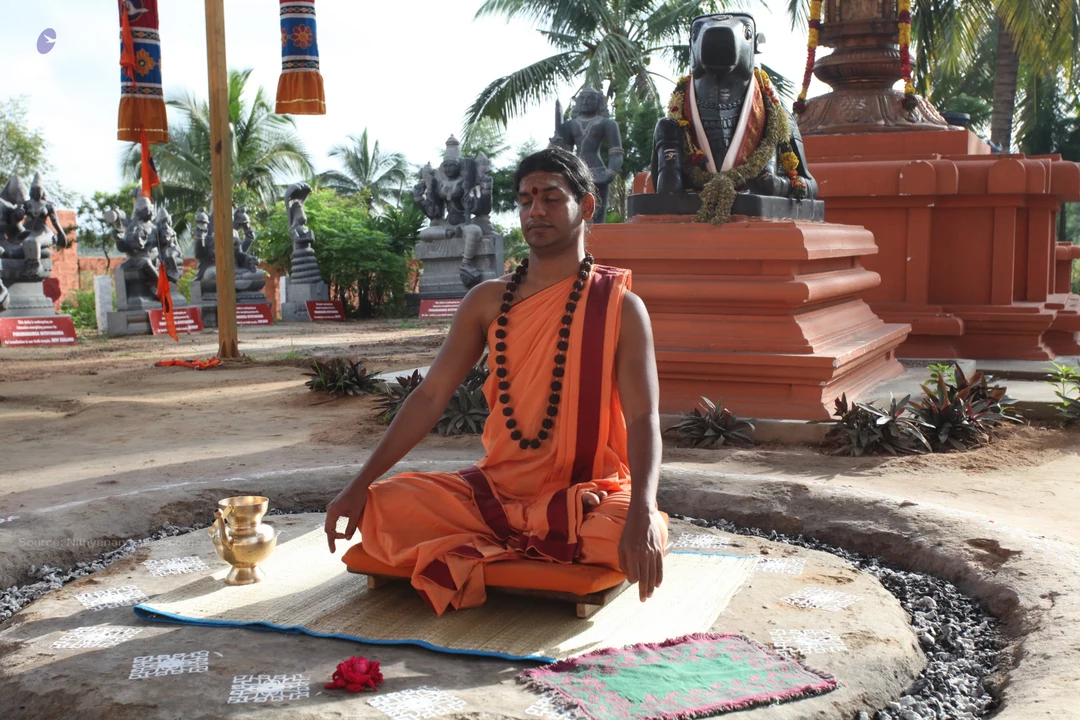
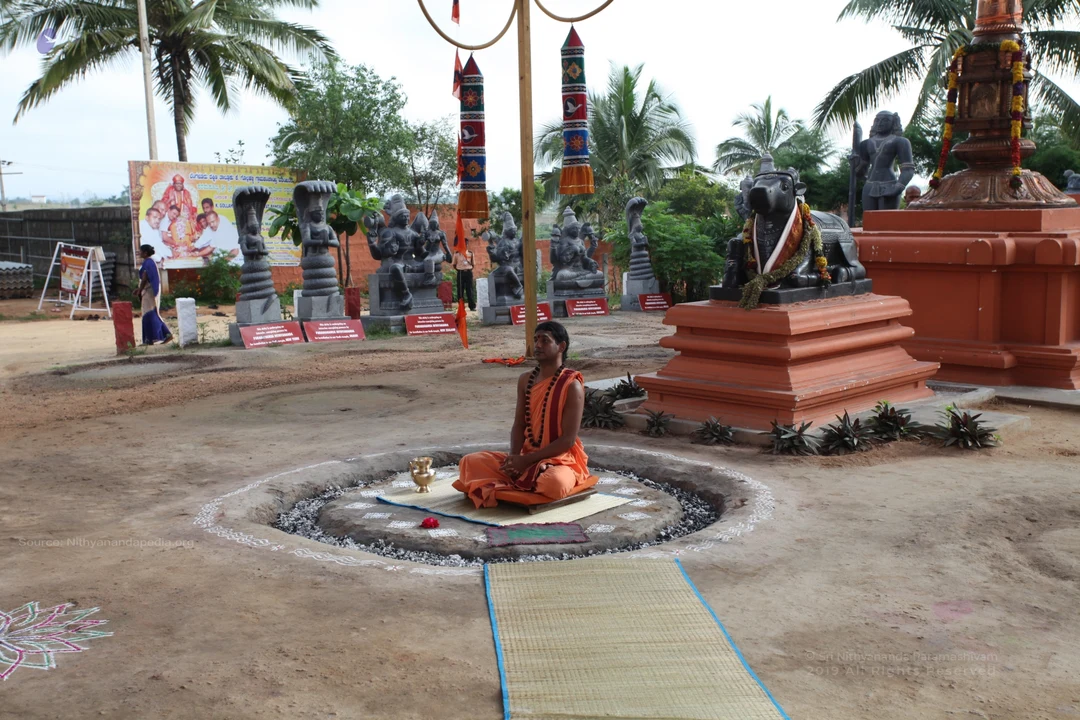
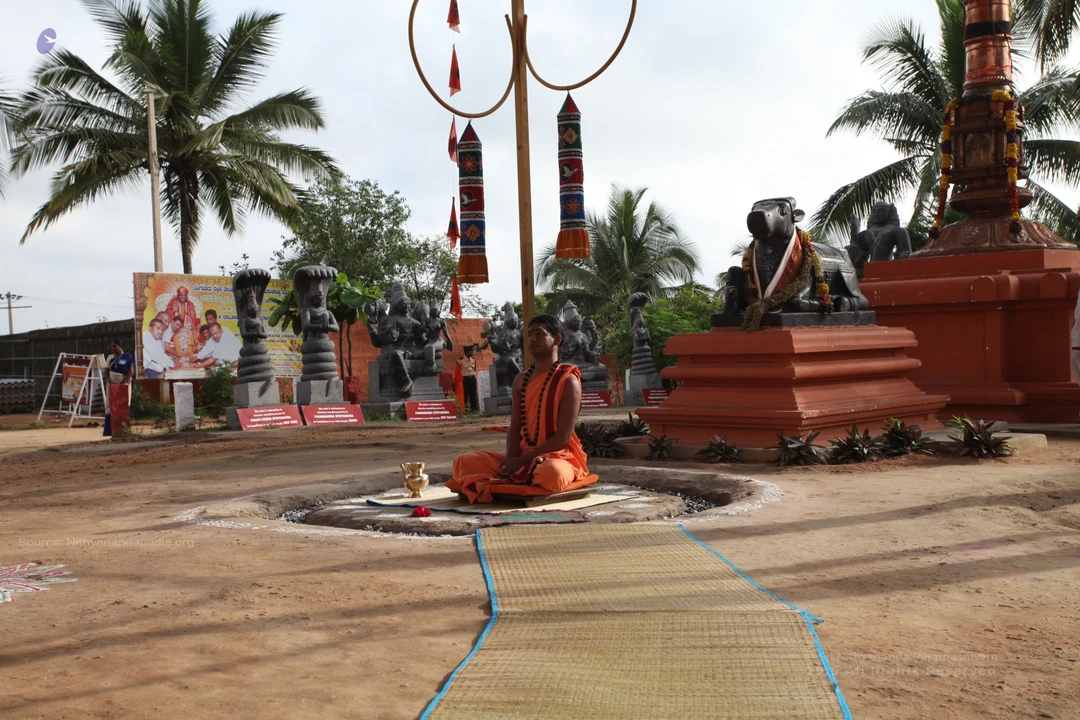
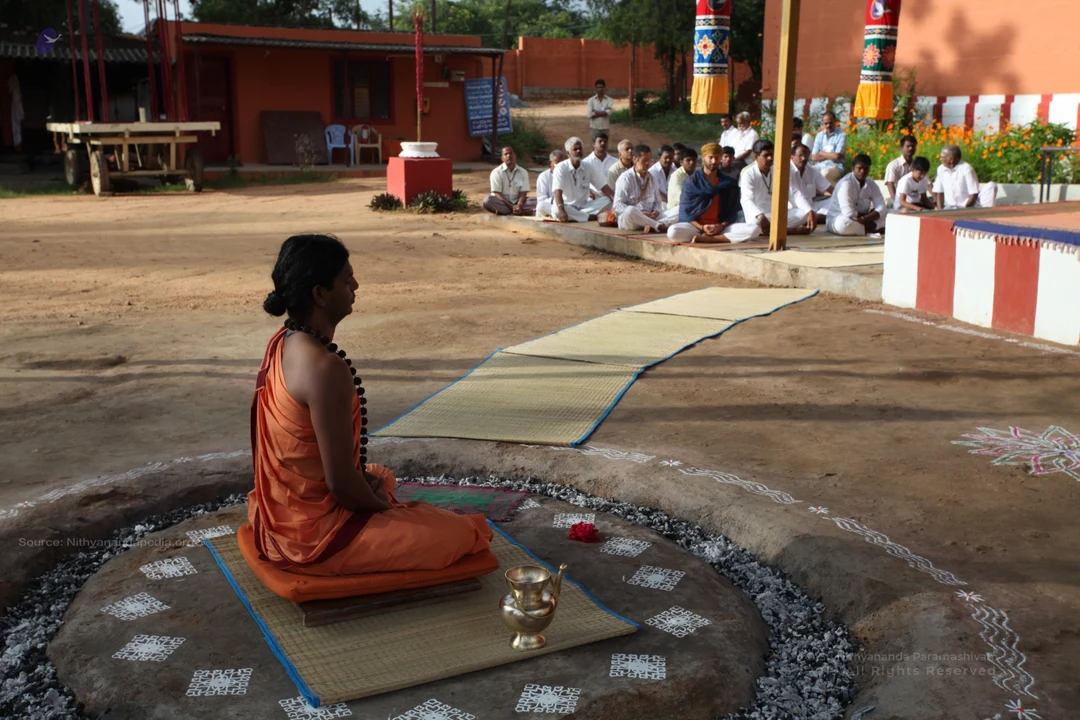
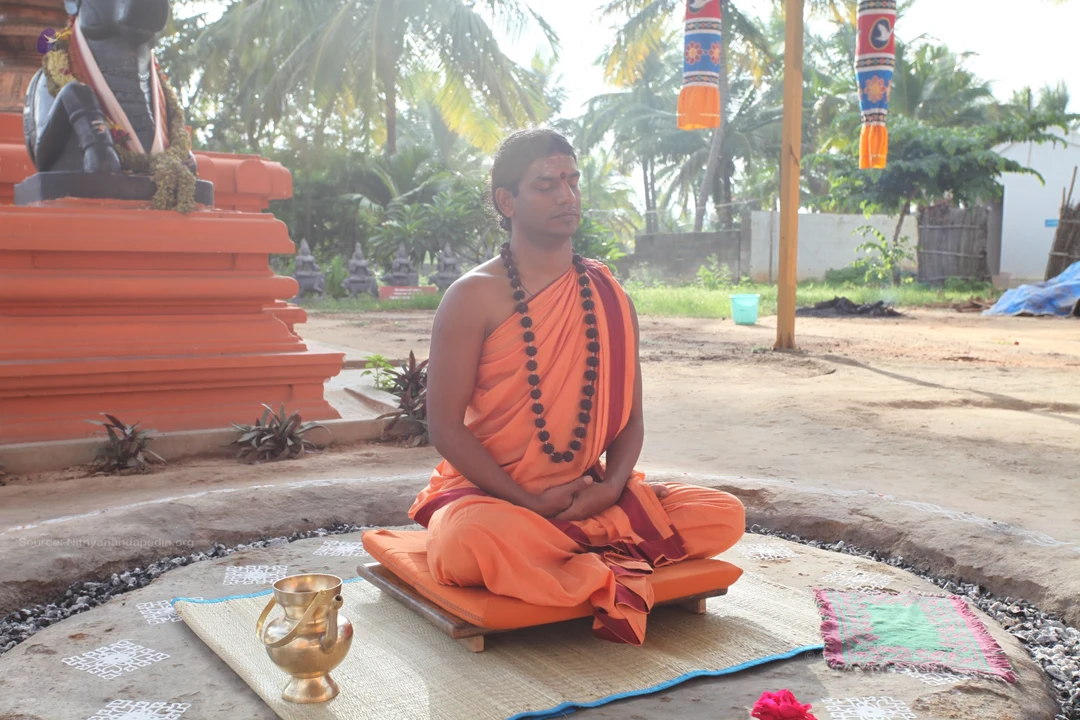
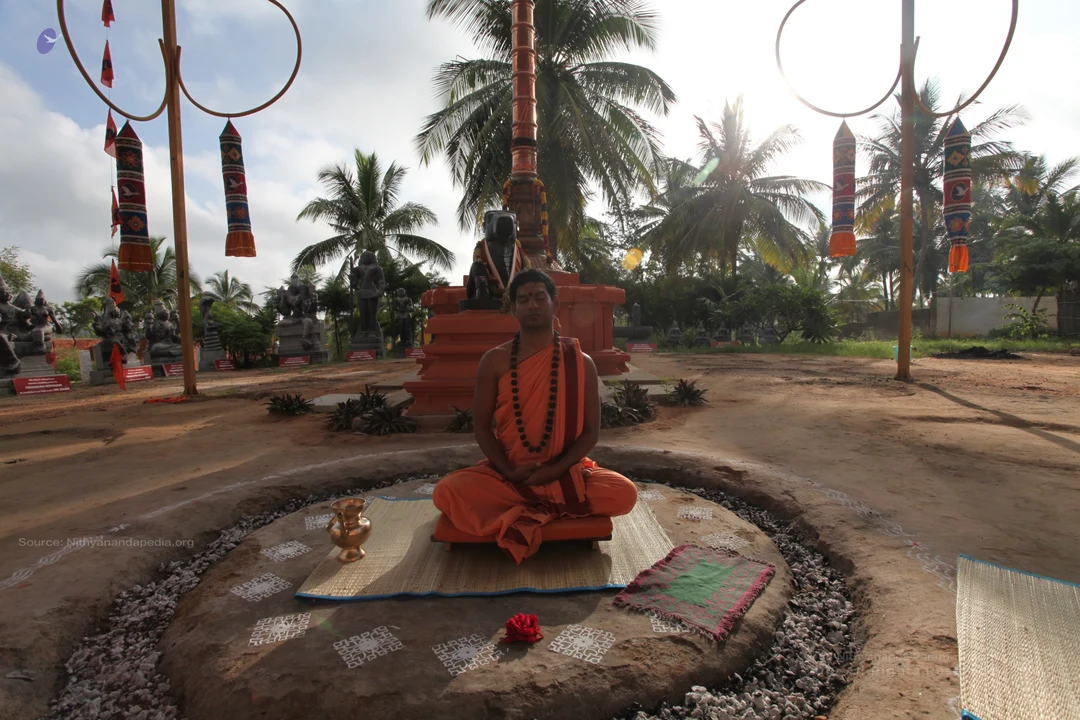
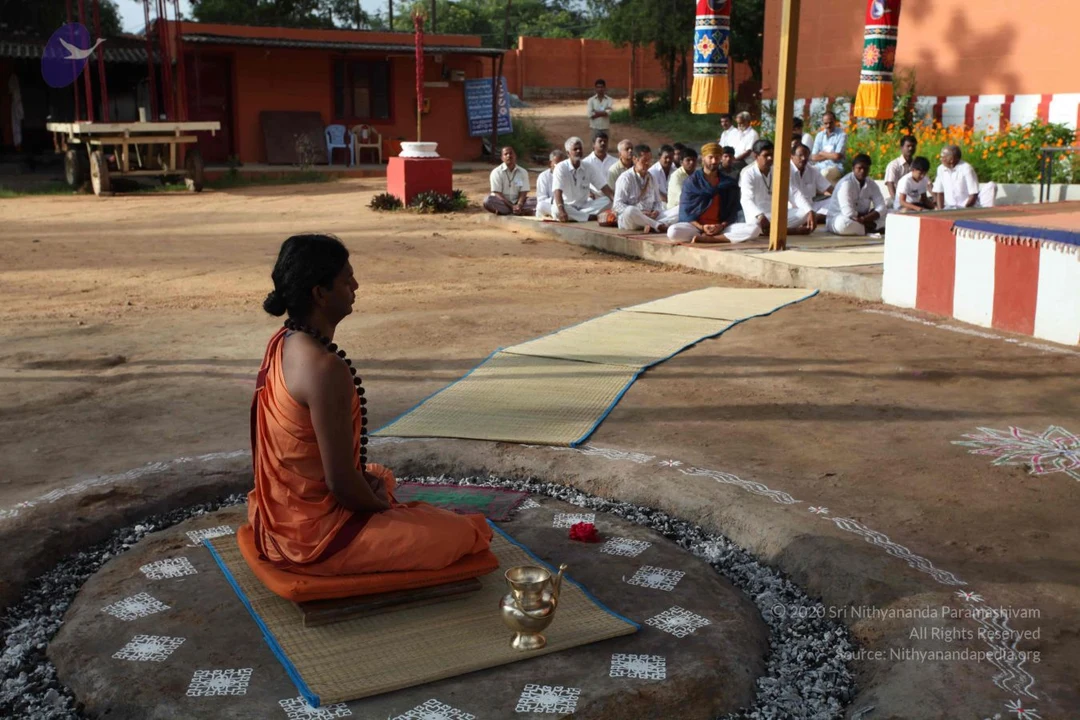
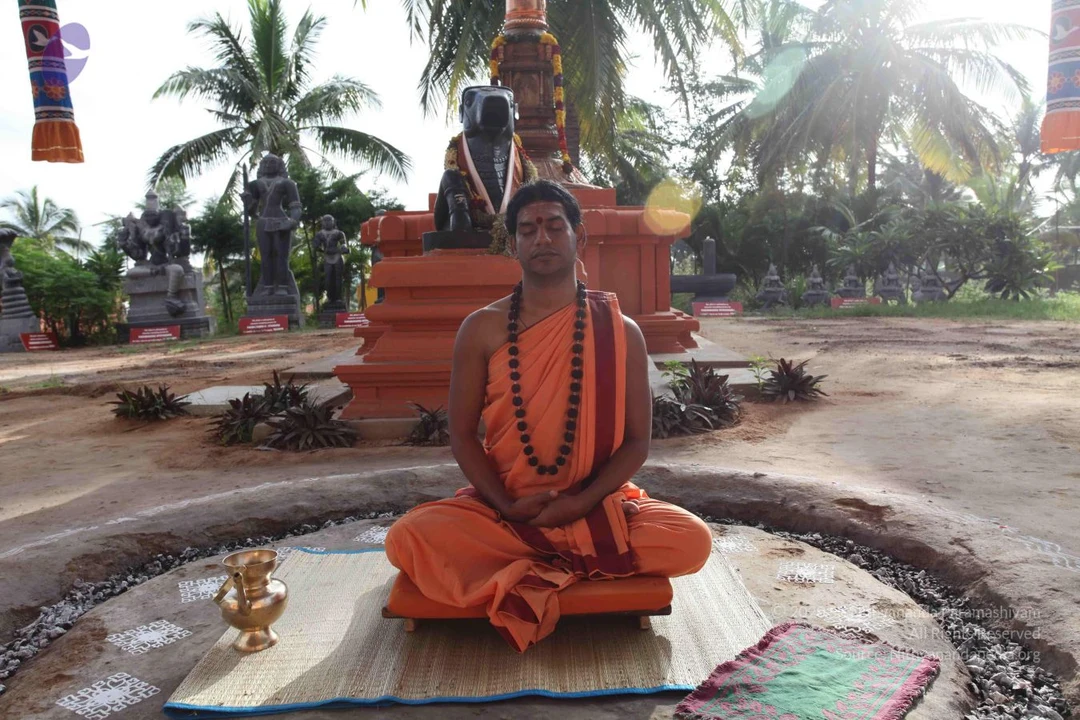
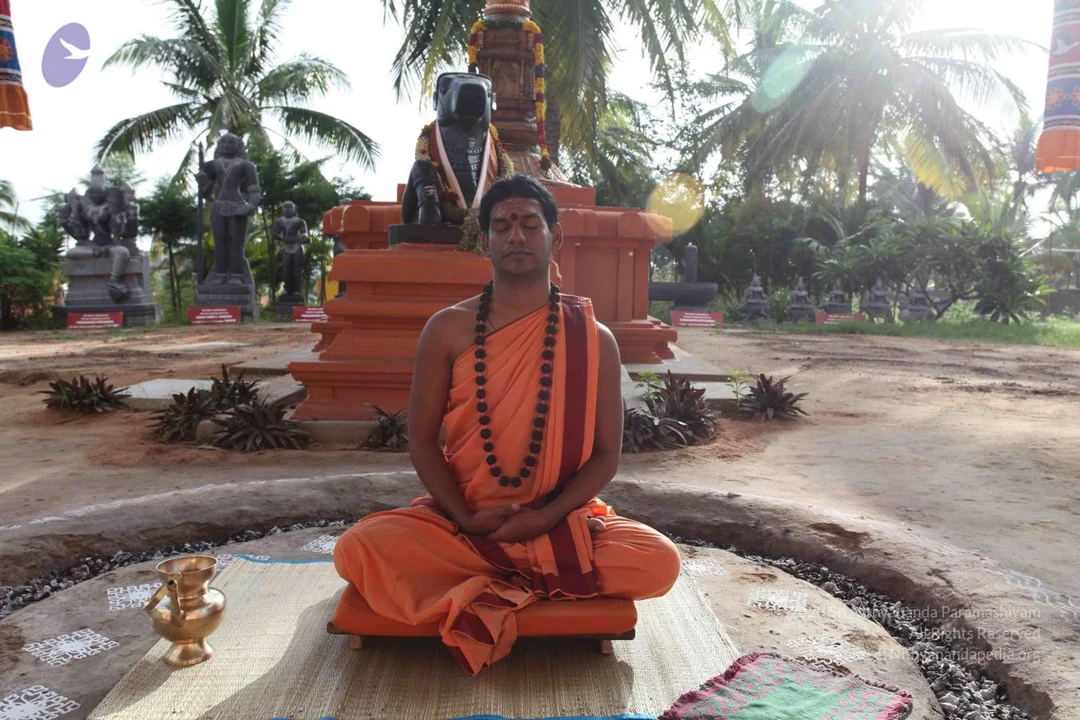
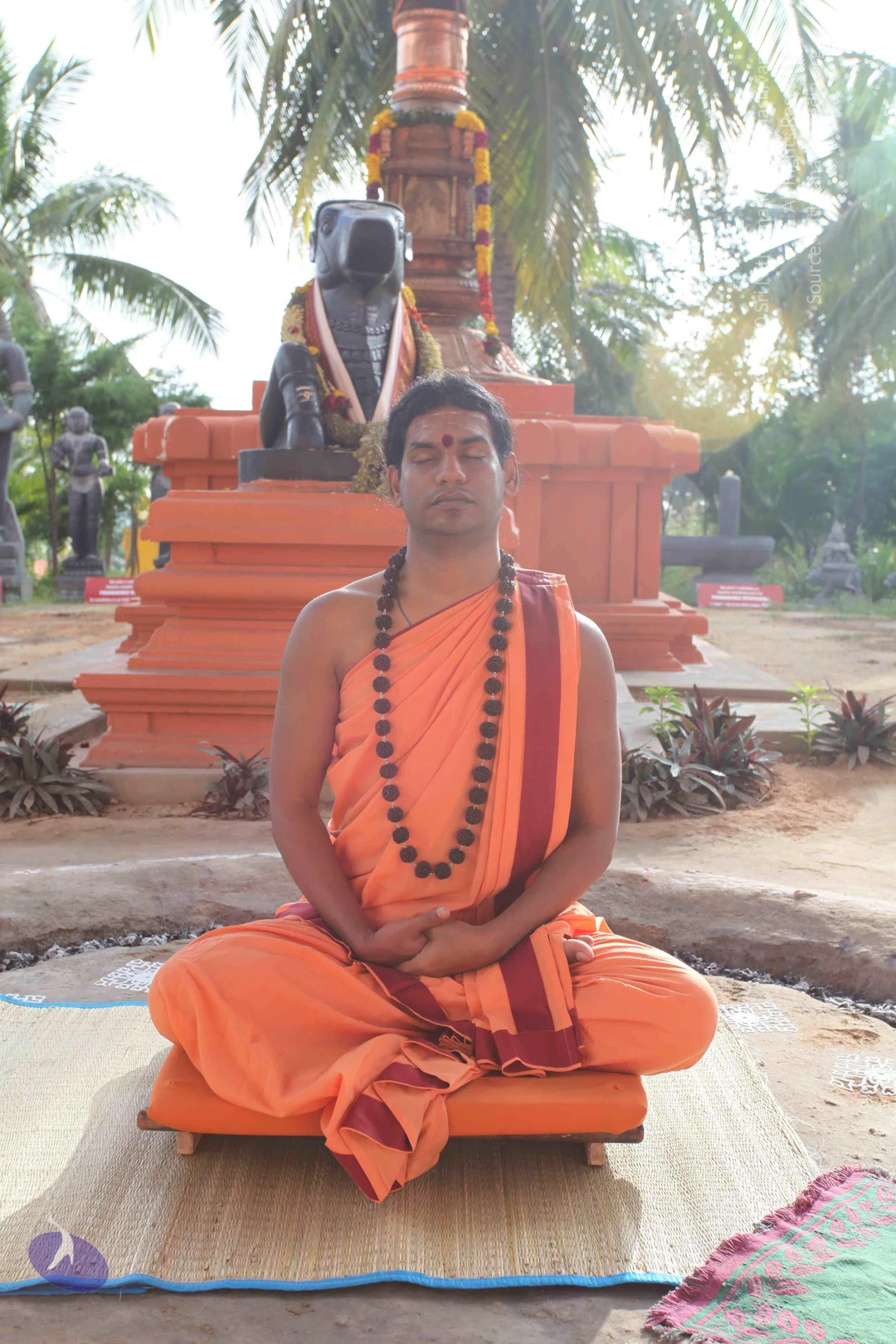
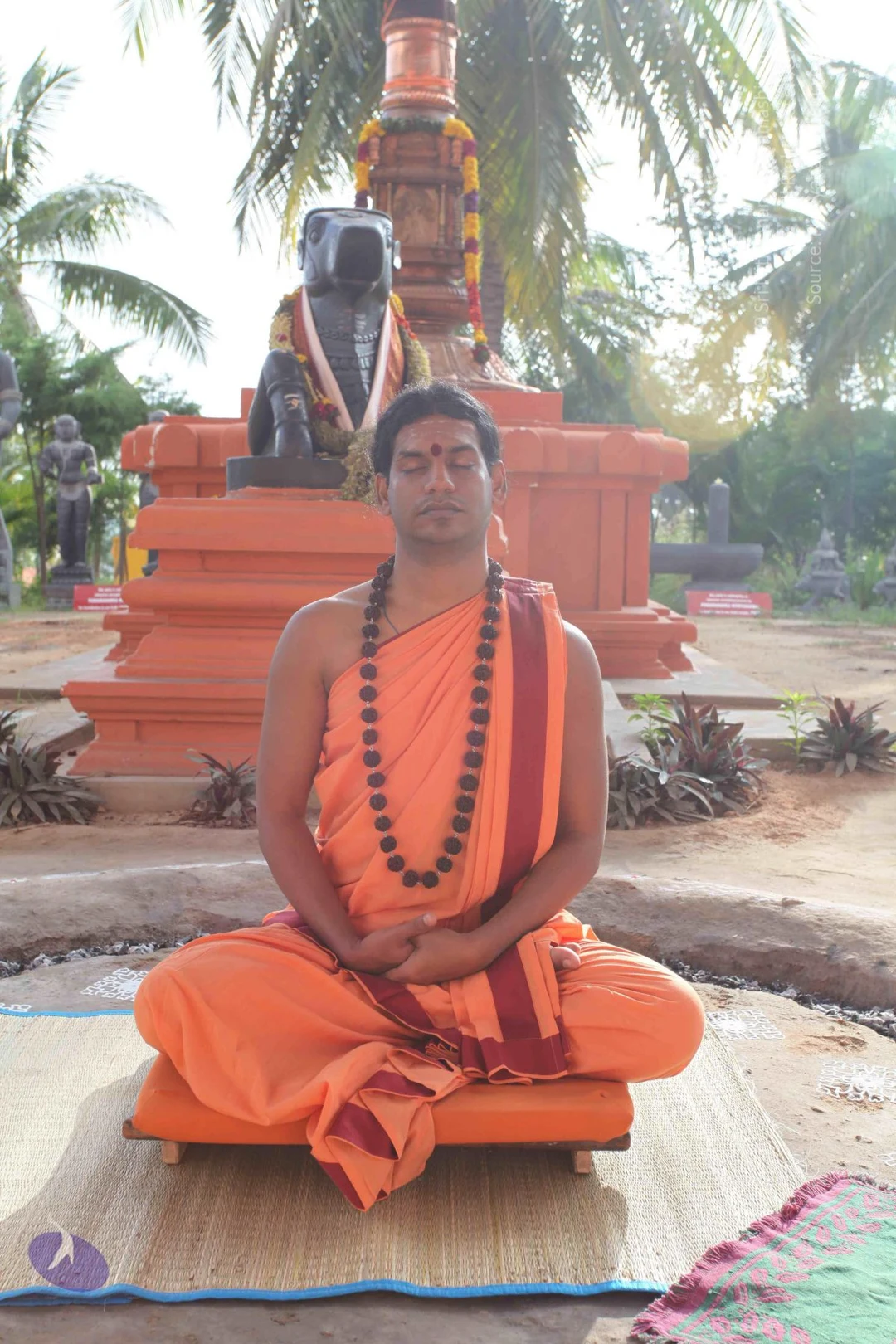
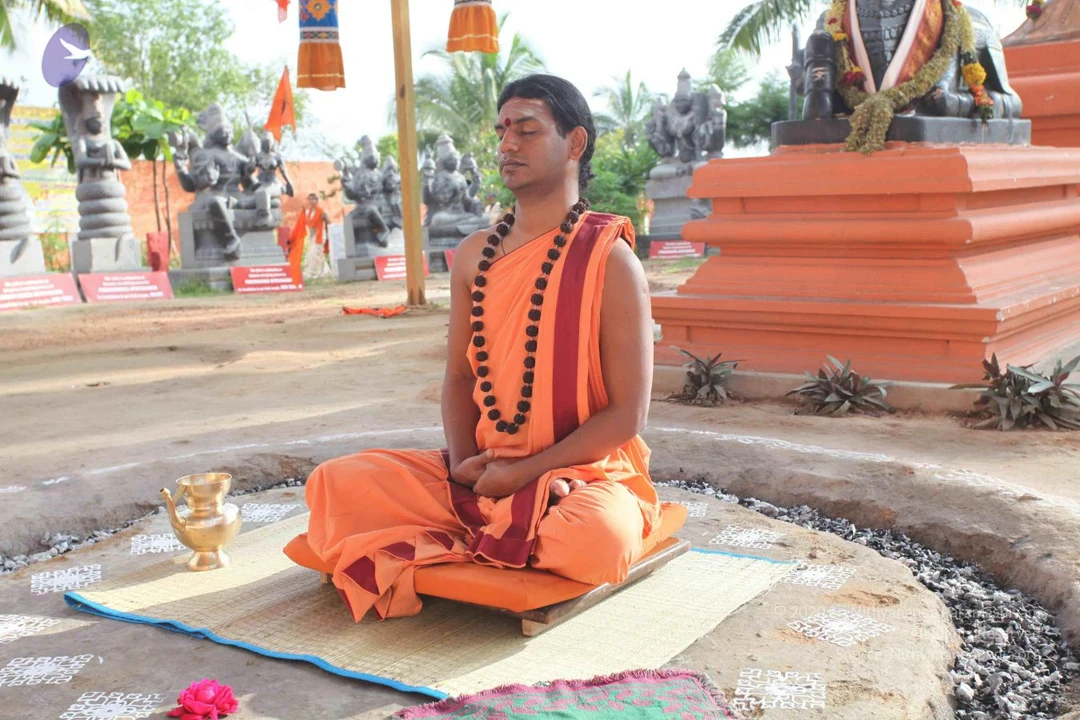
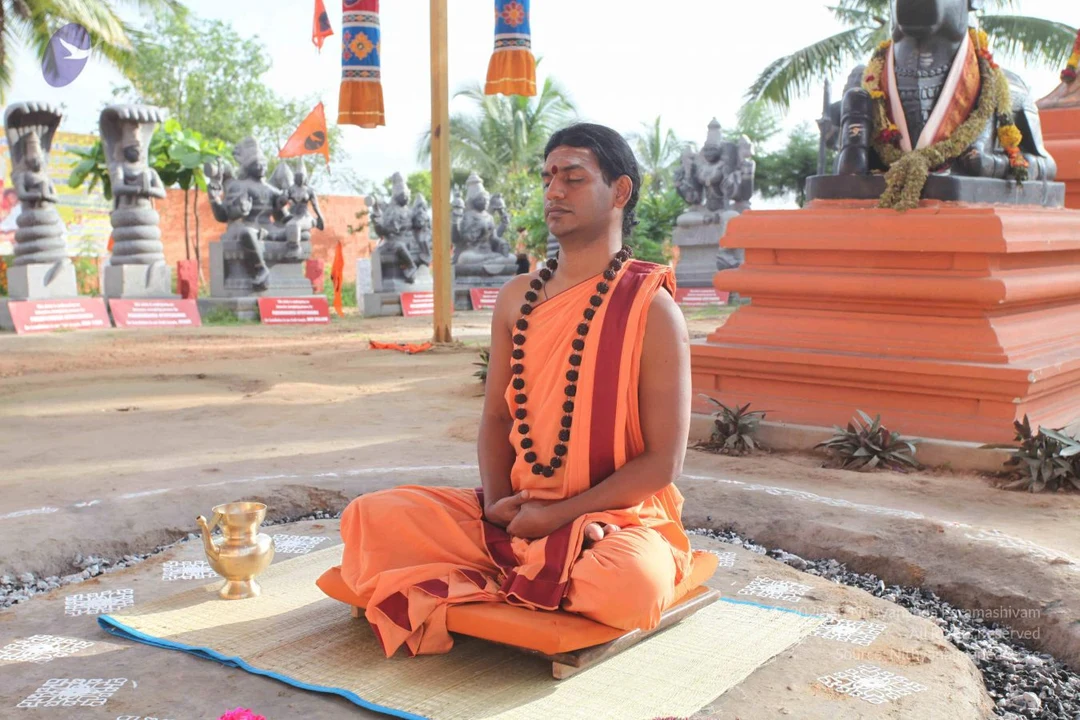
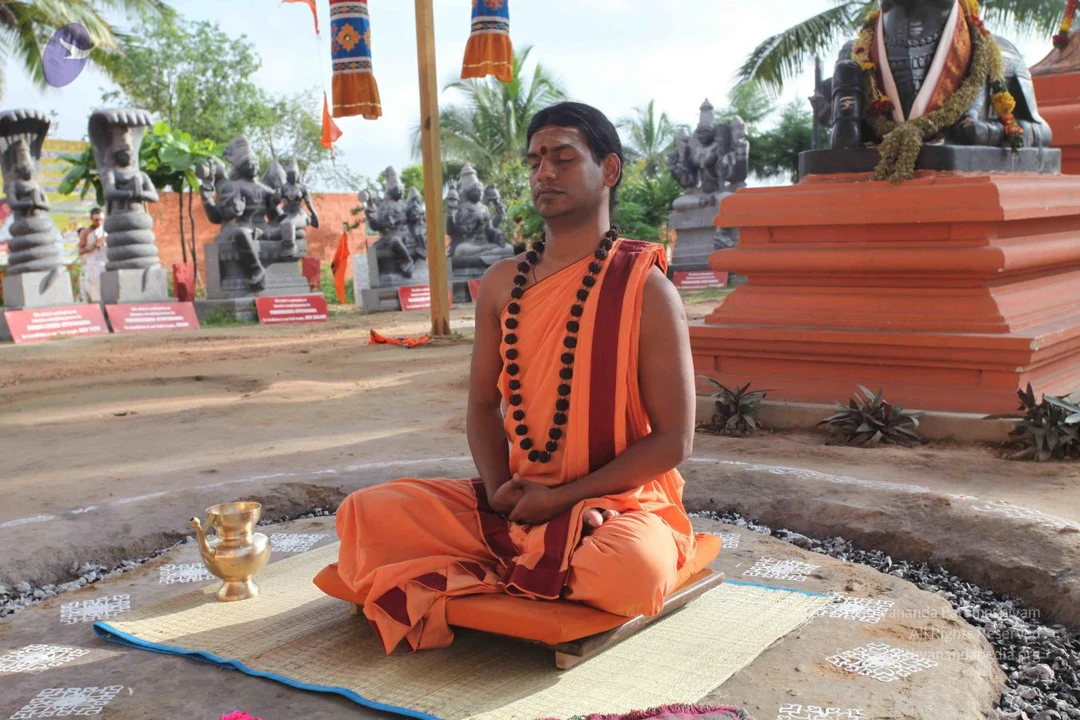
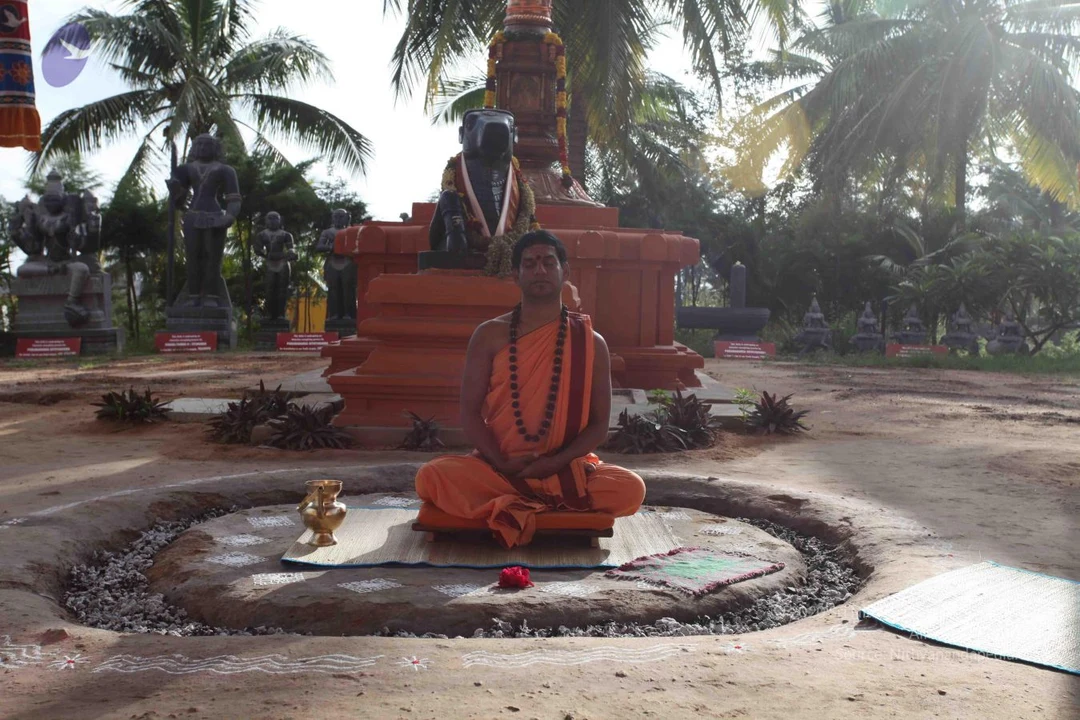
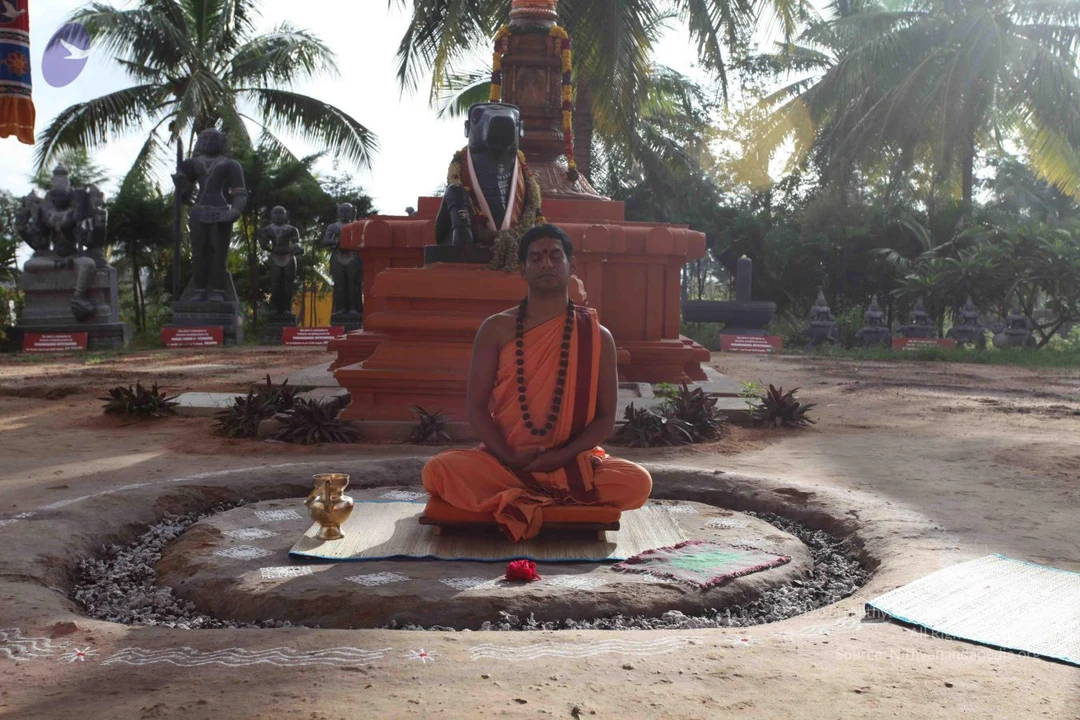
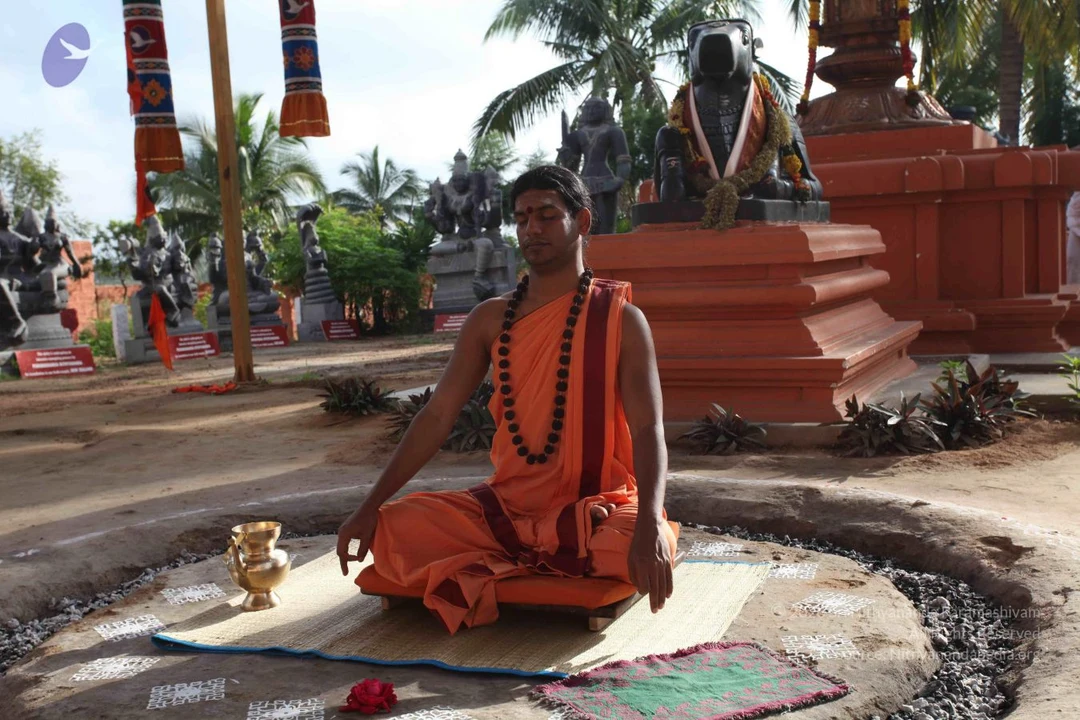
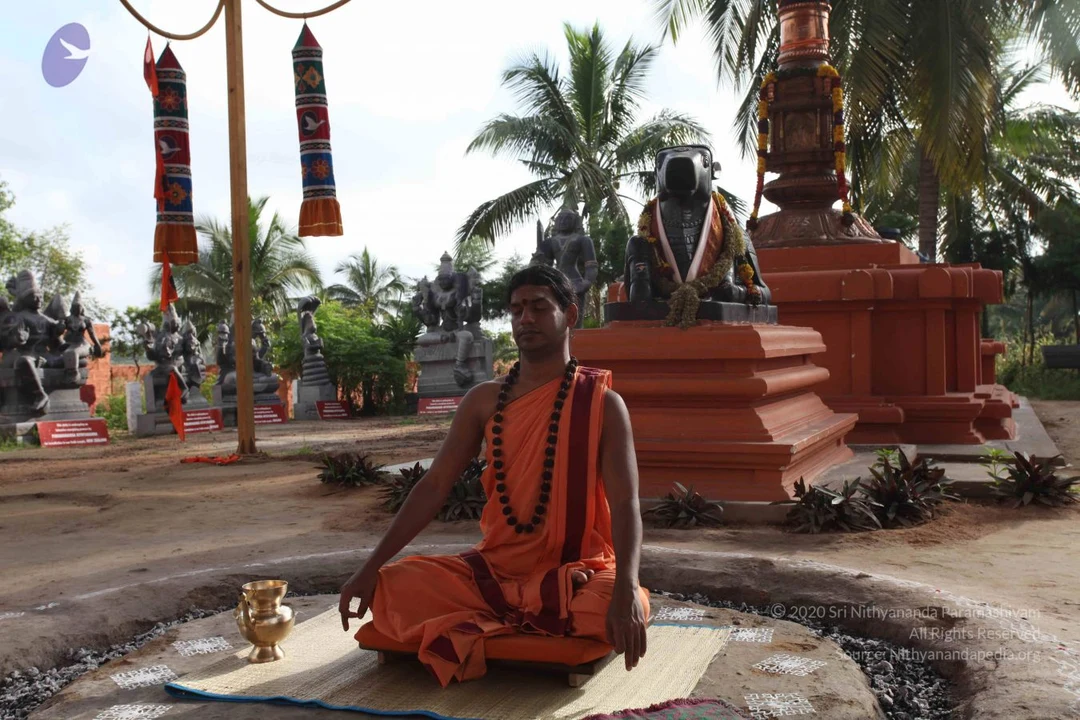
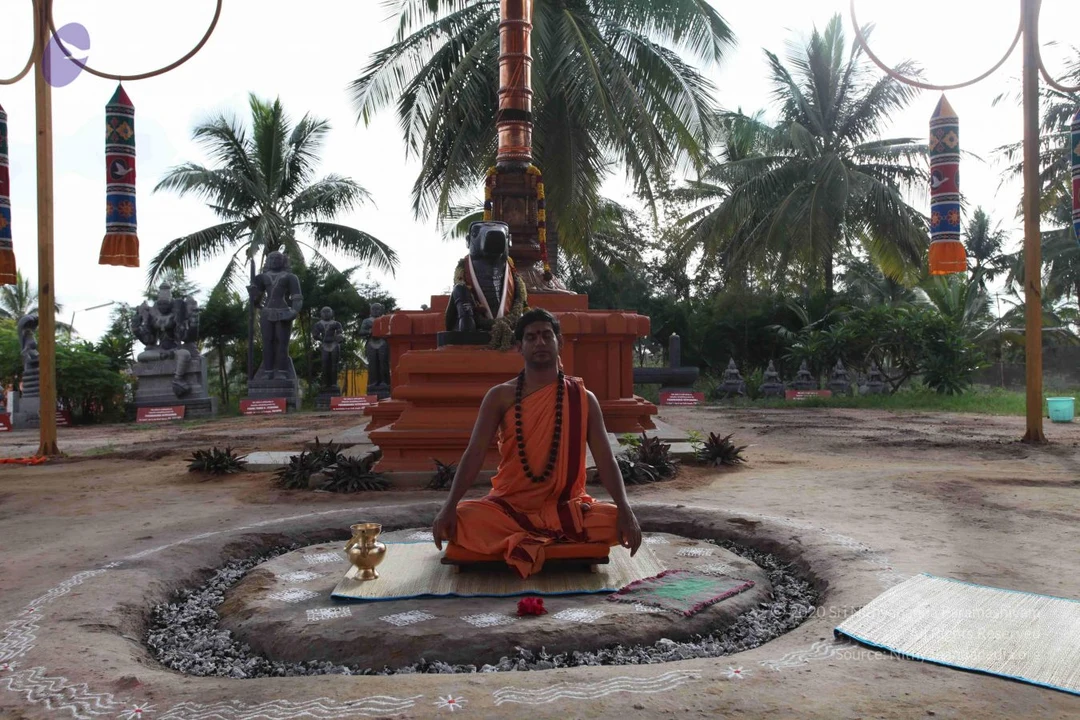
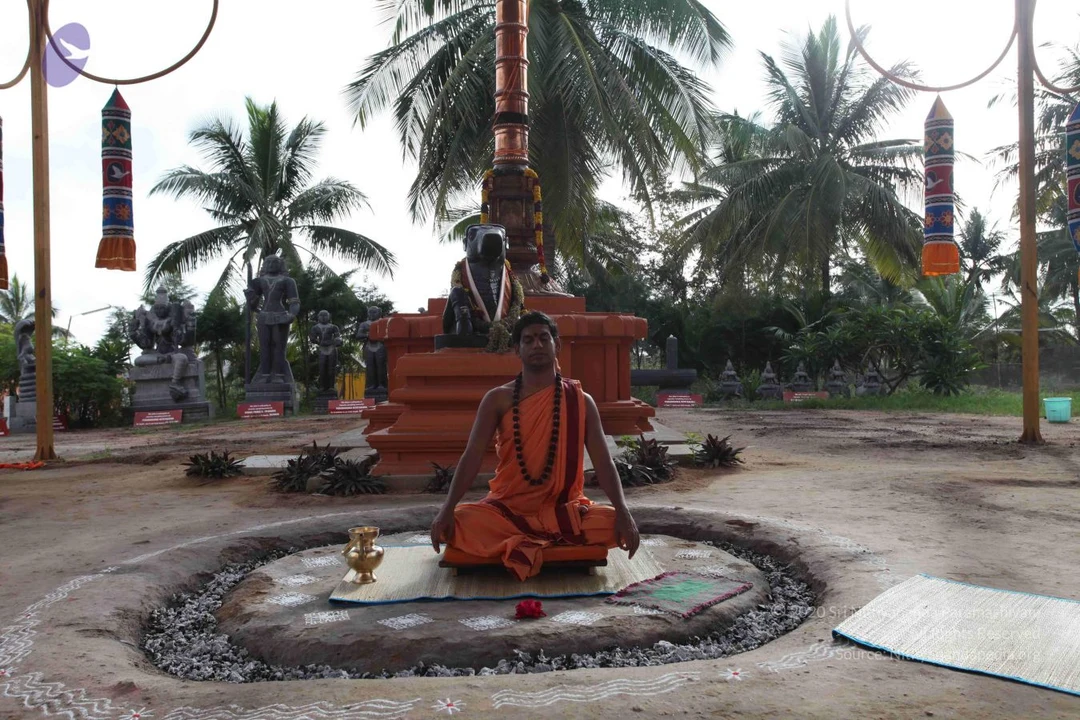
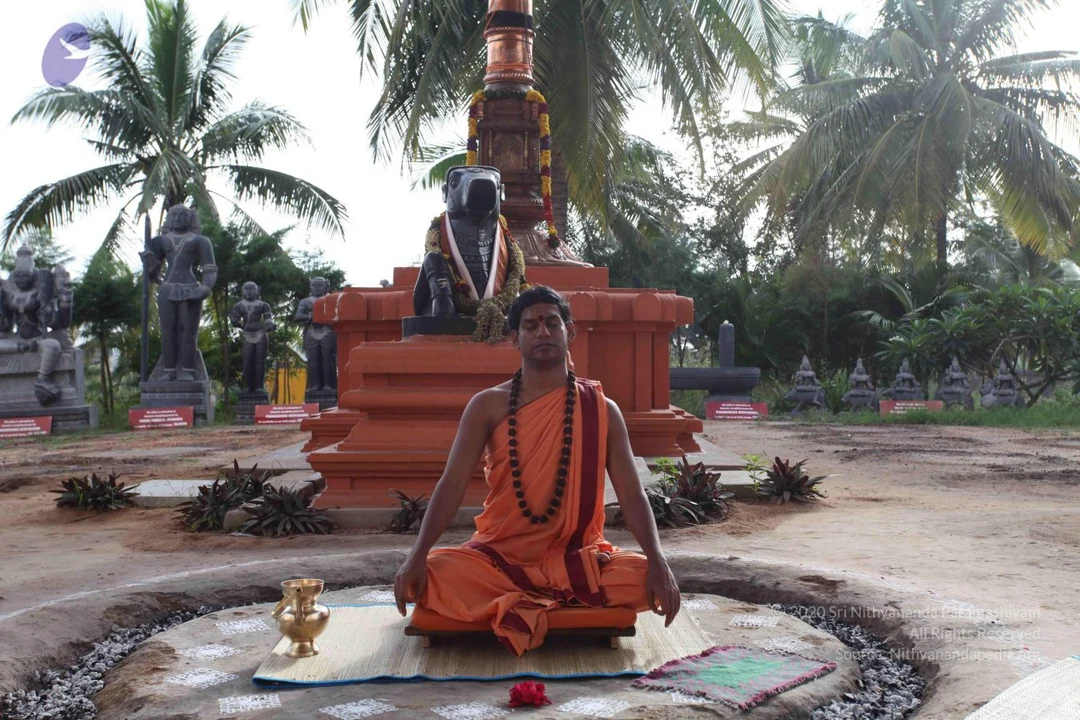
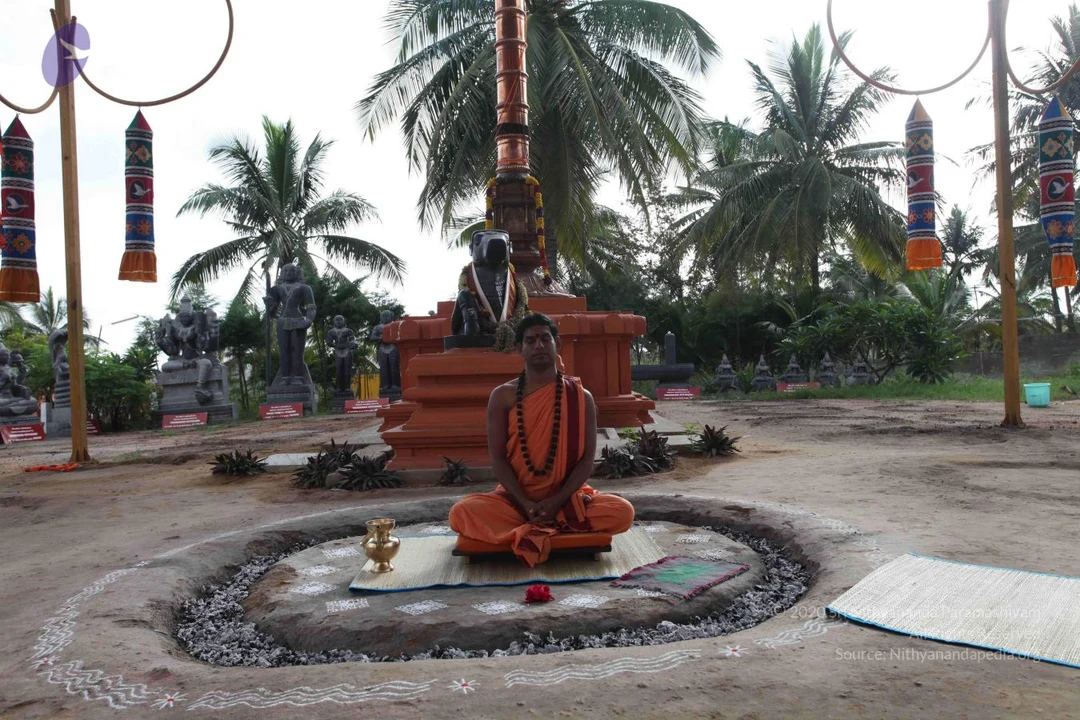
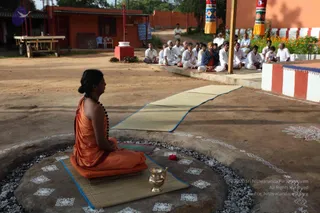
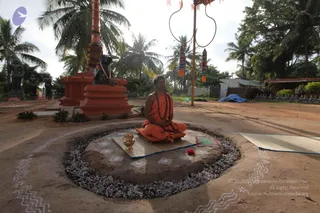
Outdoor ashram scene. A person with long dark hair tied back, wearing an orange saffron wrap and dark rudraksha mala, sits cross-legged on a raised circular platform with a woven mat and orange cushion, facing a seated group. A brass kalasha-style vessel sits before them on a mat, and a red flower lies nearby. Behind, about twenty-five devotees in white clothes sit on mats across a dirt courtyard; one older man wears a white cap and another in the group wears an orange turban. Marigolds, a red-and-white painted border and kolam designs decorate the ground, and colourful festoon cloths hang from wooden posts. Satsang or discourse setting. Identity of the central figure is uncertain from appearance.A seated man in saffron-orange robes sits cross-legged on a low wooden seat with a cushion, eyes closed, hands resting in his lap in a meditative posture. He wears a long dark rudraksha mala necklace and a red-and-maroon border on his cloth, with a small red tilak mark on his forehead. Beside him on a mat is a brass kalasha-style vessel, and a red flower lies in the foreground. Behind him is an orange raised platform topped by a dark deity murti draped with a garland, with palm trees, hanging red-and-yellow tassel banners and an open outdoor ashram courtyard beyond. The setting suggests a satsang or meditation sitting.A seated man in saffron-orange robes with a red-bordered cloth sits cross-legged in meditation on a woven mat over a patterned floor, hands resting in his lap with eyes closed. He wears a long dark rudraksha mala and a red mark on his forehead. Behind him stands a dark stone sculpture of a bull-like figure draped in orange cloth and garlands on an orange plinth. Two hanging colourful decorative banners with motifs and tassels frame a sunlit outdoor courtyard with palm trees, and a brass kalasha-style vessel sits on the mat to his left. a person appearance-based label applies with rudraksha mala and saffron robes.A seated man meditates outdoors in a sunlit courtyard before a dark stone figure of a deity with orange-painted pedestal. He wears saffron-orange robes with a red-bordered cloth and a long rudraksha mala around his neck, hands resting in his lap on a small wooden seat with an orange cushion over a woven mat. A brass kalasha-style vessel sits to his left. Behind him are tall coconut palms, colourful striped hanging banners on a wooden pole, and a low white wall. The setting appears to be a temple grounds at morning light. a person is the page's subject; the seated figure has a shaved head with a long tuft, a rudraksha mala and saffron robes, consistent with a sannyasi in meditation.A photograph of a single man seated cross-legged in meditation on a raised circular platform in an open outdoor courtyard. He wears an orange-saffron robe and a rudraksha mala around his neck, with eyes closed and hands resting on his lap. Around the platform is a ring of white pebbles, and mats and a brass pot are placed nearby. Behind him stand a red painted pillar with a dark stone figure, dark stone statues to the left, palm trees and a tall flag-like ornament with orange and blue fabric hanging on a metal frame. Only the seated man is a physical person, and his appearance shows a candidate for the page's named teacher, though the attribution is uncertain given the ordinary ritual setting.Outdoor photo under a corrugated roof at a temple-like ashram courtyard with coconut palms. A man with short hair sits cross-legged in meditation on a raised circular platform ringed by white stones, dressed in an orange saffron cloth wrap with a rudraksha mala around his neck. He sits on a woven mat with a brass kalasha vessel and a small red flower beside him. Behind him stands a red-orange pillar and a dark black stone deity murti with garlands. Strings of orange triangular pennants and hanging orange-and-blue decorations are visible overhead, with white rangoli line patterns on the ground.

HDH-AT-BIDADI-TEMPLE

15 photosSource gallery
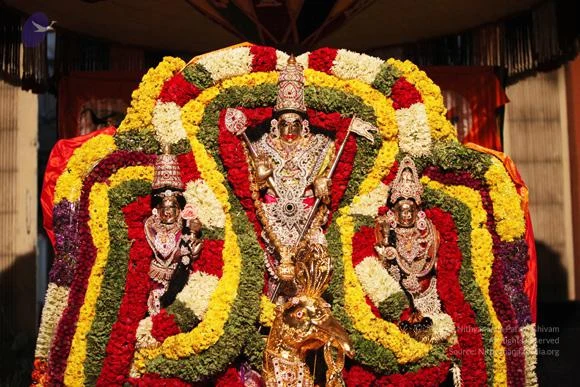
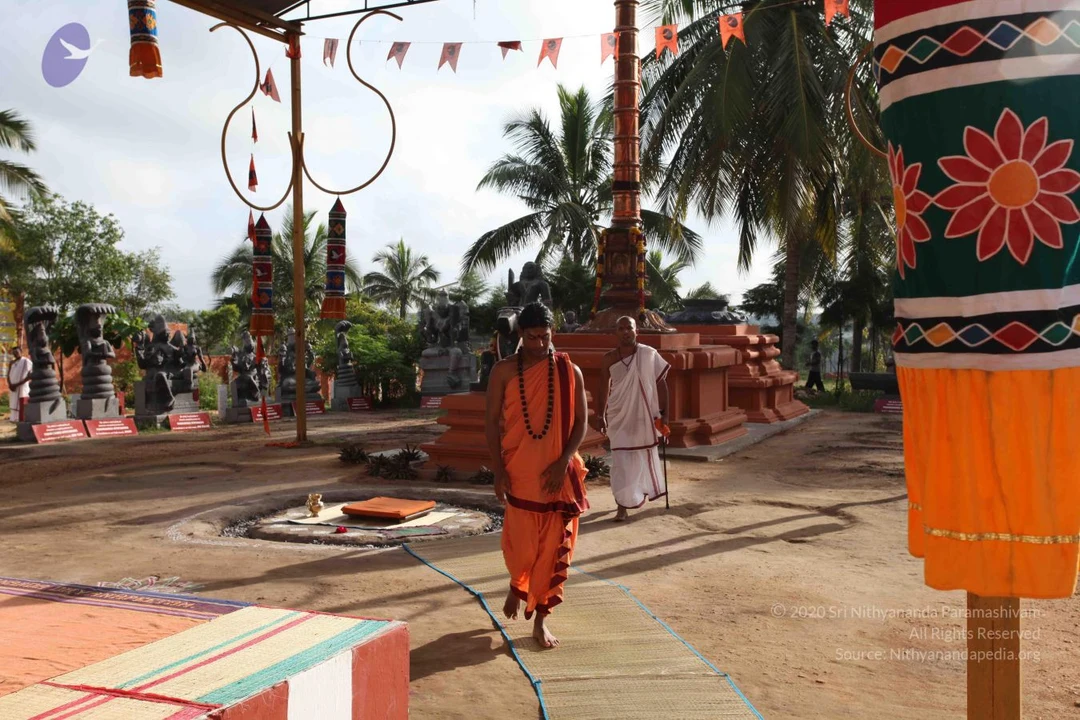
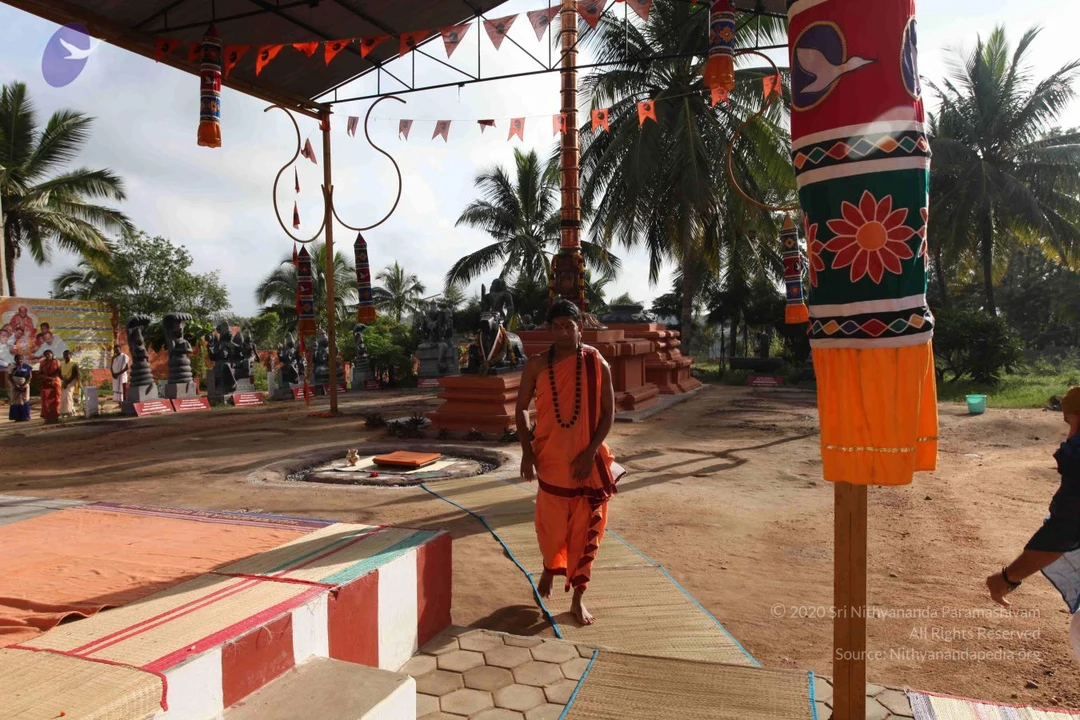
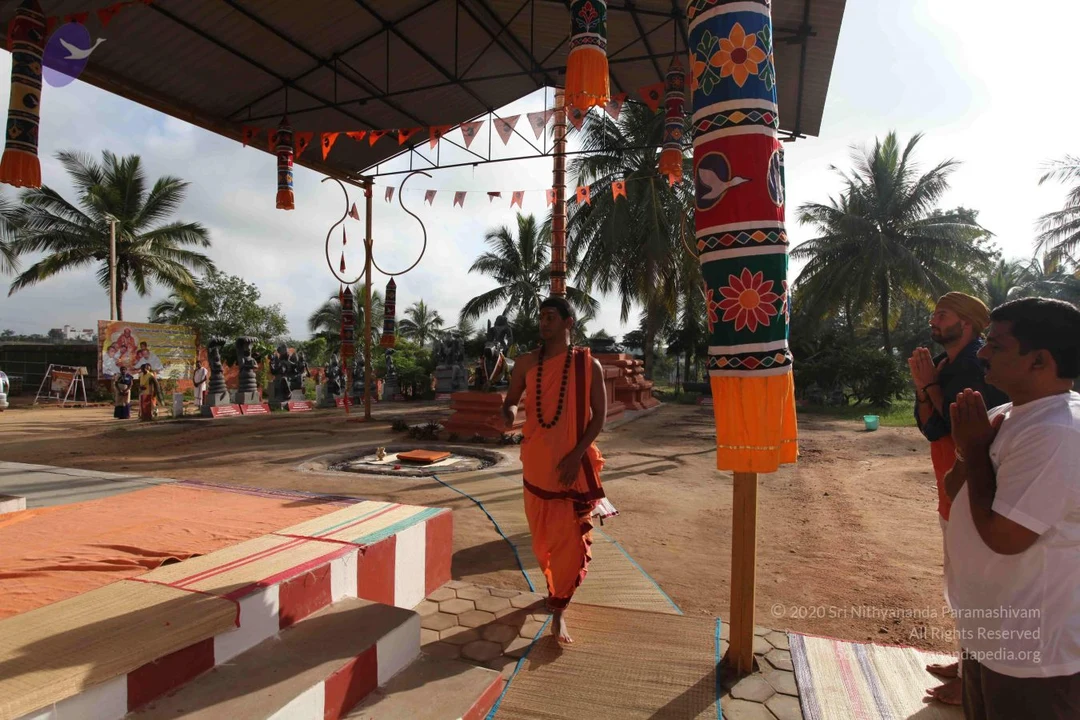
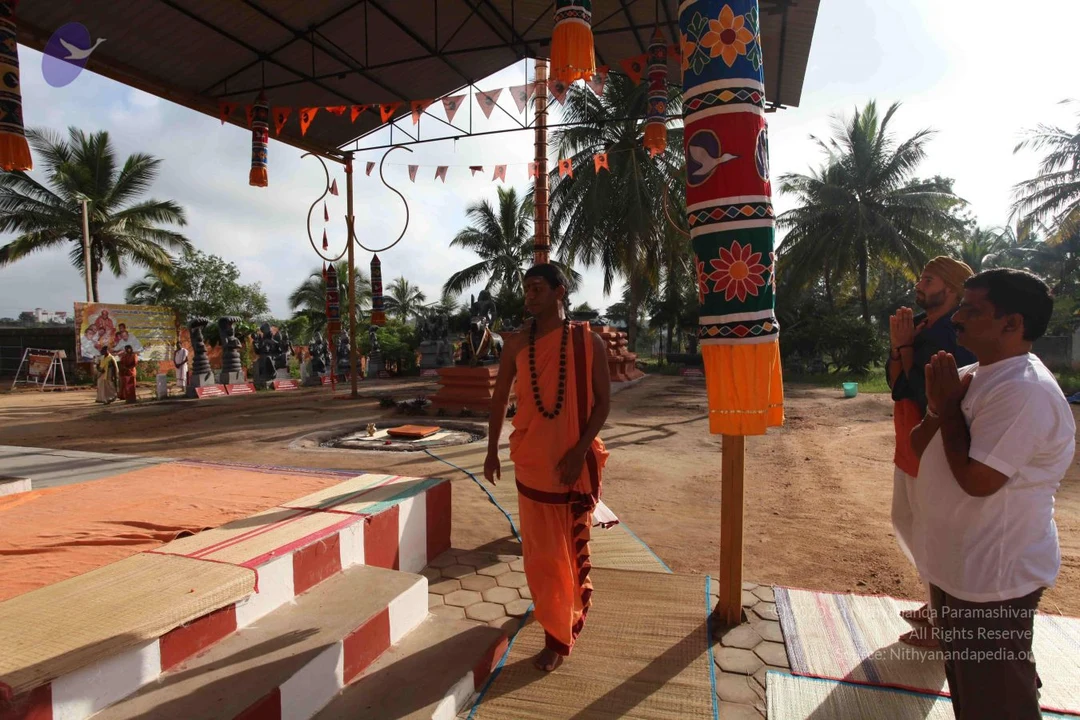
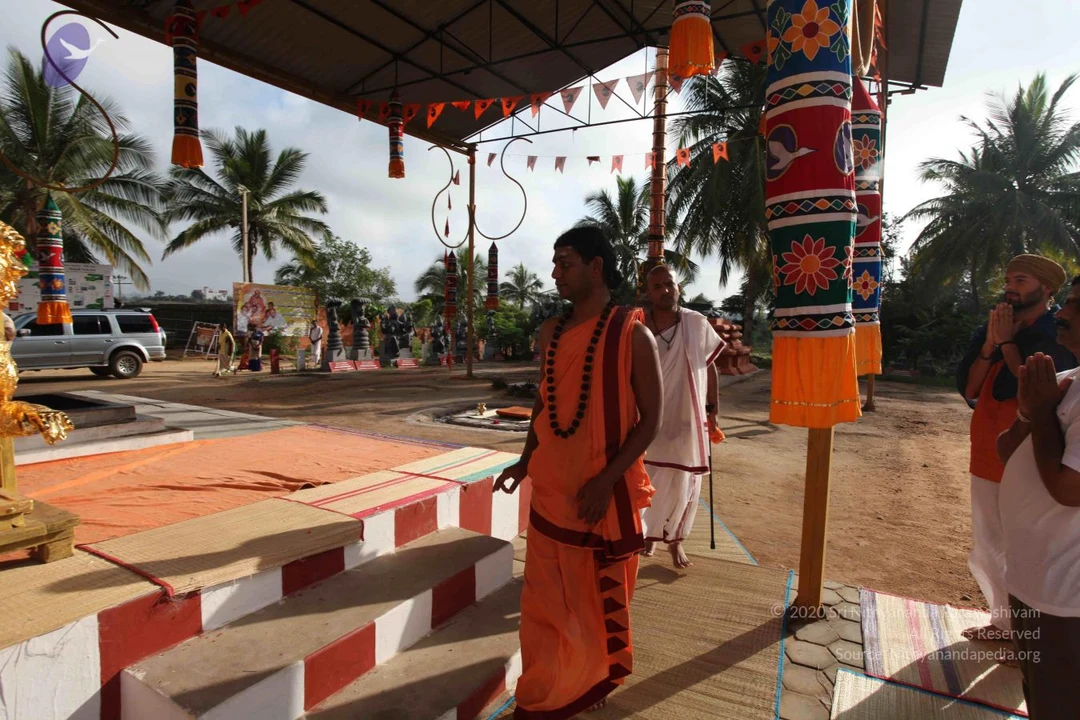
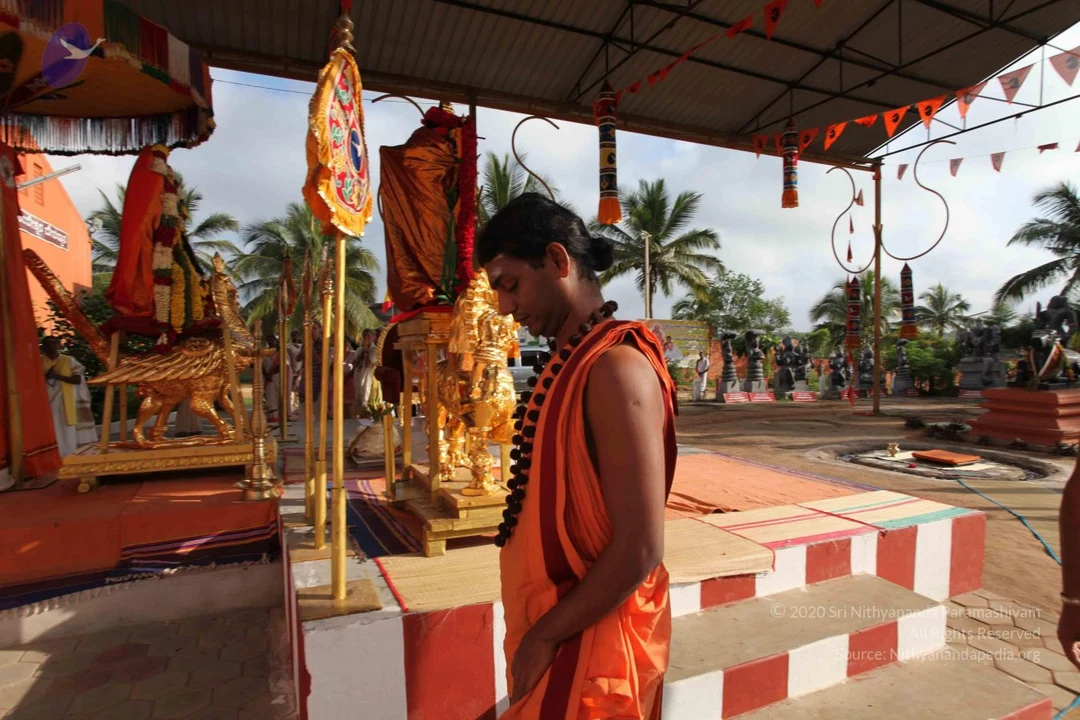
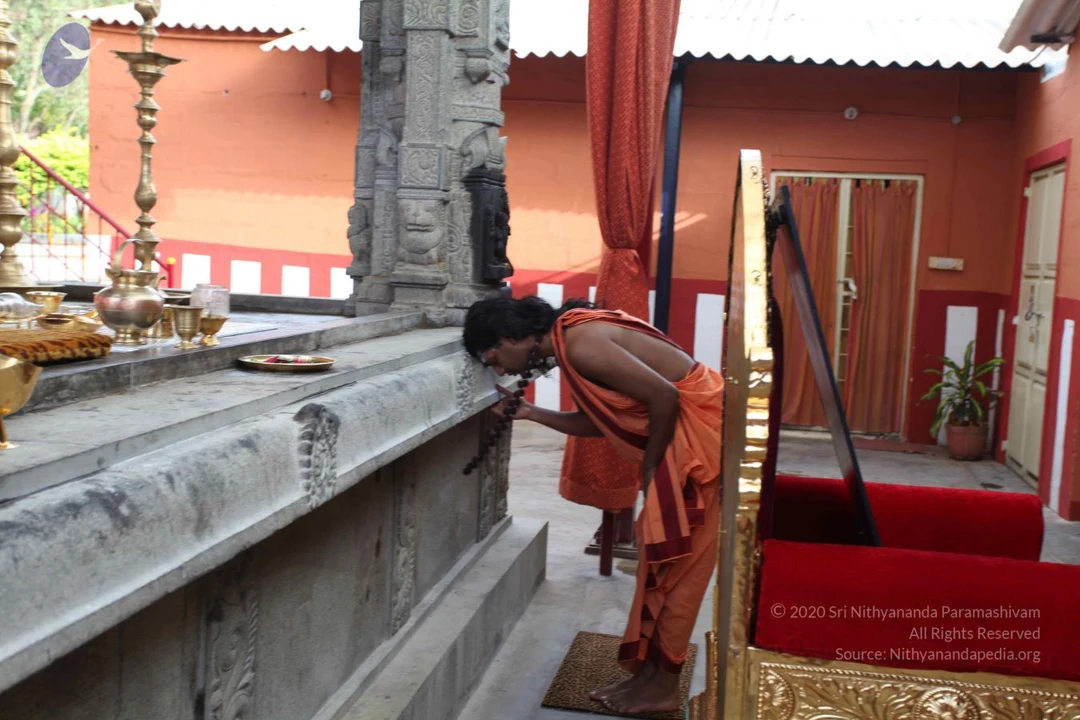
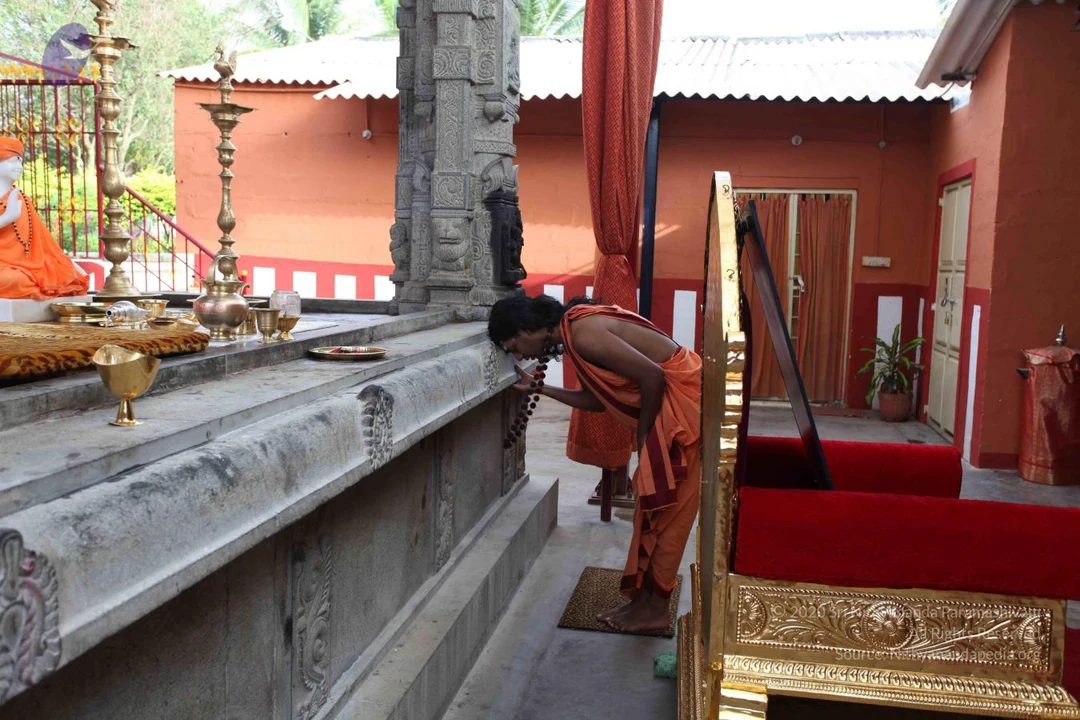
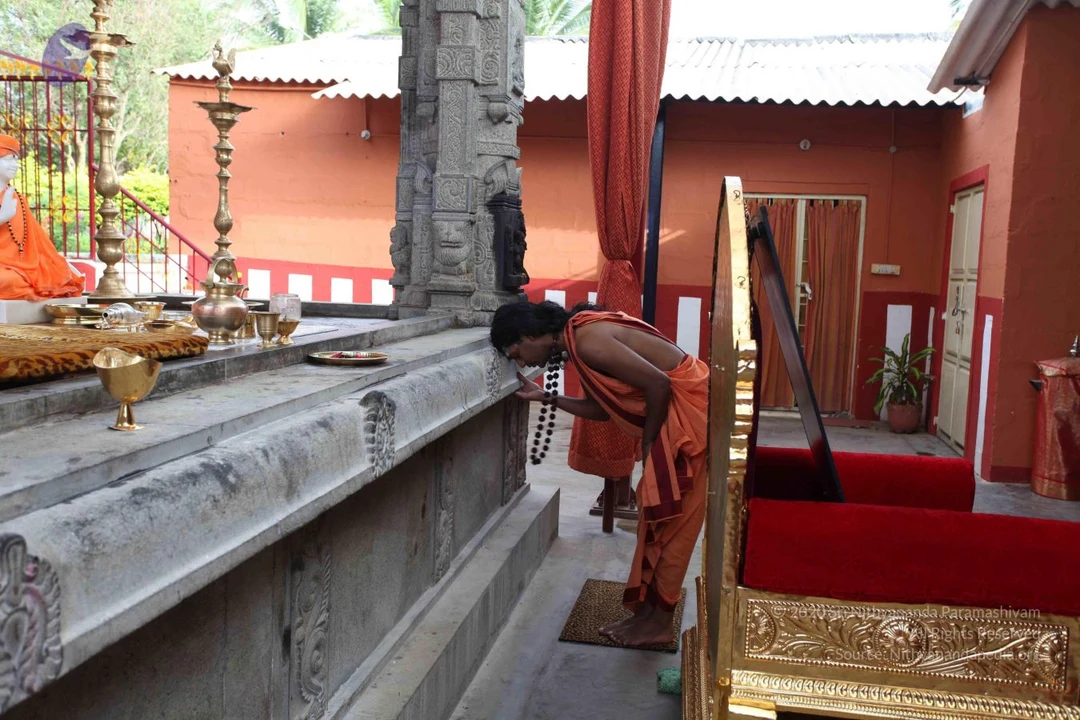
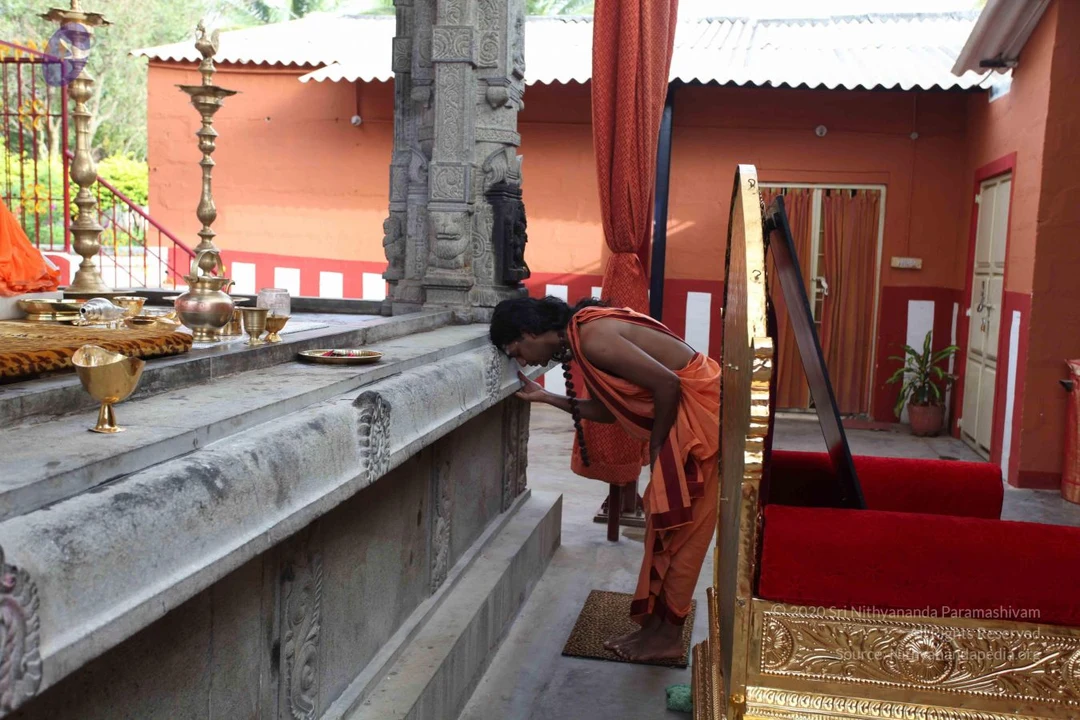
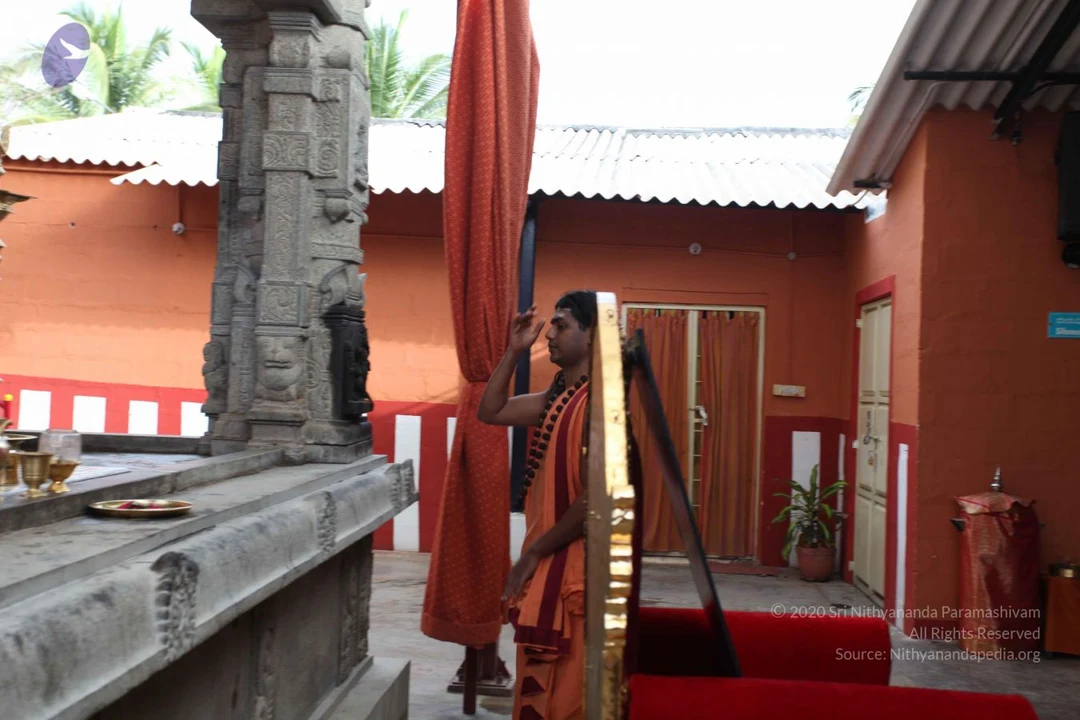
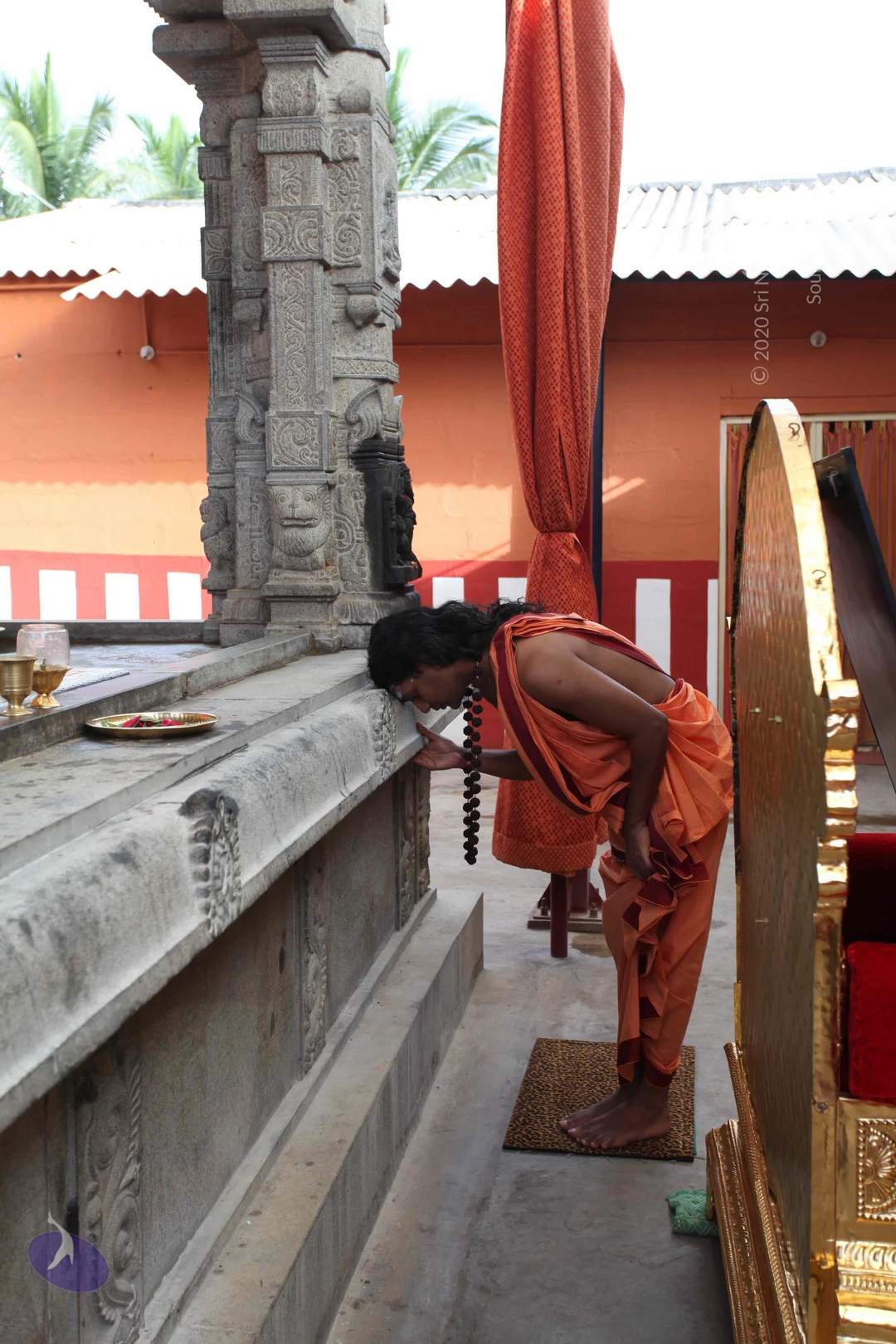
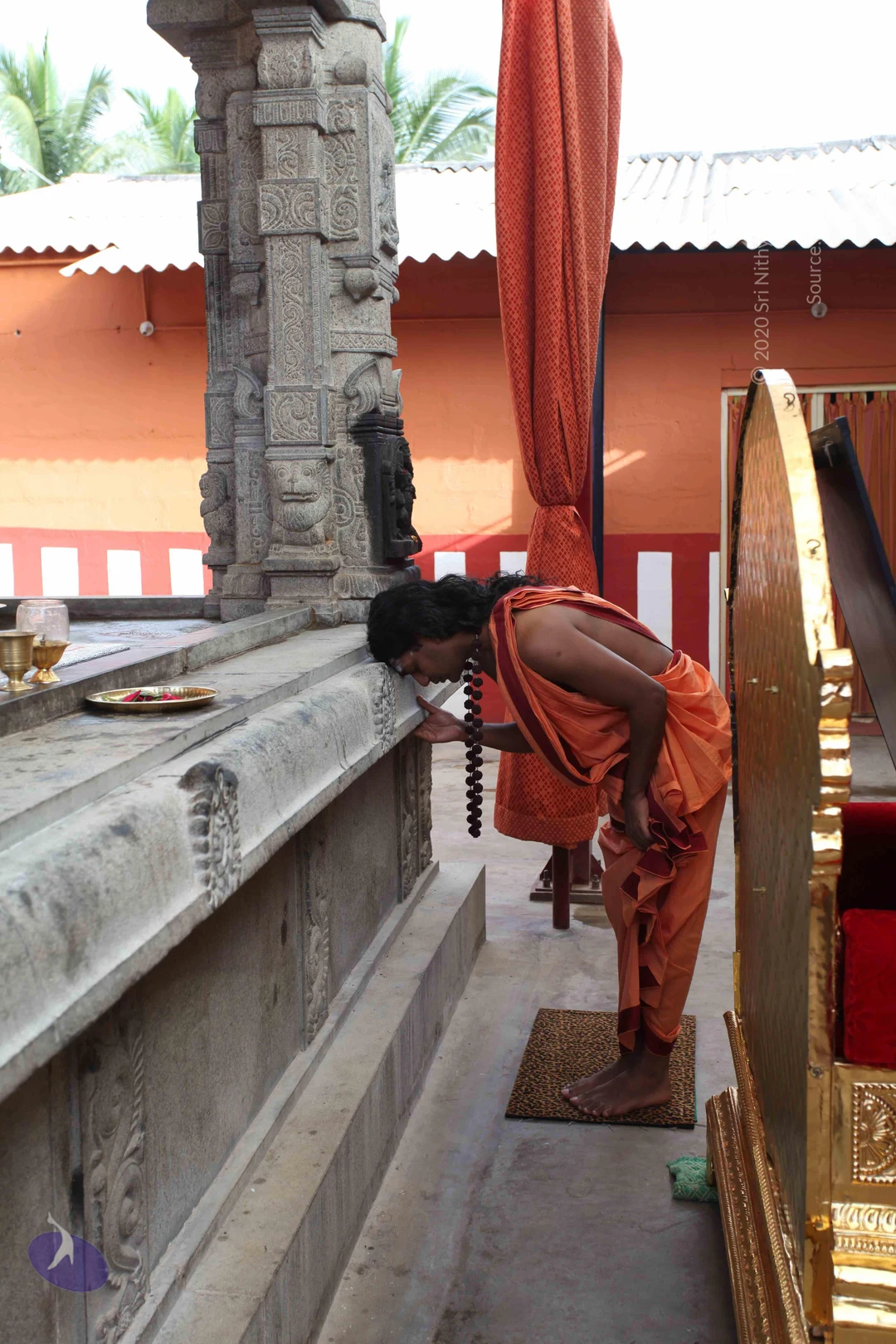
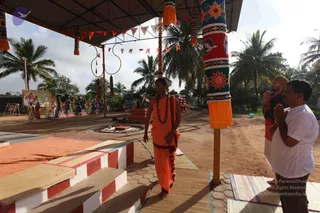
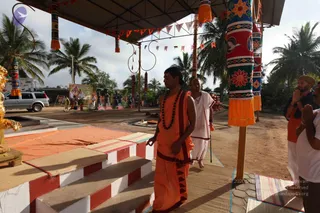
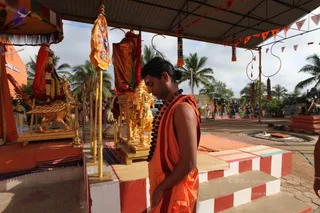
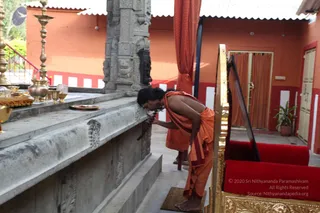
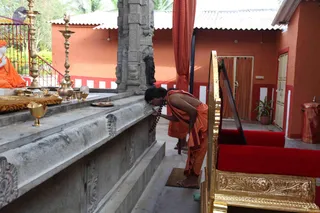
Outdoor temple ground under a corrugated roof hung with orange and multicoloured bunting and tall painted pillars decorated with flowers and birds. A saffron-robed sannyasi with a rudraksha mala and bare feet walks along a mat toward a small fire or ritual pit, with a flat wooden seat beside it. Two devotees on the right stand with palms pressed together in anjali; one wears a white shirt and the other an orange turban and orange clothing. Coconut palms and rows of dark stone deity murtis stand in the background, and a painted banner is visible at left. The scene suggests a puja or homa setting, though the ritual itself is not clearly shown.Outdoor ashram scene under a canopy decorated with orange and red fabric banners, bunting and hanging tassels. A man in saffron-orange robes and a rudraksha mala walks barefoot along a mat-covered path past a raised platform with red and white steps. Two men stand at right with palms pressed together in namaskar: one in a white shirt and white dhoti, the other in dark clothing with an orange turban. Behind them stand black stone deity sculptures, a small fire pit near the centre, palm trees and a painted banner with figures on the left.A photograph of an outdoor ashram courtyard under a open canopy hung with colourful decorative banners, tassels and orange pennant flags, with palm trees behind. In the centre, a man in orange saffron robes with a rudraksha mala walks up a red-and-white striped step, his hands at his sides. Behind him, a shaved-headed man in white ritual clothes walks, and at the right edge two people with palms pressed together stand in greeting, one in orange with a turban. A golden deity figure is at the left edge, with a parked silver SUV and a small shrine area beyond.A man in a saffron-orange dhoti and shawl with a dark rudraksha mala around his neck stands with his head bowed on a raised red-and-white stepped platform outdoors. Beside him are golden ratha-style vehicles with a golden lion-shaped mount, a golden kalasha-like figure, and orange-and-gold ceremonial flags and fringed canopies. Coconut palms, orange pennants strung overhead, and dark stone deity murtis lining a courtyard fill the background. No other people are clearly visible.A photograph of a bare-headed man with long dark hair in an orange-saffron dhoti and shawl leaning forward with his head bowed low over a grey stone ledge at a temple shrine. He holds a dark rudraksha-style mala in his right hand. The ledge holds brass lamps, a brass kalasha vessel, small brass cups and a tray with offerings; a carved stone pillar with deity figures stands beside it. A gold-framed ornate throne with red cushions and a red-carpeted seat is at right, and a second person in orange stands in the background. Orange and red walls surround the courtyard. The man appears to be performing a reverent padapuja-style bow at the shrine, with no visible text on the scene itself.A photograph of a temple shrine area with a stone platform, brass oil lamps (diyas) and brass vessels on the left, and a seated figure in saffron clothing with orange-beaded rudraksha malas in the upper left corner. In the centre, a bare-chested man in saffron/orange dhoti and shawl bends forward at a stone ledge, holding a string of red-brown beads, apparently offering prayers or touching the platform. Behind him stand a red velvet-covered seat and a gold-framed ornamental chair. Orange-painted walls, a red-and-white striped base and a potted plant complete the setting. The man appears to be one person and the figure in the corner is a statue or depiction, not counted as present.

SARVA-DARSHAN

3 photosSource gallery
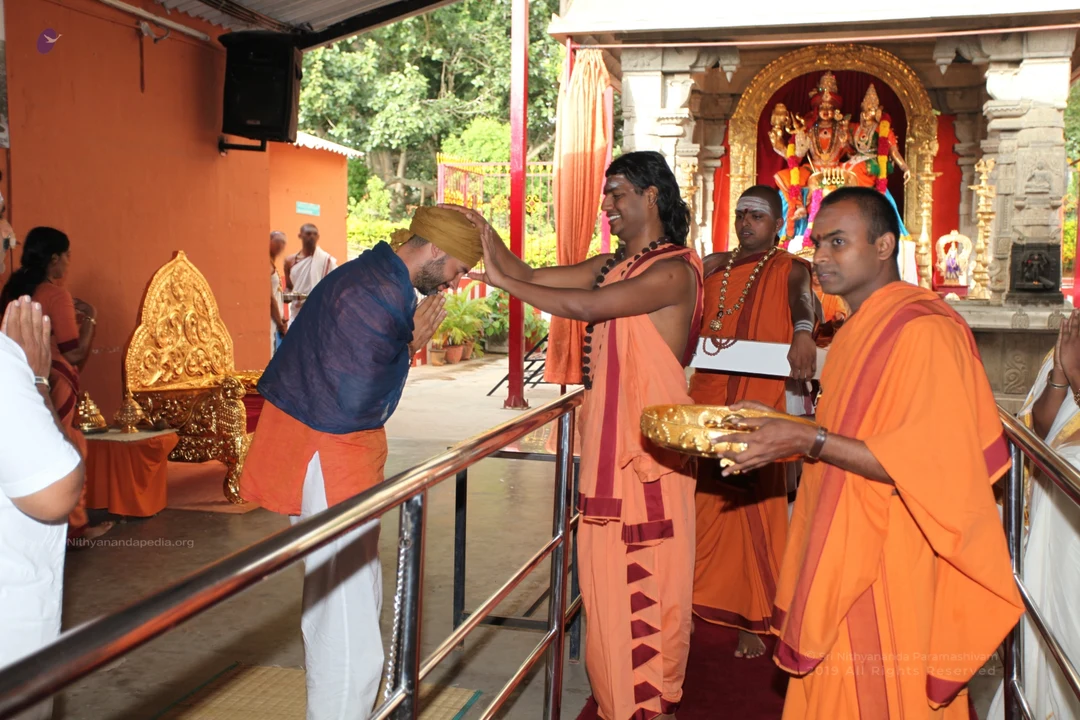
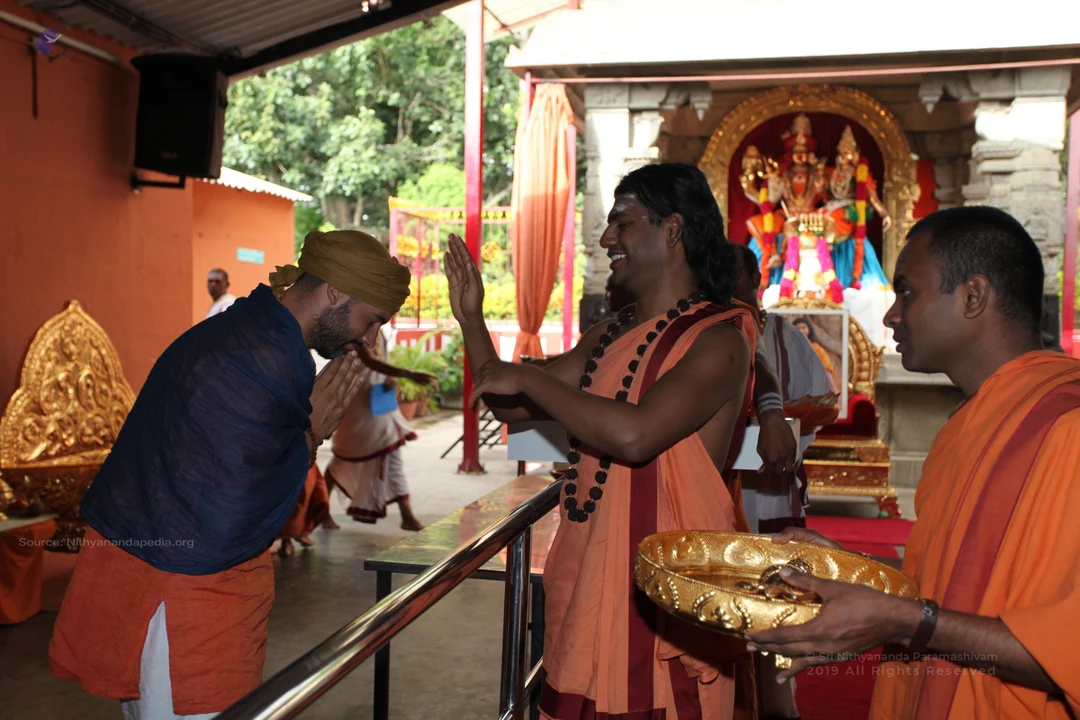
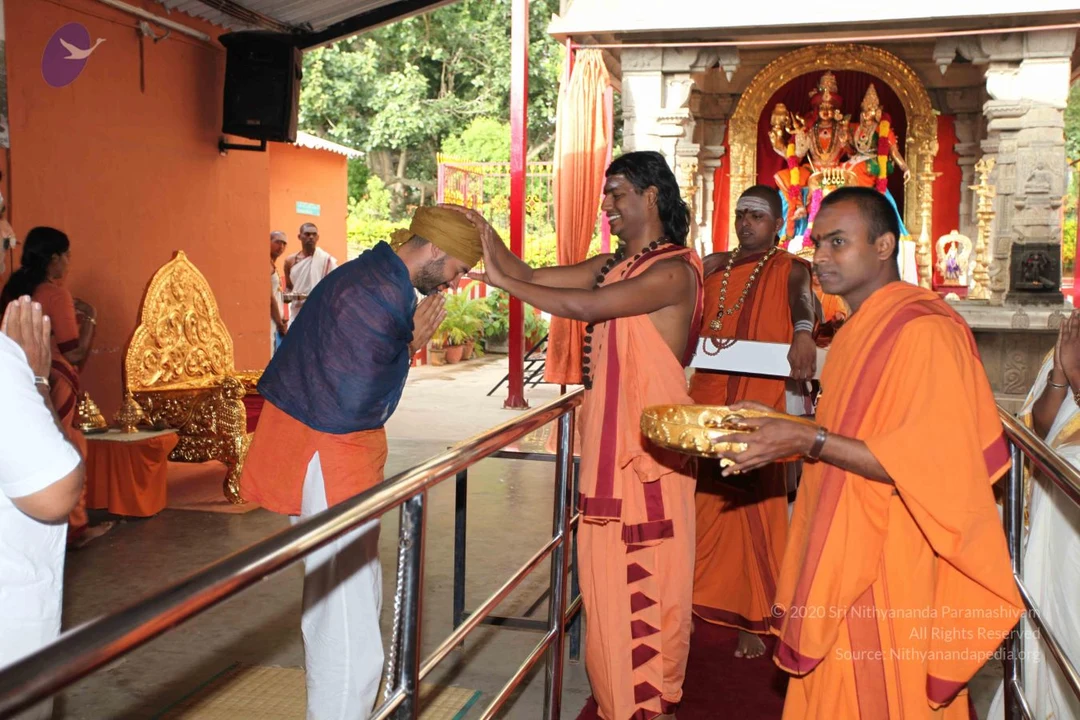
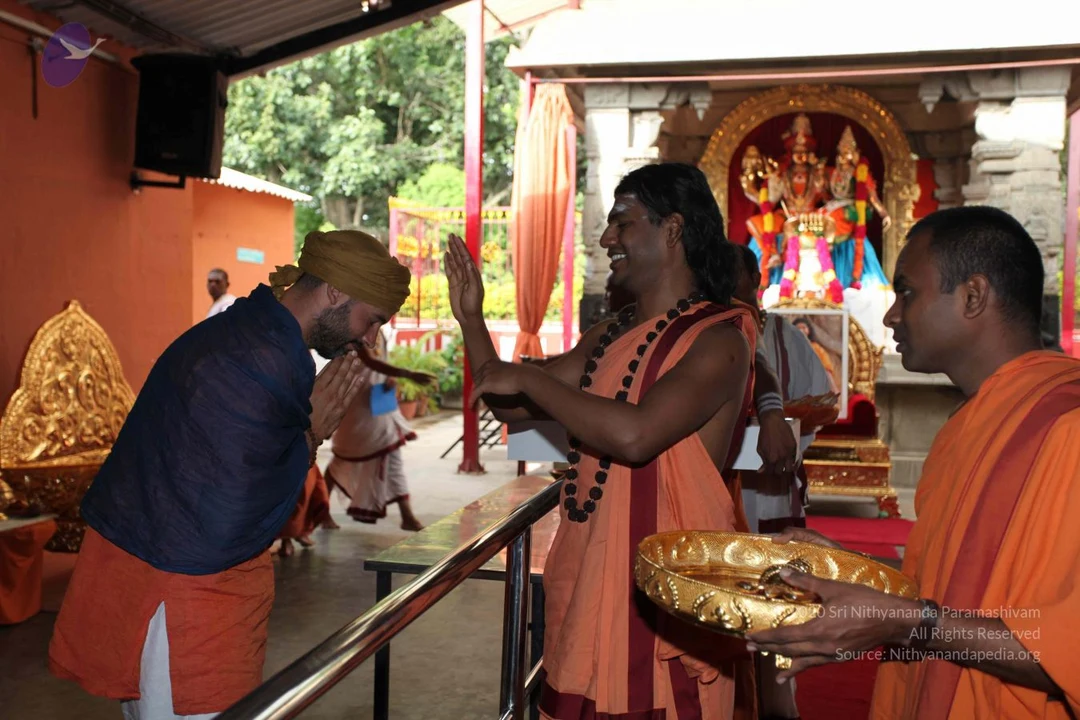
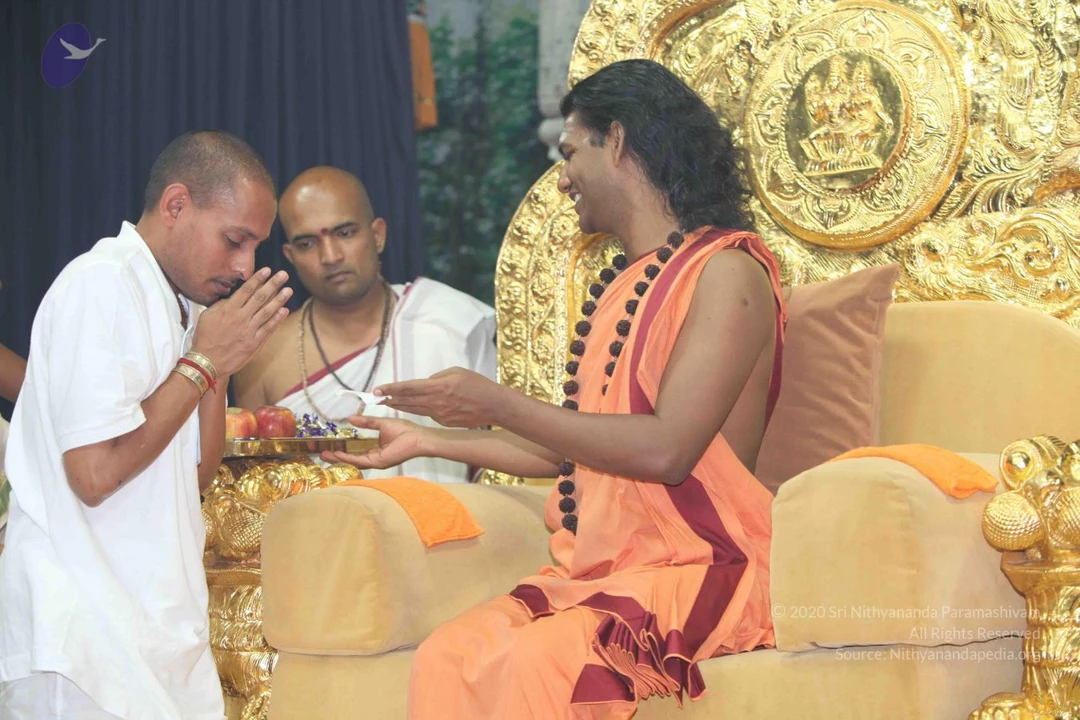
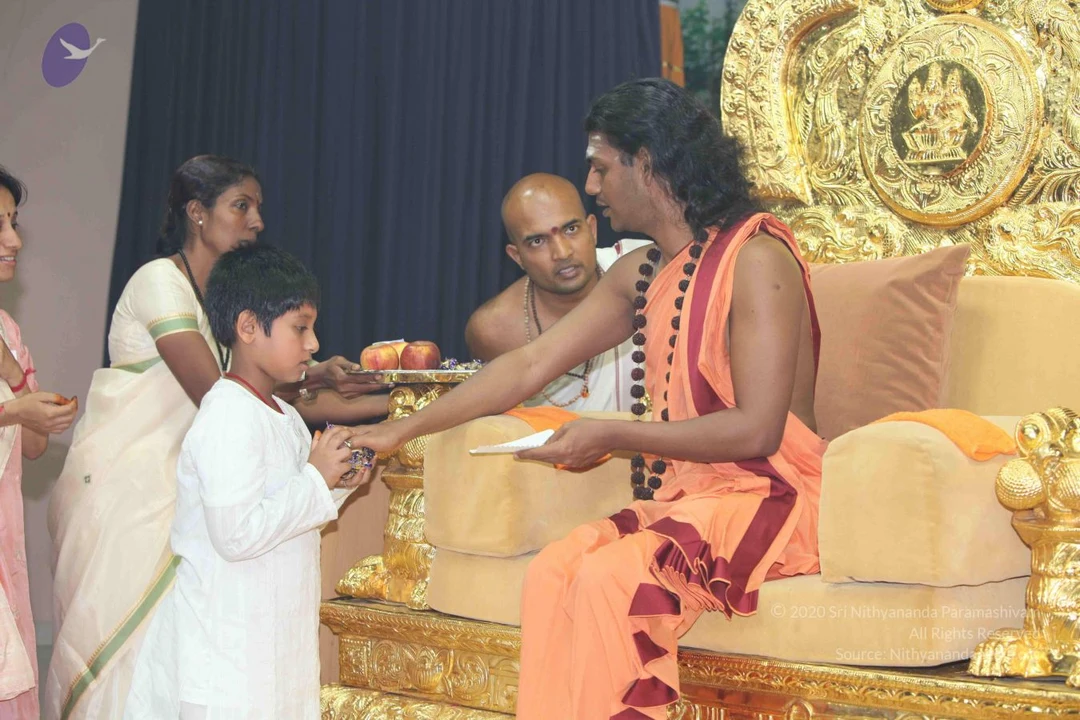
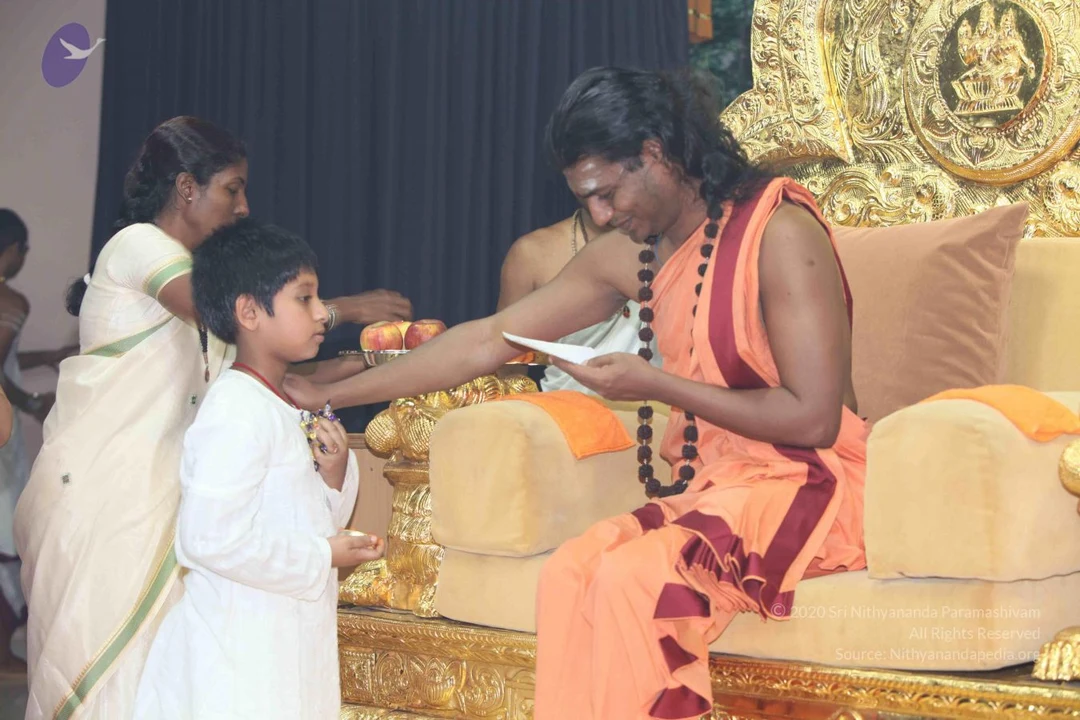
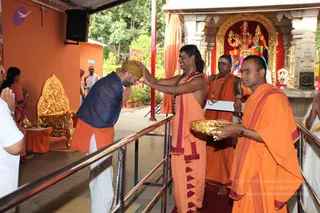
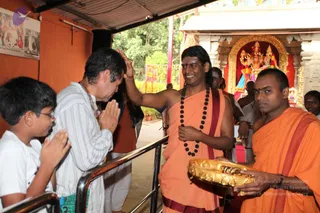
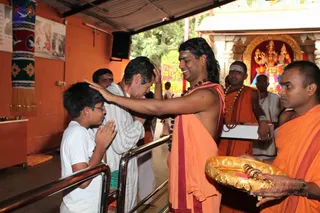
A photograph of an outdoor temple-courtyard ritual beneath a corrugated roof. A man in a long-haired, bare-chested, saffron-coloured shawl and rudraksha mala stands with raised hands touching the head of a devotee in a navy blue shirt and white dhoti, who bows with palms joined and a yellow turban. Behind them, a priest in a white dress with a shaved head and forehead markings stands near a golden throne-like seat. Another orange-robed man holds a golden plate on the right, and a further saffron-clad attendant stands in the background. A decorated deity murti with garlands is visible in an illuminated shrine, and potted plants and an orange wall frame the scene. The long-haired man's cues are consistent with the page's a person reference, but appearance alone is not certain, so this is only a probable identification and the role is recorded as a presiding figure.A photograph at a temple entrance with an orange-painted wall and a deity shrine behind. A man in a long-sleeved white striped shirt with a rudraksha mala and a boy in a white t-shirt stand with palms pressed together in namaste. A smiling bare-chested man in saffron and maroon sannyasi cloth with a black rudraksha mala places his hand on the bowing man's head, blessing him. Beside him stands an attendant in saffron robes with a red tilak holding a gold tray with offerings. Behind them, a shrine with gold and red decoration, a gold arch, and a deity murti in bright garlands. Other people stand in the background.A photograph of a blessing scene in a temple courtyard with an orange-painted wall and a corrugated roof. A long-haired man in saffron-orange robes with a red-and-maroon border and a rudraksha mala places his right hand on the head of a man in a white striped kurta, who bows with eyes closed. Beside them a young boy in a white t-shirt and glasses stands with palms pressed together in namaste. Behind, a shaved-headed priest in orange with a white forehead mark holds a white box, and a man in orange holds a gold tray with ritual items. An ornate shrine with a deity murti and red-and-gold decoration is visible at right.

PADA-POOJA

111 photosSource gallery
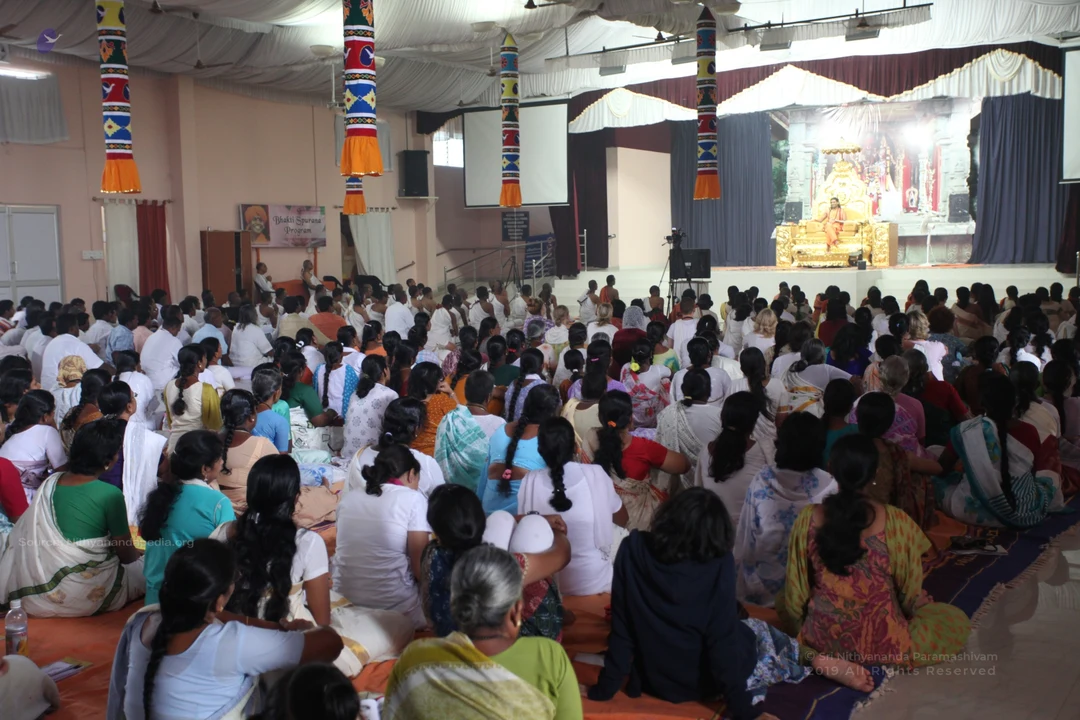
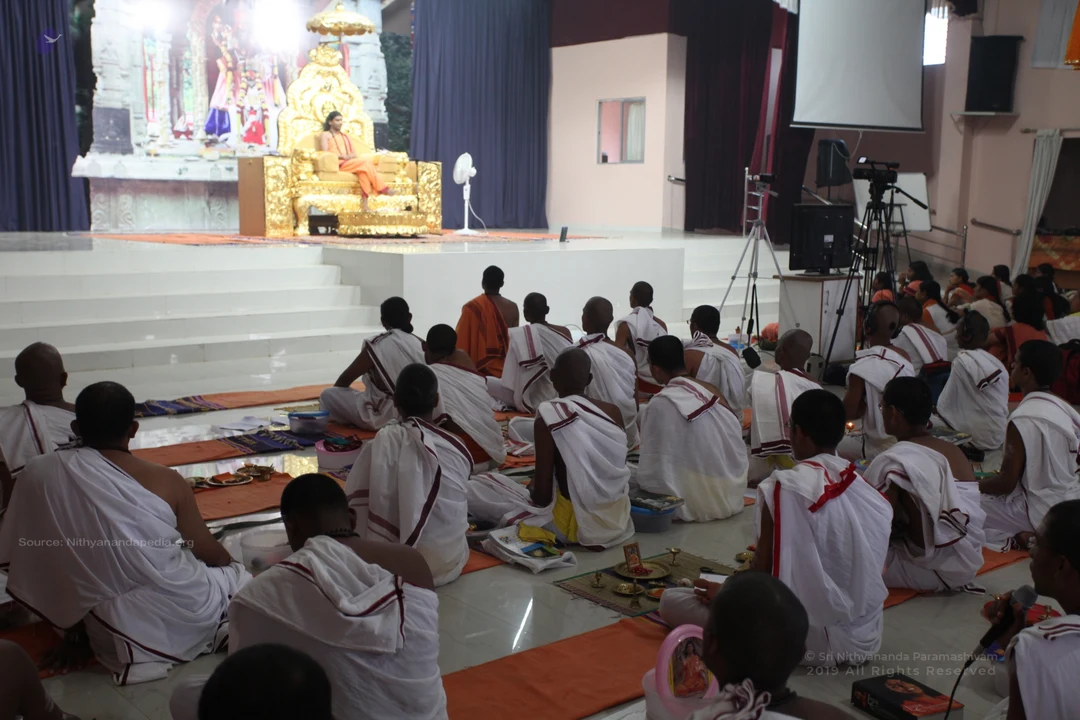
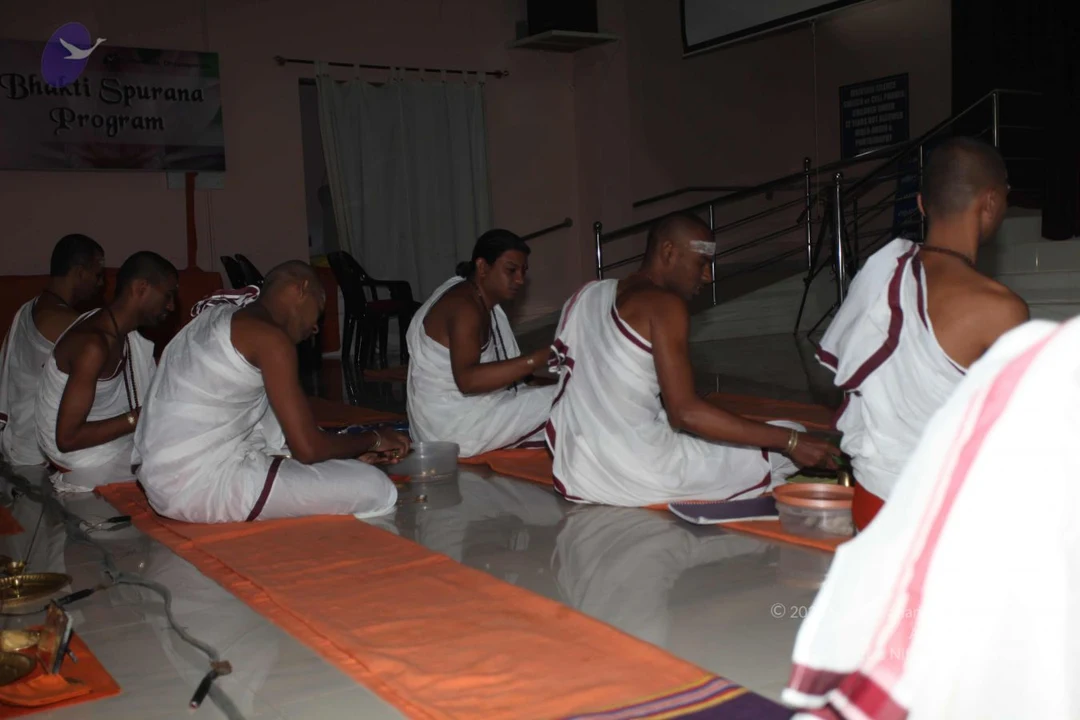
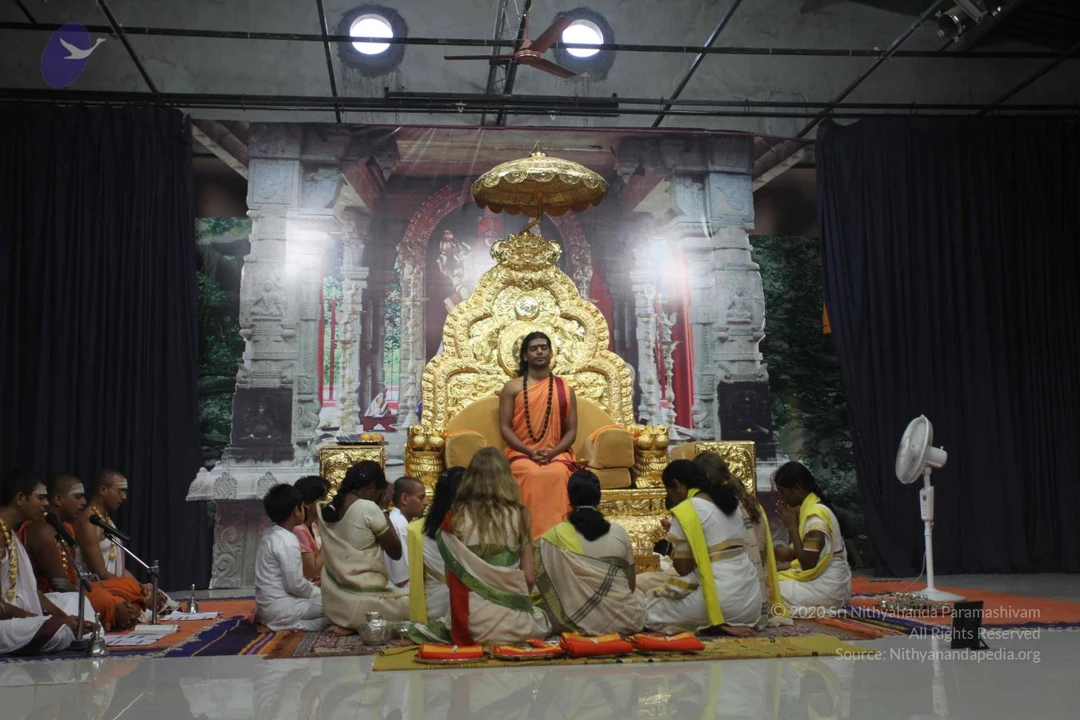
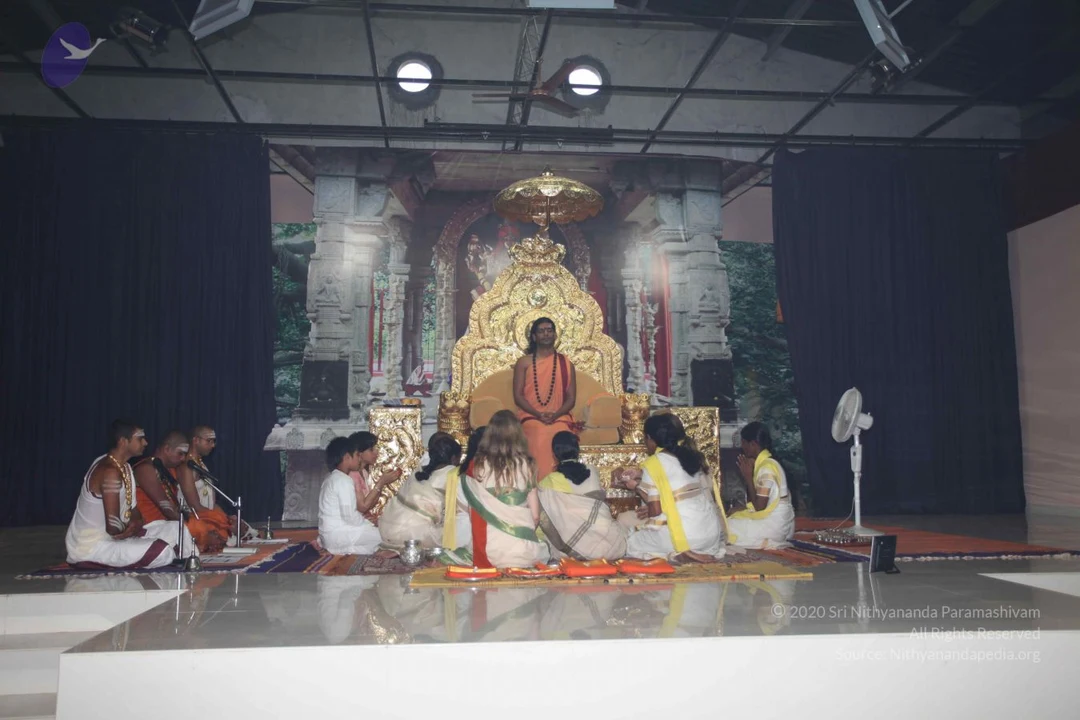
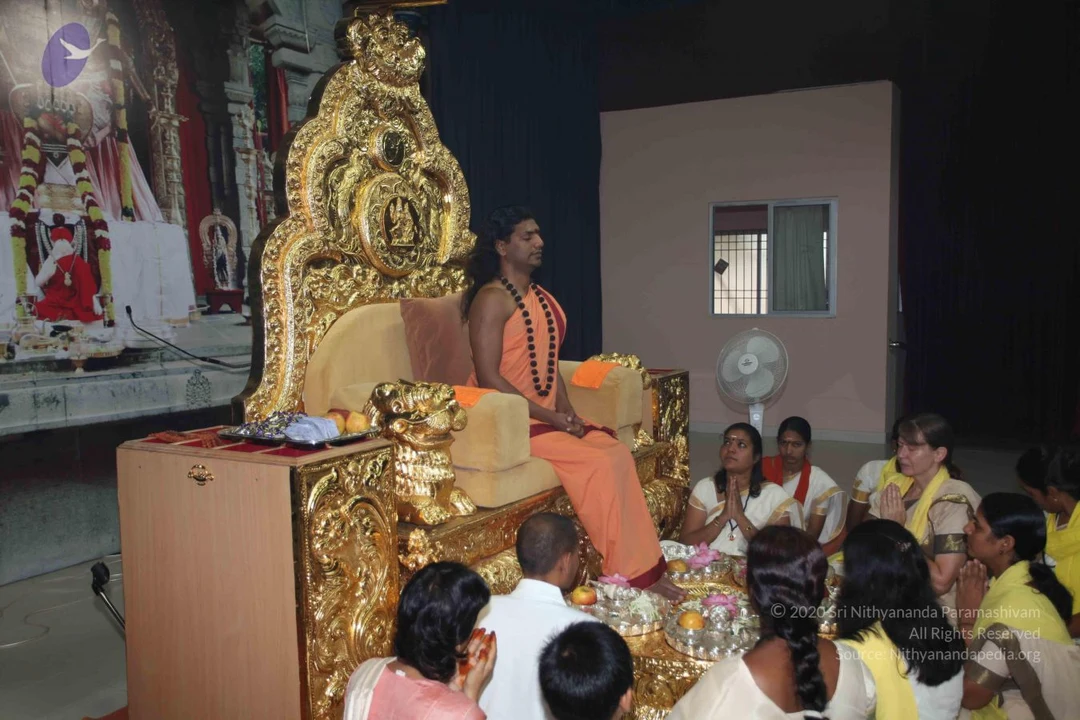
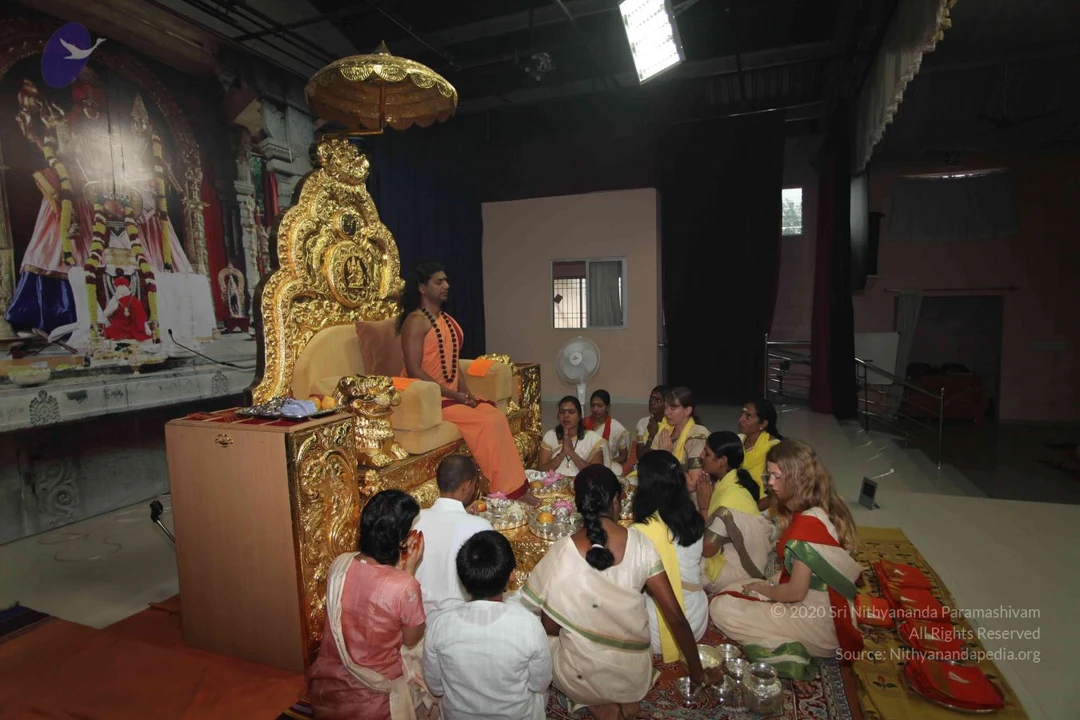
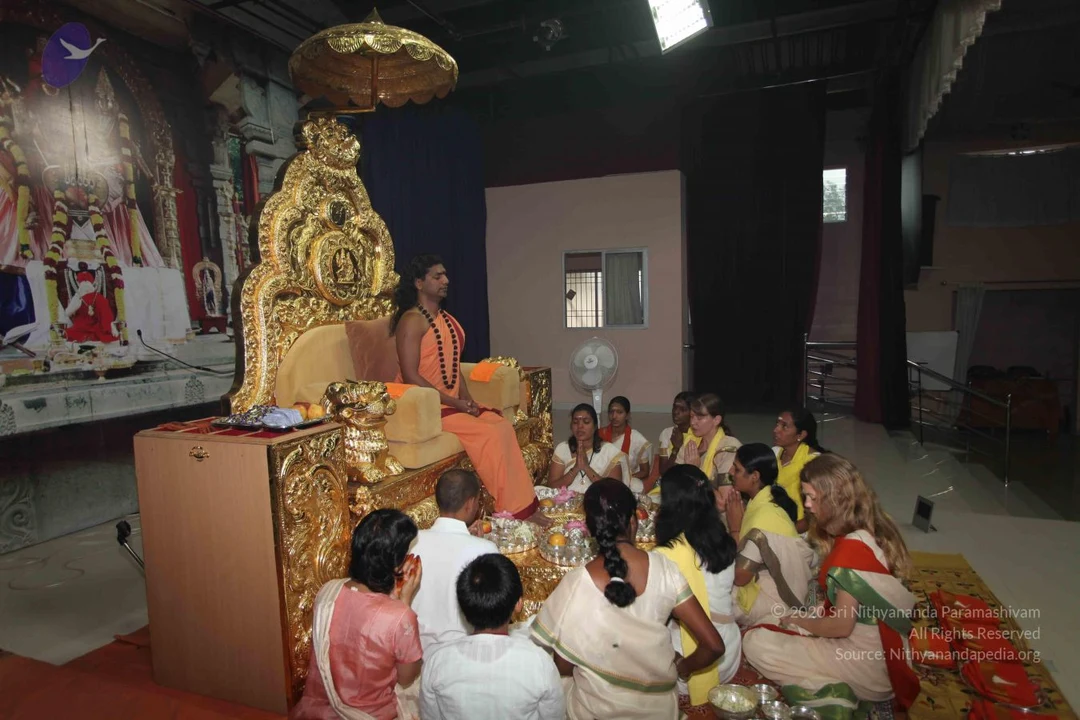
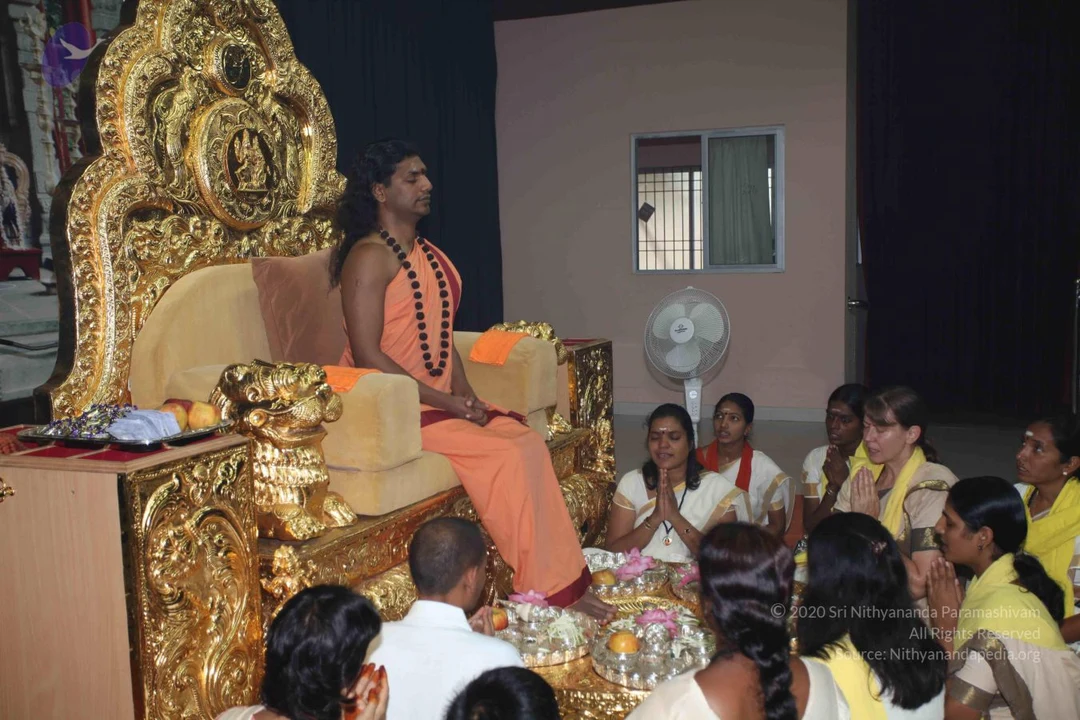
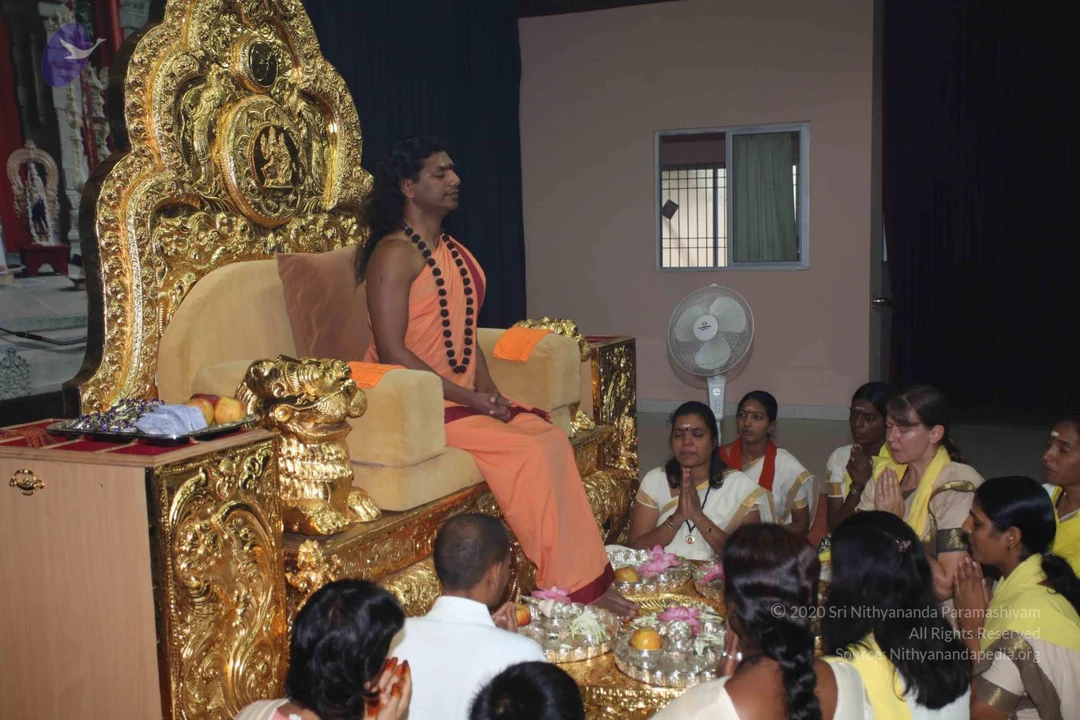
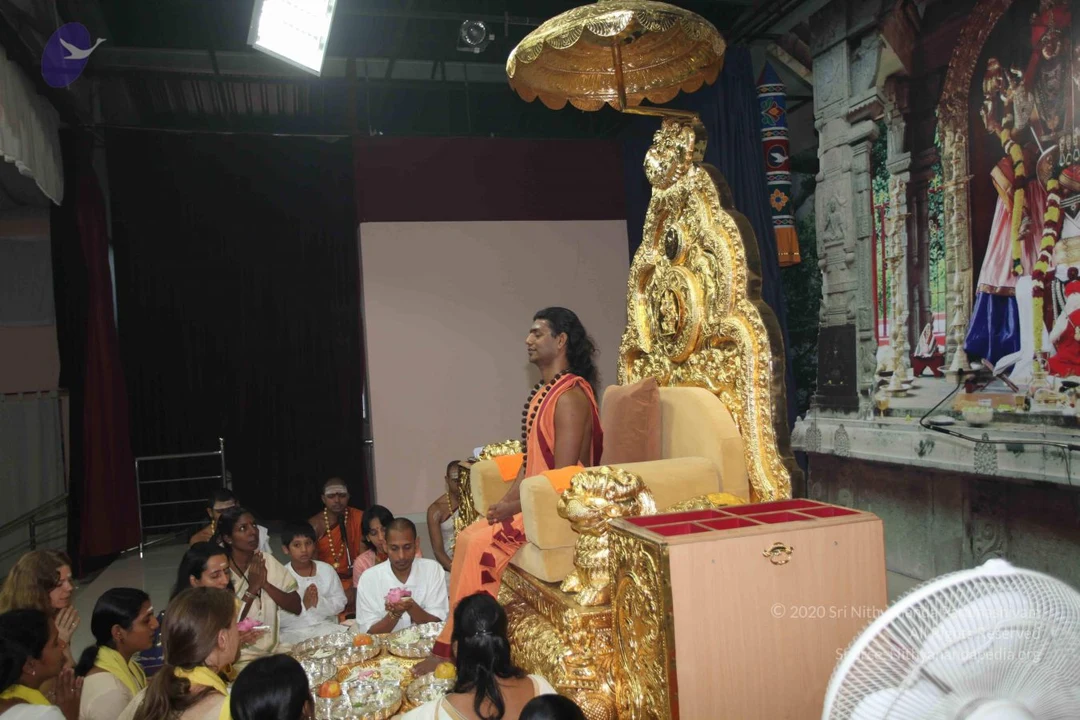
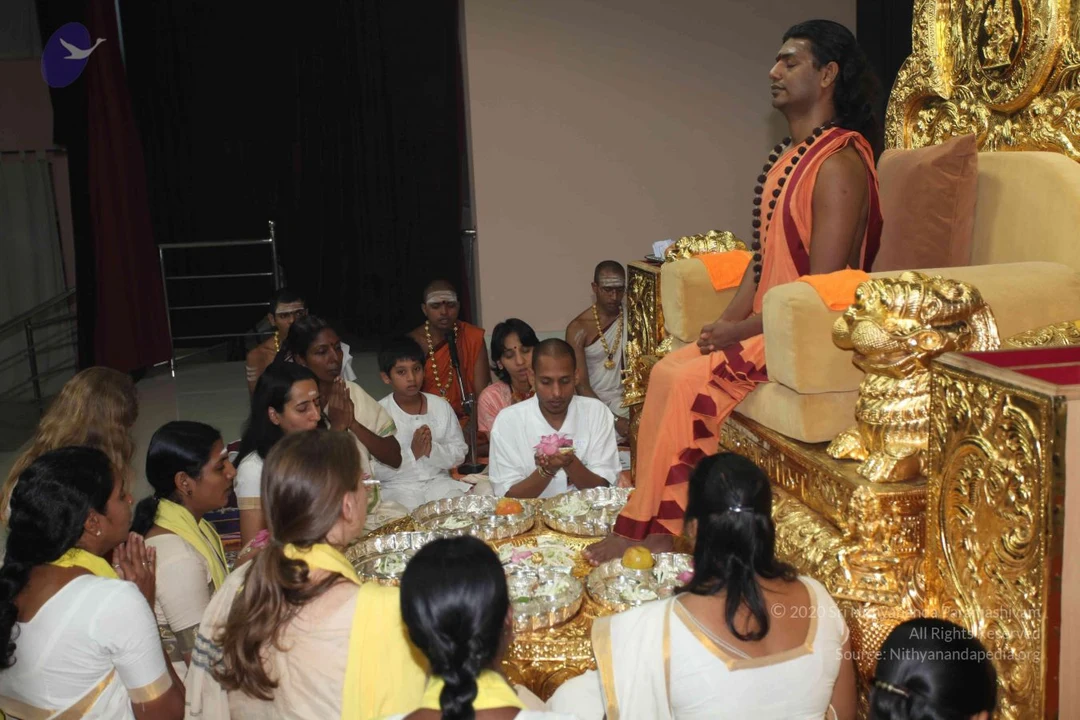
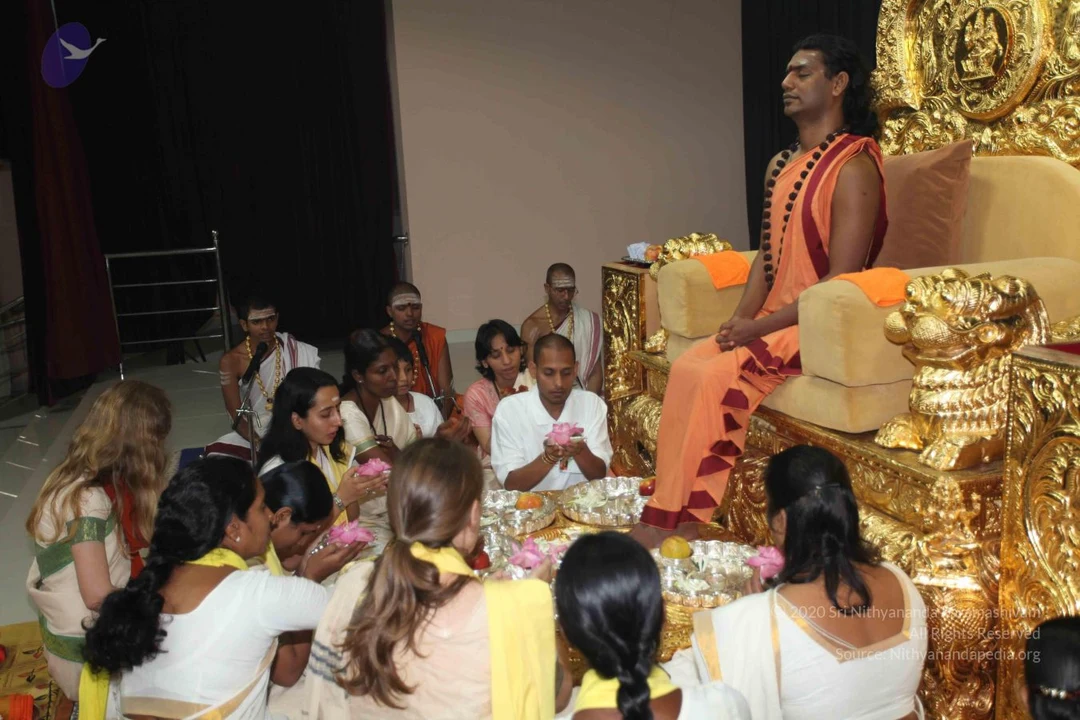
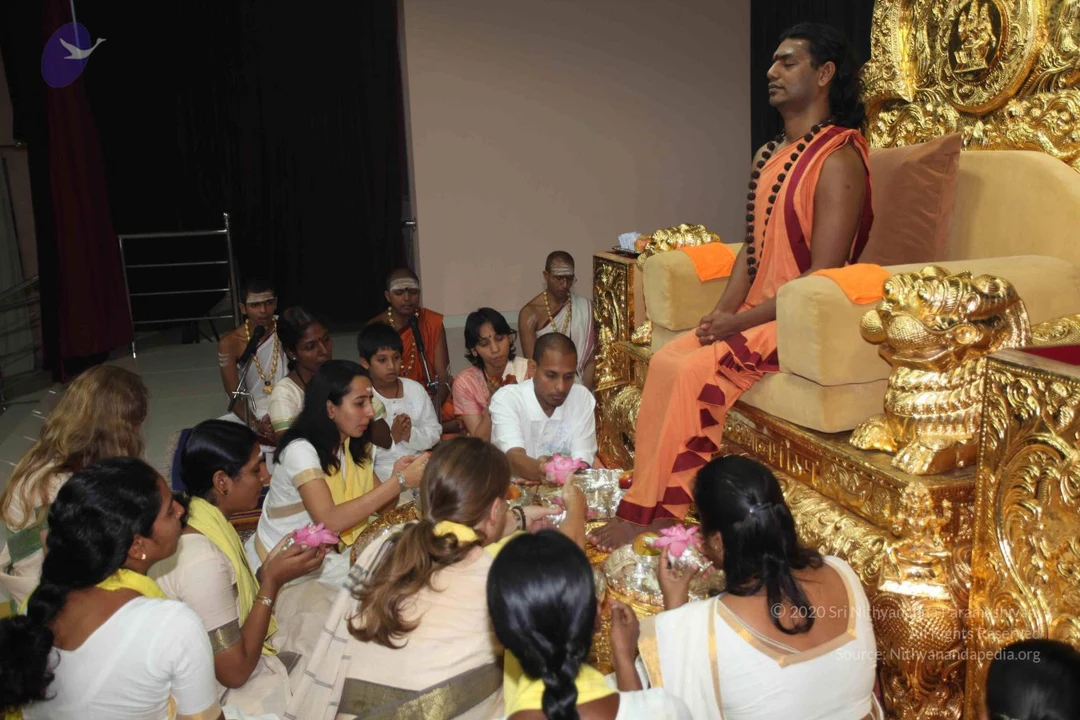
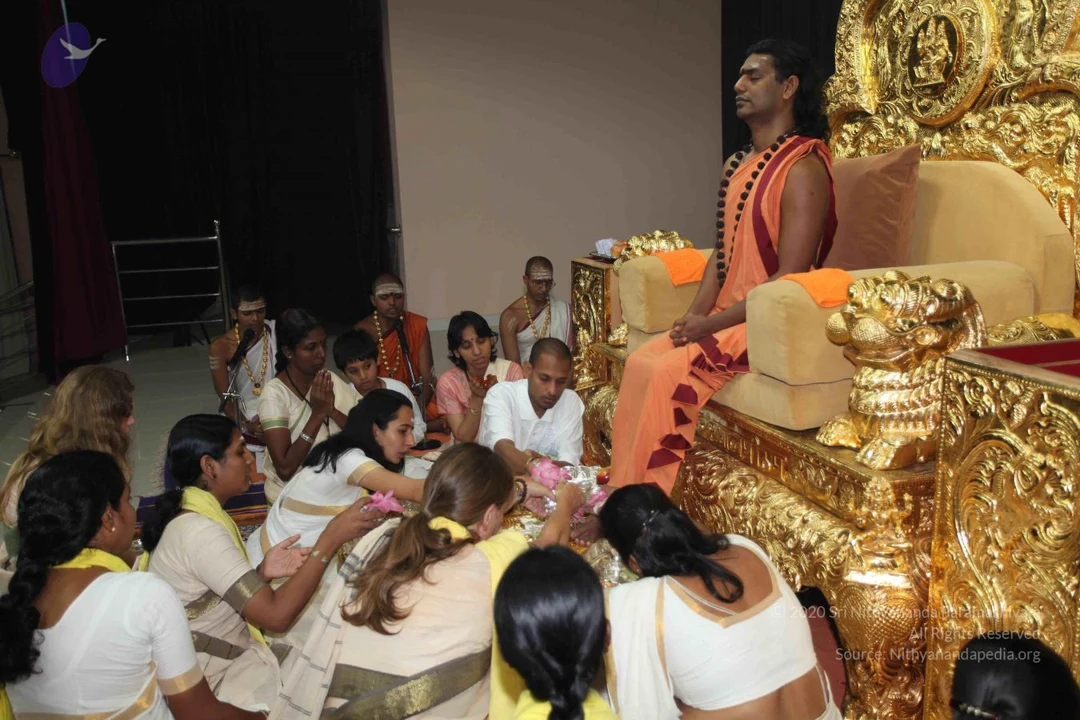
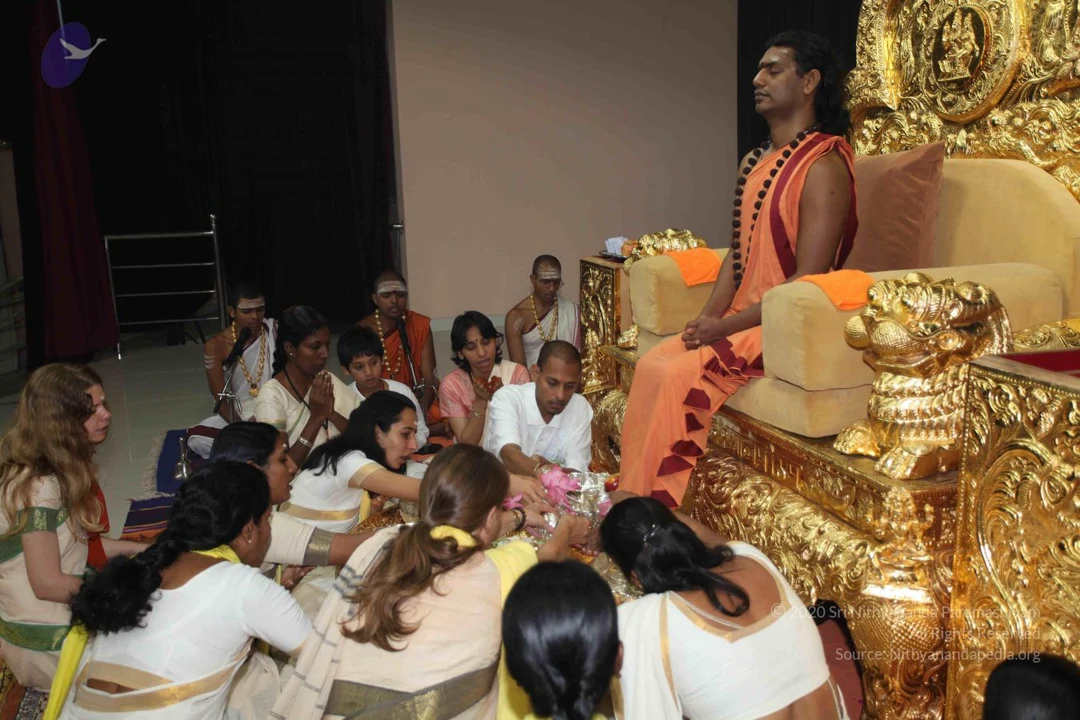
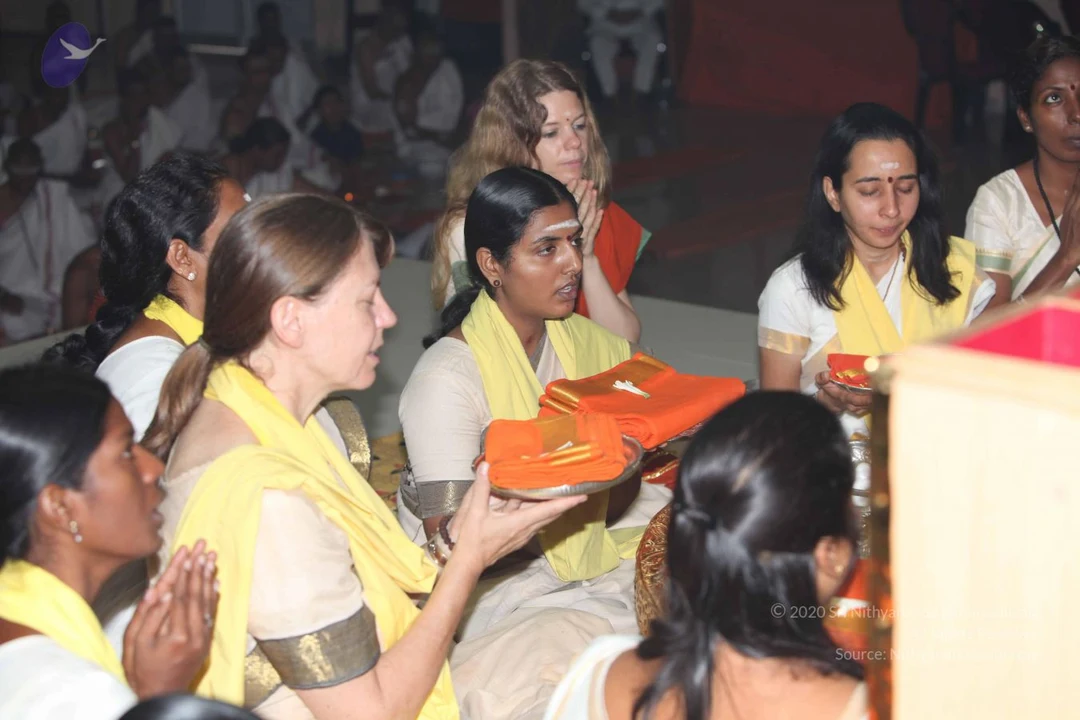
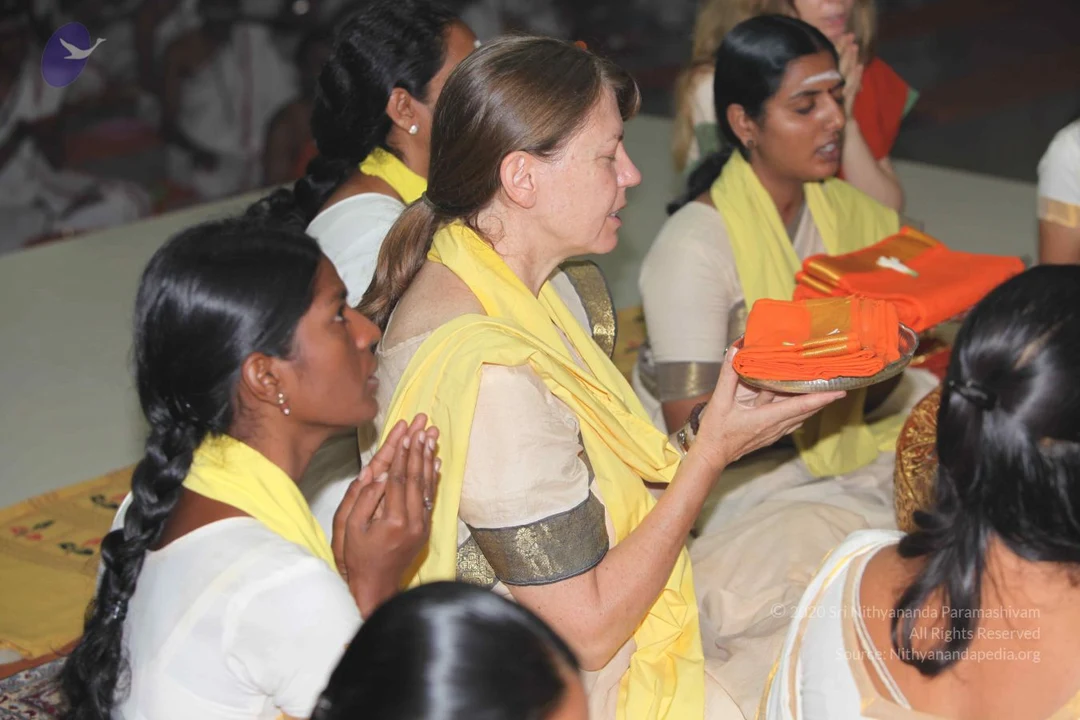
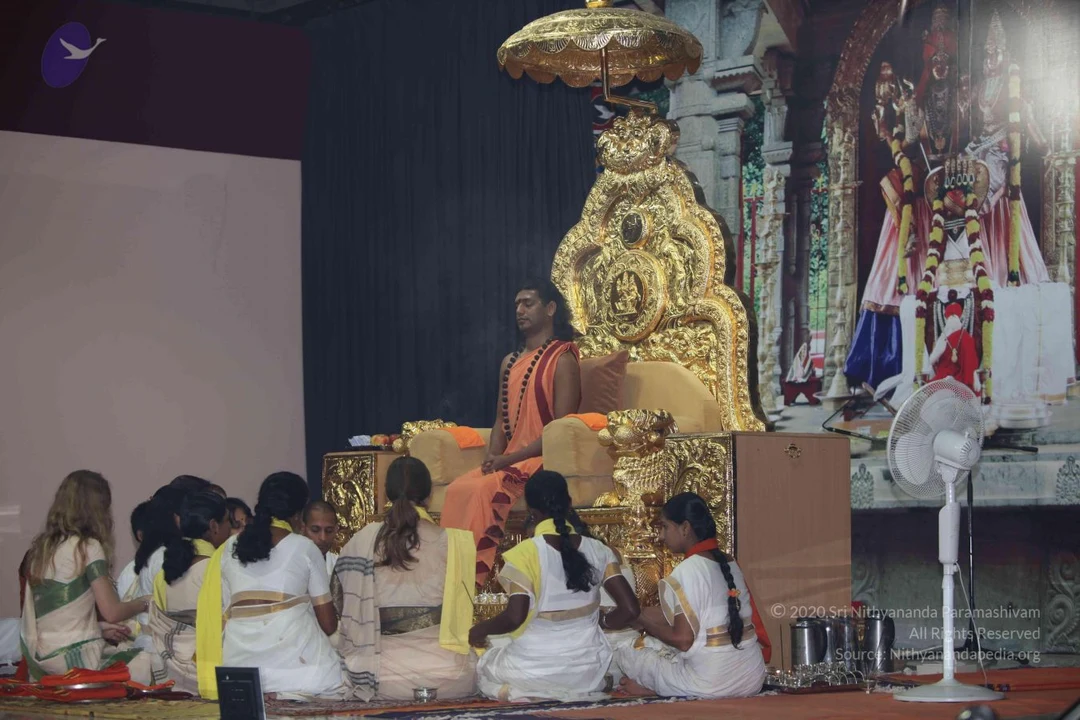
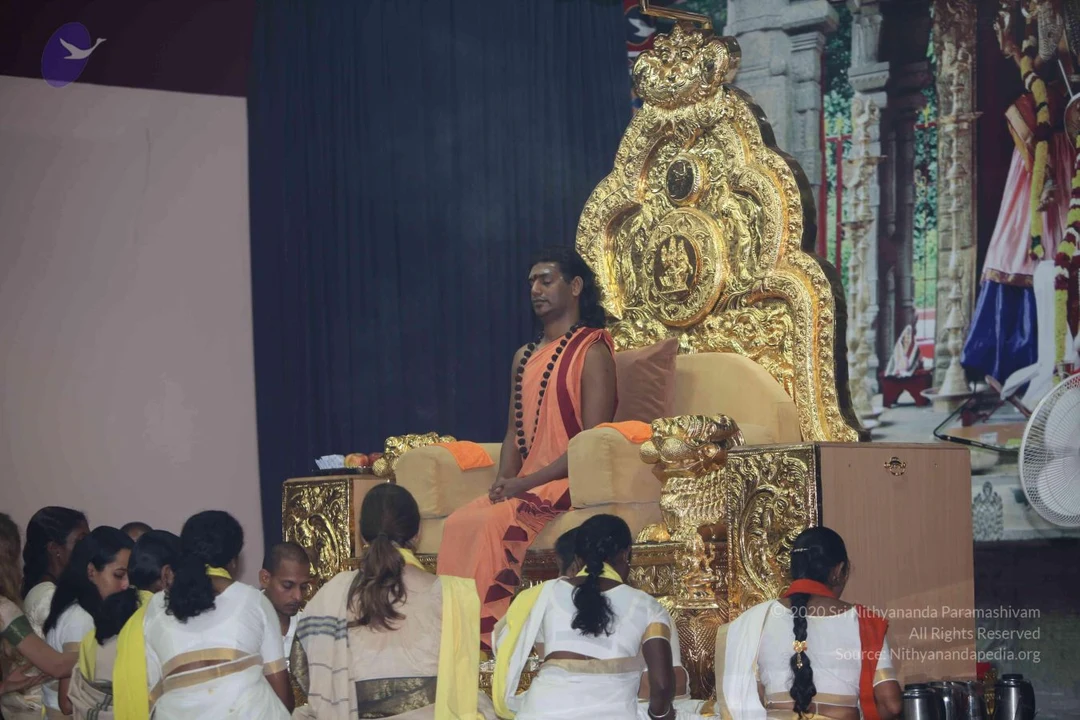
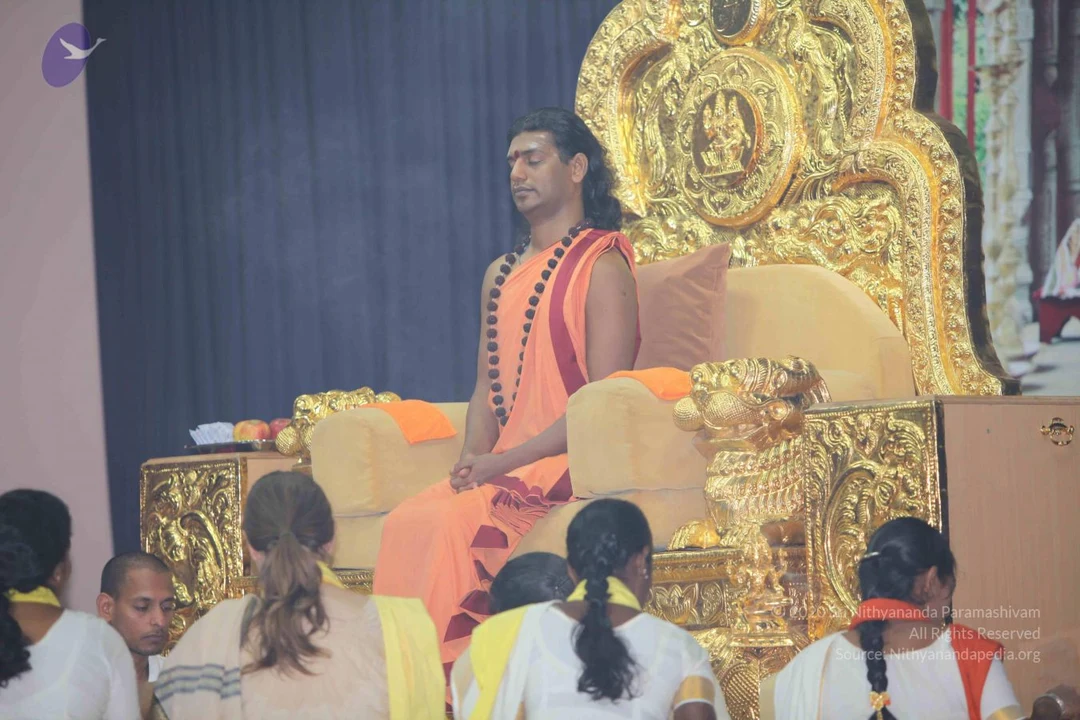
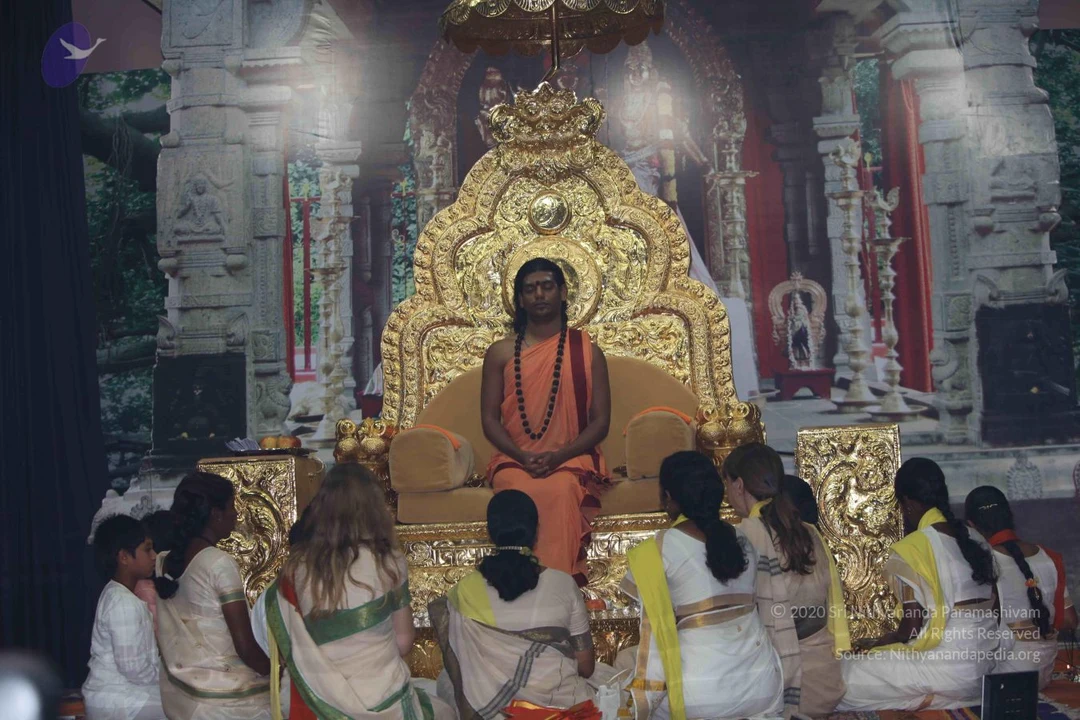
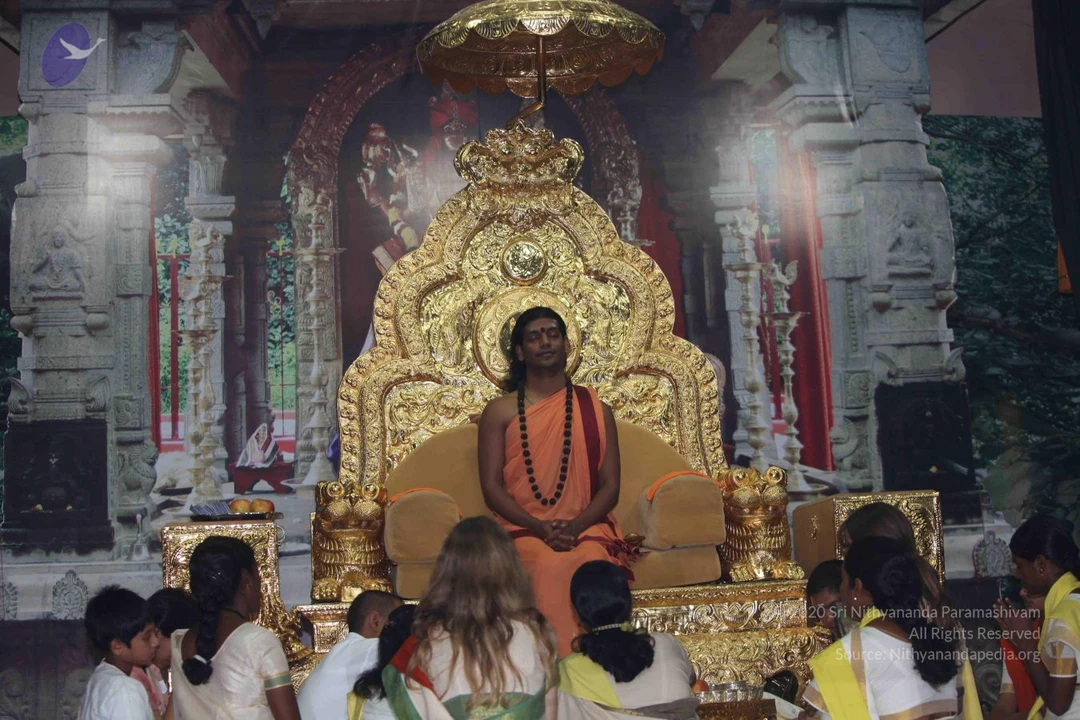
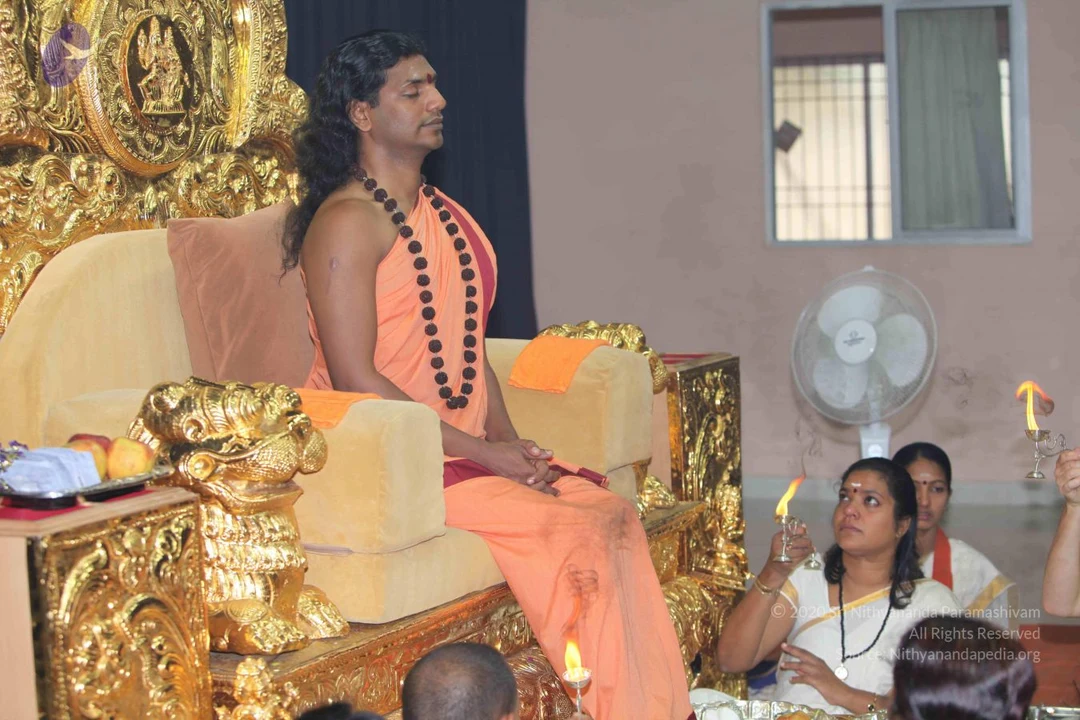
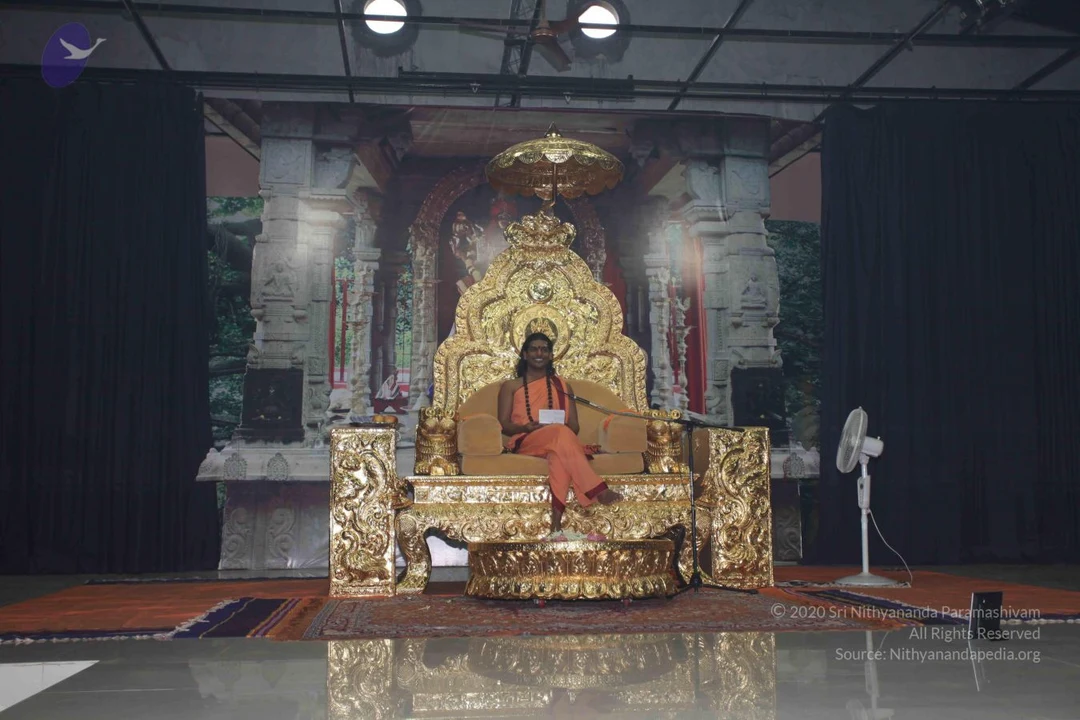
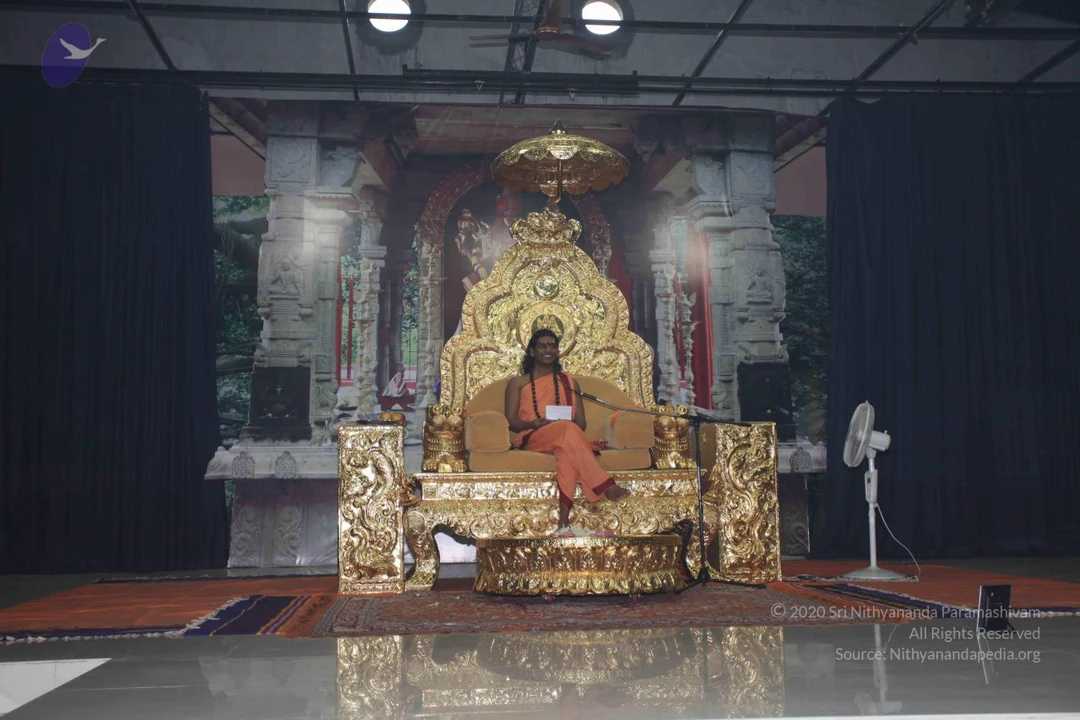
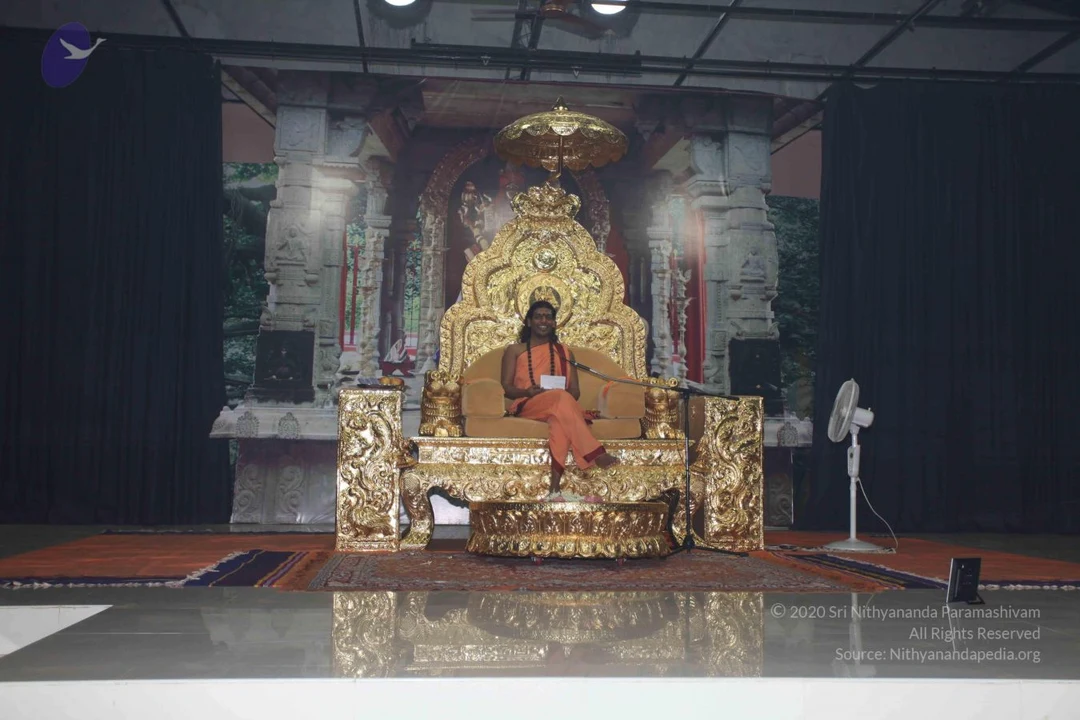
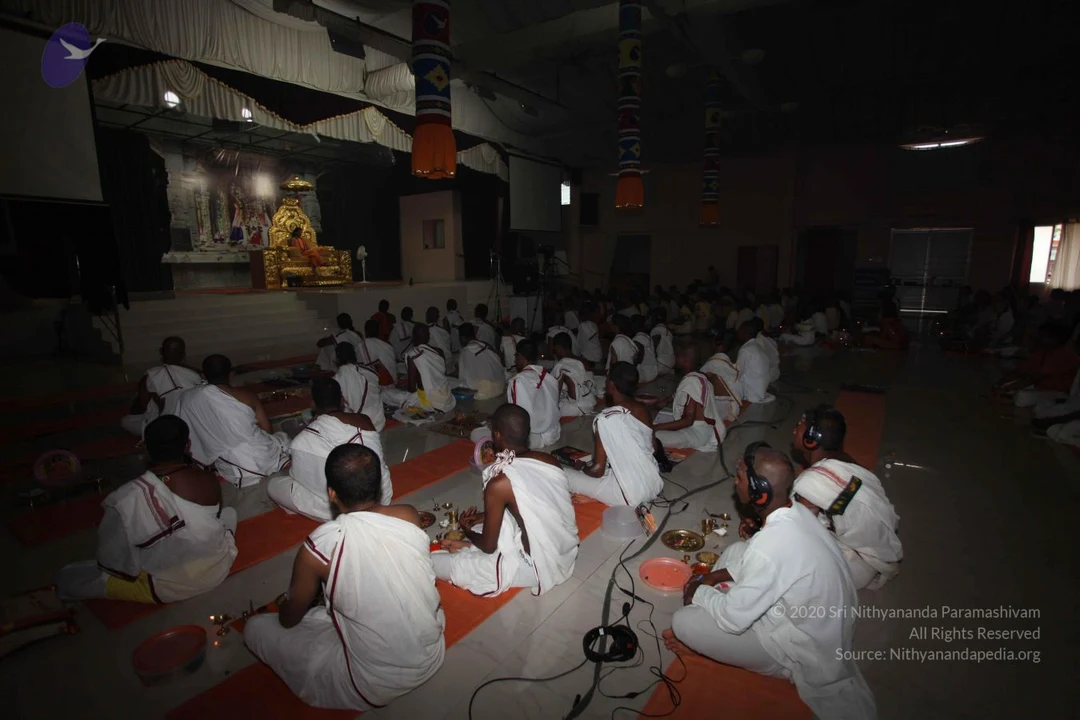
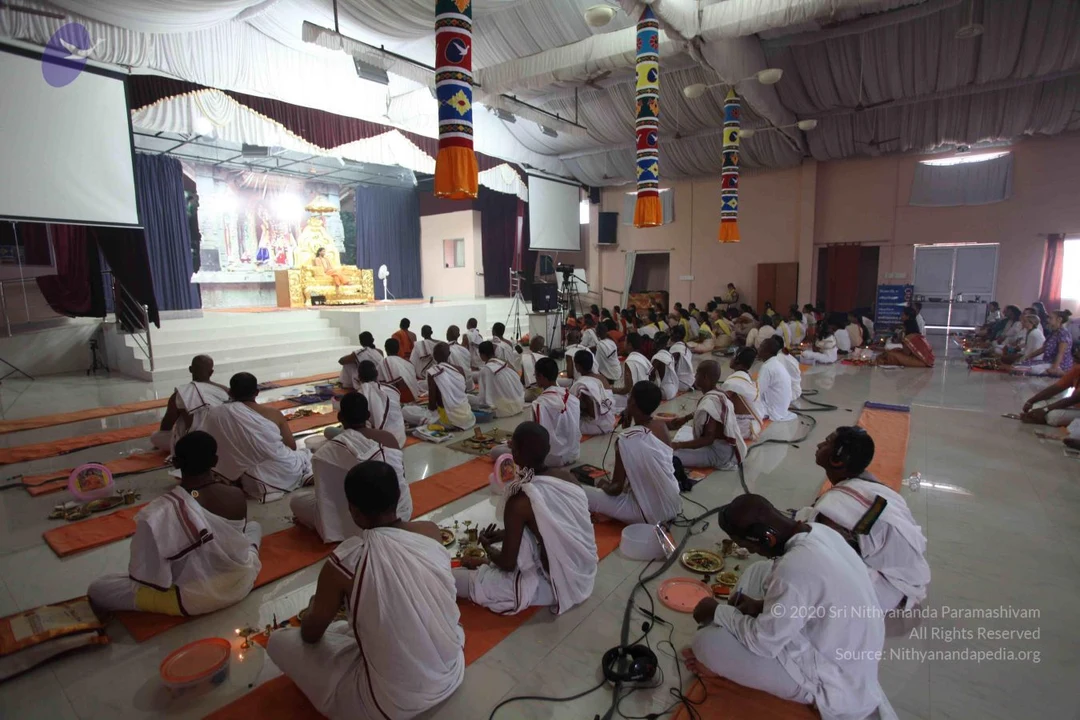
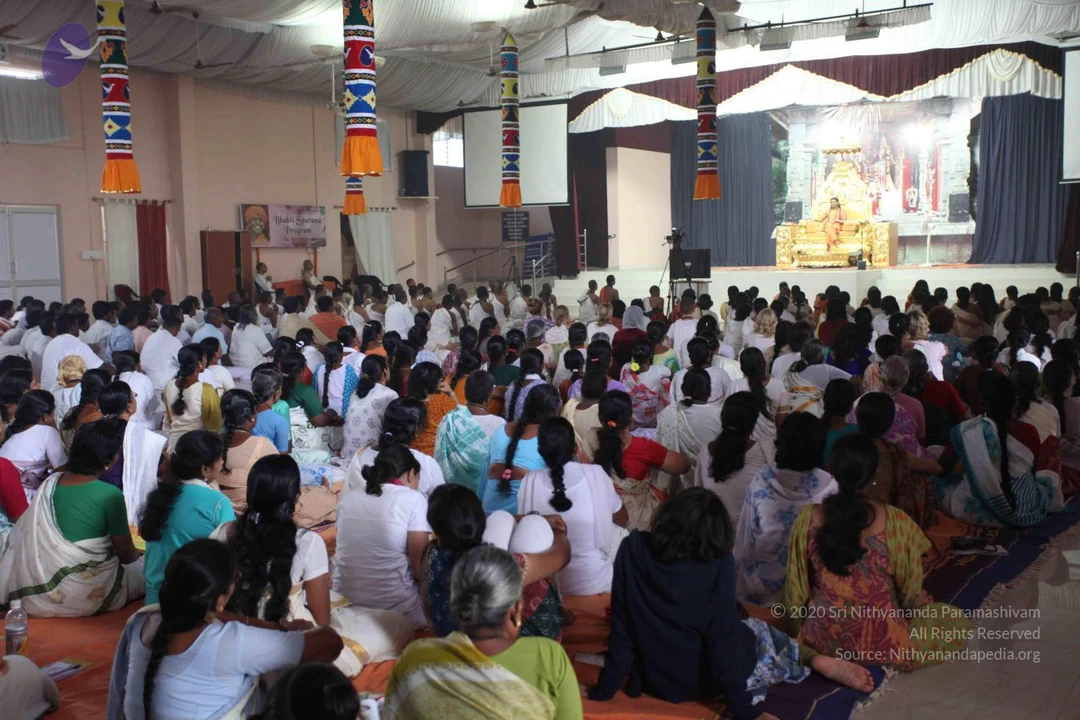
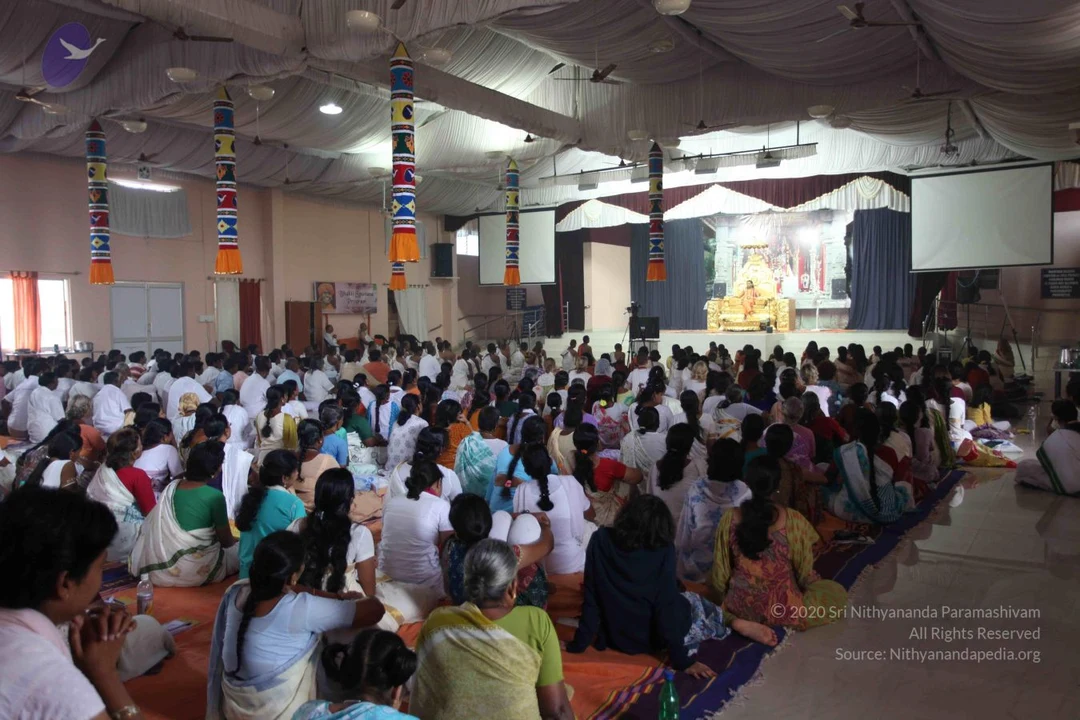
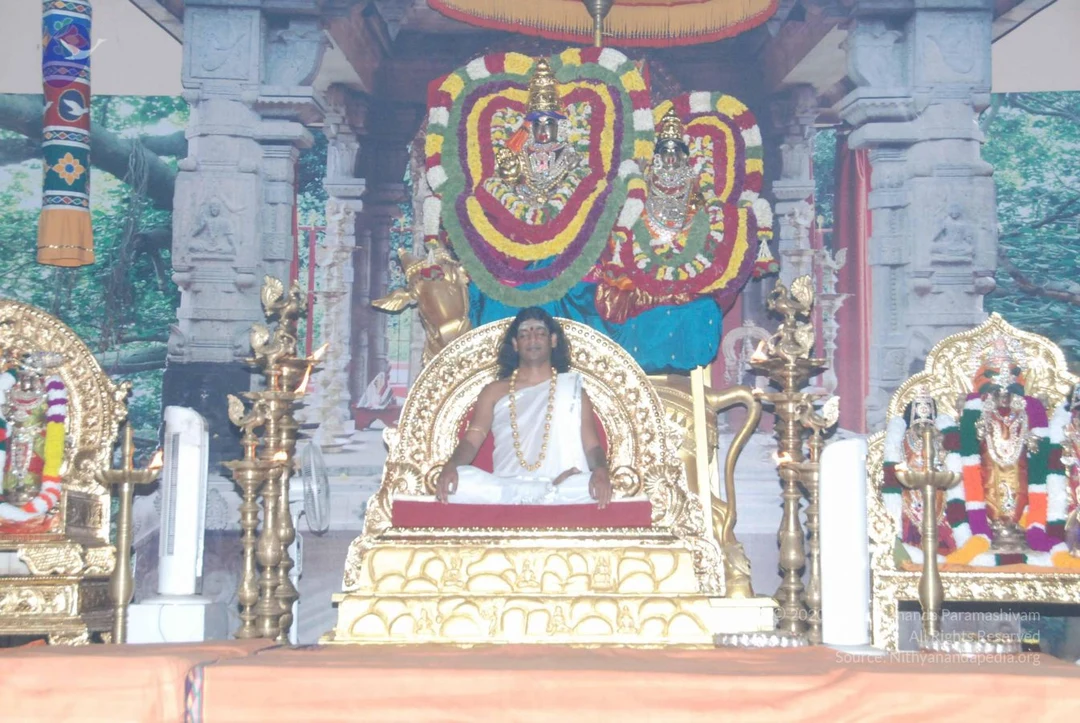
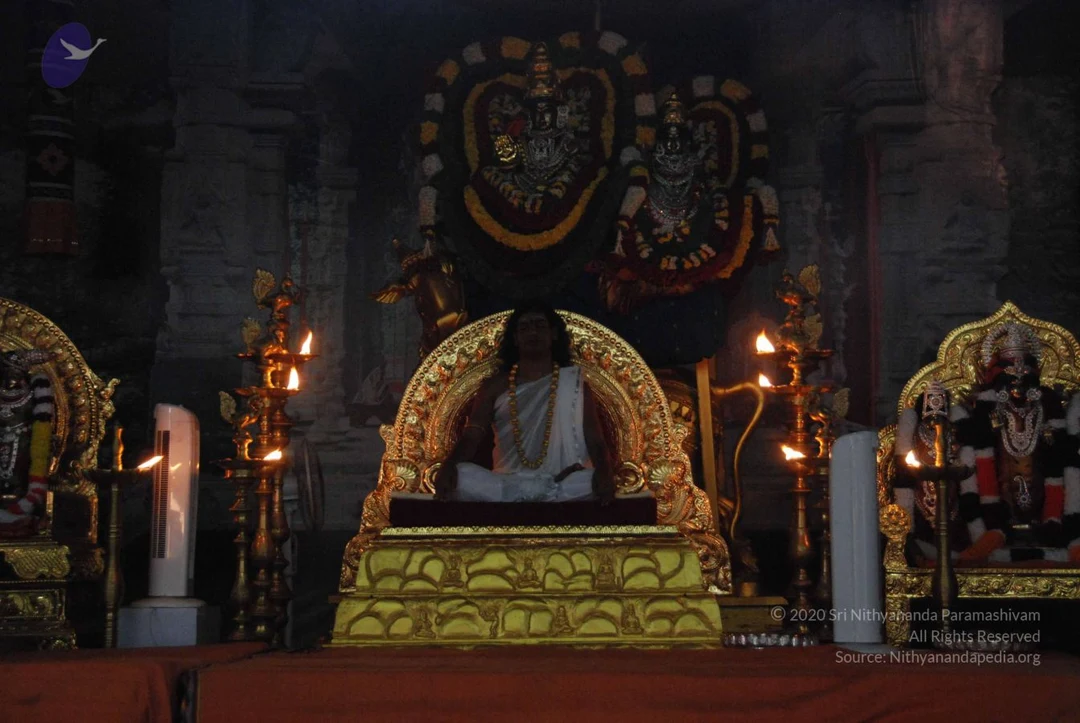
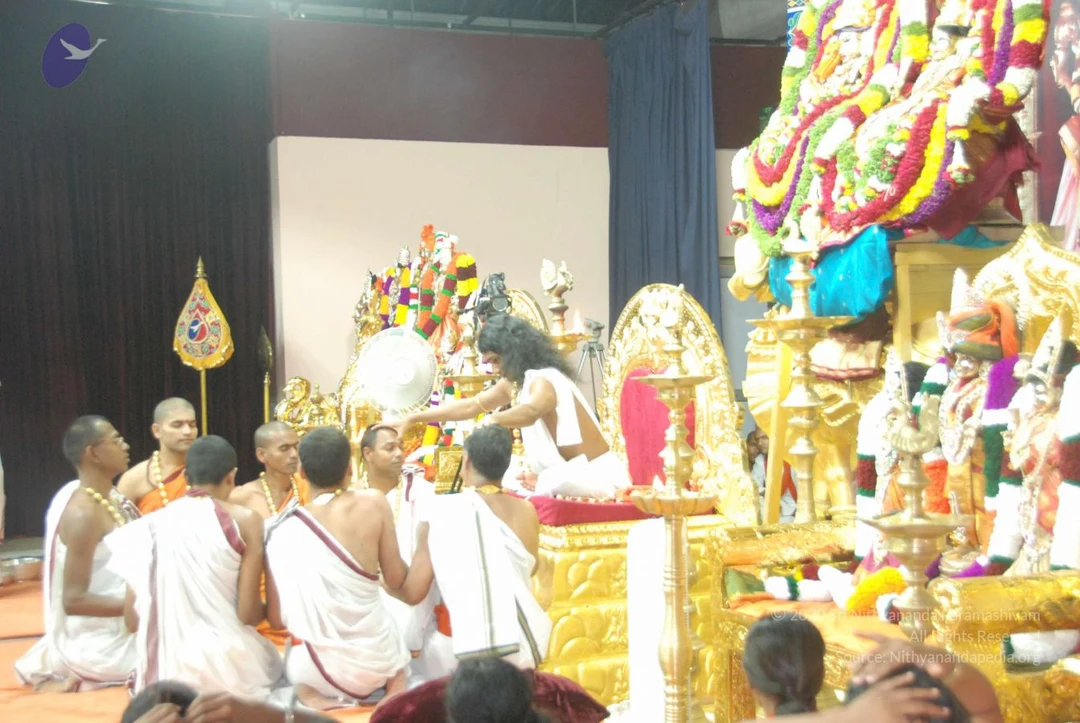
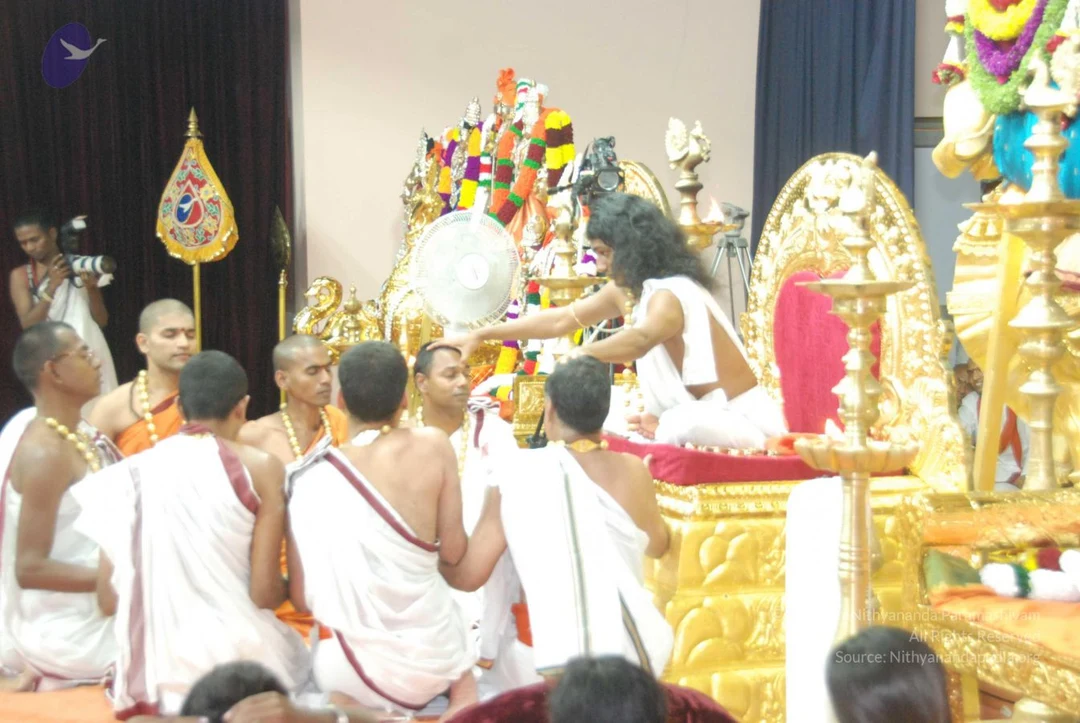
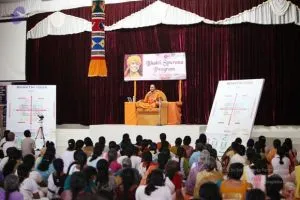
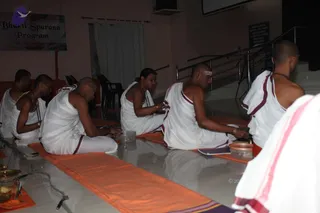
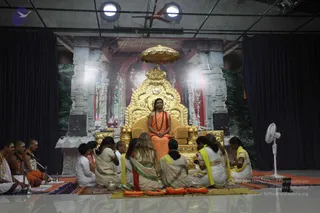
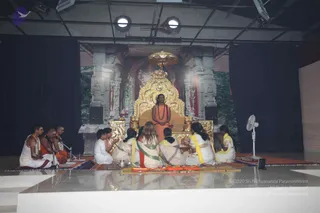
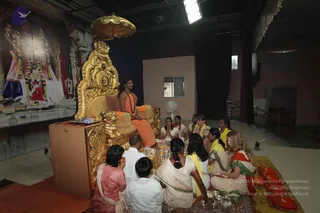
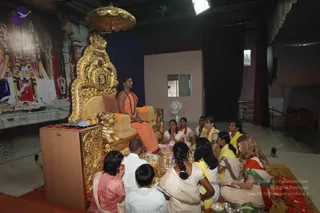
A photograph of seated devotees in white dhotis and shawls with maroon borders during a Bhakti Spurana Program session. Five men and one woman sit in a row on orange cloth runners on a glossy floor. Several wear rudraksha malas and one has white vibhuti marks on the forehead. Brass plates and small metal vessels are placed before them, and one man is handling items on a plate. A white banner reads Bhakti Spurana Program at the upper left, and a screen and staircase with metal railings are visible in the background.A seated figure in saffron-orange robes and a rudraksha mala sits on an ornate golden throne with a golden umbrella canopy, centred before a painted temple-gateway backdrop. Around the dais, devotees sit on mats: a row of men in white dhotis and orange shawls at left, and women in cream and yellow saris and a few in white, some holding small items, facing the throne. Oil lamps and brass vessels rest on the floor, and a white pedestal fan stands at right. The setting appears to be a satsang hall. The figure on the throne is a person candidate, identified by the saffron robe and rudraksha mala, though the appearance is only partly distinctive; the throne and white-clad devotees are not themselves identifying cues.A photograph of a satsang stage with a golden throne under a golden canopy, centred against a painted temple backdrop of stone gopurams and green foliage. A seated figure in saffron-orange robes with a rudraksha mala sits on the throne, appearing to be a person; the throne, ornate clothing and mala are the qualifying cues. On the floor below, several people sit in front of a low golden platform with brass vessels and offerings: a man in white with an orange shawl and one in white clothes near the left, women in white and yellow-green sarees, and a child in white. Dark curtains frame the stage and a white electric fan stands at right. Visible physical people number about ten.A seated man in an orange-saffron robe with a long dark rudraksha mala and long swept-back hair sits with eyes closed and hands folded on a large ornate gold throne with carved lion-head armrests and a cushioned seat. In front of him, several devotees sit on the floor with palms pressed together in namaskar; women wear white and yellow saris, and a man in white kneels among them. Trays of fruit, flowers and offerings sit before the throne. Behind, a large backdrop shows a deity image with garlands and a red-robed figure, and a ceiling fan stands at right. The scene suggests a satsang gathering.A seated man in an orange-saffron robe with a rudraksha mala sits on an ornate golden throne with a golden canopy umbrella, facing a group of devotees sitting on a red and gold rug. The seated figure has long swept-back hair and ceremonial beads, matching the a person cues. Several devotees sit before him with hands pressed in anjali, wearing white, cream and yellow saris and kurtas; one woman has a red and green sari. Brass plates with fruit, flowers and kalasha-style vessels rest on a low table in front. Behind is a large painted backdrop of deity murtis adorned with garlands on a shrine. Printed copyright text is in the corner, which is not transcribed.Indoor satsang hall with a long-haired man in saffron-orange robe and rudraksha mala seated on an ornate gold throne with a golden canopy above. Around him a group of about nine women and young people sit on a patterned rug, several with hands folded in anjali, some in white and yellow saris and one in pink. Brass plates with offerings and flowers lie in front of them. Behind the throne, a wall mural shows temple deities garlanded with flowers.
NITHYA-SATSANG
55 photosSource gallery
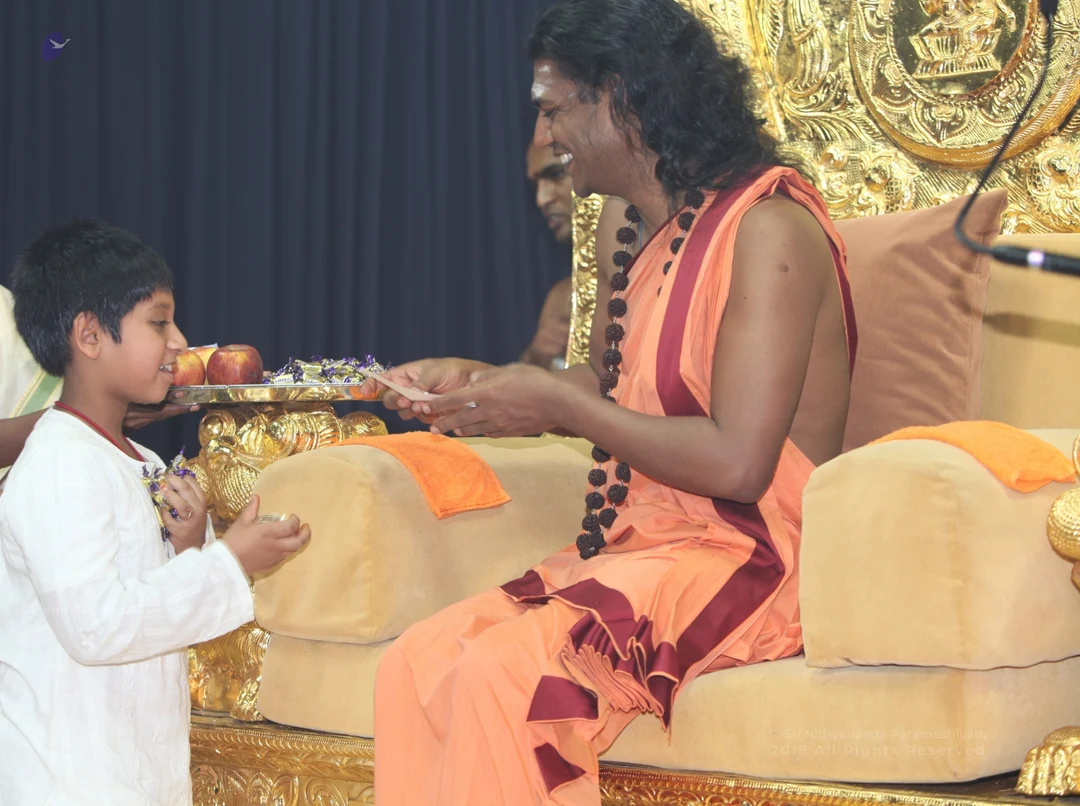
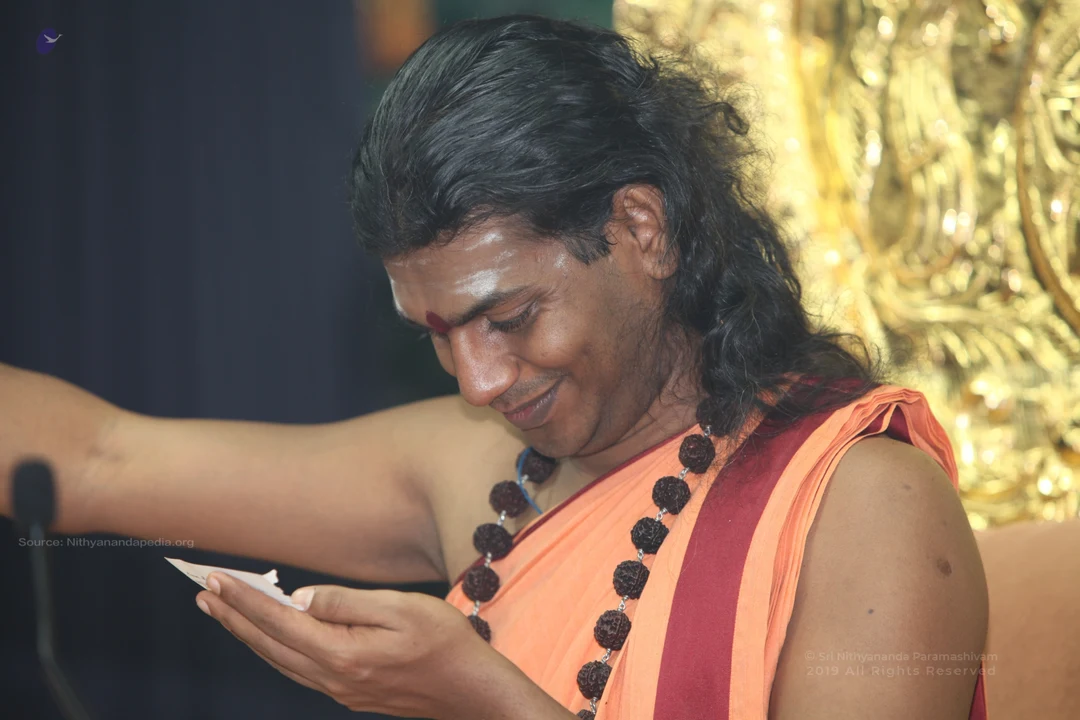
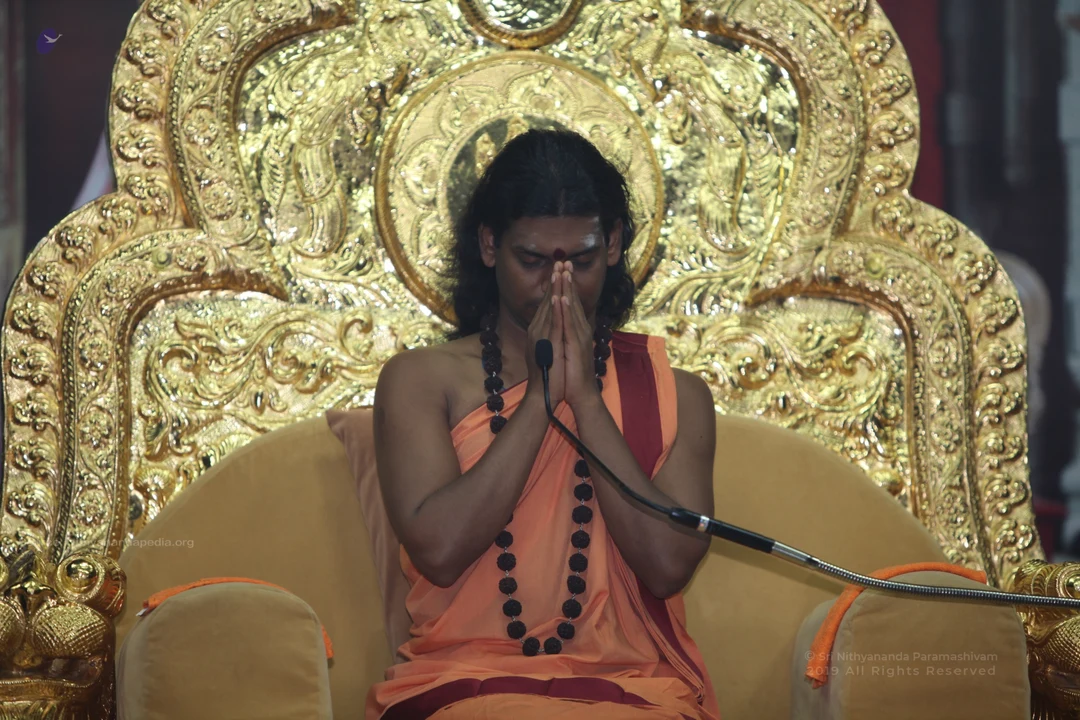
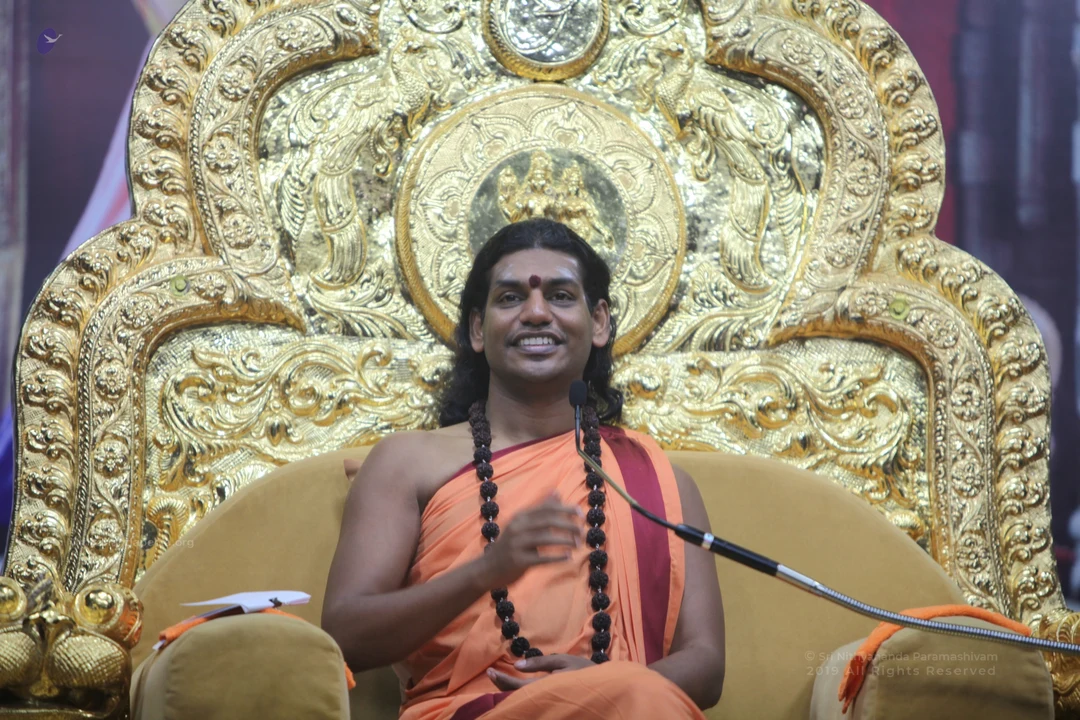
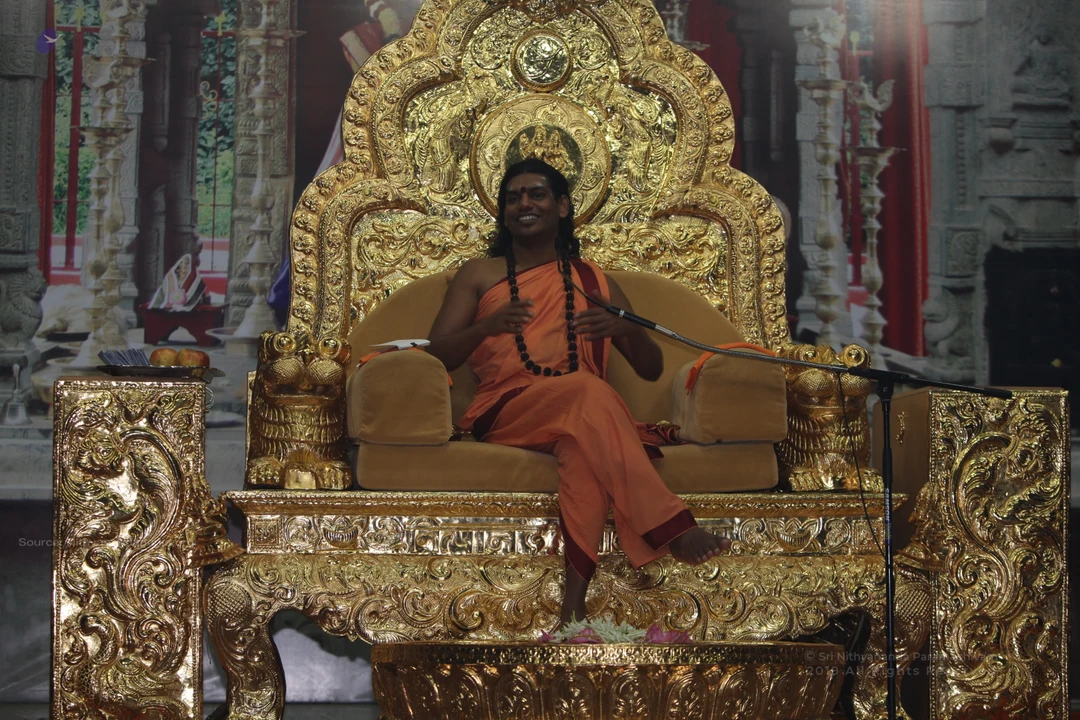
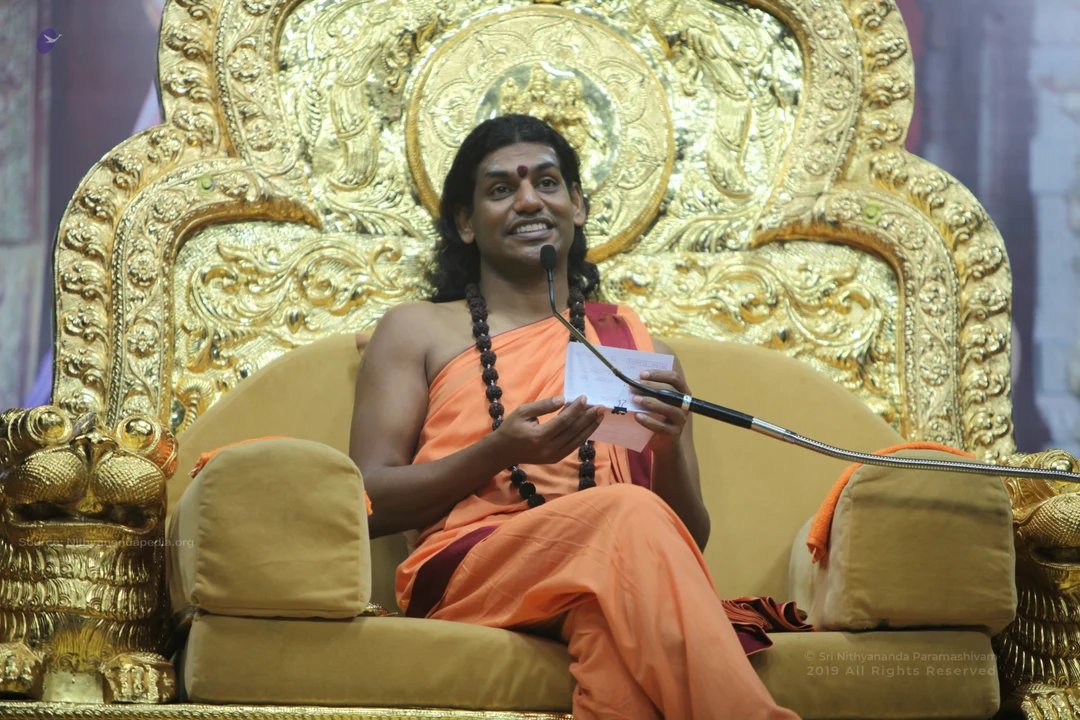
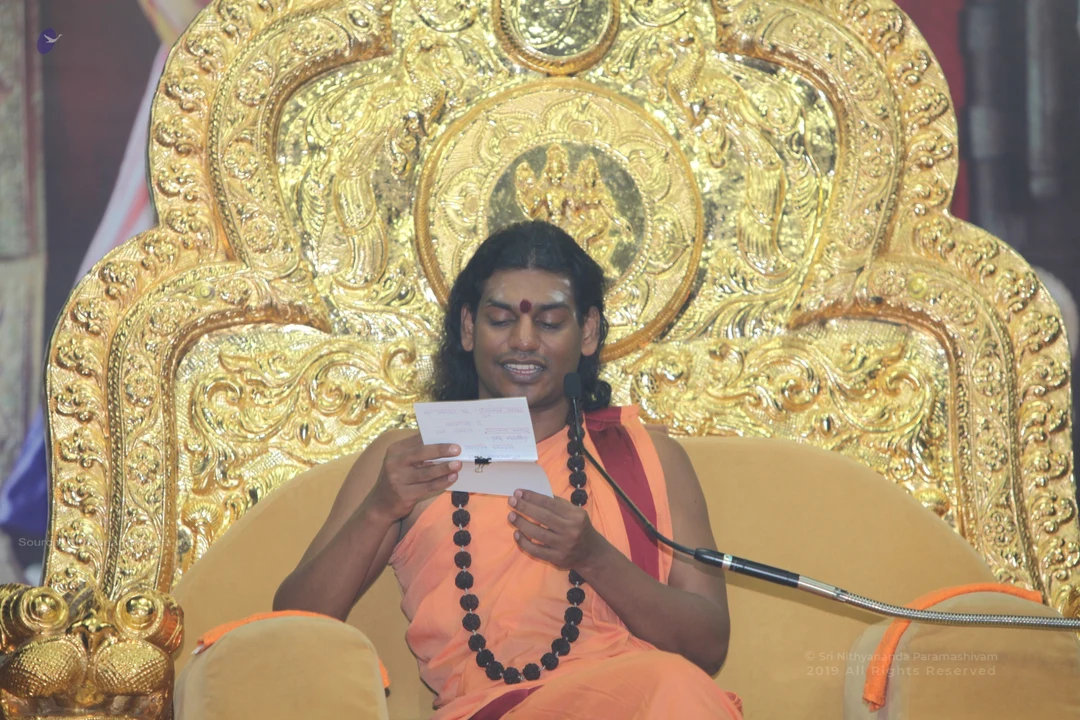
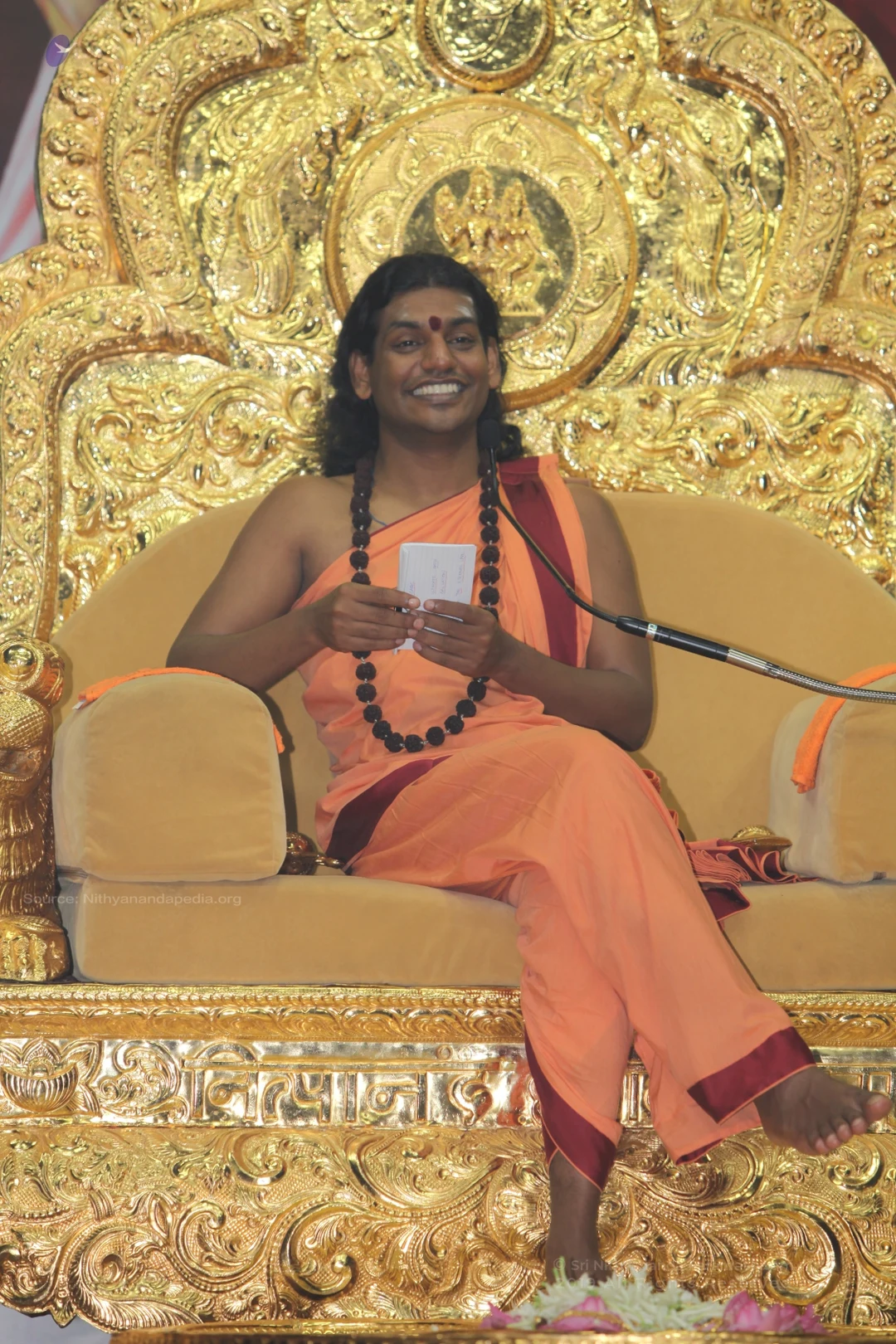
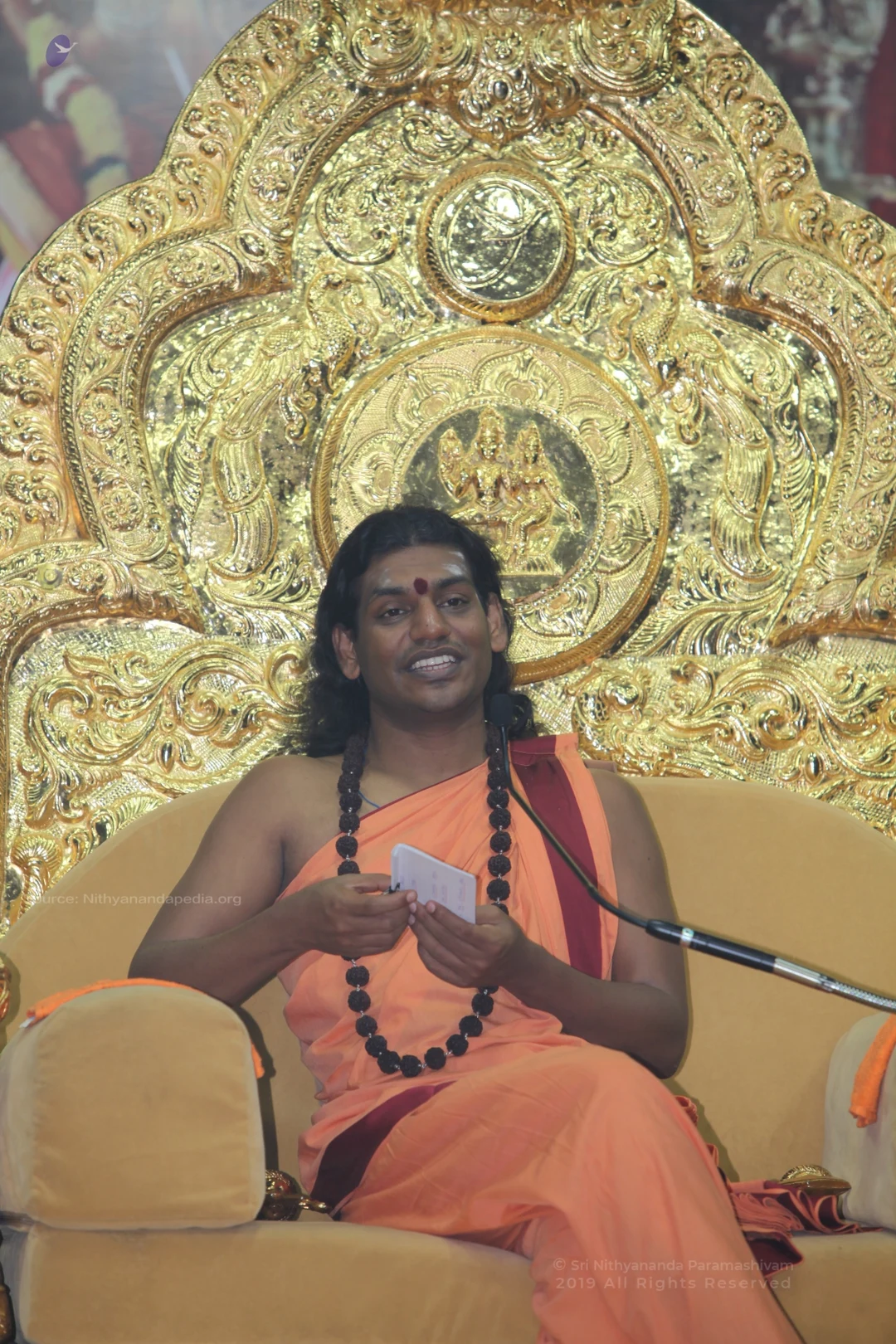
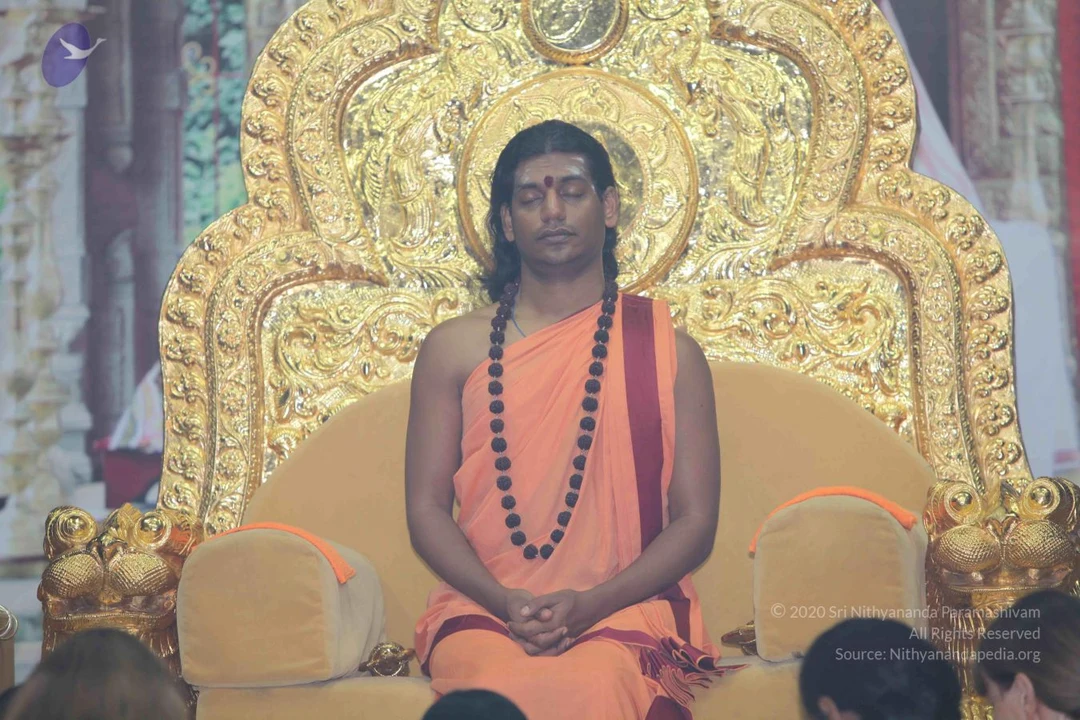
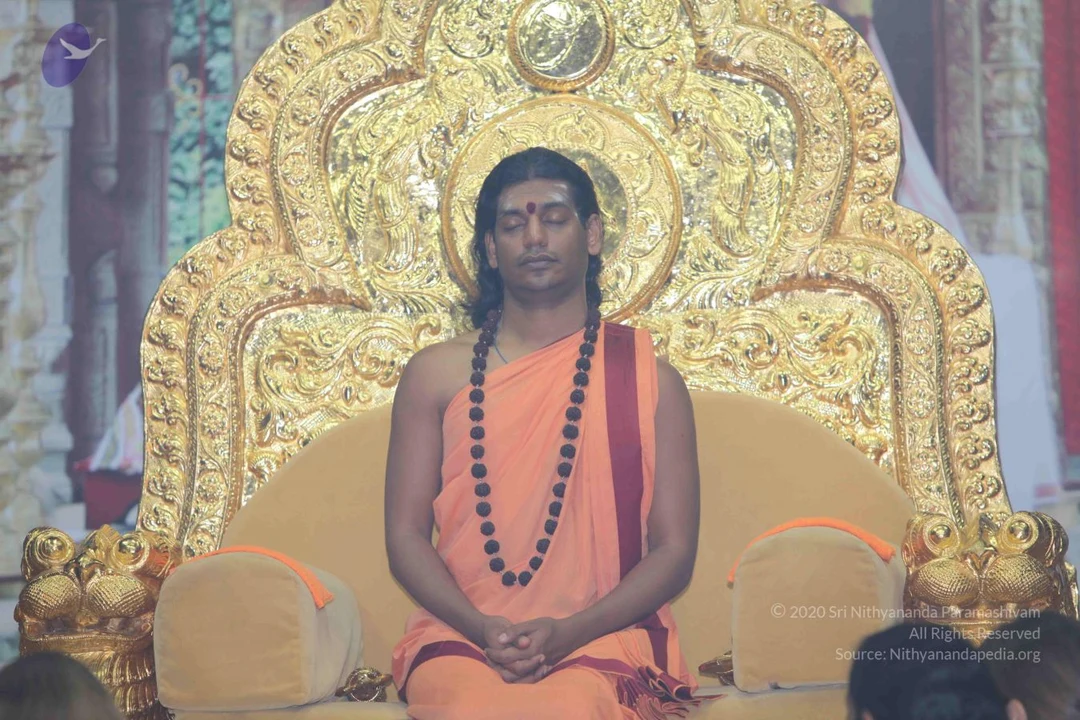
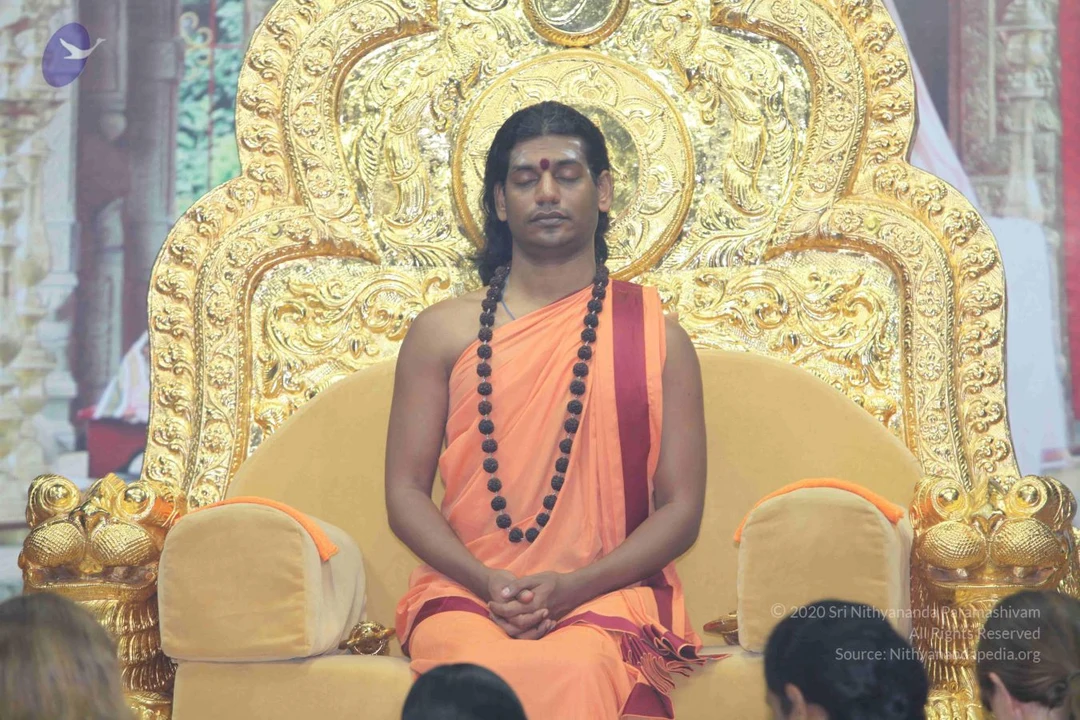
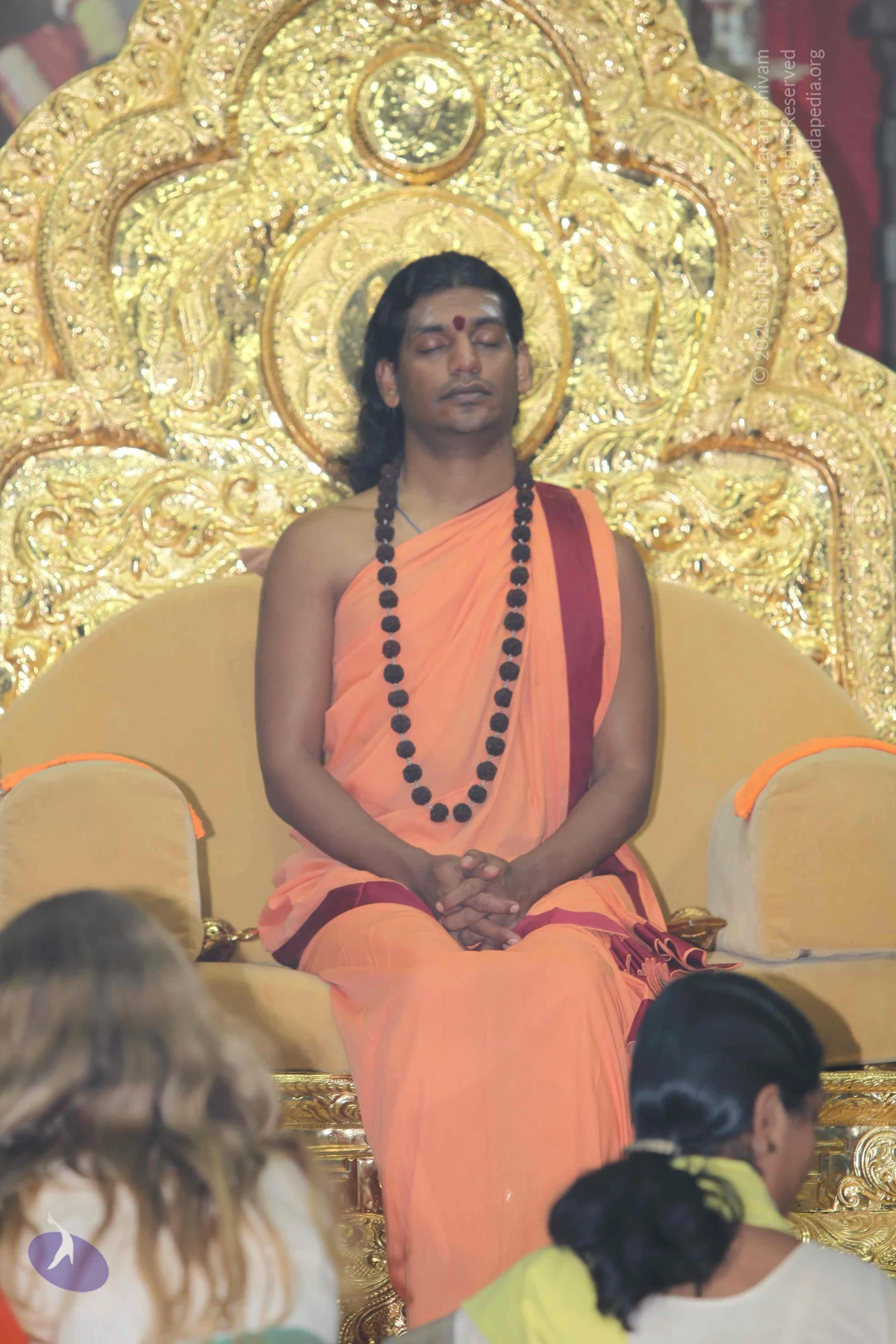
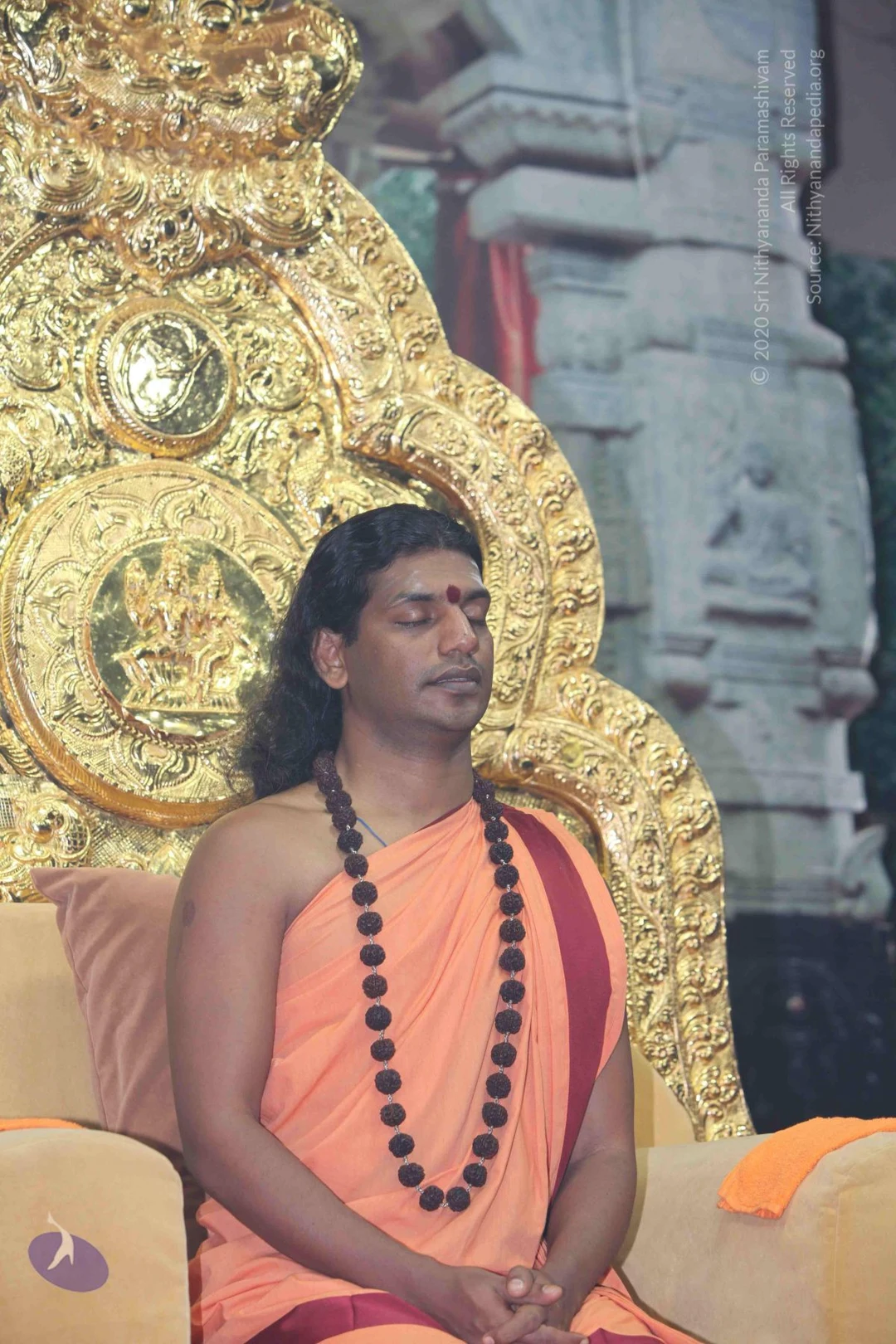
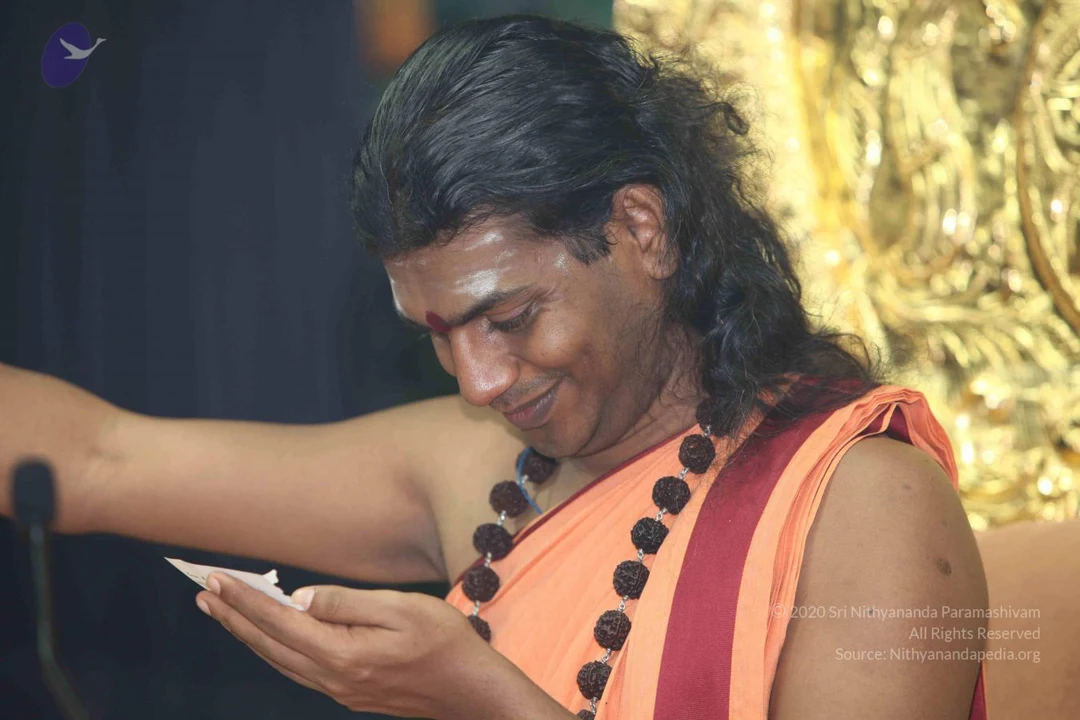
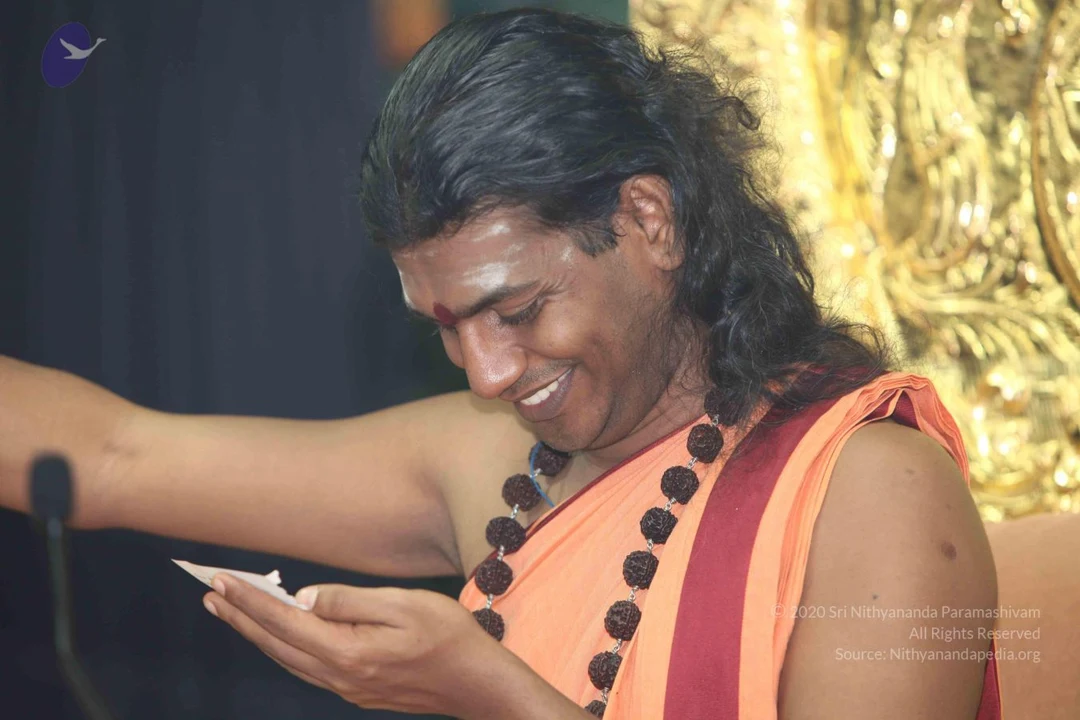
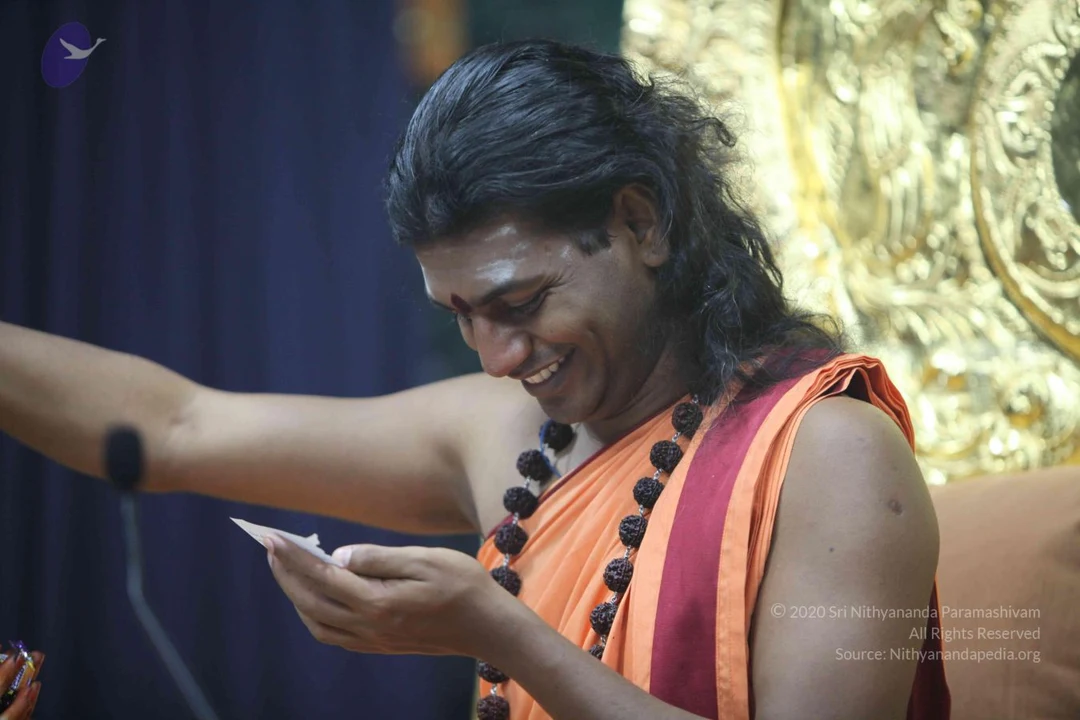
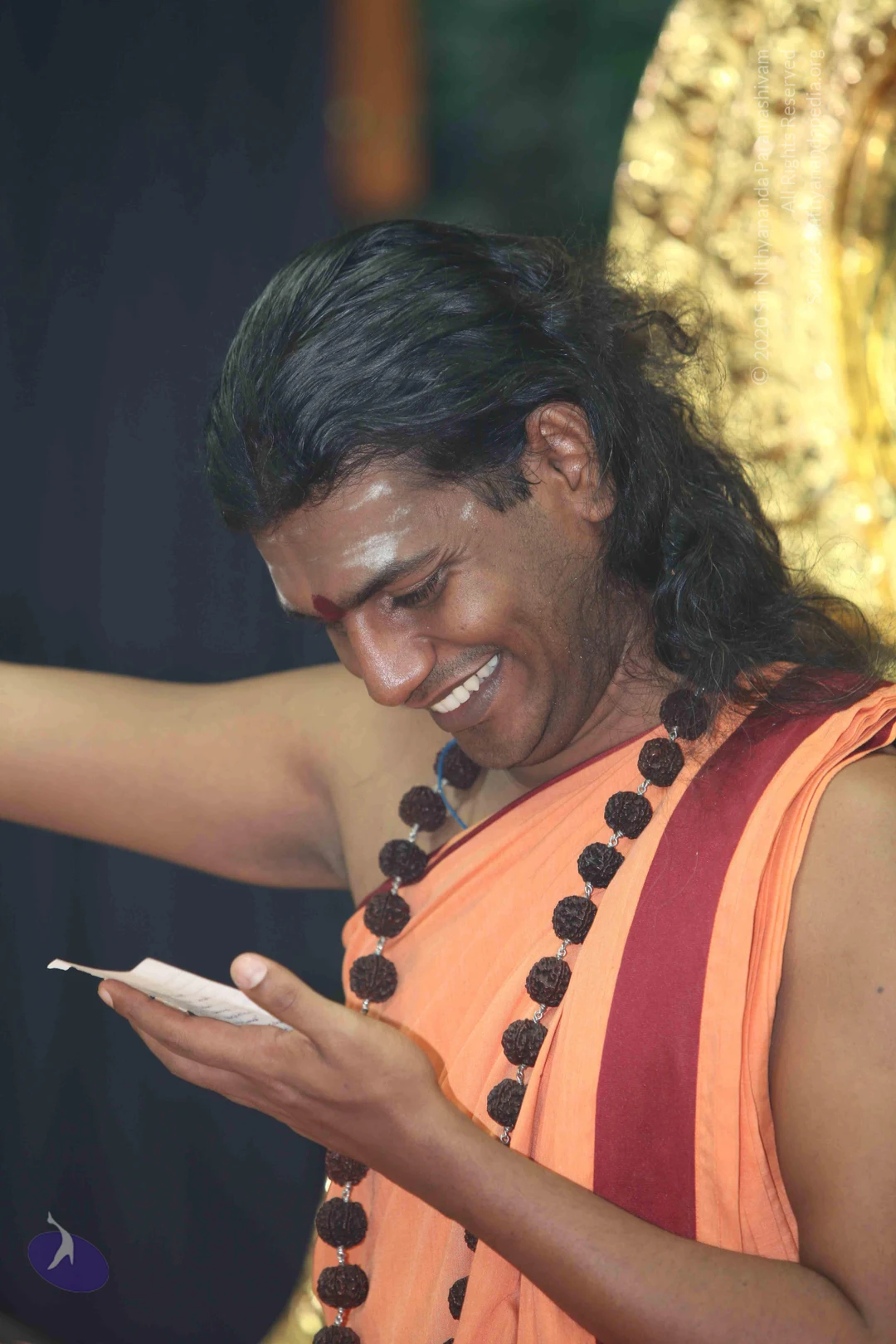
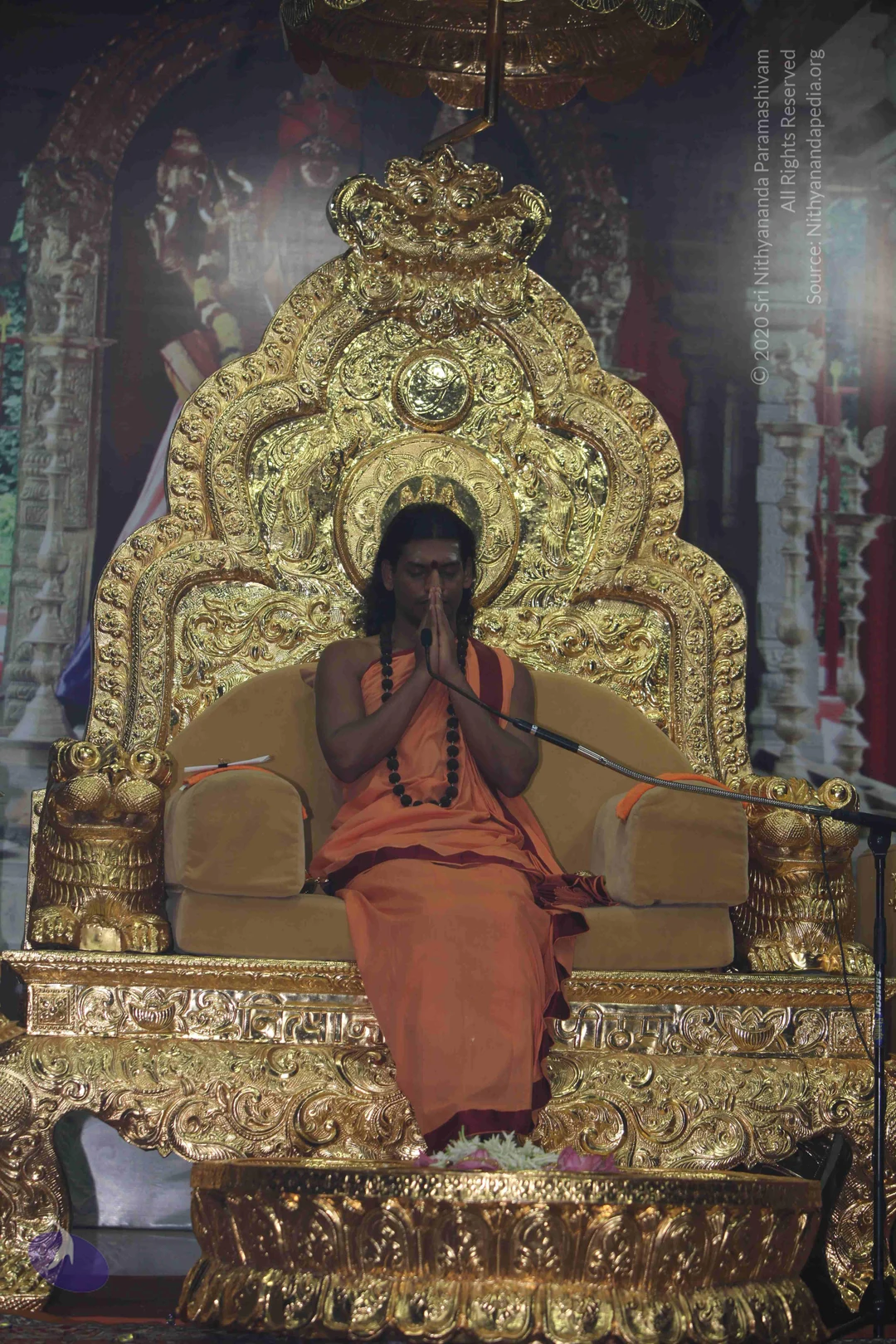
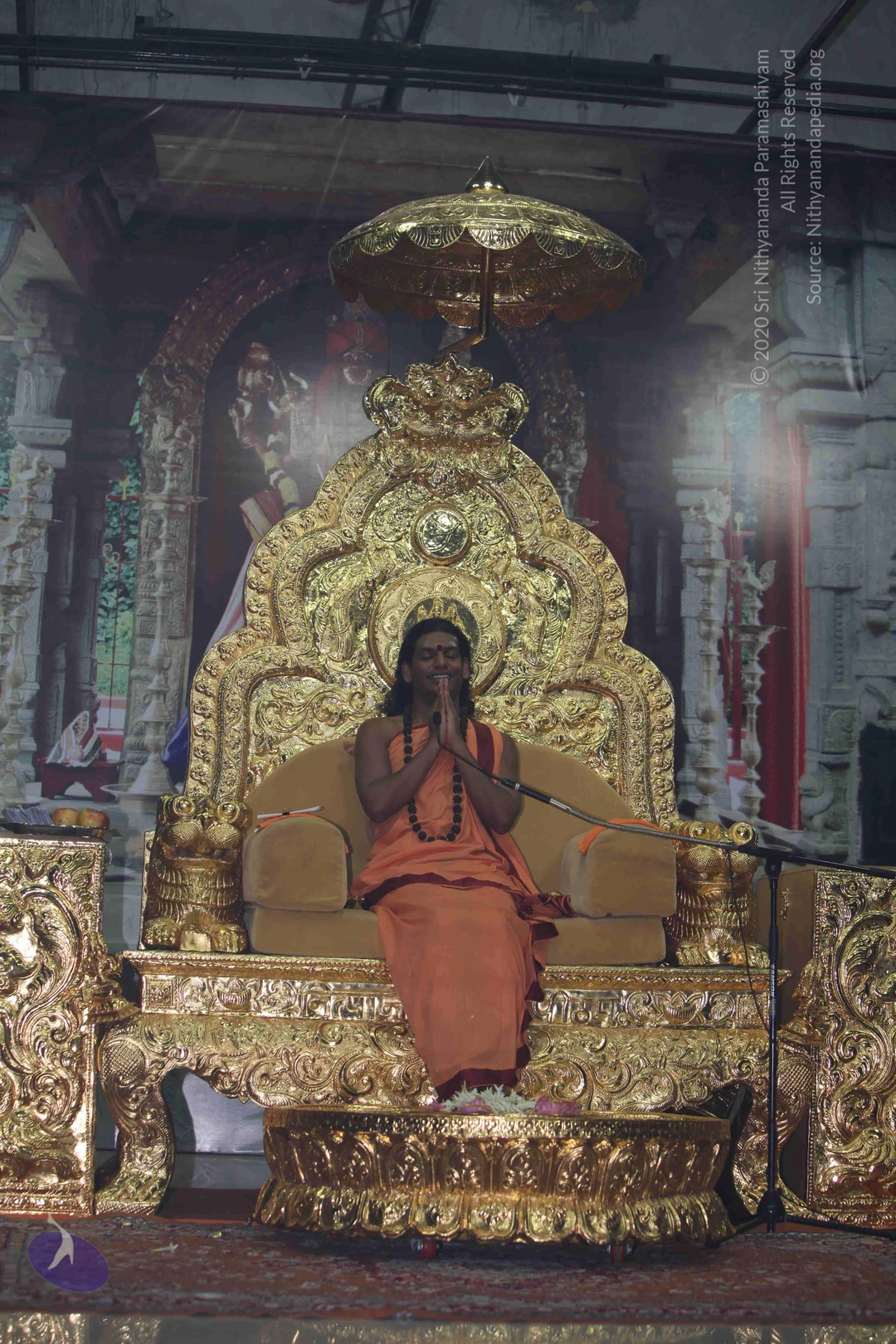
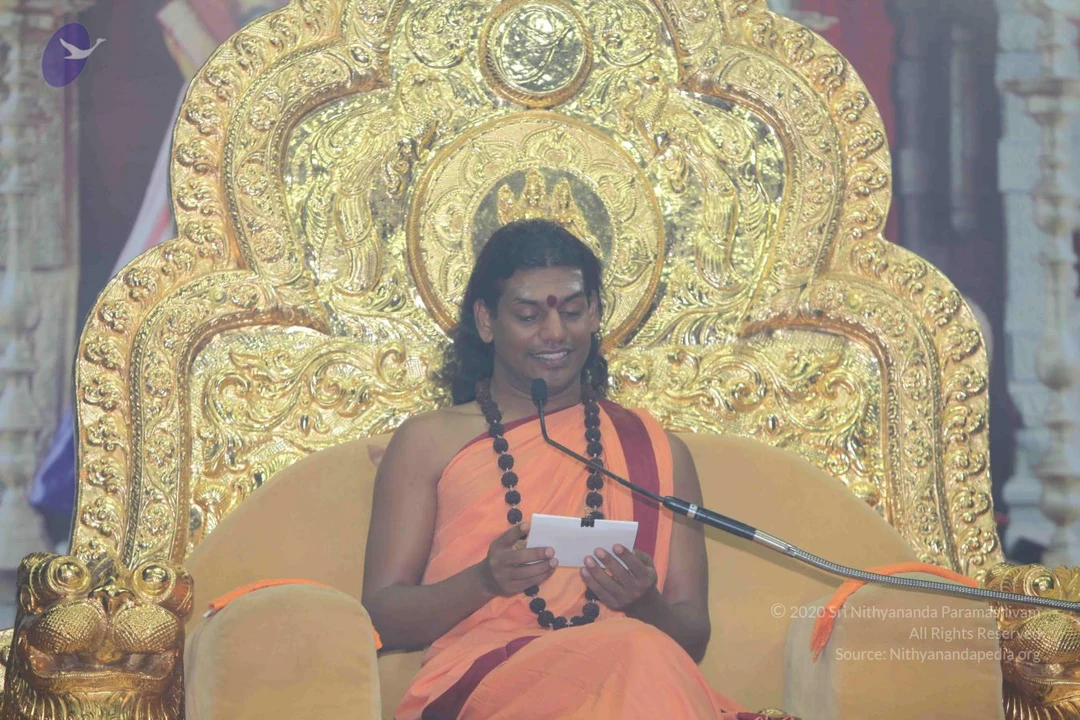
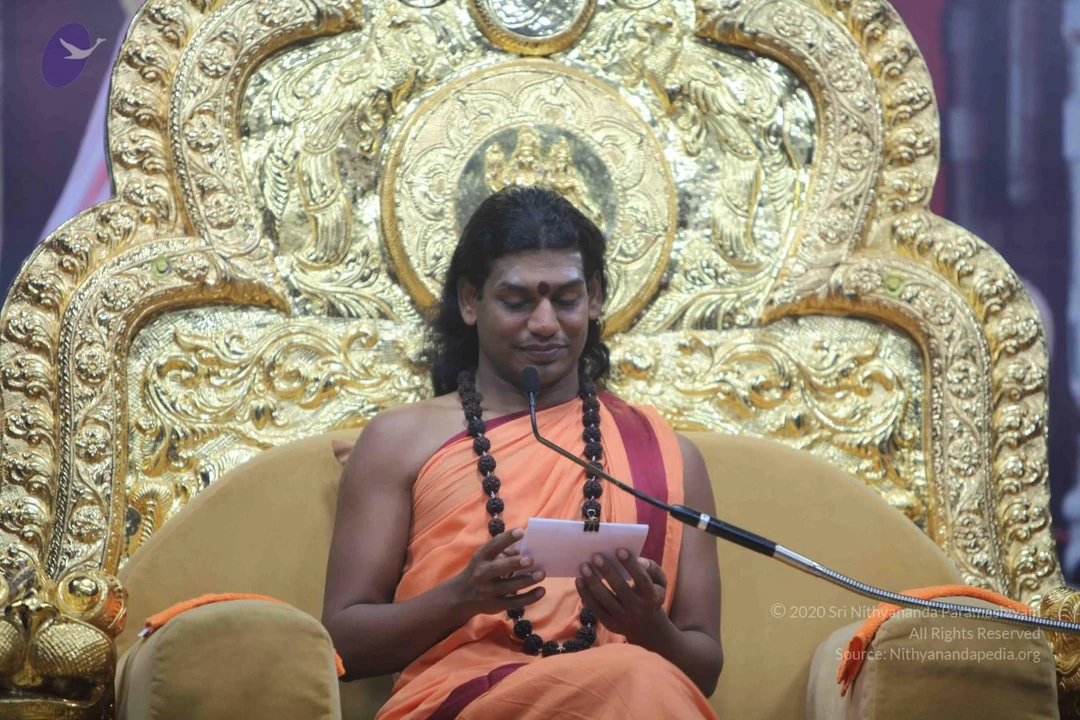
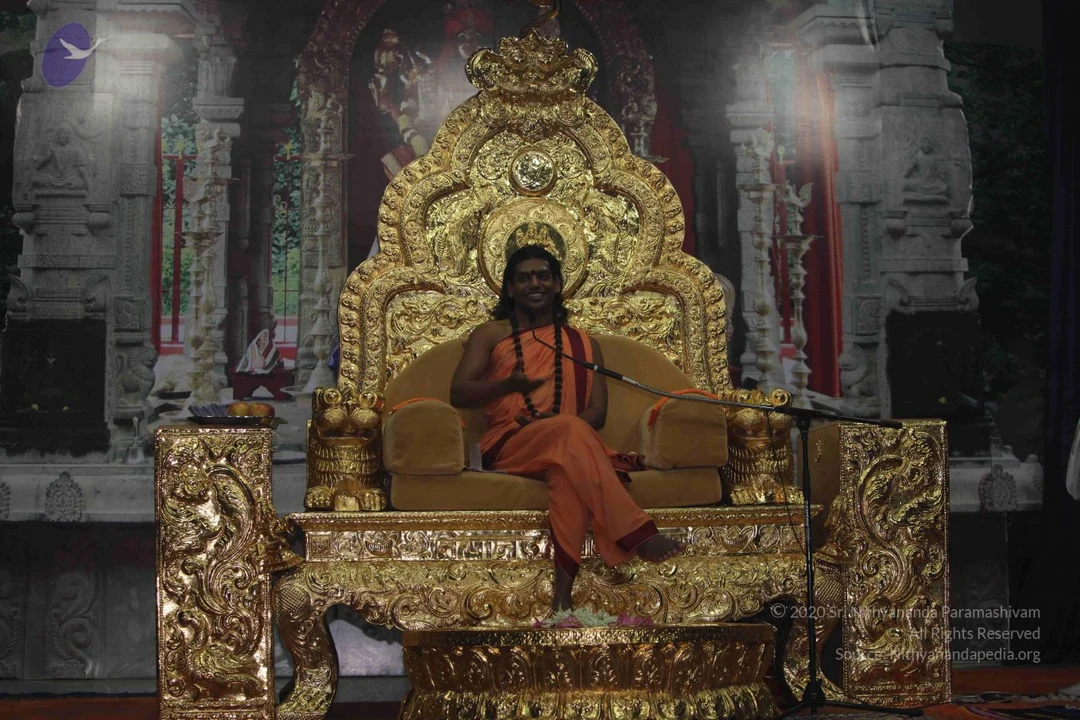
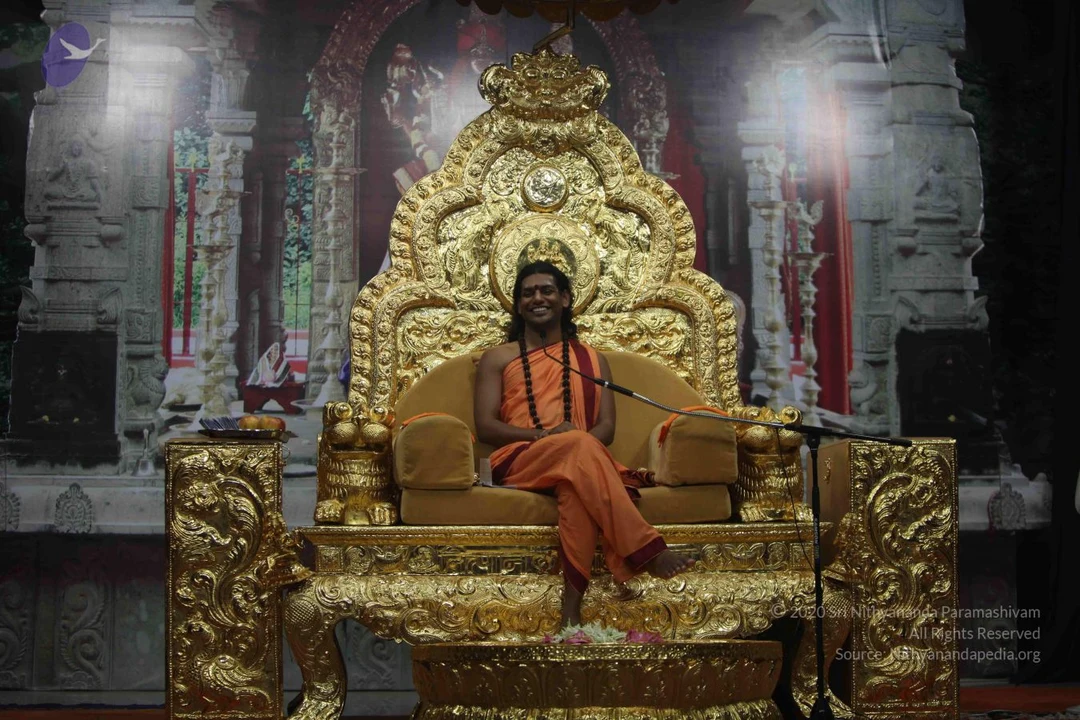
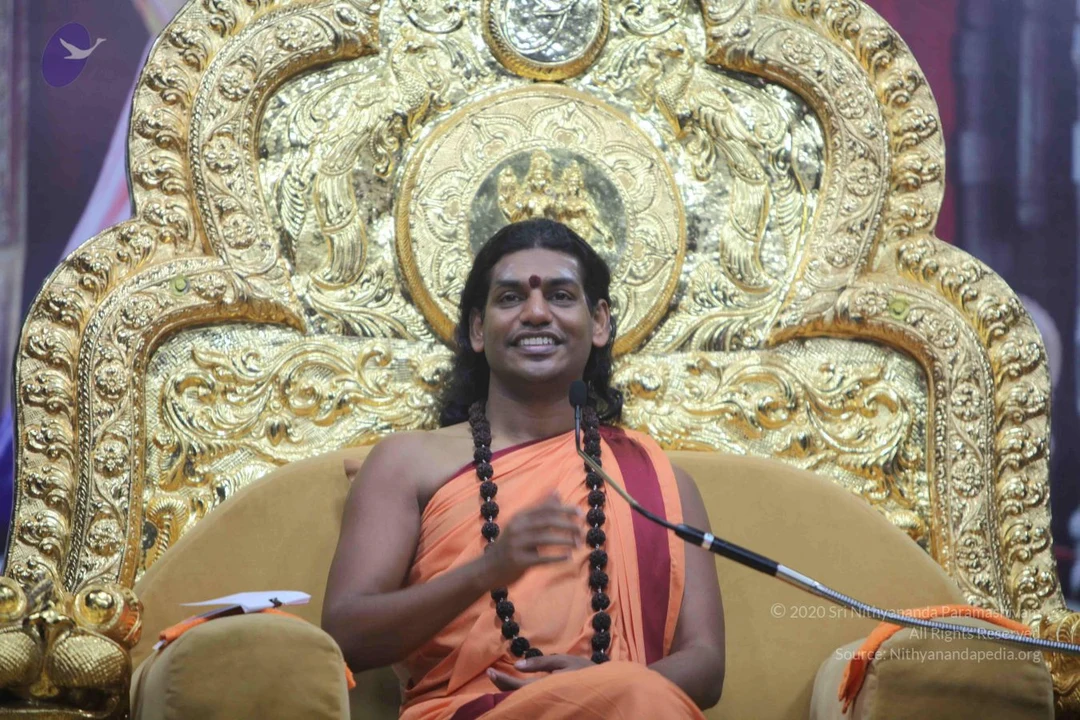
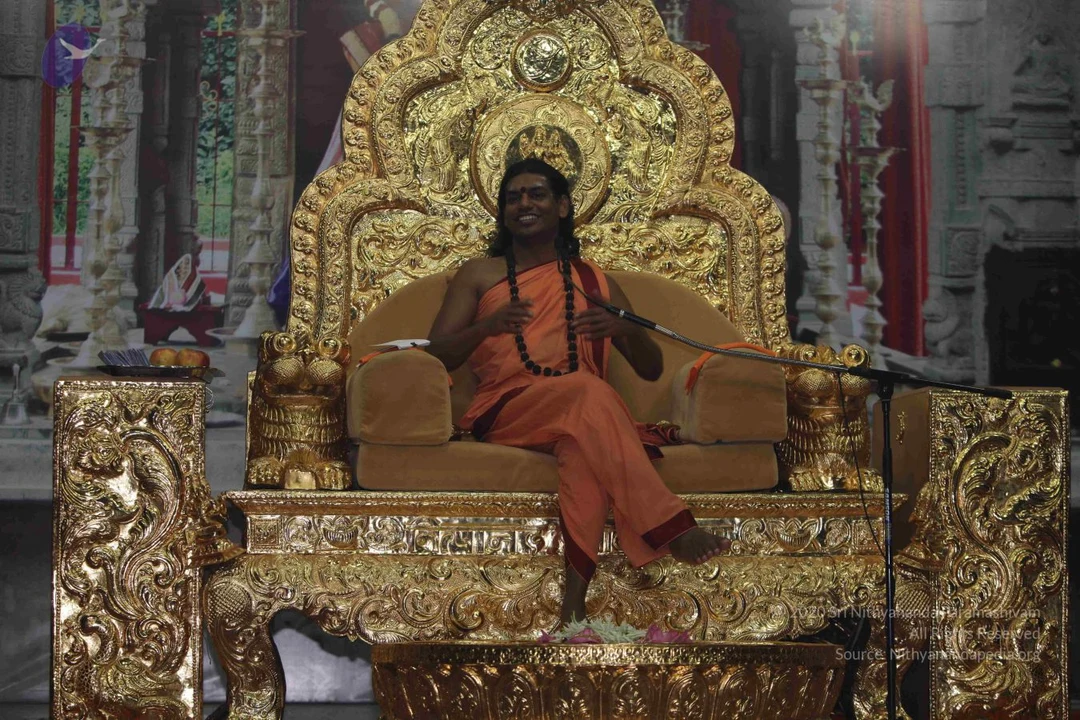
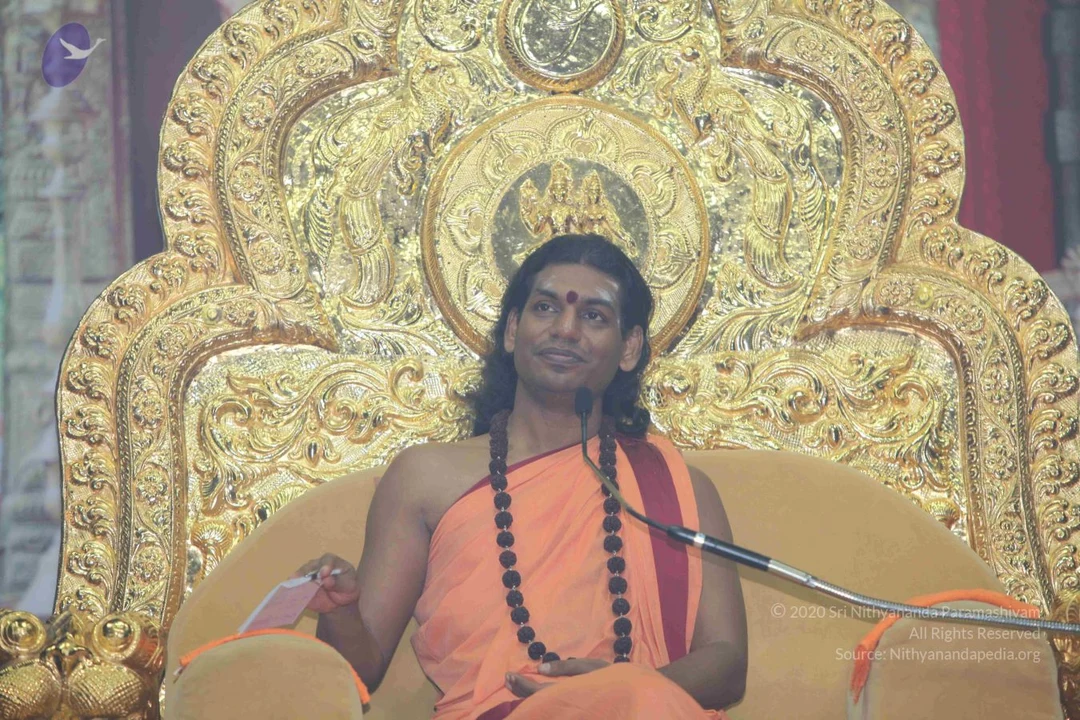
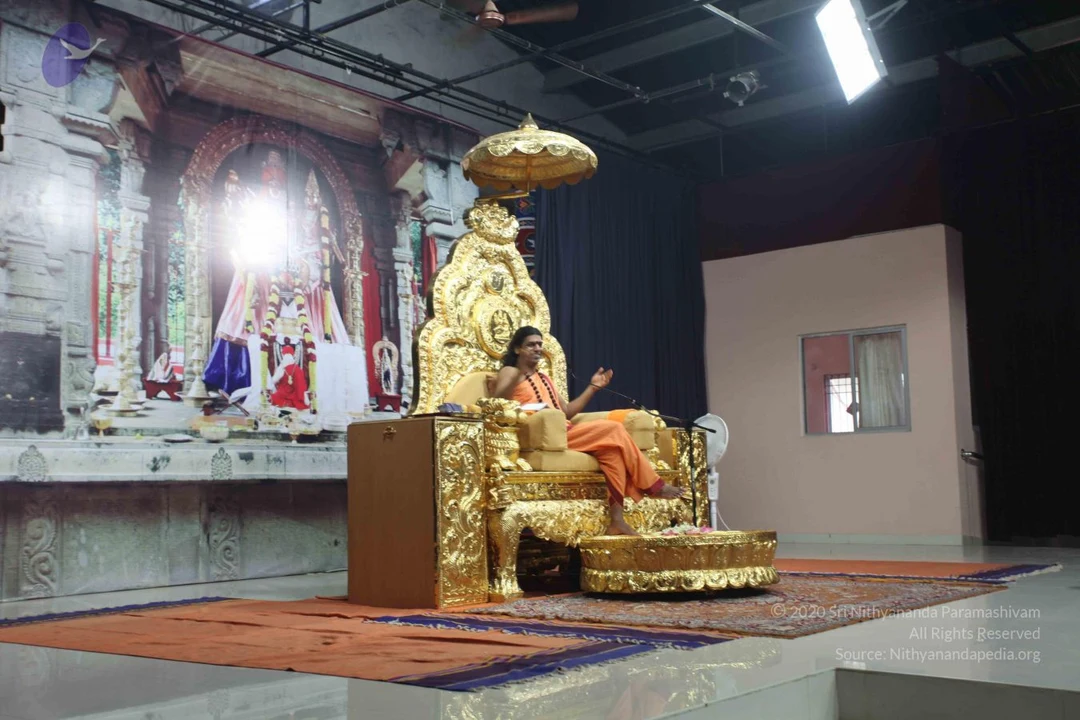
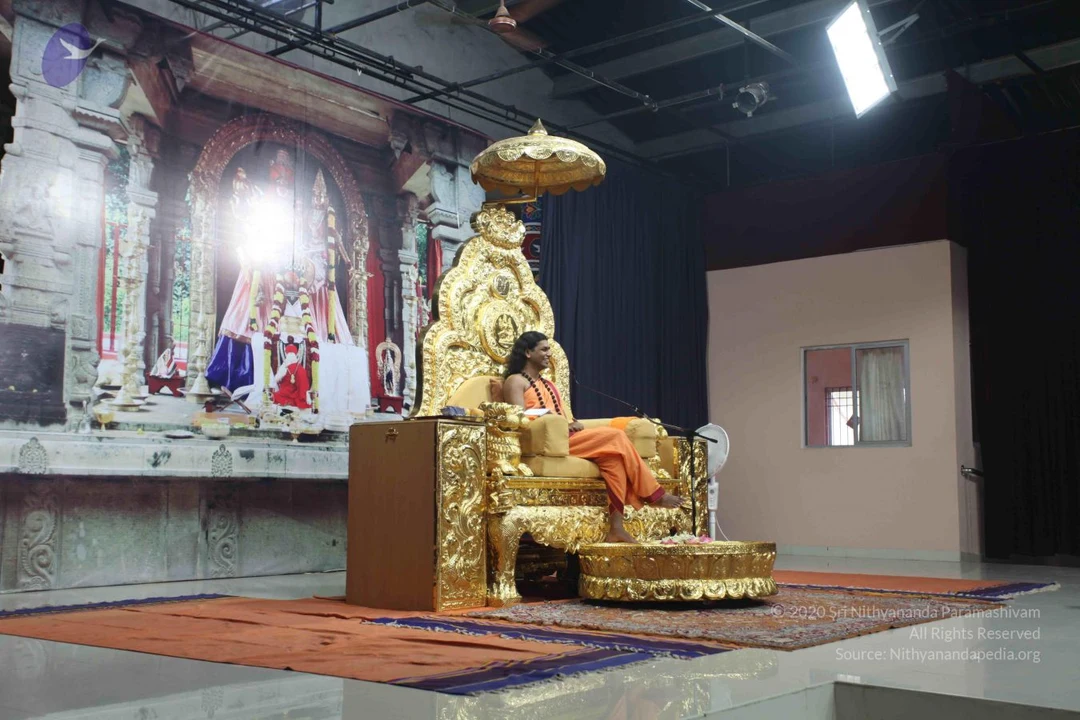
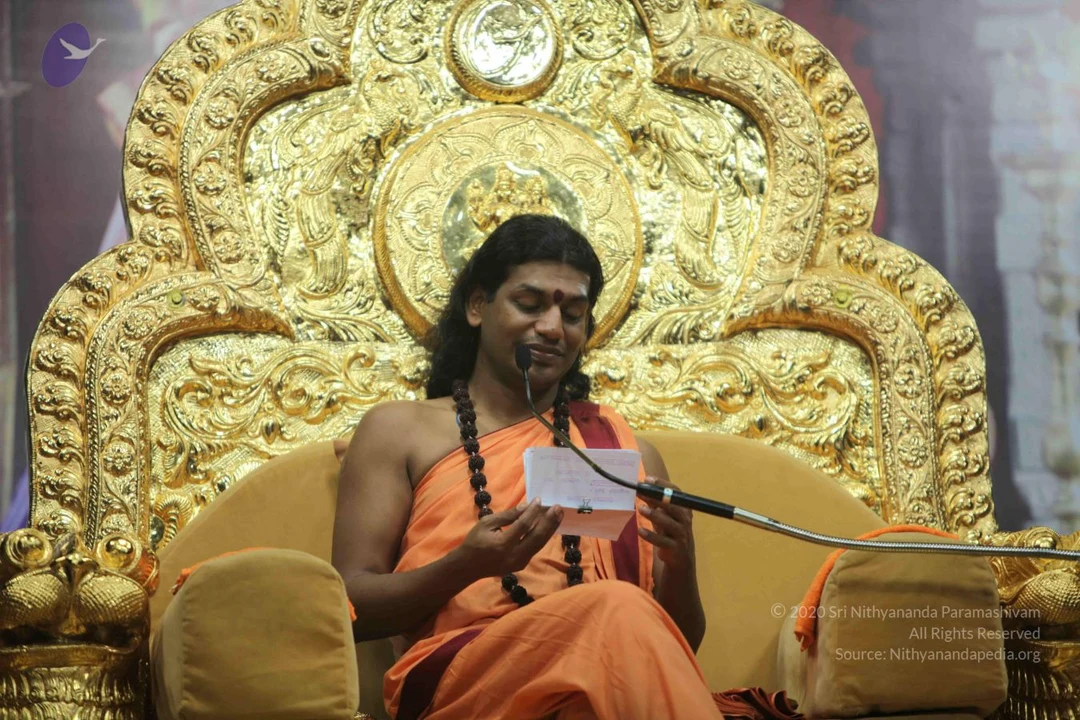
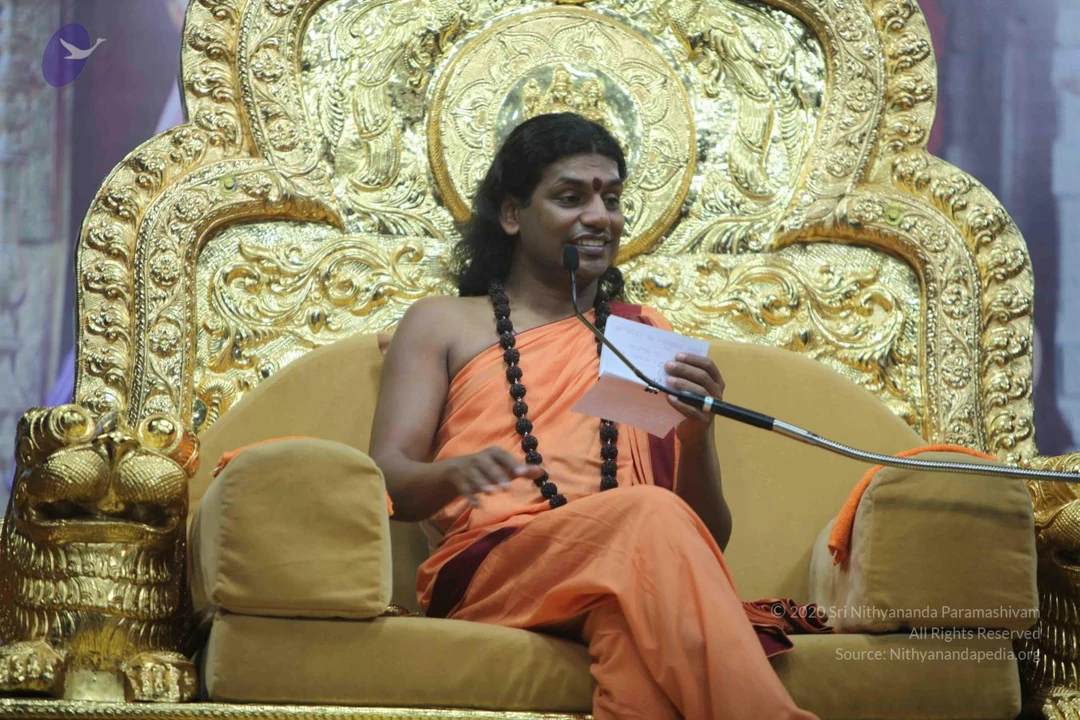
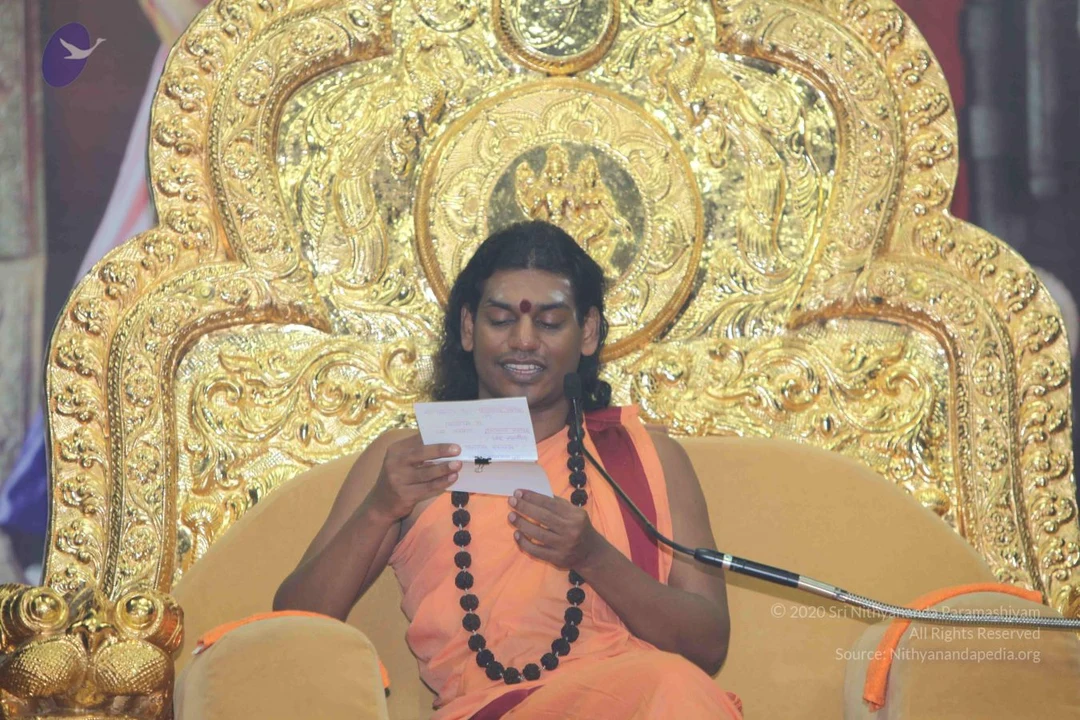
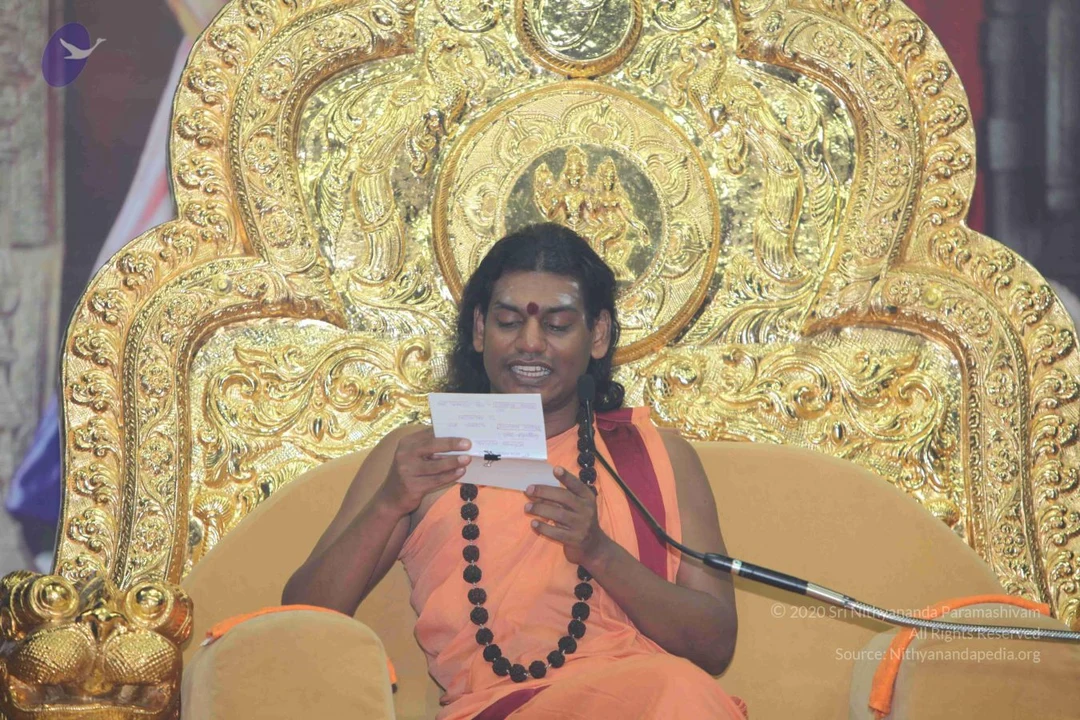
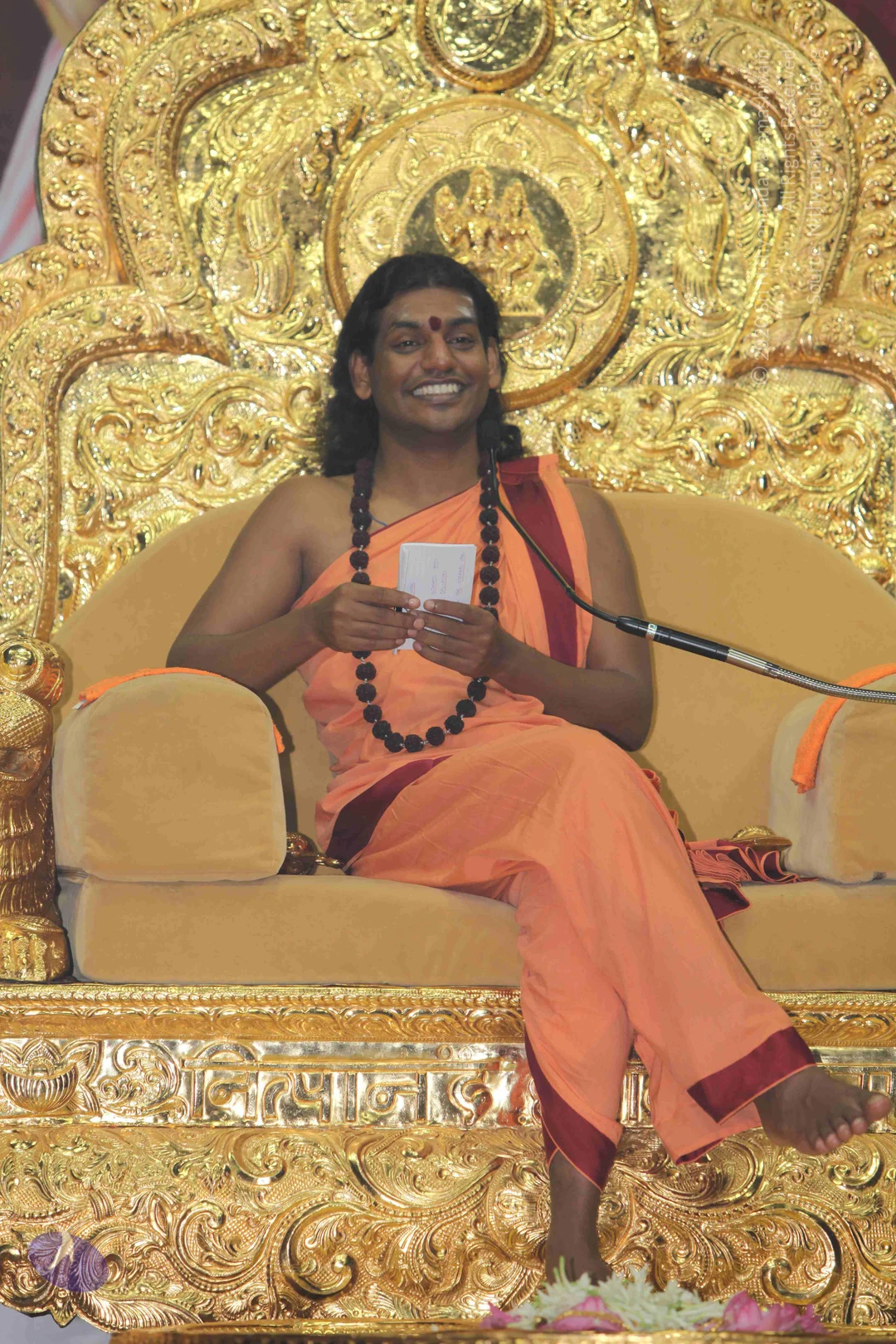
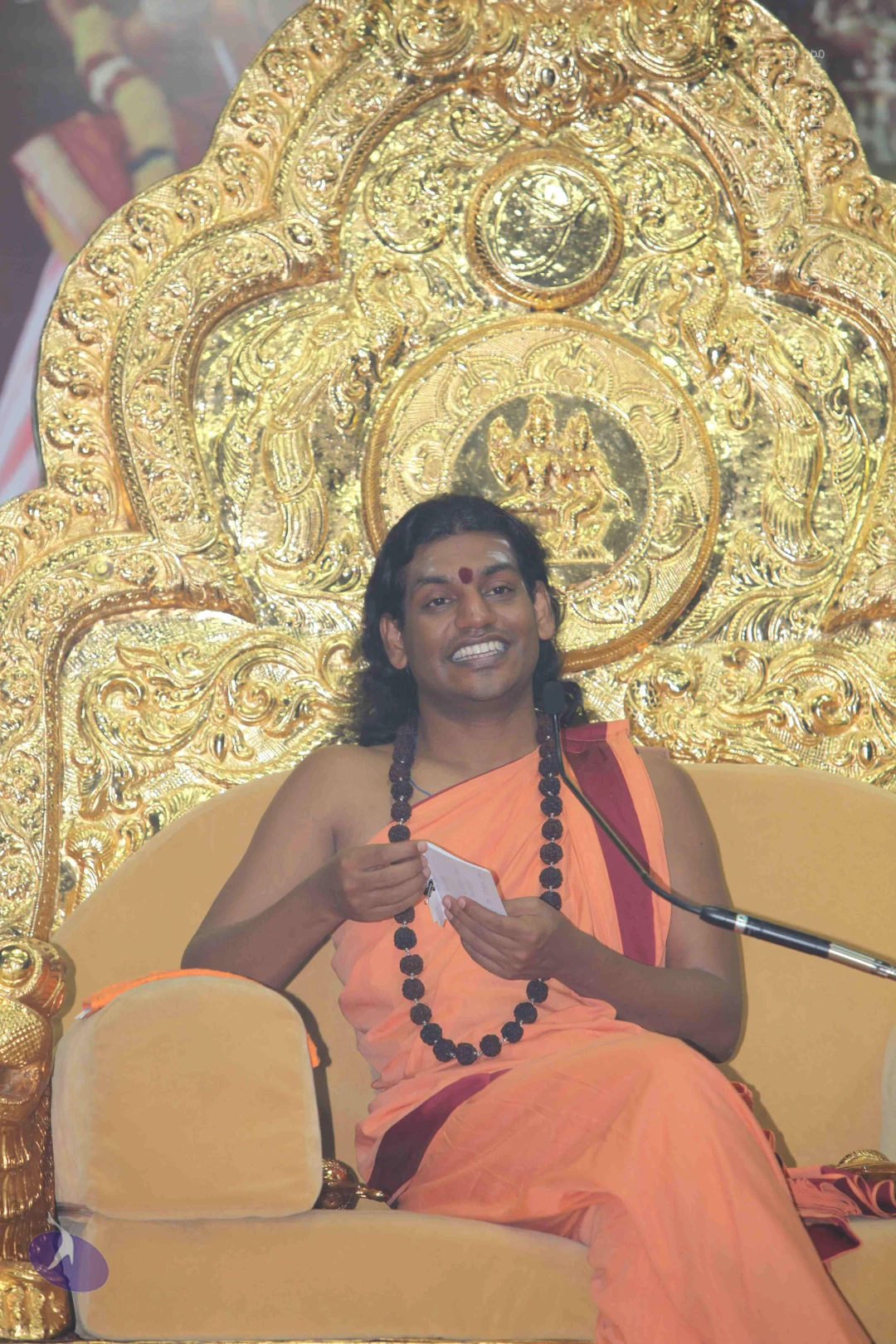
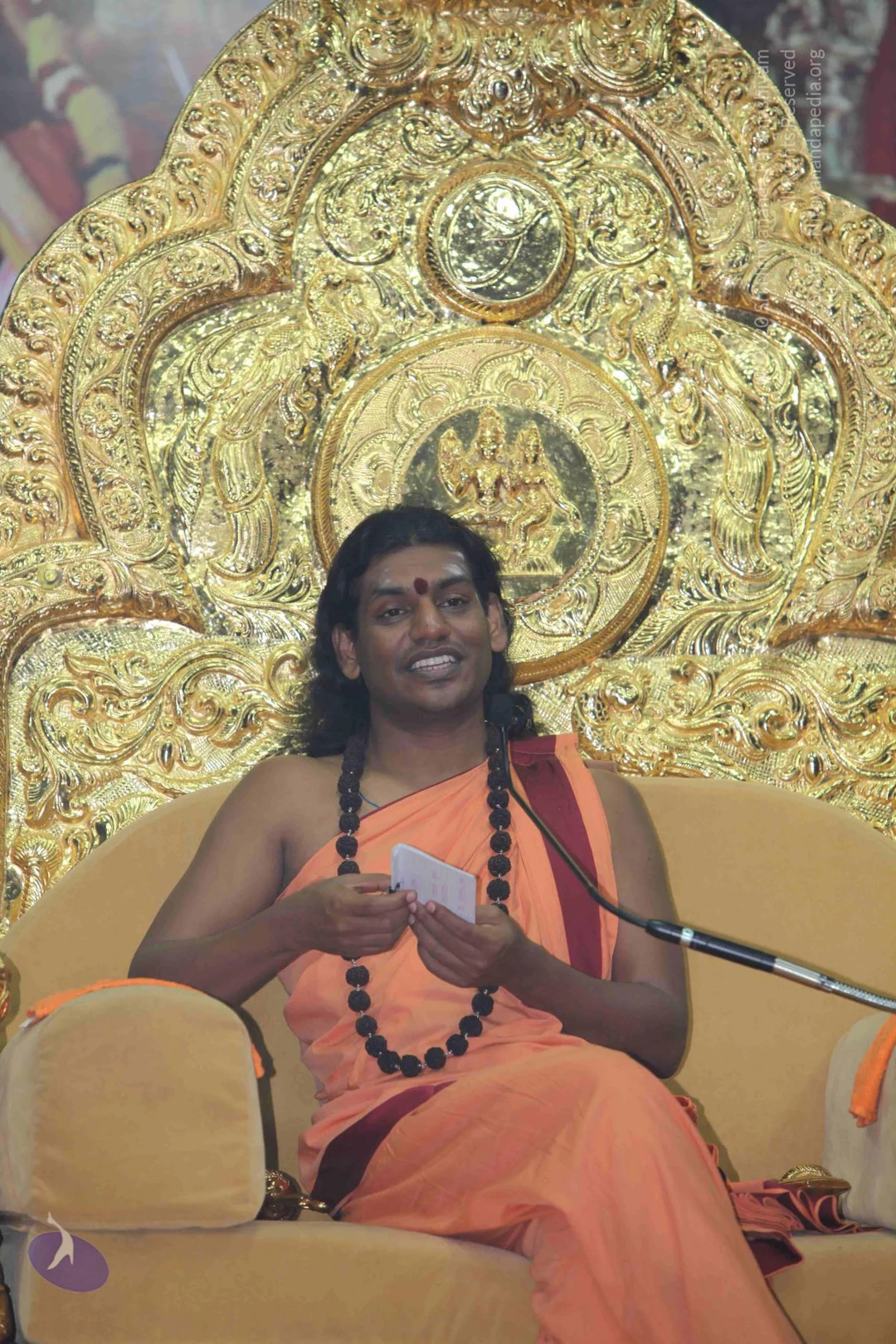
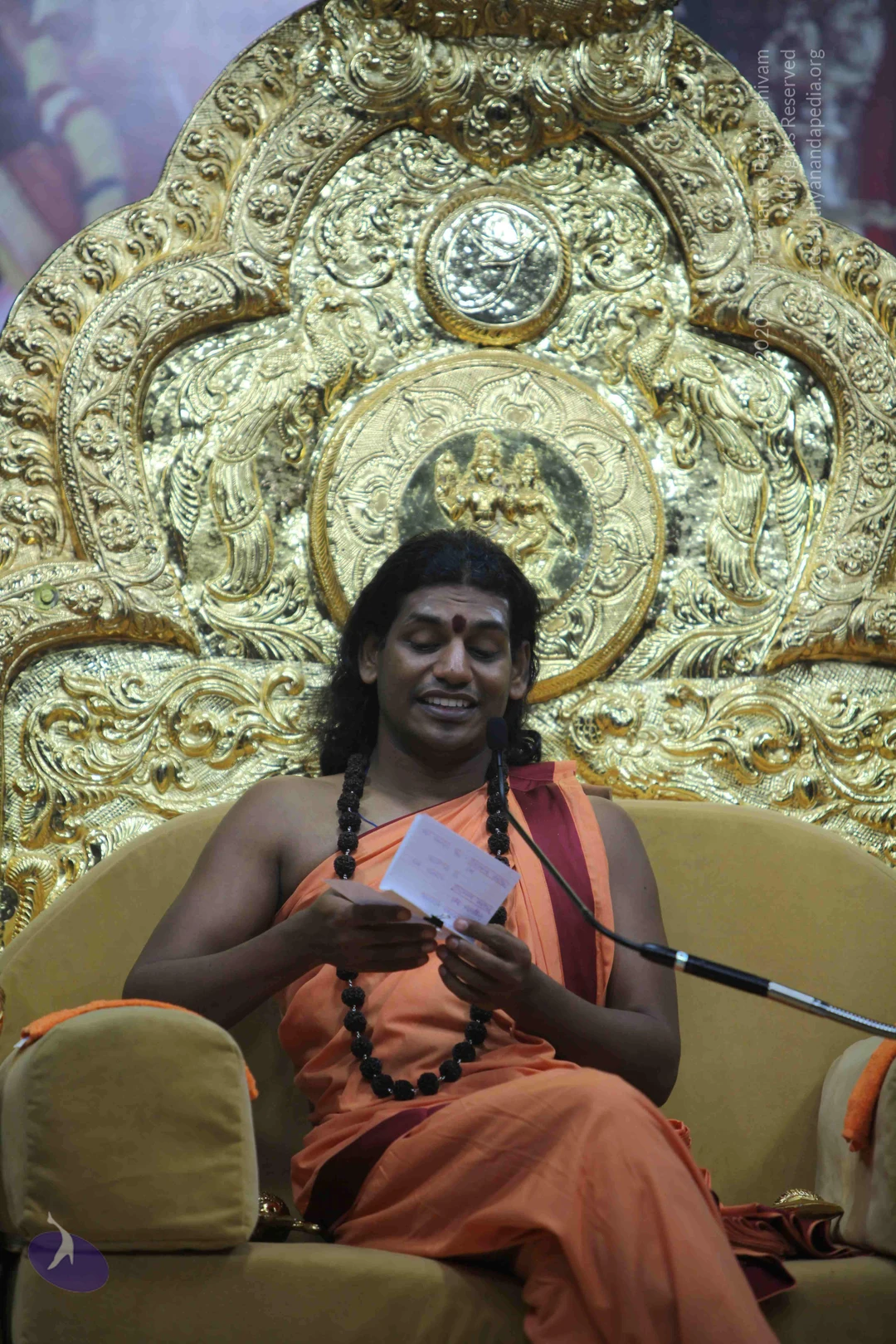
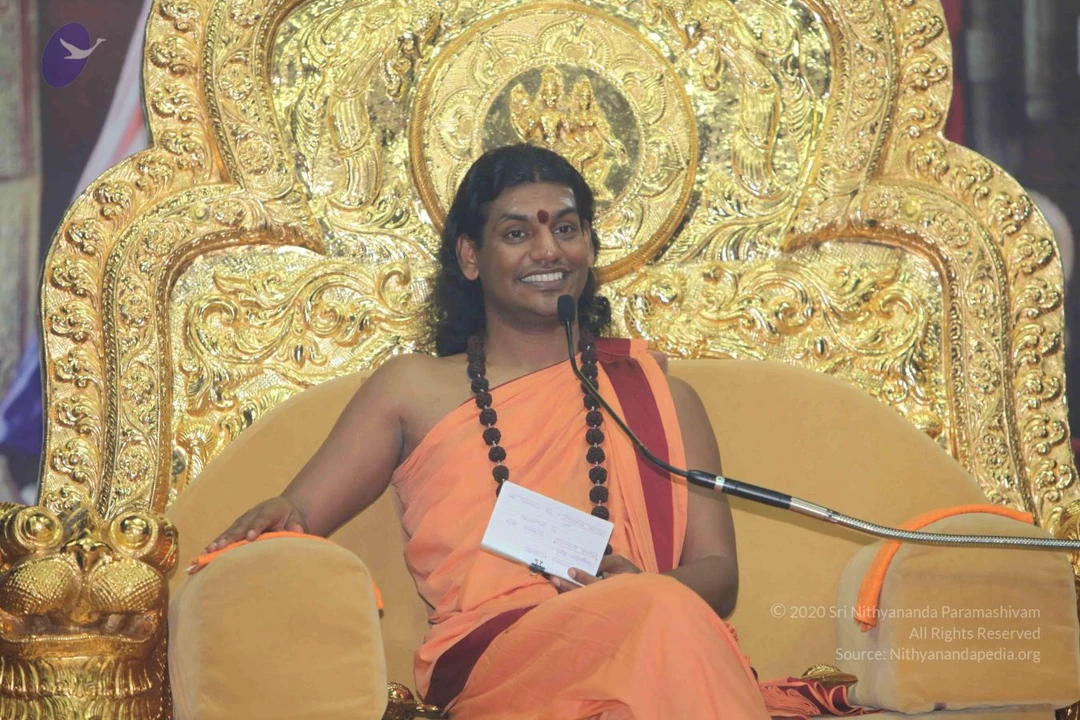
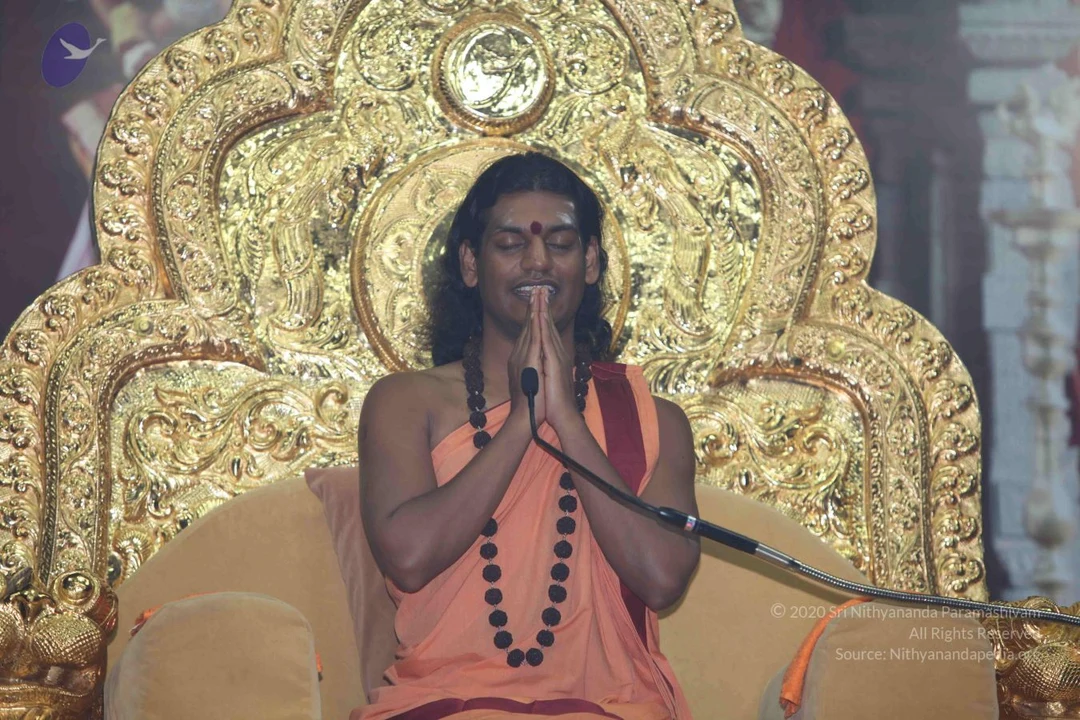
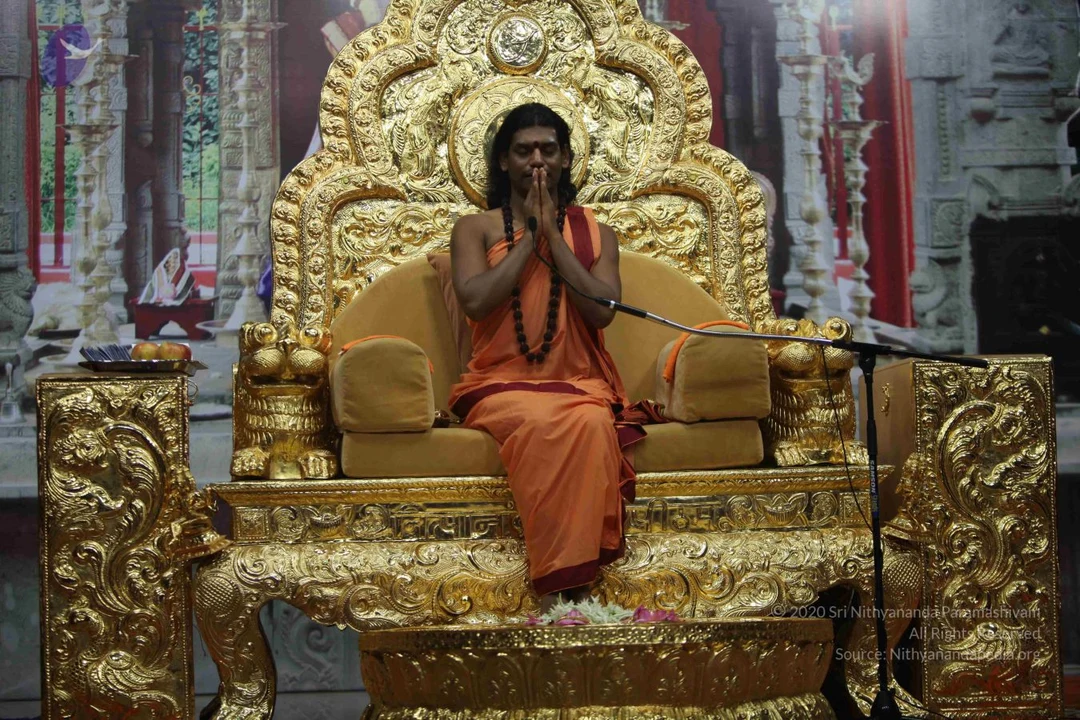
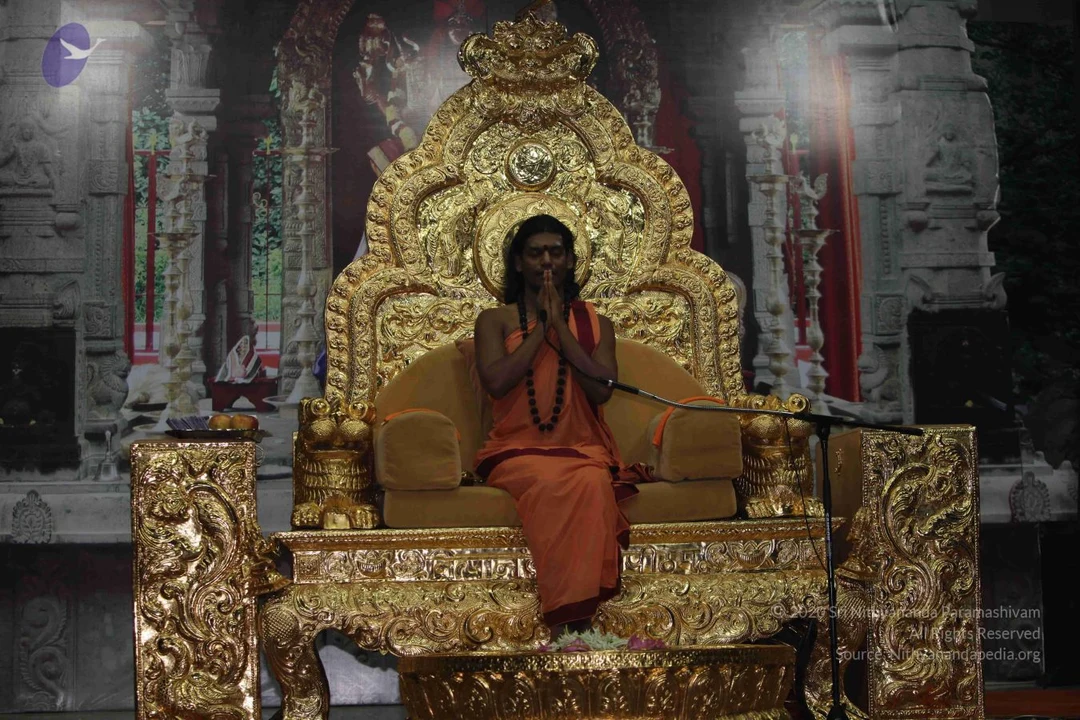
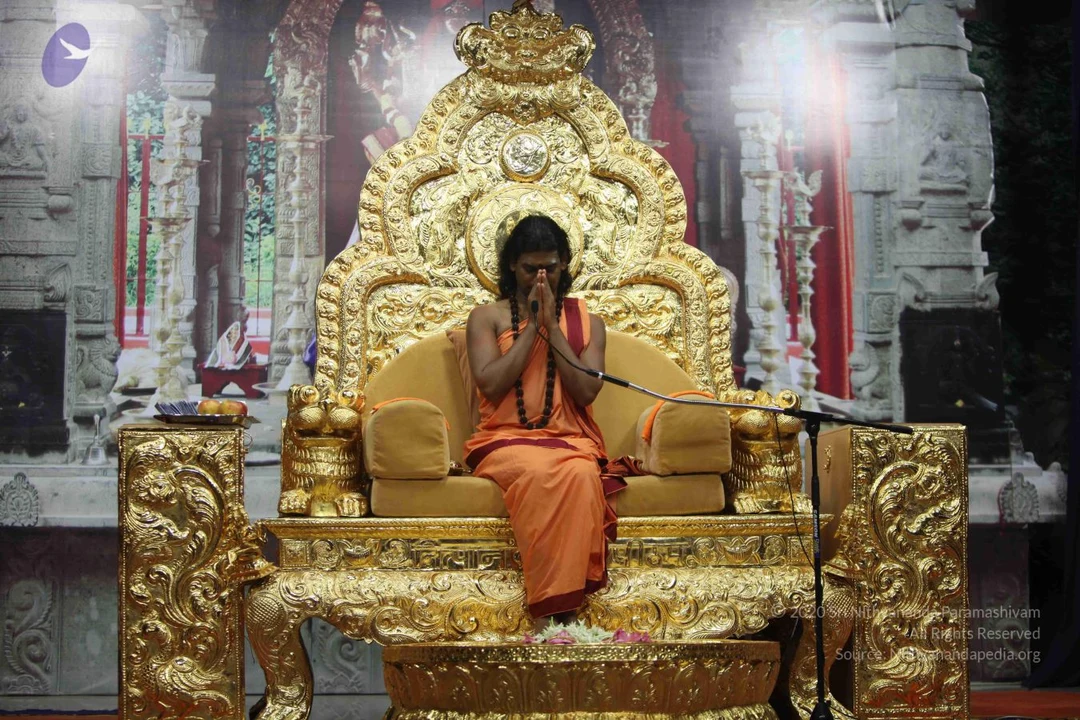
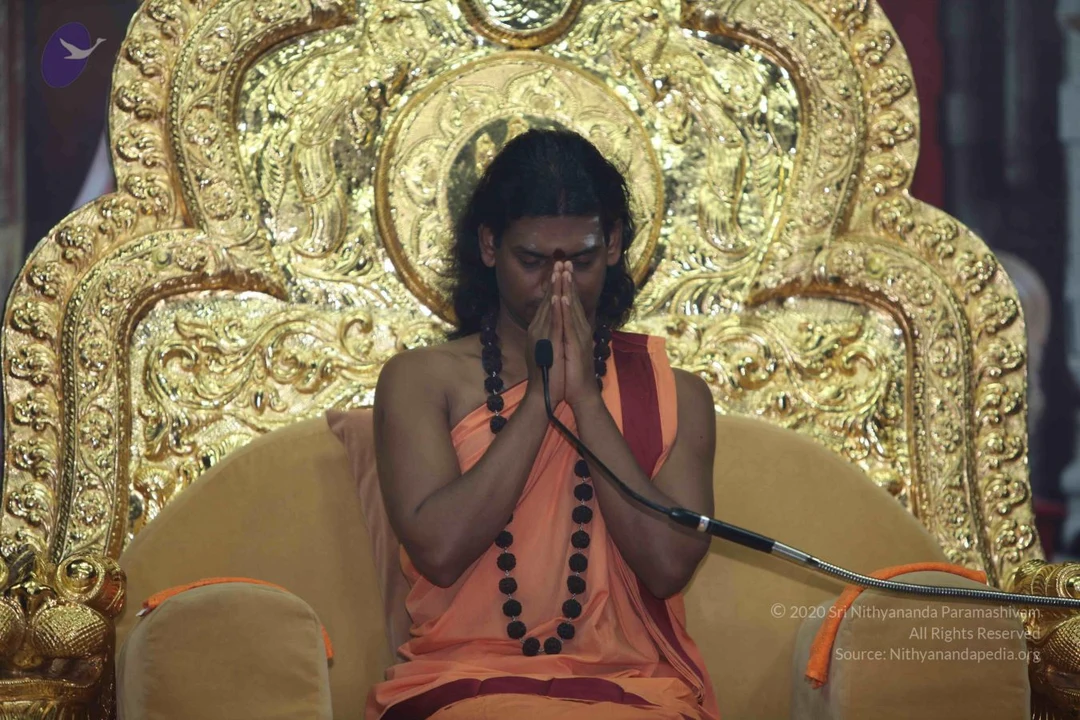
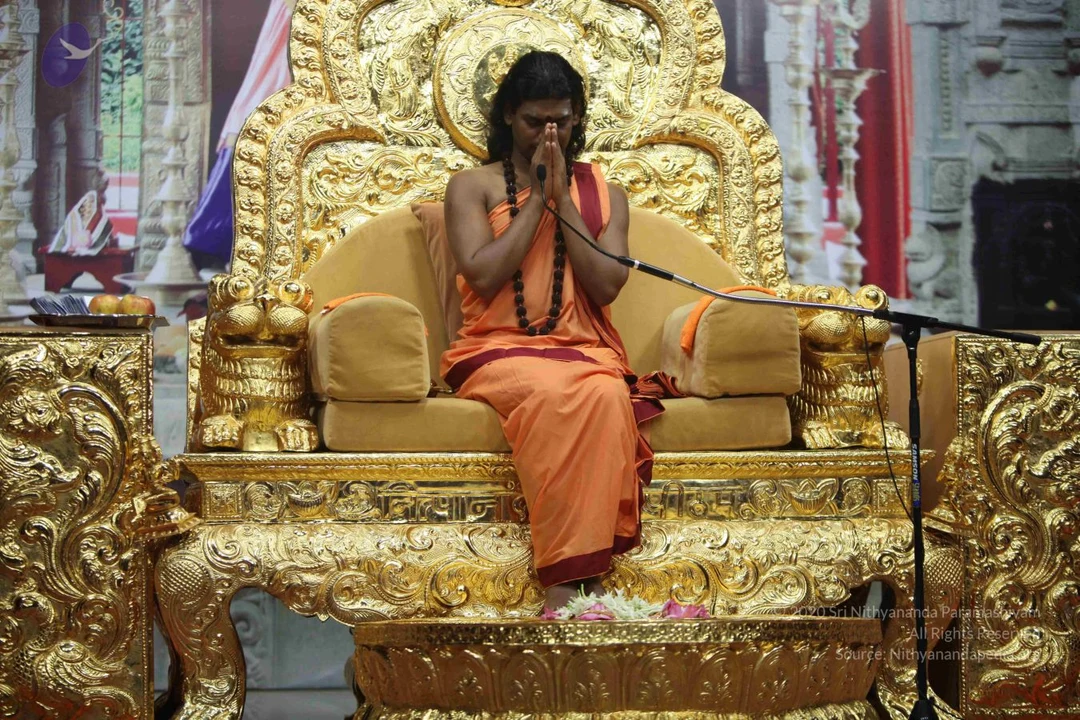
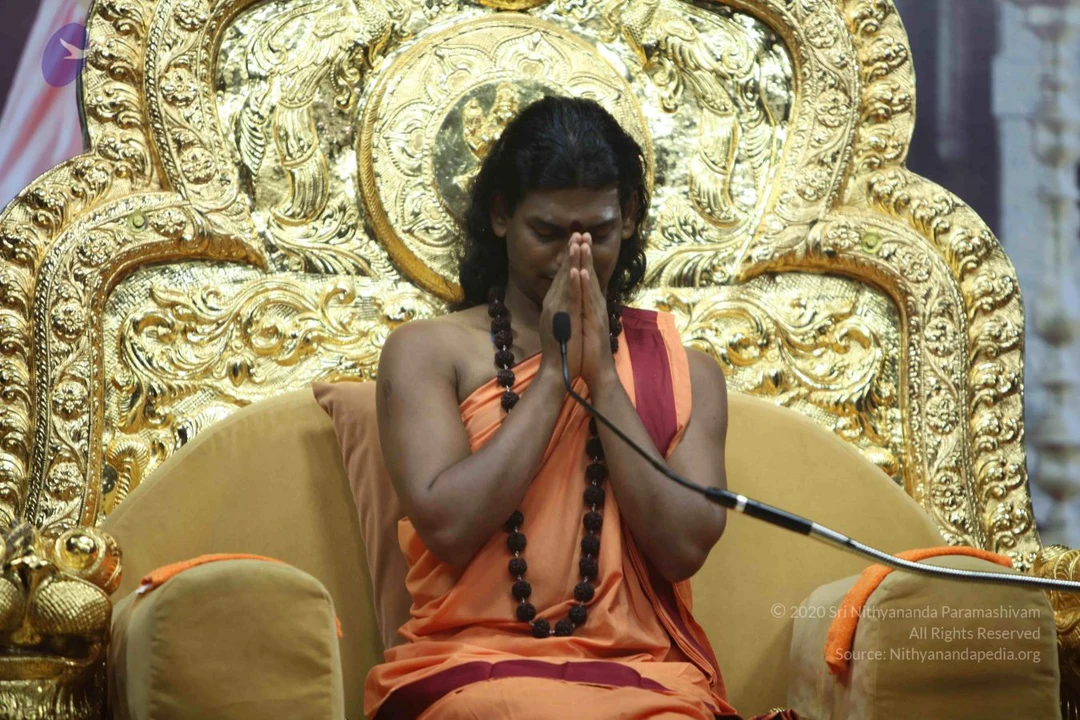
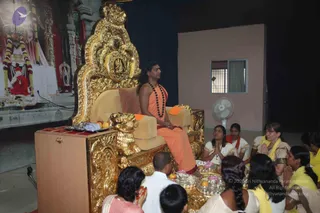
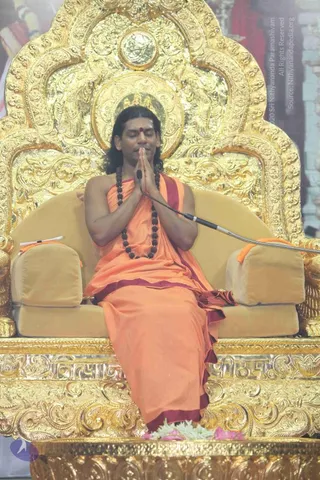
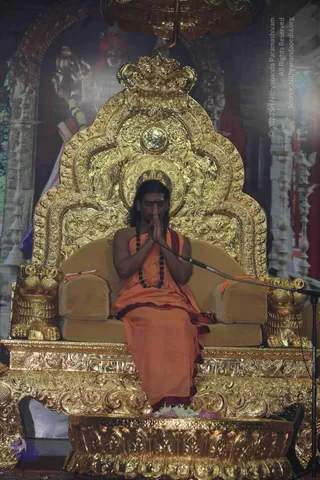
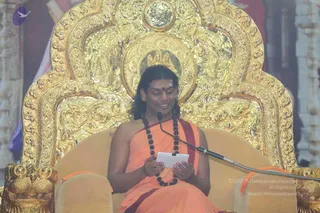
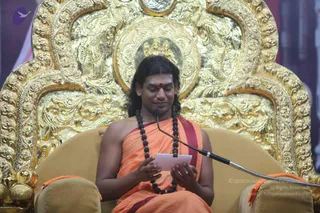
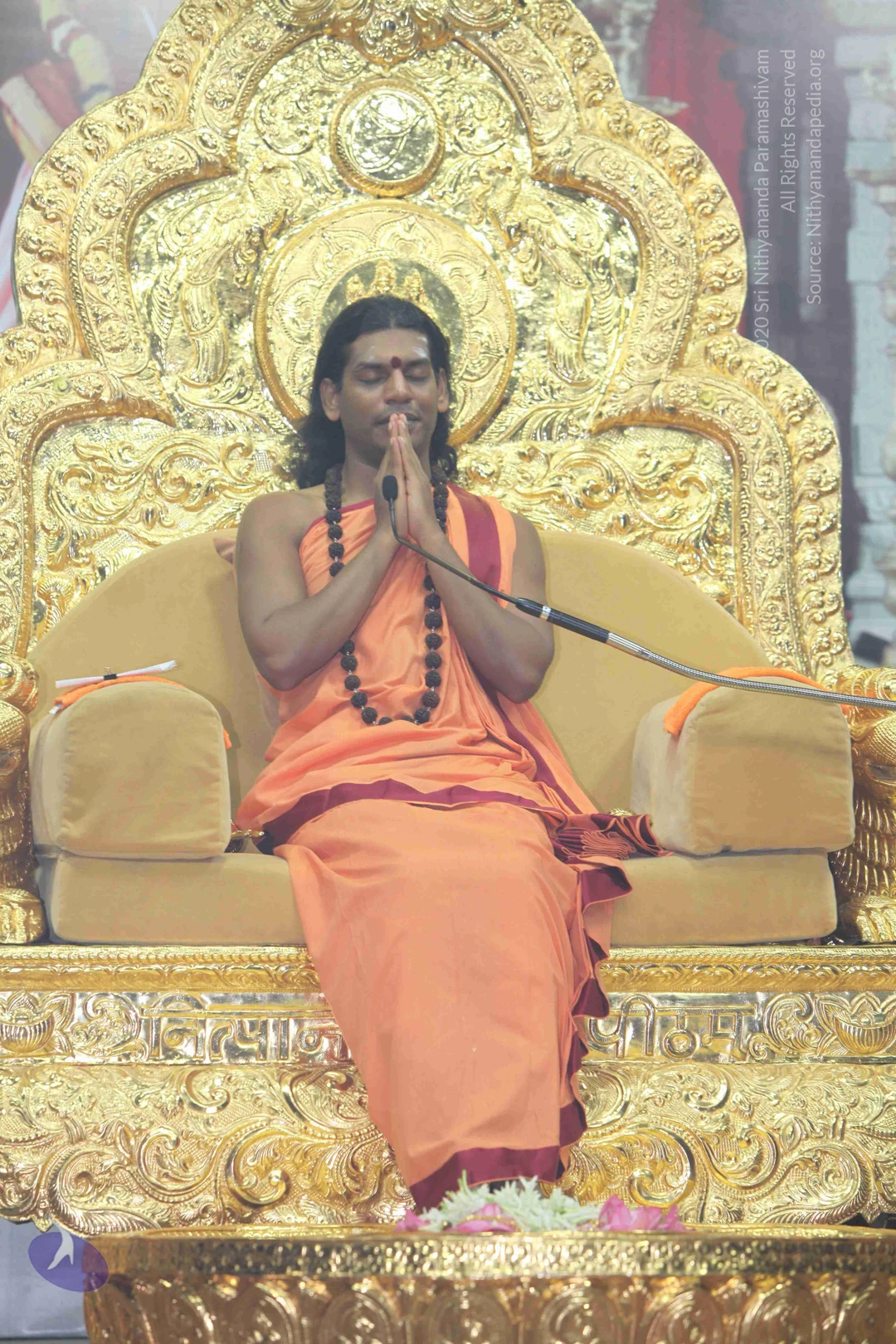
Photograph of a man seated on an ornate gold throne with carved floral and figural relief, his hands pressed together in anjali mudra with eyes closed. He wears an orange saffron wrap with maroon borders over bare shoulders and a long dark rudraksha mala, with a red bindi on his forehead and long dark hair swept back. A microphone stand is angled beside him, and white and pink flowers rest on the gold platform below. Carved lion-form armrests and a gold-painted pedestal frame the scene. Probable Swamiji by appearance cues of long hair, saffron clothing and rudraksha mala, seated in honour as a speaker.A man seated on an ornate gold throne with carved gold backrest and lion-head armrests, hands pressed together in namaste with eyes closed. He wears an orange robe with maroon border, a rudraksha mala and long hair swept back, with a microphone stand at his side. Flower offerings sit on the gold pedestal below. Behind the throne is a painted backdrop of a temple and deity figures. Appearance-based probable identification: Swamiji (probable), seated in person on the throne and identified by his saffron robe, rudraksha mala and long hair. A printed copyright line runs vertically along the right edge.A seated man in a long orange robe with maroon edging sits on an ornate gilded throne with a golden canopy and a carved crown-like top. His palms are pressed together in namaste with eyes closed, and he wears a dark rudraksha mala and a red mark on his forehead. A microphone stand stands beside the throne, and a golden footstool holds flowers. Behind him is a painted temple backdrop with carved pillars and deity imagery. The figure's appearance matches several cues for Swamiji (probable) on the throne, including long hair, orange robes and rudraksha beads, so he is identified as a probable in-person presence giving satsang.A seated man in saffron-orange robes with dark maroon borders sits on an ornate golden throne with intricately carved, gilded backrest and lion-headed armrests. He wears long black rudraksha mala beads and a small red tilak on his forehead, holding a small white card in both hands while smiling and reading. A microphone on a stand is positioned before him. The setting is a ceremonial hall with a decorated backdrop. Swamiji (probable): long hair, saffron clothing, rudraksha mala and a golden throne match the page's identification of Swamiji at this satsang.A man seated on an ornate gold throne with carved floral and bird motifs, reading from a small white card held in both hands. He wears an orange saffron robe with a maroon border, a long rudraksha mala with dark beads, and a red tilak on his forehead. A microphone on a gooseneck stand is positioned in front of him. The setting appears to be a satsang discourse. Swamiji (probable): long, swept-back hair, saffron robe and rudraksha mala on a throne fits the page's description of a satsang talk.A man in a saffron-orange robe sits on an ornate gilded throne with carved floral and lion-like motifs, gesturing with one raised hand while speaking into a microphone on a stand. He wears a beaded rudraksha mala around his neck and has long dark hair. Behind him is a painted backdrop of a stone temple with carved pillars, and a small deity figure appears near the top. Foreground flowers lie at the base of the throne.

eN-Galleria
31 photosSource gallery
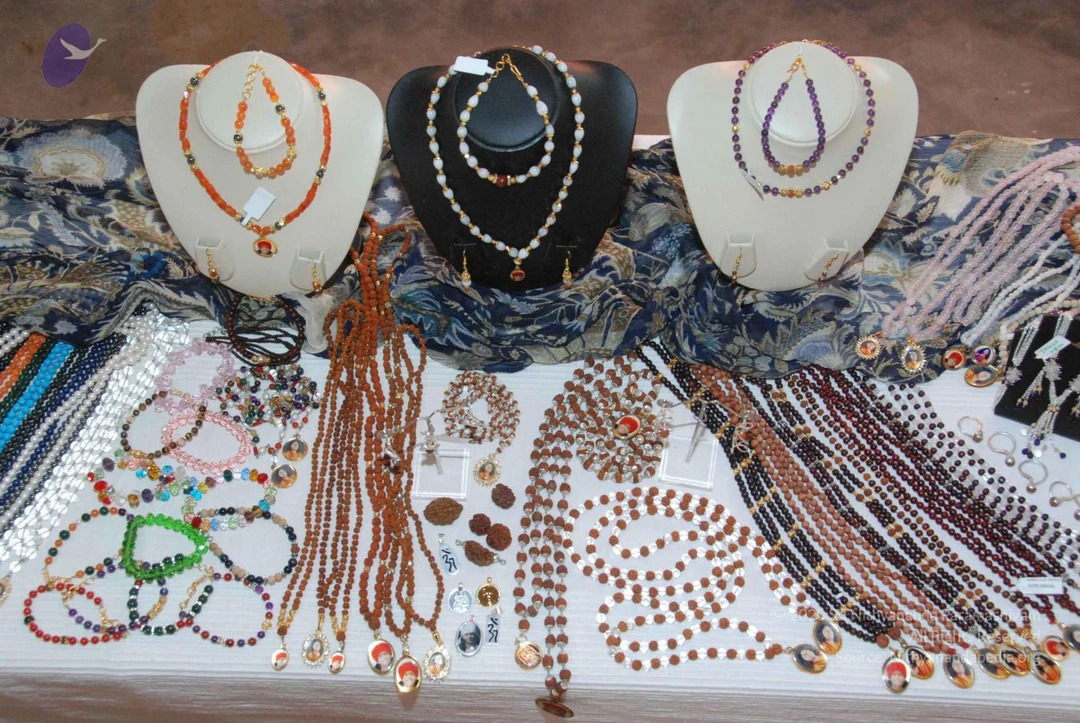
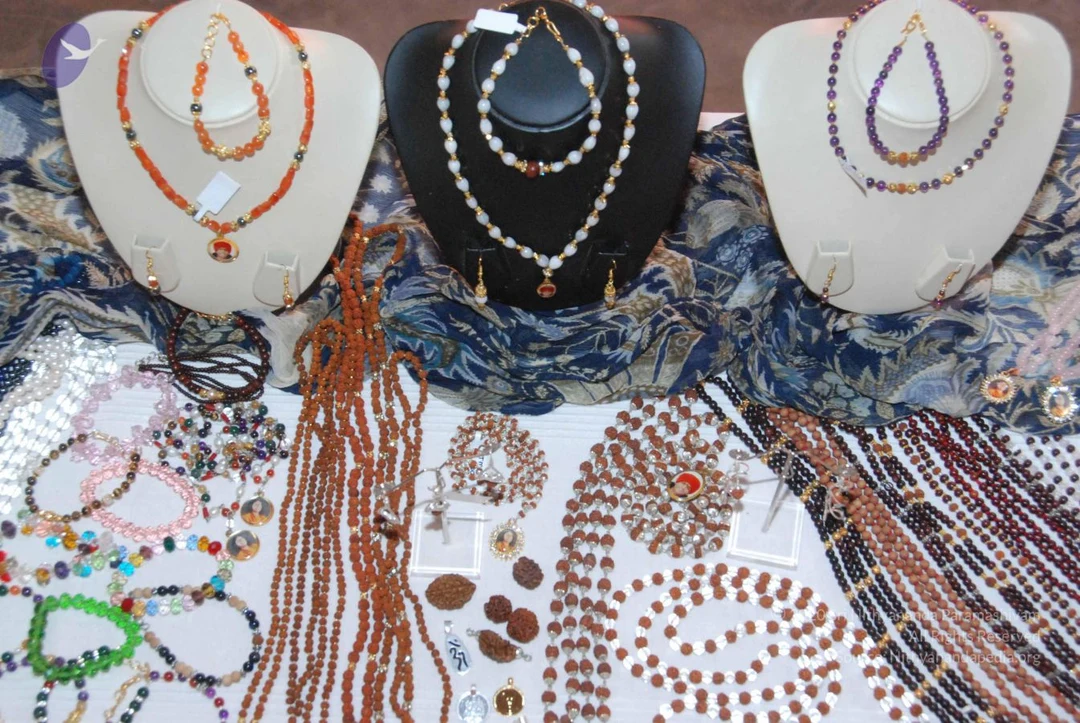
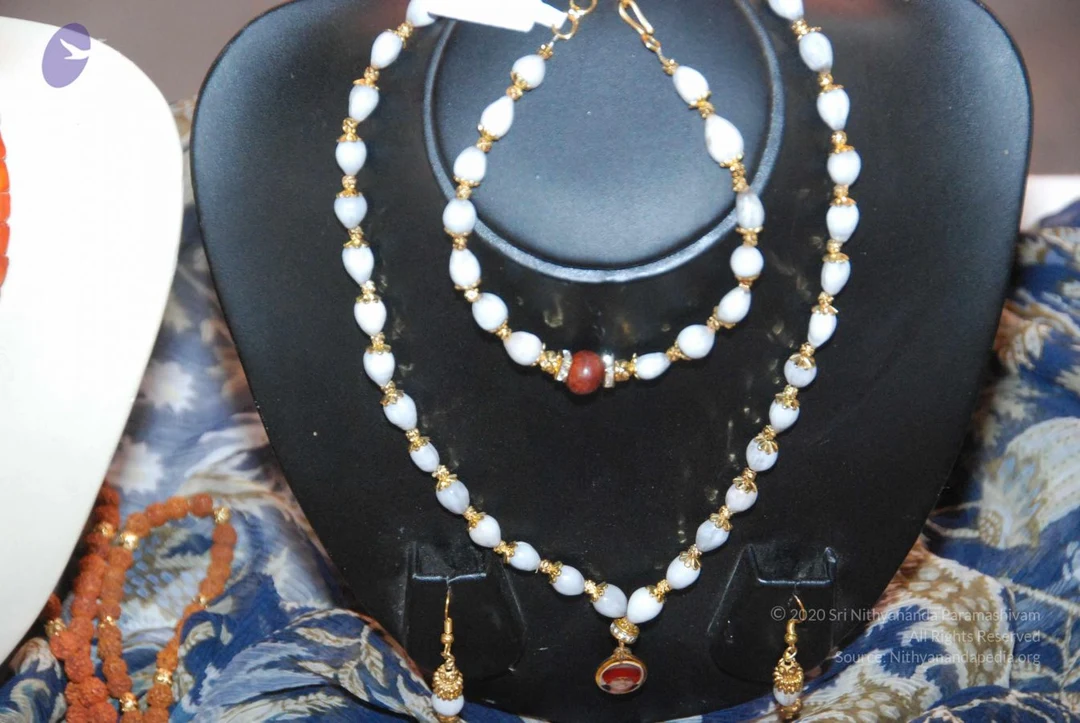
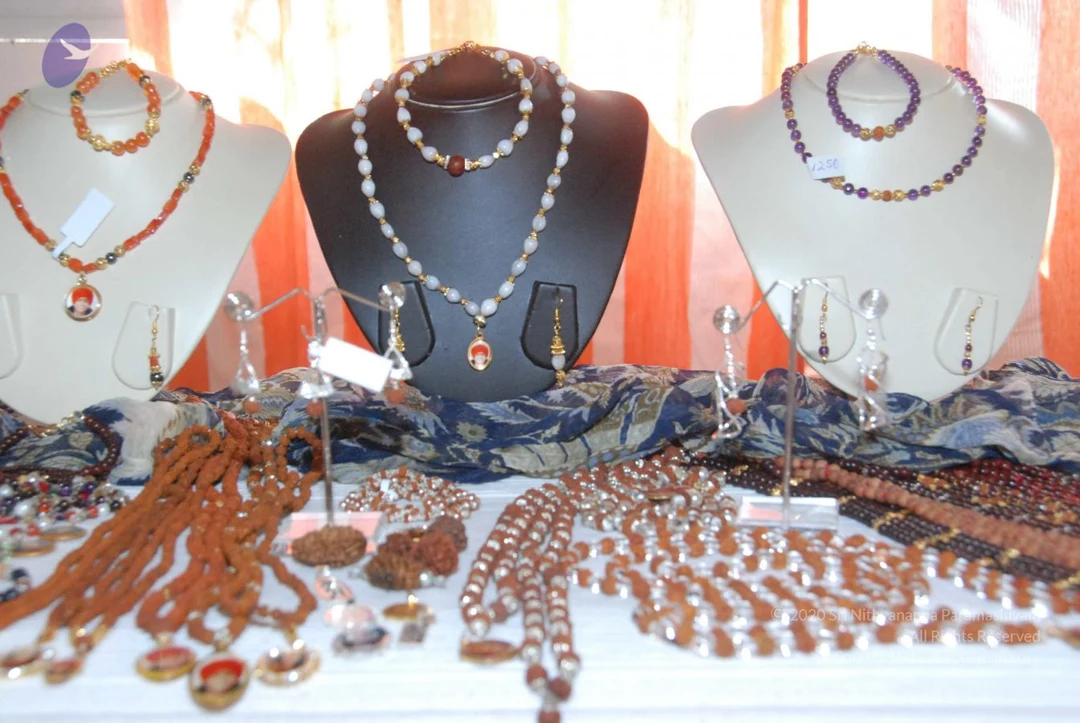
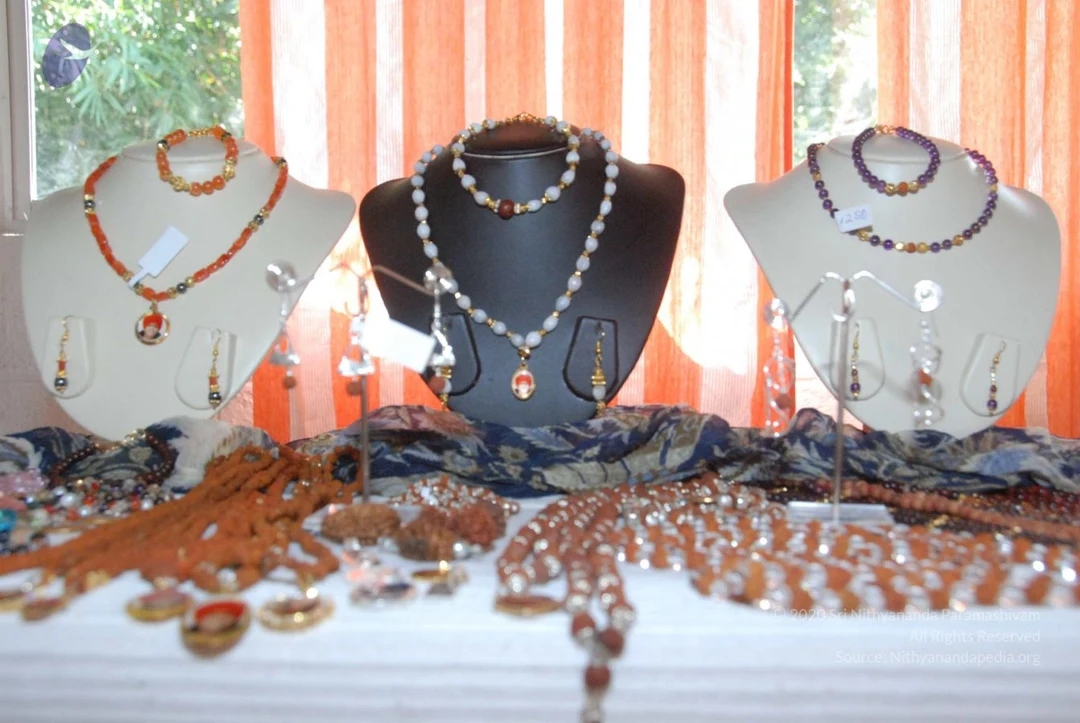
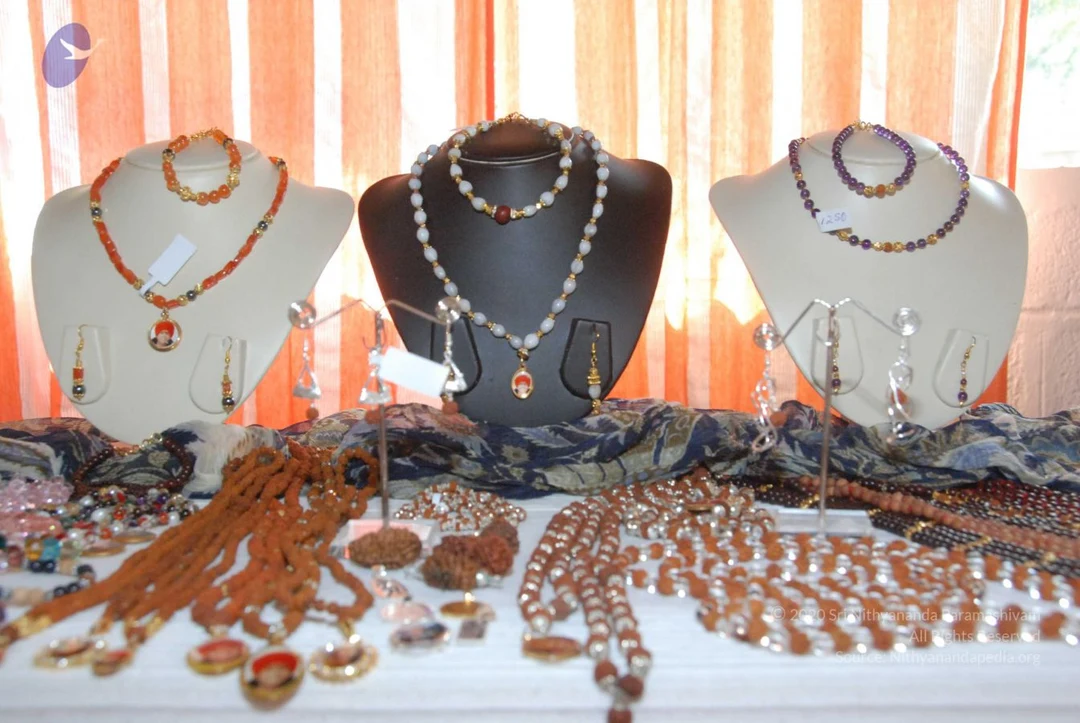
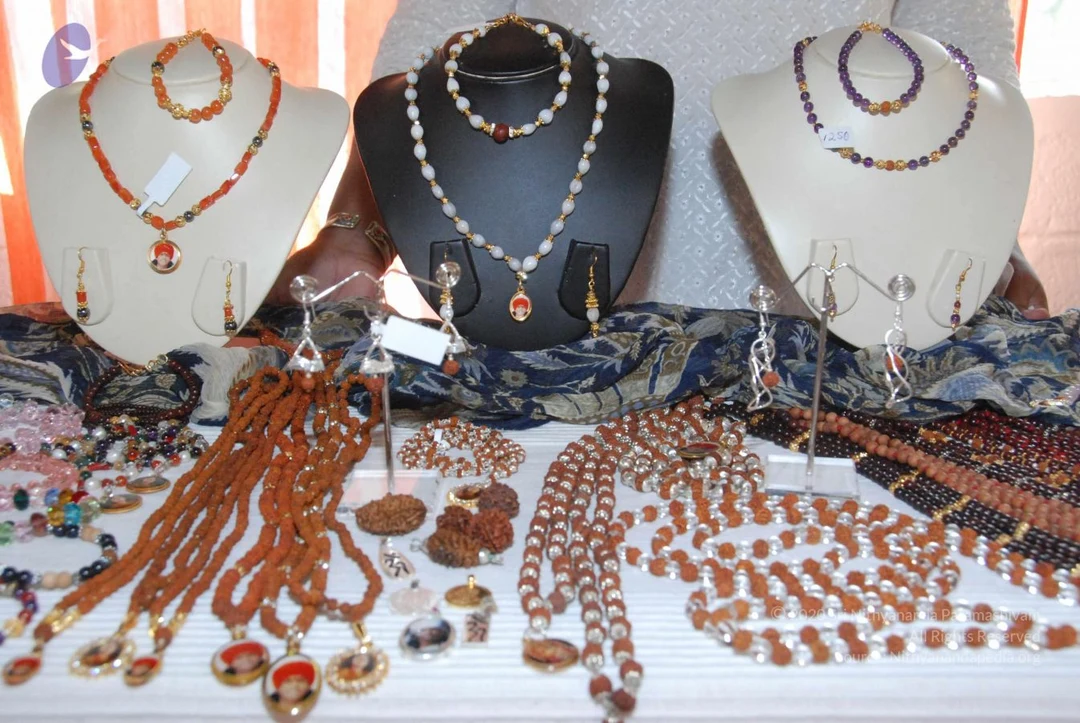
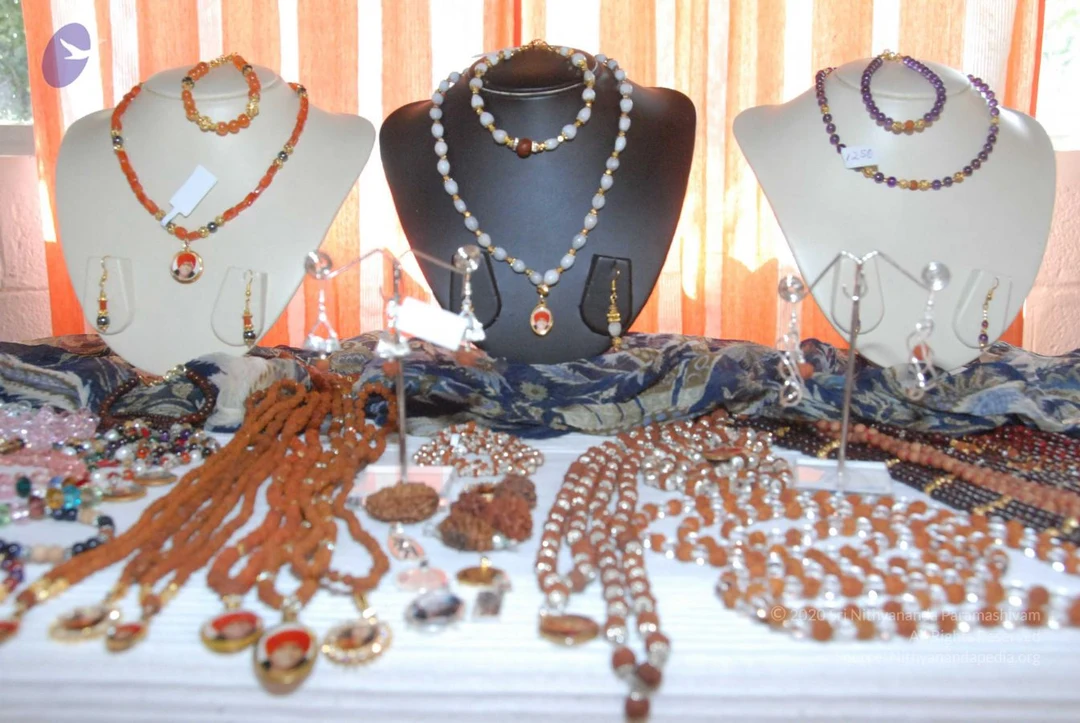
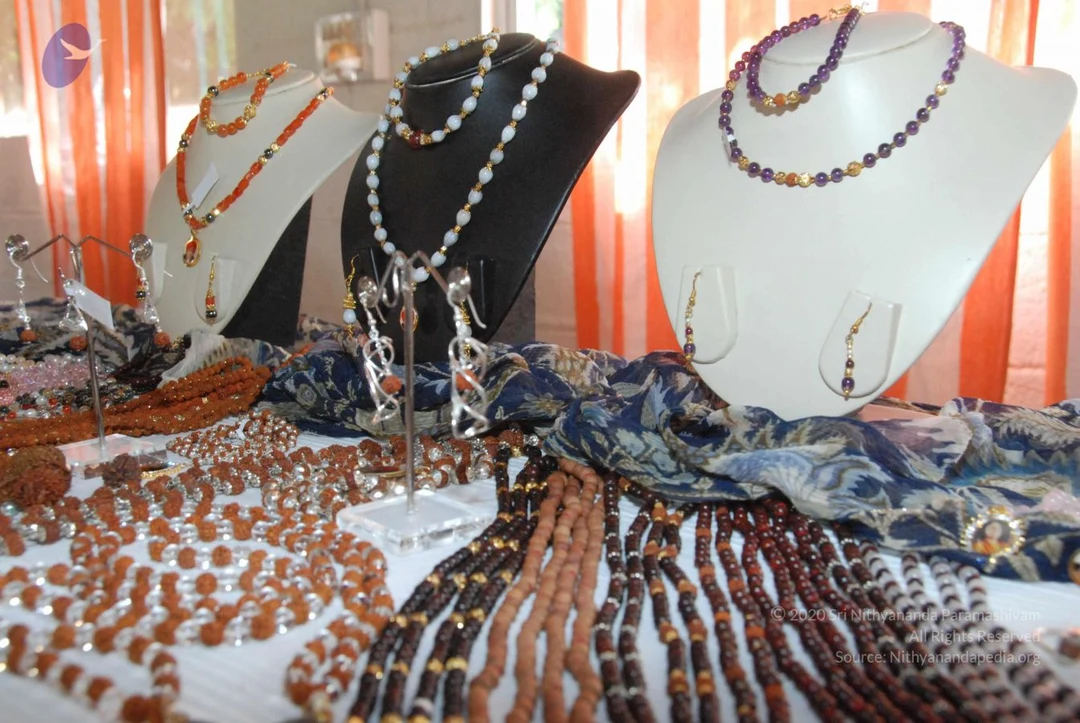
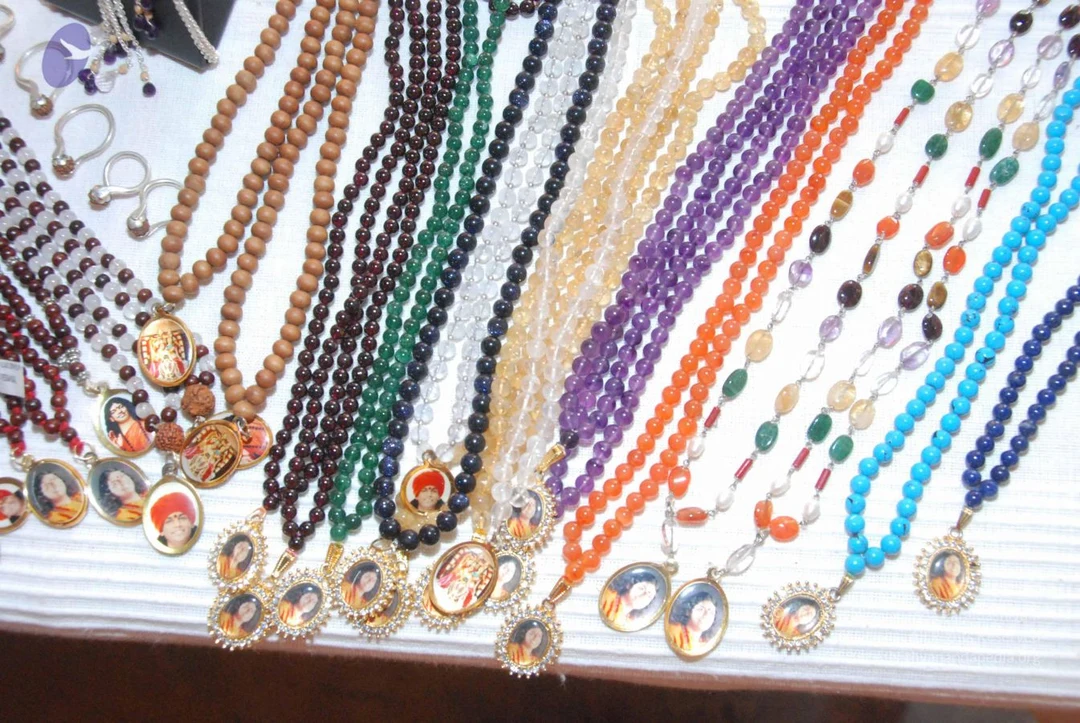
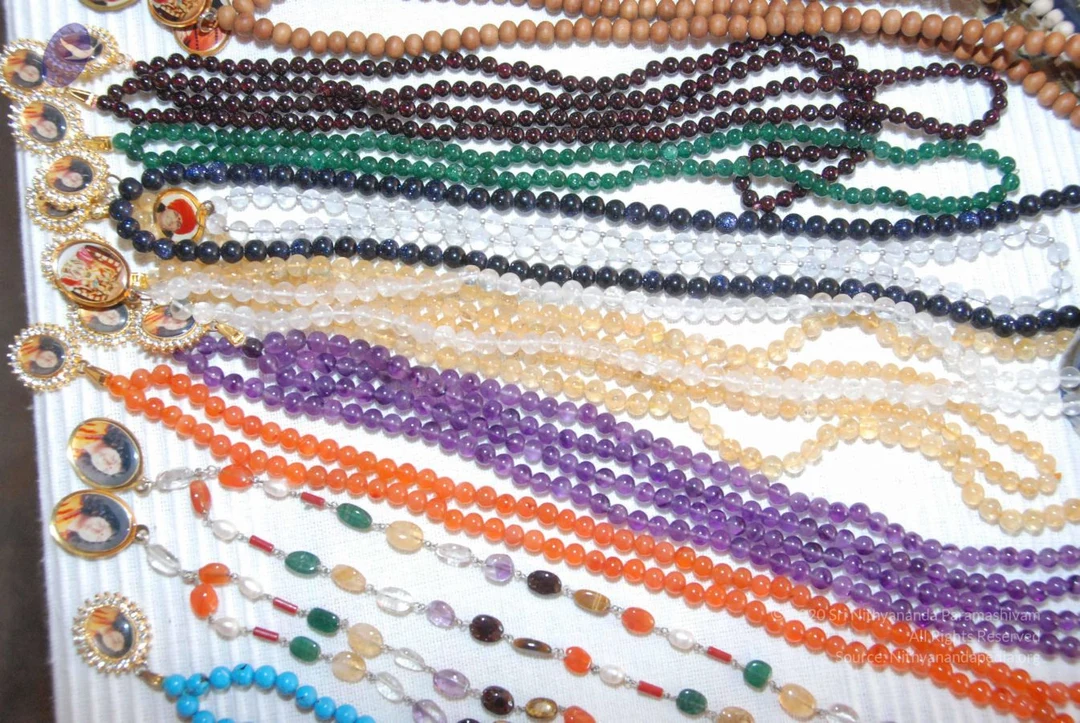
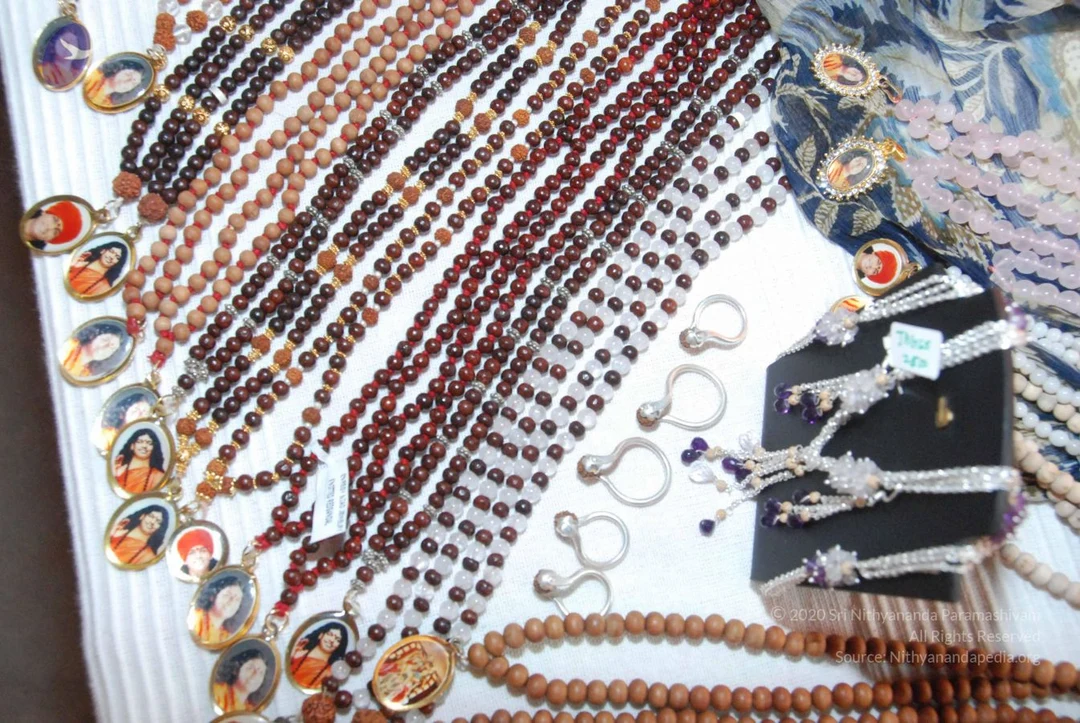
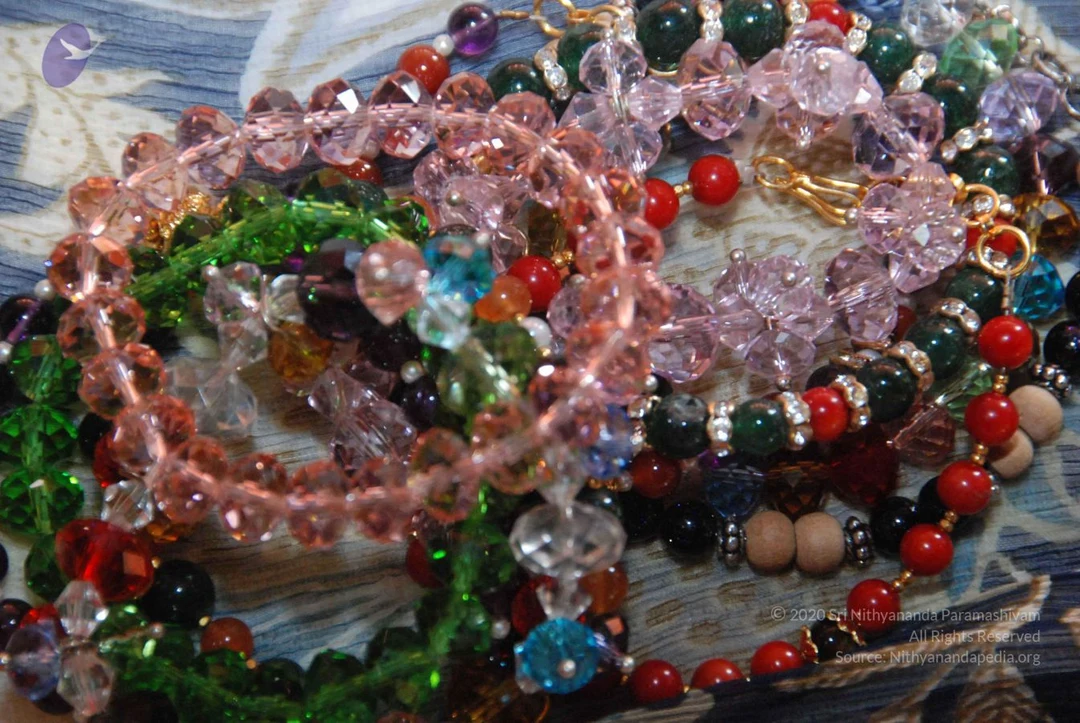
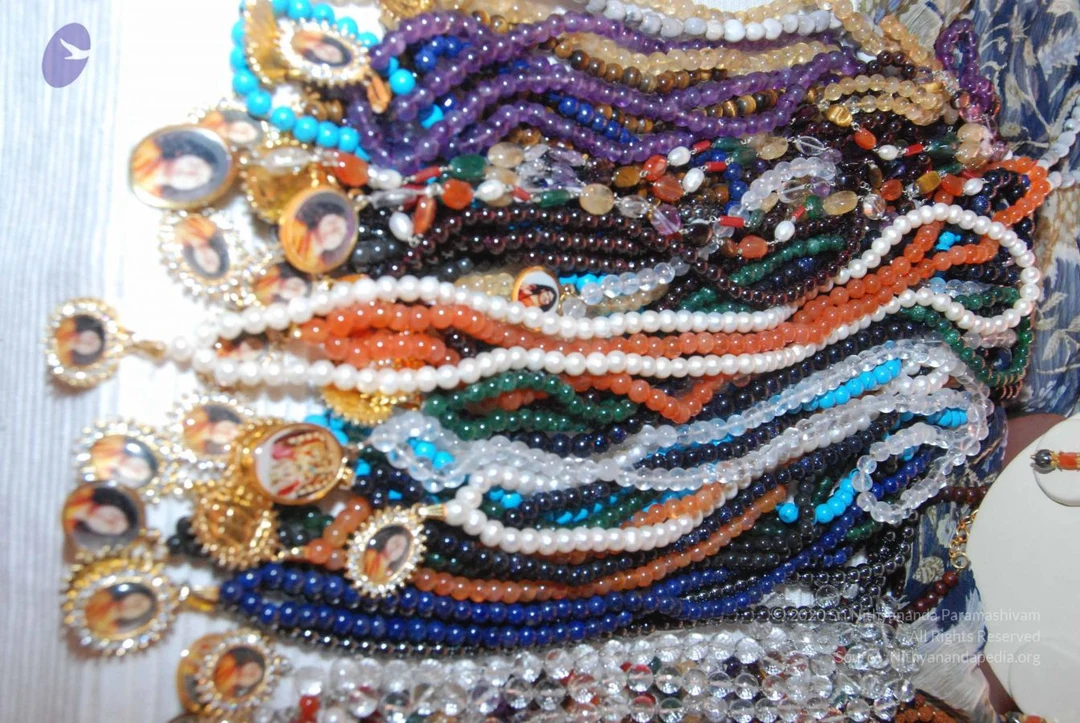
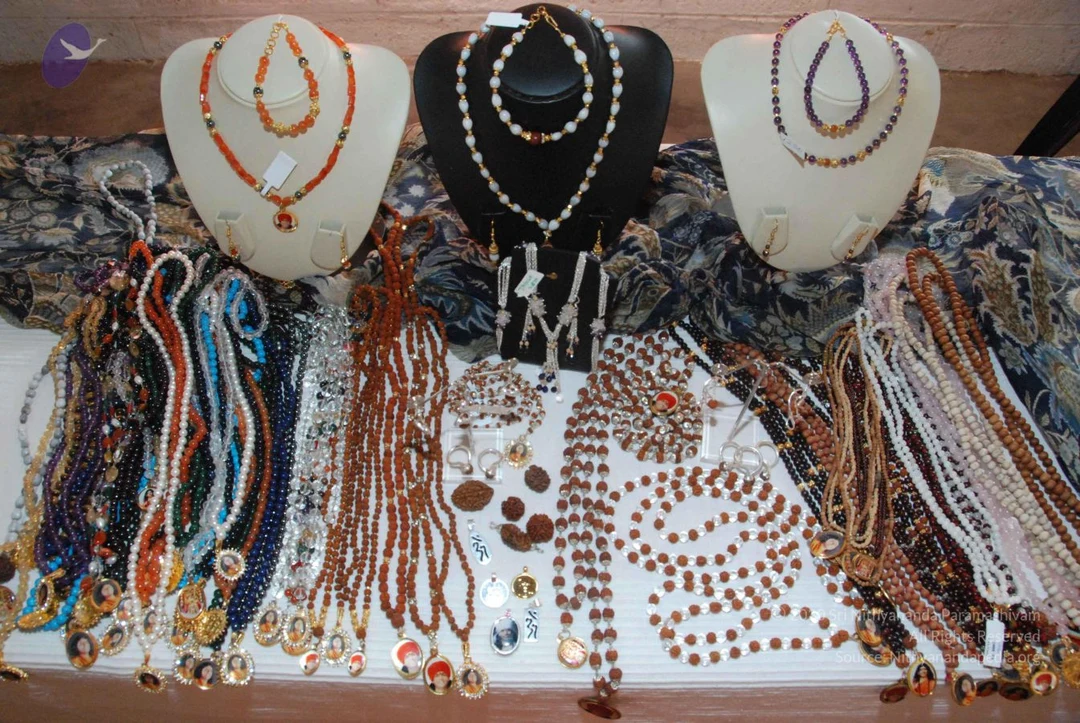
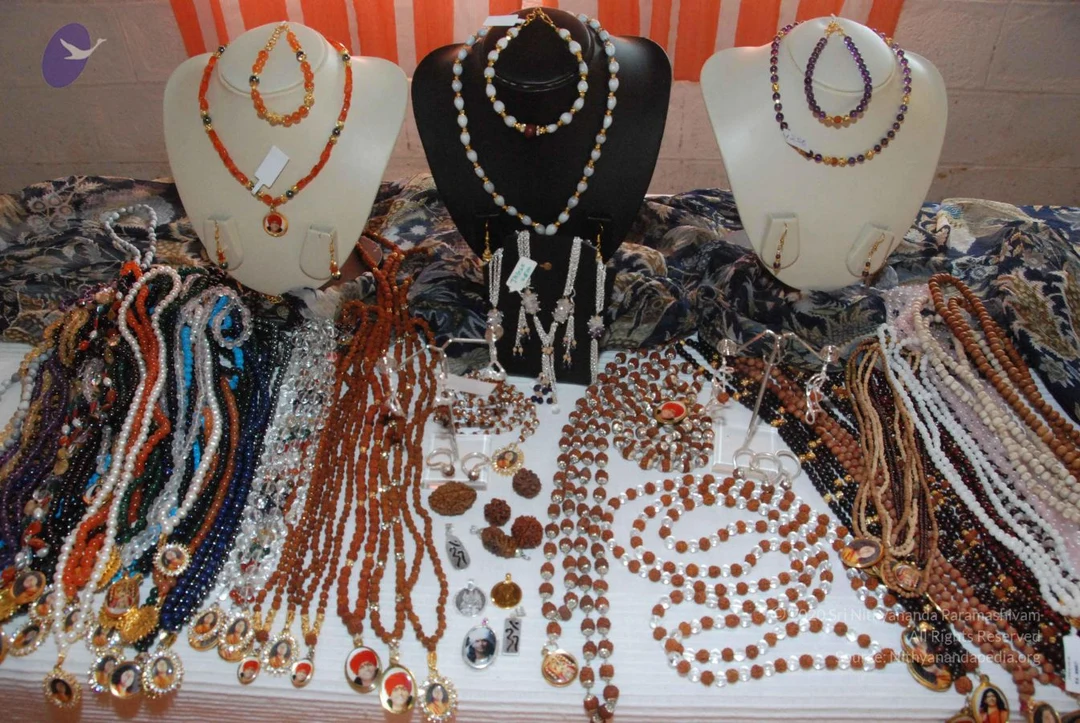
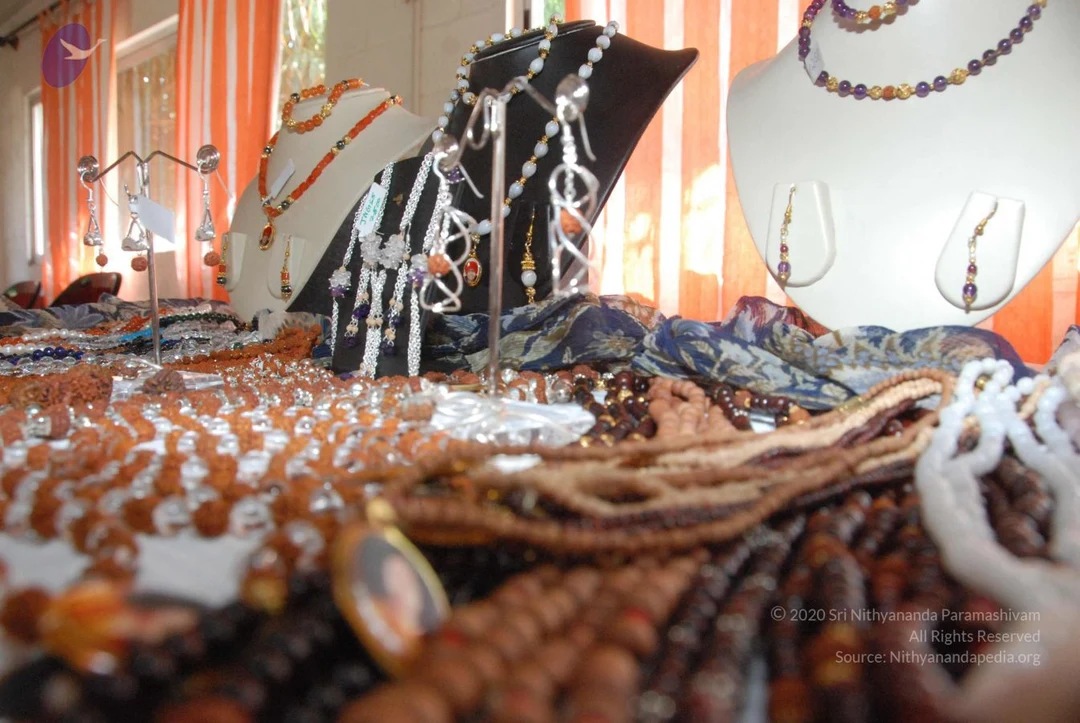
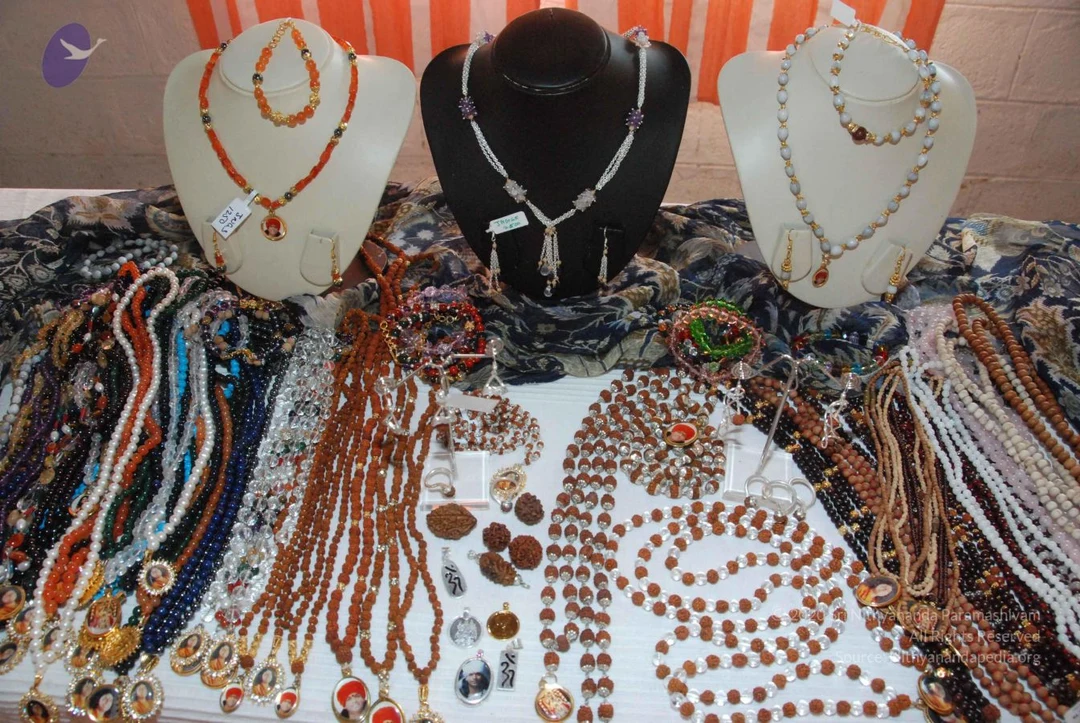
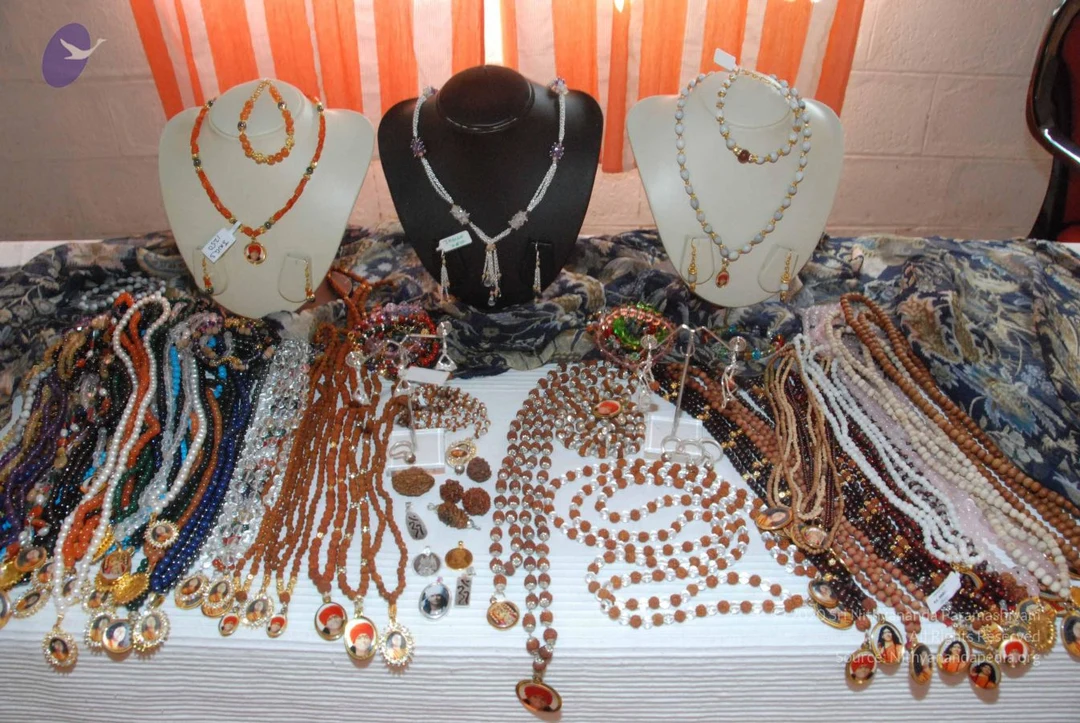
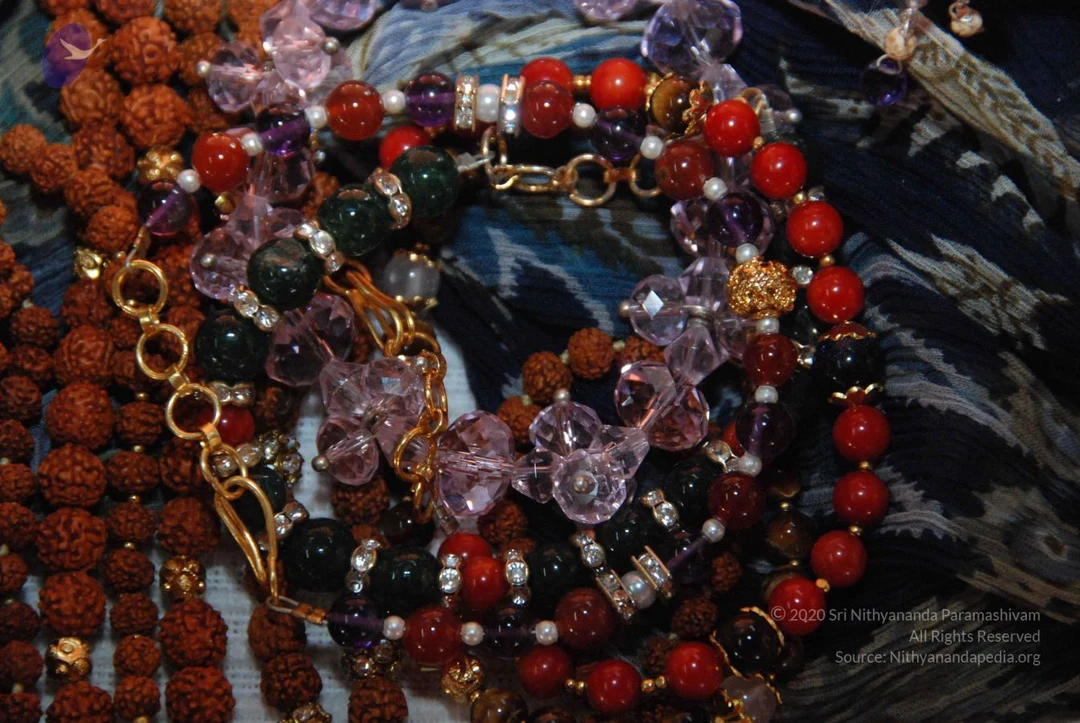
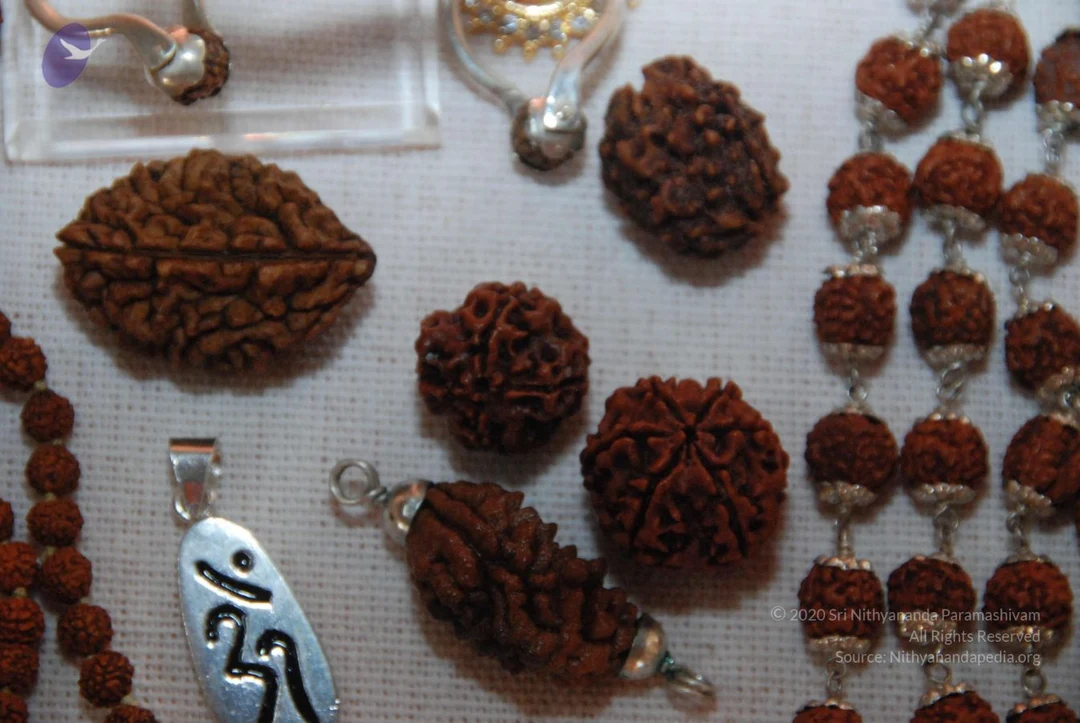
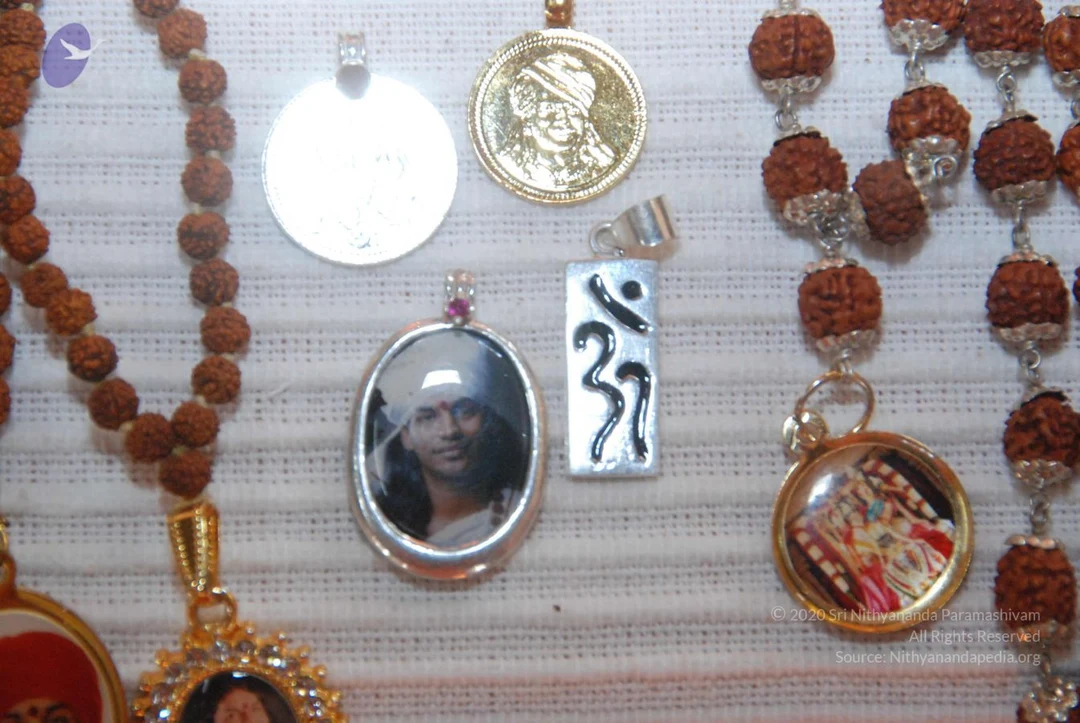
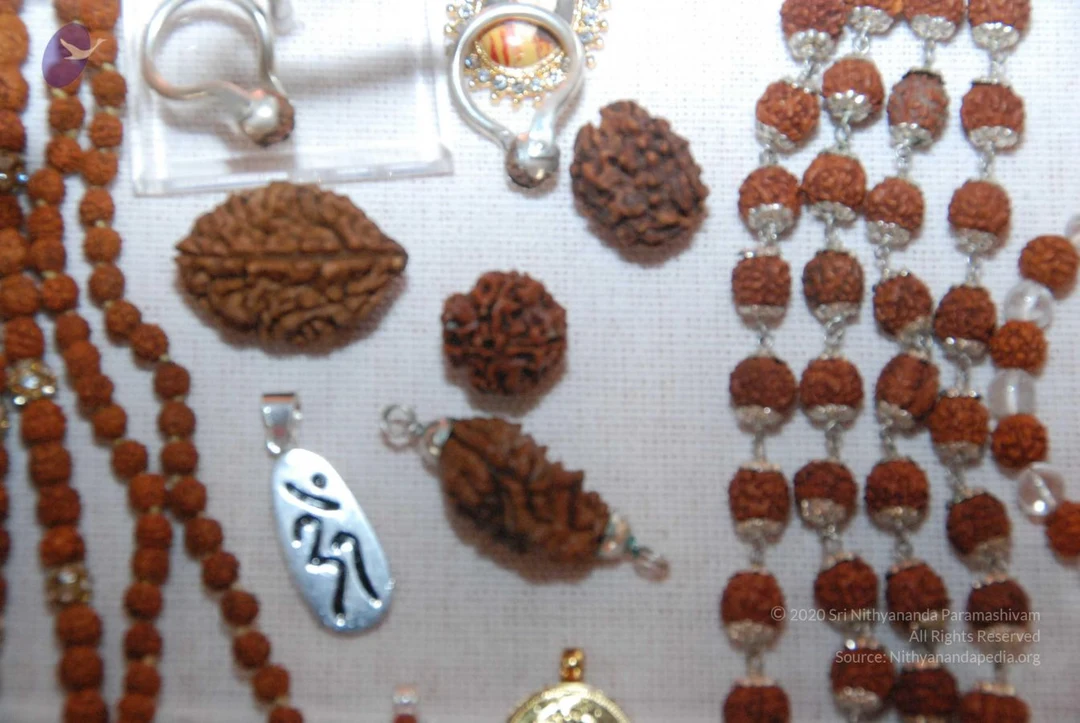
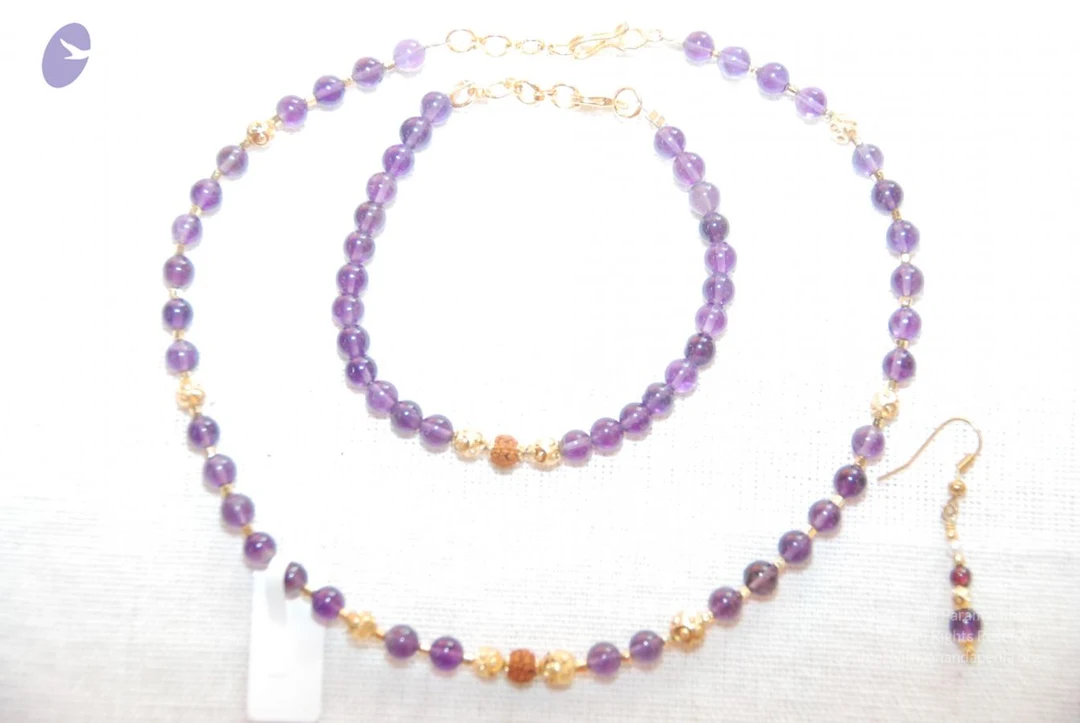
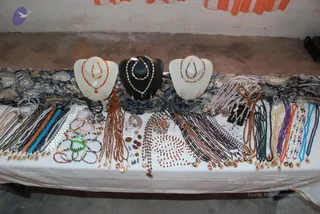
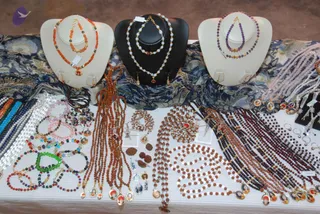
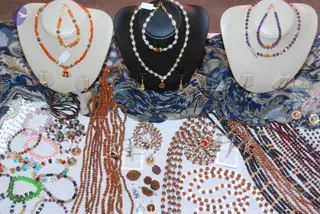
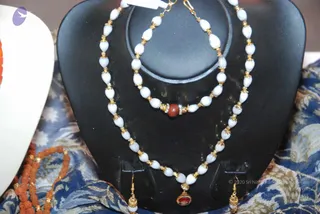
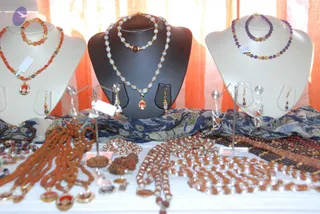
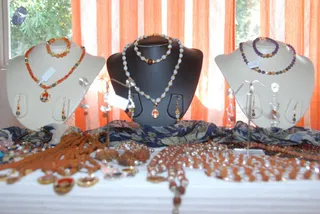
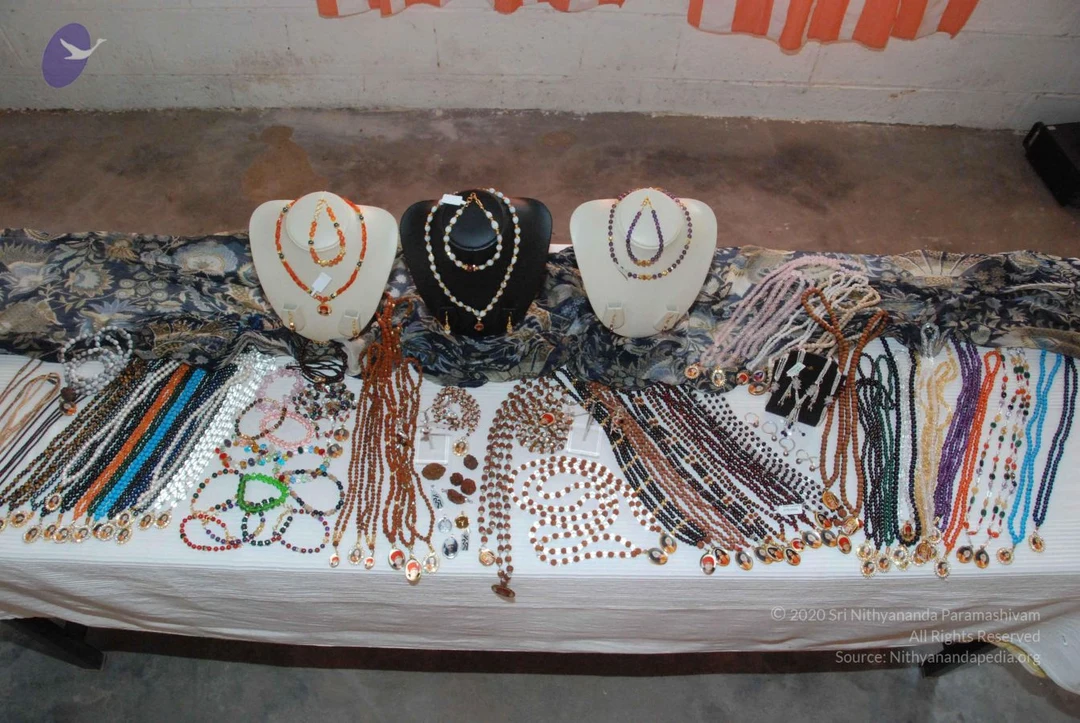
A top-down view of a white-draped table displaying many strands of beaded necklaces, bracelets and mala-style jewellery laid out in rows. Three white bust forms in the upper area wear necklaces in orange-red, pearl-and-amber and purple-and-orange beads, set on a dark blue floral fabric. Rudraksha-style brown beads, coloured glass and gemstone-looking pendants, and crystal bracelets in pink, green and clear tones are arranged across the table. No people are visible.A photo of a table display of beaded jewellery and malas. Three white mannequin busts at the top wear necklaces and bracelets in orange carnelian, white pearl with gold, and purple amethyst beads, draped over a blue patterned fabric. Below, many bracelets, rudraksha malas in brown and orange, pendants and gold-framed oval lockets are laid out in rows. Several lockets show small portrait images. No people are visible.A flat-lay display of beaded jewellery and rudraksha malas arranged on a white cloth with a blue patterned scarf. Three white bust stands at the top wear necklaces and earrings: orange carnelian-like beads on the left, white pearl-style beads with gold spacers and a small round pendant in the centre, and purple beads on the right. Below, rudraksha mala strands in brown, multi-coloured bead bracelets, pink and green beaded bracelets, and small round pendants with portrait medallions are laid out. No people are visible.A photograph of a jewellery display on a black bust-style stand. The set includes a long necklace and a shorter necklace of white oval beads separated by gold-toned spacers, a matching bracelet, and gold-toned drop earrings. A red-and-gold pendant hangs from the long necklace, and a single reddish bead sits at the centre of the shorter strand. At the left edge, orange-brown rudraksha beads are visible, and the display rests on a blue and white patterned cloth. No people are visible.A display of beaded jewelry and rudraksha malas on white mannequin busts and a draped blue floral scarf, with orange curtains behind. Left bust wears orange carnelian-style beads with a round pendant; center bust wears white pearl-like beads with a red bead and a pendant; right bust wears purple amethyst-style beads with matching earrings. In front, long rudraksha mala strands, loose rudraksha beads, and clear crystal-bead malas lie on the table. Small oval pendants bear a printed portrait of a figure. No people are visible.A display of beaded jewellery on white and black mannequin busts and a draped cloth. Three necklaces with matching bracelets and earrings are shown: orange carnelian-style beads with a round pendant on the left, white pearl-like beads with a red-brown centre stone on the centre bust, and purple amethyst-like beads with gold spacers on the right. Loose rudraksha-style brown seed beads, orange mala strands, gold-rimmed pendants and a small cameo-style stone lie on the table in front, against orange and white striped curtains. No people are visible.

HEALERS-INITIATION-SESSION
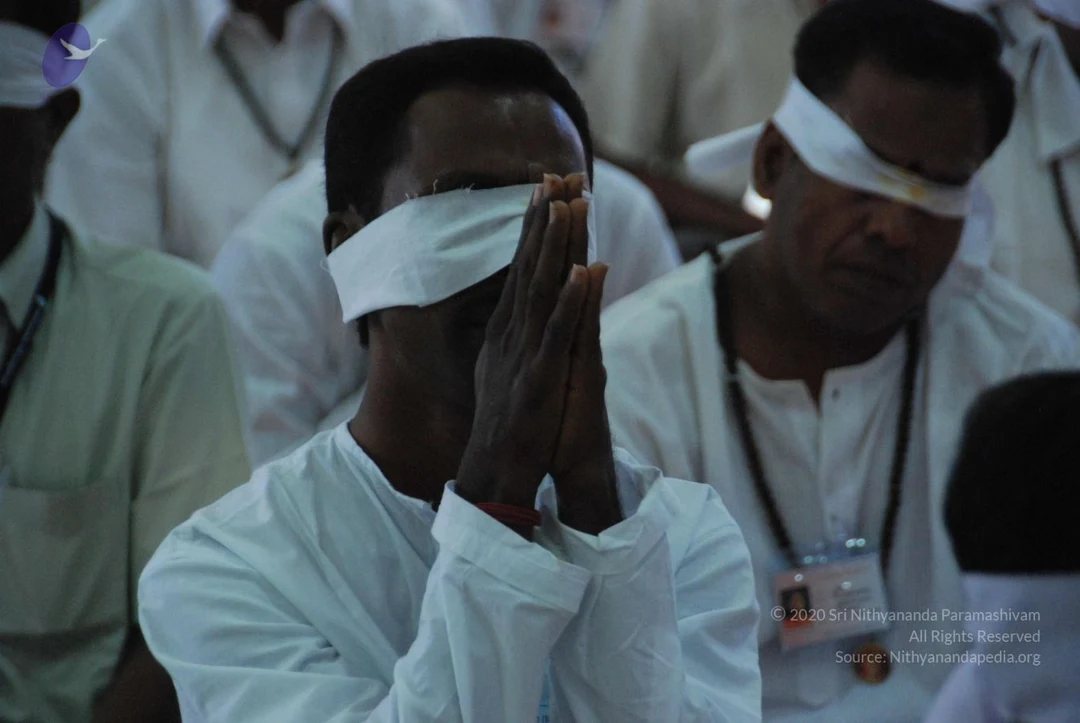
144 photosSource gallery
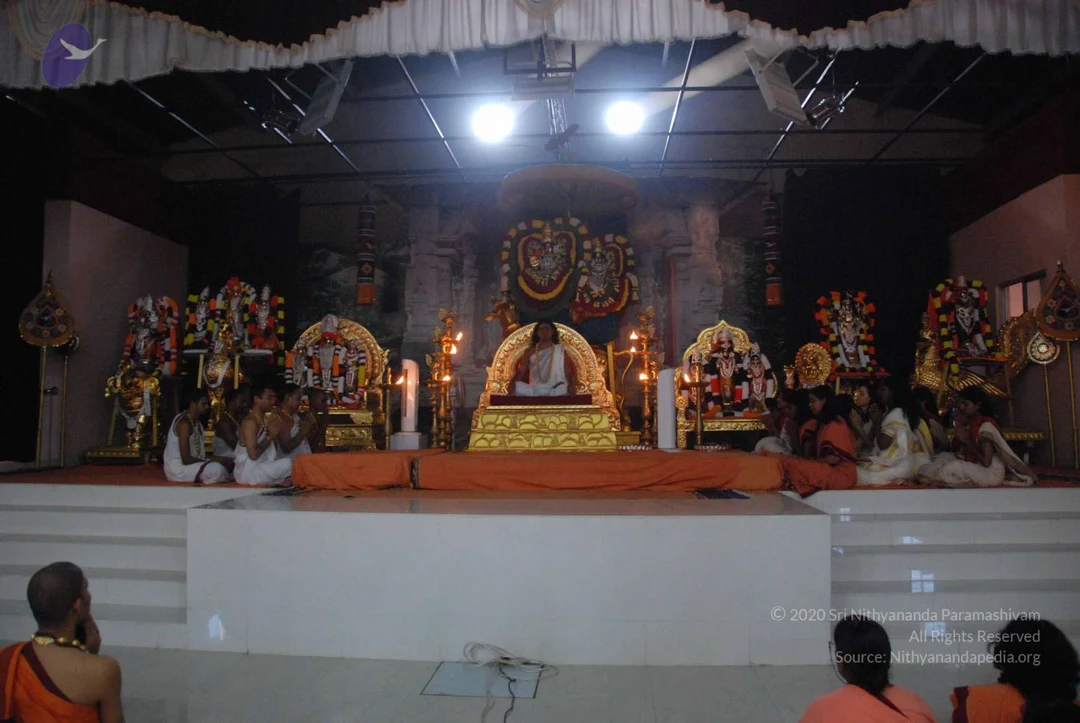
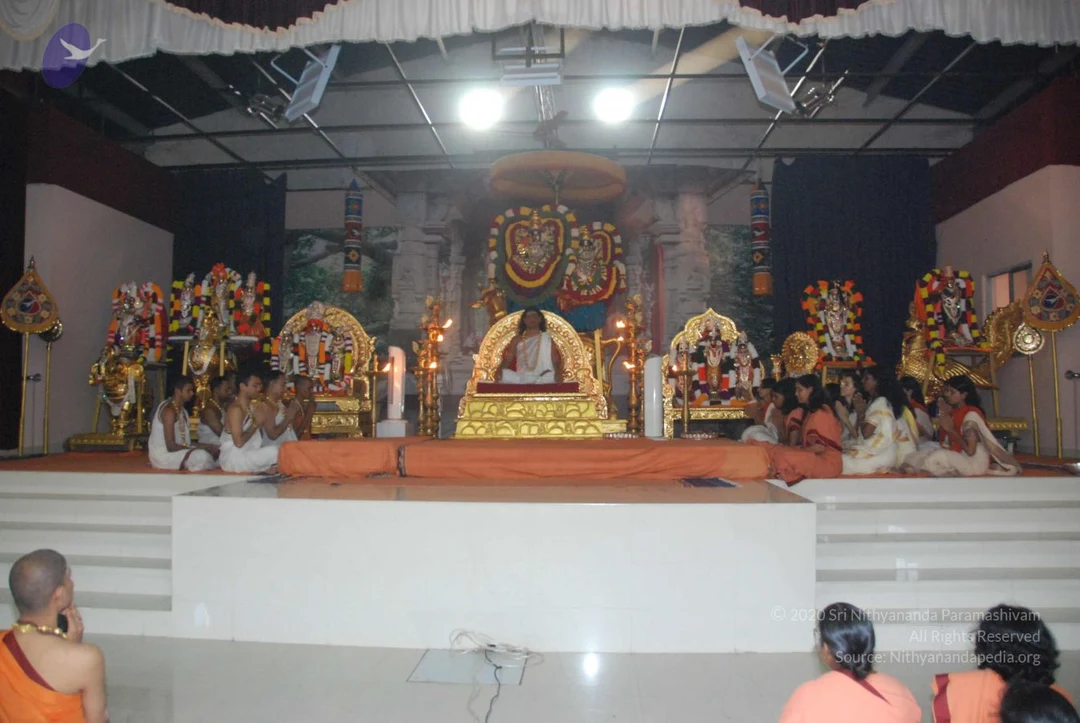
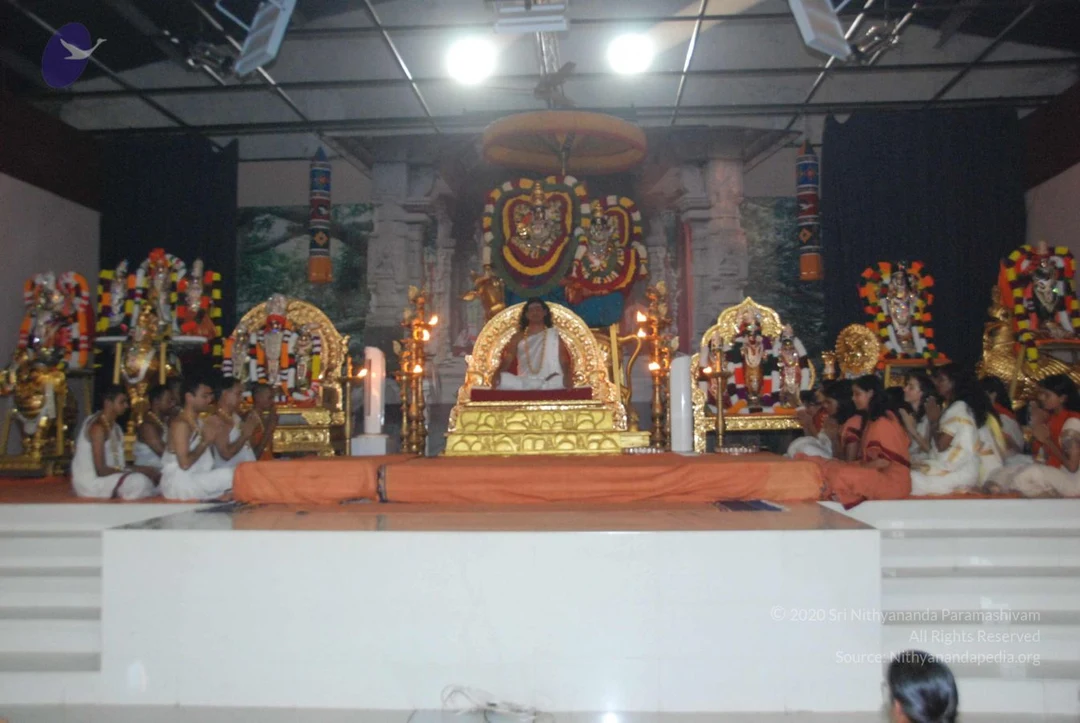
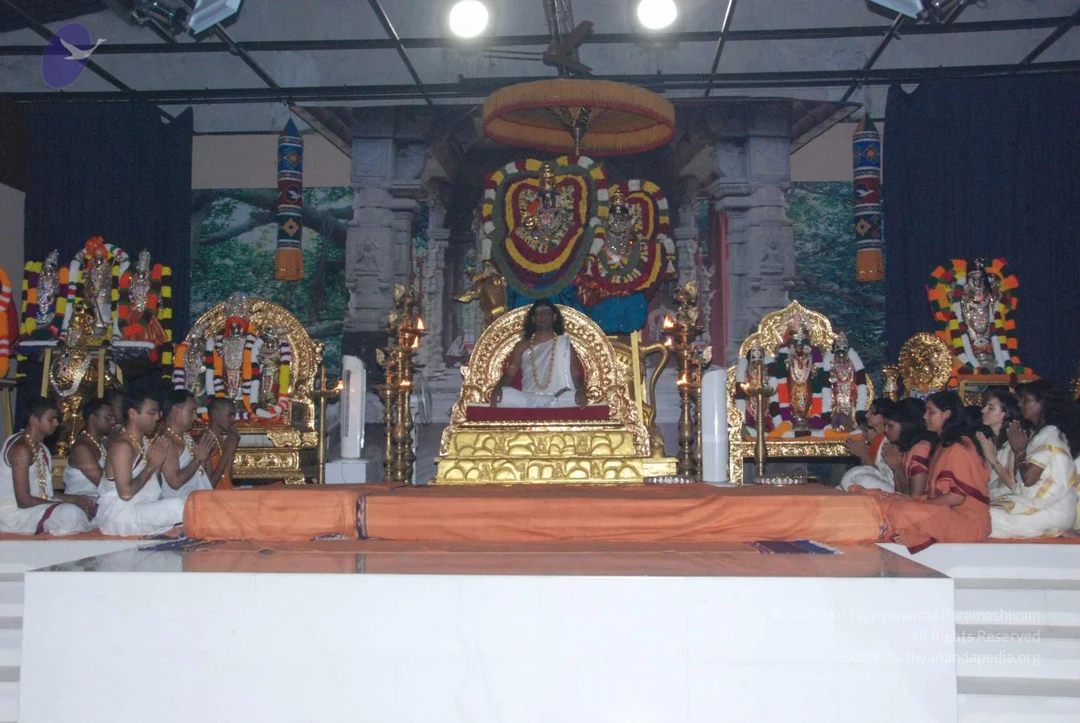
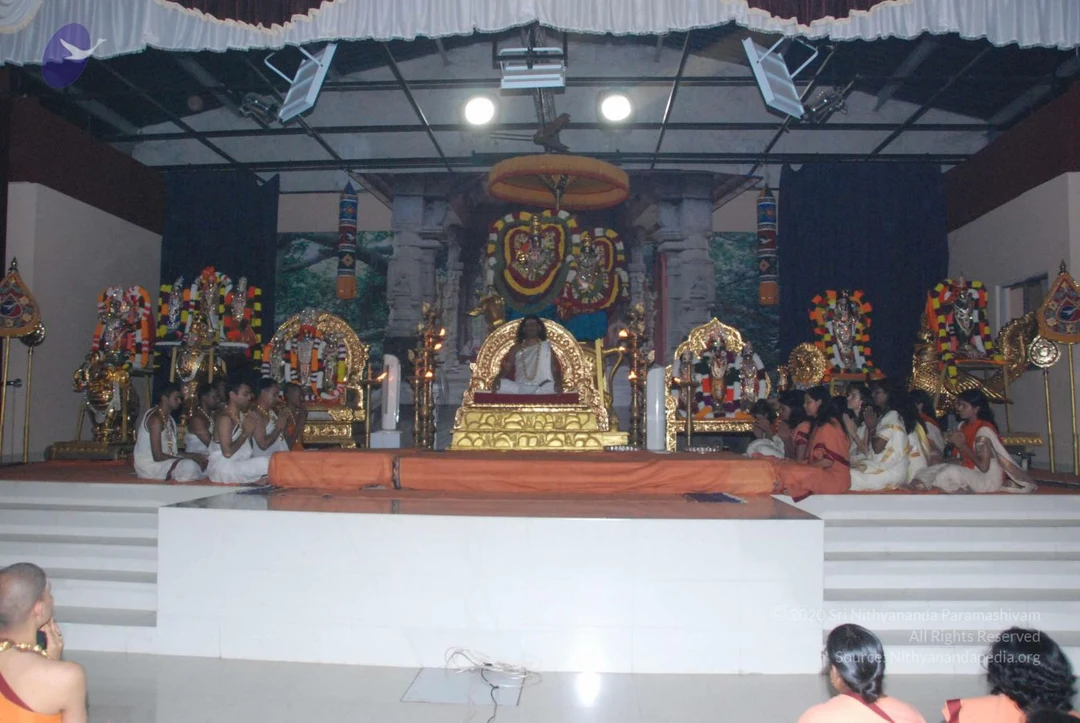
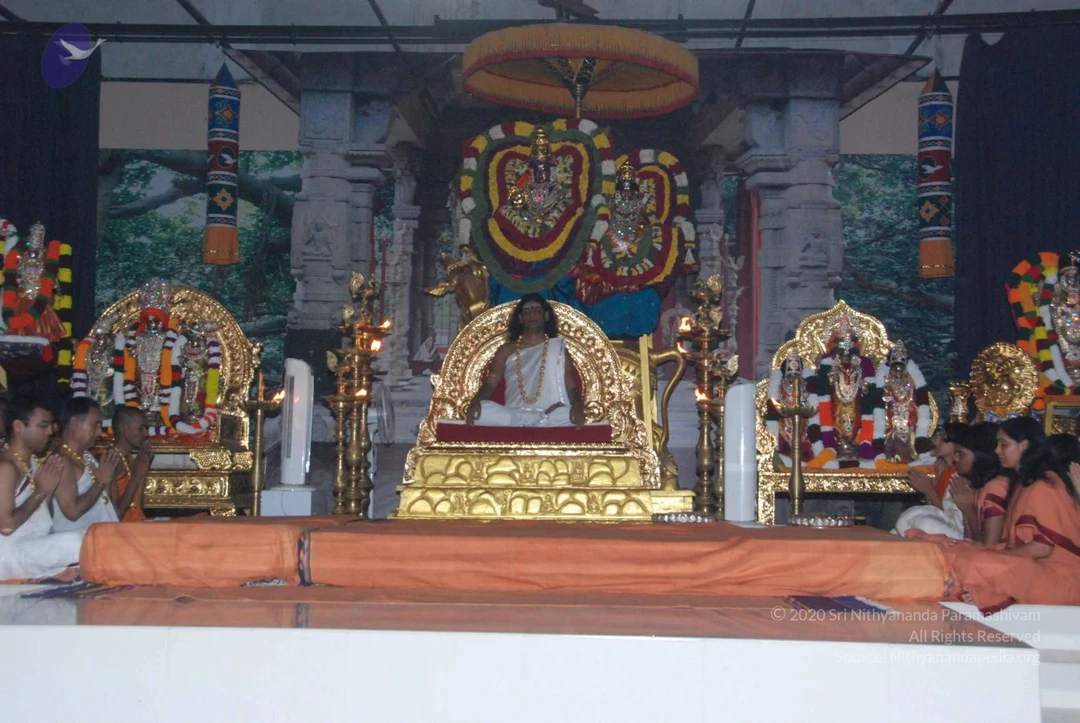
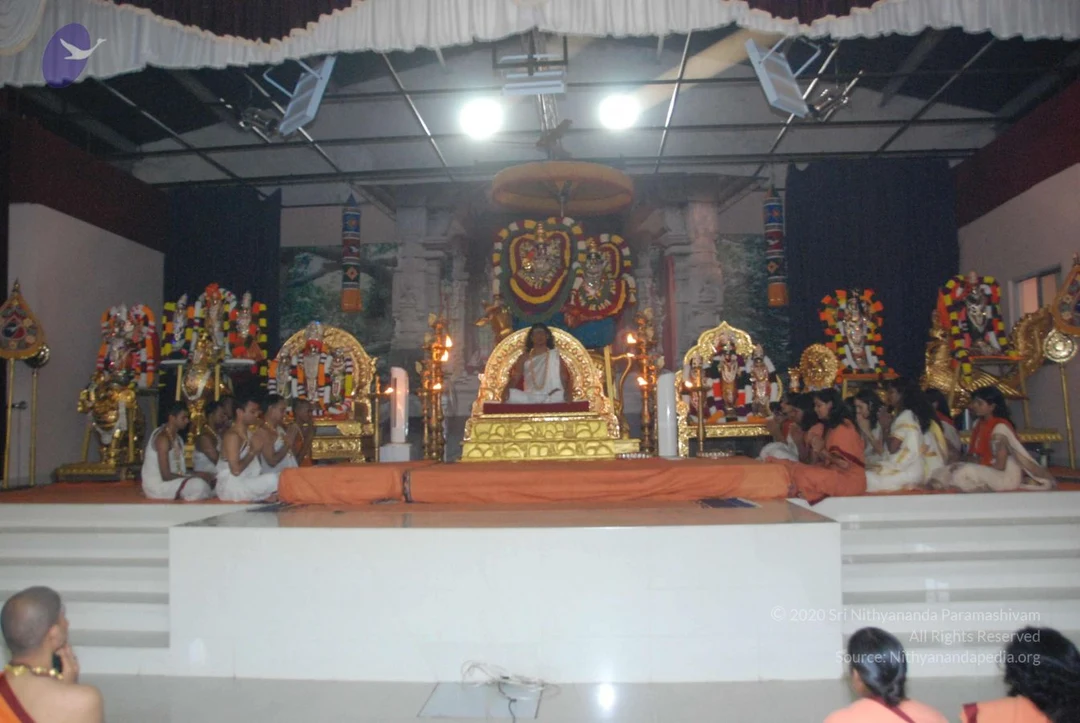
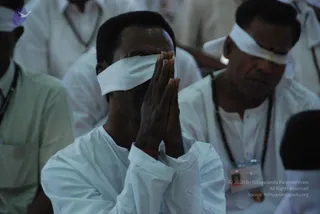
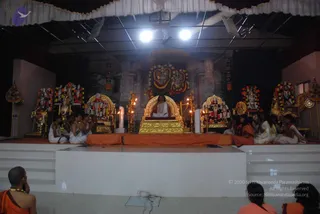
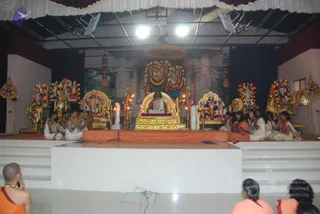
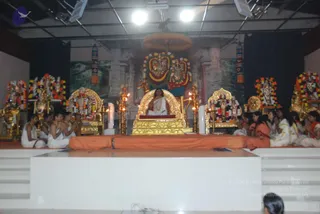
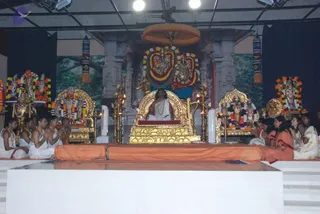
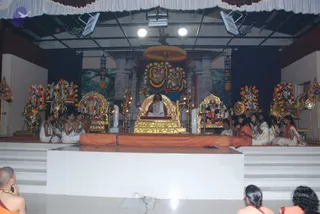
Photograph of seated devotees in white clothing with white cloth blindfolds tied over their eyes. The central man in the foreground presses his palms together in anjali mudra at his chest, with a red thread on his wrist. Beside him, a man in a white kurta wears a dark rudraksha-style mala and a lanyard badge. Other white-clad participants sit in rows behind them in a large hall. No one in the frame is clearly identifiable as a person.A stage in a hall set for a satsang, with a central seated figure on a gold throne covered in orange cloth. The figure wears white and has long dark hair, with a red cloth draped across the lap. Flanking the throne are gold seats and oil lamps lit with flames. Behind are large deity murtis and framed garlanded portraits with floral decorations and a gold-fringed canopy. Several people in white dhotis and orange robes sit on the stage on either side, some with hands folded. Two seated devotees in orange are visible in the lower right foreground, and a shaved-head person in orange with a gold chain sits at the lower left edge.A stage set for a satsang with a central seated figure on an ornate gold throne draped in orange cloth, dressed in white and saffron. Flanking gold chairs hold deity murti and frames adorned with marigold garlands. Devotees in white and orange sit on the stage and at the lower edge, some with folded hands. A tall backdrop of carved temple pillars, a garlanded deity panel, and hanging kalasha-like ornaments frame the stage under bright lights. A shaved-headed monk in orange with a gold necklace sits in the lower-left foreground. a person candidate appearance is not clearly established, so the central figure is treated as uncertain.A photograph of a stage set for a satsang. At centre, a seated figure in white clothing sits on an ornate gold throne with an arched back, flanked by oil lamps and candle stands. On both sides, devotees in white dhotis and orange or saffron garments sit in prayer with hands joined. Behind the throne stand decorated deity murtis draped with garlands, a gold canopy and a stone-pillared backdrop with a painted forest scene. Orange cloth covers the stage platform, and a partly visible person sits in the lower right foreground.A photograph of a satsang stage with a central golden throne (peetha) draped in an orange cloth. A seated figure in white with a long gold-beaded necklace sits on the throne, appearing to be a person, with long dark hair and a gold necklace. Flanking the centre are rows of devotees in white dhotis and orange shawls on the left, and women in white and orange saris seated with palms joined on the right. Several oil lamps stand on brass stands, and decorated deity murtis with floral garlands sit on side platforms. Behind them hang a canopy and a backdrop of trees, with colourful garlanded arches and striped banners at the edges.Wide view of a stage set for a satsang in a hall. A seated figure in white sits on a large gold throne with a red-orange cushion, flanked by brass lamps and floral garlands. Several men in white dhotis and bare-chested devotees with white and gold ornaments kneel in rows on the left, and women in white and orange saris sit on the right with hands folded. Ornate gold-framed chairs holding deity murti decorated with flowers and garlands stand on both sides. A large backdrop shows a temple gopuram with a golden kalasha ornament above, and a dark-clad man in the lower left foreground is seated with his back to the camera.

EVENING-ARATI-AT-TEMPLE
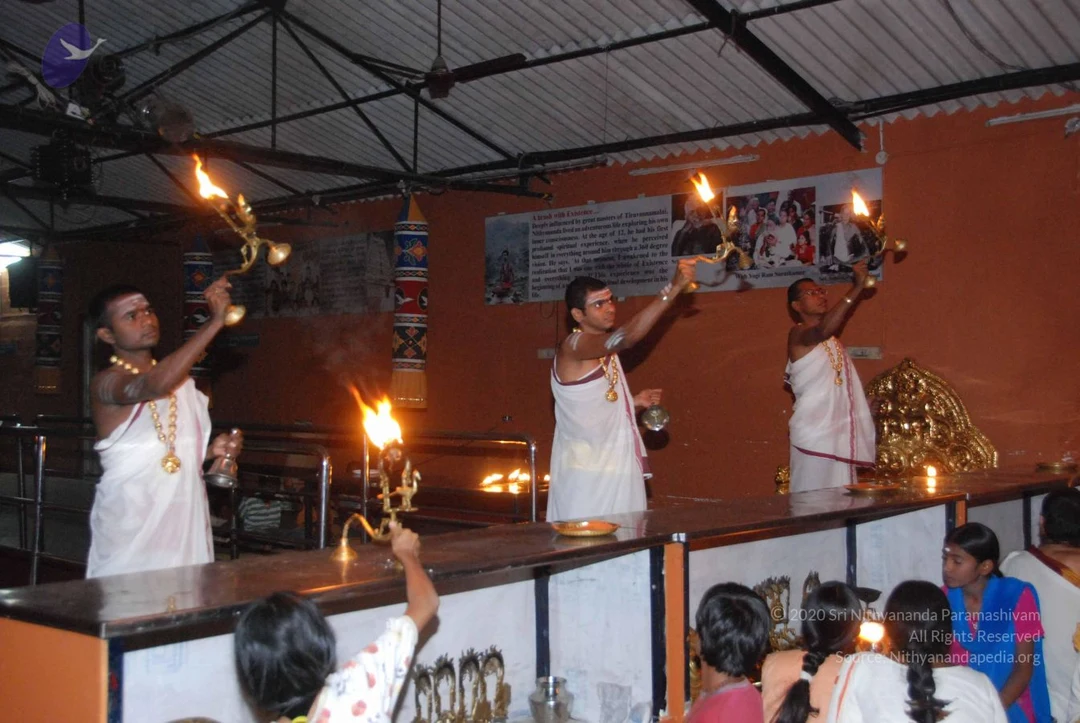
16 photosSource gallery
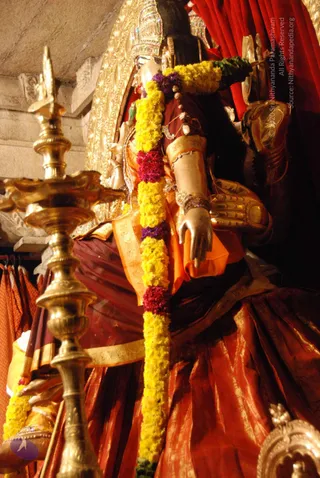
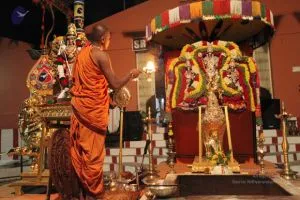
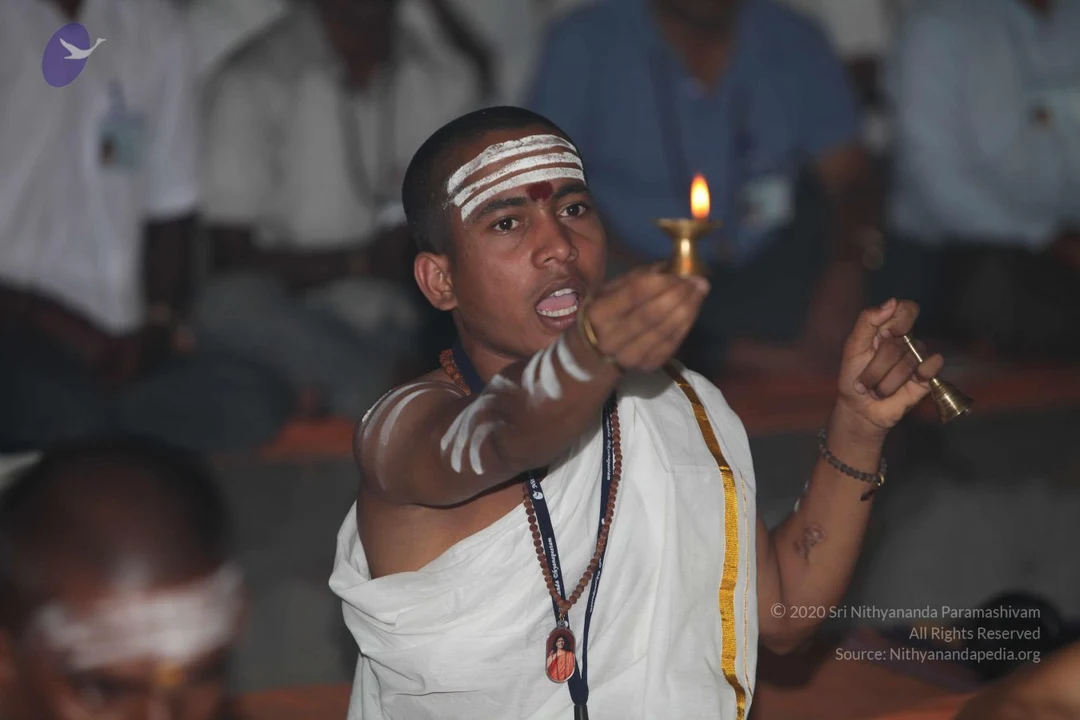
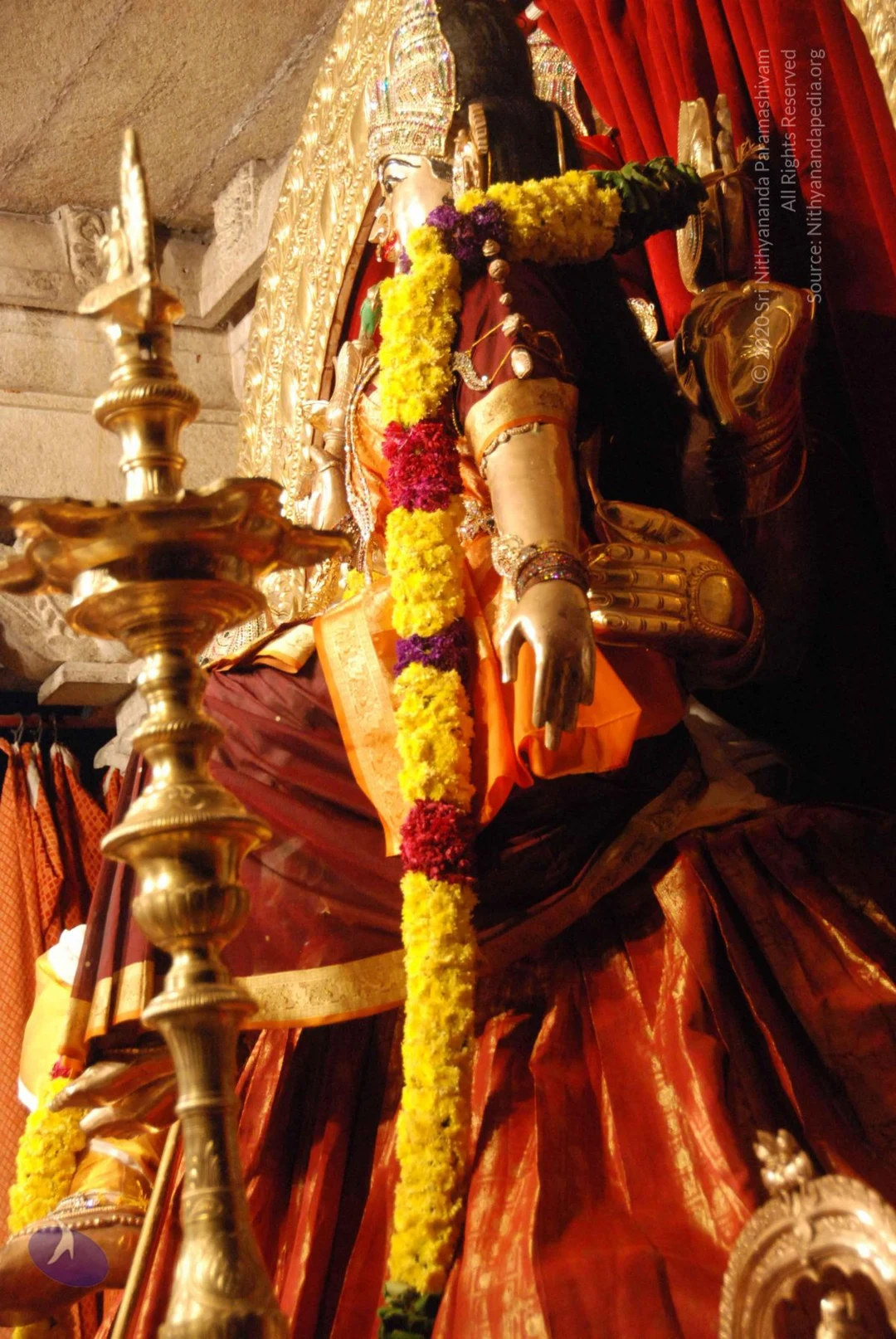
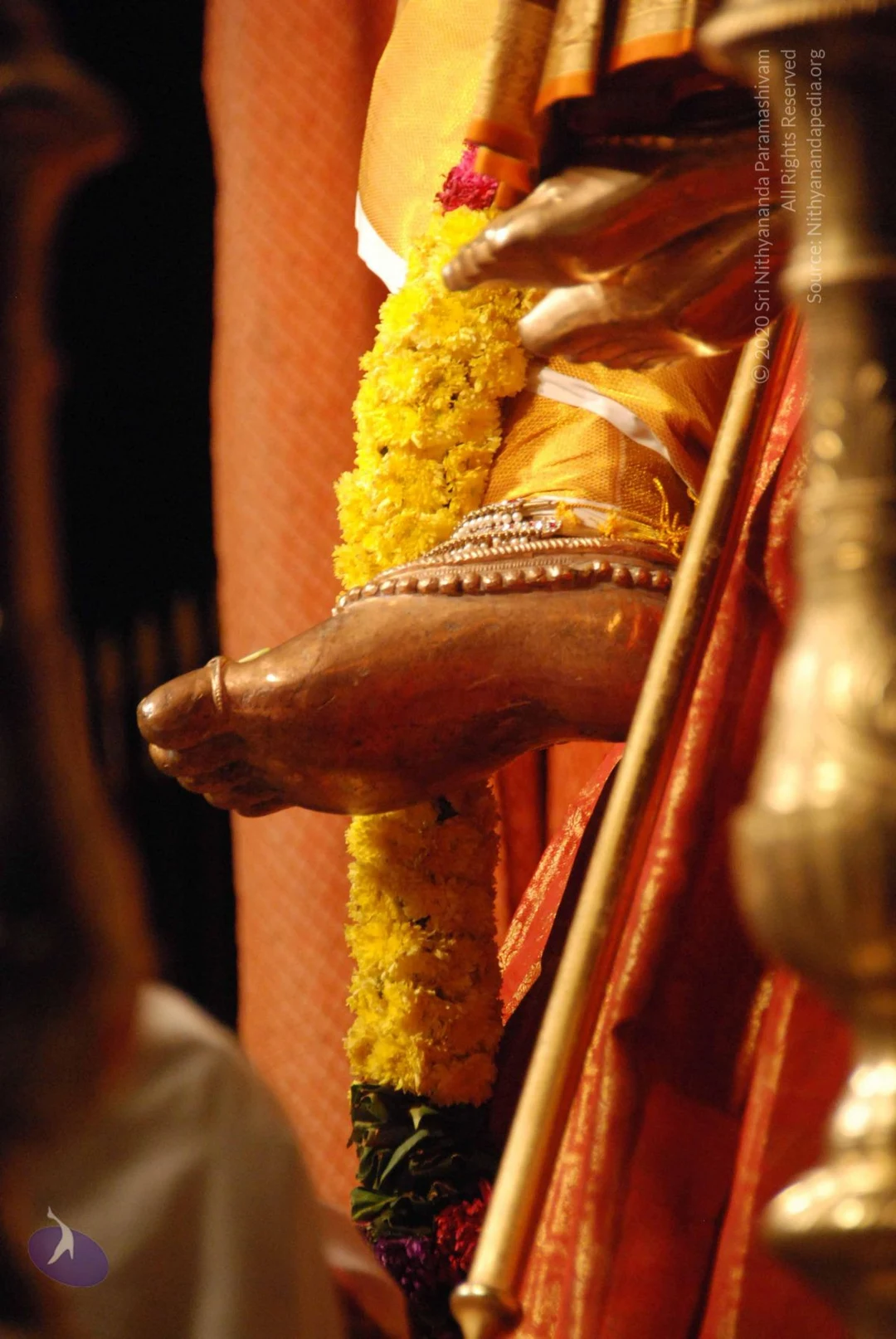
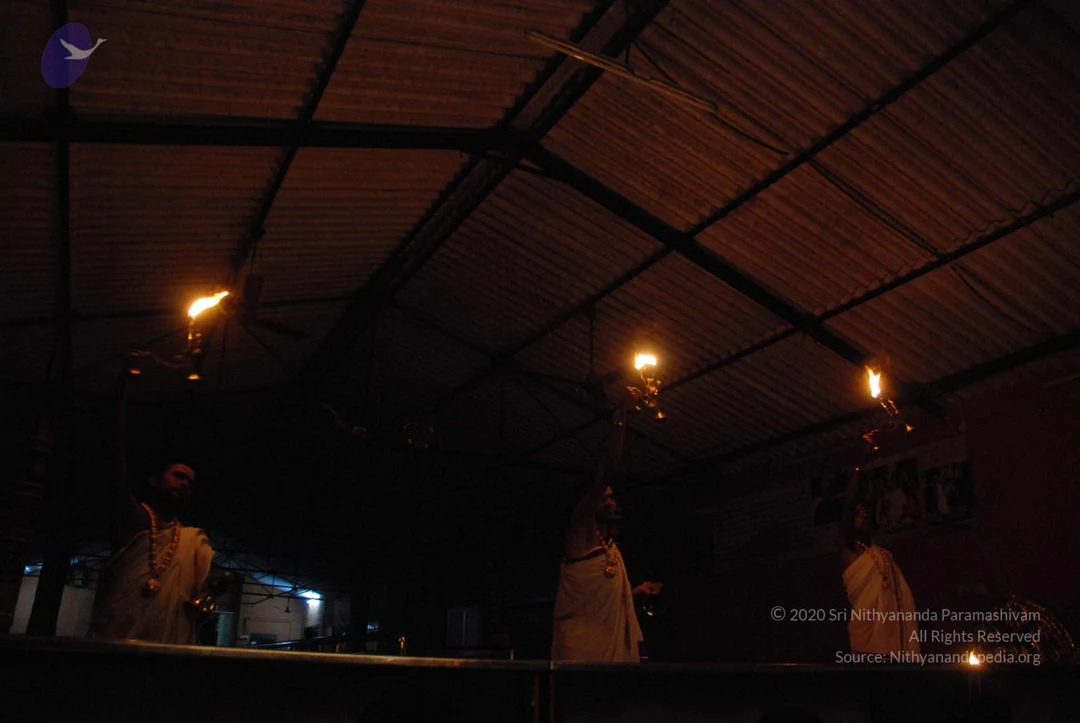
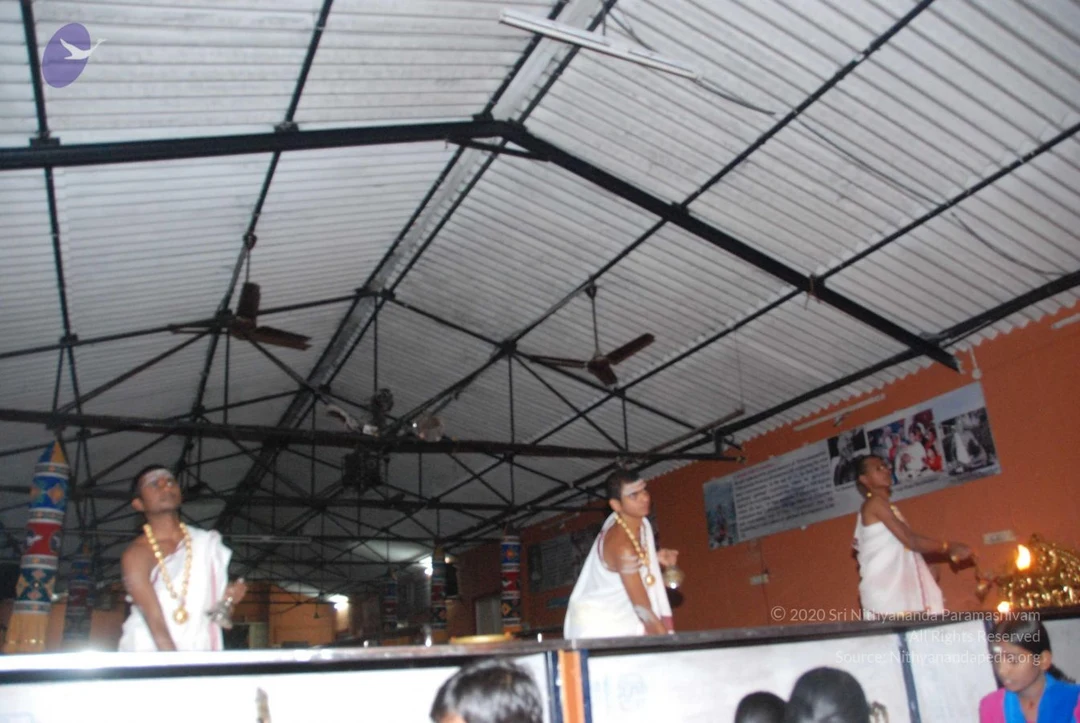
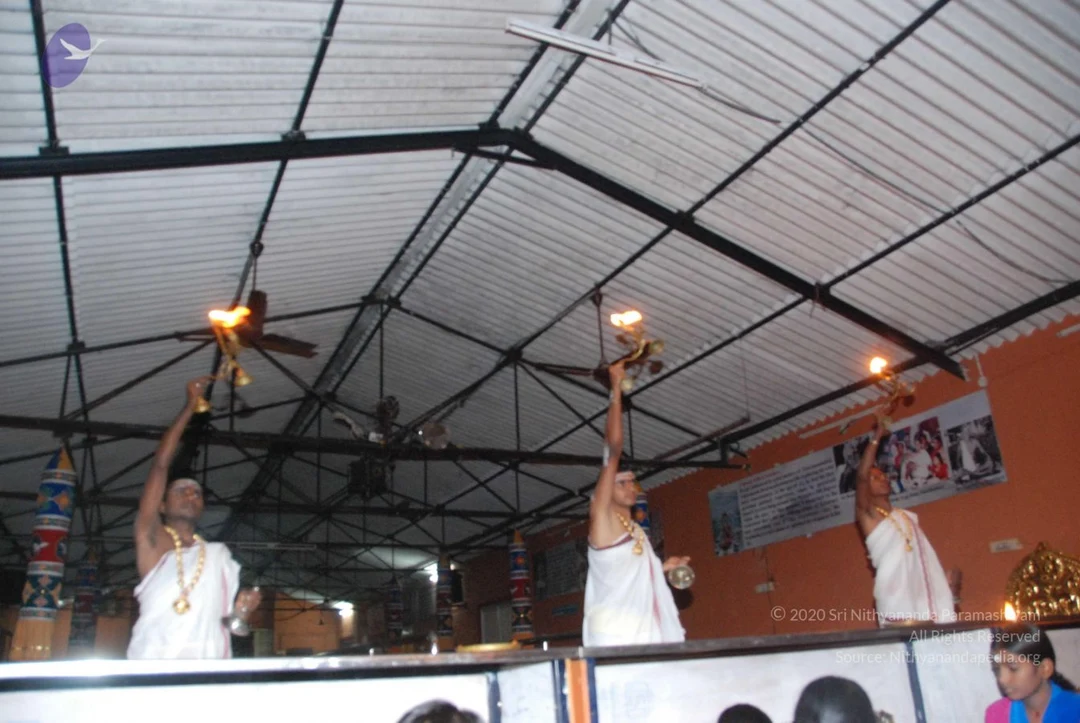
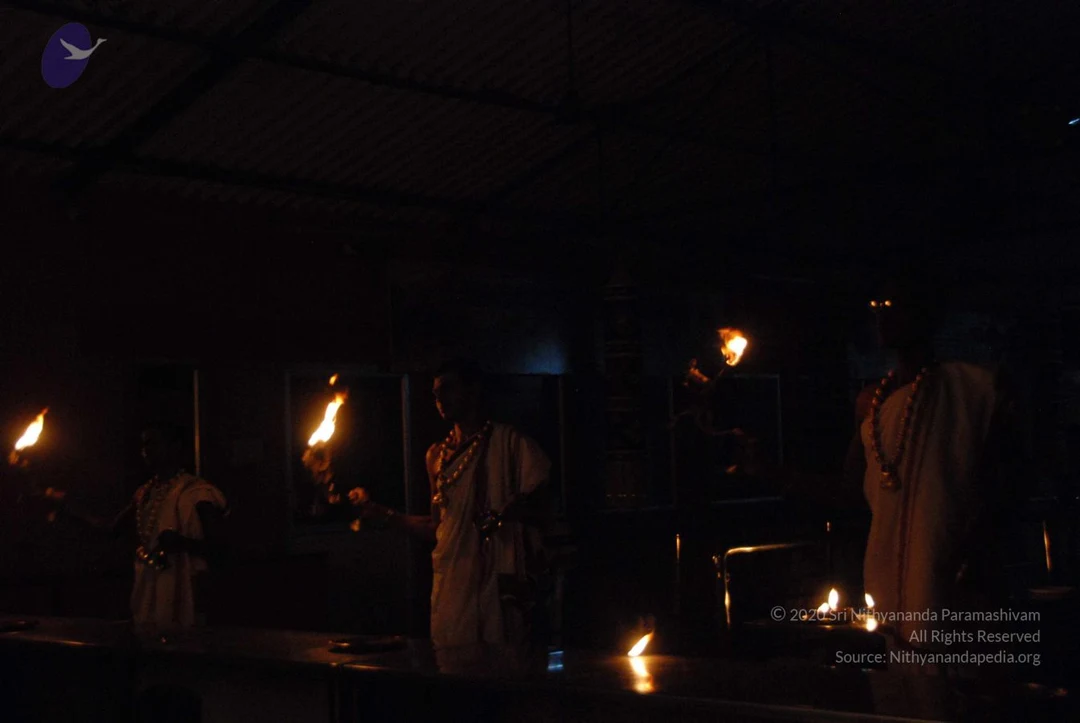
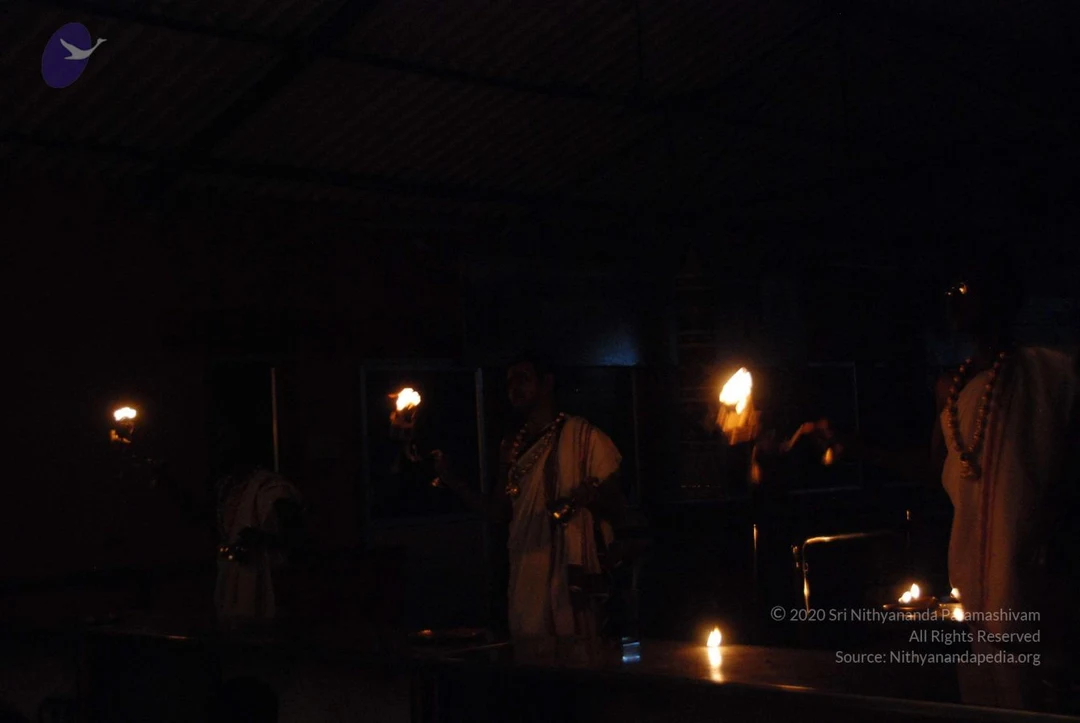
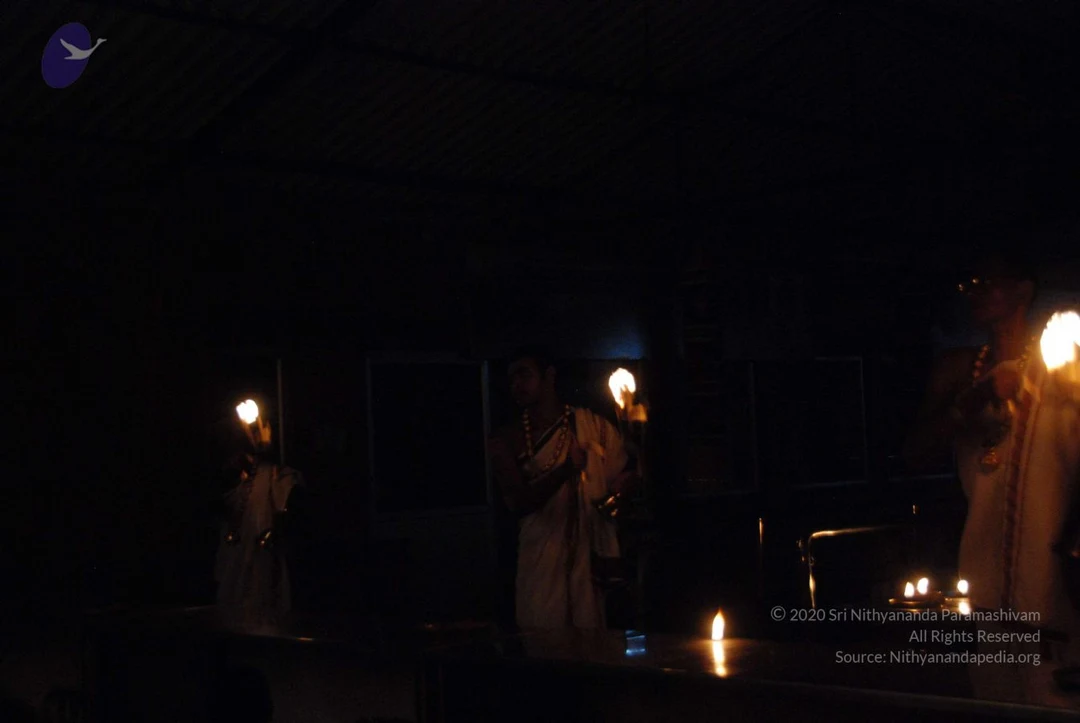
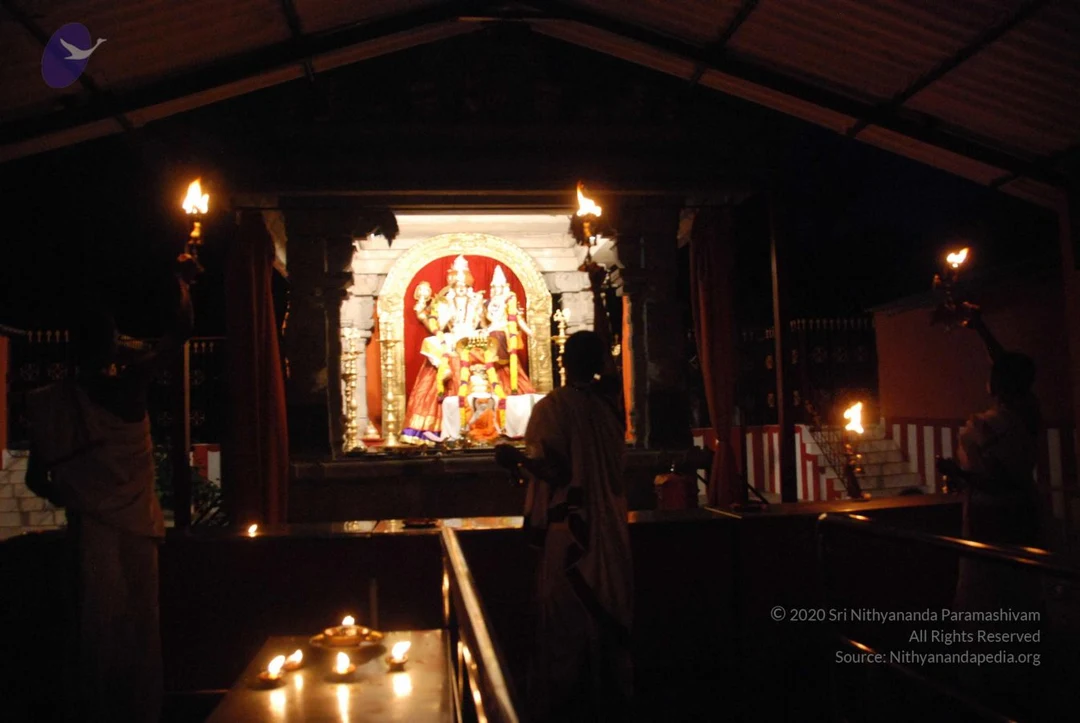
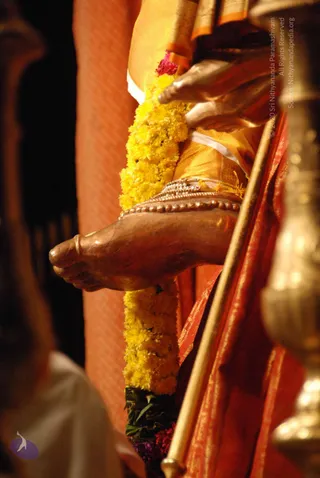
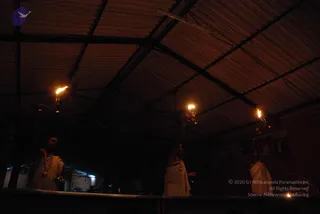
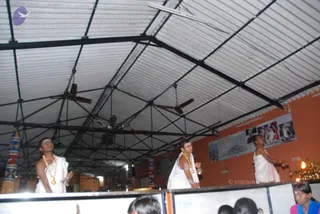
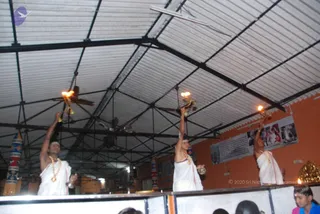
Three male priests in white dhotis with bare upper bodies perform aarti with flaming brass oil lamps in an indoor hall with a corrugated metal roof and orange walls. The priest on the left holds a lamp aloft in one hand and a small bell in the other, the central priest raises a lamp and wears a gold-toned necklace, and the priest on the right holds a lamp overhead. Devotees, including women in blue and white saris, sit in front of a counter with brass oil lamps and a gold deity murti is visible at right. A printed panel on the orange wall shows photographs and text. Other lamps burn along the counter.A gilded deity murti seated on a golden throne before red drapes, draped in a long garland of yellow and magenta marigolds that falls across its chest. It wears a crown, an orange and maroon silk garment with gold borders, and multiple bangles on its arms. In the foreground stands a tall brass oil lamp with a flared lamp dish, and a partially visible brass lamp stand at left. The setting appears to be a temple shrine with a stone ceiling.Close-up photograph of a bronze or copper-toned statue's bare foot resting on a golden-yellow silk cloth, with a silver anklet and a yellow marigold garland draped across the leg. A gold-toned metal rod and a blurred golden vessel appear at right against an orange-red drape. A faint lower-left corner shows a partially visible white-clad figure out of focus.Photograph of three men in plain white dhotis standing in a dimly lit hall with a corrugated metal roof and exposed dark beams. Each raises an oil lamp overhead, with flames visible on the lamps. The man on the left wears a beaded necklace and the one in the centre wears a cord and beads; the man on the right is partly in shadow. A row of framed photographs hangs on the wall in the background, and a small flame glows at the lower right. The scene suggests a lamp-waving ritual such as aarti.A photograph taken under a corrugated metal roof with exposed steel trusses and ceiling fans, showing three shirtless men in white dhotis and gold necklaces standing on a raised stage. The man at left, with a shaved head, looks upward; the man at centre holds a small vessel and the man at right holds a brass lamp with a flame. Behind them is an orange wall with a framed poster of photographs and text, and red and white painted pillars line the hall. Blurred heads of seated viewers are visible in the foreground, one wearing a blue garment. The scene suggests a ritual performed before devotees, with the lamp and vessel as the main objects.Photograph inside a corrugated-roofed hall with an orange wall and exposed black metal roof trusses. Three priests in white dhoti-style clothing with gold necklaces raise lit oil lamps (aarti) toward the ceiling. The priest on the left holds a bell-like object in his other hand. A framed photo board hangs on the orange wall. Partially visible seated devotees are at the bottom edge, and a golden kalasha-like object is at the right edge. No clearly identifiable a person is visible in this image.