Skip to content
Thursday

19 August 2010

Healing Science of Ananda Linga - Nithyananda's Message of the day 19 Aug 2010

Dated photos
376
Source pages
1
Media
5
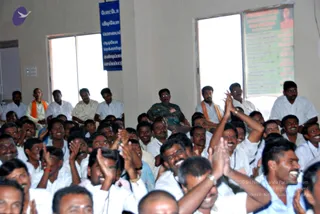
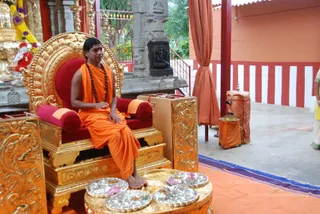
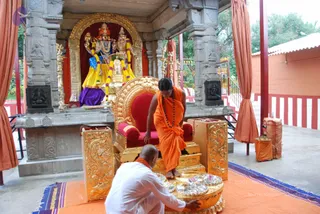
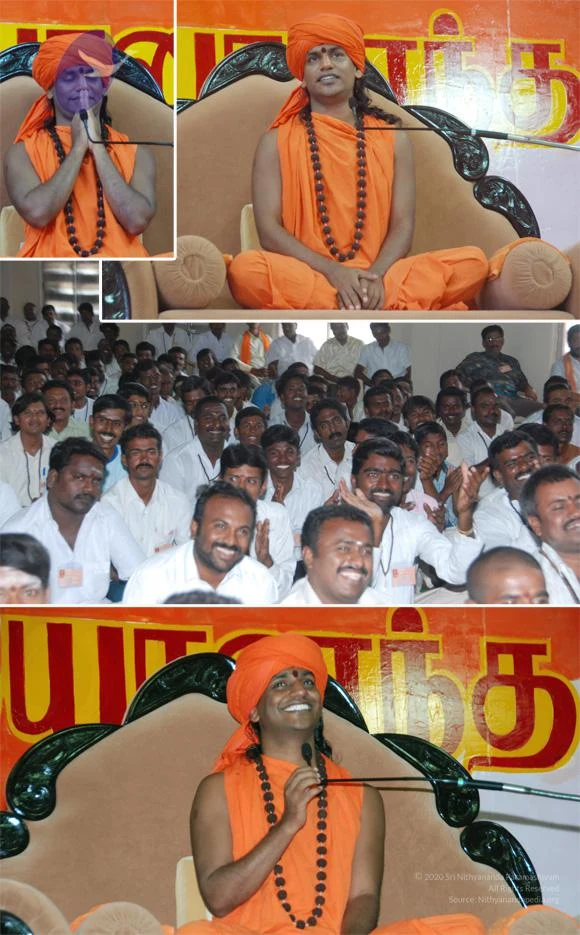
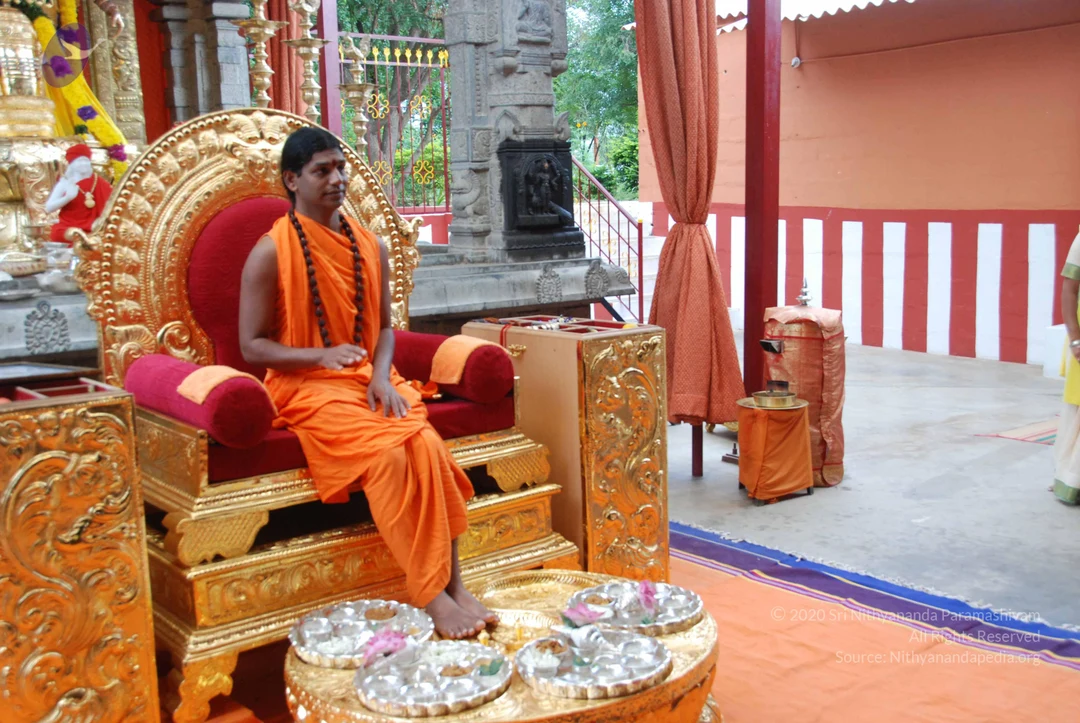
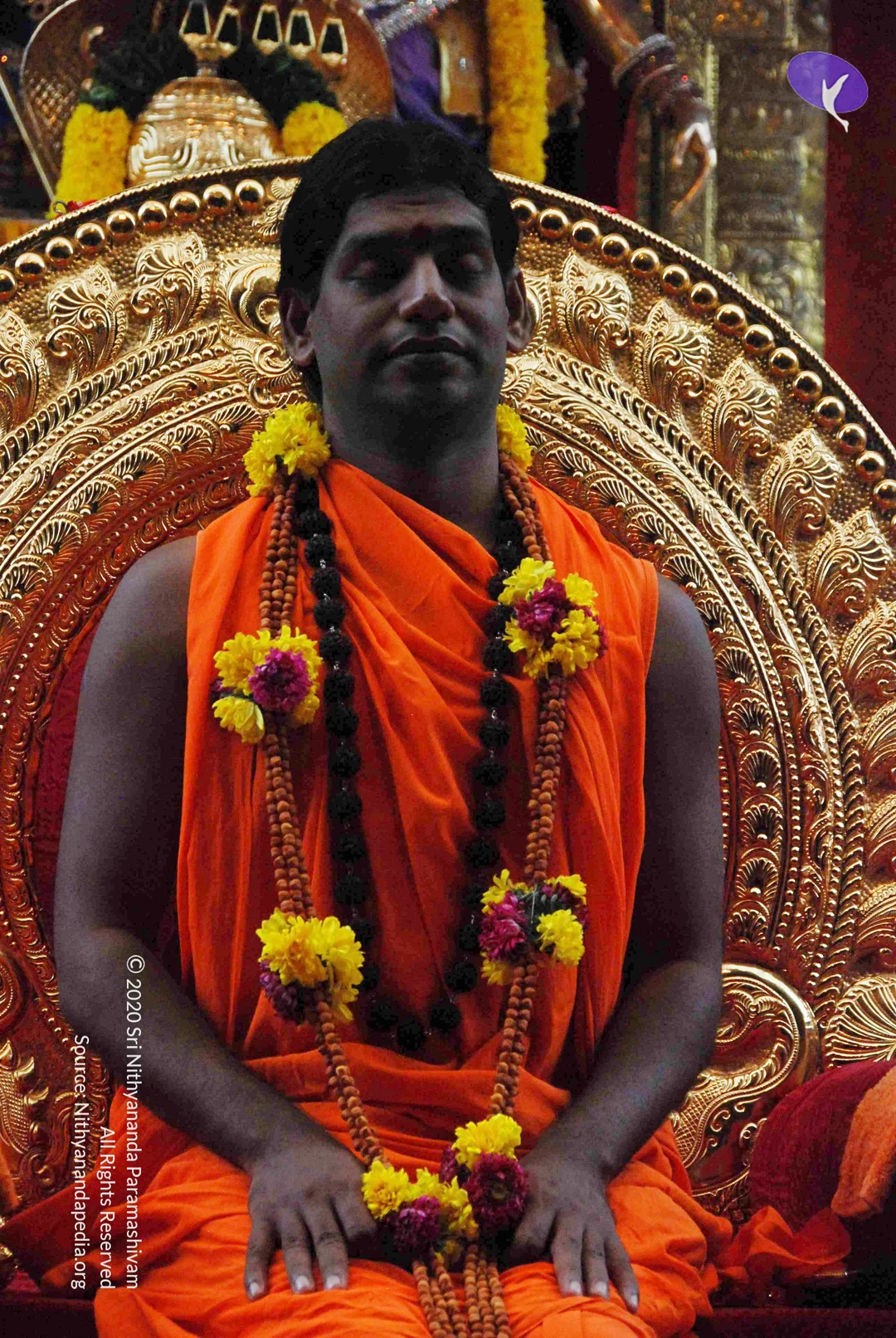
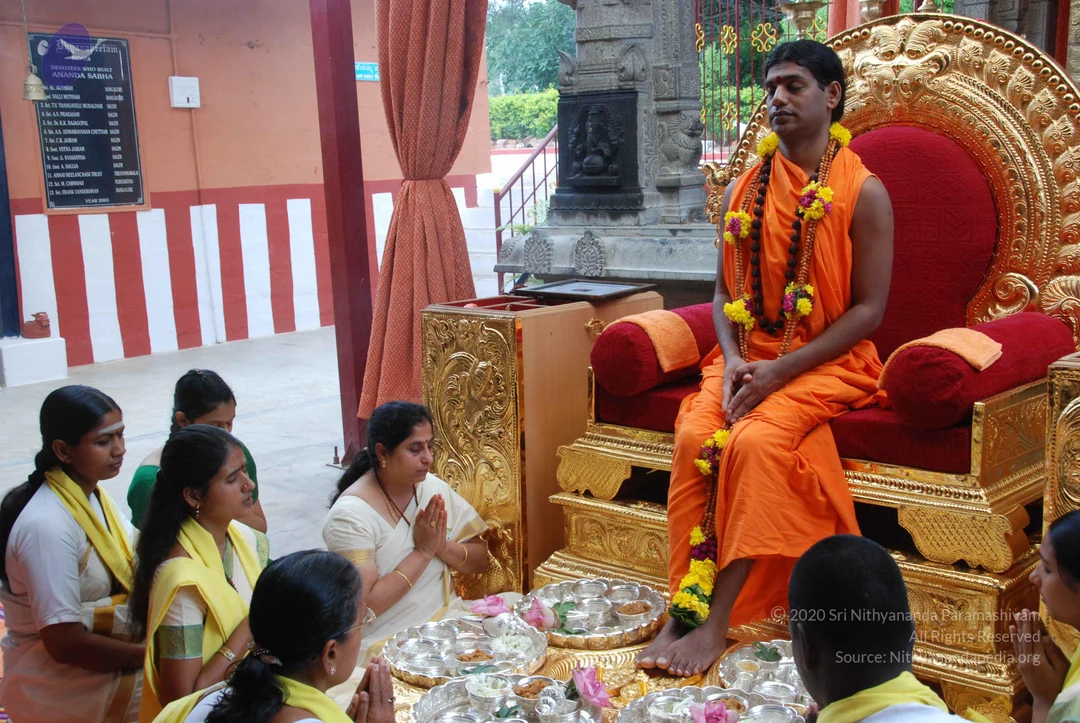
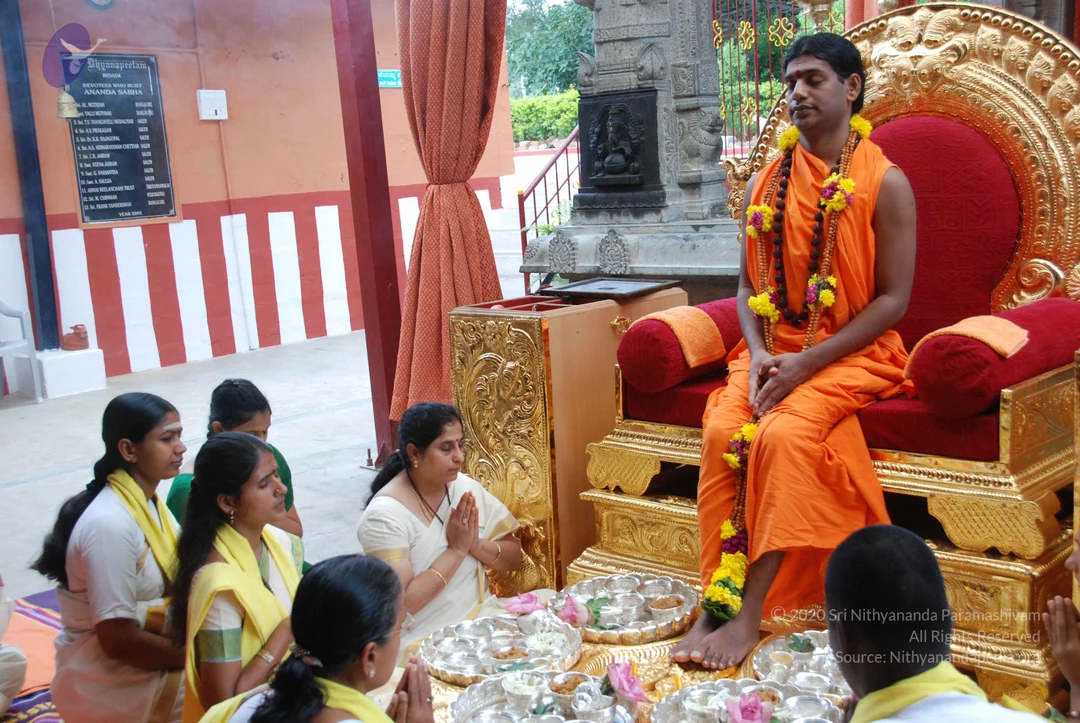
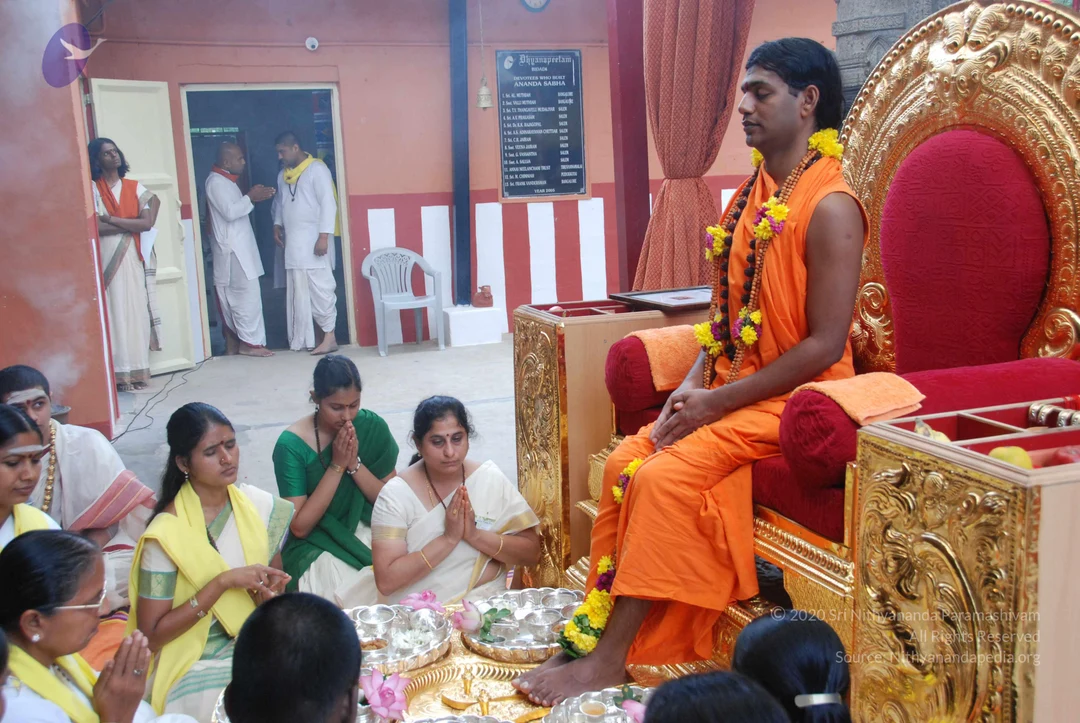
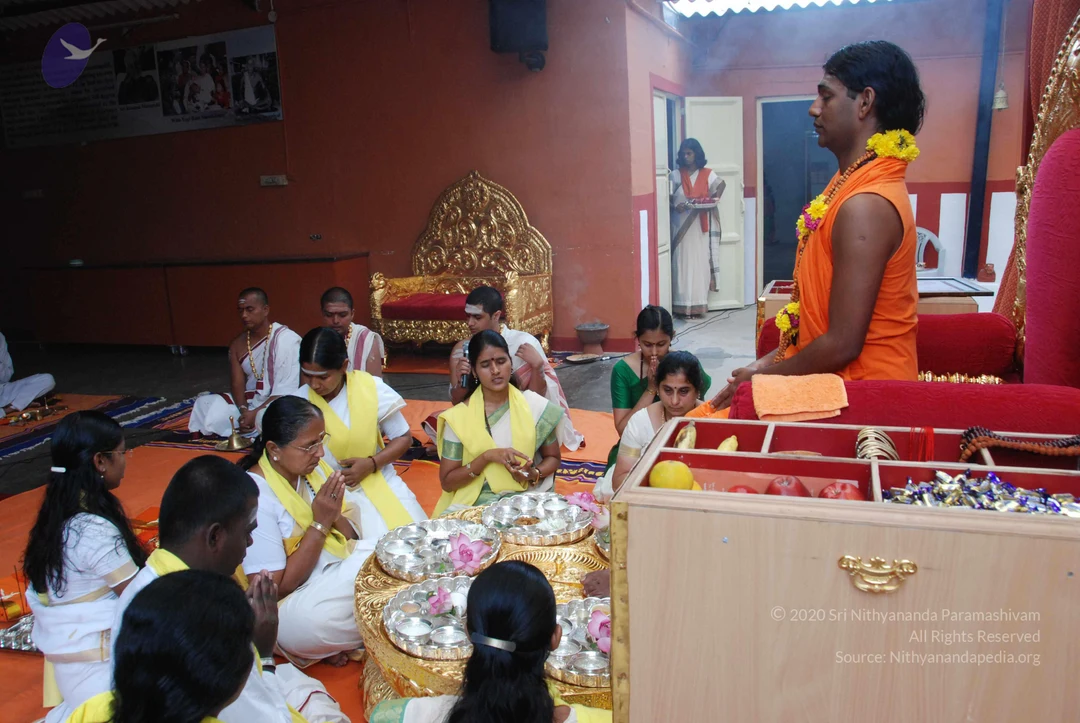
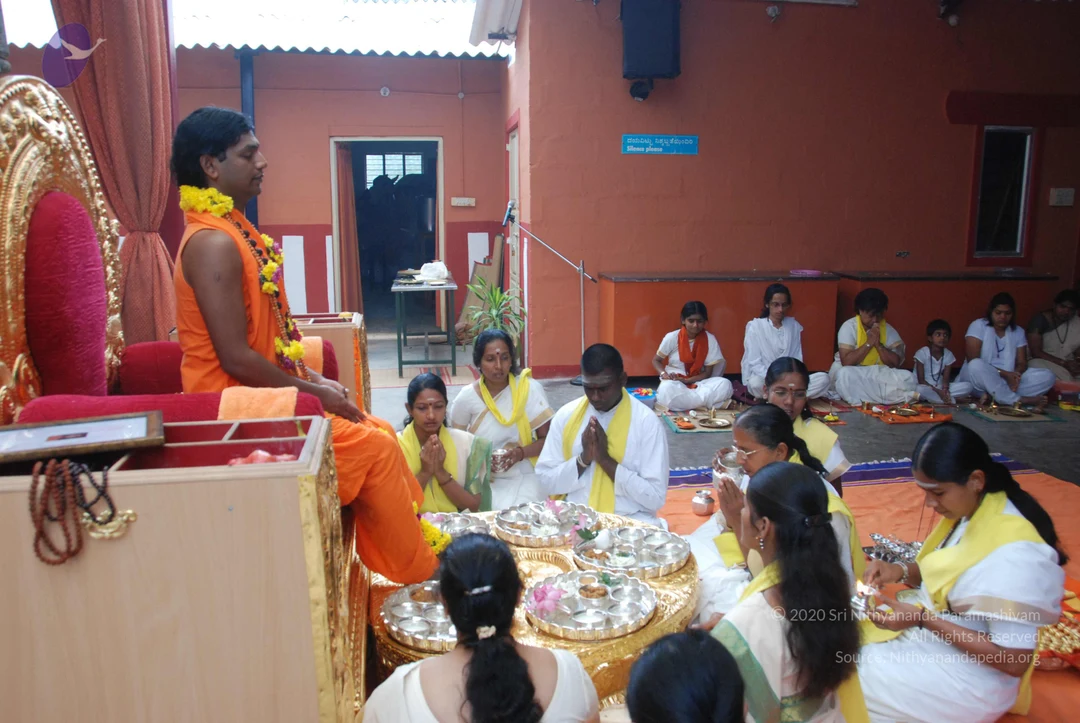
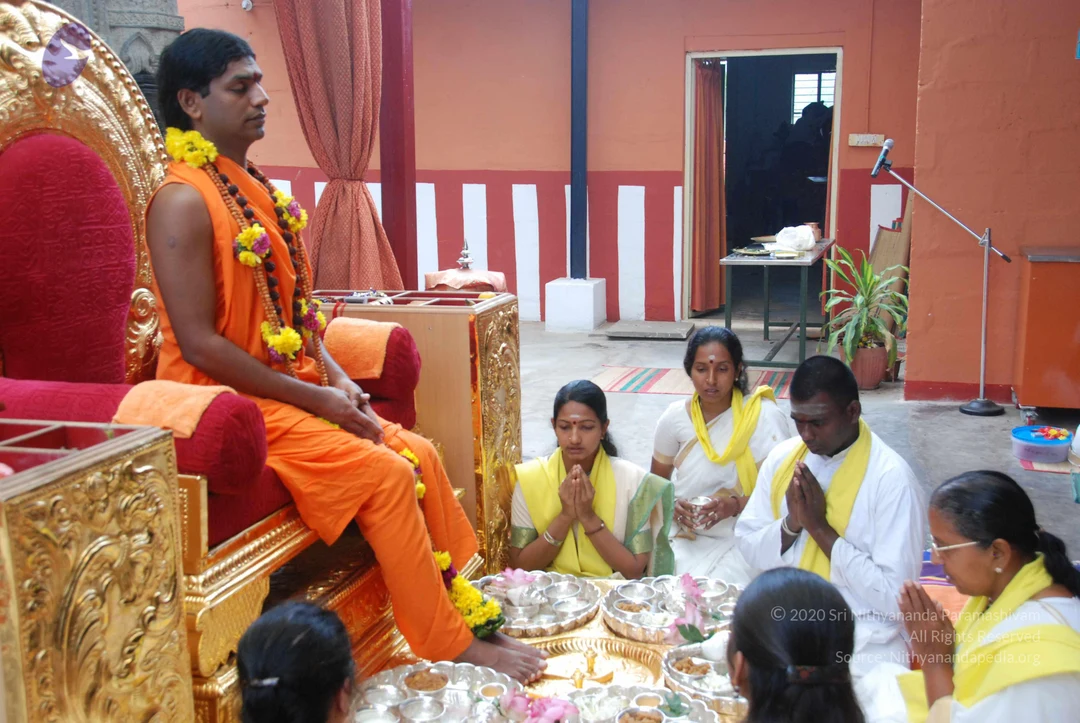
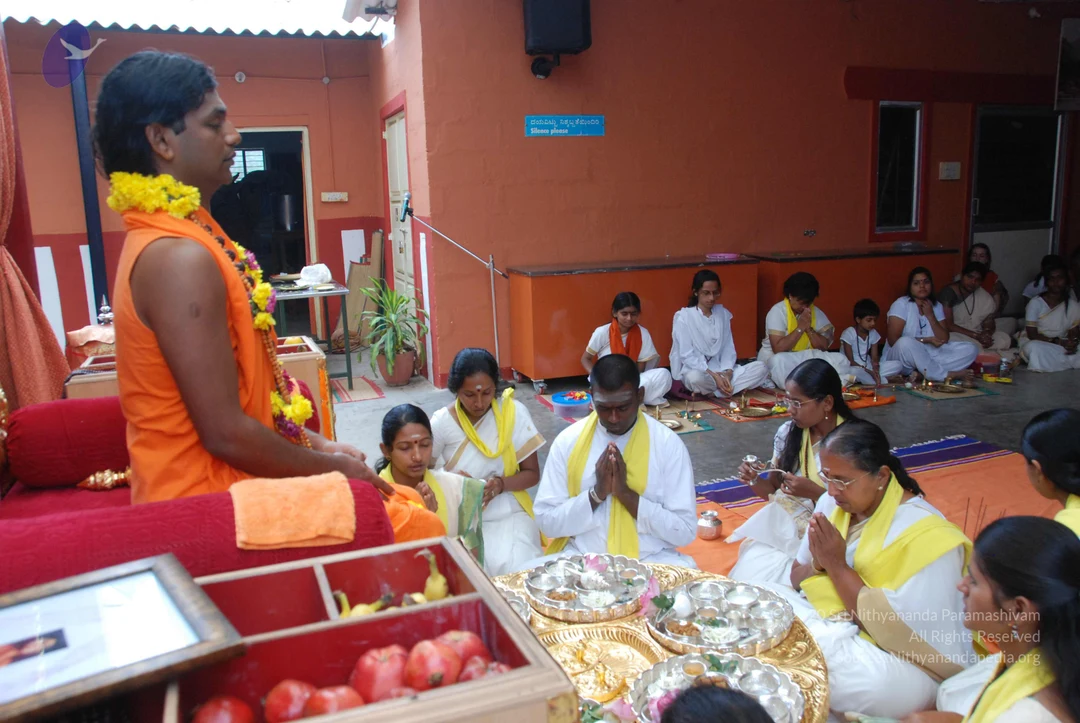
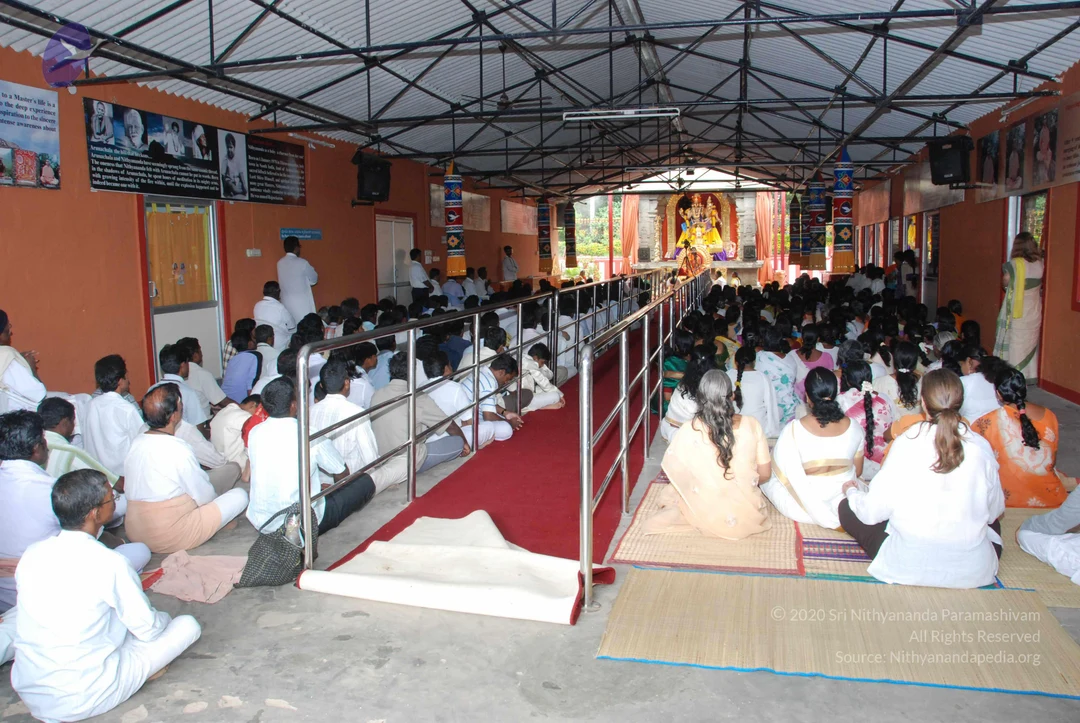
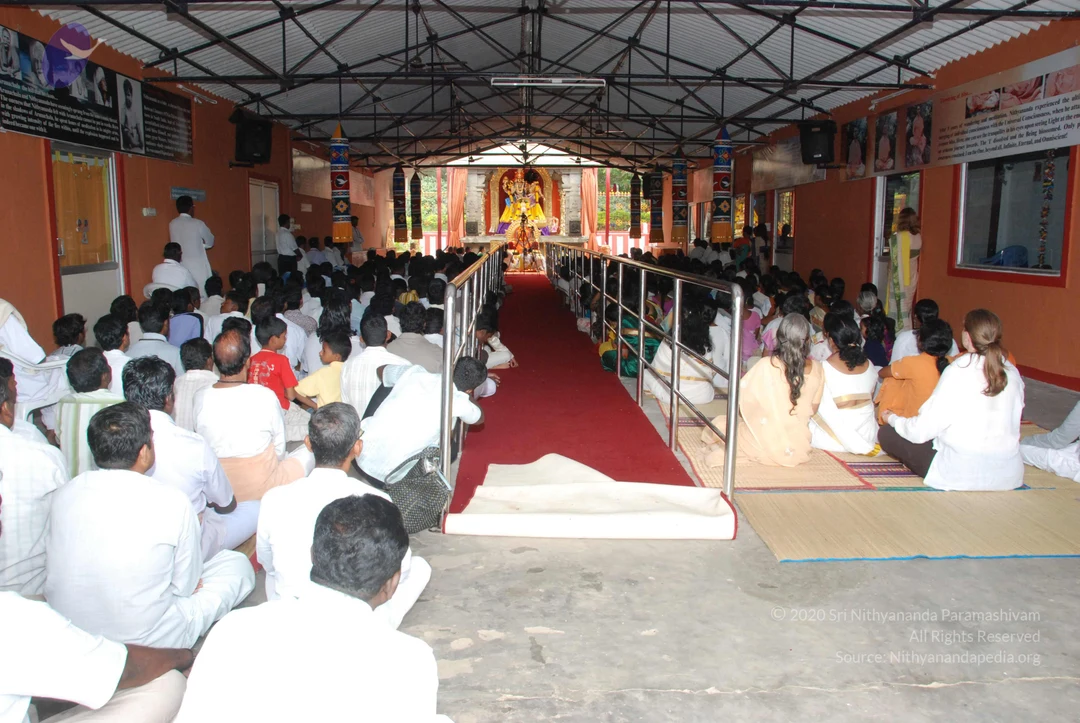
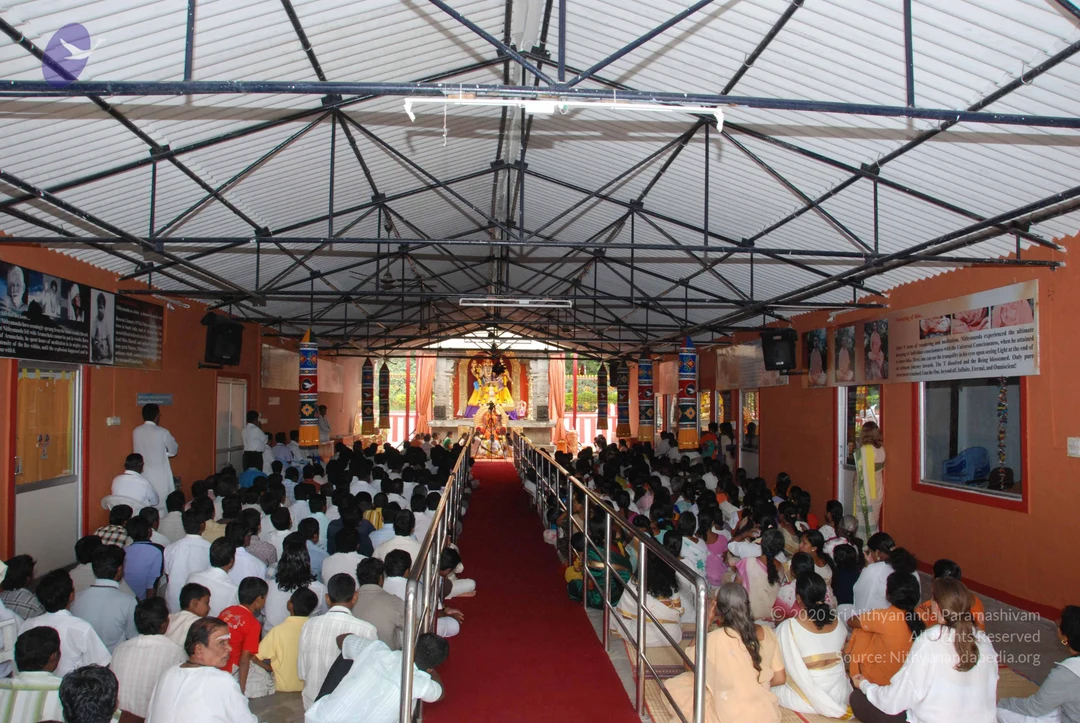
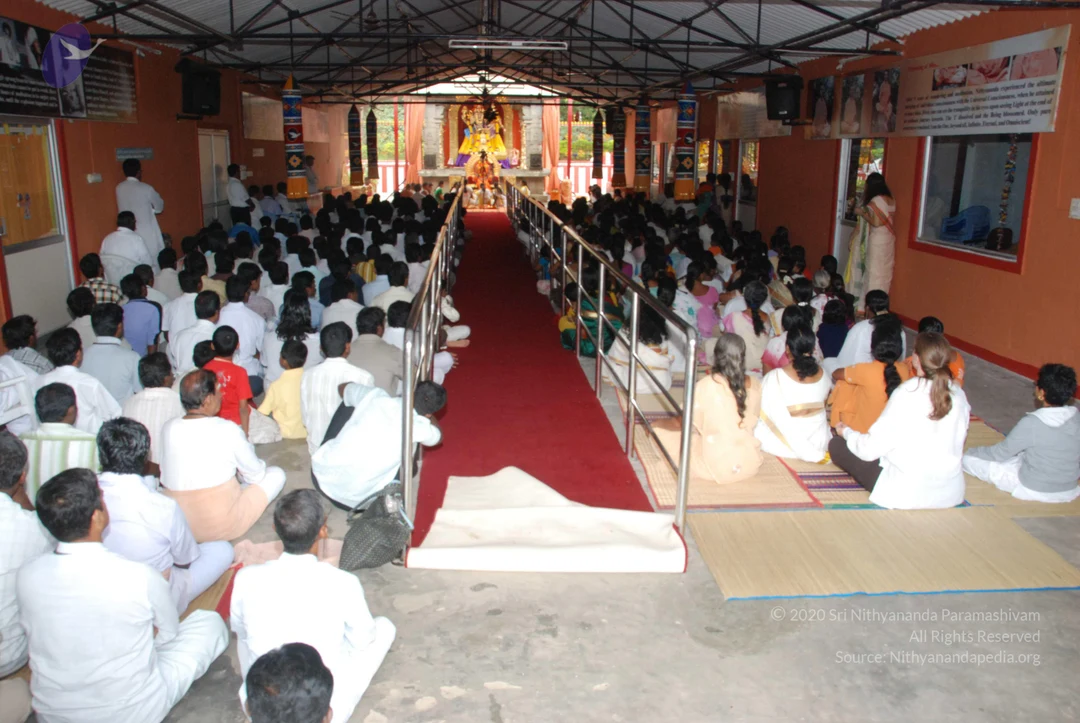
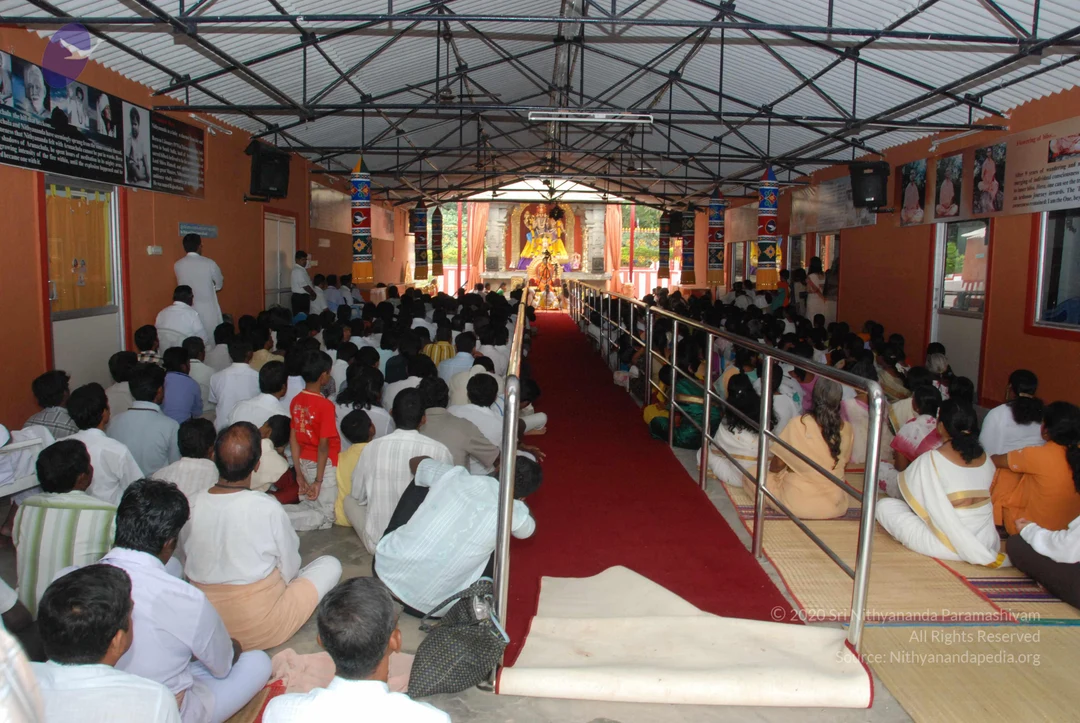
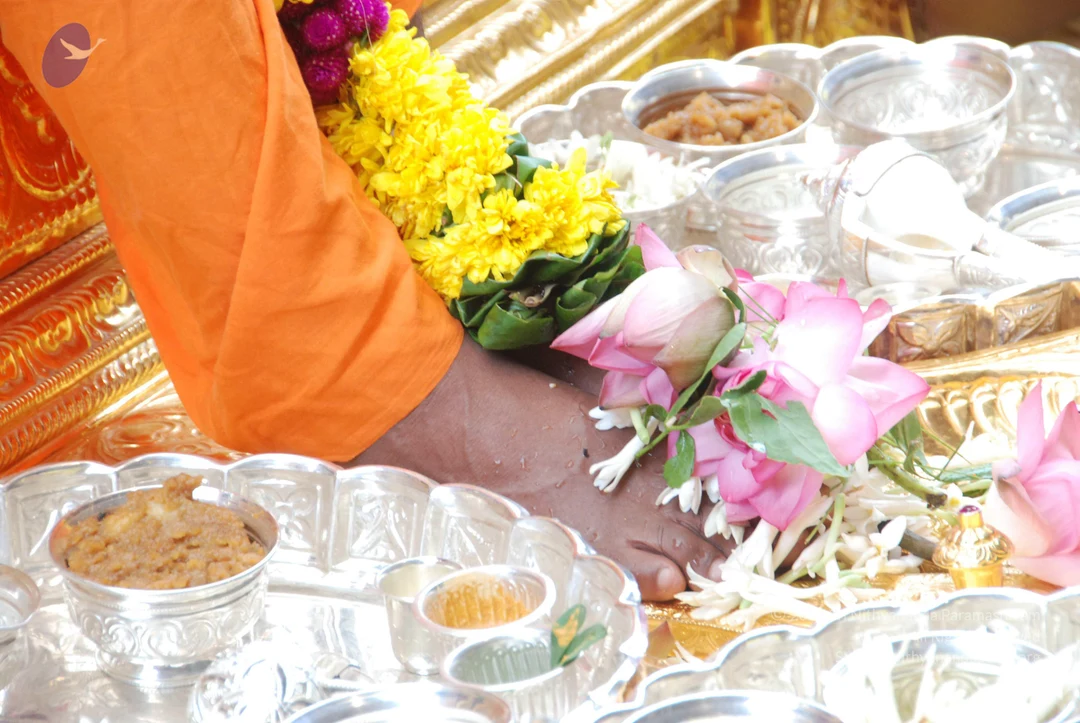
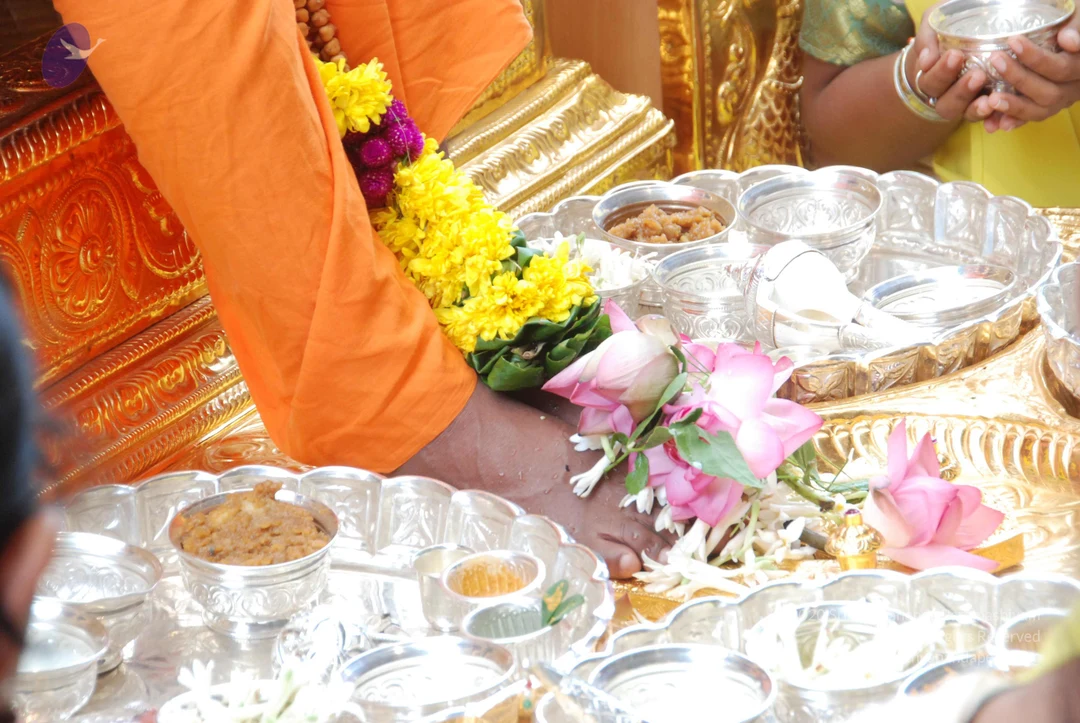
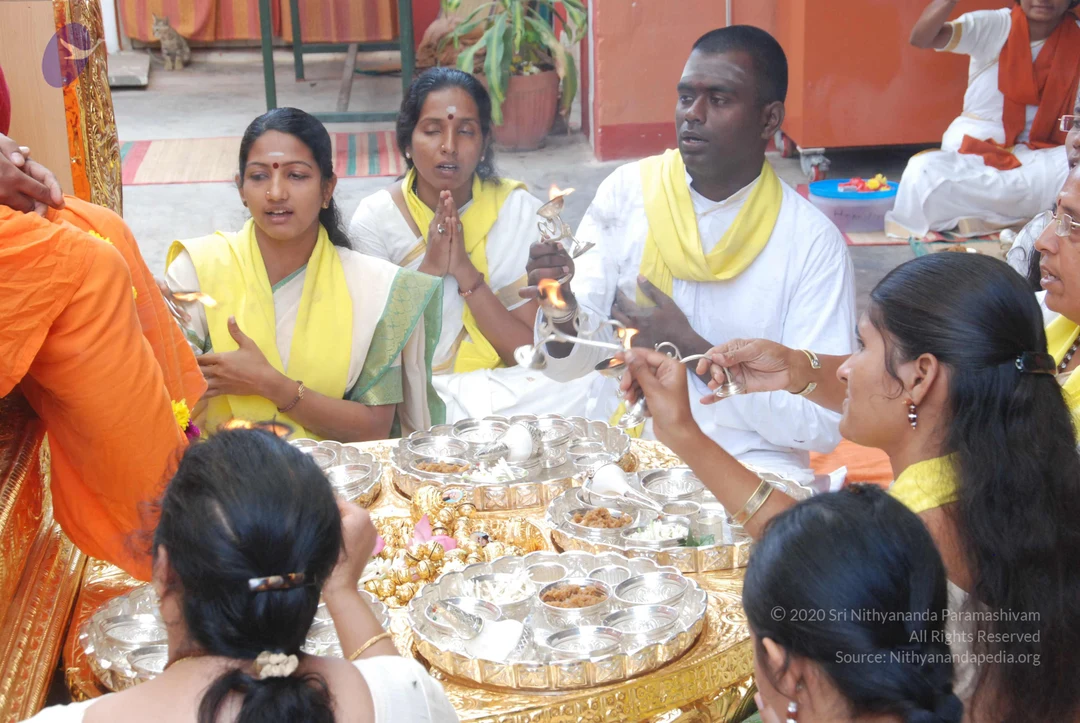
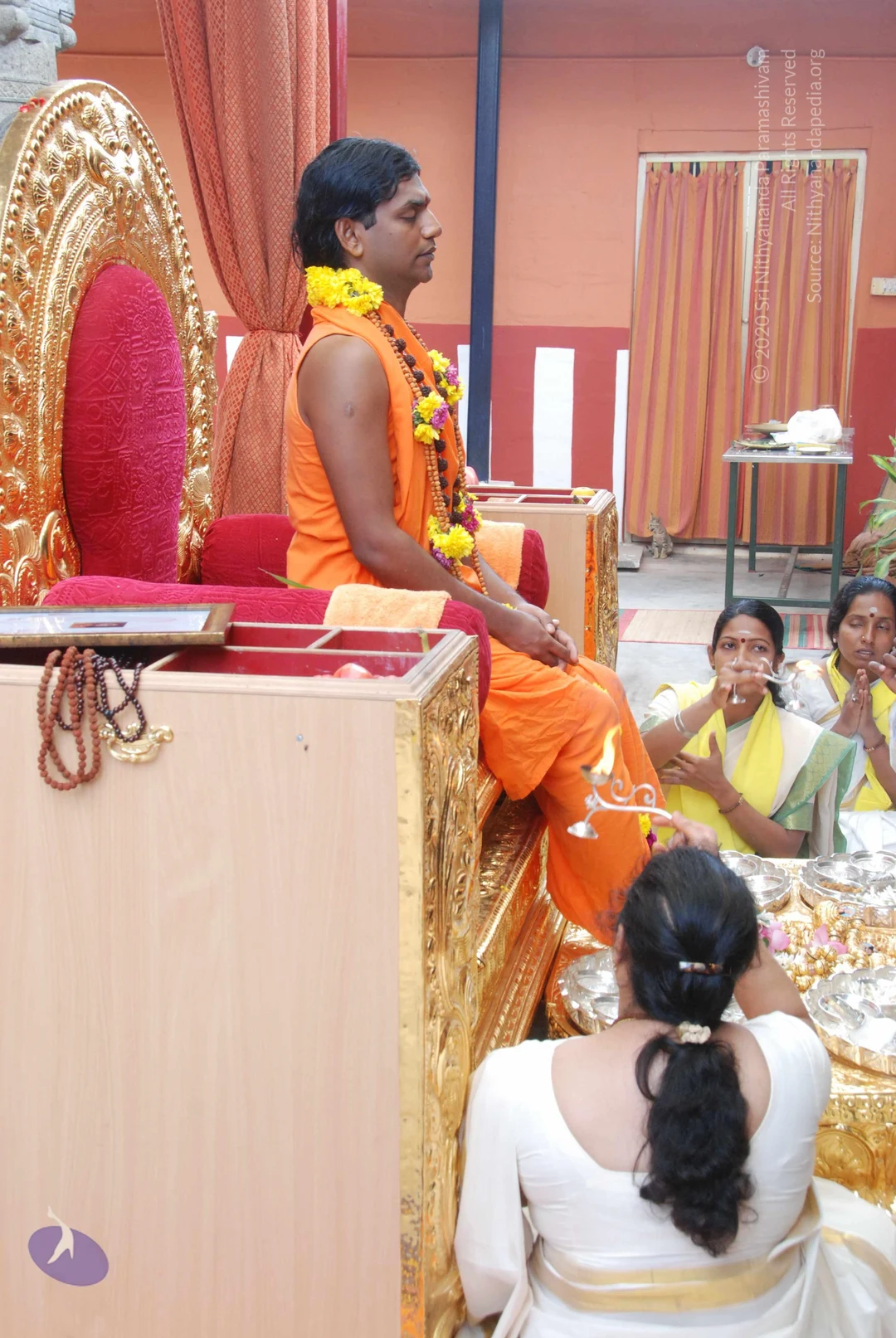
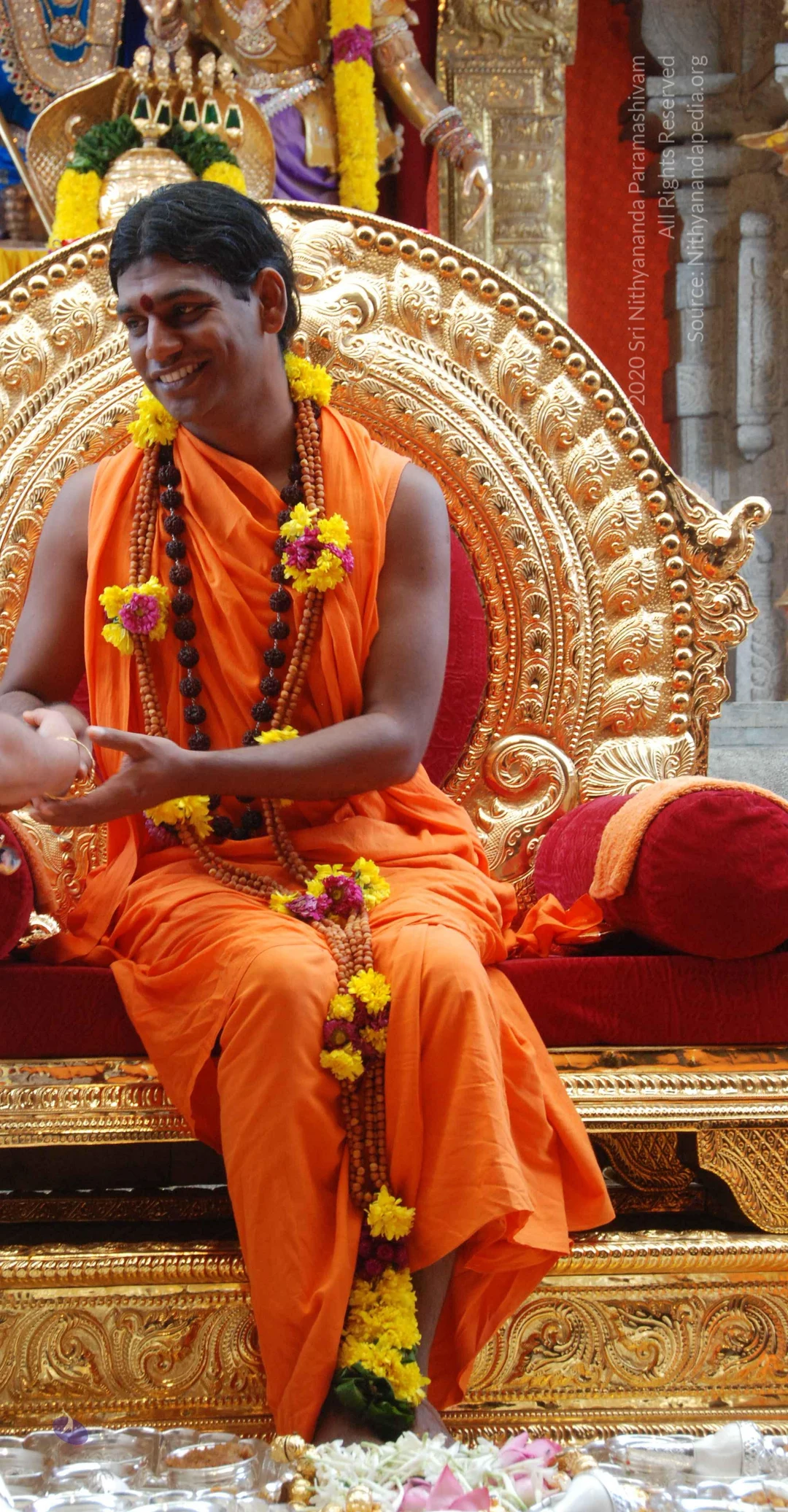
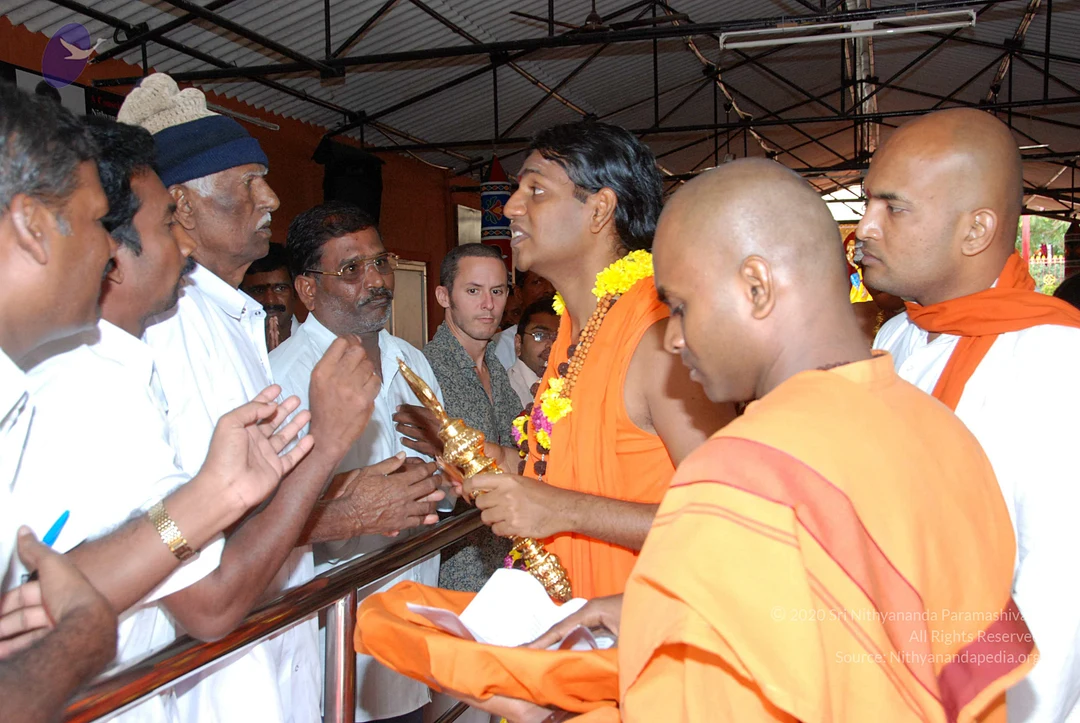
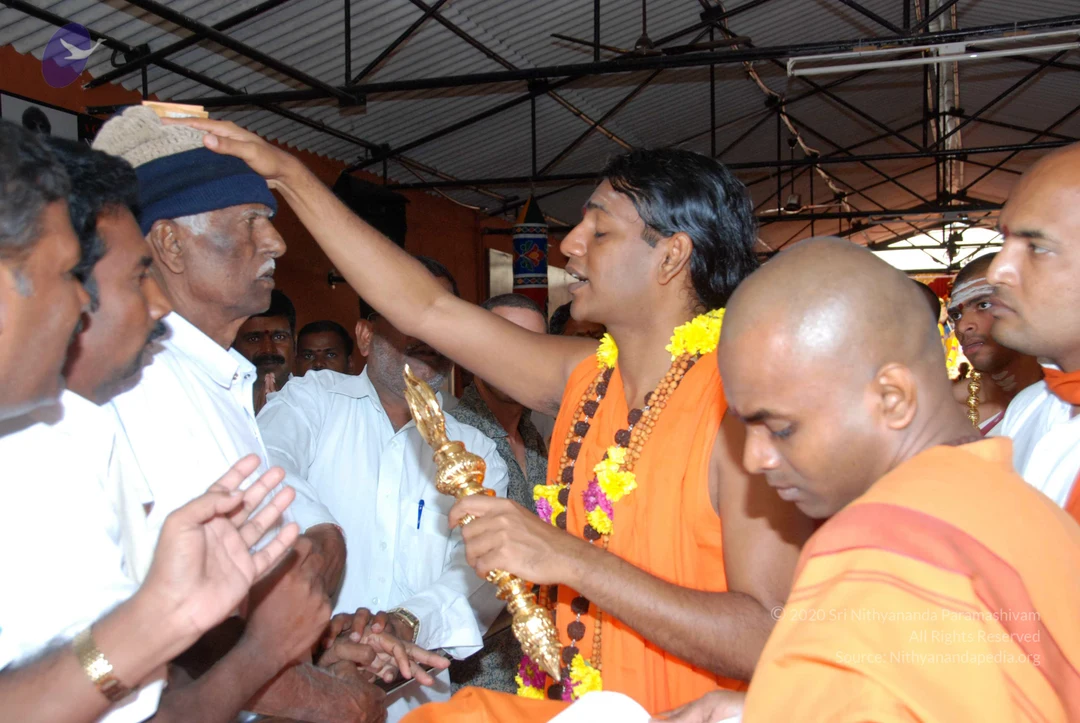
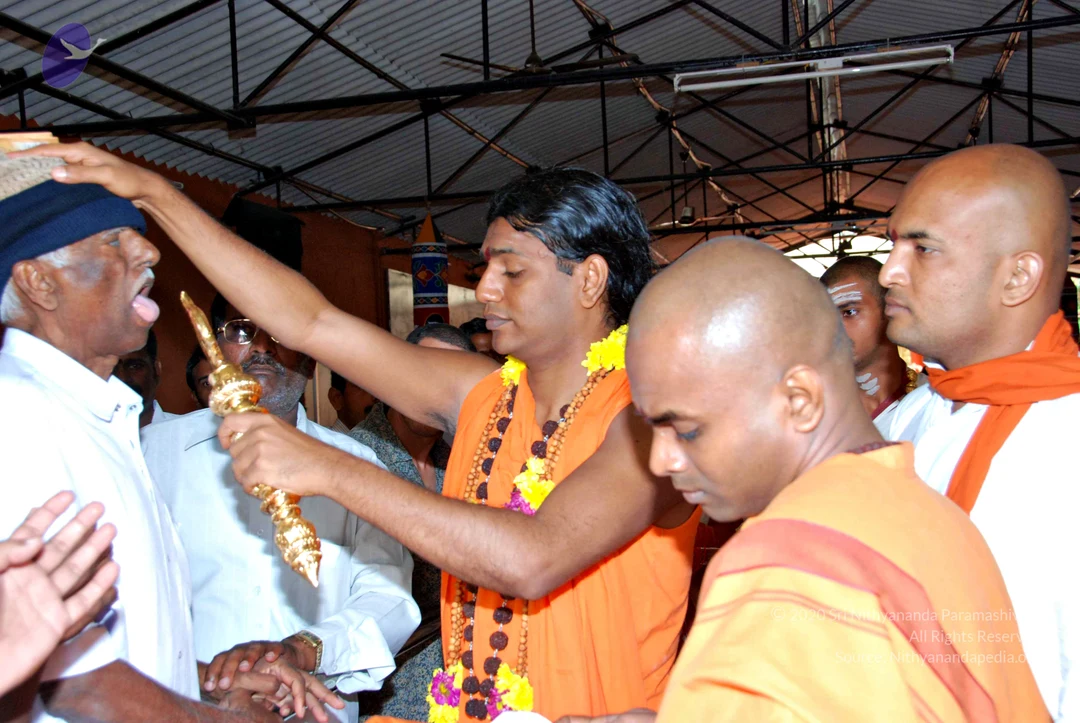
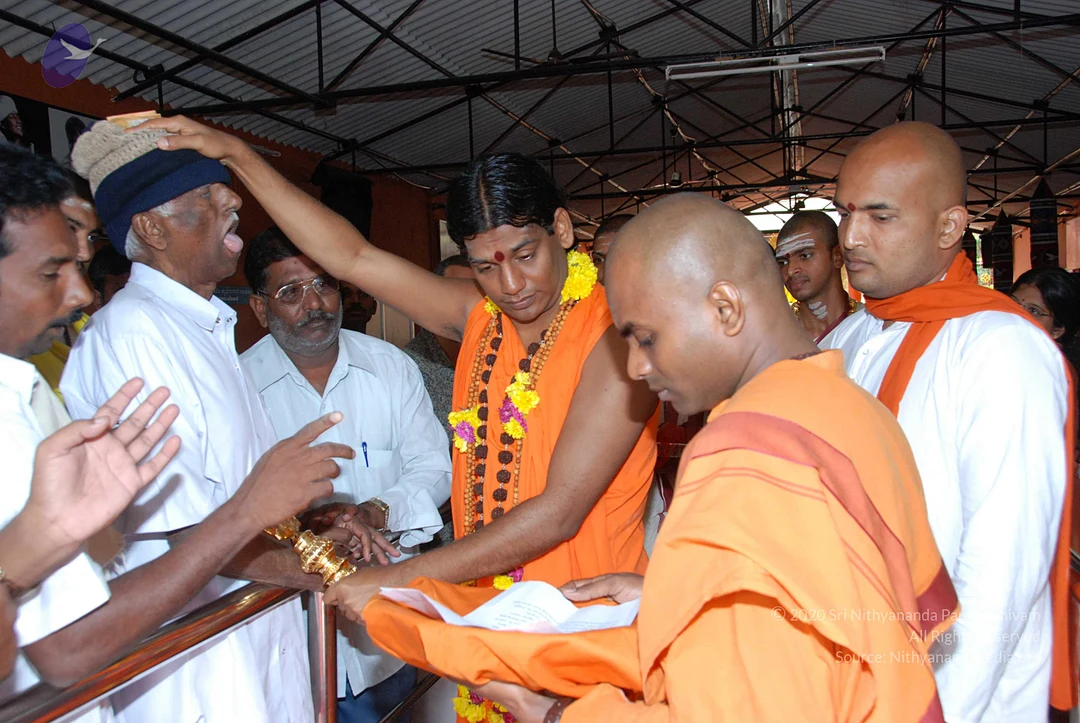
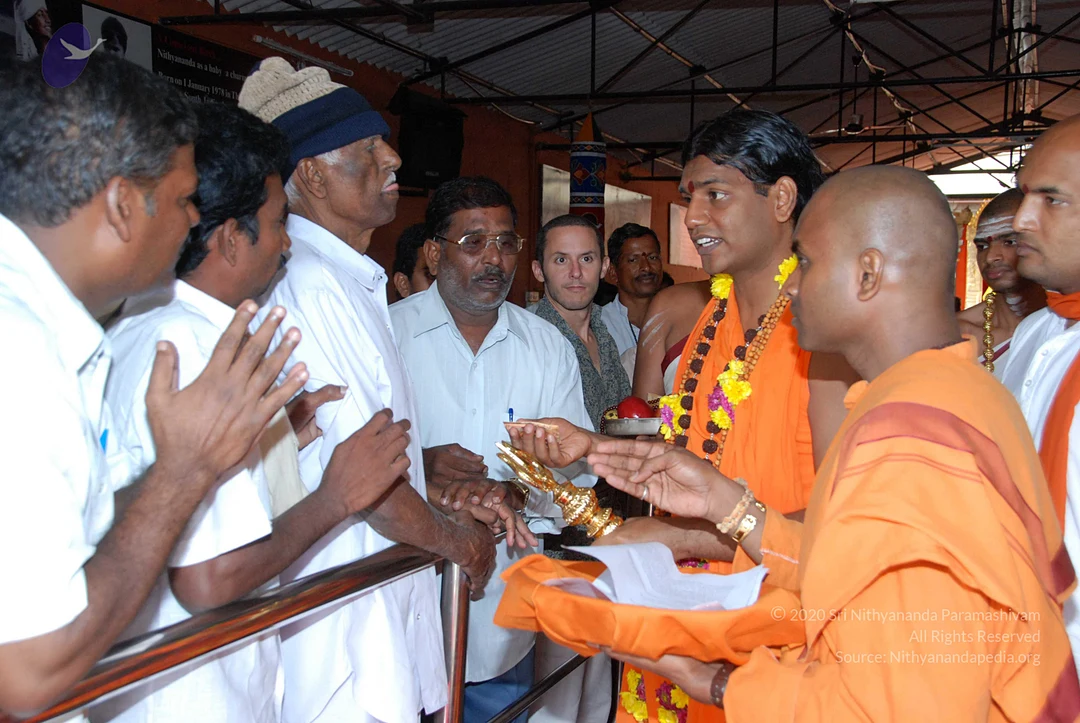
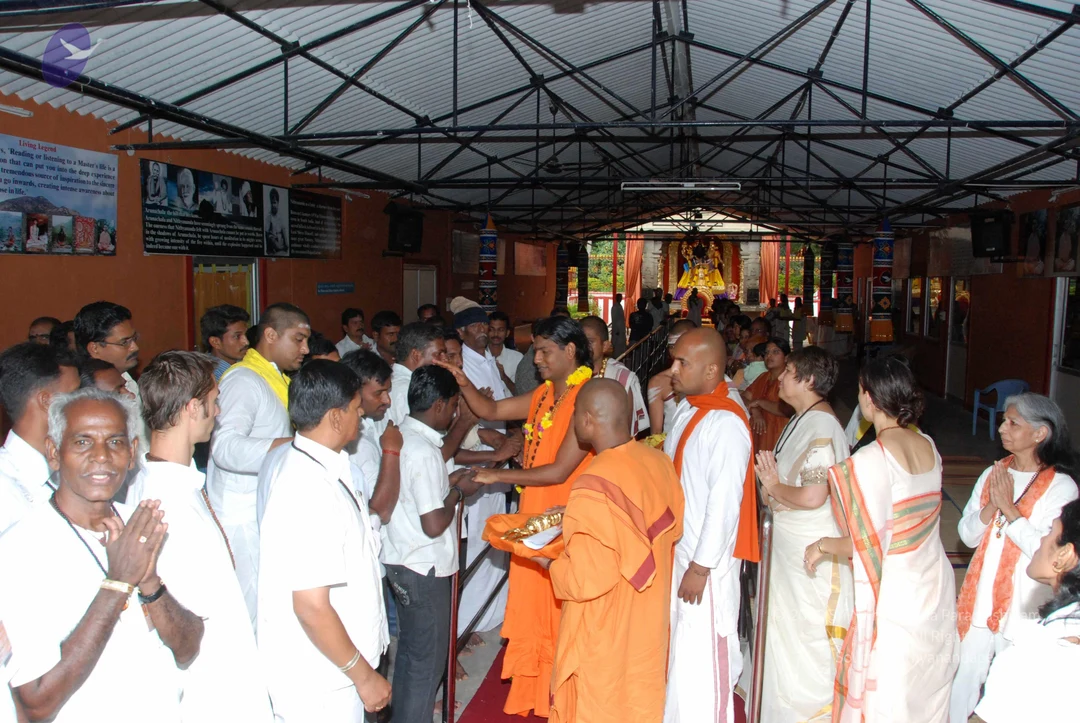
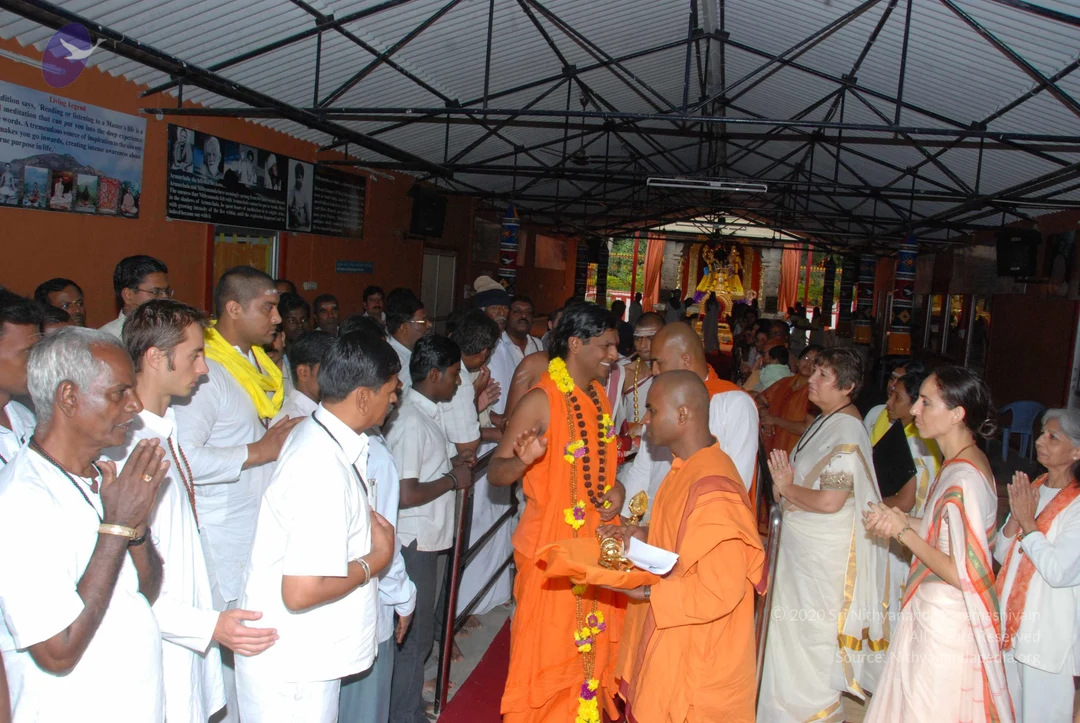
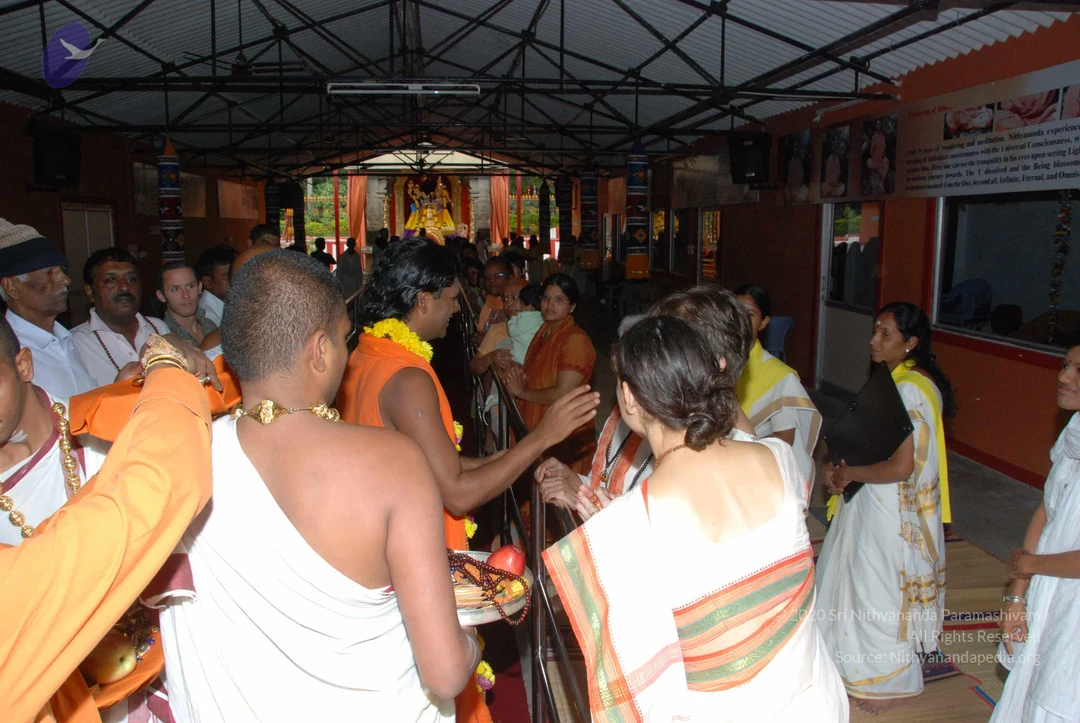
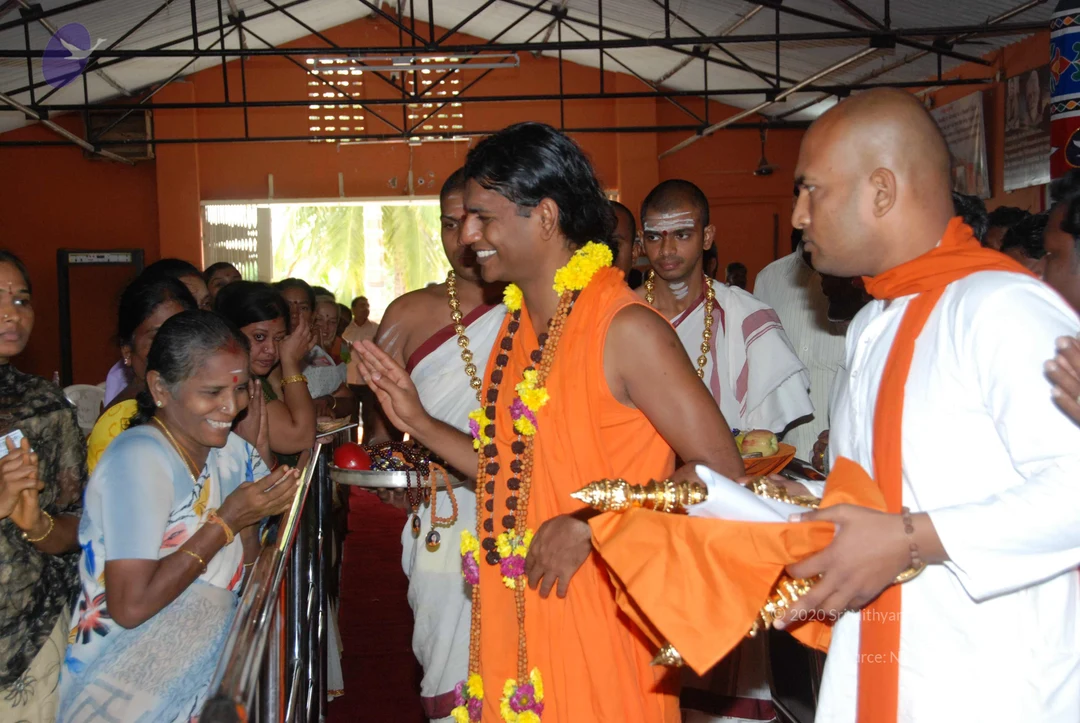
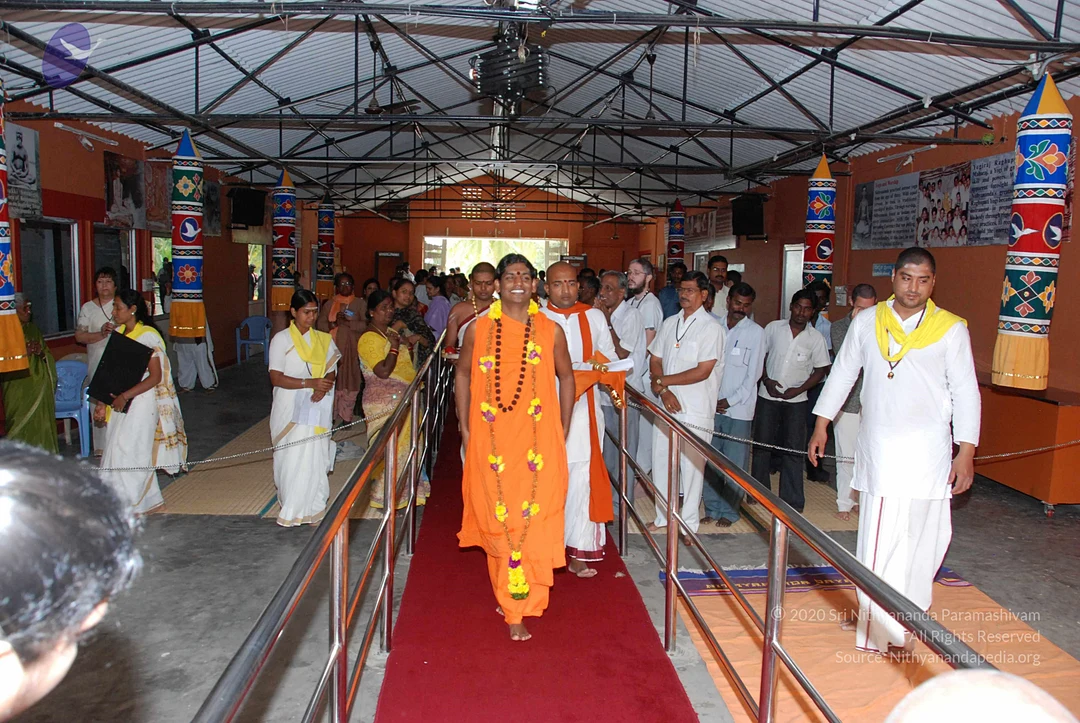
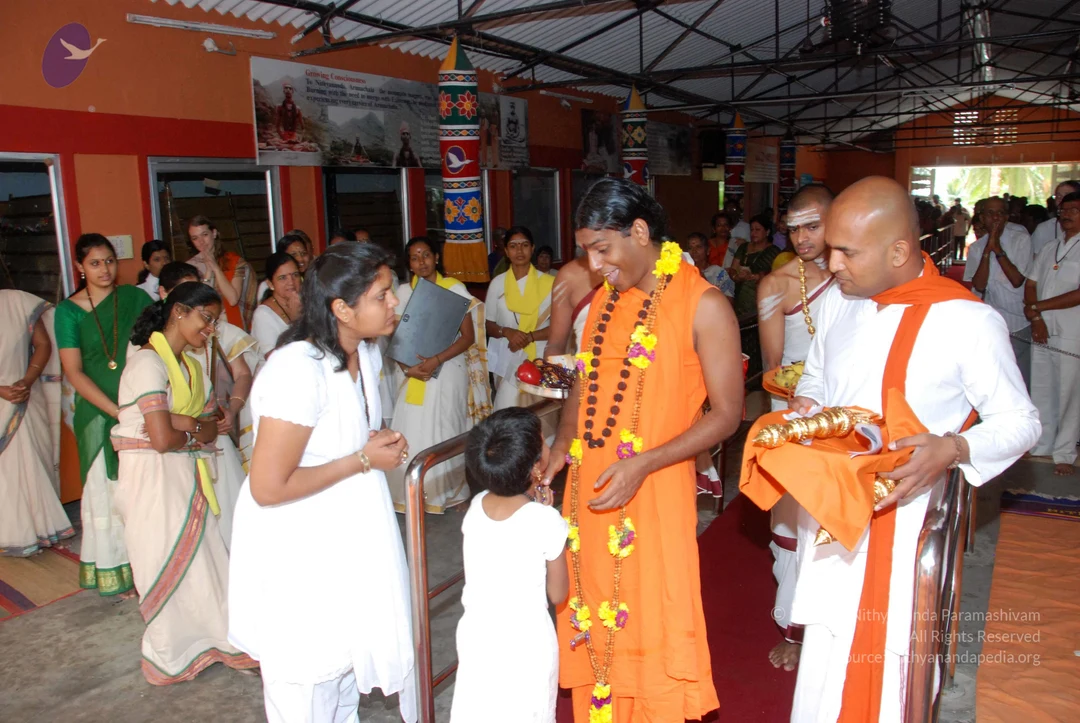
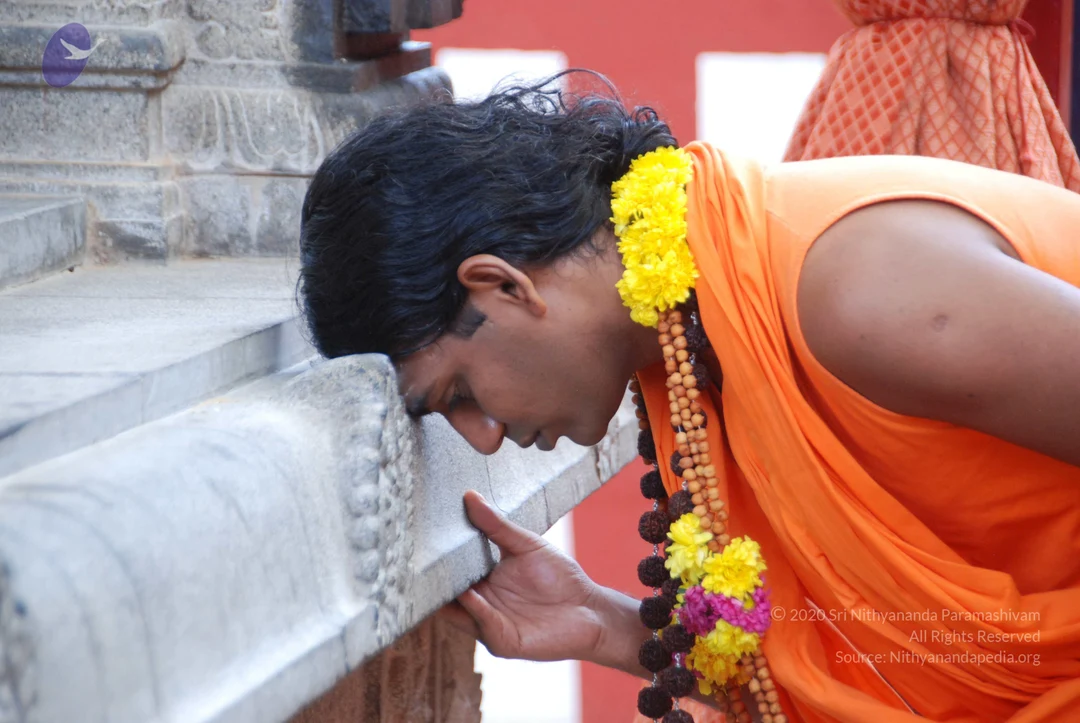
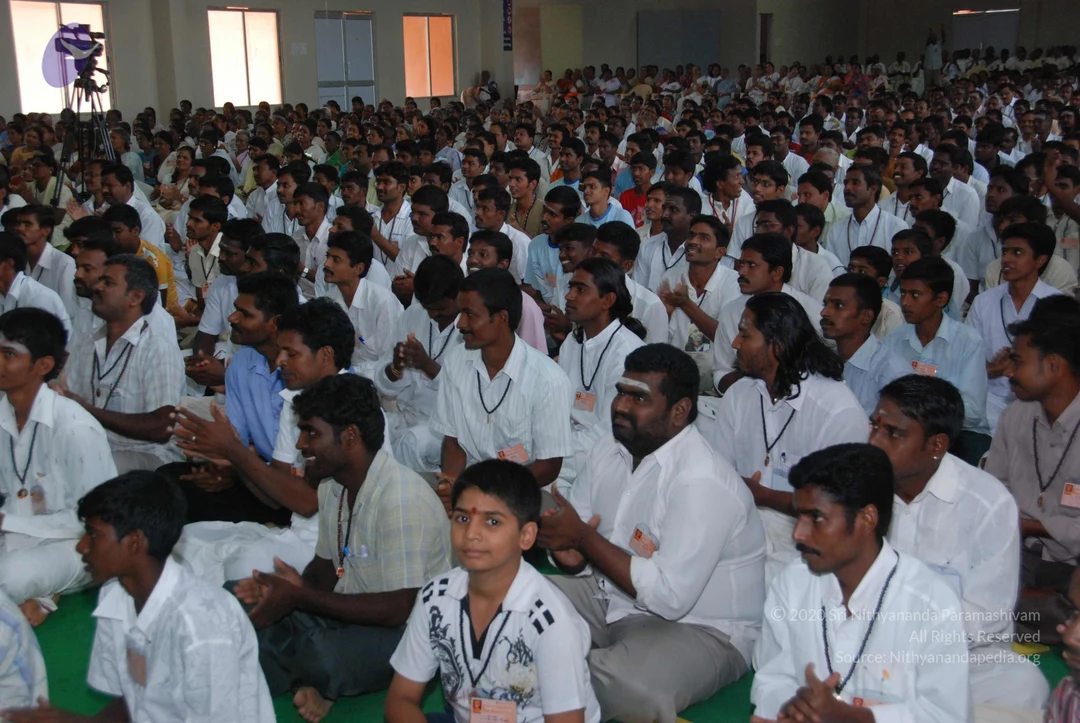
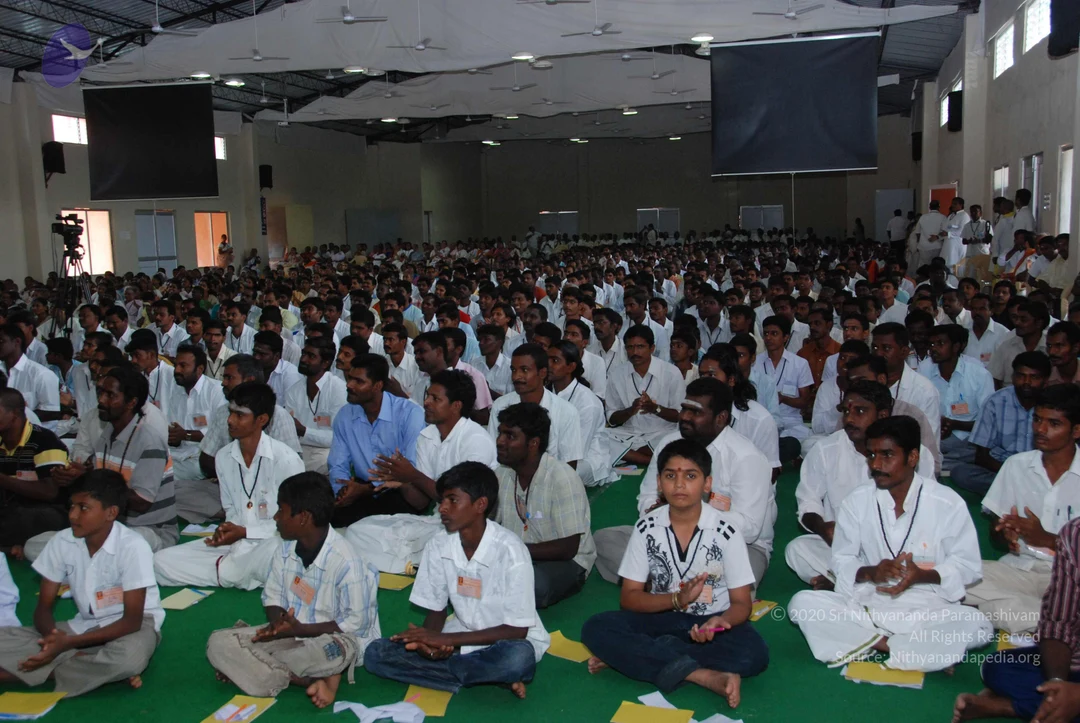
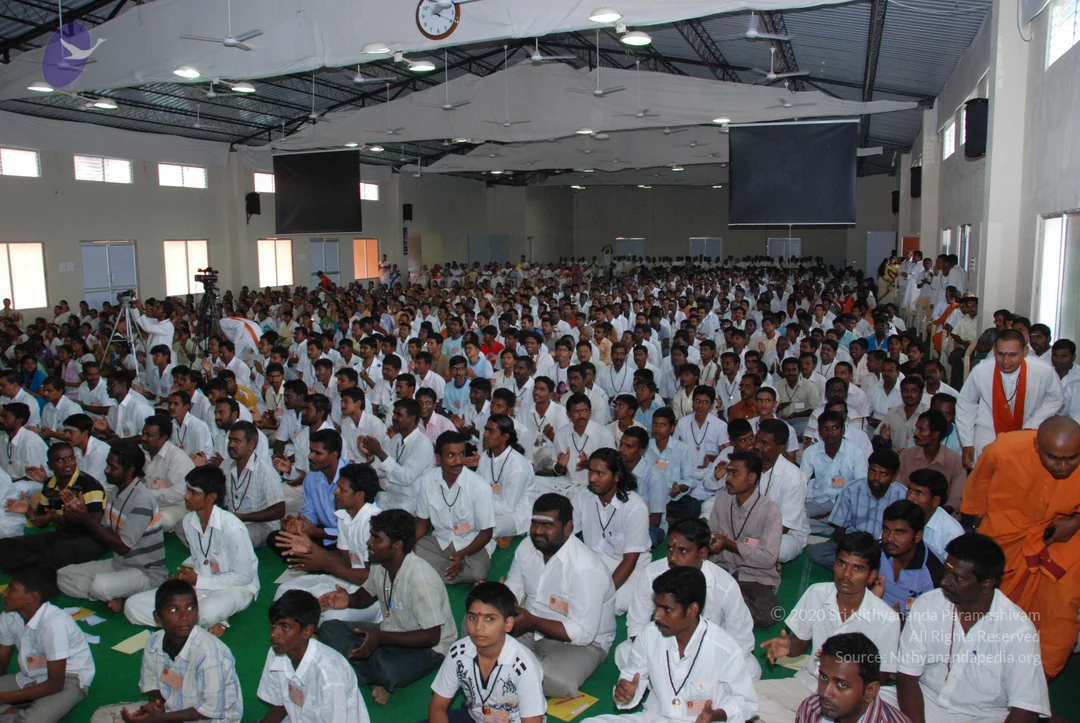
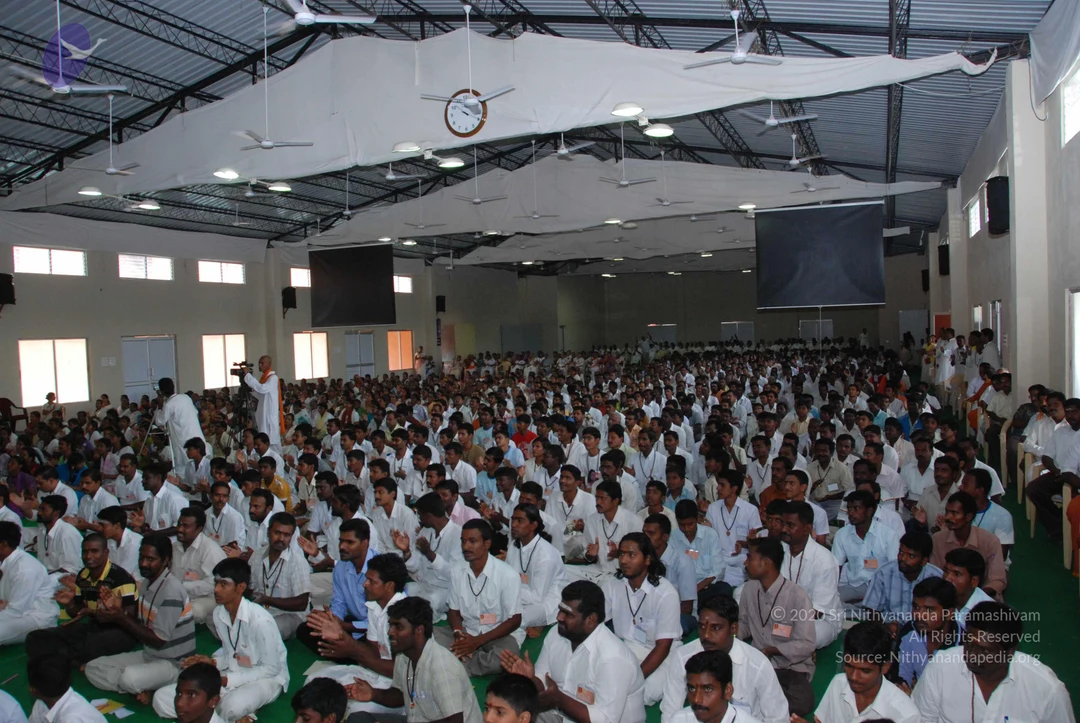
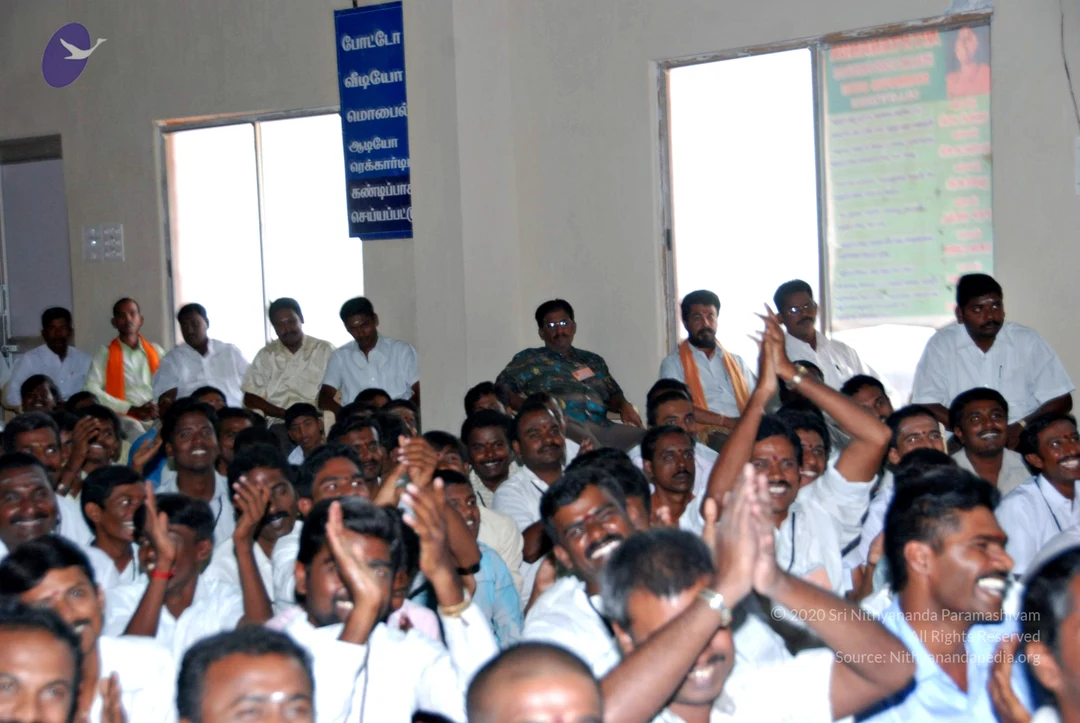
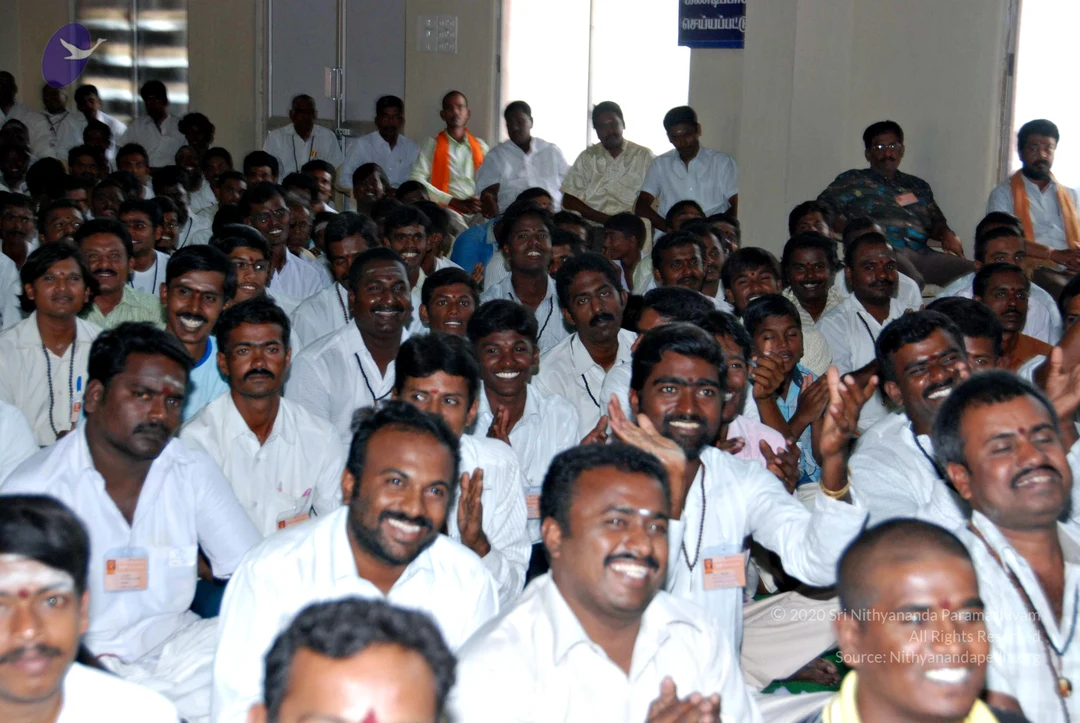
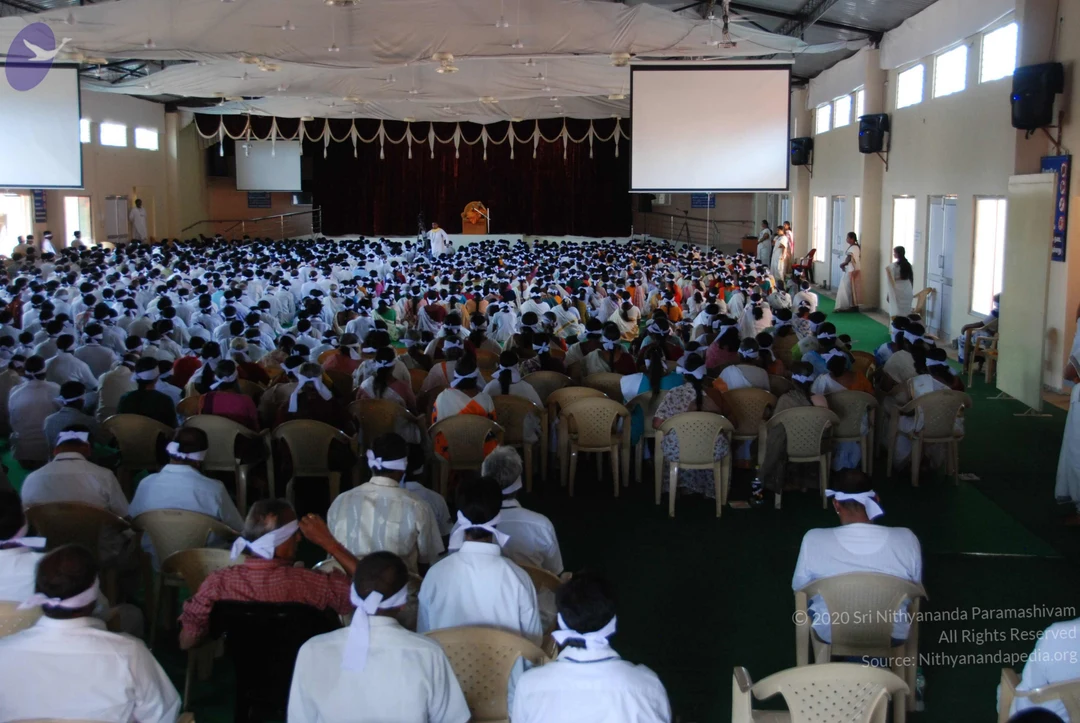
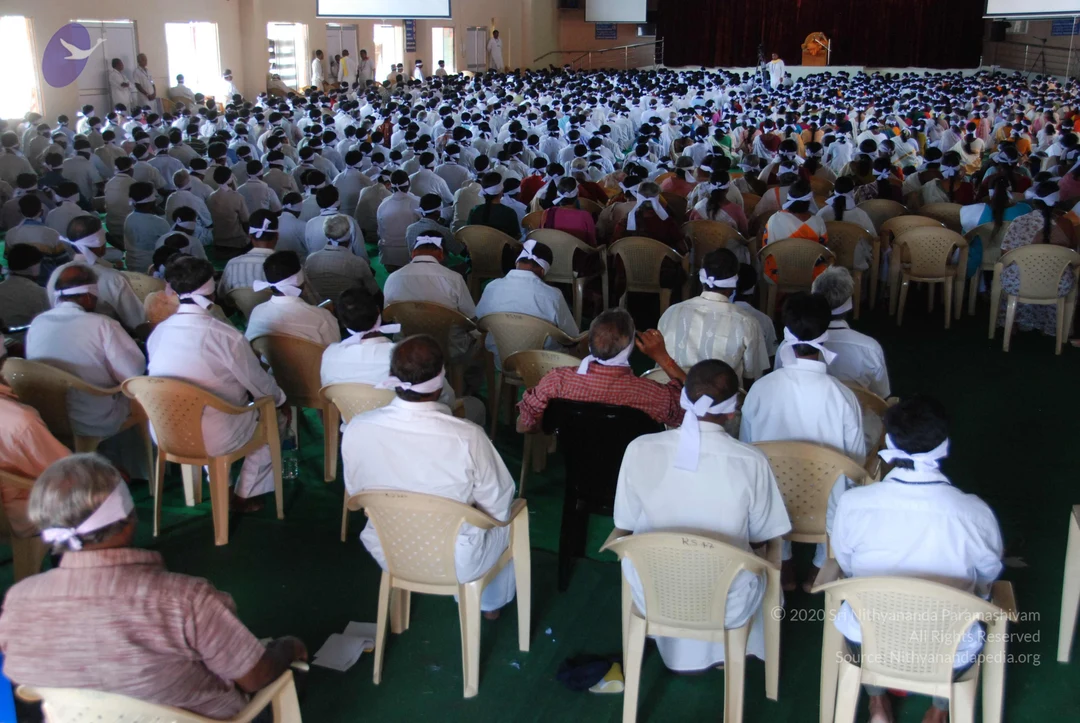
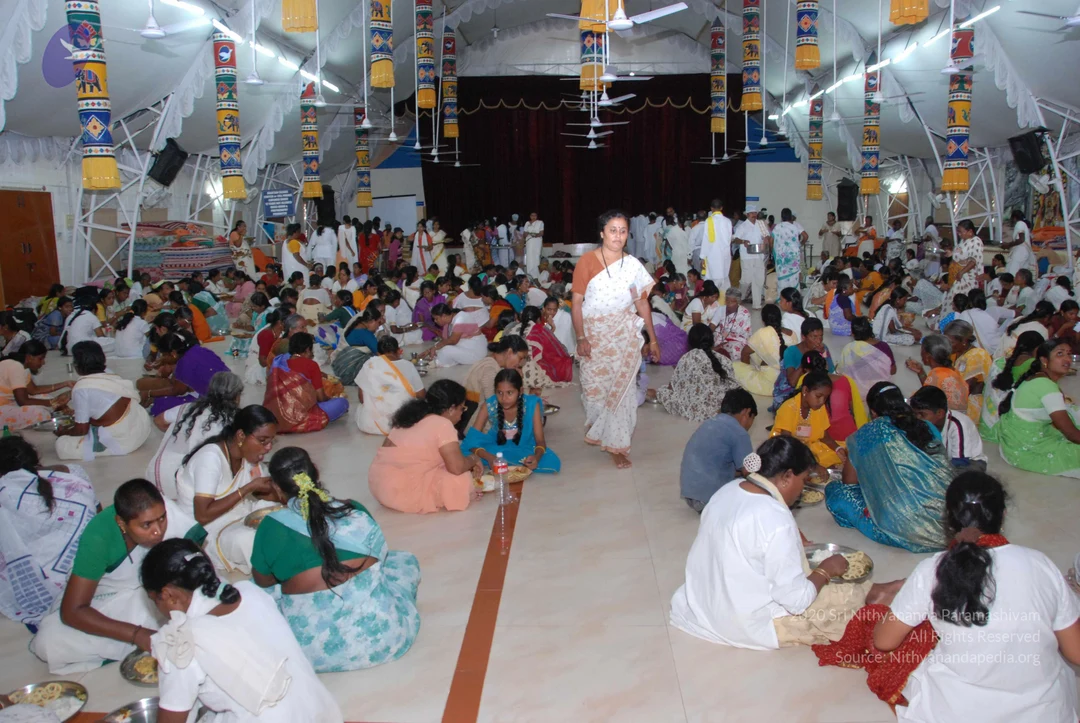
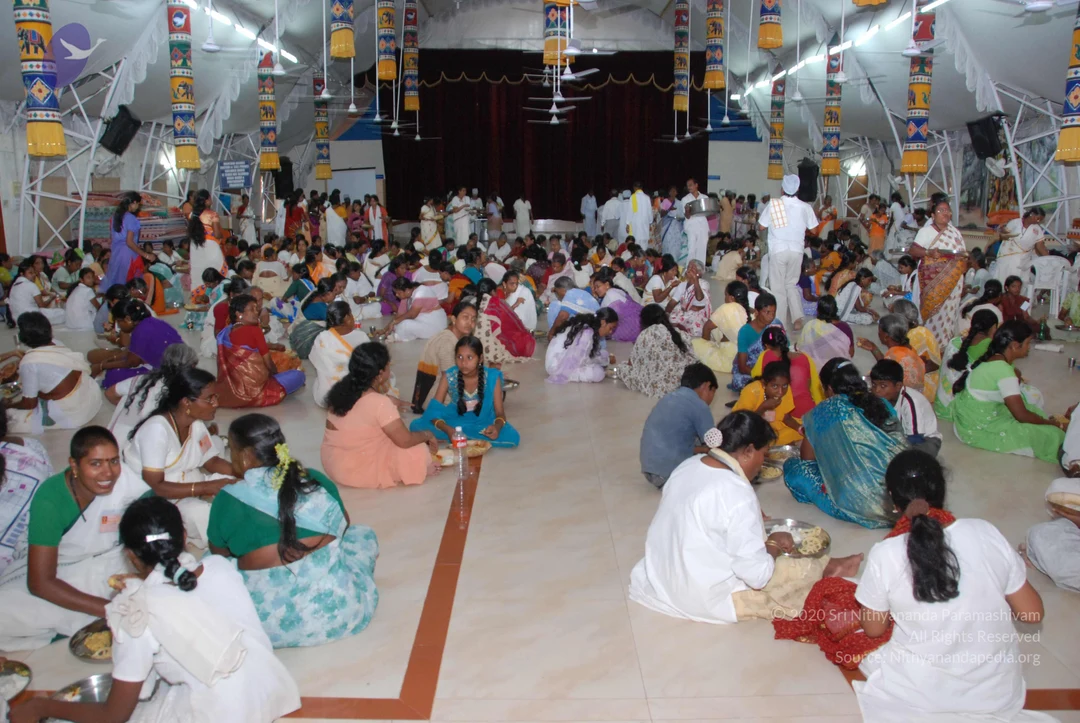
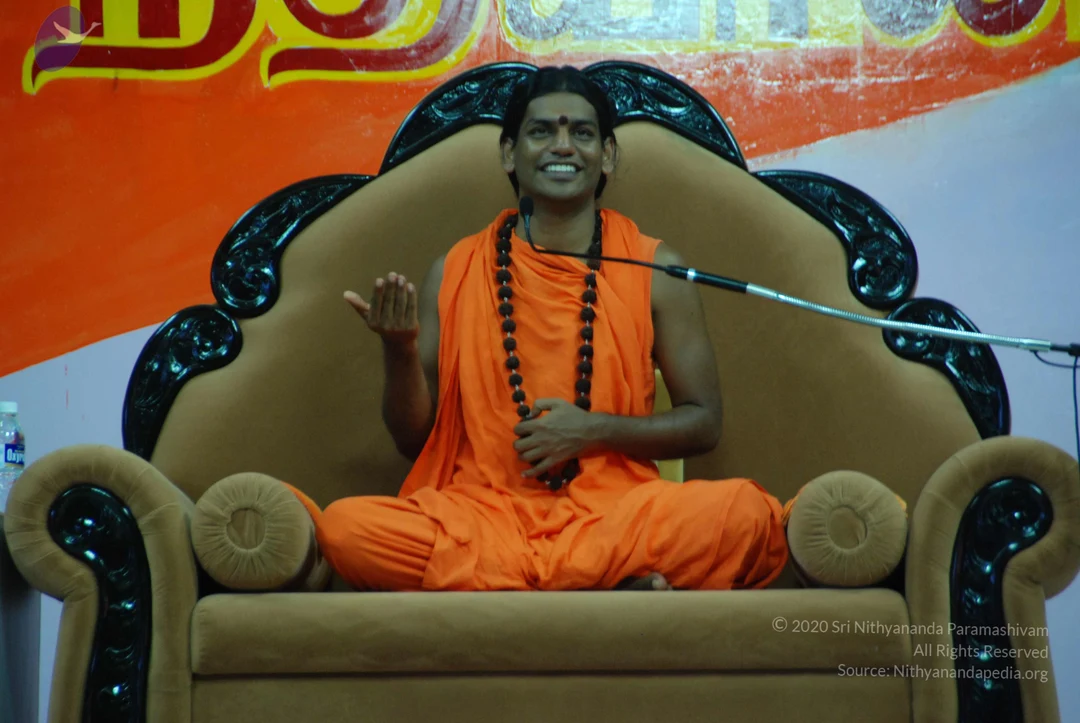
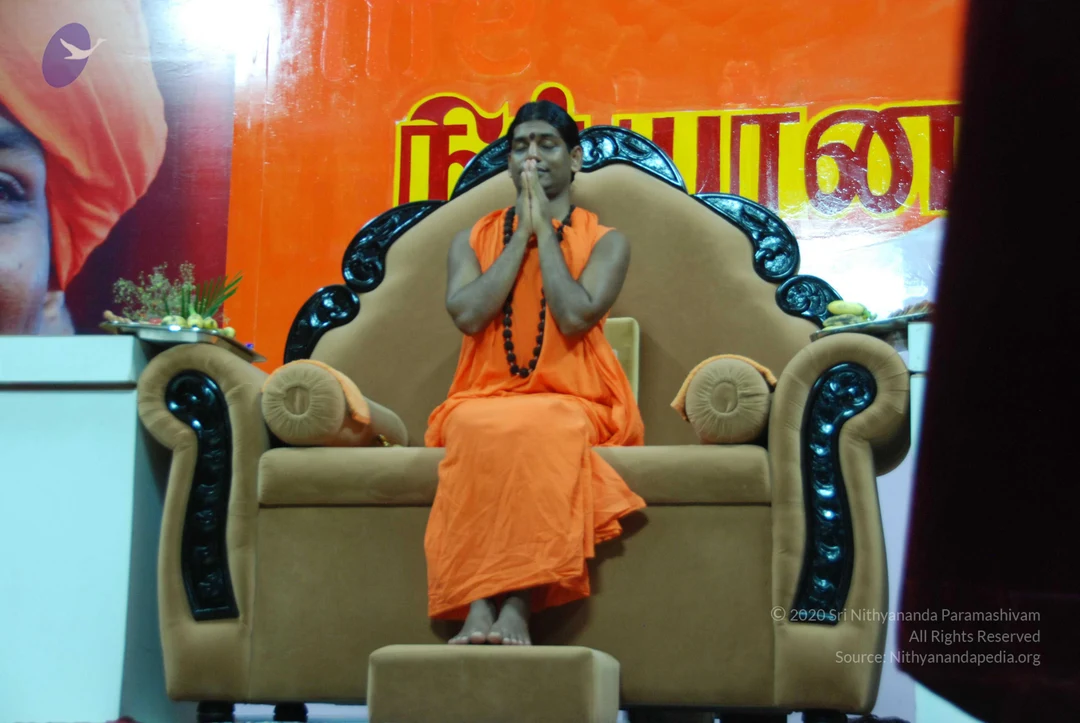
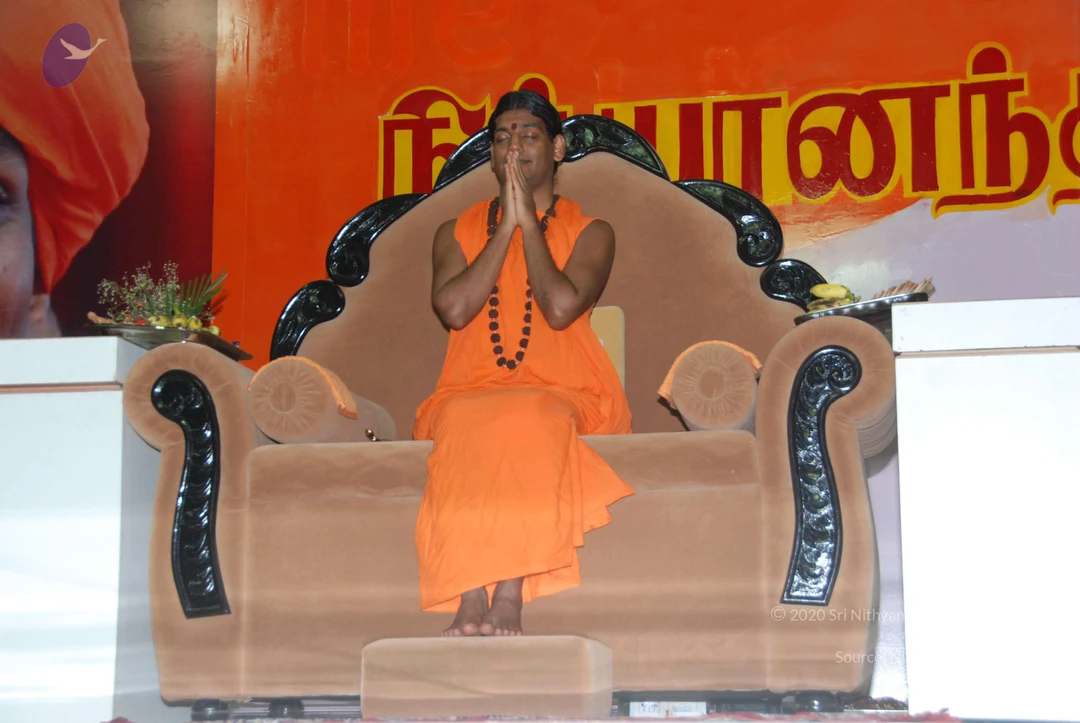
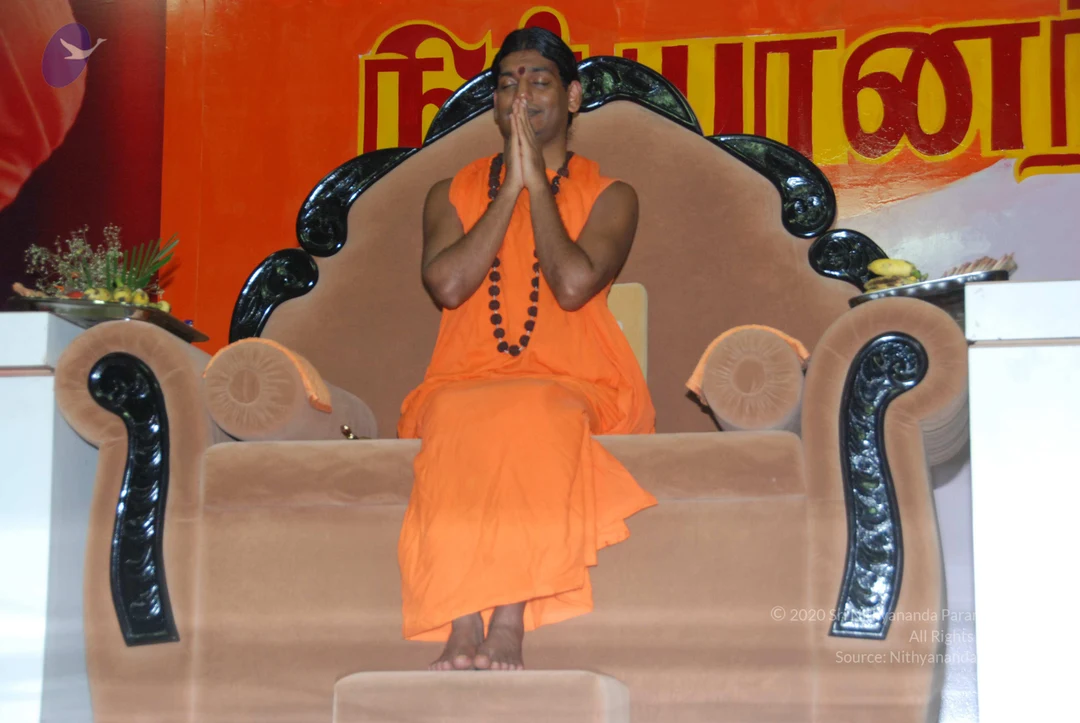
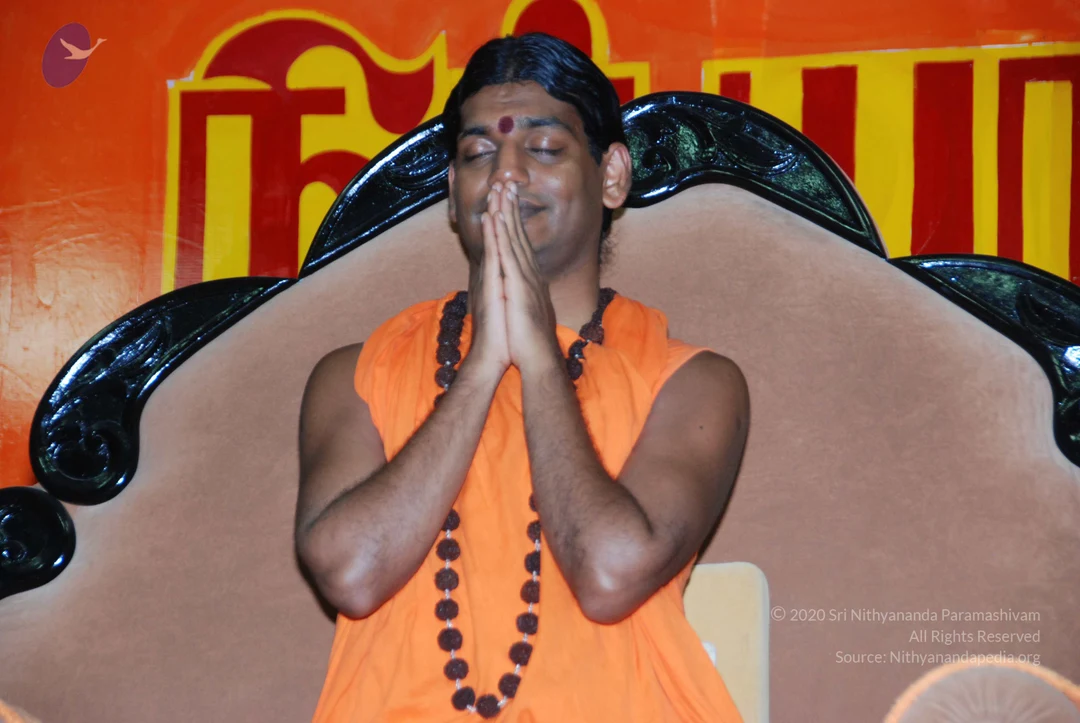
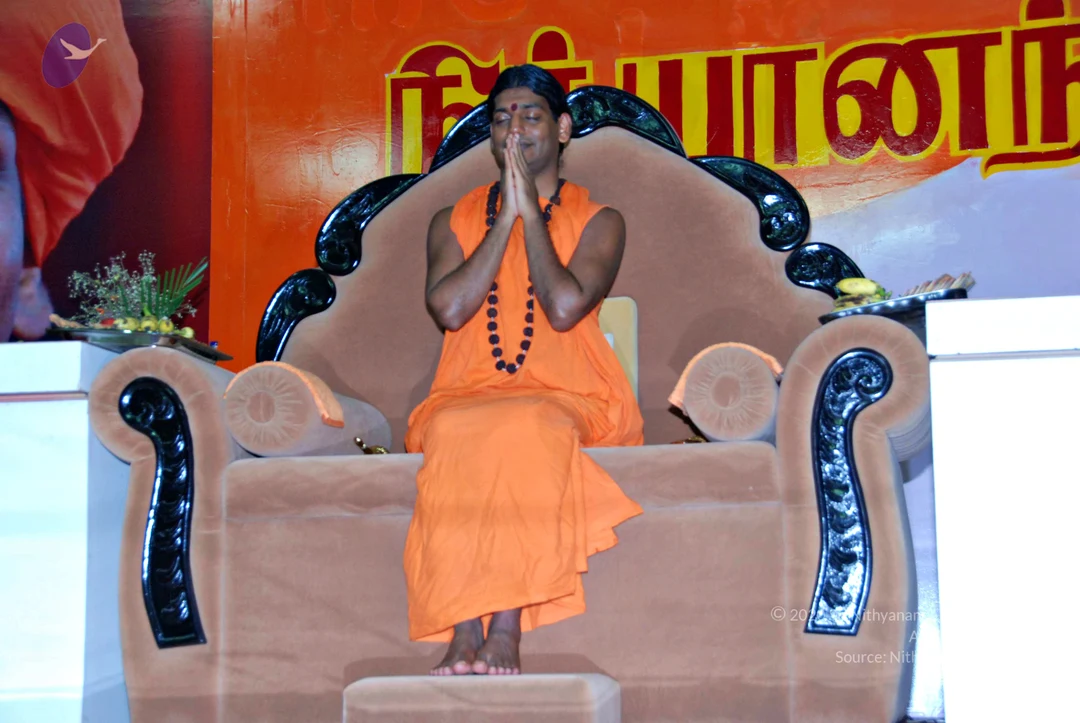
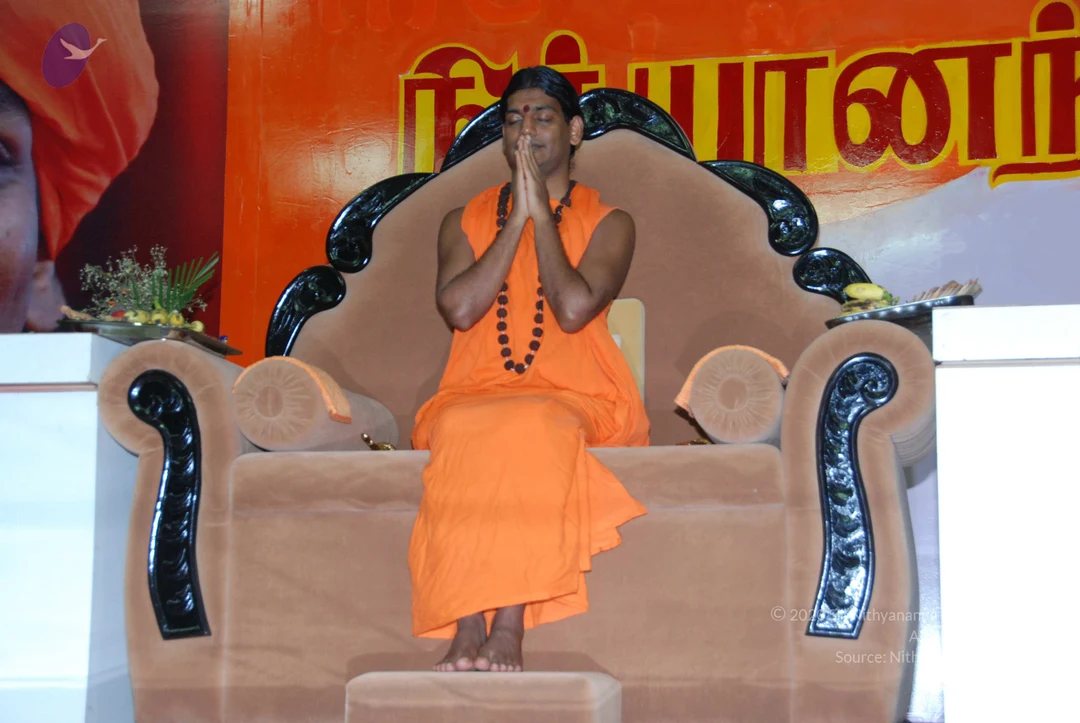
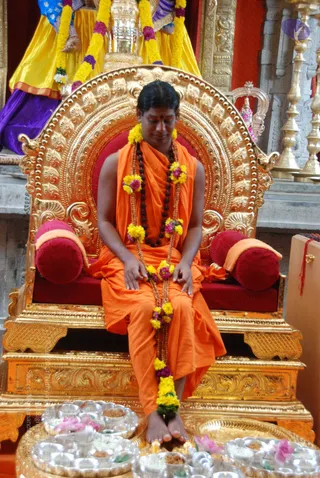
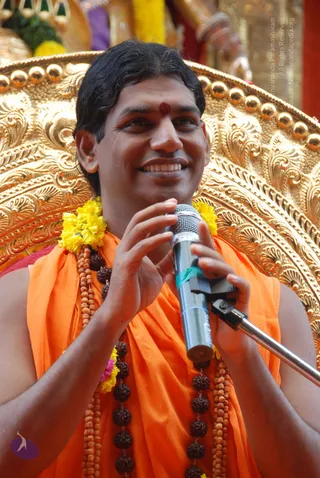
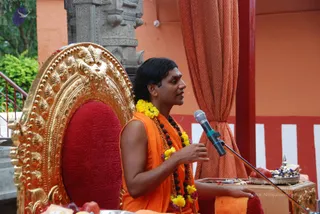
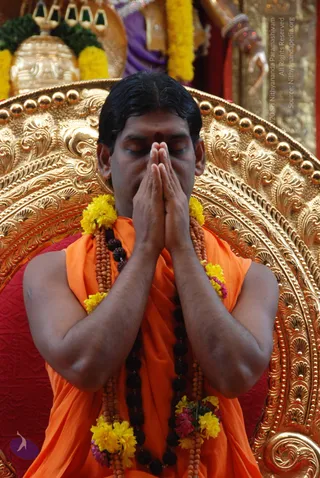
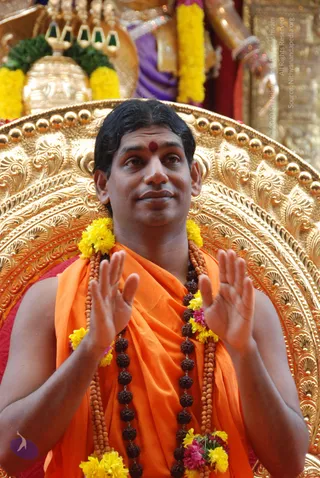
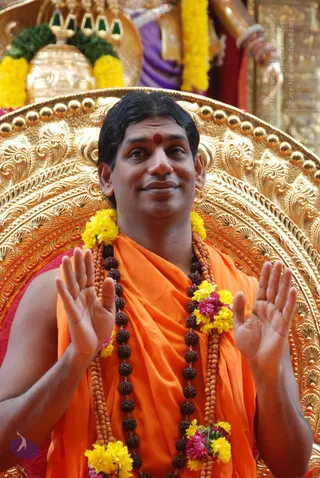
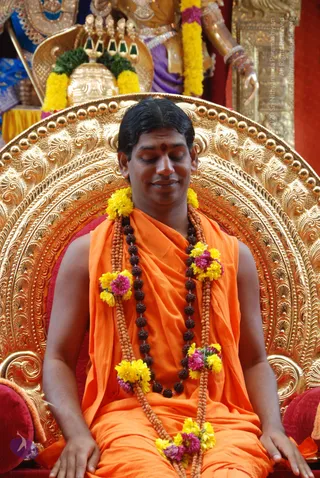
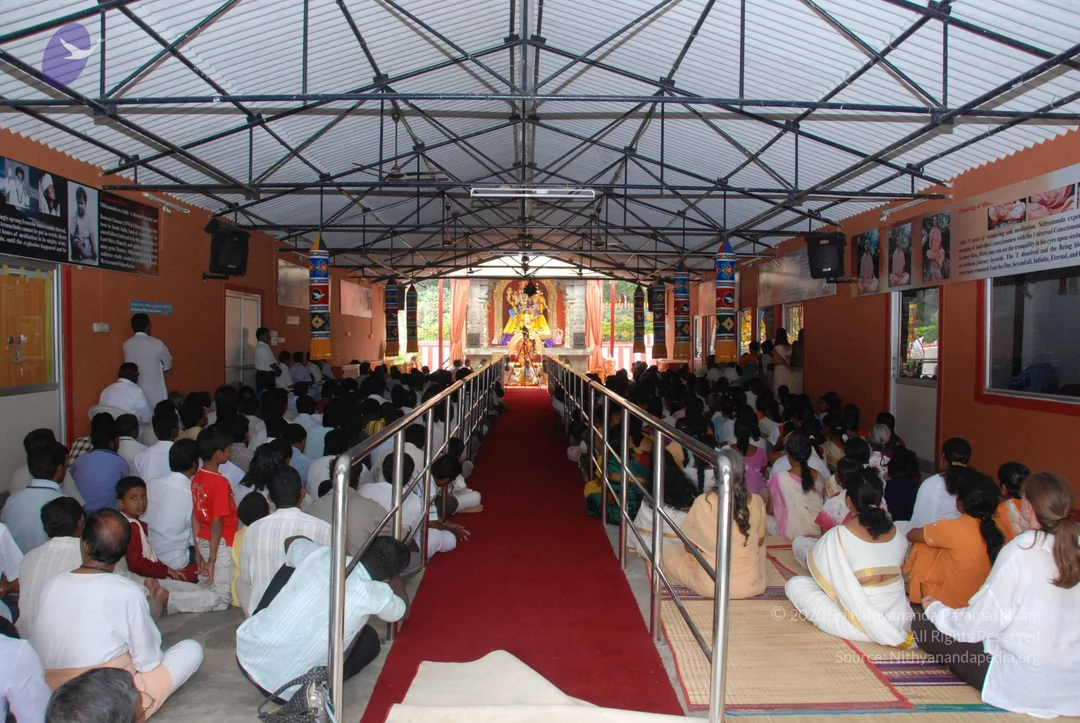
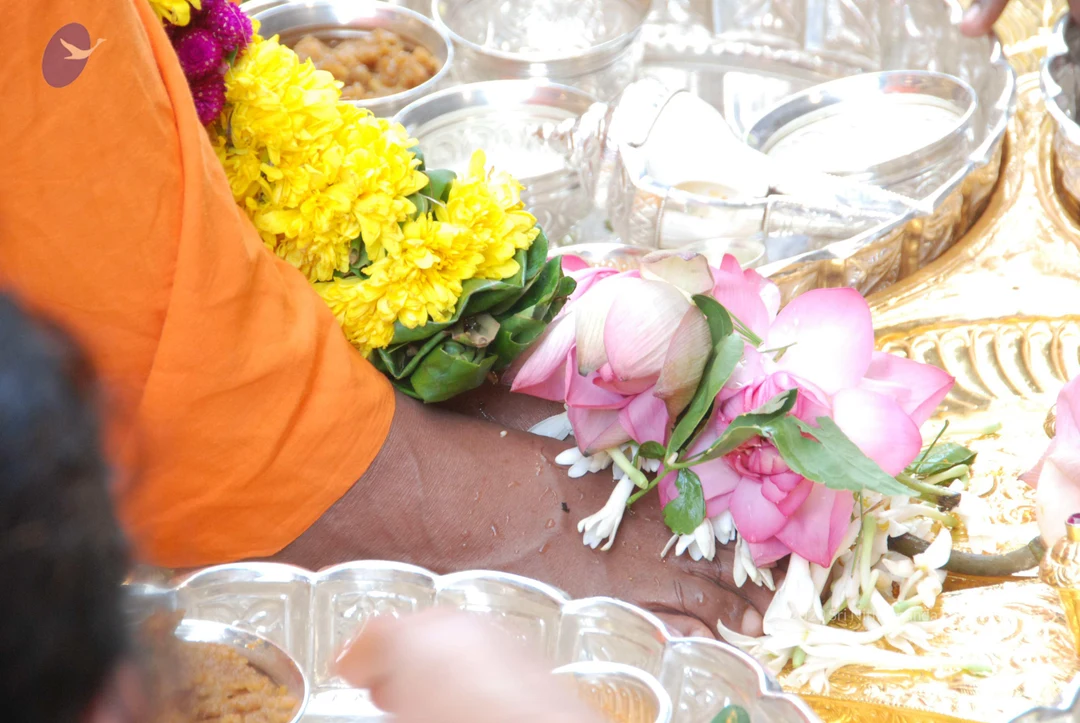
A photograph of a seated crowd of men in white shirts and white dhotis clapping and smiling inside a plain hall with white walls and large windows. In the back row, several men wear saffron-orange shawls over white clothing, and one man in the center wears a patterned green shirt and dark-rimmed glasses. Many in the front rows raise their hands in applause. A blue wall banner with Tamil lettering hangs at upper left, and a green notice board with printed text is on the right. No individual is clearly identifiable as a person by the listed cues, so no candidate is asserted.A seated man in saffron-orange robes sits on an ornate gold-and-red throne inside a temple-style hall. He wears a dark rudraksha mala around his neck and a red tilak on his forehead, with his feet bare and resting on a gold tray holding silver plates with flowers and offerings. Behind him stand a gold ornamented altar, stone carvings and a dark deity murti in a niche, with red-and-white striped pillars and orange curtains. A person in white stands at the right edge. The man appears to be a person, identified by the long swept-back hair absent here, so the appearance cues are limited to the saffron robes and rudraksha mala, and the throne setting alone is insufficient; the seated figure is a devotee-style presenter on a throne.A photograph inside a temple shrine with grey stone pillars and orange drapes. Behind them, a deity murti in yellow and purple garments stands with a garland of marigolds, flanked by a second figure. In the foreground, a man in orange robes with a rudraksha mala stands on the step of an ornate gold-and-red throne, his hand resting on the armrest, while a bald man in white clothes with an orange shoulder cloth kneels on the floor before a gold tray of brass plates and offerings. The orange and red surroundings and gold-trimmed throne frame the puja setting.

August 19 2010

Original wiki page
Contents

Title

Healing Science of Ananda Linga - Nithyananda's Message of the day 19 Aug 2010

Narration

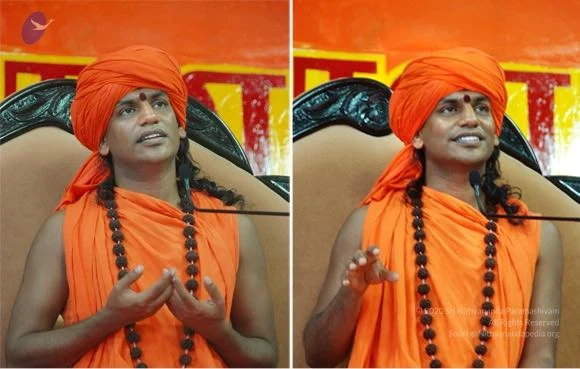
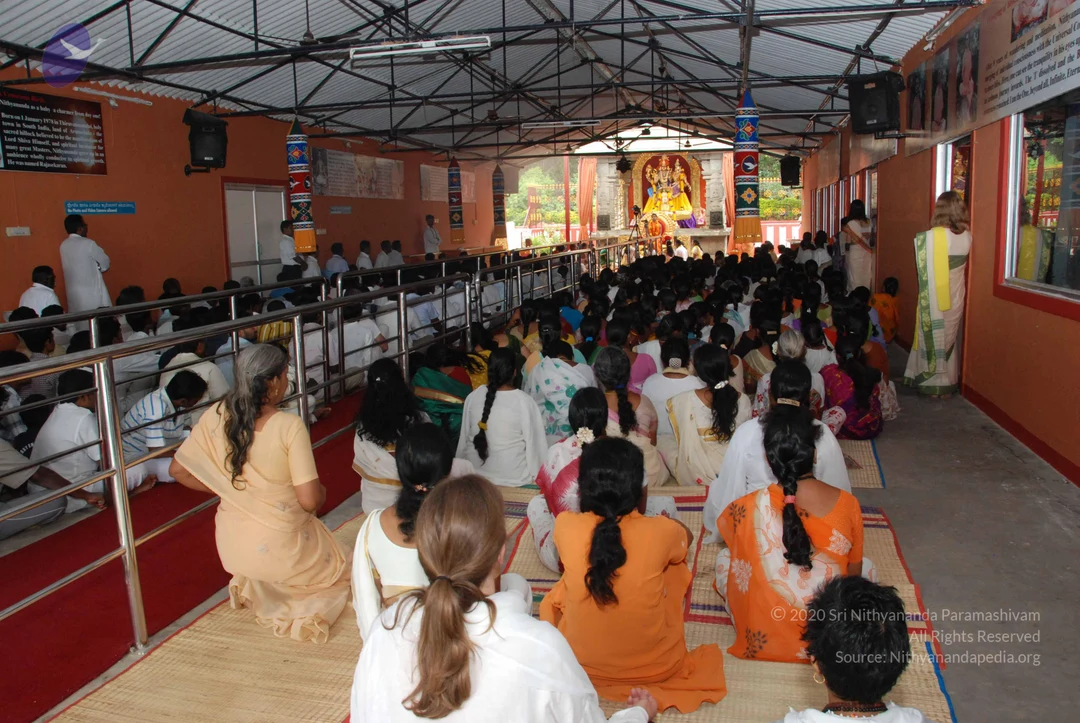
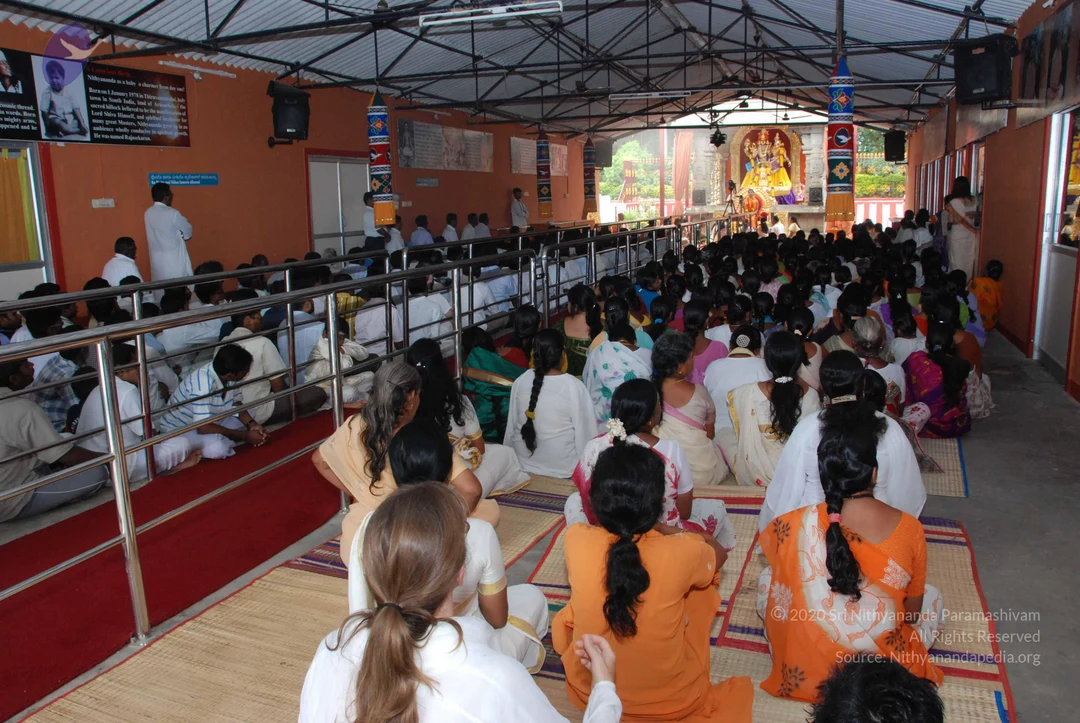
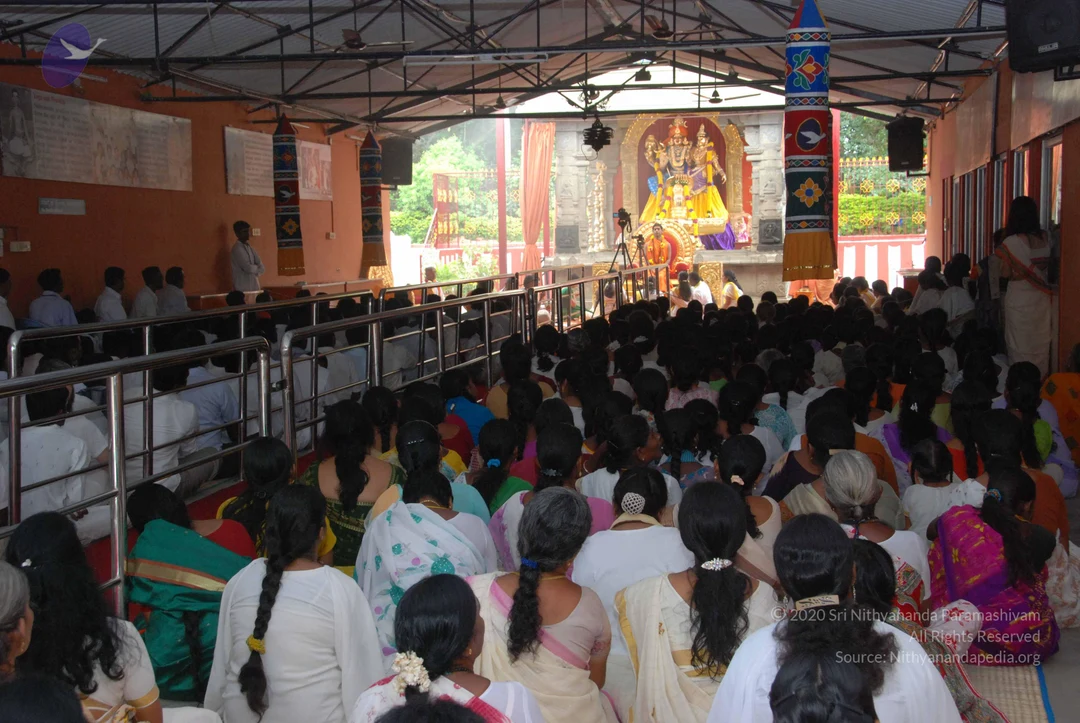
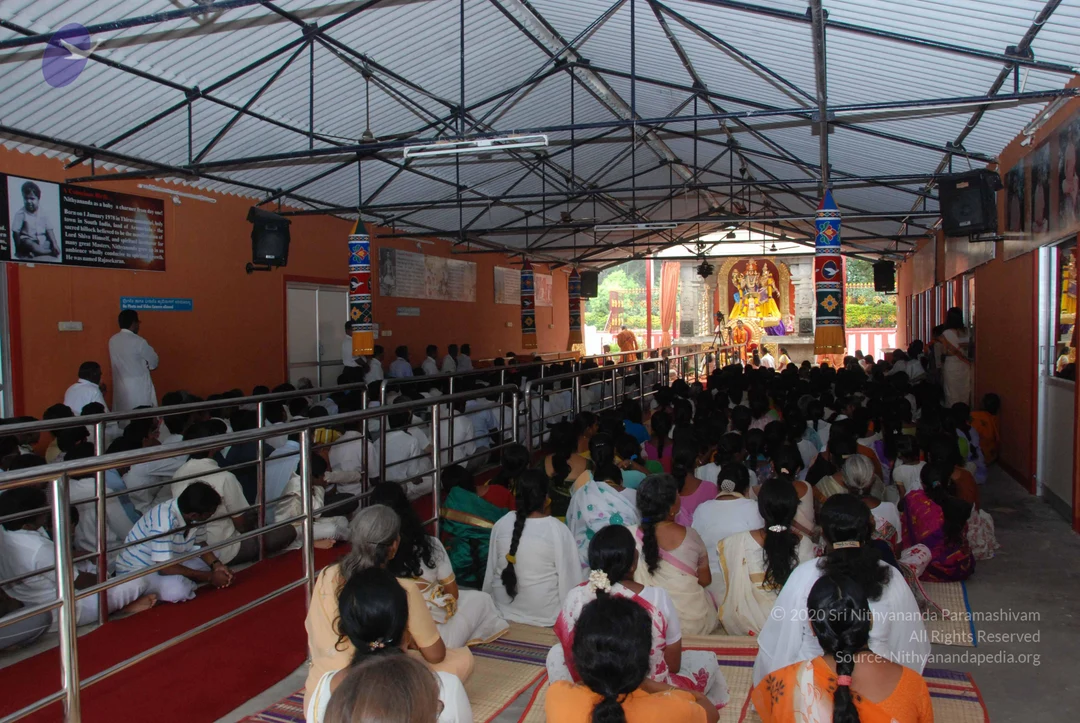
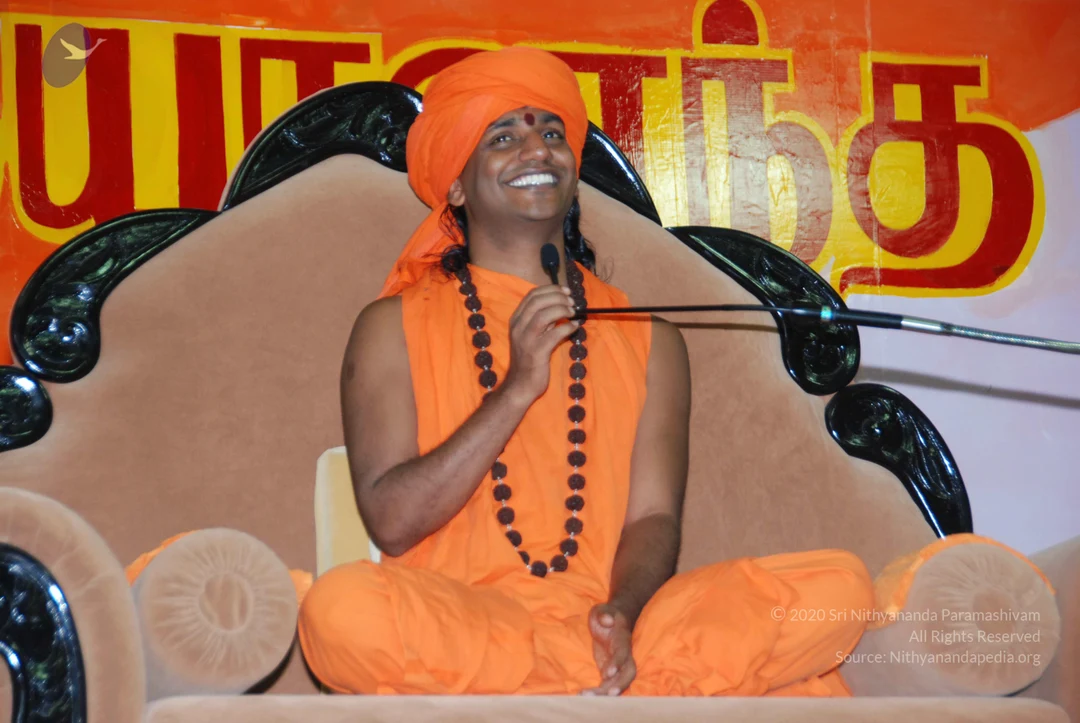
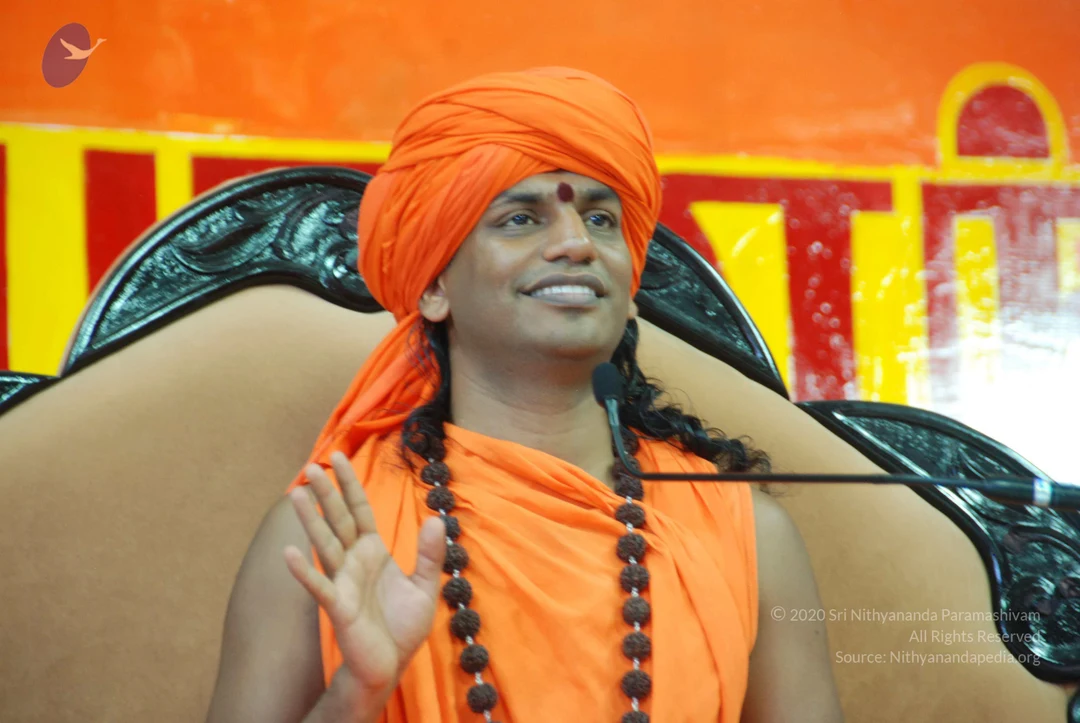
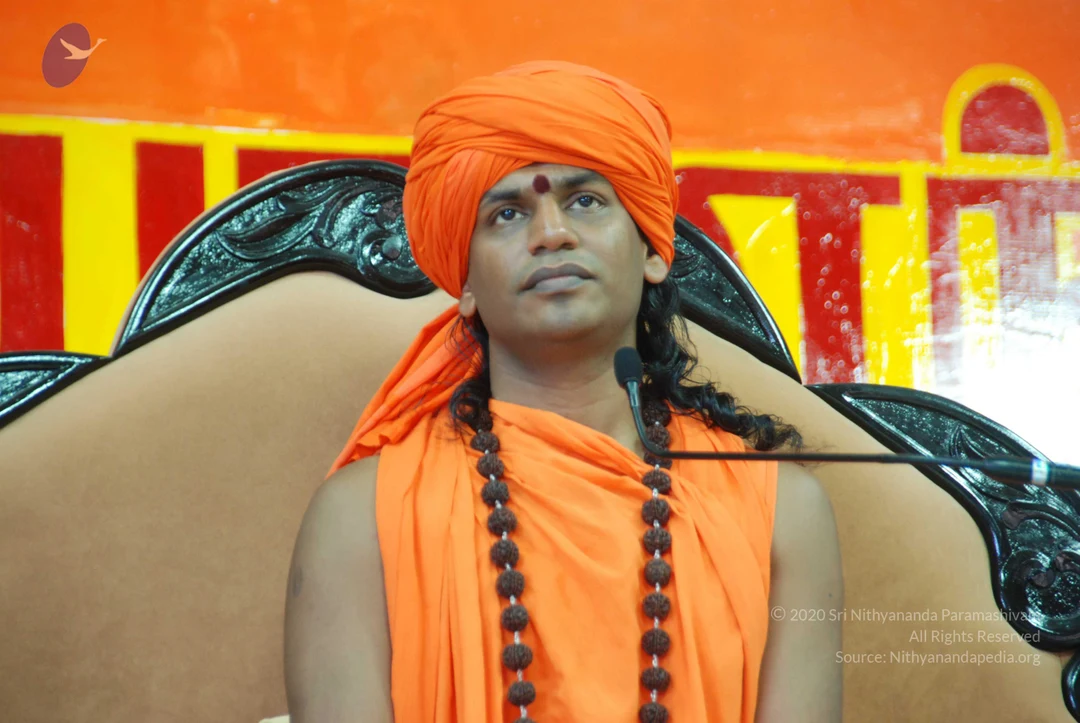
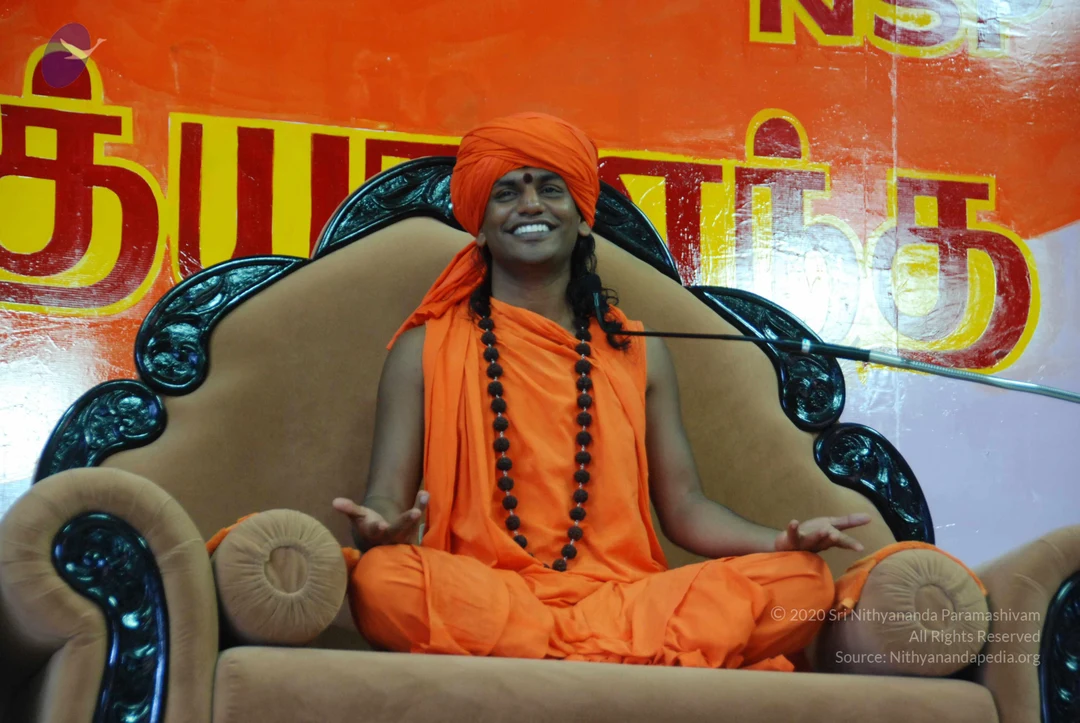
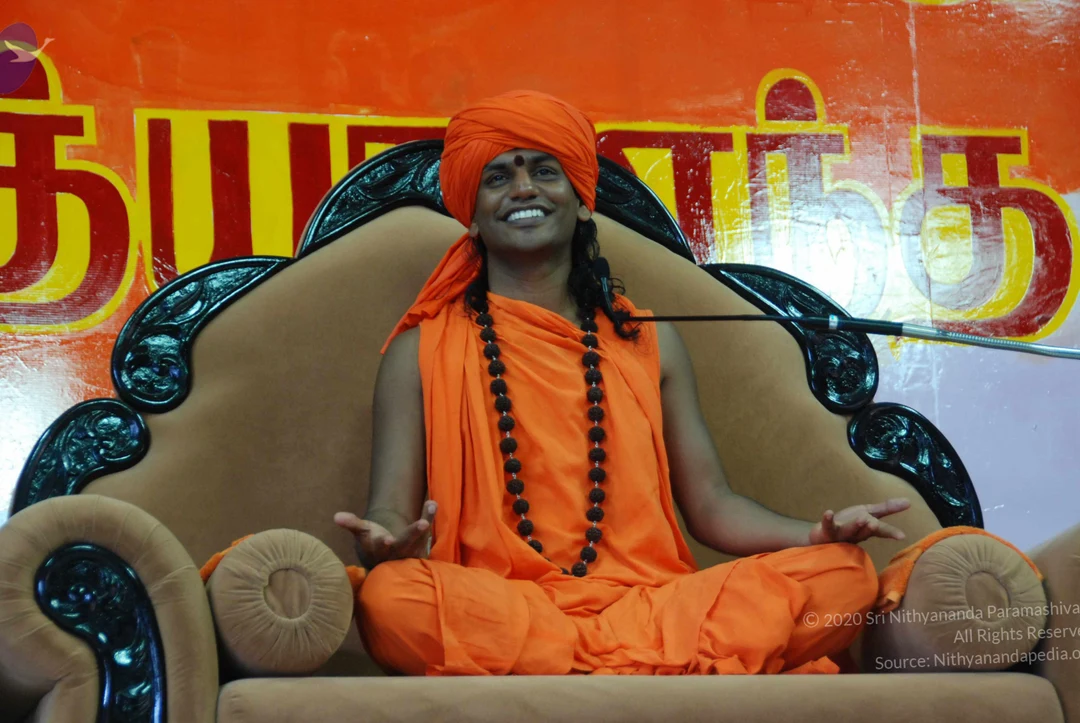
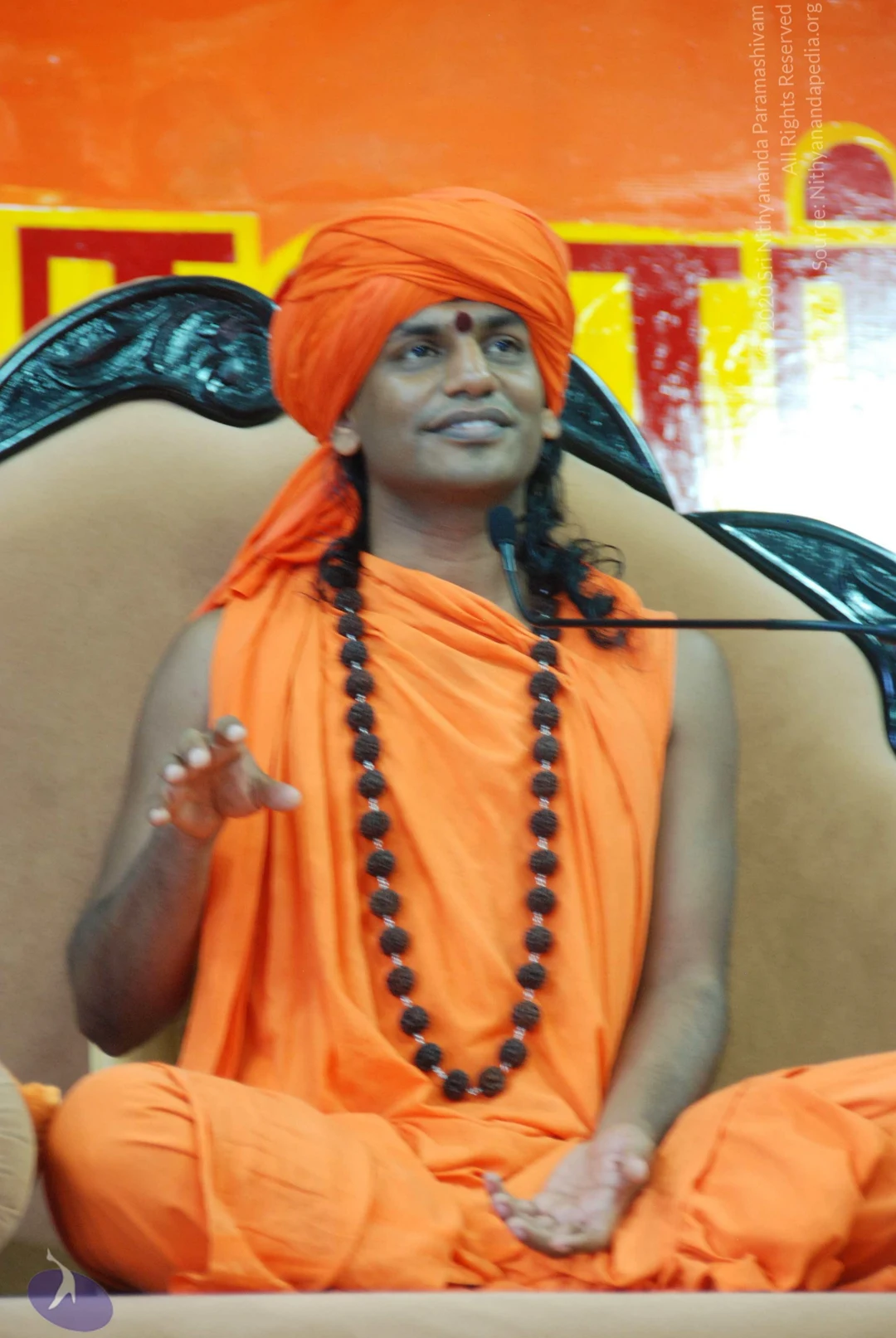
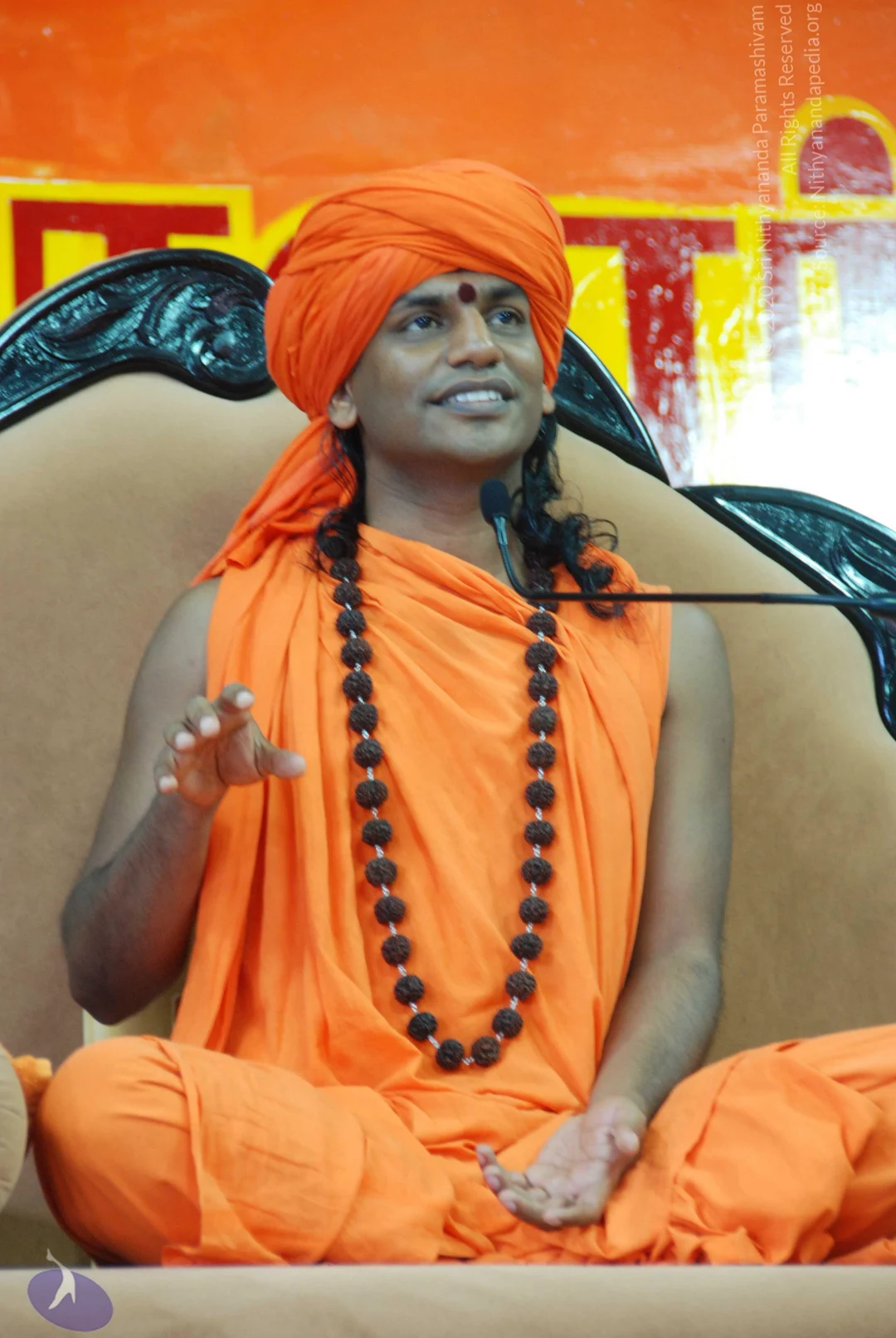
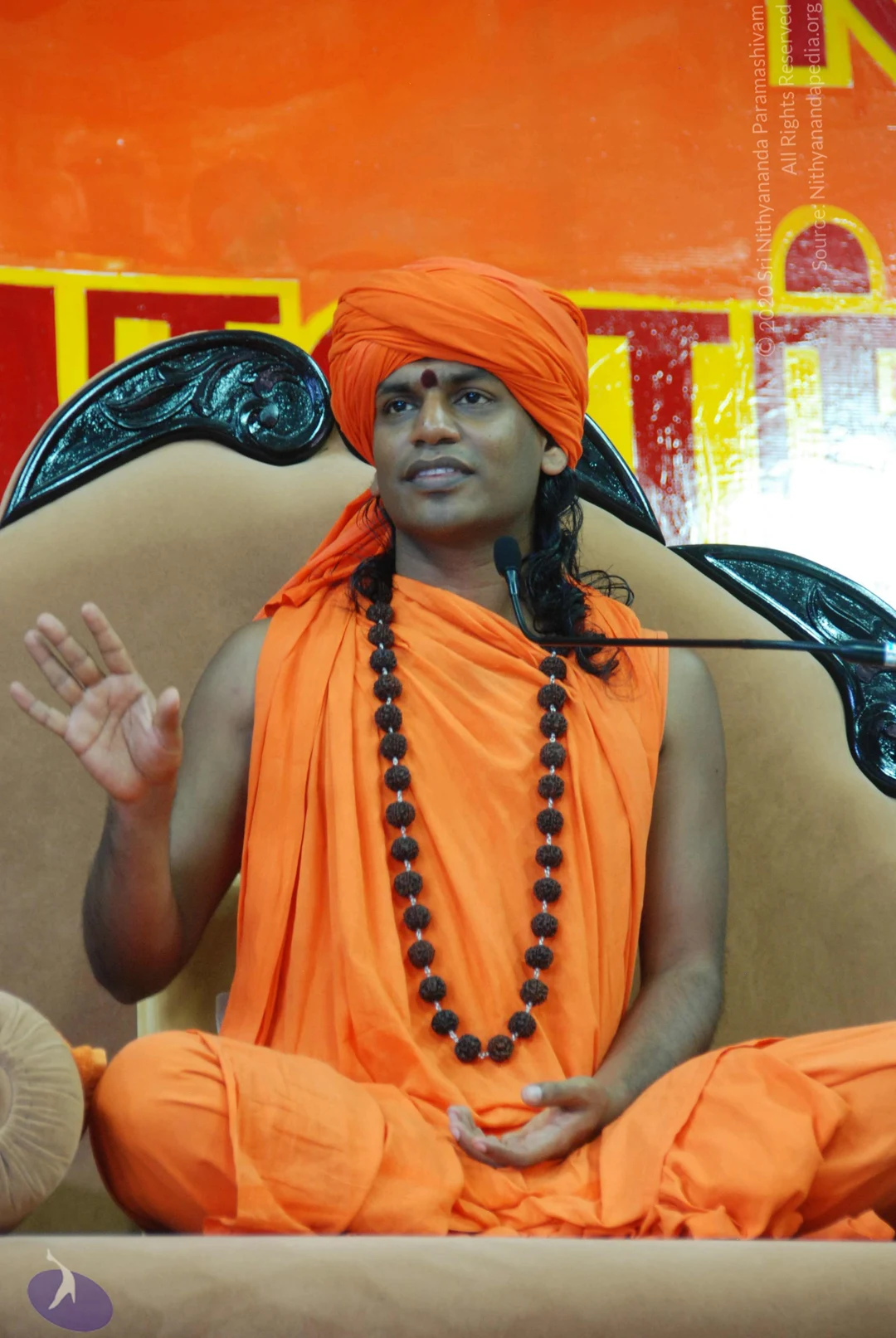
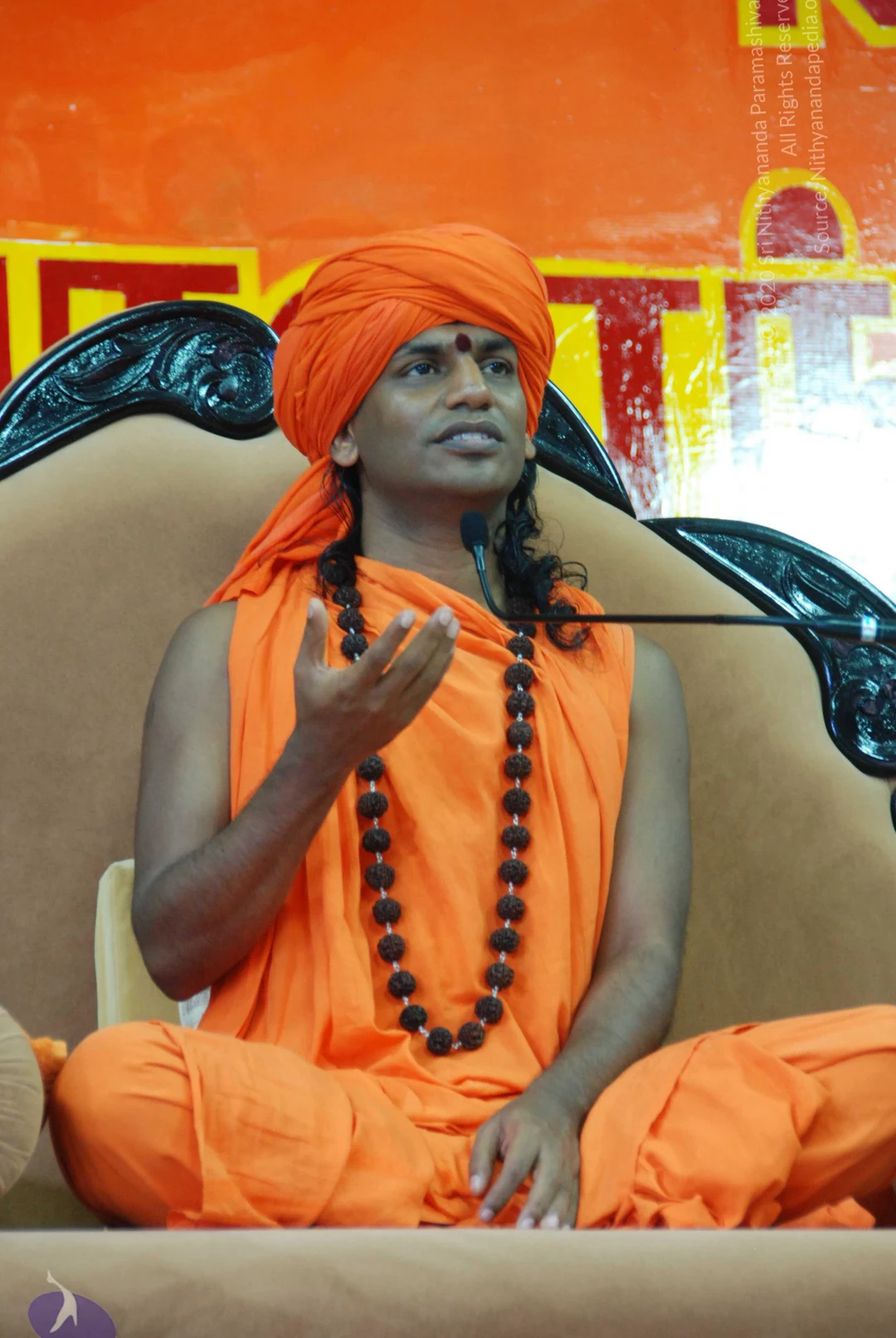
The Supreme Pontiff of Hinduism, Jagatguru Mahasannidhanam, His Divine Holiness, Bhagavan Nithyananda Paramashivam, expounded on the Cosmic Principles of Science of Alchemy during a live public talk - Nithyananda Satsang. In this talk entitled Healing Science of Ananda Linga, The Supreme Pontiff of Hinduism shared about the Siddha Tradition that used a very subtle, powerful method called alchemy which refers to a sacred process of using right meditations and energized herbs into the body to awaken the non-mechanical part of the human brain. He explained about Navapasana and other elements that came together to create the Ananda Lingam that is in the spiritual energy field of Vaidyasarovar at the Bidadi ashram. His Divine Holiness shared that this is the greatest happening in the cosmos in the past two years where the energy heals your body and mind and prepares both for initiation from the Master leading to Enlightenment itself.

Video and Audio

Healing Science of Ananda Linga - Nithyananda's Message of the day 19 Aug 2010

VideoAudio

Transcript

(0:24)

I welcome you all with My love and respects. Today I’ll speak on alchemy, the science of alchemy. In India, all possible methods and technologies have been used to awaken the Kundalini Shakti - the potential energy of human beings. The modern terms - the non-mechanical parts of the brain. Please understand, mechanical parts of the brain are responsible for your breathing, your blood flow, normal body functions, like a liver functioning, simple body functions. But, the mechanical parts of the brain are only very small part in your brain. There is a huge part non-mechanical parts of the brain which is not awakened in normal human beings.

(01:41)

In India, different traditions have tried to awaken those non-mechanical parts of the human brain for various reasons - to have extraordinary powers, to have union with Cosmos, to have the ultimate Enlightenment itself. There are some traditions which used the breathing exercises for Enlightenment. There are some traditions which used bending the body, Yoga asanas for Enlightenment. There are some traditions which used creating right understanding and ideas for Enlightenment. There are some traditions which used very subtle, powerful method called alchemy means with the right meditations, adding energized herbs into the body. It is called Siddha tradition. In South India, especially in Tamil Nadu, this Siddha tradition was very popular. They made disciple to do particular meditation and Pranayama techniques and add particulars herbs into their system.

(03:23)

When the herbs are added with meditation it awakens the non-mechanical parts of the brain. Patanjali very beautifully describes - mind, mantra, aushada, these are the three different methods of achieving extraordinary powers and Enlightenment itself. Aushada means the right herbs energized works different ways in your system. It heals, awakens different extraordinary energies and leads you to Enlightenment itself. You will be surprised there are herbs energized and given by Enlightened being, can lead you to Enlightenment just instantaneously. Because the Master, whenever He initiates He literally gives Enlightenment to you that moment. Unfortunately, your brain and the system is not intelligent enough to hold that energy forever; so it just loses. It’s almost like a water poured on the inverted pot. The pot is kept inverted, how much ever water is poured on it, not a single drop stays in the pot. Many of our vessel are inverted pot that is why symbolically it is the same shape. That is why any energy Master pours does not stay in it.

(05:03)

But if the right herbs were added, exactly for those few moments the non-mechanical parts of the brain may be available to hold that energy. The energy is held by the body and mind immediately Enlightenment stays with your system. If that energy stays in your system for twenty-one seconds that is enough. Then it will open the doors. It cannot again be lost. It cannot again be lost. So those herbs are only called navapashana. Understand, pasana means literally in Sanskrit ‘poison’. That is the word. But when it is processed it is not poison; it is poison for your ego, not poison for your body or mind. It is a very powerful process. It is not actually poison in an ordinary sense. These herbs actually saves very life and heals very body. Our Masters have used all possible methods and techniques to heal human body, mind and Consciousness.

(06:37)

This navapashana and these unique herbs are specially created in the planet earth, this science is specially made available to planet earth by a great Siddhas from southern part of India to make the bio-memory available to the Masters energy. See when you open, when your body opens itself to the Master's energy, first instant healing, spontaneous healing, quantum healing. That’s the first effect. The second: evolved high mental state, beautiful blissful mental state. Third: body and mind which is ready for Enlightenment. So naturally Master can heal, just like that he can share it. It’s a very rare science.

(07:39)

For that navapashana to happen, three things has to happen. One: the right sthapati - person who is in the field of construction of traditional architecture, traditional deities, traditional temples. Second: the person who is mastered the science of herbs, who knows where it is available, where it is...where you can get it and collect and do the process. Third: an Enlightened being who can put energy into it. It’s a very rare happened, happened two thousand years before once in a place called Palani in Tamil Nadu. A great Siddha, Bhogar, He was Master of all this three. He was an architect, means traditional sthapati who can build deities and who knows the science of herbs because He had lot of associates, disciples who are in tribe...different tribes, tribal people. So He was able to collect all those medicines and herbs. And third, He himself is an Enlightened Siddha, mahapurusha.

(9:05)

Unfortunately for last two thousand years all three combination happened was almost impossible, never happened. By the divine grace after two thousand years, maybe two years before again all the thing fell in place properly. Maybe the world wants once more the science of Siddha tradition to made available to the world. Cosmos wants the science of this Siddha tradition made available to the humanity for the sake of physical, mental and spiritual healing. And we had the fortune of being a space where that can happen. We had right sthapati, and person who knows the science of creating deities and temples. Our sthapati who built this temple, is the sthapati who built the largest temple tower in India, means in the whole world - the Srirangam temple tower, largest traditional temple tower is Srirangam temple tower. He’s the sthapati who built that; not only he knows building the deities, the science of creating deities and temples, he knows the science of this herbs.

(10:49)

I asked, had right contacts, right people to collect, procure herbs. And he also had some more contacts to collect the right herbs. And fortunately the architectural excellence, intelligence of sthapati and this and some other people’s knowledge about the herbs and My Presence, energy - all three fell in place beautifully, what has happened is Ananda Lingam in our ashram in Vaidya Sarovar. That’s another greatest happening of this century. Please understand in the spiritual Consciousness, this is one of the greatest happening. All you need to do is just sit in the banks, in the steps of the Vaidya Sarovar for twenty-one minutes and unclutch. Apply ash, bhasma on your body, take bath in the Vaidya Sarovar, the water which comes out of Shiva Linga. And after the bath again sit there for at least five minutes on the banks and feel the chillness and inhale and exhale using the whole body.

(12:27)

Please understand, I am giving you the exact technique of how to use Vaidya Sarovar. It’s a spiritual energy field. How to use it completely for the optimum benefit? First, sit at the banks, unclutch for twenty-one minutes. Apply the ash all over the body and take bath from the water which comes out of Shiva Linga. Of course, the whole water is water out of Shiva Linga, it gets filtered13:02. You will be surprised the from the same sprinkler, before it touches the Shiva linga, Ananda Linga, if you take that water and keep it in a bottle it will be spoiled by fifteen days. If you take water just after ten seconds it travels from the Ananda Linga and comes out, that water does not get spoiled for six months. We experimented. Same way, milk, if you take it and keep it will be spoiled within a day. Same way pour it on the Linga and when it comes out, take it, just ten...then it will travel on the Shiva Linga for ten to twenty seconds, that's all. Take that milk and keep it for fifteen days it will not be spoiled. We tested it. The power of that herbs and energy.

(14:01)

So taking bath in the water, sit again on the banks for five minutes, inhale and exhale using the whole body. Your body will be healed, your mind will be in peace, you will be ready for initiation from the Master to hold the energy in your body, mind and bio-memory. Please understand this Ananda Lingam is one of the powerful, most powerful happening in the Cosmos in the last two years and it's one of the precious gift given to humanity by the Cosmos using this body. I can say thousands of healing miracles happened to the people who took bath in the Vaidya Sarovar and thousands of spiritual experiences for the people who took bath and meditated on the banks of Vaidya Sarovar. And thousands of benefits people experienced by installing Shiva Linga on the banks of Vaidya Sarovar. And the benefits people experienced by doing abhishekam directly to the Ananda Linga. More than Me explaining to you in words, I sincerely request all of you to come and experience Ananda Linga. I invite you all to come and live and experience Ananda Lingam, the power of Ananda Linga. How the medicinal part heals your body, how the energy heals your mind and both prepares your body and mind for initiation from the Master; to lead you to the Enlightenment itself. And meditating on the banks of the Vaidya Sarovar in the presence of the Ananda Linga, how it helps you, leads you to spiritual experience and ultimately Enlightenment itself.

(16:44)

So, let you all use Ananda Linga and experience Enlightenment. Let you all achieve and radiate the eternal bliss, Nithyananda. Thank You. (17:00)

Title

Inner Awakening Reminiscence - Part 2

Narration

Reminiscence of Inner Awakening - a 21 days meditation retreat with Paramahamsa Nithyananda

Video and Audio

Inner Awakening Reminiscence - Part 2

VideoAudio

Title

19 Aug 2010: Nithyananda World Family News

Narration

News from Bidadi, Aug 19, 2010

Video

19 Aug 2010: Nithyananda World Family News

Photos Of The Day:

Pancha-Tapas
NSP
01-Patha-Pooja
02-Message-Of-The-Day

03-Sarvadarsan

04-VIPs

05-Pancha-Tapas

06-Temple

07-Tamil NSP

Photos from this day

View all 376 photos

Pancha-Tapas

3 photosSource gallery
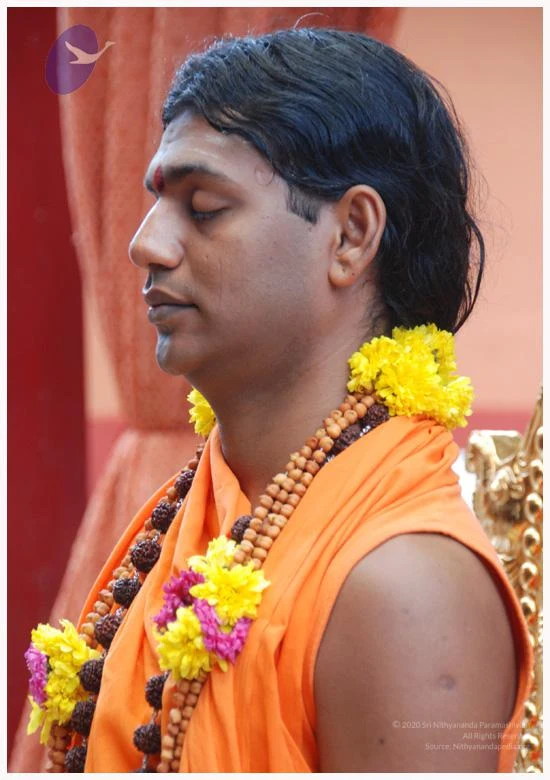
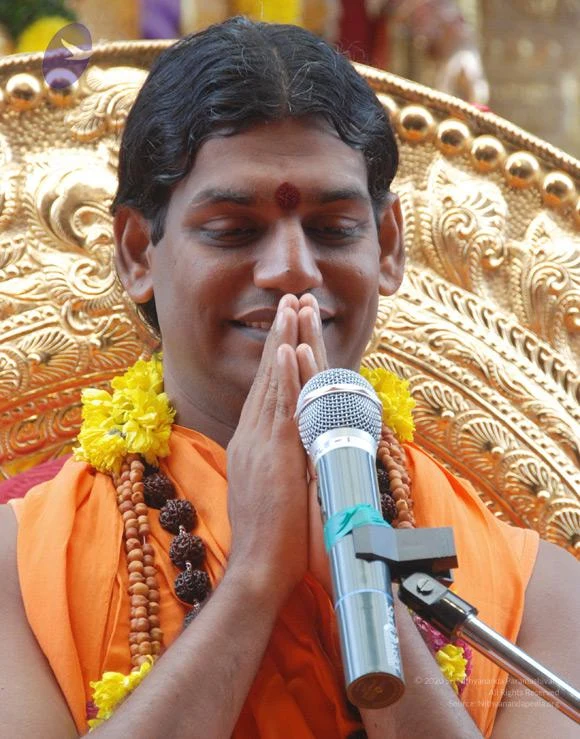
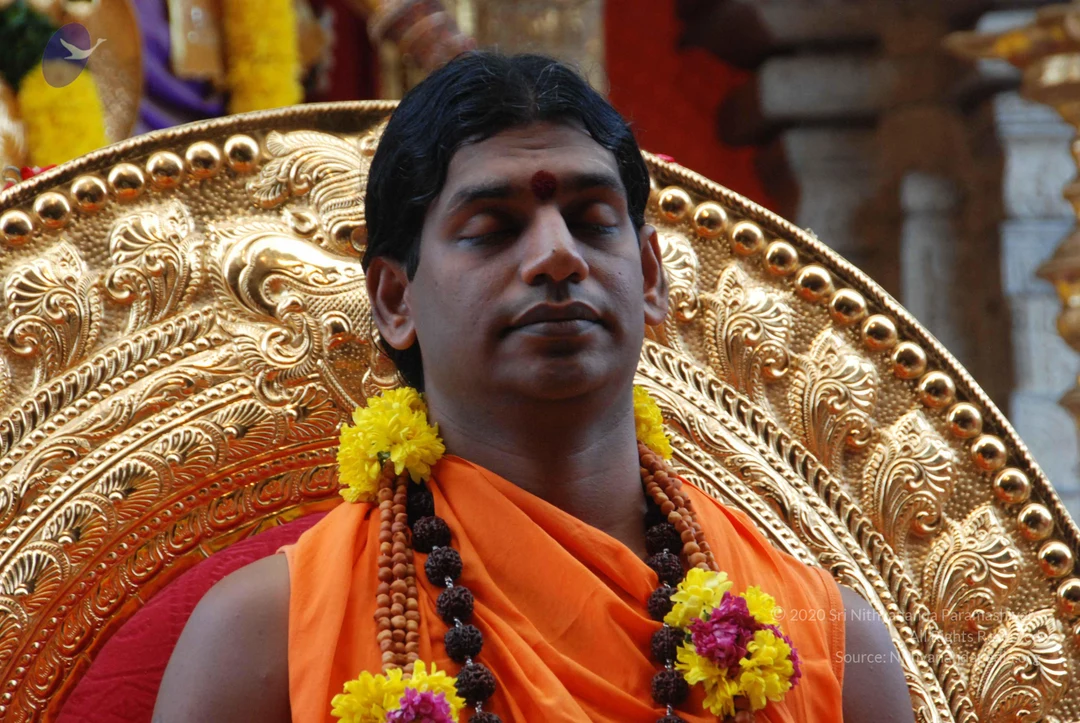
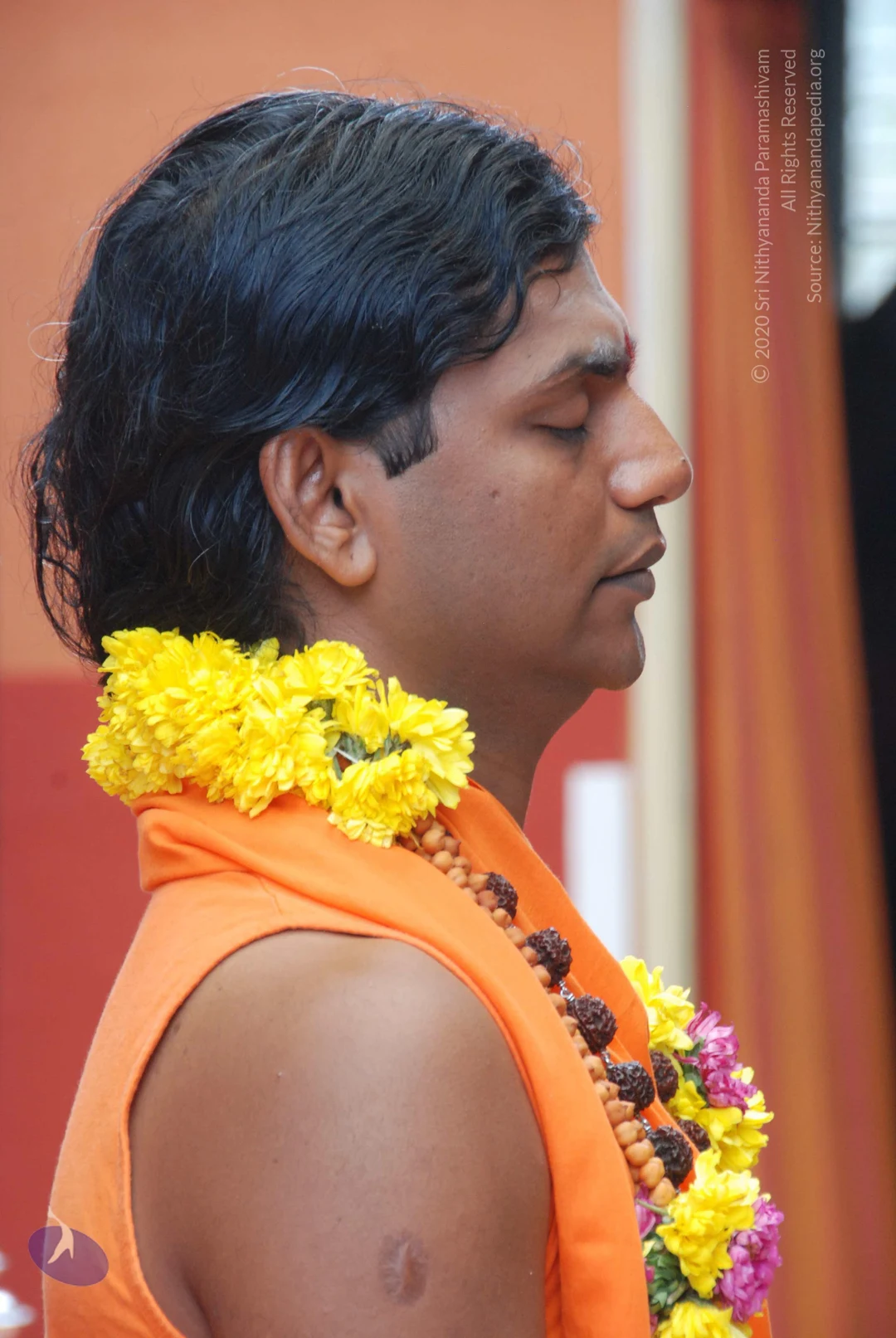
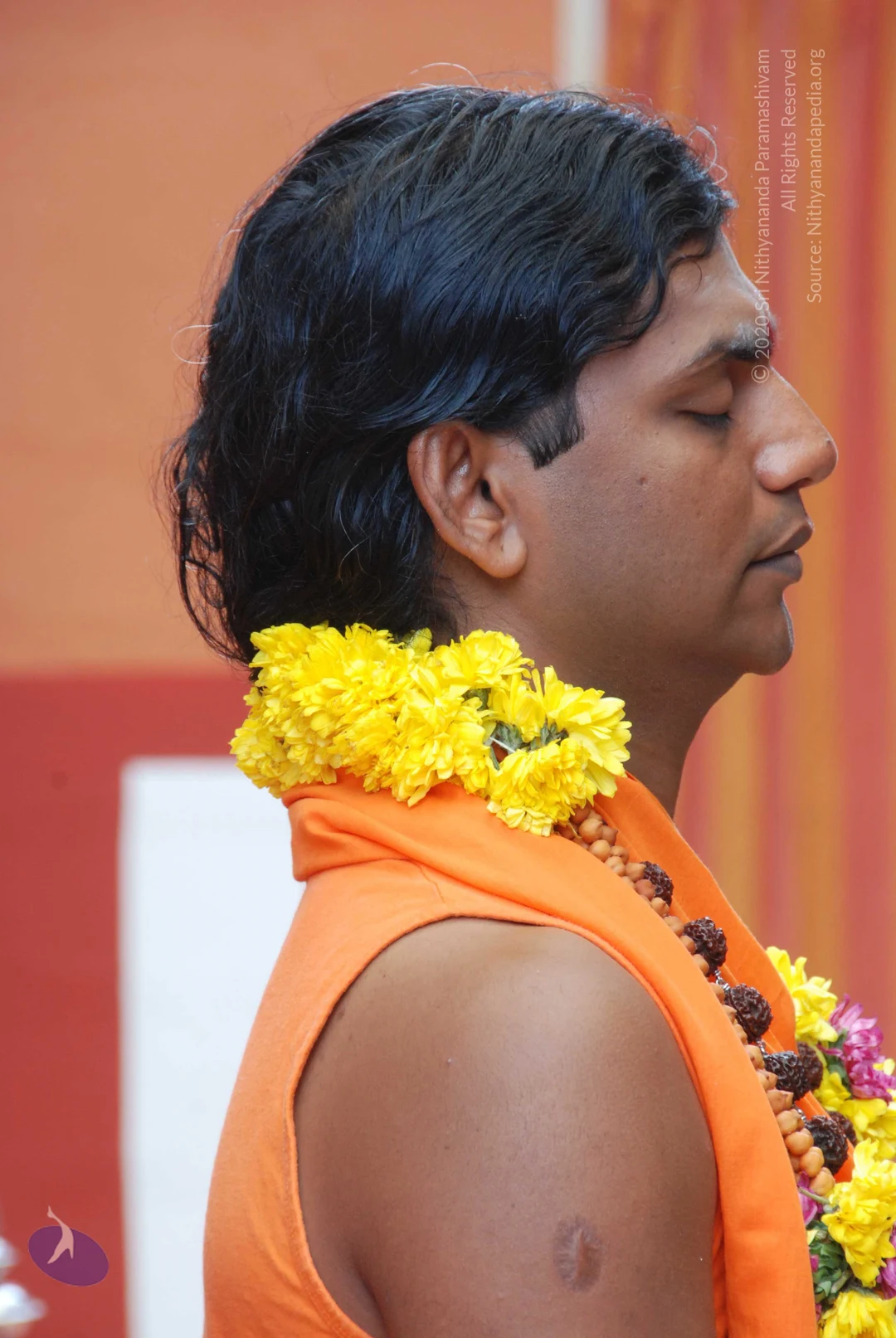
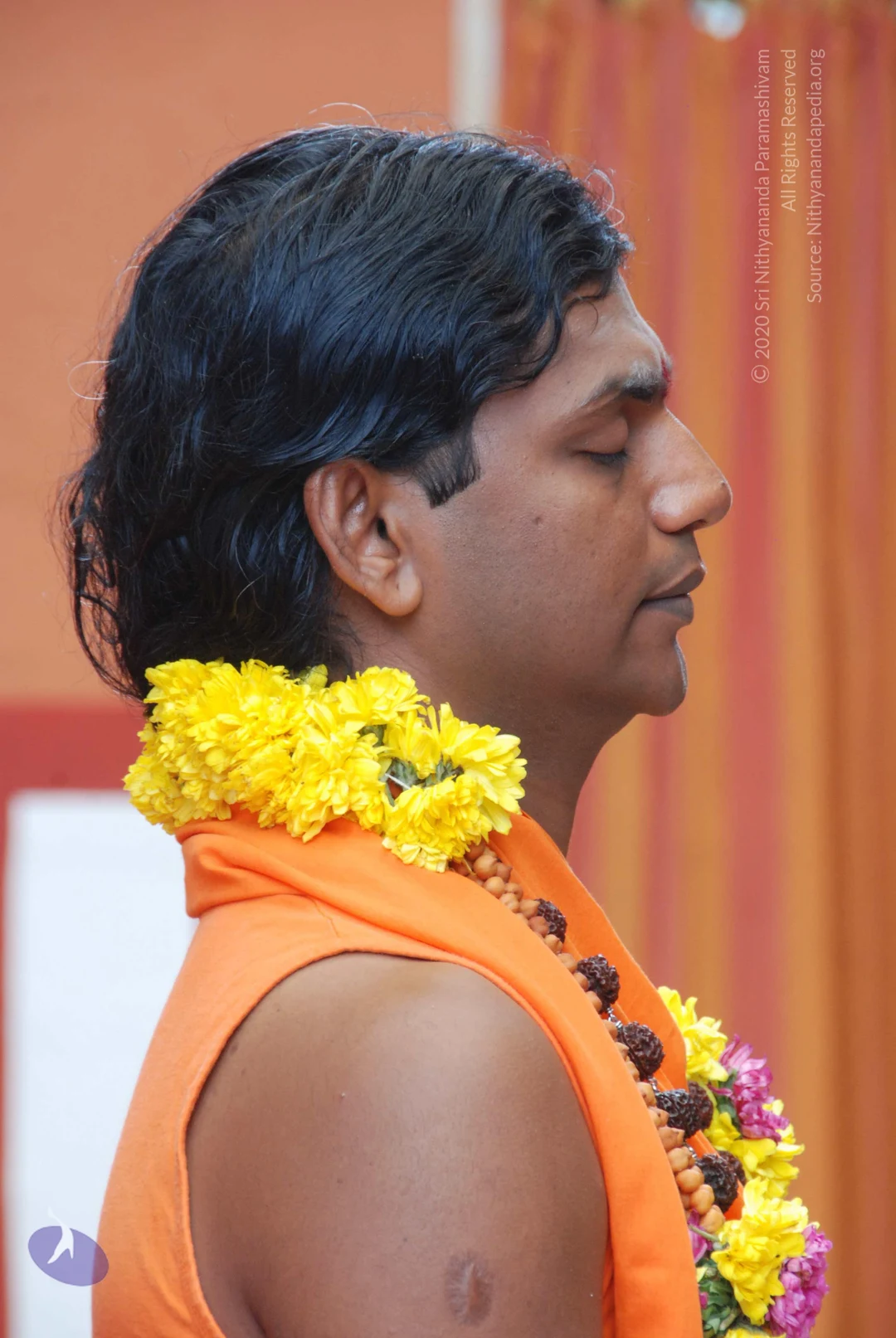
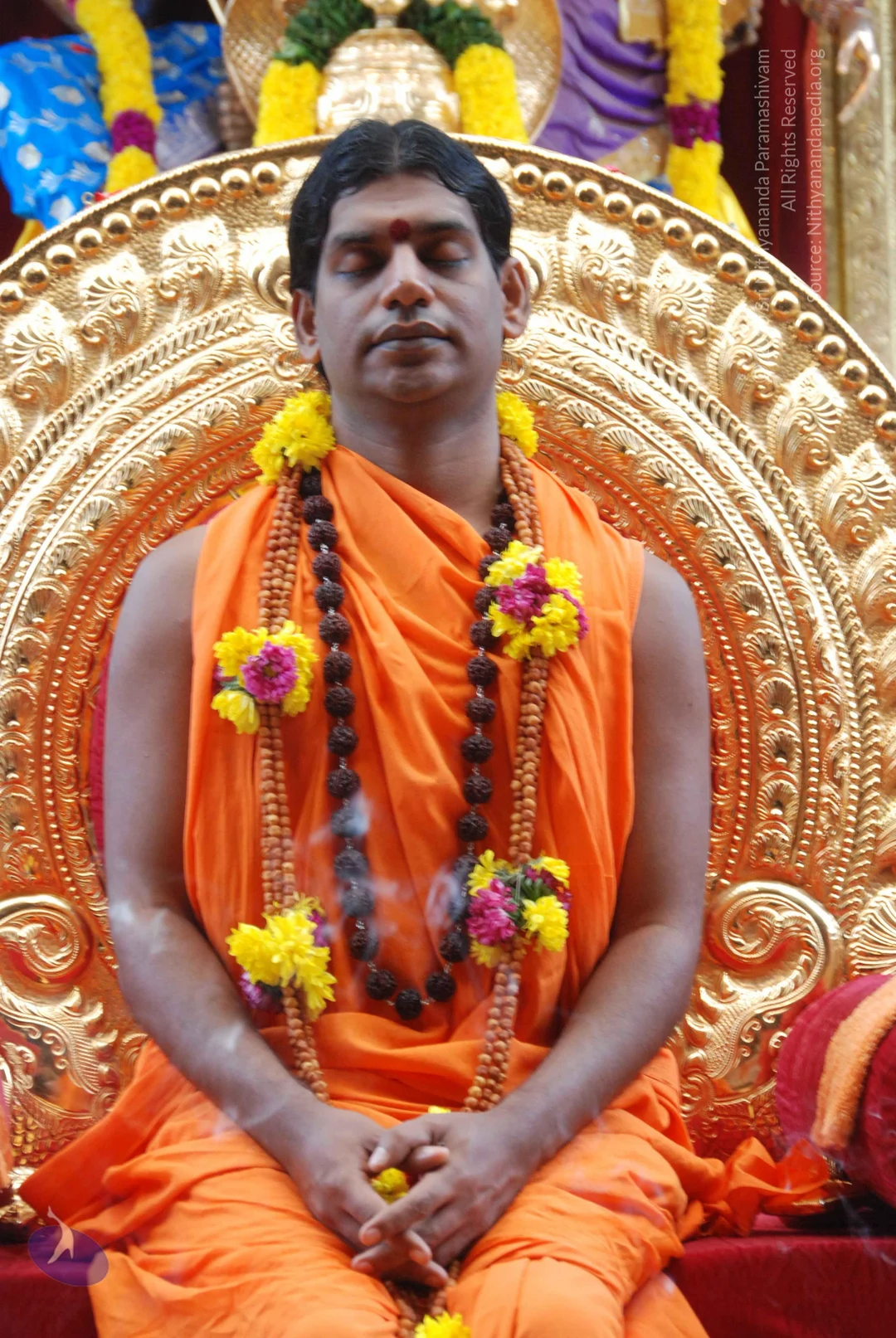
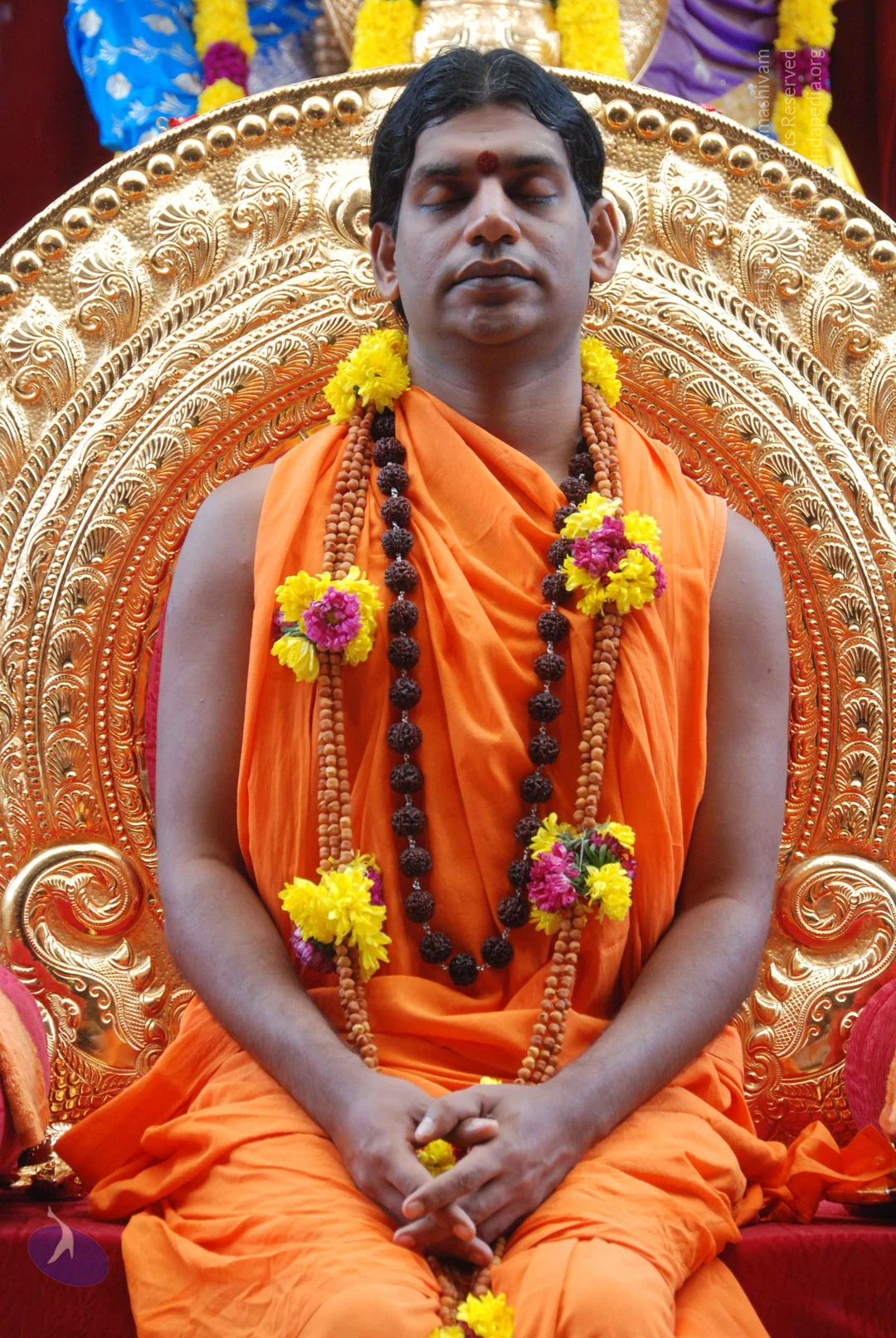
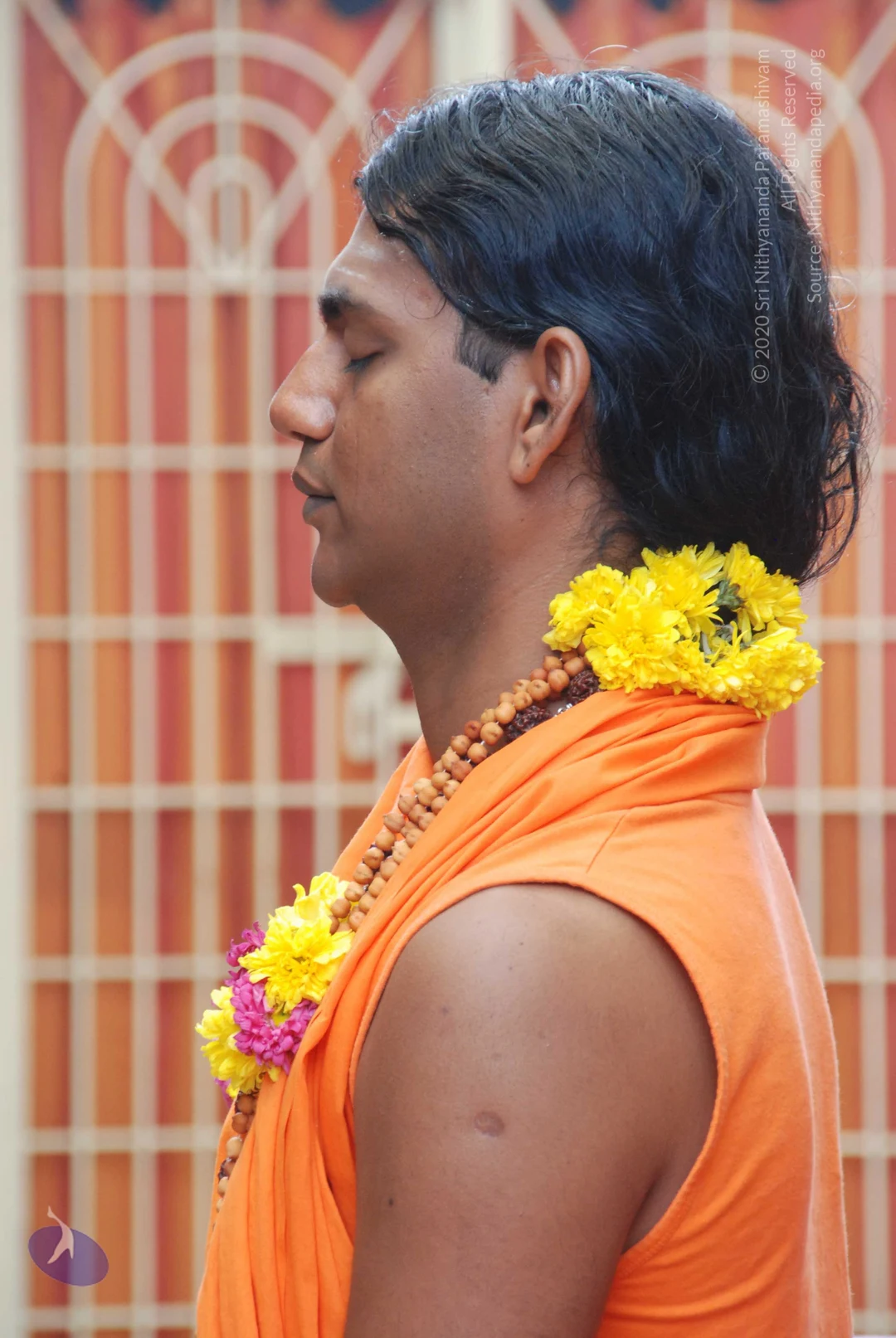
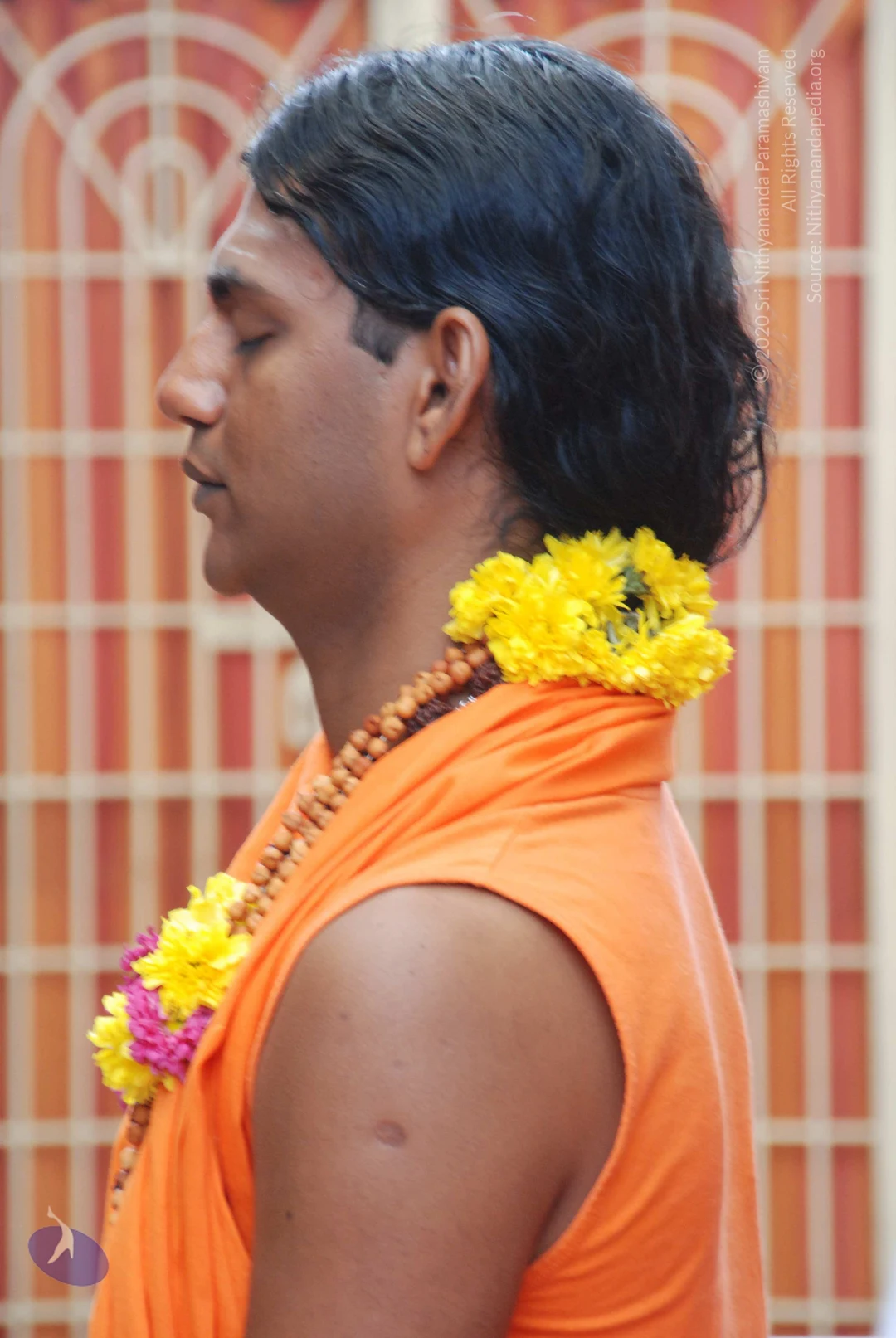
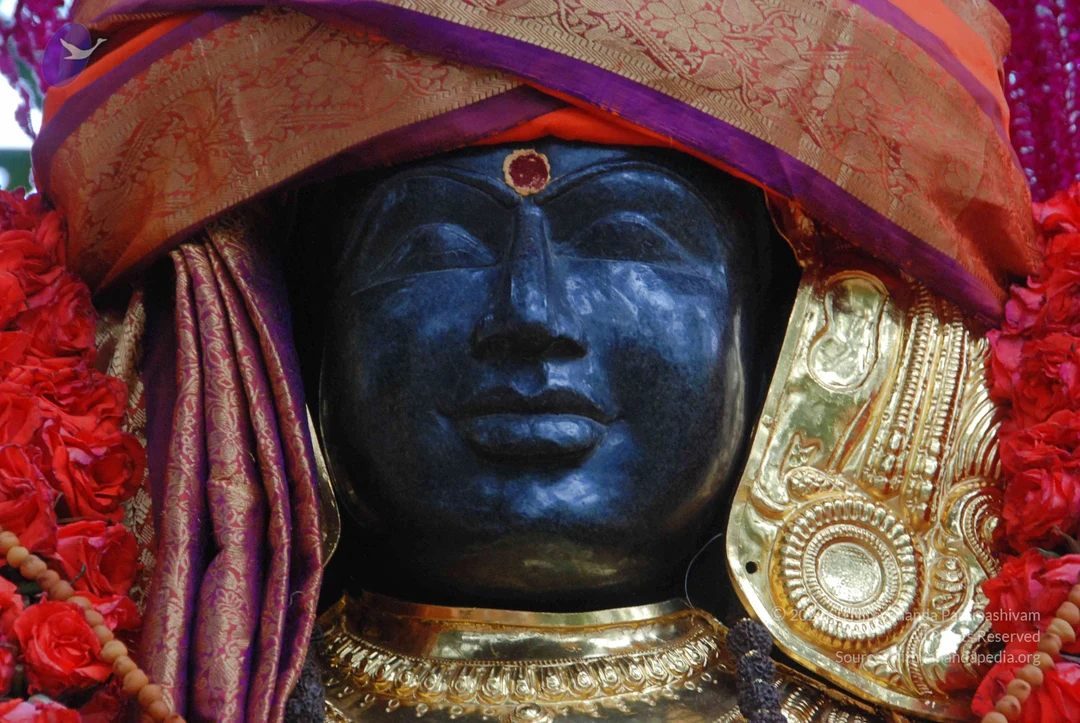
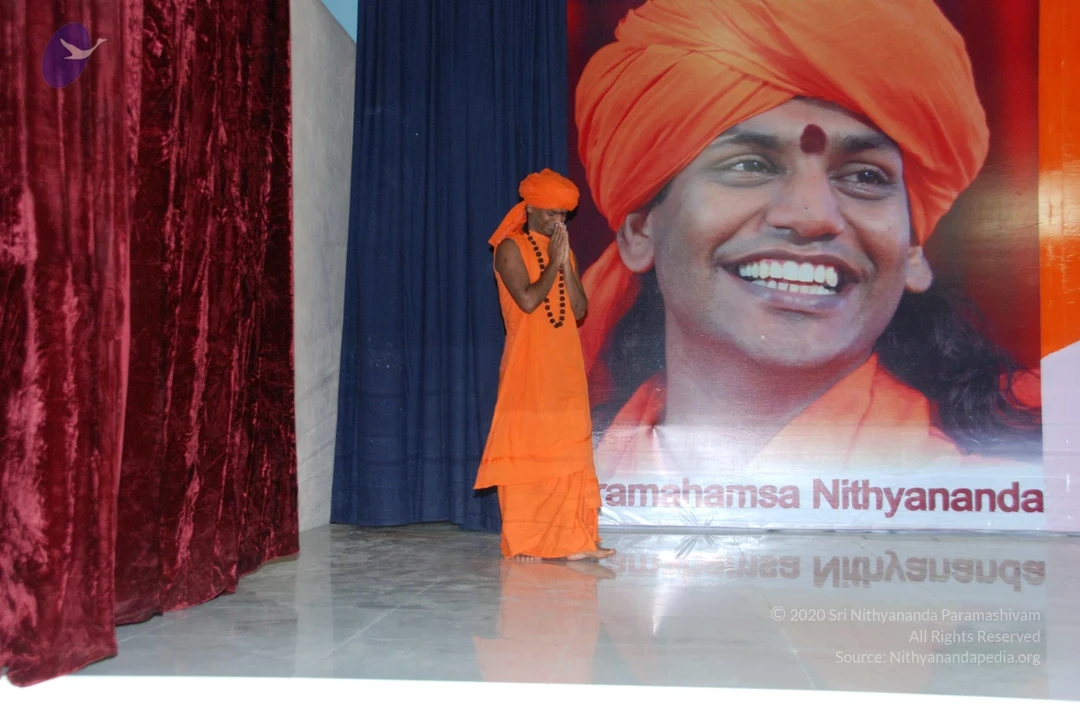
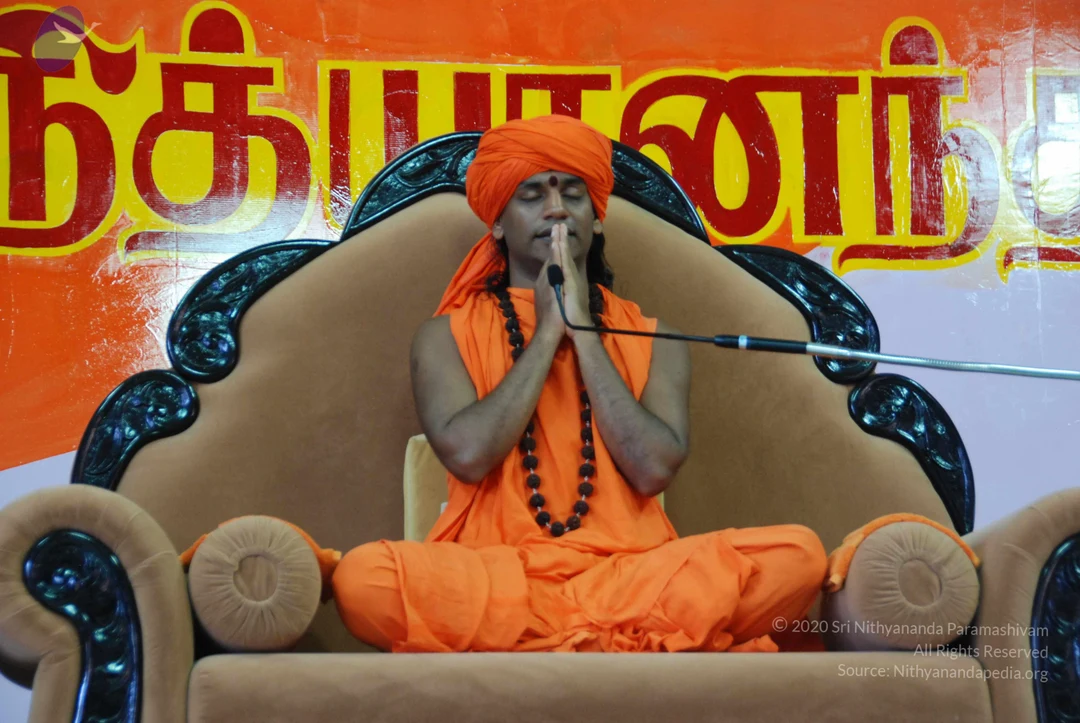
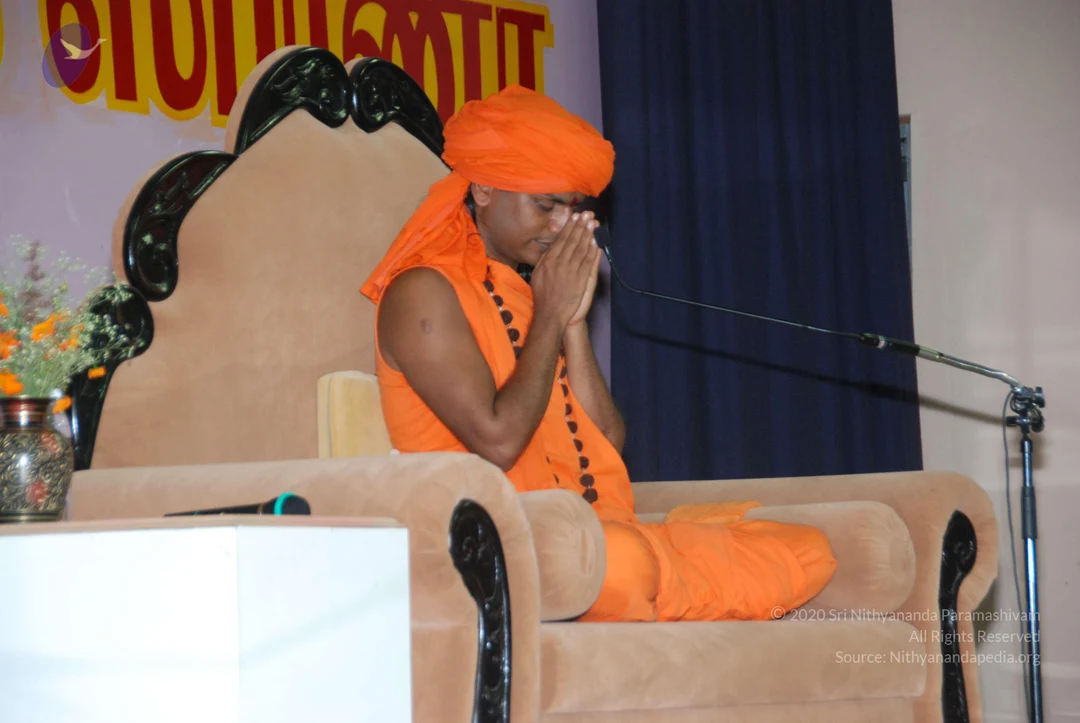
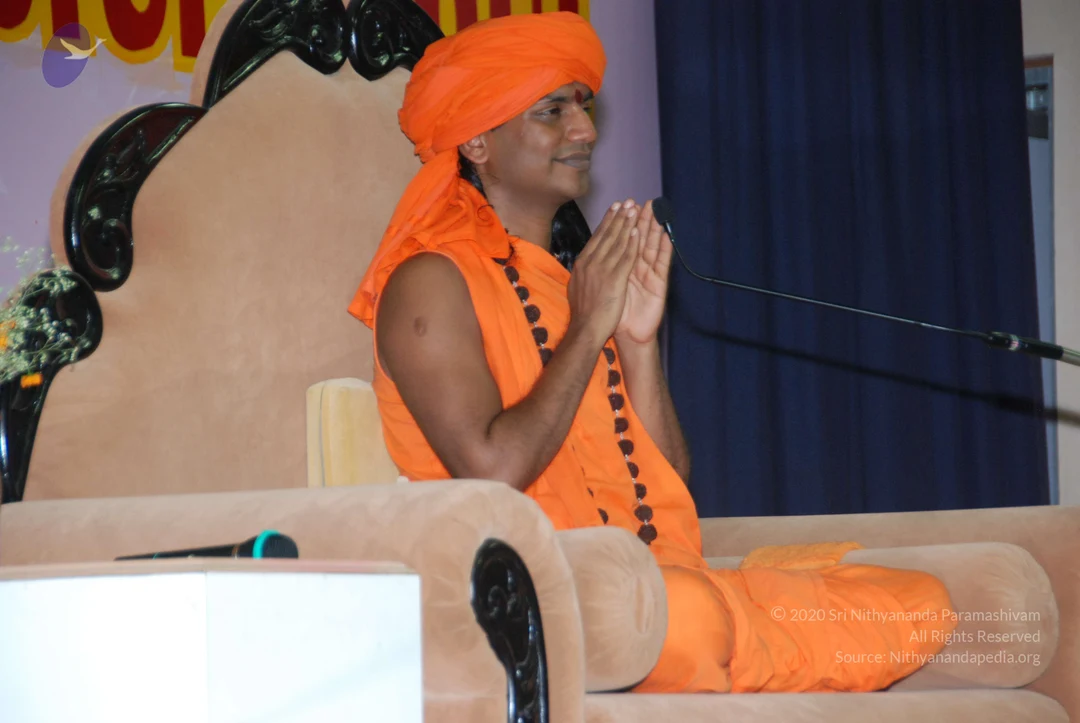
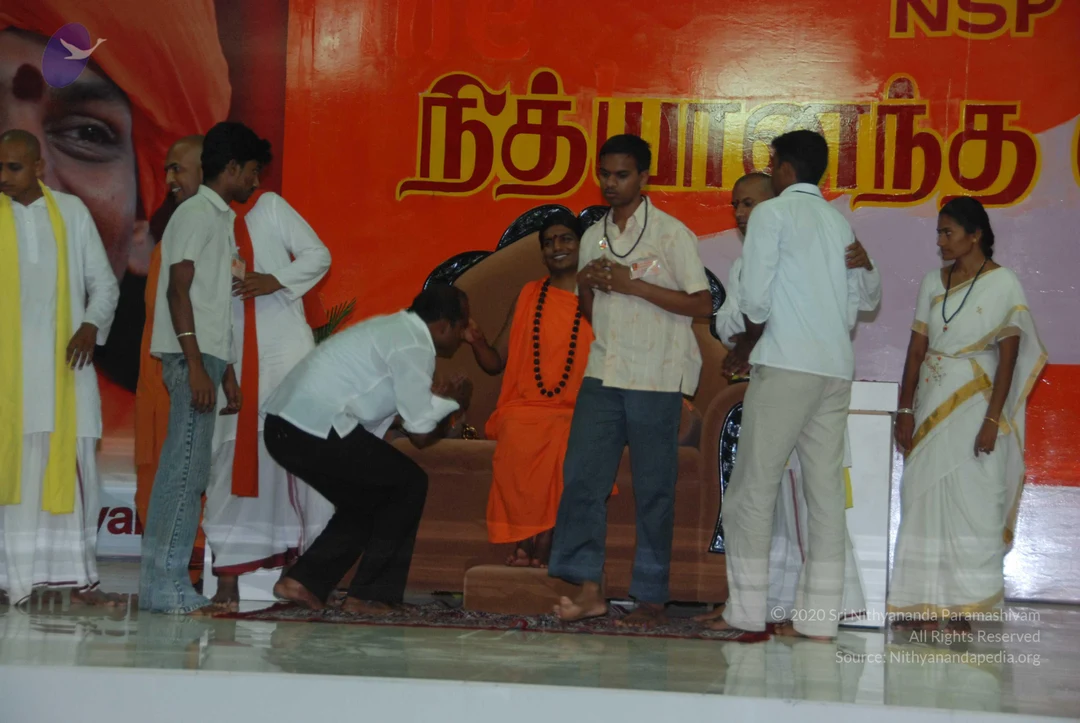
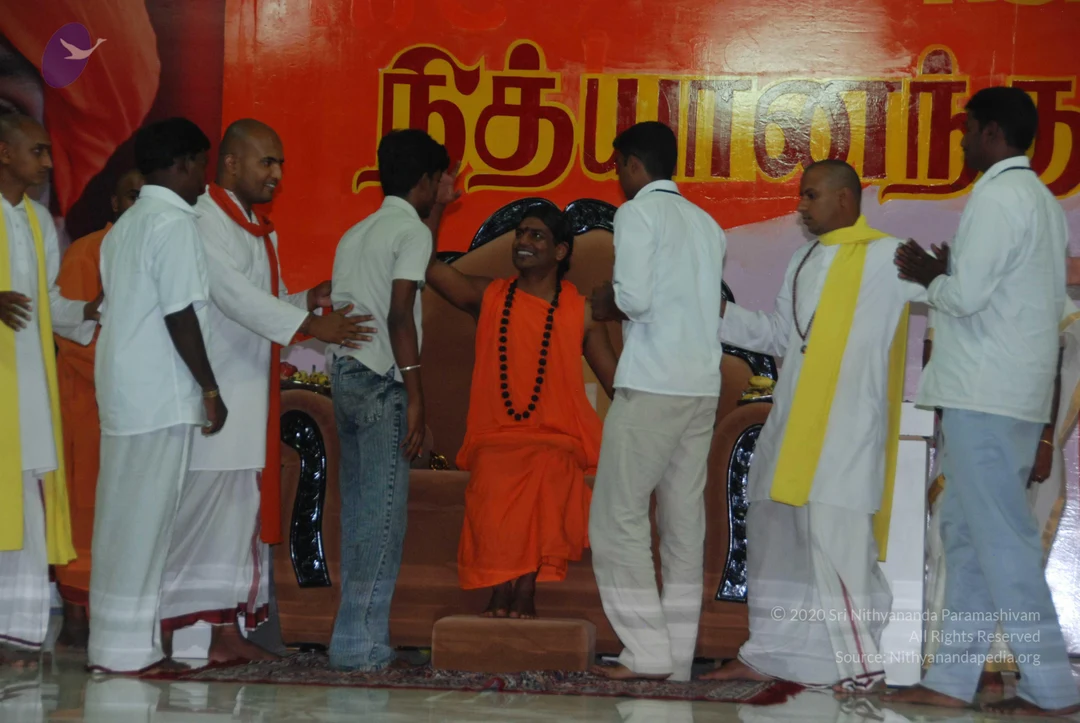
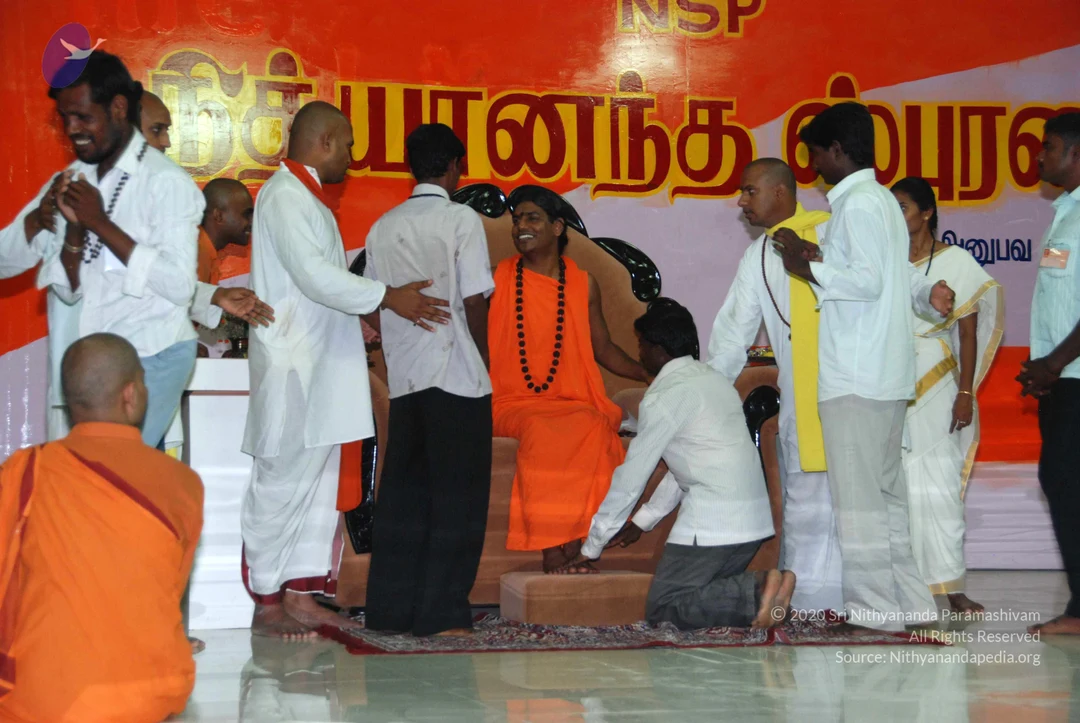
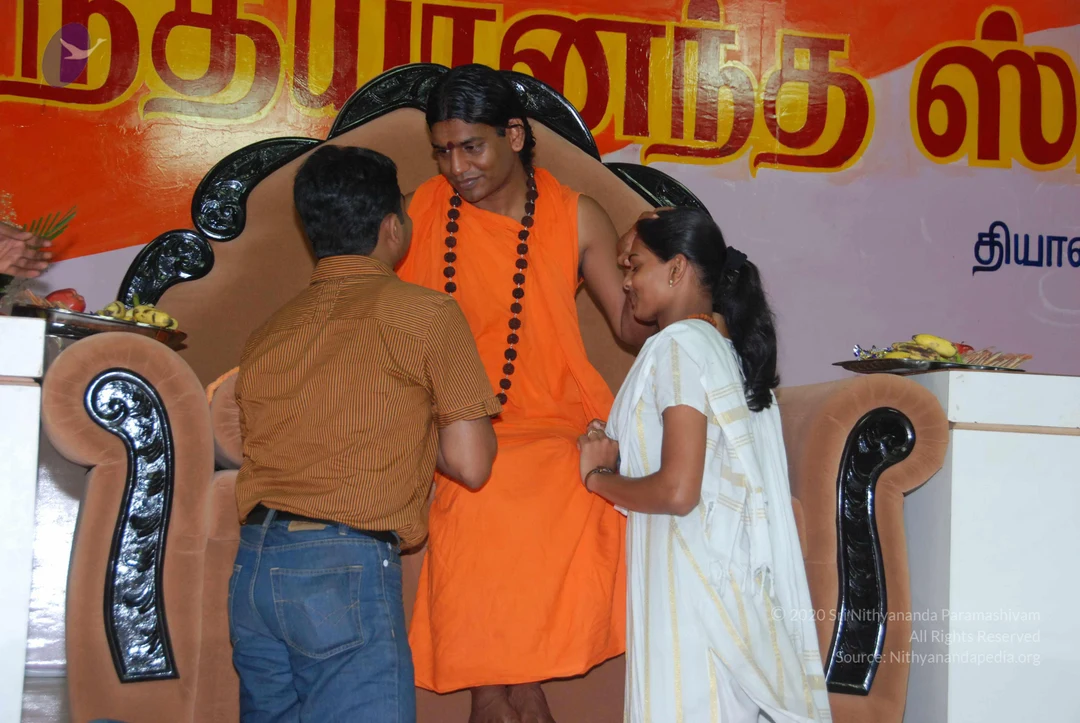
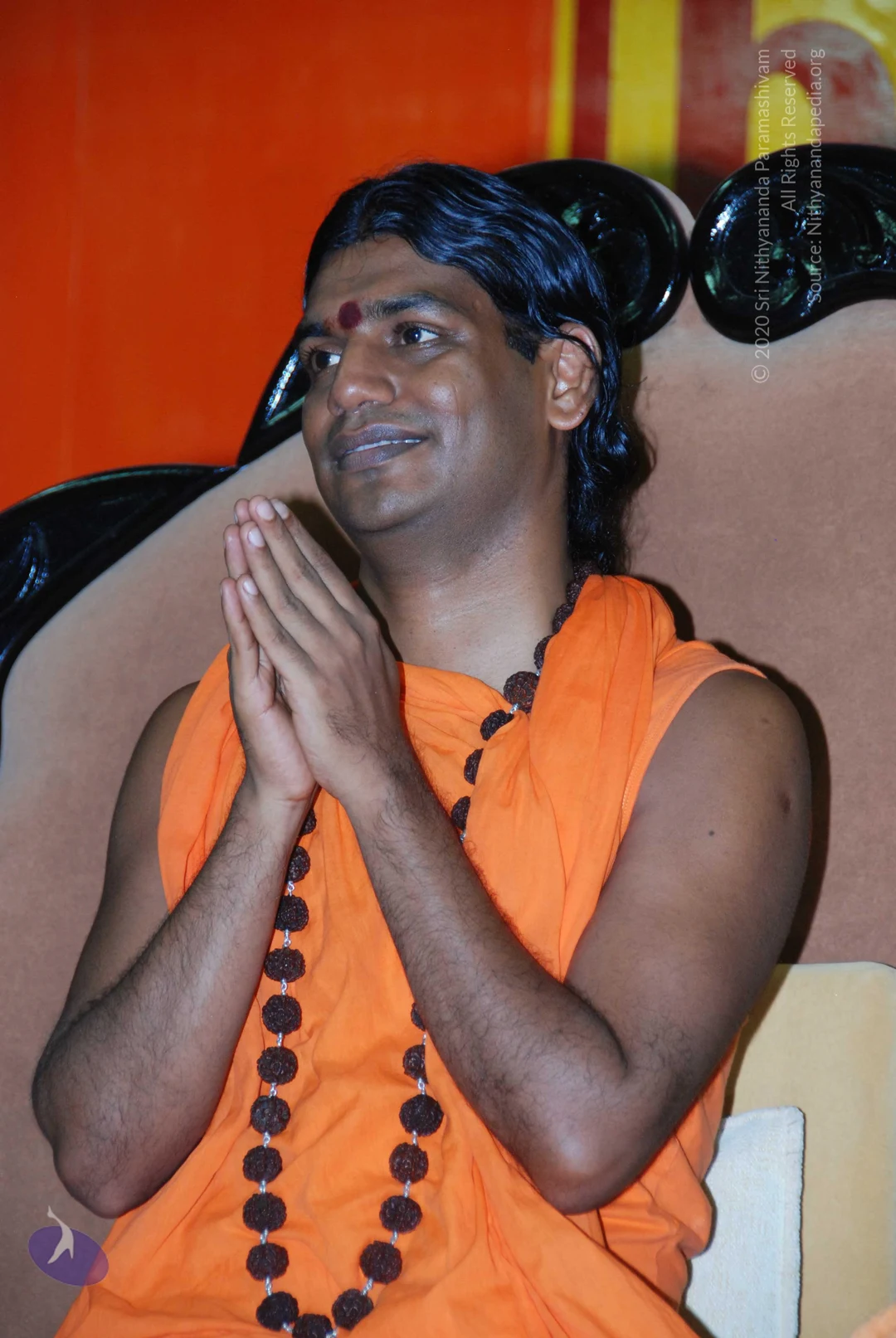
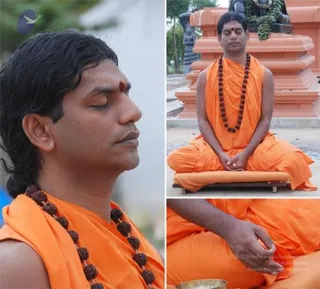
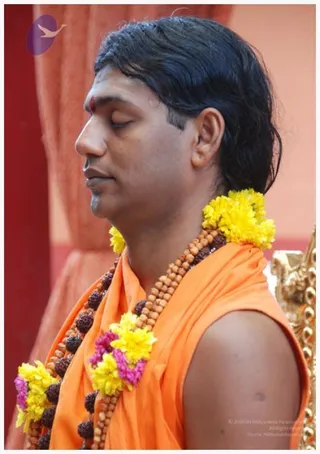
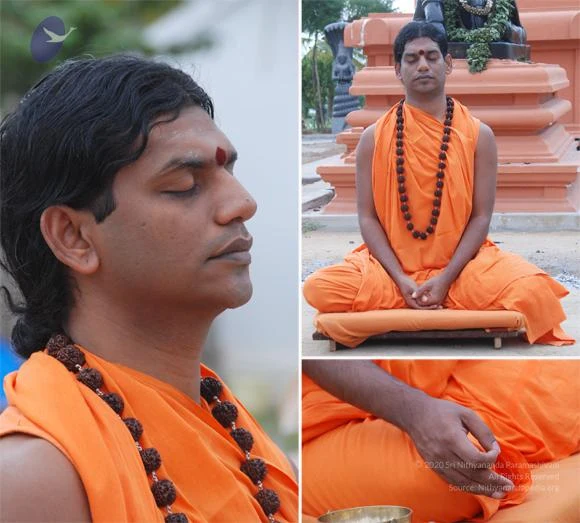
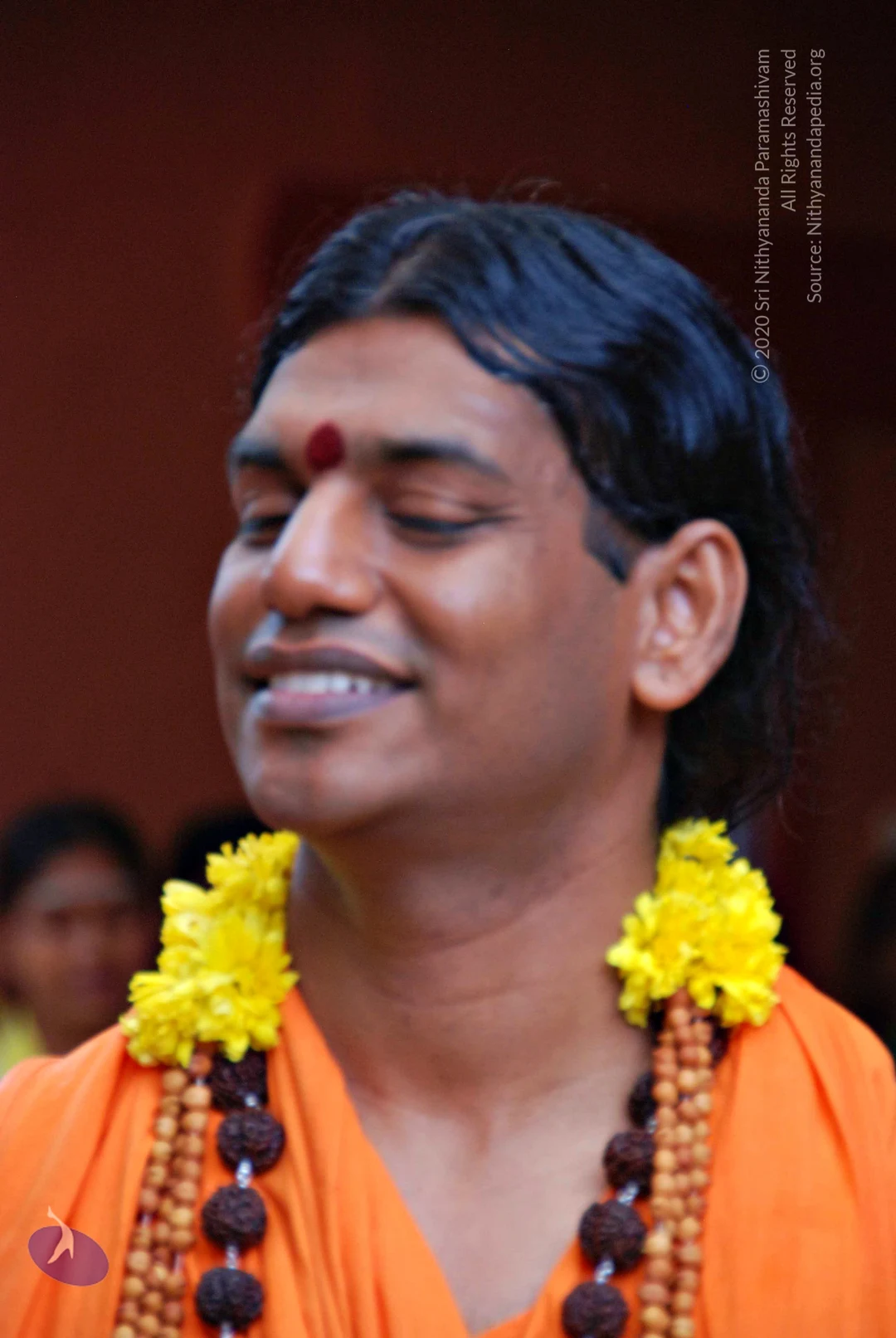
A three-panel collage. The left panel shows a crowd of people in white clothing seated on a floor in a hall. The centre panel shows a man with a shaved head and ochre-saffron robes seated in front of a floral backdrop. The right panel shows a seated figure in saffron robes with a rudraksha mala and a crown-like ornament on the head, with a red-and-orange decorated backdrop. Many small figures appear in the left panel; the collage itself contains no physical people.Three-panel collage graphic of a man in orange saffron robes and a rudraksha mala meditating, eyes closed. The left panel is a close profile of his face with a red bindi, long dark hair swept back and a rudraksha necklace over an orange sleeveless garment. The upper-right panel shows him seated cross-legged on an orange cushion with hands folded in his lap, in front of an orange shrine structure and a dark stone deity murti draped with greenery. The lower-right panel shows his hands resting on his lap beside a brass vessel. The image is a collage of photographs, not a single scene, and the pictured man is shown in meditation.Side profile close-up of a man with eyes closed in meditation, shoulder-length dark hair swept back, a small red tilak mark on his forehead. He wears a sleeveless saffron-orange garment and layered rudraksha mala beads with yellow and pink marigold garlands. Behind him is a red curtain and a gold ornate chair edge. The image is a photograph of one seated person.

NSP

13 photosSource gallery
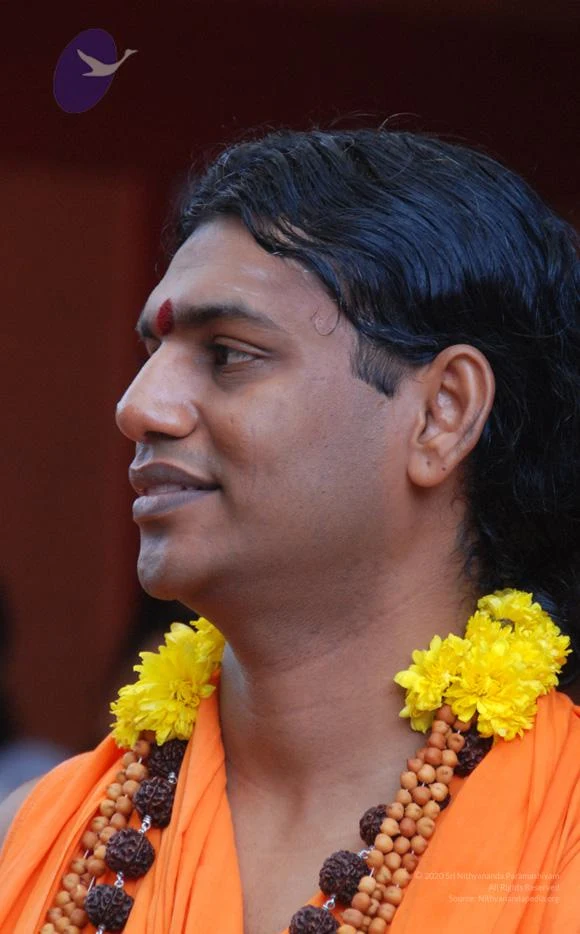
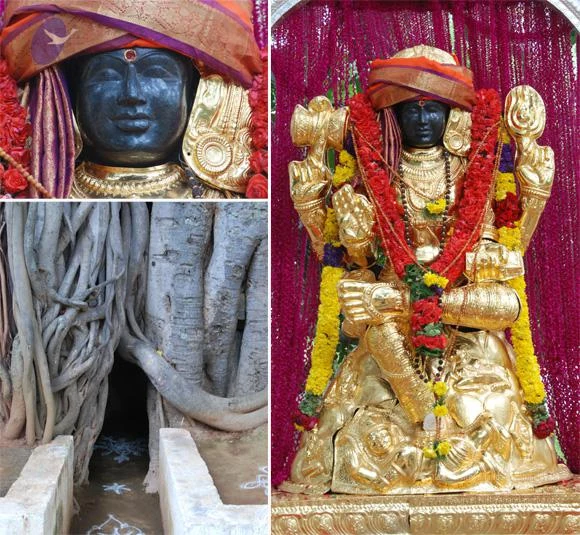
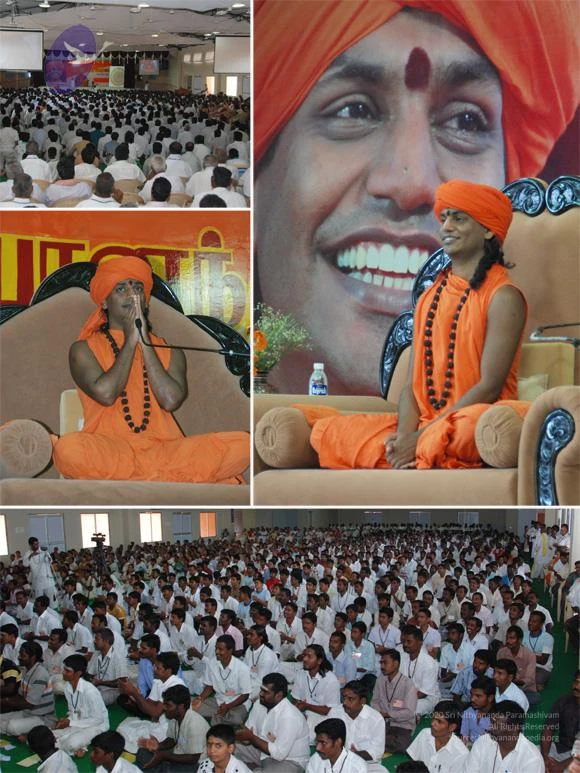
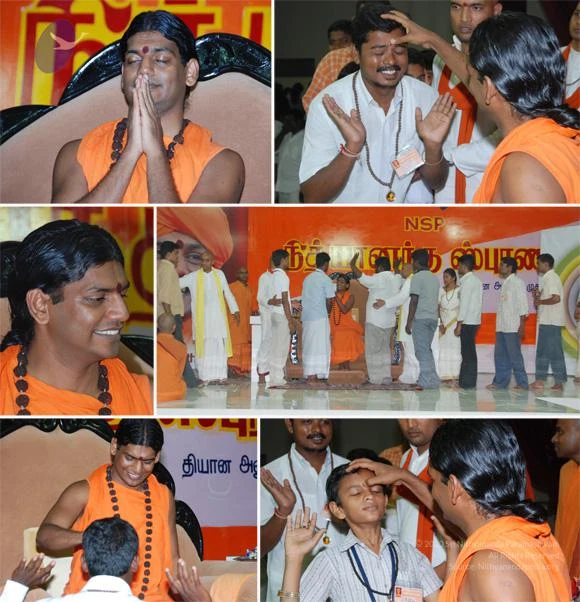
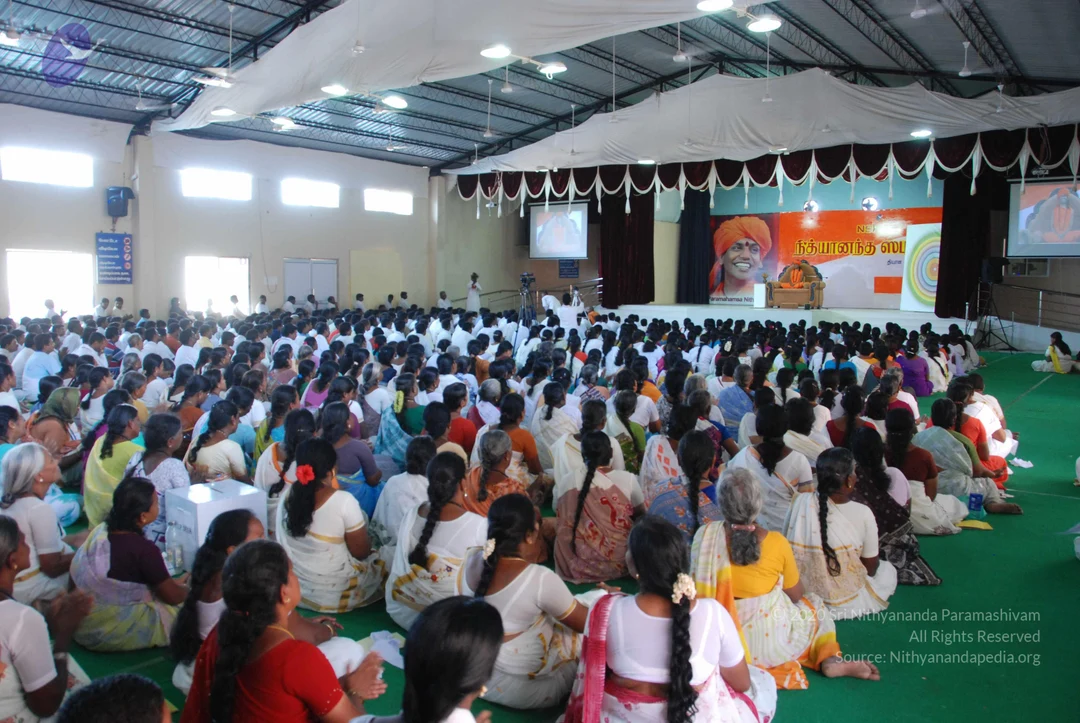
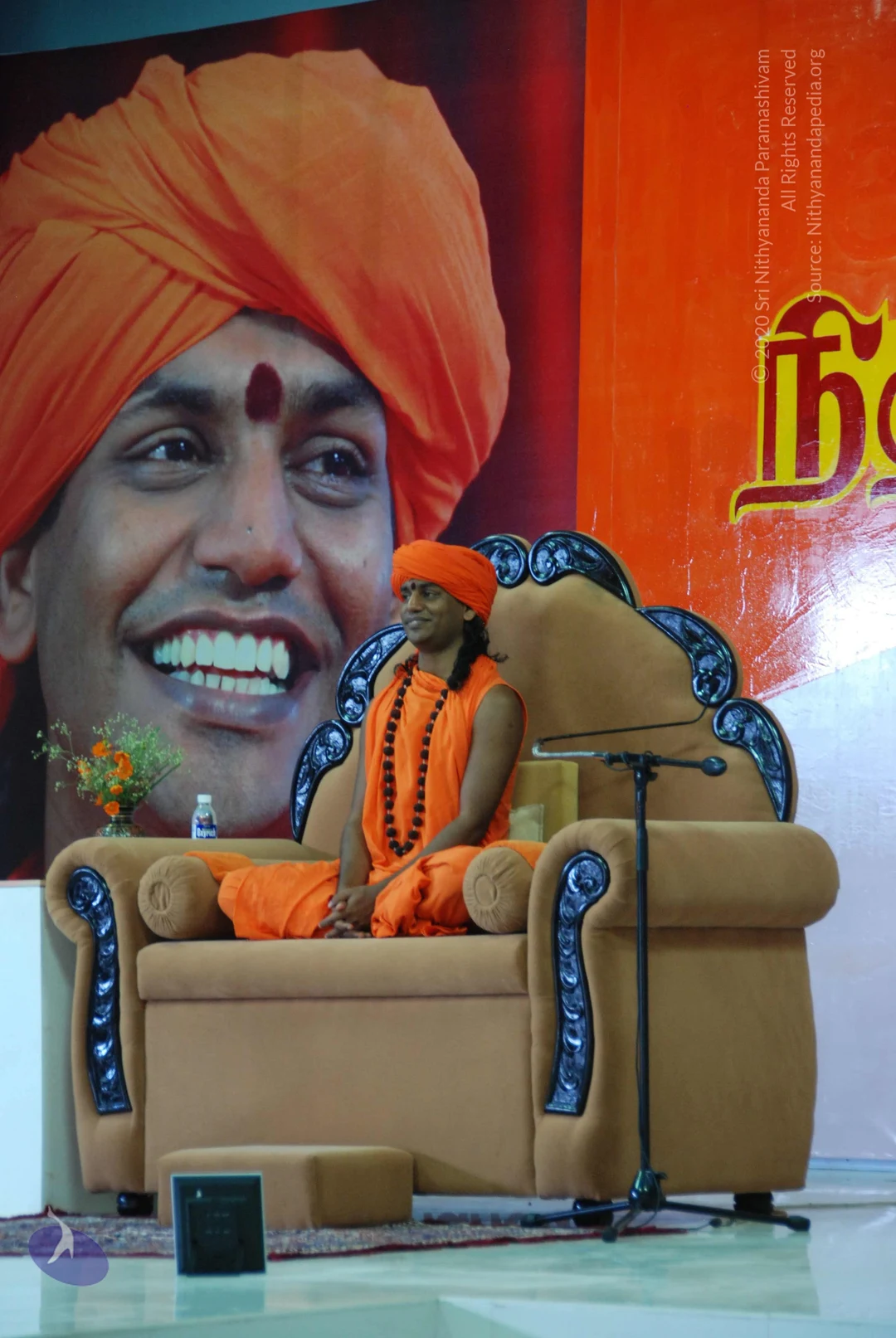
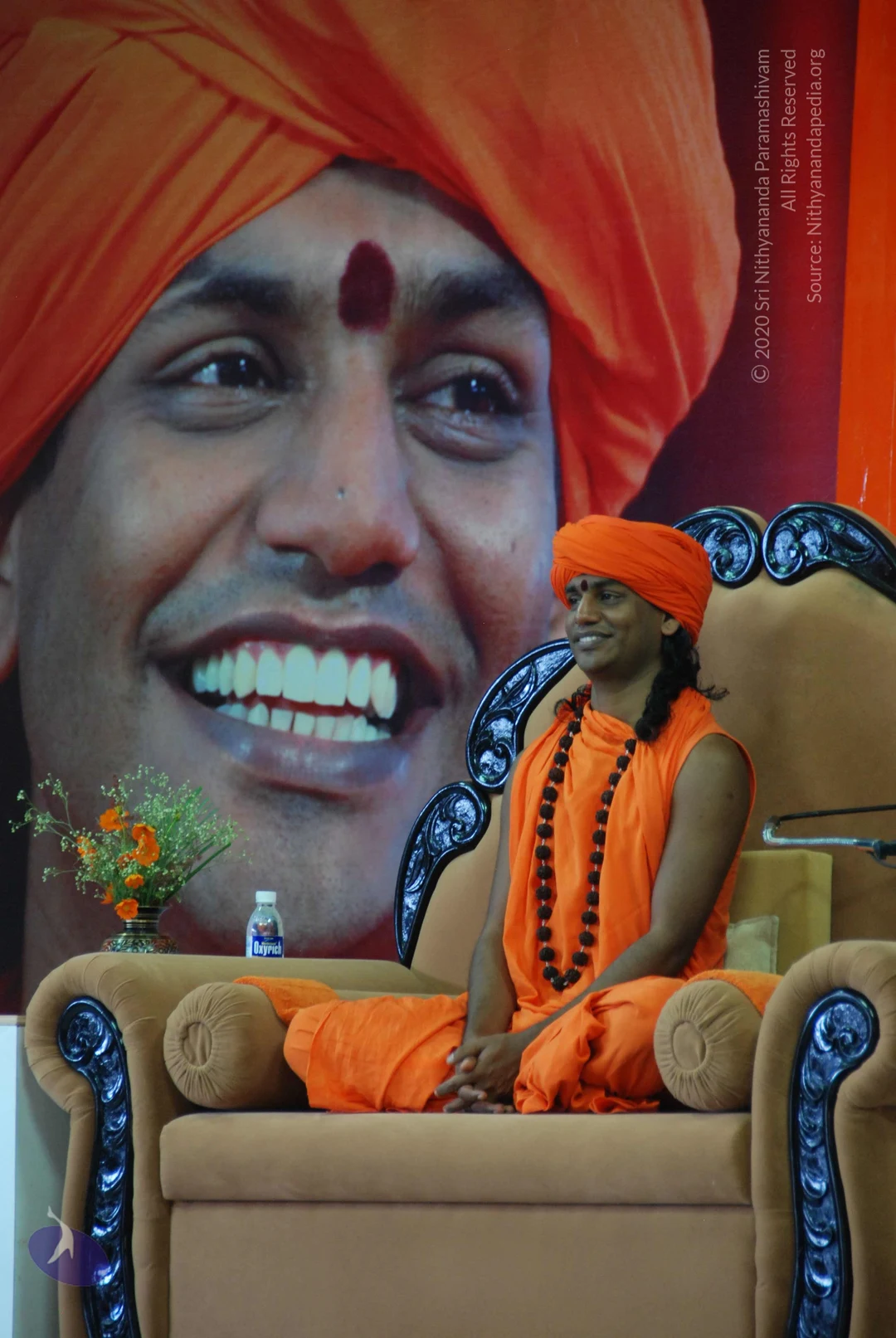
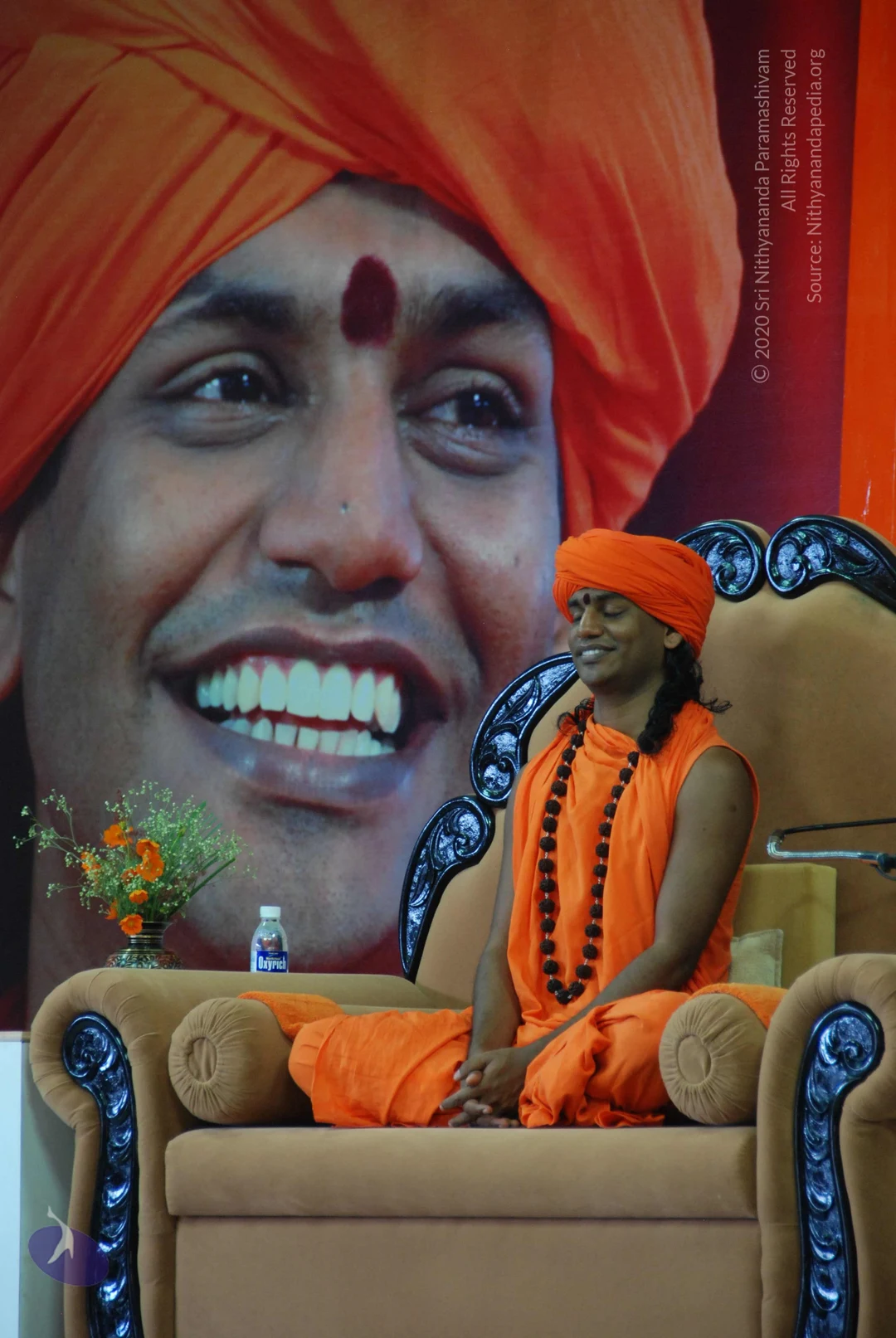
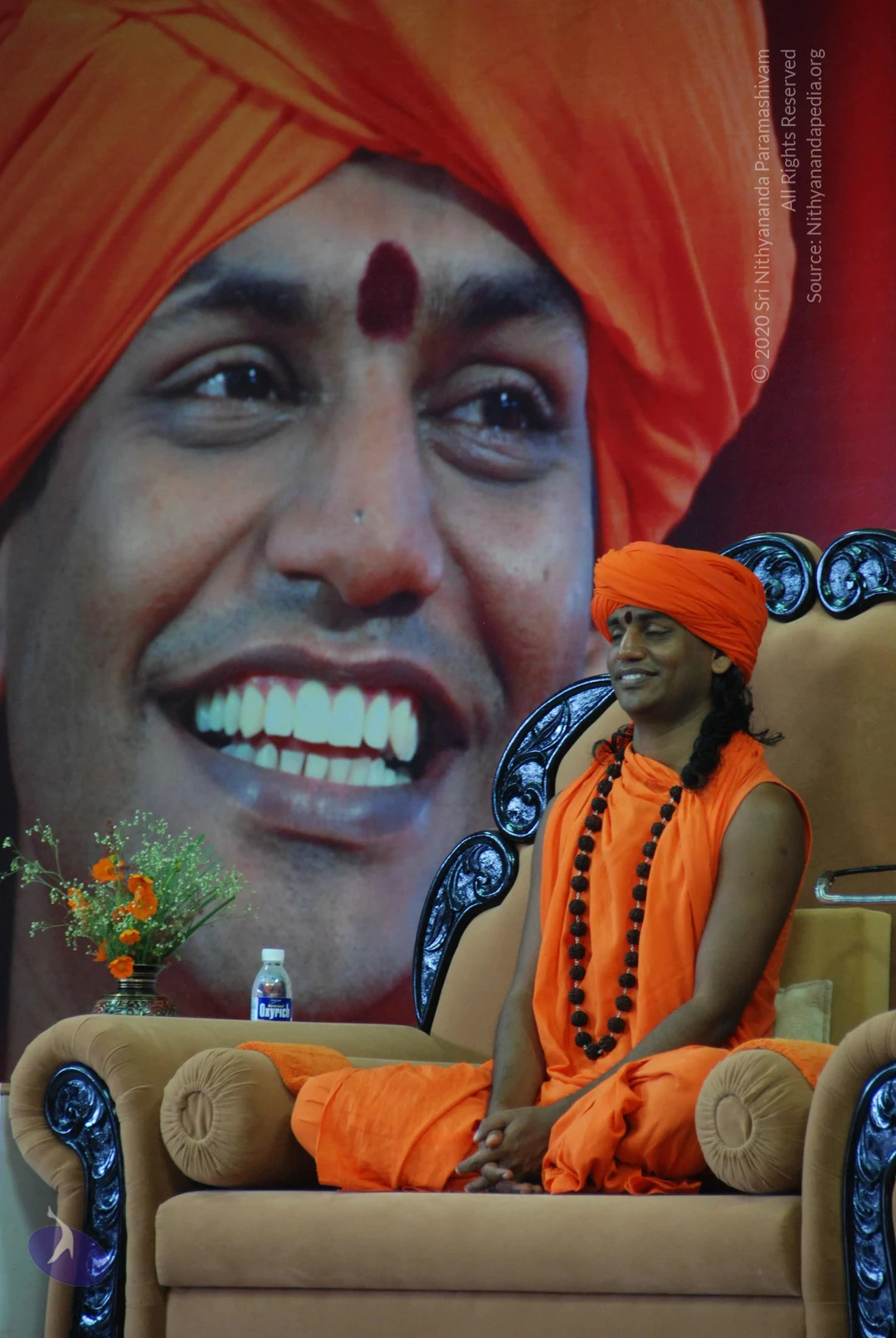
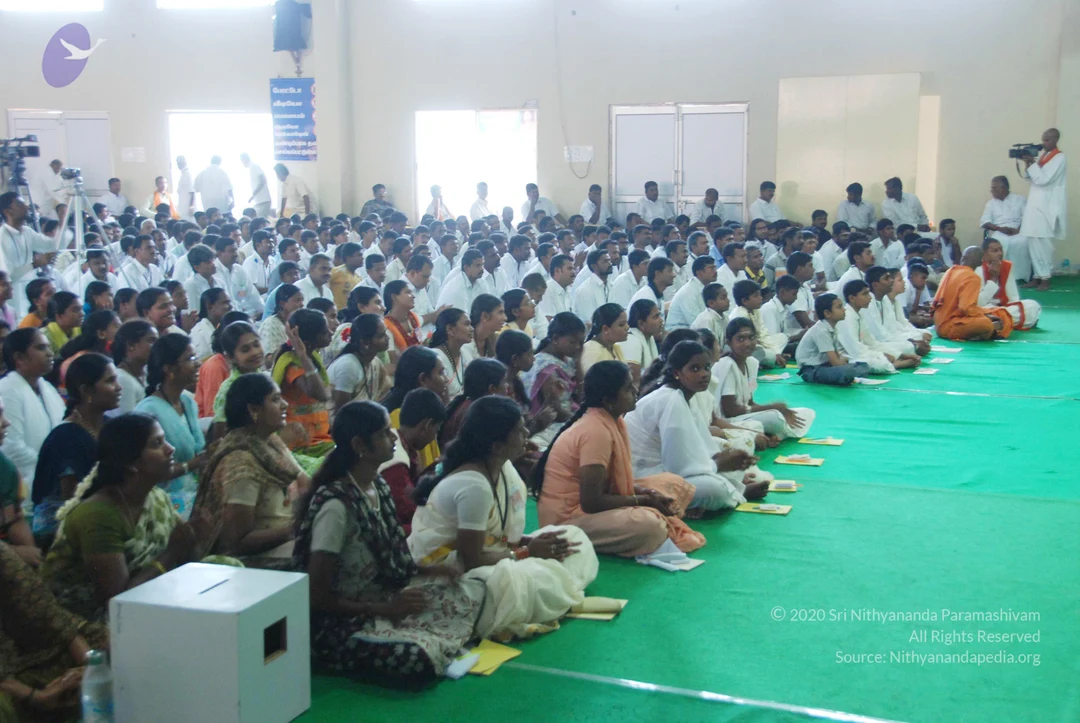
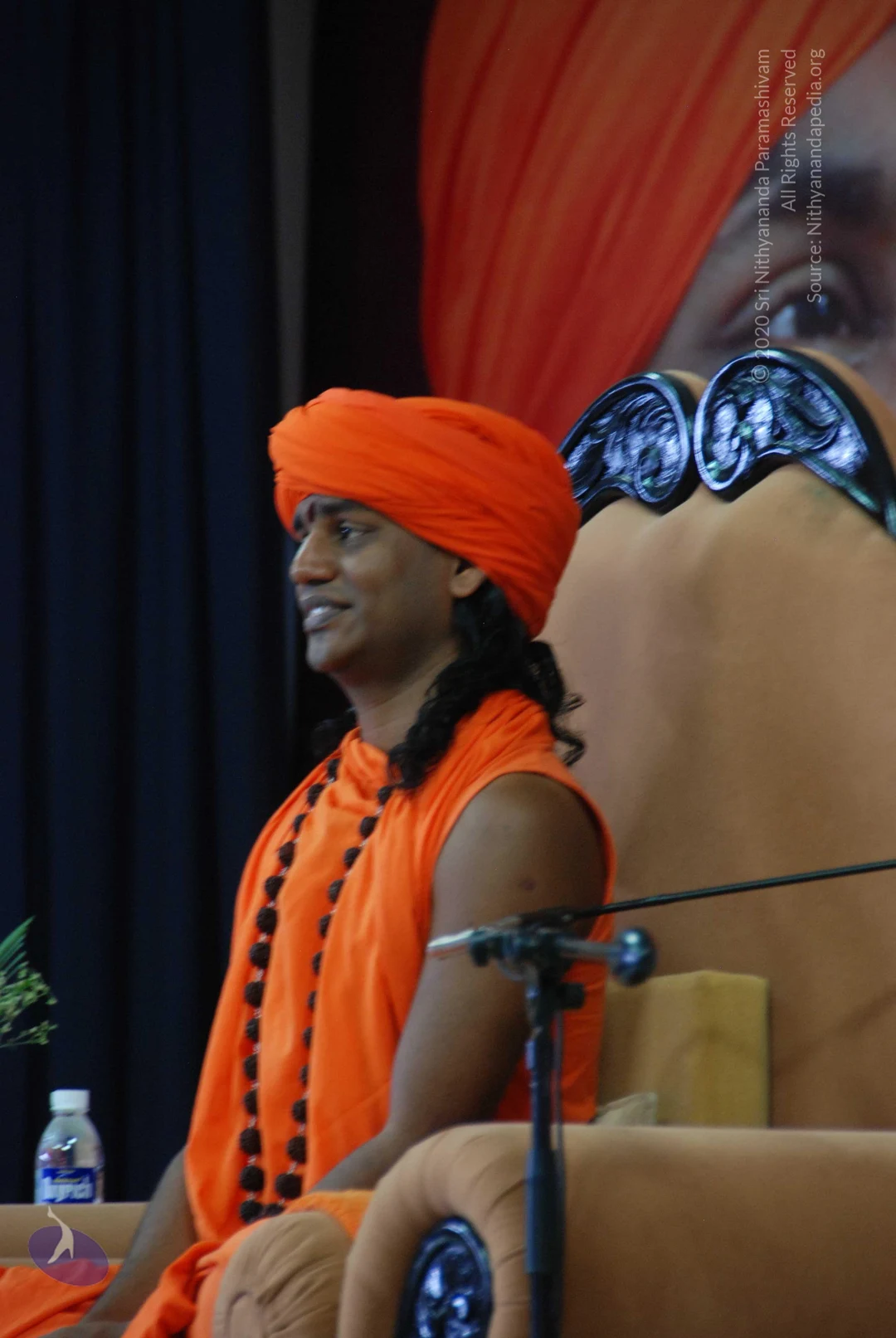
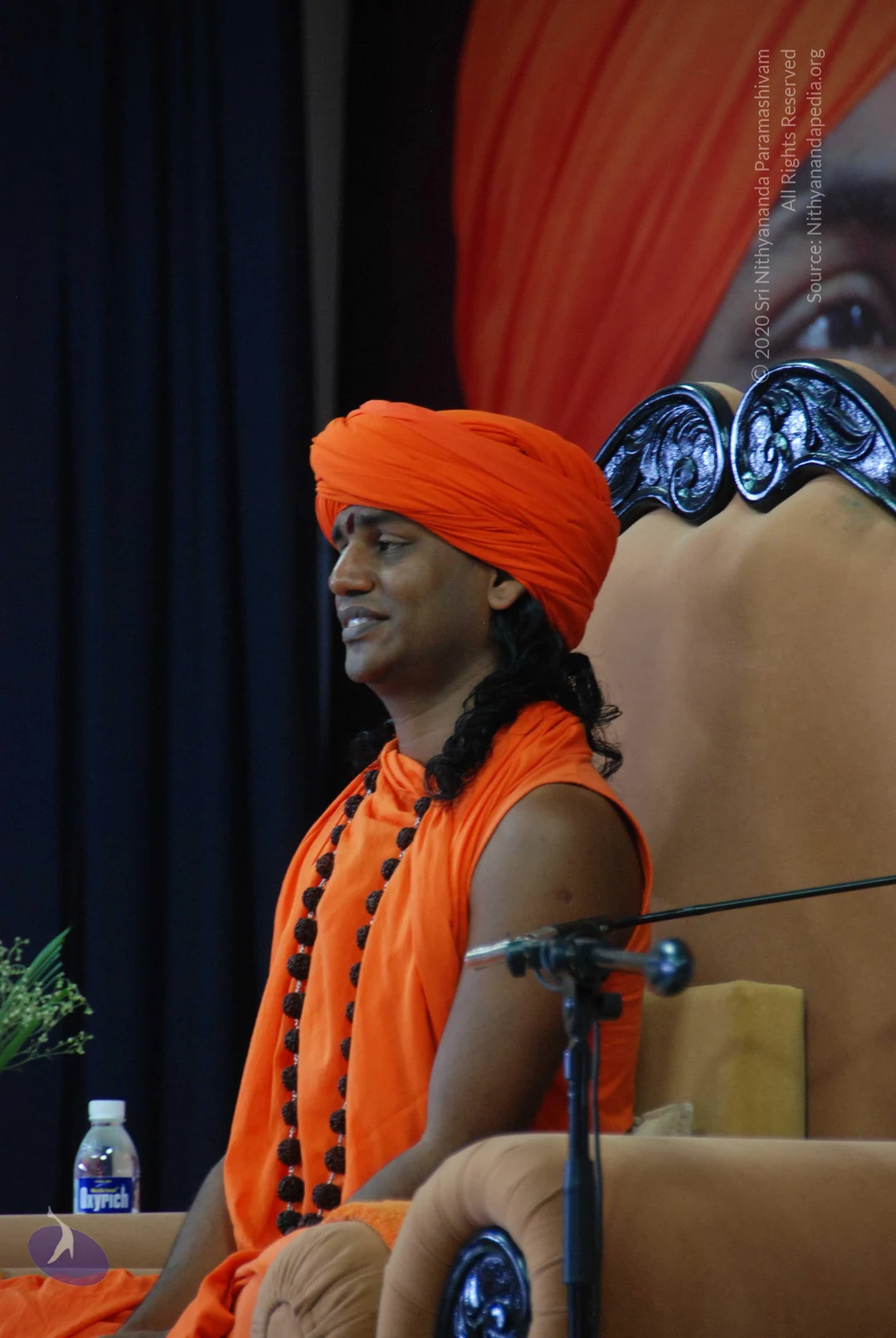
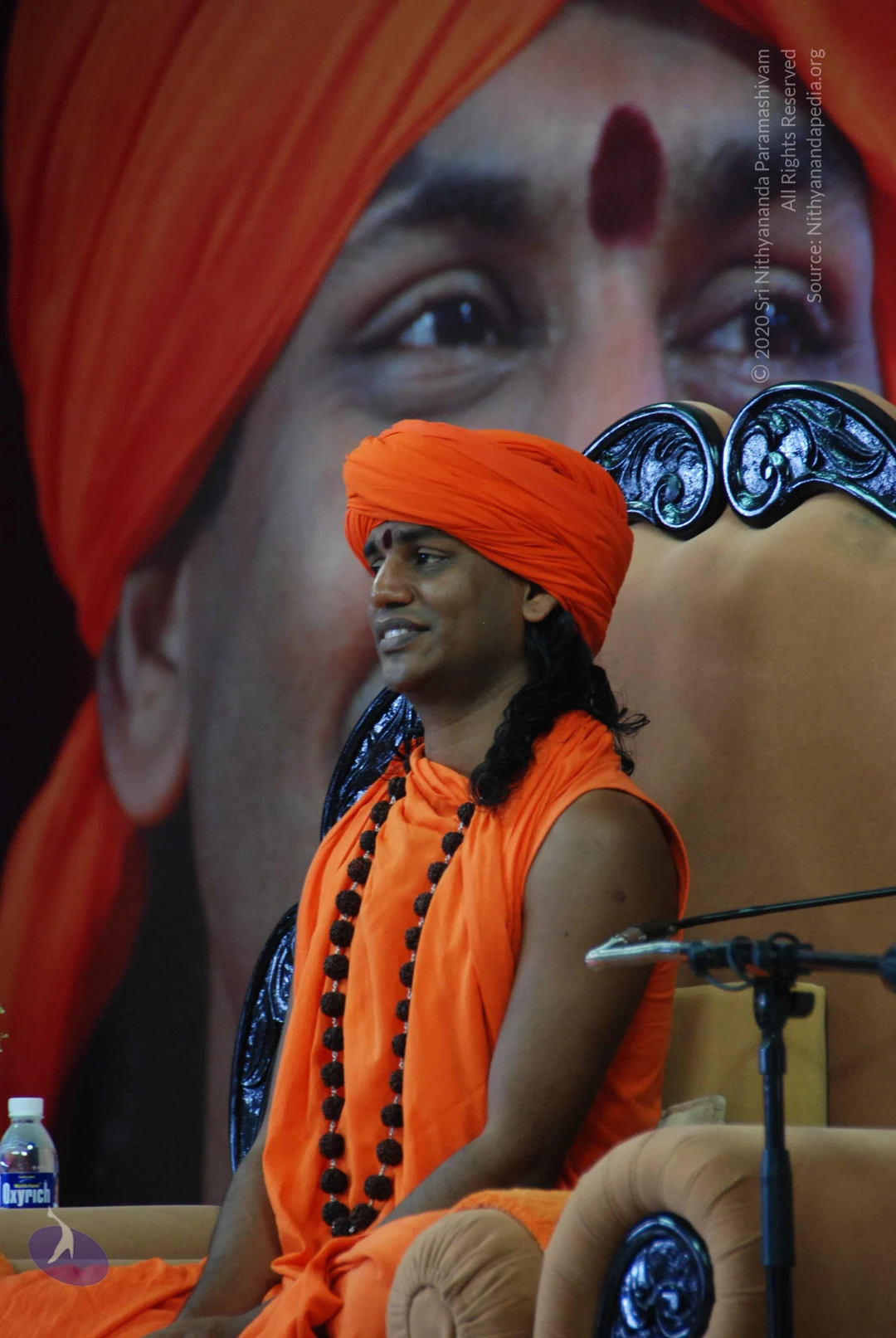
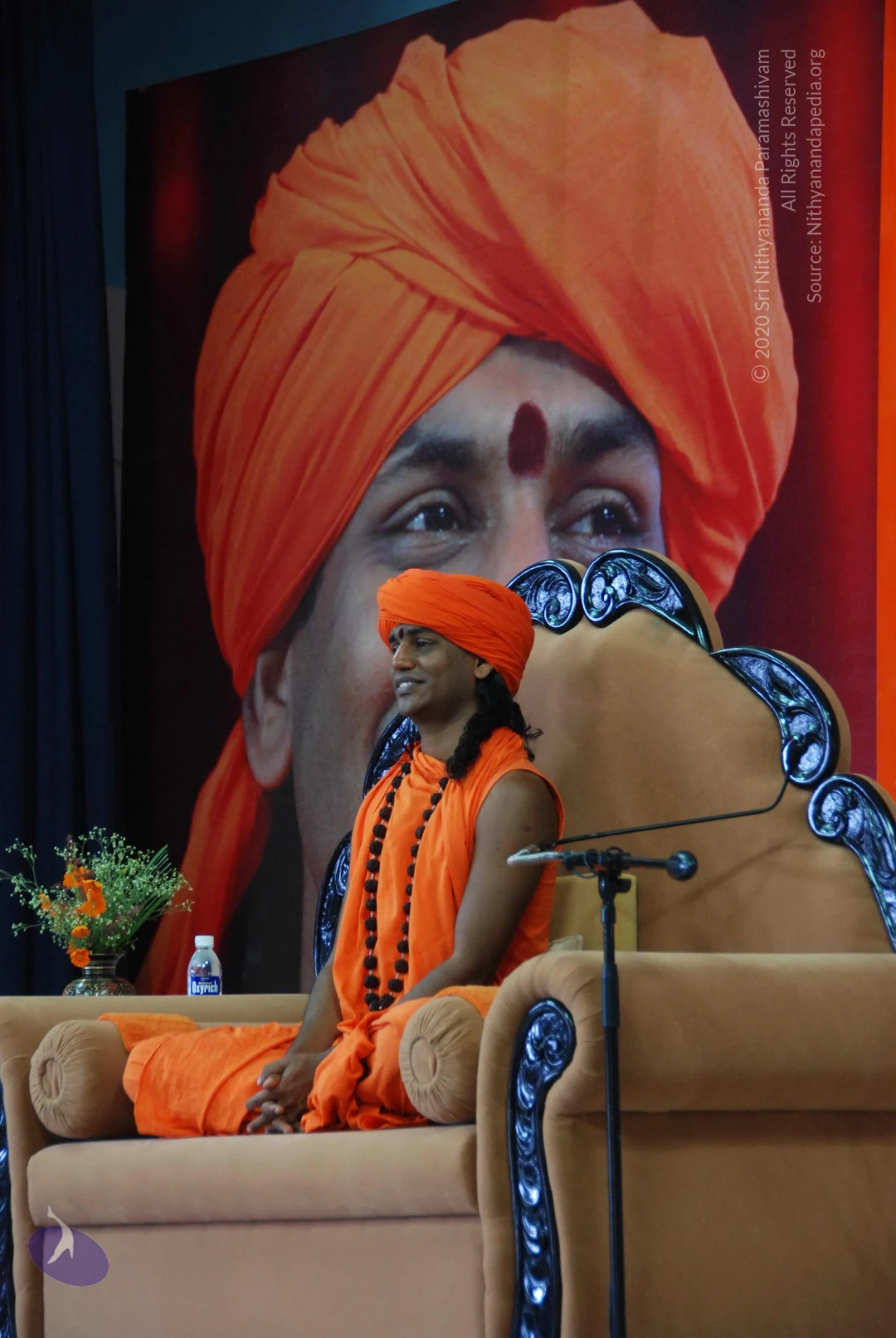
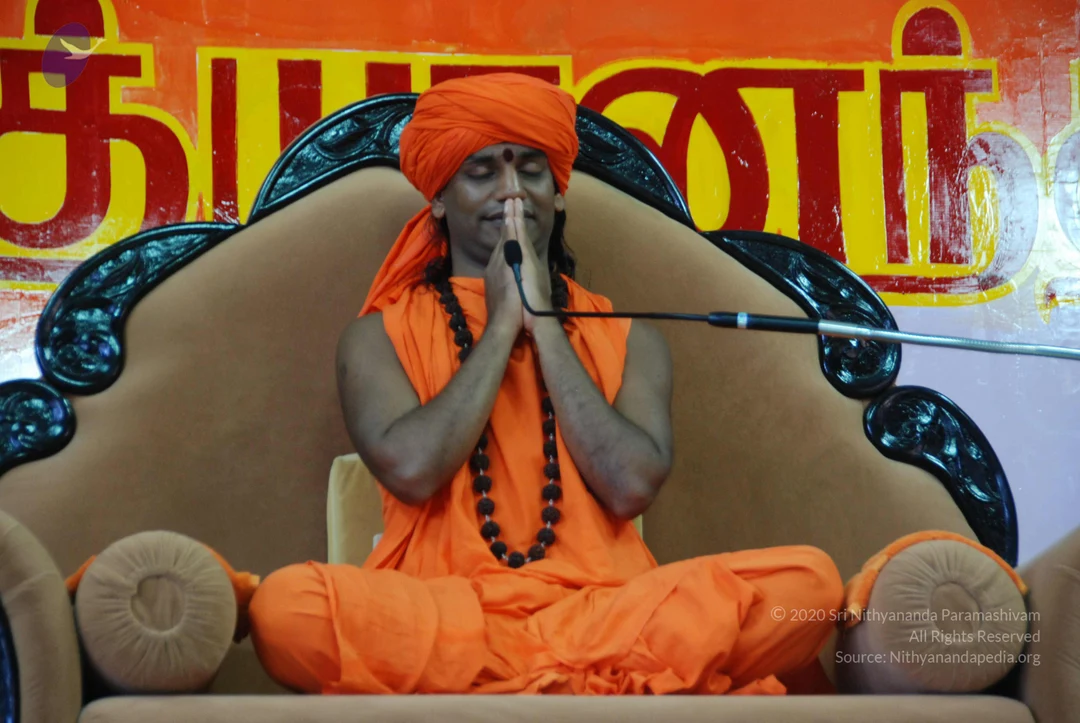
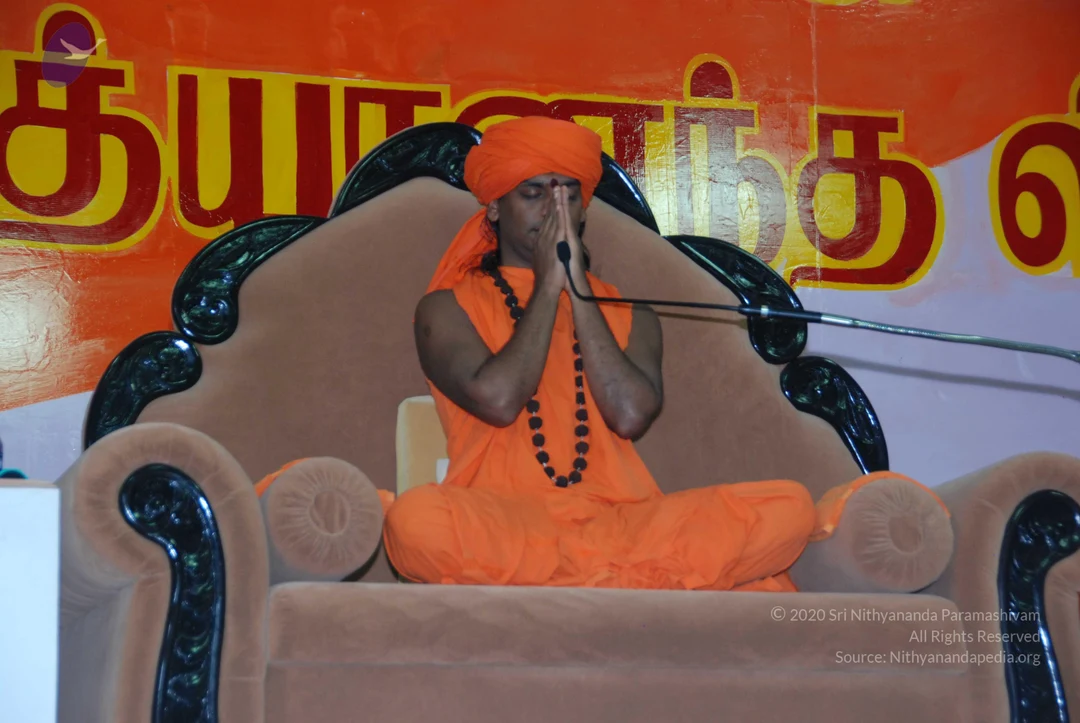
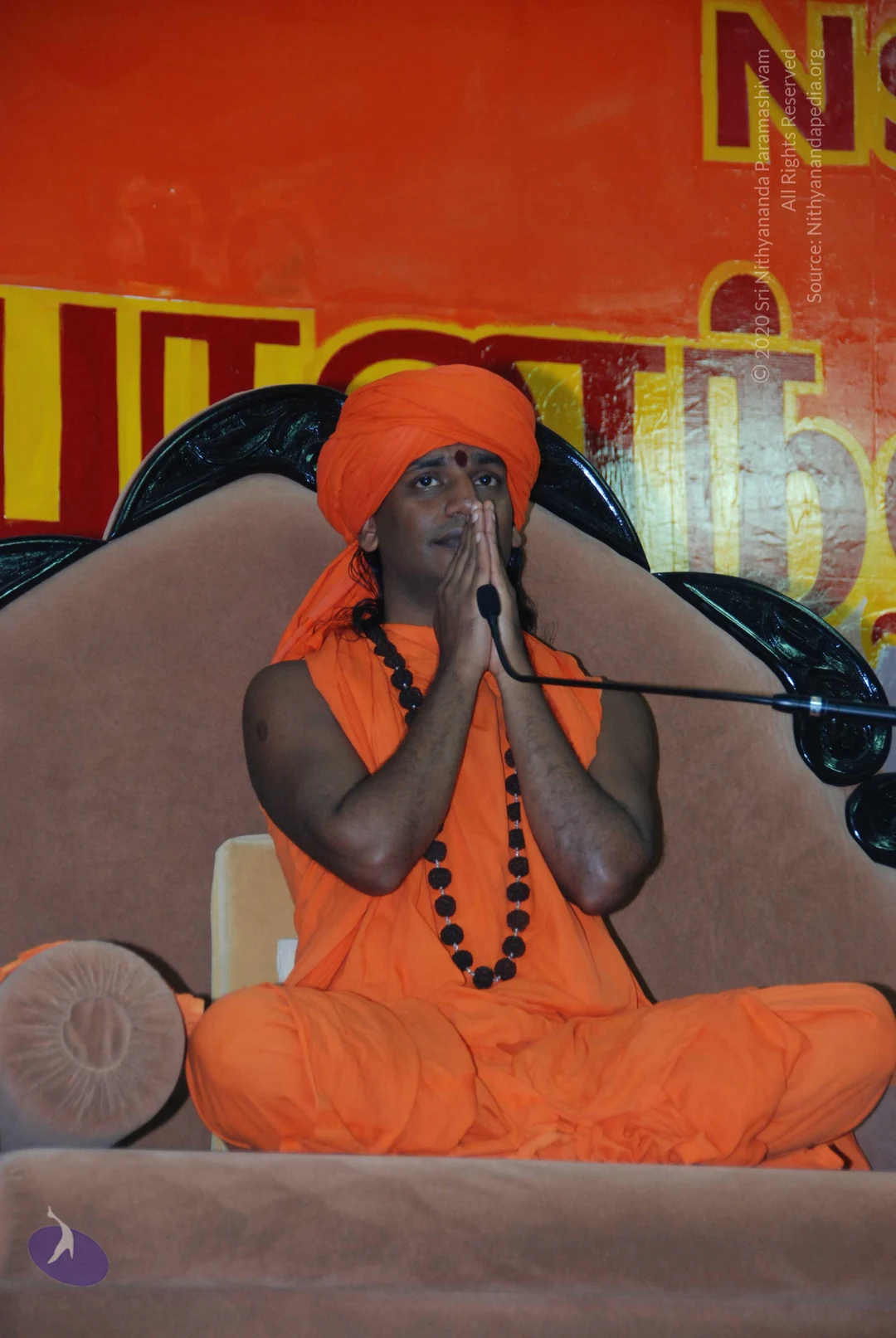
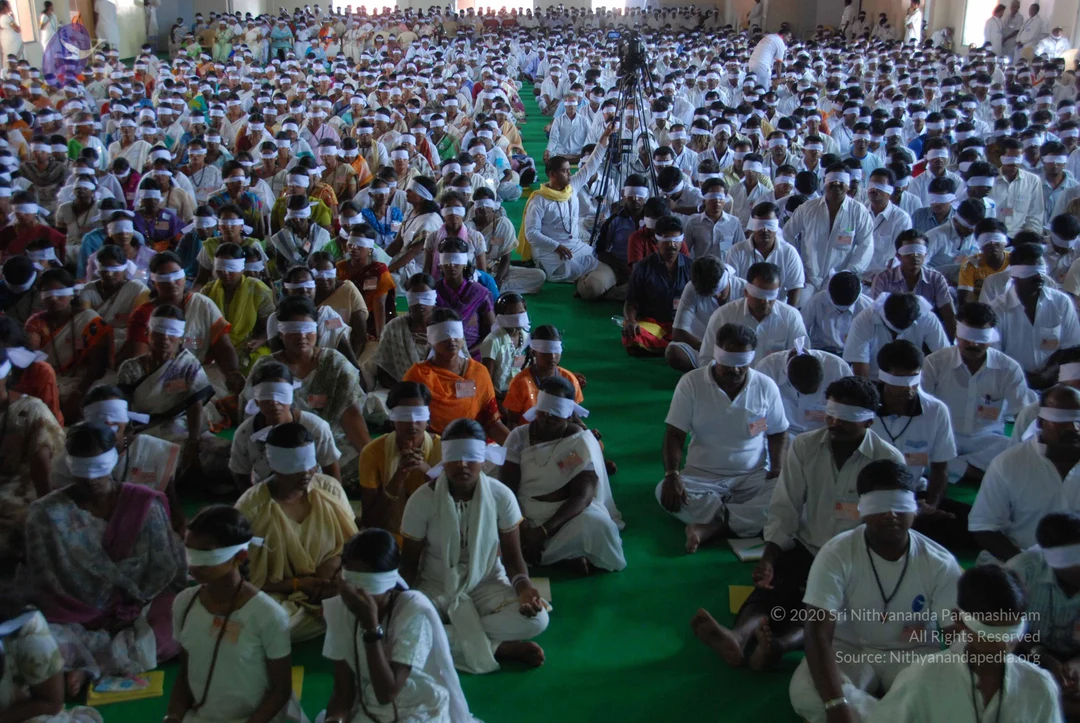
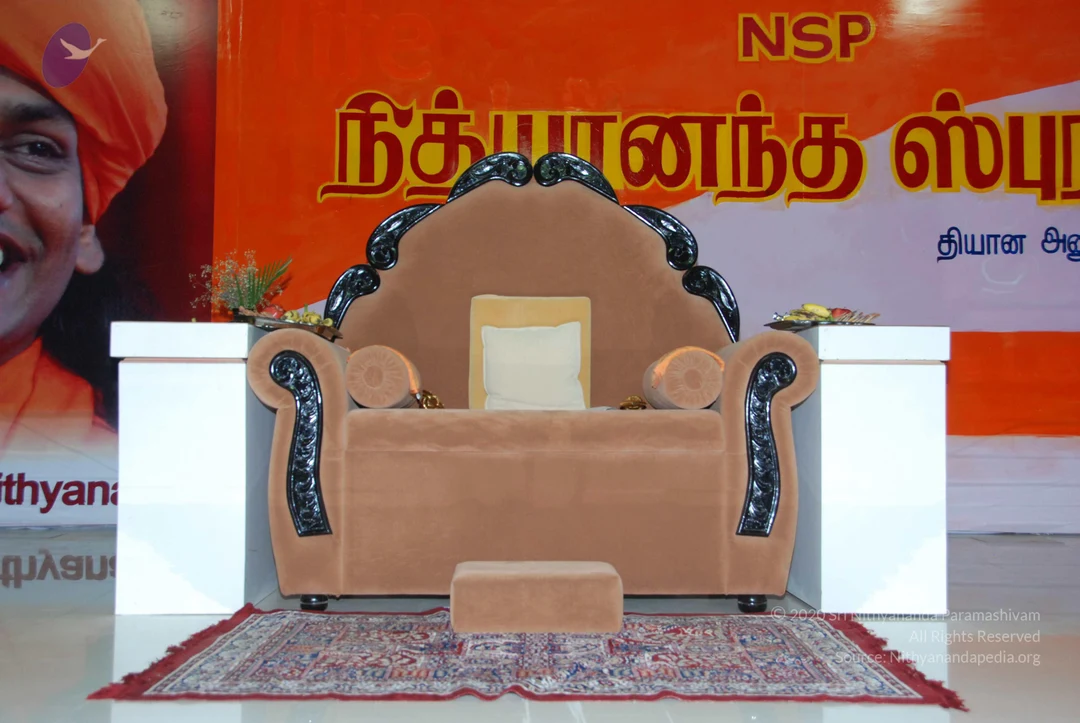
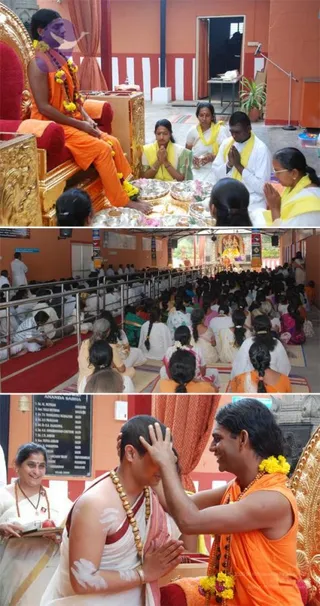
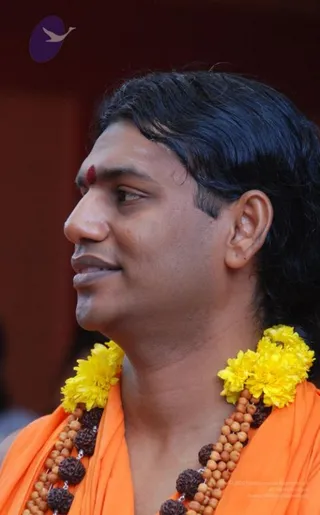
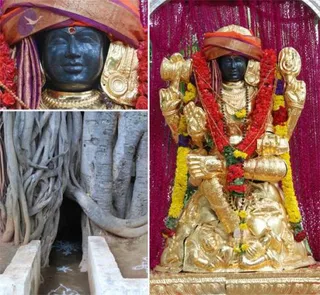
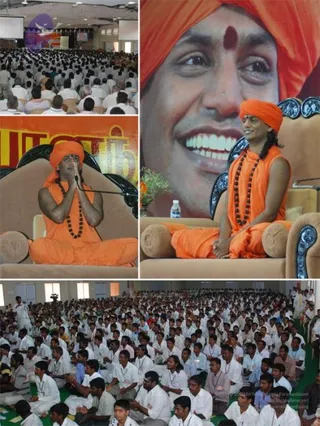
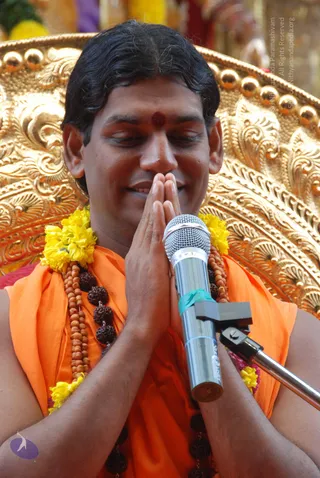
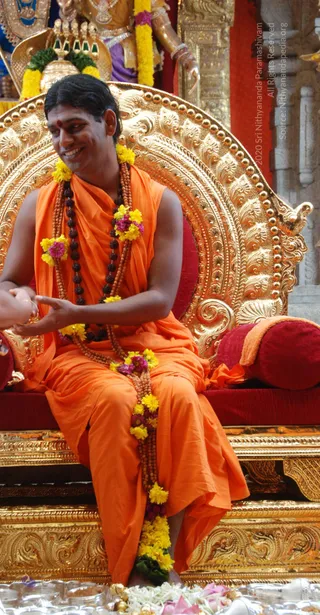
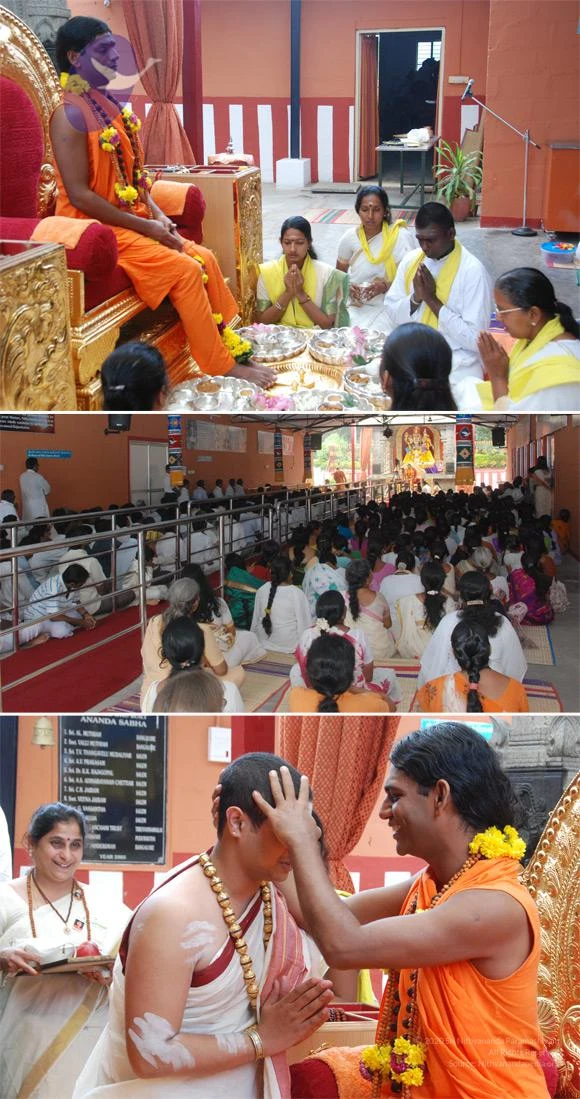
A three-panel collage of photographs from a temple-hall event. Top panel: a figure in saffron-orange robes with yellow flower garlands sits on an ornate gold-and-red throne, while three women and a man in white and yellow shawls sit with hands joined in prayer before brass thalis and offering plates. Middle panel: a large seated congregation in white and coloured saris fills a hall facing a deity murti in an alcove. Bottom panel: a figure in an orange robe with yellow garlands and a rudraksha mala places hands on the head of a man in white dhoti and shawl with white ritual markings on his body and a gold necklace, while a woman in white holds a book nearby. The collage shows ritual blessing and satsang activity; the figures are depicted in photographs, not physically present.A close photograph of a smiling man with short dark hair and a red bindi on his forehead, his palms pressed together in namaskar in front of a silver microphone on a stand. He wears an orange saffron shawl over a sleeveless orange garment, with a rudraksha mala and yellow marigold garlands around his neck. Behind him is an ornate gold throne with carved scrollwork and round finials. Faint copyright and source text is visible in the lower corner of the image.A small, low-resolution photograph of a crowd gathered in an outdoor or hall setting. Near the centre, a figure in orange or saffron robes stands among several people dressed in white ritual clothing. Many attendees are visible in the background, some seated and some standing, with a decorated backdrop behind them. The image is too small to reliably distinguish individual roles or objects.Close profile photo of a man with long dark hair swept back, wearing a red tilak on his forehead, an orange-saffron shawl and a neck garland of yellow marigolds over a rudraksha and wooden bead mala. He smiles gently, looking to the left against a dark red background.A three-panel collage graphic of temple imagery. The upper left panel shows a close view of a dark stone deity face with a red tilak, wearing a saffron and maroon cloth wrap, gold ornaments and red flower garlands. The lower left panel shows a dark cave-like shrine entrance beneath a large banyan tree with thick aerial roots and a white-washed stone threshold. The right panel shows a full view of a black stone deity murti seated on a golden base, adorned with a red and yellow flower garland, gold armlets and a gold crown-like headdress, set against a pink and red beaded backdrop. No physical people are shown.Four-panel collage of a satsang hall. Top left: a wide view of a large seated audience with a projection screen above. Top right: a close view of a seated man in an orange turban and orange robe, with a long rudraksha mala, sitting in a cushioned chair beside a large painted portrait of a smiling face with a red tilak on the forehead. Middle left: the same orange-clad figure in a cushioned chair with hands pressed together in greeting before a microphone, a red and orange banner behind. Bottom: a wide view of hundreds of seated attendees in white clothes and lanyards on green mats, many with hands folded. The figure in the orange turban is a person (orange turban, long rudraksha mala and ceremonial seating), depicted on screen or print only where the portrait appears, so the seated figures in the panels are a candidate in person.

01-Patha-Pooja
61 photosSource gallery
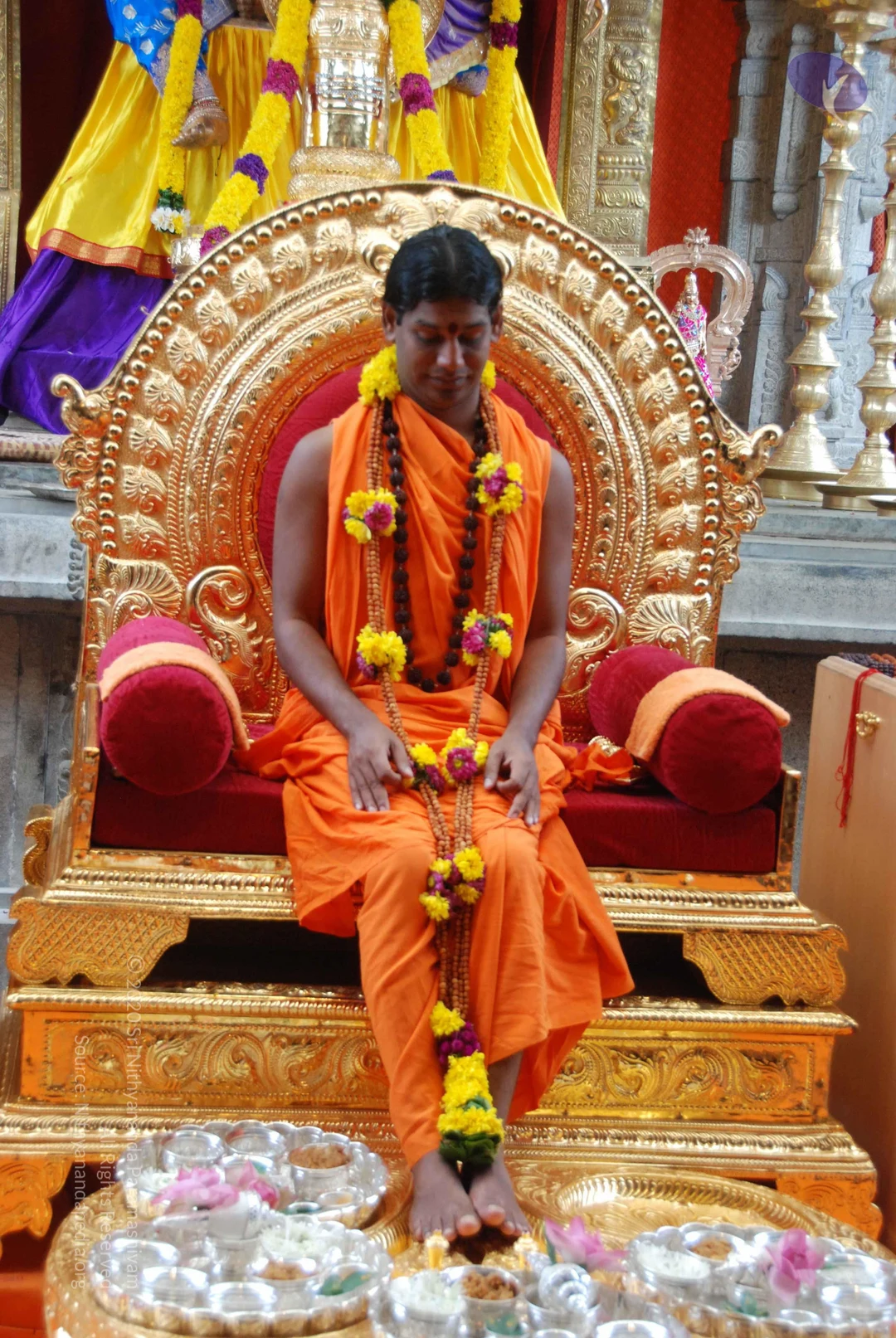
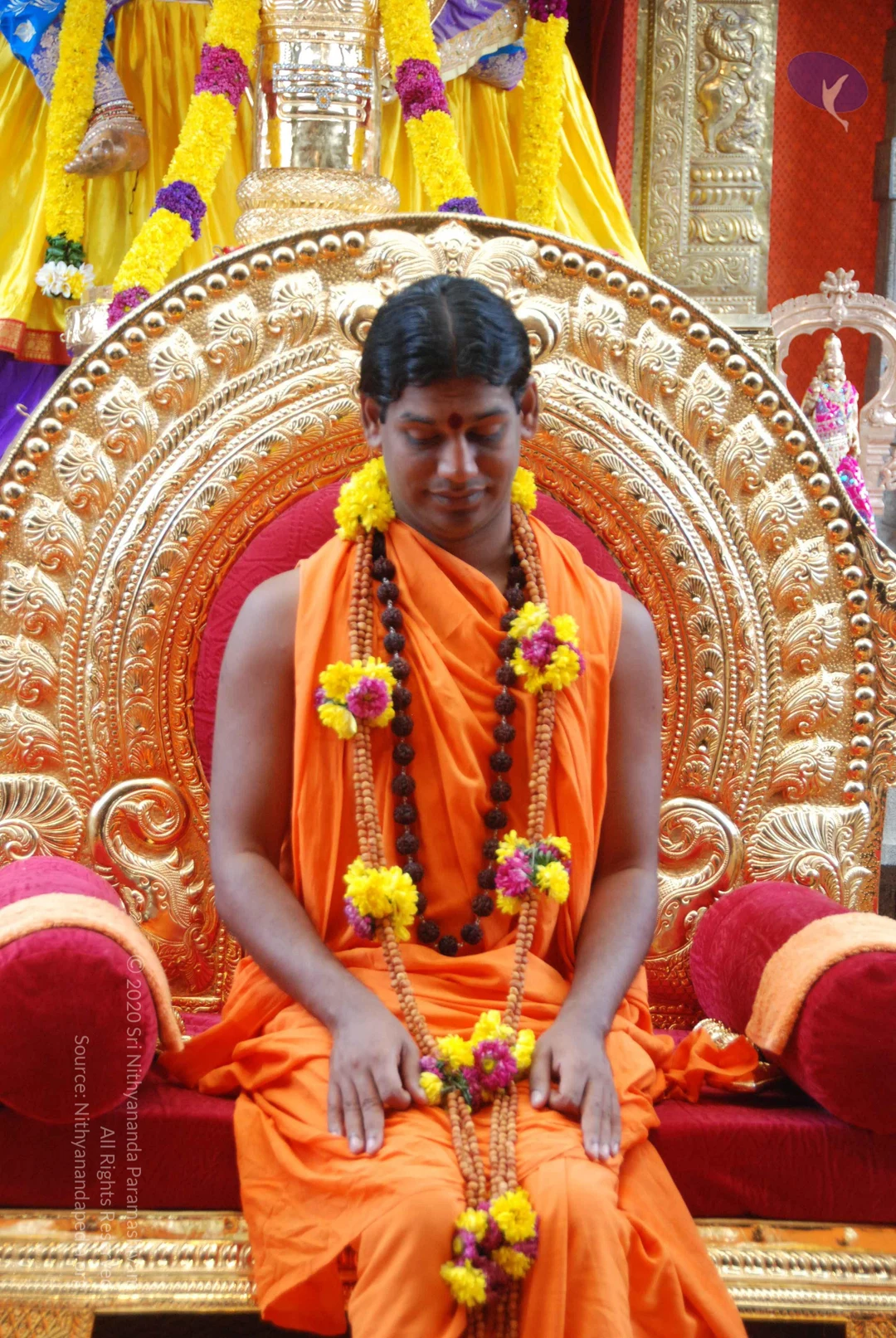
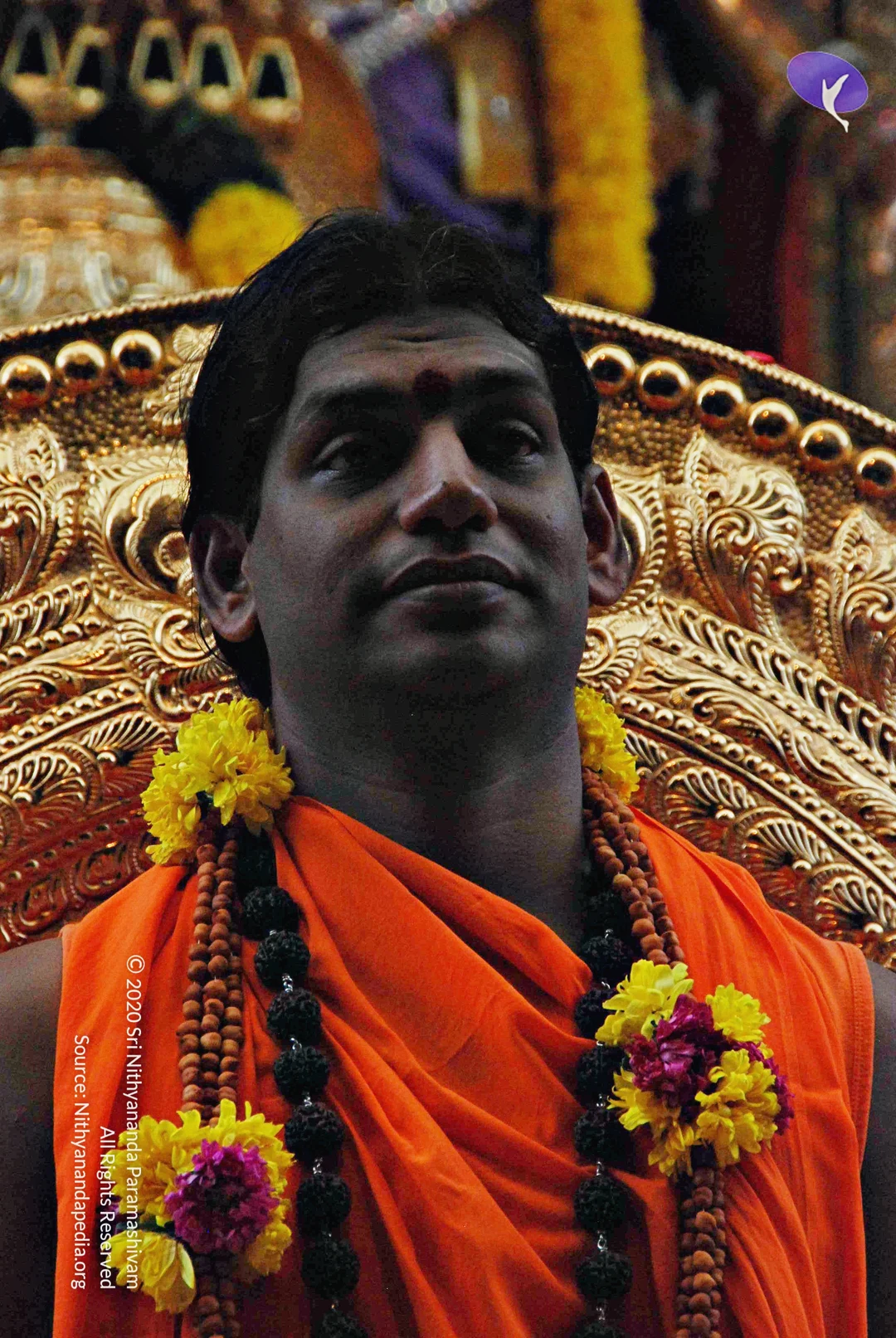
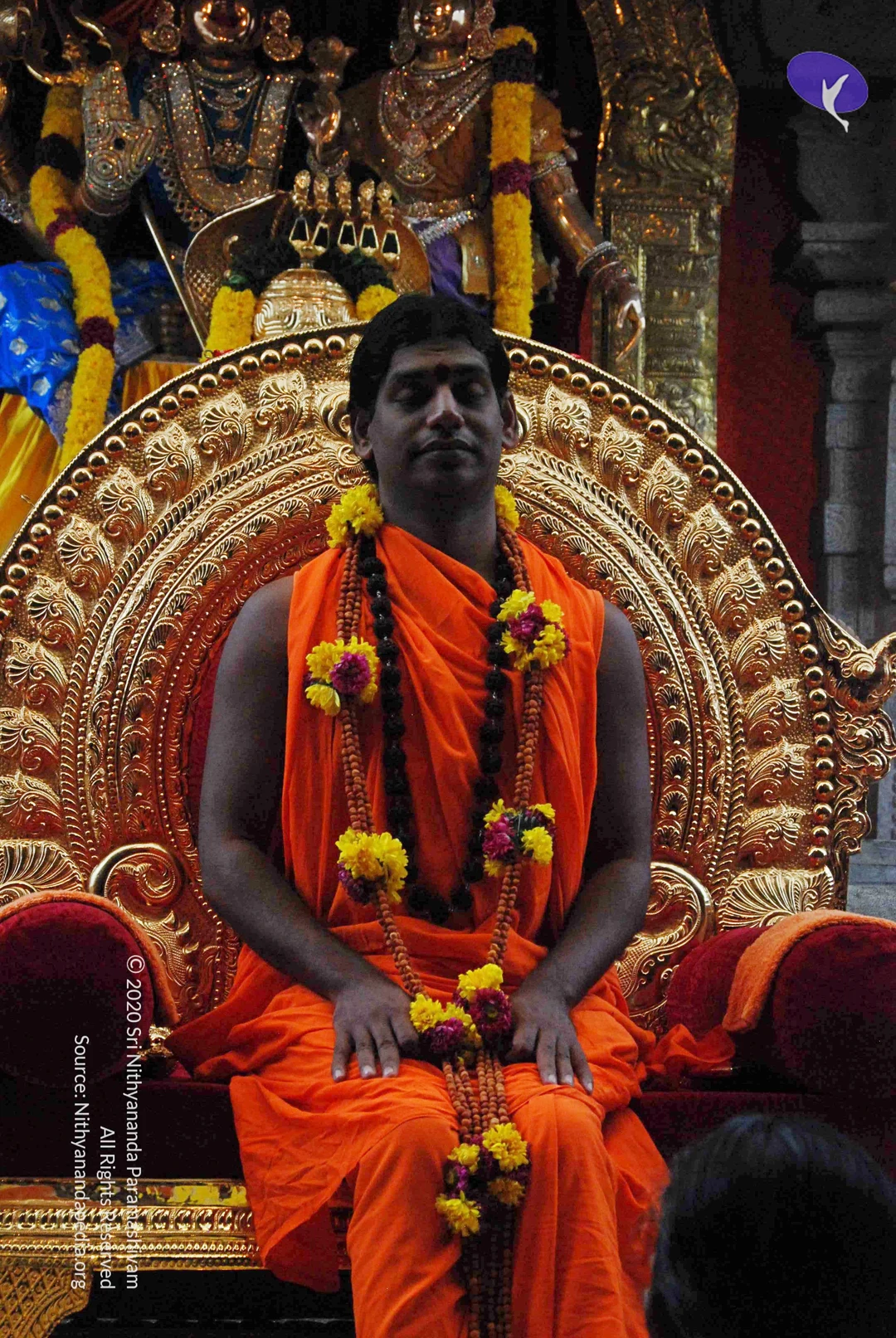
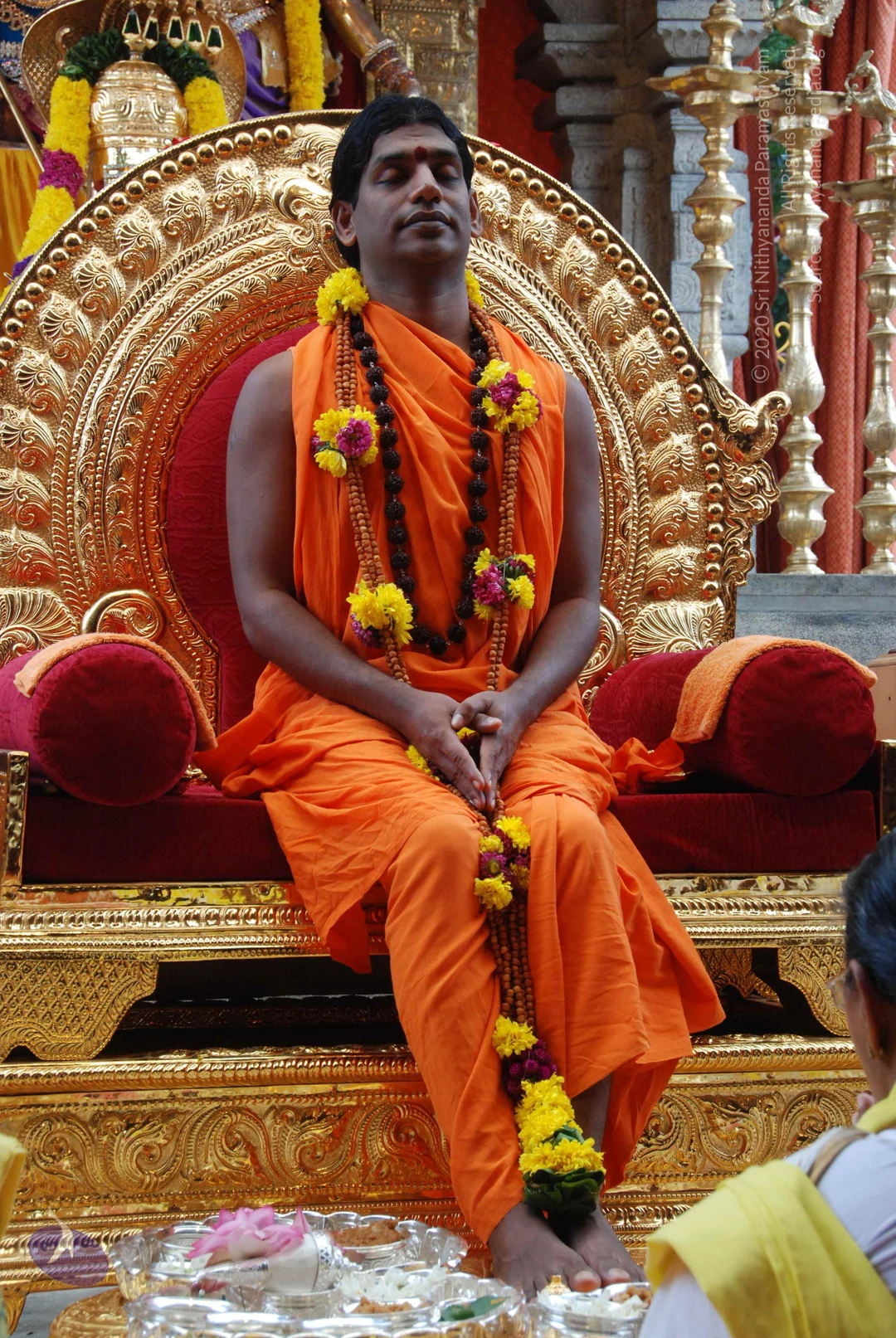
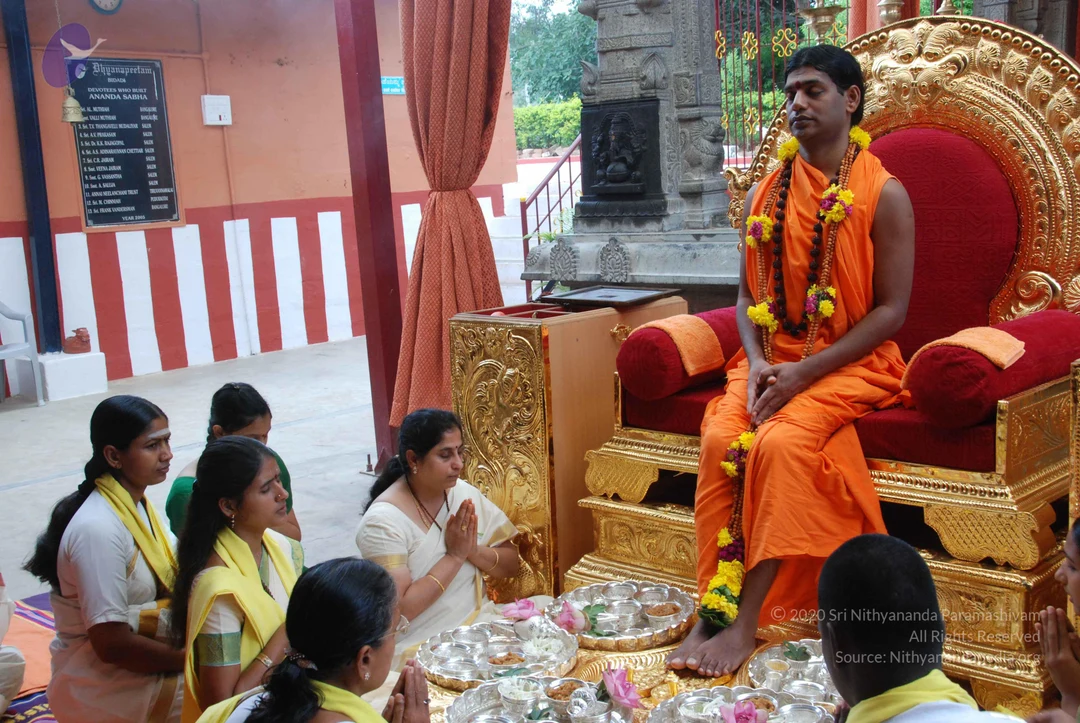
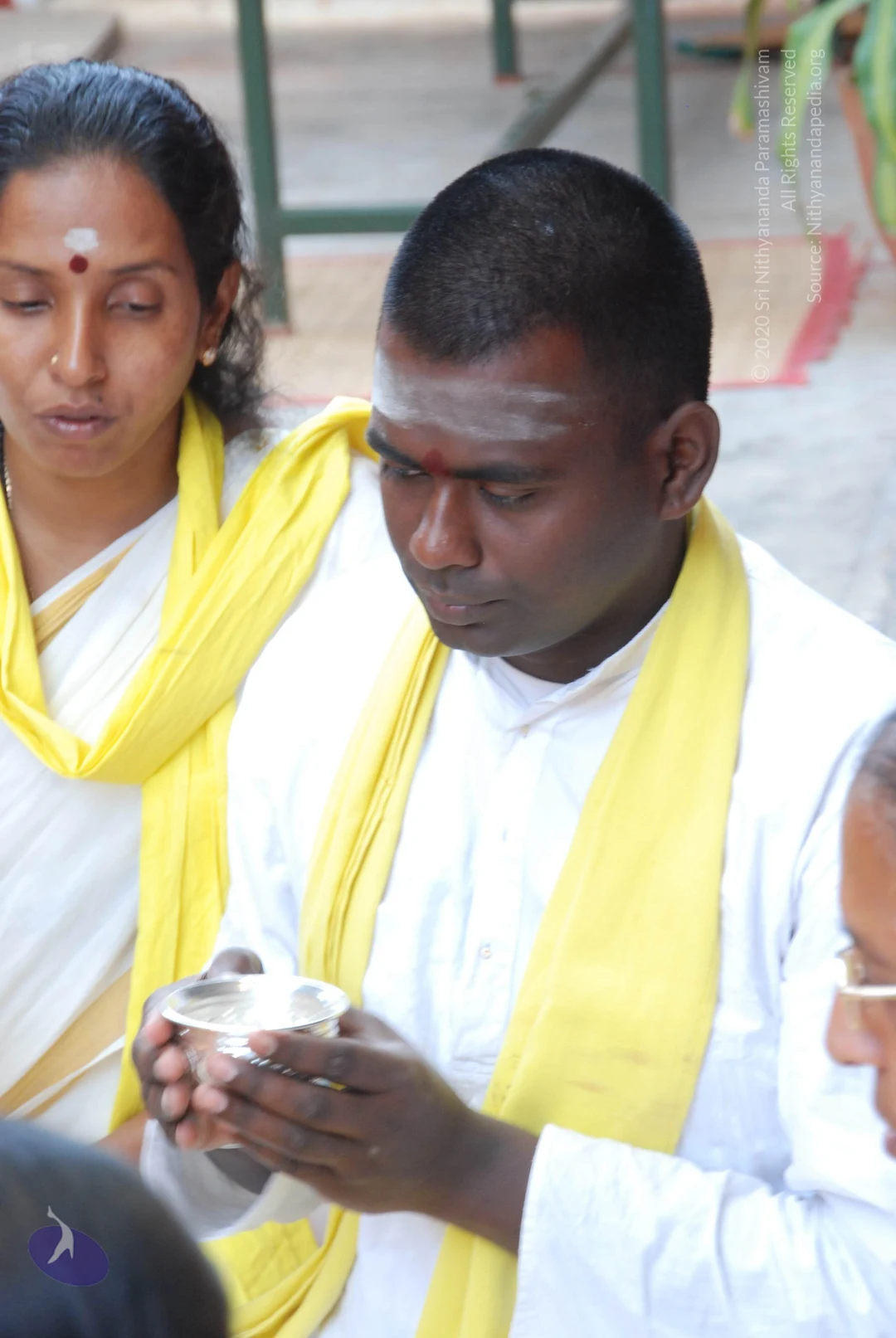
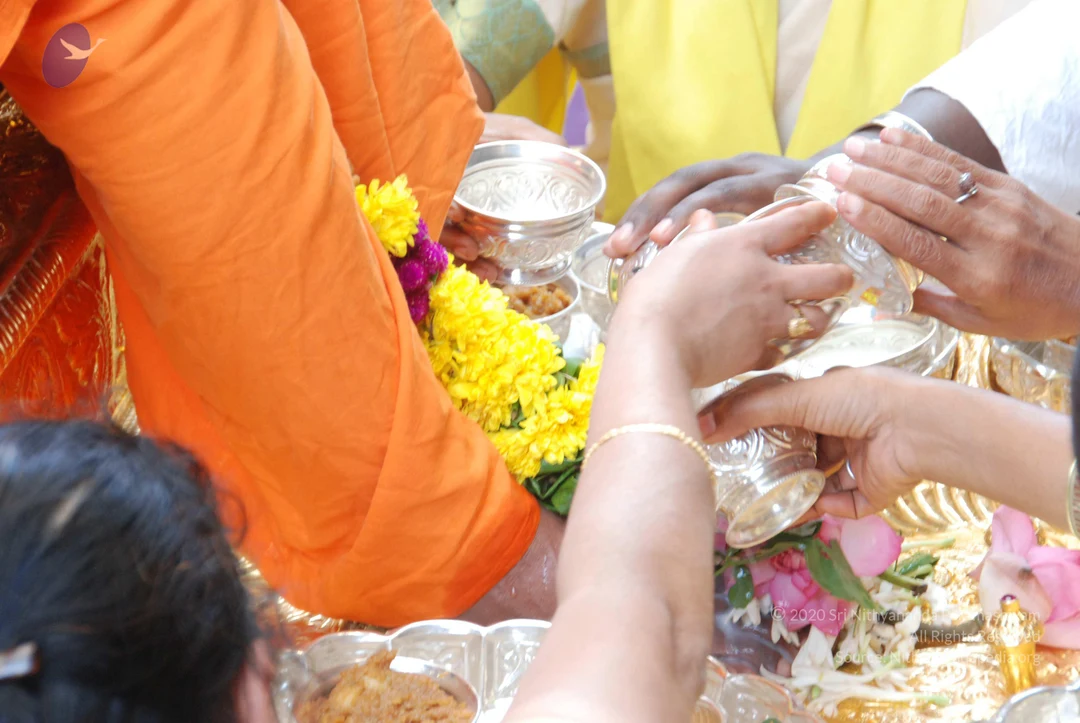
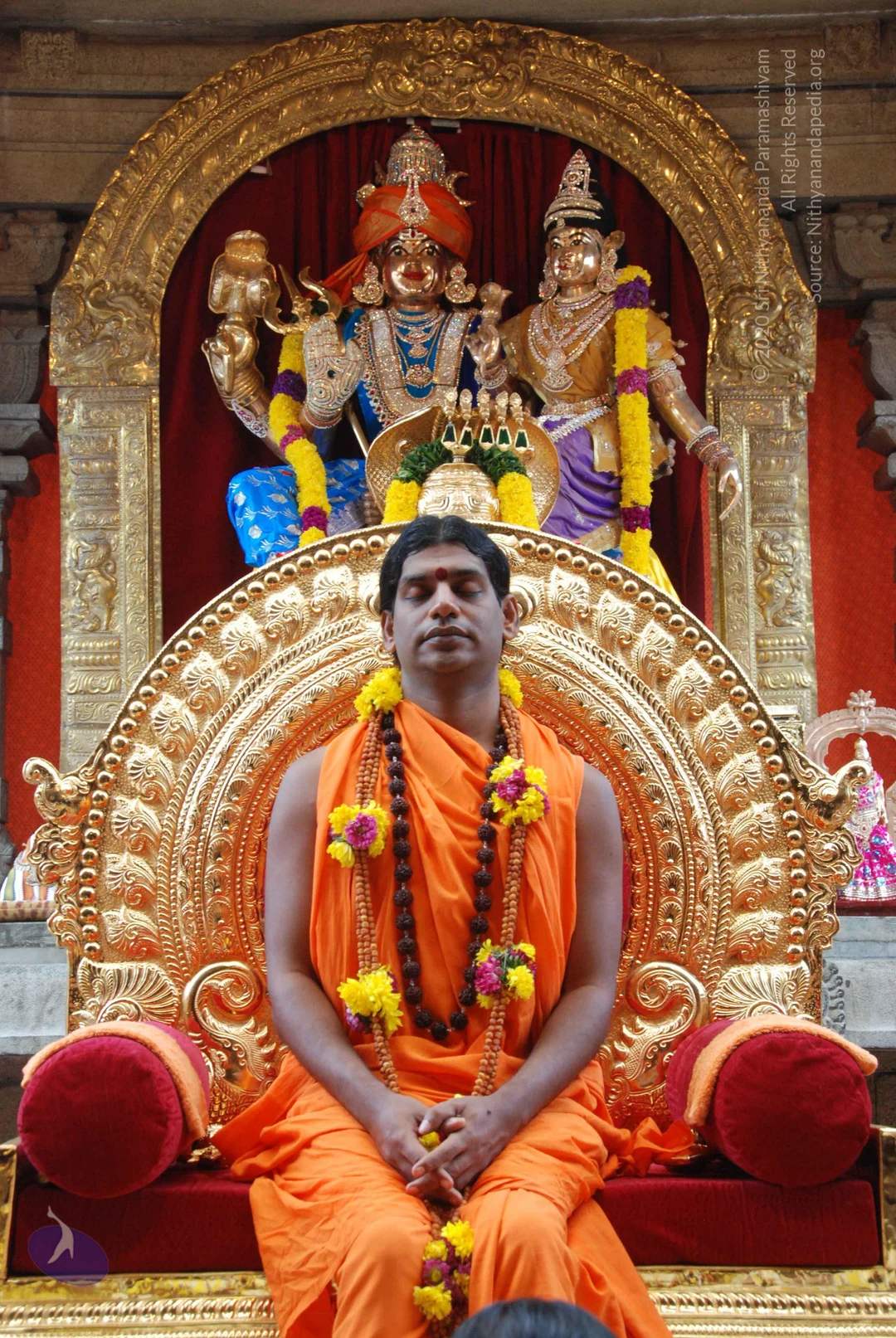
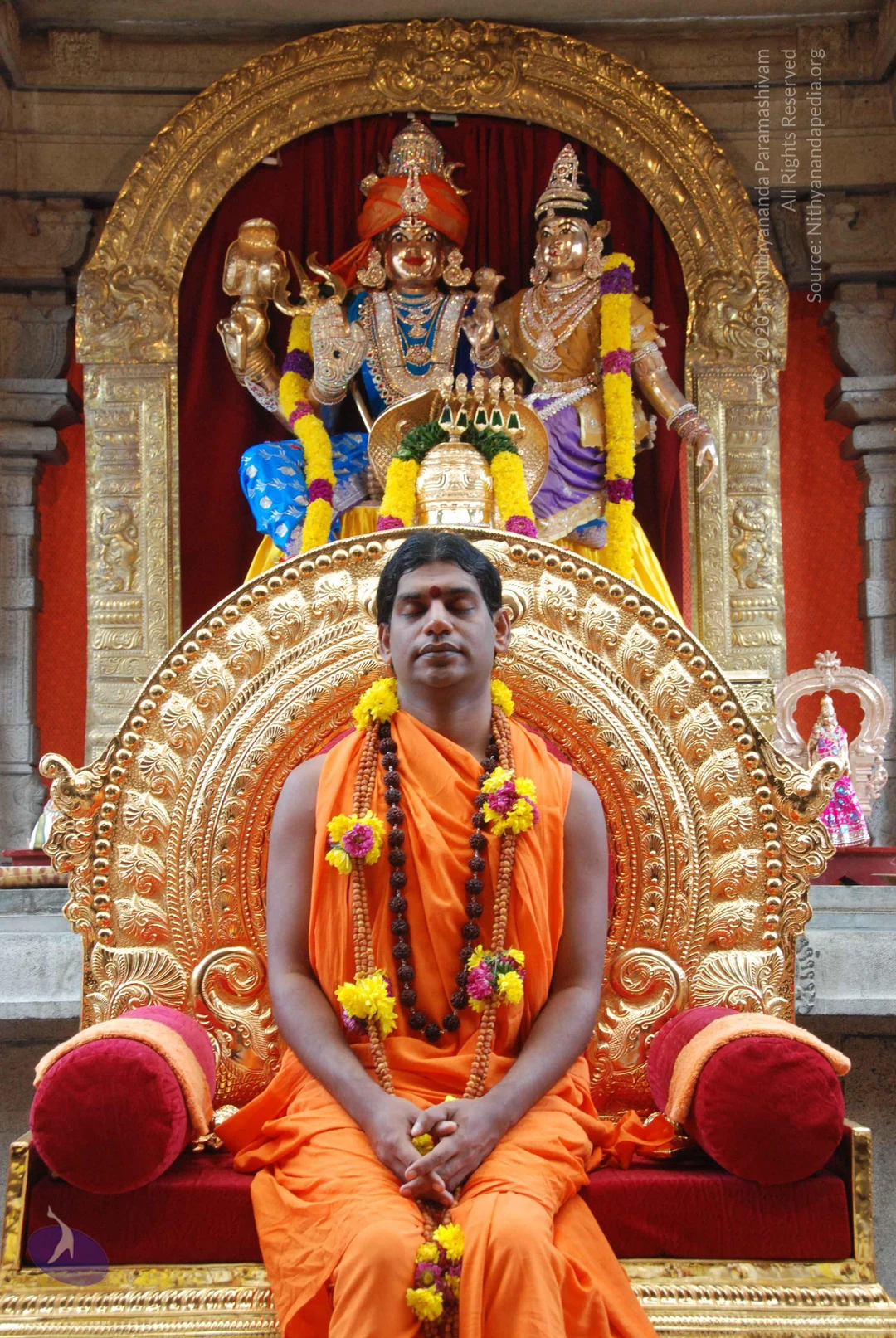
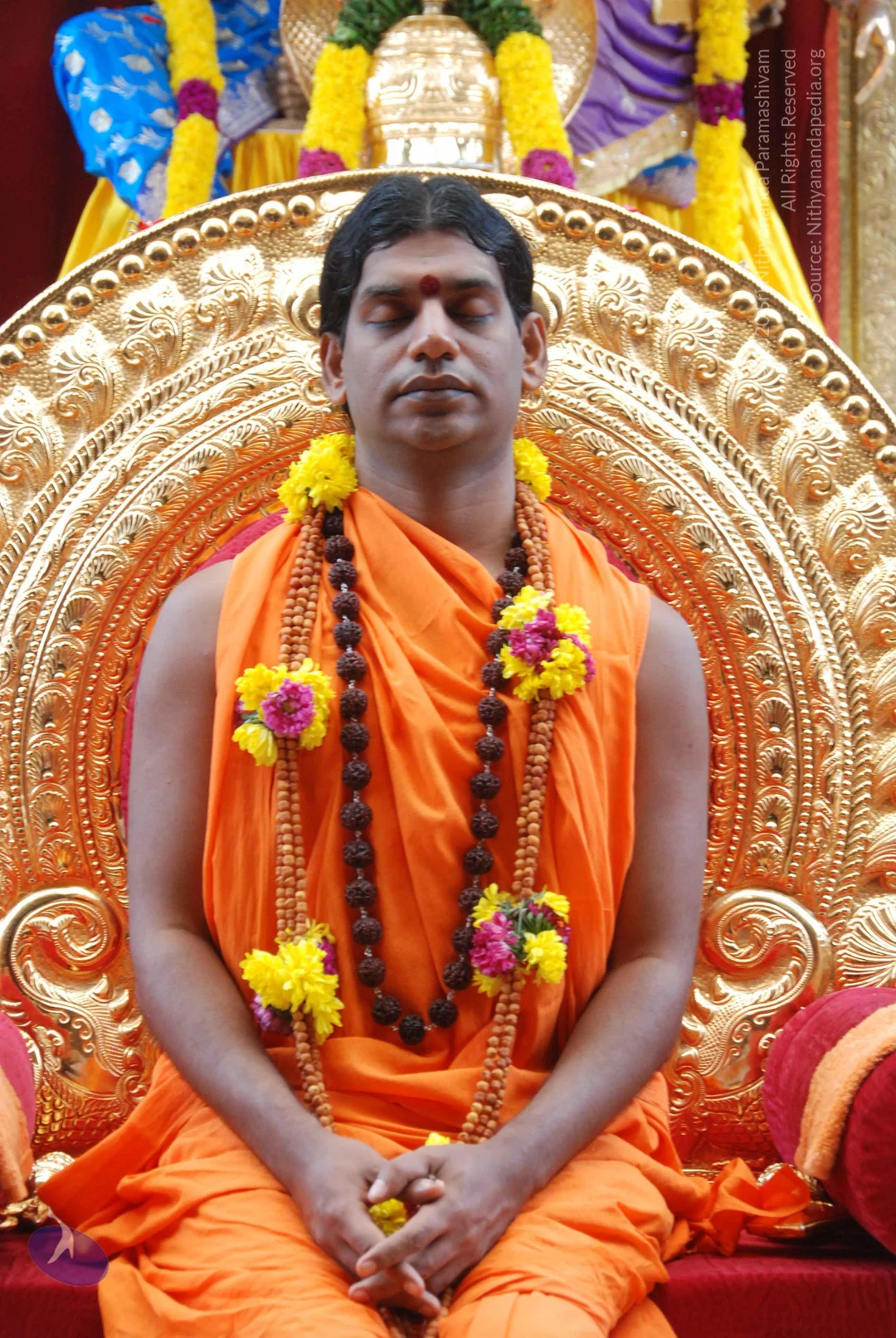
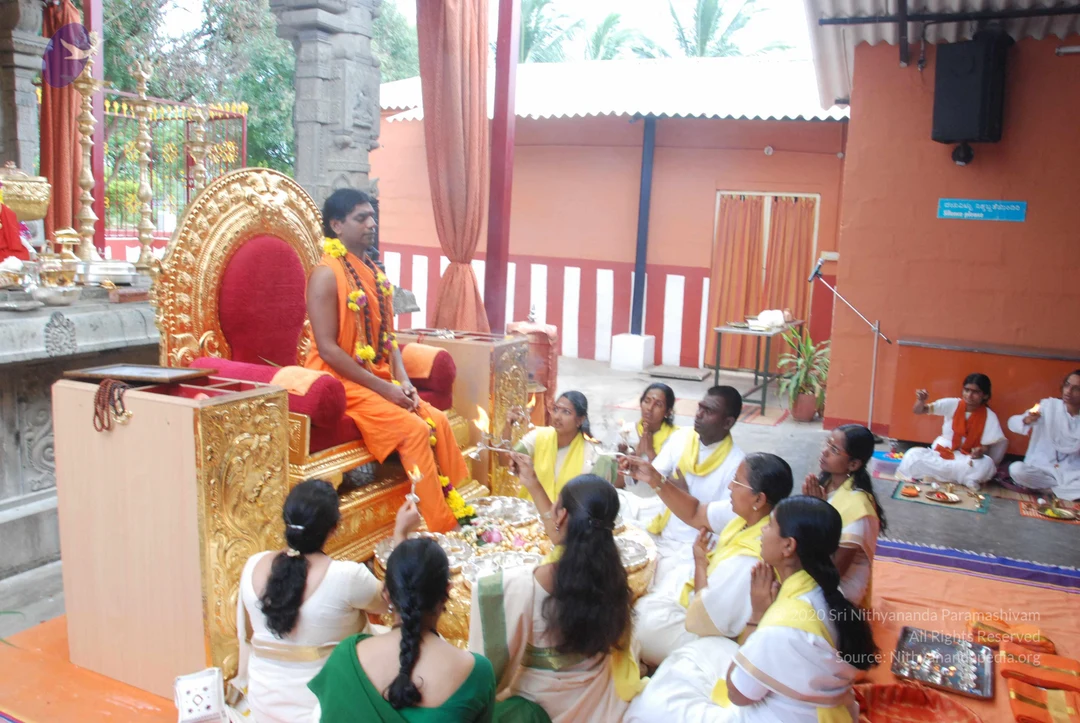
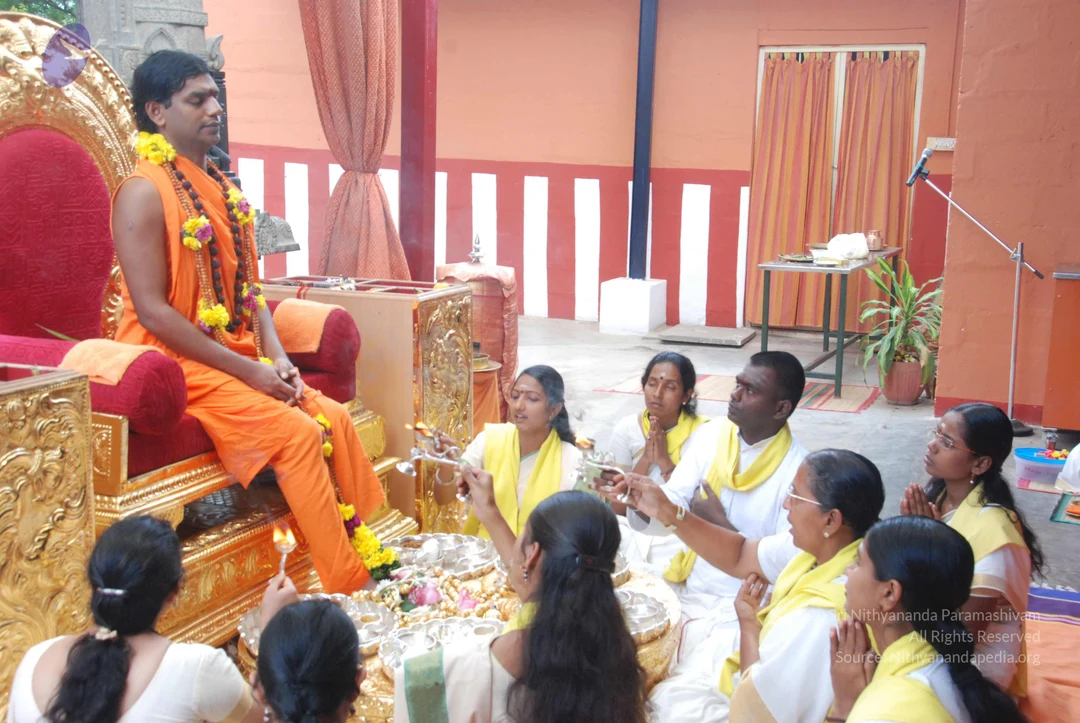
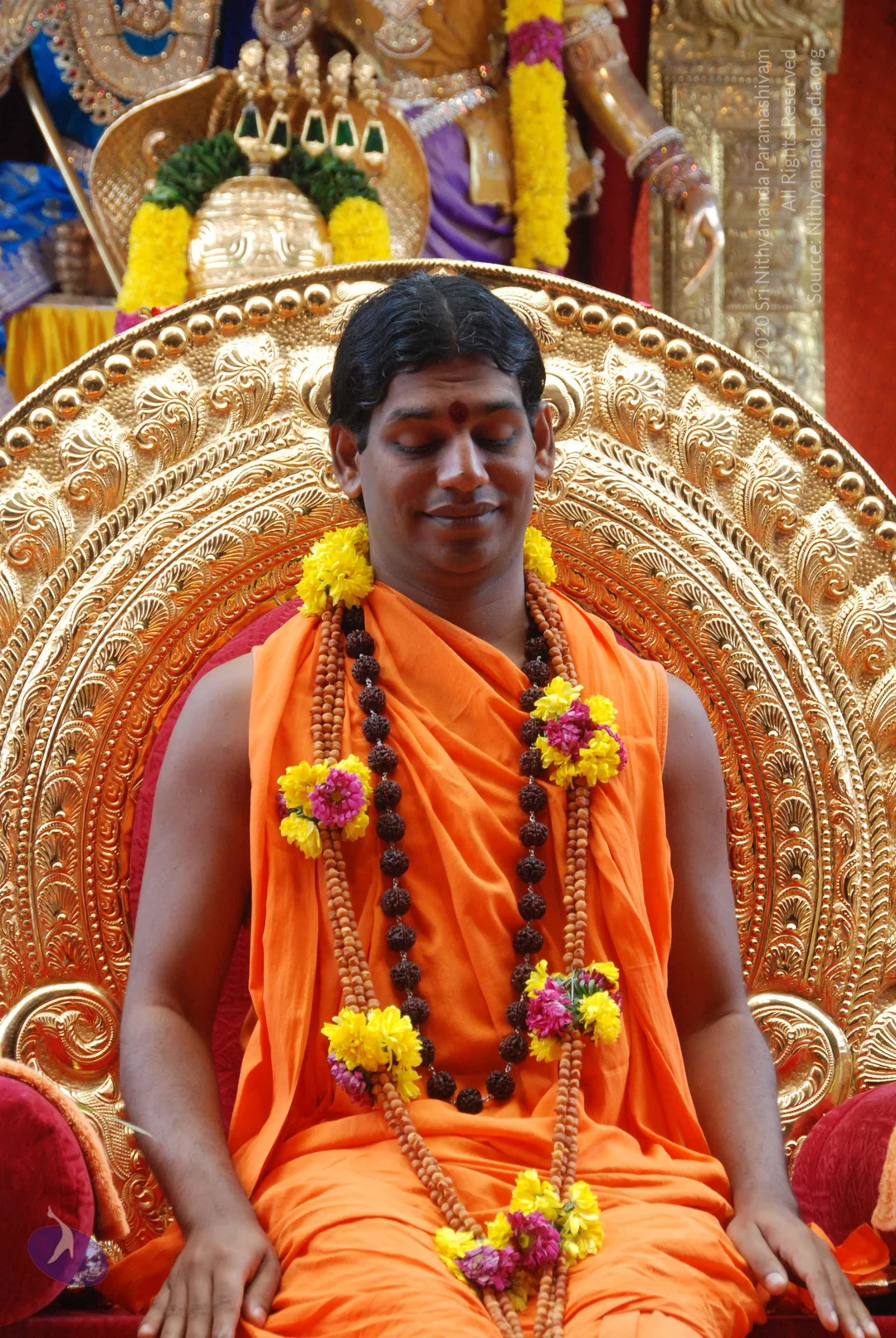
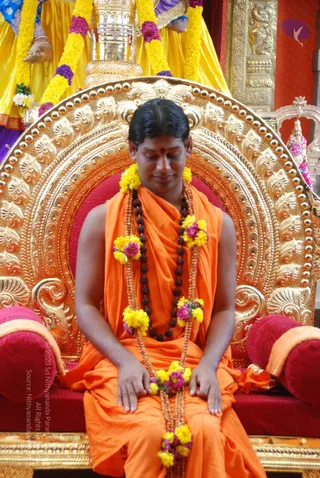
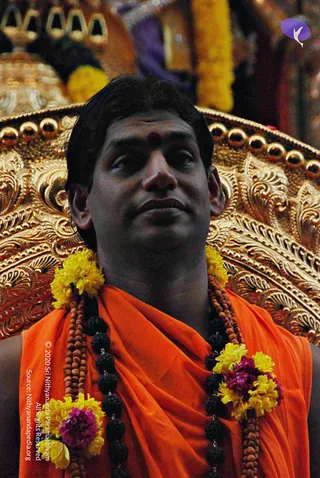
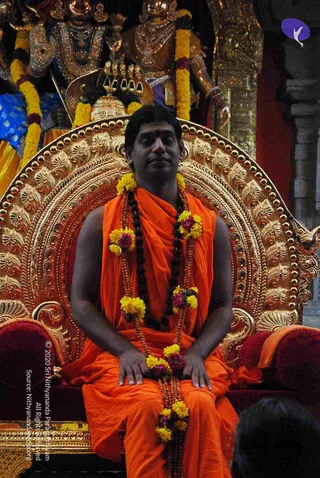
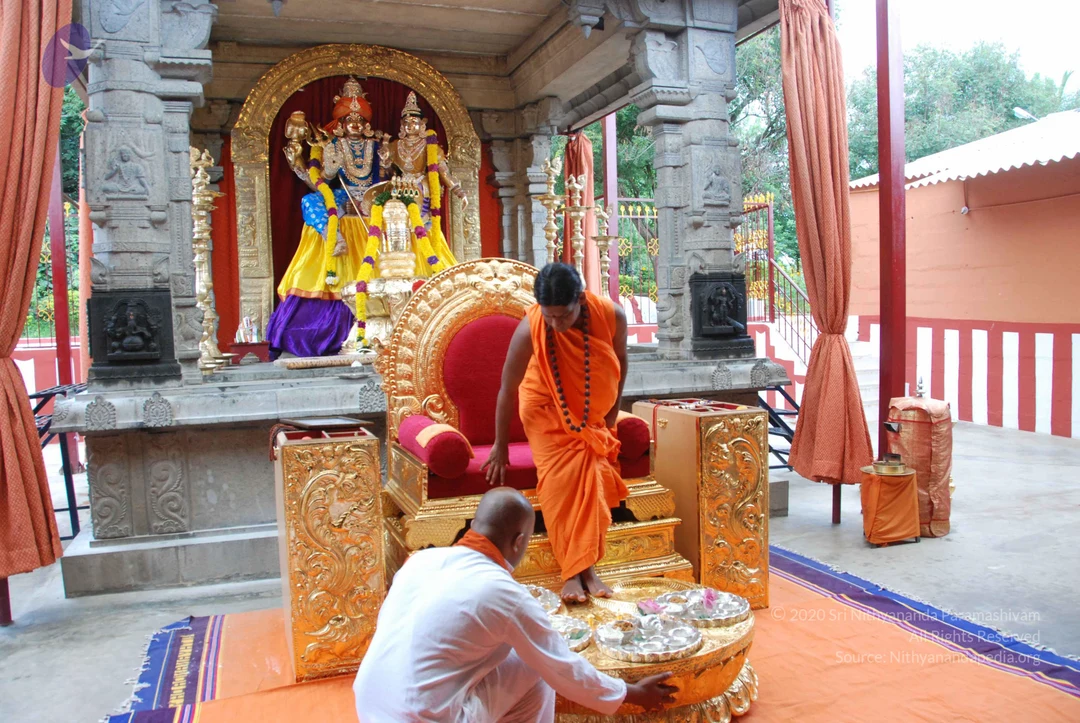
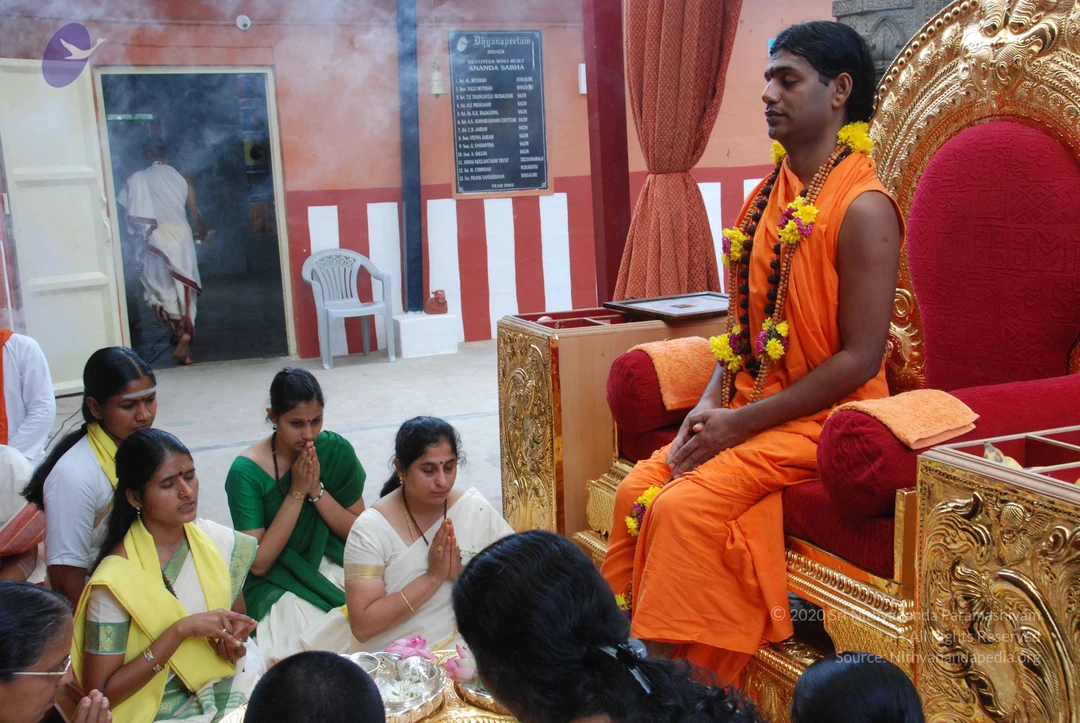
A photograph inside a temple shrine with grey stone pillars and orange drapes. Behind them, a deity murti in yellow and purple garments stands with a garland of marigolds, flanked by a second figure. In the foreground, a man in orange robes with a rudraksha mala stands on the step of an ornate gold-and-red throne, his hand resting on the armrest, while a bald man in white clothes with an orange shoulder cloth kneels on the floor before a gold tray of brass plates and offerings. The orange and red surroundings and gold-trimmed throne frame the puja setting.A seated man in saffron-orange robes sits on an ornate gold-and-red throne inside a temple-style hall. He wears a dark rudraksha mala around his neck and a red tilak on his forehead, with his feet bare and resting on a gold tray holding silver plates with flowers and offerings. Behind him stand a gold ornamented altar, stone carvings and a dark deity murti in a niche, with red-and-white striped pillars and orange curtains. A person in white stands at the right edge. The man appears to be a person, identified by the long swept-back hair absent here, so the appearance cues are limited to the saffron robes and rudraksha mala, and the throne setting alone is insufficient; the seated figure is a devotee-style presenter on a throne.A seated man in saffron-orange robes sits on an ornate gold throne with red cushions, his feet bare and resting on a golden base. He wears a long rudraksha mala and layered yellow and pink flower garlands, with a red tilak on his forehead, and his hands rest on his lap with eyes lowered. Behind him a deity murti is draped in yellow and purple cloth and garlanded with marigolds, flanked by tall brass lamps. In front, silver bowls with offerings and pink flowers are arranged on the floor.A seated man in orange saffron robes sits on an ornate gold throne with a red cushioned seat and red bolster pillows. He wears layered rudraksha mala necklaces and yellow and magenta flower garlands draped over his shoulders and lap, with a red bindi on his forehead, and his eyes are lowered. Behind the throne stand yellow and gold draped fabrics, more yellow-and-purple flower garlands, and a golden pillar. A small colourful deity murti is visible at the right edge. The man is an appearance-based a person, sitting enthroned in saffron clothing with rudraksha malas and garlands.Close-up photograph of a man seated before an ornate gold throne with repoussé floral carving and round gold finials. He wears an orange saffron wrap draped over his shoulders, long rudraksha mala strands of dark beads, and yellow and magenta flower garlands around his neck. A red tilak marks his forehead and he looks upward with a calm expression. Blurred gold and yellow floral decorations and oil lamps appear in the background. Appearance-based label: a person, seated in a ceremonial setting with rudraksha malas, saffron clothing and garlands.A seated man in orange saffron robes sits on an ornate gilded throne with a curved, carved back, his eyes closed and hands resting on his knees. Multiple rudraksha malas and yellow and magenta marigold garlands drape over his shoulders and chest. Behind him stand gilded deity murtis adorned with yellow flower garlands, and a red cushioned seat is visible at the side. Swamiji (probable): the orange clothing, rudraksha malas and ornate ceremonial setting match the page's reference to him, though the face-free appearance cues are the saffron robes and malas rather than distinctive hair or crown.
02-Message-Of-The-Day
8 photosSource gallery
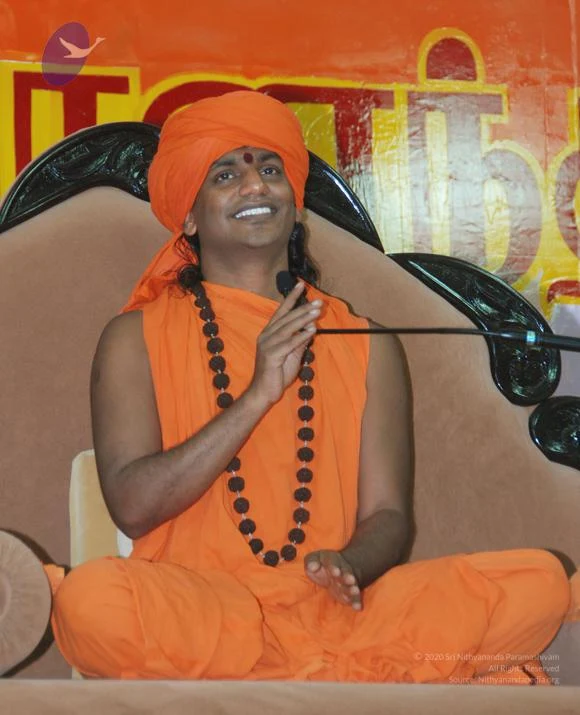
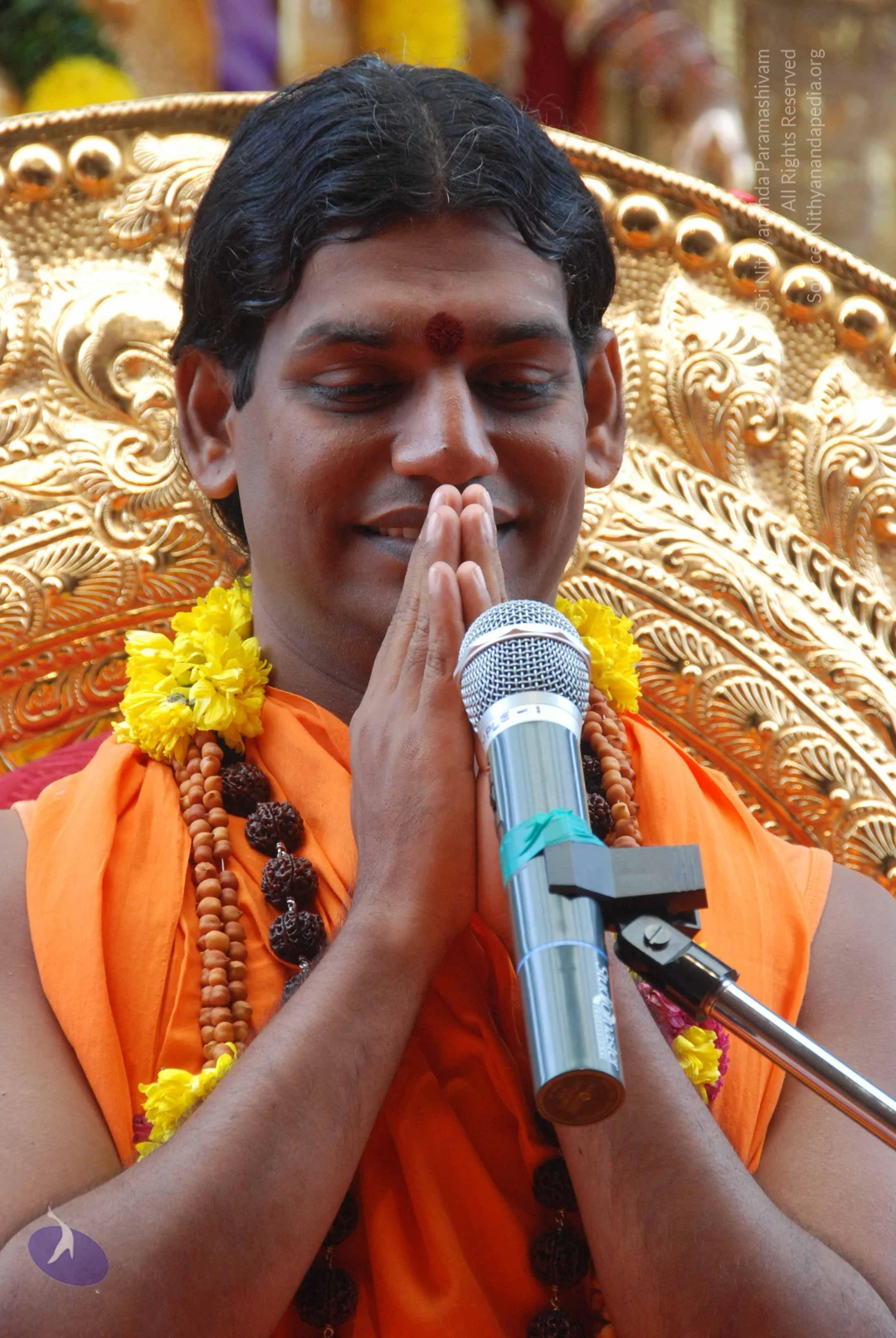
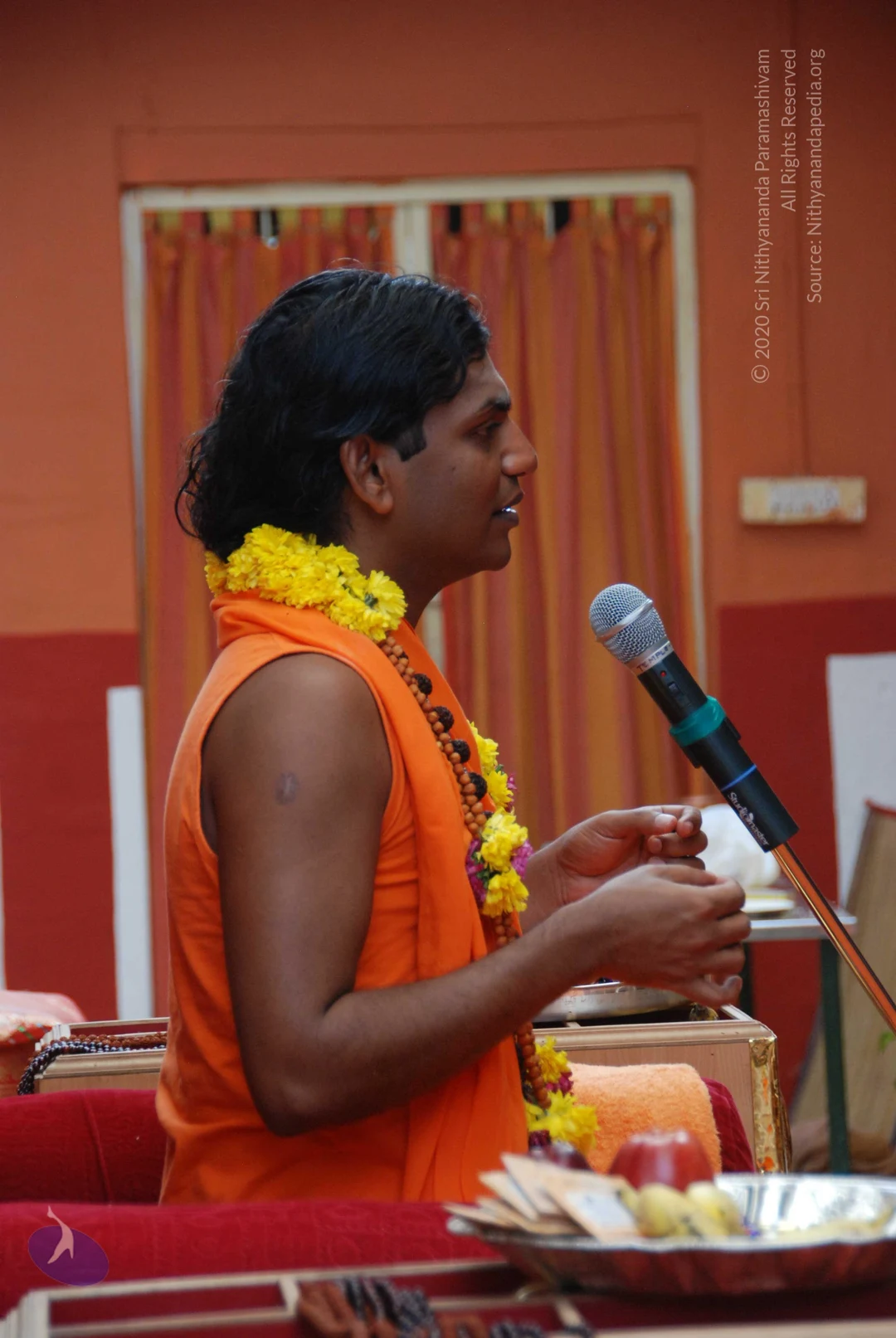
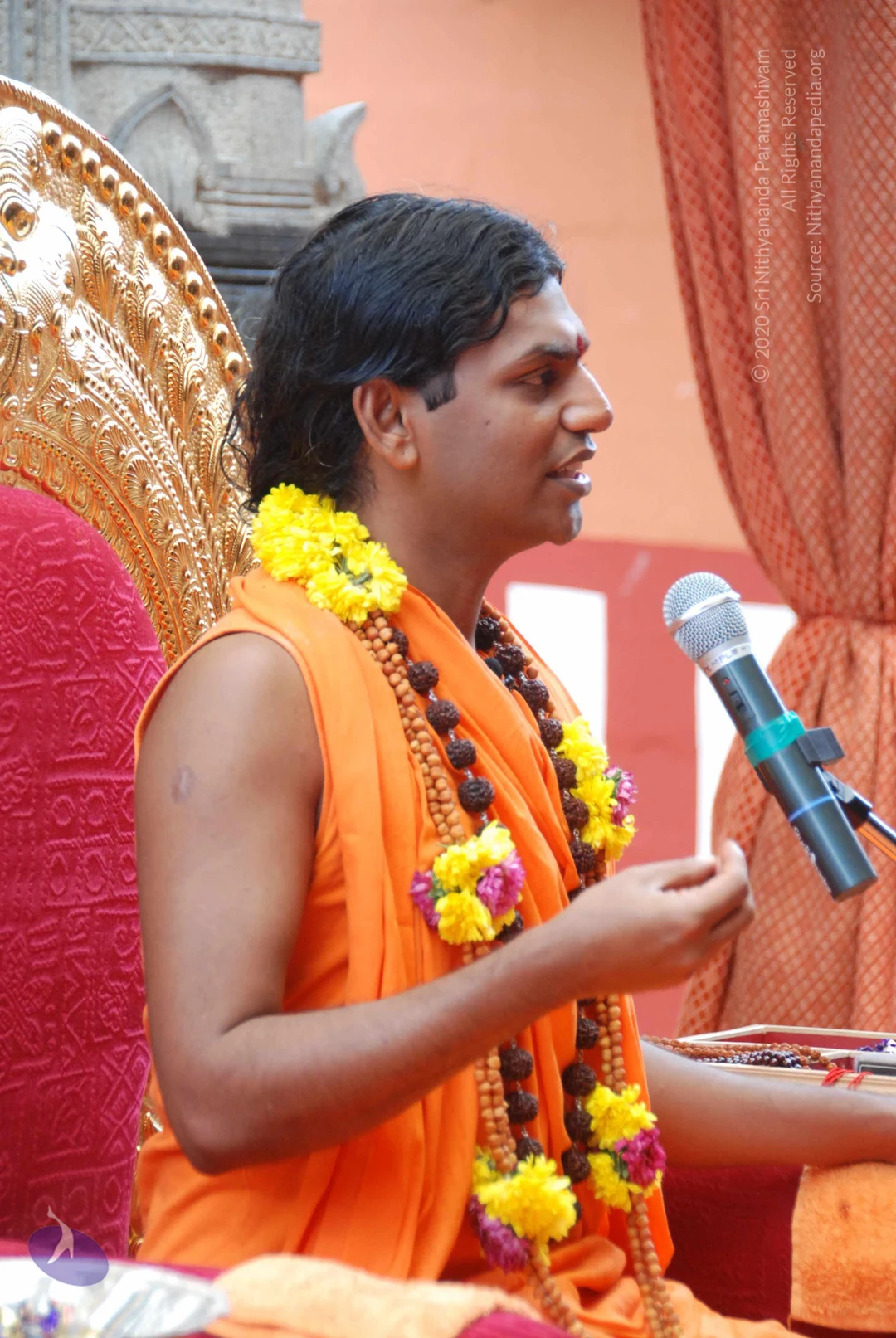
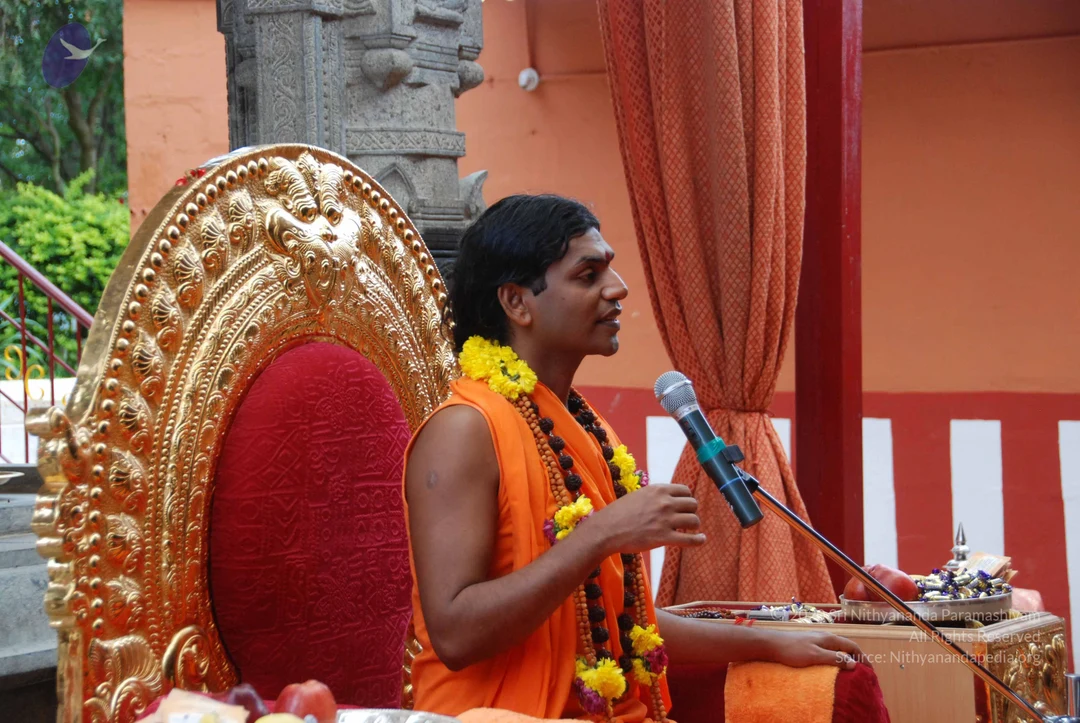
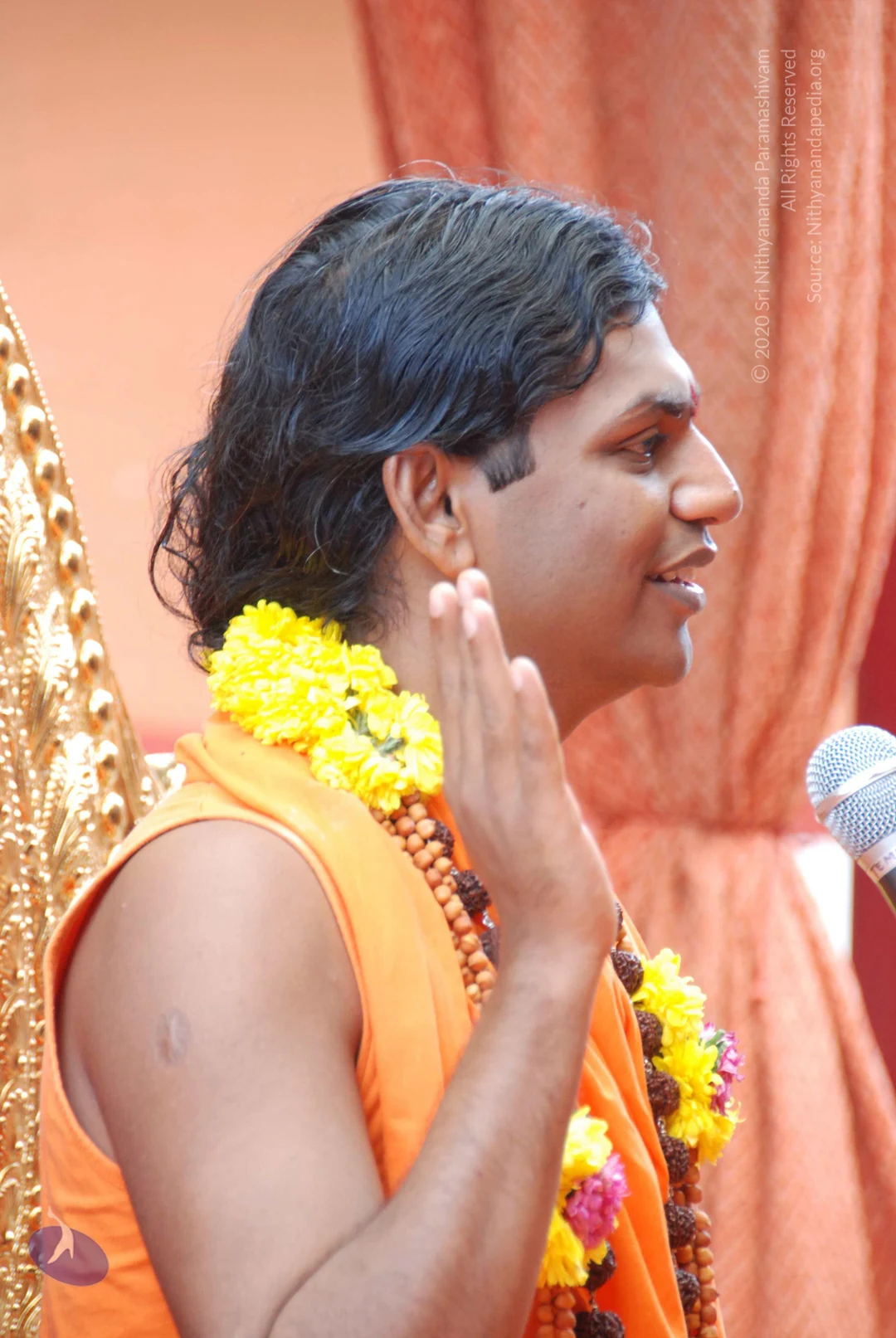
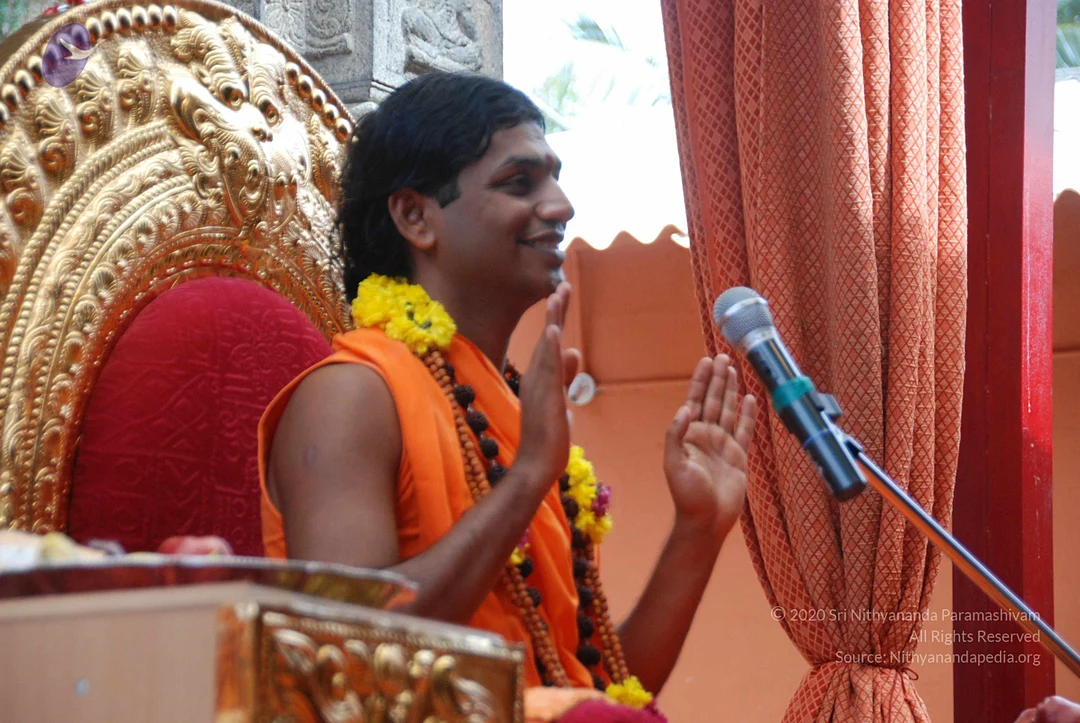
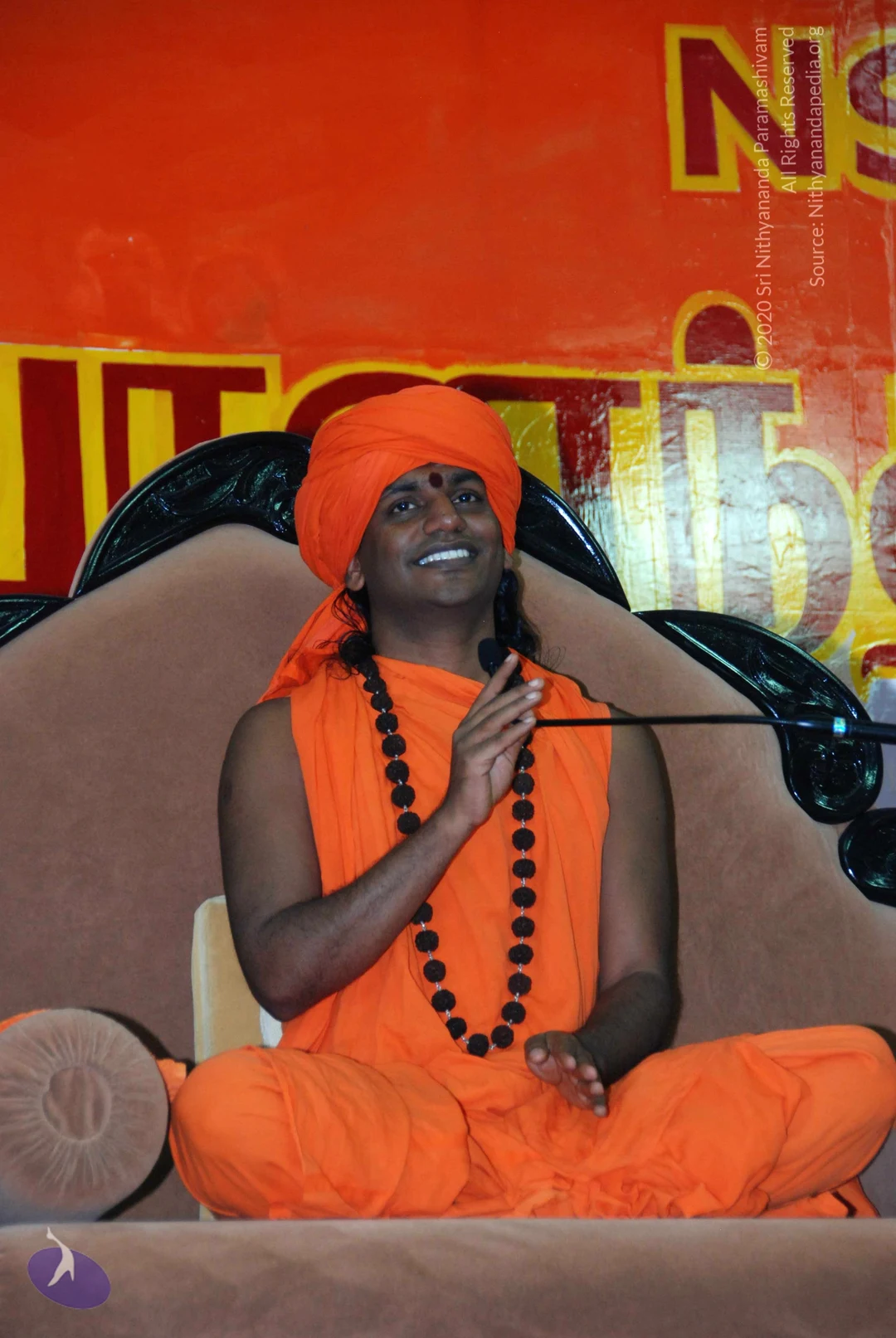
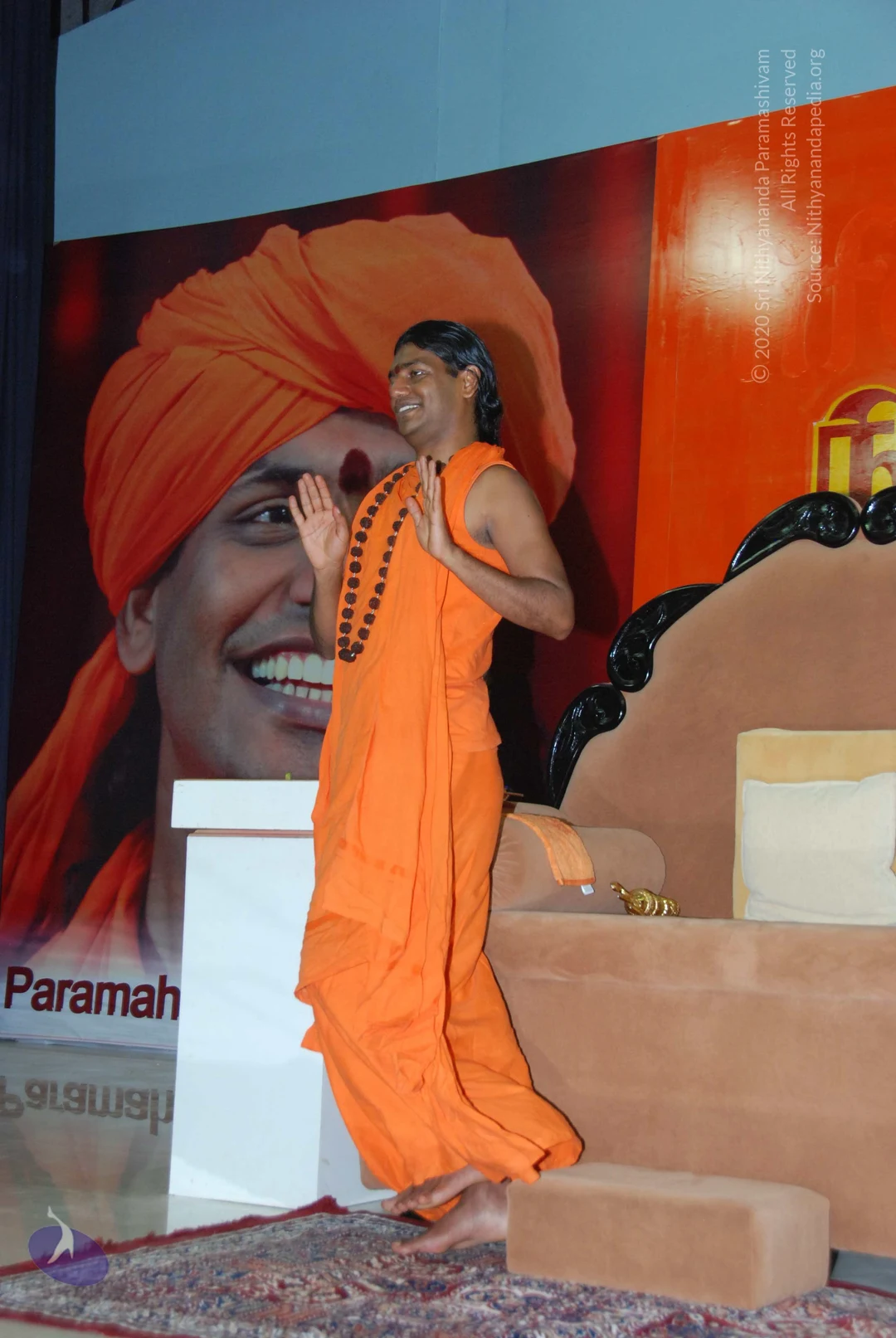
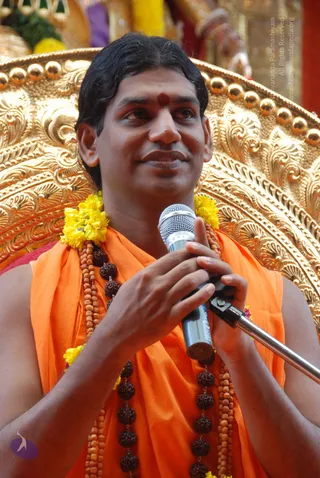
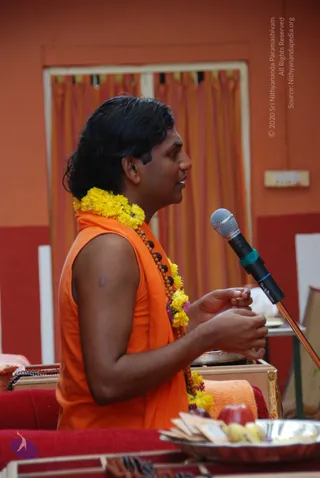
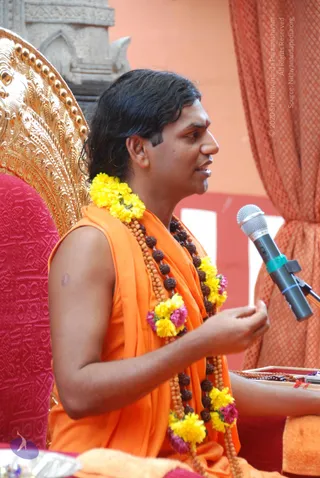
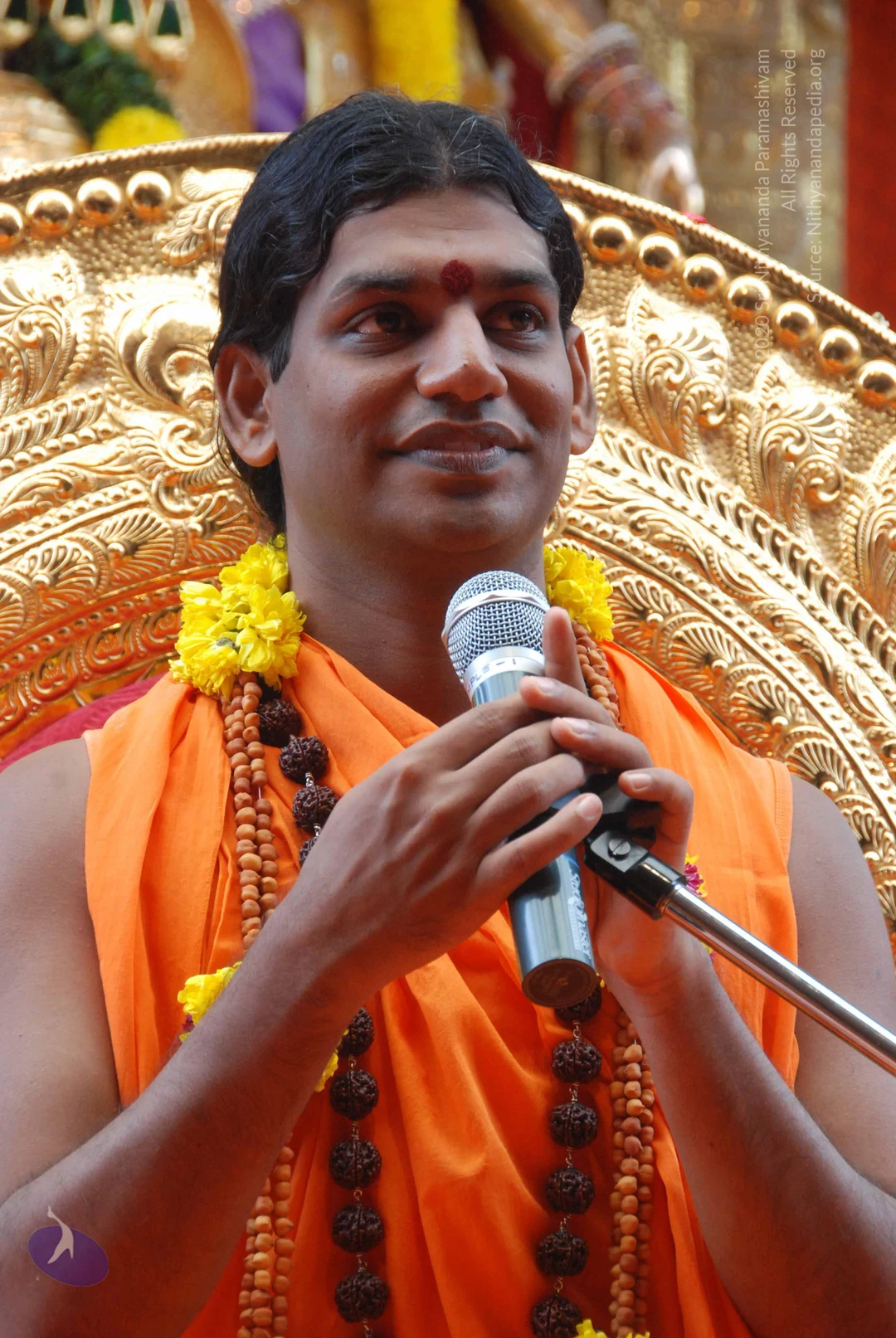
A man in saffron-orange robes speaks into a handheld microphone on a metal stand, seated before an ornate gold throne with carved scrollwork and gold beaded trim. He wears a red tilak on his forehead, a yellow flower garland, and long rudraksha malas with smaller beaded strands across his chest. Dark hair is swept back. Behind him are blurred gold and yellow floral decorations. Seen from a close, tight framing, the speaker is the only physical person in view.A smiling man in saffron-orange robes speaks into a handheld microphone with a silver stand. He wears a yellow marigold garland, several rudraksha mala strands, and a red bindi on his forehead. Behind him is an ornate gold throne back with repousse floral and scroll patterns, and a glimpse of a decorated deity murti with garlands.A photograph of a man in an orange sleeveless robe with a red tilak on his forehead, seated before a microphone with his palms pressed together in namaste, eyes lowered and smiling. He wears layered rudraksha malas and yellow flower garlands, and an ornate gold chair with carved floral backrest is behind him. a person: the man has short dark swept hair, orange robe, rudraksha malas and a garland, and the page says he is present at this talk; the cues are distinctive but the appearance is not fully certain.A photograph of a man seated in profile speaking into a handheld-style stage microphone on a mic stand. He wears a sleeveless orange saffron garment and a yellow marigold garland over a rudraksha mala. His hands are gently gesturing in front of him. Behind him hang orange and red curtains against an orange wall. In the foreground sit a silver tray with an apple, bananas and folded papers, a red cushion and an orange towel. a person is described by the saffron clothing, rudraksha mala and flower garland during a talk.A man seated on an ornate gold-and-red throne speaks into a handheld microphone on a stand. He wears a sleeveless saffron-orange garment and a red-and-white tilak on his forehead. Layered necklaces of brown rudraksha beads and marigold garlands with pink flowers hang across his chest. Behind him are a carved stone pillar and orange draped fabric. A small tray with beads sits at the lower right. A mild, appearance-based reading suggests a person, though the cues are limited to the orange clothing, rudraksha malas and garlands, so the identification is uncertain. He is seated on a throne as a teacher during a satsang-style talk.A man seated on an ornate gilded throne with a red cushioned back speaks into a handheld microphone on a stand. He wears a sleeveless saffron-orange garment, a long rudraksha mala with brown beads, and a yellow and purple flower garland. His hair is swept back and he has a sandalwood tilak on his forehead. In front of him are a wooden stand holding fruit, flower petals and a small brass lamp, and a red-and-white striped backdrop with orange drapes behind him. Carved stone pillars and greenery are visible at the left. a person: the saffron clothing, rudraksha mala, flower garland and throne match the page's a person claim, so he is labelled as probable.

03-Sarvadarsan
38 photosSource gallery
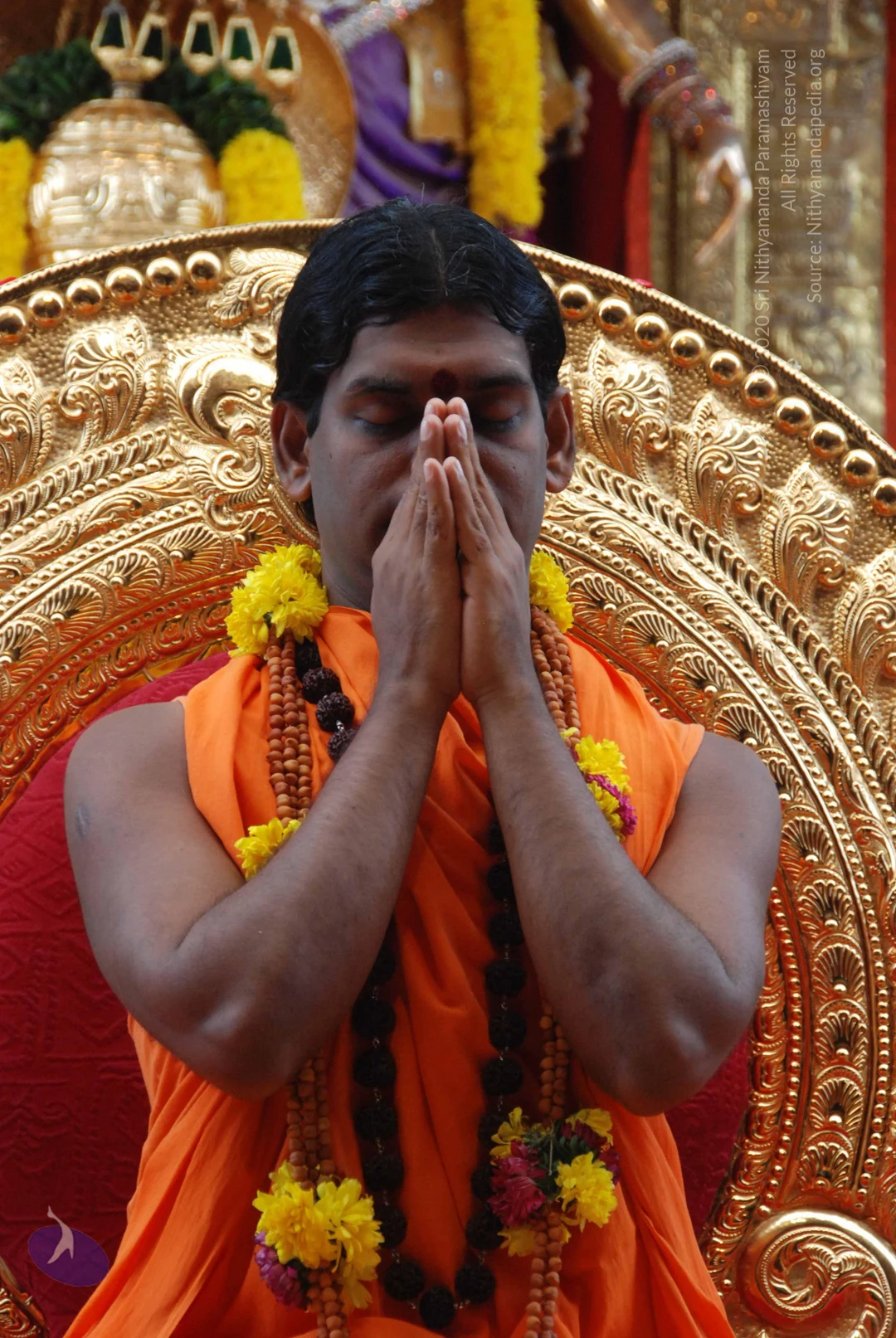
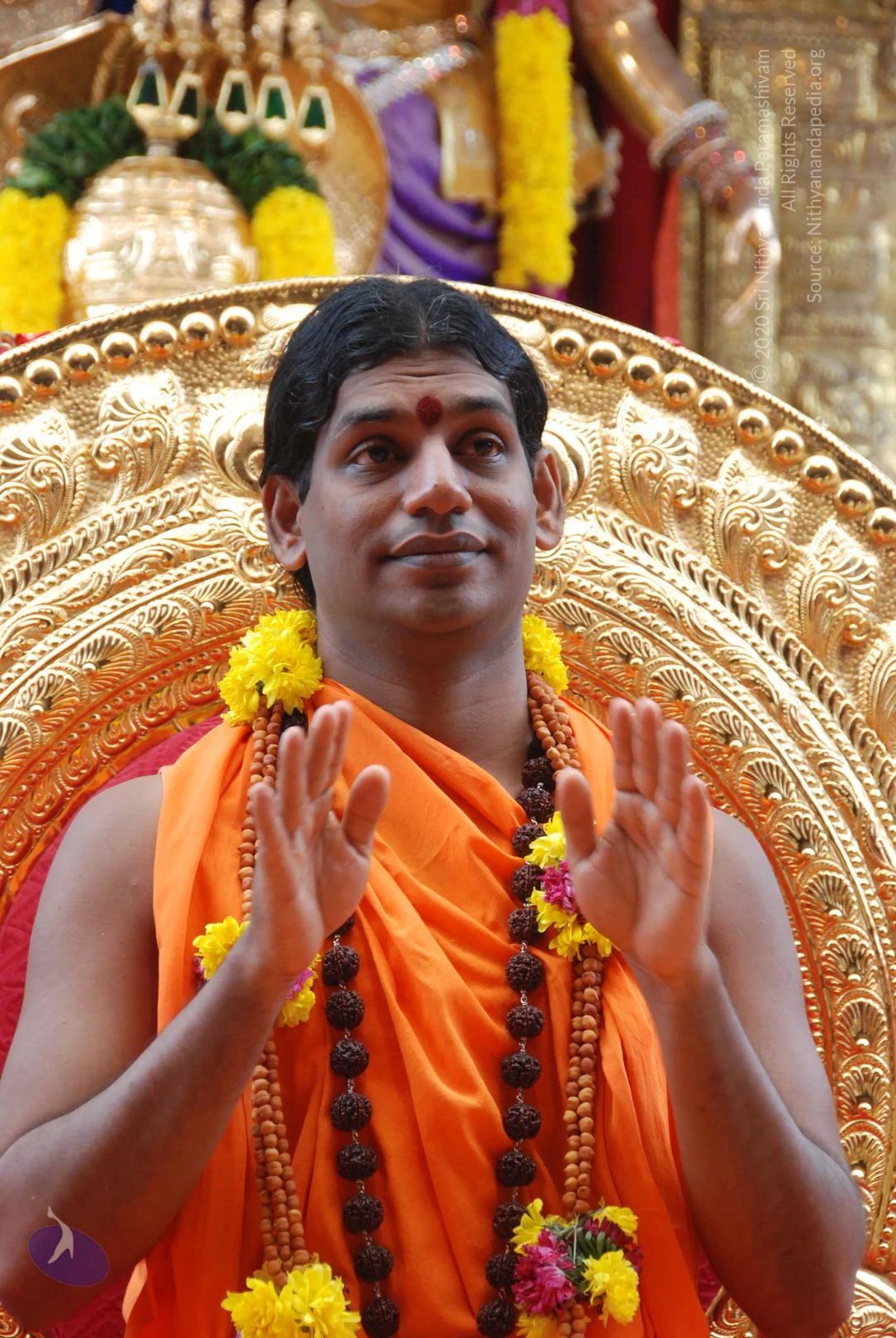
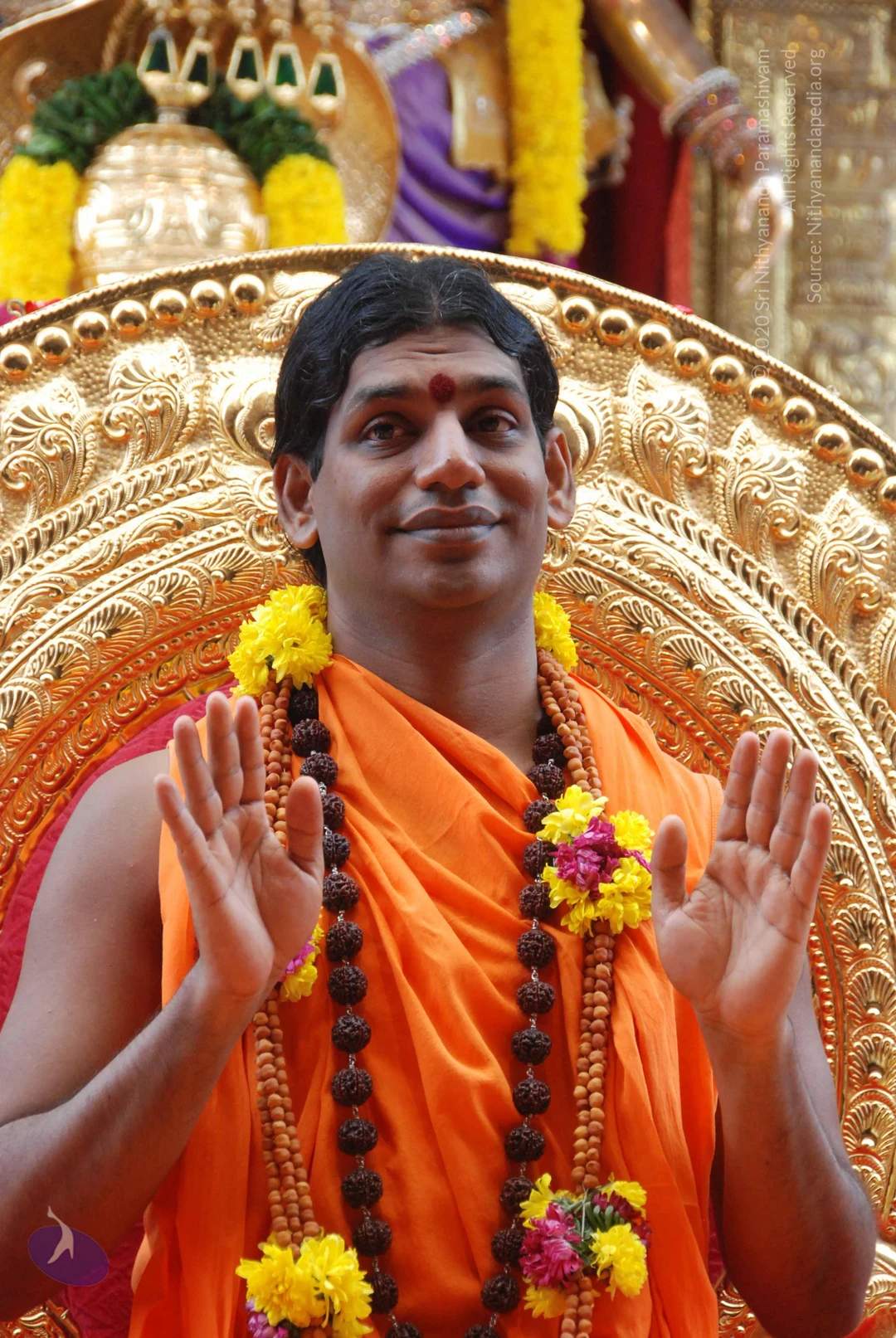
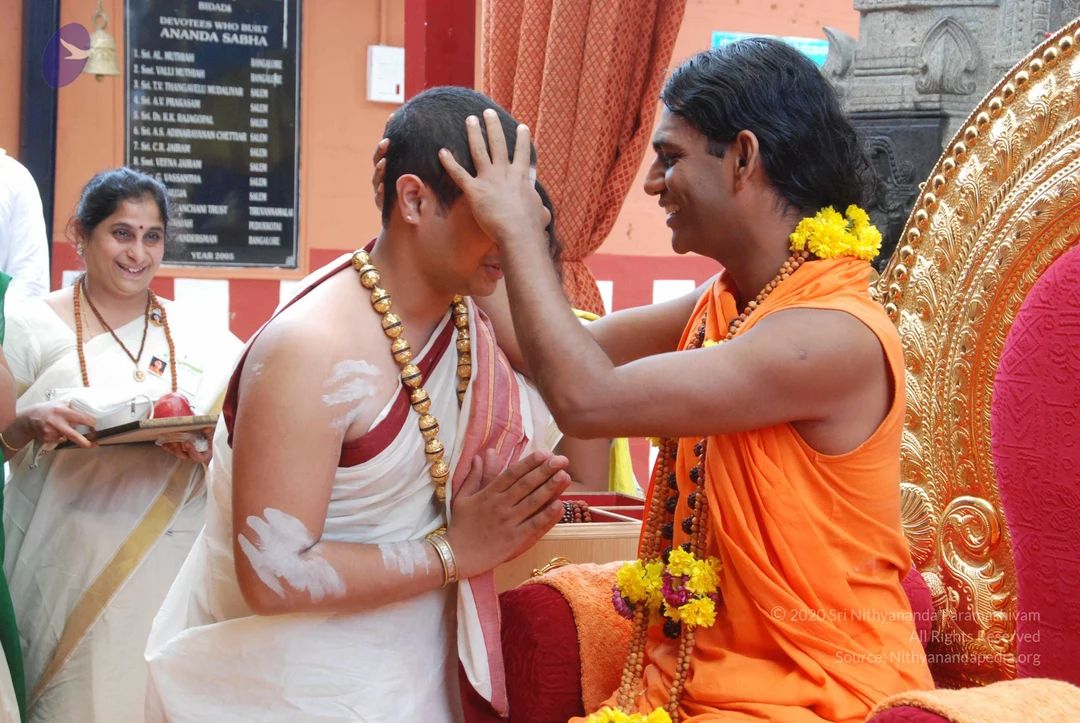
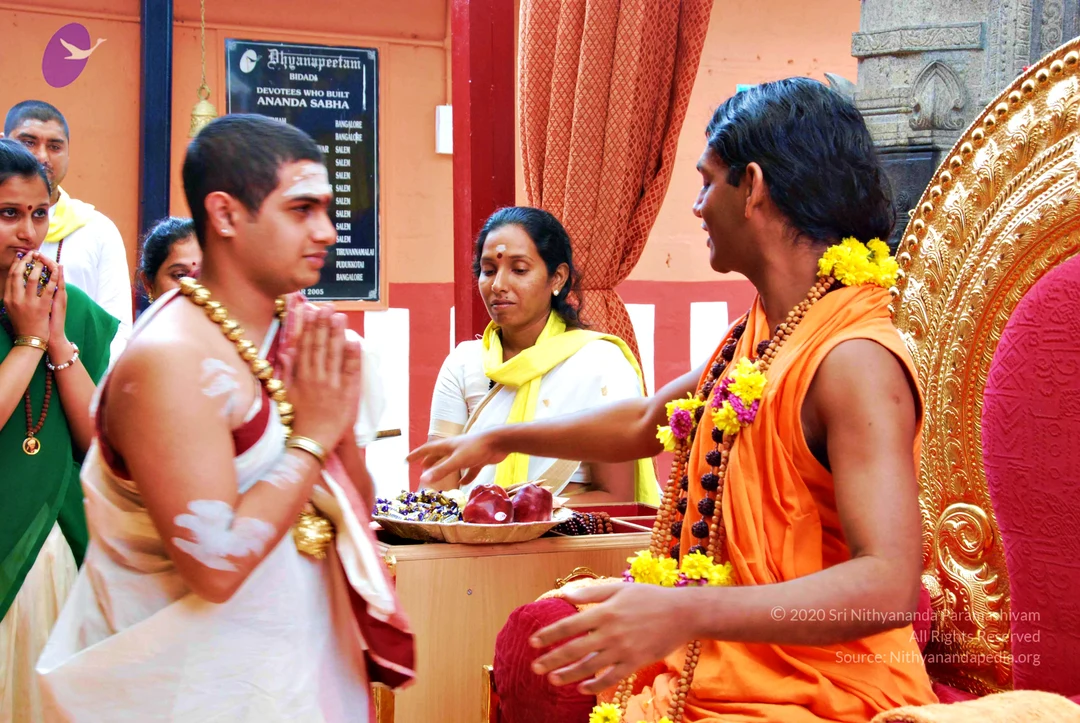
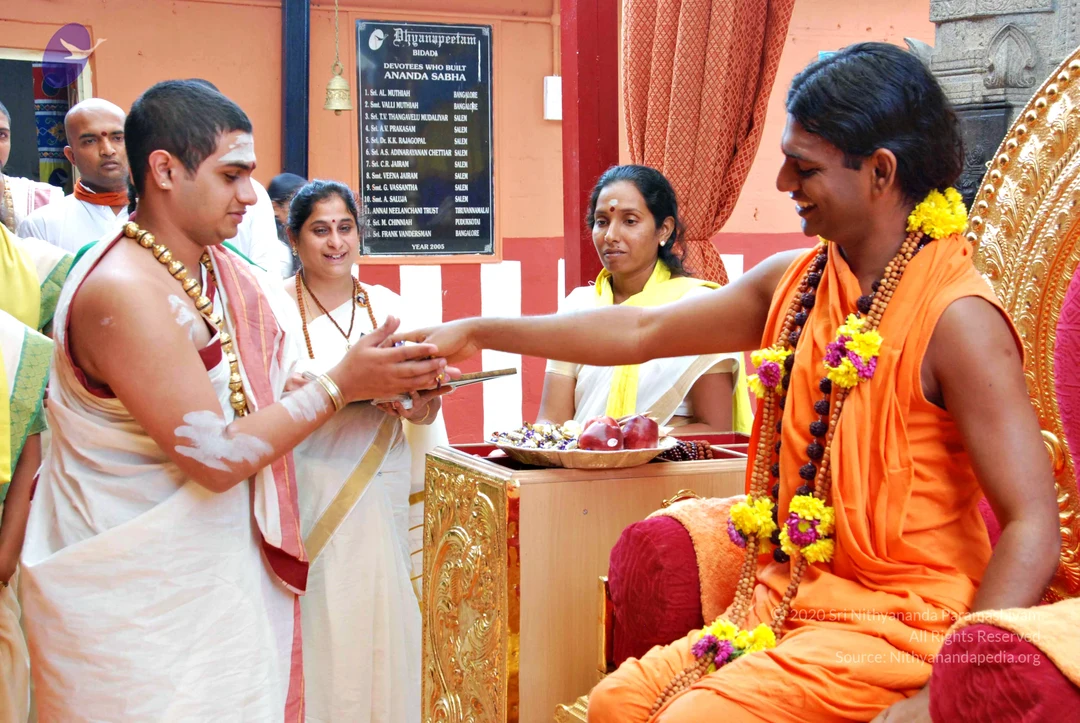
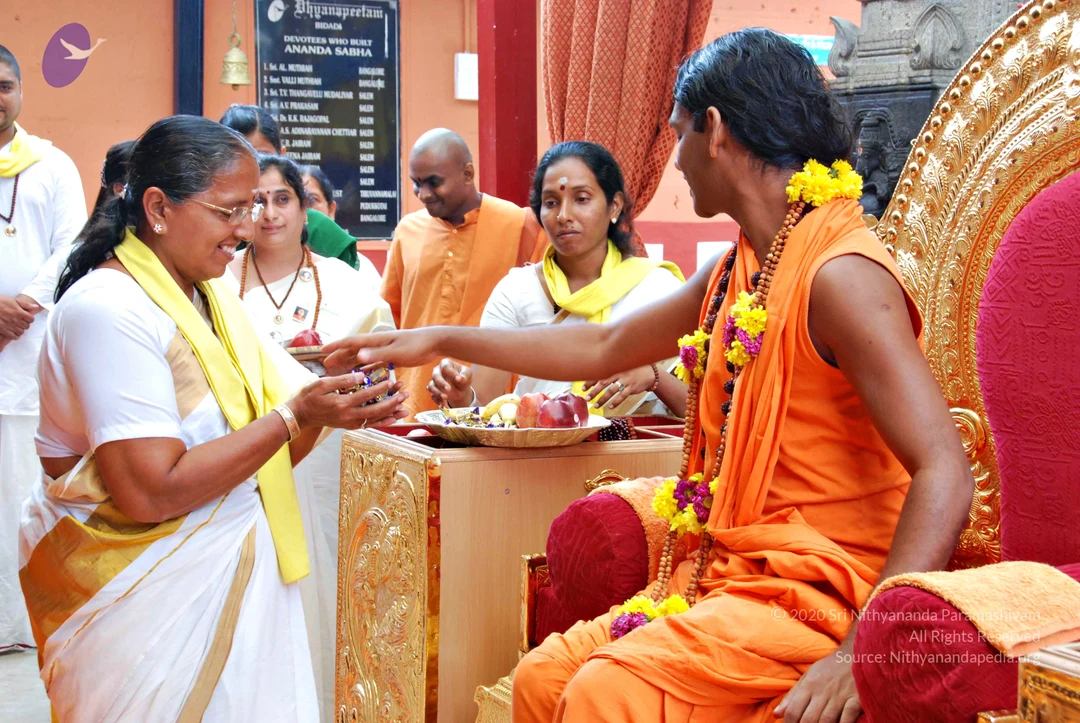
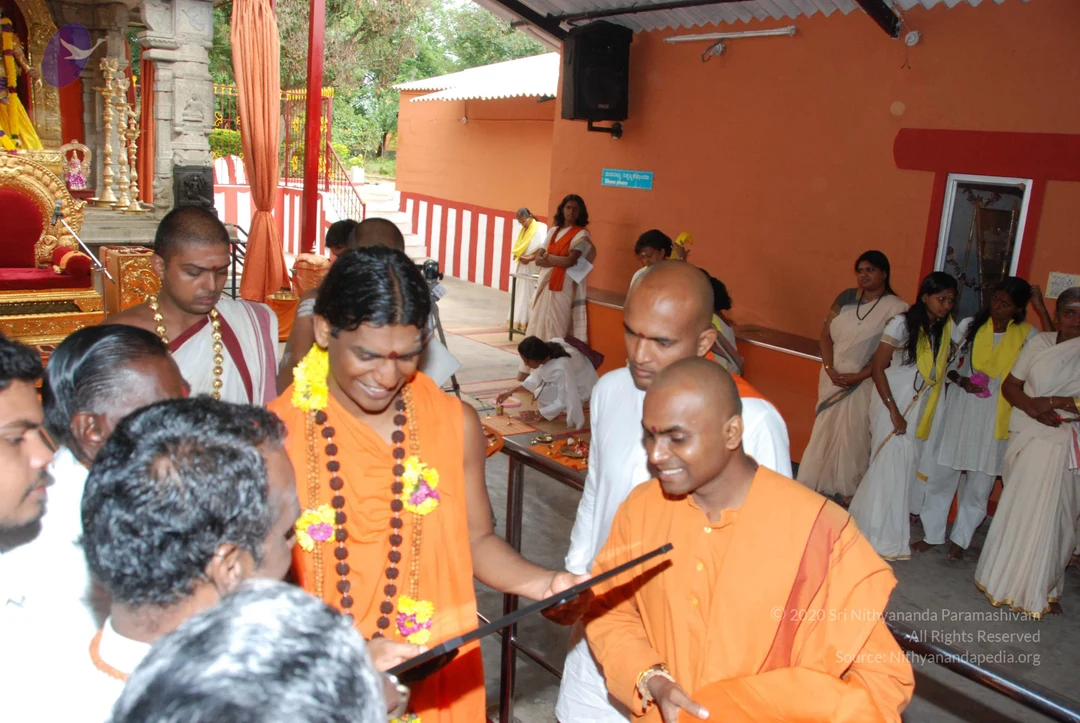
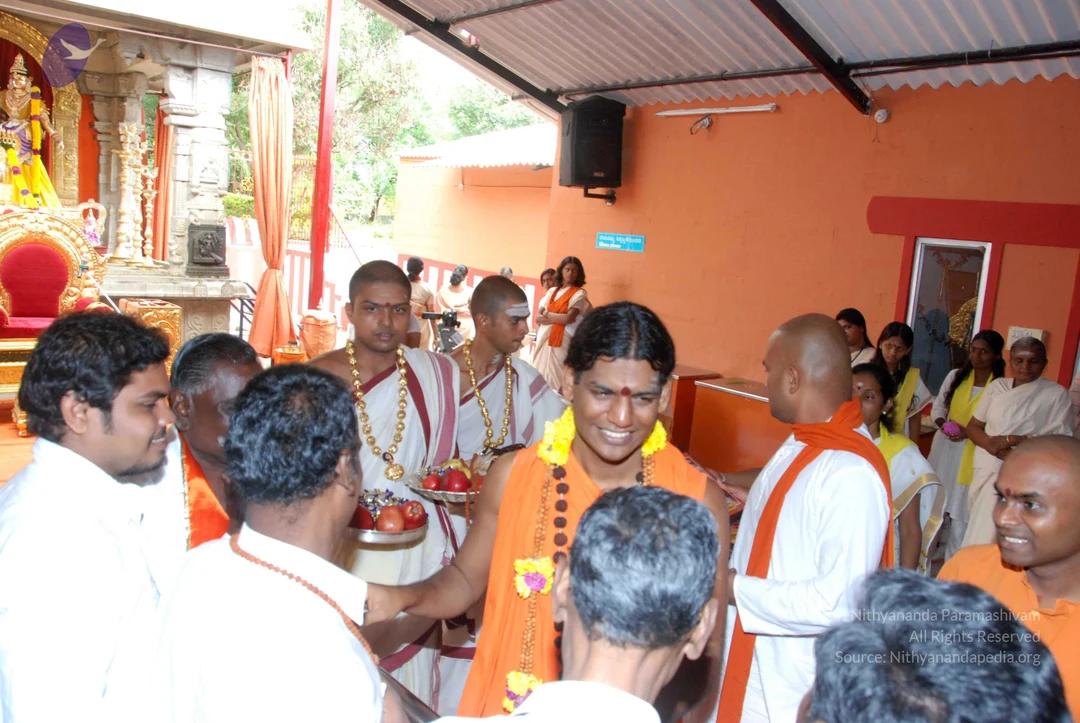
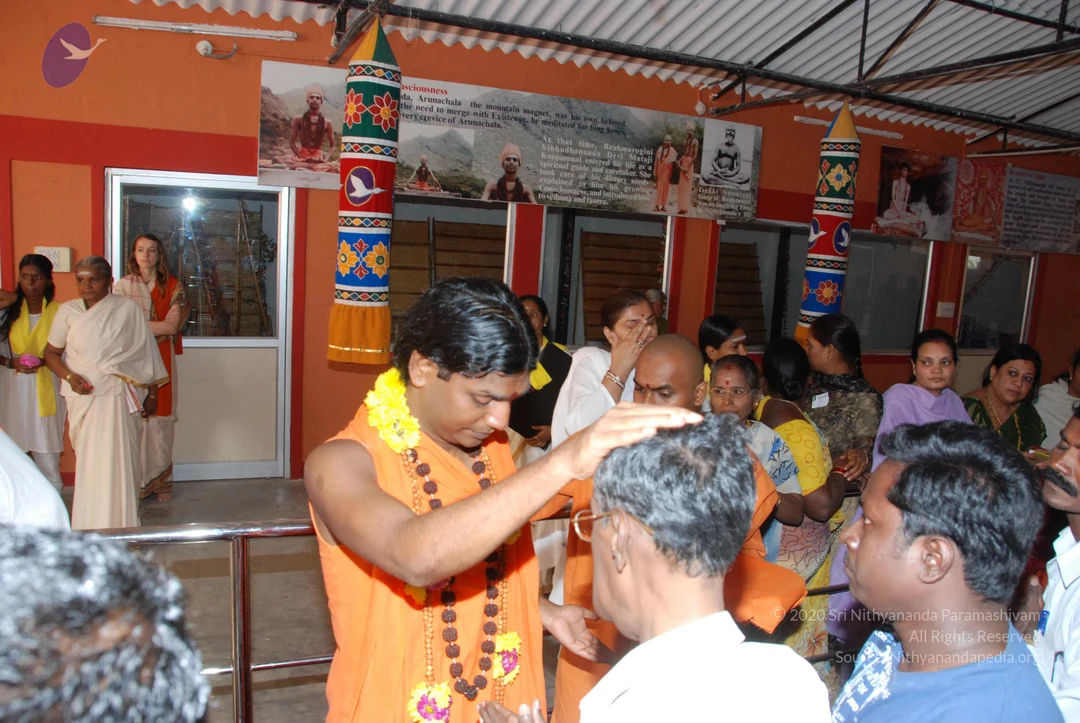
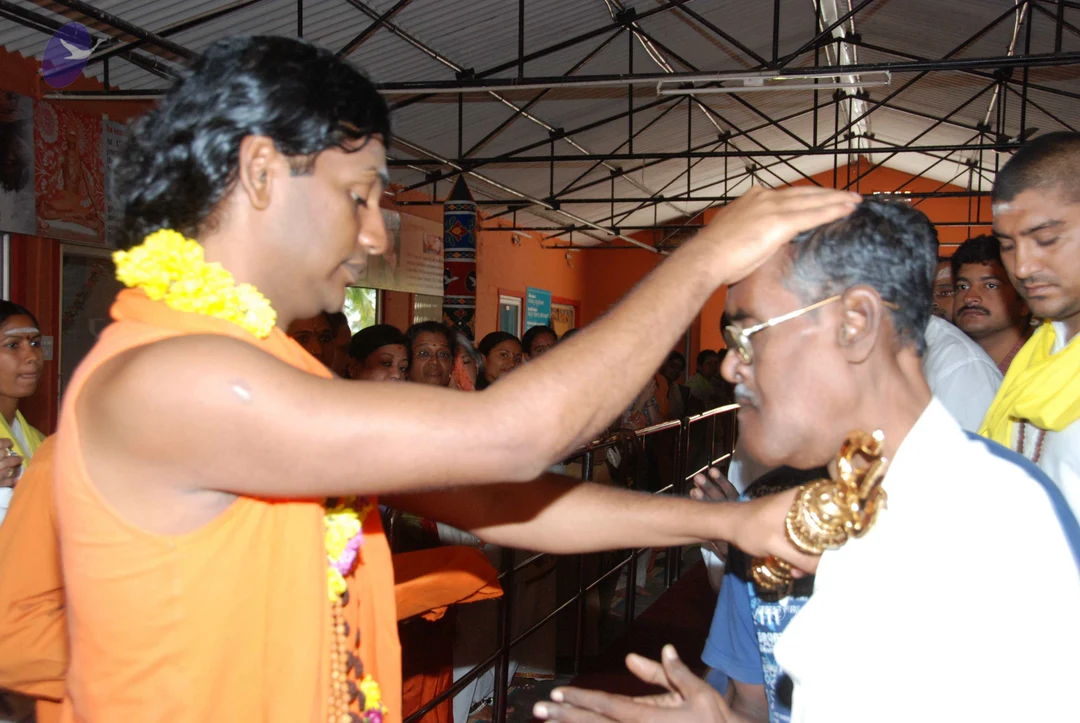
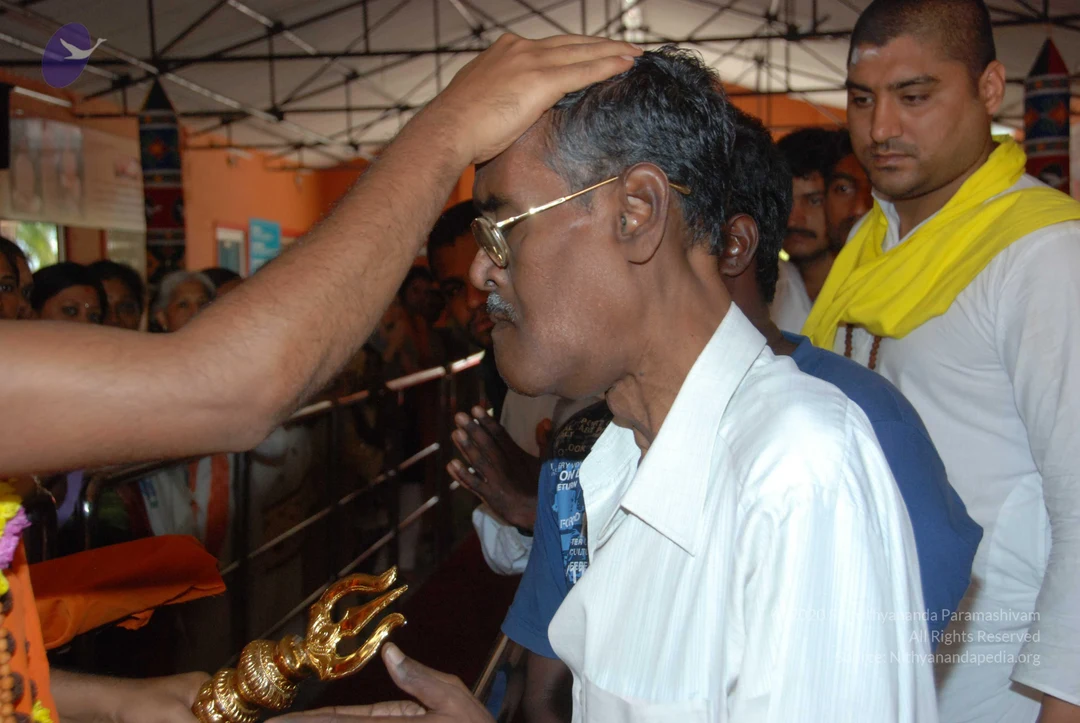
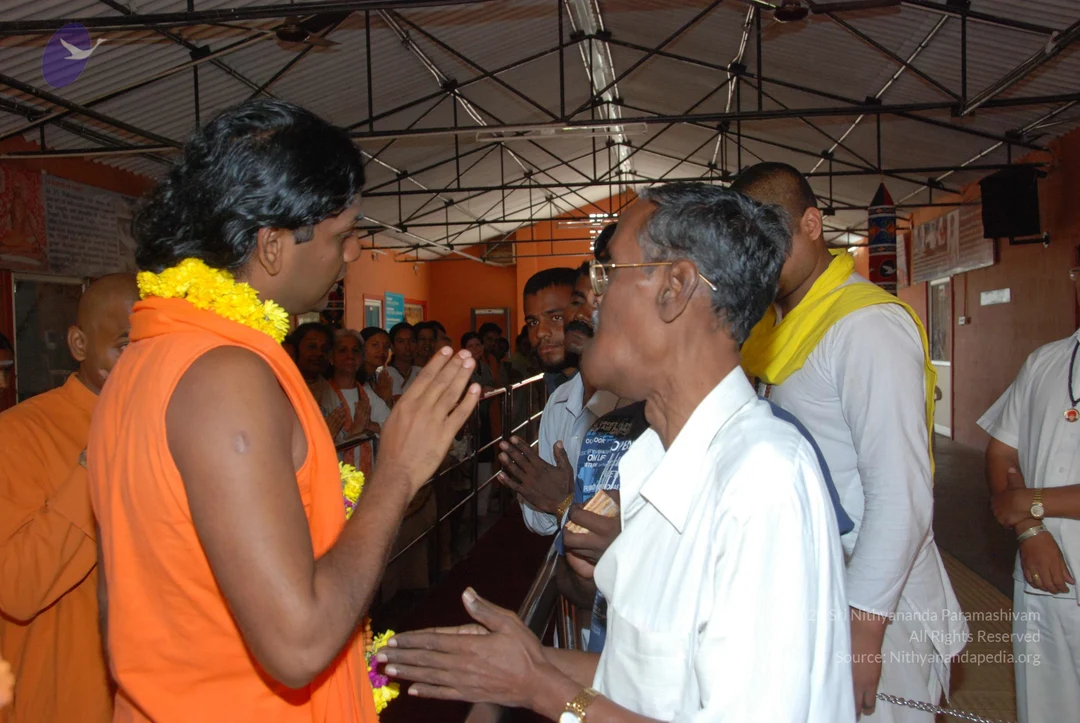
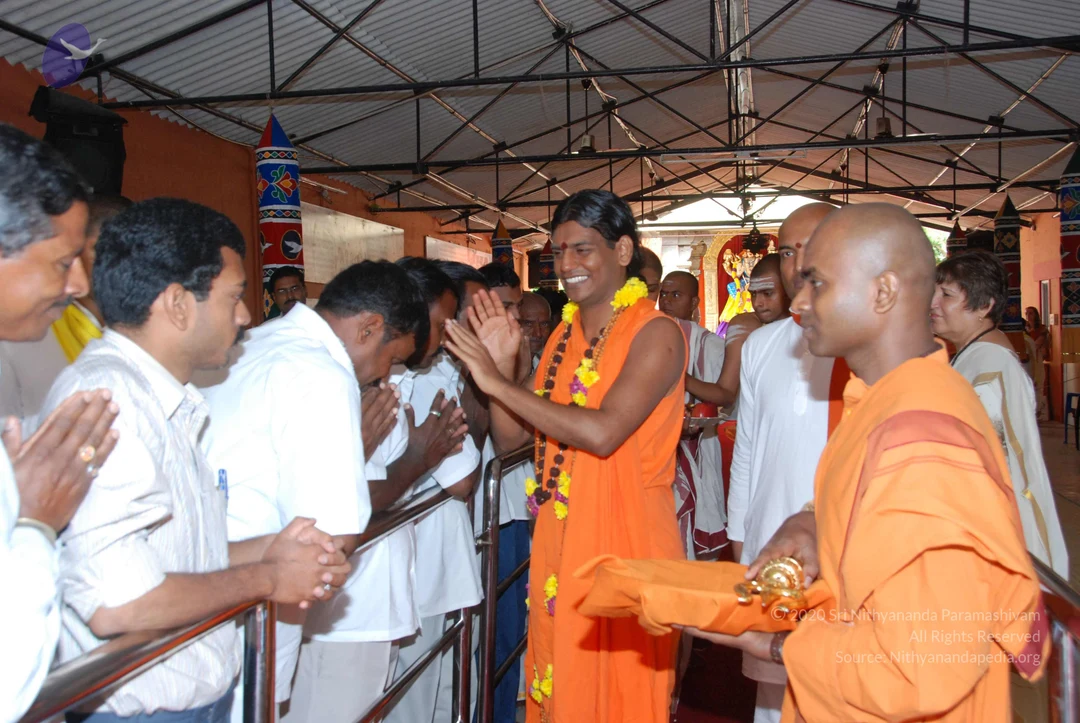
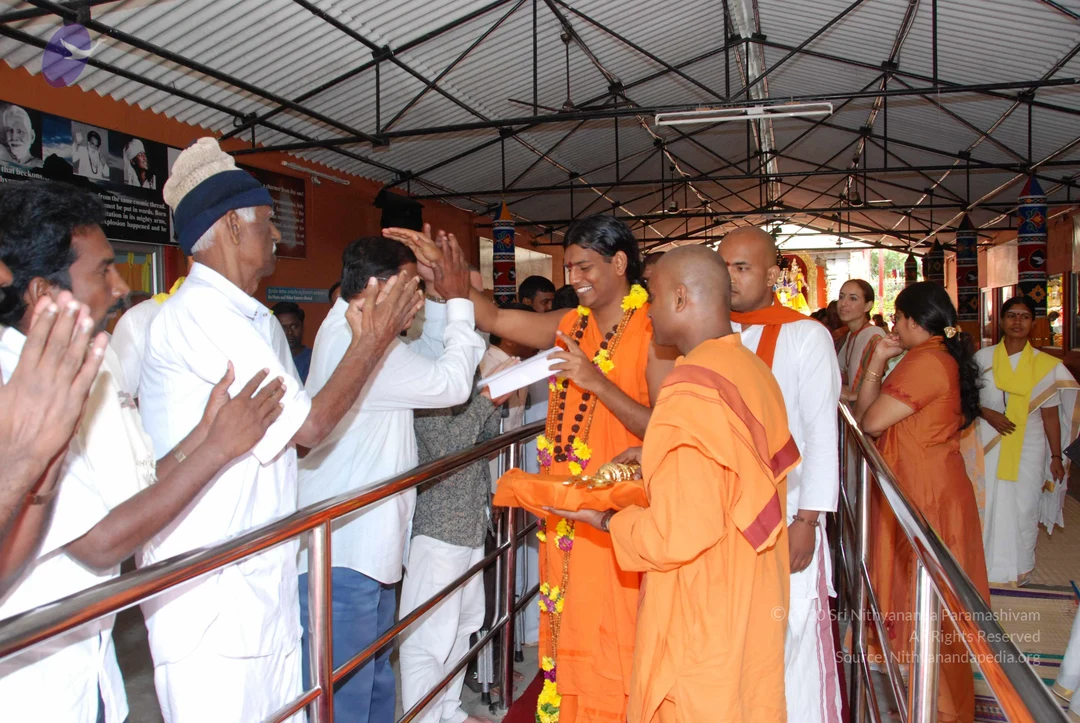
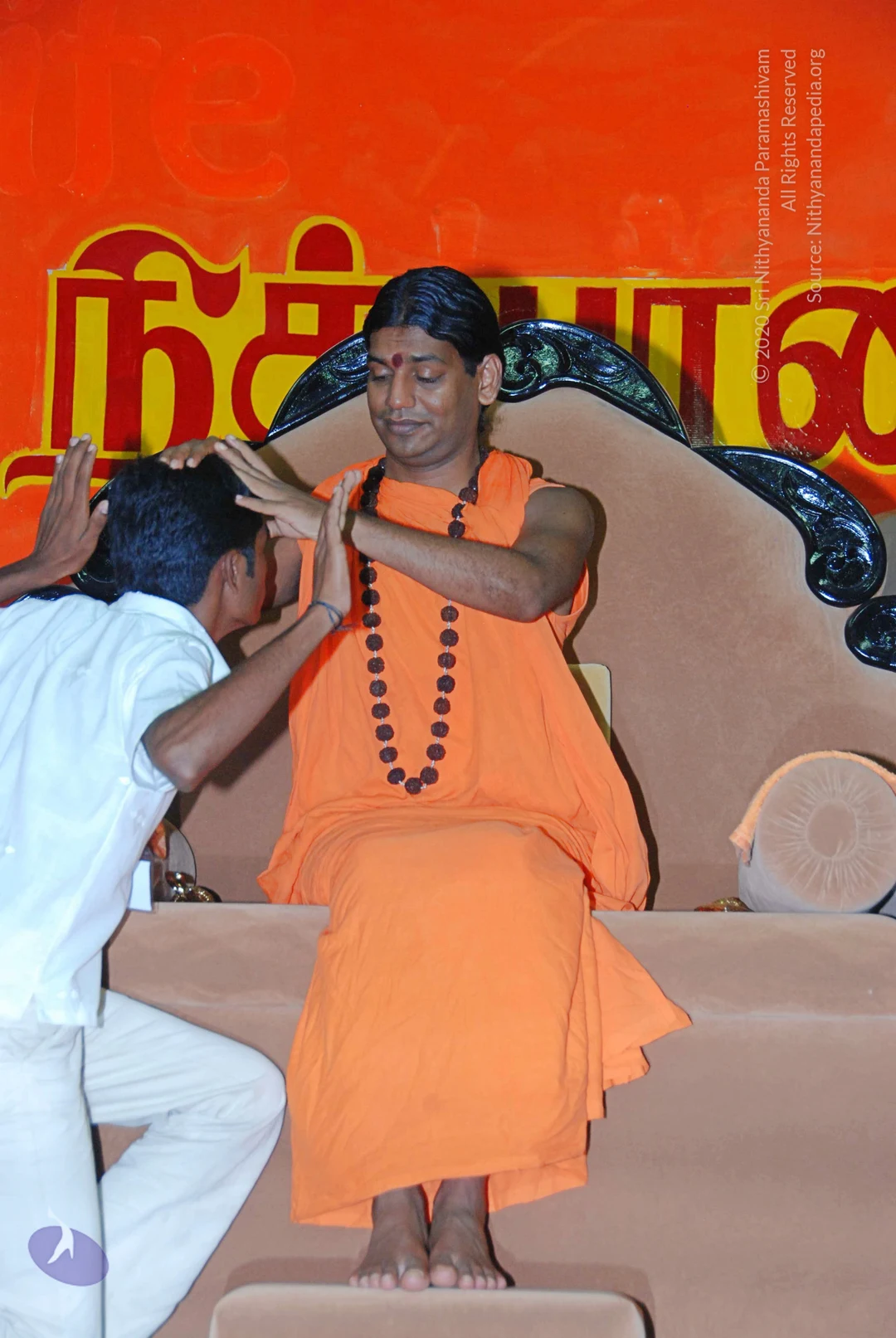
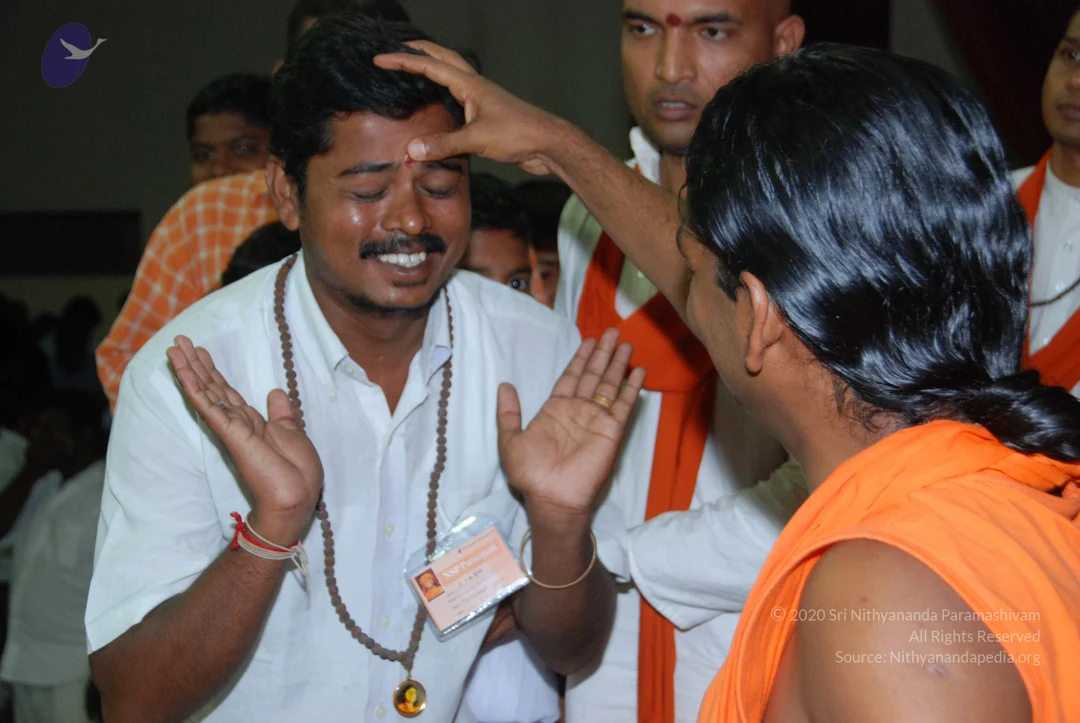
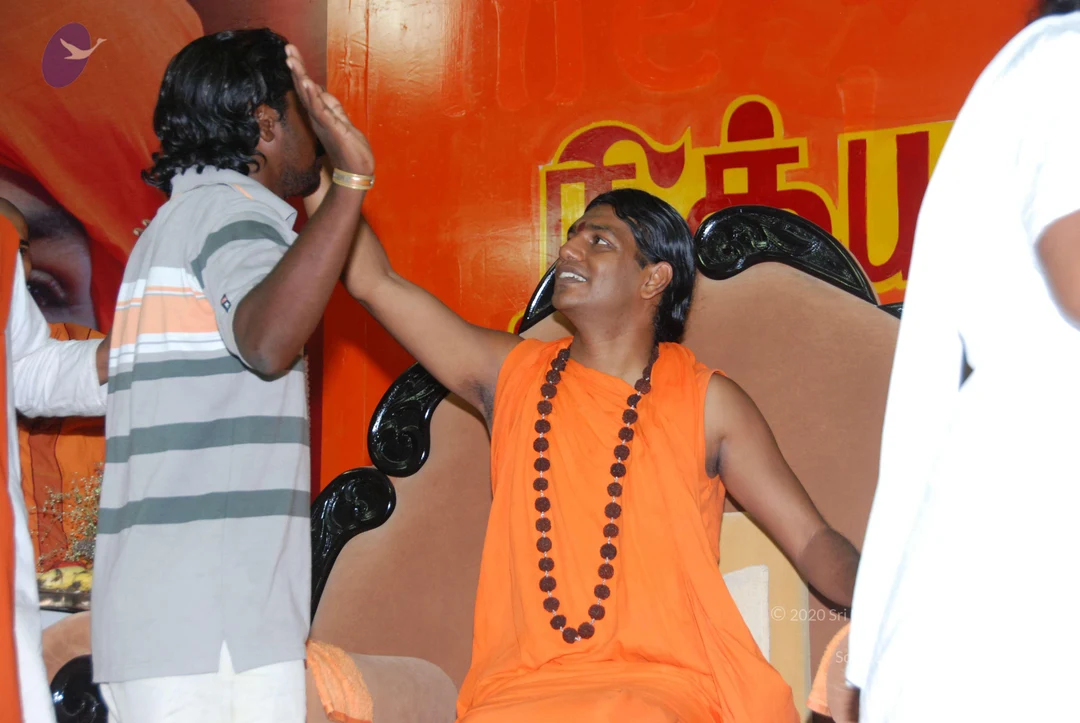
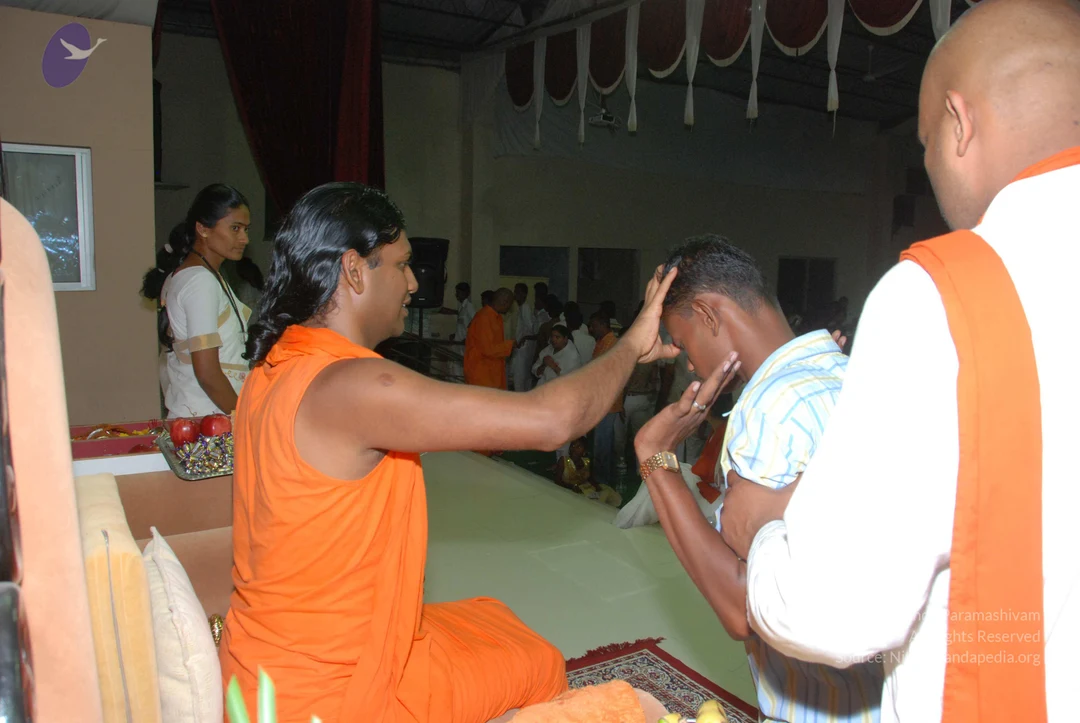
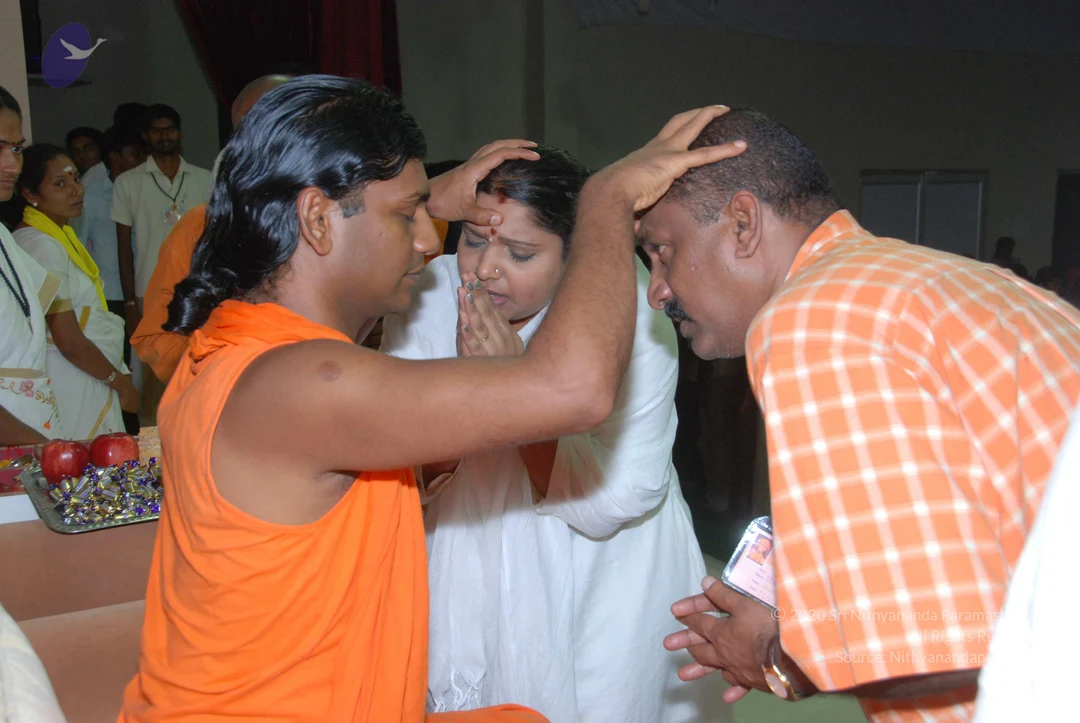
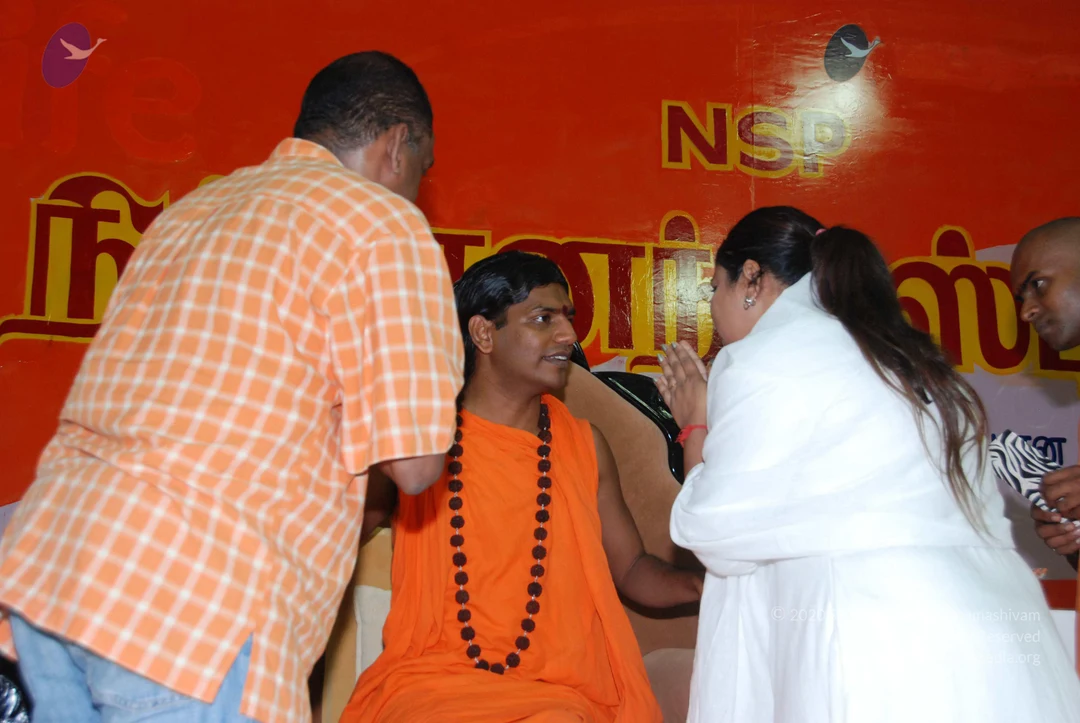
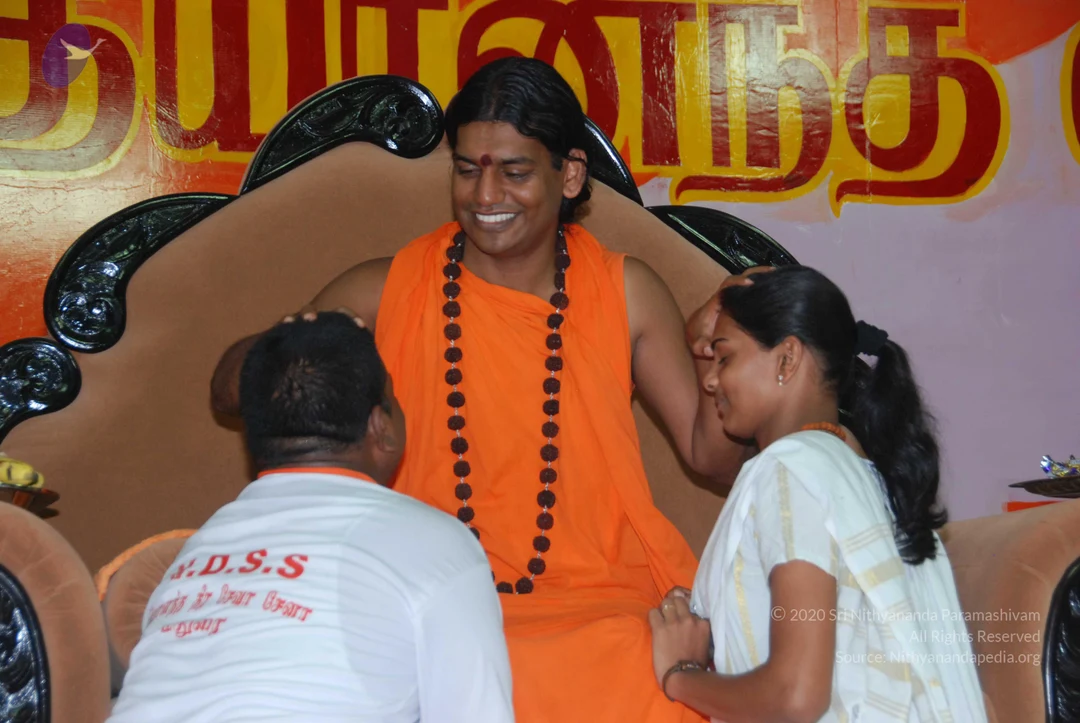
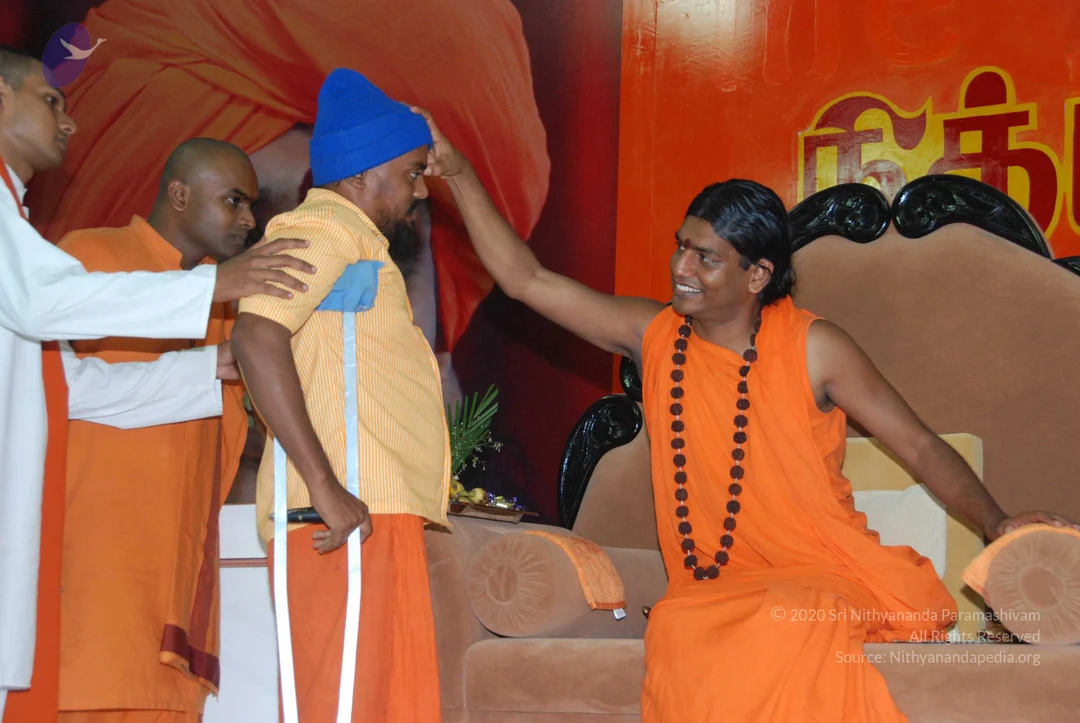
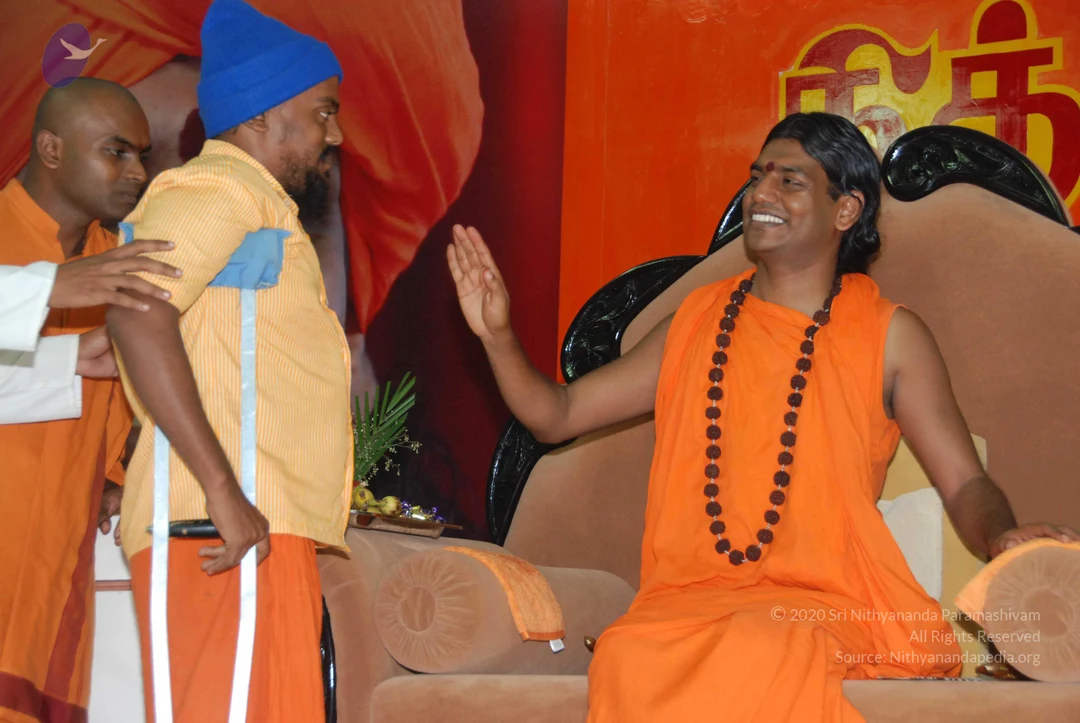
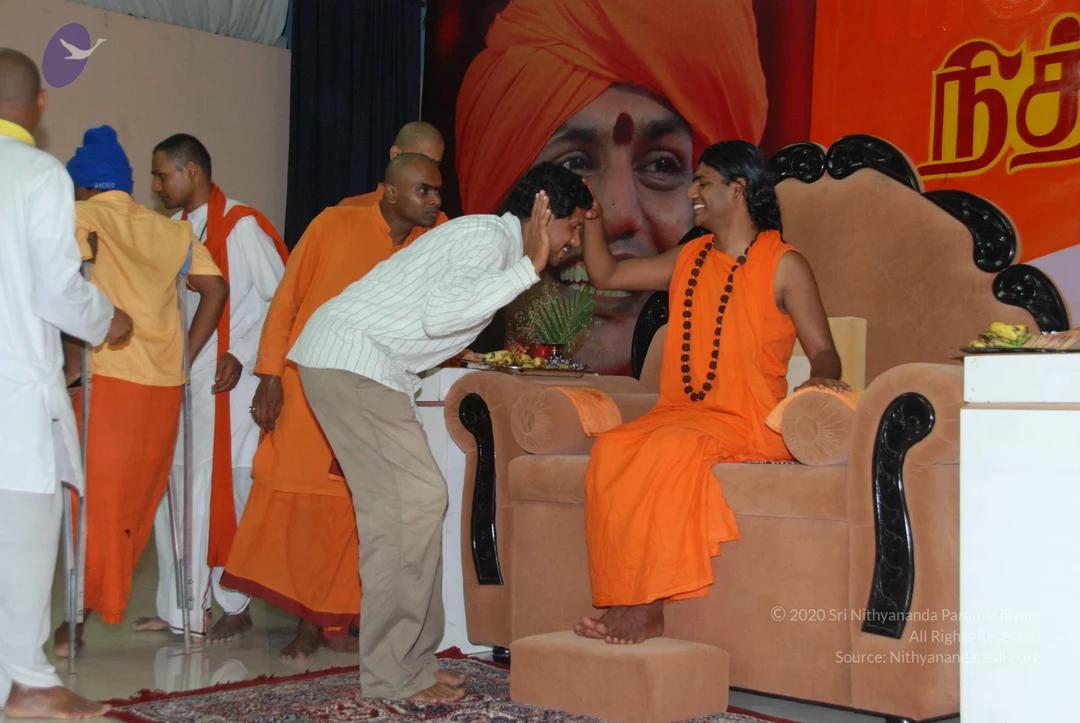
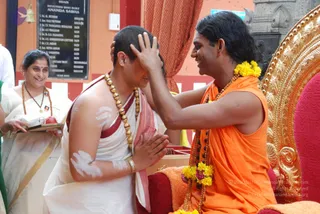
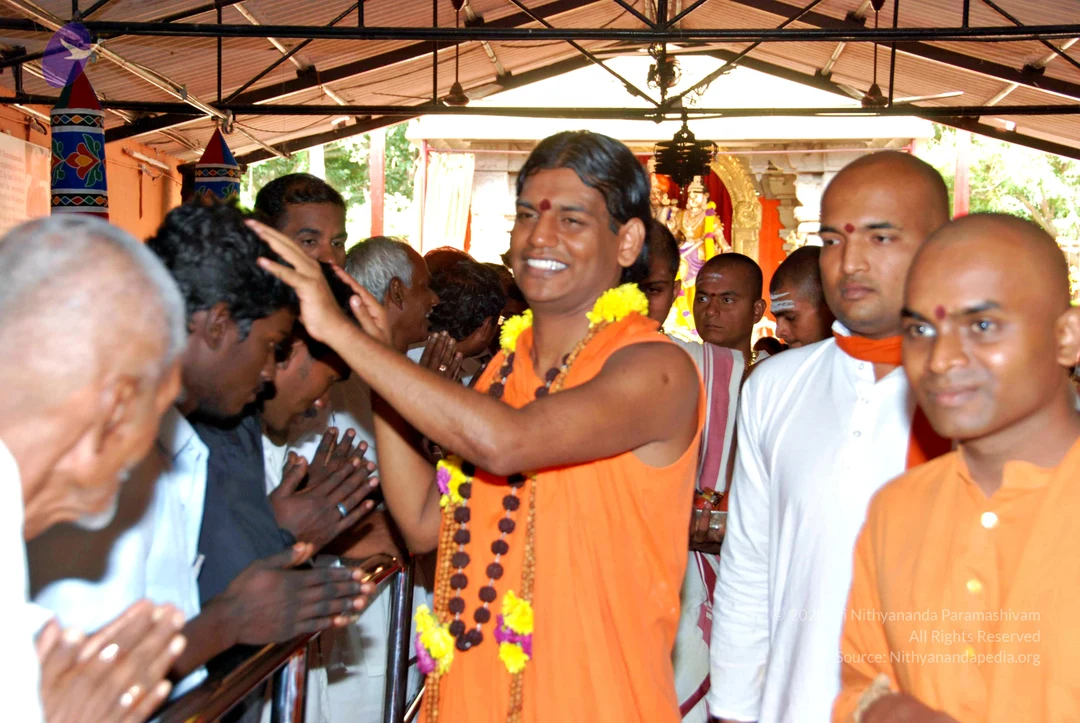
A seated man in an orange sleeveless shawl with his palms pressed together in namaste at his chest, eyes closed, with a red bindi on his forehead. He wears layered rudraksha malas and garlands of yellow and pink flowers. He sits on an ornate gold throne with carved scrollwork and gold beads, with a red cushion behind him. Behind him are a gold kalasha-like finial, yellow marigold garlands and a purple cloth in the background. The page names a person, but the figure's appearance is uncertain, so this is described by role as a devotee-like seated figure in prayer.A man seated on an ornate gold throne with a carved, rounded gold backrest, raising both palms forward in a blessing gesture. He wears a saffron-orange shawl draped over his shoulders, multiple rudraksha mala necklaces, and yellow and pink marigold garlands, with a red tilak on his forehead. Behind him stand a gilded deity murti in purple and gold and a large gold kalasha-like ornament decorated with yellow flowers and green leaves. The scene suggests a darshan or public satsang setting with a dignified seated figure at the centre.A photograph of a man seated in front of an ornate gold throne with a large round backrest carved with floral and scroll patterns. He wears a saffron-orange robe draped over one shoulder, multiple rudraksha mala necklaces, and garlands of yellow and pink flowers. A red bindi marks his forehead, and he raises both open palms toward the viewer in a blessing gesture. Behind him are a gold kalasha-like ornament with green leaves, yellow marigold garlands, and a purple cloth. A single person is visible. Cues consistent with the a person appearance include the saffron robe, rudraksha malas, and the throne setting.A seated man in saffron-orange robes sits on an ornate gold throne with a large gold-filigreed arched backrest and red cushions. He has short dark hair, a red bindi on his forehead, and eyes closed in a calm smile. He wears long dark rudraksha mala necklaces and garlands of yellow and magenta flowers over his shoulders and chest. Behind him, a golden deity murti with a decorated gold-and-green crown and jewelled arms stands with yellow garlands, and a gold shivalinga-style object is visible near the top left. The scene suggests a darshan setting, with the seated figure receiving honour from the throne.A smiling man in orange sannyasi robes sits on an ornate gold throne with a red cushioned seat and bolster. He wears multiple rudraksha mala necklaces interwoven with yellow and pink flower garlands, and a red bindi on his forehead. His hands are extended toward a person at the left edge, whose wrist with a bangle is visible. Behind him stand a golden deity murti adorned with yellow flower garlands and gold ornaments, and a tall gold pillar. Flower petals and offerings lie at the base of the throne.A seated man in orange sannyasi robes with a yellow flower garland and a rudraksha mala places his right hand on the forehead of a standing man in white ritual dhoti and shawl with red border, who holds his hands together in namaskar and wears gold beaded necklaces. The seated figure has long swept-back hair, bare-armed sleeveless orange garment, and sits on an ornate gold and red throne. Behind them a board lists donors who built the Ananda Sabha, and a woman in a cream sari with a tray stands at left. Swamiji (probable): the seated man in orange with long hair, rudraksha mala and ornate throne, giving blessing to a devotee.
04-VIPs
5 photosSource gallery
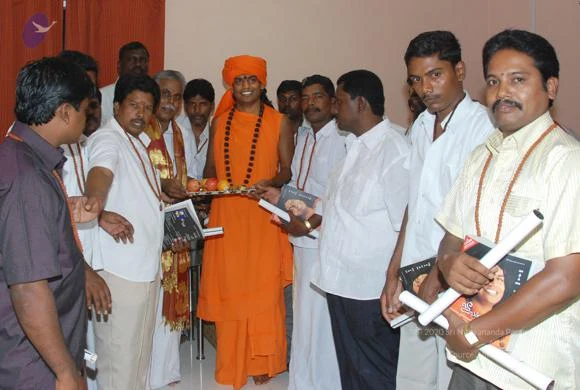
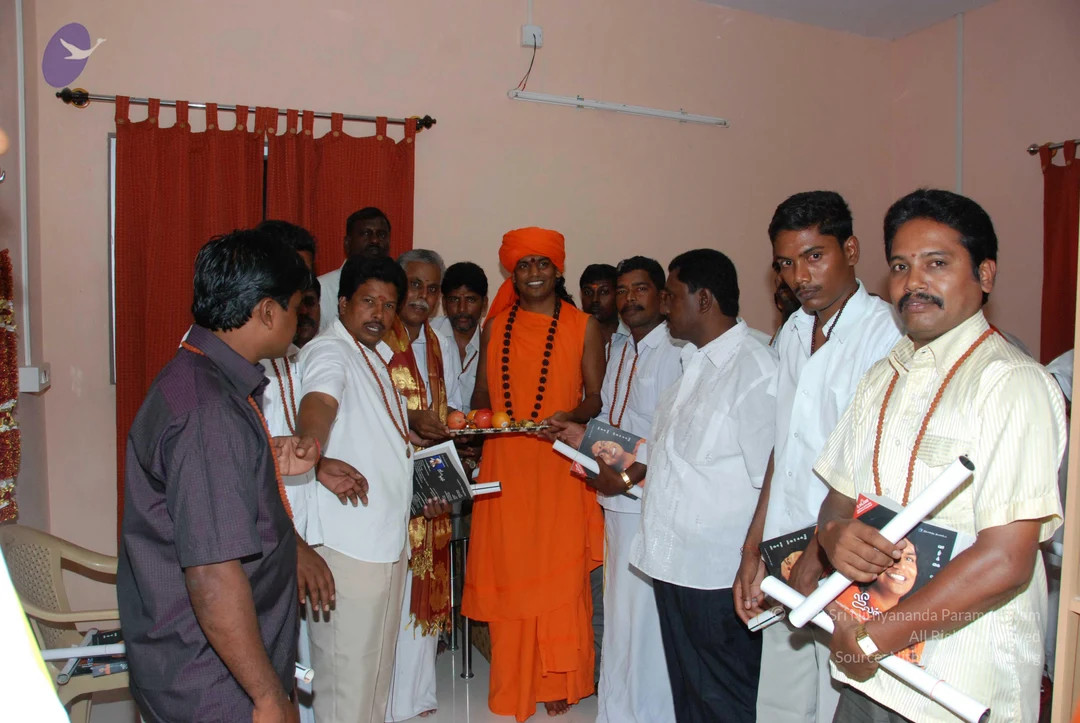
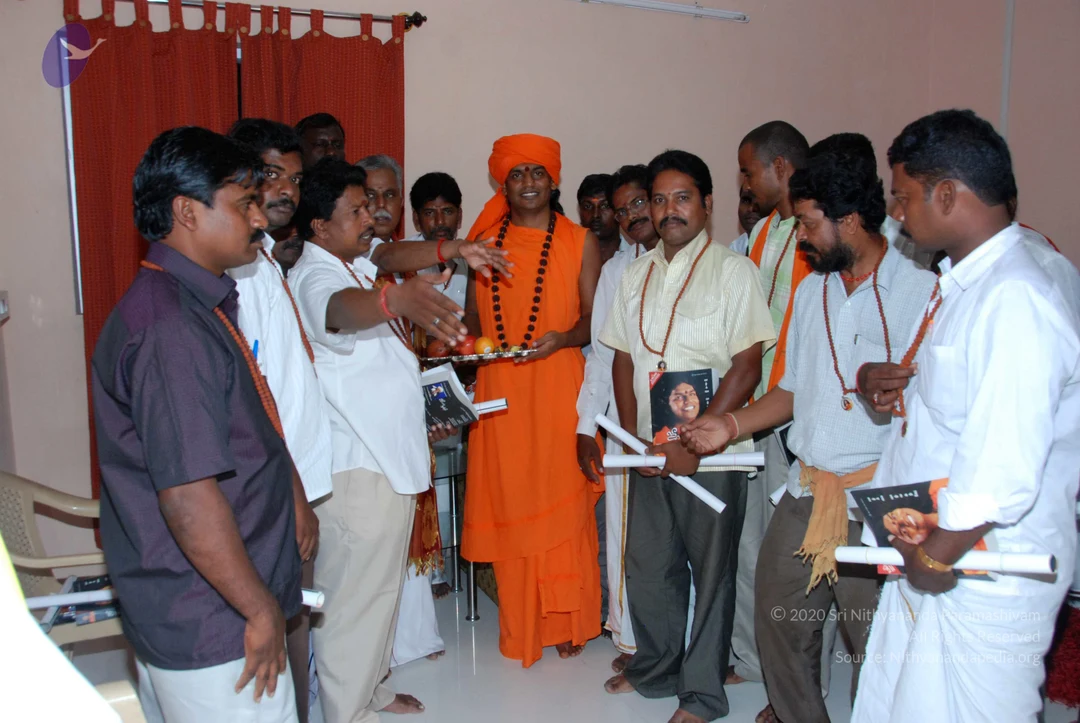
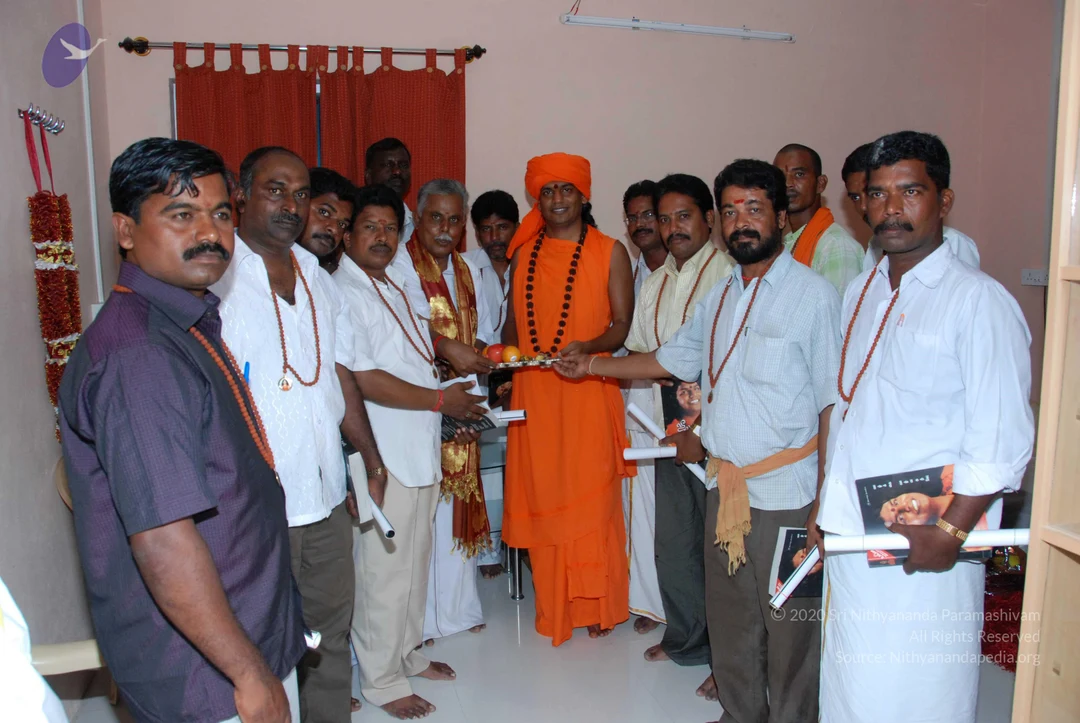
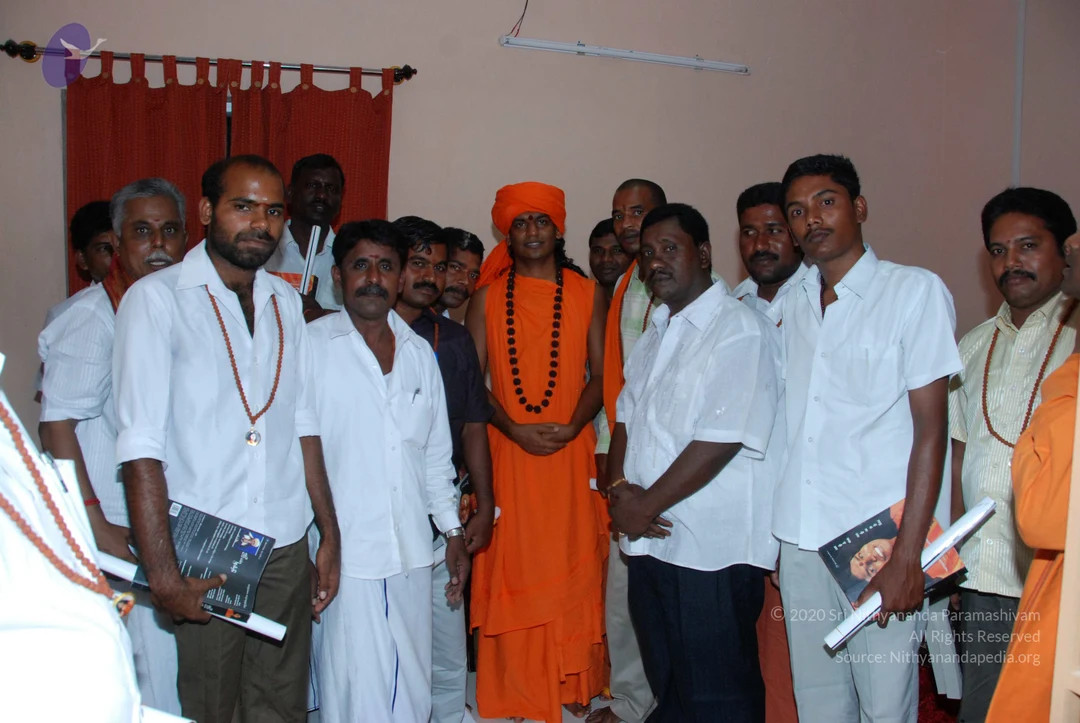
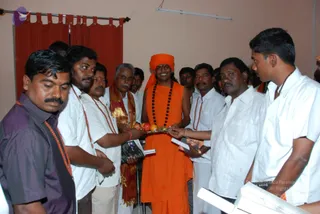
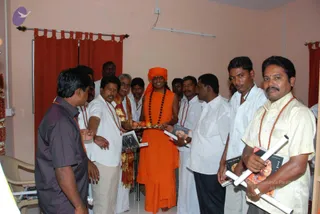
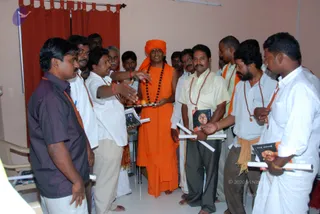
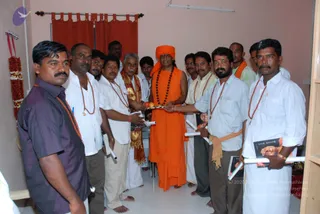
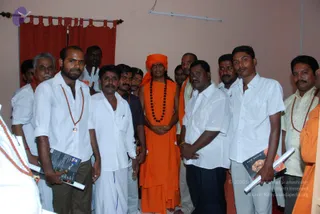
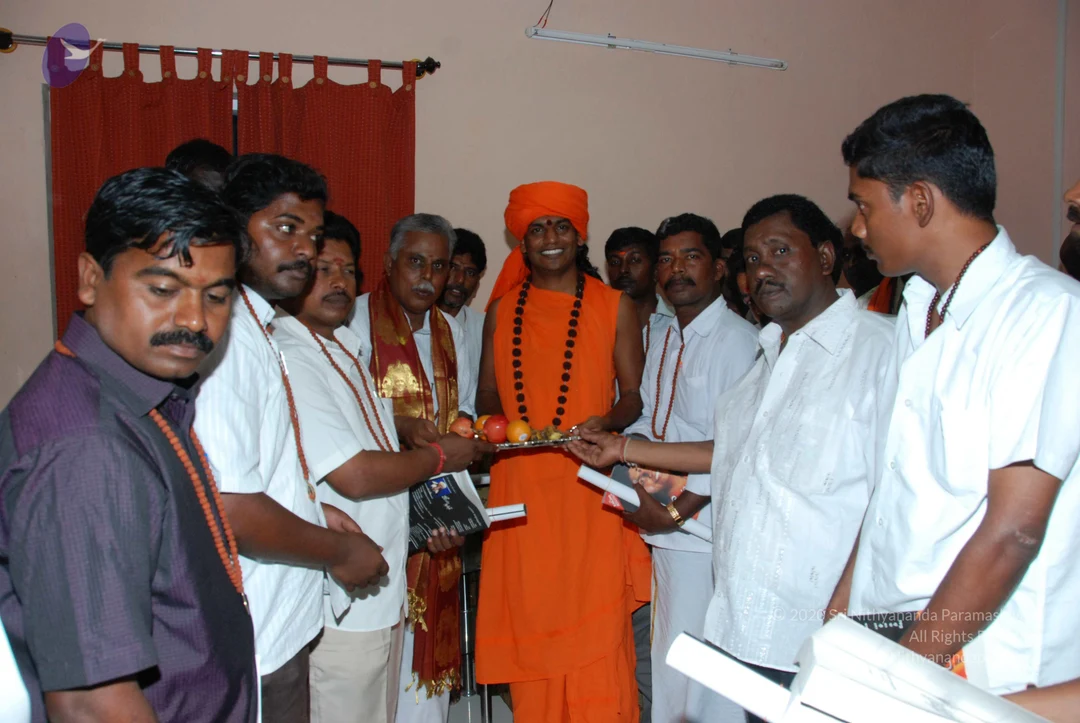
A photo of a group of men in a small room with pale pink walls and a red curtain on a rod behind them. In the centre, a man in an orange robe and orange turban wears a rudraksha mala and holds a tray of fruit, which others reach toward. Men around him wear white shirts and dhotis, some with rudraksha malas; one man on the left wears a purple shirt and another on the left has a red and gold shawl. Several people hold papers or booklets. A man in the centre wears an orange robe and orange turban with a rudraksha mala, offering a fruit tray to the group. Swamiji (probable) is the man in the orange robe and turban holding the fruit tray, appearing to receive offerings, with the rudraksha mala and orange robe as cues.Indoor photo in a room with peach walls and orange-red curtains, with fluorescent light fixture above. A man in saffron-orange robes, an orange turban and rudraksha malas stands at centre holding a silver tray of fruit, with red and yellow offerings. Around him, men in white shirts and white dhotis wear rudraksha malas; one in a lilac shirt stands at left, and a man at right in a cream striped shirt holds rolled posters and a book. Garlands hang at the left edge.Indoor photograph in a plain room with a white tiled floor and red curtains at the back. A man in a saffron-orange robe and an orange turban stands at the centre, wearing a long rudraksha mala, holding a silver tray of fruit, and smiling. Around him, about a dozen men in white dhotis and white shirts or a dark purple shirt, many wearing rudraksha malas and red bands on their wrists, gather closely. Several hold books with orange covers and rolled white papers. One man in a white shirt gestures toward the central figure with an outstretched hand, and another in a striped shirt holds a book bearing a portrait. The scene reads as a small devotional or welcoming gathering.A group of men gathers indoors in a small room with pink walls, red curtains and a fluorescent tube light. At the centre, a man in an orange robe and orange turban wears a rudraksha mala and holds a silver tray with fruit, while a man in a white shirt and dhoti offers him a paper scroll. Around them, men in white dhotis, checked shirts, rudraksha malas and orange shawls stand closely. A red-and-white flower garland hangs at the left edge. The central figure appears to be a person by his orange turban, ochre robe and rudraksha mala, though his appearance is uncertain. Several people hold rolled documents and a small booklet.A group photograph taken indoors against a pale pink wall with red curtains at the upper left. A central figure in an orange saffron robe and a matching orange turban wears a long dark rudraksha mala and stands with hands clasped. Around him stand about a dozen men in white shirts and white dhotis or trousers, many wearing red-brown rudraksha malas, several holding booklets or rolled papers. A small wall-mounted fluorescent light fixture is visible at the top.

05-Pancha-Tapas
25 photosSource gallery
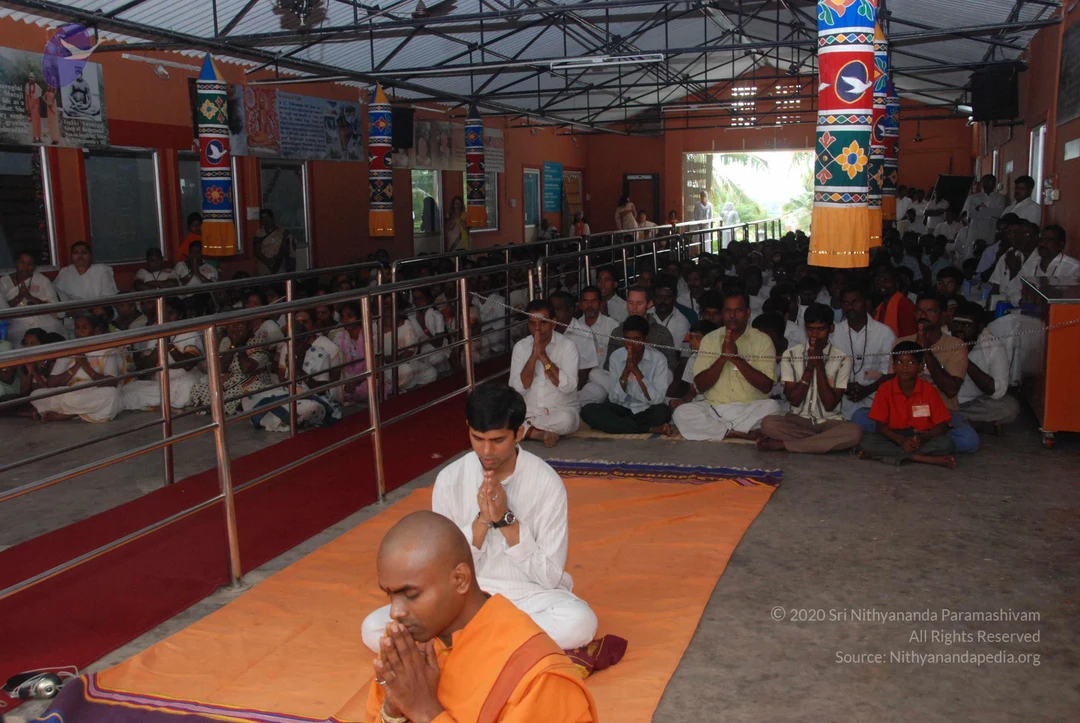
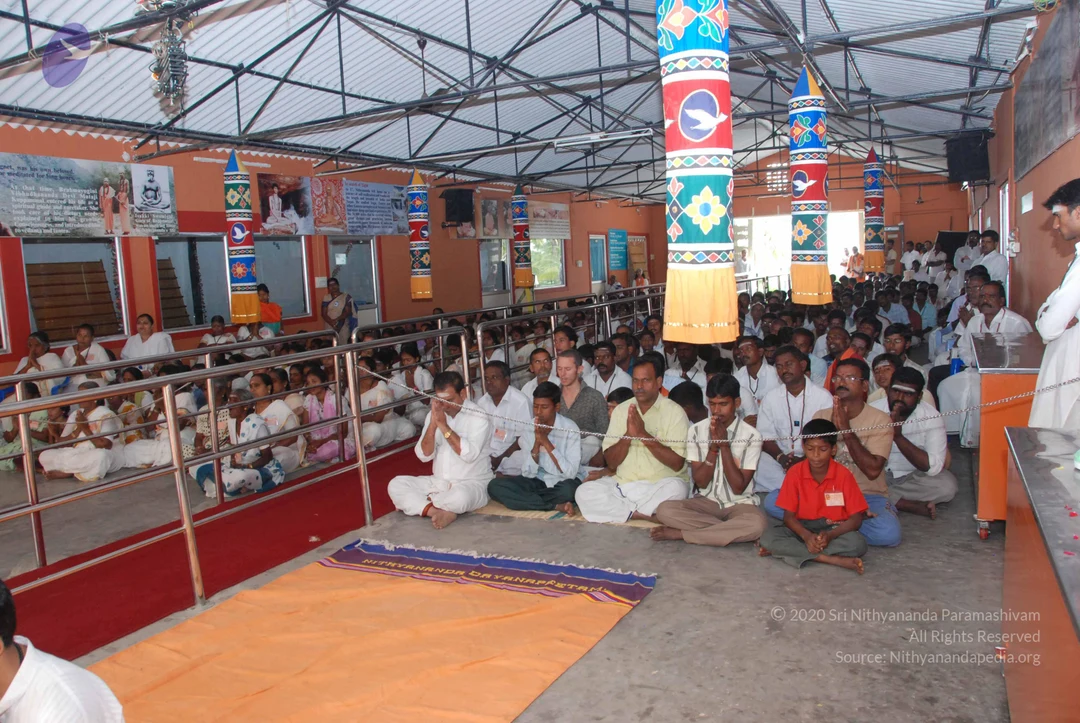
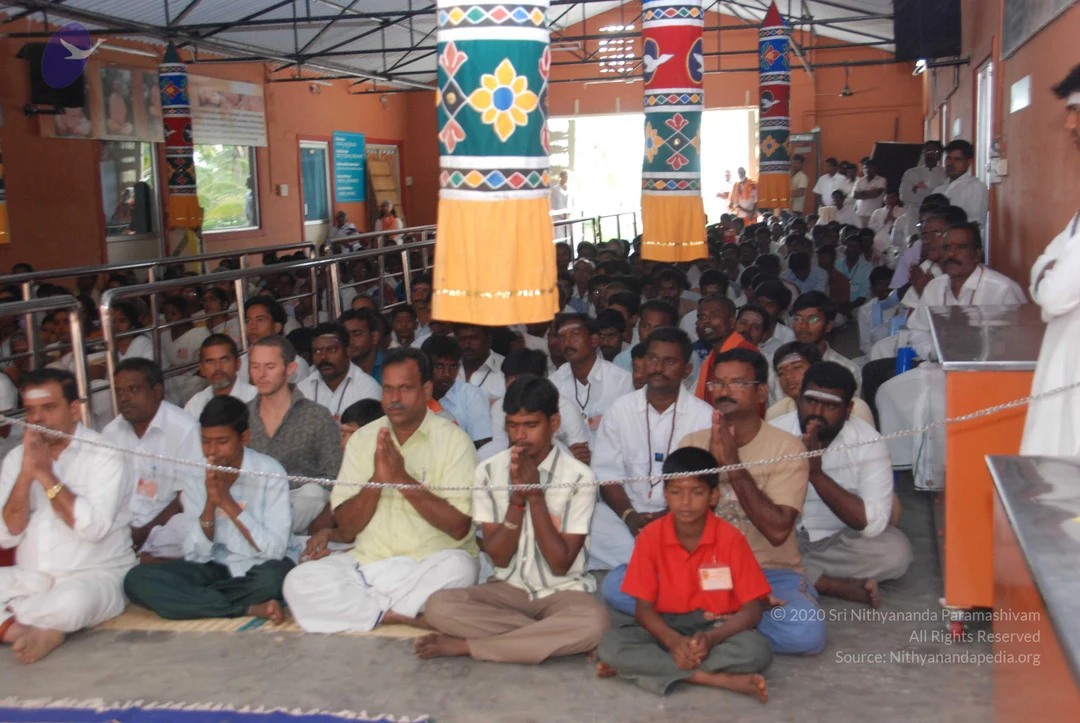
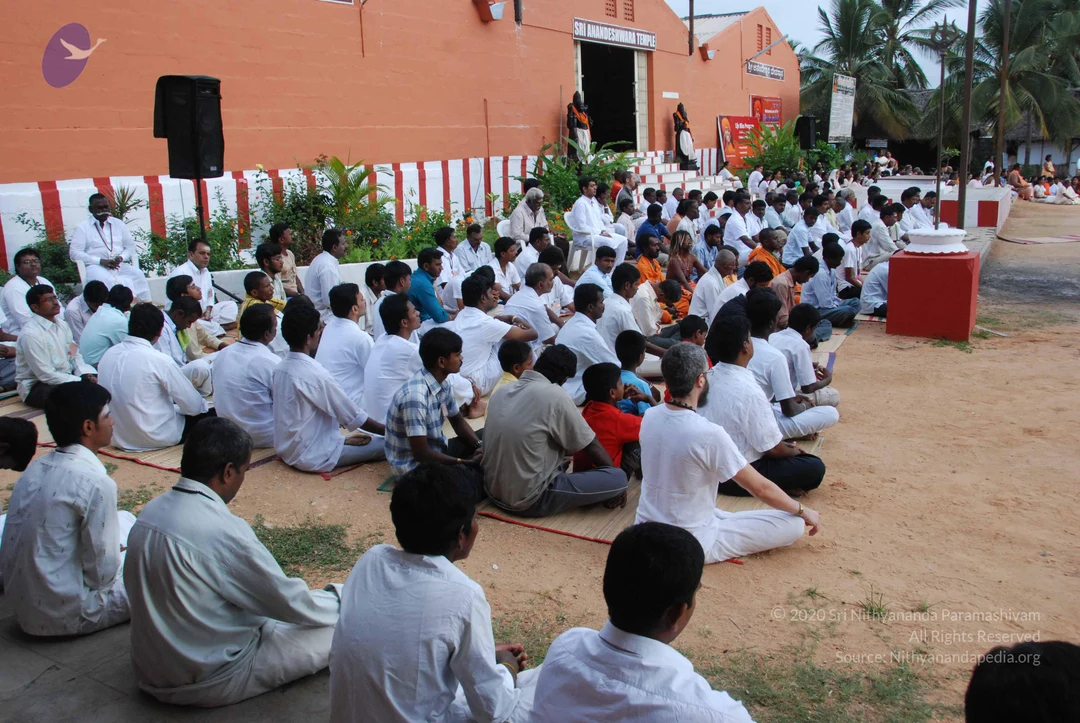
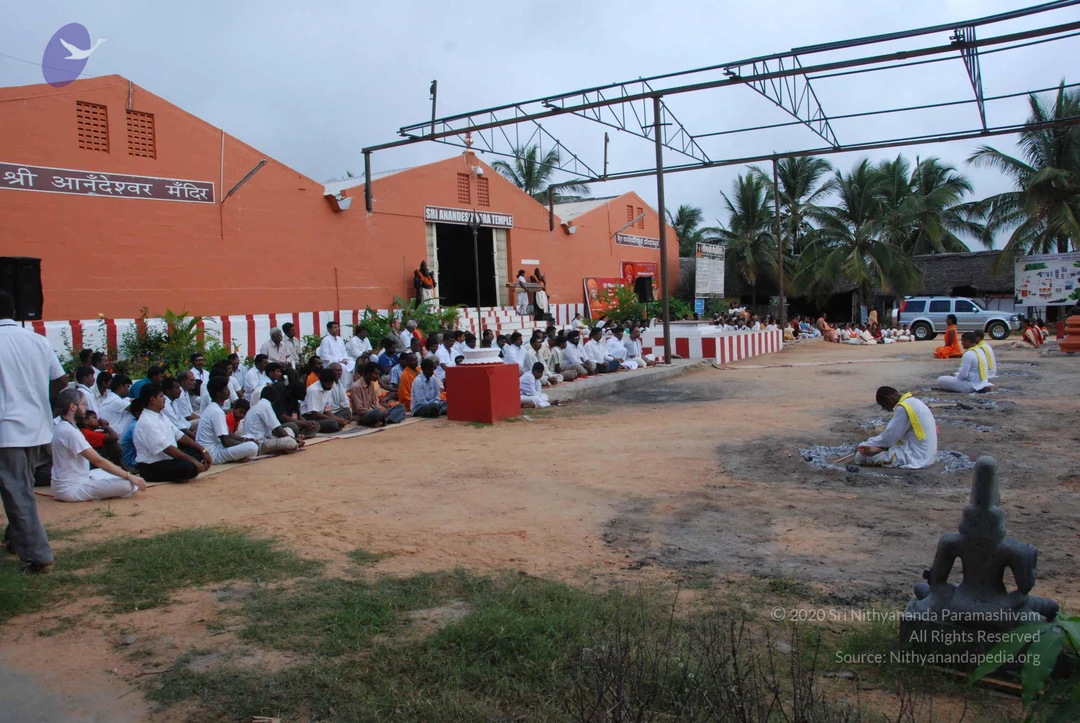
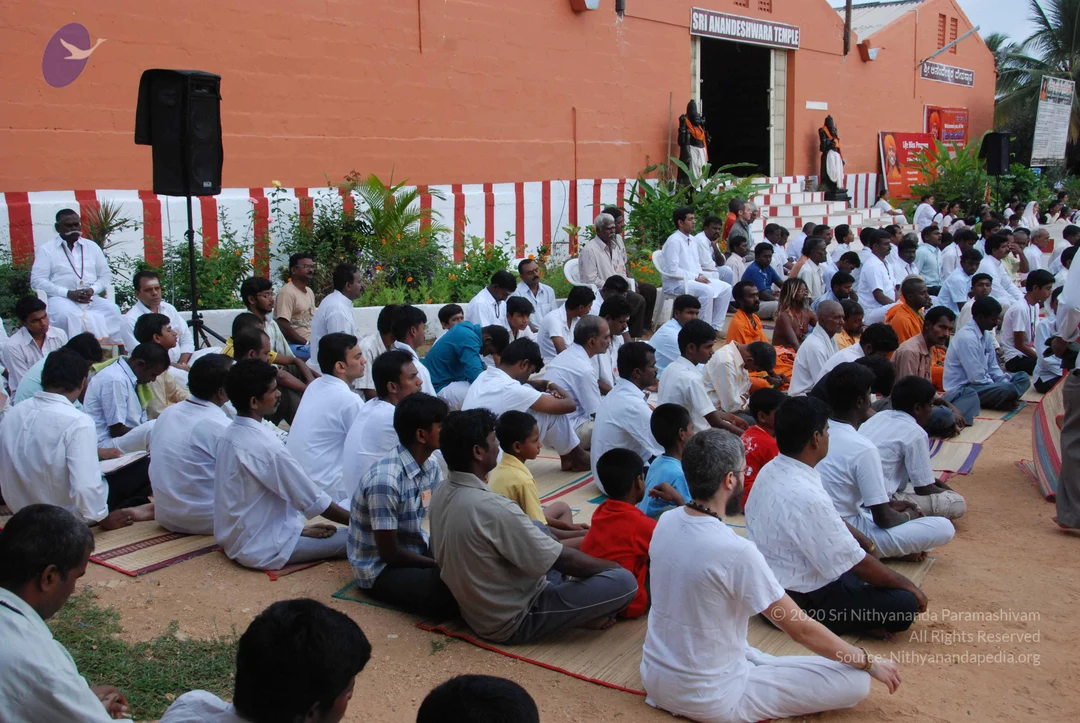
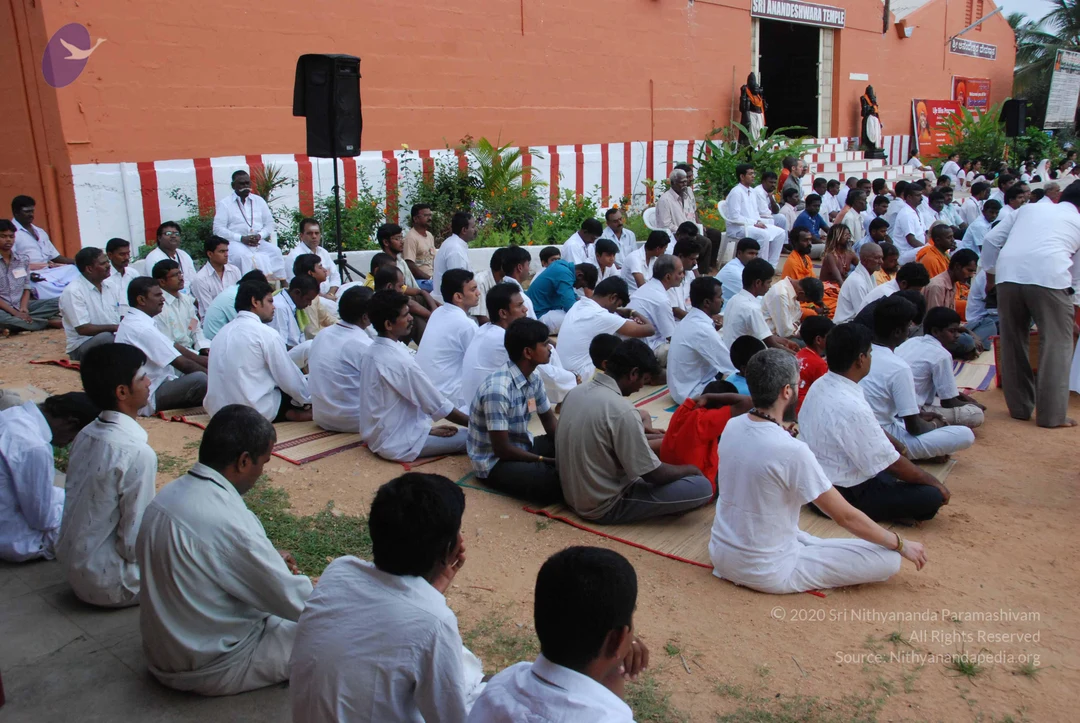
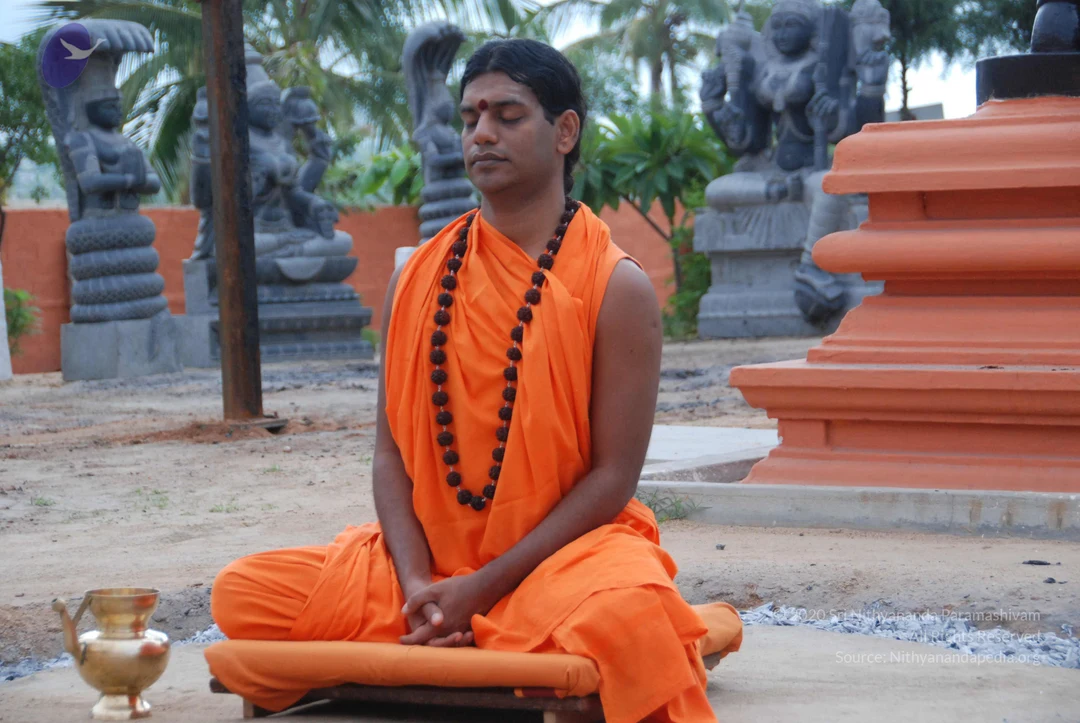
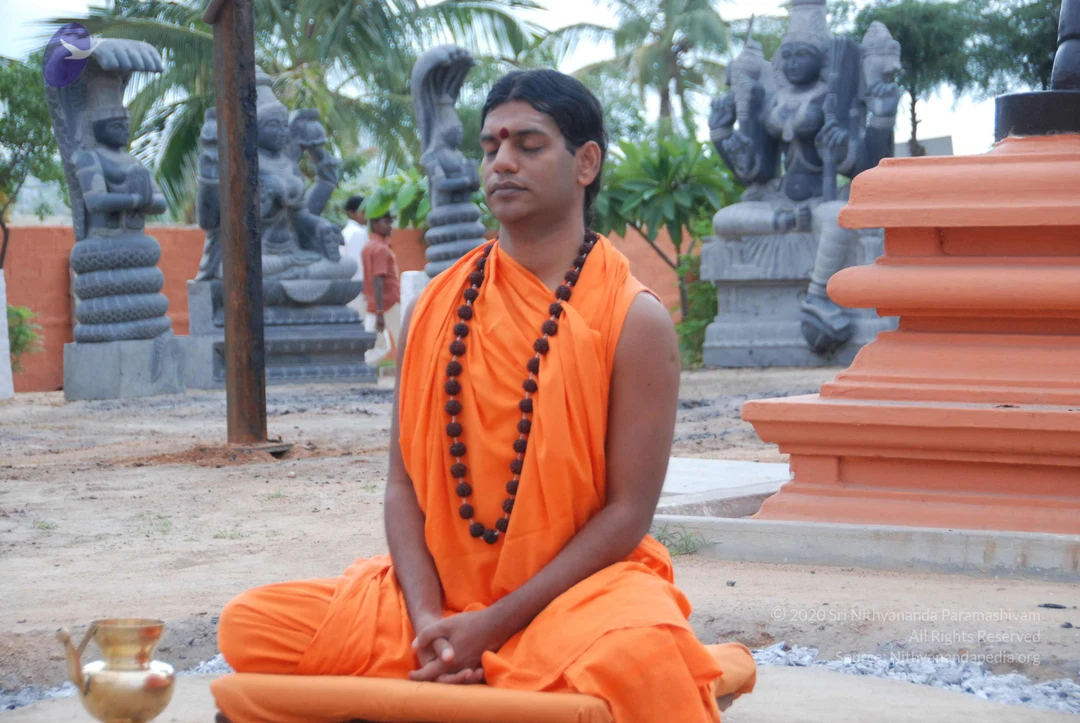
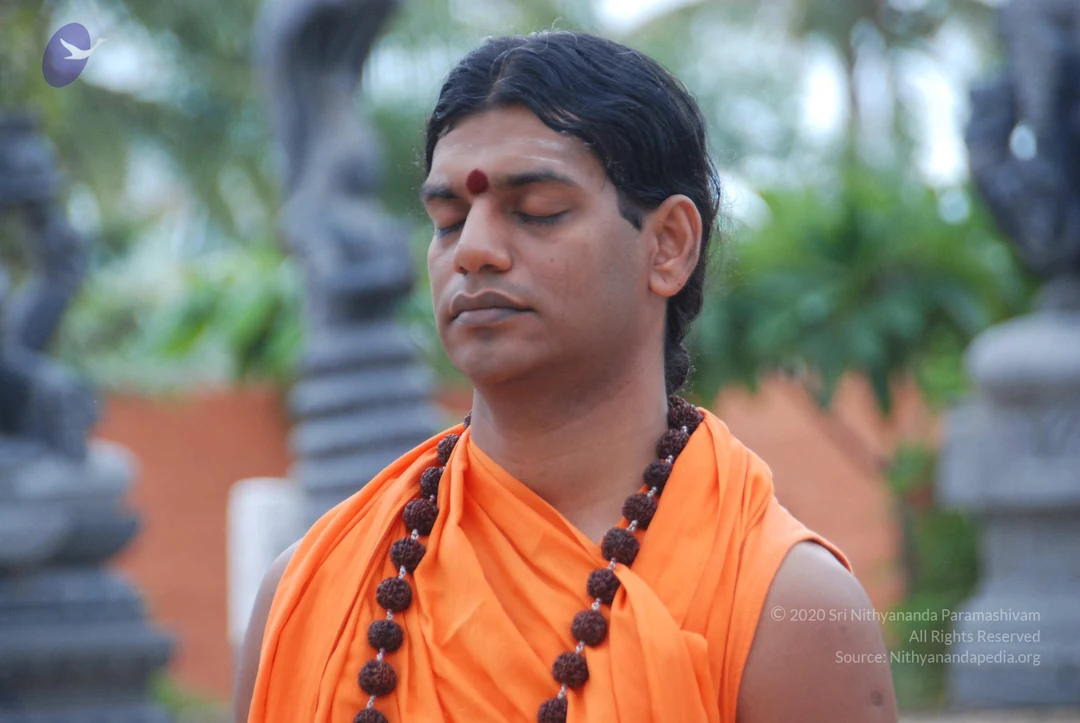
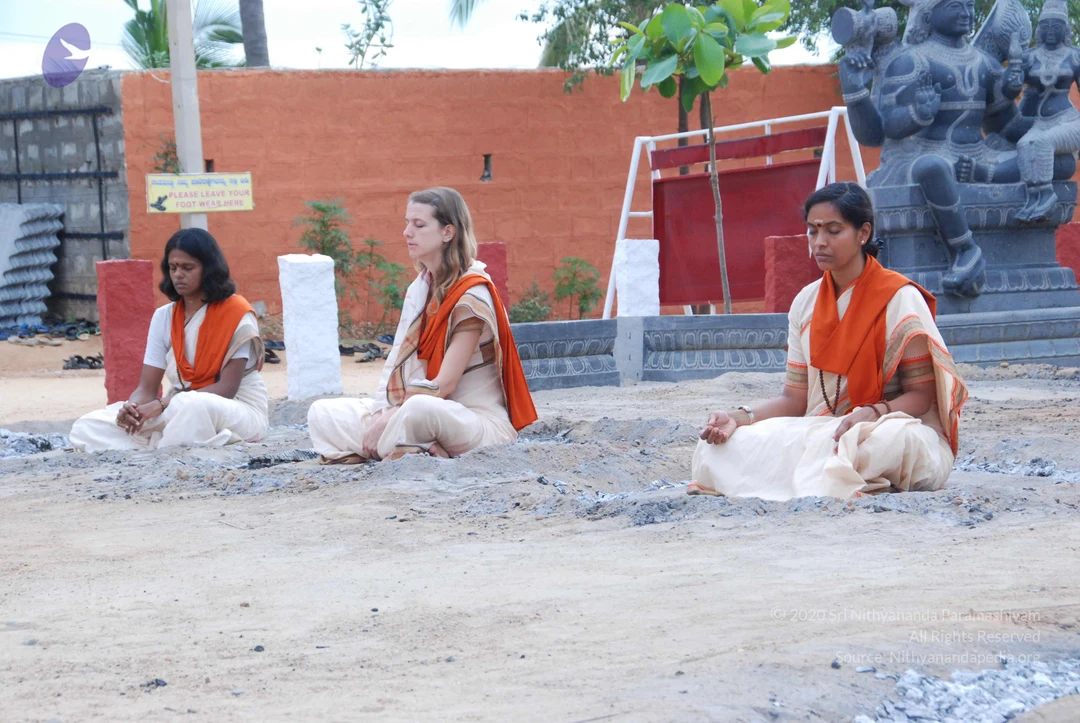
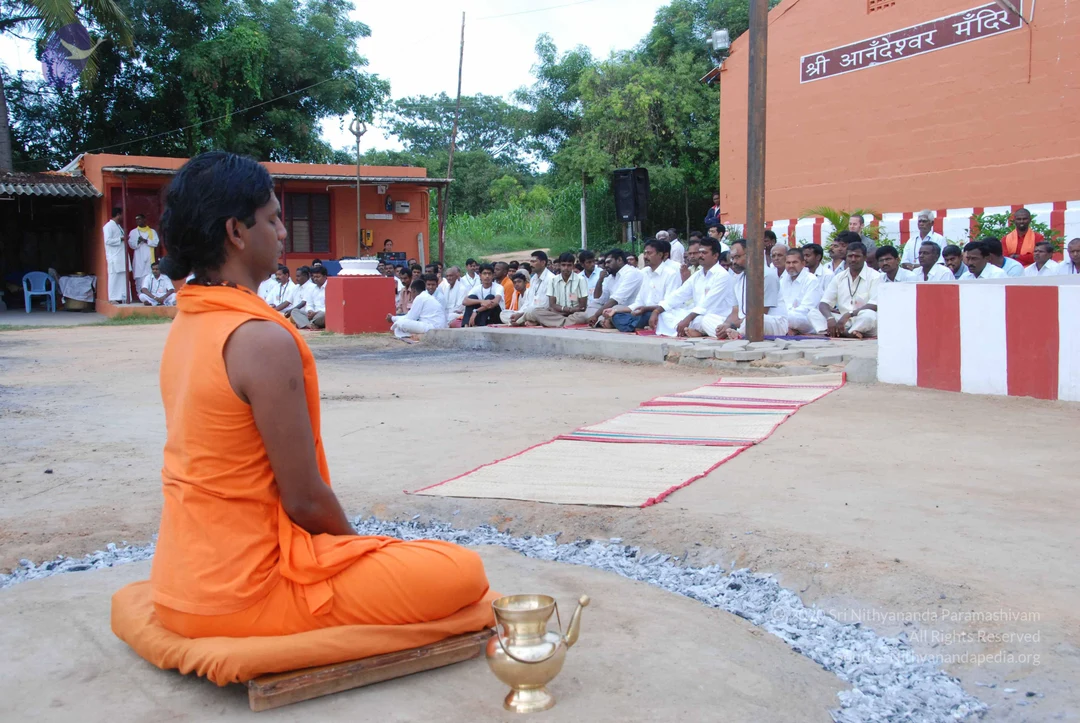
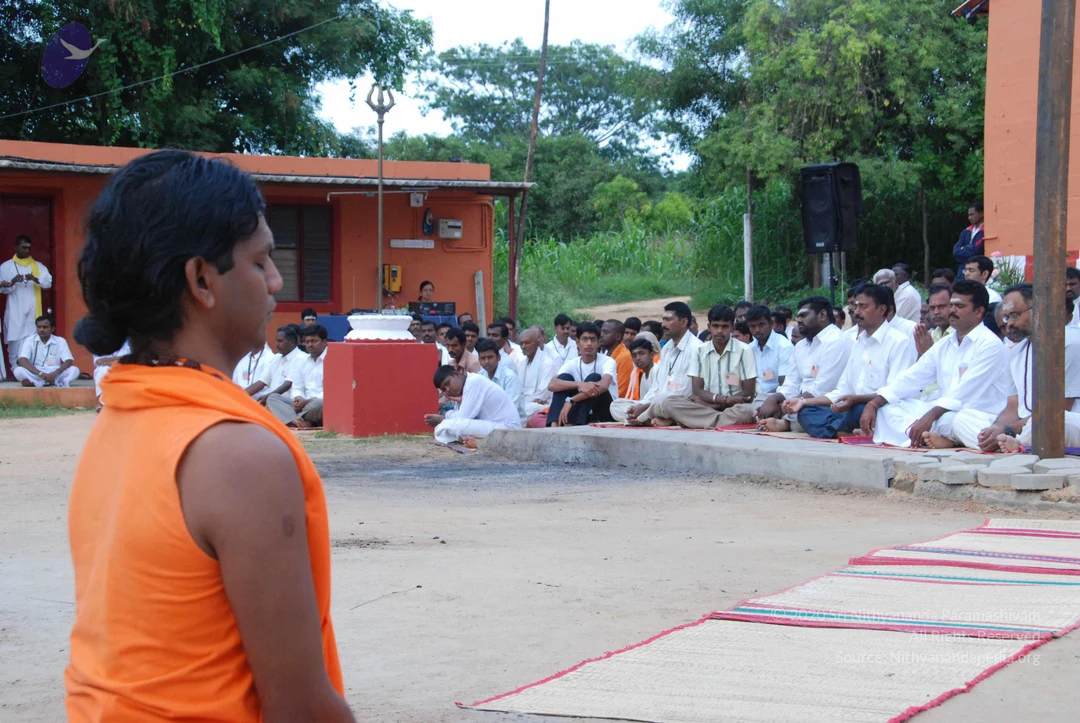
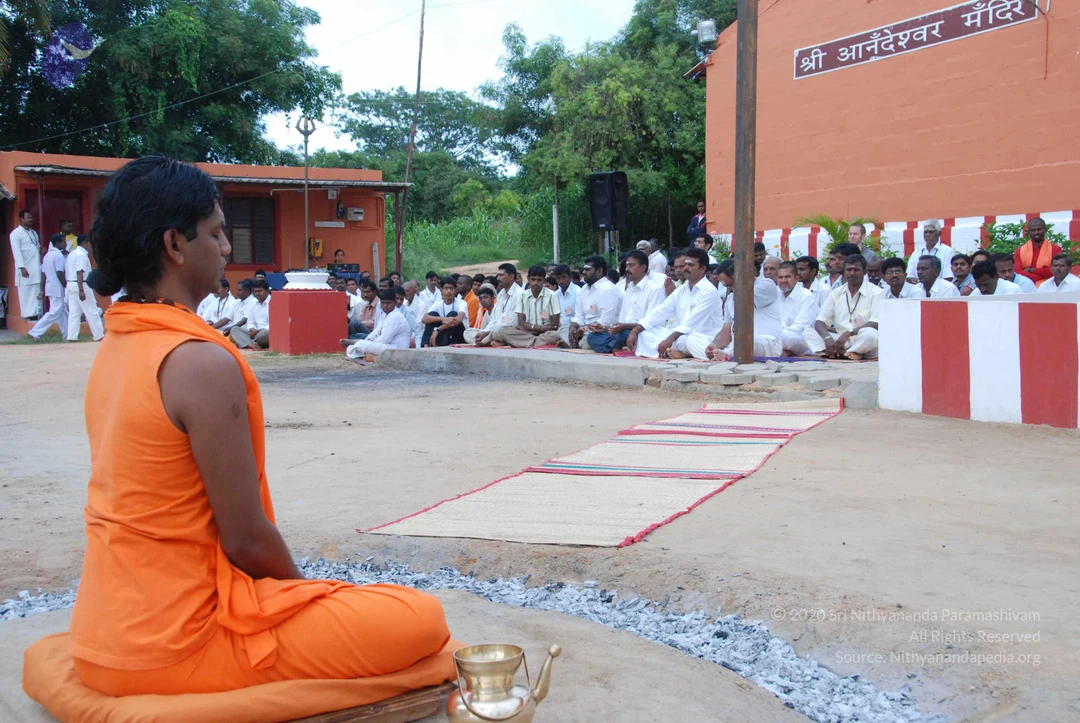
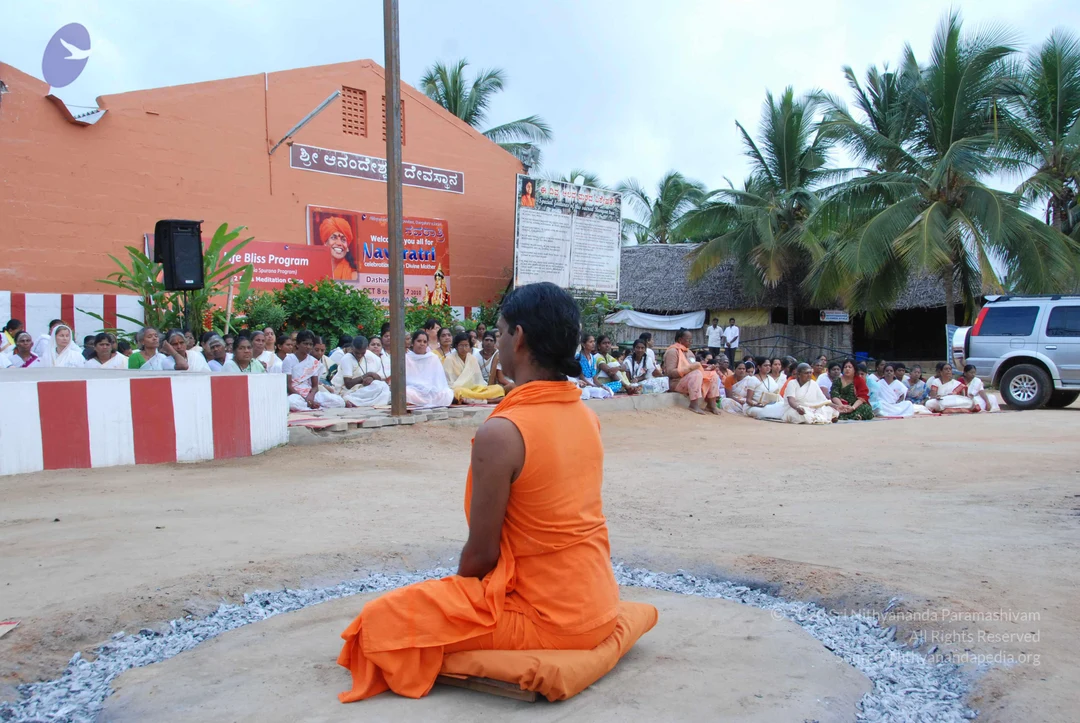
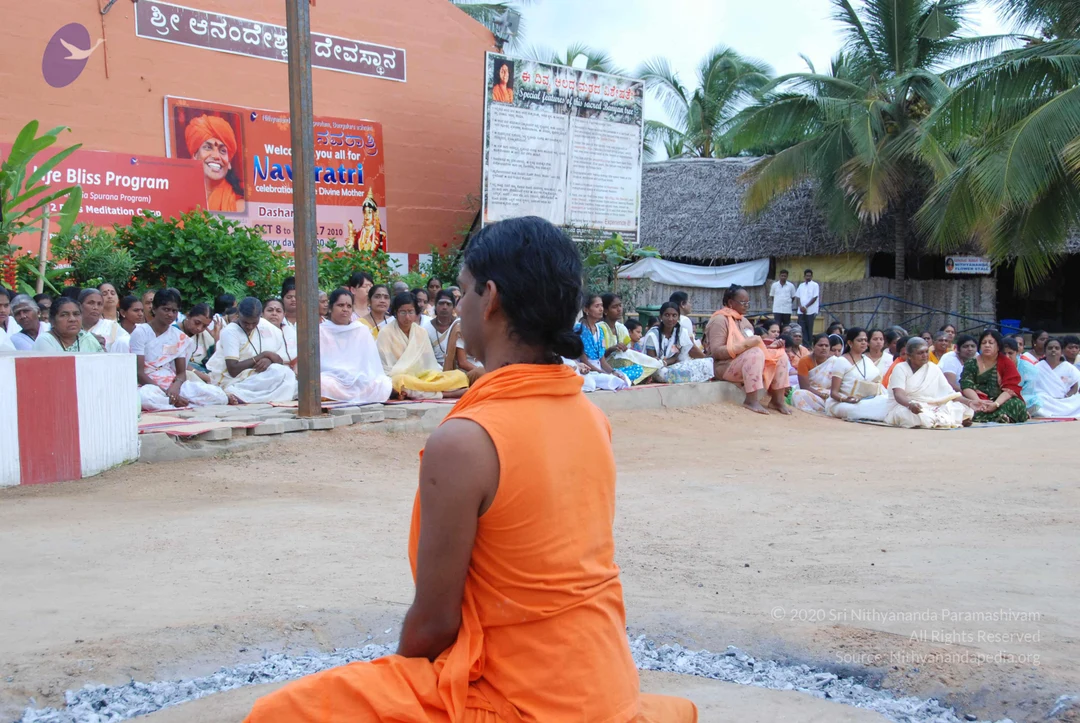
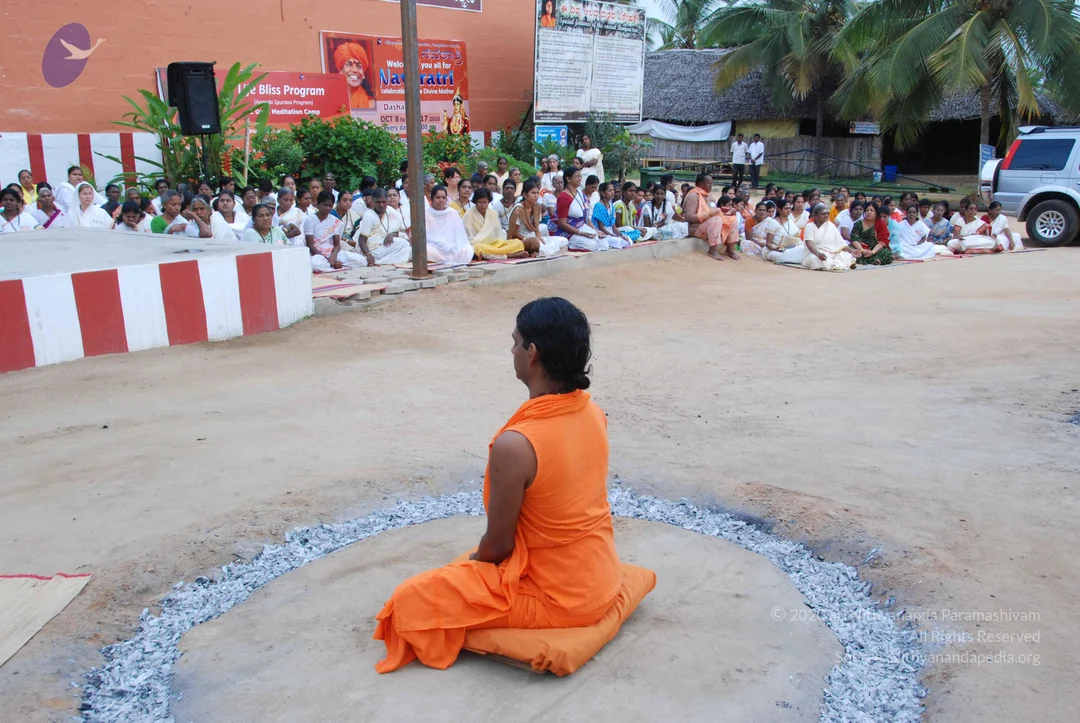
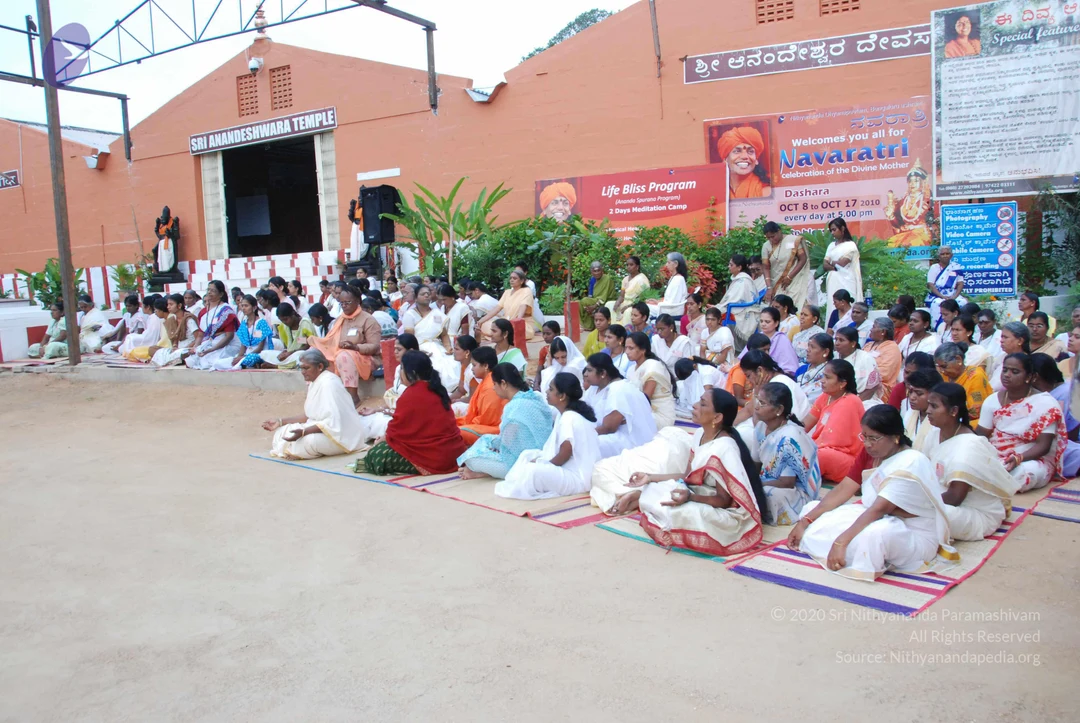
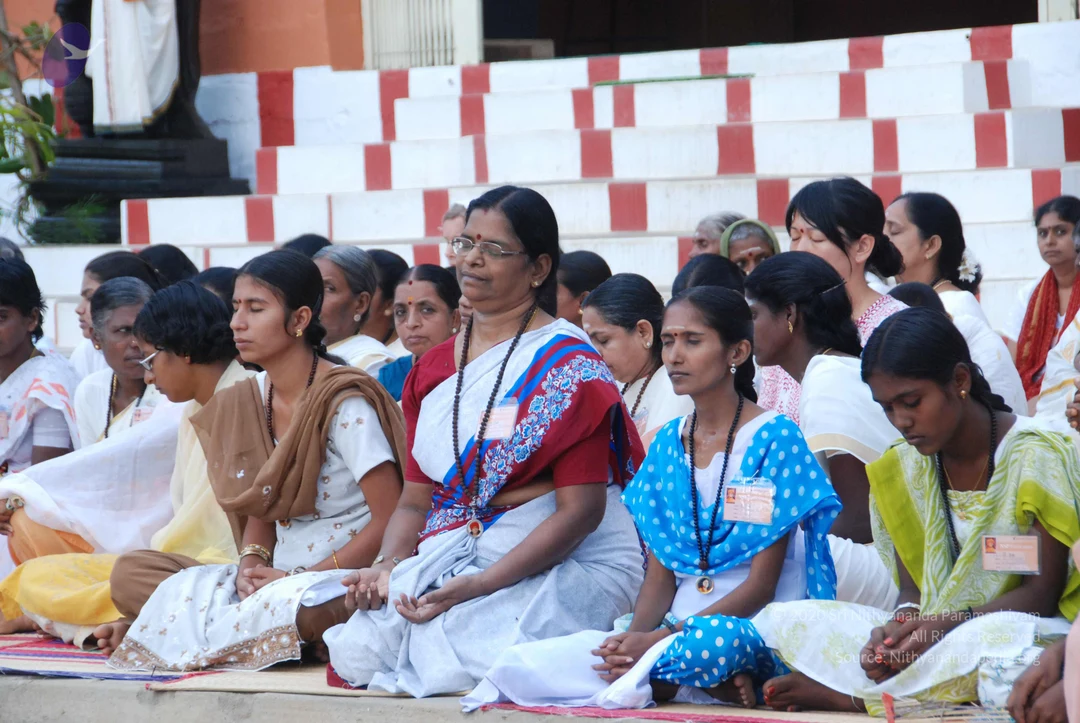
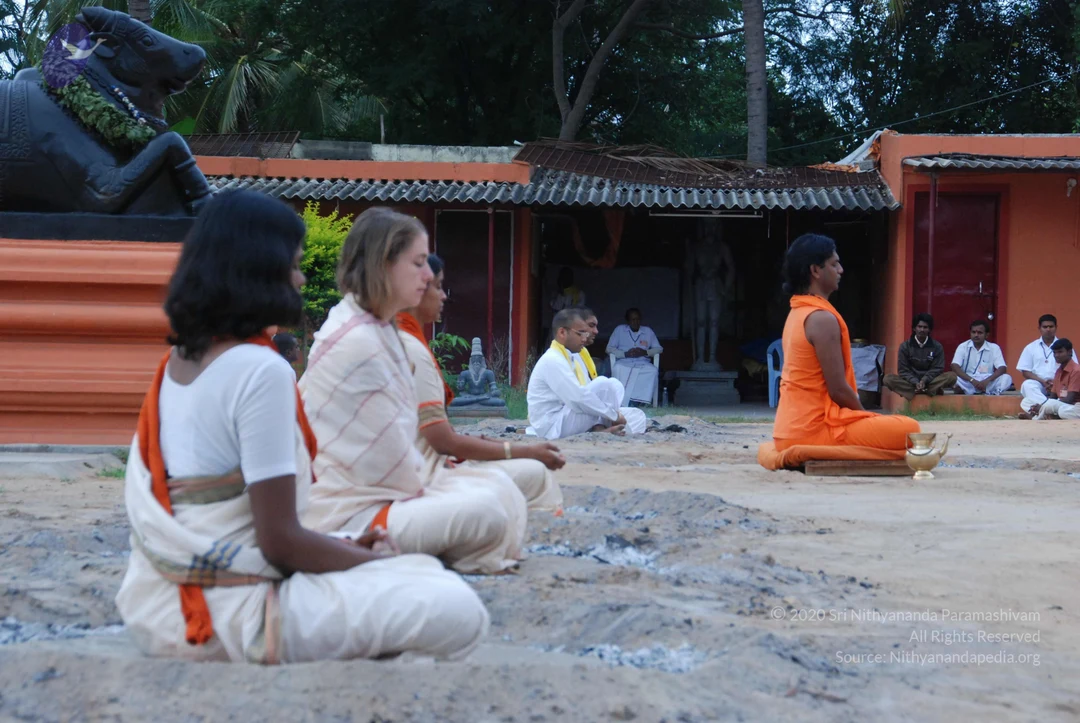
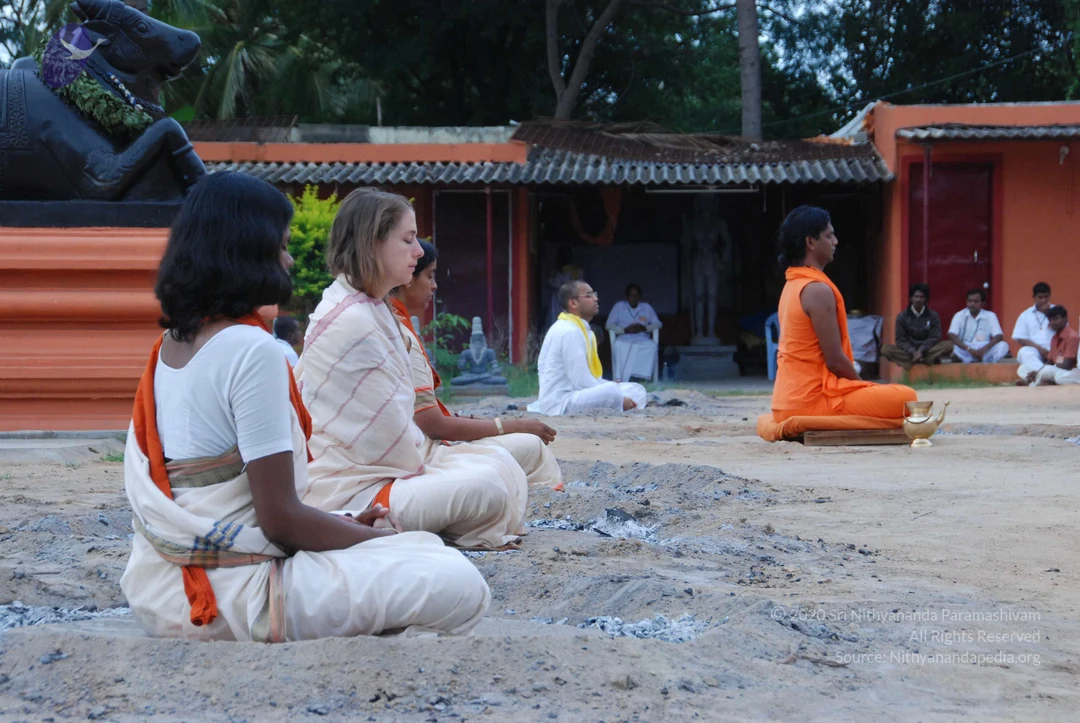
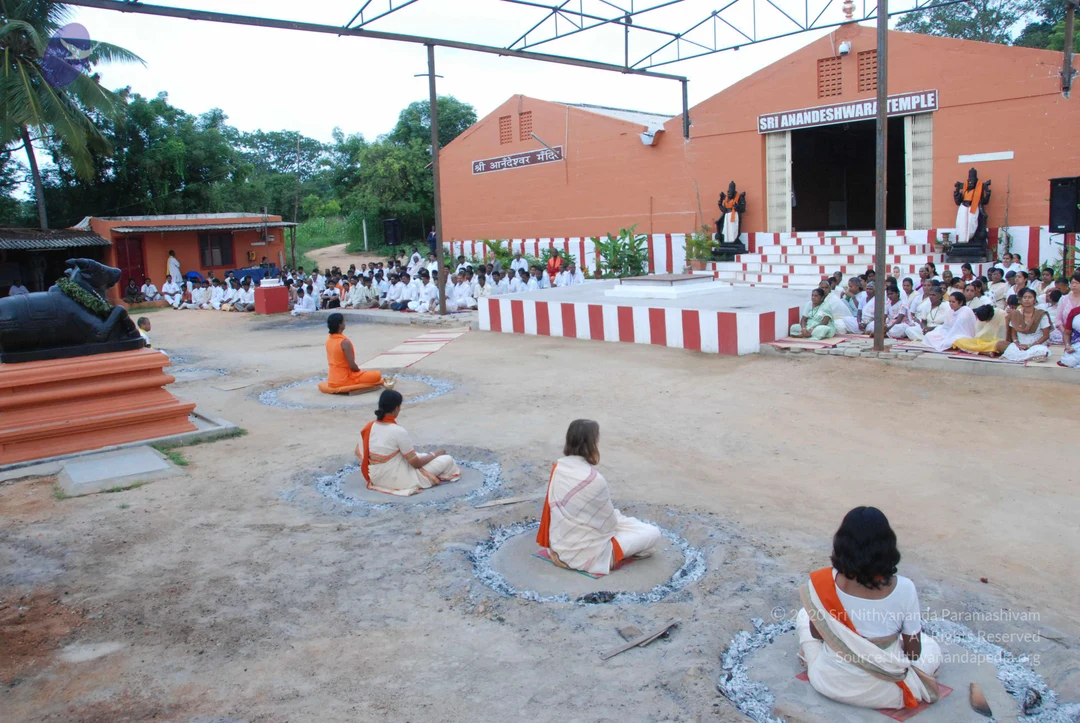
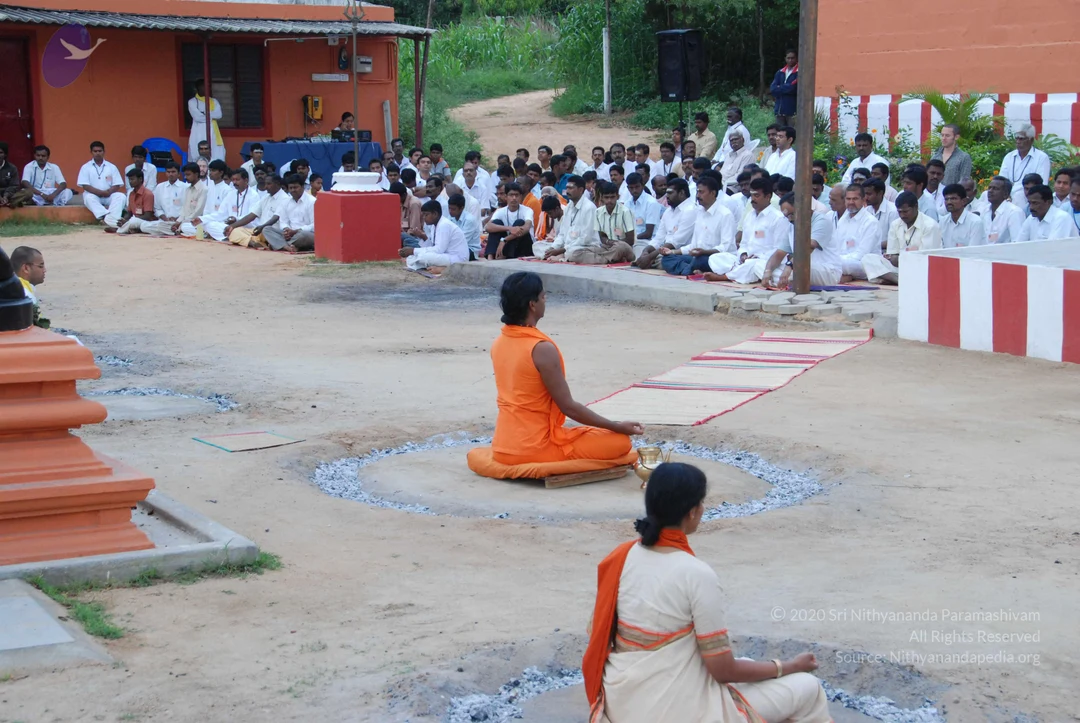
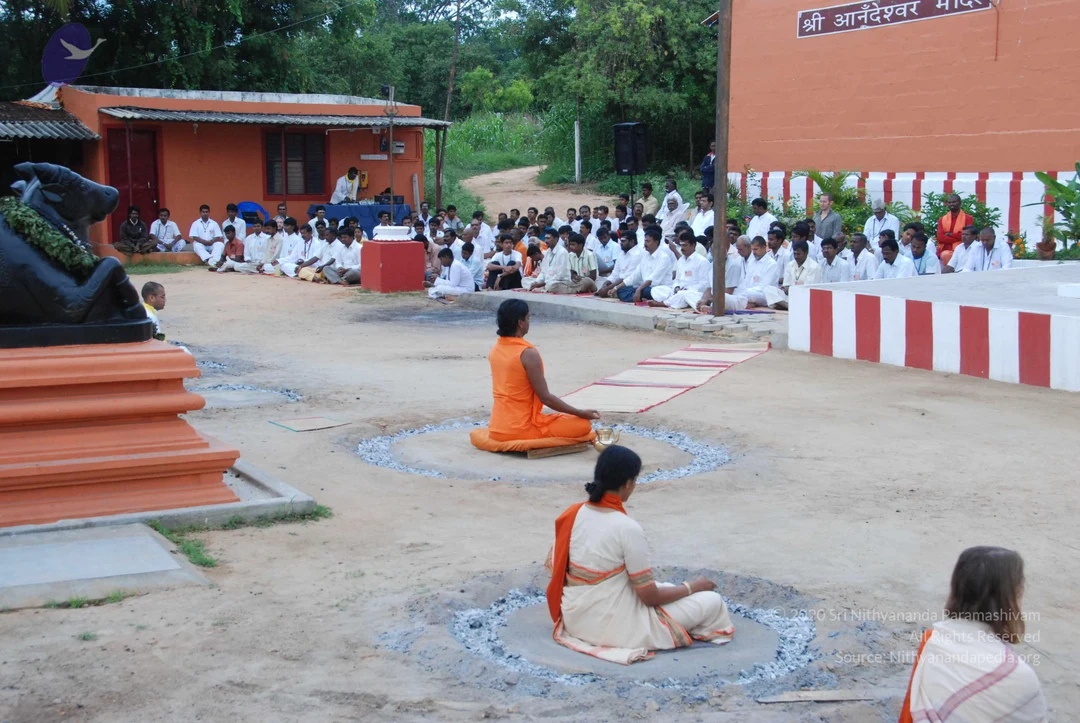
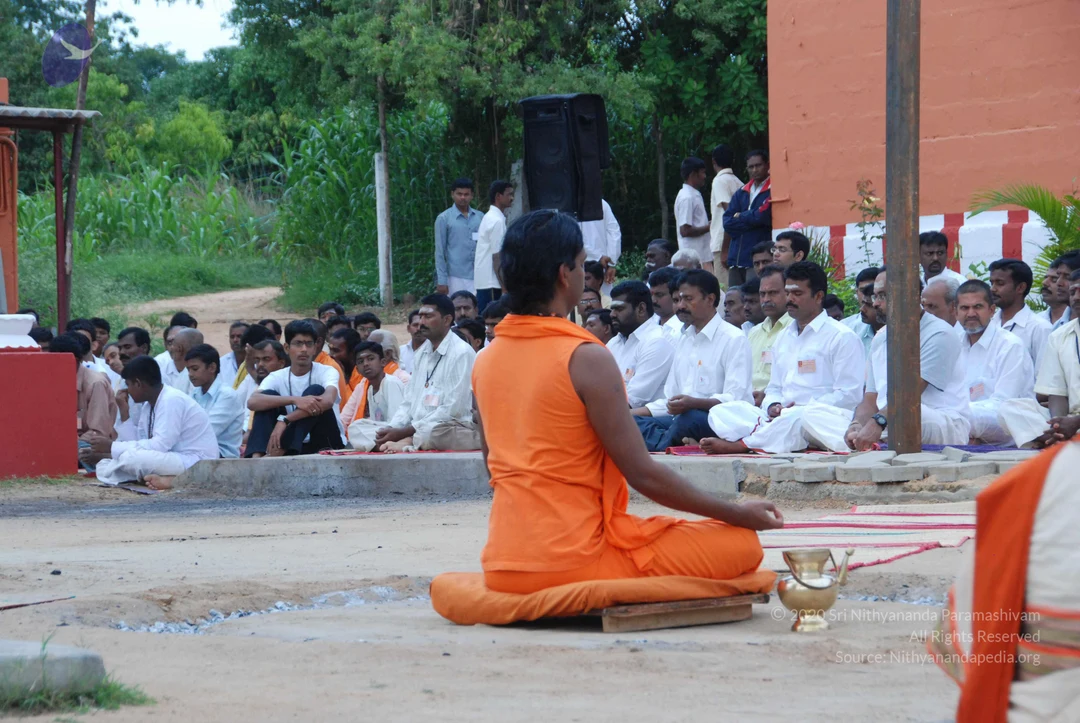
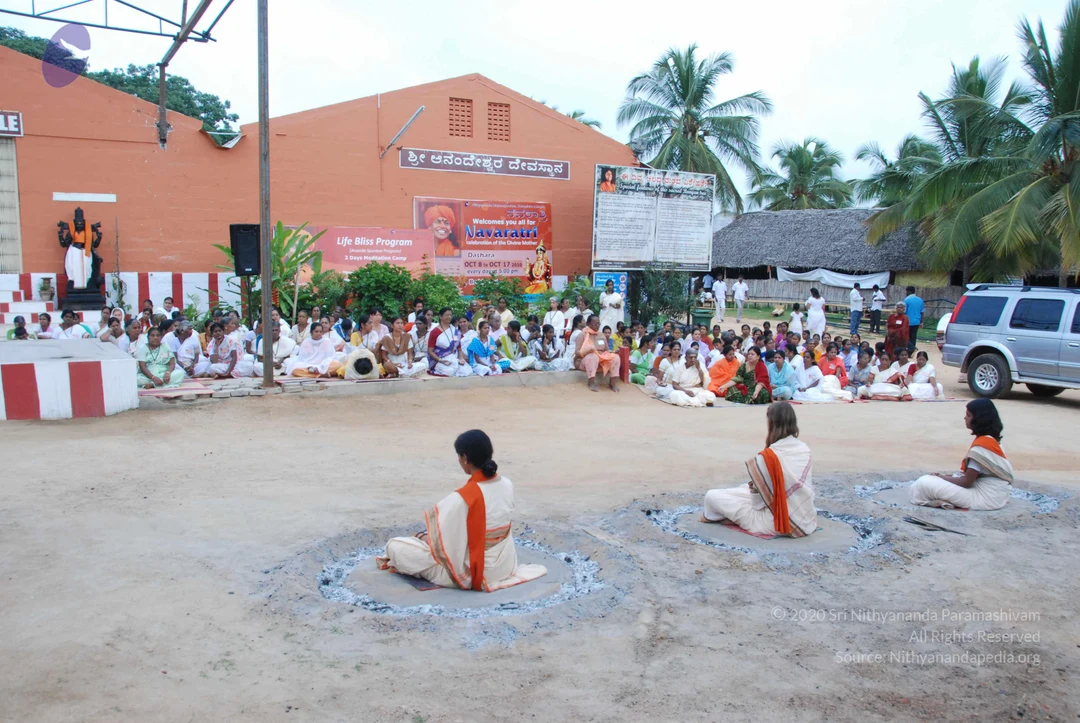
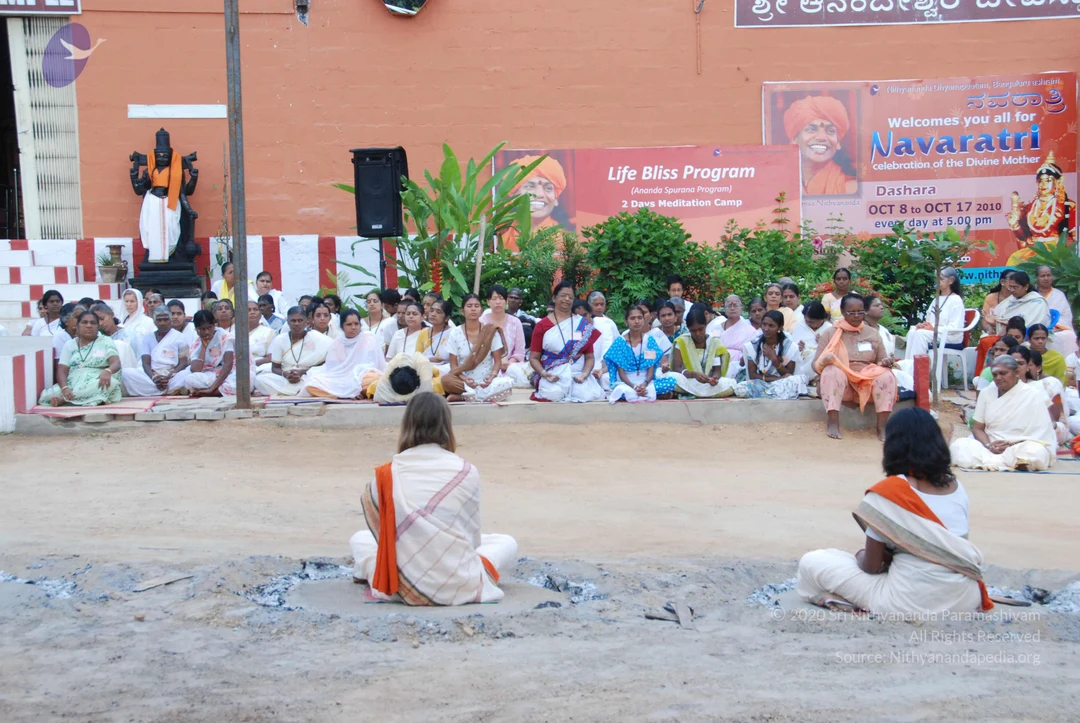
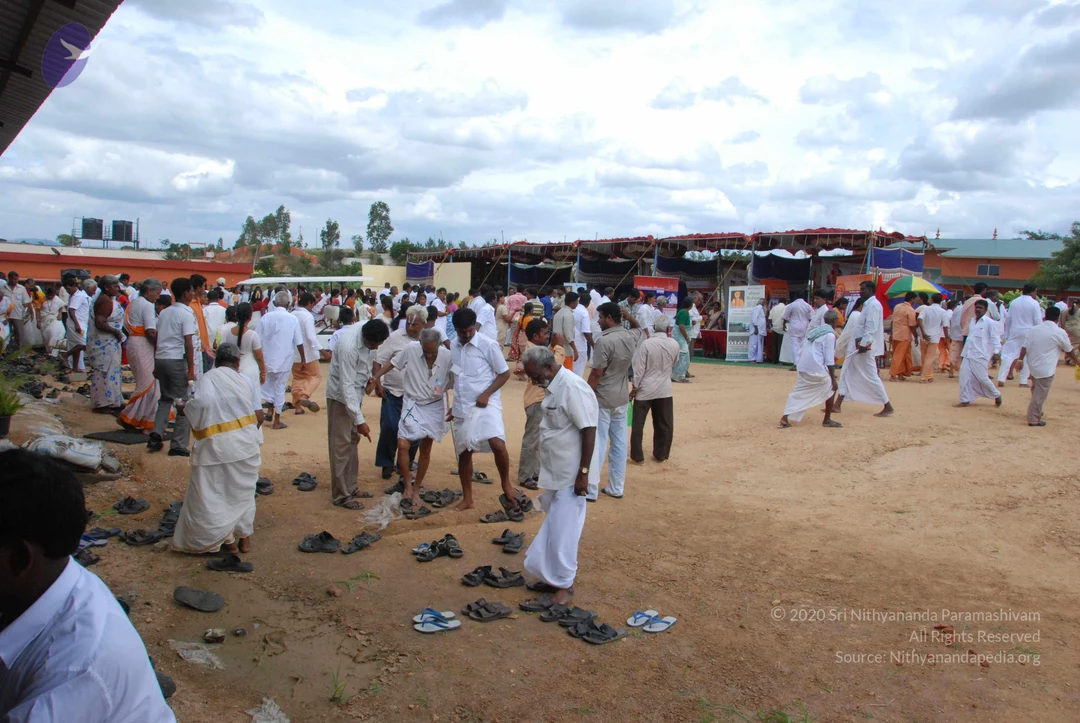
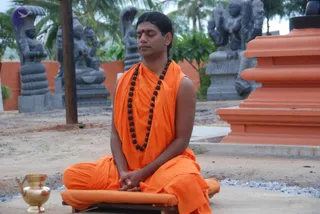
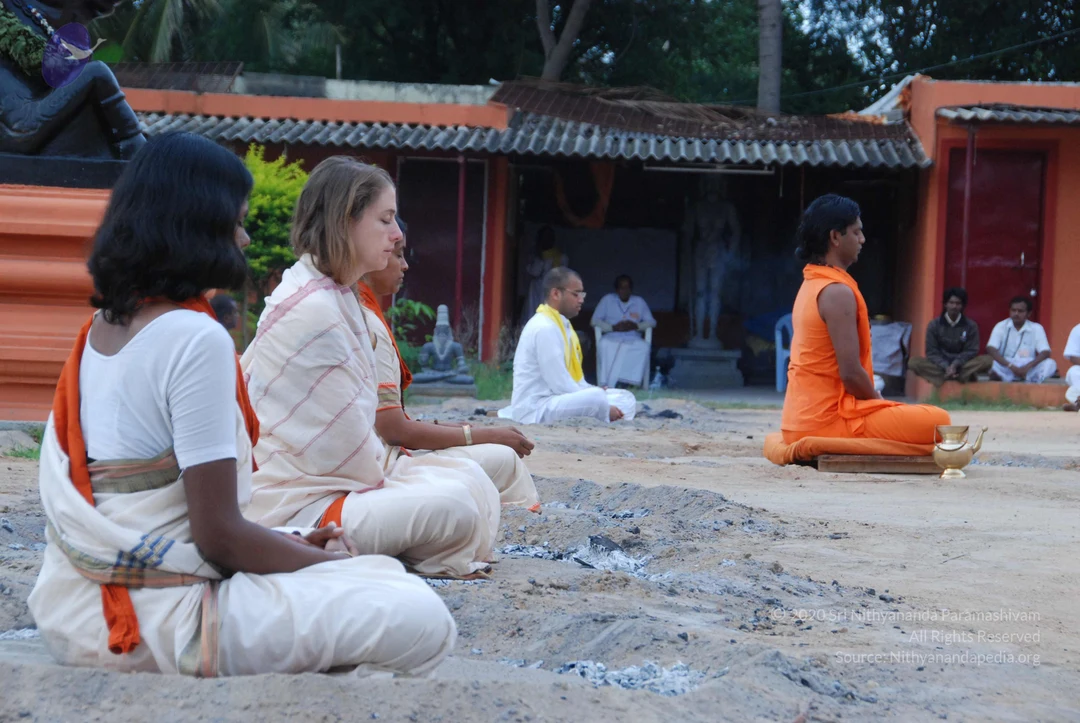
Outdoor satsang on a dirt ground in front of an orange-painted building with the sign Sri Anandeshwara Temple. Large crowd of devotees, mostly men in white shirts and dhotis, sit cross-legged on mats, with a few in saffron or coloured clothes. A seated figure in white at the front centre listens attentively, and a loudspeaker stands on a low wall at left. Red and white striped border along the wall, palm trees behind, and a red pedestal with a white cloth at right. Two statues stand in the temple doorway above the steps.An outdoor photograph of a seated assembly in front of an orange brick temple building with white-and-red painted base and a central entrance. Dozens of people in white clothes sit on mats and the ground in rows, while others in orange robes stand near the temple steps. In the foreground, a man in white with a yellow shawl kneels beside small ash or fire patches on the dirt, and a dark stone lingam stands at the right edge. Tall palm trees, a metal frame structure overhead and a parked silver SUV fill the background. Signs on the building read Sri Anandeshwar Mandir and Sri Anandeshwar Temple. Overcast light.An outdoor satsang gathering in front of an orange-washed building with a signboard reading Sri Amandeshwara Temple. Dozens of seated devotees fill the dirt ground on mats, most wearing white kurtas and dhotis, with some in orange or saffron clothing and a few children in bright shirts. A standing speaker stands at left beside a tall black loudspeaker on a stand. Two figures in saffron robes stand at the temple steps, and a red-and-white striped cloth border runs along the wall with potted plants and banners nearby.Outdoor satsang on bare earth in front of a terracotta-orange temple wall with white and red striped base trim. A black speaker on a stand stands at left. Above the entrance a sign reads Sri Anandeshwara Temple, with orange-clad deity figures in the doorway. Dozens of men in white shirts and dhotis sit cross-legged on mats in rows, most facing a speaker at left. A bald man in a white garment sits at right foreground with a beaded necklace. Several men wear saffron or orange cloth. Potted plants and palm trees fill the background.A man sits cross-legged in meditation on a low orange-cushioned wooden seat outdoors, eyes closed and hands resting in his lap. He wears an orange sleeveless wrap over orange clothing and a long mala of dark rudraksha beads, with a red tilak on his forehead. Behind him stand grey stone sculptures of seated deities and a serpent-hooded figure, with palm trees and an orange-painted pillar at right. A small brass kalasha-style vessel sits on the ground at lower left, and ash or ember remains are scattered on the ground. The man appears to be a devotee or sannyasi; his appearance is an orange-robed figure with rudraksha, a candidate cue but not one that establishes identity.A man sits cross-legged on an orange cushion outdoors with eyes closed and hands folded in his lap, in meditation. He wears a saffron-orange robe draped over one shoulder and a long necklace of dark rudraksha beads, with a red bindi on his forehead. Behind him stand grey stone sculptures of deities and nagas, including a figure with multiple arms, and an orange-painted pedestal to the right. A brass vessel sits at the lower left on the ground. Pale gravel covers the ground. The man has long swept-back hair, rudraksha mala and saffron clothing, which are the cues associated with Swamiji, so the identification is probable and he is described as Swamiji (probable) in meditation.

06-Temple
24 photosSource gallery
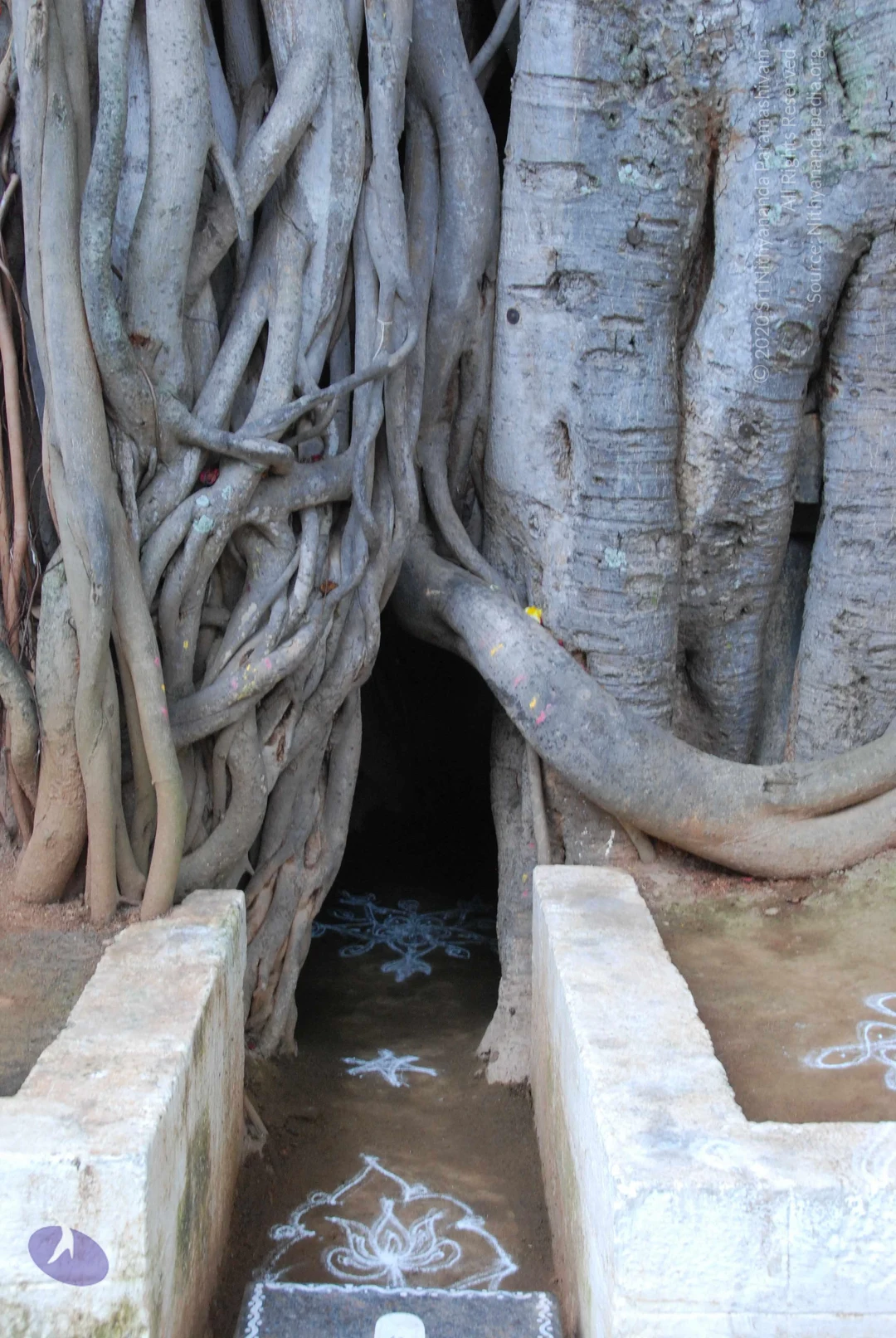
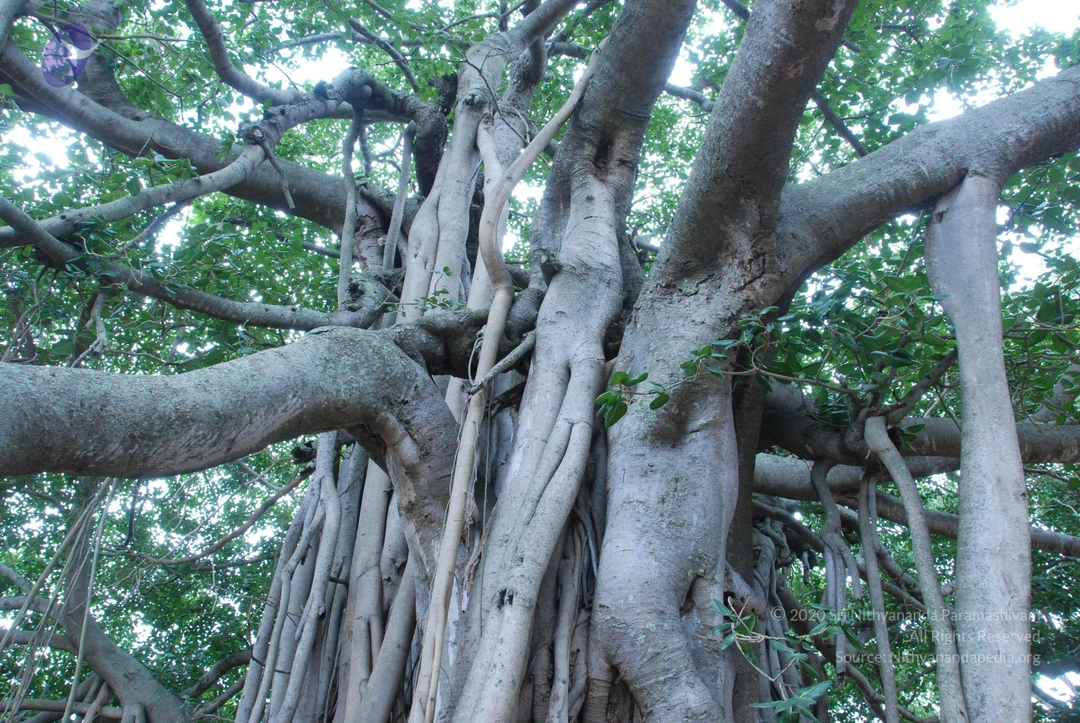
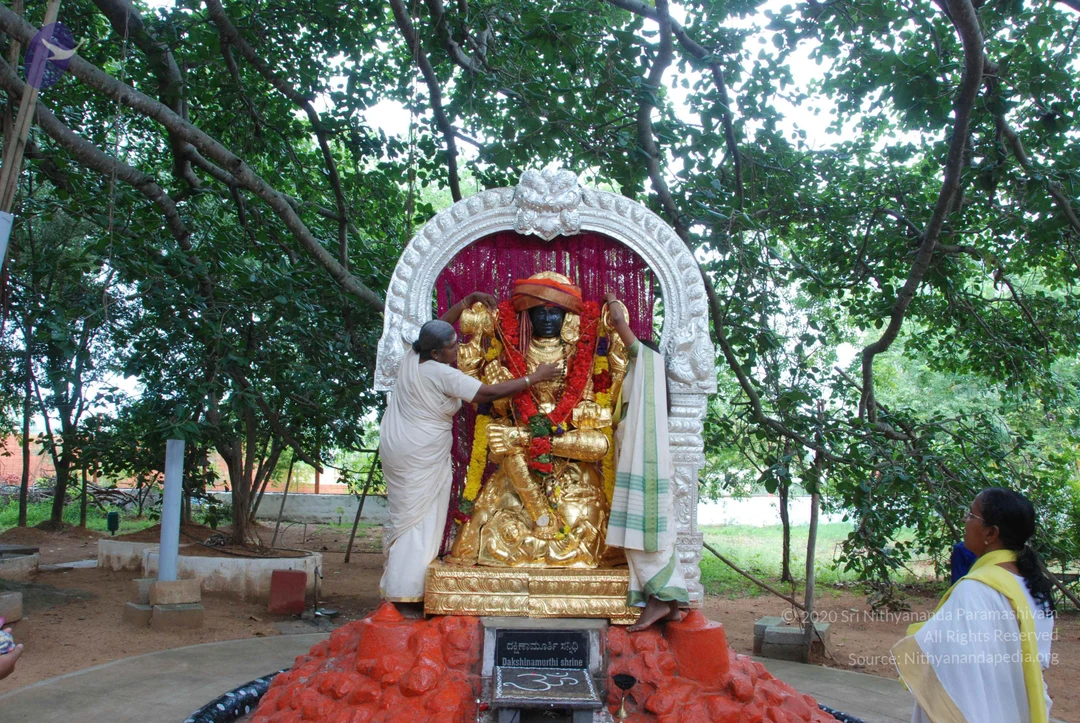
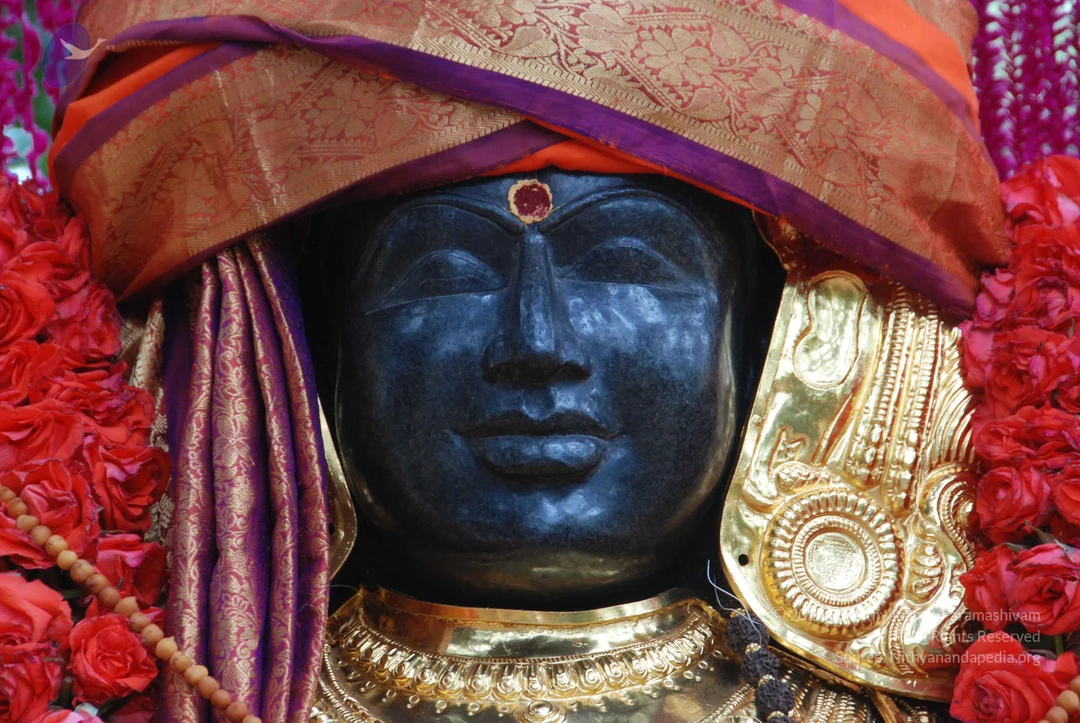
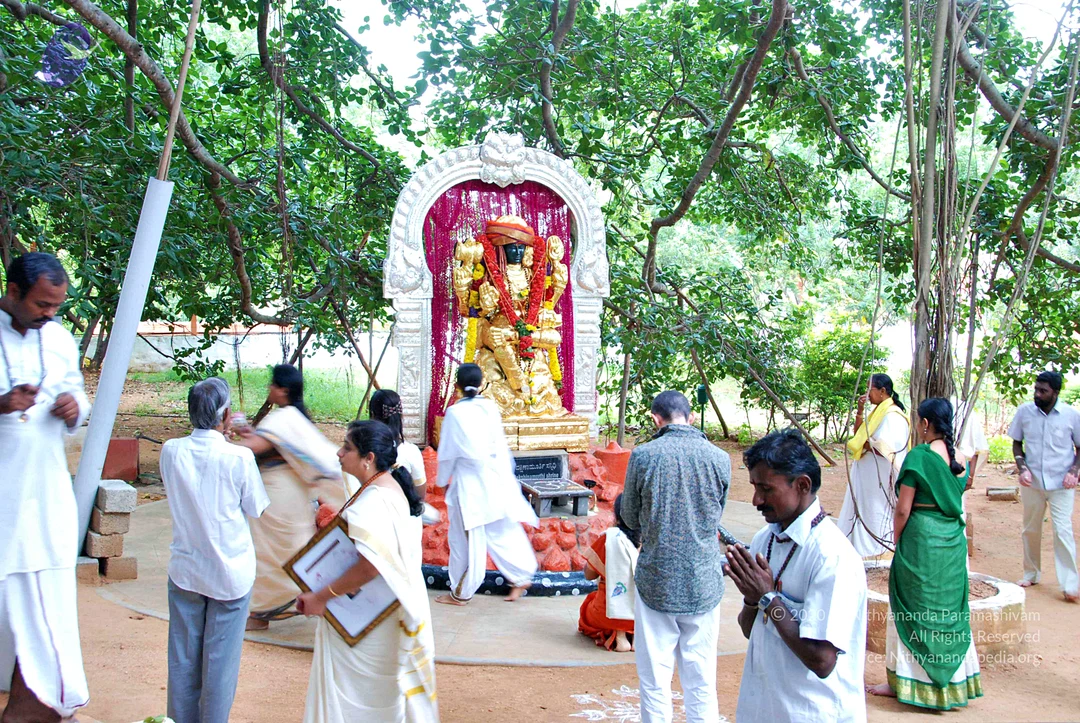
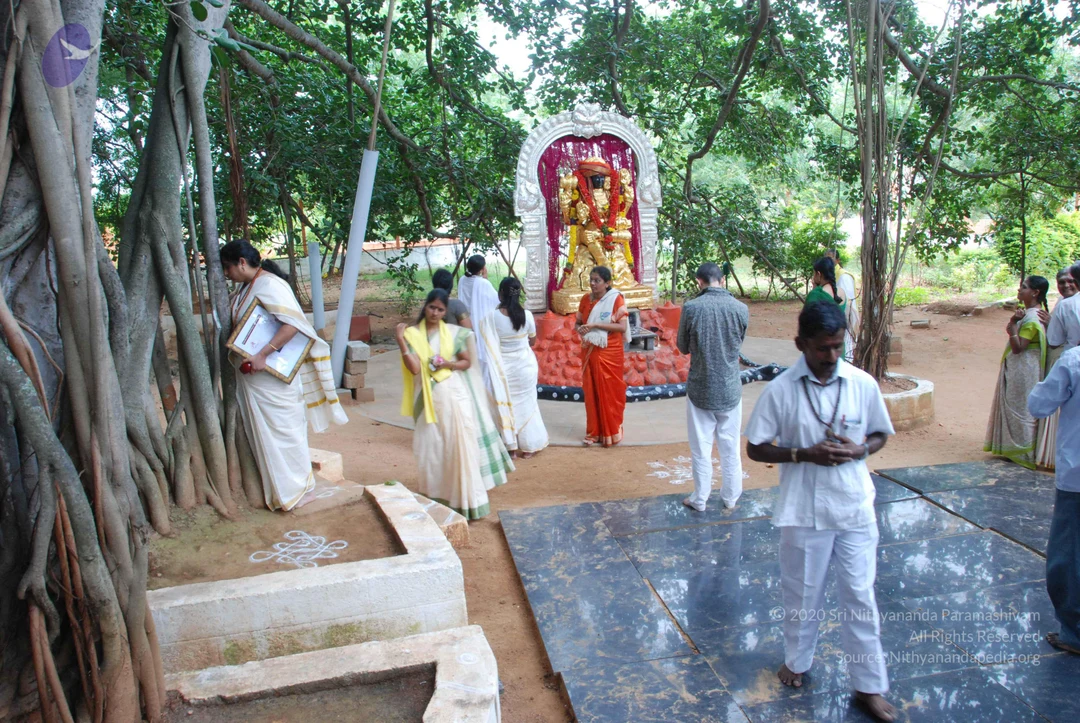
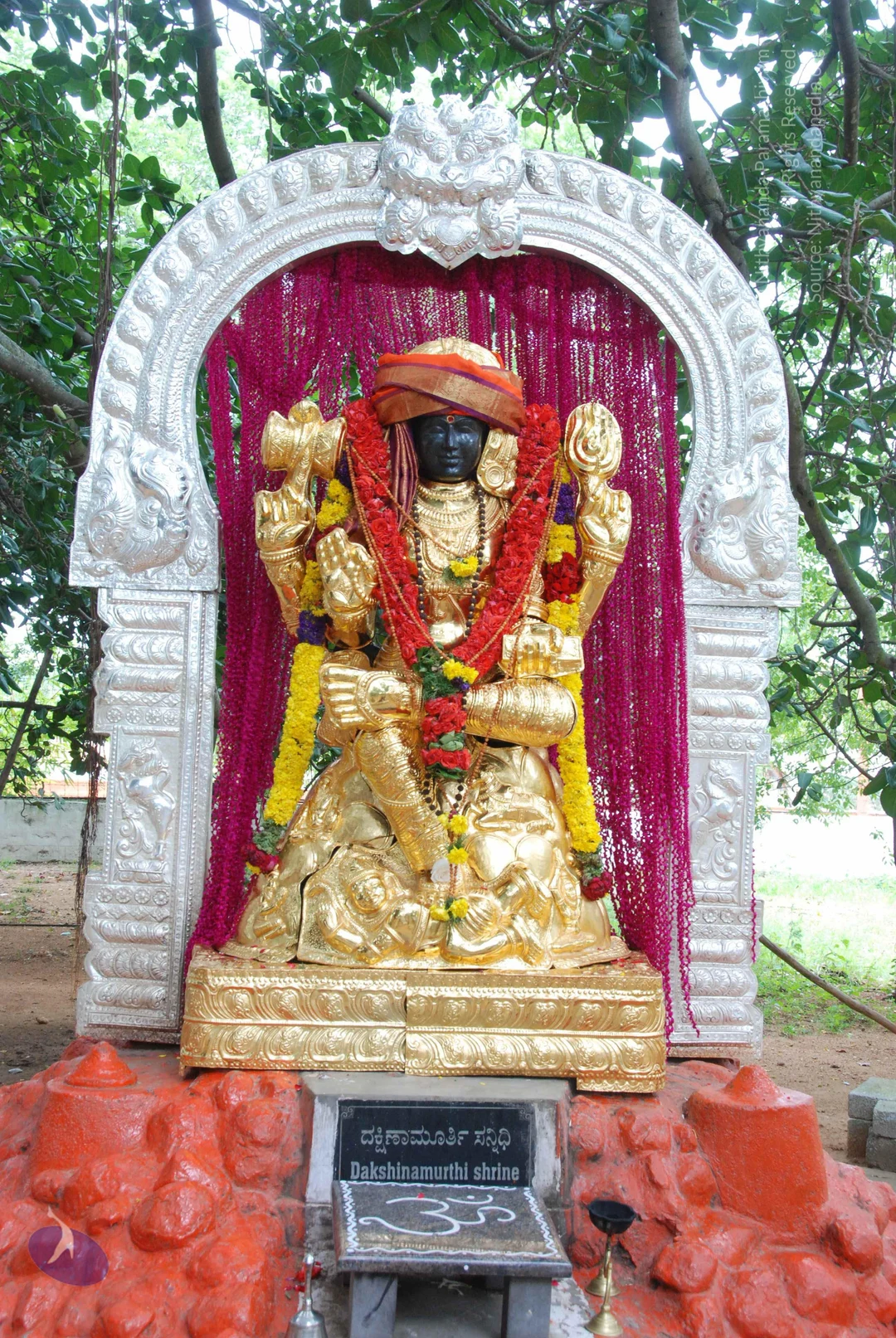
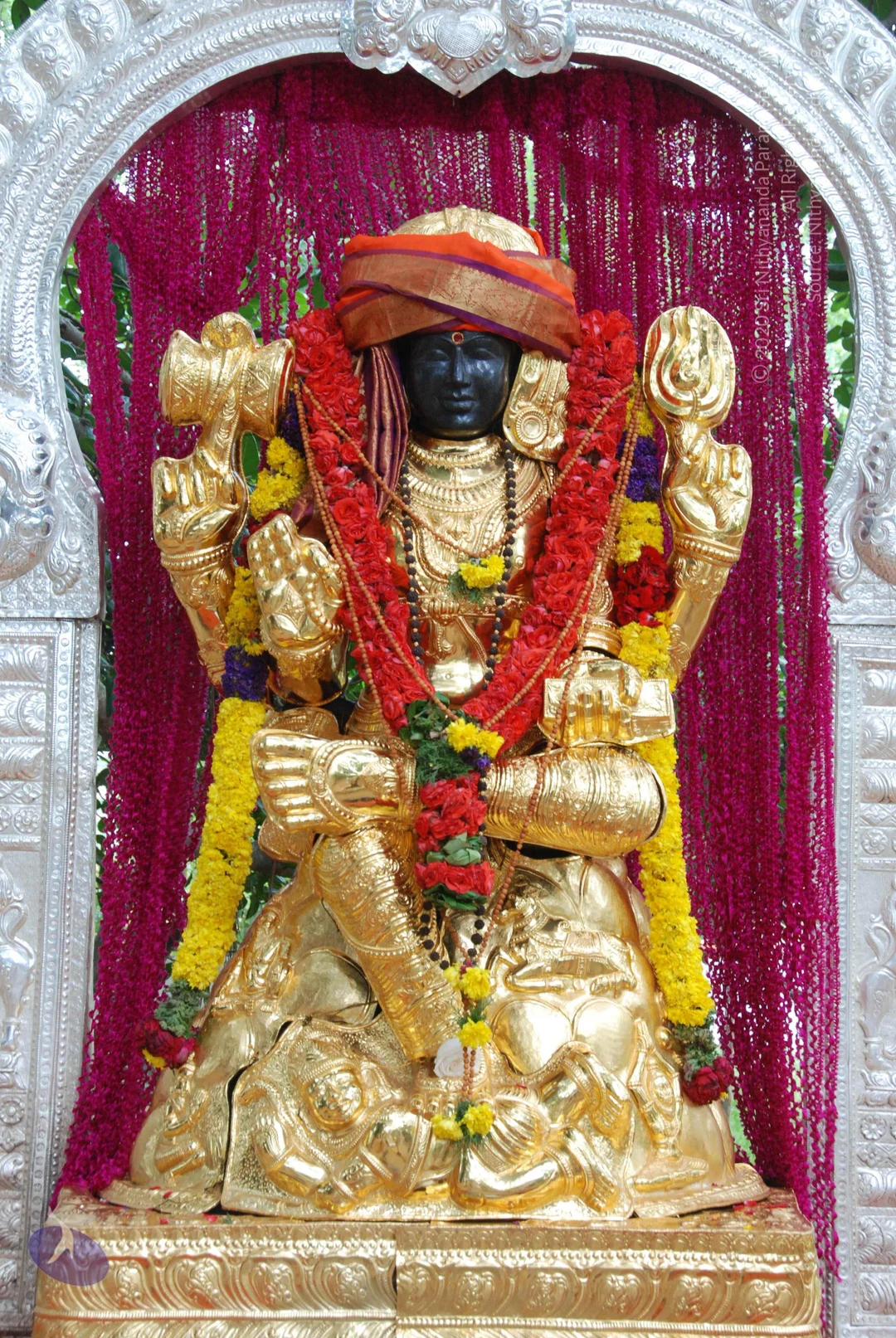
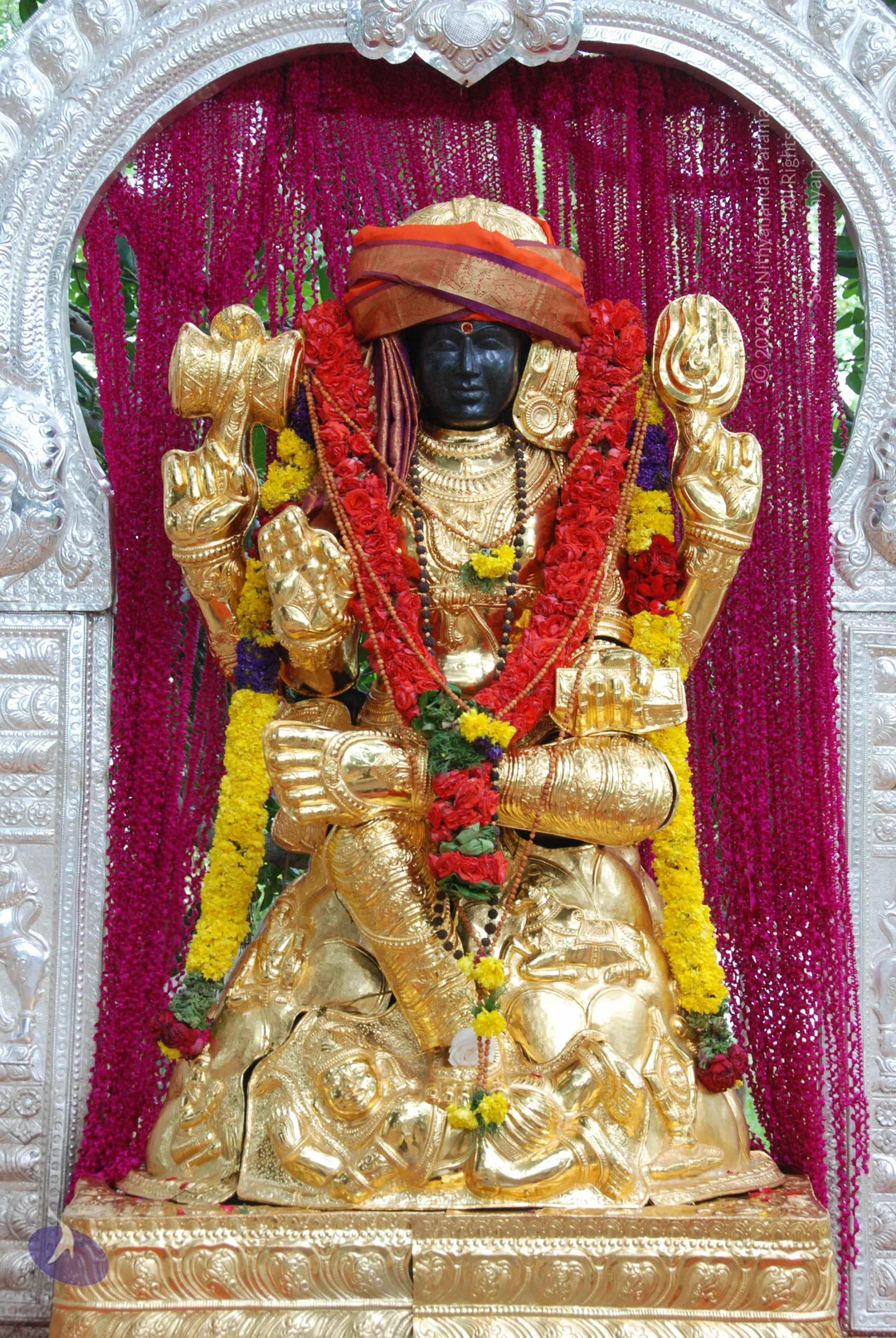
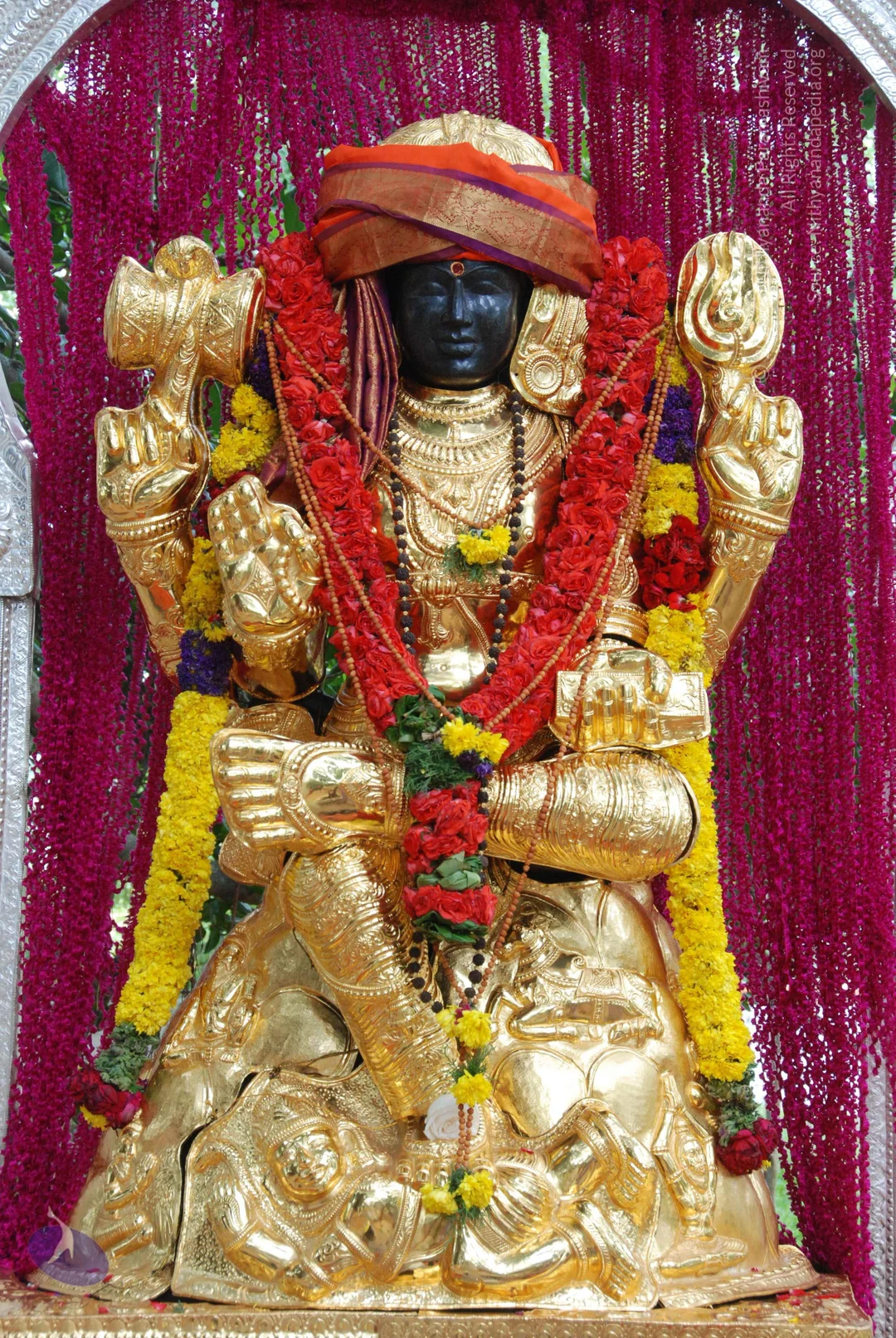
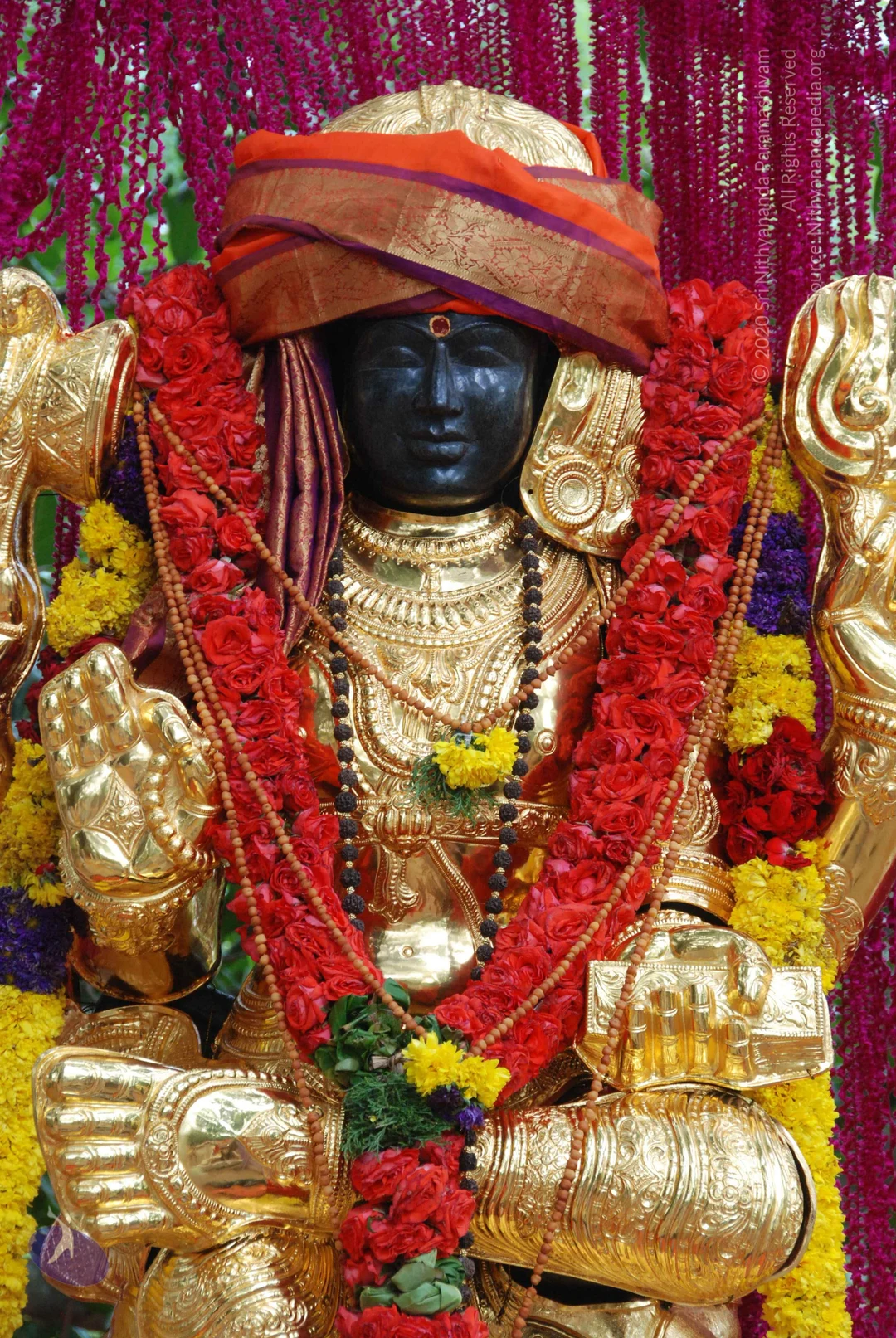
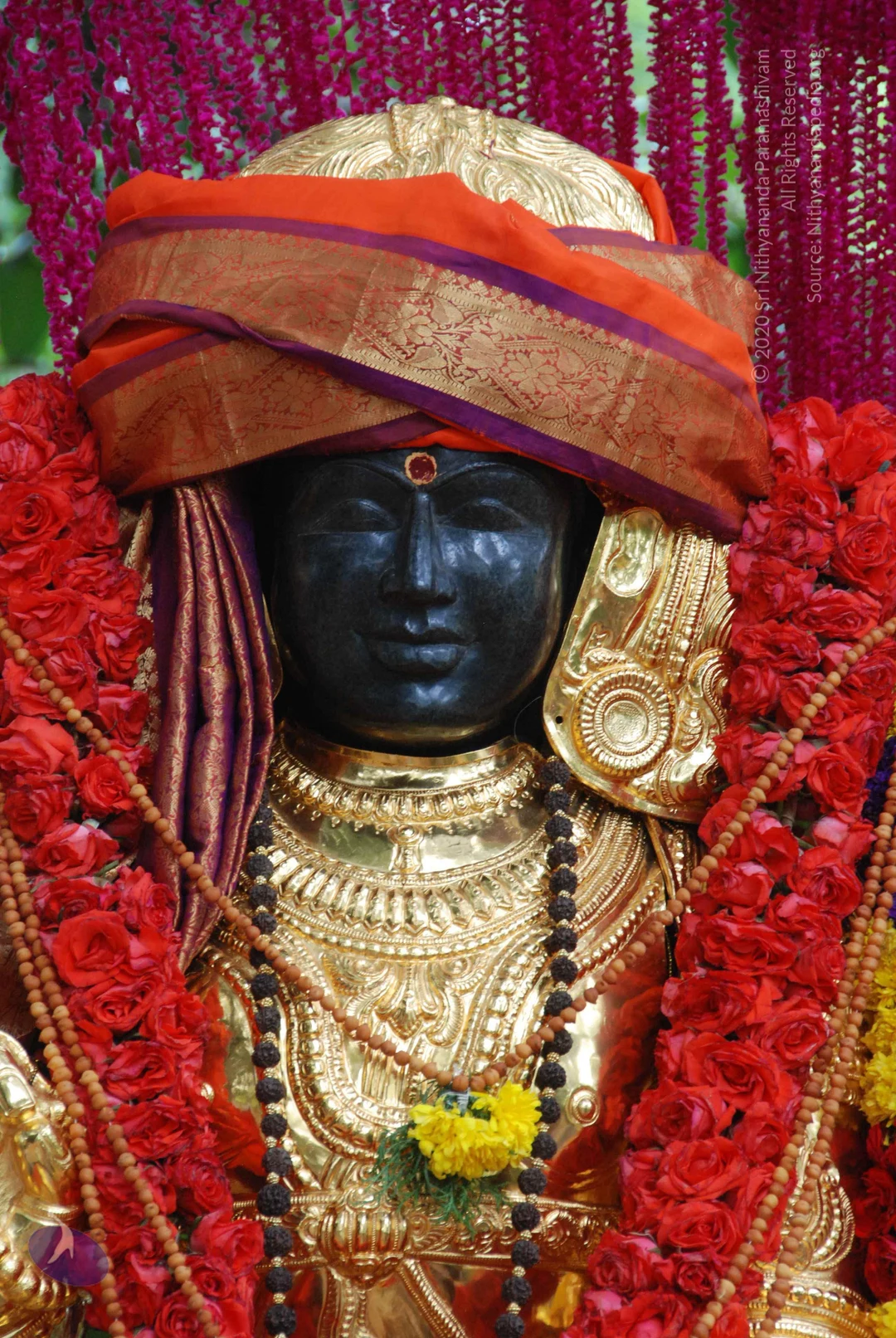
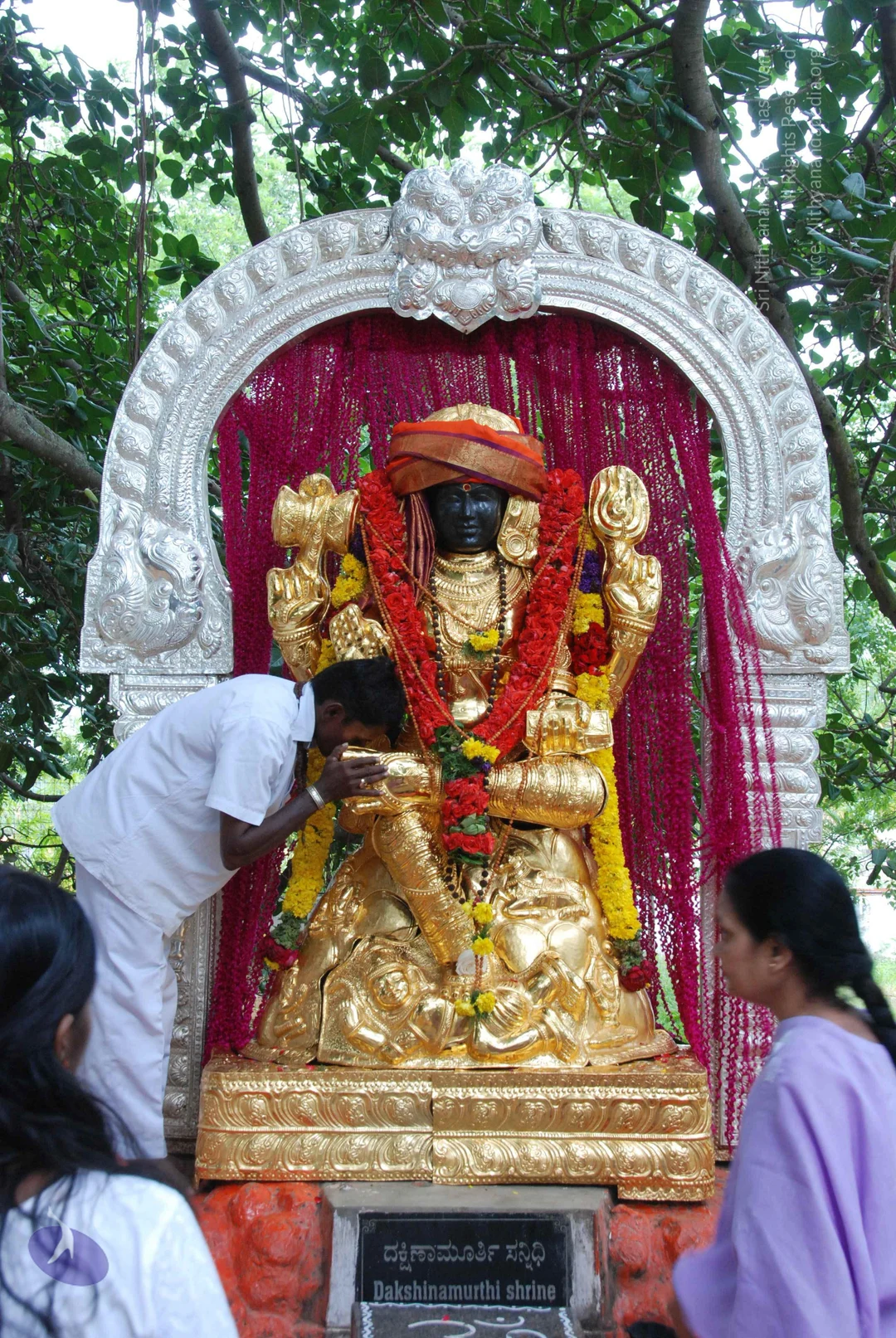
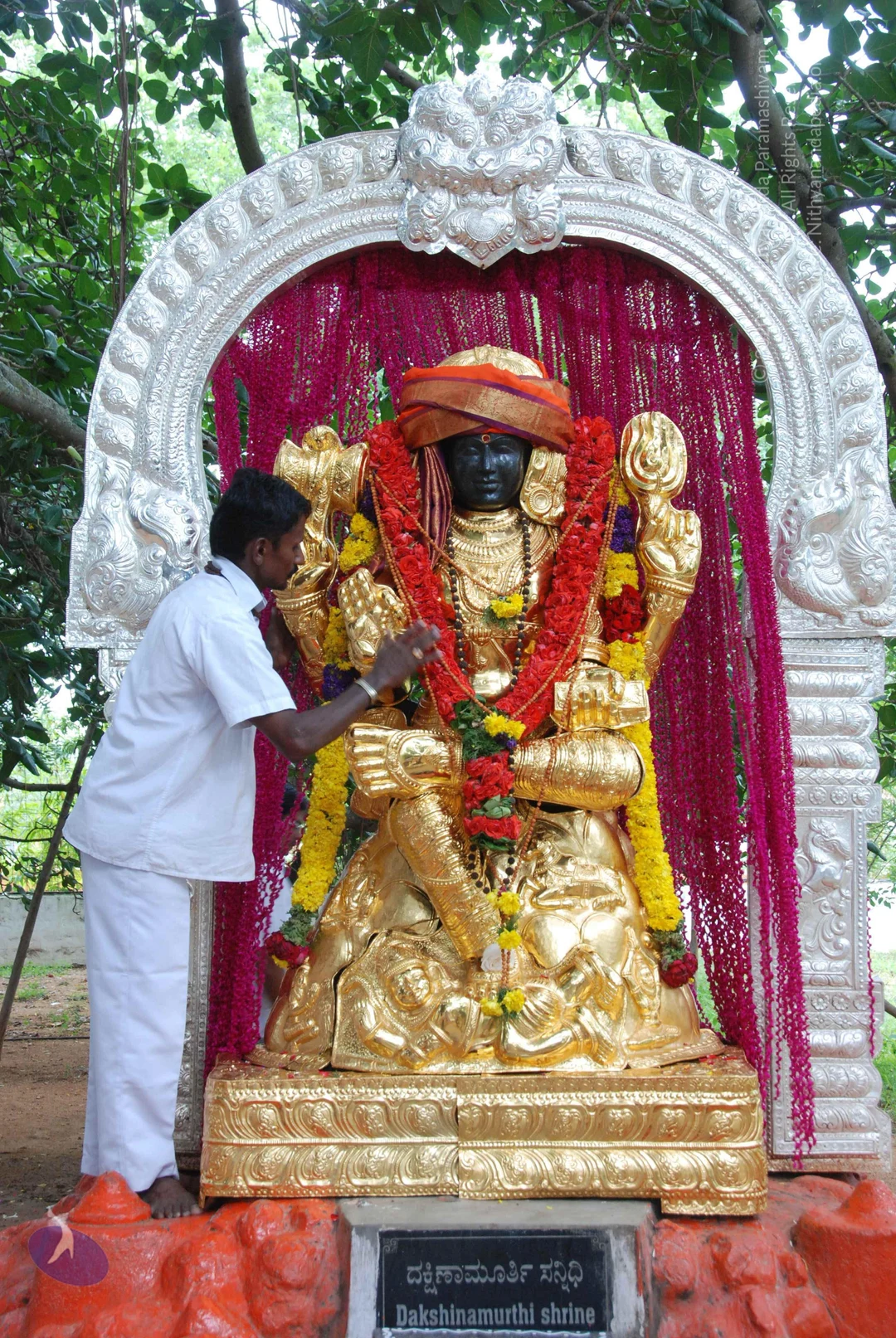
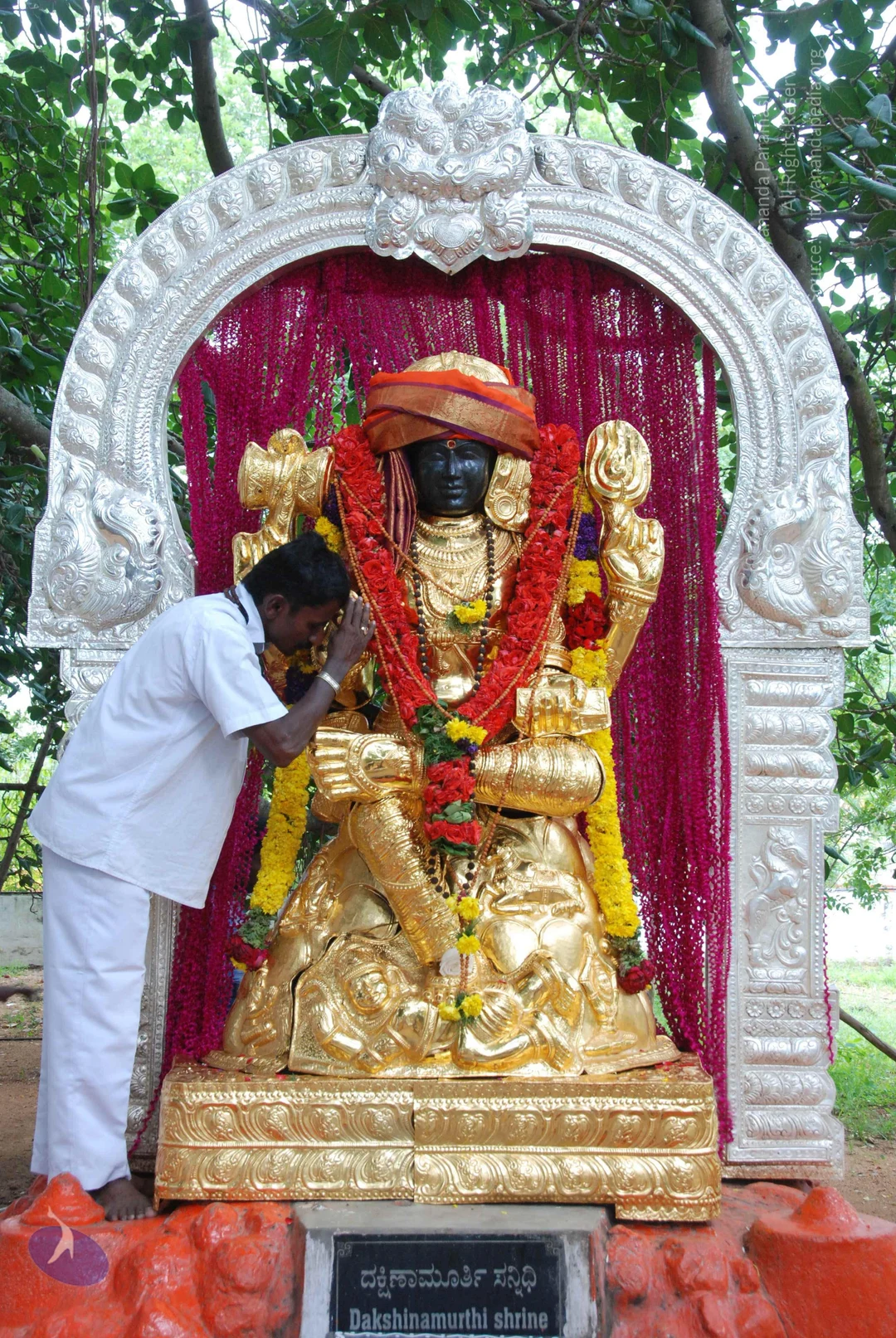
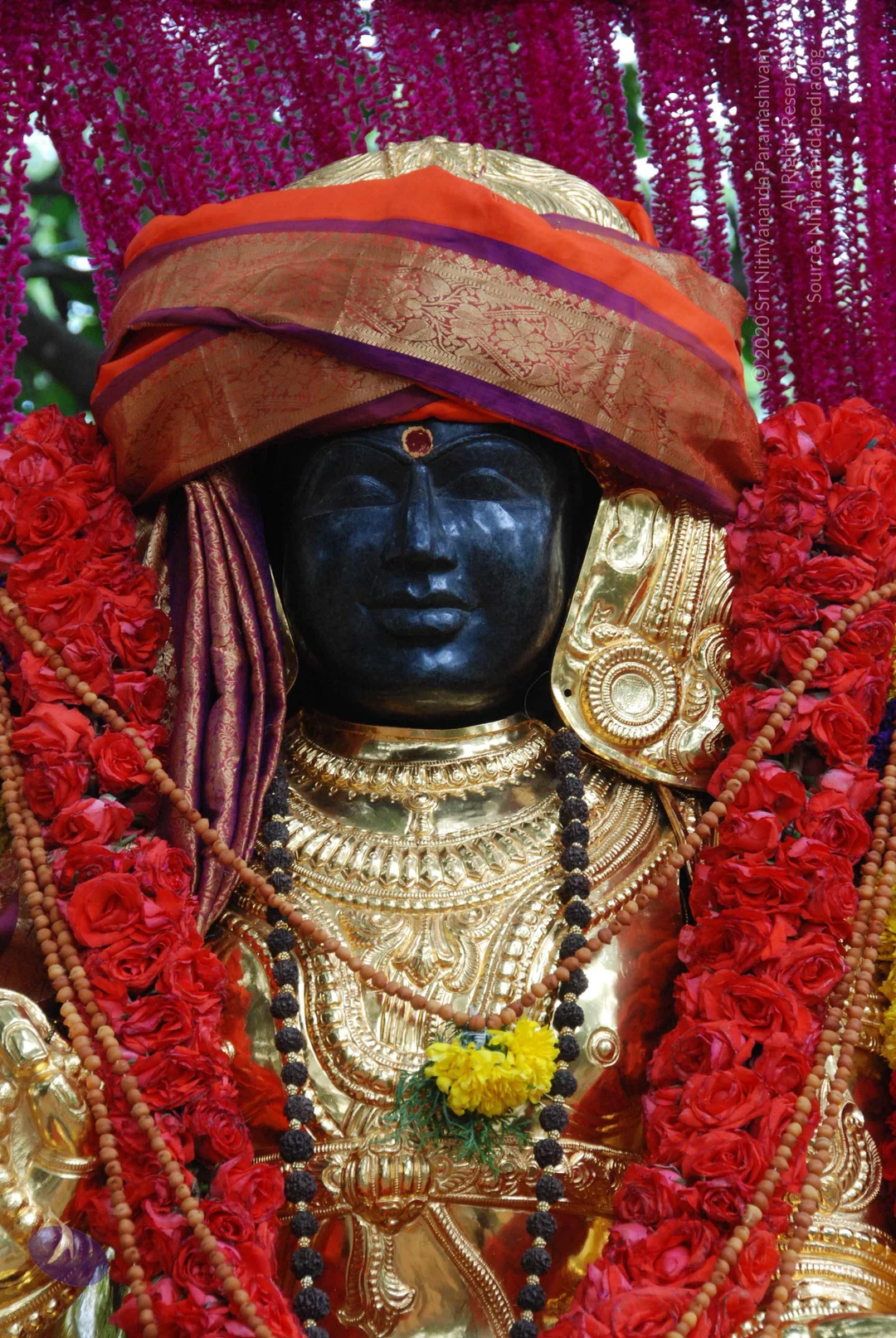
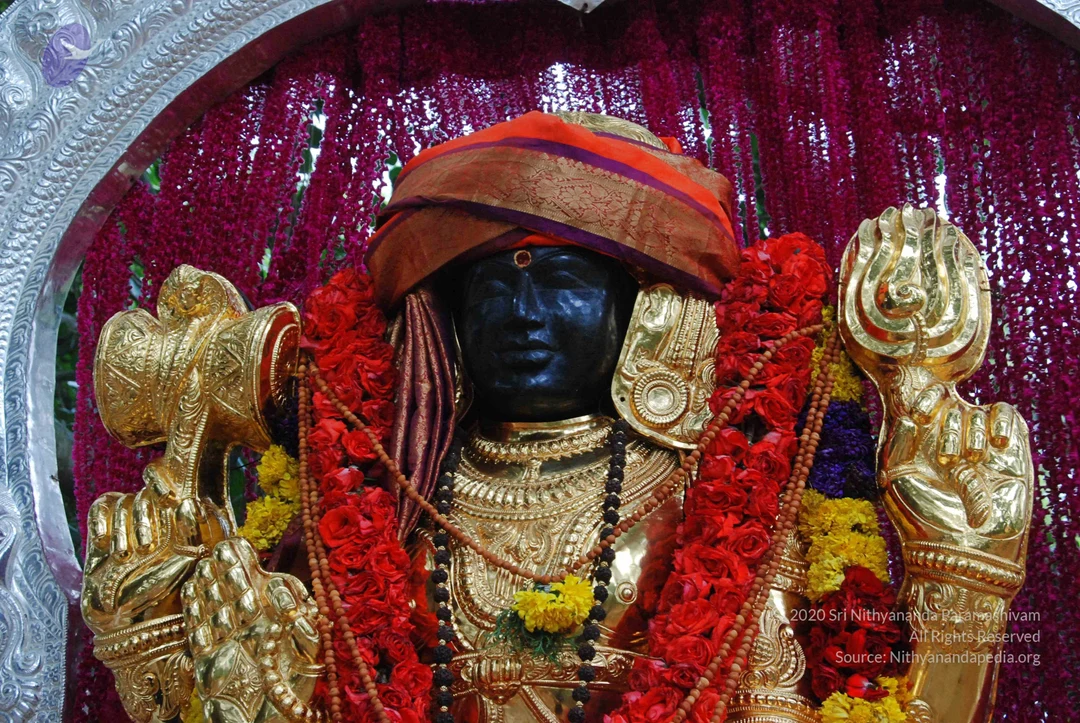
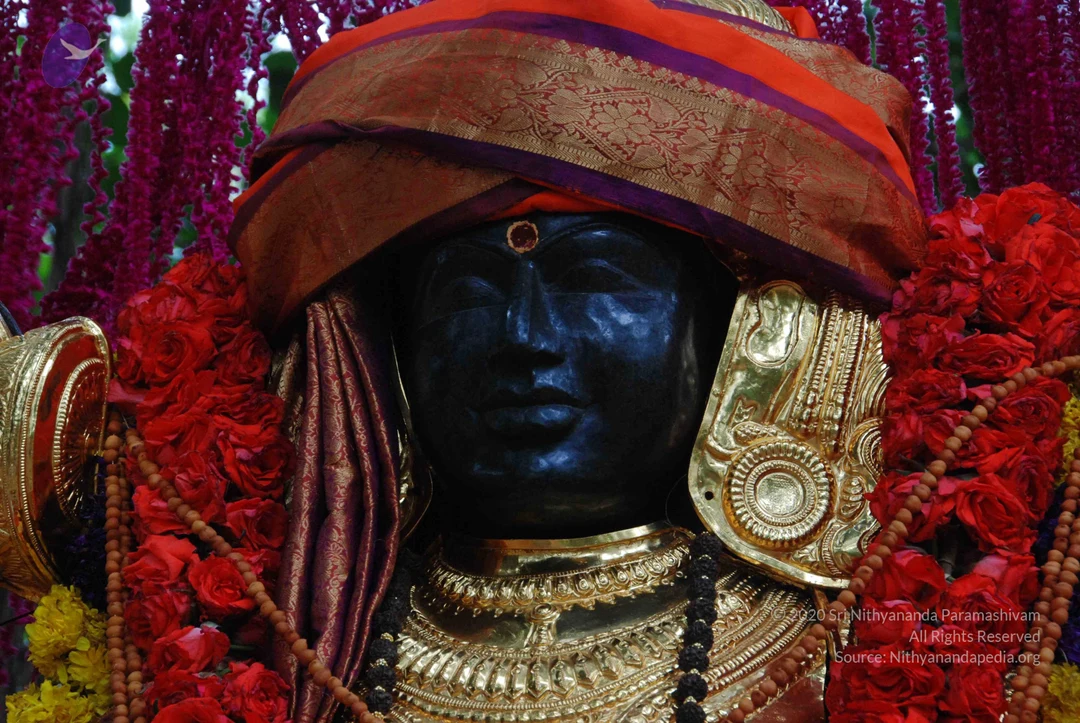
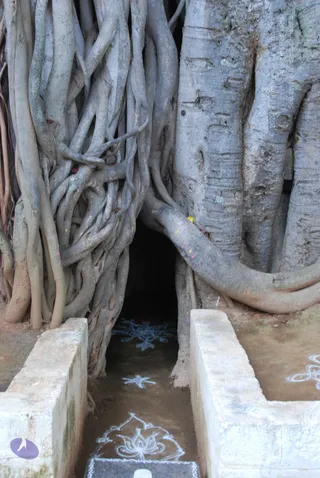
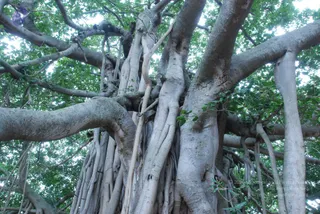
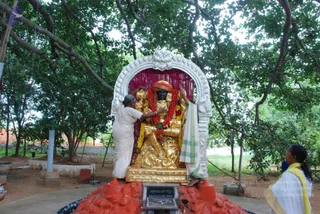
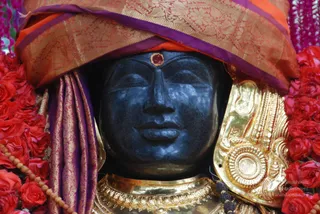
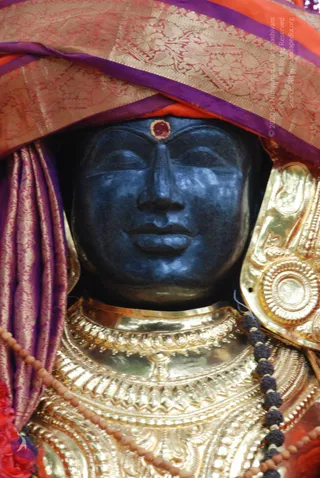
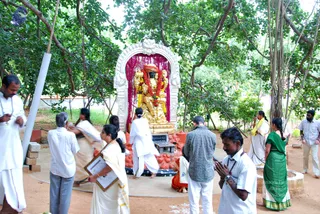
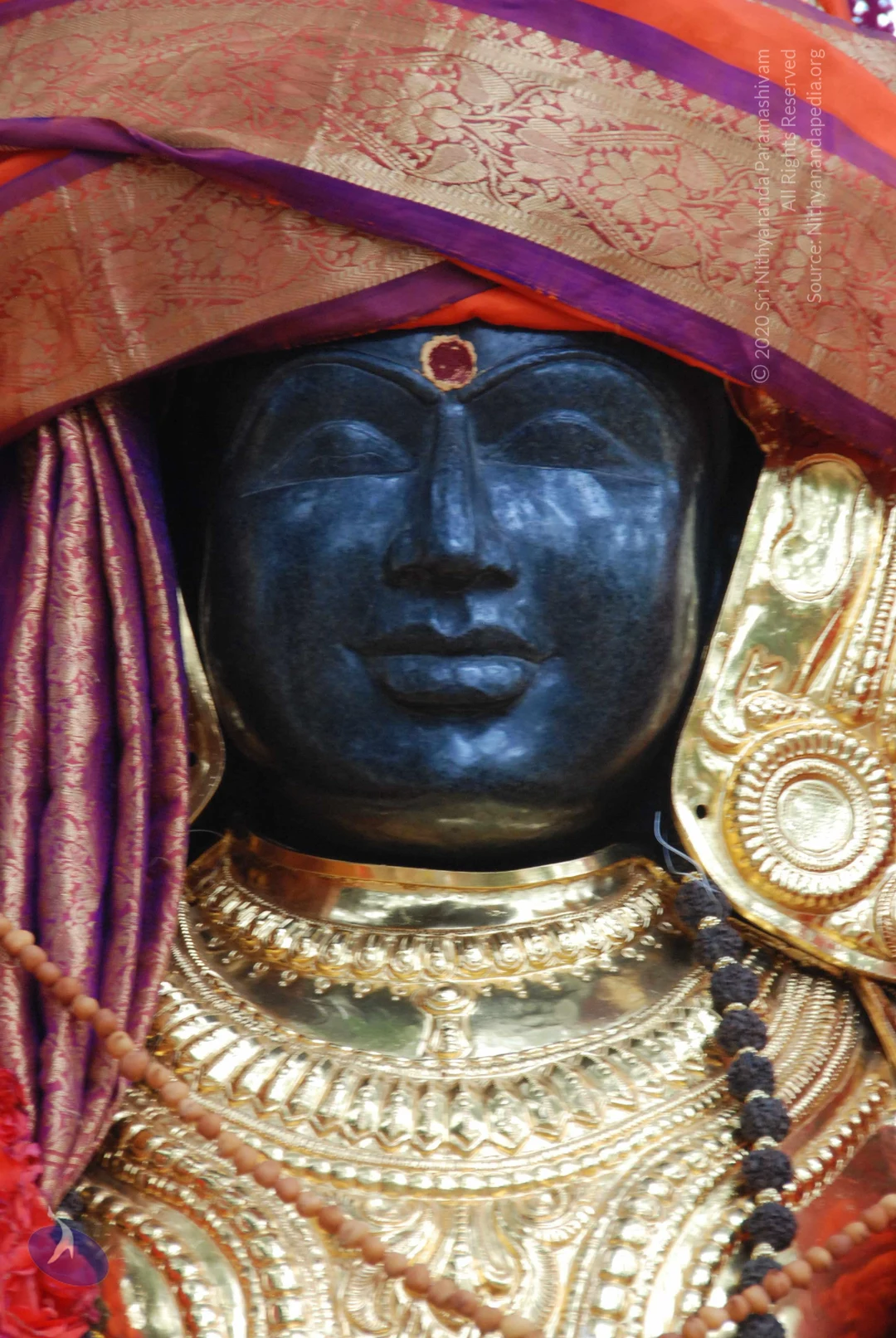
A photograph of a dark cave-like opening framed by thick, intertwined grey banyan or fig tree roots and a large grey trunk. White chalk kolam designs, including a lotus motif and floral patterns, decorate the ground and the stone threshold leading into the dark entrance. Two white-painted stone walls flank the path, and small red and yellow marks appear on the roots. No people are visible.Looking up into a large, mature banyan tree with thick grey trunks and sprawling, interlaced branches. Many aerial roots hang and twist down from the limbs, and dense green leaves fill the canopy with patches of bright sky showing through. No people, deities or ritual objects are visible.Outdoor shrine under dense tree canopy showing a gilded Dakshinamurthi murti seated on a golden pedestal, with a white arched stone frame and a magenta cloth backdrop. The deity wears an orange-red headcloth and is garlanded with red and yellow flower garlands. Two people in white attend it: a woman in a white sari on the left arranges the garland at the figure's shoulder, and a man in a white dhoti with green-striped border stands on the right at the base. A third woman in a yellow-bordered sari stands at the right edge. A black plaque in front reads Dakshinamurthi shrine with an Om symbol, and the base sits on red-orange painted stones.Close view of a dark stone deity murti with a serene carved face, a red bindi-like mark on the forehead, and a large orange and purple brocade cloth wrapped over the head. Gold ornamental shoulder and chest plates with embossed patterns sit beside the face, and a garland of red roses frames the image on both sides, with a wooden bead mala visible at lower left. No people are visible.Close-up photograph of a dark blue-black statue face of a deity murti, wrapped in a red and purple brocade cloth with gold zari patterns. A red bindi sits on the forehead. Heavy gold ornamental collar and shoulder pieces with embossed designs surround the neck, and strands of rudraksha beads and reddish beads hang across the chest. Red flowers appear at the lower left edge. The image is a statue, not a living person, and no a person candidate is visible.Outdoor photo at a shaded ashram shrine under large trees. A golden deity murti stands in a white arched niche with red drapery and garlands. Several devotees in white clothes move around a circular platform; one woman in a cream sari holds a clipboard, a man in white kneels with folded hands at right, and a woman in a green sari stands nearby. A man in a grey shirt stands at the center-right. A pale tall pole stands at left.

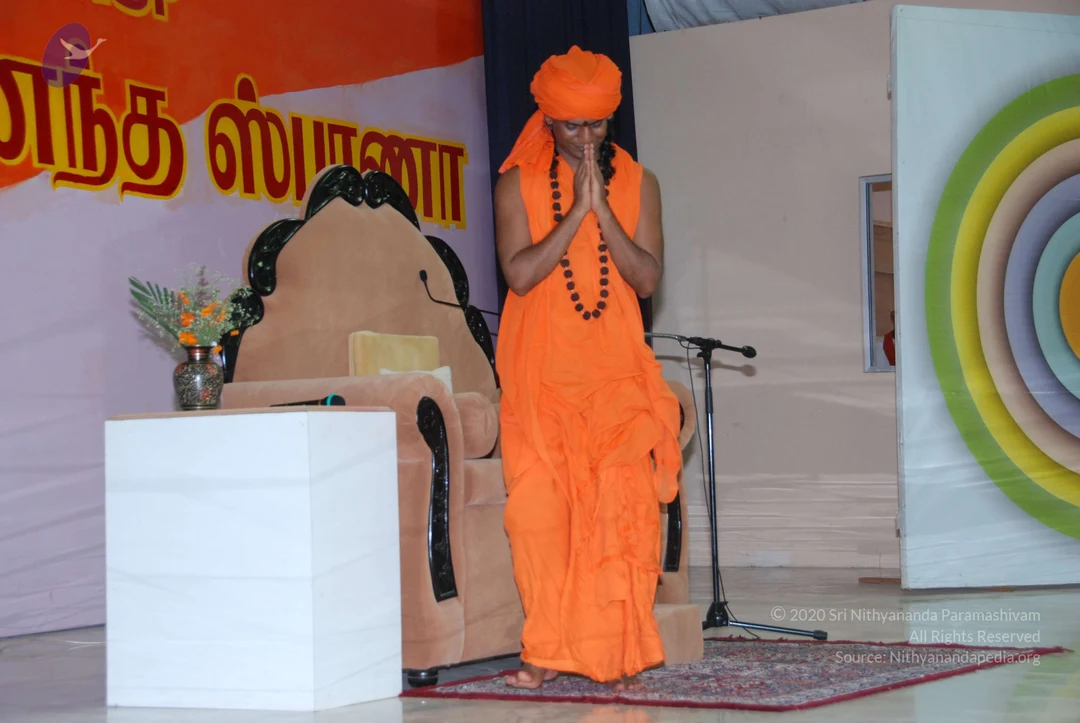
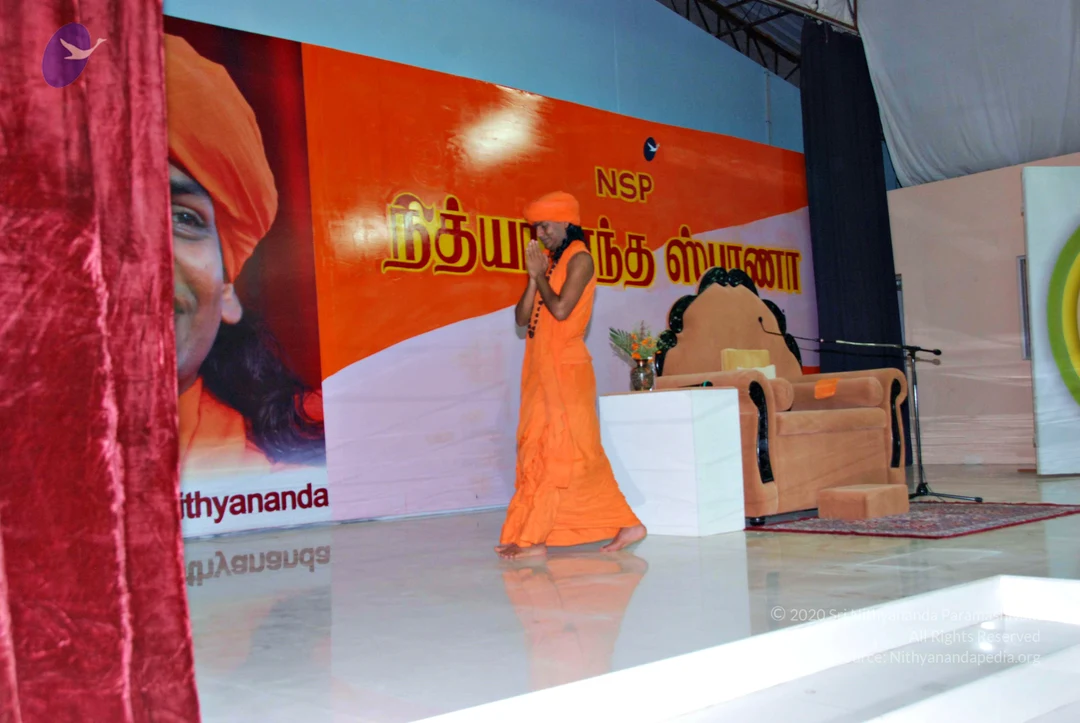
07-Tamil NSP
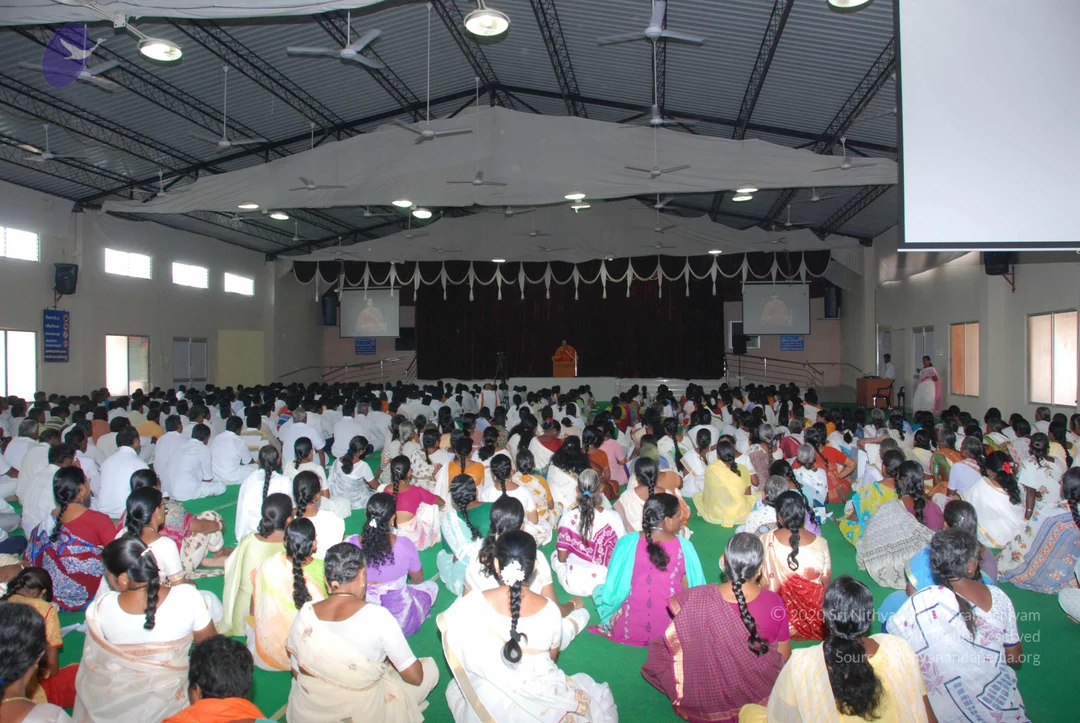
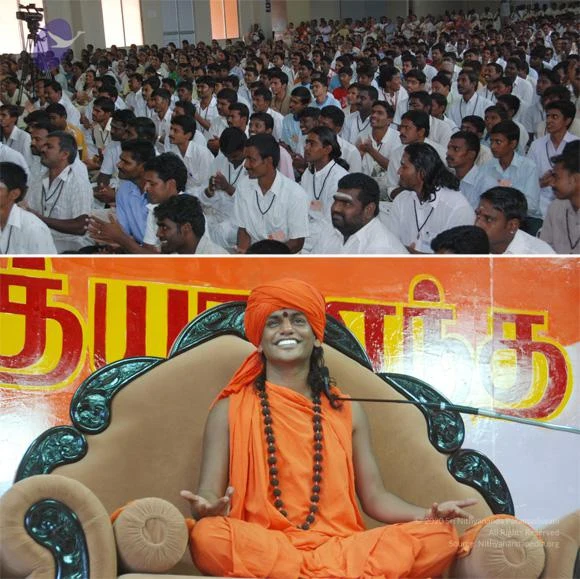
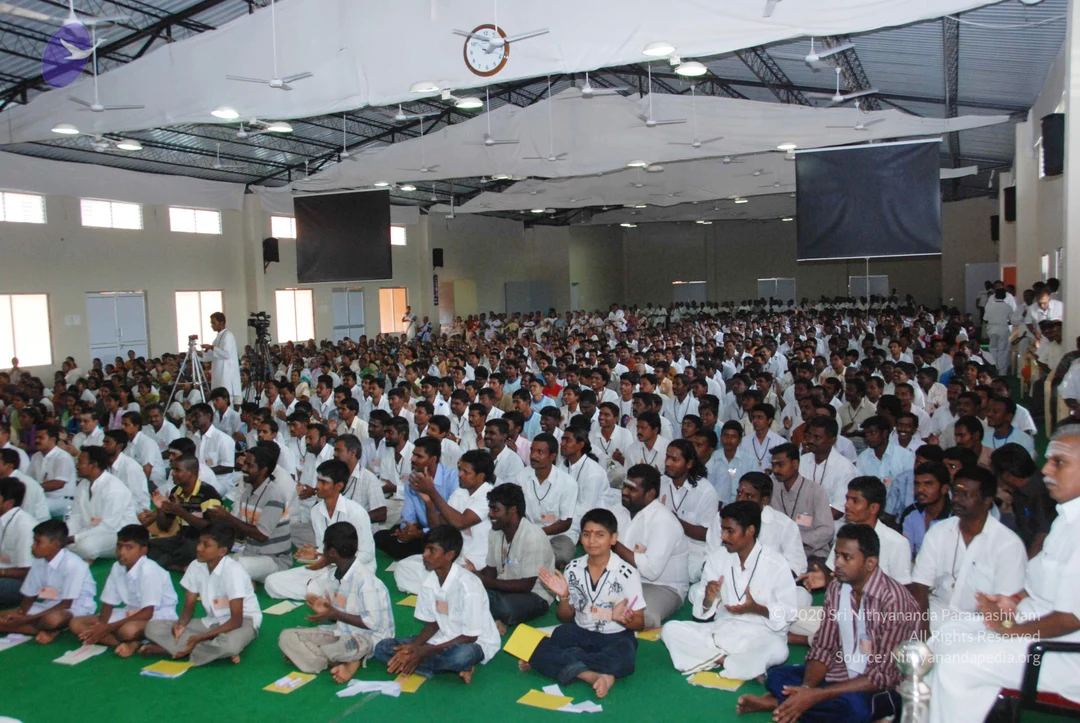
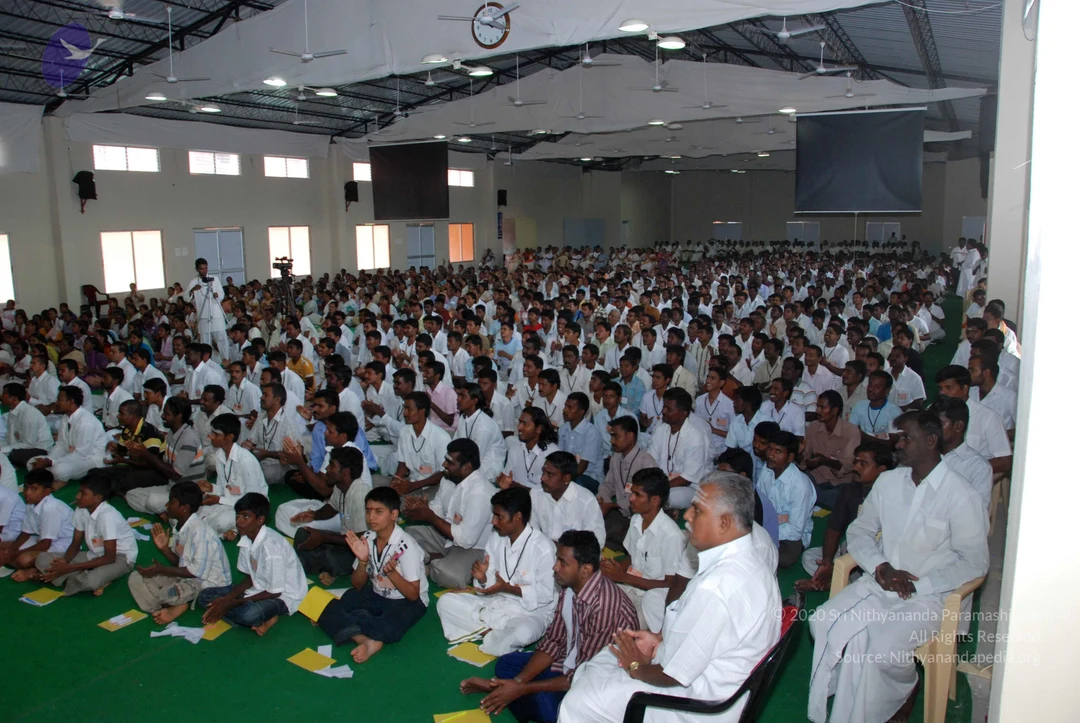
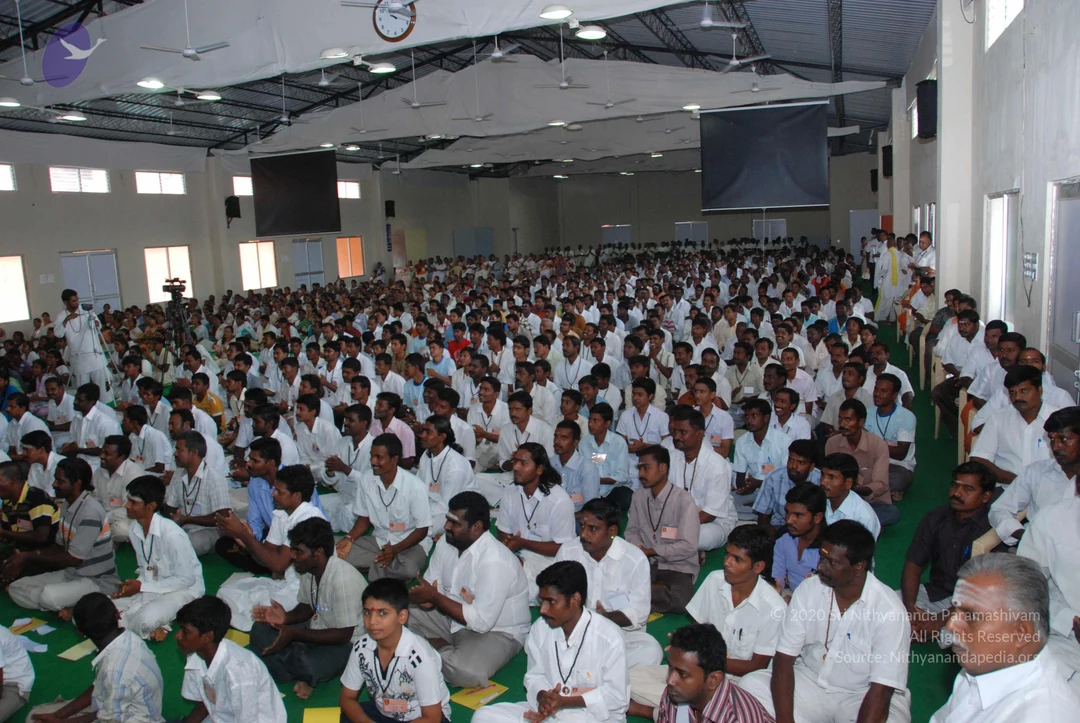
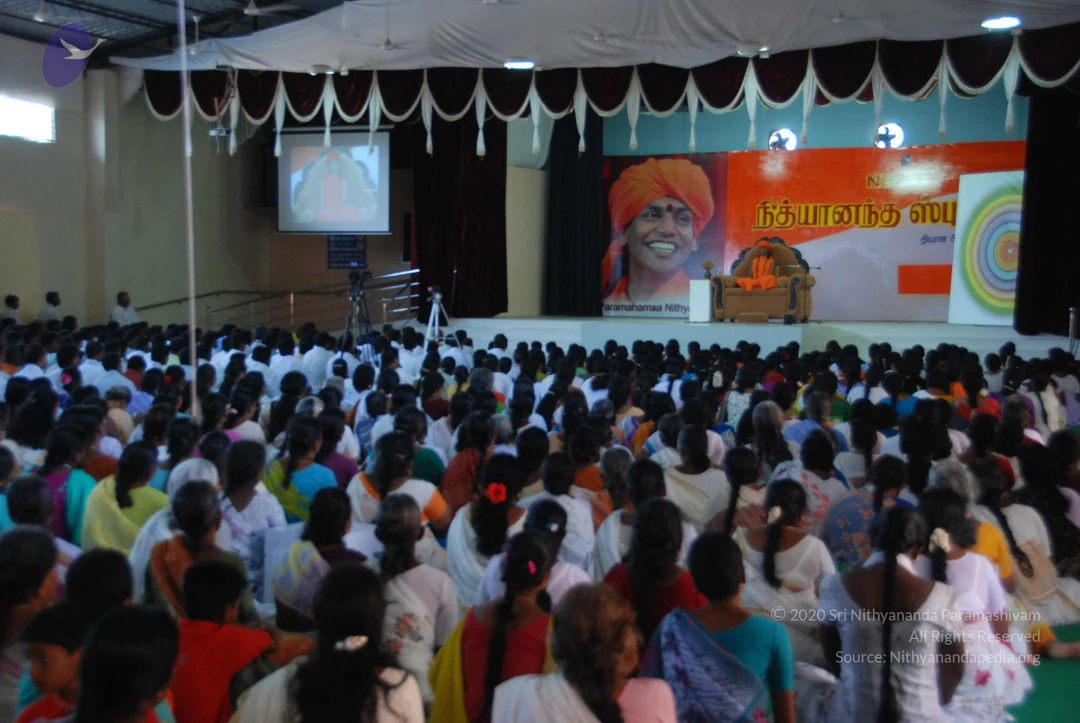
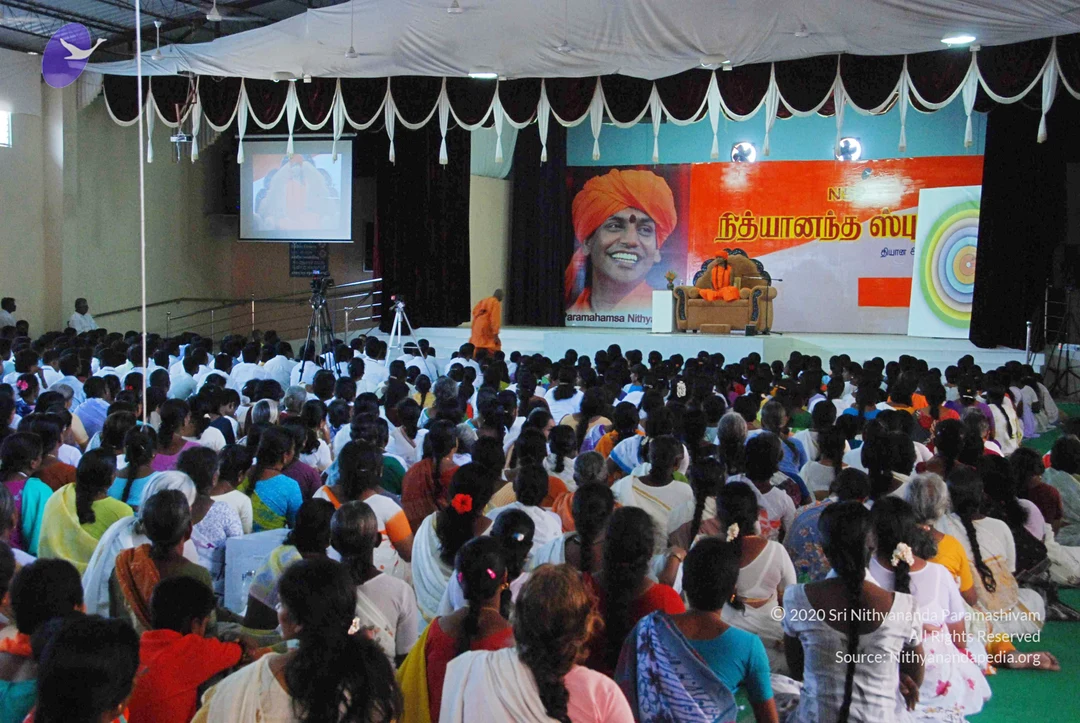
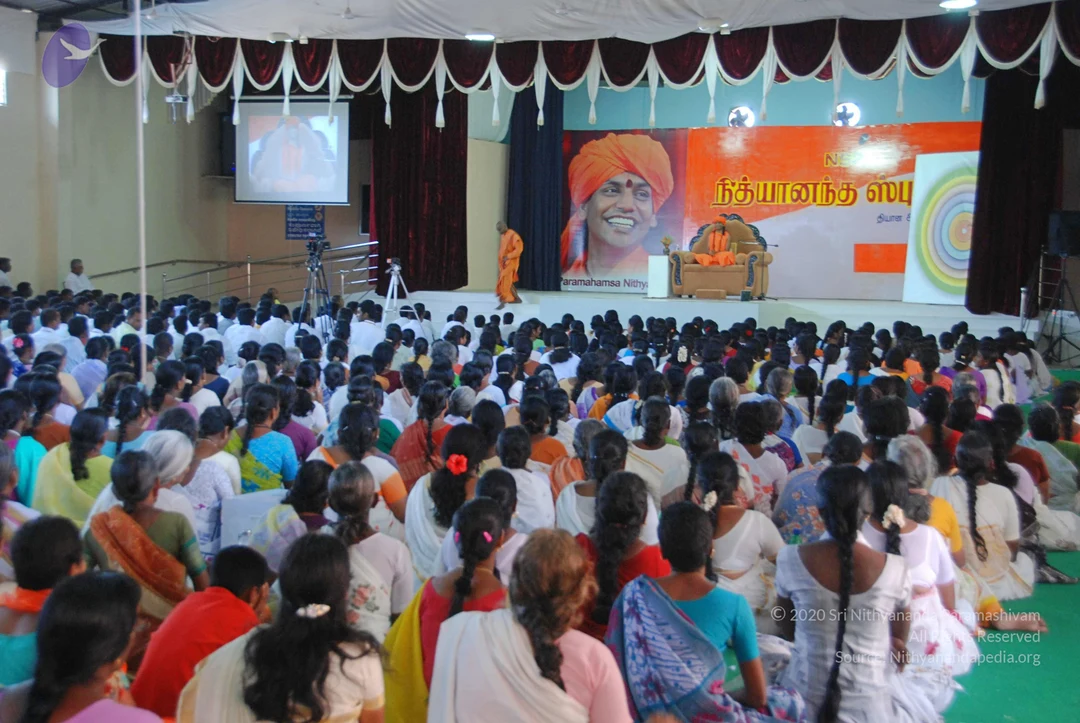
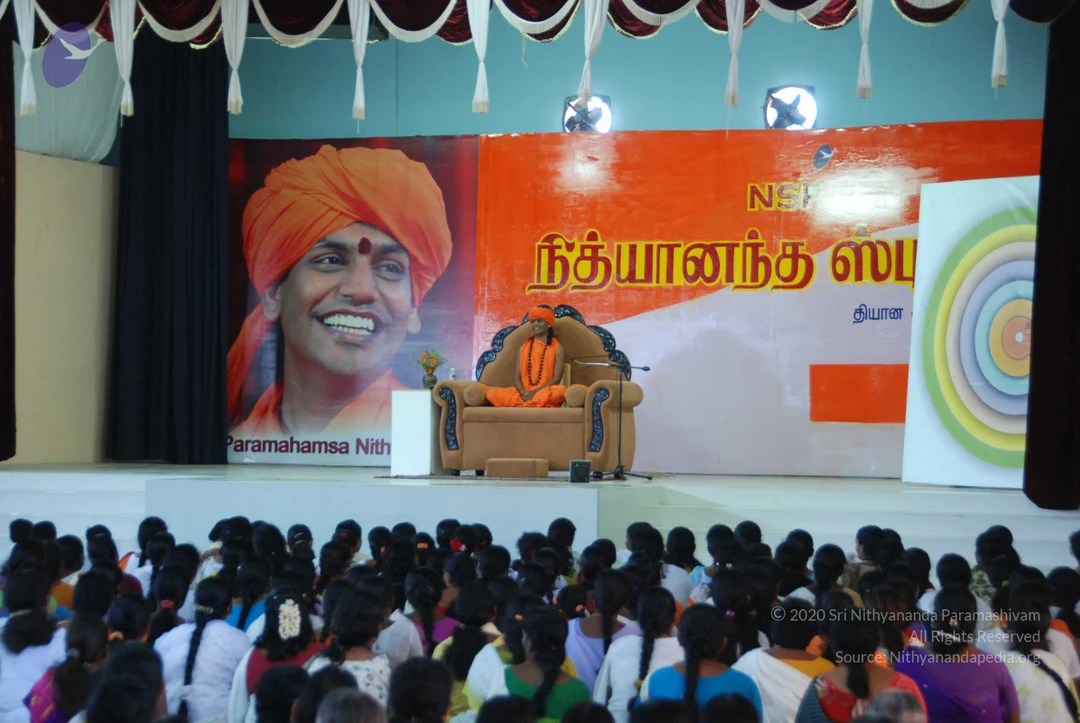
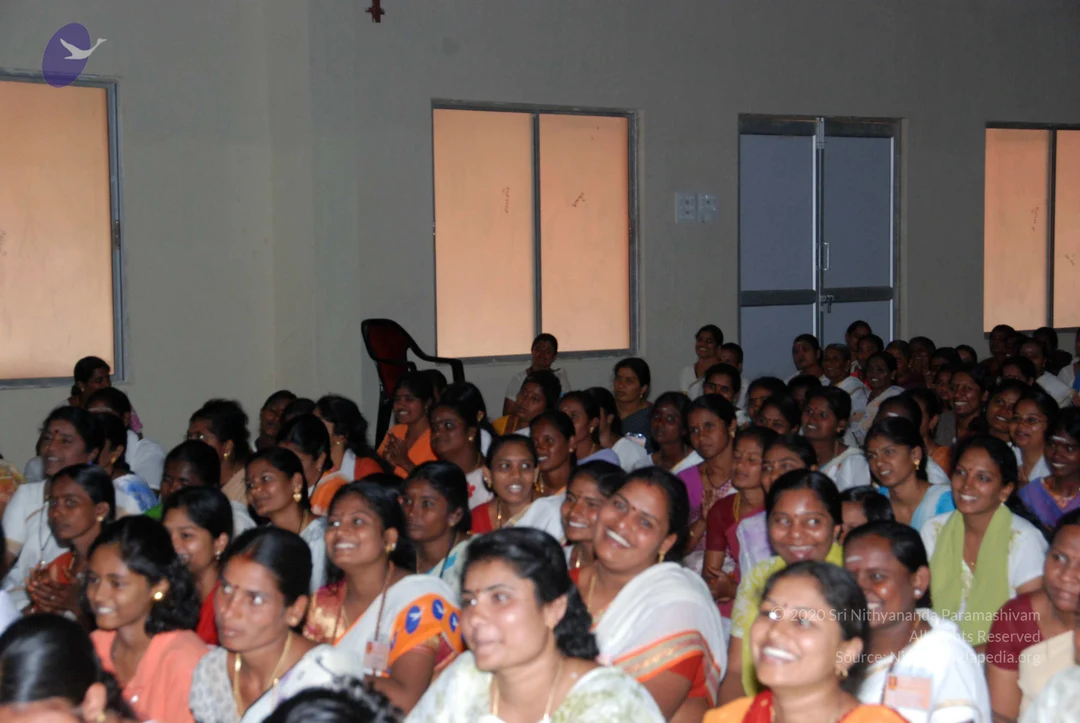
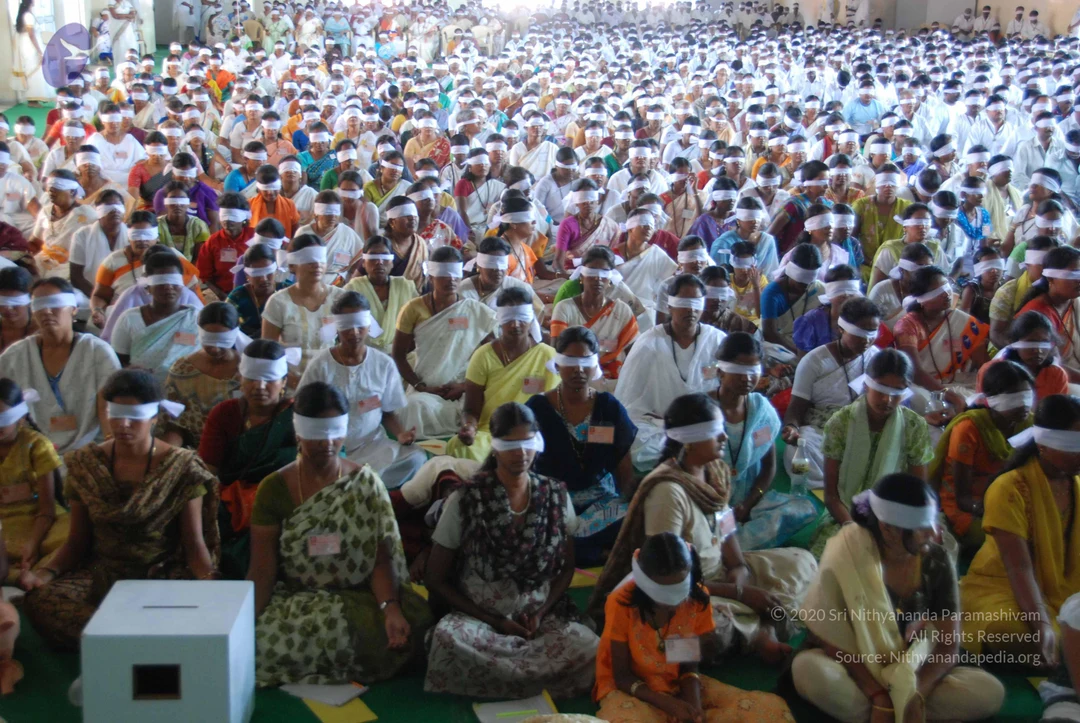
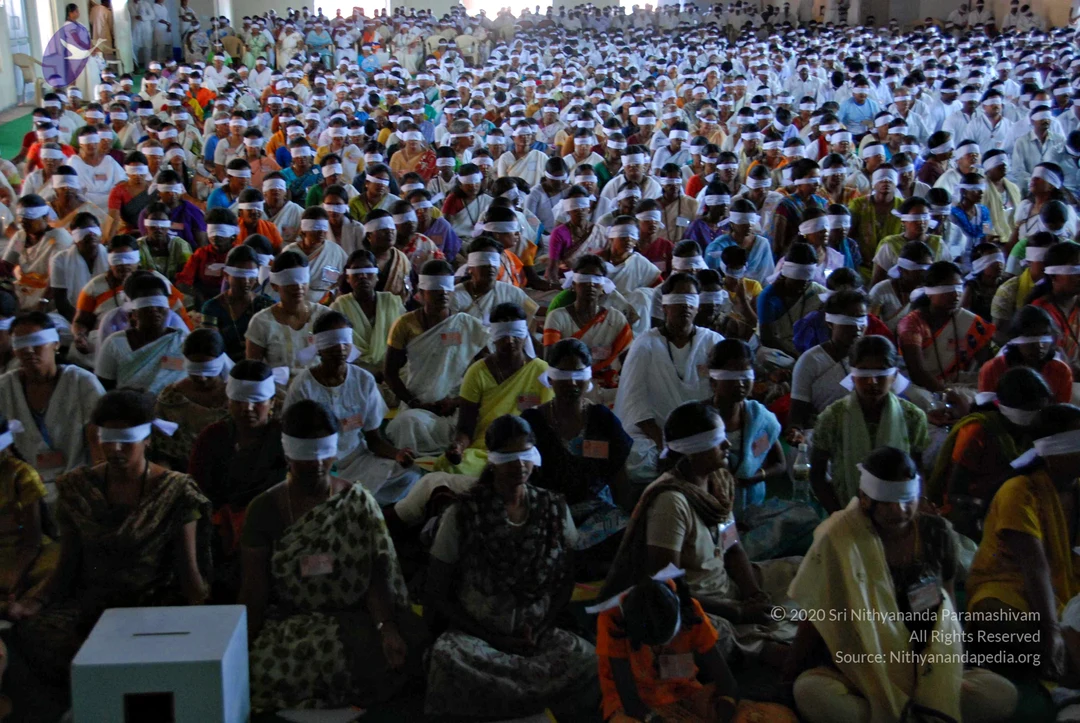
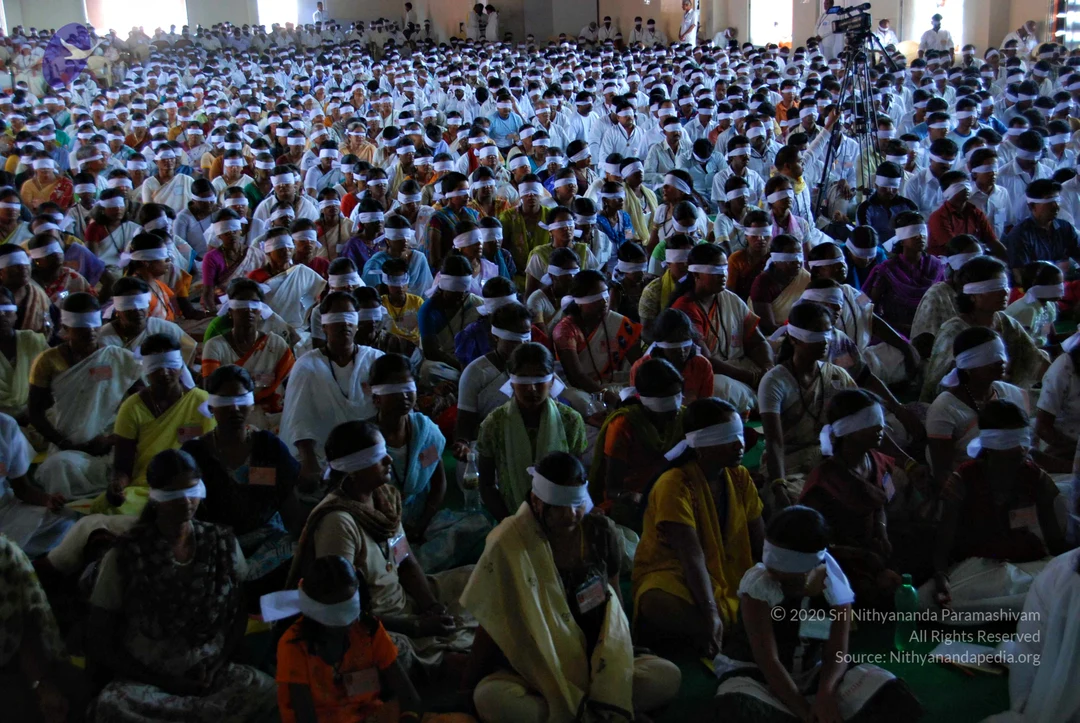
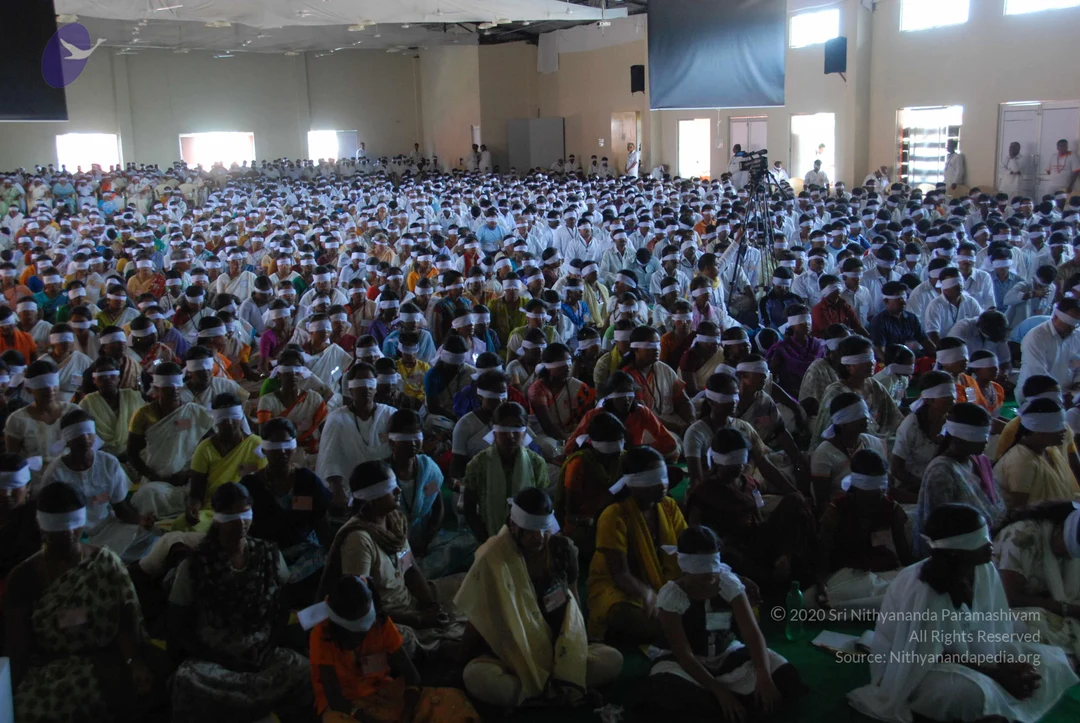
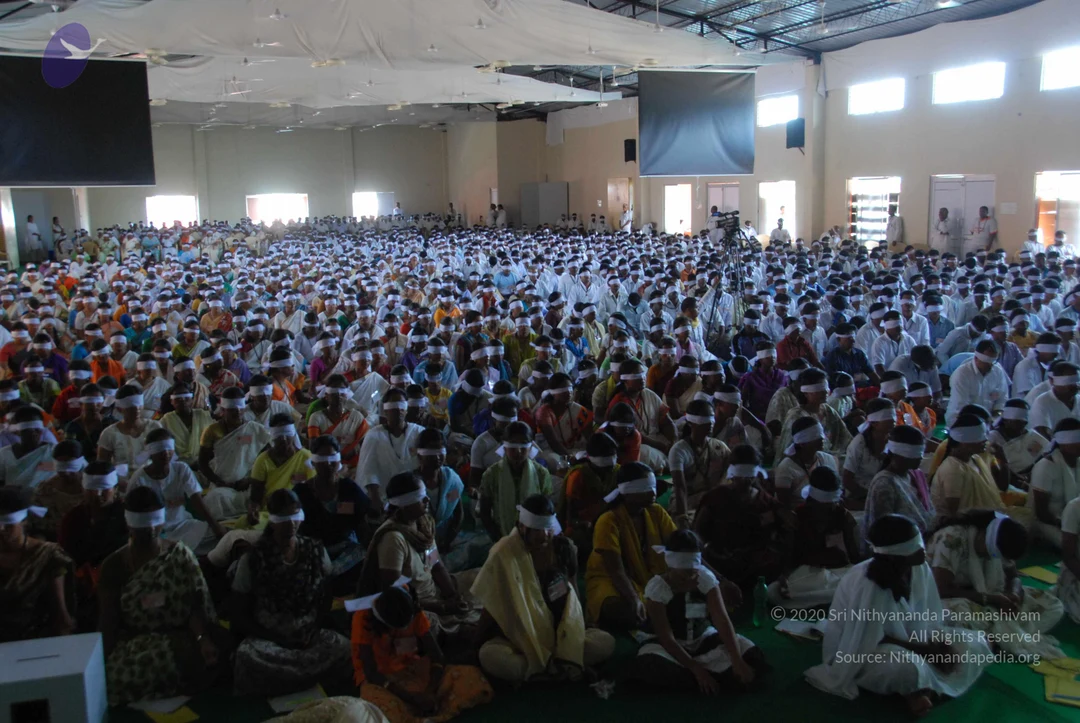
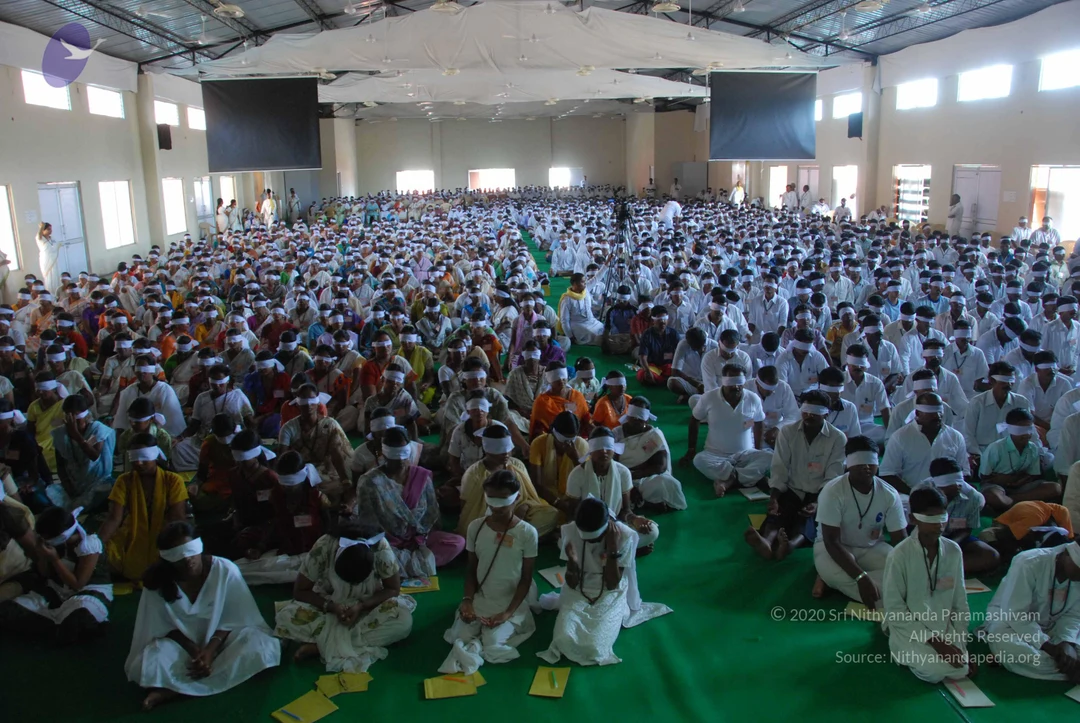
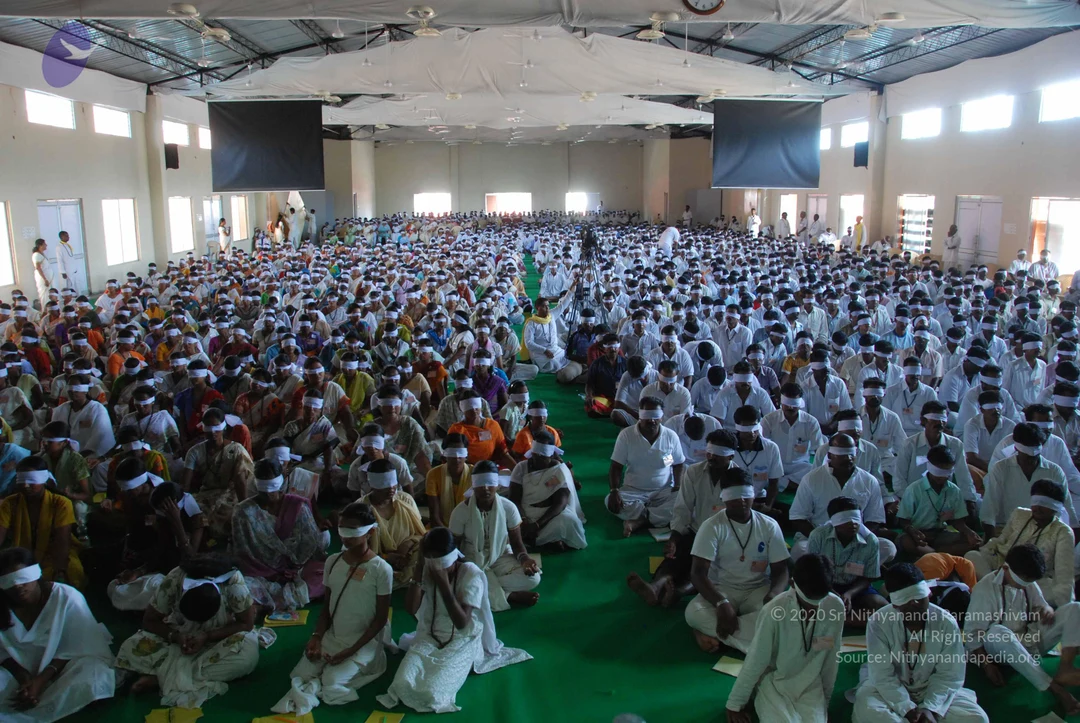
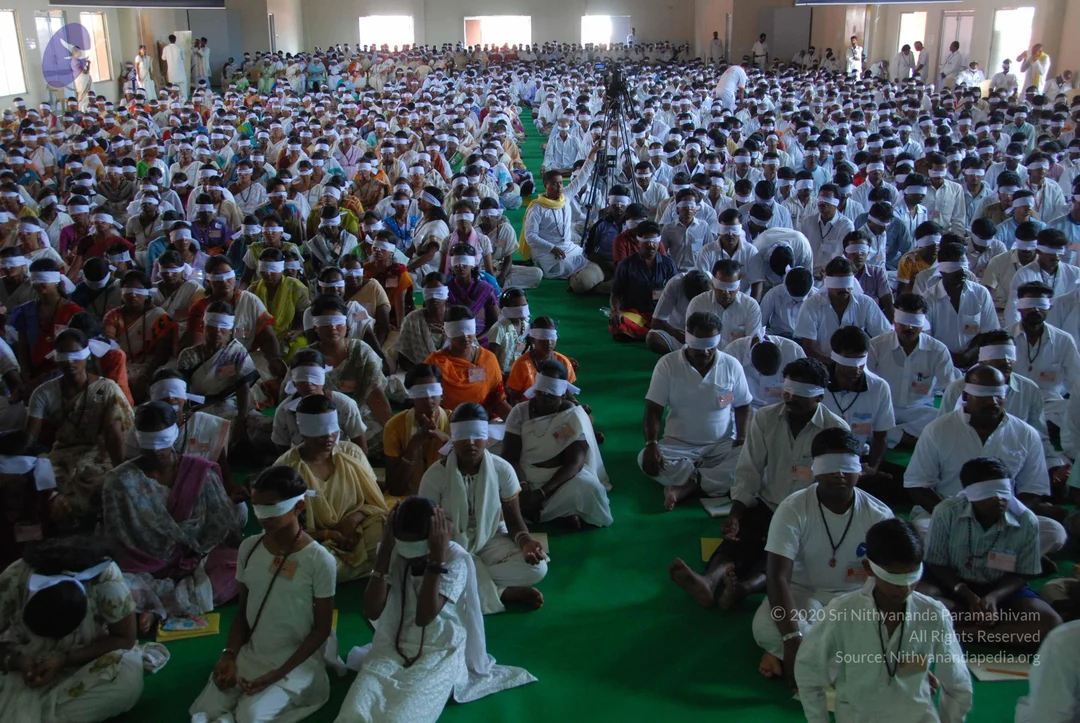
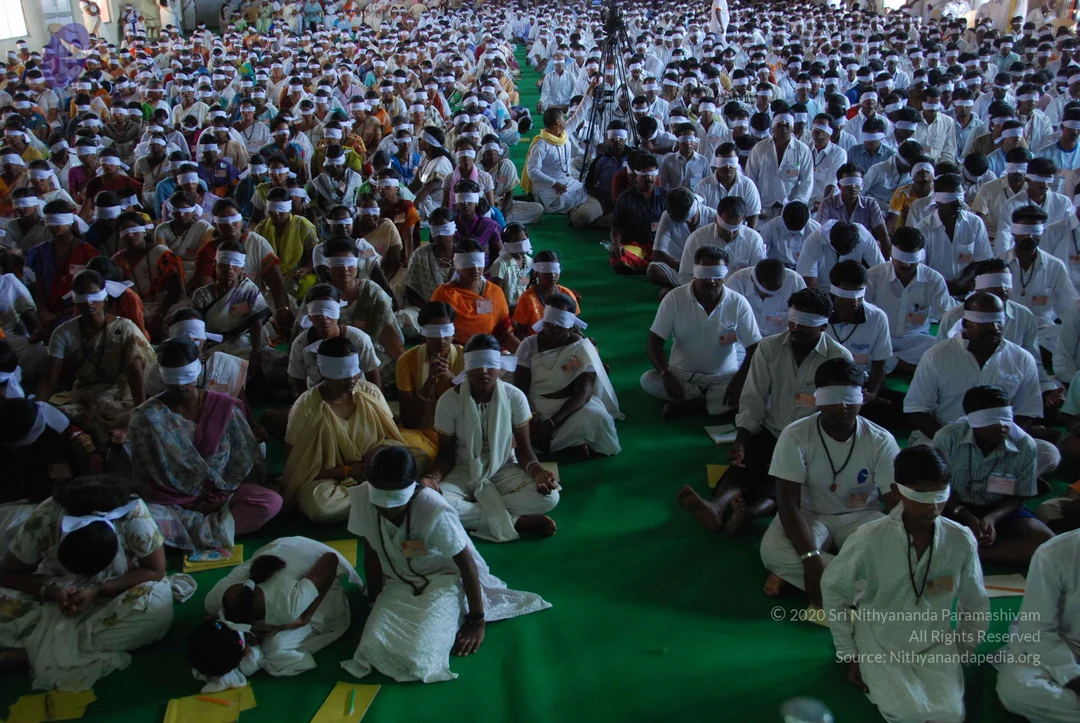
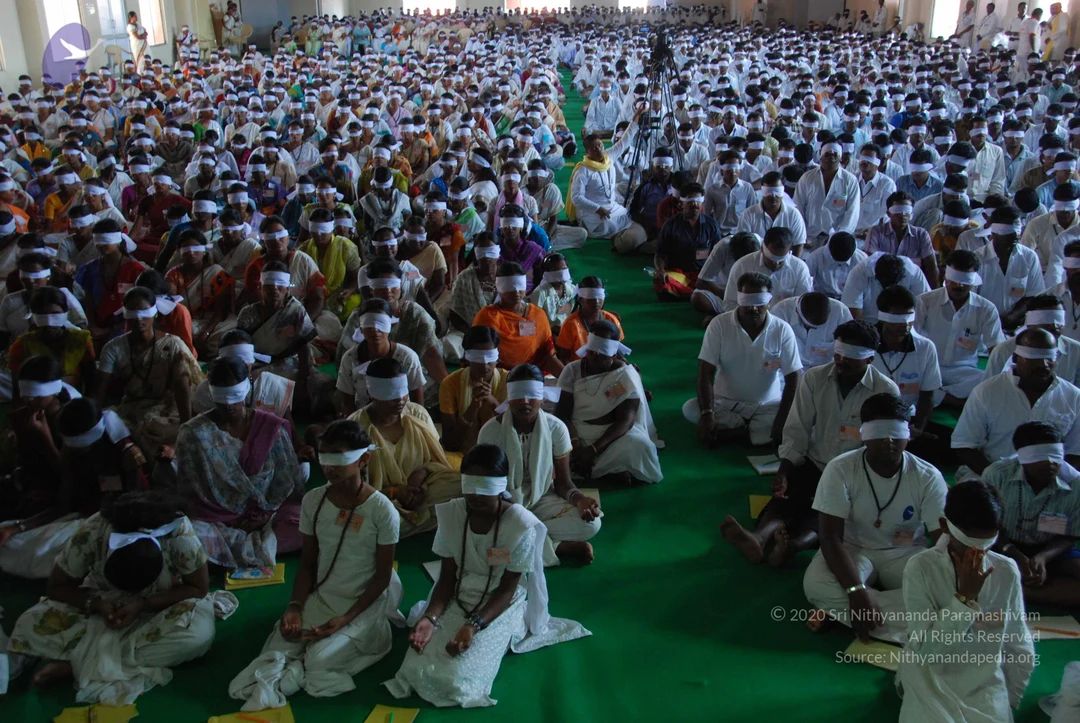
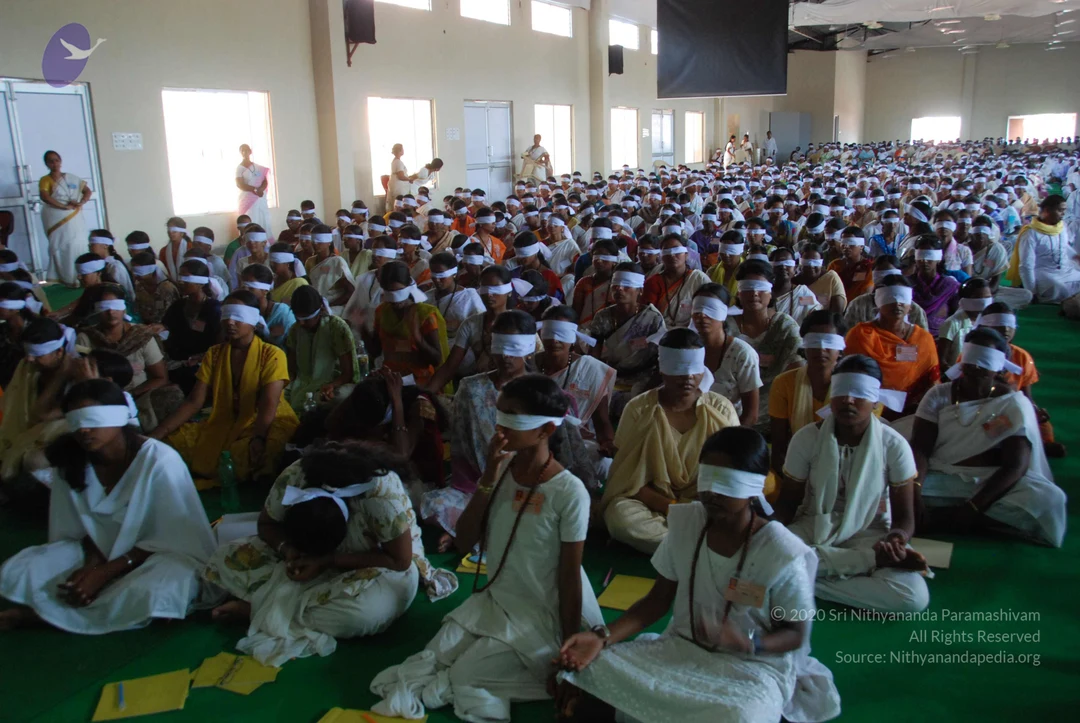
199 photosSource gallery
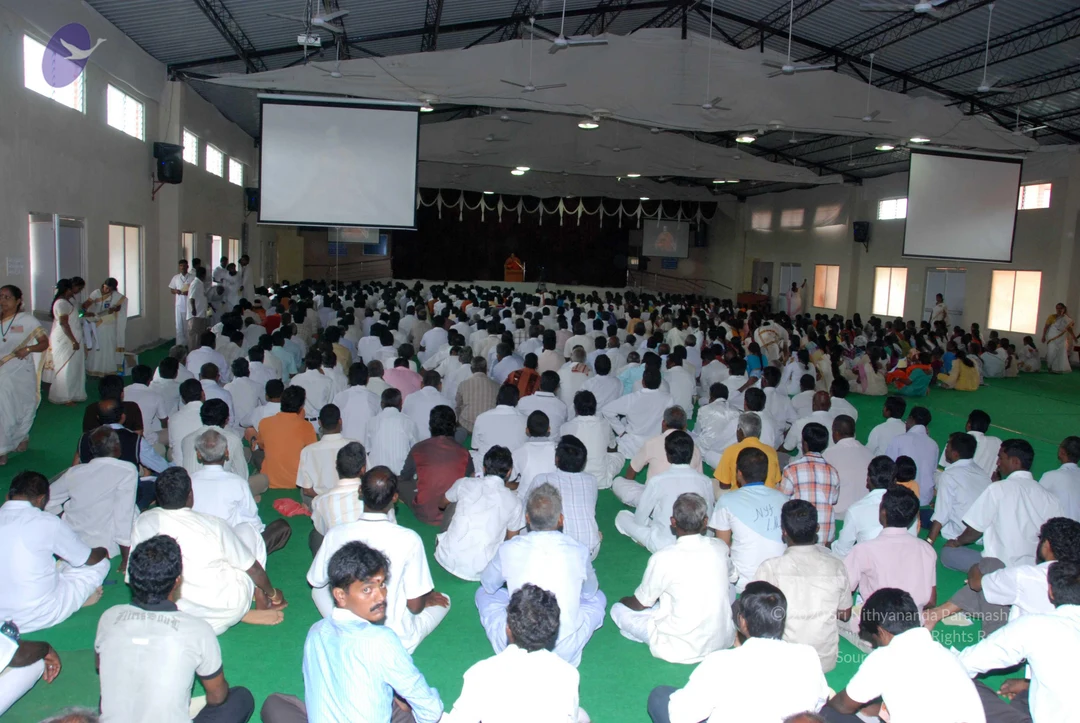
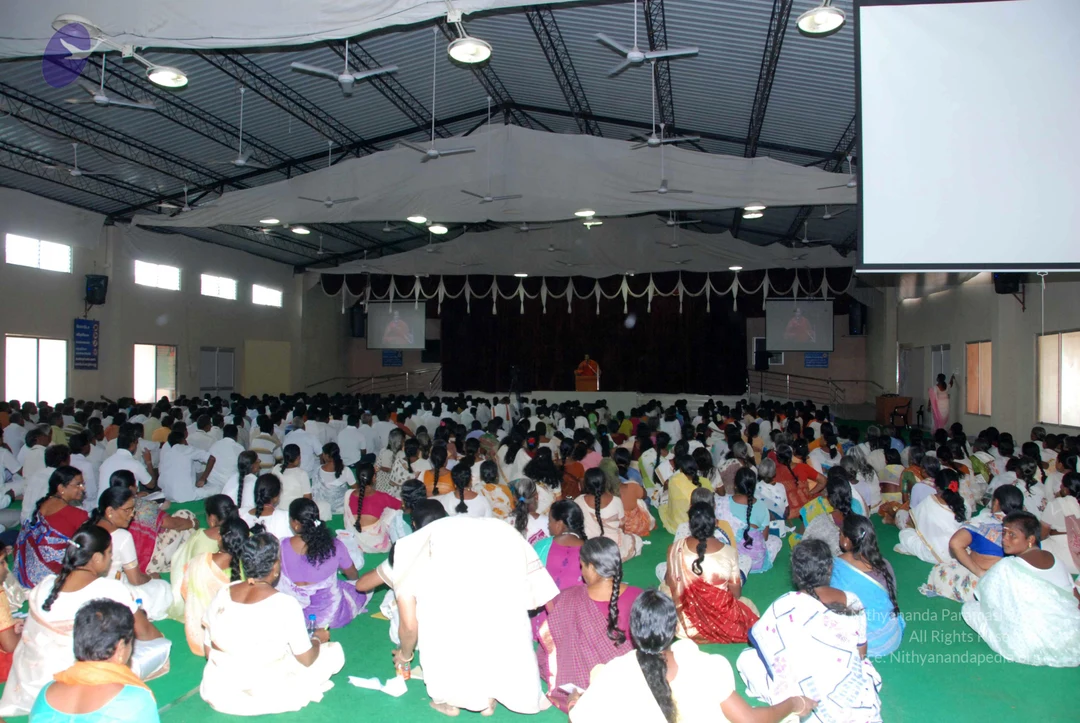
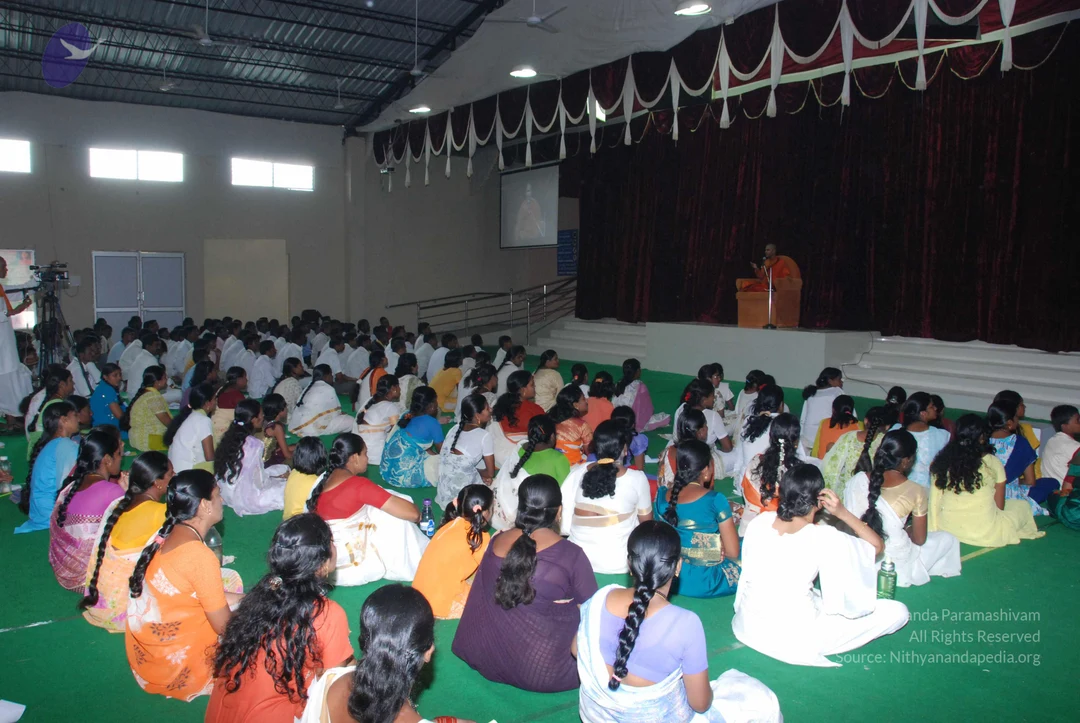
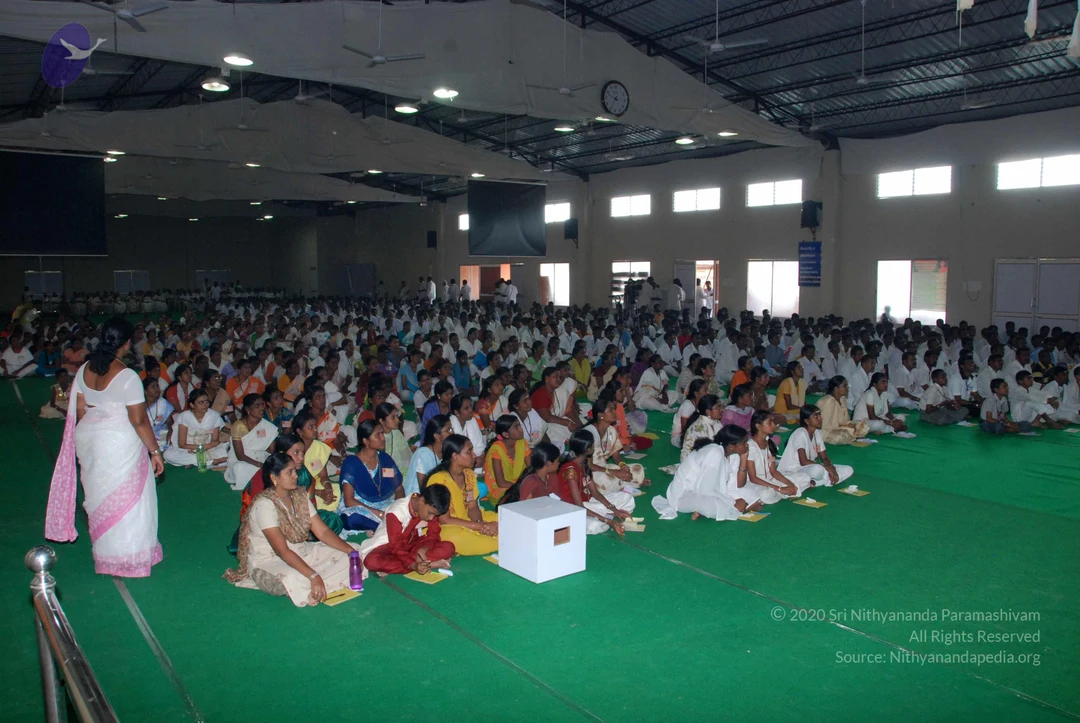
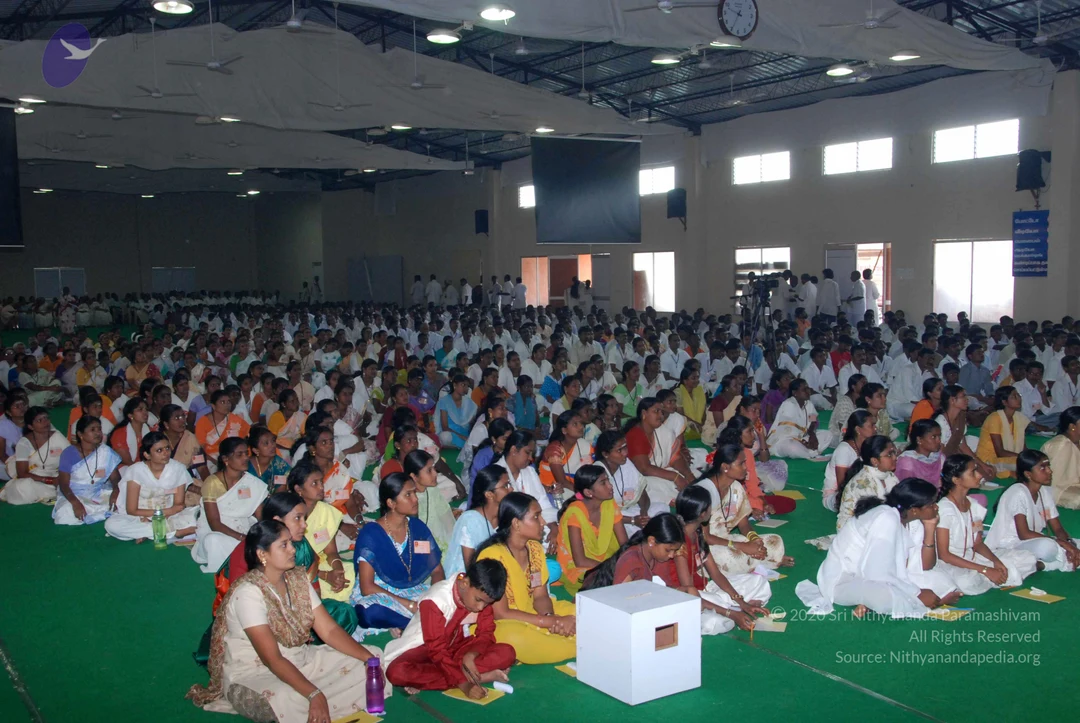
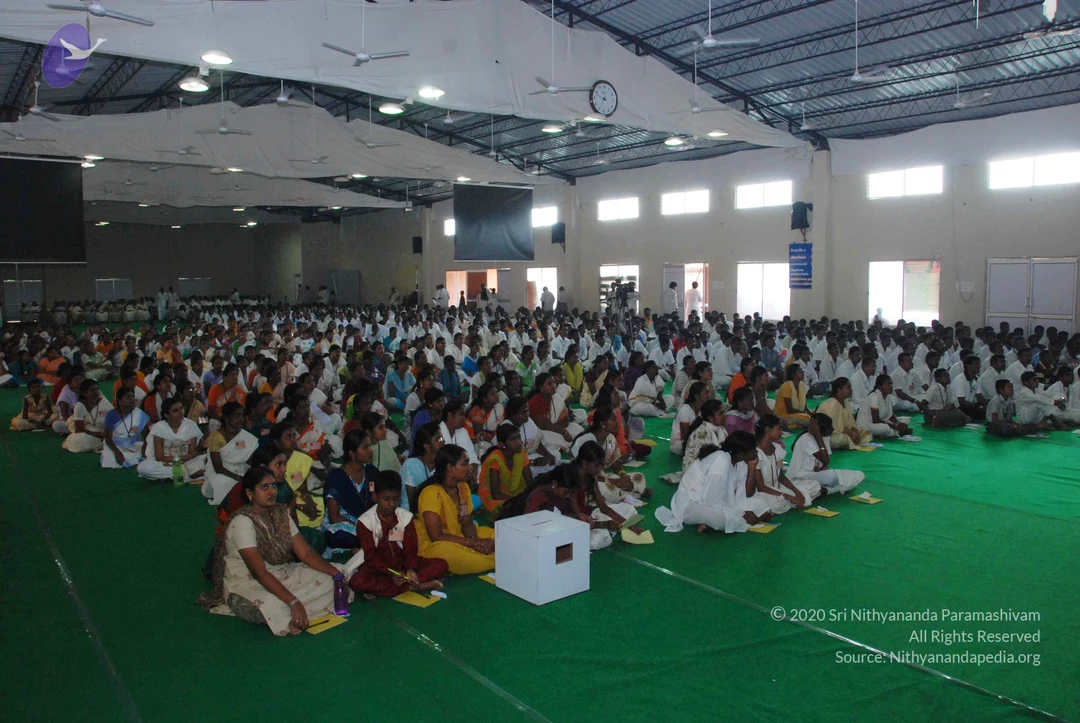
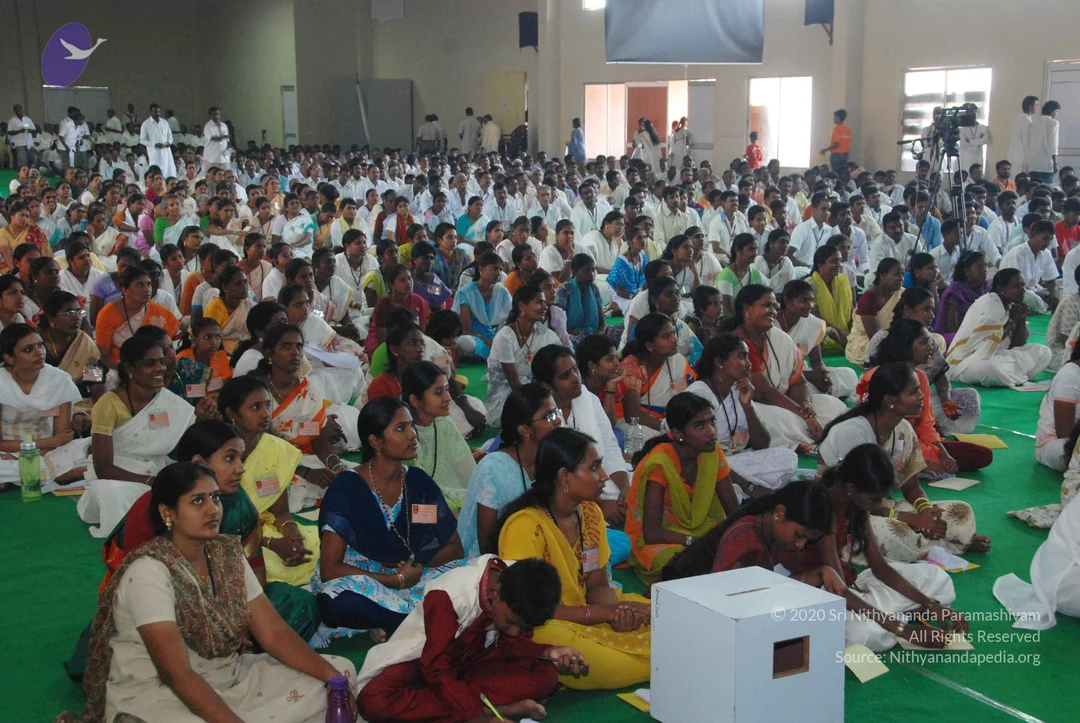
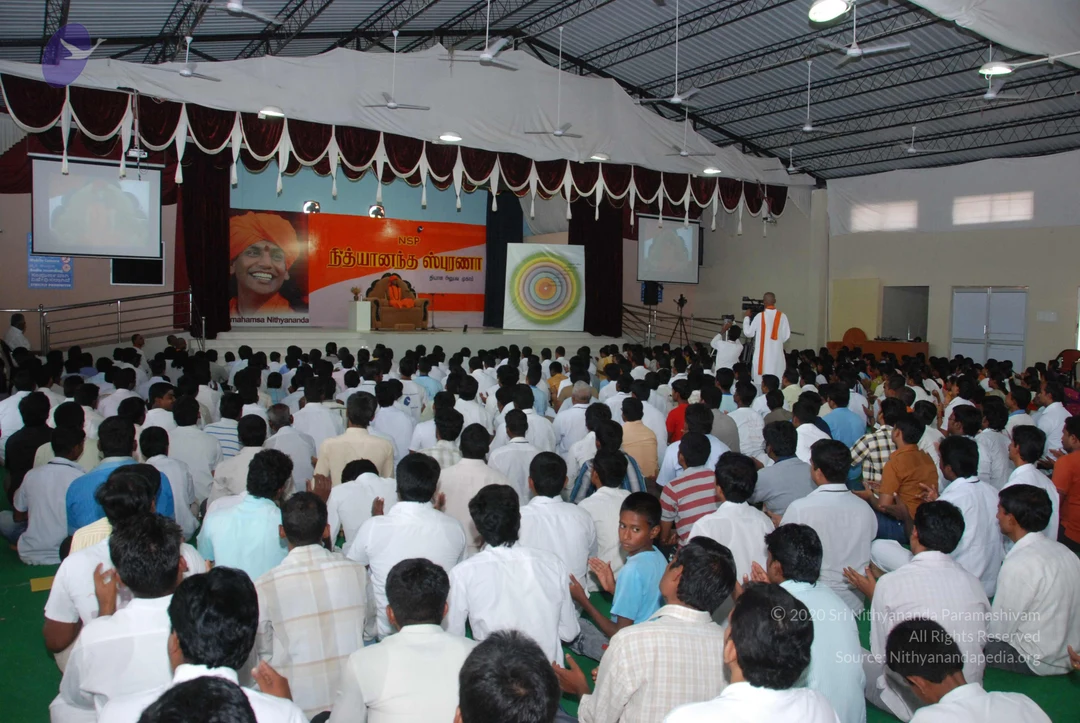
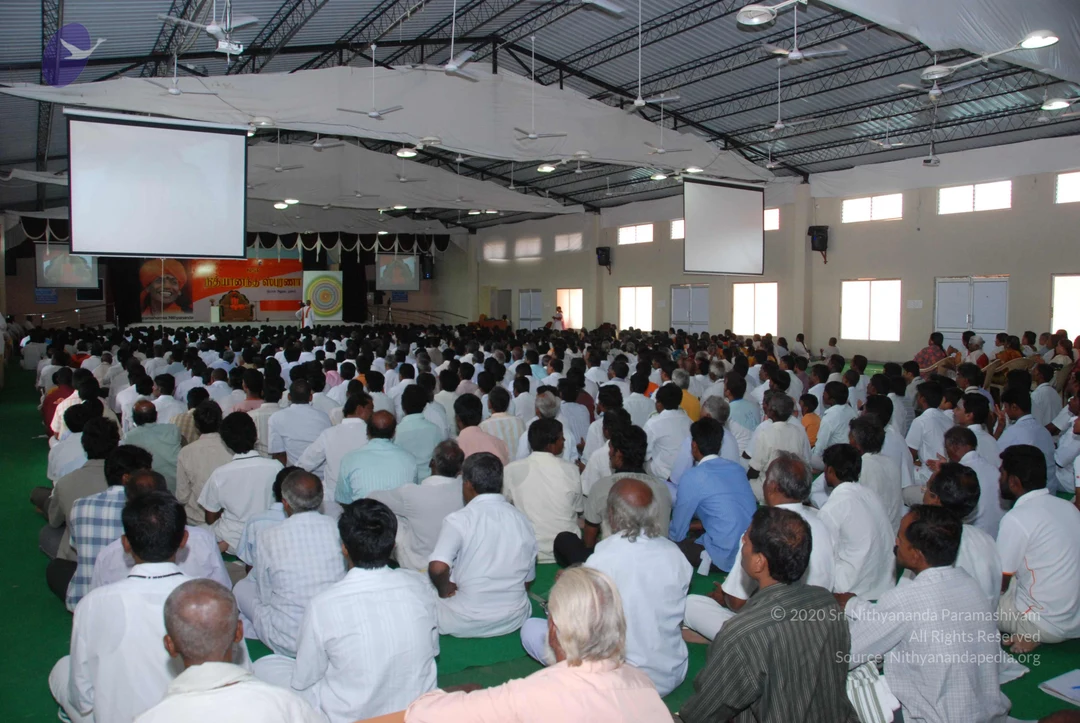
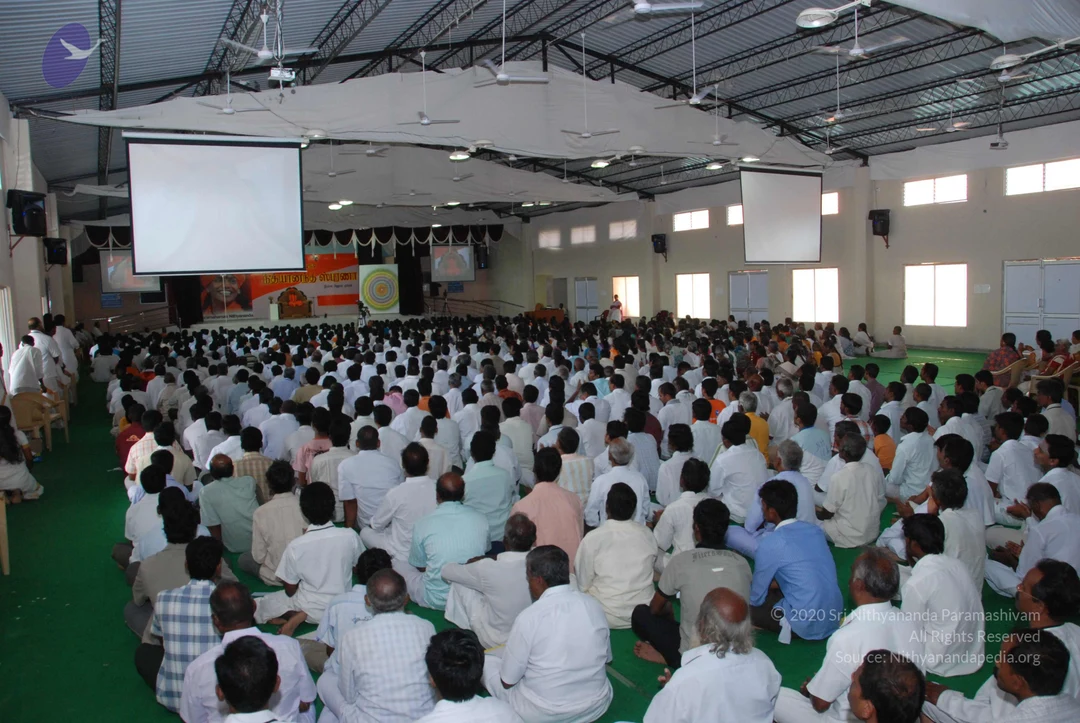
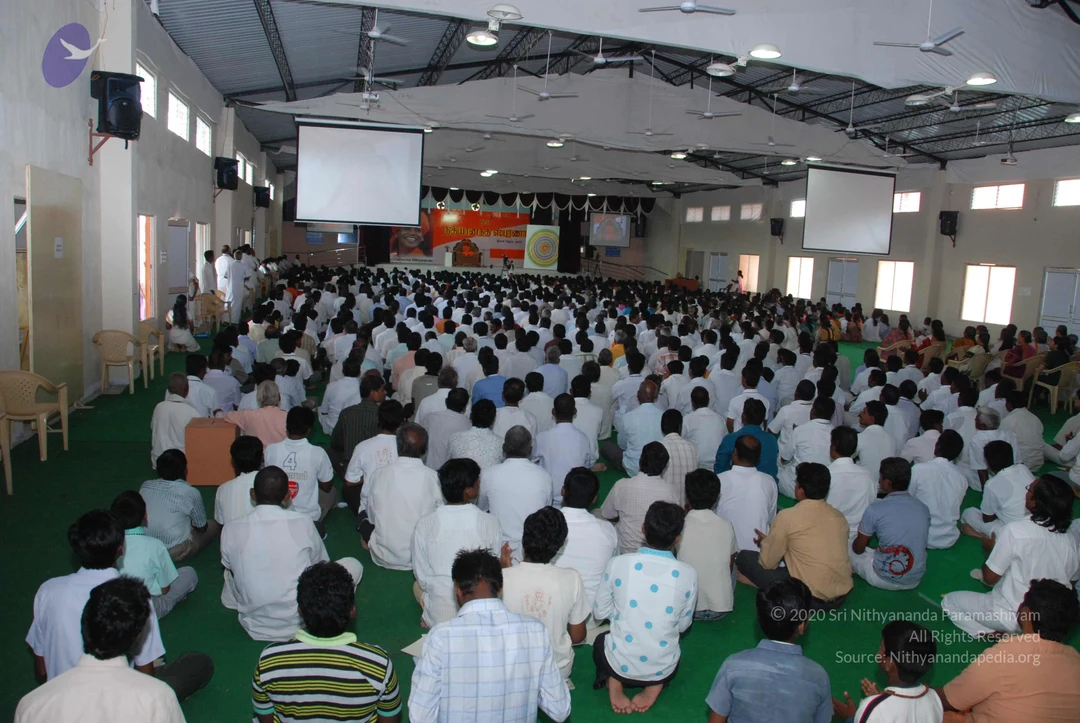
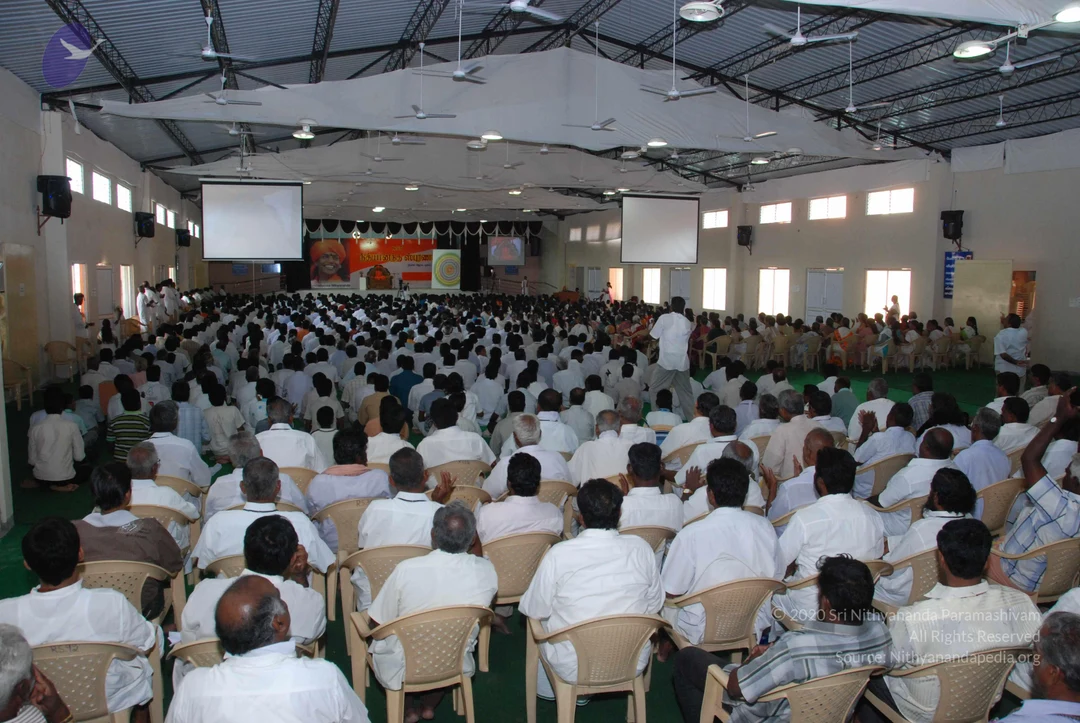
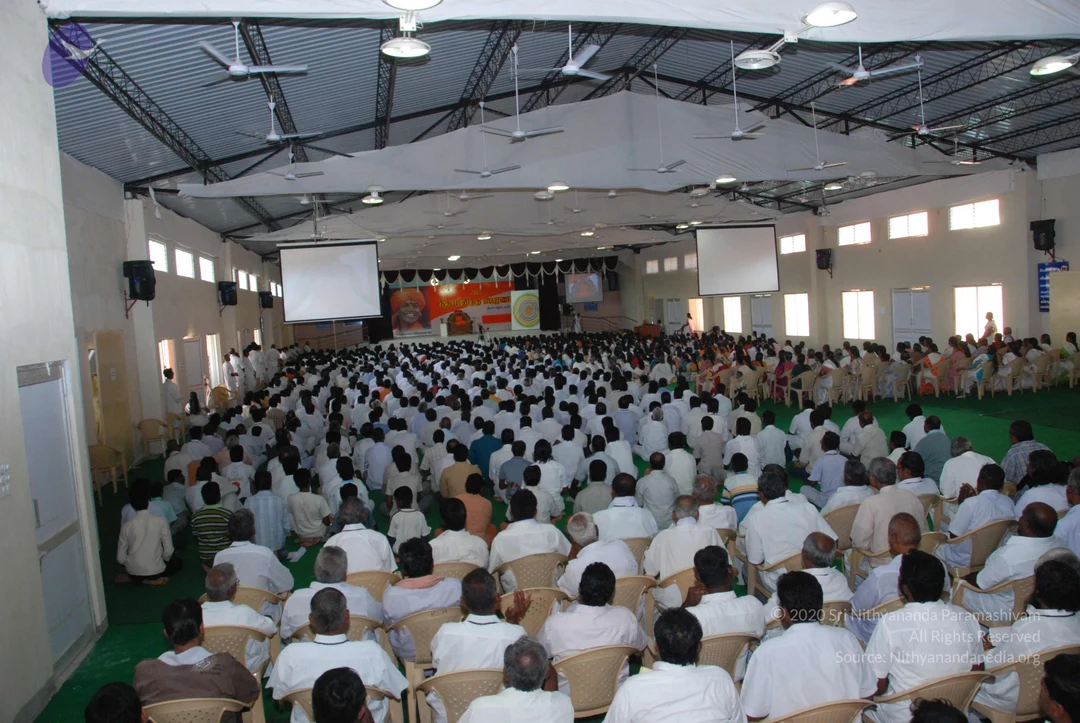
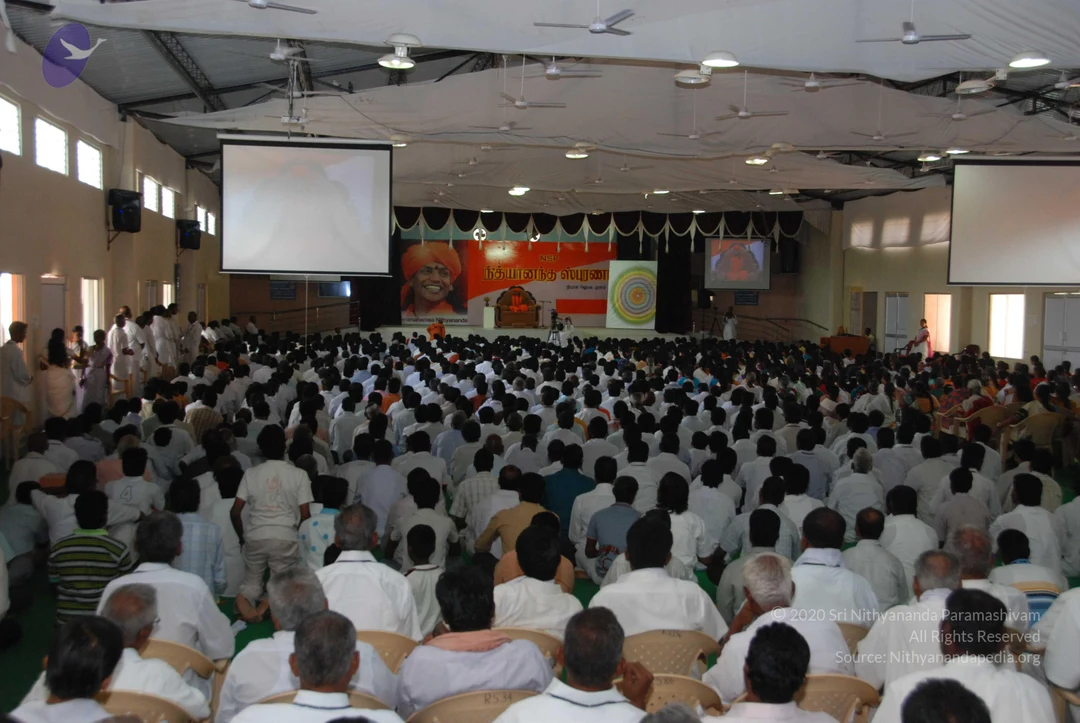
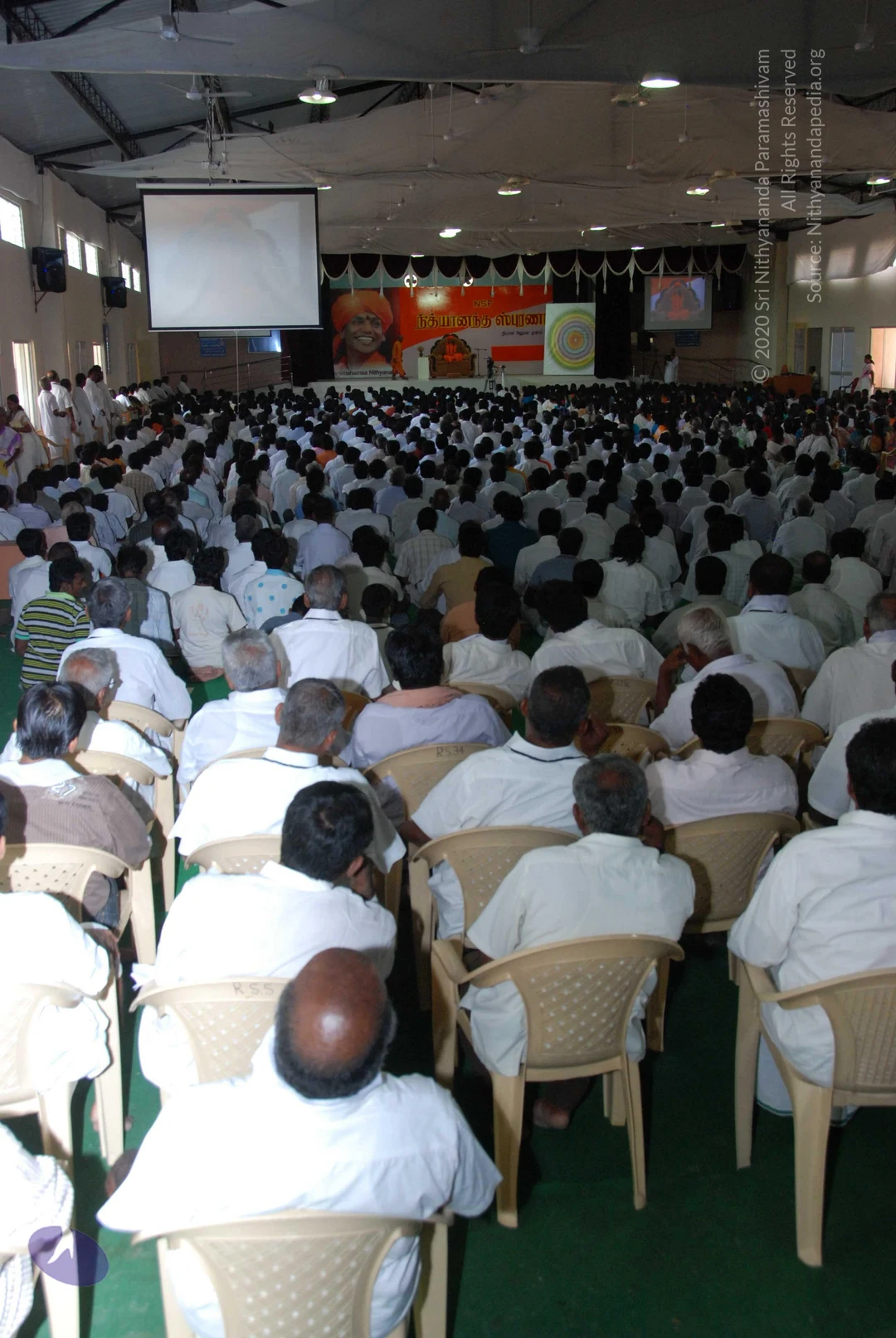
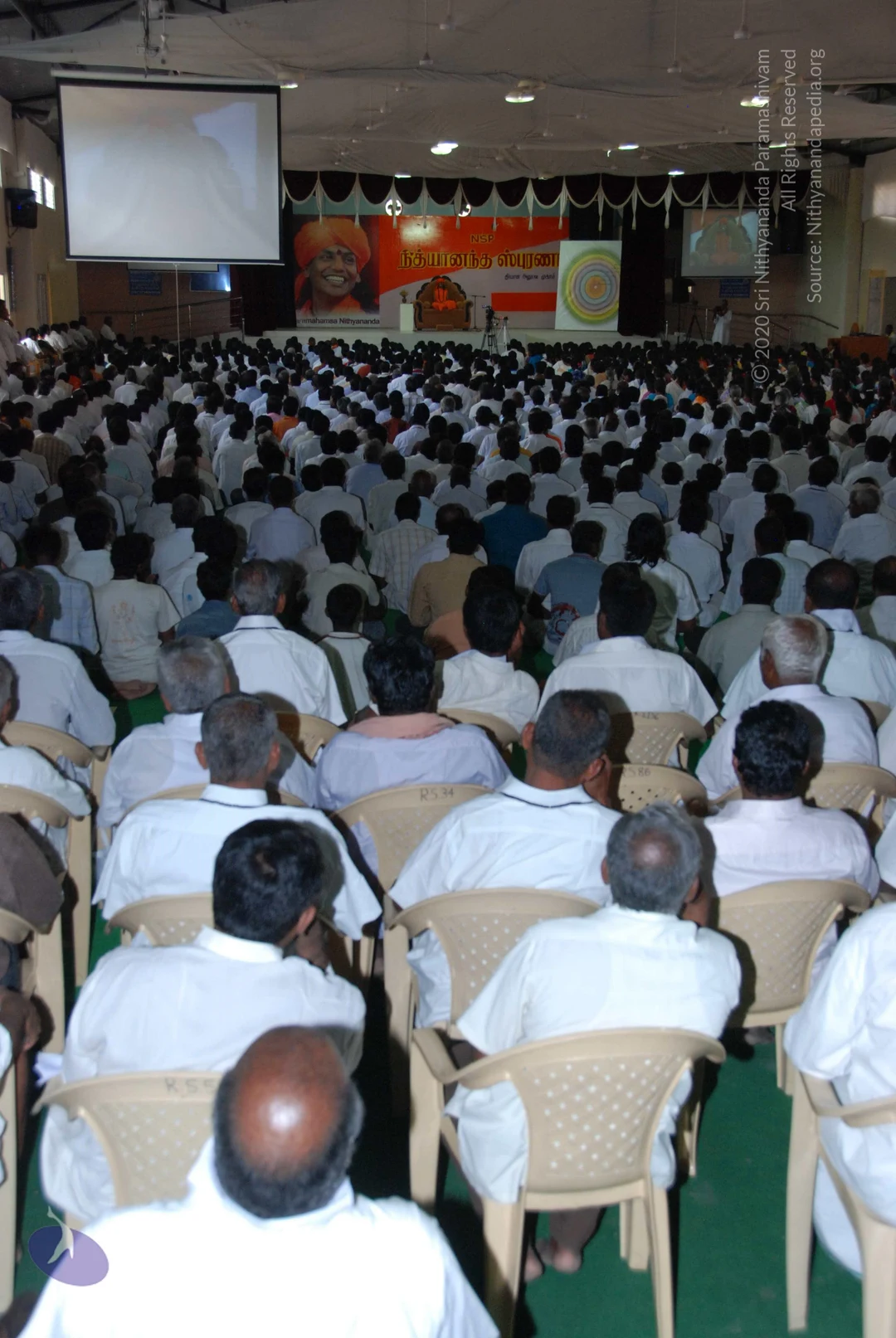
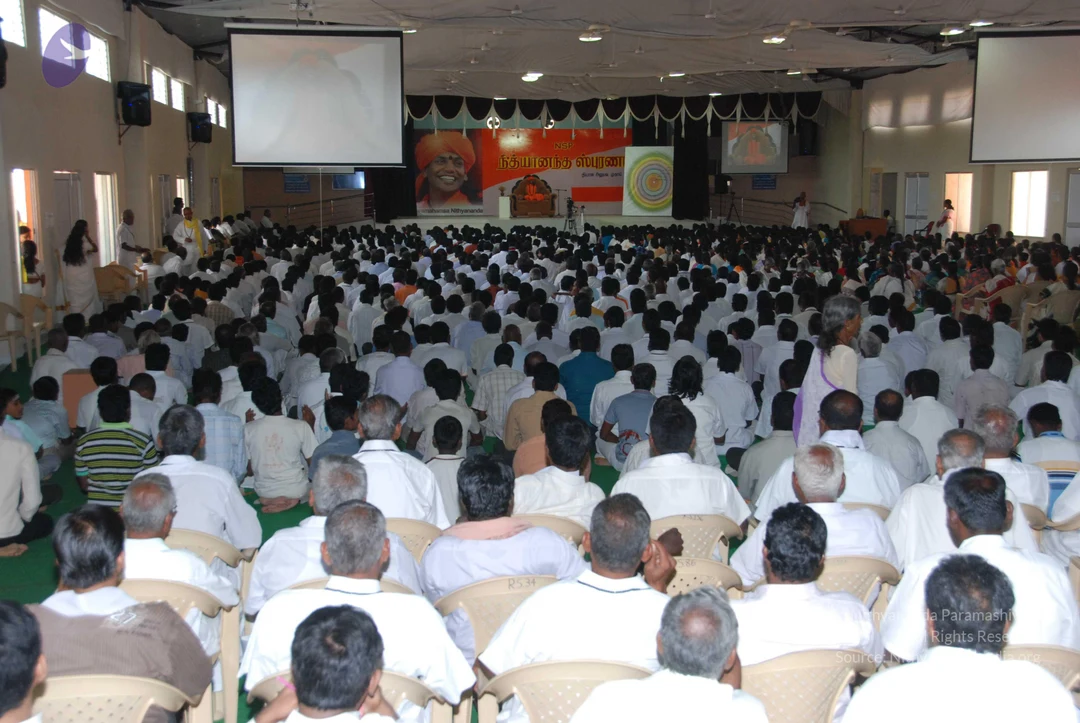
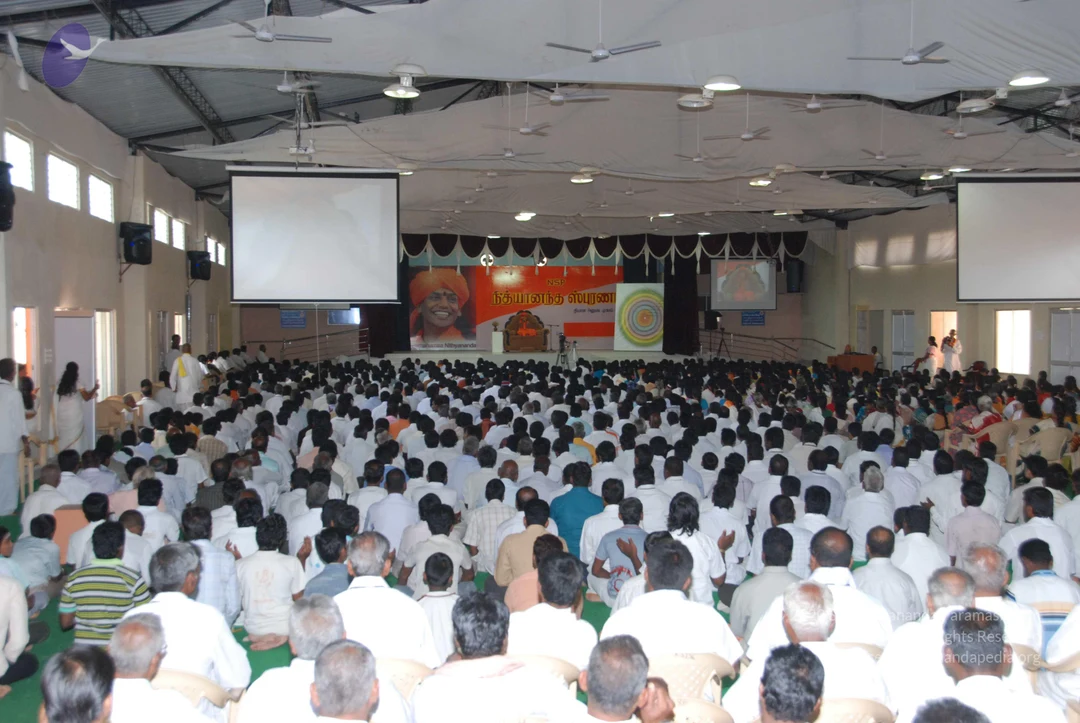
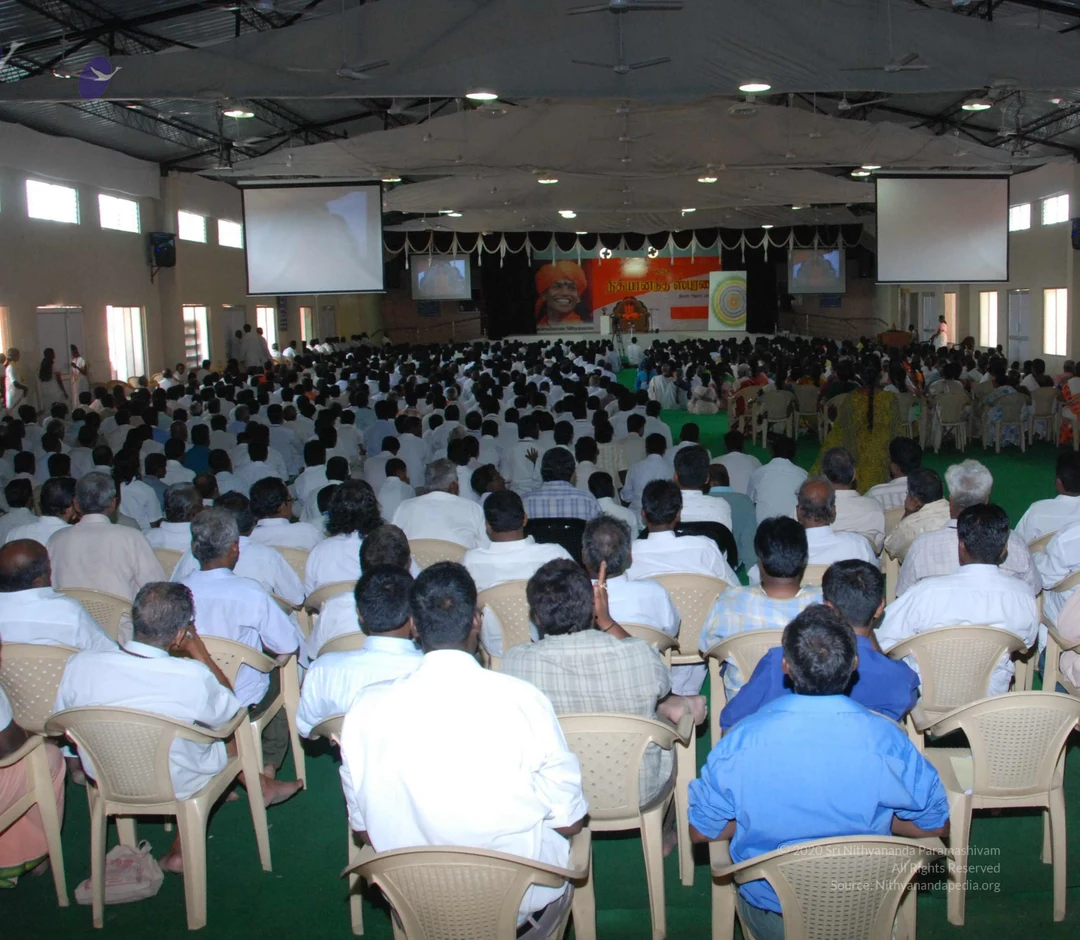
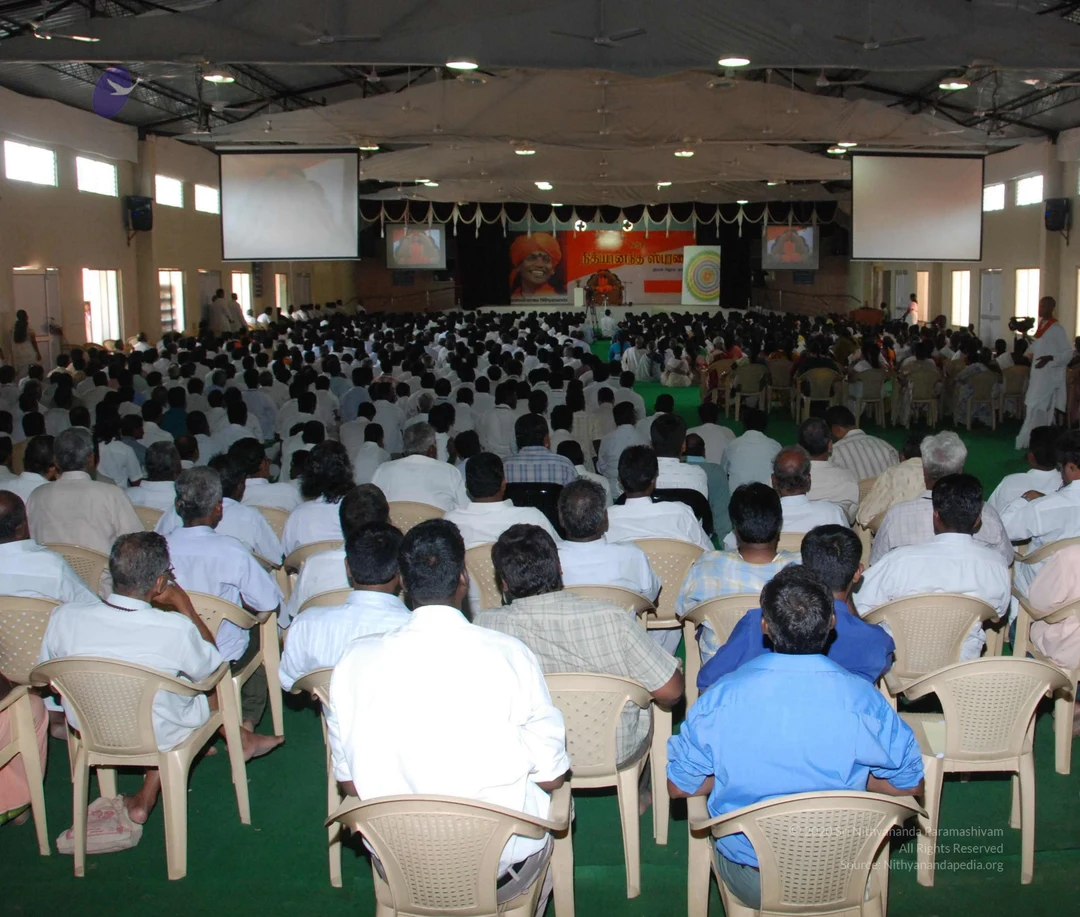
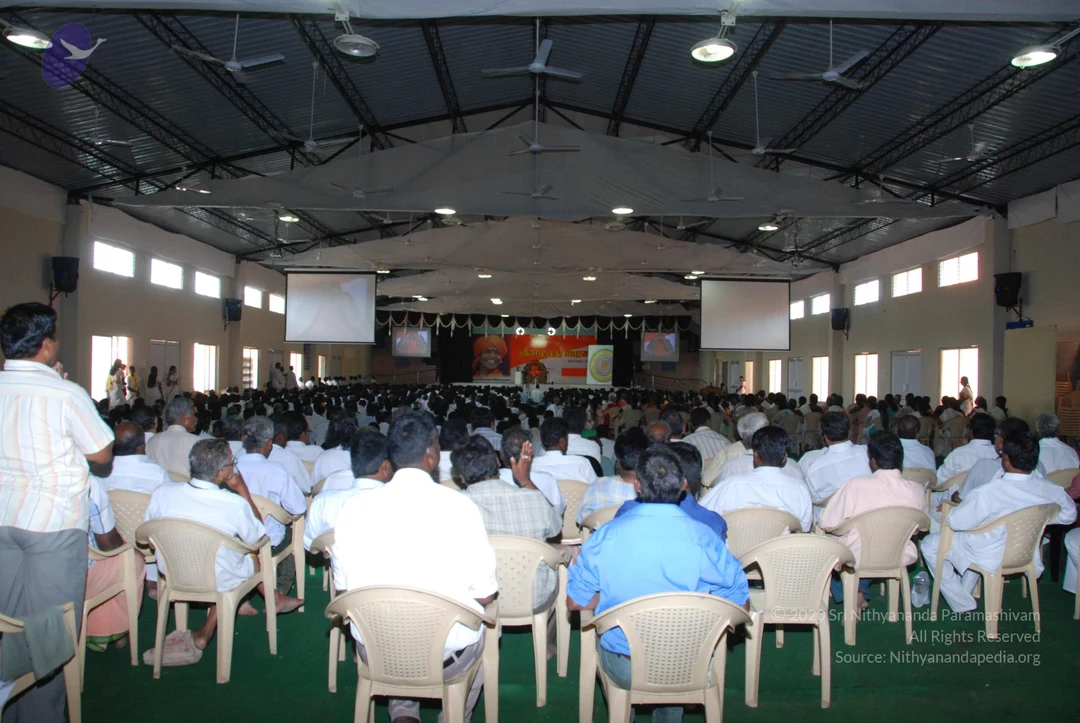
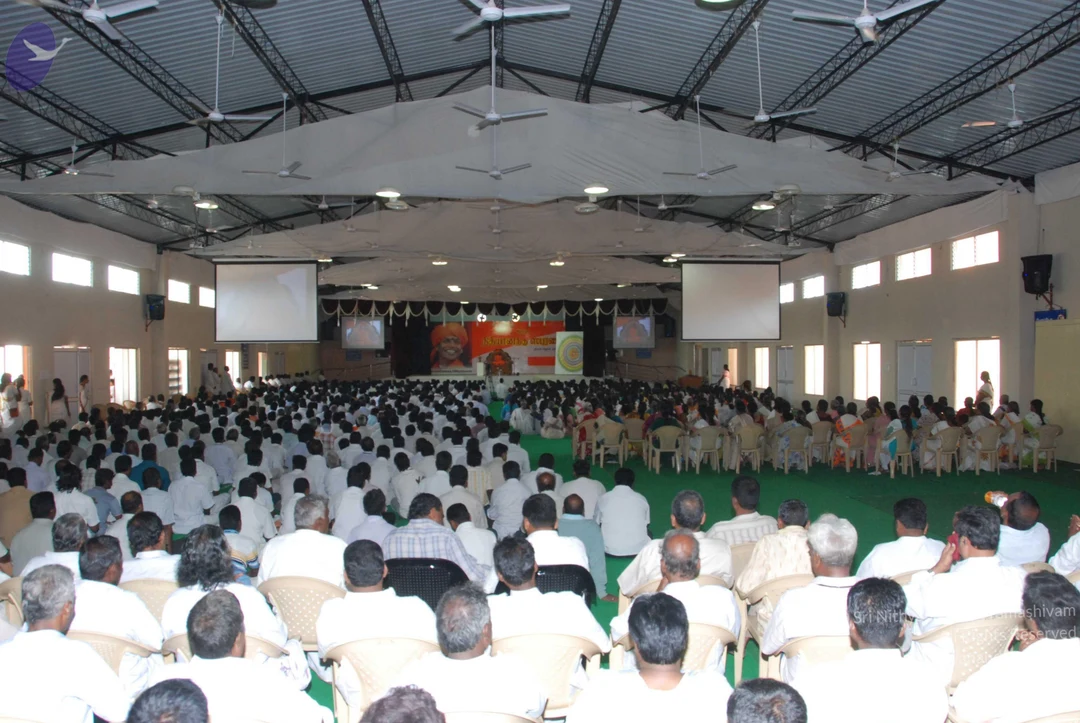
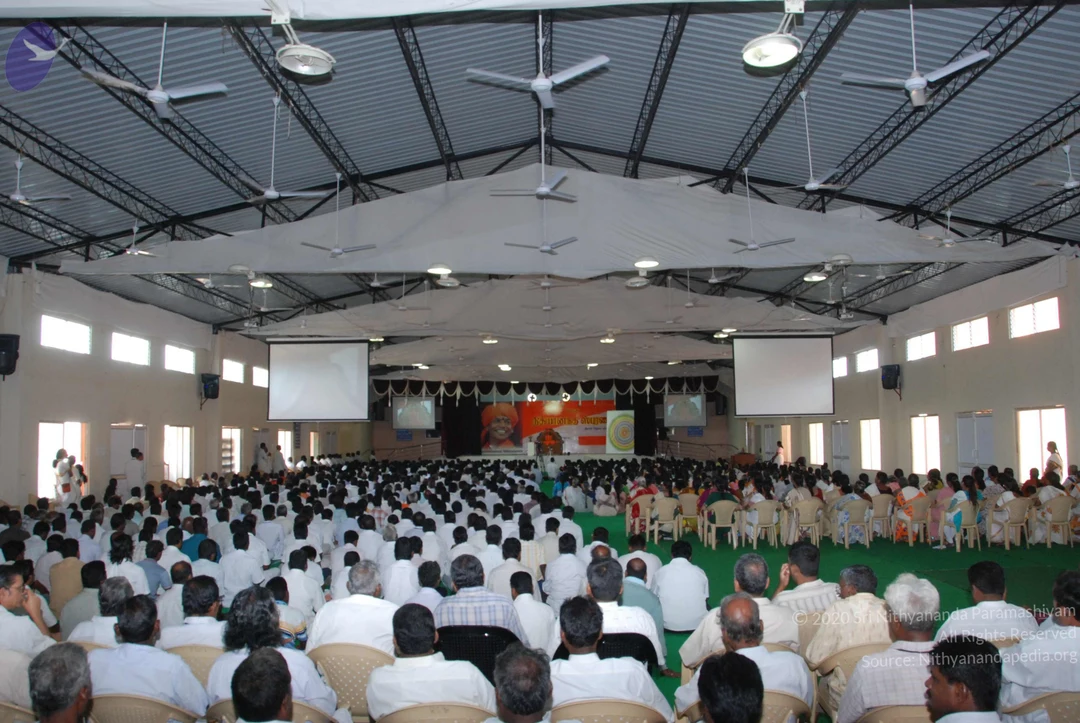
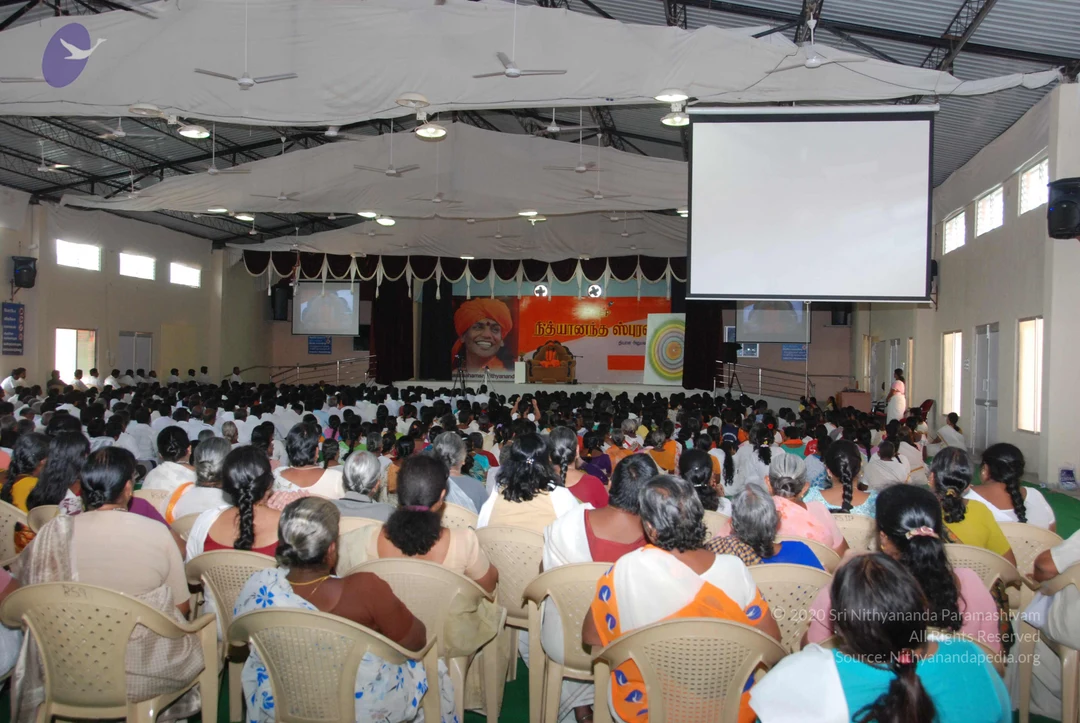
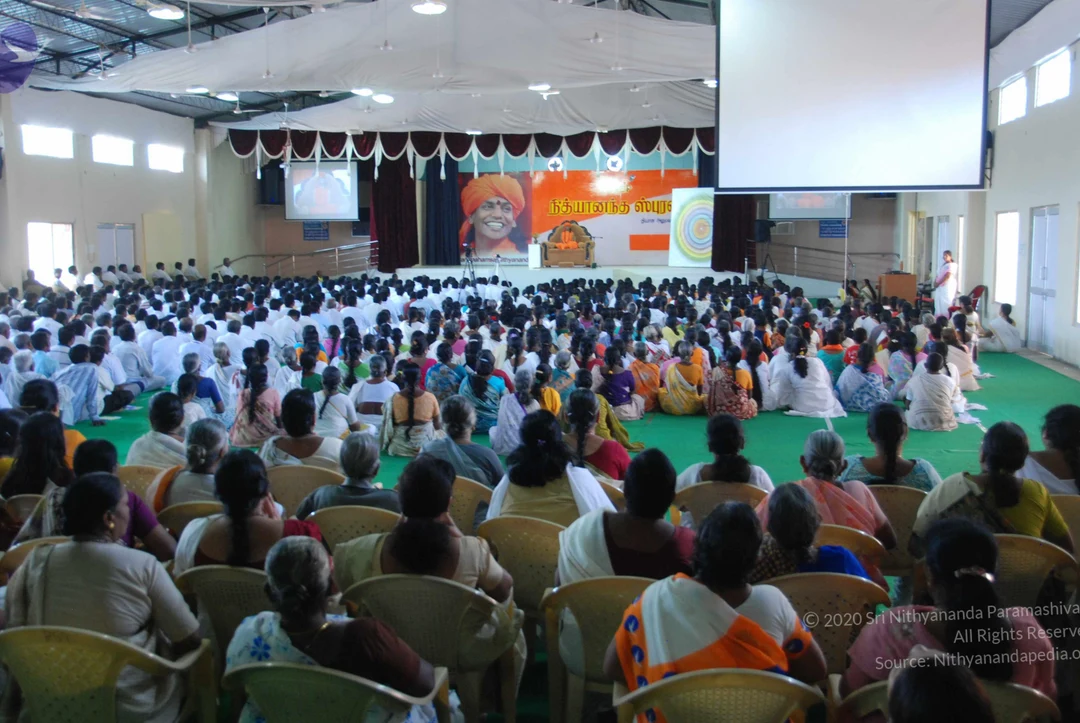
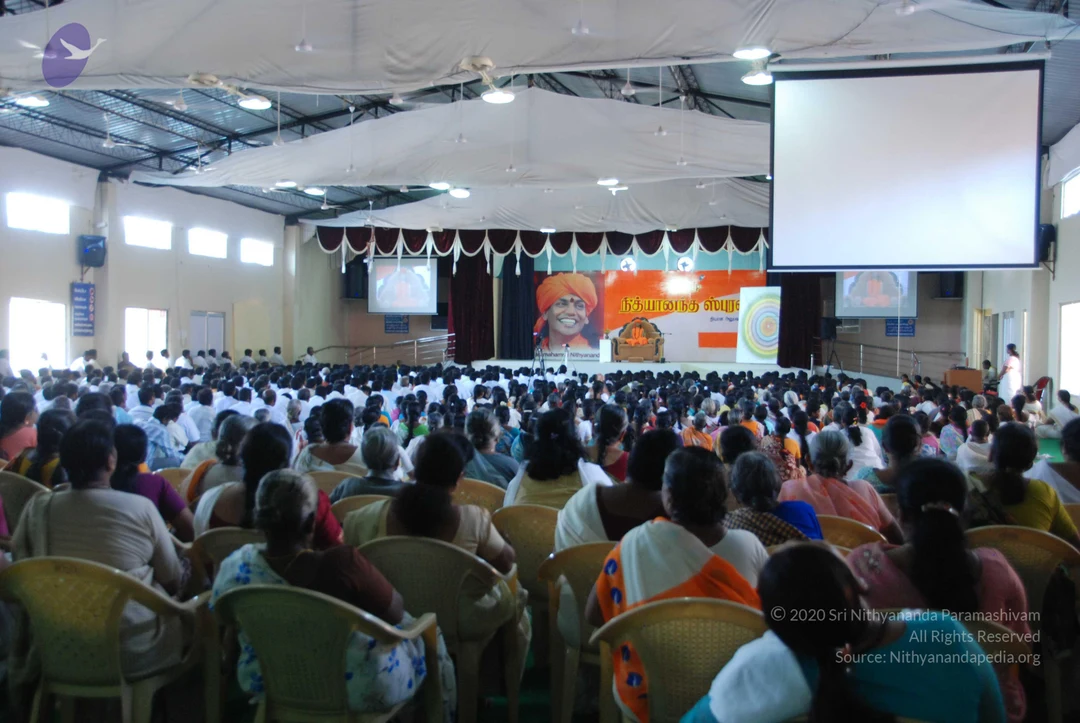
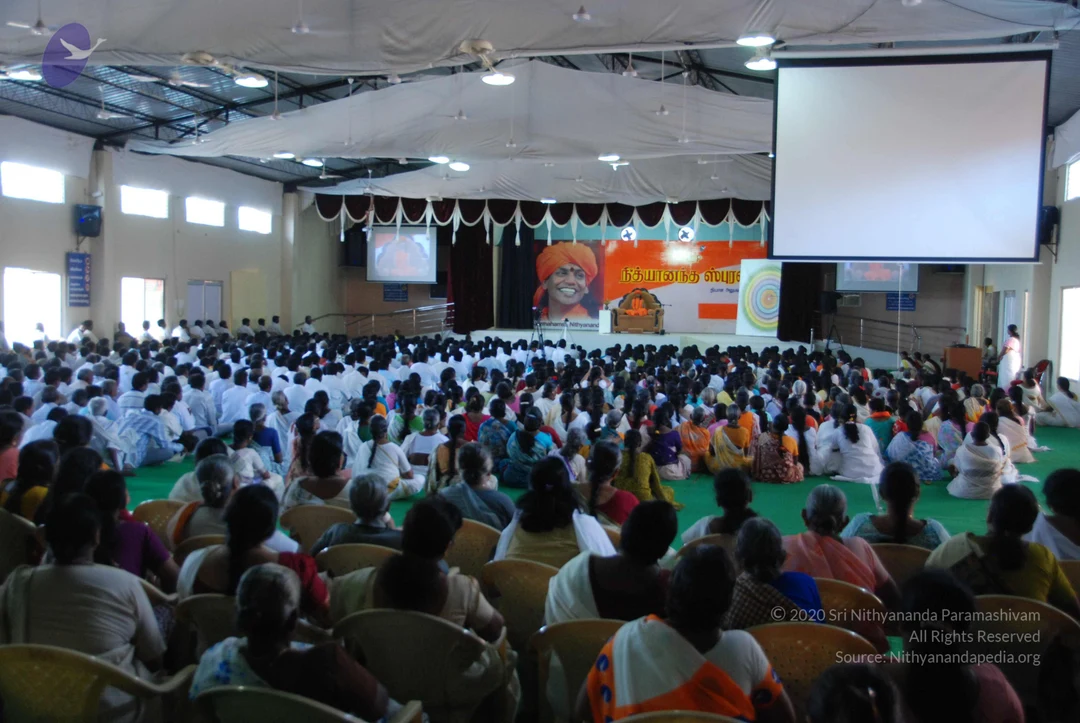
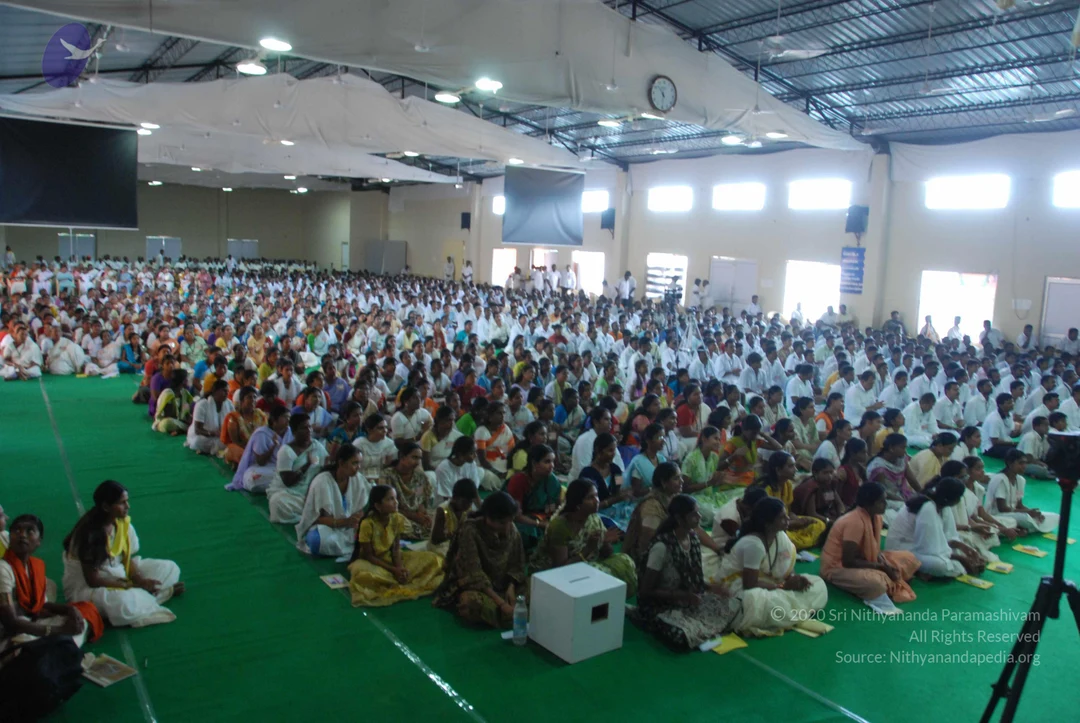
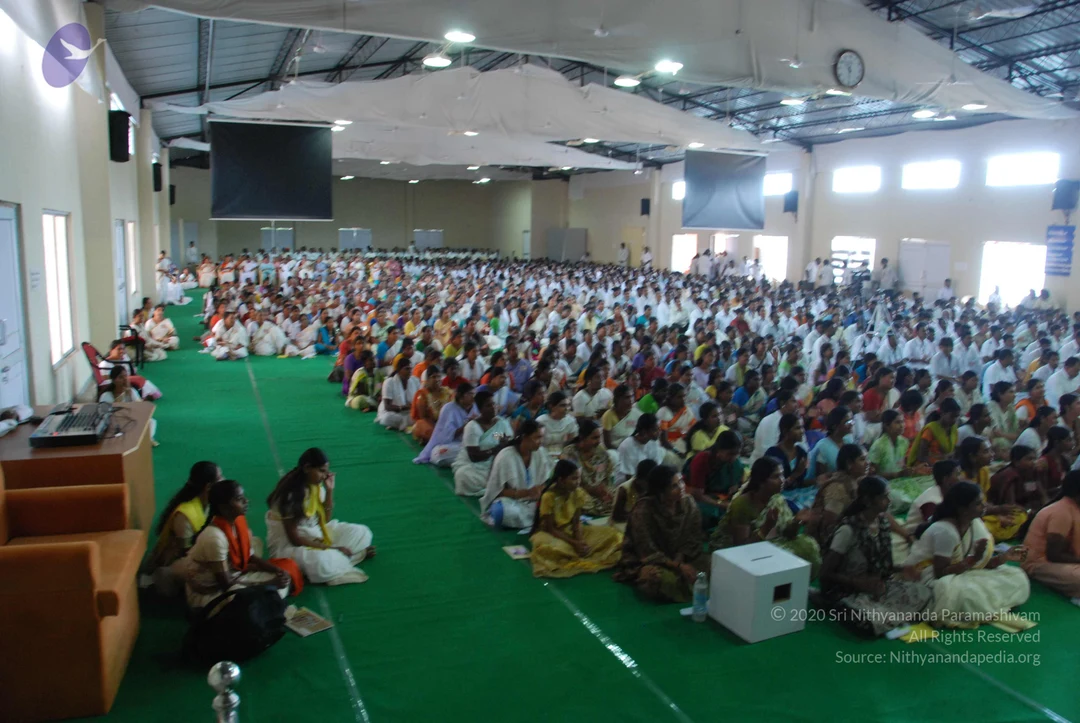
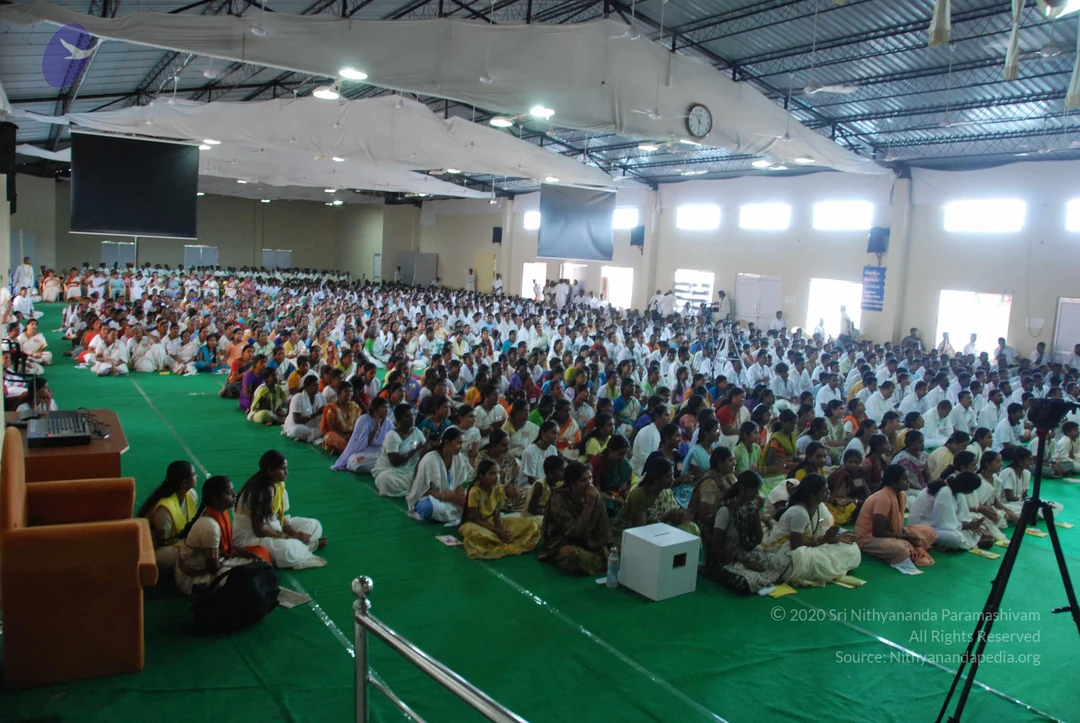
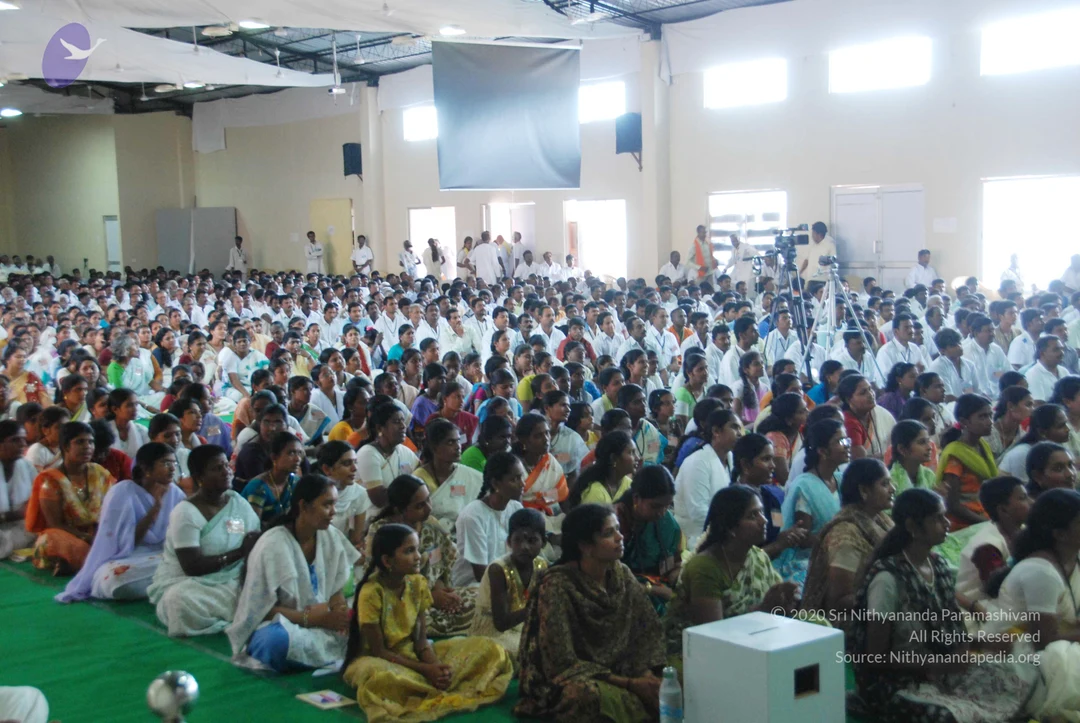
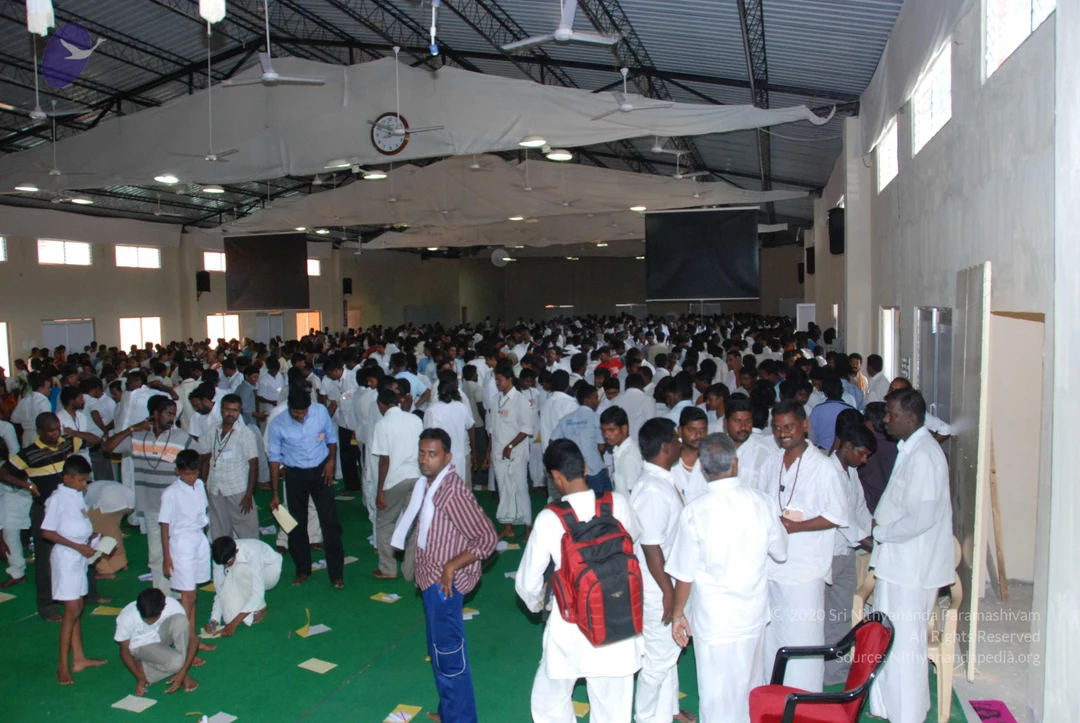
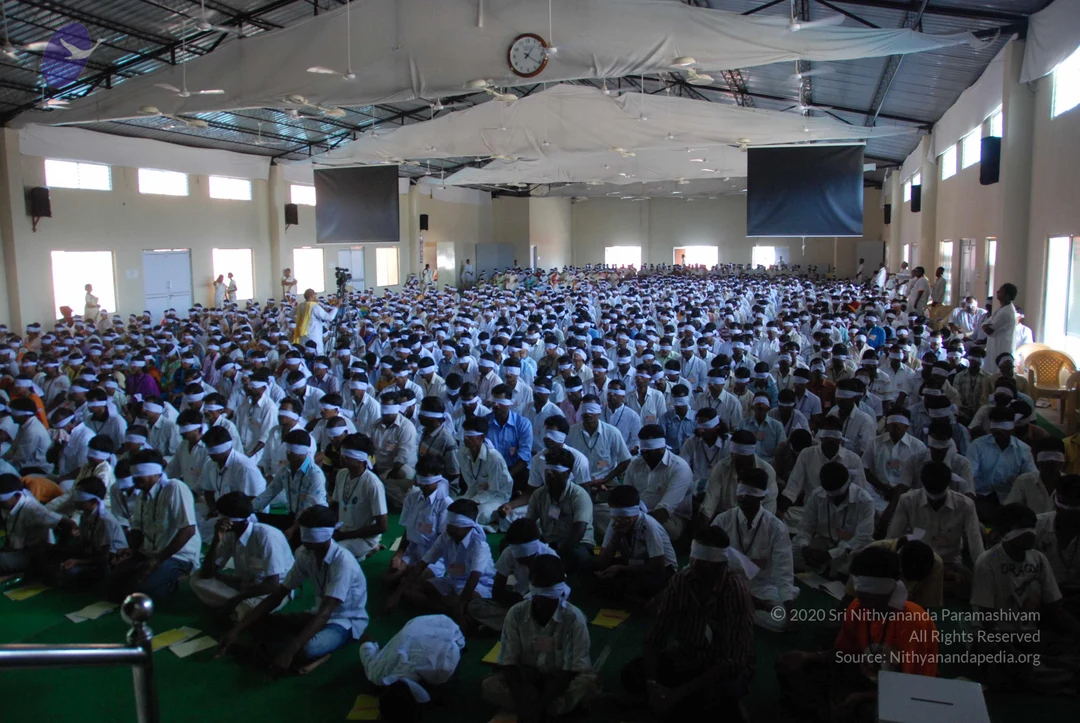
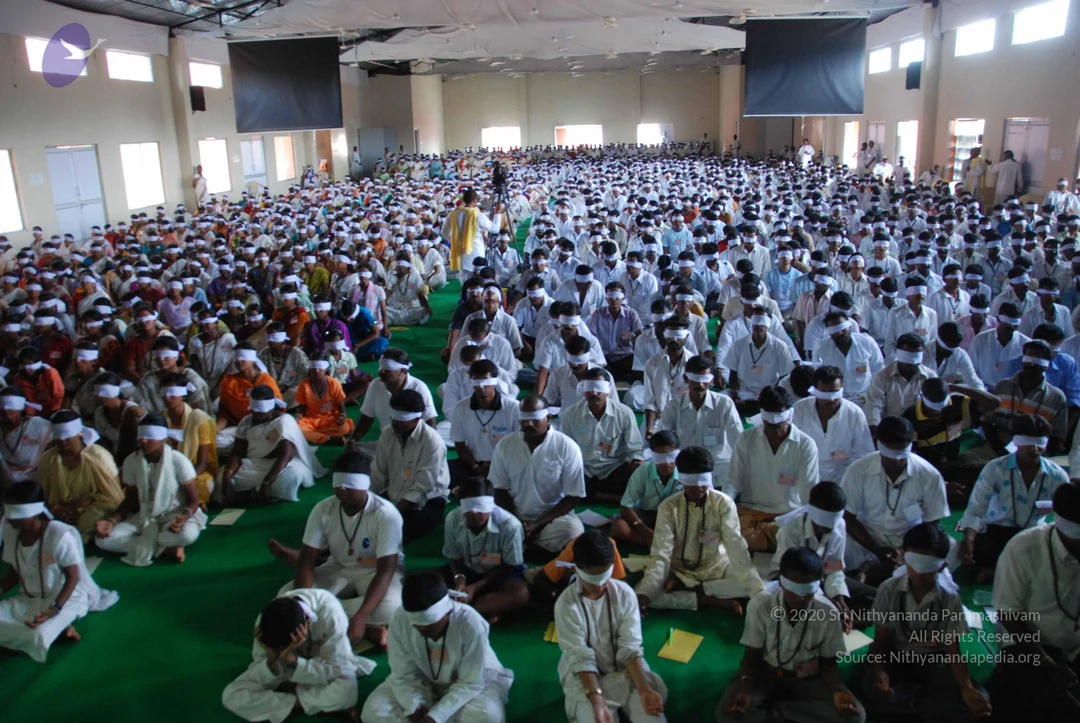
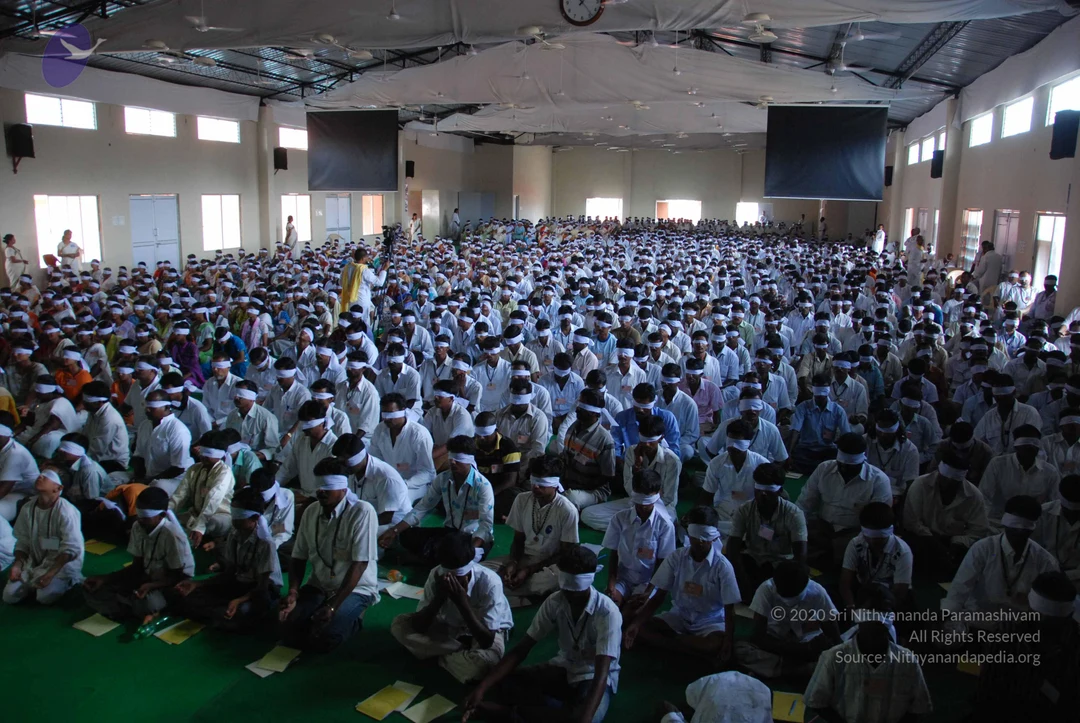
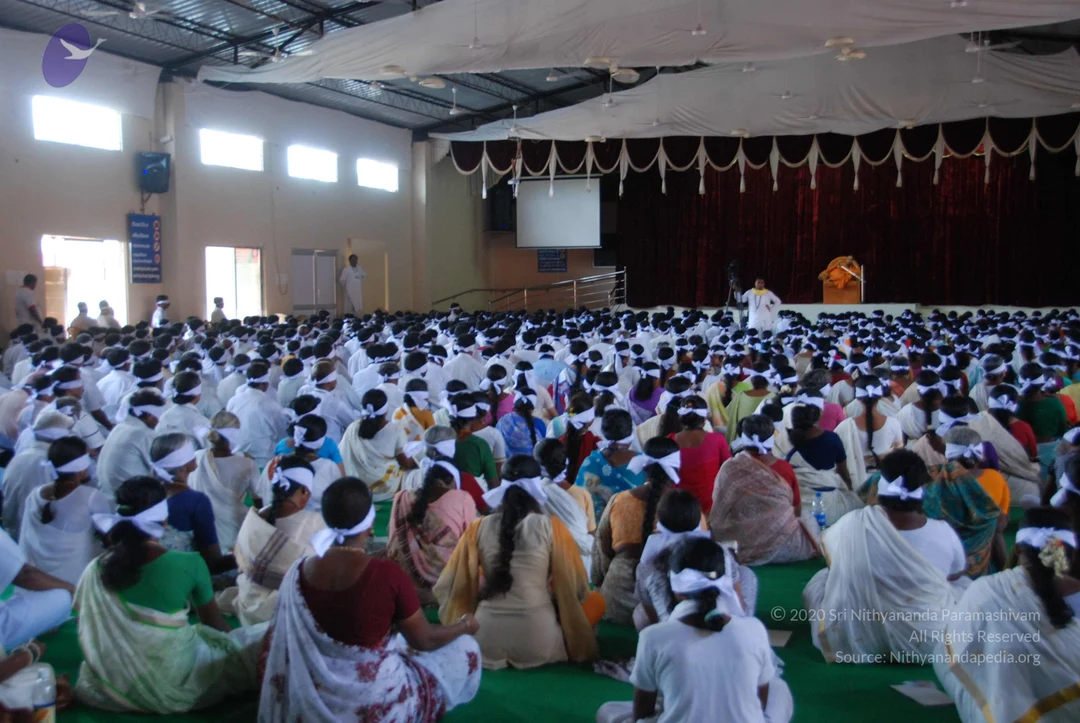
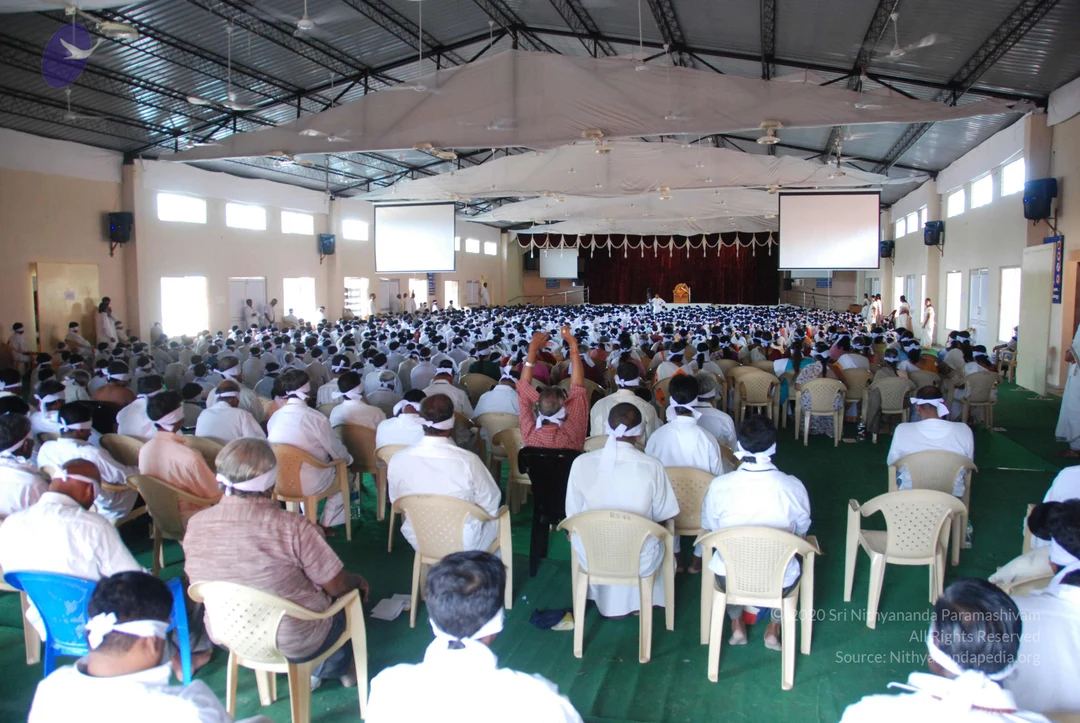
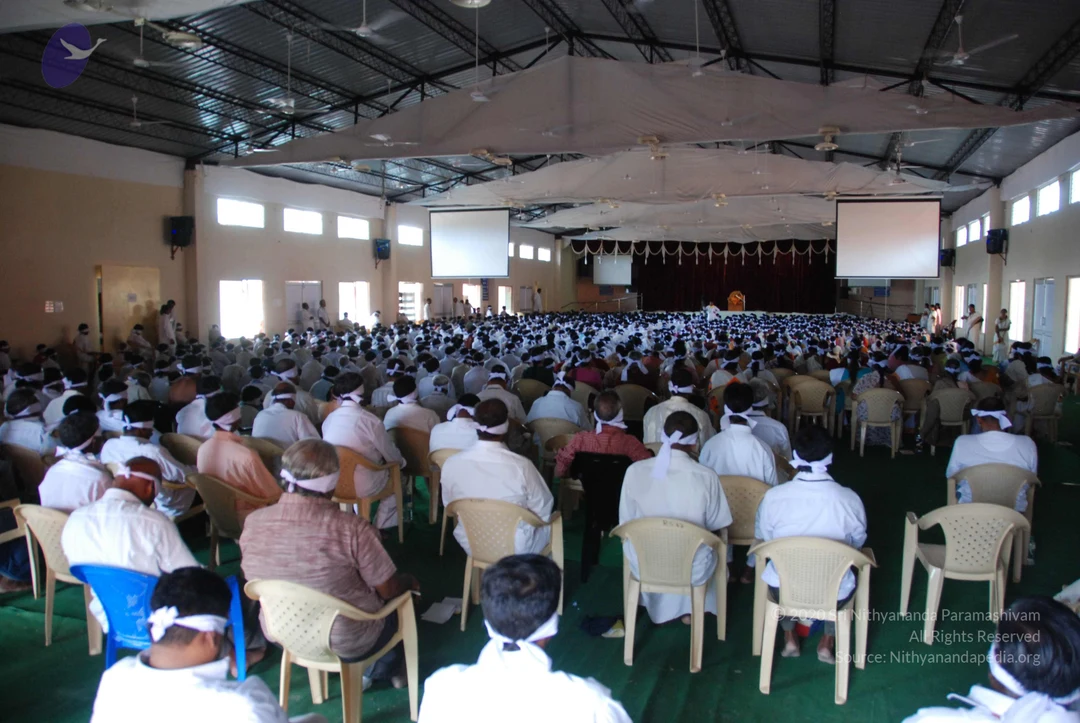
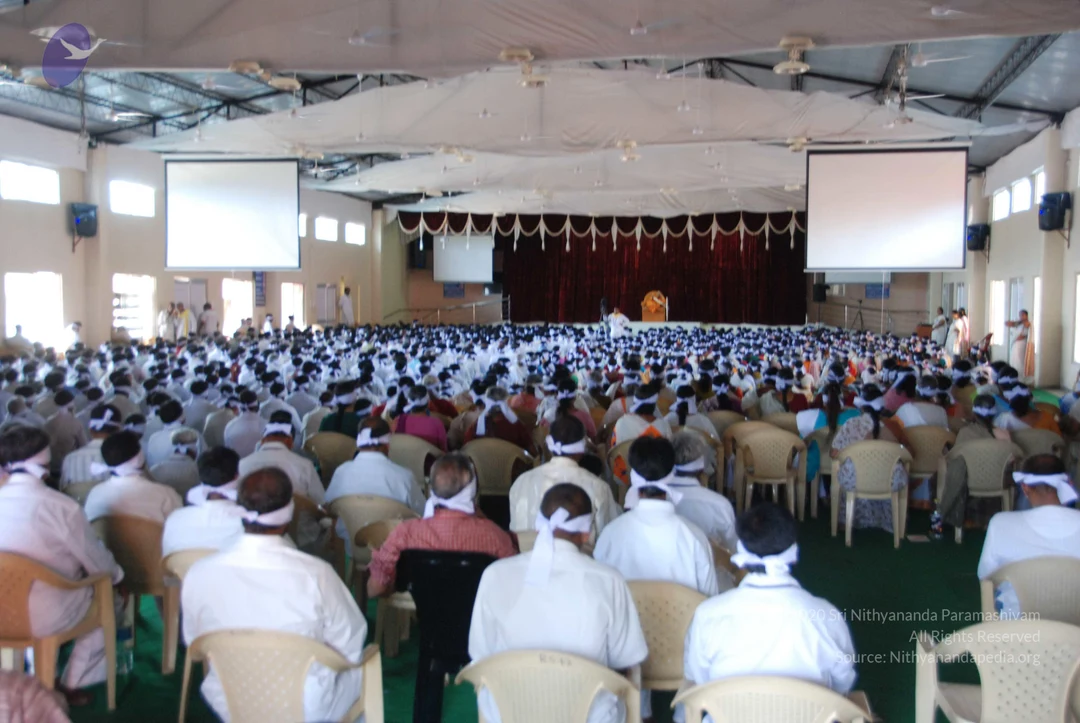
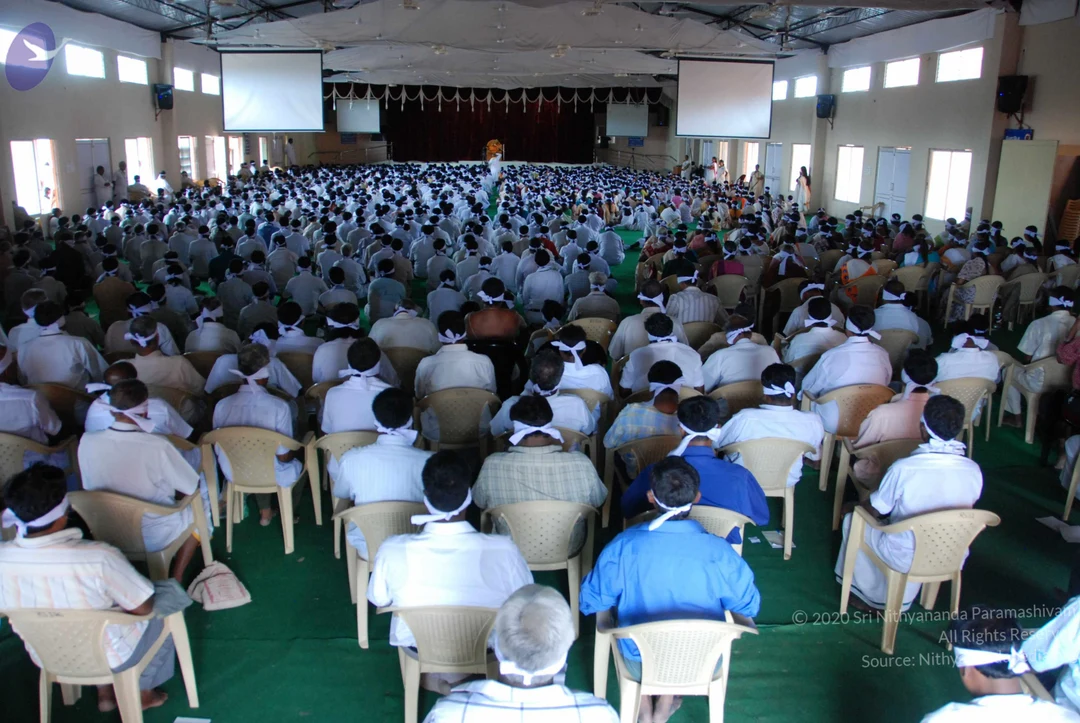
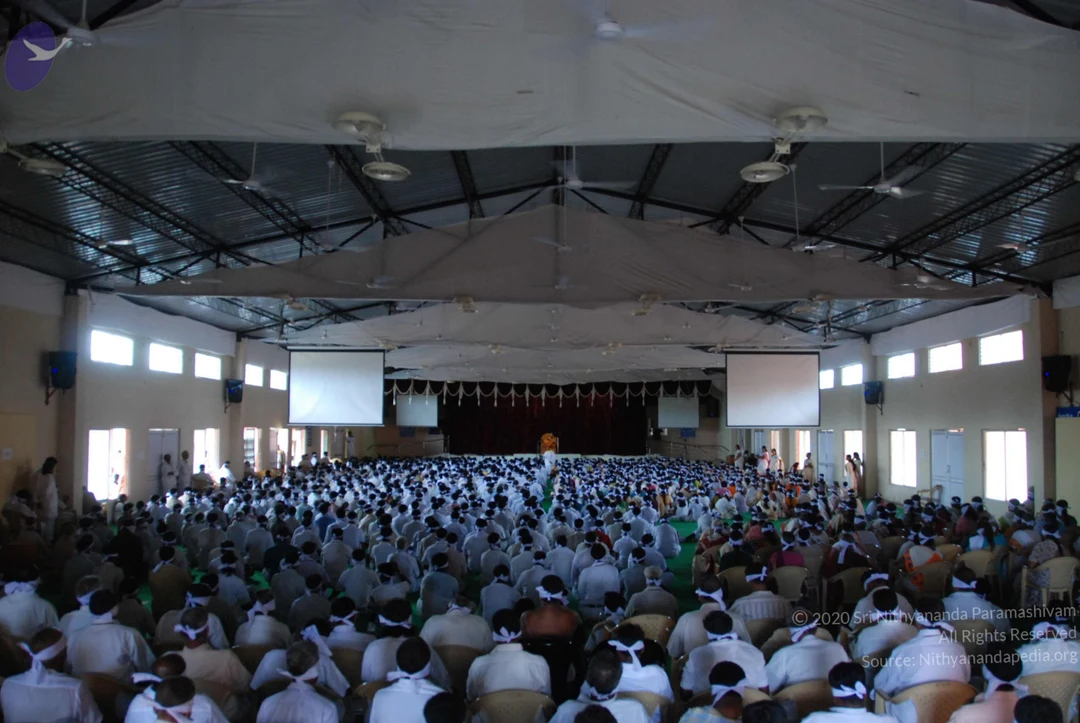
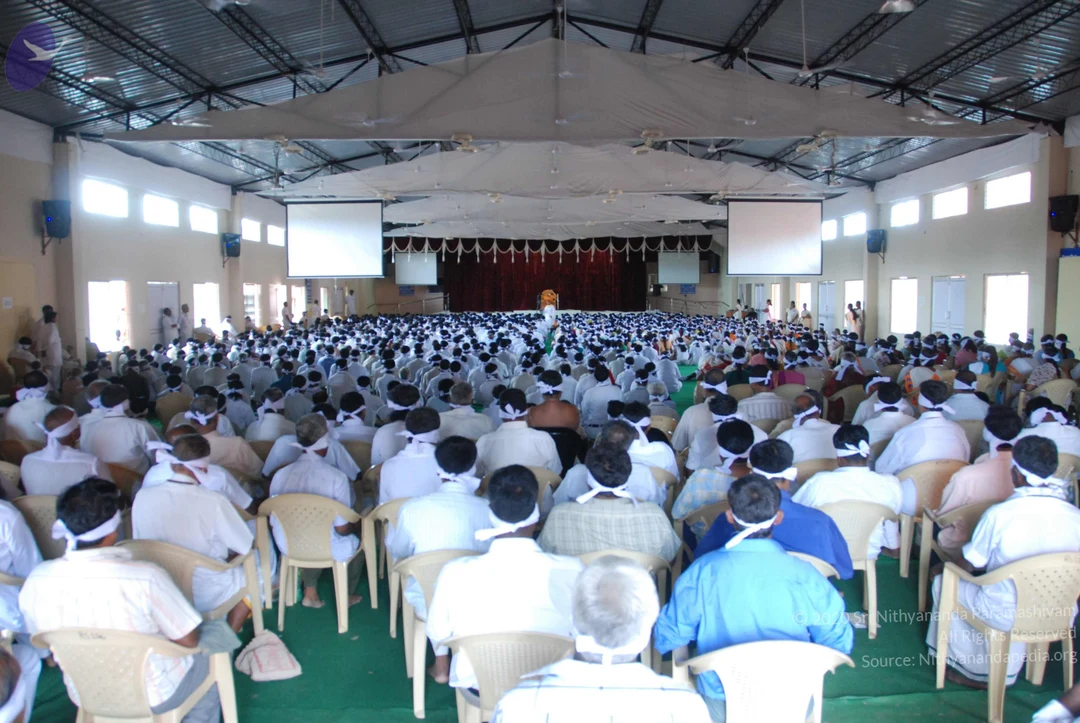
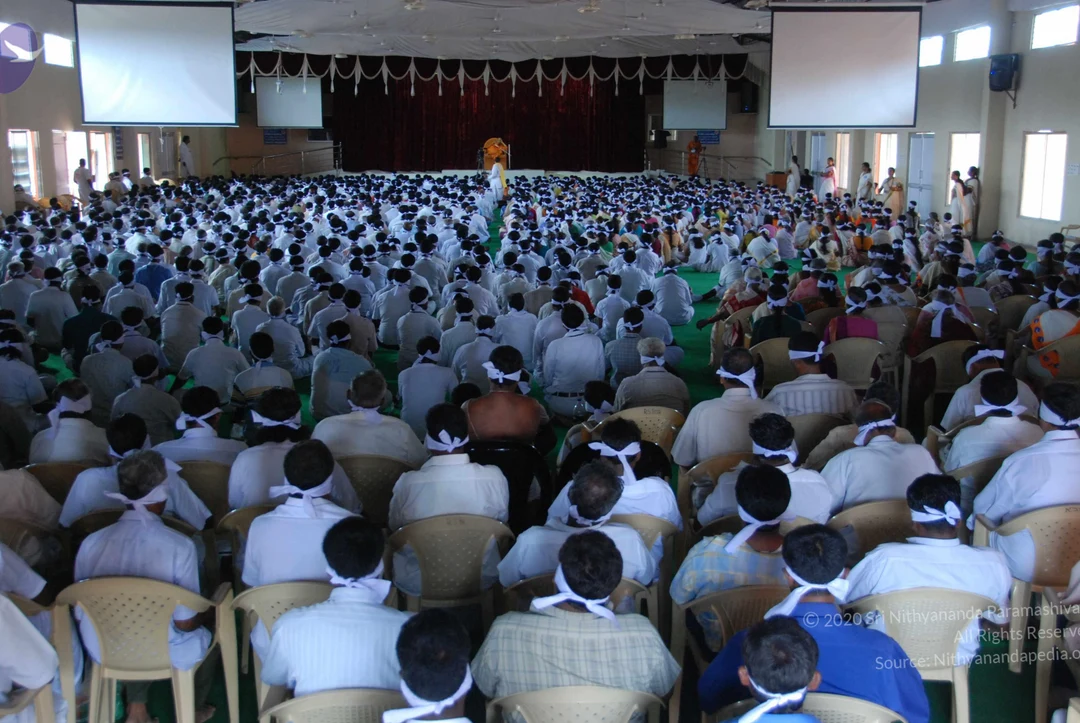
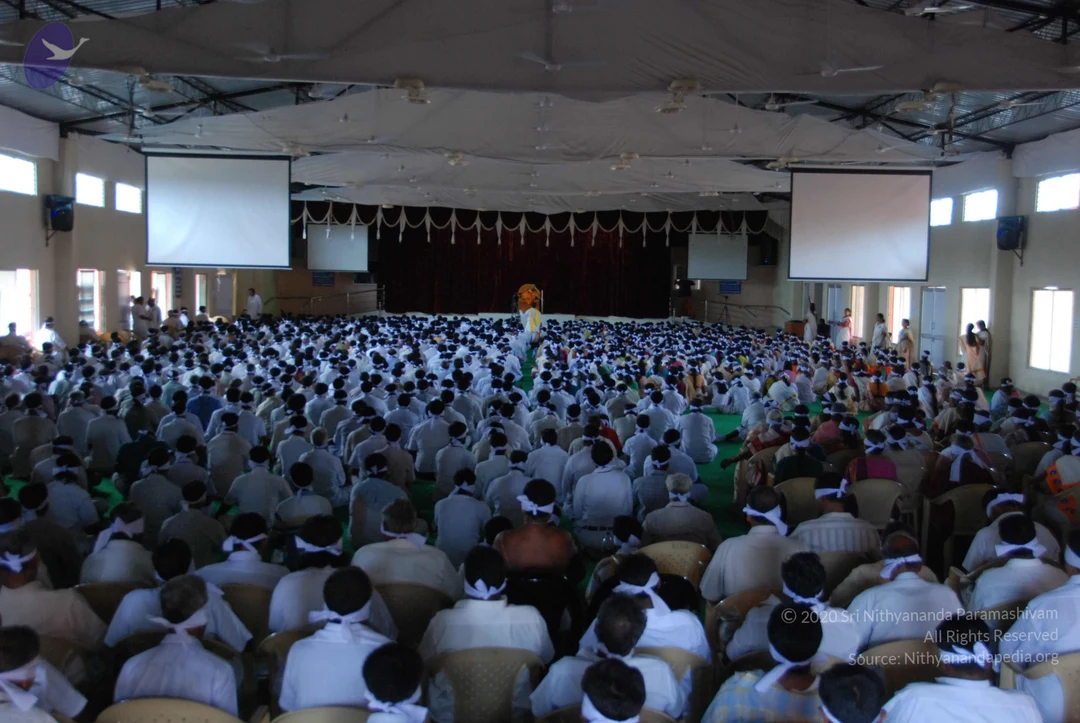
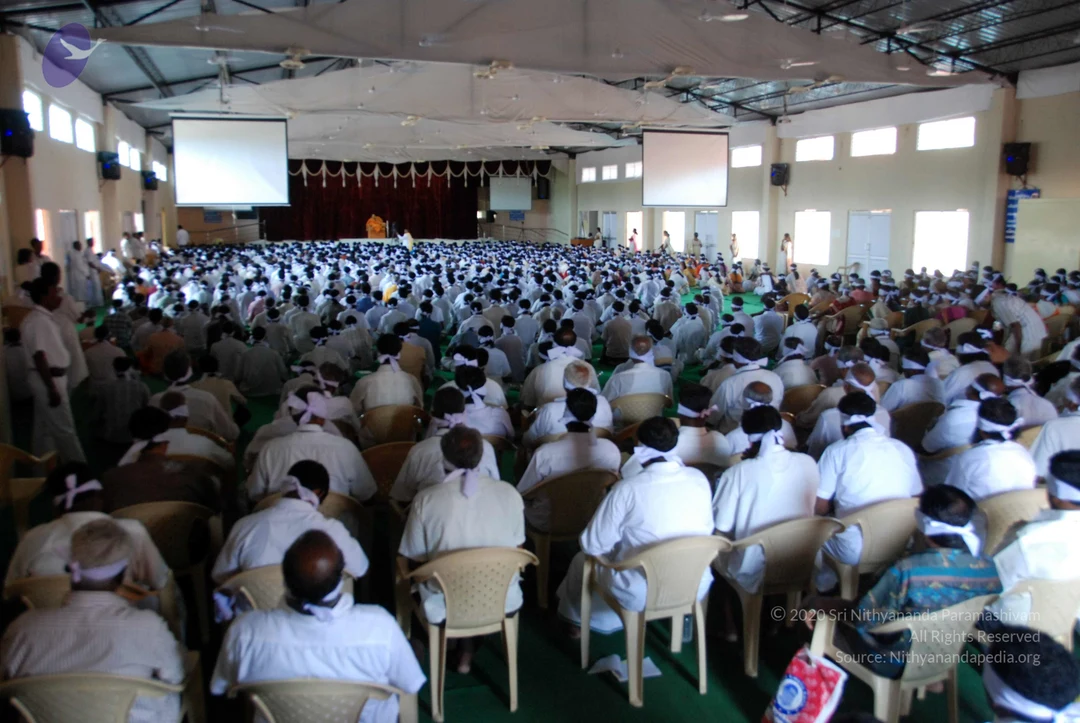
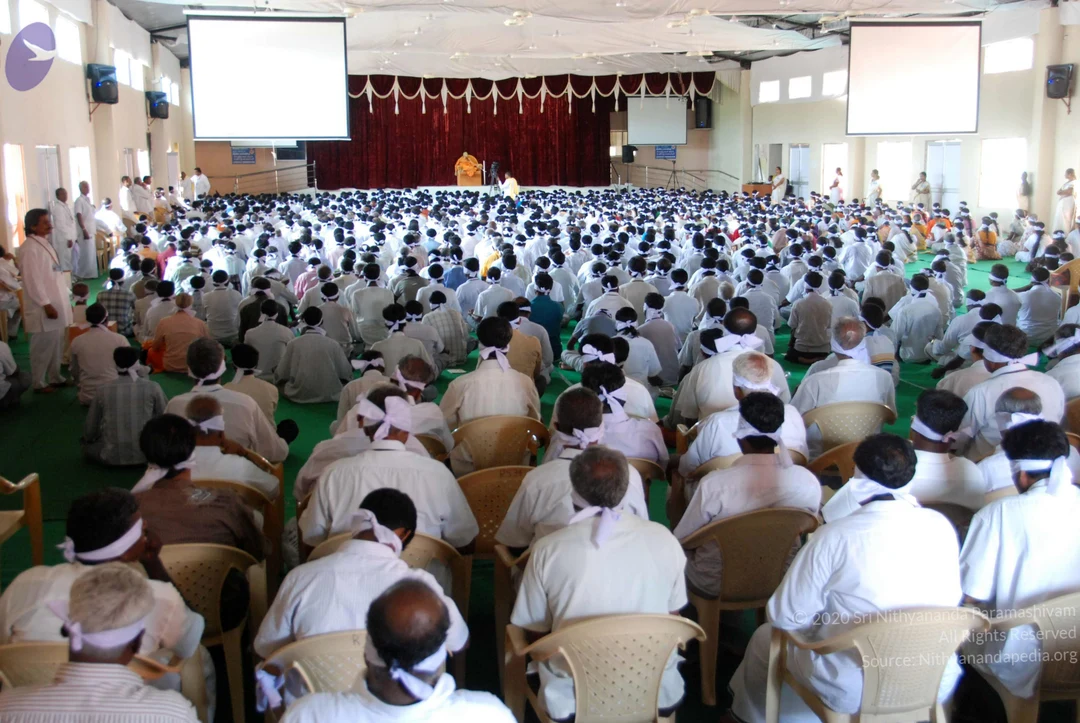
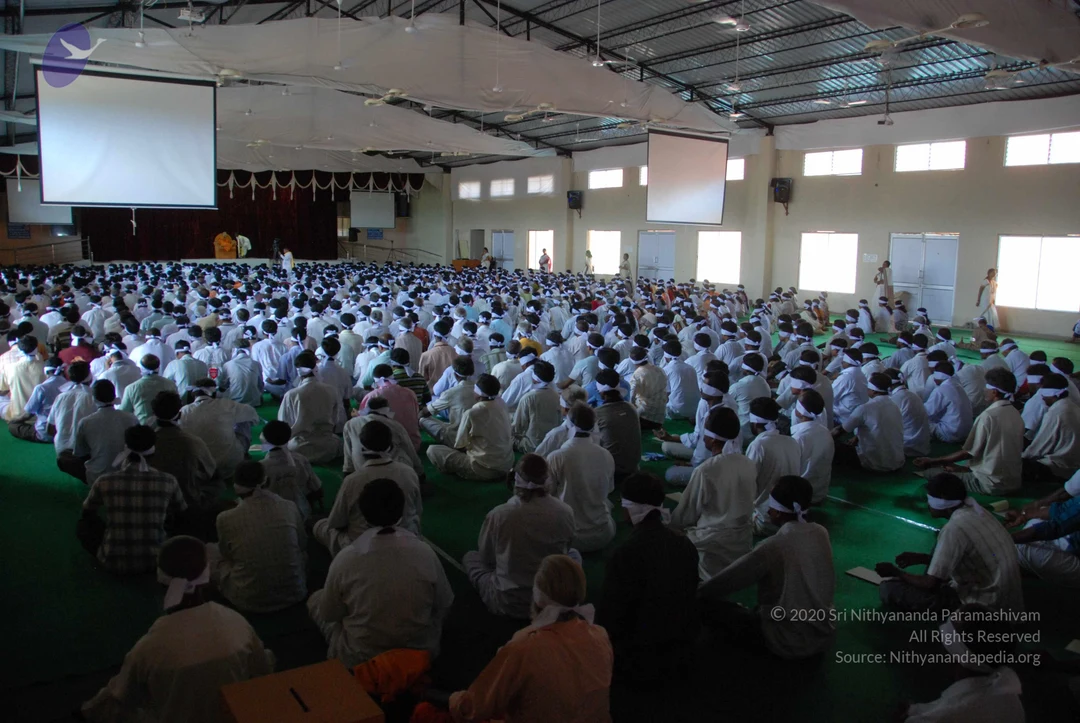
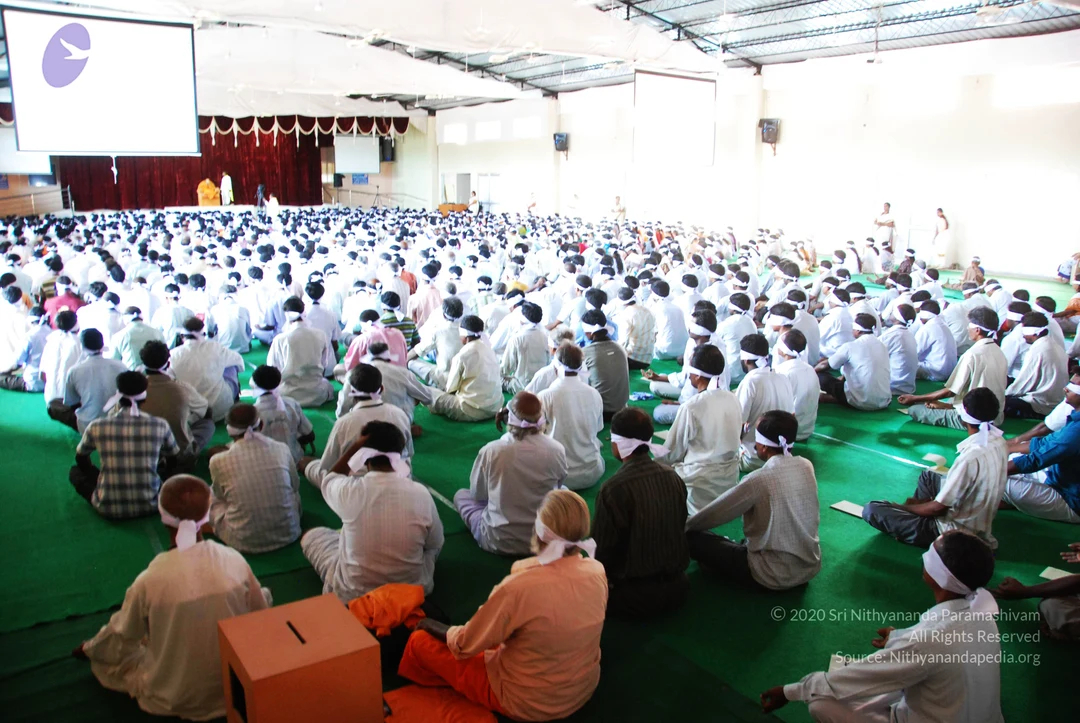
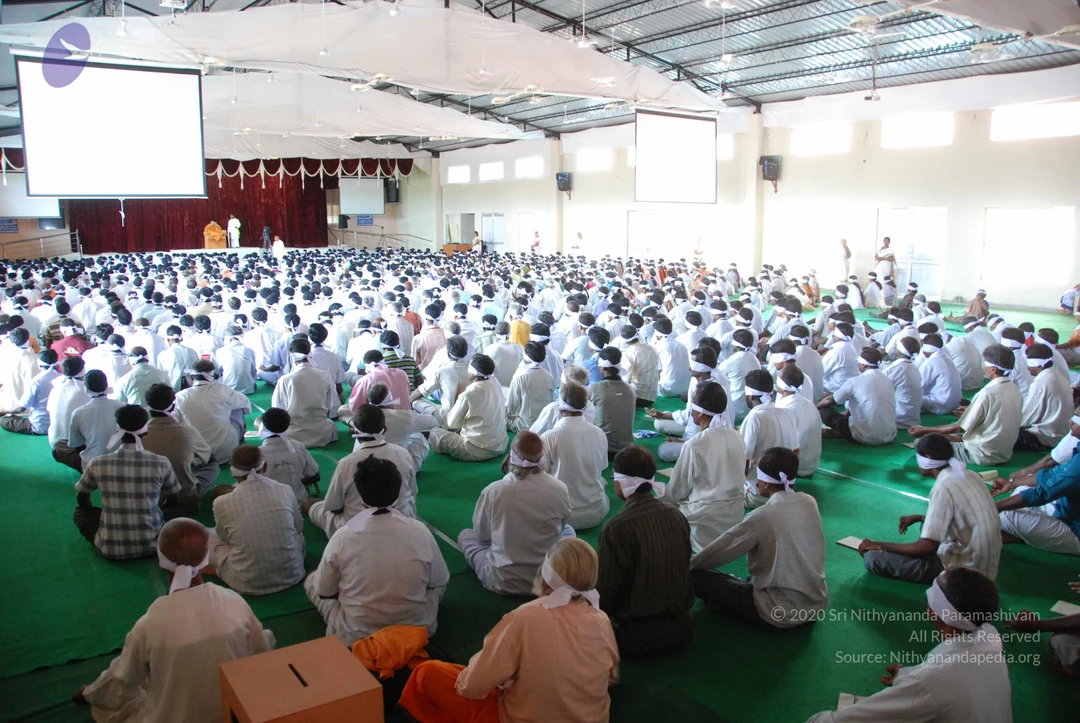
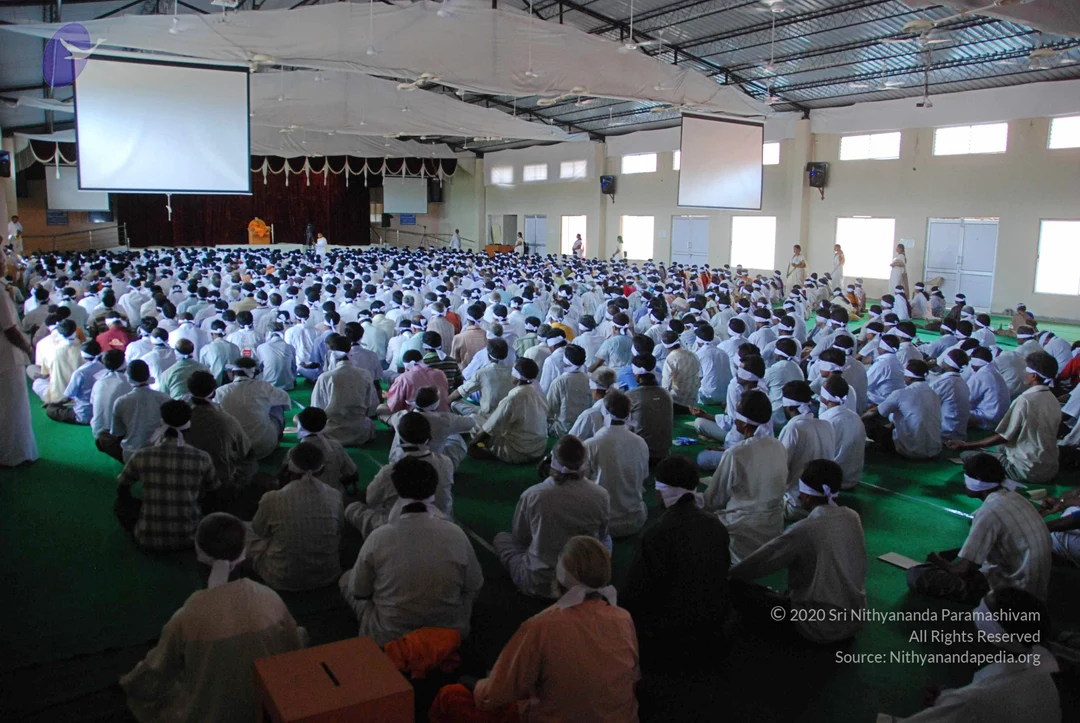
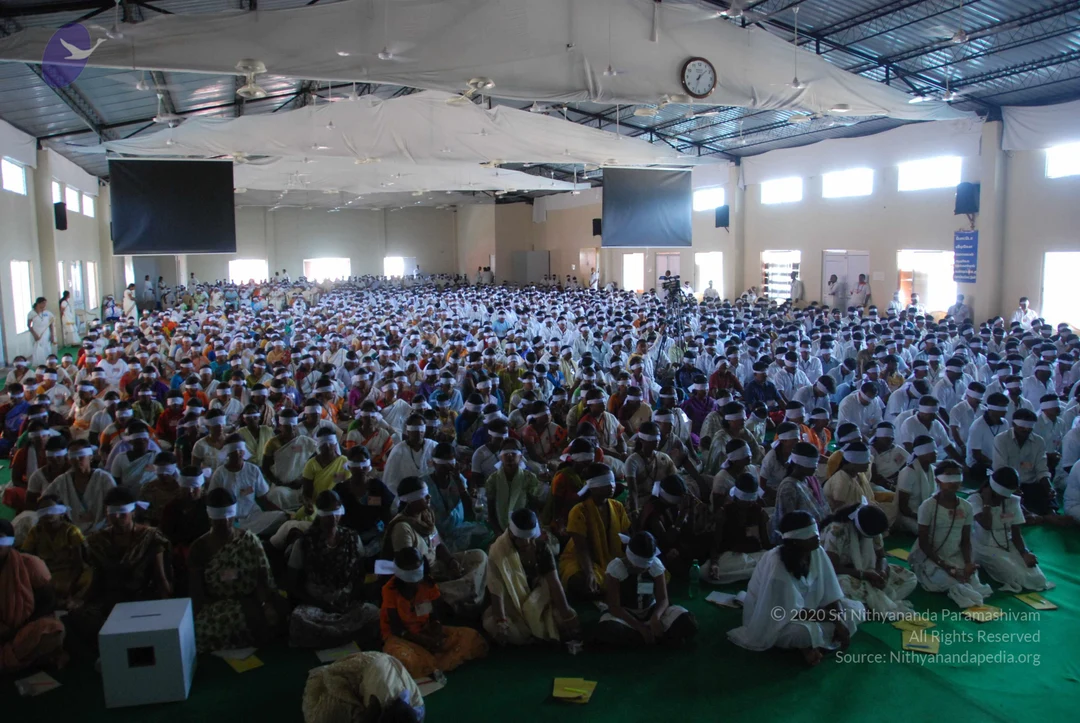
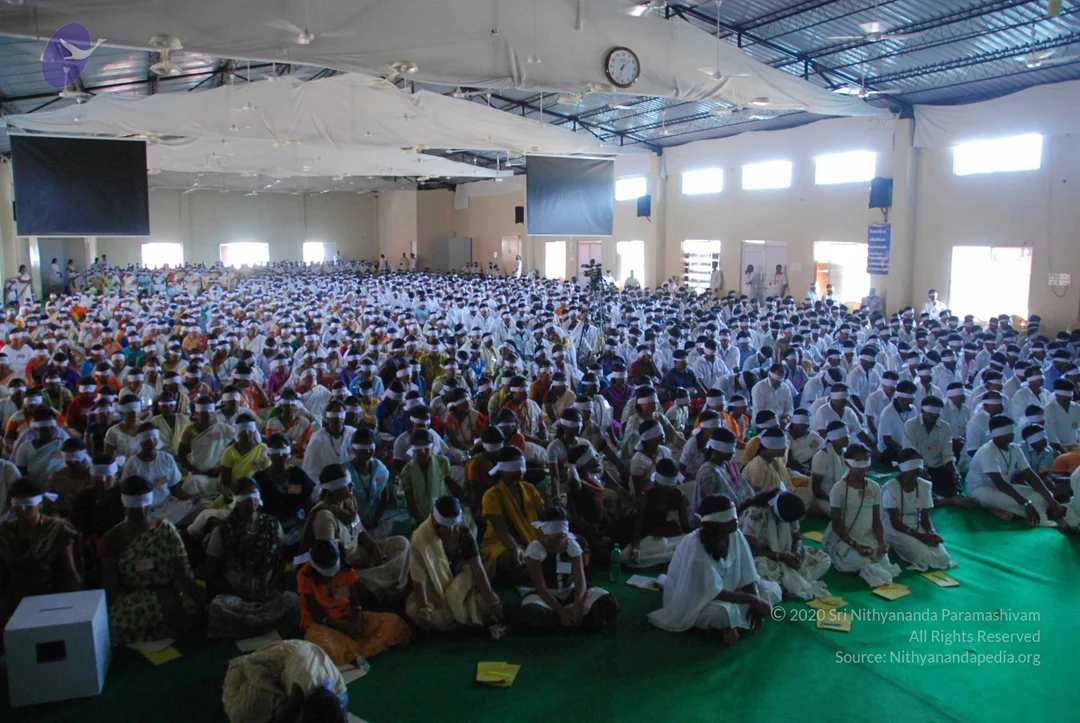
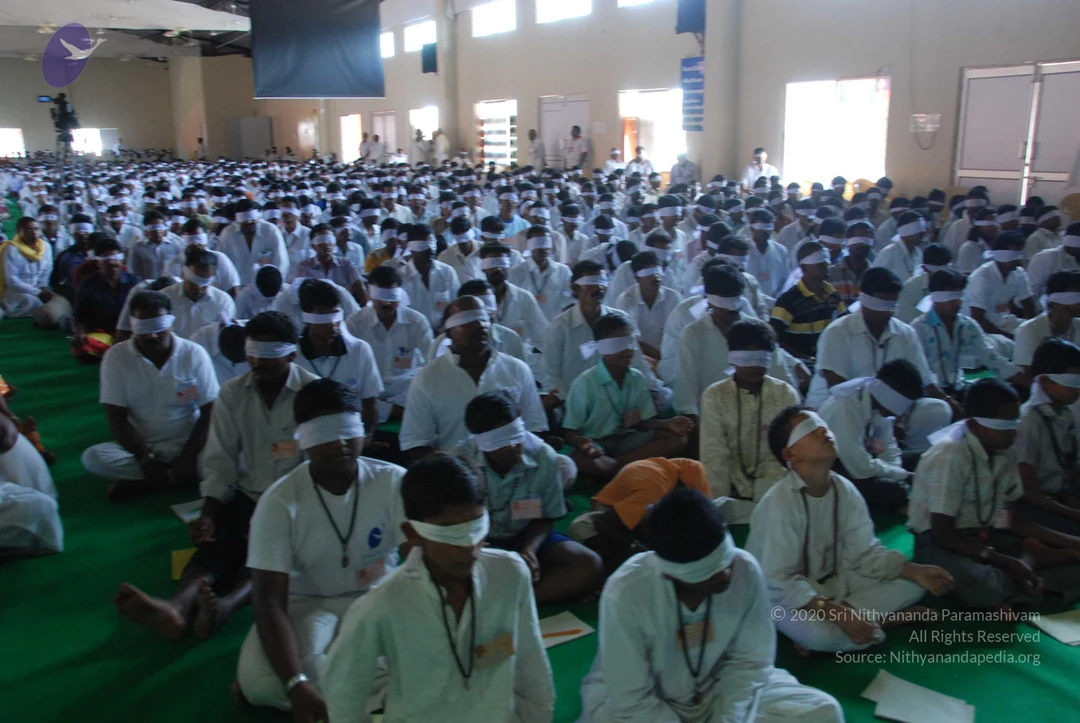
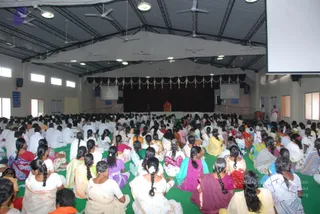
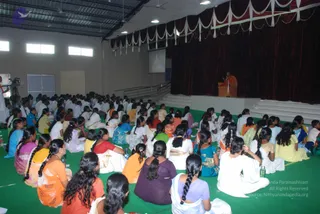
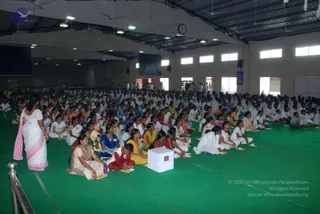
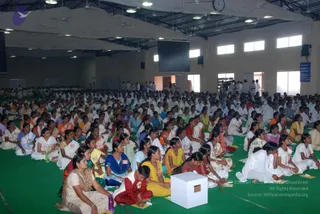
A large indoor hall filled with hundreds of seated devotees on green carpet, most dressed in white or pale clothes, some in red, orange, yellow and blue. Many sit cross-legged facing a distant stage at the far end, where a small figure in orange stands at a lectern below a dark backdrop with a bunting garland. Two large projection screens hang on the walls, and a few white-clad volunteers move along the side aisles. Ceiling fans and fluorescent lights hang from the metal roof trusses.A large indoor hall packed with hundreds of seated devotees on green mats, most dressed in white, with women in saris and salwars in pink, purple, red, yellow and blue. Most face a raised stage at the far end, where a small figure in orange robes stands at a lectern. Two screens on either side of the stage show close-ups, and a large blank projection screen hangs on the right wall. Ceiling fans and a white fabric canopy hang overhead, and a dark draped curtain with bunting backs the stage. A small figure in orange at the stage is too distant to confirm identity, so the a person value stays unsure.Wide view of a large indoor hall filled with seated devotees on green mats, mostly women in white, cream, pink, purple, yellow and red saris with long braided hair. At the far end a small figure in orange robes stands on a raised stage before a dark drape and projection screens, with a wooden lectern to the right. White ceiling fans and a fabric canopy hang overhead, and a large projection screen is mounted at top right. Many devotees sit in rows facing the stage during a satsang talk.A photograph of a large indoor hall with a green carpet where a crowd sits on the floor facing a raised stage. Many women and girls, mostly in white, saffron, orange, purple, teal and yellow saris and salwar, sit with long braided hair. On the stage a man in saffron-orange robes stands at a wooden podium with a microphone, speaking to the audience. A projection screen above the stage shows a small image, and maroon drapes with white and gold swags hang behind the stage. A camera on a tripod stands at the left edge.A large indoor hall with a green carpeted floor and a high industrial ceiling with fans and windows, filled with hundreds of seated devotees facing away toward the front. Most wear white clothing, with women in saris in yellow, orange, blue and red visible among them. A woman in a white sari with a pink border stands at the left edge near the aisle. A small white box stands on the floor in the foreground among the seated attendees. The scene suggests a satsang gathering, though no speaker is clearly visible in this view.A large indoor hall with a green mat floor and high white ceiling fans holds a dense seated audience, mostly women and girls in white saris and salwar kameez with some in orange, yellow, blue and peach tones. A child in a red outfit sits in the front row beside a white cube box. A tall black screen hangs on the far wall, and a camera on a tripod records from the back. Hundreds of people fill the hall, with more standing near the entrance. A blue banner with printed text hangs on the right wall.