Skip to content
Sunday

15 August 2010

Indian Independence Day Message by Nithyananda: 15 Aug 2010

Dated photos
711
Source pages
1
Media
6
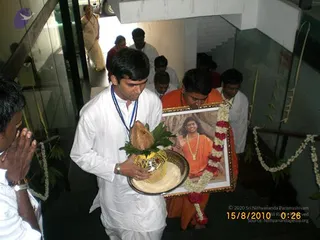
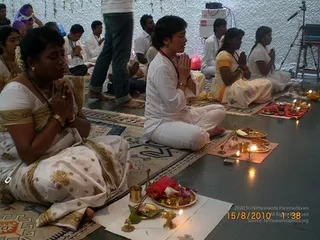
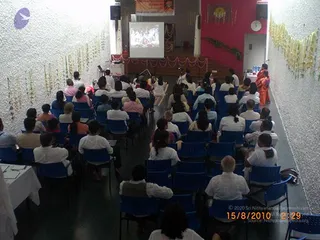
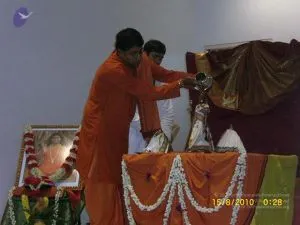
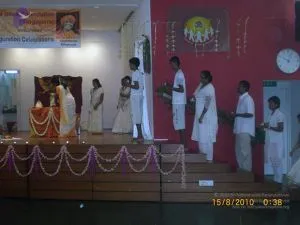
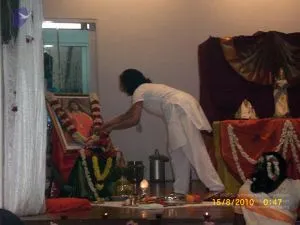
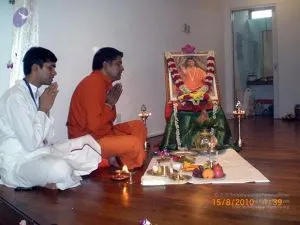
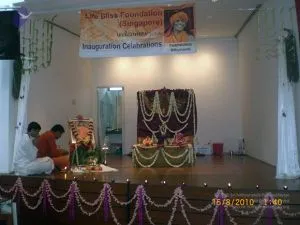
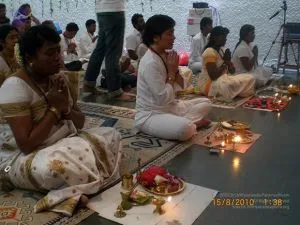
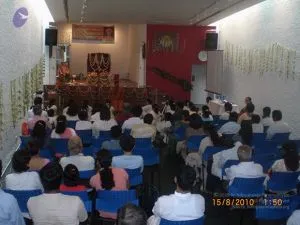
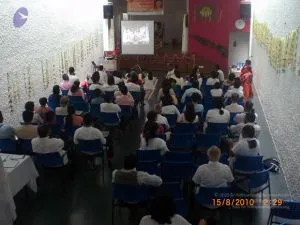
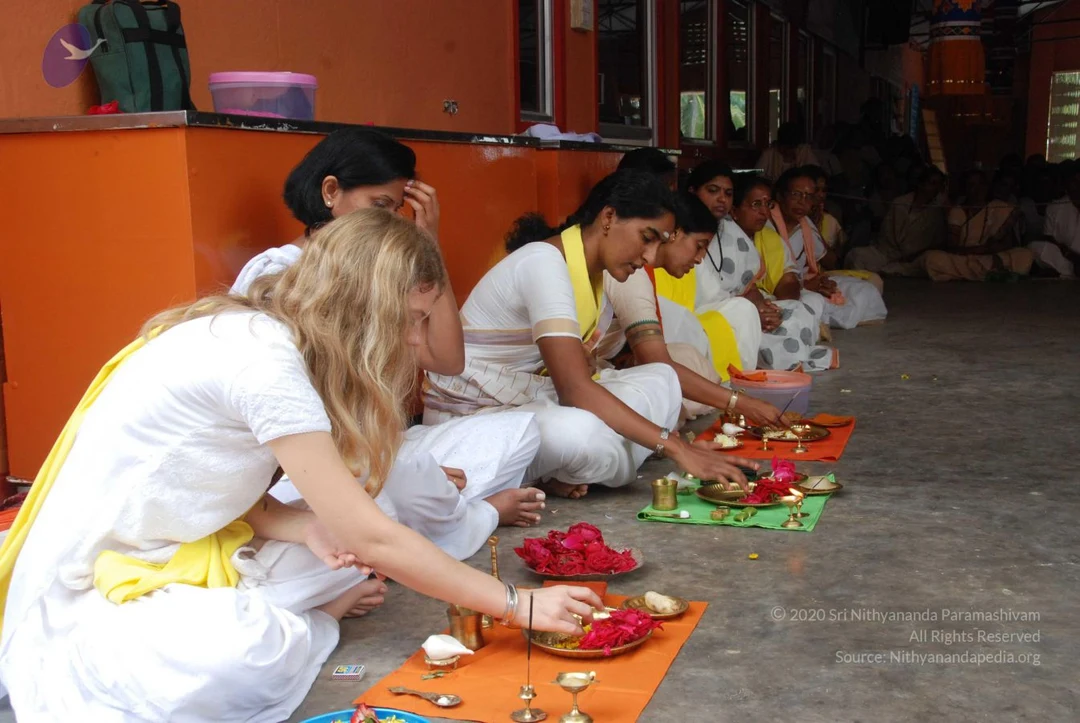
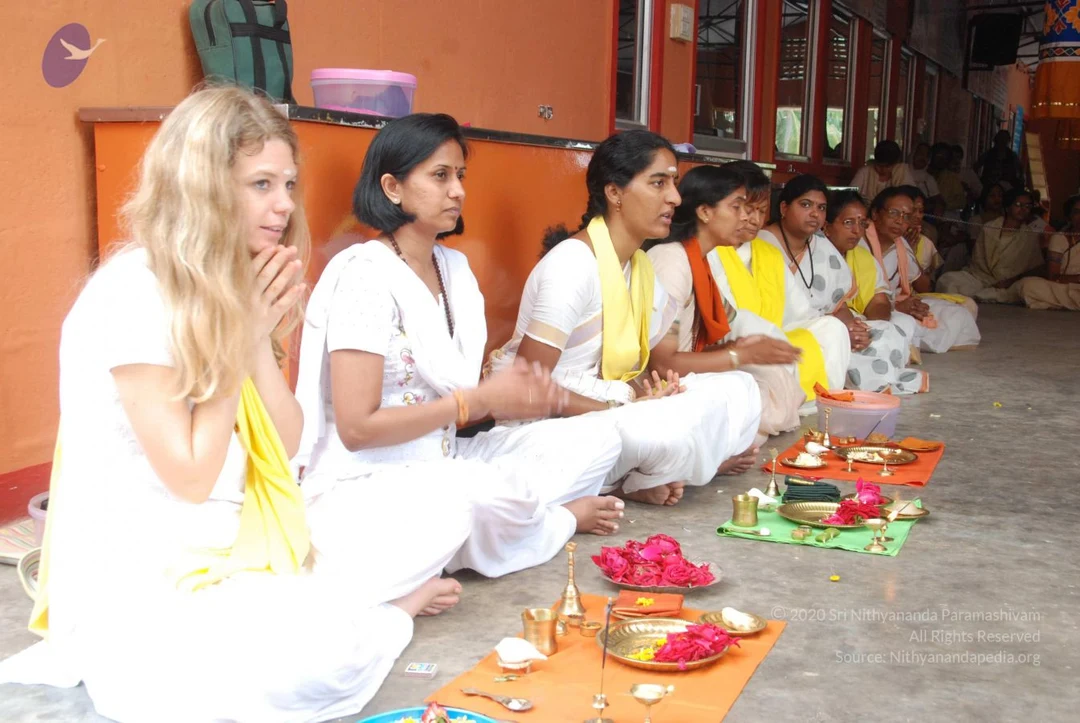
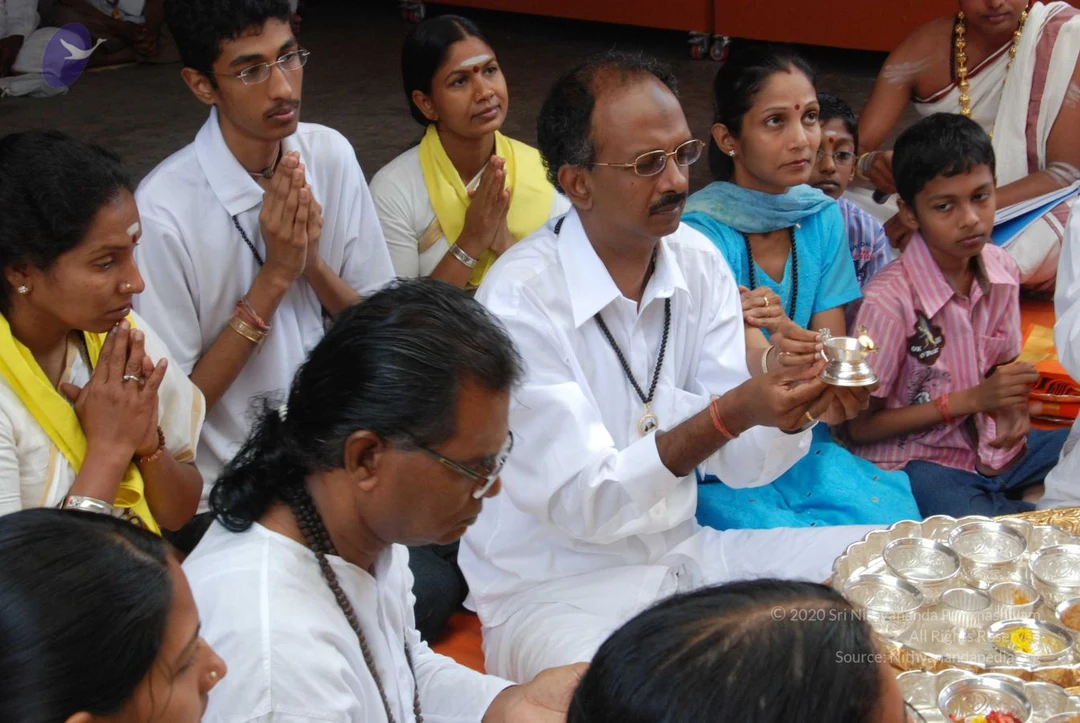
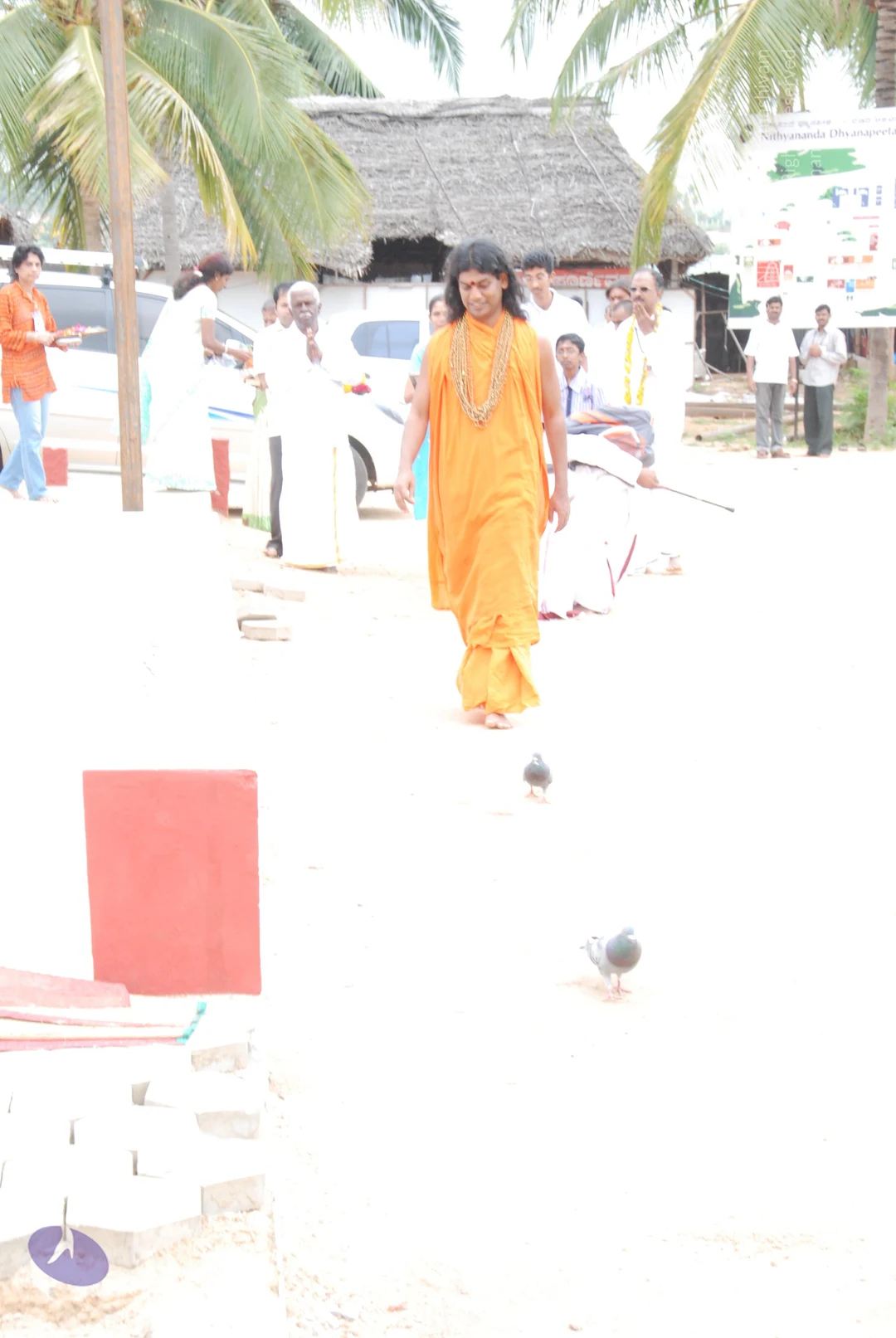
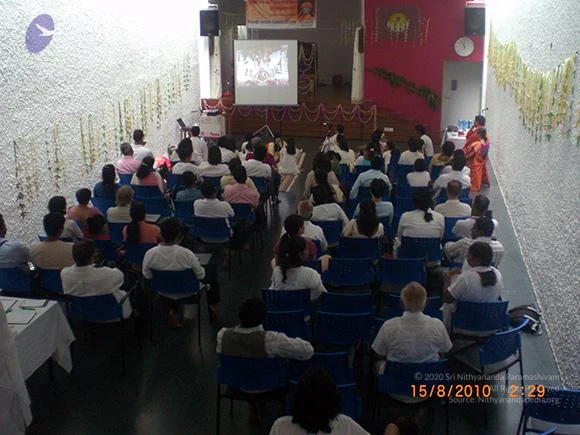
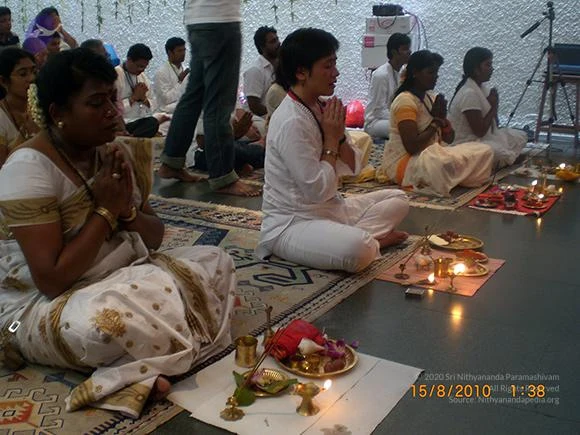
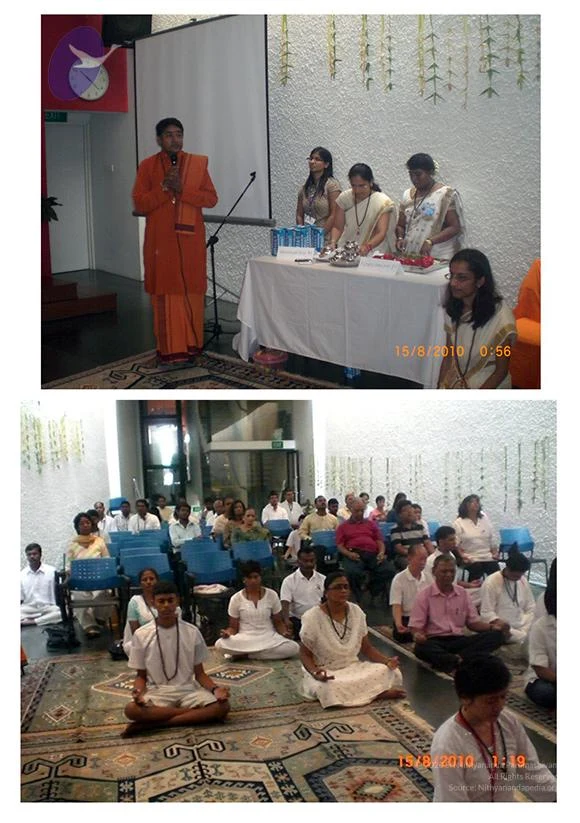
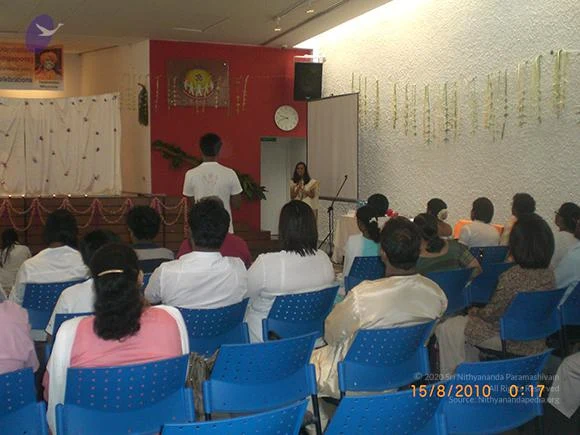
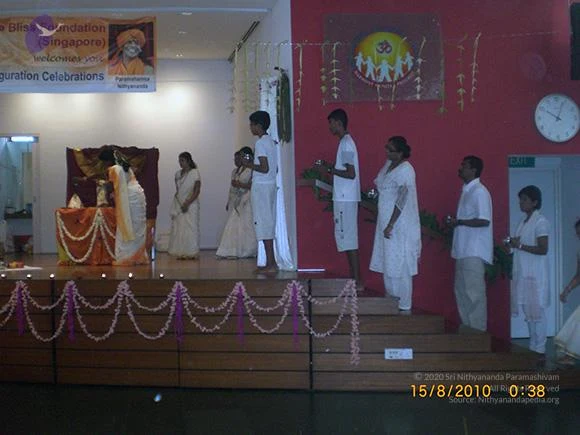
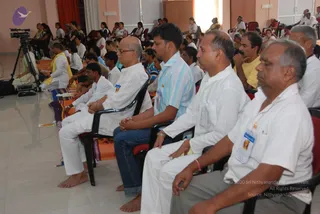
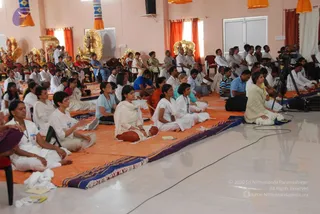
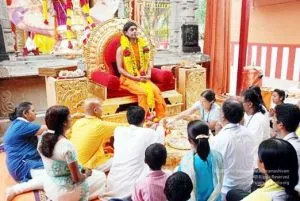
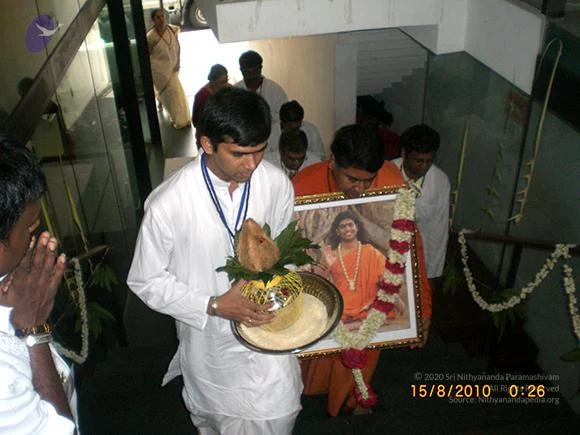
A photograph of a staircase procession inside a building, with a man in white kurta carrying a silver tray holding a coconut, green leaves and offerings at the front. Behind him a man in orange robes and a garland of white flowers carries a large framed portrait of a bearded-free figure with long dark hair, wearing a crown-like headpiece, rudraksha-style beads and an orange garment; the framed portrait is garlanded with flowers and red blossoms. Other men in white and a woman in a cream sari follow along the stairs, with a hand visibly folded in greeting at the lower left. Visible people: about six.A photograph of devotees seated cross-legged on rugs in a bright hall, performing puja with hands joined in prayer. A woman in the foreground wears a white sari with gold border and gold bangles; beside her a younger woman in white kurta and a seated man in white also pray with eyes closed. Brass lamps with lit wicks, a brass puja plate with flowers and a red cloth, and a small coconut or offering sit on the floor before them. Several more devotees in white and yellow saris are seated in the background, and a person stands behind them. Strings of flowers hang along the wall.A photograph of a seated audience in a hall facing a projector screen at the front, where an image is shown. Most attendees wear white clothing and sit on blue chairs in rows, with a few in darker clothes. At the front right, a monk in saffron-orange robes stands near a small stage. Strings of white flowers hang along the white walls, and a red-and-pink backdrop with a framed picture is visible at the top. A timestamp reading 15/8/2010 appears in the lower corner, and a tall clock hangs on the right wall.

August 15 2010

Original wiki page
Contents

Title:

Indian Independence Day Message by Nithyananda: 15 Aug 2010

Narration:

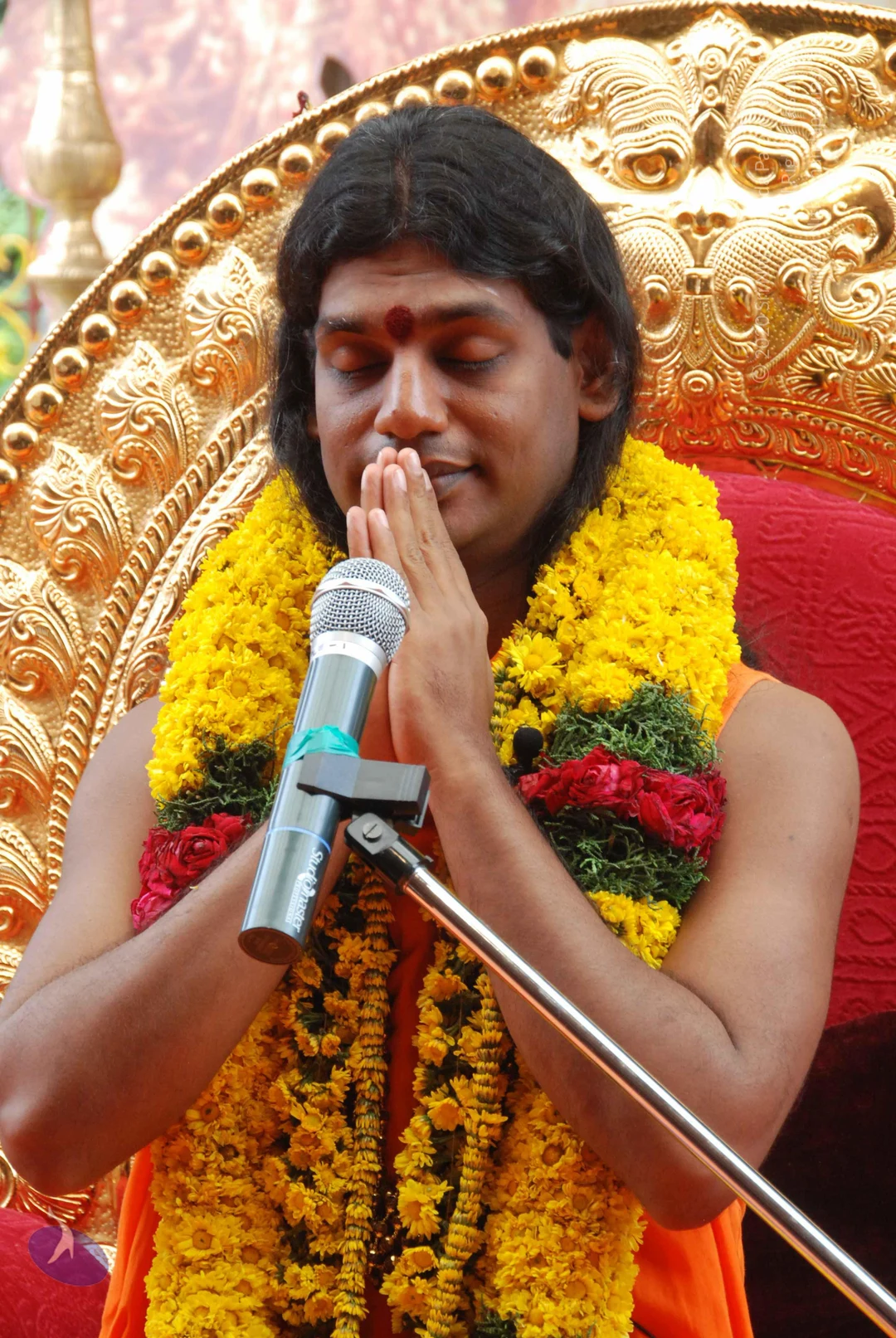
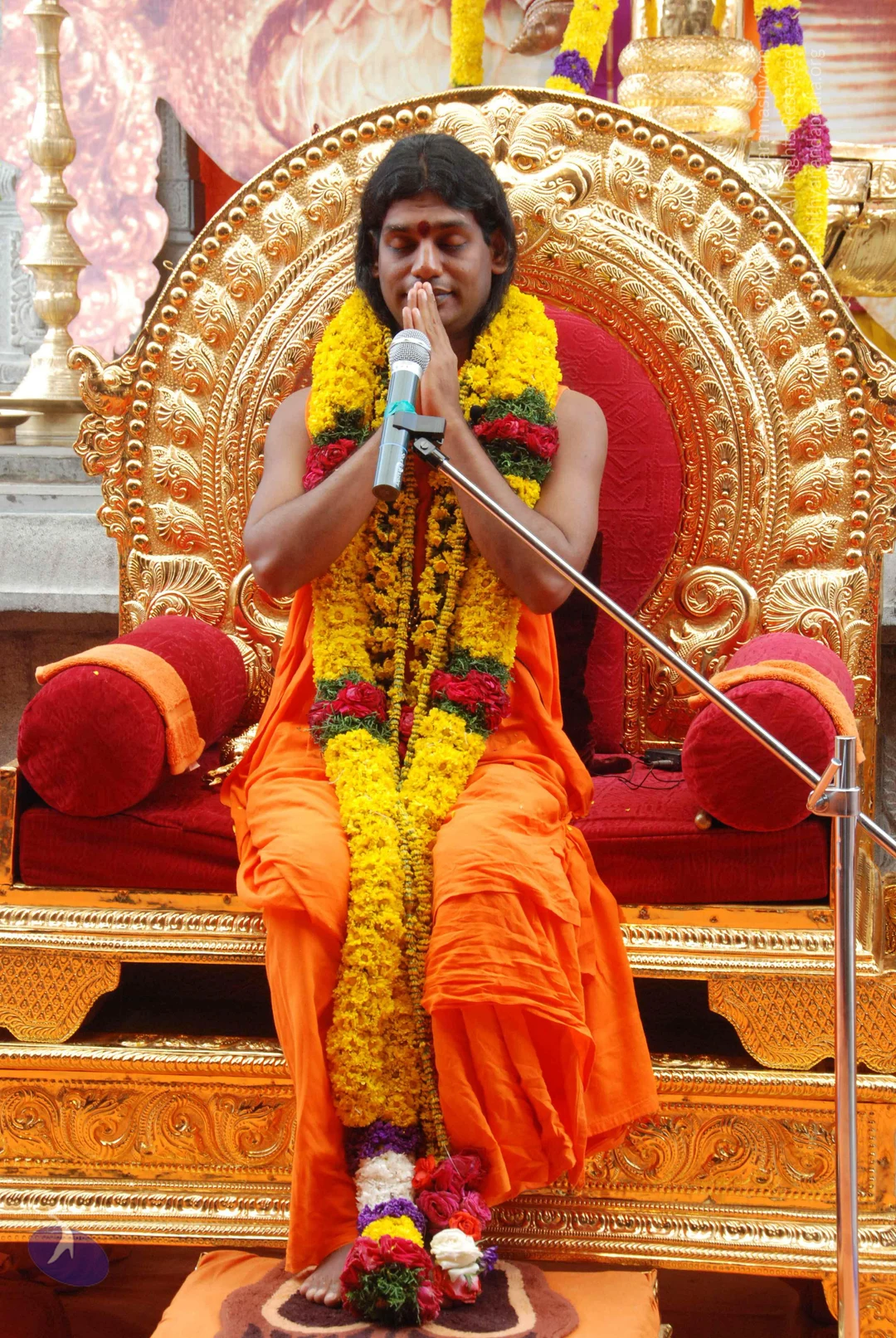
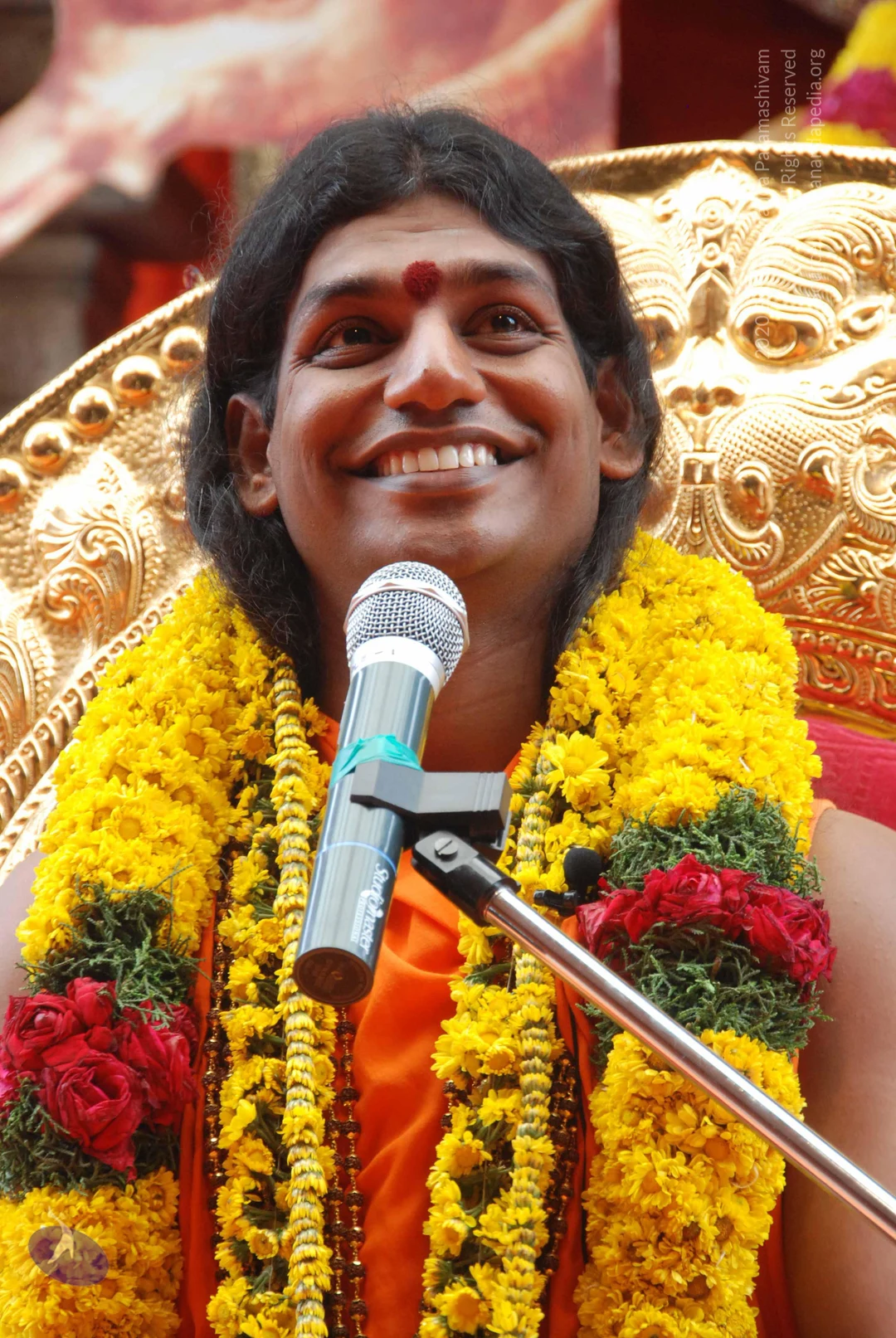
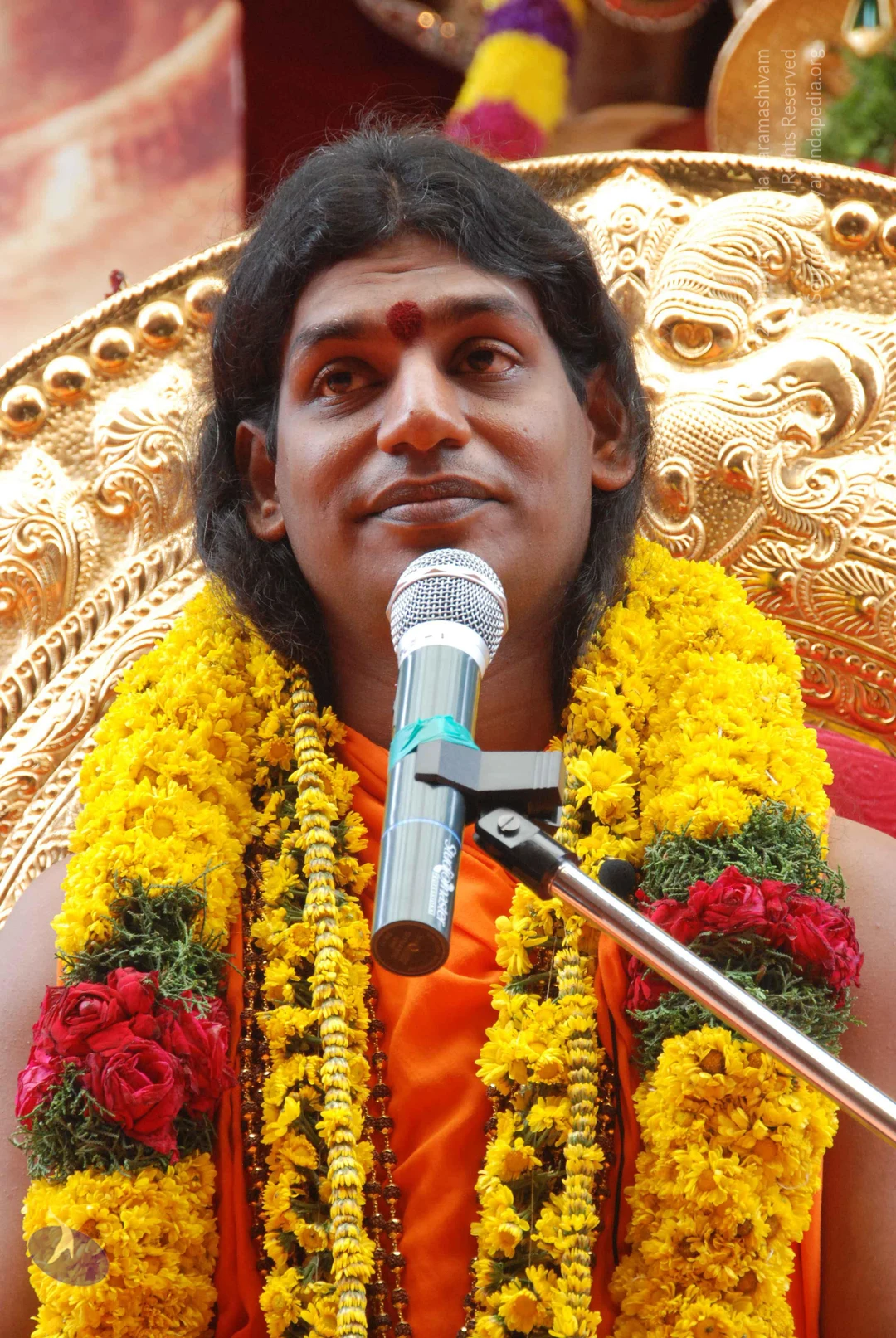
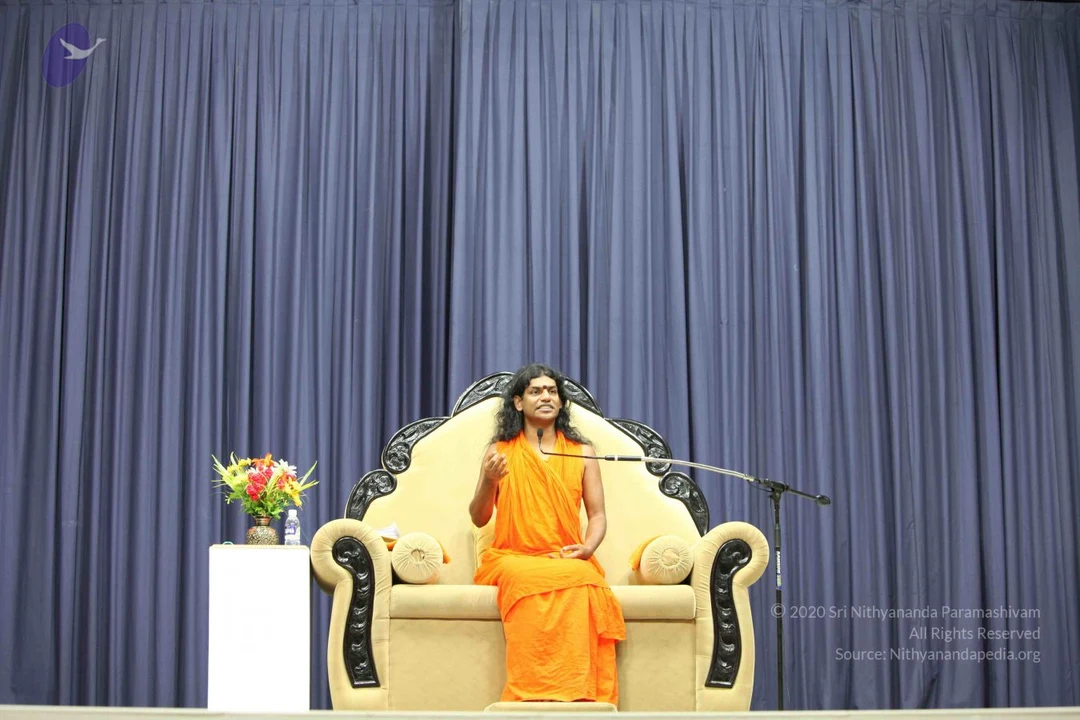
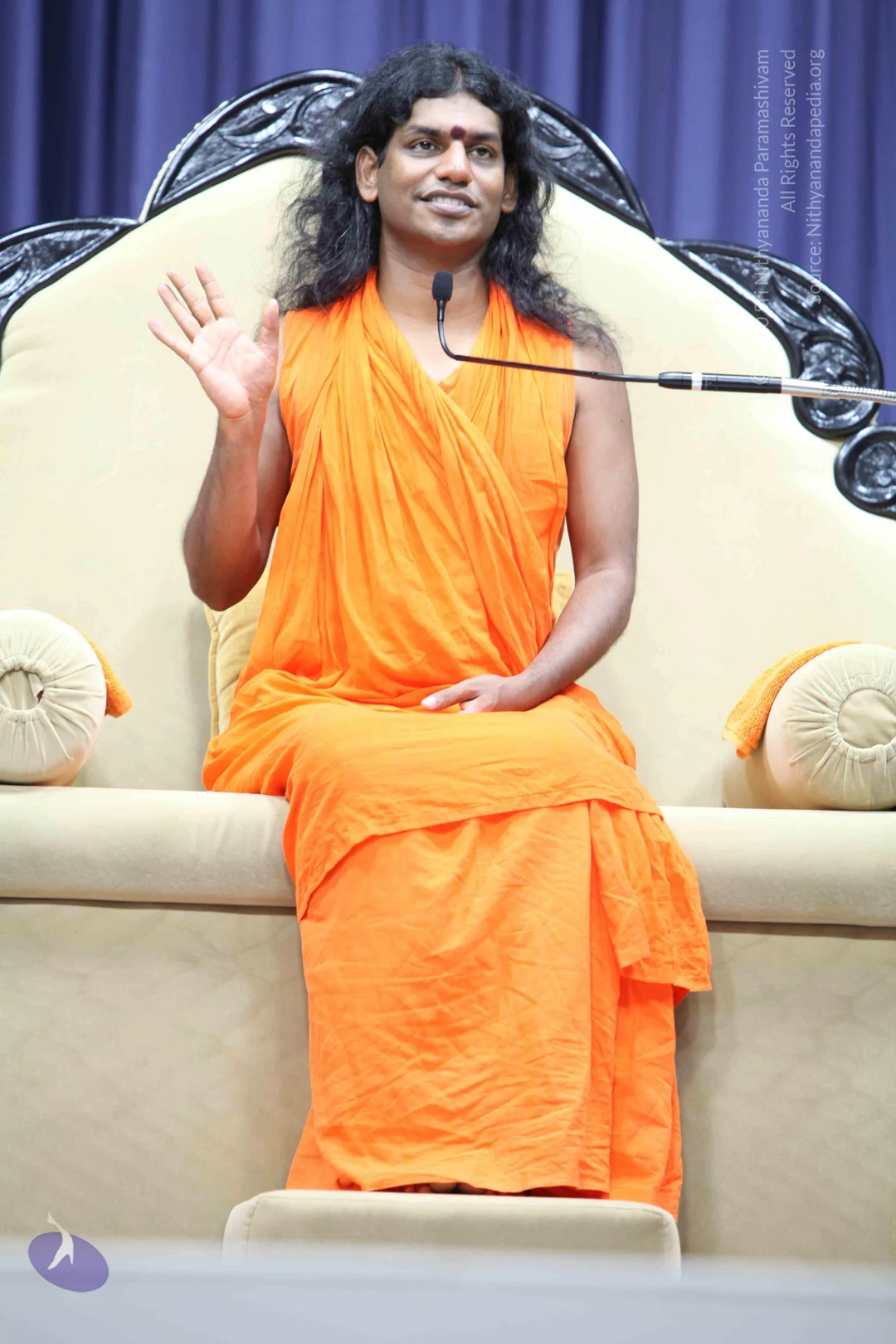
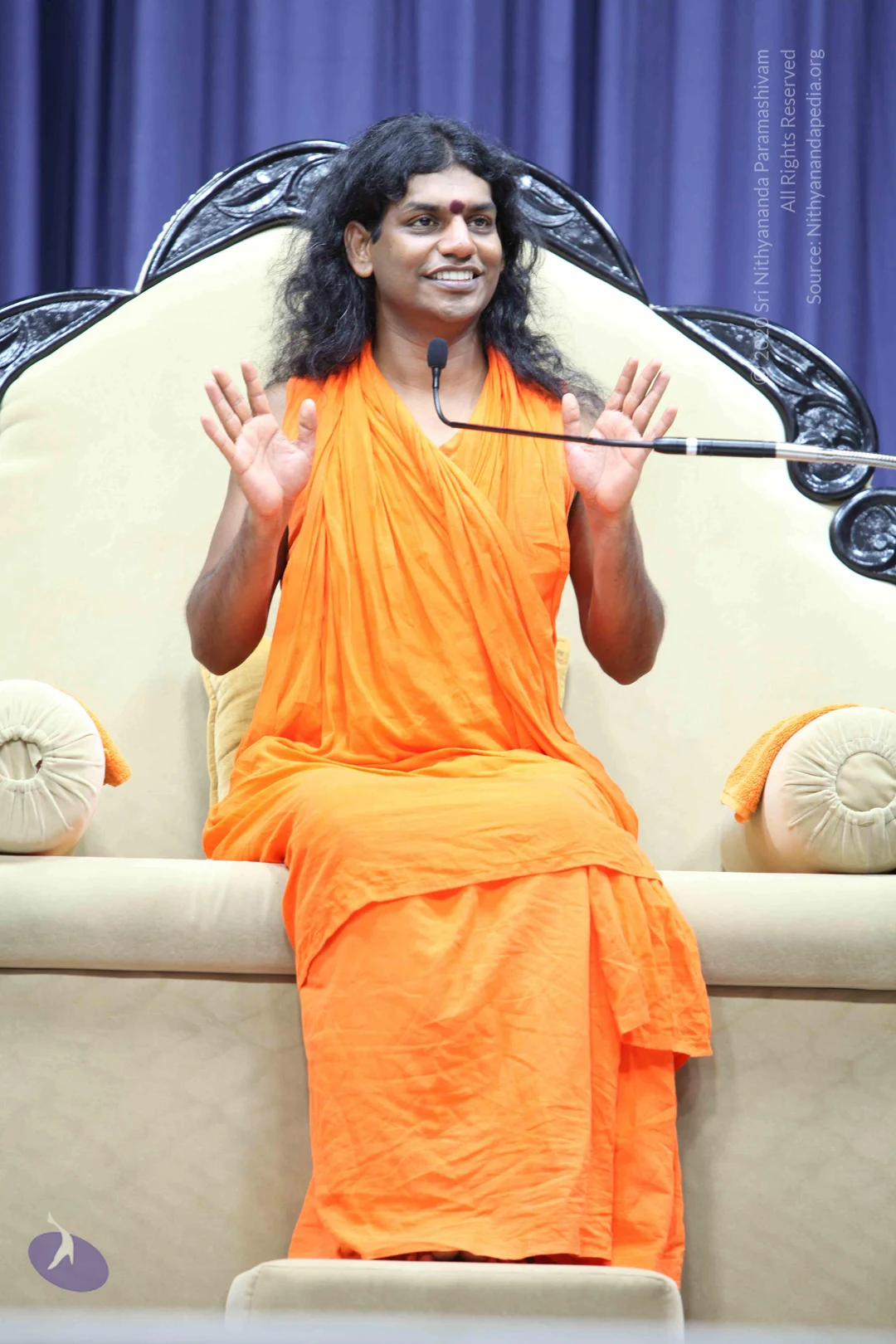
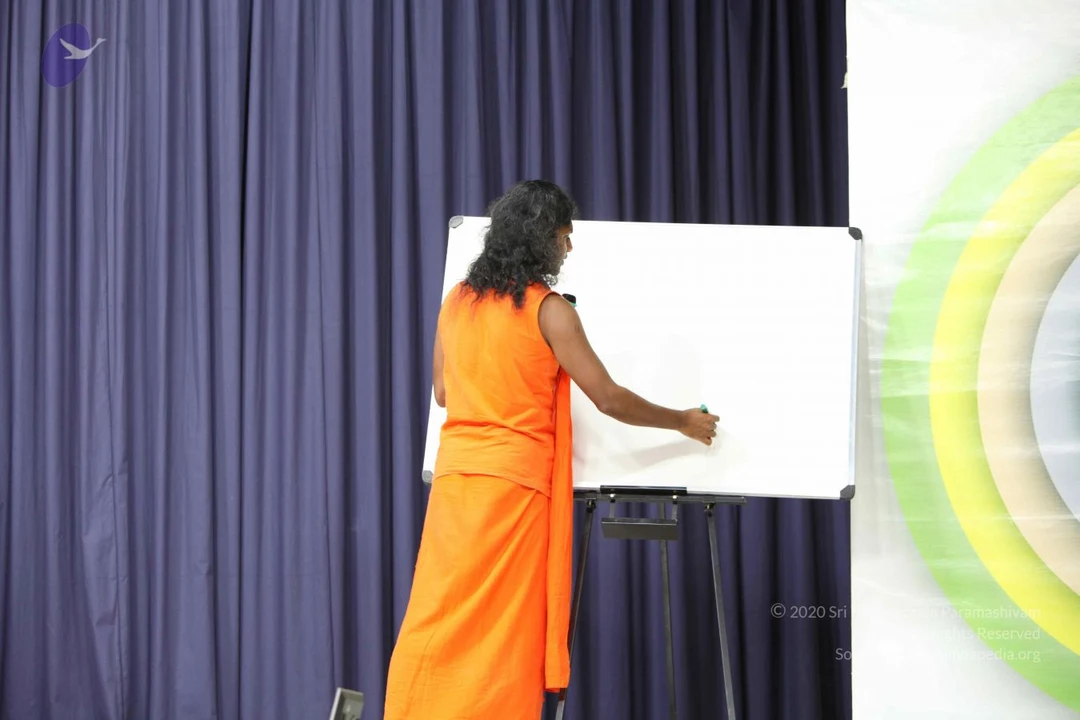
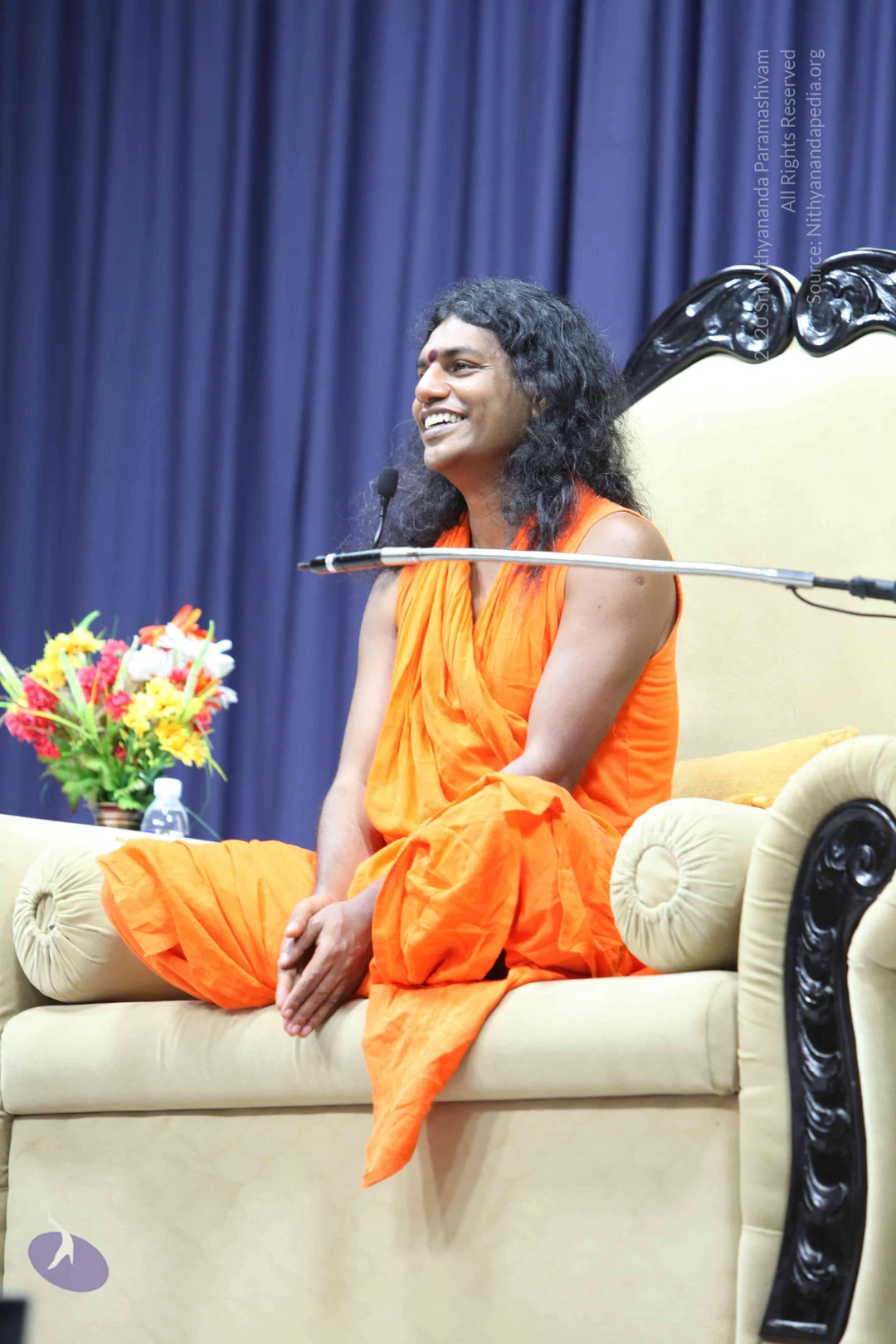
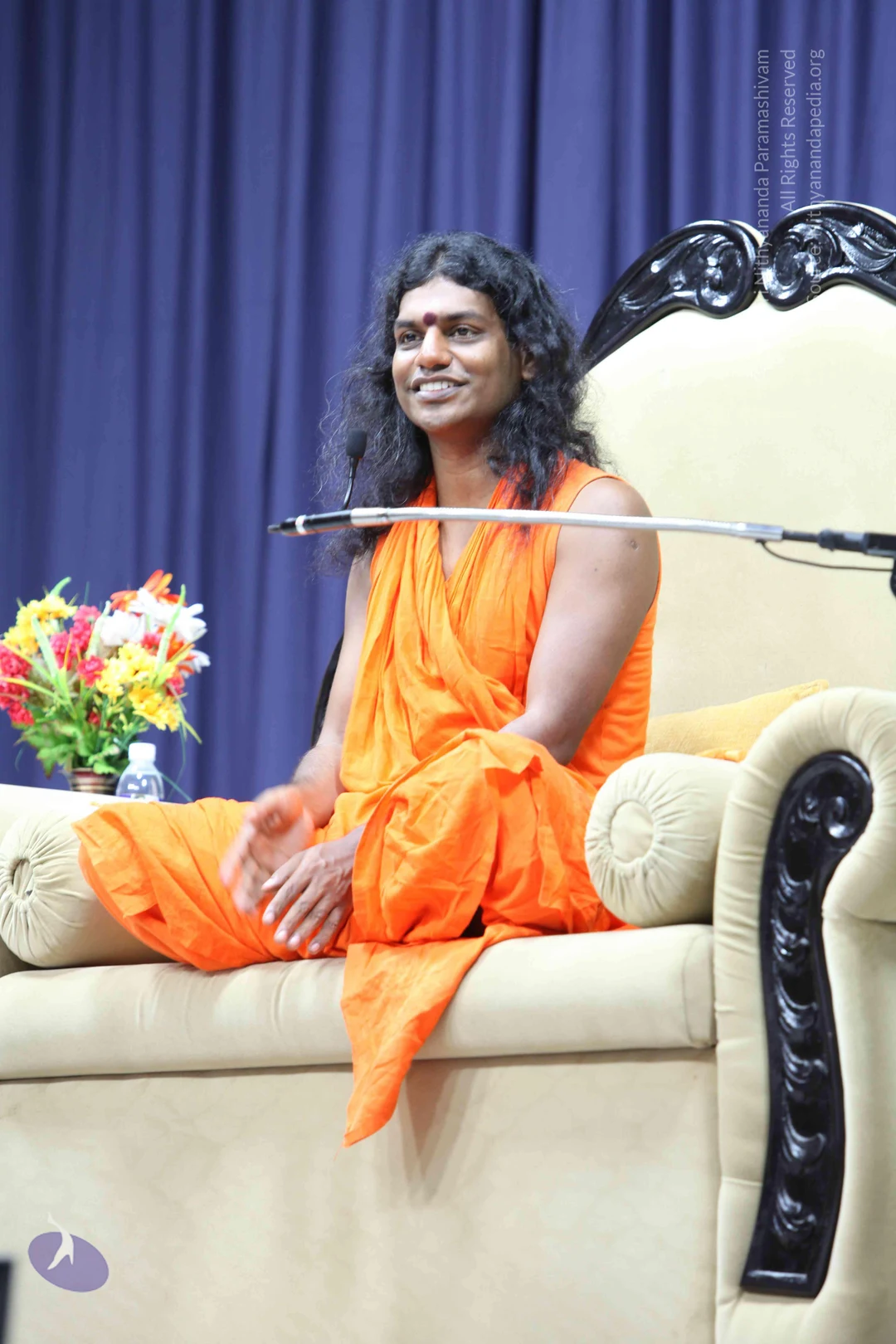
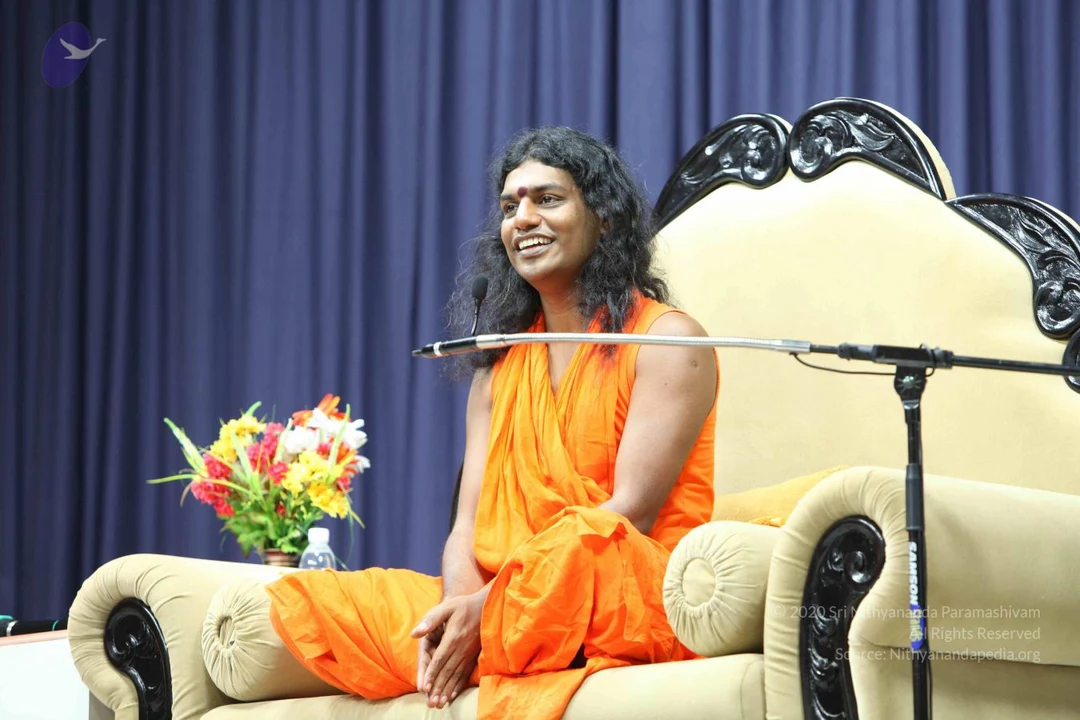
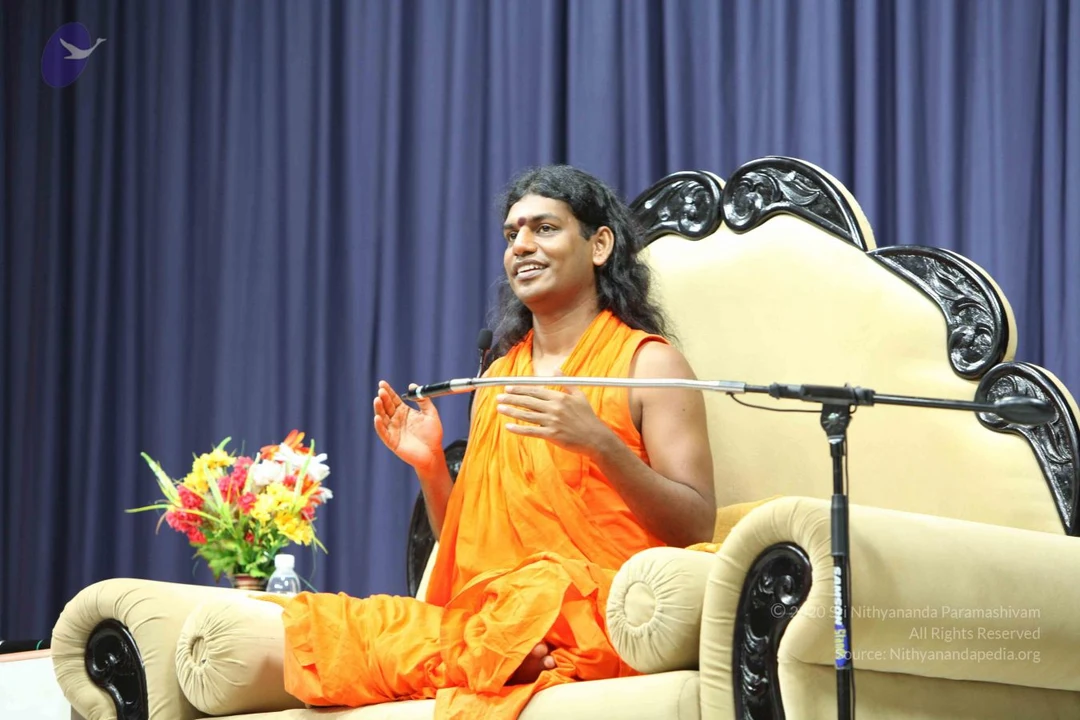
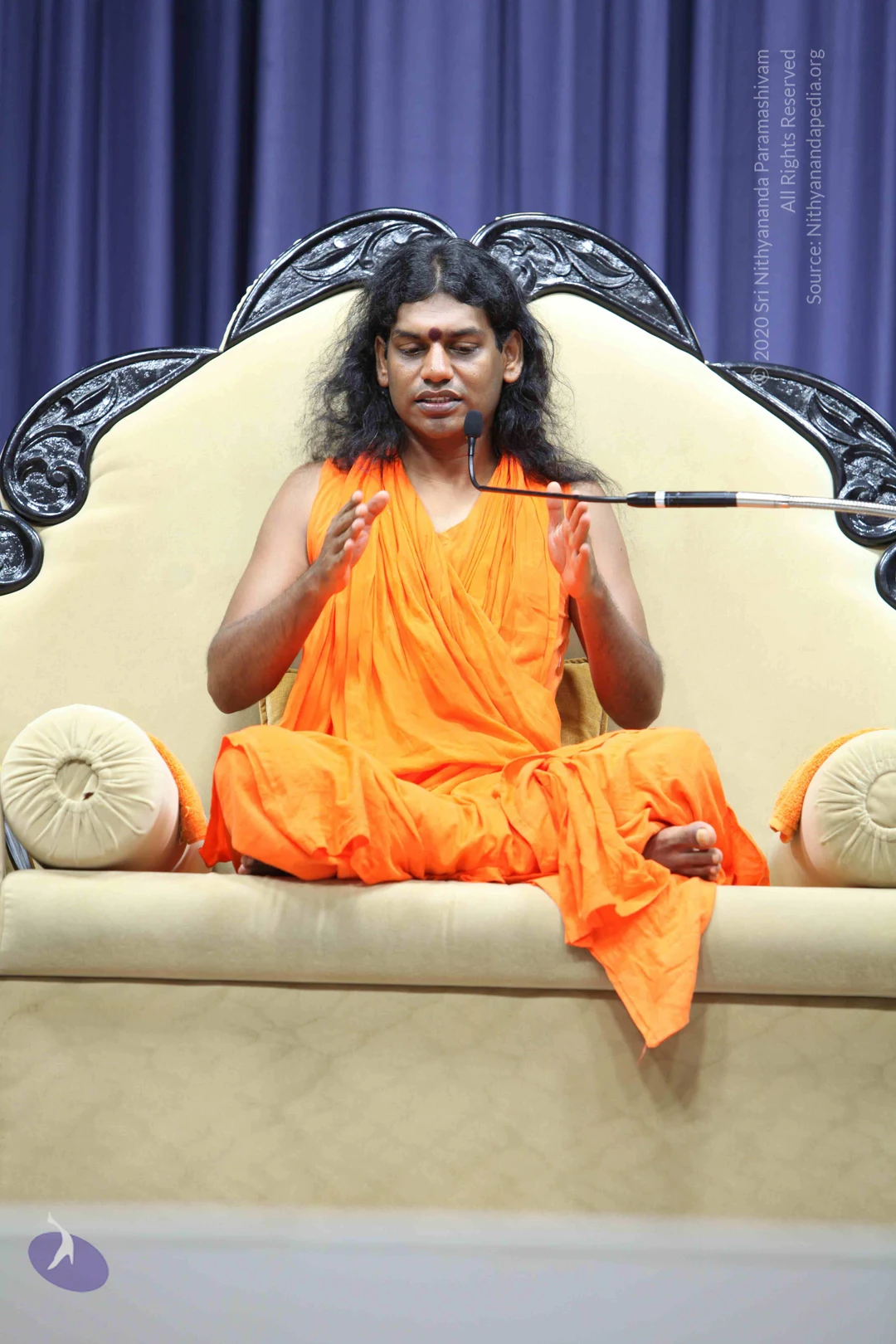
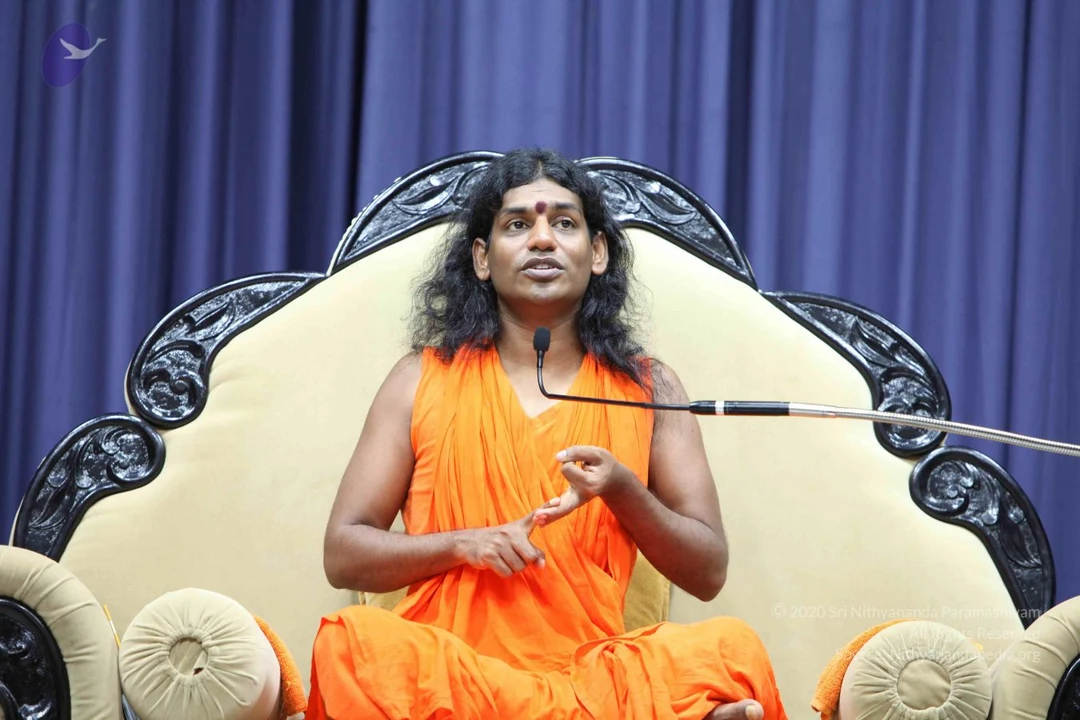
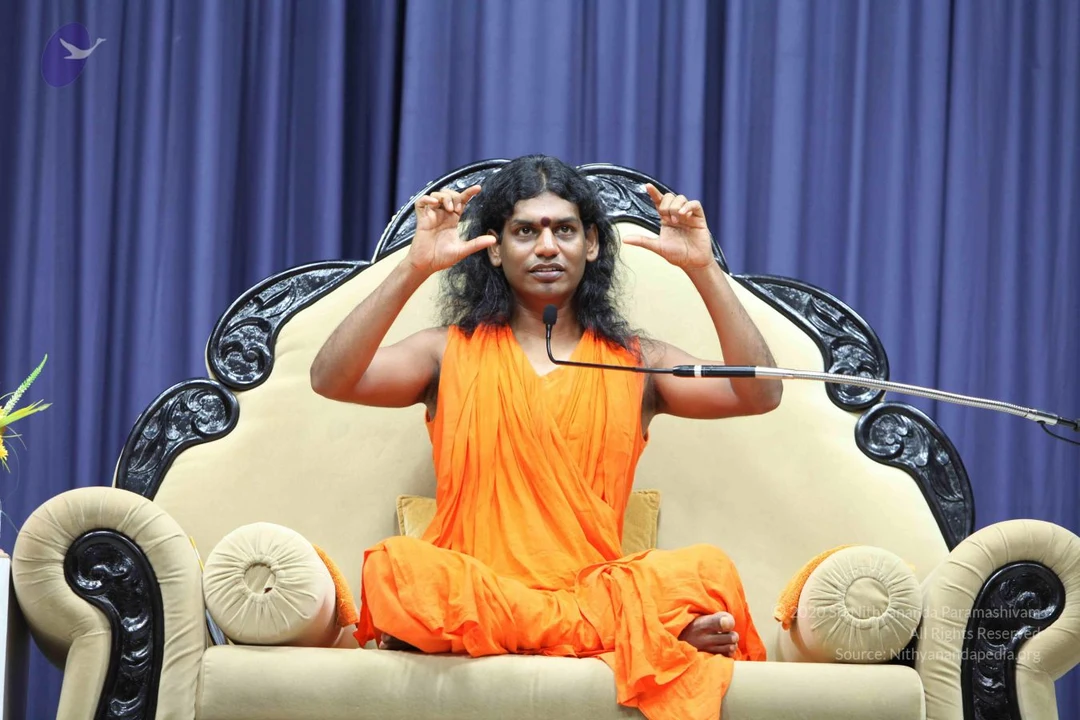
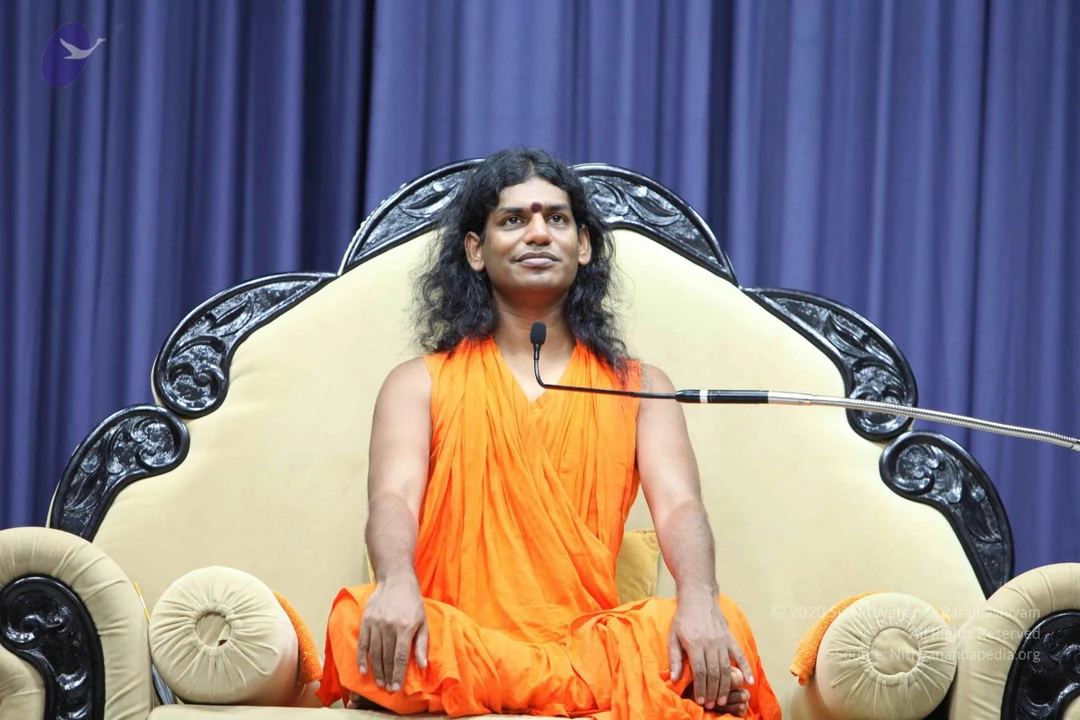
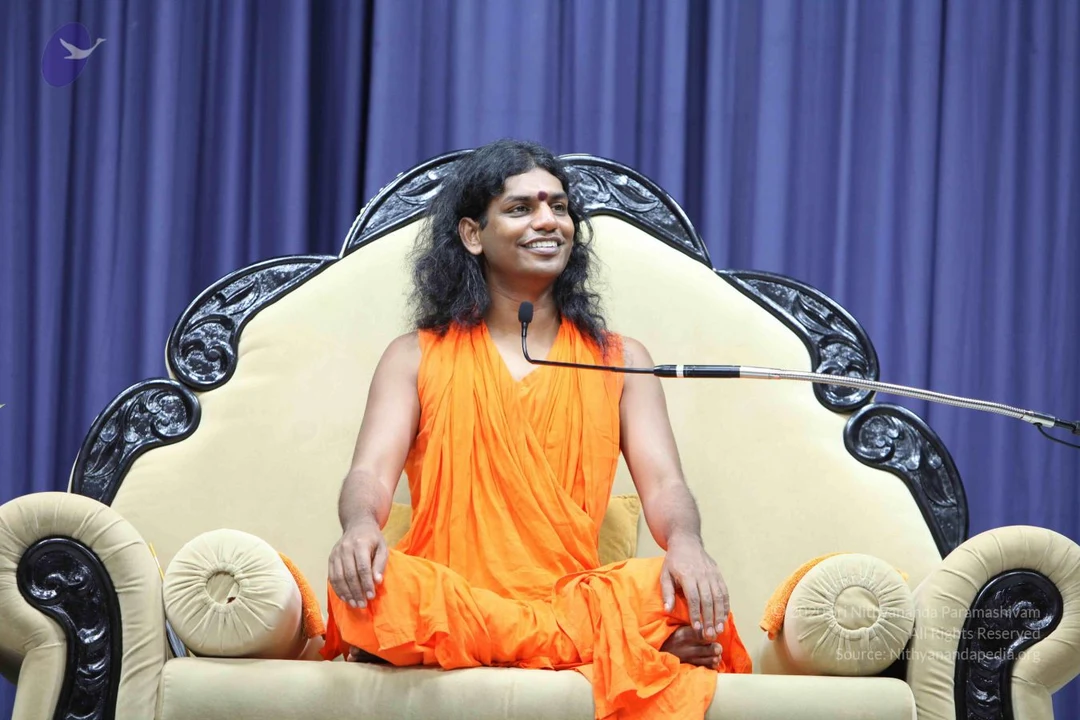
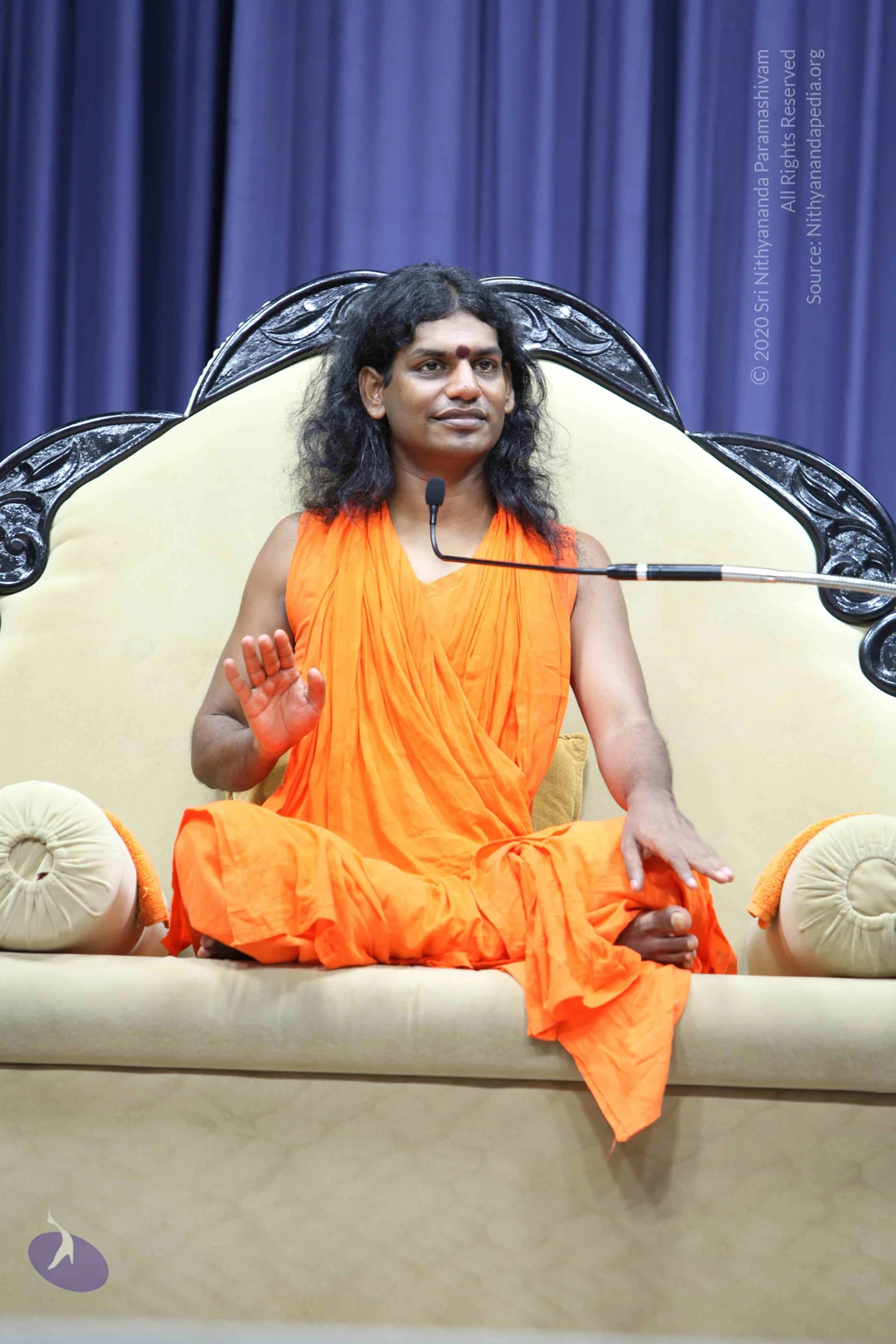
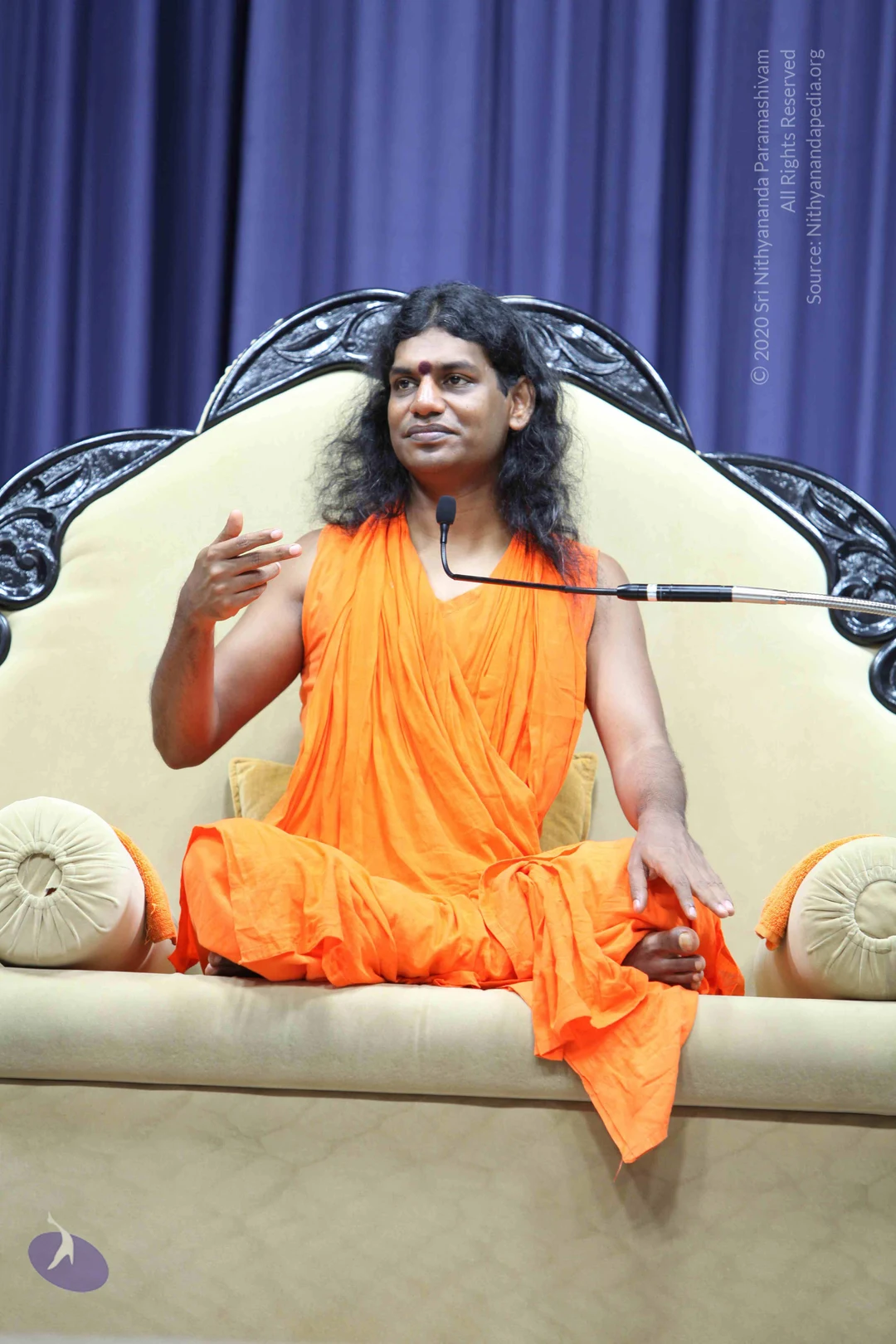
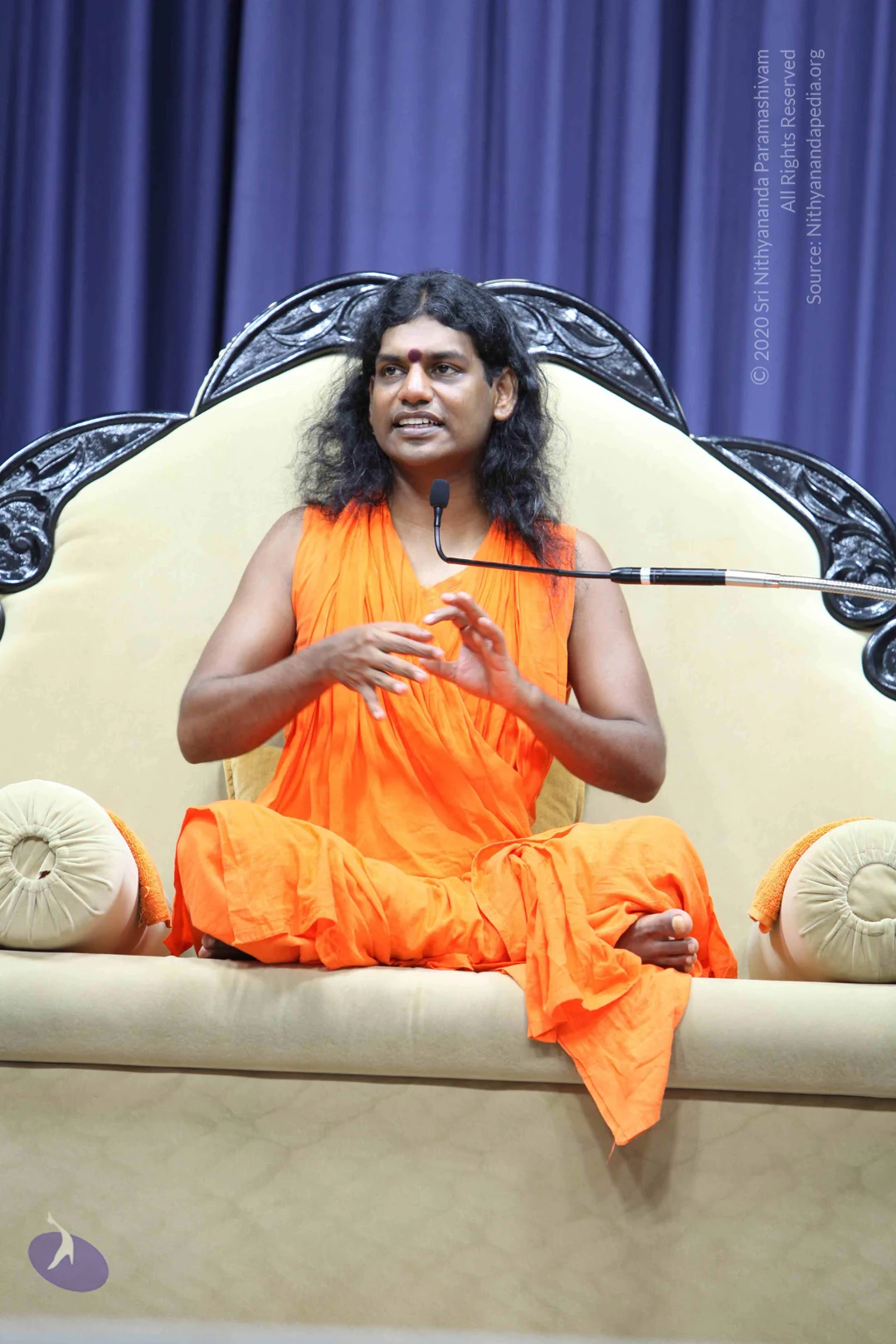
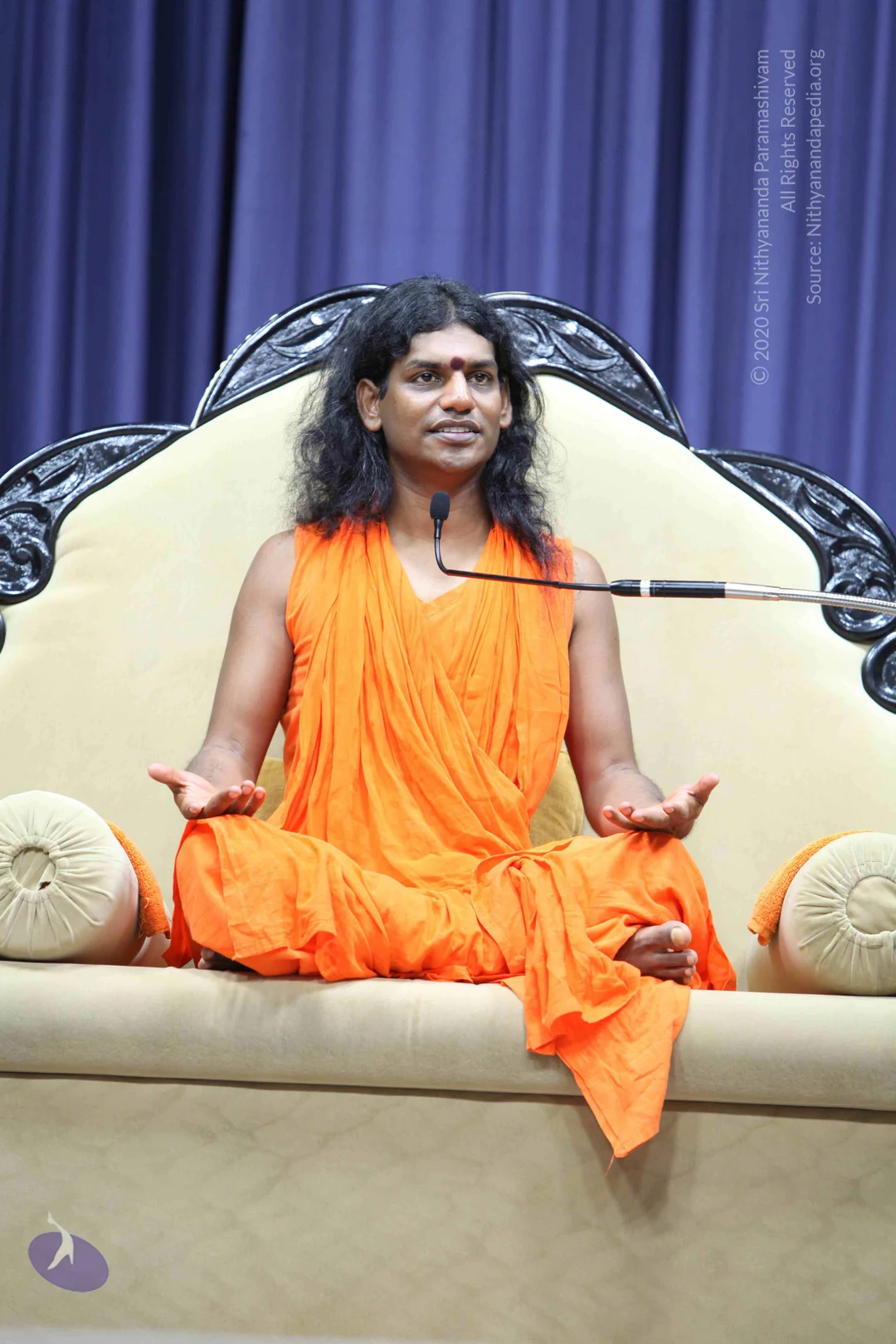
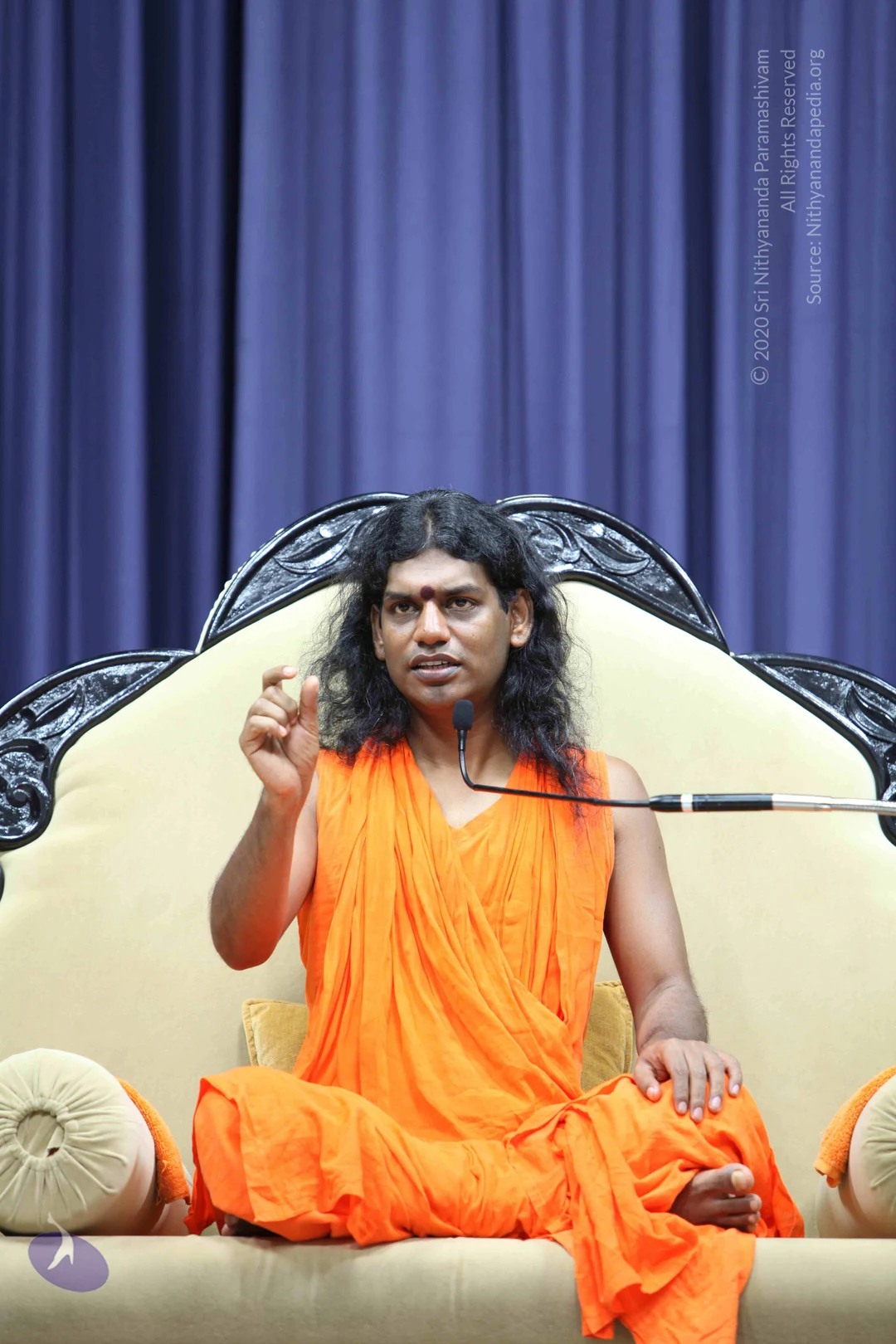
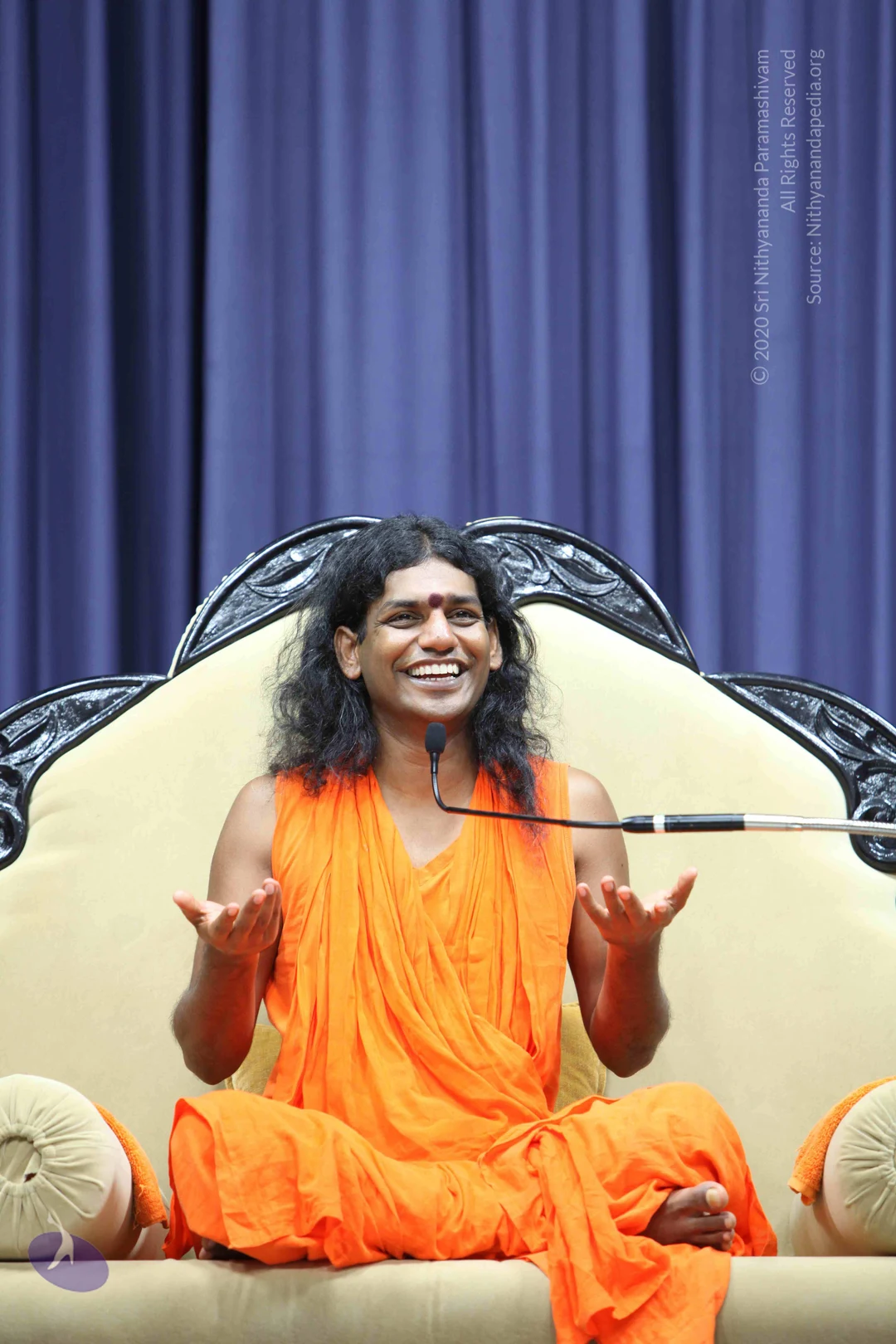
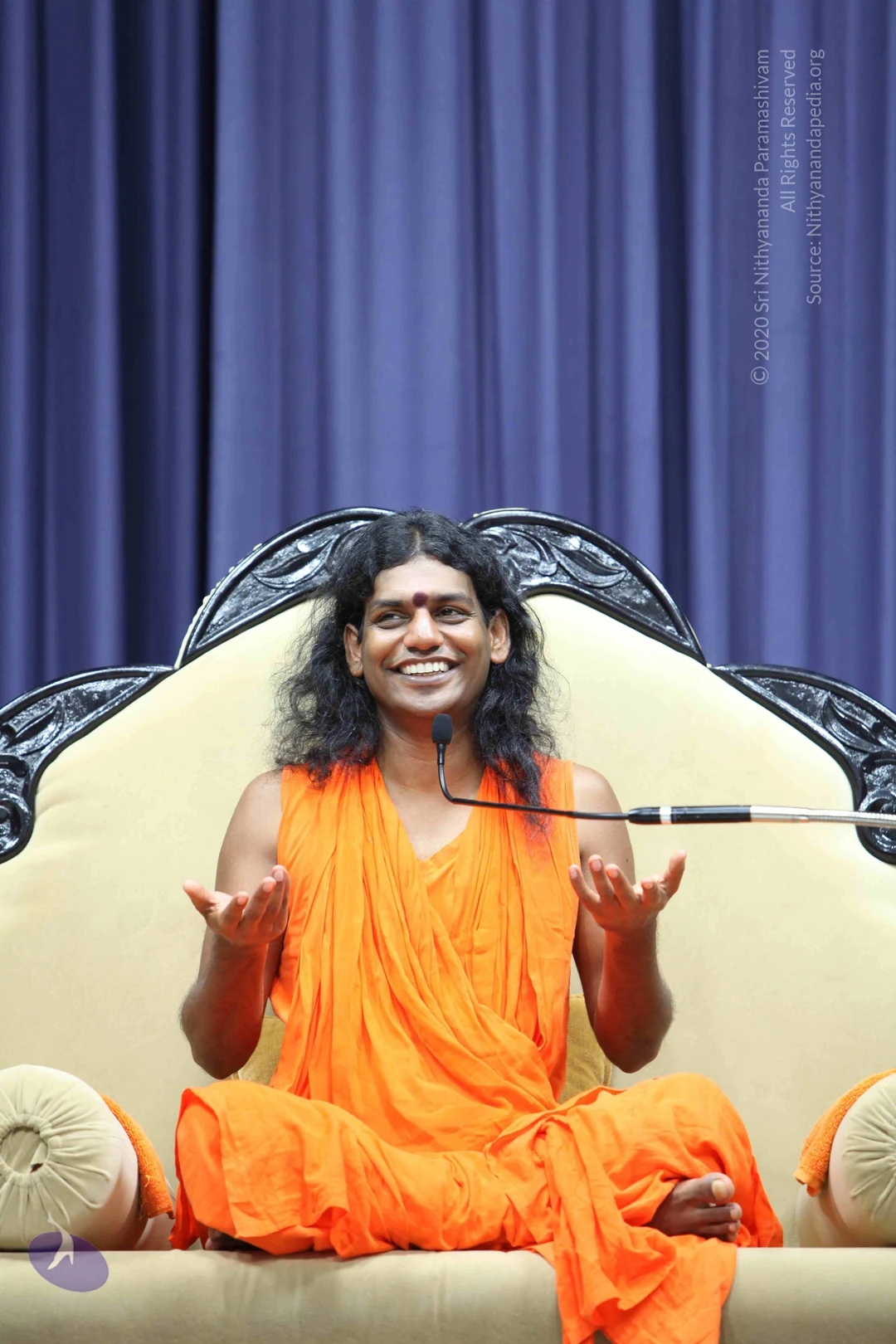
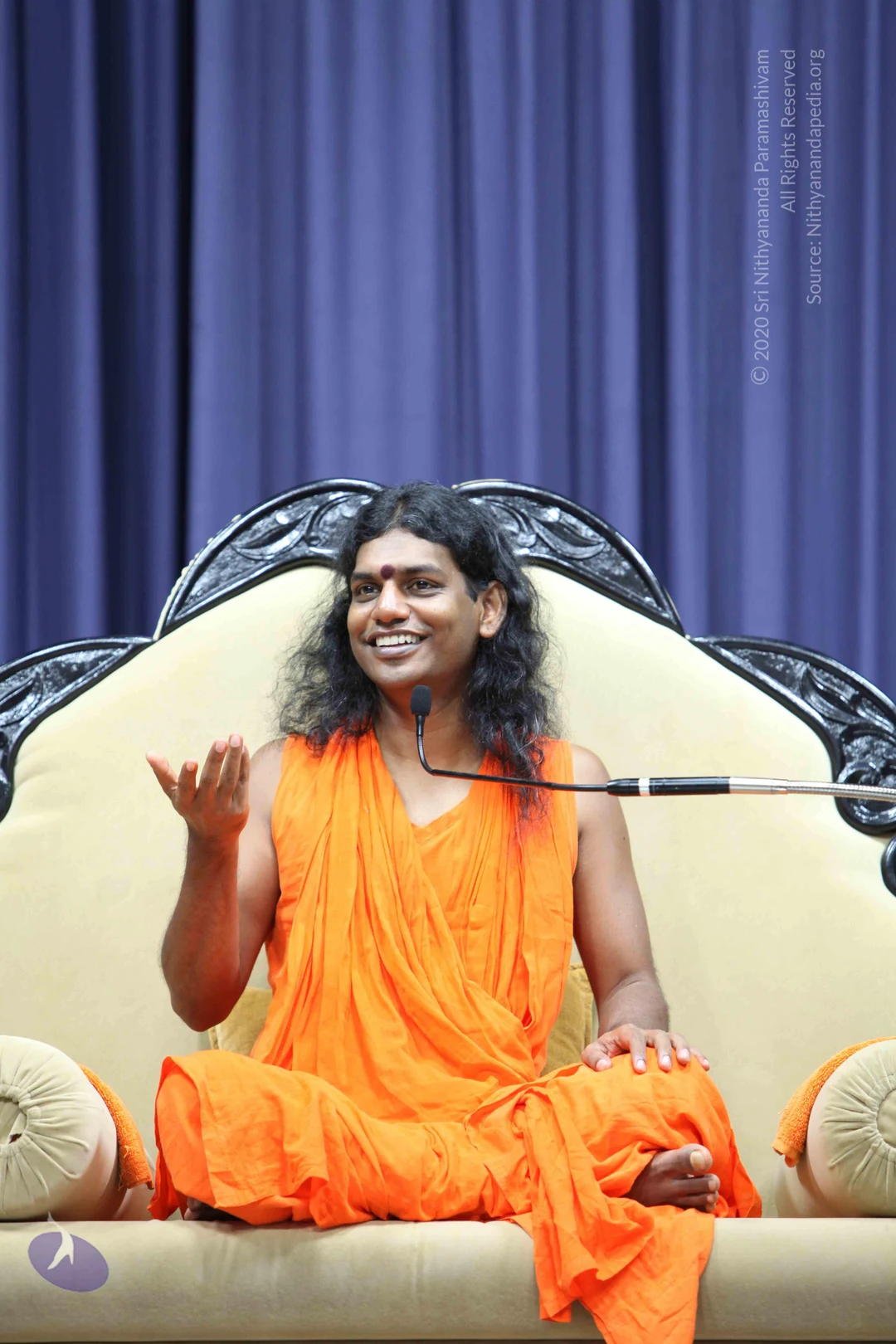
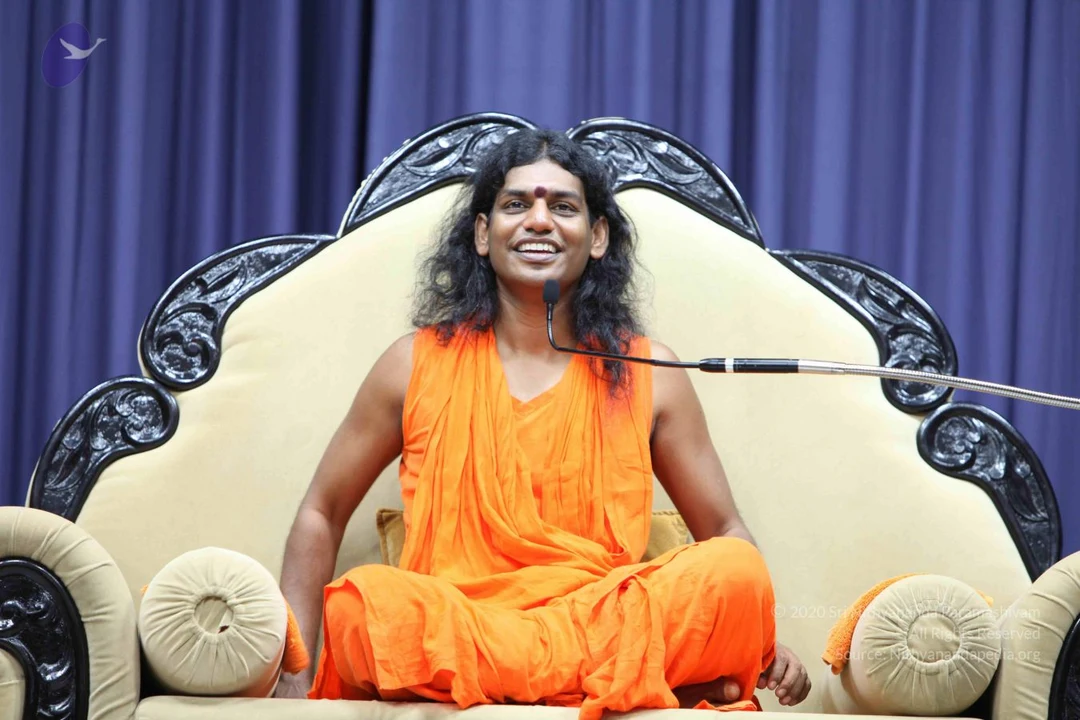
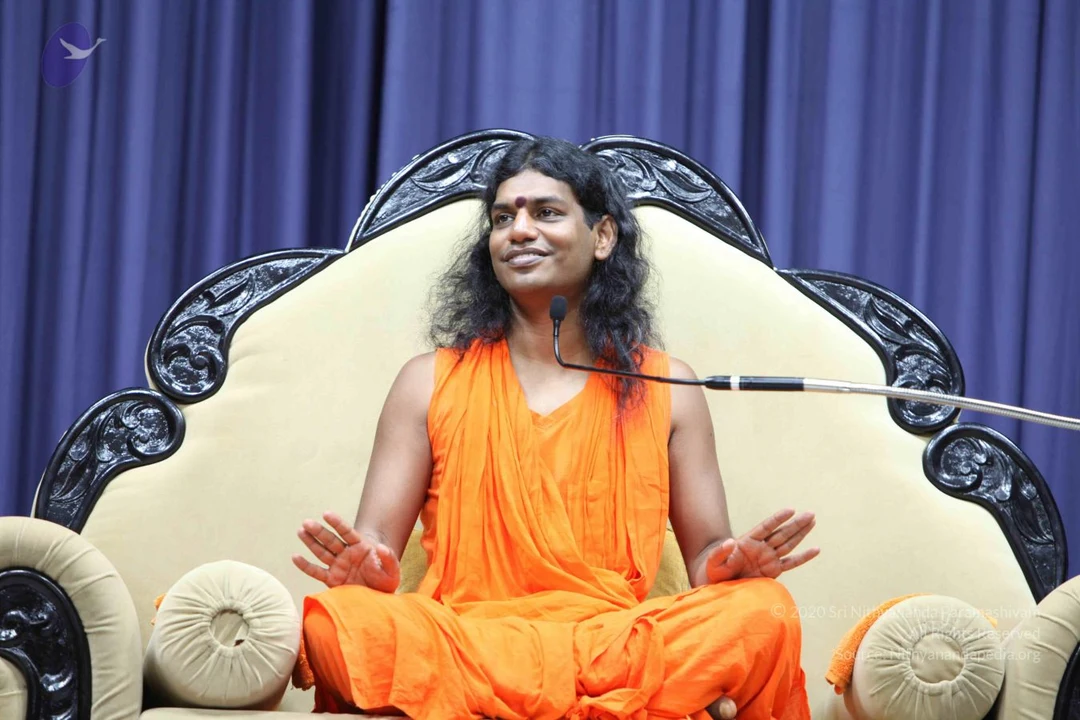
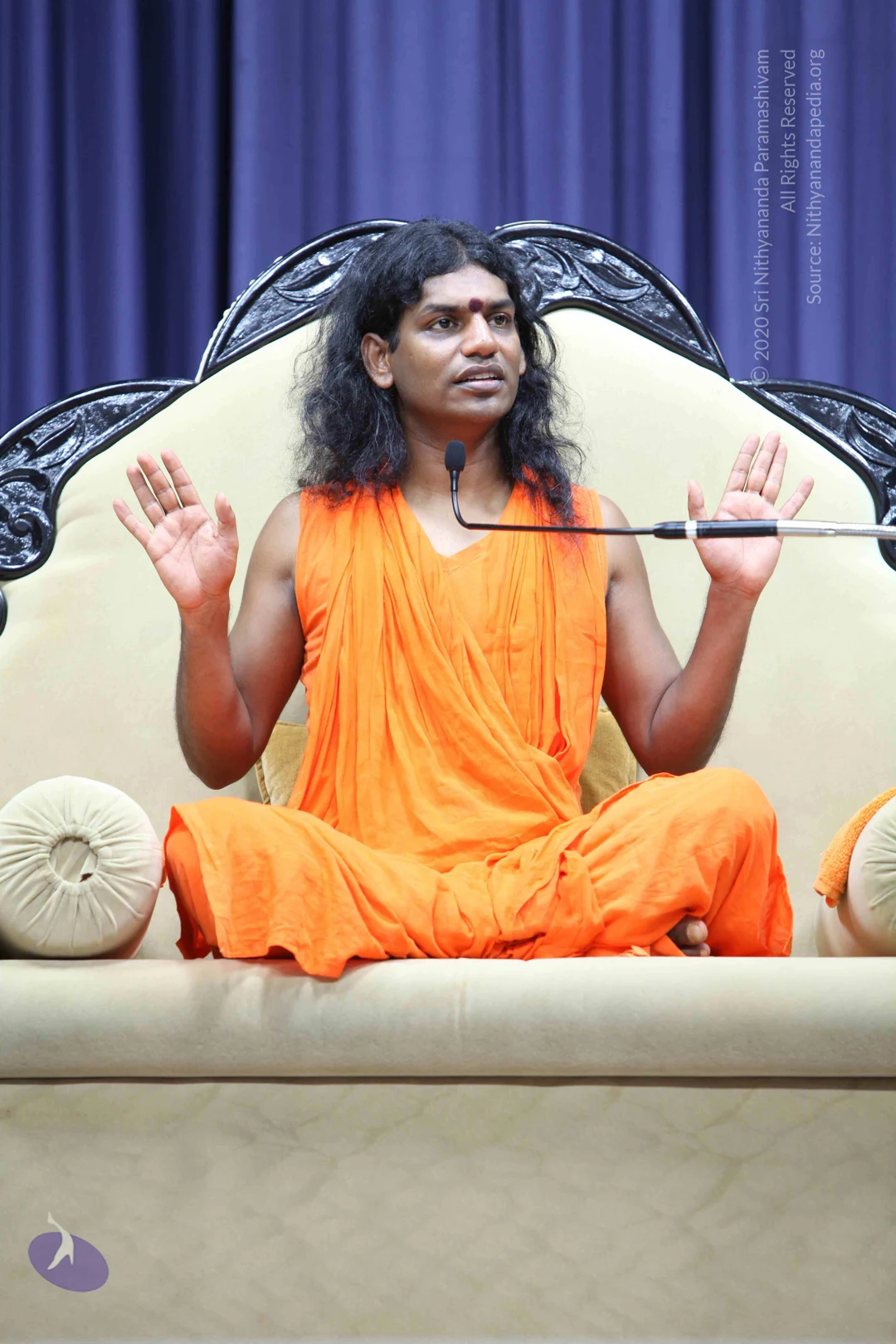
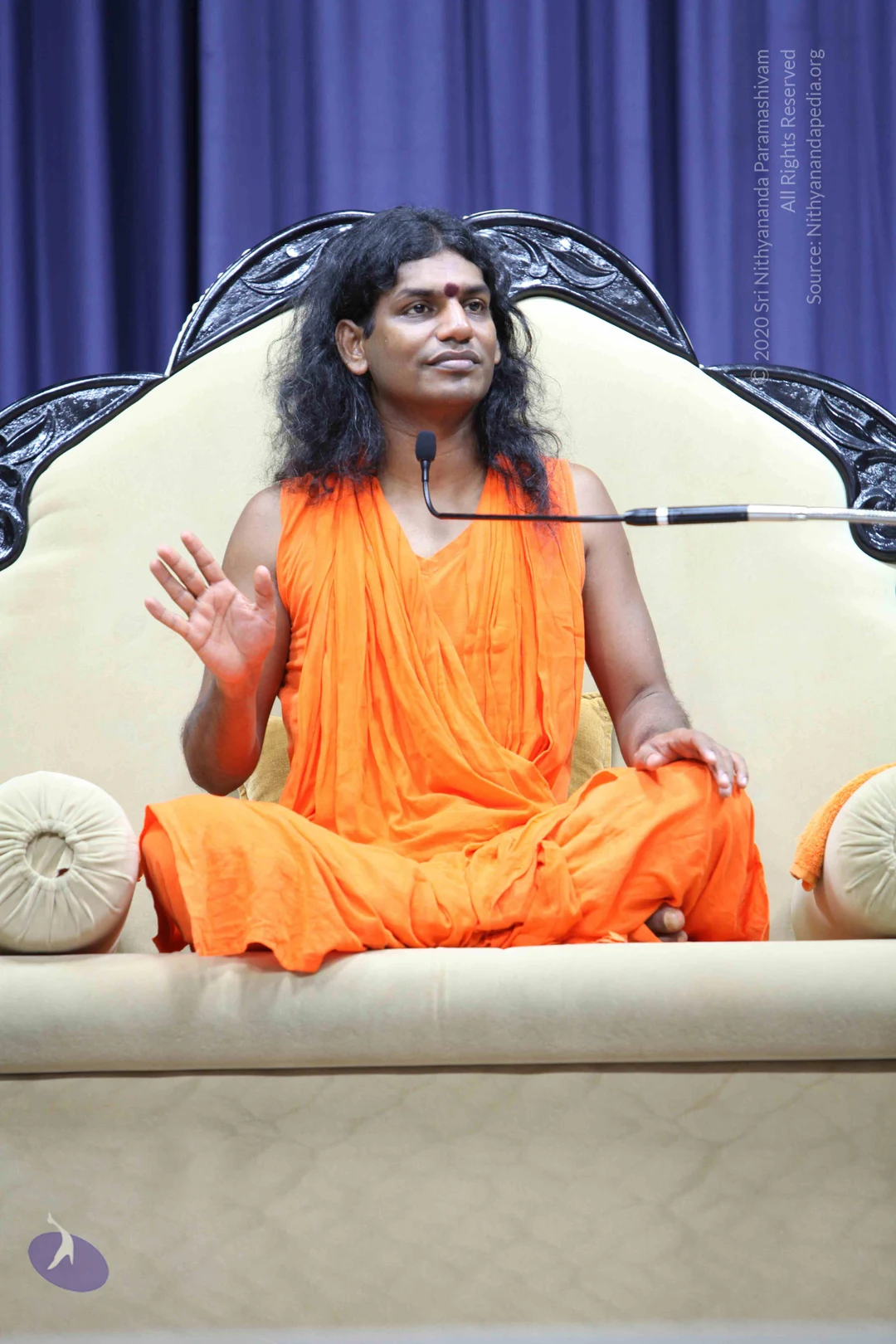
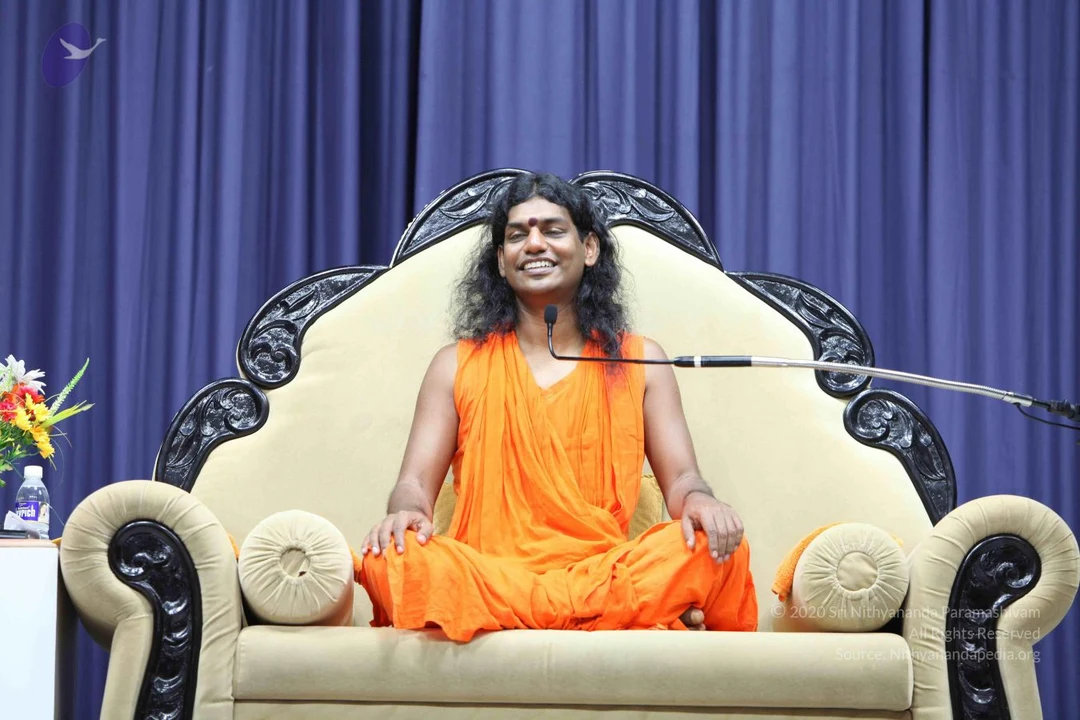
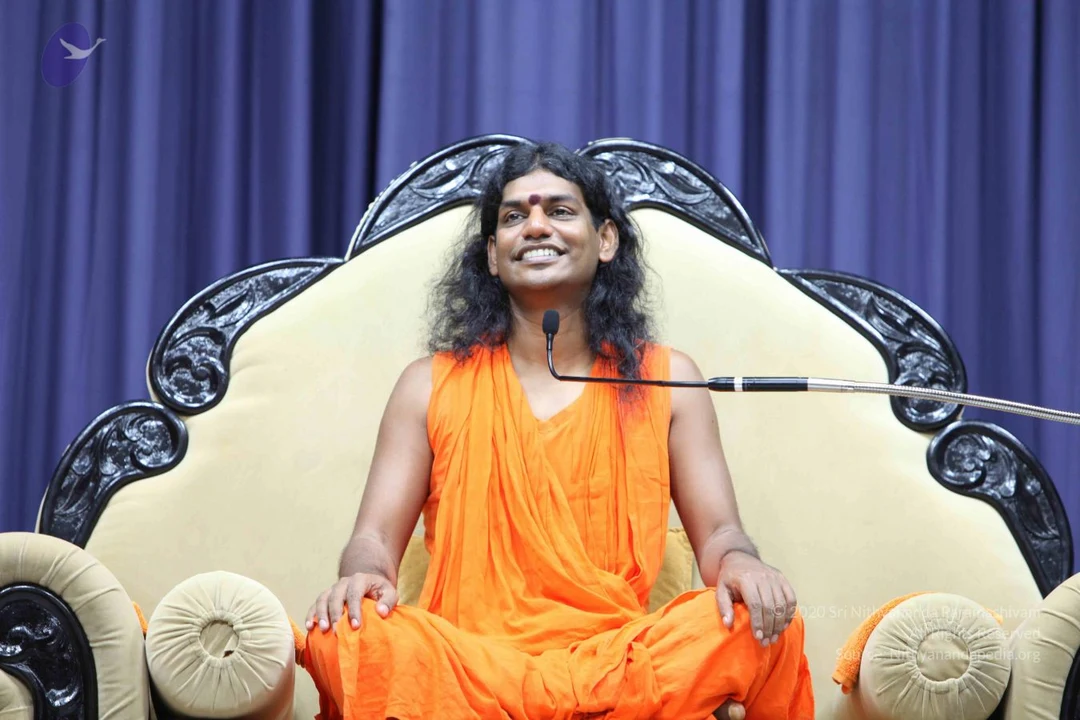
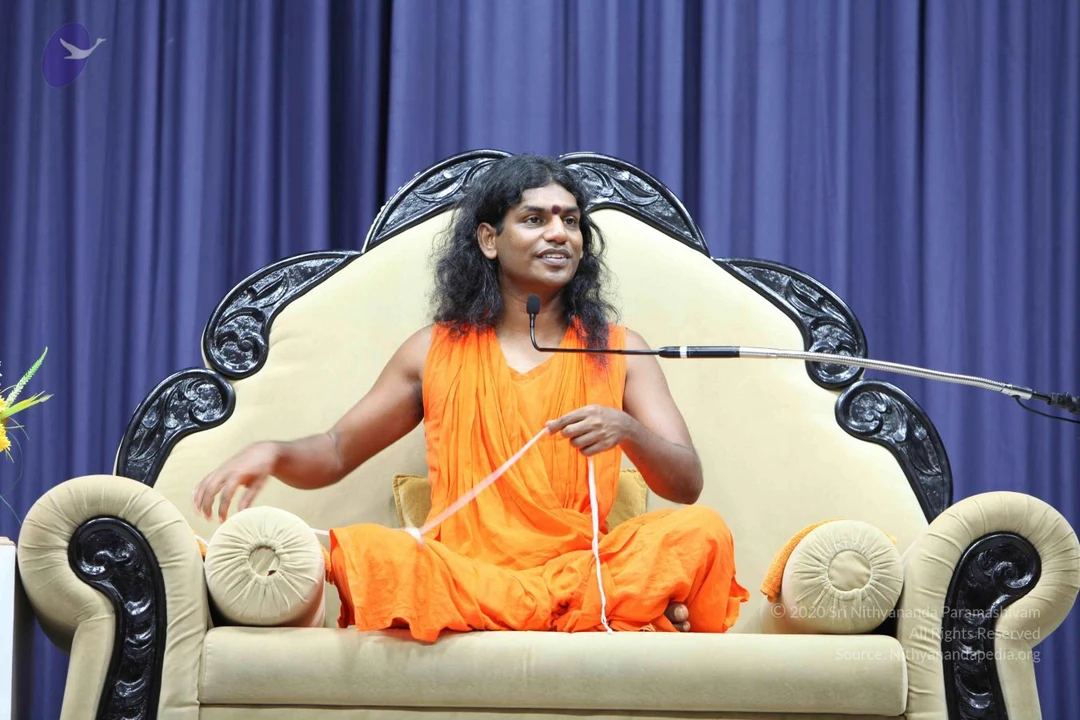
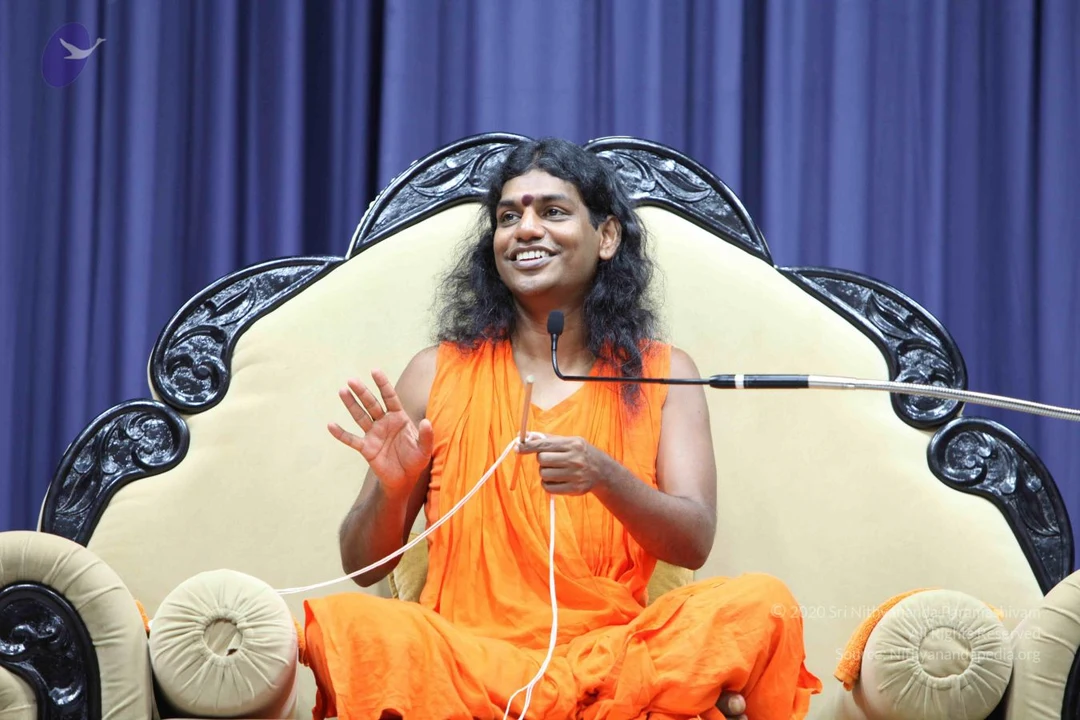
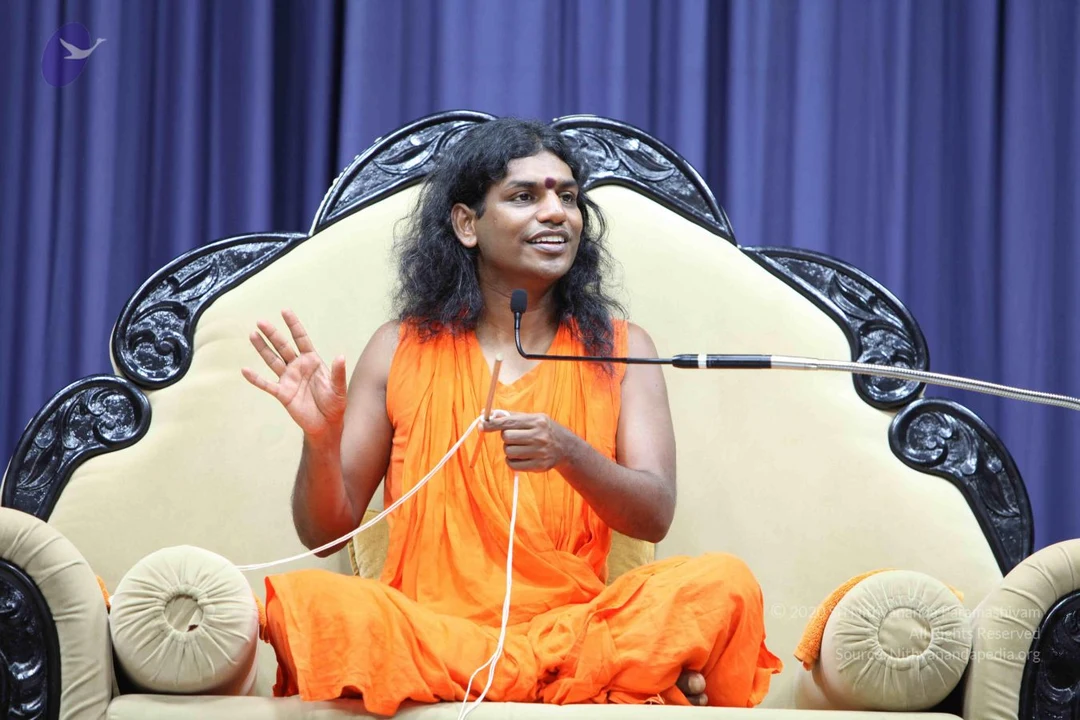
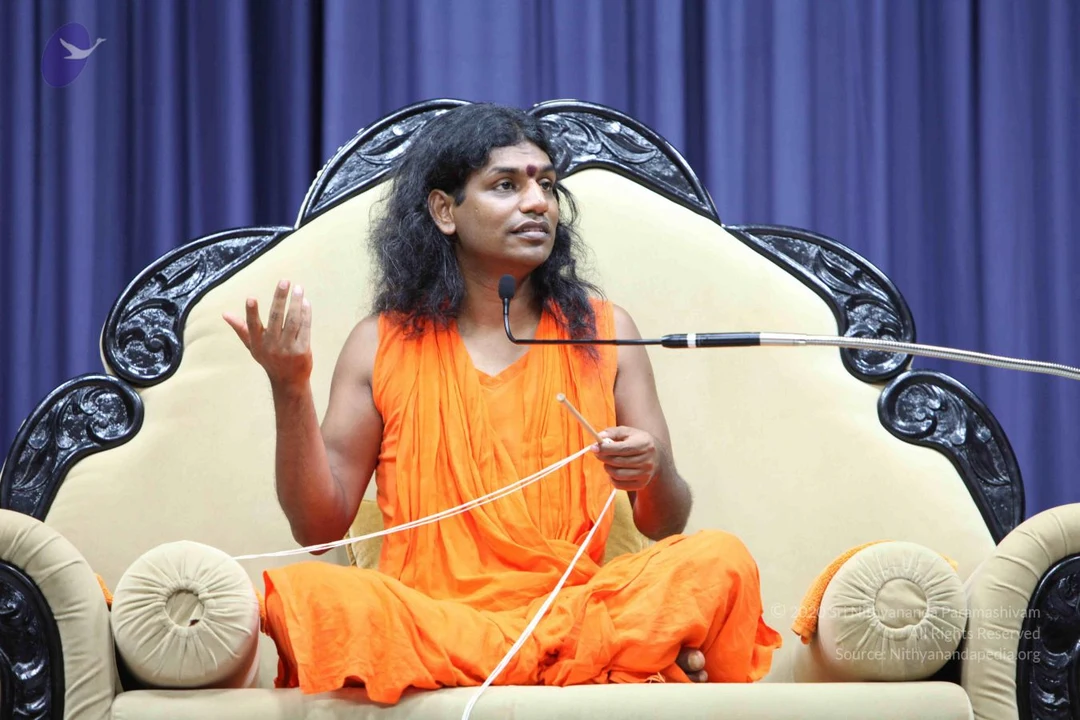
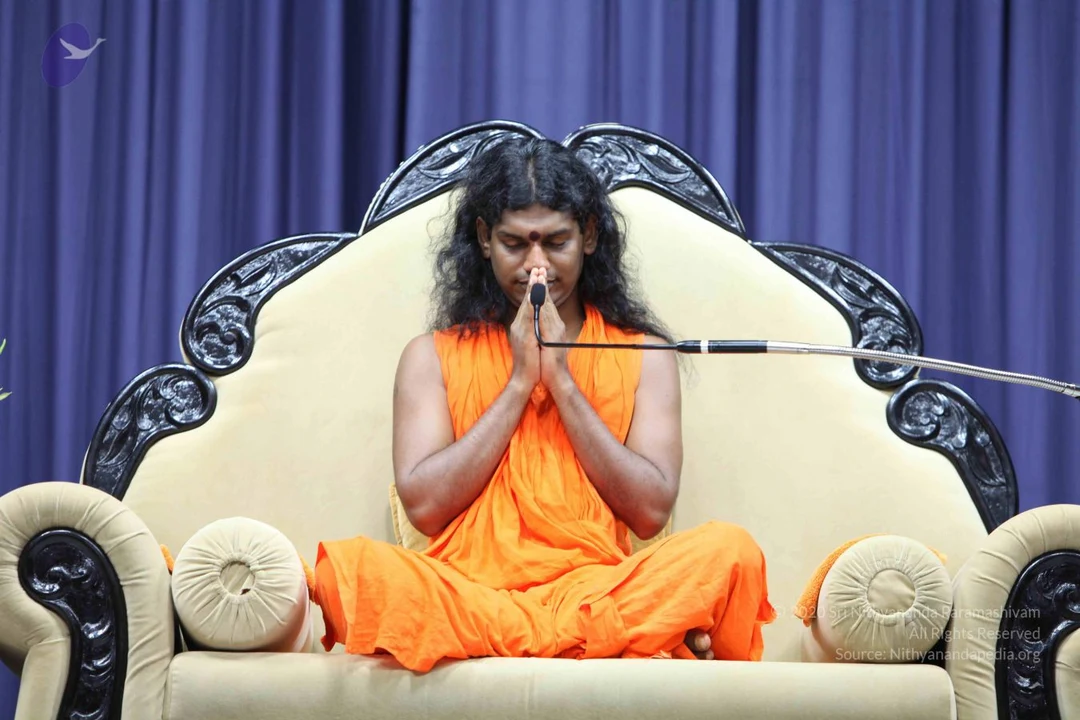
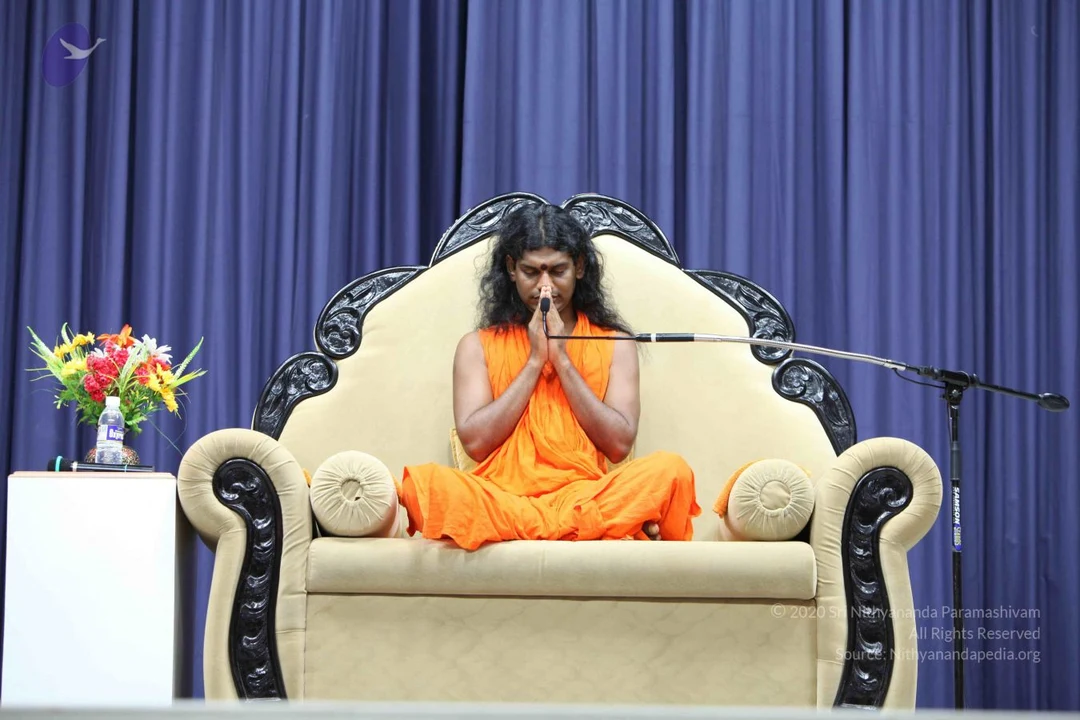
The Supreme Pontiff of Hinduism, Jagatguru Mahasannidhanam, His Divine Holiness, Bhagavan Nithyananda Paramashivam, conveyed a beautiful message on Indian Independence Day during the everyday live public talk - Nithyananda Satsang. In this talk entitled Indian Independence Day Message by Nithyananda, The Supreme Pontiff of Hinduism explains how Bharath always attracted Enlightened Beings to planet Earth. During His second public talk entitled Message by Nithyananda to Singapore Life Bliss Foundation, the Supreme Pontiff of Hinduism explained and shared powerful truths about Freedom and Cosmic Law to all the devotees in Singapore.

Video:

Indian Independence Day Message by Nithyananda: 15 Aug 2010

VideoAudio

Transcript:

(0:38)

Sadāshiva samārambhām Shankarāchārya madhyamām | asmat āchārya paryantām vande guru paramparām || I welcome you all with My love and respects. Today is India’s Independence Day. I’ll try to share few truths about Independence. When you are liberated from all the cosmic laws, go beyond all the cosmic laws, understand all the secrets of the cosmic laws, what happens to you is Freedom. Same way, when you have the power to create, alter, the country’s law, what happens to you is called Independence. When you completely understand the cosmic law you will have the power to create it. You will have the power to write it or overwrite it. So that is what is freedom. Same way when you understand the country law completely and achieve the power to create your own country law, it is independence. Whether it is independence or freedom, only people work for it will have it. Please understand, the word is independence or freedom. Only people work for it will have it. Others, even if they have, they will not know the power. I can say as per the law of the nature, people who don’t work for it will not have it. It is natural.

(03:18)

Whenever you master any law, whether it is country law or cosmic law, you will know the grey areas. Naturally you will have the power to handle those grey areas and play with those grey areas. That is why, it’s law of nature; only who works for that freedom - he will enjoy that freedom. If you work for political independence you will enjoy political independence. If you work for social freedom, you will enjoy social freedom. If you work for spiritual freedom, you will enjoy spiritual freedom. Whoever works for it, they get it.

(04:25)

The other day, one of My ashramite, My brahmacharini, she was crying and asking Me, “Swamiji…” She has been abused by the rowdies and thugs during the scandal; they tried to pull her sari and practically molest her. She was crying and telling Me, “Why we are not able to take any legal action Swamiji? Why we are not able to protect ourself?” I said, “I understand your situation. If you look deeply that is the way the world functions”. Not only she, in one hundred and twenty three places our ashrams had been beaten, broken, burnt. In seventeen places our lady devotees and brahmacharinis have been abused physically and verbally. In seven places our brahmacharis have been beaten brutally with the intention to kill. But in not one place we are able to file an FIR. Because we did not work for it! Political freedom. We did not work in that line. Always we put all our energy for spiritual freedom. So people who work for political freedom, in the line of politics, they enjoy political freedom. They enjoy political independence.

(06:19)

But one good thing we all worked for spiritual freedom, so that is why we are not shaken after all this abusal. Of course she also cried for few minutes when she reported to Me, but once I gave her clarity immediately she was out! Means she worked all the years for spiritual freedom and she was able to reclaim her spiritual freedom and peace. The same way with Me. Even after being put in prison or anything, never I was put to suffer. Society created a lot of pain for Me but it was not able to create an inch of suffering for Me. Means - the spiritual freedom! I worked for it, I am having it; that’s all, it’s the law of nature. So we did not work for political freedom, we did not work in the line of politics, we did not create enough crowd, we did not create enough people, we did not create enough contact, we did not think in that line. So naturally, we have to suffer, it is a law of nature.

(07:30)

So whoever works for any freedom will enjoy that freedom. And just like how much of struggle is there when you work for spiritual freedom, same way there is enough of struggle when people work for political freedom, political independence. The opponents 7:48 will suppress, they will have to fight and do all kinds of things and it’s not a small joke. Working for spiritual freedom is just fighting with you, but working for political freedom is fighting with others. So naturally for the place they pay 08:02, they are enjoying the privileges. But we need to understand one important truth - if the political freedom happens it does only good to the person who has it. If the spiritual freedom happens to you, not only you, all the people around you are blessed, all of them will have the benefit of you! That is the greatness of spiritual freedom.

(08:37)

This is the great country where the cosmic law almost meets the country law because still in the roots of this country the cosmic law is lifestyle. Still in villages the cosmic law is lived as a lifestyle where people don’t even know about the country's law or the law executing department, law and order departments. Still this country is stable just because the roots of this country, still the cosmic law is prevalent, alive. Ramayana, Mahabharata, Manu Shastras, Manusmruti all the scriptures, Bhagavad Gita, all of these are still constantly recited, heard, practiced, and executed as a lifestyle in this country. So as long as the cosmic law is kept alive, this country will continue to give birth to Enlightened Beings. This will be the cosmic airport for Enlightened Beings to land on planet earth and serve the planet earth. So let this blessed land retain the cosmic law at least in its roots. Of course in many parts, in cities it has lost its originality, the purity of Bharat. But still it is alive in villages. Let this country retain its strength of cosmic law; the spirit of Bharat in its roots and remain as a place for Enlightened Beings to land and serve the planet earth. Let this country continuously create more and more and more people who experience the cosmic law, cosmic freedom and cater to the whole world. Understand this country still is the country which produces largest number of Enlightened Beings continuously on the planet earth. That's a greatest gift this country is giving; just for that this country can, should be alive, should live long. Let Bharat live long creating more and more and more Enlightened Beings and radiate Enlightenment to the whole Universe.

(11:28)

Let you all... Bharat is not just geography it is a Spiritual Consciousness. A spiritual consciousness which awakens the whole world. This land is the land specially reserved for the spiritual consciousness to flourish. This society is specially reserved constantly to keep Enlightened Beings alive. This is a spiritual incubator for Enlightened Beings to land and flourish and radiate Enlightenment to the world. Let you all achieve and radiate Enlightenment. Let you all achieve, and radiate, live, express, experience, radiate eternal bliss, Nithyananda. Thank You

(12:30)

Title:

Message by Nithyananda to Singapore Life Bliss Foundation - 2010, August 15

Narration:

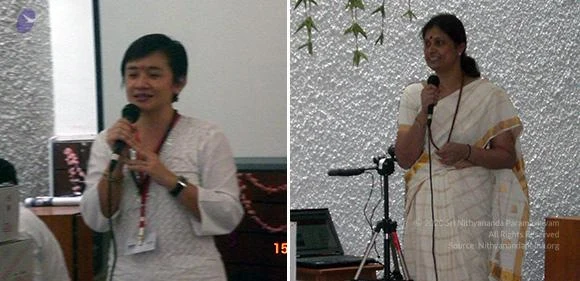
The Singapore Life Bliss Foundation inauguration message by Paramahamsa Nithyananda delivered over the internet on 2010, August 15.

Video:

Message by Nithyananda to Singapore Life Bliss Foundation - 2010, August 15

VideoAudio

Title

15 Aug 2010 News from Nithyananda World Family

Video

15 Aug 2010 News from Nithyananda World Family

Title

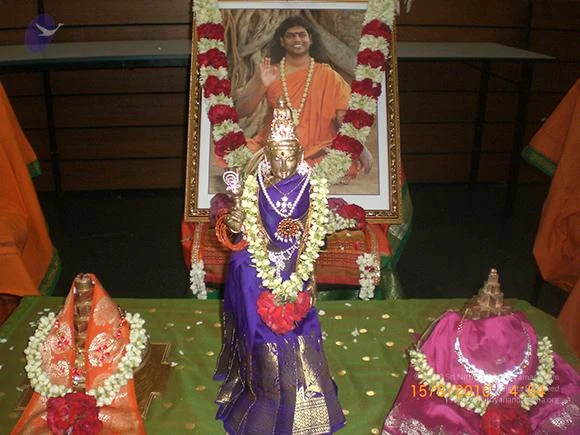
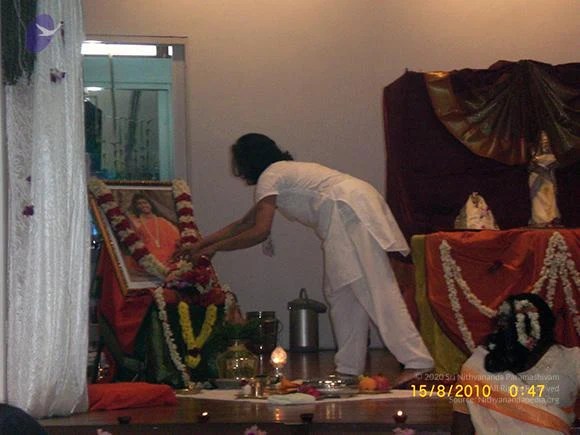
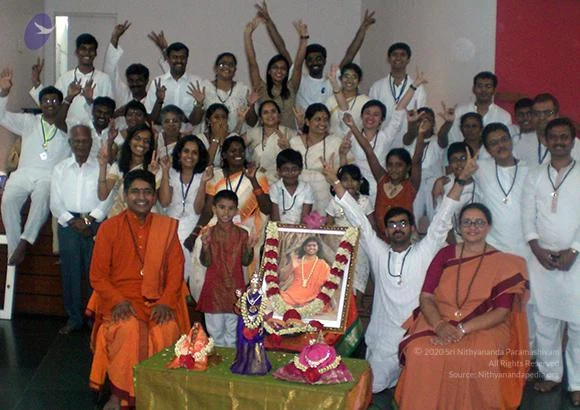
15 Aug 2010: Singapore Nithyananda Dhyanapeetam Inauguration Celebrations

Narration

This video shows the inauguration celebrations of Singapore Nithyananda Dhyanapeetam.

Video

15 Aug 2010: Singapore Nithyananda Dhyanapeetam Inauguration Celebrations

Photos Of The Day:

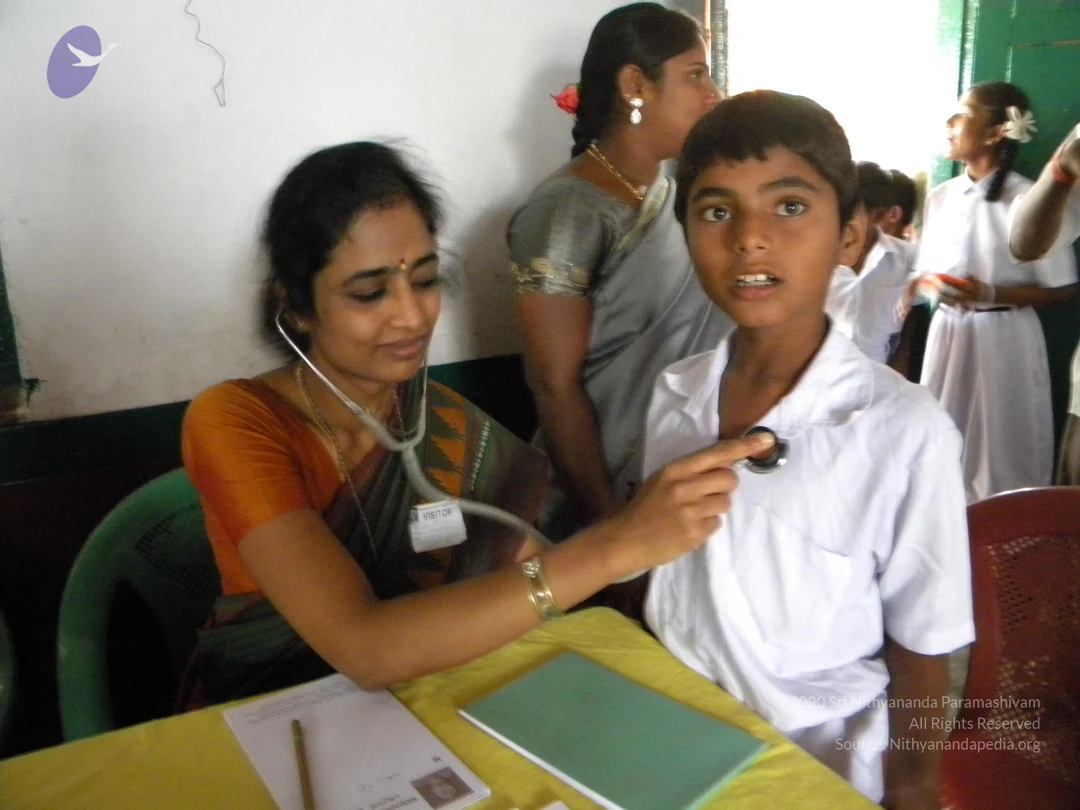
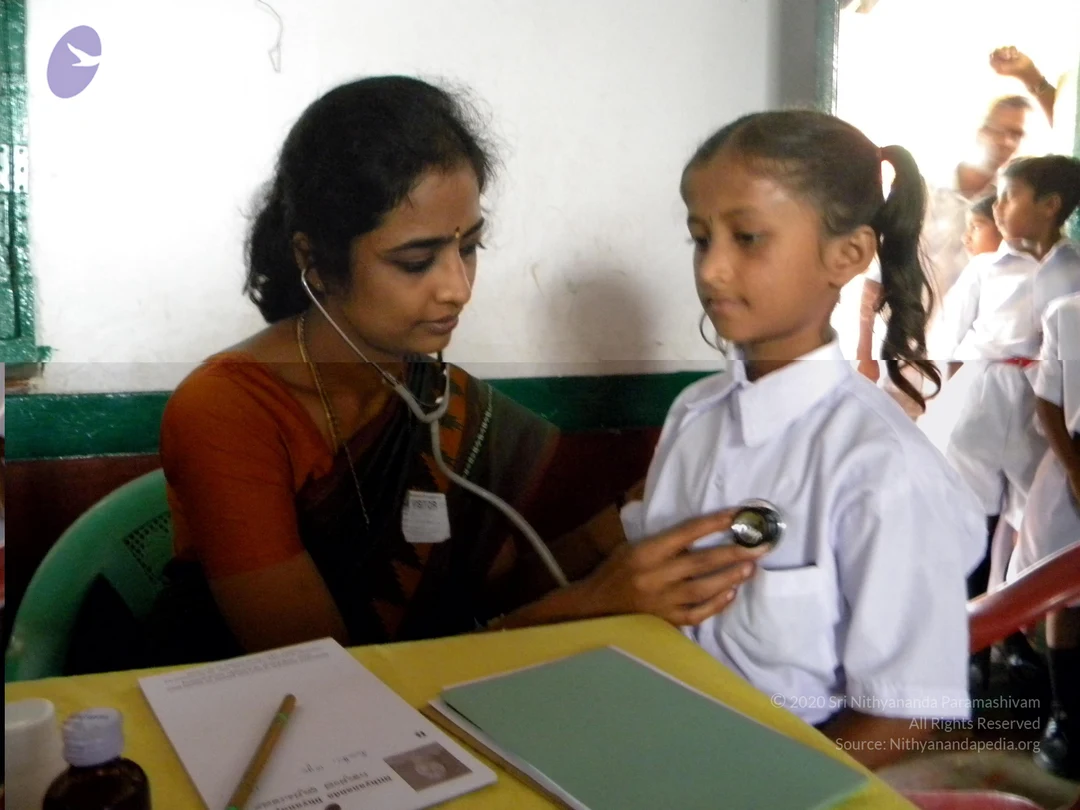
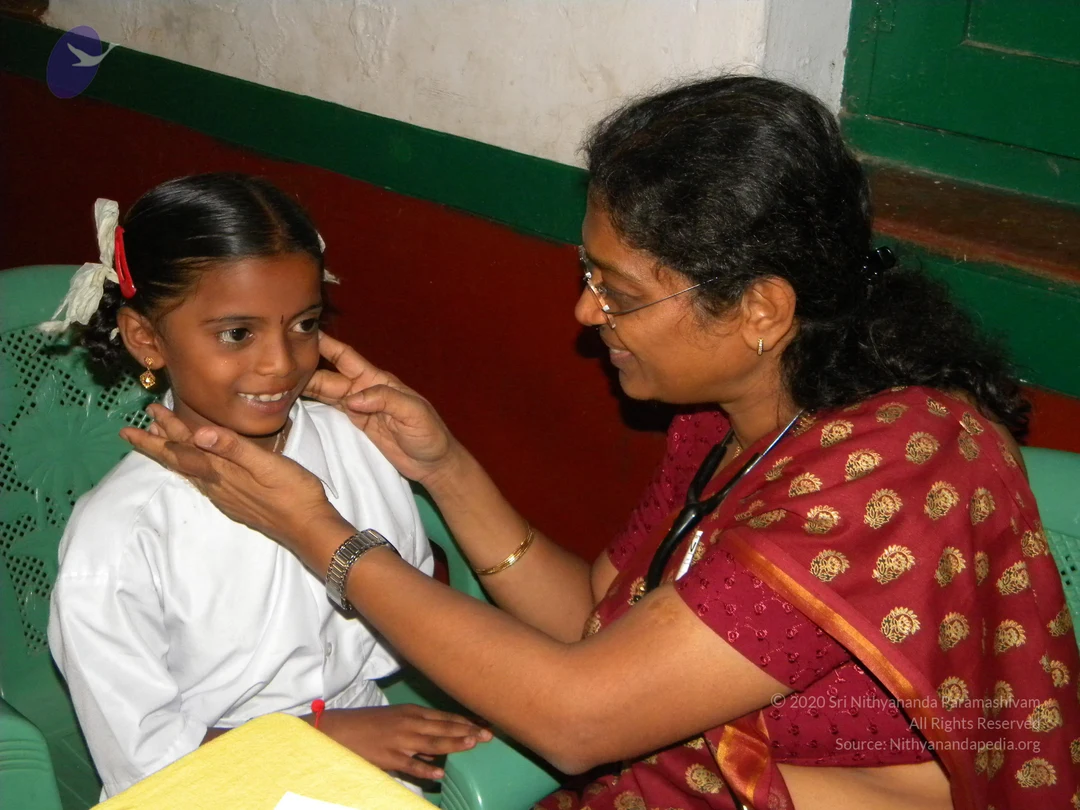
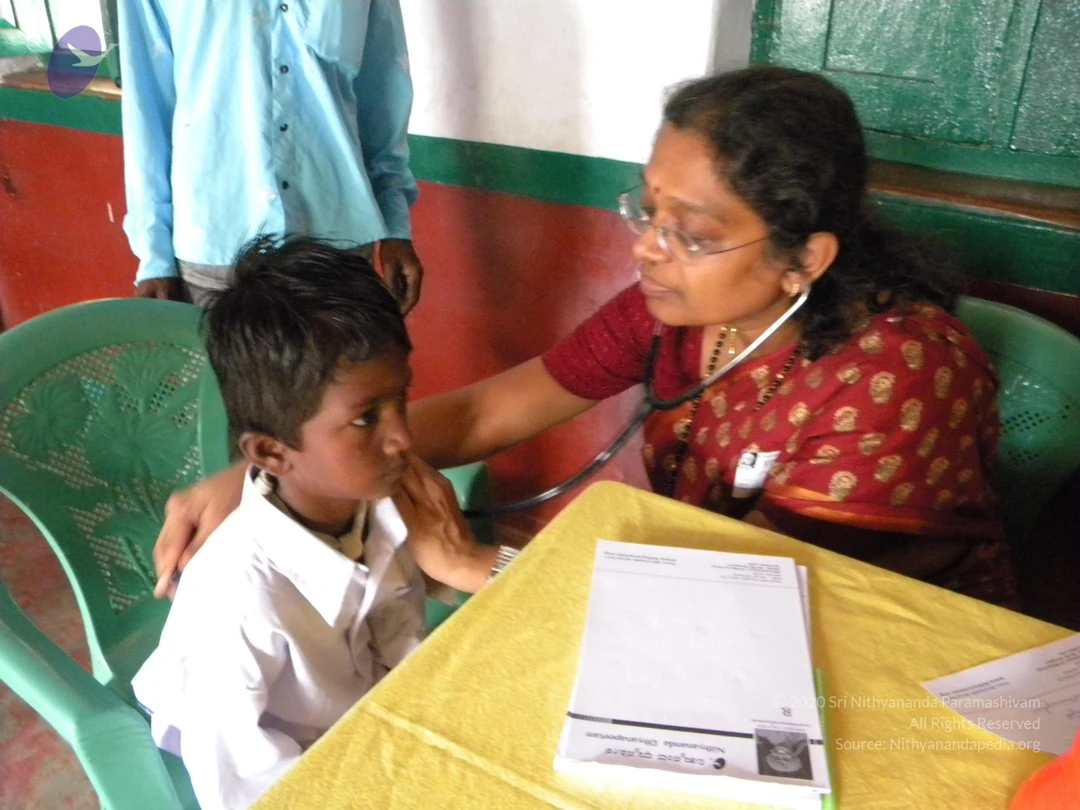
WEEKLY-FREE-MEDICAL-CAMP-BY-NITHYANANDA-DHYANAPEETAM
Photos Of The Day:

AcharyaSession
Photos Of The Day:

PANCHA-TAPAS
PADA-POOJA

SARVA-DARSHAN

TEMPLE

NITHYA-SATSANG

NITHYANANDA-SPURANA-PROGRAM

01--Medical-Camp

01--Singapore_Inauguration

Photos from this day

View all 711 photos

WEEKLY-FREE-MEDICAL-CAMP-BY-NITHYANANDA-DHYANAPEETAM

2 photosSource gallery
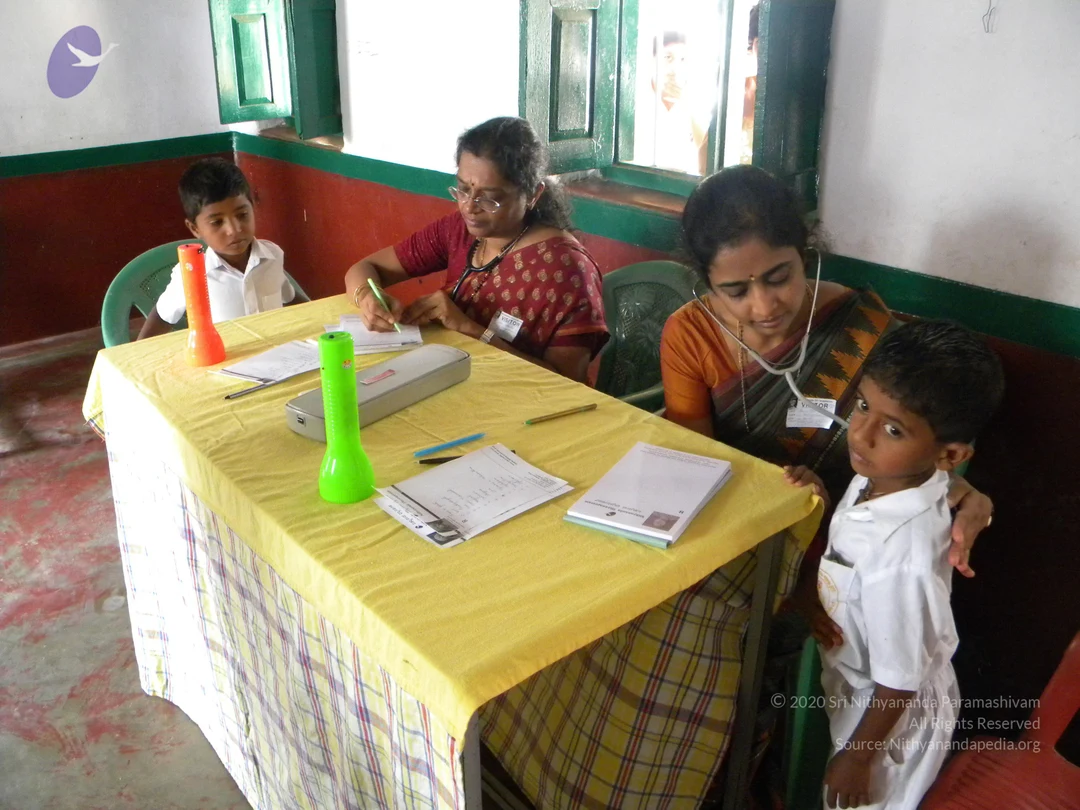
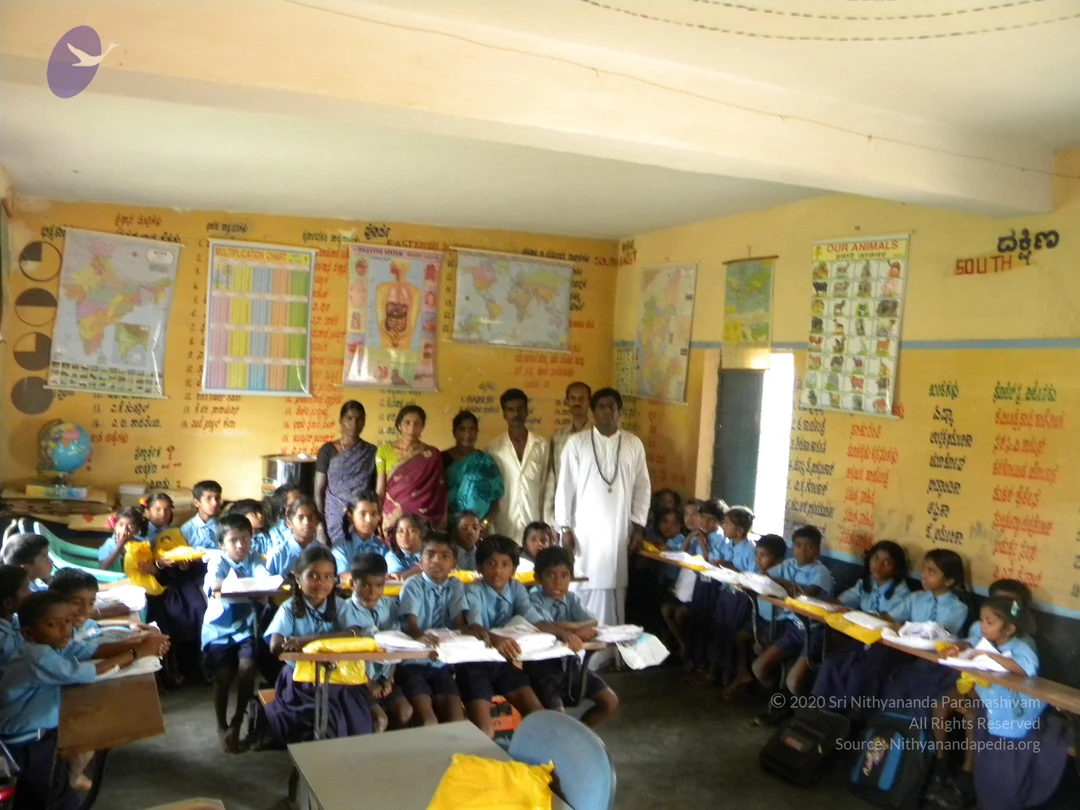
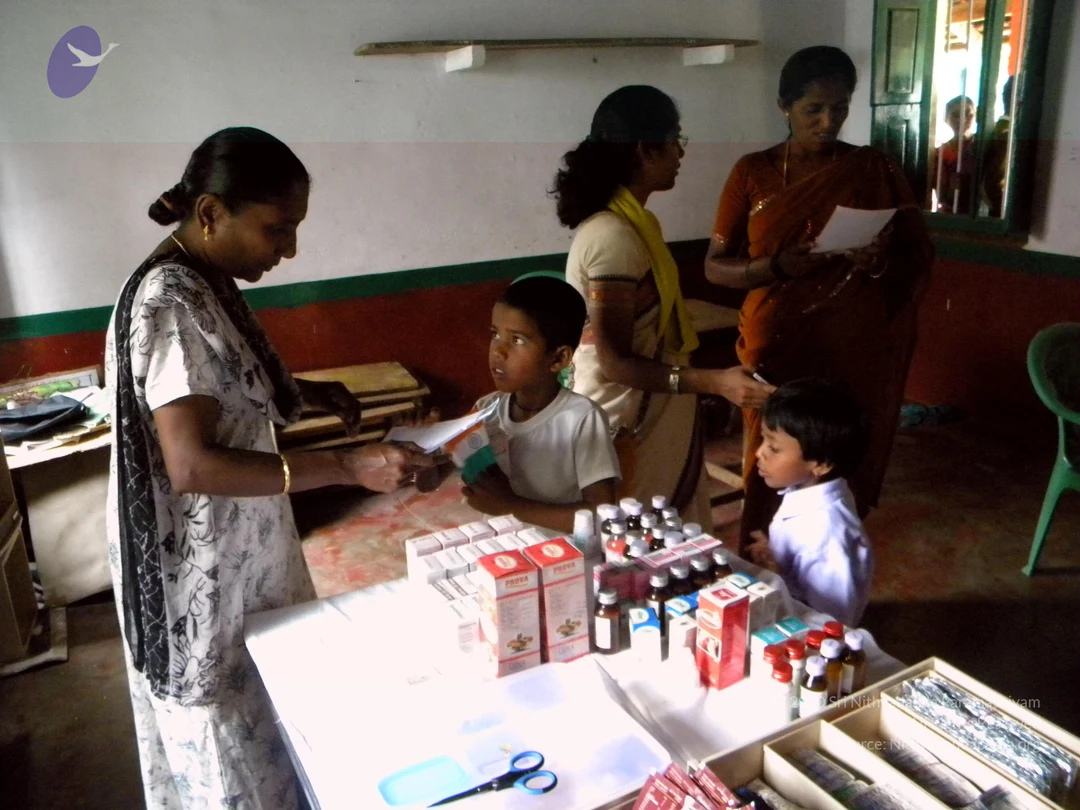
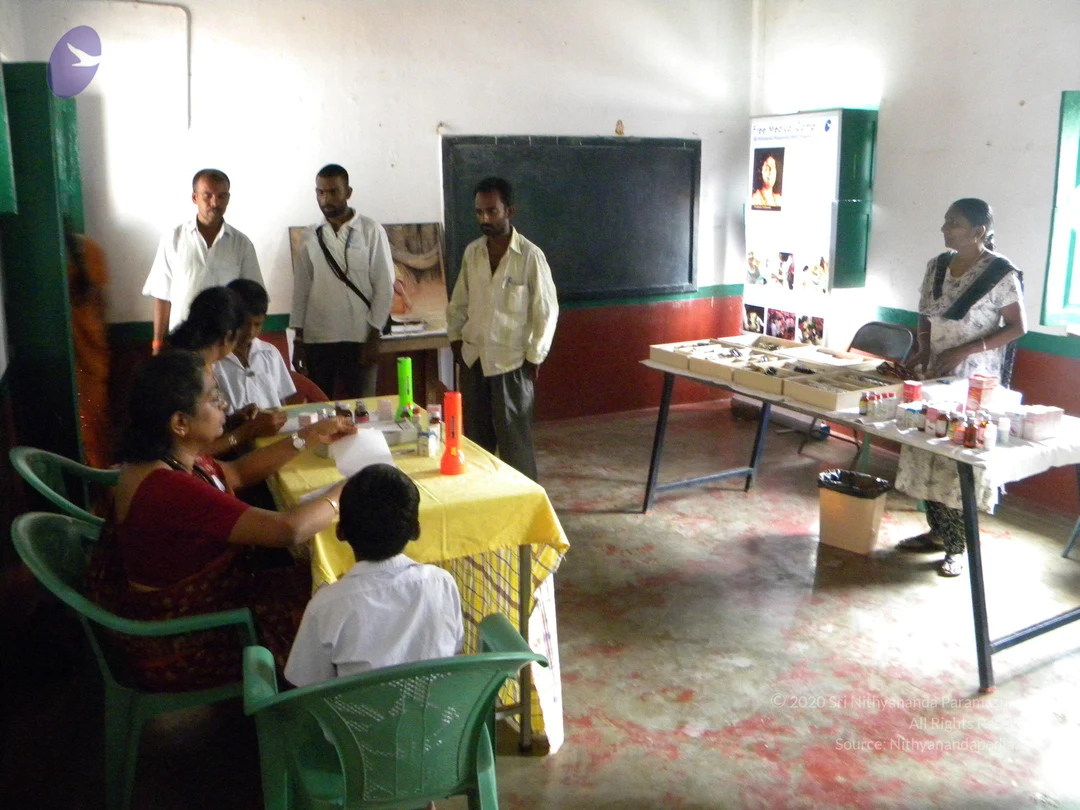
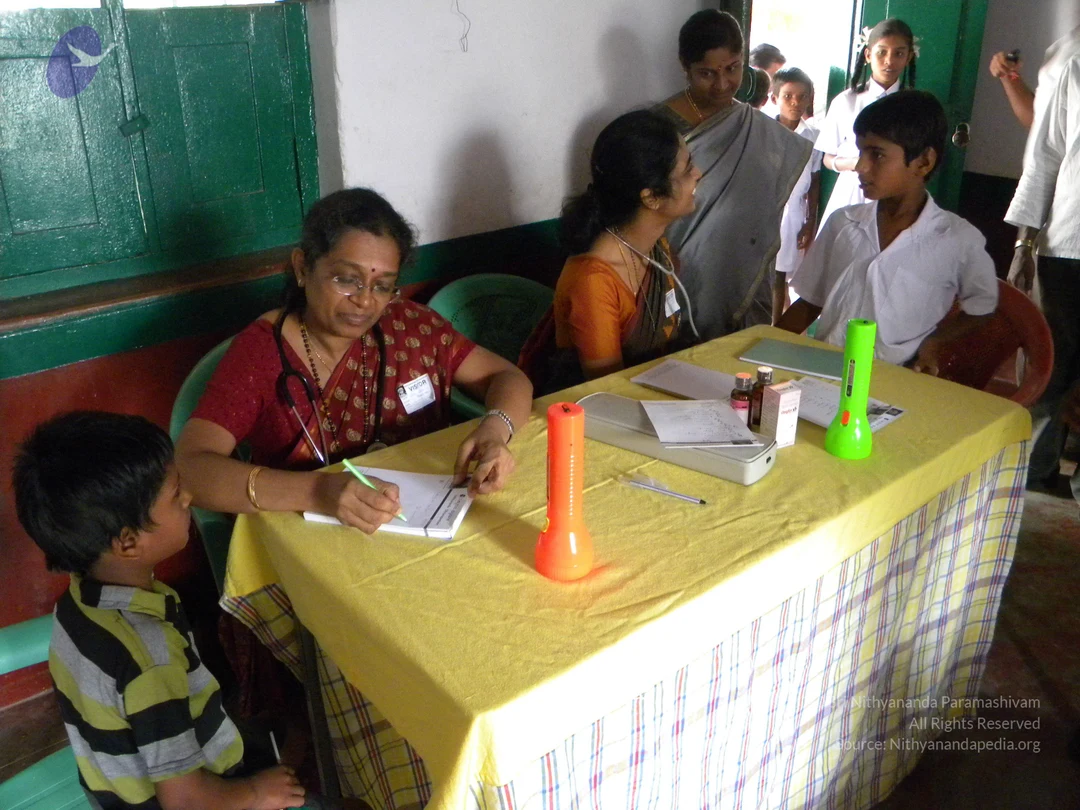
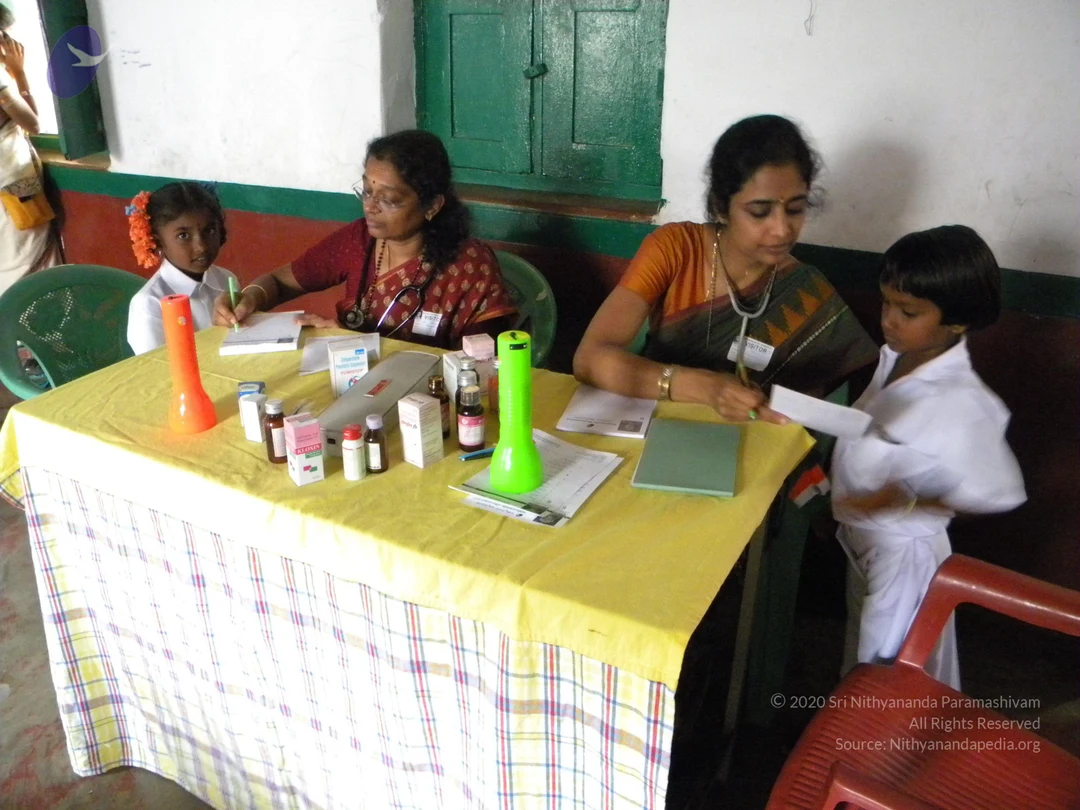
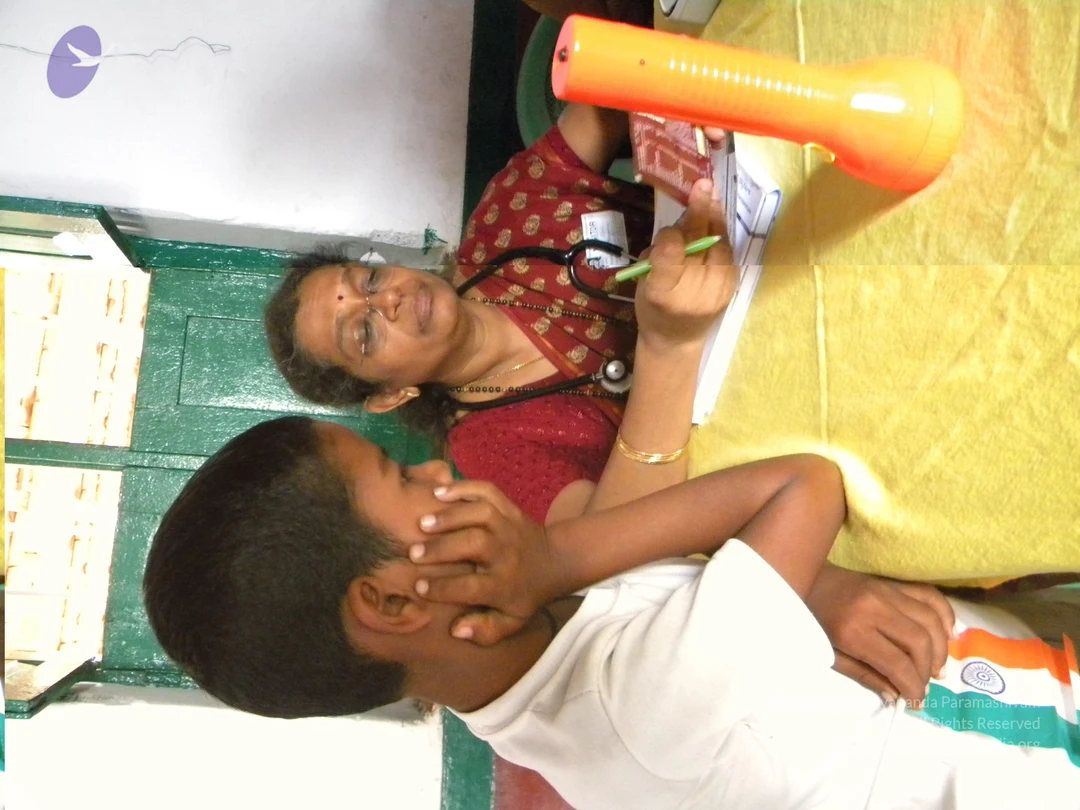
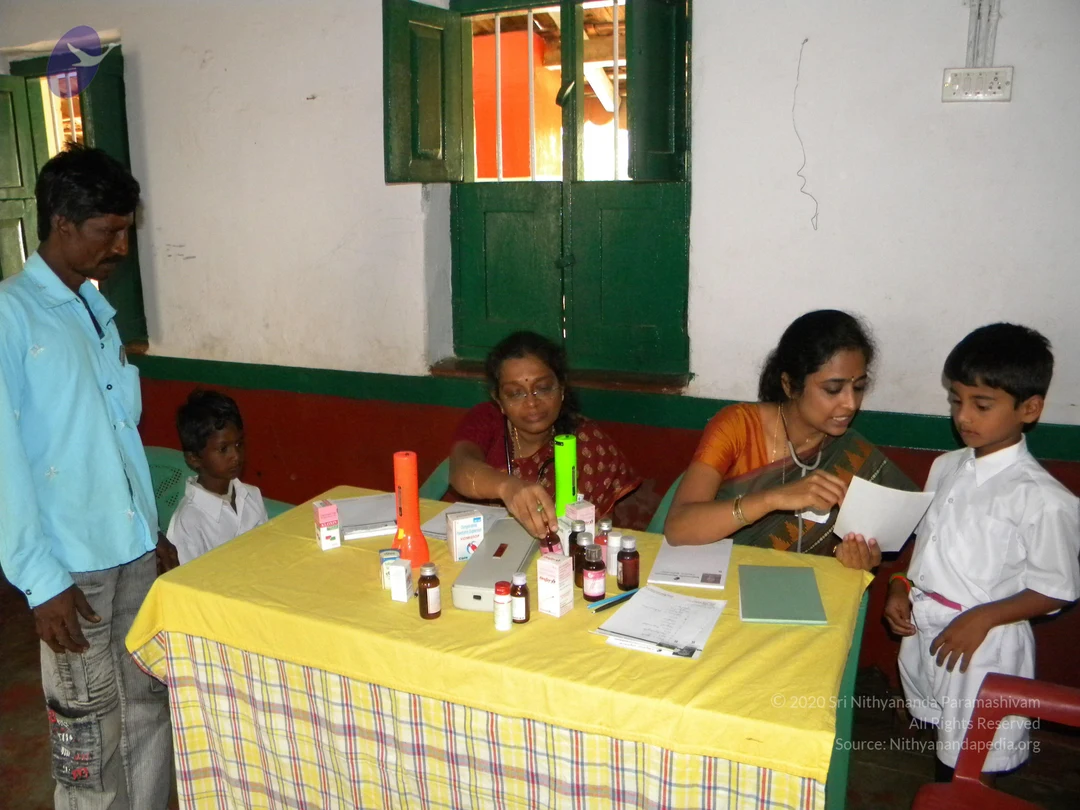
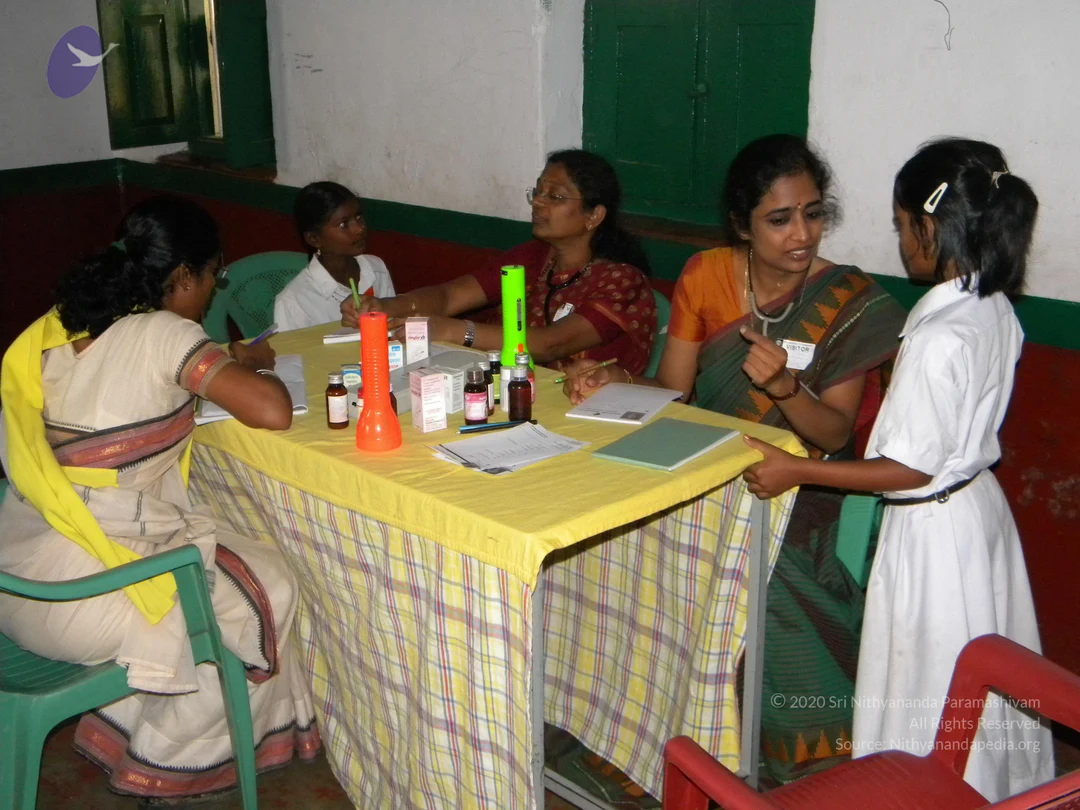
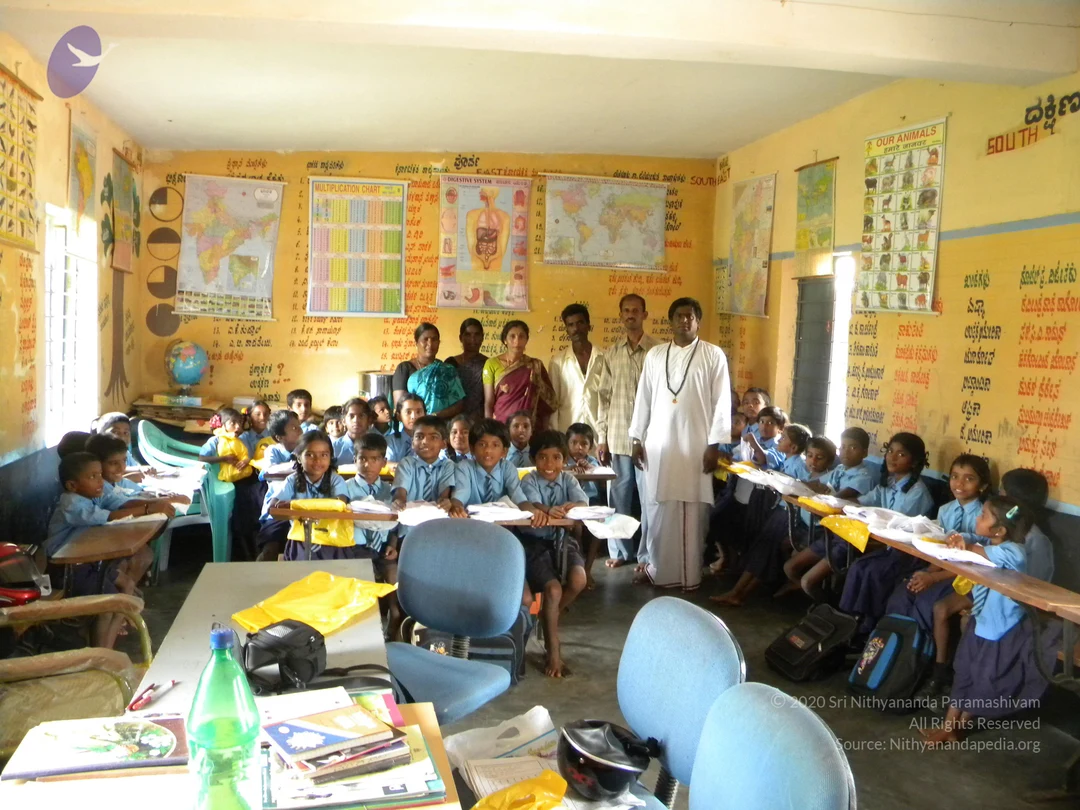
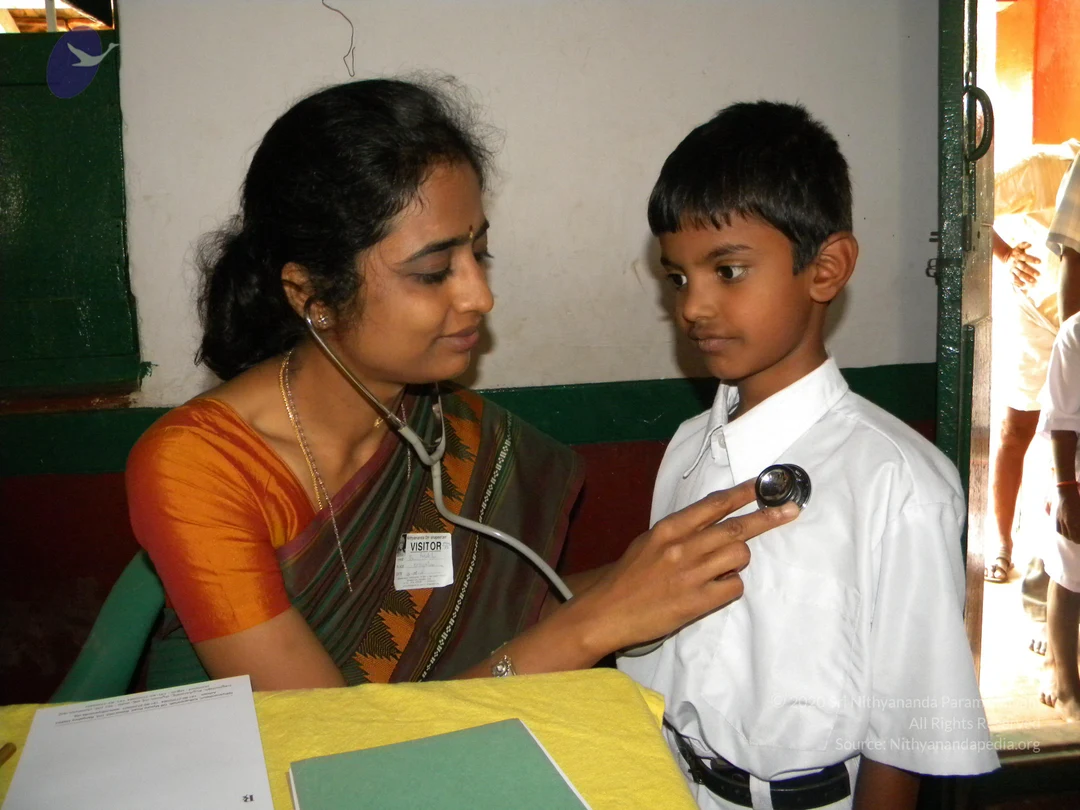
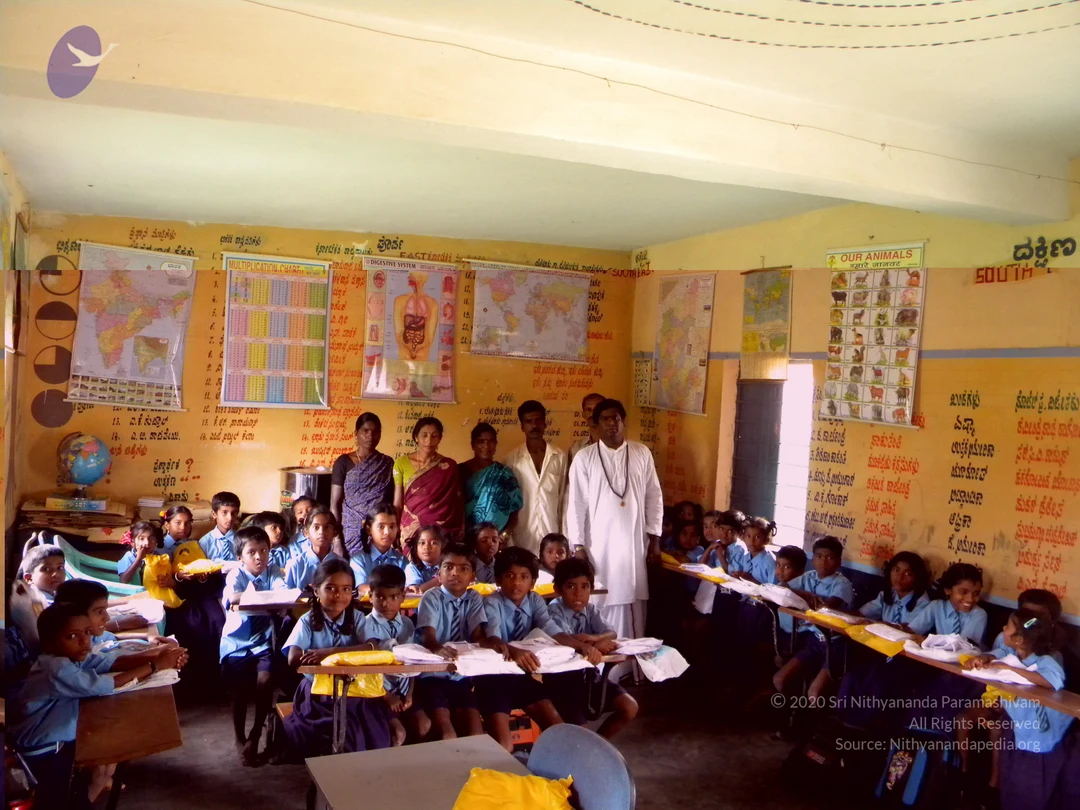
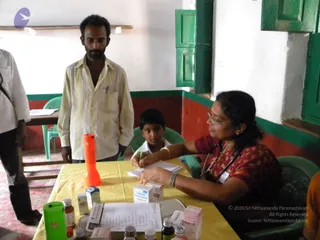
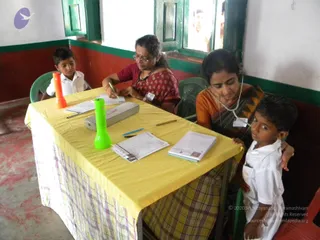
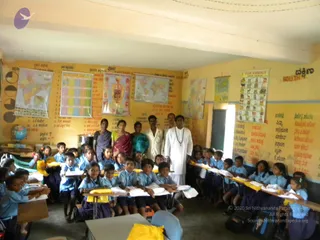
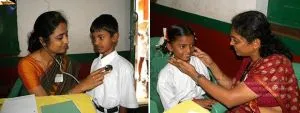
A classroom photograph of schoolchildren in blue uniforms seated at wooden desks with open notebooks, facing the camera. A standing adult in a white shirt and dhoti-style white garment stands at centre, with several women in colourful saris standing behind the children near a wall. The walls are covered with colourful educational charts, maps and posters, and a globe sits on a desk at left with water bottles and bags beside it. The setting appears to be a rural school room.A two-panel photograph of a community health camp in a simple room with green walls and a red bench. In each panel a woman in a red and orange sari sits at a small table and examines a young boy in a school uniform. In the left panel she writes on a paper form while the boy watches. In the right panel she holds a stethoscope to the boy's chest. A yellow cone and a white paper sheet are on the table. No a person candidate is visible.

PANCHA-TAPAS
61 photosSource gallery
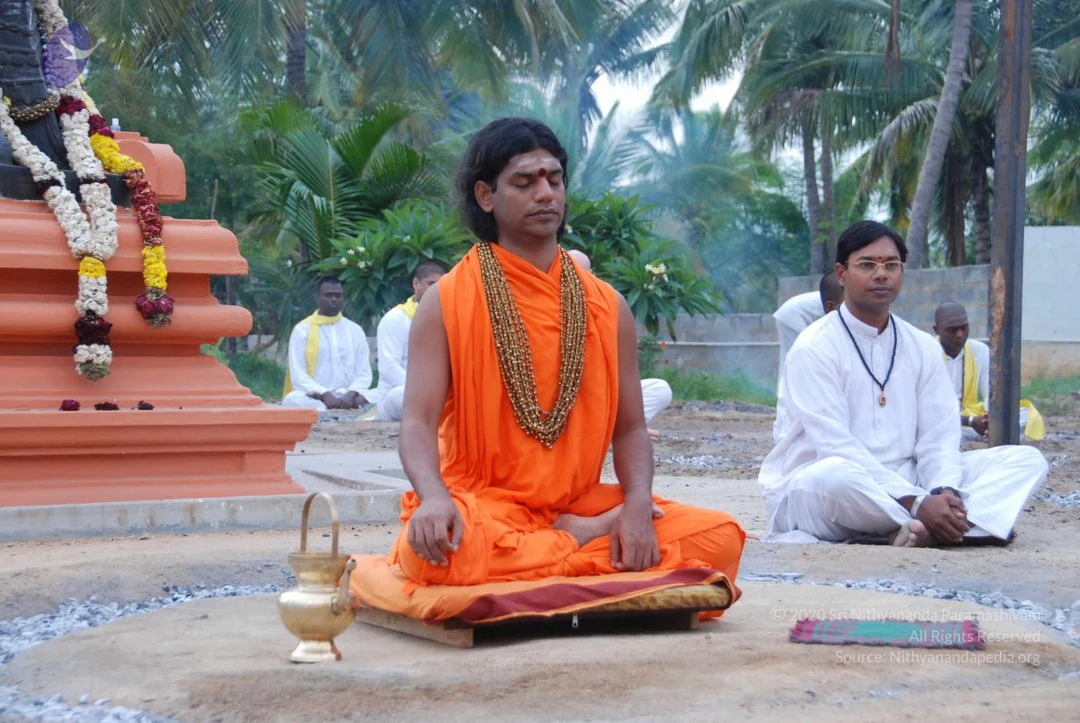
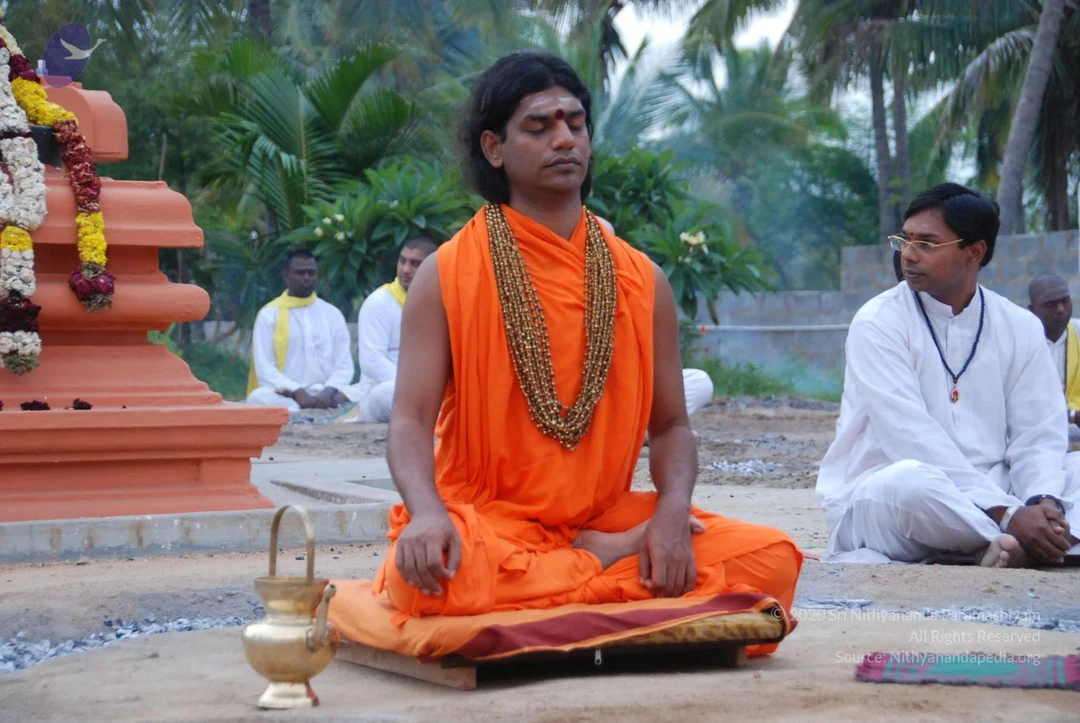
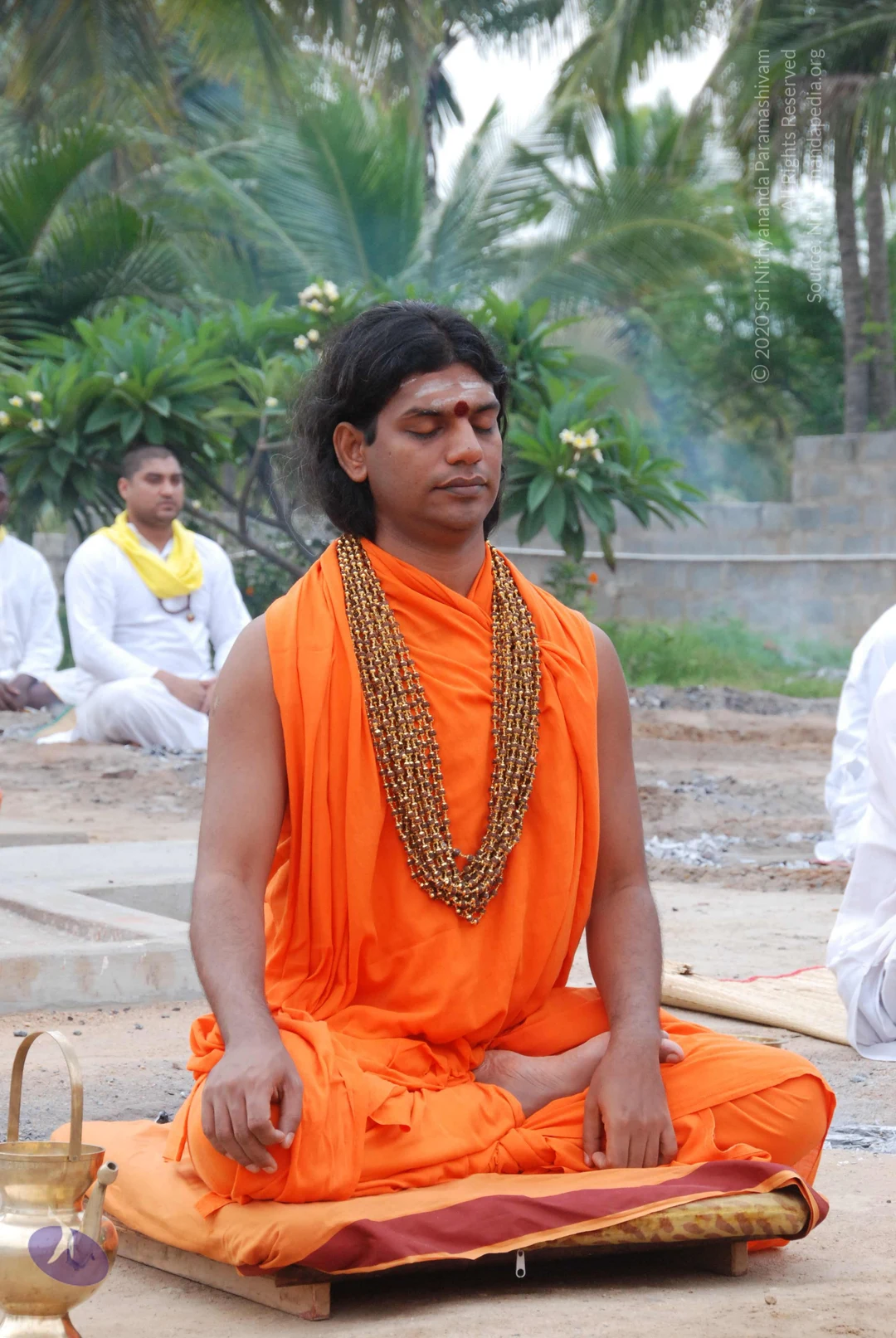
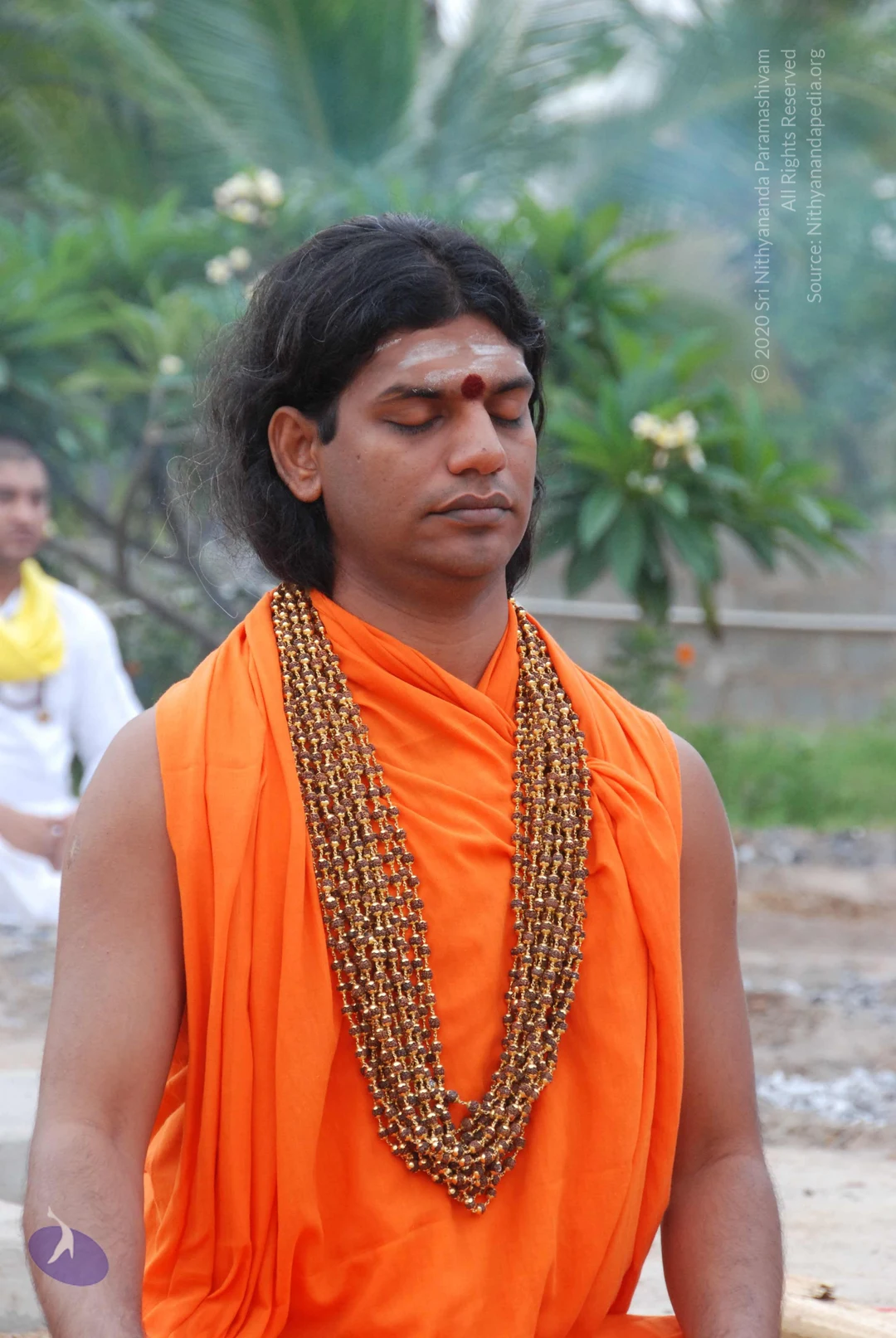
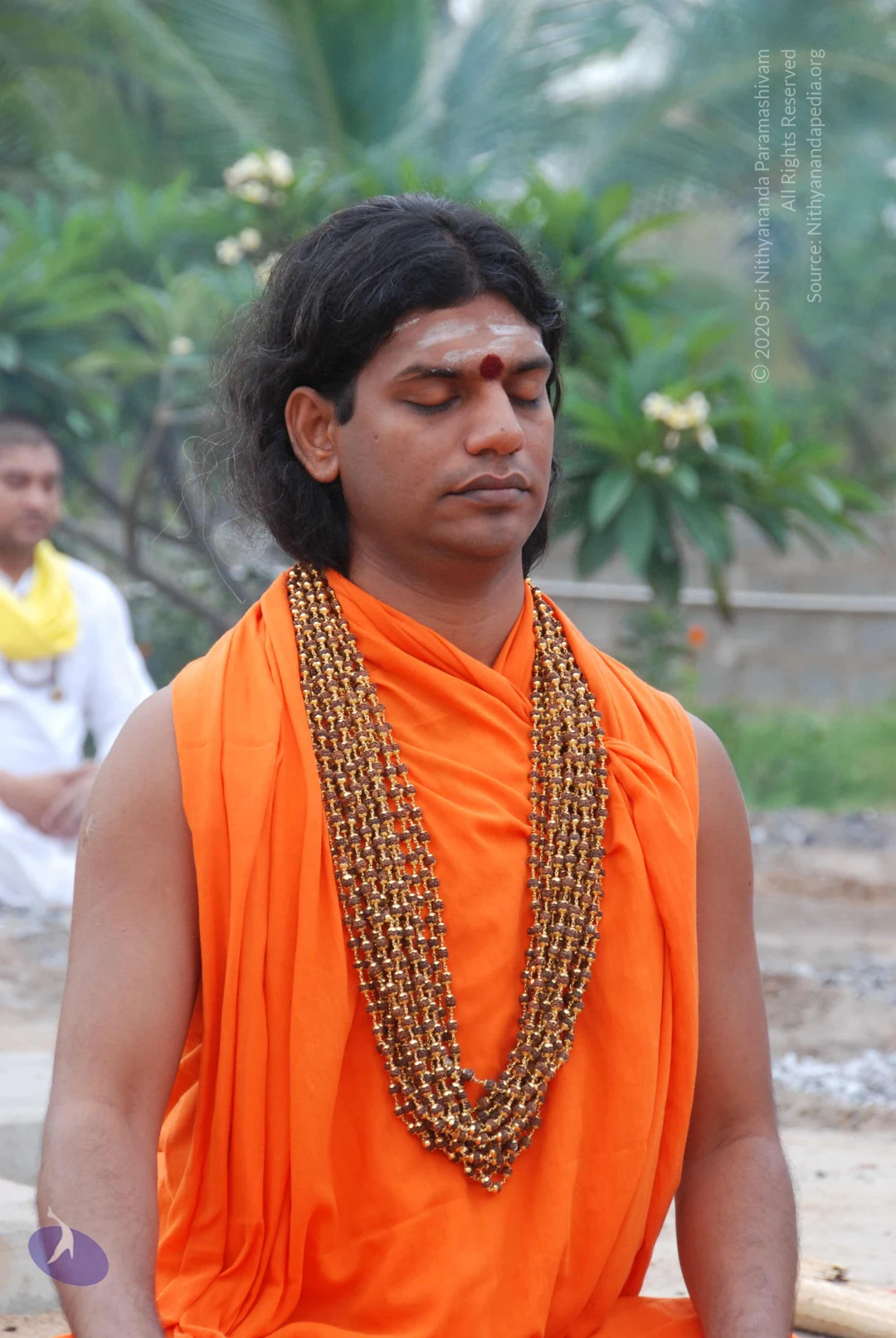
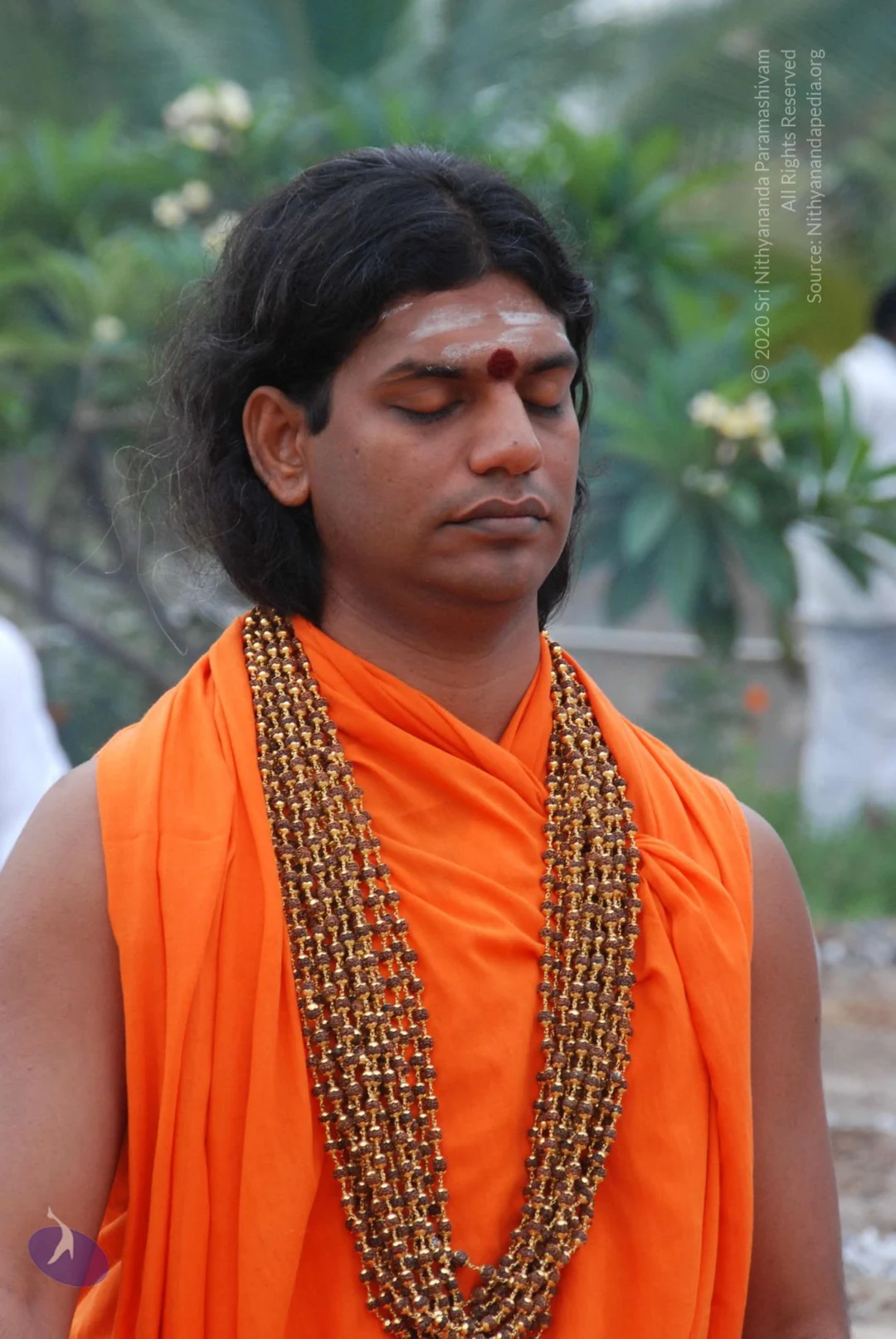
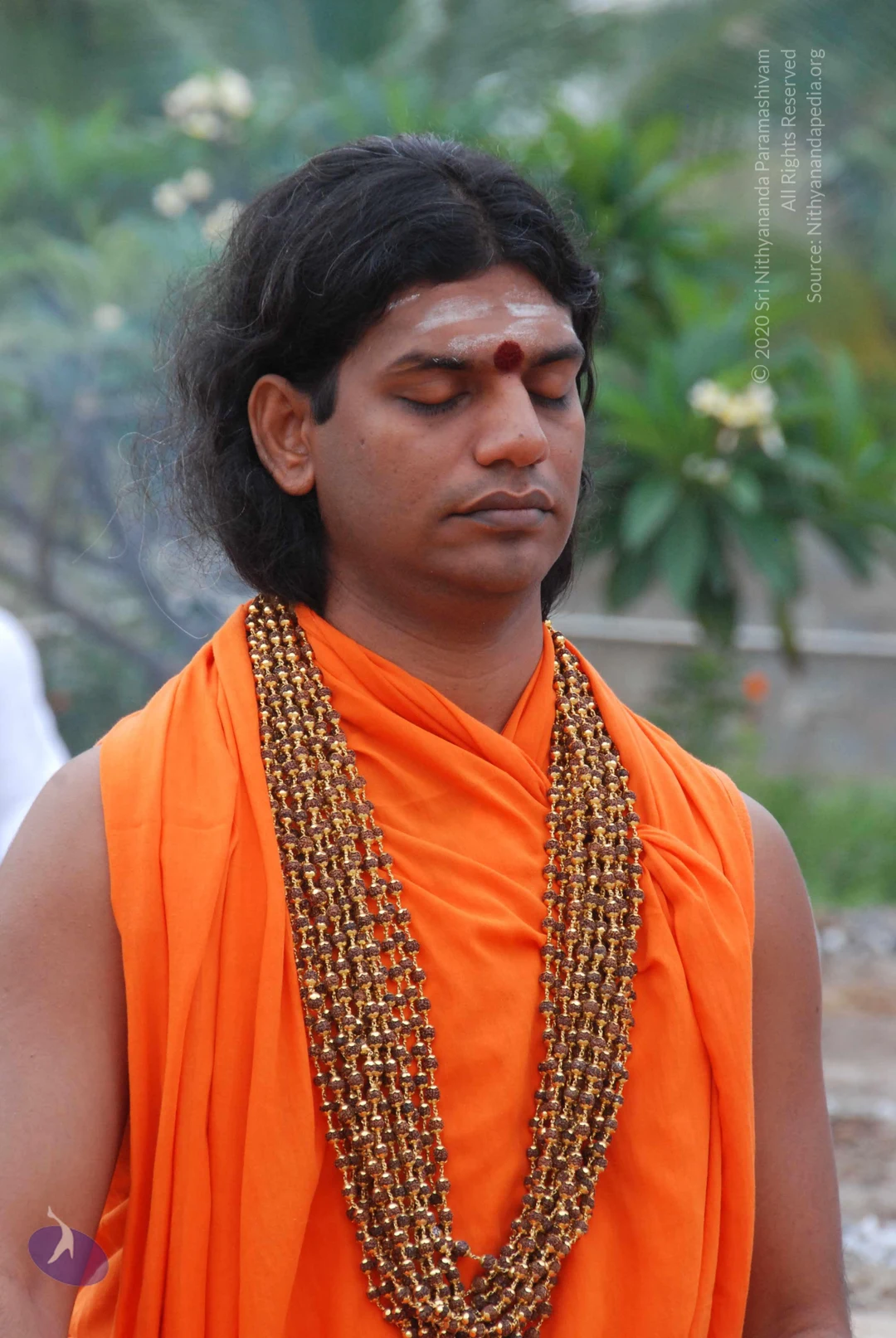
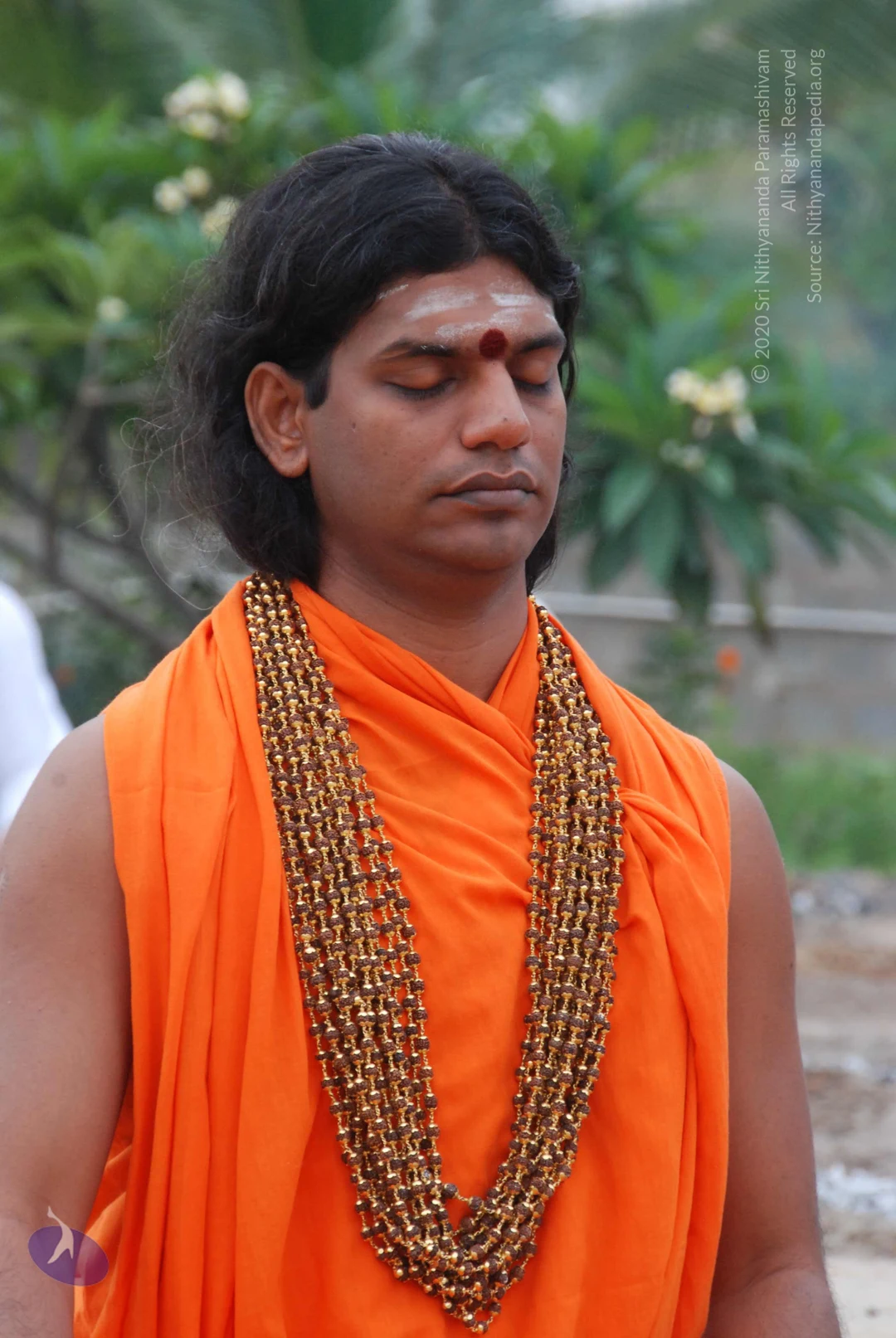
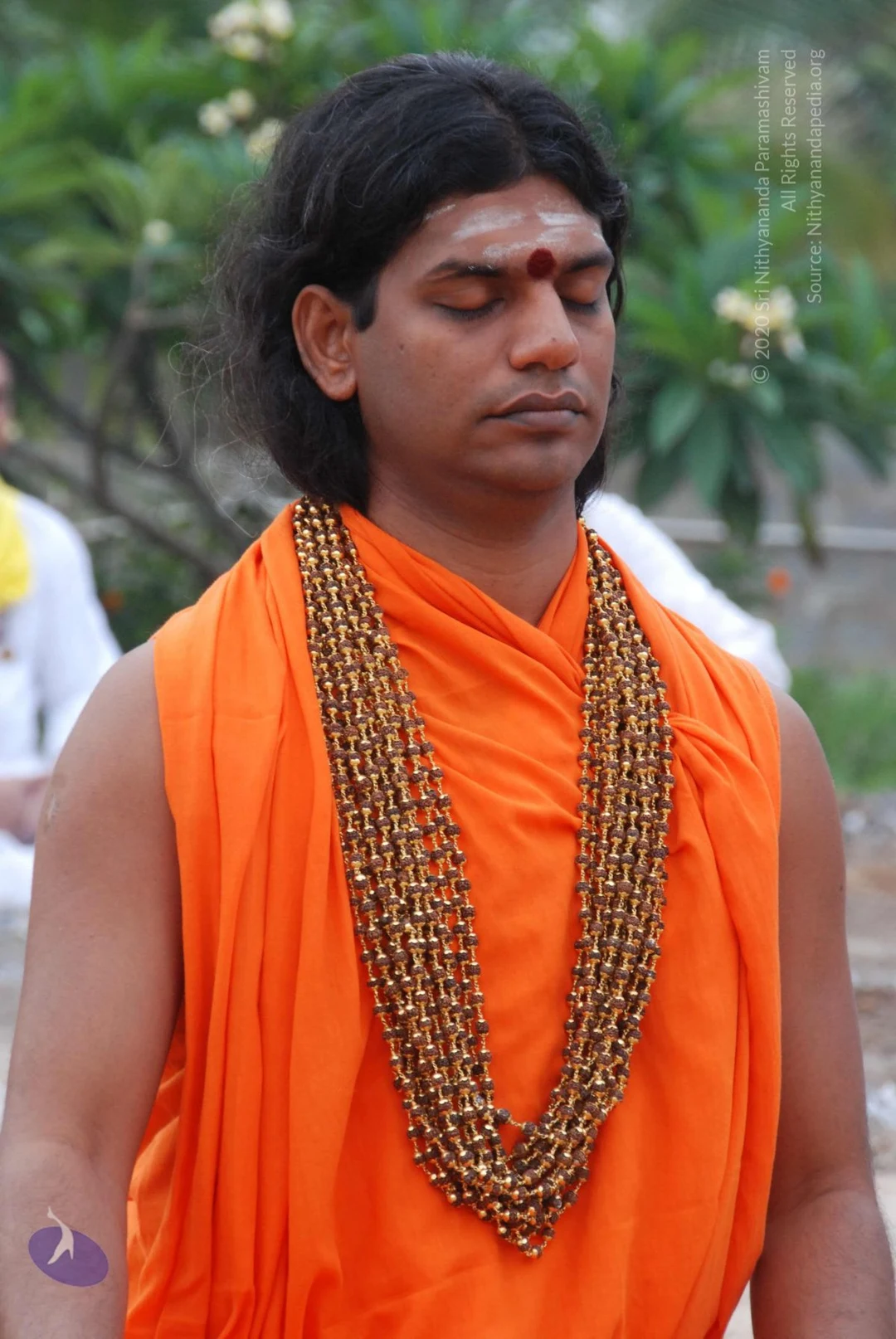
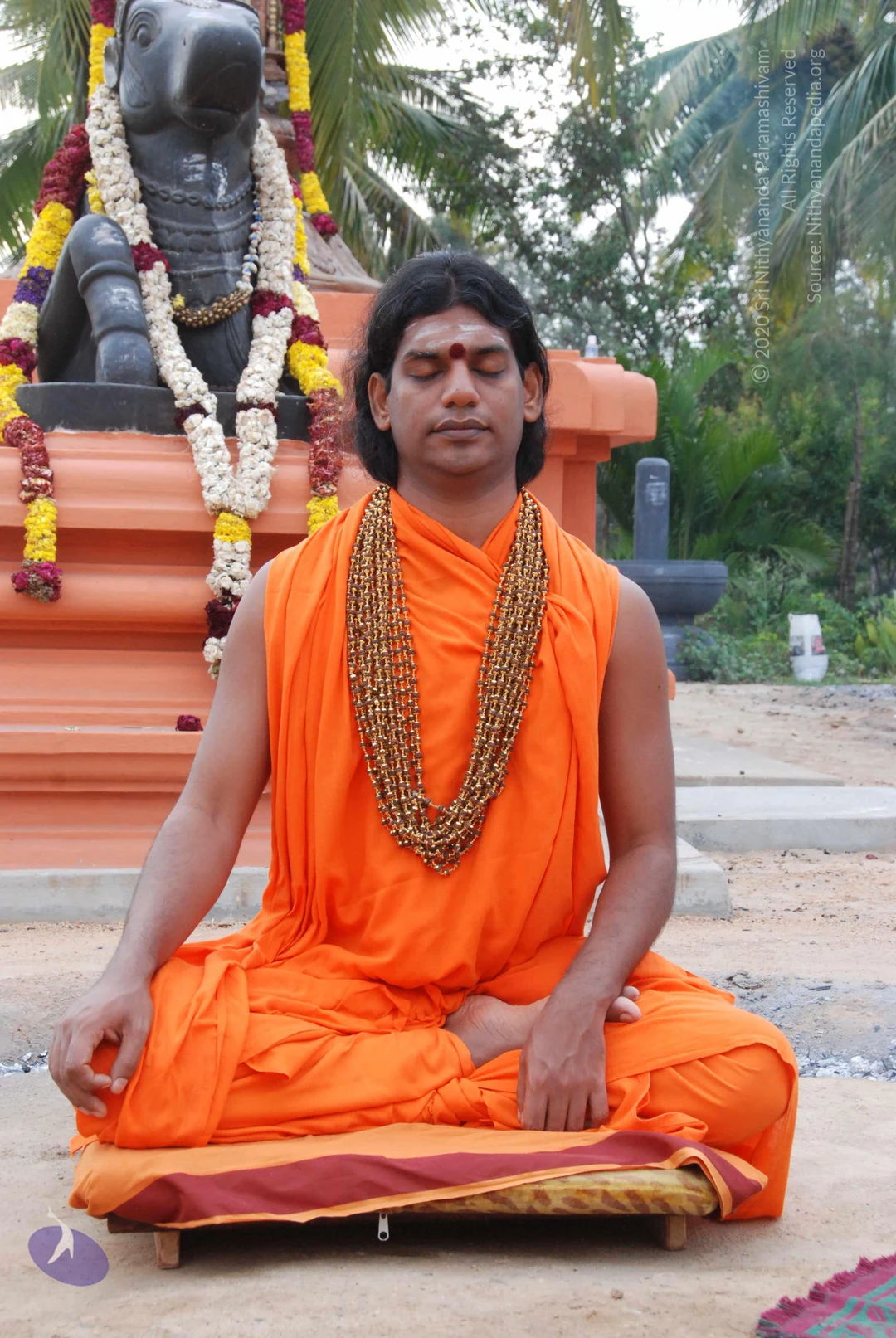
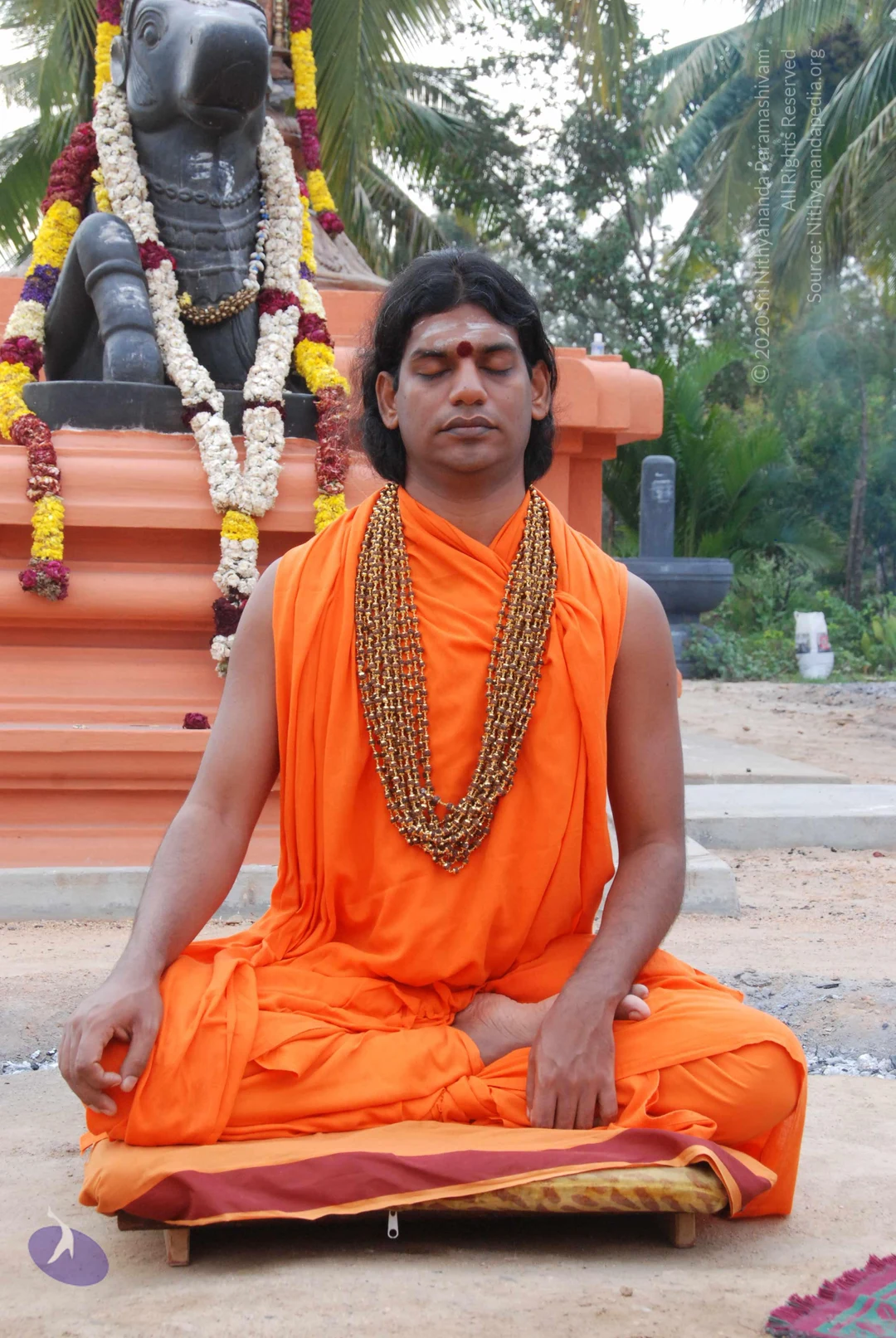
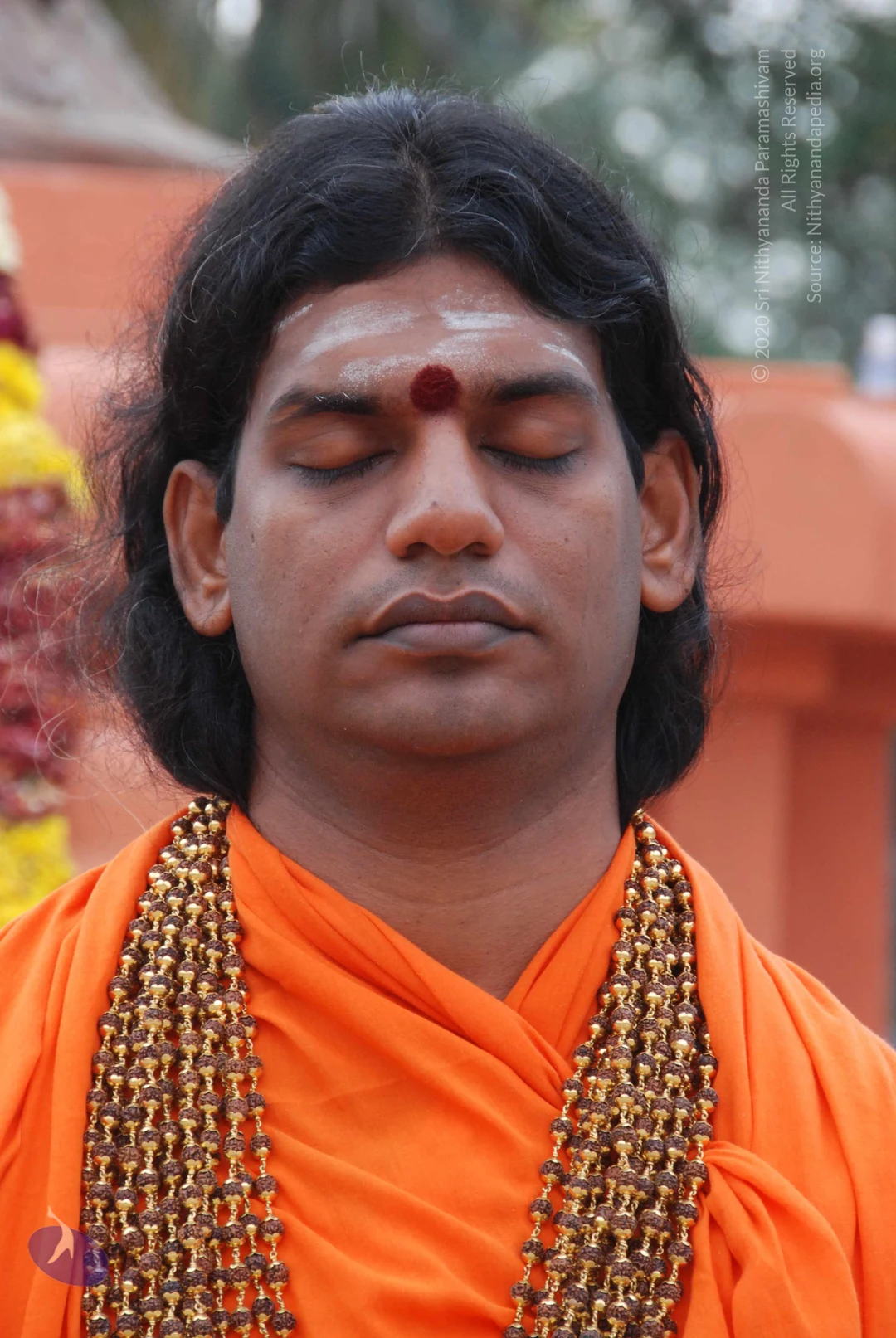
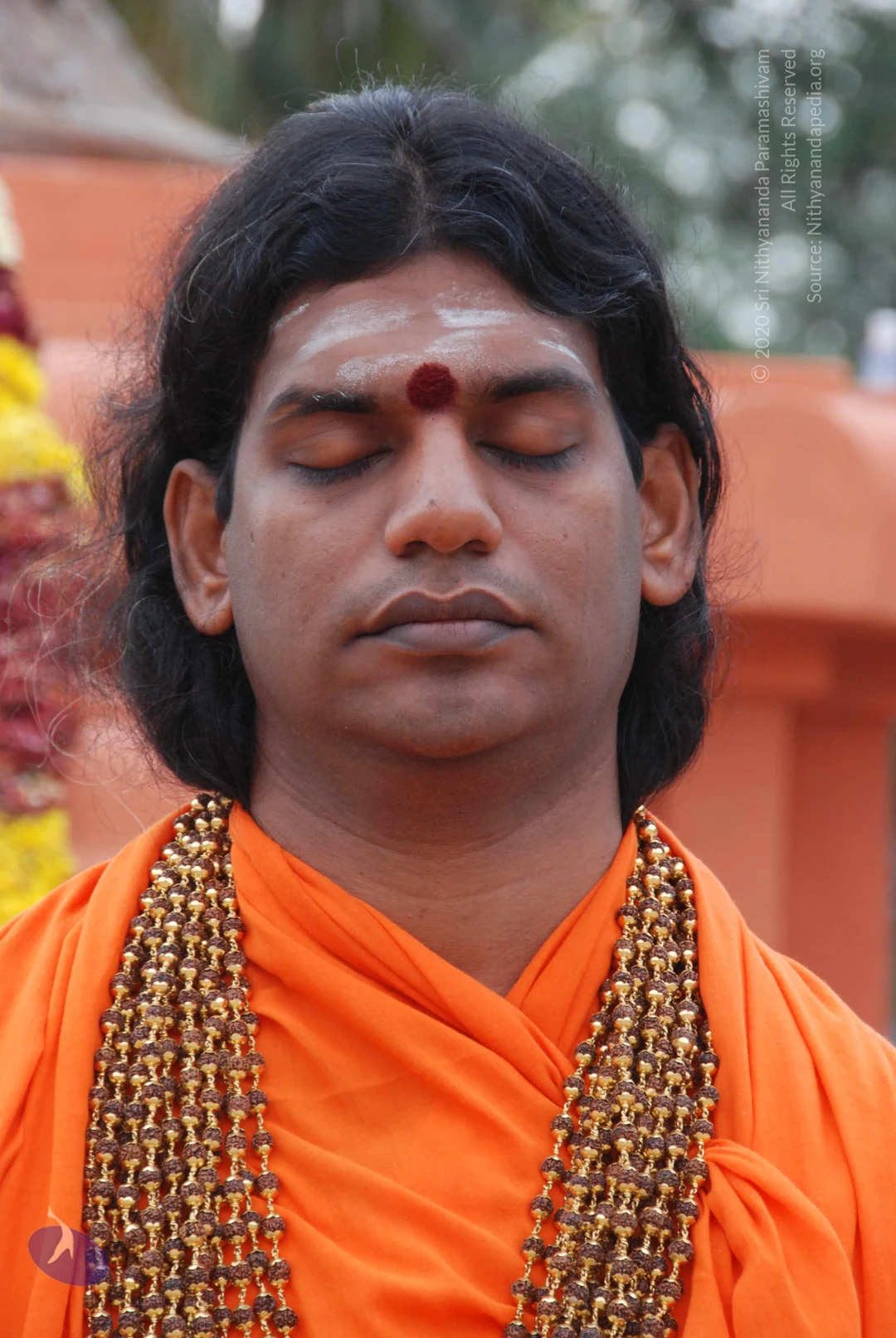
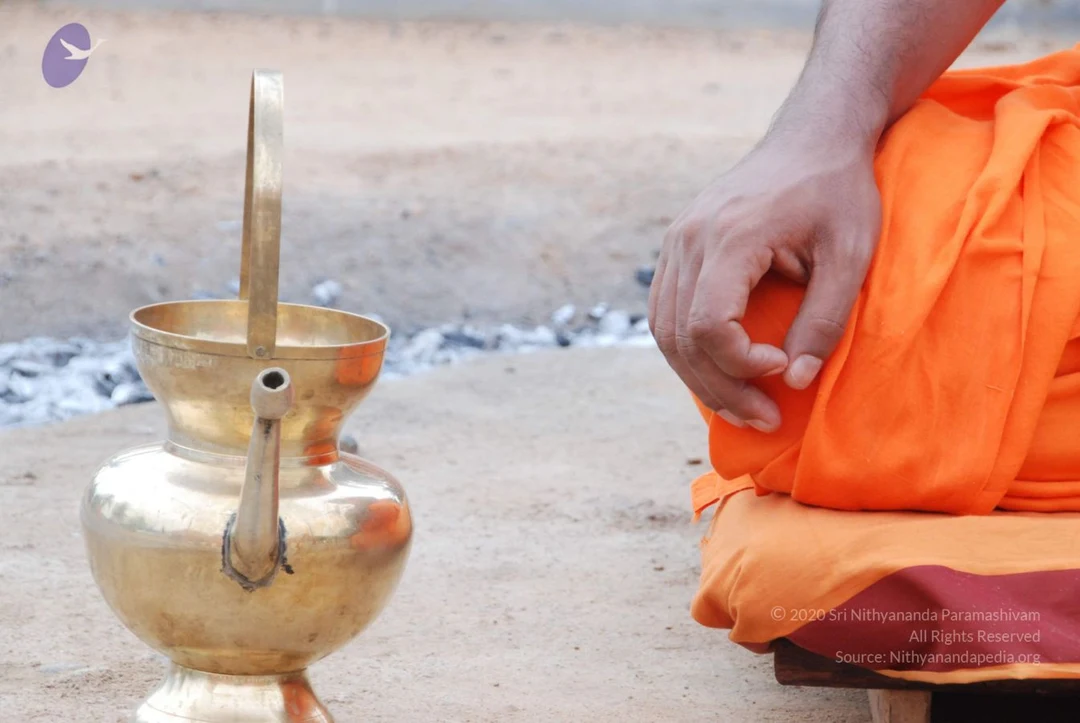
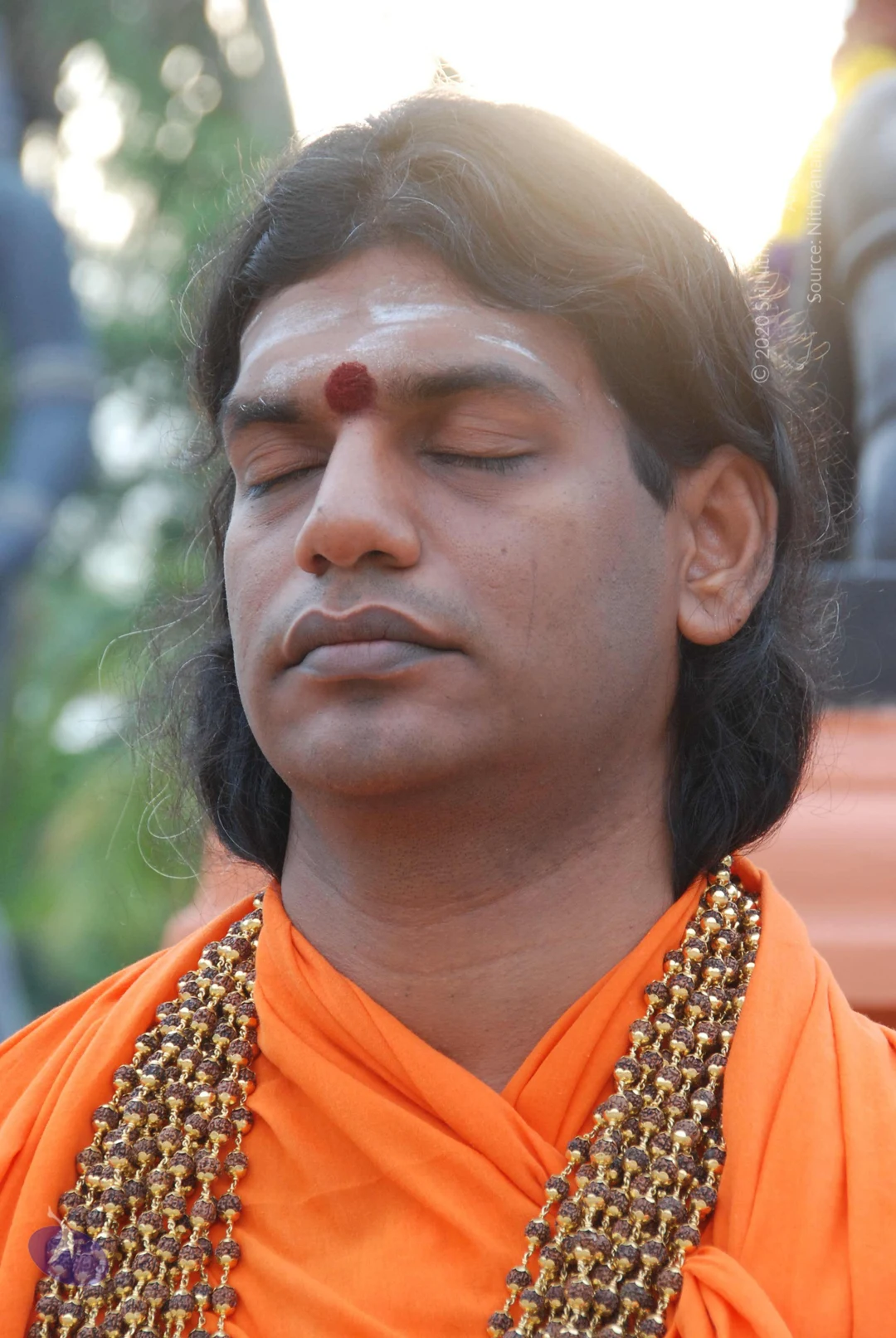
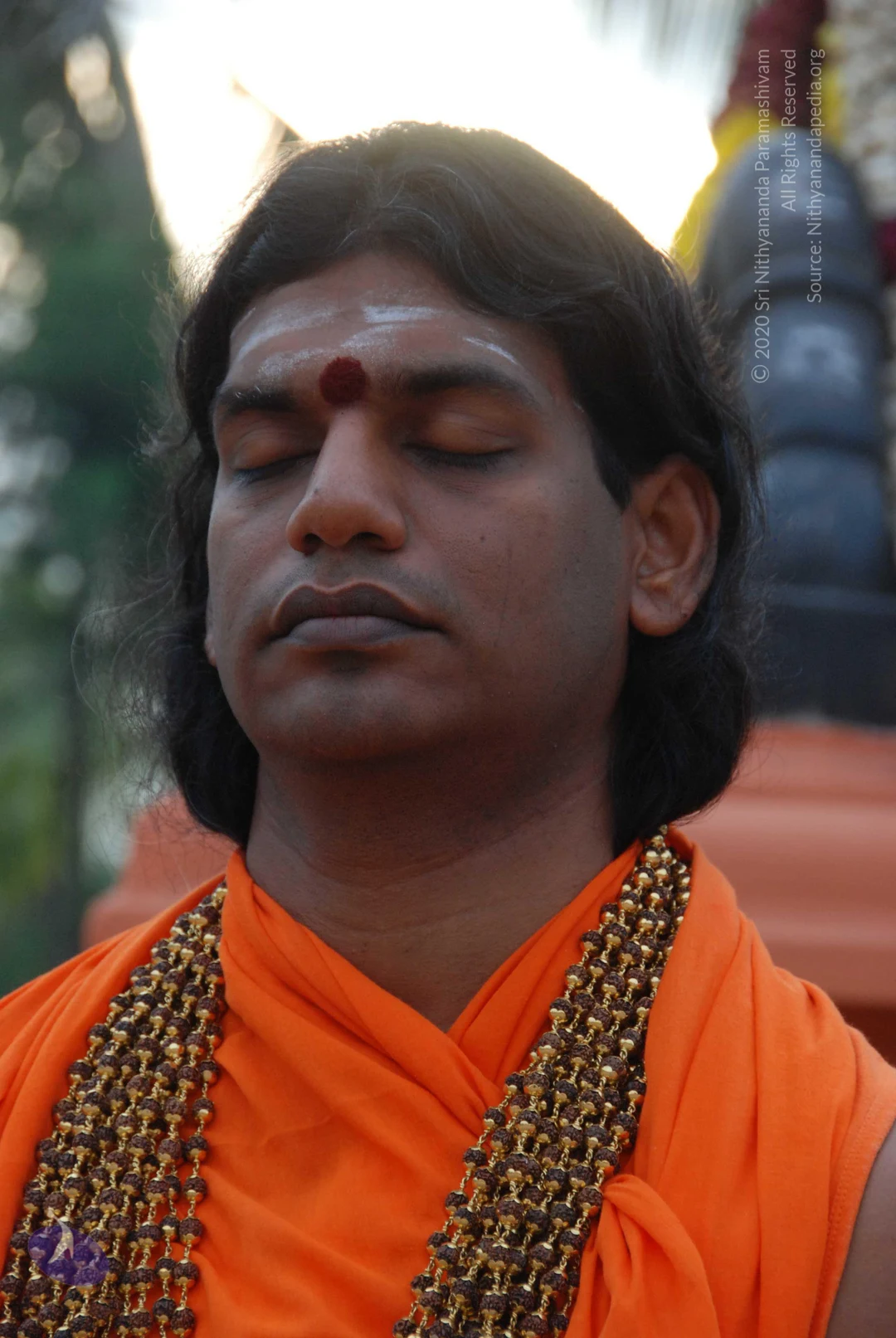
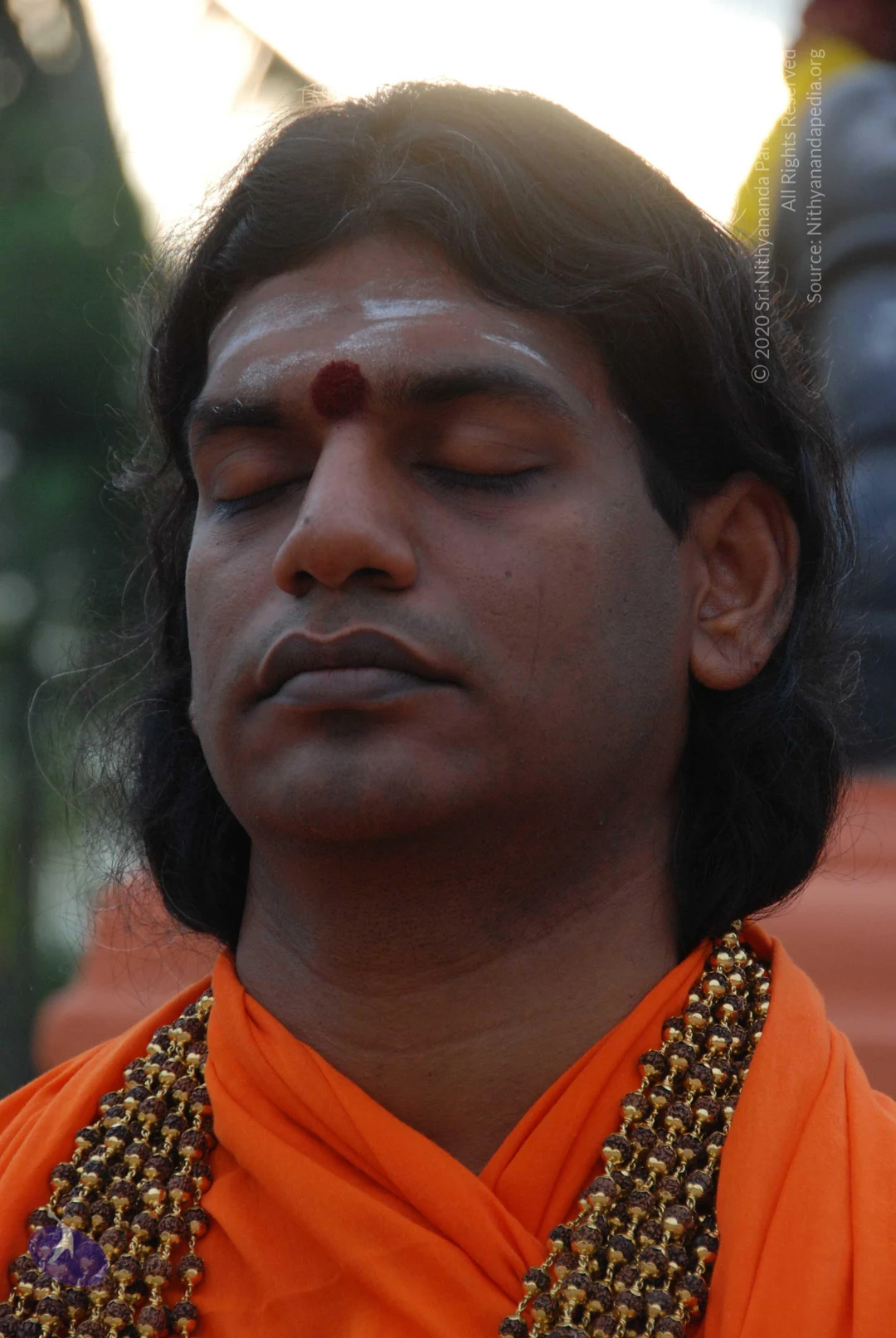
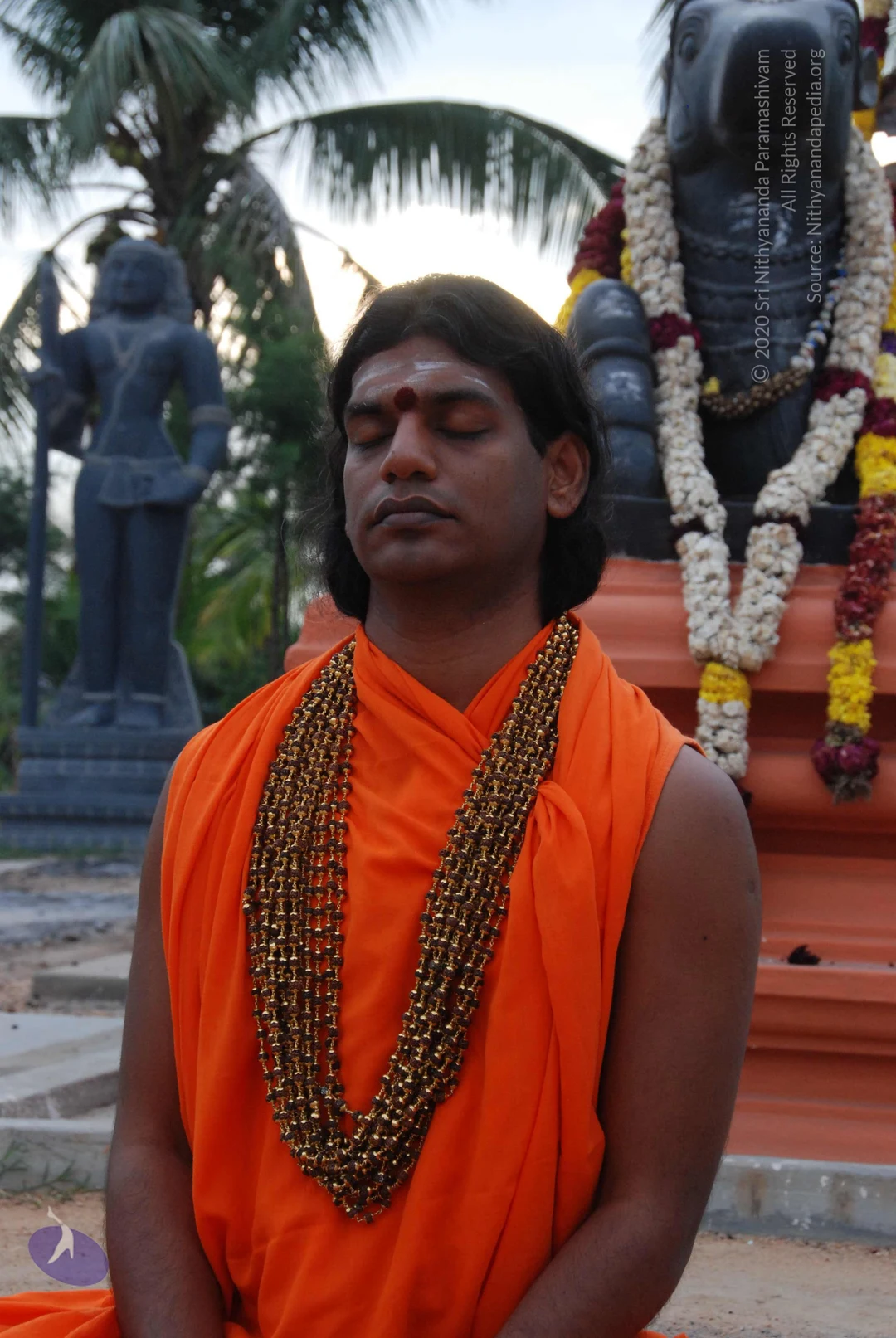
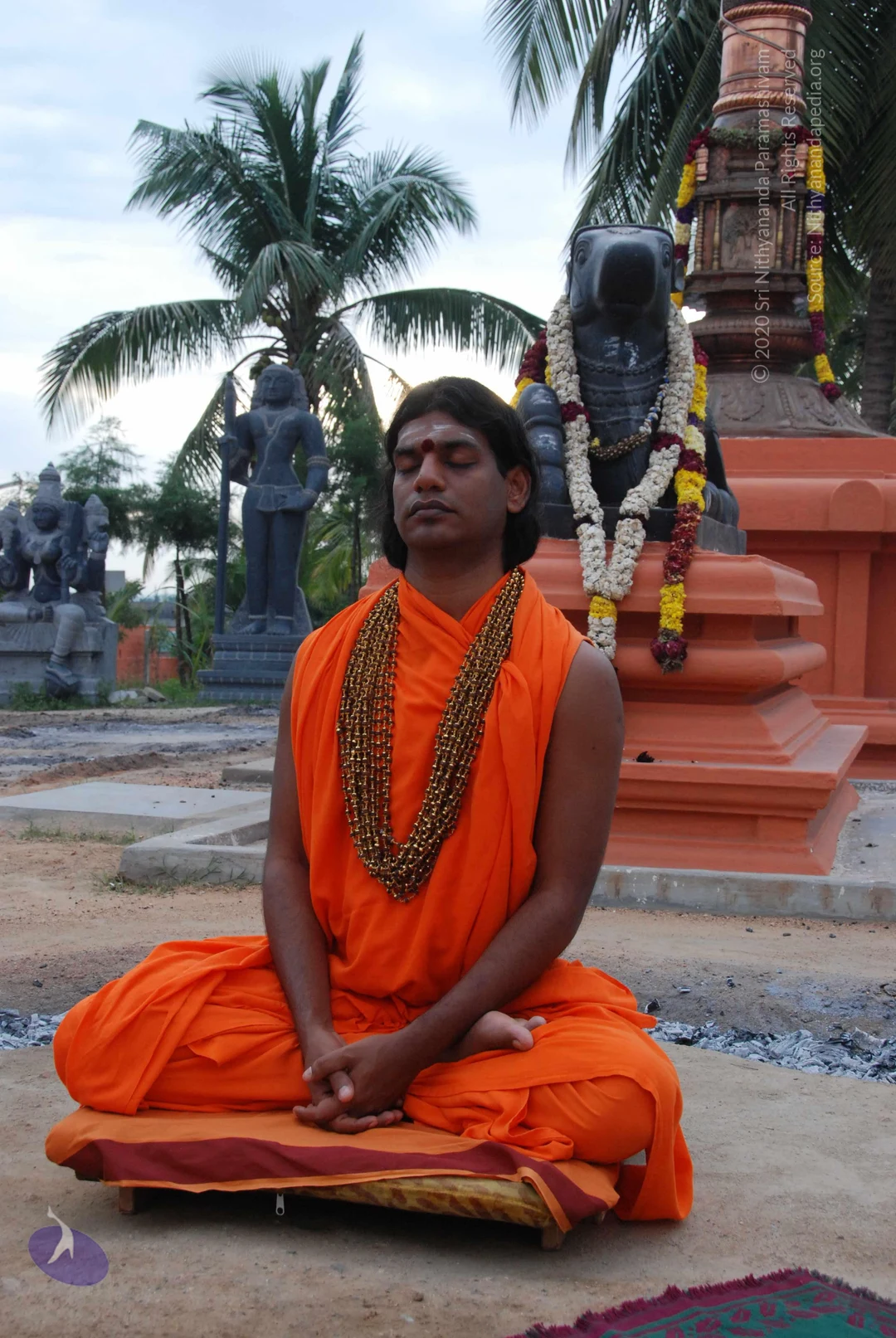
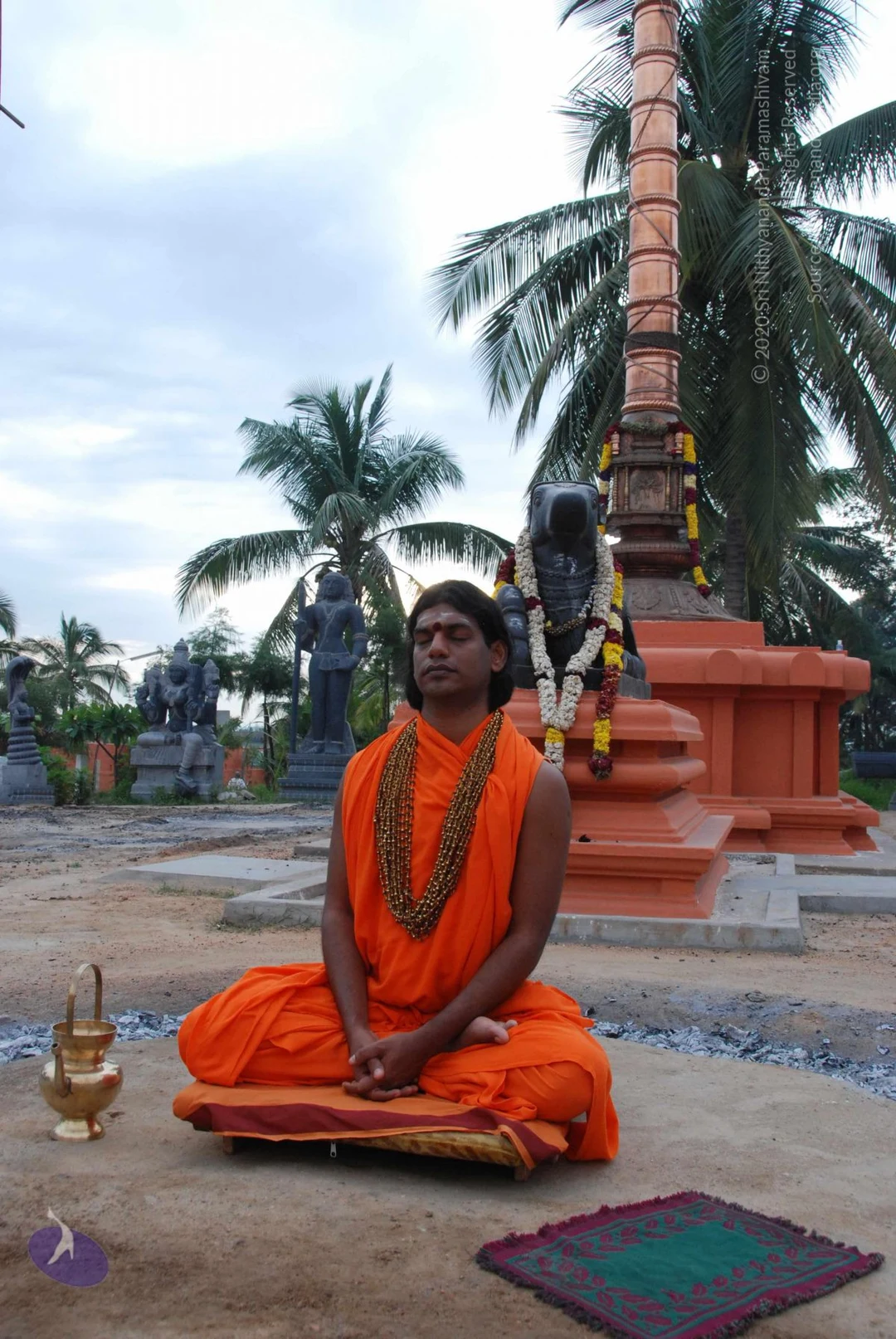
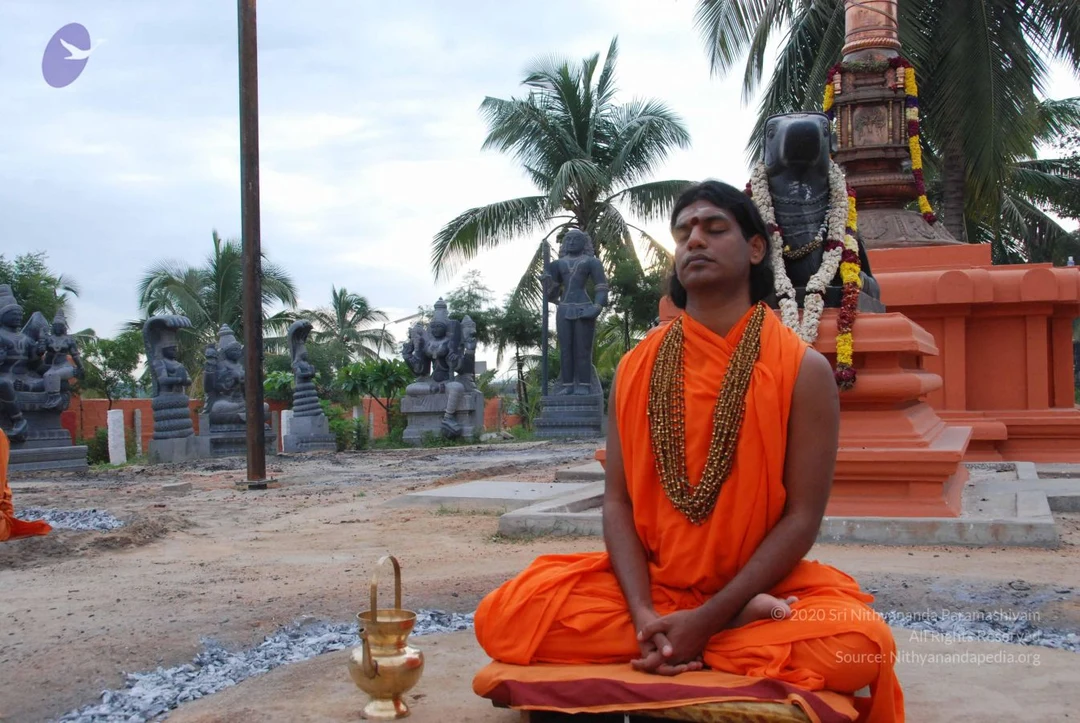
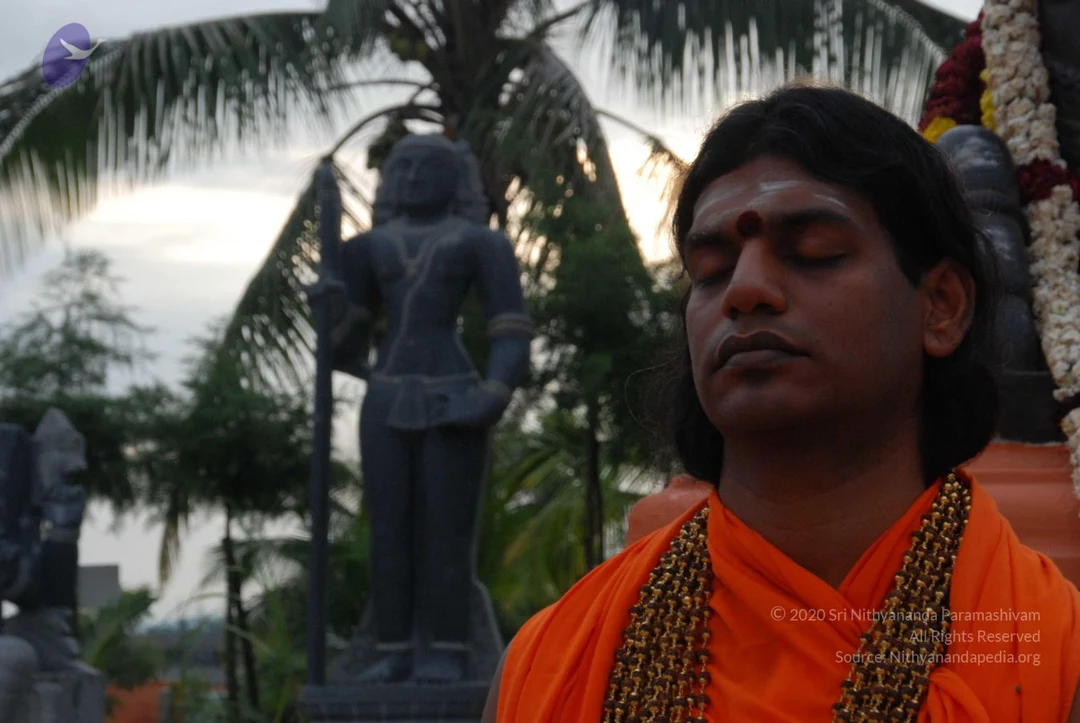
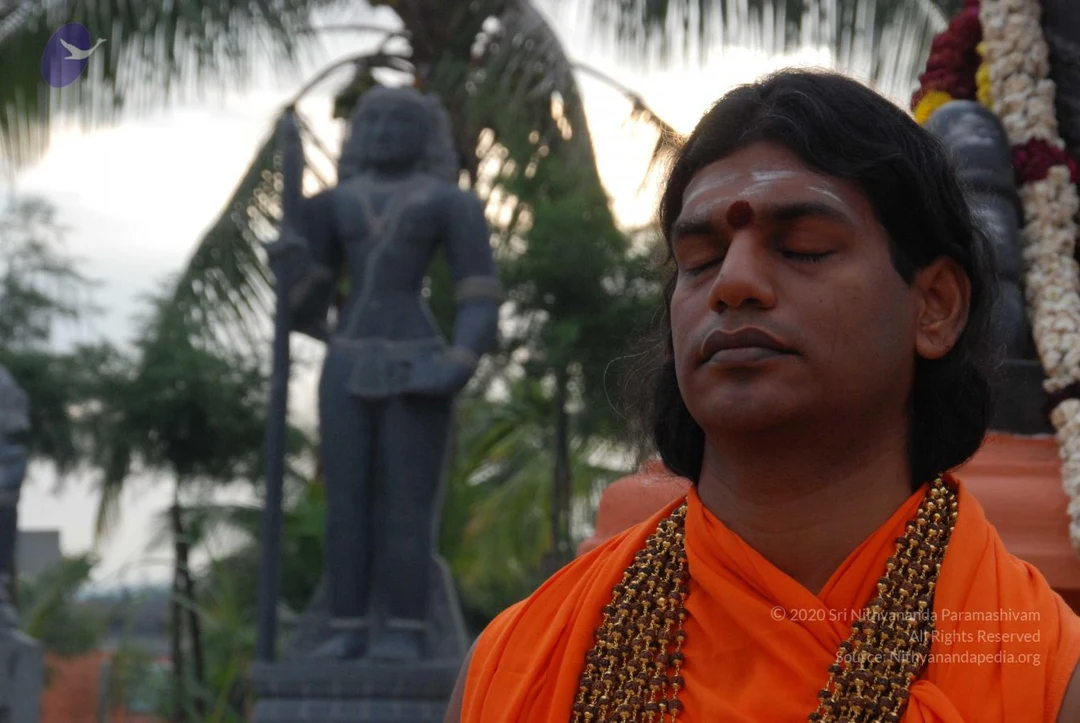
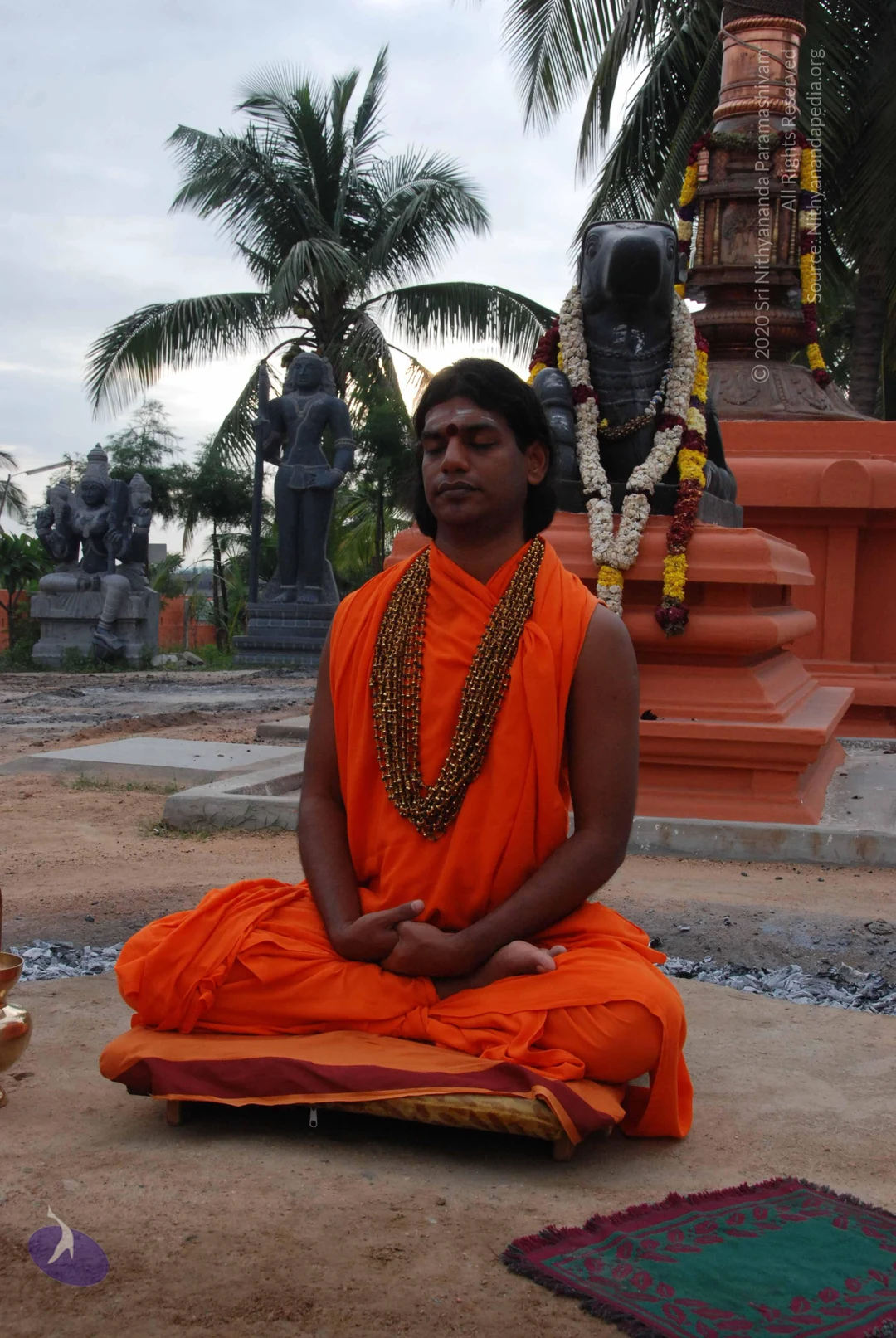
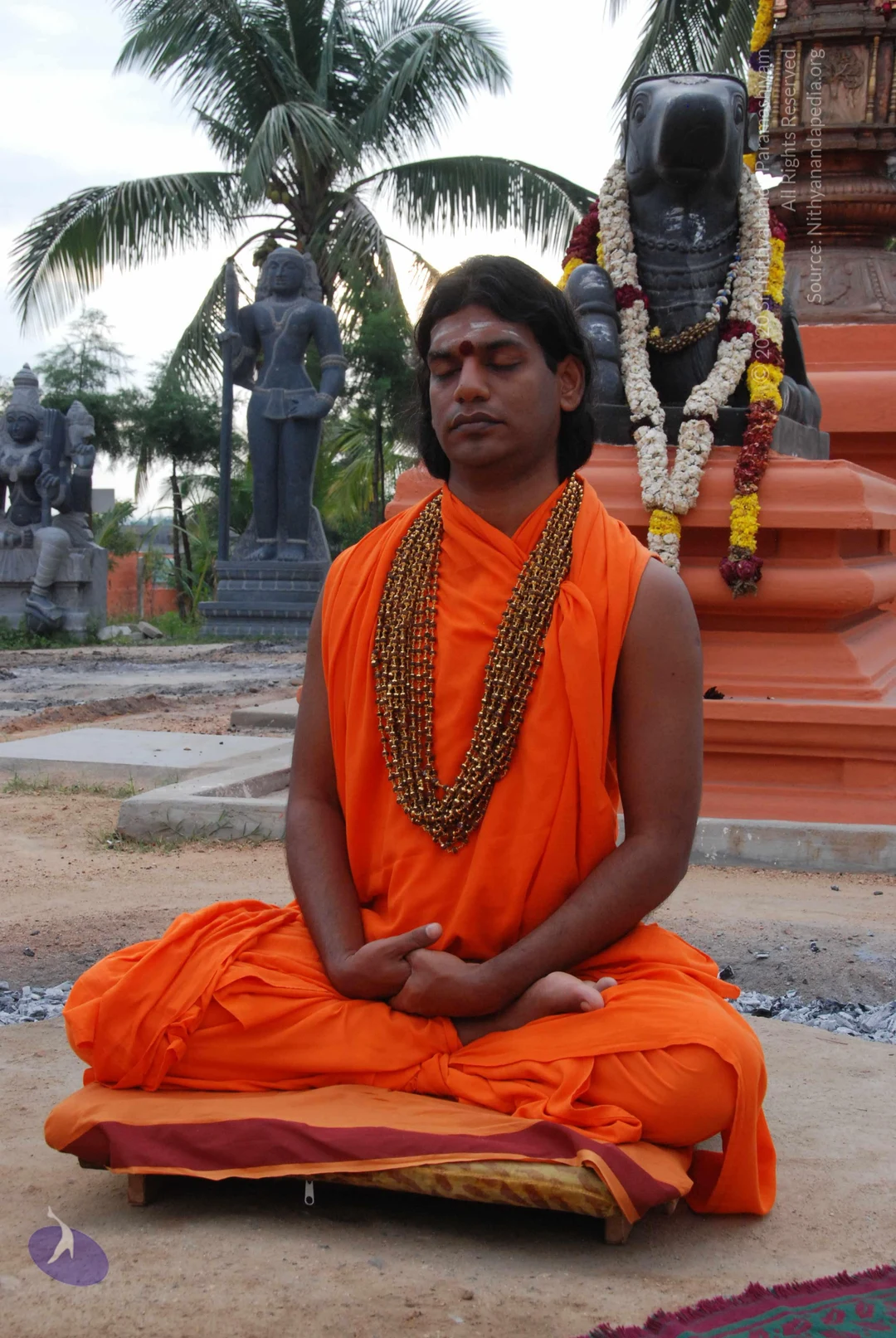
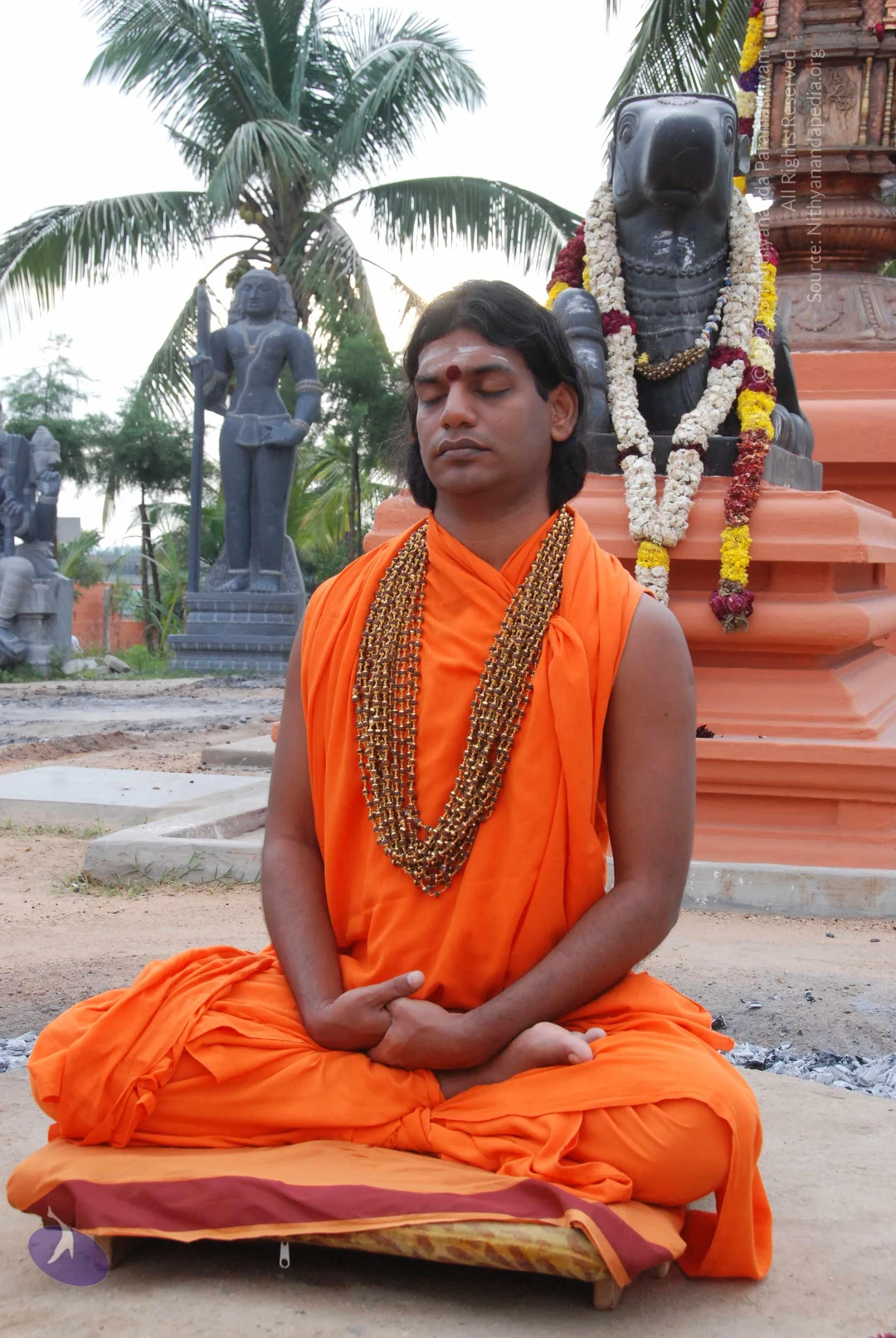
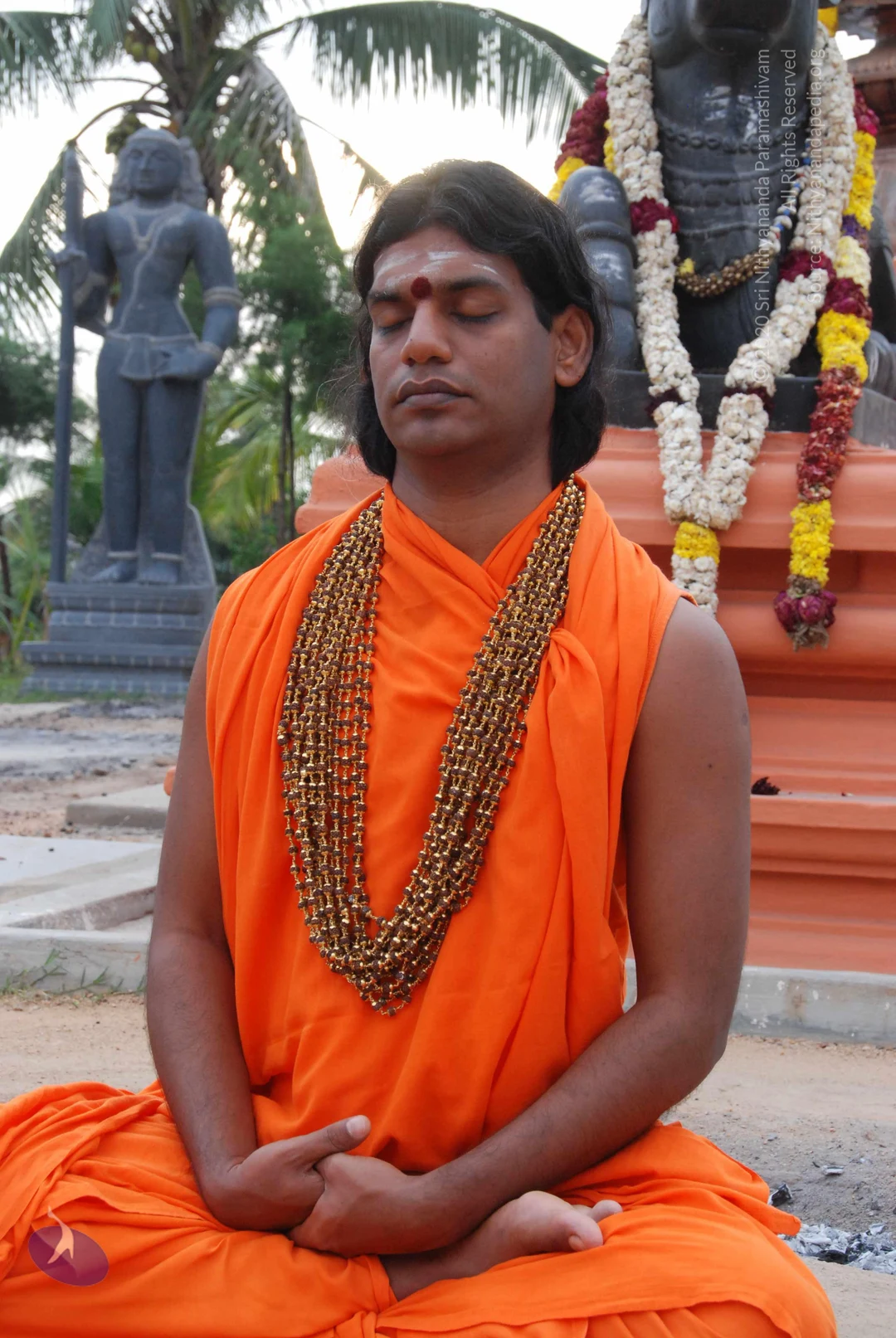
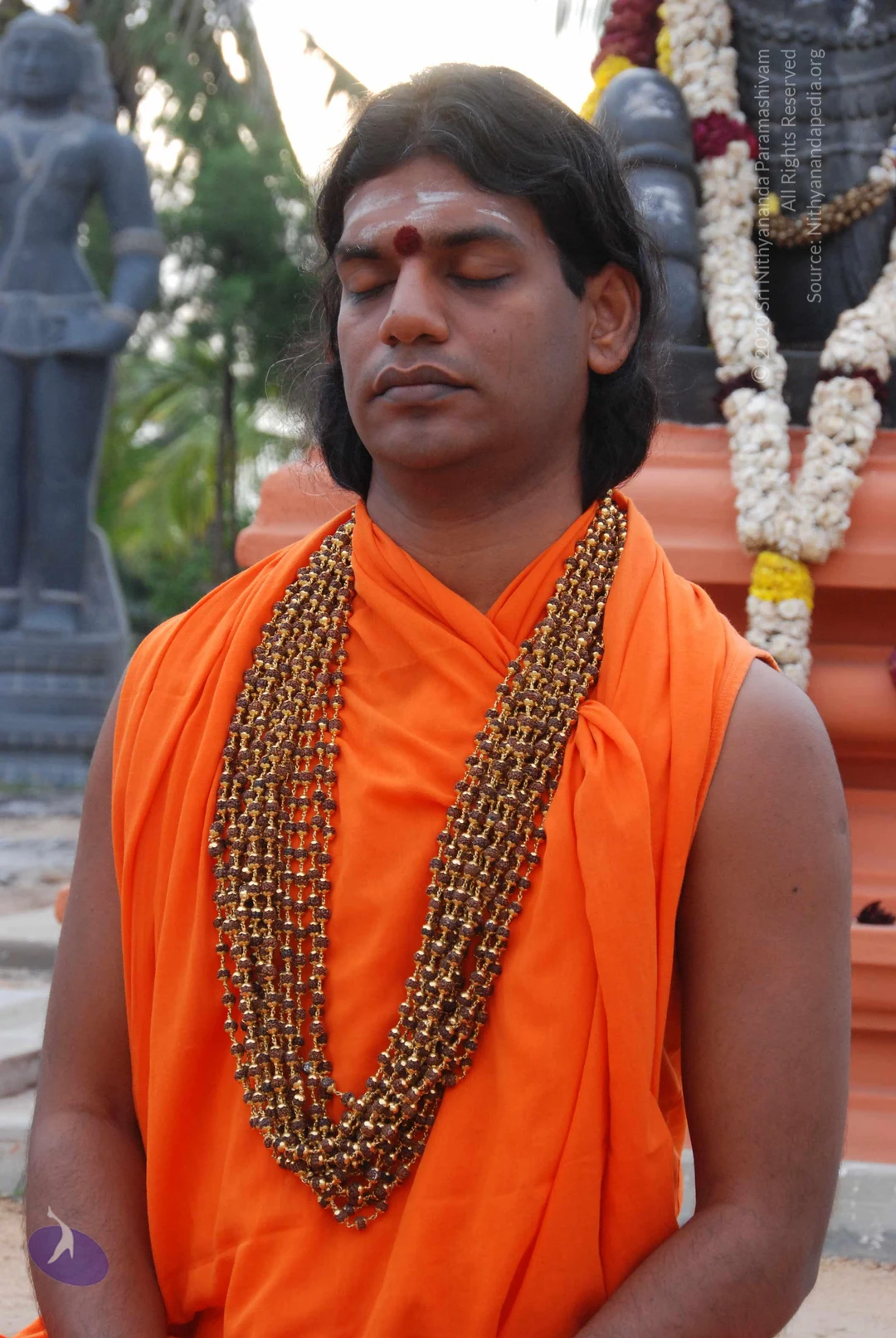
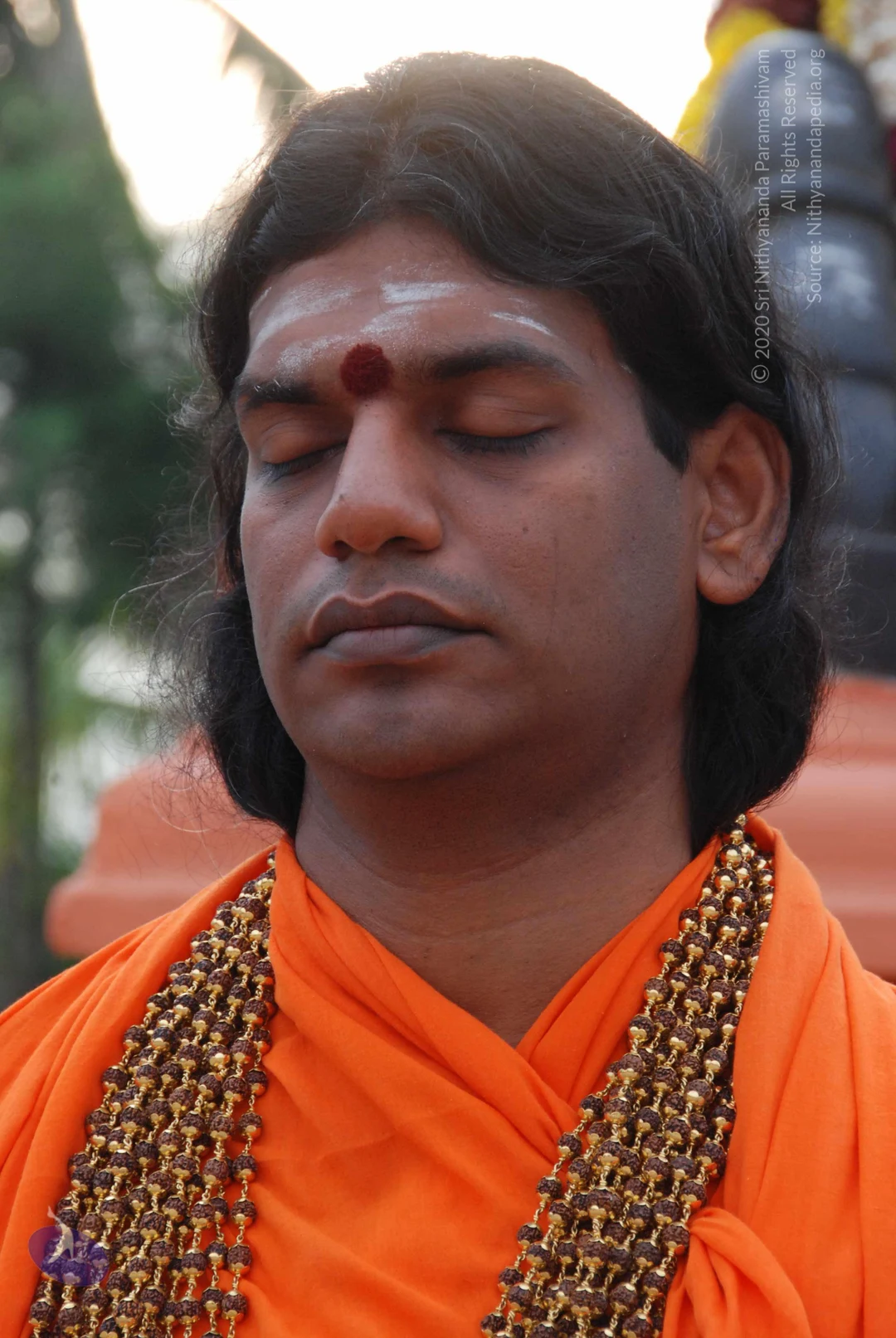
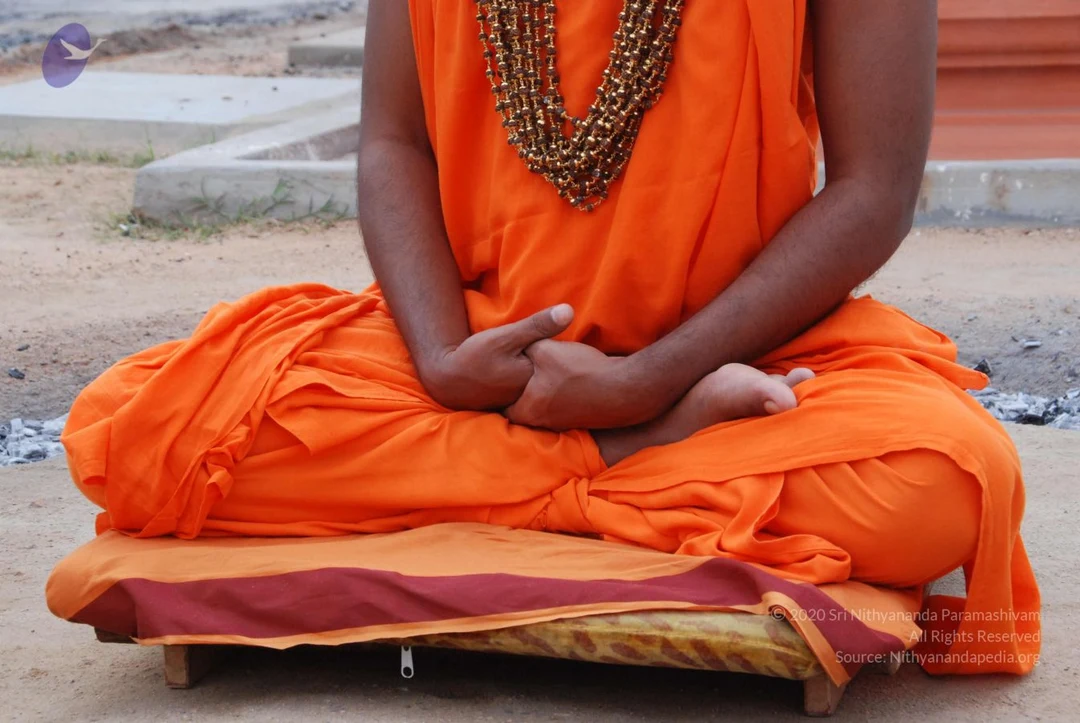
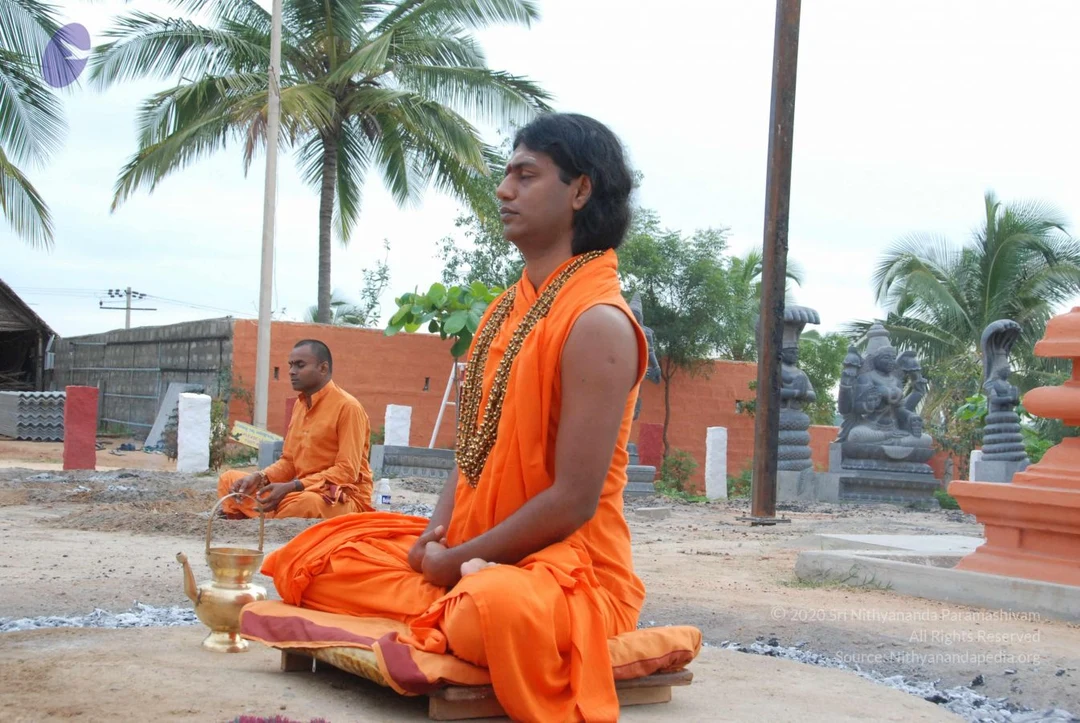
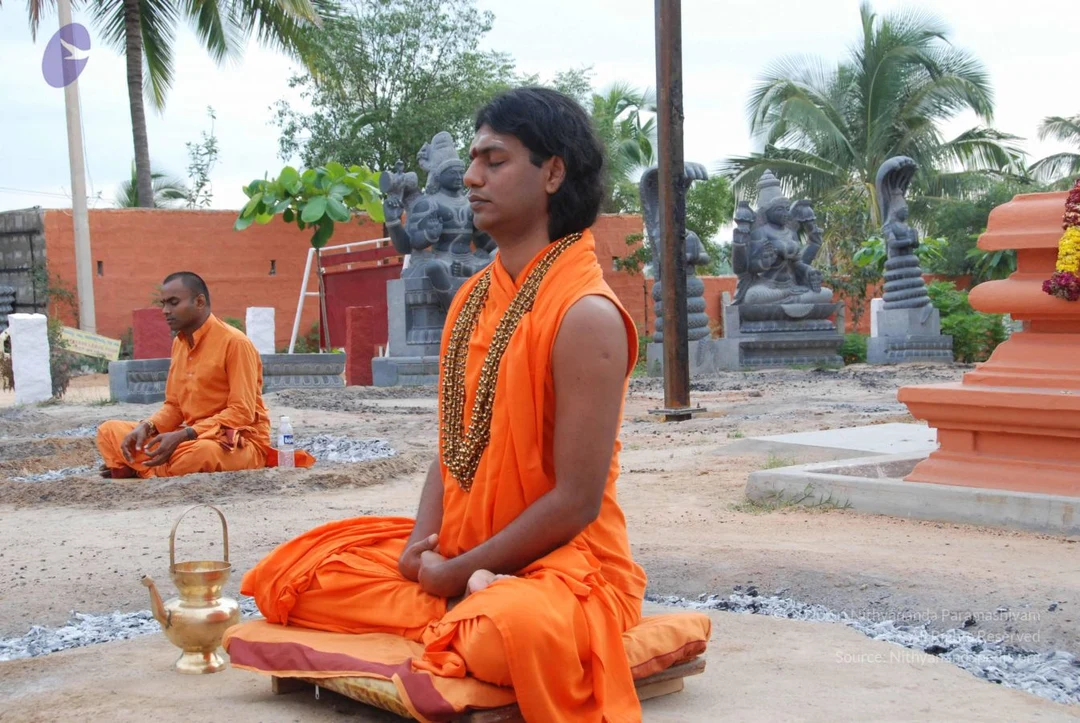
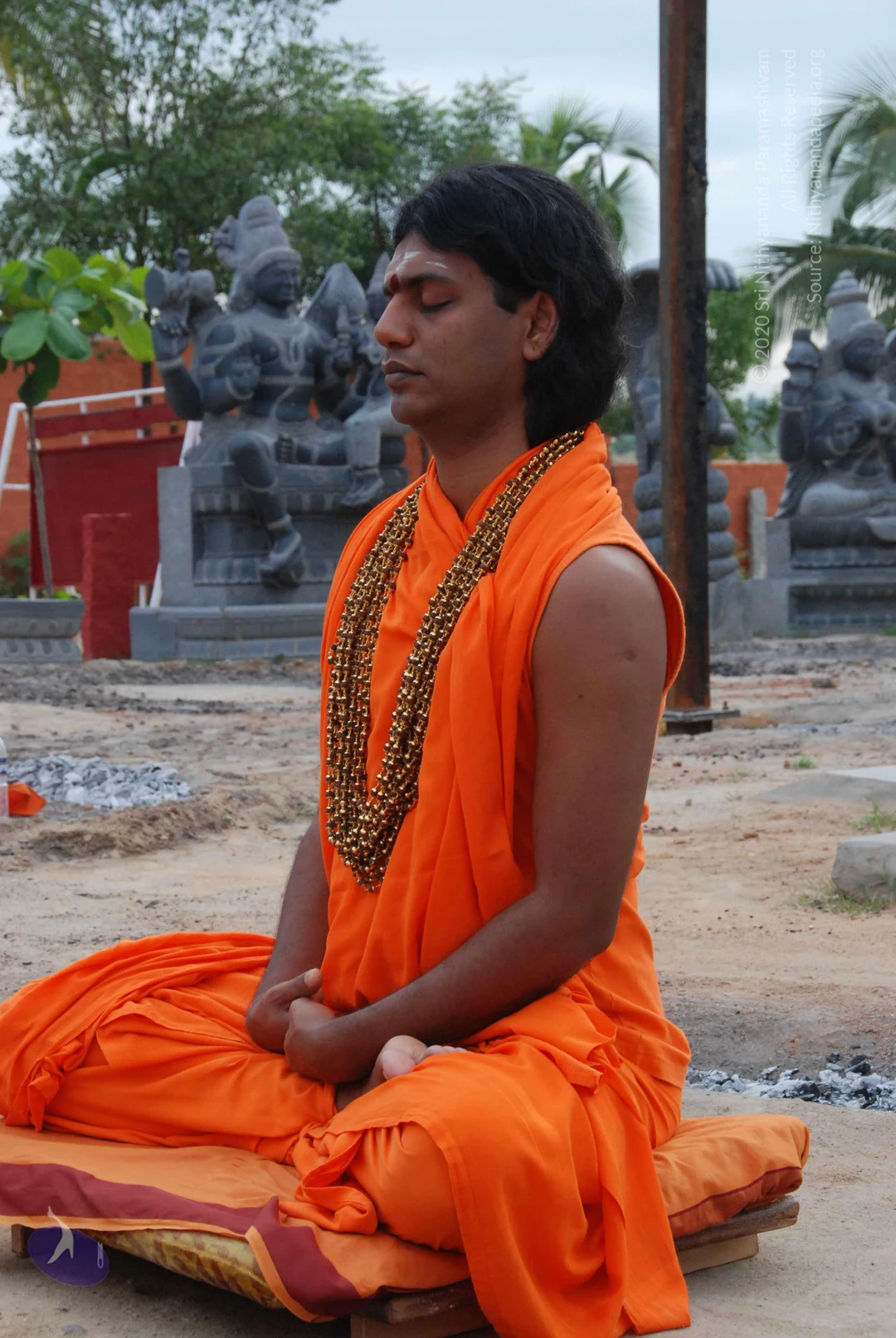
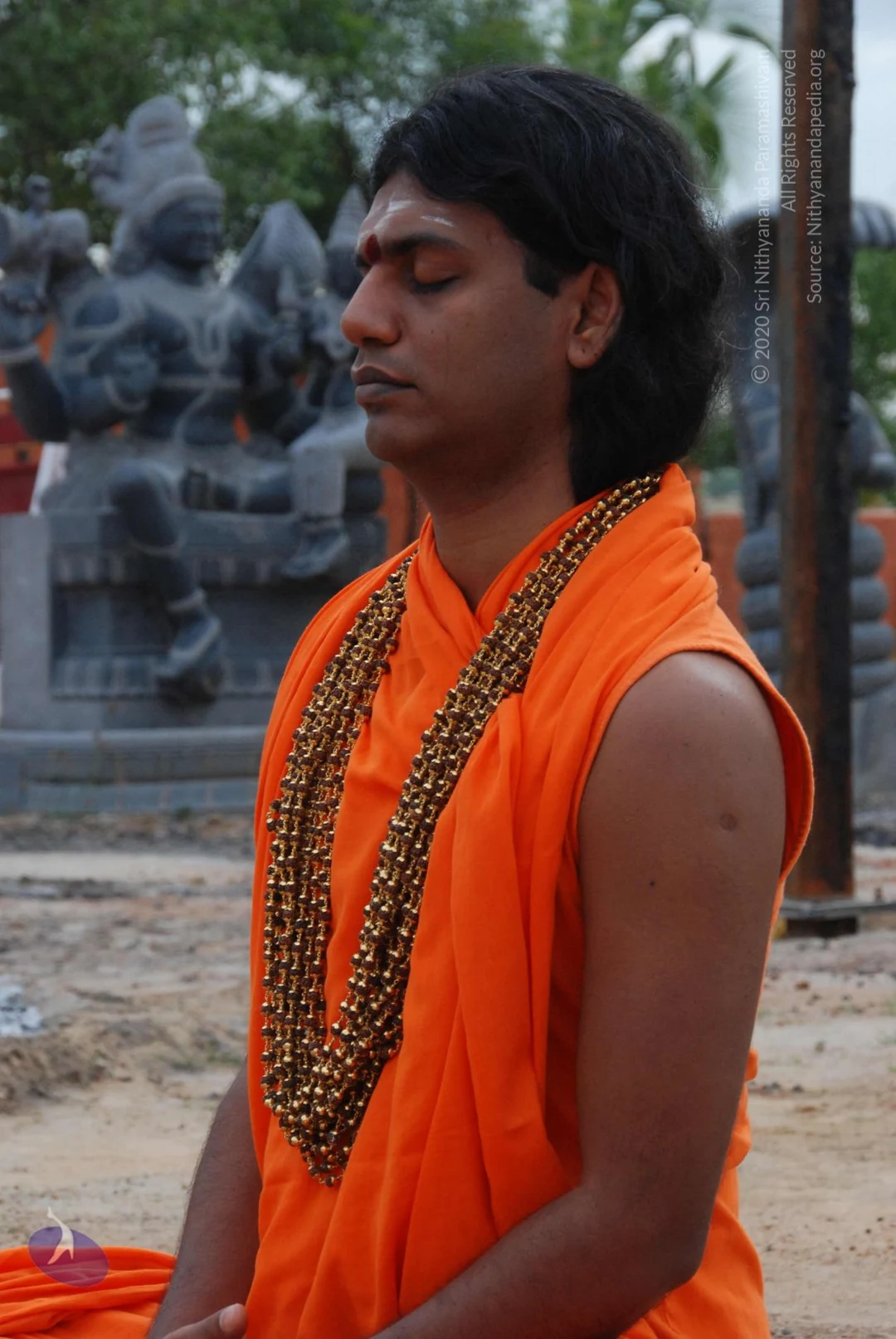
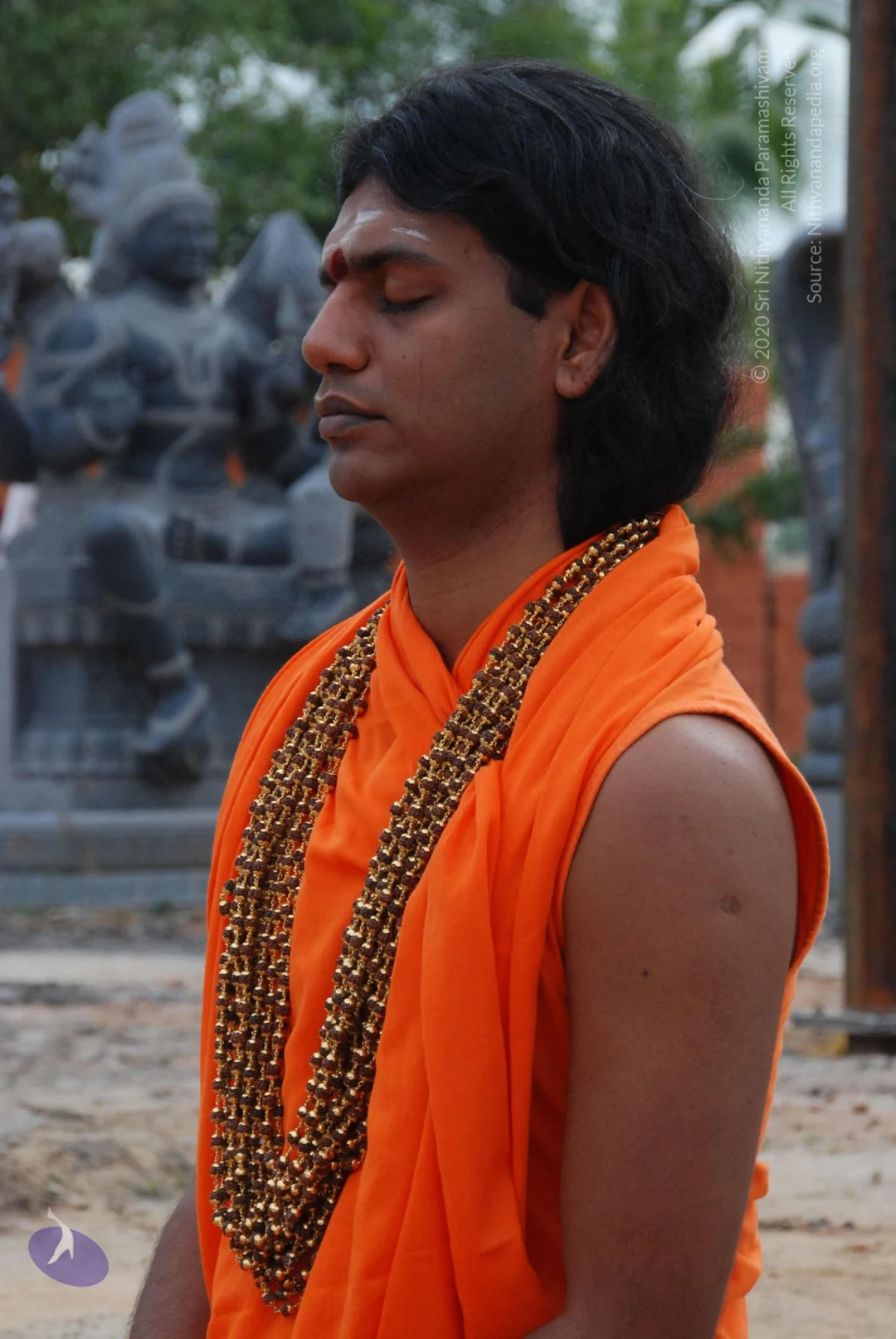
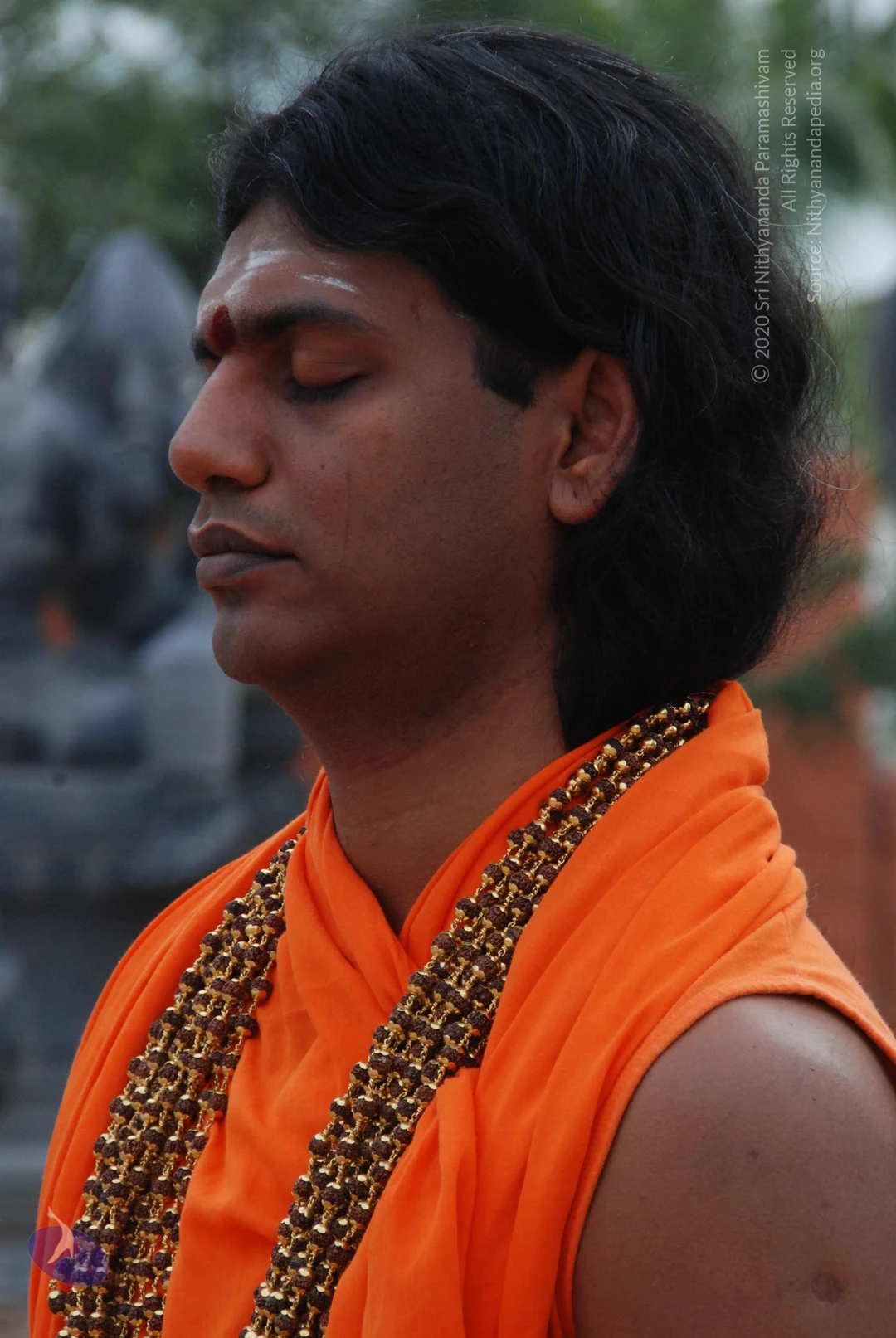
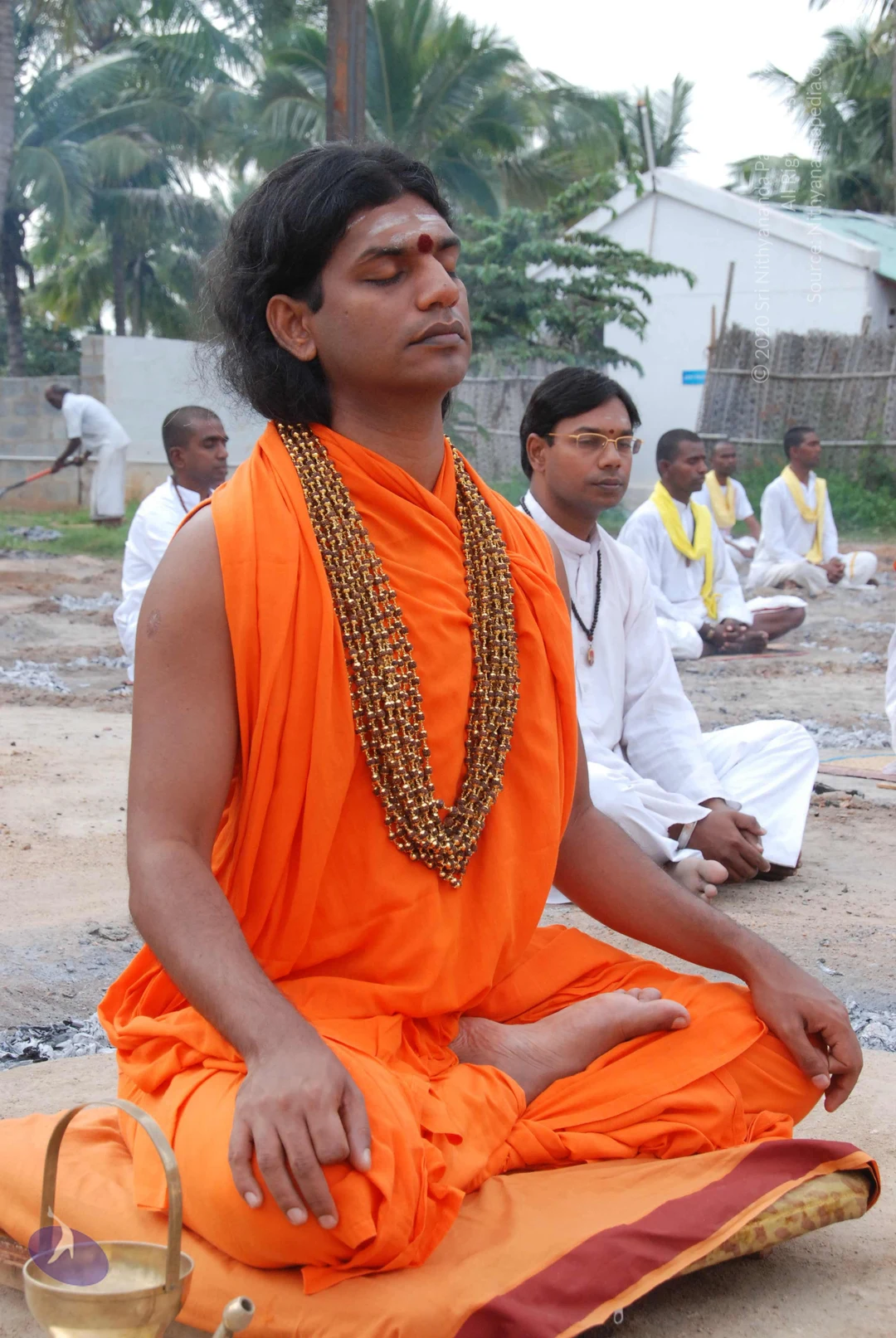
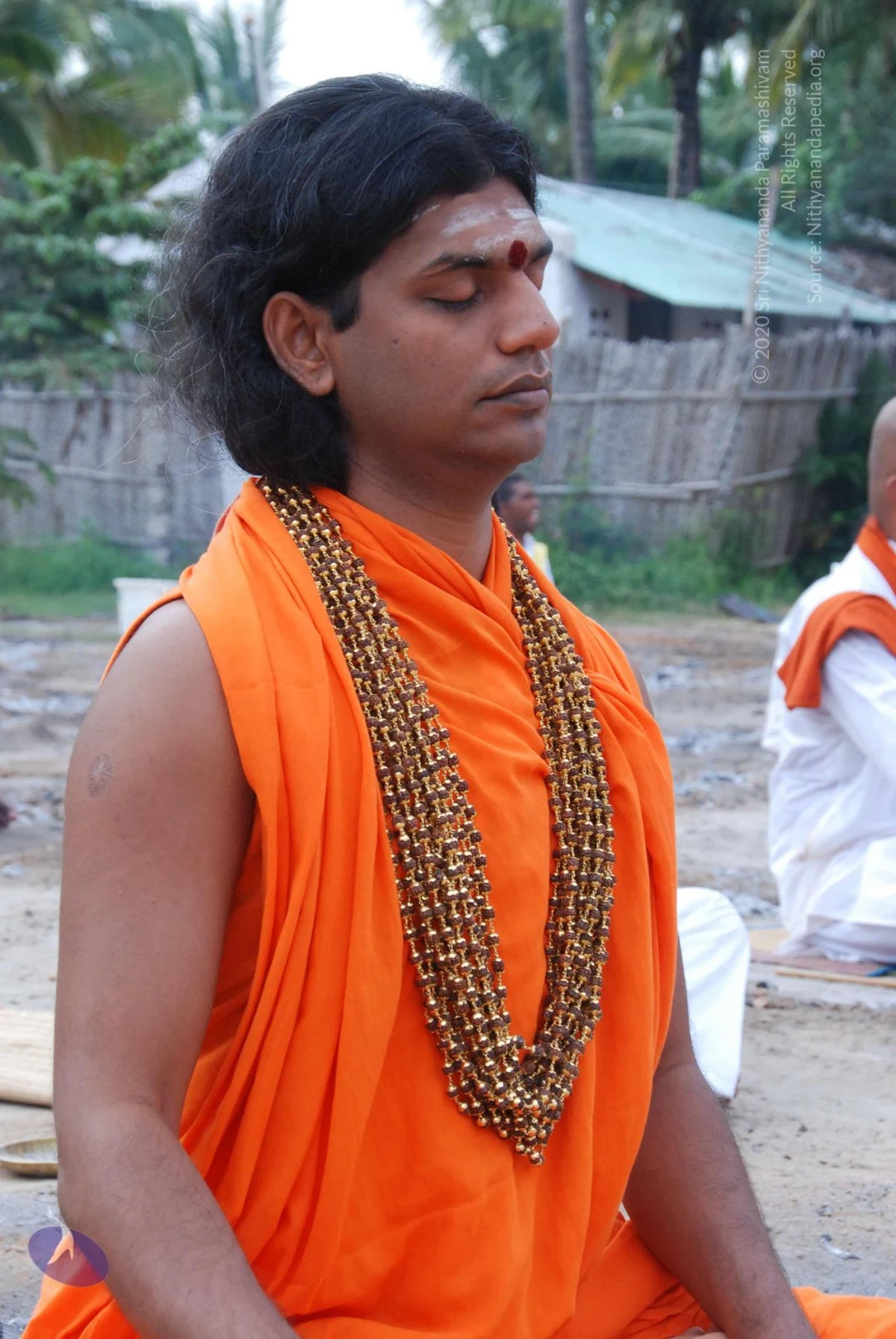
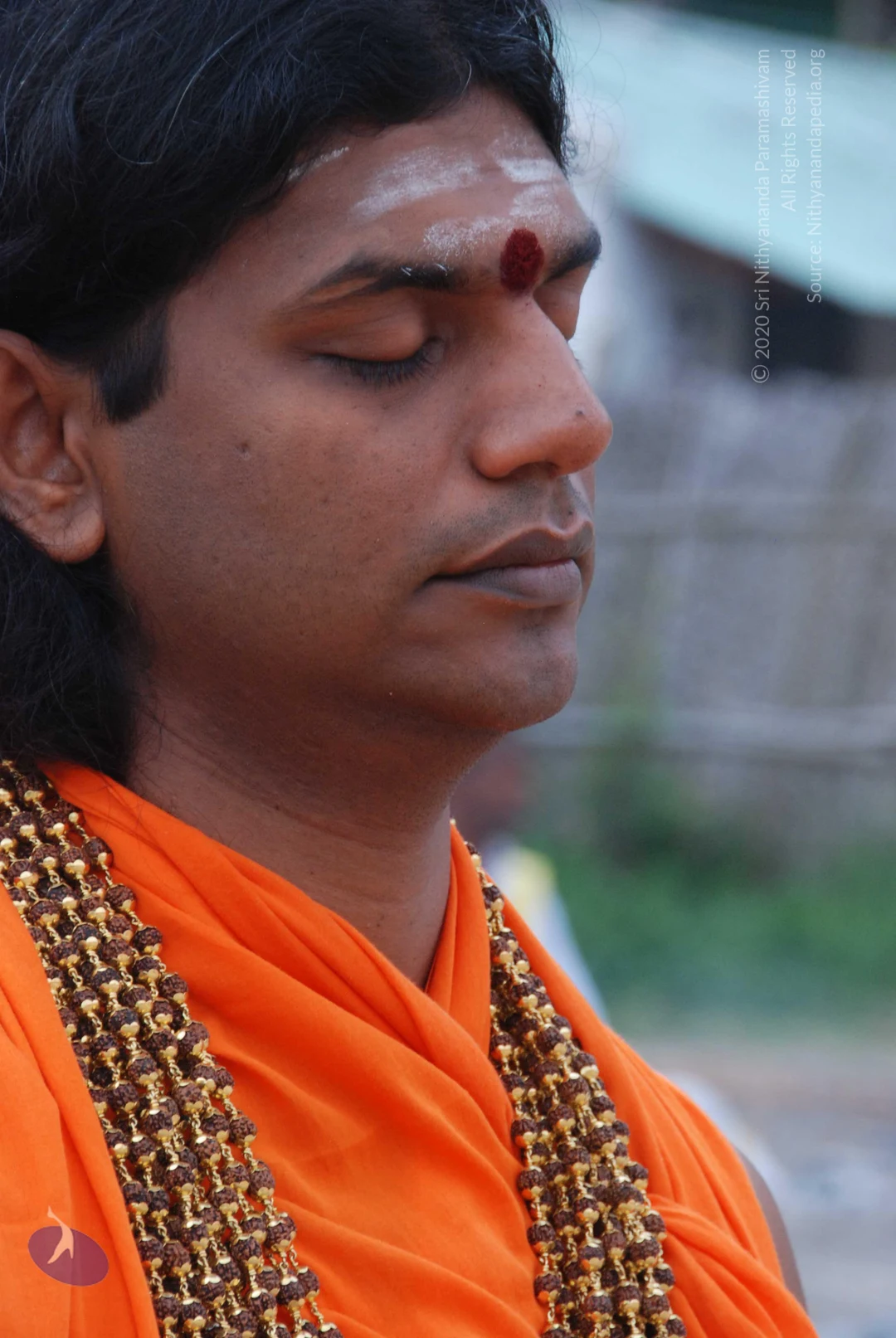
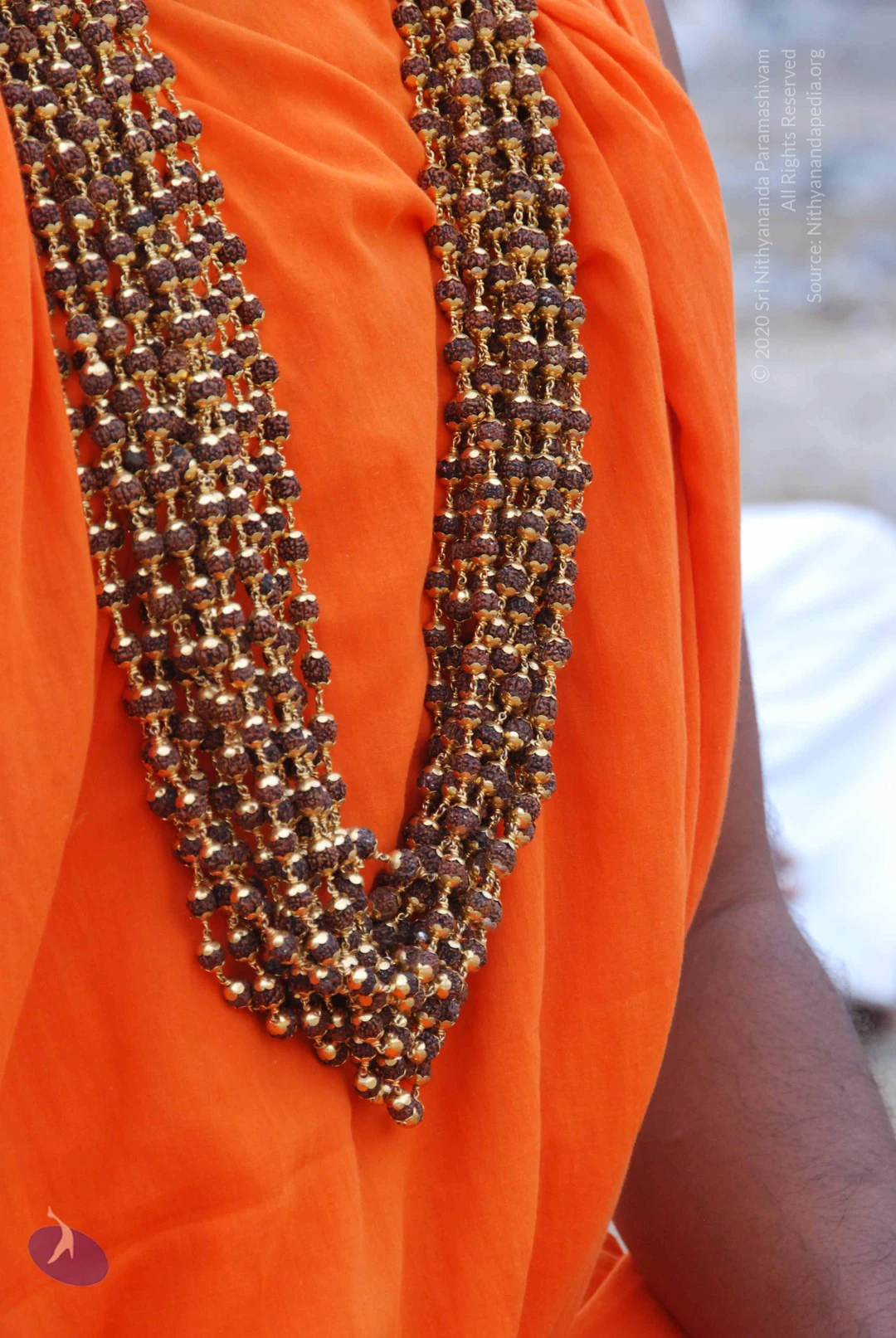
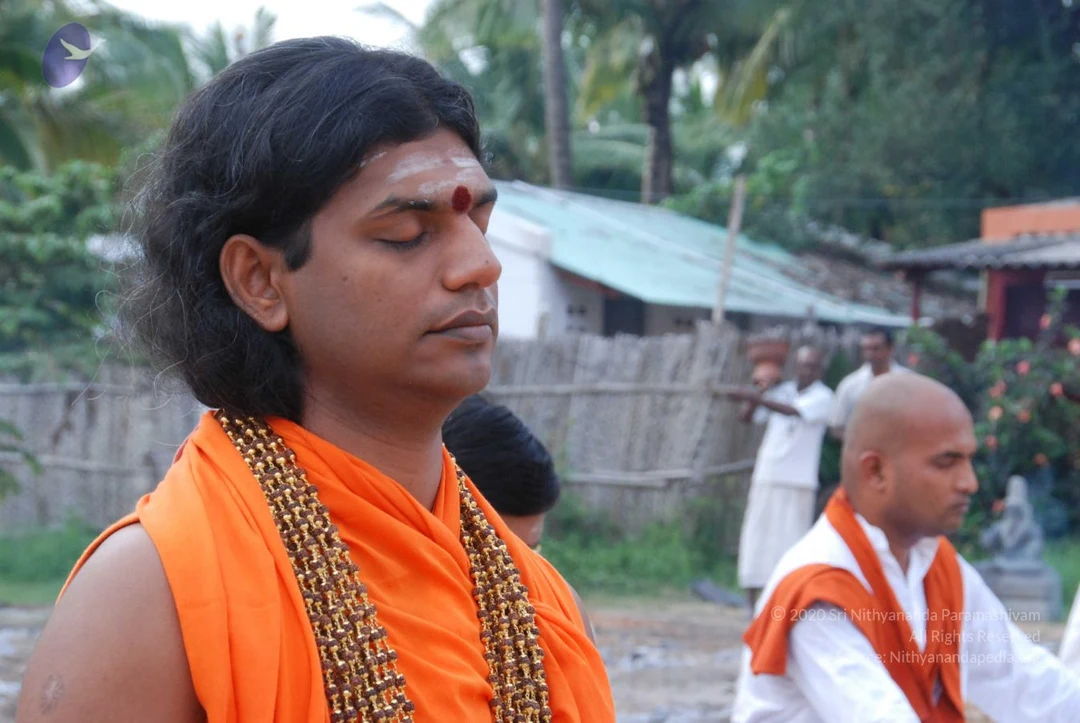
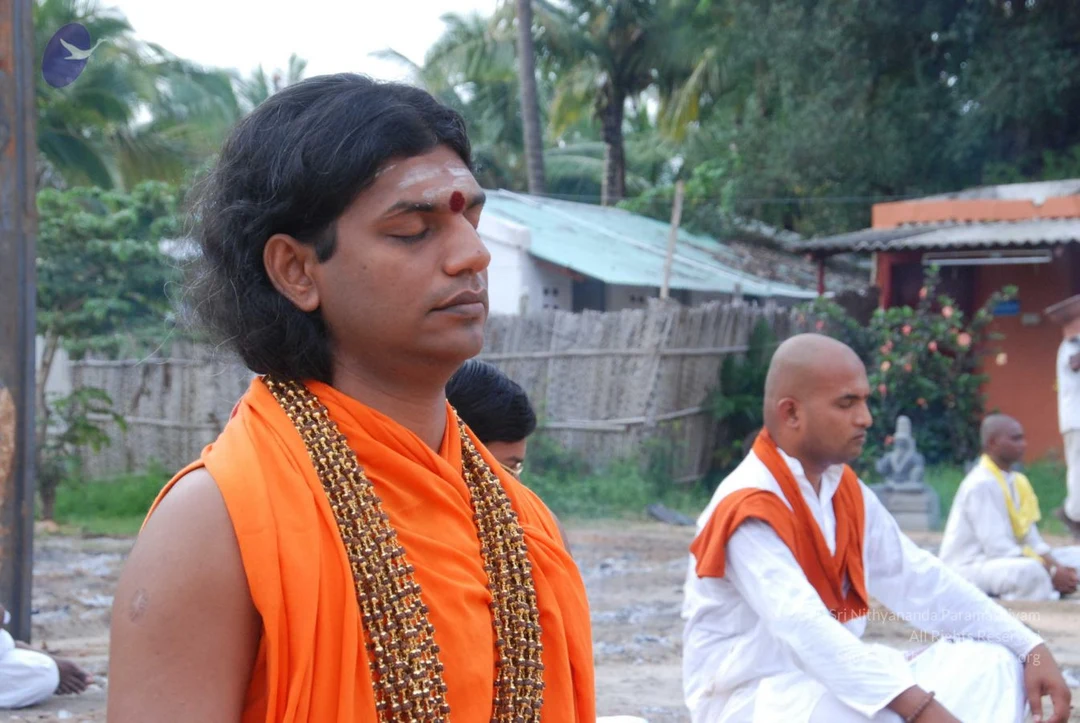
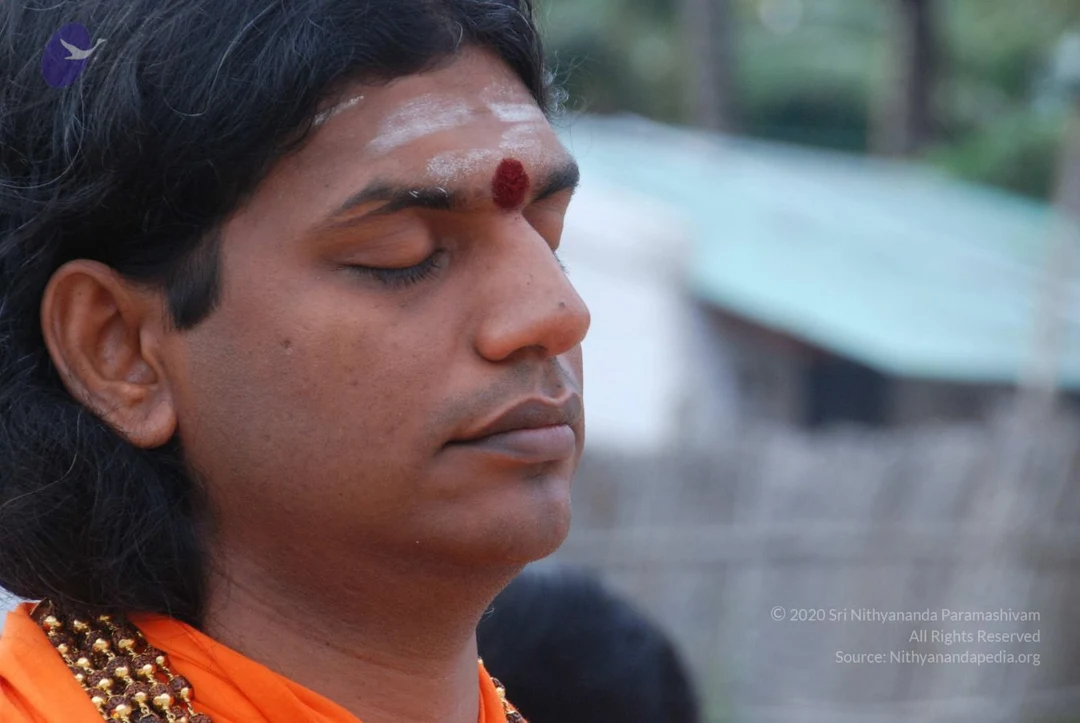
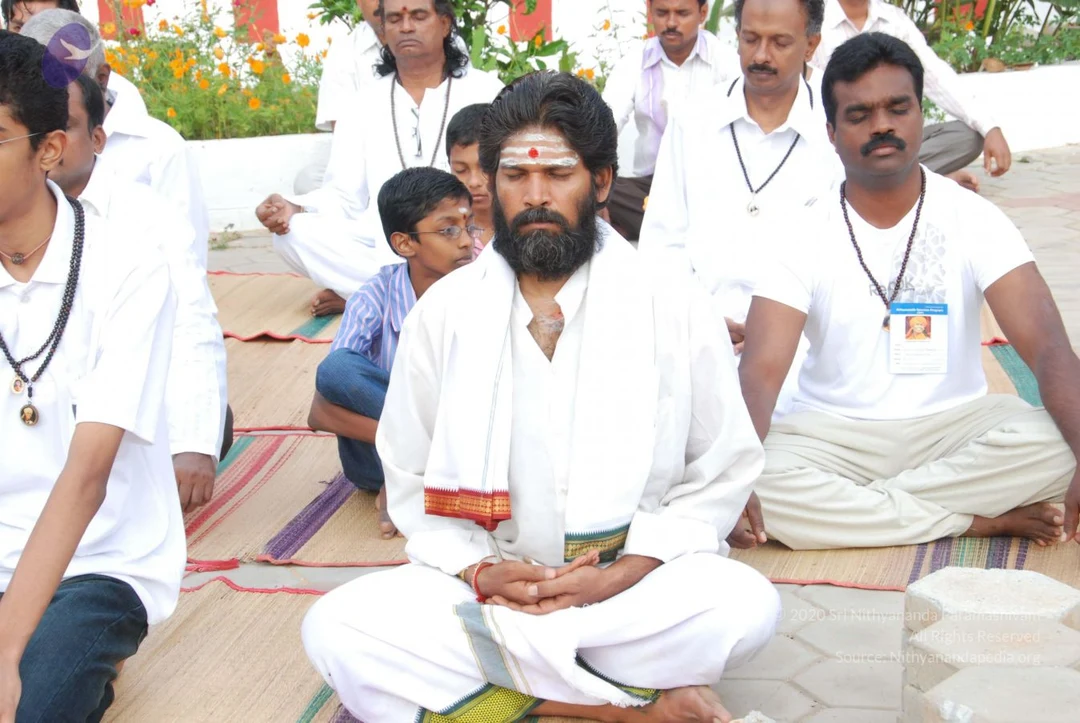
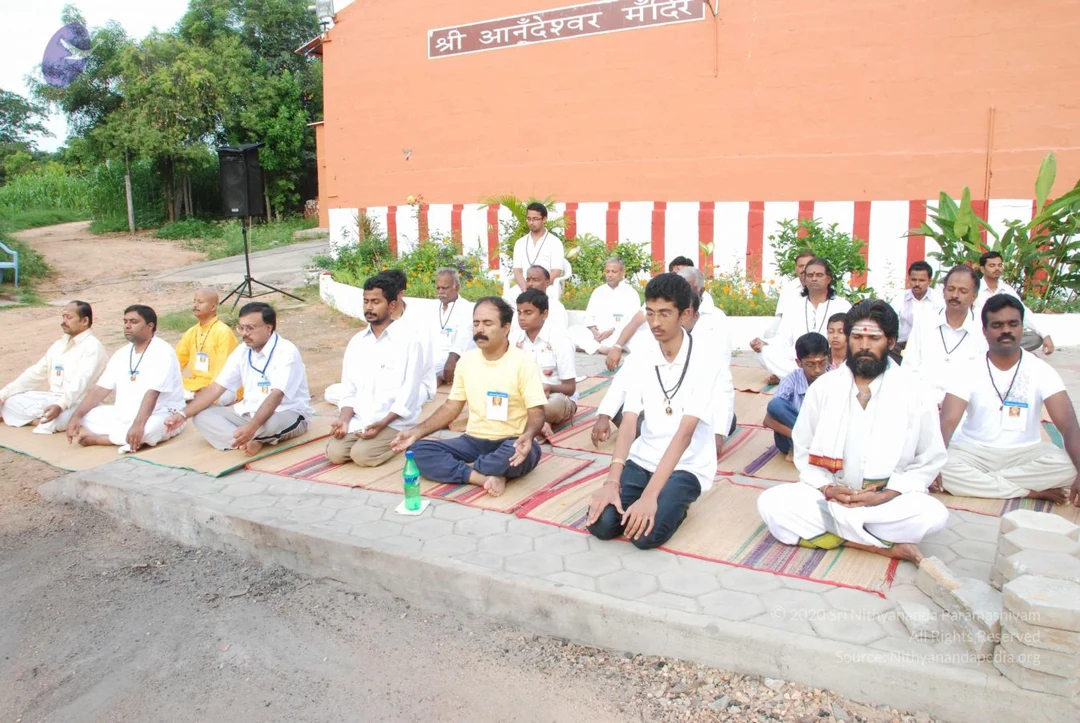
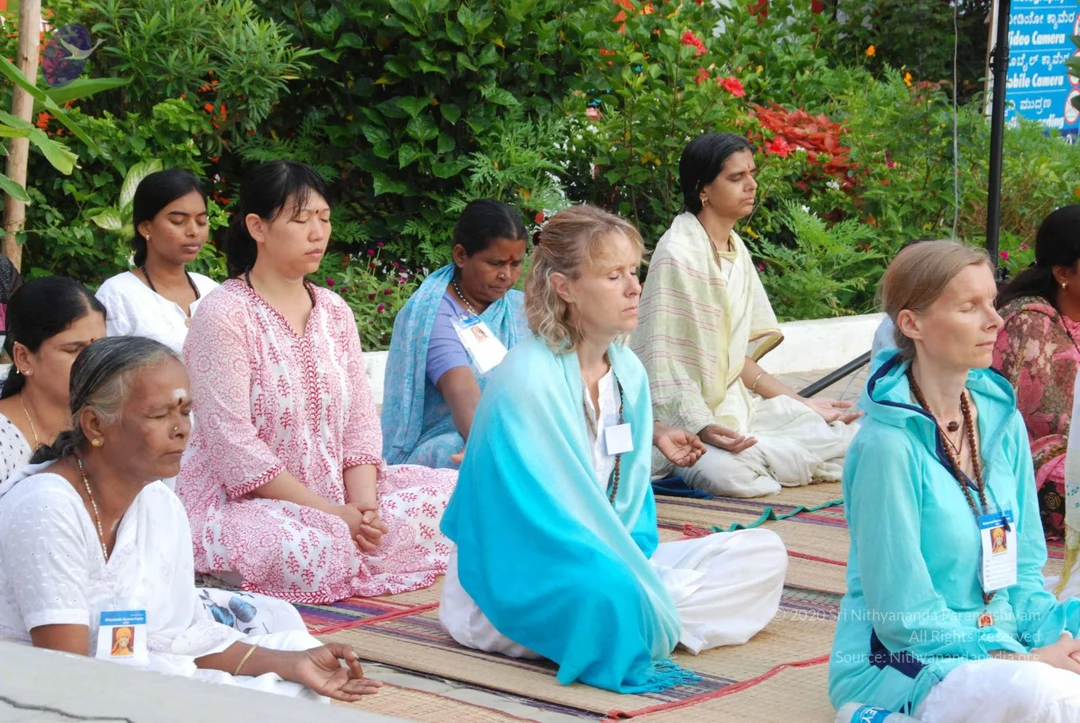
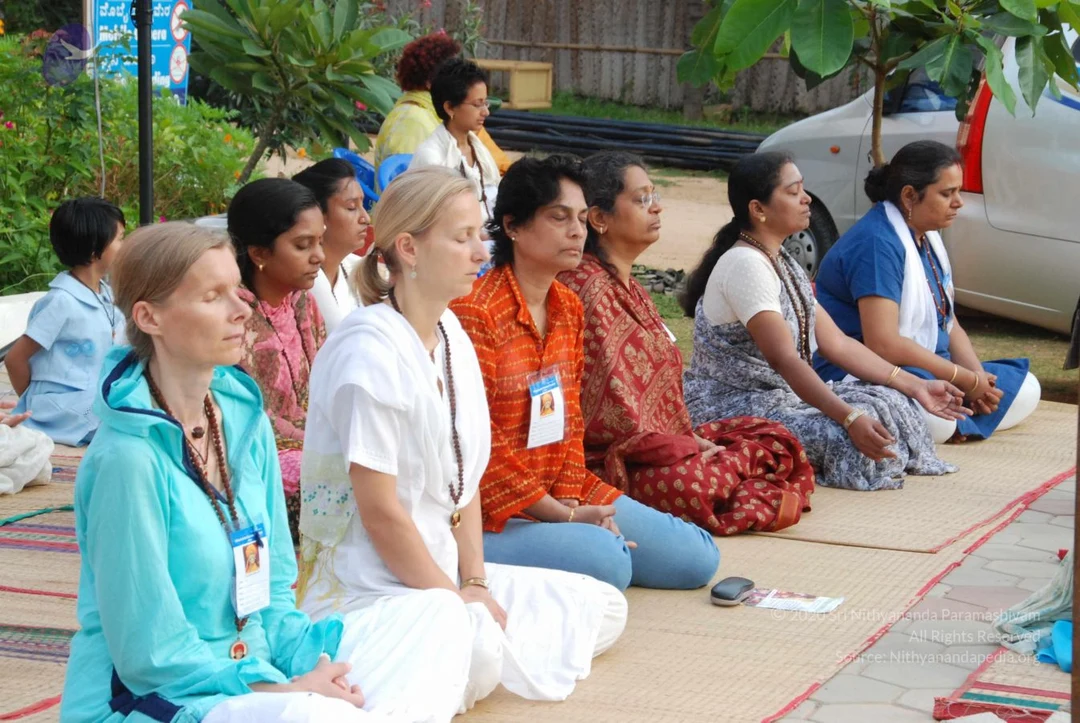
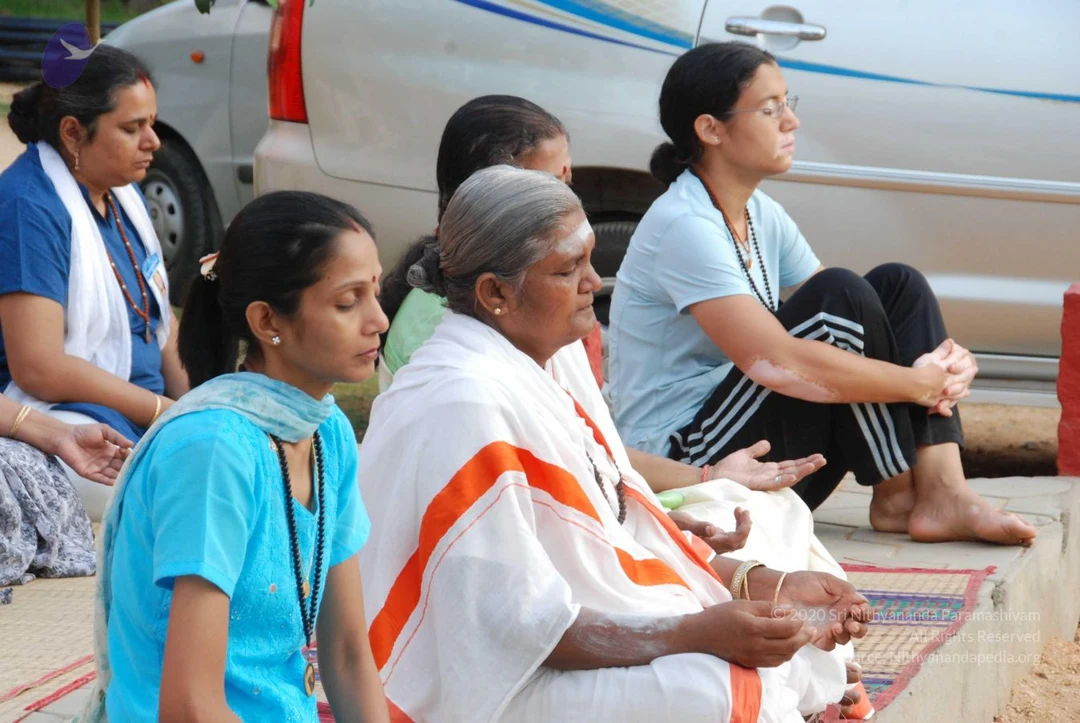
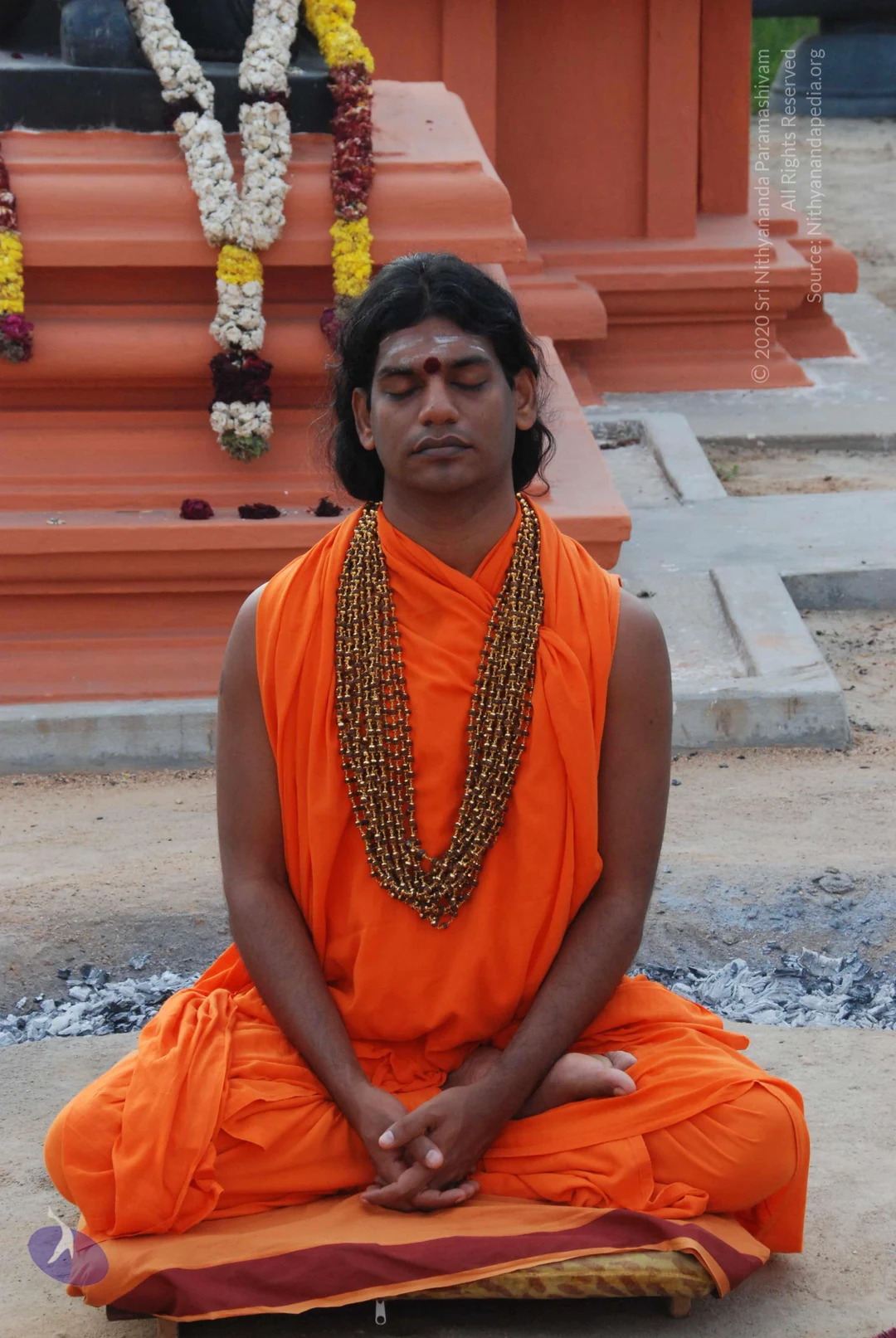
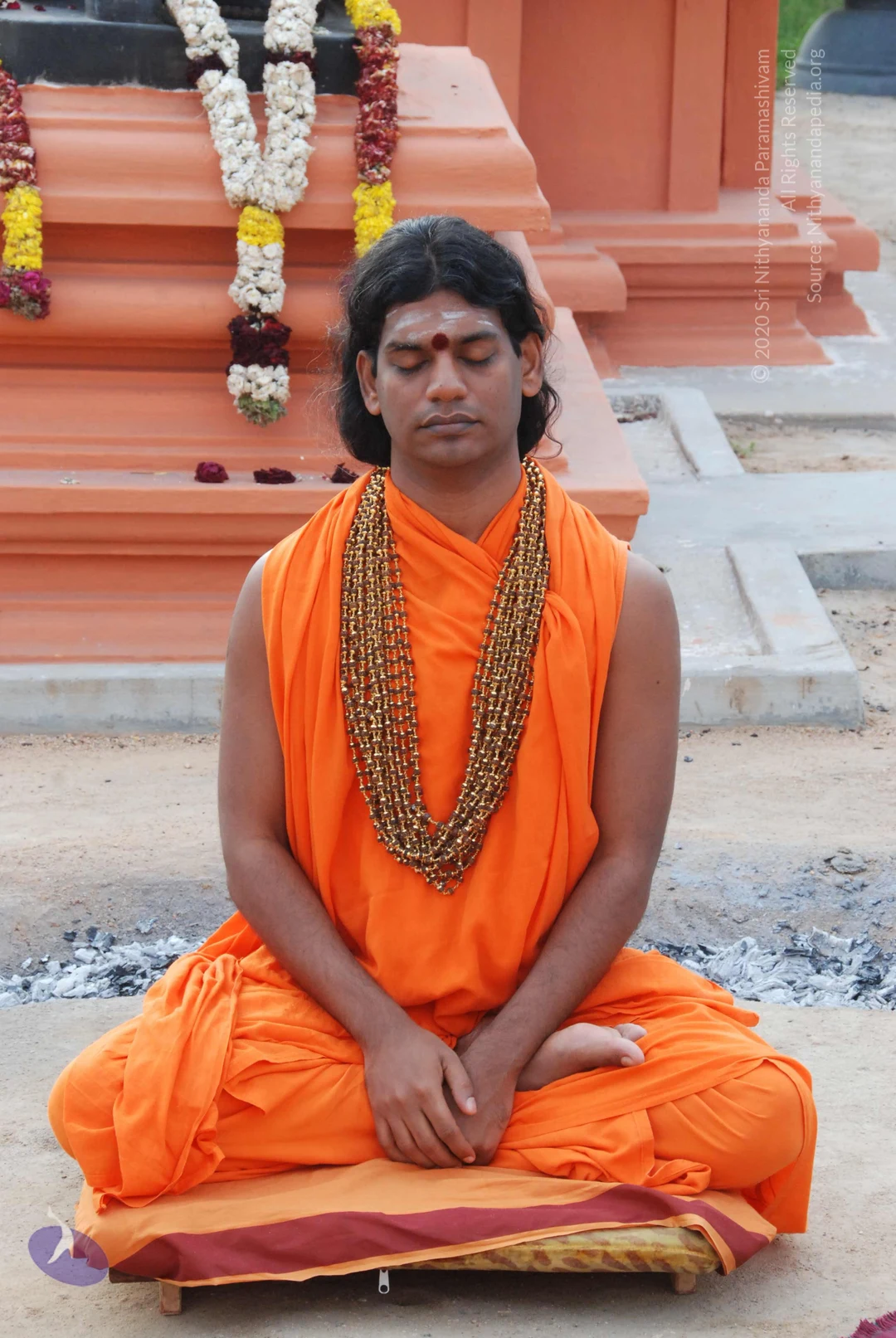
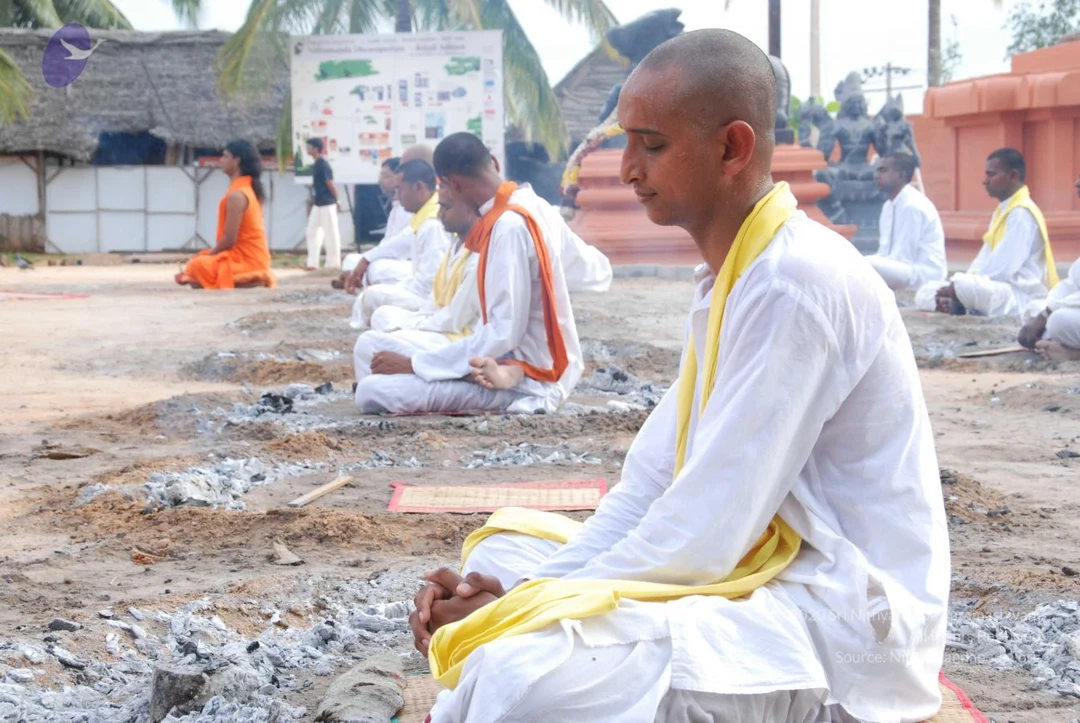
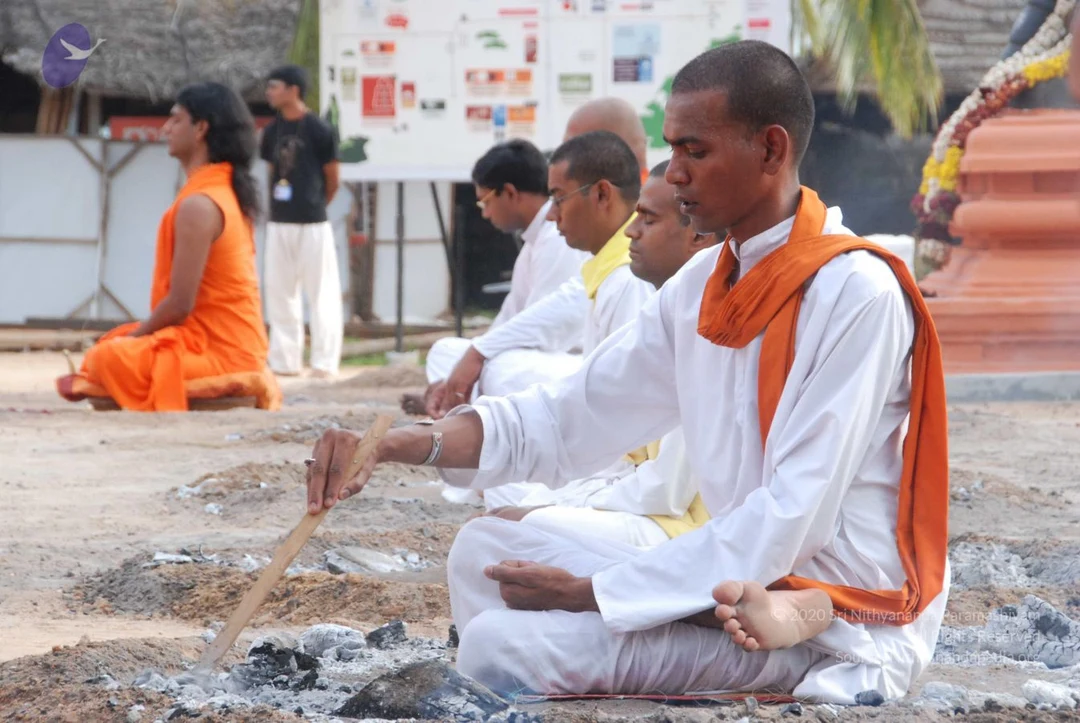
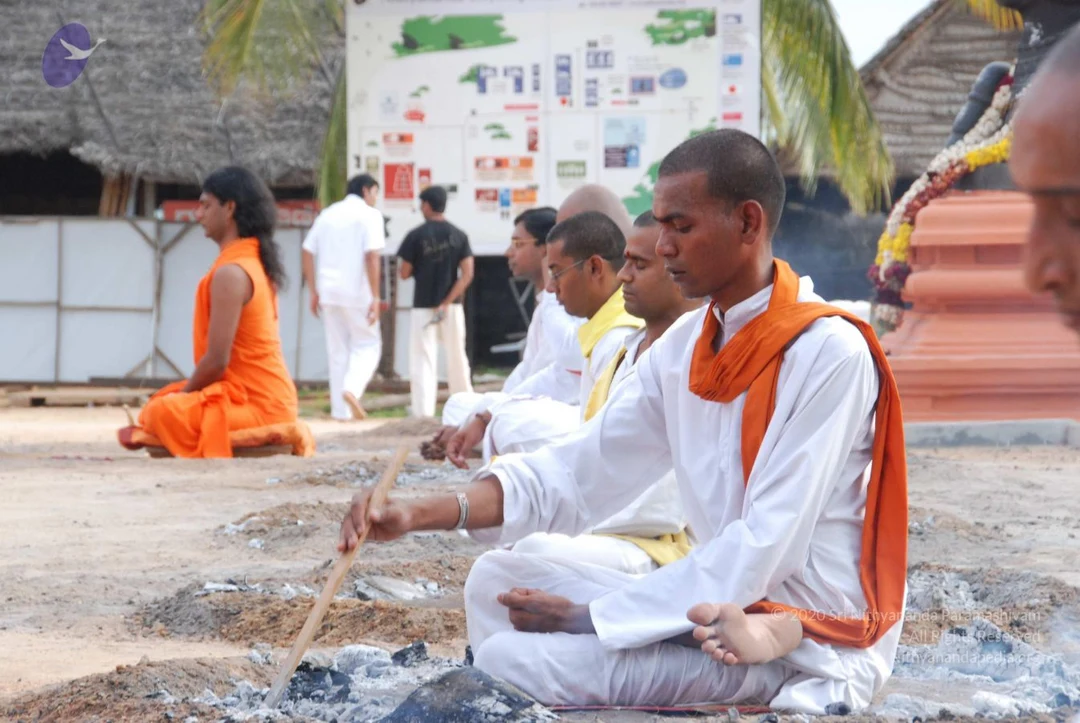
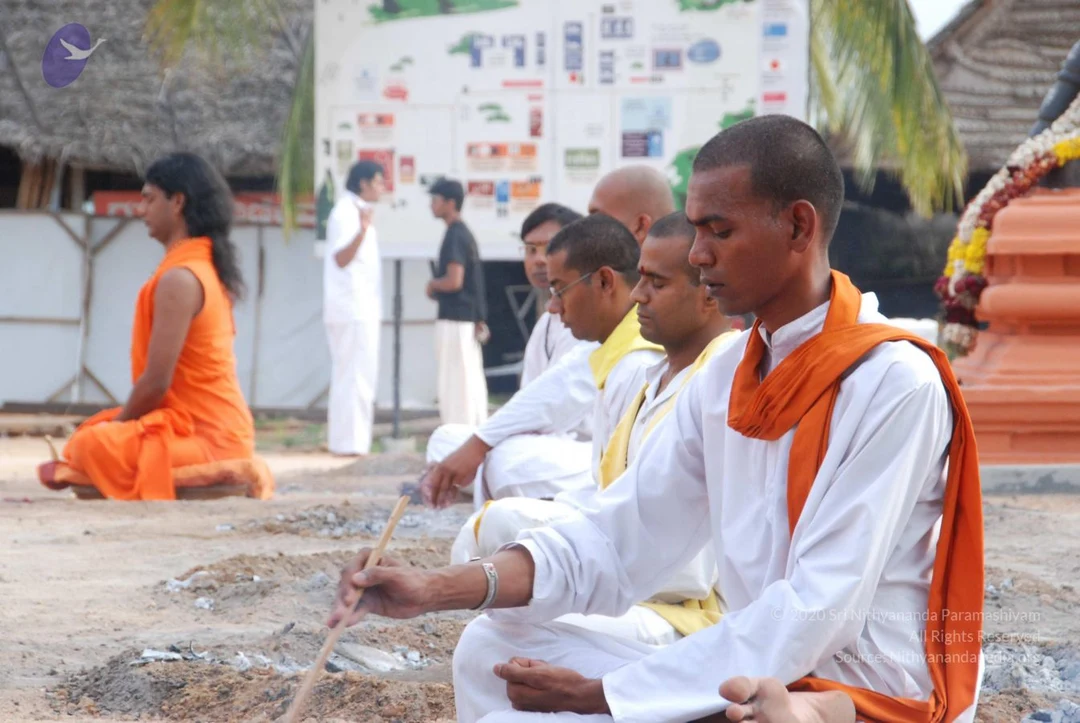
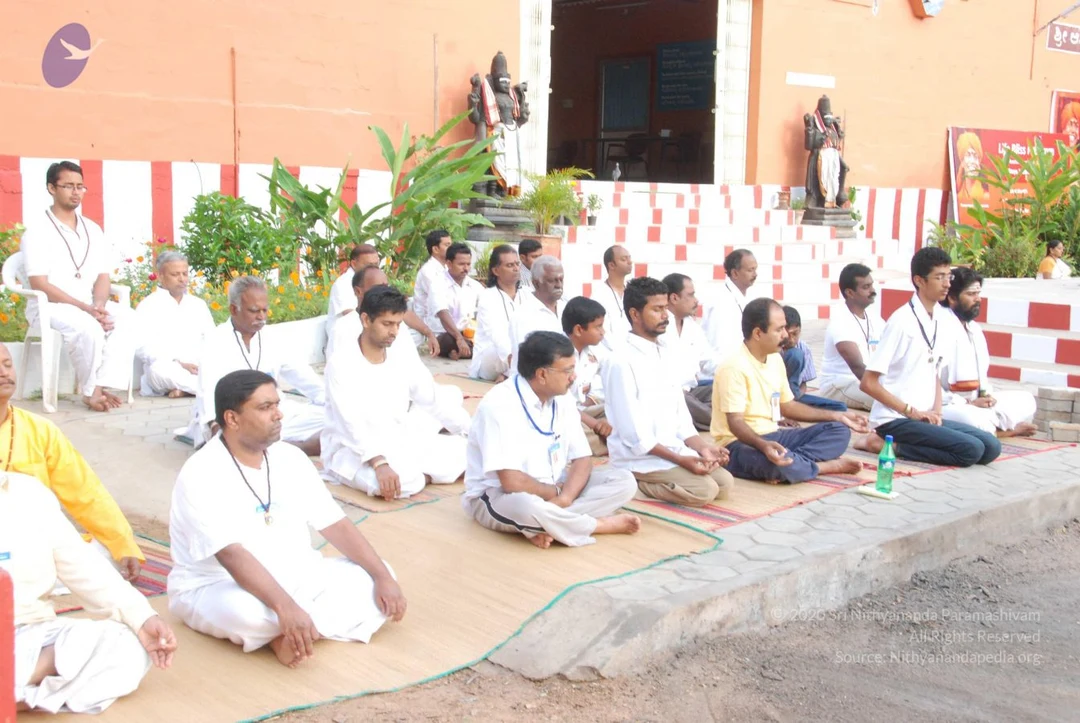
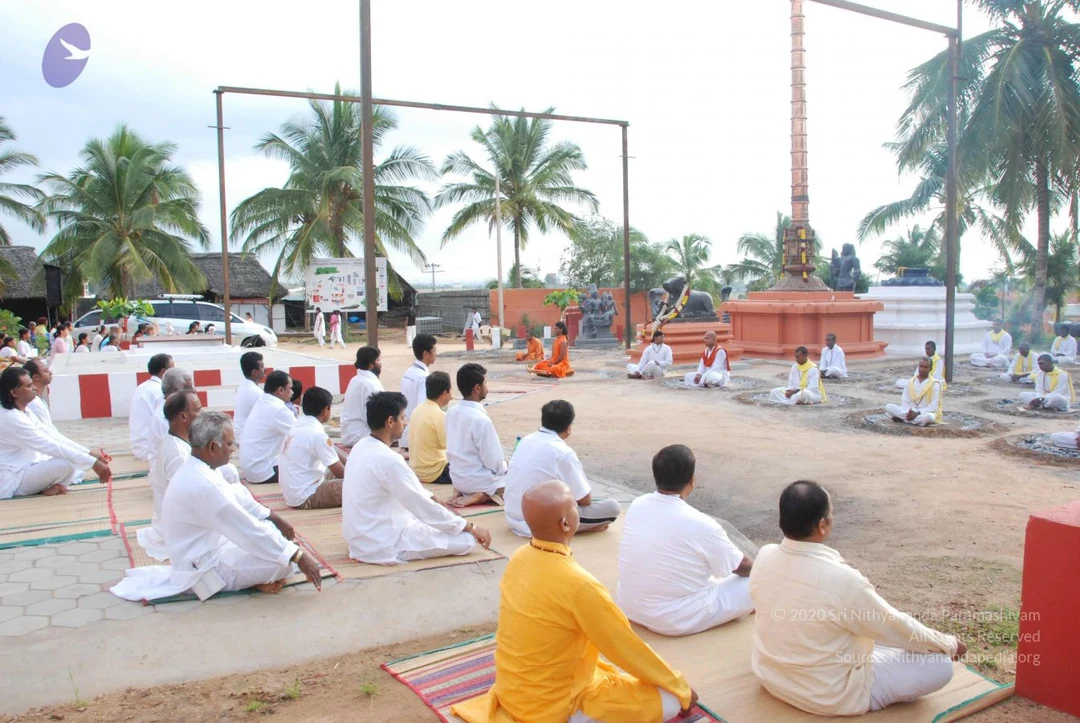
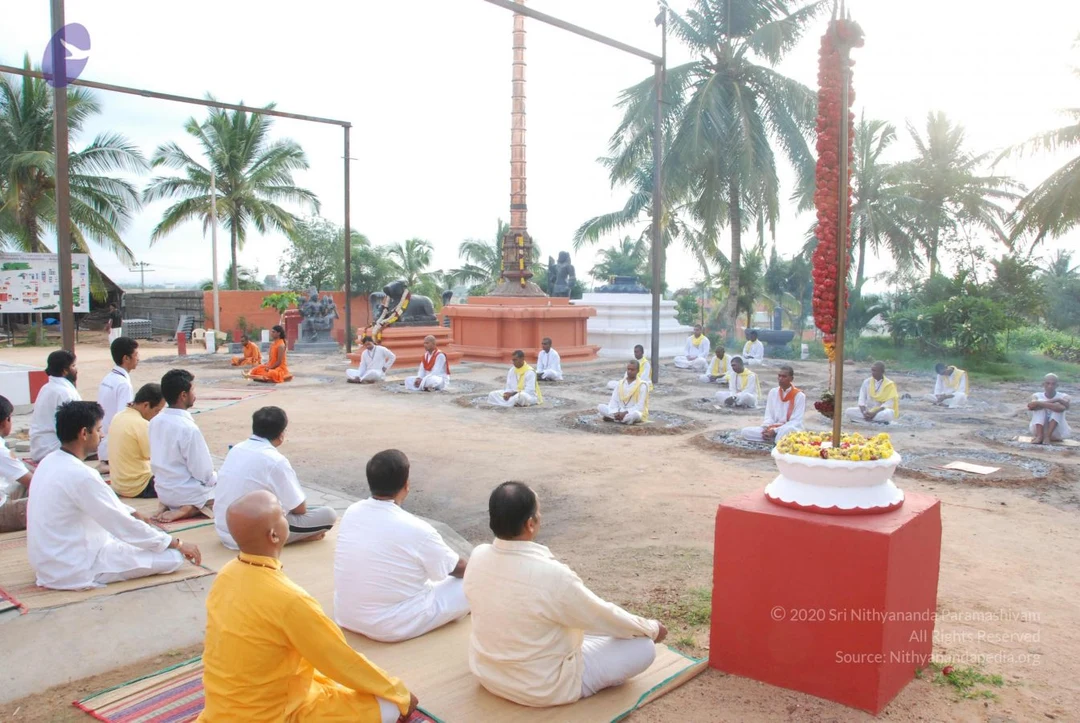
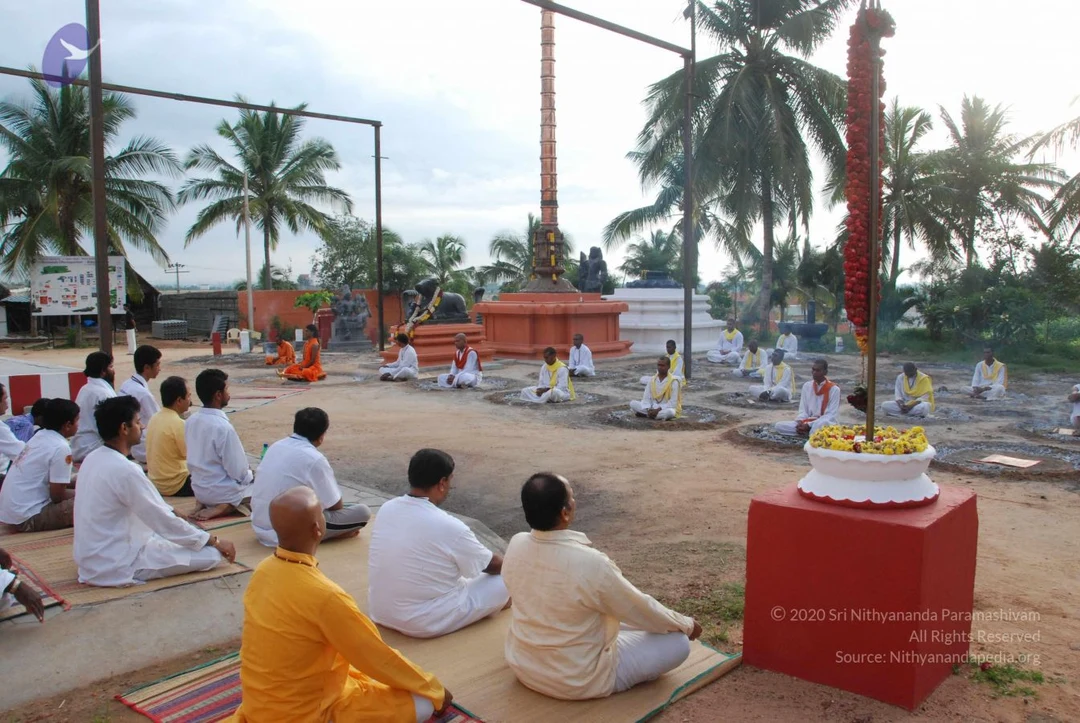
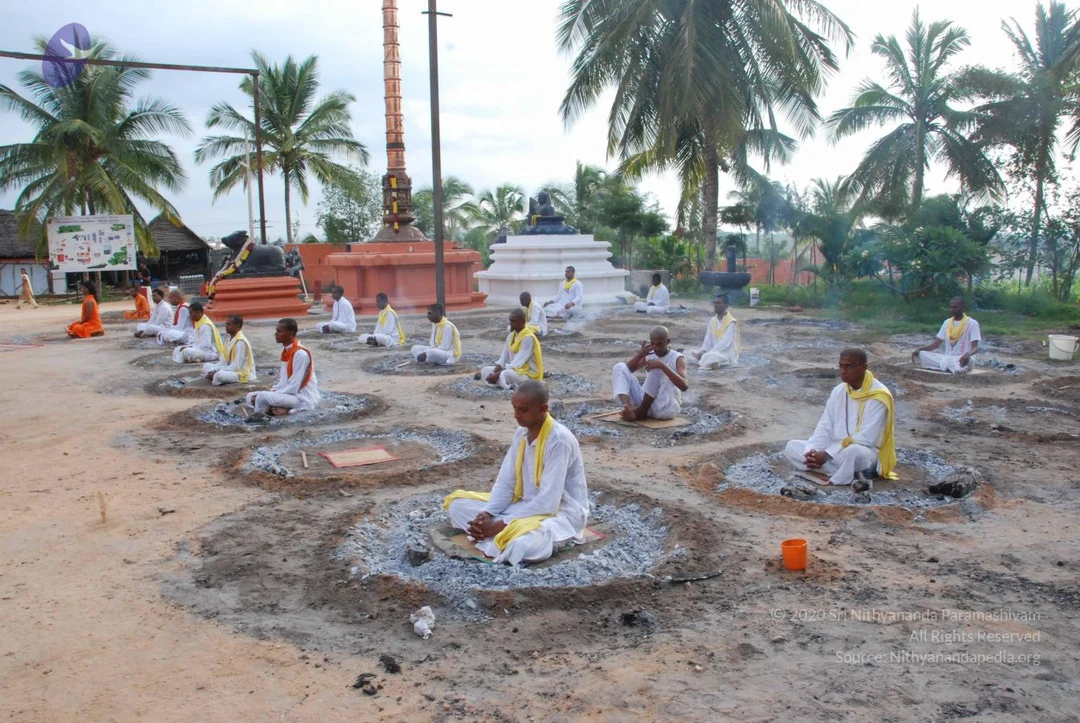
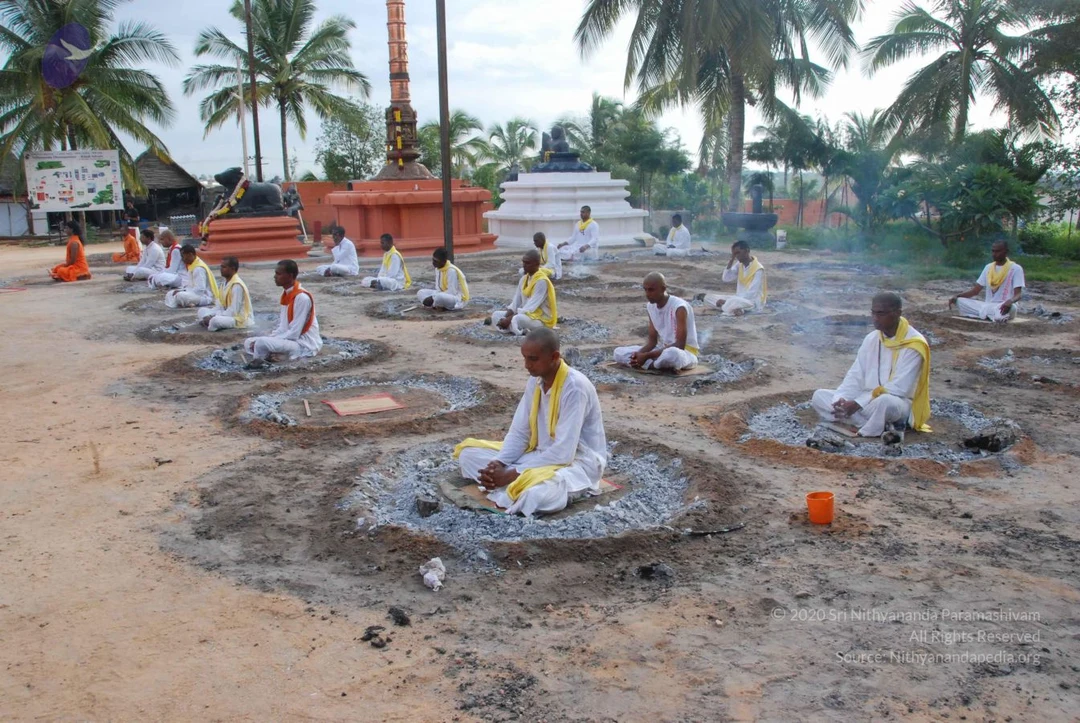
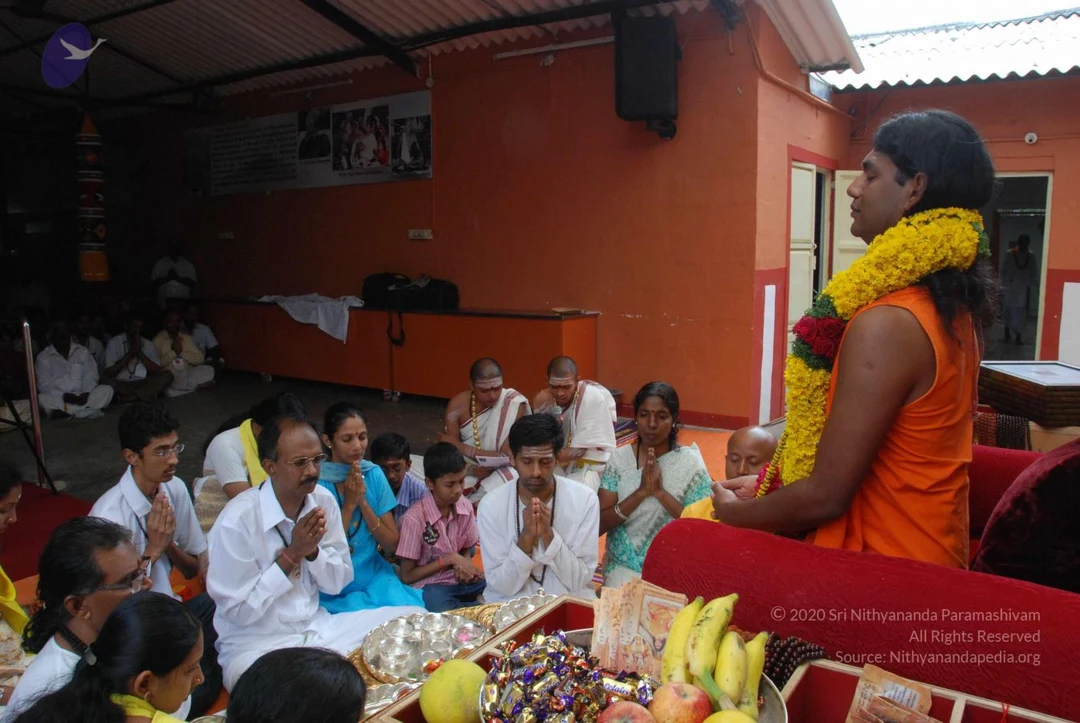
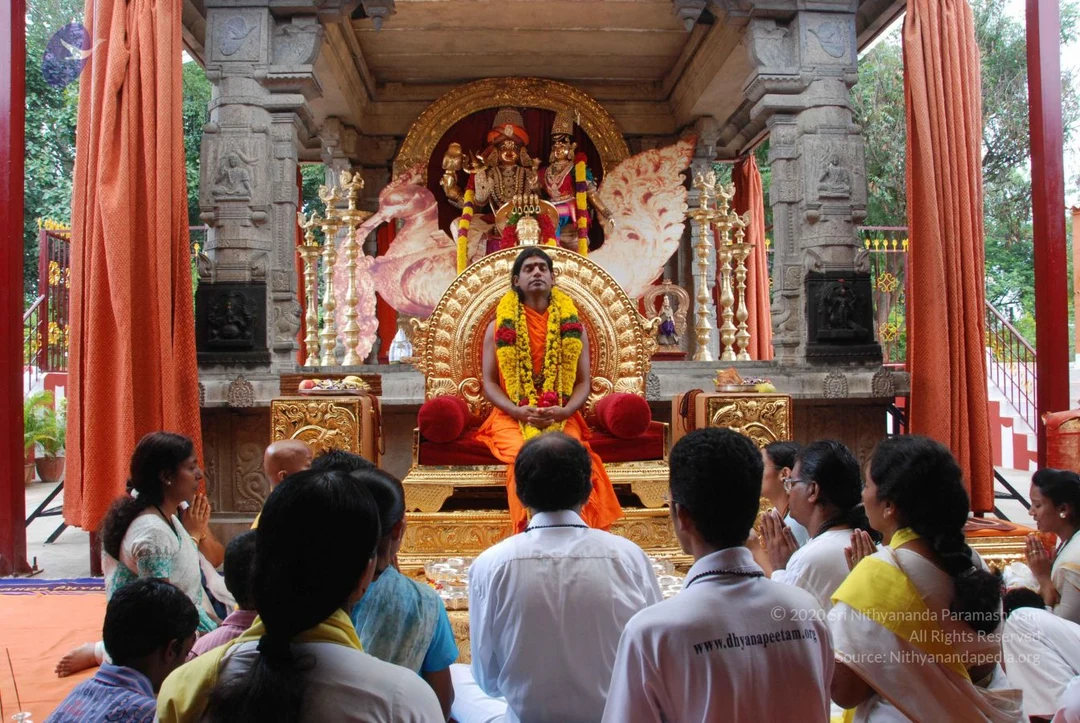
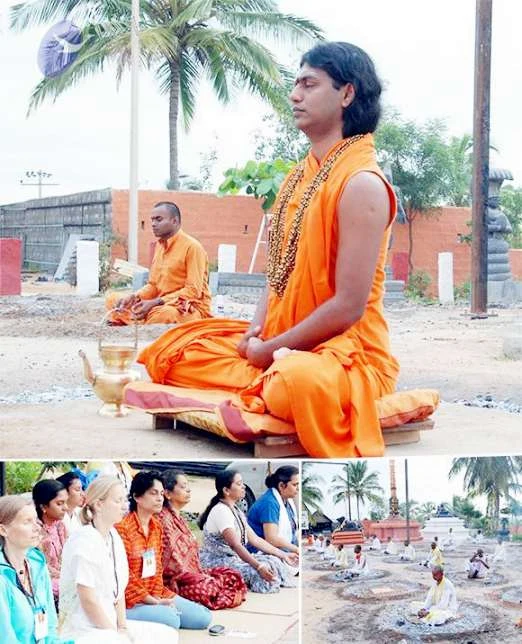
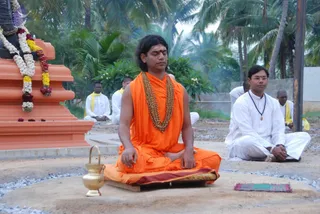
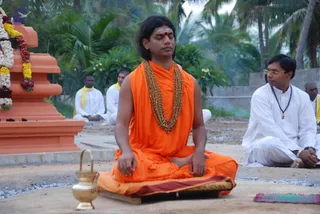
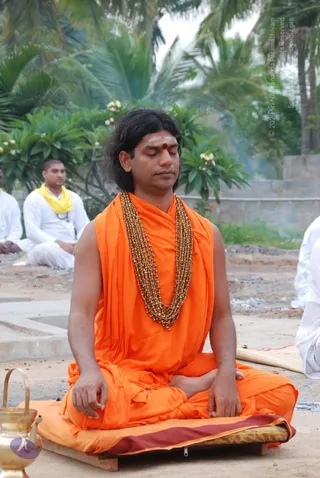
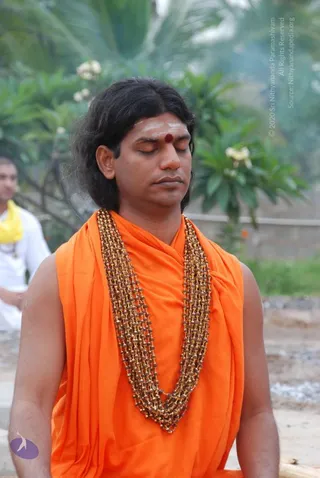
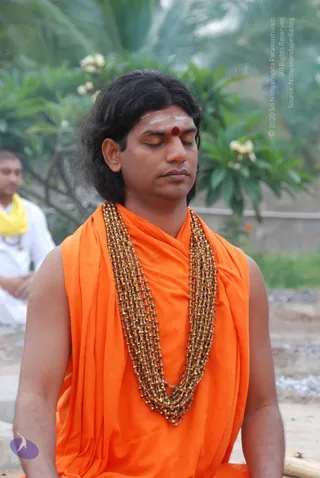
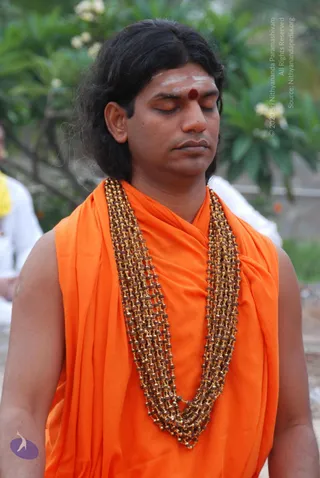
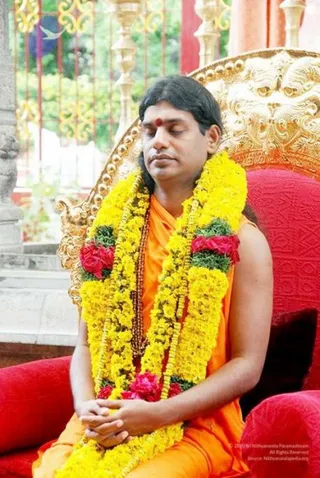
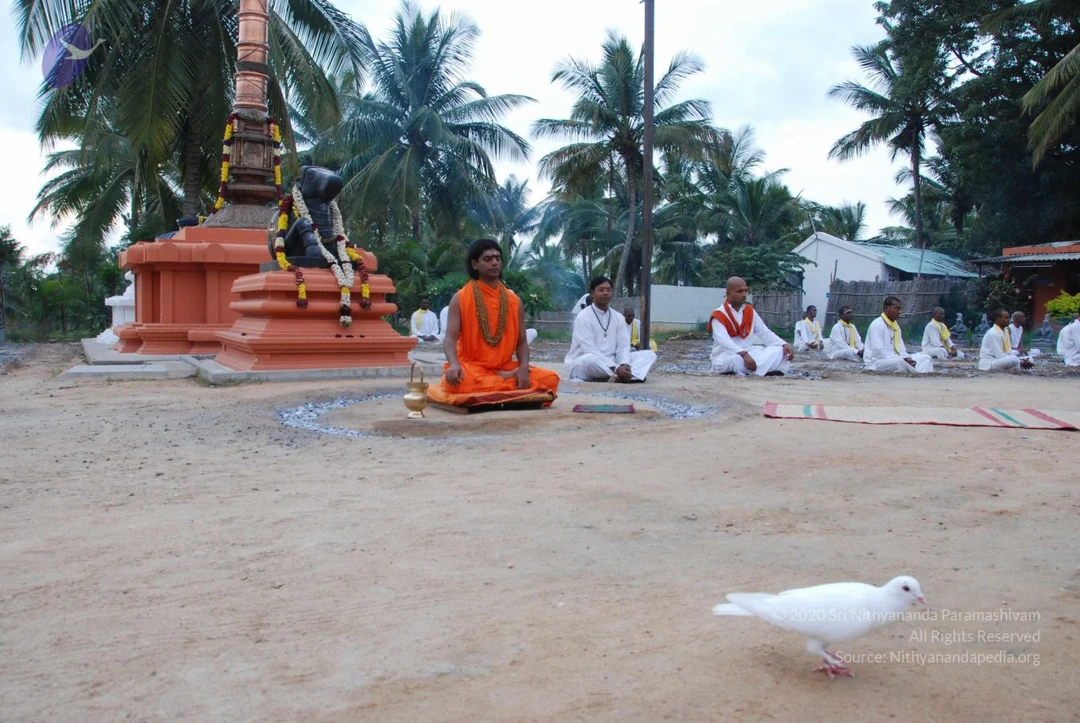
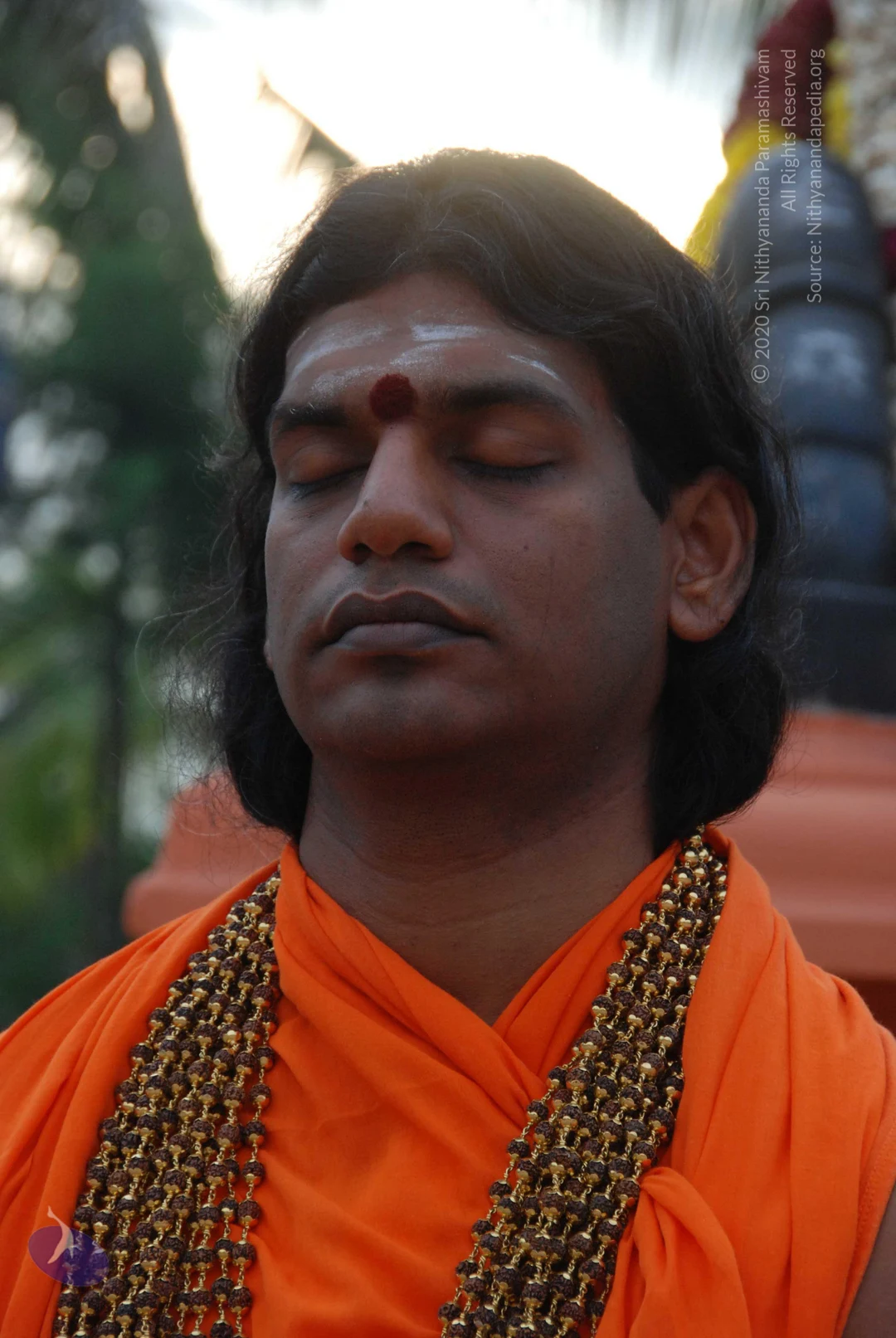
Outdoor photo of a seated man in an orange robe meditating with eyes closed on a raised cushion over gravel ground. He wears a long gold-coloured bead mala and a red tilak on his forehead, with long swept-back dark hair. Beside him sits a man in white clothes with a dark rudraksha-style mala, eyeglasses and a wristwatch, hands resting in his lap. Behind them, several more seated people in white with yellow shawls meditate. An orange-painted shrine structure stands to the left, draped with white, yellow and red flower garlands, with a brass kalasha-style pot in the foreground and scattered red petals. Palm trees and green shrubs fill the background. The orange-robed figure matches the swamiji cues of long swept-back hair, saffron clothing and ornate mala beads, so the appearance is a probable Swamiji (probable) seated in meditation at the shrine.A seated figure in saffron-orange robes with long swept-back hair, a red tilak on the forehead and multiple rudraksha-style beaded malas, sits cross-legged with eyes closed in meditation on a low orange-and-maroon cushioned mat outdoors. Behind him, a man in white ritual clothes and a wearing a blue beaded mala sits with eyes lowered, with other seated people in white and yellow stoles further back. A brass kalasha-style vessel rests on the ground in front, and a tiered orange structure is decorated with white and red-yellow flower garlands at left, with palm trees and plants in the background. Probable Swamiji cues: long swept-back hair, saffron robes and layered beaded malas; the figure is in meditation posture.A man with long dark hair sits cross-legged on a low wooden seat in meditation, eyes closed, wearing a saffron-orange robe draped over one shoulder and a long multi-strand gold beaded necklace, with a red bindi and white markings on his forehead. Behind him, seated figures in white clothes, one with a yellow shawl, sit on bare ground among palm trees and frangipani shrubs. A brass kalasha-style vessel with a handle sits at the lower left edge. Swamiji (probable): long swept-back hair, saffron robe and ornate gold necklace, seated in meditation as the presiding figure.Outdoor photograph of a man with long swept-back dark hair, eyes closed in meditation, wearing an orange saffron shawl draped over bare shoulders and multiple strands of brown rudraksha beads with gold accents around his neck. He has white vibhuti and a red kumkum dot on his forehead. Behind him, flowering plumeria-like trees and greenery; at the left edge a partly visible person in white clothes with a yellow shawl. Appearance-based cues of long hair, saffron clothing and rudraksha malas suggest Swamiji (probable), seated in meditation as an in-person subject.A man seated outdoors with eyes closed in meditation, wearing a sleeveless saffron-orange shawl wrapped over his shoulders and a long layered necklace of brown rudraksha beads with gold spacers. He has long dark hair swept back, white vibhuti horizontal marks on his forehead and a red kumkum dot between his brows. Behind him, leafy green plants with white frangipani-like flowers, and a second man in white with a yellow shawl sits softly out of focus on the left.Close photo of a man with long dark hair, eyes closed, sitting outdoors in front of green foliage and white flowers. He wears a sleeveless bright orange garment draped over his shoulders and a multi-strand necklace of brown rudraksha beads with gold spacers. A white sandalwood mark and red bindi are on his forehead. Another person in white clothing is partly visible at the left edge. The appearance matches the Swamiji (probable) description, with long swept-back hair, saffron clothing and rudraksha mala cues, and he is shown in meditation.

PADA-POOJA
121 photosSource gallery
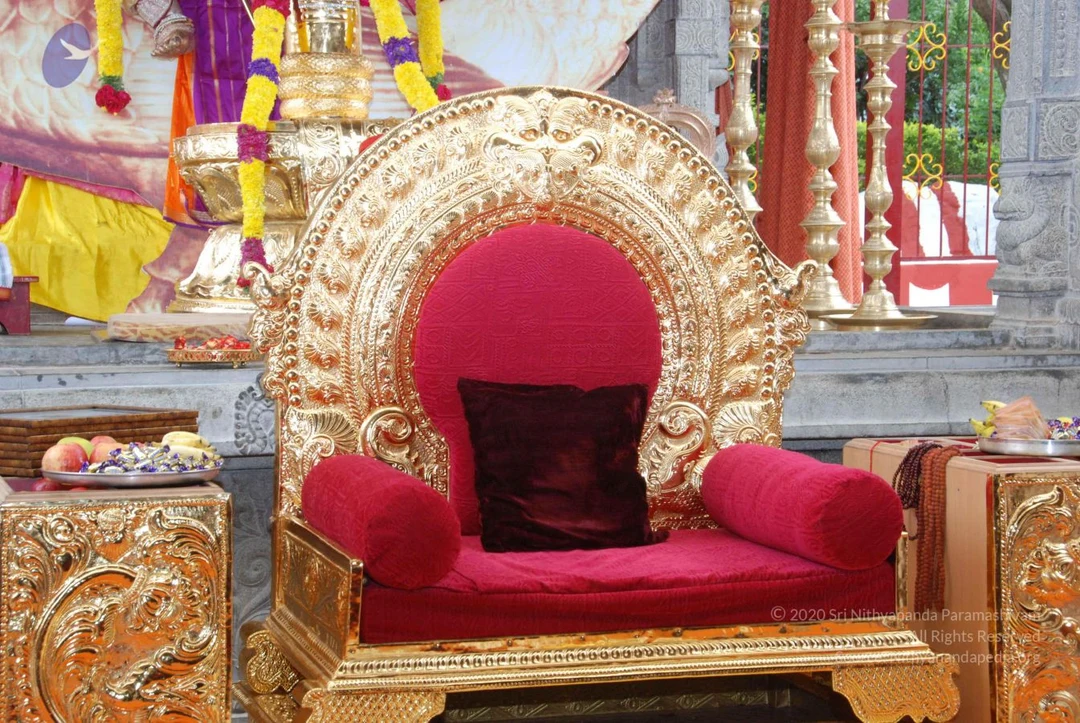
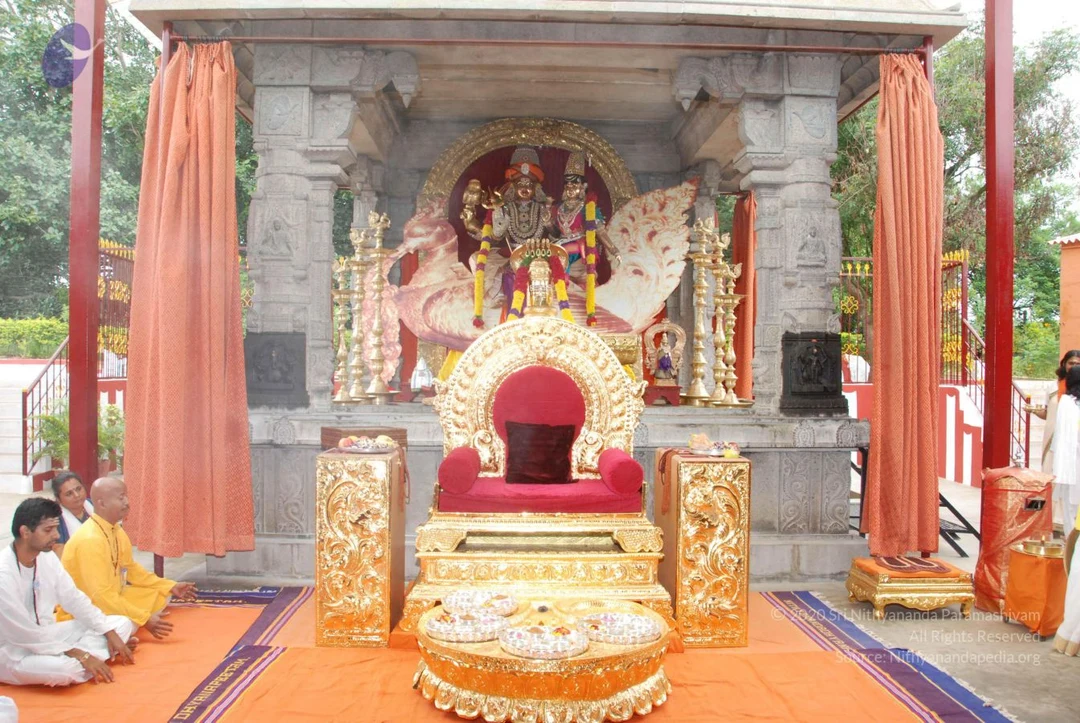
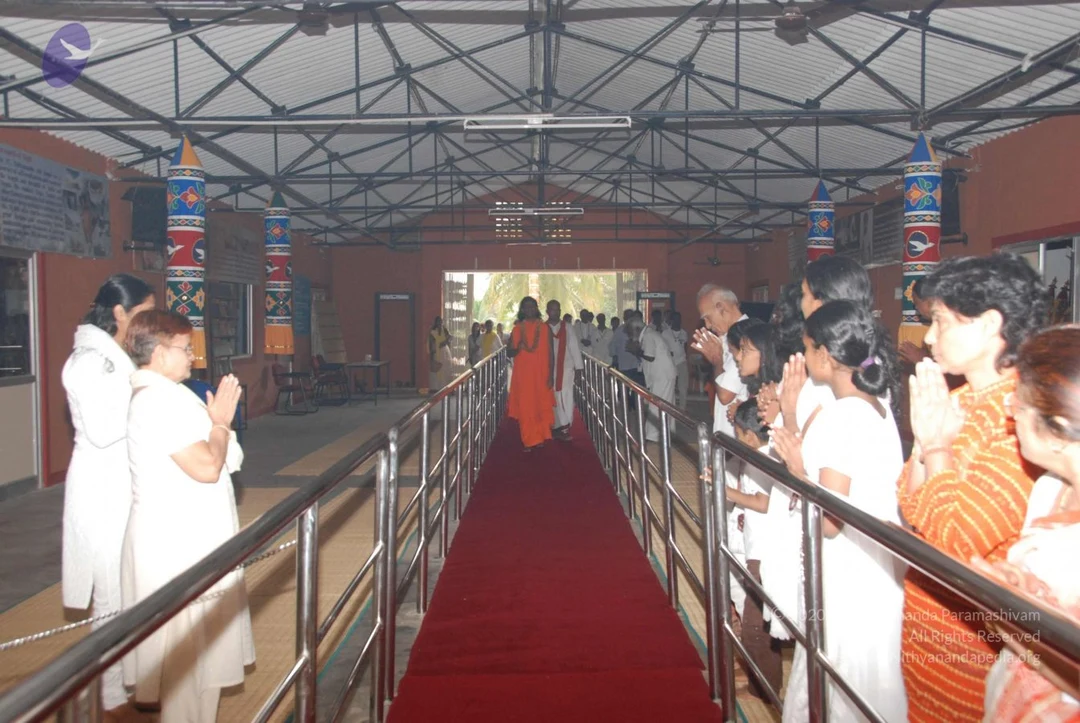
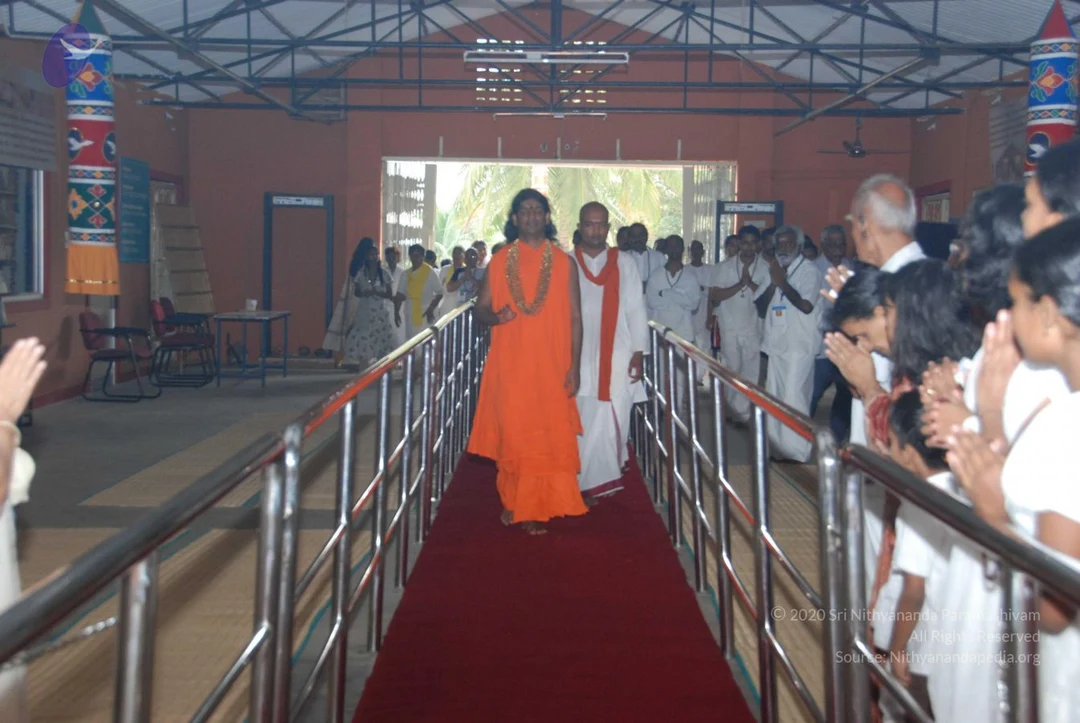
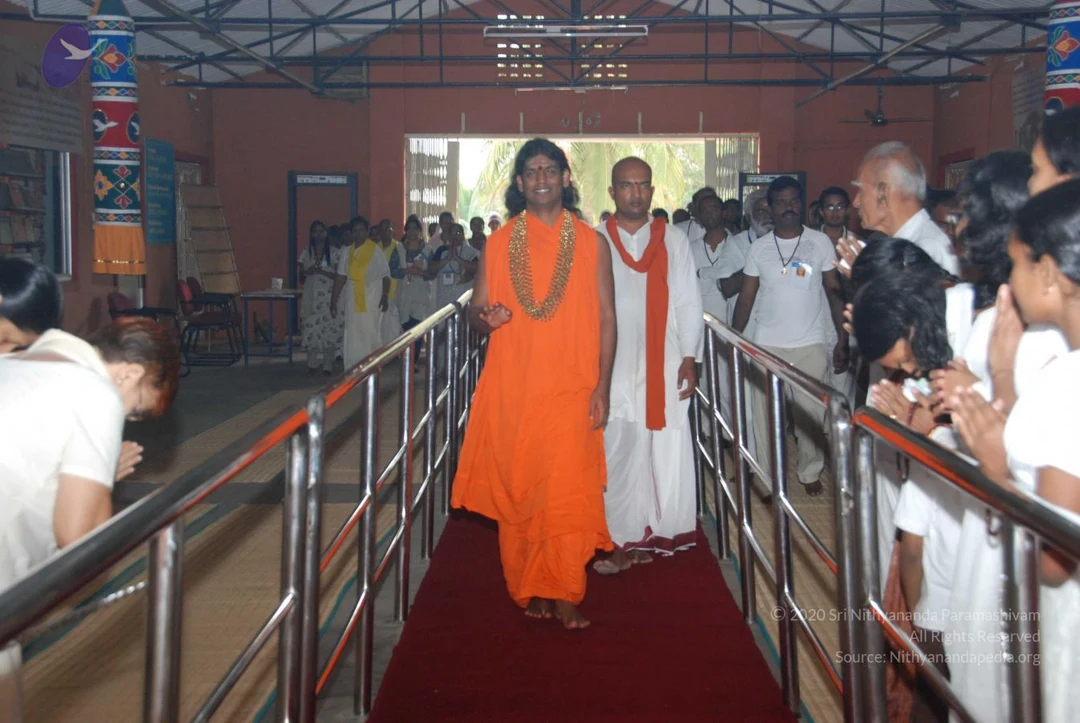
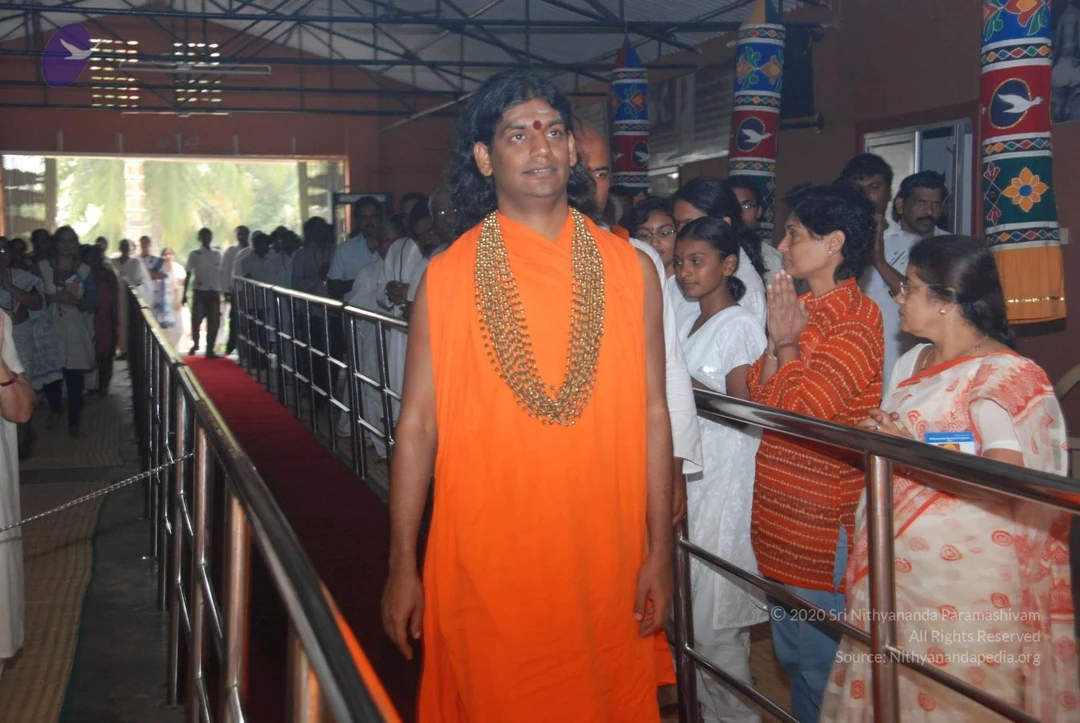
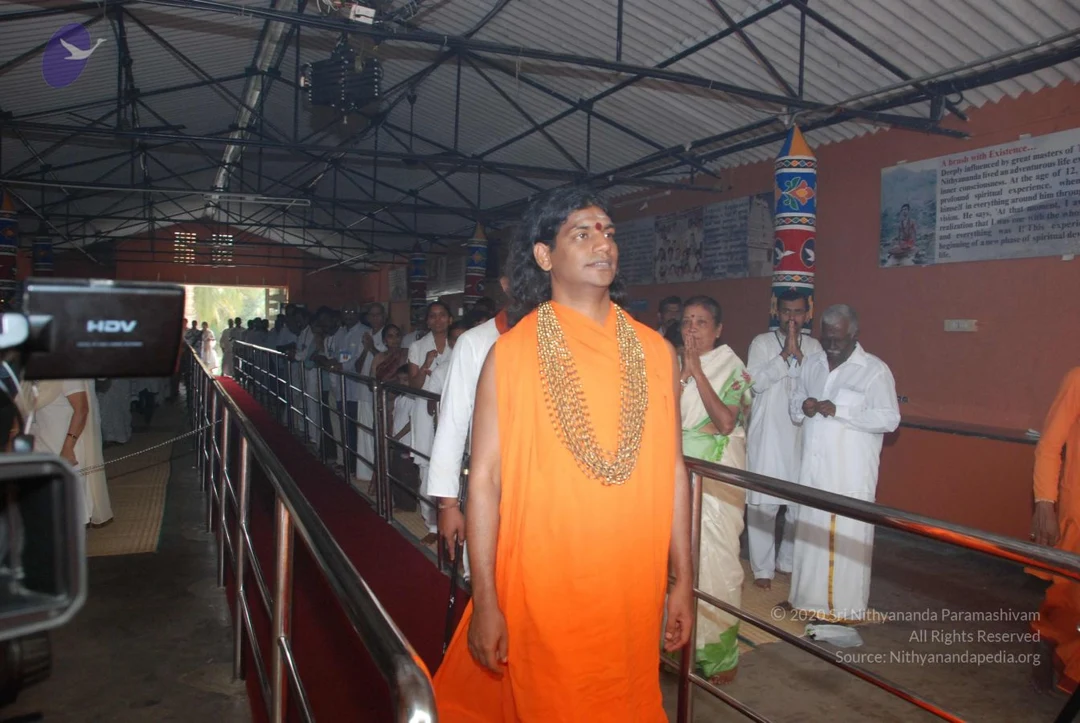
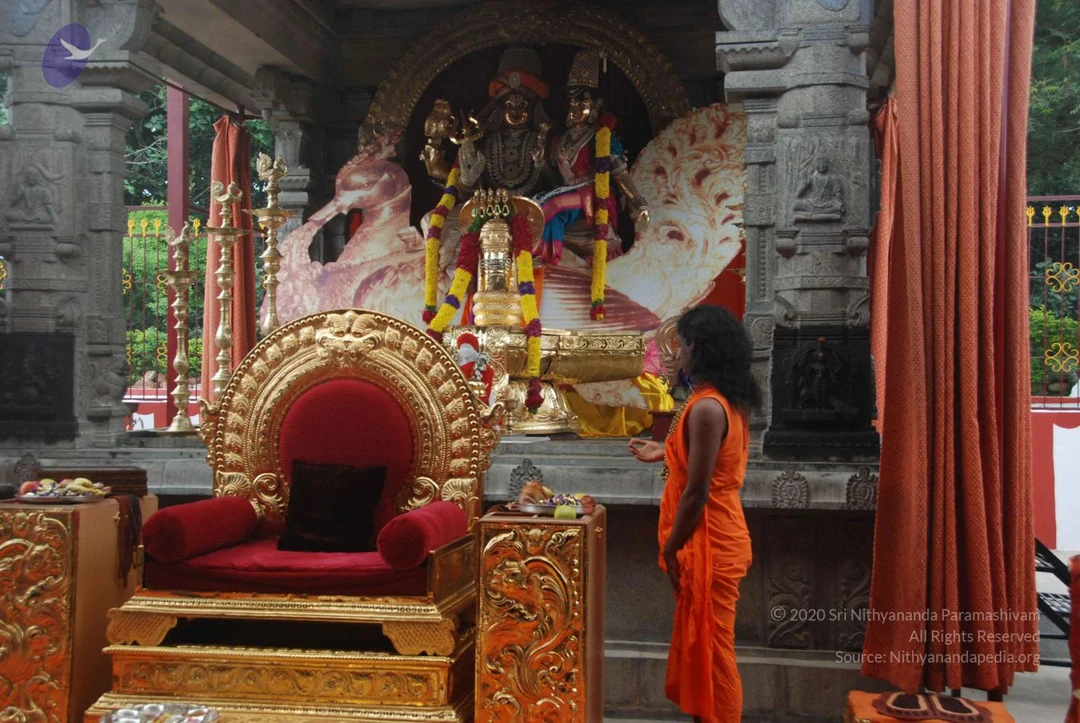
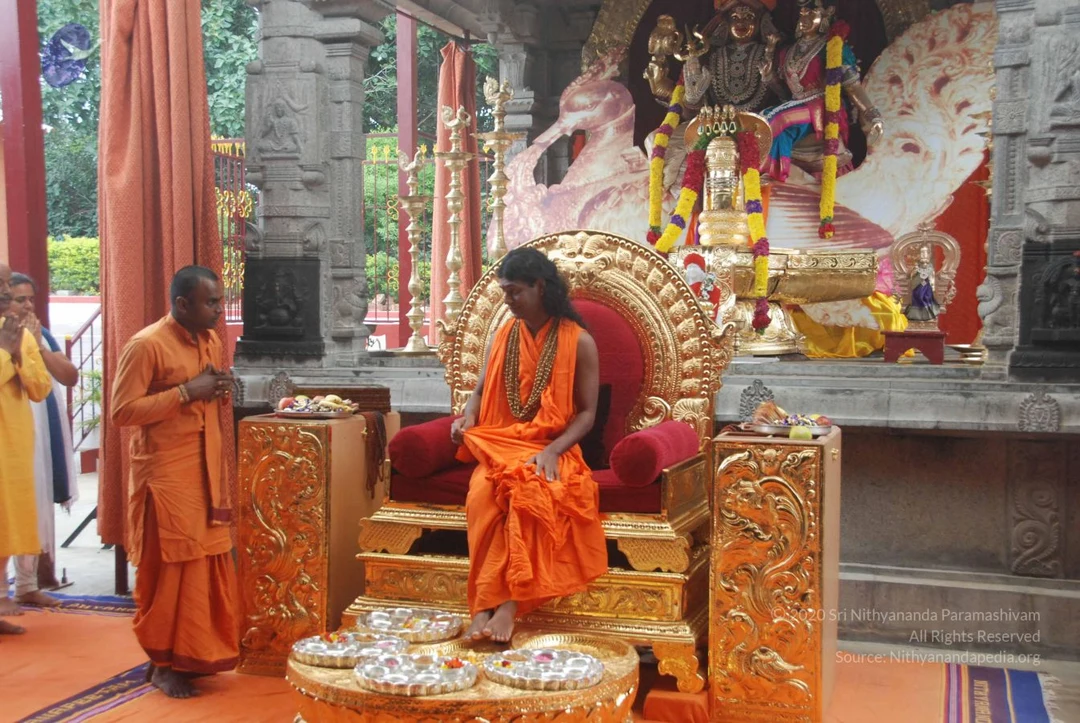
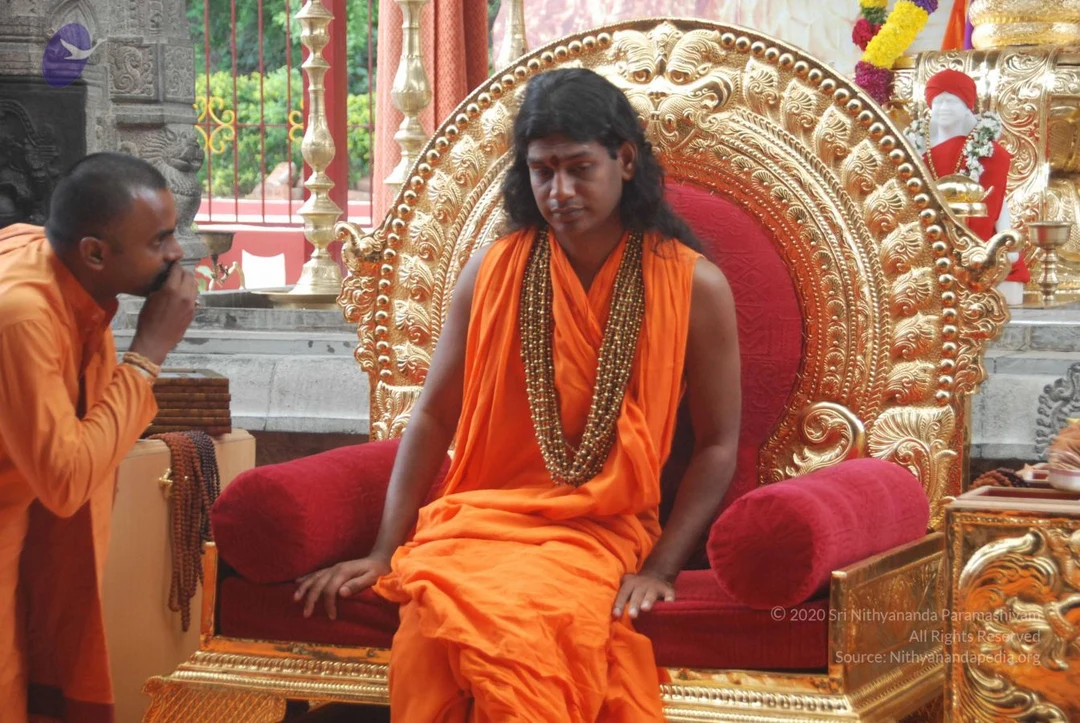
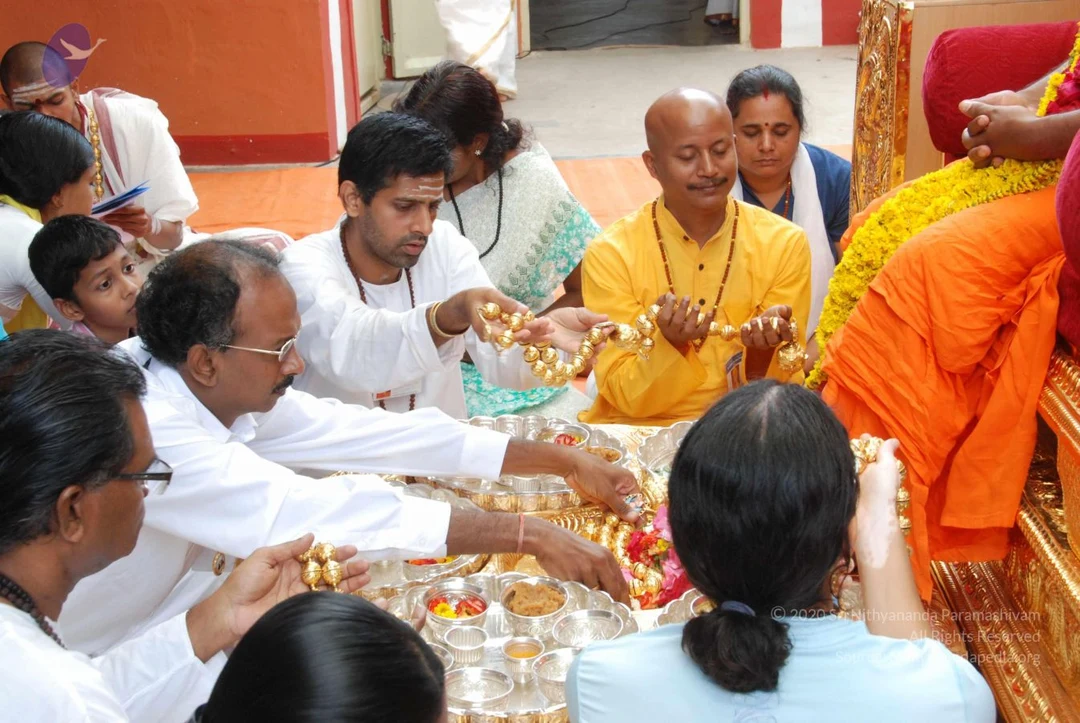
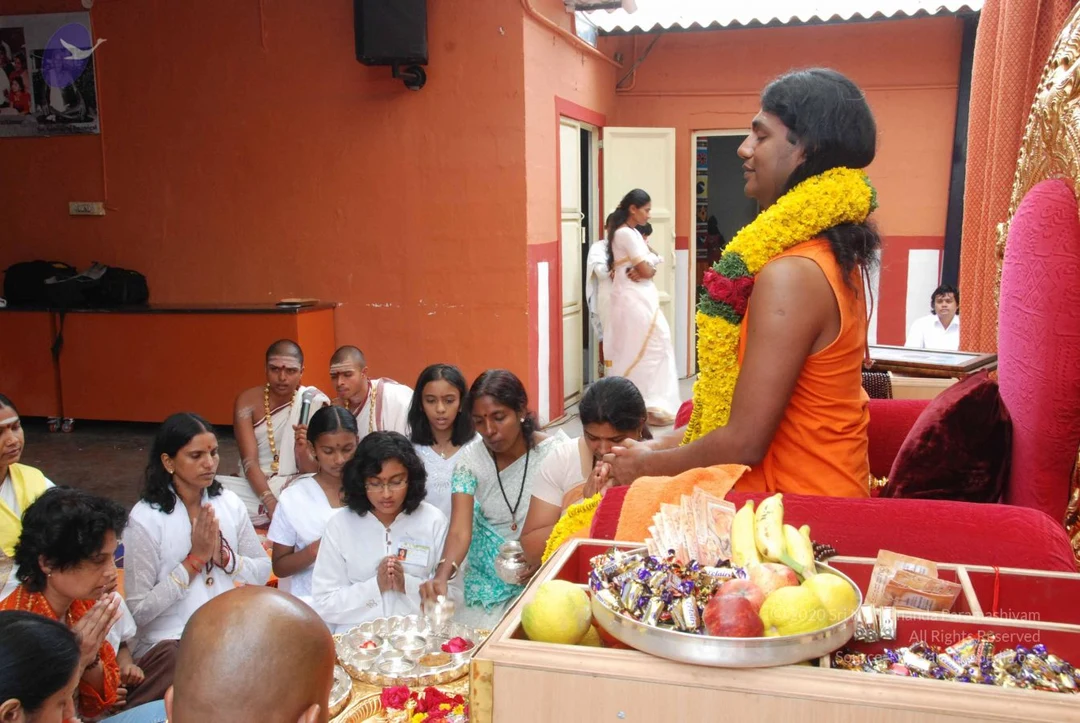
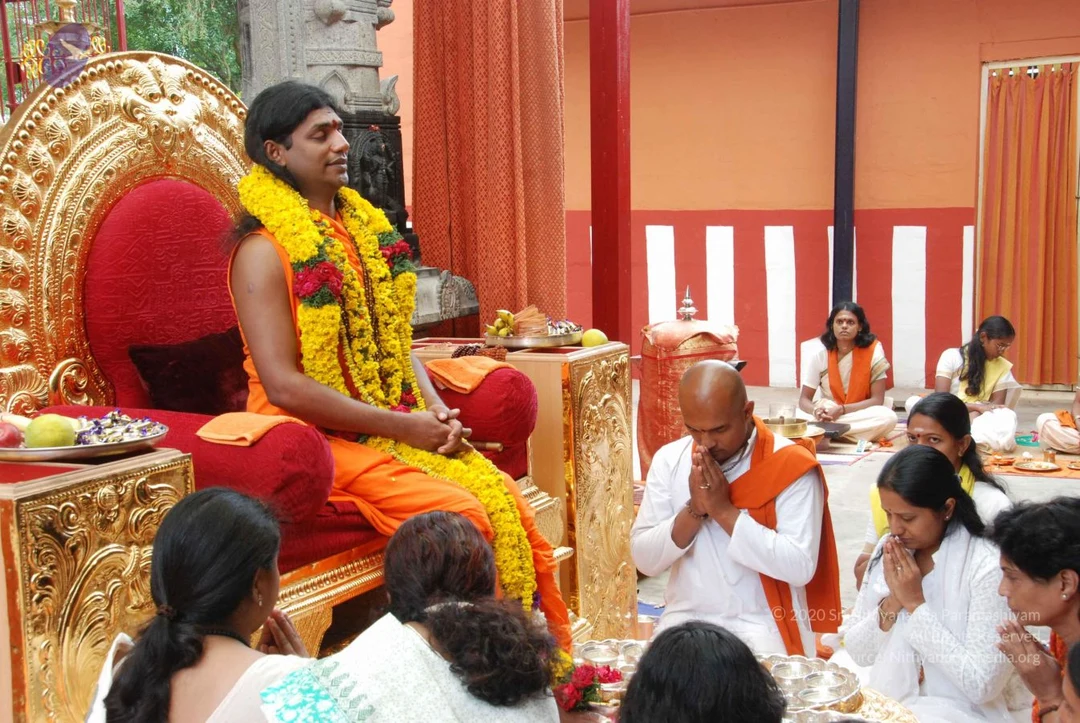
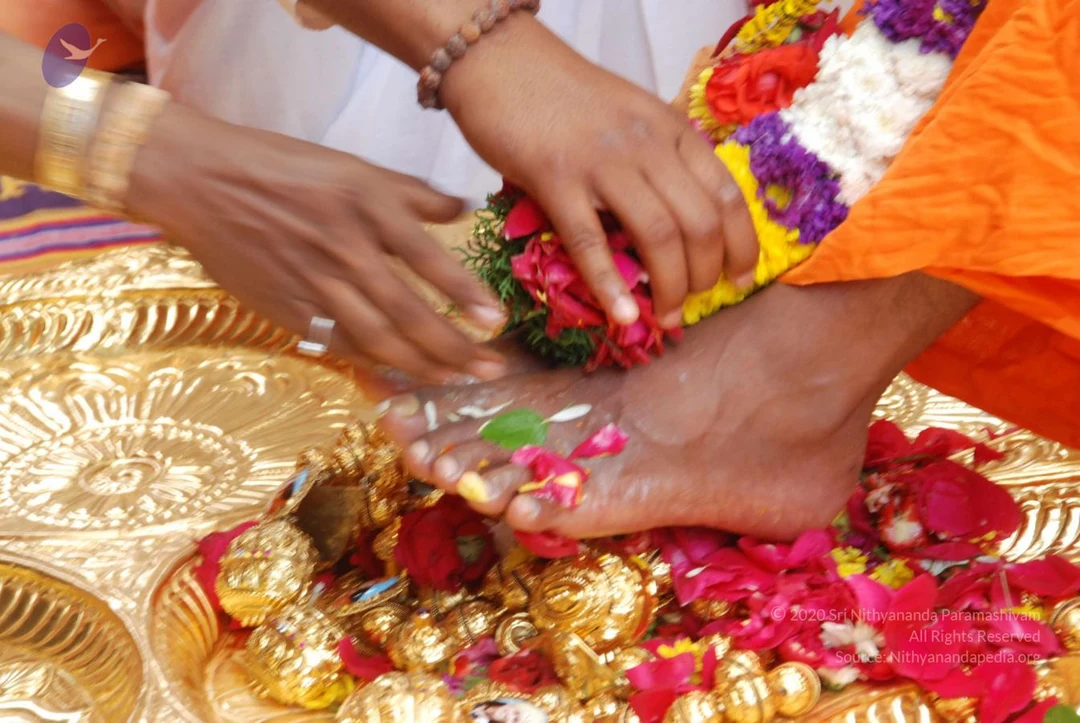
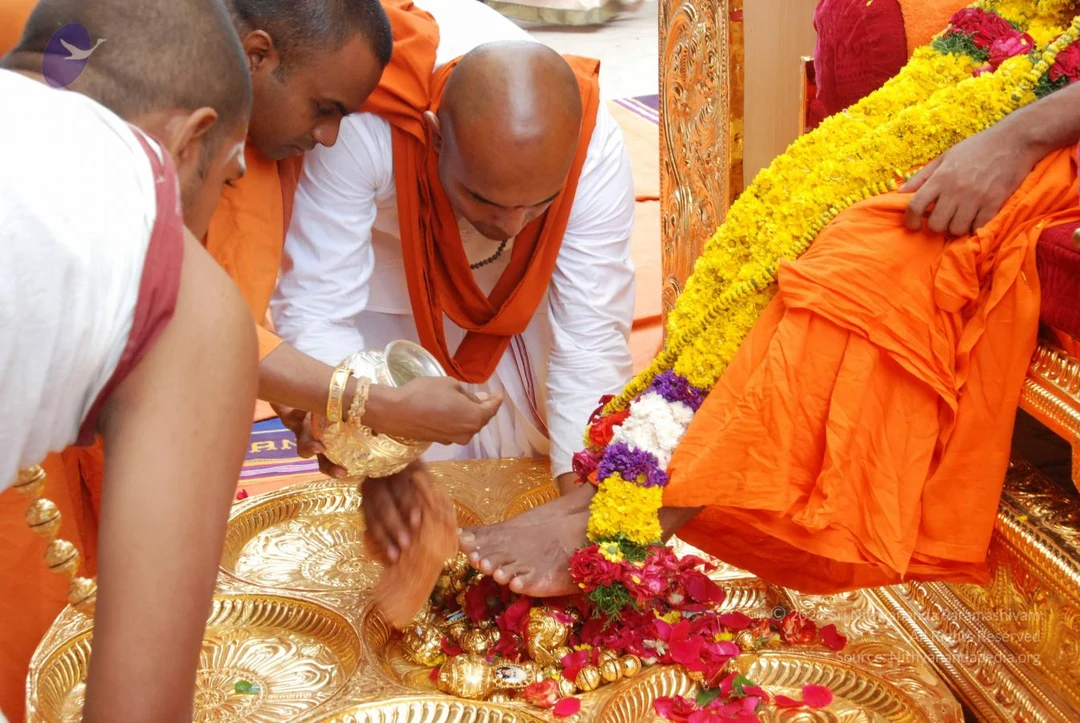
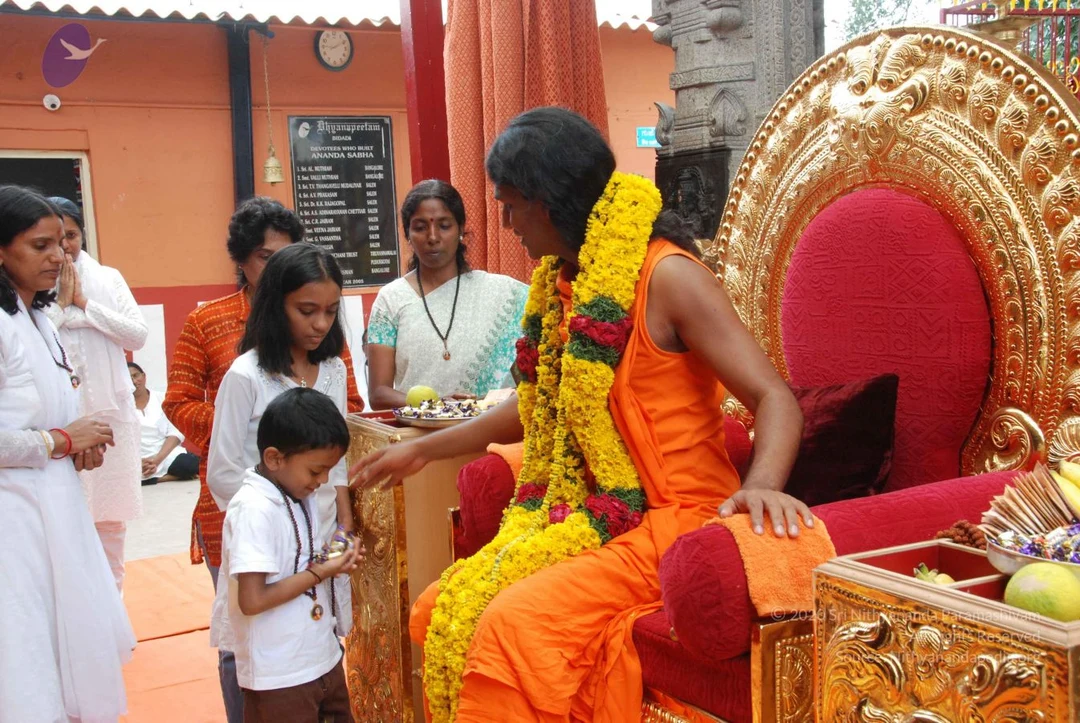
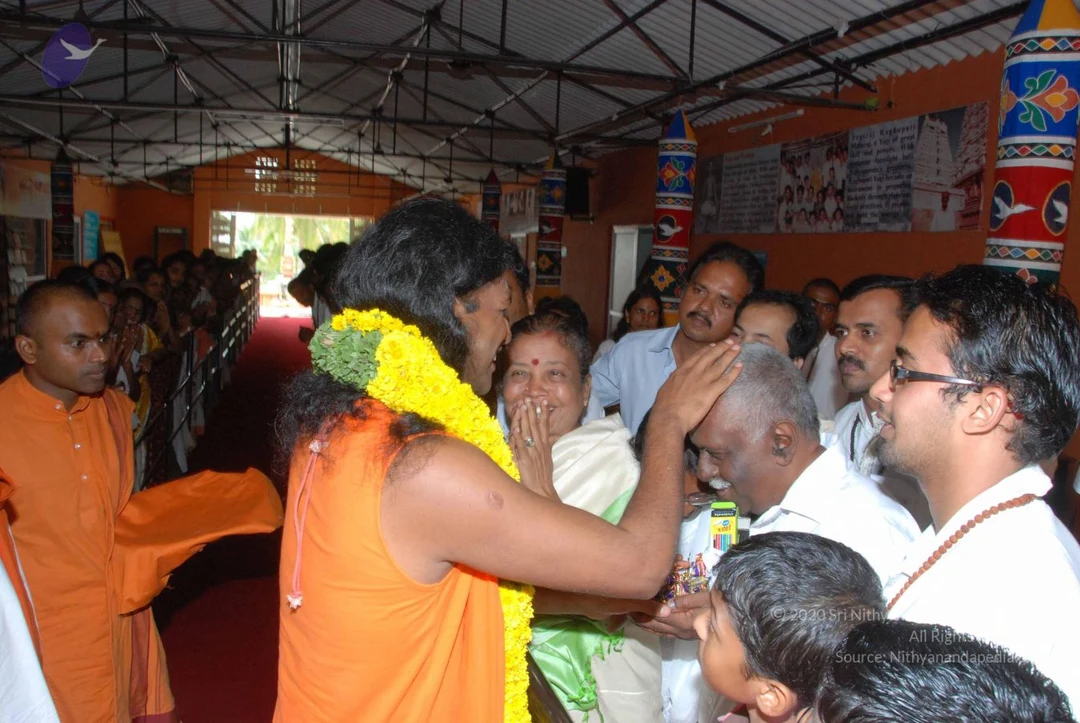
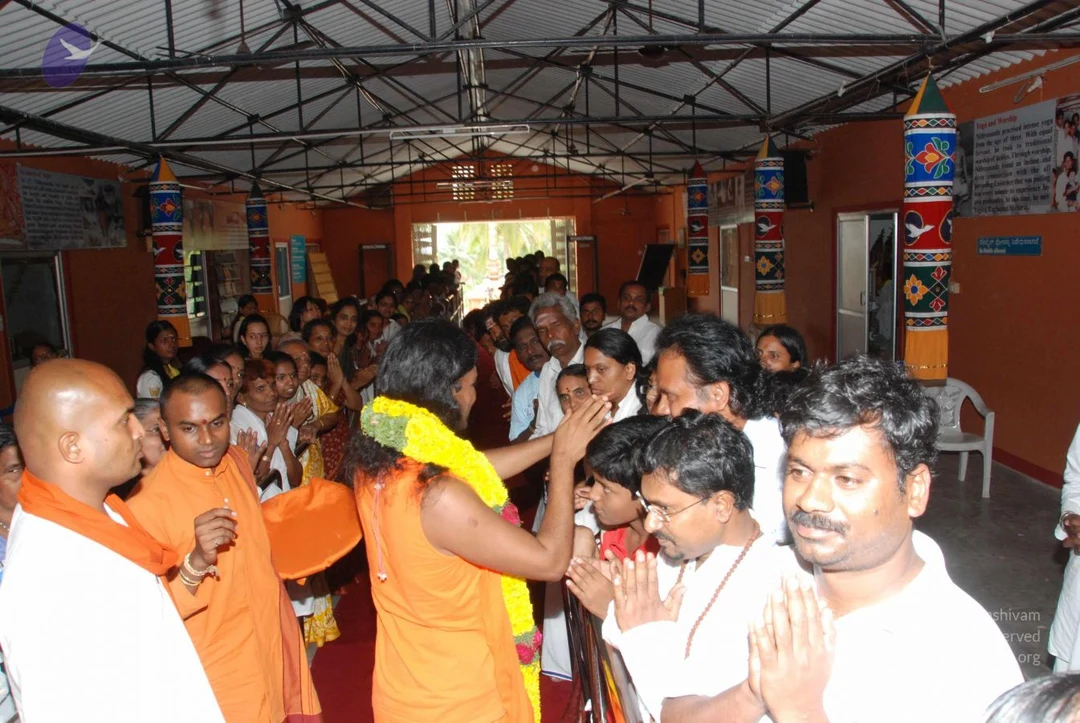
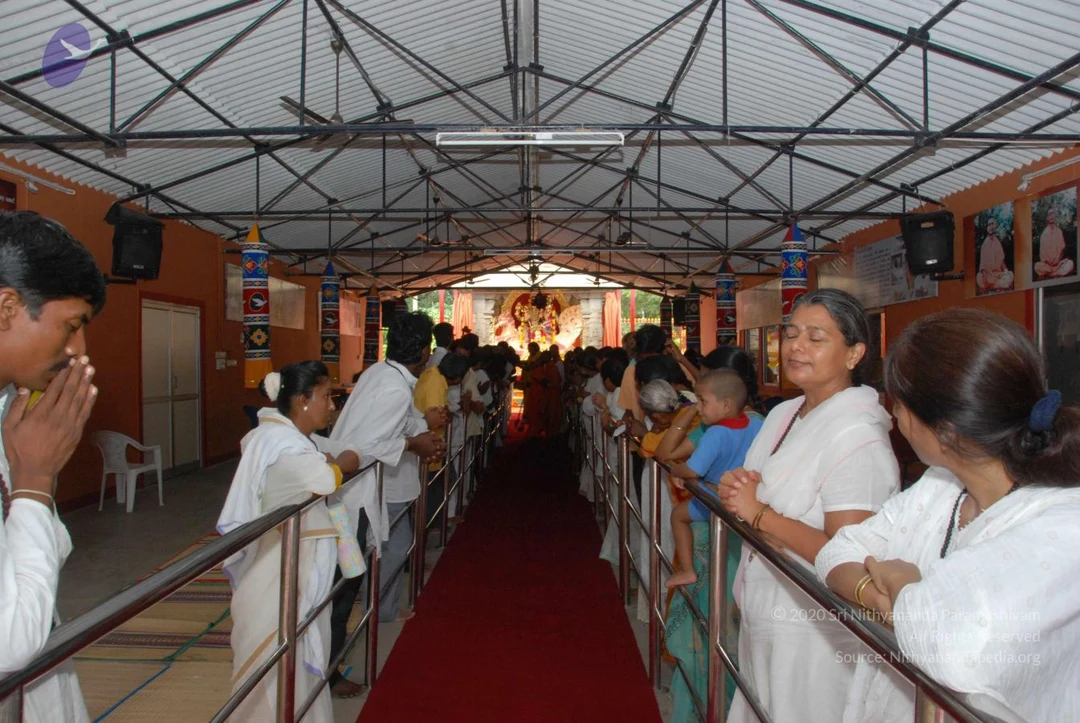
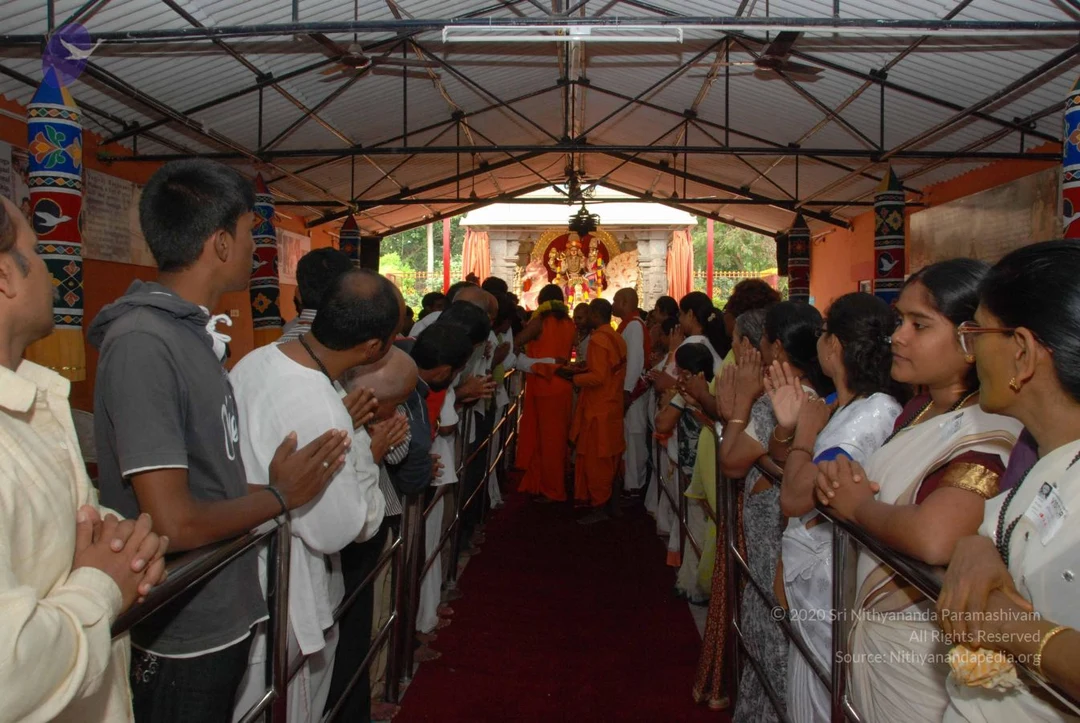
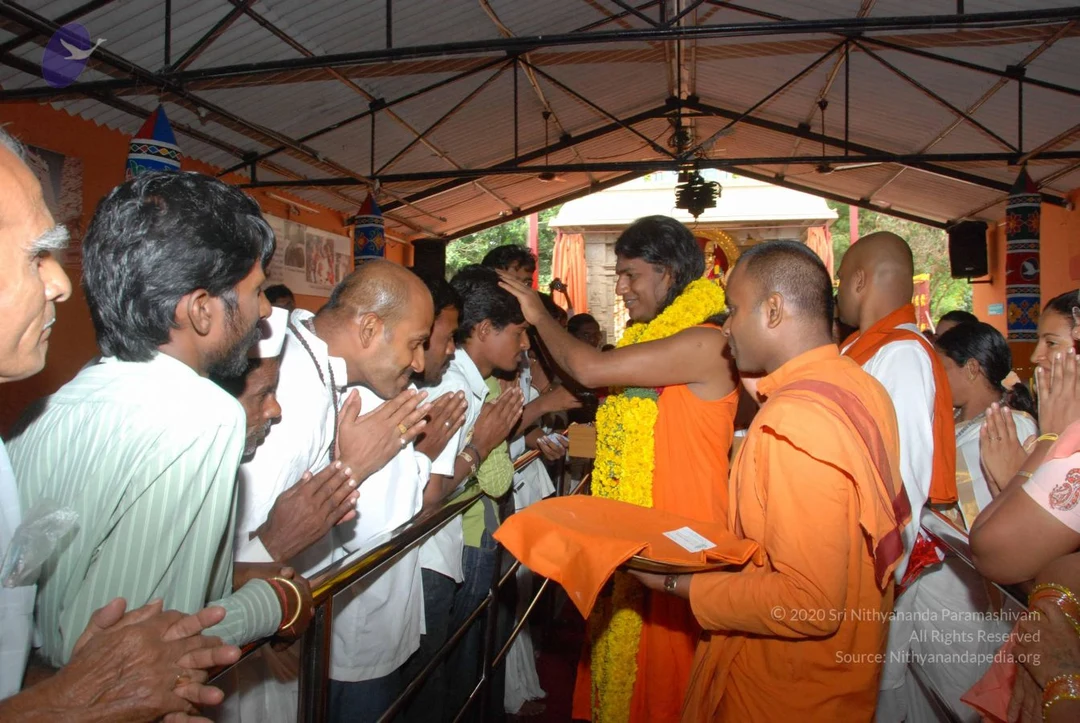
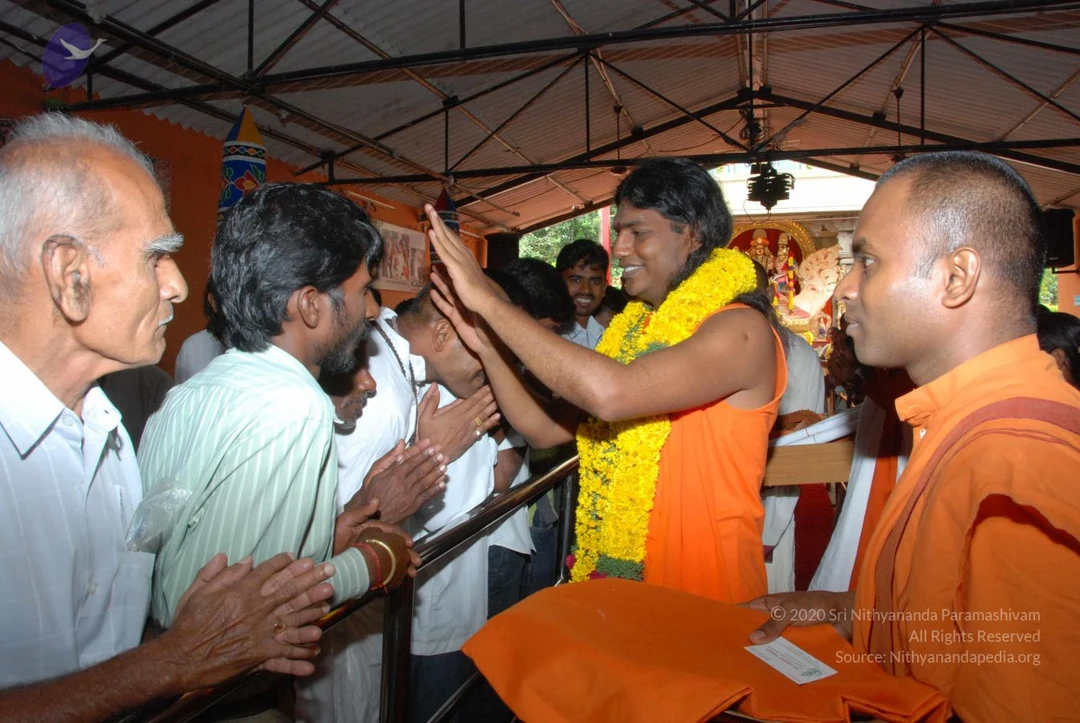
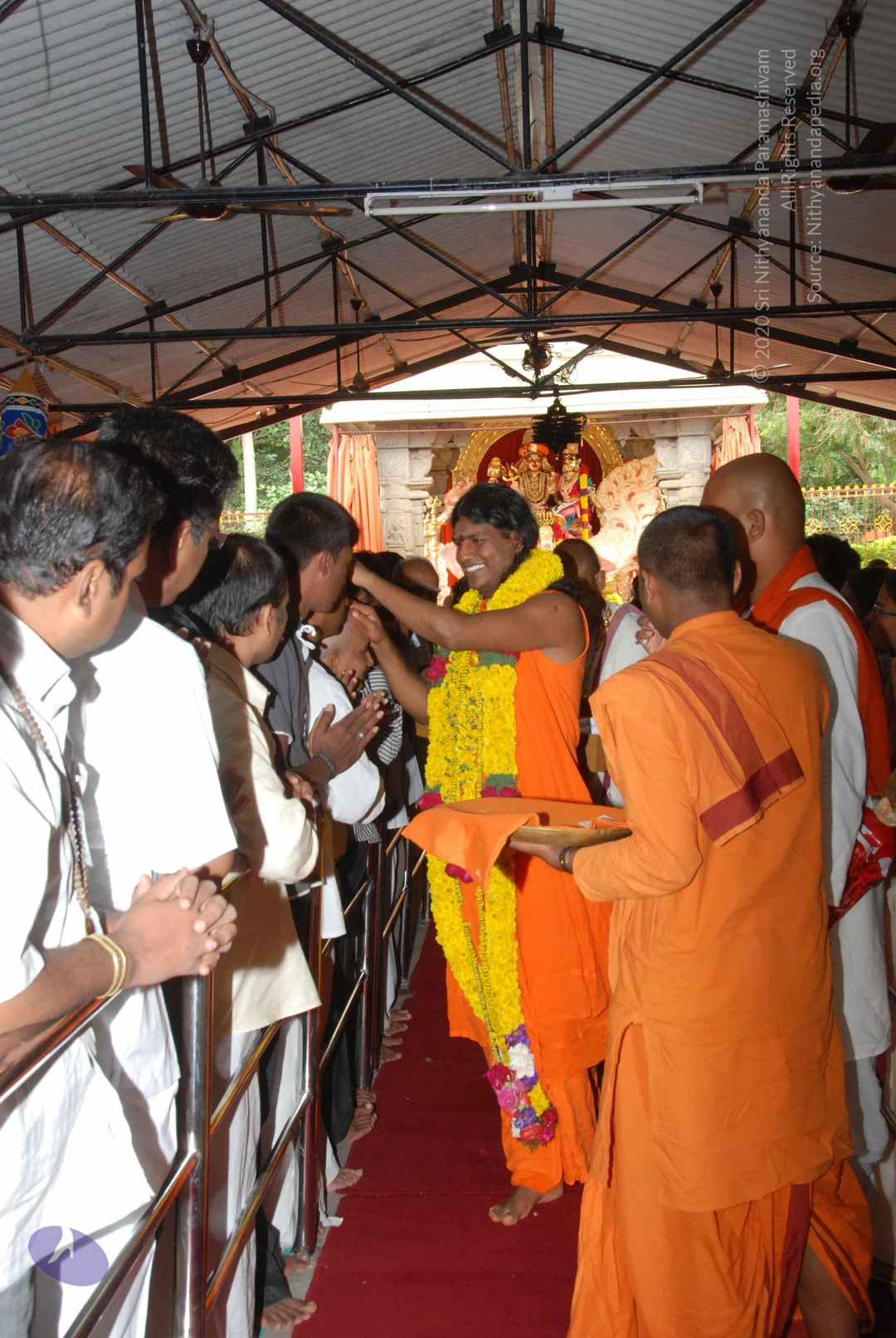
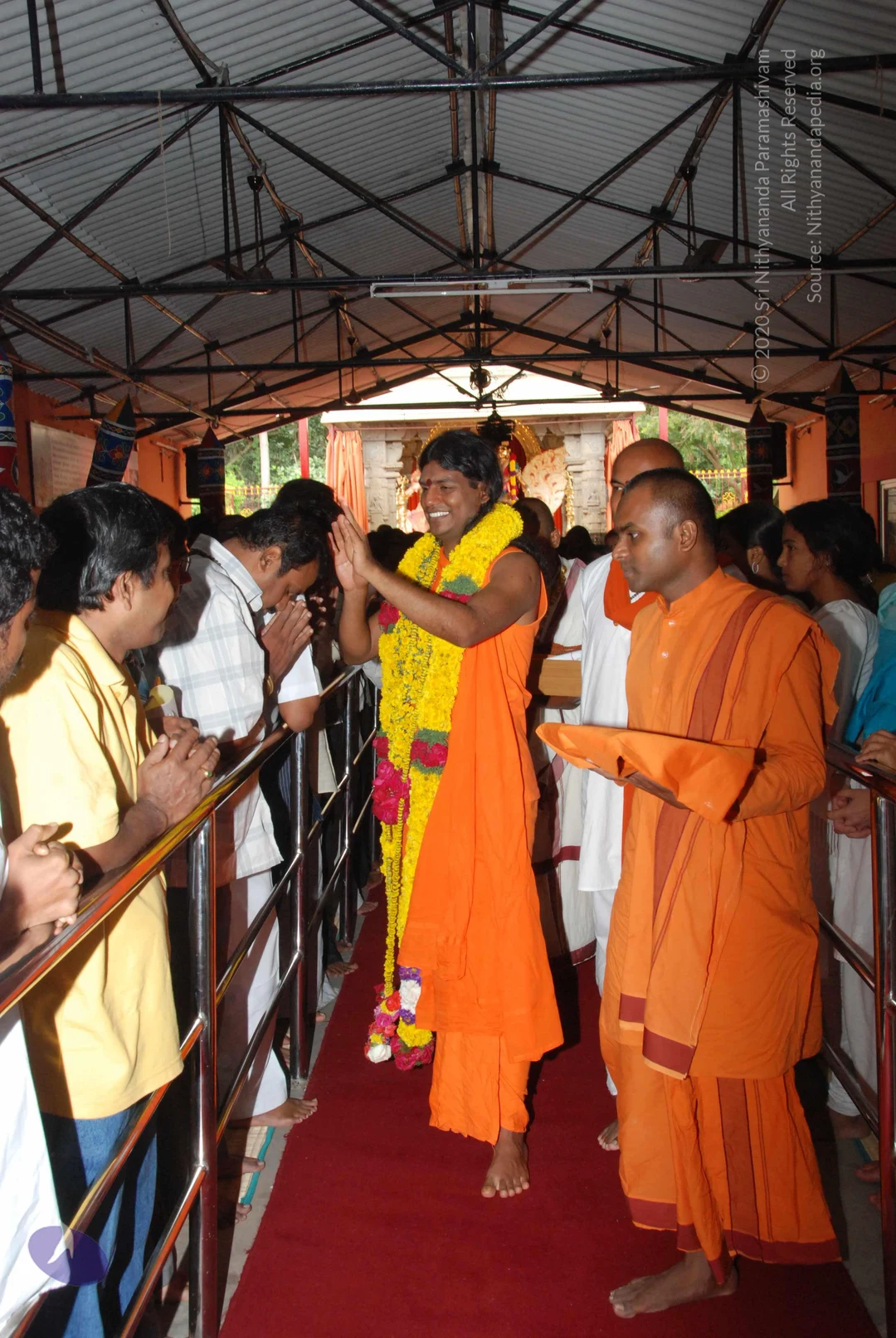
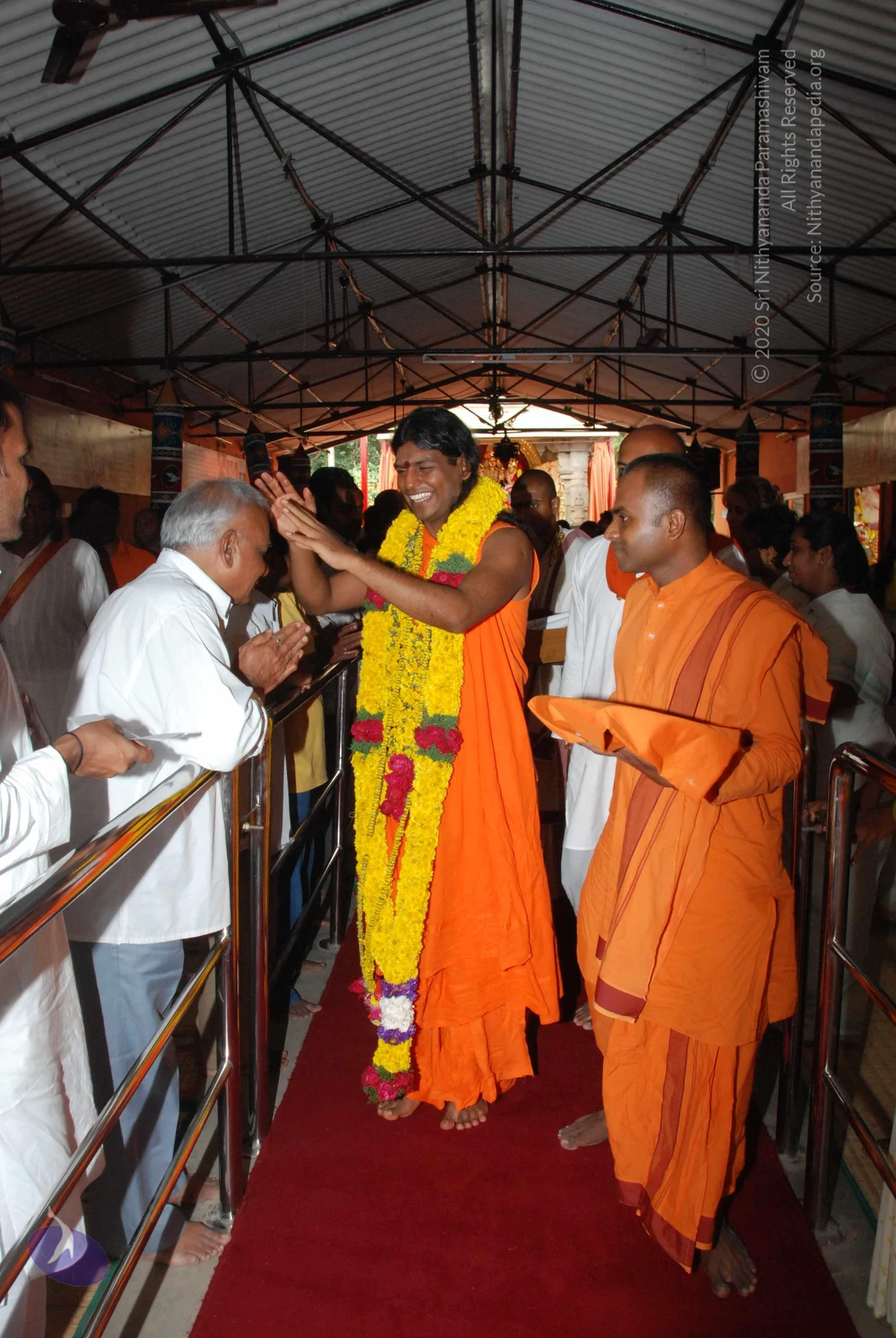
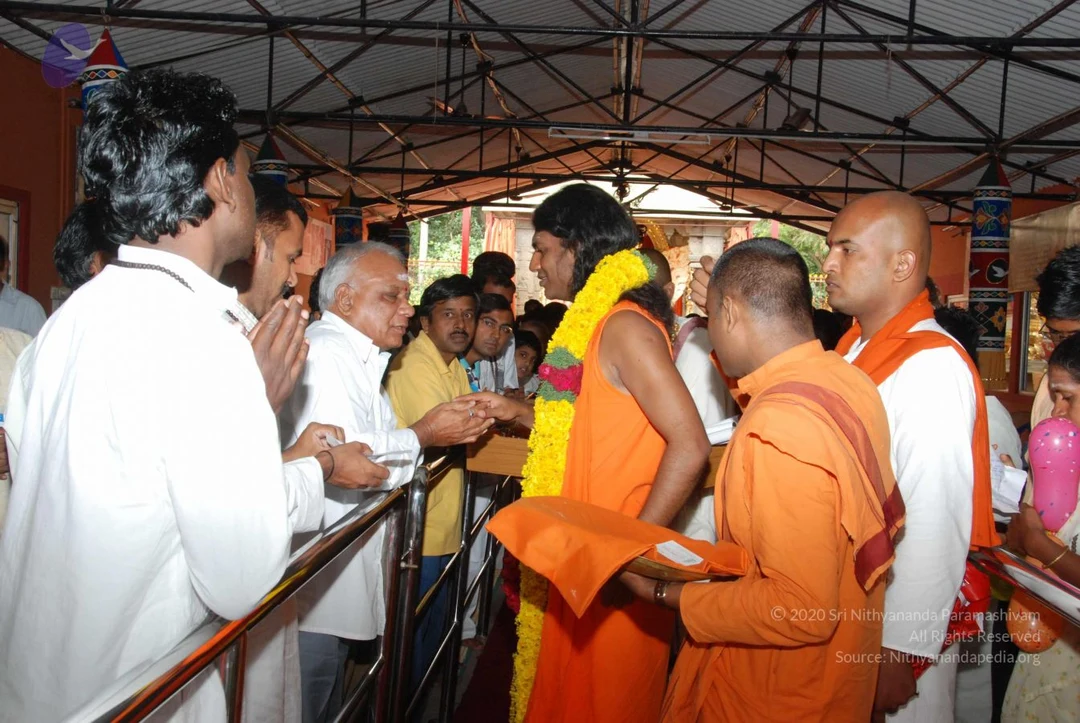
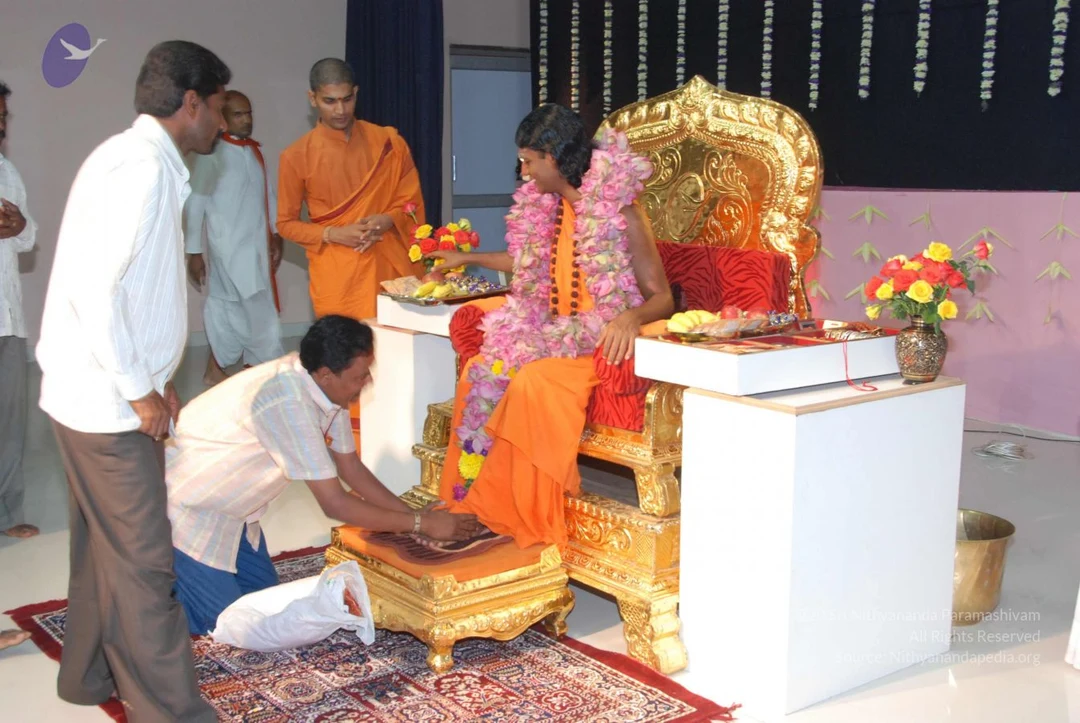
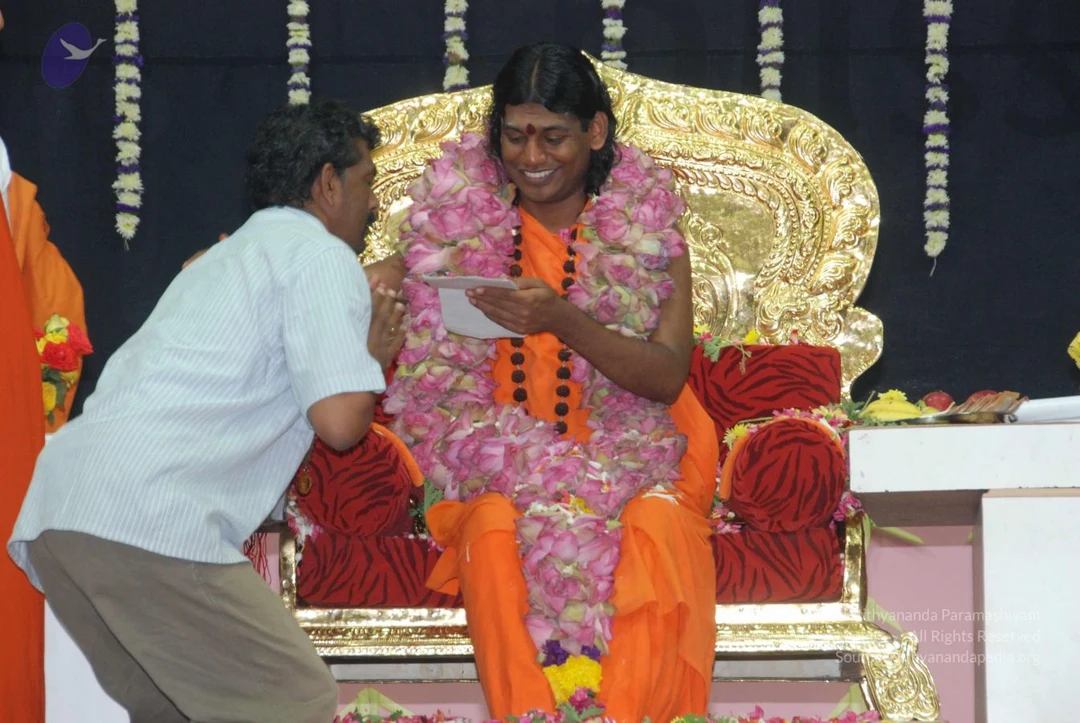
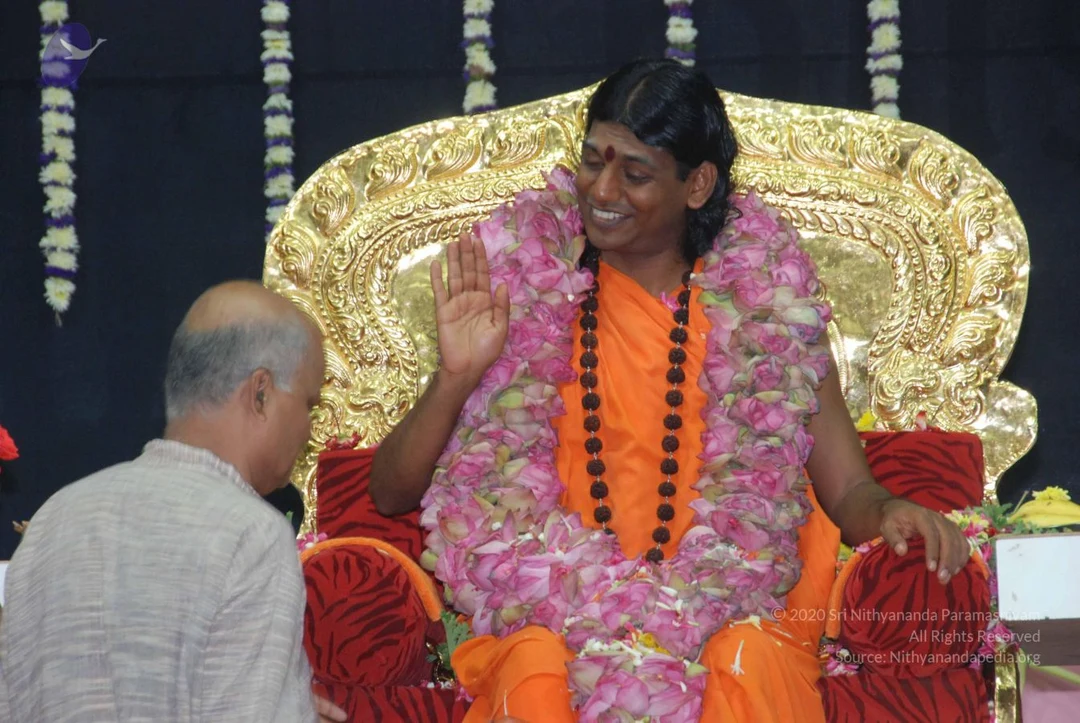
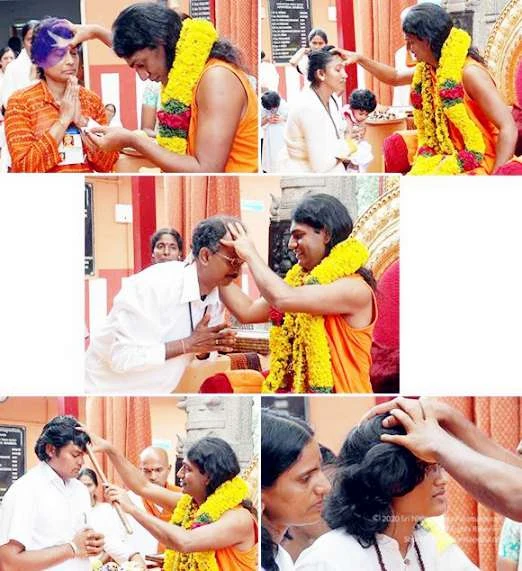
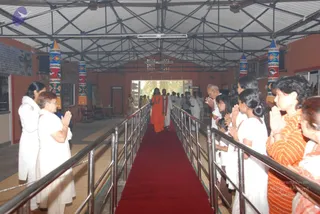
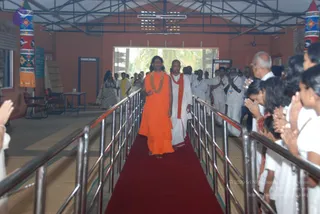
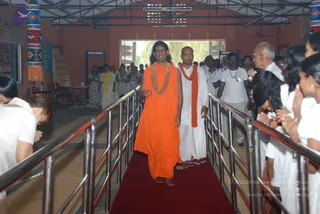
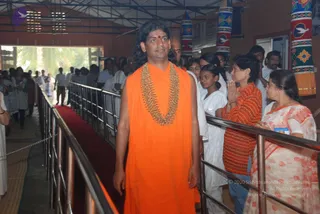
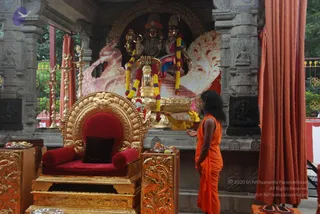
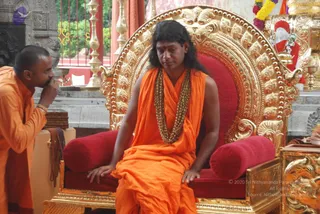
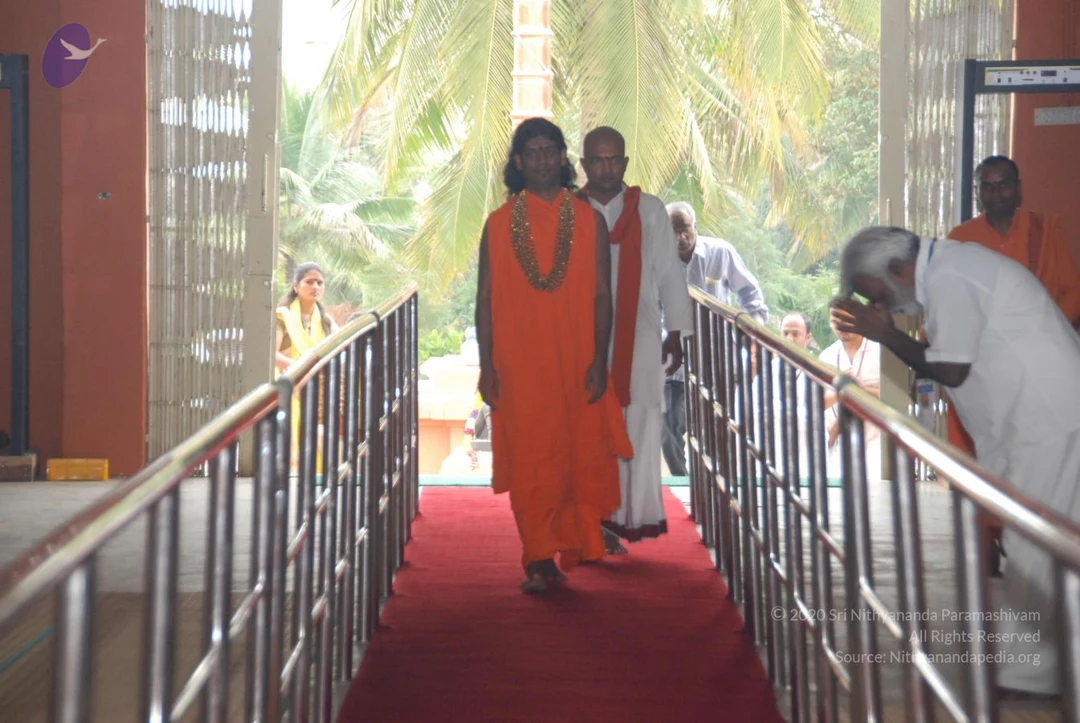
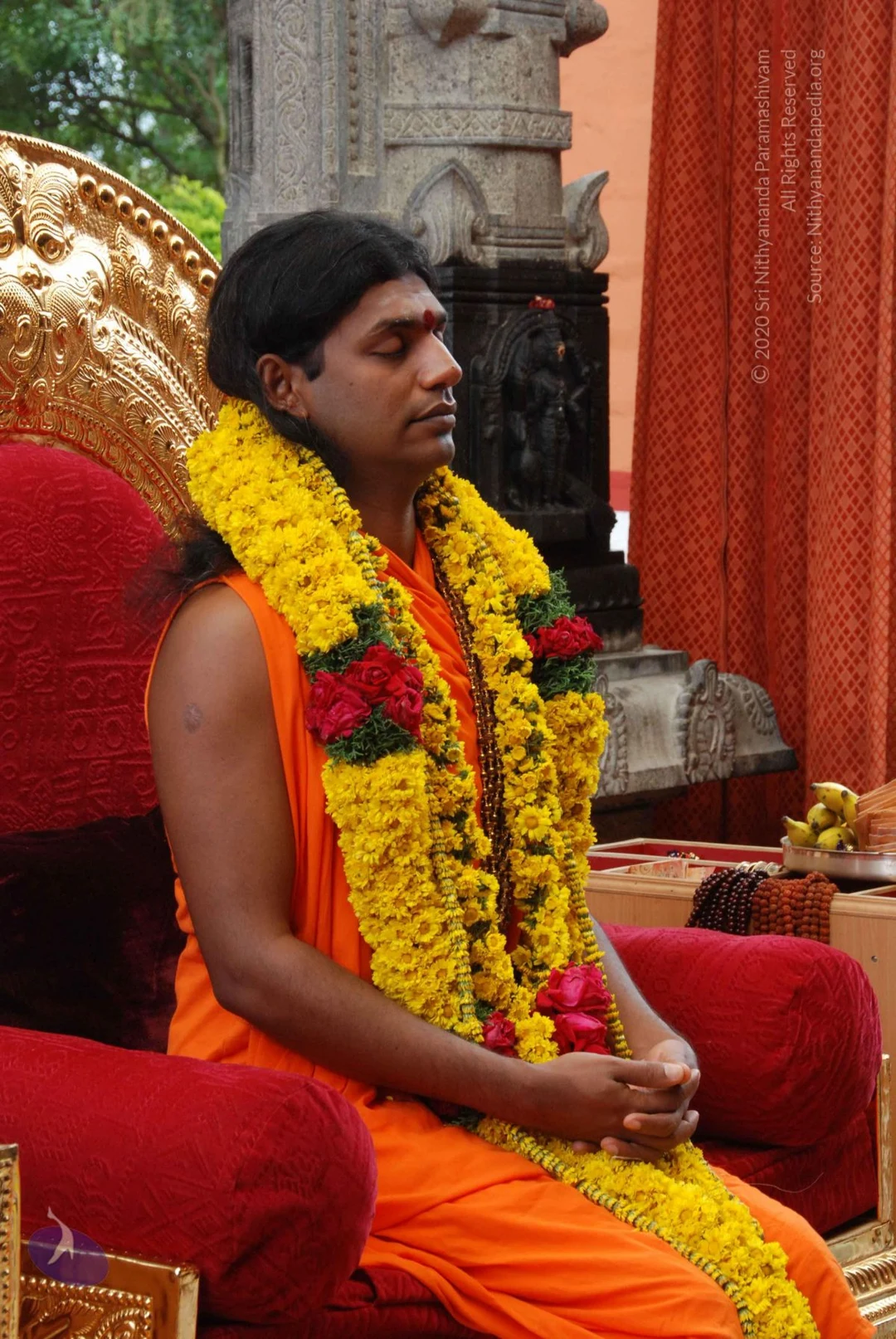
A photograph of a covered hall with a red carpet runner down the centre, leading toward an open doorway. A figure in an orange-red robe with a matching shawl walks along the carpet, with a second person in white beside them. Devotees line both sides behind metal railings with palms pressed together in greeting: women in white salwars and saris, a woman in orange-and-white striped sari at right, and girls in white dresses. Colourful painted pillars with bird motifs stand at the entrance and wall signage is visible at left.A long-haired man in an orange saffron robe and a flower garland walks down a red carpet runner between metal handrails in a hall with terracotta walls and colourful patterned pillars. Behind him, a man in white with a red shawl walks alongside, and a line of people in white clothes stand along both sides with palms pressed together in greeting. Light streams in from an open doorway at the far end, where palm trees are visible outside.A photograph of a man in a saffron-orange robe with long dark hair and a large gold-coloured garland walking down a red carpet runner between metal railings in a hall with terracotta-coloured walls. Beside him a man in white dhoti and white shirt with a red shawl walks with bare feet. Devotees line both sides of the aisle with hands folded in anjali mudra and some bow low, including women in white and a man in a white shirt at right. A woman in white bends forward at far left. Colourful pillars and a tiled roof frame the hall, with an open doorway and palm trees beyond. a person: the saffron-robed man with long hair and a gold garland is the visible central figure, walking as a guest of honour.A man with long dark hair and a red bindi stands in the centre on a red carpet walkway, wearing an orange saffron robe and a multi-strand gold beaded necklace. Behind him, a line of people in white and light clothing stands along metal railings. On the right, a woman in an orange-red striped top presses her palms together in anjali, and an older woman in a white-and-red sari stands beside her. Colourful woven hanging banners decorate the pillars. Several dozen people are visible in the background.Inside a temple shrine, a standing person in orange saffron robes faces an ornate deity murti of a seated couple garlanded with yellow and orange flower chains. Behind them, a large painted backdrop shows swans. In the foreground an empty gold throne with a red velvet seat and red bolster cushions stands beside a gold-carved side table holding fruit offerings. Brass oil lamps and candle stands line the left side, and orange drapery hangs on the right.A man with long dark hair and a red tilak on his forehead sits on an ornate gilded throne with red cushions, wearing saffron-orange robes and a multi-strand rudraksha mala around his neck. To the left, a man in orange clothes leans in close, hand raised near his mouth as if speaking to him. Behind them, a gold-trimmed brass altar holds garlands of marigolds and a seated deity murti draped in red. Brass lamps and a metal pot sit on the right.
SARVA-DARSHAN
35 photosSource gallery
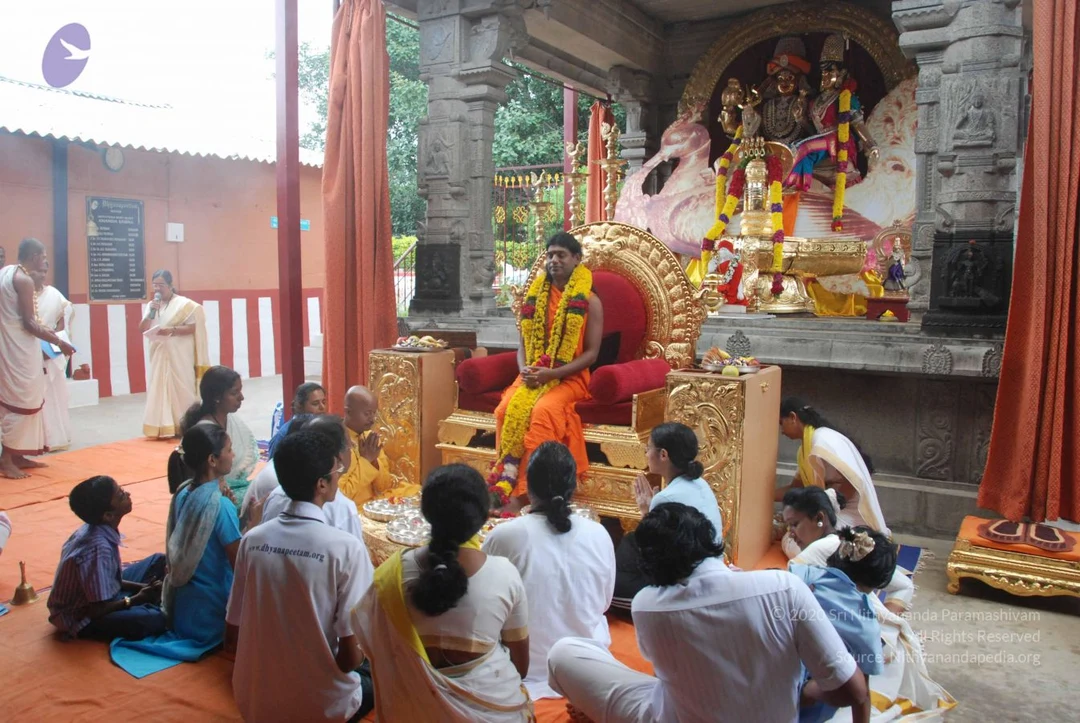
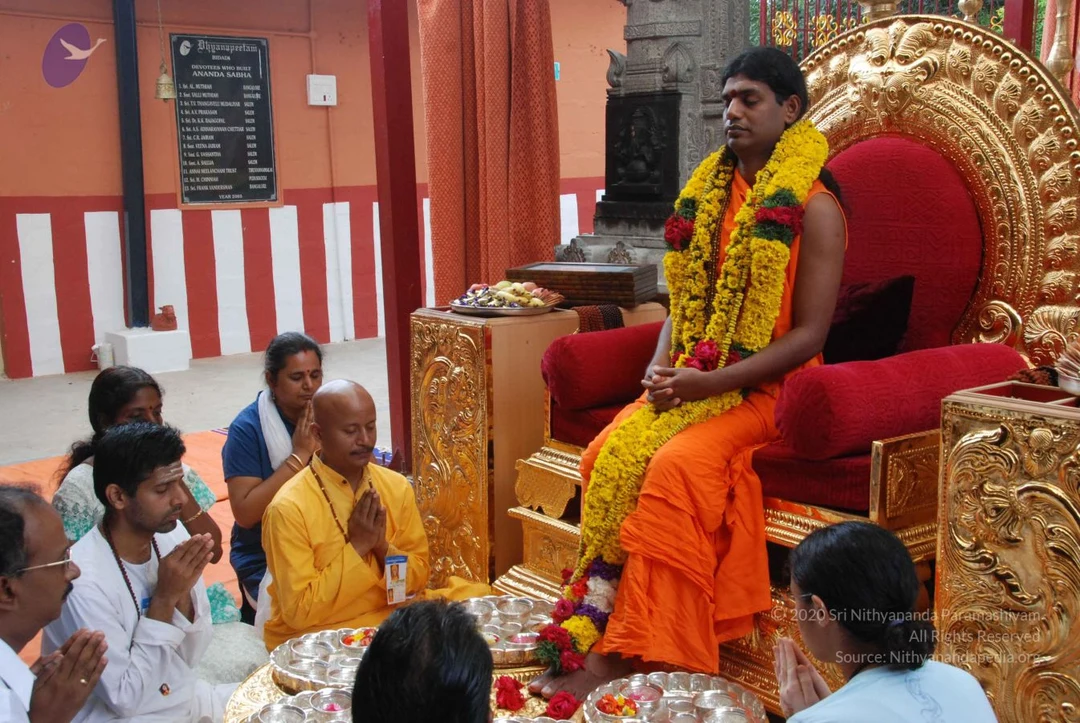
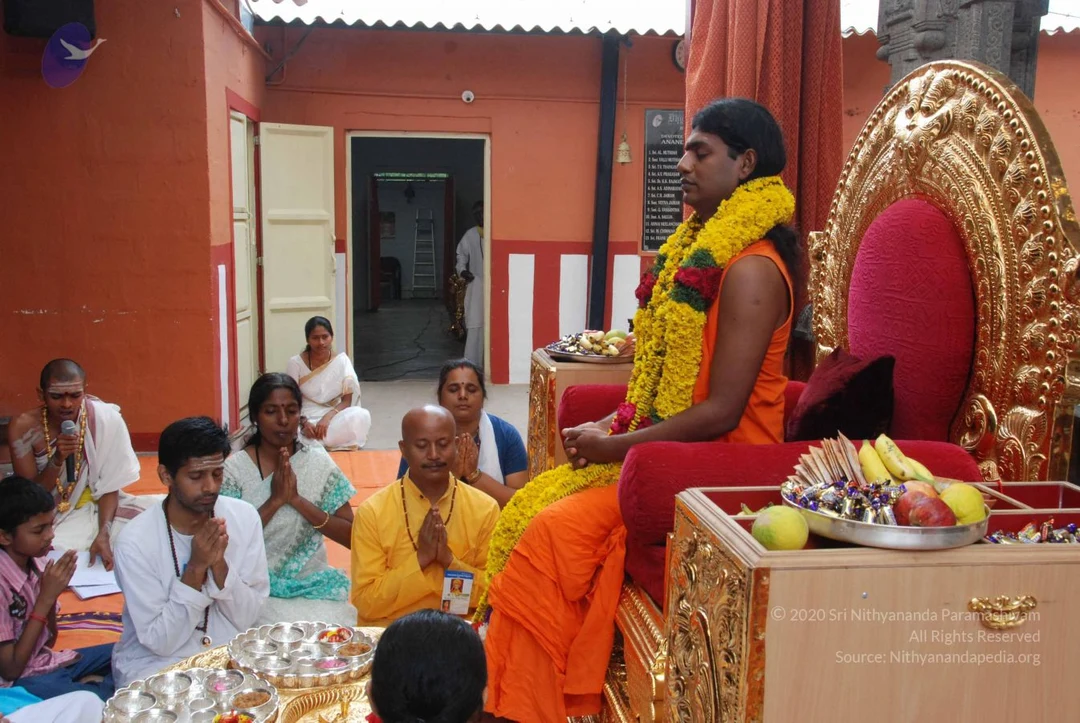
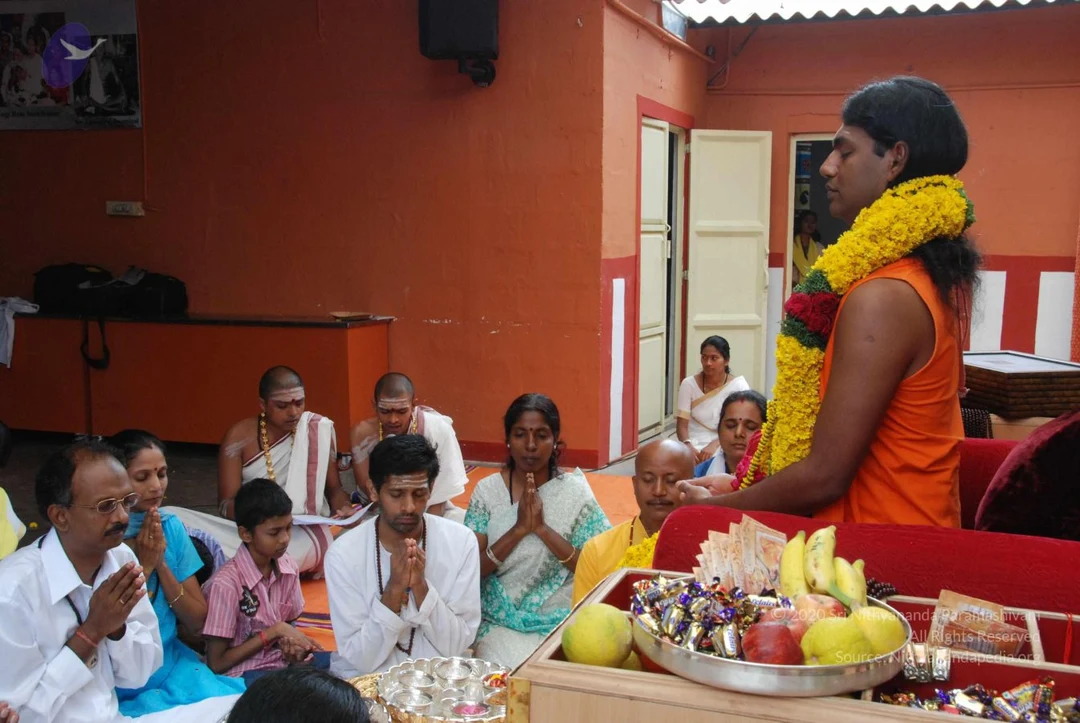
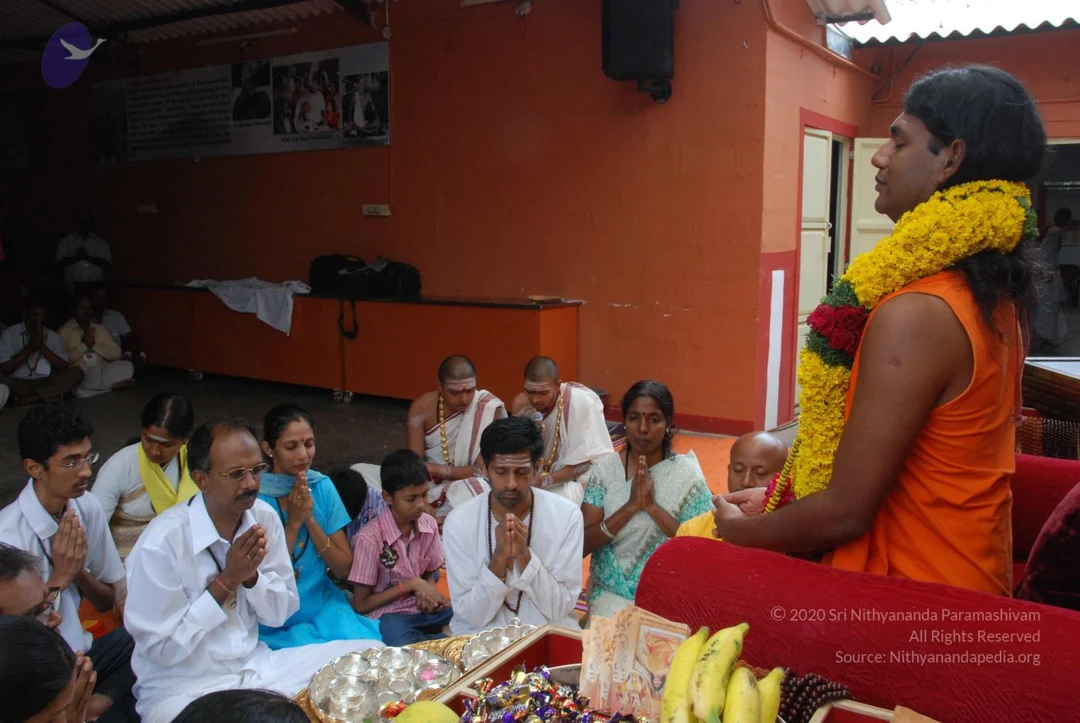
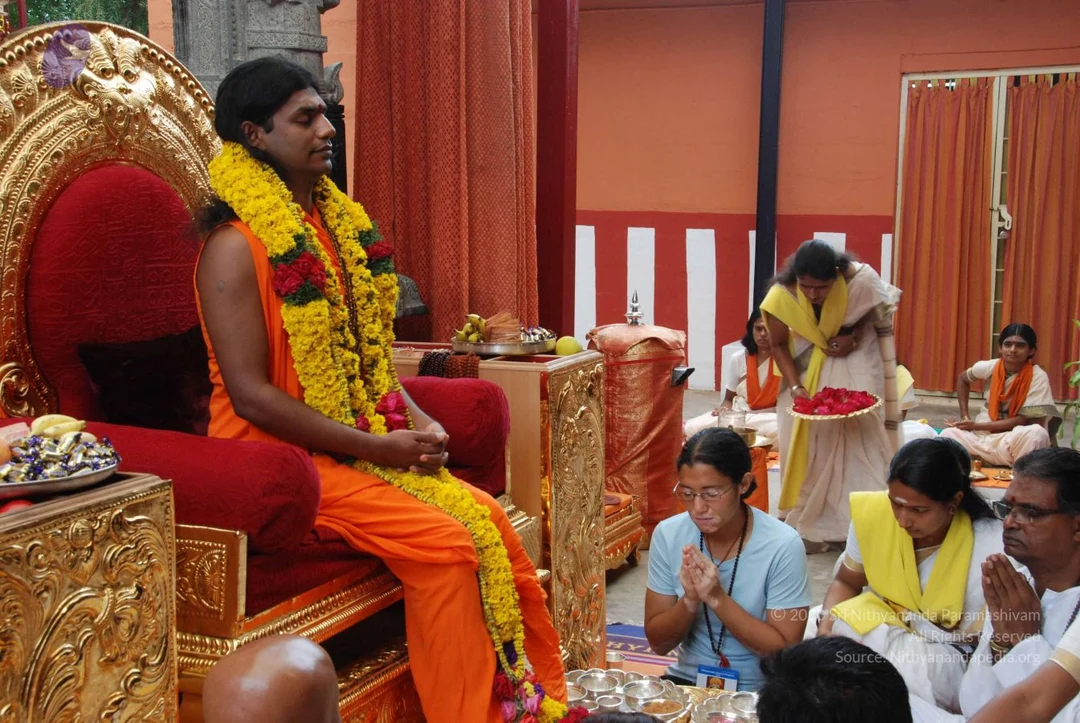
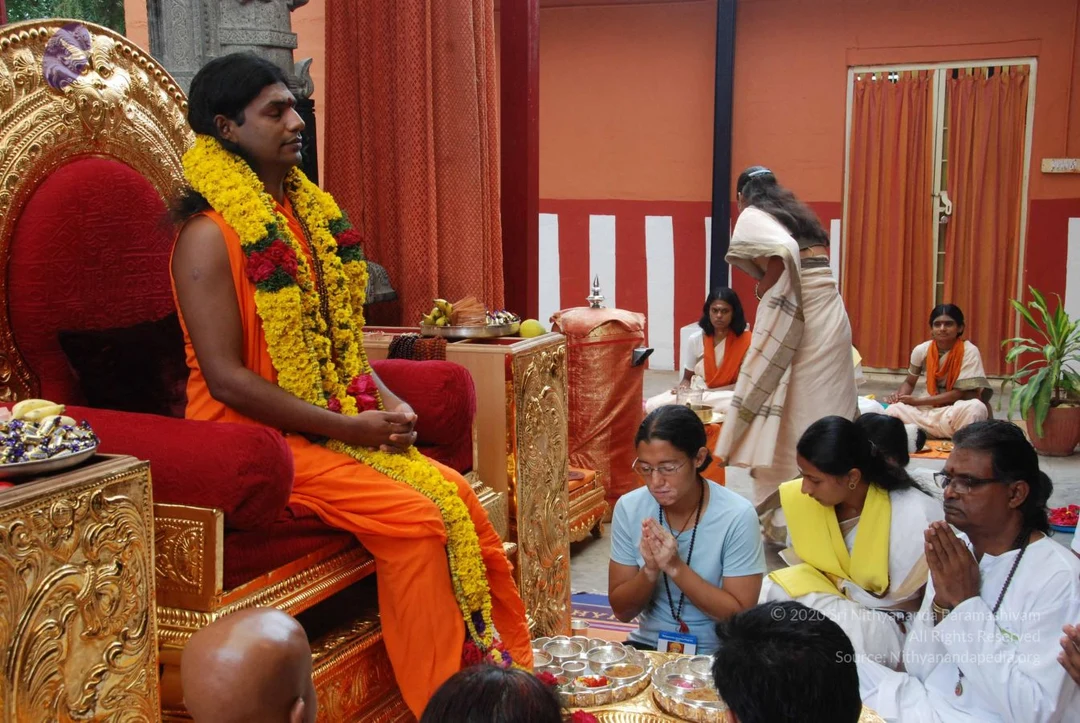
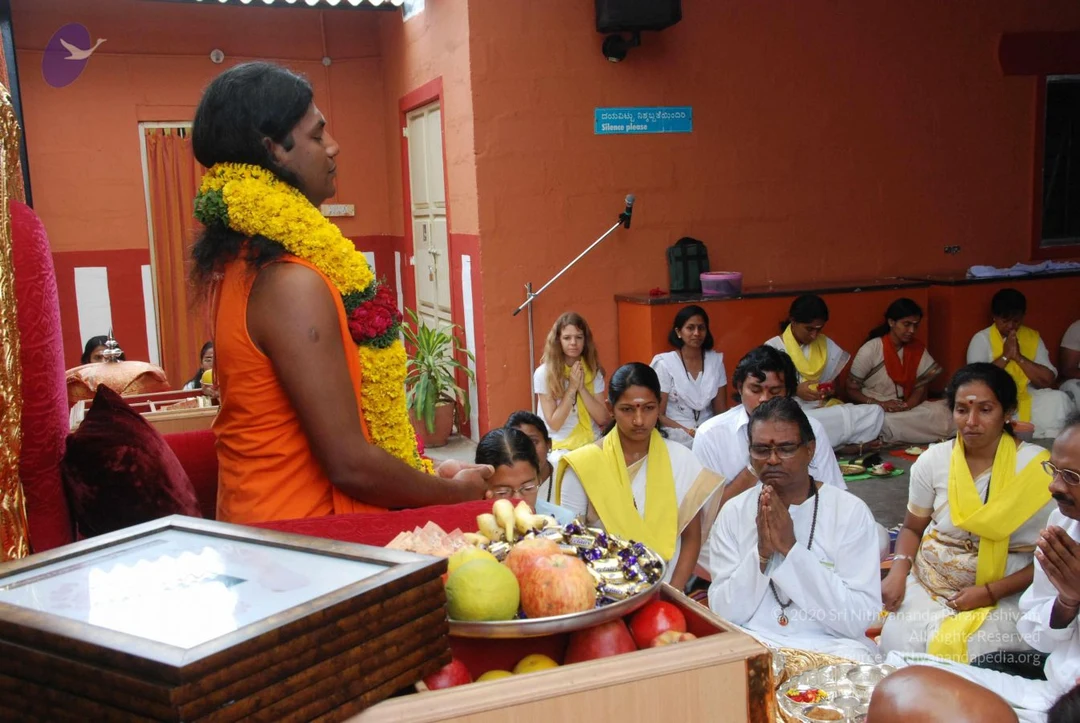
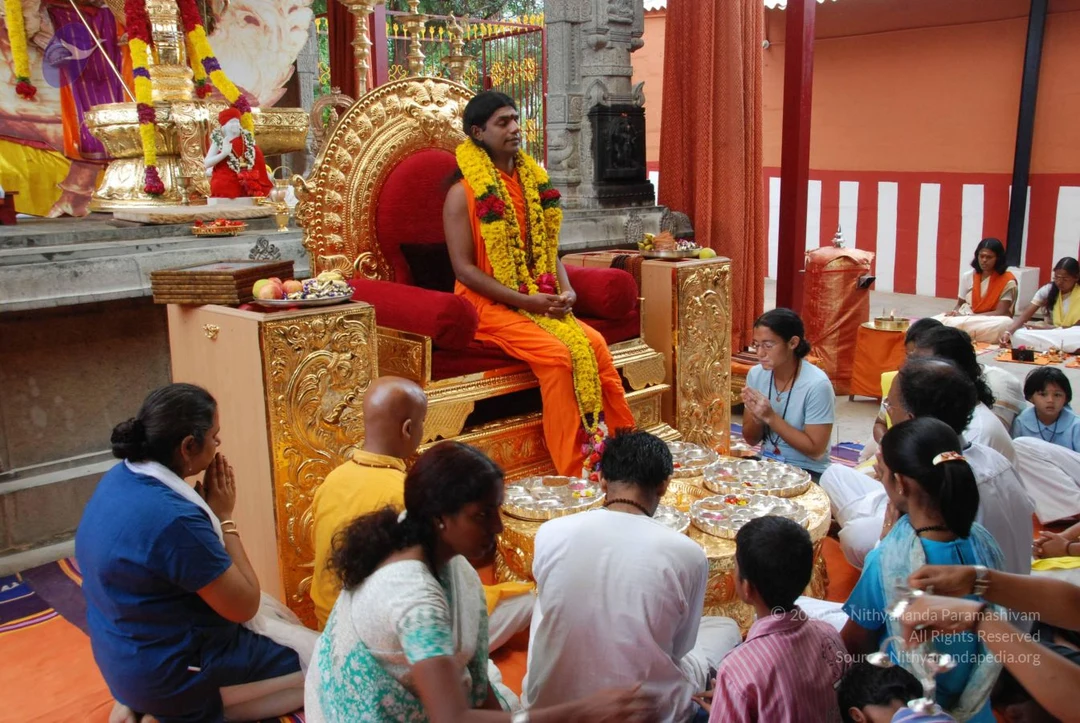
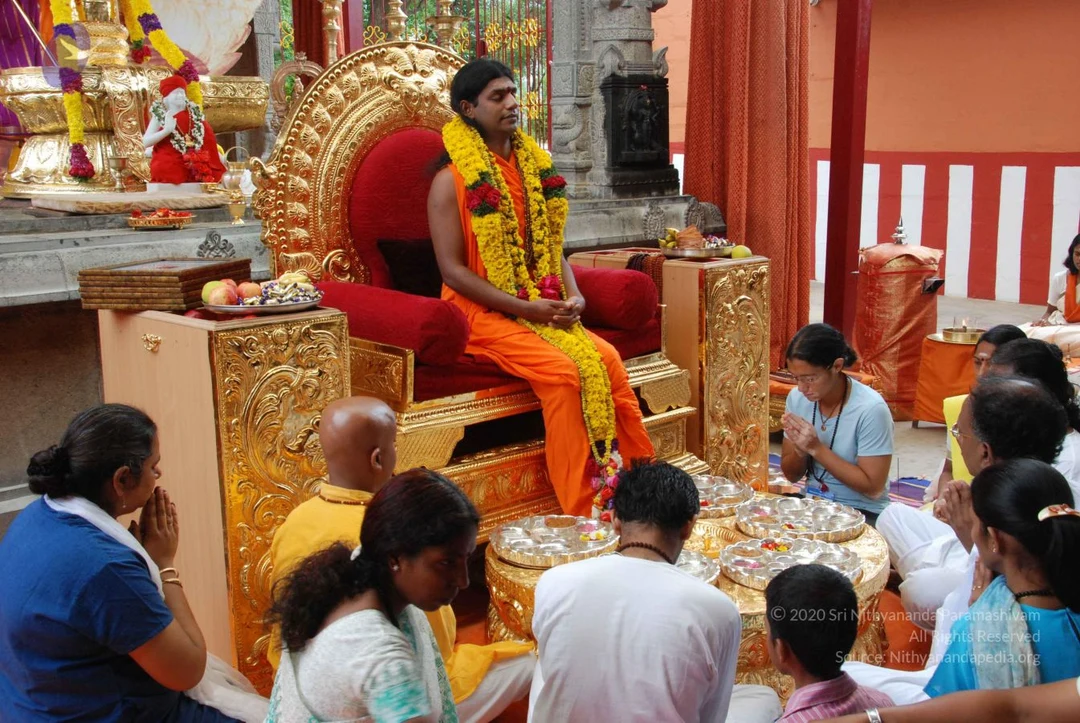
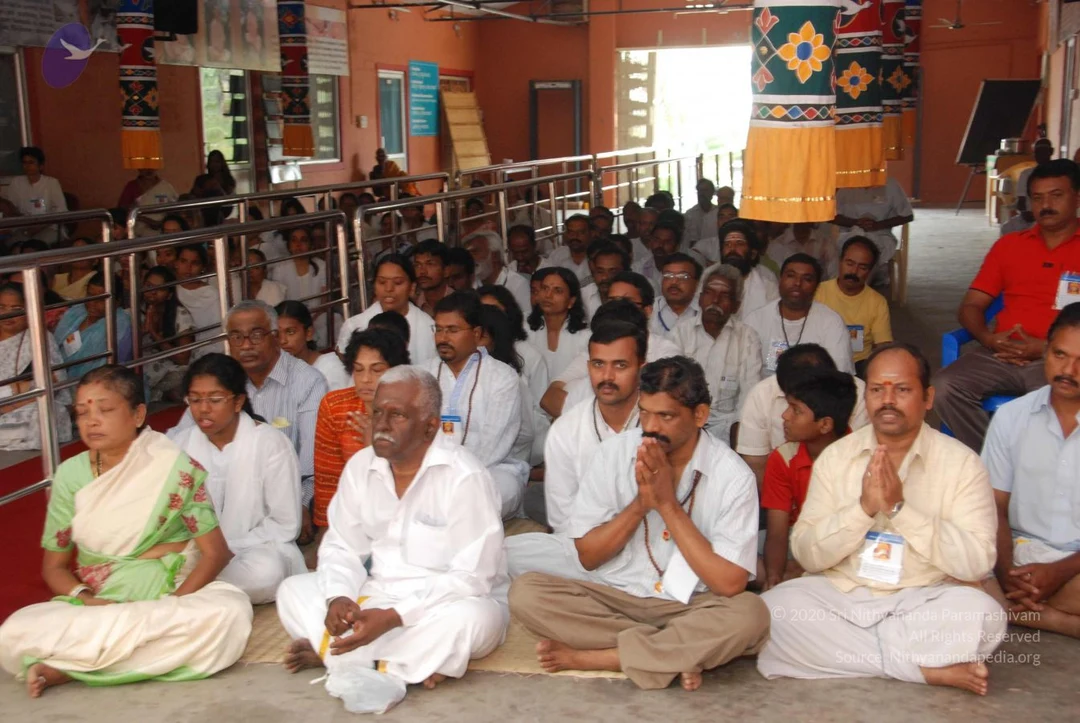
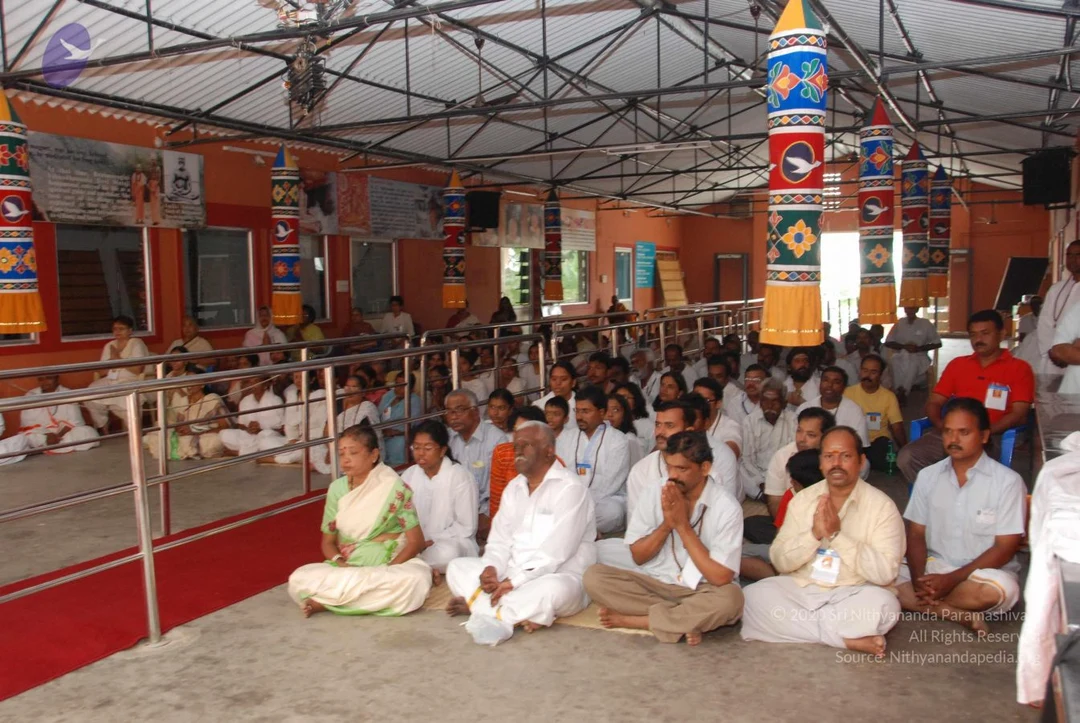
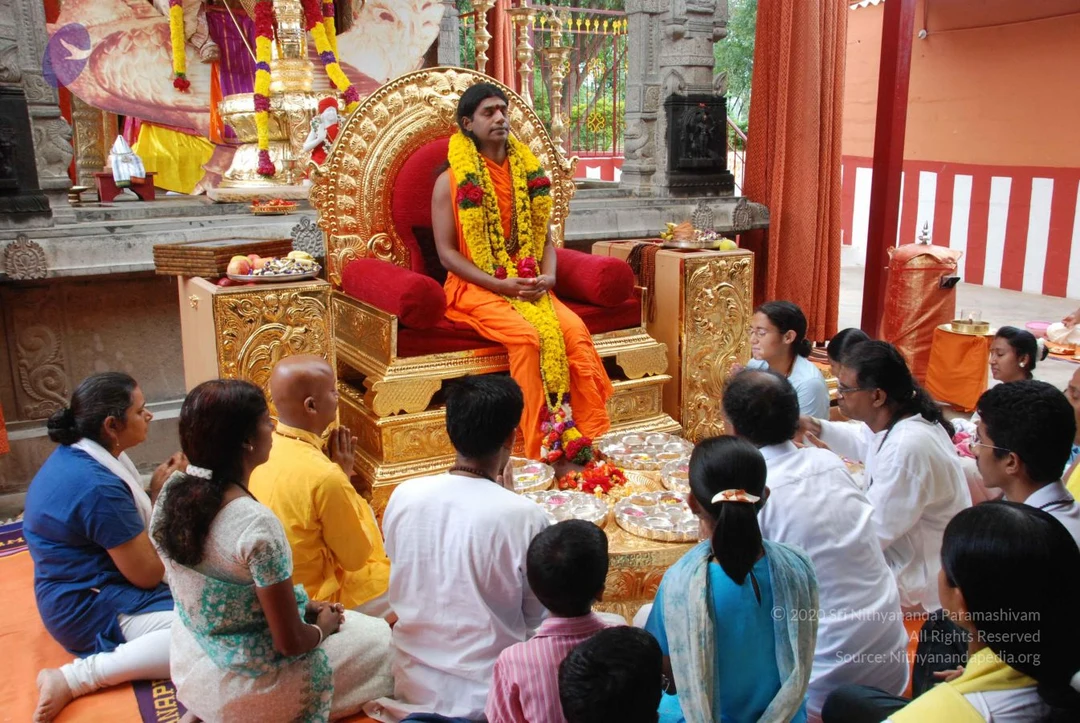
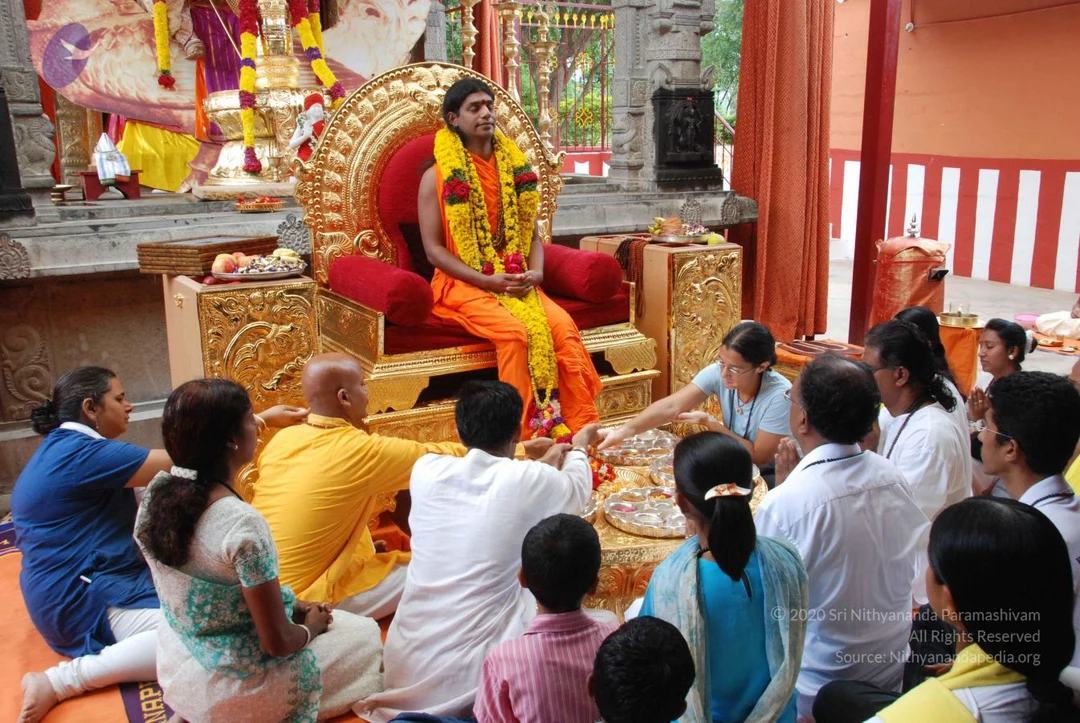
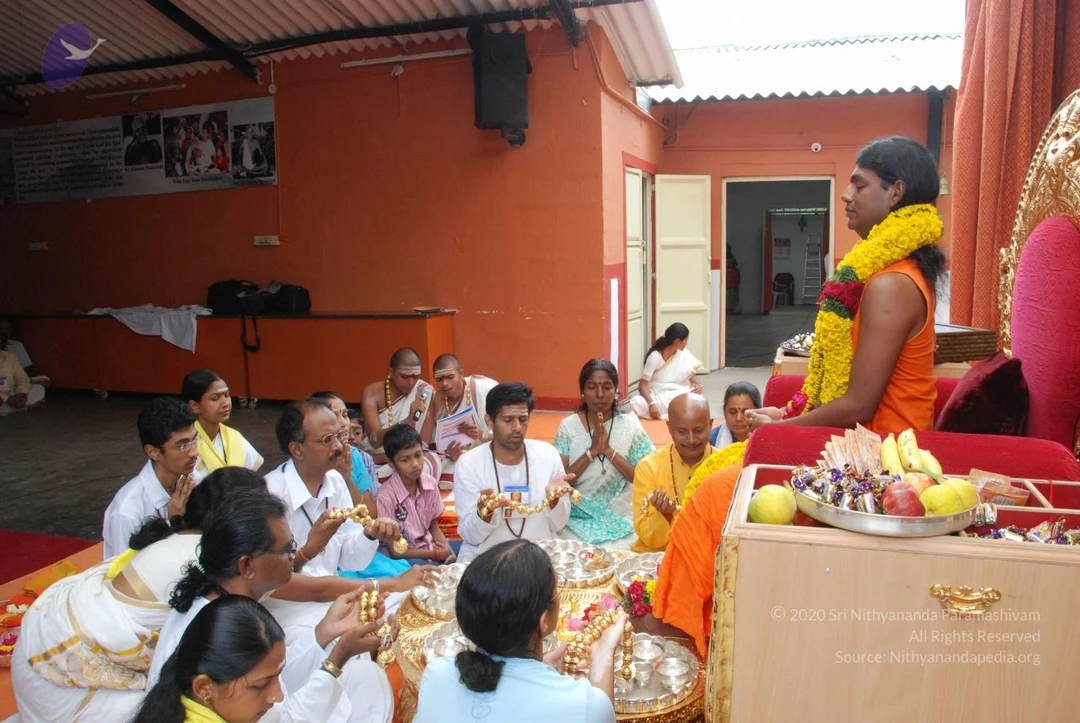
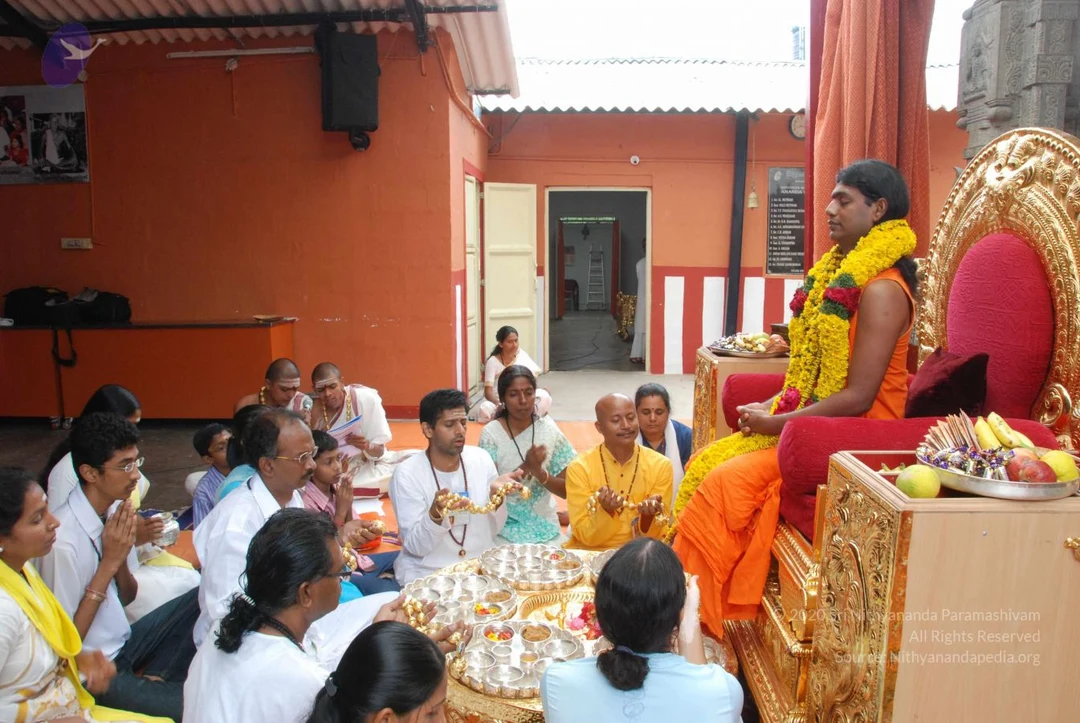
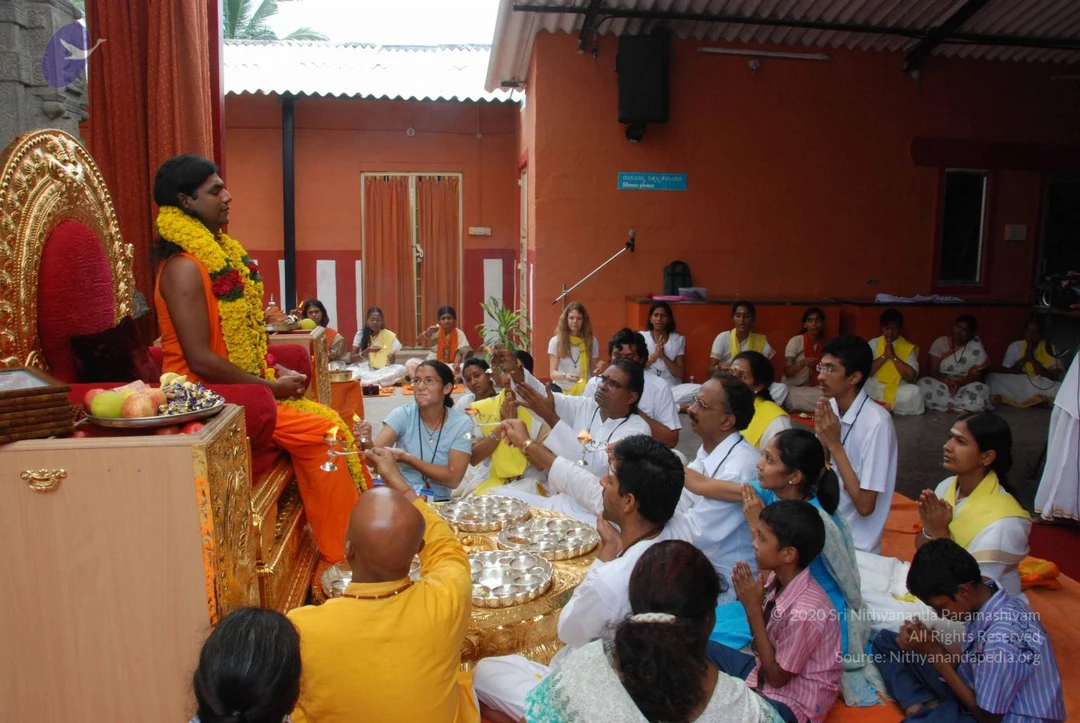
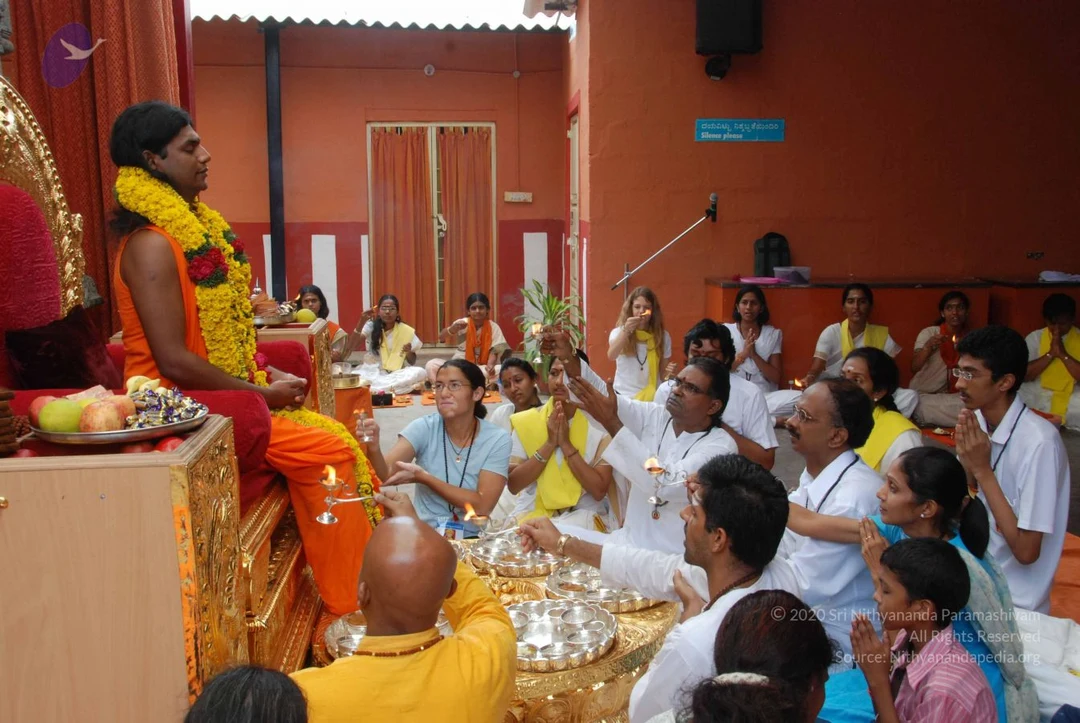
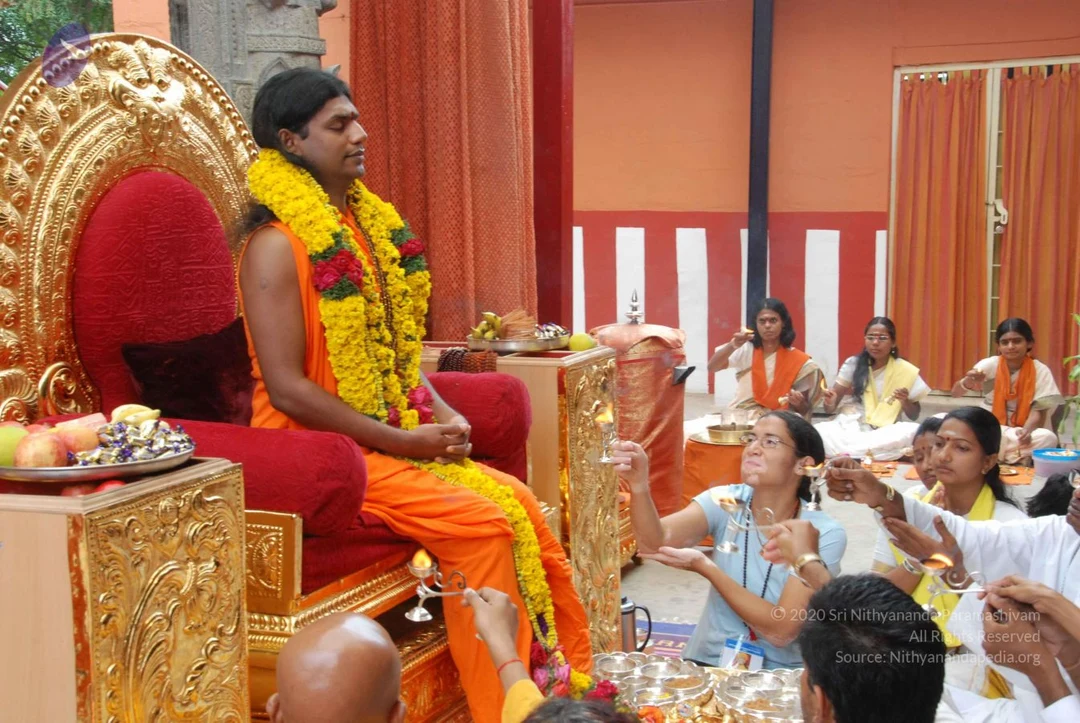
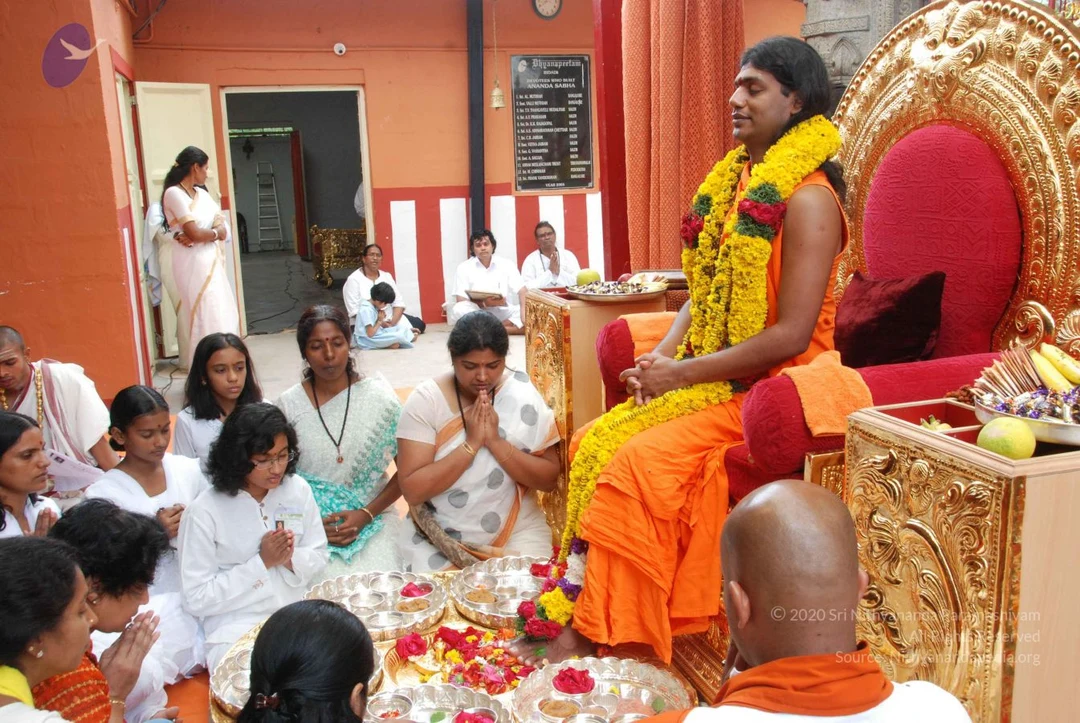
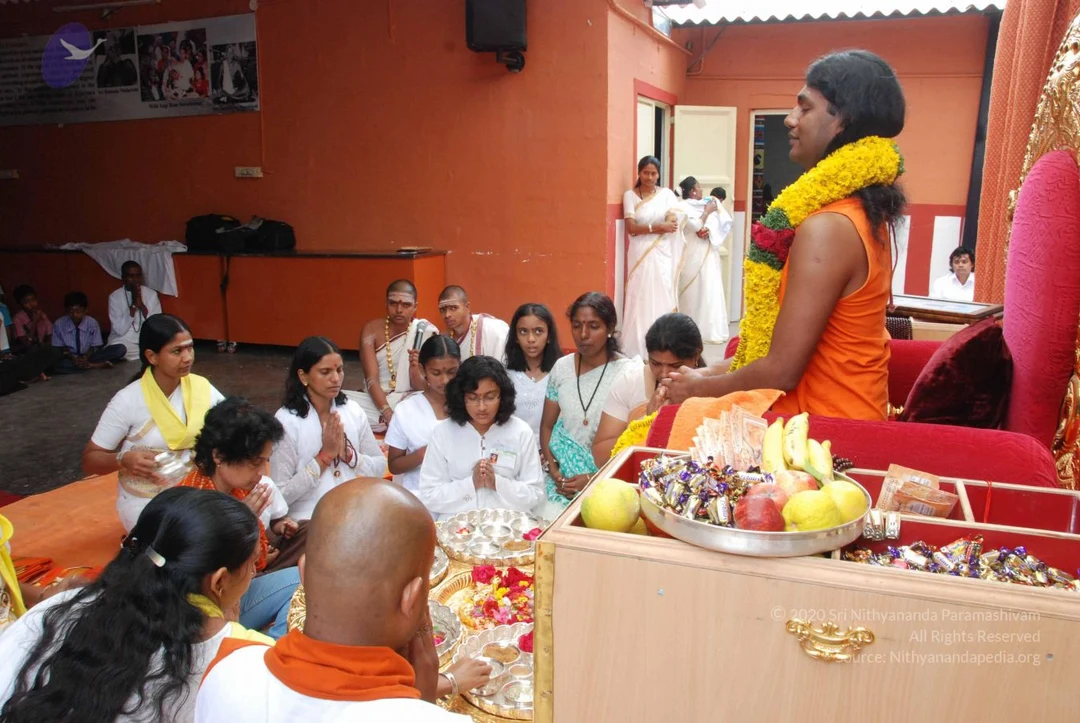
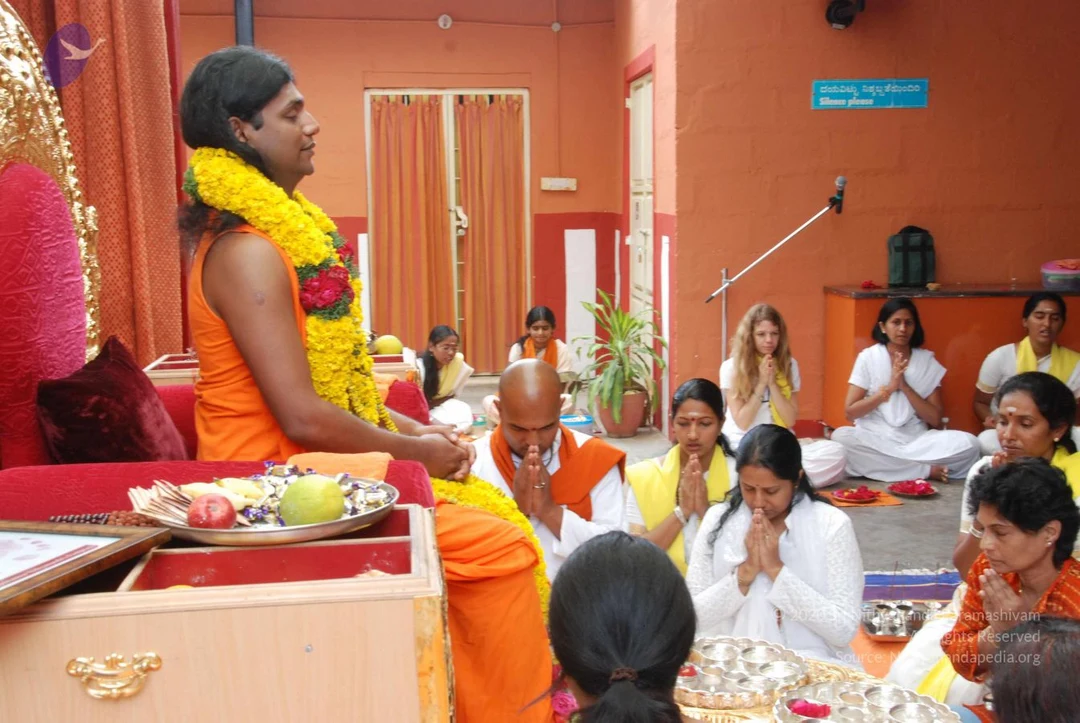
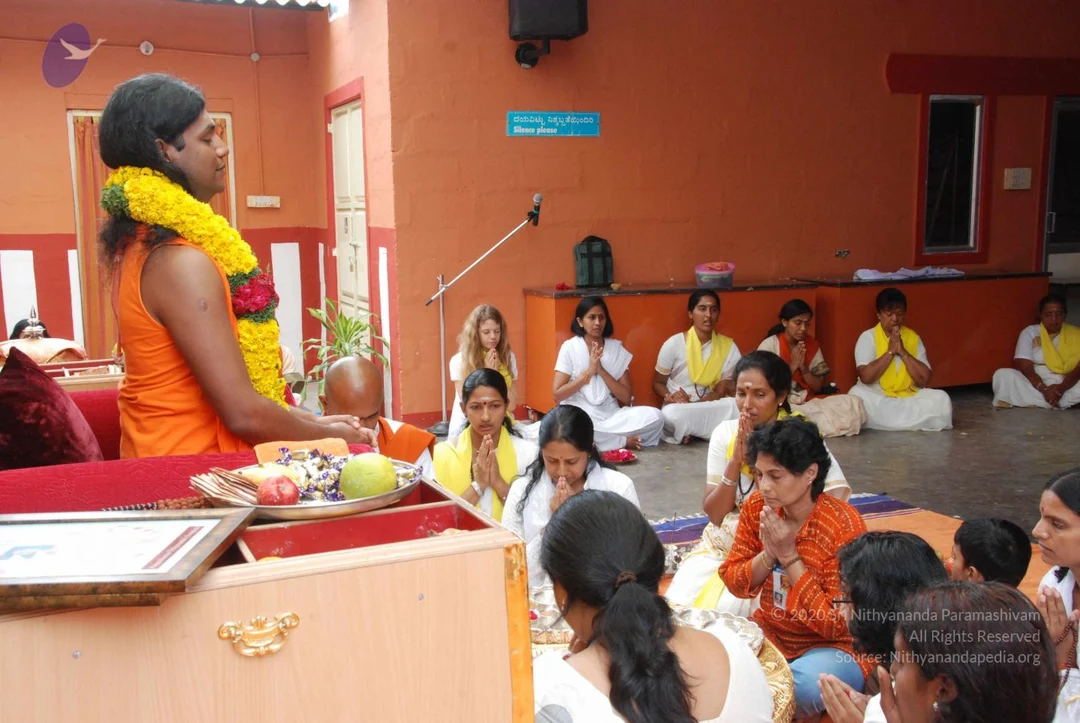
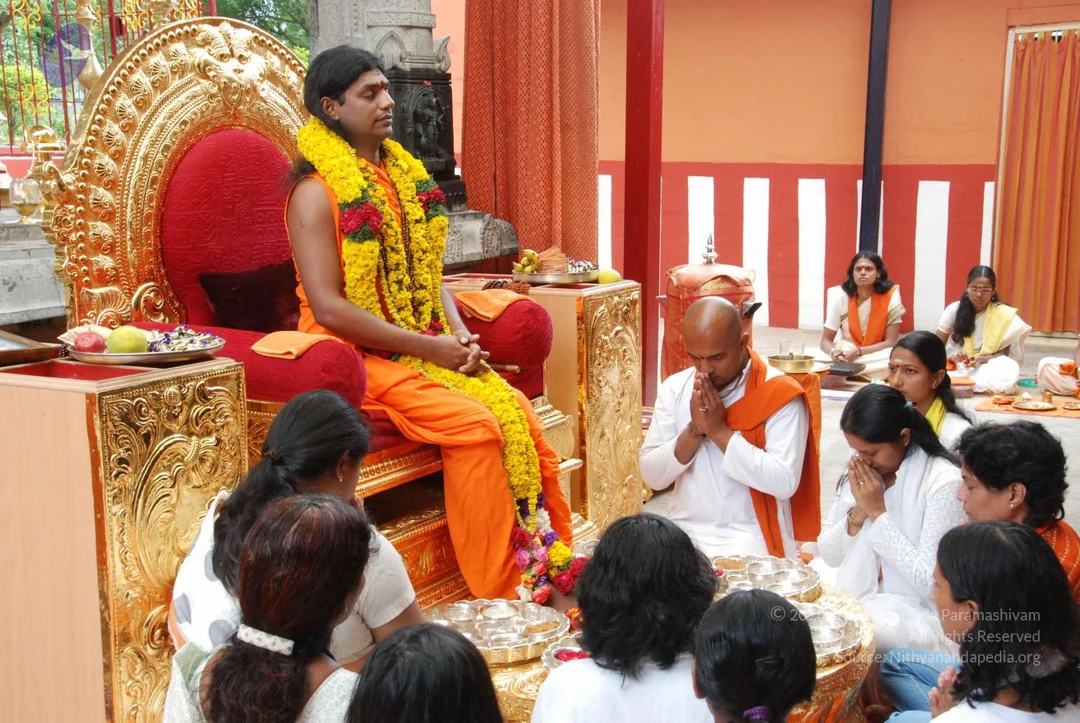
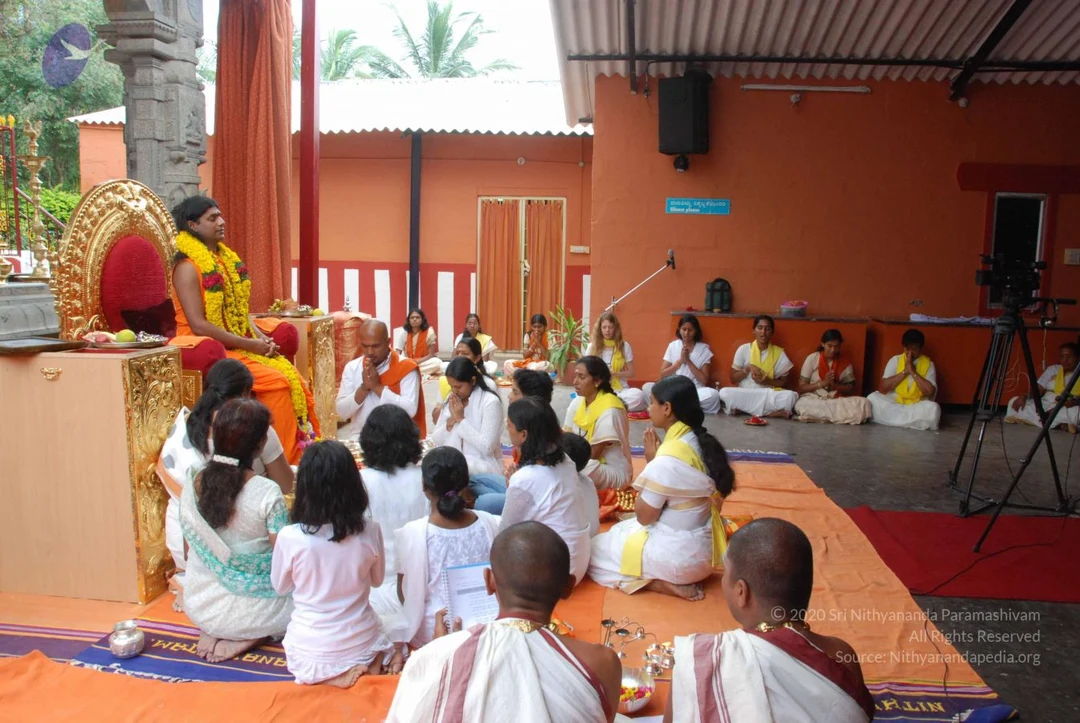
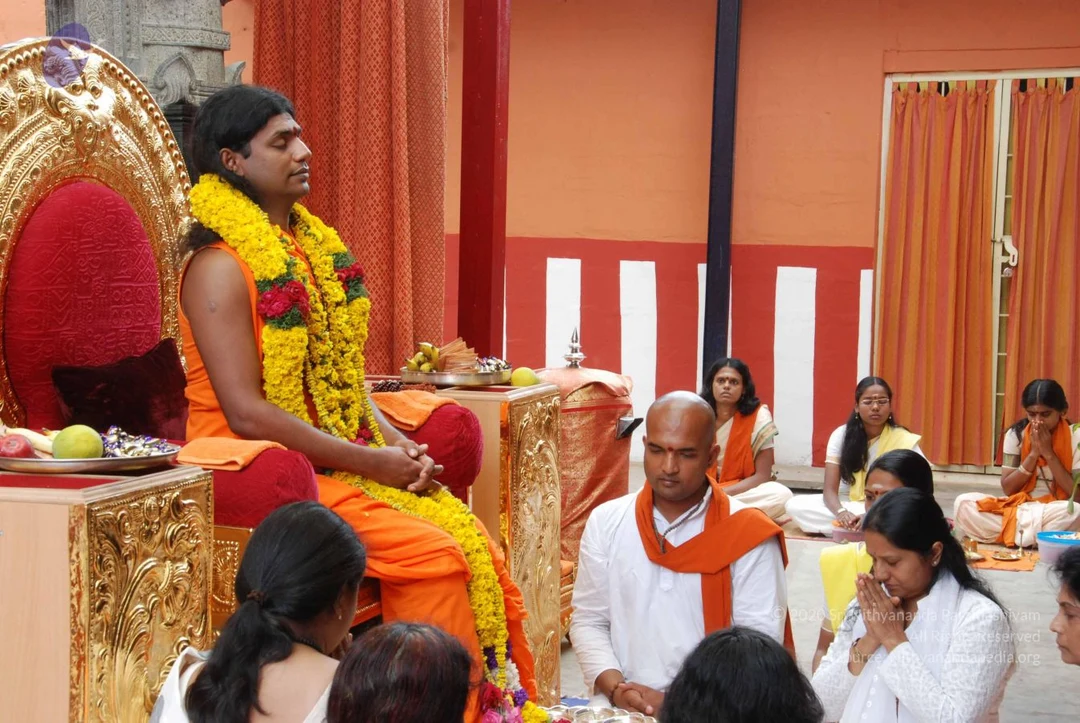
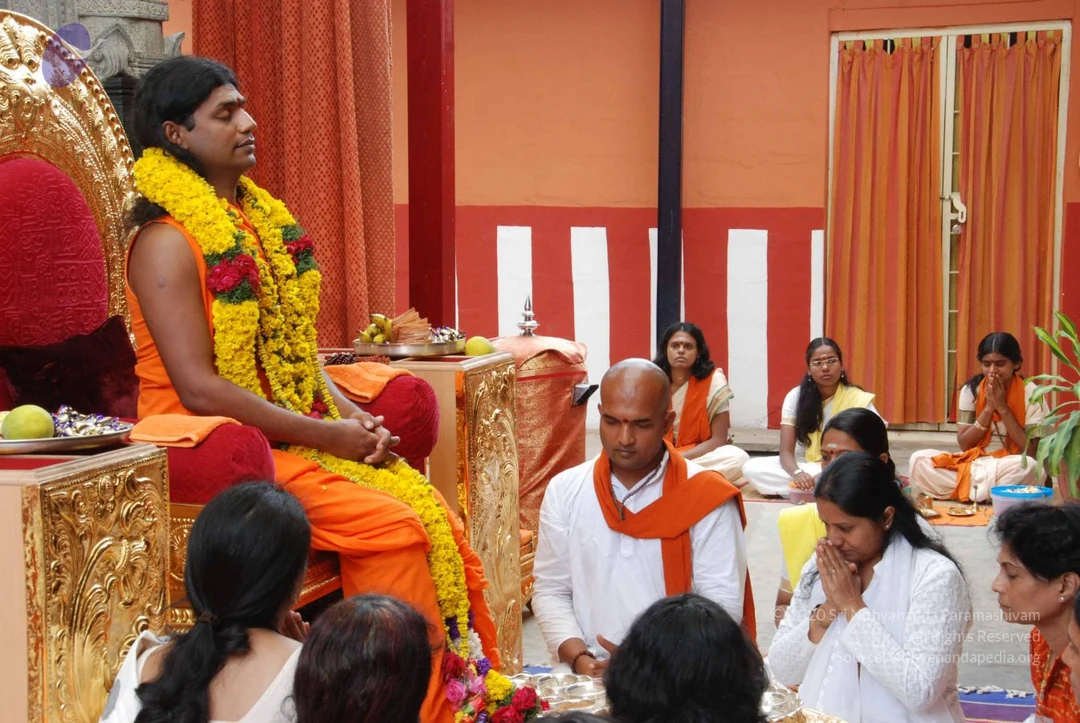
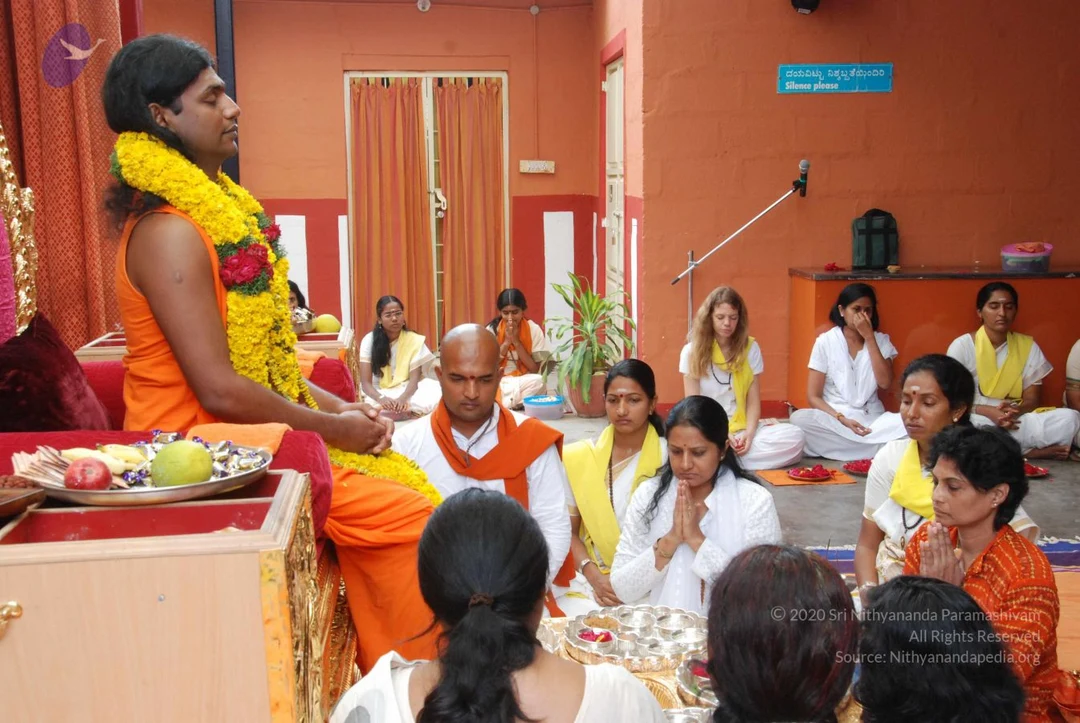
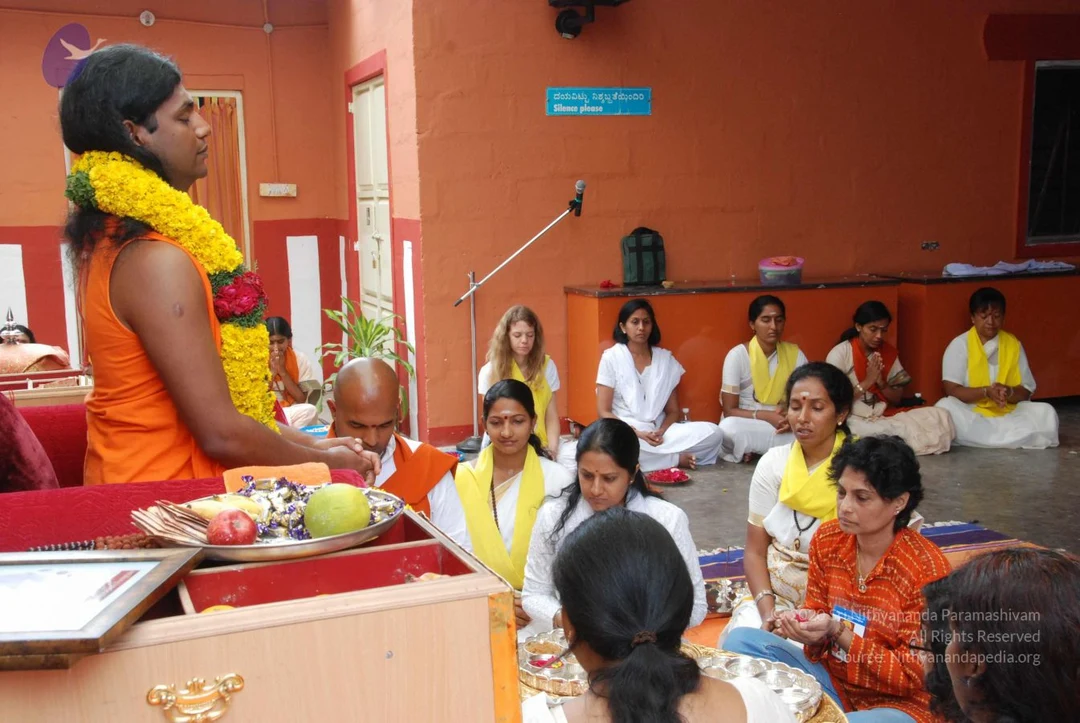
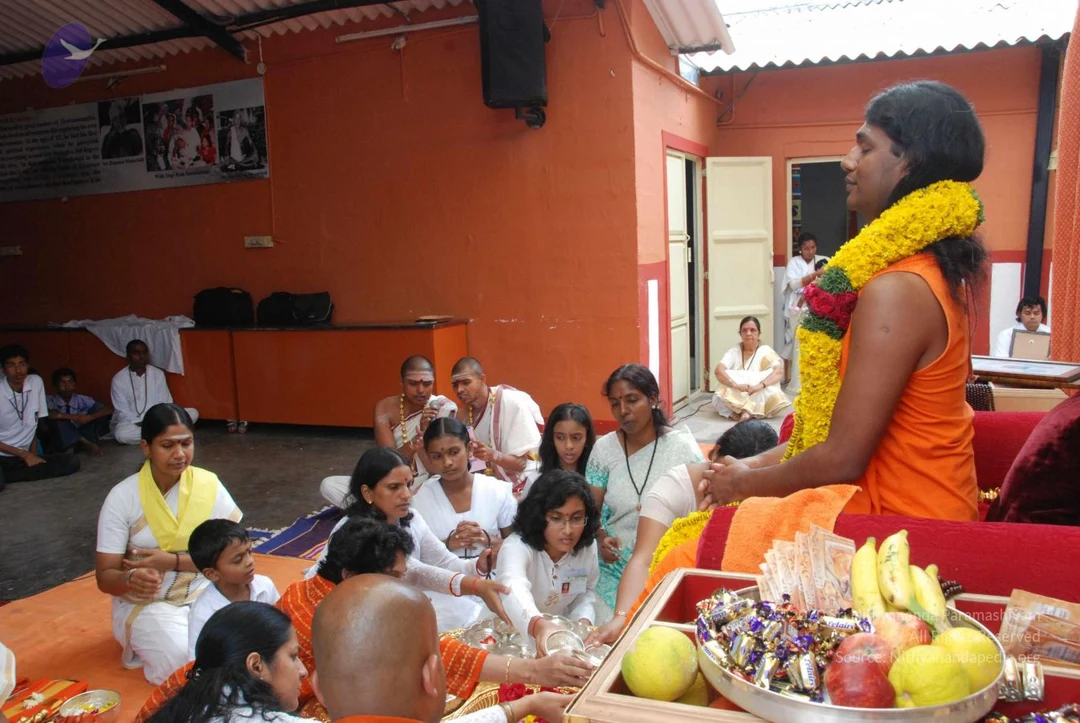
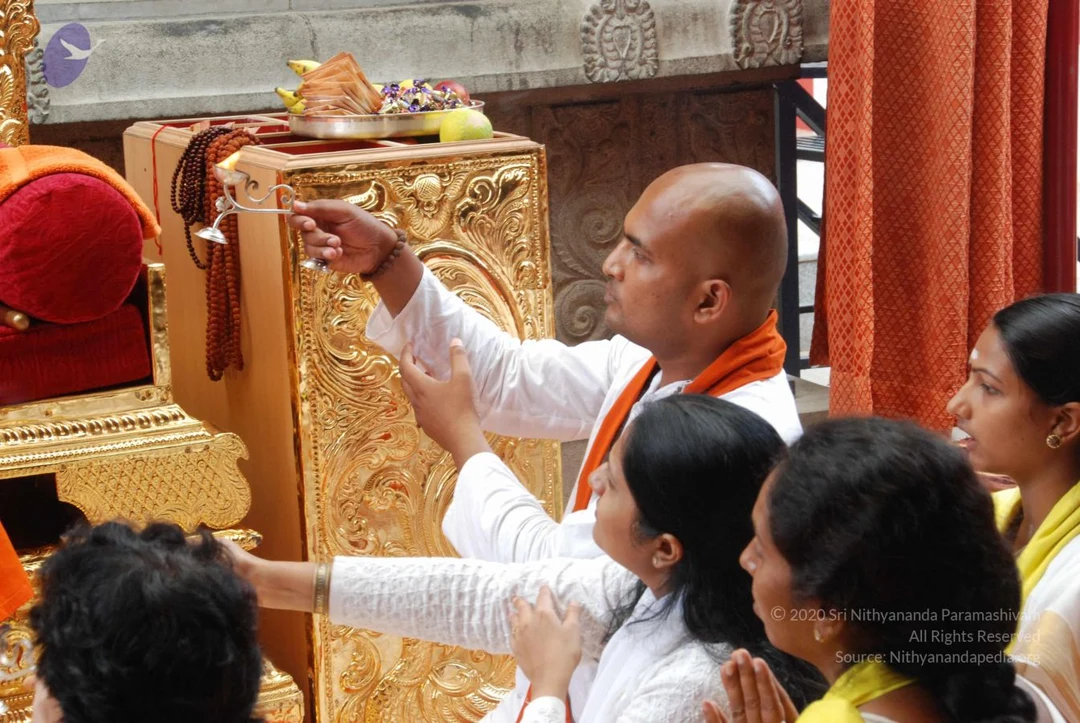
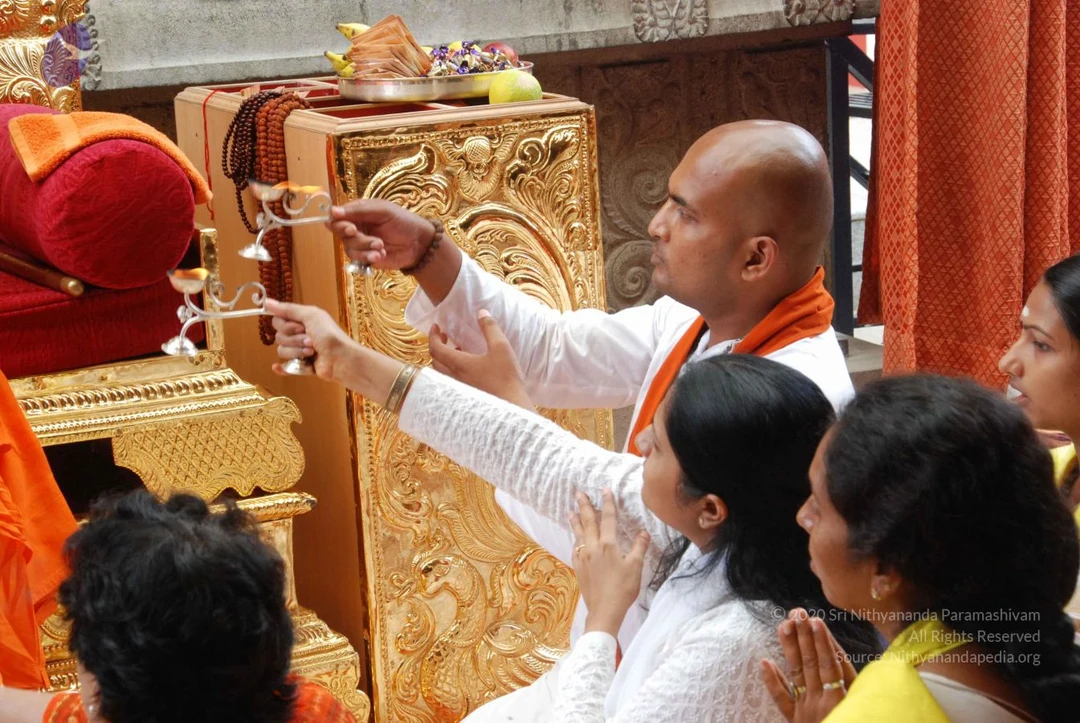
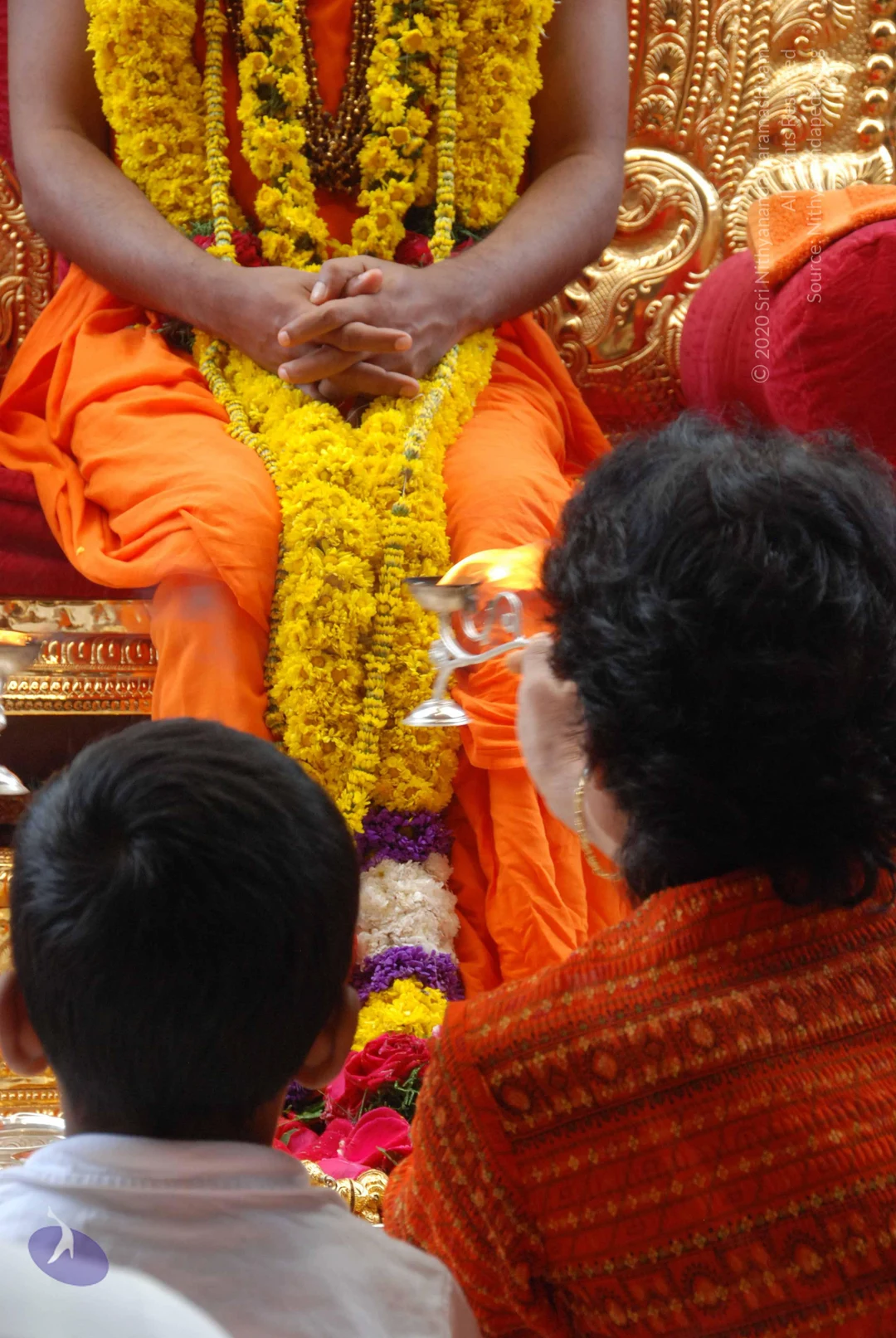
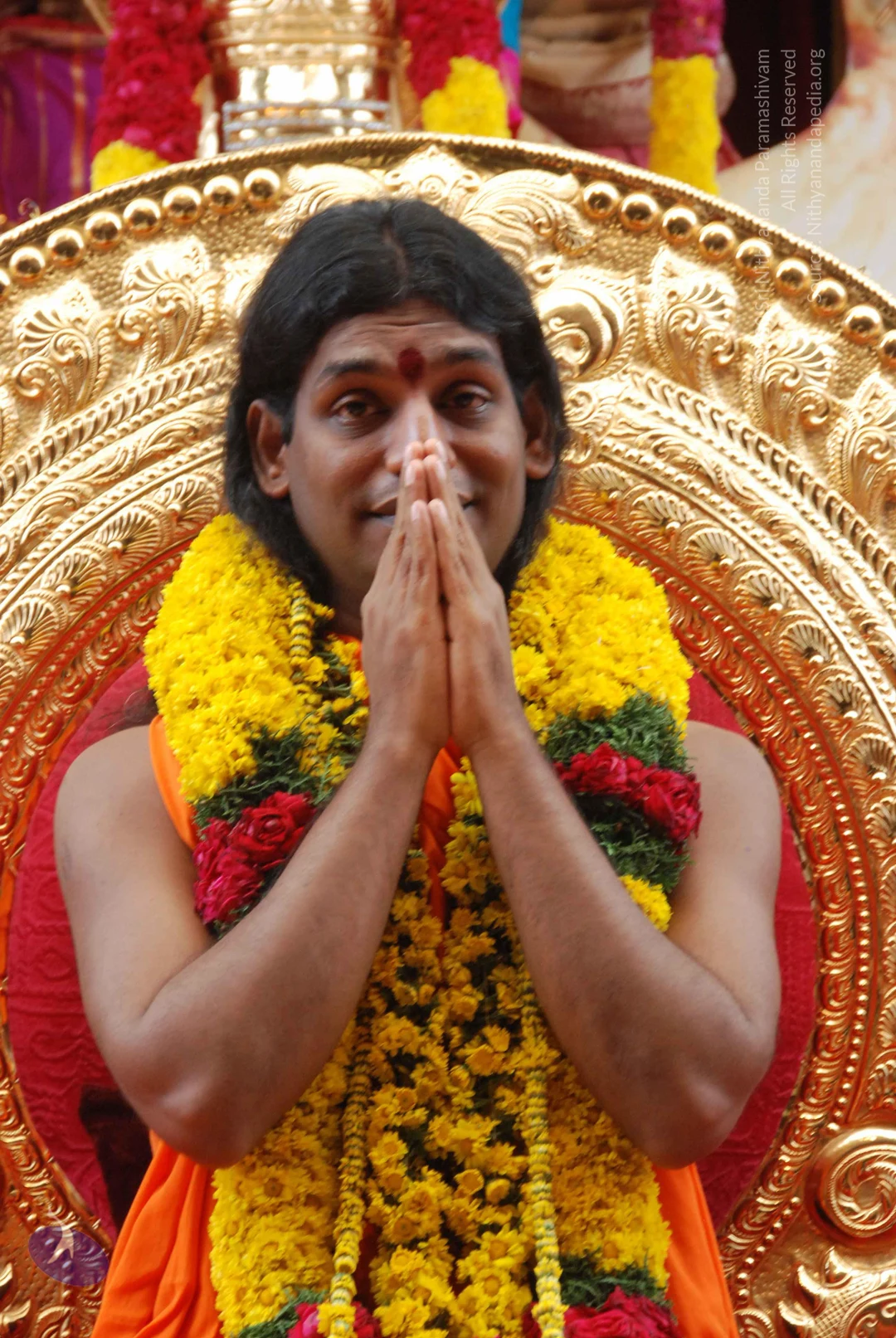
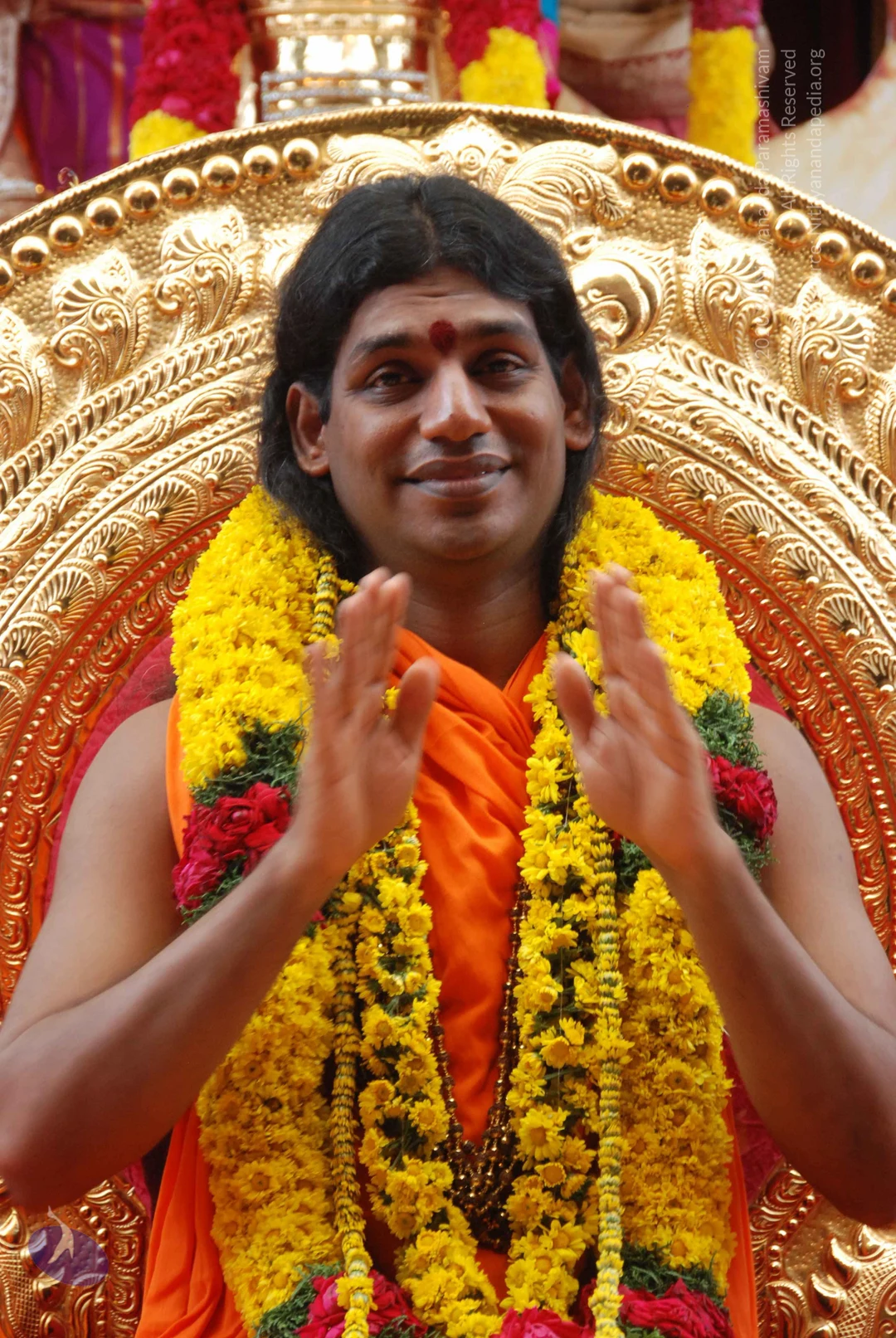
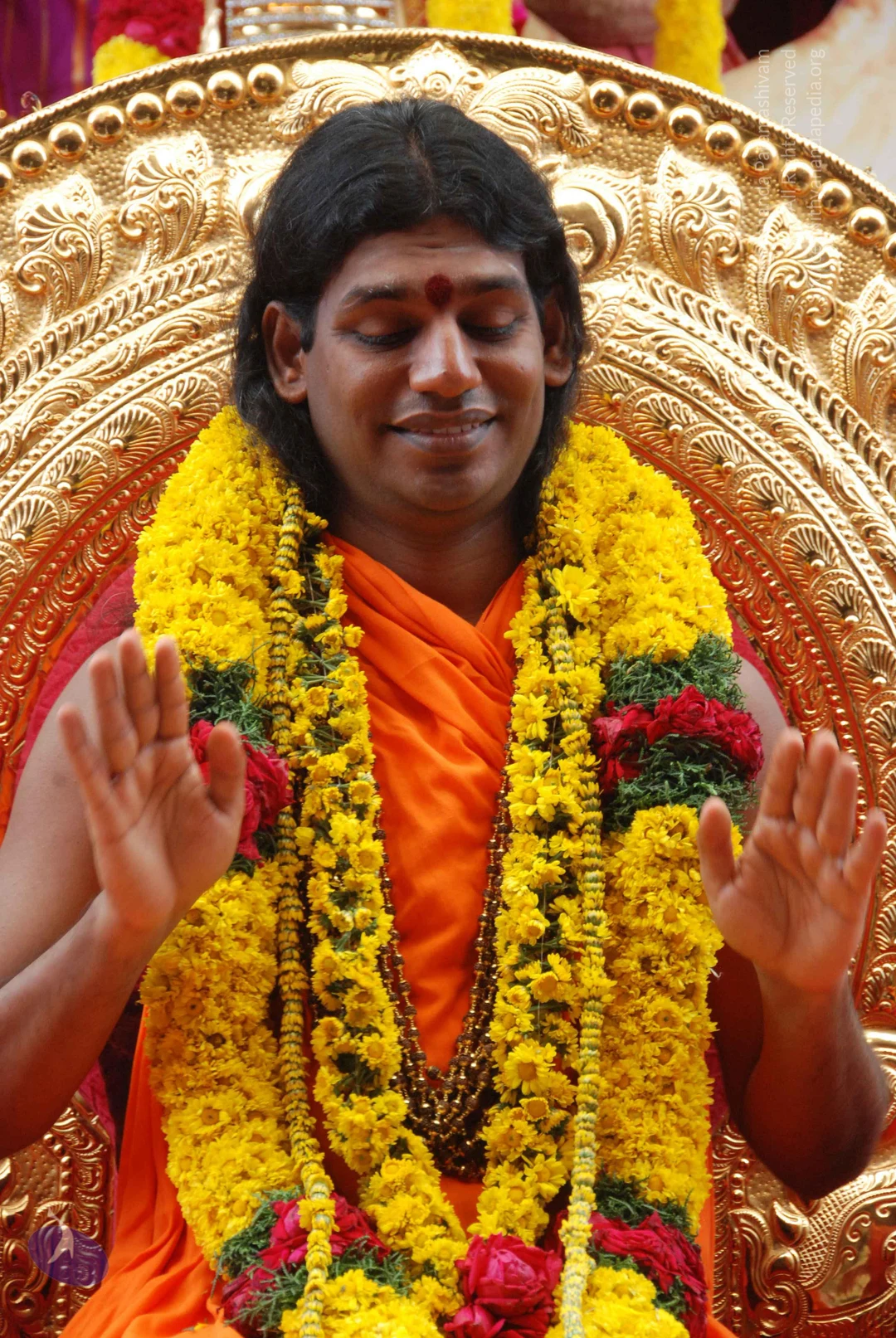
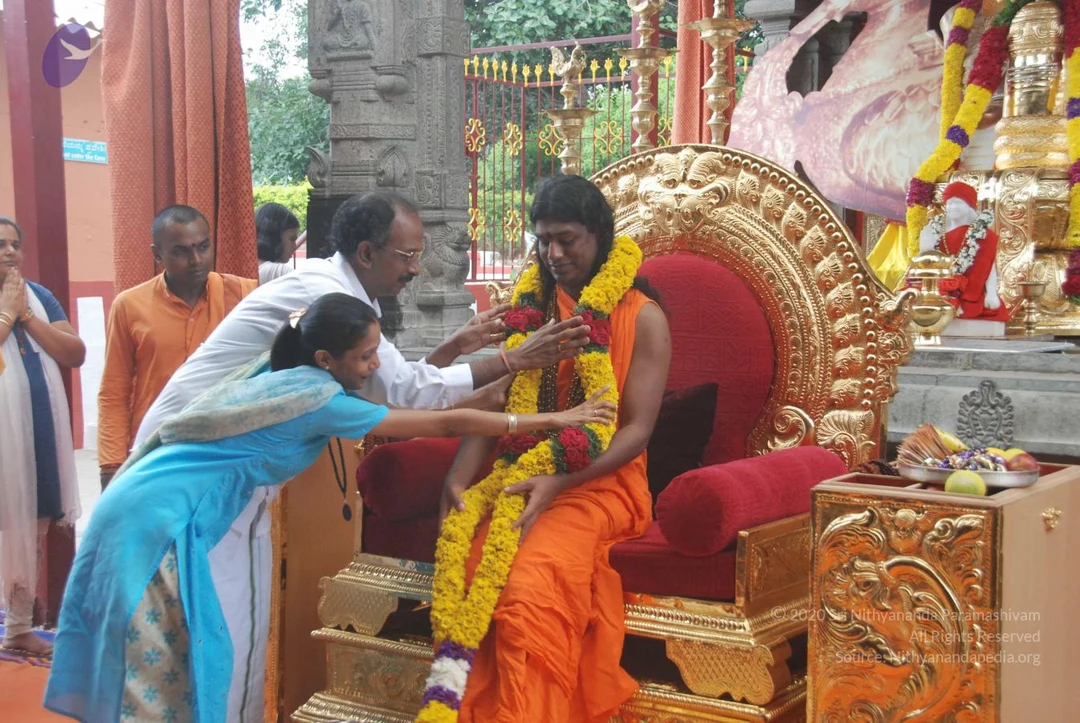
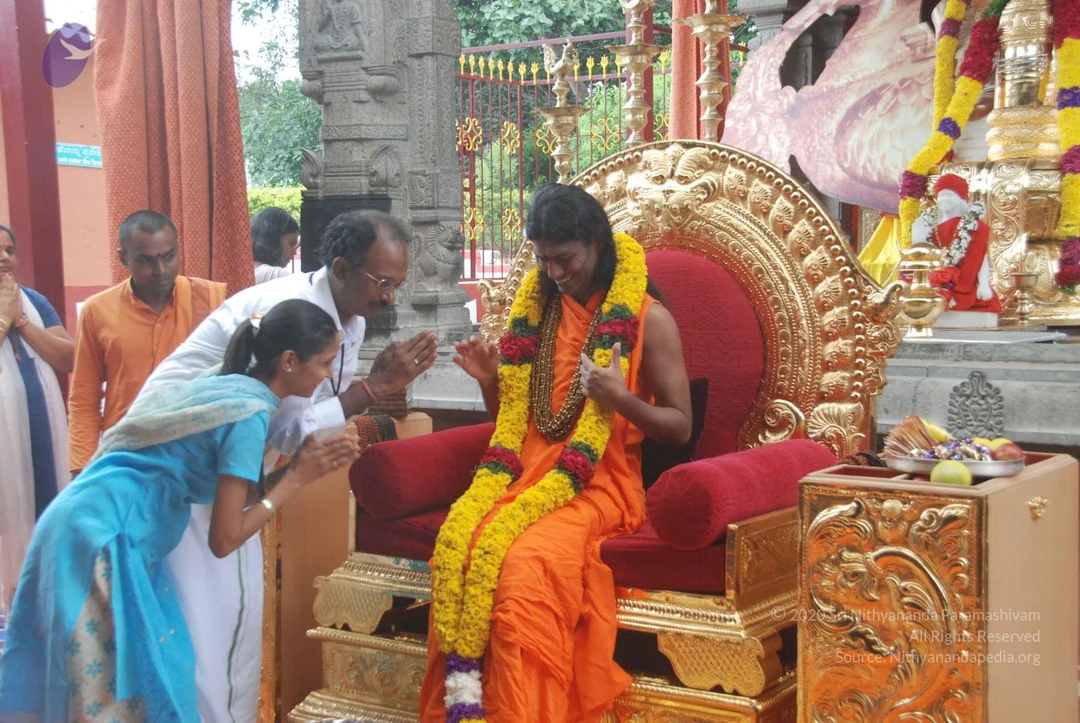
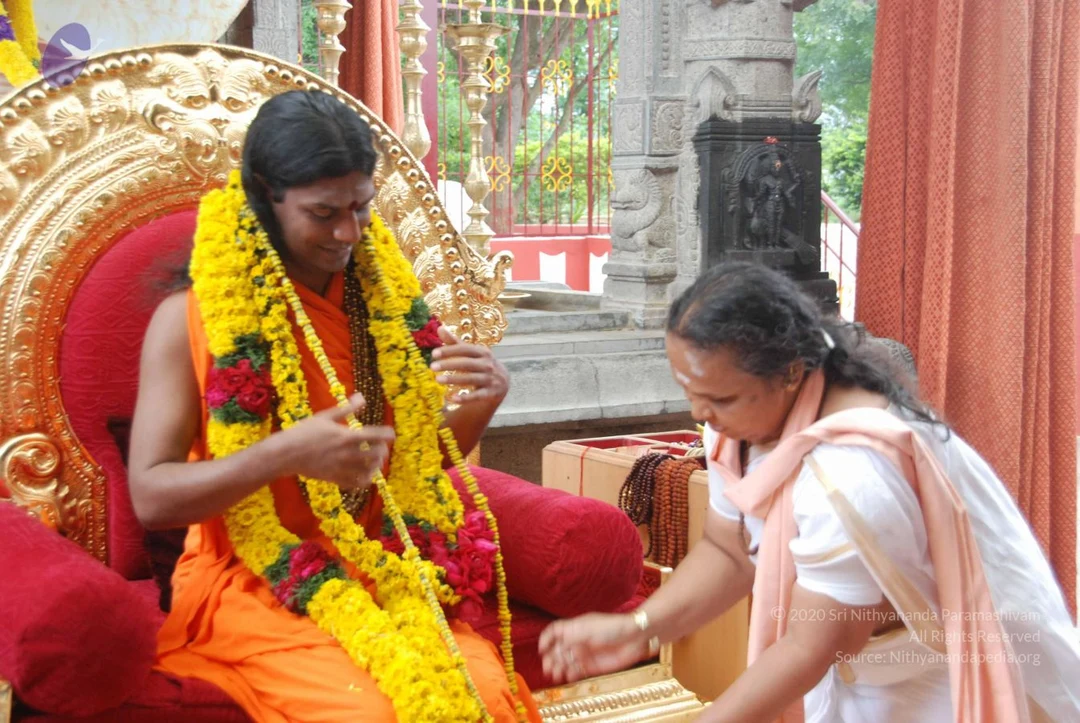
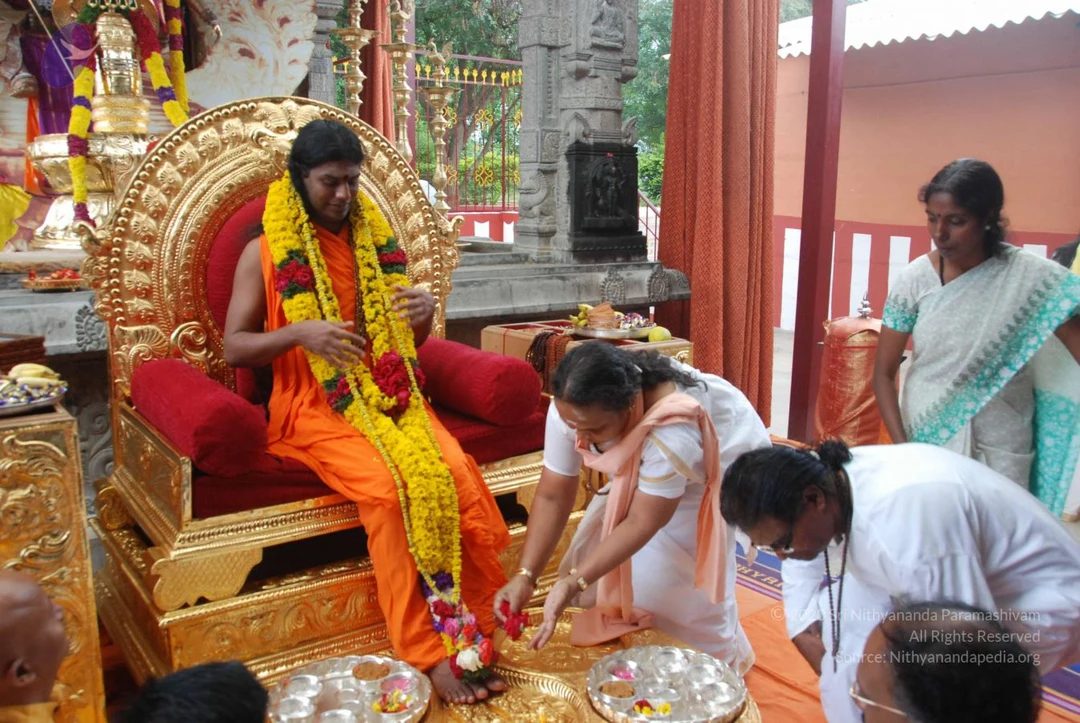
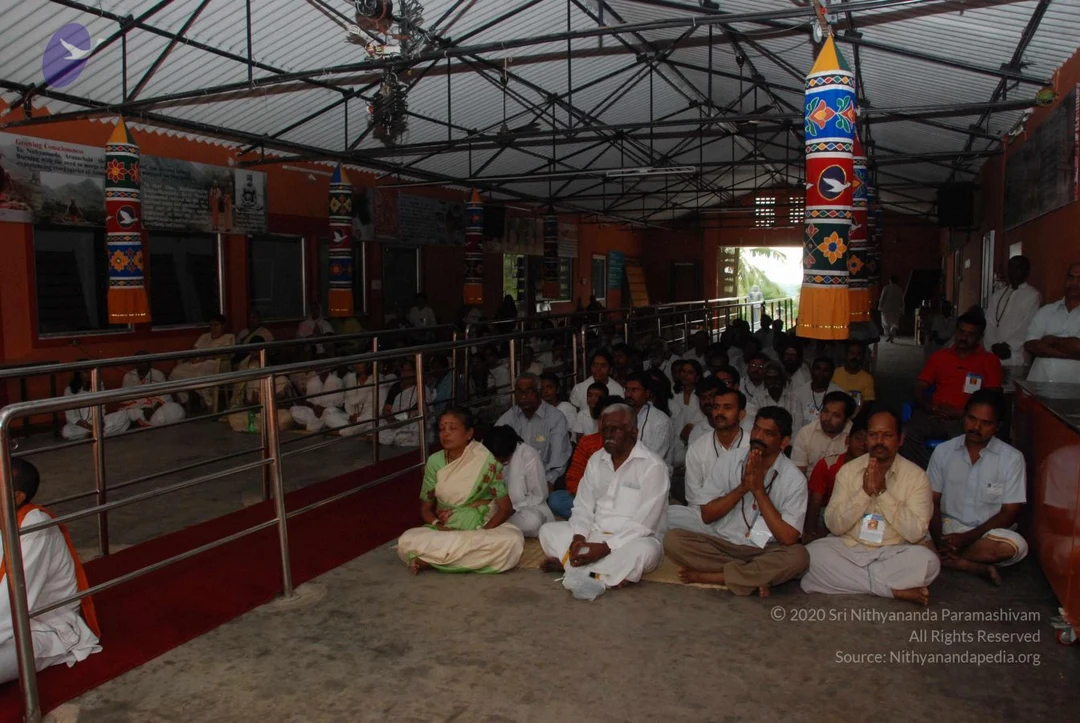
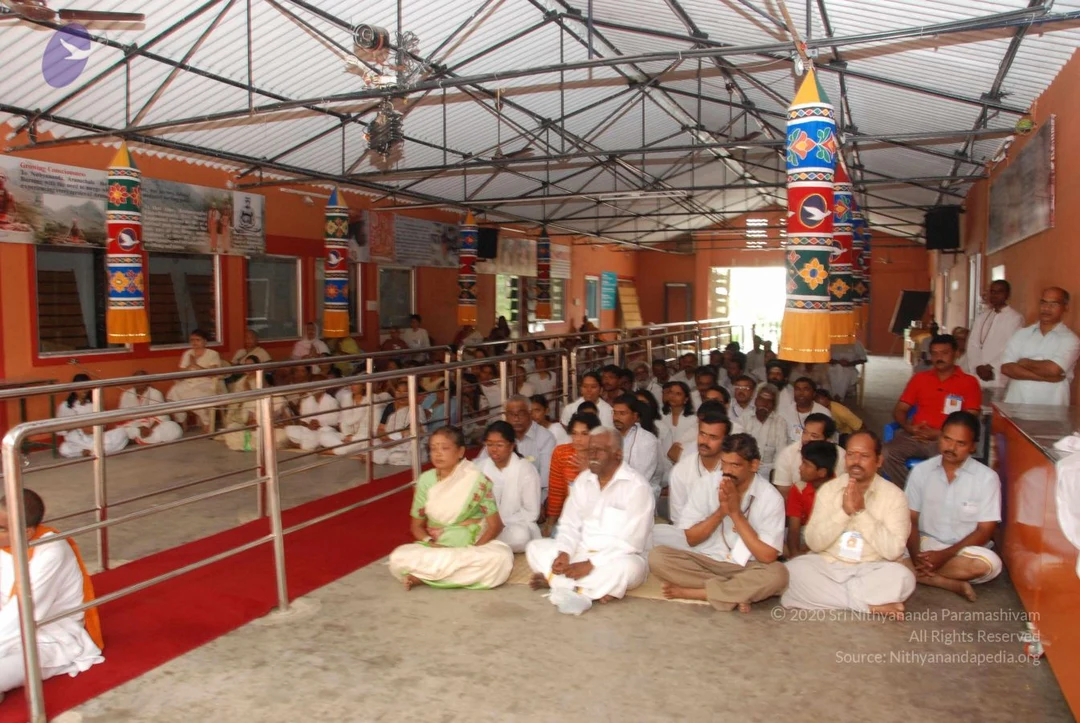
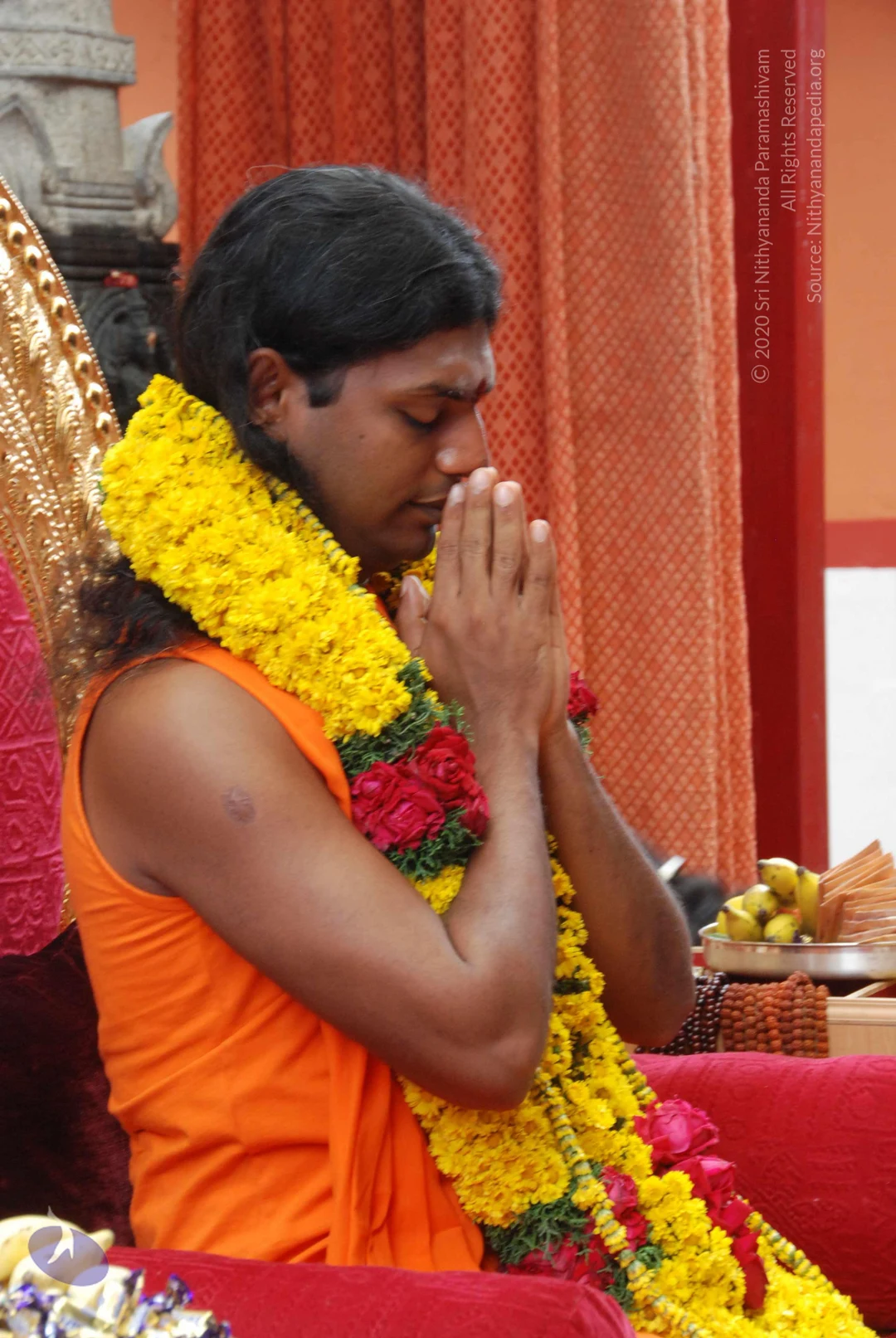
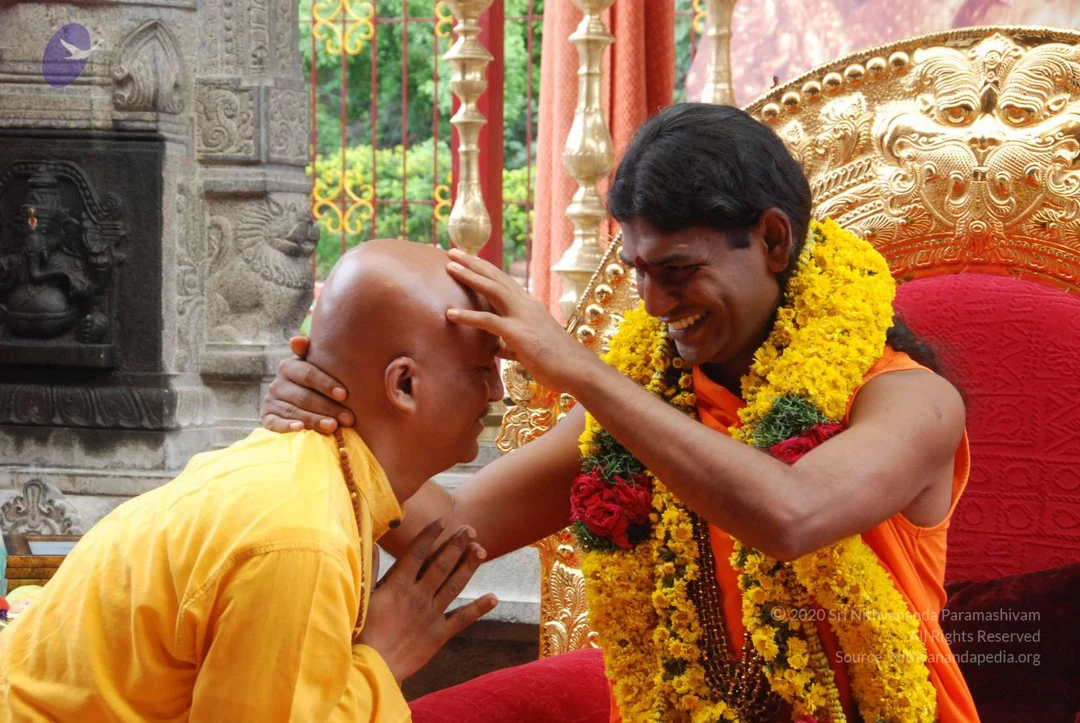
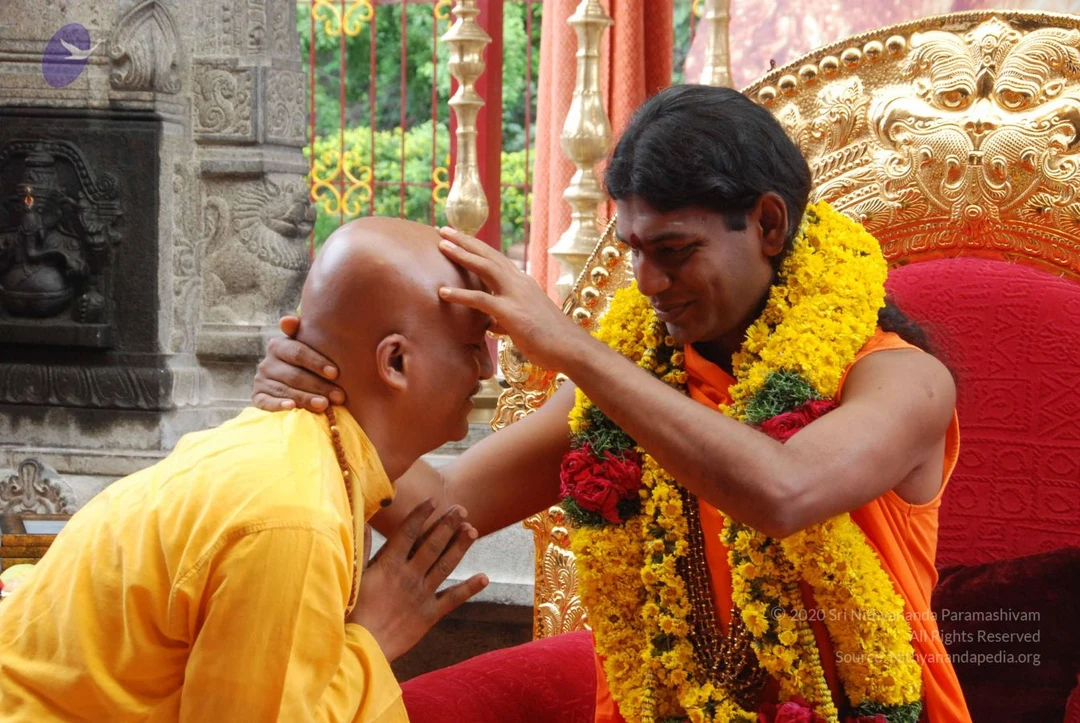
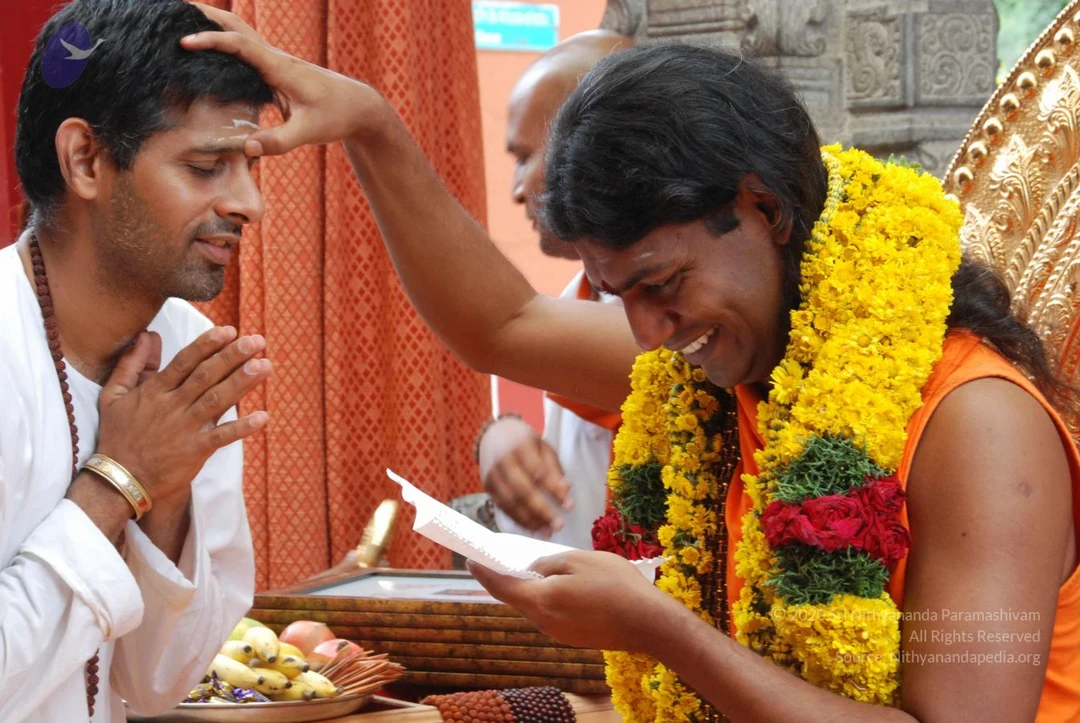
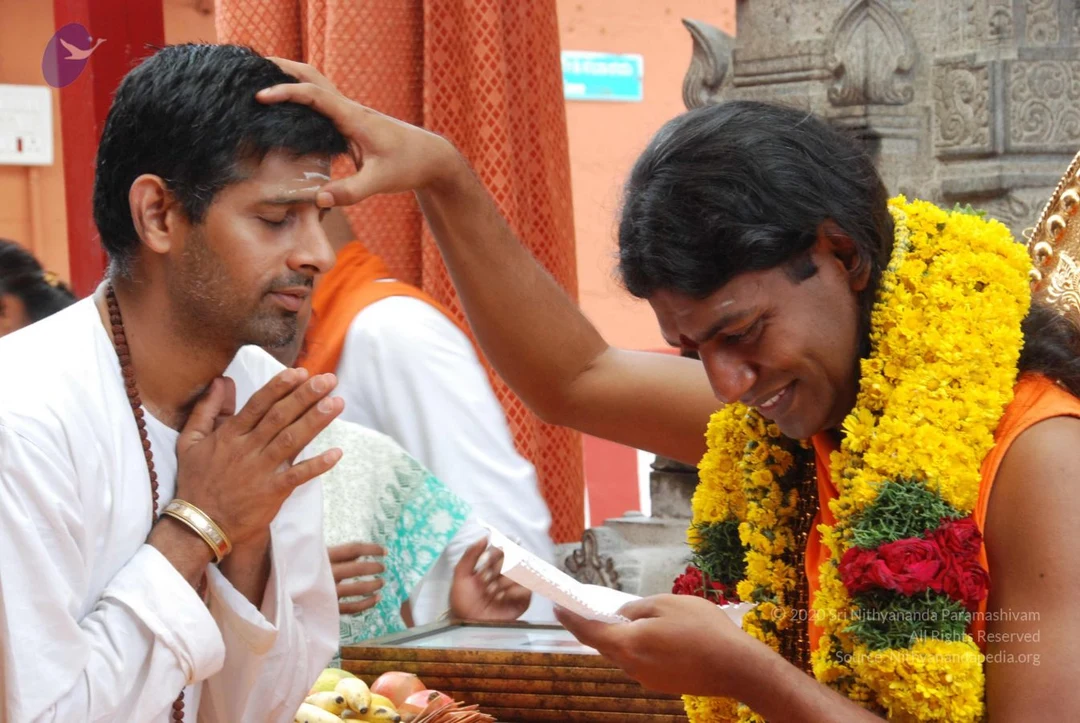
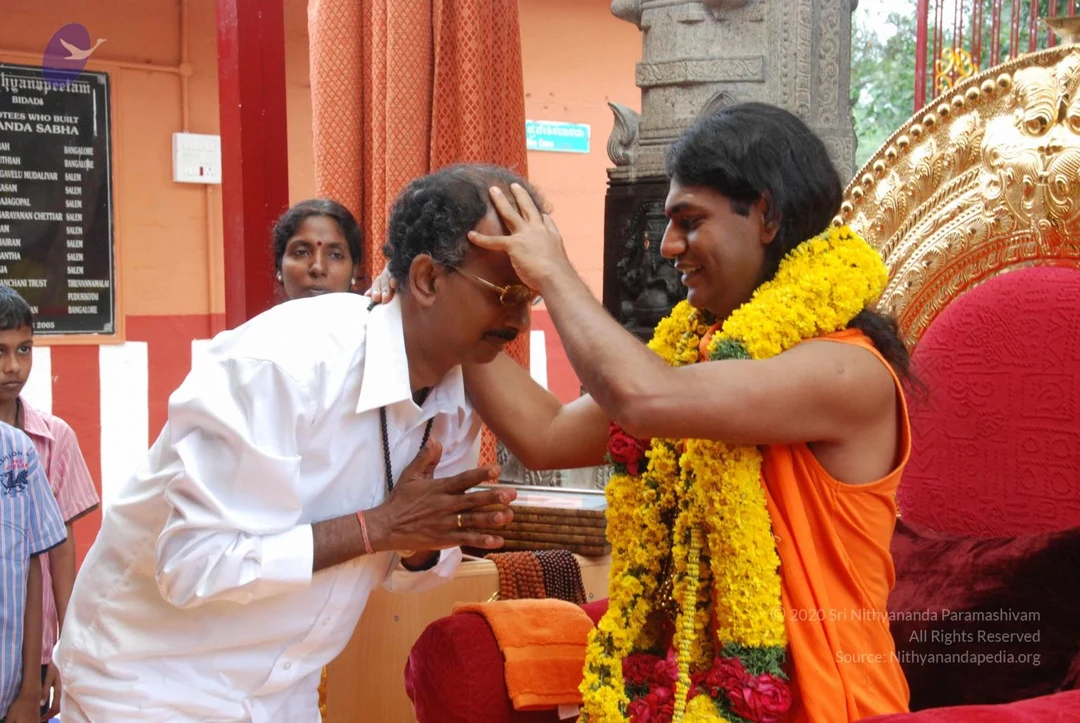
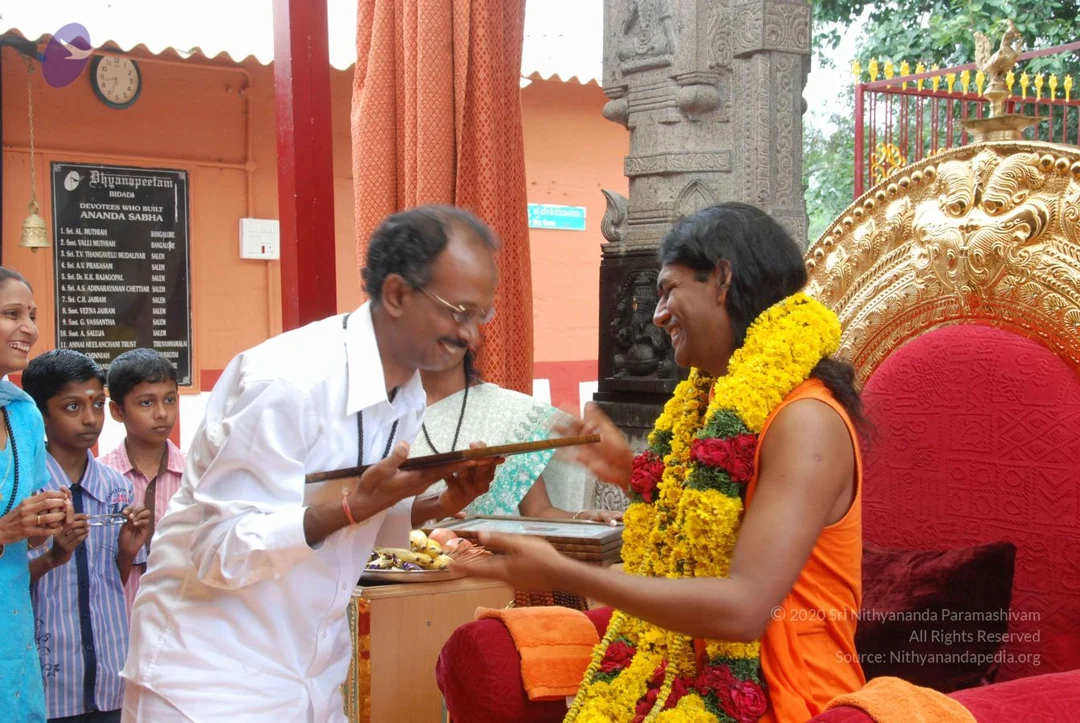
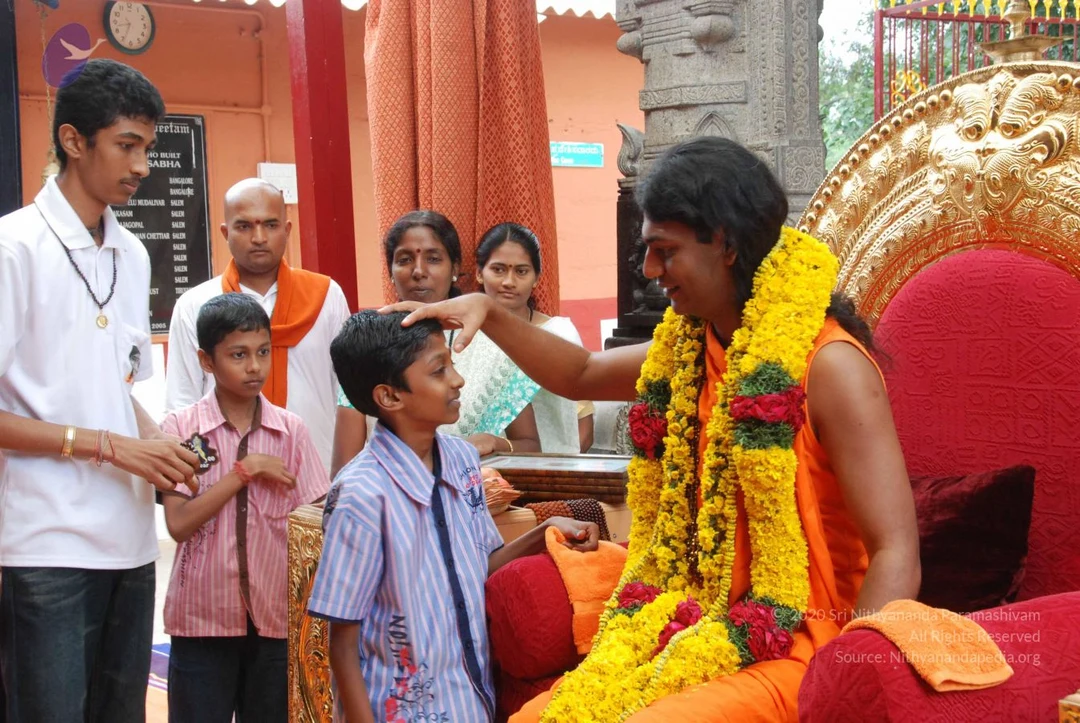
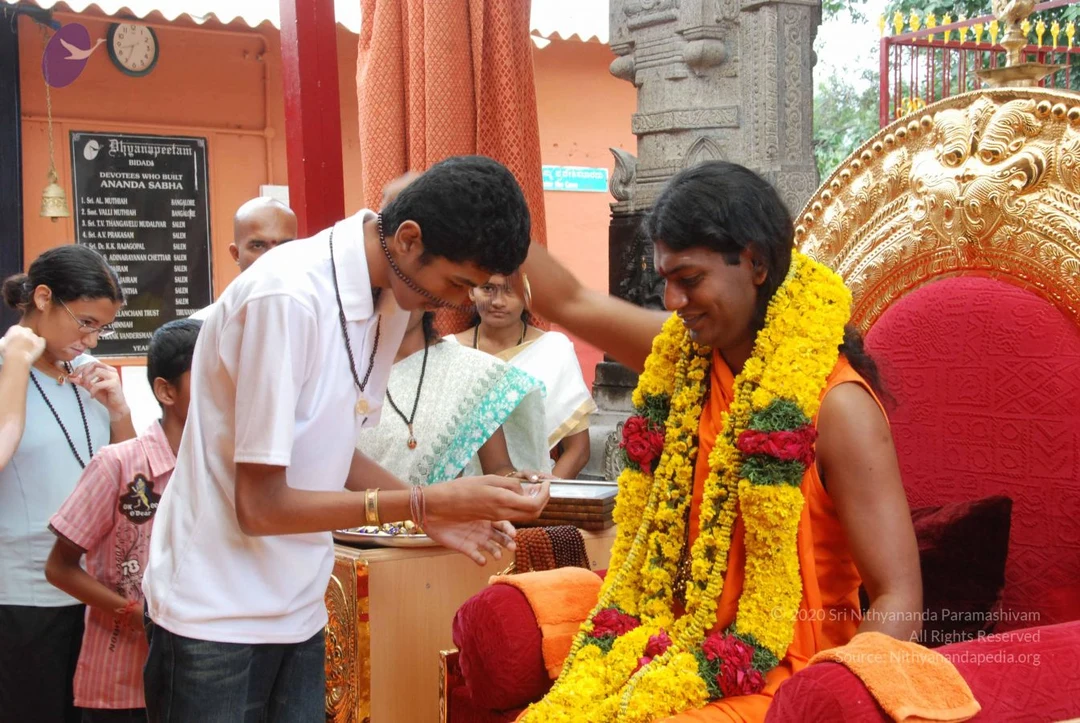
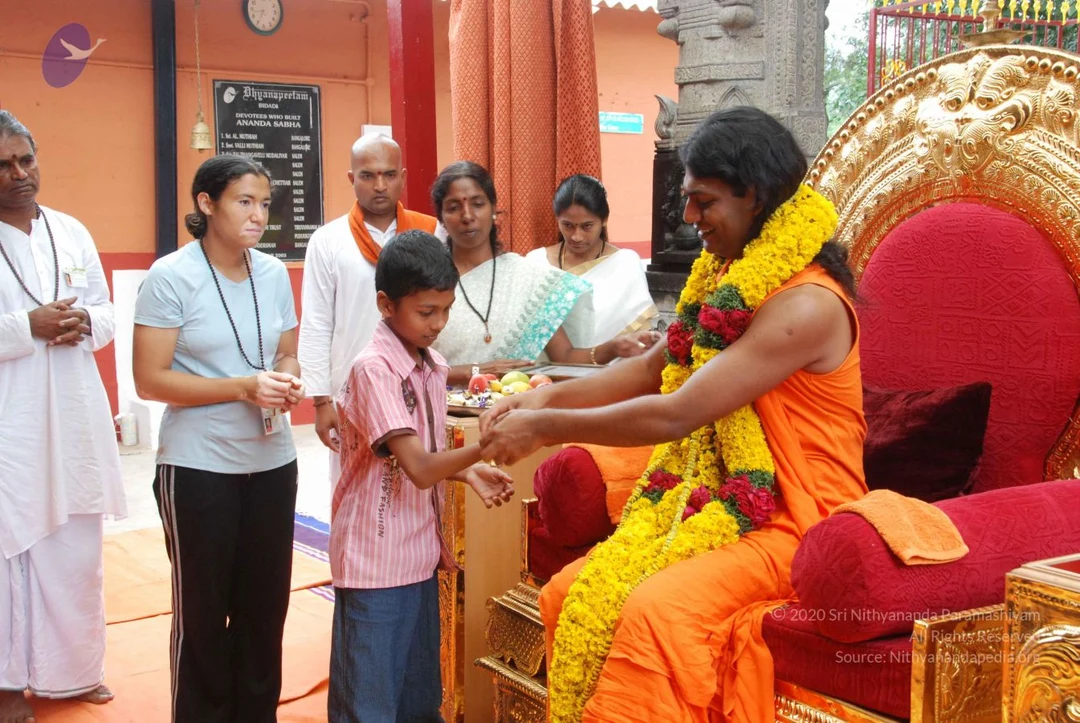
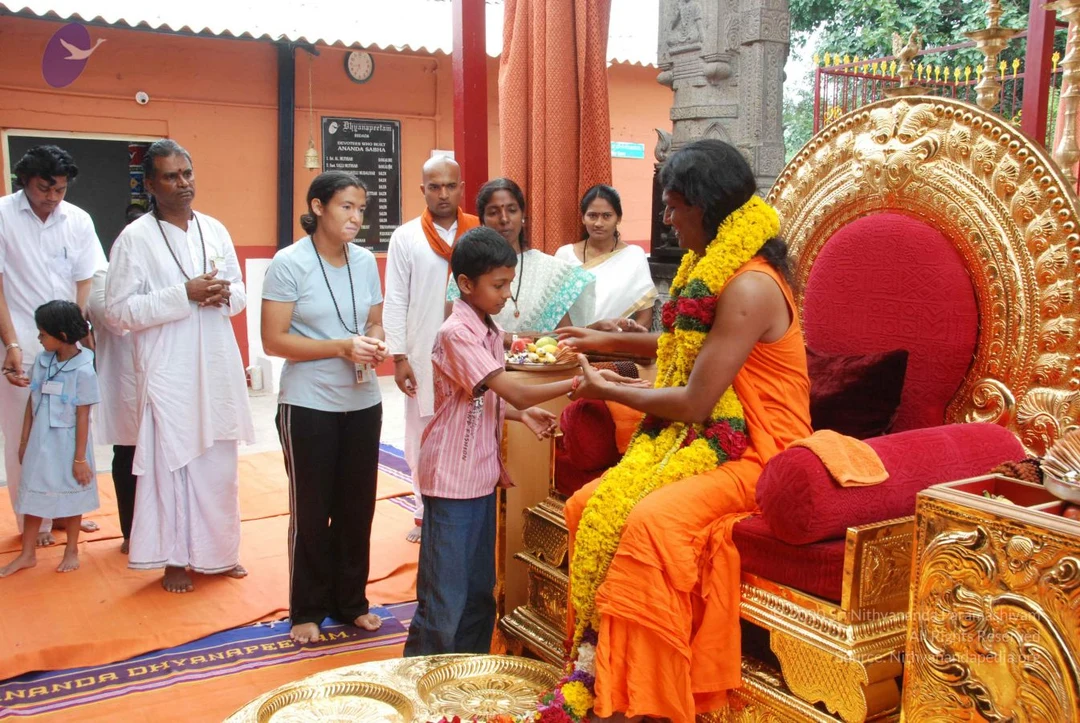
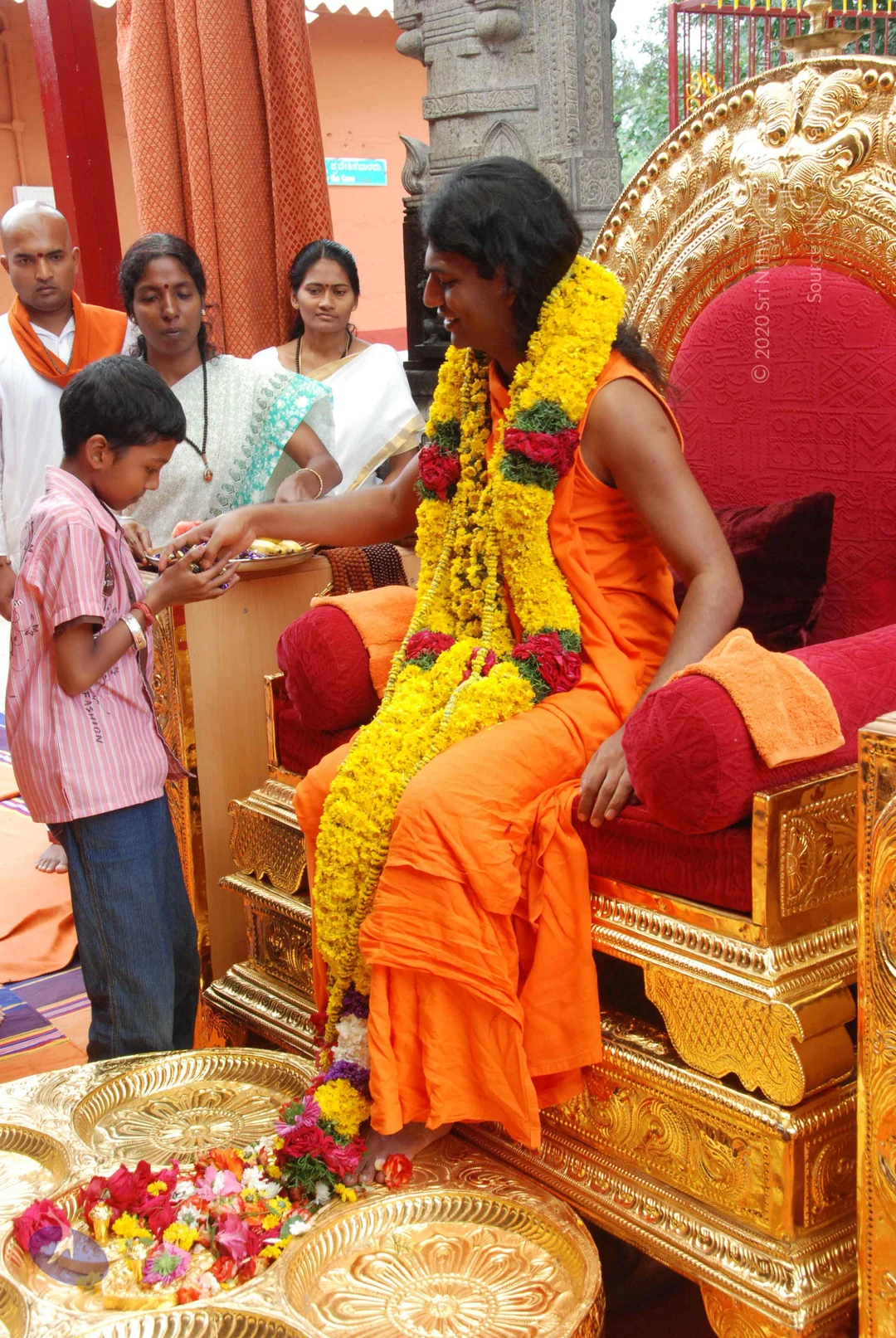
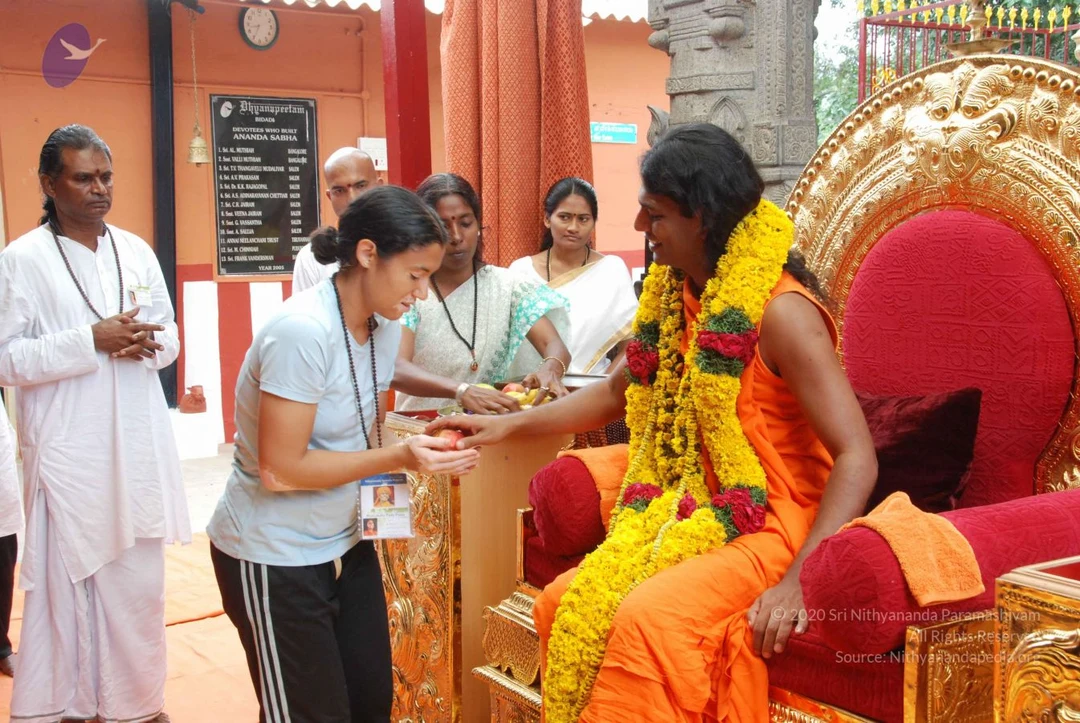
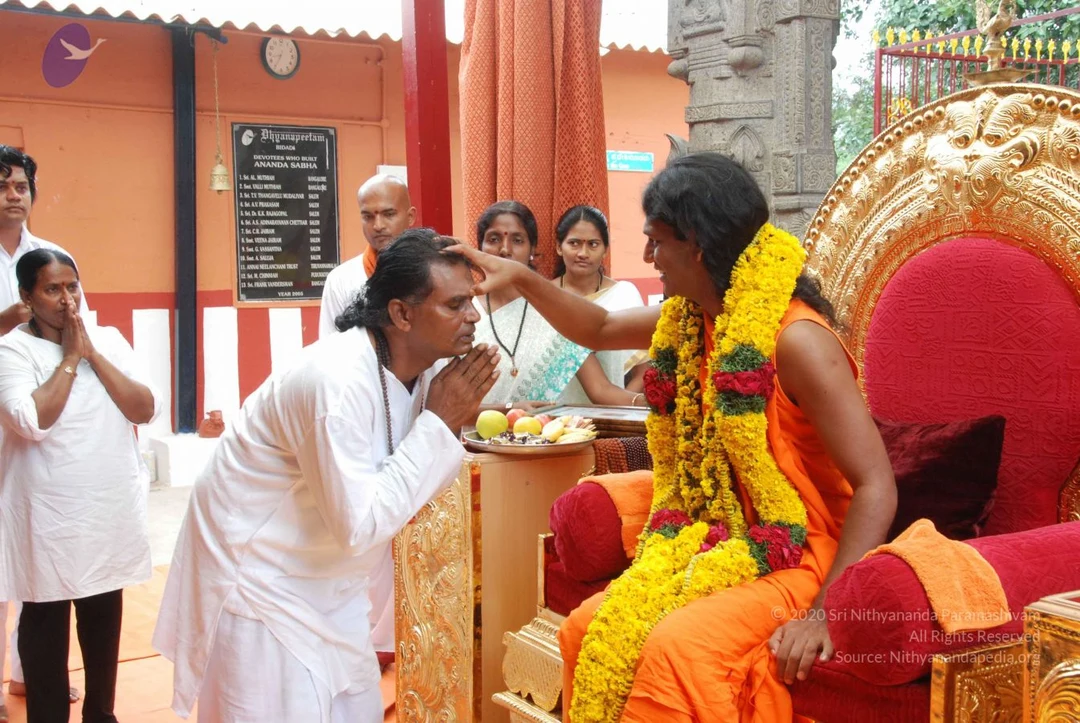
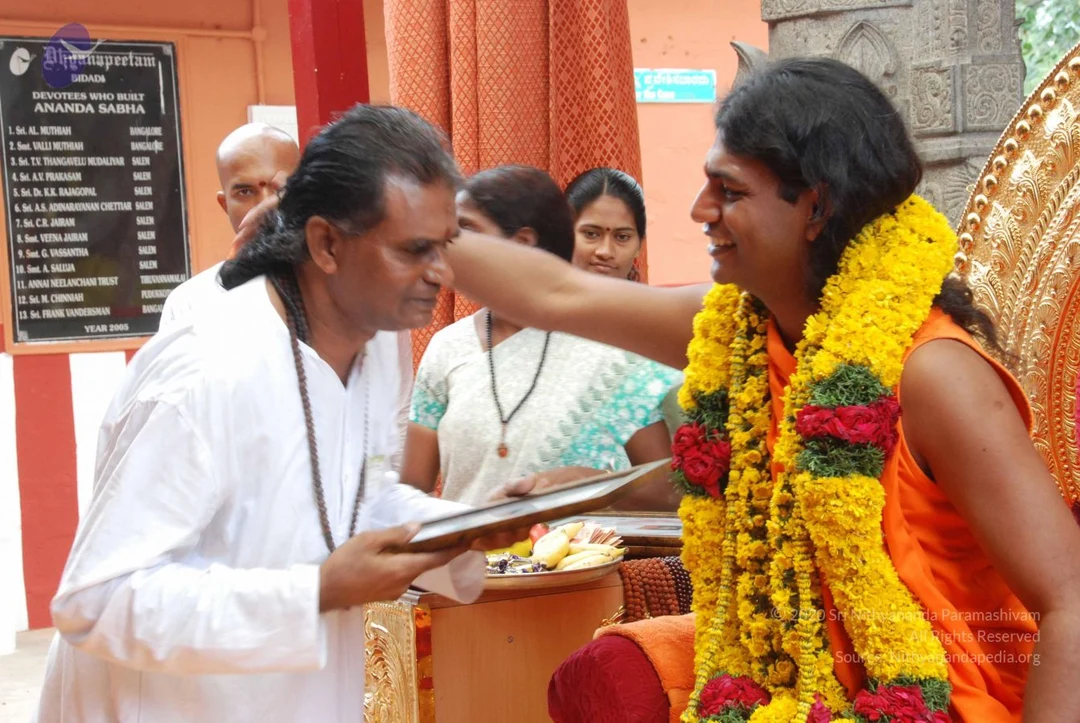
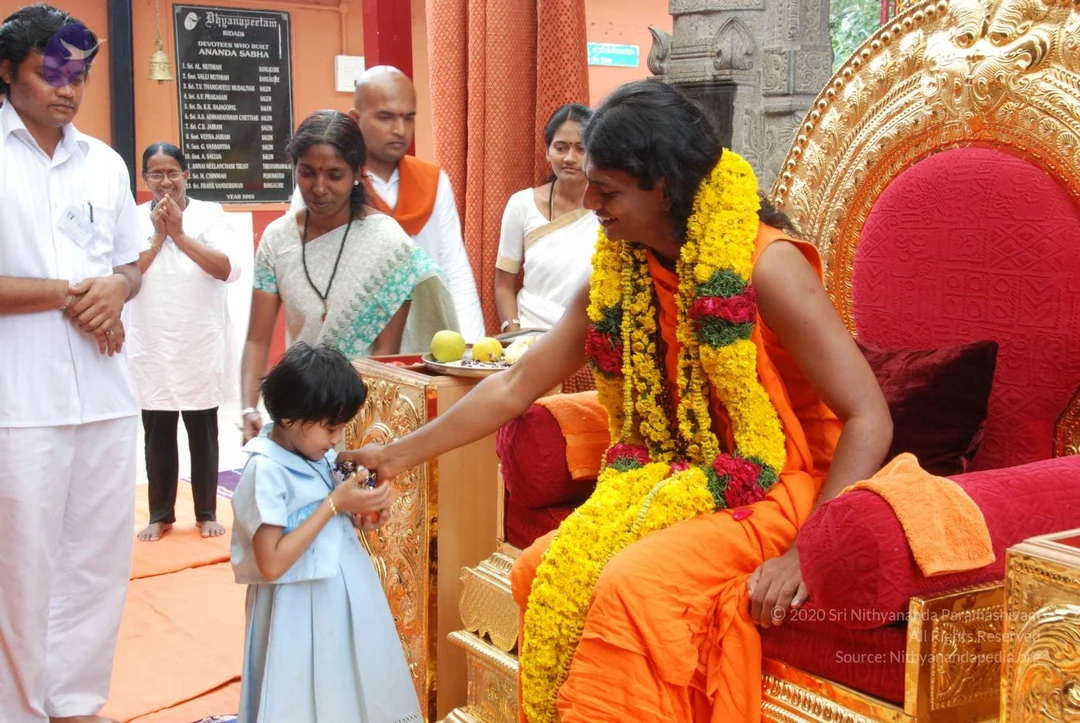
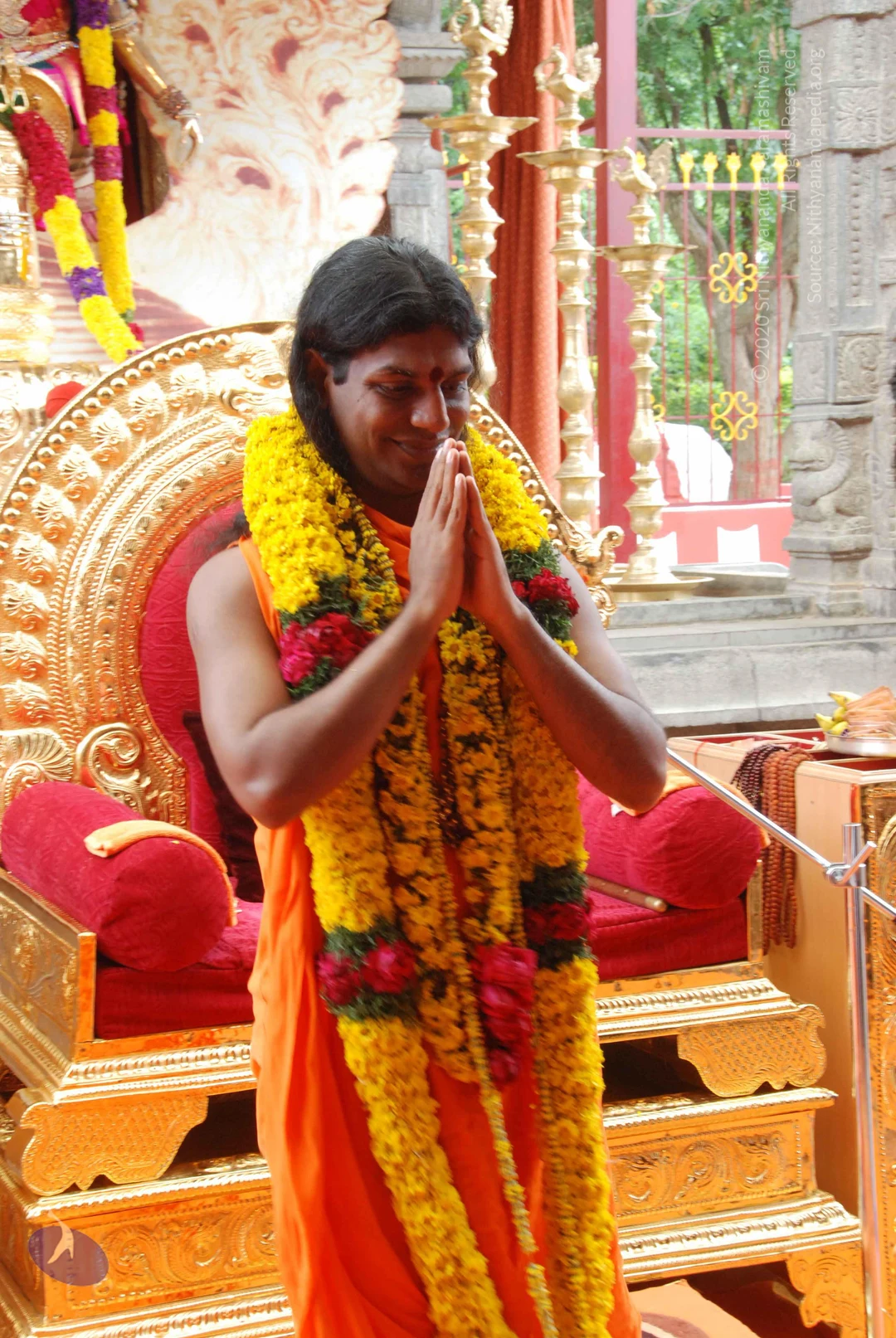
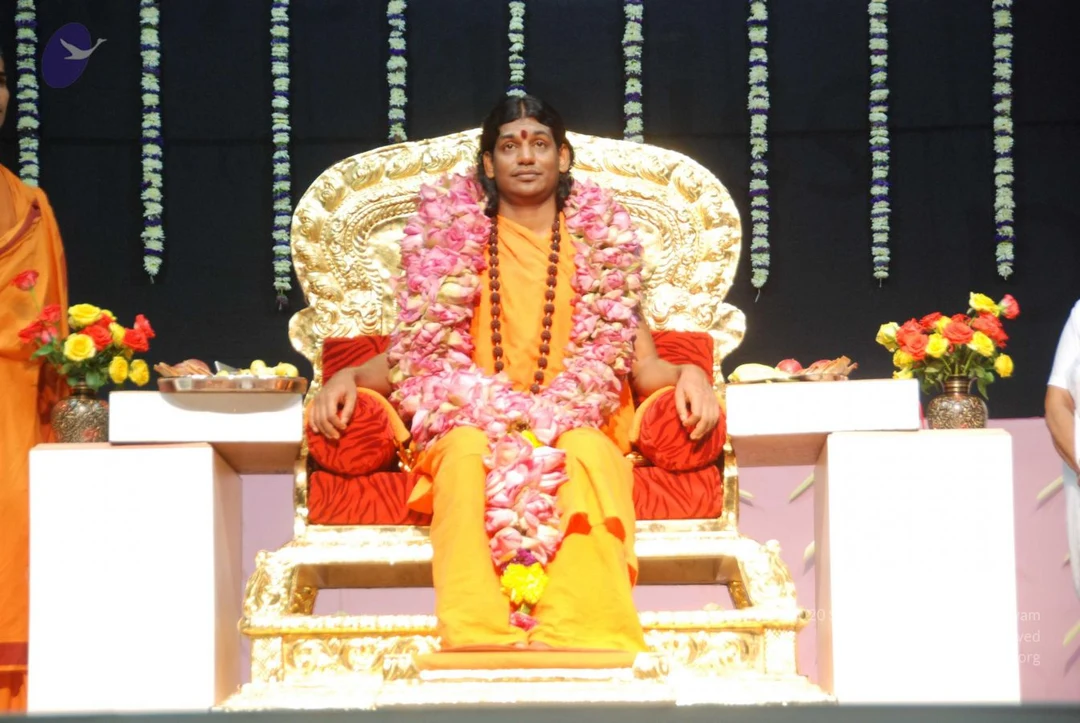
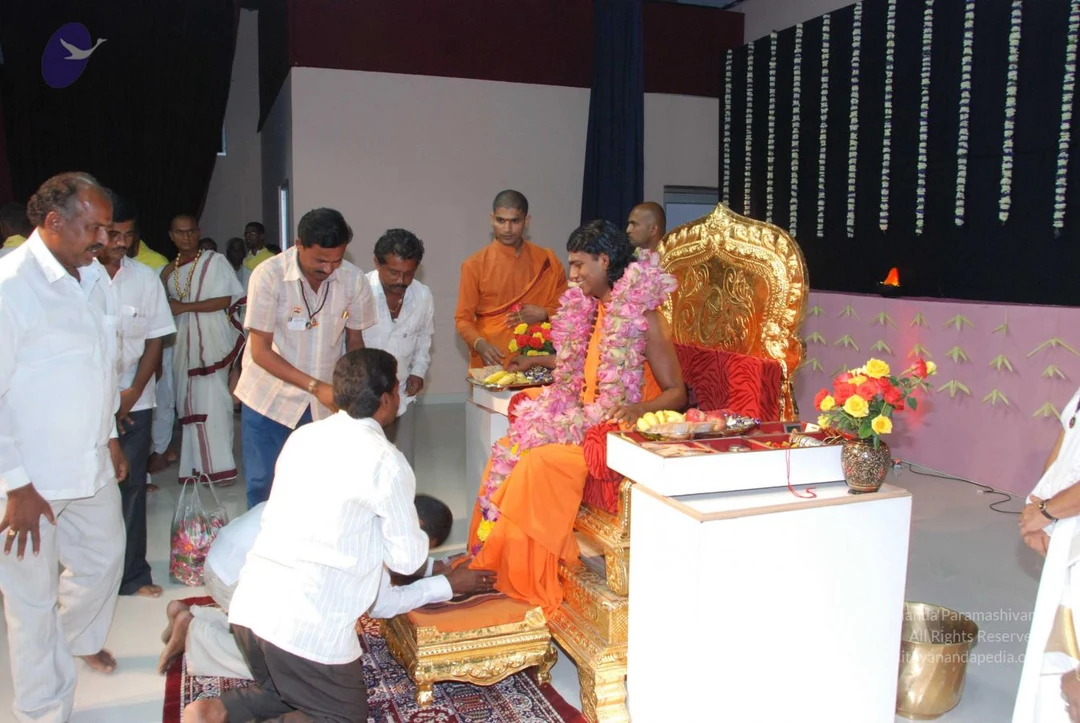
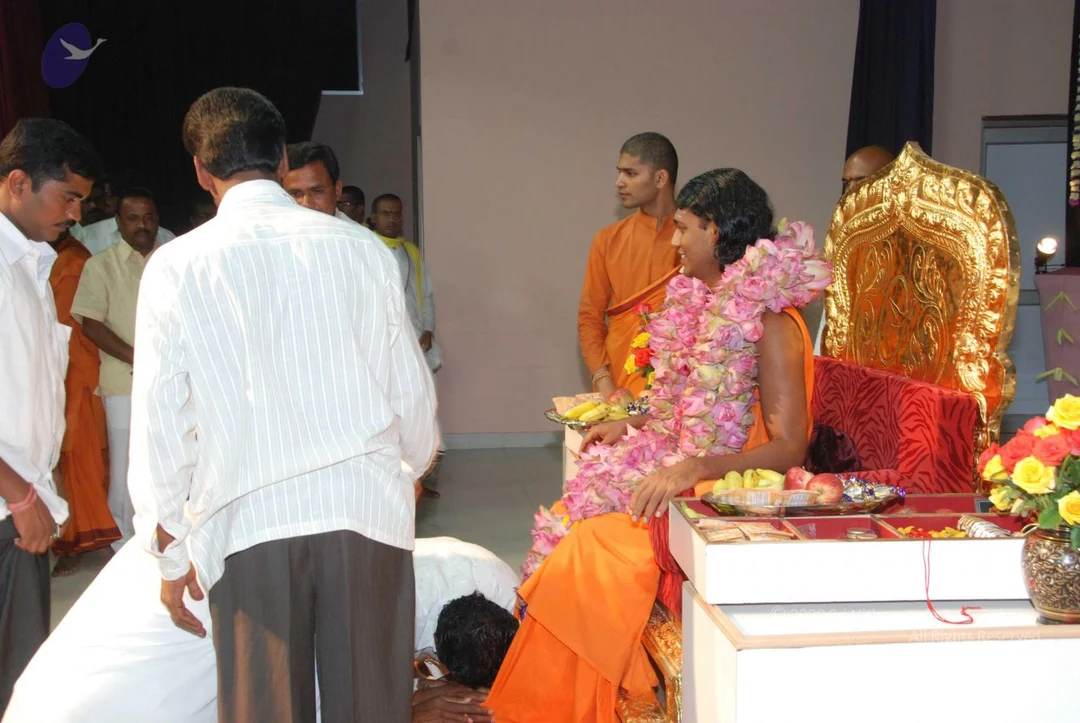
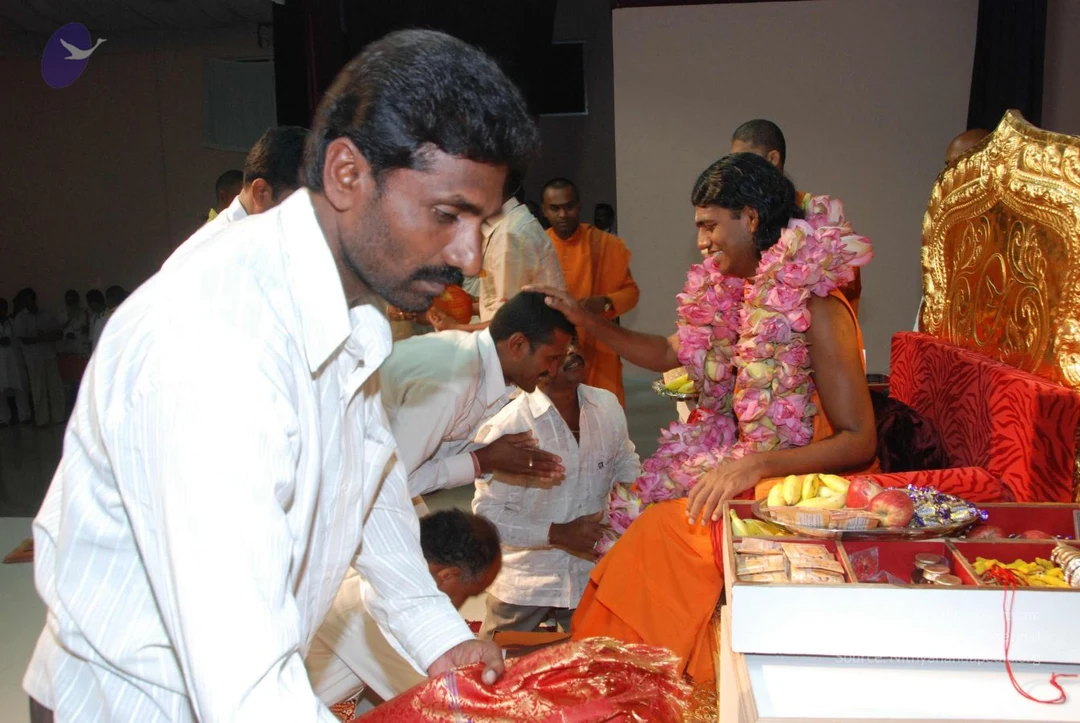
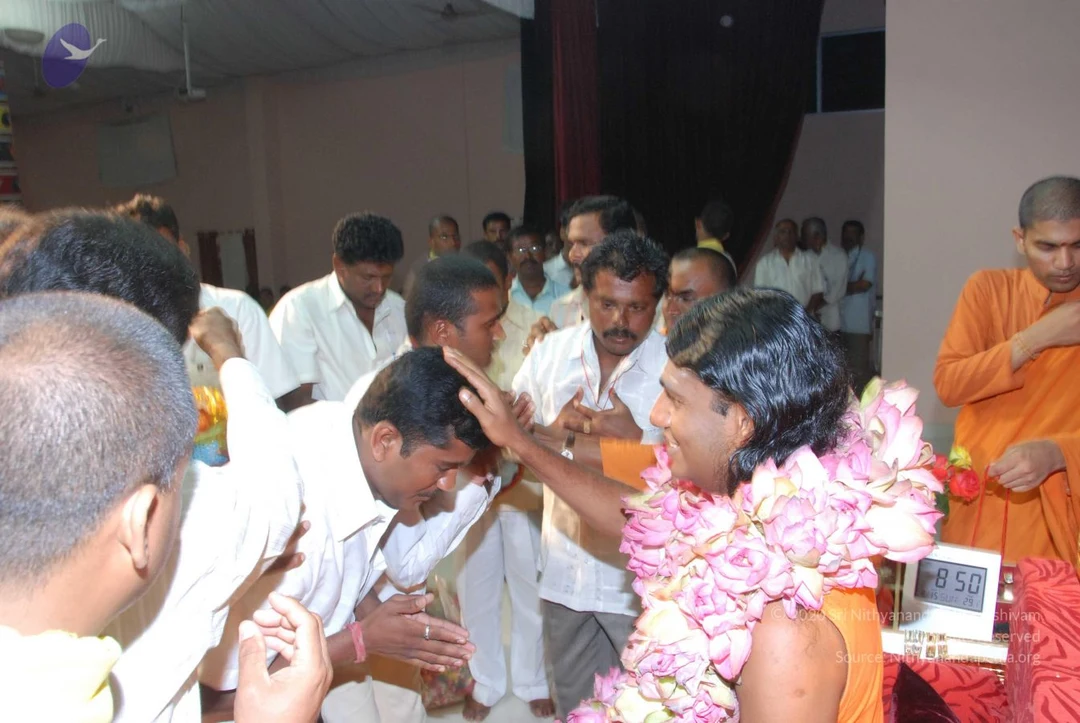
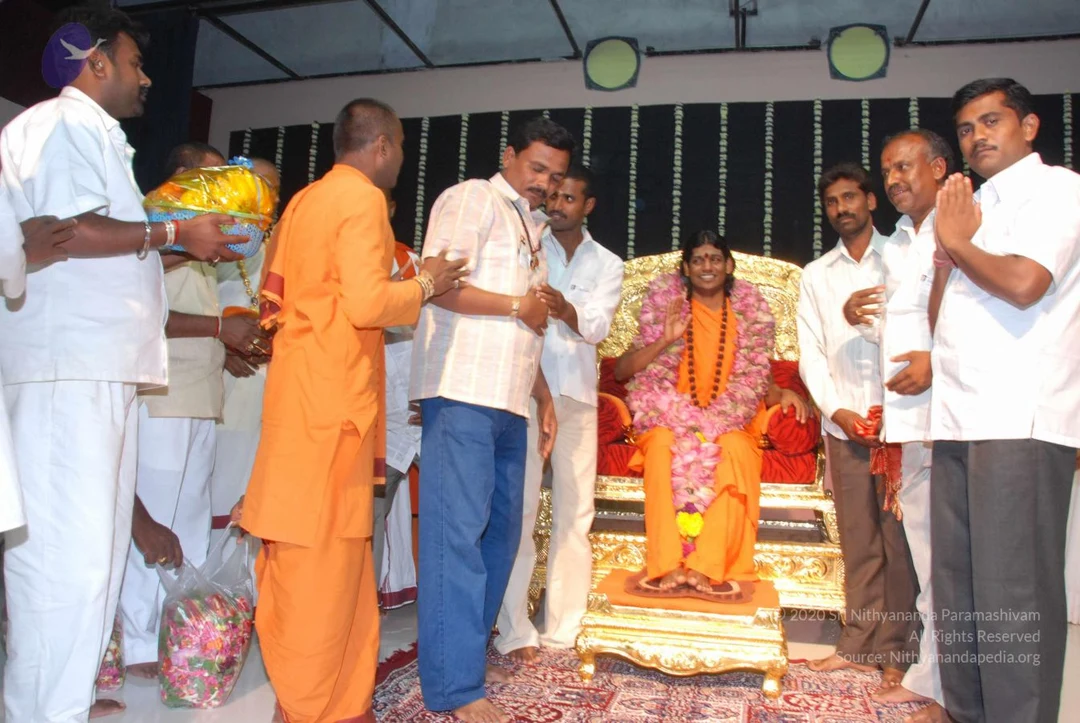
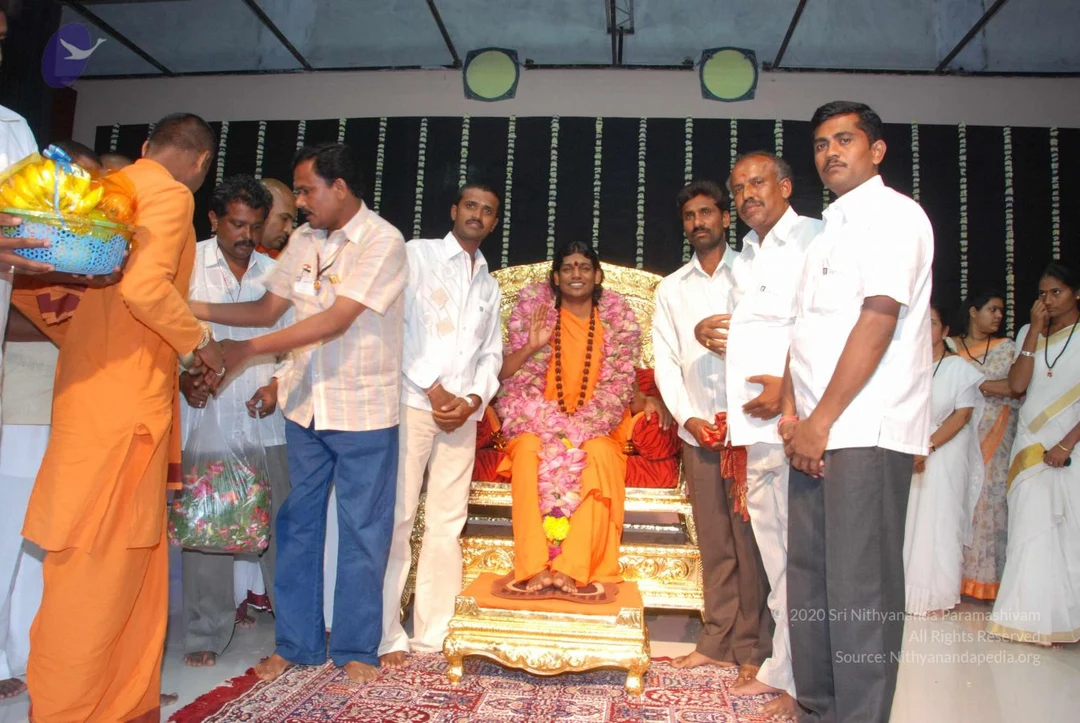
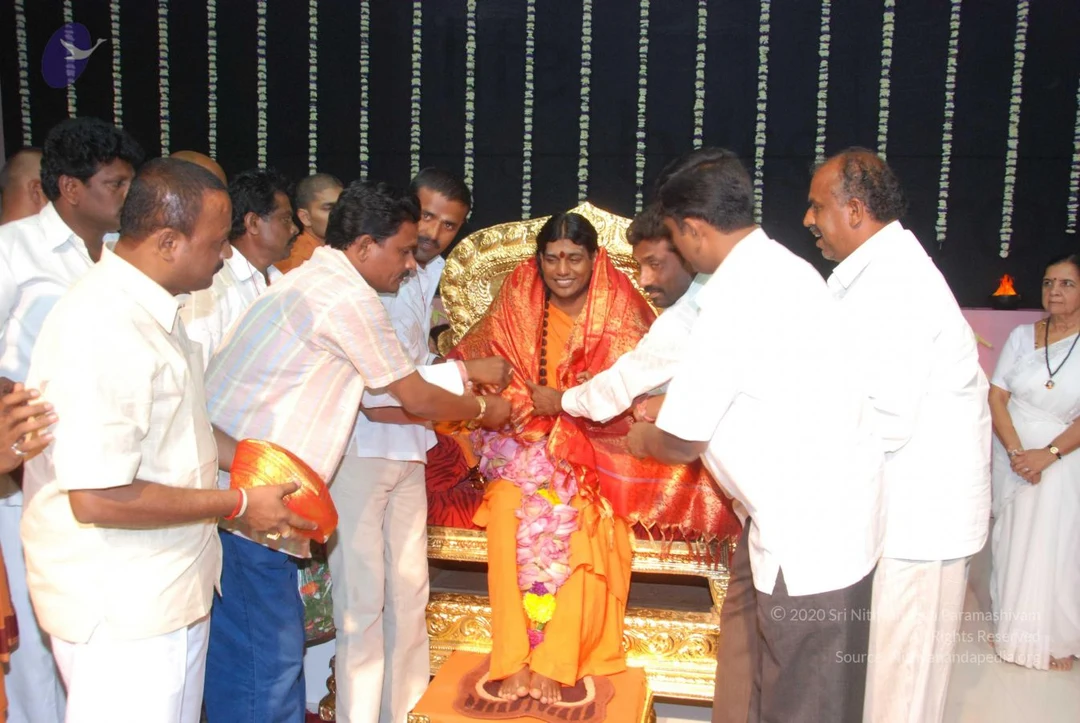
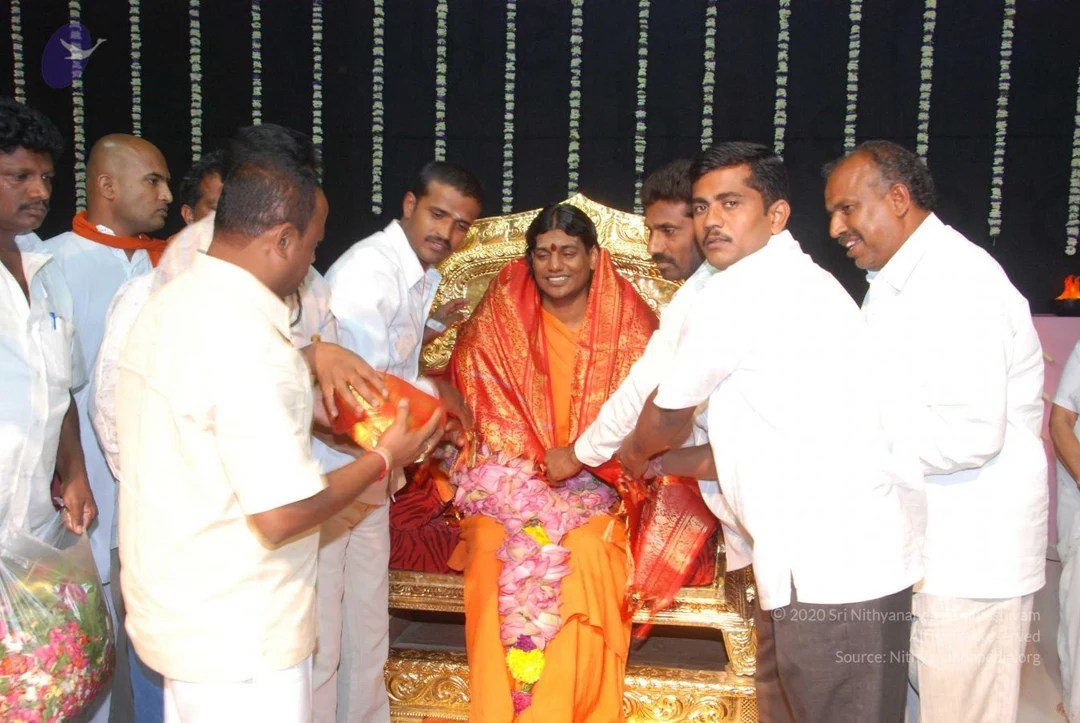
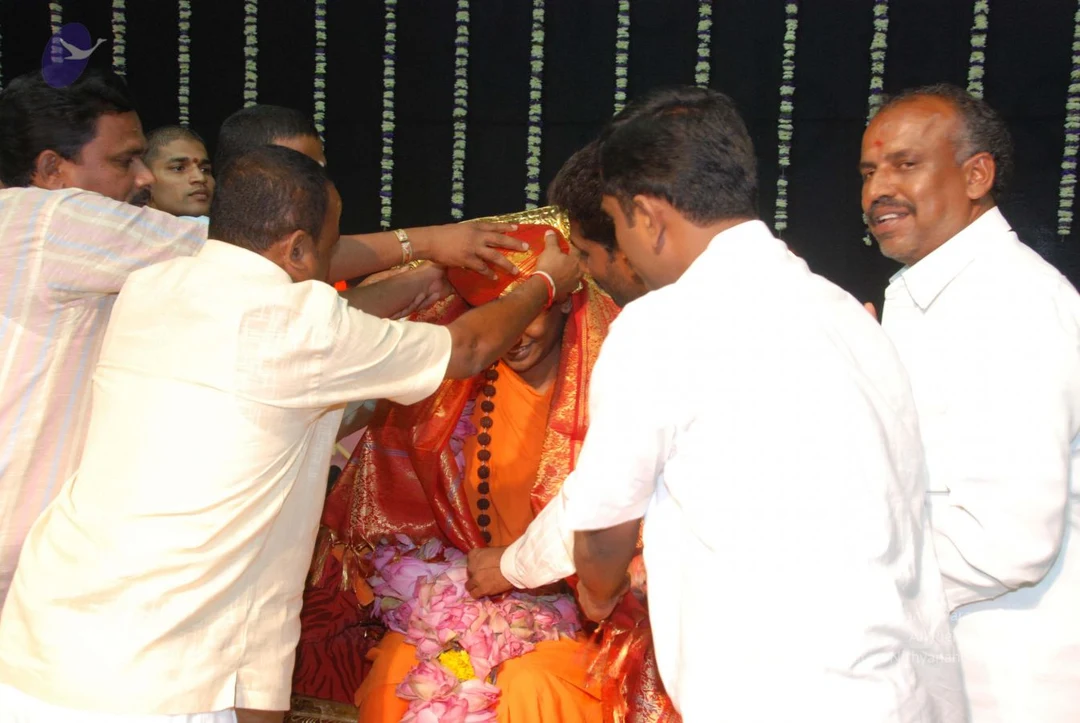
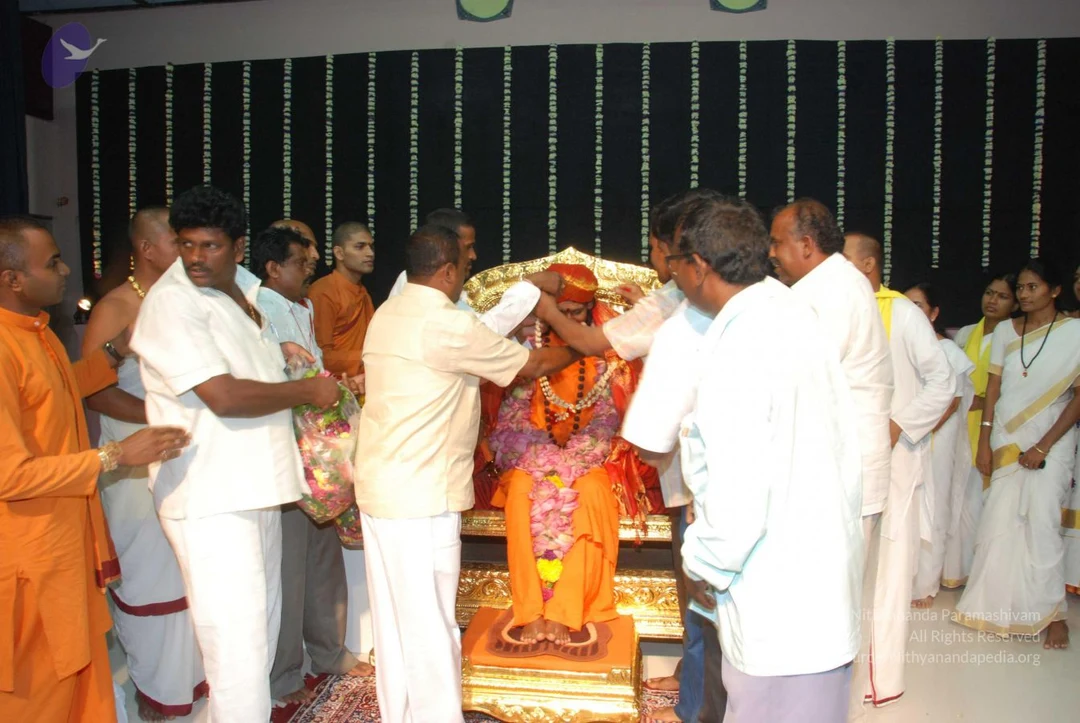
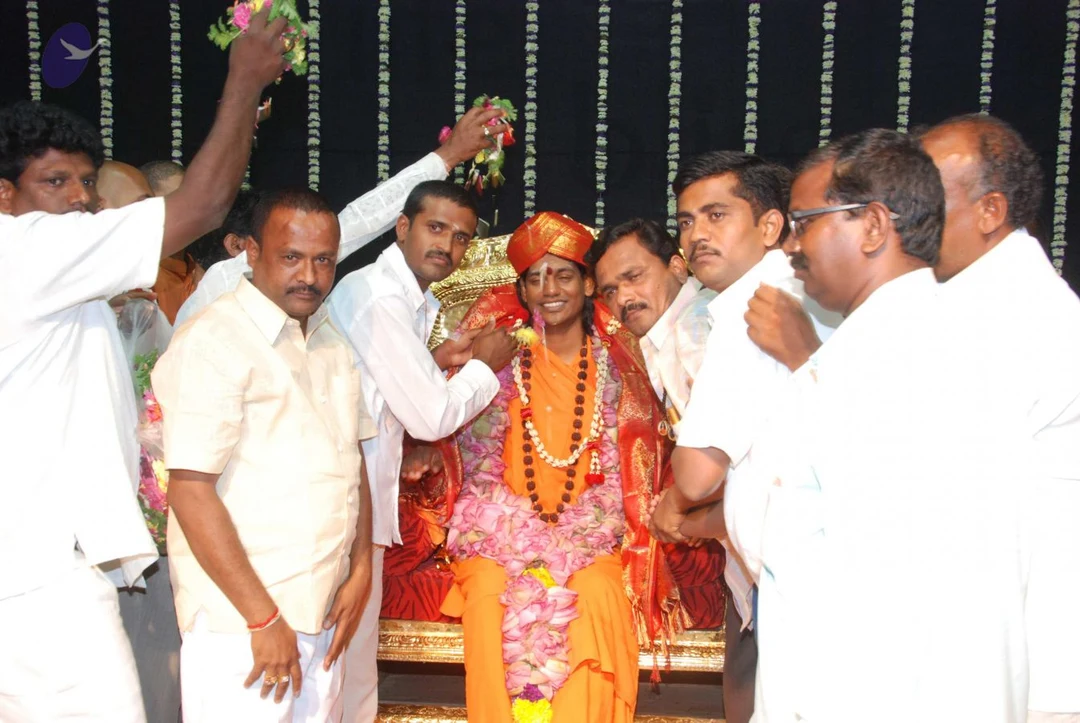
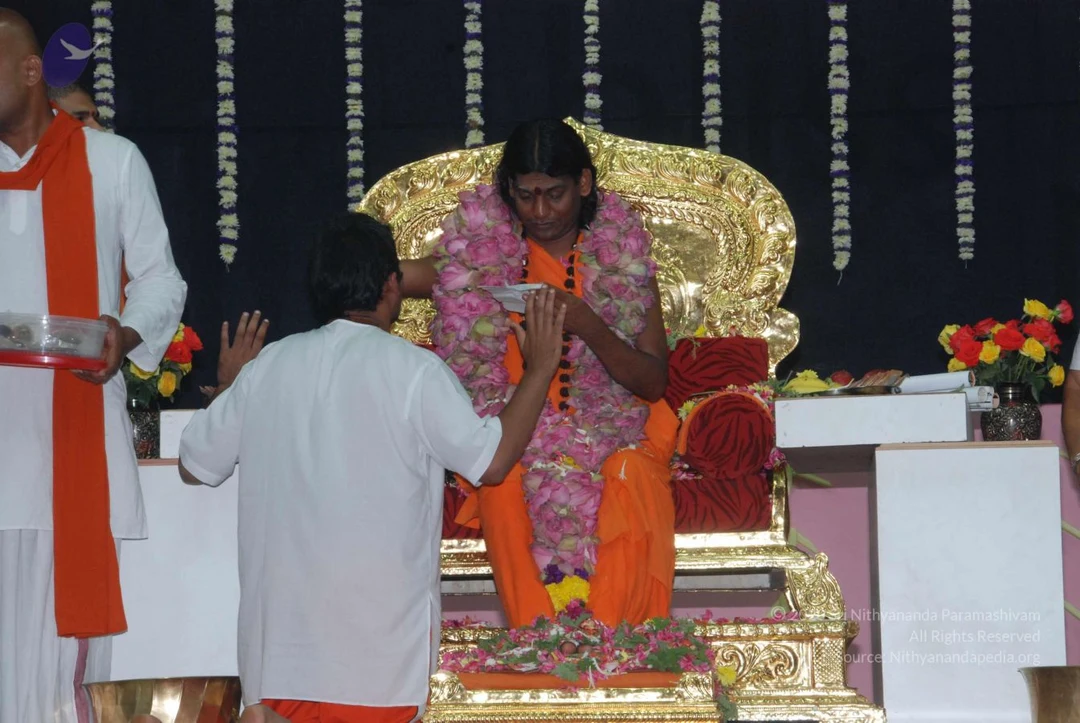
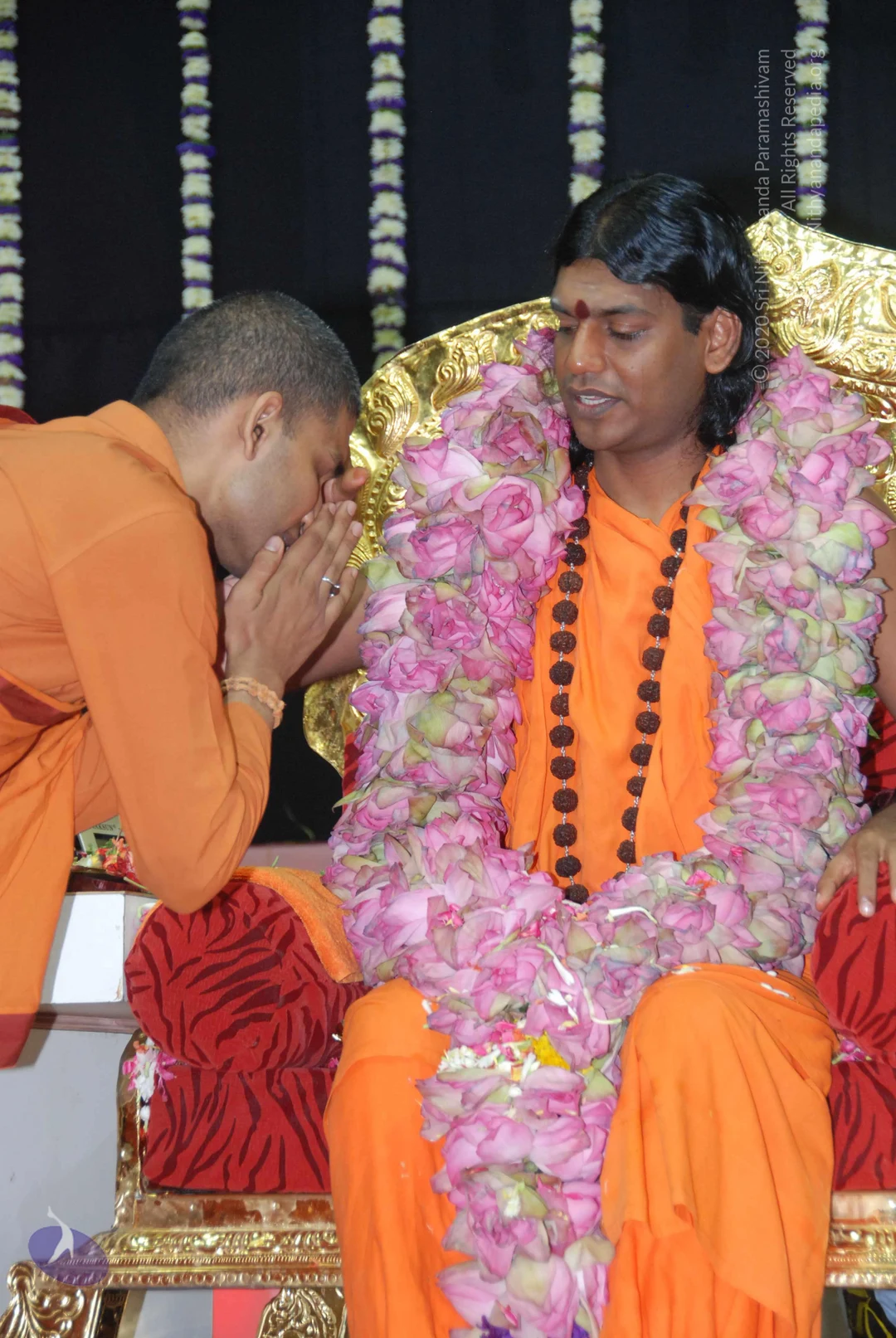
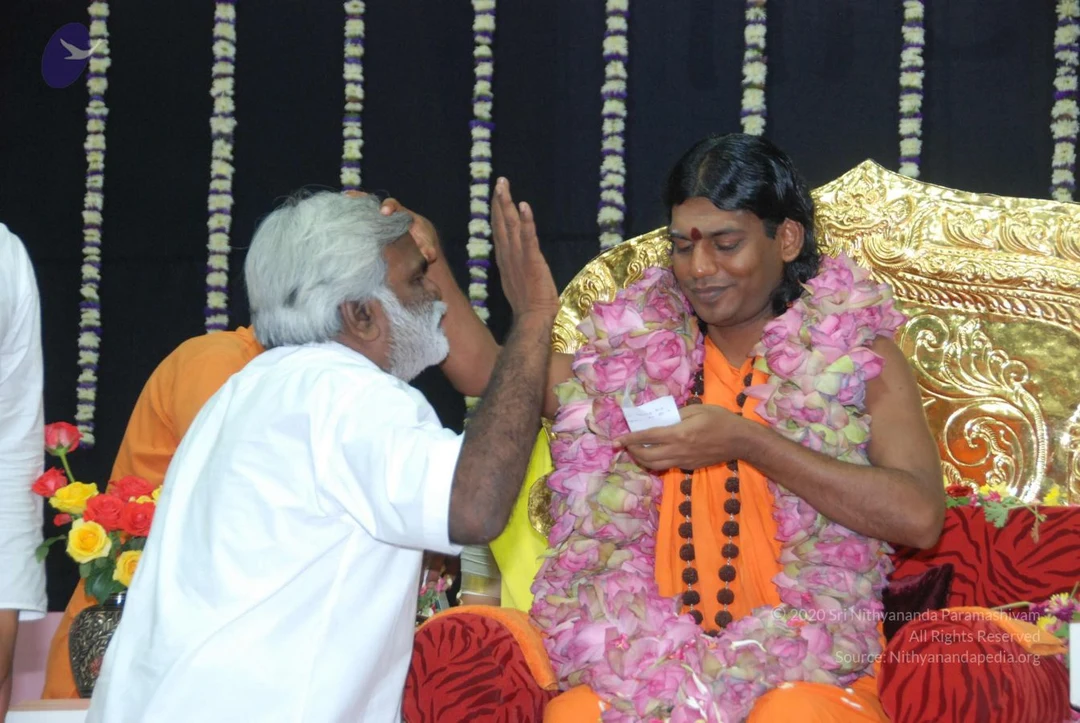
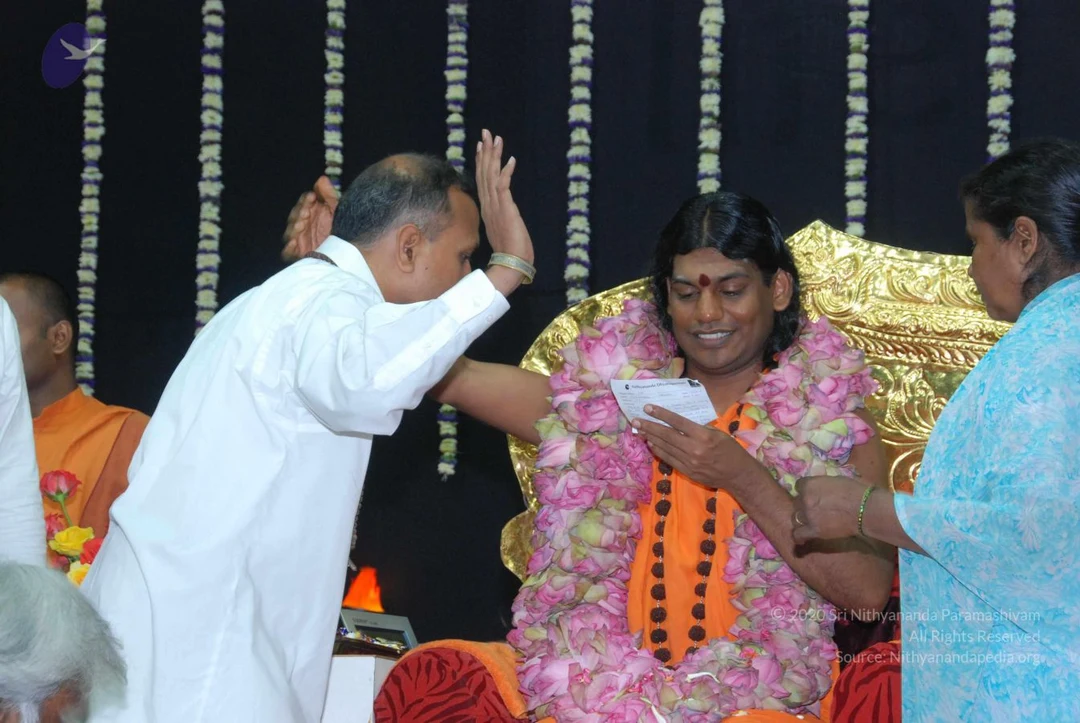
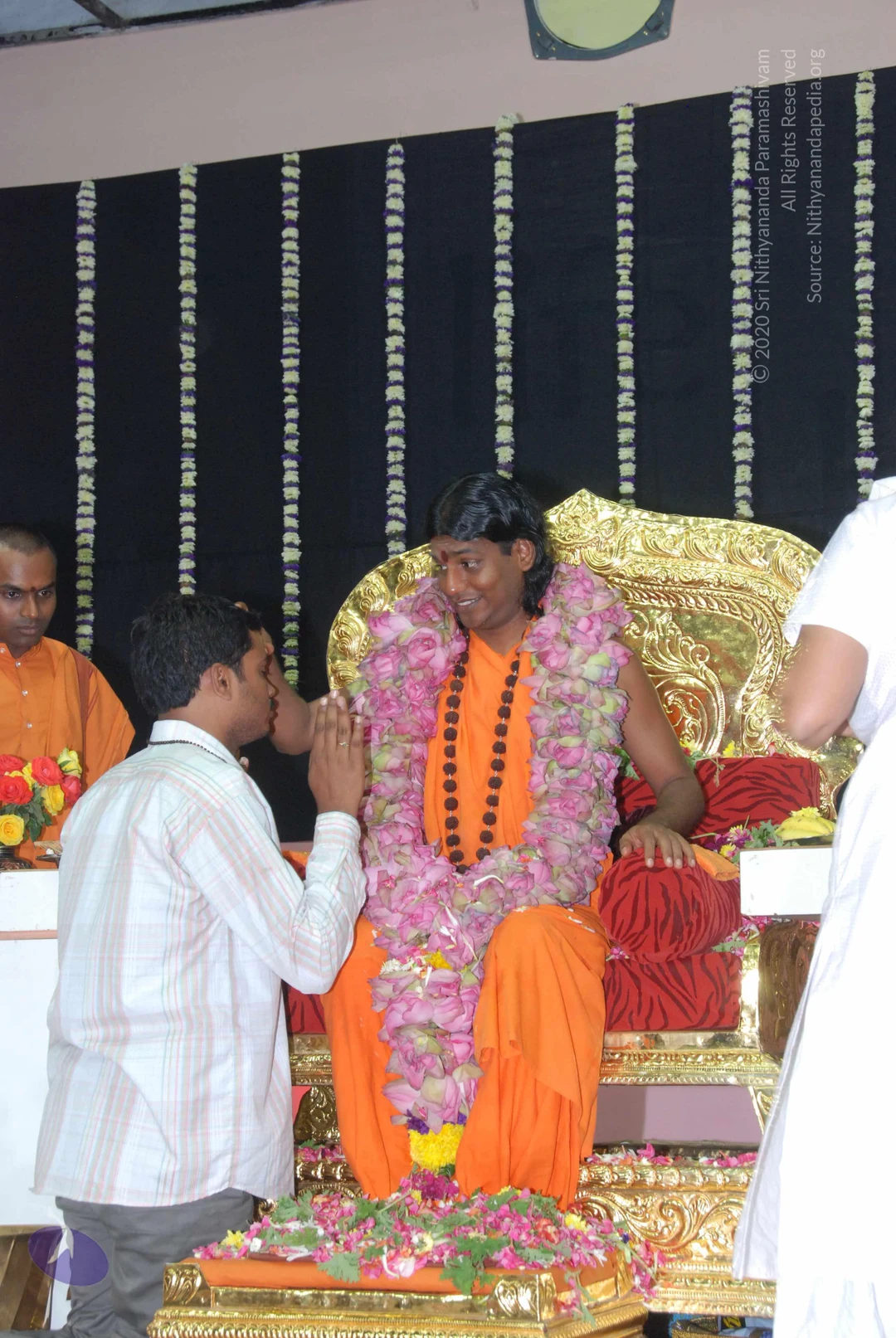
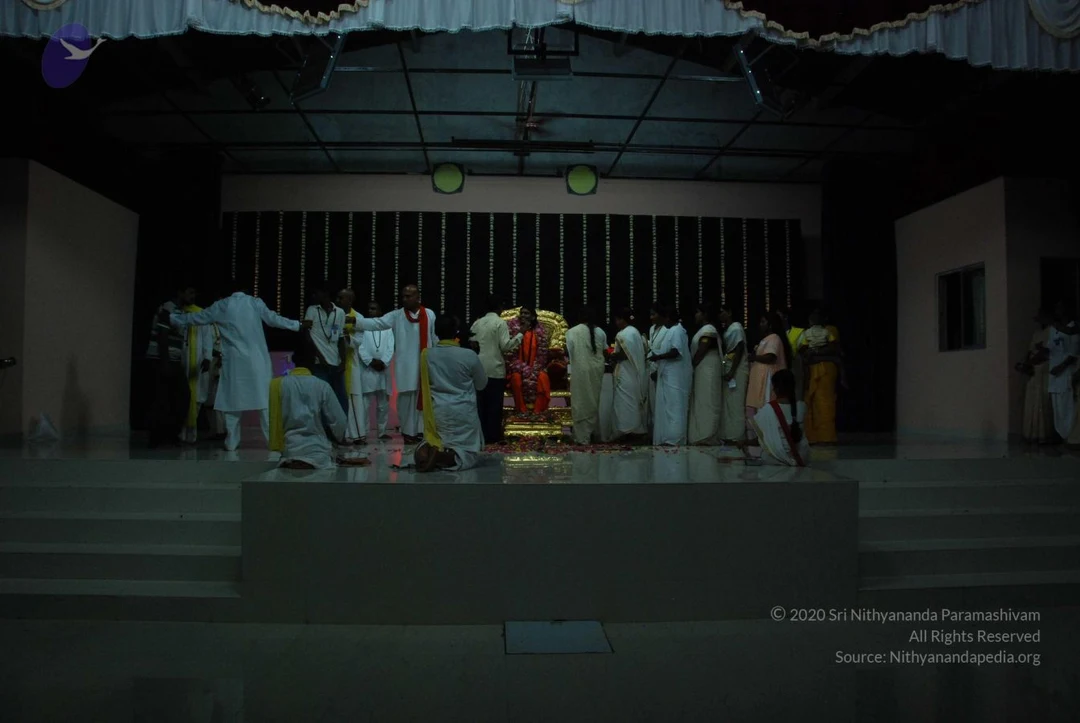
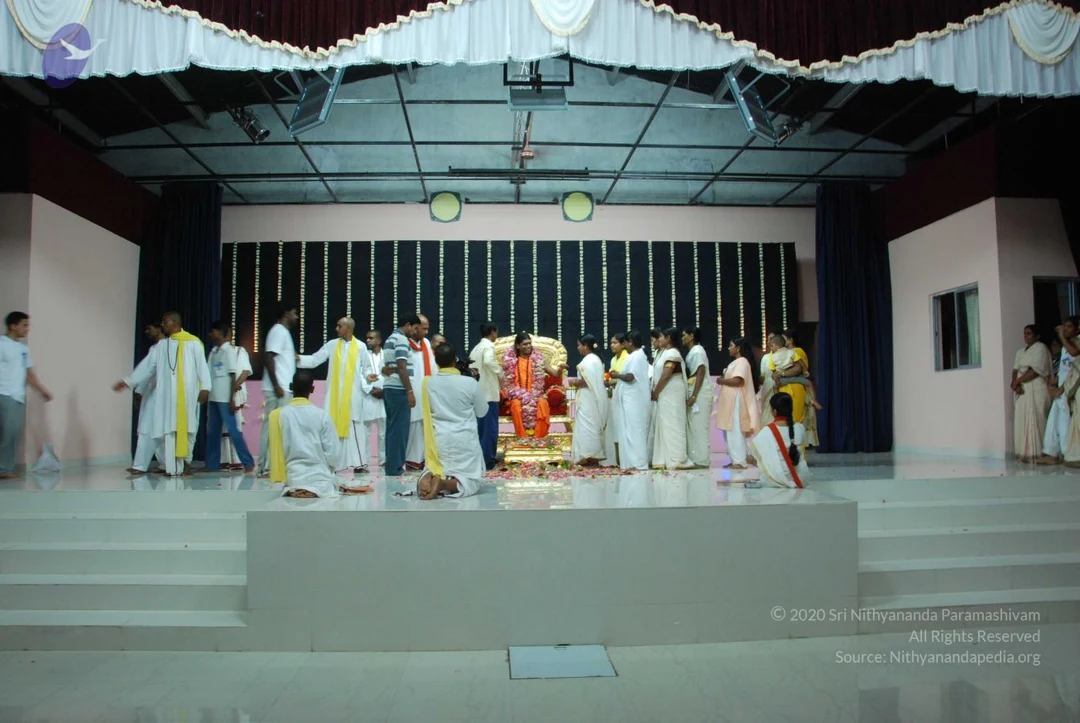
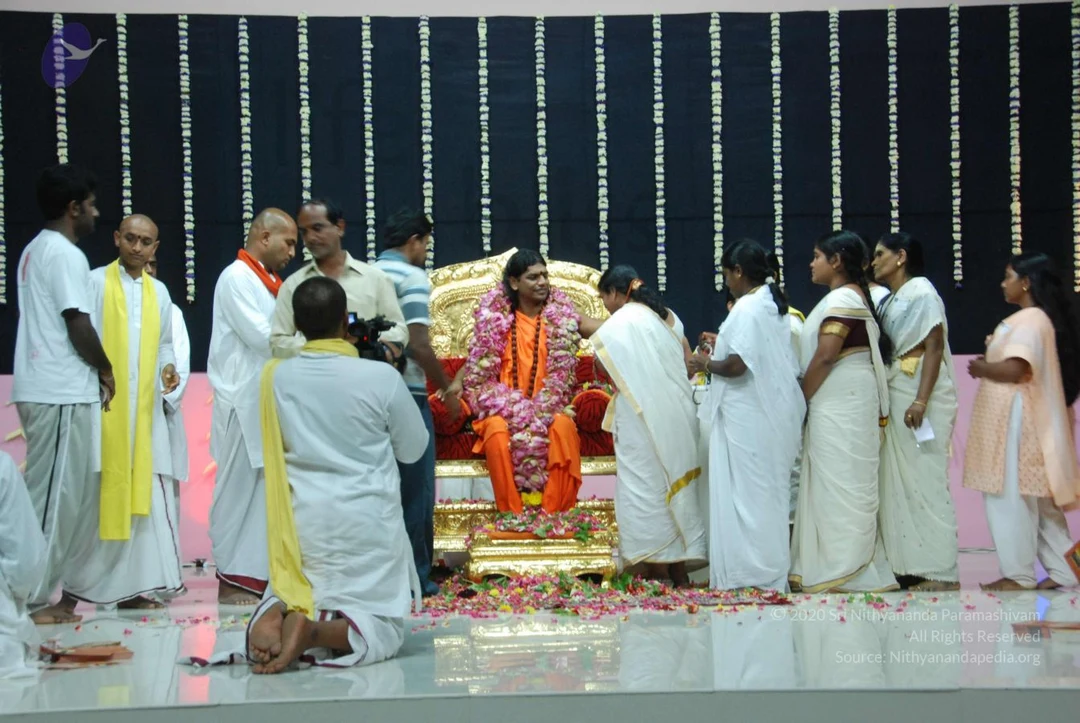
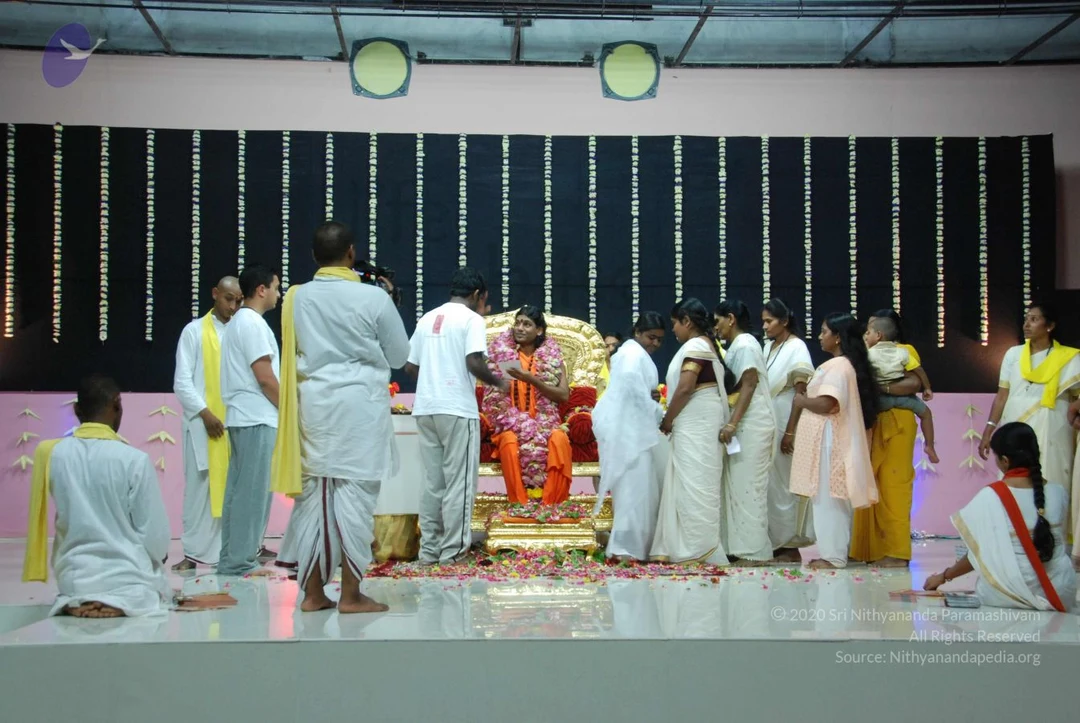
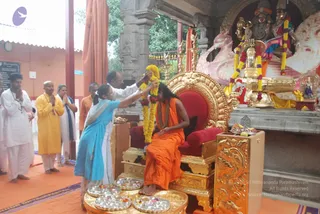
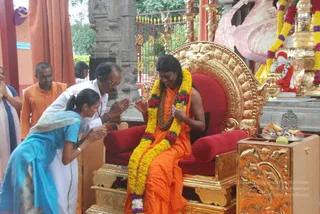
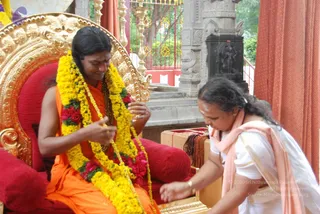
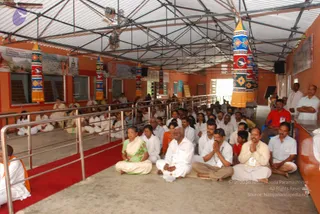
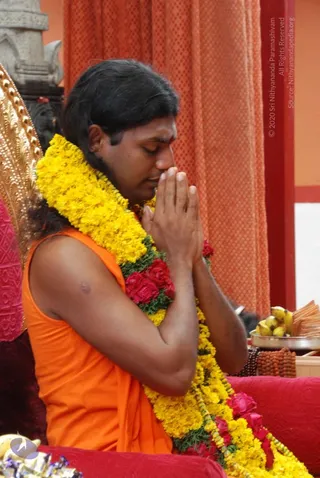
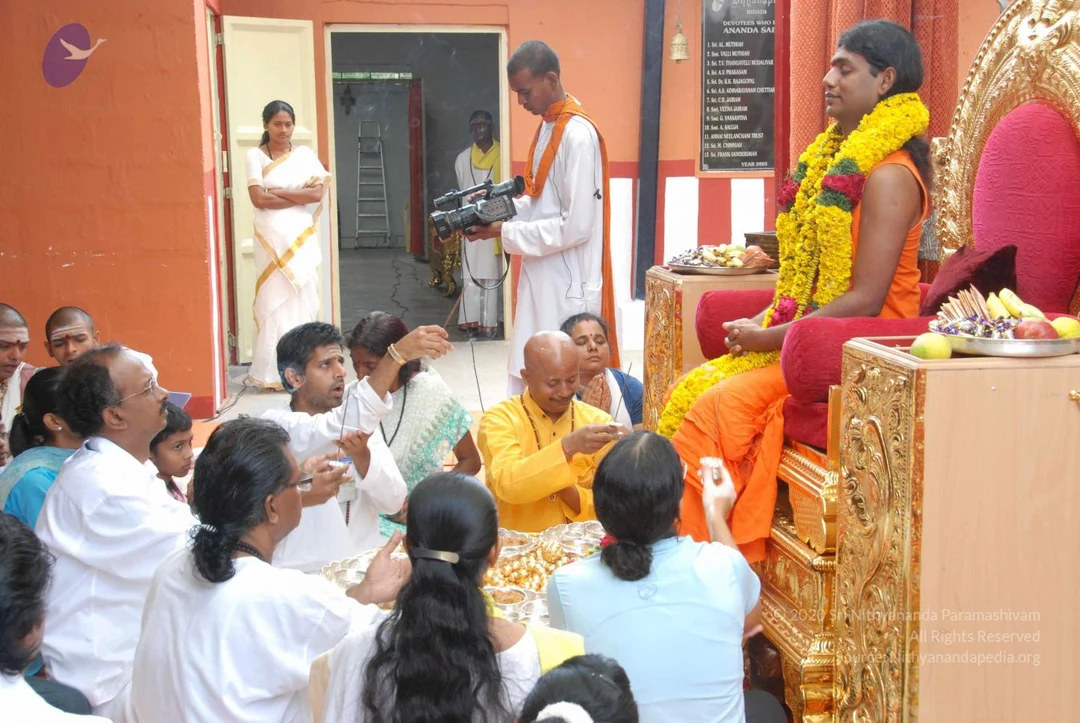
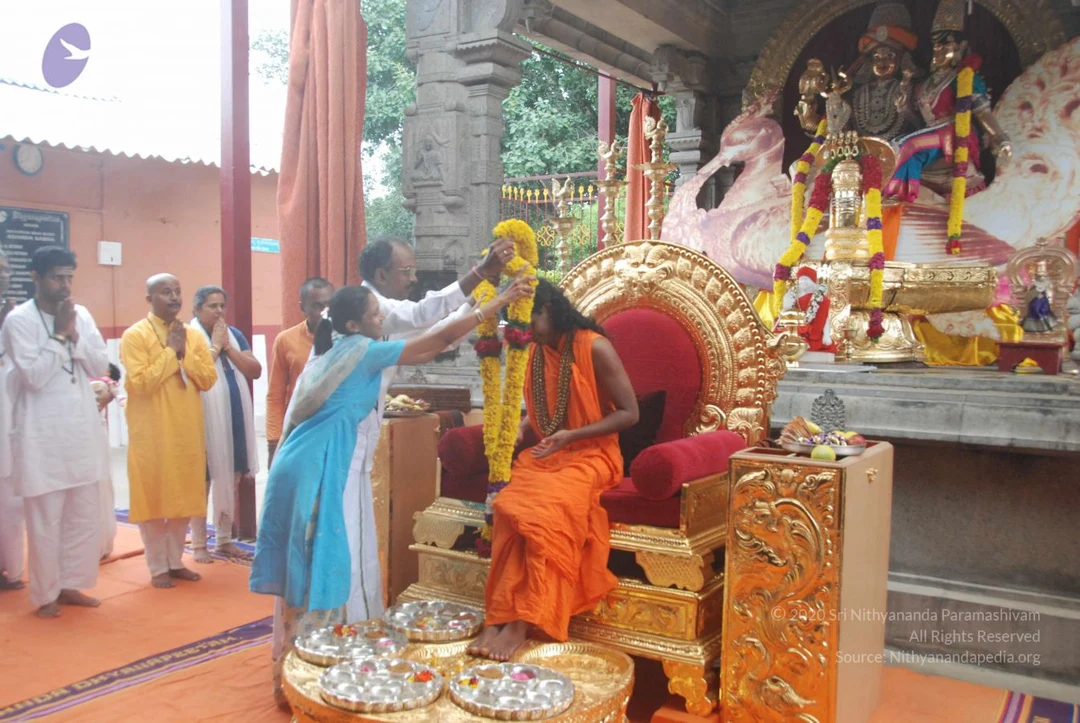
A seated figure in an orange saffron robe with a long dark hair and a beaded necklace sits on an ornate gold throne with red cushions, head bowed. A woman in a light blue sari garlands the seated figure with yellow and orange flower garlands while a man in white shirt assists beside her. Other people in white, yellow and orange clothing stand with hands folded at left. Behind the throne are decorated deity murti figures draped with flower garlands, a gold lamp stand and brass aarti trays with offerings in front. a person: long hair, saffron robe and rudraksha-style beads on the seated figure, placed on a throne receiving garlanding.A photograph of a seated figure in saffron-orange robes on an ornate gold-and-red throne, wearing a dark beaded rudraksha-style mala and wreathed in yellow and red-and-purple marigold garlands. Two devotees stand before him with hands folded in namaste: a man in white shirt and trousers and a woman in a blue sari bending forward. Another man in orange clothing stands behind at left. Behind the throne are an ornate gold and pink structure, floral decorations and a small deity murti. A gold-trimmed table at right holds fruit and flowers. The figure appears to be the Swamiji (probable) given his saffron robes, long swept-back hair and mala, seated in the role of teacher receiving devotees.A seated figure in orange saffron robes sits on an ornate gold-and-red throne, wearing a long yellow marigold garland with red rose accents and rudraksha malas around the neck, with a red tilak on the forehead. A woman in a white sari with a pink-orange shawl kneels at his feet, placing or arranging a garland and reaching toward wooden trays holding rudraksha beads. Behind them stand a black stone deity murti, brass lamp stands and an orange curtain. a person: long dark hair, saffron robes, rudraksha malas and a ceremonial garland on a throne, in the role of the honoured guru receiving devotion.A dim, open-sided hall with a corrugated metal roof and tall decorated pillars with red, orange and yellow geometric patterns. Rows of devotees sit on the floor facing forward. In the foreground a woman in a green and cream sari sits with hands in her lap, beside men in white dhotis and shirts, one with palms pressed together in prayer, another in a yellow shirt. A metal railing runs along the left side, and daylight and palm trees show through an opening at the back. No clearly identifiable a person figure is visible.Devotees sit on the floor of a covered orange-walled hall during a satsang, many with hands pressed together in namaskar. Most wear white ritual clothing; a woman in a green and gold sari sits on the front-left mat beside a red carpet, and a man in a red shirt sits to the right. Tall cylindrical banners in red, yellow and blue patterns hang along the room, and framed panels line the walls. At the far right edge, a figure in saffron and white stands near a wooden lectern. No clearly distinctive appearance cues establish his identity, so he is described only by role.A man with long dark hair and a vertical tilak on his forehead sits with palms pressed together in anjali mudra, eyes closed in prayer. He wears a sleeveless saffron-orange robe and a thick garland of yellow marigolds with red roses draped over his shoulders. Behind him hangs an orange patterned curtain and a gold-carved throne-like chair edge, with a red cushion. On the right, a silver tray holds bananas and sweets, and a rudraksha mala lies on the seat. The man appears to be the Swamiji, shown with long swept-back hair, saffron clothing and garlands; this is an appearance-based candidate, so the label is probable.

TEMPLE
9 photosSource gallery
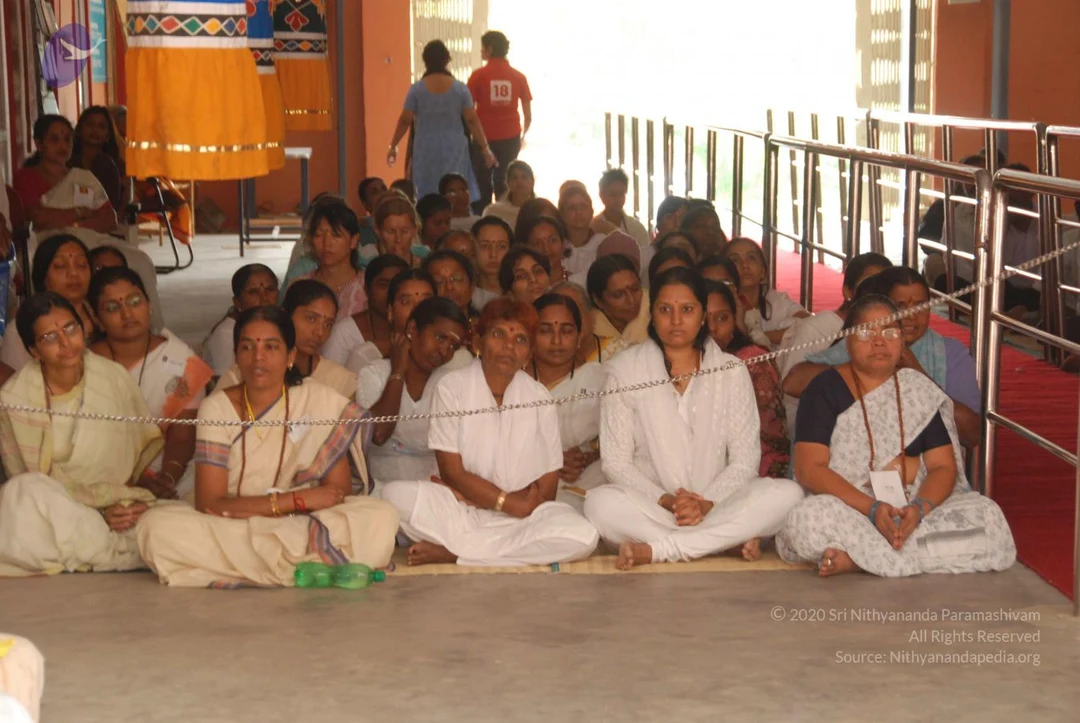
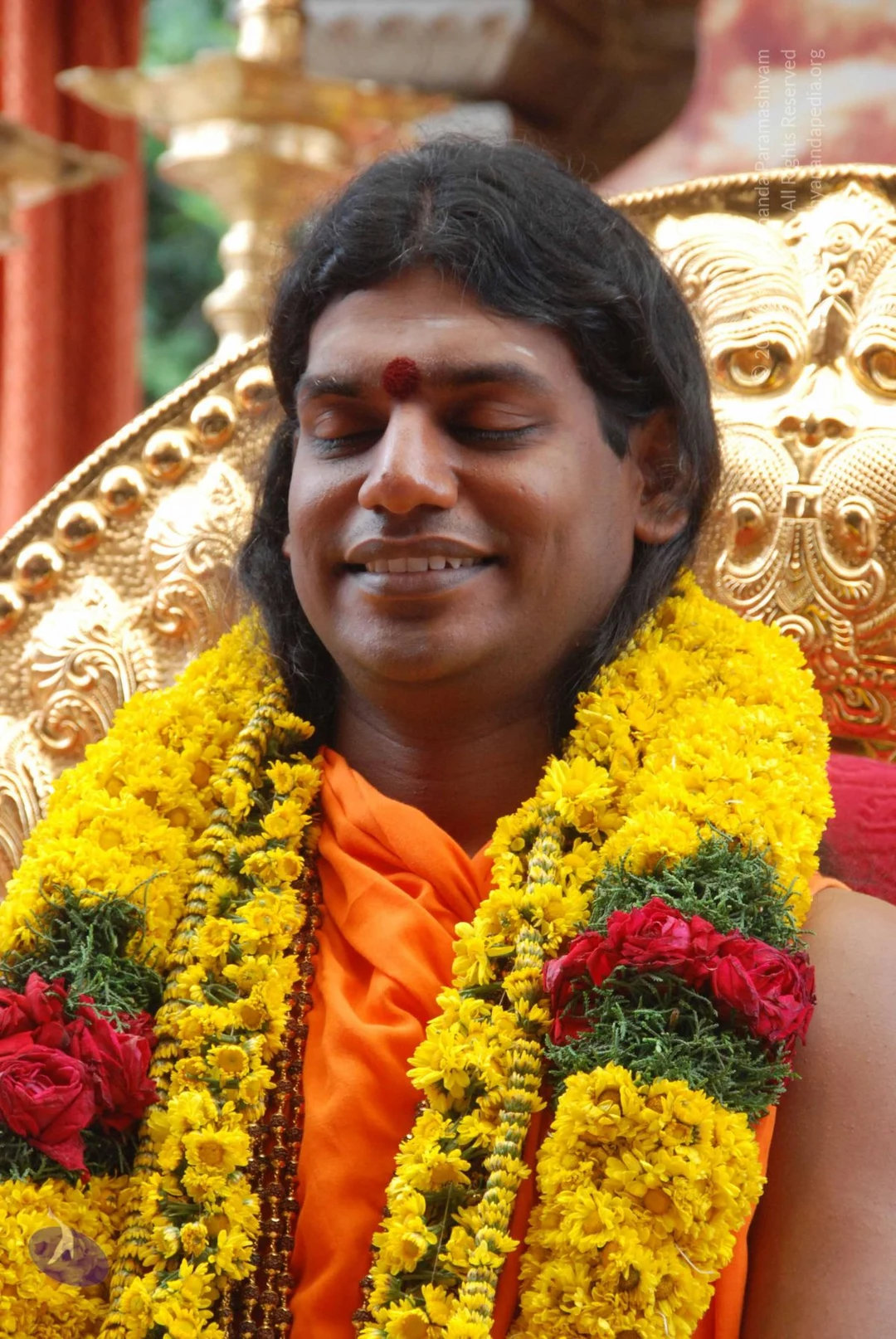
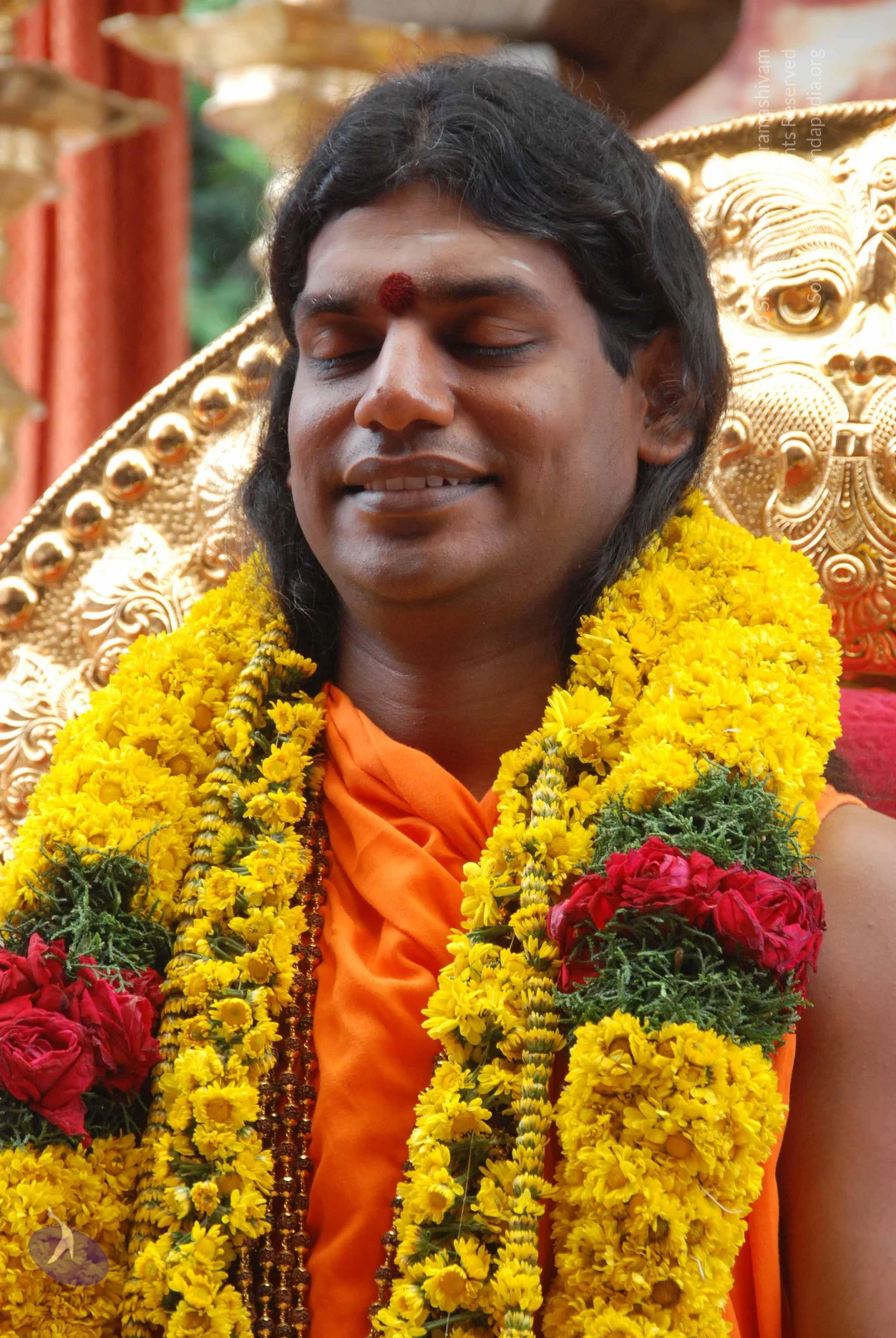
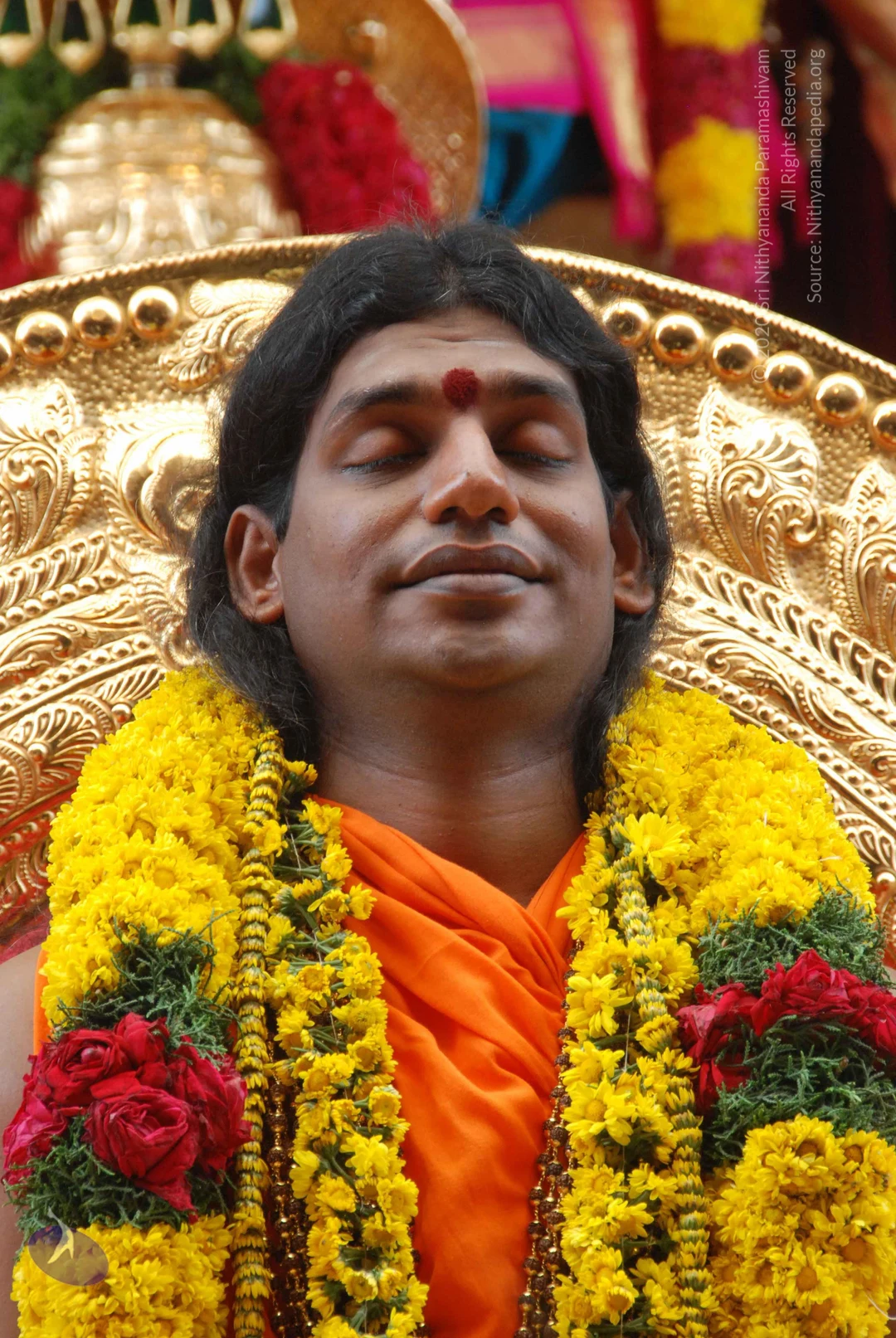
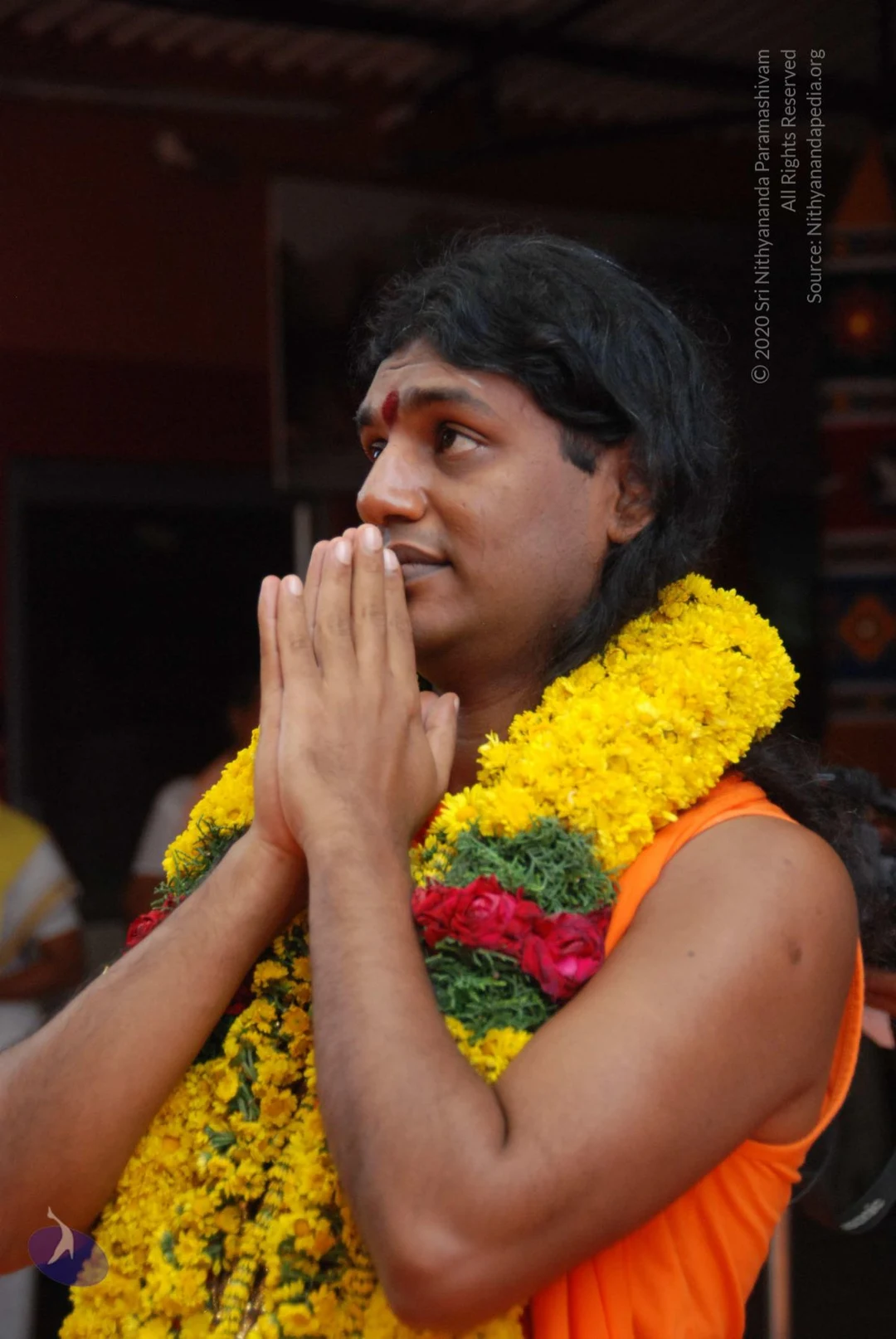
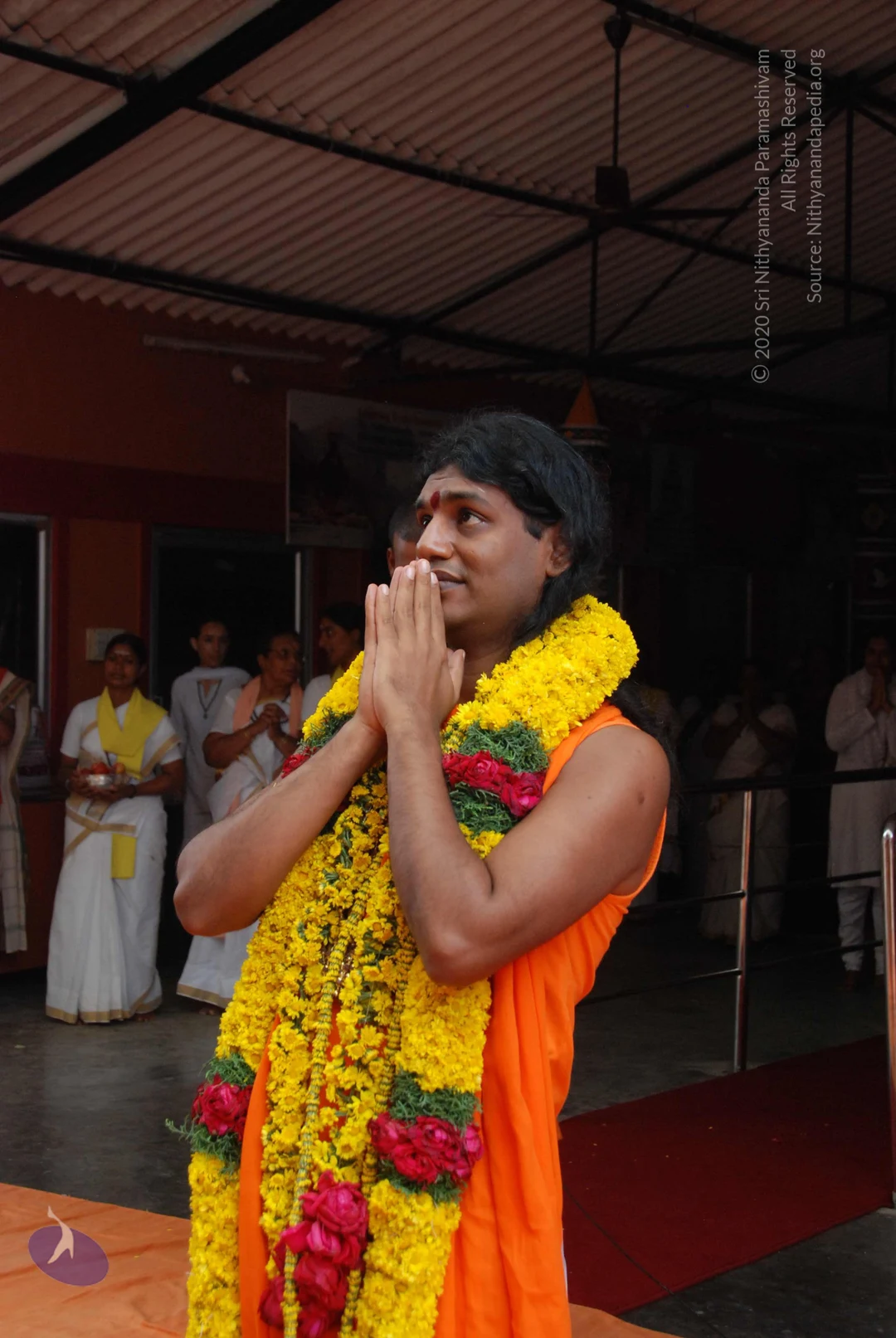
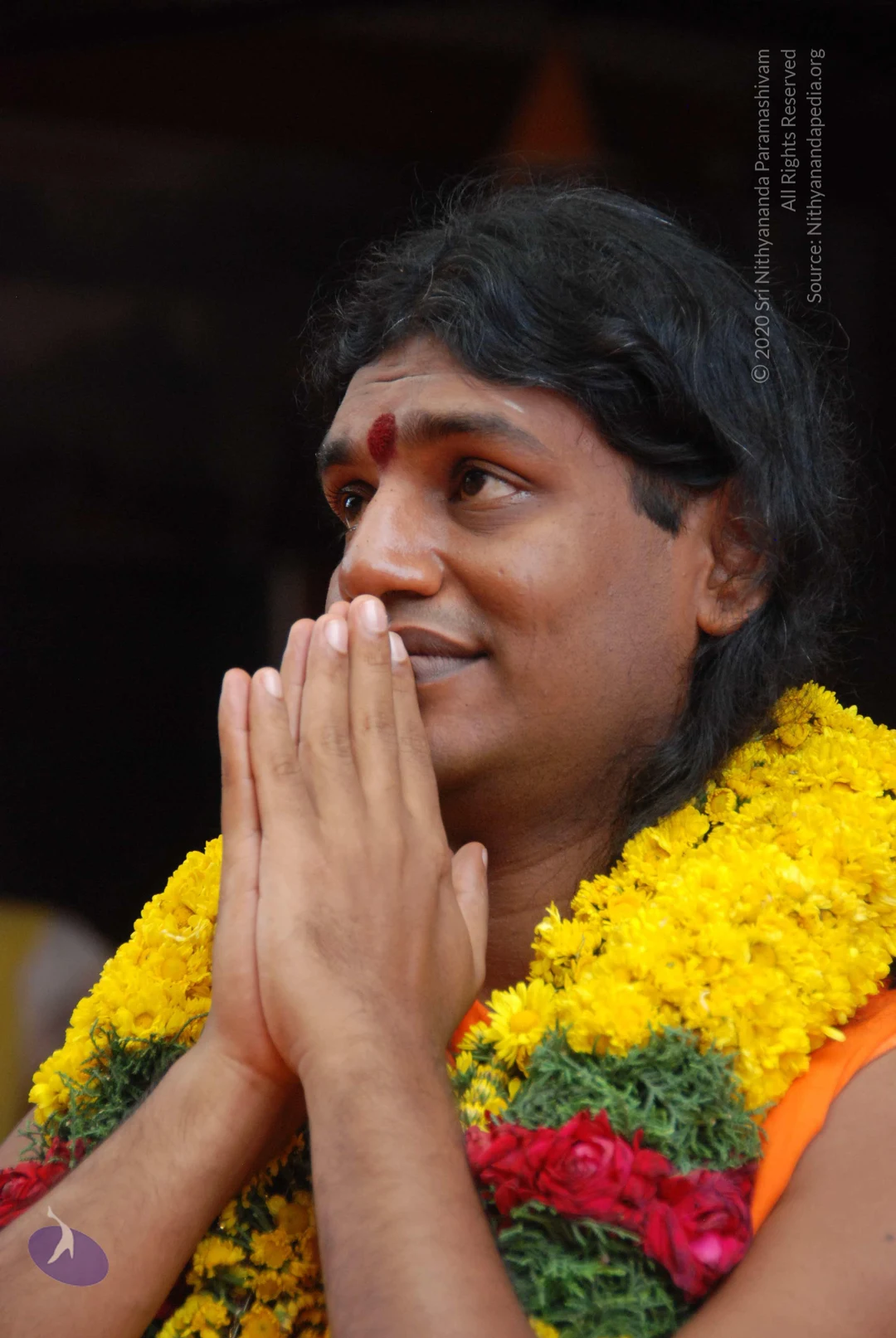
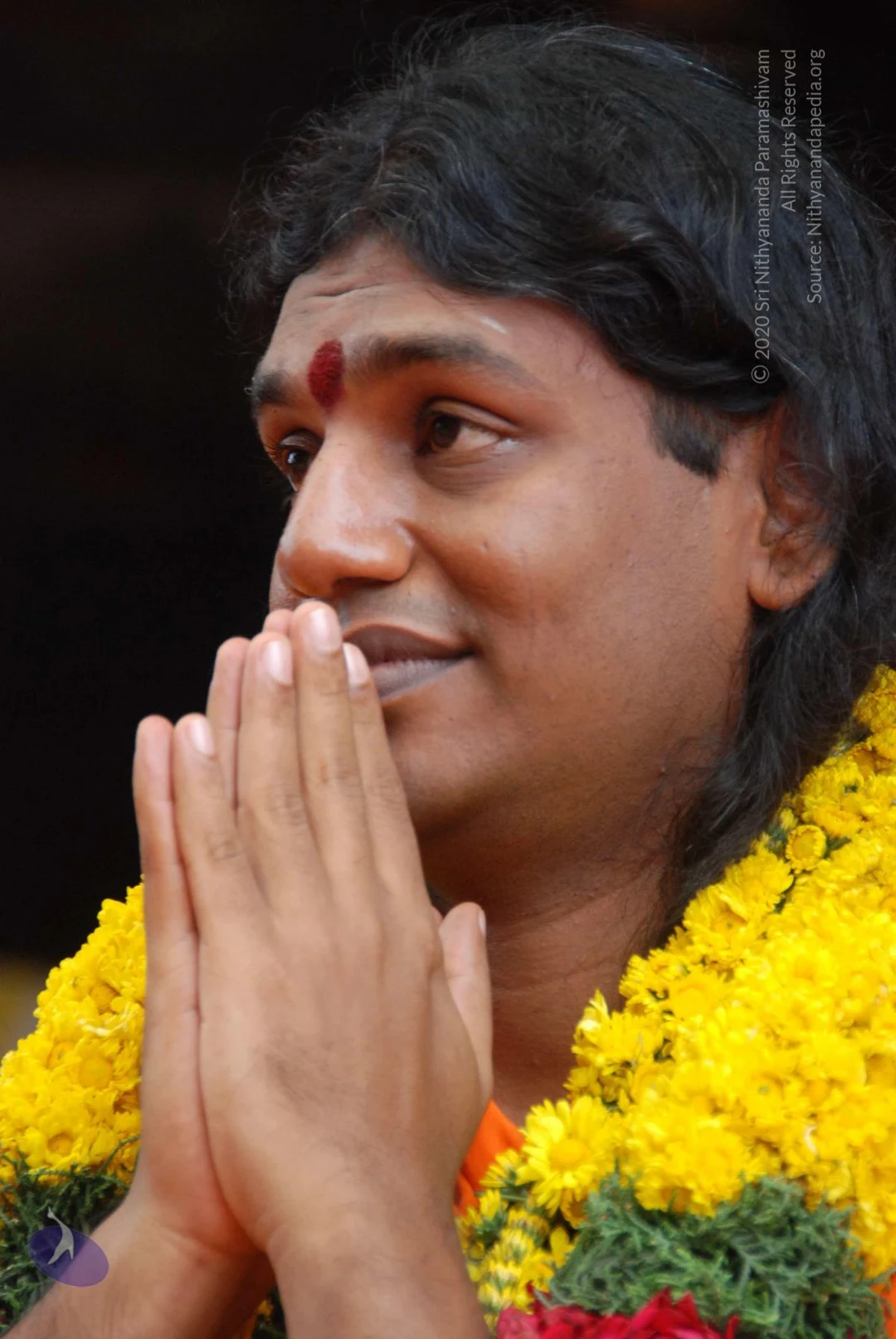
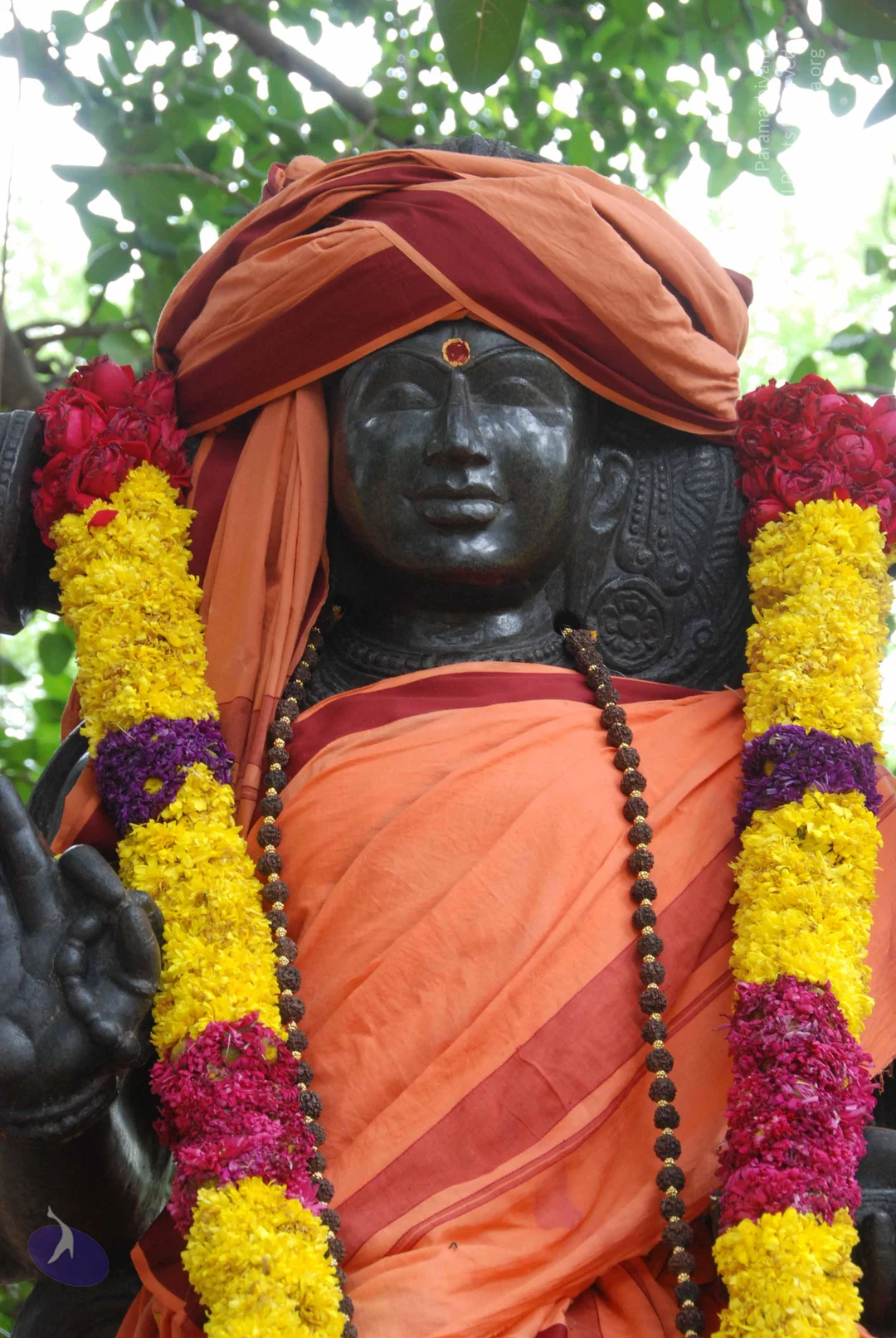
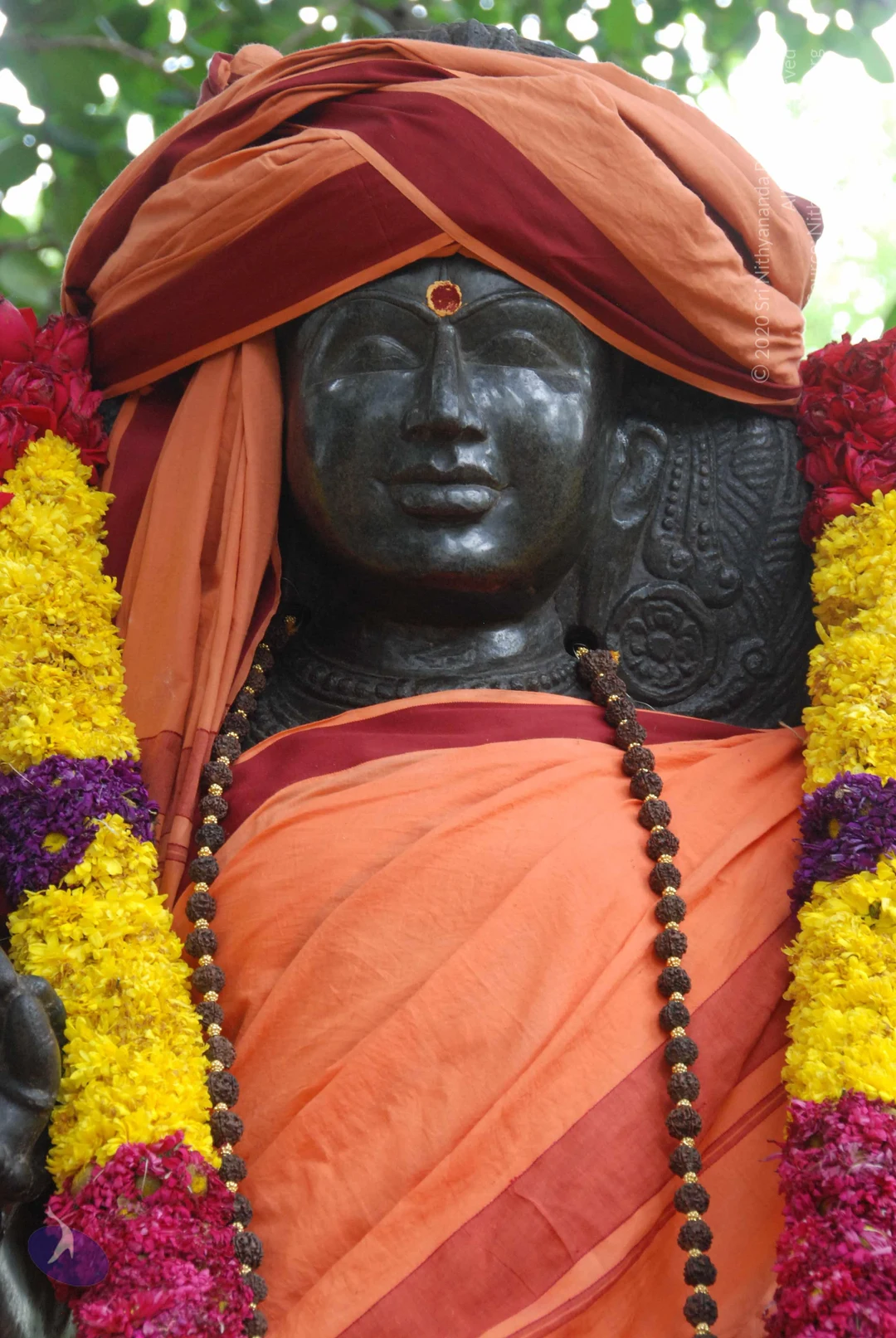
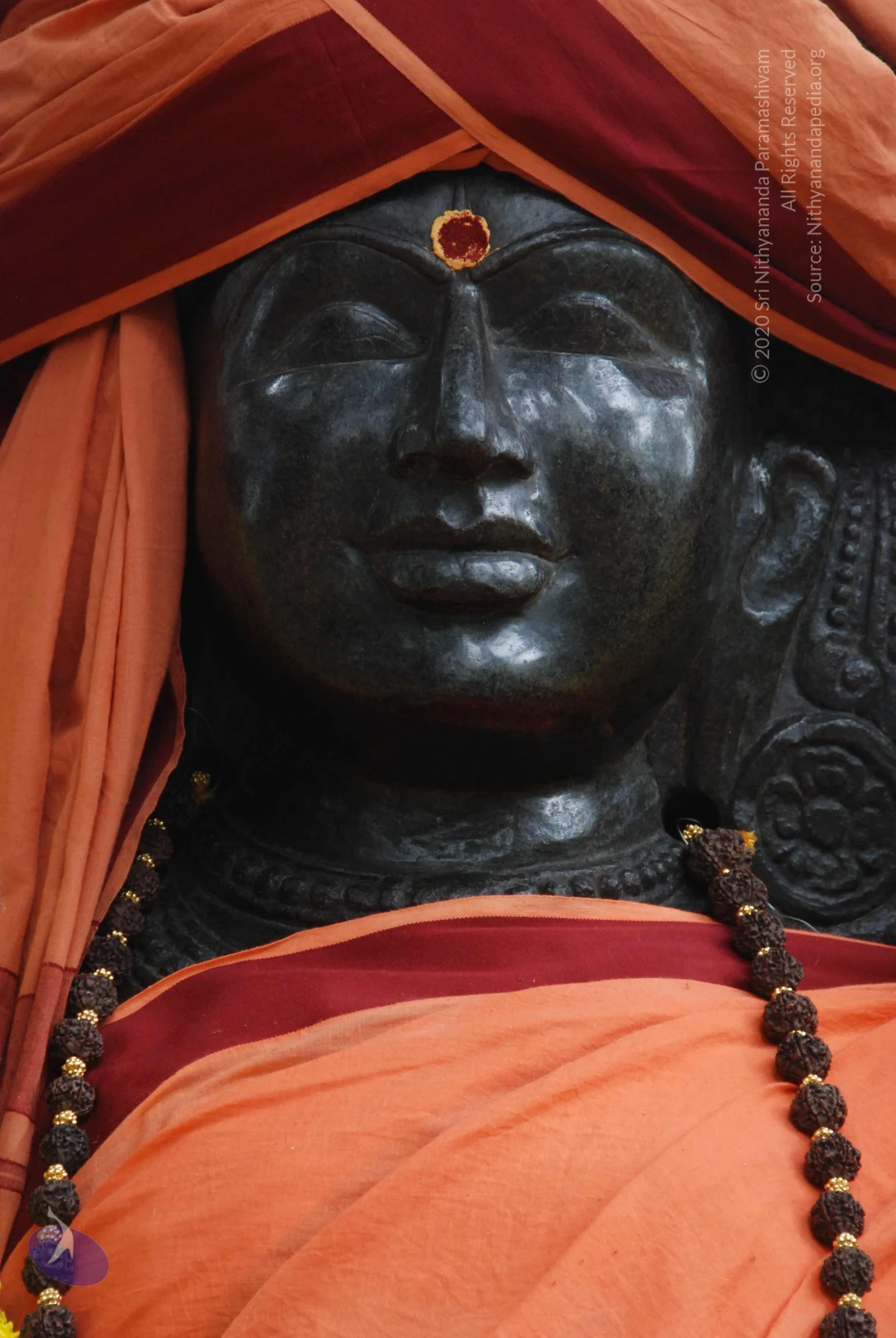
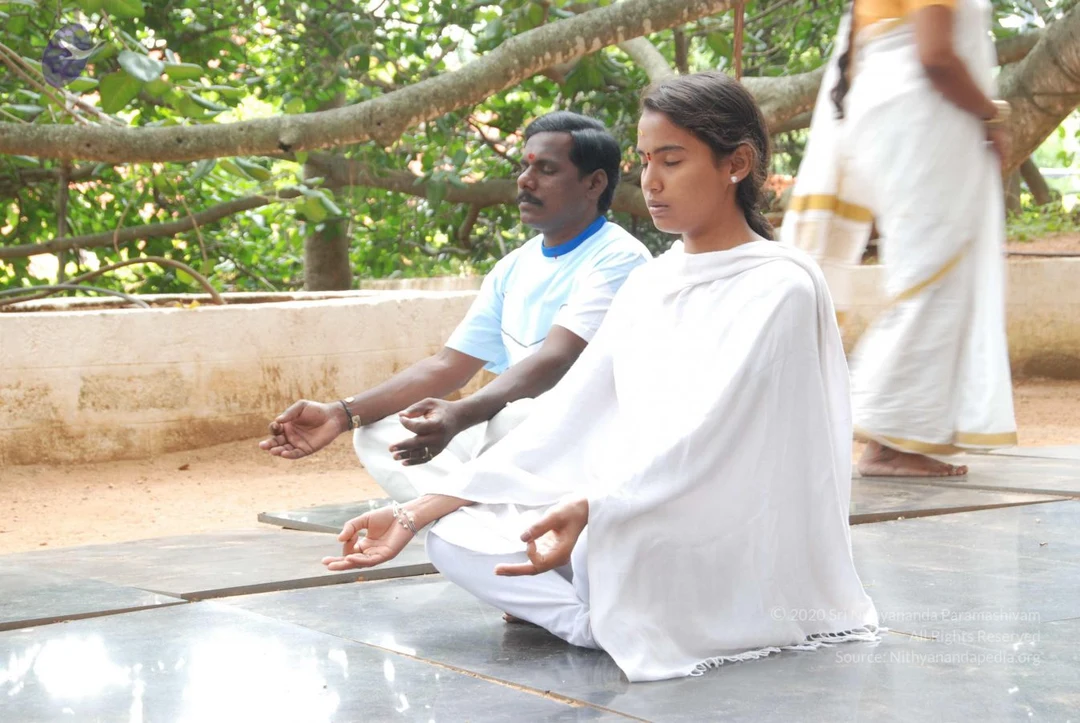
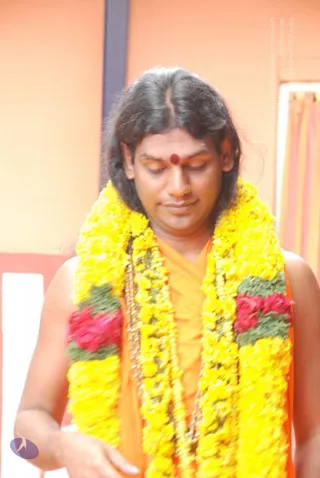
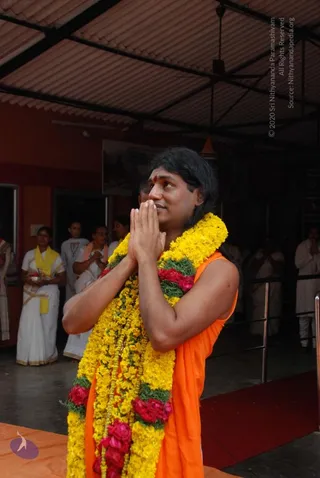
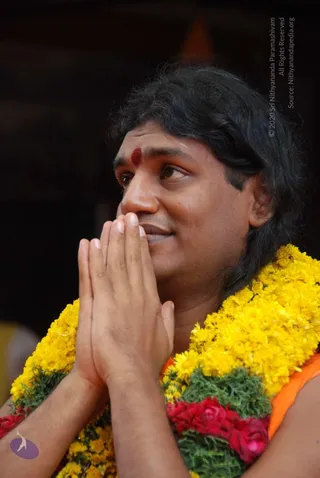
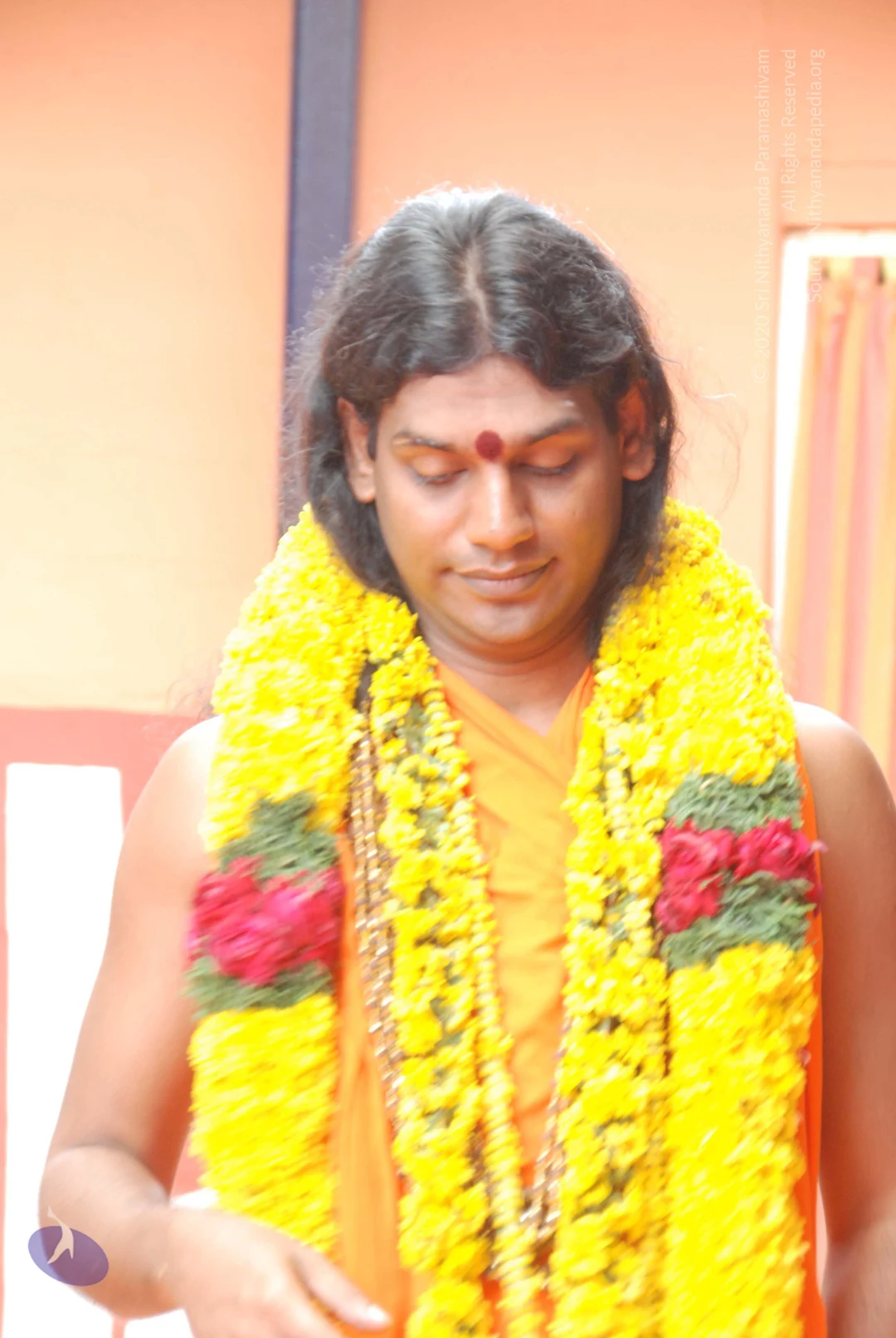
A man with long dark hair and a red bindi on his forehead stands with eyes lowered, wearing a saffron-orange garment and a thick necklace of yellow marigold garlands interspersed with red roses and green leaves. A rudraksha-style mala is visible beneath the flowers. The background is orange and pink with a striped cloth at right. Appearance-based label: a person, shown in person as a garlanded speaker.A photograph of a man with long dark hair and a red bindi, standing with palms pressed together in anjali mudra at a temple-like hall with a corrugated metal roof. He wears an orange sleeveless garment and a thick garland of yellow marigolds and red roses. Behind him, several people in white and cream clothing stand with hands folded, and a woman in a white sari with a yellow border holds a silver tray of offerings. A printed caption in the image reads a pedia source line. The man's appearance is consistent with the a person description, with long swept hair, orange clothing and a garland, but the identification is uncertainClose-up photo of a man with long, swept-back dark hair and a red bindi-style tilak on his forehead, hands pressed together in anjali mudra at his chest. He wears a thick garland of yellow marigolds and red roses over orange ochre clothing and smiles gently while looking off to one side against a dark background. Swamiji (probable): long hair, orange clothing and a floral garland are visible on this single person.A photograph looking up through a dense canopy of a large spreading tree. Long, gently curving grey-brown branches arch across the frame, covered with clusters of bright green oval leaves. Patches of pale sky and lighter foliage show through the gaps, and a small purple flower is visible at the upper left edge. No people, deities or ritual objects are visible.Close-up of a black stone statue of a seated sage, its face with closed eyes, a small red and gold bindi-like mark on the forehead, wrapped in an orange and maroon draped cloth that frames the head. Strung rudraksha beads with gold spacers hang across the orange robe over the chest. The statue is a carved sculpture, not a living person, so no physical people are present.A photograph of two devotees meditating seated in a cross-legged posture on dark stone tiles outdoors beneath leafy trees. In the foreground a woman in a white shawl over white clothing sits with eyes closed and hands in mudra on her knees, with a red bindi and a silver bangle. Beside her a man in a light blue t-shirt and white dhoti sits with eyes closed and a red tilak on his forehead. A third person in a white dhoti with a yellow border stands partly visible at the upper right. A low concrete wall runs behind them.

NITHYA-SATSANG
8 photosSource gallery
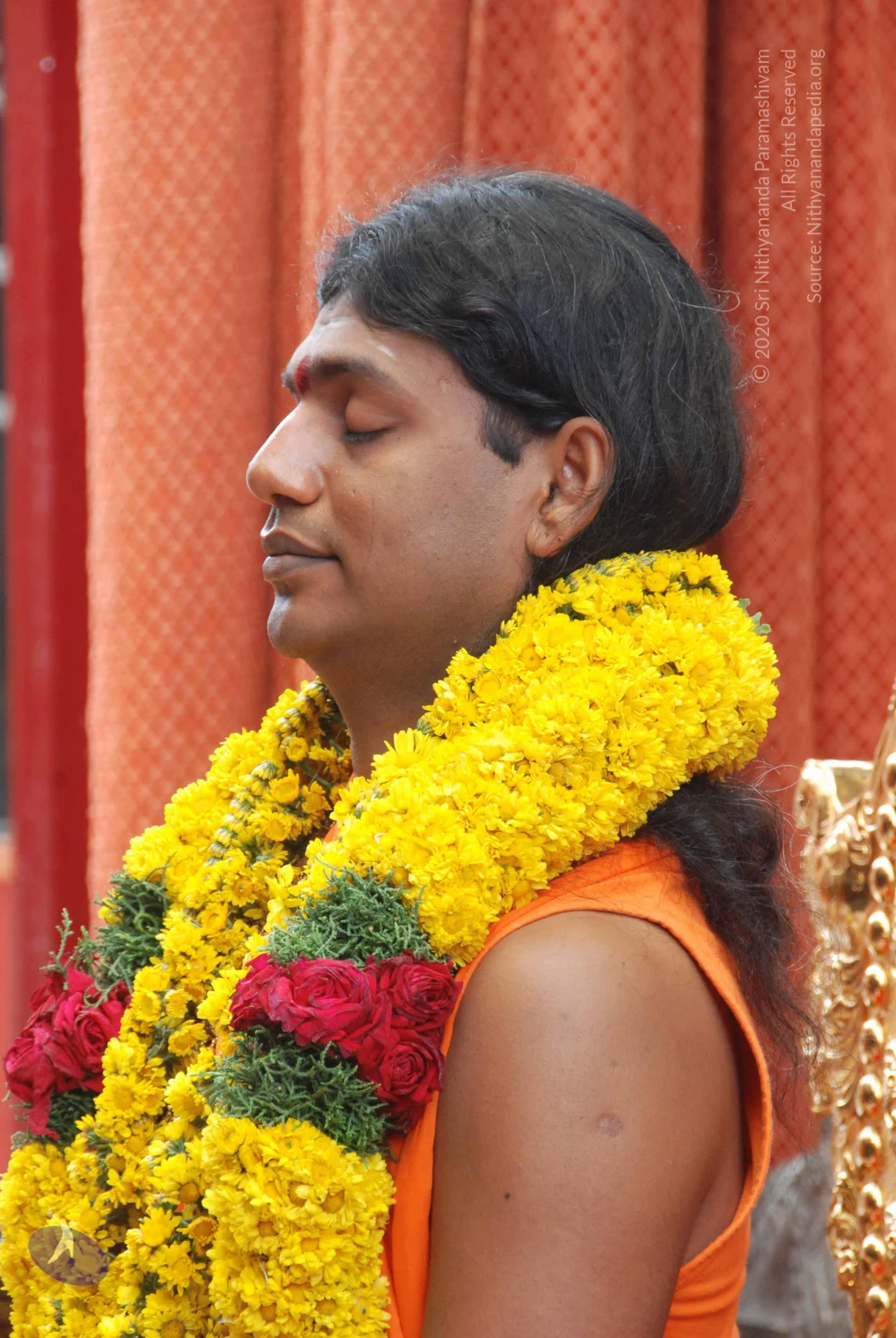
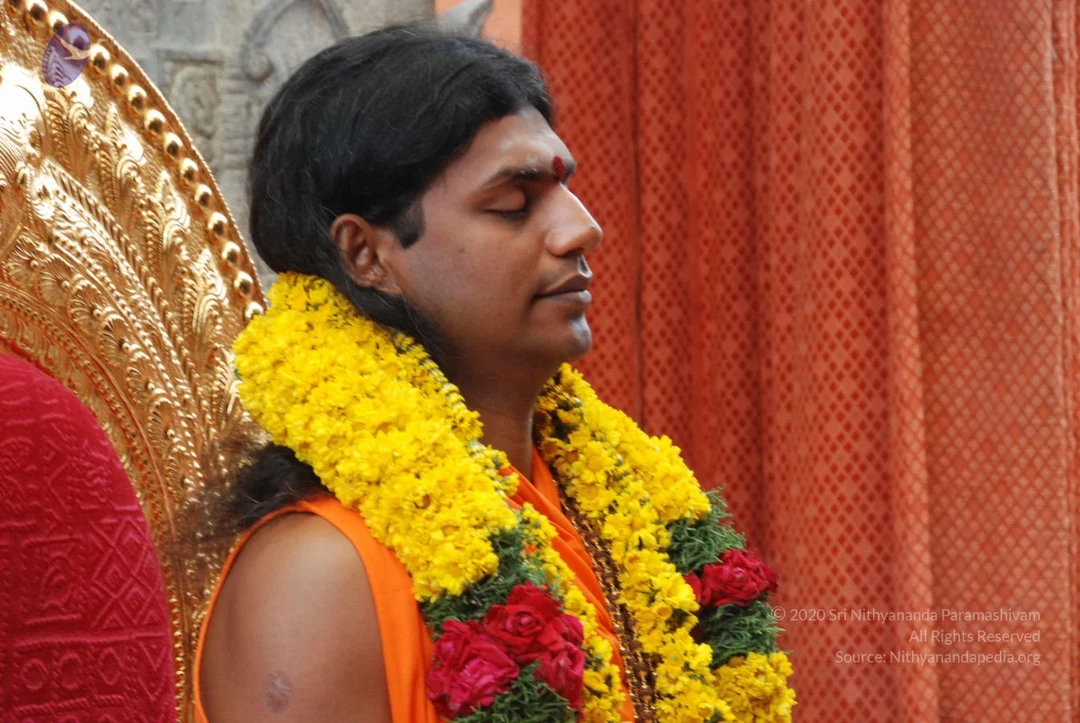
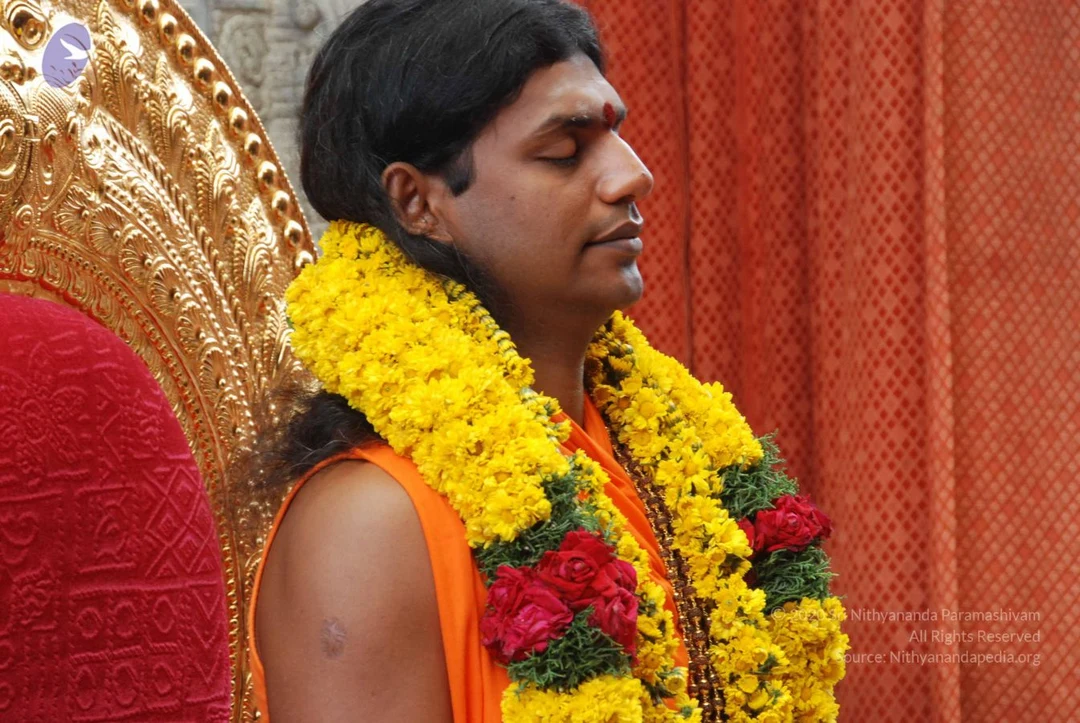
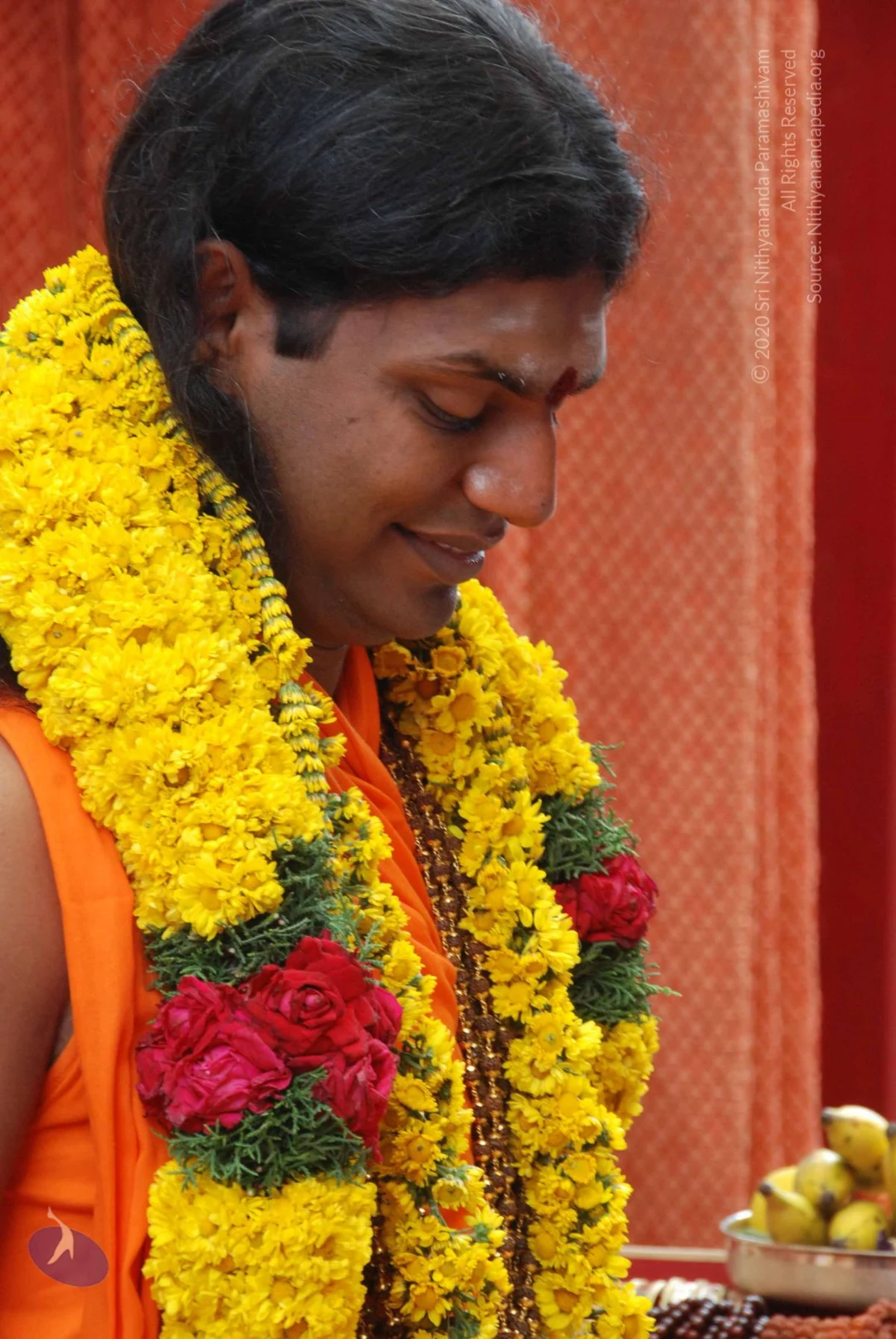
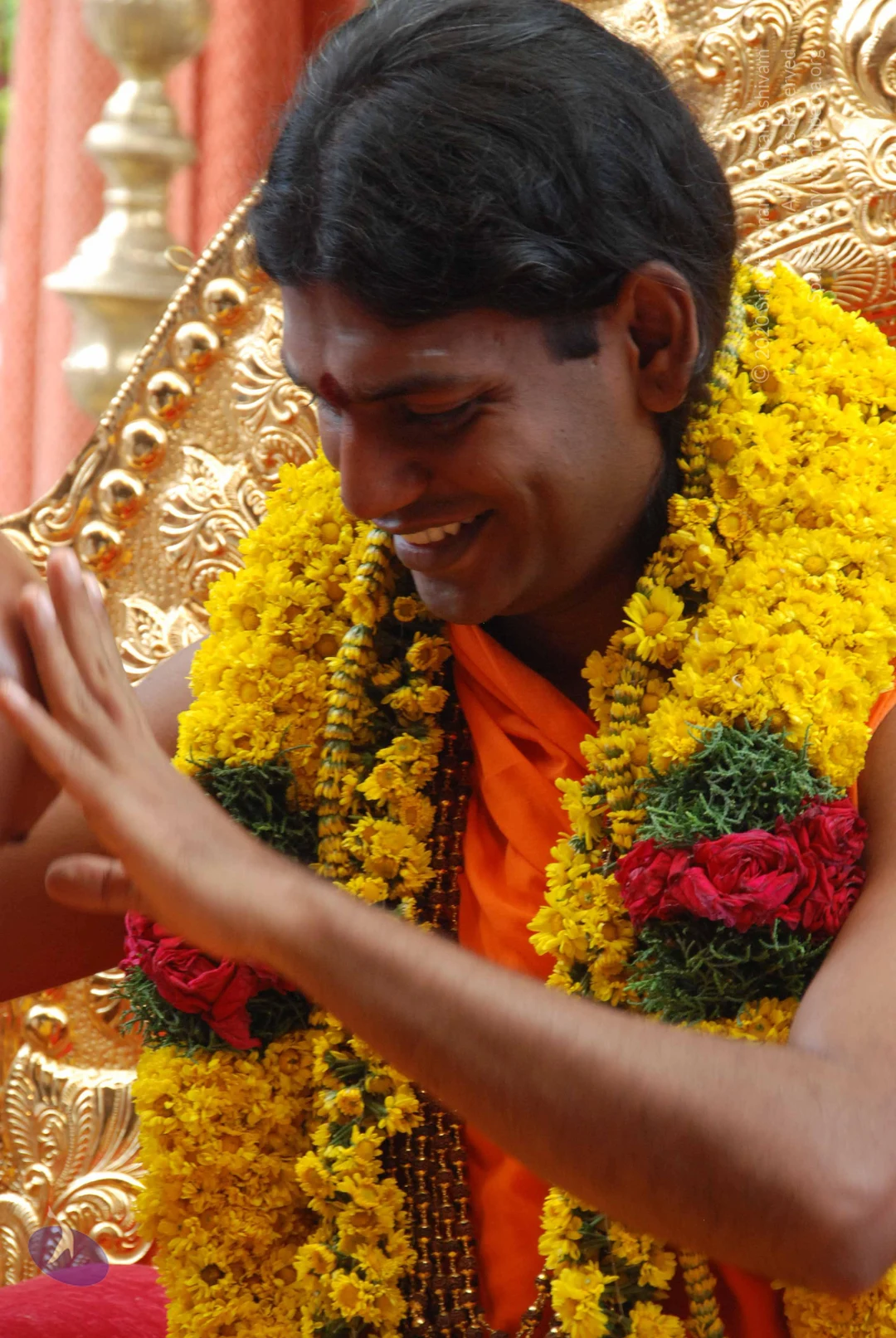
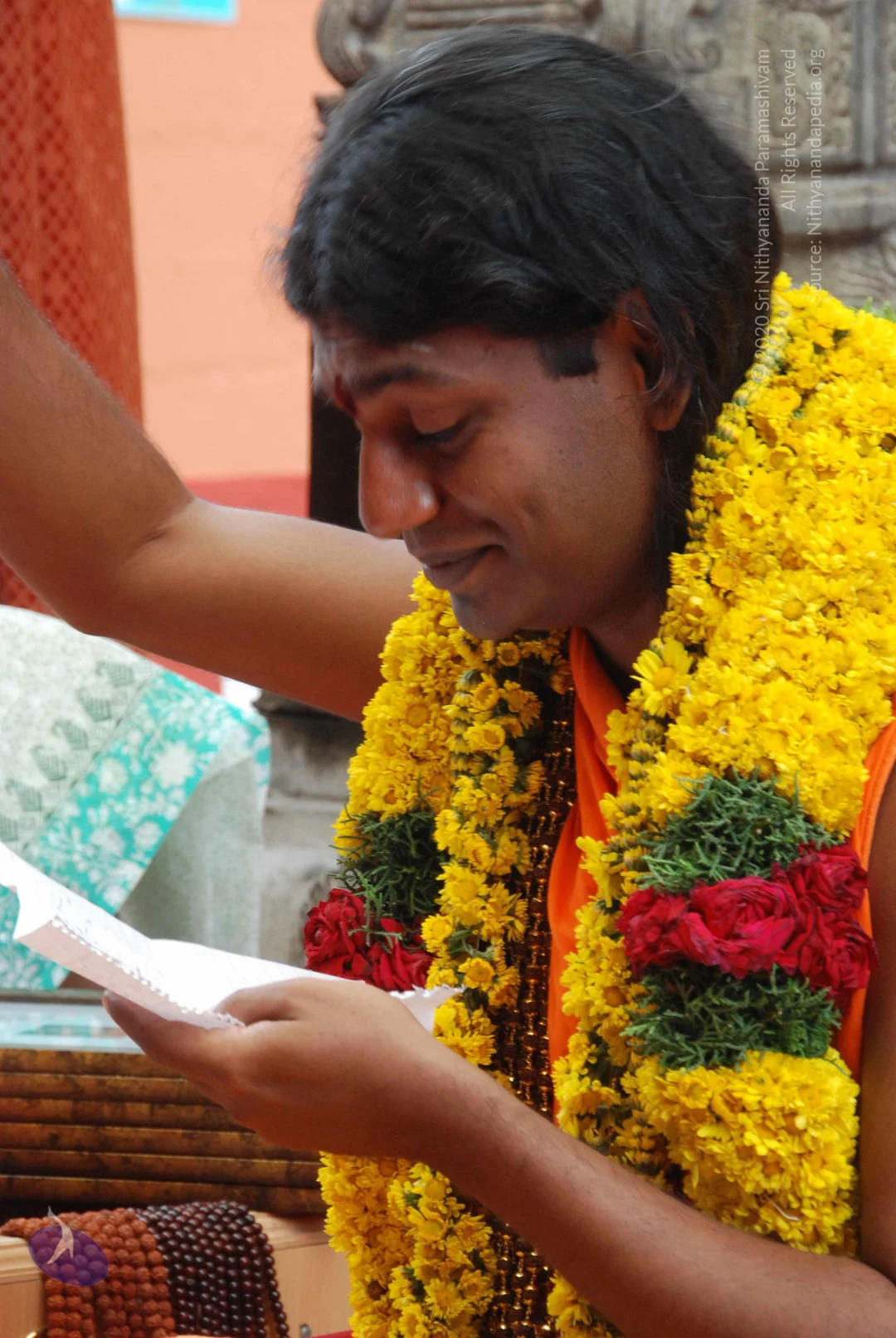
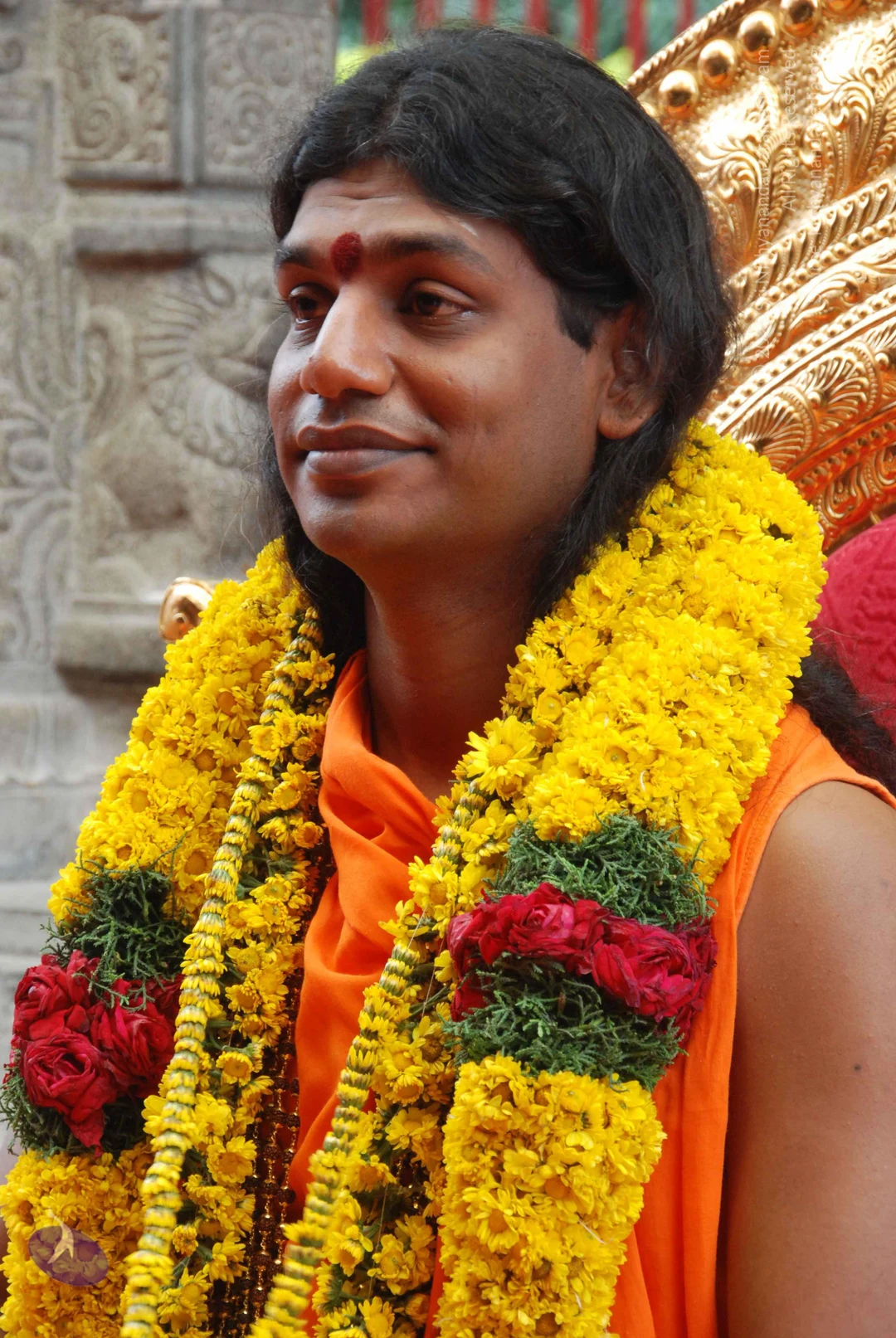
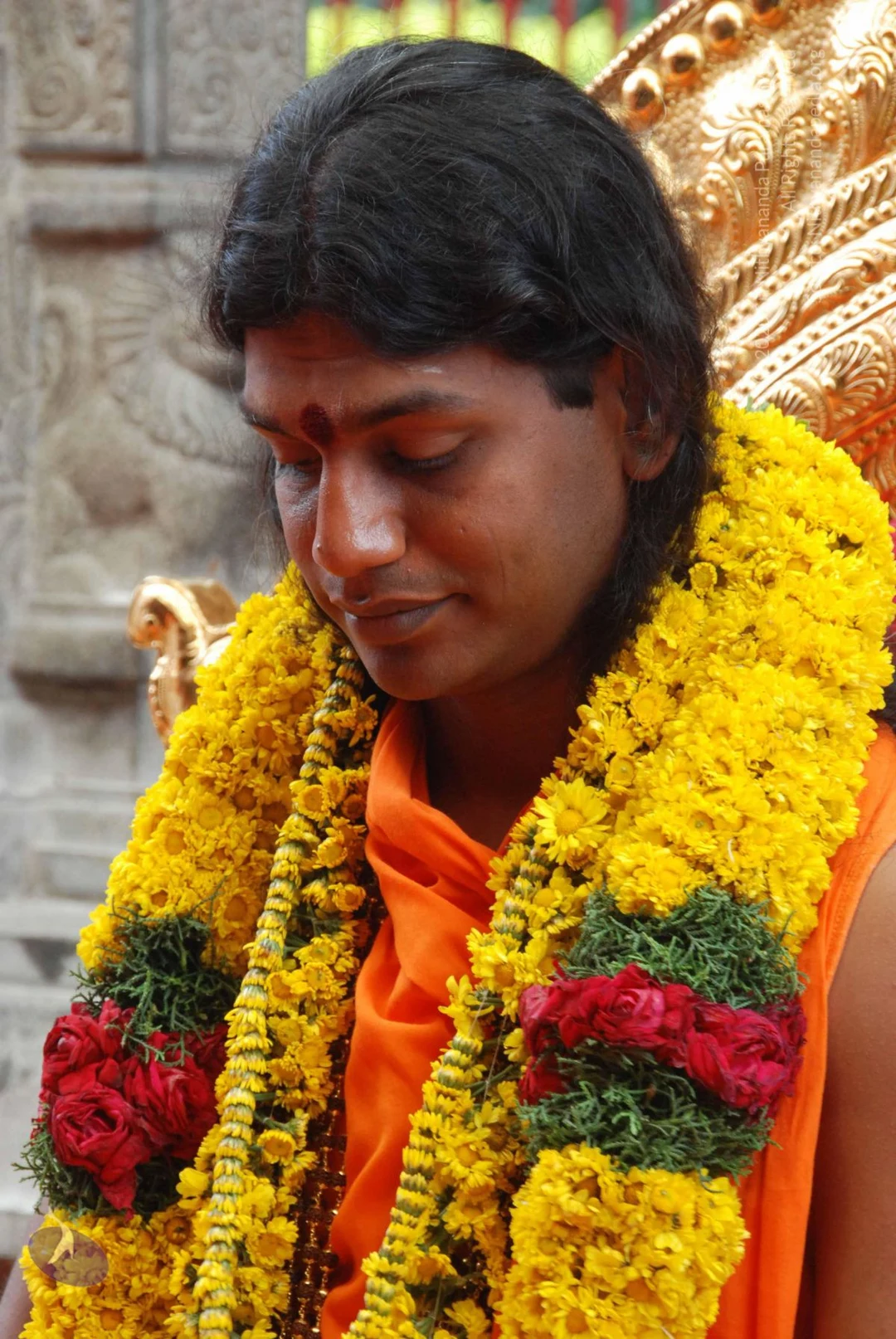
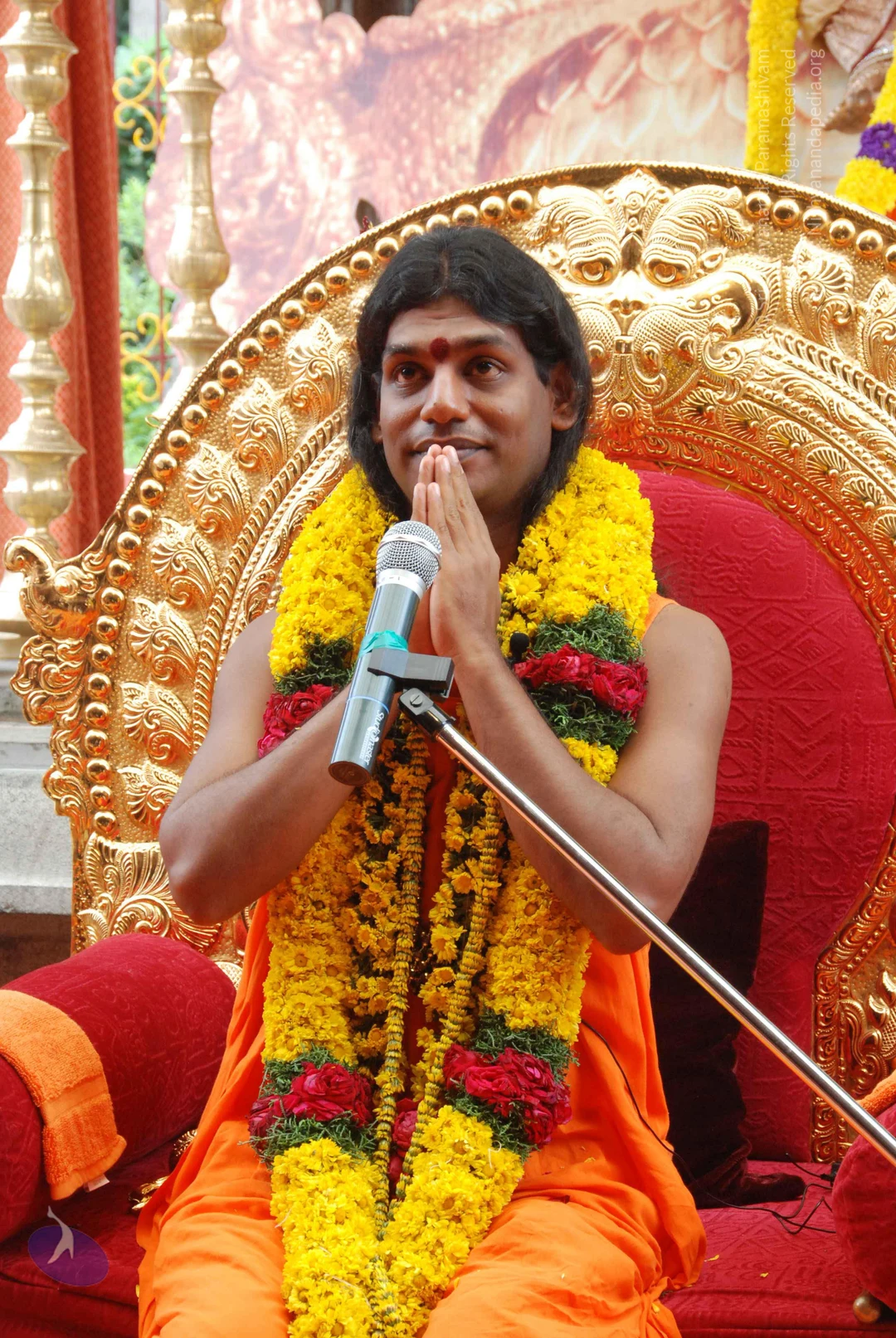
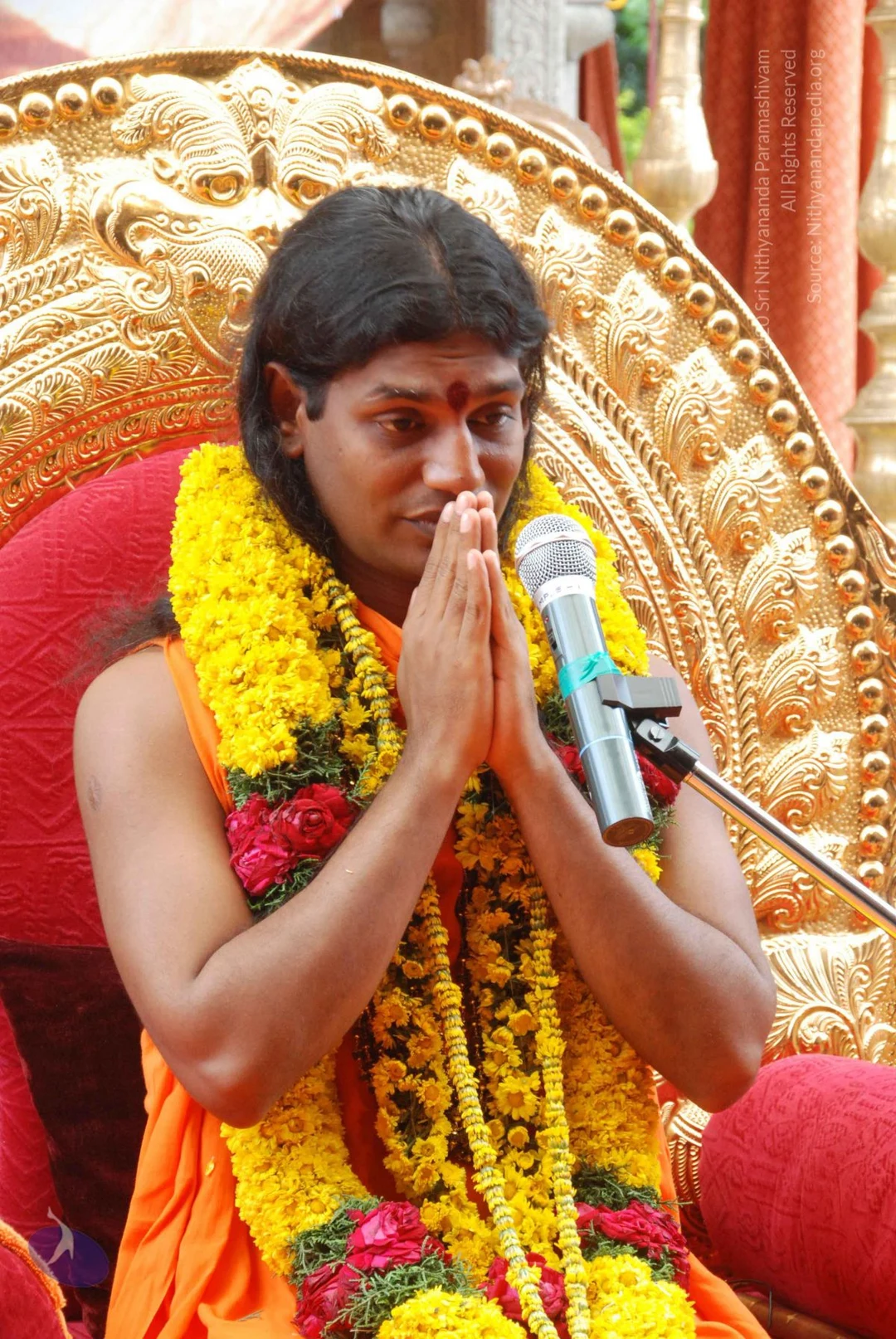
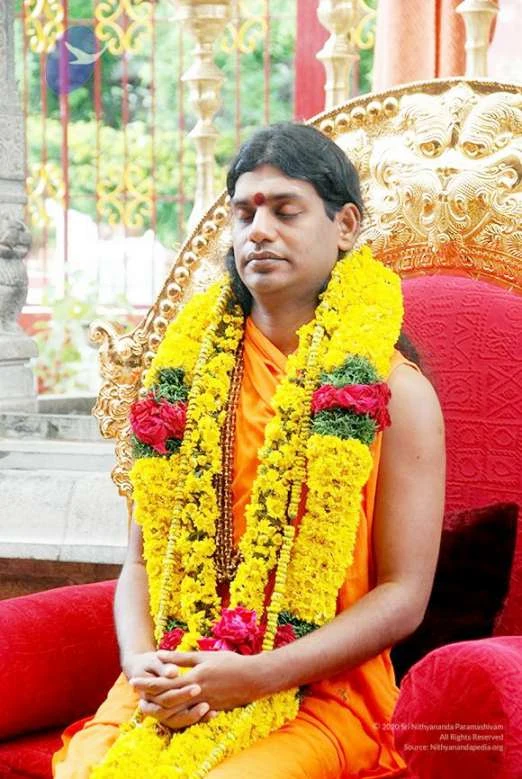
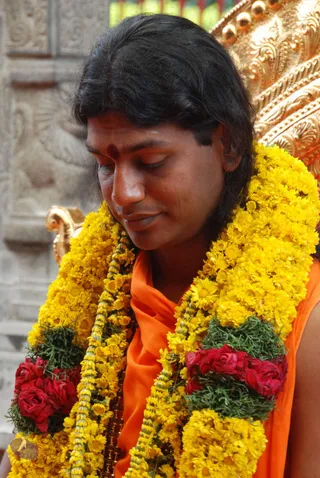
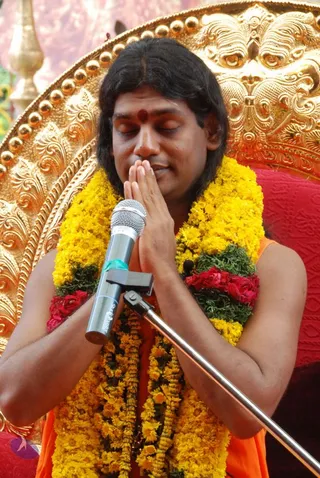
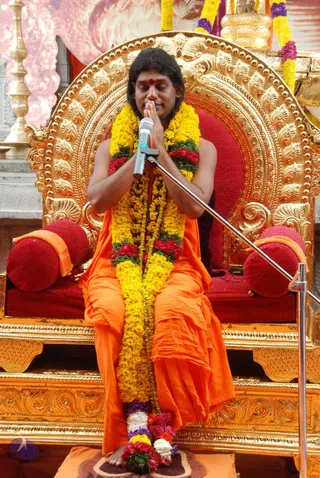
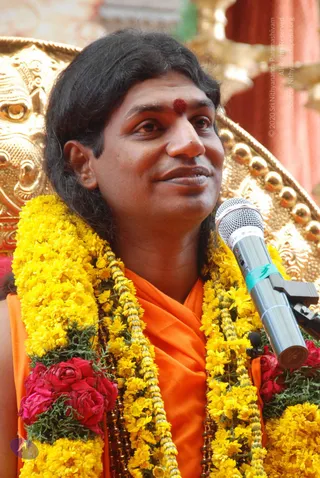
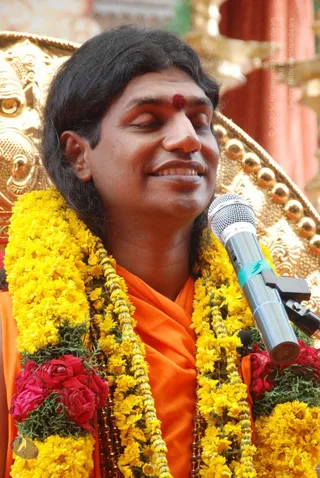
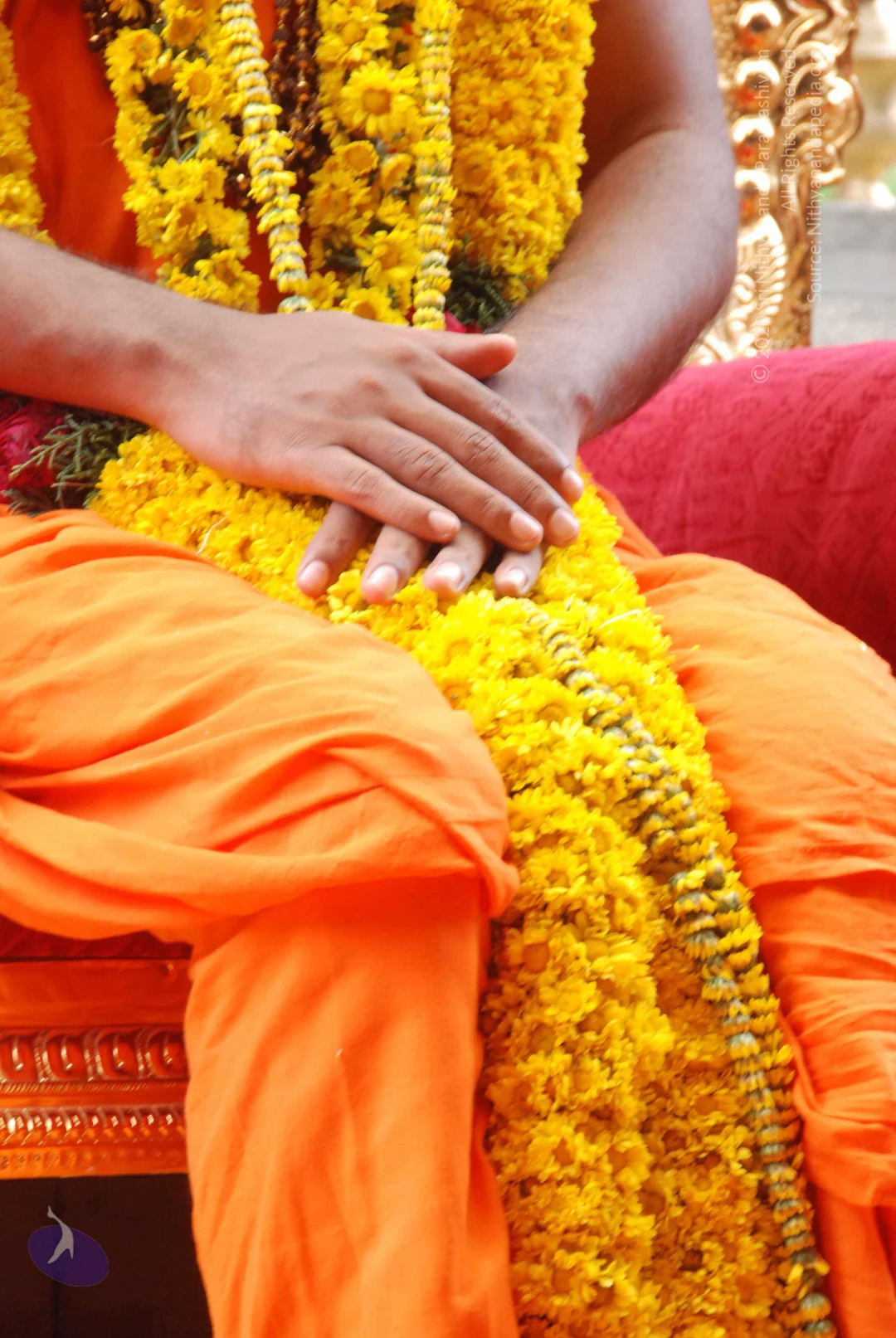
Close photo of a man with long dark hair, a red kumkum mark on his forehead, wearing an orange sleeveless top with an orange shawl draped over his shoulders. Large garlands of yellow marigold-style flowers with red roses and green foliage hang across his chest. Behind him is a carved stone wall and an ornate gold-toned decorative frame. Plain description of one person standing outdoors; the appearance is not enough to confirm an identity.Close-up photo of a man with shoulder-length dark hair, eyes lowered and a faint smile, wearing a thick garland of yellow chrysanthemums interspersed with red roses and green foliage. He wears an orange saffron shawl over orange clothing and has a red tilak on his forehead. Behind him is ornate gold carved metalwork and a stone wall with carved relief.Close-up photo of a man with long dark swept-back hair and a red bindi, eyes closed, palms pressed together in anjali mudra in front of his chest. He wears an orange garment and a thick garland of yellow marigolds with red roses and green foliage. A silver microphone on a stand is in front of him. Behind him is an ornate gold-carved throne with a red cushion. Swamiji (probable): long swept-back hair, saffron clothing and a garland, seated on a throne, consistent with the page's identification.A man with long dark hair sits on an ornate gilded throne with red cushions, eyes closed and palms pressed together in namaste before a microphone on a stand. He wears orange saffron robes and a long yellow and red marigold garland, with more flower garlands draped over the throne and flower offerings at his feet. Behind him are brass lamps and a pink backdrop. Whether this is the a person candidate cannot be confirmed from appearance, so the identity remains uncertain.A man with long, swept-back dark hair and a red bindi on his forehead speaks into a silver microphone while seated before an ornate gold throne-like backrest. He wears an orange saffron garment and is draped in thick garlands of yellow marigold-type flowers and red roses, with rudraksha-style beads visible at his chest. A red-brown backdrop and a gold lamp stand are visible behind him.Close-up photo of a smiling man with shoulder-length dark hair and eyes closed, wearing a red bindi on his forehead and an orange saffron shawl. He is draped in thick garlands of yellow marigold-style flowers and red roses, and speaks into a silver handheld microphone at the lower right. Behind him is an ornate gold-embossed throne-like chair with round gold finials and a red drape. Swamiji (probable): long swept-back hair, saffron clothing and layered flower garlands, with the ceremonial setting of a public talk.

NITHYANANDA-SPURANA-PROGRAM
212 photosSource gallery
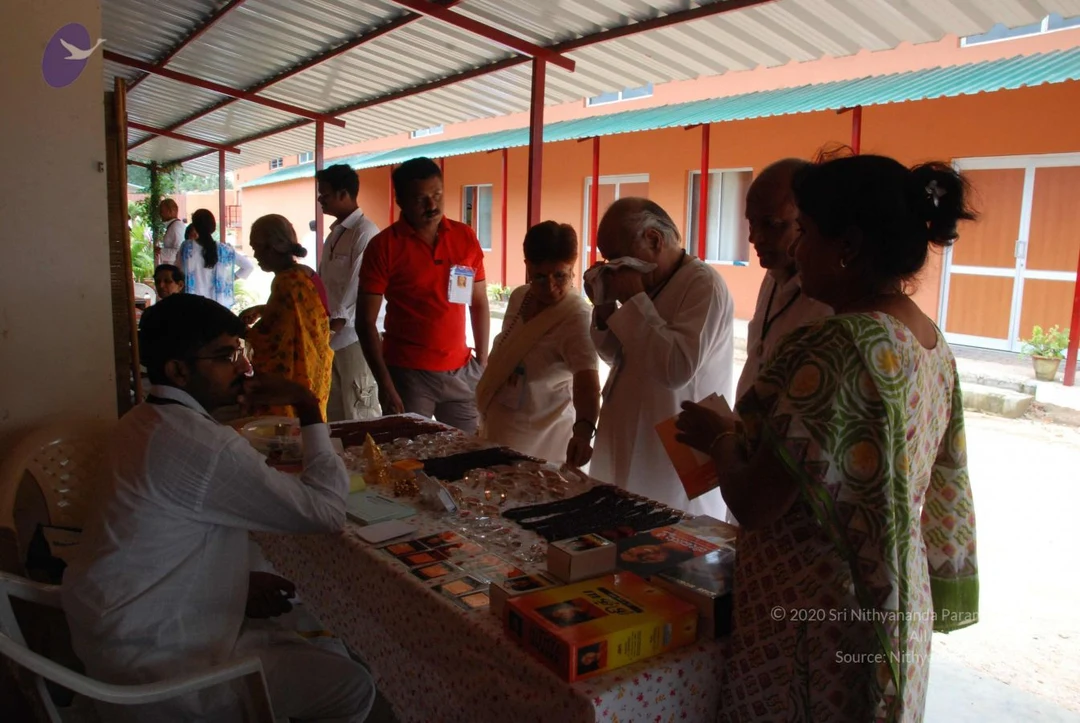
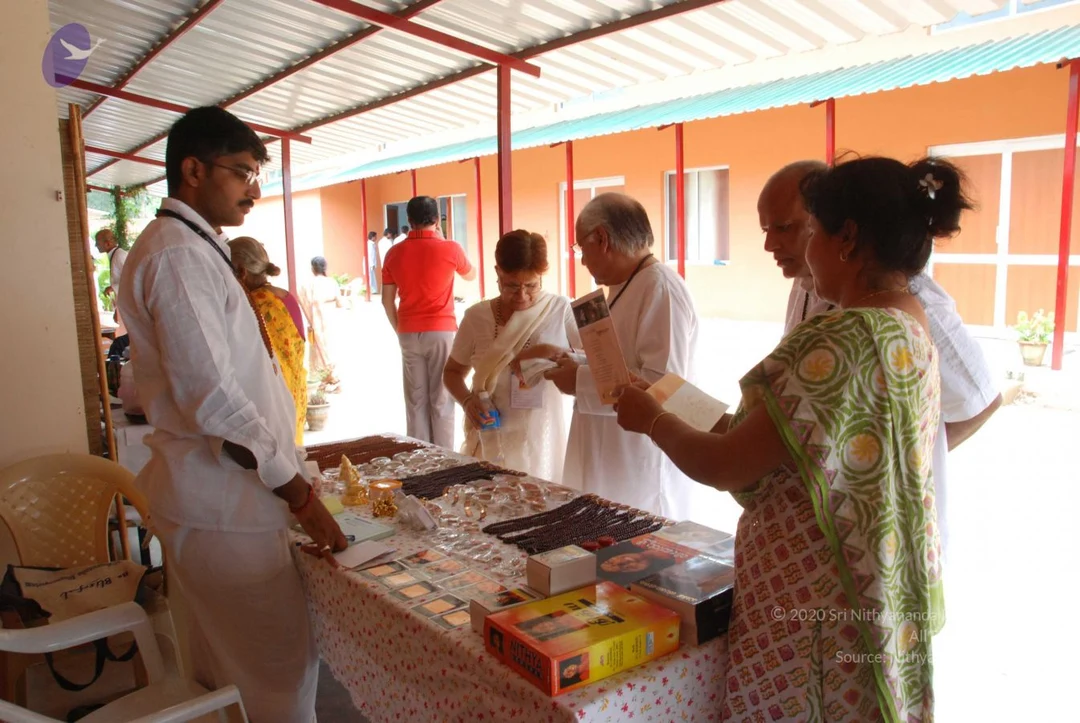
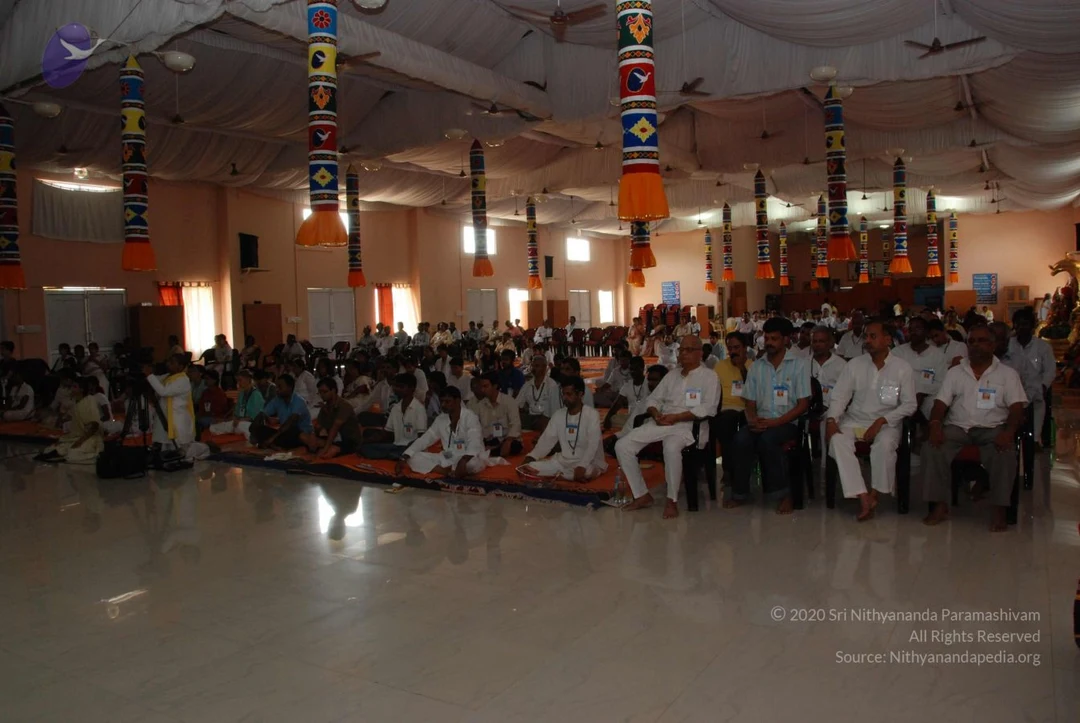
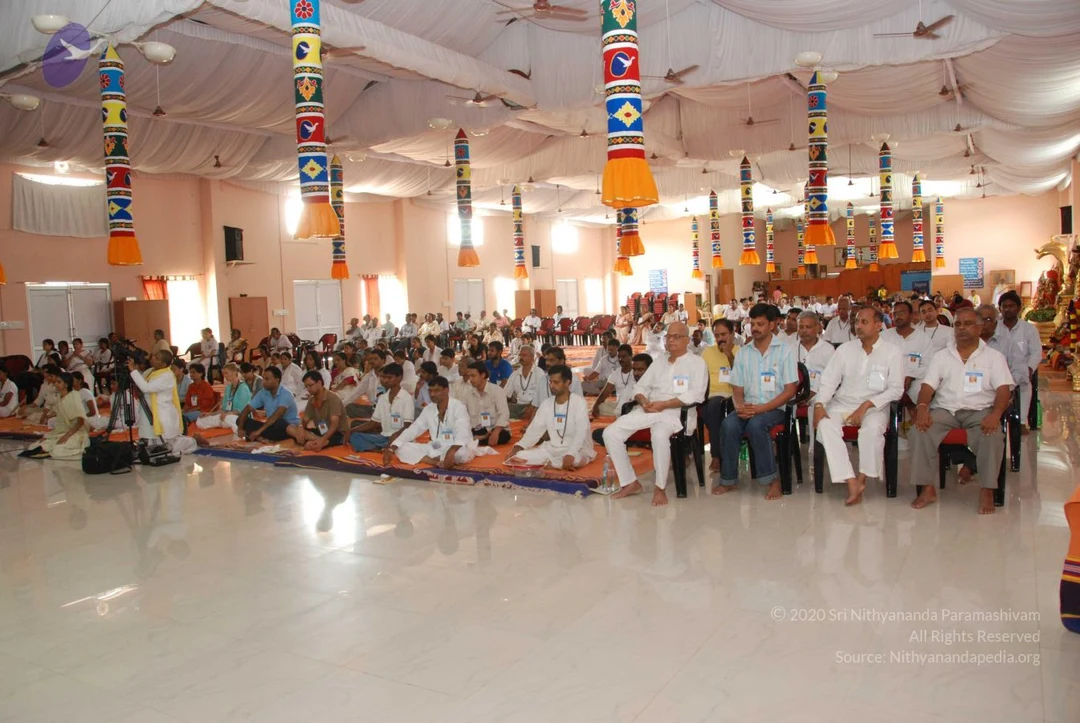
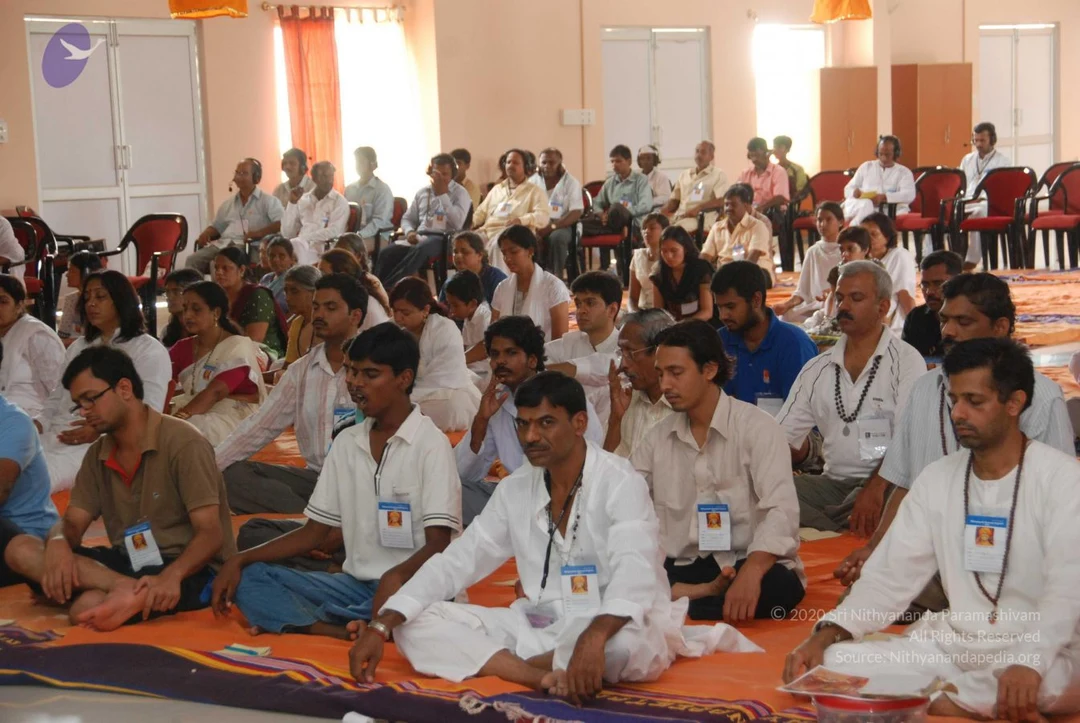
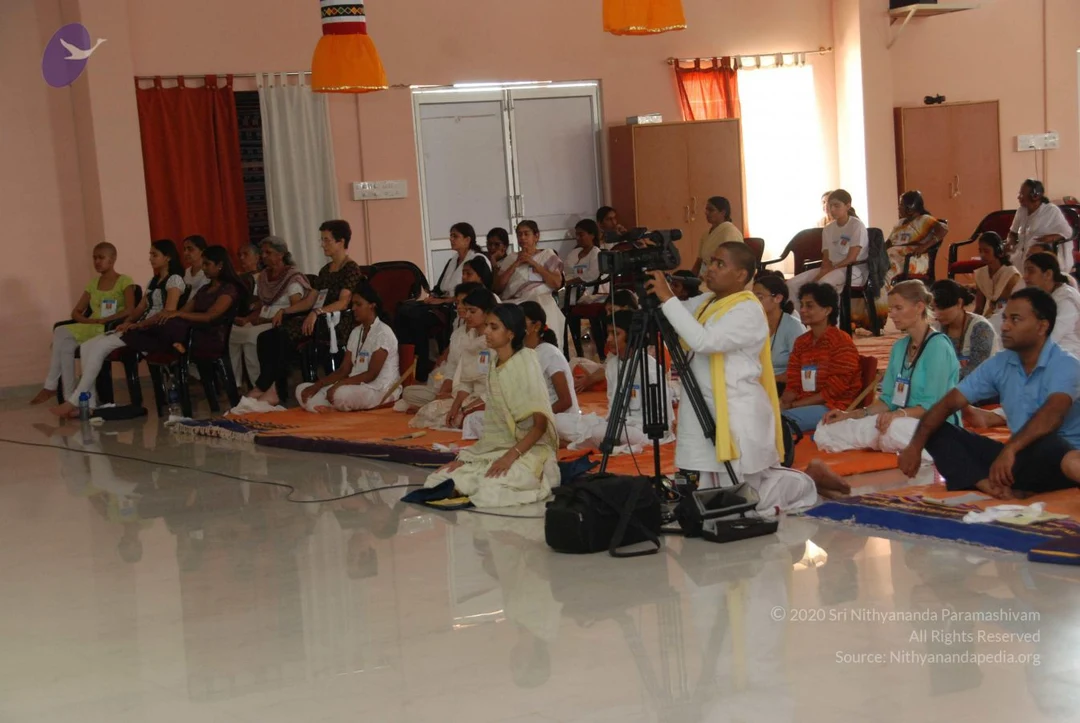
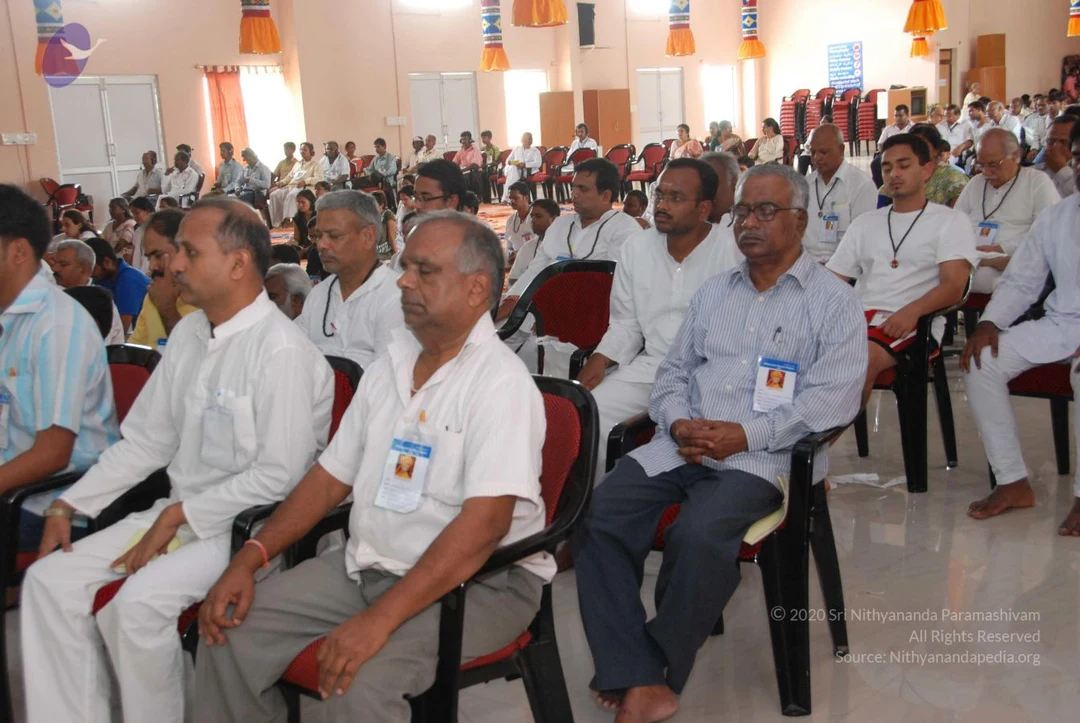
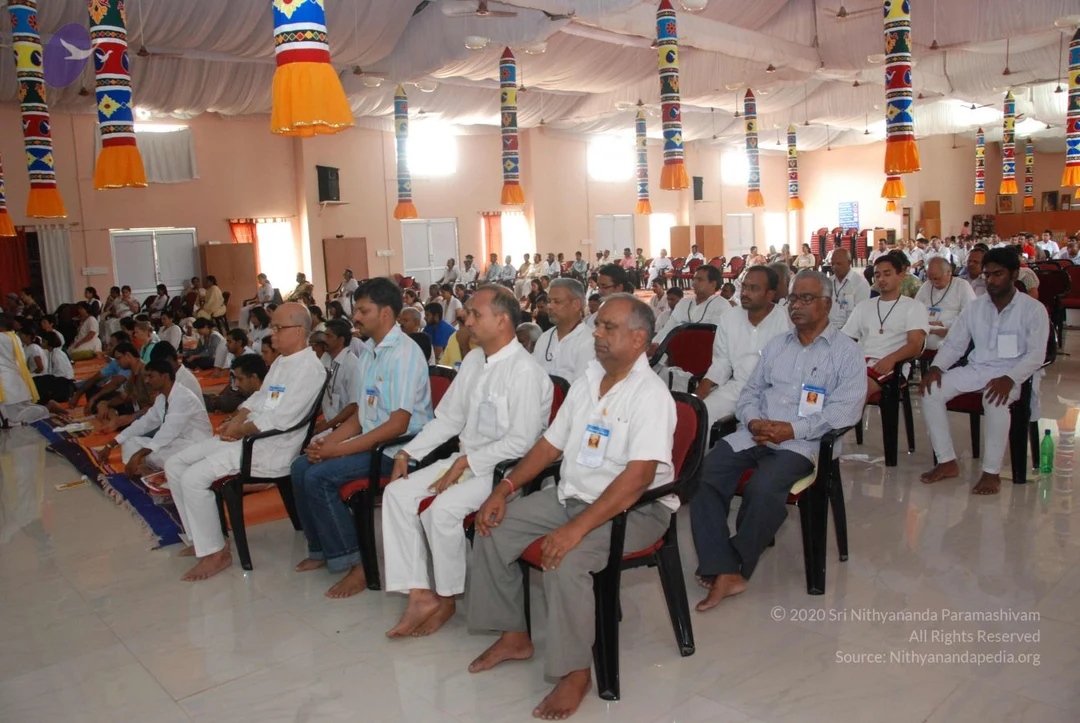
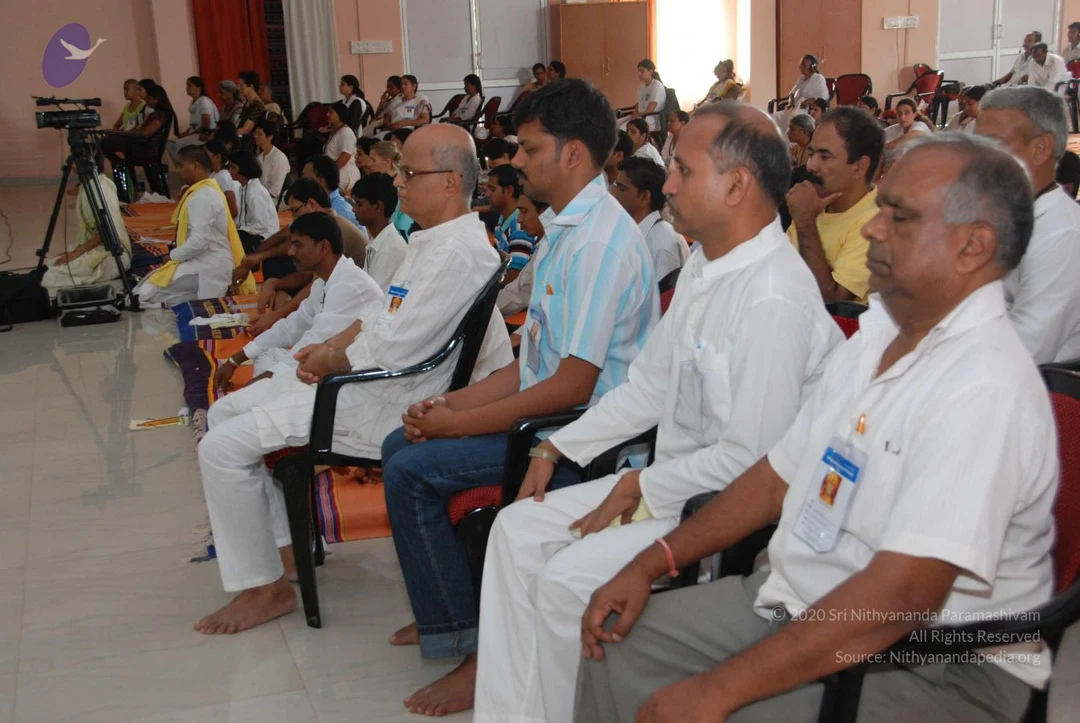
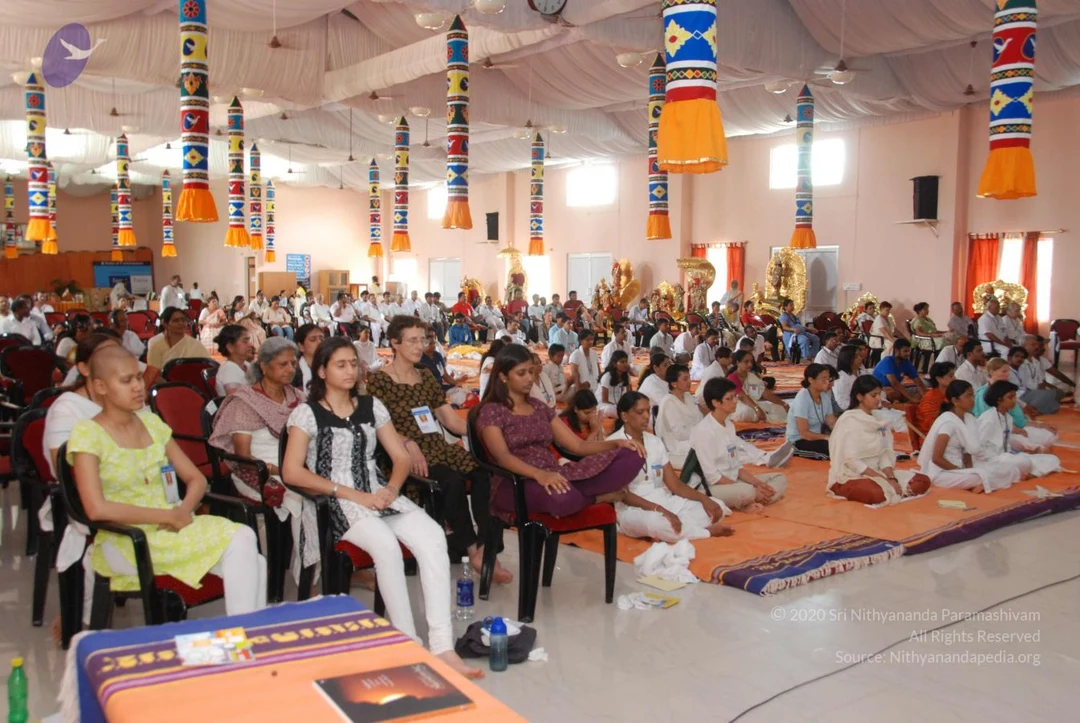
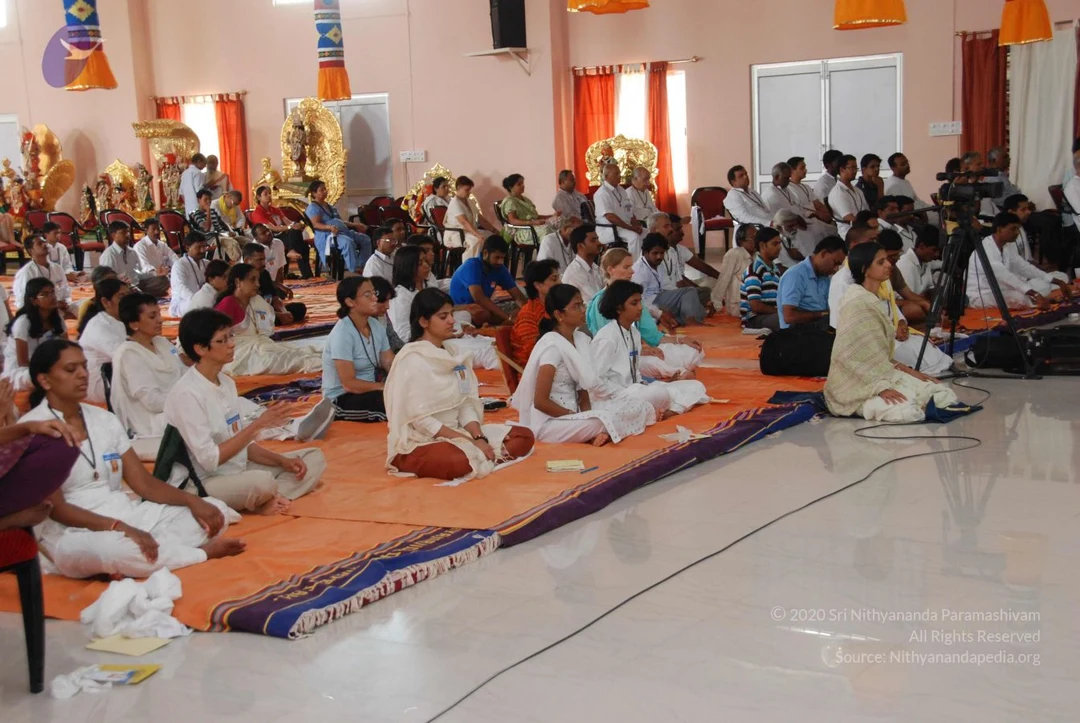
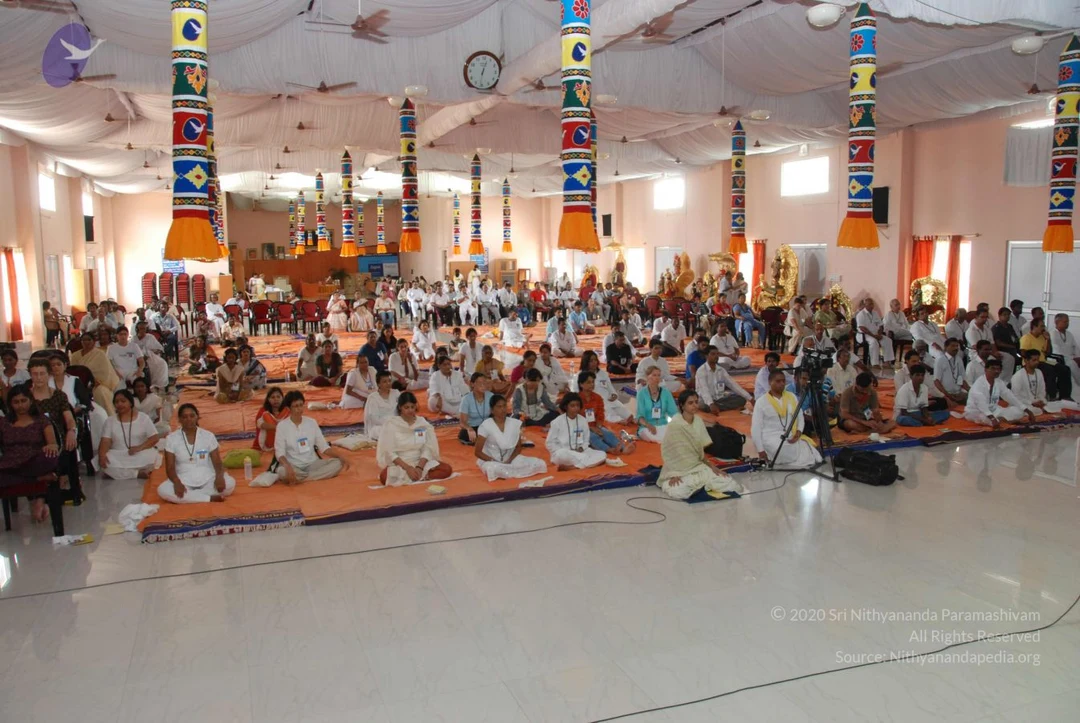
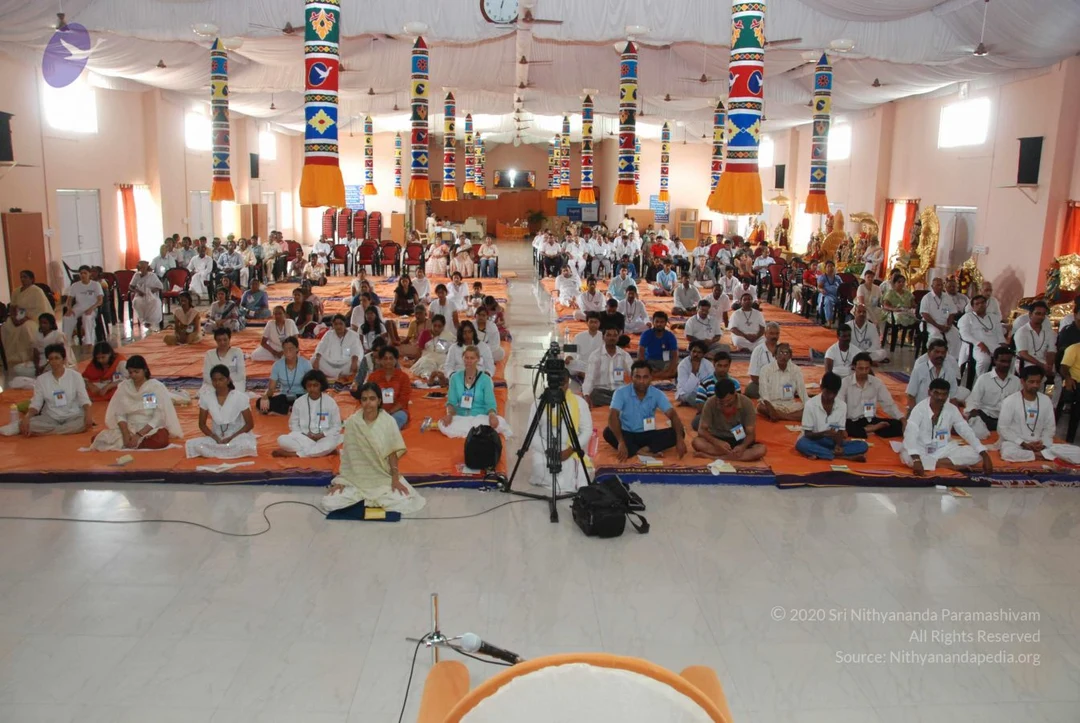
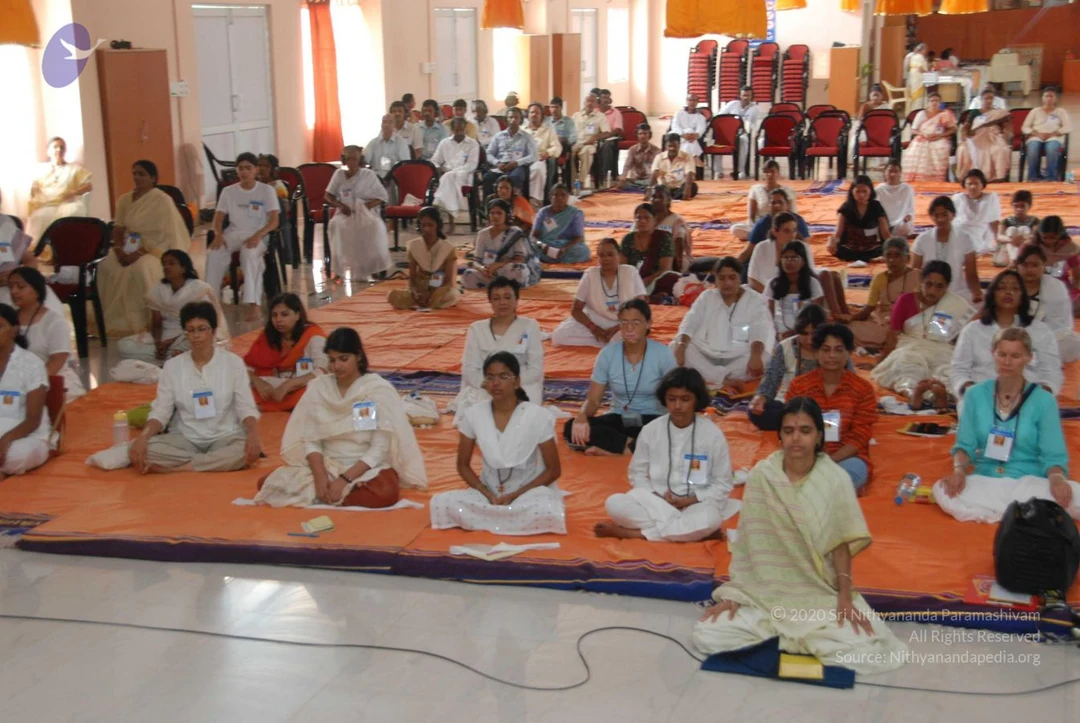
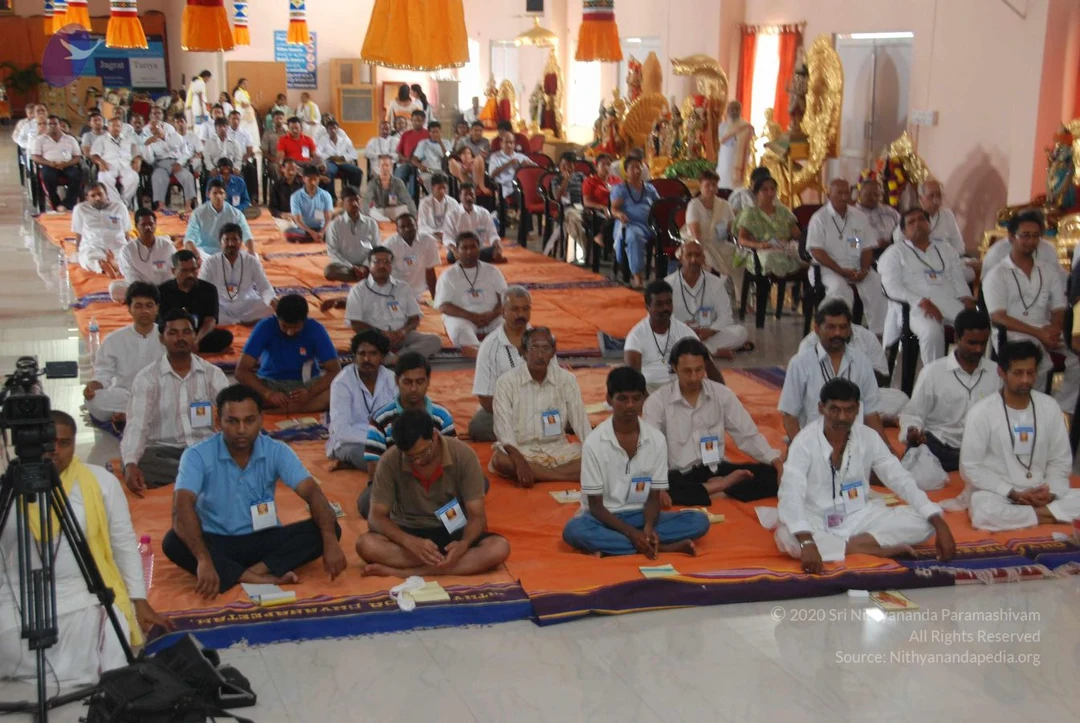
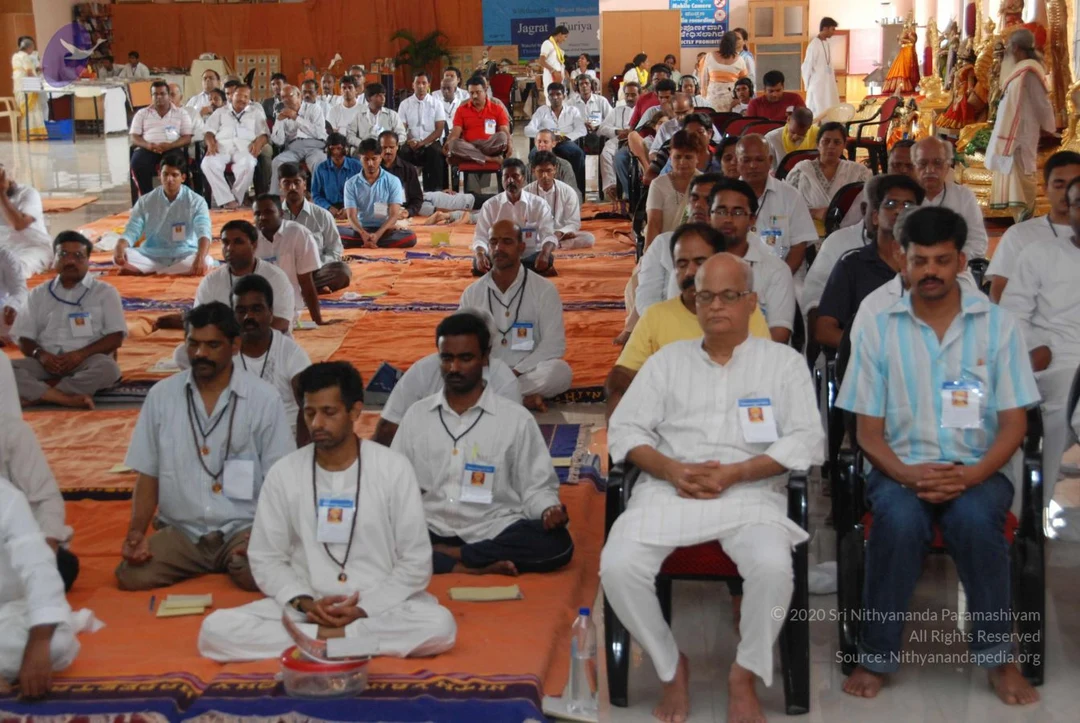
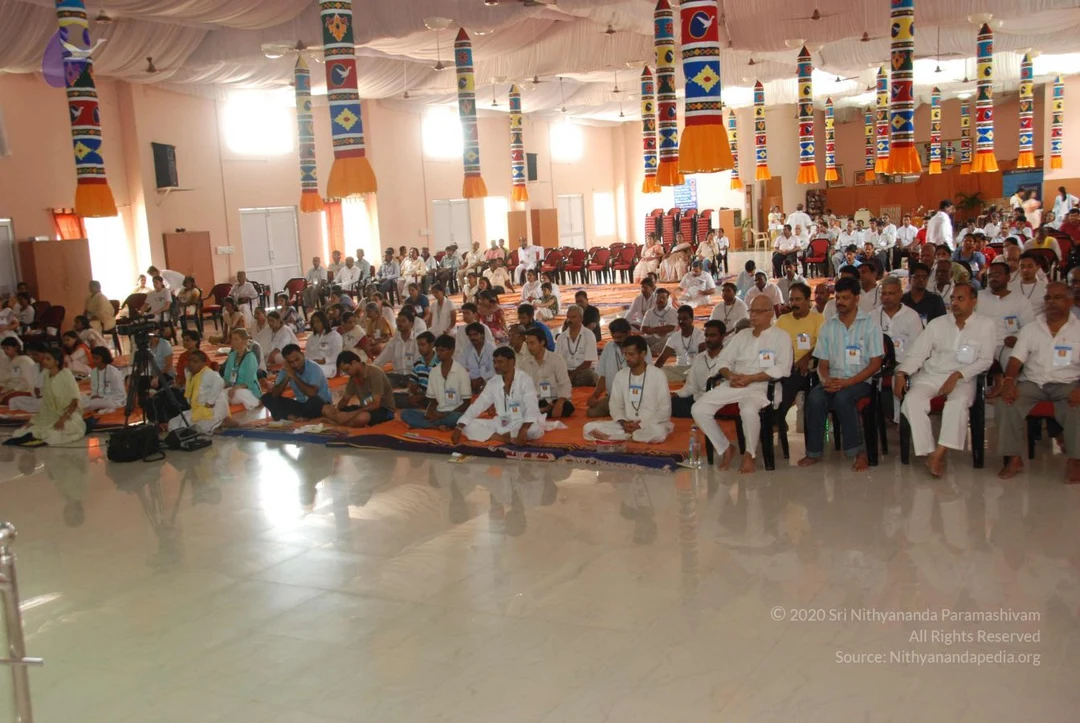
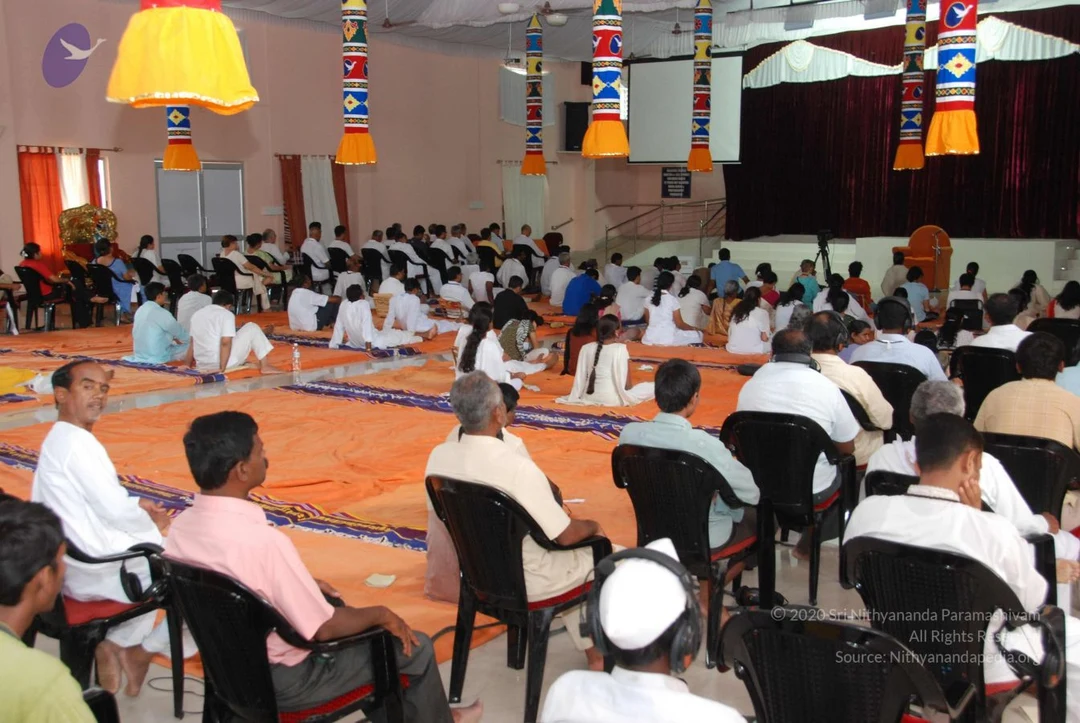
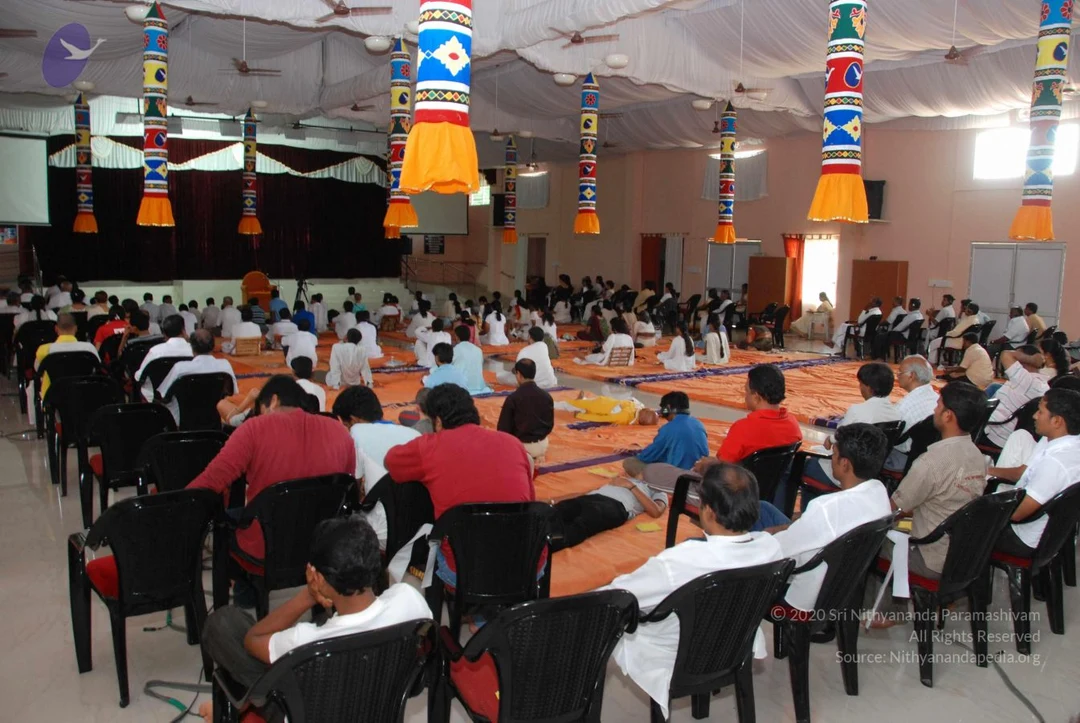
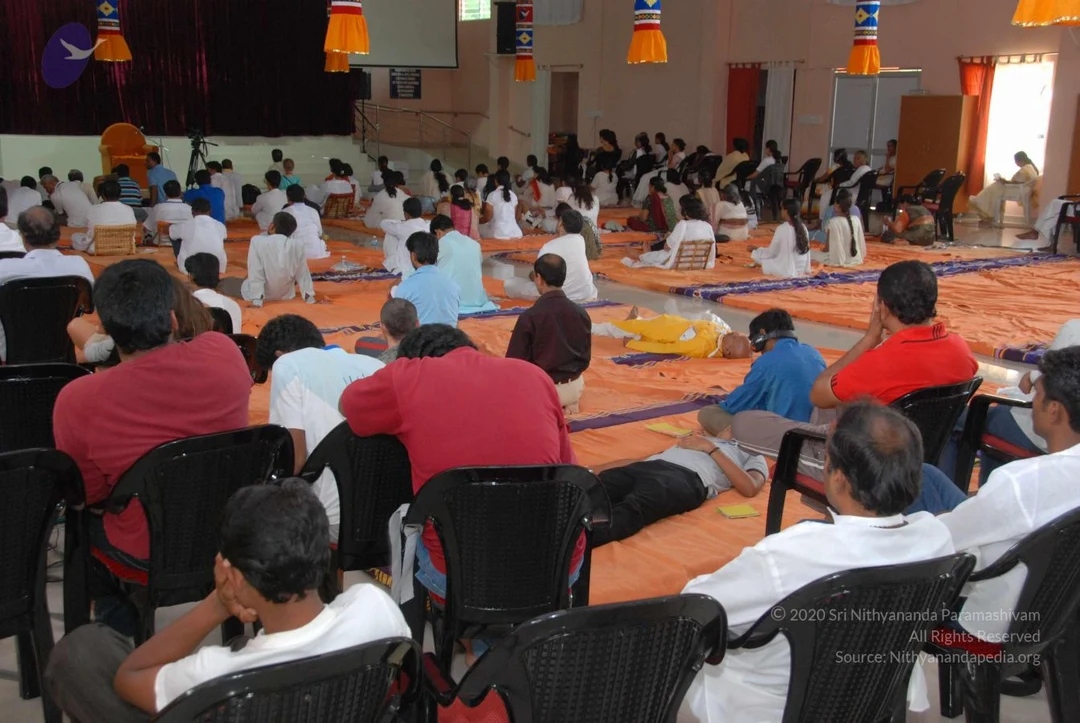
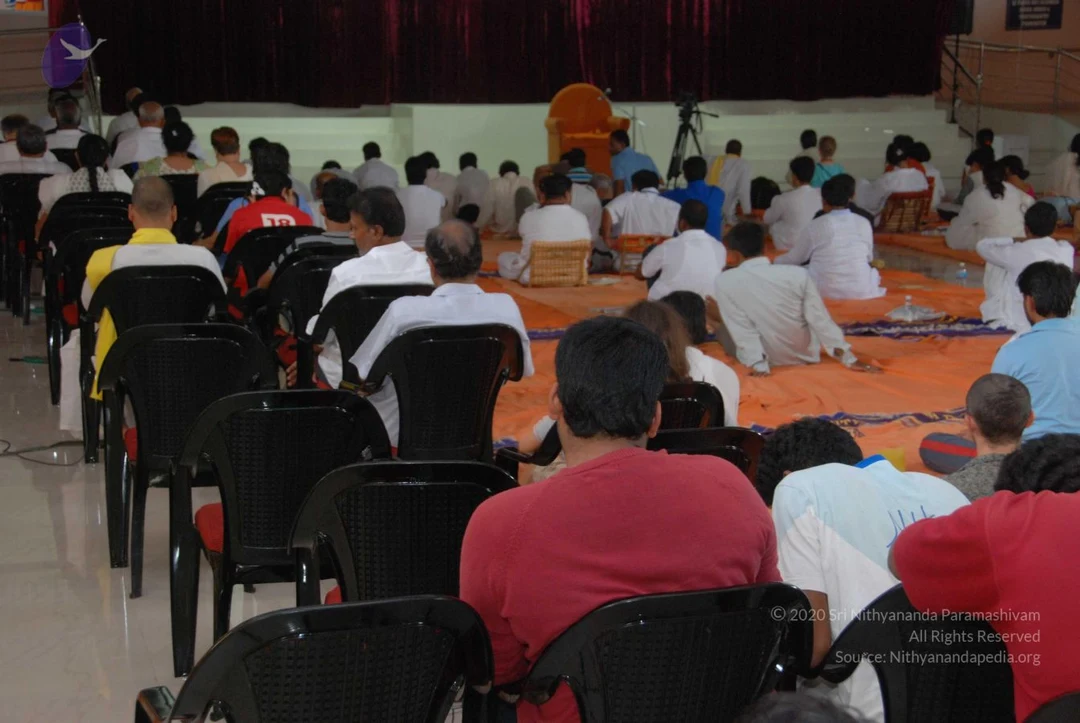
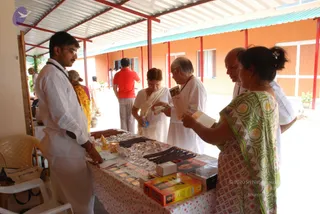
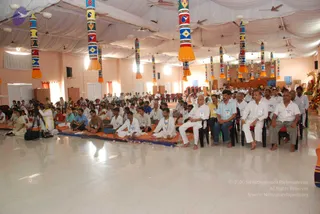
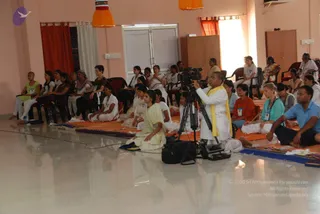
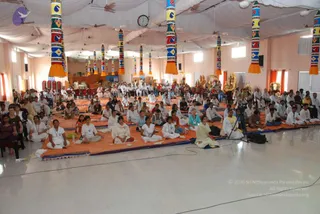
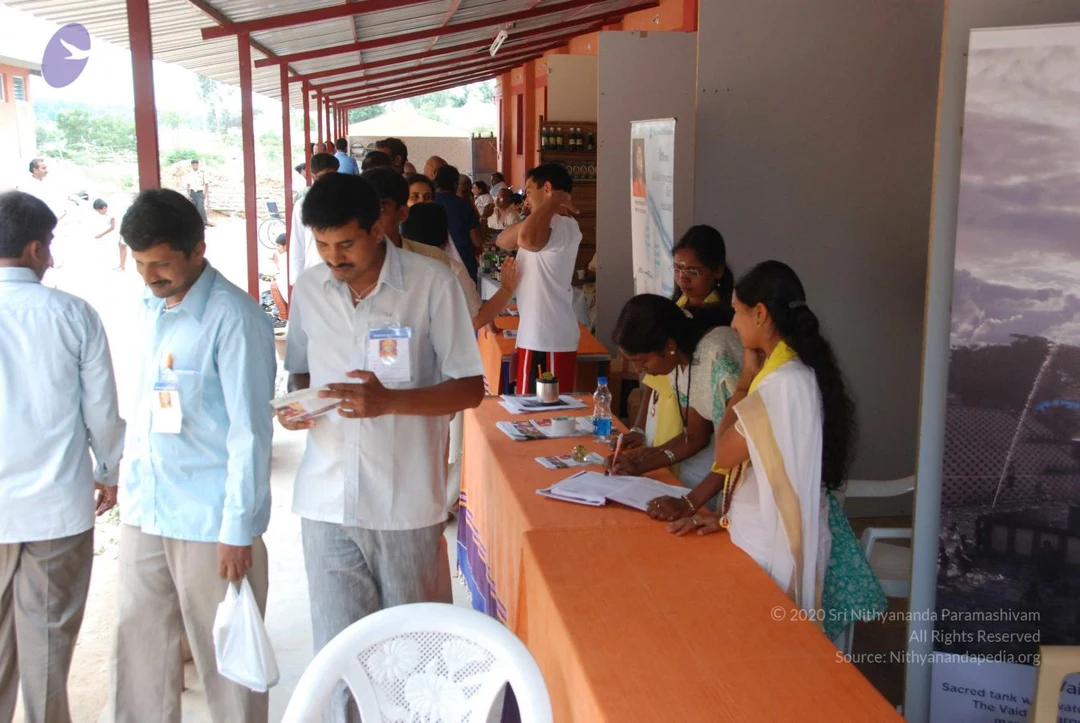
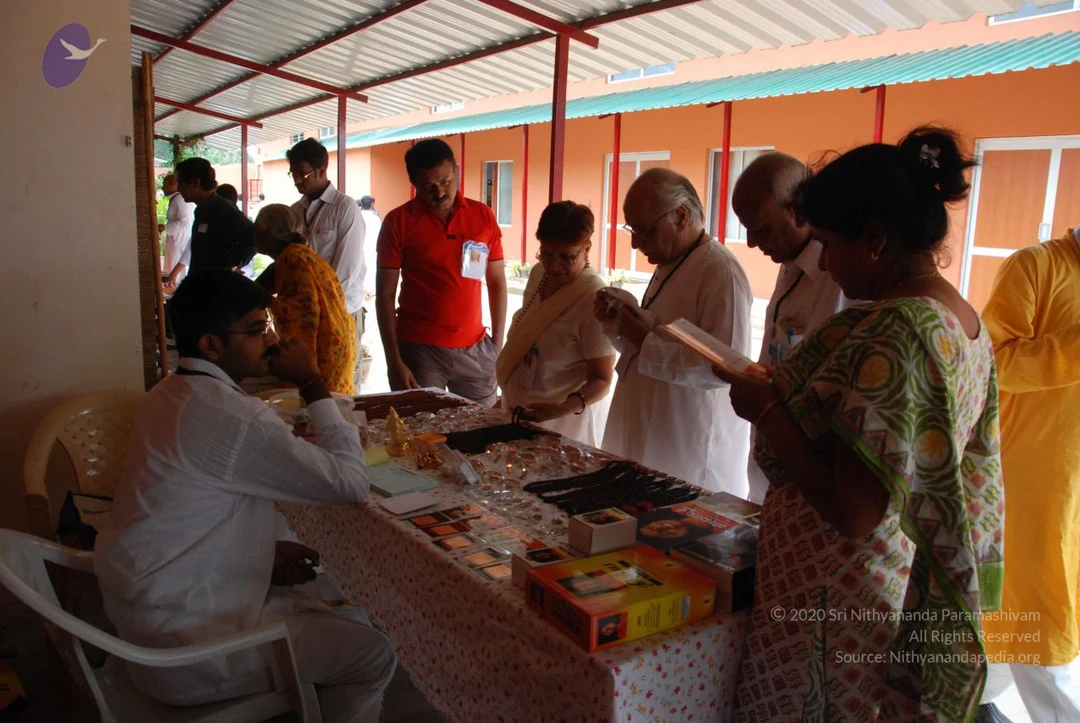
A photo of a covered outdoor stall under a corrugated roof with red metal posts beside orange-painted building walls. Five people stand at a table draped in a red floral cloth: a young man in white kurta and white trousers at left with a dark lanyard, an older woman in a white sari, an older man in white kurta holding a pamphlet, another man in white, and a woman in a green and yellow floral sari at right, reading a printed booklet. The table holds rudraksha mala strands, glass items, small brass objects, CDs or DVDs in colourful boxes, and printed leaflets. Other people are visible in the background, one in a red shirt.A large hall with a white draped ceiling and tall cylindrical pillars wrapped in colourful geometric patterns with orange tassels. Rows of devotees sit on orange and blue mats on the floor, many in white kurtas and shirts with lanyard badges, while others sit on red chairs toward the back. At the right, a deity murti and floral garlands are arranged near the front. A camera operator with a tripod films at the left edge. Several seated men at the front right wear white and light blue shirts with lanyards.A photograph of a seated congregation in a bright hall with pale pink walls, glossy white floor, orange wall hangings and a row of wooden cupboards. Many devotees sit on orange and blue mats, some on chairs at the back, mostly in white and pastel clothing, several wearing name badges. In the foreground a man in white with a yellow shawl operates a video camera on a tripod, while a woman in a pale green sari sits nearby. Approximately twenty-five people are visible.A photograph of a seated audience during a satsang hall event. In the foreground, several middle-aged men in white shirts and trousers sit on red-cushioned chairs, one wearing a light blue striped shirt and jeans, another in a yellow shirt. Some wear lanyard ID badges. Behind them, rows of seated attendees fill the room, many in white. On the left, a camera on a tripod films the proceedings, and a figure in white with a yellow shawl sits cross-legged on an orange and purple mat near the front. Pale pink walls and a tiled floor frame the hall.Devotees sit cross-legged on orange and purple mats in a bright hall during a satsang-style gathering. Many wear white kurtas and salwar outfits, some with lanyards, while others wear blue, green and striped clothes. A tripod-mounted video camera stands at the right edge beside a black cable. At the back, a golden throne and gilded deity murti sit against peach walls with orange and red draped curtains and hanging orange bunting. Rows of seated people fill the room. No one at the front is clearly identifiable as a person from appearance cues in the image.A large hall with a white tent-like ceiling decorated with tall painted pillars in red, yellow, blue and green patterns. Many devotees sit cross-legged on orange and red floor mats, most in white clothes, some in yellow, pink and blue. Along the back and sides stand statues and deity murti with garlands and a stage area. A camera on a tripod is set up near the front in the foreground. No individual can be identified as a person from appearance here, so the a person field is unsure.

NITHYANANDA-SPURANA-PROGRAM
7 photosSource gallery
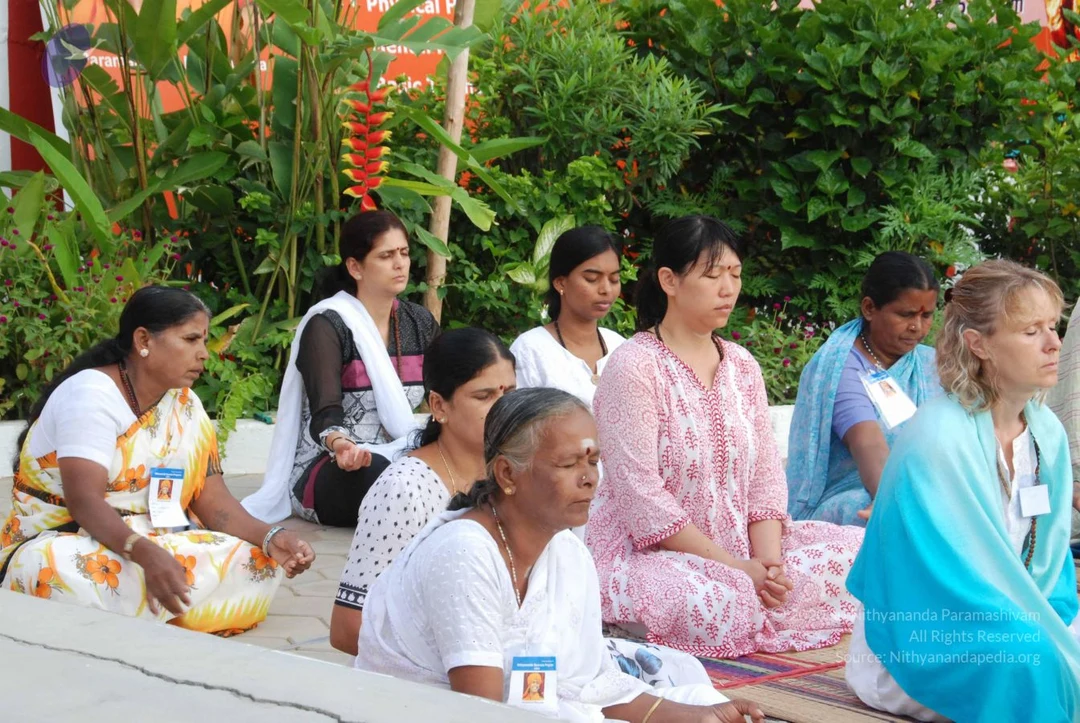
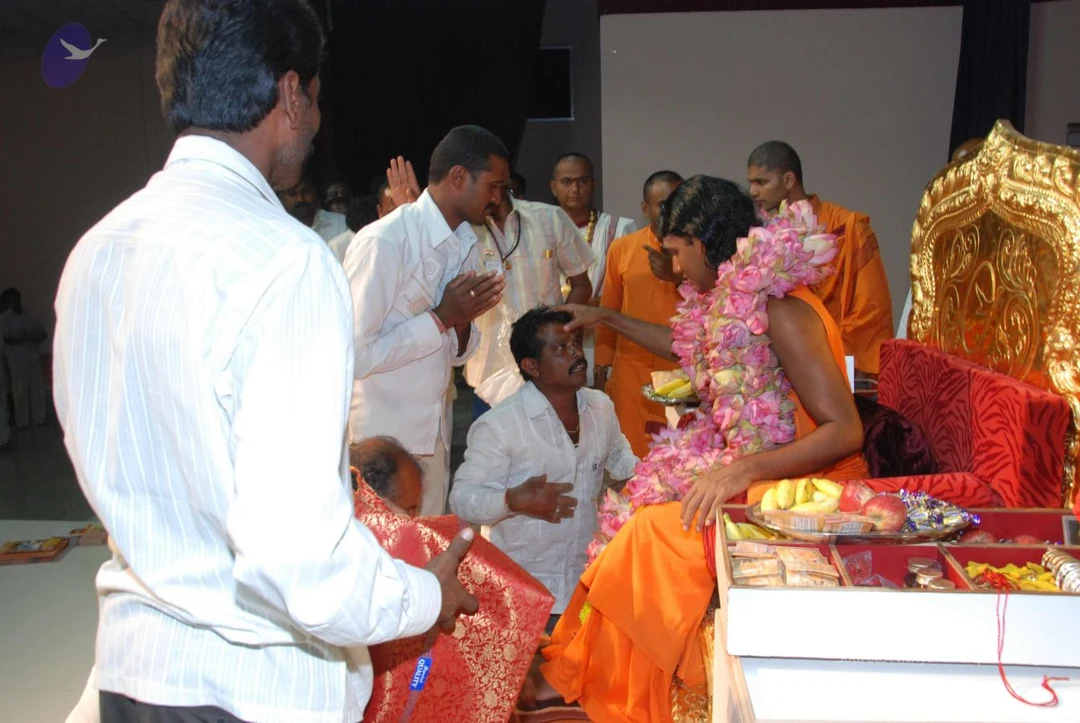
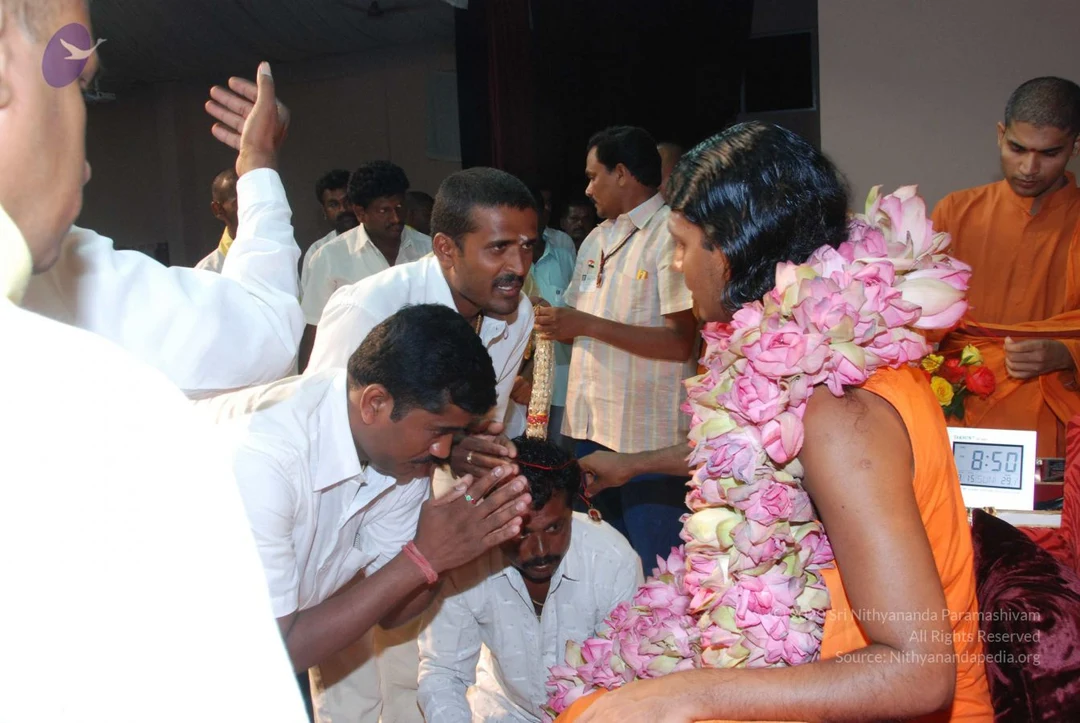
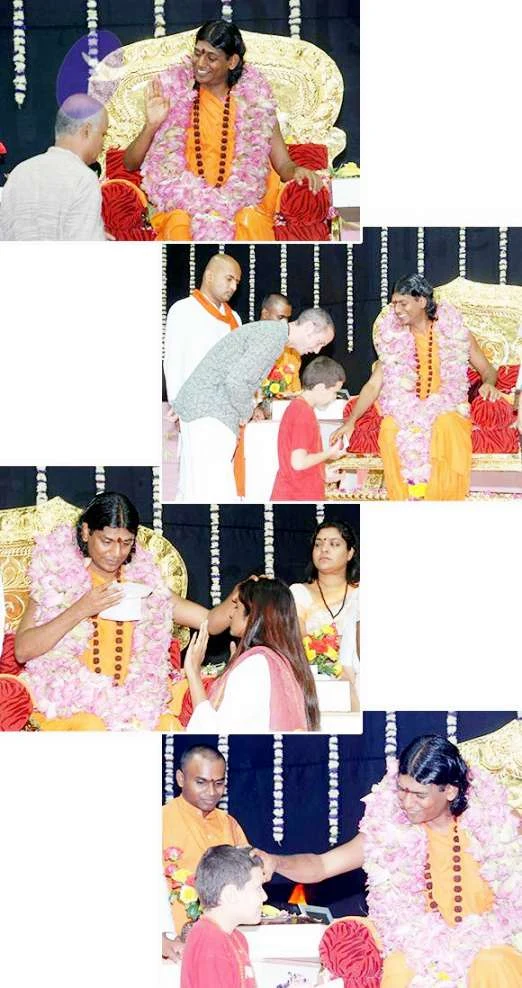
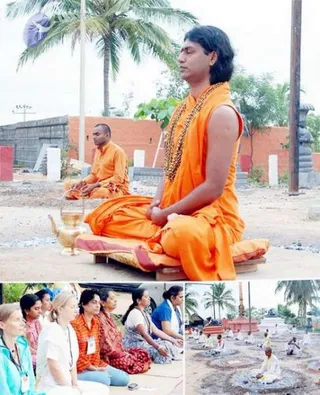
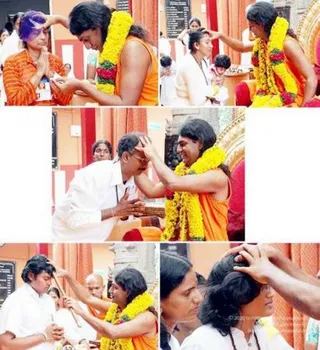
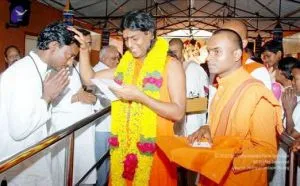
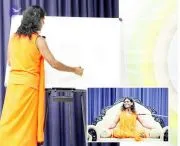
A three-panel collage of outdoor meditation at an ashram. The top left panel shows a man in orange robes and a rudraksha mala seated cross-legged on a mat in meditation, with a second orange-robed man seated behind him beside a brass kalasha vessel; palm trees and a red-walled compound are visible. The large right panel shows the same orange-clad man, long dark hair falling past his shoulders, rudraksha beads and a gold necklace, hands folded in his lap, eyes closed. The bottom left panel shows several women seated on mats in saffron, red and white saris and a woman in a turquoise top, plus a blonde woman in light clothing, all in a meditation row. The bottom right panel shows many seated participants at outdoor pits and a small shrine structure under palm trees. Because the image is a collage, people are not counted as a single scene.A photograph of a temple interior with a long-haired man in saffron-orange robes seated on an ornate red-and-gold throne, wearing a yellow-orange garland and a gold necklace. Several devotees sit on the floor in front of him in colourful sarees and kurtas, some with their hands folded, while a shaved-headed man in white stands behind the throne and another figure in white sits to the right. A gold-painted shrine with deity images and decorative pillars is visible behind. The seated man has long swept-back hair and saffron clothing consistent with the page's a person reference, so this is a probable in-person appearance, though not certain.A seated man with long dark hair and a red bindi wears an orange saffron robe and a rudraksha mala, with eyes closed and hands clasped in his lap. He sits on an ornate gold-and-red throne, draped in heavy yellow marigold garlands with red rose accents. Behind him are a carved gold railing and stone pillars.A six-panel collage of photographs from a pada puja blessing event. Several panels show a long-haired figure in saffron-orange robes and a yellow-and-red marigold garland seated on an ornate golden throne, with a red-and-gold backdrop and a dark wooden plaque behind. In the panels, a woman in an orange-striped sari with a red bindi presses her palms together, a man in a white shirt bends forward touching the seated figure's head, another devotee in white touches the figure's hair, and a close-up shows hands placing hair in a bowl as a person in white kneels with a rudraksha mala. Some panels show an apparent ritual application of coloured powder on the head. Panels are separated by white borders and a photo credit appears in the bottom corner.A photograph in a temple setting shows a bare-chested man with long dark hair wearing a heavy garland of yellow and red flowers around his neck, standing near a metal railing. A man in orange saffron robes stands at right, holding a small offering and looking toward him. At left, a man in white clothing and a white cap stands with his hands folded in greeting. Other devotees in white are visible in the background among pillars and lamps. The scene suggests a welcoming or darshan moment during a public event.A photograph of a teaching setting with a woman in an orange-saffron robe standing at left beside a white board or screen, her right arm extended toward it. An inset panel at lower right shows a seated figure in orange garments on a white cushioned seat with a white backdrop. The scene suggests a satsang talk with a projected or inset video feed of the speaker.

01--Medical-Camp
29 photosSource gallery
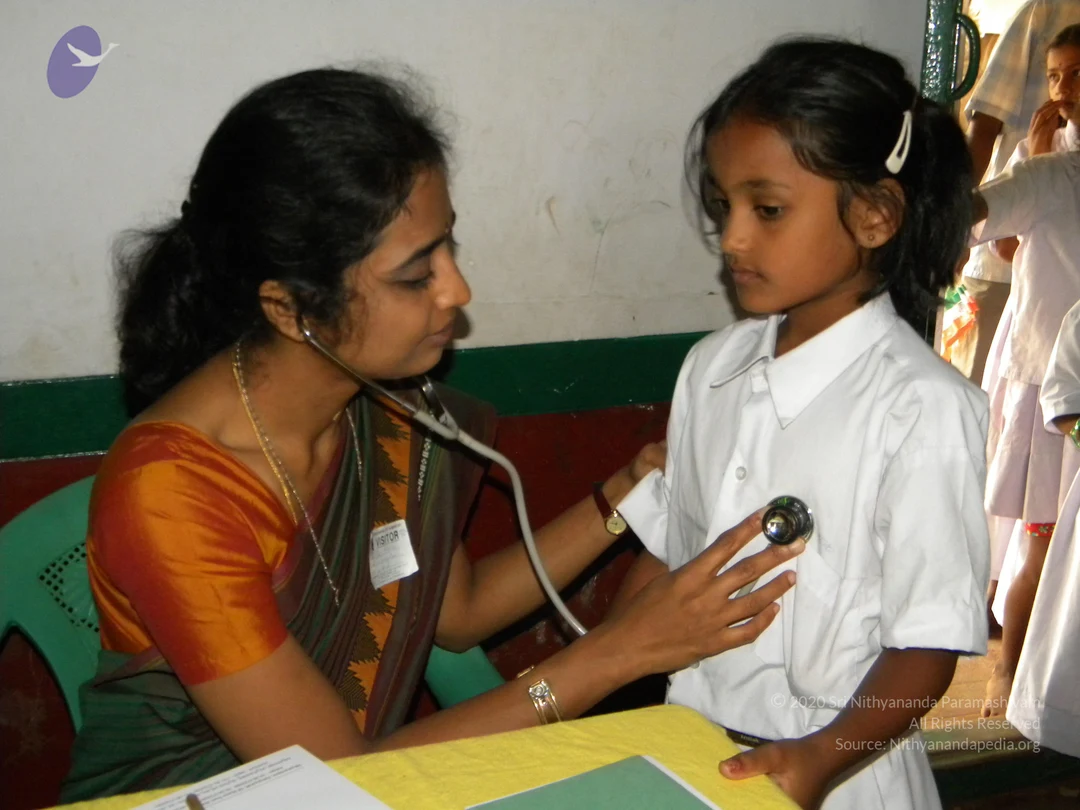
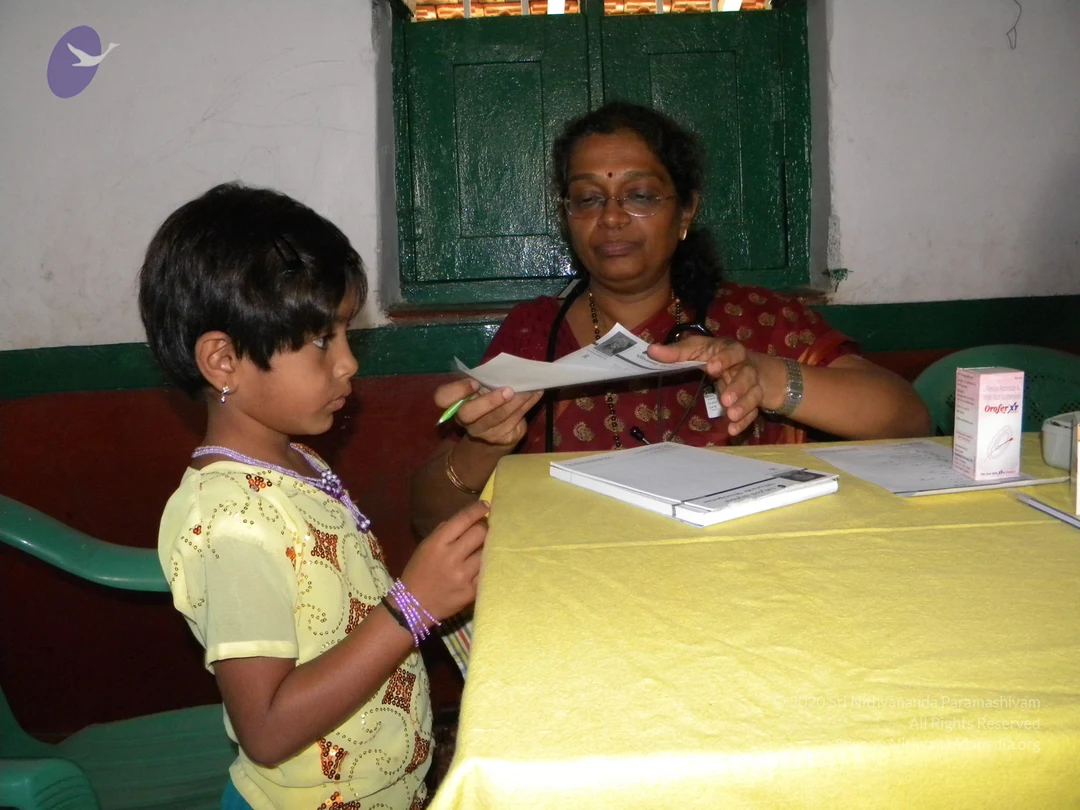
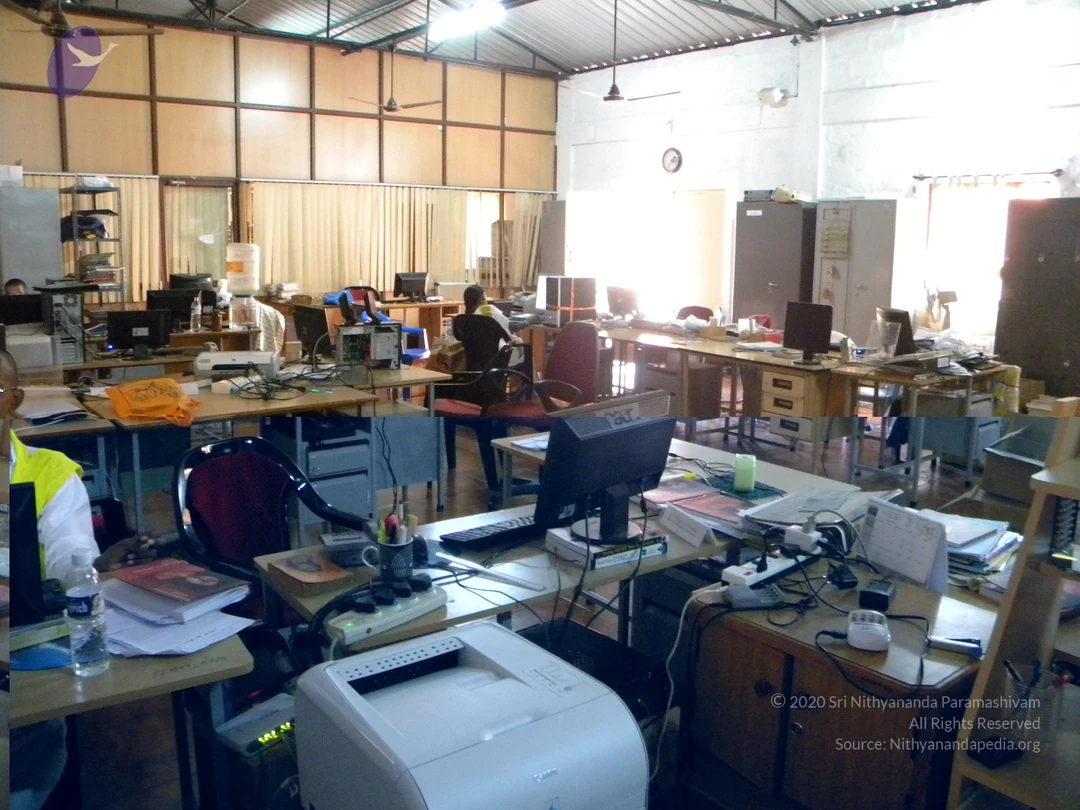
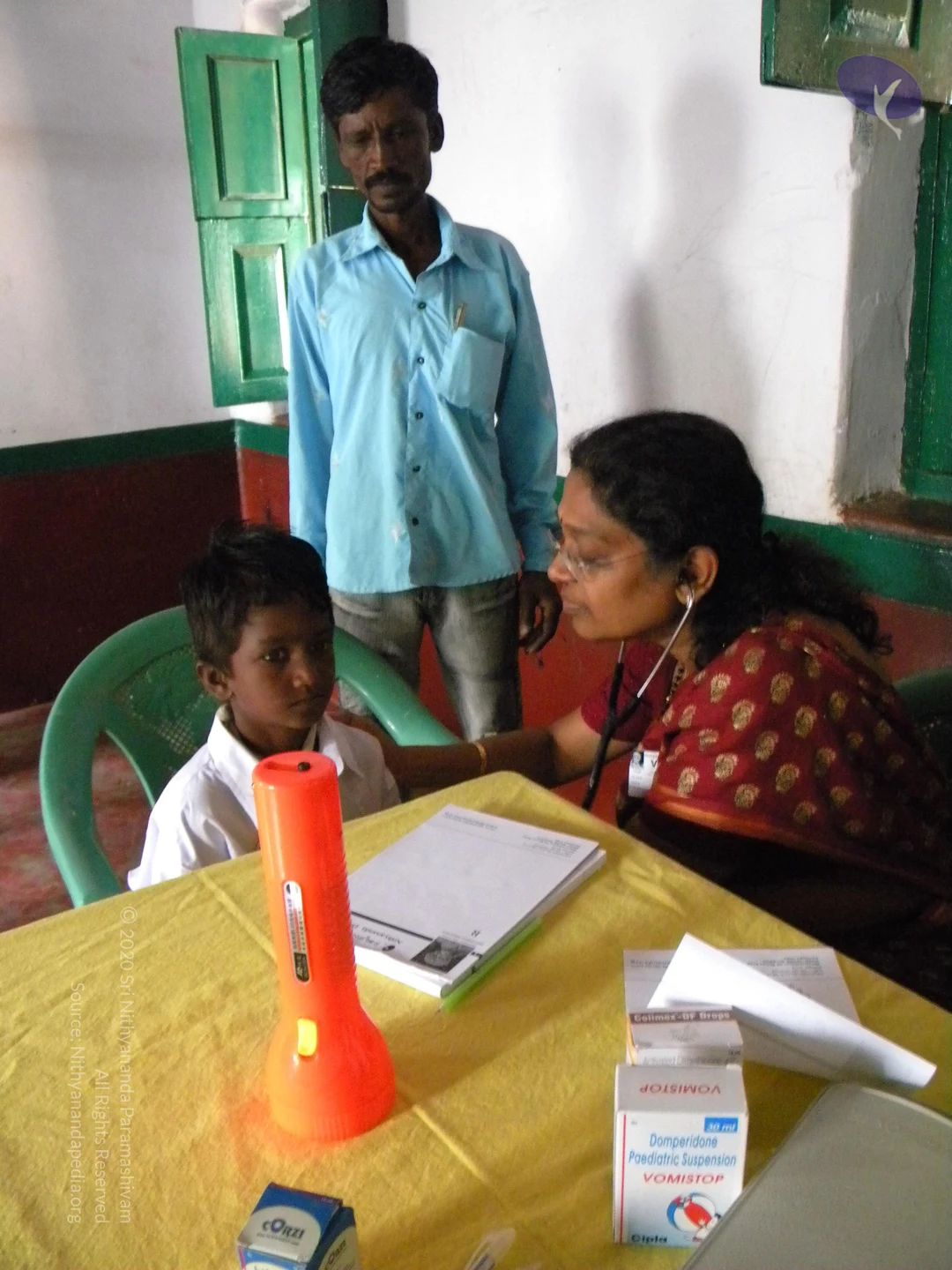
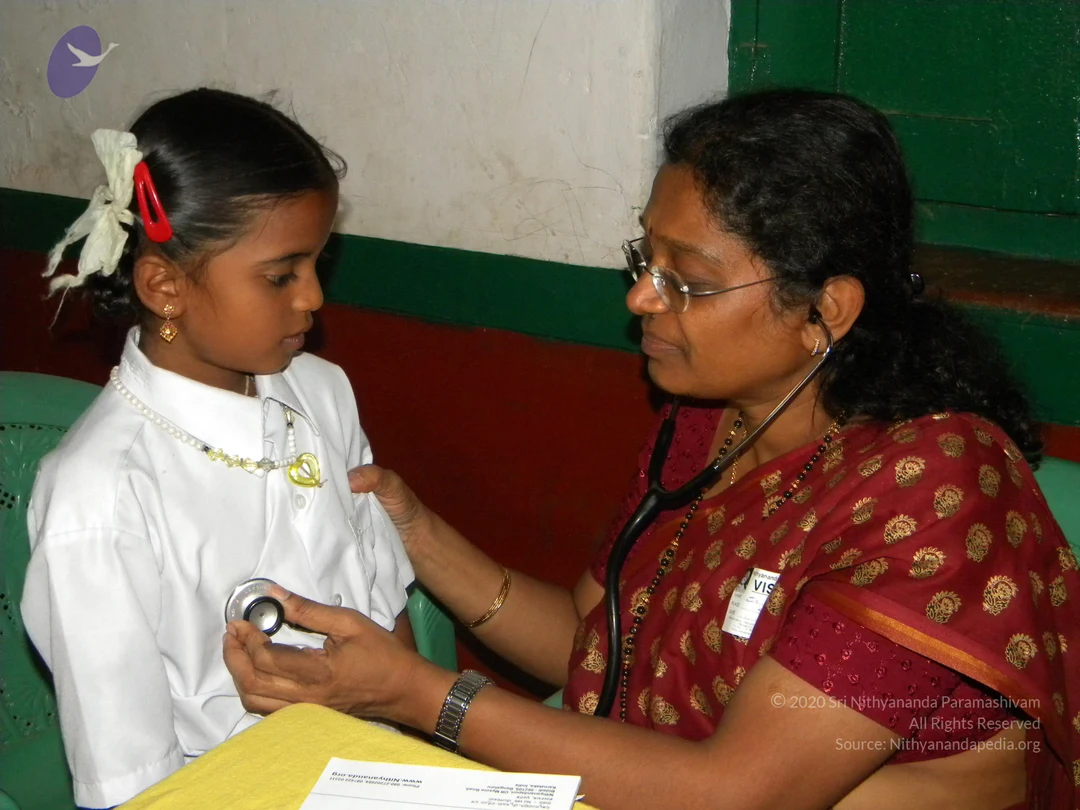
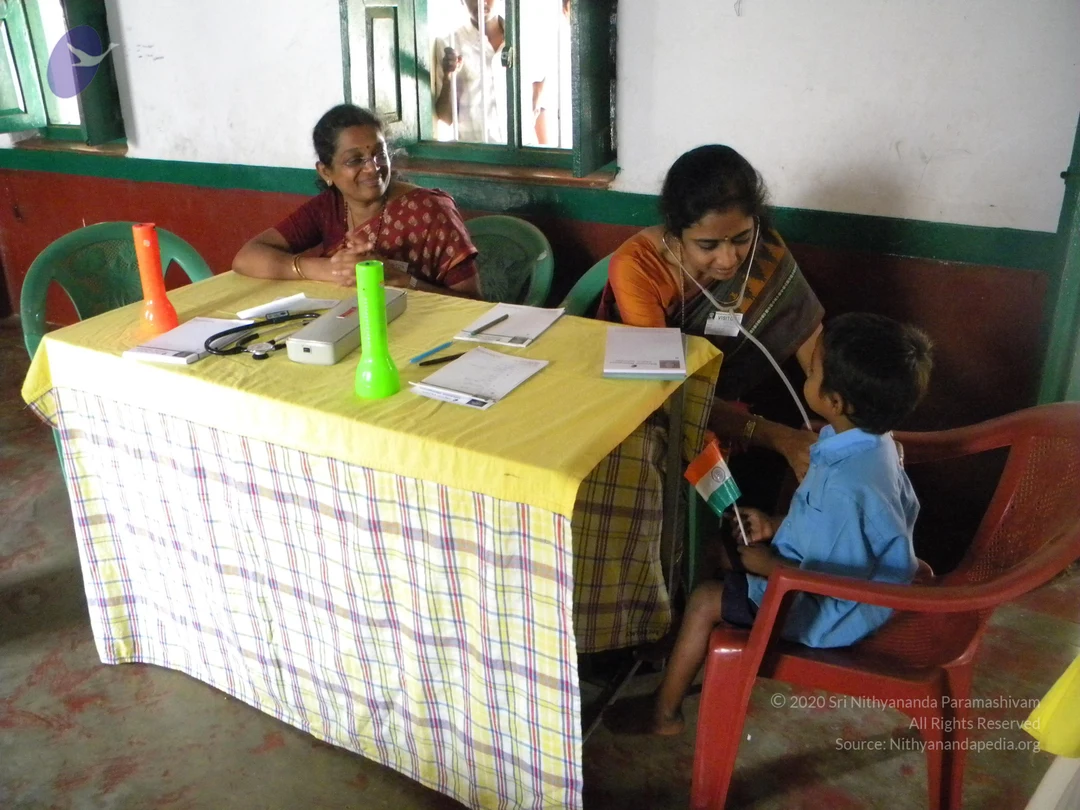
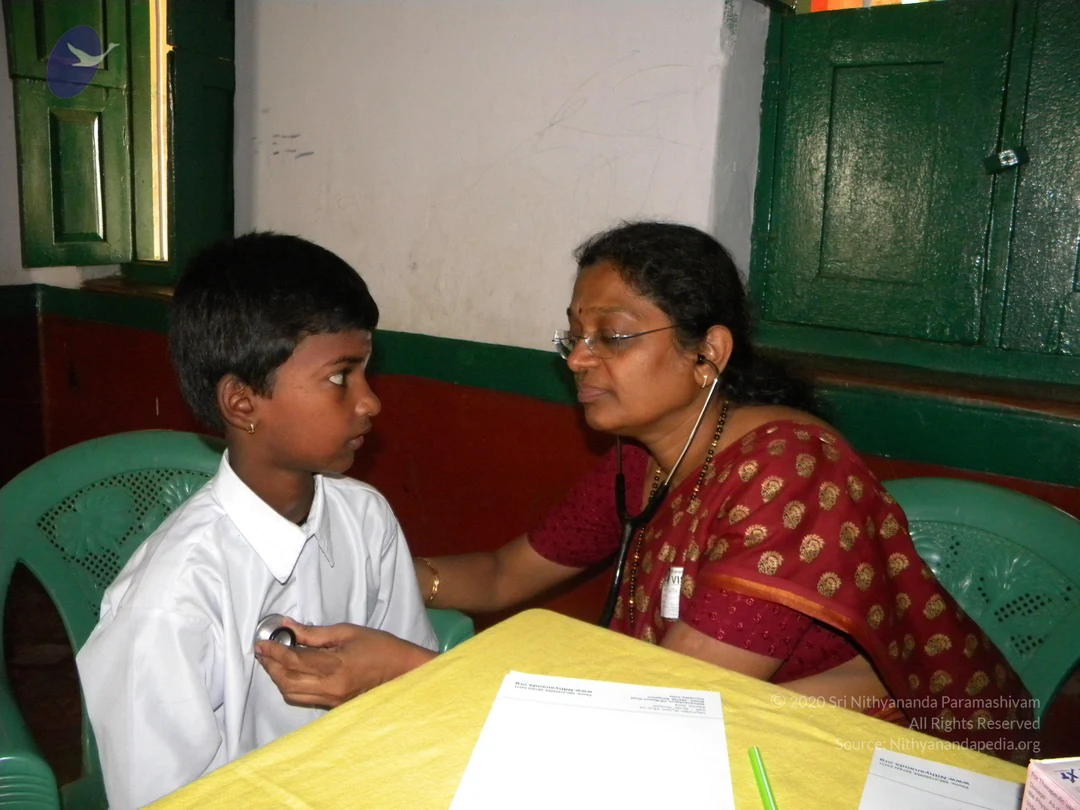
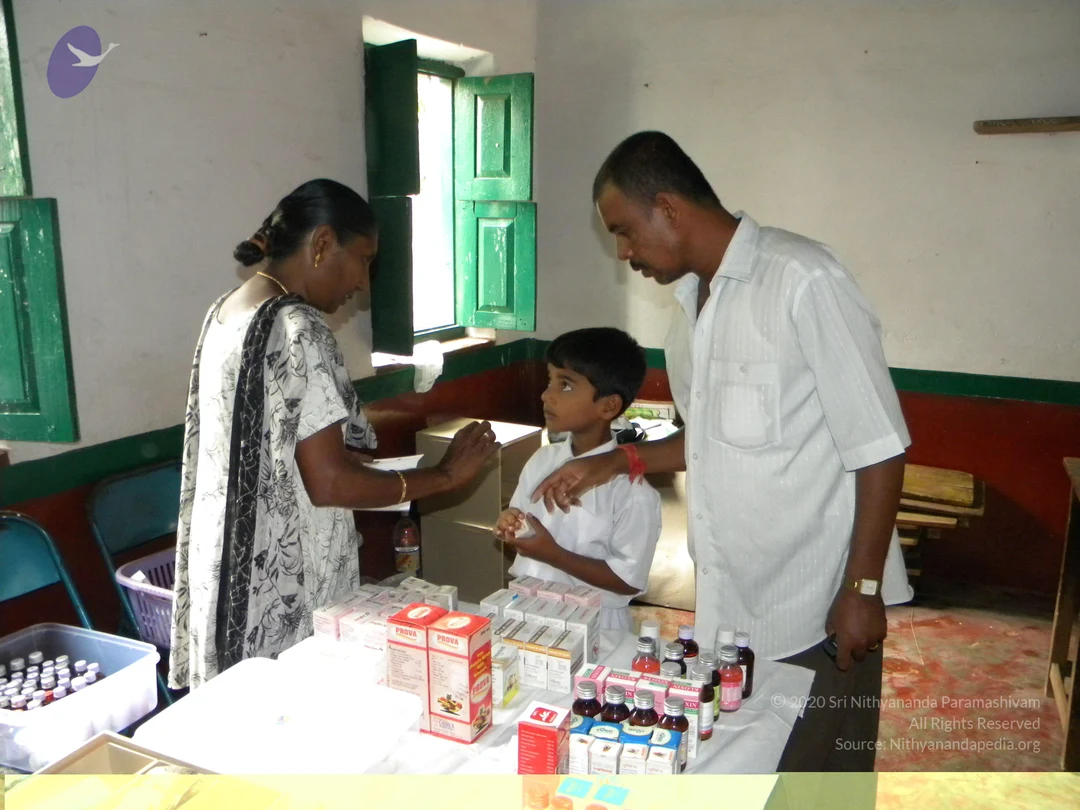
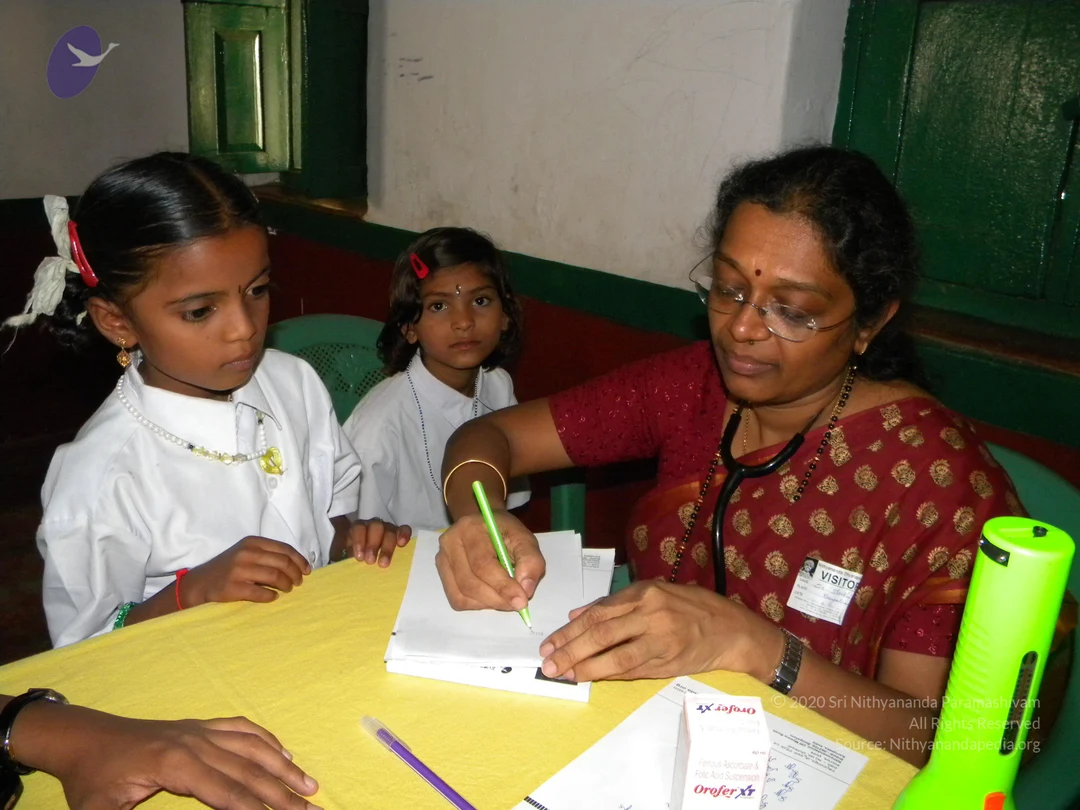
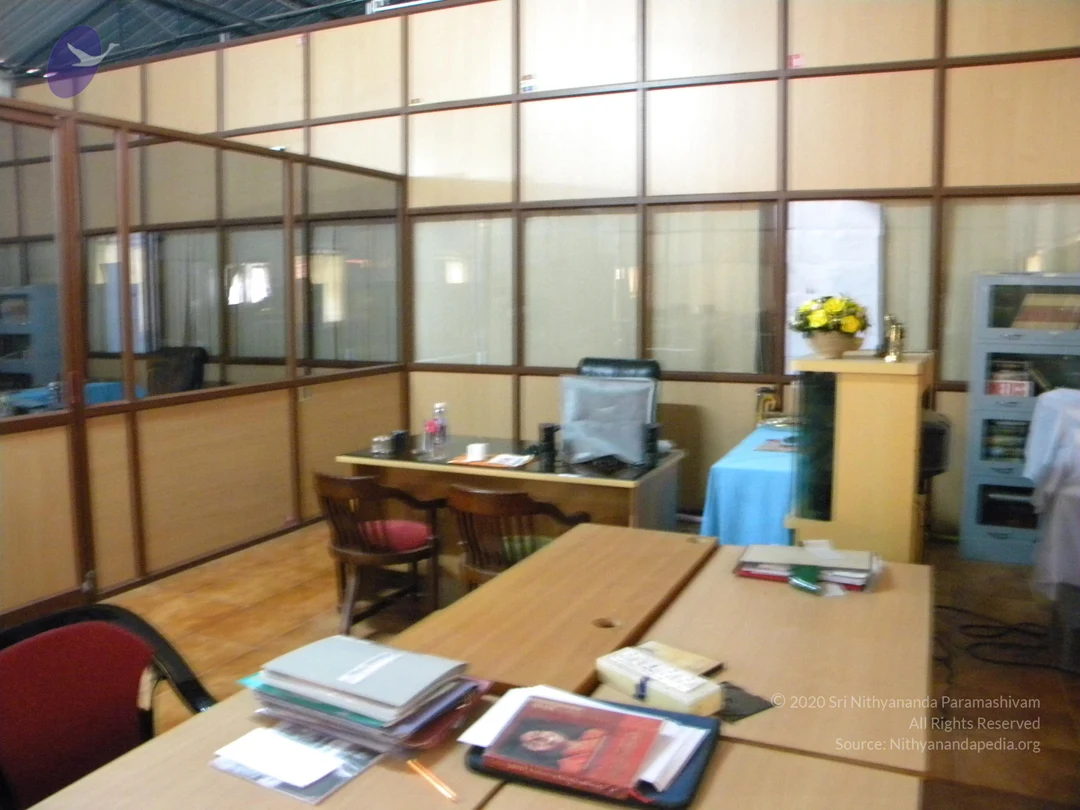
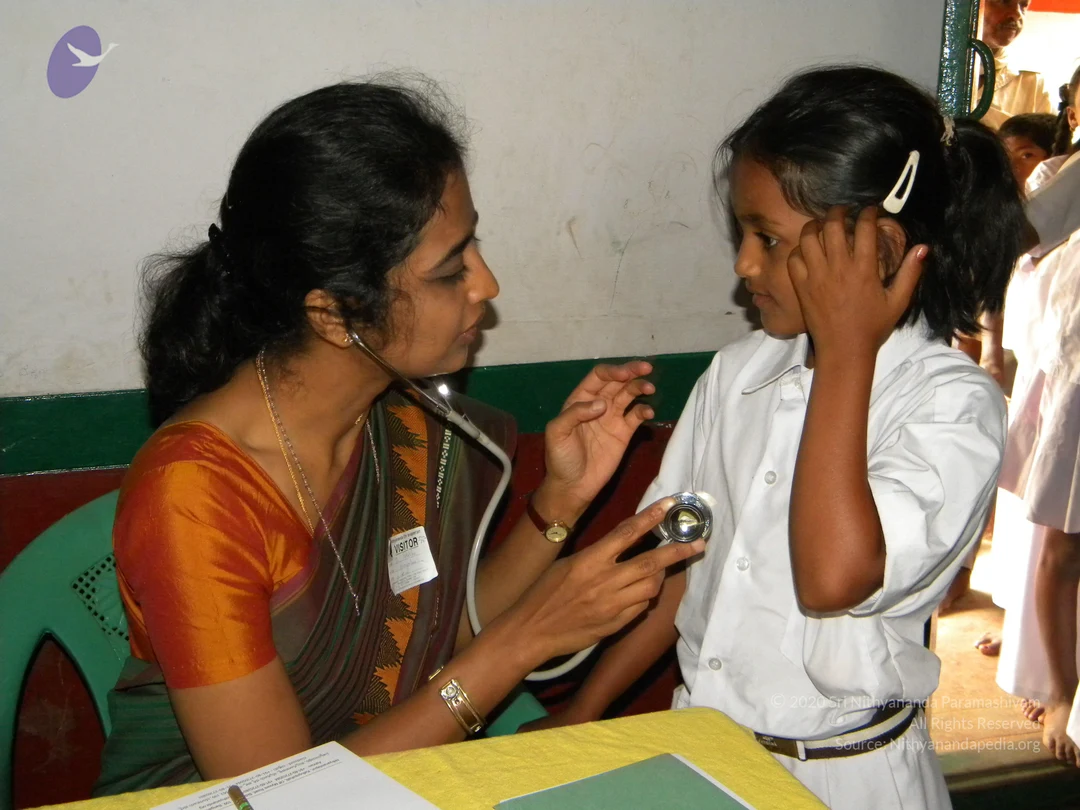
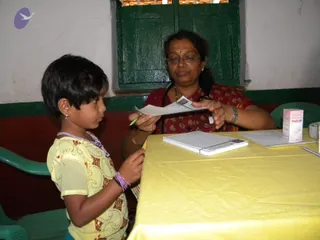
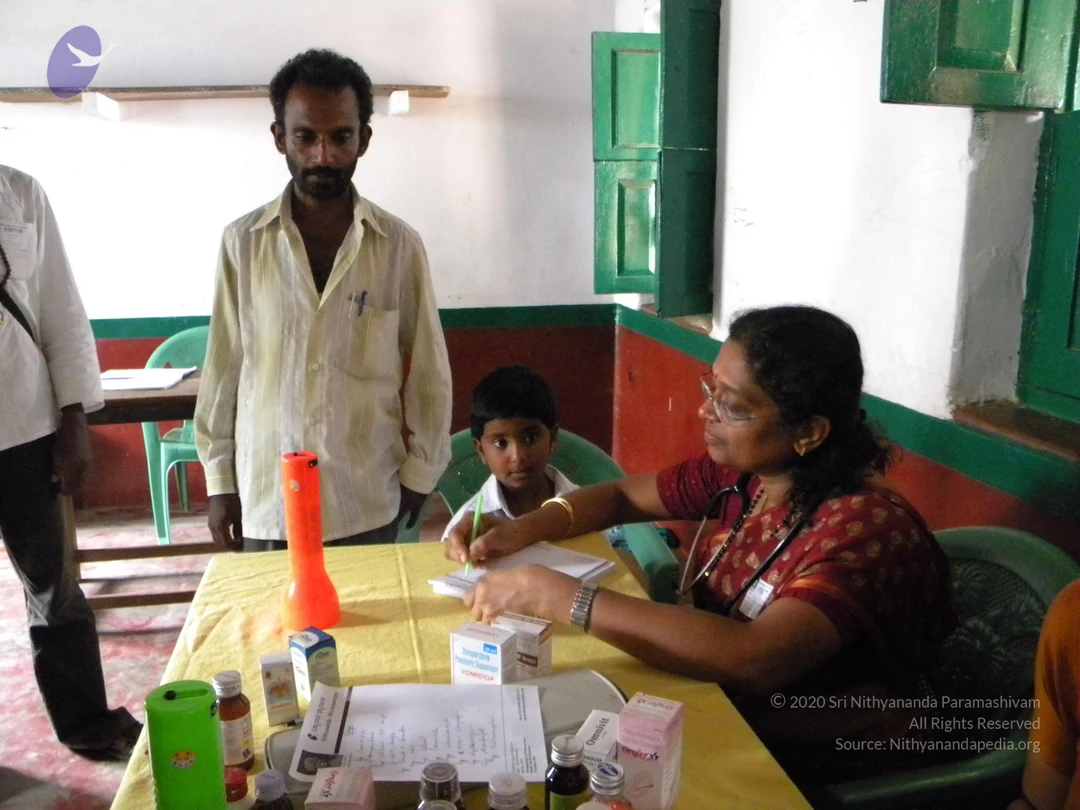
A photograph of a medical camp inside a plain room with white walls, green window shutters and a red and green painted lower wall. A woman doctor in a red and maroon printed sari with a stethoscope around her neck sits at a yellow-covered table, writing on a notepad while examining or consulting a young boy in a white shirt beside her. A man in a pale yellow striped shirt stands behind them, and another man in white shirt stands at the left edge. The table holds medicine boxes and bottles, a prescription sheet, and an orange flashlight-style object. No a person candidate is visible.A school medical camp check-up in a plain room with white walls and a green and red painted dado. Two women in saris sit at a table draped in a yellow cloth with a plaid skirt. The woman in the red blouse and glasses writes on a form, while the woman in an orange sari with a stethoscope around her neck examines a young boy in a white shirt standing beside her. Another boy in a white shirt sits on a green plastic chair at the left edge. The table holds a grey instrument case, pens, a small pamphlet and printed forms, plus green and orange plastic items. The scene shows health screening for children with no a person figure visible.A female doctor wearing an orange and green sari with a visitor badge clipped to it uses a stethoscope to listen to the chest of a young schoolgirl in a white uniform with a white hair clip. The doctor sits at a table covered with a yellow cloth and papers, in a plain room with a white wall and green and maroon paneling. Other children in white uniforms stand behind them. No a person candidate is visible in this medical camp scene.A classroom with yellow-painted walls hung with educational charts, including maps of India and the world and a poster titled "Our Animals". Many school children in light blue shirts and dark blue skirts or shorts sit at wooden desks holding notebooks and yellow bags. Standing at the back are three women in saris and one man in a white shirt, plus a man in a long white kurta with a rudraksha-style mala beside them. A Kannada word chart is painted on the wall, and a globe sits on a table at the left.A photograph of a medical camp consultation at a yellow-covered table. A woman doctor in a maroon sari with a red and gold border, glasses and a stethoscope around her neck, hands a paper slip to a young girl in a pale yellow patterned top and purple beaded bangles. A box labelled Orofer XT and a clipboard sit on the table, and a green-framed window is behind them. No a person candidate is visible.A photograph of a busy office interior with a high ceiling and wood-panelled walls. Several desks hold desktop computer monitors, keyboards, stacks of papers and folders, and a white laser printer in the foreground. A man in a yellow-and-white high-visibility jacket sits at the left edge. Other staff sit at desks further back, working at computers. Cabinets, a wall clock and ceiling fans are visible.

01--Singapore_Inauguration
16 photosSource gallery
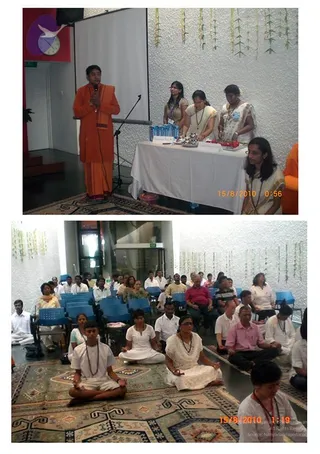
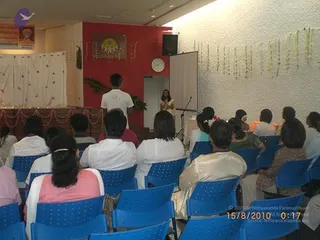
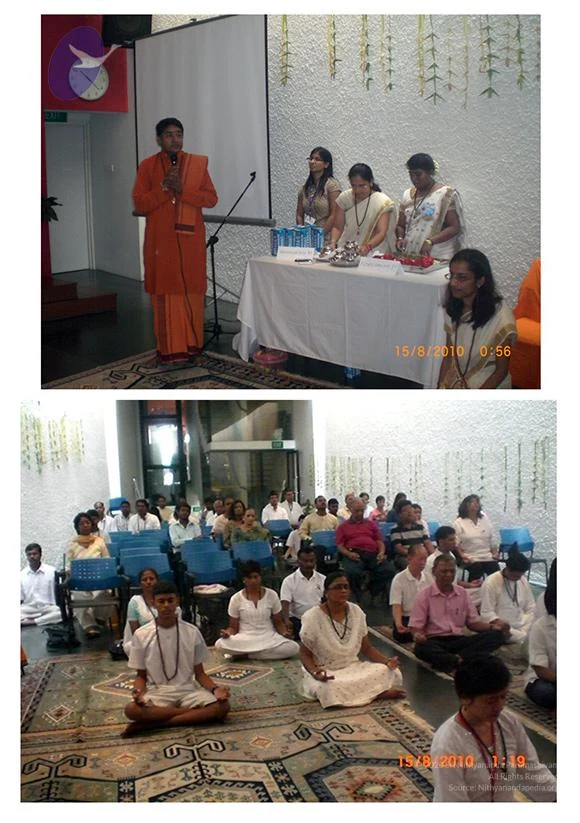
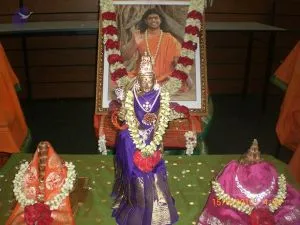
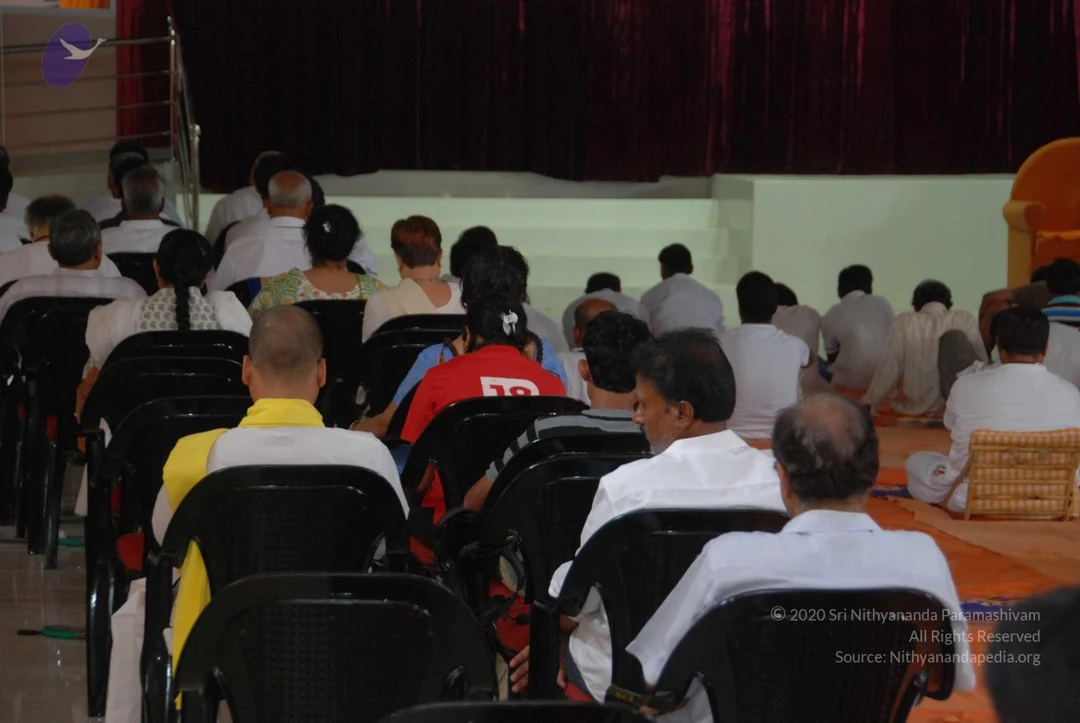
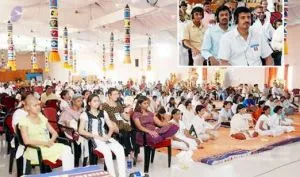
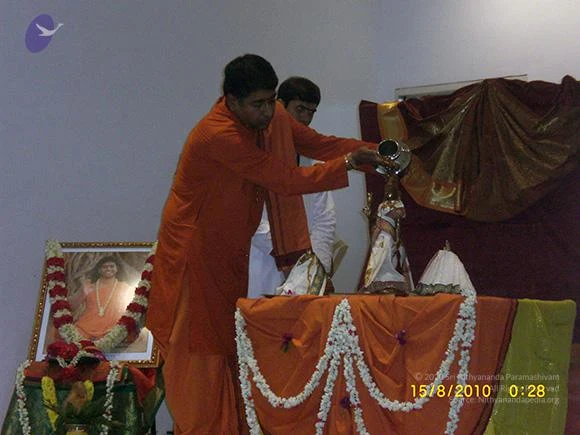
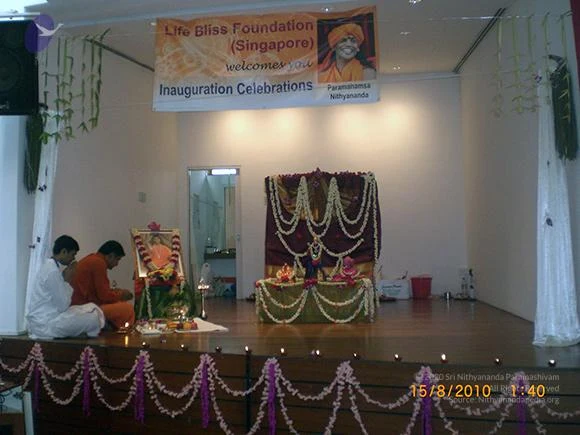
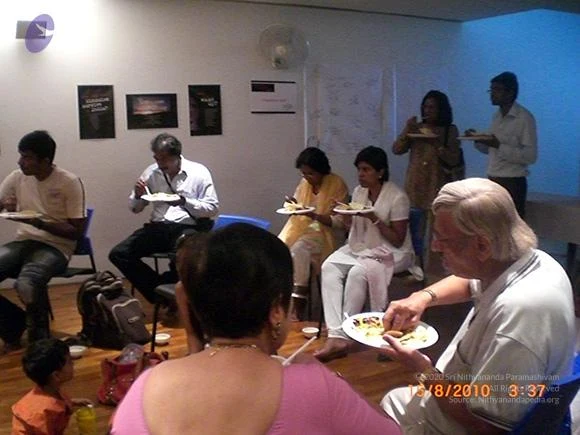
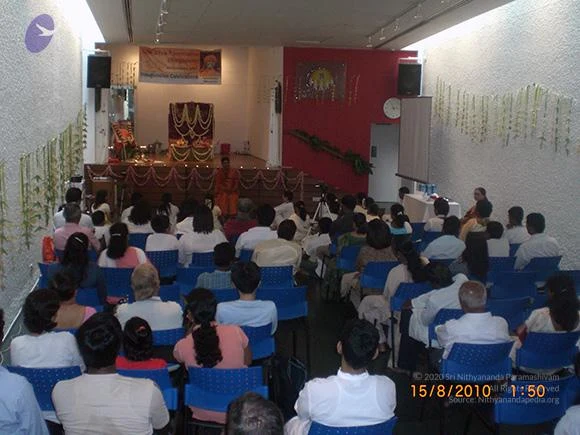
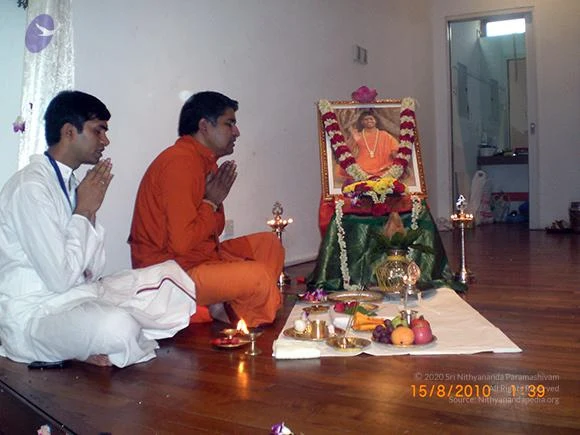
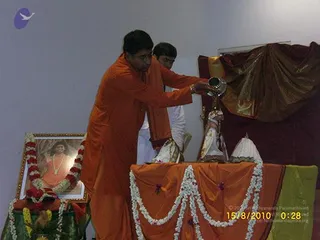
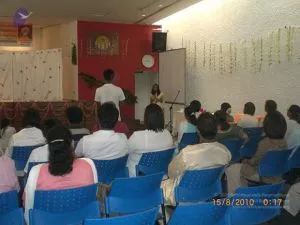
A photograph of a staircase procession inside a building, with a man in white kurta carrying a silver tray holding a coconut, green leaves and offerings at the front. Behind him a man in orange robes and a garland of white flowers carries a large framed portrait of a bearded-free figure with long dark hair, wearing a crown-like headpiece, rudraksha-style beads and an orange garment; the framed portrait is garlanded with flowers and red blossoms. Other men in white and a woman in a cream sari follow along the stairs, with a hand visibly folded in greeting at the lower left. Visible people: about six.A photograph of a seated audience in a hall facing a projector screen at the front, where an image is shown. Most attendees wear white clothing and sit on blue chairs in rows, with a few in darker clothes. At the front right, a monk in saffron-orange robes stands near a small stage. Strings of white flowers hang along the white walls, and a red-and-pink backdrop with a framed picture is visible at the top. A timestamp reading 15/8/2010 appears in the lower corner, and a tall clock hangs on the right wall.A photograph of devotees seated cross-legged on rugs in a bright hall, performing puja with hands joined in prayer. A woman in the foreground wears a white sari with gold border and gold bangles; beside her a younger woman in white kurta and a seated man in white also pray with eyes closed. Brass lamps with lit wicks, a brass puja plate with flowers and a red cloth, and a small coconut or offering sit on the floor before them. Several more devotees in white and yellow saris are seated in the background, and a person stands behind them. Strings of flowers hang along the wall.A two-panel photo collage from a Singapore event dated 15/8/2010. The top panel shows a man in saffron-orange robes standing with hands folded in namaste beside a white-draped table where three women in sarees and a younger woman in a white and gold outfit stand near brass items and a small dish. A projection screen and hanging green garlands decorate the wall. The bottom panel shows a seated group of about 30 people meditating on a patterned carpet, many in white clothes, with some in pink and purple, several wearing rudraksha malas, and a few sitting on blue chairs behind them. The man in saffron robes has no distinctive long hair or crown visible, so identity is uncertain.Photograph of a seated audience in a bright meeting hall facing a small stage at the front. Rows of blue plastic chairs hold mostly women and men in white, pink, green and yellow clothing, seen from behind. On the stage, a man in a white shirt stands at a microphone stand beside a woman in a pale dress, with a red wall, a white draped backdrop, a wall clock and a strand of green-and-white floral garlands along the upper wall. A framed picture hangs on the left and a small wall-mounted screen stands to the right. A printed caption at the bottom right reads 15/8/2010 0:17 with a copyright line.A small indoor shrine room with white walls. A man in saffron-orange robes stands at left, pouring liquid from a metal vessel over a small deity murti on a draped table. Behind him, a man in white clothing stands near the altar. The altar is decorated with orange and gold cloth, white flower garlands and yellow flowers. At left, a framed portrait shows a figure in orange clothing with a gold necklace, garlanded with red and white flowers. A brown and gold drape hangs on the right wall. The scene shows abhishekam being performed. A date stamp in the lower right reads 15/8/2010.