Skip to content
Monday

16 August 2010

Seva (Service) as Science of Enlightenment: Morning Message Aug 16 2010

Dated photos
131
Source pages
1
Media
6
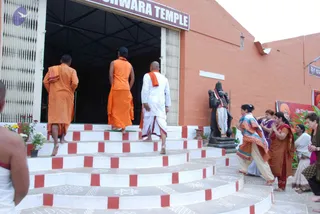
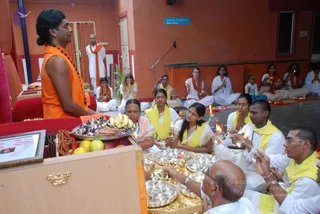
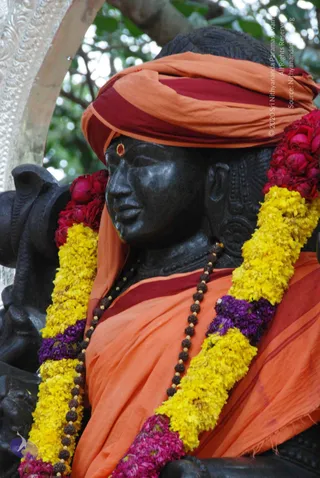
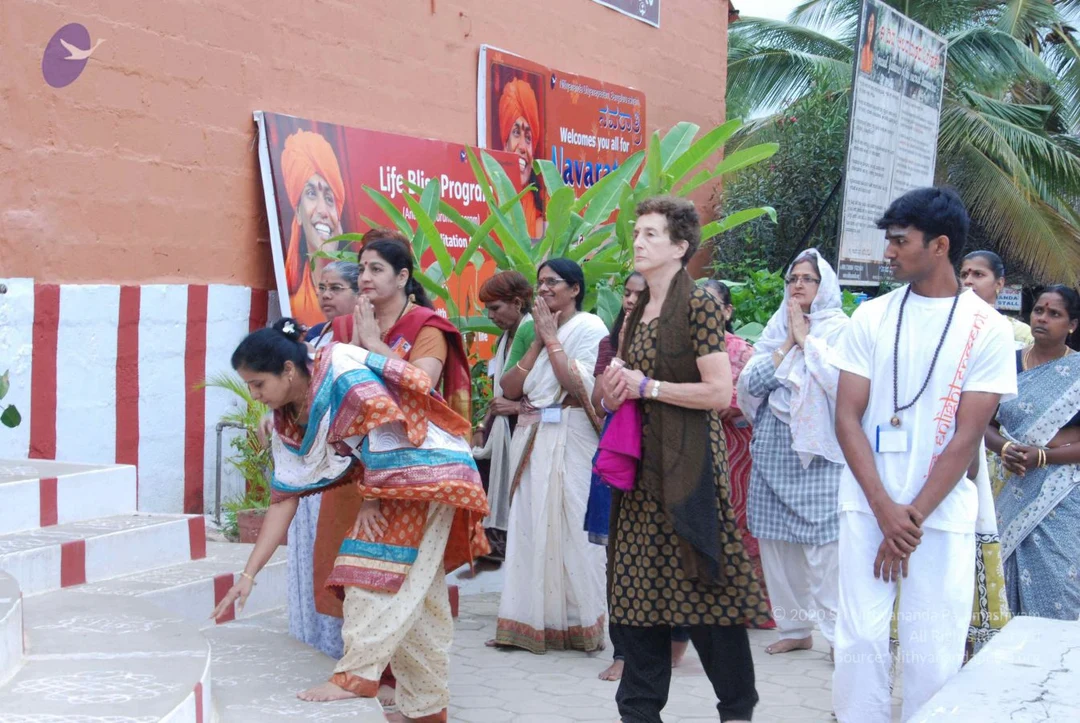
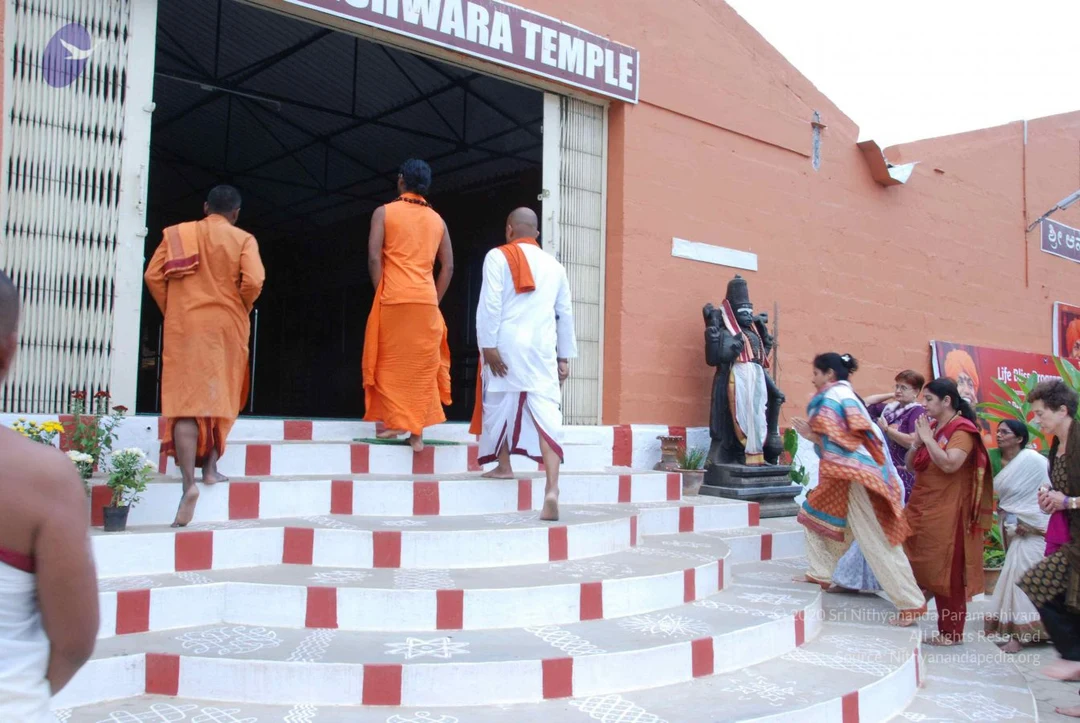
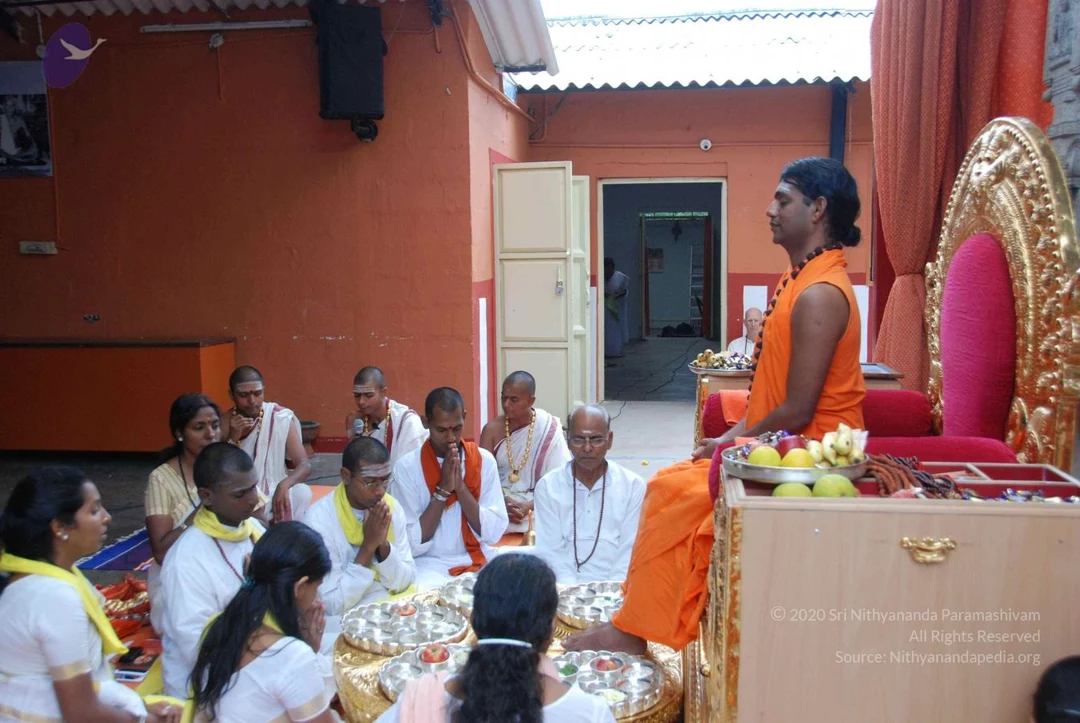
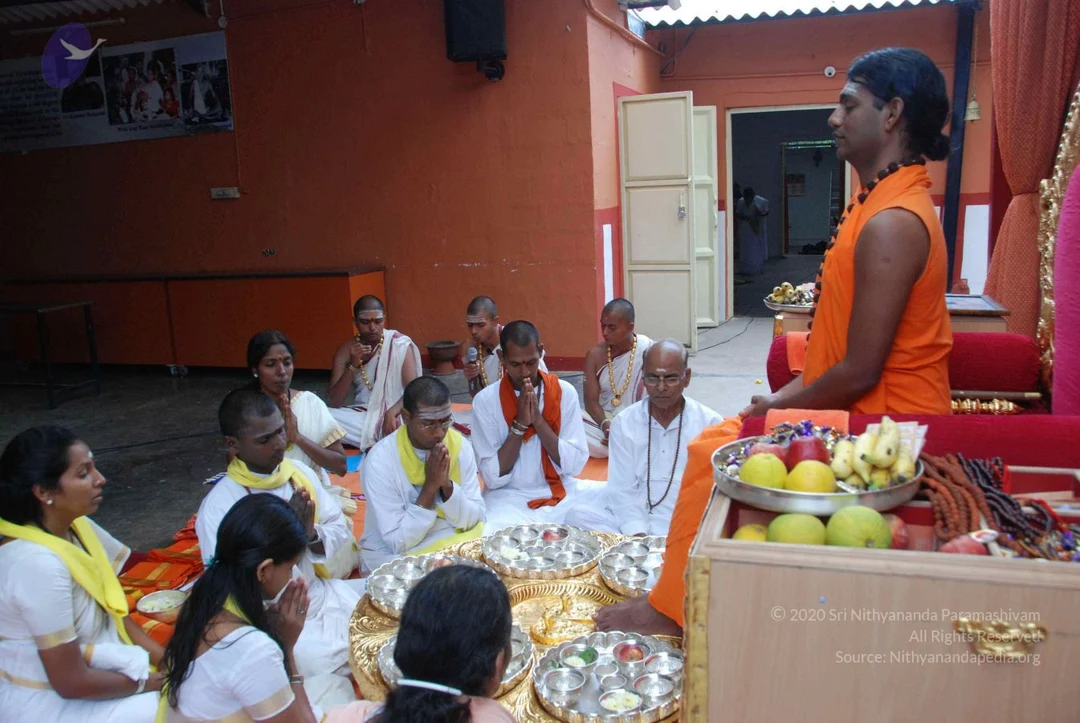
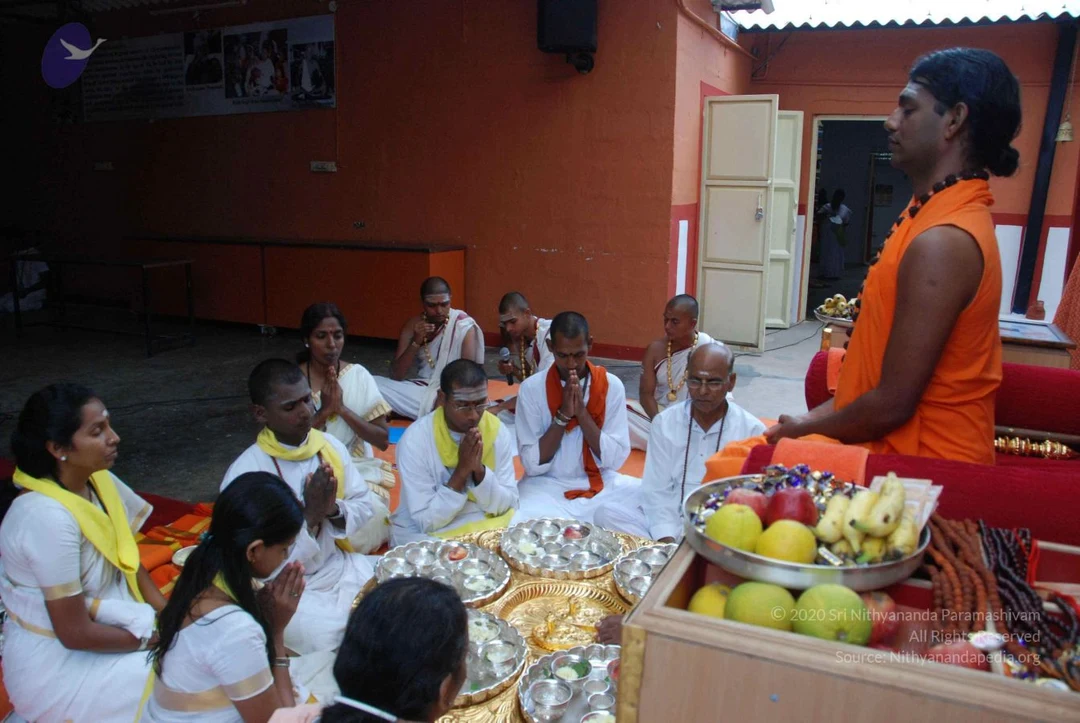
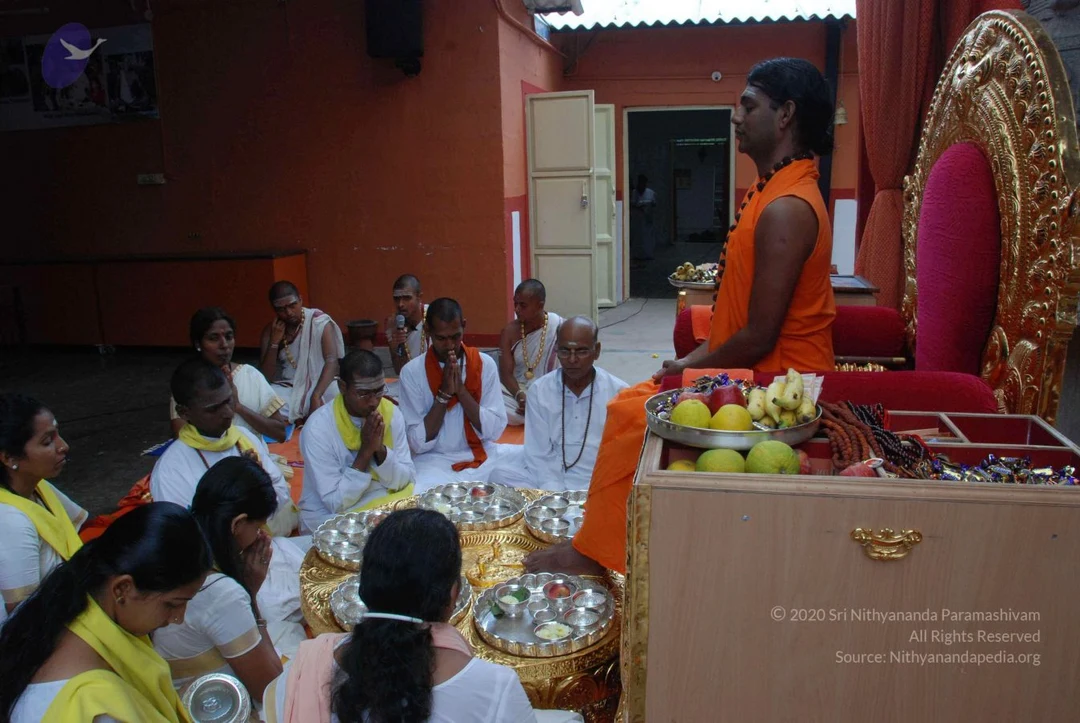
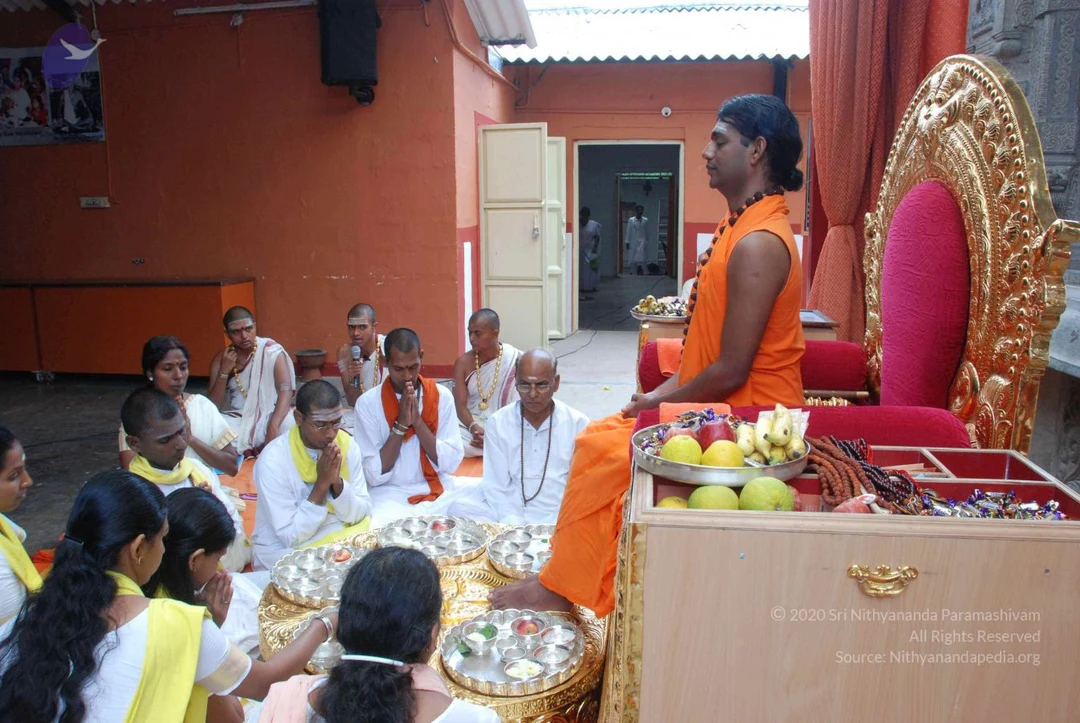
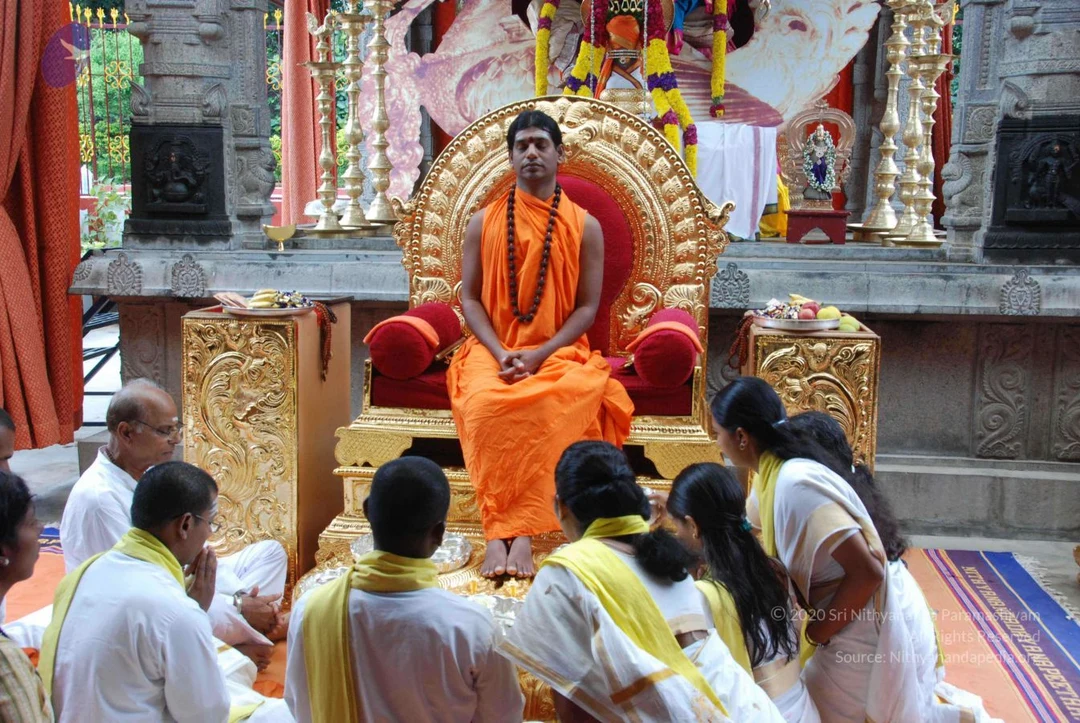
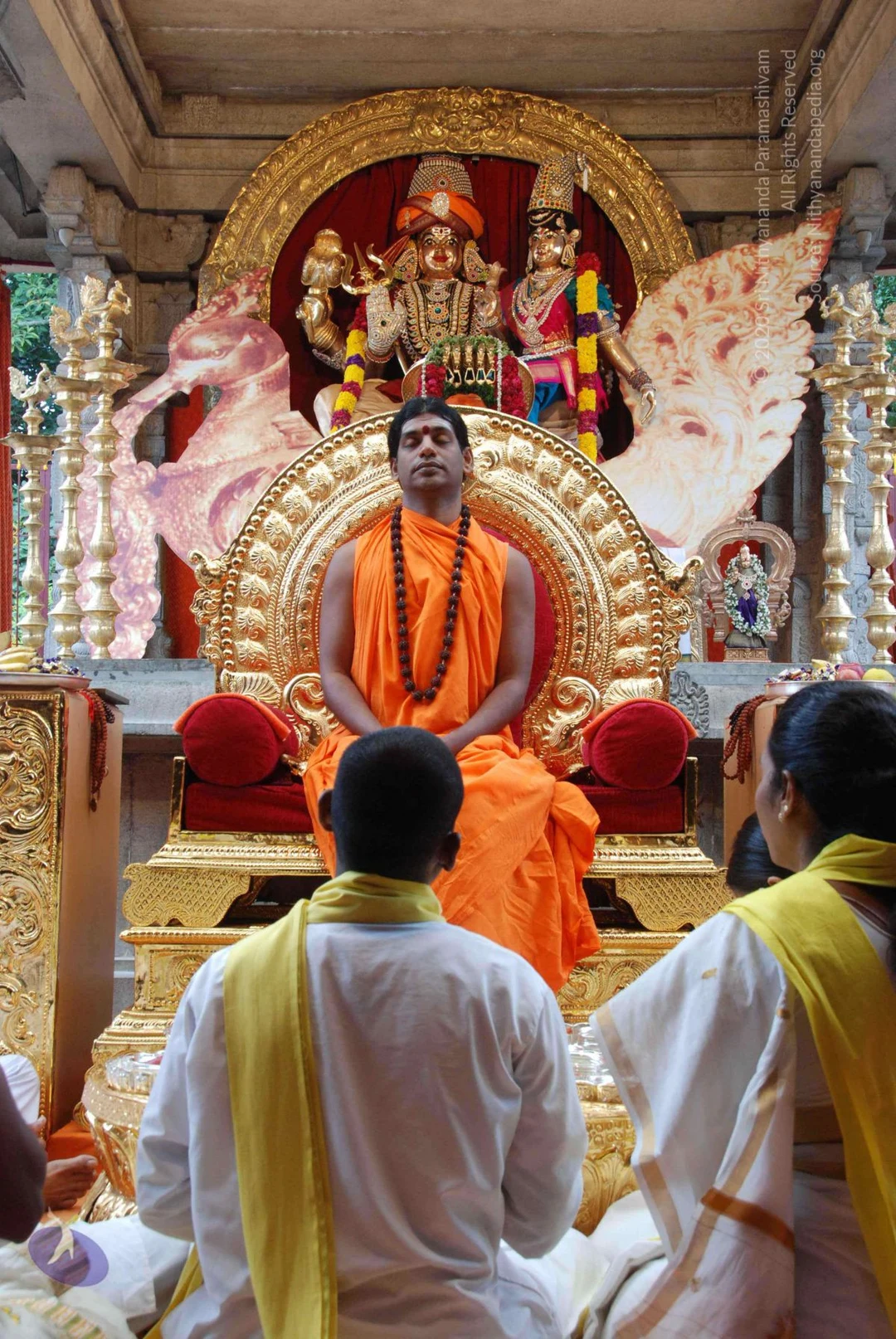
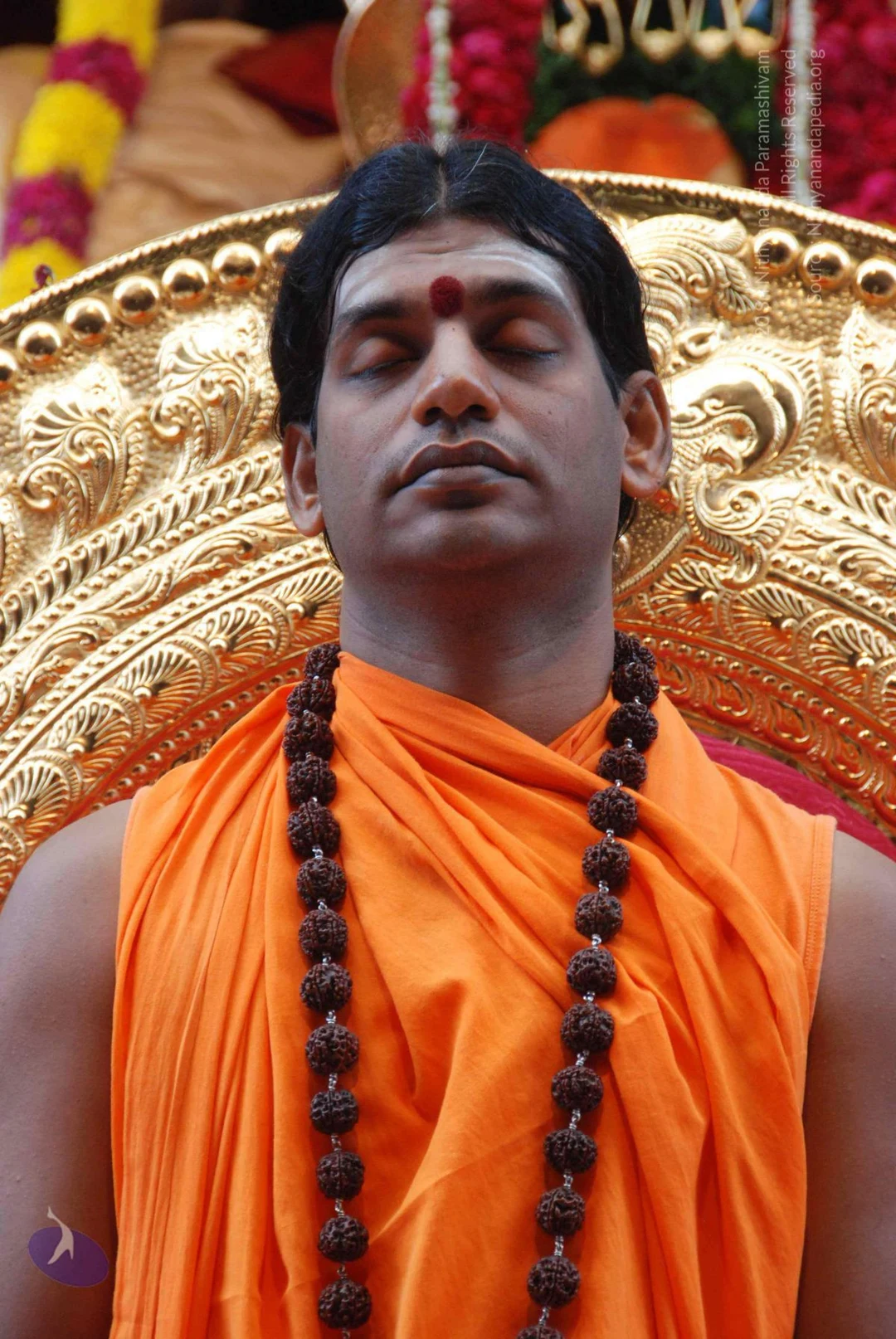
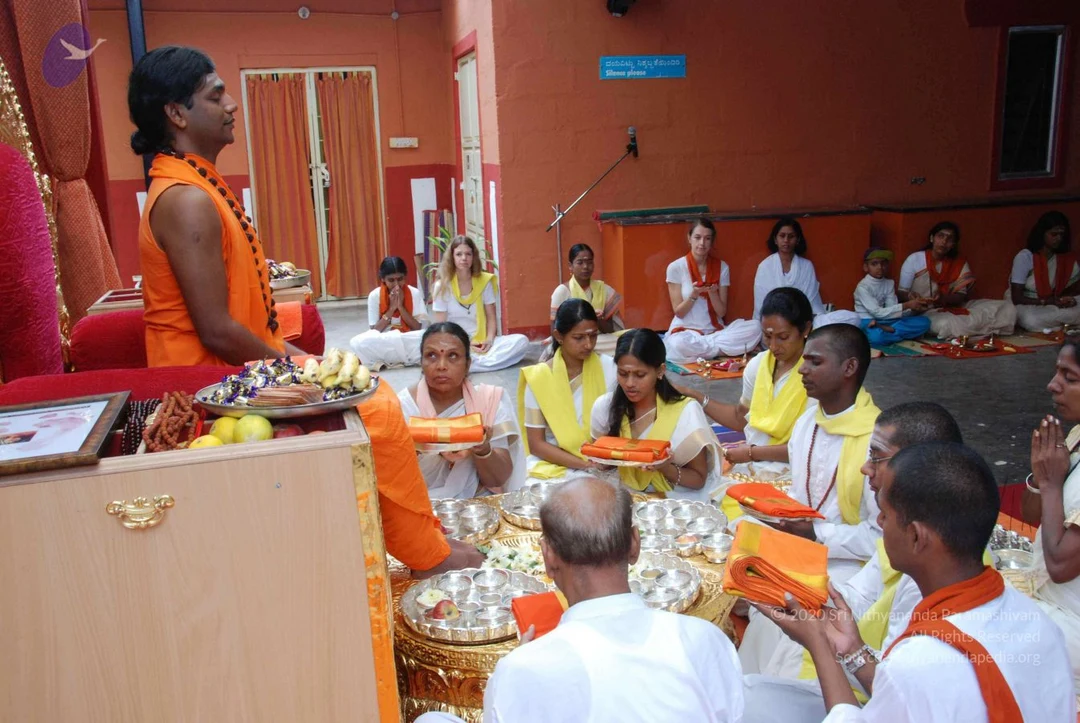
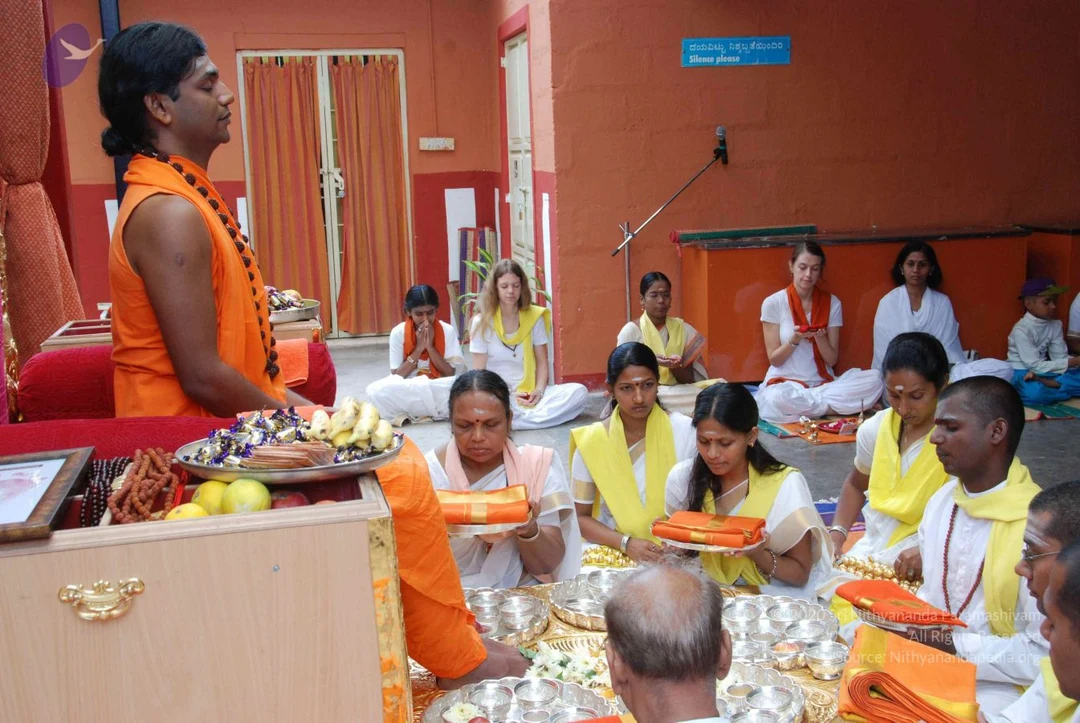
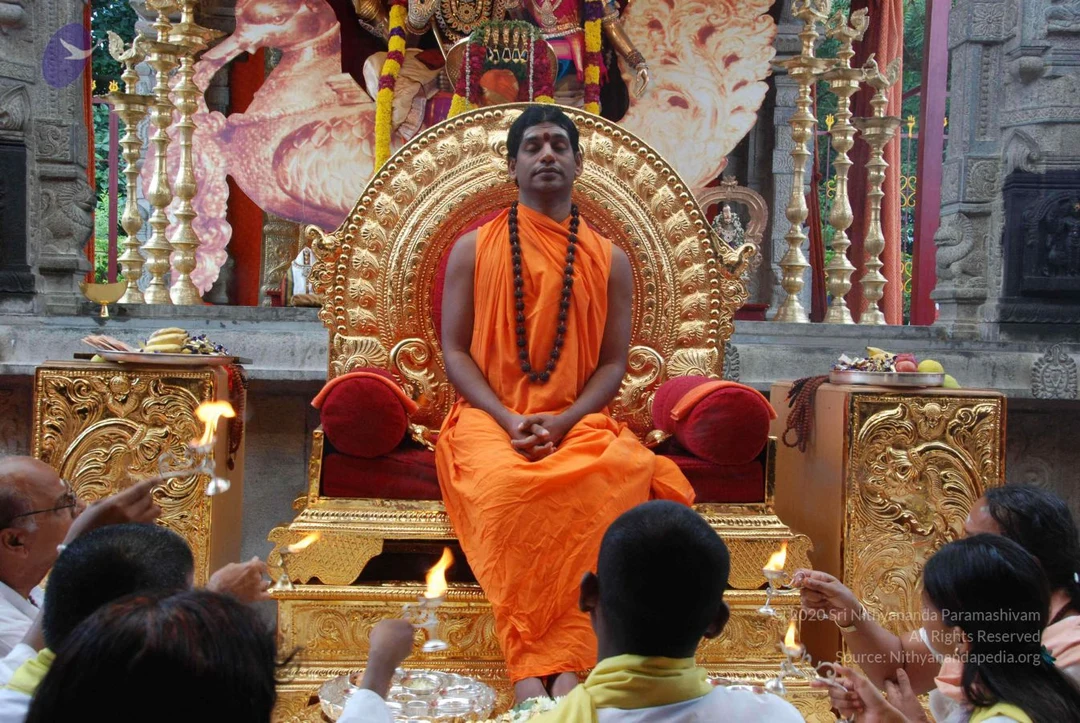
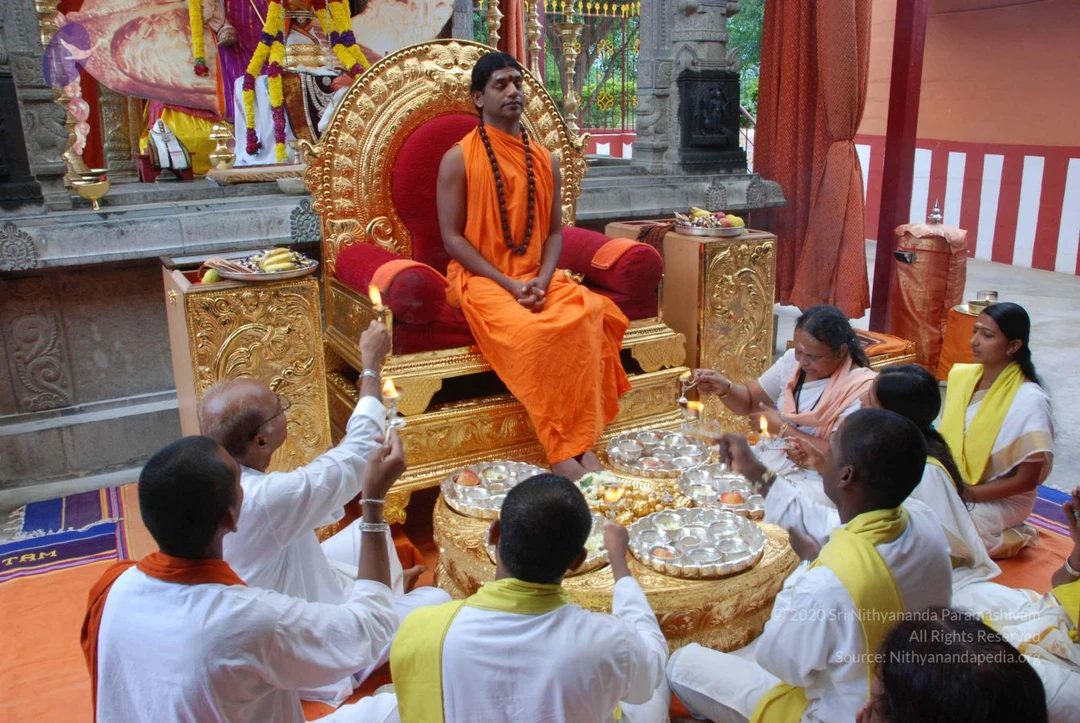
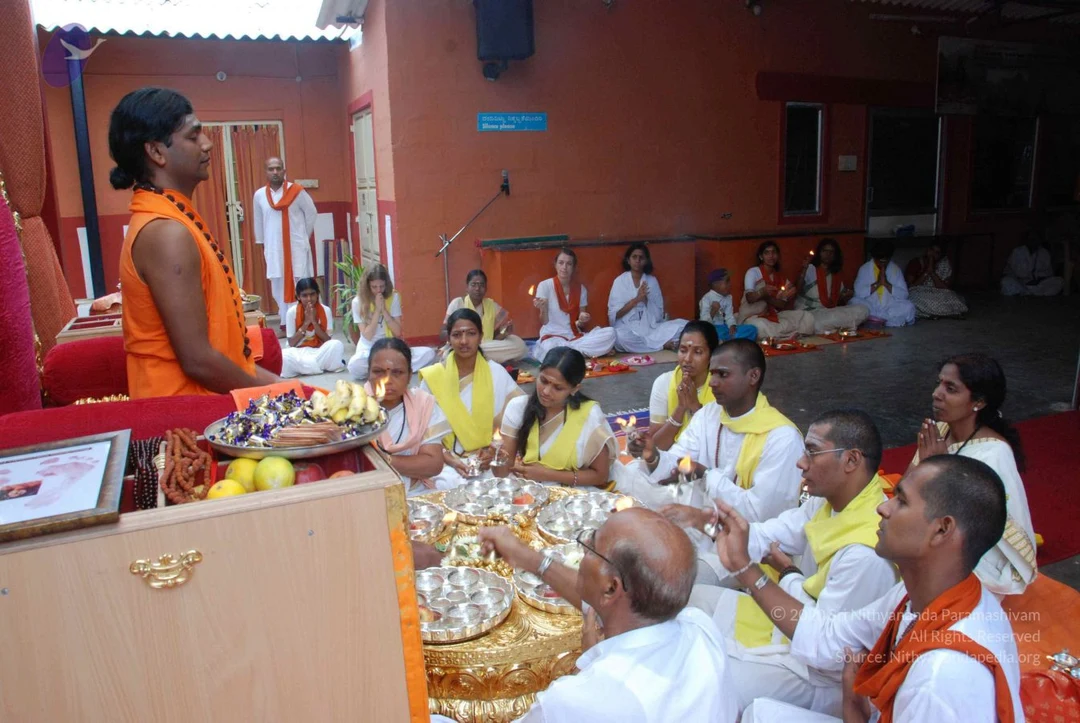
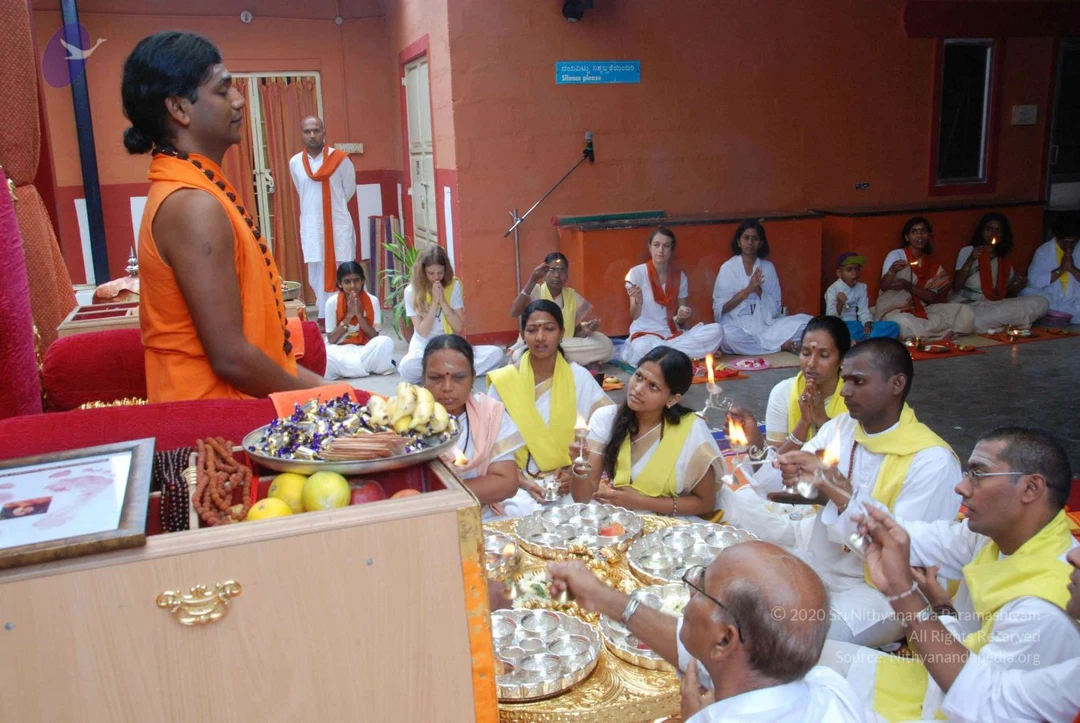
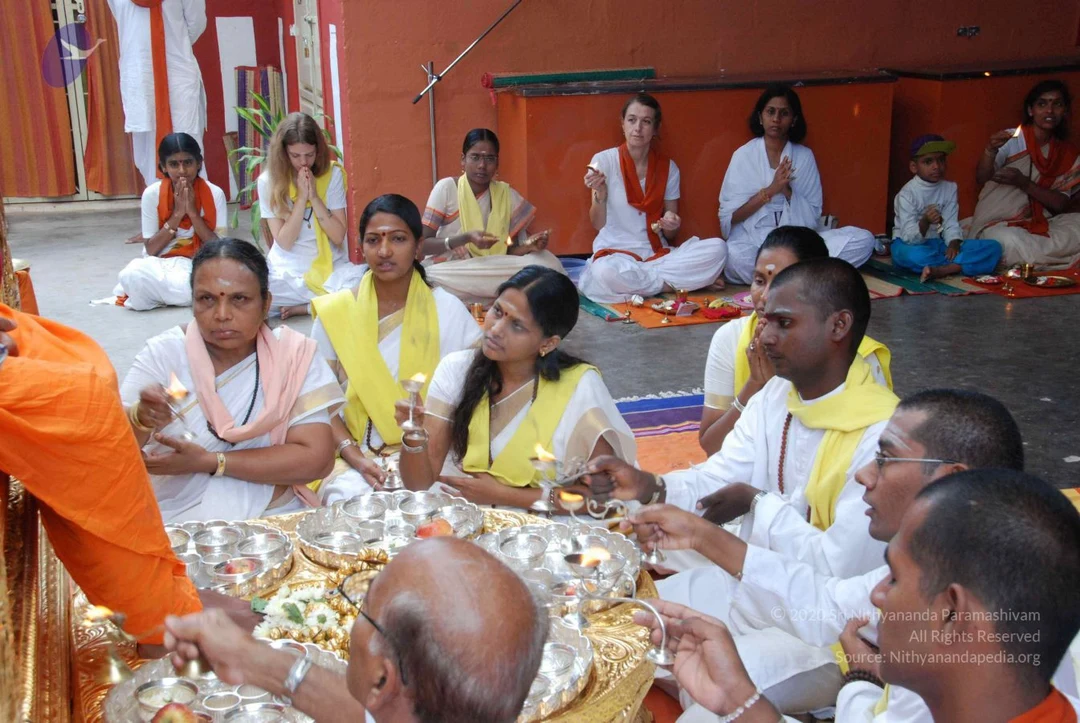
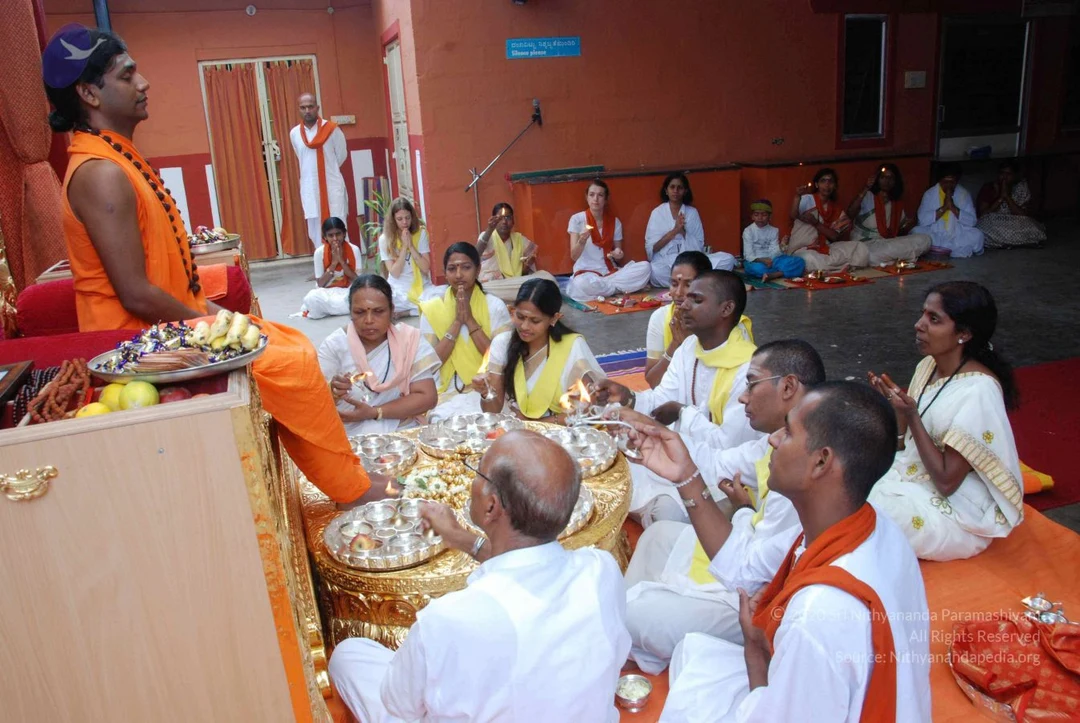
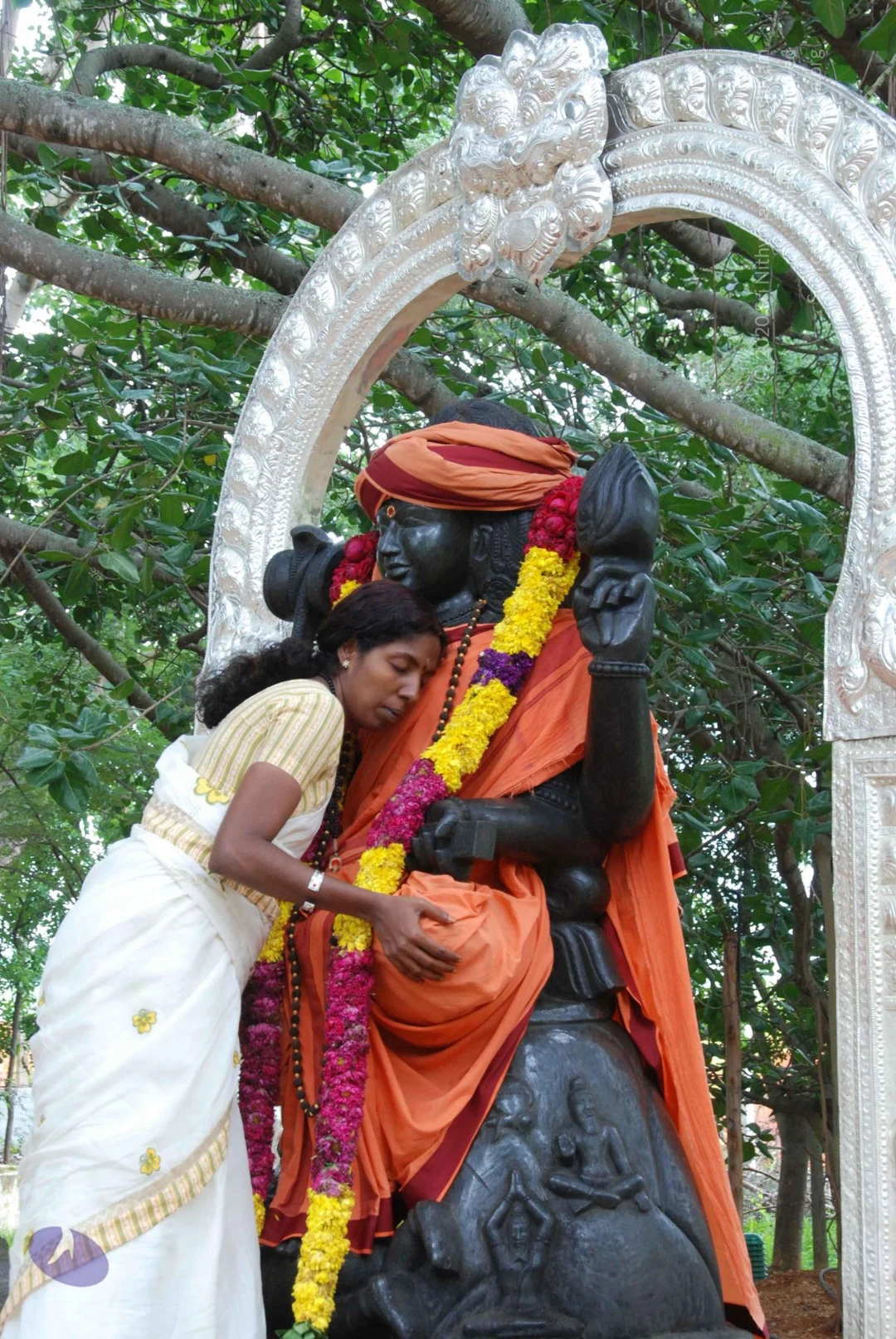
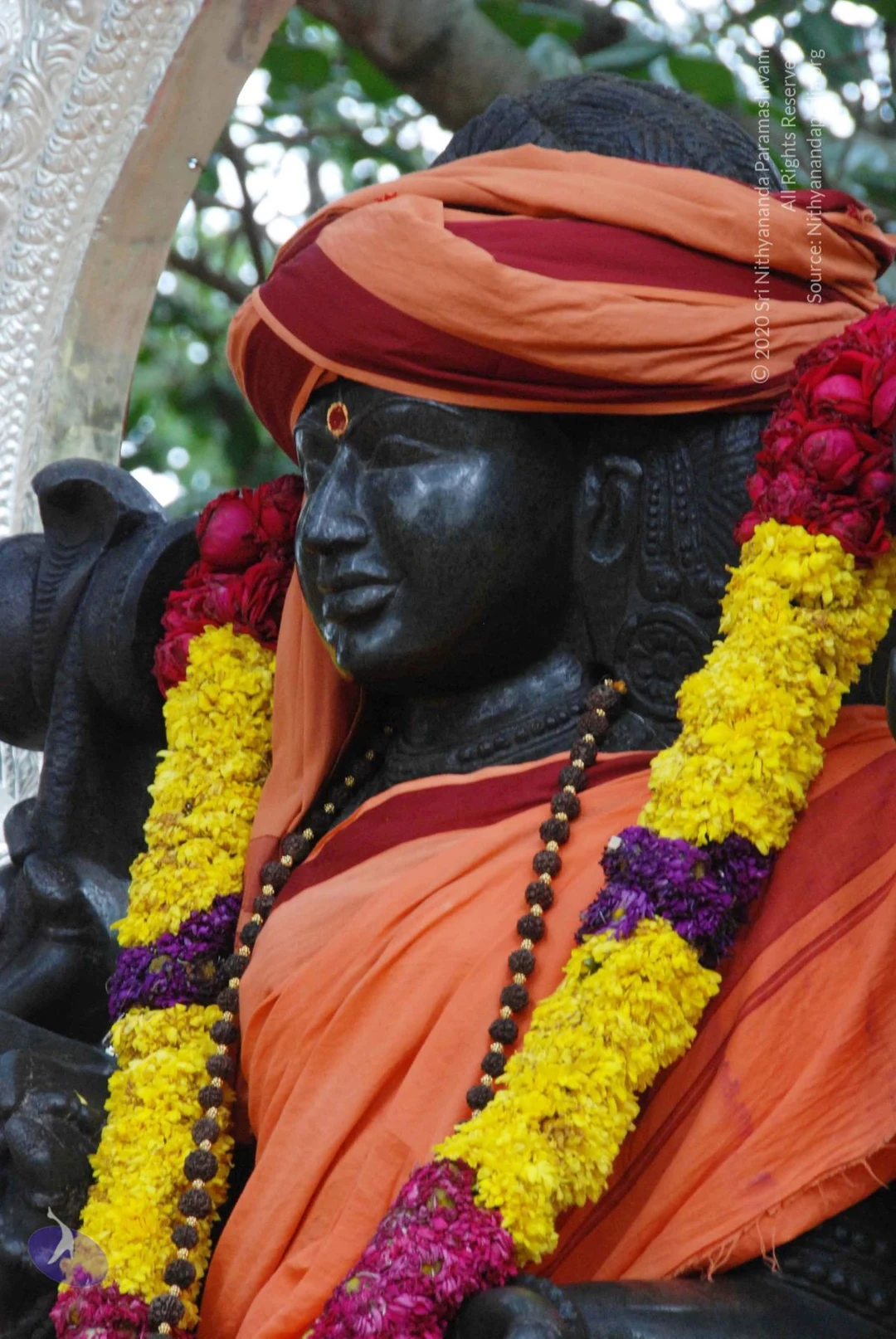
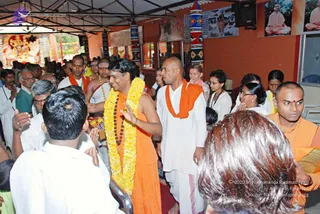
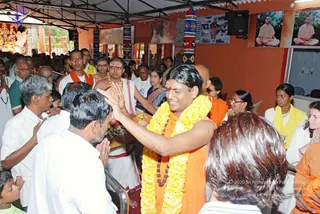
A photograph of the entrance to a temple with a sign reading "...SHWARA TEMPLE" above an open doorway. Three men walk up white-and-red striped steps toward the door: the two on the left wear orange robes, and the man in the centre wears an orange upper cloth over a white dhoti and is bald. A dark stone statue of a deity with a trident stands beside the steps. To the right, several women in saris and salwar kameez stand with palms pressed together in anjali, and a red banner with a faint orange-robed figure is visible behind them. Marigold-like flowers and potted plants line the steps. The scene is outdoors in daylight.A photograph of a devotional gathering in a red-walled hall. A standing man in an orange robe with a long dark ponytail and a beaded mala stands at left, facing a seated group. Seated devotees in white and yellow sashes hold lit oil lamps and join palms in prayer. A brass tray holds fruit, bananas and flowers, and a brass plate with lamps sits on a low wooden platform. A man in white with an orange shawl stands in the background. Several people sit on mats, some with orange shawls, and a young child is visible at right. The setting appears to be a satsang or puja with lamp offerings.A black stone statue of a seated sage in an orange and maroon turban and orange robe, with a red tilak mark on the forehead. The statue wears a rudraksha mala and is draped with thick garlands of yellow marigolds, purple flowers and red roses. Leafy green trees and a silver-toned arch appear in the background. The figure is a sculpted statue, not a living person.

August 16 2010

Original wiki page
Contents

Title:

Seva (Service) as Science of Enlightenment: Morning Message Aug 16 2010

Narration:

The Supreme Pontiff of Hinduism, Jagatguru Mahasannidhanam, His Divine Holiness, Bhagavan Nithyananda Paramashivam, expounded on the Cosmic Principle of Seva during a live public talk - Nithyananda Satsang. In this talk entitled Seva (Service) as Science of Enlightenment, The Supreme Pontiff of Hinduism shared that Seva means working without greed and fear and is the highest form of creativity that makes you live Enlightenment. He explained that the truths you collect from Turiya is what is Turiyavanasampana and that one should constantly make Turiyavanasampana happen in one’s biomemory by serving constantly. His Divine Holiness explained that by serving, by this Seva, the flowers of Consciousness will become part of you and you will radiate the eternal smell of Enlightenment.

Video:

Seva (Service) as Science of Enlightenment: Morning Message Aug 16 2010

VideoAudio

Transcript:

Sadāshiva samārambhām Shankarāchārya madhyamām | asmat āchārya paryantām vande guru paramparām ||

(00:22)

Today we’ll understand how the seva makes you live enlightenment. I am not going to talk about seva for the sake of social service or the name and fame or as a morality, no! I am talking about seva as a science of enlightenment. Continuously life gives us turiyavanasampanna - means, the flowers happened in the state of turiya. Turiya means the fourth state which is beyond waking, dream and deep sleep state. Constantly, fortunately all human beings experience turiya at some point or other in their regular life. Whenever they feel little peace, joy in any way... Please understand, even if it is through senses, because of the sense pleasures, that moment where you feel satisfied, ‘Wow! Life is worth living, life is worthy’. Those moments you go through a glimpse of turiya. Each time turiya happens in you, joy happens in you, it brings one lesson to you. It shares one truth with you. The truths which you collect from turiya is what turiyavanasampanna.

(02:22)

Today in the mantra, padapooja they said, ‘We offer the flowers collected in turiya state’, means, the truths about the life. Of course when you sit in meditation, when you are peaceful, whatever ideas happen in you about life, about relationships, about how to live, about money, about love, whatever, those ideas are flowers collected from turiya state; turiyavanasampanna. Constantly turiyavanasampanna happens in all of us. But unfortunately we do not know the science of how to make those flowers happen again and again and keep them as part of our life. We just let them wither away. Let them drop, let them disappear; without they becoming fruit, without they becoming part of us.

(03:30)

How to make this turiyavanasampanna, the flowers of the fourth state of consciousness become part of your bio memory and lifestyle? Seva. Please understand, when you start serving, all the difficulties you face... because you will be facing difficulties, you are just going against the current of your bio memory which is fear and greed. Seva means working without greed and fear. So naturally there will be enough of churning, boiling. ‘Why should I do this? Why should I do this? Why should I do this?’ Every moment that question will be asked; because there is no result. After you do everything, you don’t get anything. If you get anything, don’t do that work, it is not seva. I take care, nobody who serves Dhyanapeetam gets name and fame or anything in return, except enlightenment; till now I maintain. That is the strength and purity of Dhyanapeetam. Understand? We ensure that they don’t get anything, that is why we have very less people doing seva. If you see all the religious and spiritual organizations they’re able to convert eighty percent of their followers into the people who are doing service. I’m not able to. Of course I am not interested, in truth 5:09. Hardly if I am able to convert two to three percent of the people who are following Me, who are inspired by Me, into serving, it’s more than enough. That is what I am able to do, that is what I am also interested; because I take care they do not get any reward, they do not get any name or fame, they do not get caught in fear and greed. Not only that, even if they get fear, even if they get name or fame through somebody else in some other source, I take care that ego is shaken in ten minutes. I ensure, I constantly ensure that no way they get any other reward or award except jeevan mukthi.

(06:02)

Understand, the turiyavanasampanna, the flowers collected from the higher state of Consciousness, fortunately it is showered on you, every time when you sit in deep meditation, or sit in the Masters presence or have some enjoyment; even if it is through senses. When your mind gets back from running, running, running you just have one turiyavana-sampanna, one flower from higher state of consciousness. When you sit with Master you have big bouquet, flower bouquet, constantly given to you, the turiyavanasampanna, the flowers from higher consciousness is constantly shared with you. But now it is time, how to make them as a eternal garland - Parijatha, kalpavriksa. This parijatha means the flower which does not wither away; which has no enmity, which is beyond enmity. So now the flowers you receive from turiya should become parijatha in you! Not just ordinary rose, ordinary lotus. The ordinary roses which you receive gives one moment pleasure, by the time the rose withers away, the pleasure also withers away. By... the rose which you receive by February 14 will not be there by February sixteen. It will; not only the flower will not be there, the emotion with which the flower was shared will not be there.

(07:52)

Understand, now it is time to make the flowers of the higher state of consciousness into parijatha. Parijatha means the heavenly flower which never withers away. Service, seva brings you straight away garland of parijatha. I am not interested in giving you ordinary garlands; people are elated by ordinary garland in a stage. The moment you get the people and put them a garland in a stage and few thousand people clap they are just elated and they will start doing any work. But that is not seva. Maybe that is service, not seva. I am differentiating, the meaning between seva and service. Service is not the literal translation of seva. Seva means a work done to retain all the flowers of higher consciousness into your being, with your being, eternally as parijatha.

(09:05)

Whenever you work without fear and greed, you need to remember the spiritual truths; because mind will ask you, “Why am I serving this Swami? Whenever I go near him I only get firing! I would have done twenty work and missed only one, but he exactly catches that one! And he is not bothered about the twenty work I did, he takes me for granted”. So when all these questions raise in you, you need to make the flower into parijatha. The rose should become parijatha, means you need to remember all the flowers of Higher Consciousness. You need to tell yourself, “No, fear and greed is not the reason I took up this work, and that is not exactly I wanted. I am here to annihilate fear and greed. I am here to be intense and sincere.” Constantly remembering of these ideas will make you do seva. Constant remembrance of this idea means - the flowers of high state of Consciousness becoming part of your bio memory. Means your bio memory starts living in higher state of consciousness.

(10:22)

I tell you seva is highest form of creativity, because any ordinary service, any ordinary work only creates something in the world. But seva creates very You, very new you, very being which lives enlightenment. Understand. When you work, you don’t need to justify why you are working because there is the greed and fear. But when you do seva, you need to constantly justify why are you taking up this thing? What is the need? So constantly you need to remind yourself, justify why you are doing this. Naturally the ideas with which you need to justify why you are doing will become part of you and those ideas will make you live enlightenment. Those ideas, you see, the truths from higher consciousness becoming part of your bio memory, by seva is what I call rose flower becoming parijatha; becoming garland of heavenly flowers.

(11:40)

So serve, do seva intensely with these great spiritual truths, constantly remembering these great spiritual truths. Constantly be inspired by these great spiritual truths, you will have the garland of parijatha, heavenly flowers. Do not have ordinary garland of ordinary flowers in a some small stage from Master. That is too cheap. Poor substitute. I may give the garland sometime, but don’t be elated by it, it is just a simple gift. You need to receive the flower garland of parijatha, heavenly flowers, garland made out of turiyavanasampanna. Means, the flowers which comes out of the consciousness of the higher state. See, the flowers comes out of consciousness of higher state is - when you are in higher state the ideas released into your system. The truths flowers into your system. So let those truths become stable into your system. Let those truths radiate in your system. Let them become part of your system. Understand, the turiyavanasampanna - the garland made out of flowers from higher consciousness, parijatha, is the garland given, declaring your enlightenment.

(13:24)

Understand there is a very beautiful story in Buddha’s life; the birth of Zen tradition. One day Buddha comes with a beautiful lotus in his hand. Just he is sitting, gazing at the lotus. The whole ten thousand Buddha’s, ten thousand sanyasis are sitting in front of him. All of them are wondering what Buddha is doing, usually the moment he comes he starts his sermon, he starts talking. Why is he not talking? He is just sitting with this lotus and gazing at it, playing with it. All the nine hundred and ninety nine minds are restless expecting Buddha’s words just because of the continuous, unconscious, monotonous rhythm. But Buddha is engrossed in the lotus. One mind, one guy was just completely in turiya, in restful awareness ready to receive that turiyavanasampanna; Mahakyashyapa. Just Buddha lifts his face. He sees Mahakyashyapa in the eternal deep laughter. And Buddha calls Mahakyashyapa and gives that flower. And he says whatever can be told can be said, I gave to all of you, nine ninety nine, sorry nine thousand nine hundred and ninety nine. I gave it to all of you. Whatever can’t be said I am giving it to Mahakyashyapa. That flower is turiyavanasampanna; the flower from the state of higher consciousness. This is the best gift you can receive from Master.

(15:38)

Understand, make this turiyavanasampanna into your bio memory by constantly serving. Bend your body, bend your mind in seva. By constantly doing seva you will see the turiyavanasampannas you receive, the ideas and truths you receive from the higher state of consciousness becomes your bio memory, becomes the garland of parijatha and you radiate the eternal smell of enlightenment. The eternal flavor of enlightenment. Eternal gandha of enlightenment. That is what I call ananda gandha. So let you all bend your body and mind in serving, doing seva and make the flowers from consciousness as part of your bio memory and radiate that smell of ananda gandha the parijatha. Let you all achieve and radiate enlightenment. Let you all achieve, live, experience, express, radiate the eternal bliss, Nithyananda. Thank You

(17:16)

Title

1st Talk in Hindi by Paramahamsa Nithyananda on Freedom

Video

1st Talk in Hindi by Paramahamsa Nithyananda on Freedom

VideoAudio

Title

Reminiscence - 1: Inner Awakening by Nithyananda

Video

Reminiscence - 1: Inner Awakening by Nithyananda

Title

16 August 2010: Nithyananda World Family News

Video

16 August 2010: Nithyananda World Family News

Photos Of The Day:

Pancha-Tapas
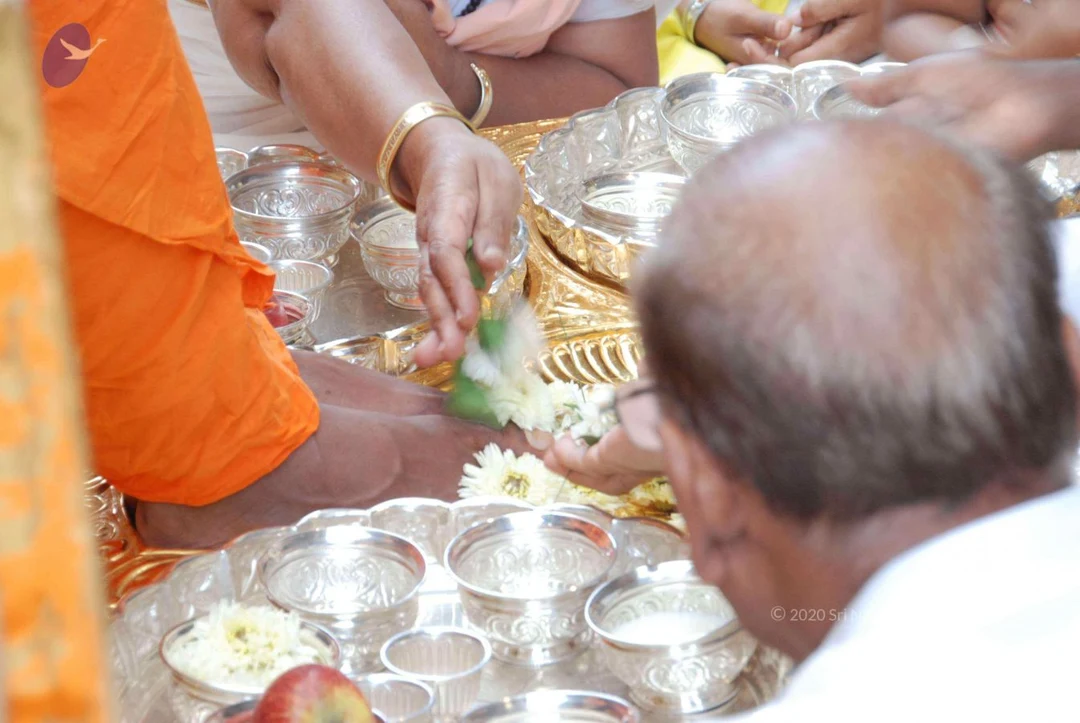
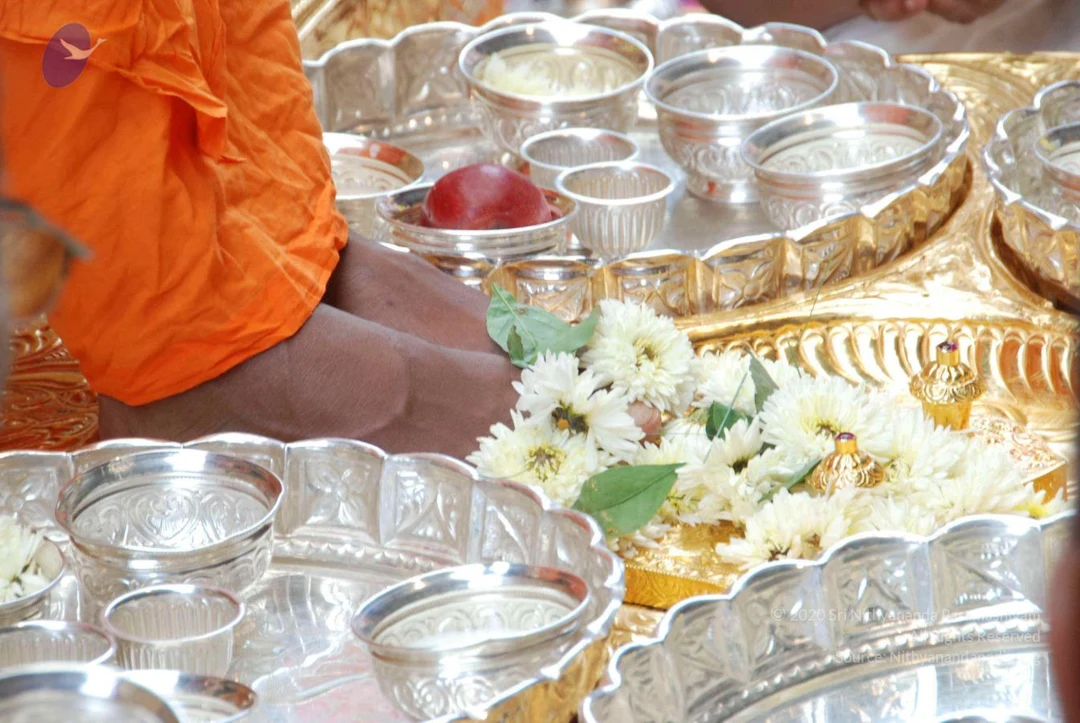
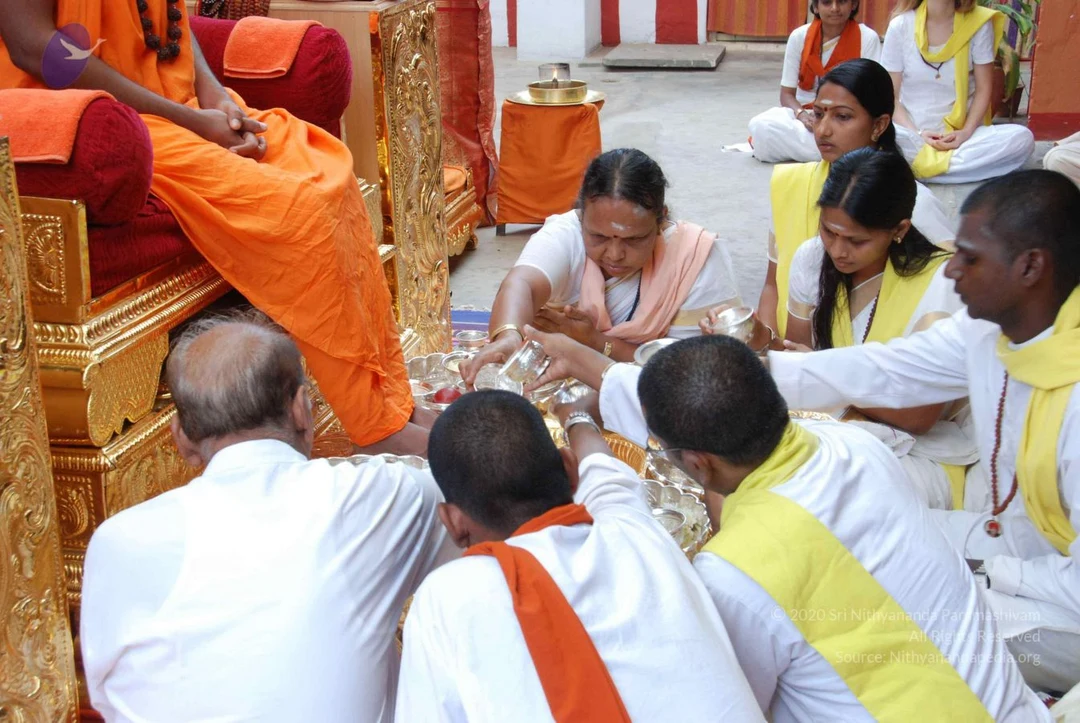
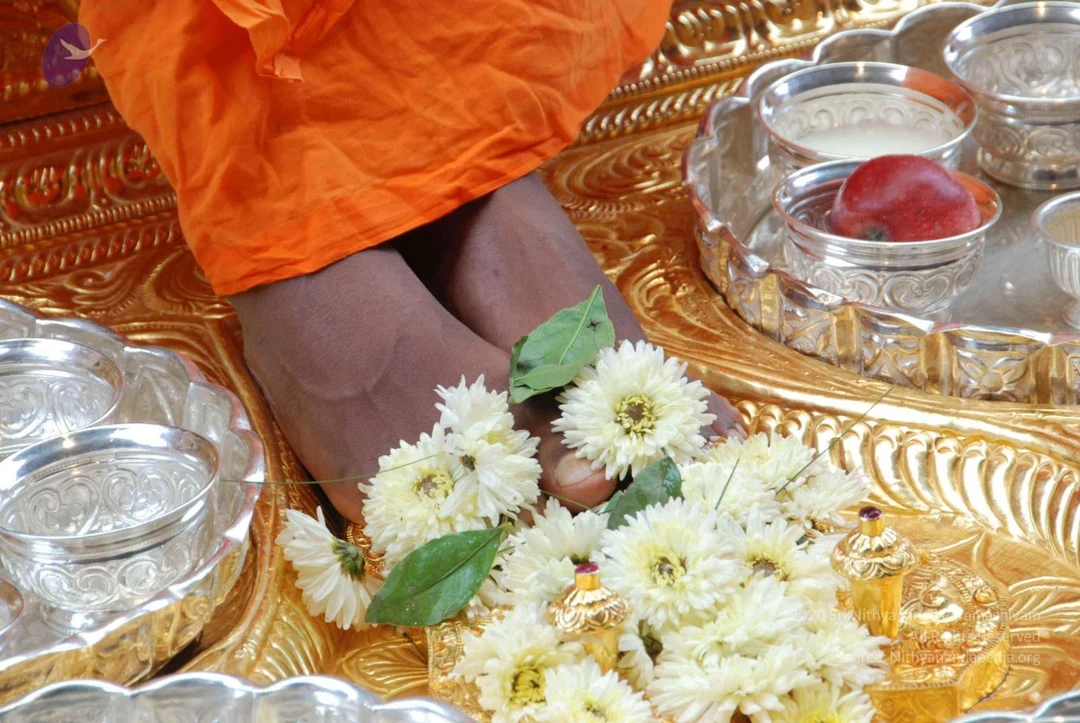
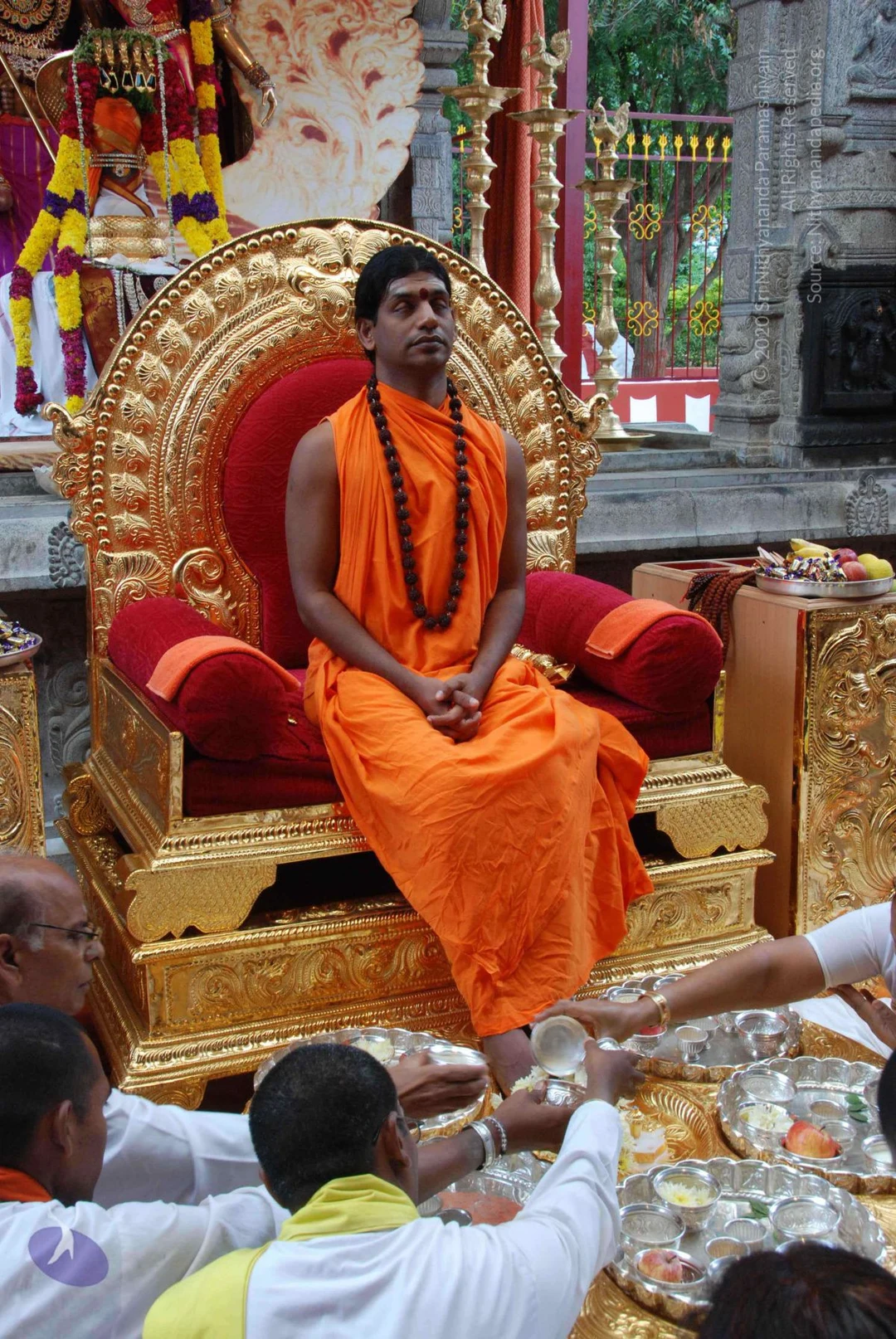
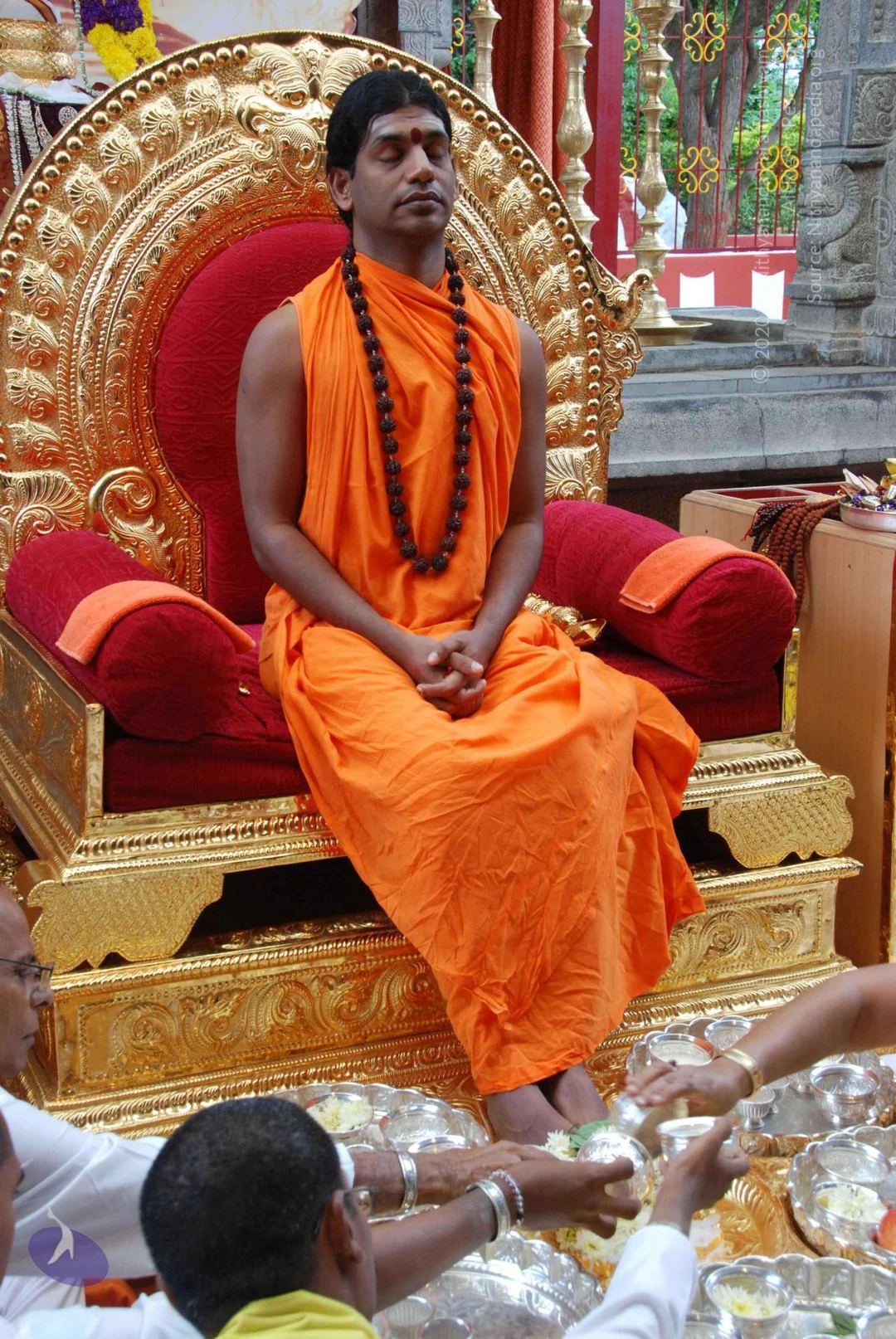
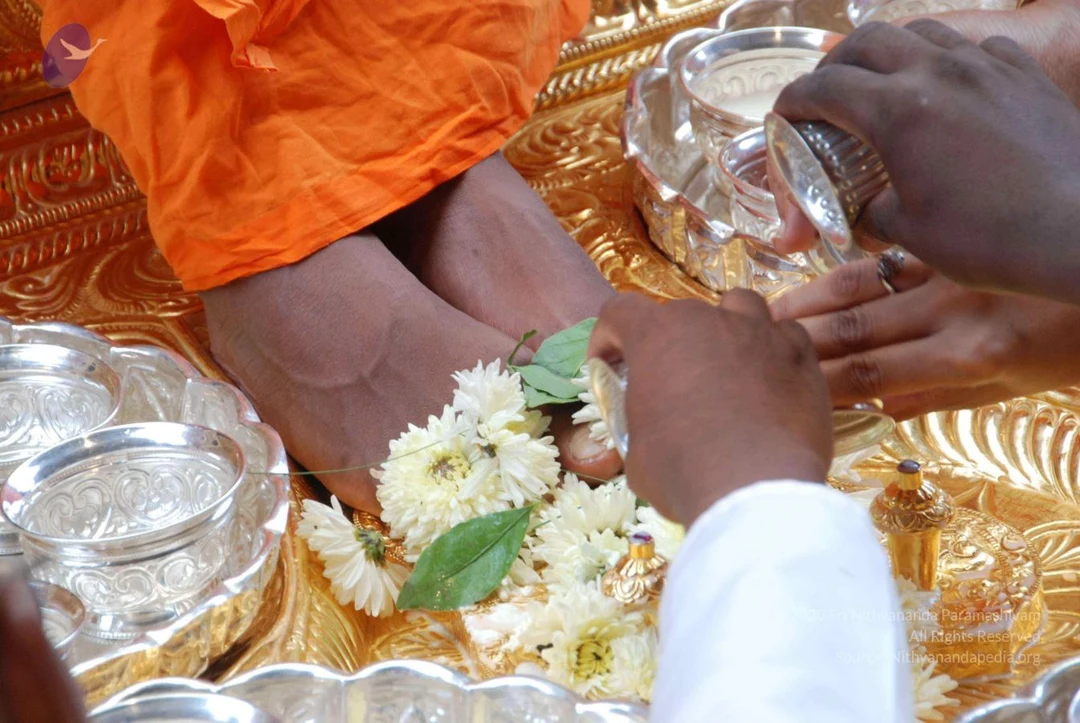
Paada-Puja

Nithya Satsang

Sarva Darshan

Aadheenavasis Take Aparigraha Blessings

Photos from this day

View all 131 photos

Pancha-Tapas
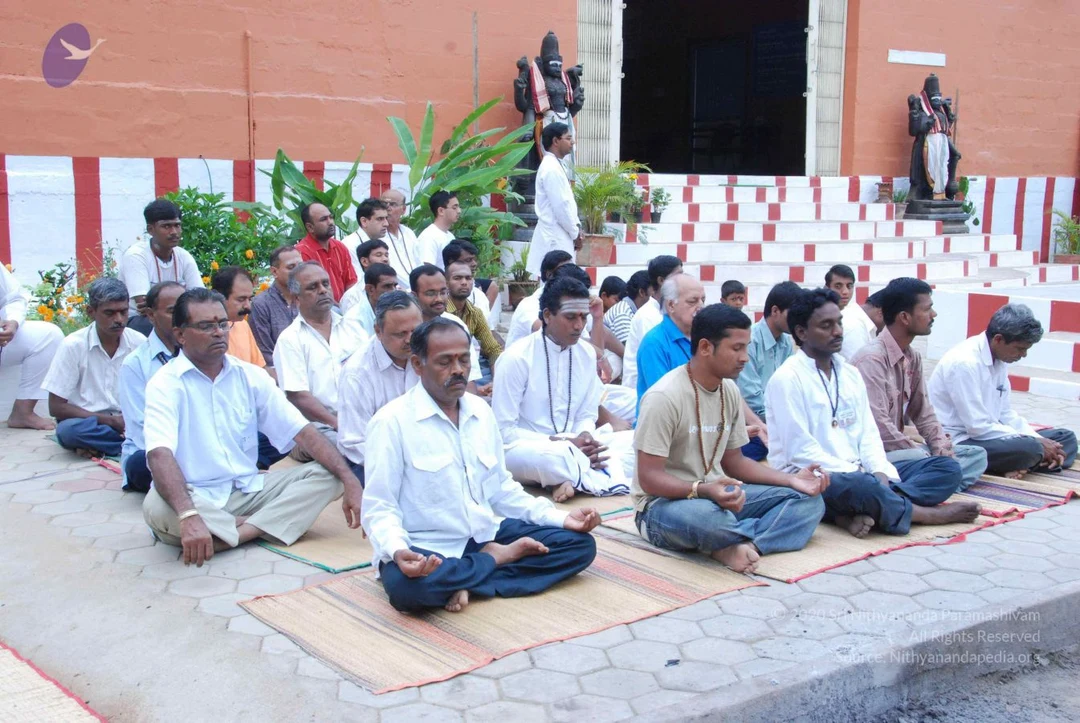
33 photosSource gallery
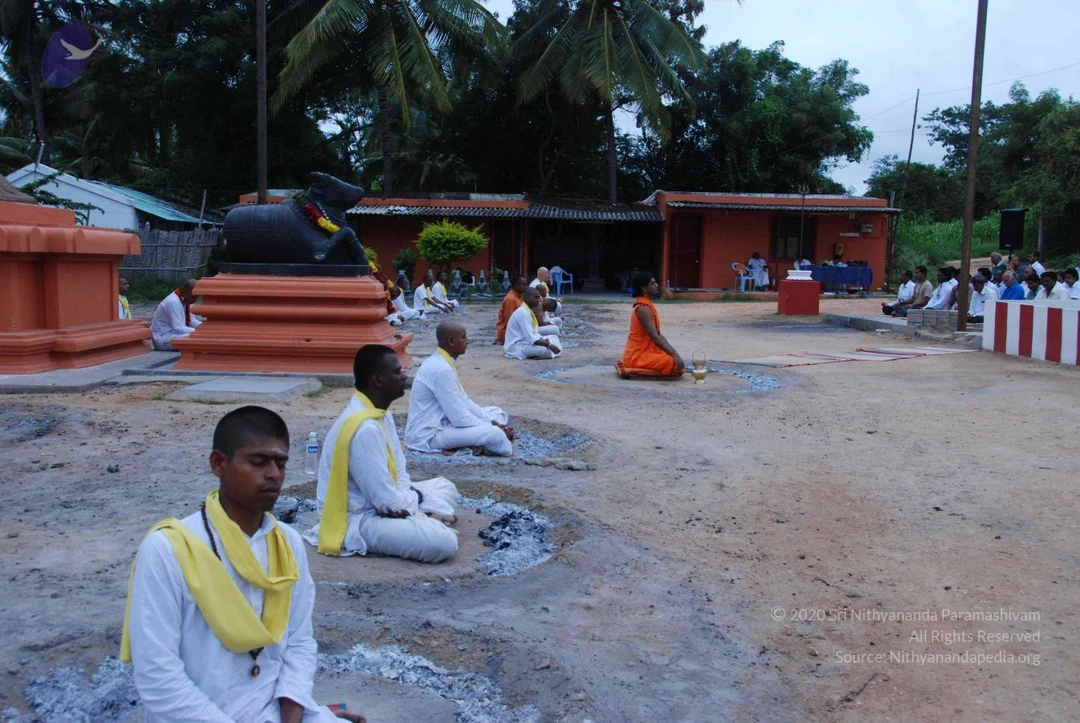
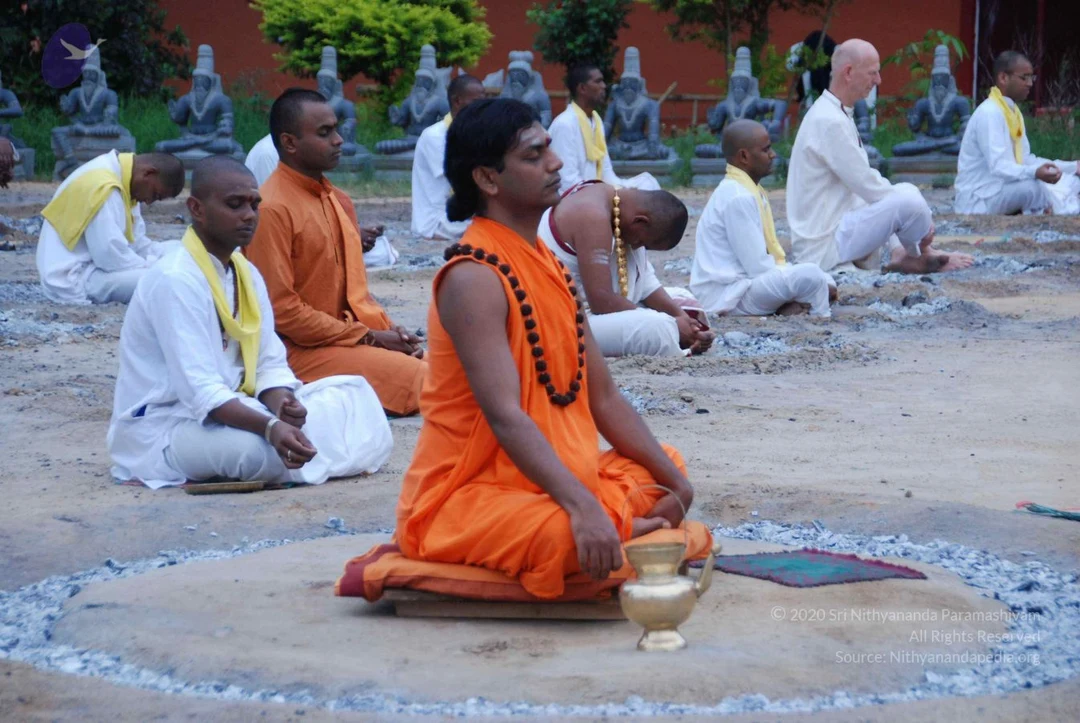
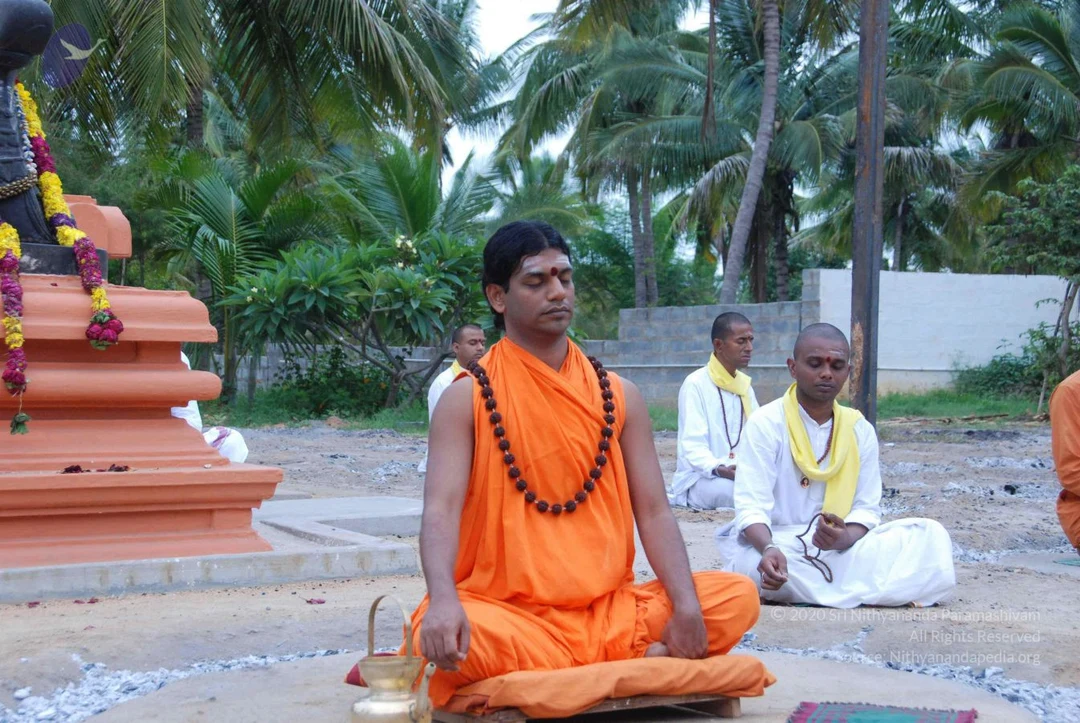
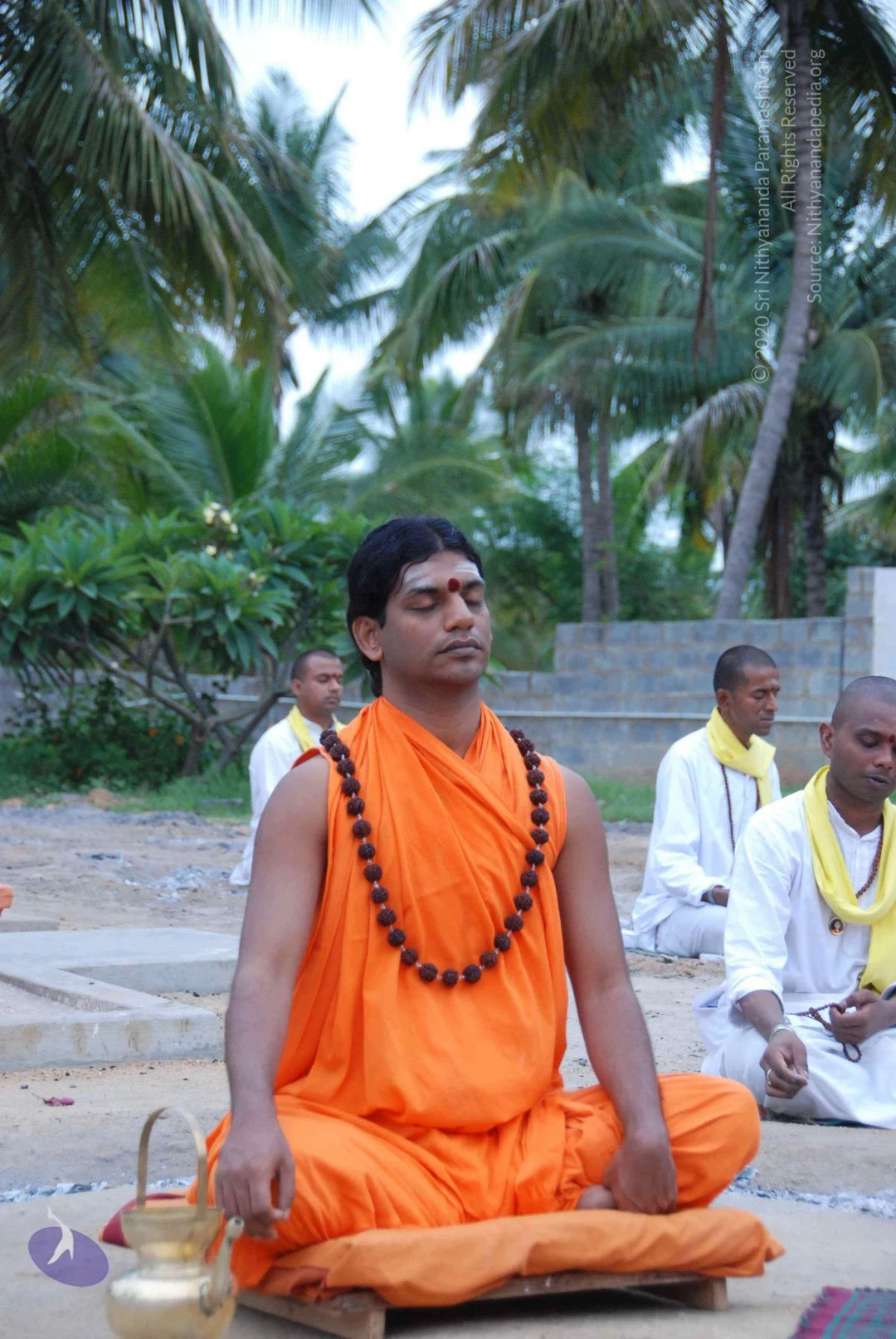
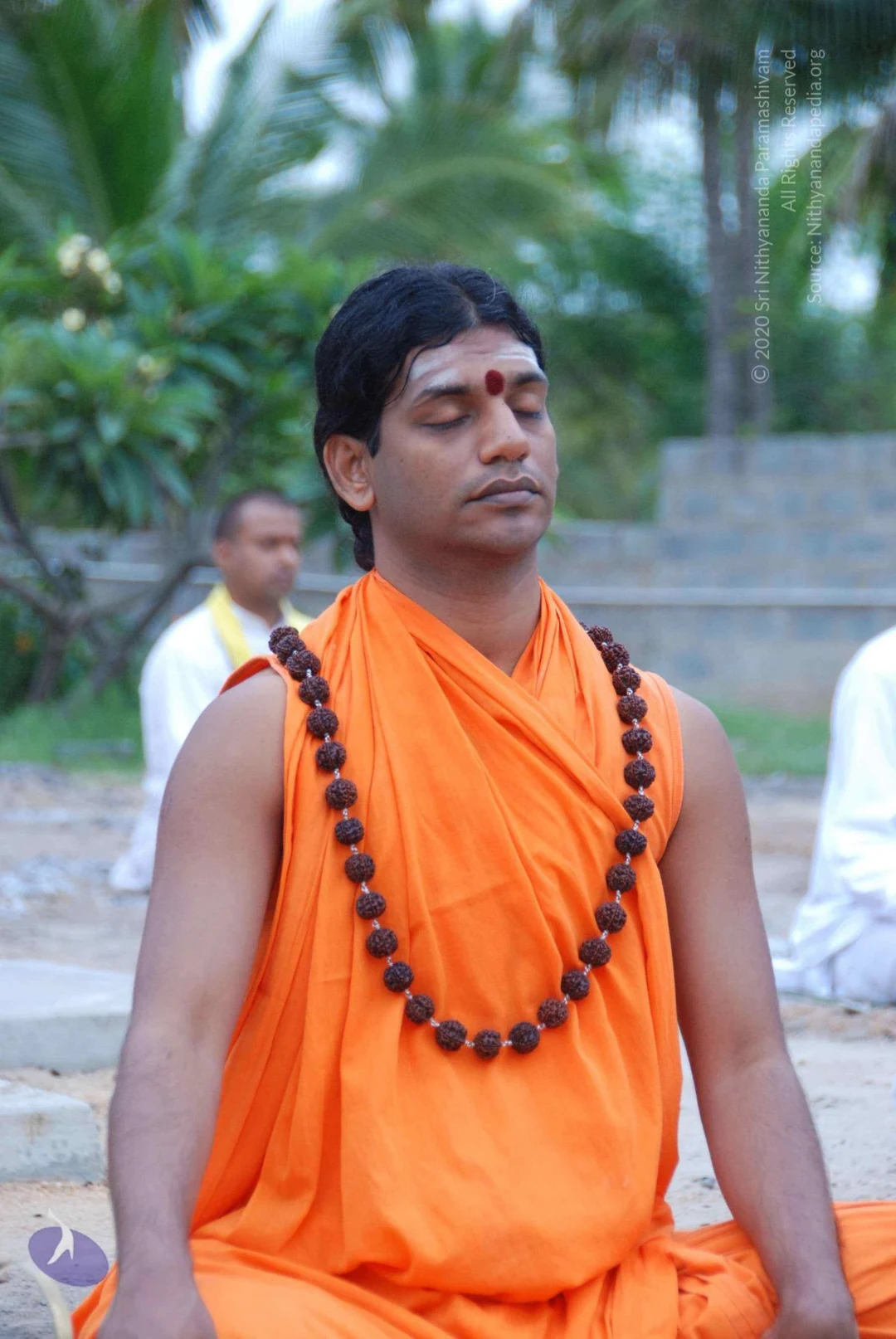
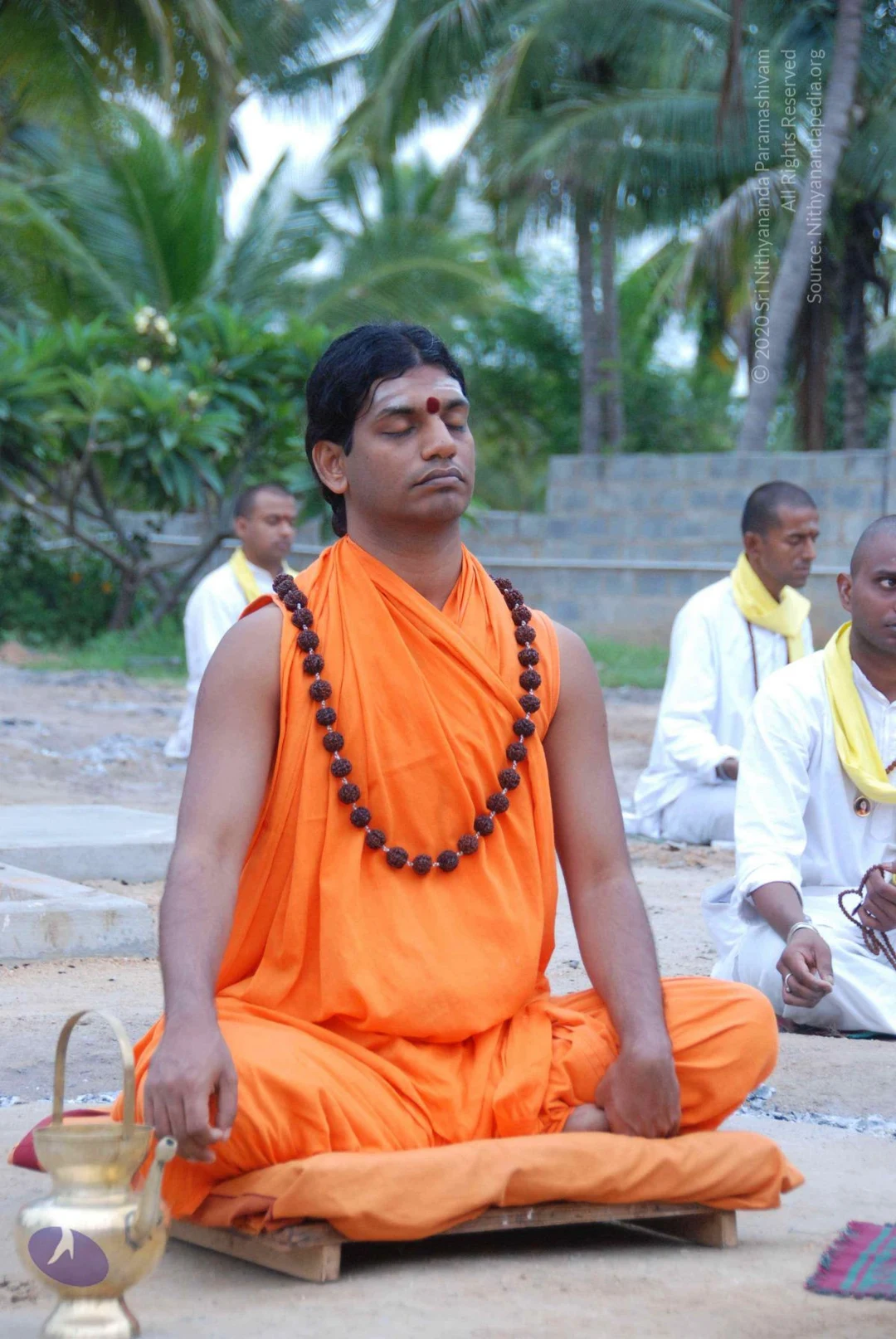
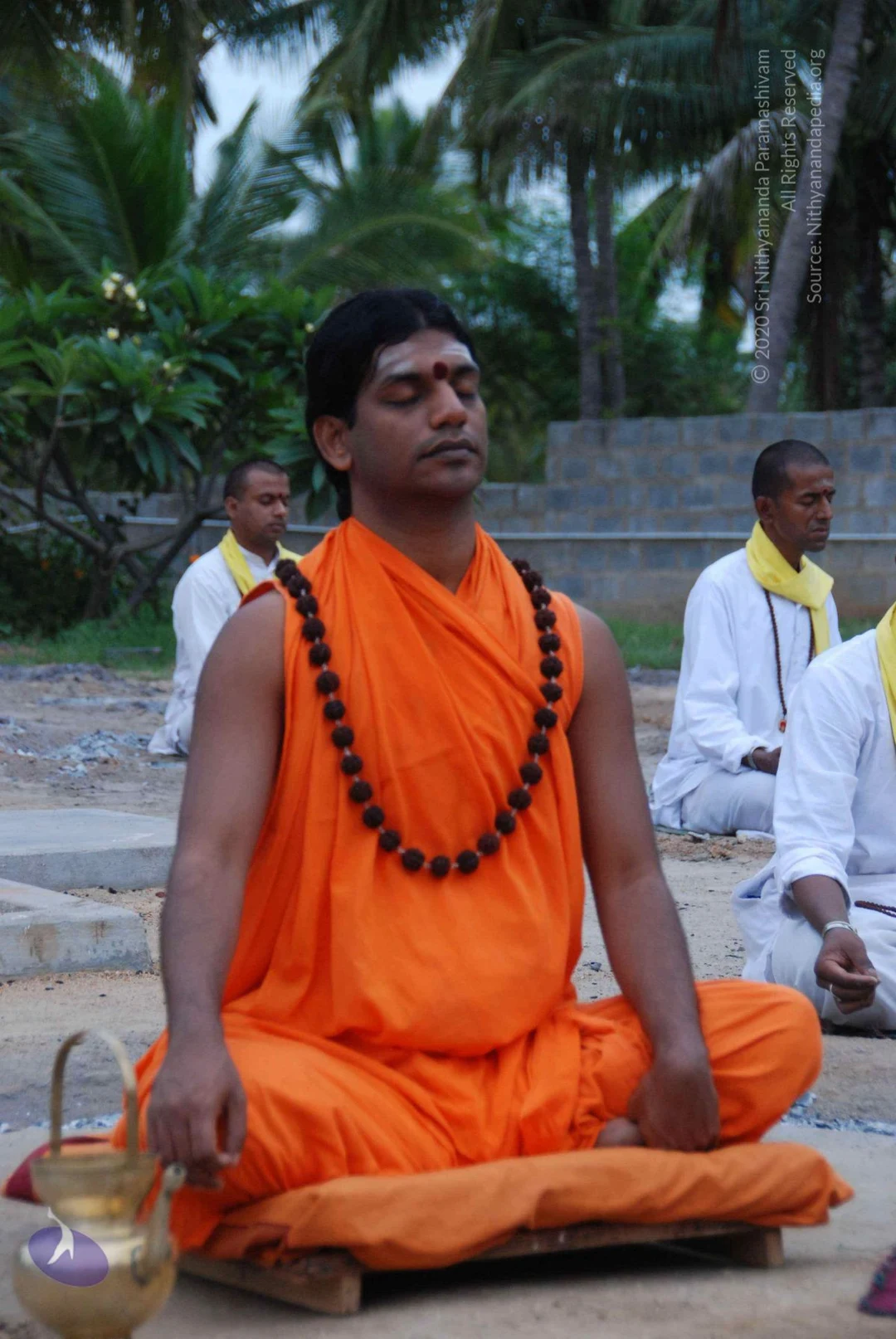
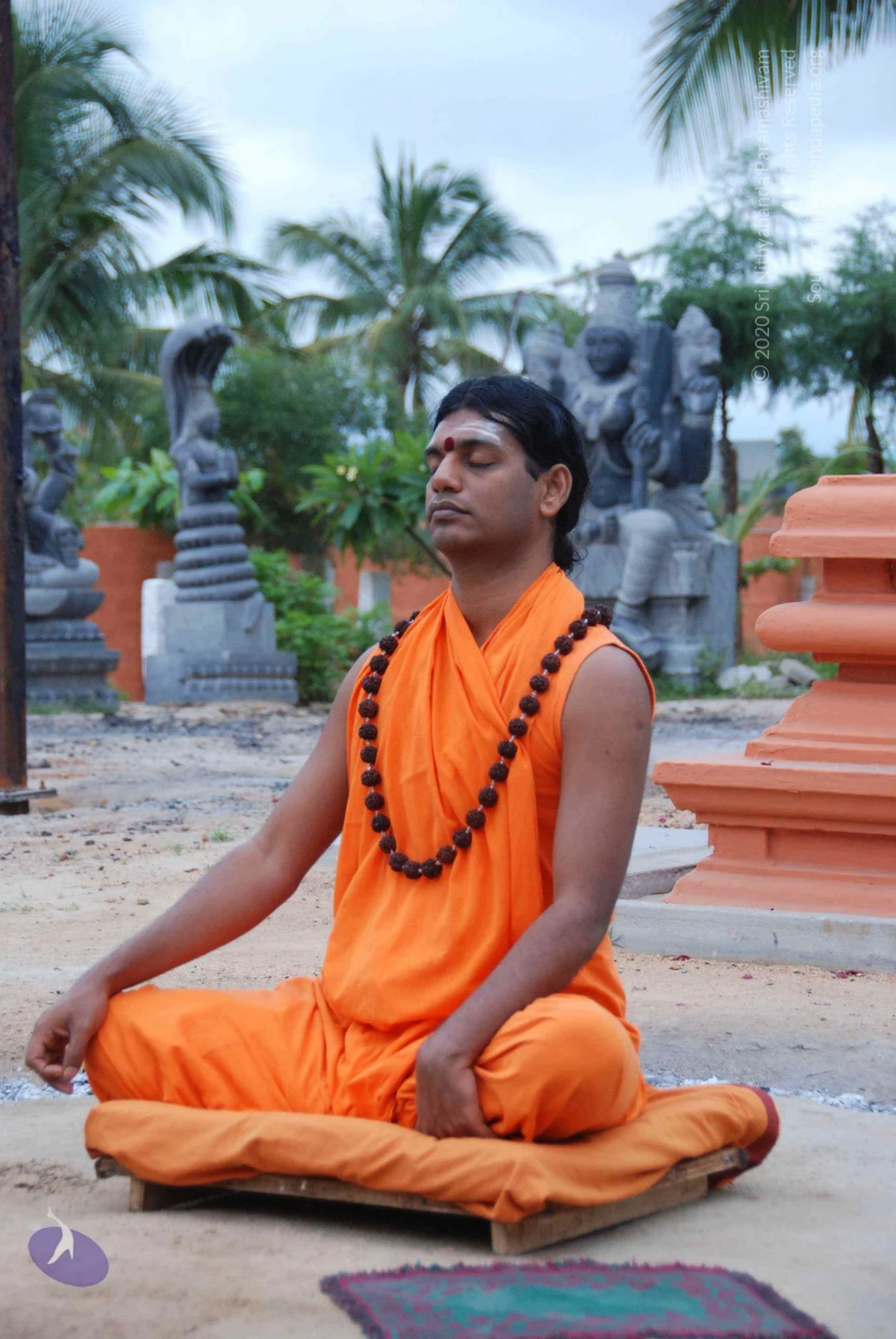
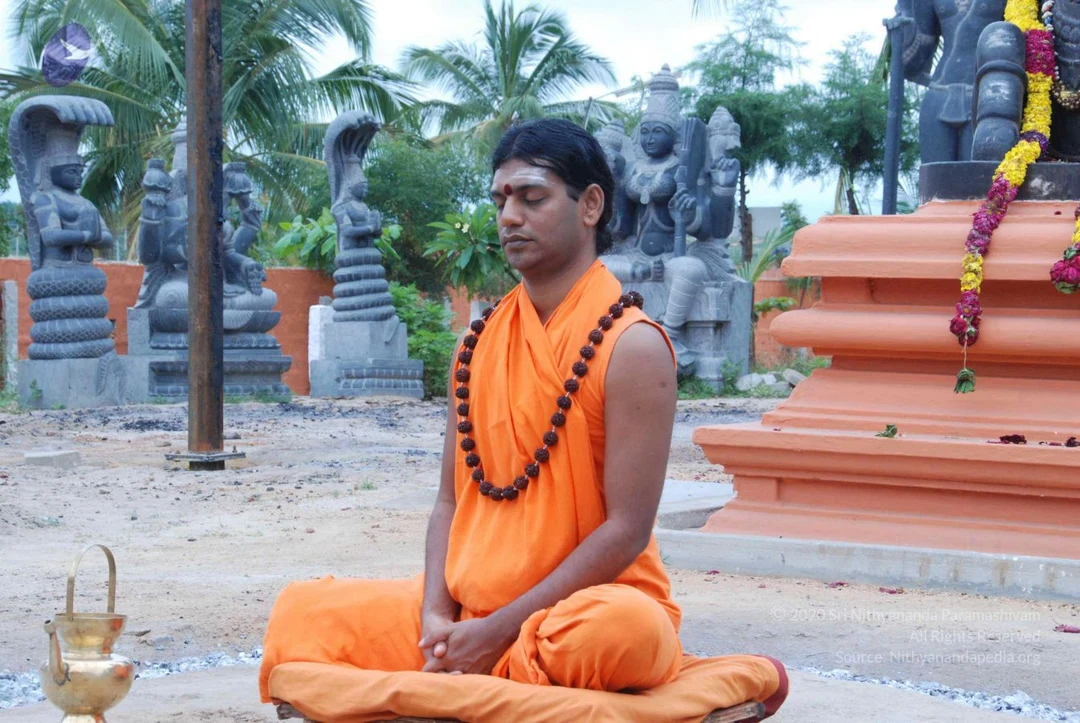
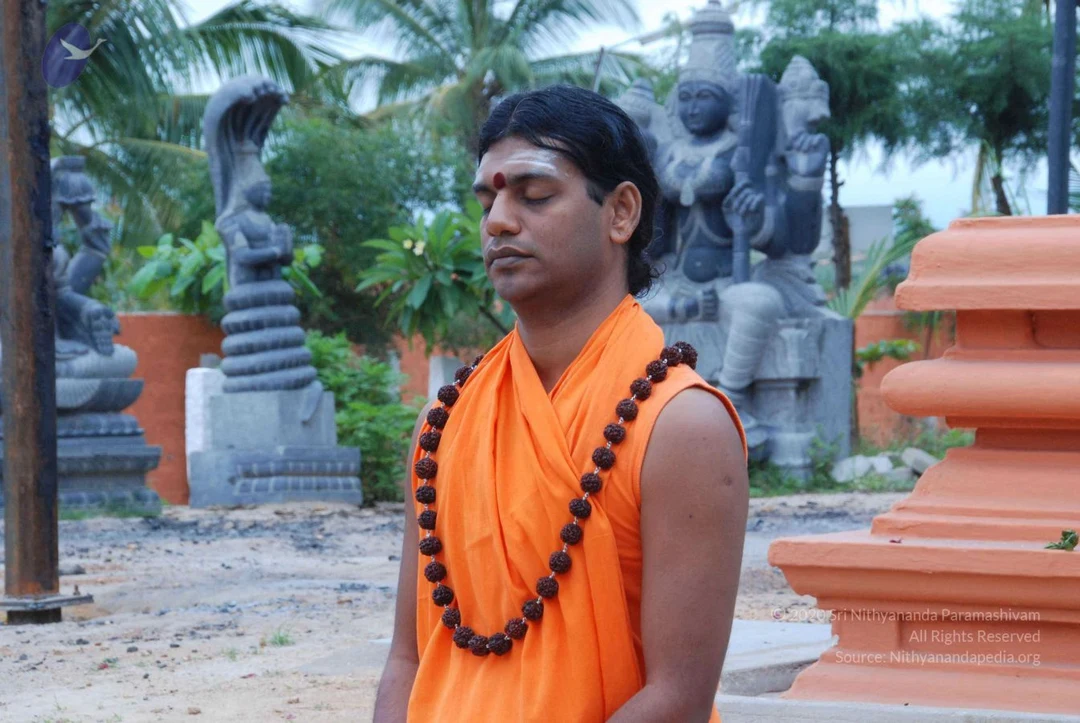
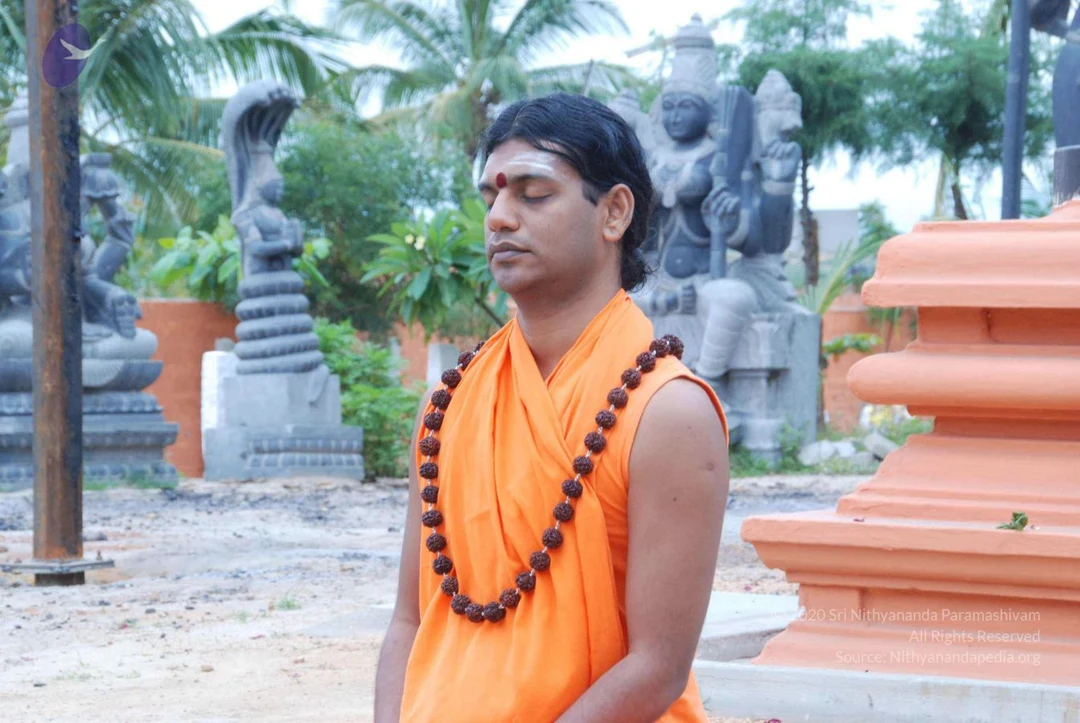
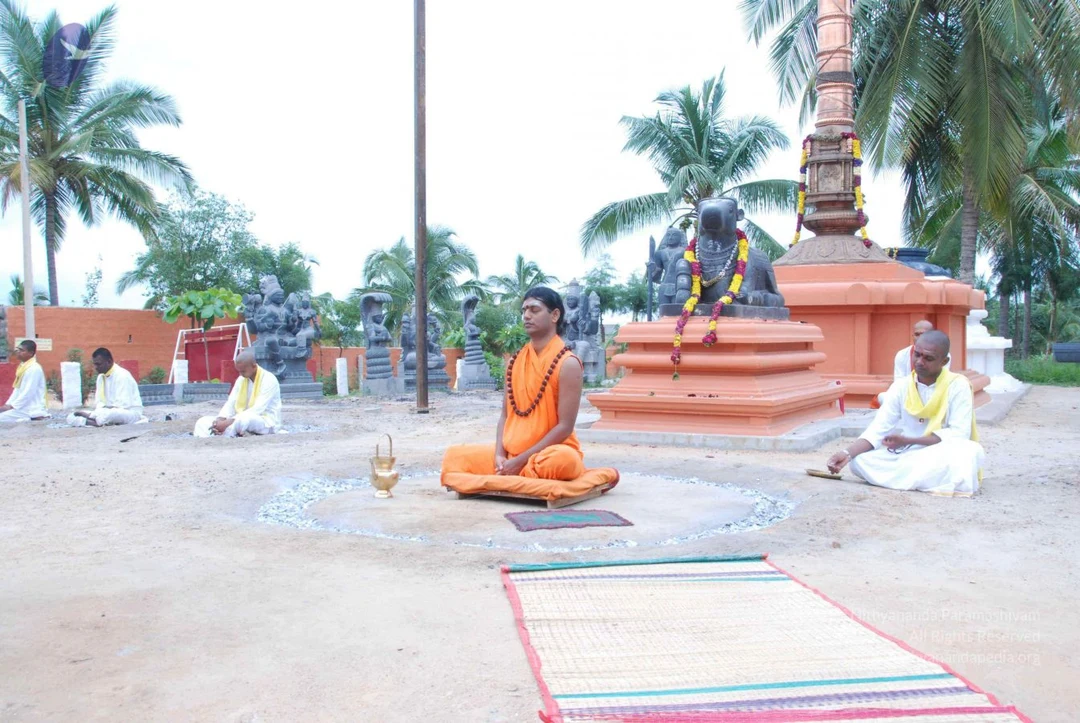
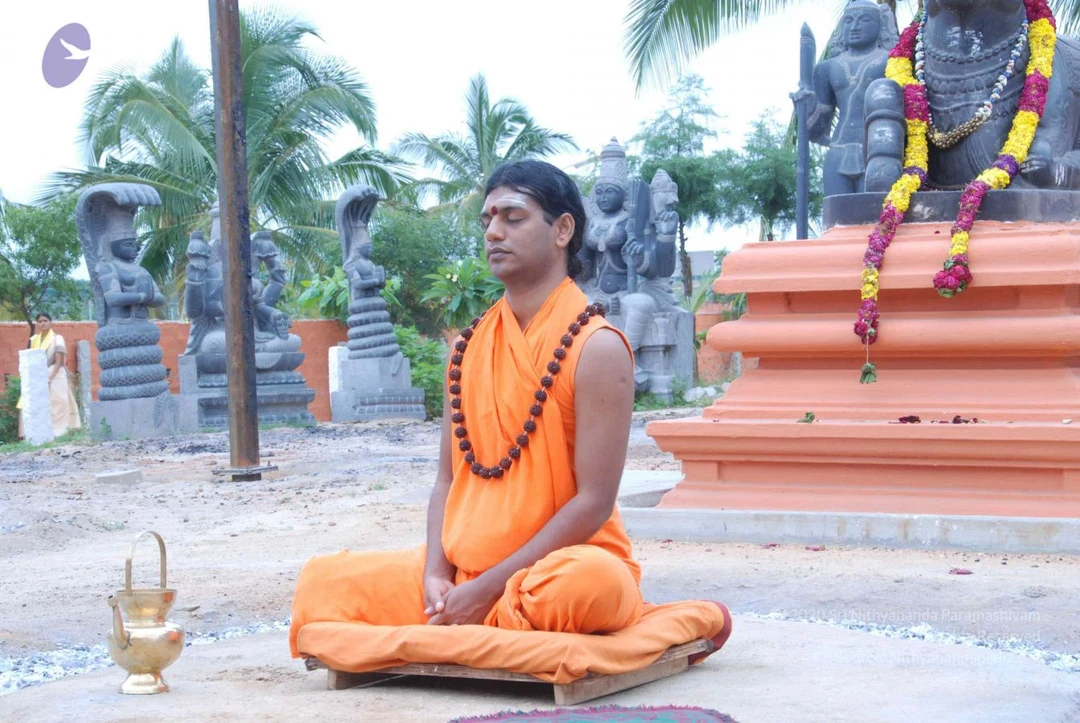
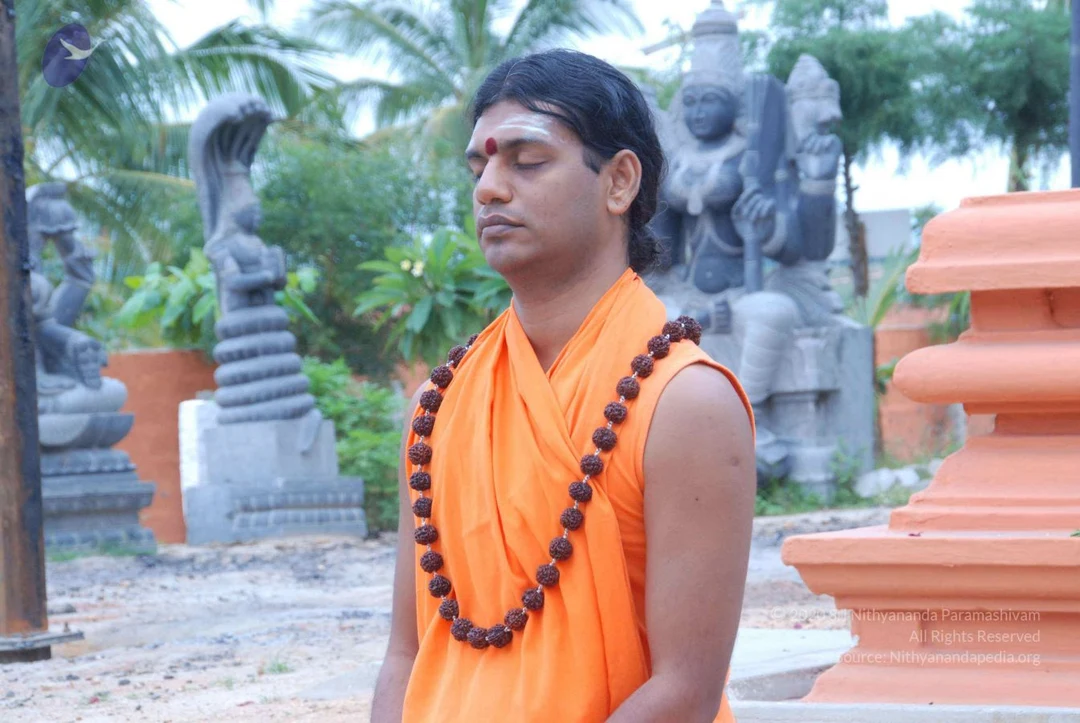
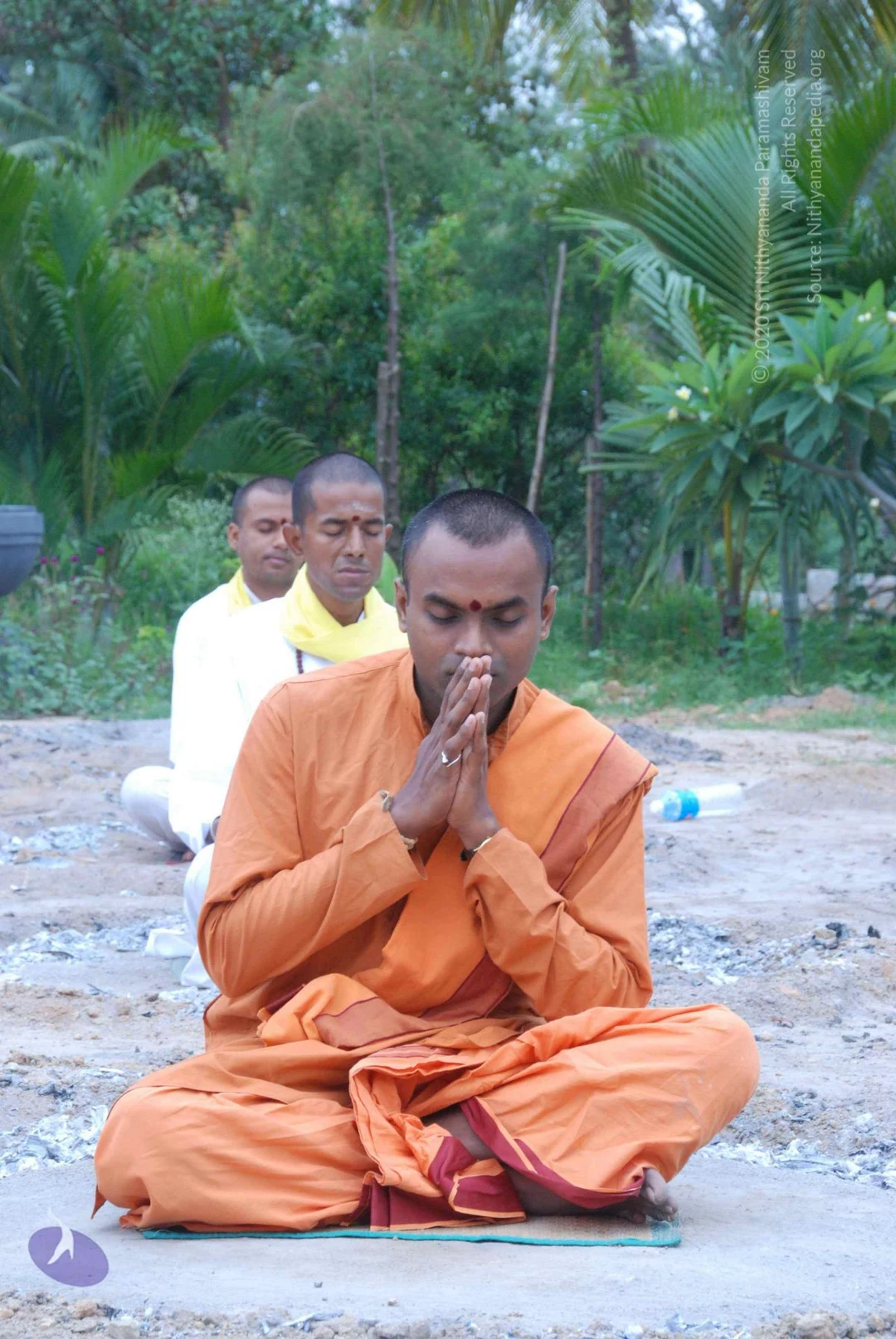
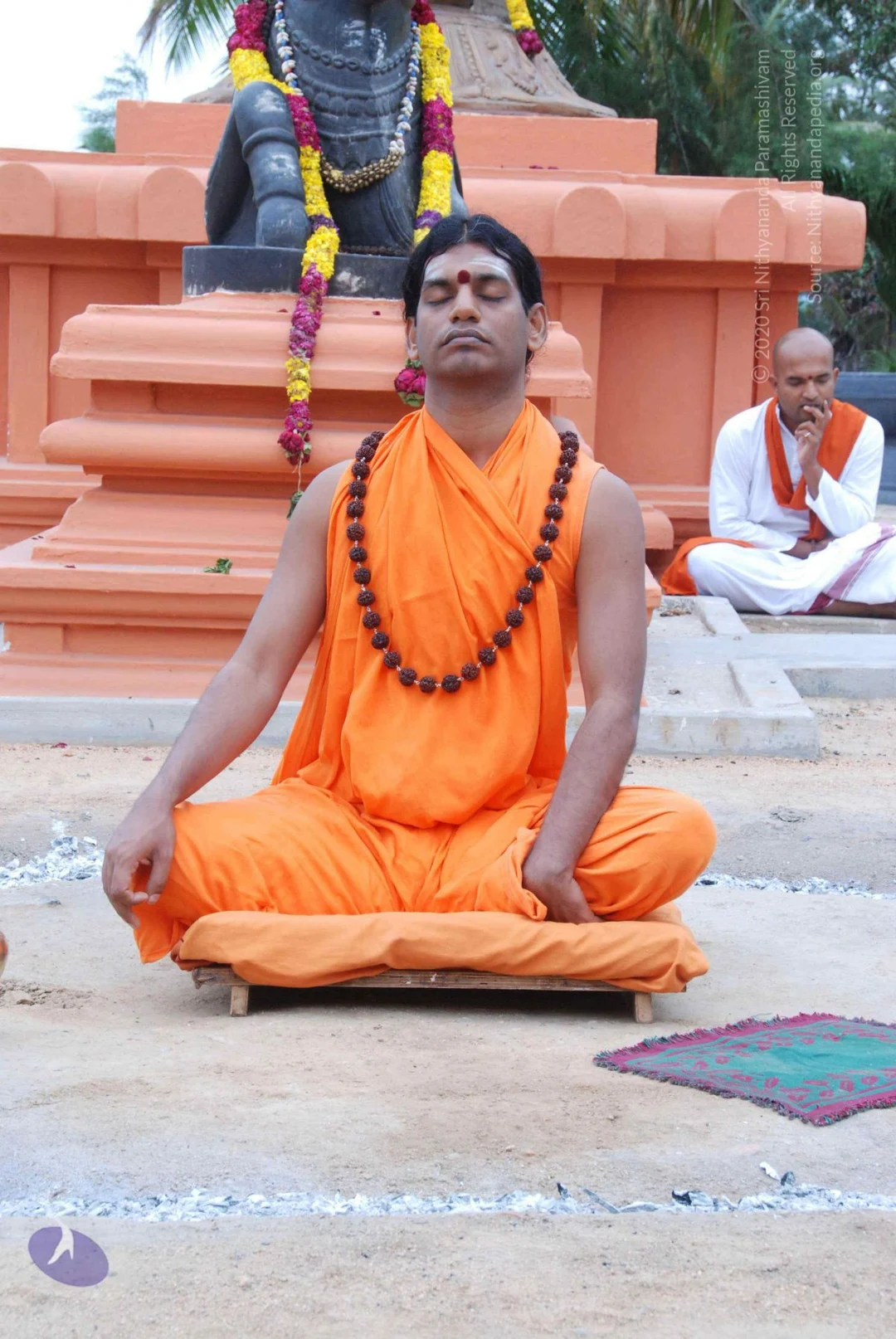
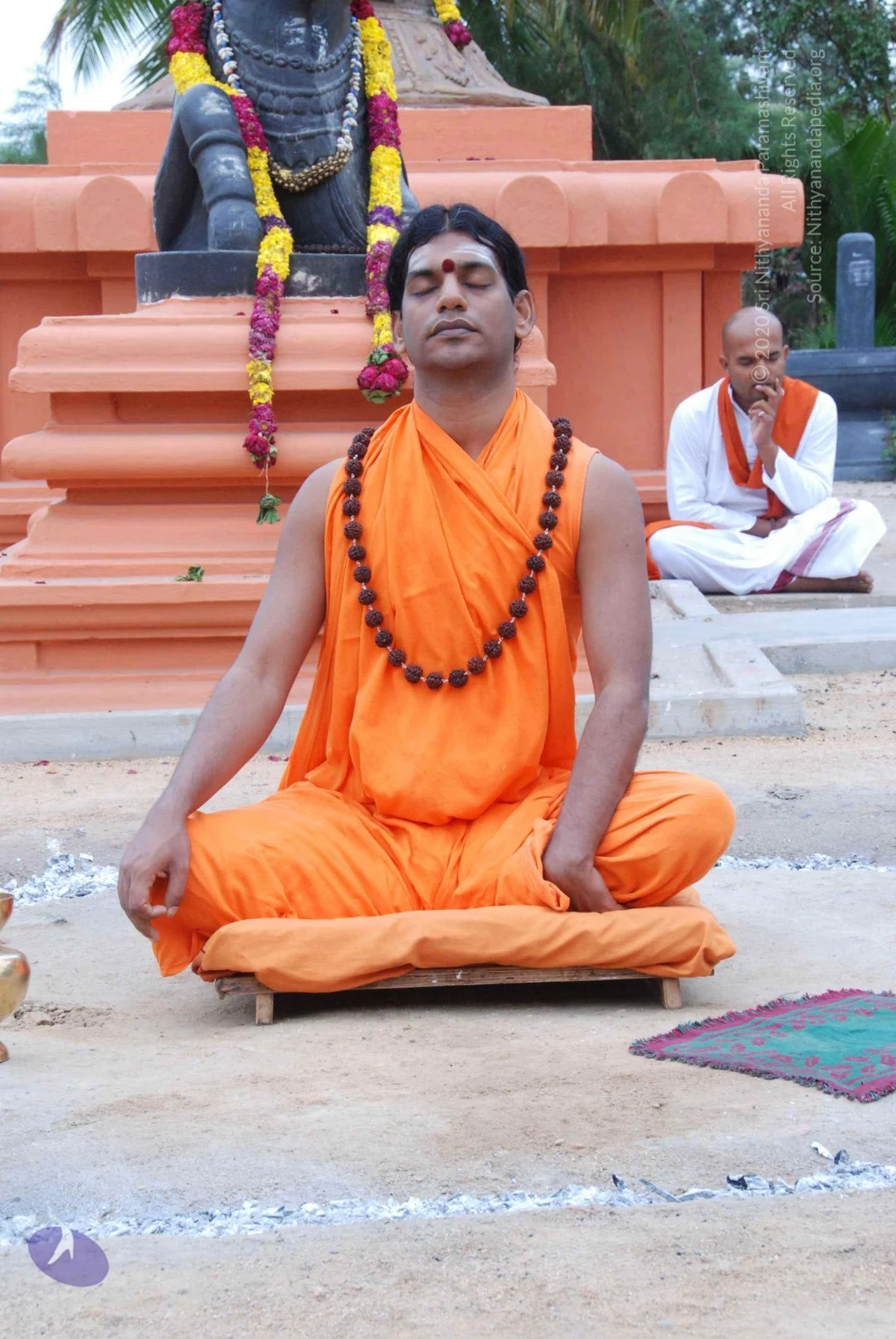
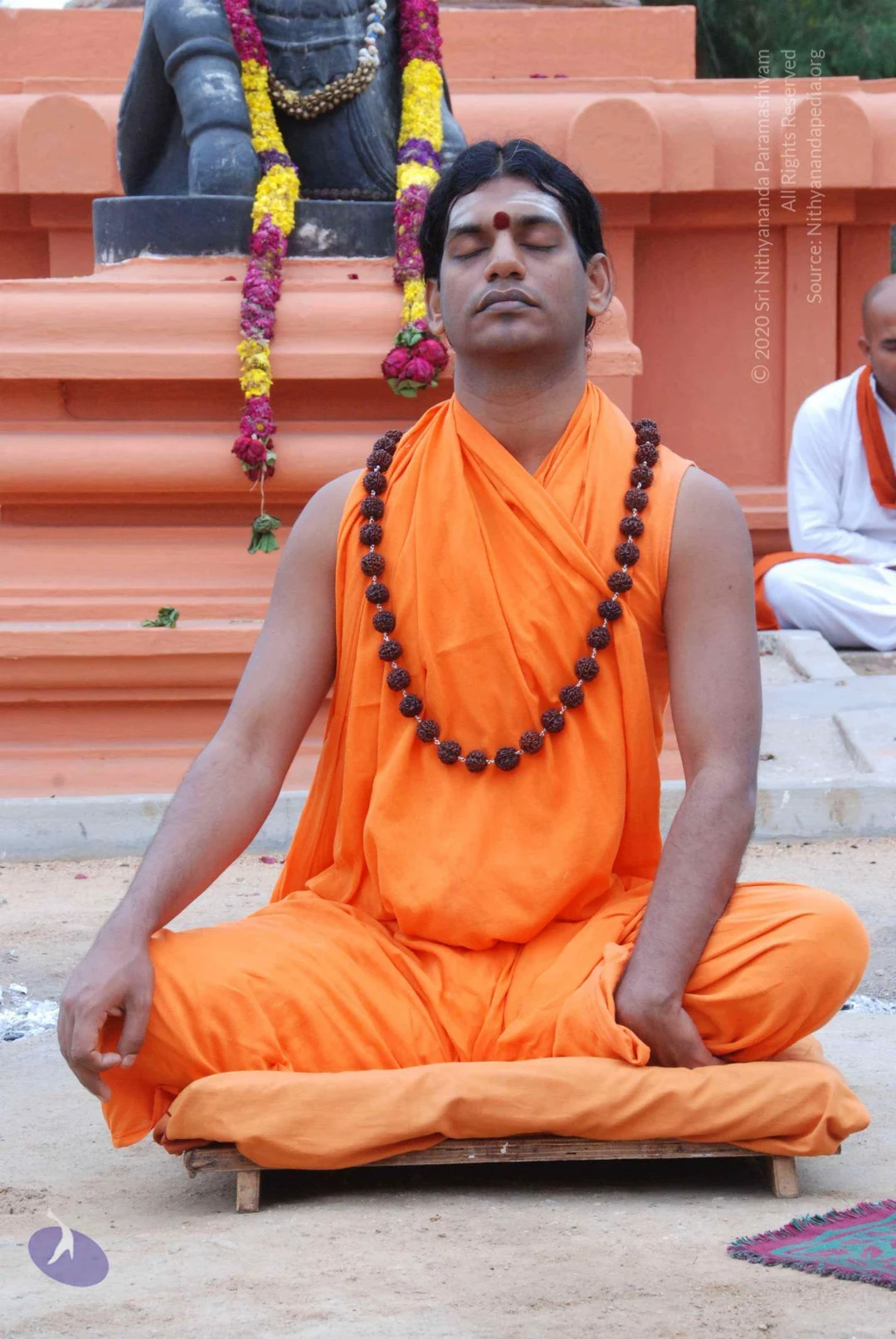
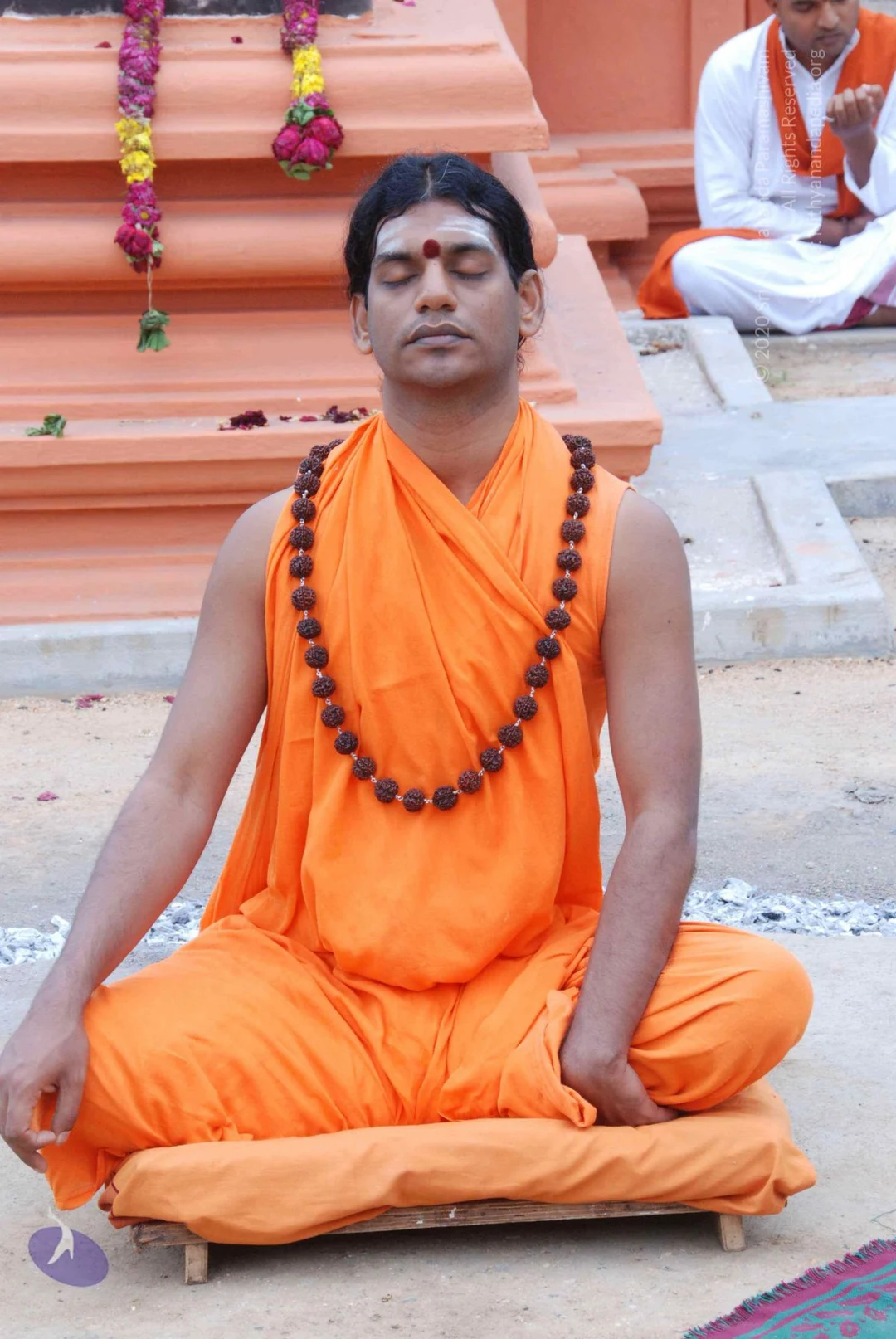
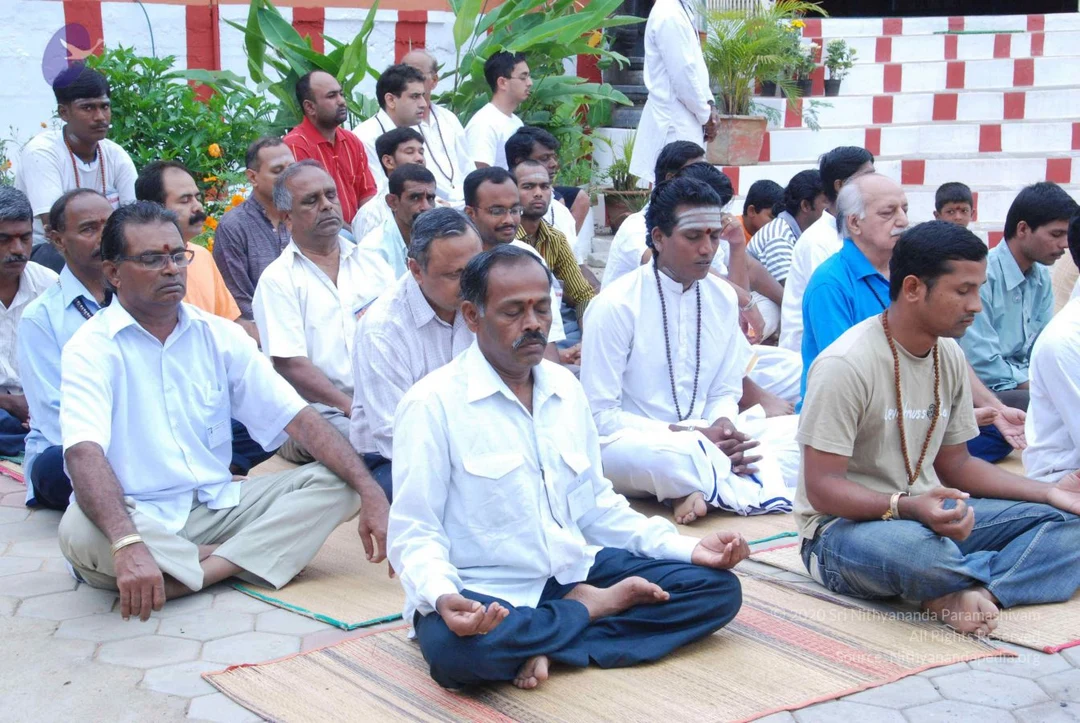
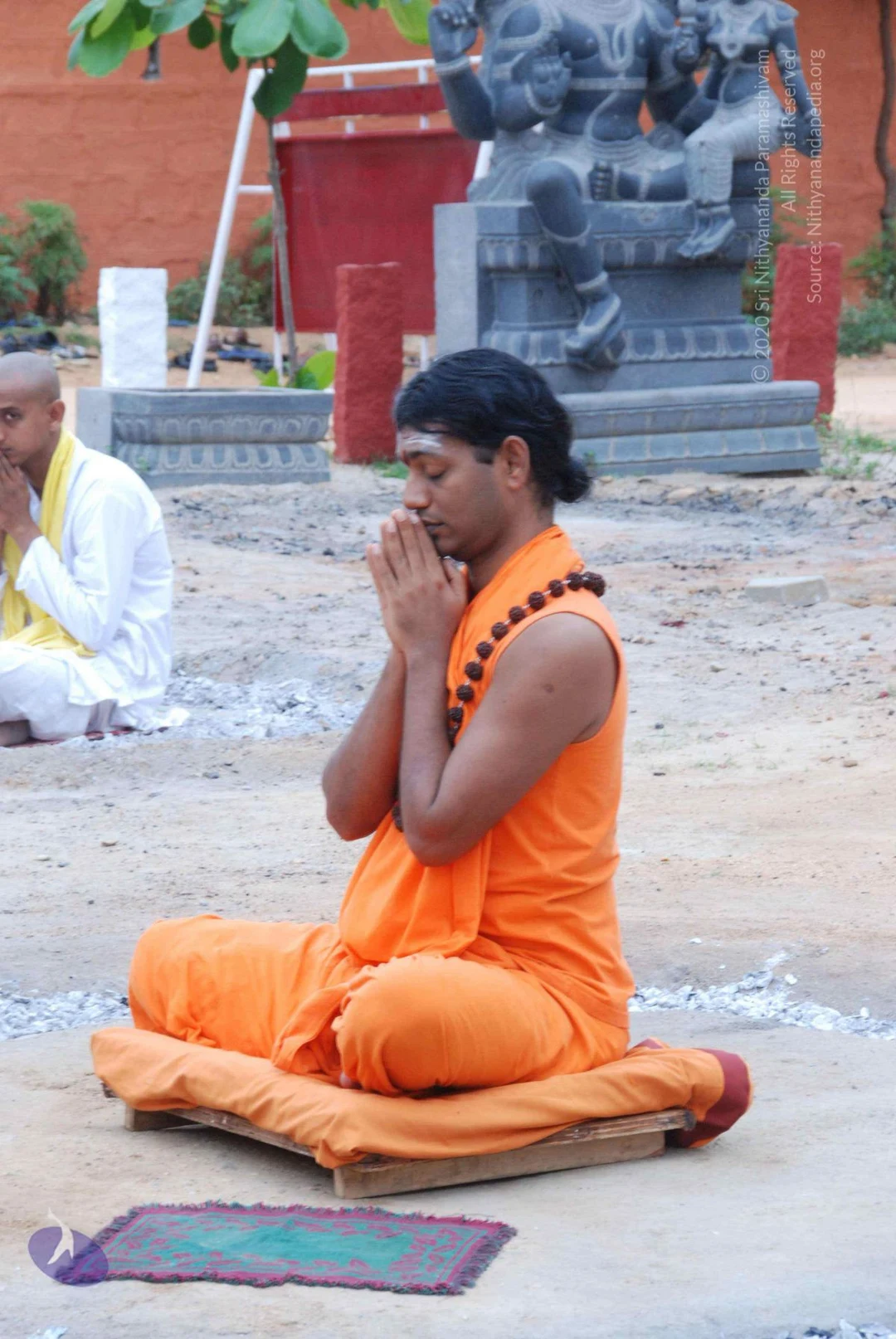
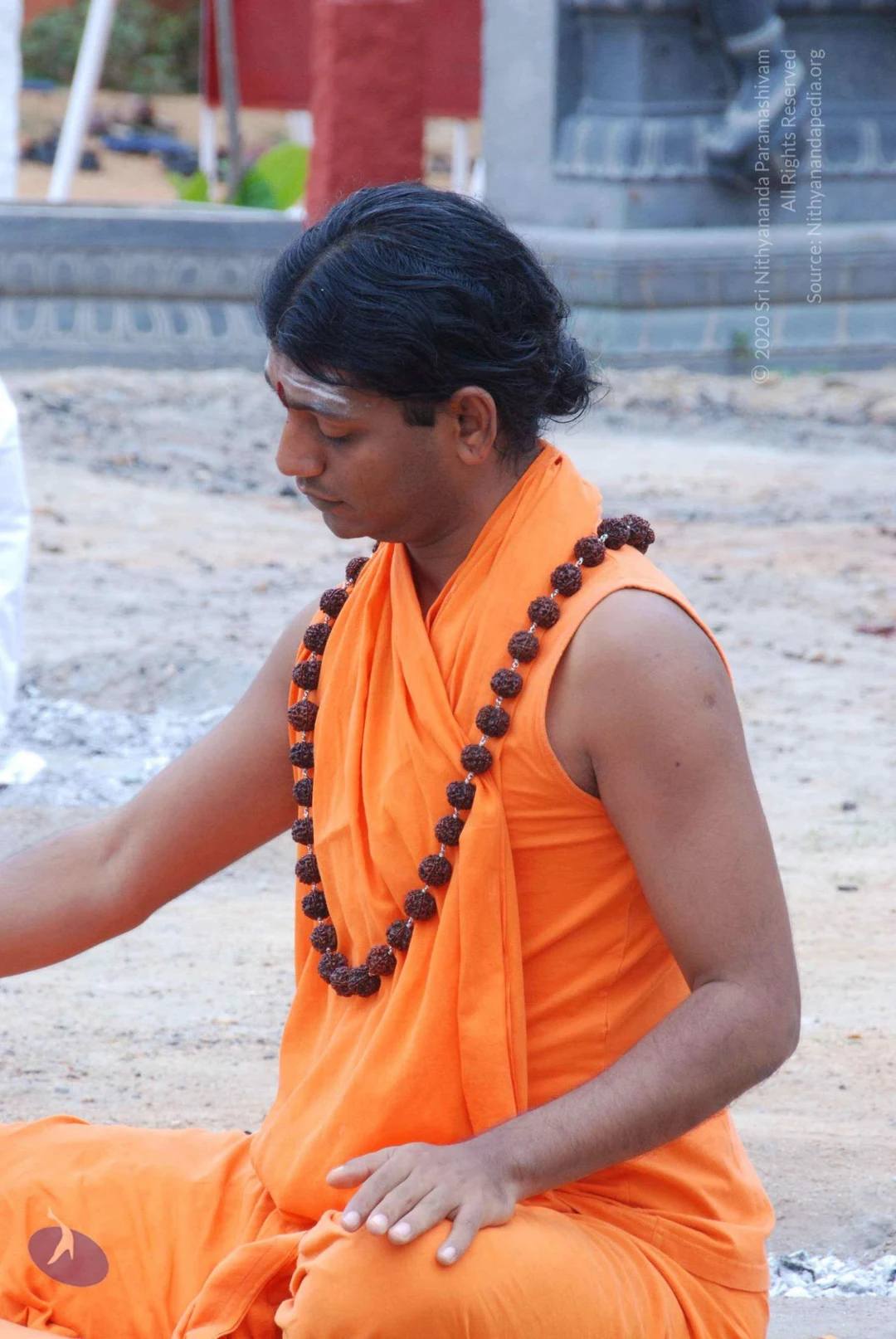
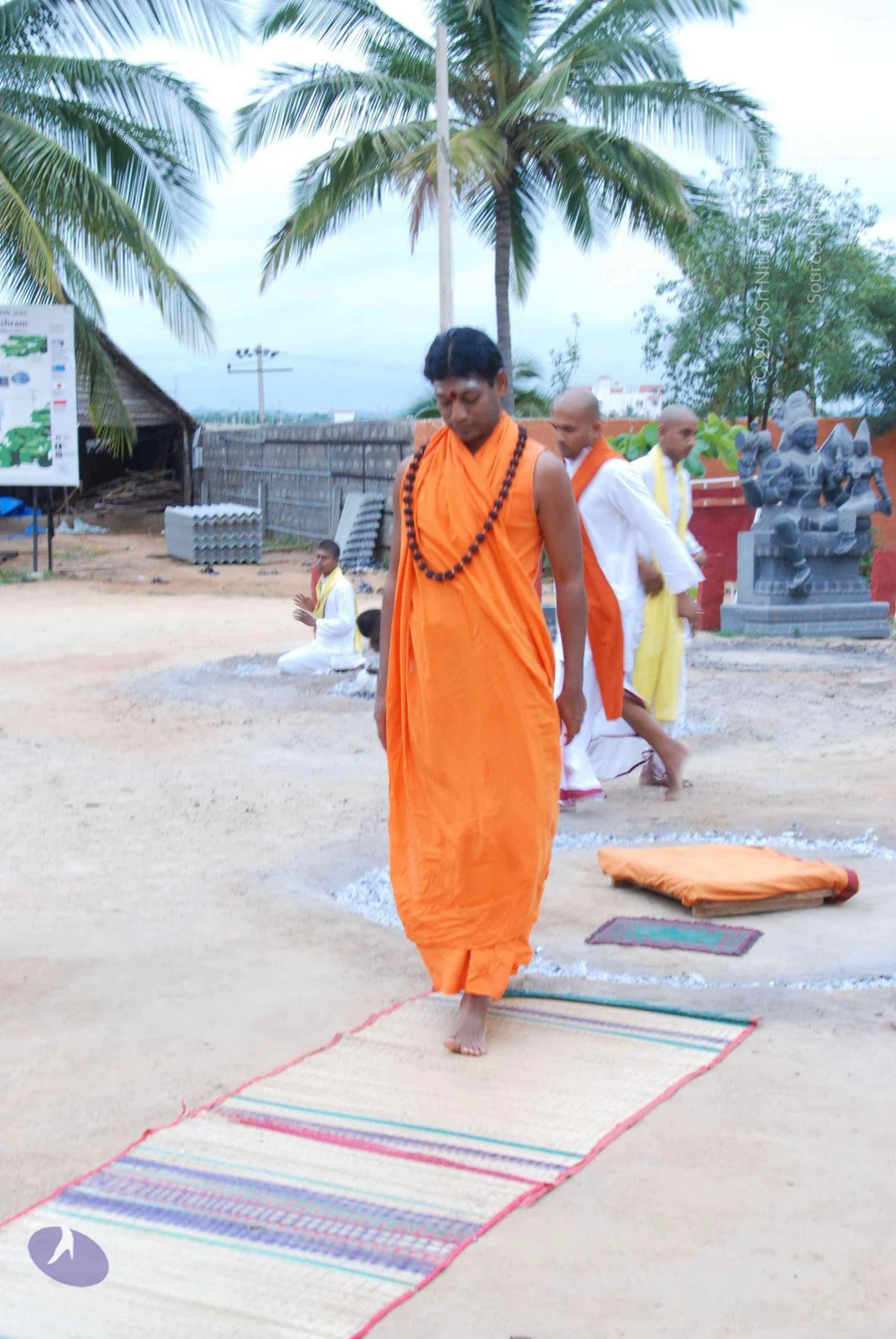
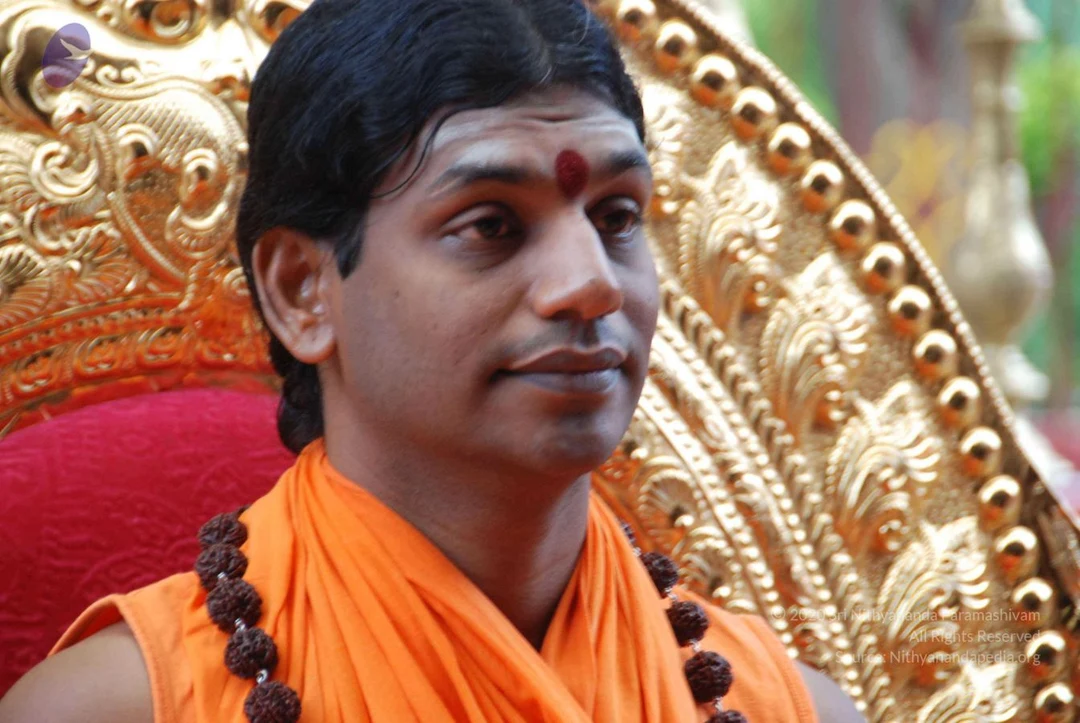
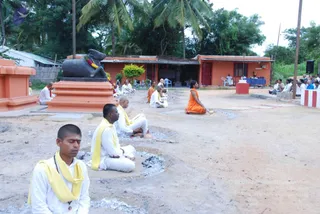
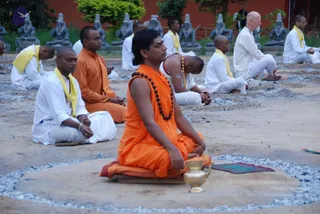
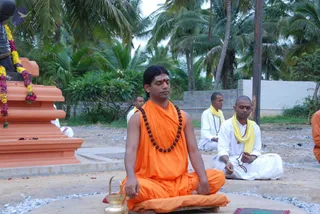
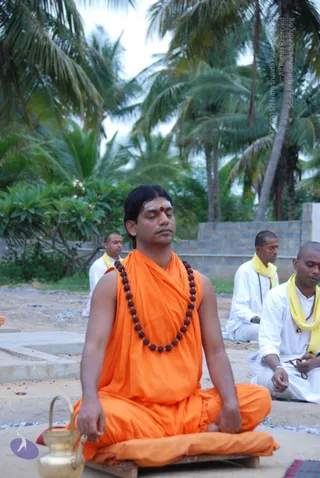
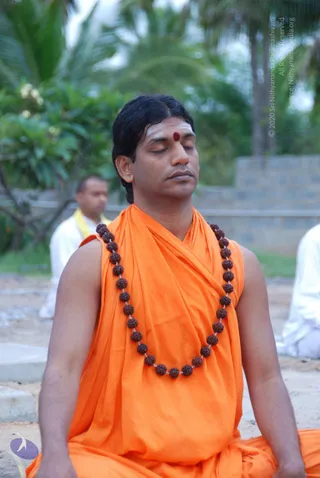
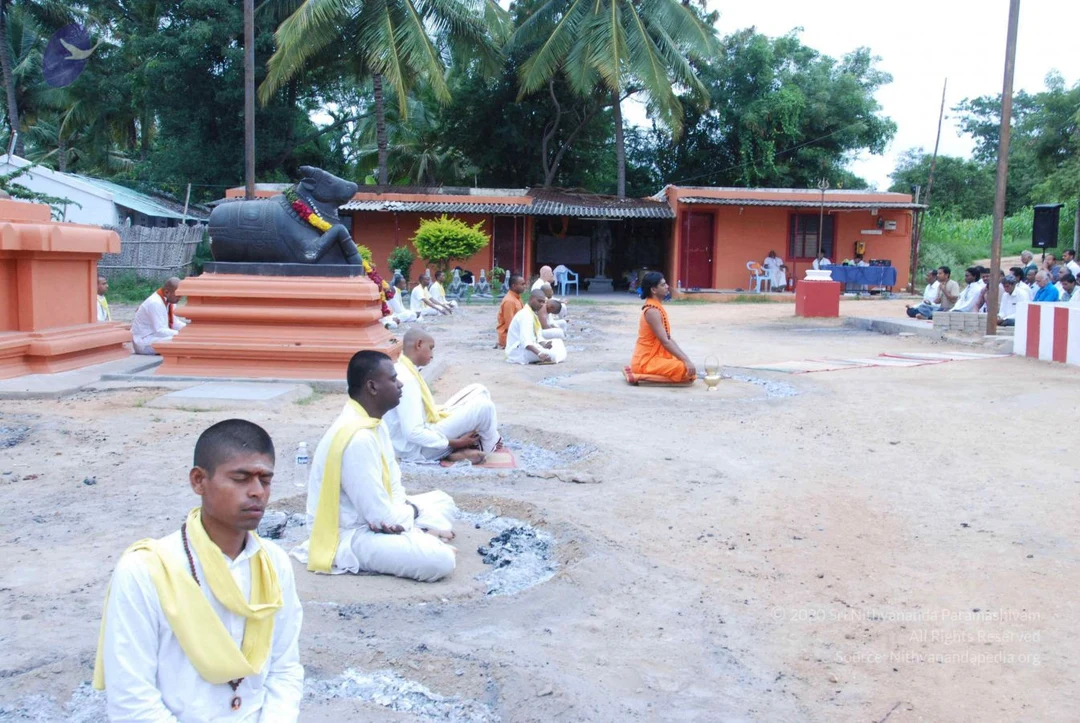
Outdoor photo of a dusty courtyard at a temple-like compound with orange-painted buildings and palm trees. In the foreground, a young man with shaved head wears white clothes and a yellow shawl, eyes closed, seated in meditation near a small grey ash-covered fire pit. Behind him, several men in white with yellow shawls sit on the ground, and a figure in orange robes sits on a mat beside a brass lamp. A black Nandi bull statue garlanded with red and white flowers stands on an orange plinth at left. Further back, a crowd of seated devotees in white watches from the shade of the building.Outdoor photo of a seated group in an open dirt courtyard beside an orange-painted shrine structure. In the foreground, several men in white dhotis and white kurtas with yellow shawls sit cross-legged on ash-covered circular marks, eyes closed, one with a rudraksha-style mala. Behind them, a black nandi bull statue garlanded with orange and white flowers rests on an orange pedestal, with coconut palms and trees beyond. A single woman in an orange sari sits near a brass oil lamp on the ground, with a larger group of seated people in white and a few in orange clothing further back near an orange building with a red-and-white barrier at right. The scene suggests a spiritual gathering or meditation session.Outdoor meditation session on a sandy ground ringed with grey gravel, with a row of grey stone deity murtis and a red wall behind. In the foreground a man in saffron robe with a long rudraksha mala sits cross-legged on a raised mat, eyes closed, hands resting on his lap, with a brass kalasha-style pot beside him. Around him several men sit in white dhotis and white kurtas with yellow shawls, eyes closed or hands folded in meditation; one man in an orange robe sits to the left, and a bald man in white sits to the right. The scene suggests a group meditation or satsang with devotees in white and yellow.Outdoor meditation session in a palm-lined compound. In the foreground, a man with short dark hair, a red bindi and a rudraksha mala sits cross-legged on a wooden platform wearing a saffron-orange robe, eyes closed, hands resting in his lap. Behind him, two men in white dhotis with yellow shawls sit in meditation, one holding a mala. A brass kalasha or lota sits at the lower left, and an orange-painted plinth with a flower garland stands at left beside a dark deity murti. Gravel ground and a low concrete wall complete the setting.A man seated cross-legged in meditation on an orange cushion placed on a wooden platform outdoors, eyes closed, hands resting on his lap. He wears an orange saffron wrap, a long dark rudraksha mala across his chest and a red tilak on his forehead. Behind him, two men in white dhoti-style clothes with yellow shawls sit in meditation, one holding a mala. A brass kalasha-style vessel sits at the lower left, and tall coconut palms and flowering plants frame the open ground.A man in a meditation pose sits with eyes closed outdoors, wearing an orange saffron shawl over a sleeveless orange garment and a long rudraksha mala of dark brown beads. He has a red bindi and white tilak on his forehead and long swept-back black hair. Behind him a man in white clothes with a yellow shawl sits, and a palm-lined garden with flowering plumeria is visible. The setting is an open sandy ground. Appearance-based label: a person, given the orange saffron robe, rudraksha mala and sannyasi-style dress, seated in meditation.

Paada-Puja
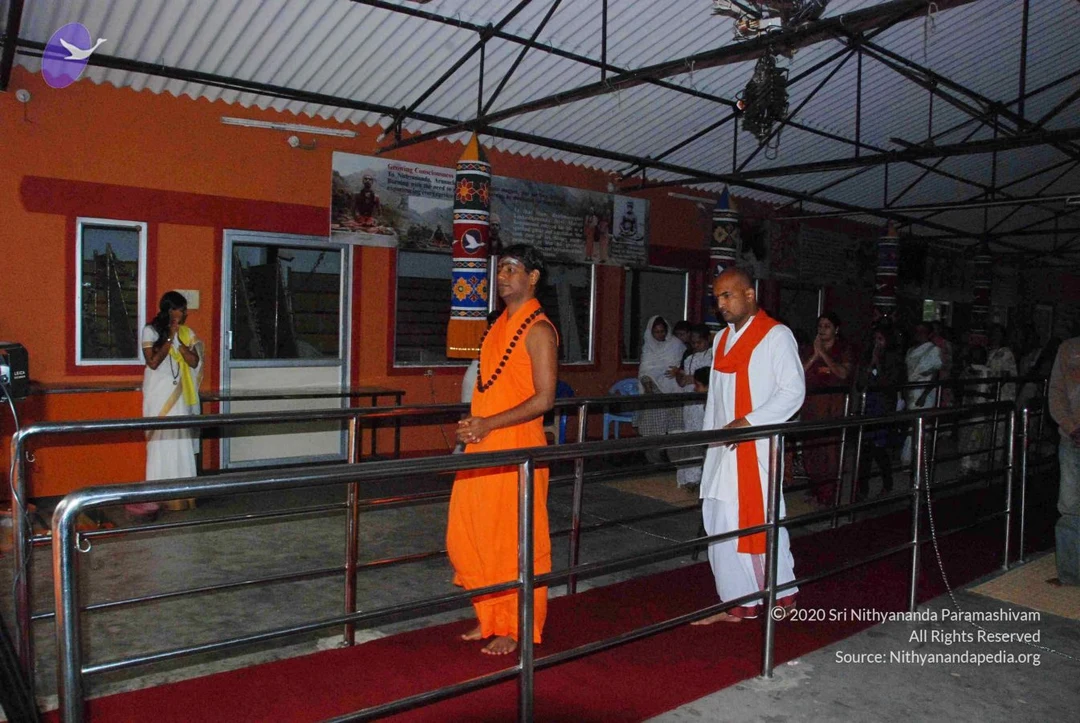
52 photosSource gallery
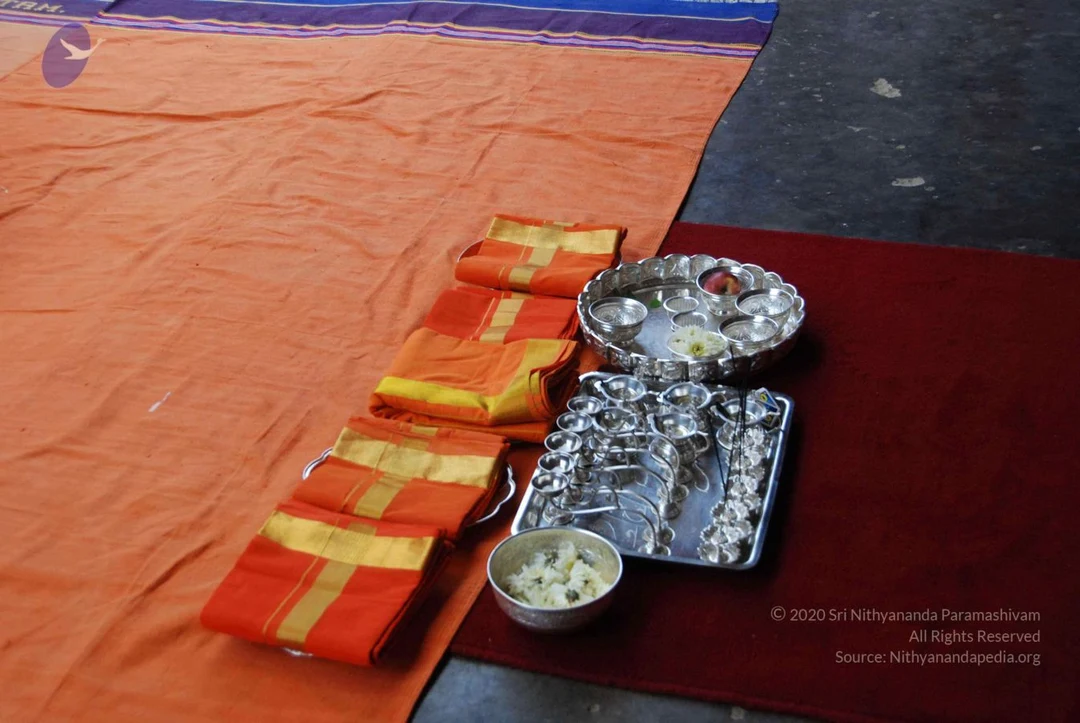
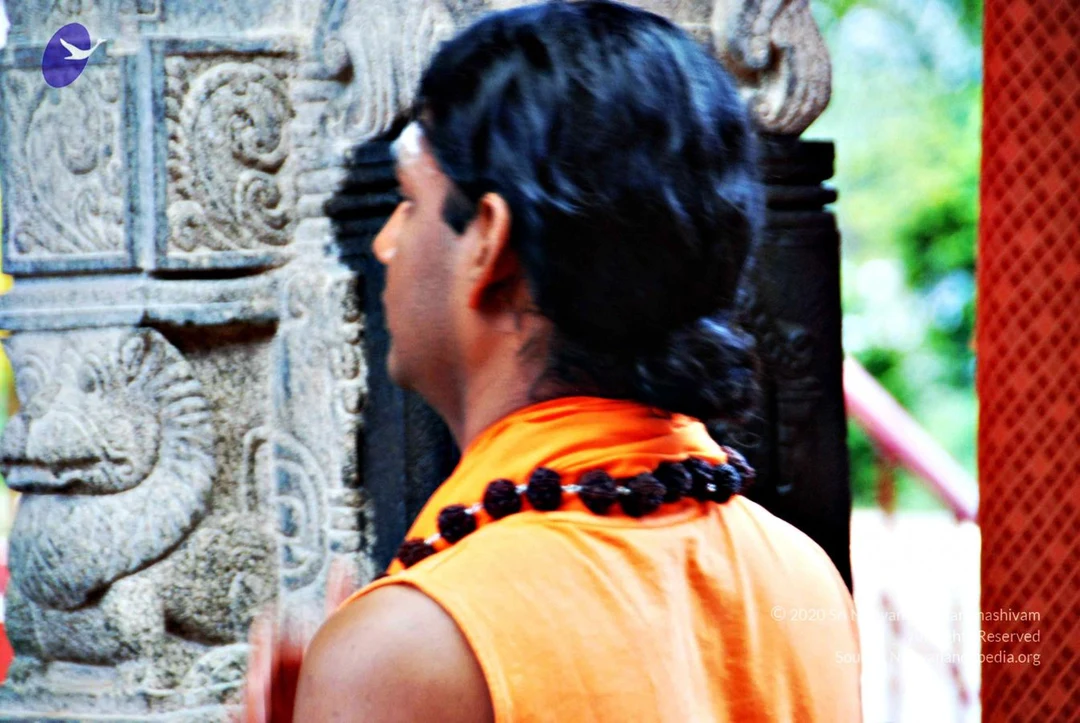
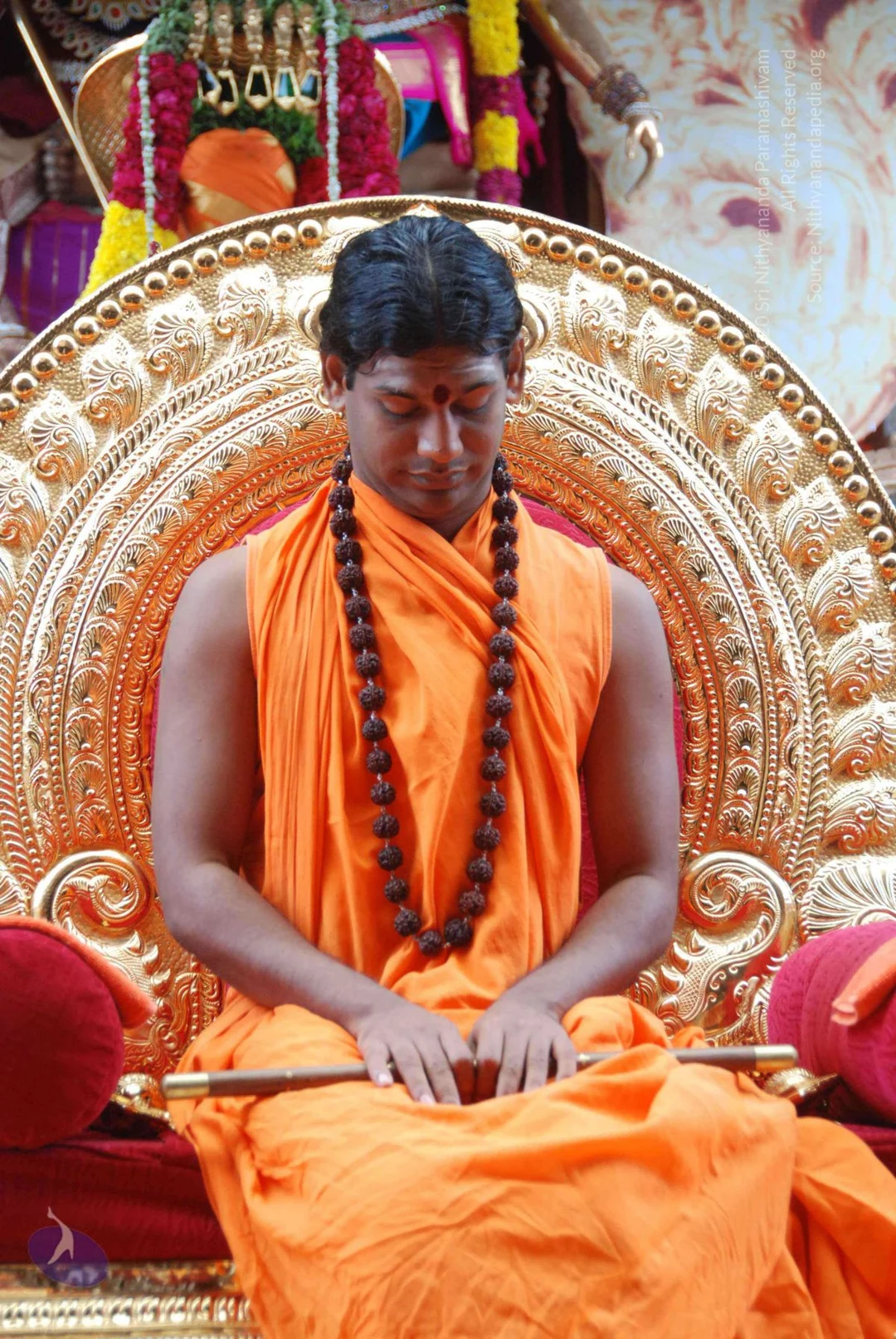
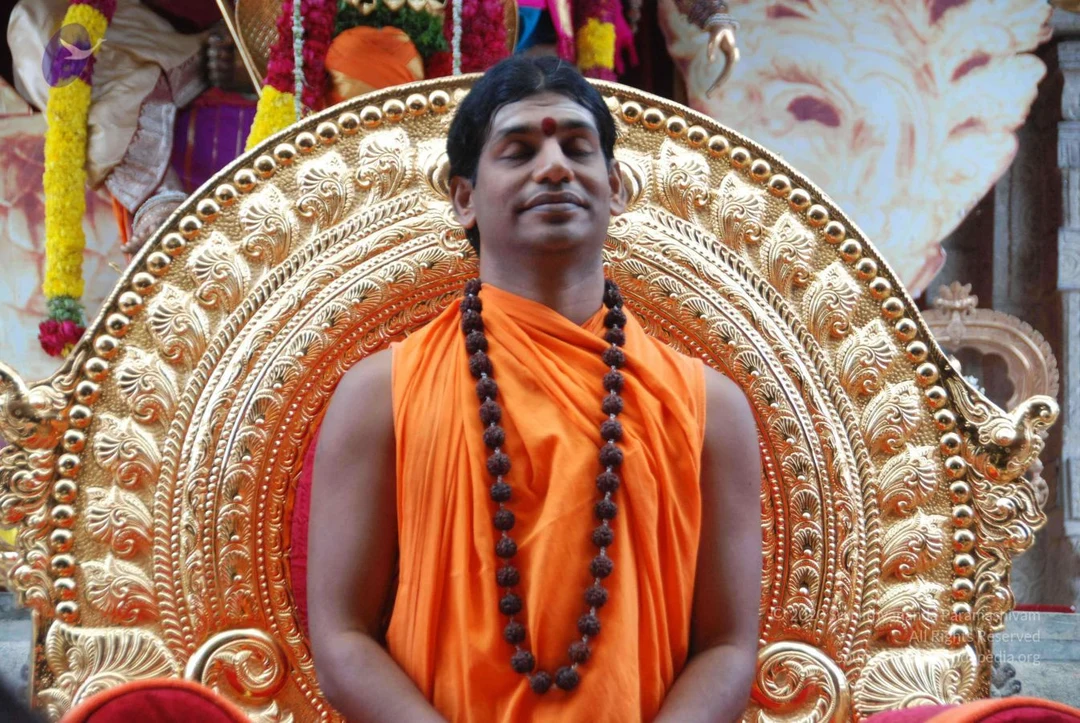
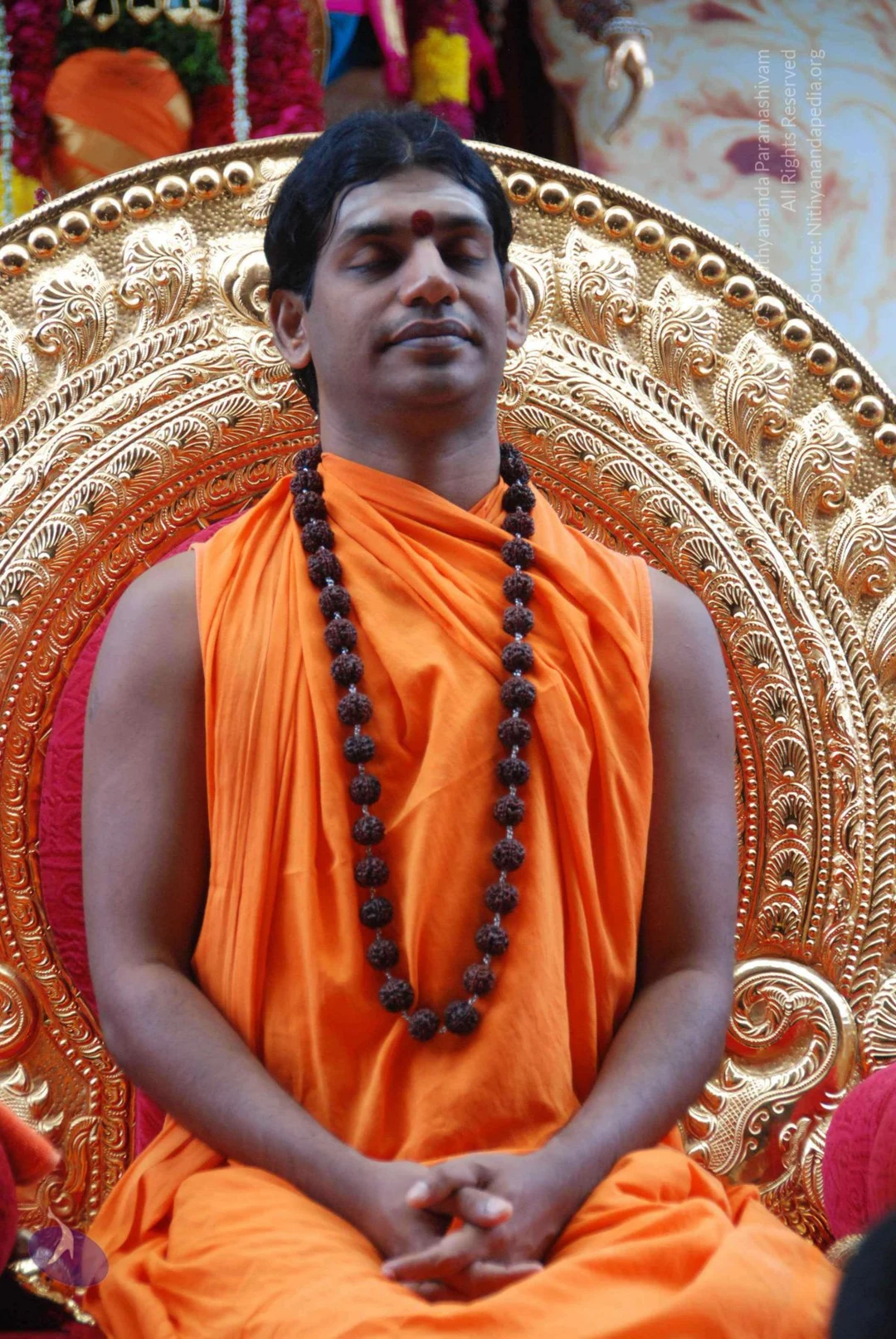
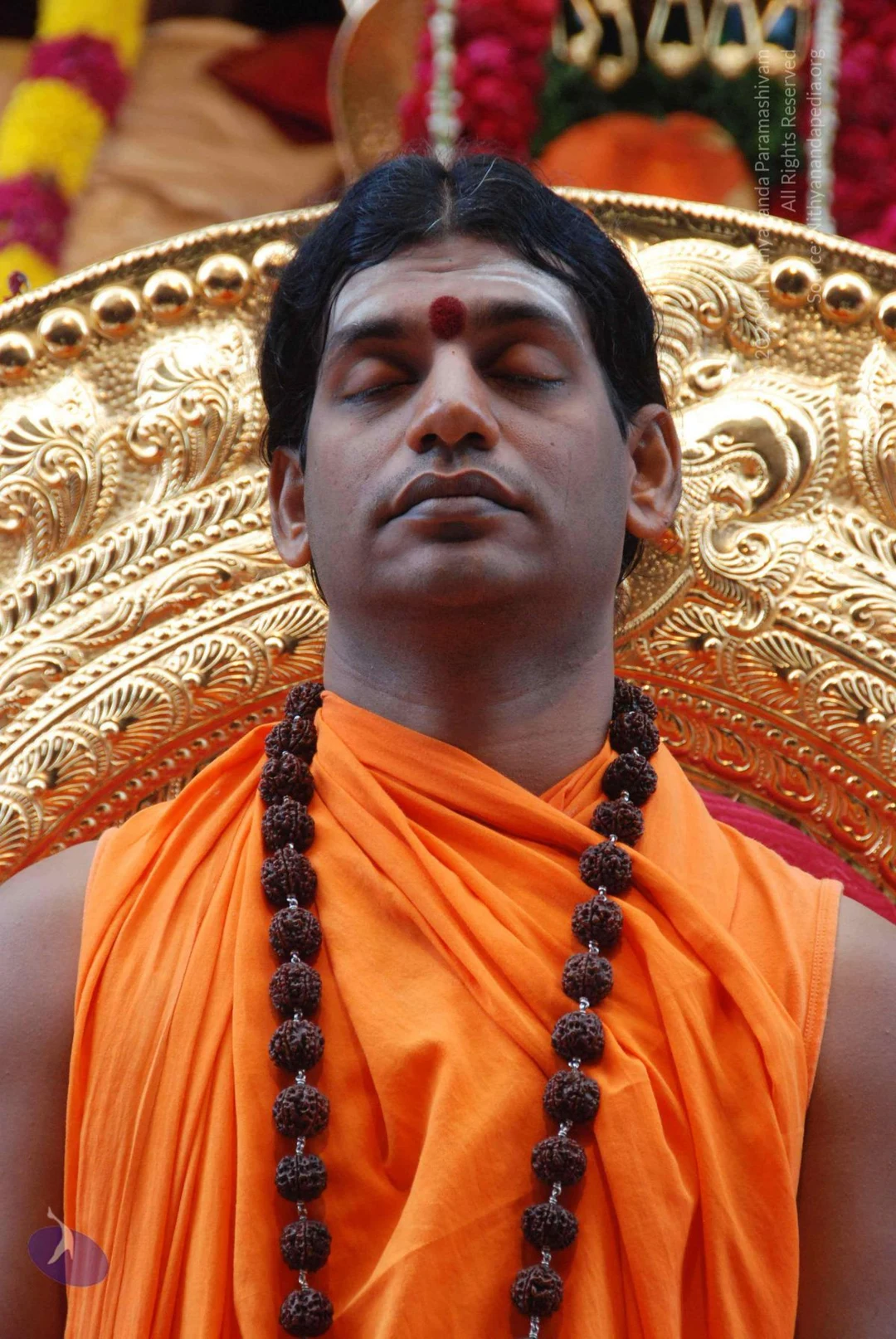
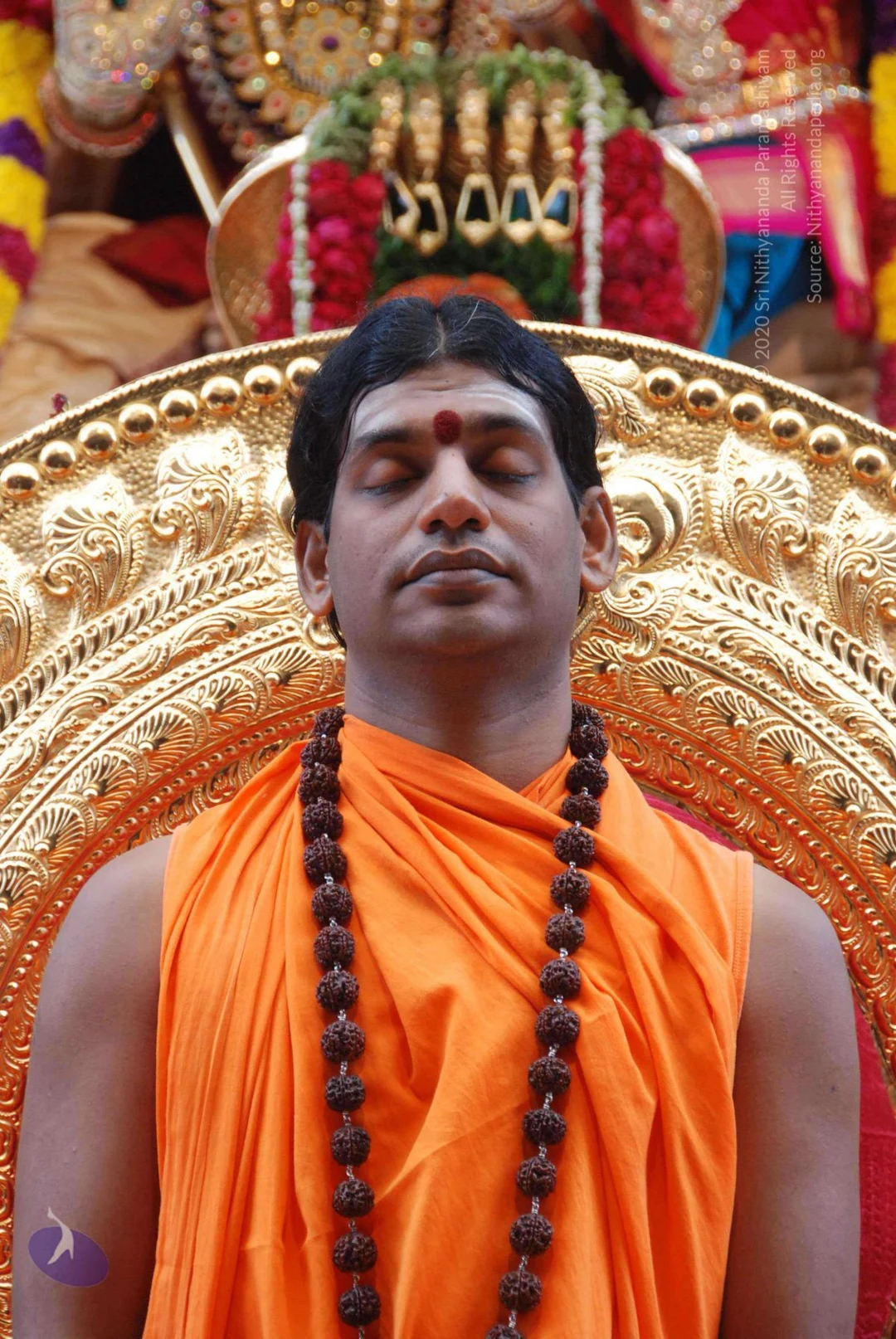
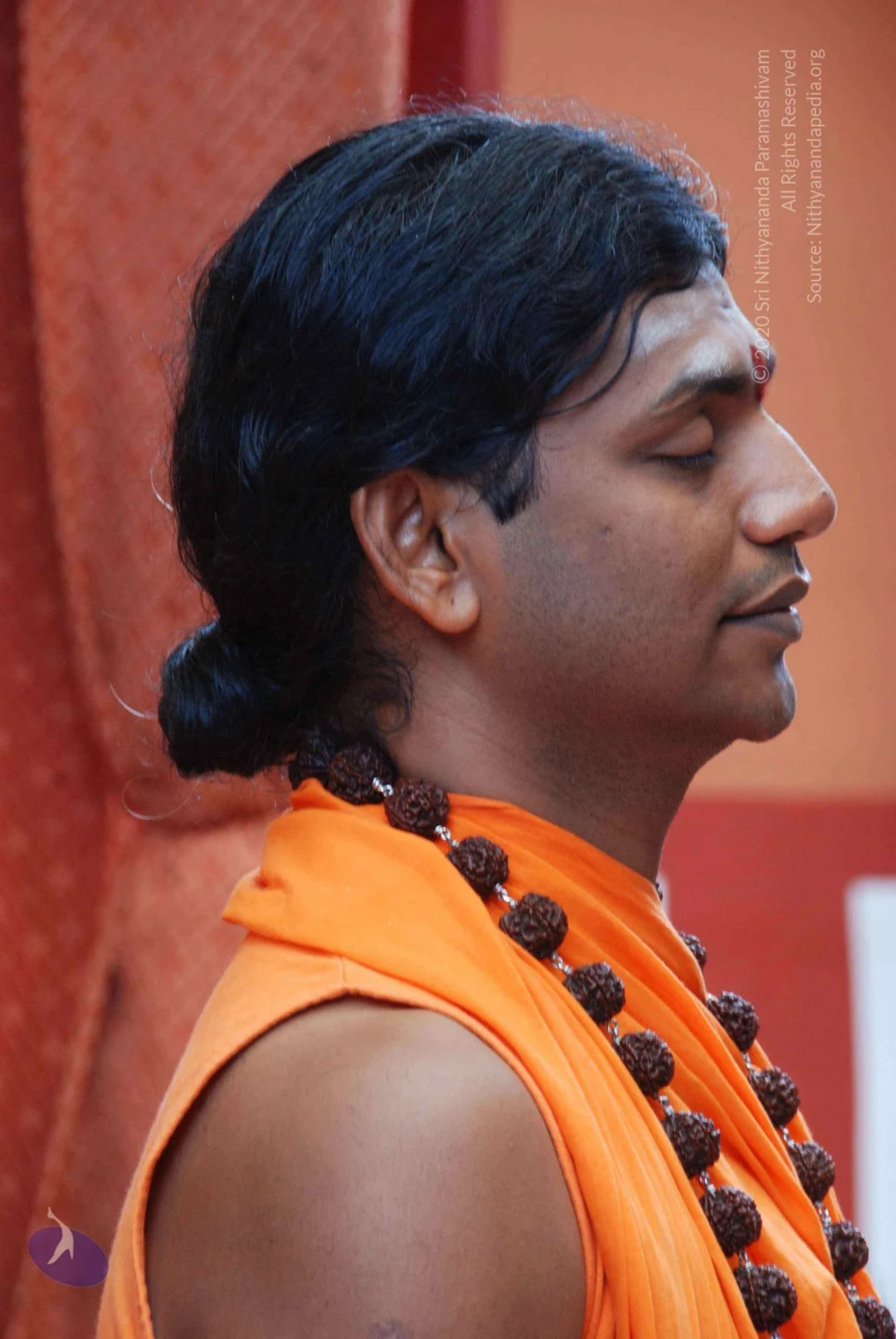
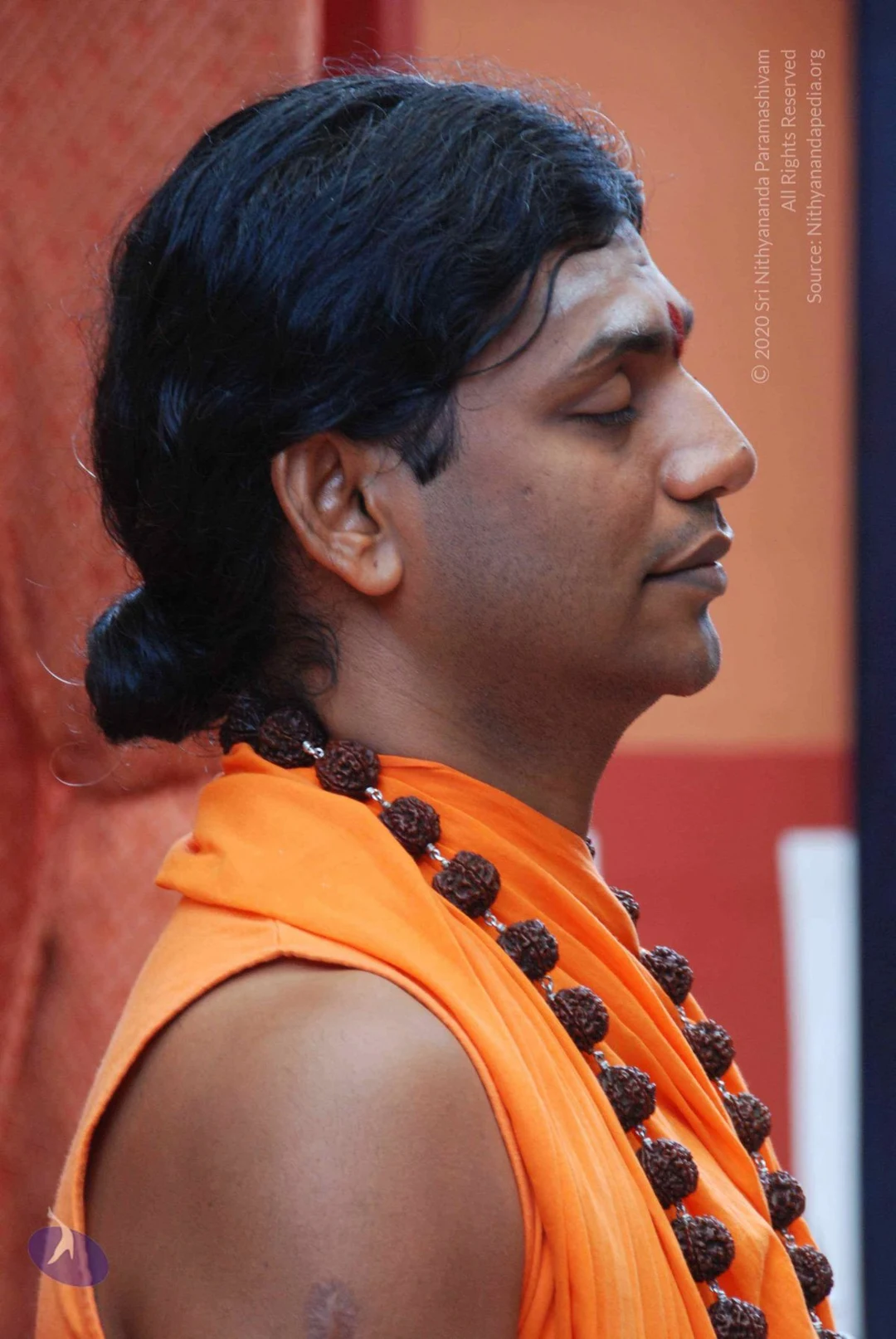
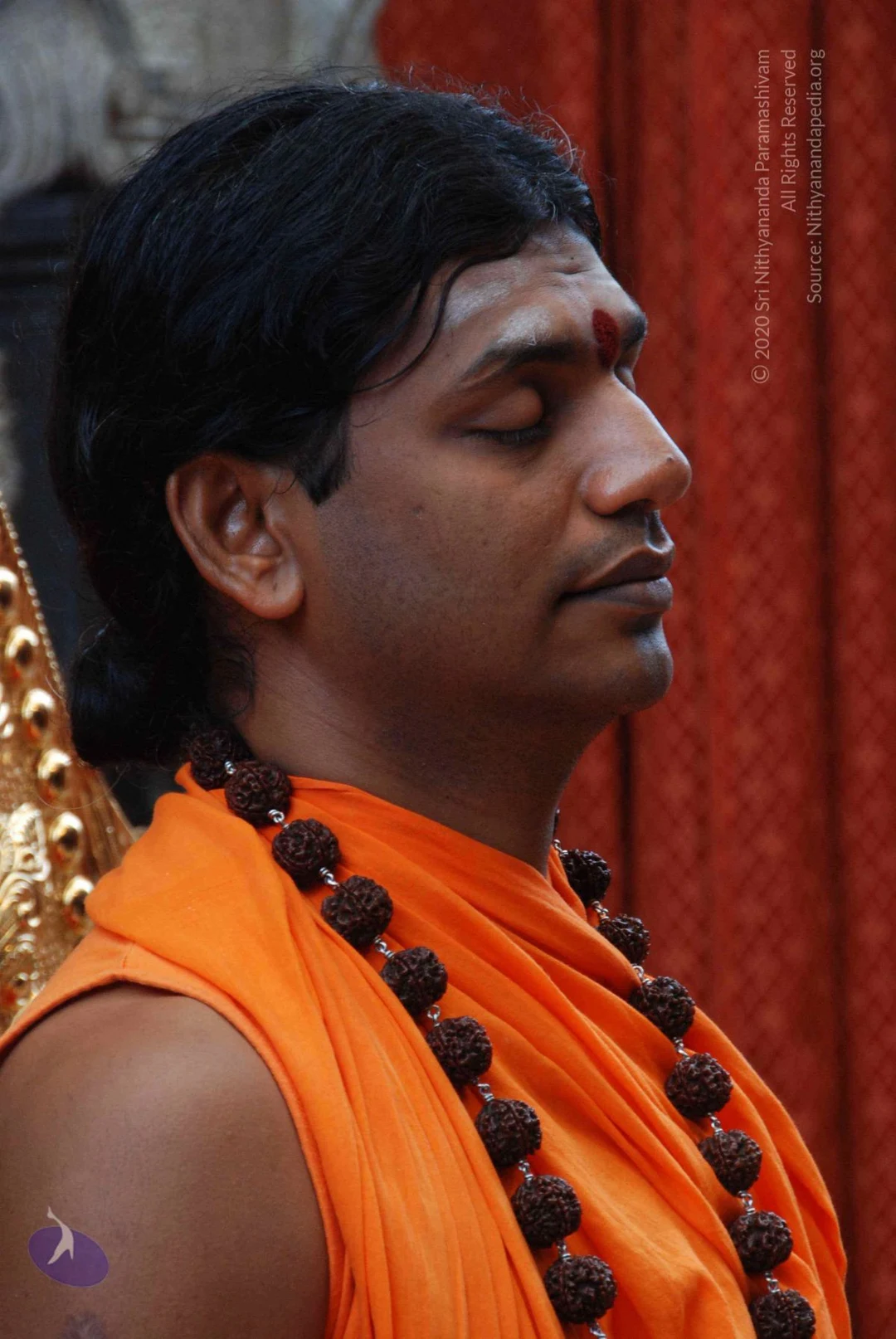
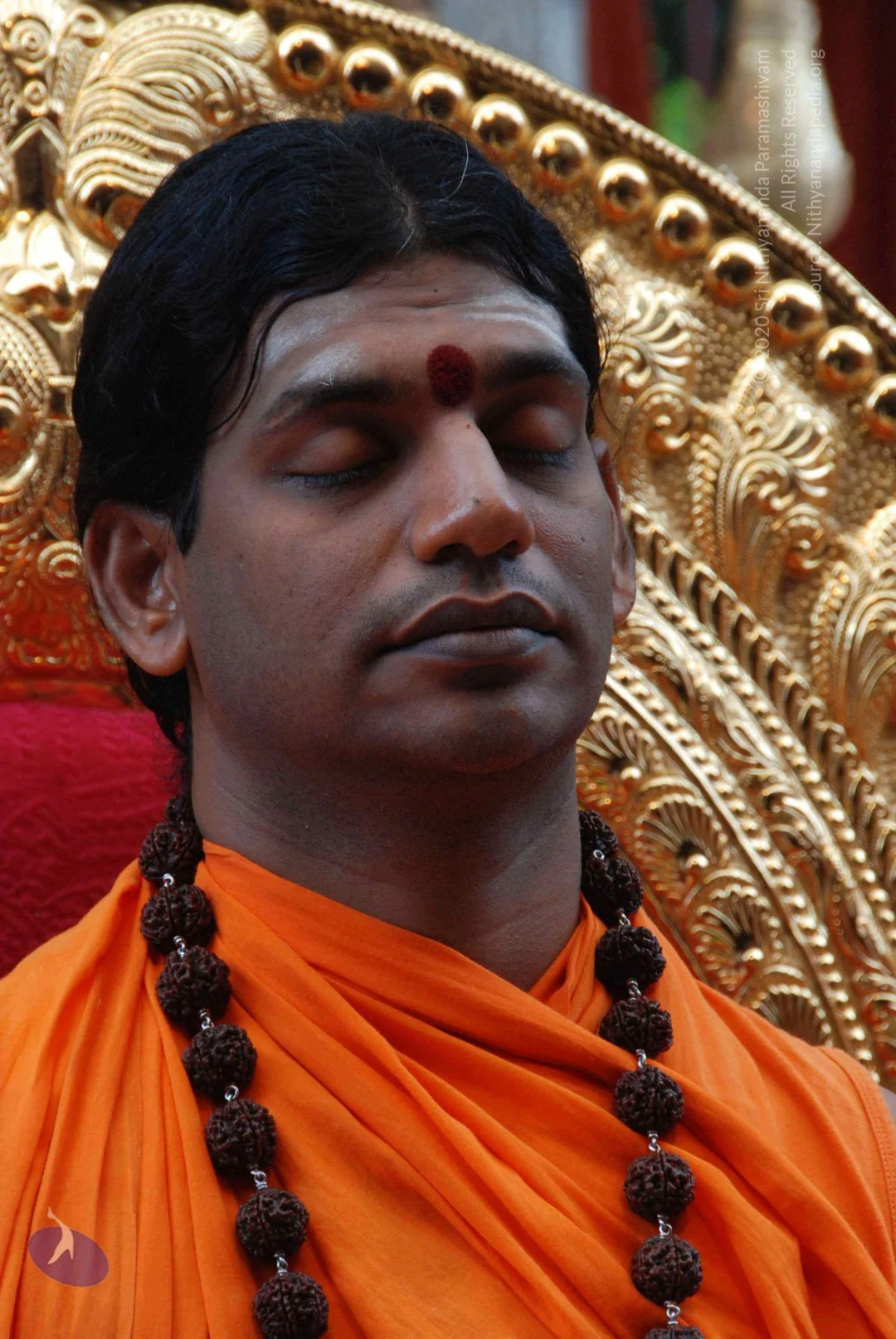
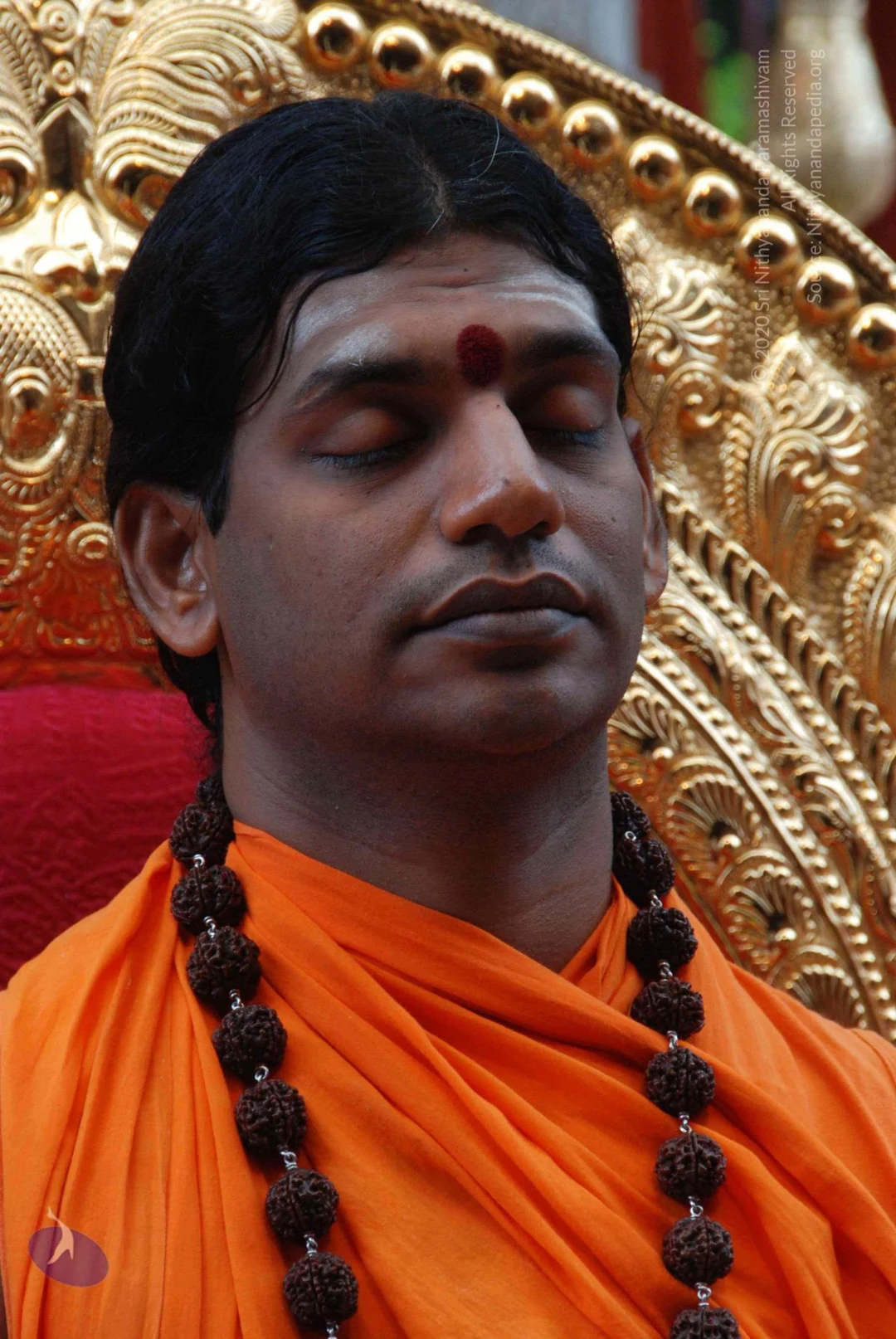
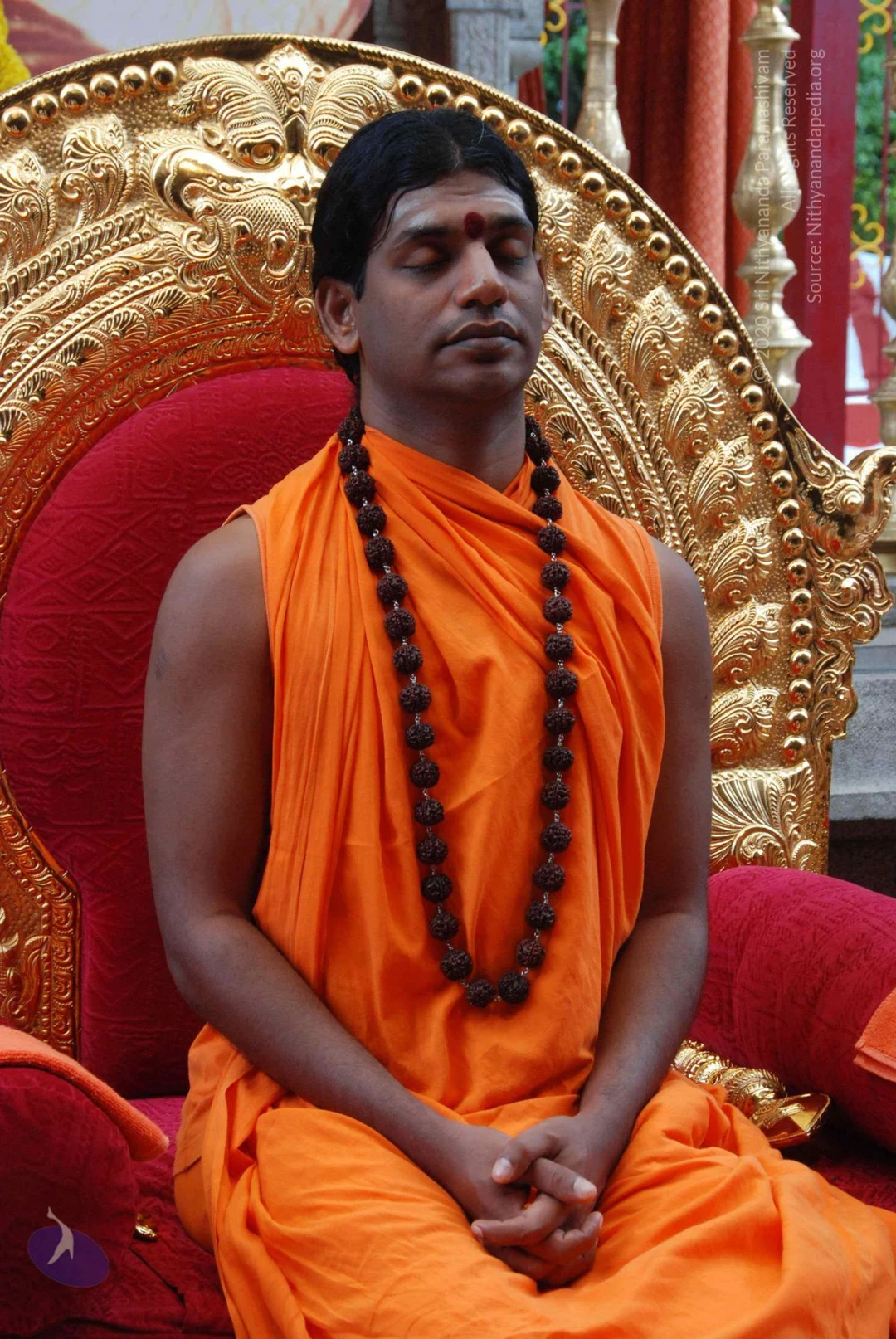
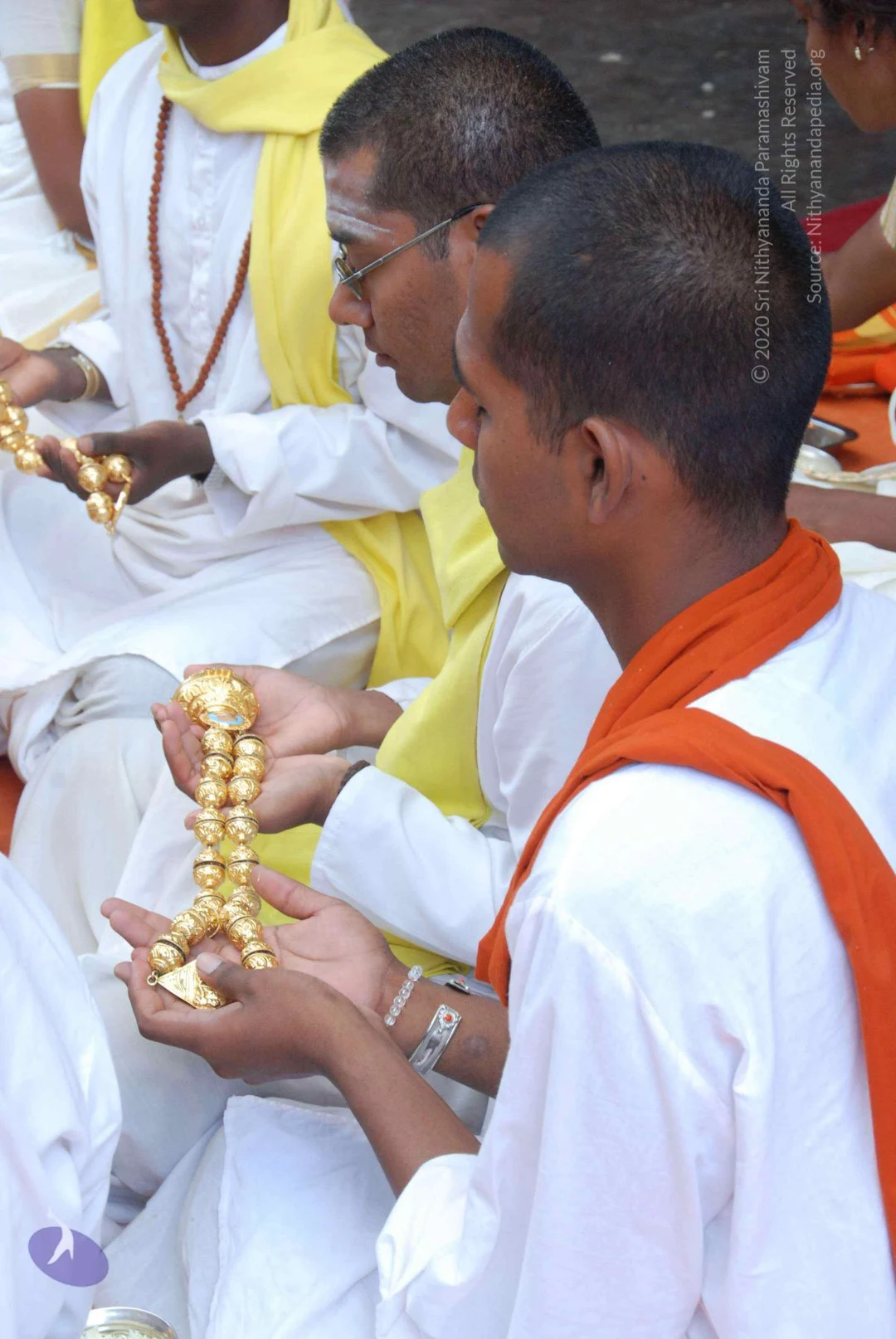
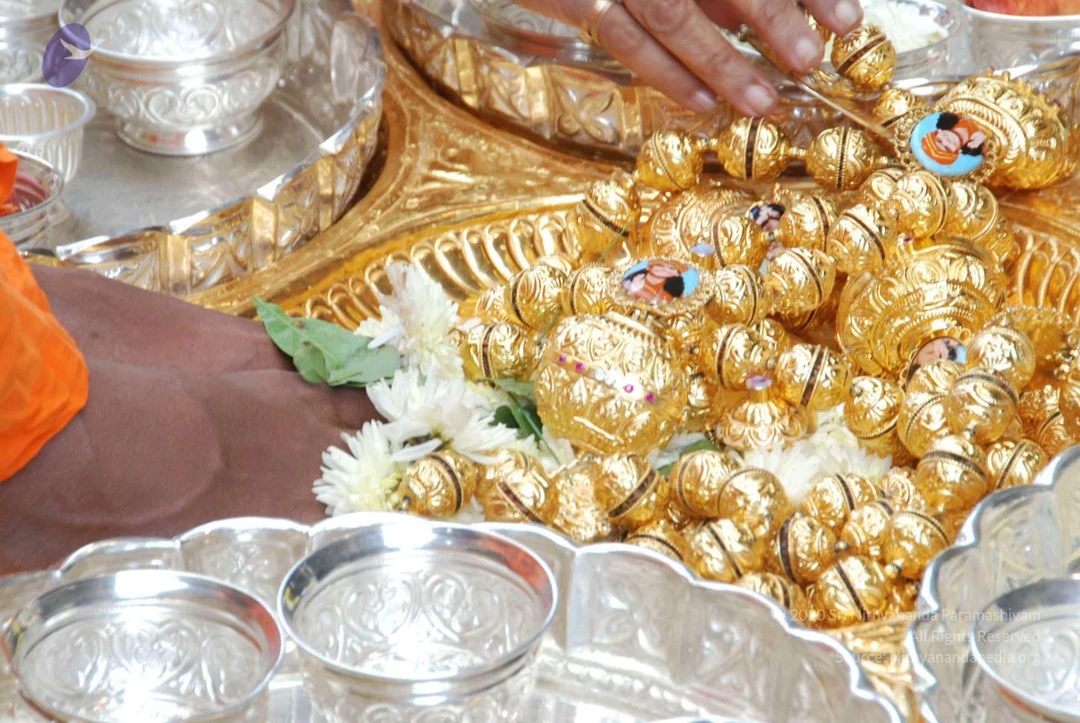
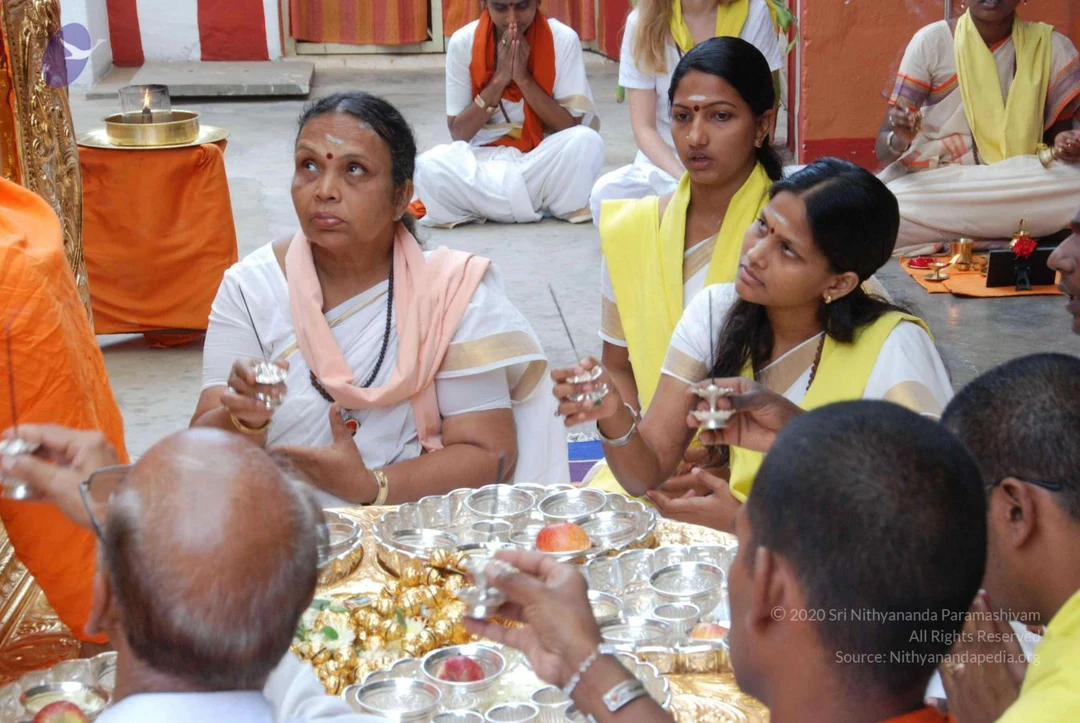
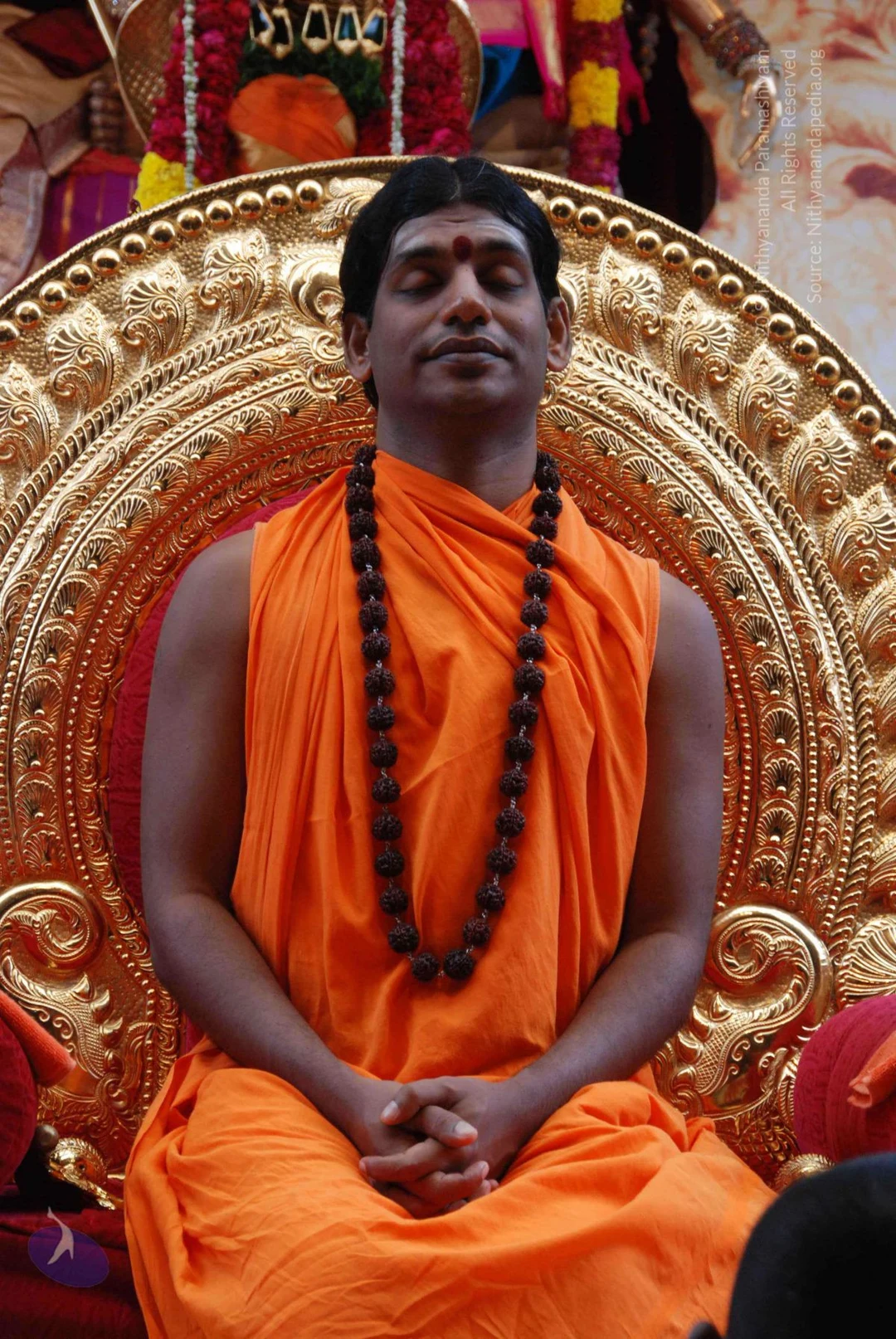
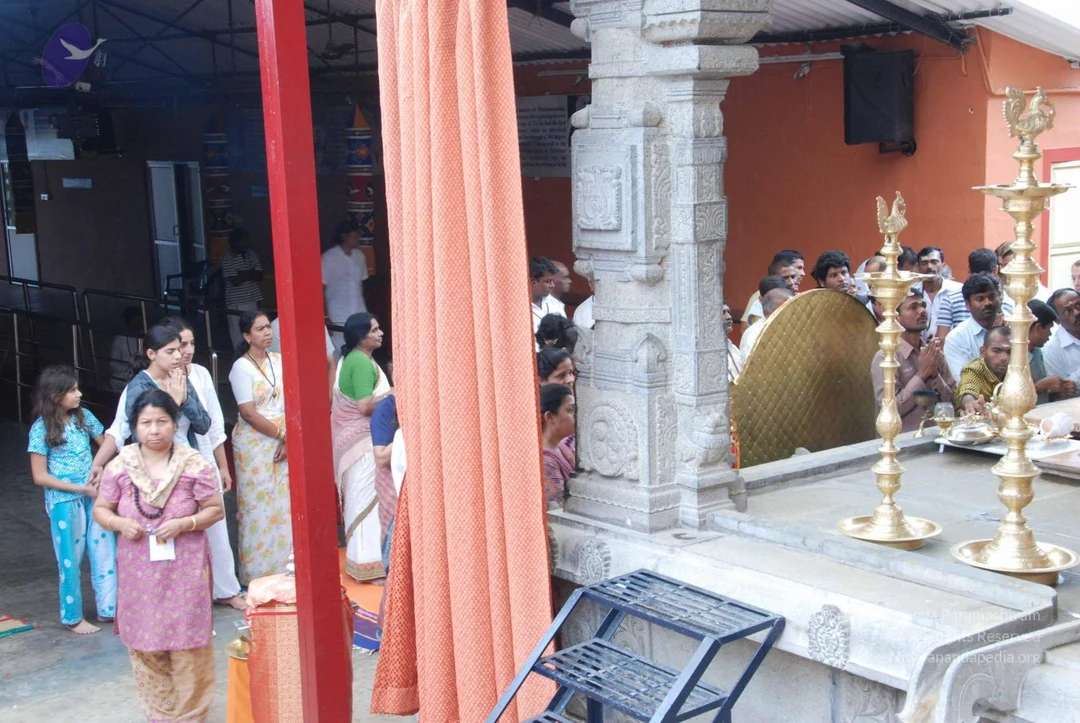
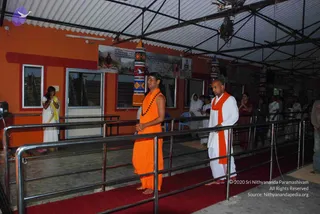
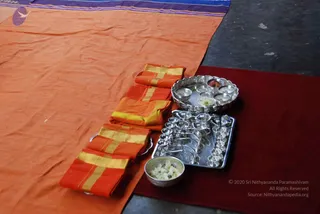
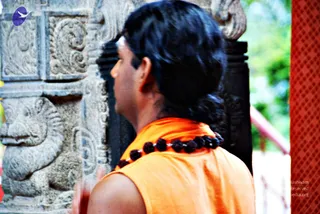
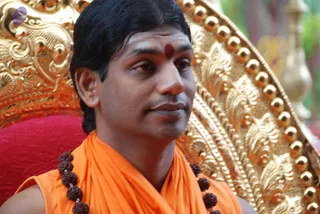
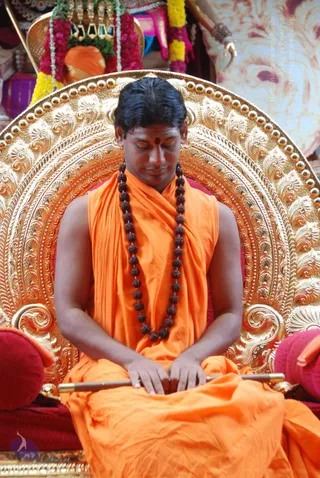
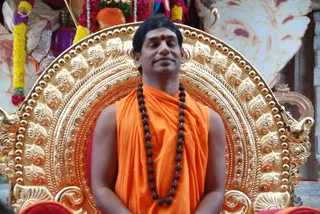
Indoor ashram hall with orange-painted walls, corrugated metal roof and a red carpet runner between steel railings. In the centre, a barefoot figure in saffron-orange robes with a rudraksha mala stands with hands joined. Beside them, a man in white dhoti and a red-orange shawl stands with palms pressed together. A woman in white sari with yellow border stands at left with hands folded, and several devotees in white and colourful saris stand in the background. Framed posters and decorated pillars with woven patterns line the walls. Two people appear clearly in the foreground; the a person cue is the rudraksha mala and saffron robe on the central figure, with the white-clad man identified only as a devotee.A photograph of ritual items laid on the floor. Three folded orange cloths with gold borders rest on an orange fabric, next to a silver thali tray holding small silver cups and a flower, and a second silver tray with a row of small silver cups and a heap of white flowers. A silver bowl of white flowers sits on the dark red mat in front. No people are visible.Photograph of a man seen from behind and in profile, facing left toward carved stone pillars with lion-like relief sculpture. He has long dark hair swept back, a small white marking on his forehead, and wears a sleeveless saffron-orange garment with a dark rudraksha mala necklace across his shoulders. Ornate stone carvings and a red patterned panel frame the scene, with greenery in the background. Appearance cues of long hair, saffron clothing and rudraksha beads are present, but the face is only partly visible and the image does not confirm the identity from appearance alone, so the candidacy remains uncertain.Close-up photograph of a man with swept-back dark hair and a red bindi on his forehead, wearing a sleeveless saffron-orange garment draped over his shoulders and a rudraksha mala of dark beads around his neck. He is seated in front of an ornate gold carved throne with a red upholstered cushion and gold beaded finials. Background shows greenery and a blurred gold pillar.A seated man in an orange saffron garment wrapped over the shoulders, wearing a long double strand of dark rudraksha beads, with a red bindi on his forehead and eyes lowered. He sits on an ornate gold throne with a richly carved circular backrest and red cushions, holding a thin gold-tipped rod across his lap. Behind him, garlands of red, pink and yellow flowers hang near a decorated deity murti with a golden crown-like headdress. a person: the saffron clothing, rudraksha mala and throne are present, so this is a candidate in person.A seated man in orange saffron robes and a long rudraksha mala with a red bindi sits eyes-closed on an ornate gold throne with a curved, scalloped back. Behind him are yellow and orange marigold garlands and a floral decorated backdrop. He has short dark hair and his hands rest in his lap. a person, appearing as a seated presence on a throne in saffron with rudraksha beads.
Nithya Satsang
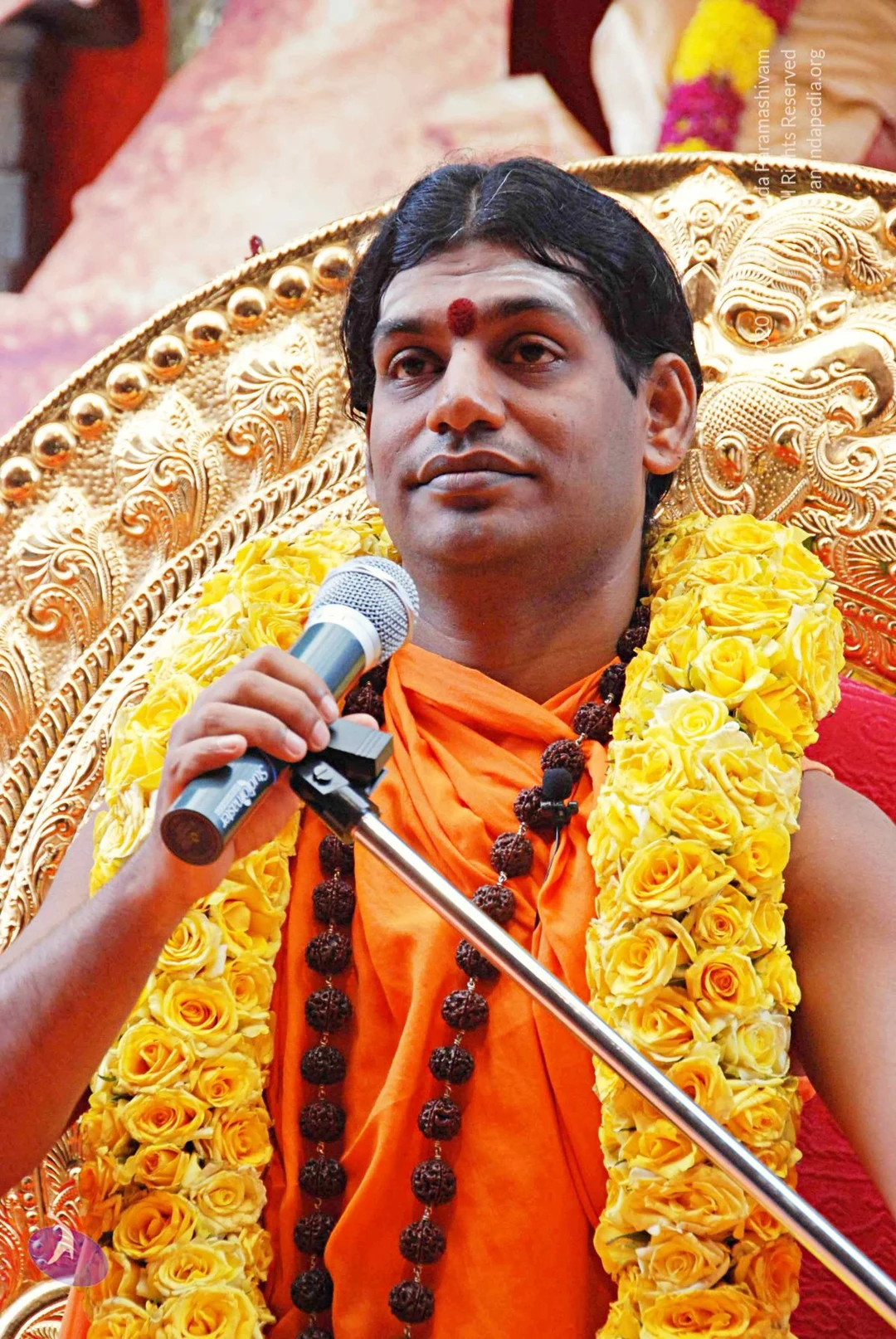
28 photosSource gallery
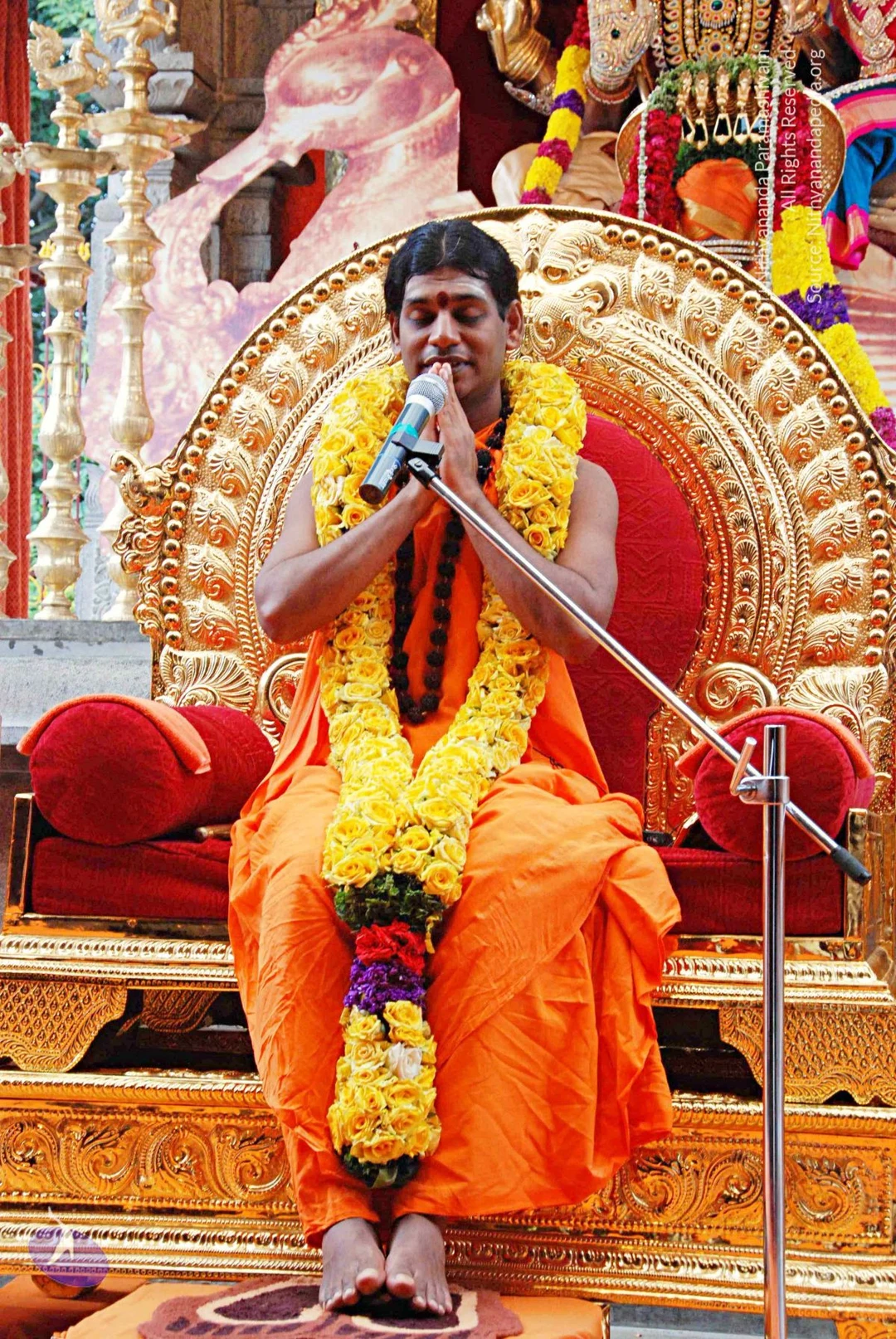
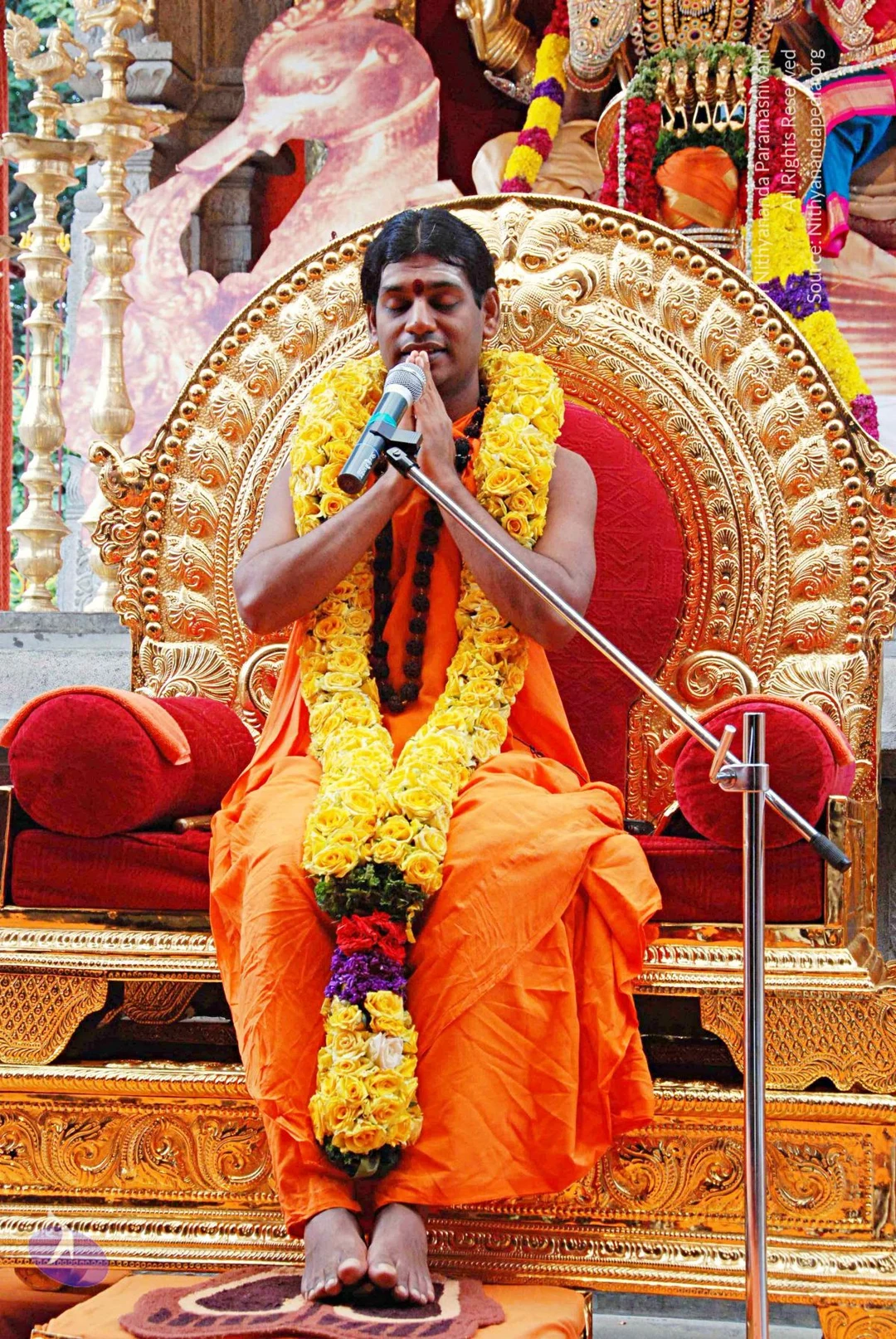
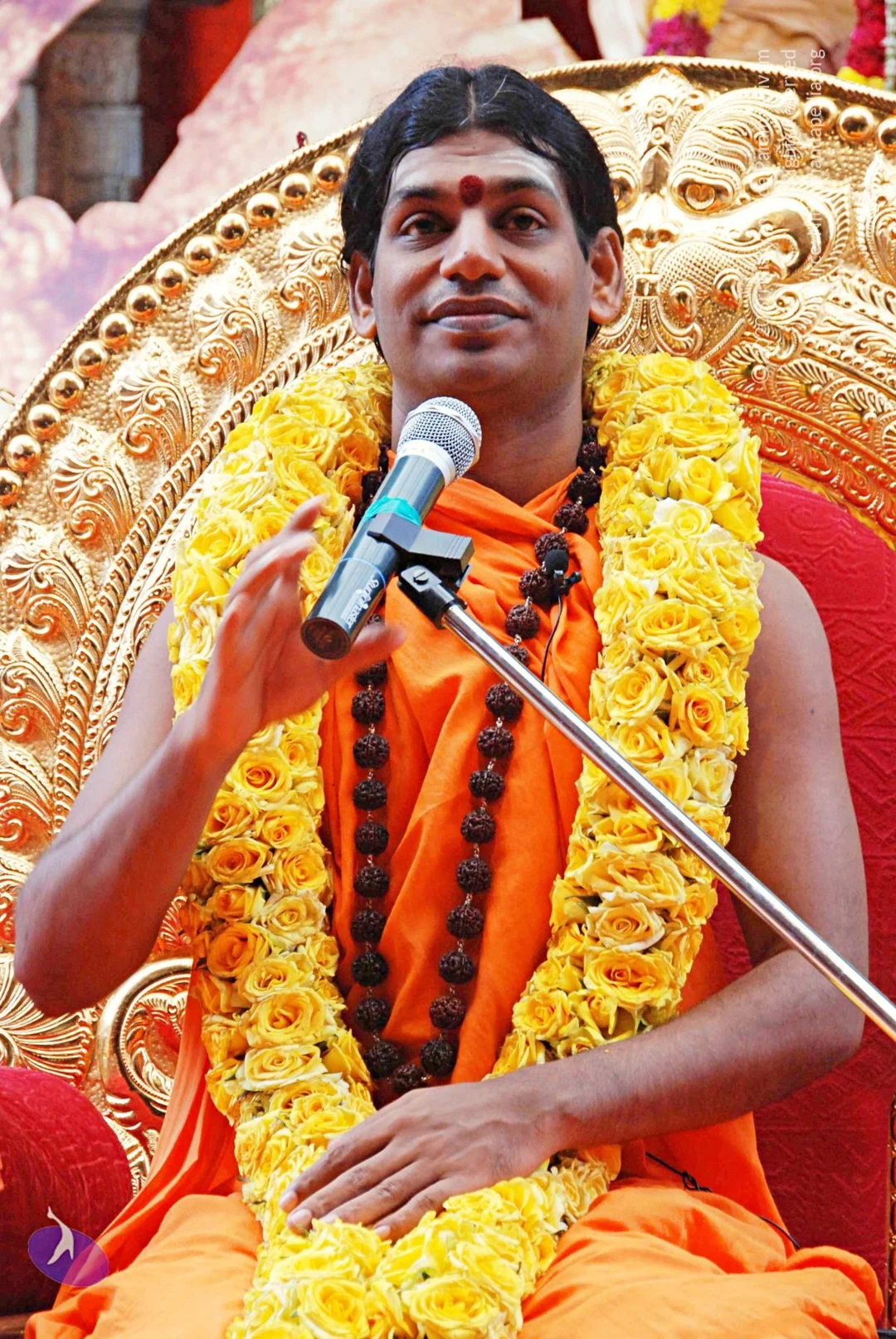
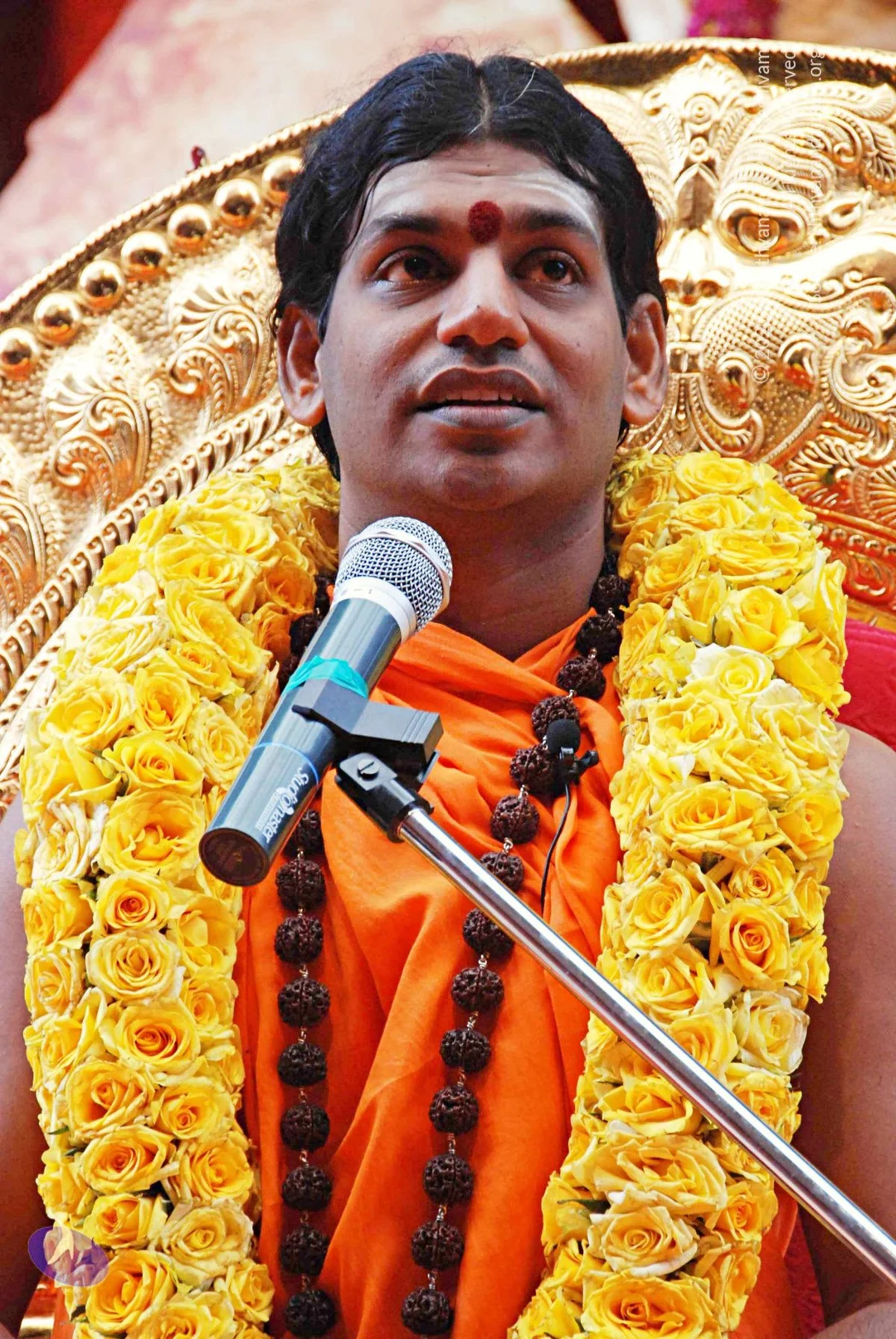
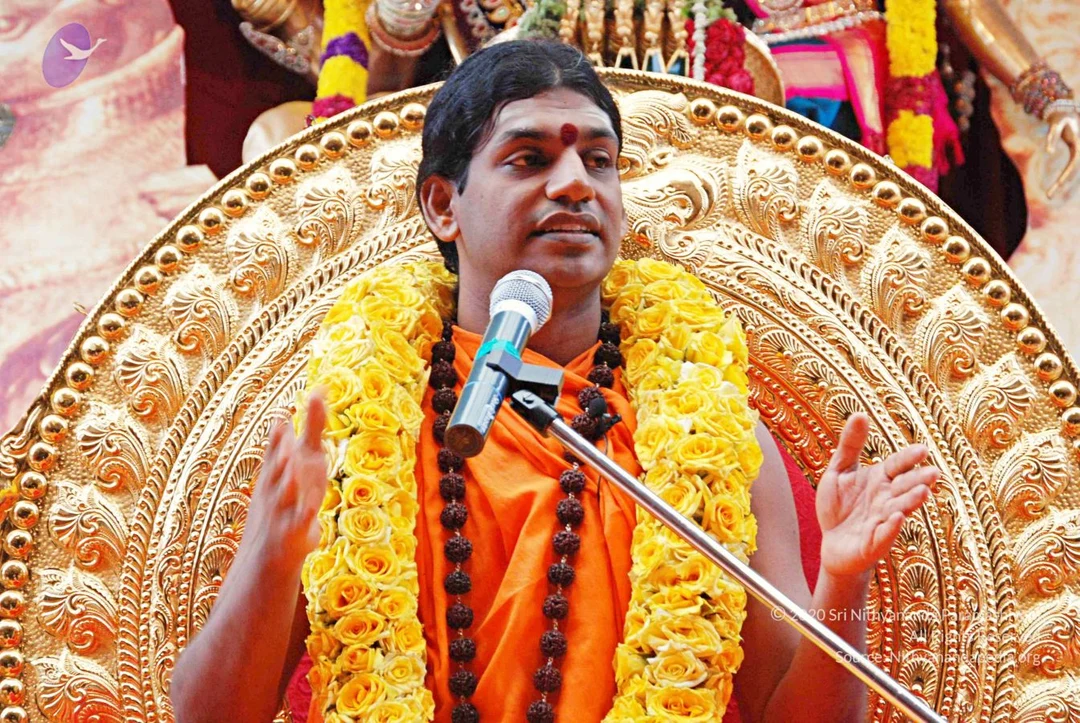
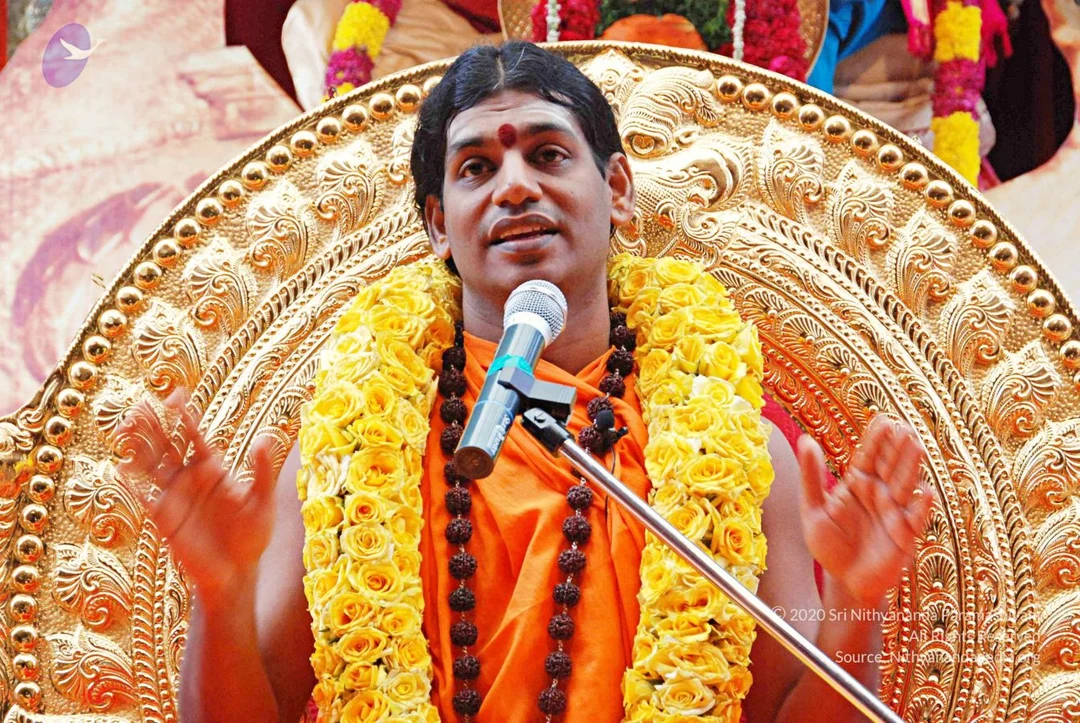
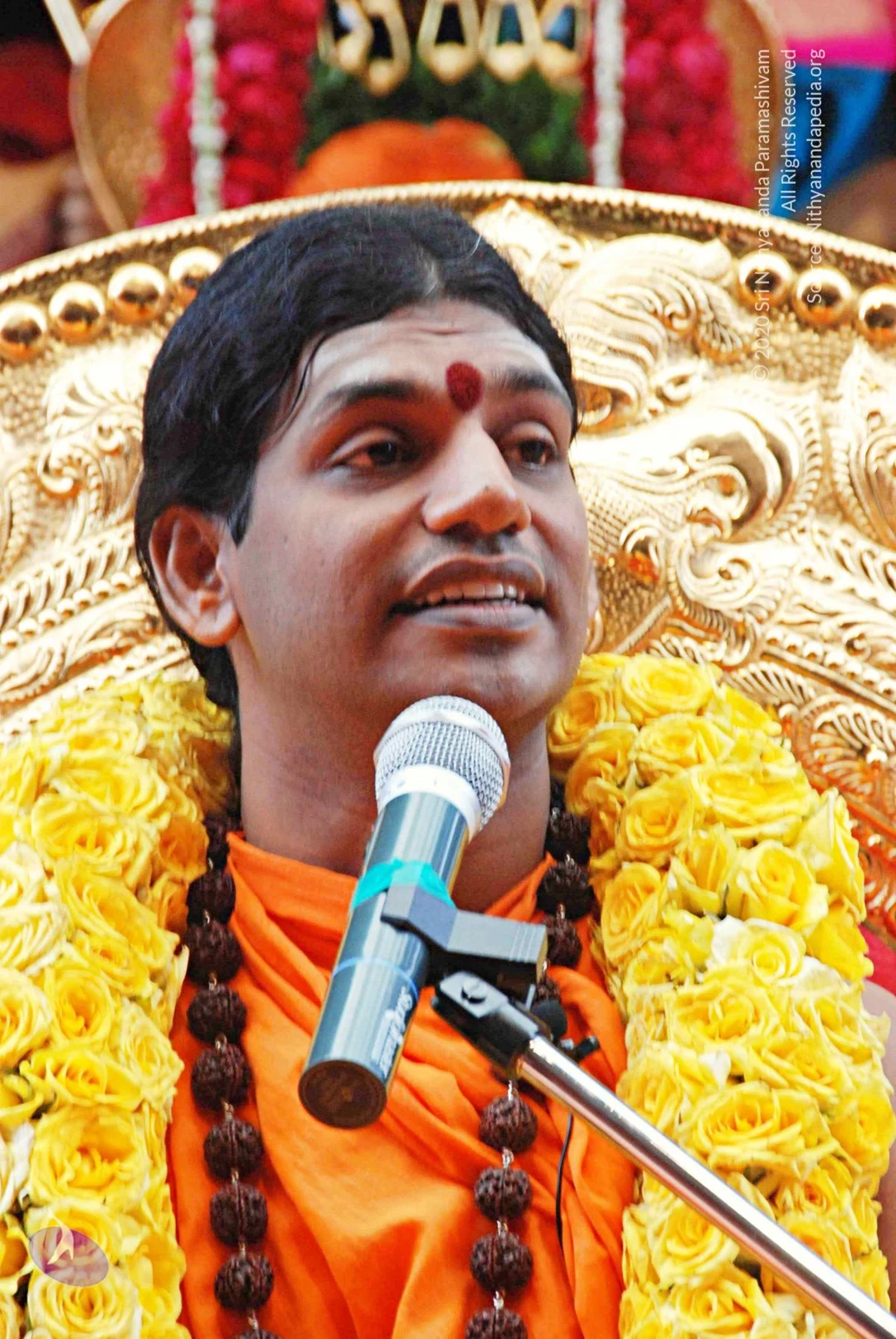
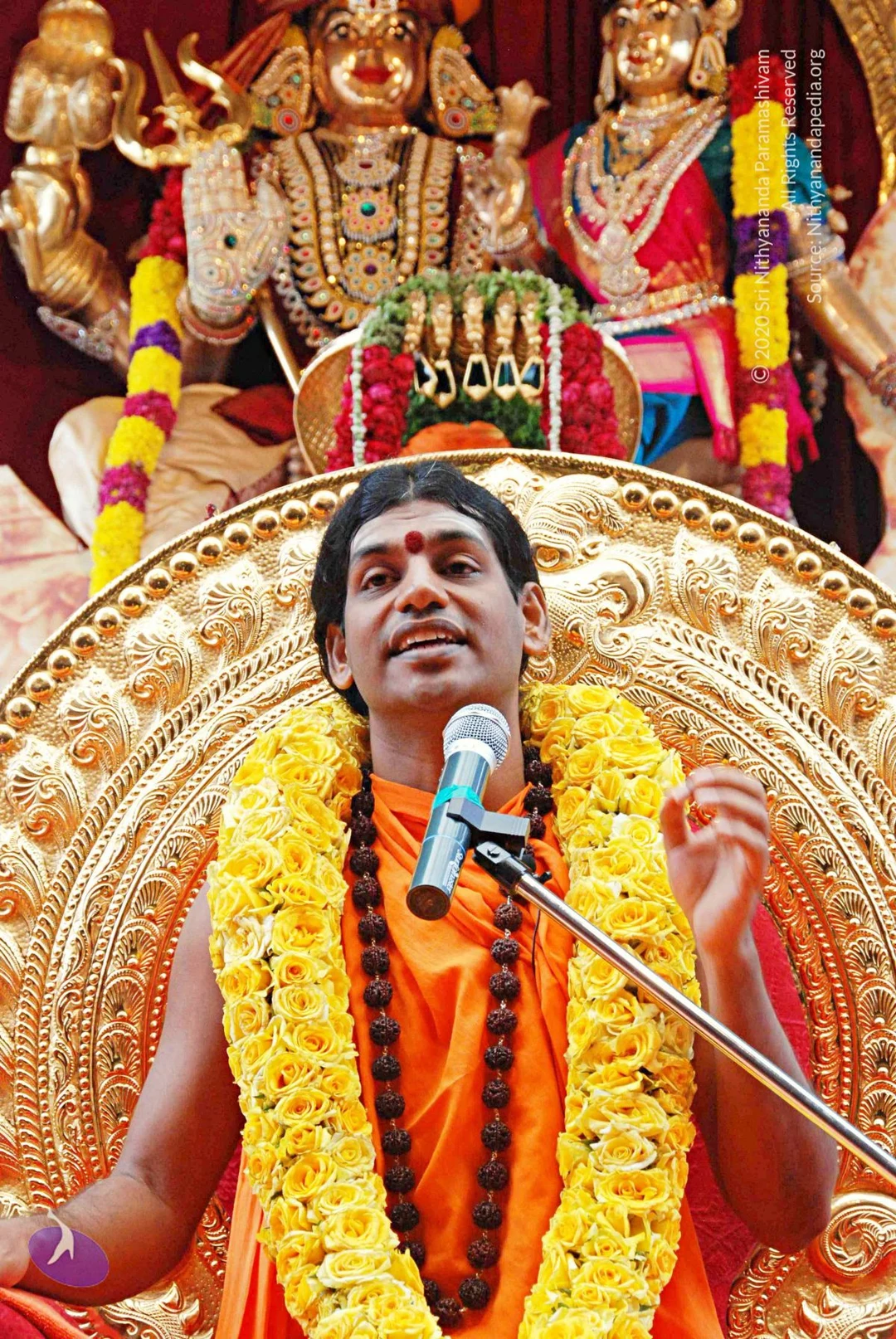
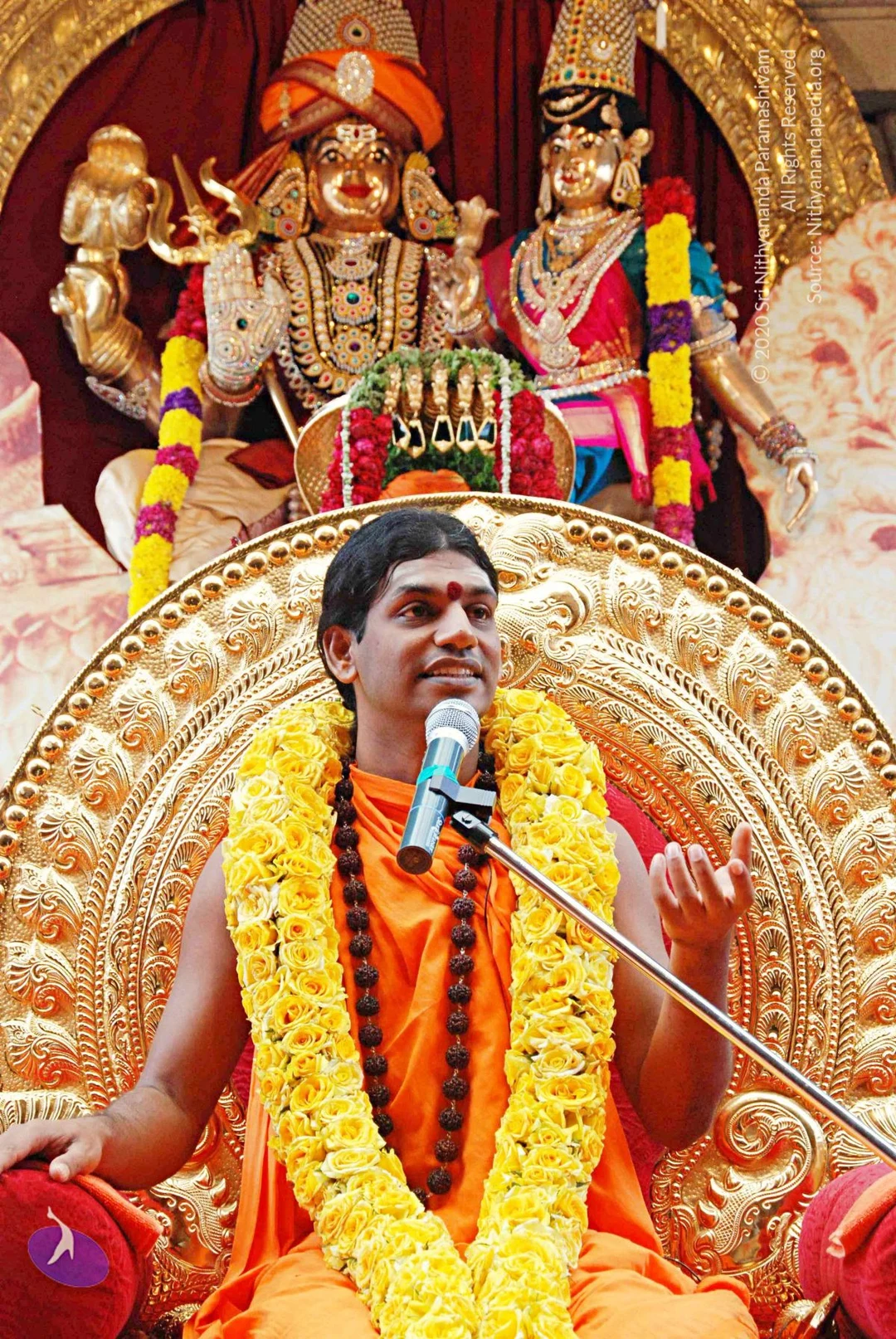
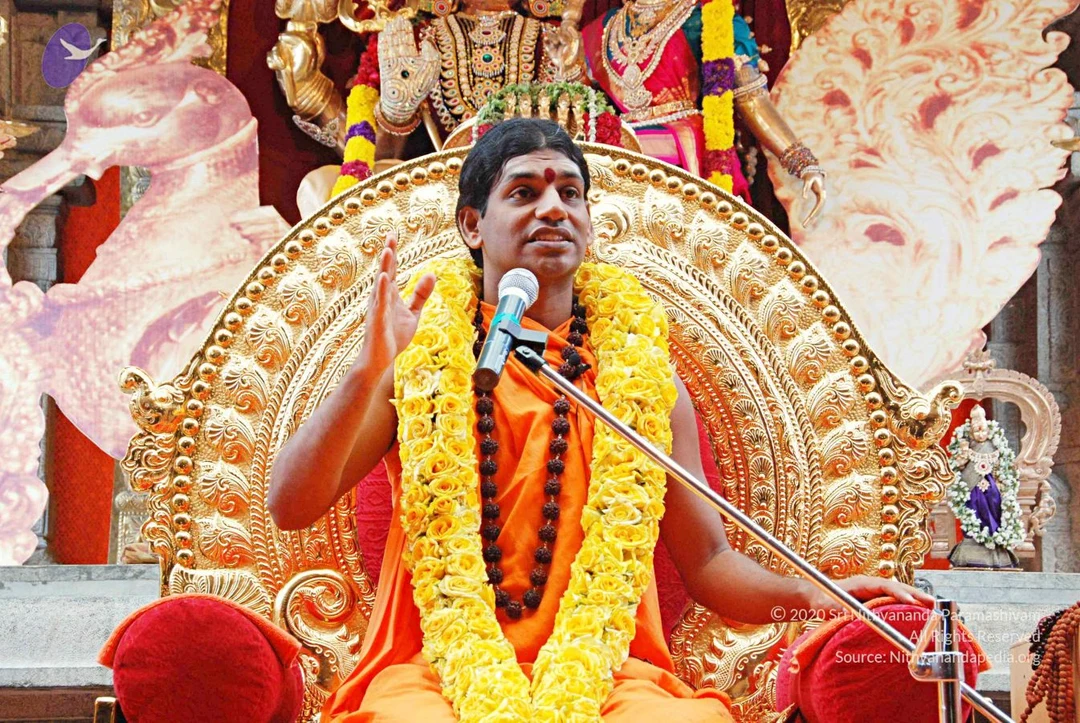
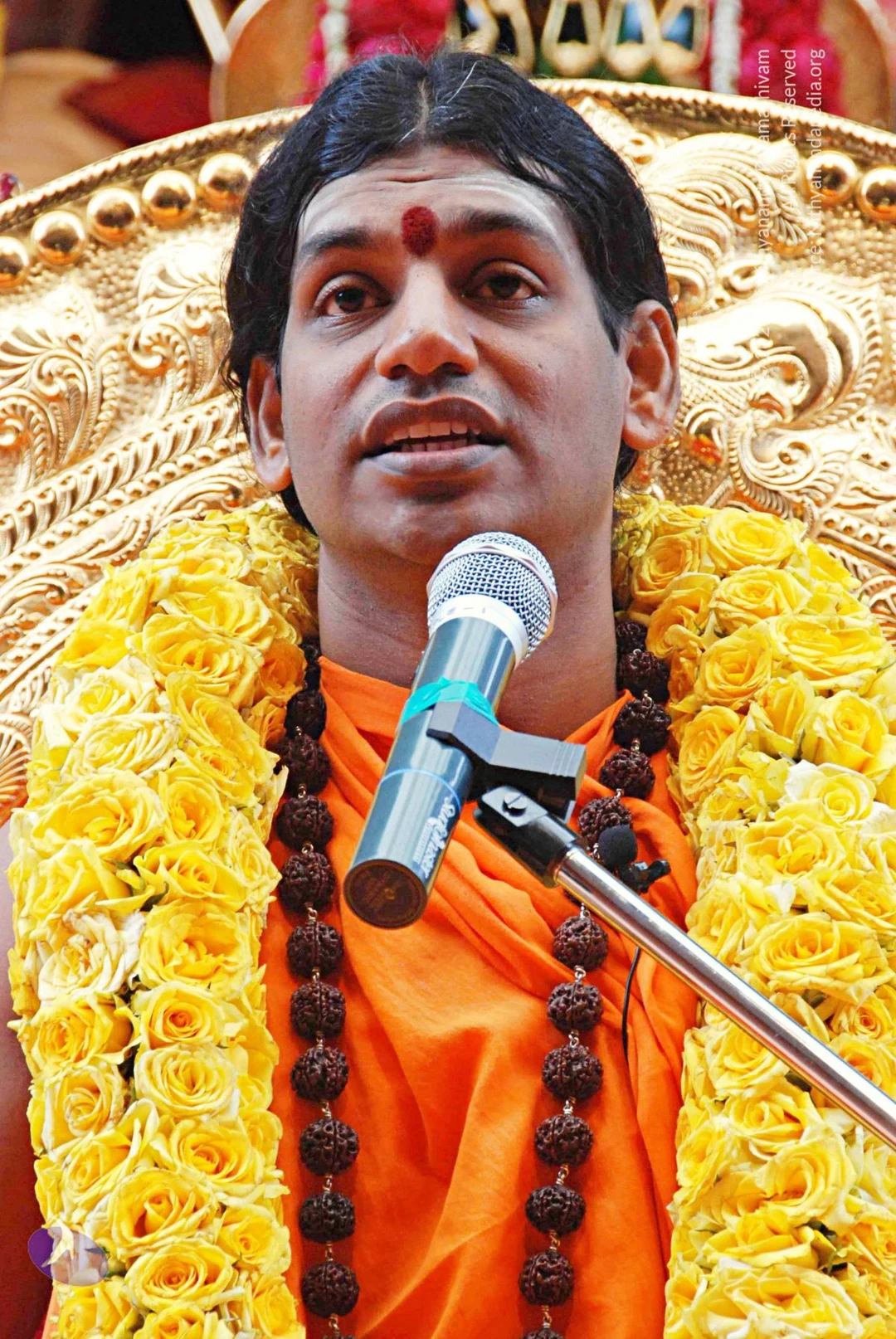
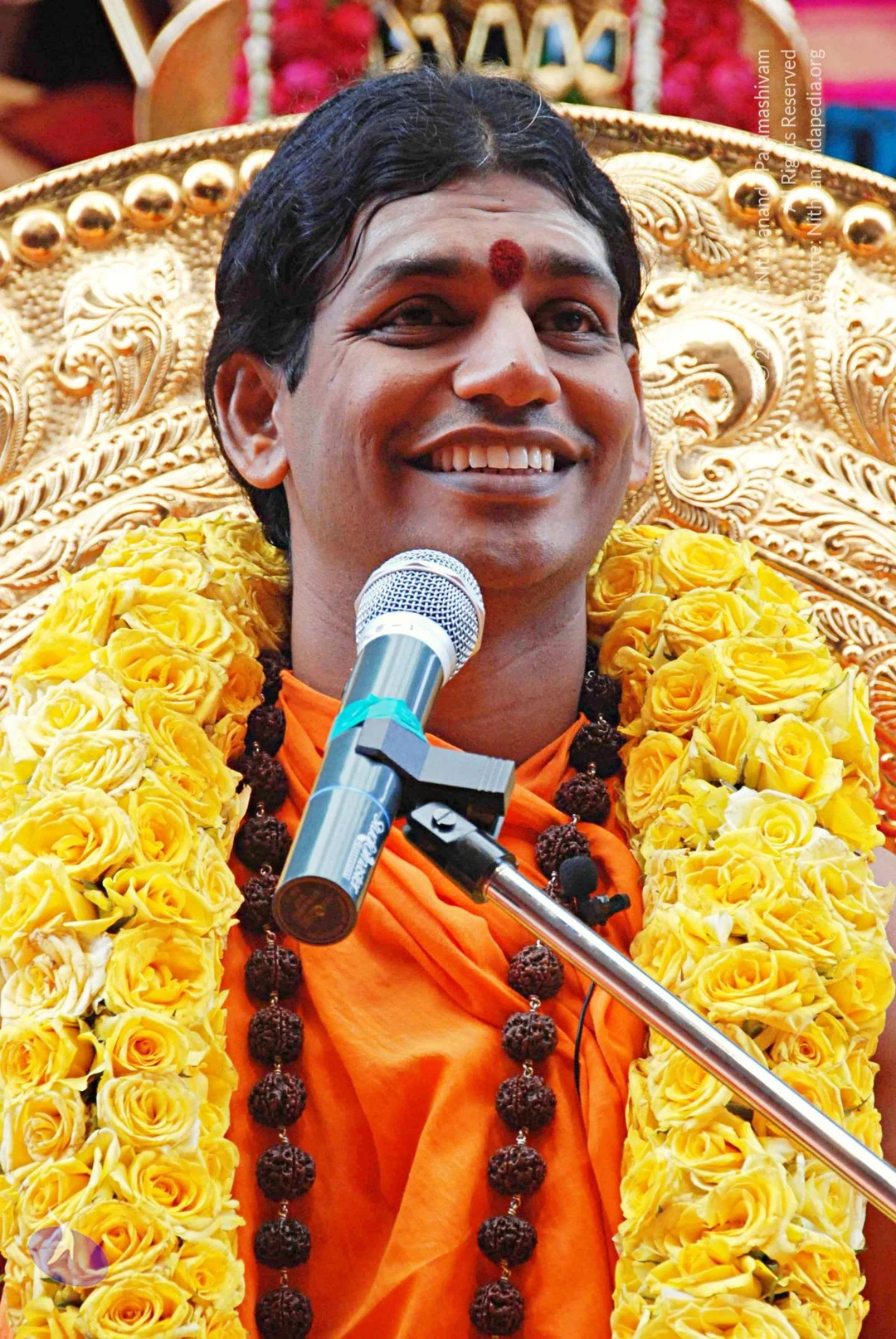
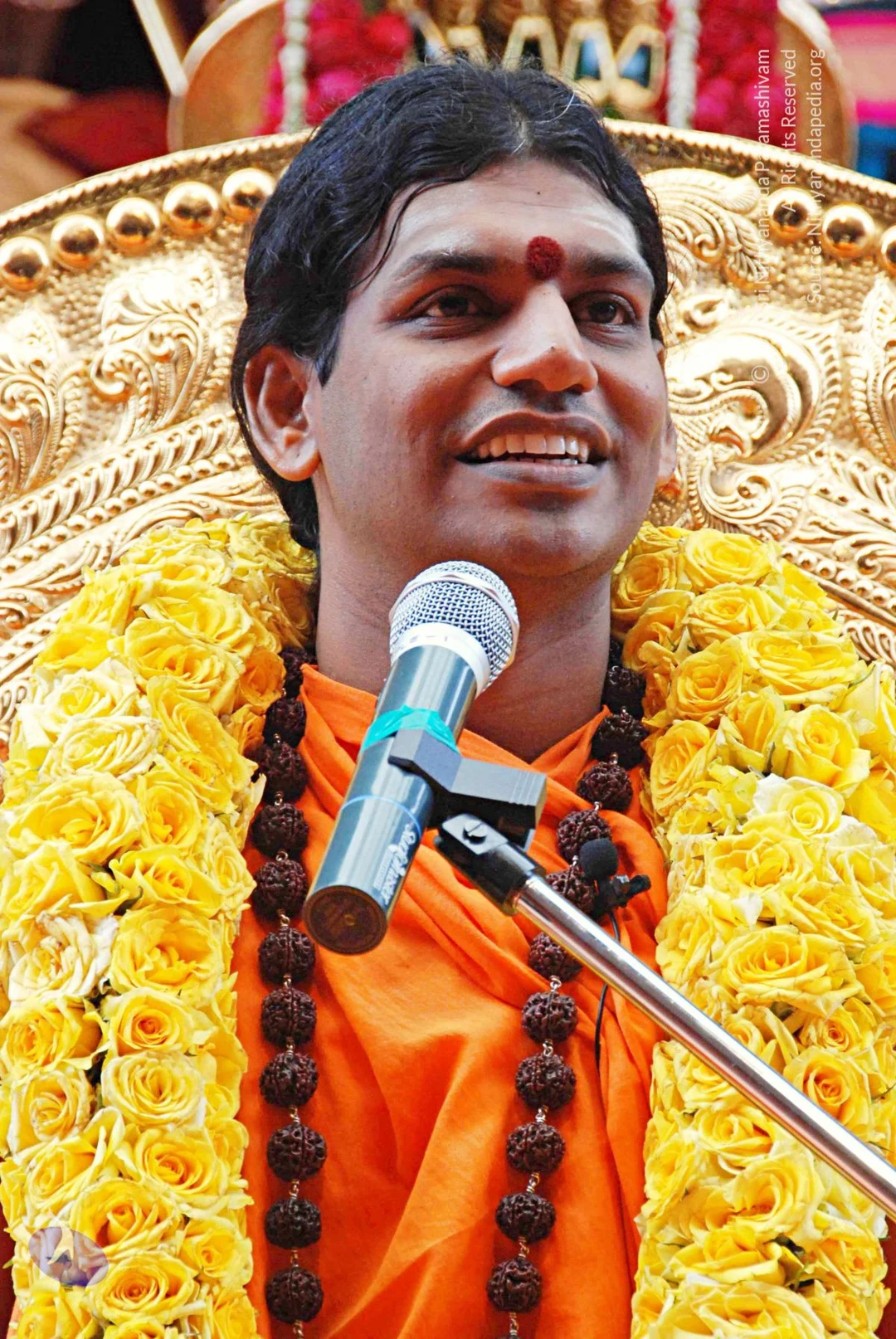
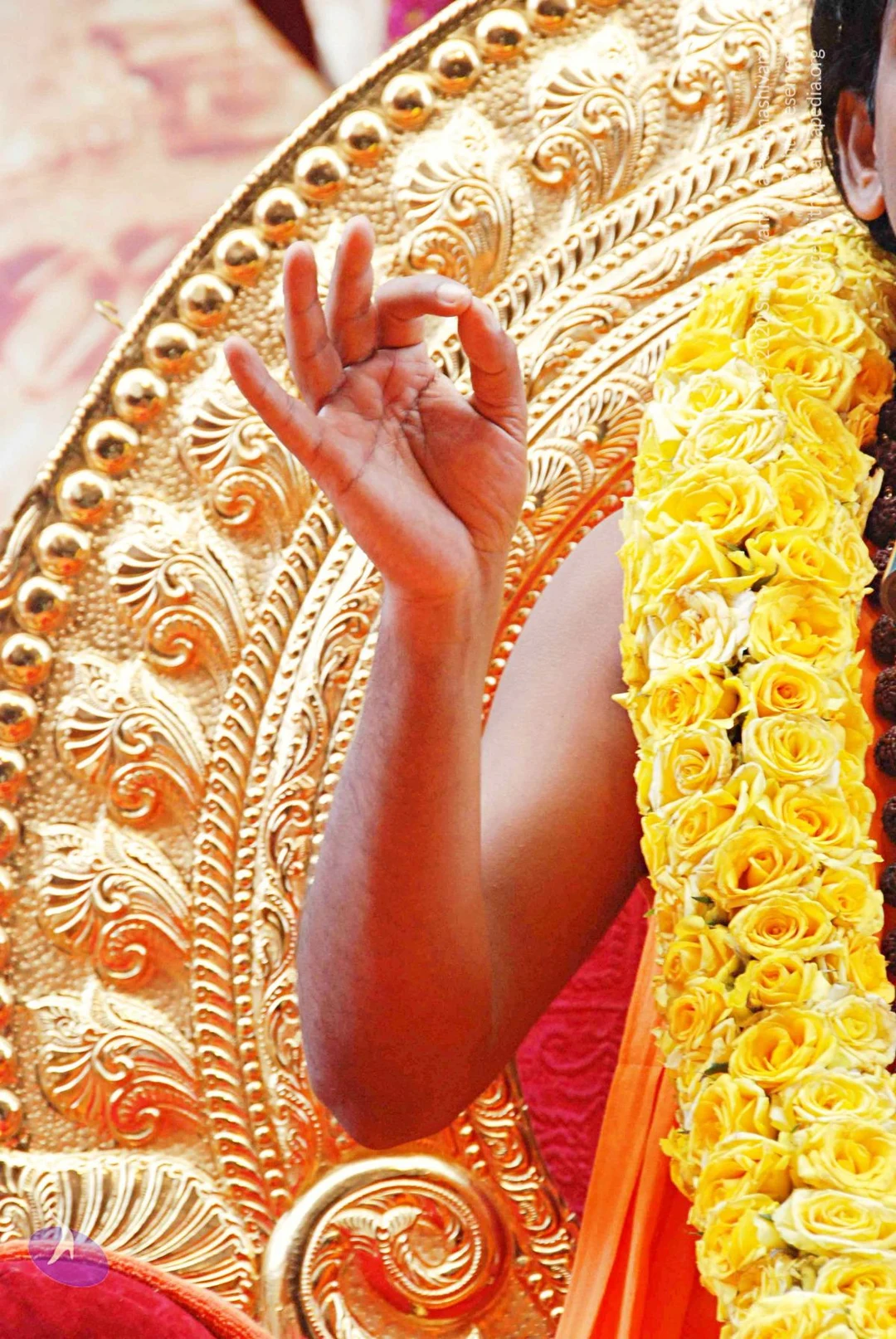
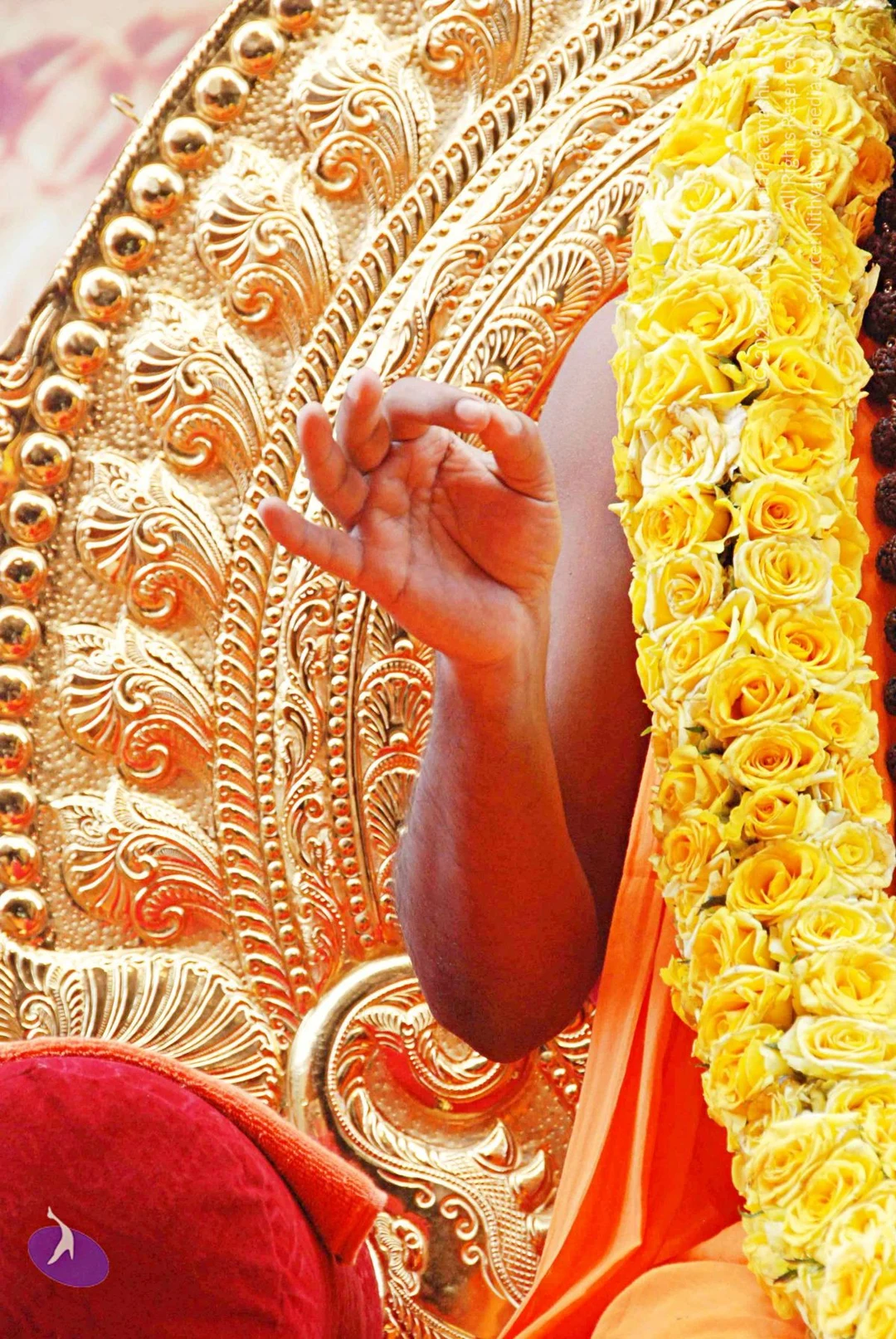
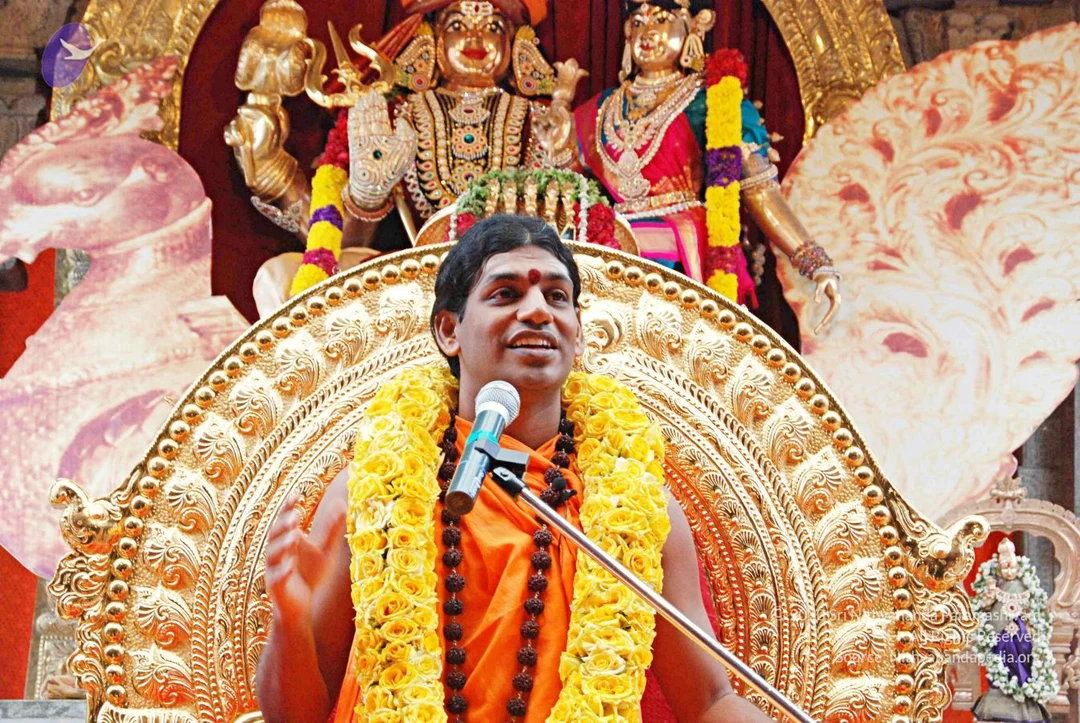
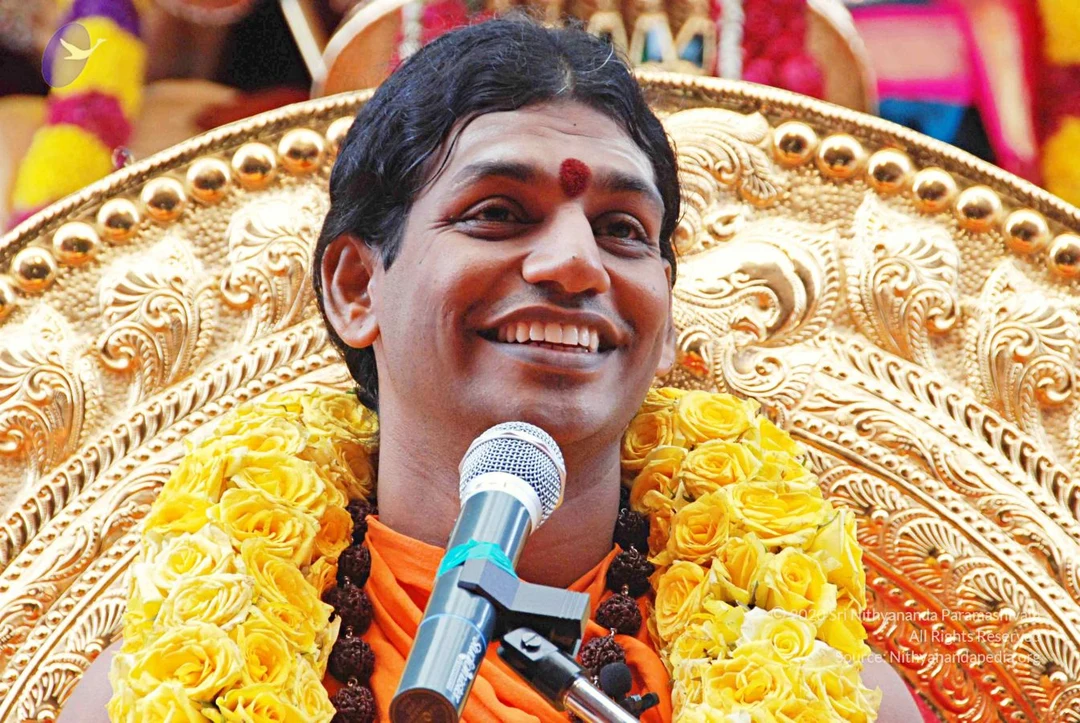
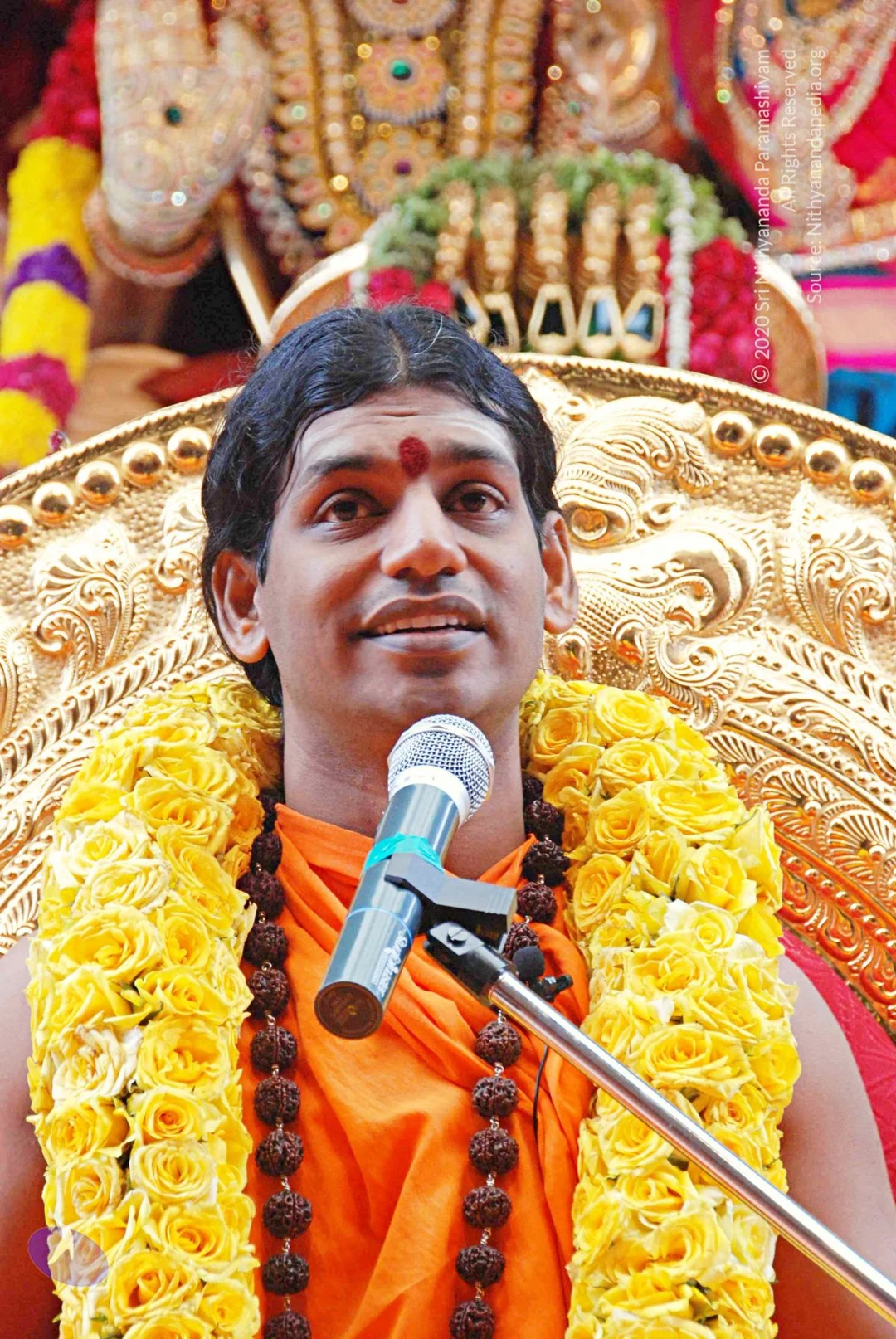
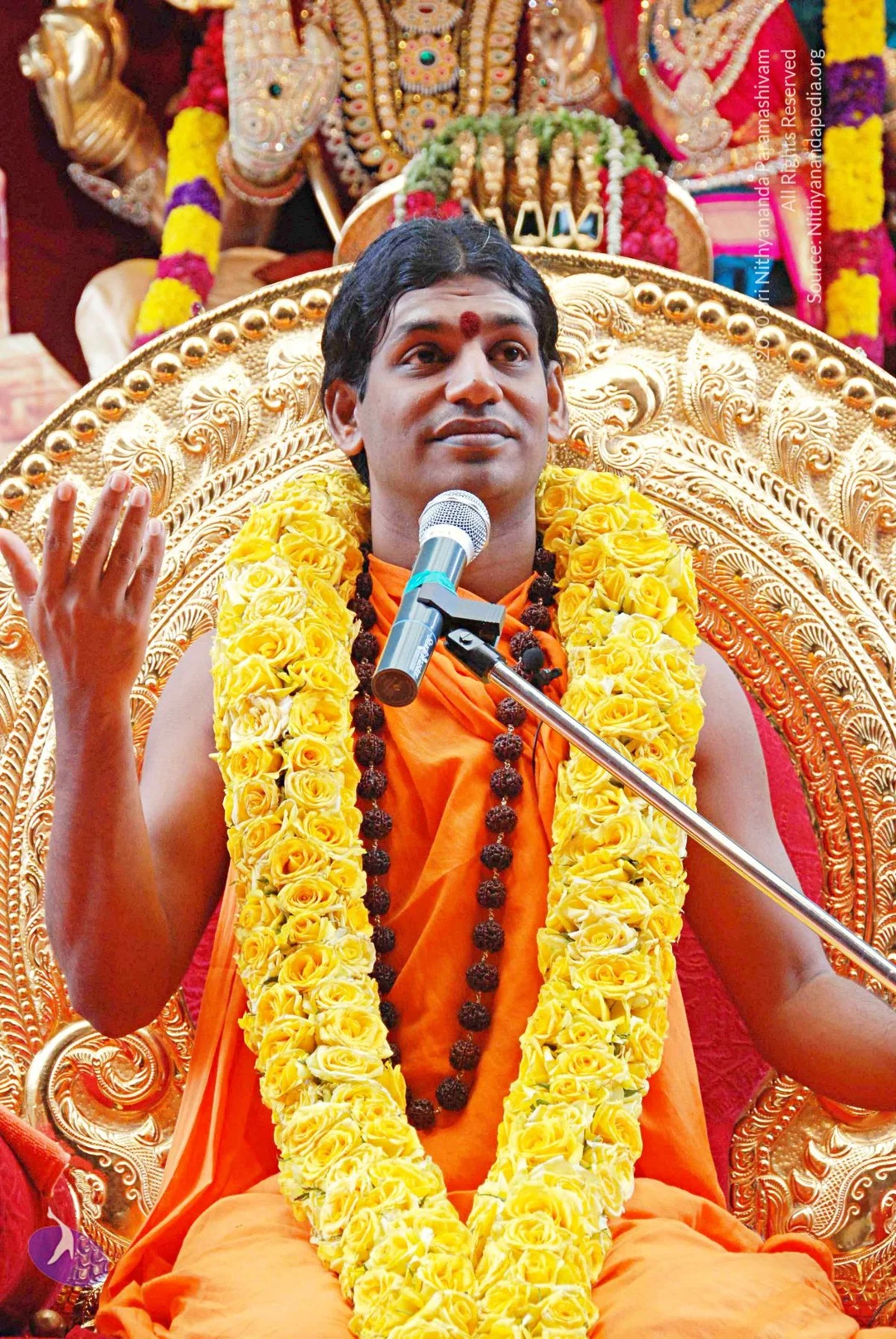
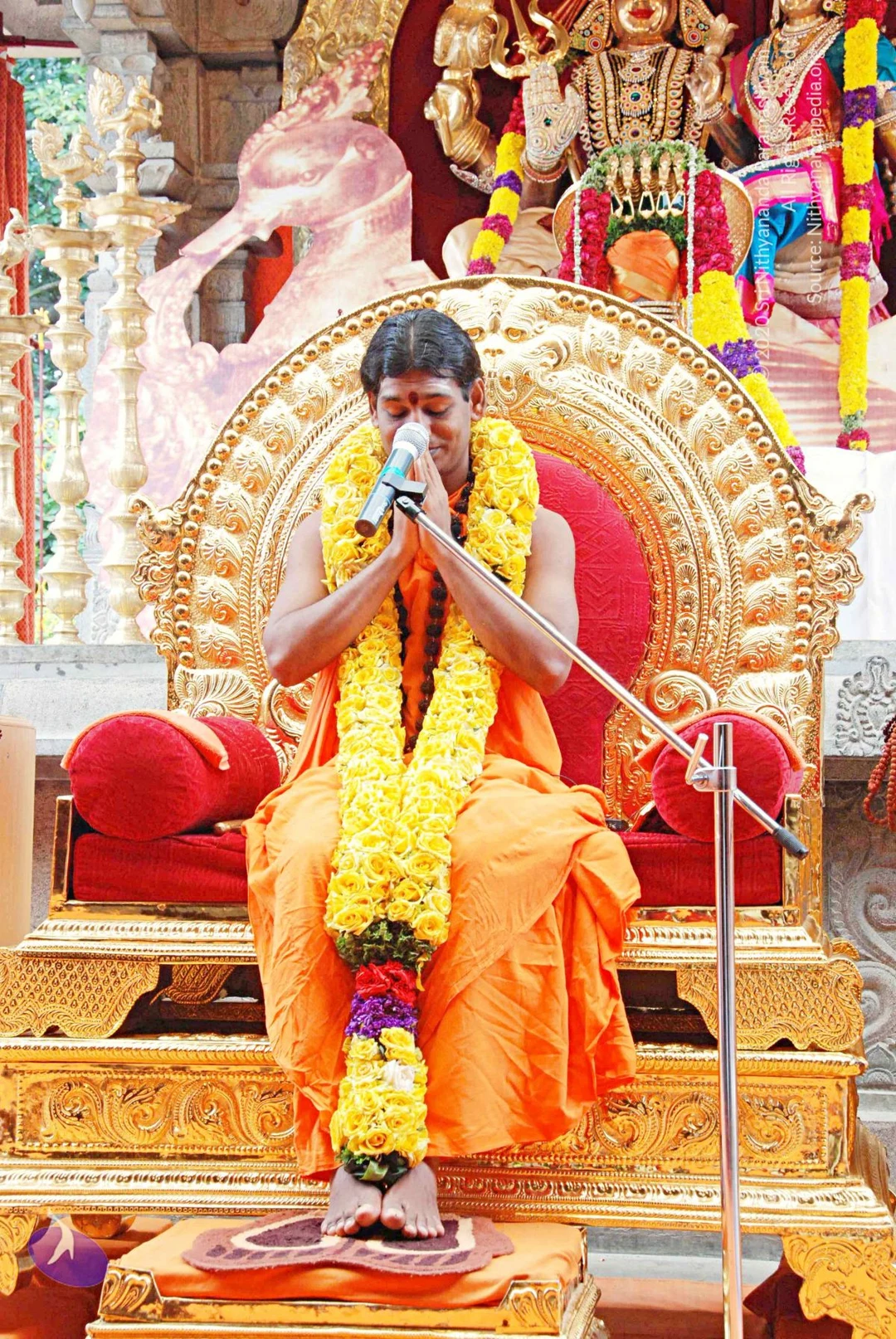
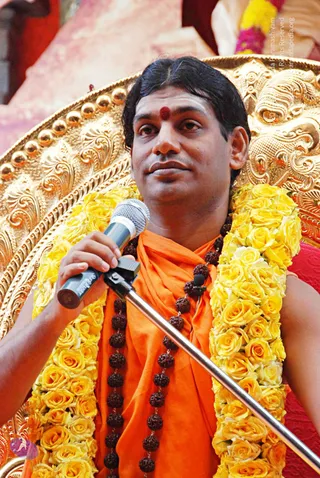
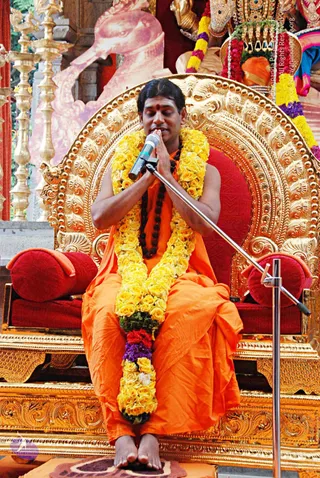
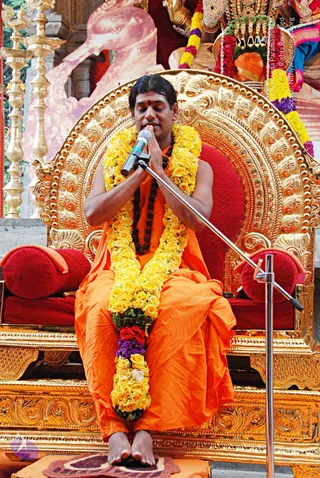
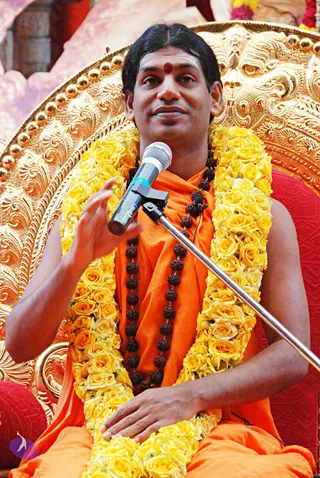
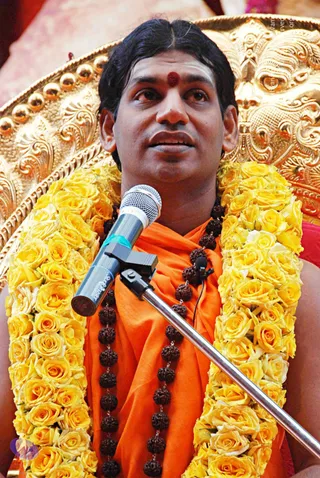
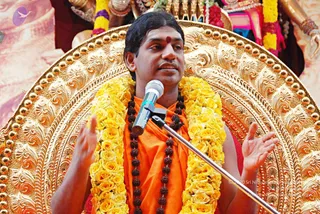
A man seated in front of an ornate gold throne-back, speaking into a handheld microphone on a stand. He wears an orange saffron garment draped over his shoulders, a long rudraksha mala with dark beads across his chest, and a thick garland of yellow roses around his neck. A red tilak mark is on his forehead and his hair is swept back. The gilded carved backrest and pink fabric behind him suggest a formal stage setting.A man seated on an ornate gilded throne with red cushions, speaking into a microphone with palms pressed together in namaste. He wears an orange saffron robe, a long rudraksha mala, a yellow rose garland with purple and red flowers, and a vermilion mark on his forehead. Behind him stand a gilded peacock-shaped structure, a deity murti adorned with garlands, and brass lamp stands on the left. The page indicates this is a person speaking at a satsang; the figure shows saffron clothing, a rudraksha mala and a garland of flowers on a throne.A seated man in saffron-orange robes speaks into a microphone on an ornate gold throne with red cushions. He wears a yellow rose garland over his shoulders, a long rudraksha mala across his chest, and a red tilak on his forehead. His hands are pressed together in anjali mudra with eyes closed. Behind him are gold lamp stands, a pink swan motif, and a deity murti draped in colourful flower garlands. The seated speaker appears to be a probable Swamiji (long dark hair, saffron robes, rudraksha mala and ornate ceremonial setting), giving a satsang discourse.A seated man in saffron/orange robes speaks into a microphone on a stand, gesturing with his right hand. He wears a long yellow rose garland, multiple rudraksha mala strands, and a red bindi on his forehead, sitting on an ornate gold throne with carved floral and lion-like motifs against a red cushion.A close photograph of a man seated before a microphone on a stand, speaking during a talk. He wears a saffron-orange shawl over the shoulders, a long multi-strand necklace of dark rudraksha beads, and a garland of yellow roses. A red tilak mark sits on his forehead and his hair is swept back. Behind him is an ornate gold carved chair with floral and scroll motifs. A lapel microphone is clipped to his shawl. The appearance matches the a person cues of saffron clothing, rudraksha mala and a gold-carved throne, so he is identified only as the probable presenter of a satsang discourse.A man in saffron-orange robes speaks into a microphone on a stand while seated before an ornate gold throne with intricately carved floral and scroll patterns. He wears a long rudraksha mala and a large yellow rose garland, with a red bindi on his forehead. He gestures with both open hands, and behind him are brightly coloured garlands and a deity murti with gold ornaments. a person is the speaker, based on the saffron robe, rudraksha mala and ceremonial garland; the throne alone is not used for identification.

Sarva Darshan
15 photosSource gallery
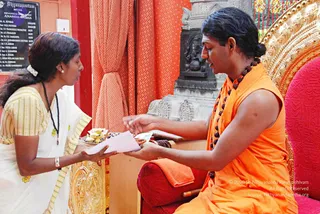
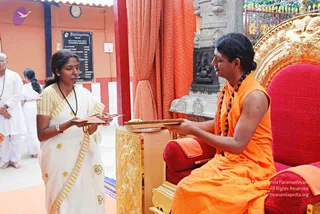
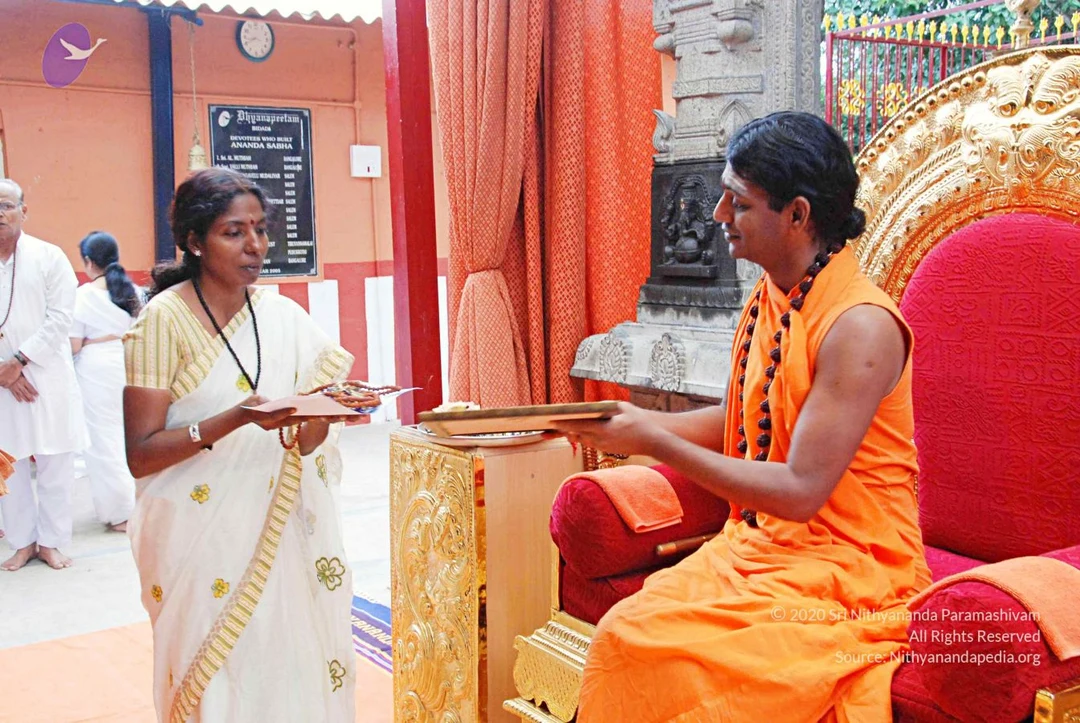
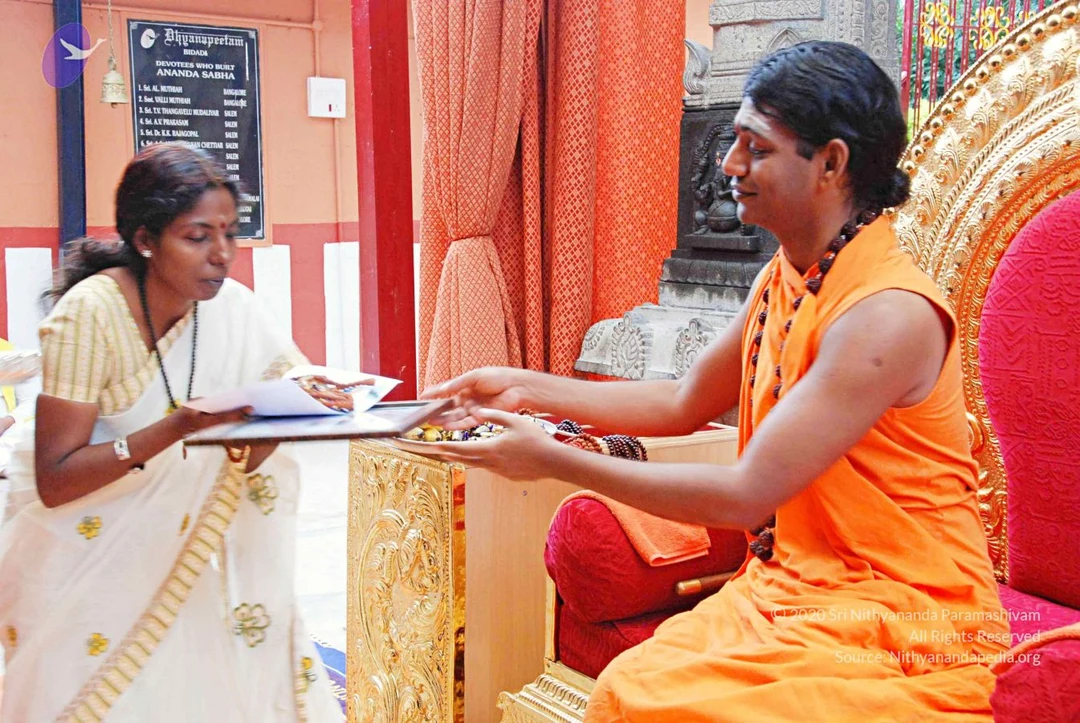
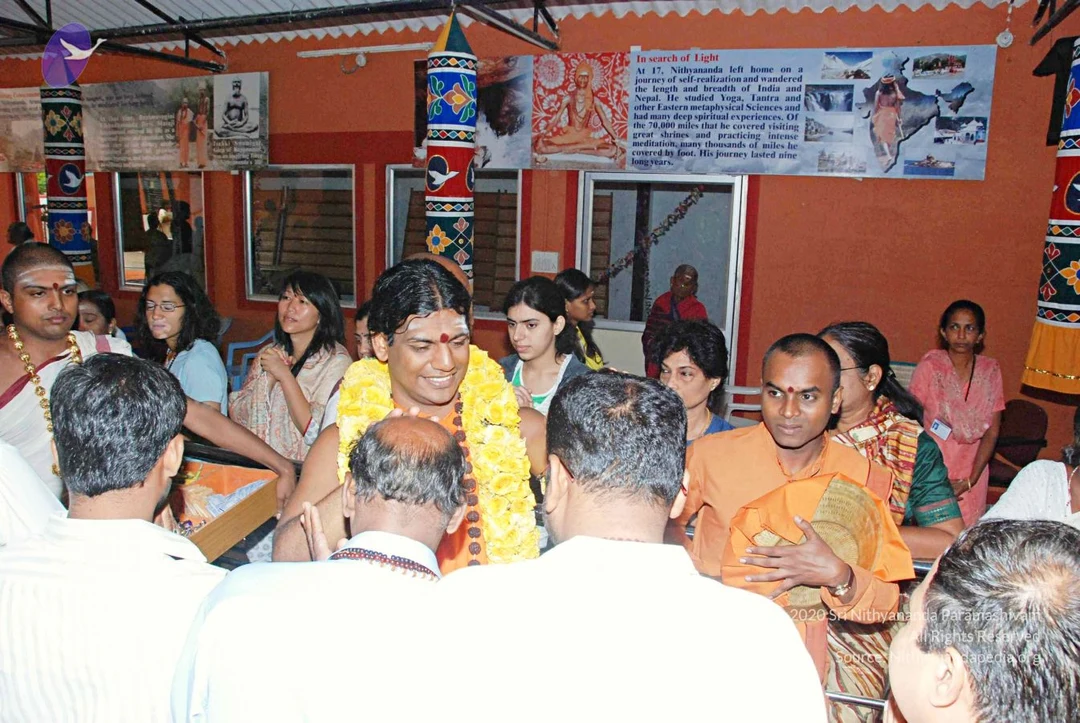
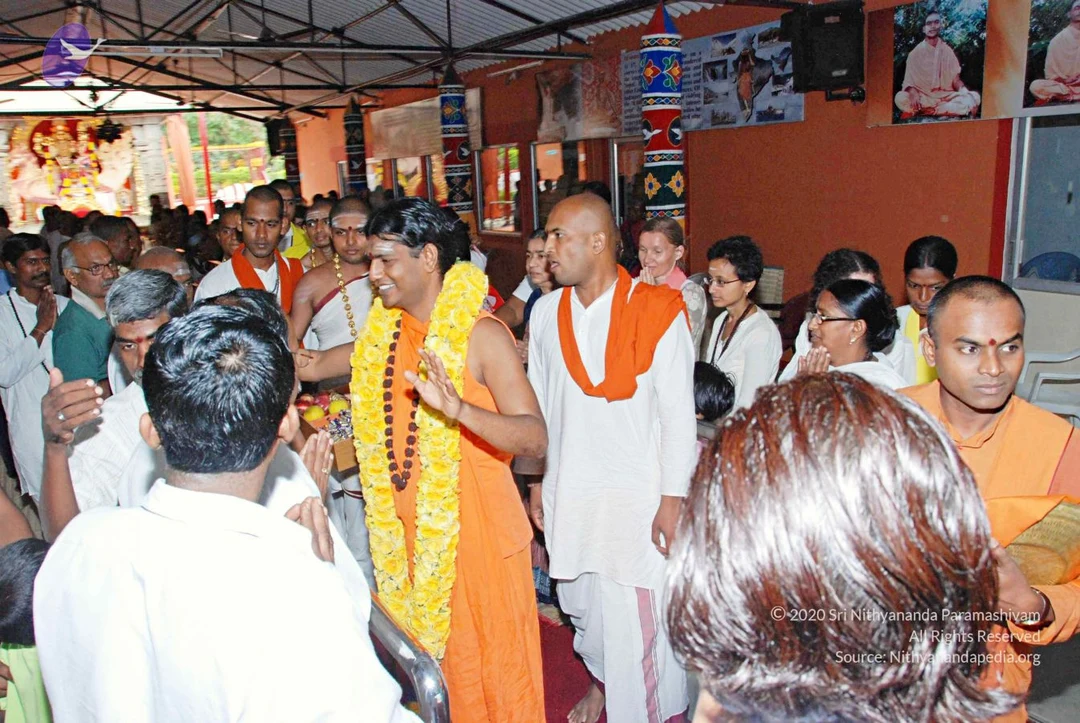
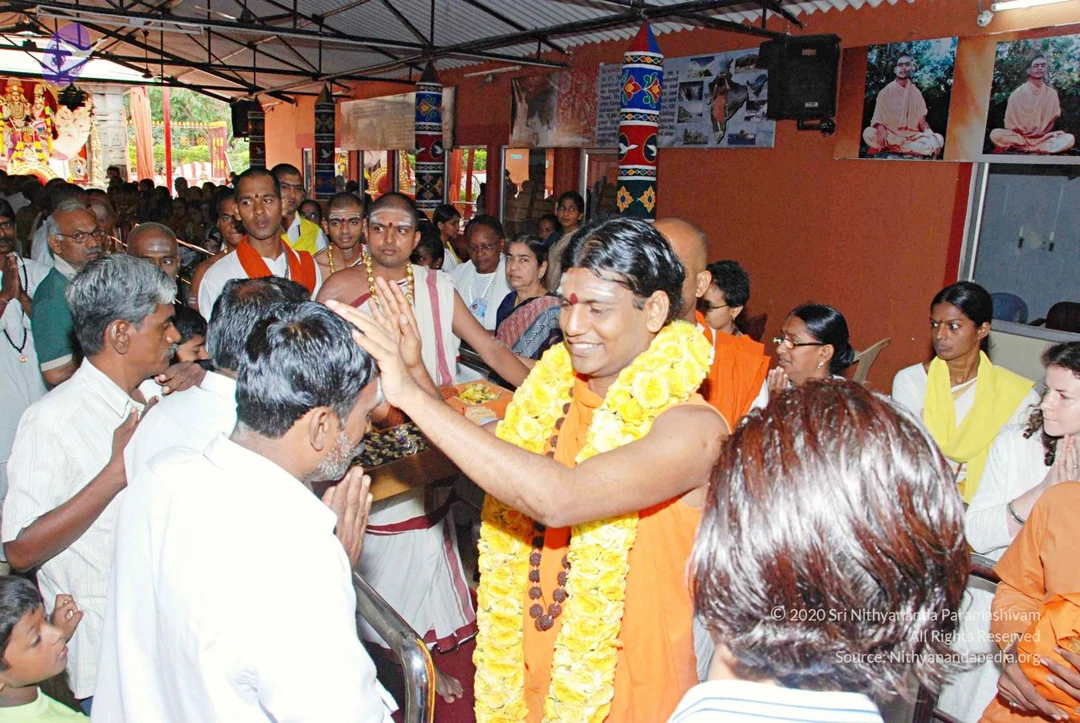
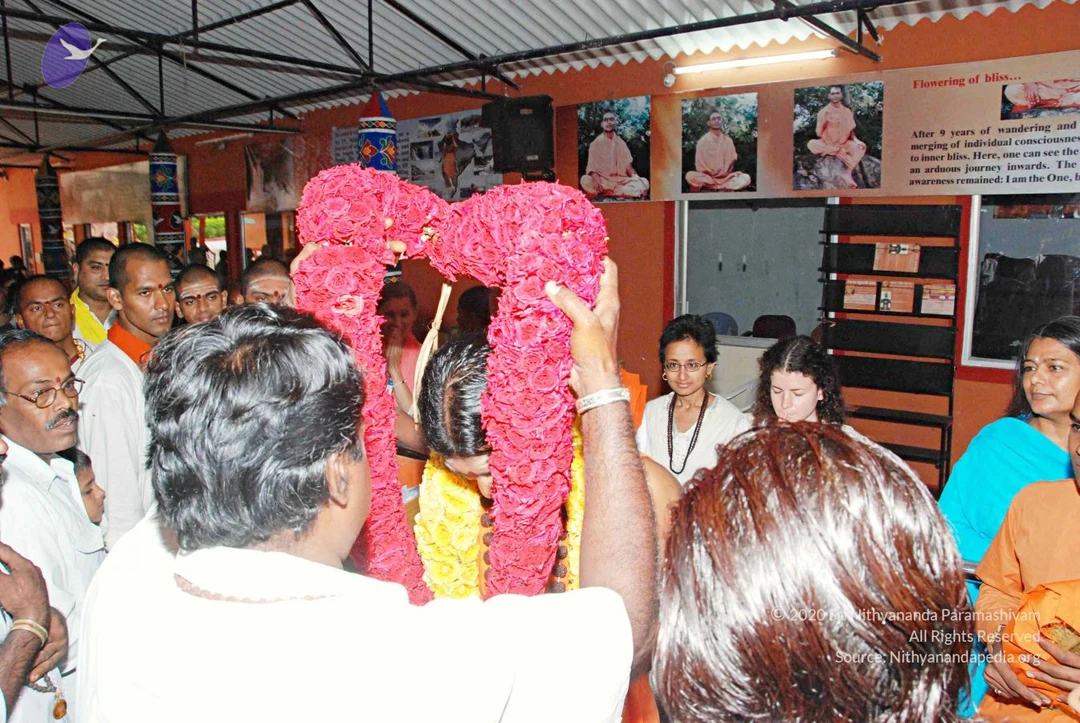
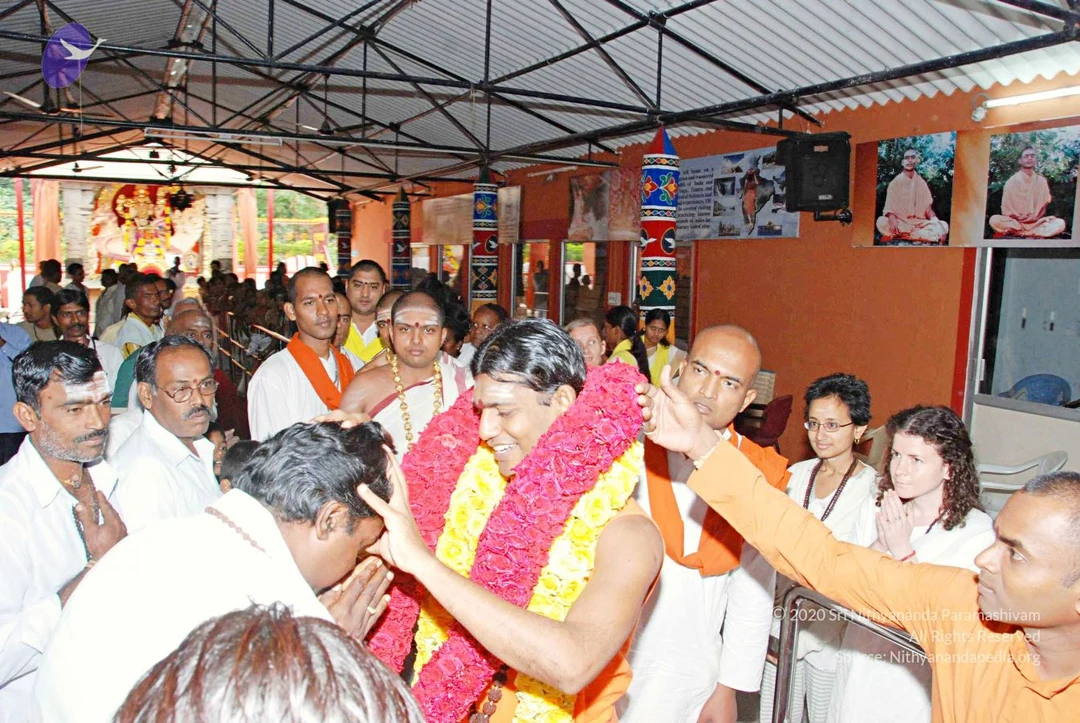
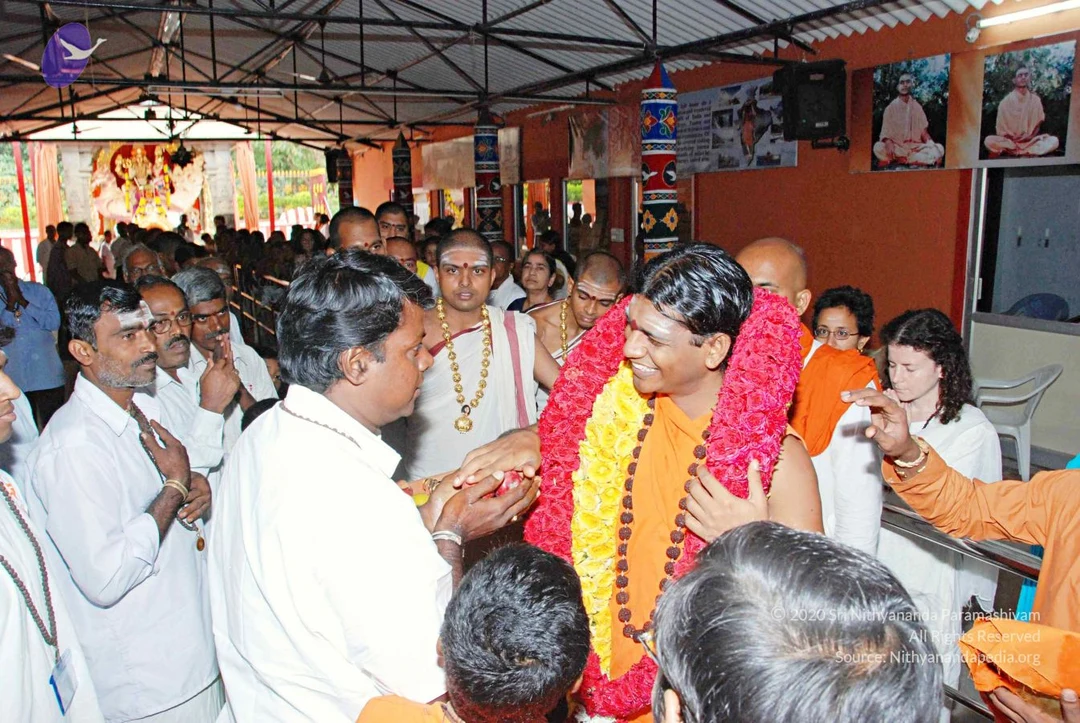
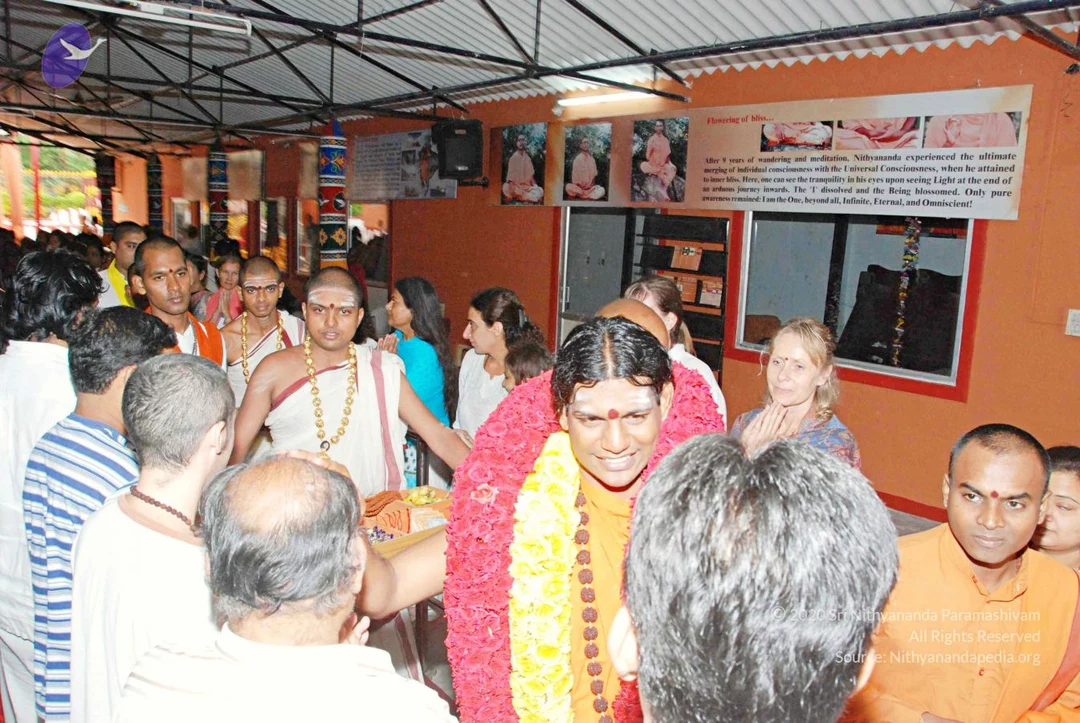
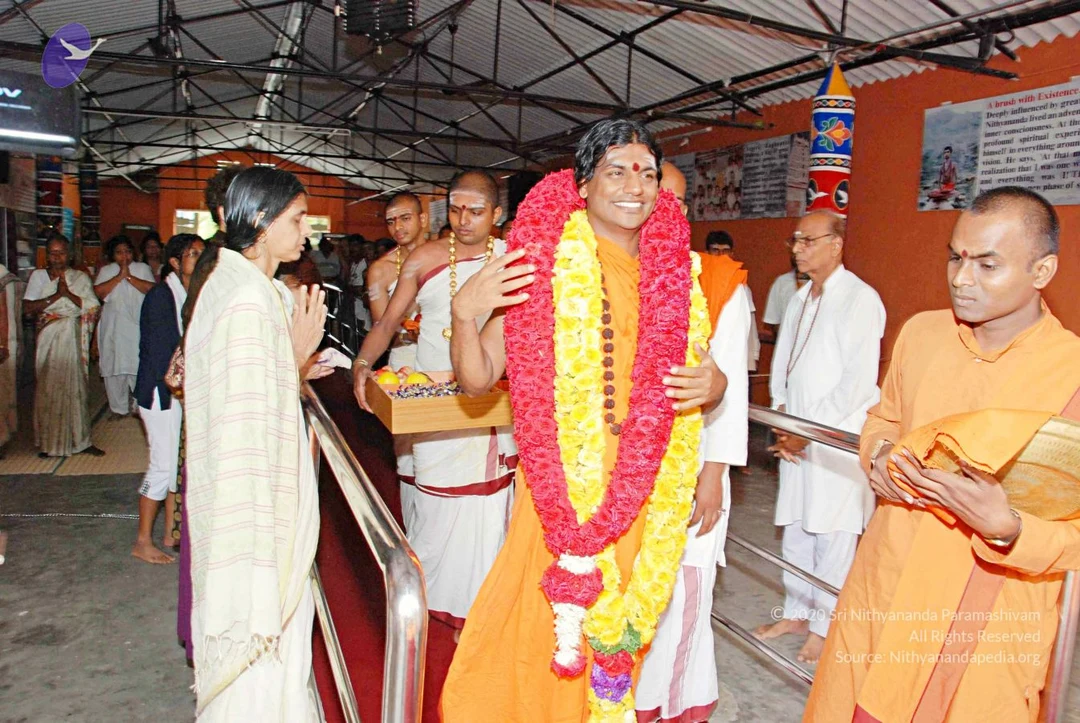
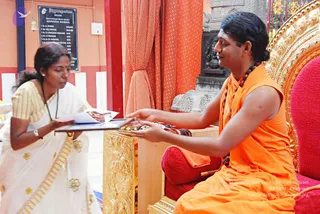
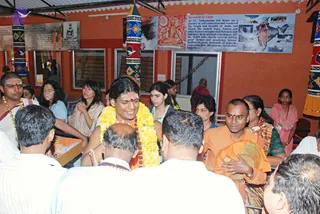
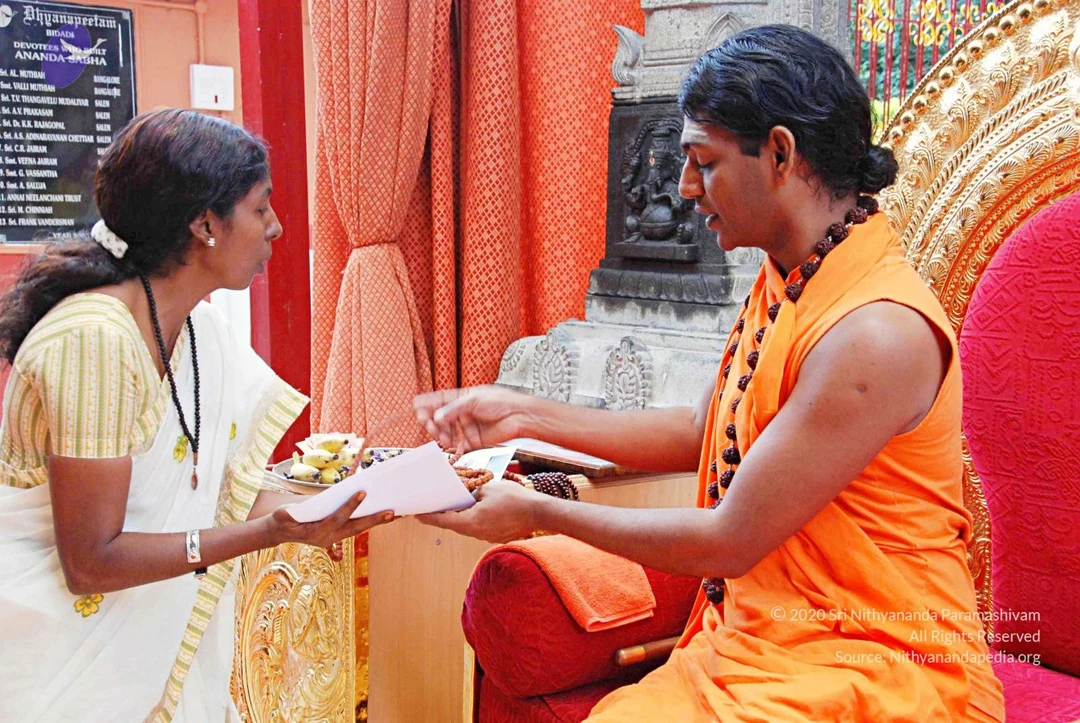
A woman in a white and yellow-striped sari with a black beaded necklace and a white flower in her hair stands at left, handing a folded white paper or envelope across a small wooden table to a man seated in an ornate gold-and-red throne at right. The seated man wears a saffron-orange sleeveless robe, a long dark rudraksha mala draped over his shoulders, and has long dark hair tied back. A brass bowl of fruit and flowers, rudraksha malas and a small tray sit on the table. Behind them hang orange curtains and a dark stone deity murti of Ganesha stands on a shelf, with a framed board listing devotee names in the background. The swami appears in person, receiving the offering in a darshan setting.A photograph of a seated man in saffron-orange robes with a long dark rudraksha mala and sweeping hair, on a red ornate throne with gold carved armrests, receiving a brass tray from a woman in a white sari with yellow borders and a rudraksha mala. The woman holds a small paper or card and folded hands near a gold carved pedestal. Behind them, a white-clad man and another person stand, a dark memorial board hangs on the orange wall, and a stone carved deity murti sits in a niche.A seated man in an orange sleeveless robe and multiple rudraksha malas sits on an ornate gold-and-red throne inside a temple hall, reaching forward to take a paper or document from a woman. The woman wears a white sari with gold embroidered border and a dark bead necklace, holding a tray or folder. Behind them stands a dark stone carving with a deity relief, orange curtains, and a black board listing names of devotees in the Ananda Sabha. a person by appearance cues: long swept-back hair, orange robe, rudraksha malas, seated on a throne.A photo inside an orange-walled hall showing a man with long swept-back dark hair and a red bindi, wearing a yellow marigold garland and a rudraksha mala, smiling and being greeted by people in a crowd. Around him, a man in white ritual clothes with a shaved head and gold necklace stands at left, and a shaven-headed man in saffron robes and a white shawl stands at right. Several women in saris and salwar kameez watch, and a red-clad figure stands in the background. Banners on the wall and colourful pillars frame the scene. The swamiji cue is a candidate with long hair, marigold garland and rudraksha mala, so the appearance-based label applies.A crowded indoor hall with an orange-painted wall, hanging photographs and a colourful striped pillar. A central man in saffron-orange robes and a long yellow flower garland, with rudraksha beads around his neck, smiles and holds his palms together in greeting. Beside him stands a bald man in white dhoti and an orange shawl. Devotees with folded hands surround them, and a man in an orange robe stands at the right edge holding a cloth. Ceiling tarpaulin and a small shrine with a deity murti are visible at left.A crowded indoor hall with orange-painted walls and a corrugated roof. In the centre, a smiling man with long swept-back dark hair wears an orange robe, a yellow flower garland and a rudraksha mala, and raises his hand in blessing toward a devotee in white shirt. Beside him, a priest in white dhoti with a shaved head holds a brass tray of offerings. Devotees in white, orange and saffron clothing press their palms together around them. Behind, framed photographs of a man in orange robes seated in meditation hang on the wall, and a colourful decorated pillar stands nearby. The scene suggests a darshan with blessings. Probable Swamiji is visible in the central figure, whose long hair, saffron robe, garland and rudraksha mala are distinctive.

Aadheenavasis Take Aparigraha Blessings

3 photosSource gallery
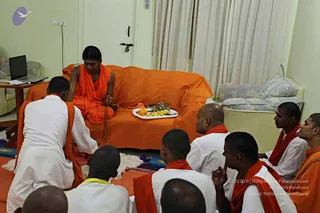
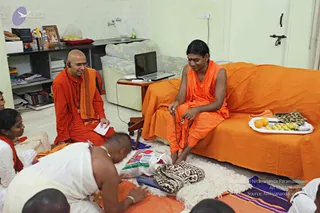
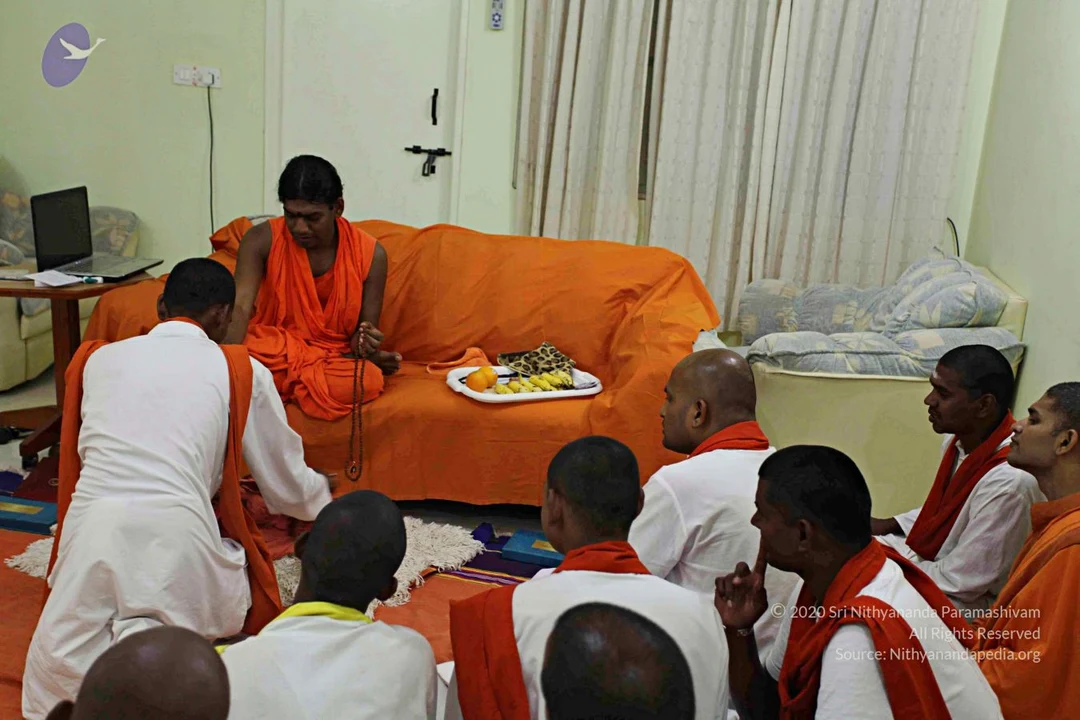
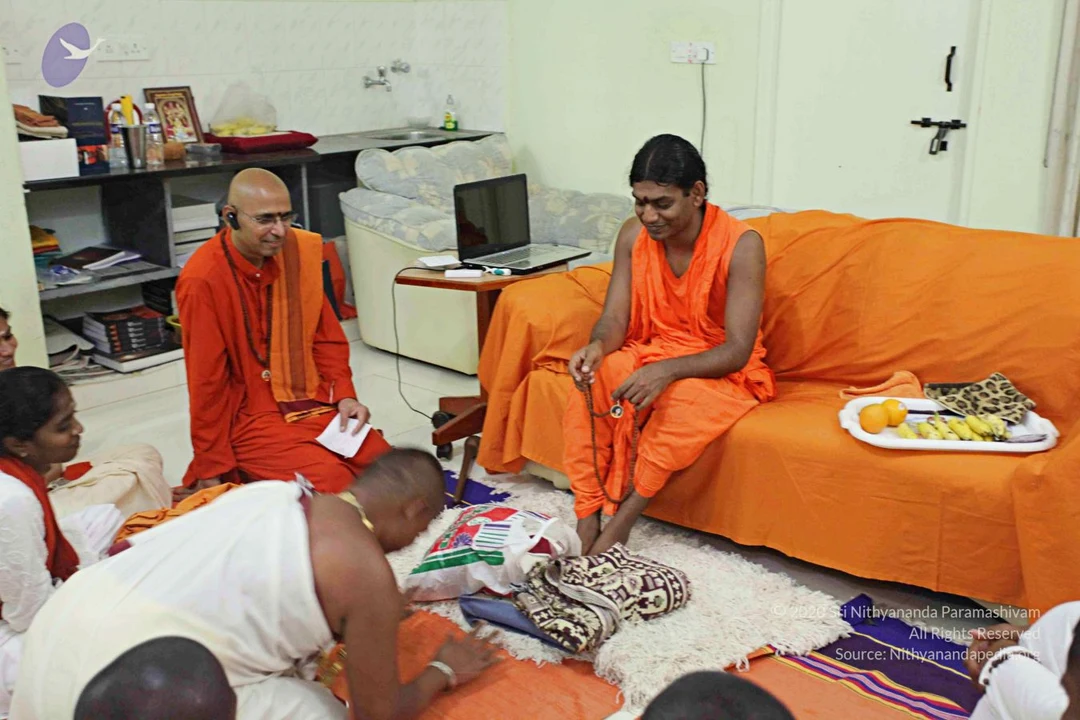
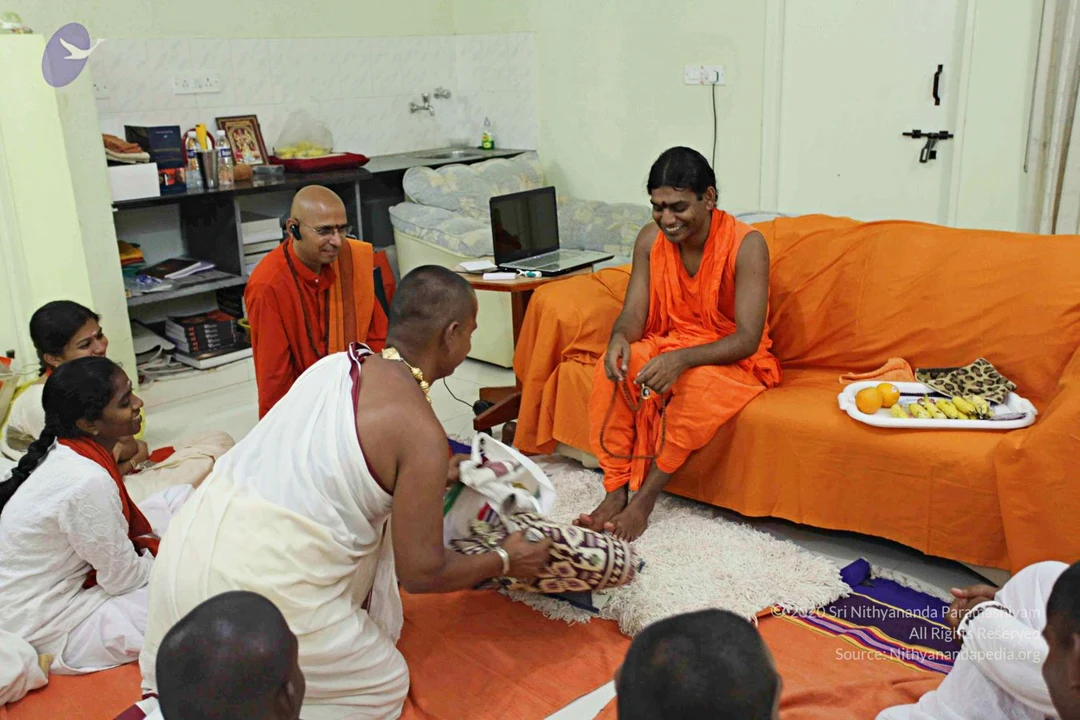
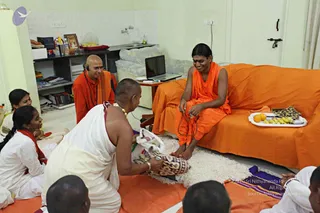
A small room with cream walls and sheer curtains during a private satsang gathering. A figure with long dark hair in an orange saffron wrap sits cross-legged on an orange-draped sofa, holding a rudraksha mala in his hands. A white tray of fruit sits beside him on the sofa. Around him on the floor sit about seven men in white kurtas and orange or red shawls, several with shaved heads, some listening attentively, while one kneels at the left edge, leaning toward the sofa. A laptop rests on a small wooden table at the left. The seated figure is an appearance-based probable Swamiji (probable) in a teaching role, presented with long hair, saffron clothing and a mala.Indoor ashram room with orange-draped sofa and white floor rug. A long-haired man in orange robes and a rudraksha mala sits on the sofa smiling and holding beads, with a tray of fruit and an orange cloth beside him. Seated on the floor nearby, a bald man in orange robes with a shawl and rudraksha beads, wearing an earpiece, smiles and holds papers. In front, a shaved-headed man in white clothing bends low over a bundle of cloth and bags, while a woman in white with a red shawl sits at the left edge. Shelves, a laptop, a framed picture and a kitchen sink fill the background.Indoor photo in a simple room with cream walls, a sink and shelves. A long-haired man in orange robes and an orange shawl sits smiling on an orange-covered sofa, holding a rudraksha mala, with a laptop and a tray of oranges and bananas beside him. A shaved-headed man in white dhoti and a white garment, wearing a gold necklace, kneels on a white rug offering a cloth-wrapped gift. Behind him, a bald man in orange robes stands wearing a headset. Two women in white, one with a red shawl, sit on the floor at left, and more people in white are seen at the bottom edge. Only partly visible people are included in the count.