Skip to content
Wednesday

16 August 2017

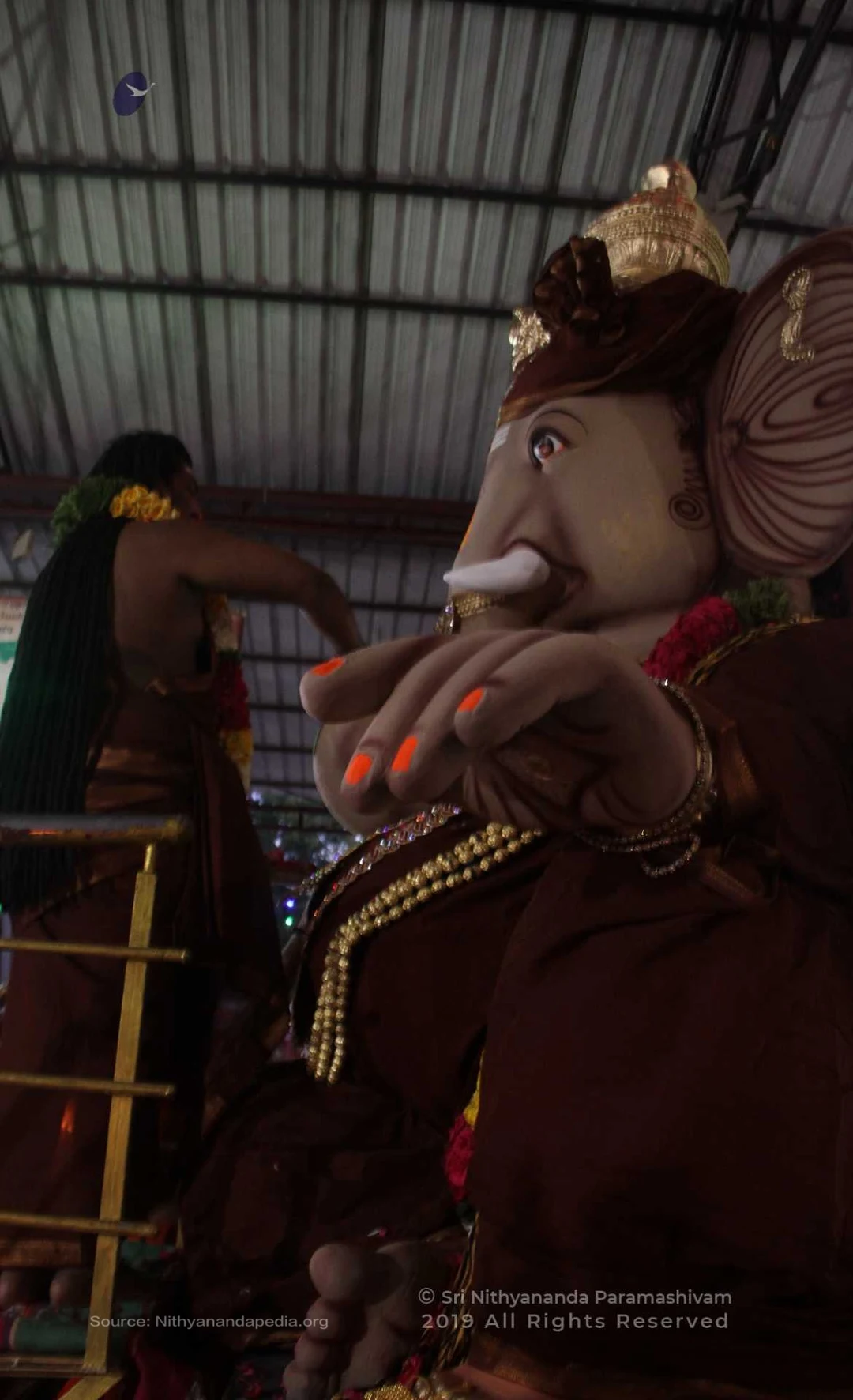
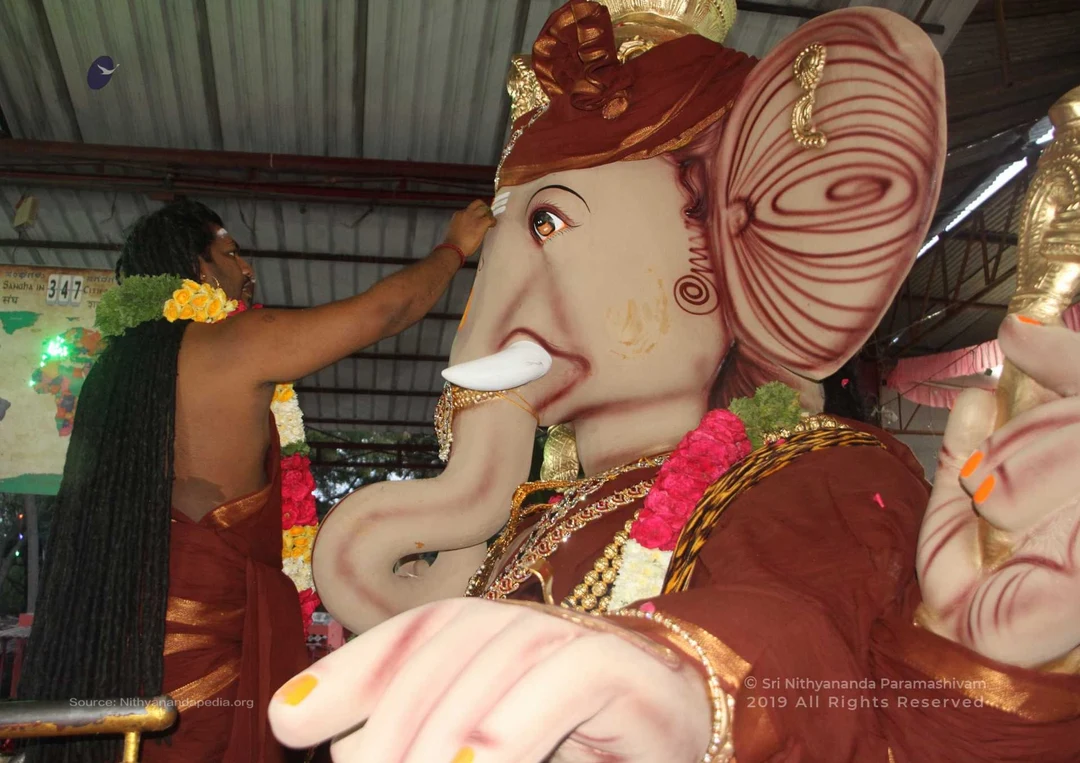
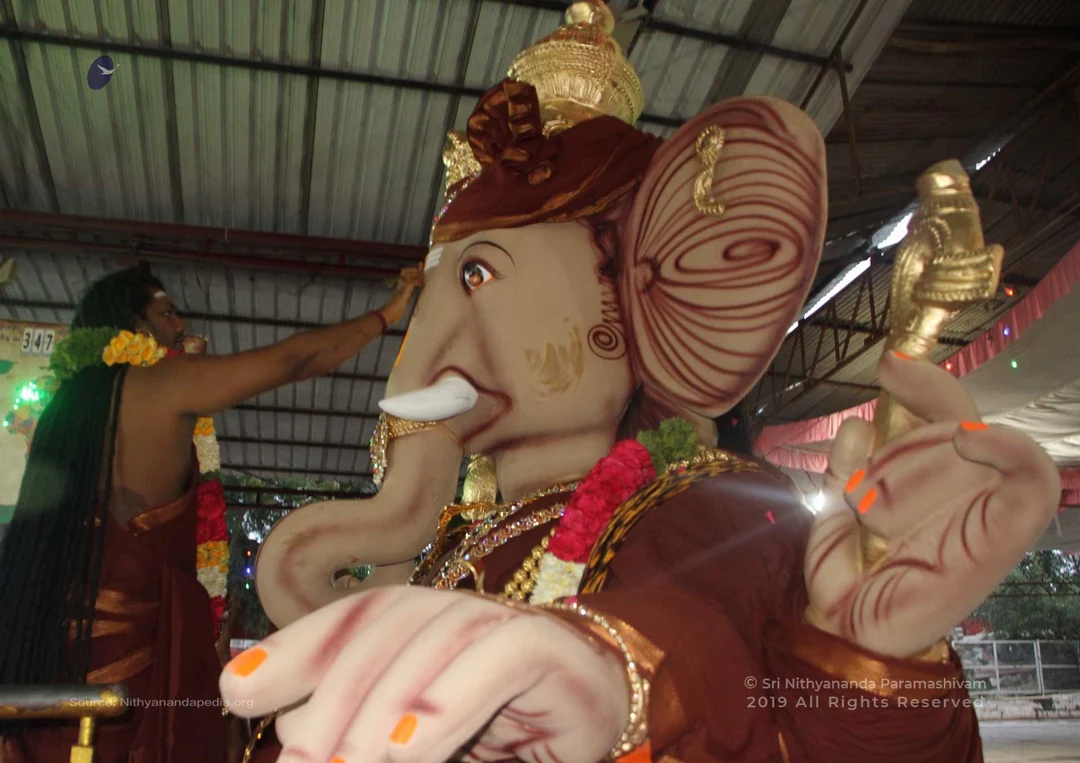
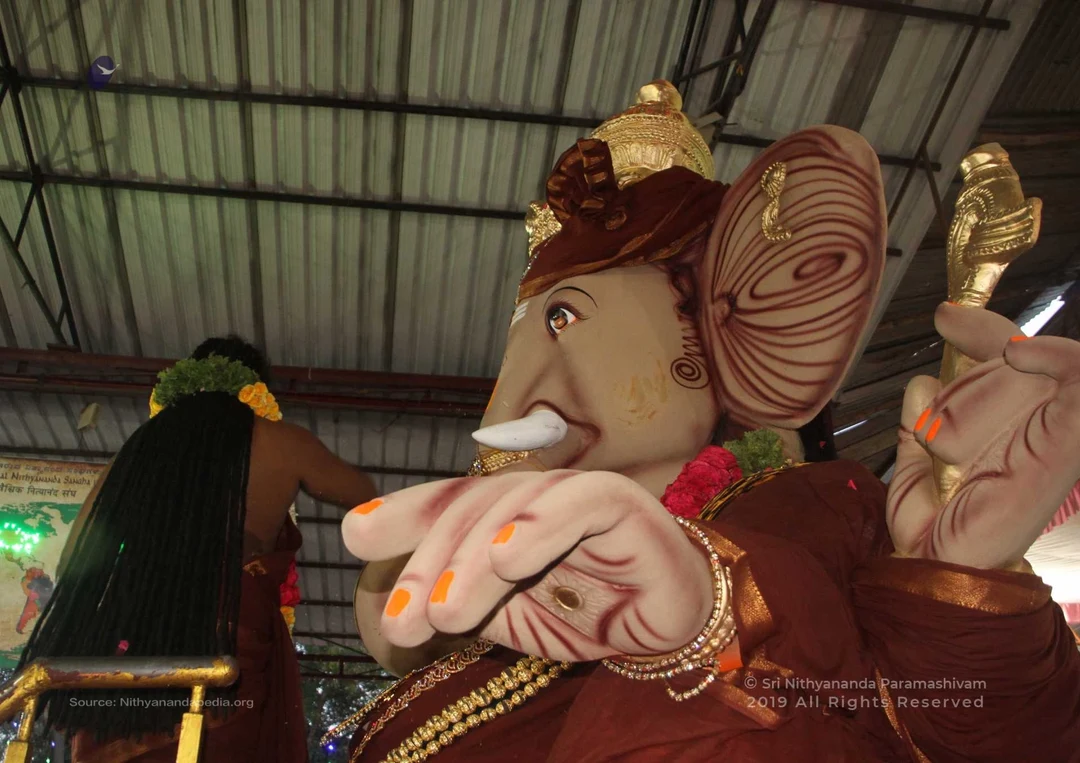
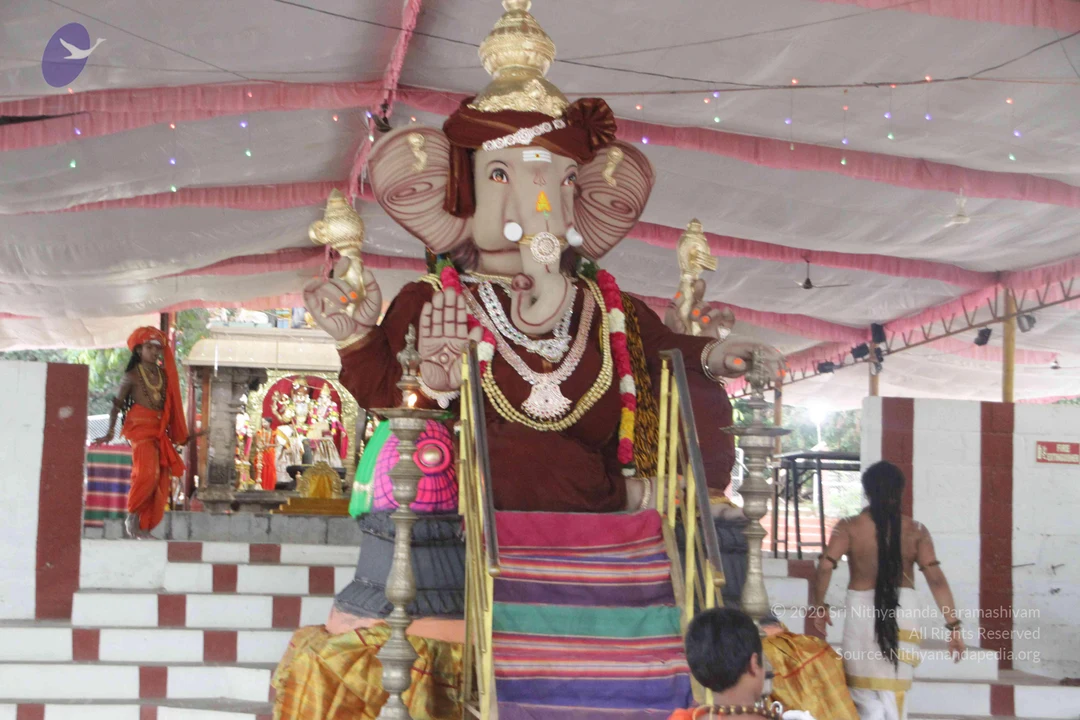
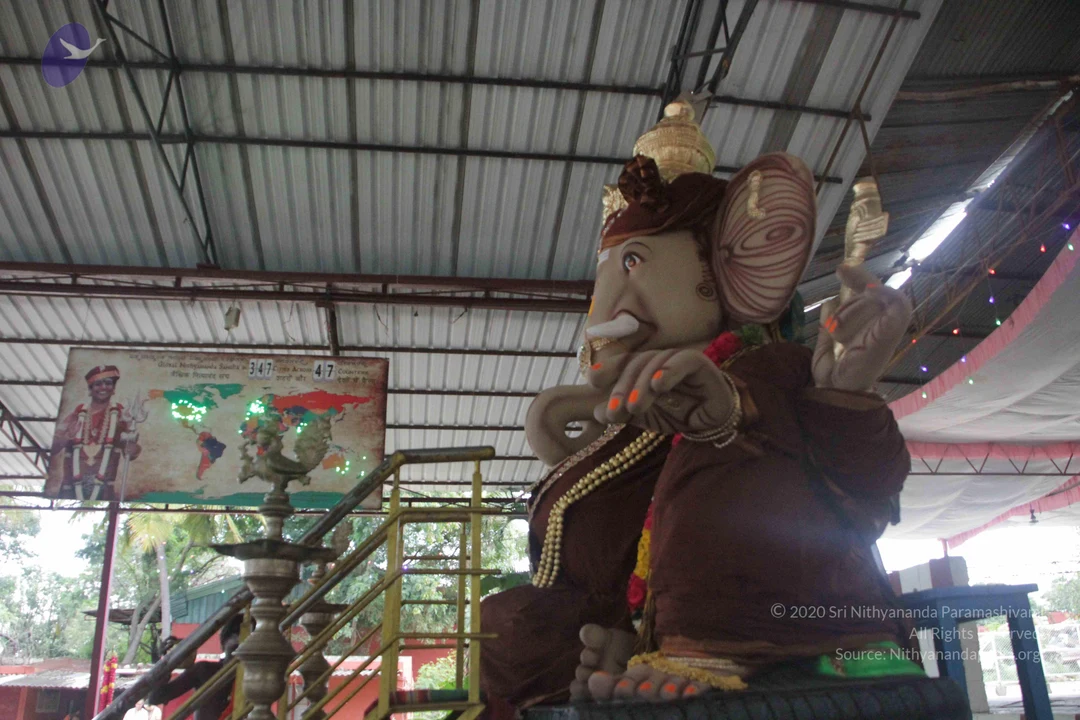
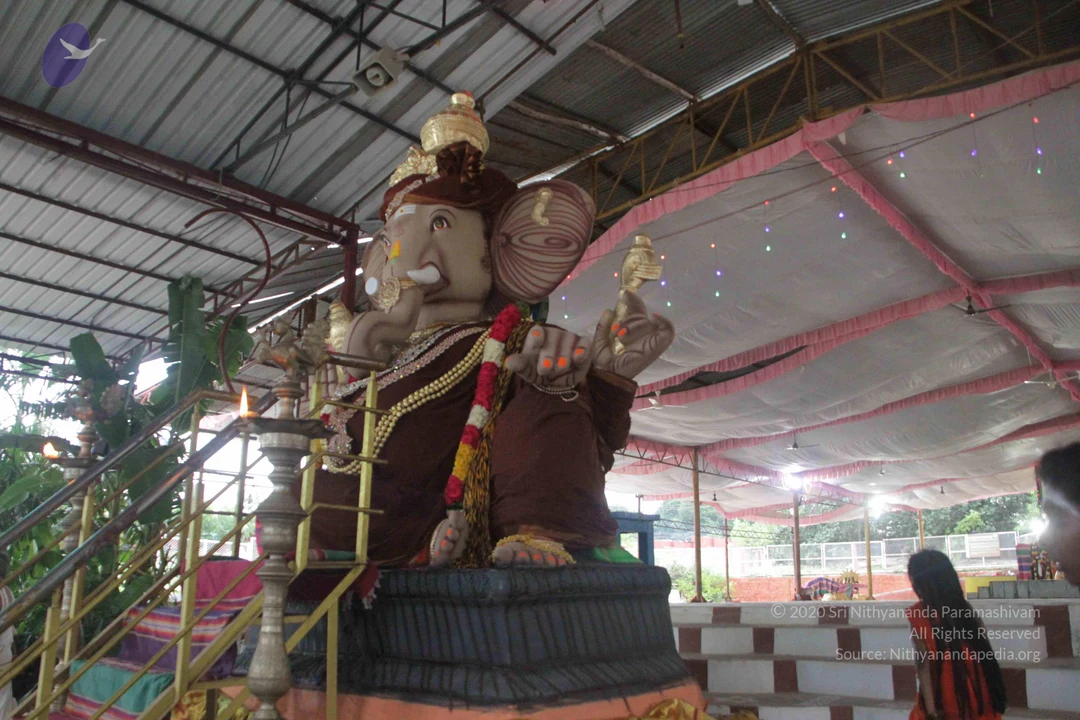
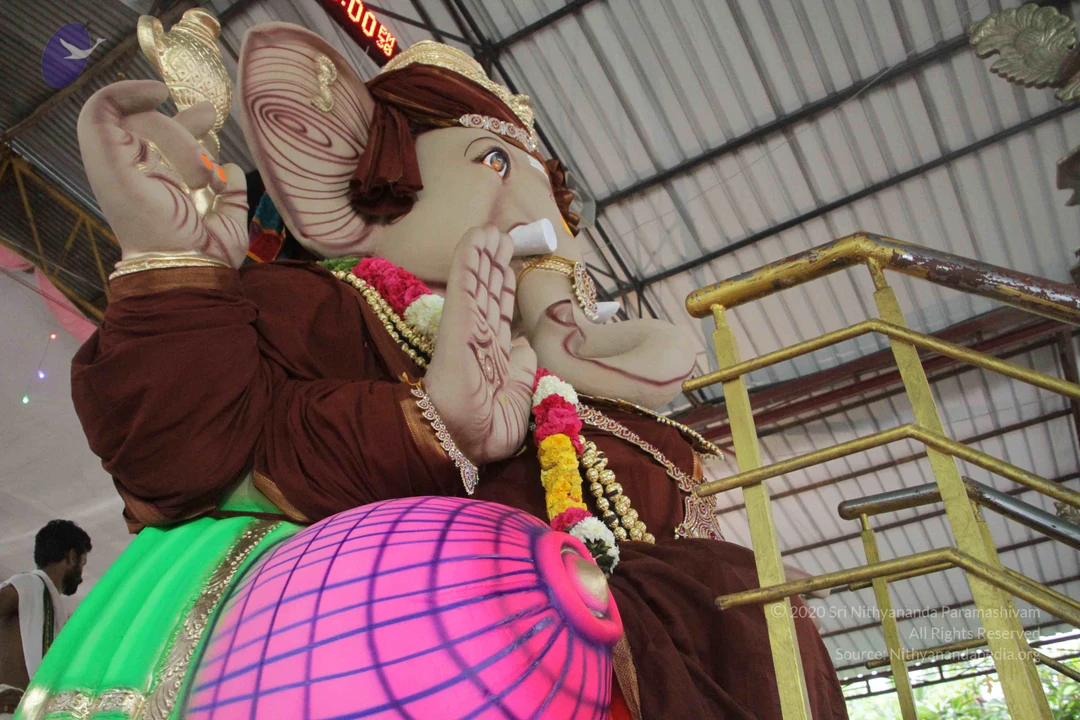
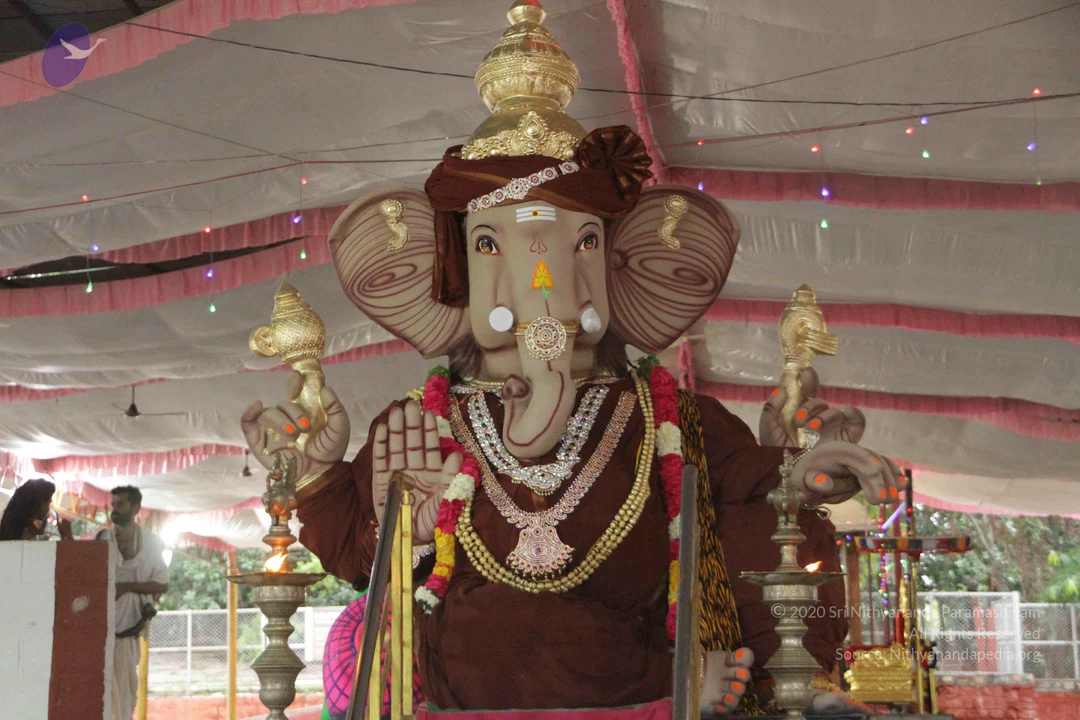
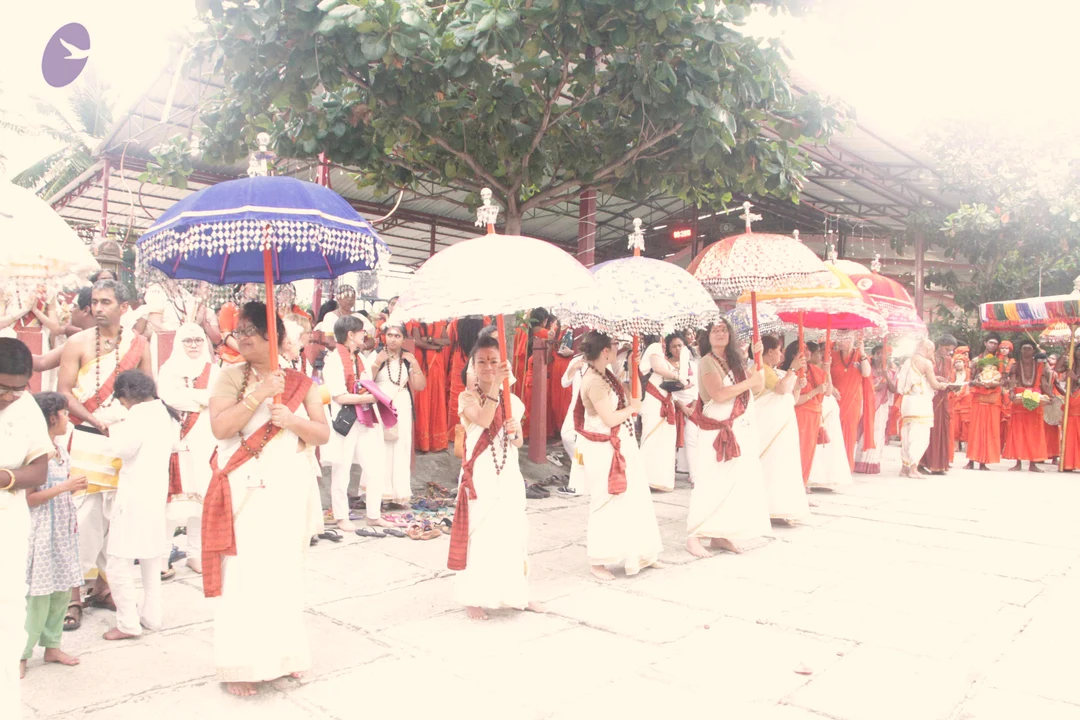
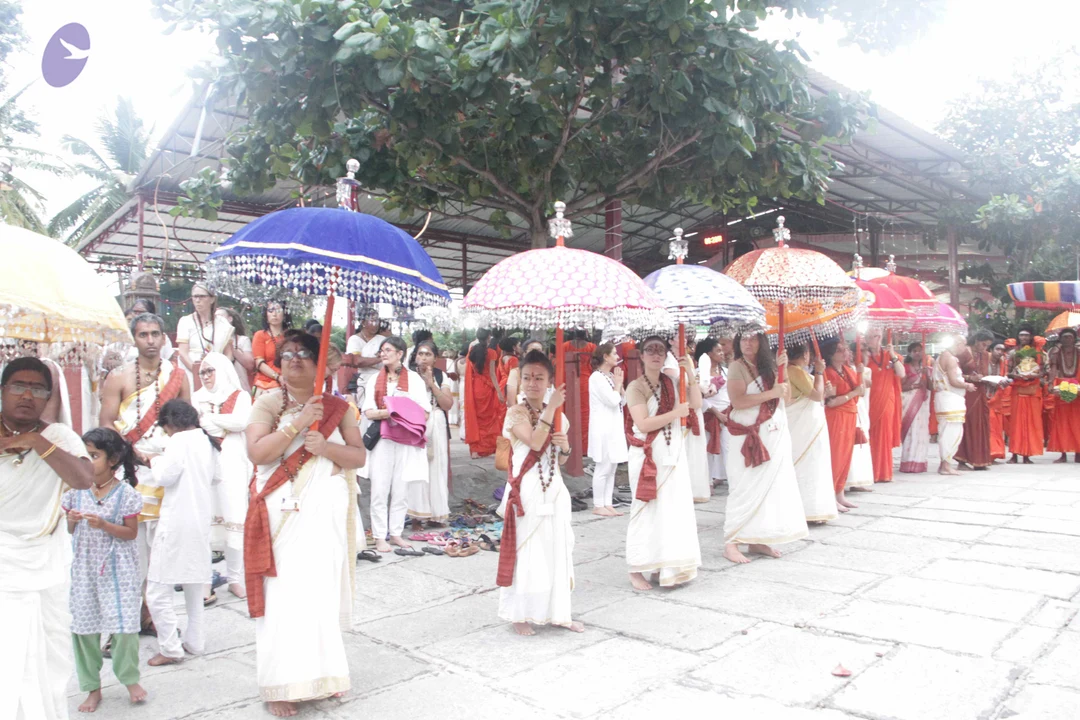
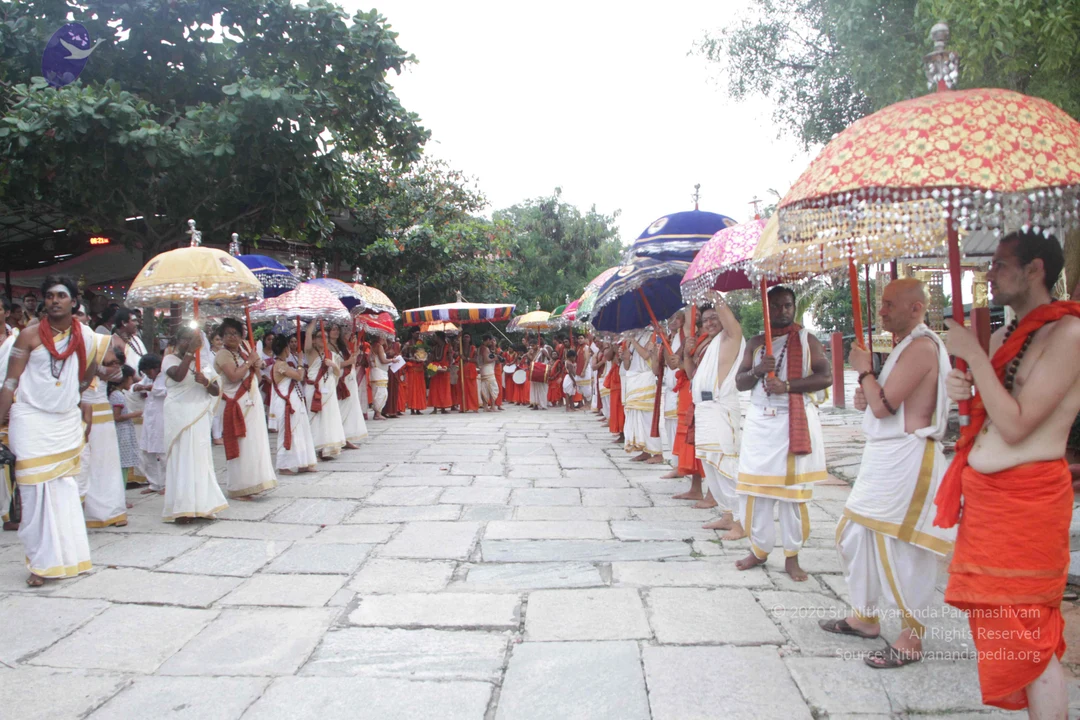
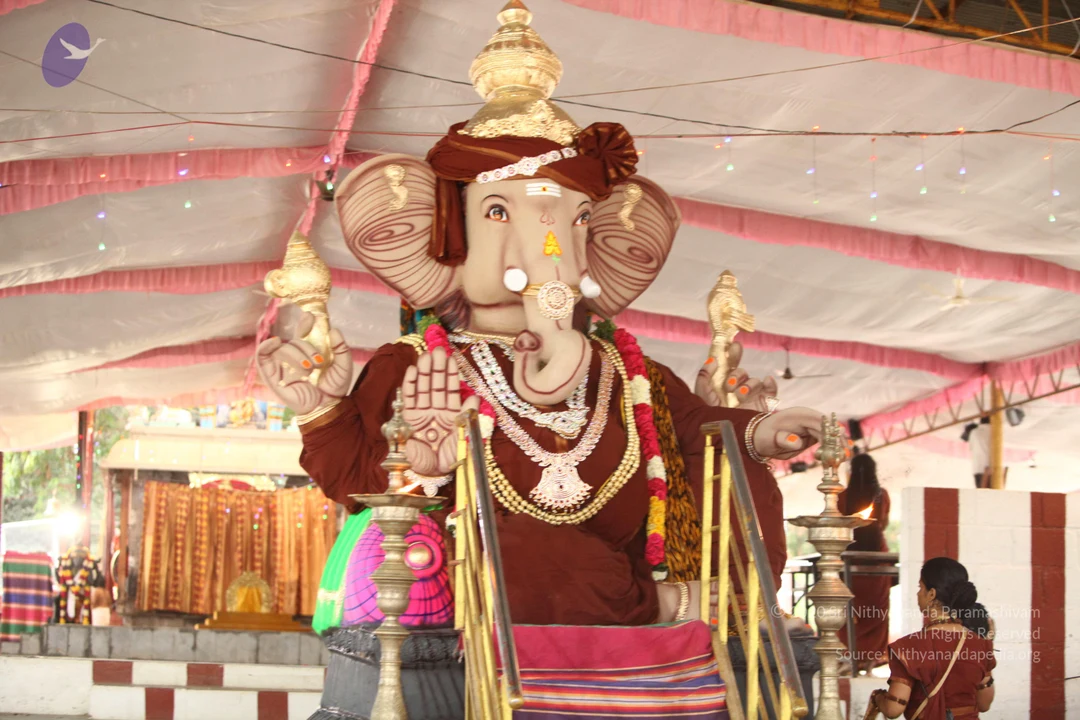
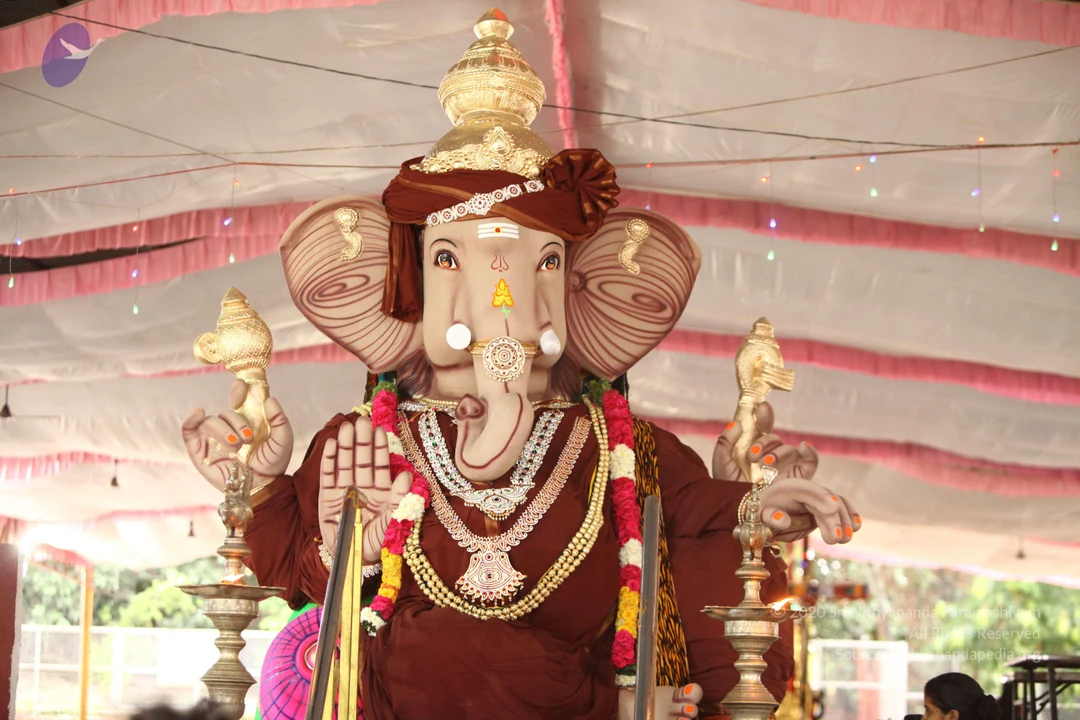
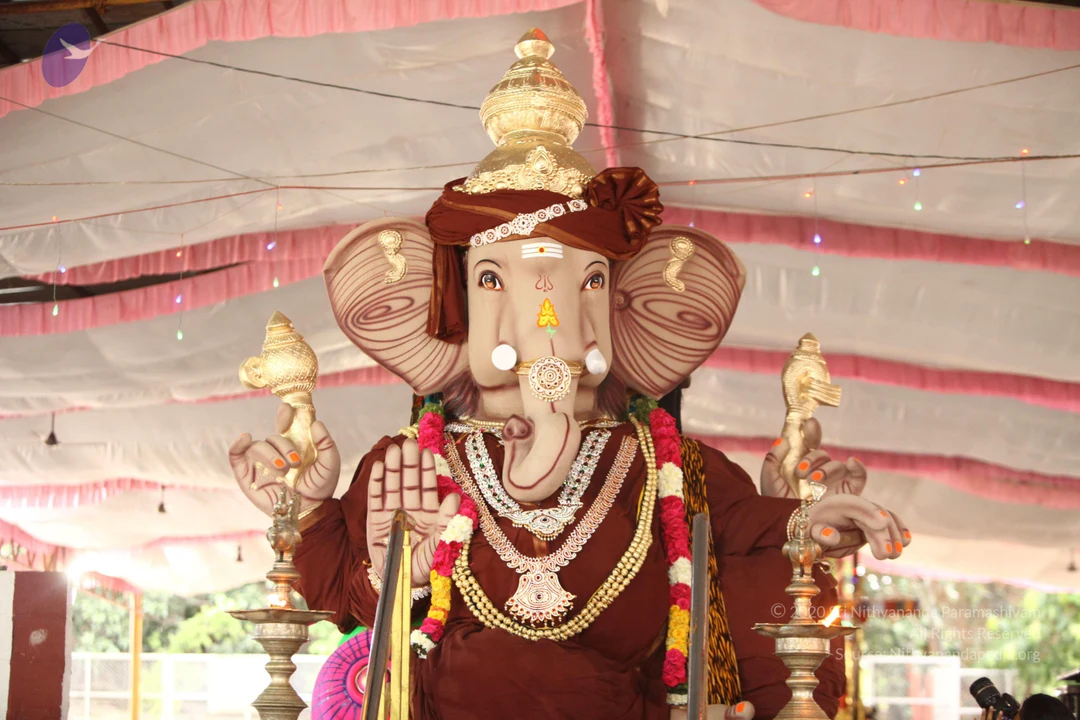
Ganesh Chathurthi Celebrations - The commencement of preparations for Mahasadashivoham

Dated photos
877
Source pages
1
Media
4
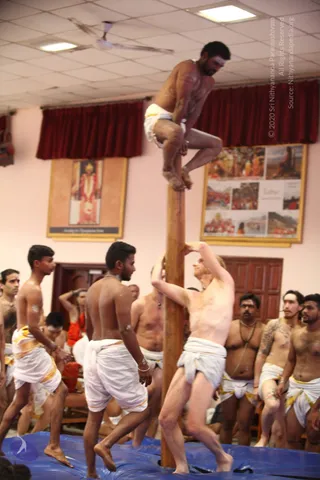
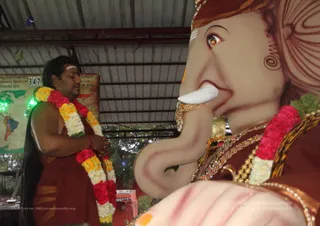
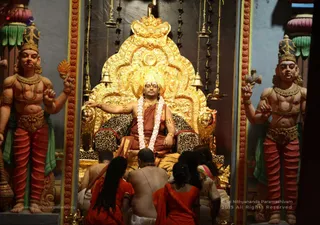
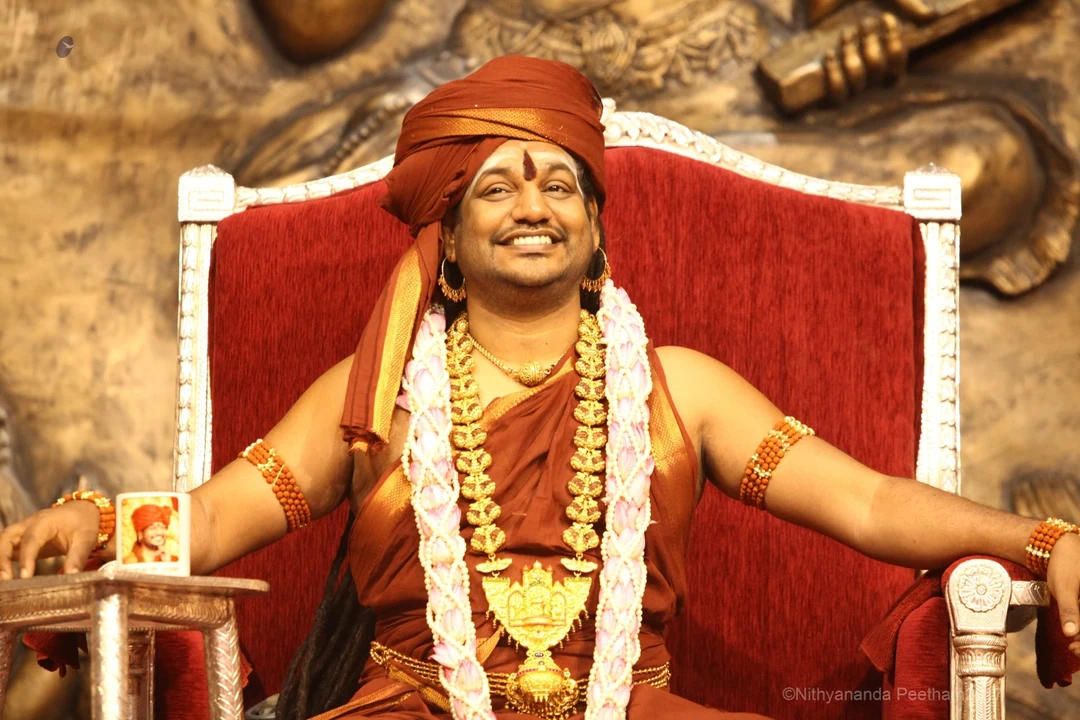
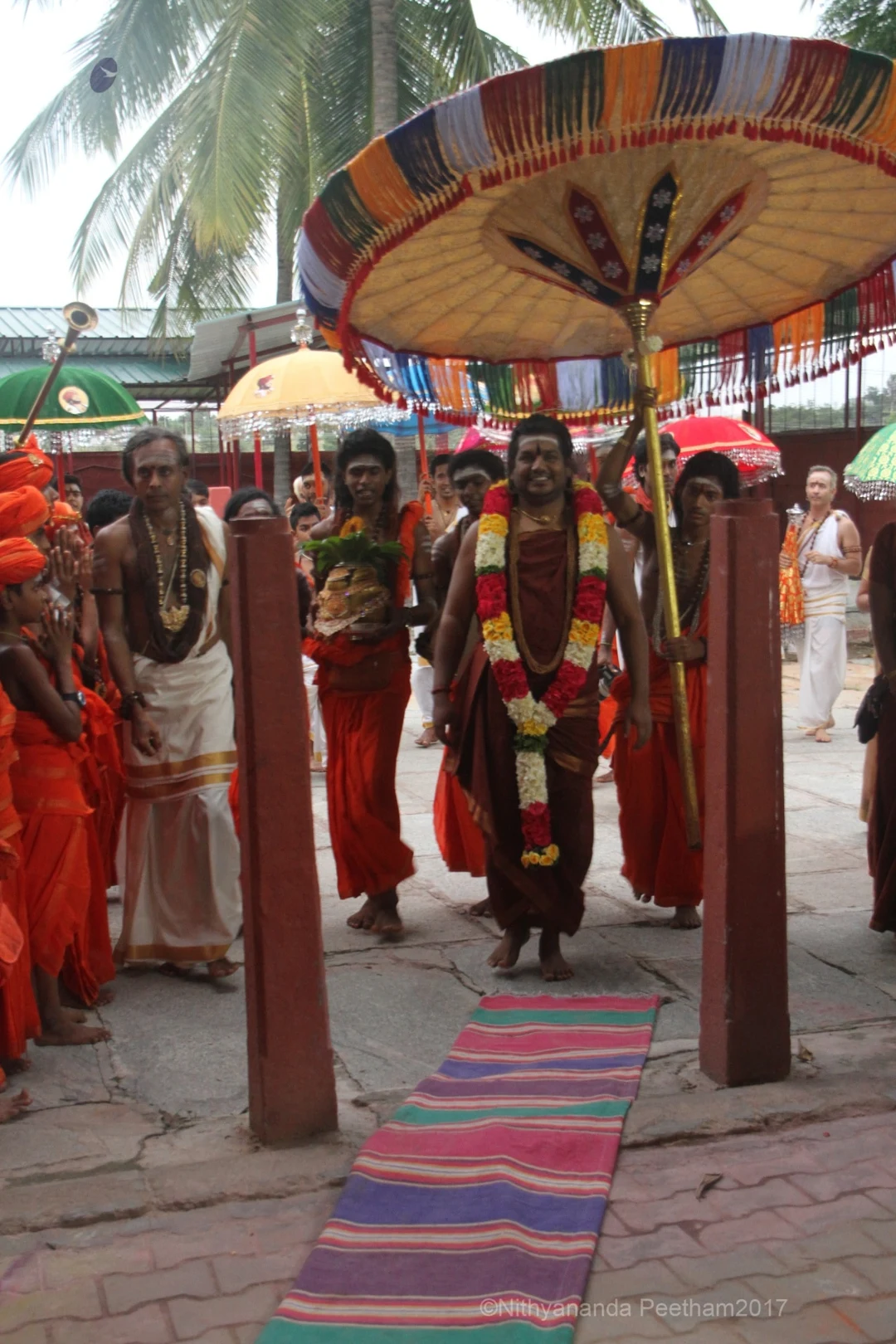
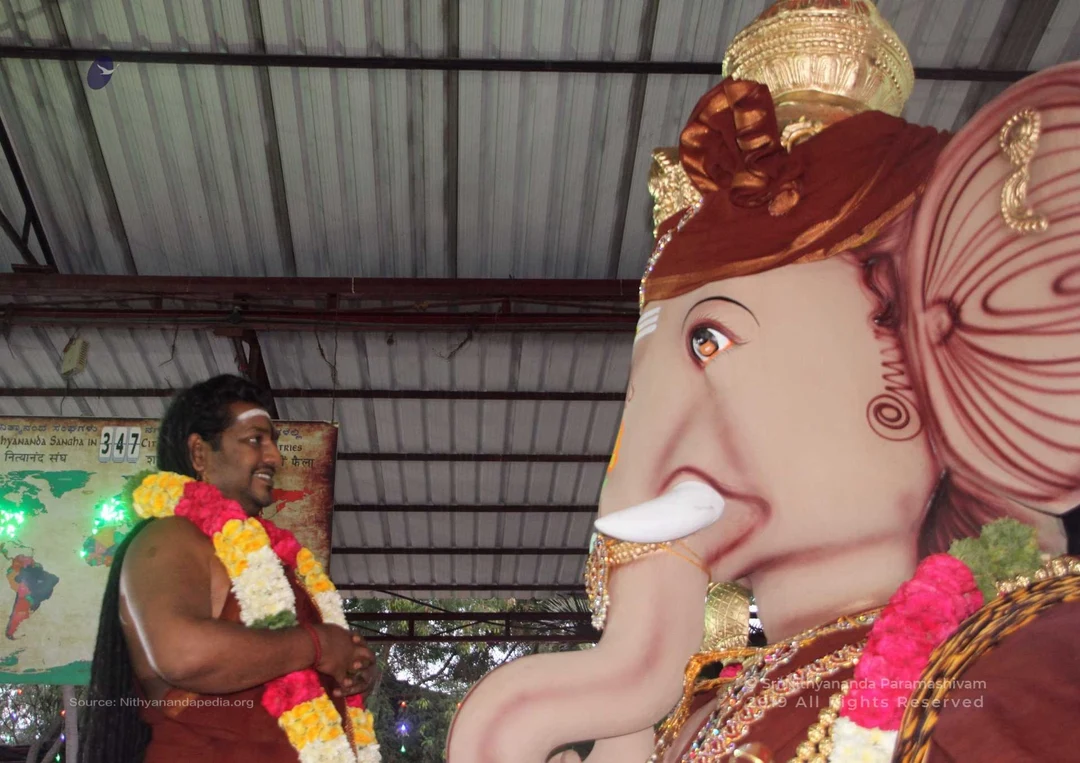
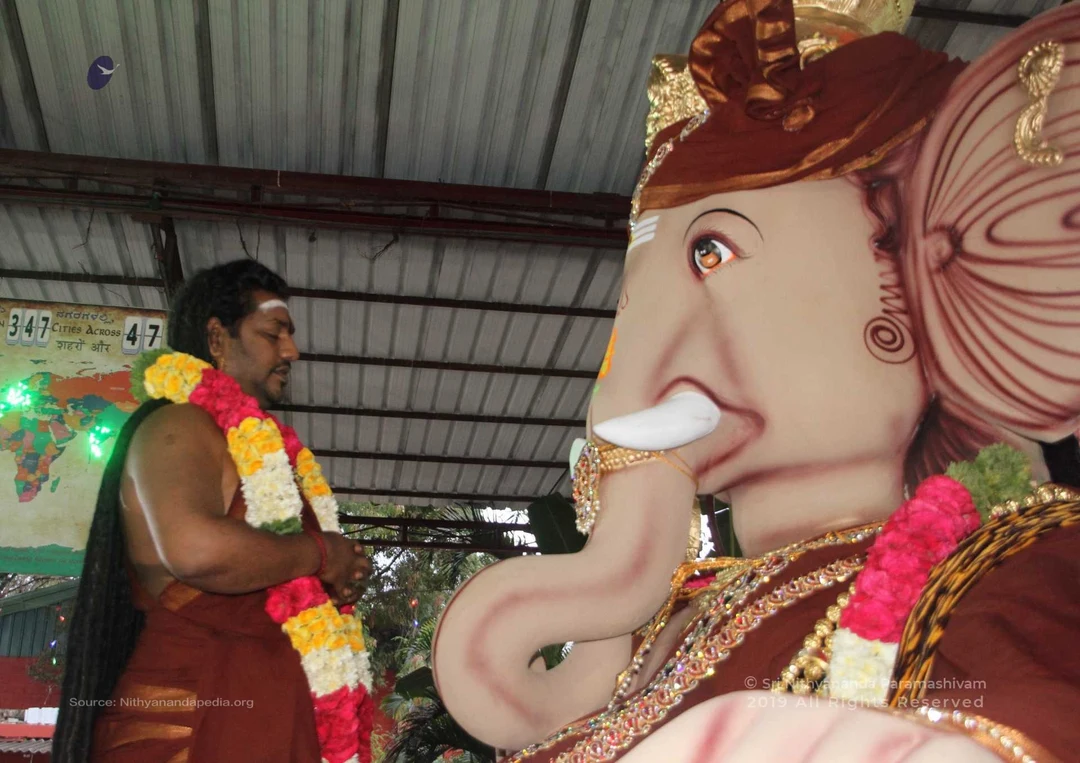
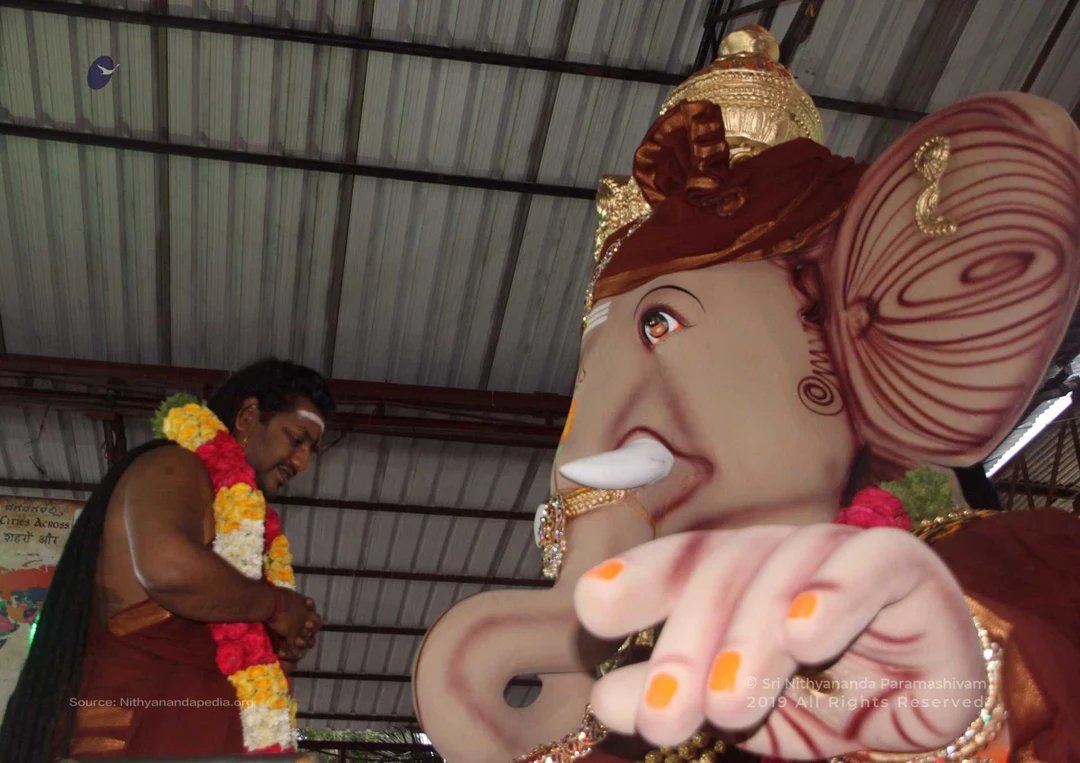
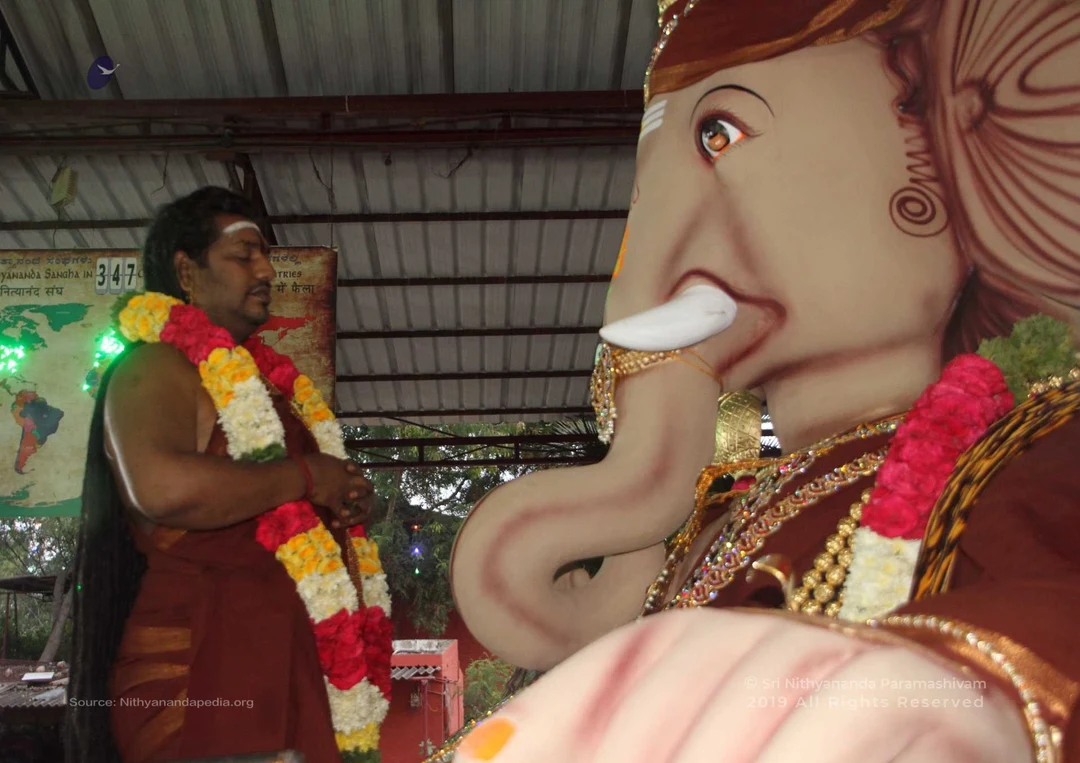
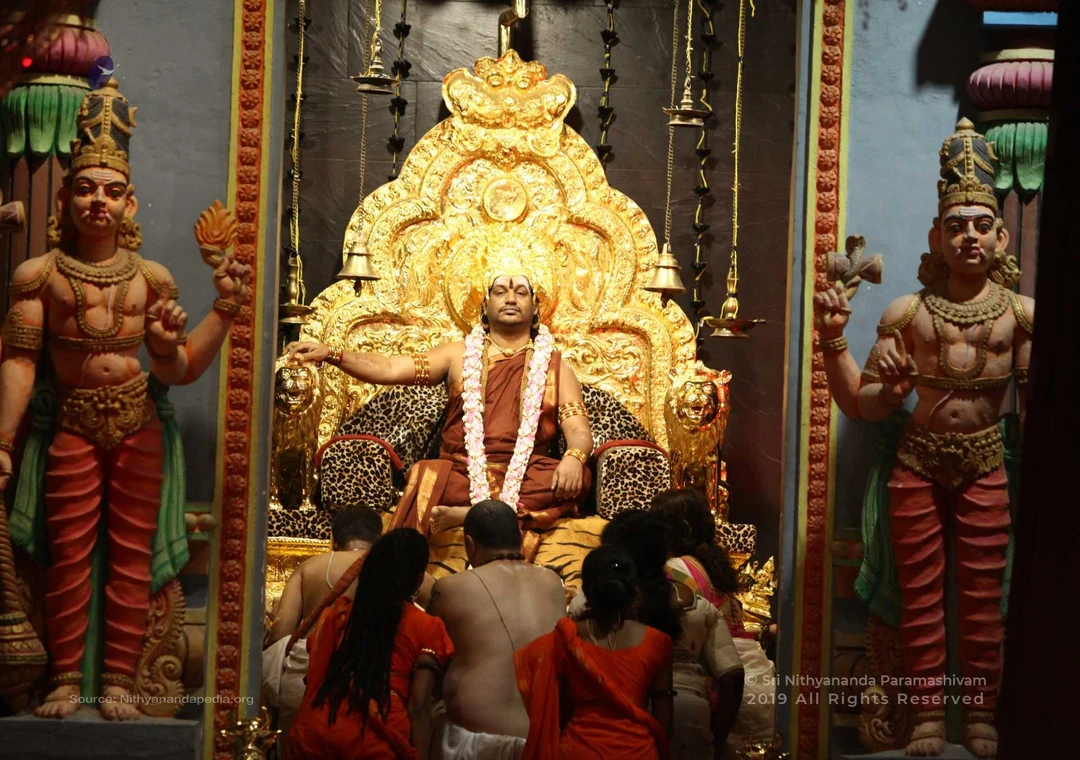
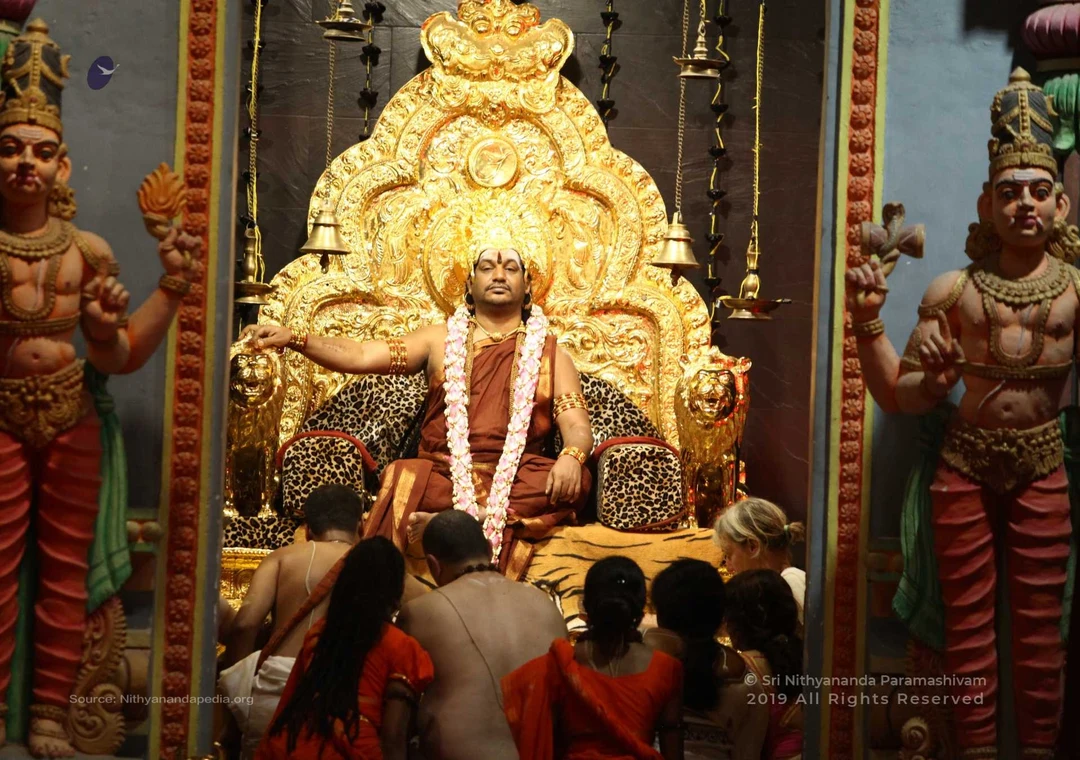
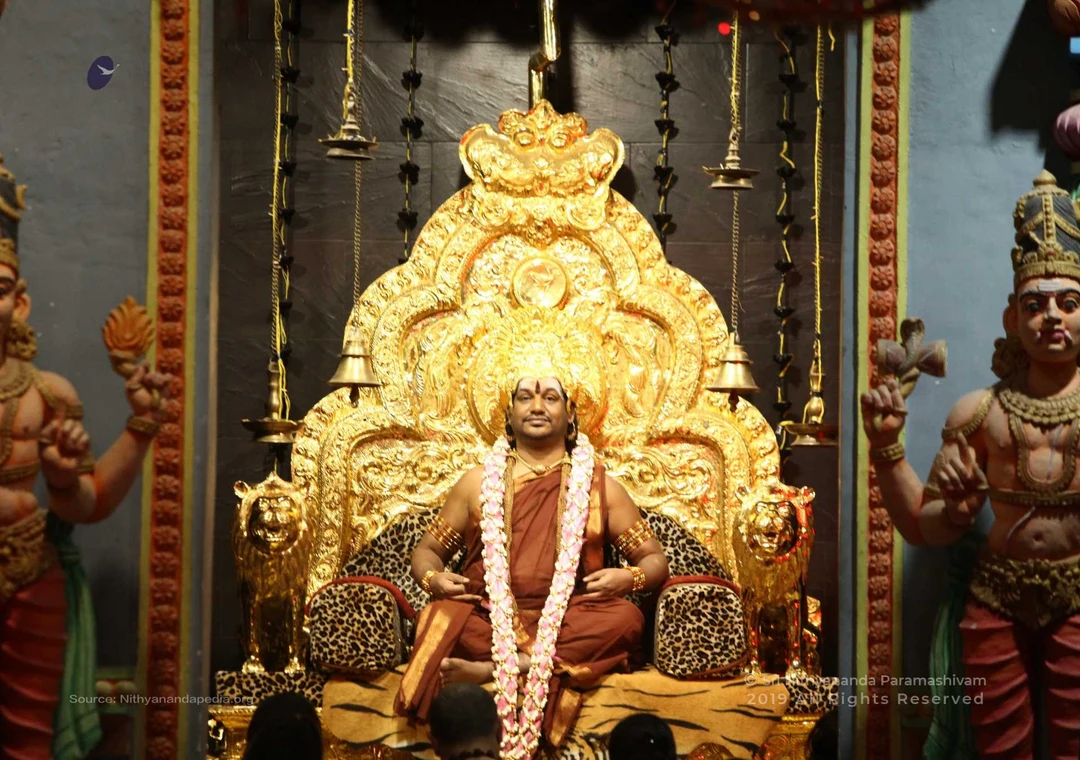
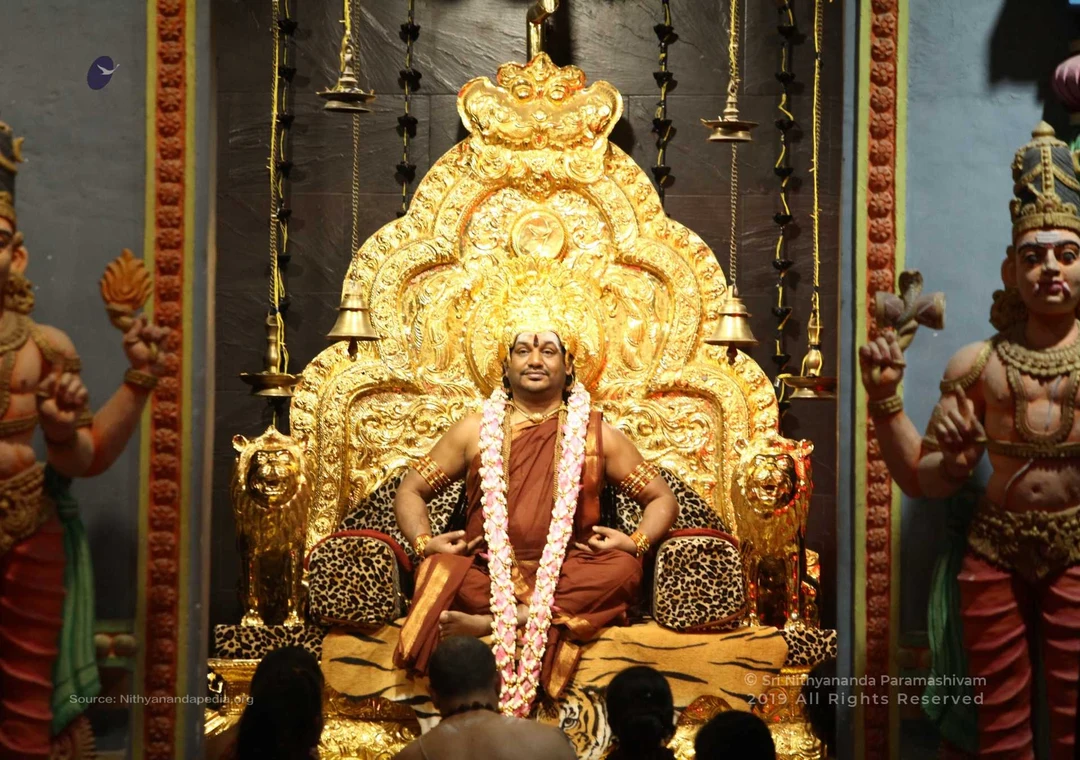
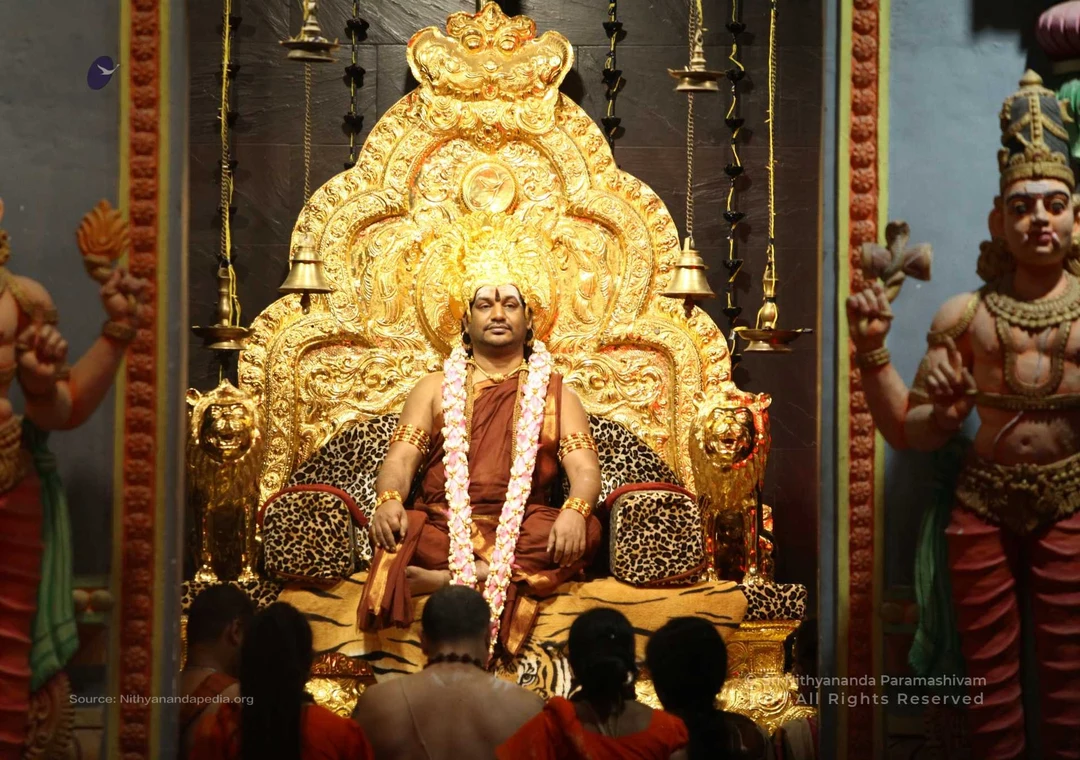
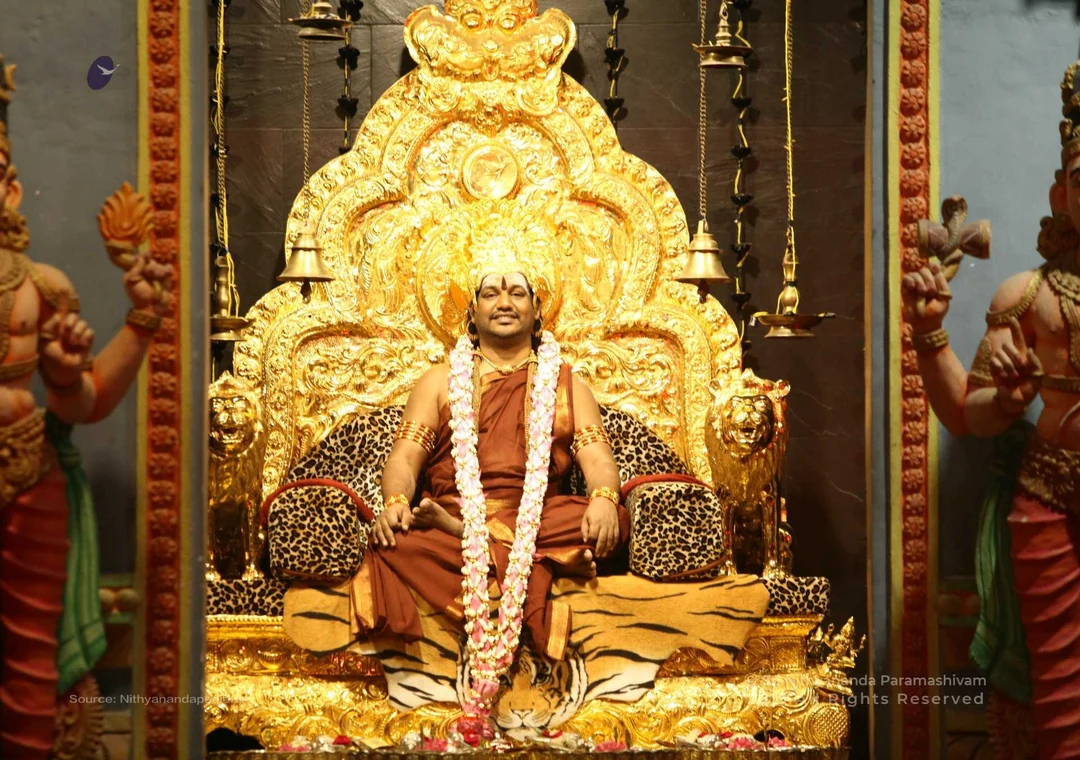
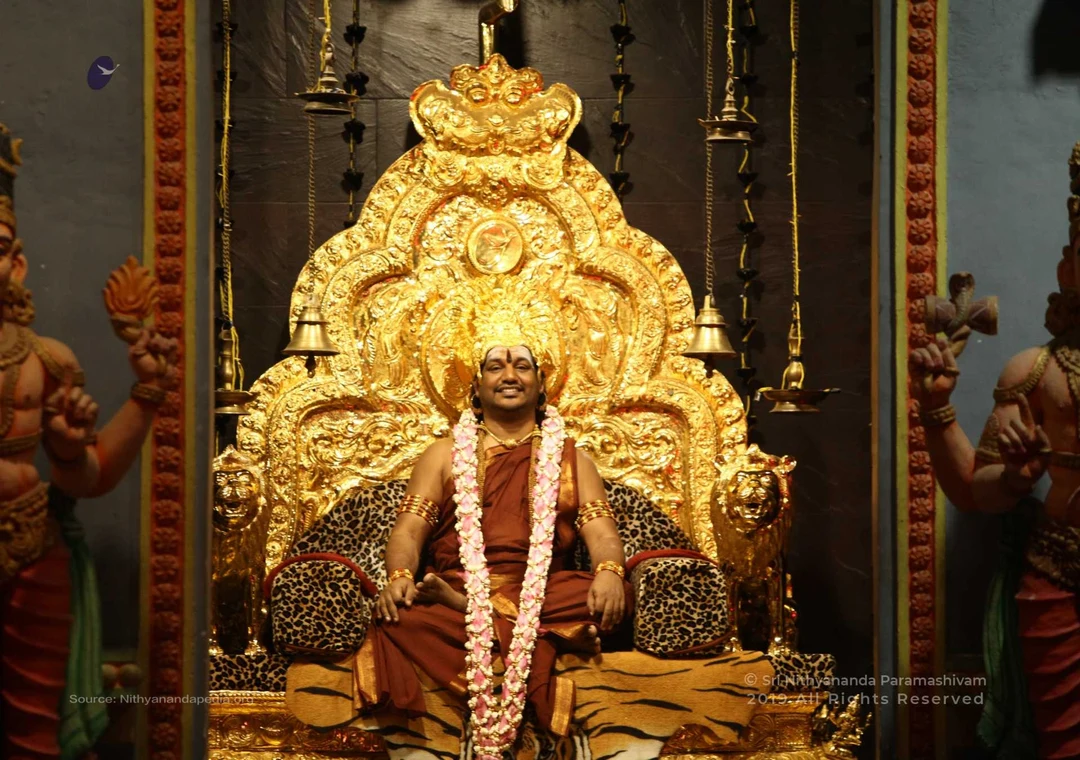
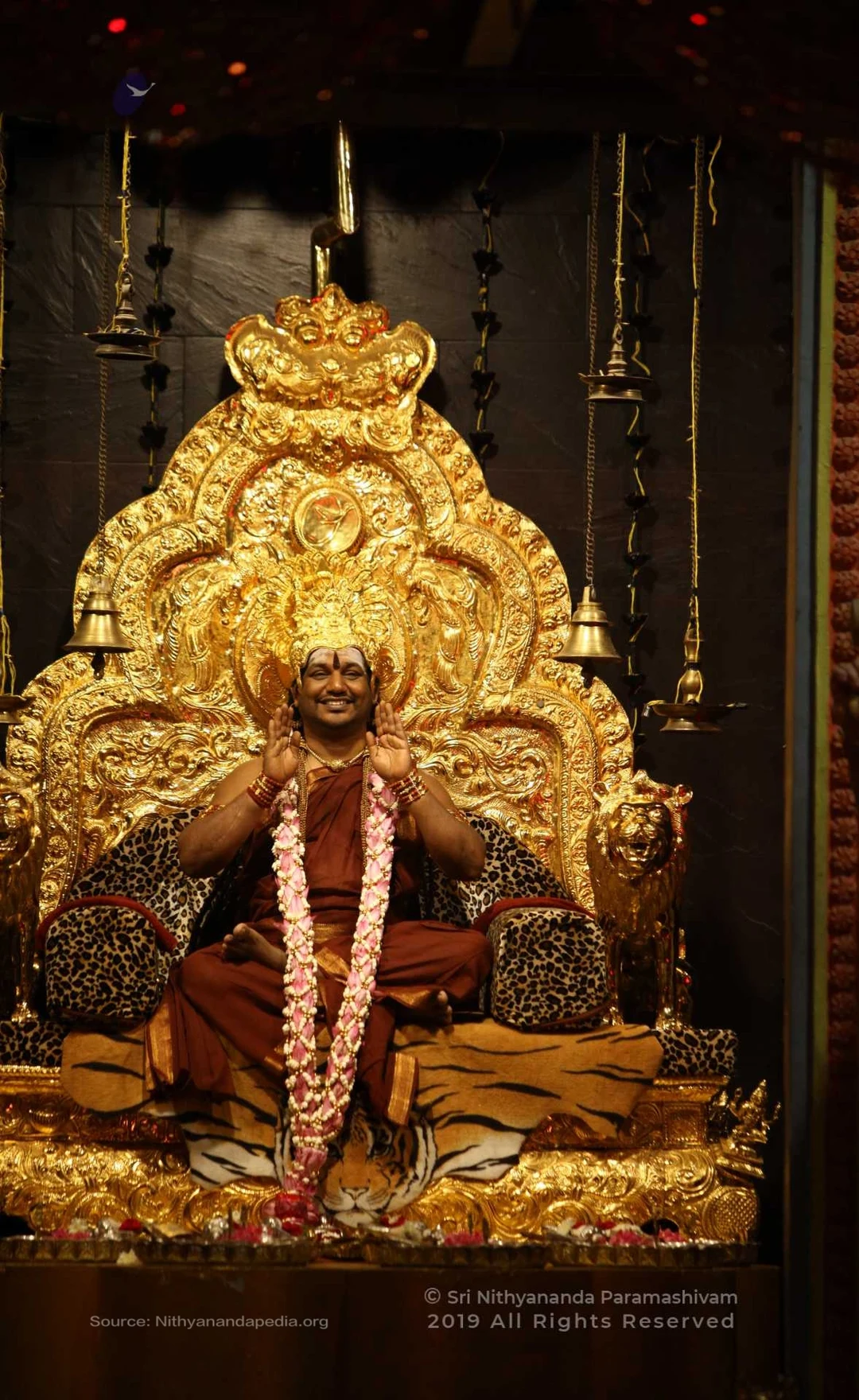
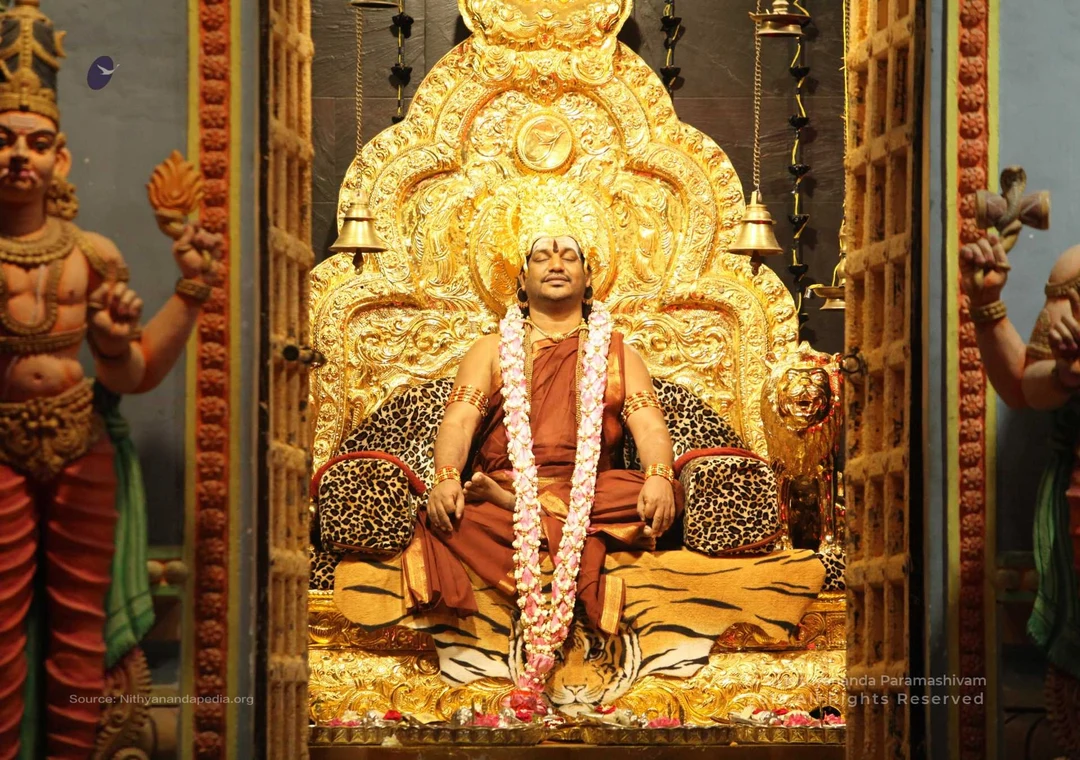
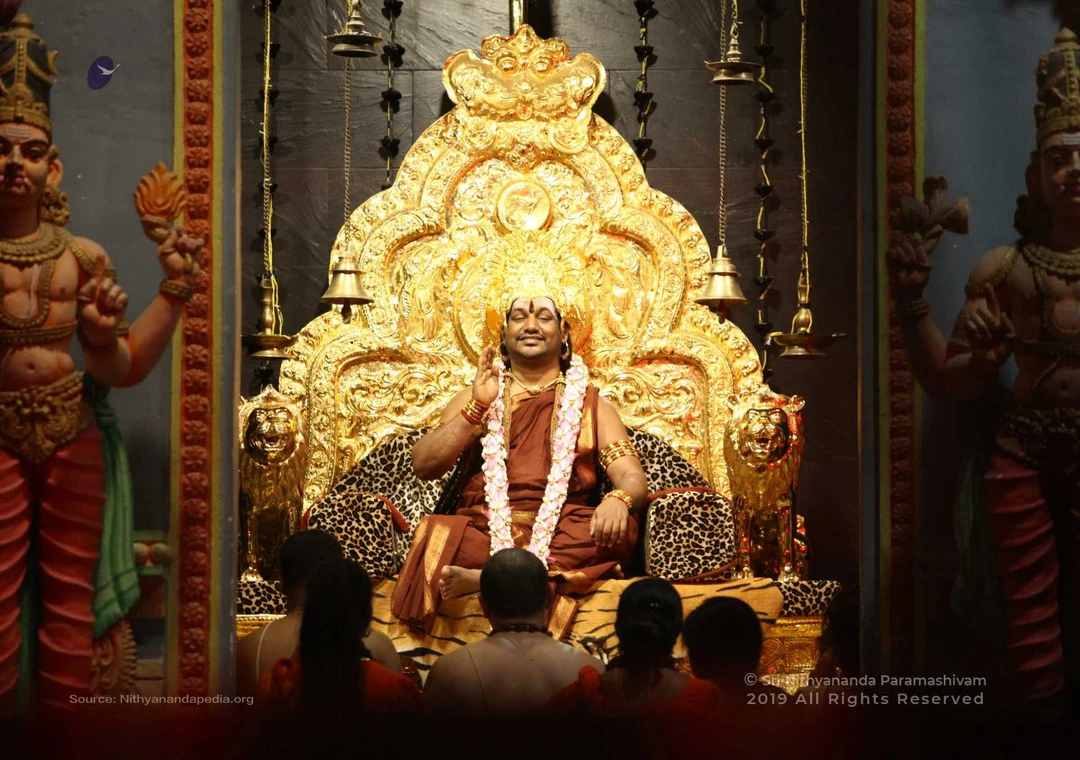
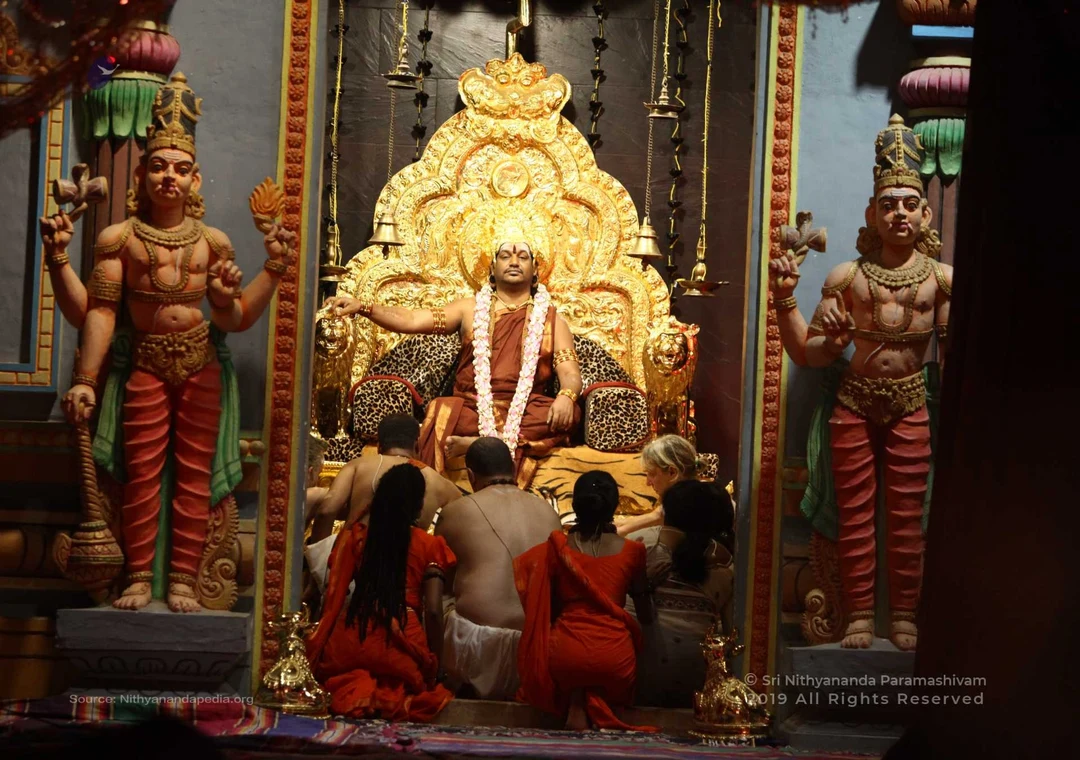
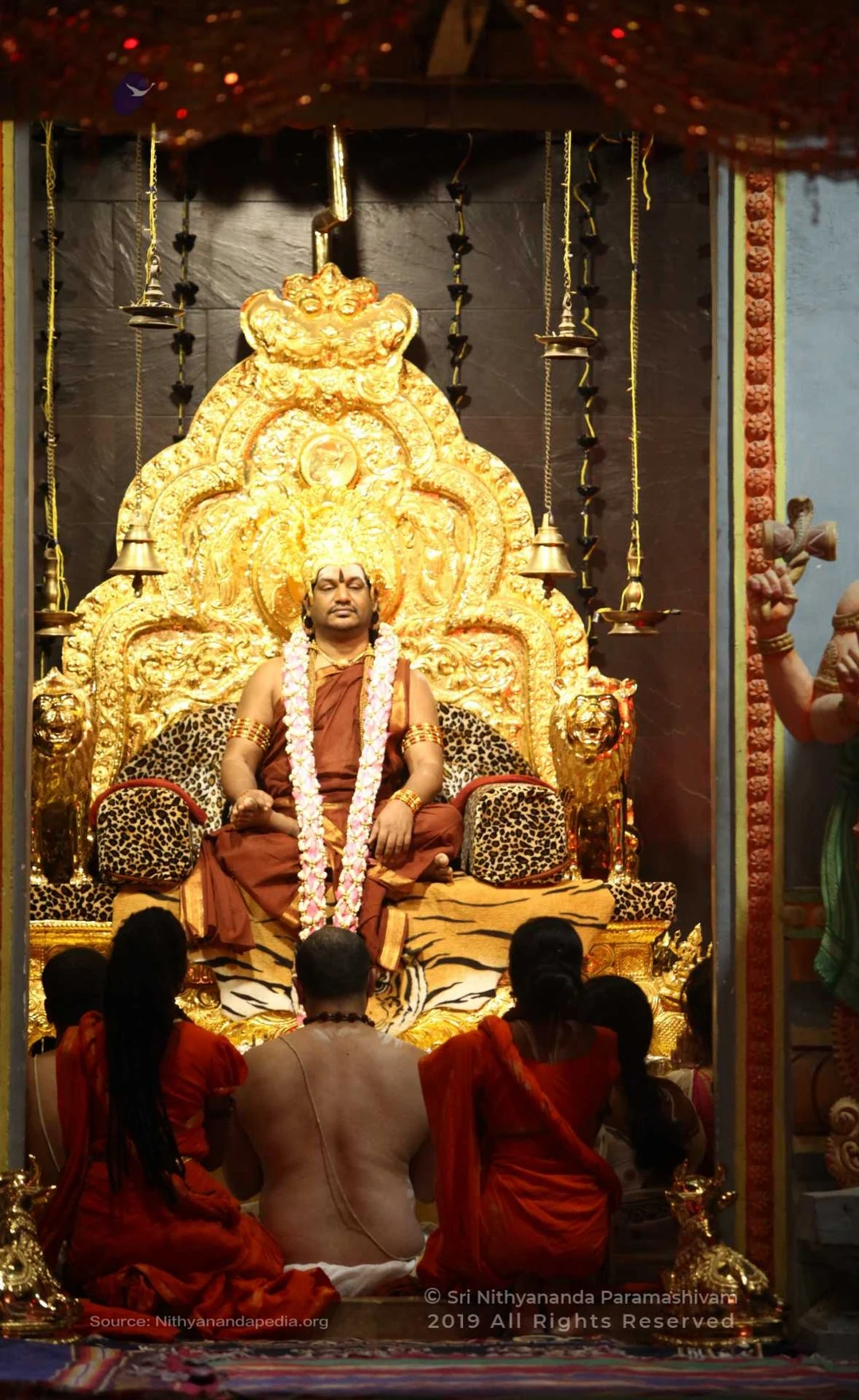
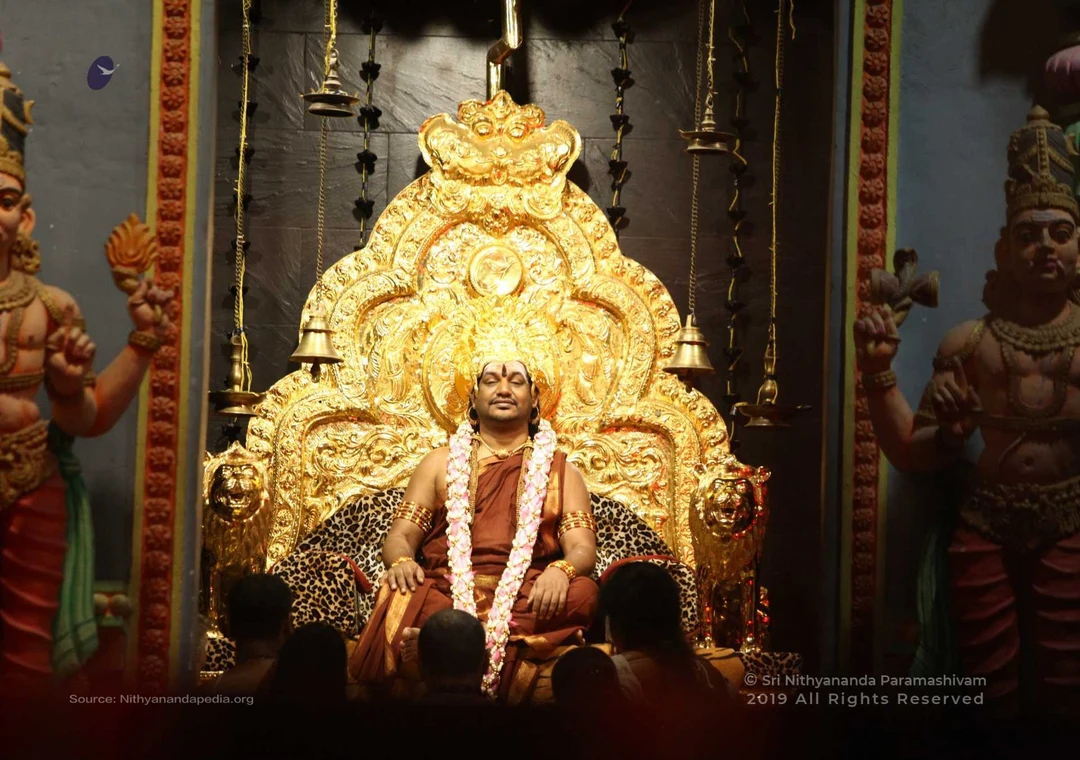
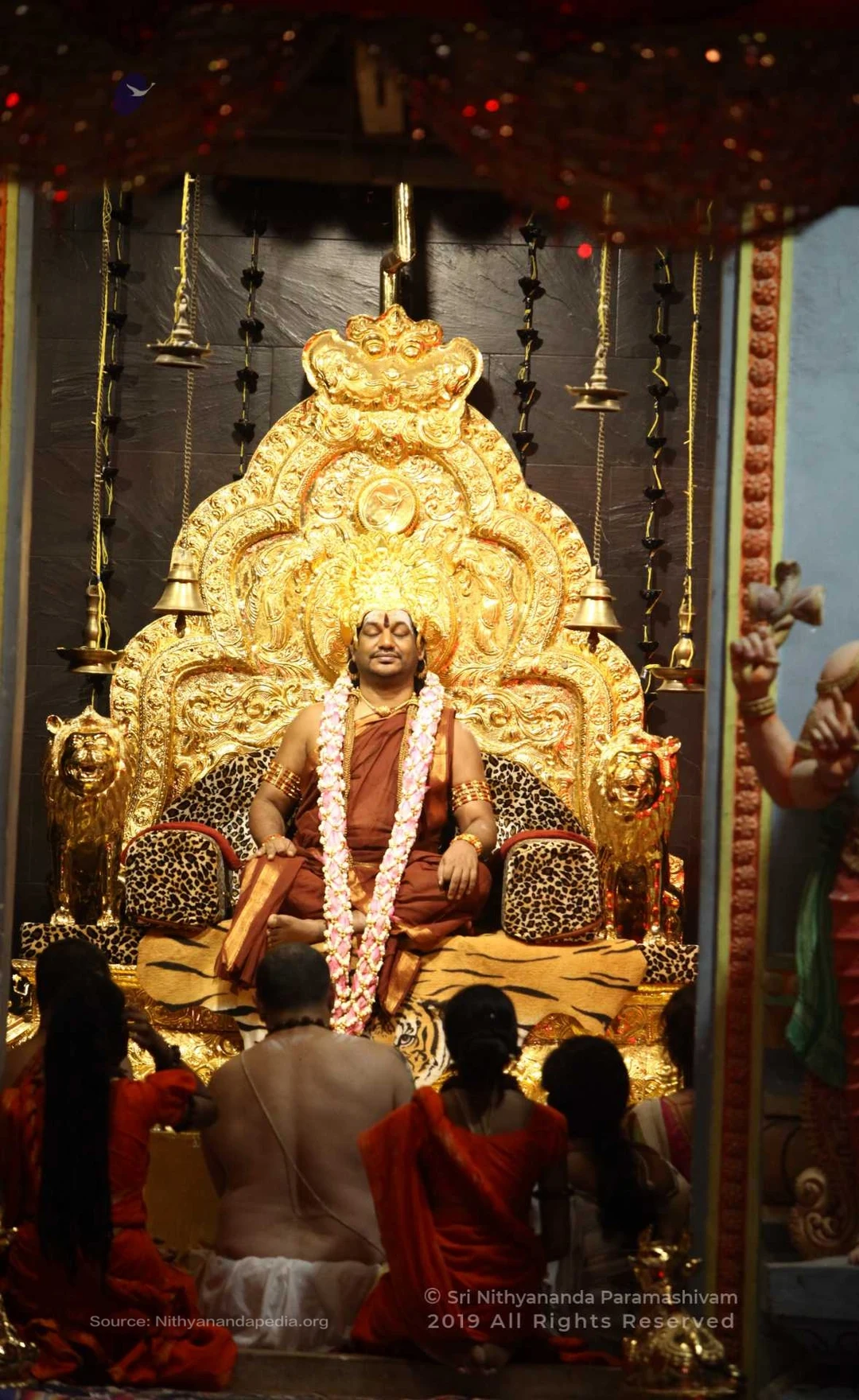
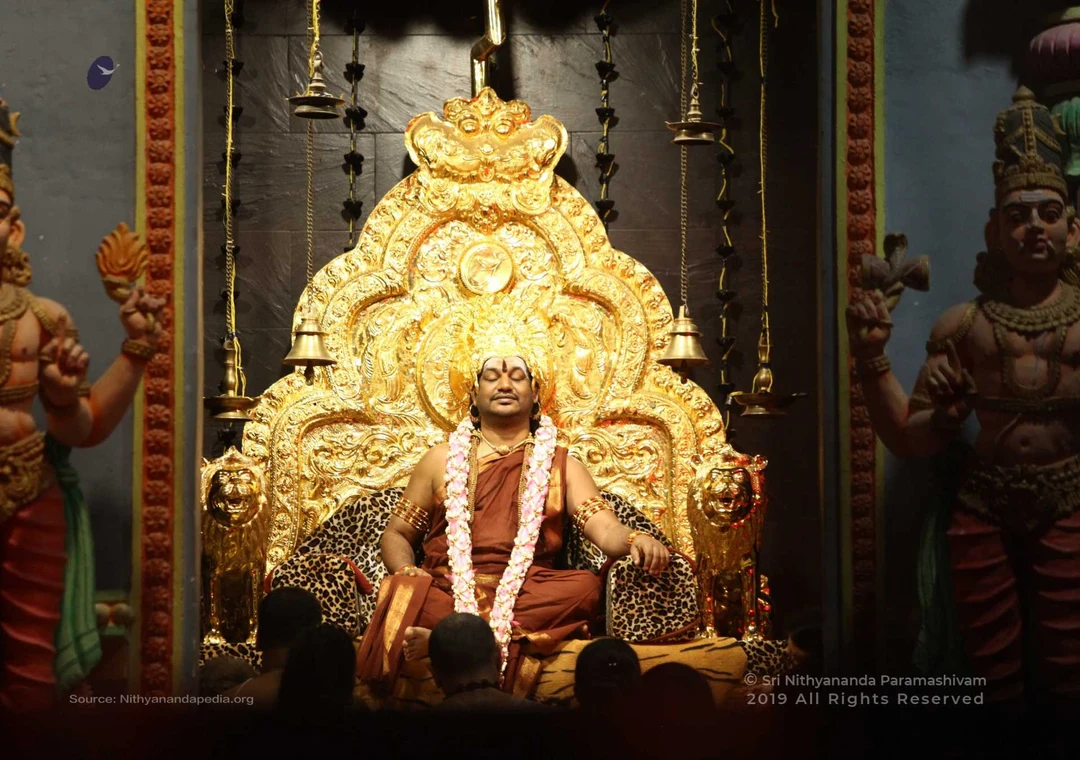
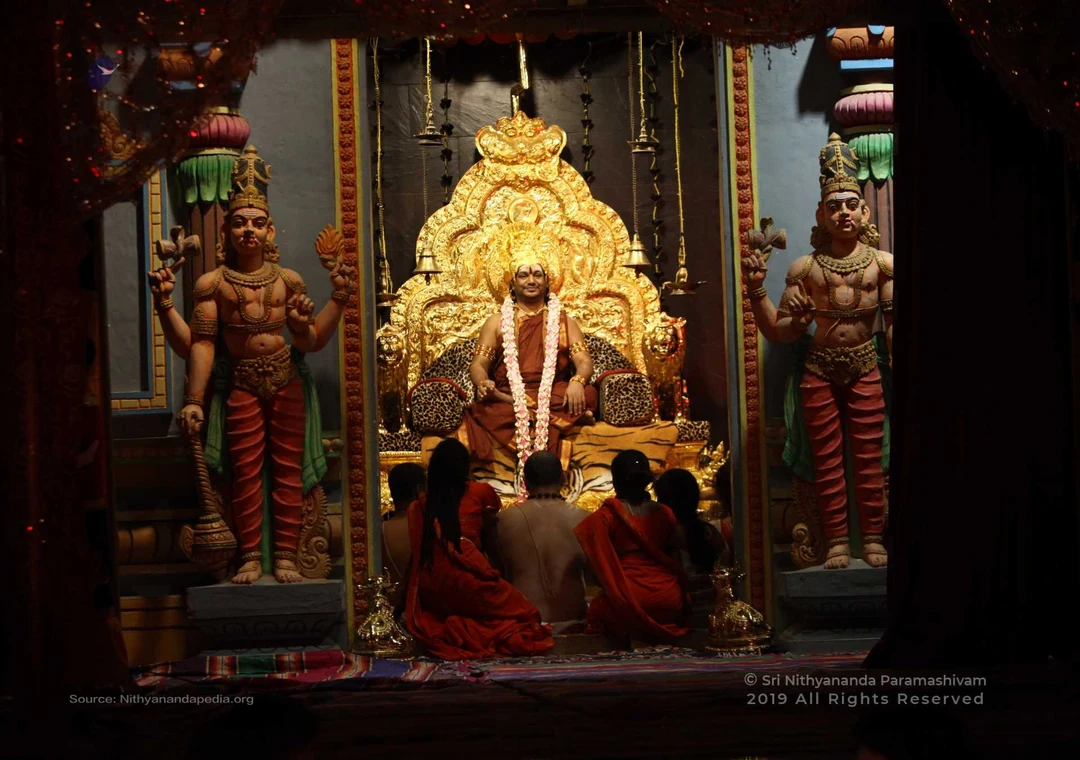
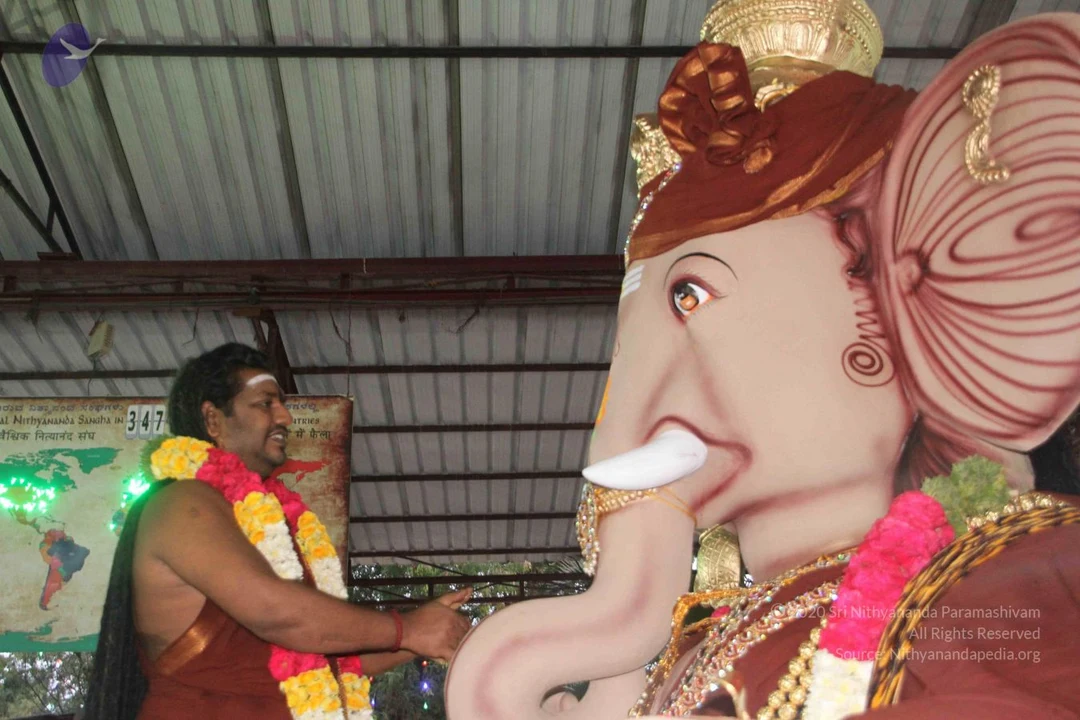
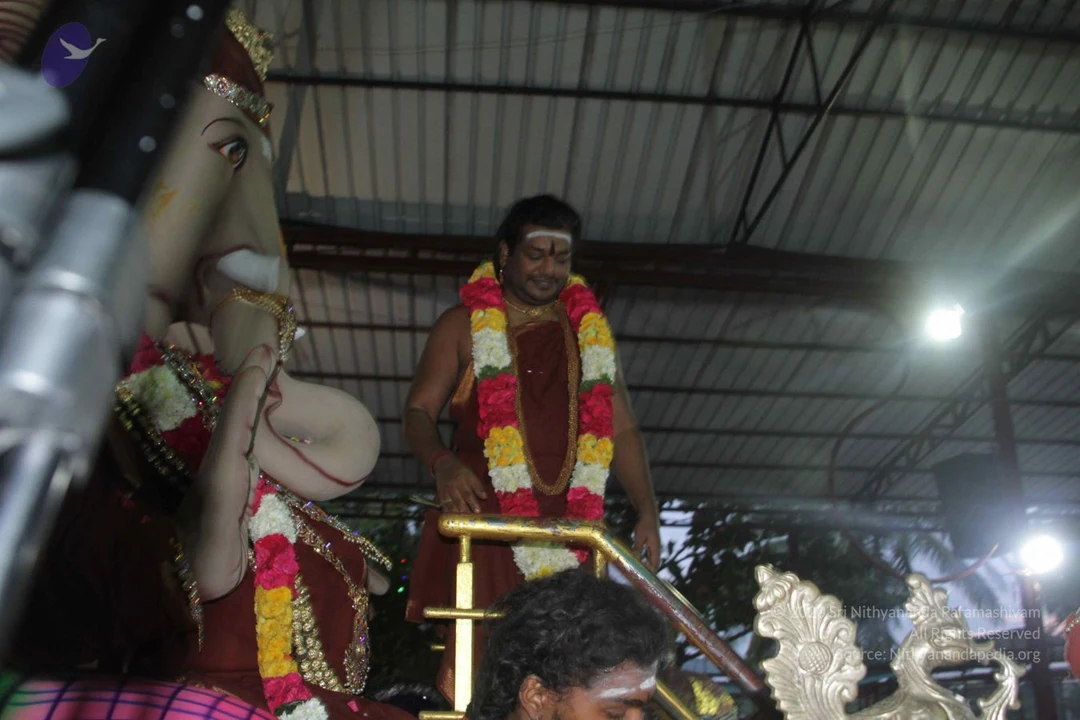
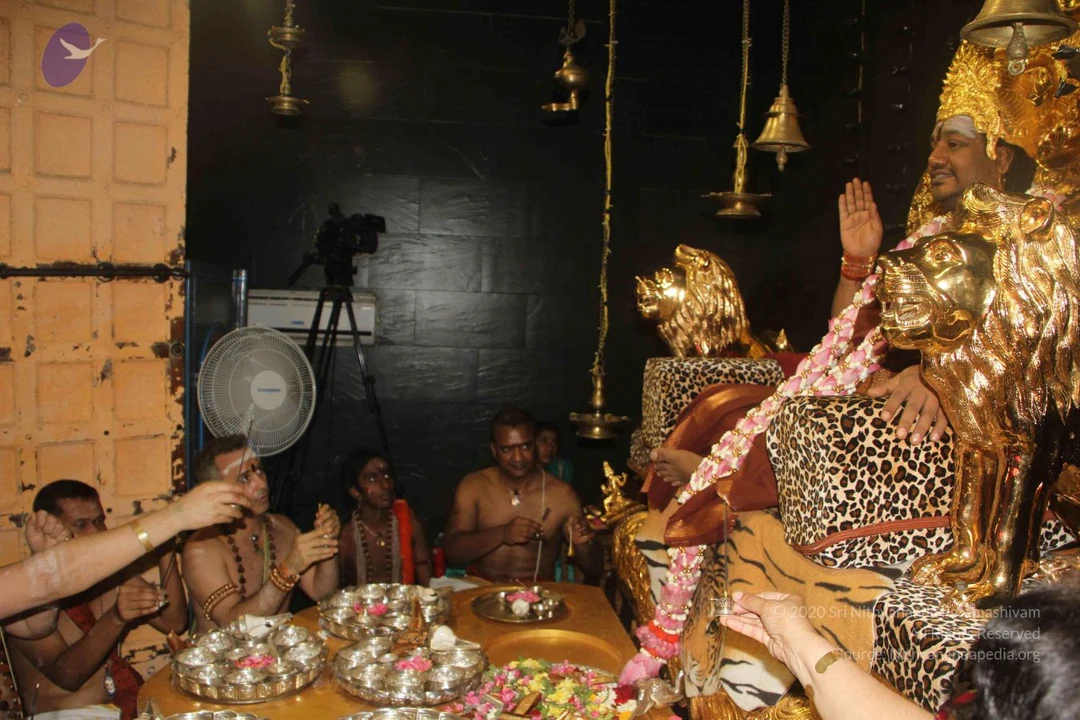
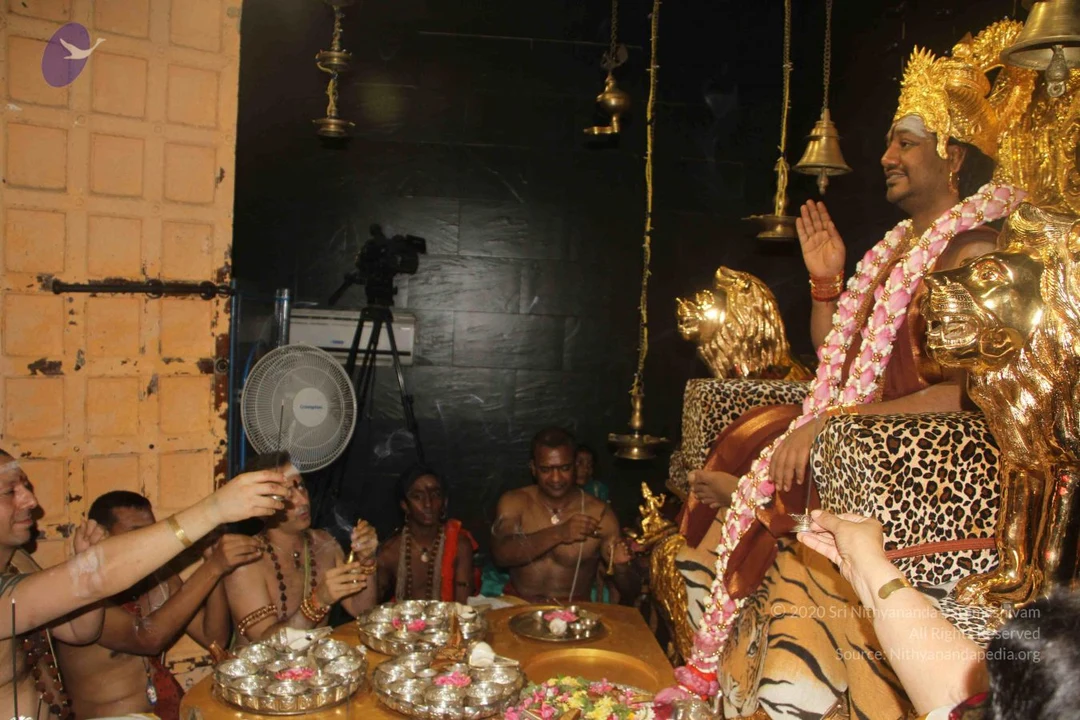
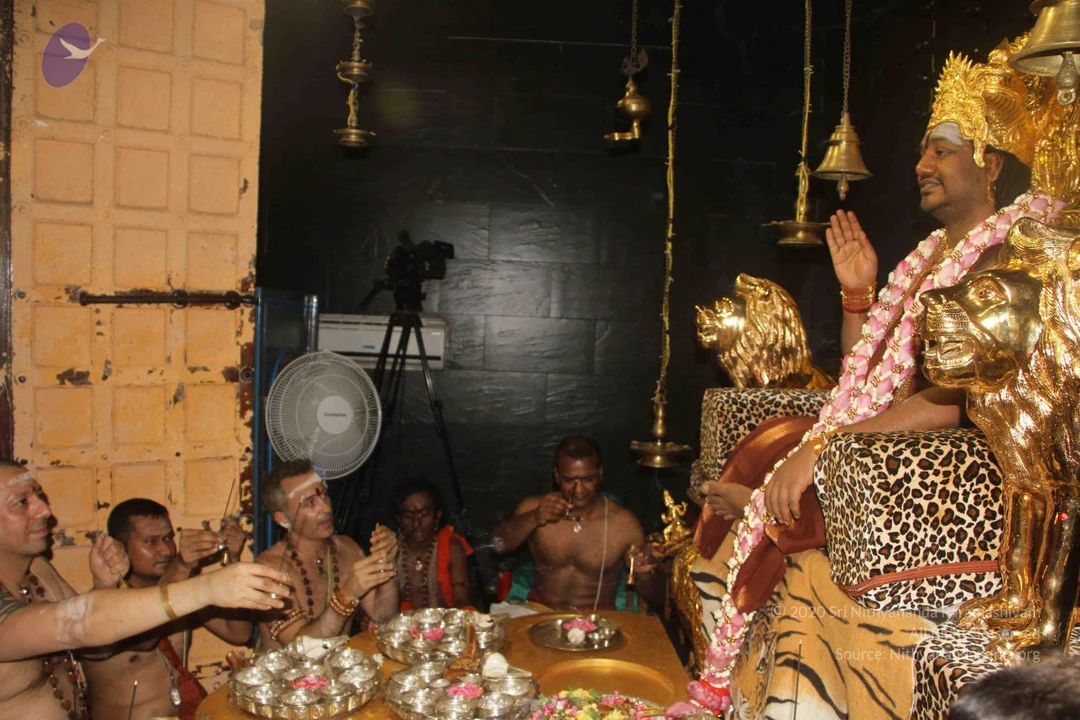
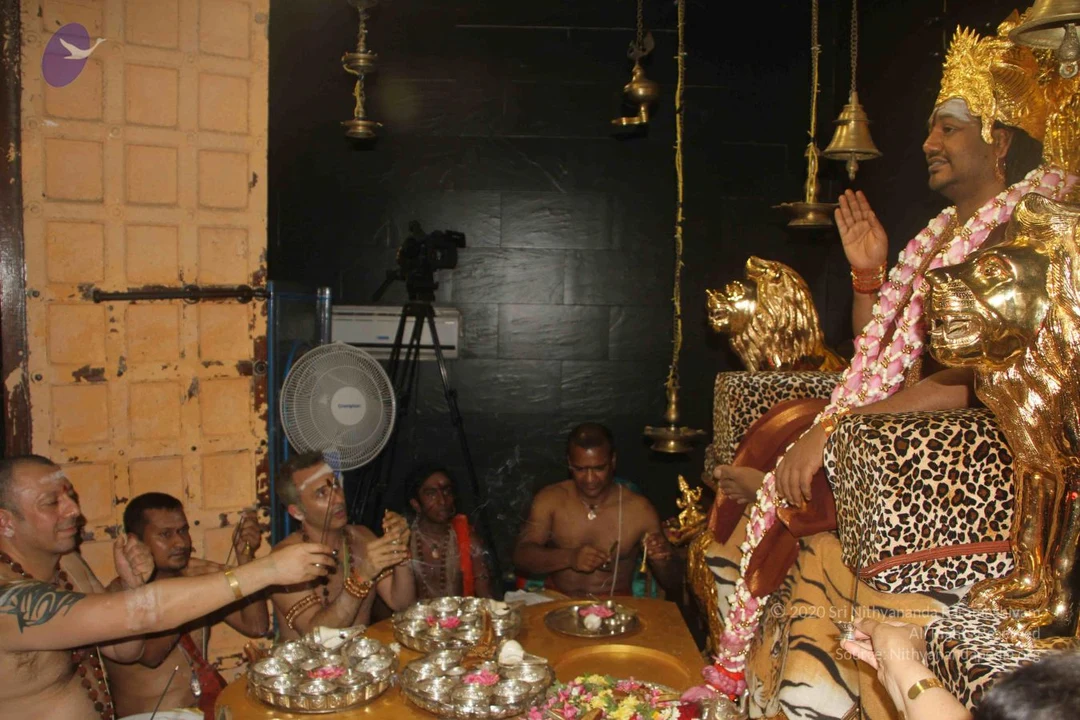
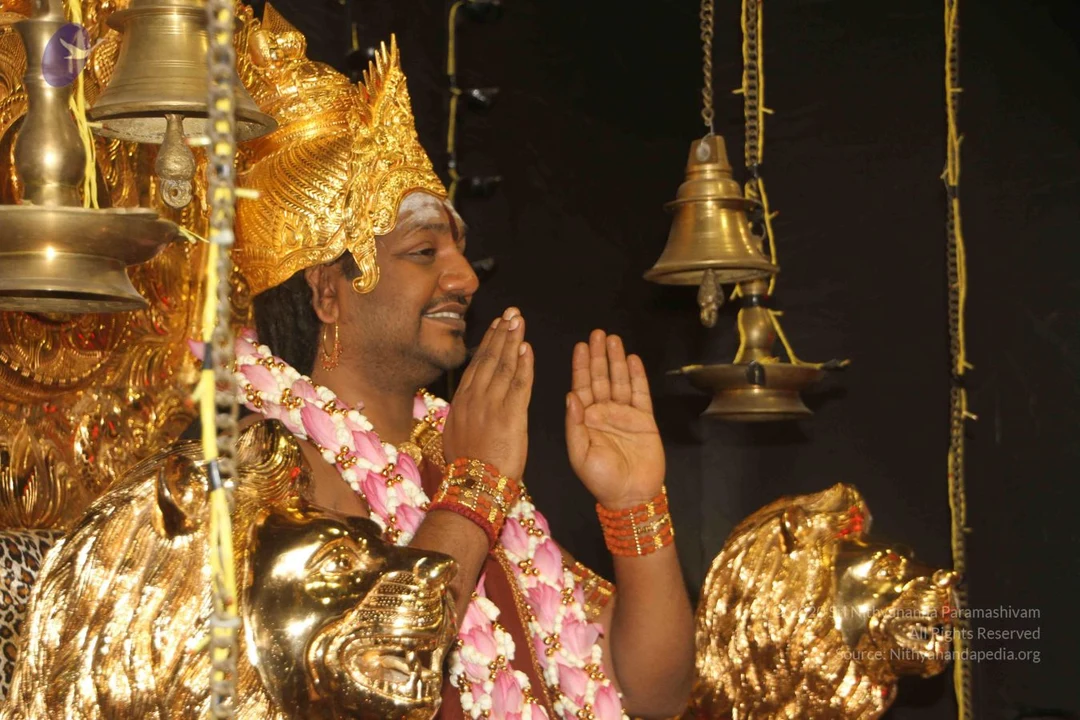
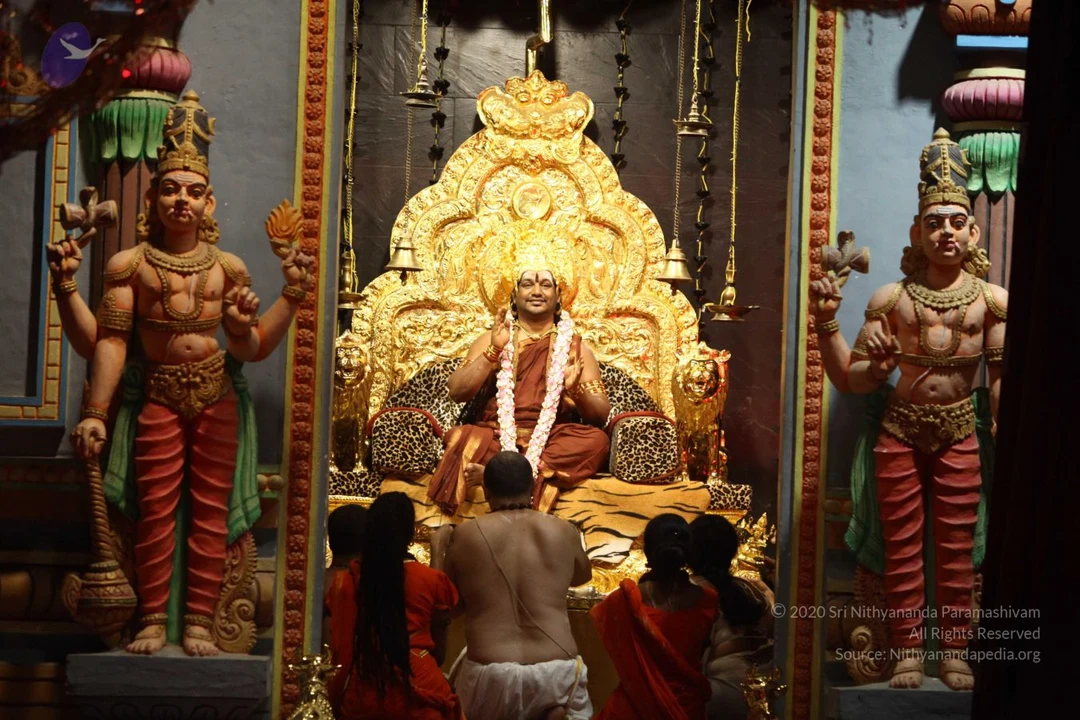
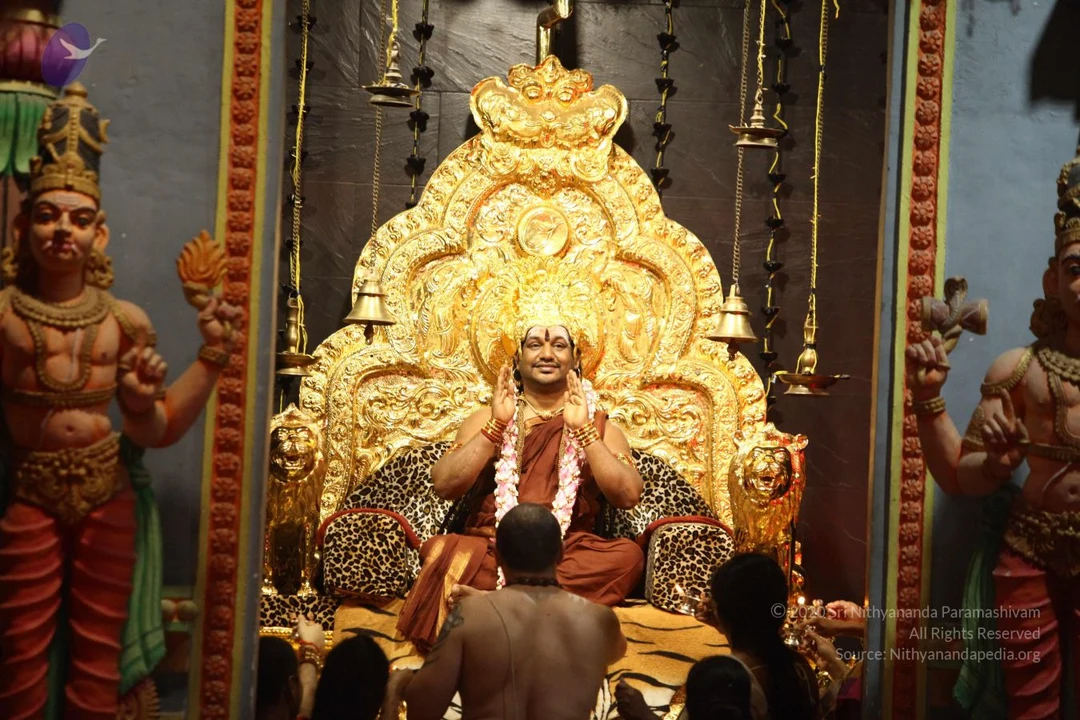
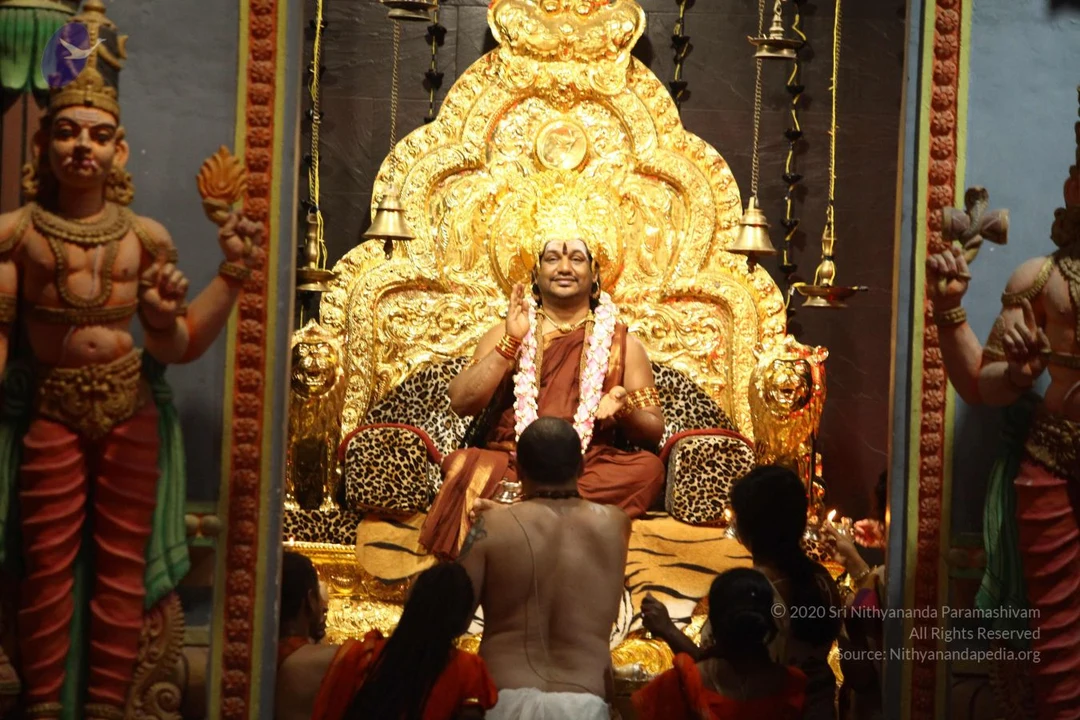
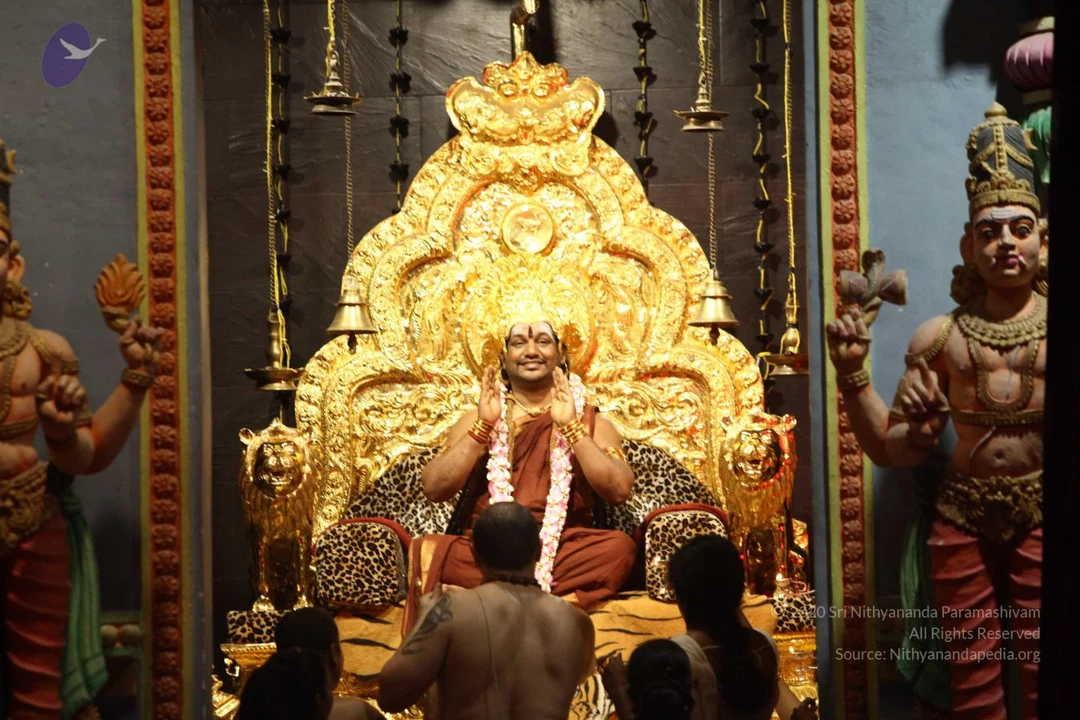
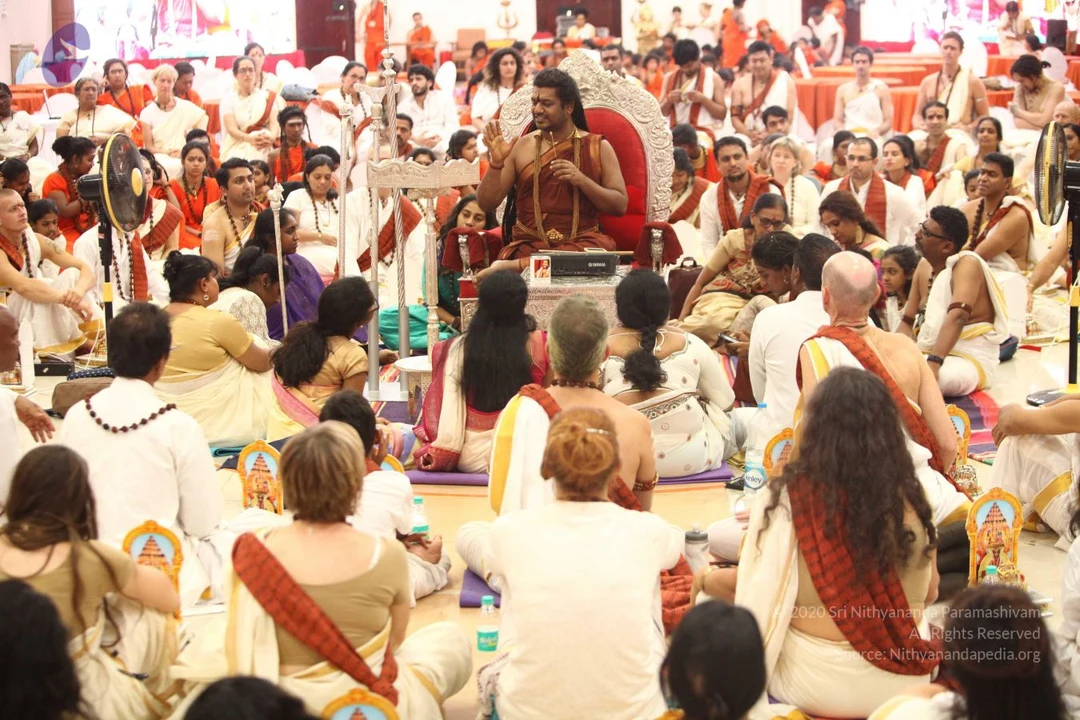
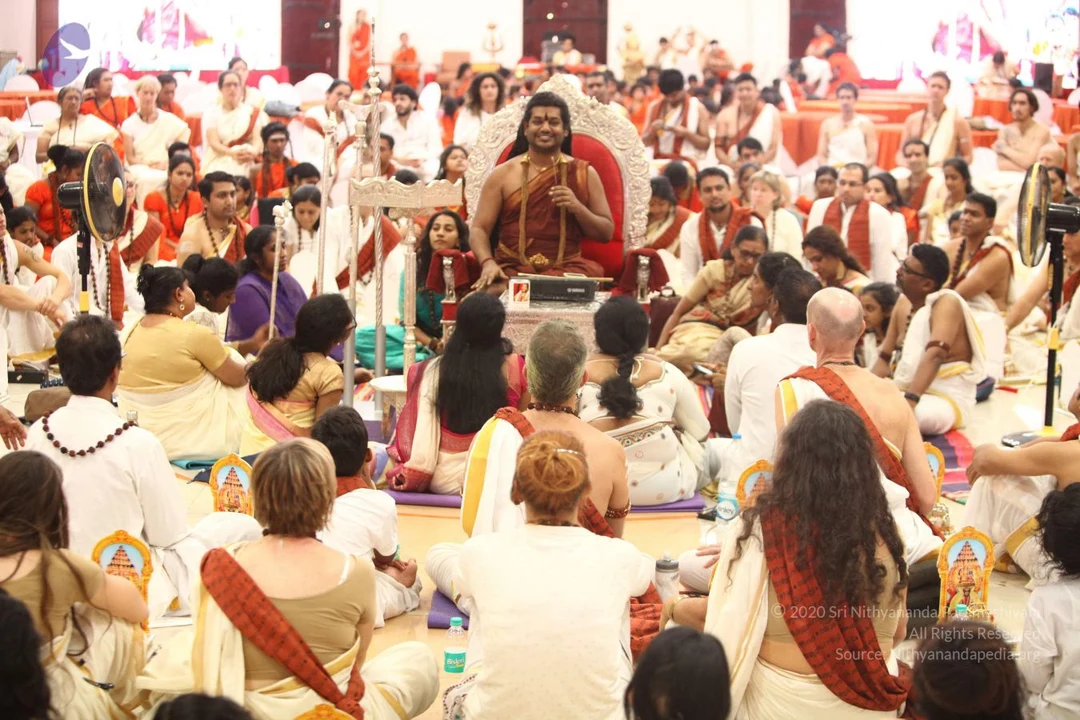
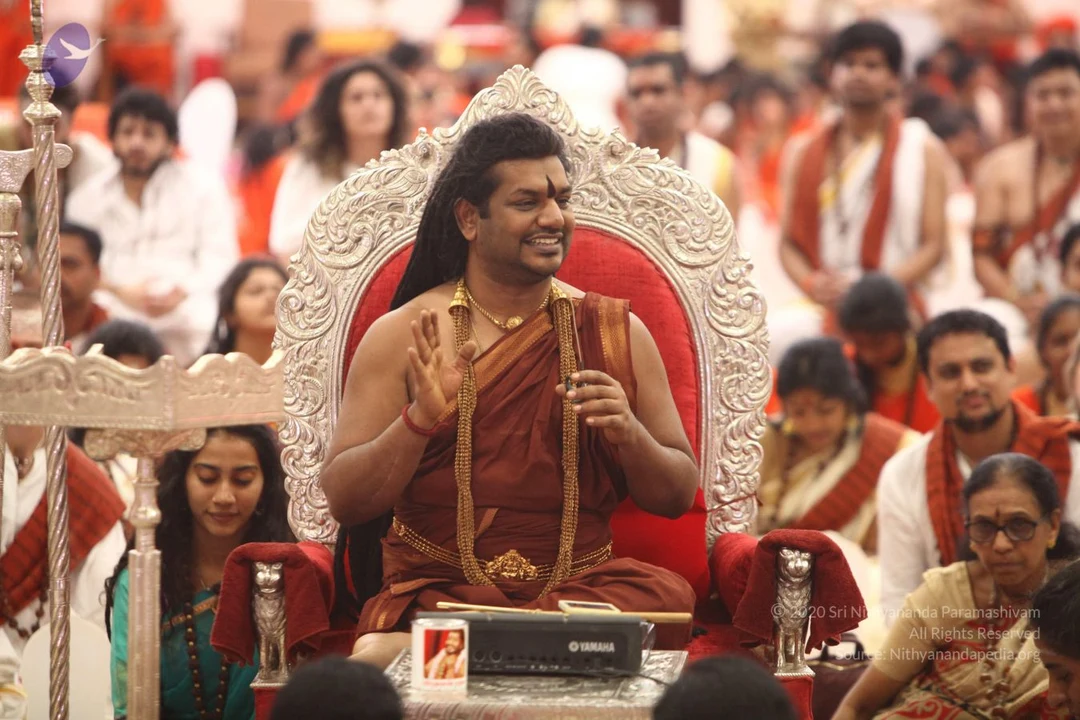
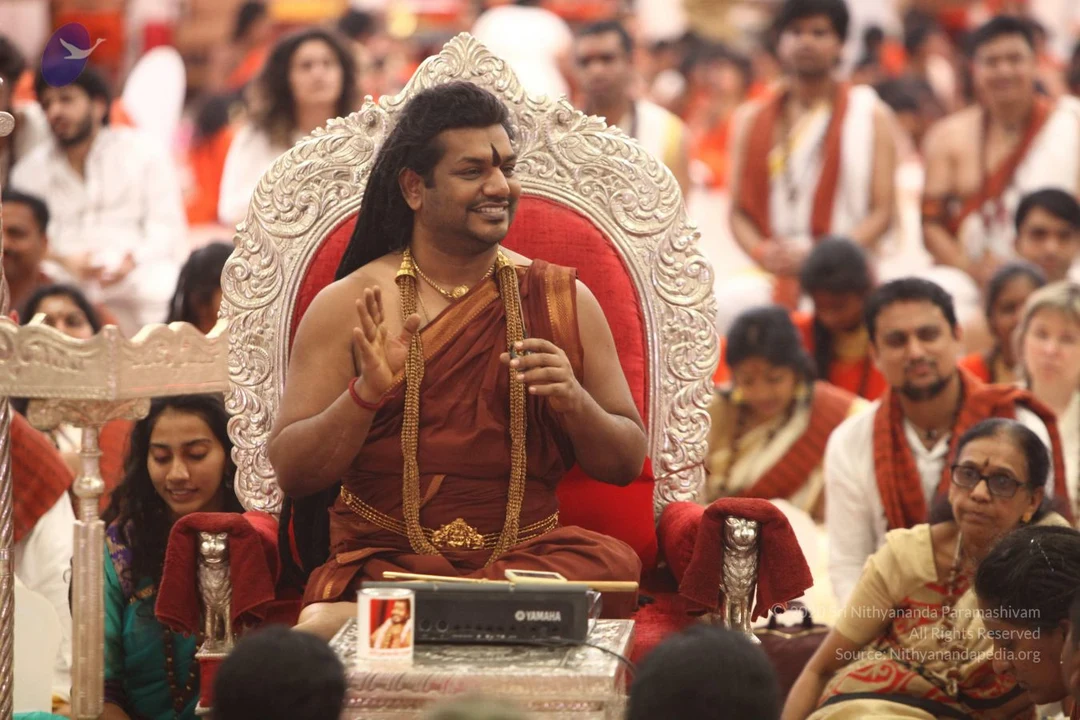
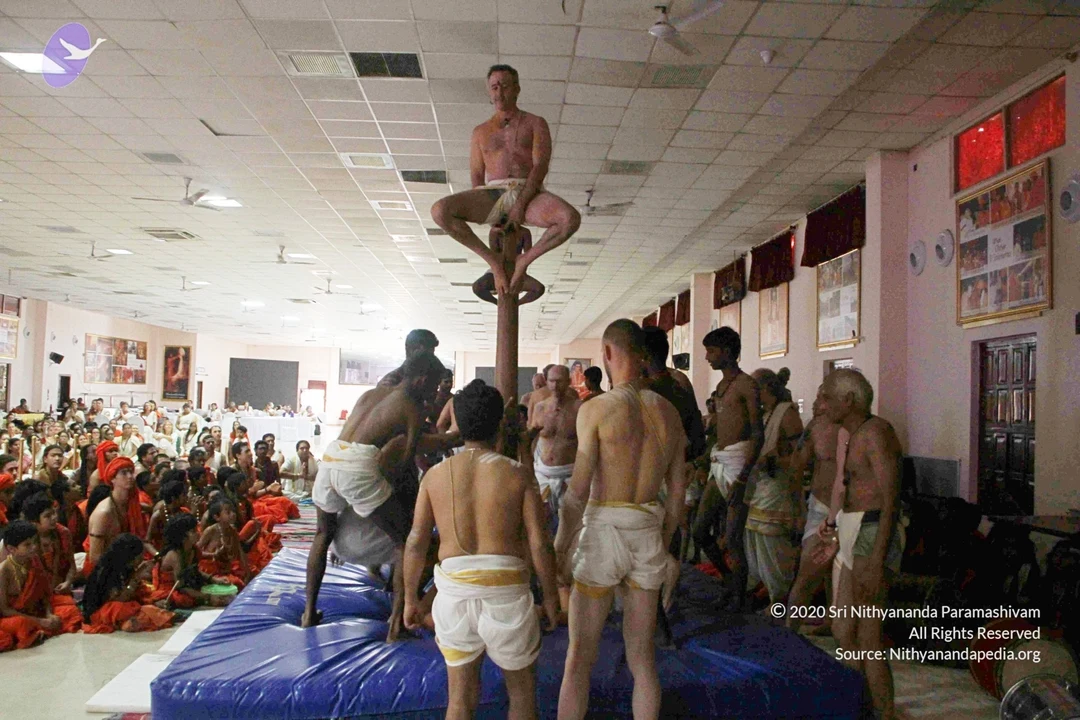
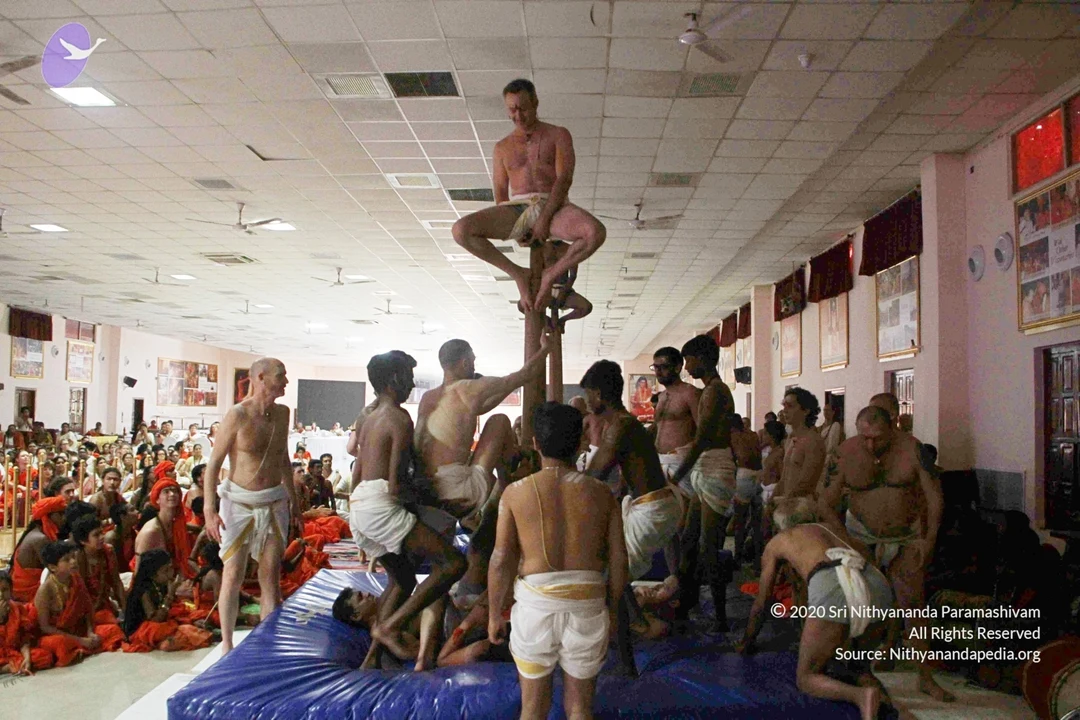
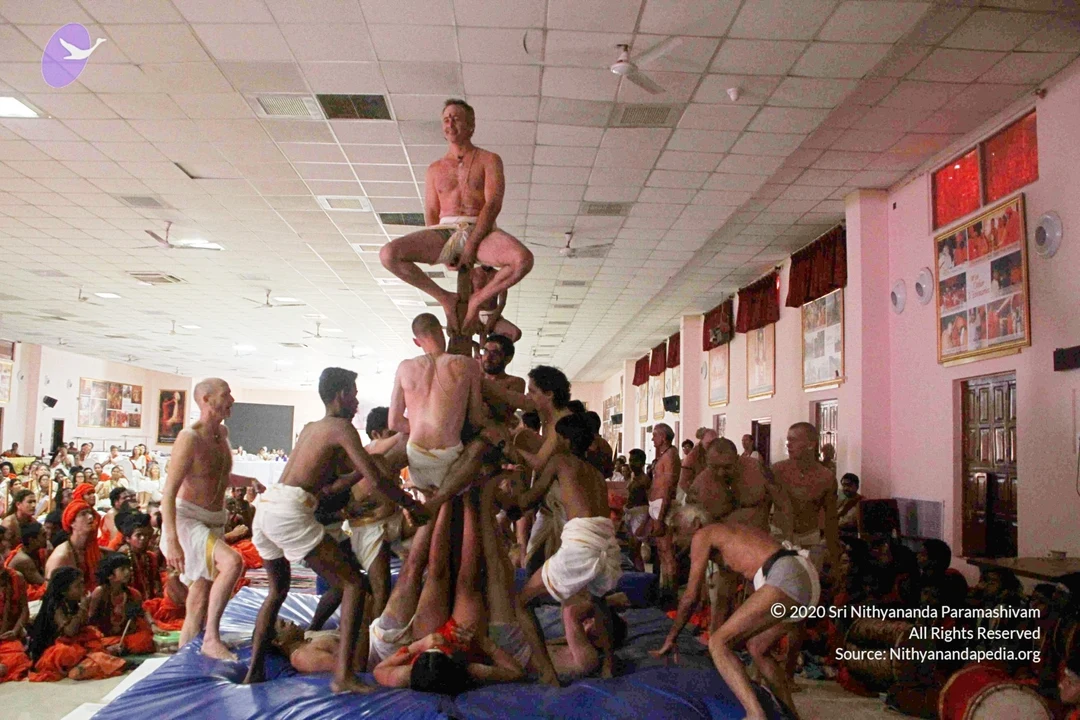
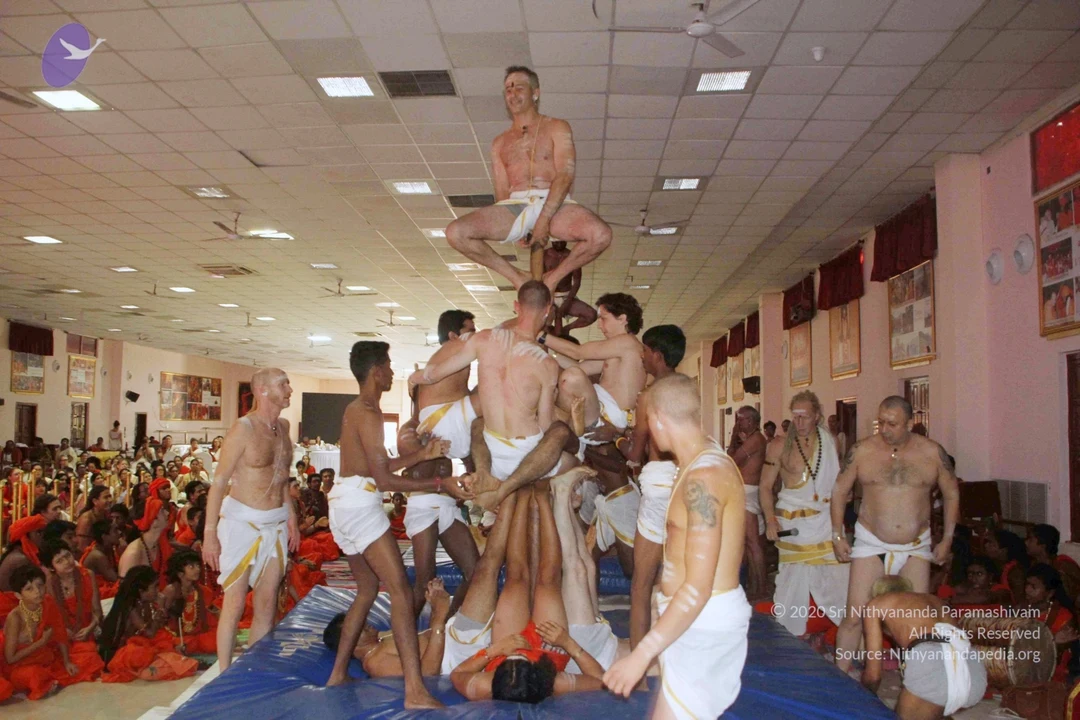
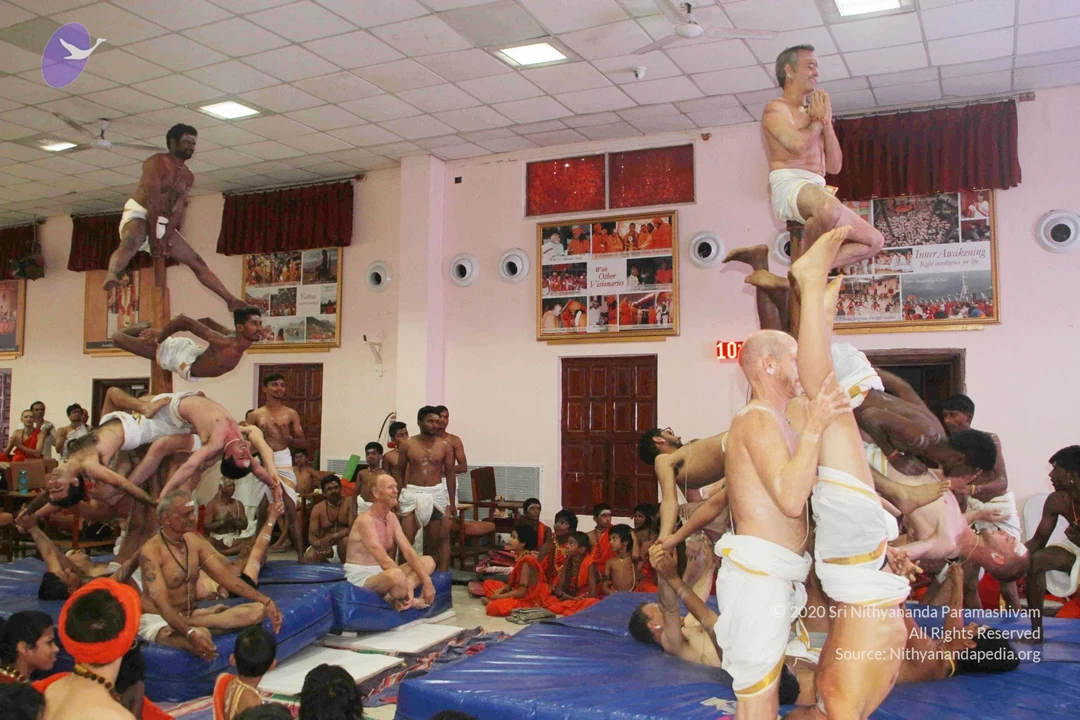
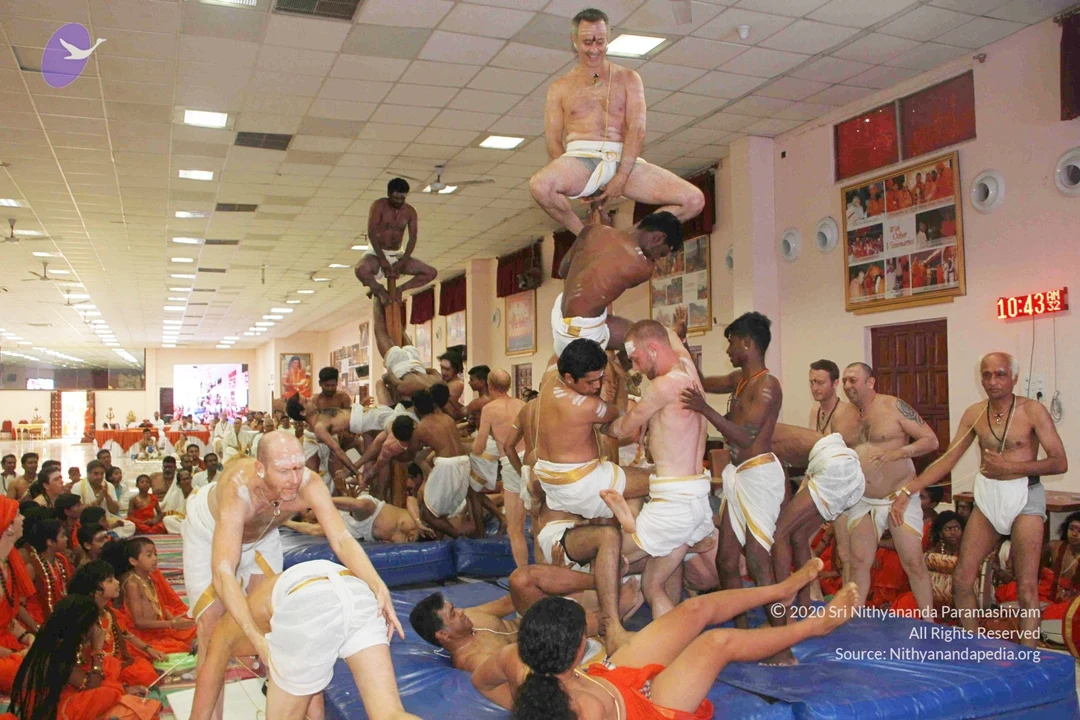
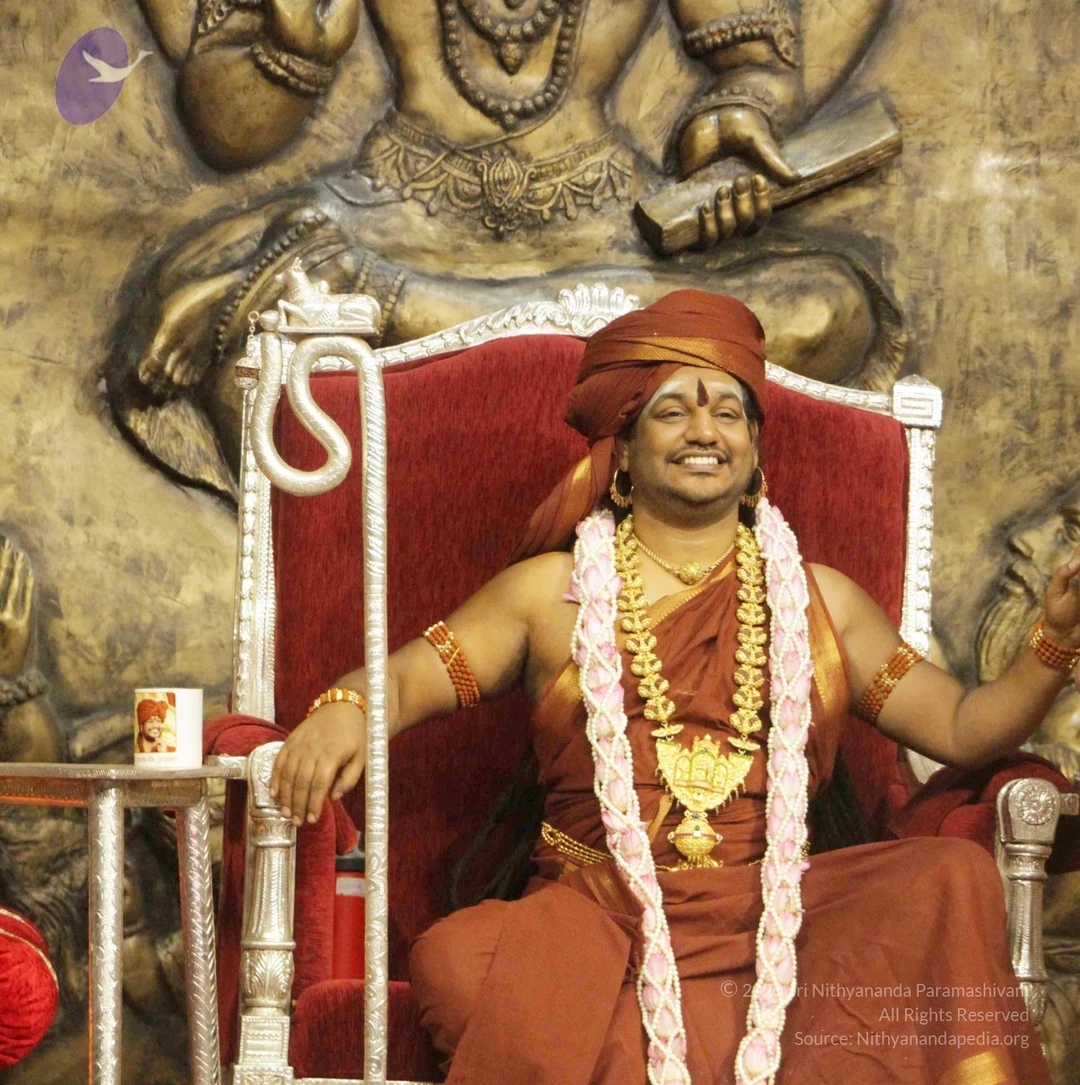
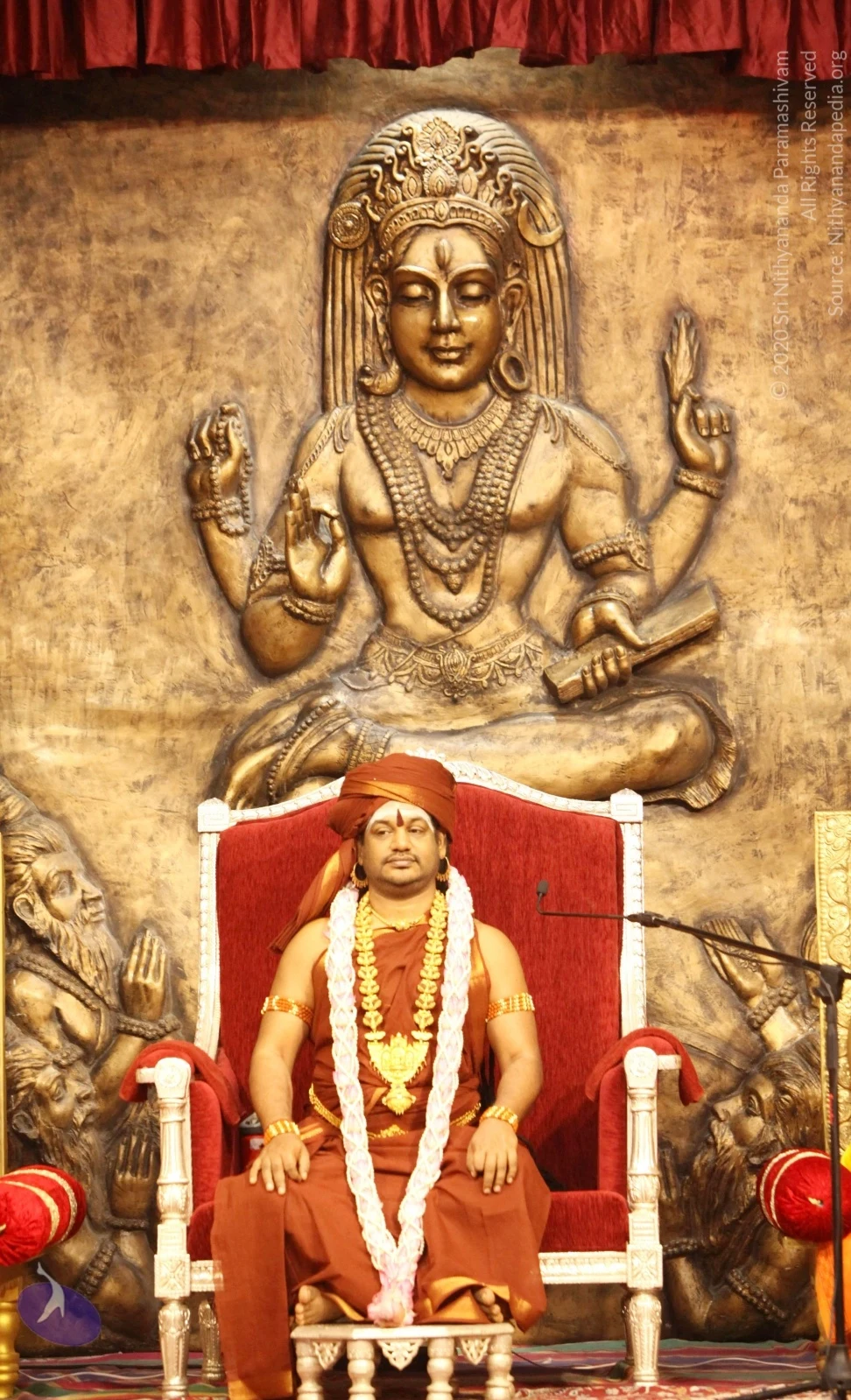
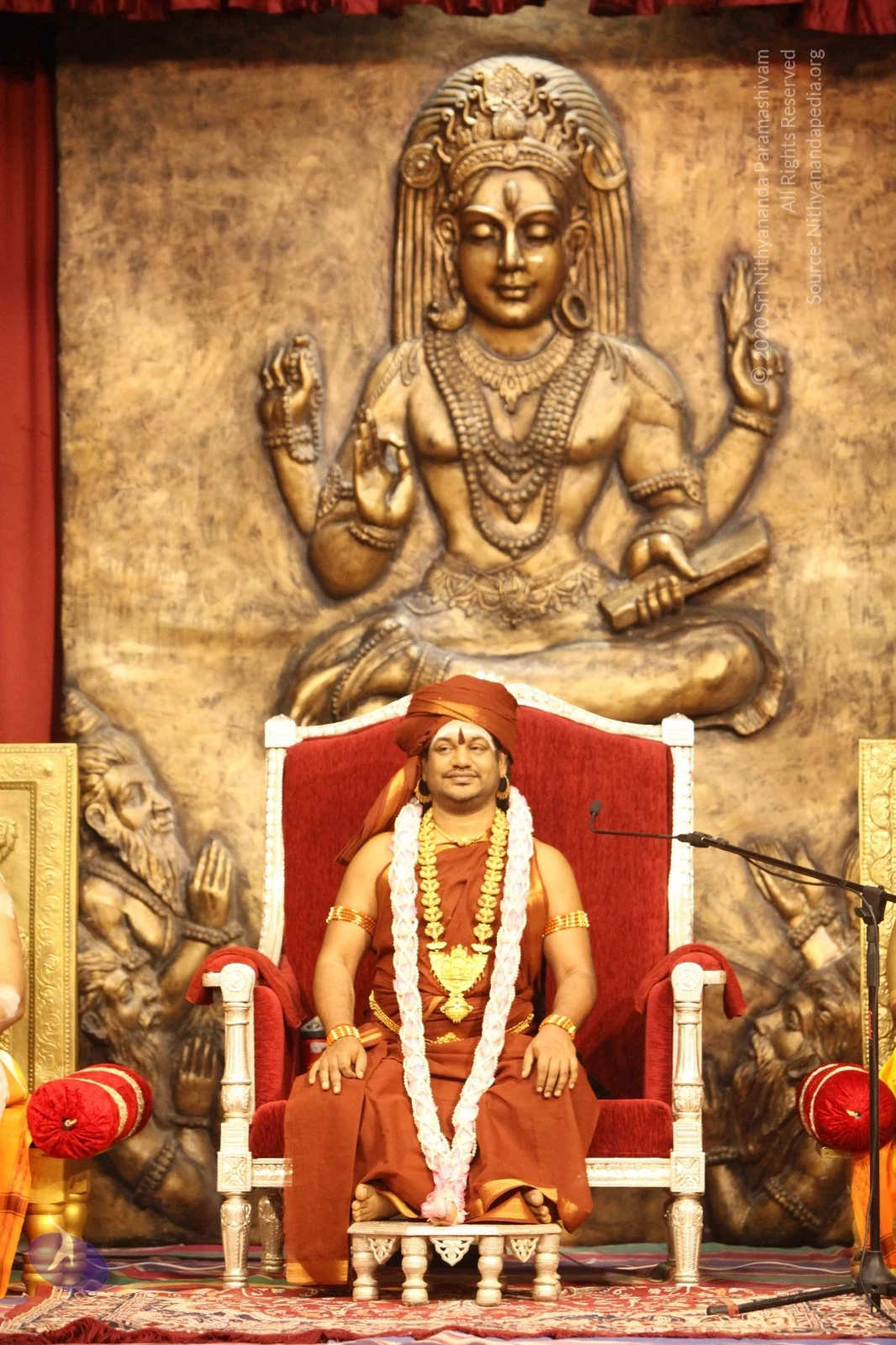
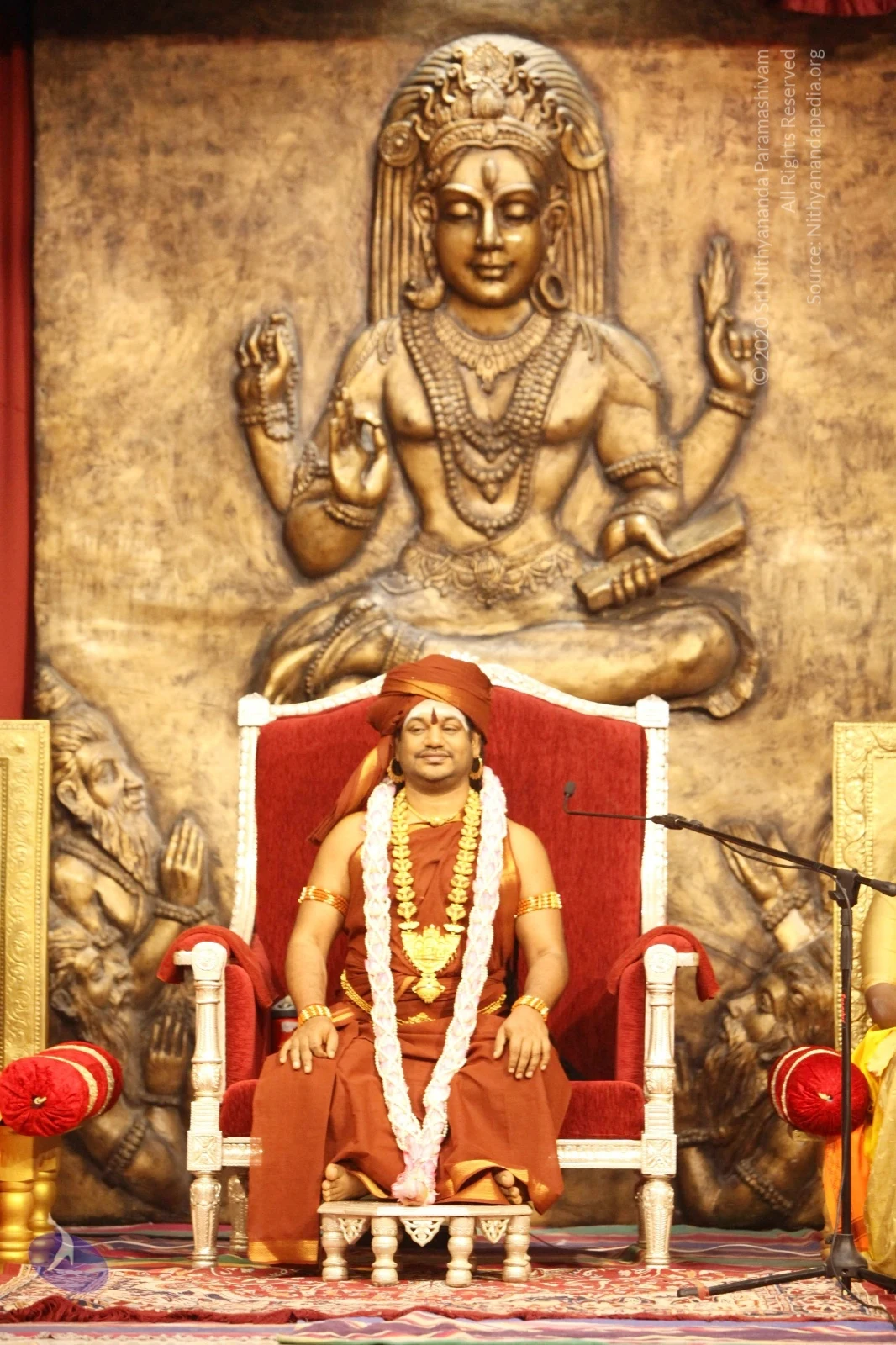
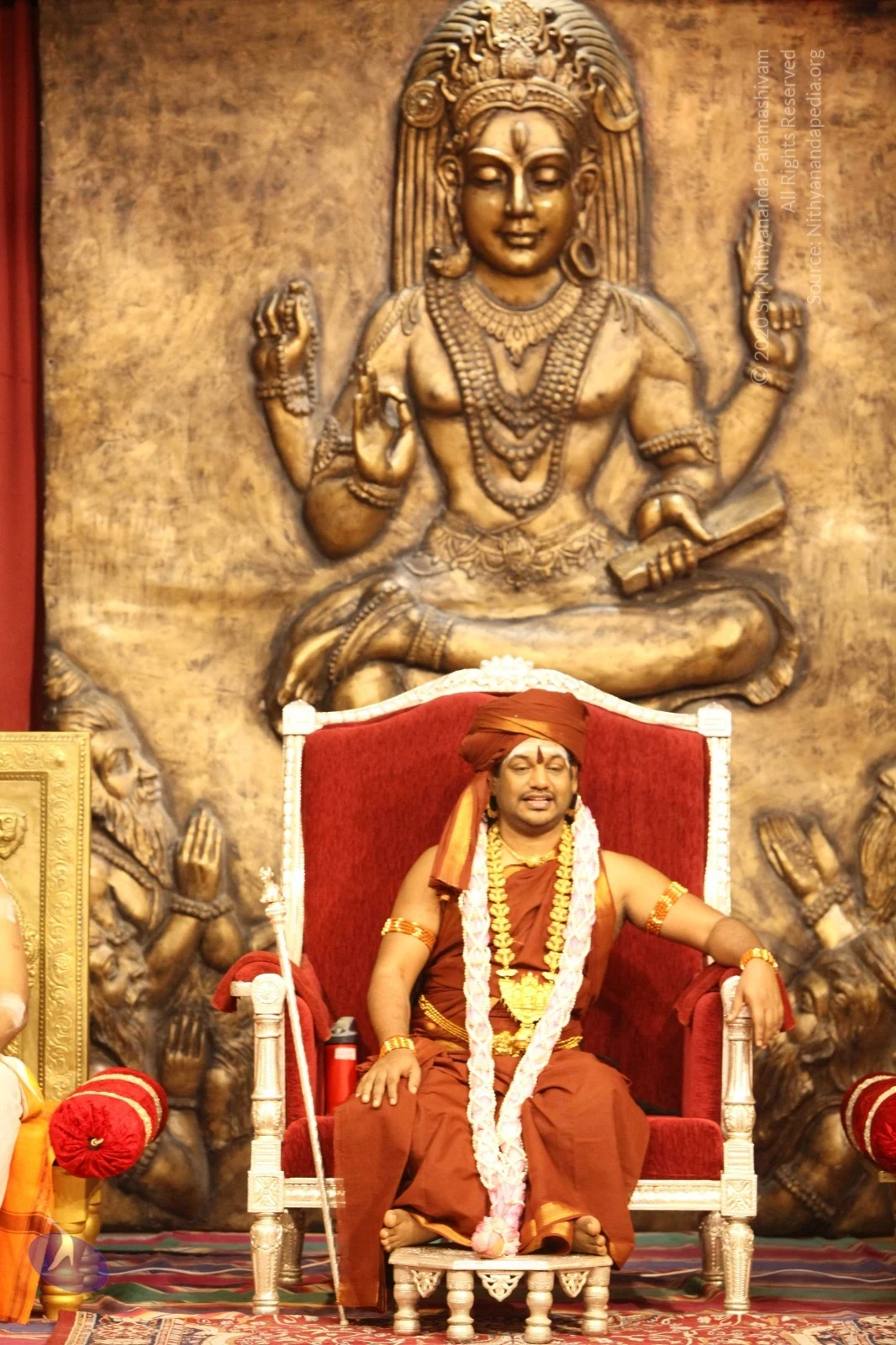
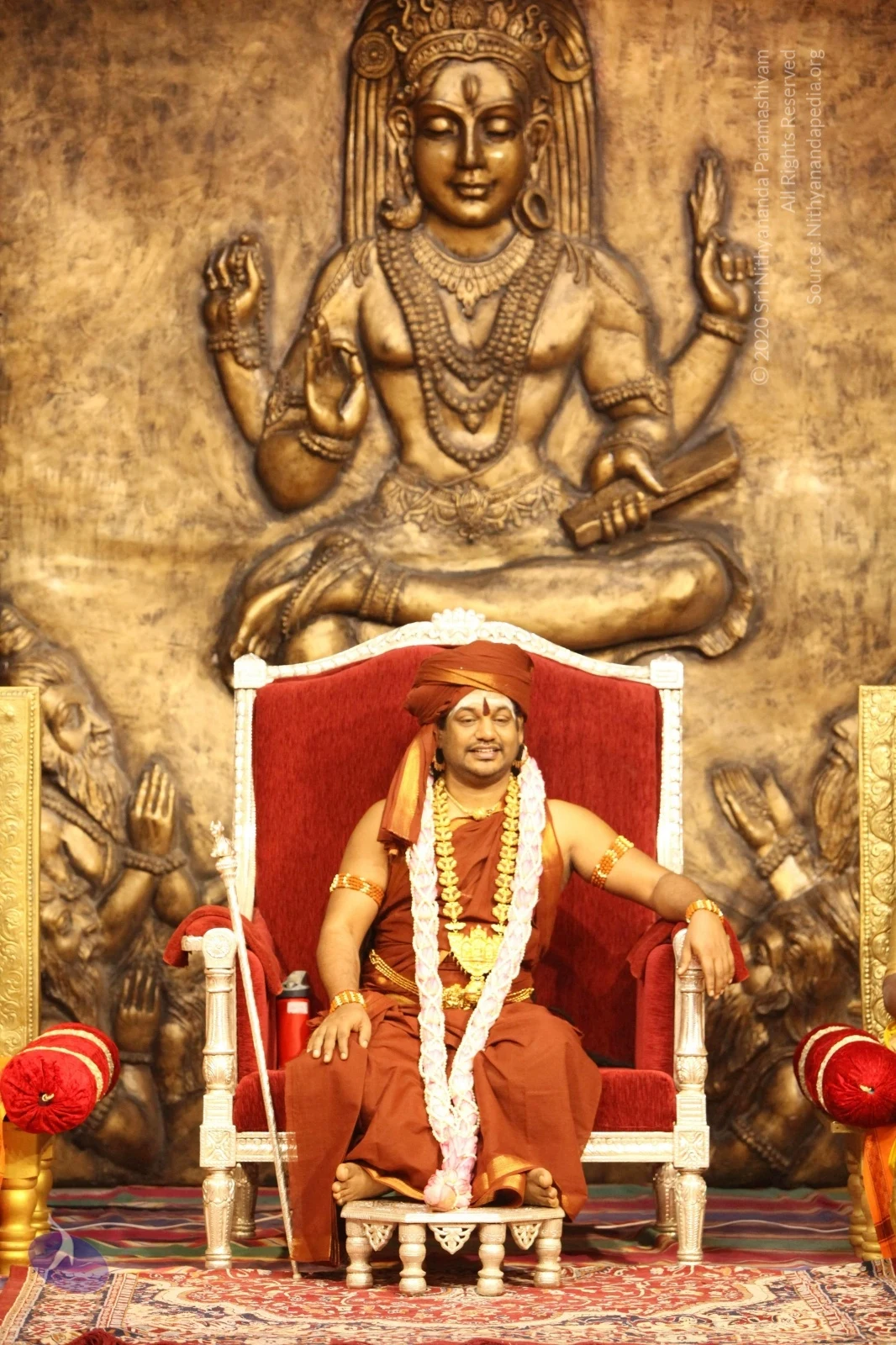
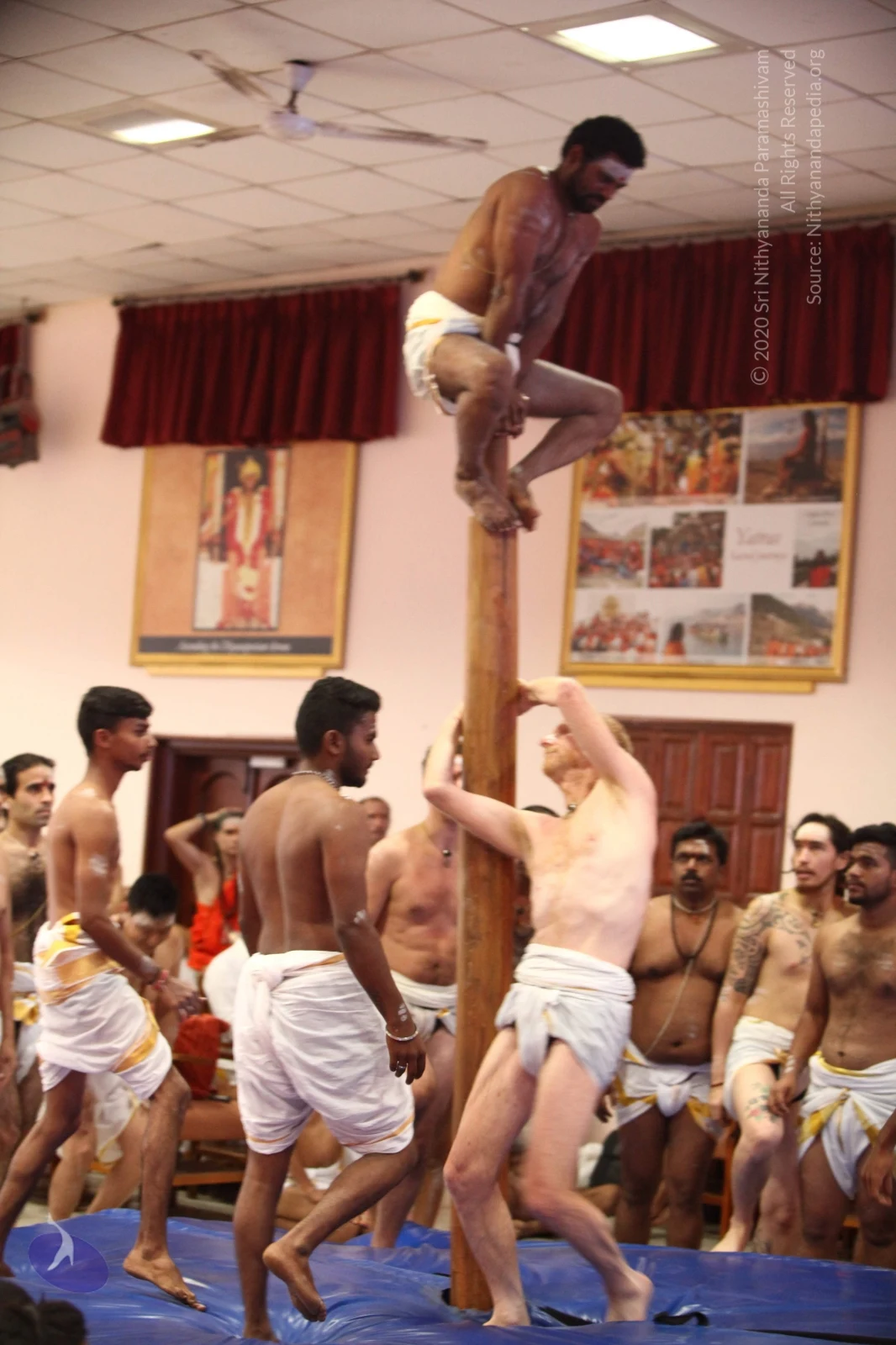
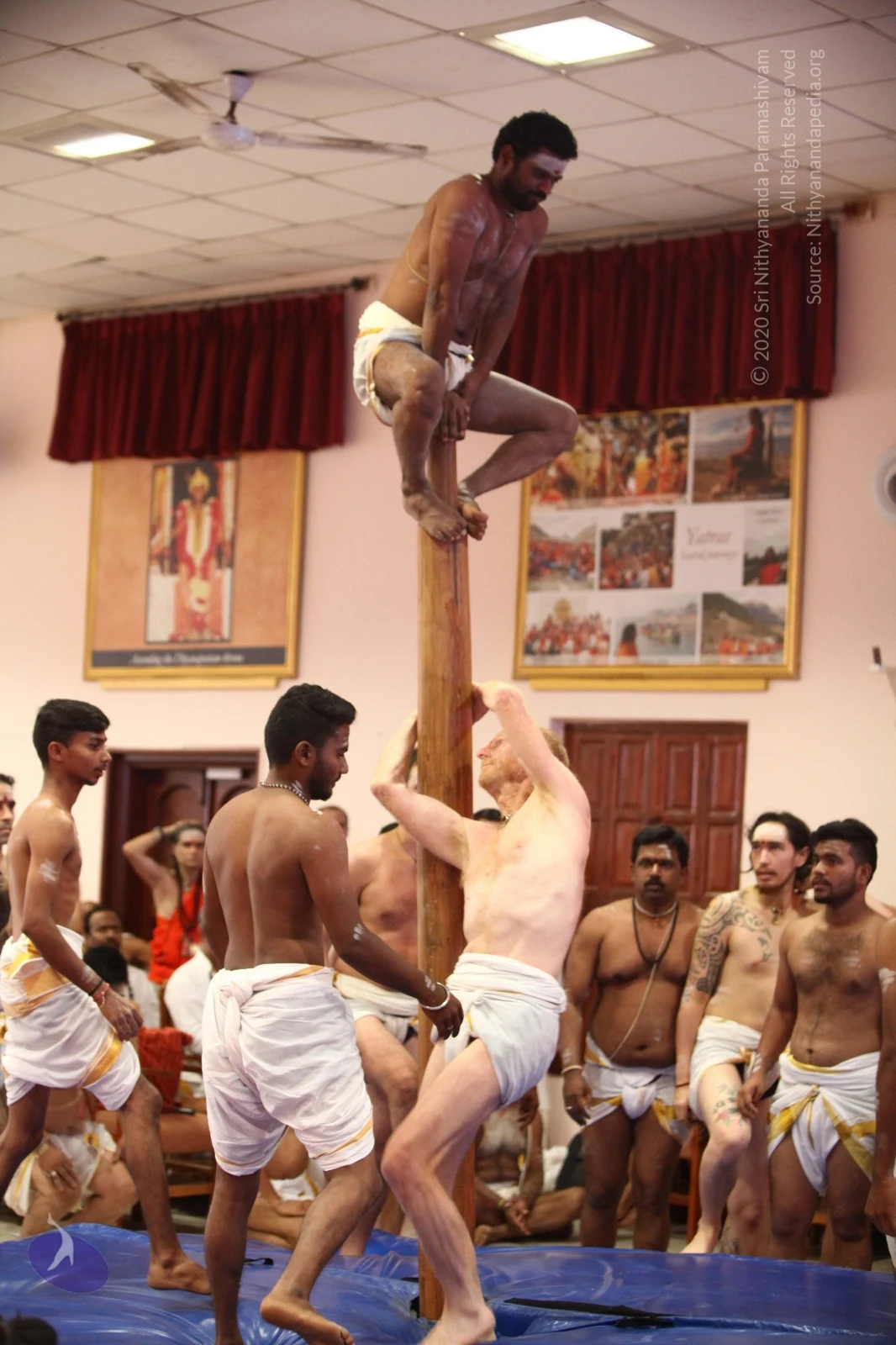
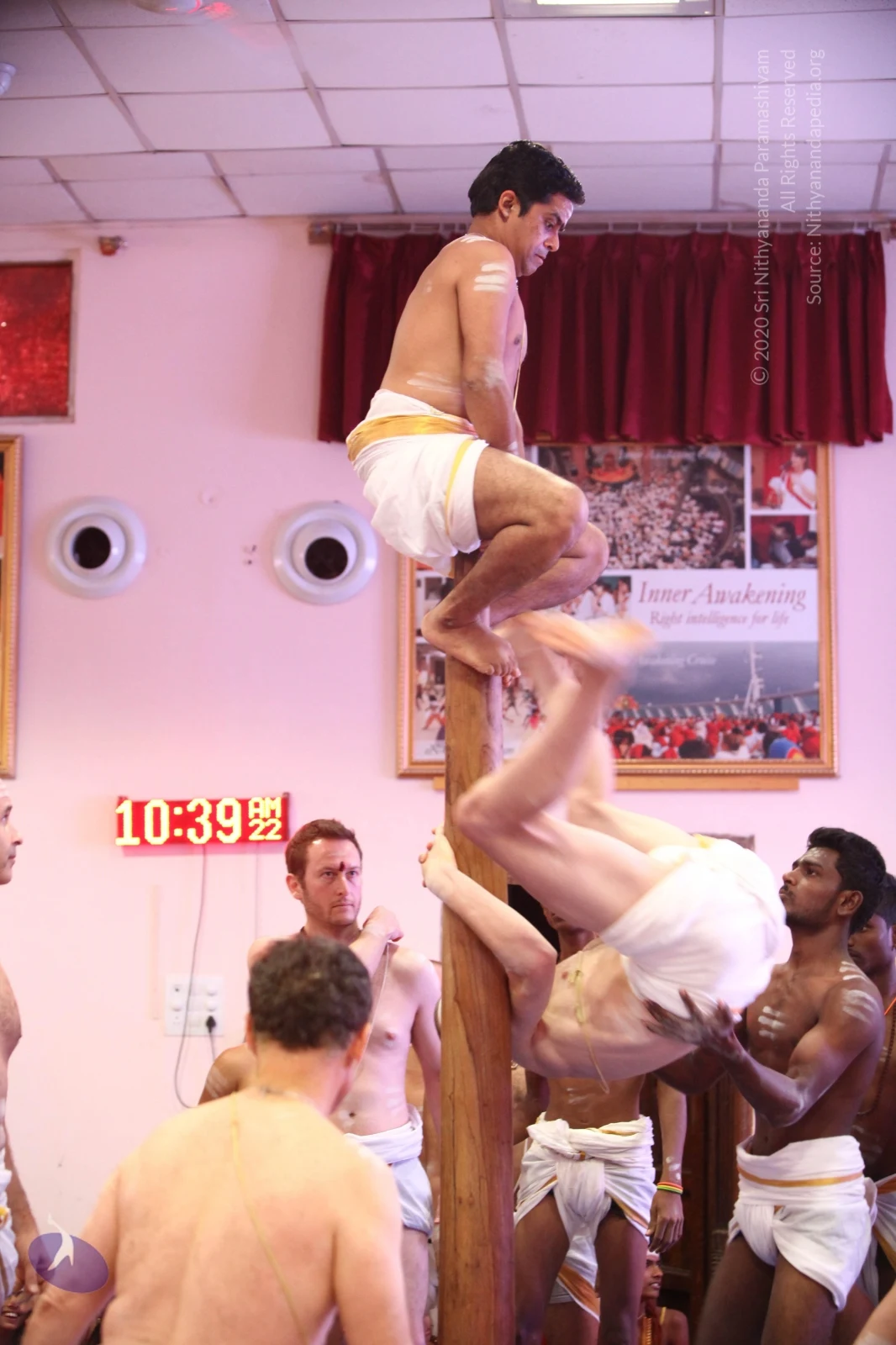
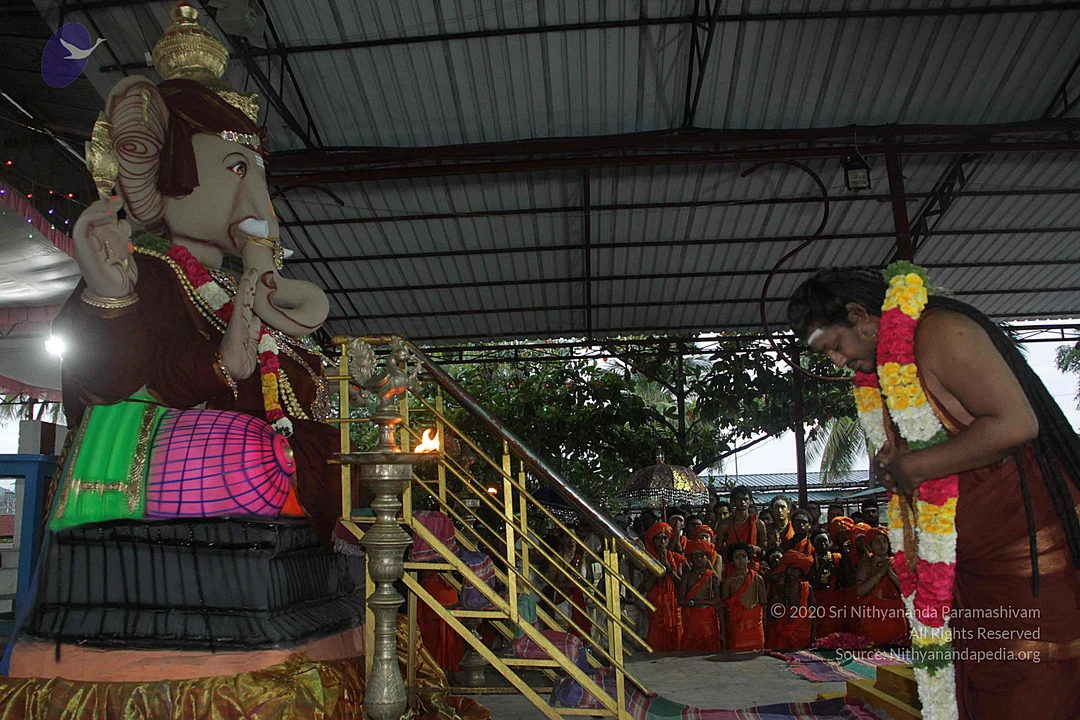
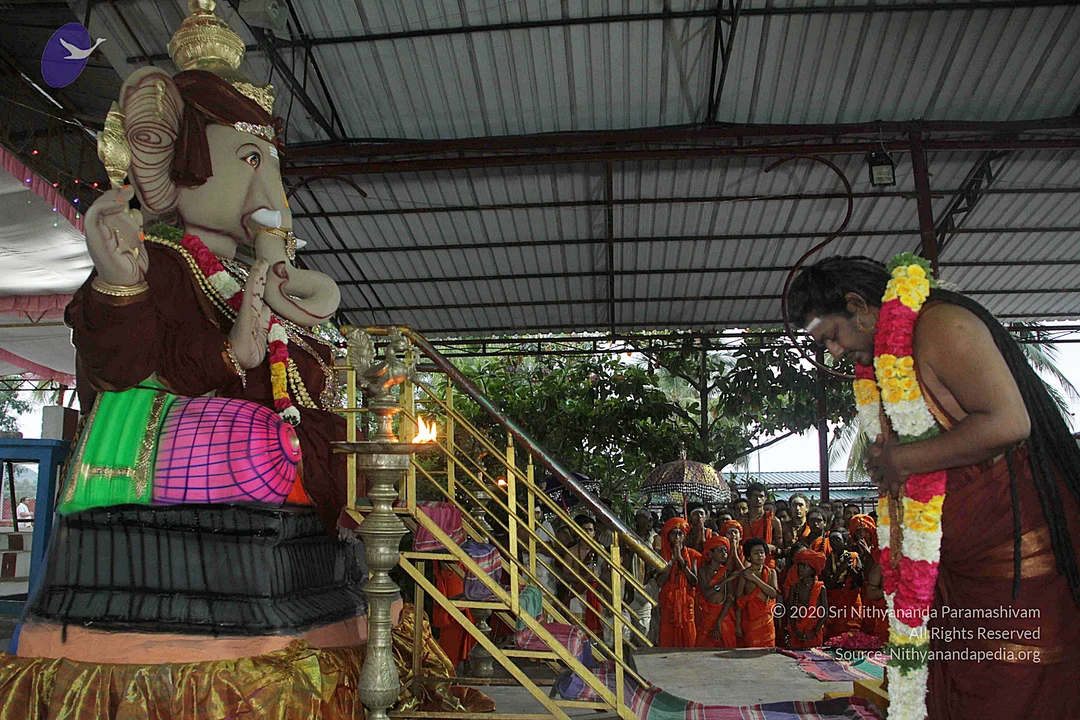
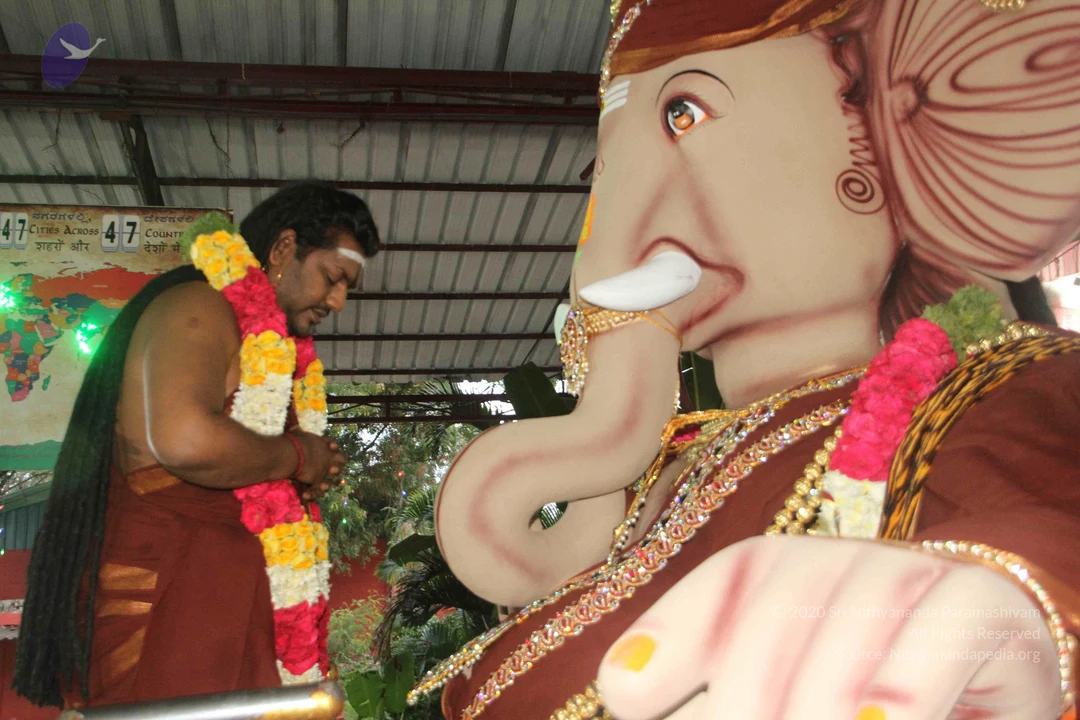
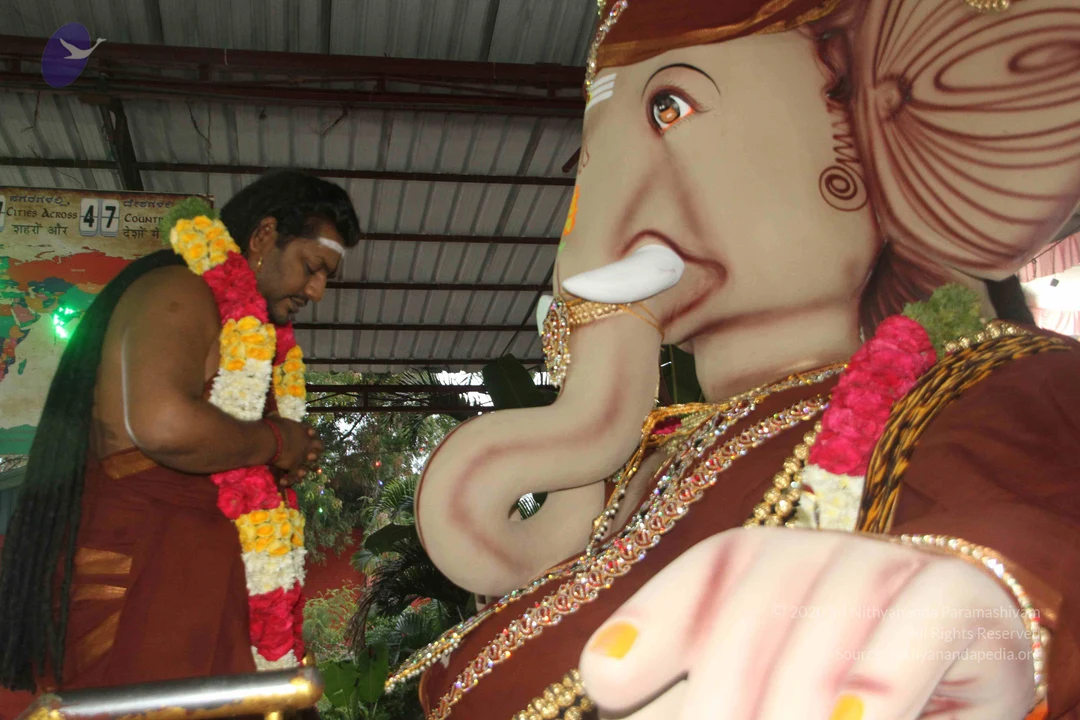
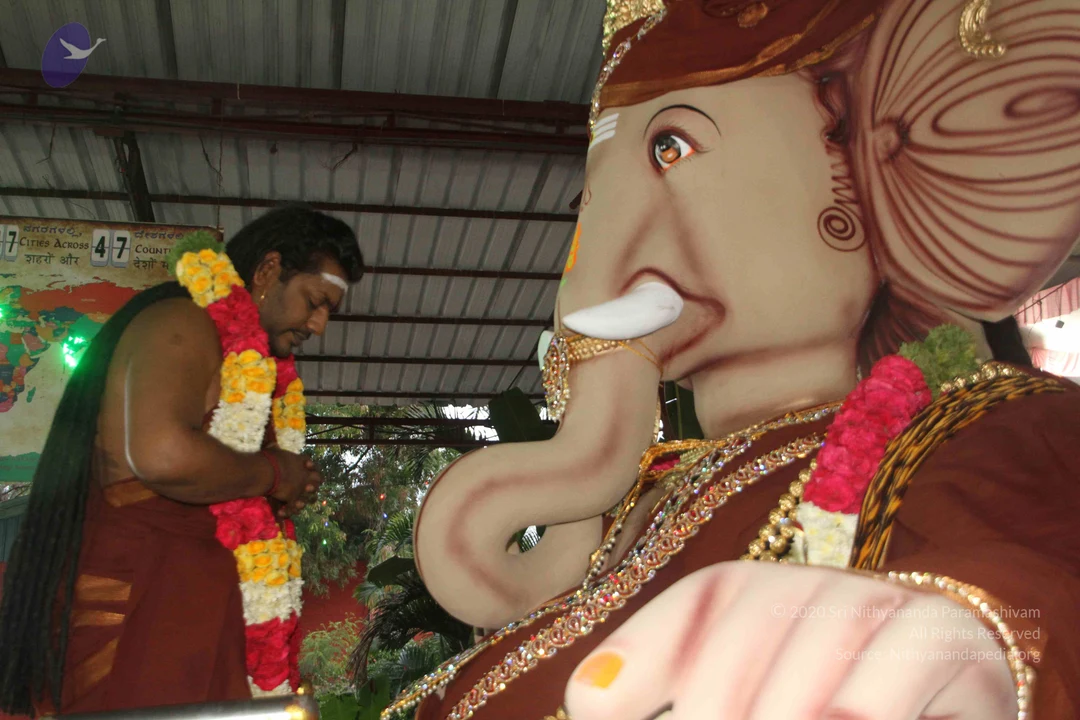
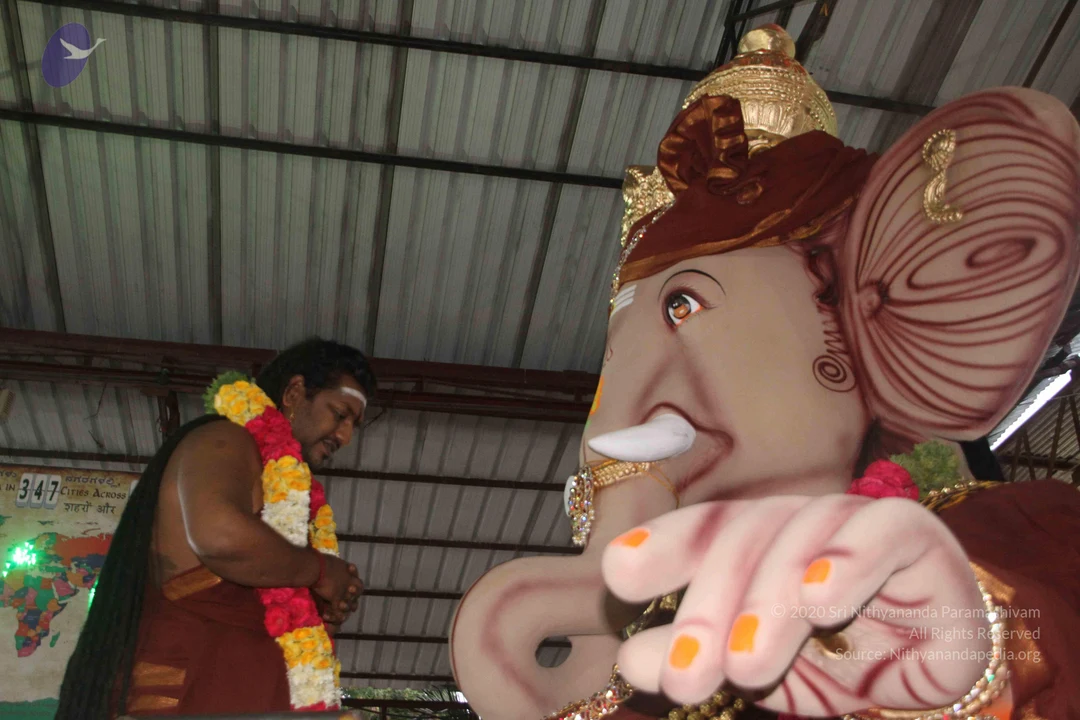
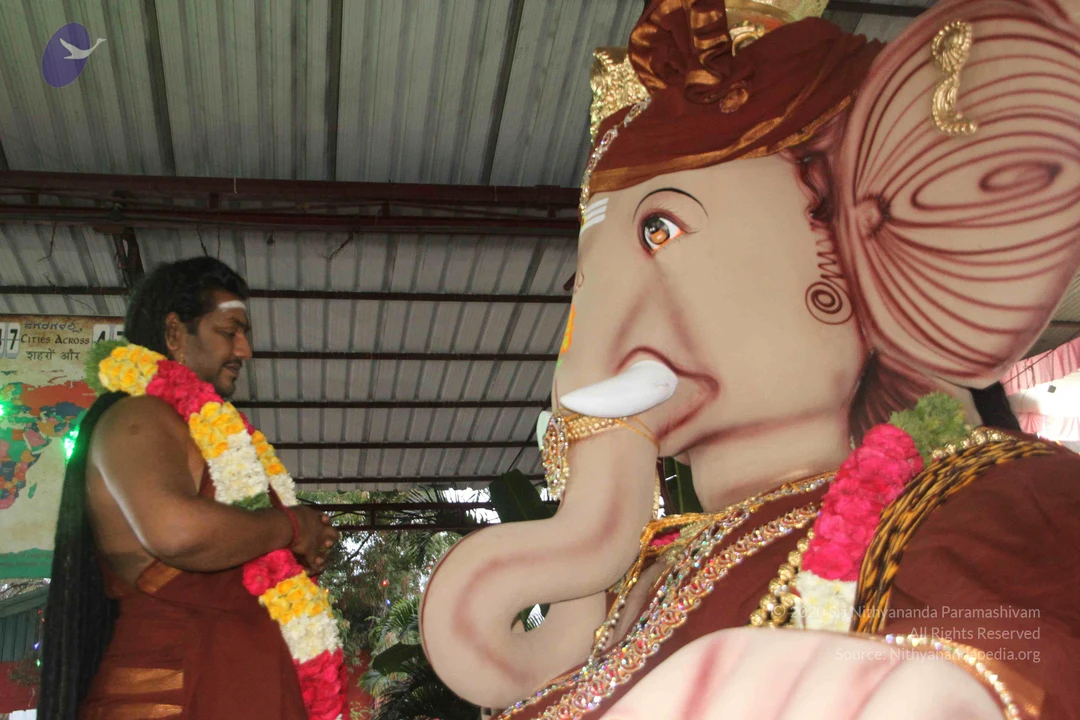
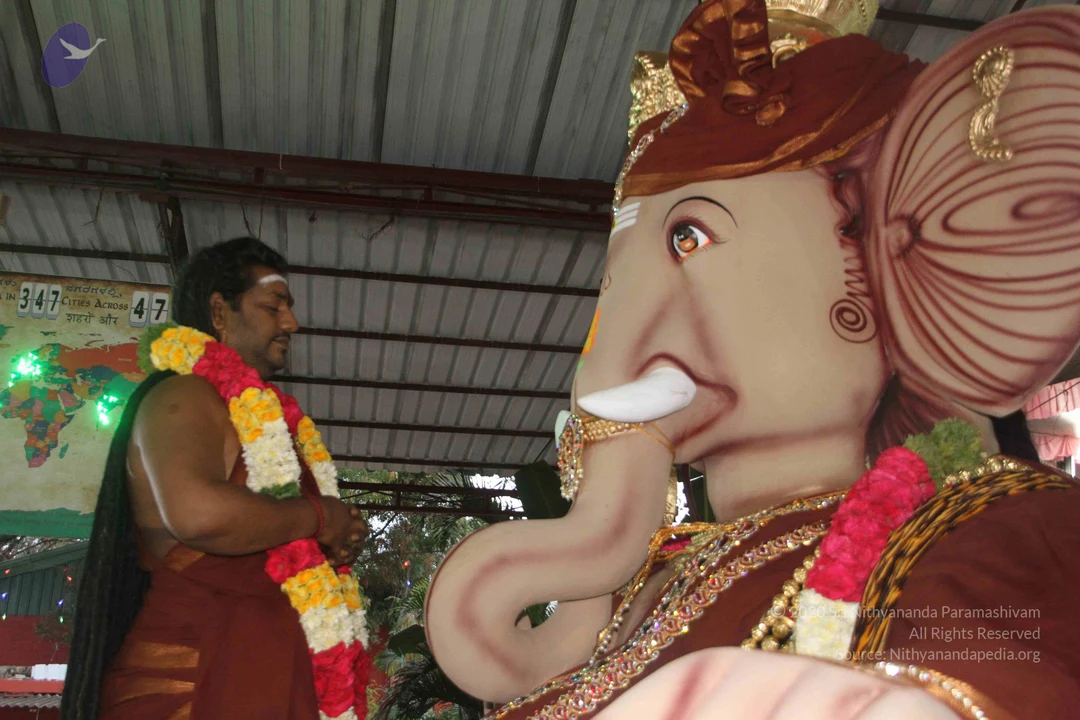
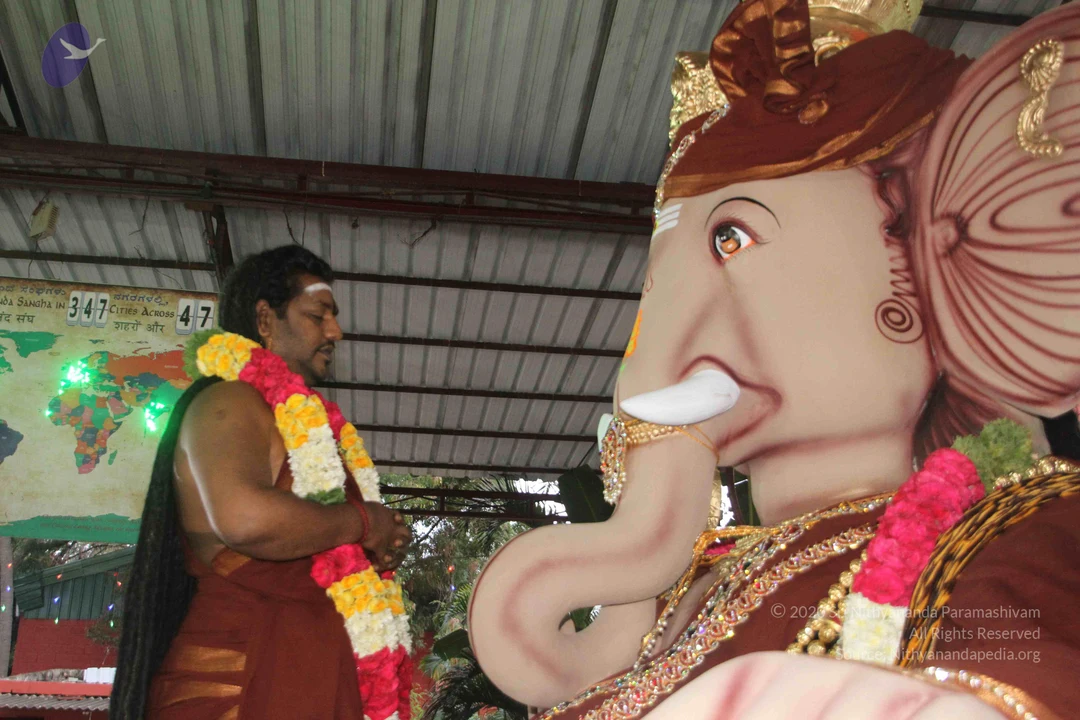
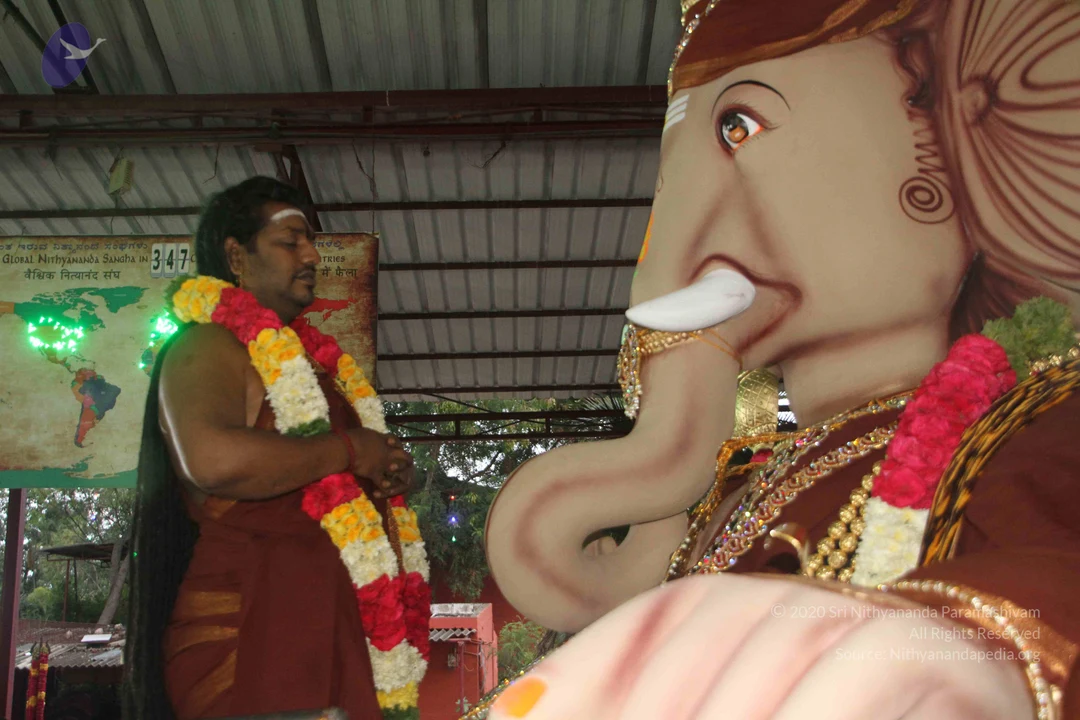
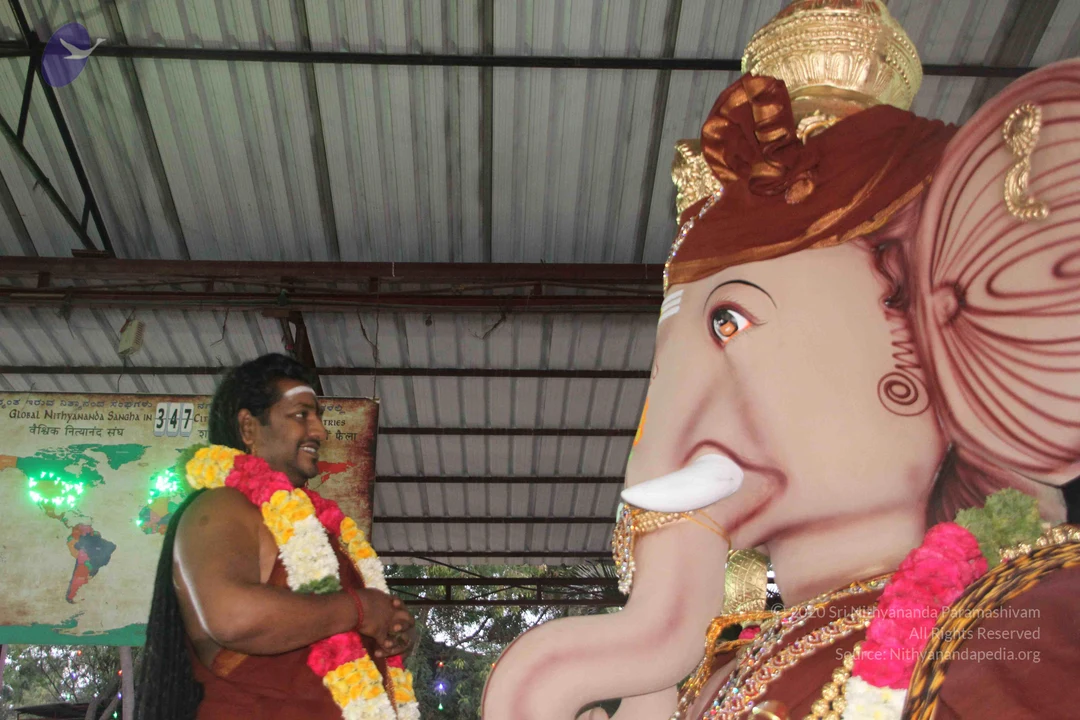
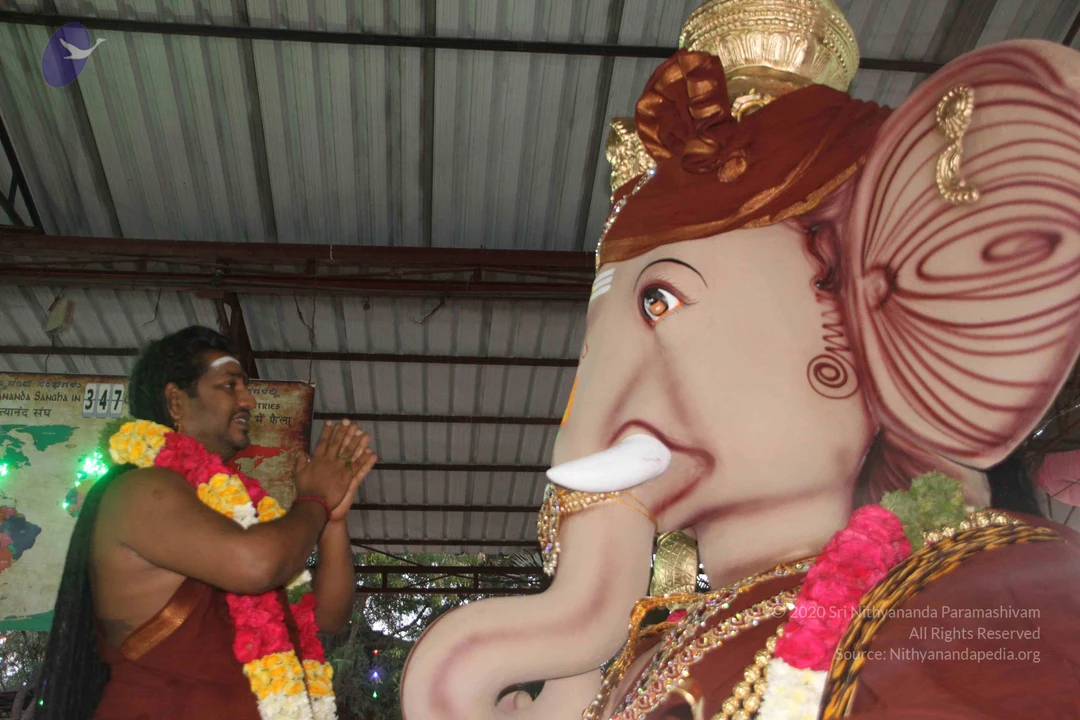
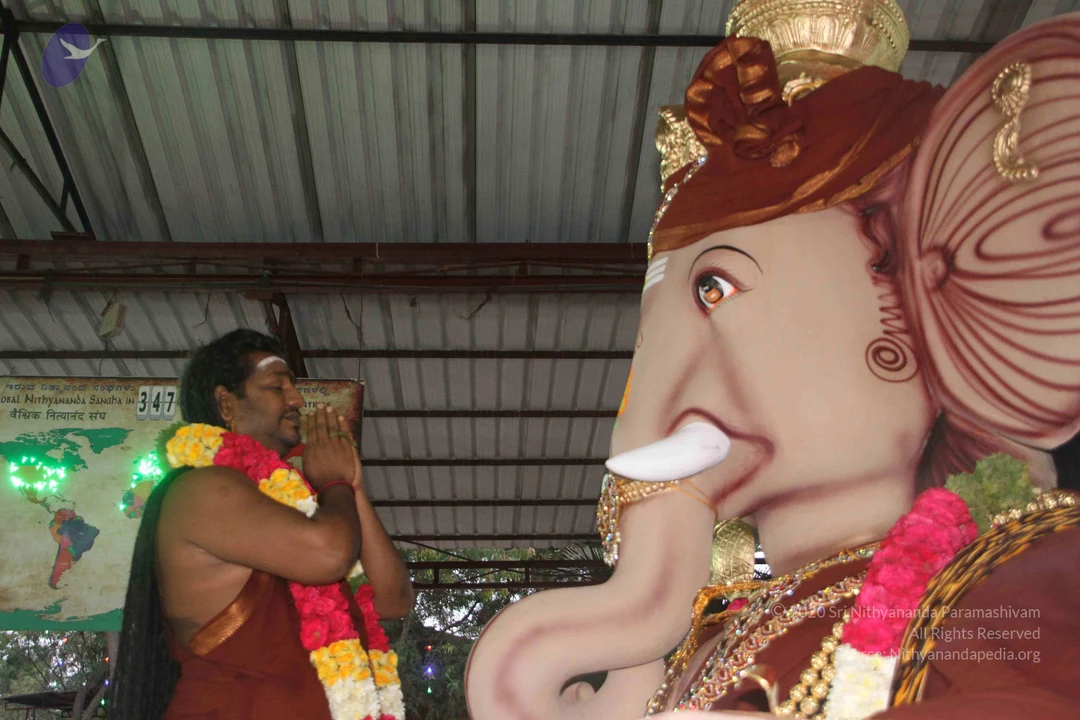
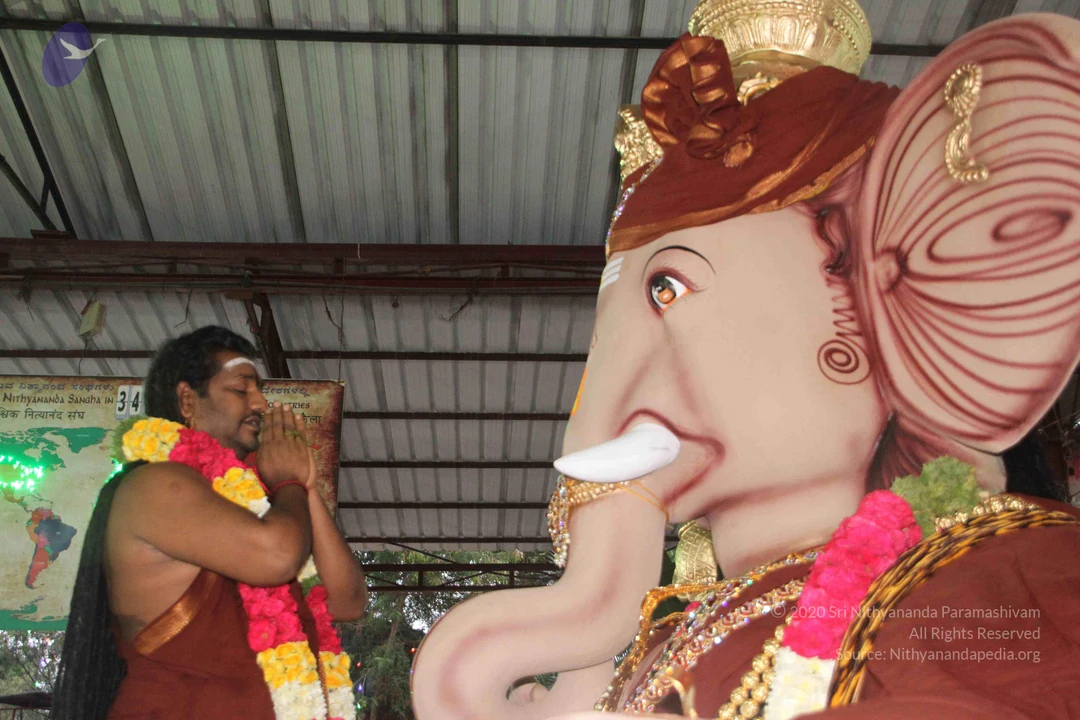
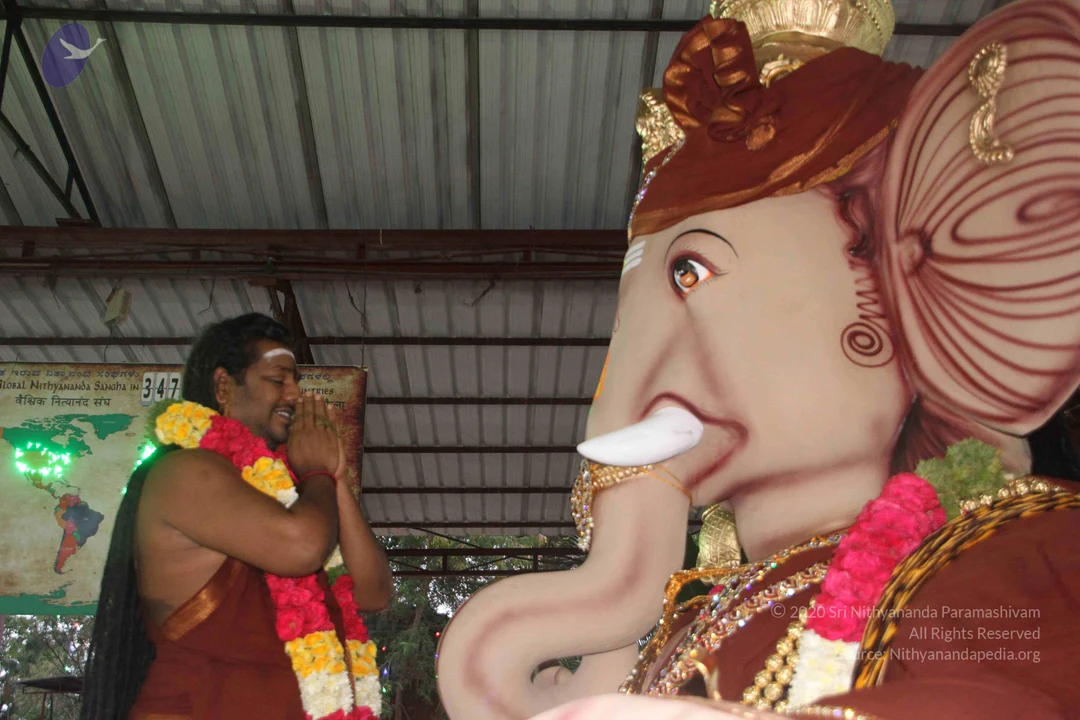
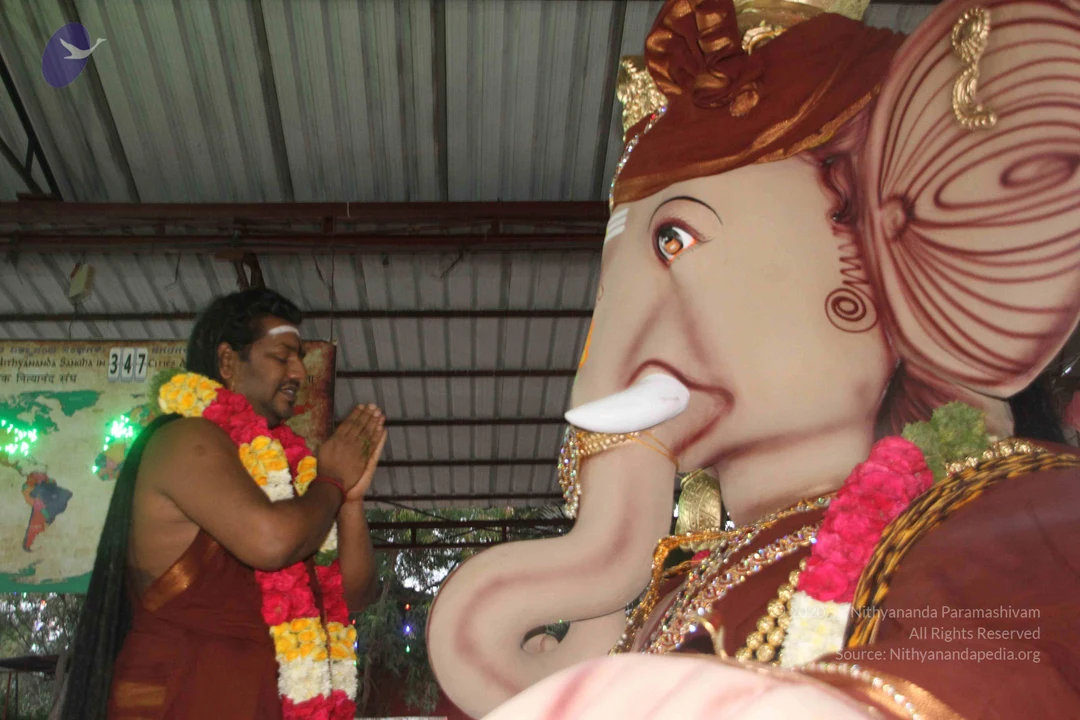
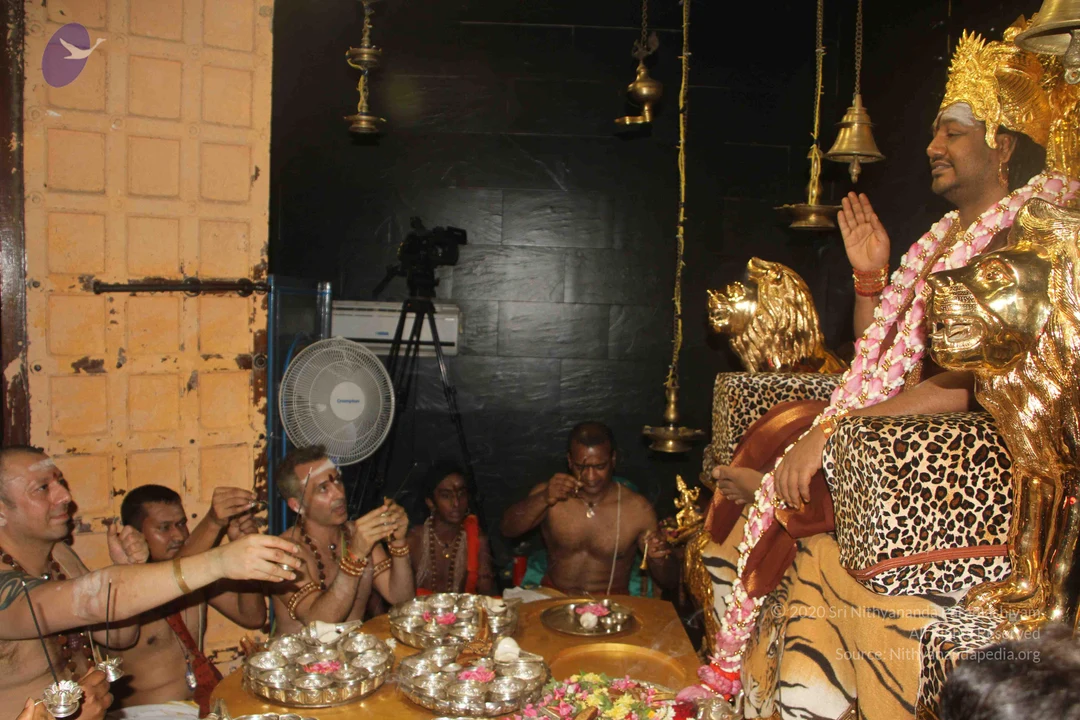
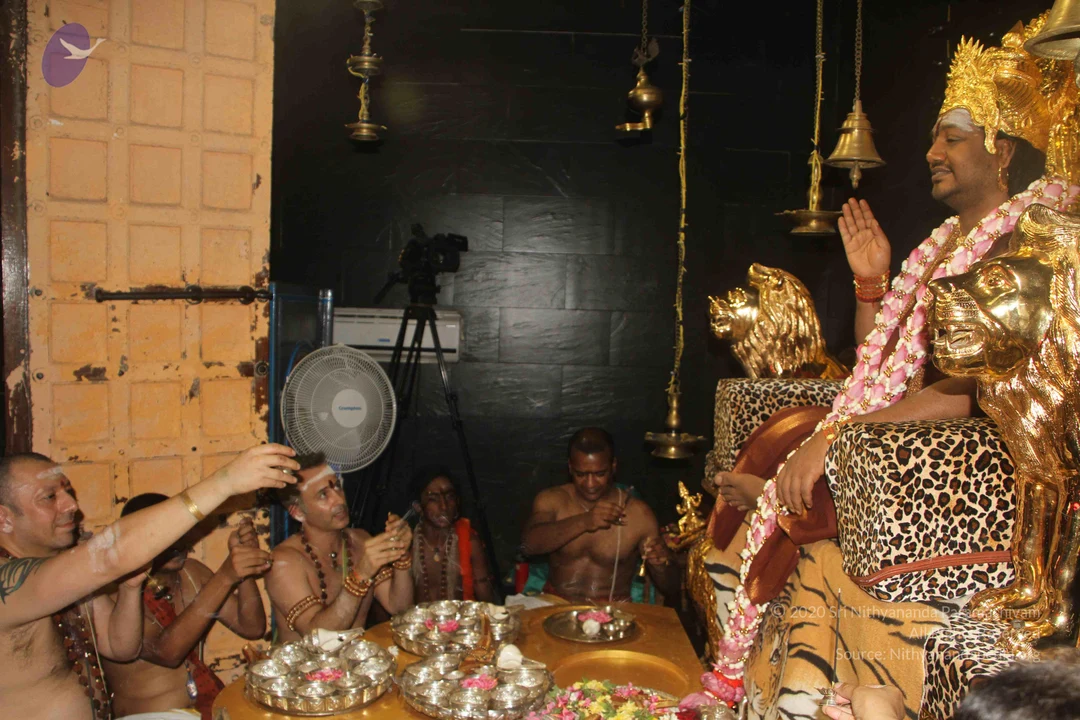
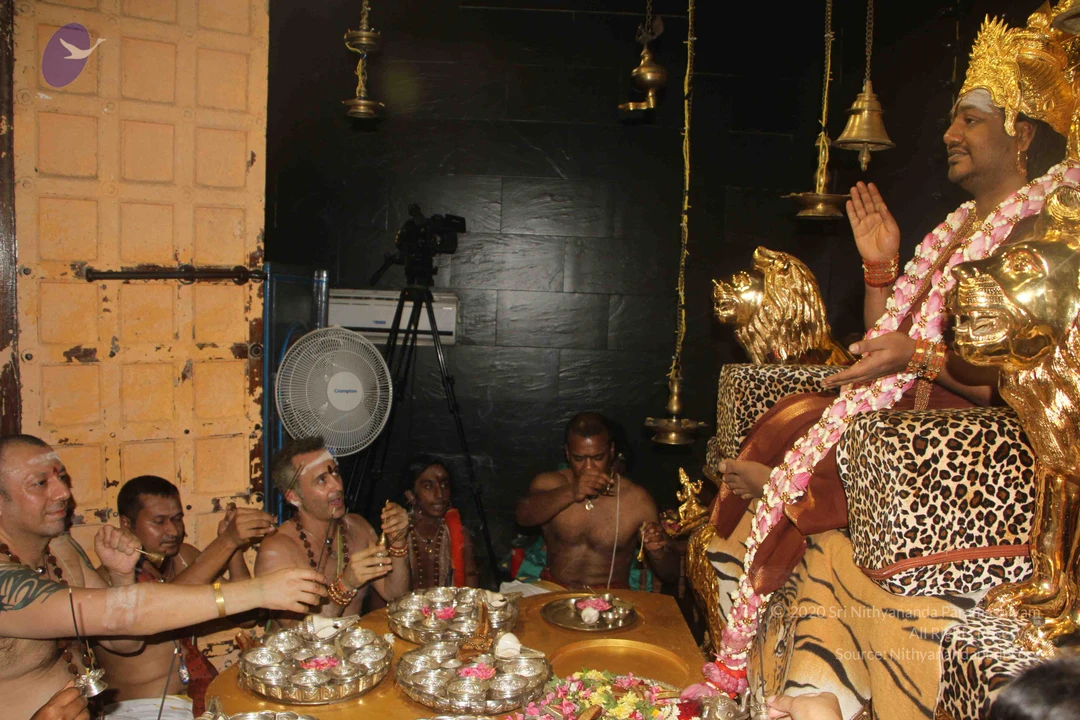
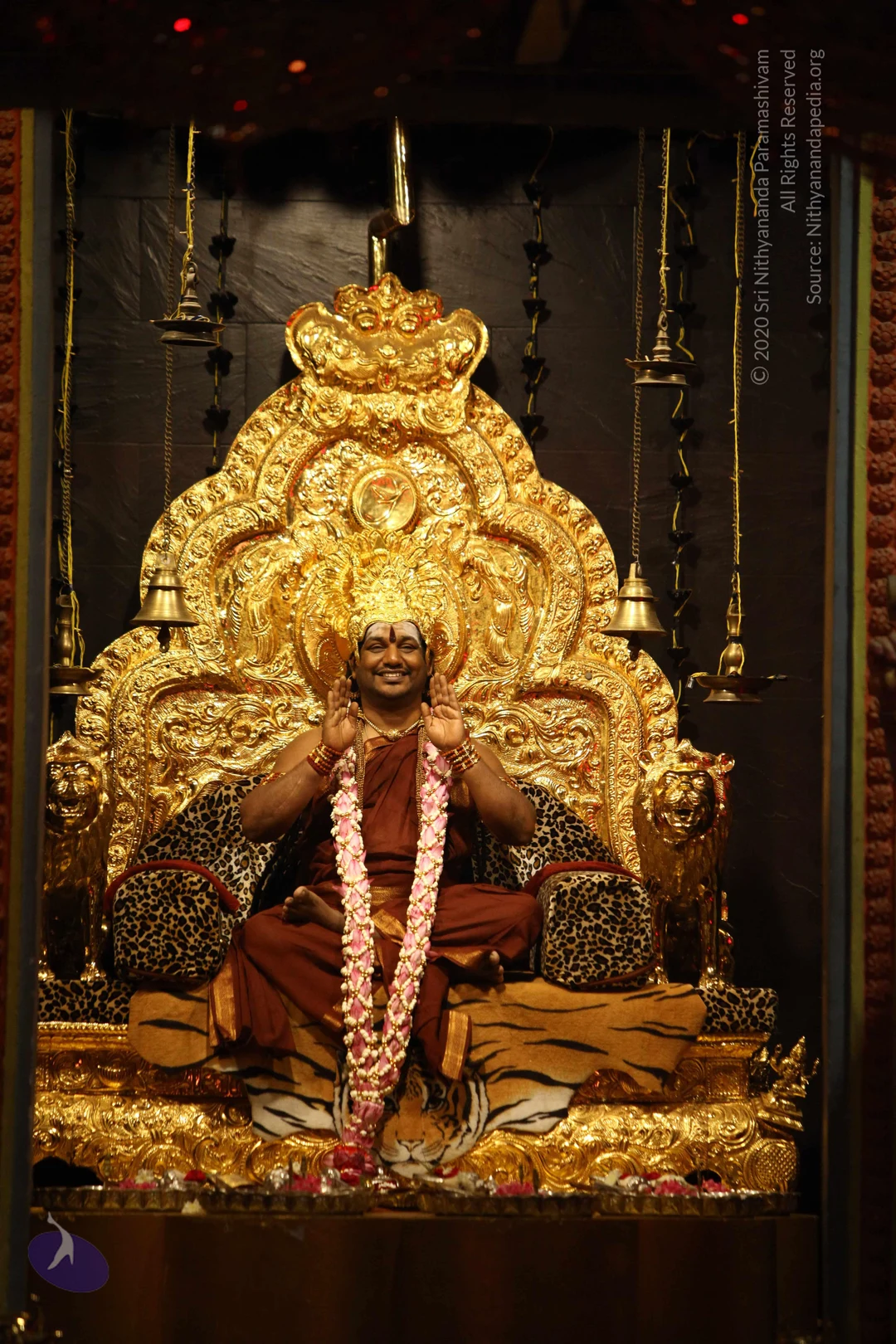
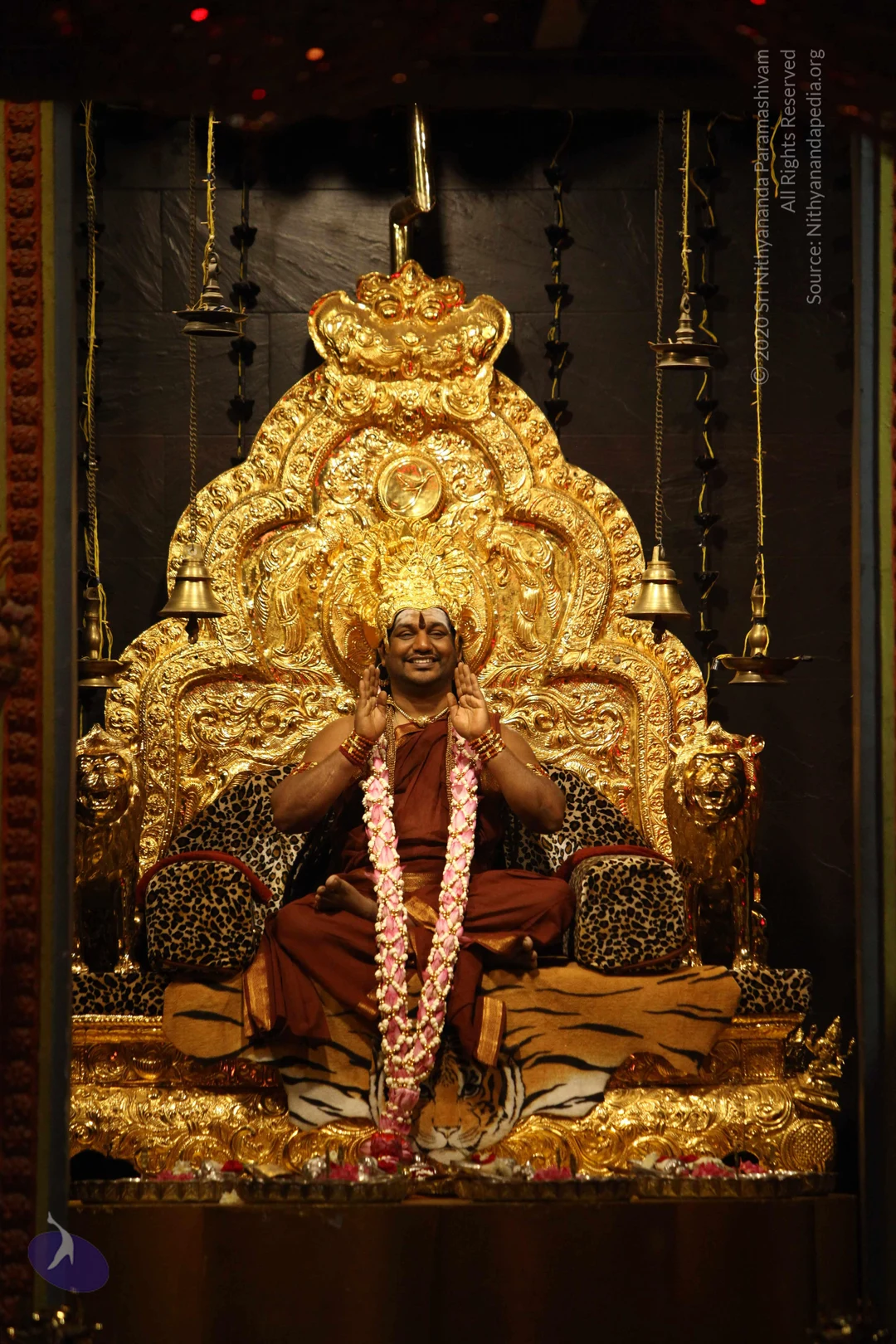
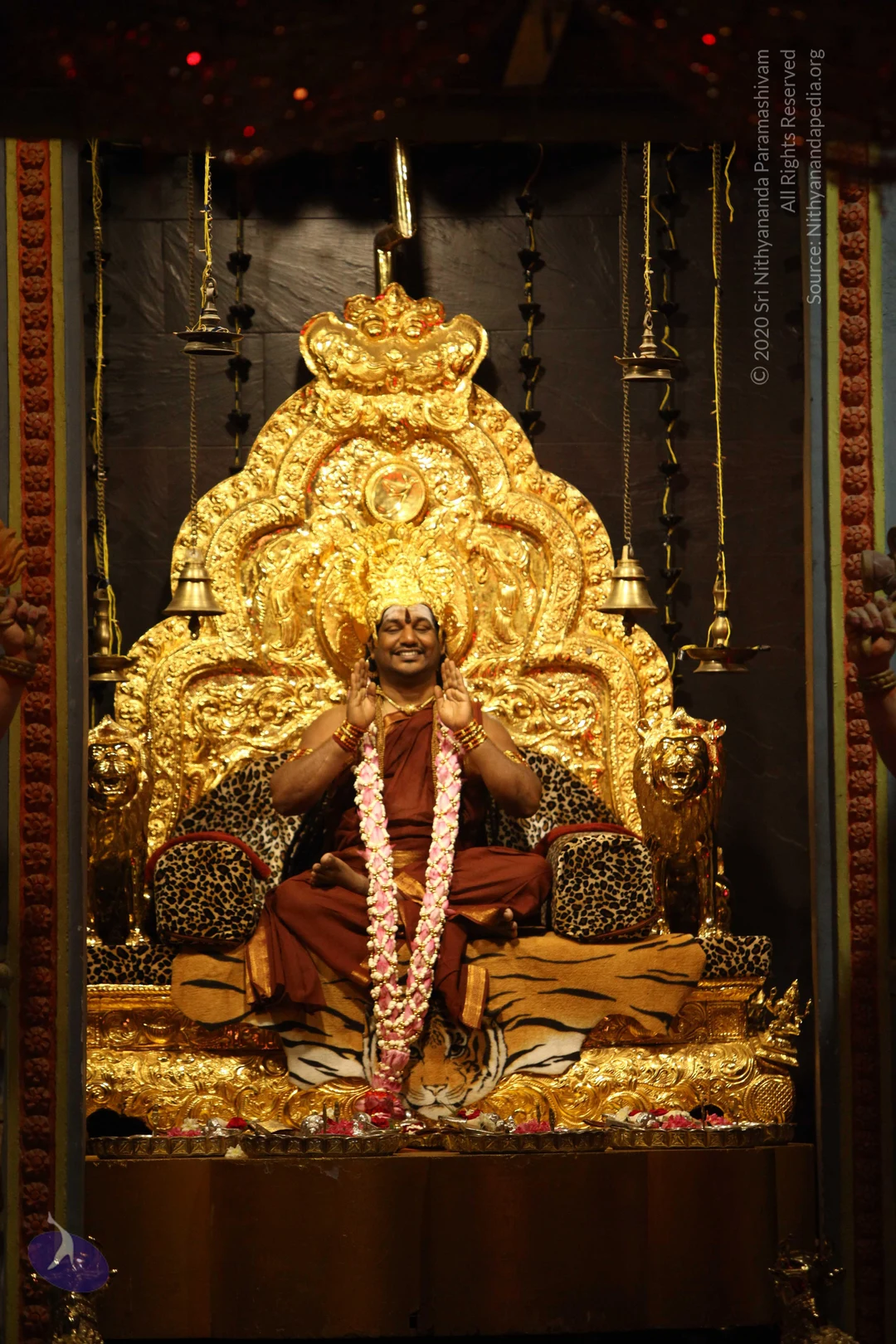
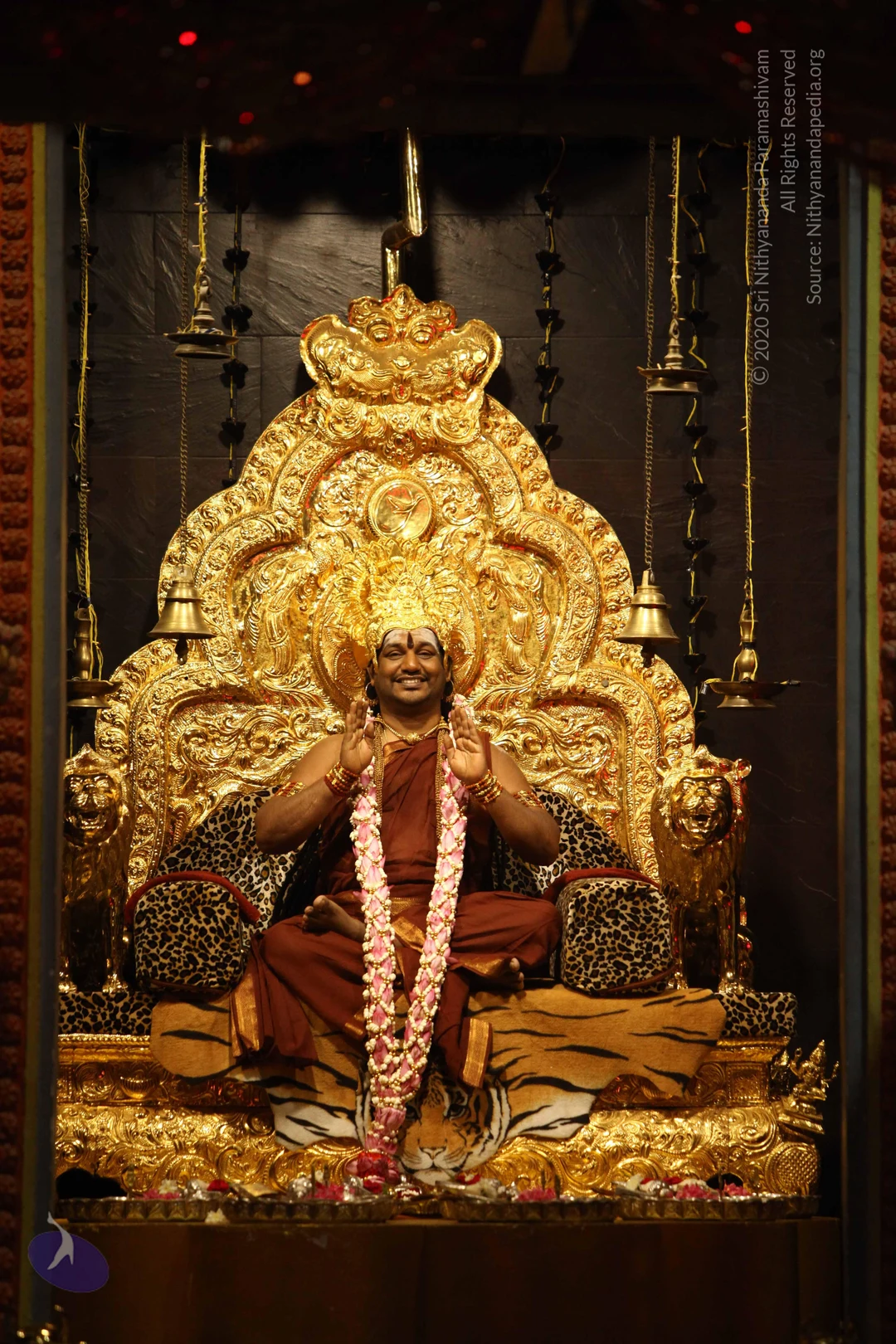
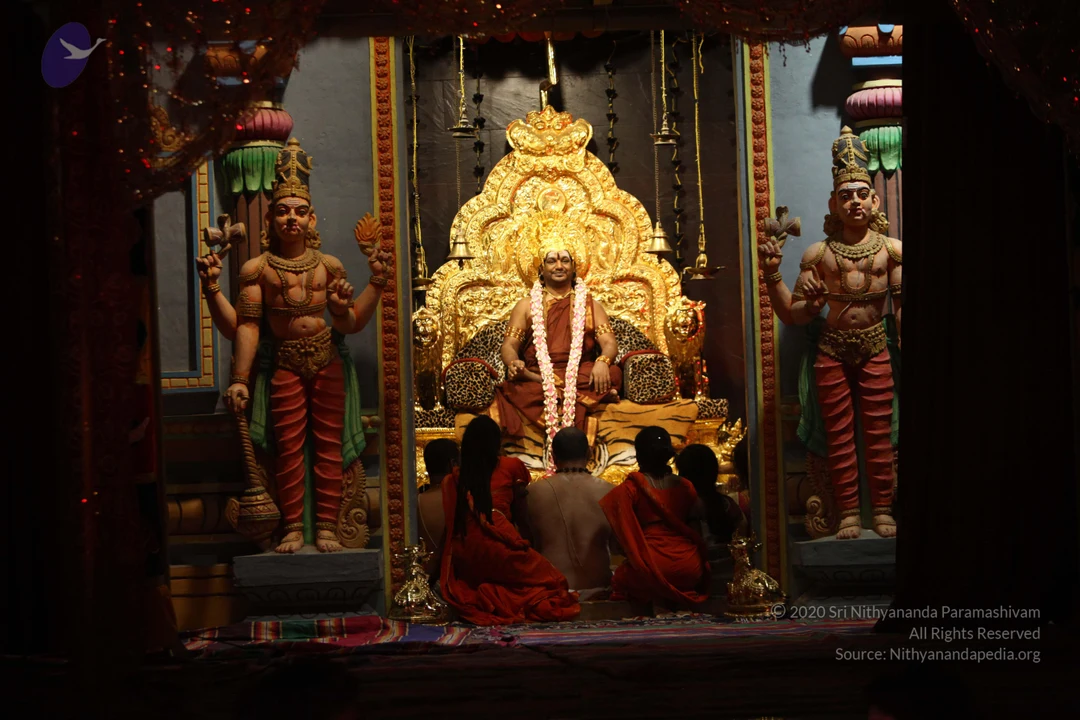
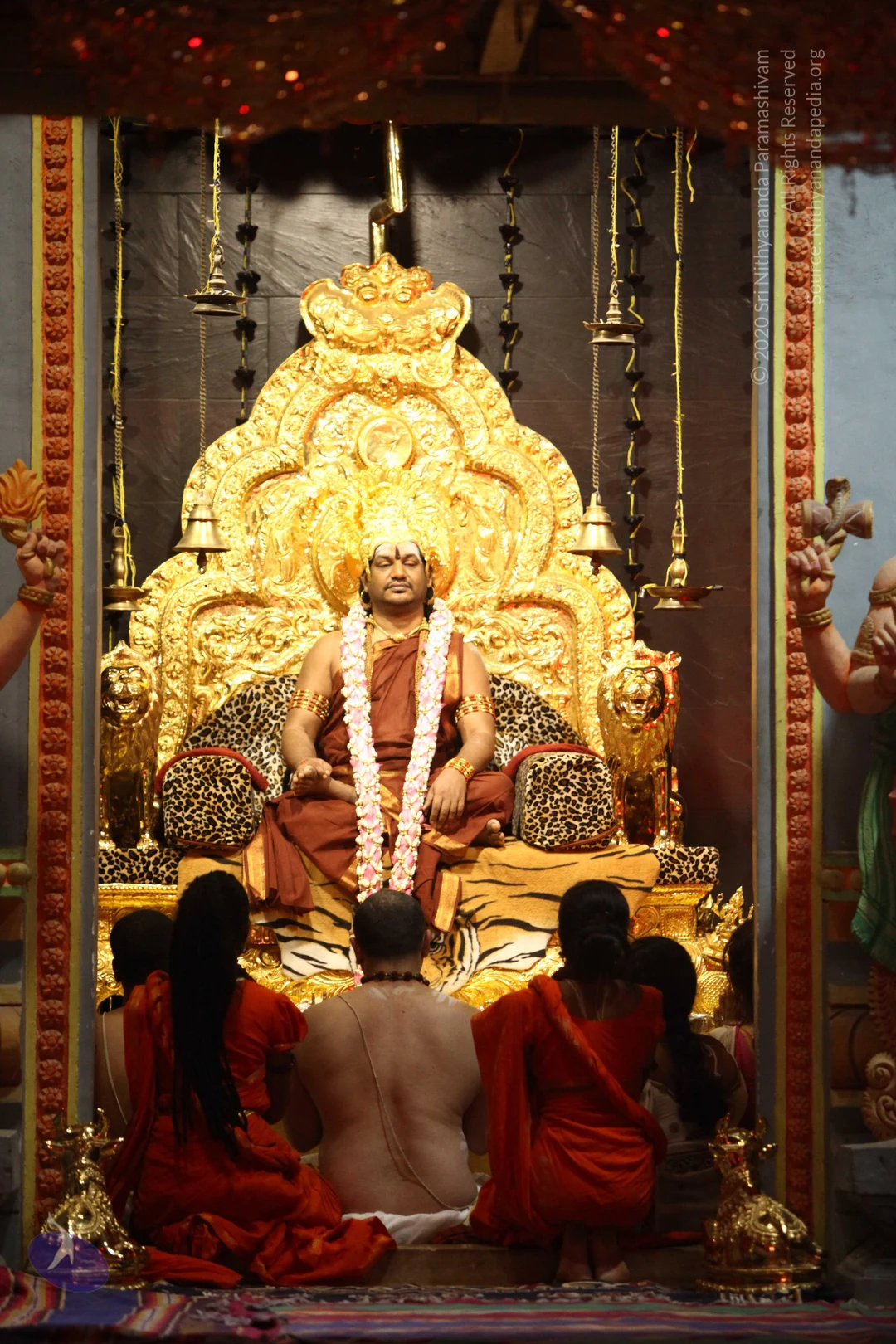
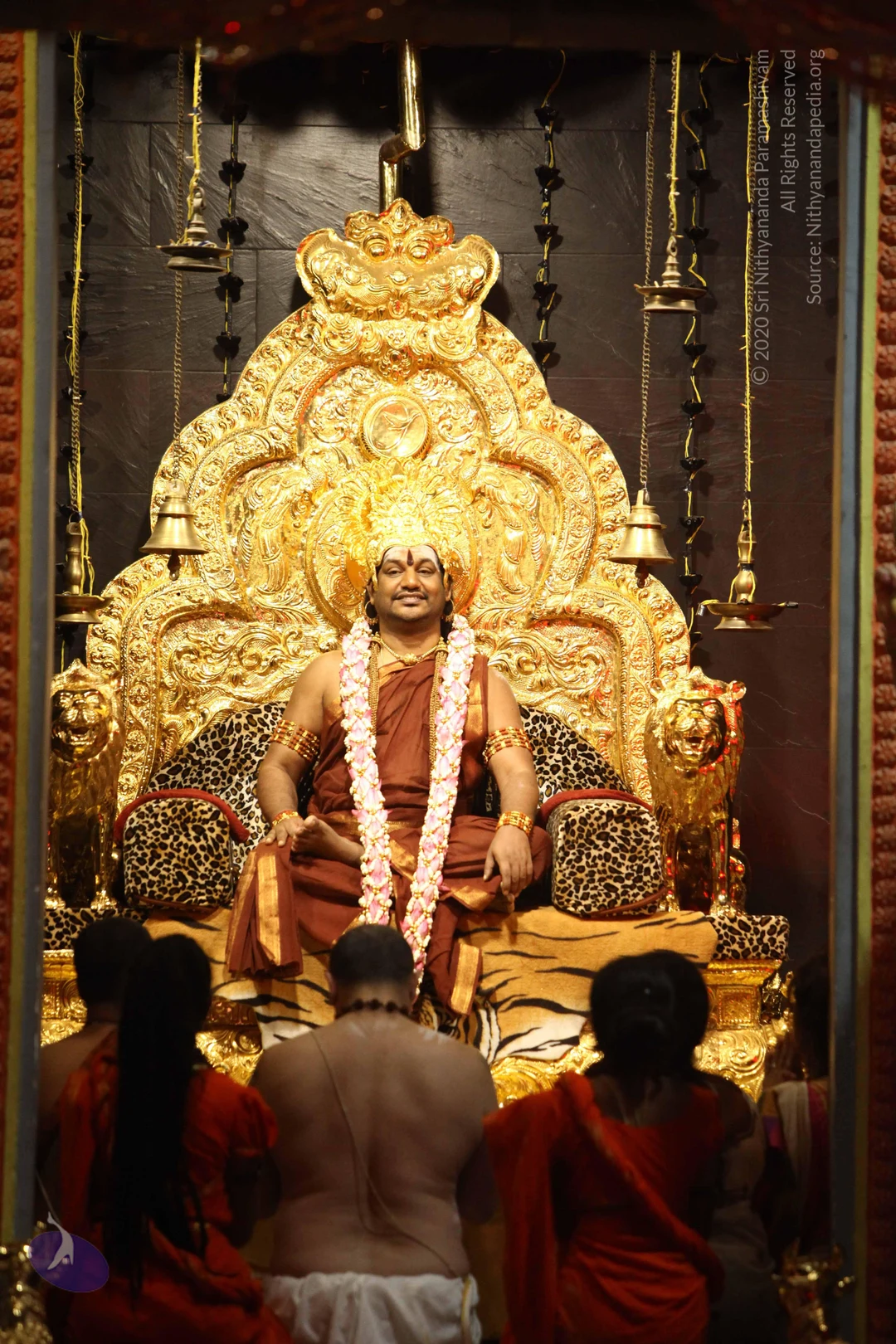
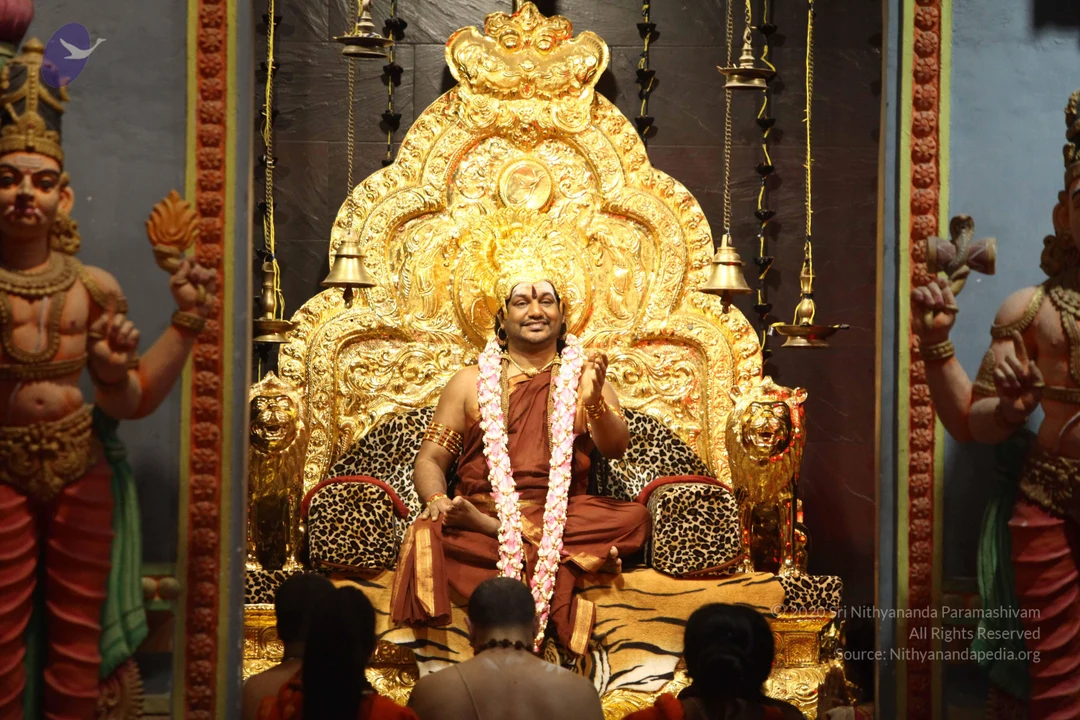
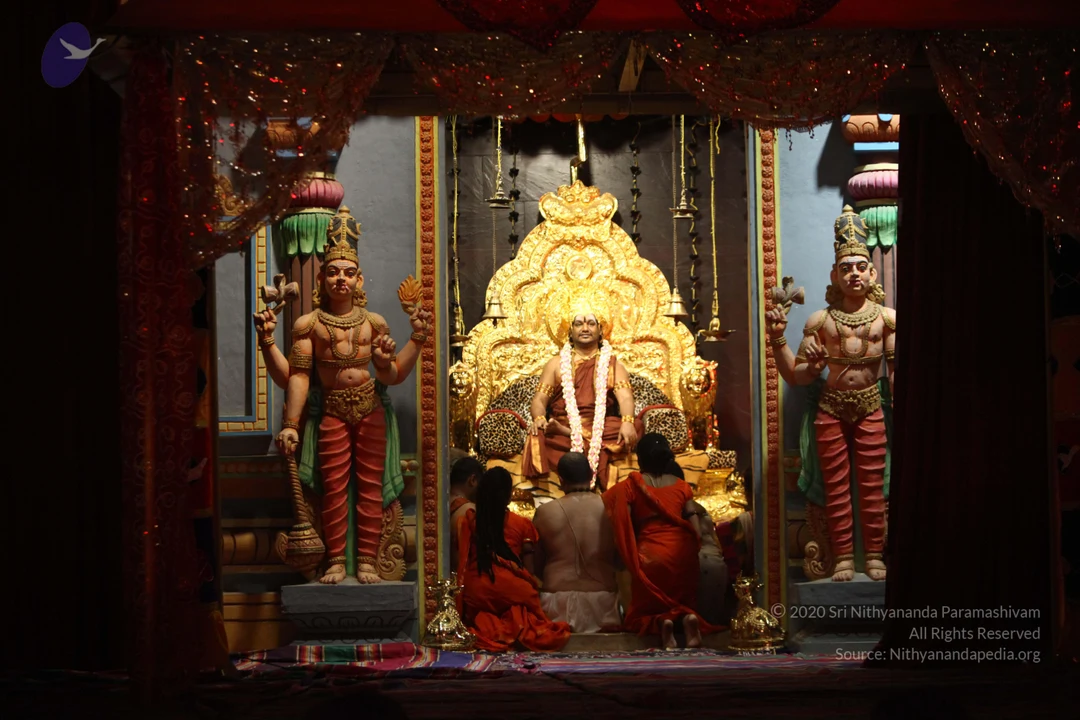
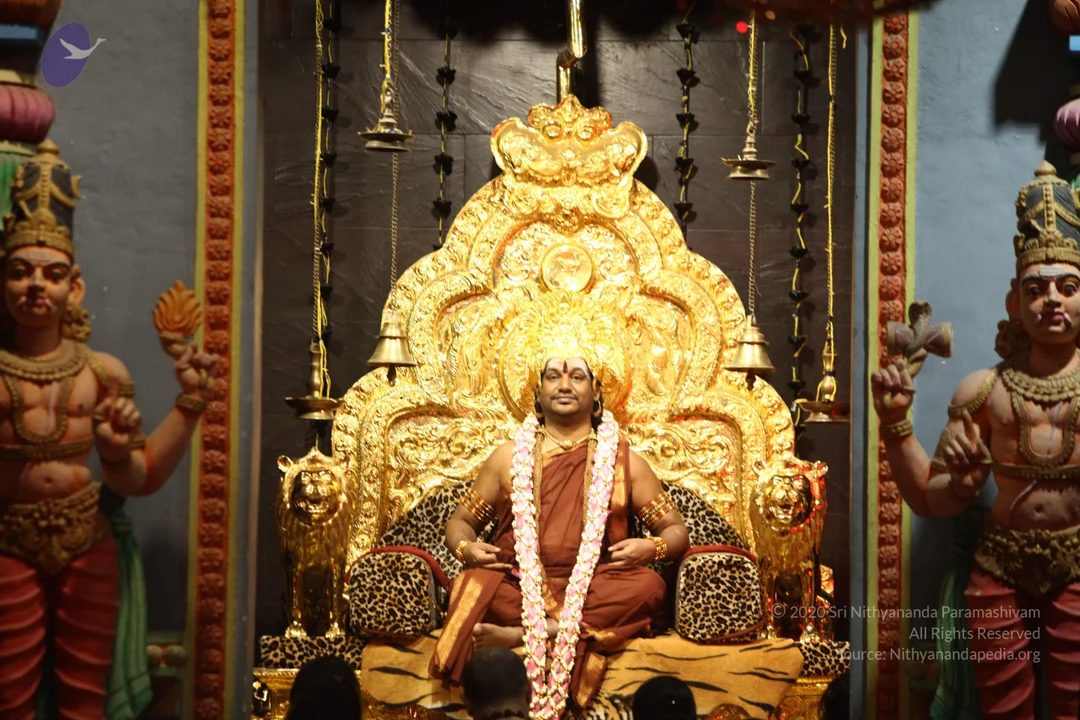
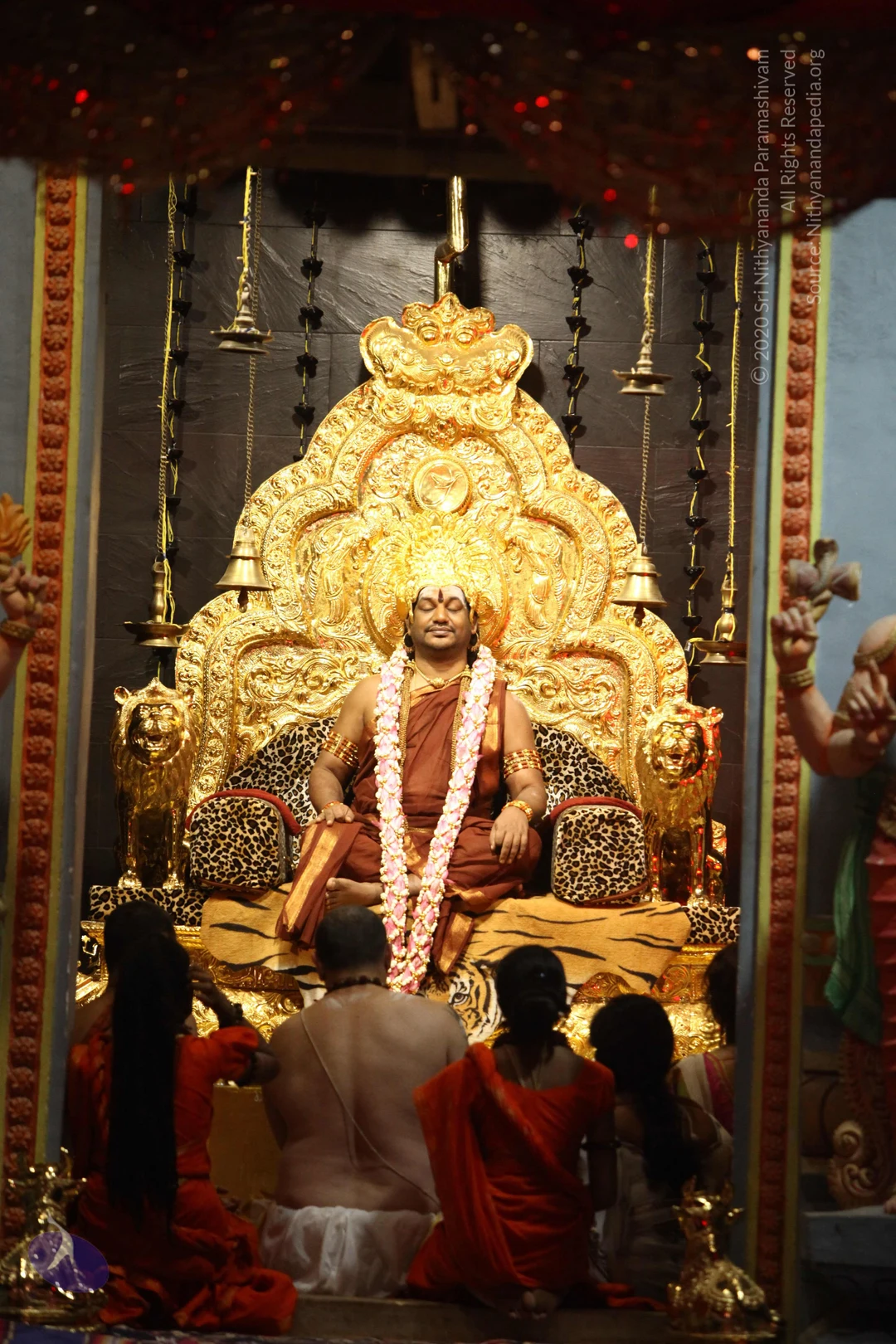
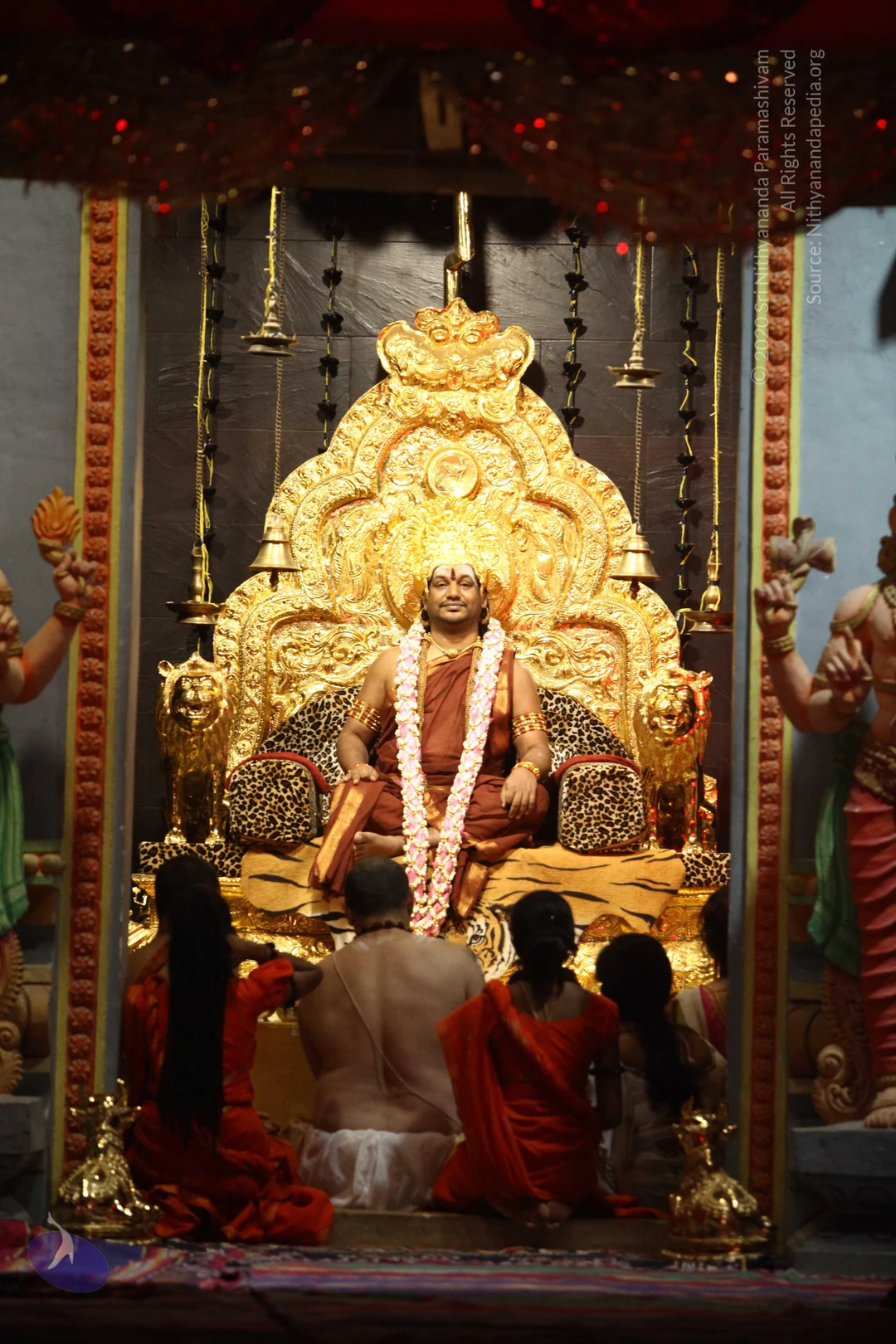
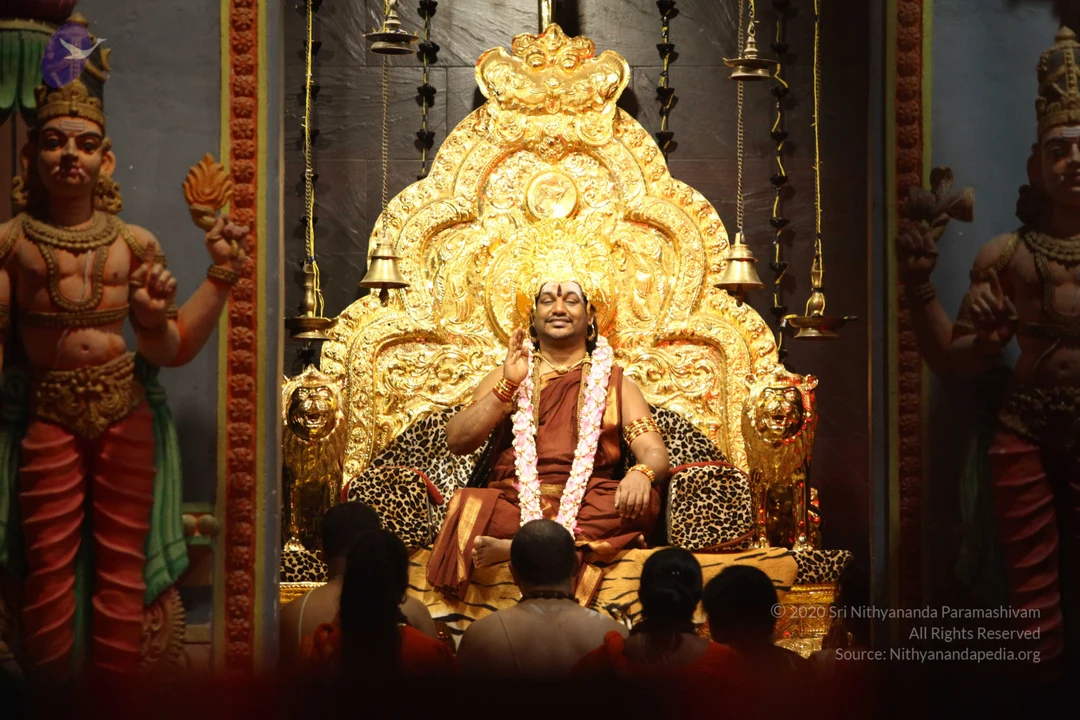
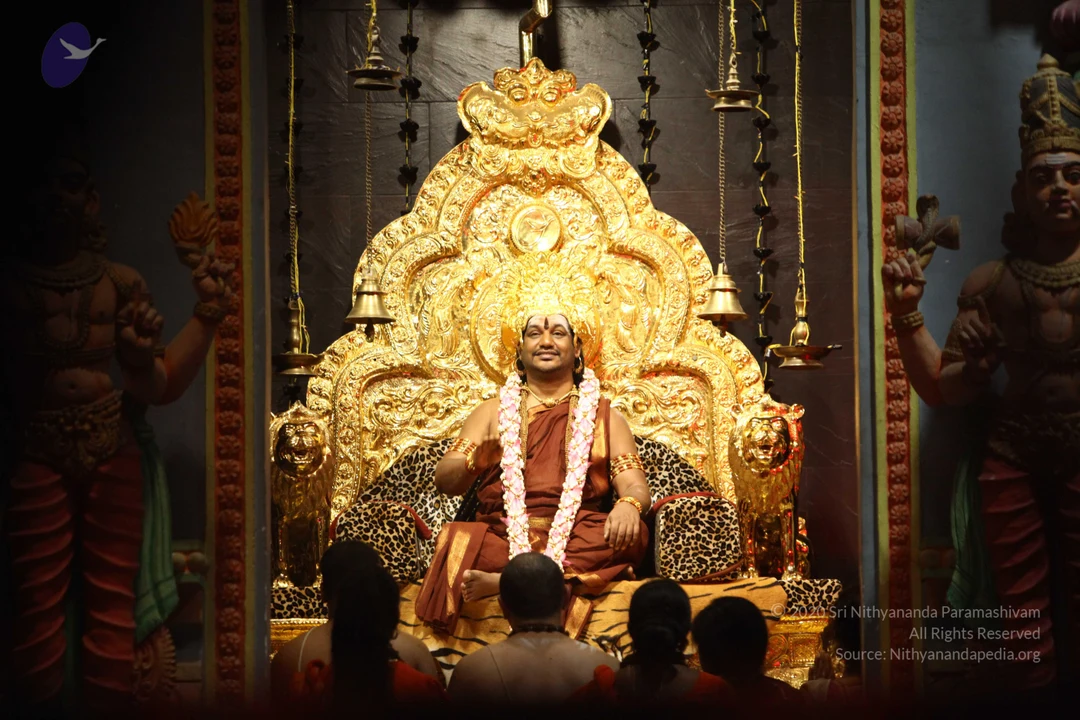
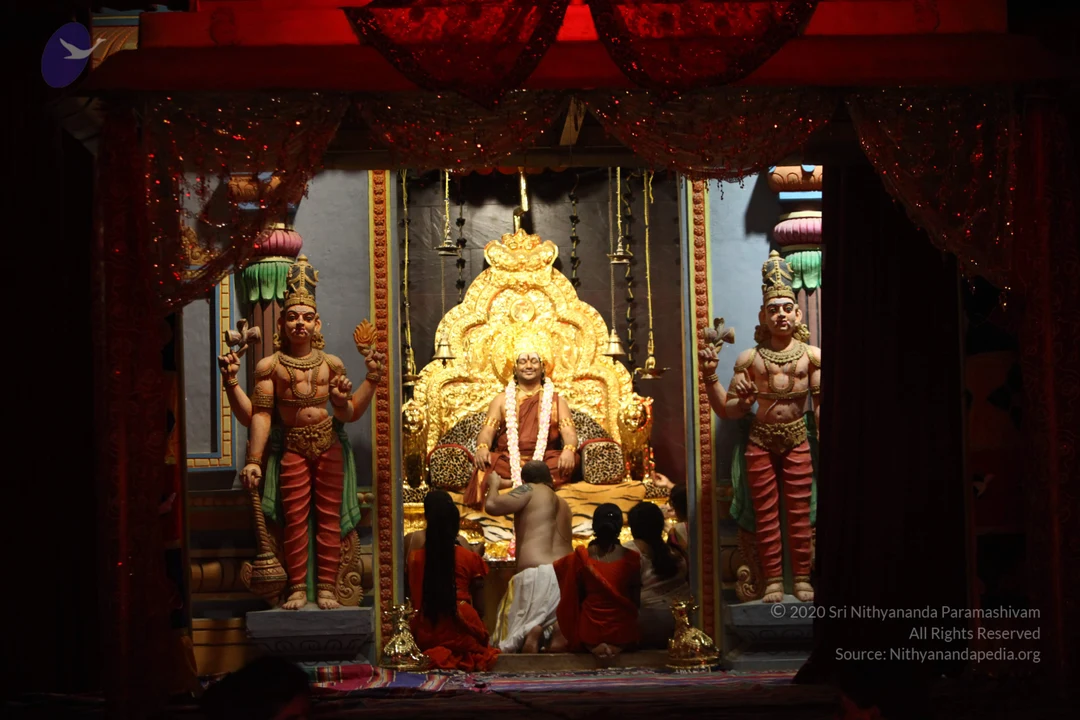
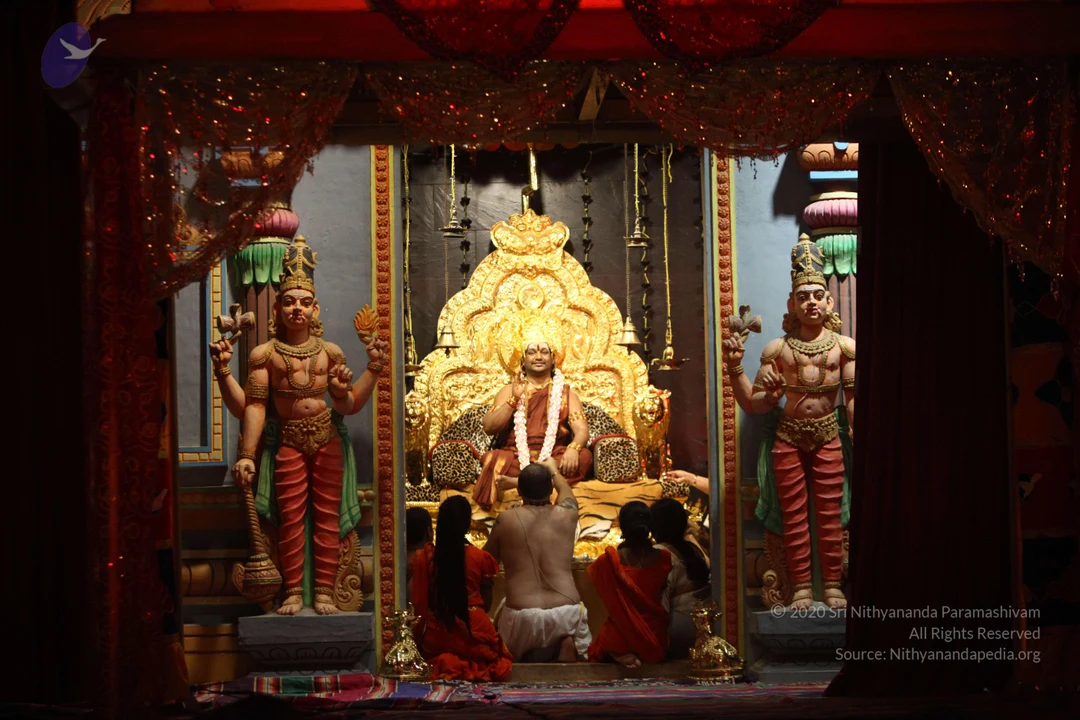
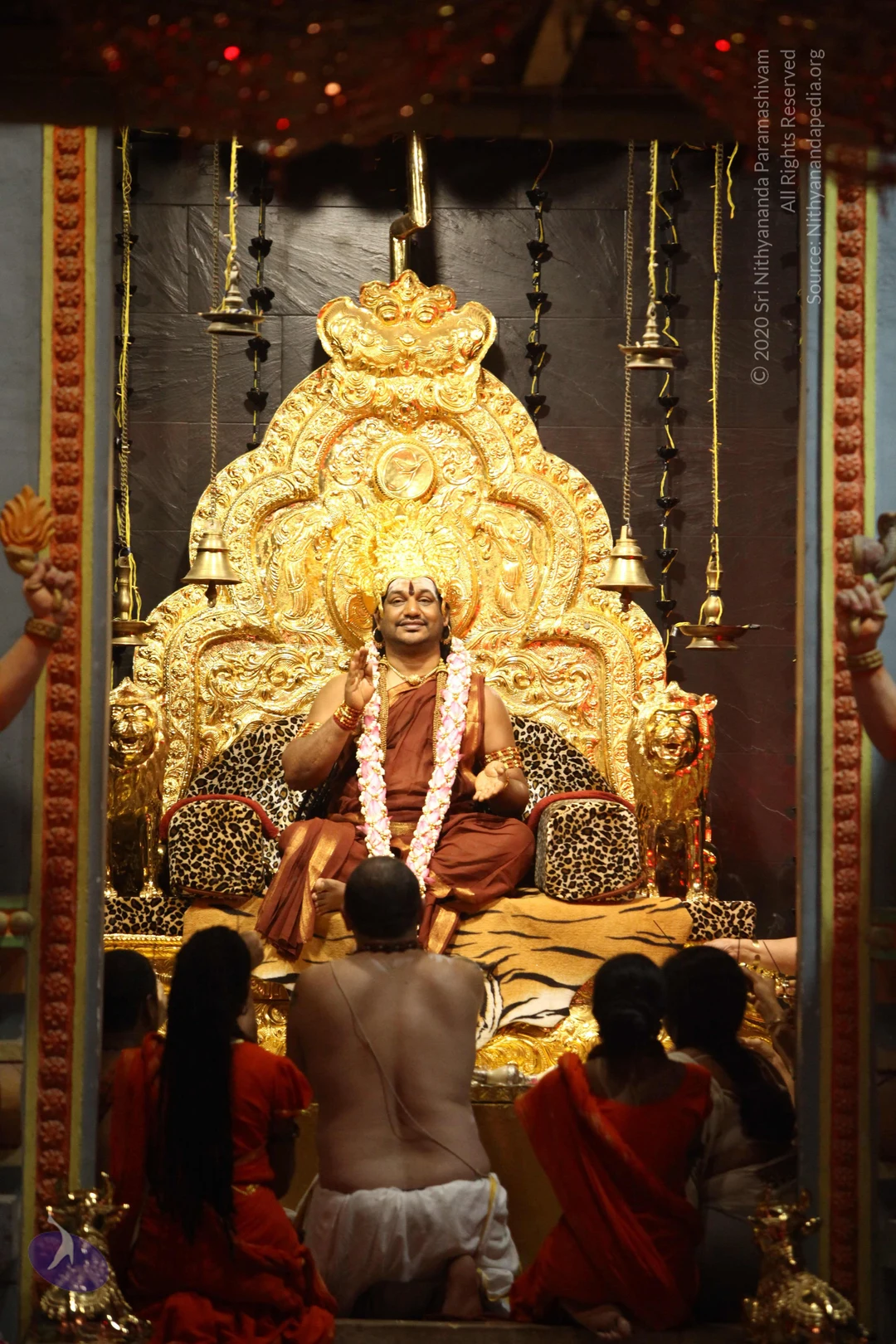
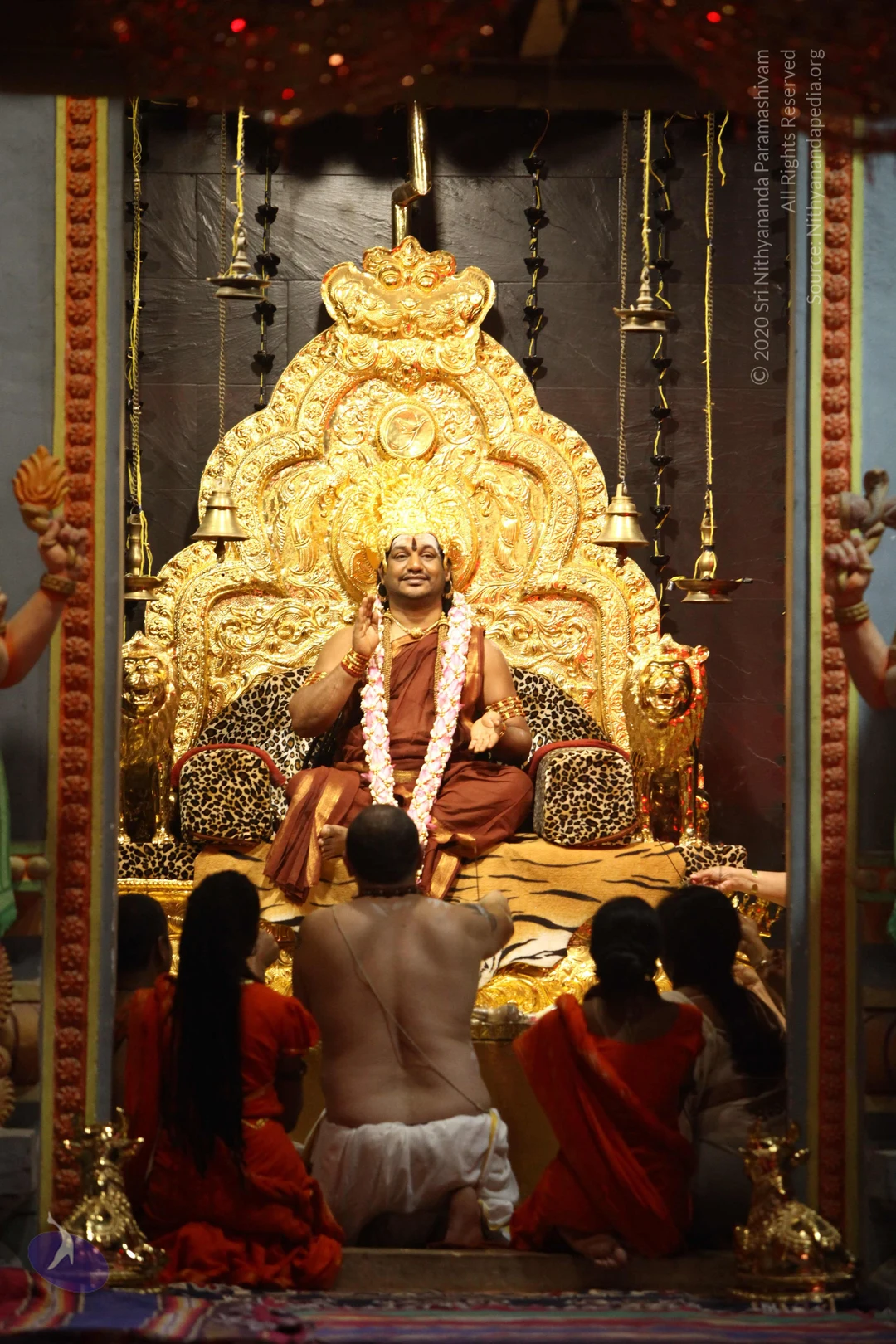
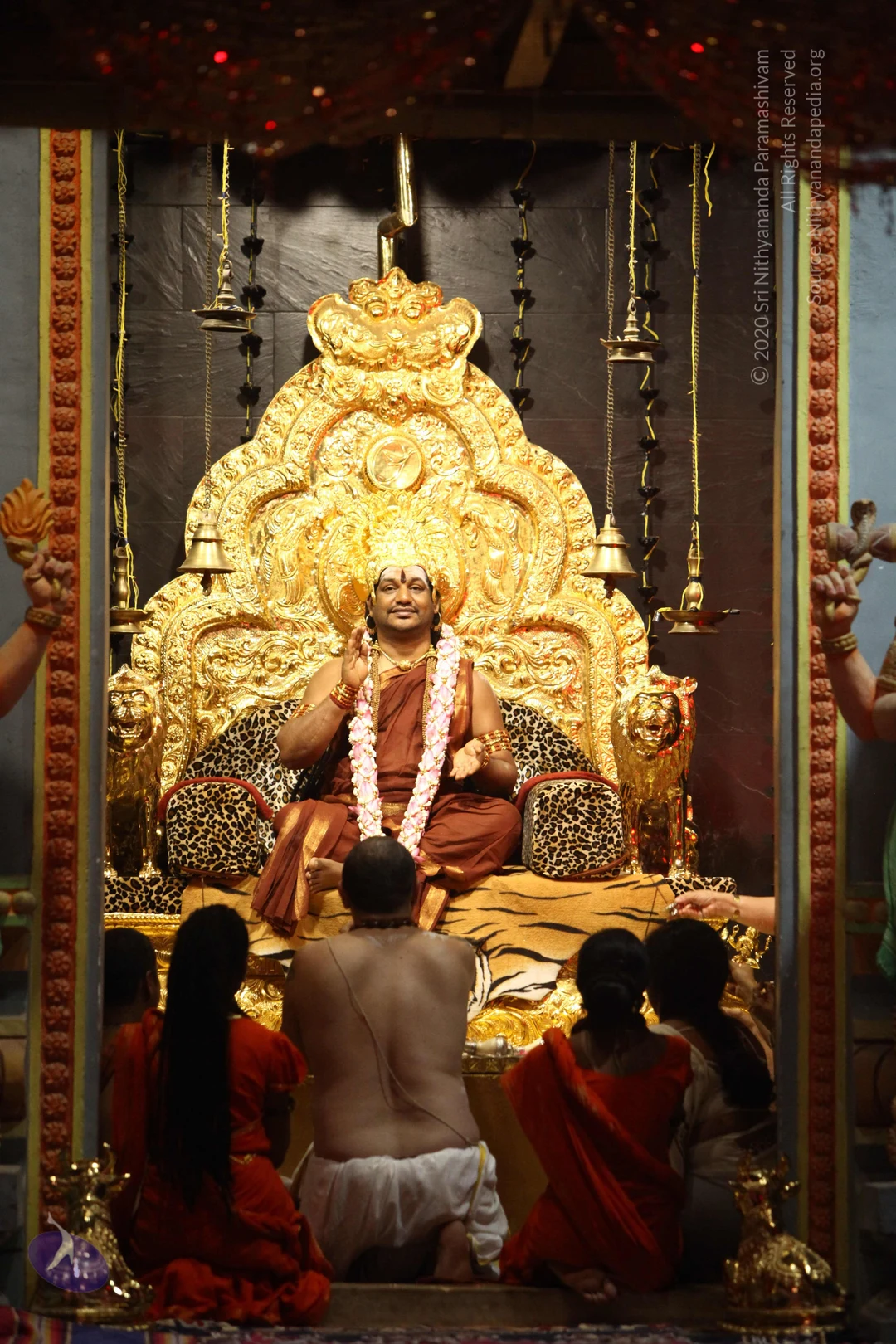
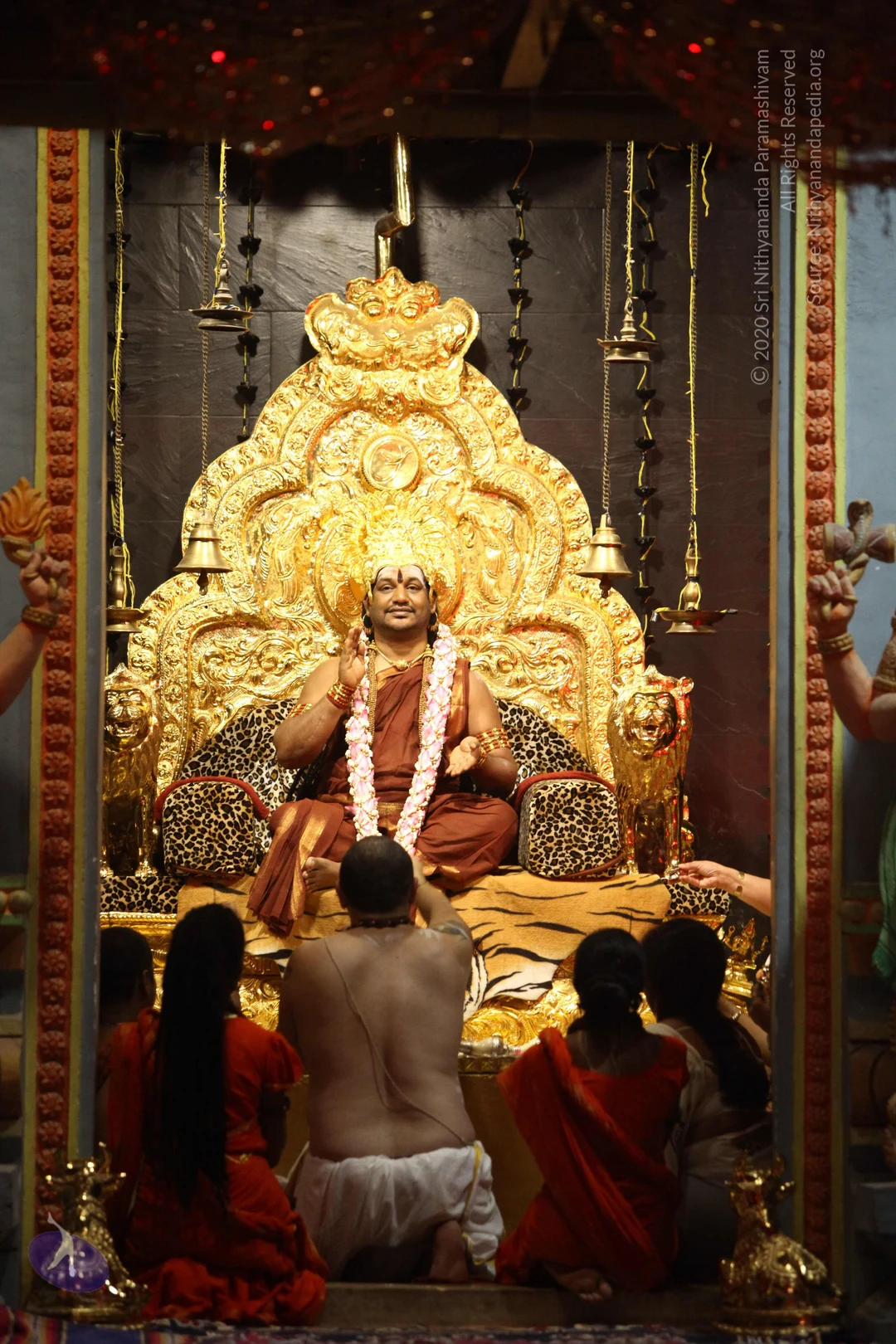
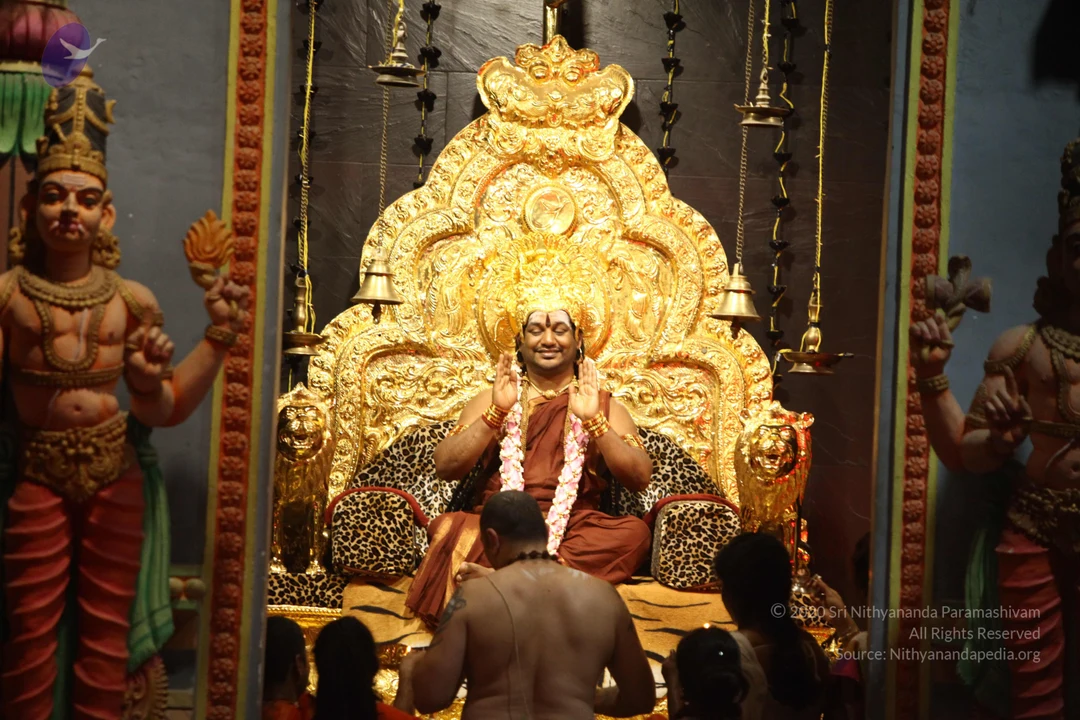
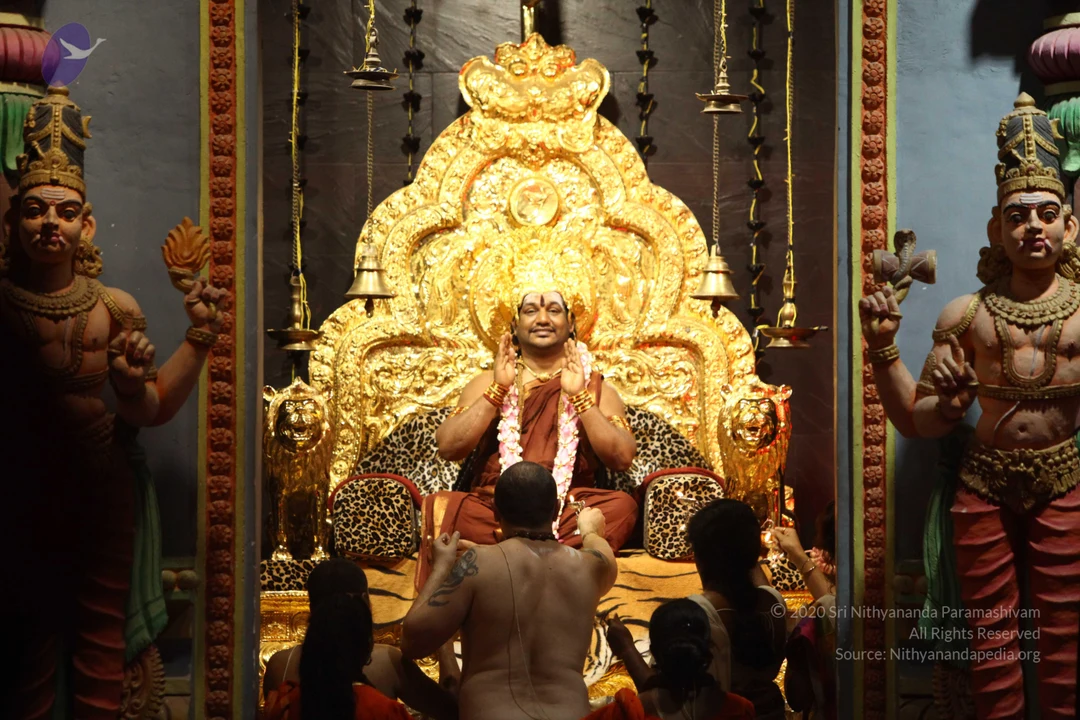
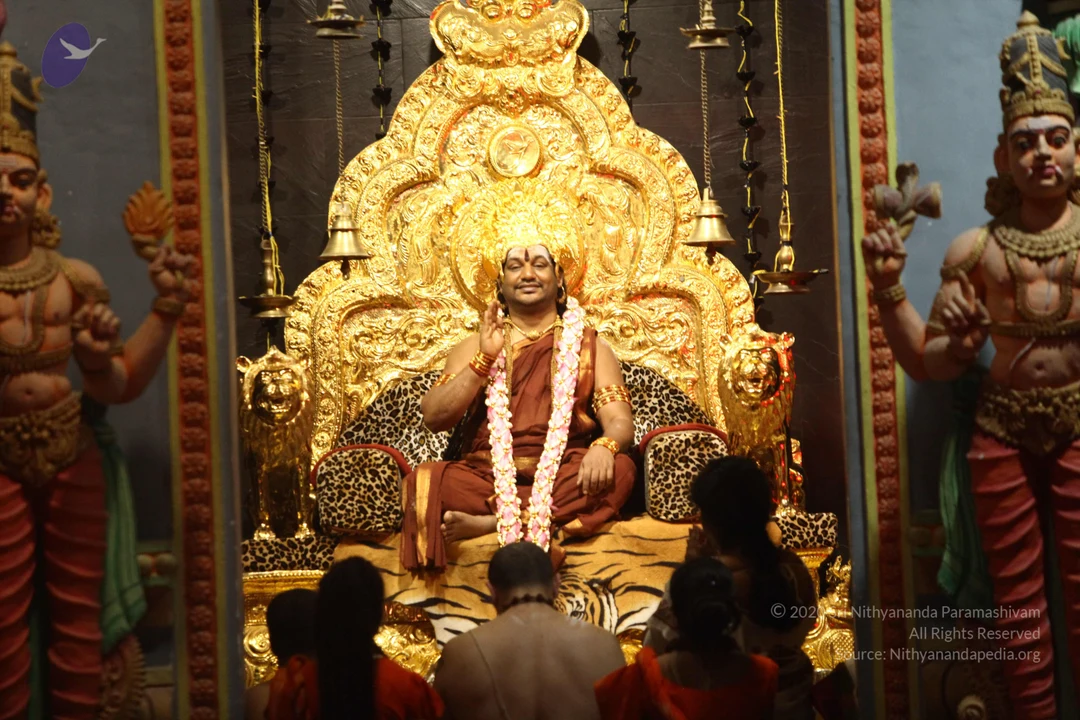
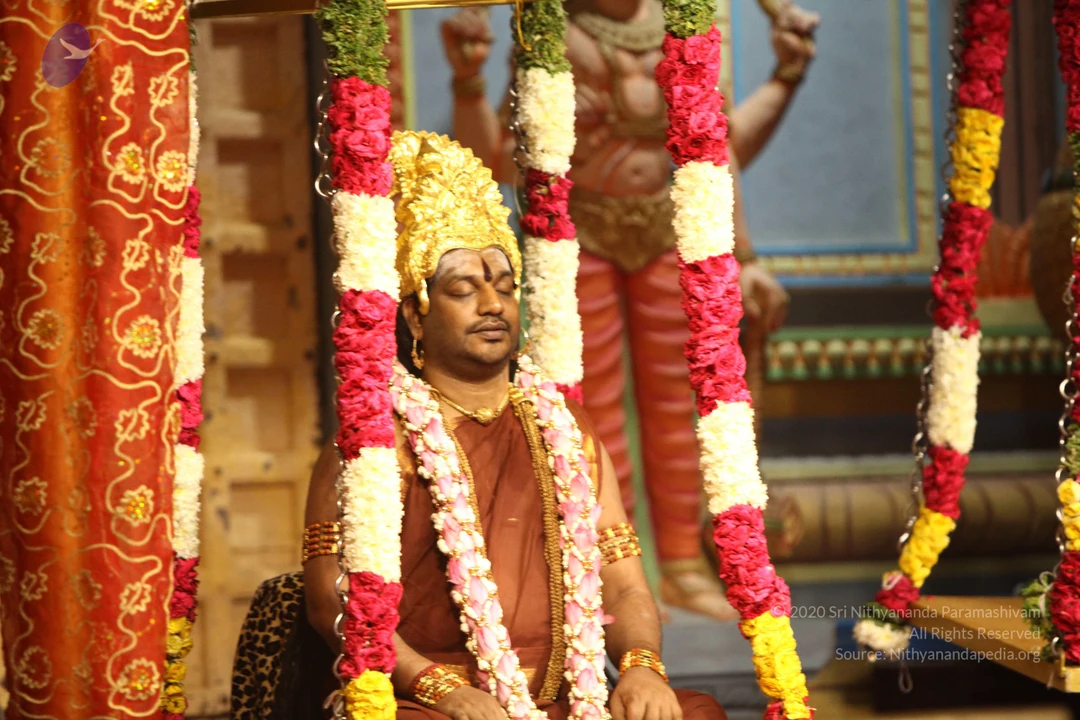
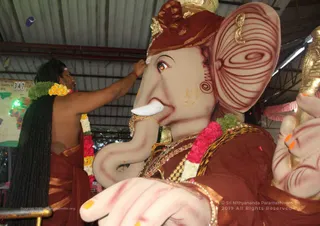
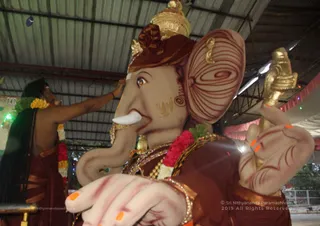
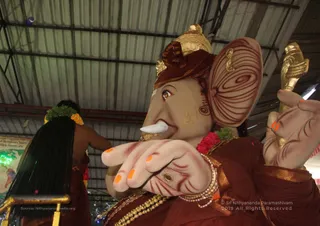
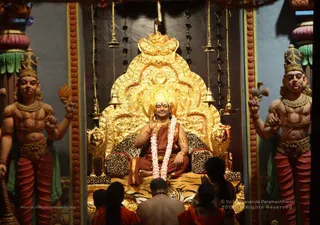
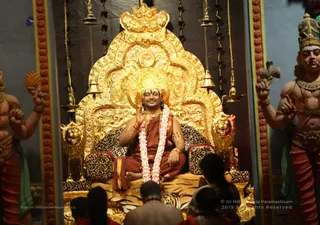
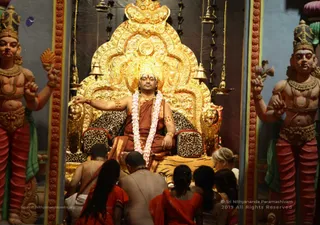
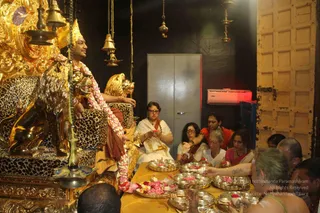
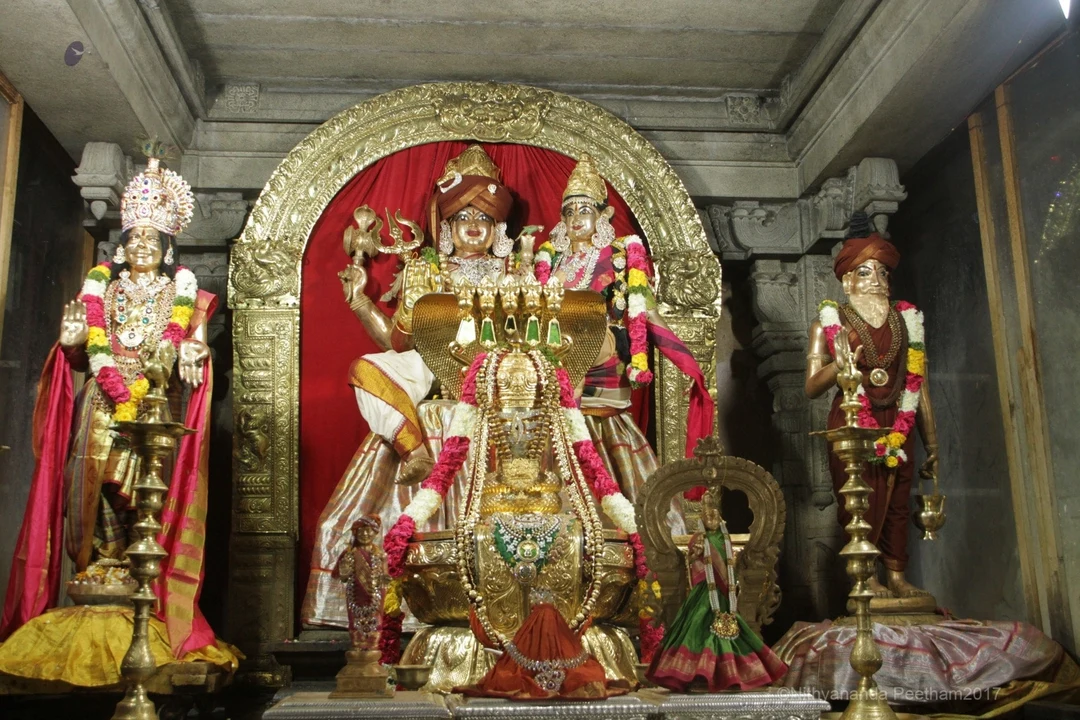
A photograph of a mallakhamb-style pole performance in an indoor hall with a blue mat below. A bare-chested performer in white dhoti with a gold border is climbing high on a wooden pole, his feet gripping it near the ceiling. Below him, several shirtless young men in white dhotis with gold borders stand around the pole, one steadying it with both hands, while onlookers in white dhotis watch from the side. Framed pictures hang on the pale wall above a red curtain, including a painted portrait of a saint in red and a collage of temple and festival photographs. Ceiling fans and fluorescent lights are visible.A large painted Ganesha murti with a long trunk, gold jewellery and a red-and-white garland fills the right side of the frame. Beside it on the left, a man in a rust-red dhoti and a shawl stands with hands folded in prayer, wearing a red, yellow and white flower garland and a white tilak on his forehead. Behind them are a corrugated metal roof, a world map on the wall and a small display board. The man's appearance is not sufficiently distinctive to confirm an identity, so he is described by role only.A seated man in a rust-brown ceremonial garment and a long pink-and-white flower garland sits on an ornate gold throne with lion-head armrests, a leopard-print cushion and a tiger skin draped at its base, beneath hanging brass bells. He wears gold bangles and a gold necklace and raises one hand in blessing. Kneeling before the throne are devotees: a shaved-headed man in white dhoti and a woman in an orange sari with a long braid, and others in red and white saris. Flanking the throne are two large painted guardian statues with crowns, gold jewellery and red and green dhotis. a person: the seated figure has a swept-back hairstyle and wears a rudraksha-style red garment with gold ornaments on a throne, a presentation consistent with the page's a person reference.

August 16 2017

Original wiki page
Contents

Title

Ganesh Chathurthi Celebrations - The commencement of preparations for Mahasadashivoham

DESCRIPTION

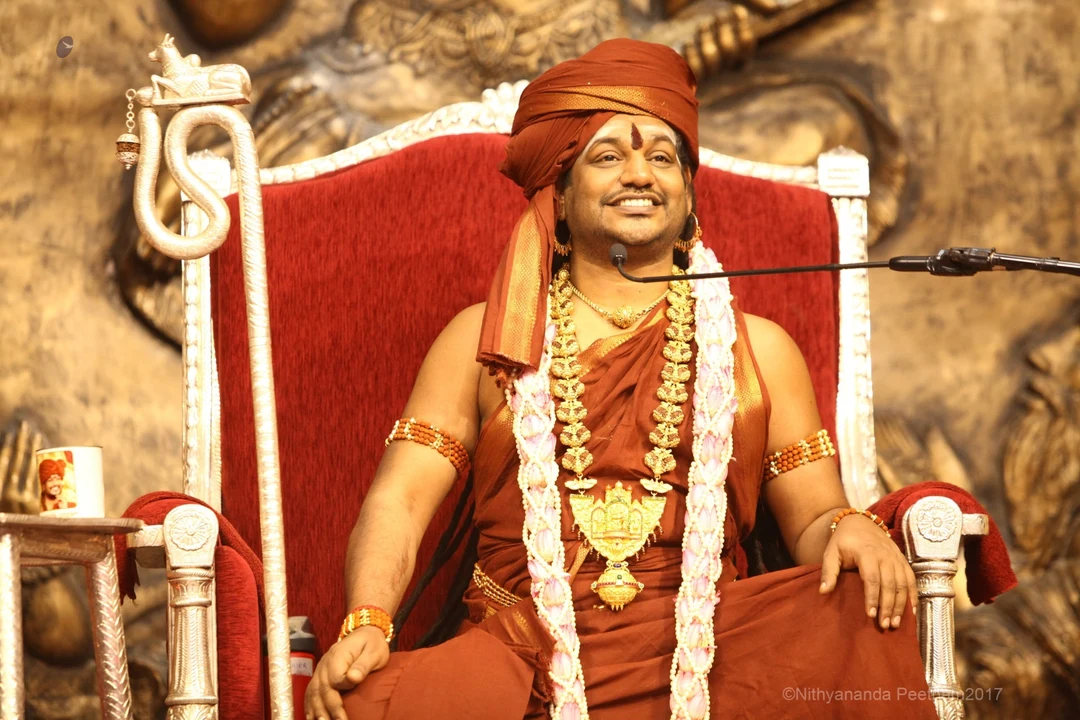
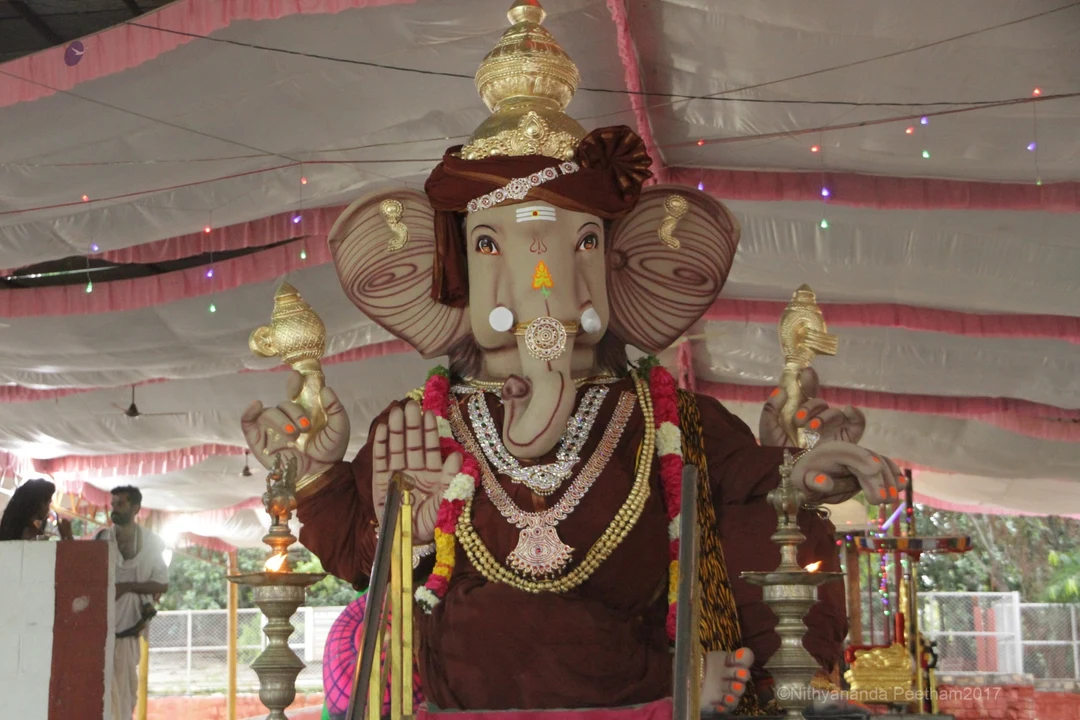
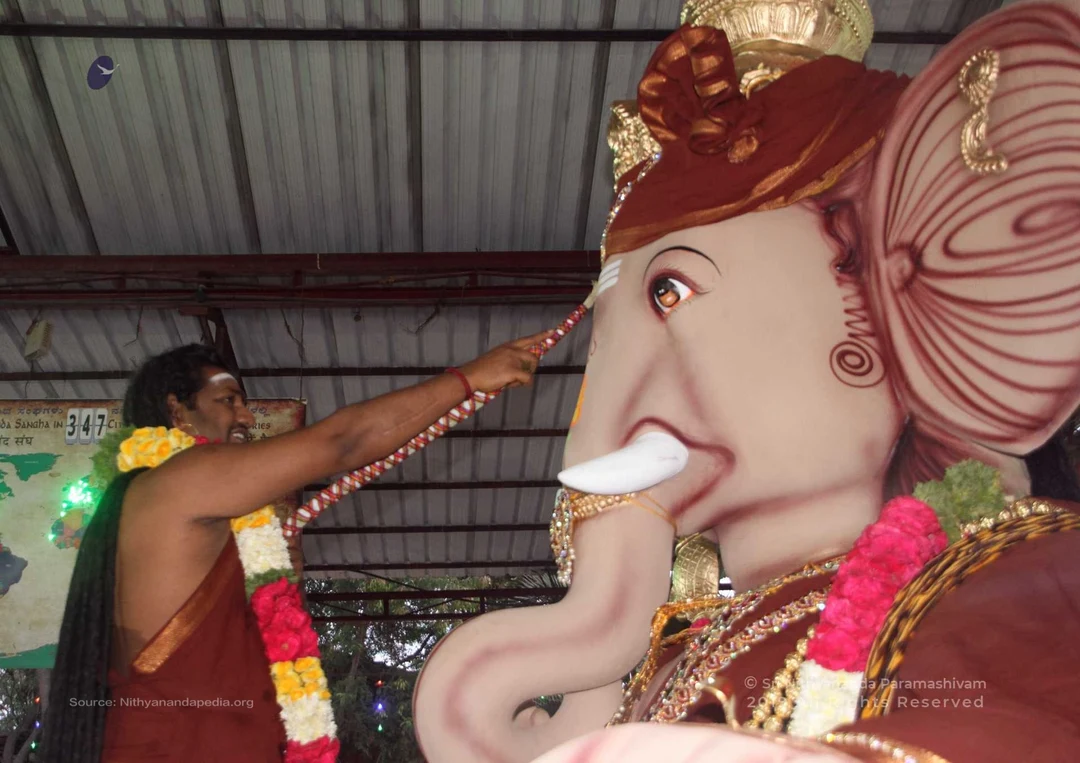
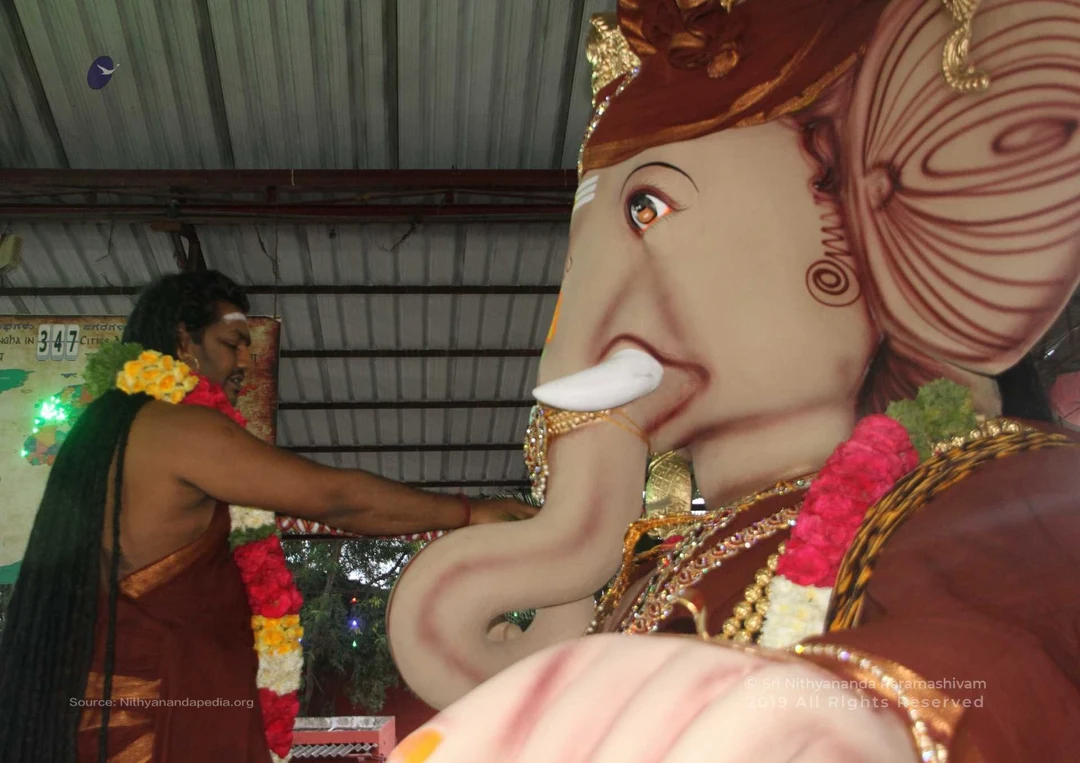
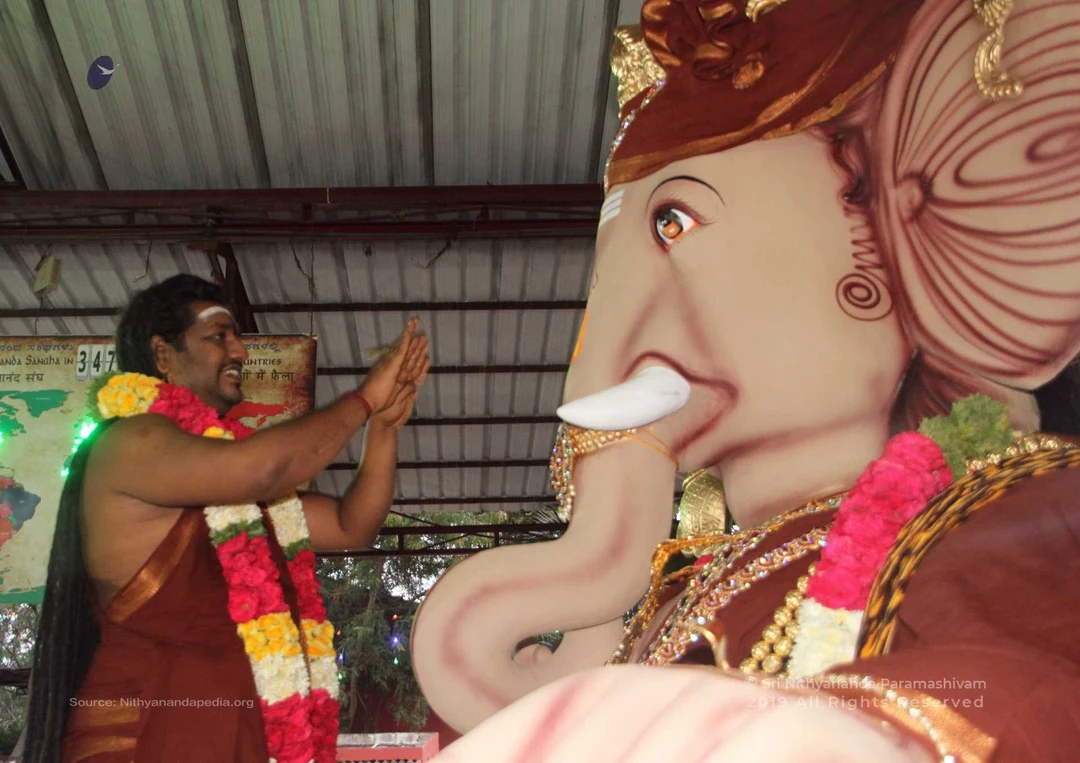
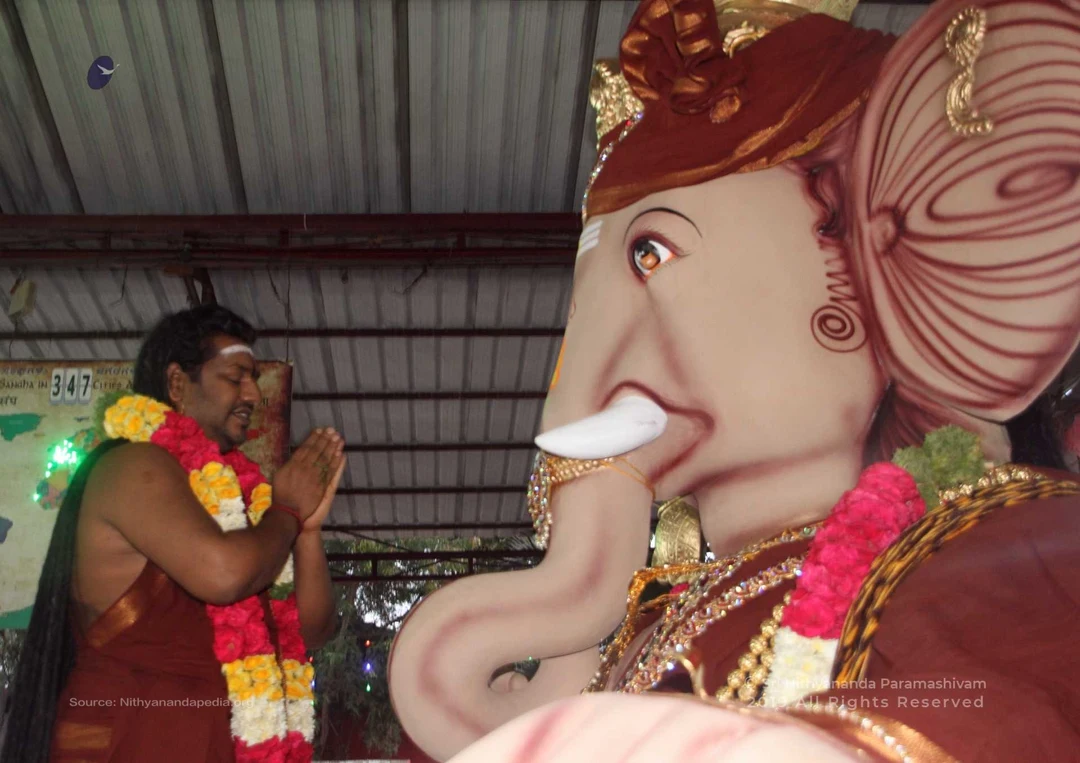
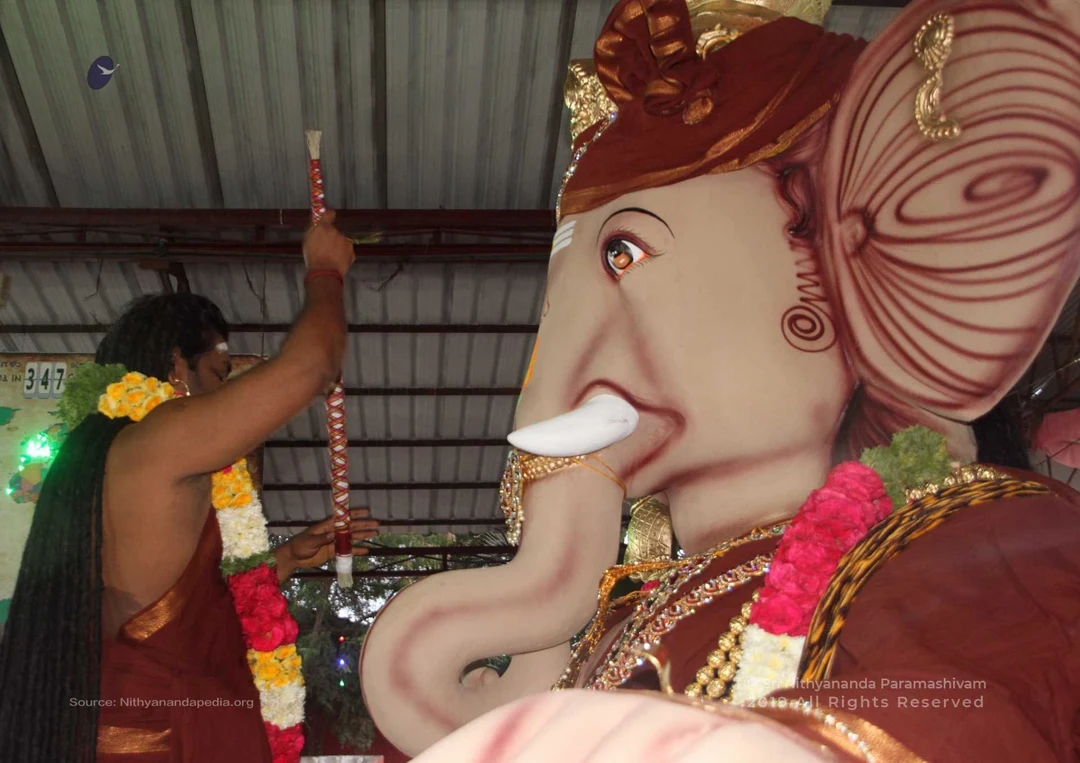
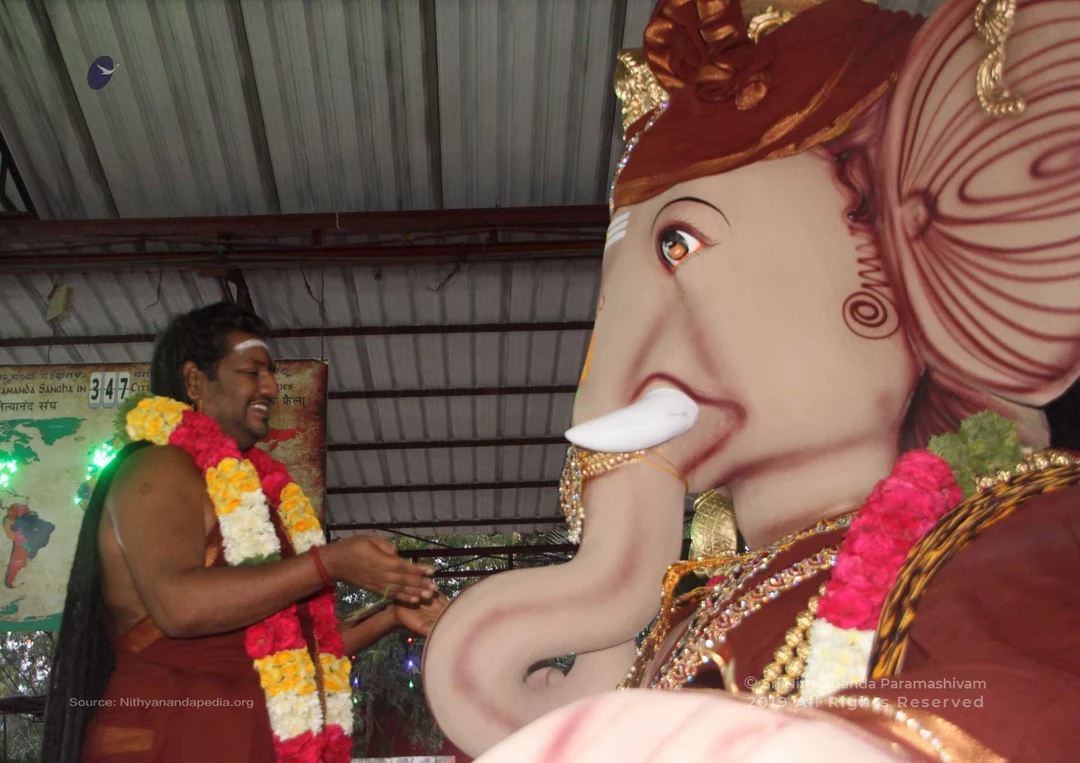
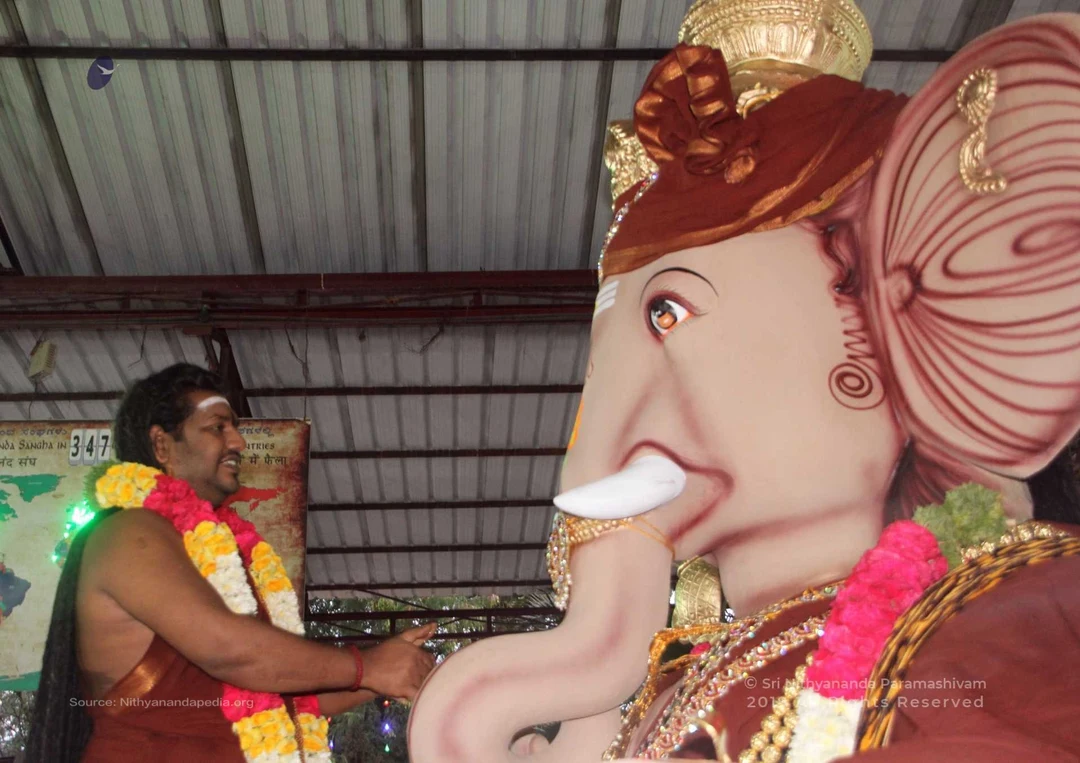
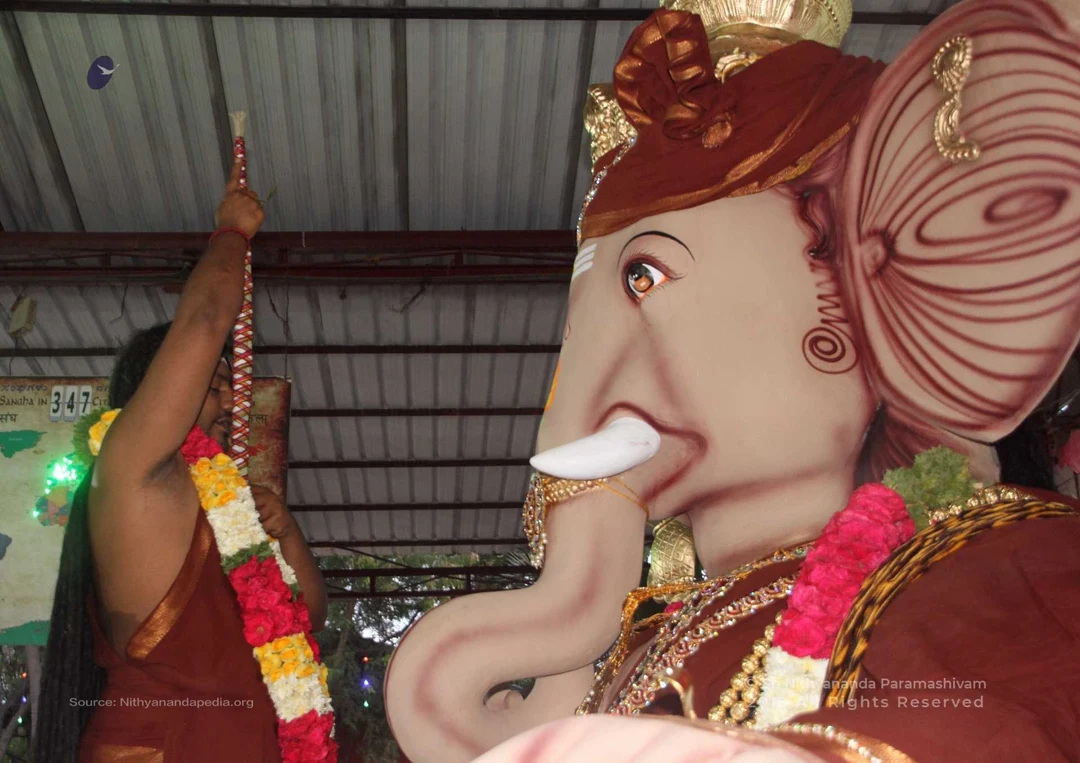
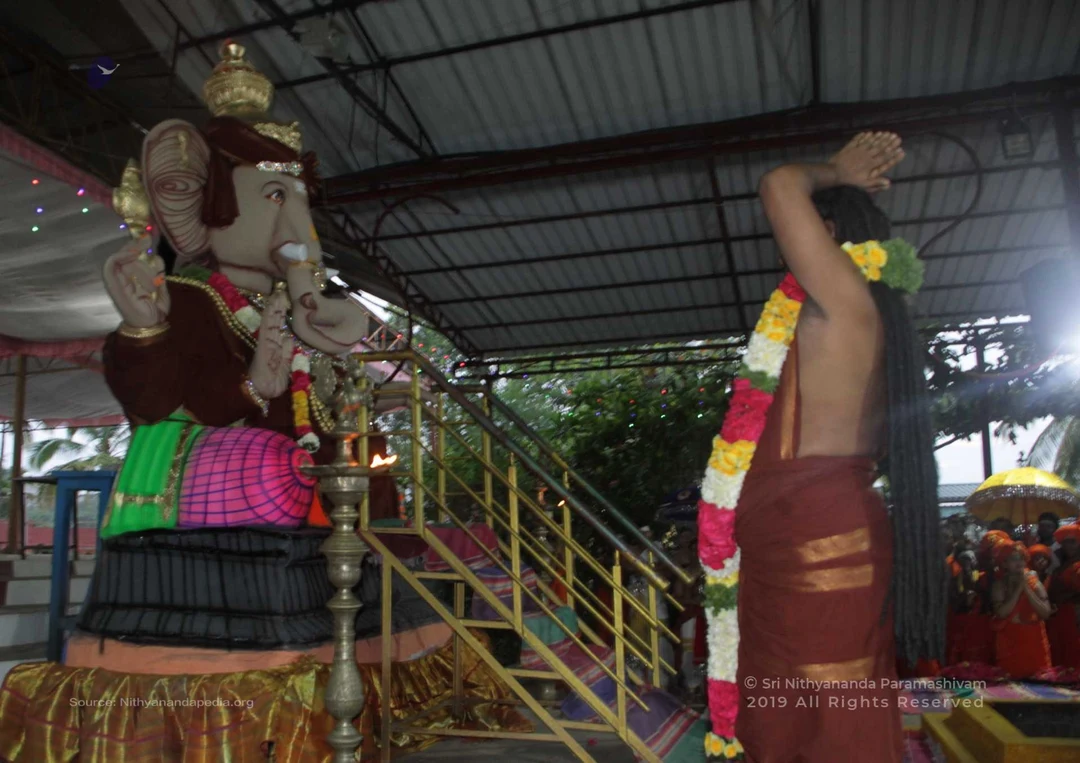
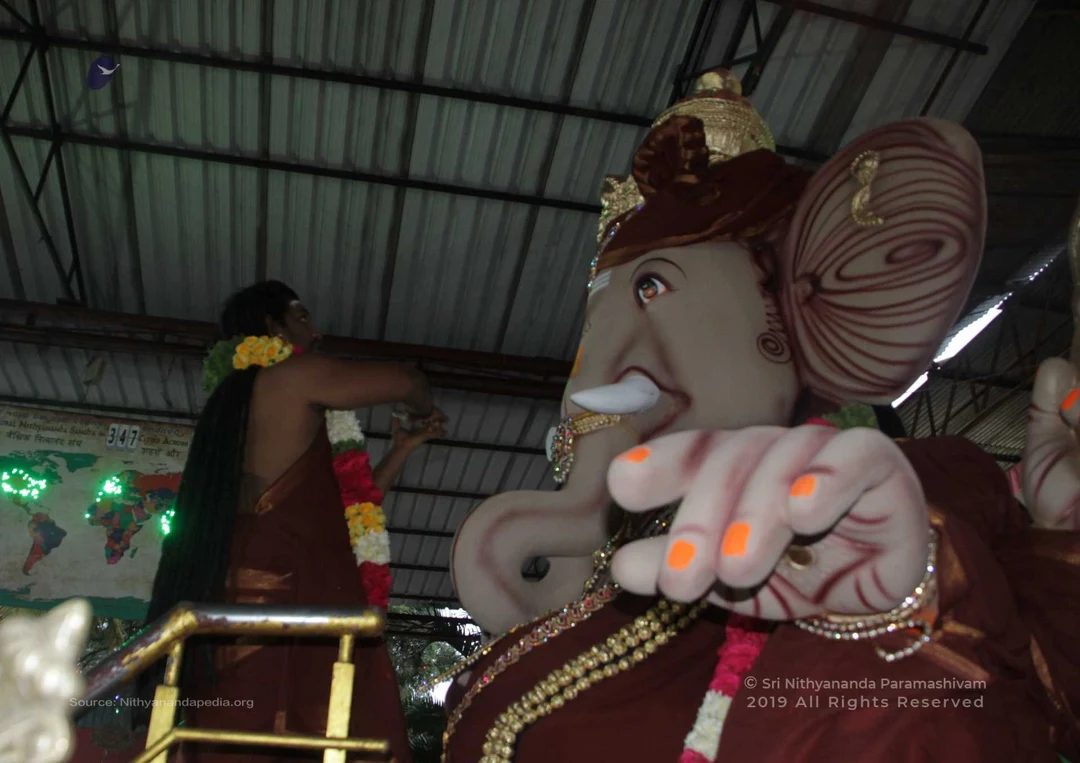
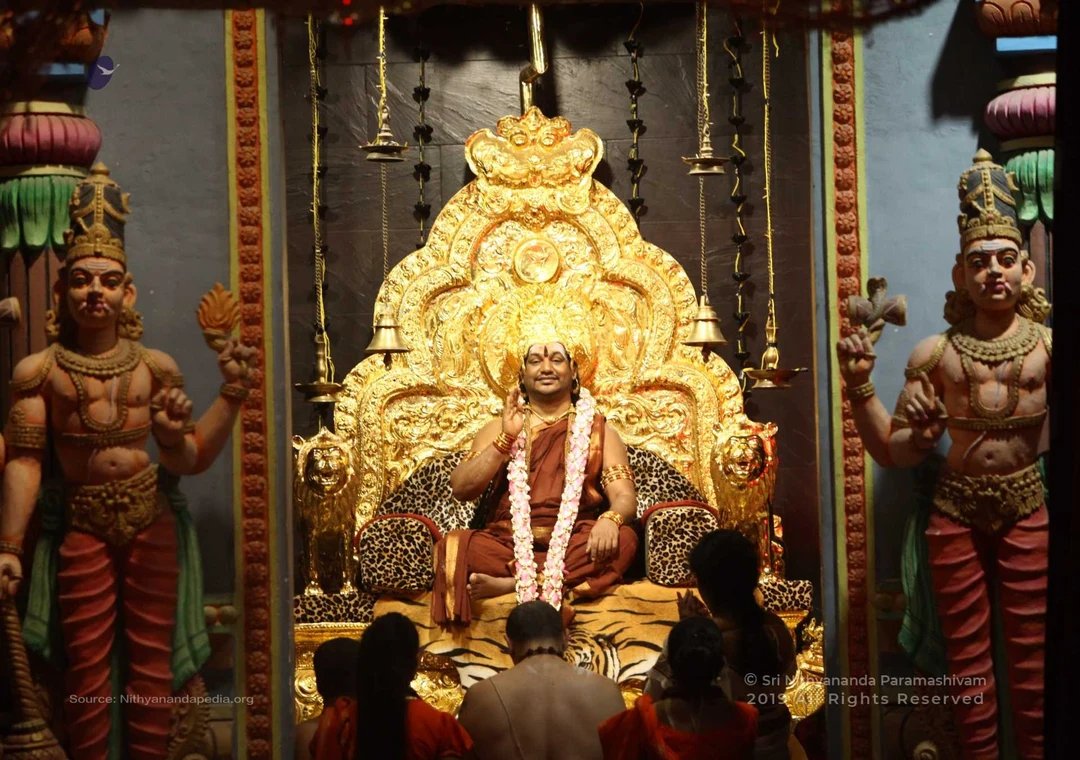
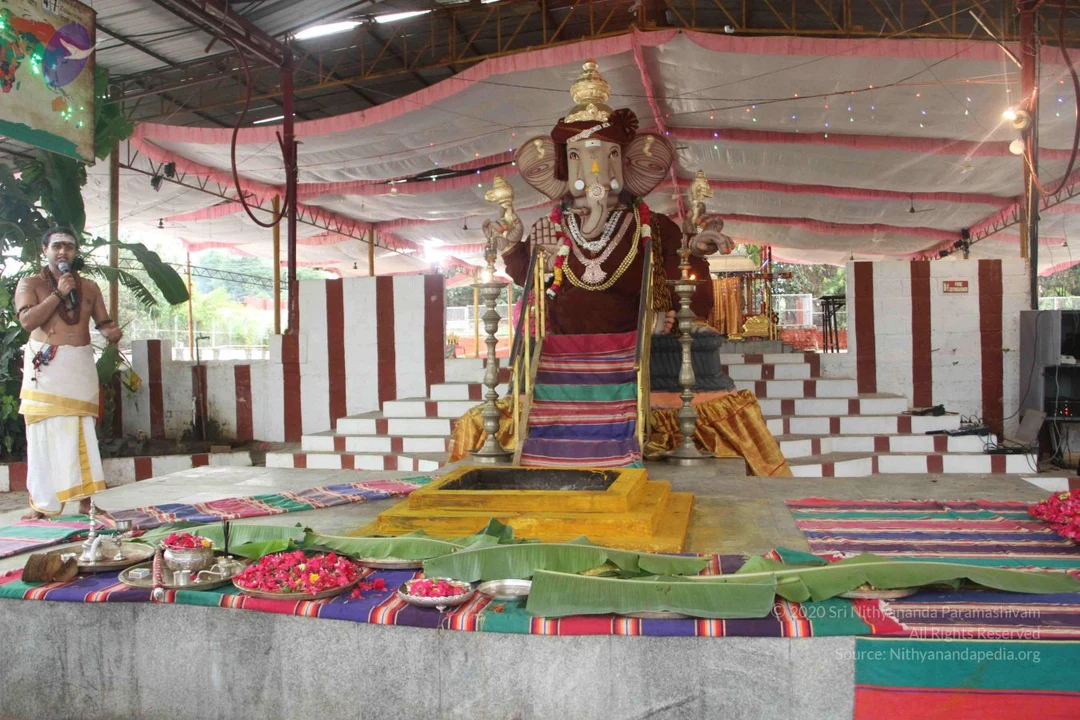
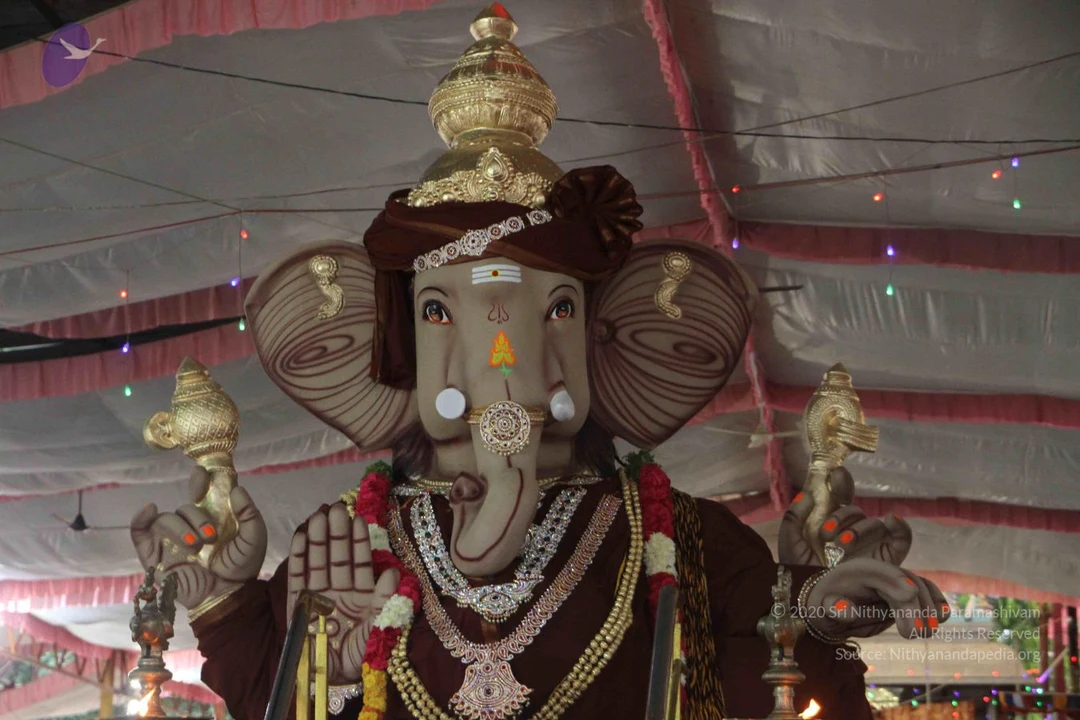
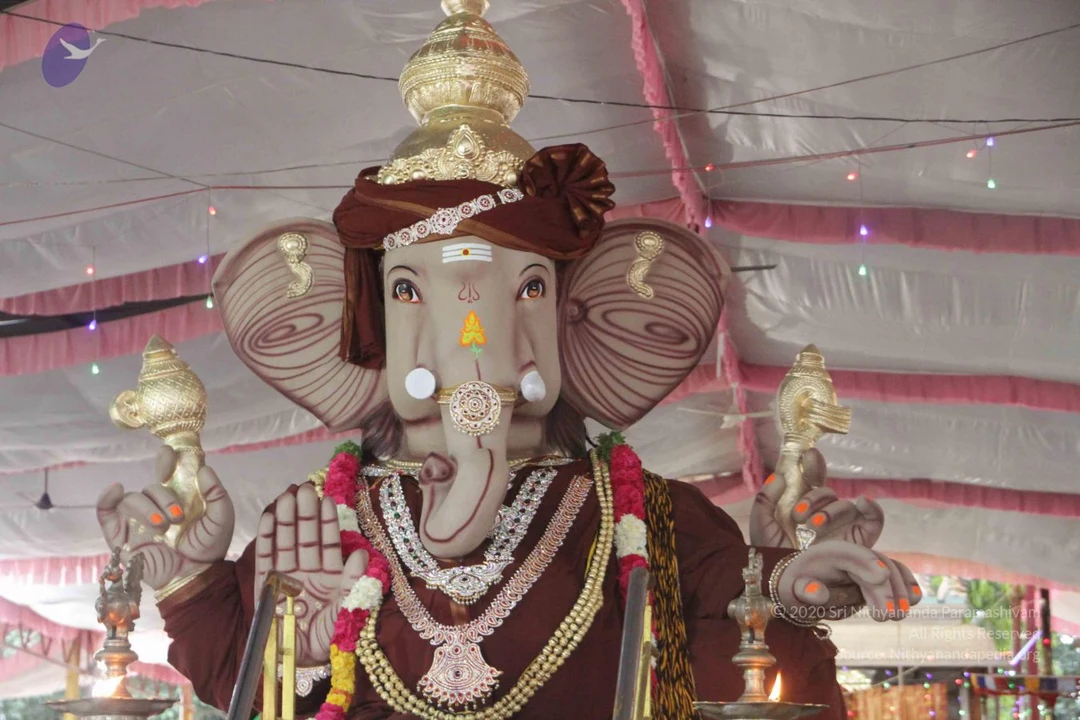
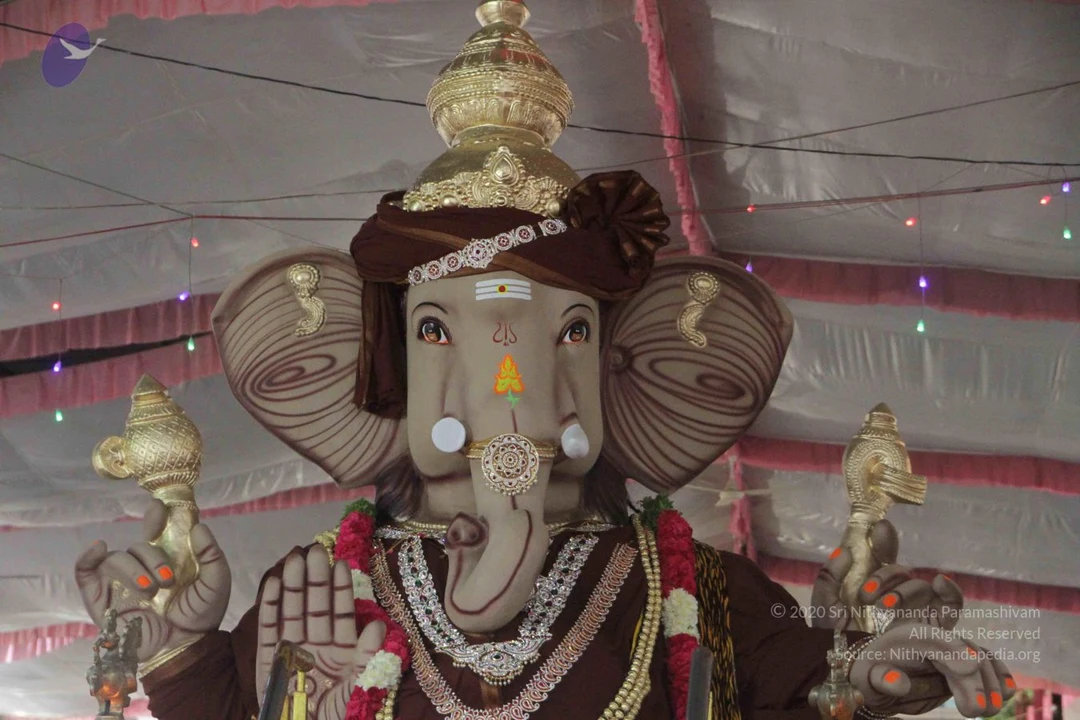
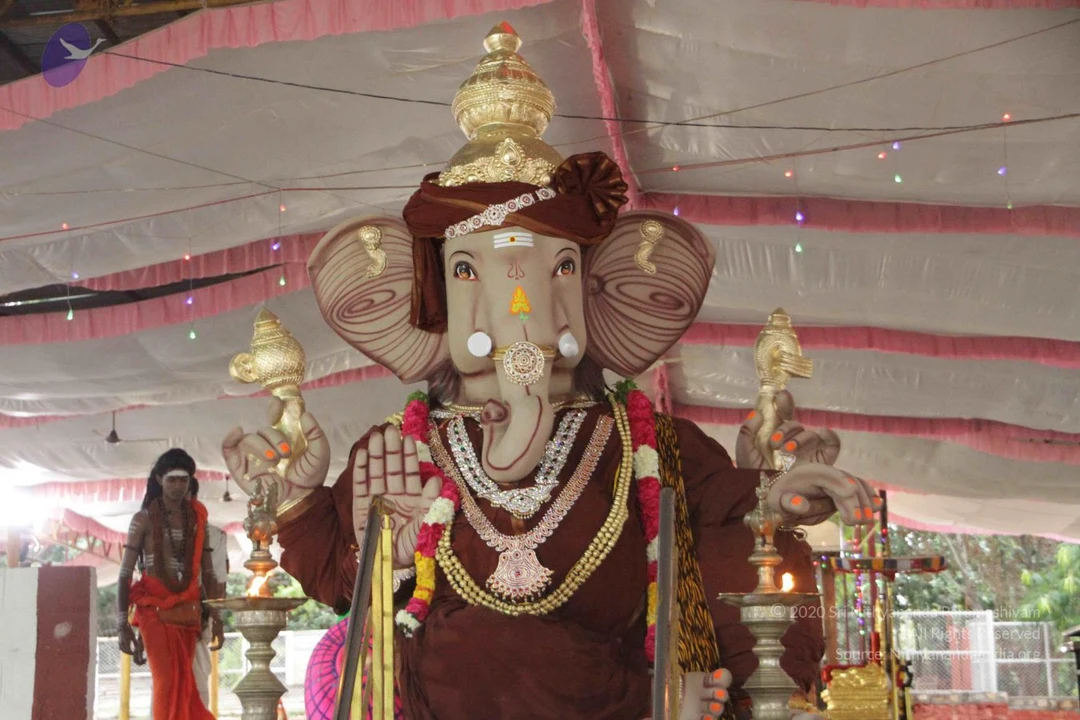
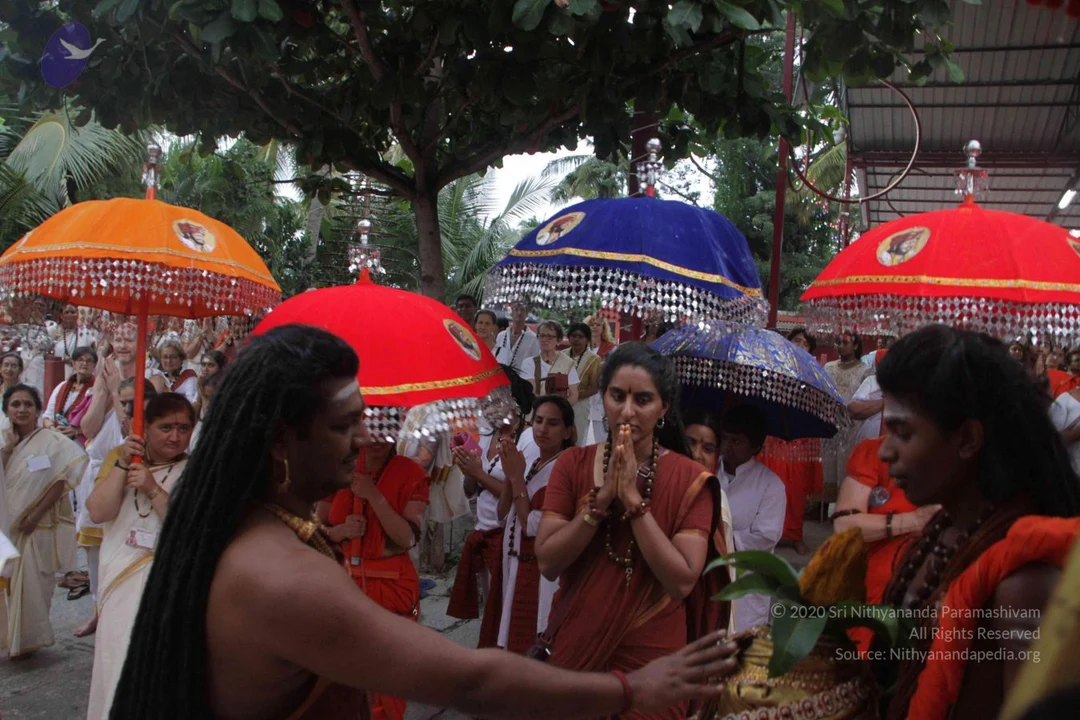
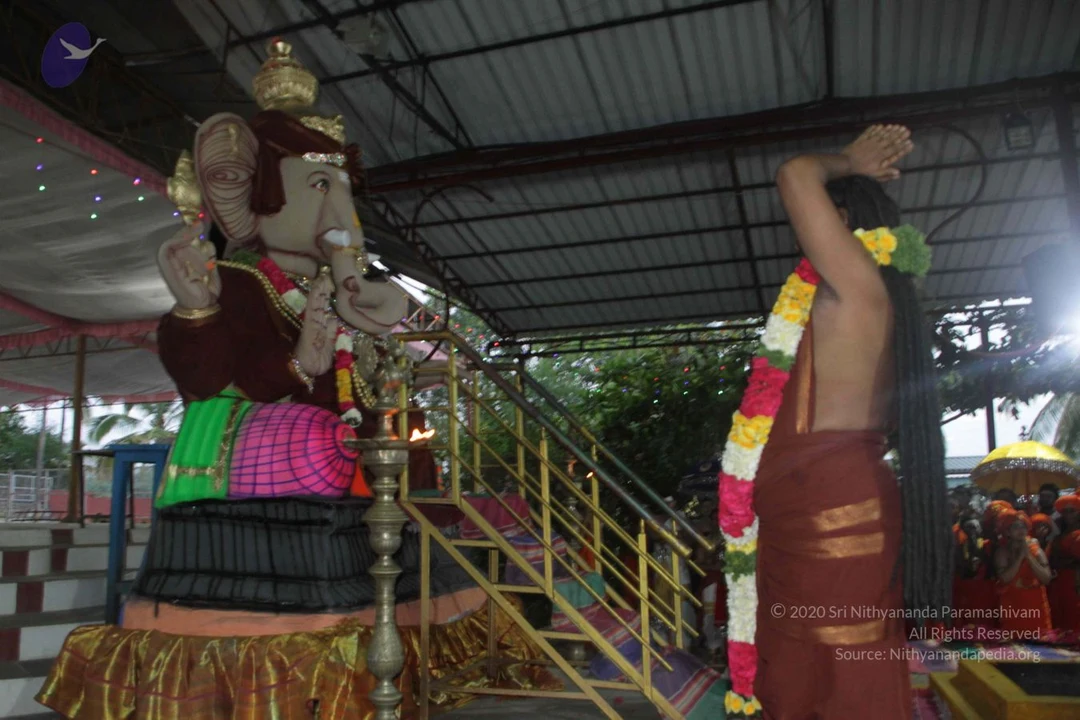
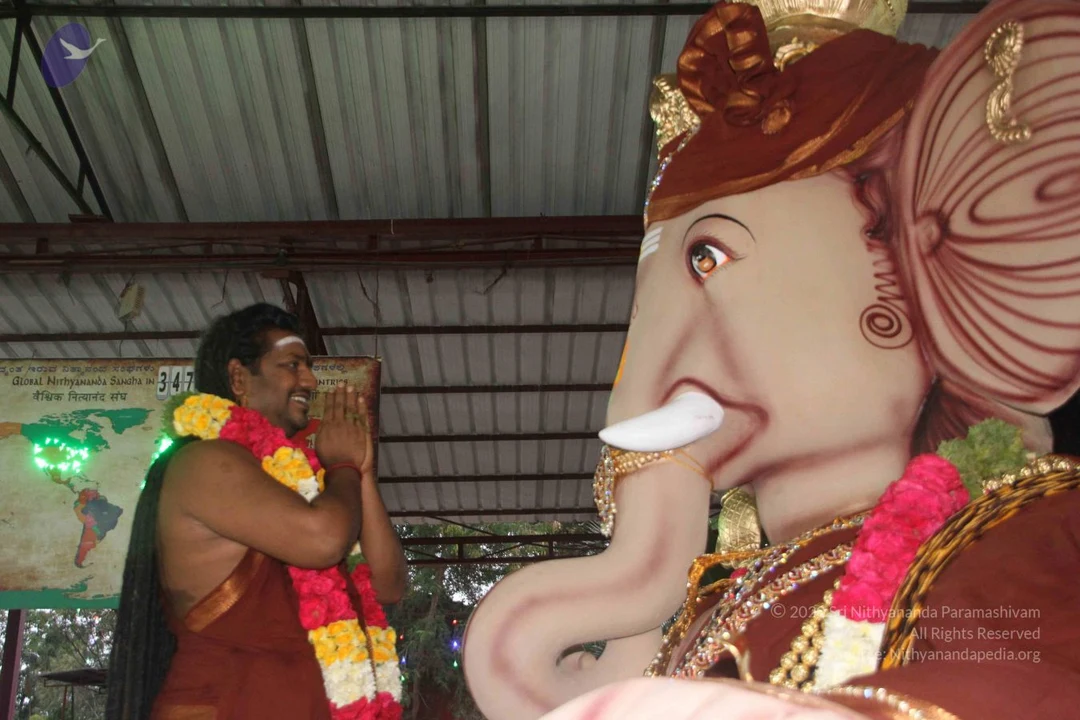
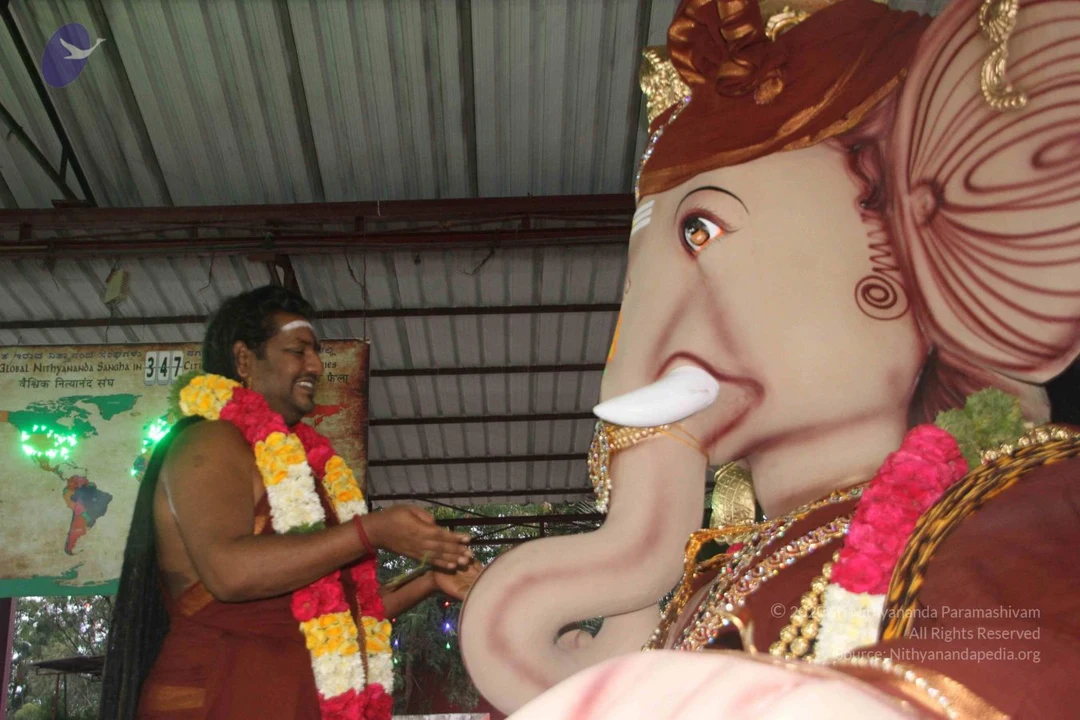
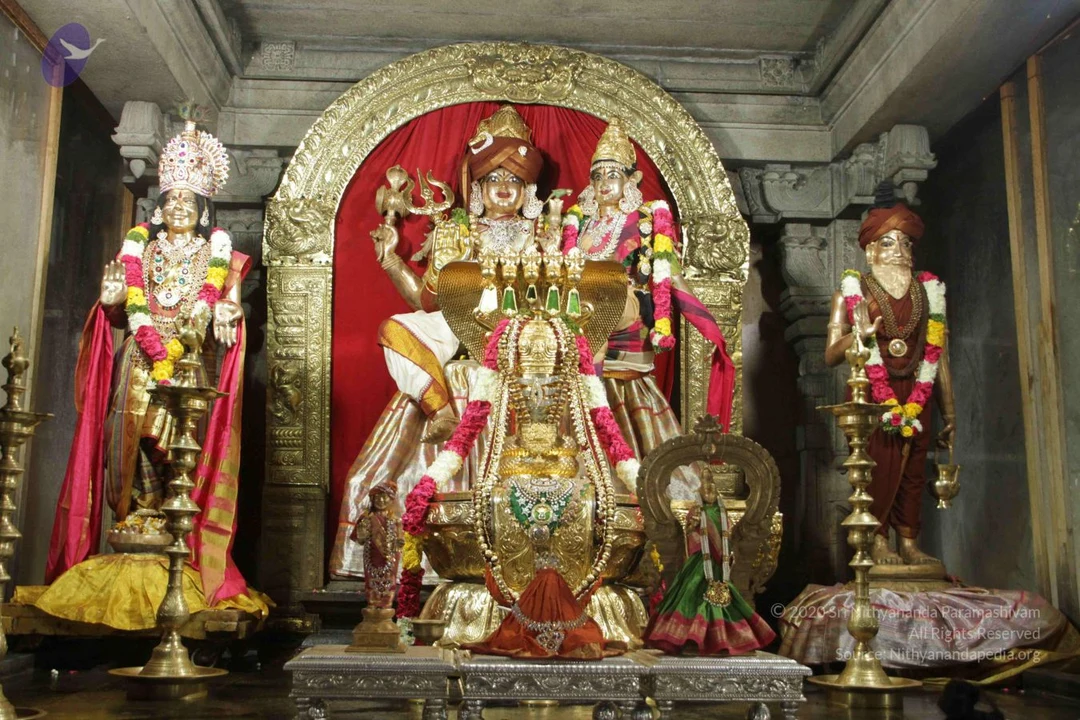
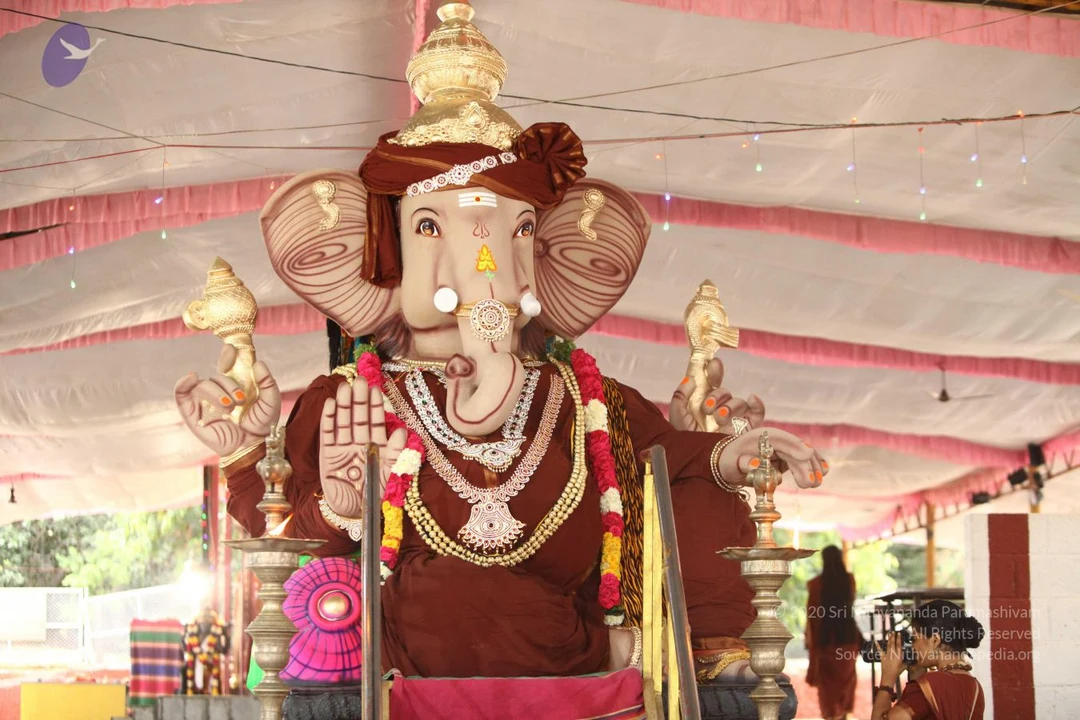
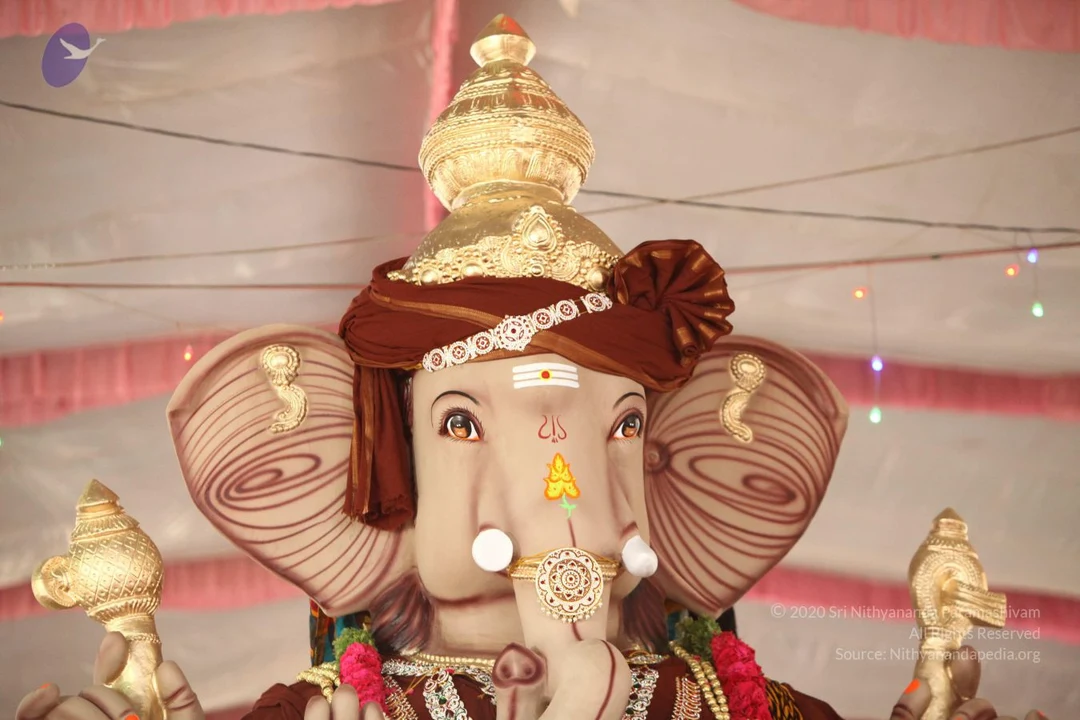
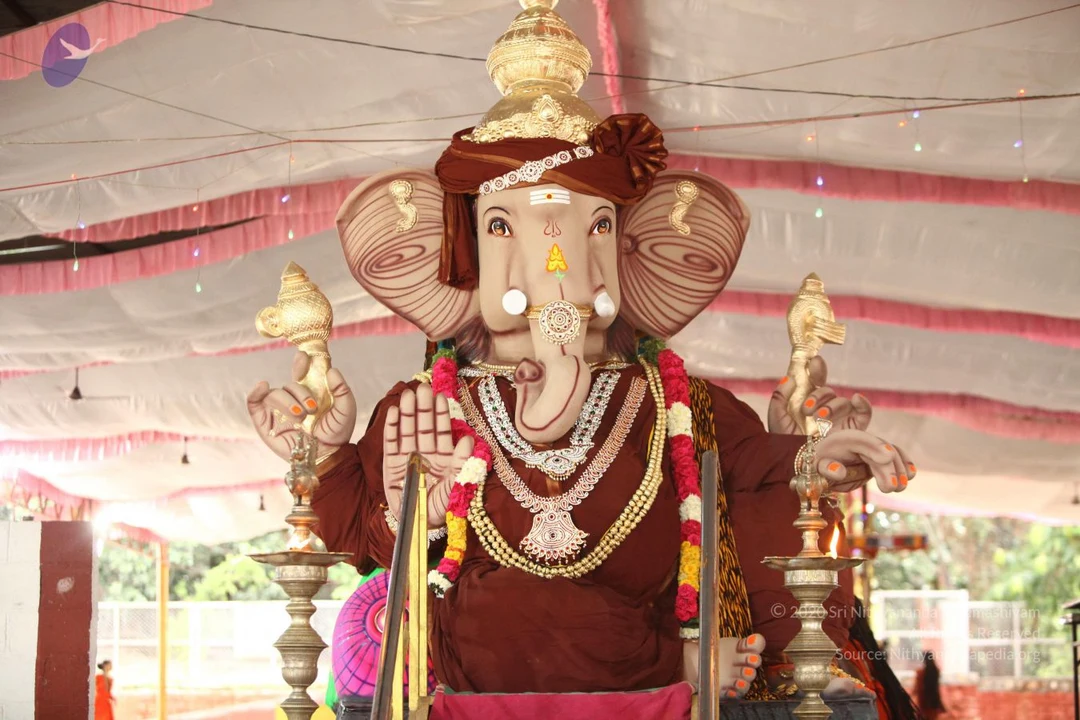
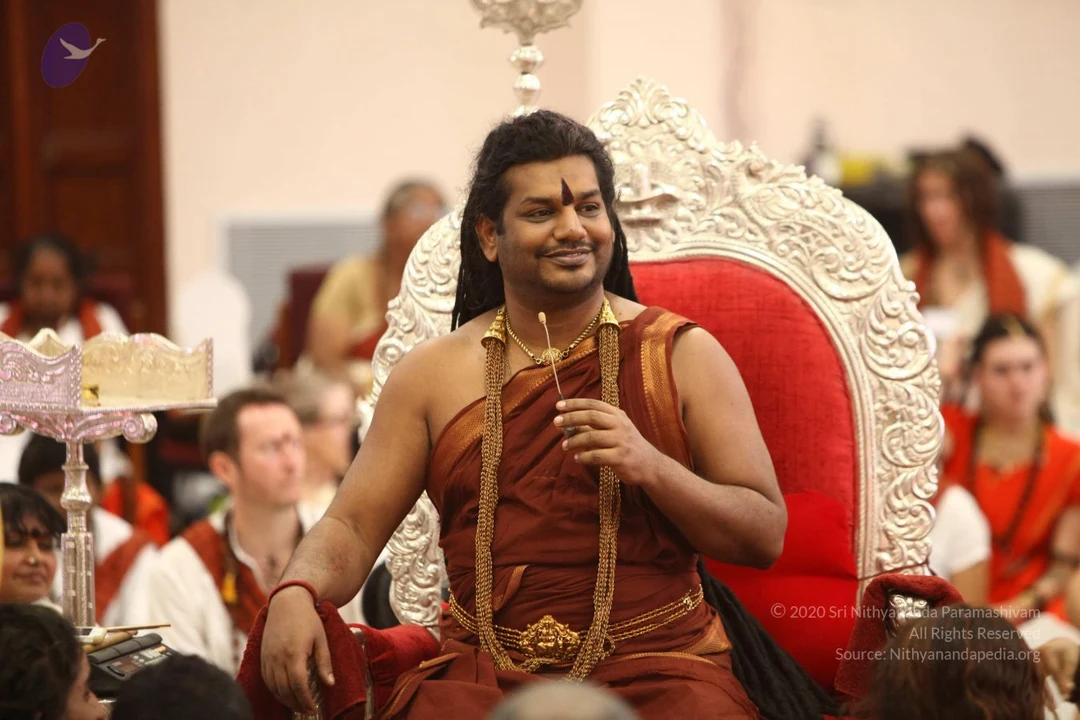
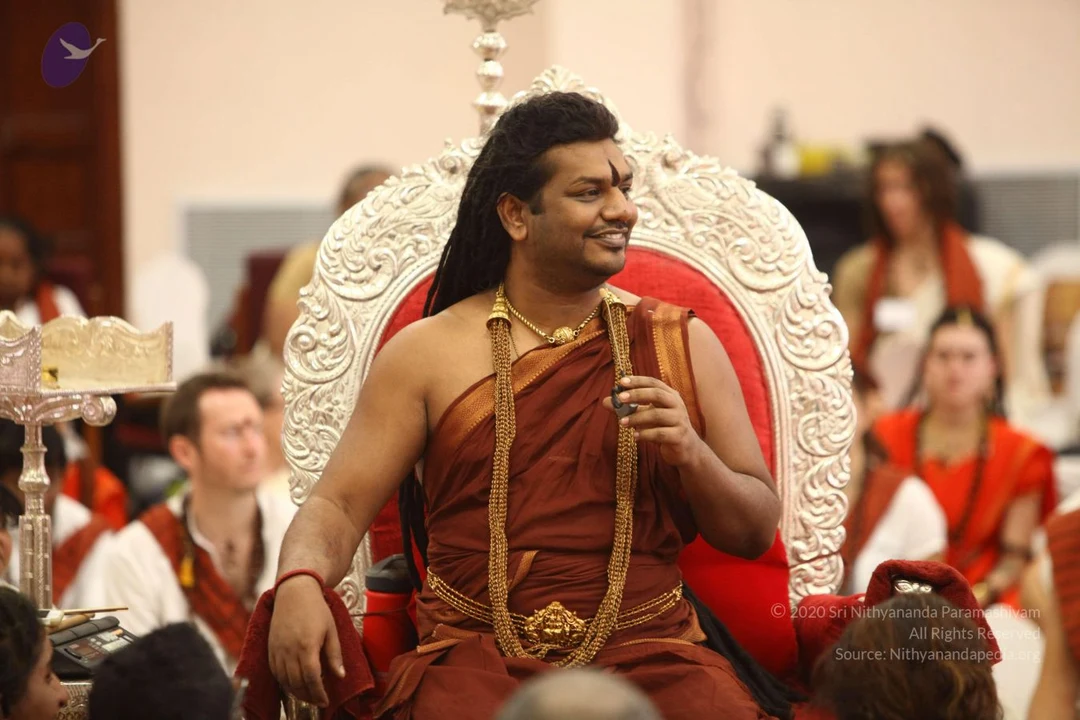
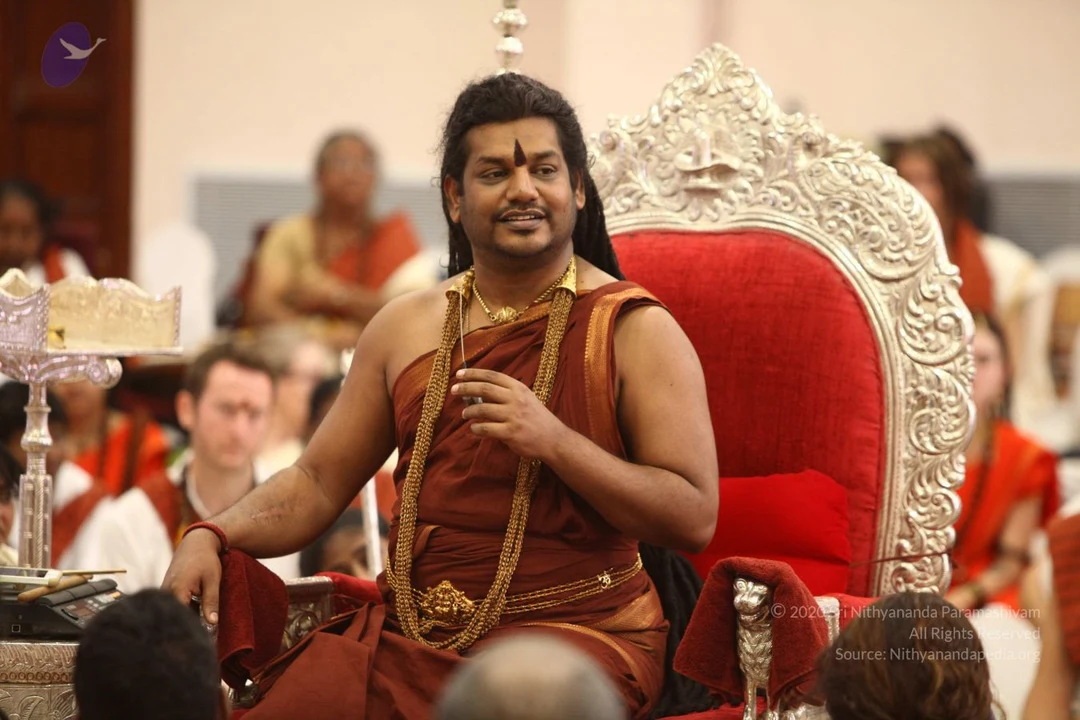
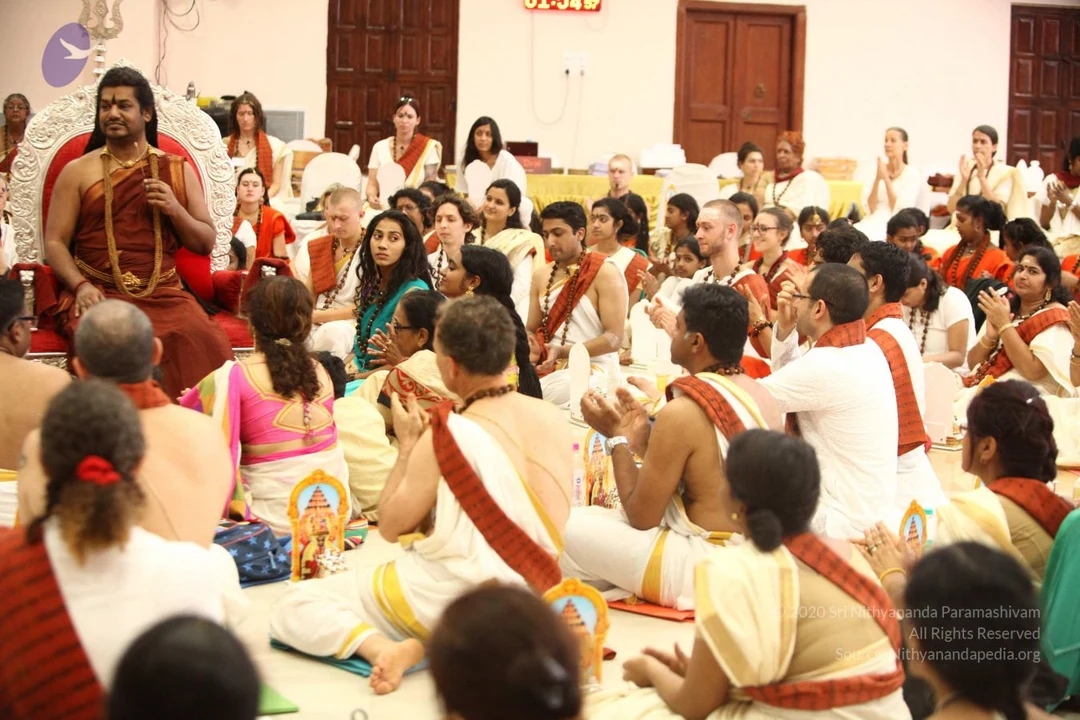
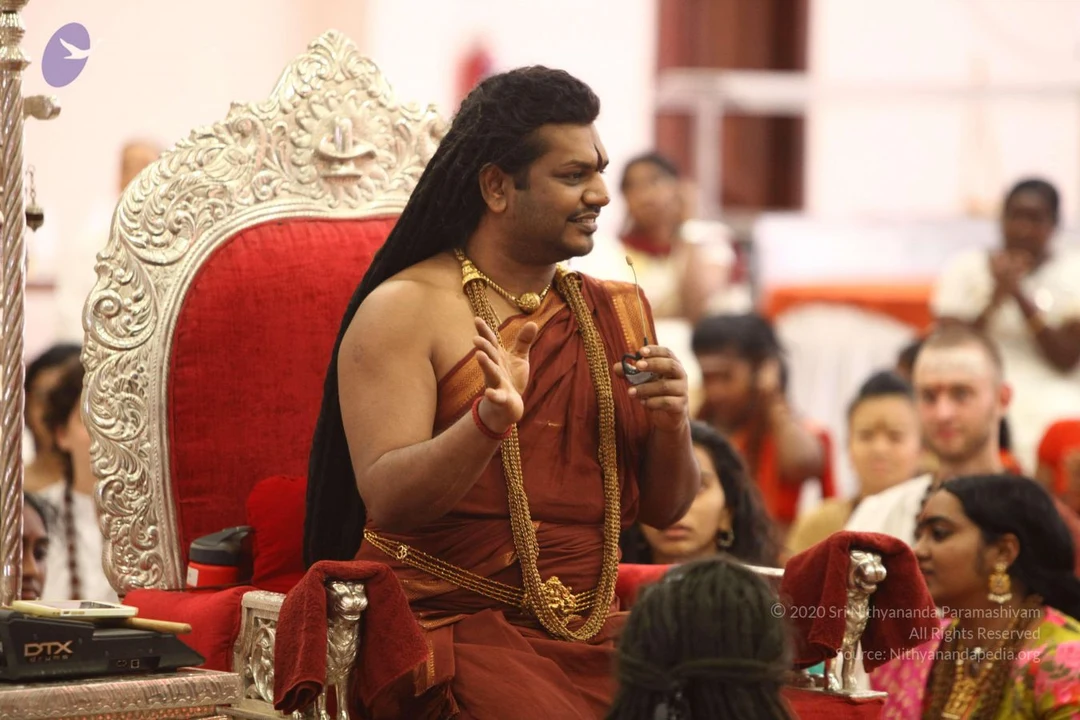
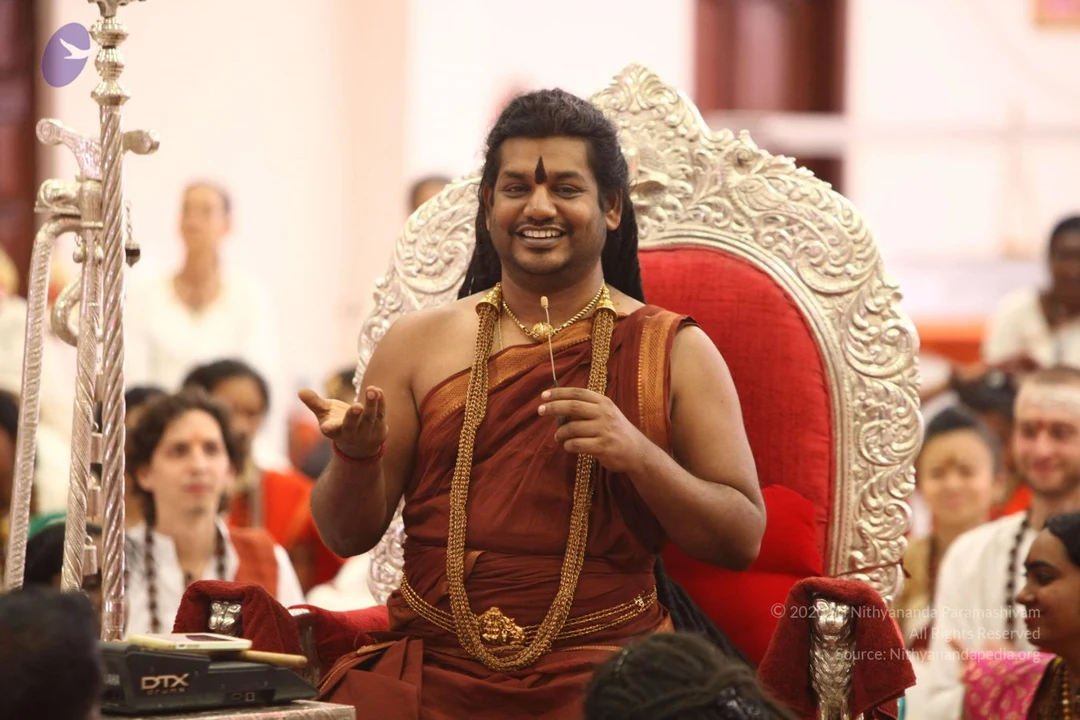
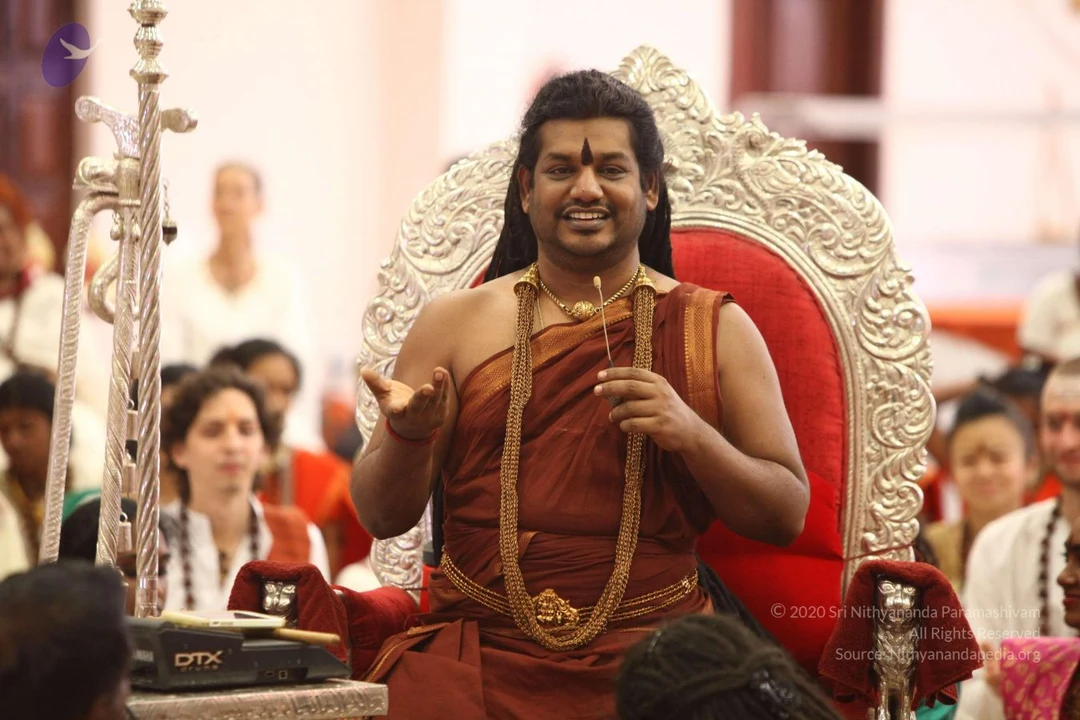
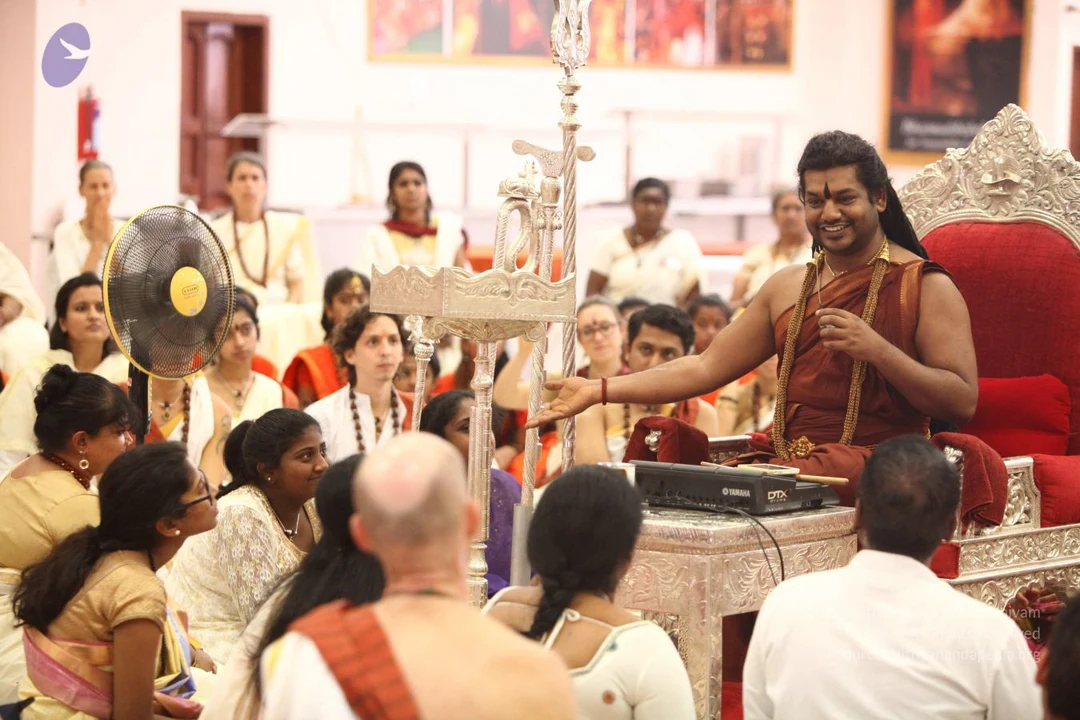
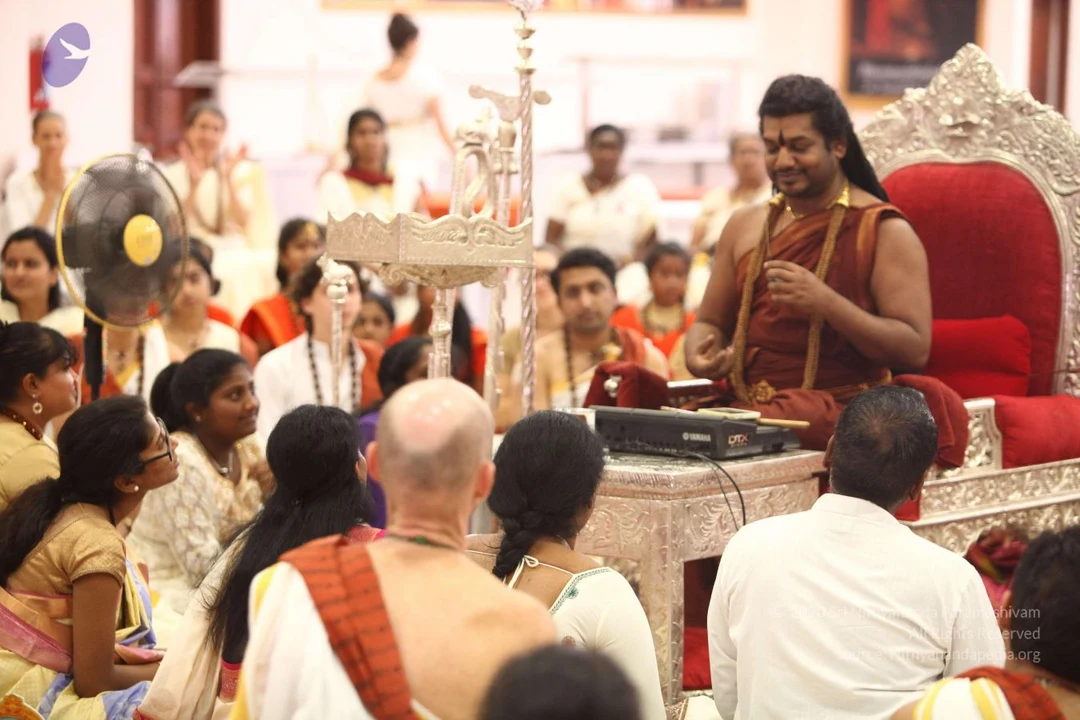
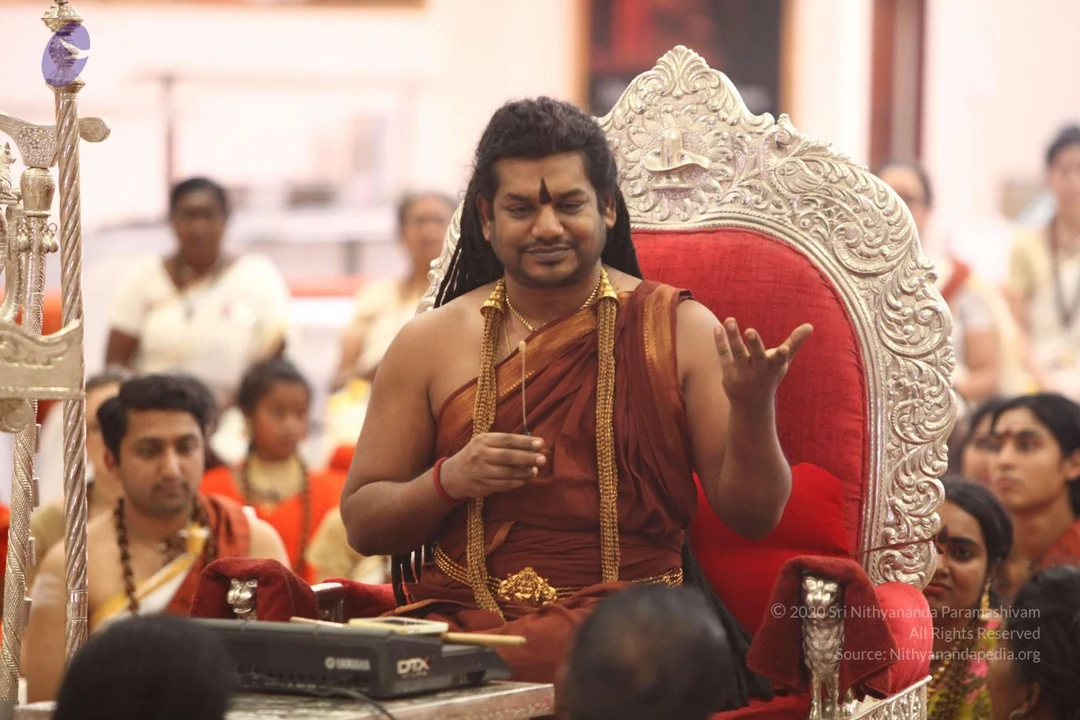
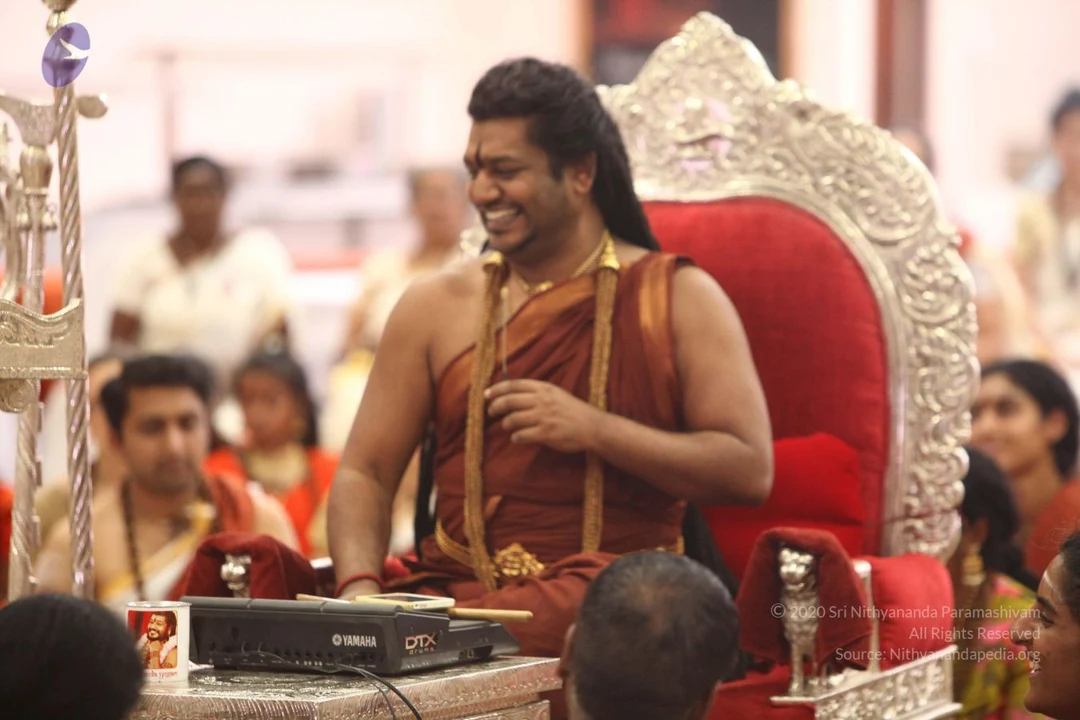
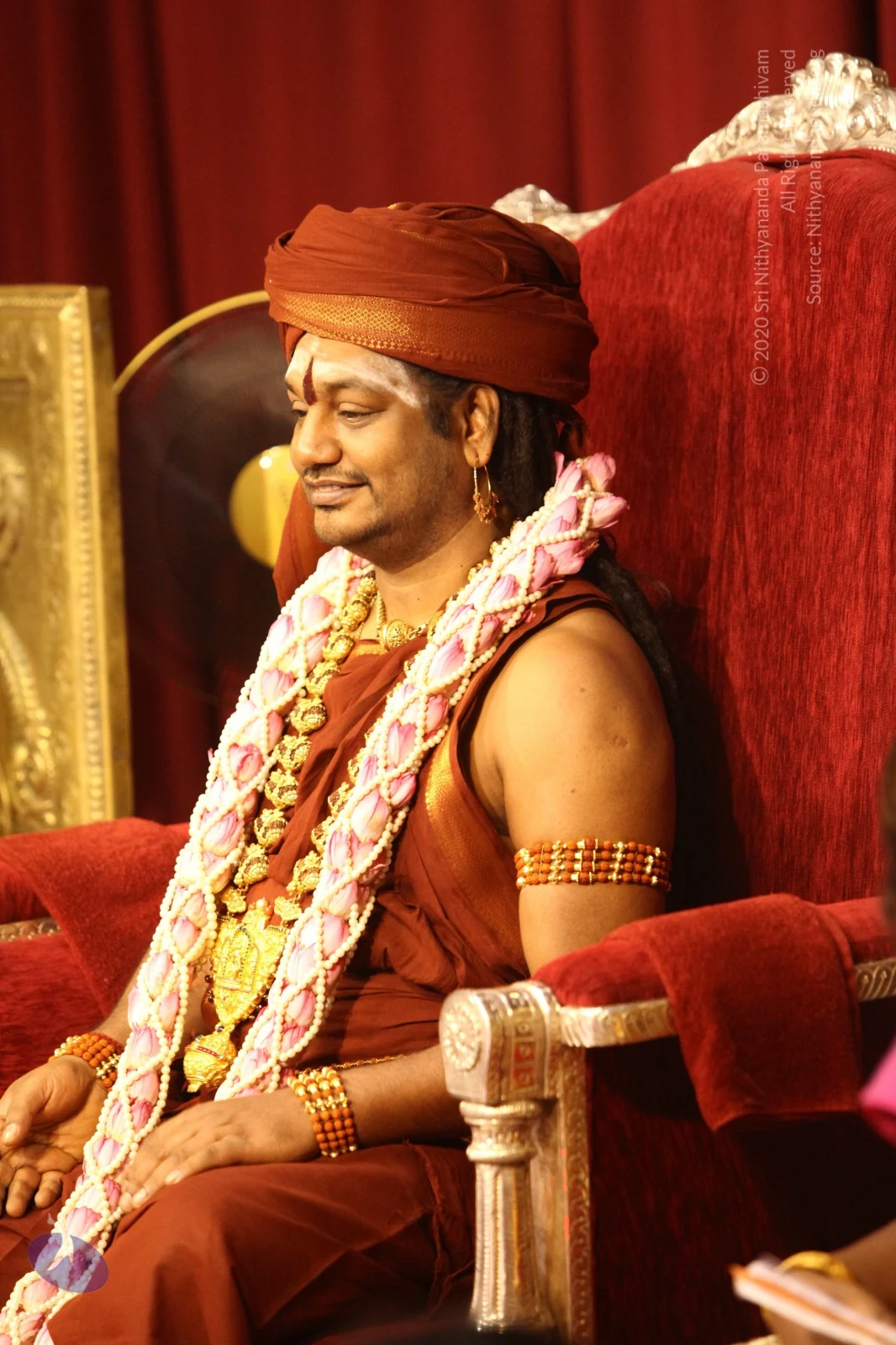
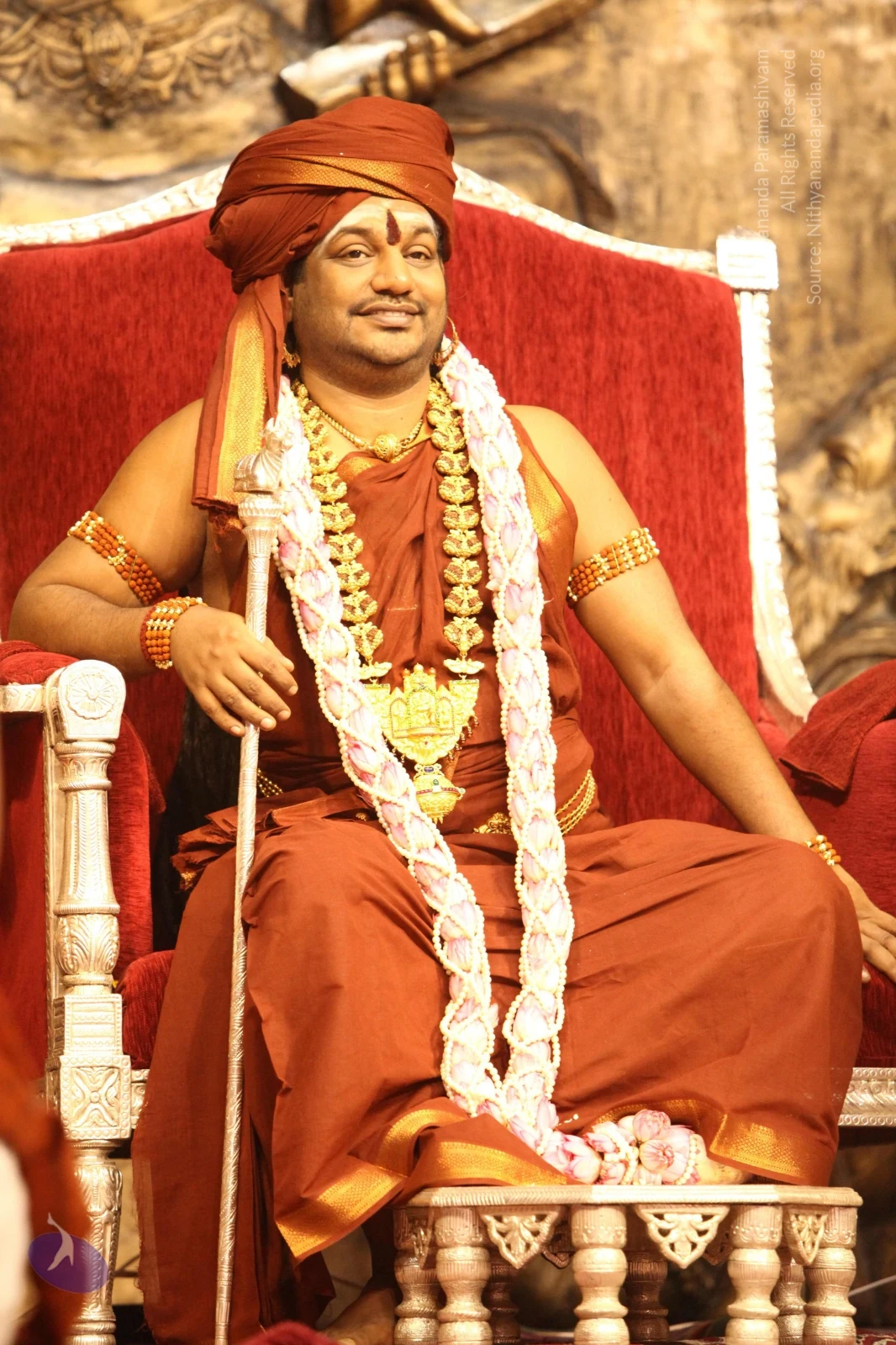
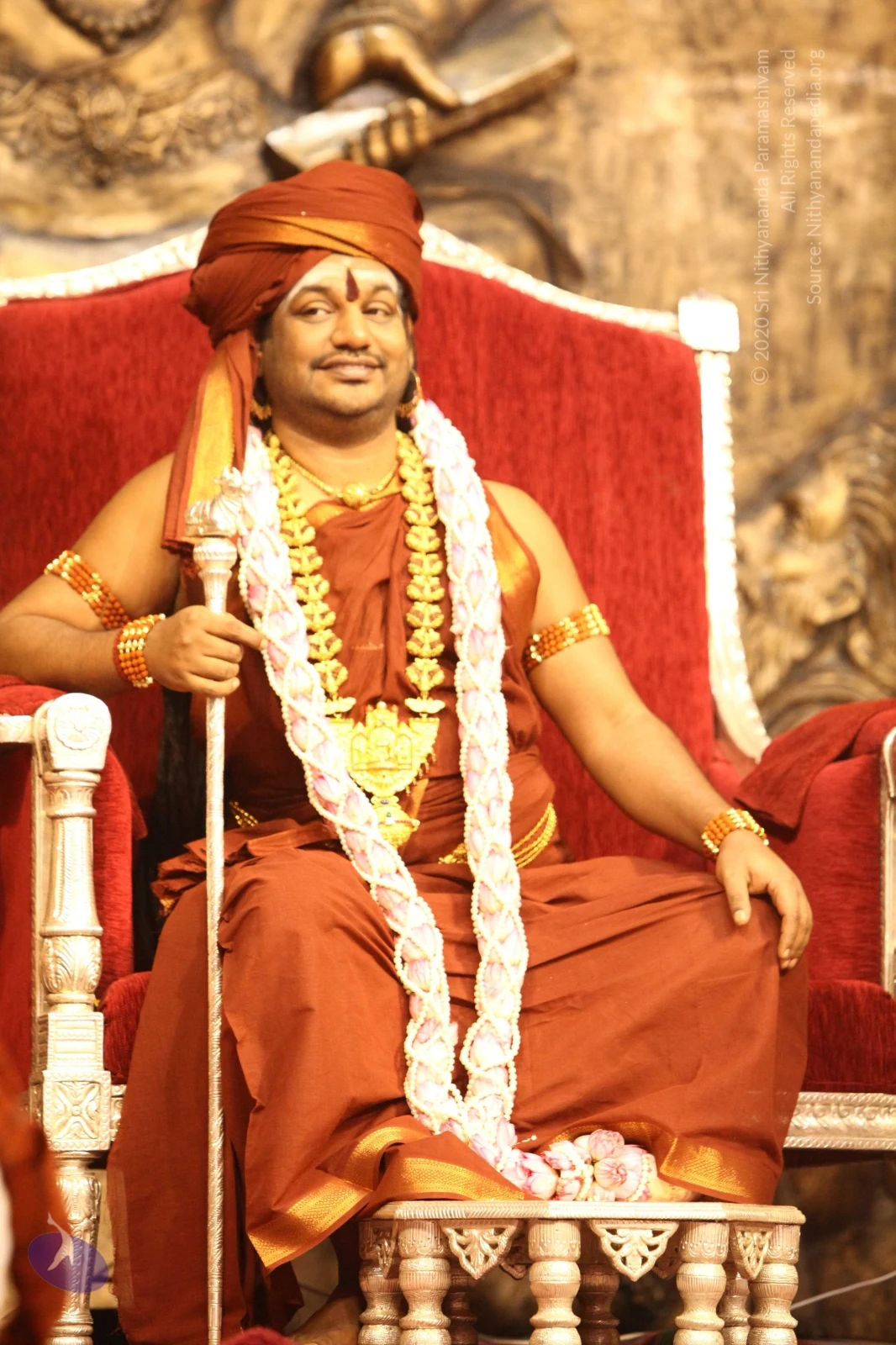
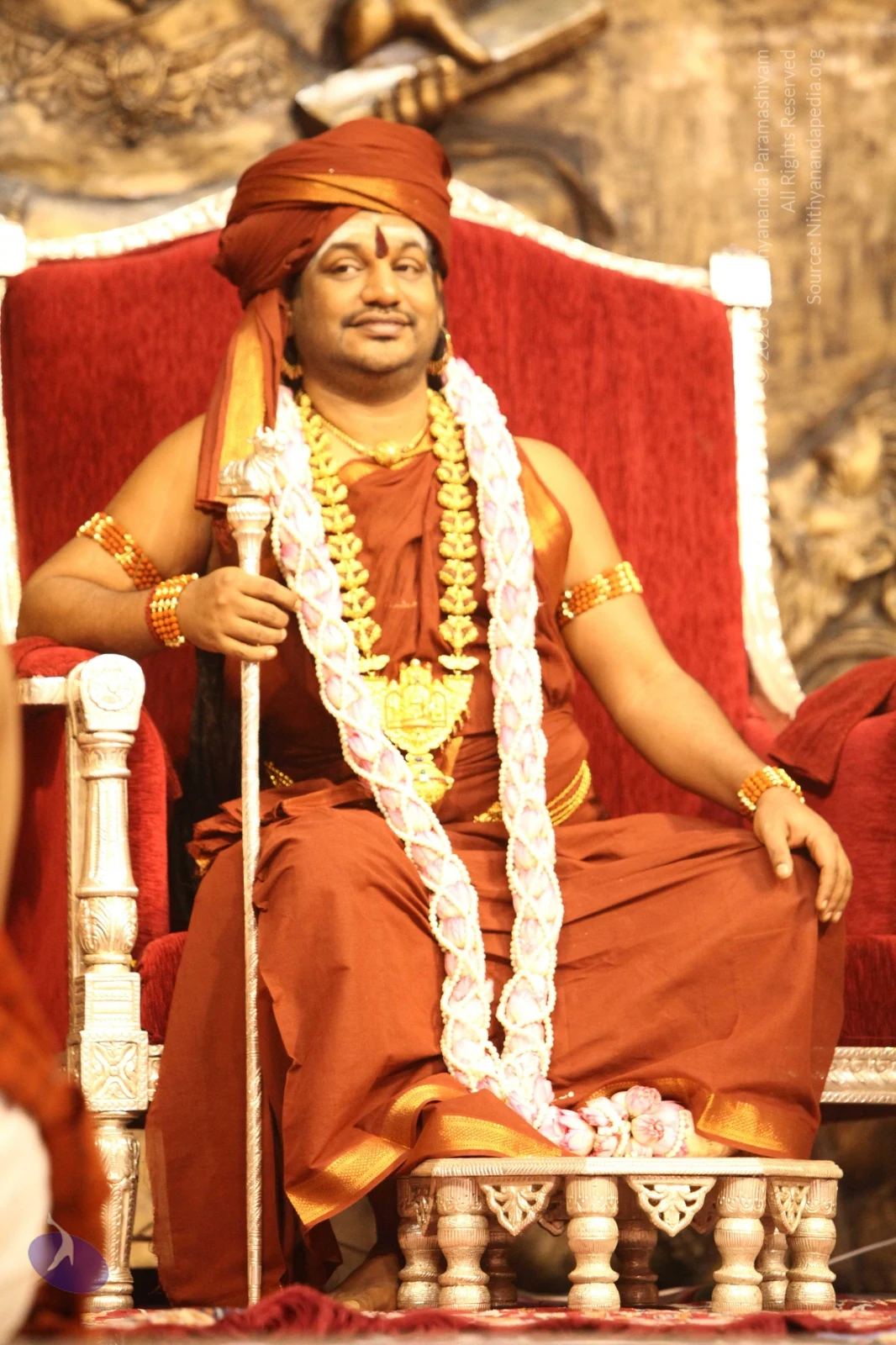
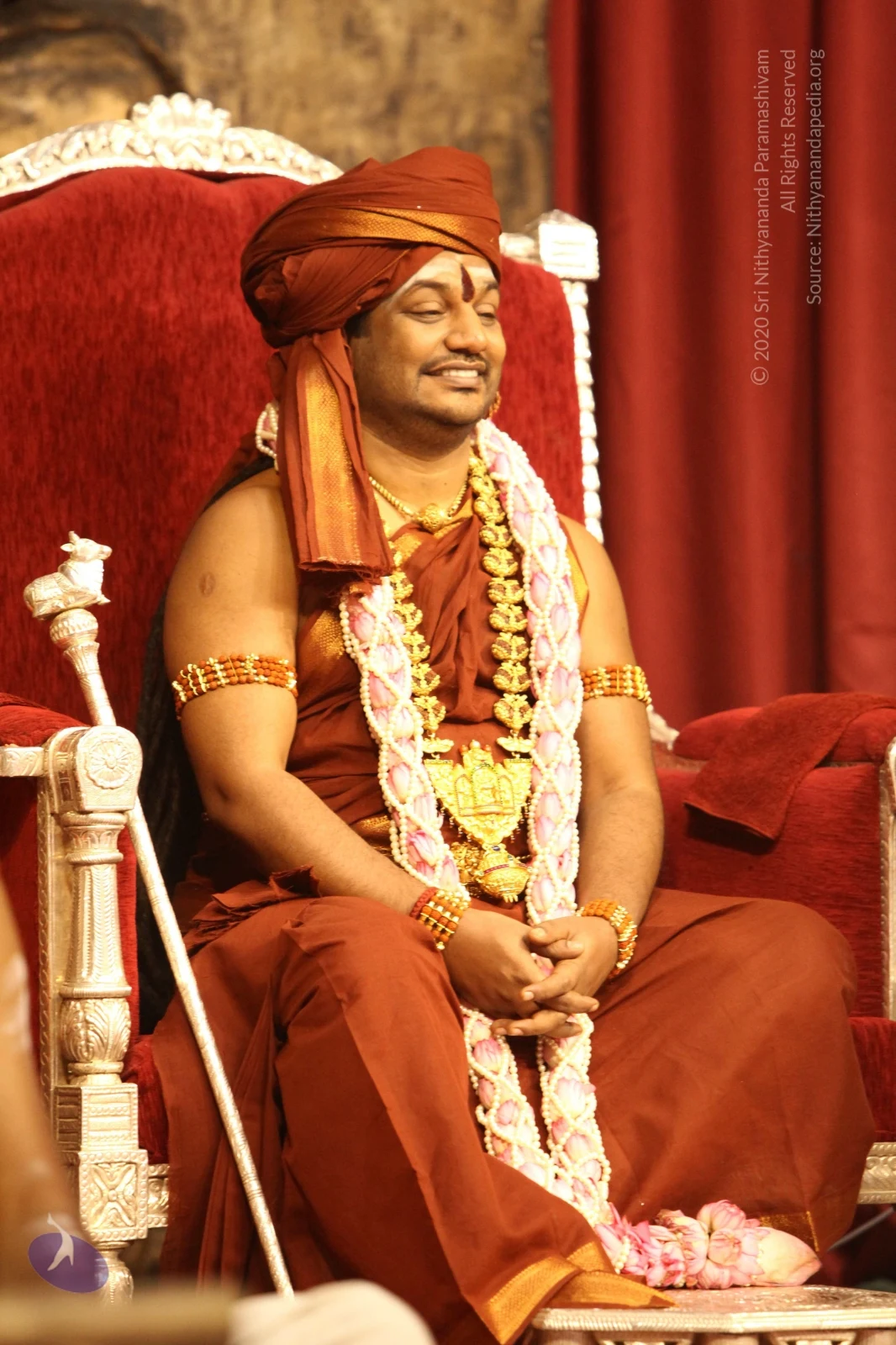
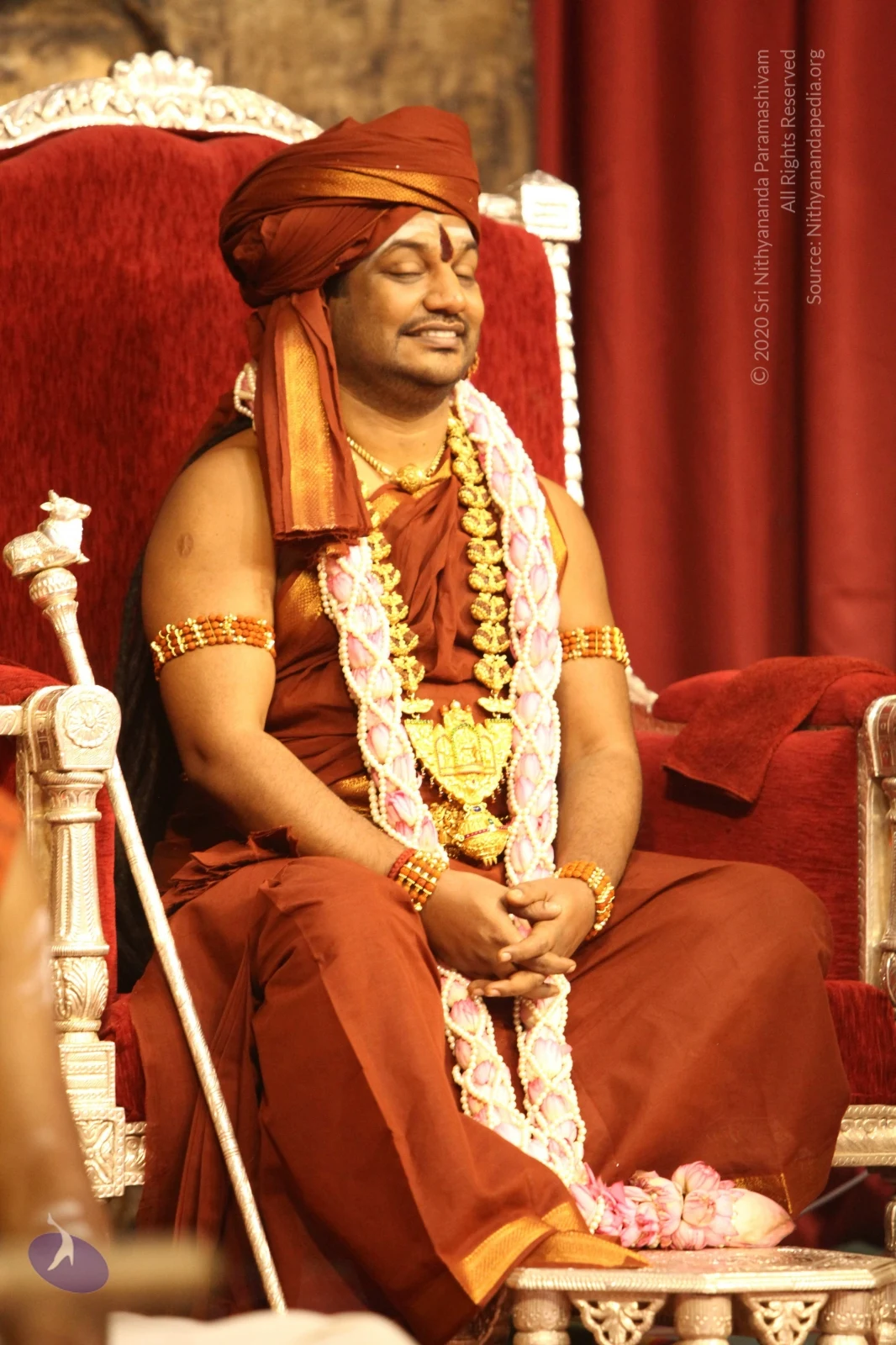
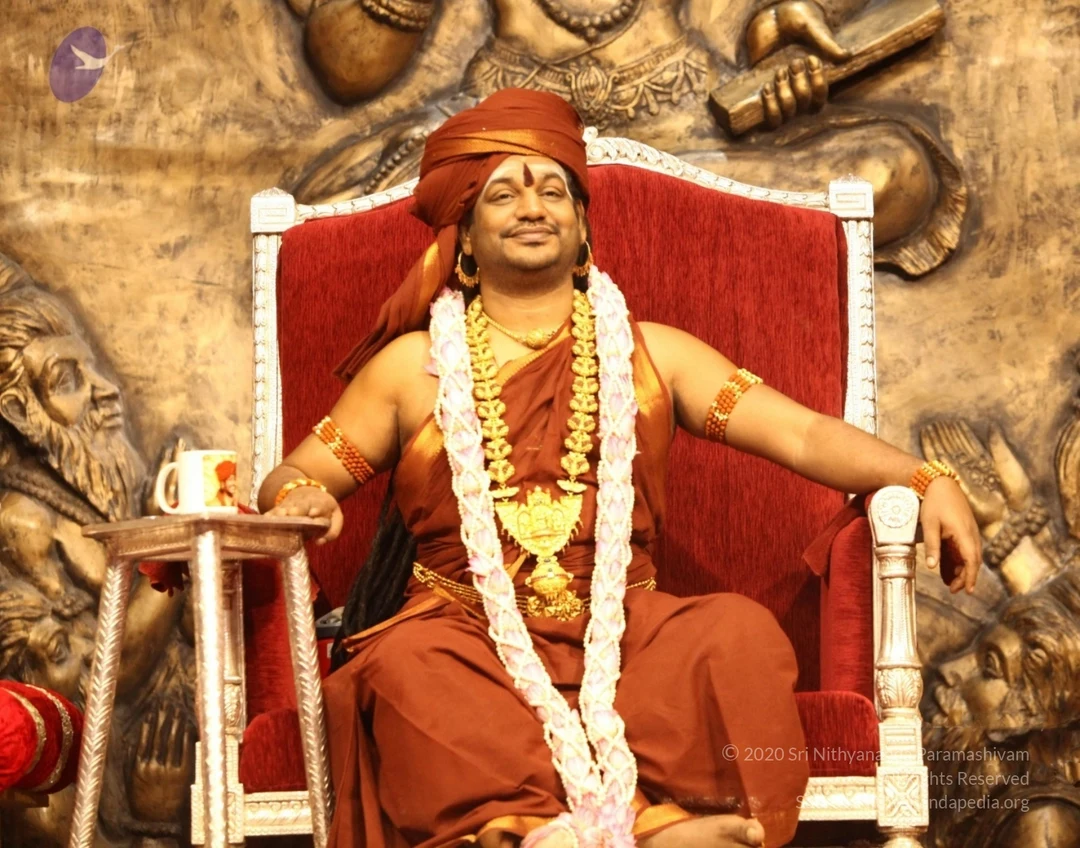
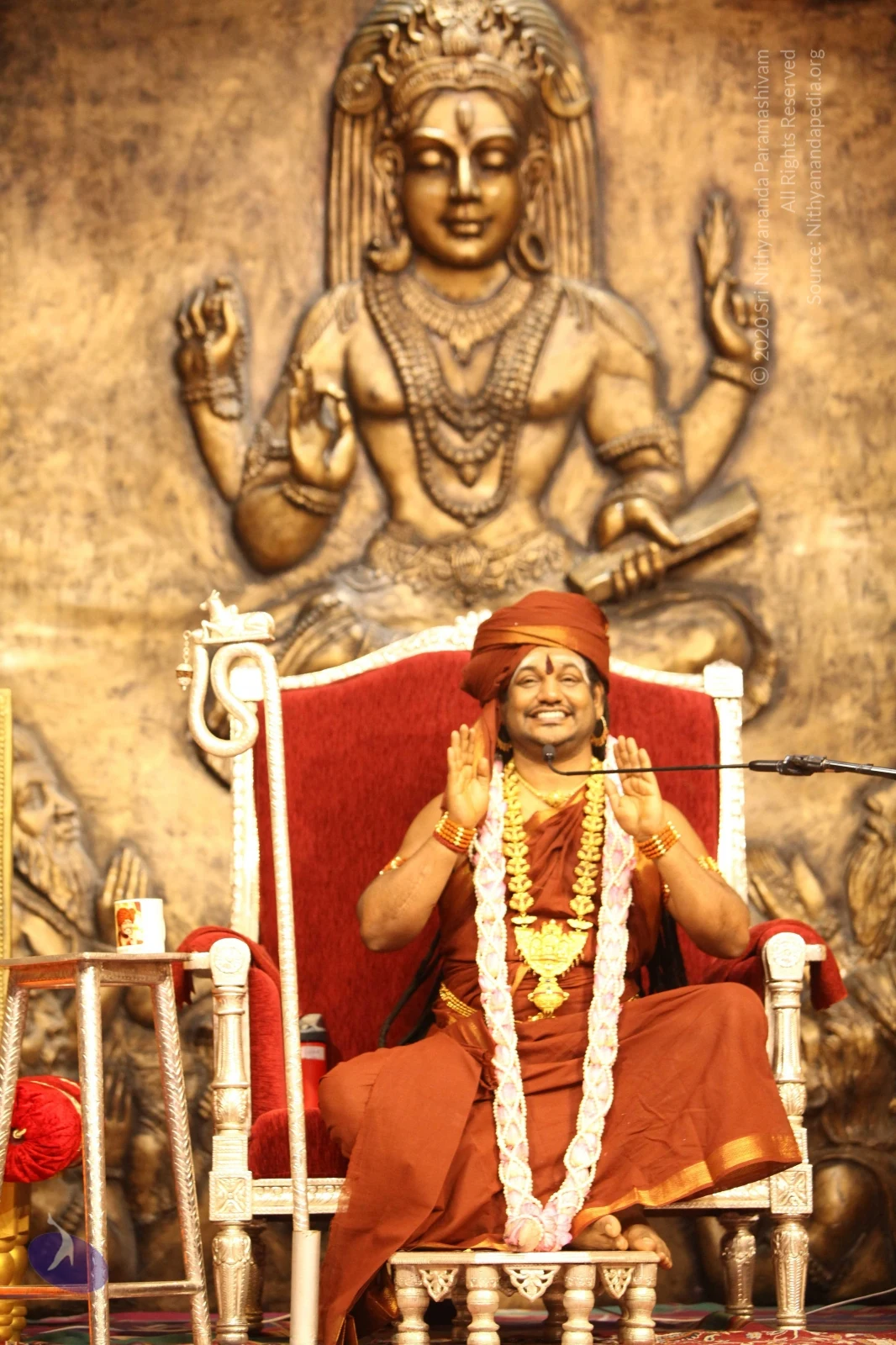
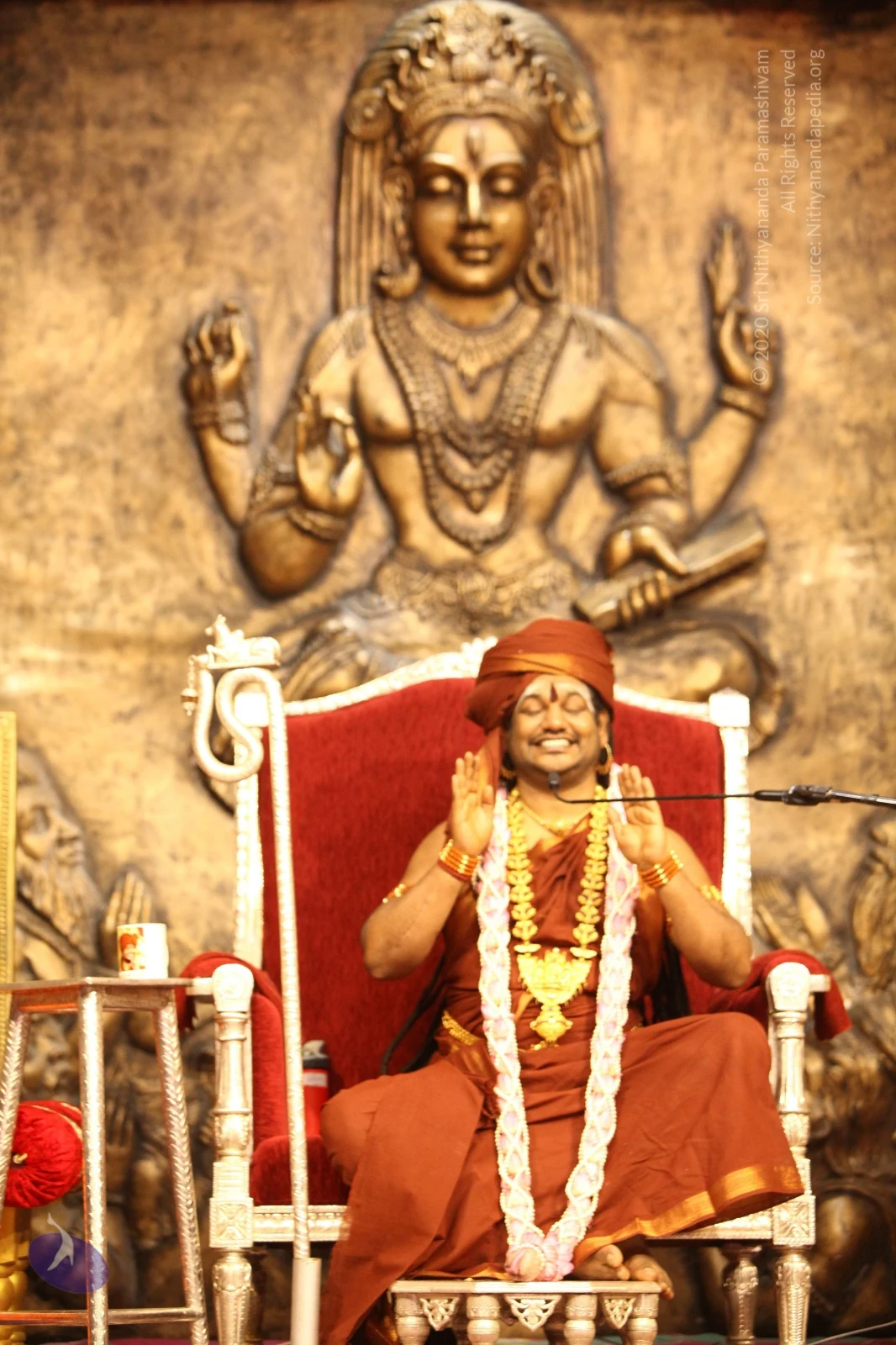
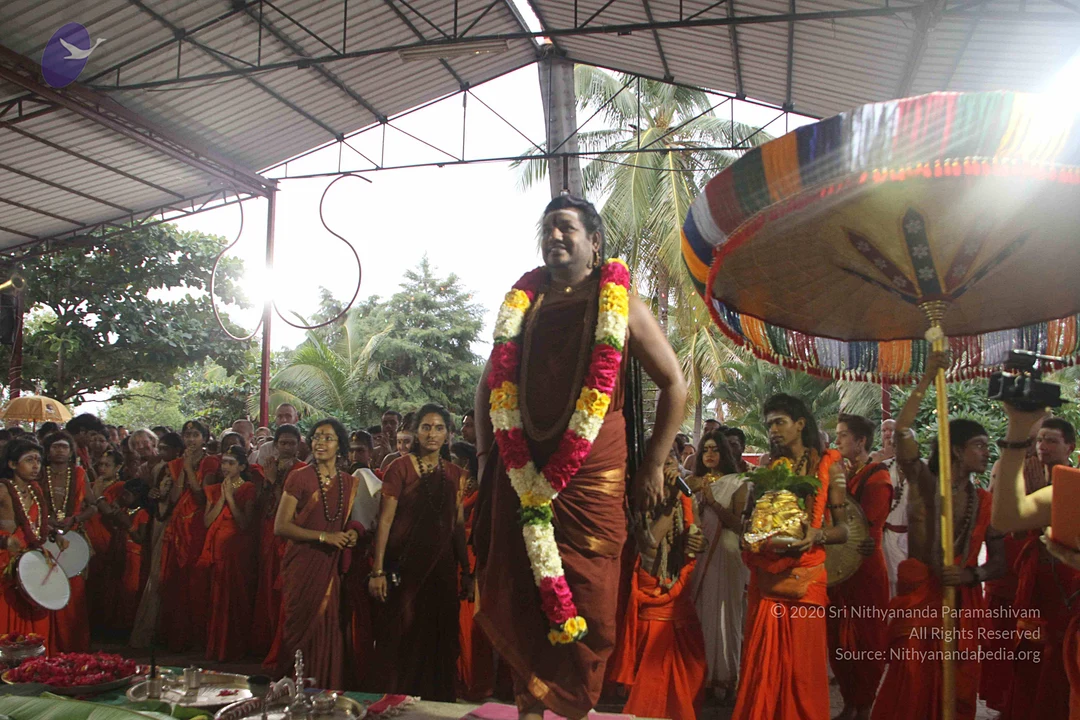
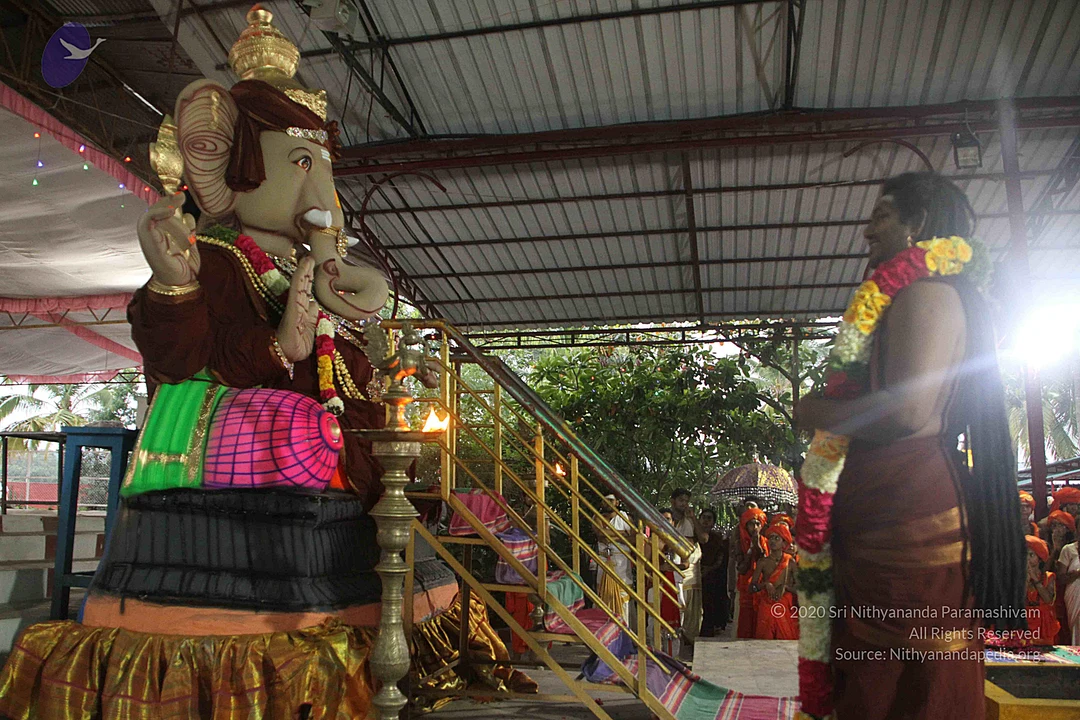
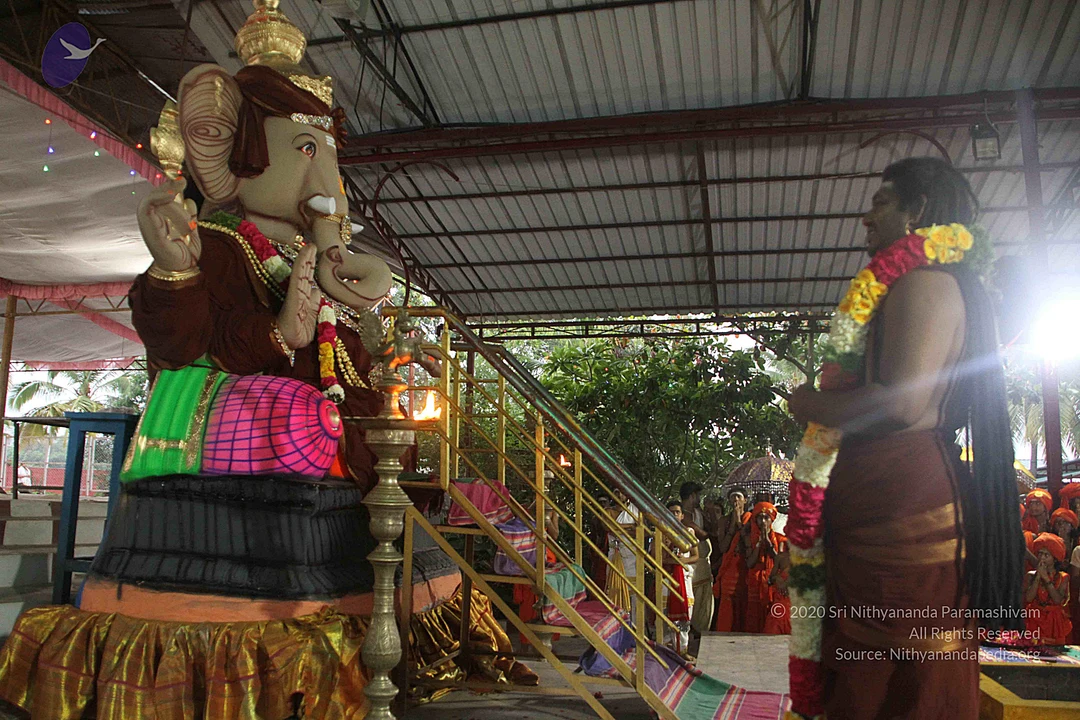
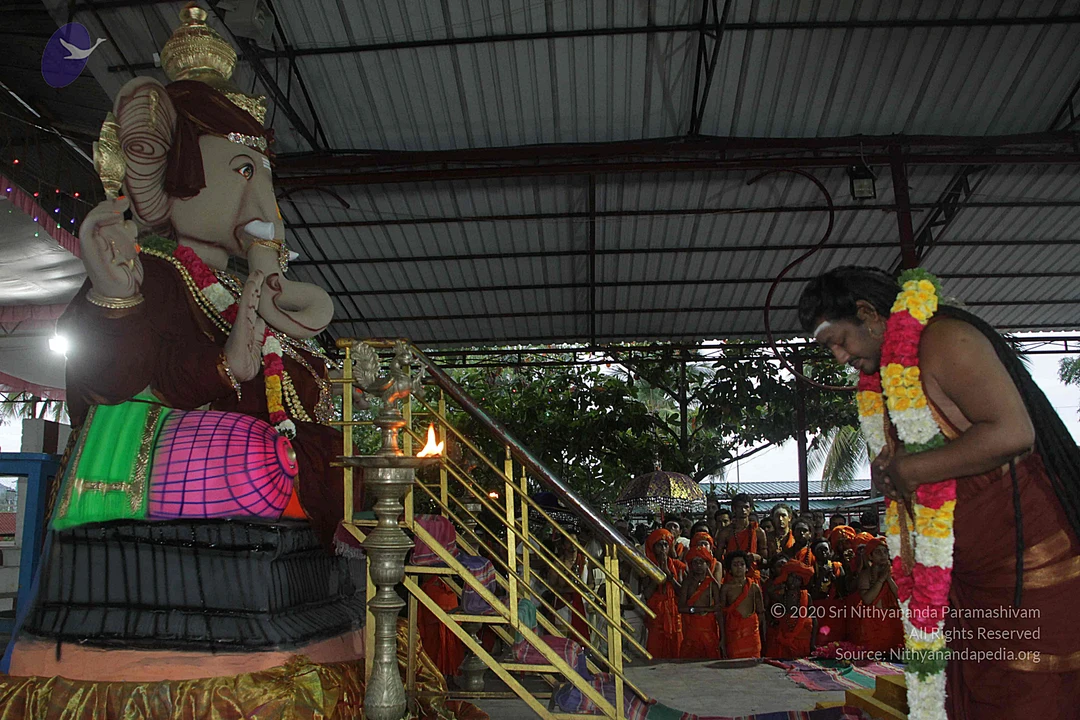
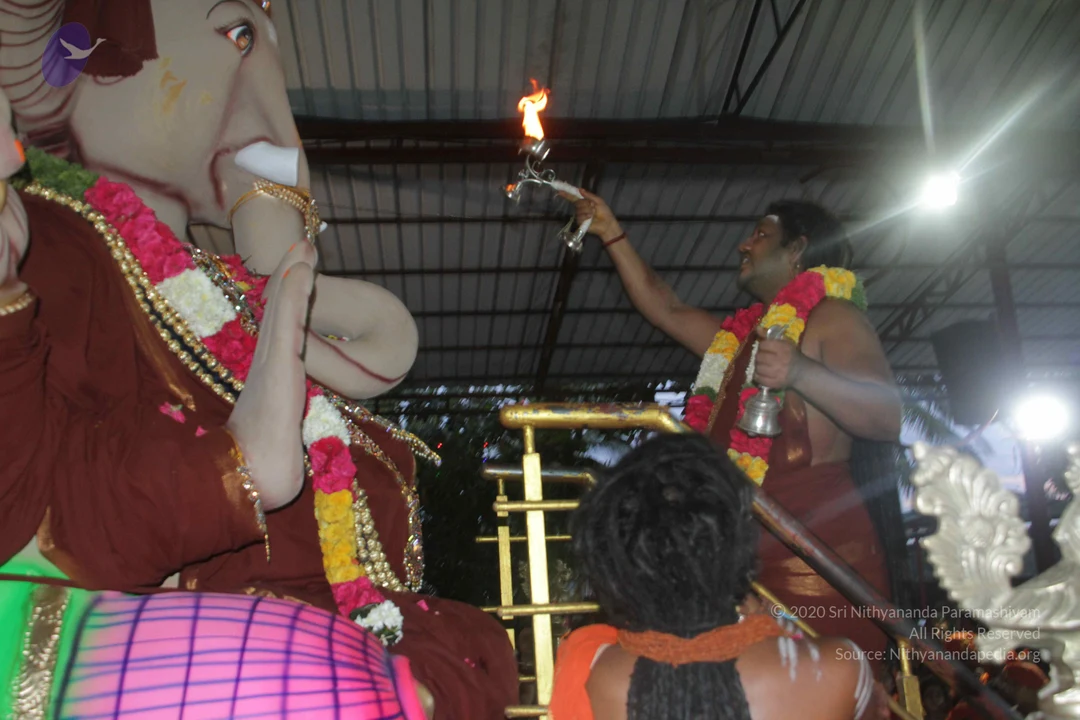
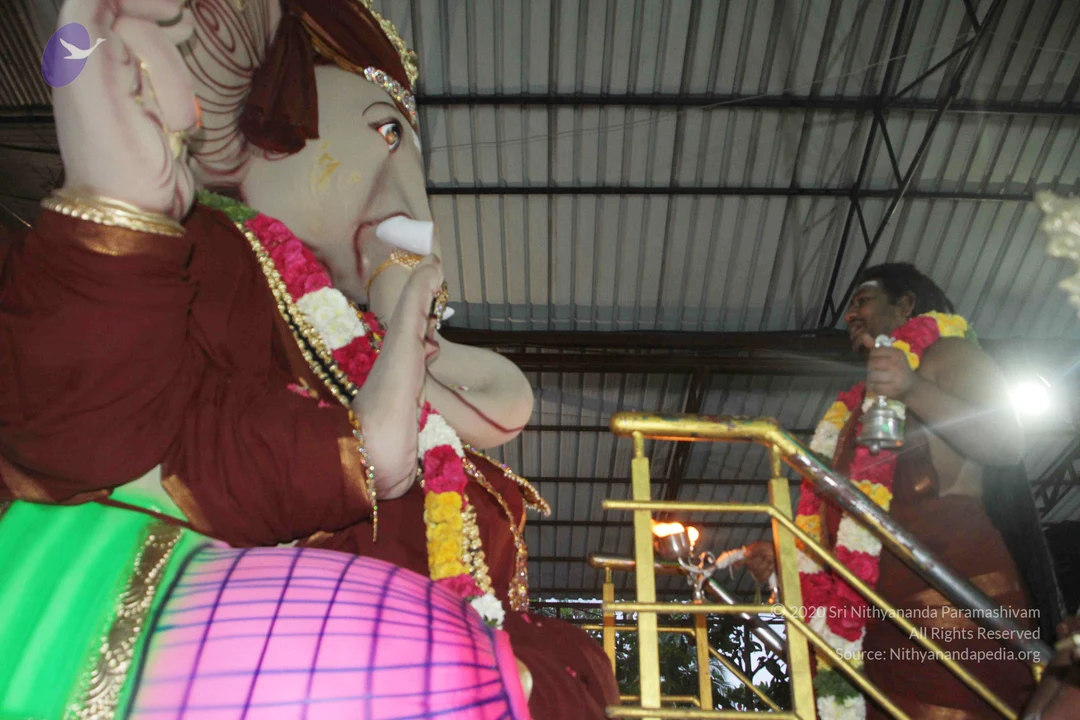
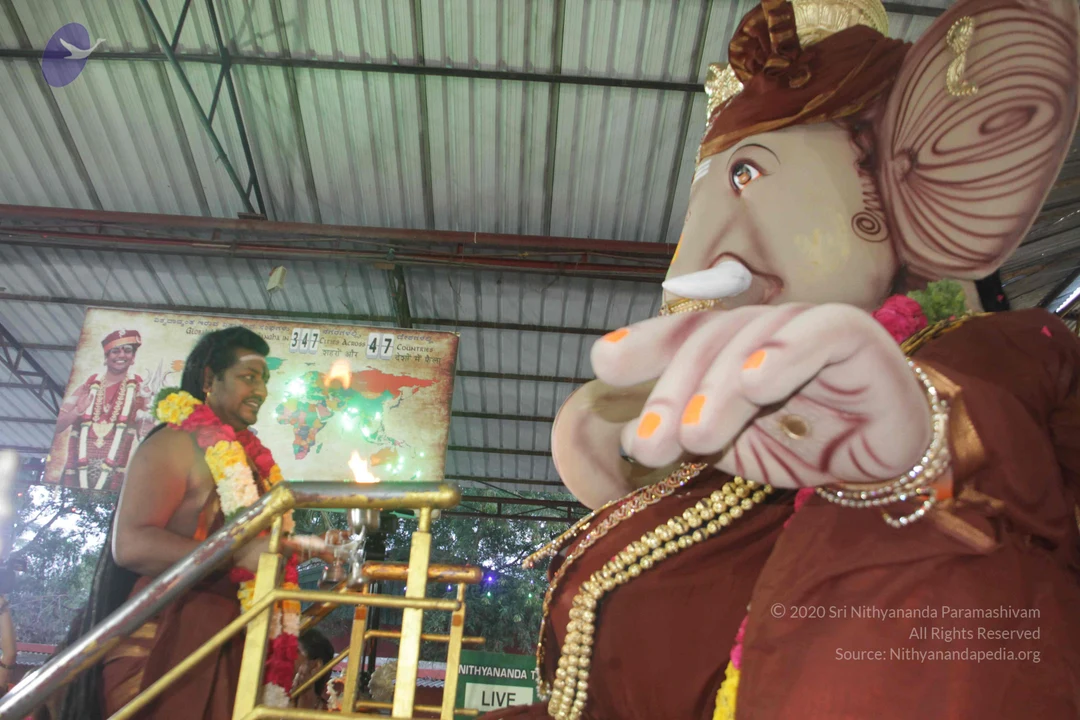
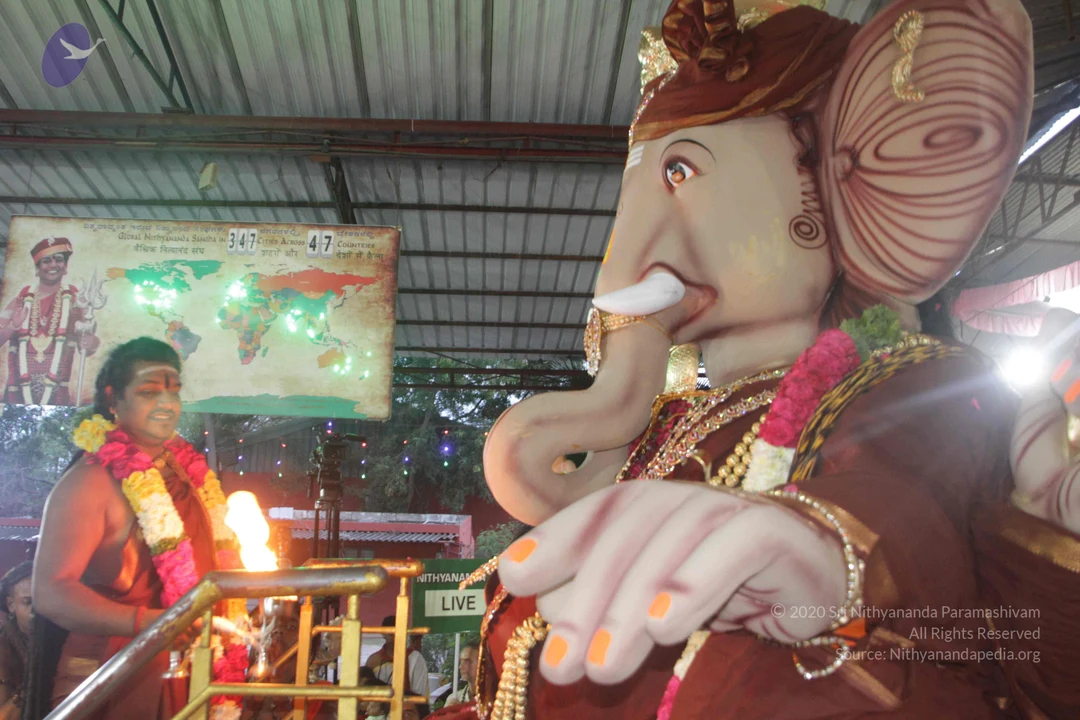
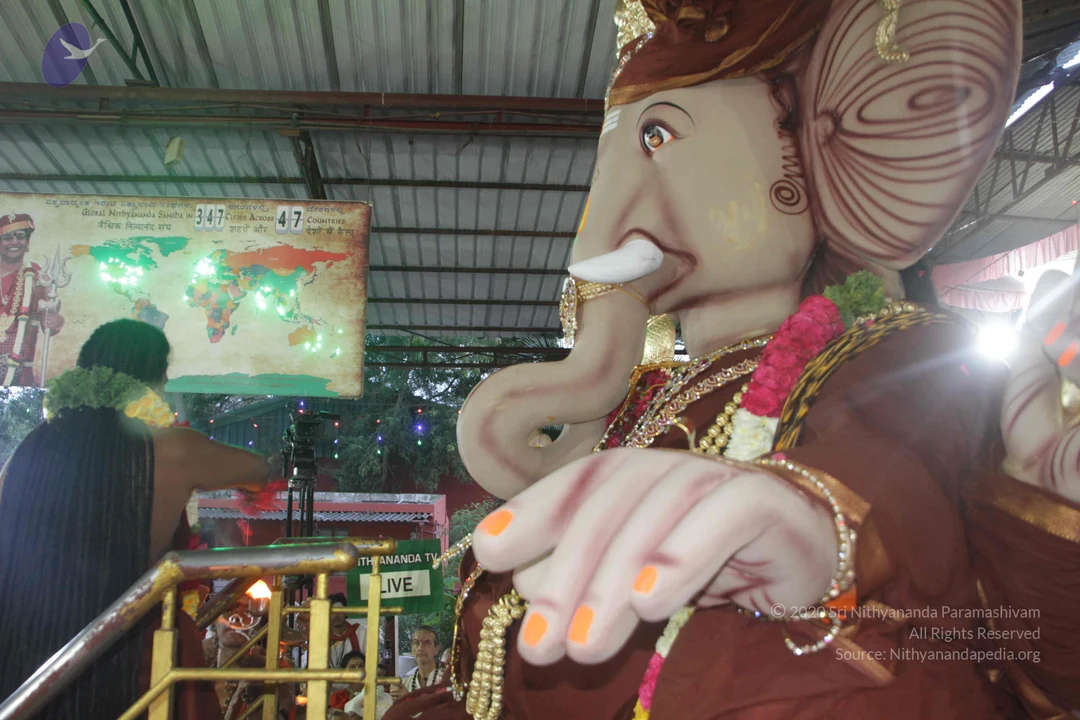
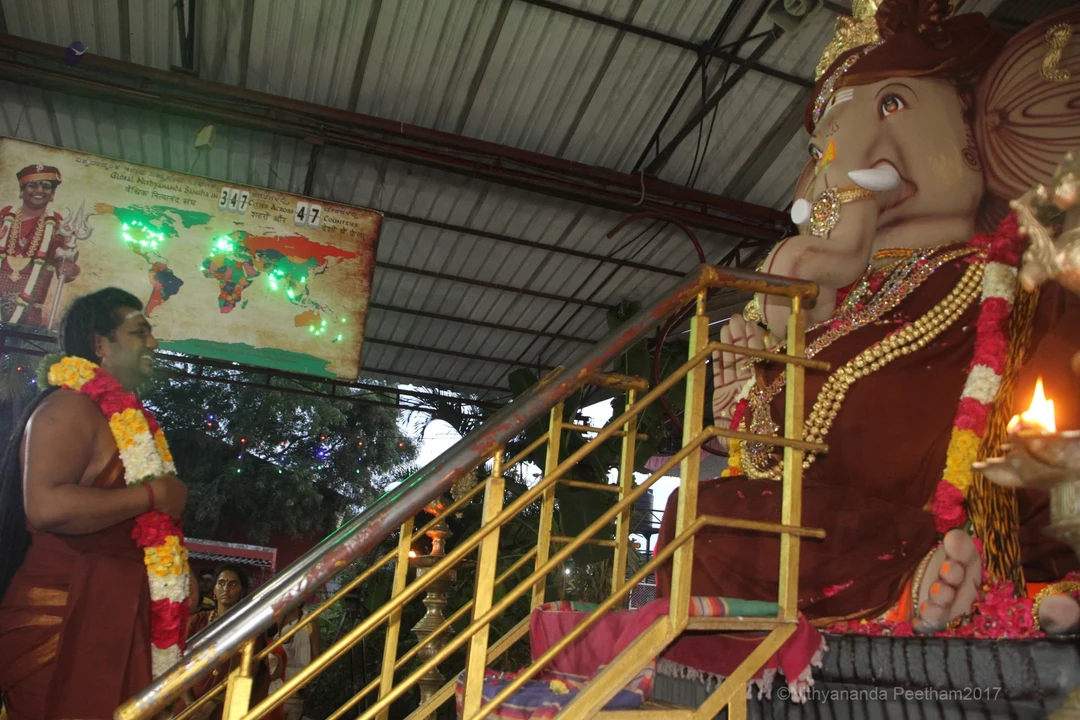
Today is the first day of Ganesha Brahmotsavam. The Supreme Pontiff of Hinduism HDH Bhagavan Nithyananda Paramashivam speaks on getting ready for the greatest spiritual happening Mahasadashivoham 2017 .The commencement of preparation for Mahasadashivoham will start on the auspicious Ganesh Chaturthi day. His Holiness conducted the Prana Pratishta of Lord Ganesha.

VideoAudio

Photos

Inner Awakening

Ganesha Brahmotsavam

http://nithyananda.org/sites/default/files/photo-gallery/2017-08-Aug-16-nithyananda-diary_bengaluru-adheenam_ganesha-brahmotsavam-prana-prathishtha_IMG_0198.JPG

Puja

Thulabharam

Sakshi Pramana

Nithyananda Times Video

Flyer

https://scontent-lax3-2.xx.fbcdn.net/v/t1.0-9/20770327_1479696948784817_3756924043582019113_n.jpg?_nc_cat=111&_nc_sid=110474&_nc_ohc=6kiTEQ1oneYAX_4au_J&_nc_ht=scontent-lax3-2.xx&oh=0972cac47fb3639ee03859f7e5a6ff4f&oe=5FA1A378

Link to Facebook

https://www.facebook.com/ParamahamsaNithyananda/posts/1479697368784775 https://www.facebook.com/ParamahamsaNithyananda/posts/1479697368784775 https://www.facebook.com/ParamahamsaNithyananda/photos/a.431339900287199/1479696948784817/ https://www.nithyananda.org/photo-gallery/nithyananda-diary-16th-august-2017-nithyananda-peetham-bengaluru-aadheenam-inner-awake#gsc.tab=0

Photos Of The Day:

Ganesh-Brahmotsav

Padapuja

Tulabharam

Photos Of The Day:

Mandala-Process

01-Glimpse-of-IA

02-Mandala-process

01-Ganesh-brahmotsava-pranapratishta

02-Pada-Puja

03-Tulabharam

,

Photos from this day

View all 877 photos

Ganesha Brahmotsavam
54 photosSource gallery
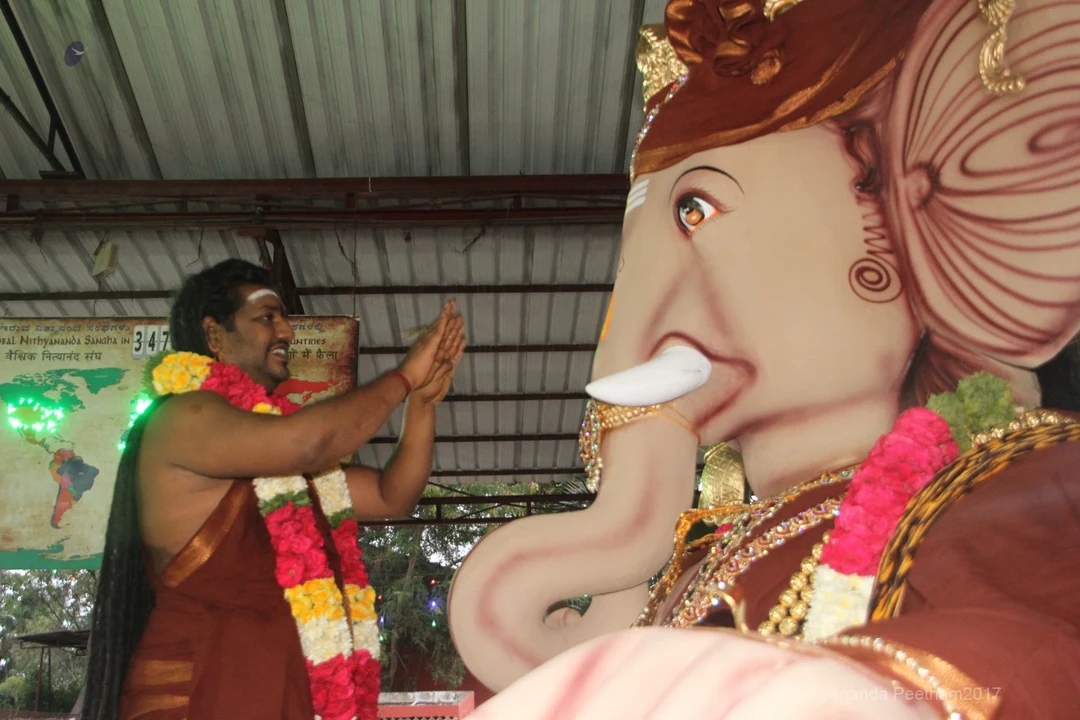
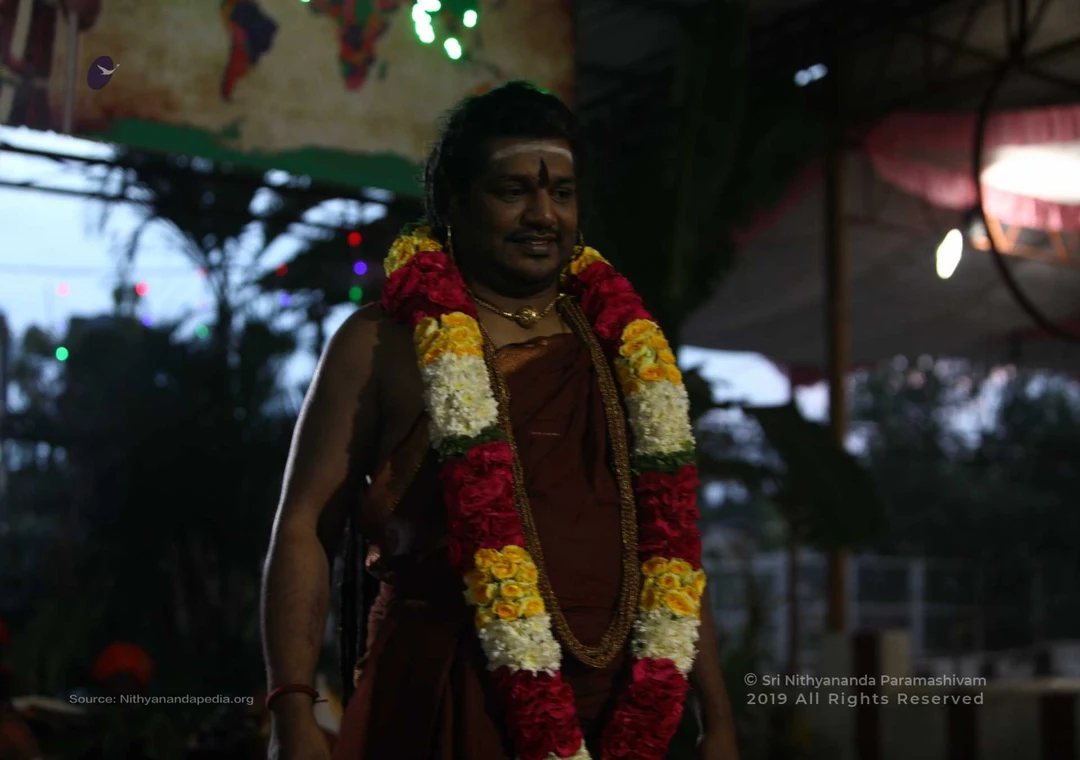
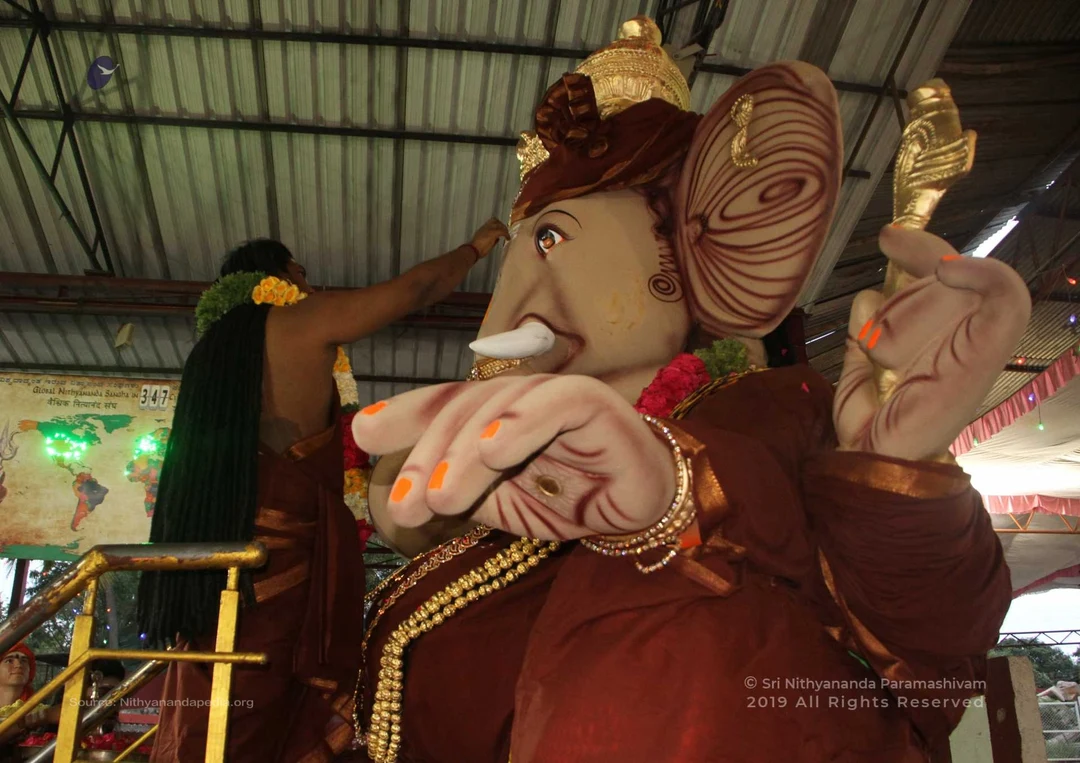
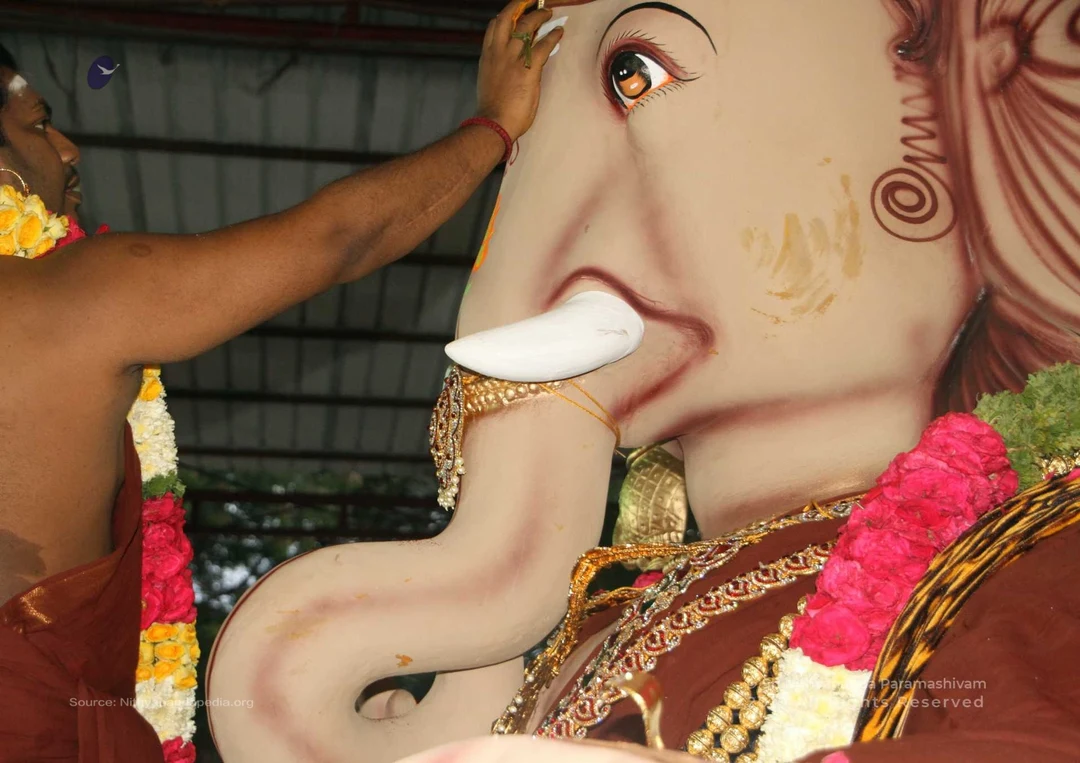
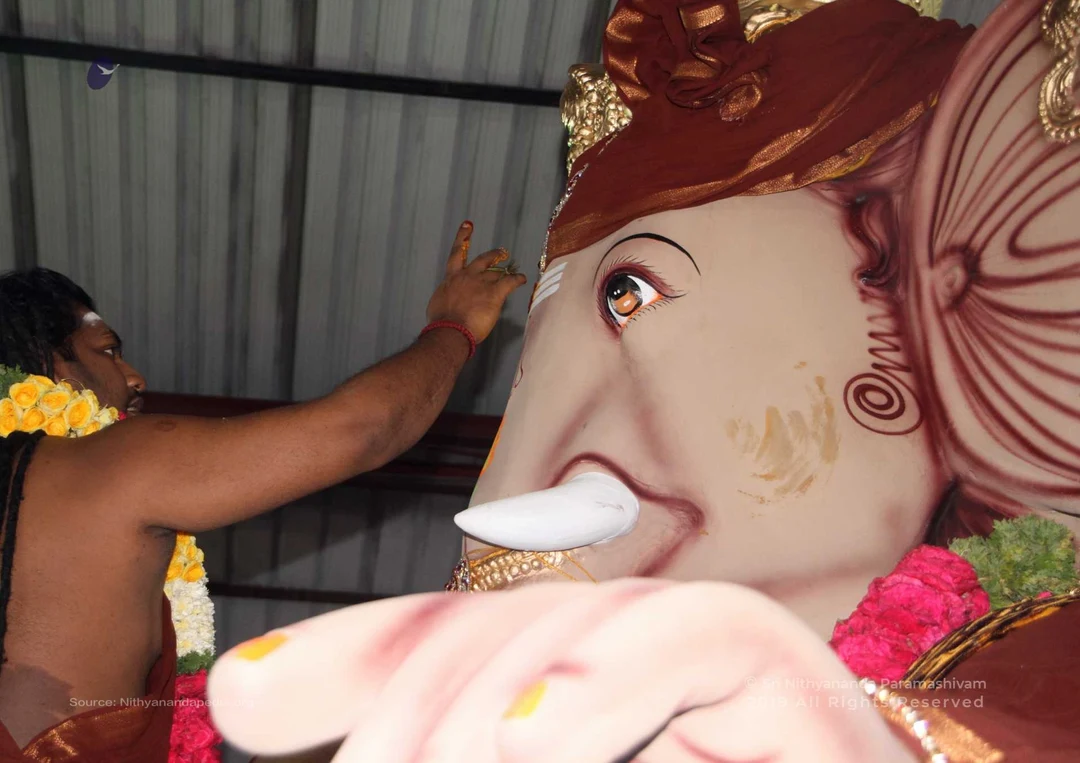
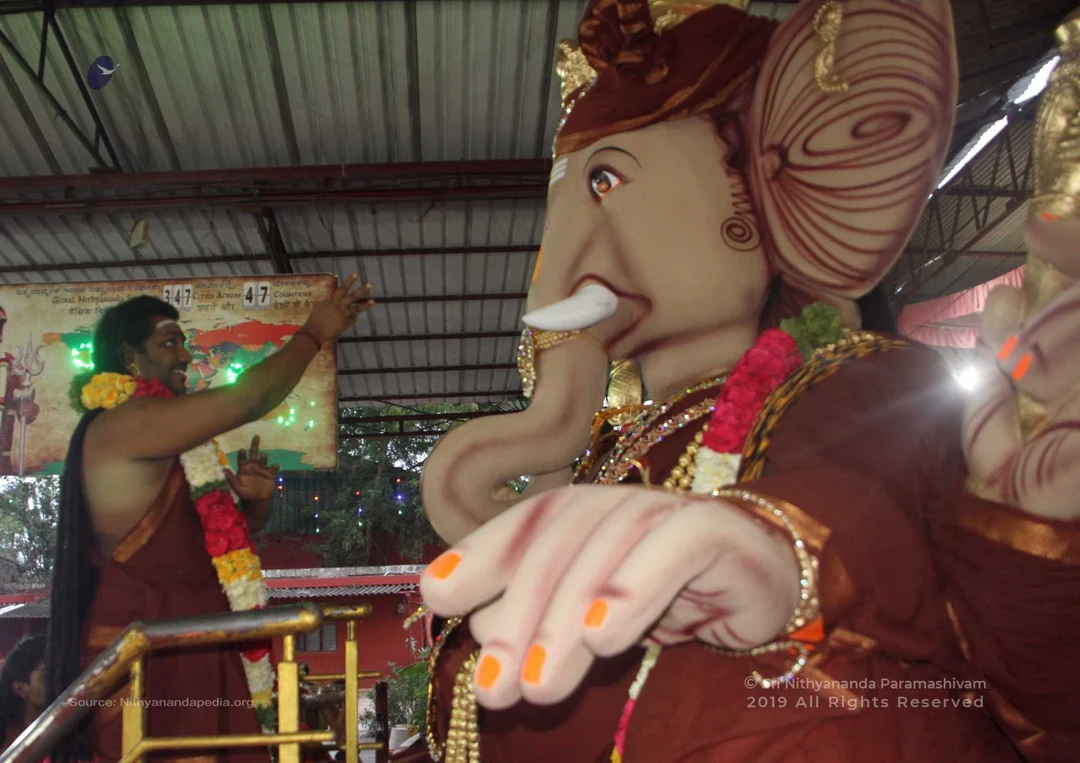
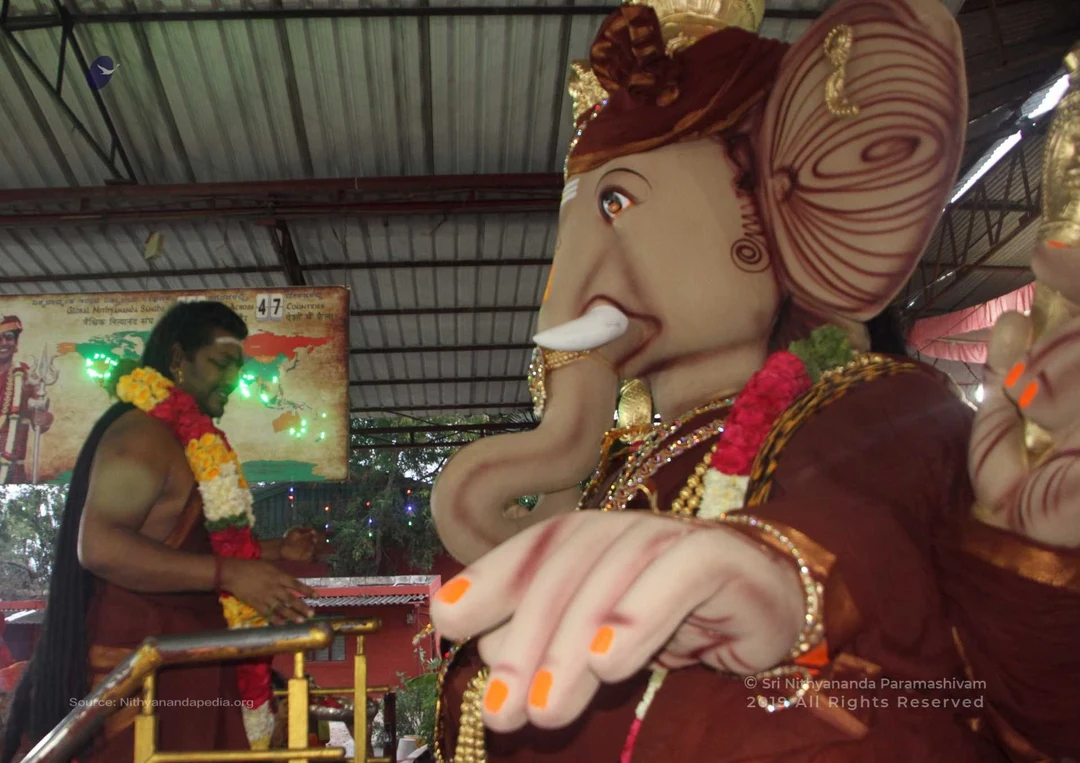
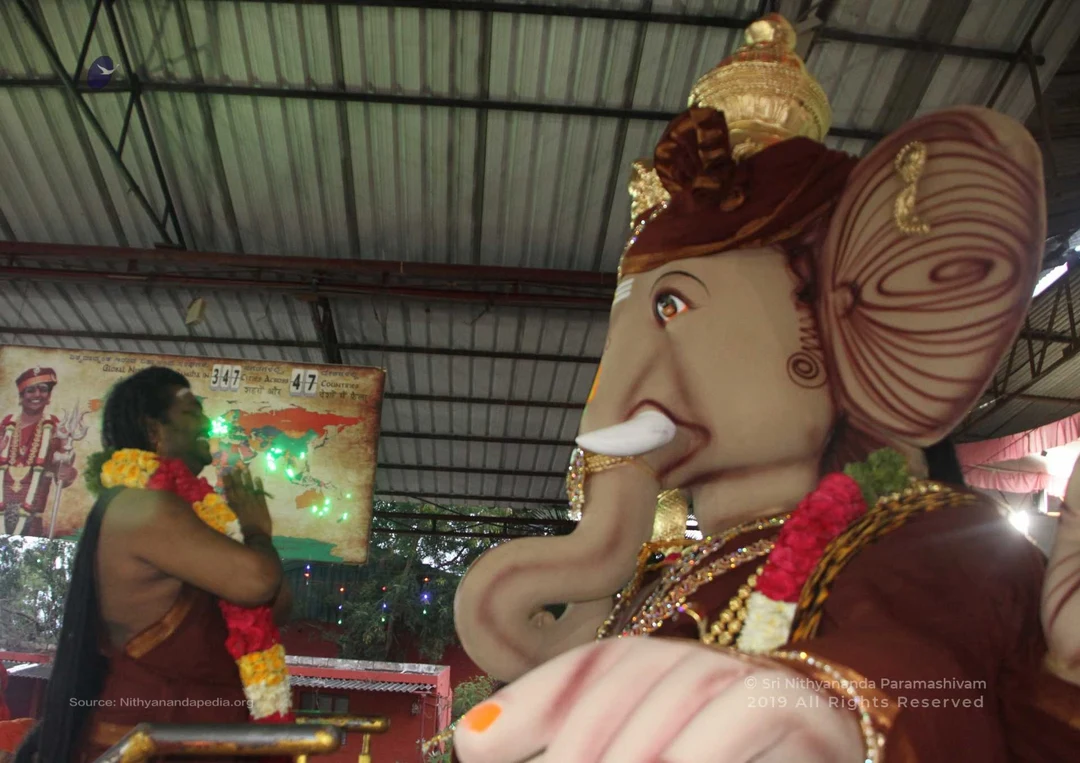
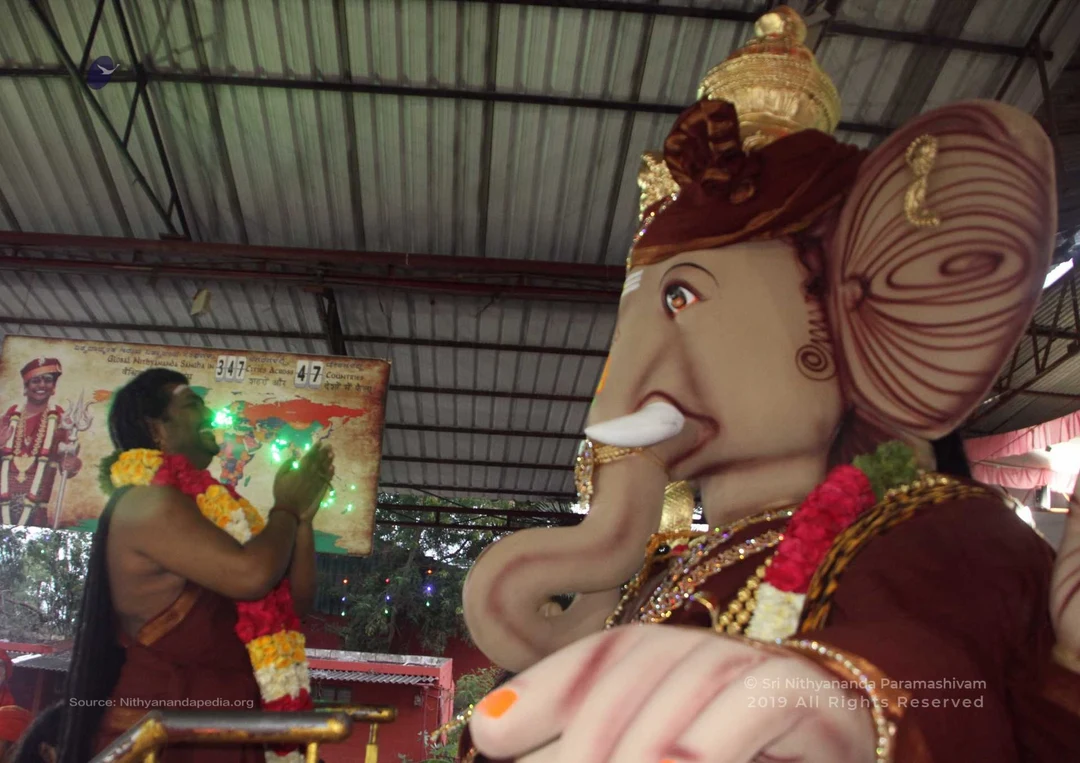
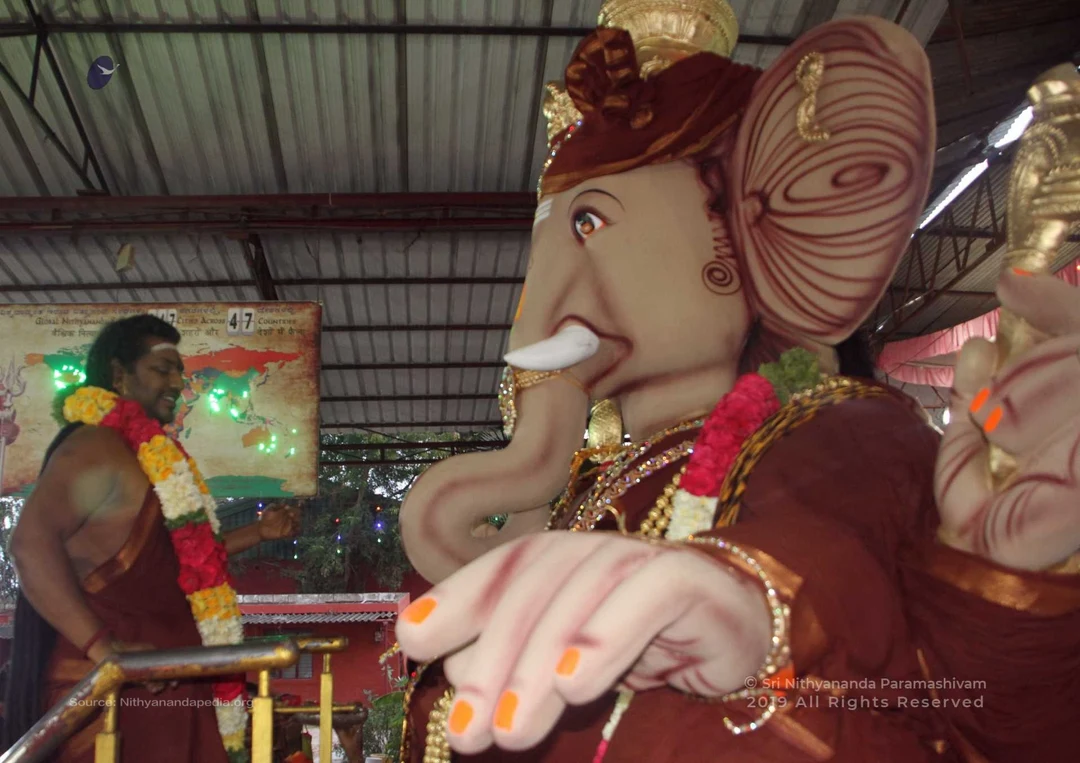
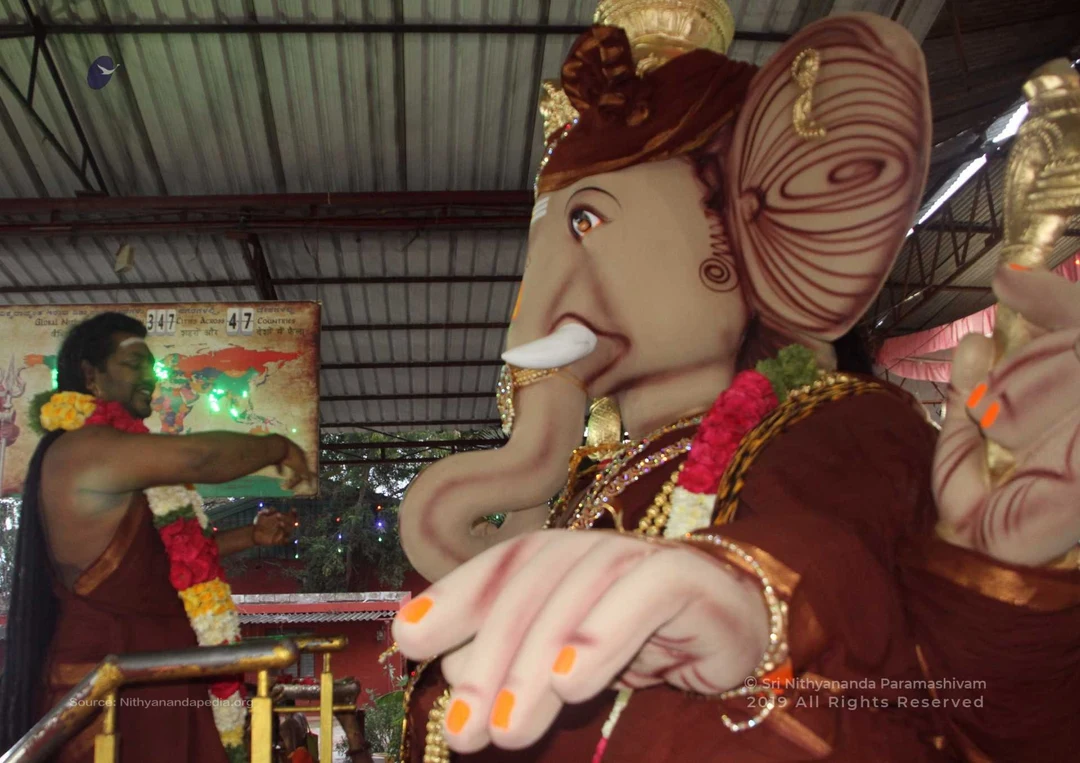
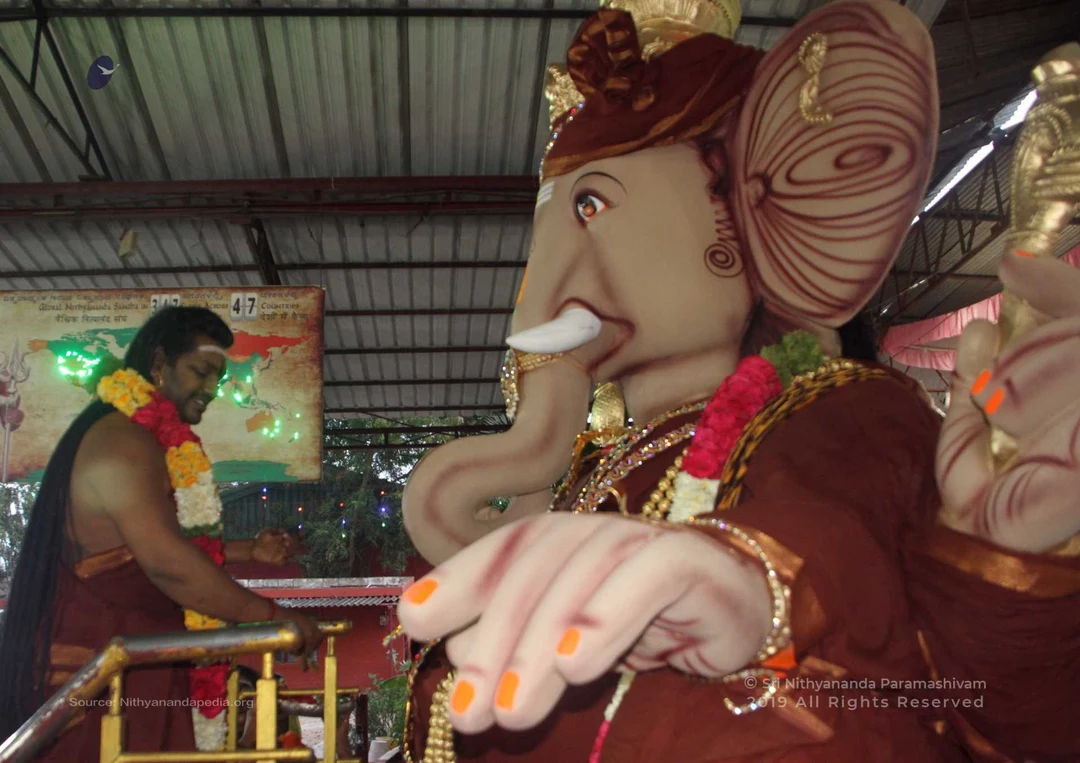
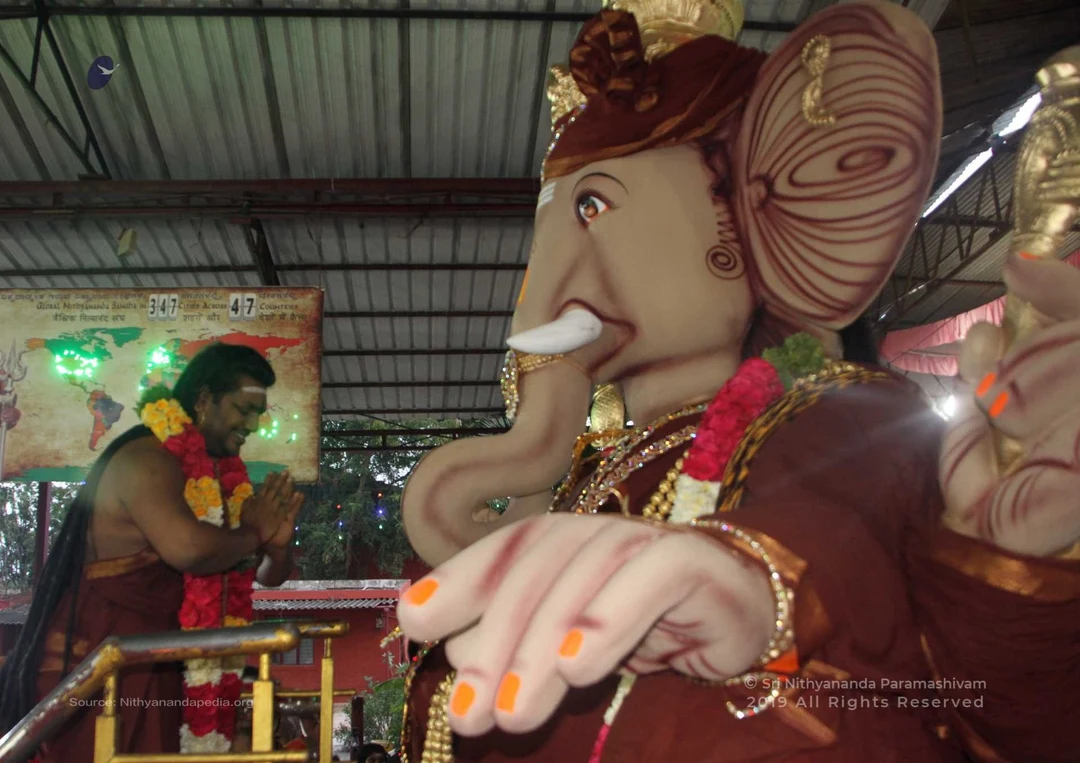
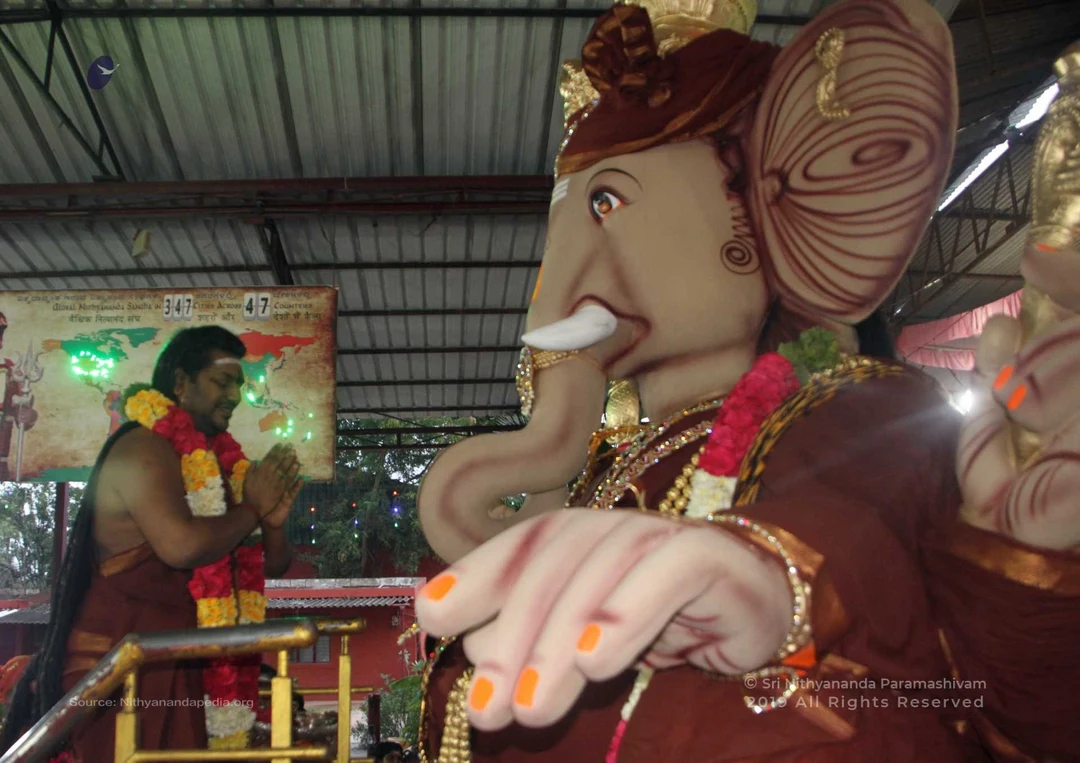
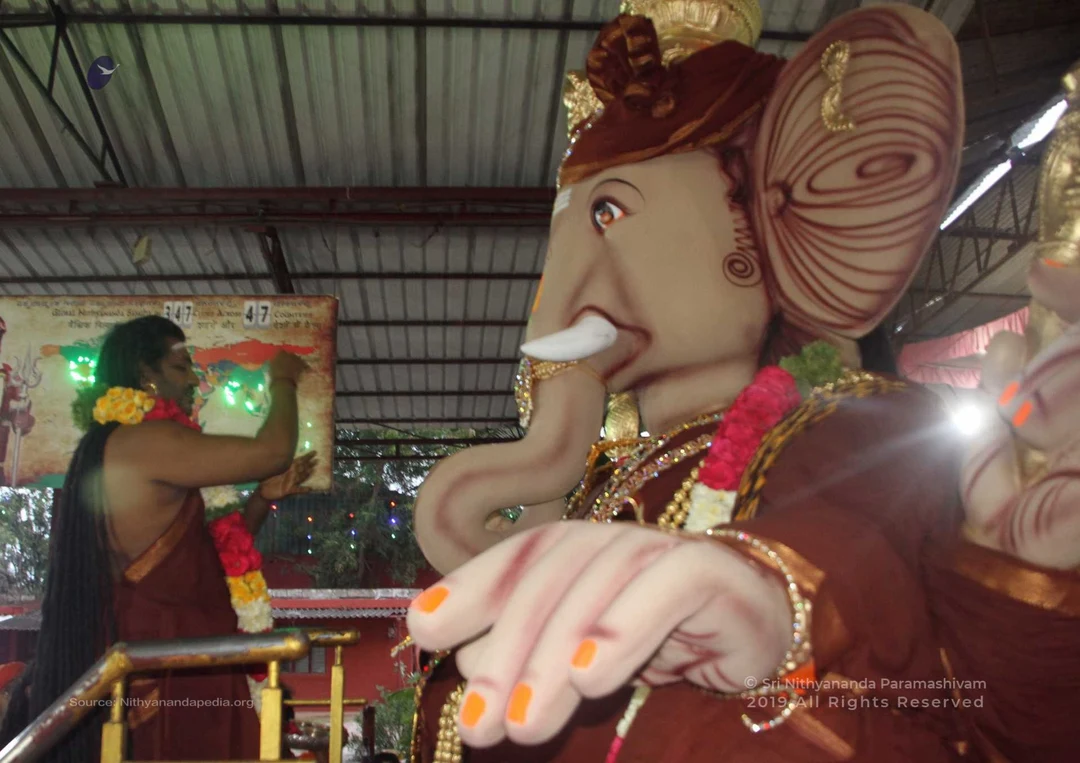
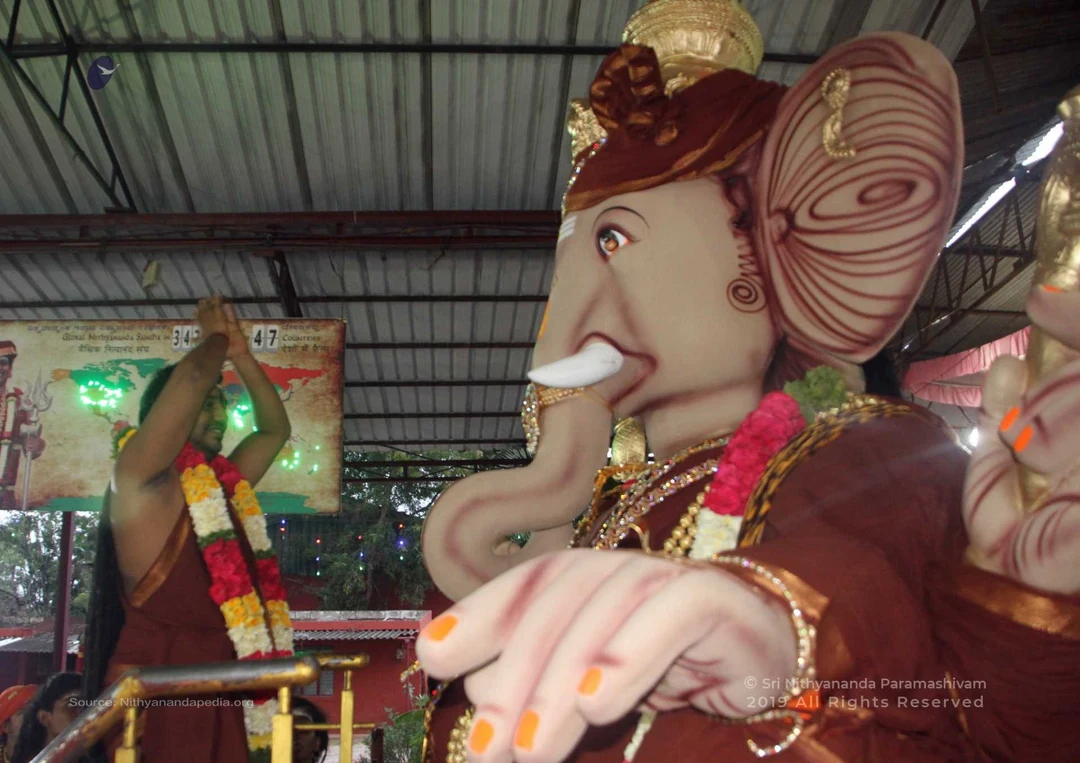
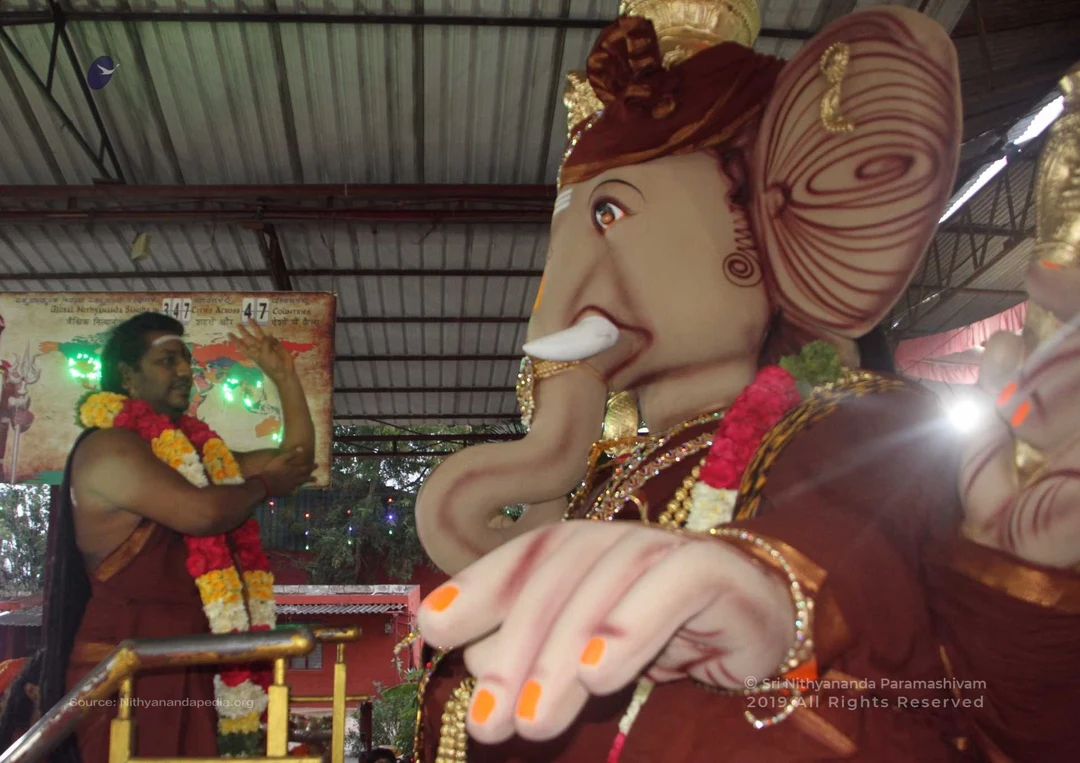
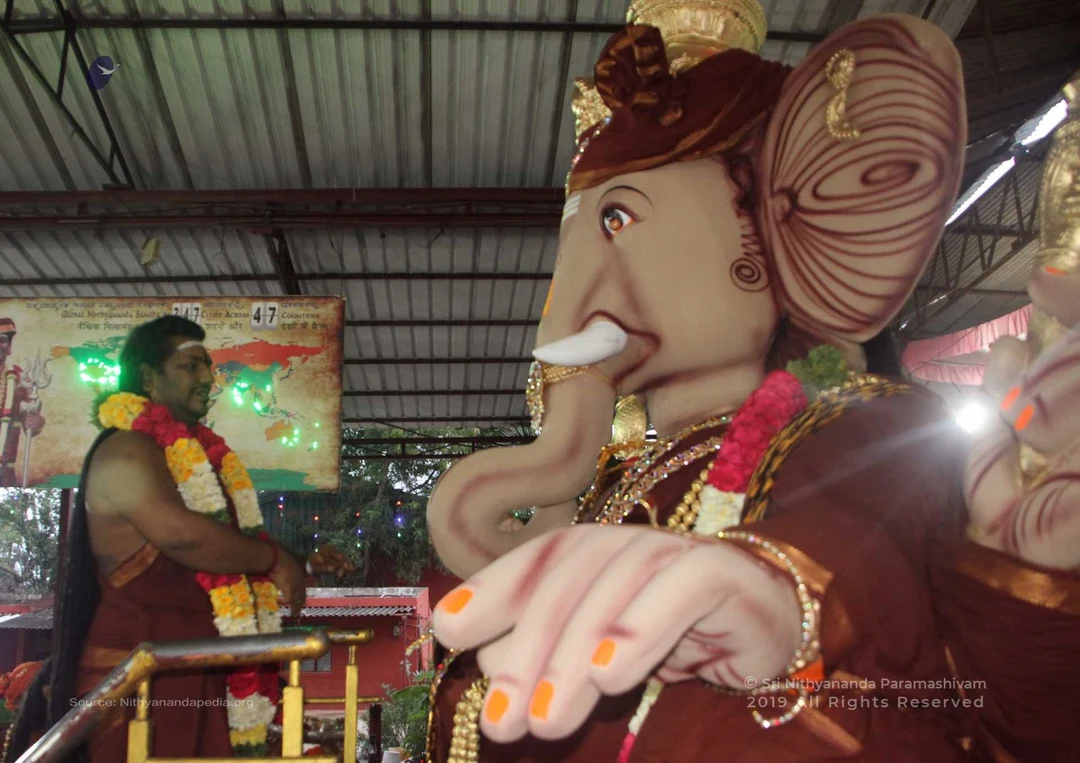
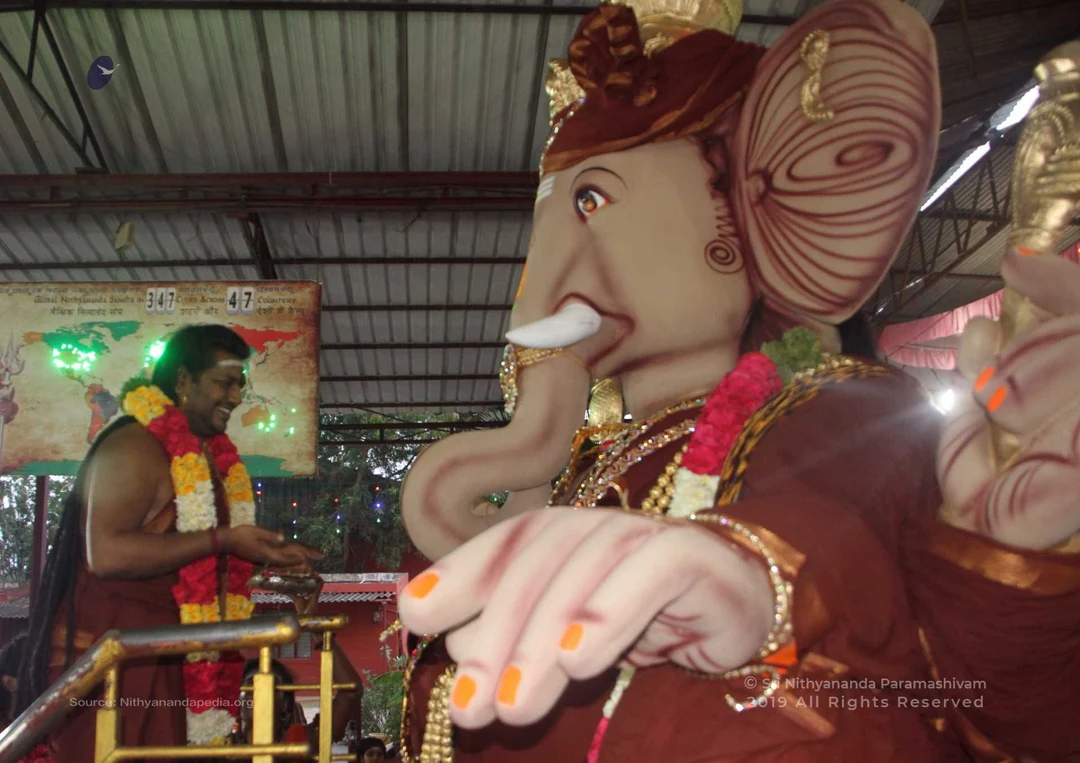
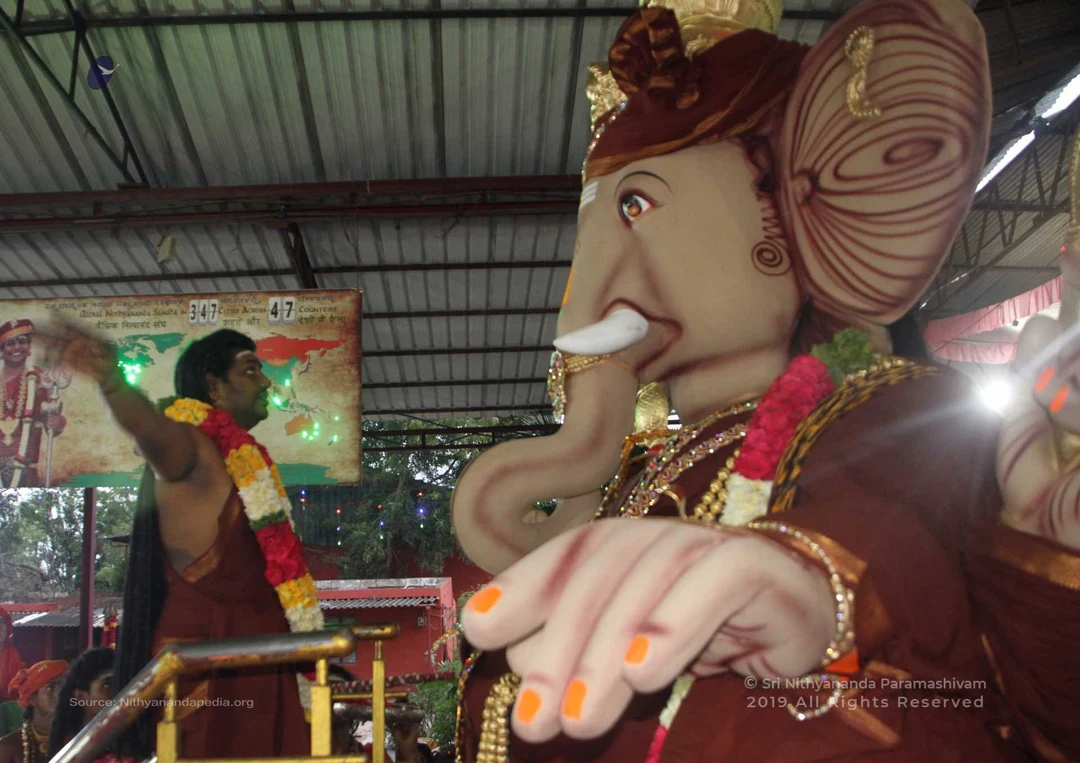
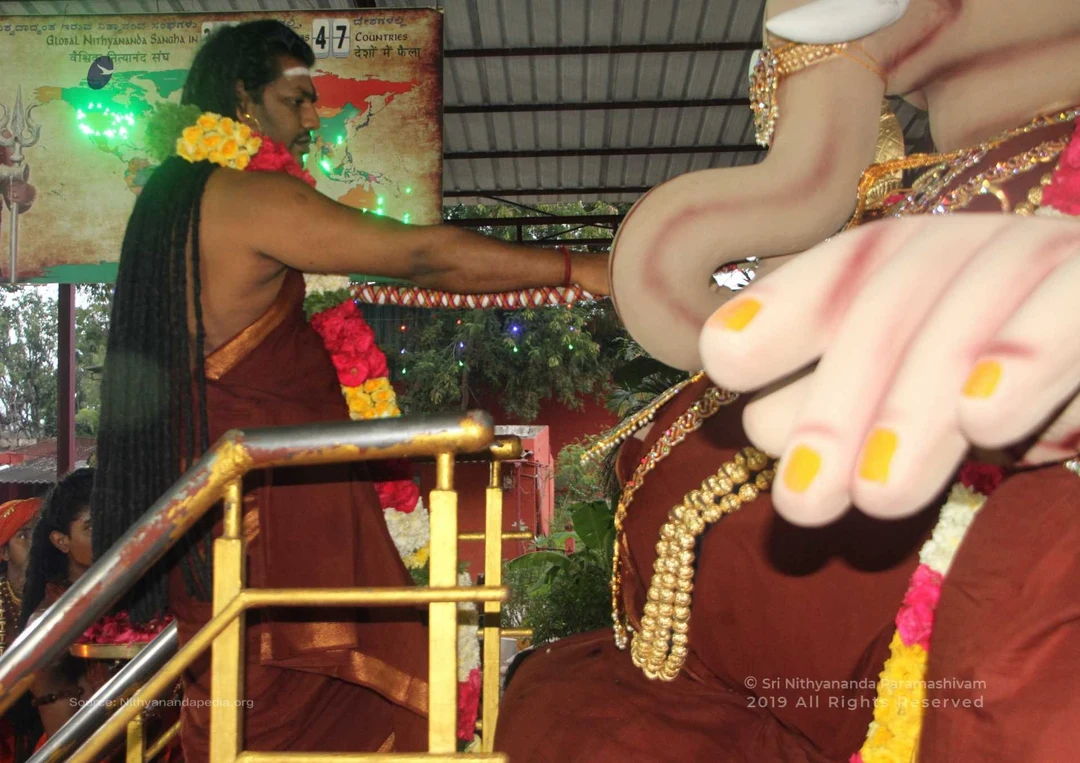
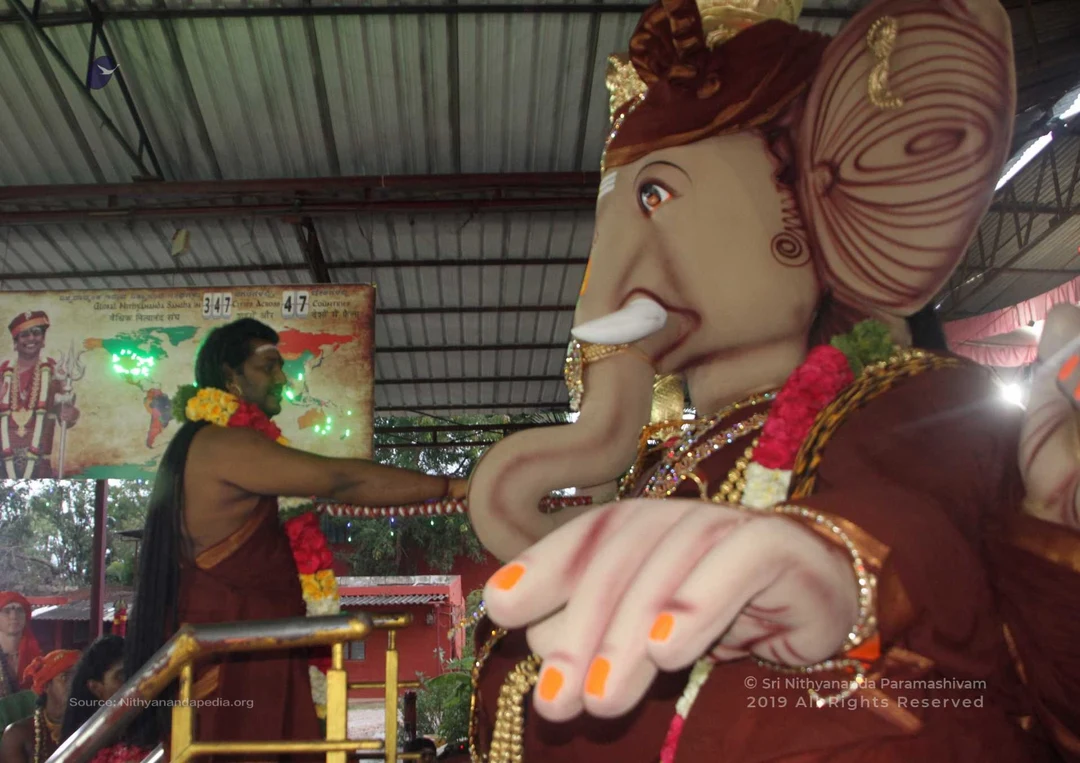
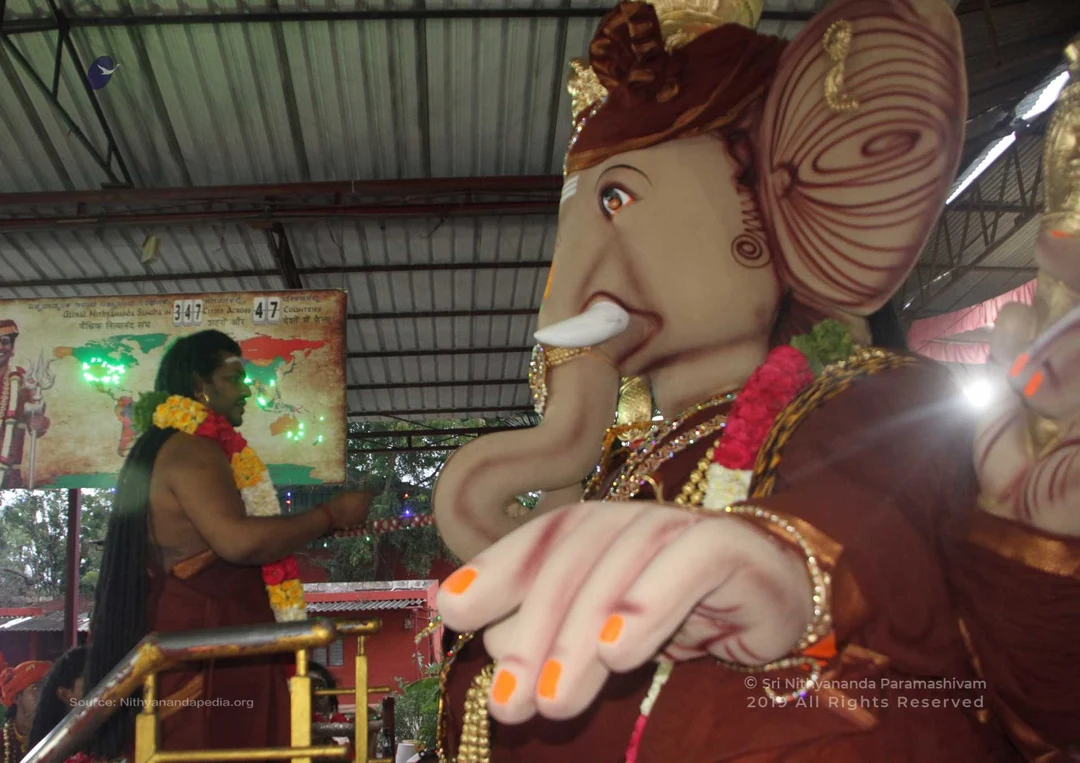
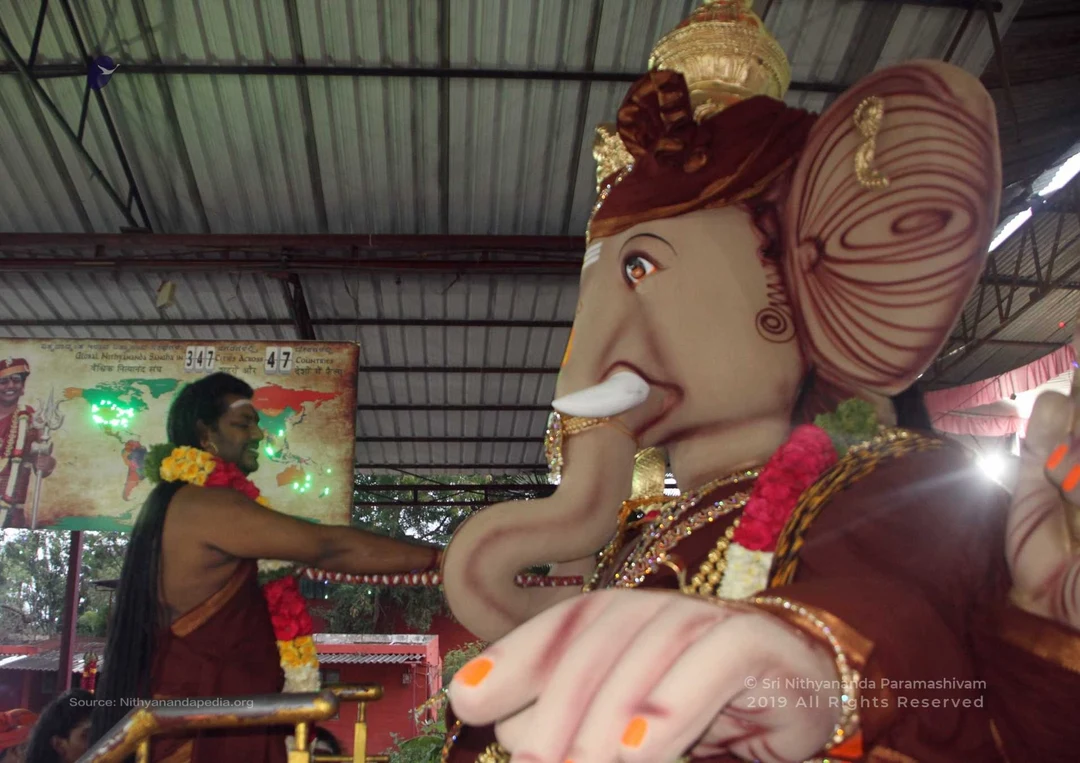
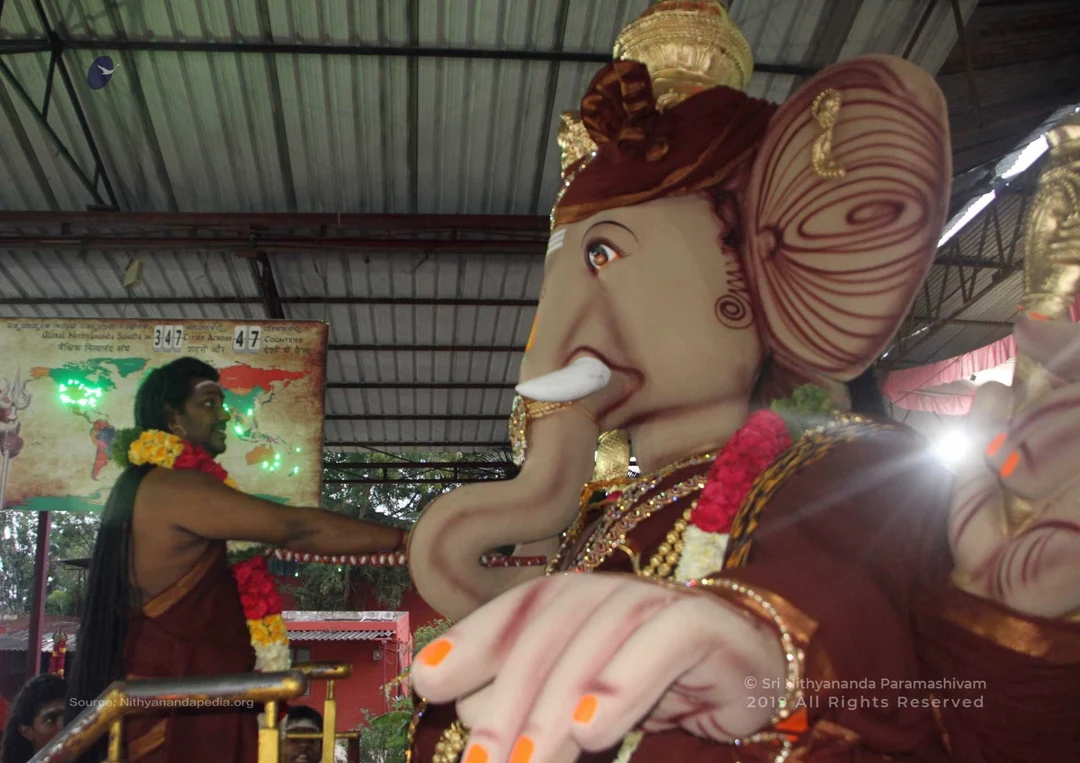
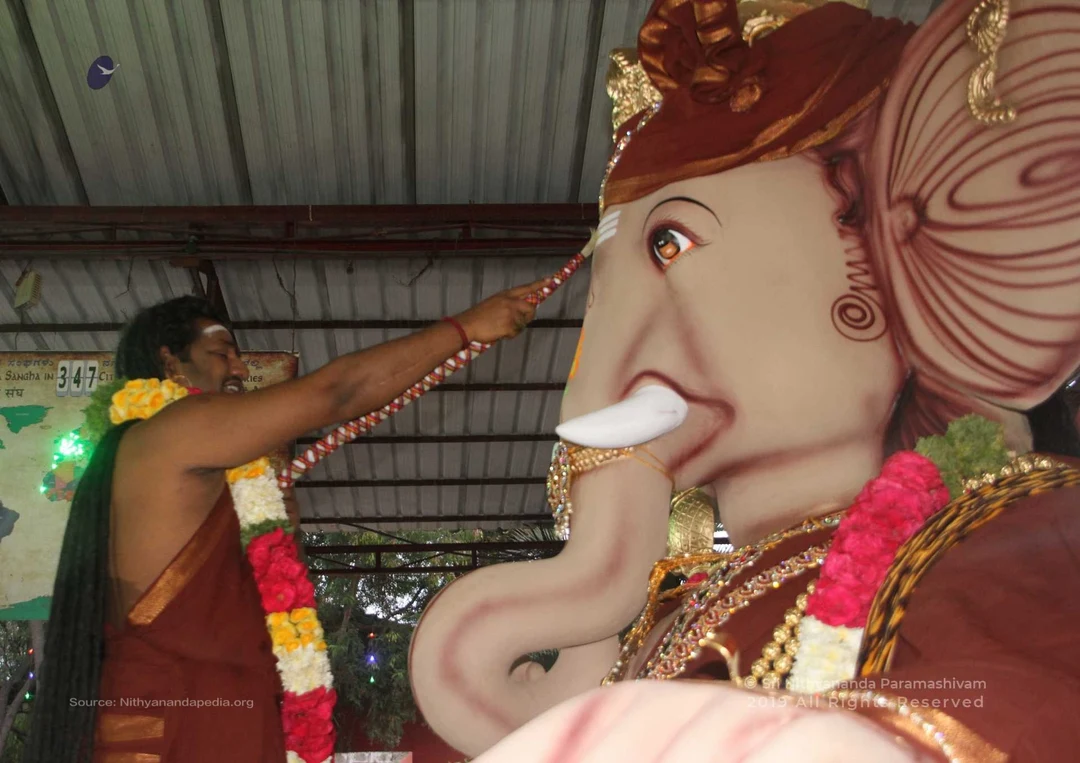
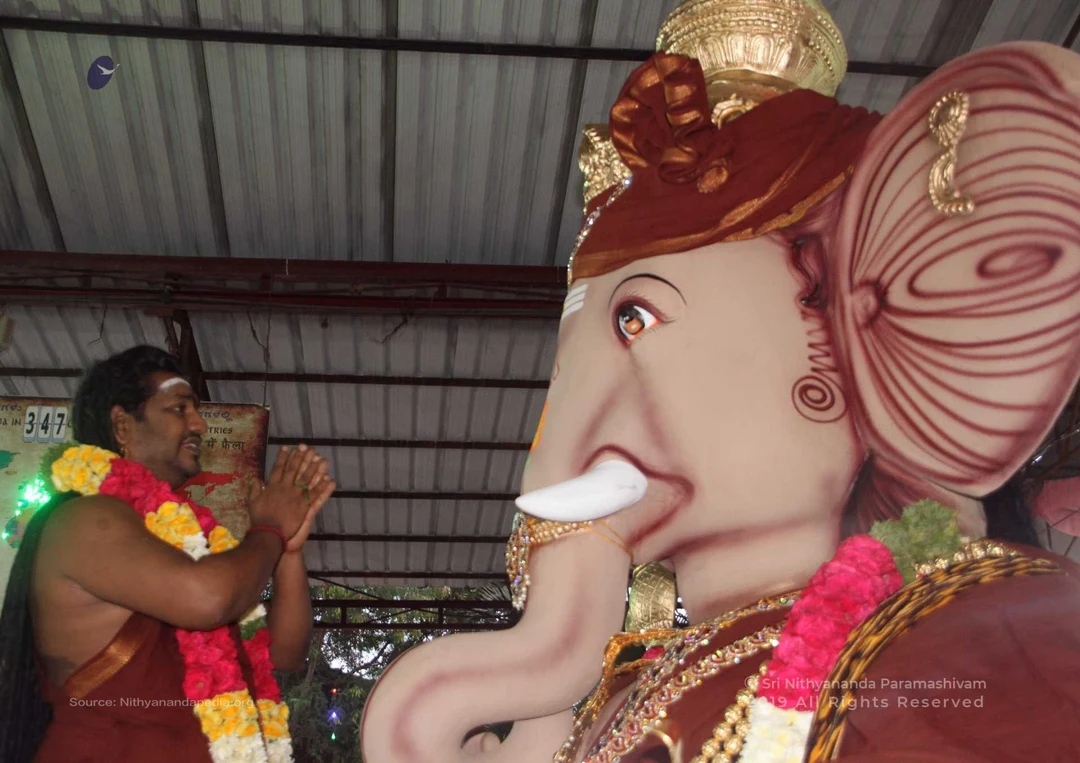
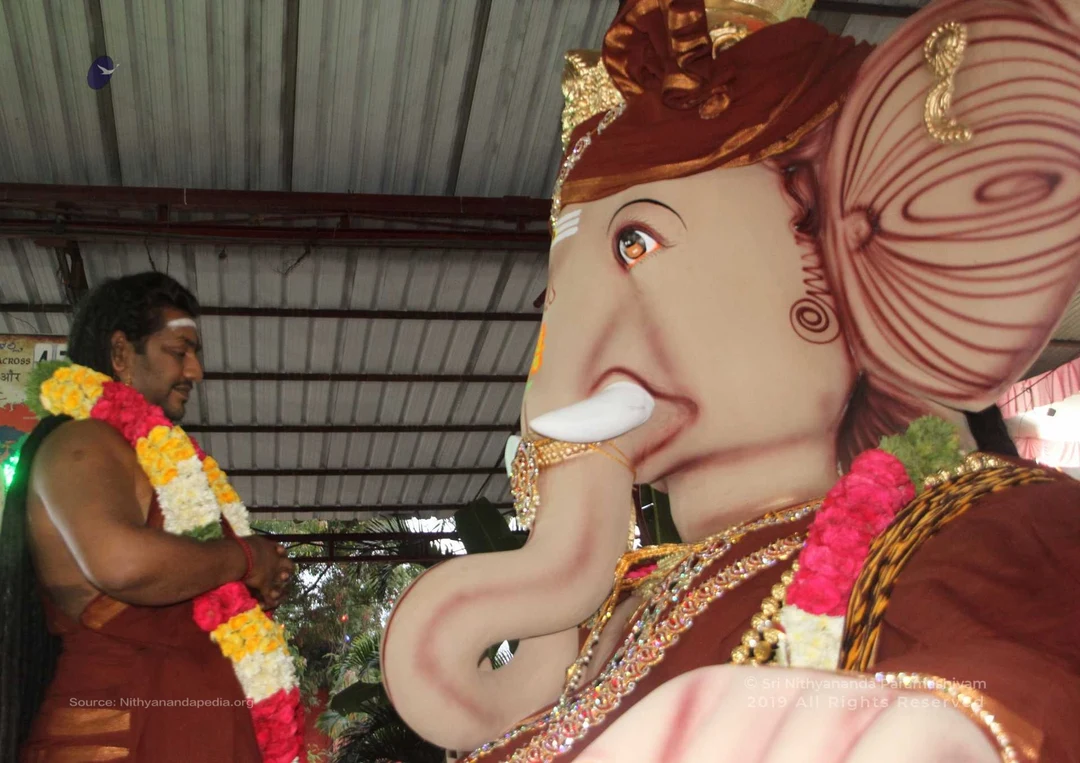
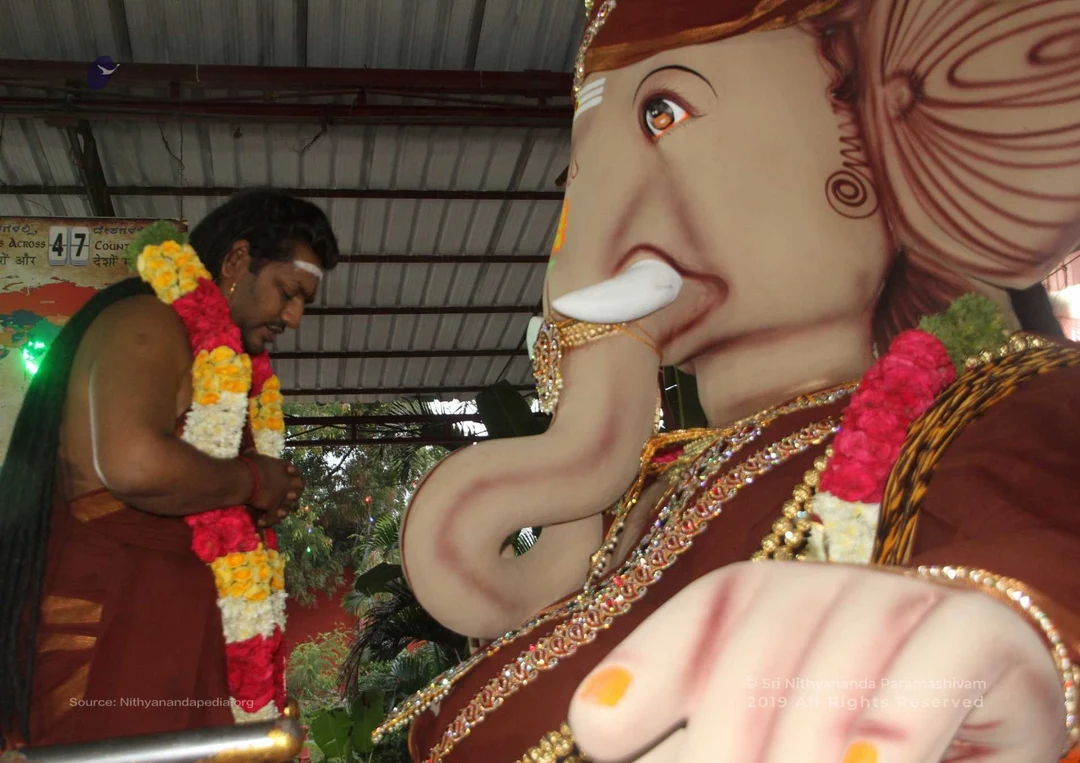
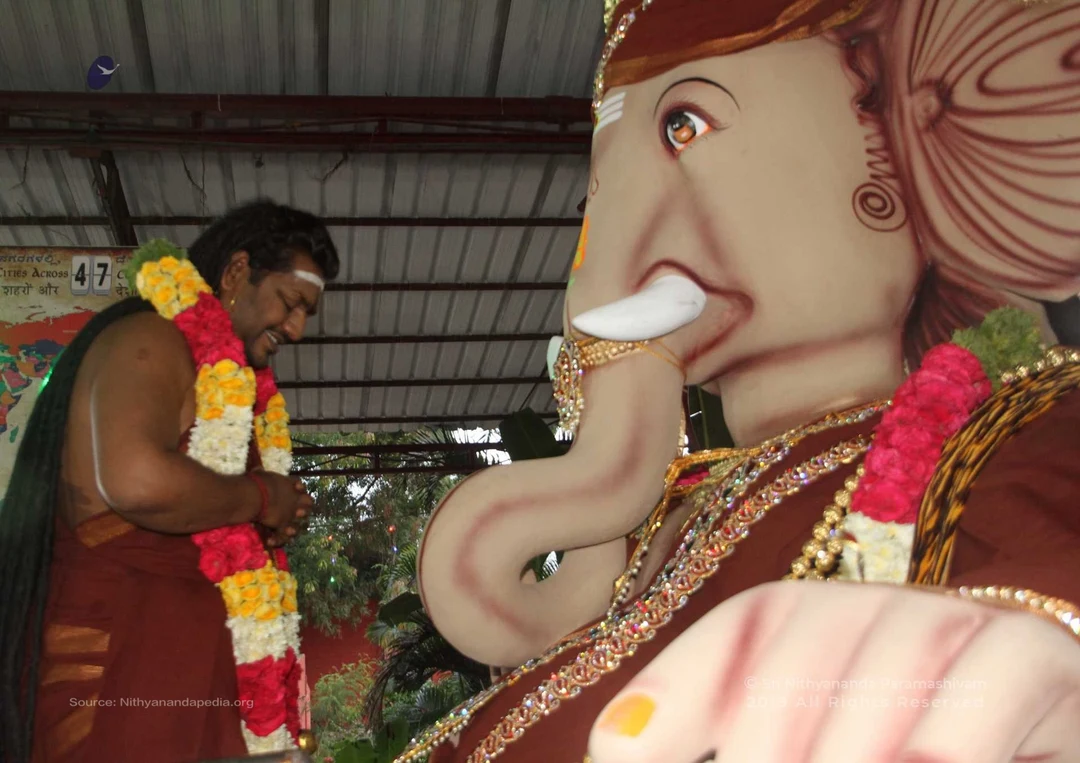
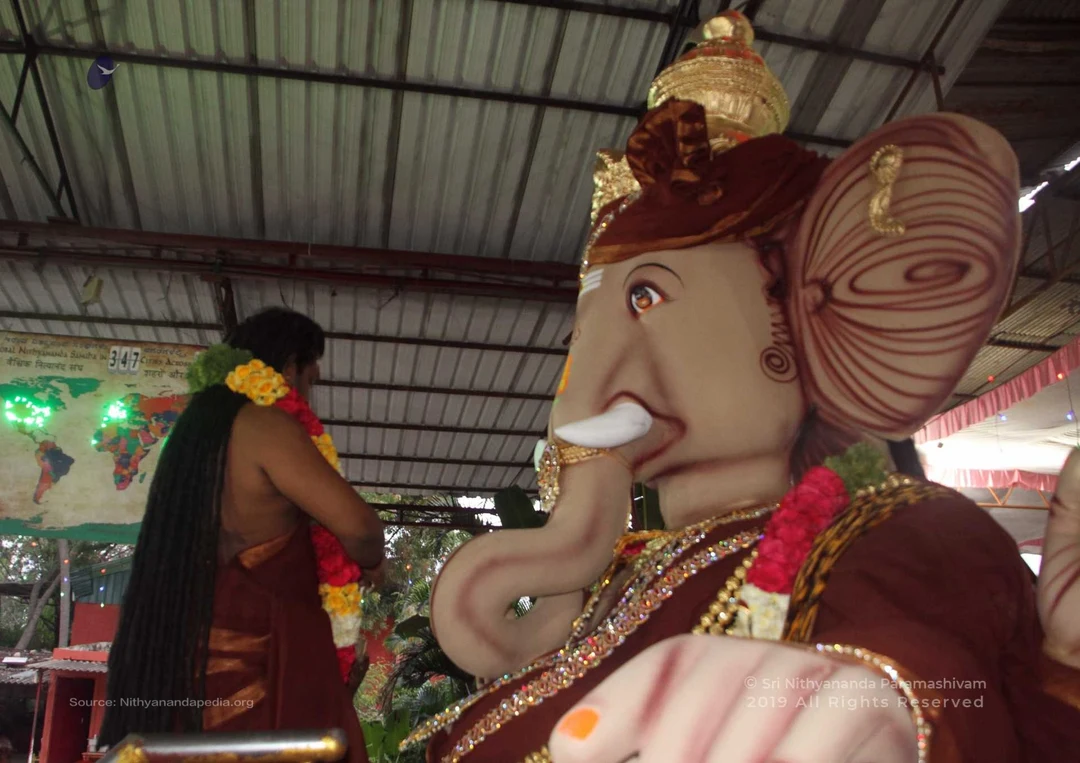
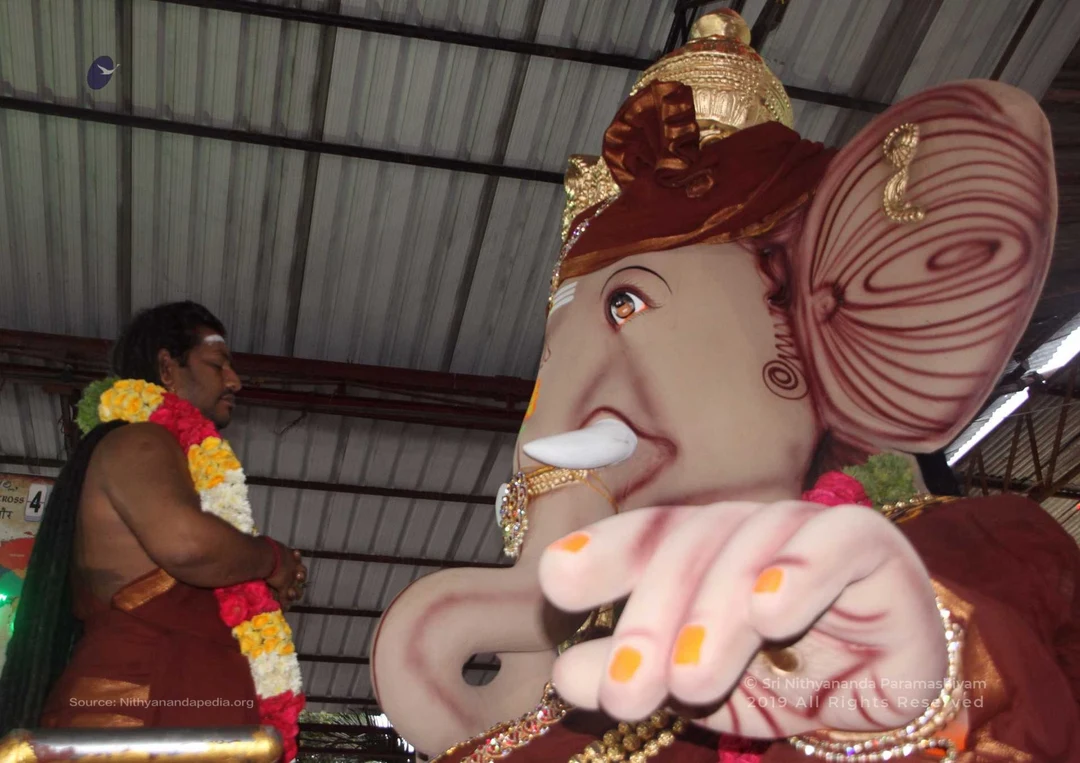
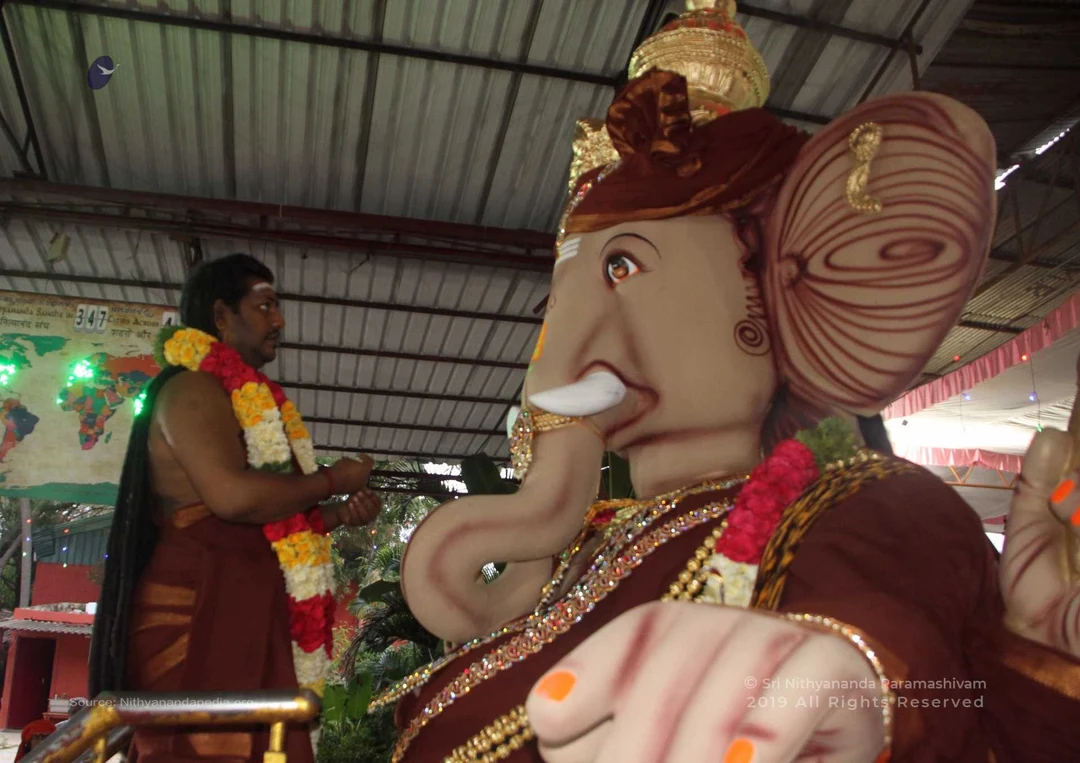
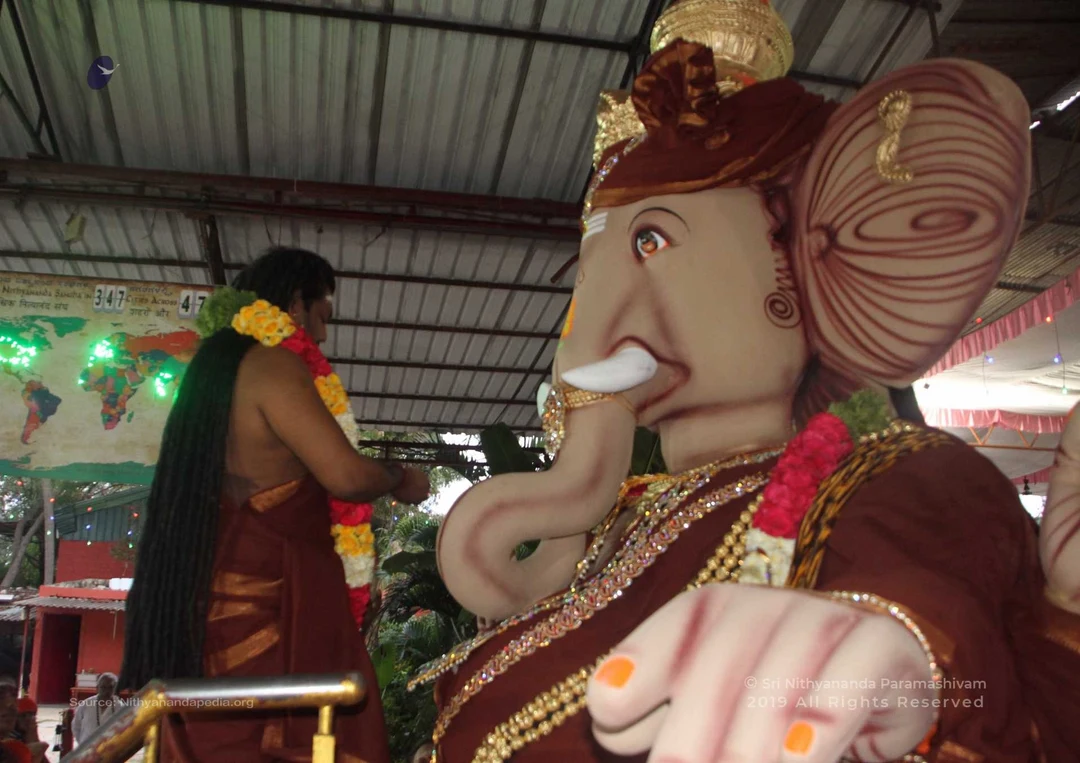
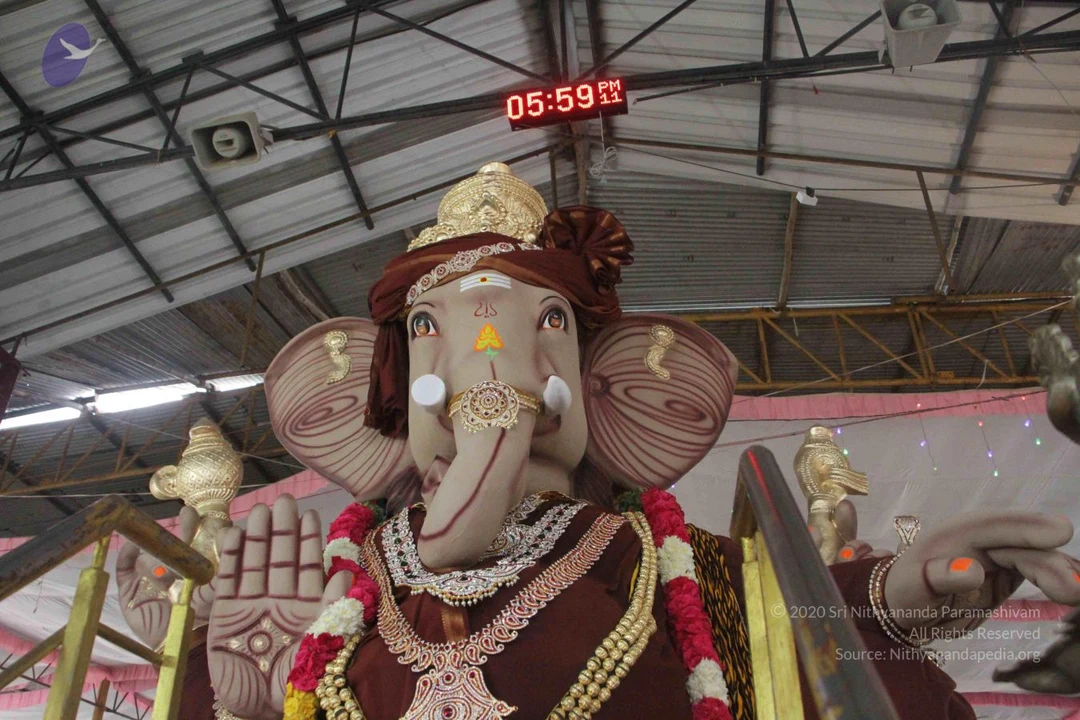
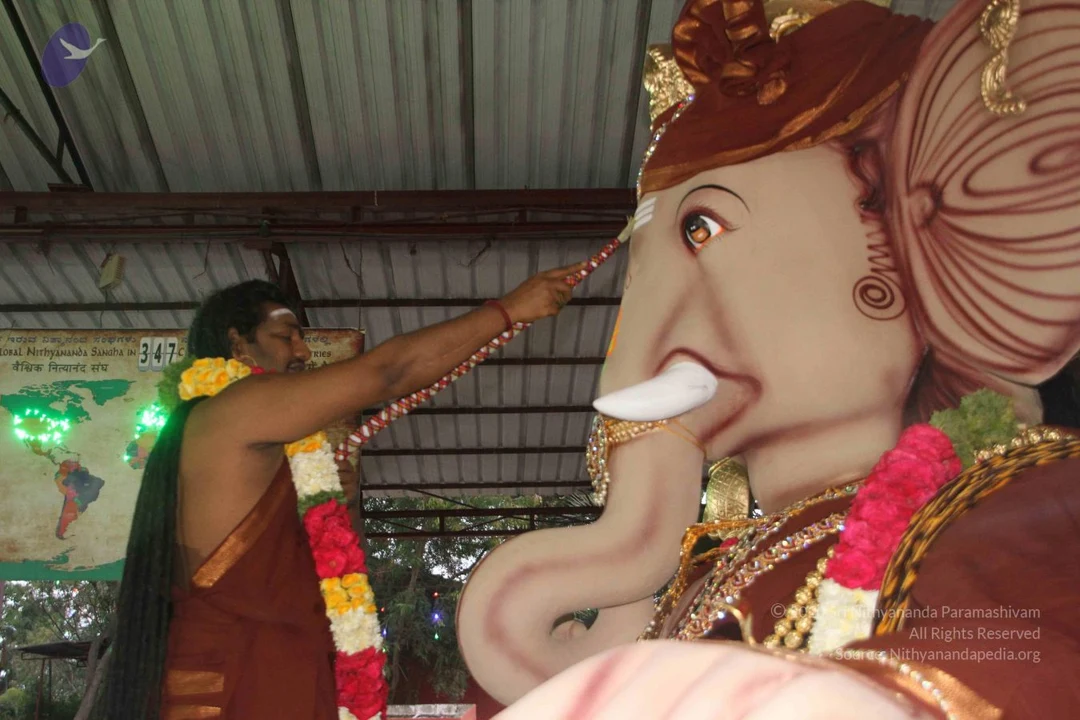
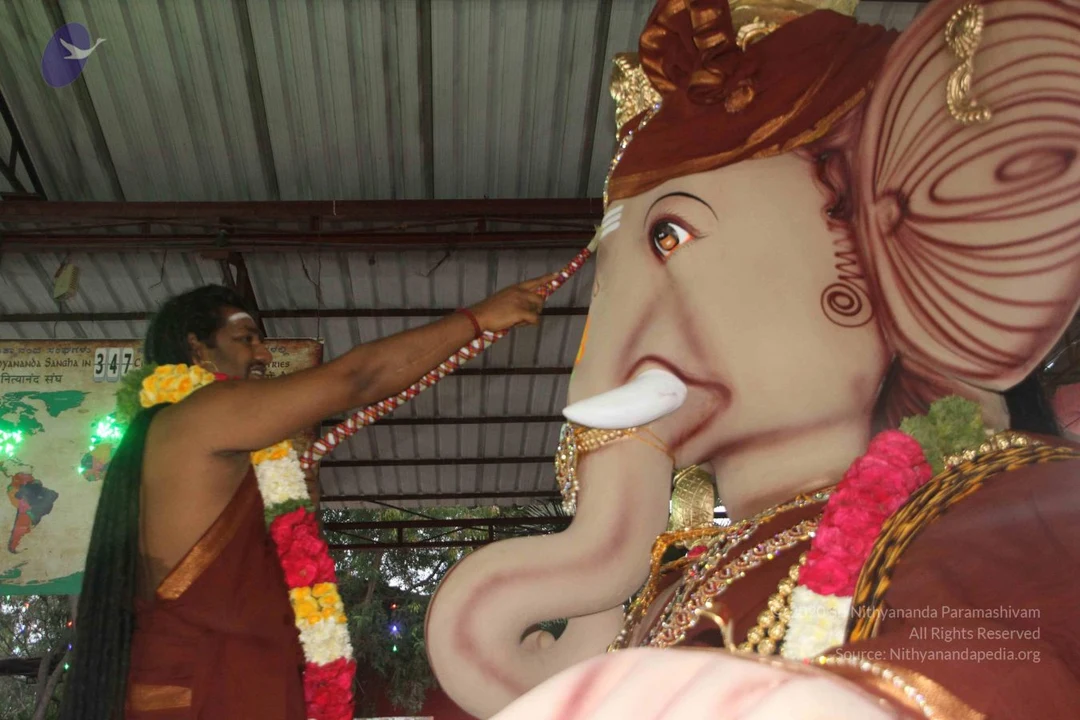
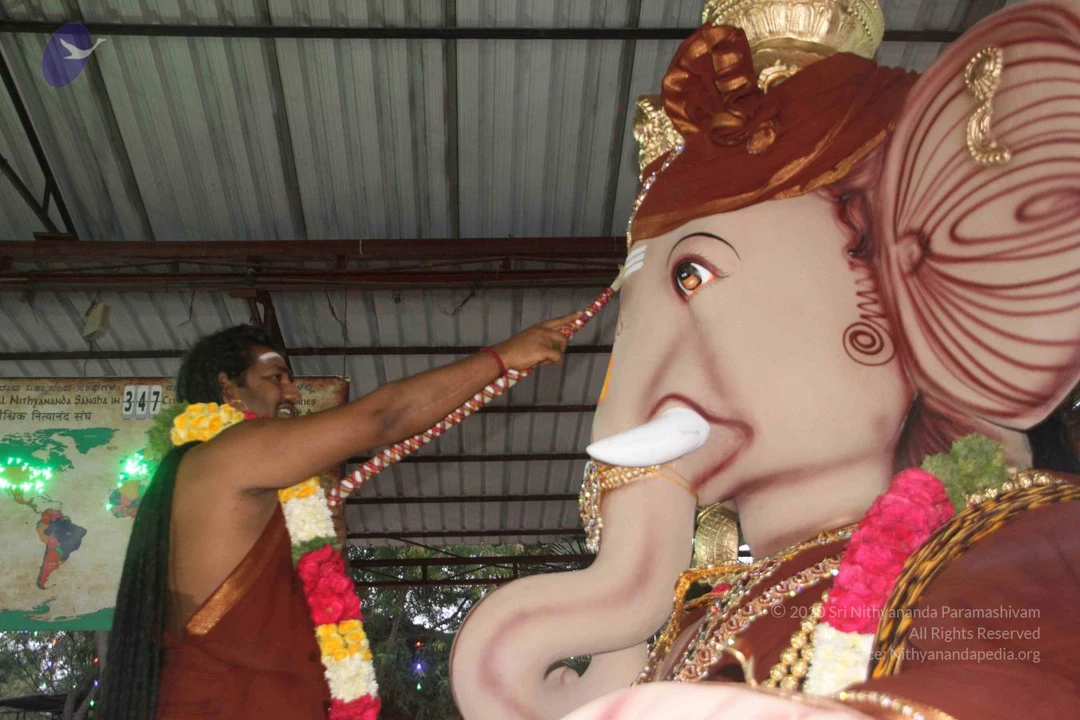
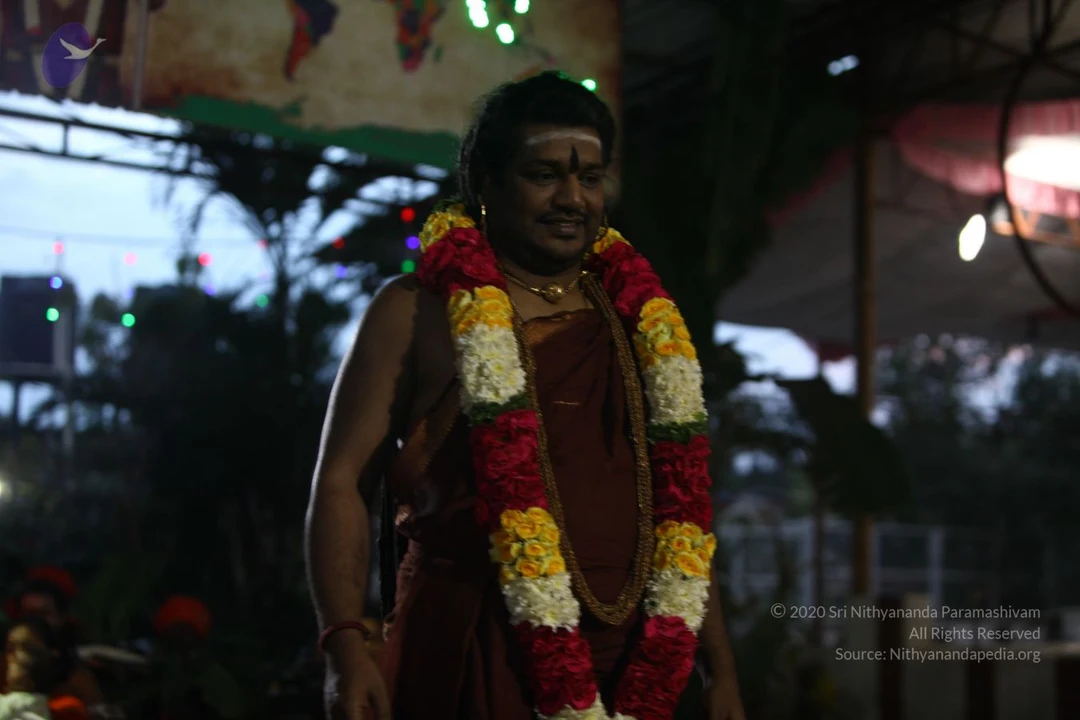
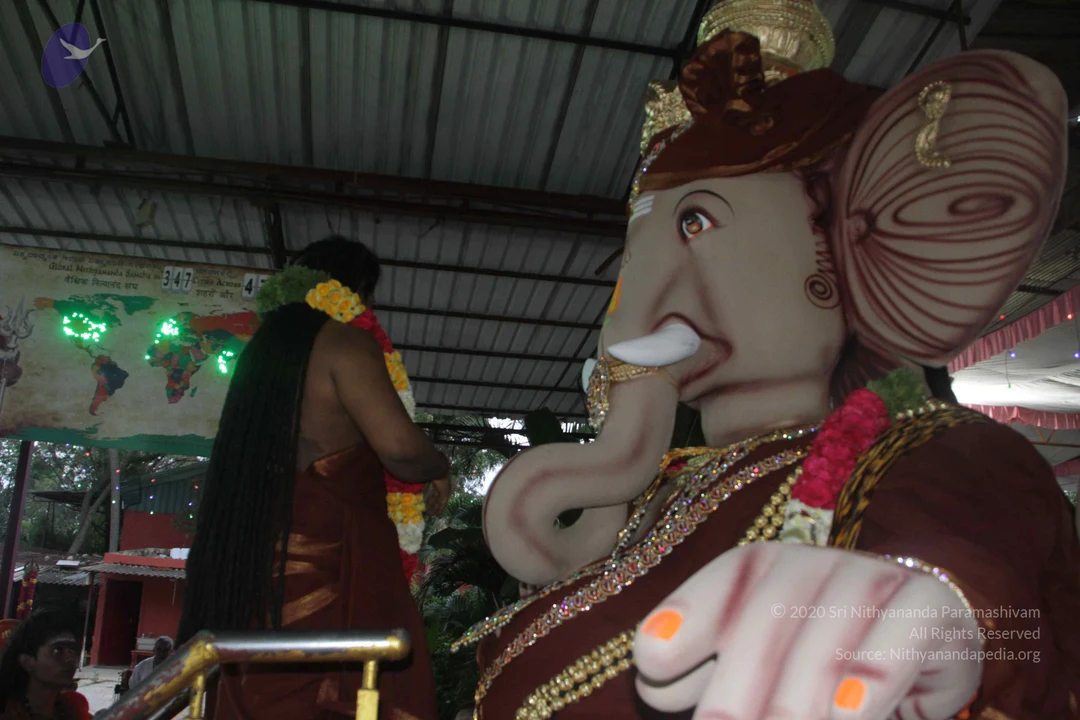
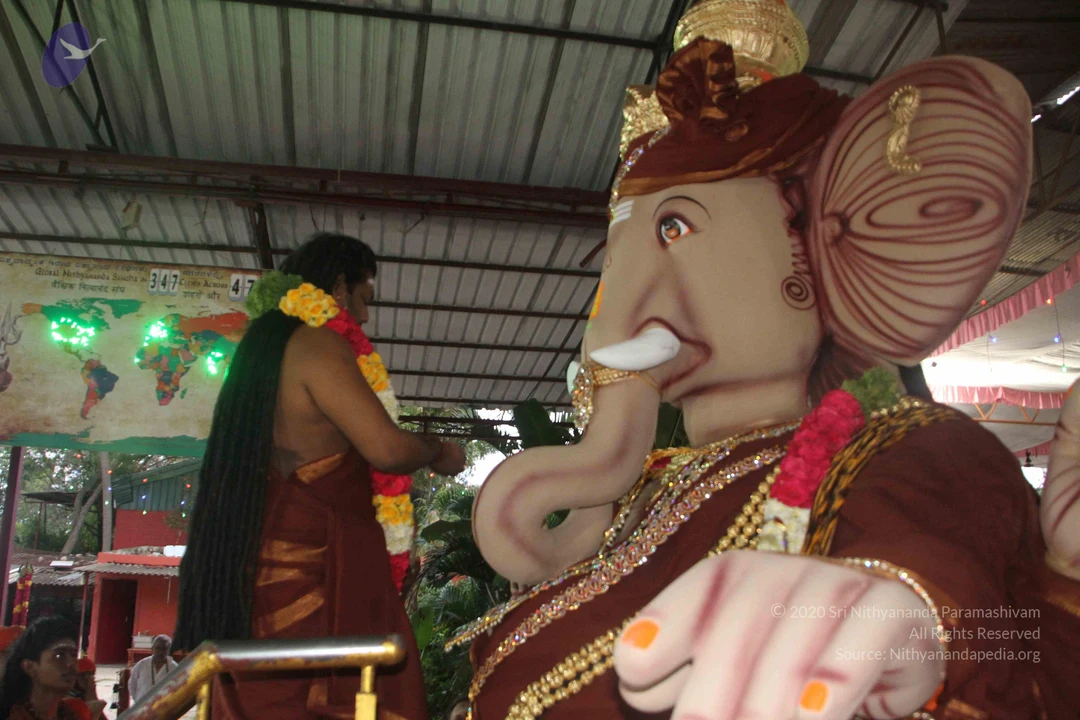
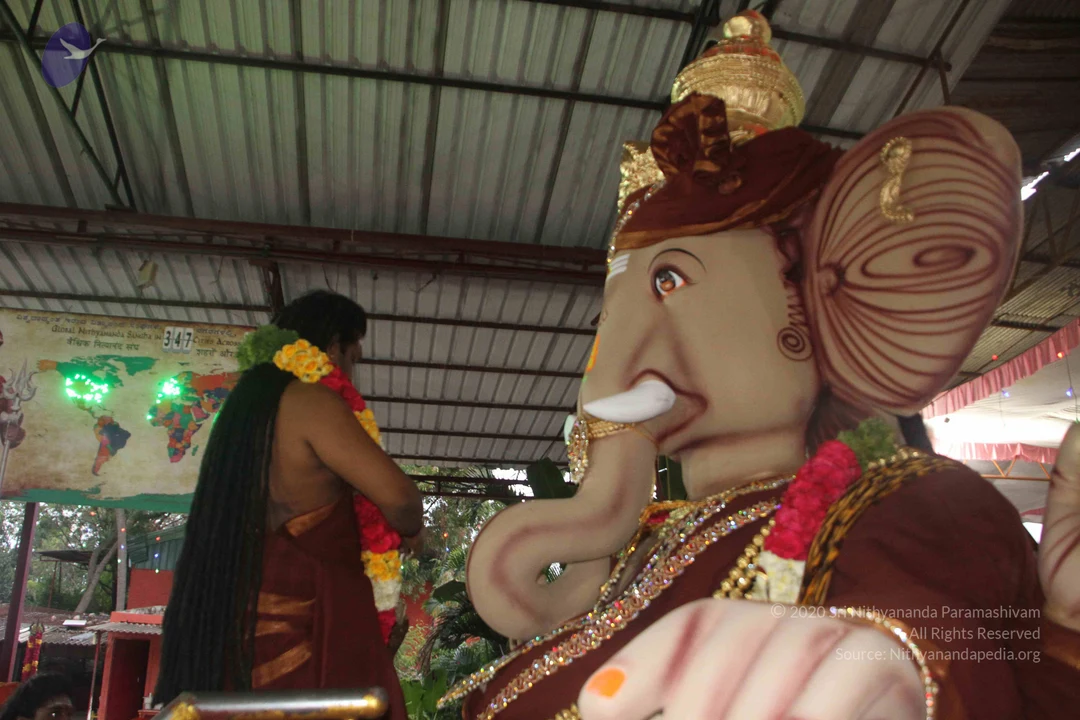
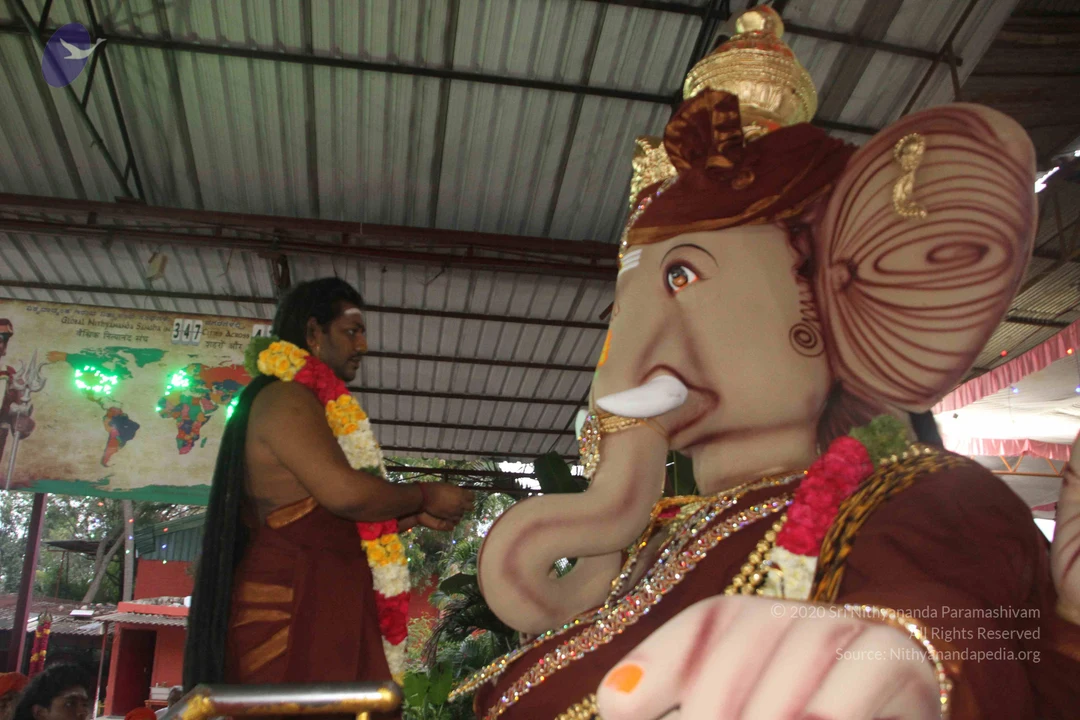
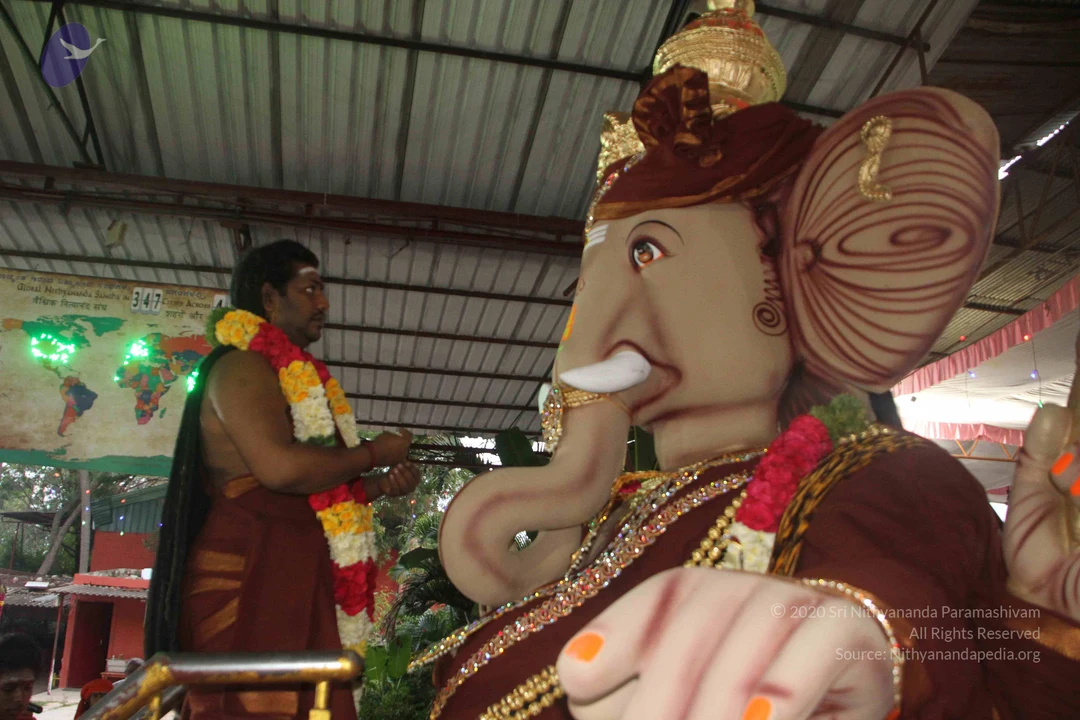
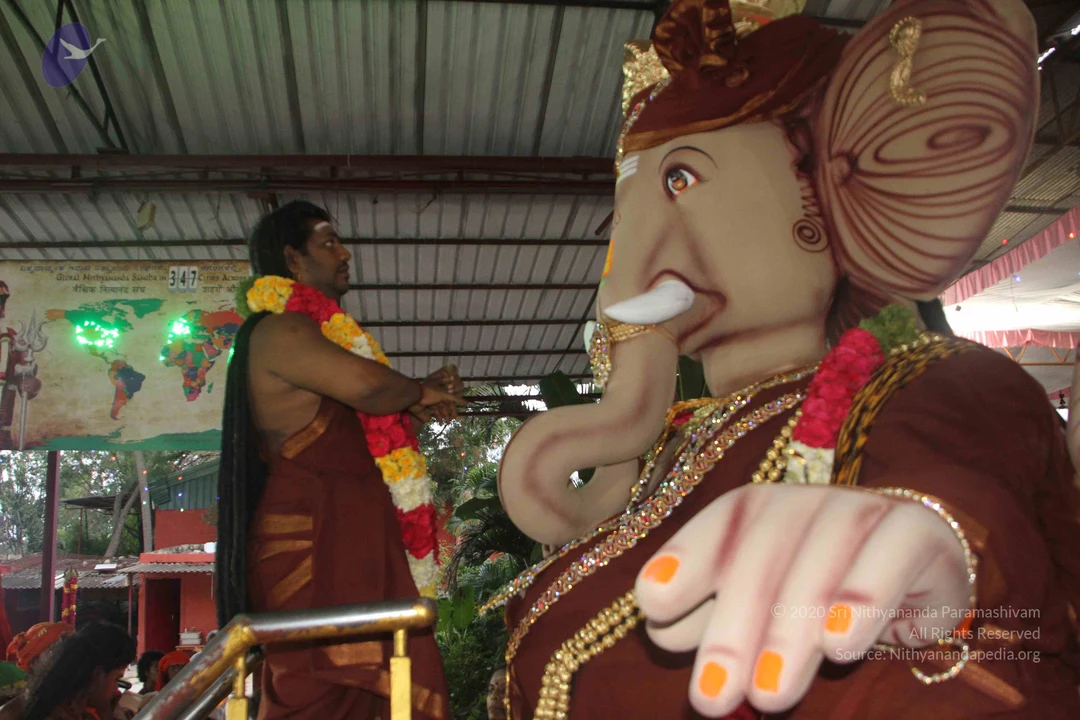
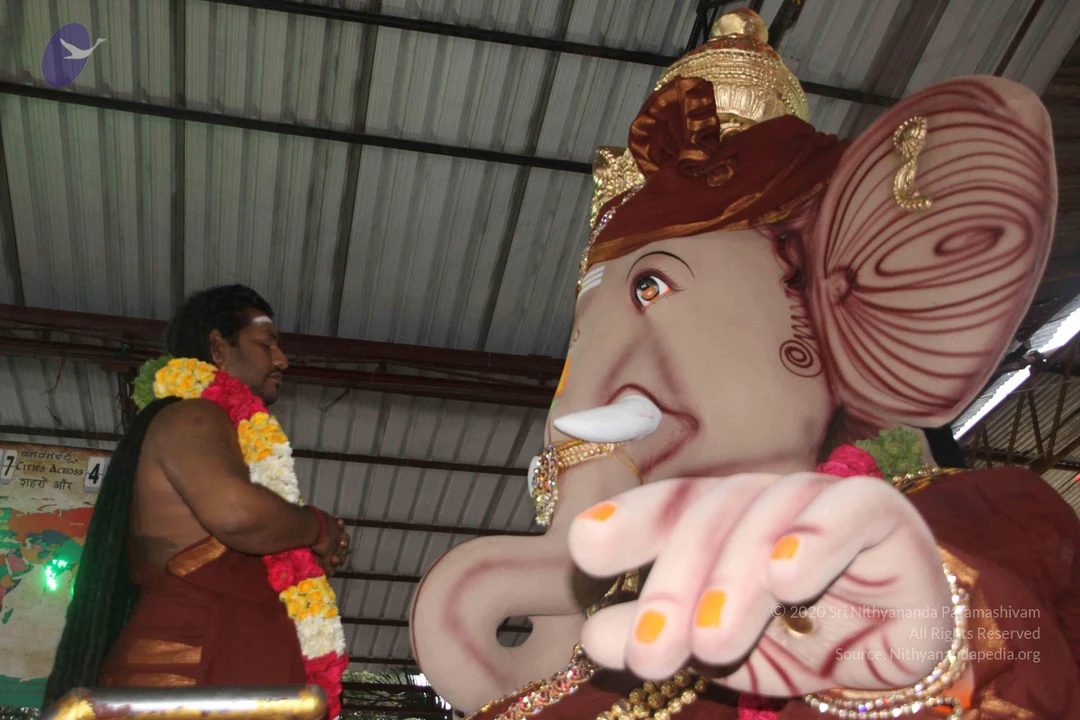
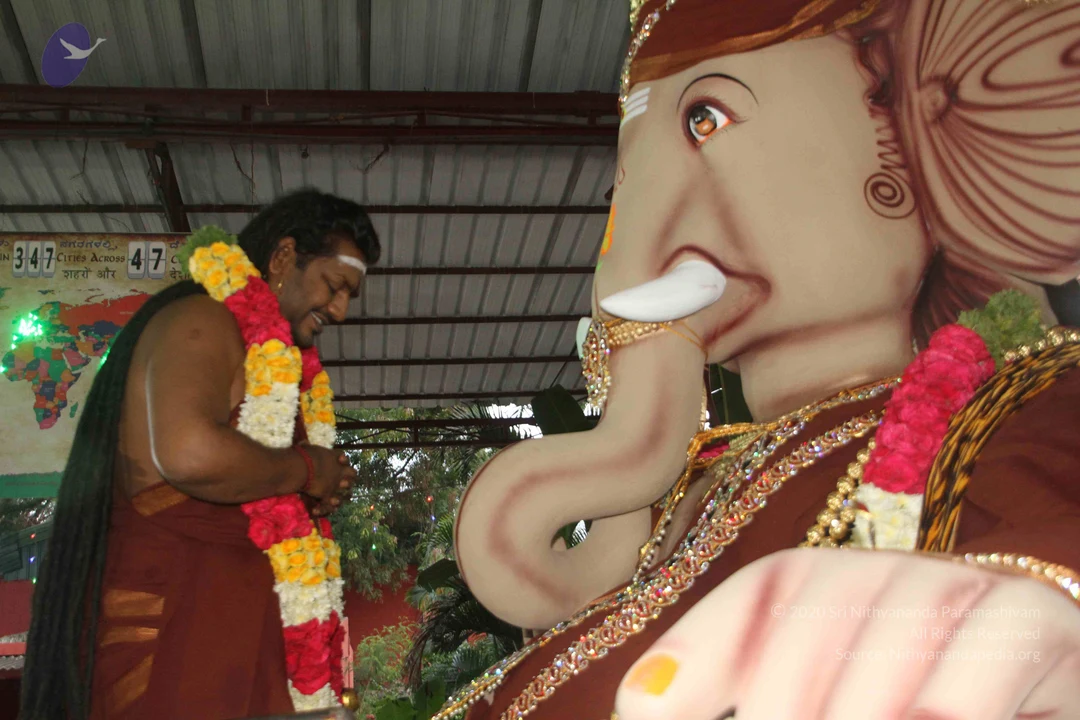
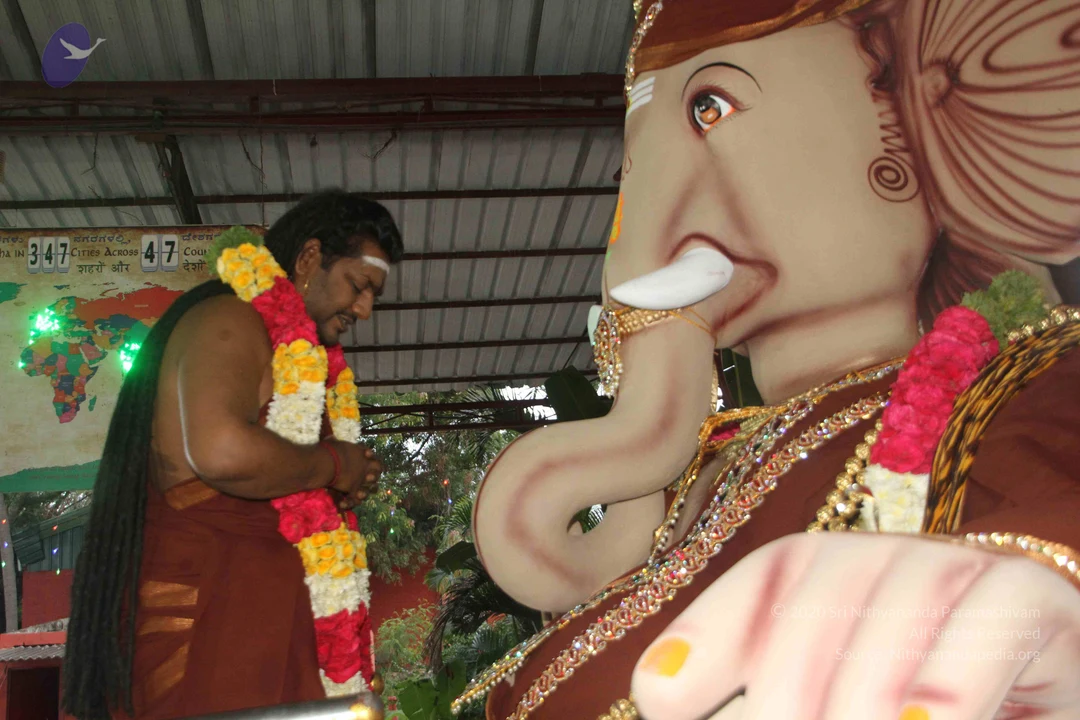
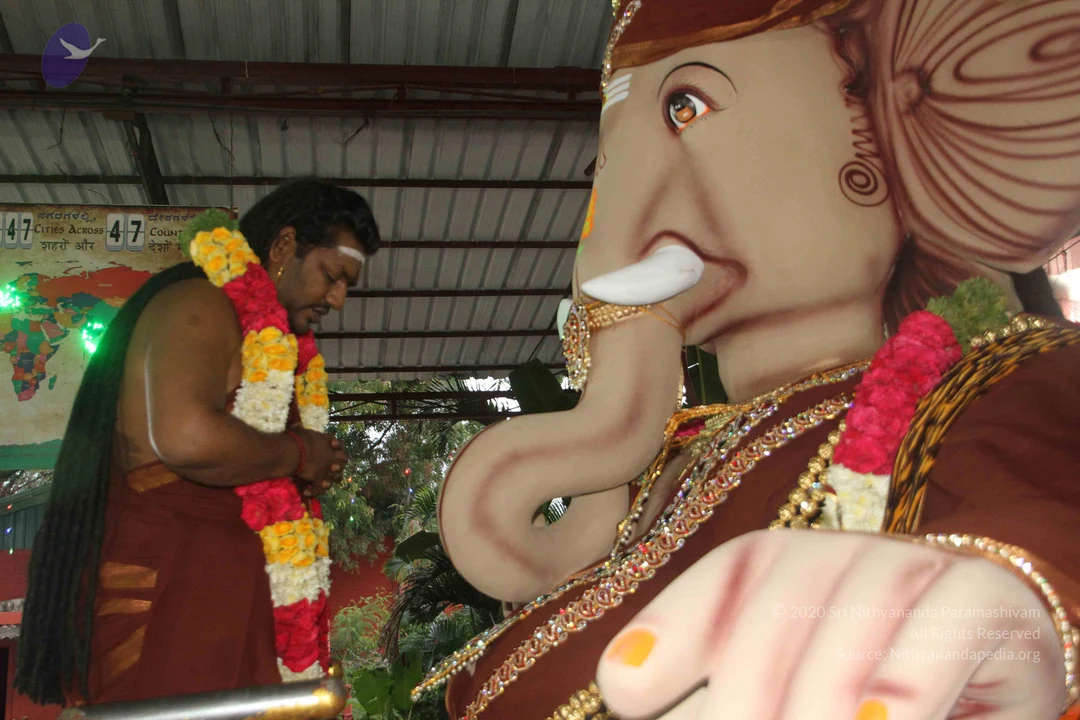
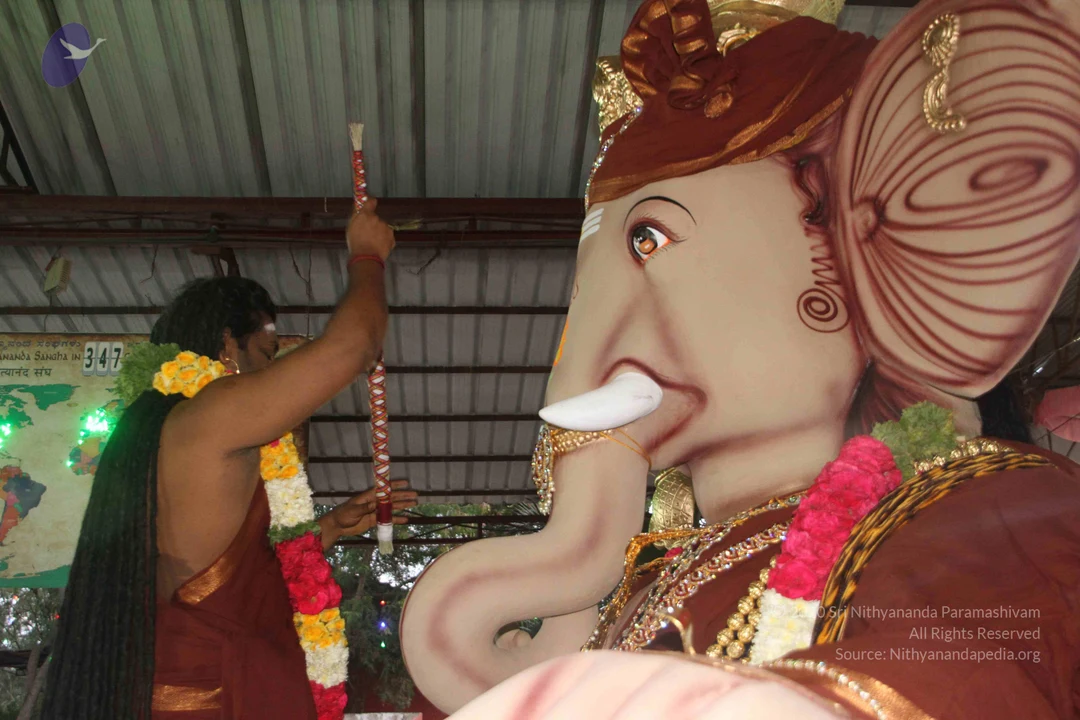
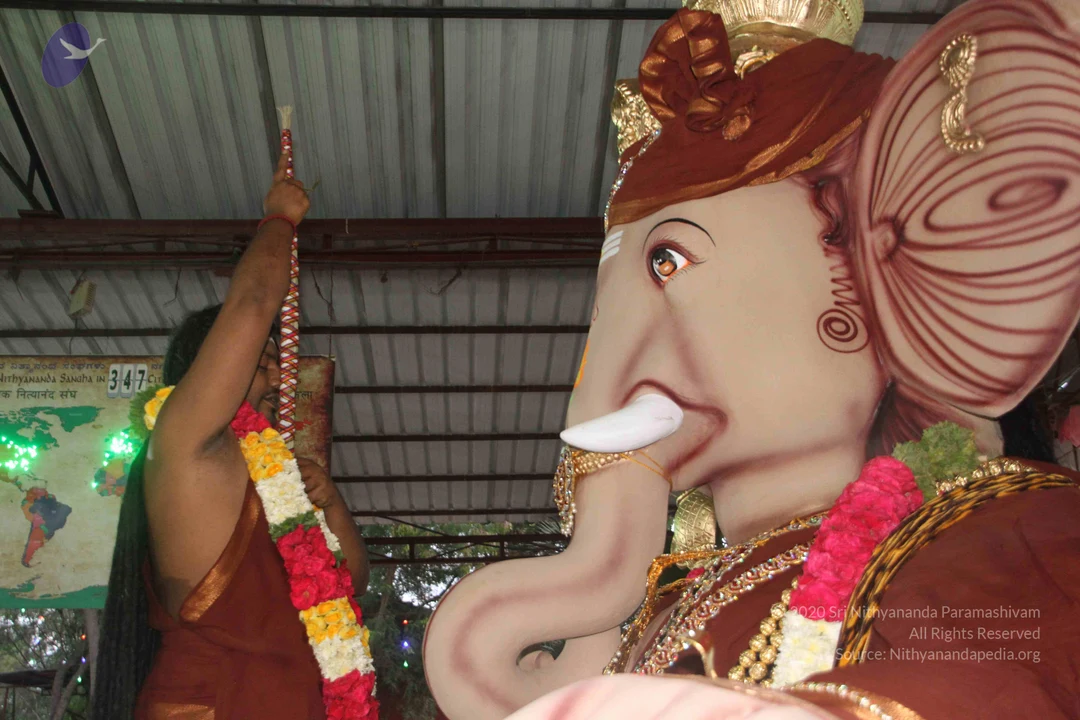
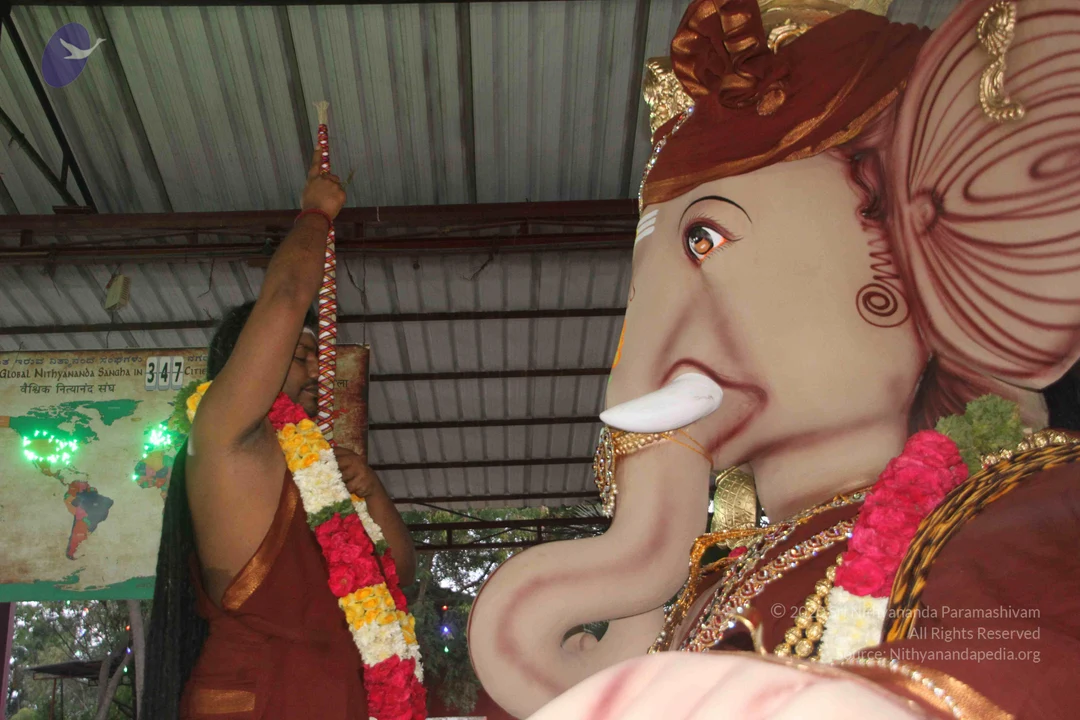
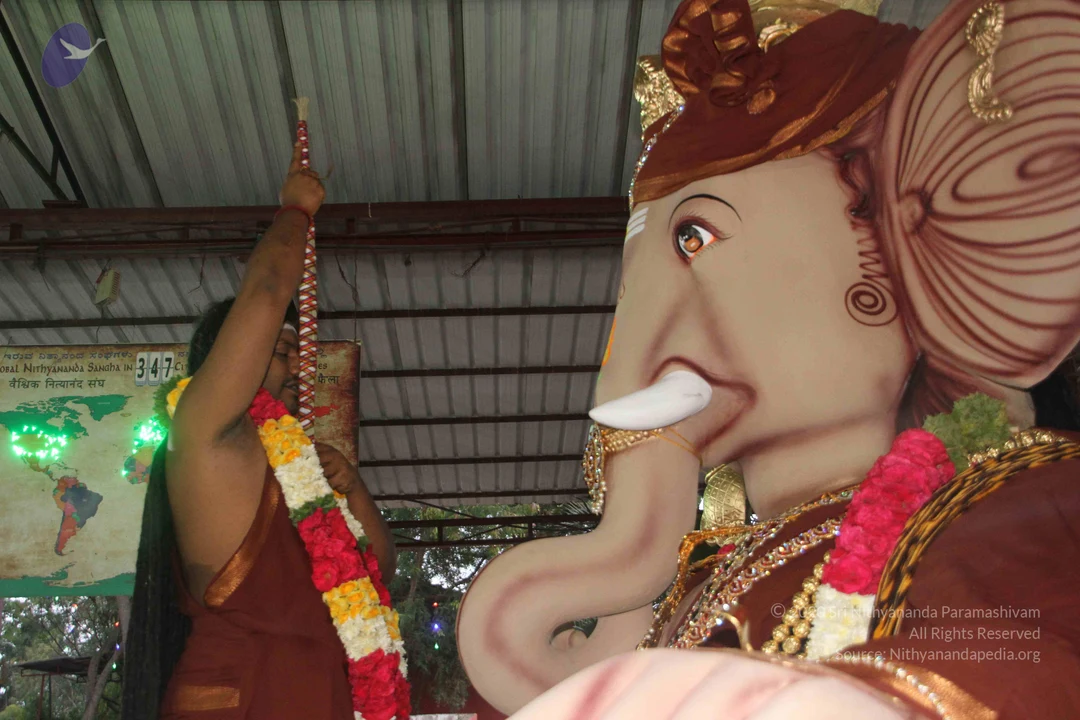
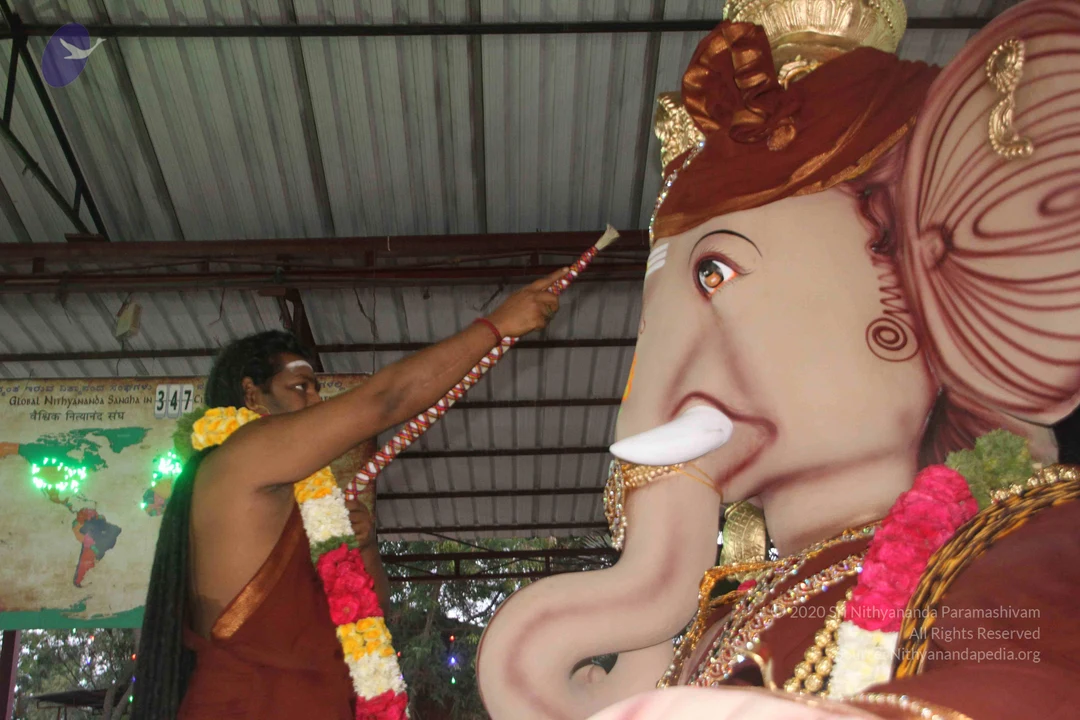
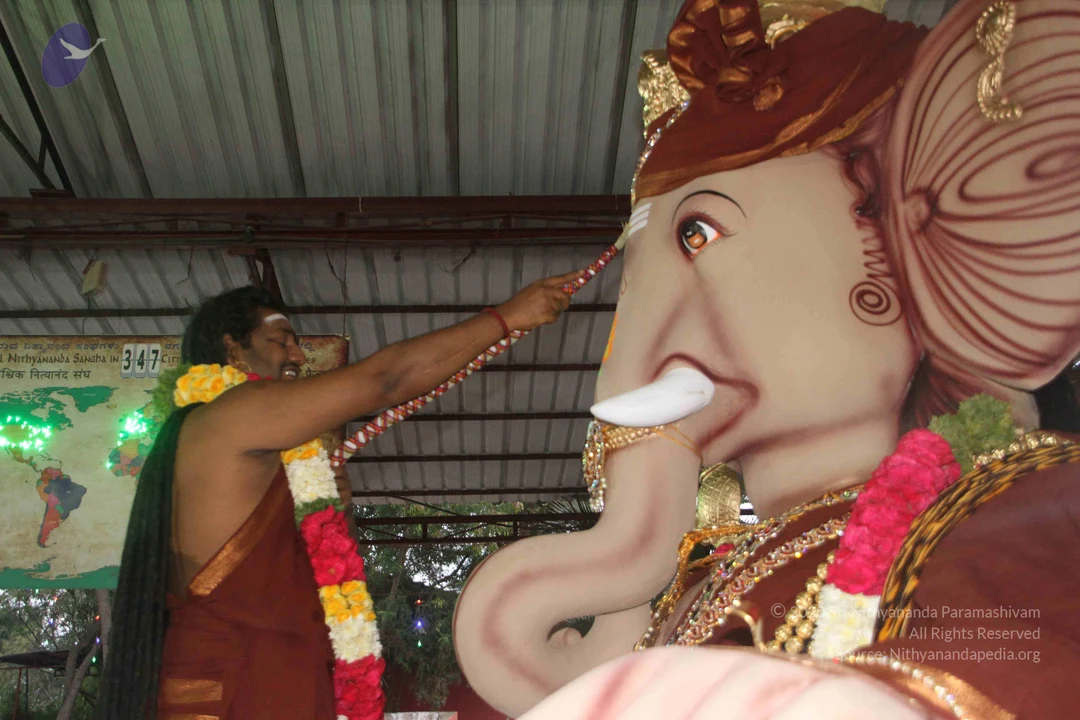
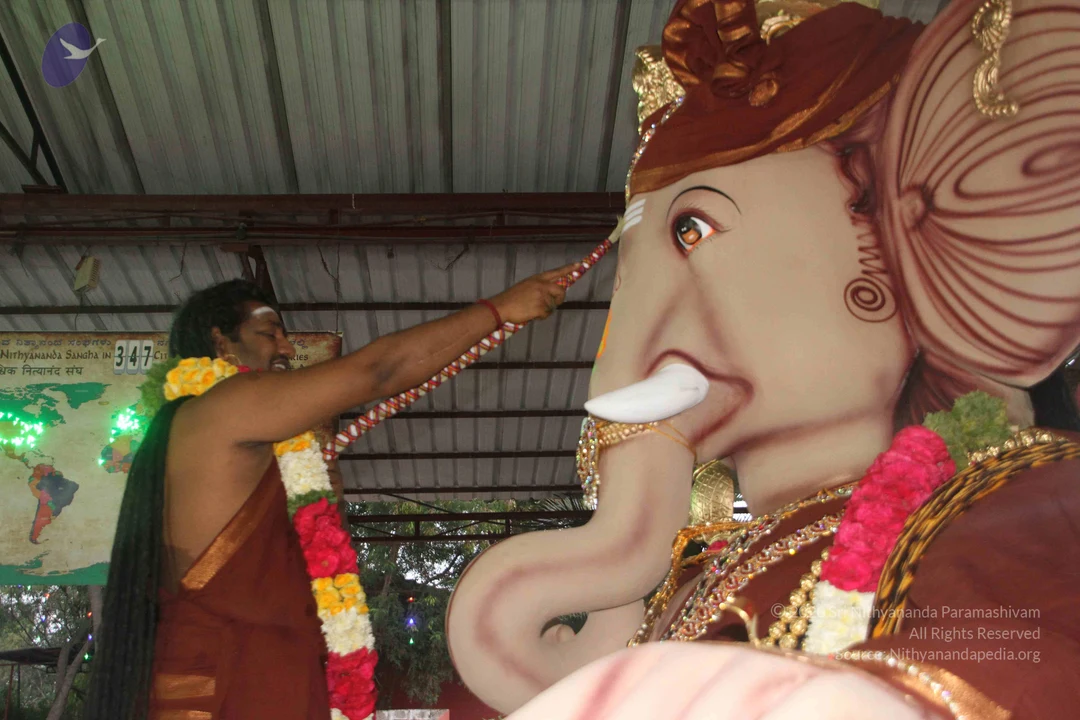
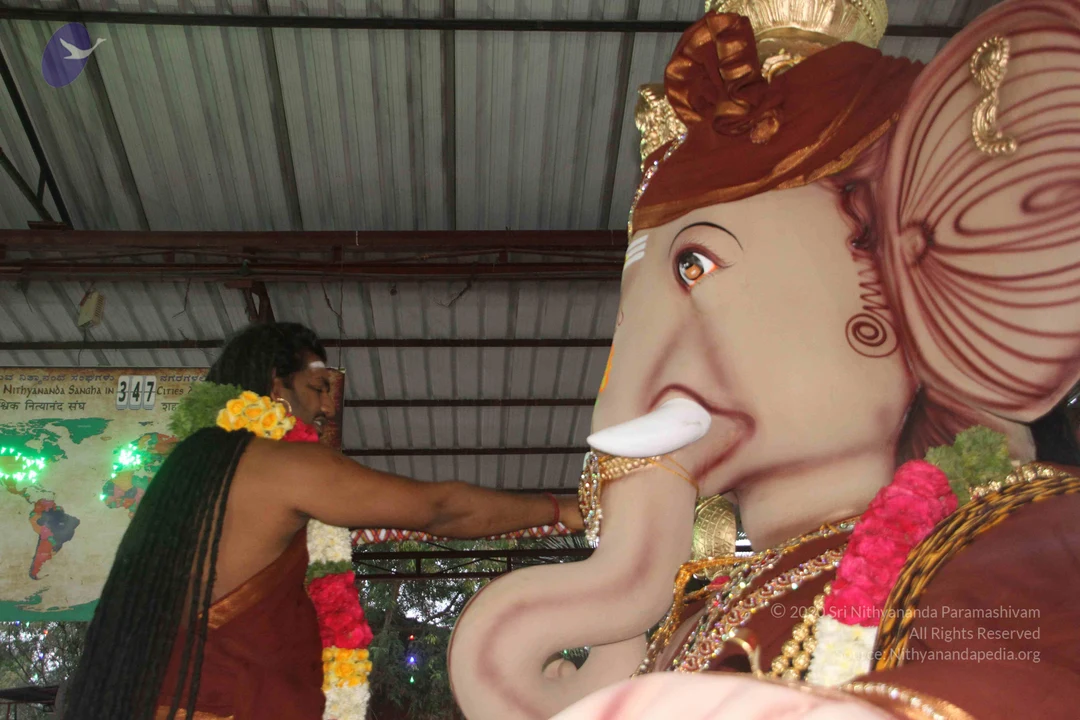
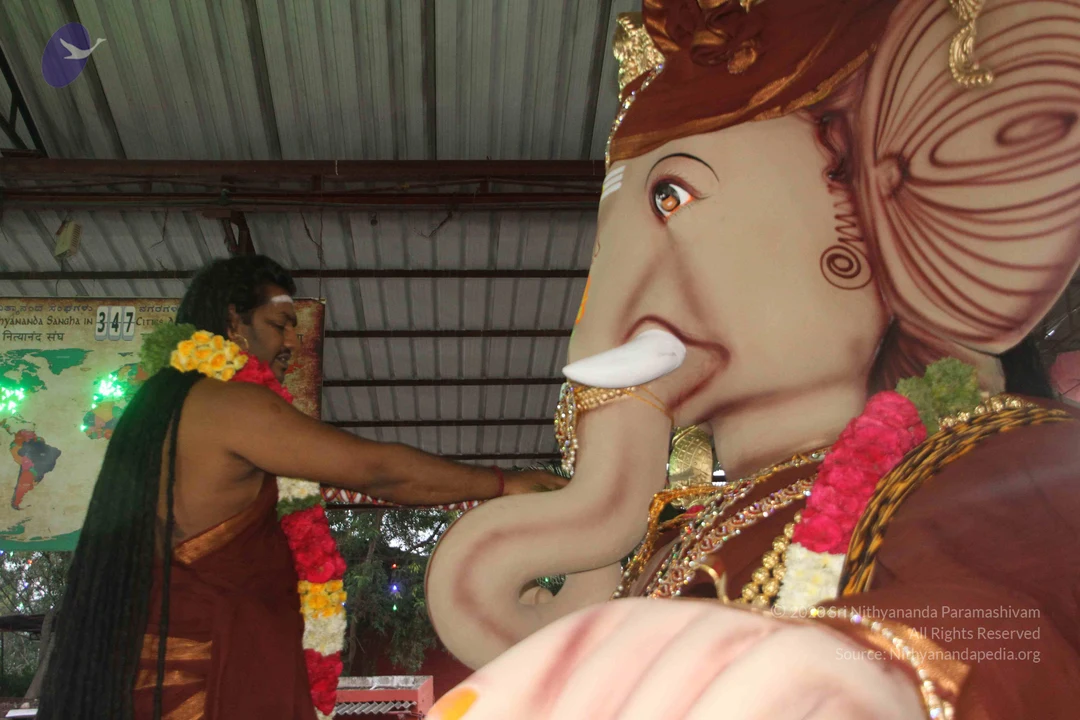
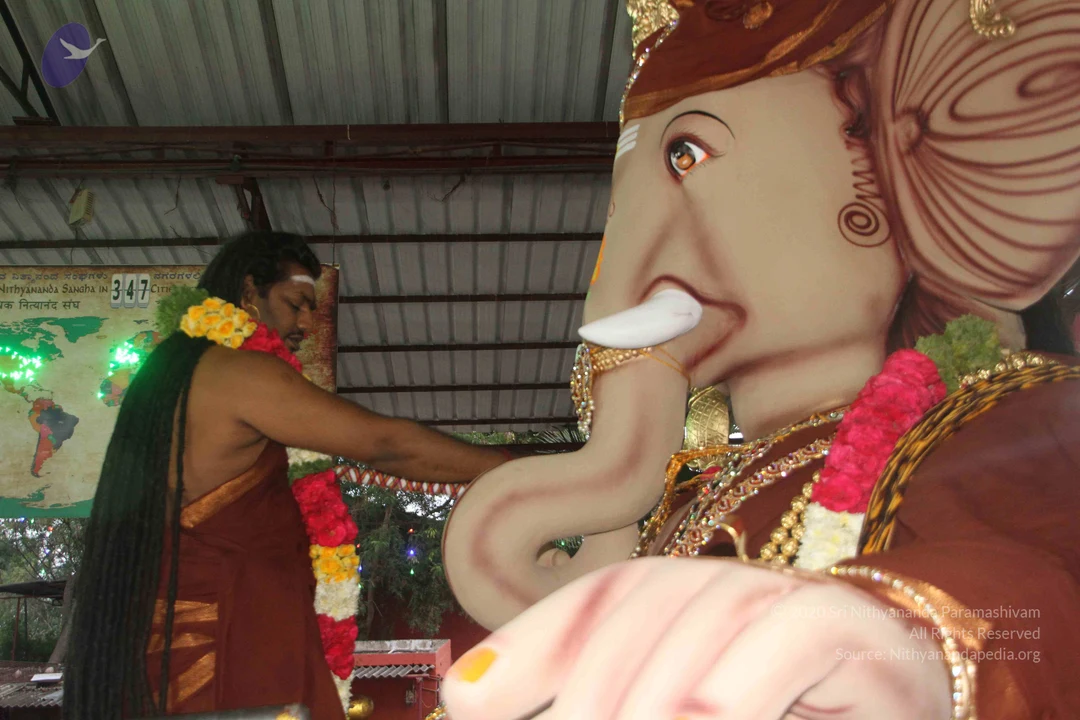
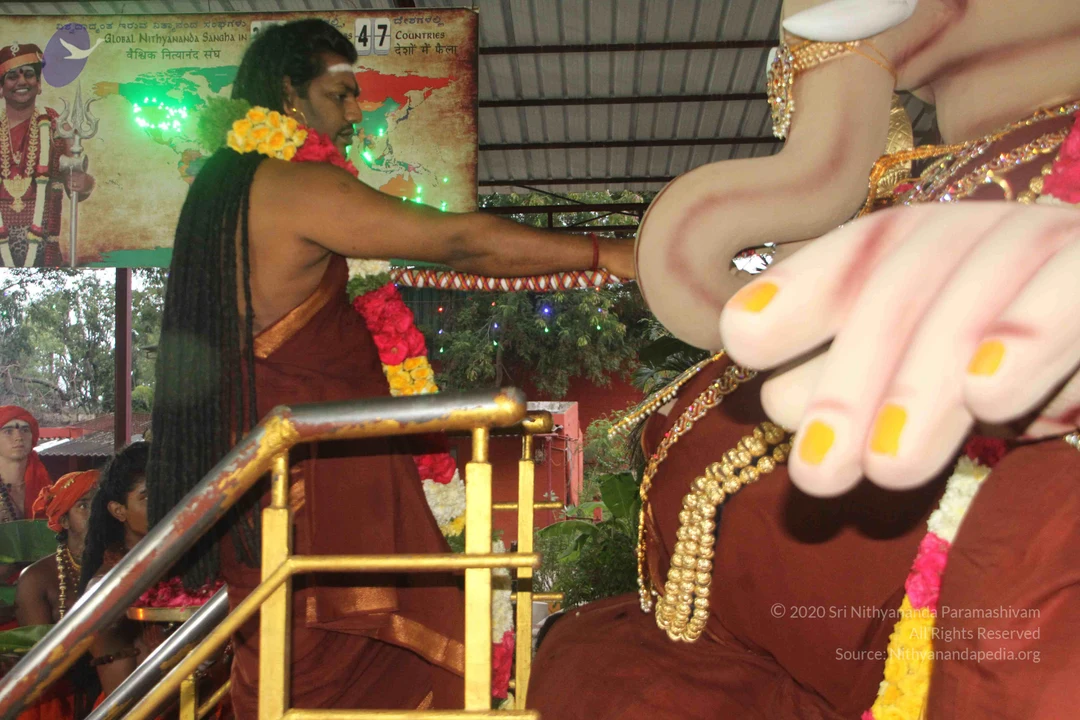
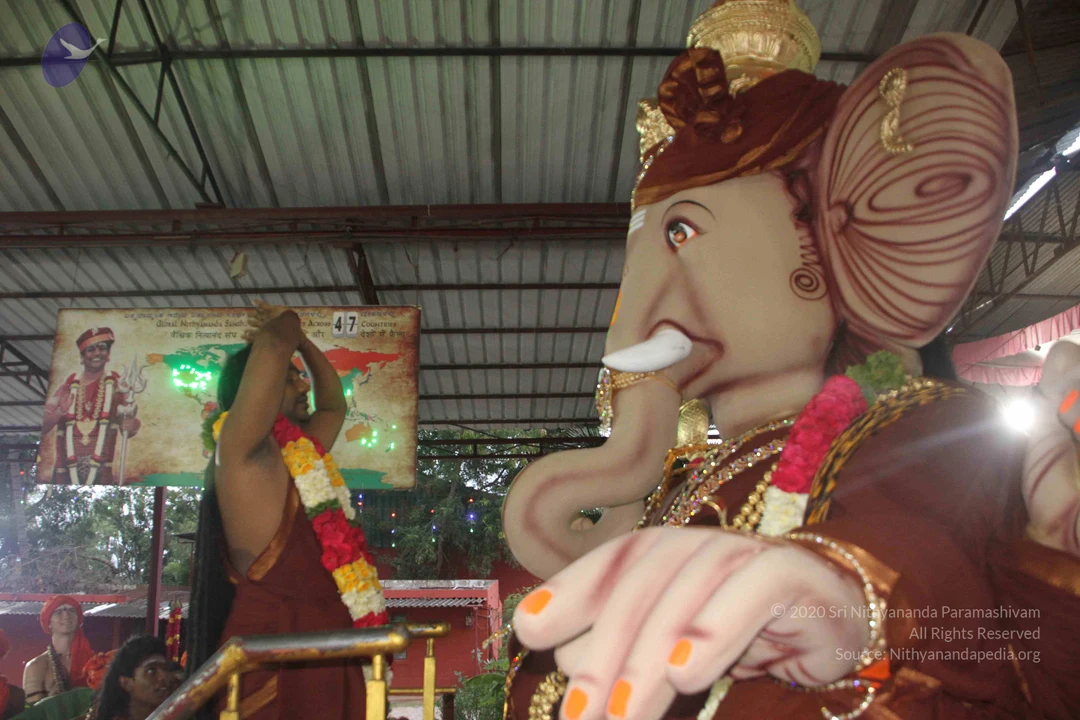
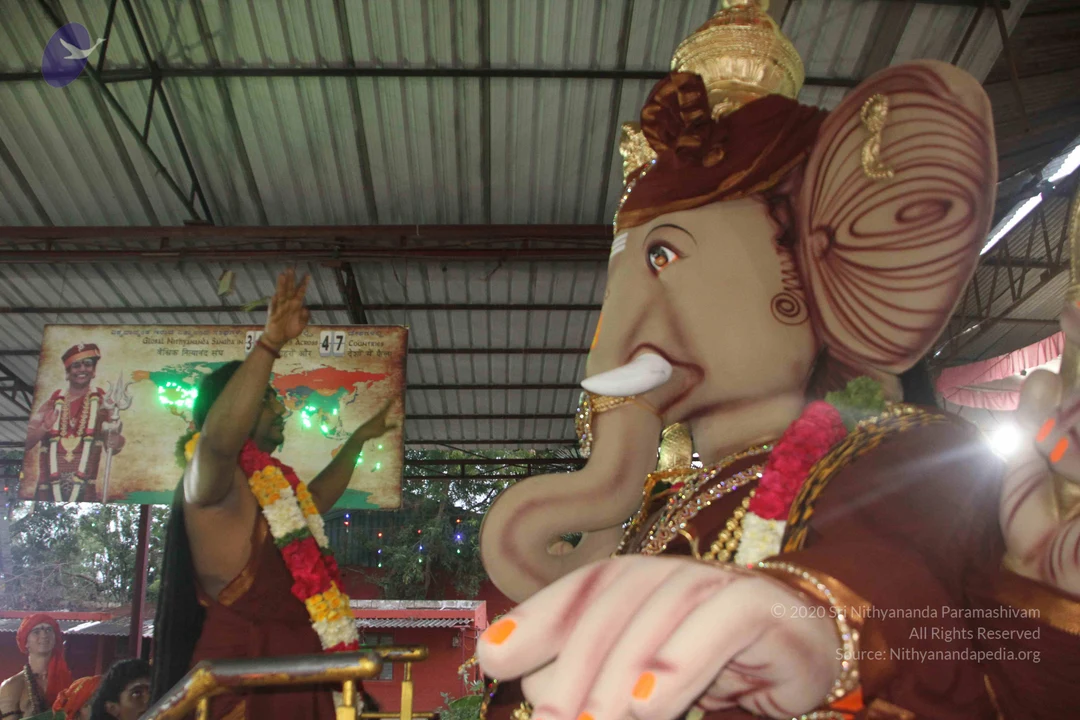
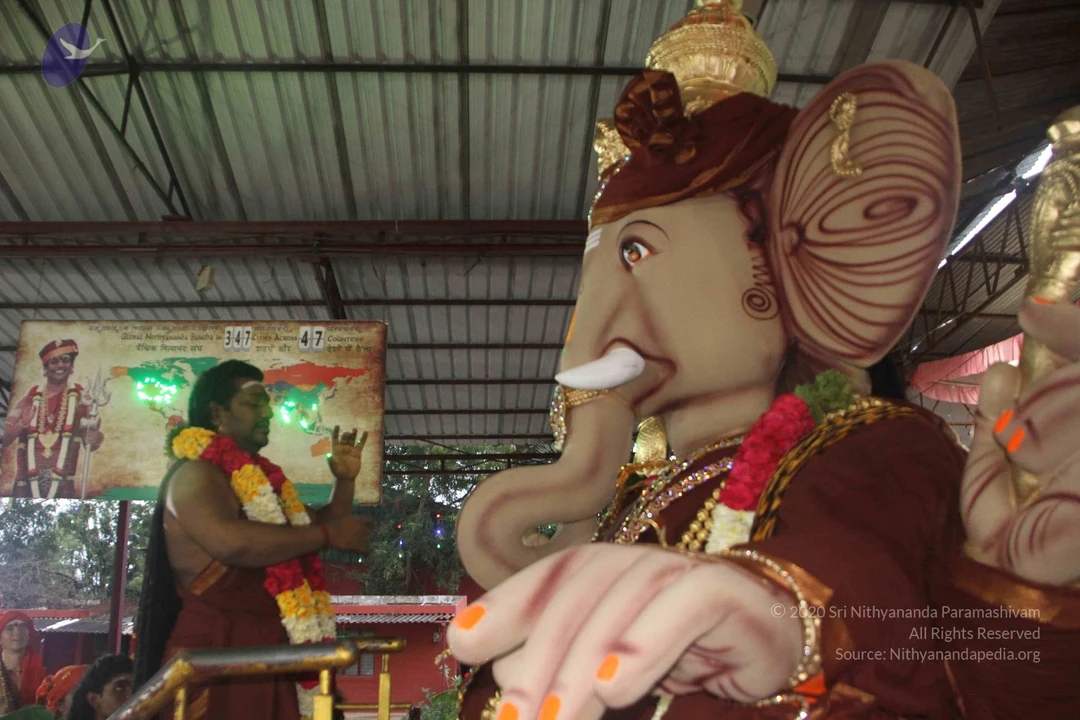
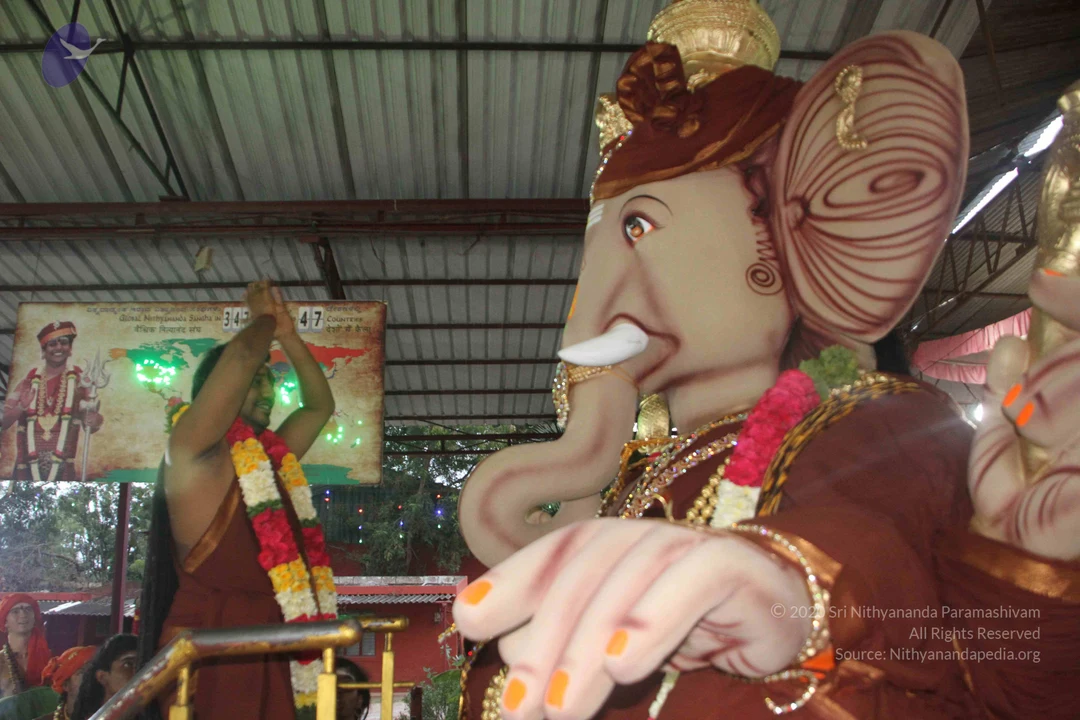
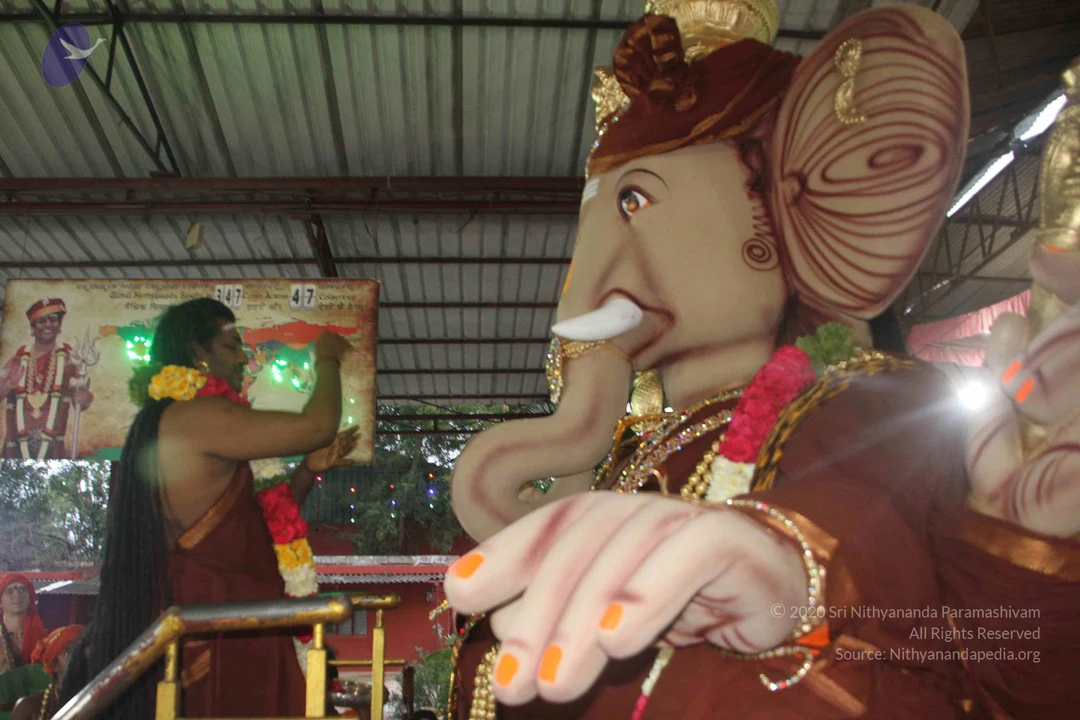
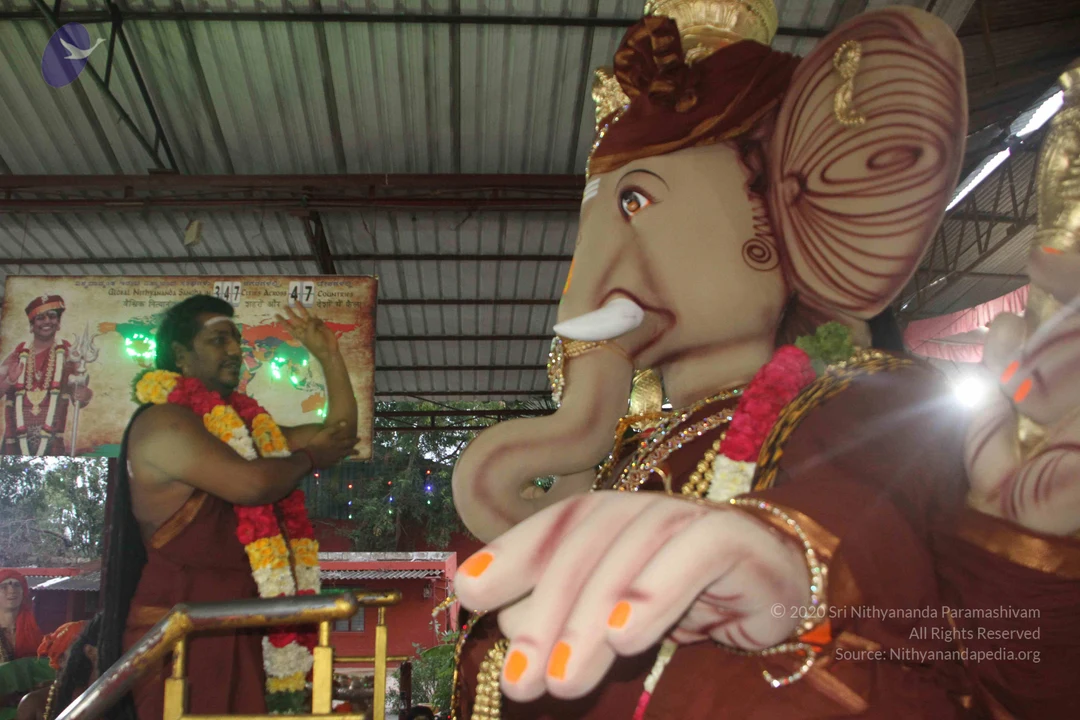
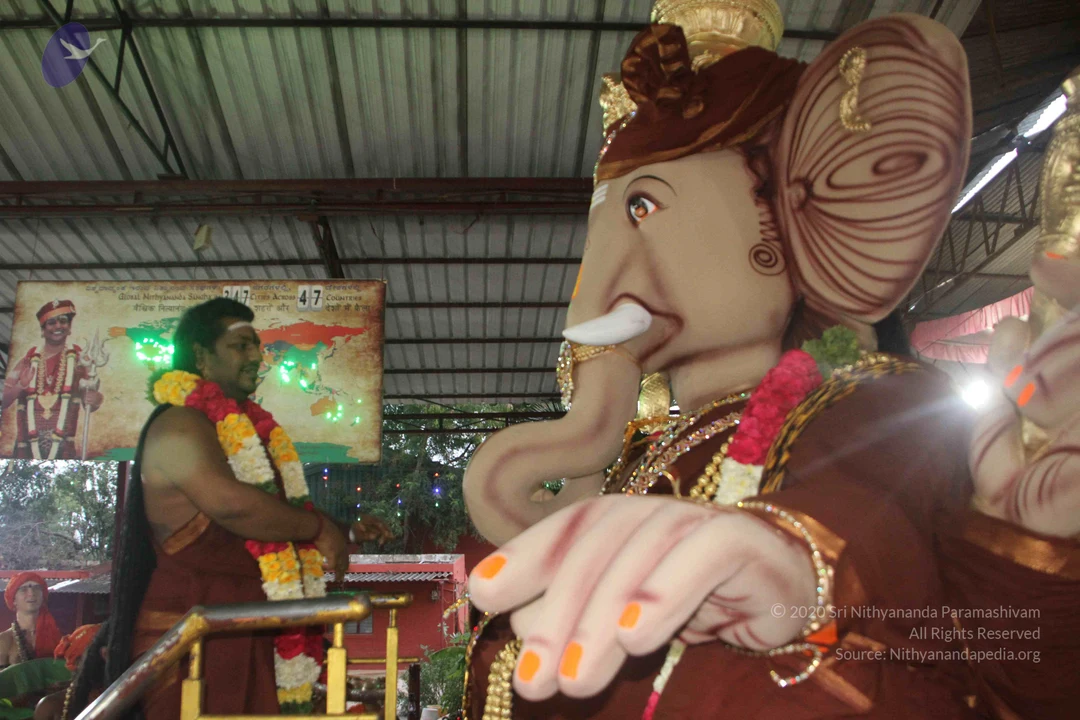
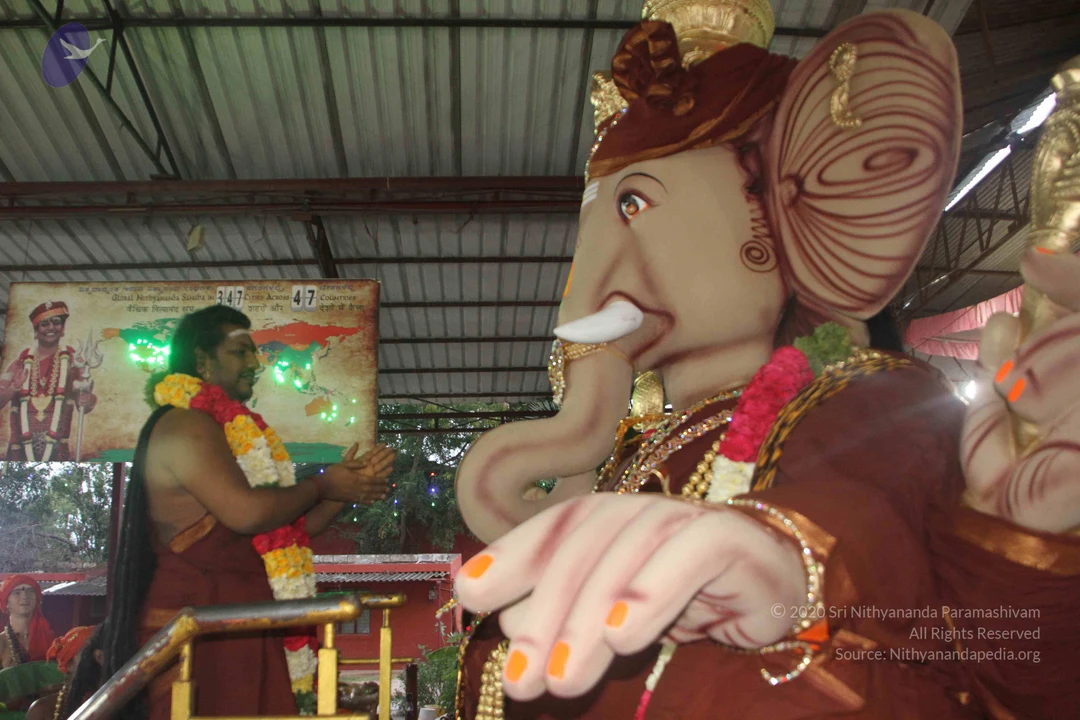
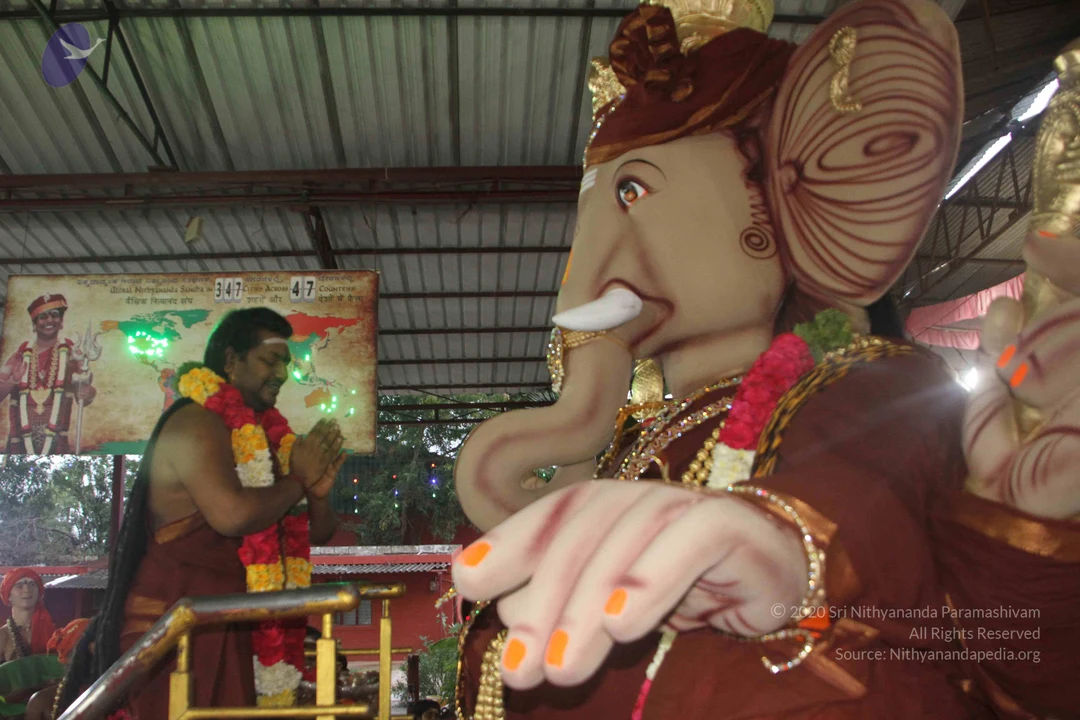
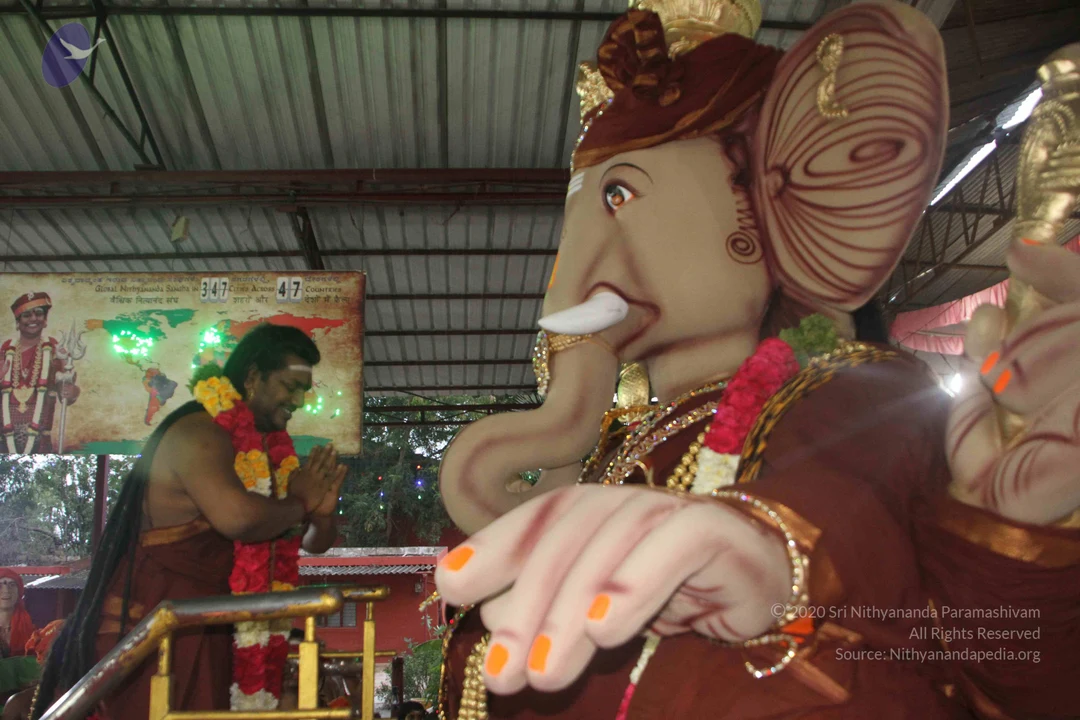
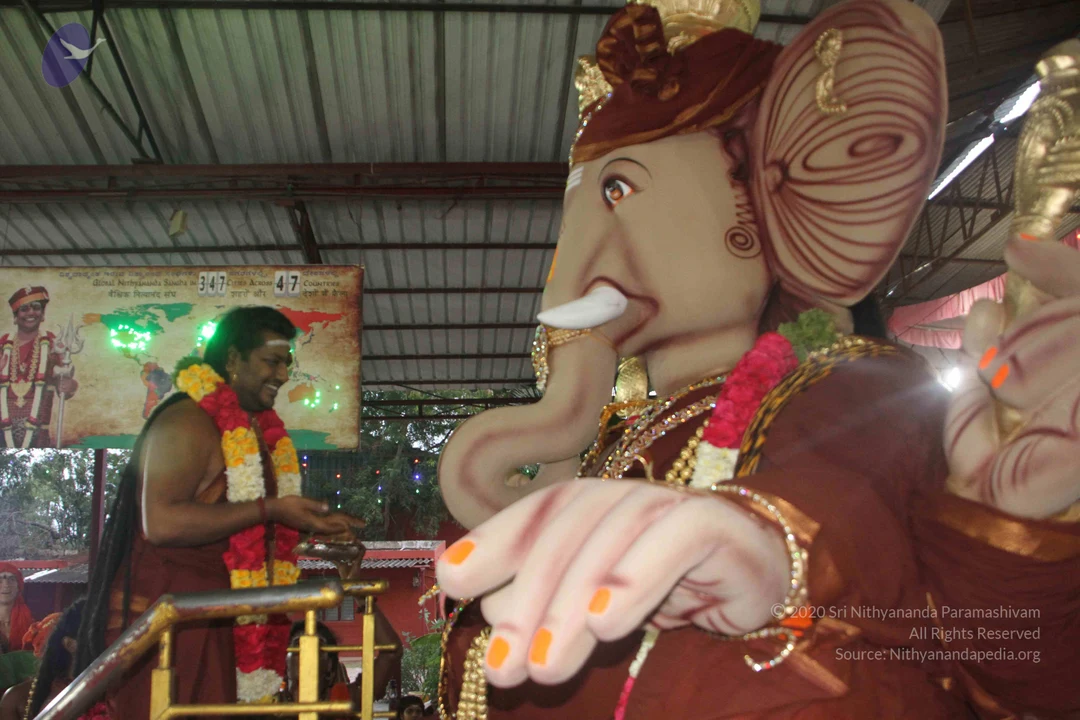
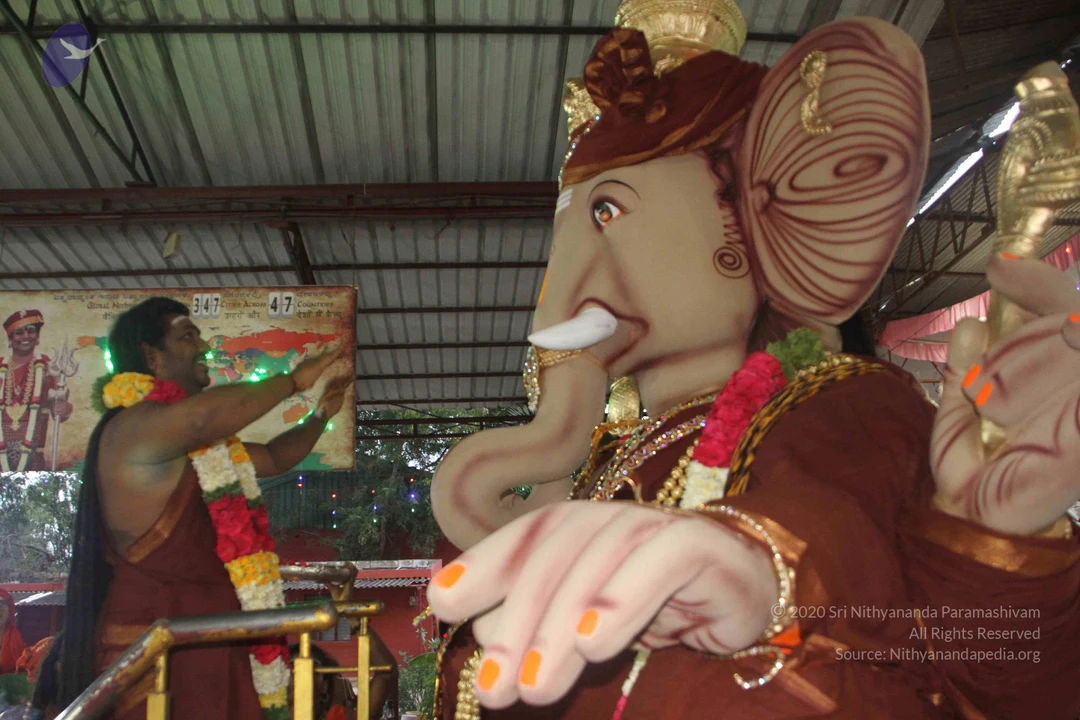
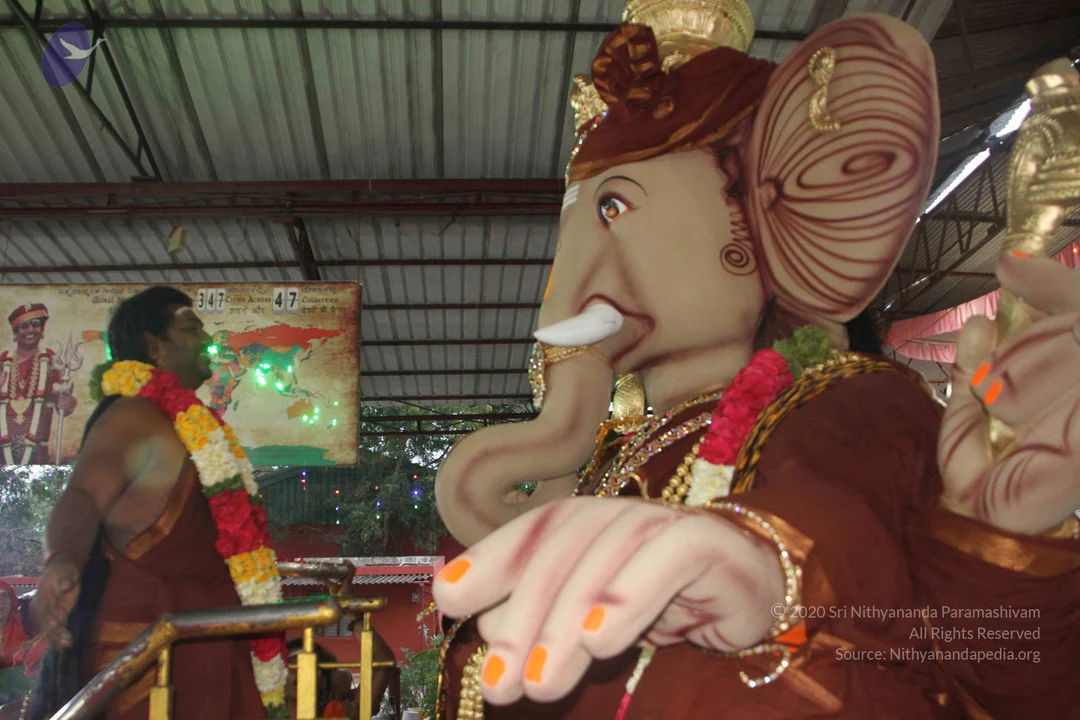
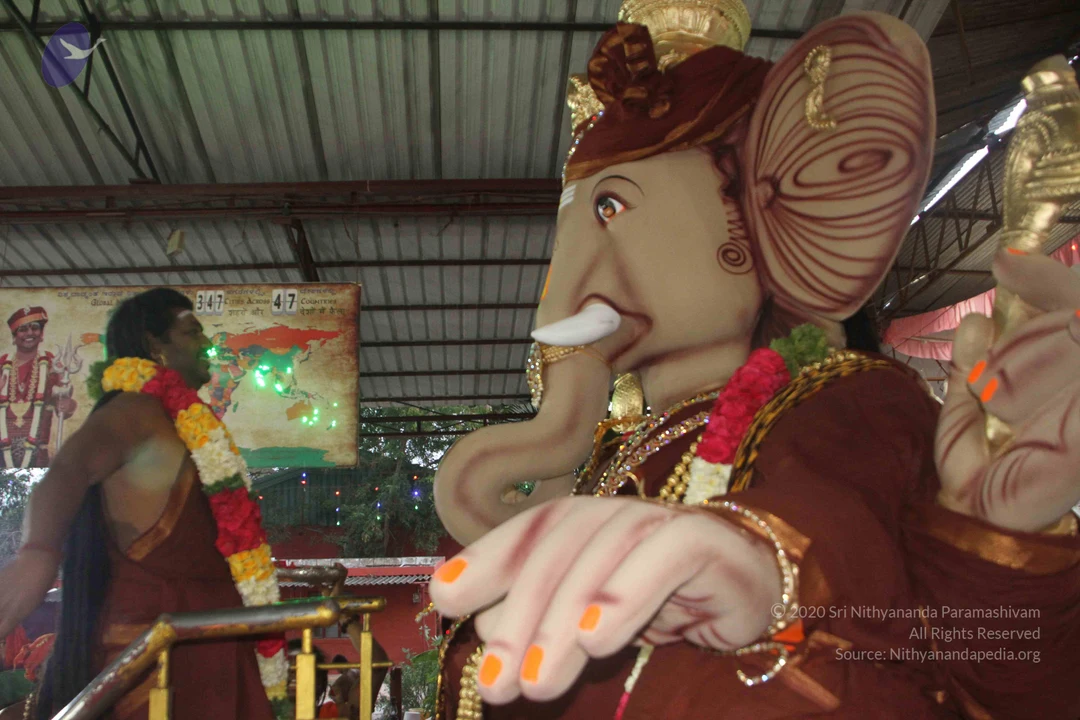
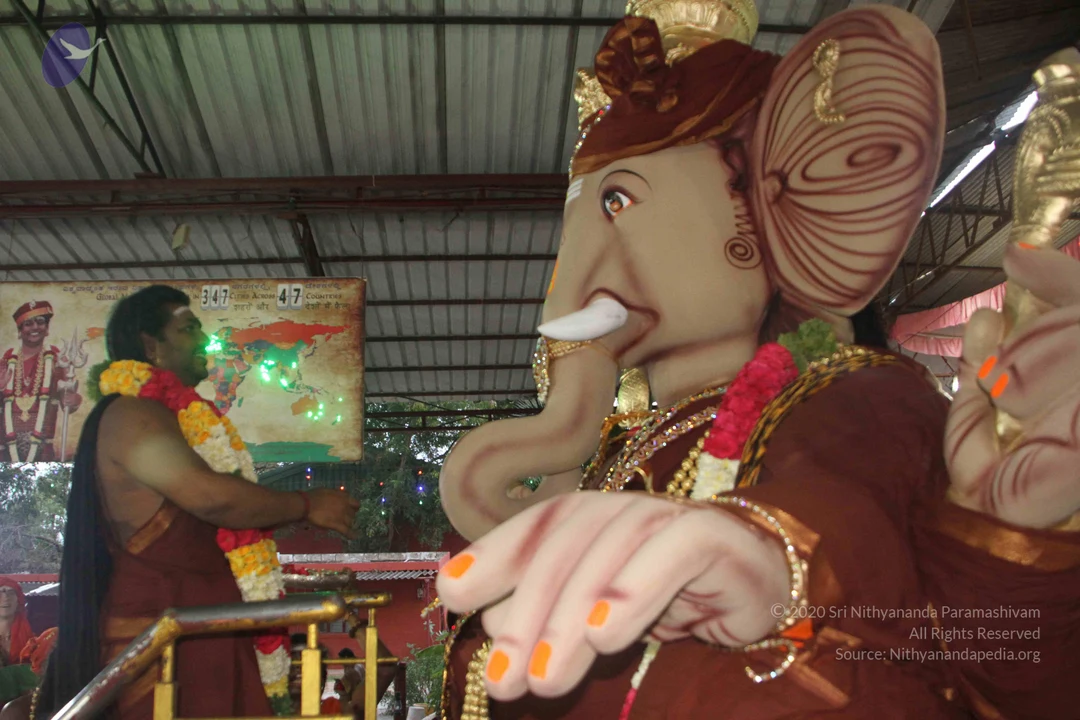
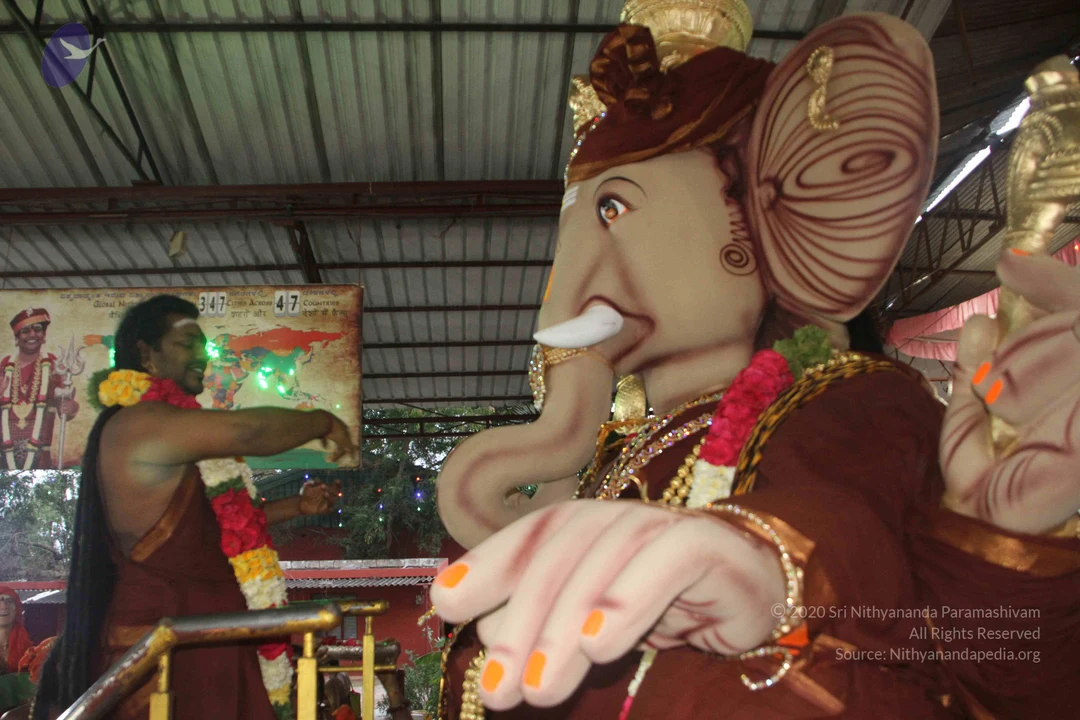
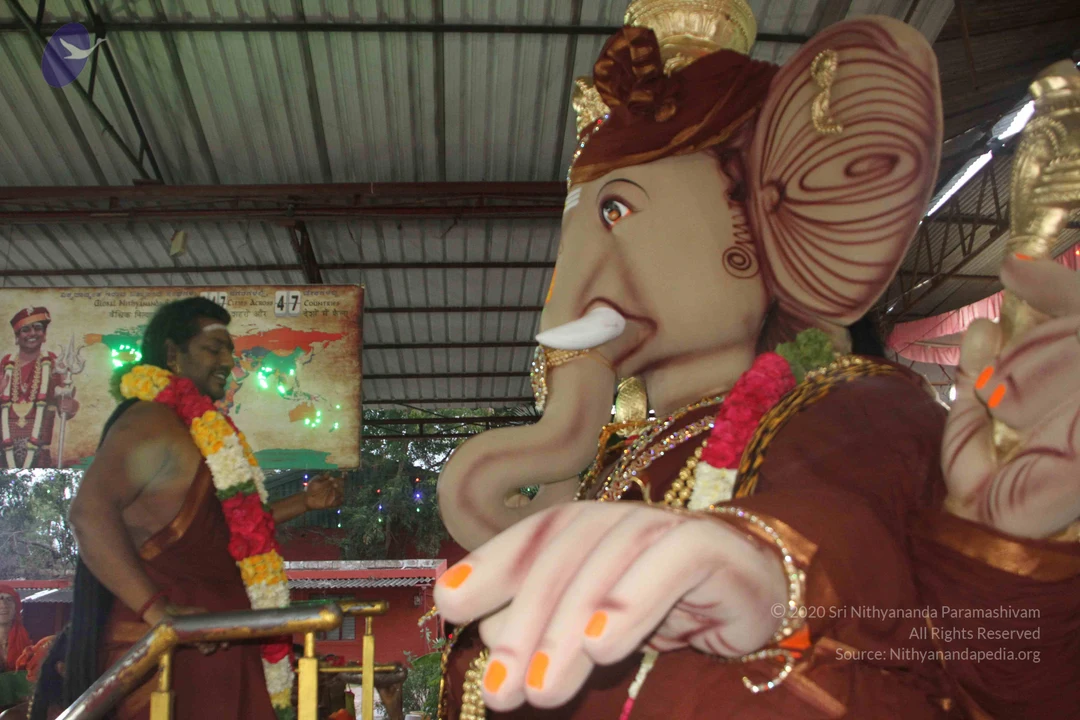
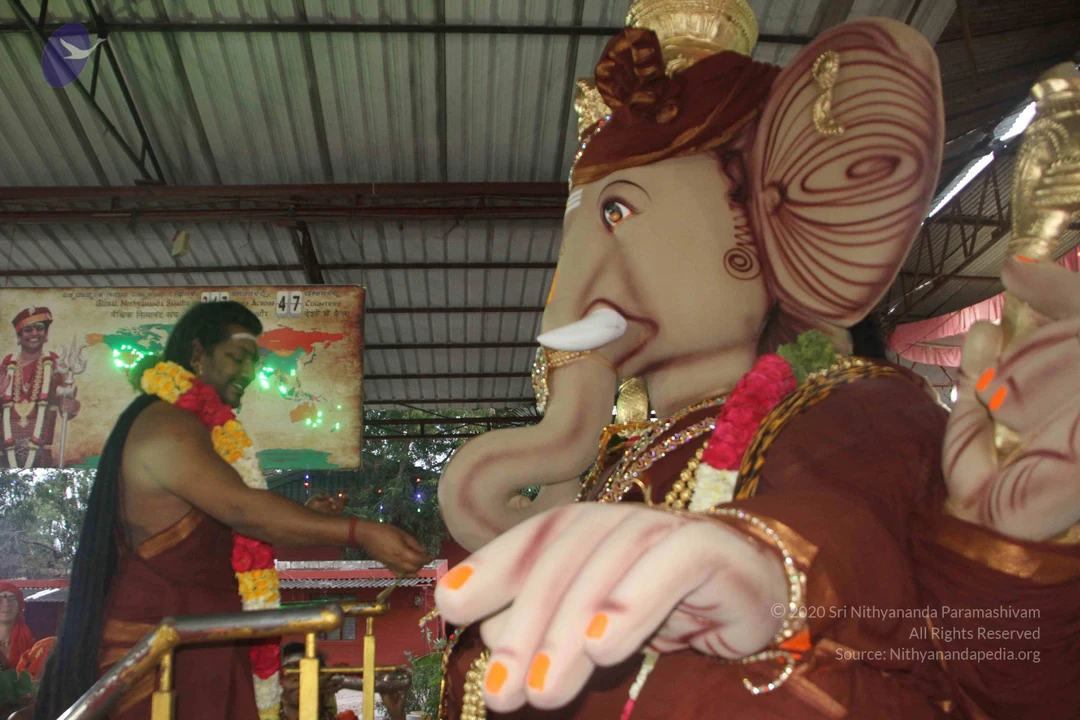
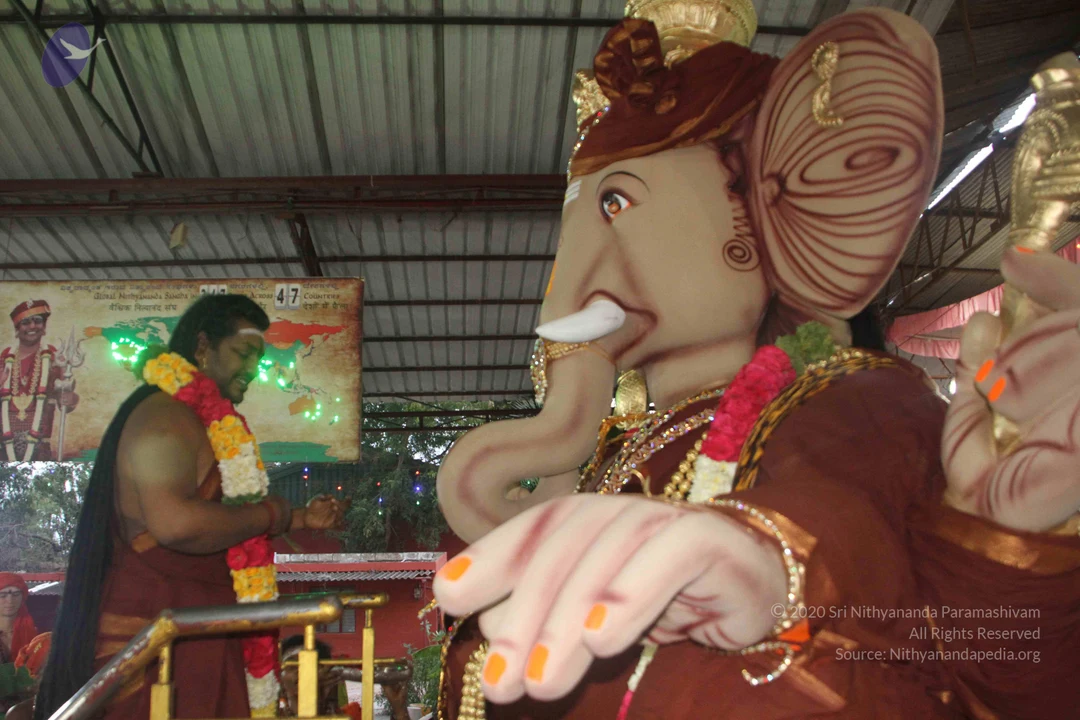
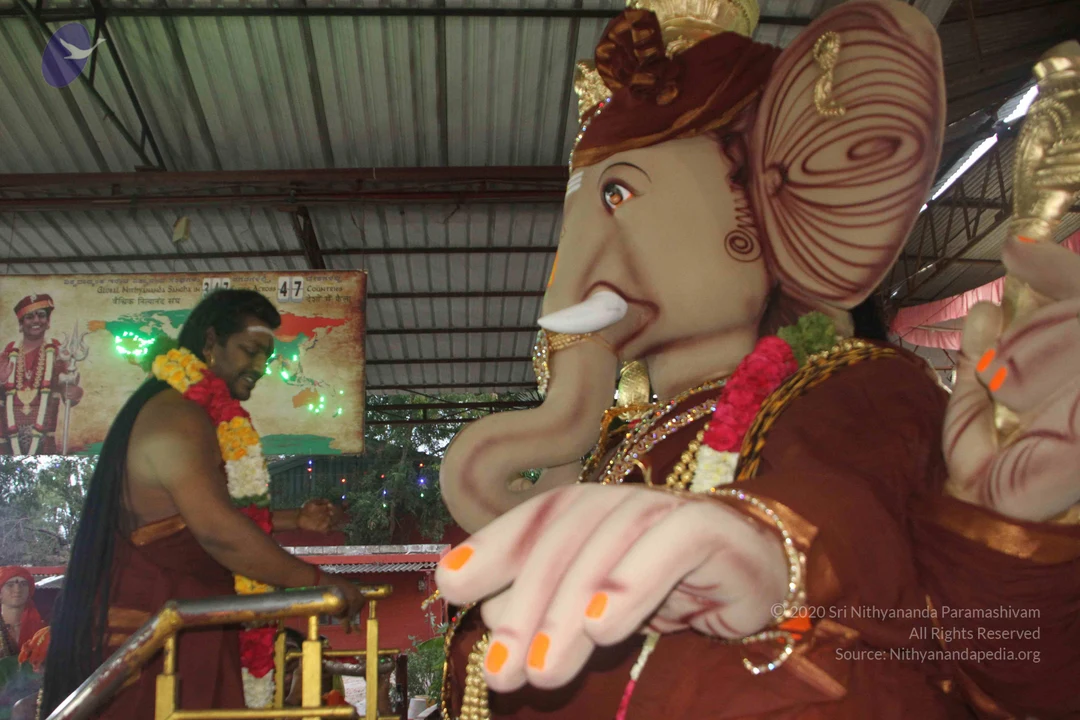
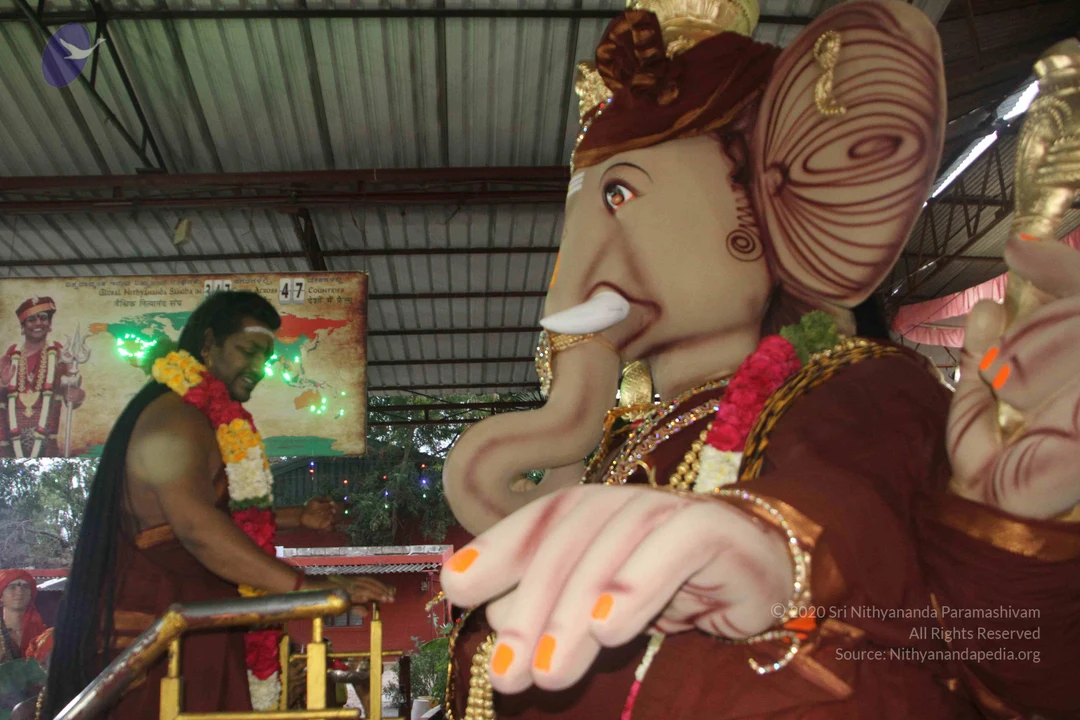
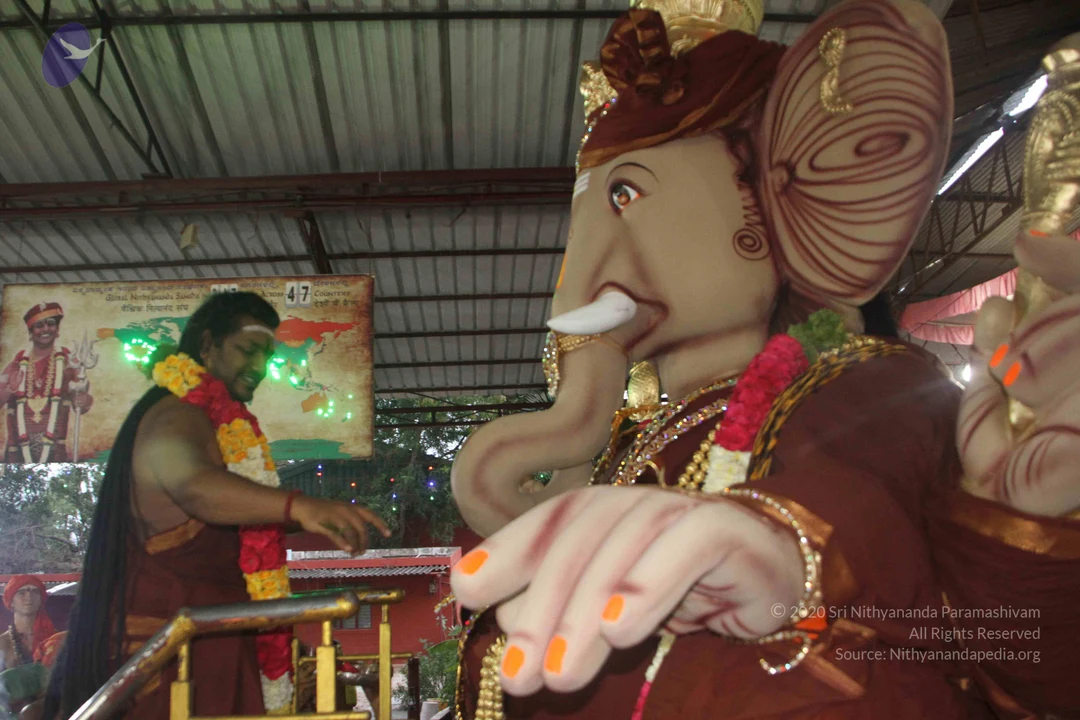
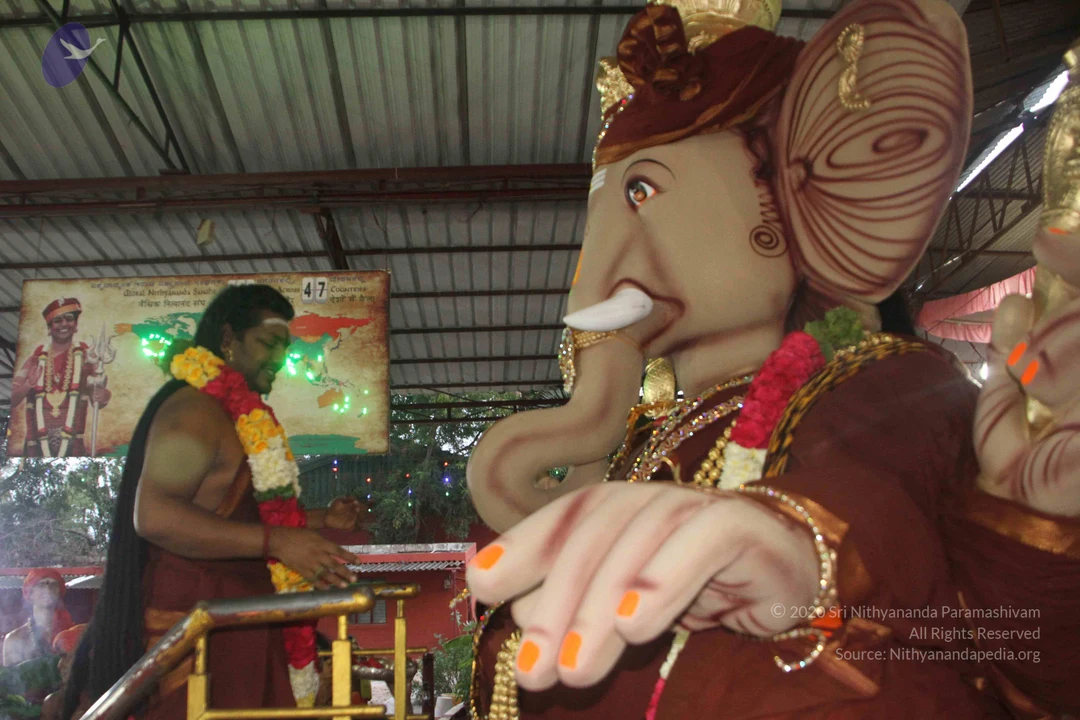
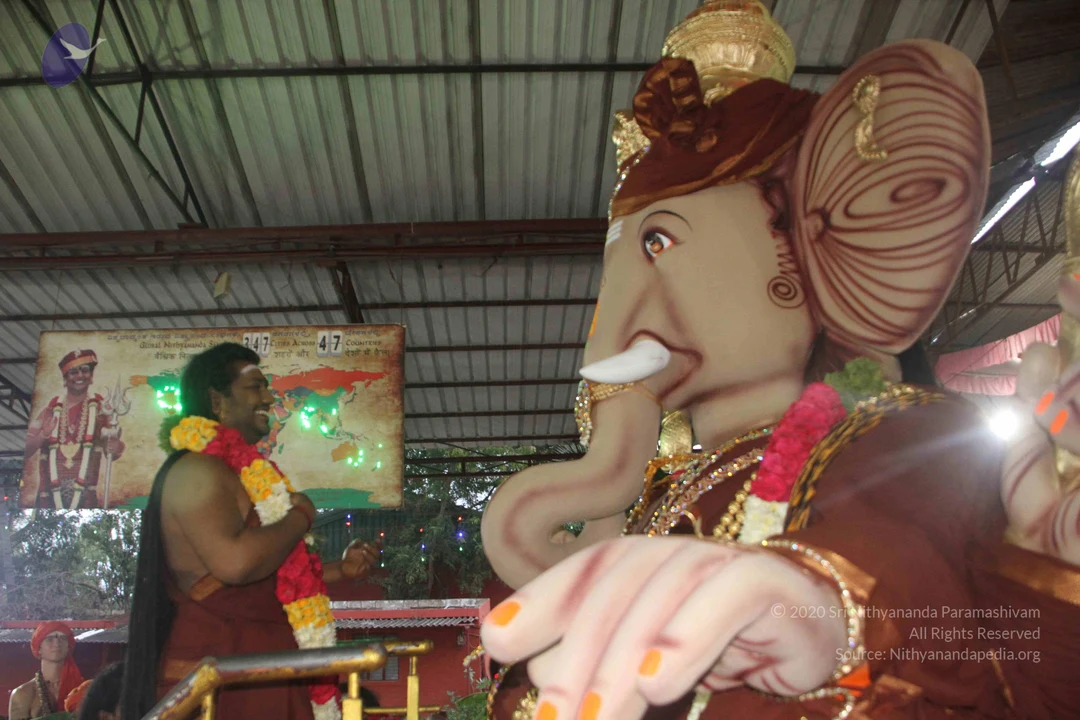
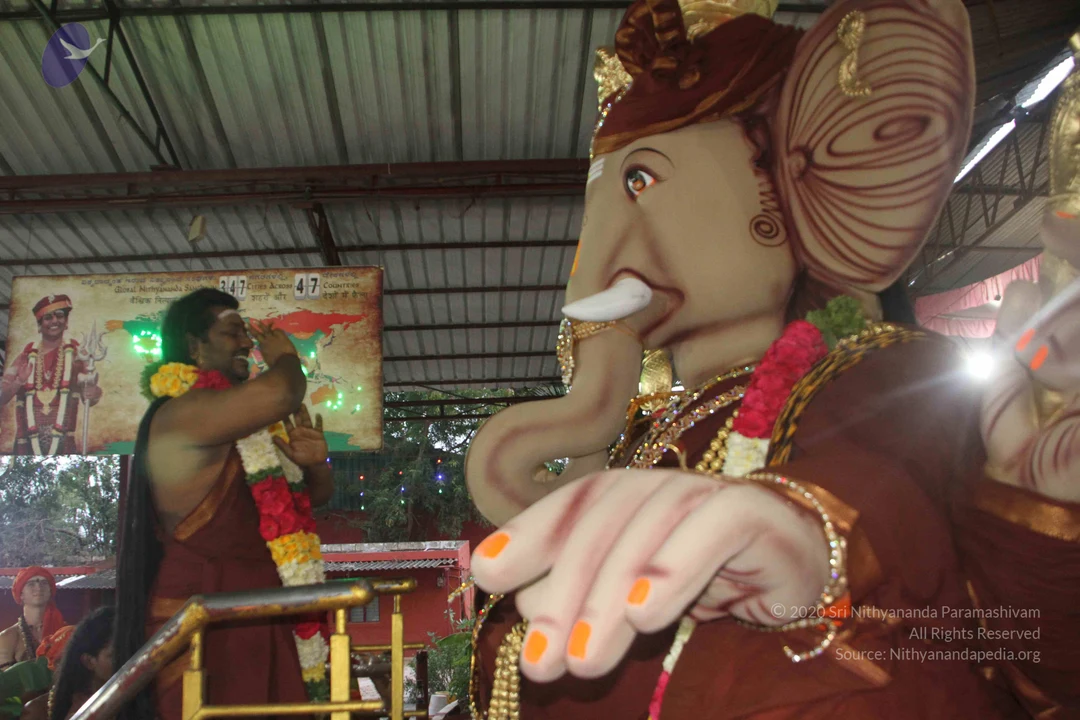
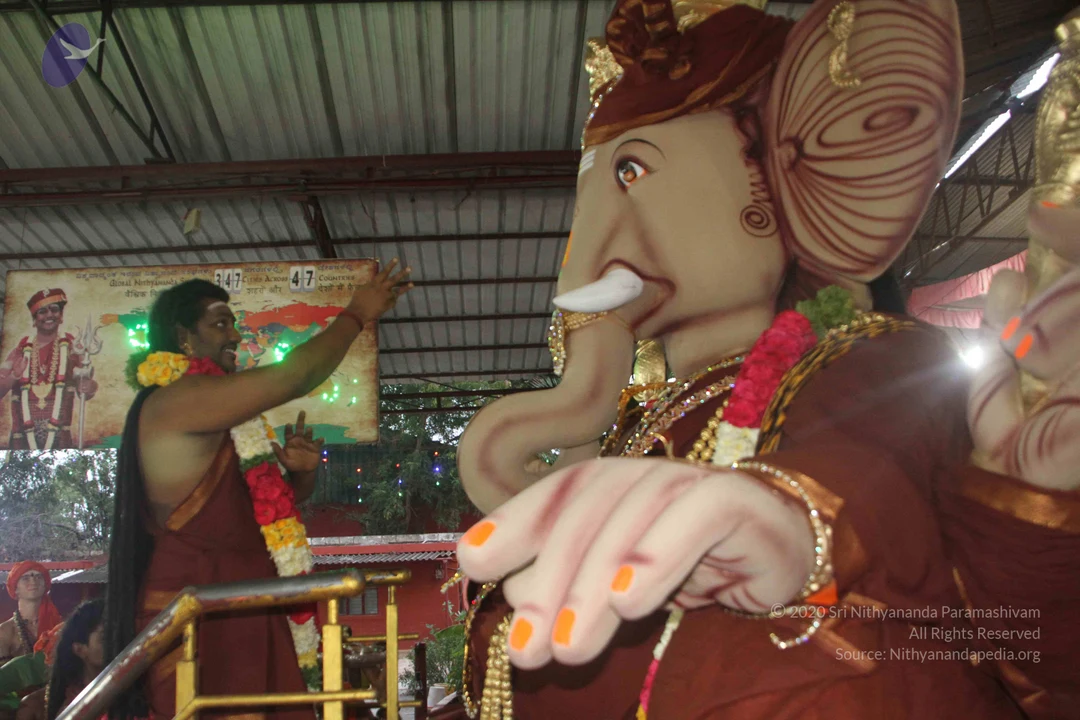
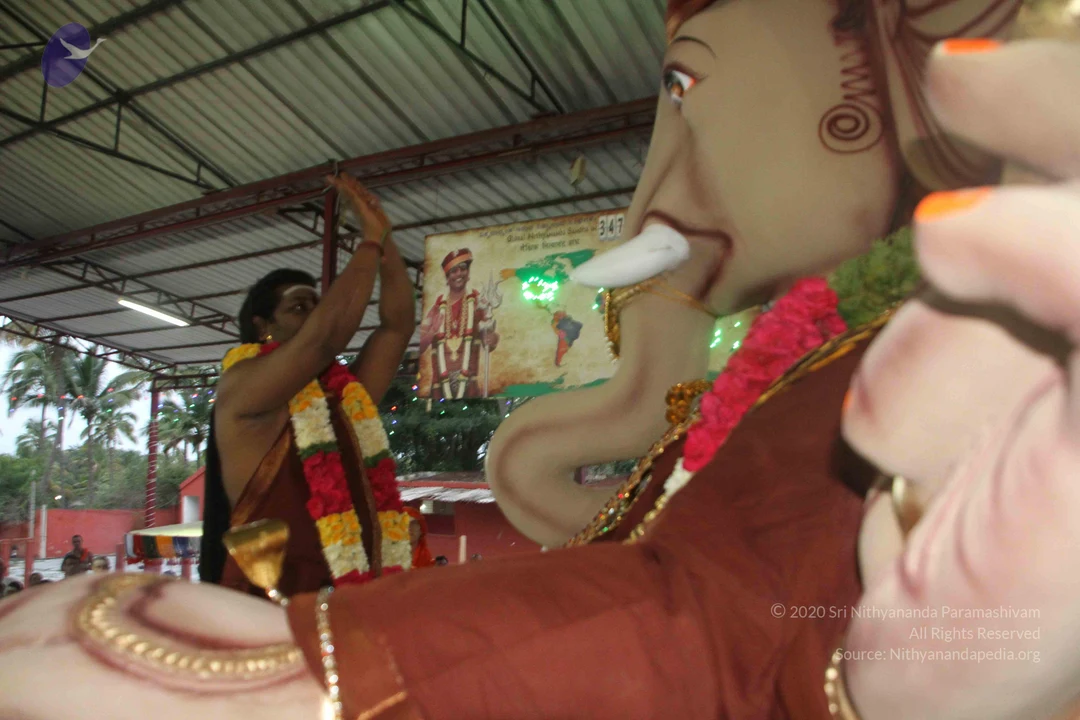
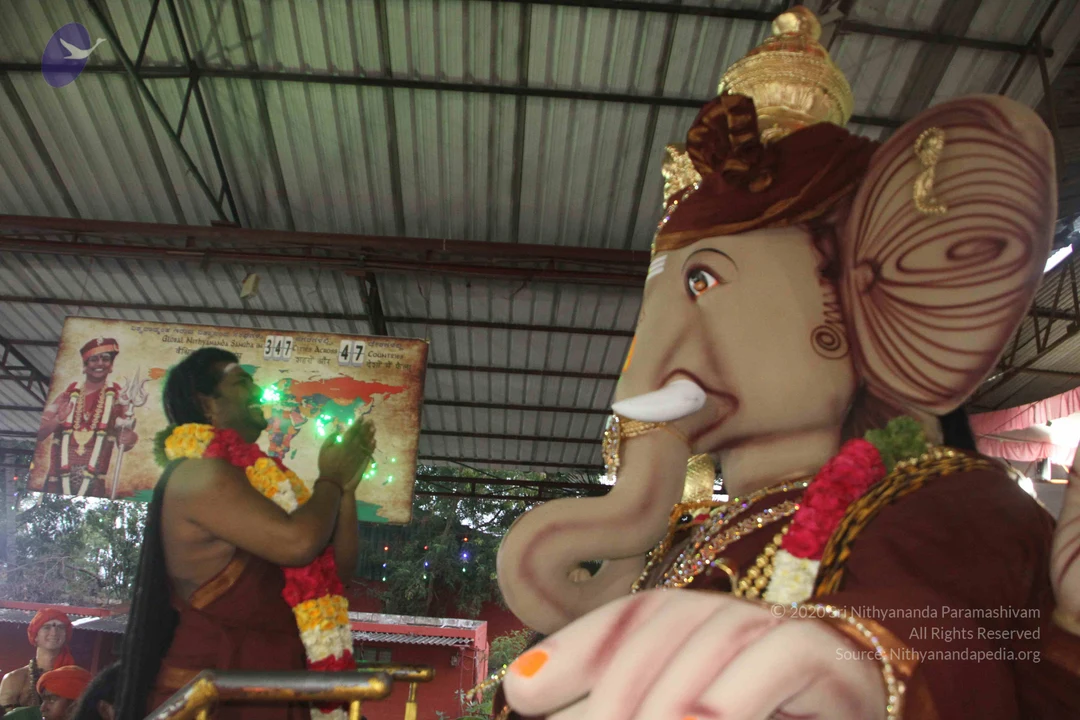
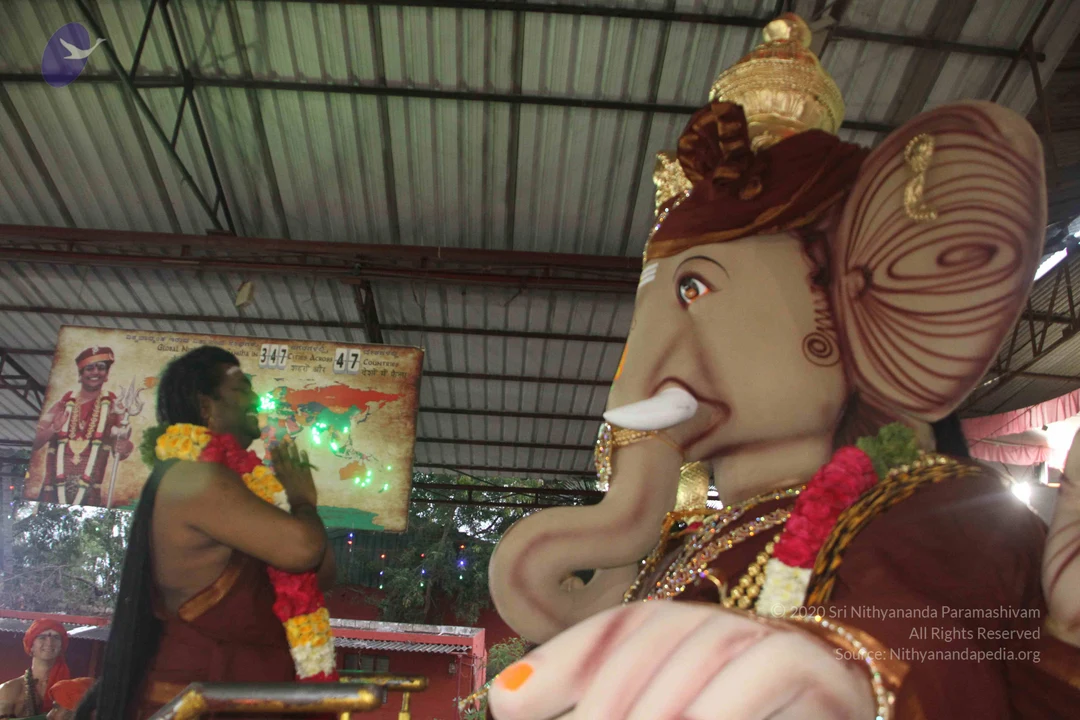
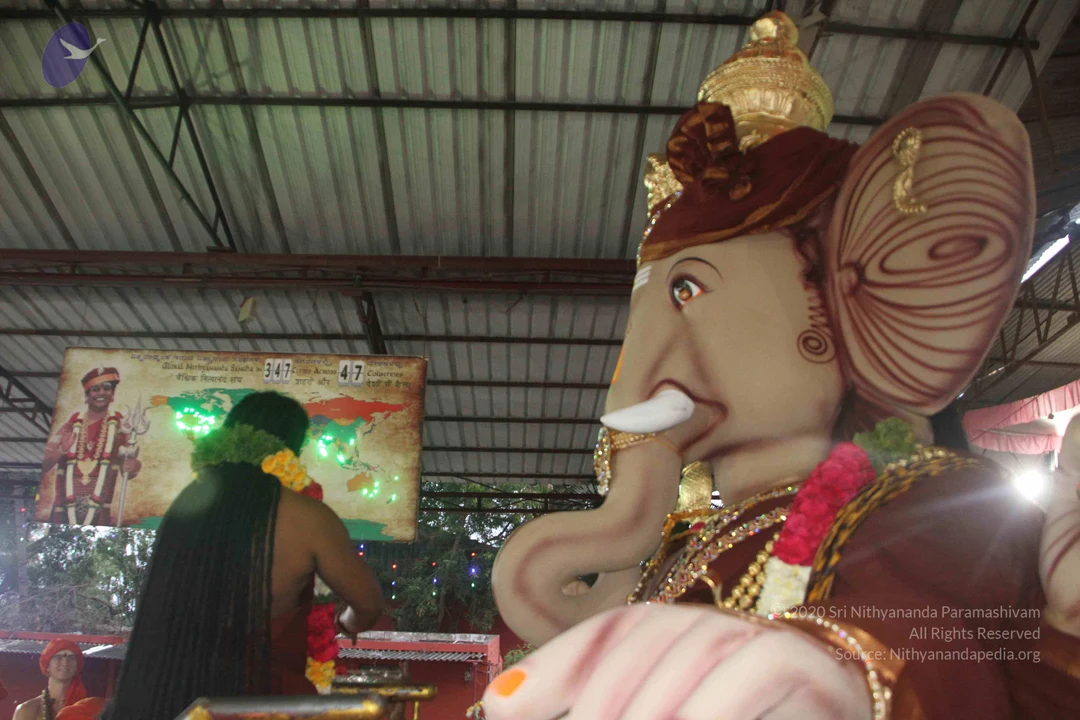
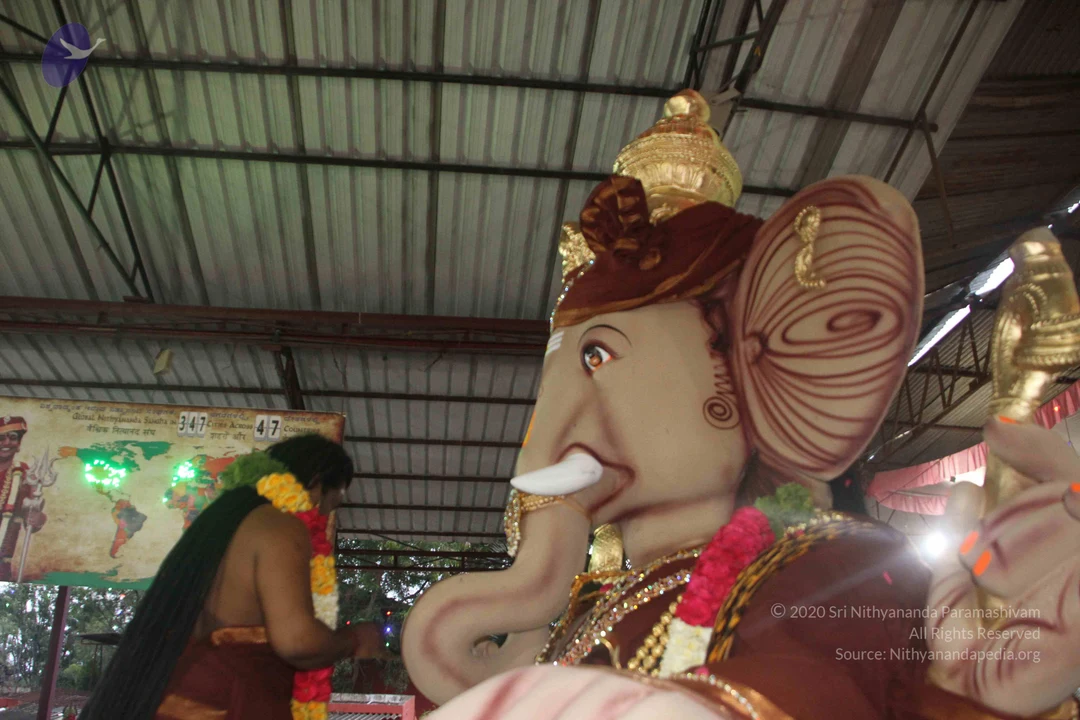
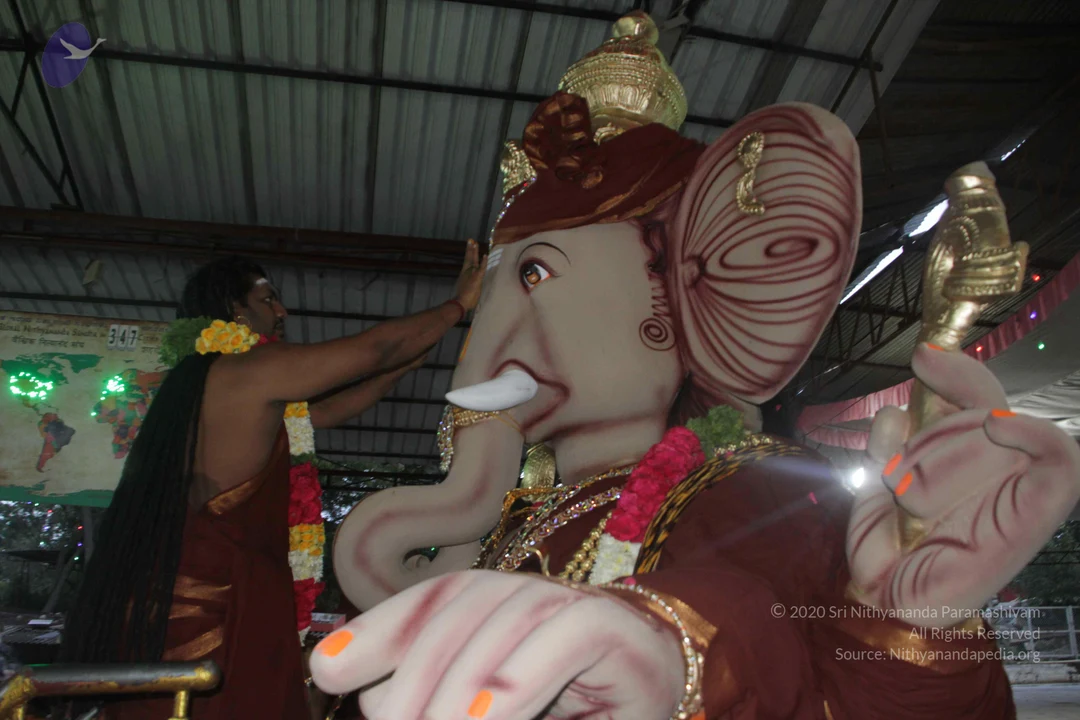
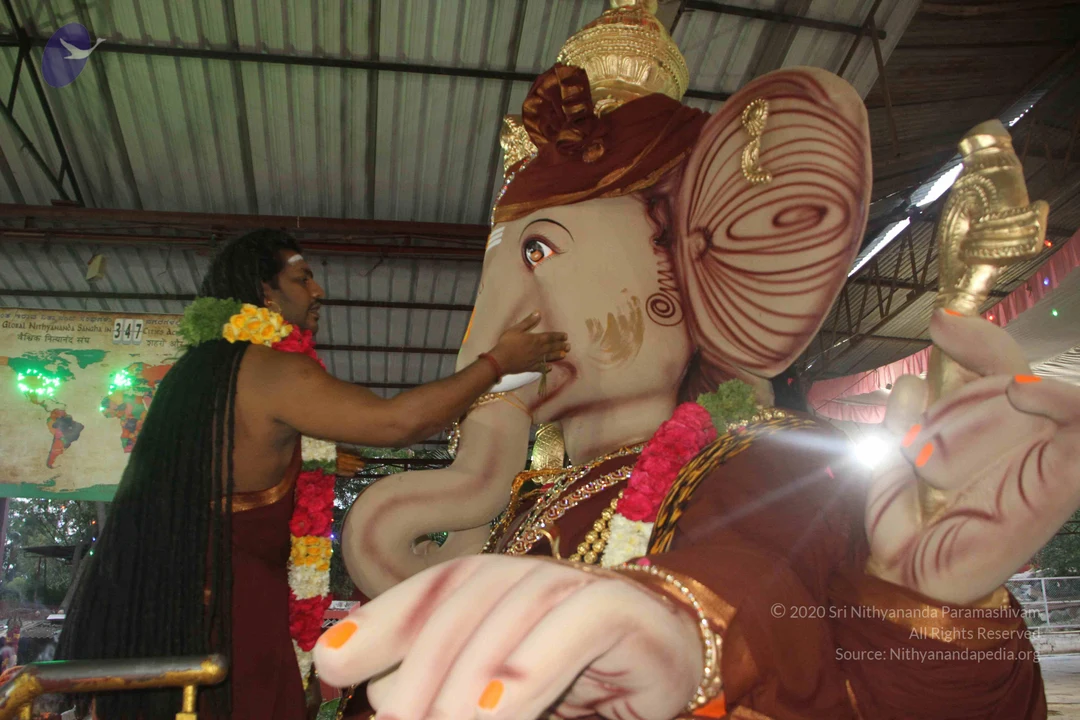
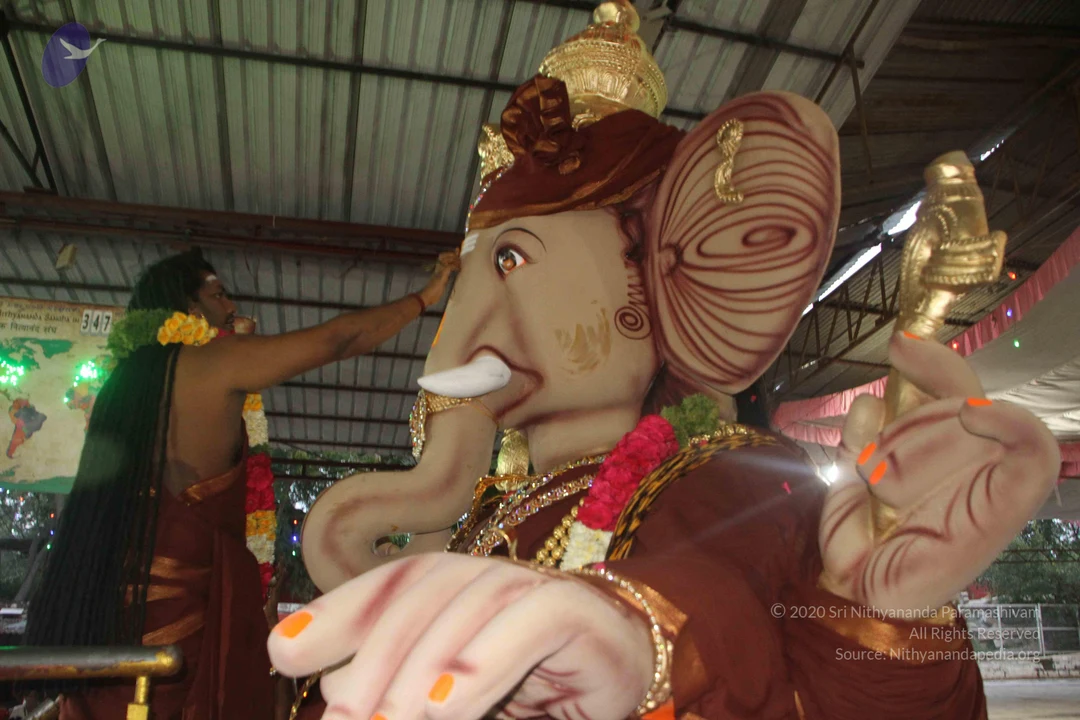
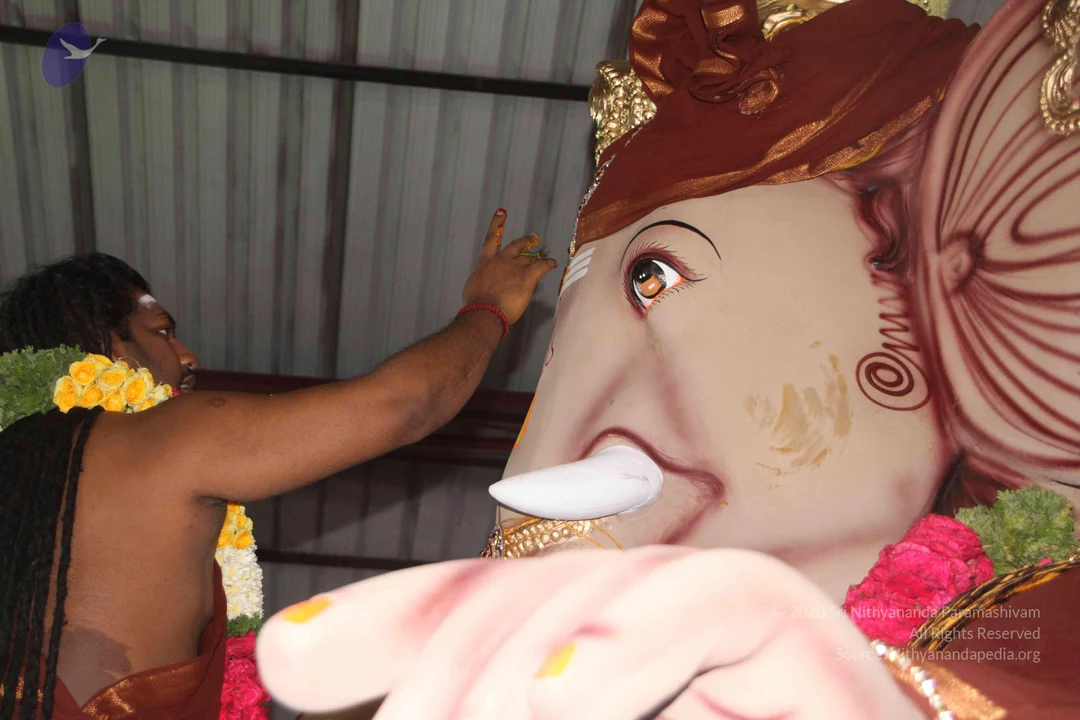
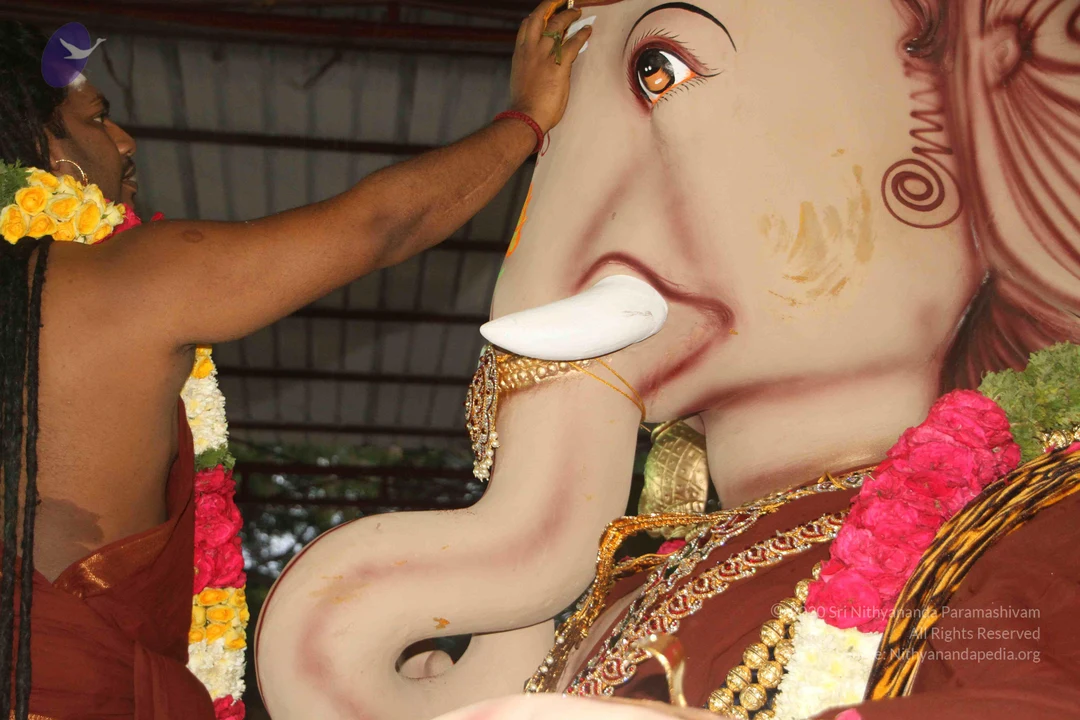
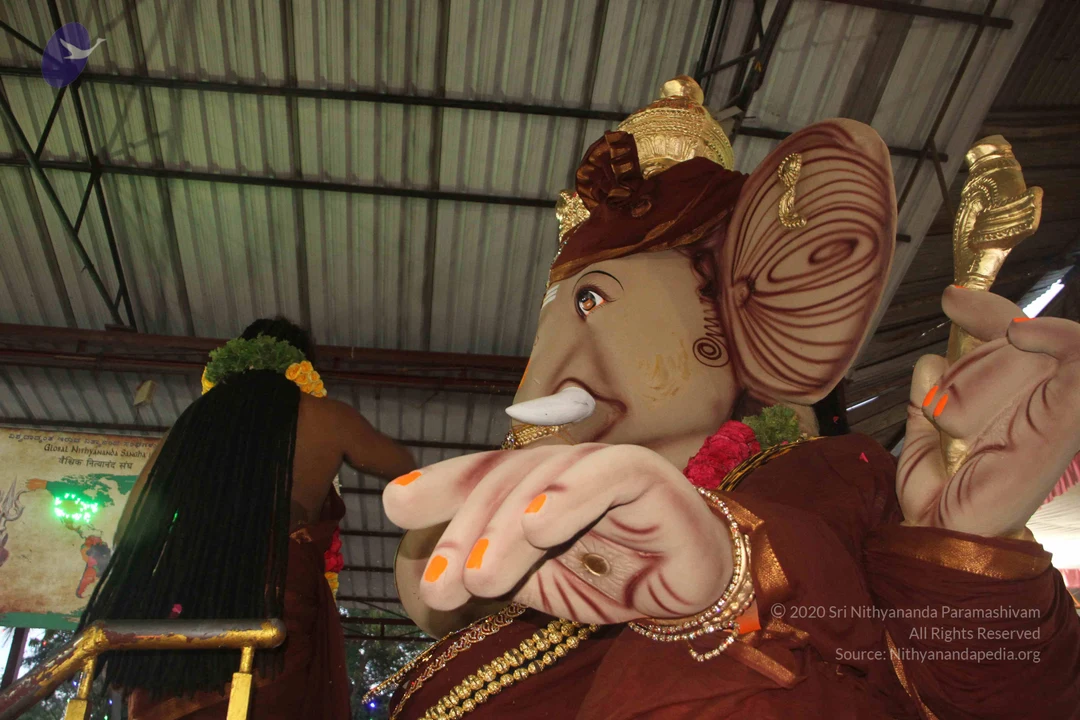
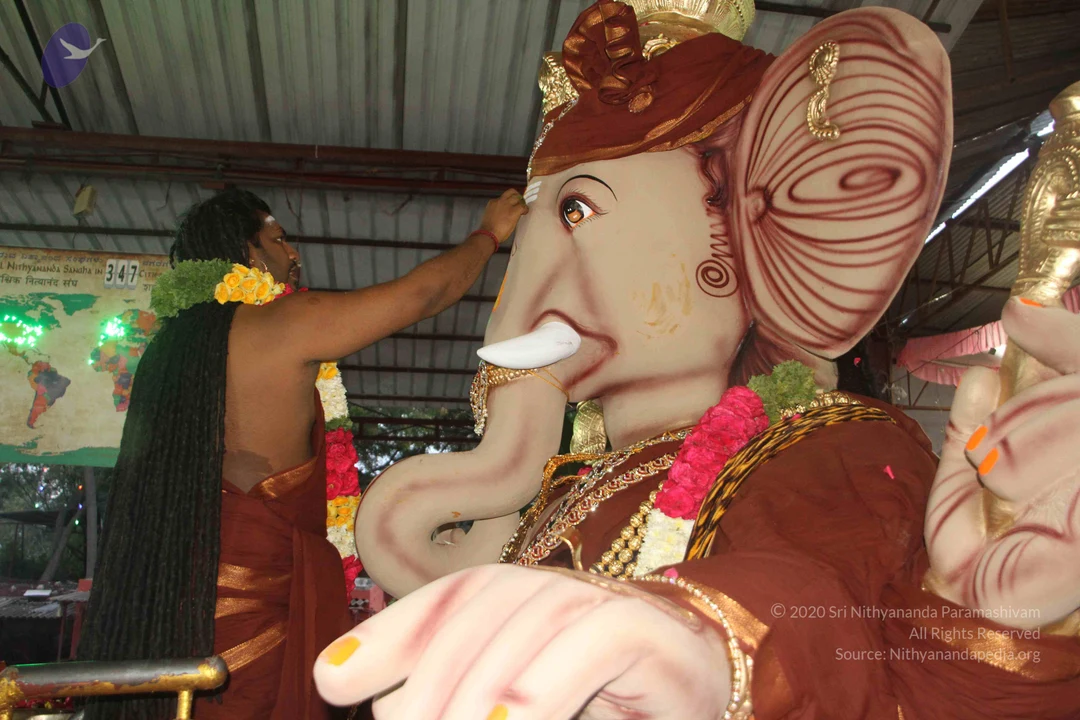
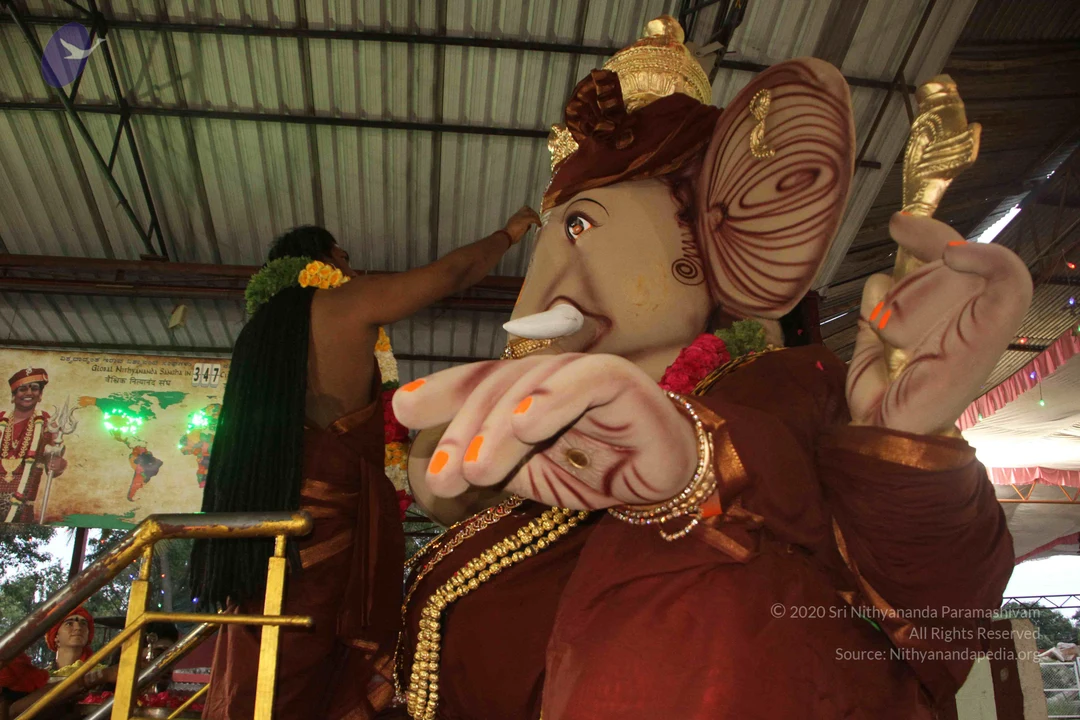
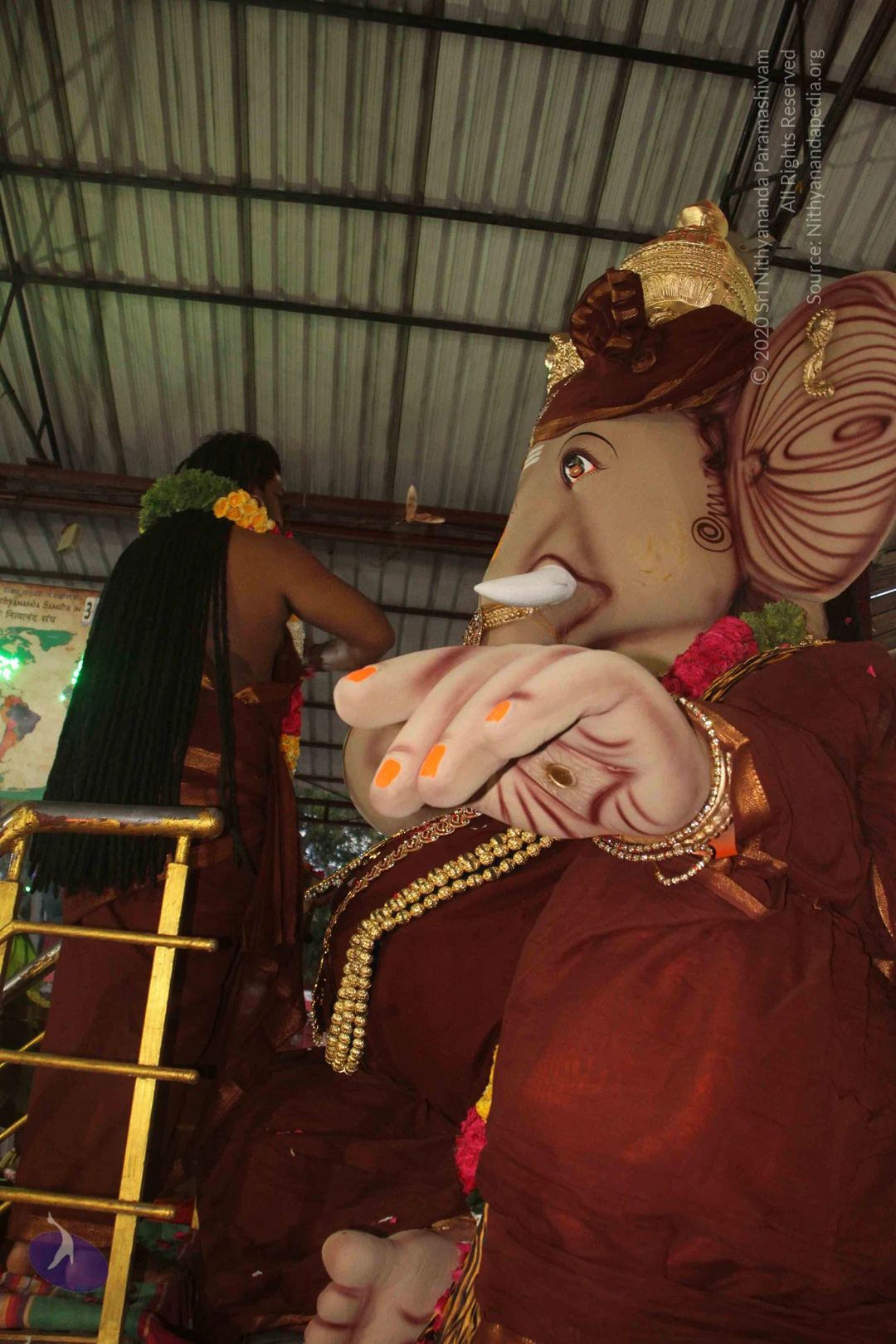
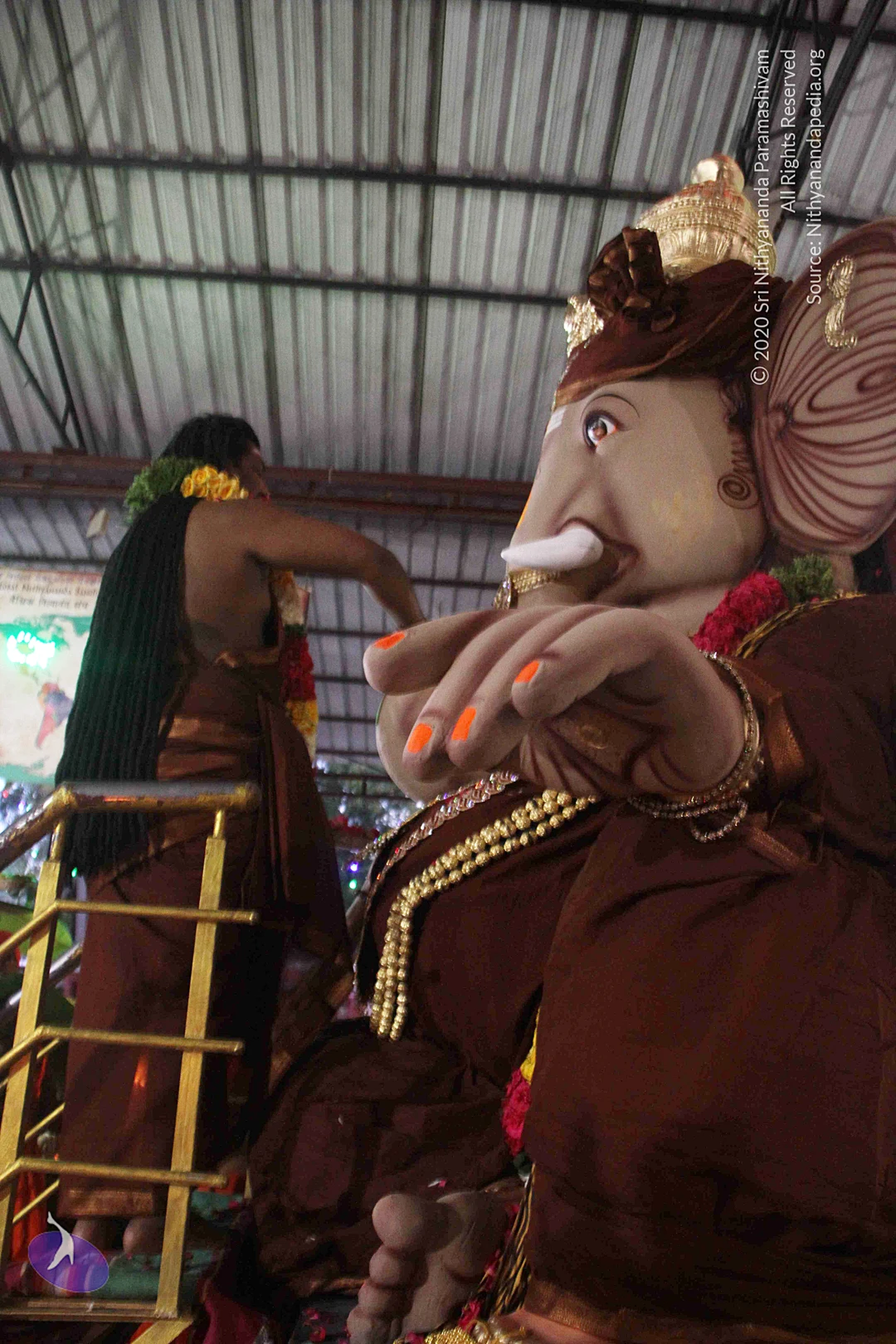
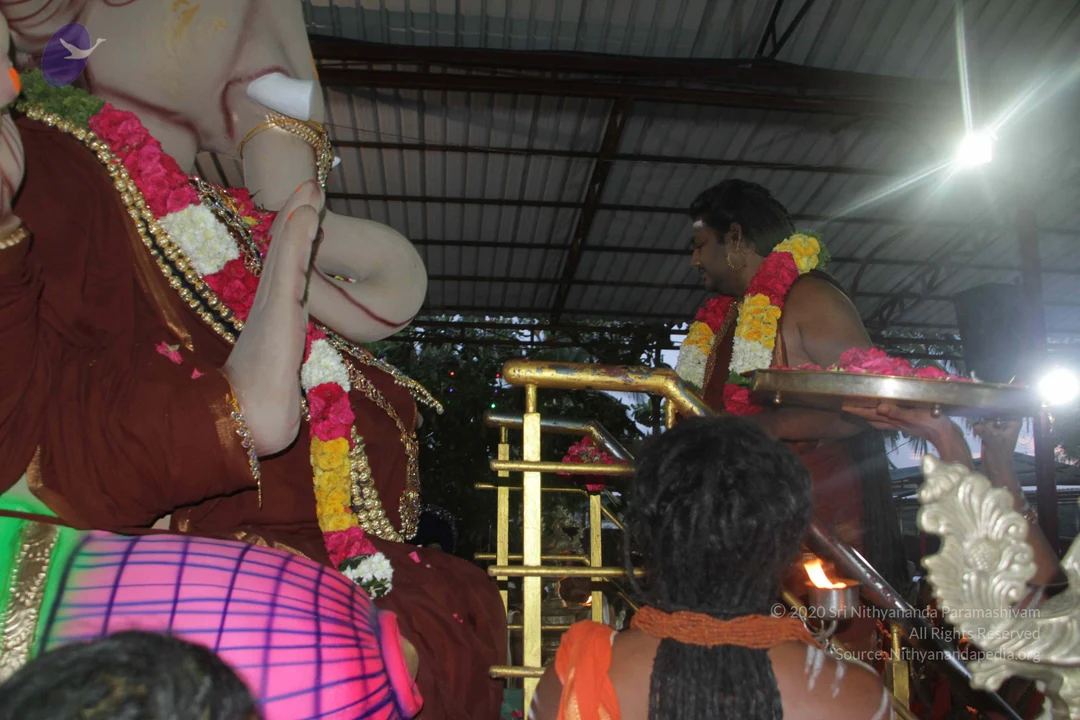
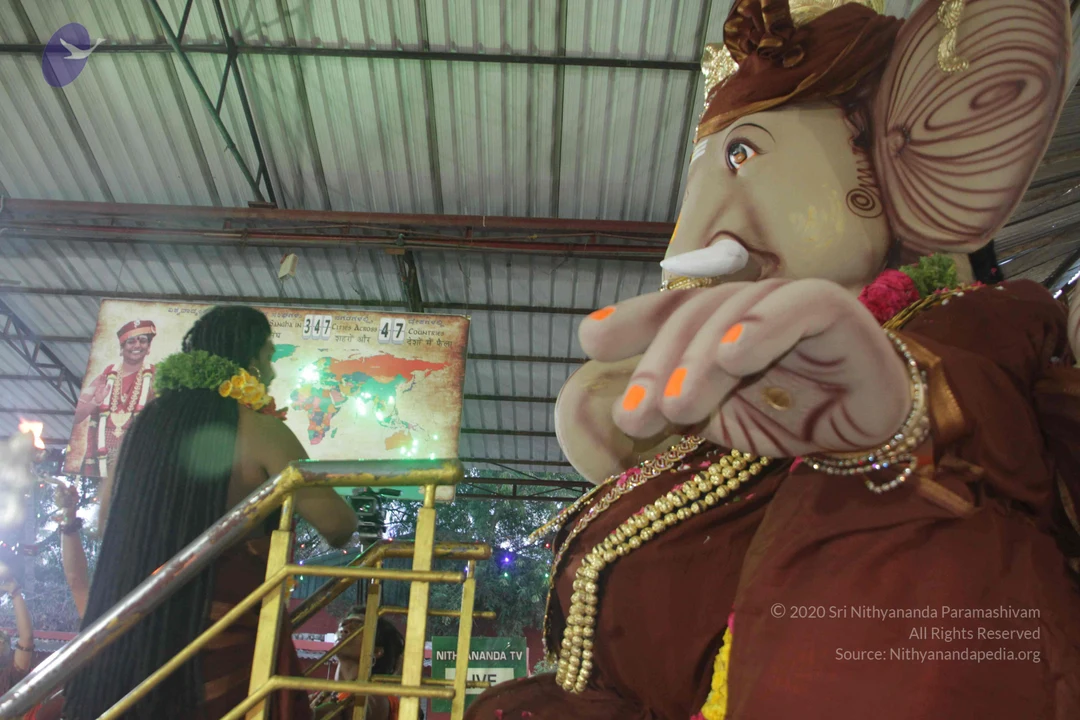
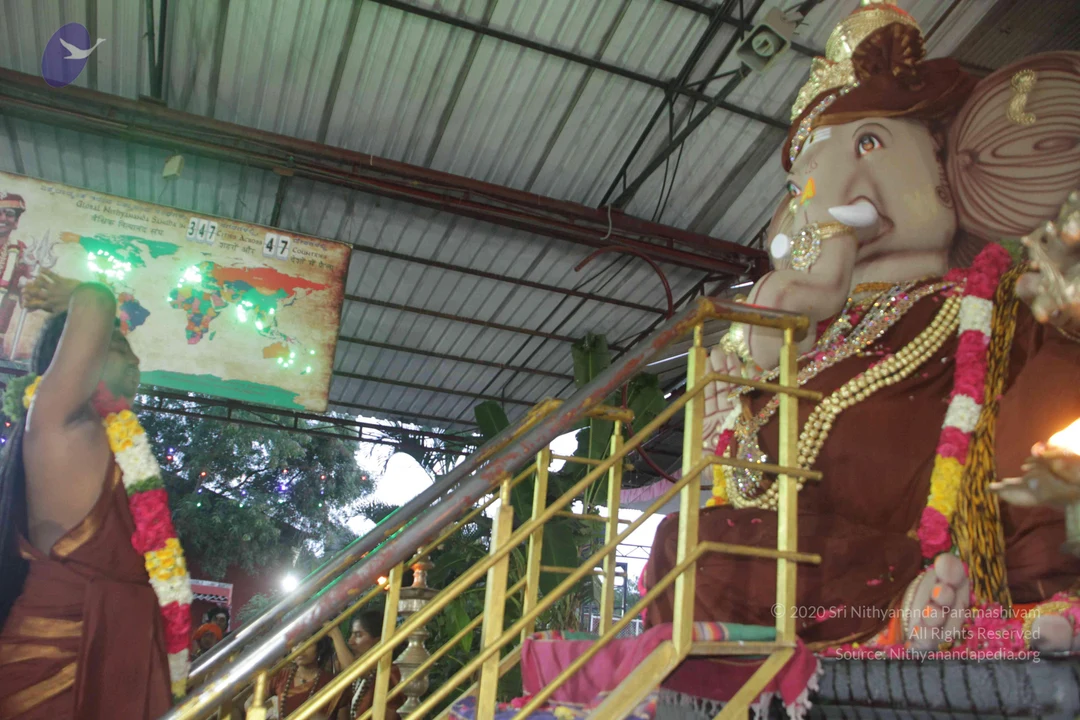
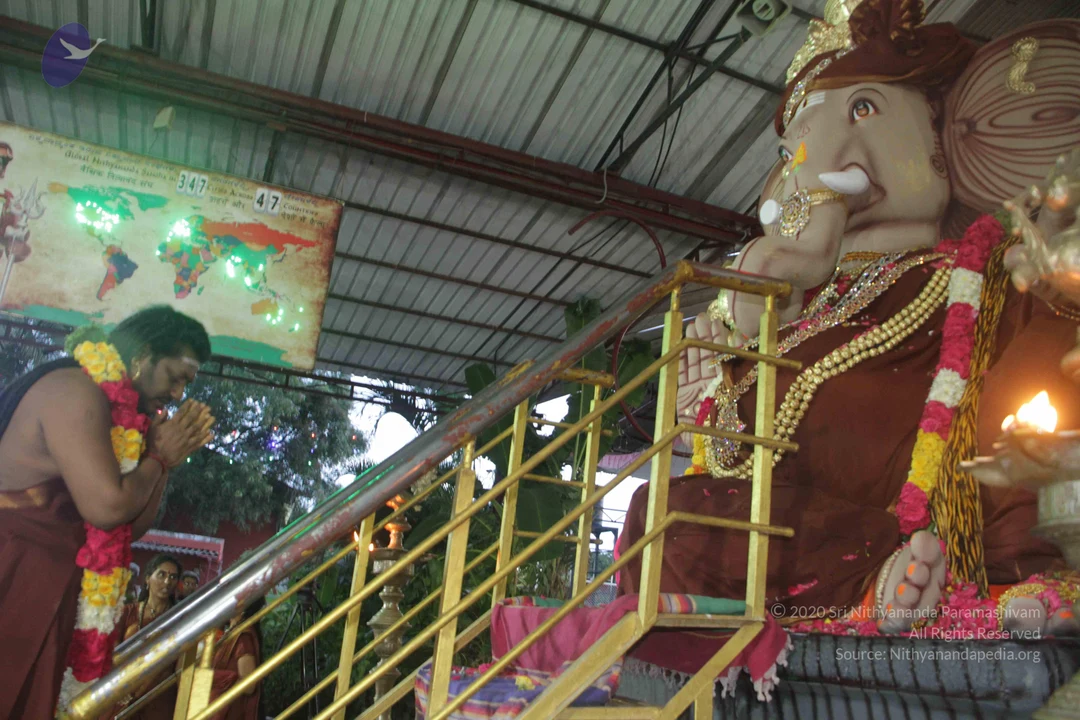
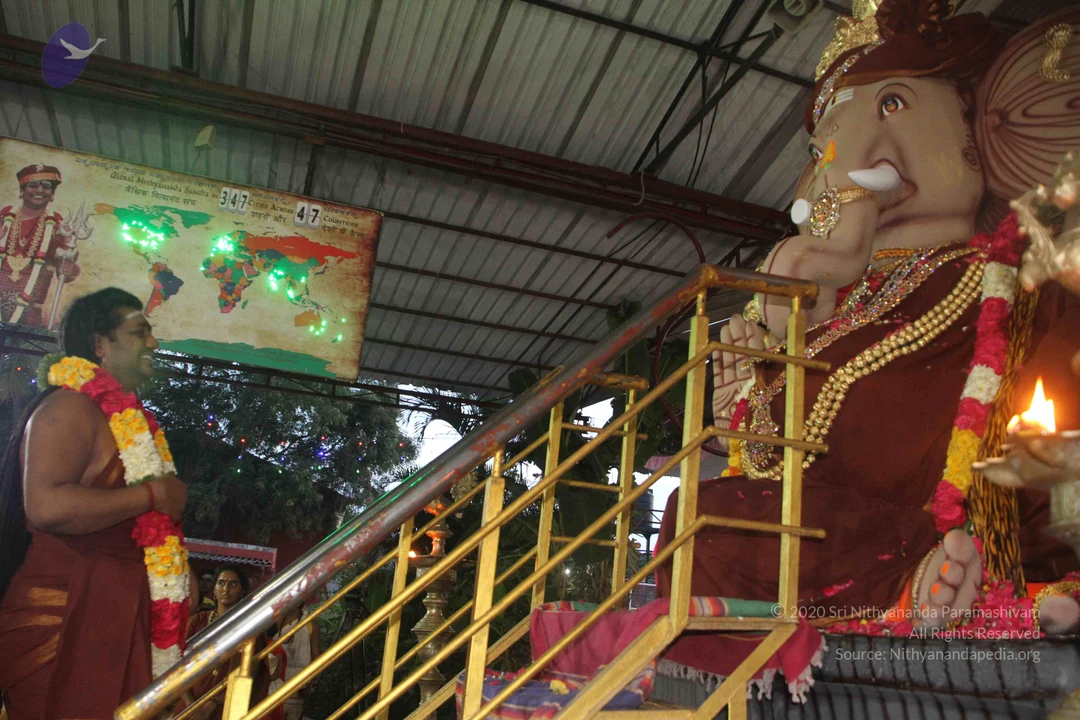
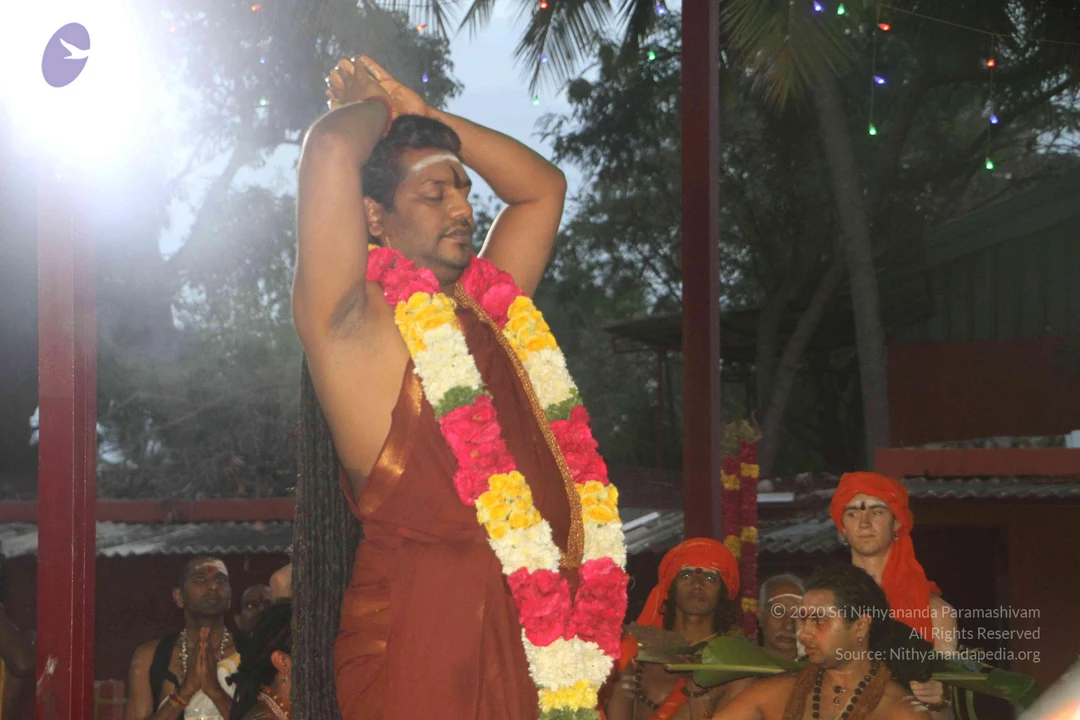
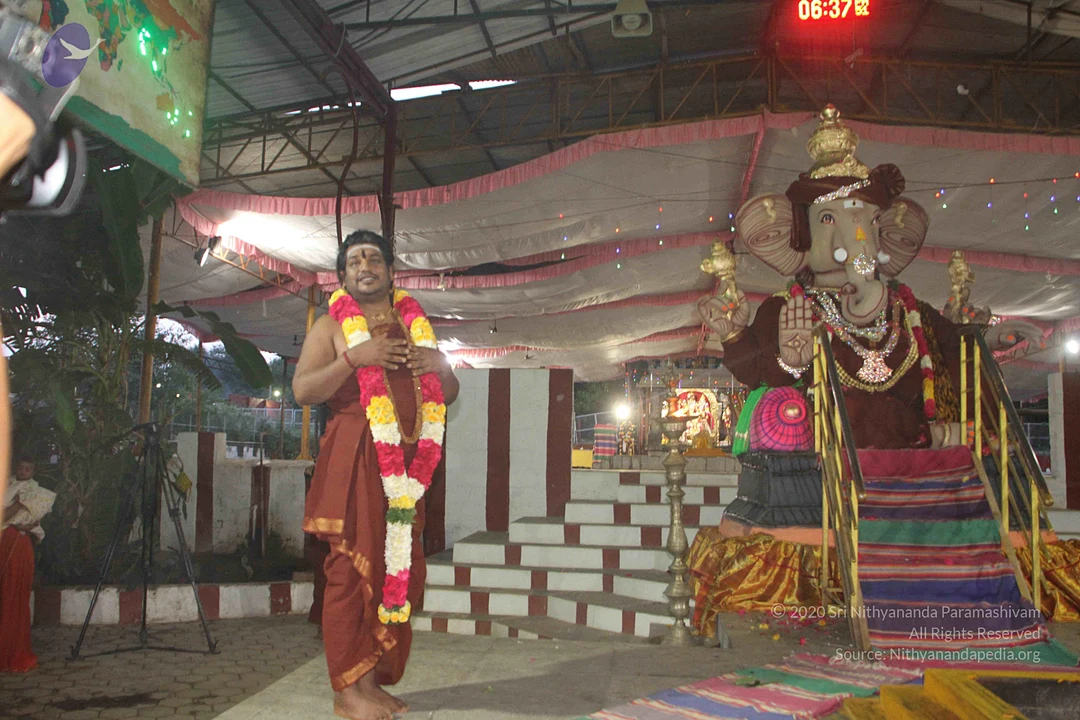
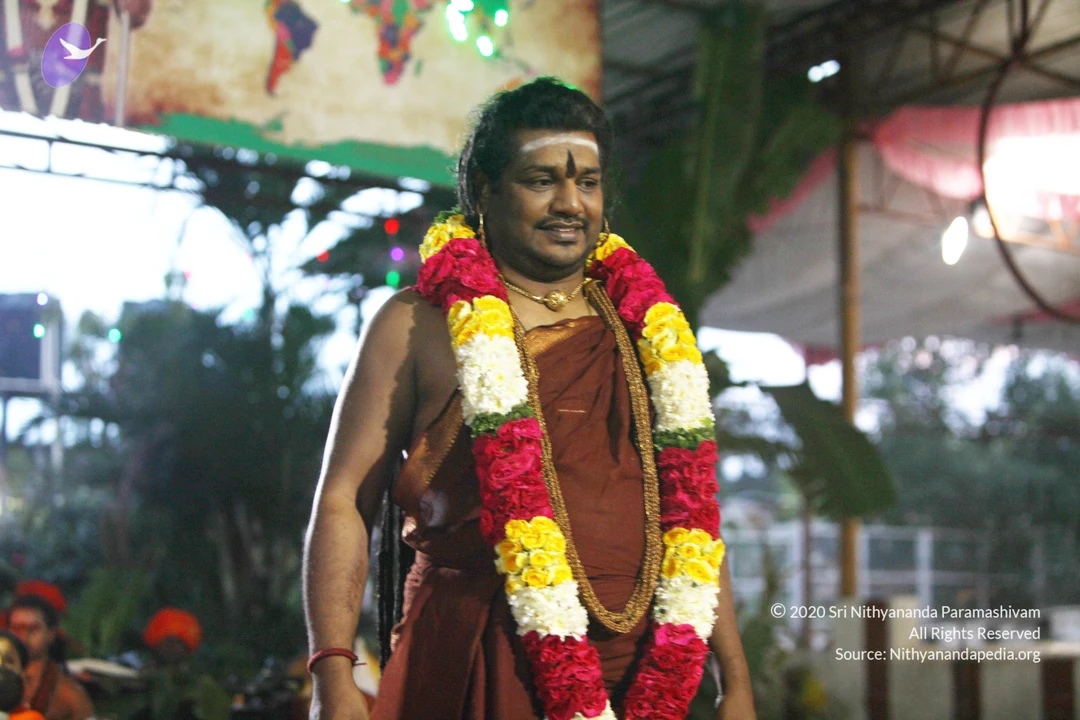
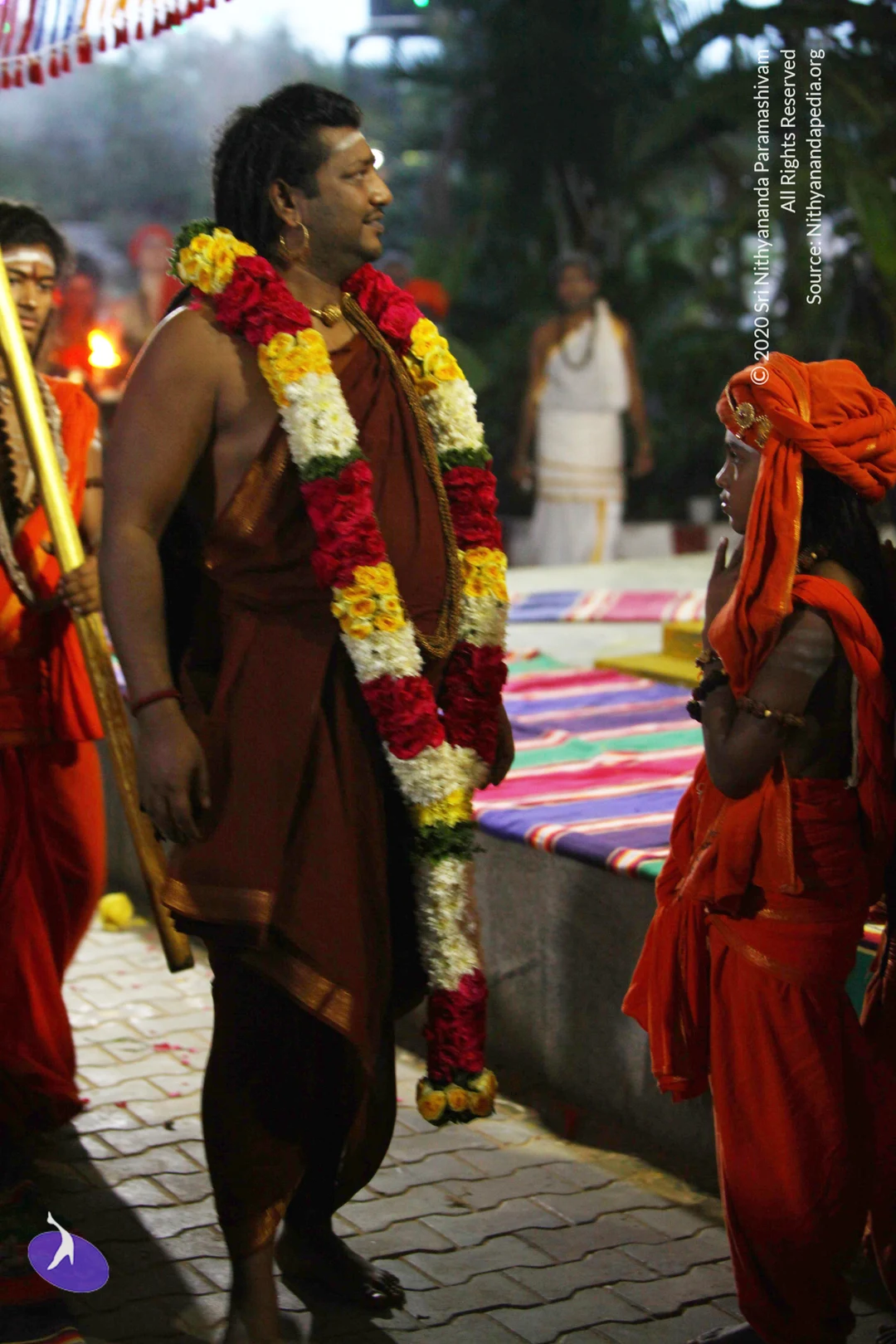
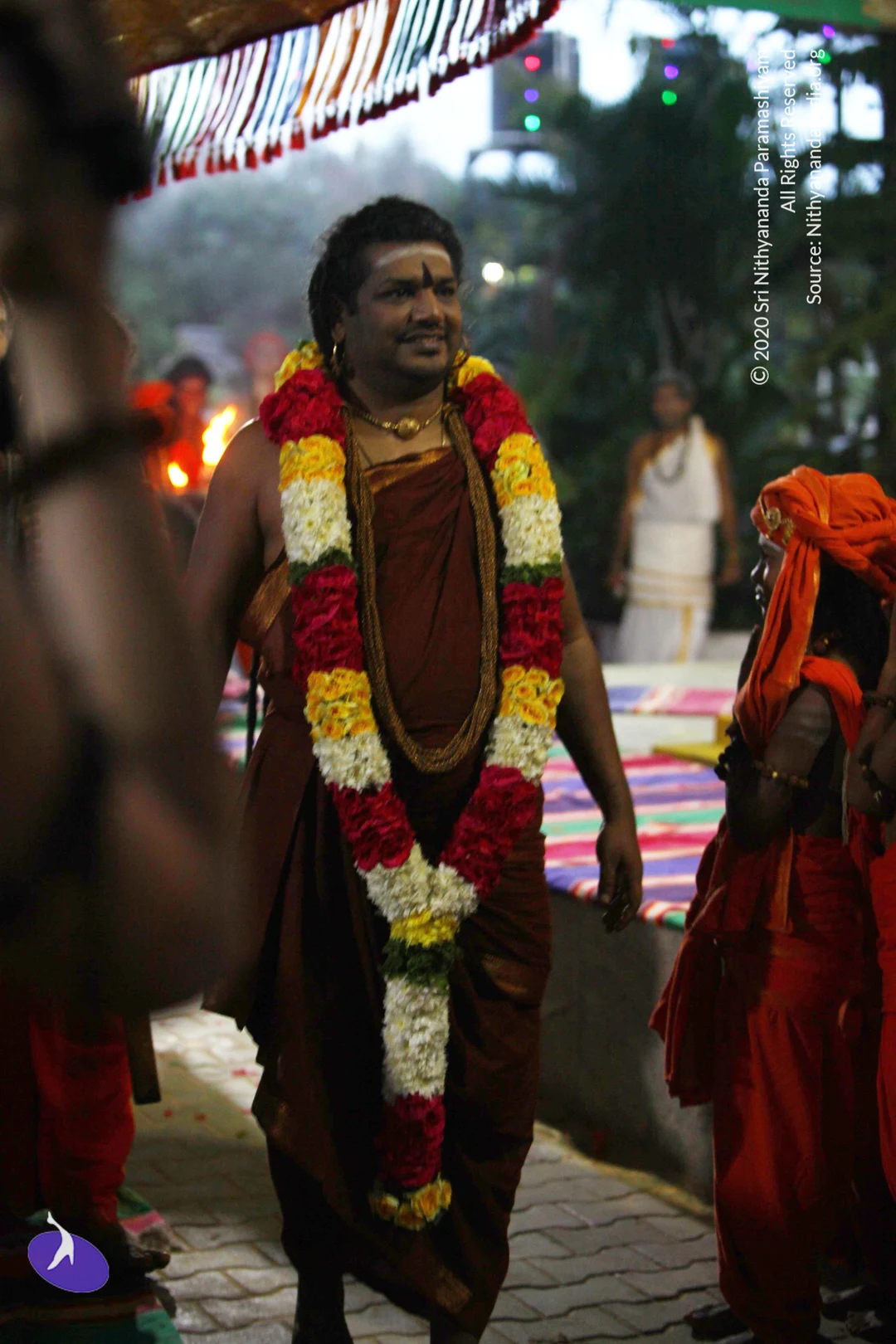
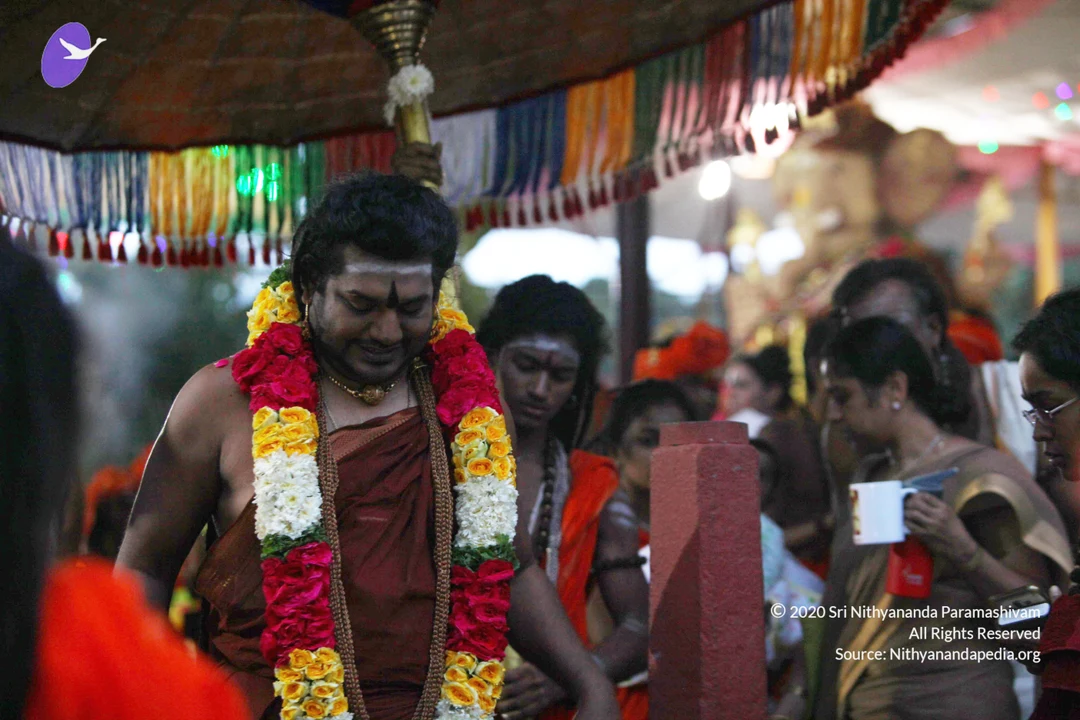
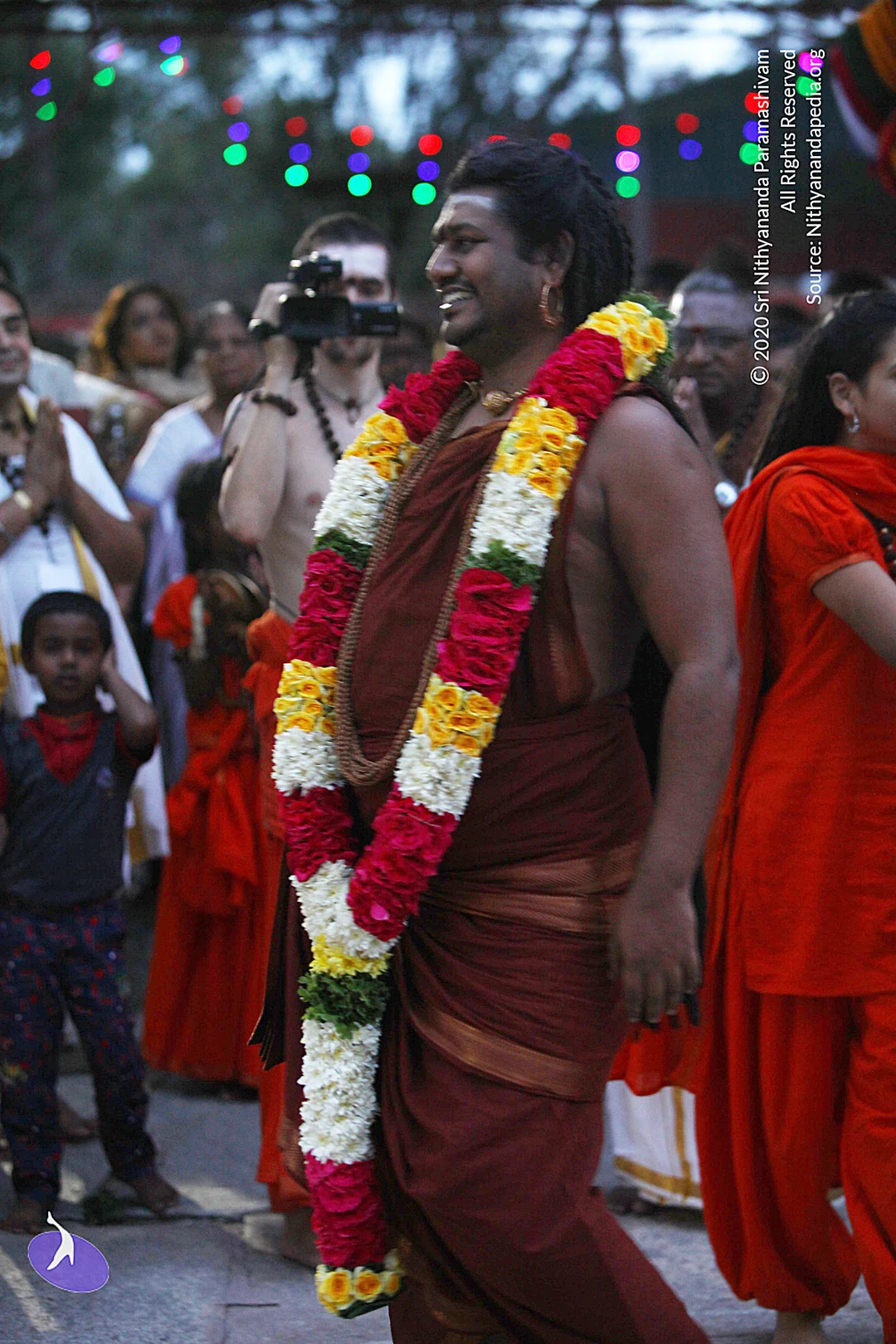
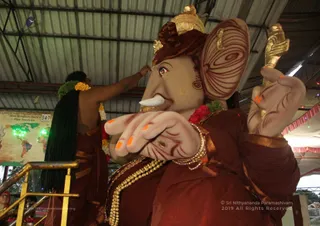
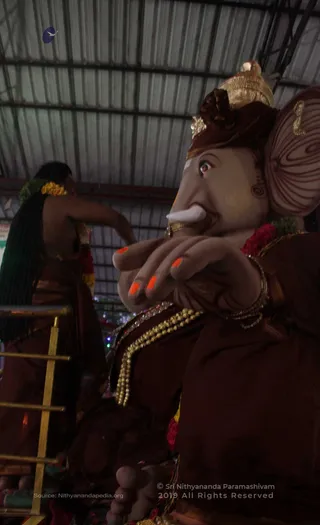
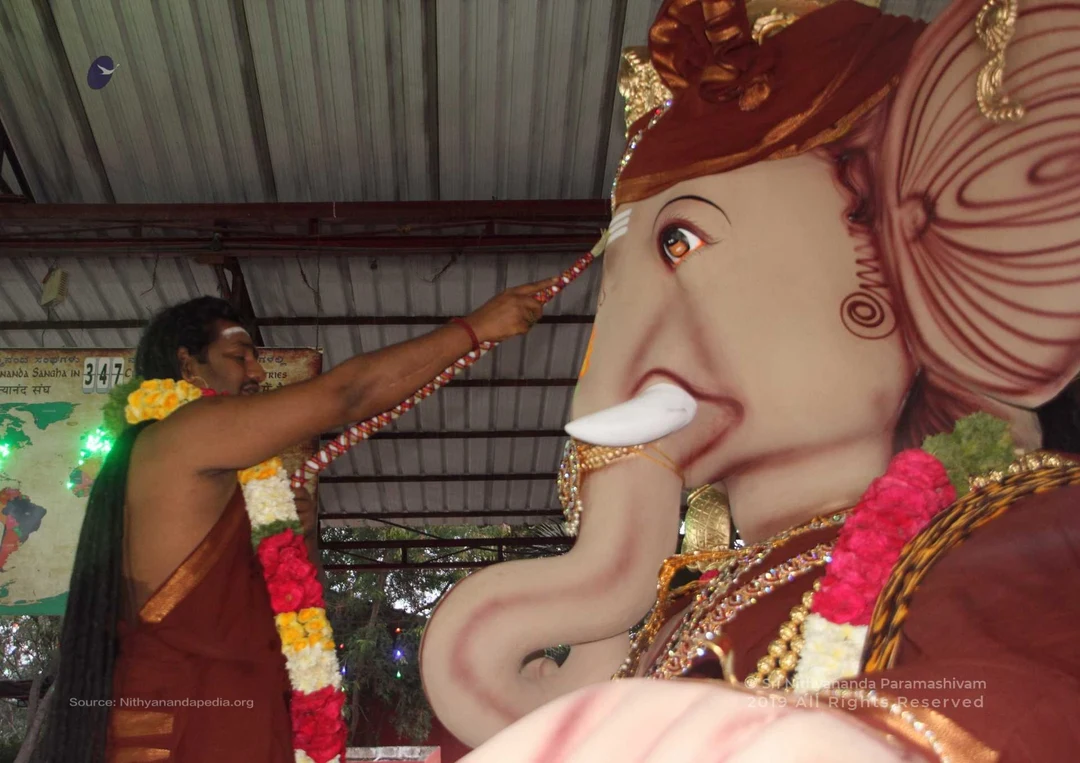
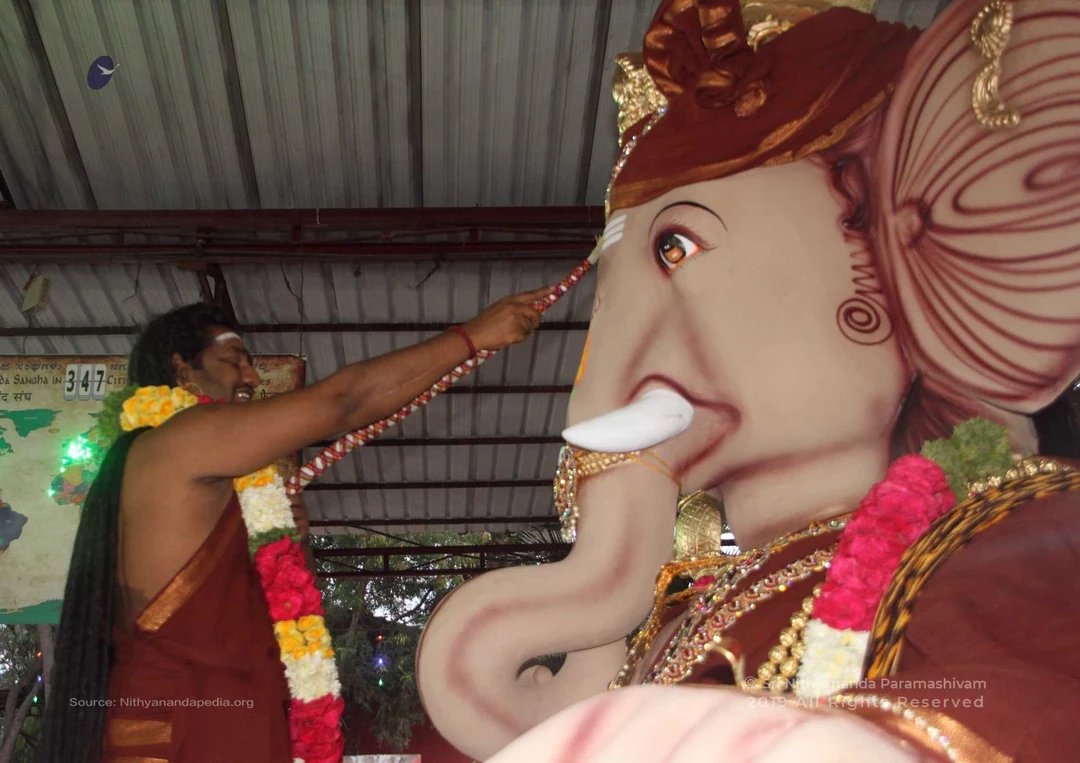
A photograph of a man standing outdoors in the evening, wearing a thick garland of red roses, orange marigolds and white jasmine across his chest and shoulders. He is bare-chested in the upper body, wearing a rust-brown dhoti-style cloth and a gold chain with a pendant. He has a white tripundra mark with a central red dot on his forehead and appears to be smiling. Behind him are a hanging world-map banner, string lights, palm foliage and a tent canopy. No appearance-based identification is made; he is described only by role-neutral appearance in ritual-style attire.A large, brightly painted Ganesha murti with an elephant head, tusk, gold crown and gold hand-held attribute dominates the right side, dressed in a maroon-red cloth with gold border and gold necklaces and bangles. A person with long dark hair, a flower garland in orange and yellow, and a maroon-red robe stands on a metal stair-rail reaching up to touch the murti's forehead. Above is a corrugated metal roof with a pink-and-white draped canopy, and a world map with green lights hangs on the left wall. The setting appears to be a pandal ceremony for a Ganesha puja.A large Ganesha murti in a rust-brown silk garment with gold trim and a gold crown, seen from a low angle under a corrugated metal roof. The murti has a raised trunk, gold bangles, gold beaded necklaces and red and yellow flower garlands. Behind it on the left, a person with long dark hair and a yellow-and-red flower garland stands on a gold metal platform or scaffold, partly visible. The setting suggests a temple or pandal preparation for the Ganesha Brahmotsavam.A large Ganesha murti with a pale pink face, long curved white tusk, red-and-gold crown and a red-brown draped garment with gold border, decorated with gold necklaces and garlands of red, white and yellow flowers. In the background at left, a bare-shouldered man with long dark hair and a red cloth wrap reaches up to mark the murti's forehead, possibly applying a tilak, under a corrugated metal roof. A printed map and a board with the number 347 are visible at left.A large Ganesha murti with a pale pink trunk, big ears, a gold crown and a maroon-red cloth draped over its head and body, adorned with red and orange marigold garlands and gold ornaments. A standing figure on the left, with long dark hair and a dark red wrap, reaches up to touch the deity's head, possibly in a puja or padapuja setting. Under a corrugated metal roof, a golden raised hand holding an object appears on the right. Gold ornaments and bangles are visible on the murti's arms. The scene suggests a ritual abhishekam or puja for Ganesha.A large Ganesha murti dominates the frame, with an elephant head, upturned trunk, and red-brown turban with gold ornament, a red-brown draped garment, and gold necklaces and bangles. Its raised hands hold a golden axe-like weapon and show orange-tipped painted fingers. In the background at left, a person with long dark hair and a flower garland stands beside the murti in a metal-roofed hall, and a world map and a green-lit sign are partly visible. Shown as a photograph of a Ganesha Brahmotsavam event setting.
Puja

23 photosSource gallery
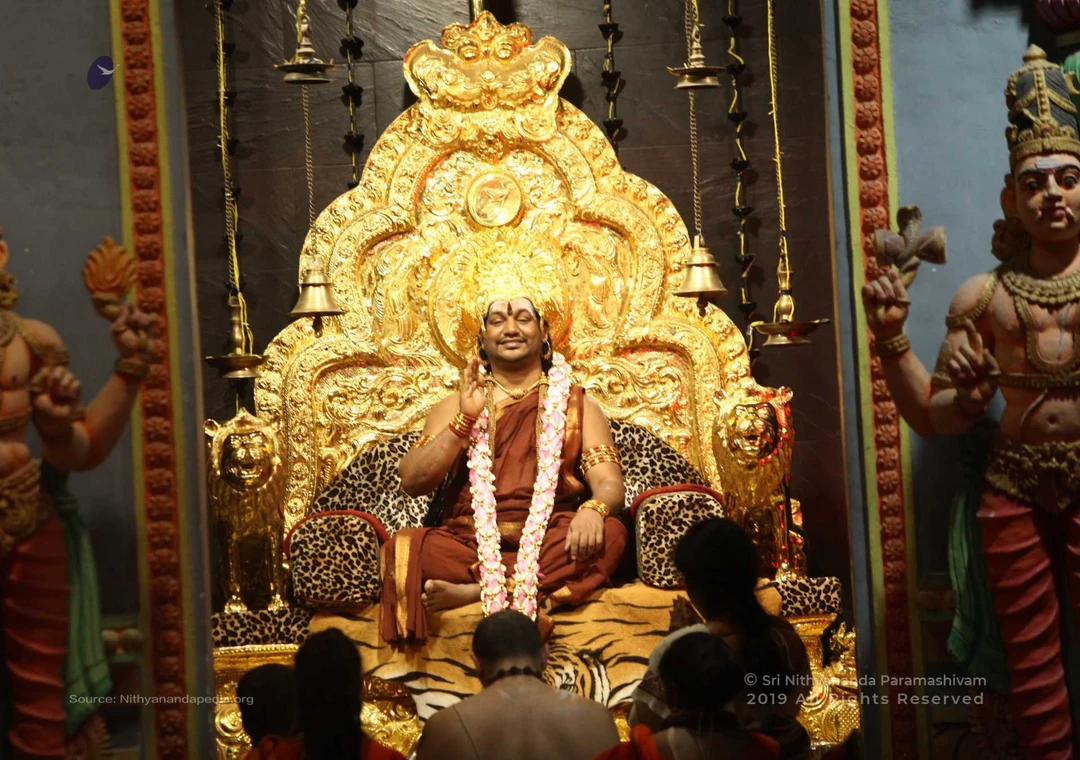
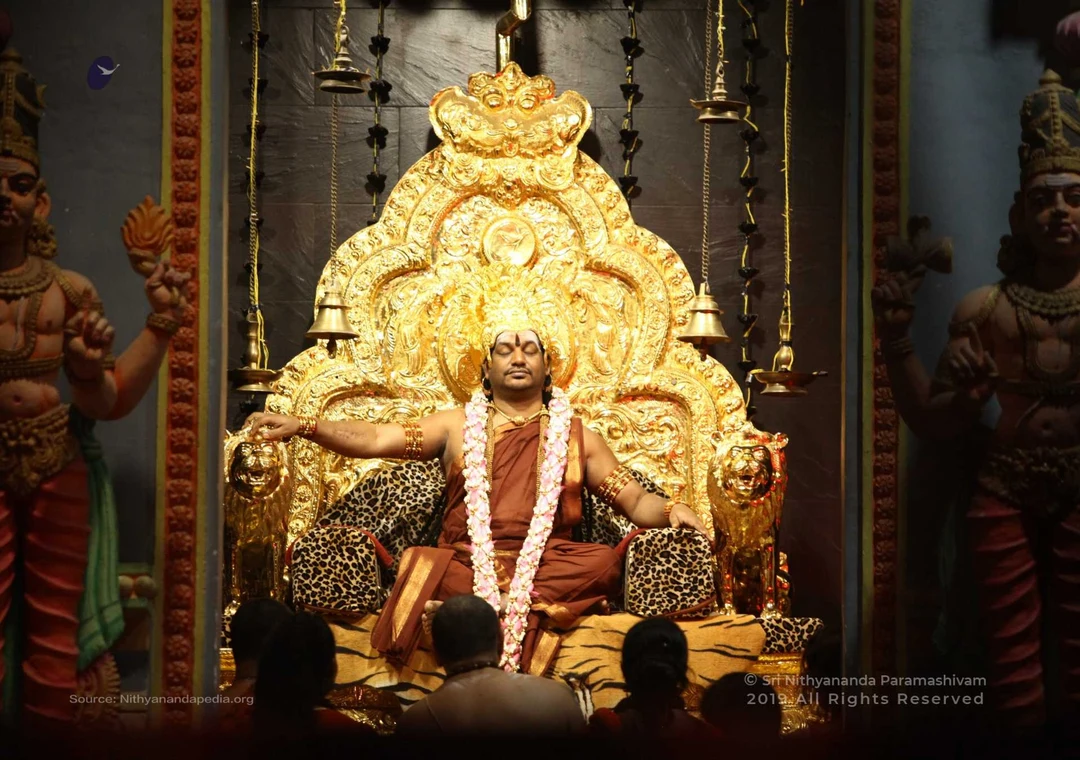
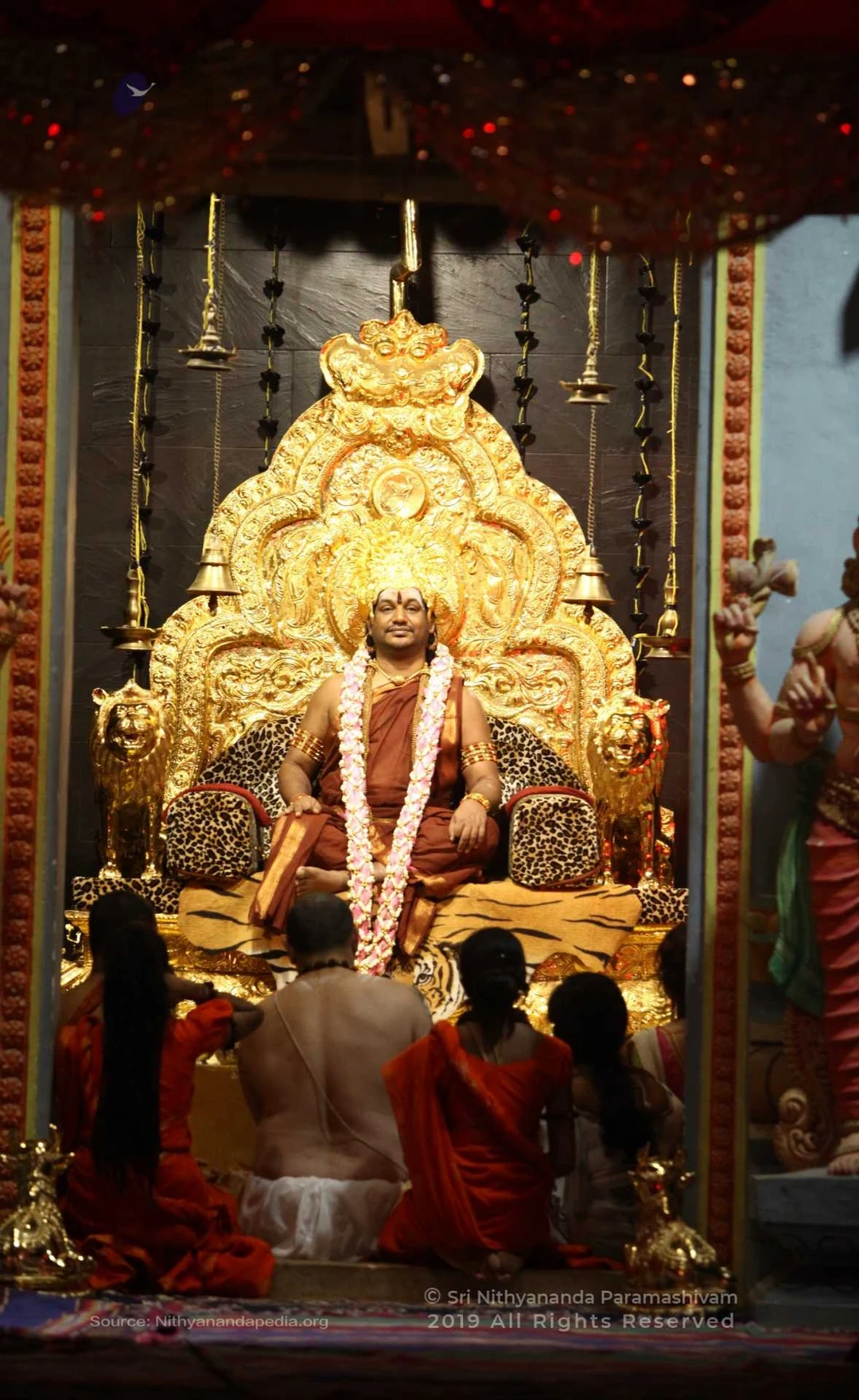
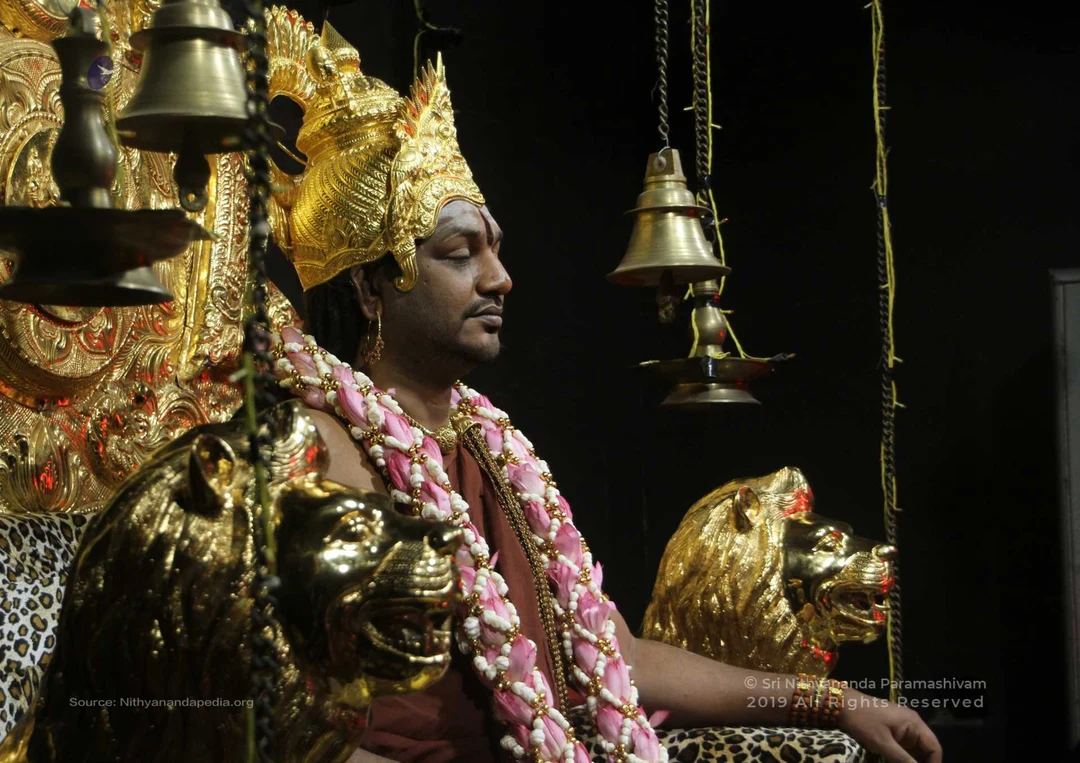
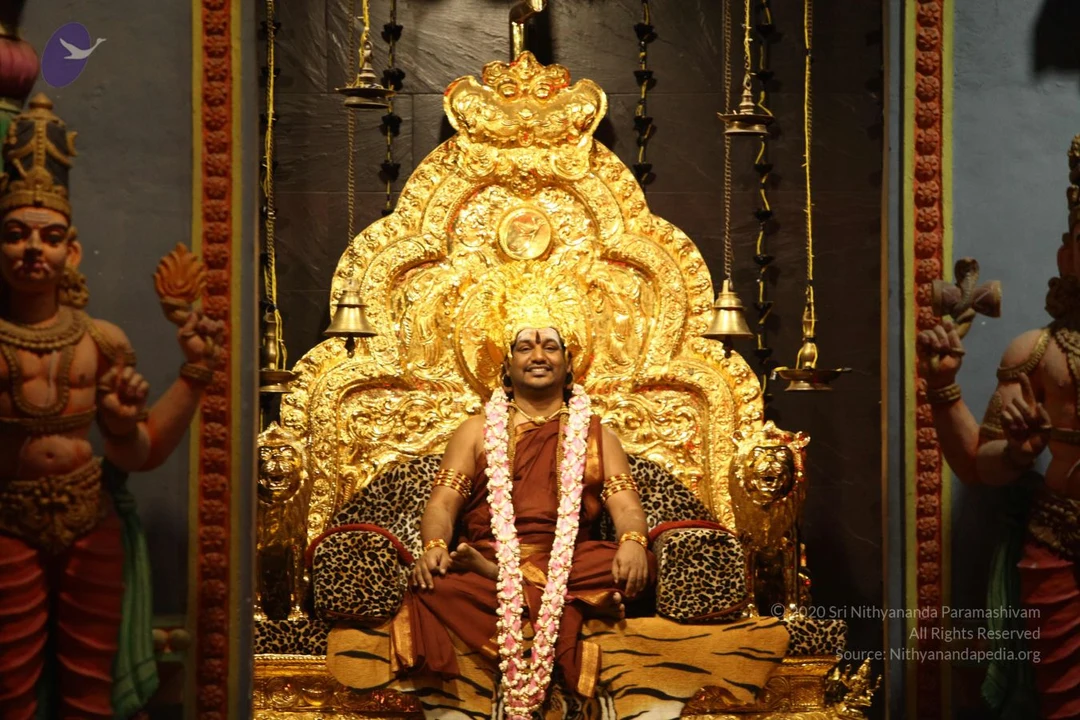
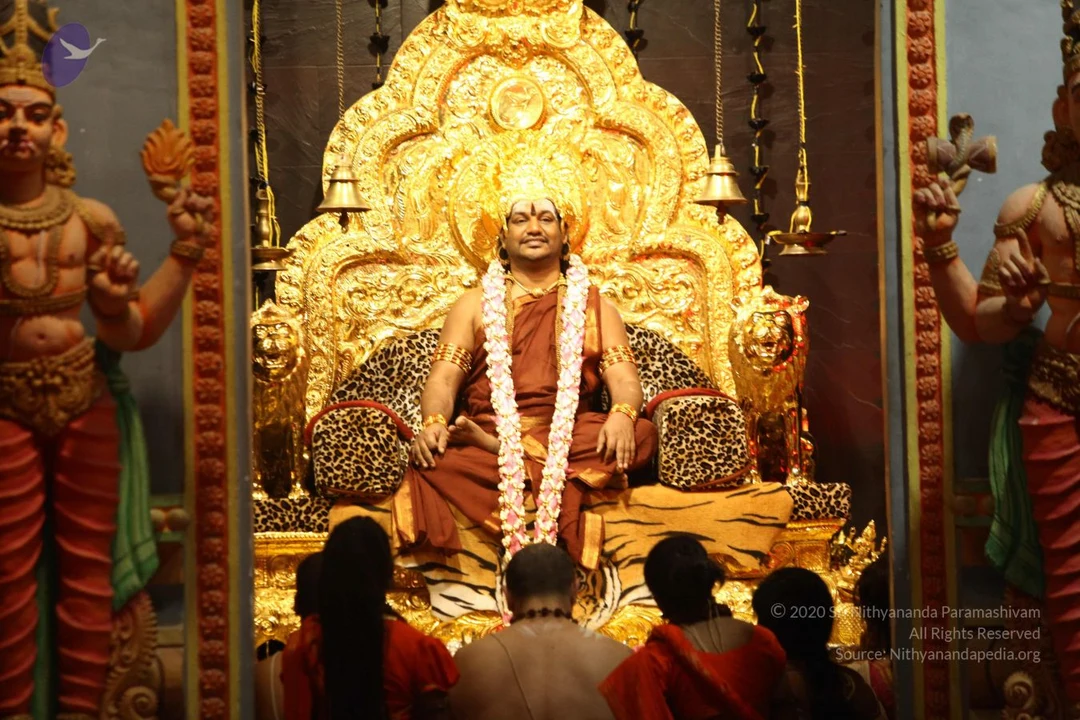
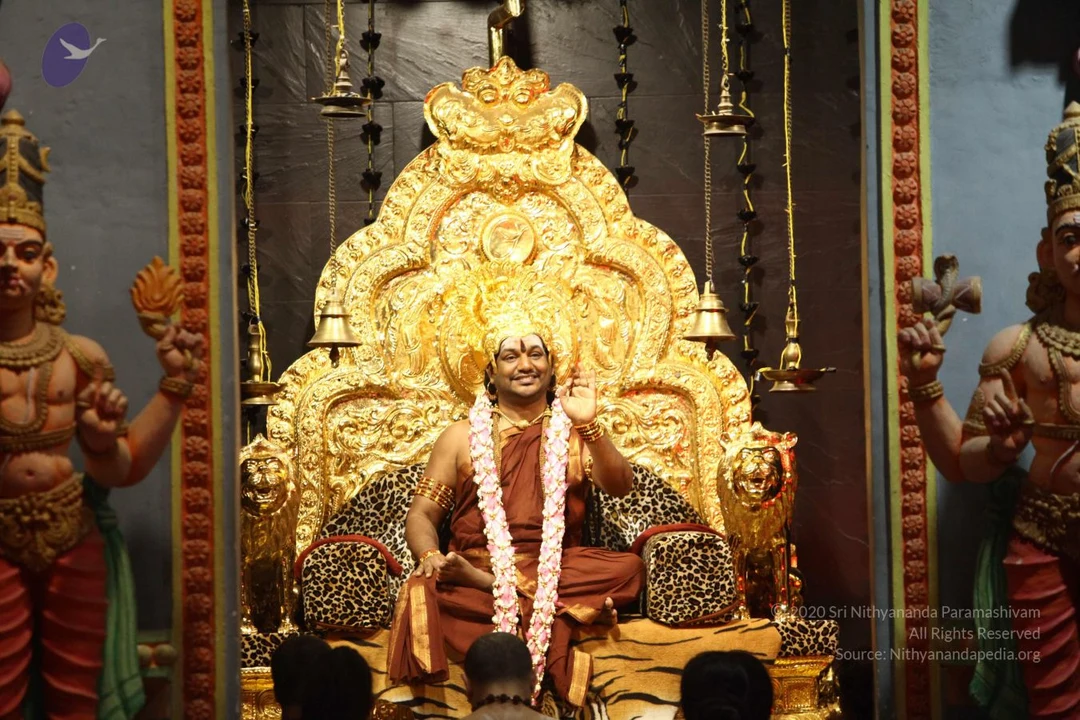
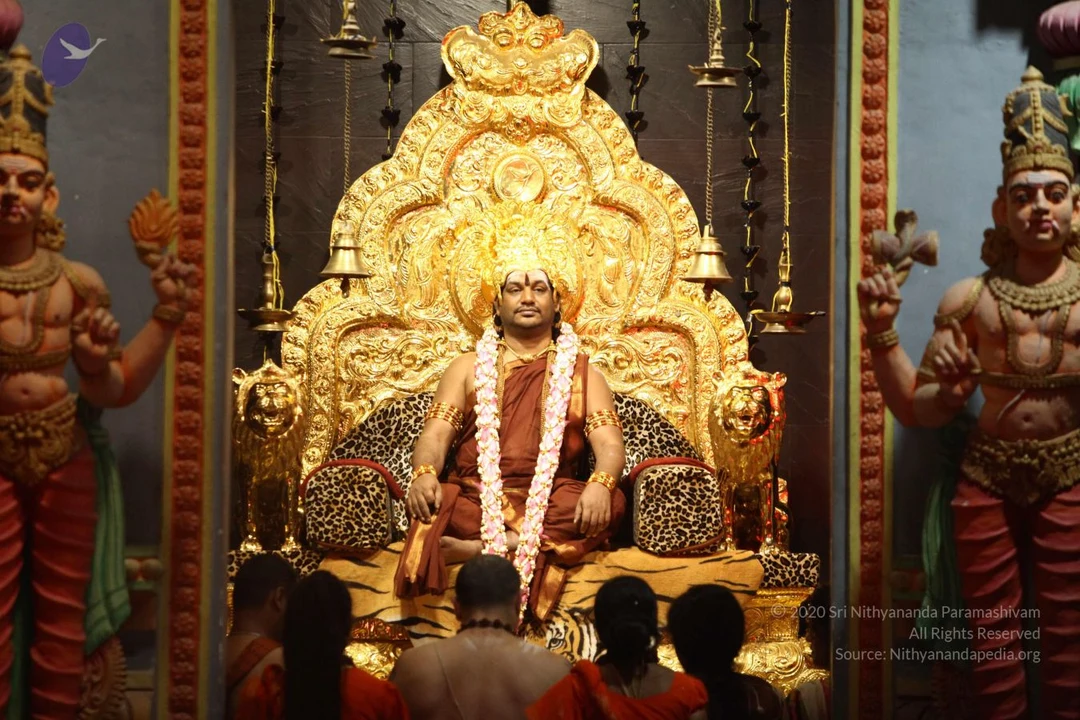
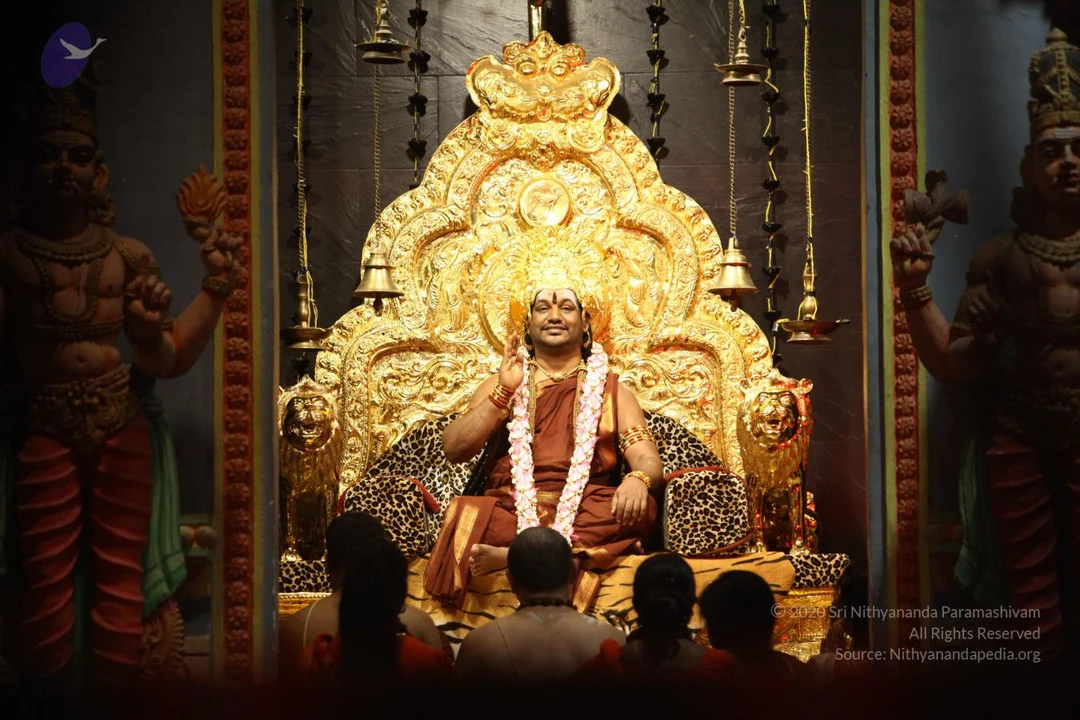
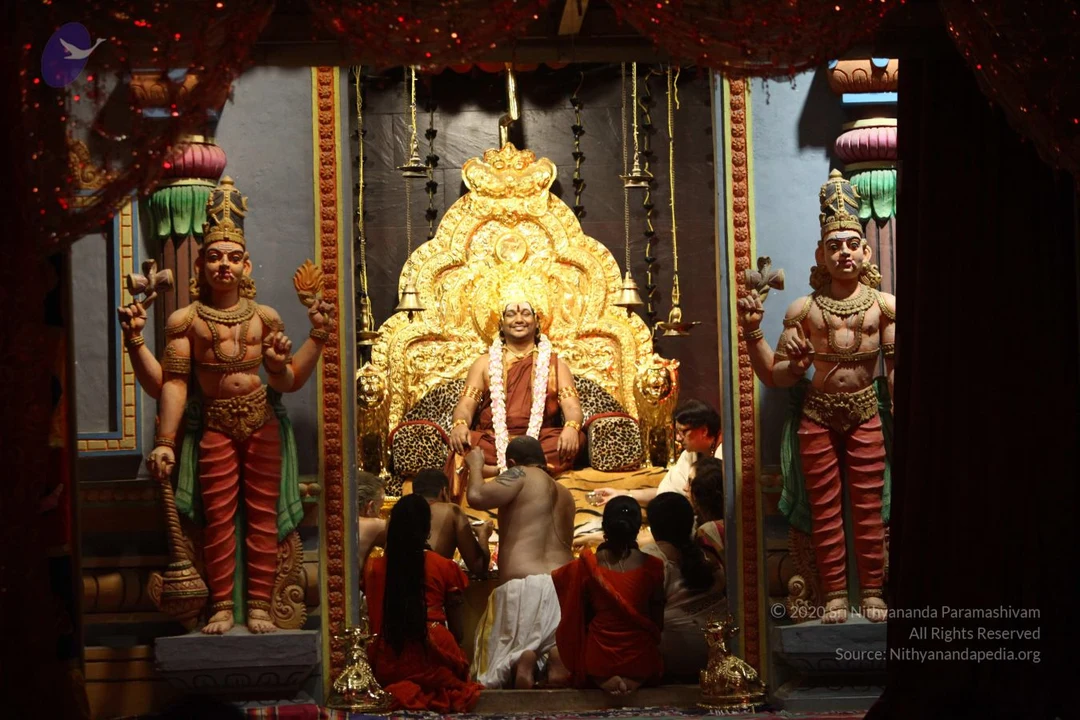
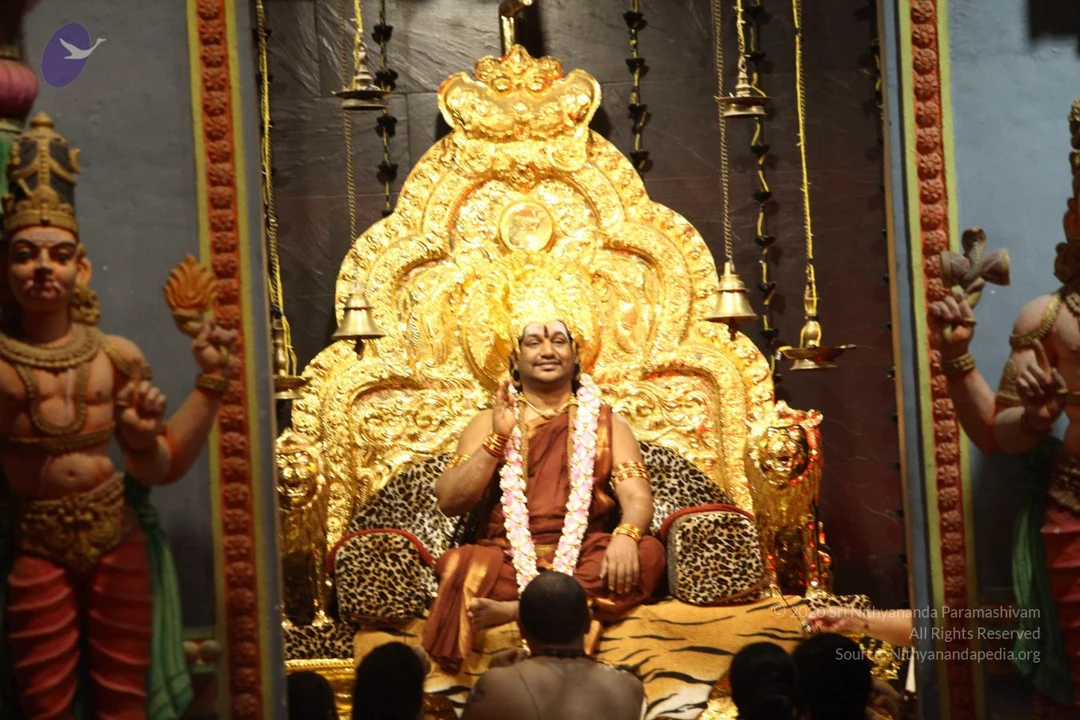
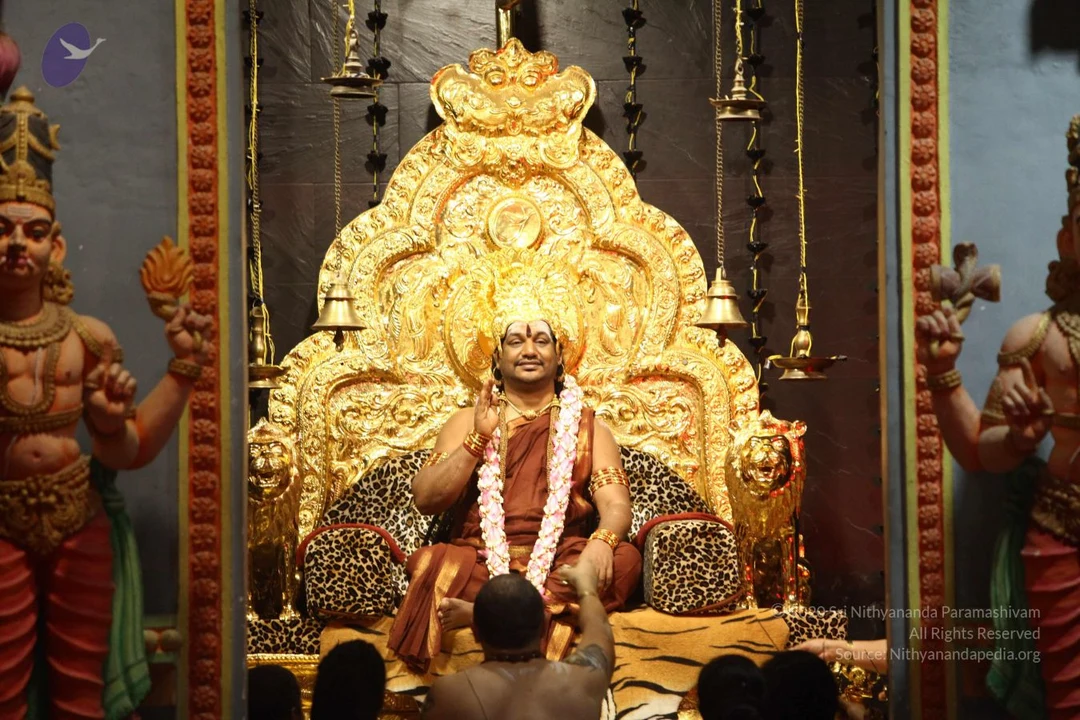
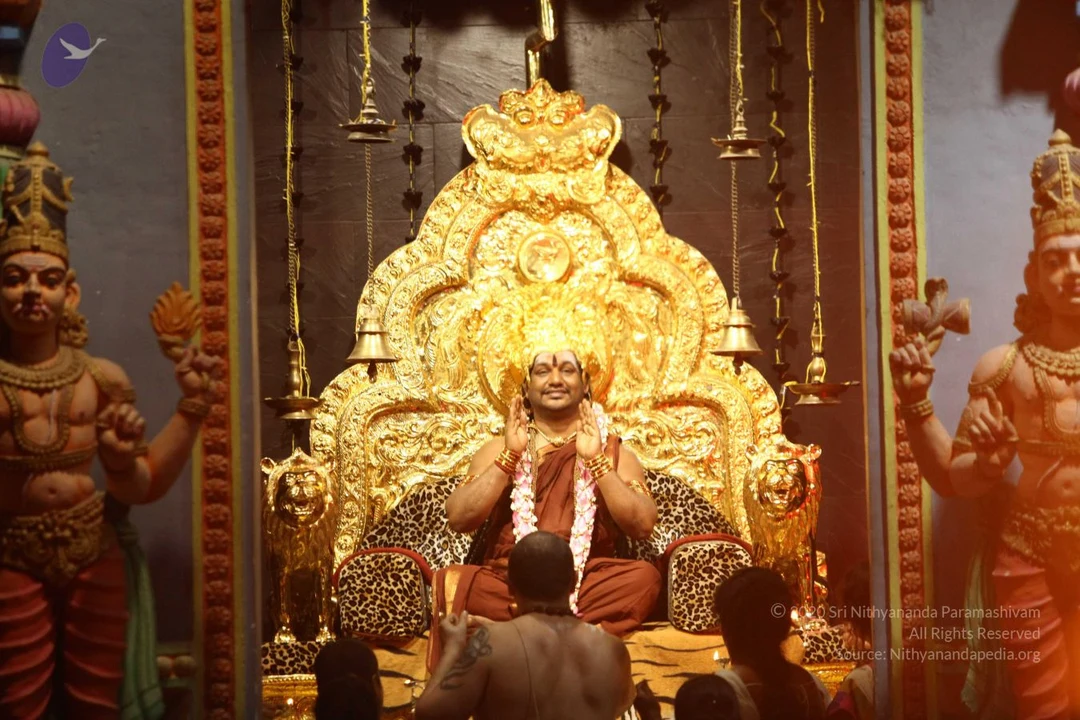
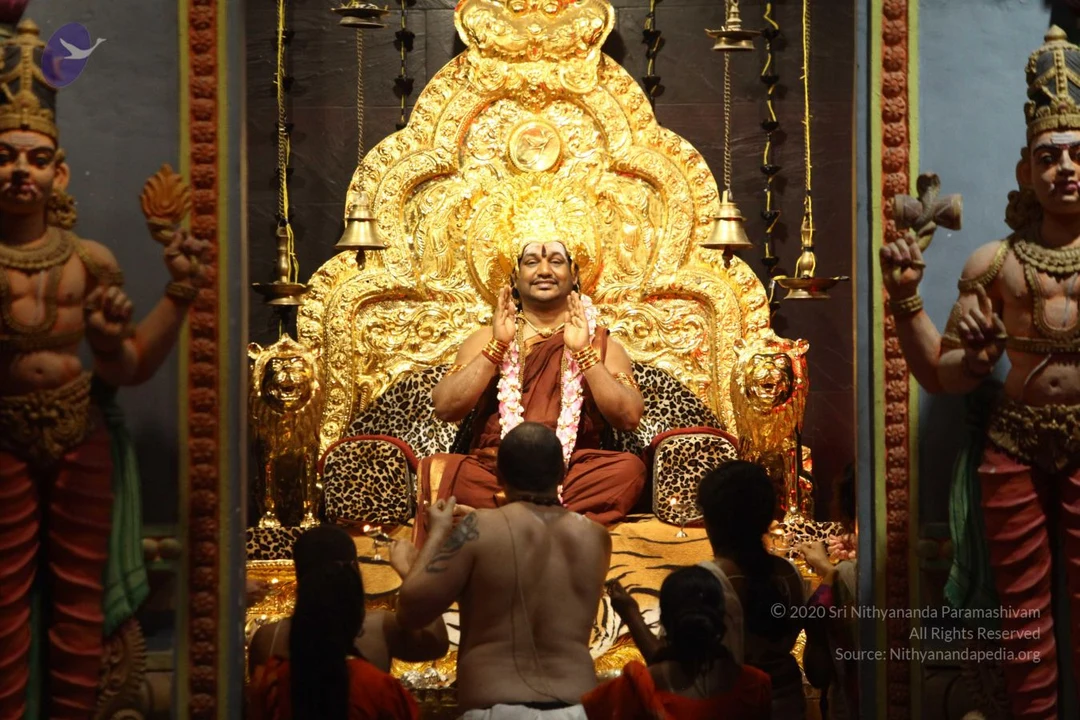
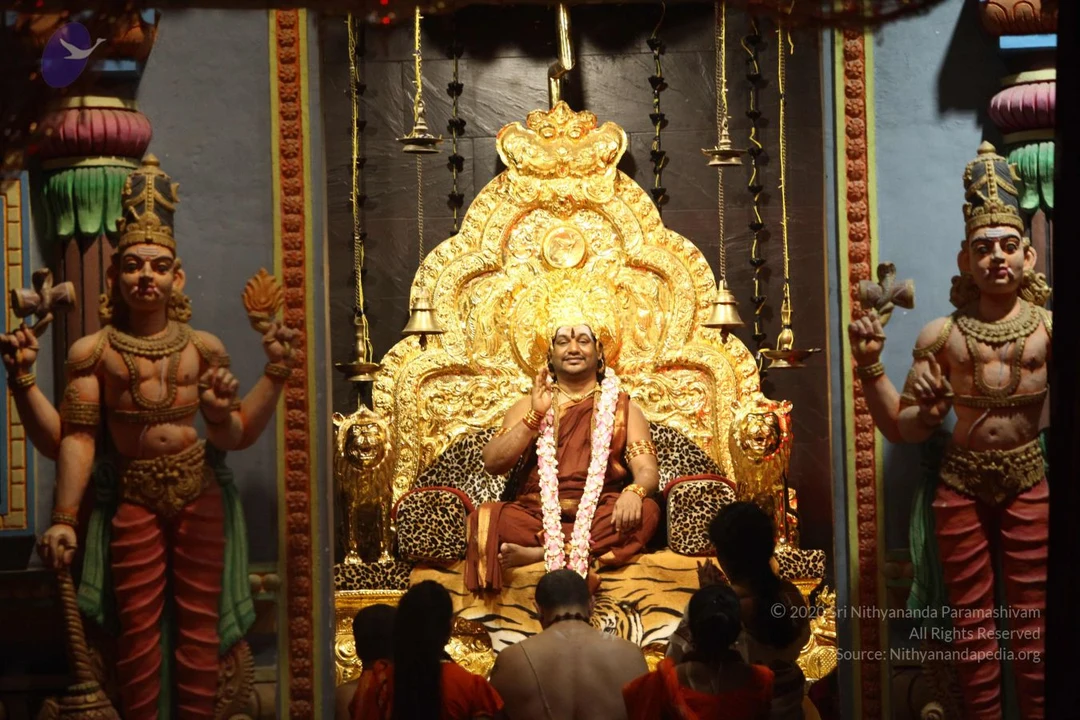
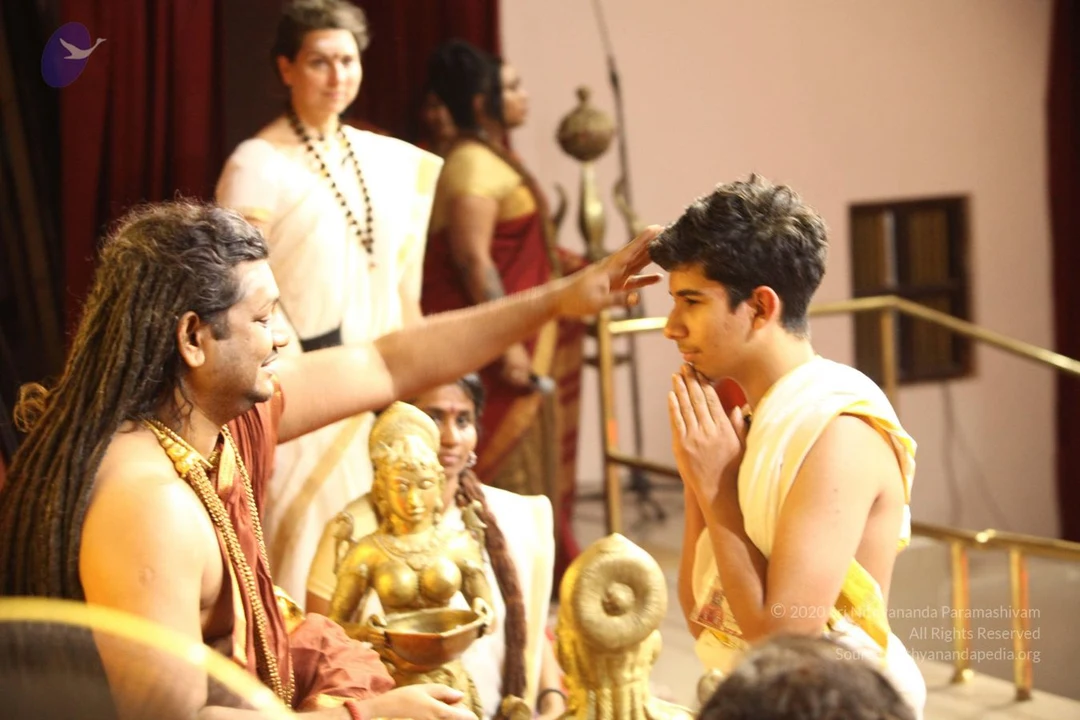
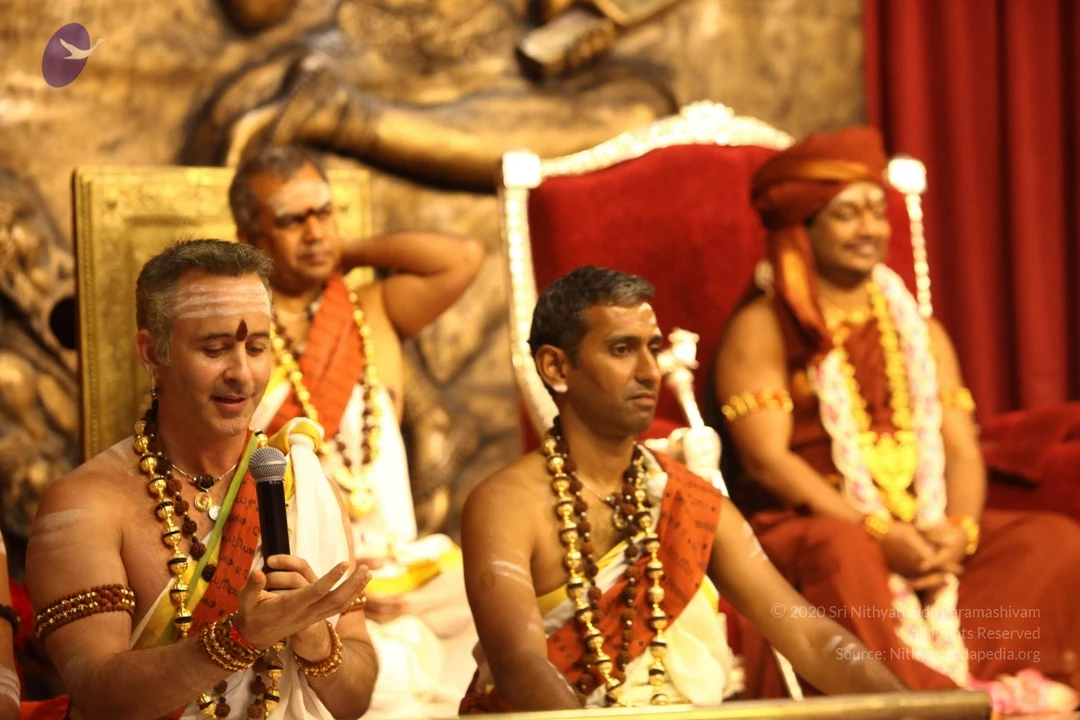
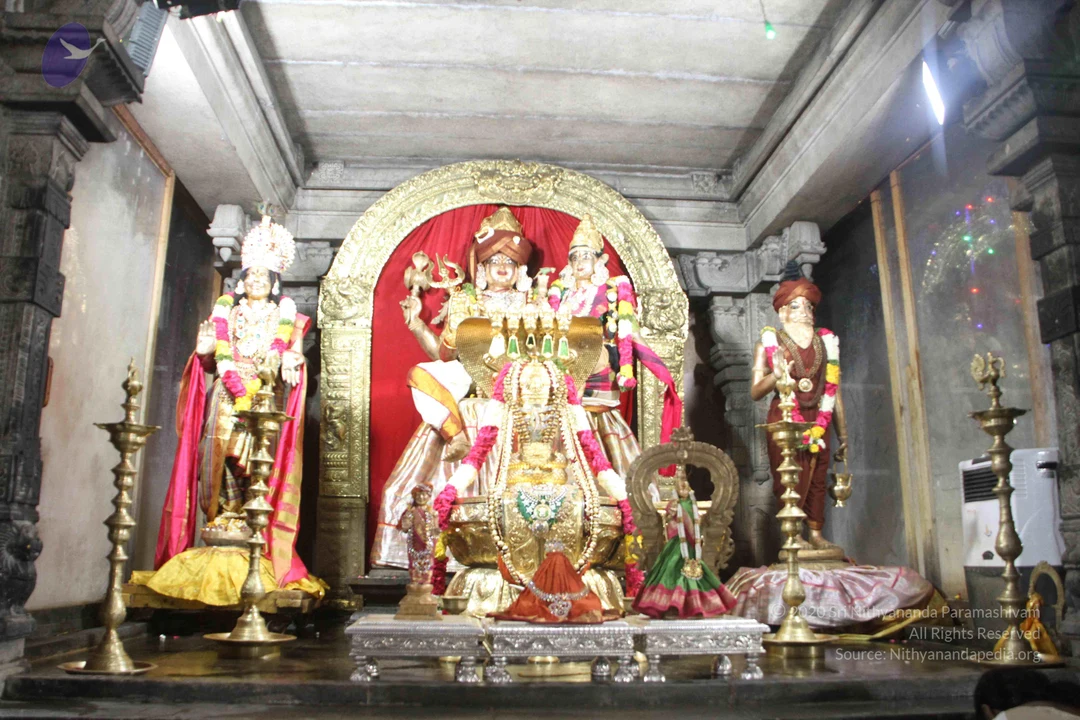
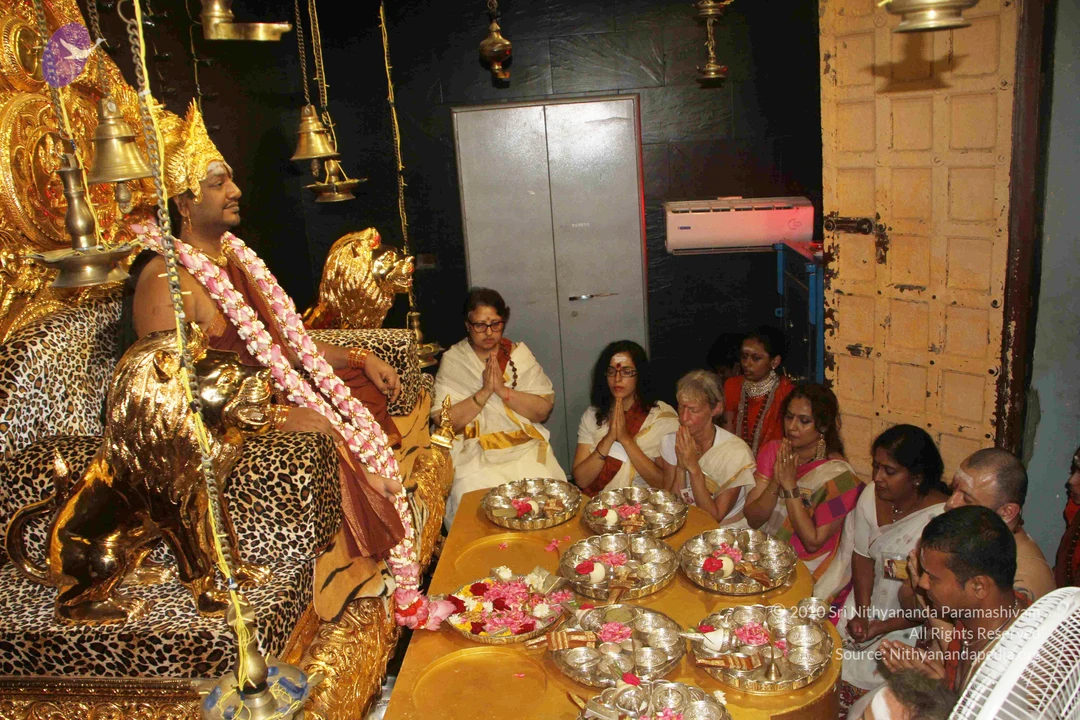
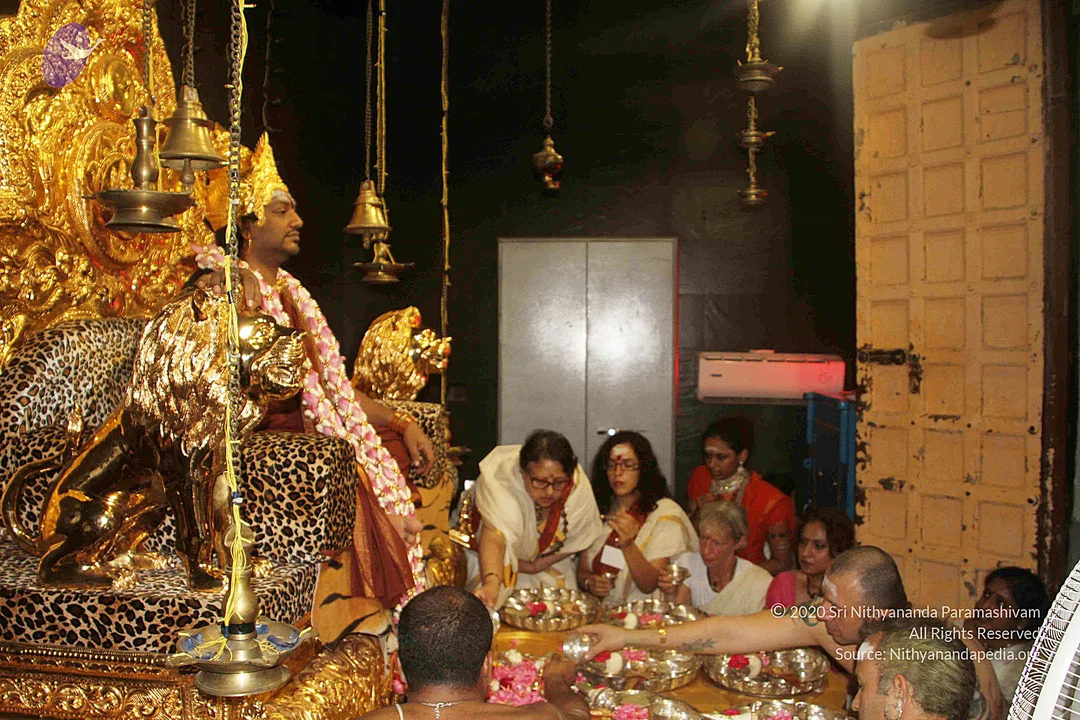
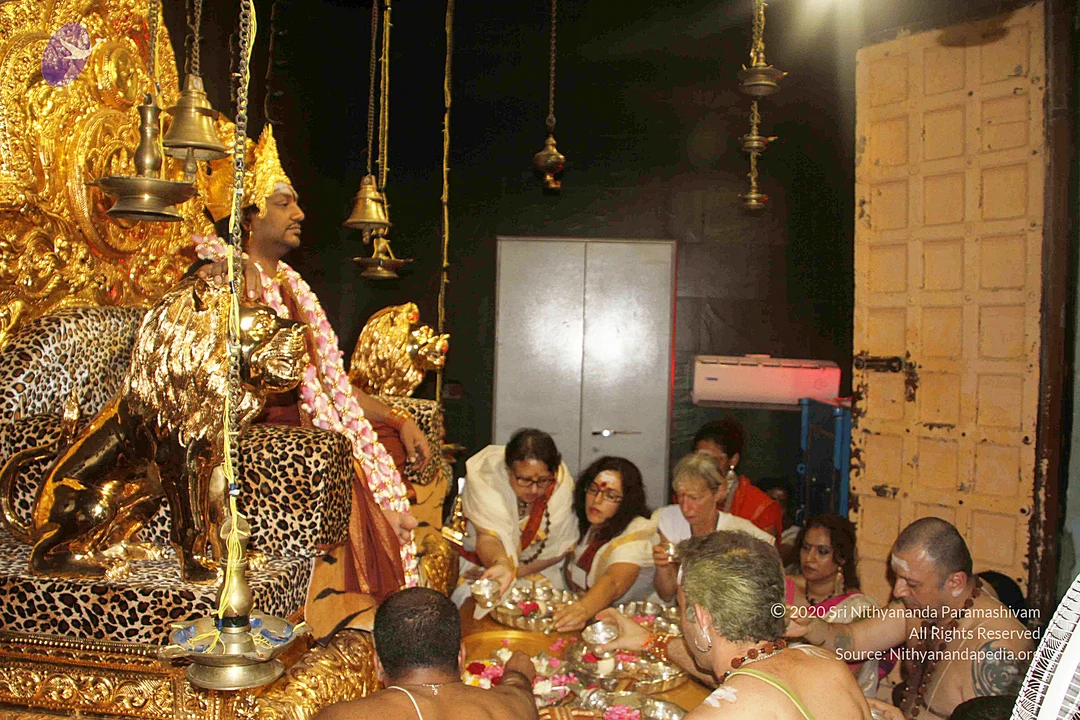
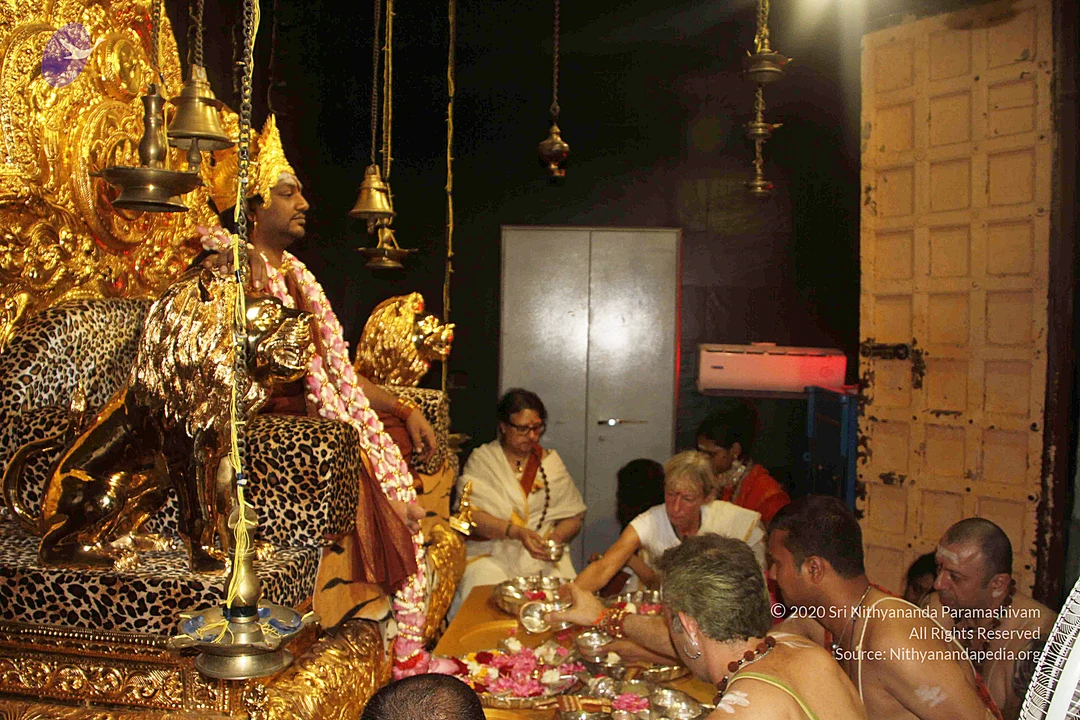
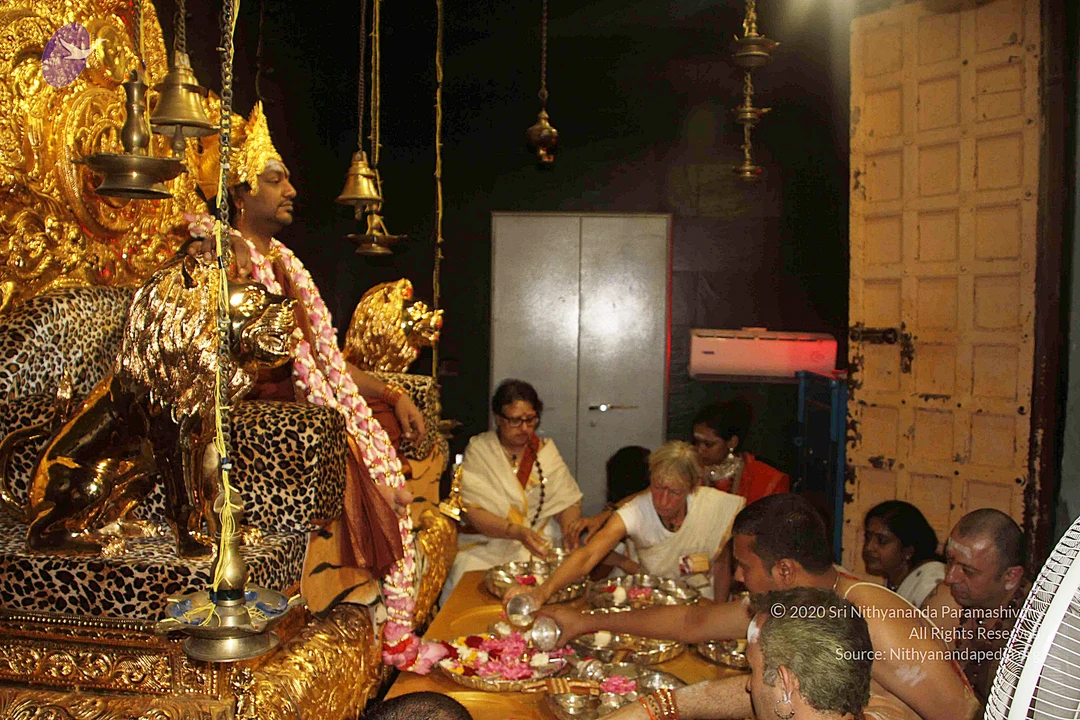
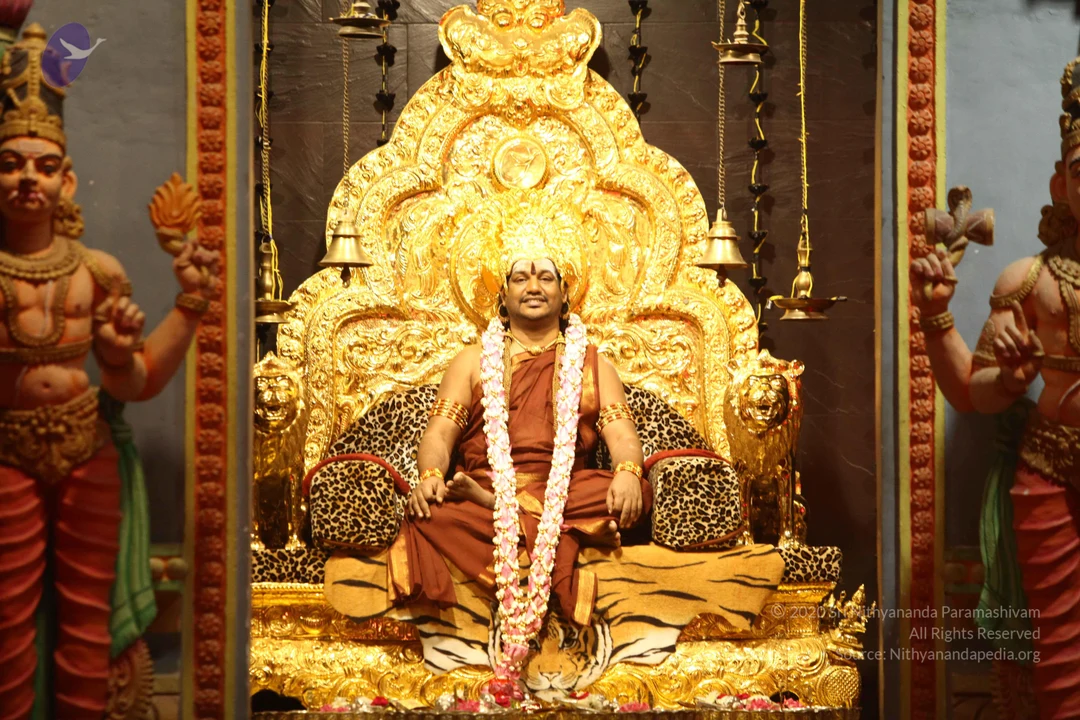
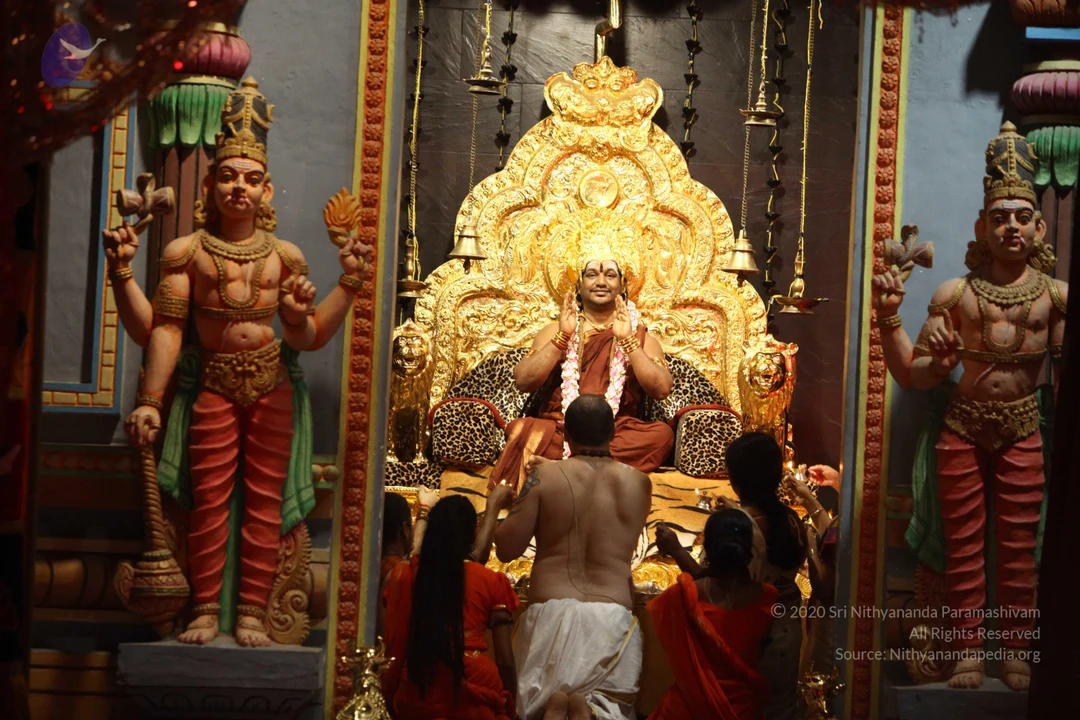
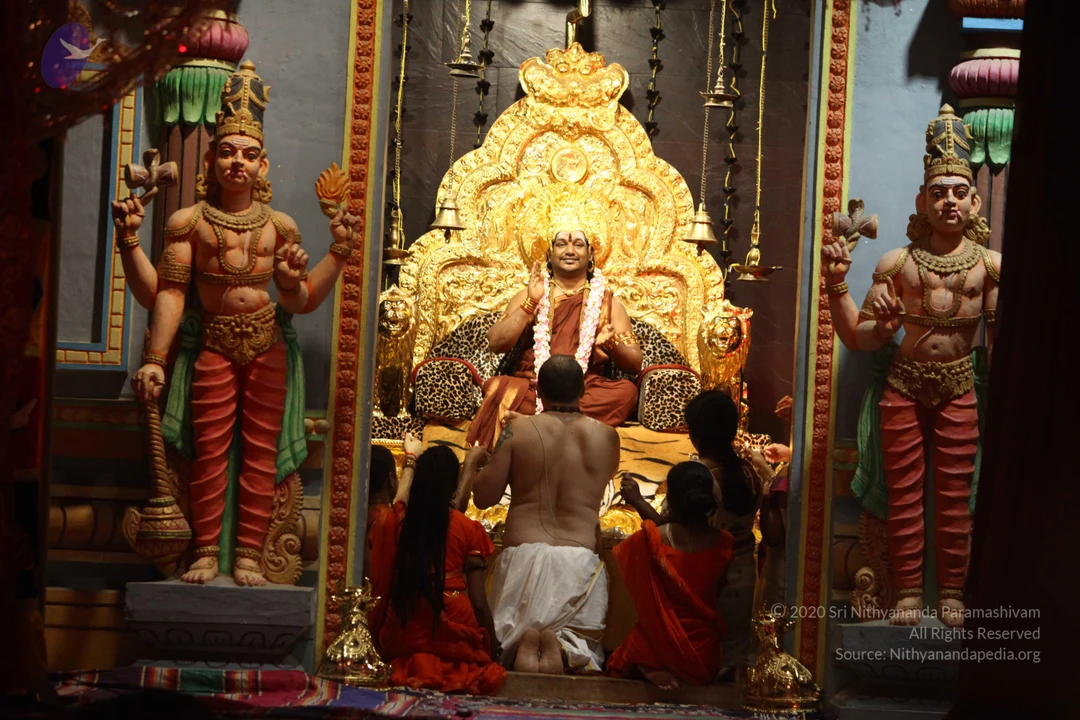
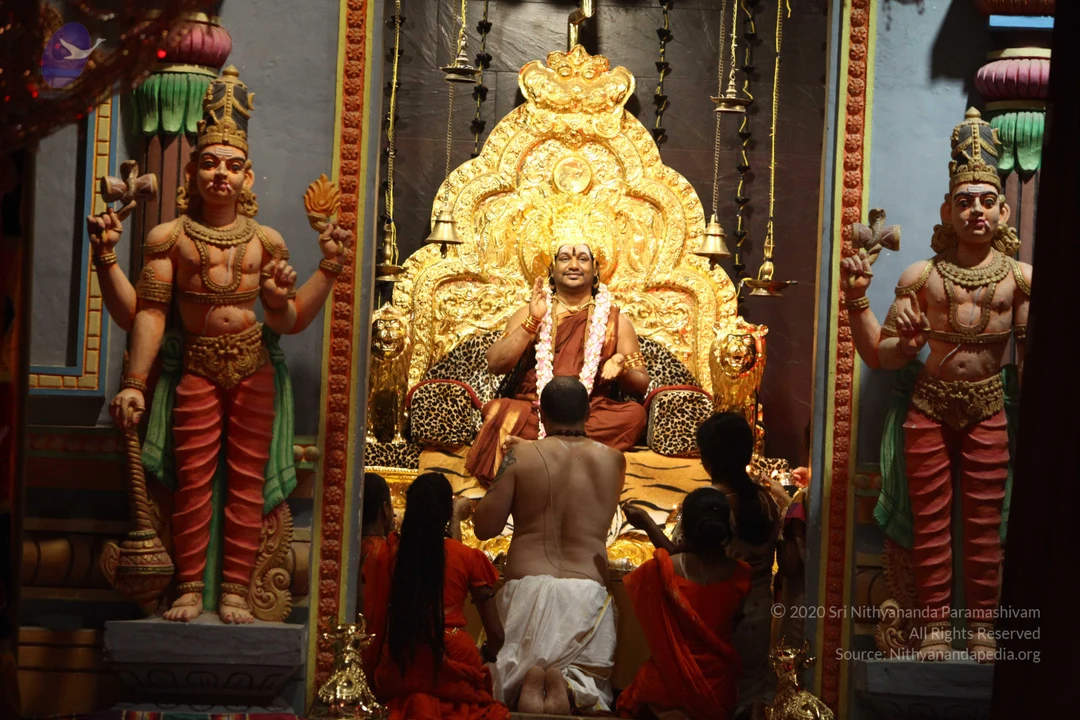
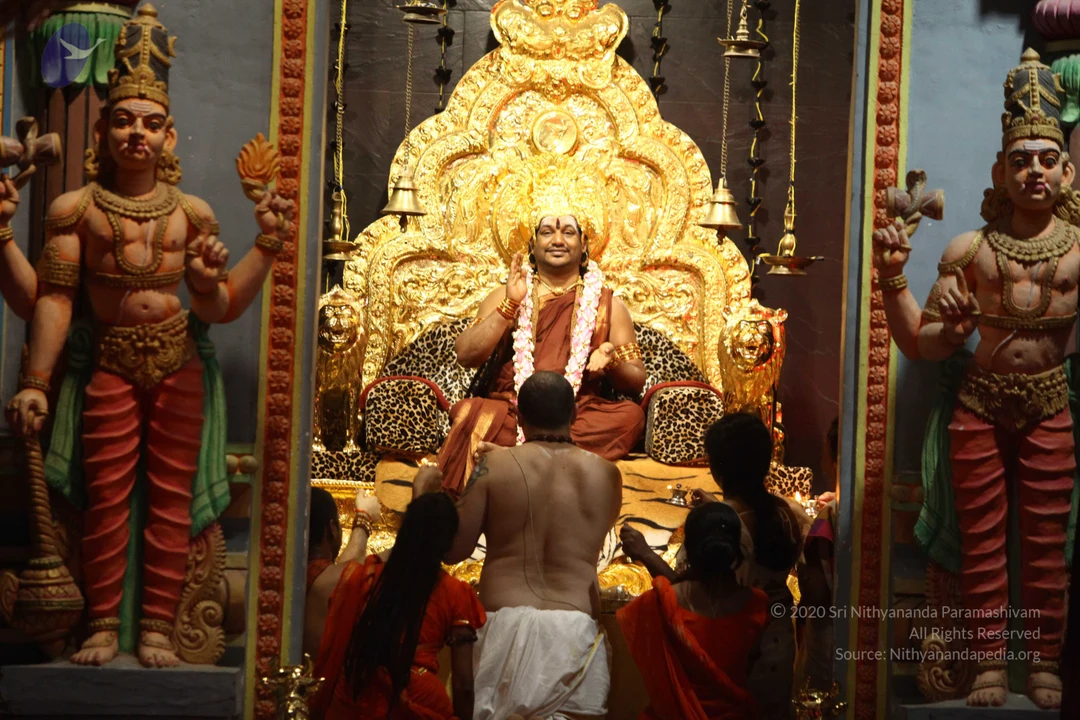
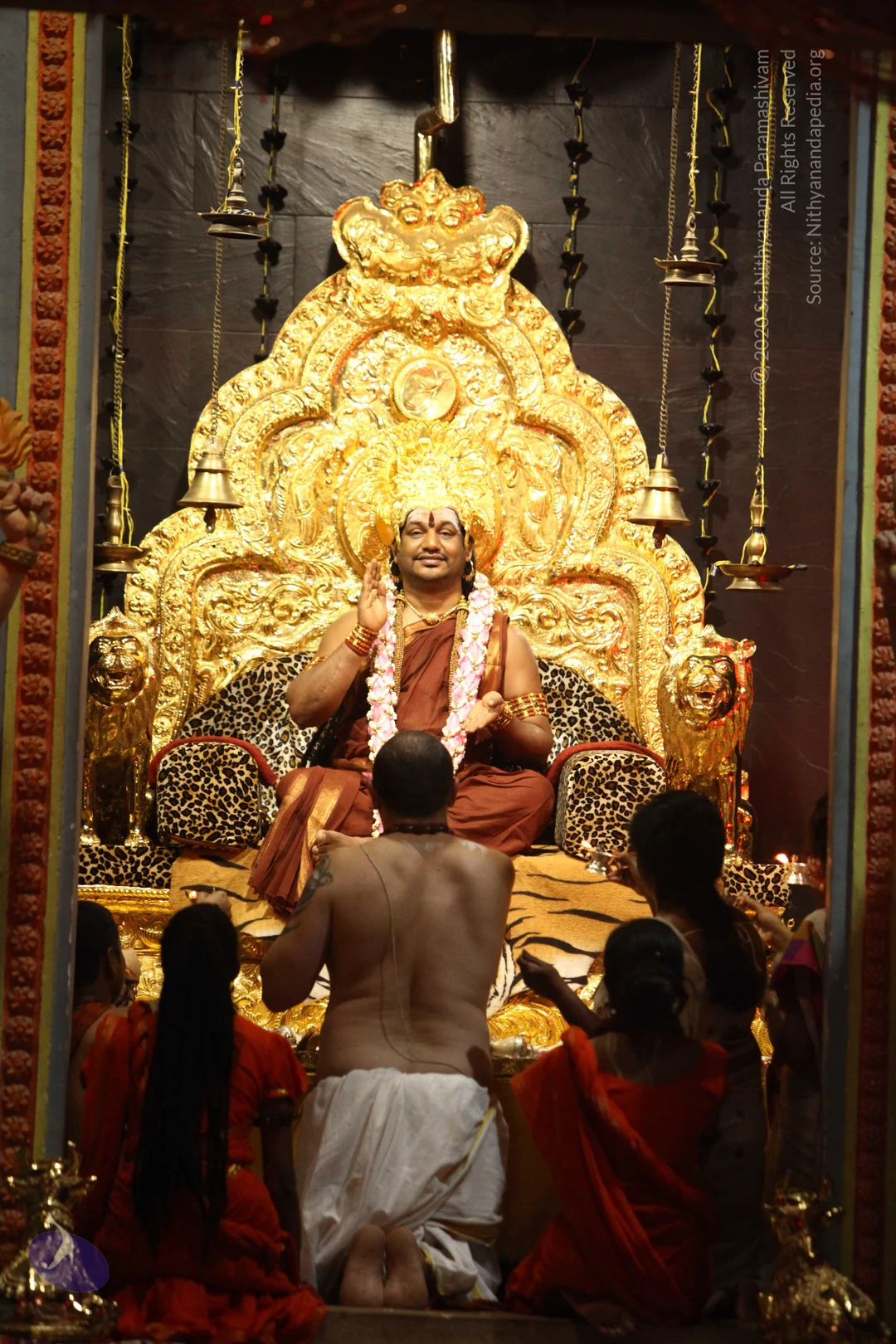
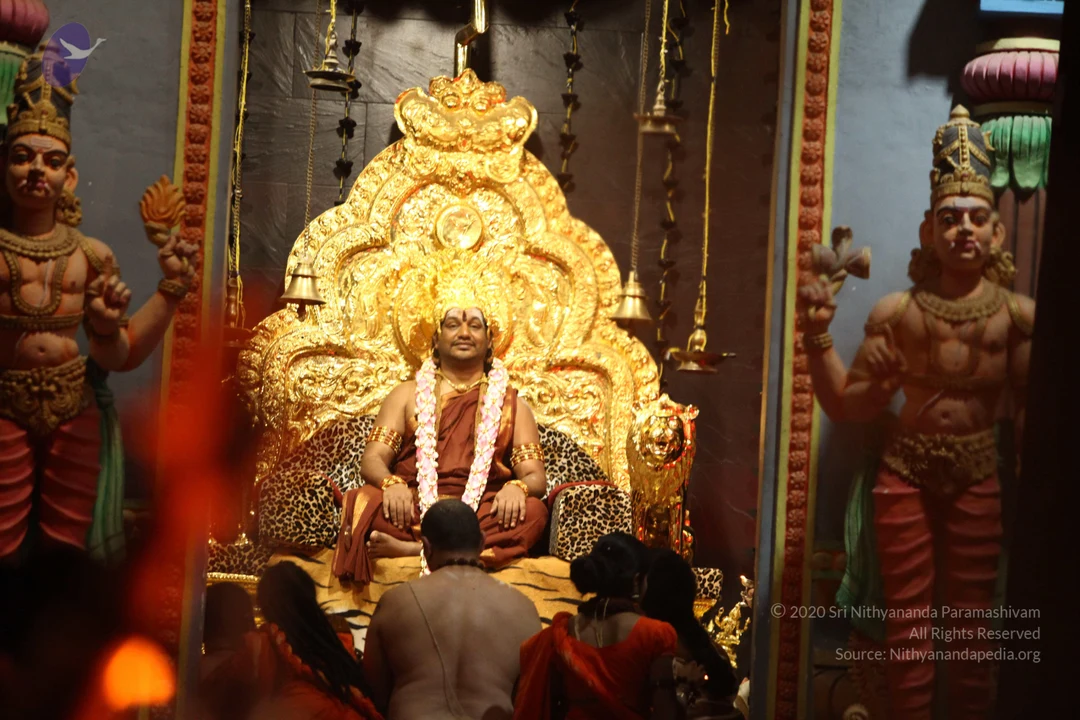
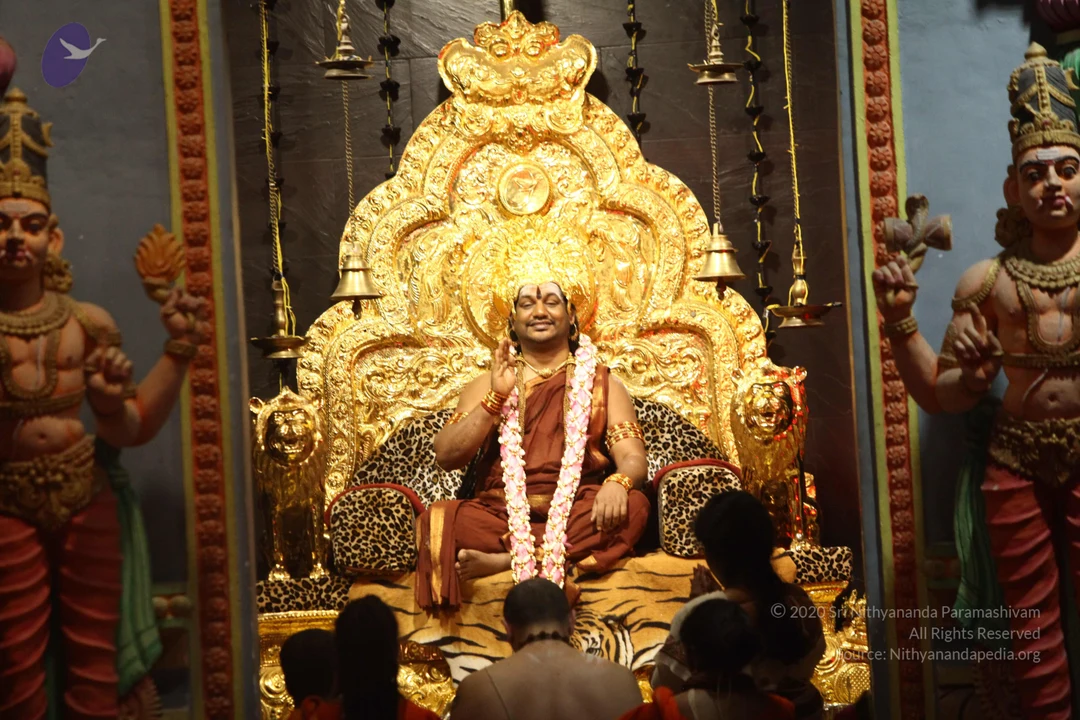
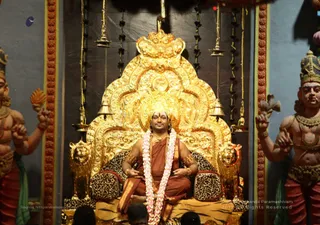
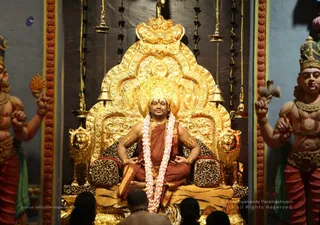
A photograph inside a temple shrine showing a seated man on an ornate gold throne with a gold crown-shaped backrest and lion-head armrests, draped over a tiger-skin cushion. He wears a saffron-orange robe, a white flower garland and gold bangles, and raises one hand in blessing. Flanking him are two painted deity statues in pink and green with gold jewellery and crowns, and dangling bells and lamps hang above. Three devotees in orange and red clothing sit in front of the throne, one bowing with hands folded. A figure matching the a person appearance cues sits enthroned with a flower garland and saffron robe, indicating a Ganesh Chaturthi padapuja or darshan setting.A seated figure in a red-brown saffron-toned robe sits on an ornate gold throne with carved lion arms and a leopard-print and tiger-skin cushion, wearing a pink and white flower garland, gold necklaces and armbands, and a golden crown with a tilak on the forehead. His right hand is raised in a blessing gesture while devotees in the foreground sit with their heads bowed before him. Two painted deity statues stand on either side in red and orange, holding ritual objects; gold oil lamps and bells hang above the throne. Swamiji (probable): the seated figure wears saffron robes, a garland, ornate gold jewellery and a crown on a throne, consistent with the page's reference to Swamiji.A seated man in a rust-brown ceremonial garment and a long pink-and-white flower garland sits on an ornate gold throne with lion-head armrests, a leopard-print cushion and a tiger skin draped at its base, beneath hanging brass bells. He wears gold bangles and a gold necklace and raises one hand in blessing. Kneeling before the throne are devotees: a shaved-headed man in white dhoti and a woman in an orange sari with a long braid, and others in red and white saris. Flanking the throne are two large painted guardian statues with crowns, gold jewellery and red and green dhotis. a person: the seated figure has a swept-back hairstyle and wears a rudraksha-style red garment with gold ornaments on a throne, a presentation consistent with the page's a person reference.A seated figure in a rust-orange robe and a garland of white and pink flowers sits on an ornate gold throne with lion-head armrests and leopard-print cushions, one arm extended forward in a blessing gesture. Two painted guardian statues with gold ornaments flank the throne. Several devotees kneel at the base of the throne in orange and red garments, with a bare-chested man in front and a woman in white at the right. The scene suggests a darshan or padapuja setting. The large shimmering throne with bells and chains hanging above is prominent. a person: the seated figure has a shaved head with a forehead mark, gold armbands and necklaces, and is seated on the throne in a ritual setting.A seated man in saffron-orange robes and a pink-and-white flower garland sits on an ornate gold throne with carved lion heads and a leopard-print cushion, in a temple-like setting. Hands rest in his lap, and bangles and gold armlets are visible. Two painted deity guardian statues with gold ornaments flank the throne, and hanging bells and a mala-like string decorate the background. a person: long dark hair, saffron robes, ornate gold jewellery and a gold crown-style throne indicate a seated spiritual leader receiving honour. Several seated devotees' heads are visible at the bottom edge.A seated man in a rust-orange robe and a pink-and-white flower garland sits on an ornate gold throne with lion-head armrests, draped over a tiger-striped cloth with leopard-print cushions. His hands rest in a meditative mudra on his lap. Behind him hang brass bells and chains. Two painted standing guardian figures with crowns and jewelry flank the throne, and the bare-headed backs of several seated devotees are visible at the bottom edge. a person seated in darshan. Gold throne, orange robe and garland are the main cues.

Thulabharam
51 photosSource gallery
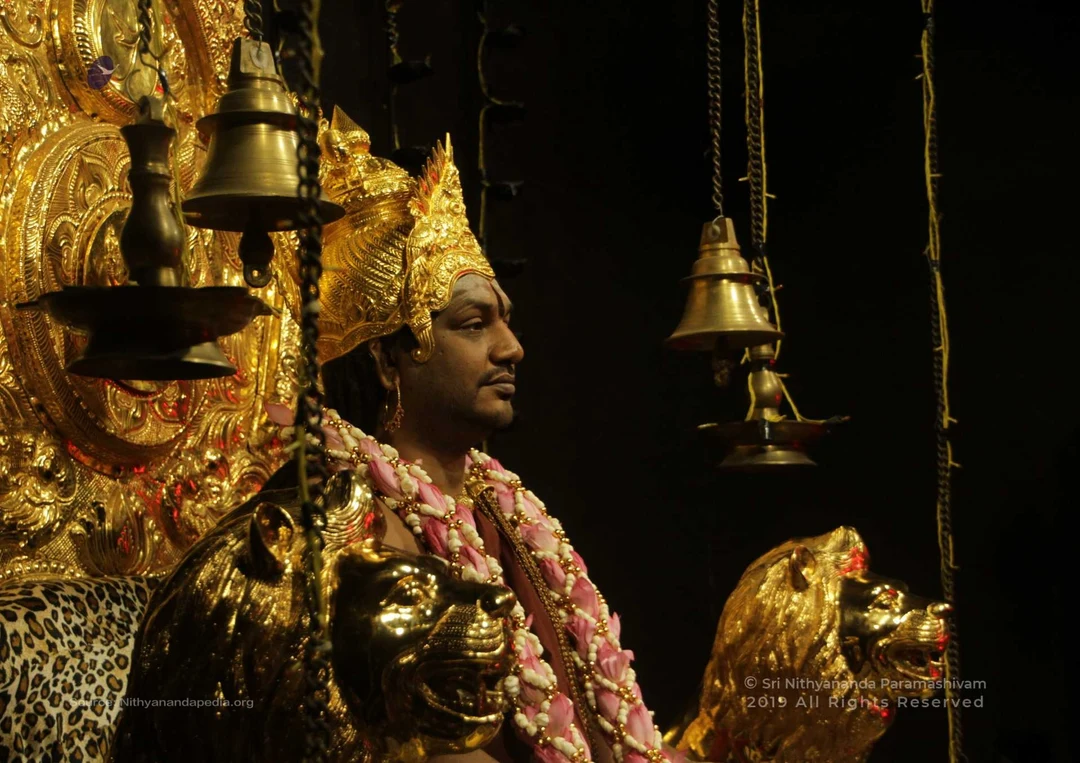
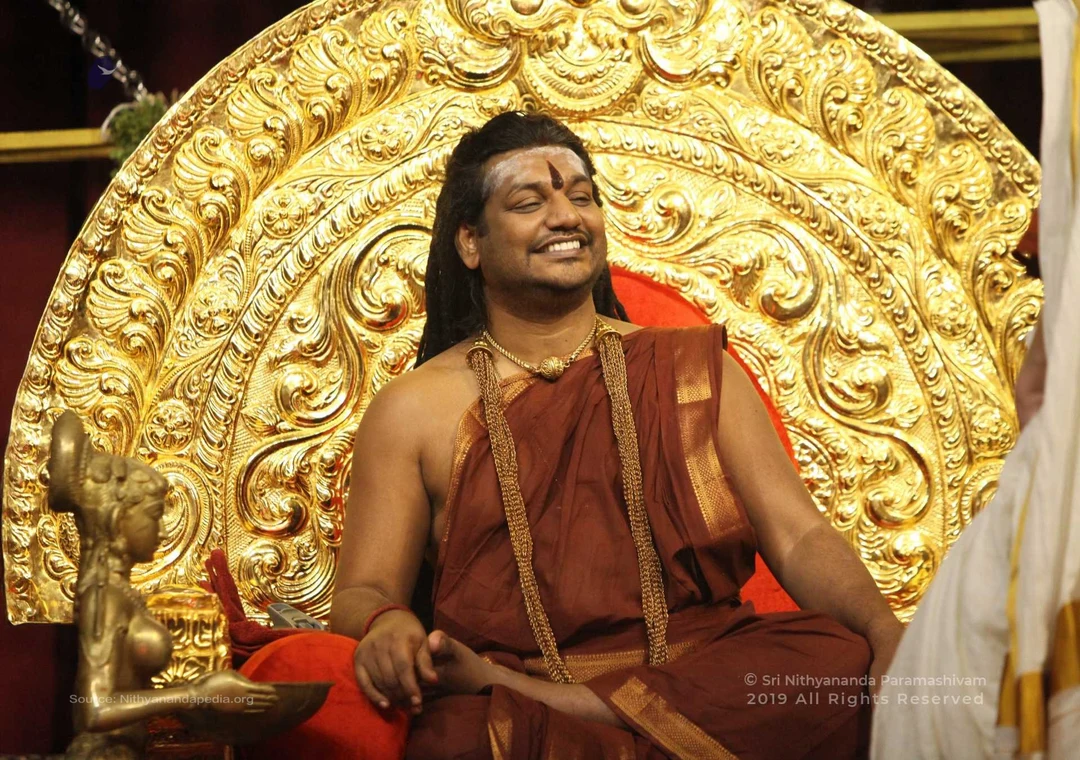
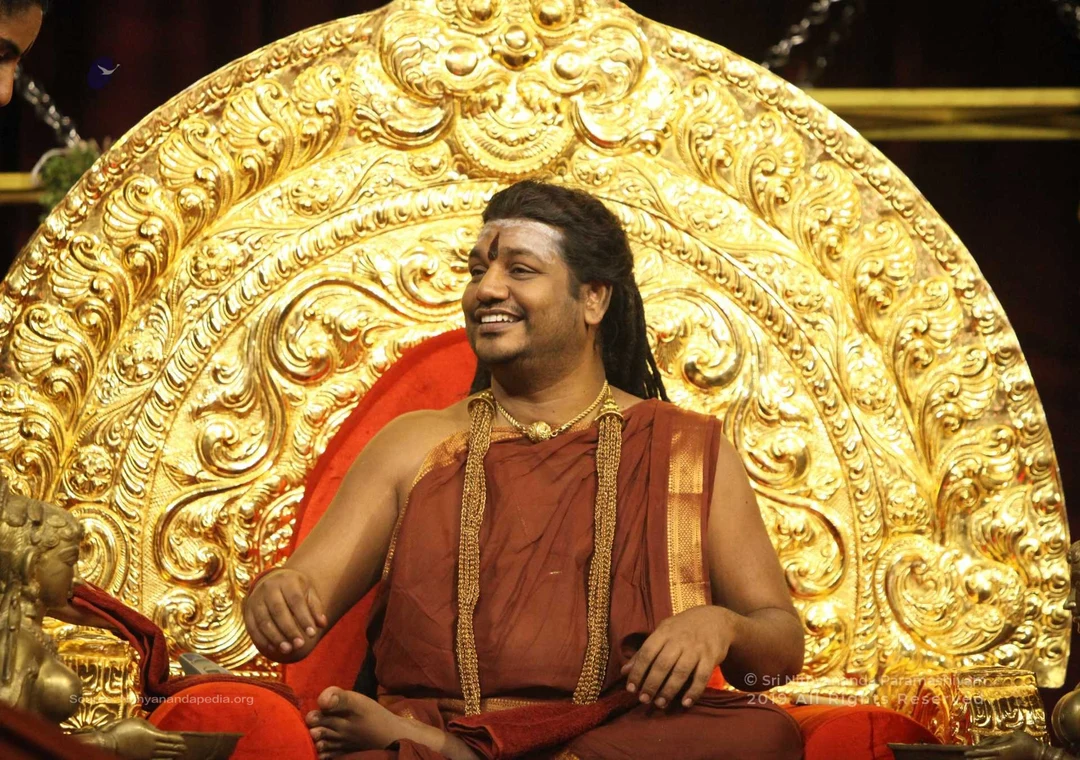
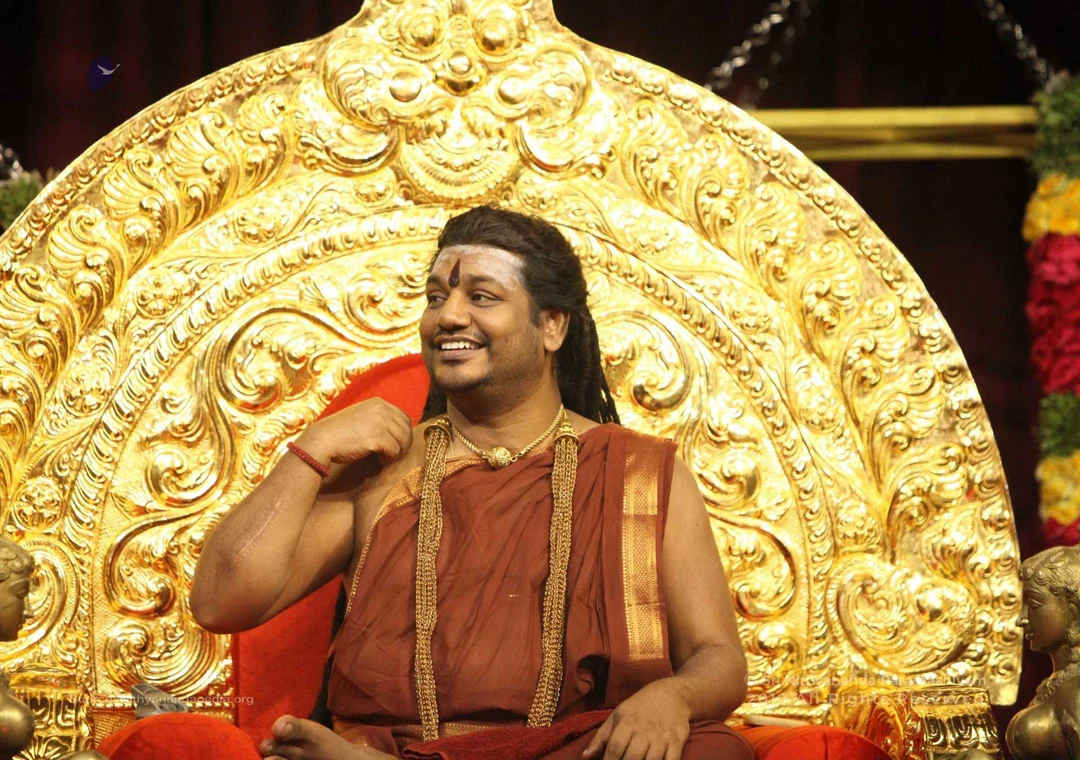
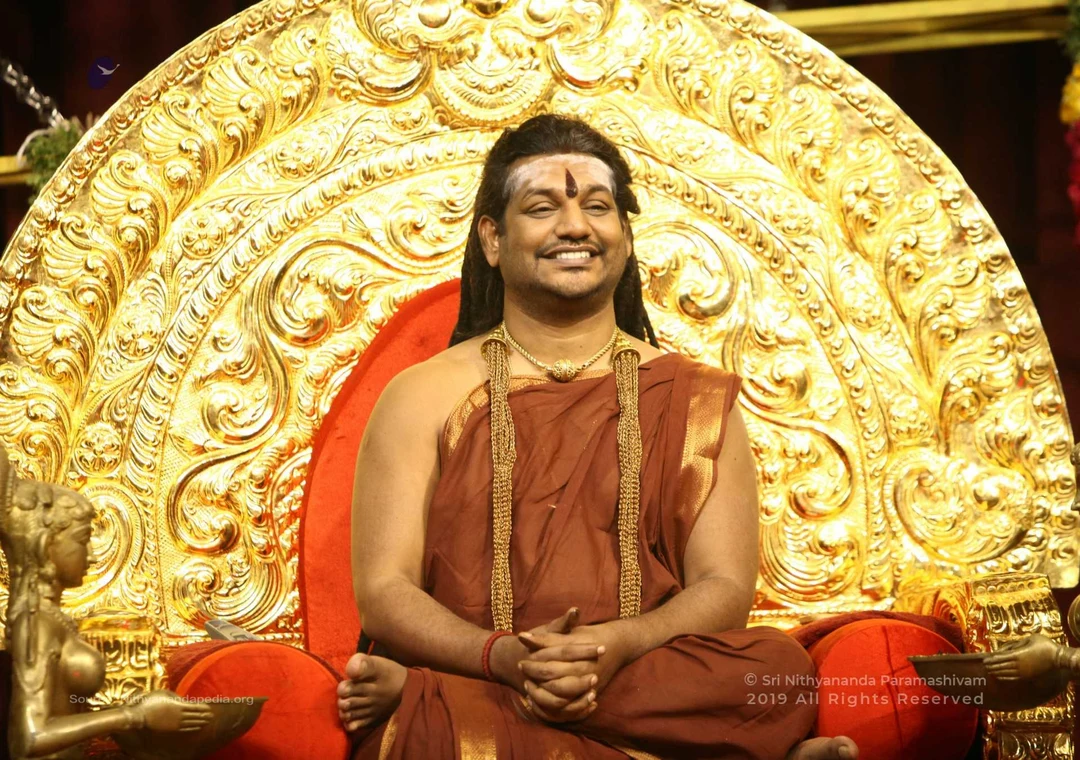
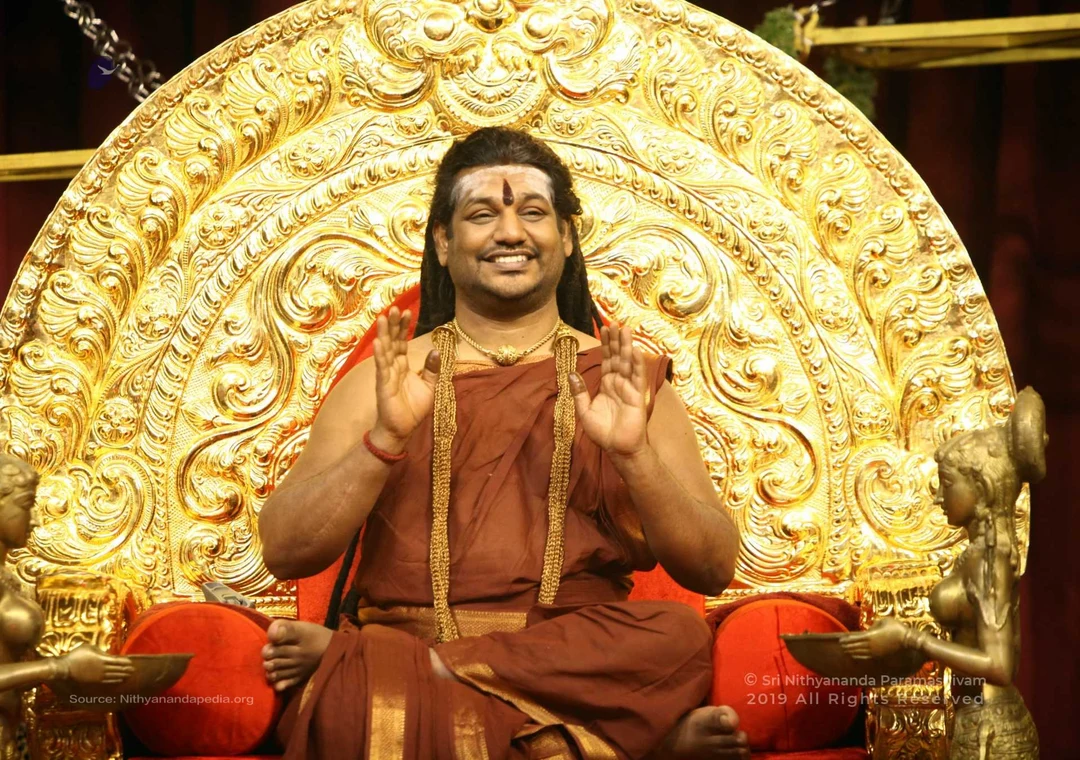
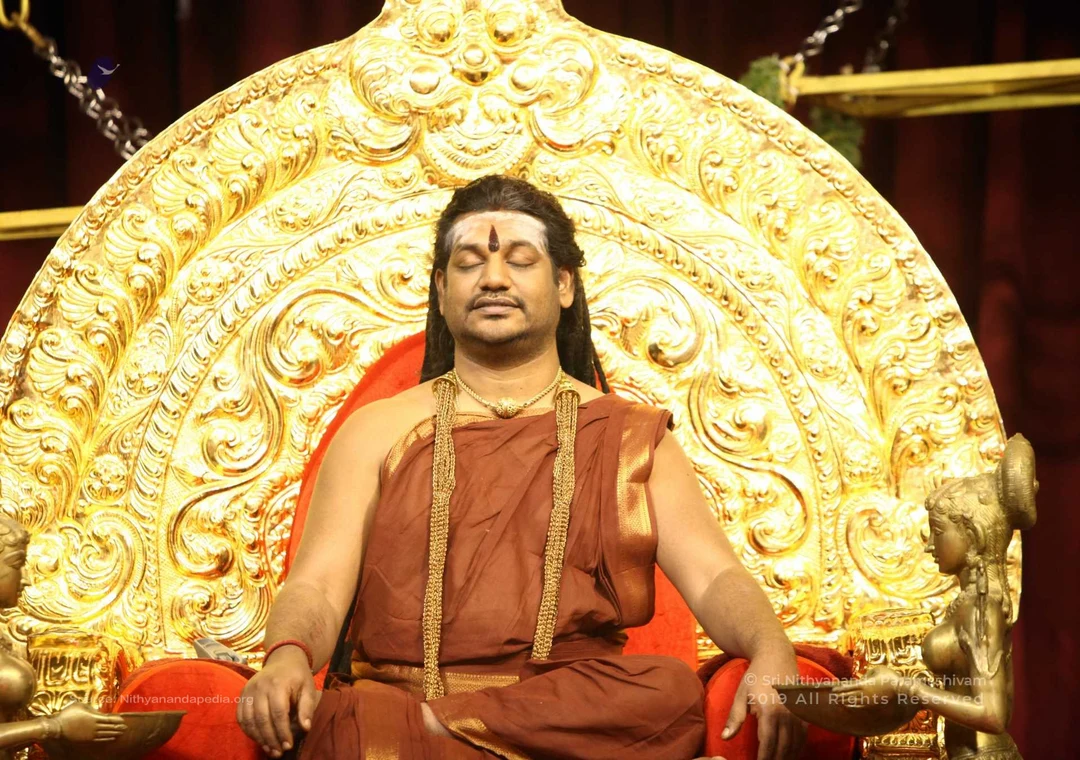
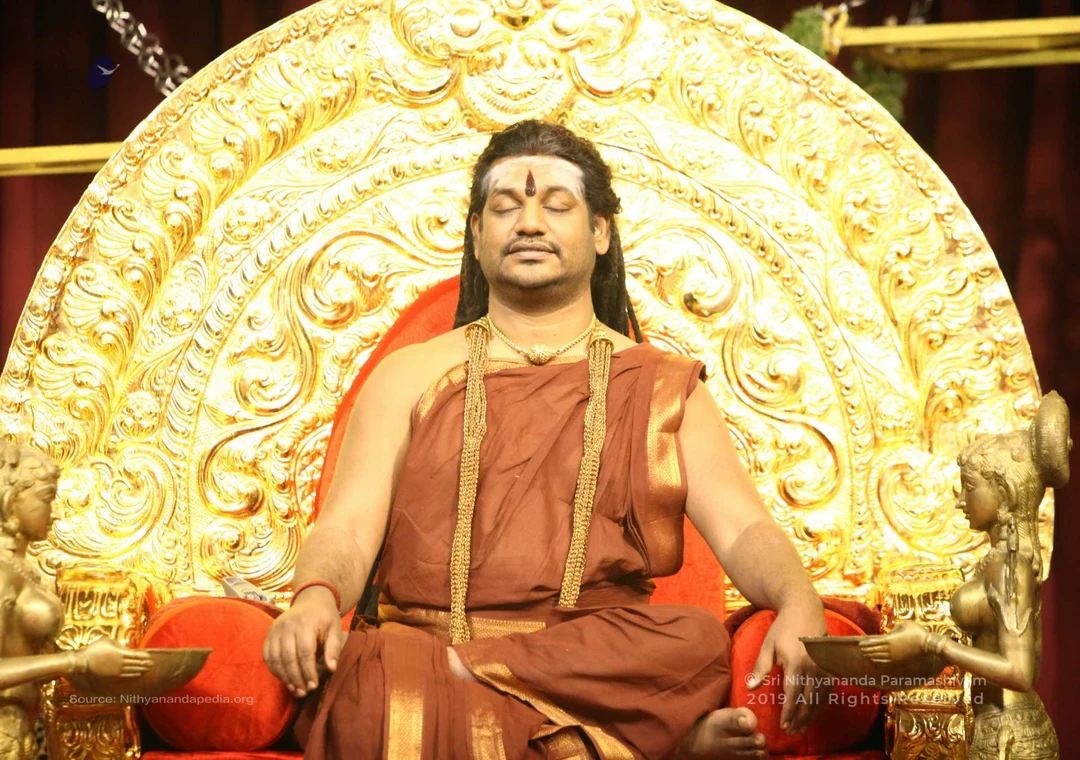
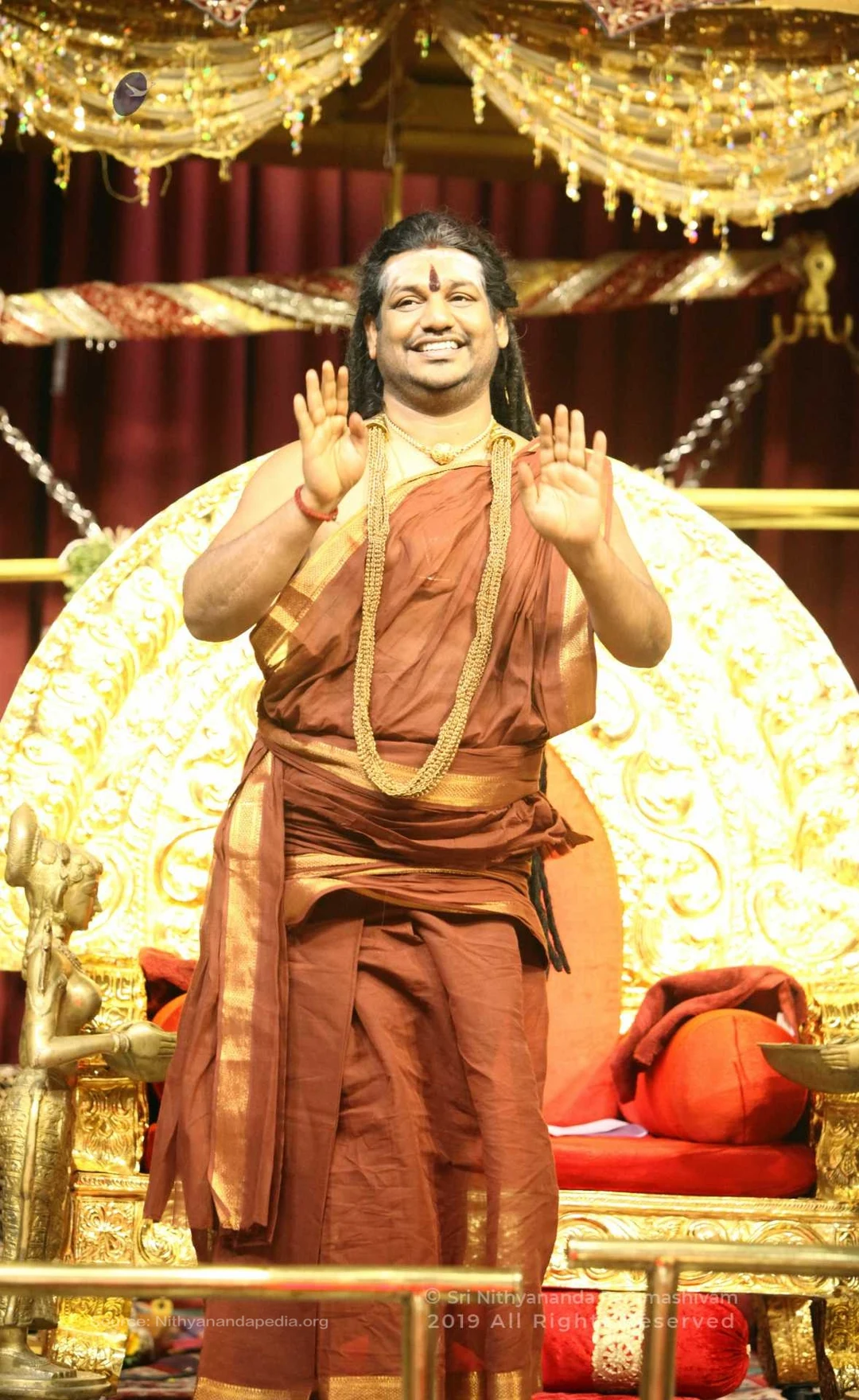
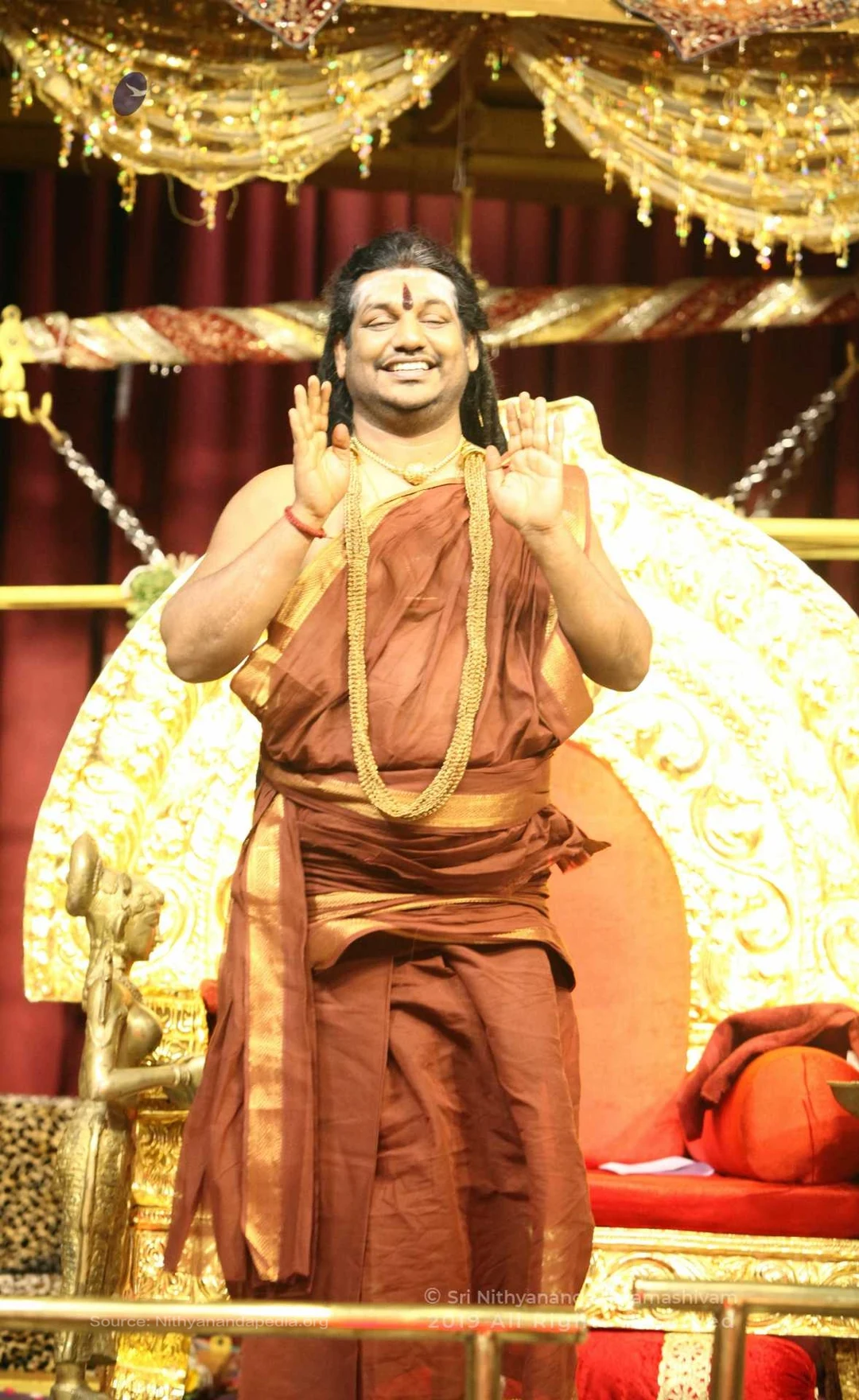
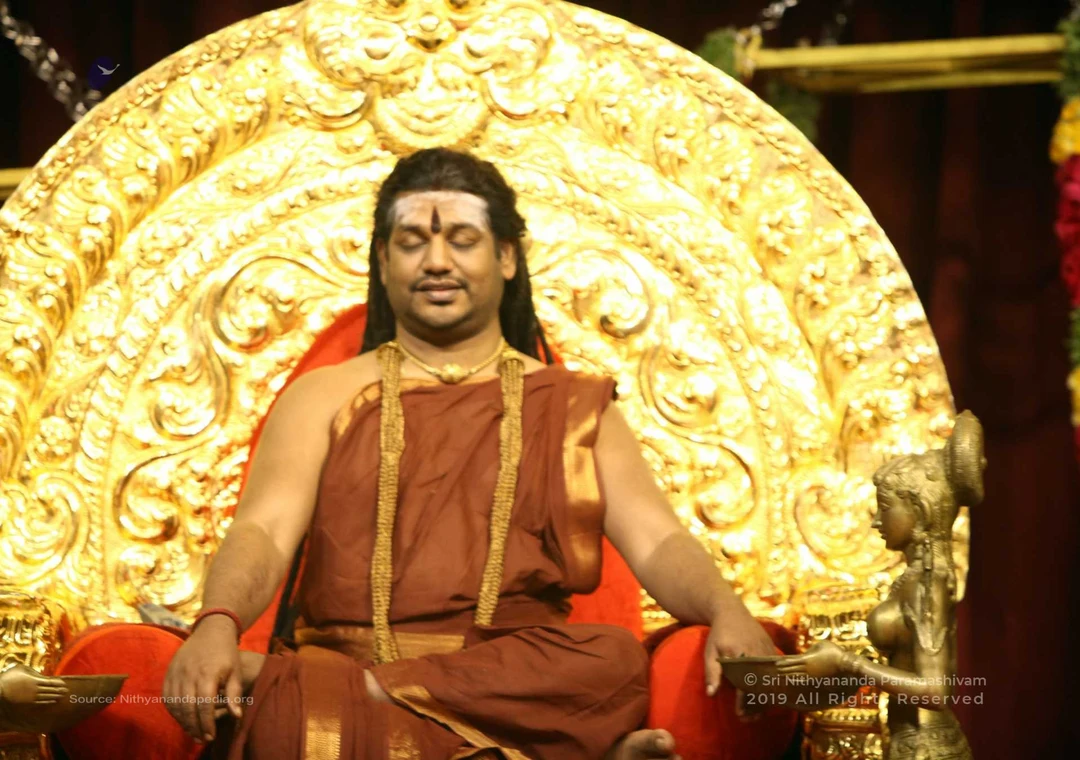
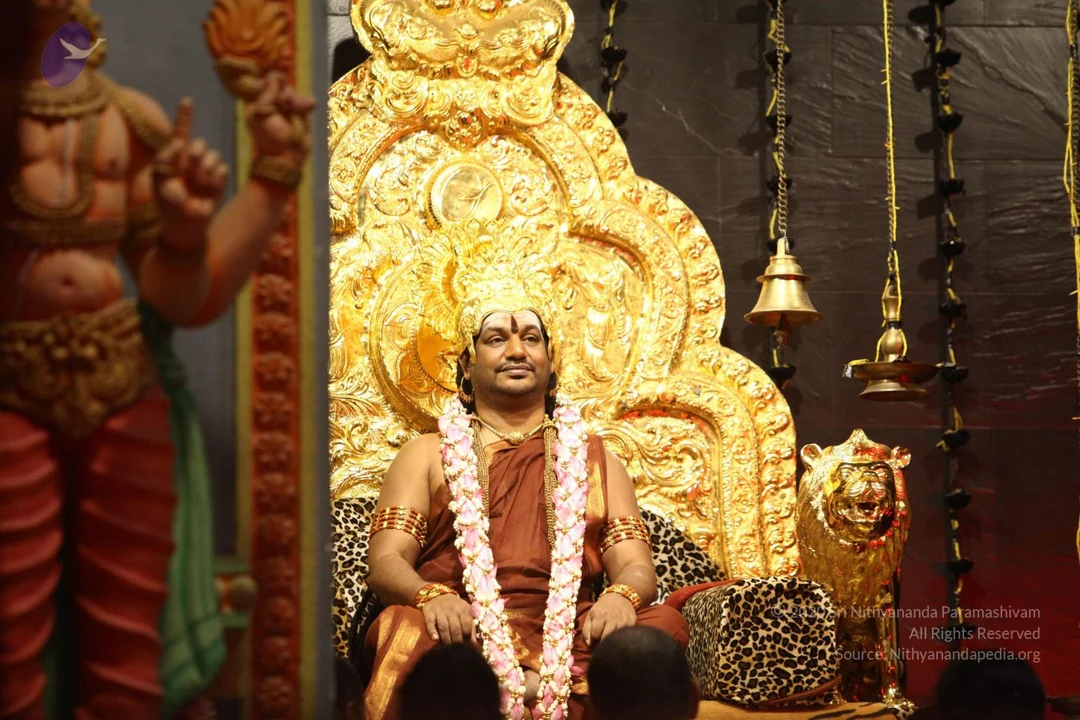
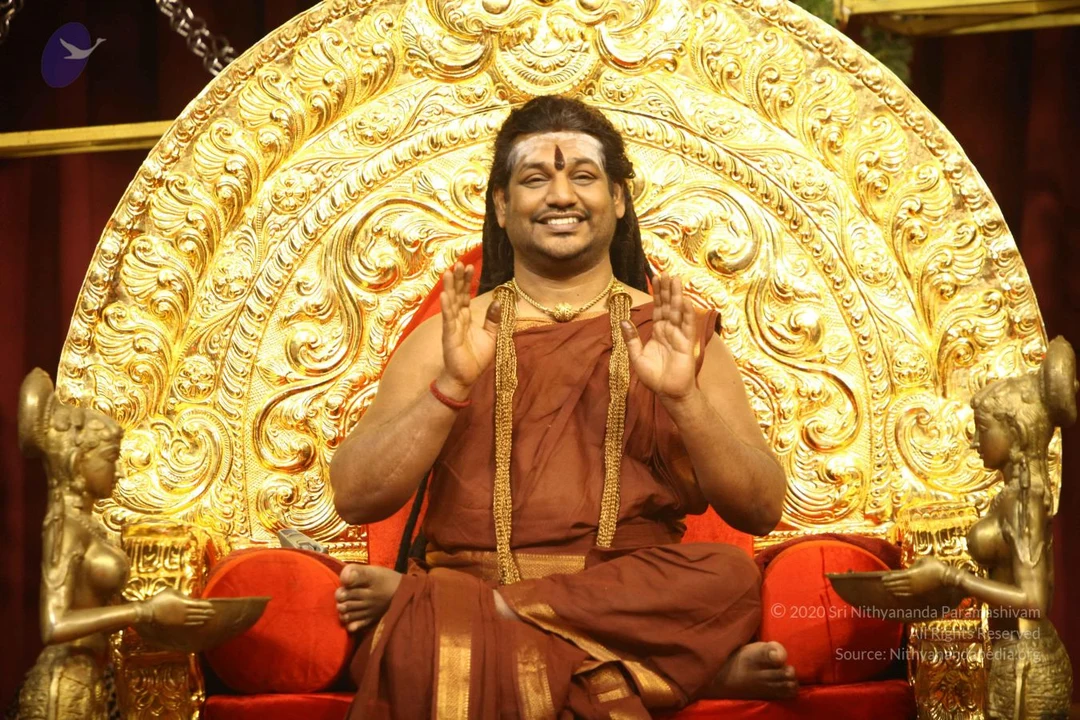
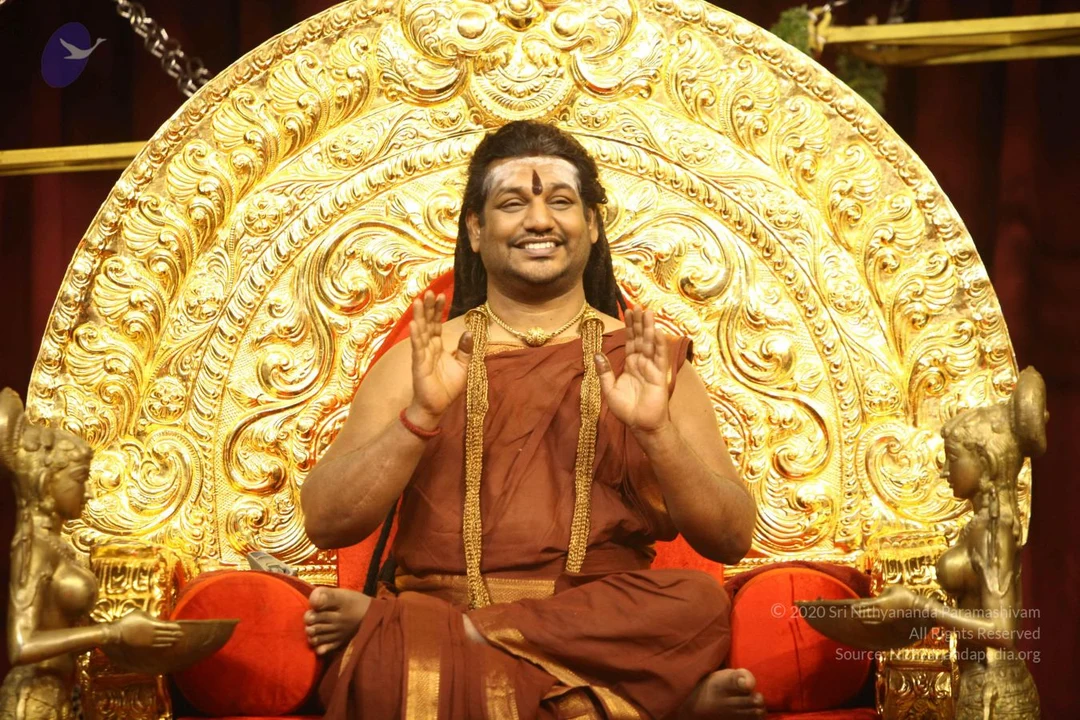
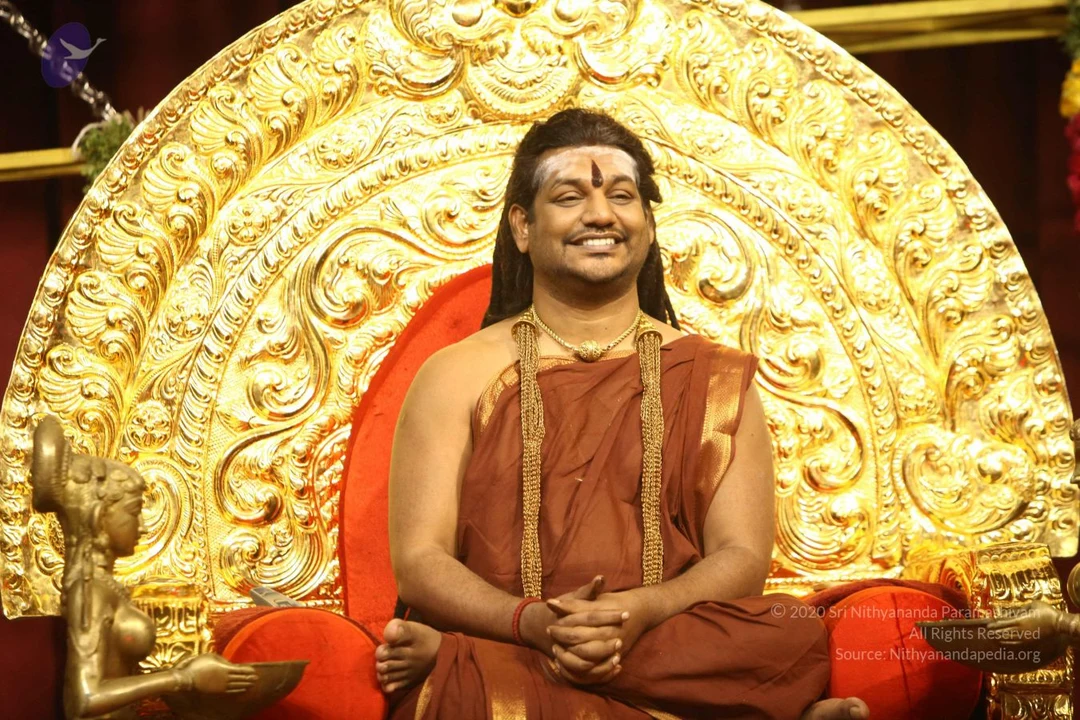
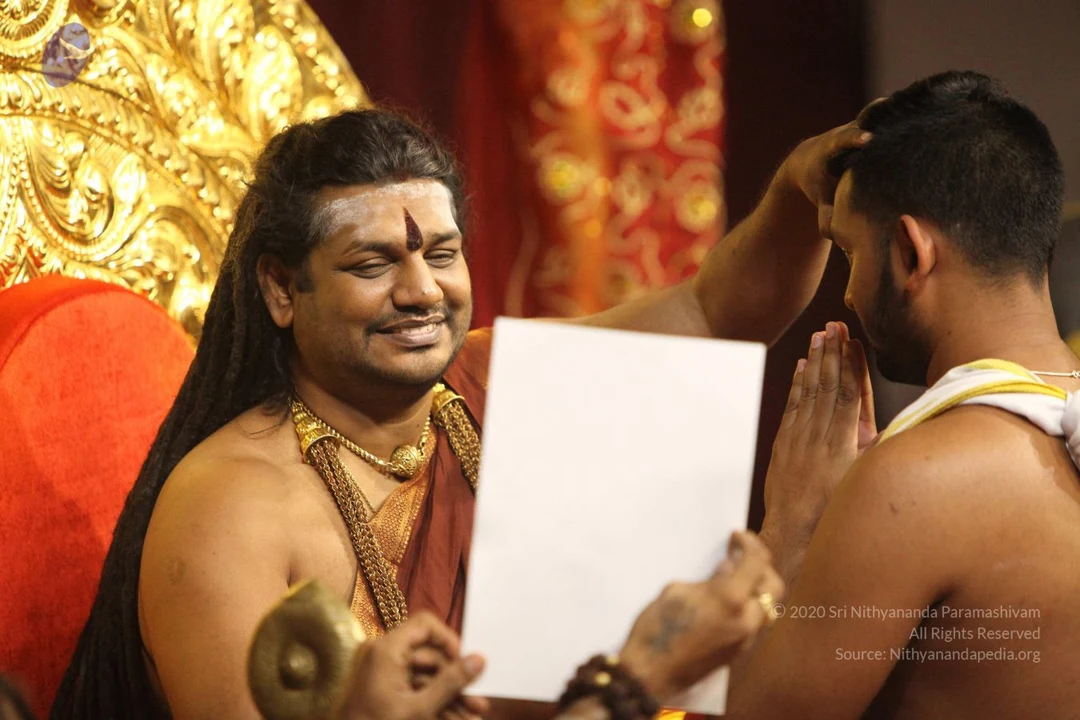
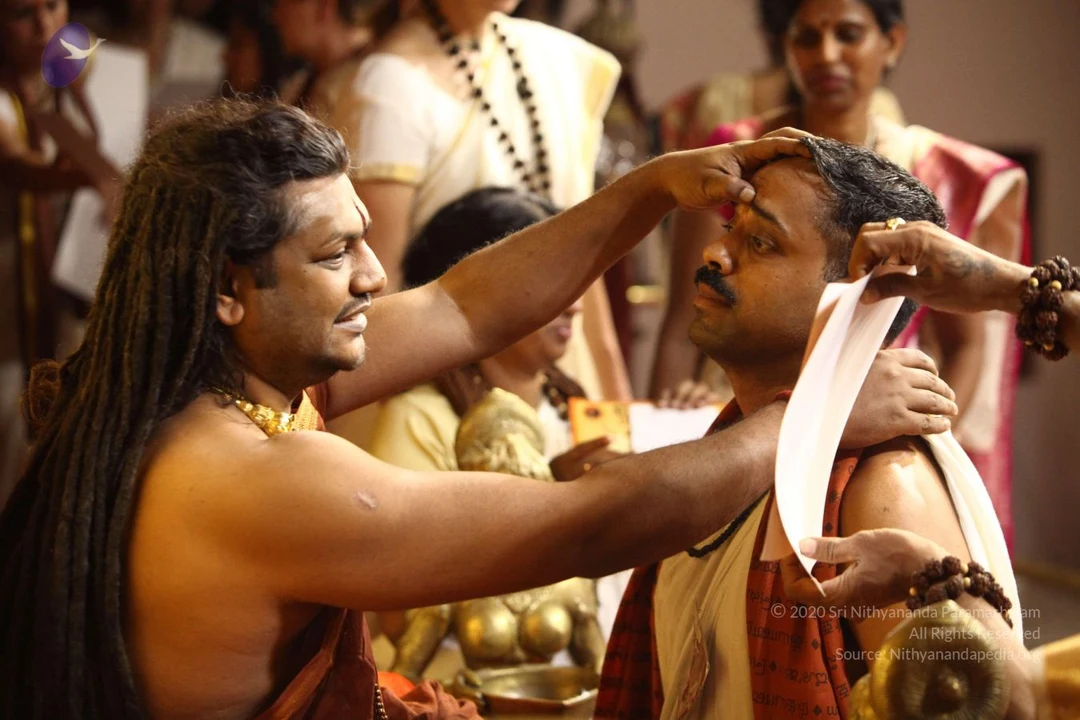
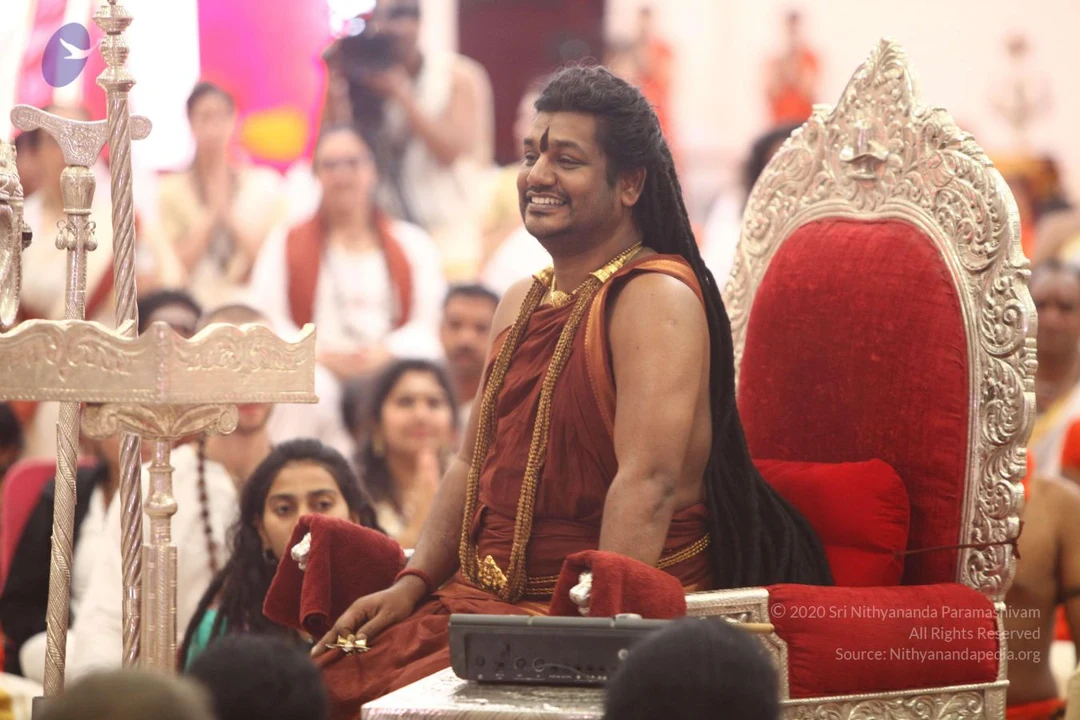
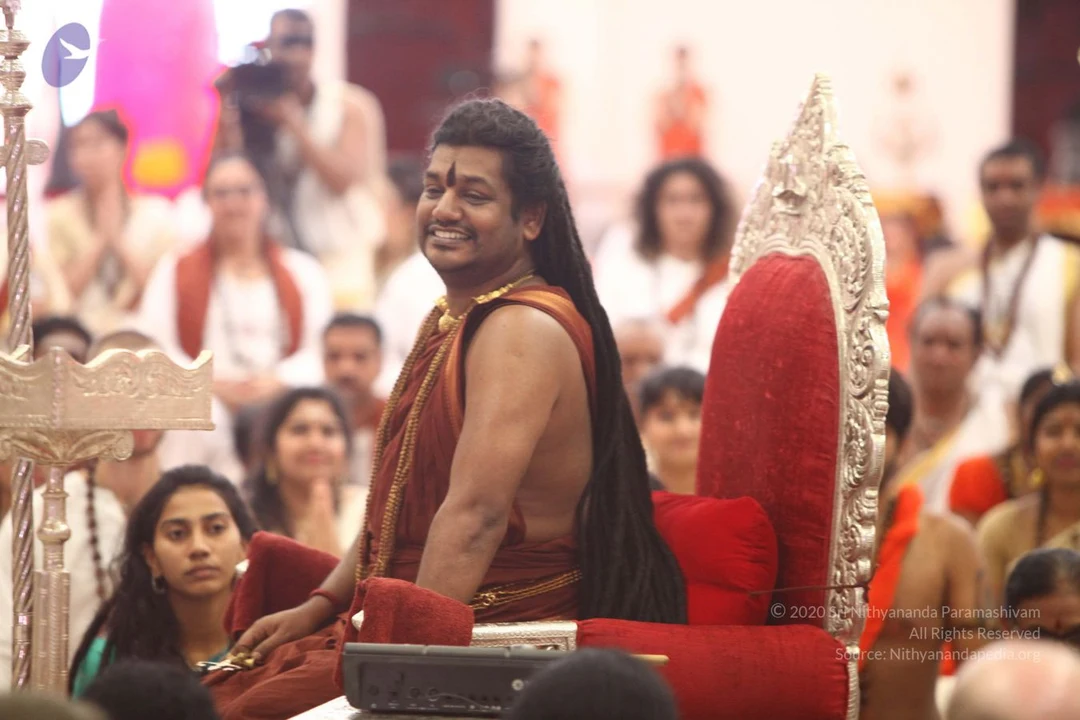
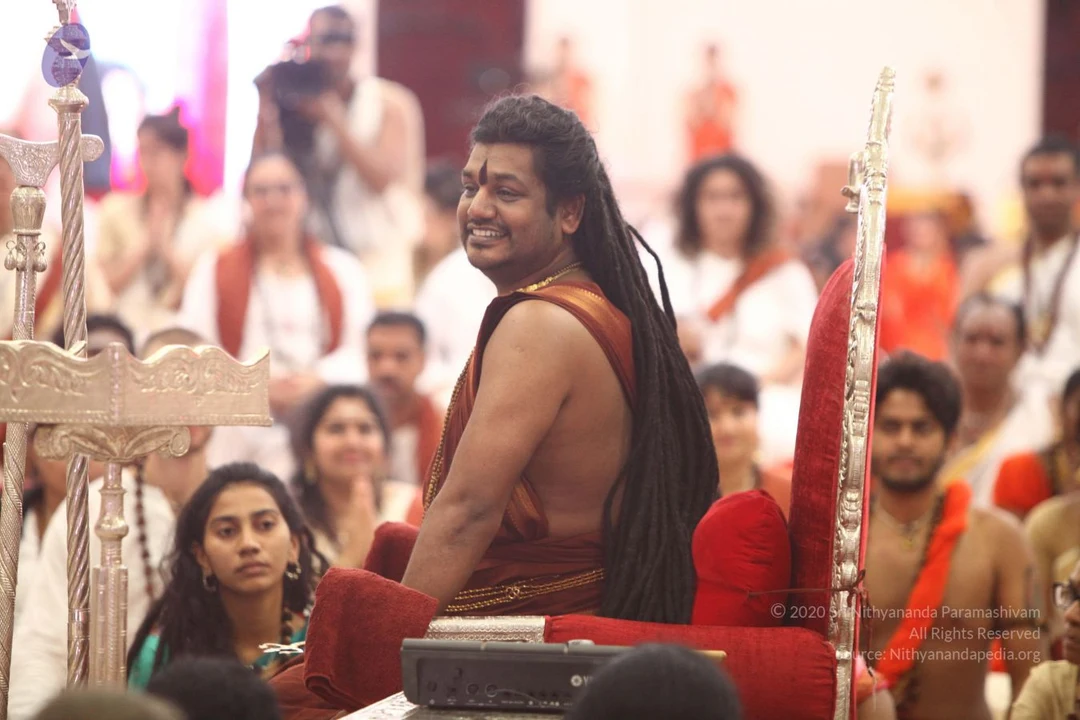
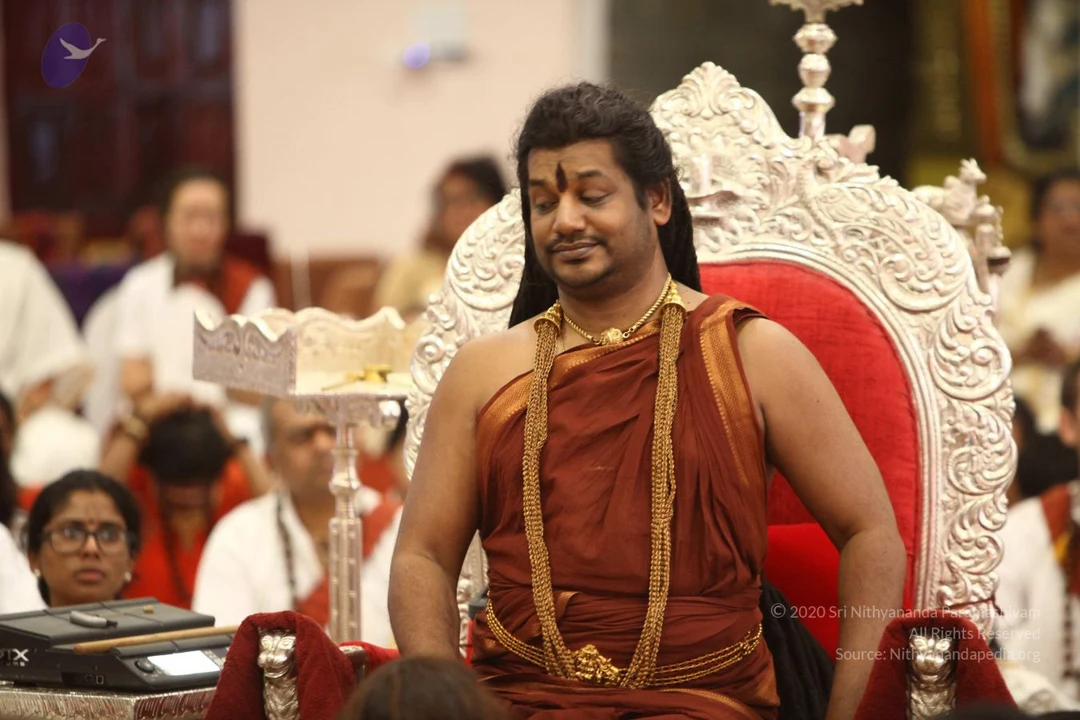
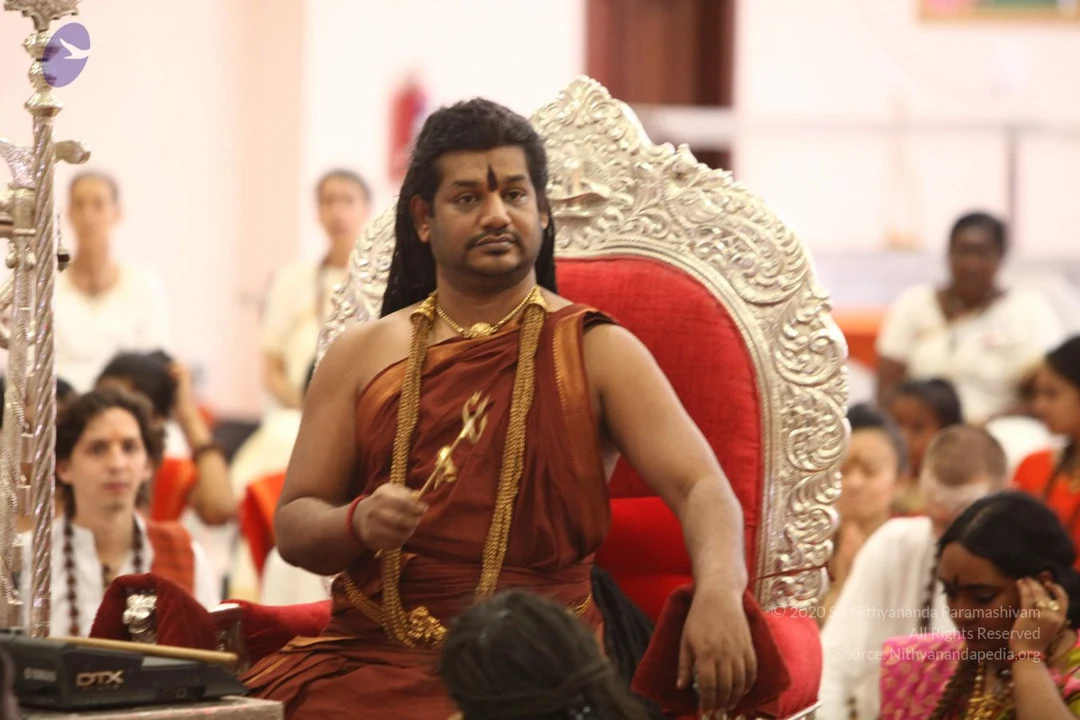
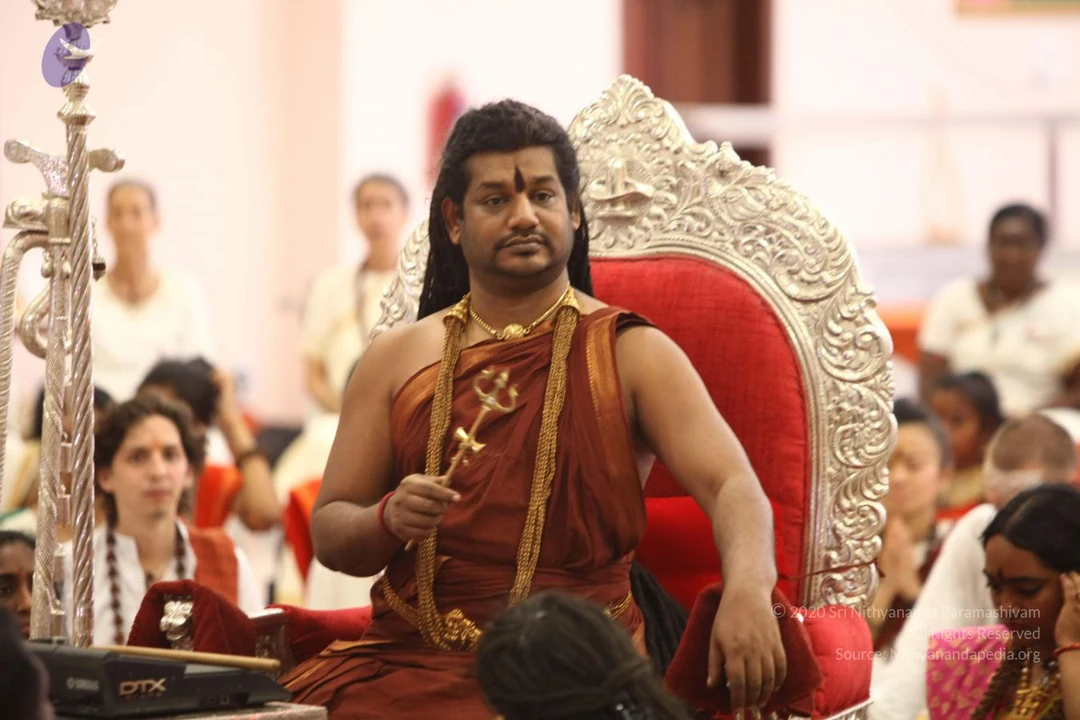
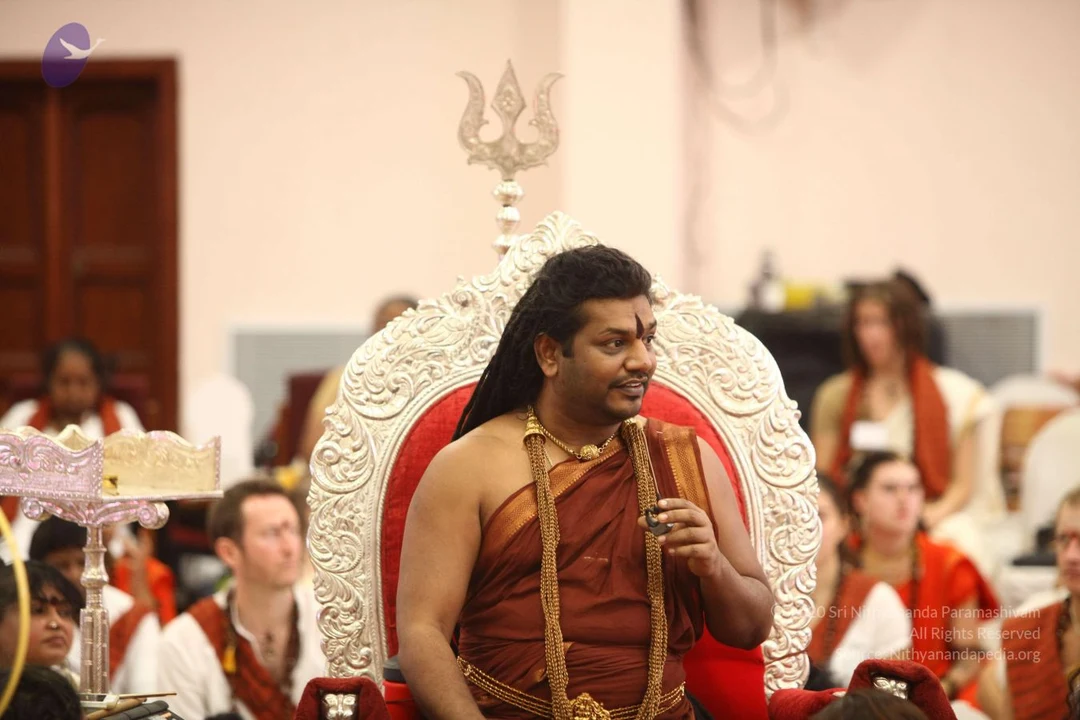
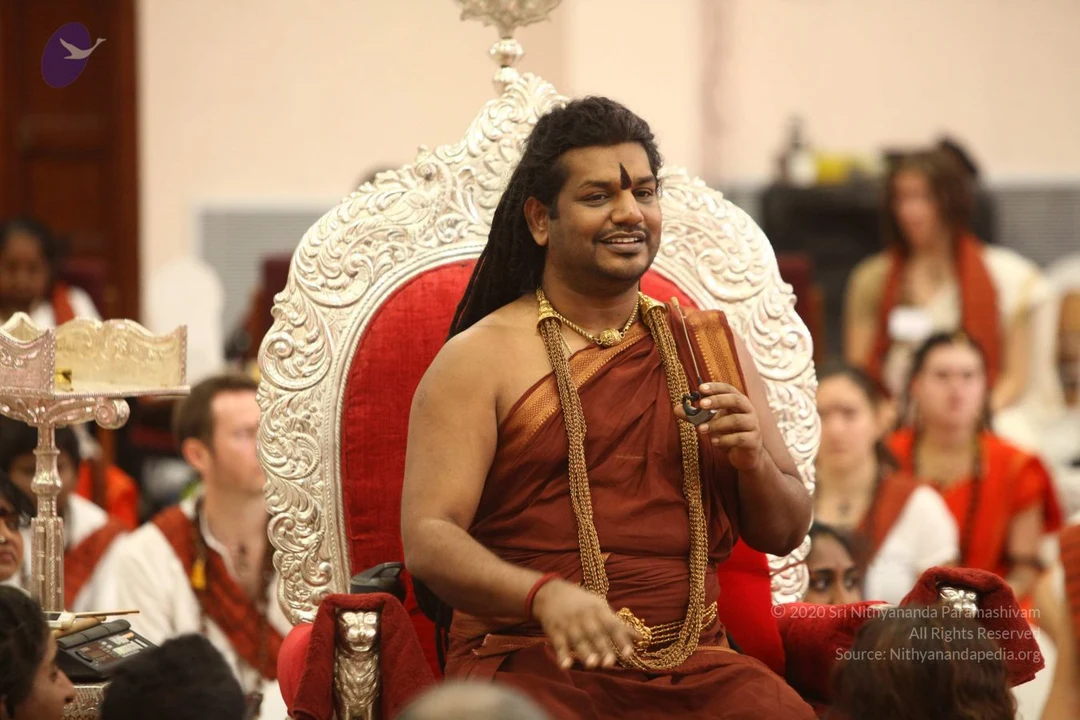
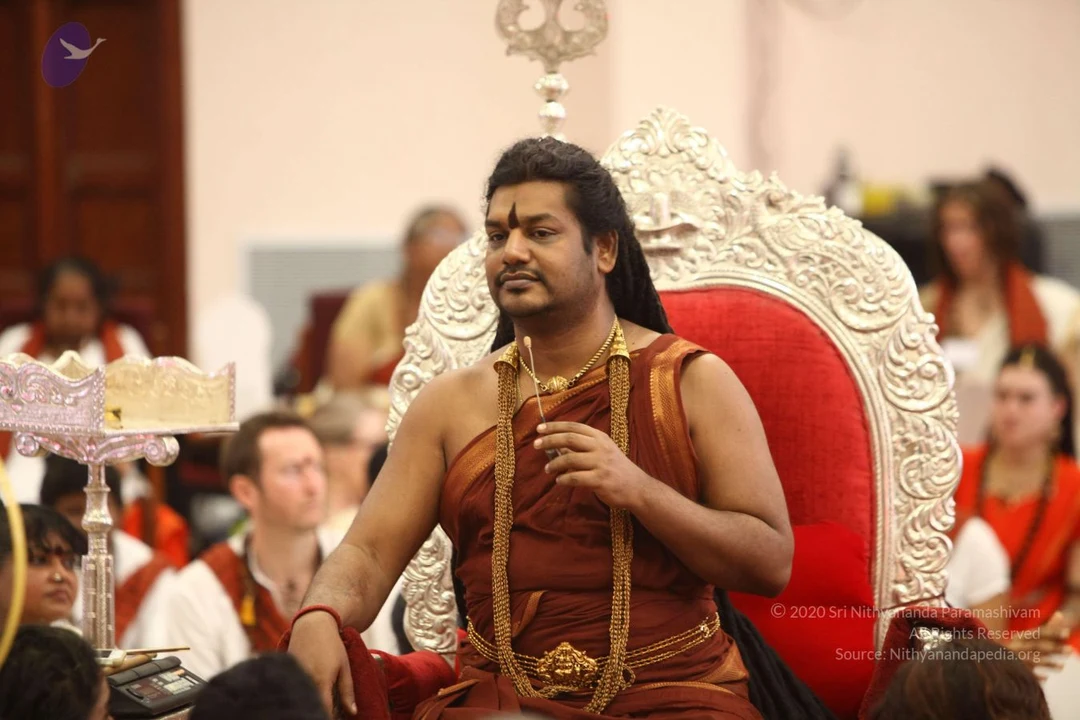
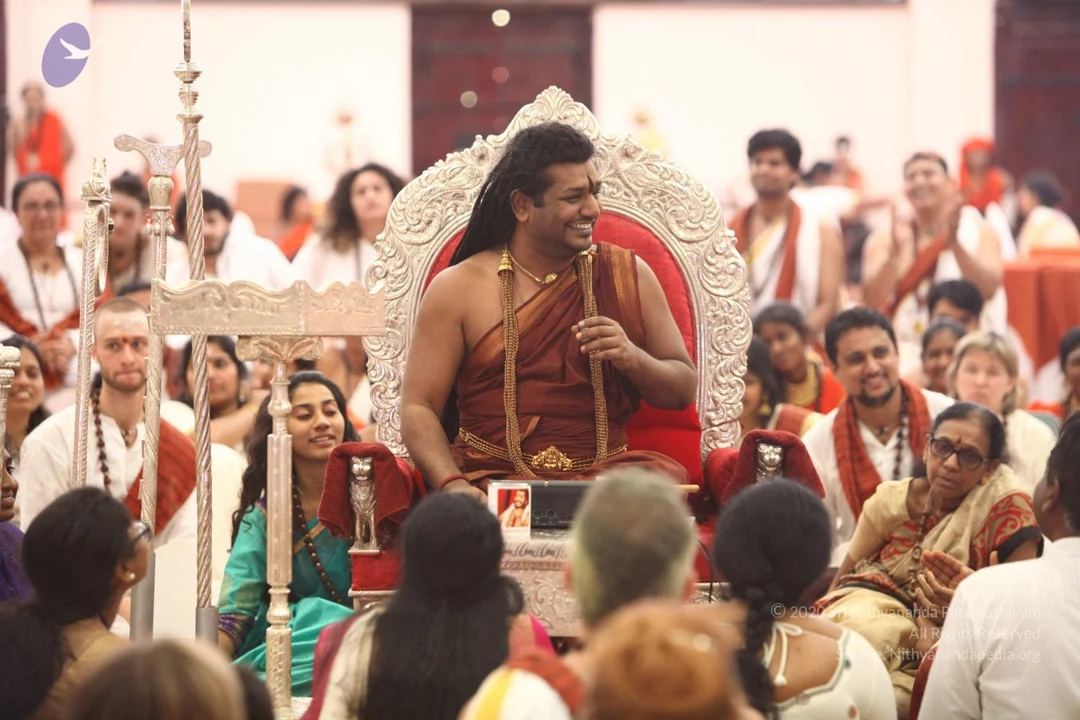
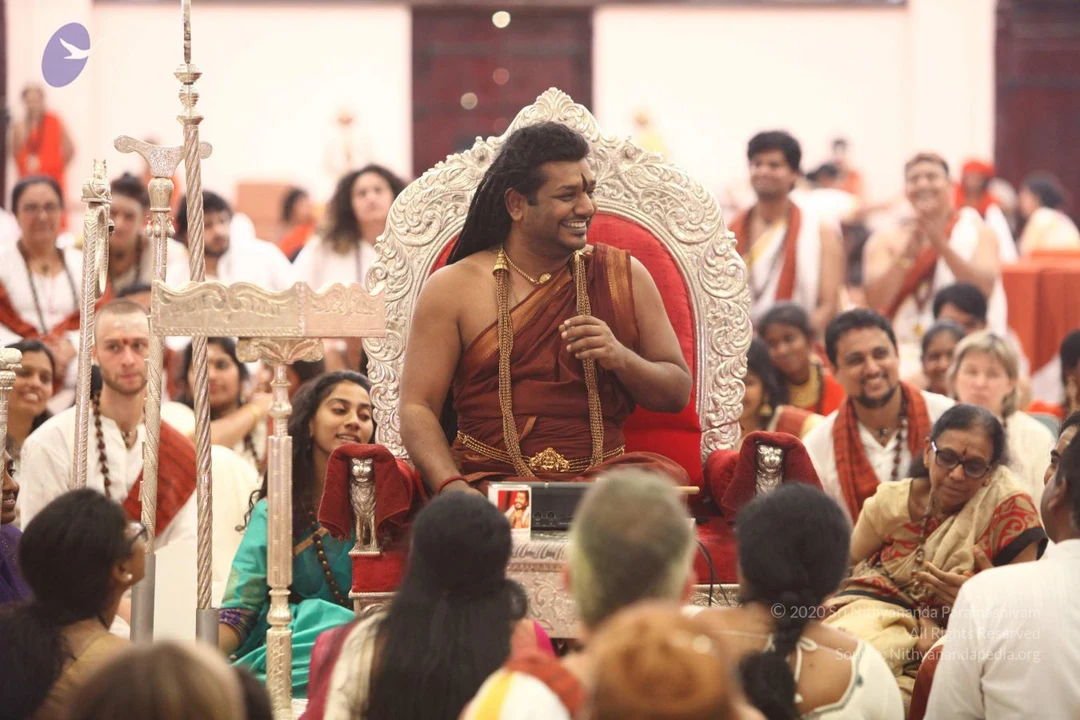
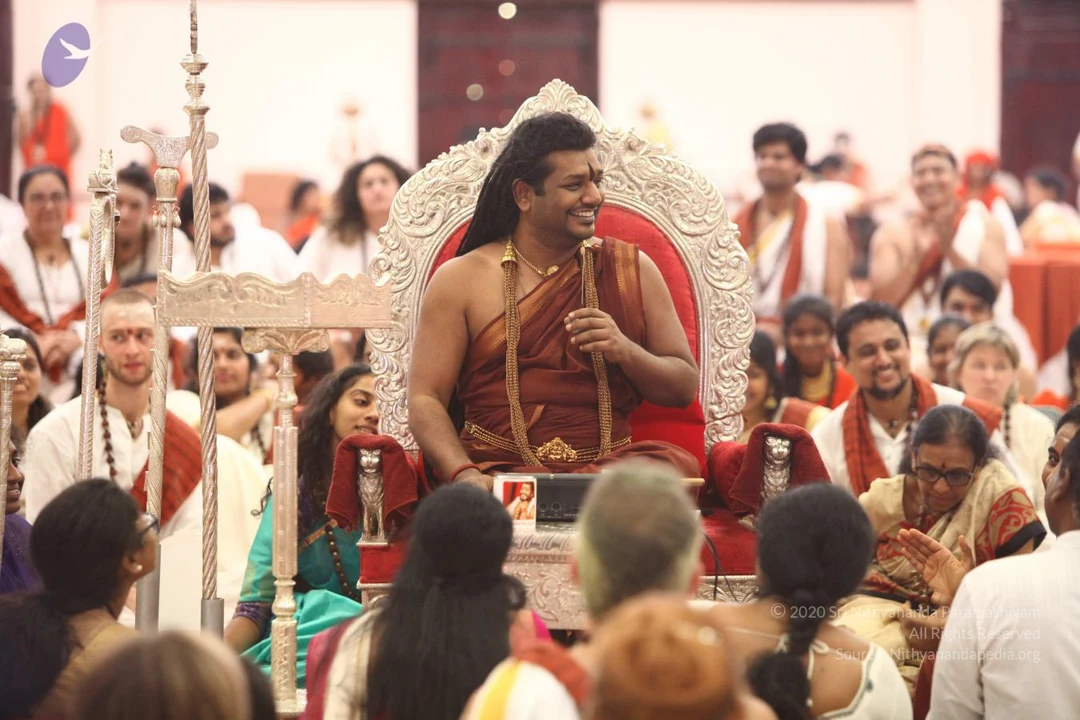
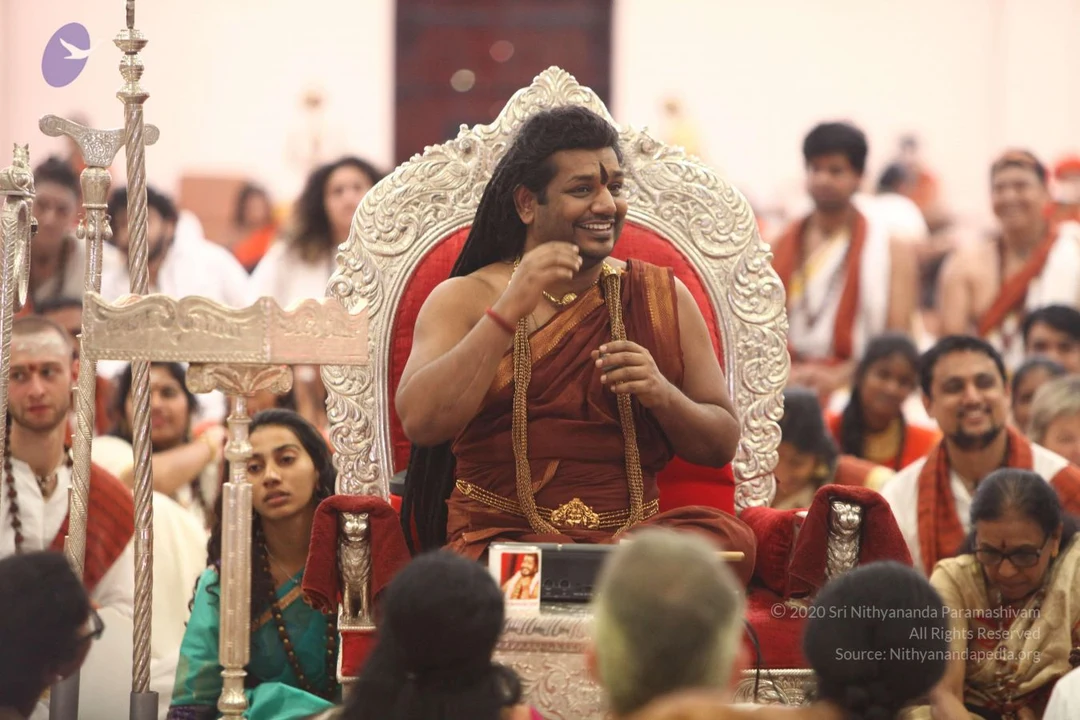
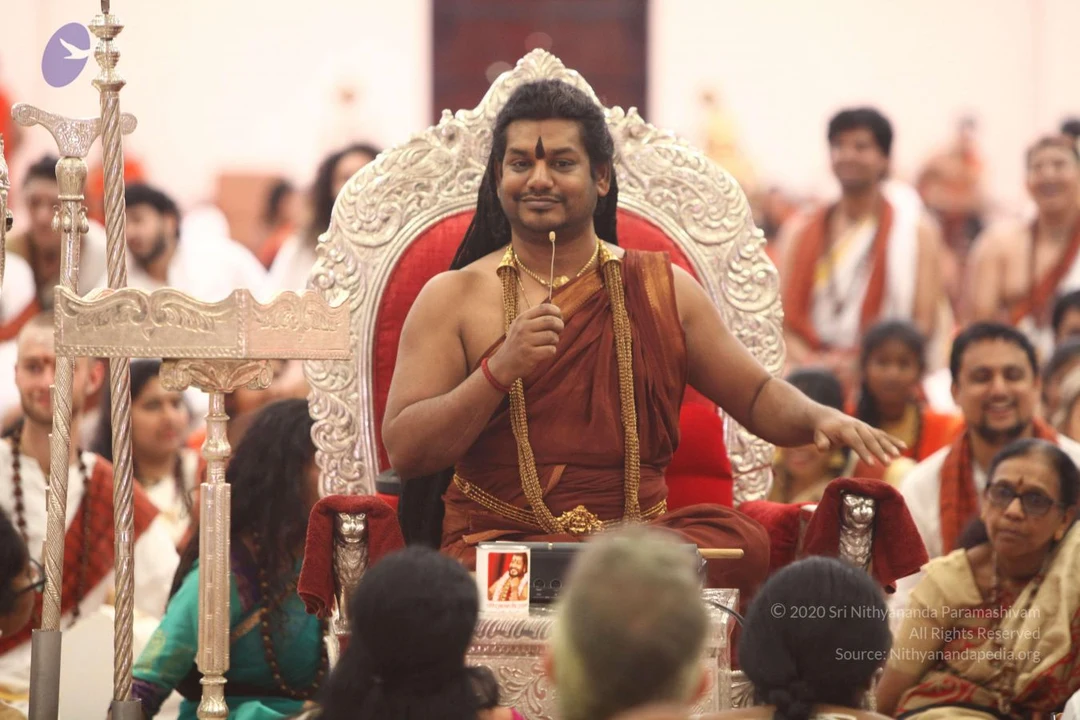
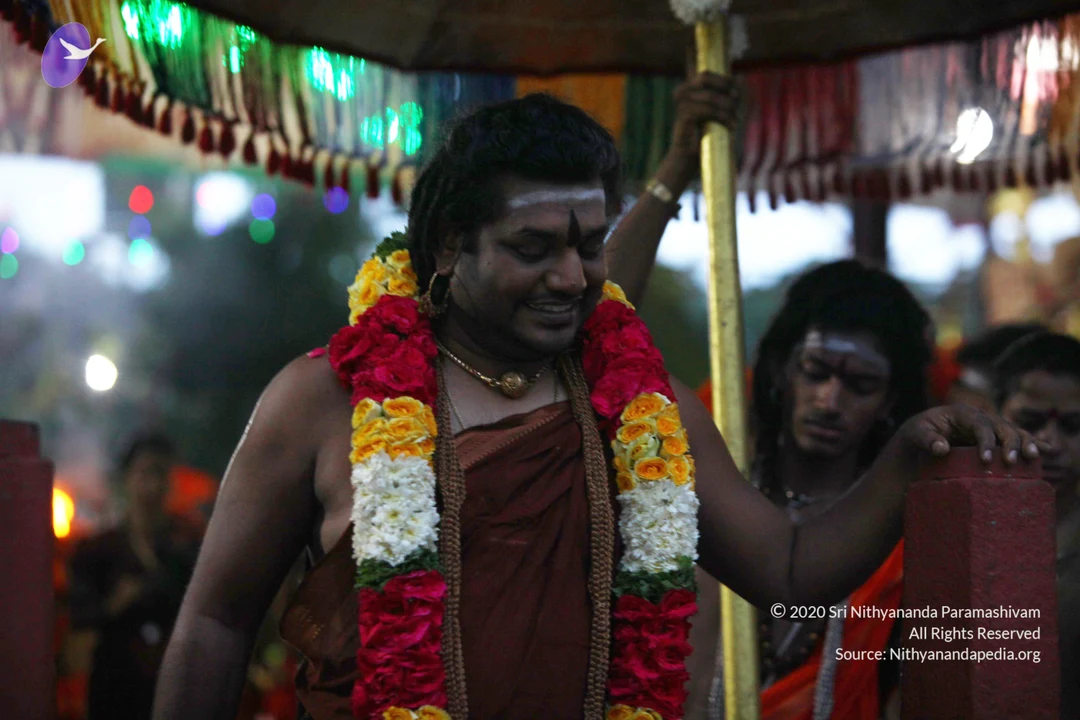
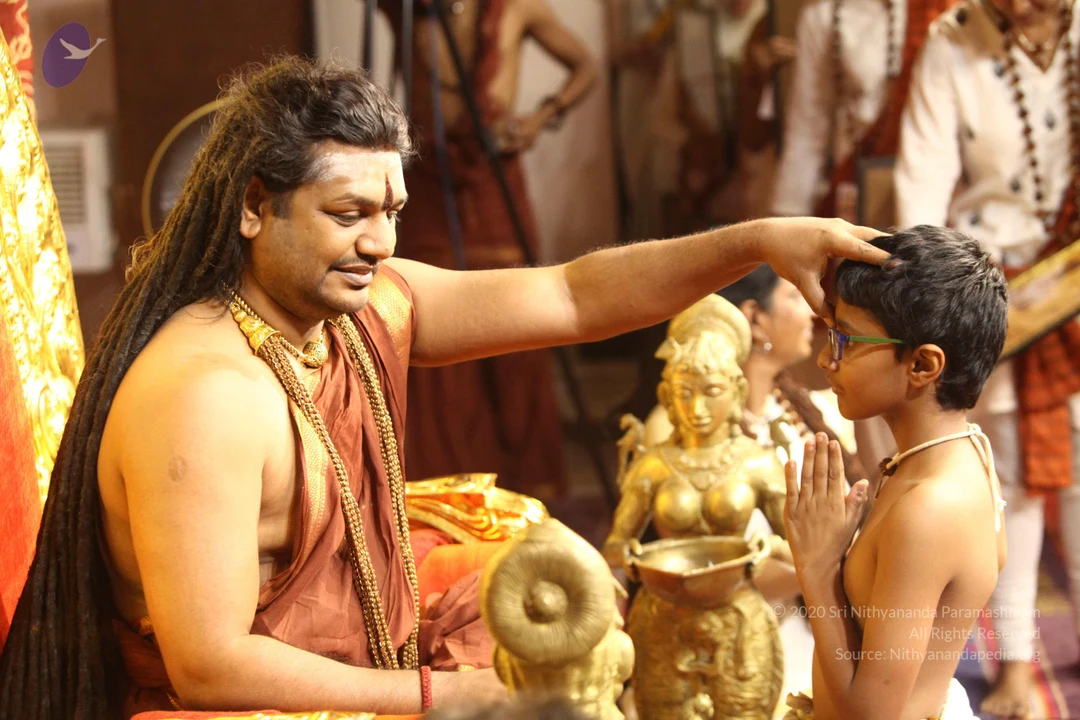
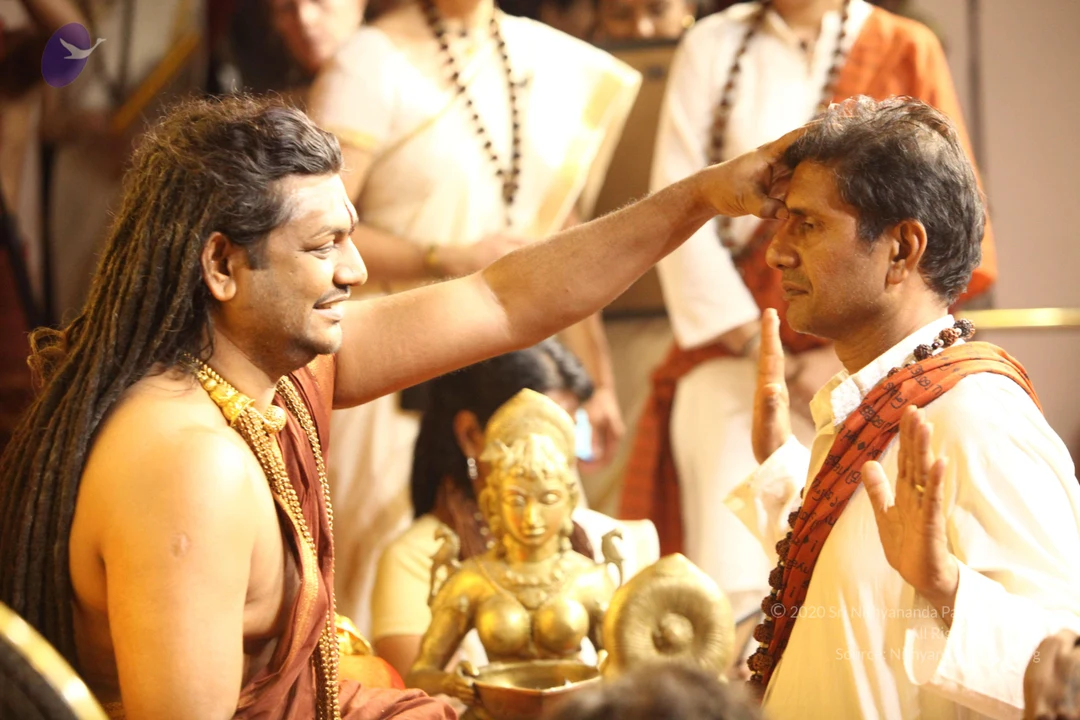
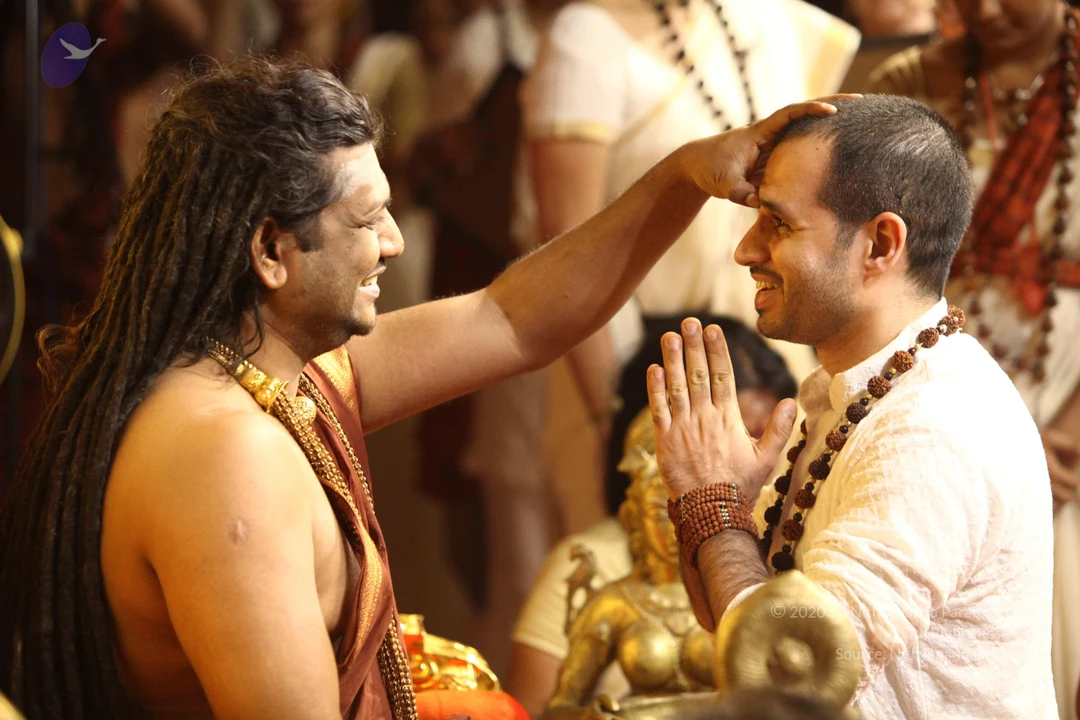
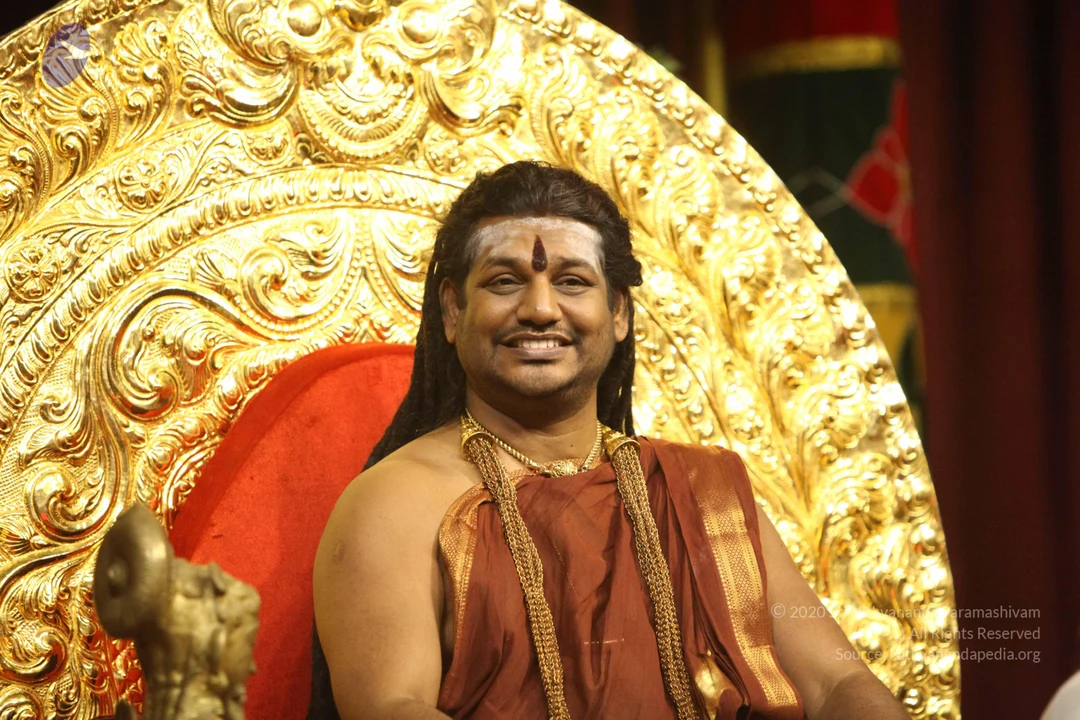
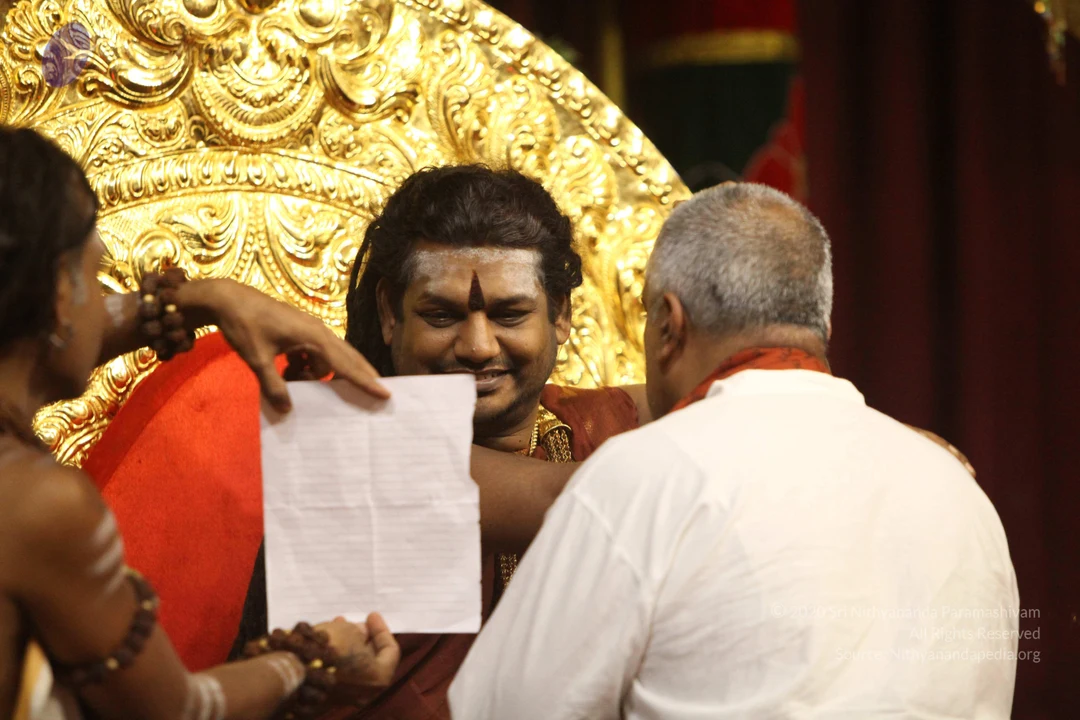
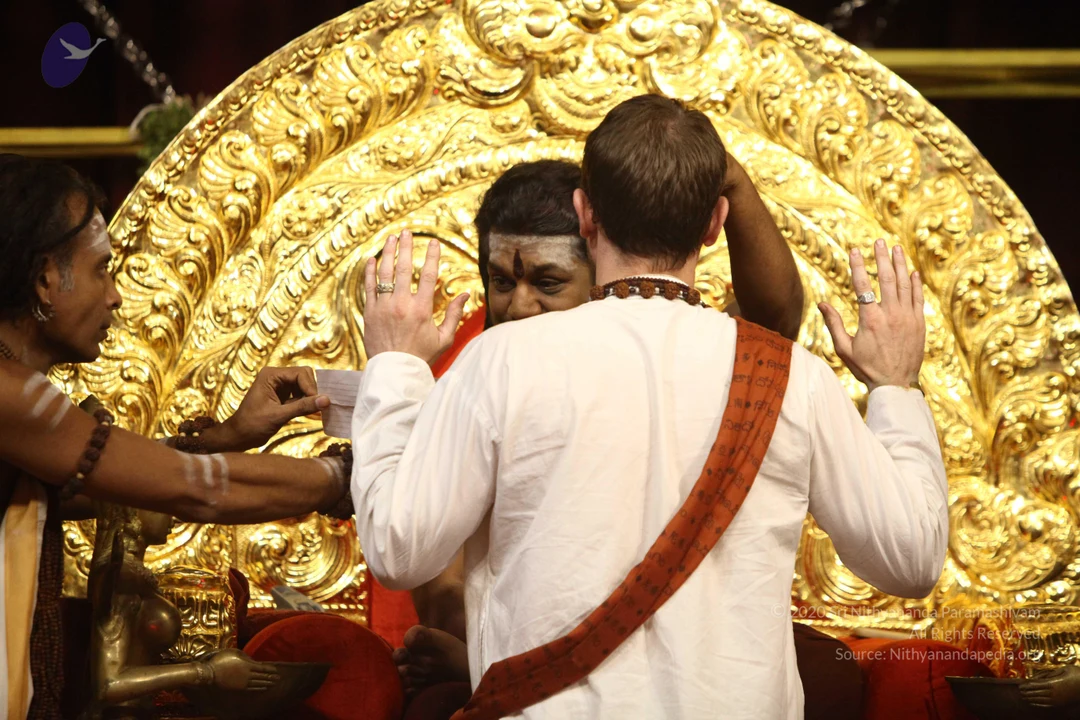
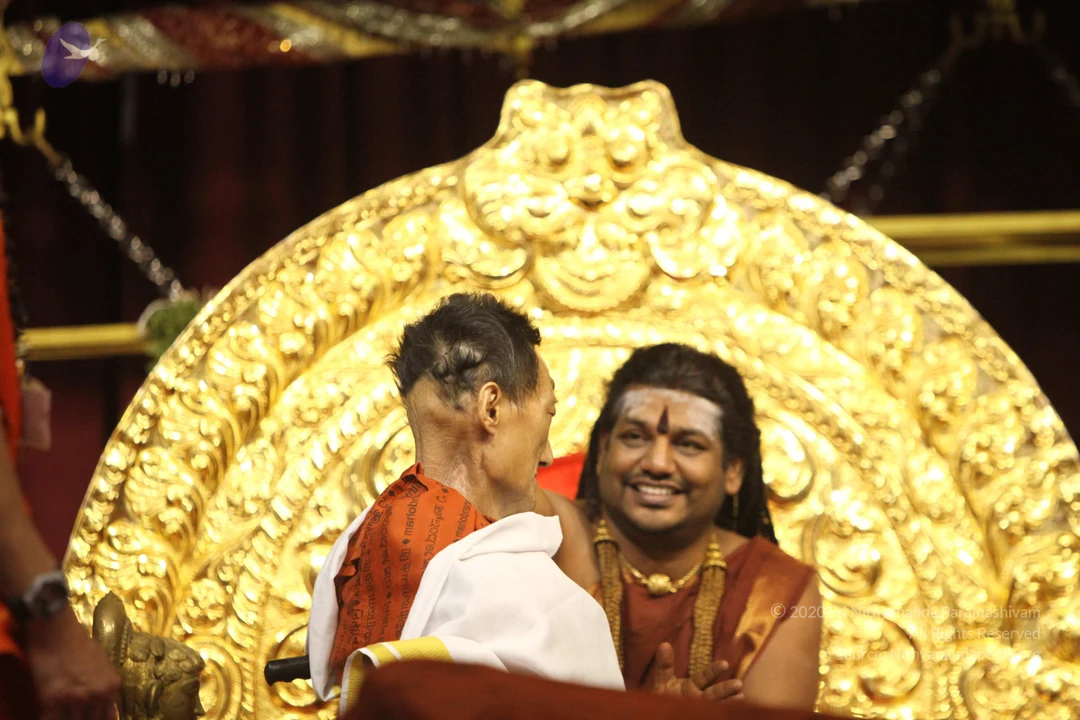
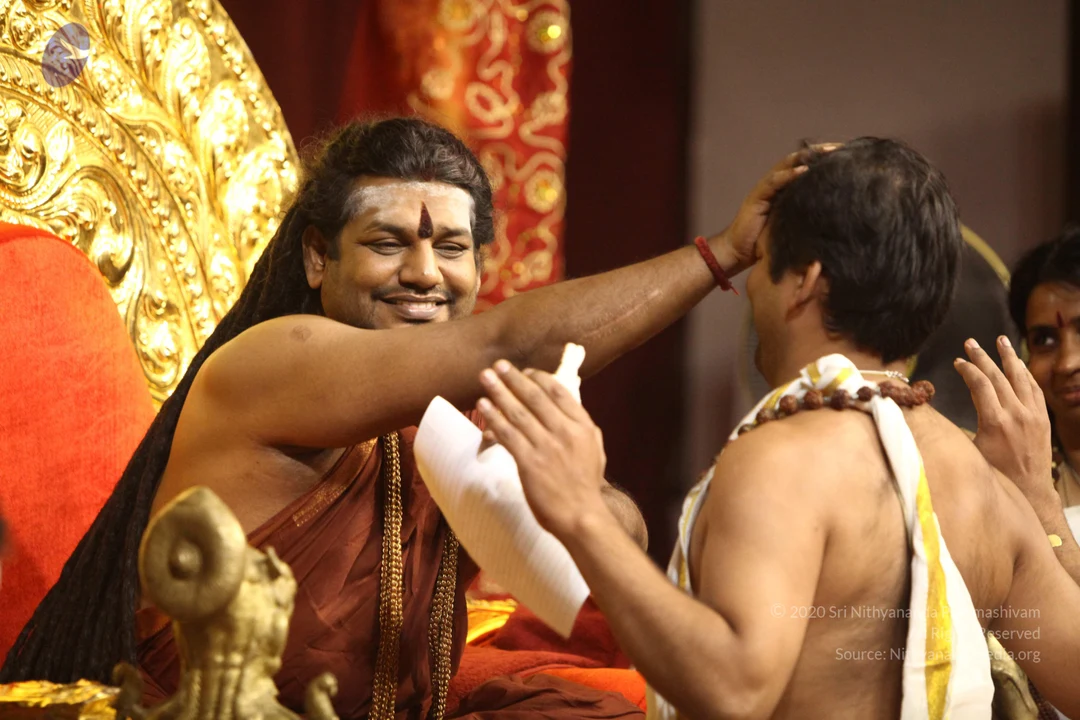
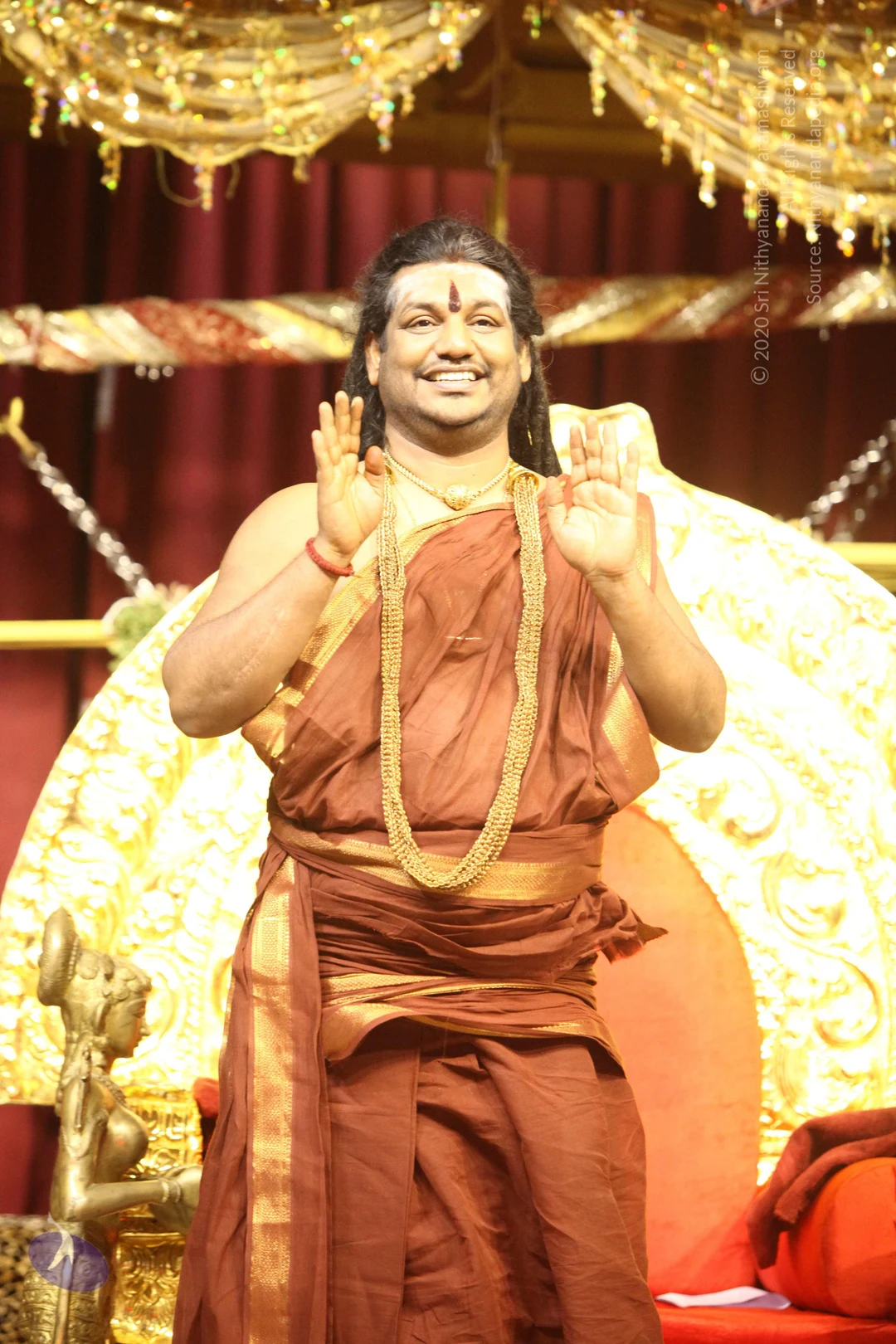
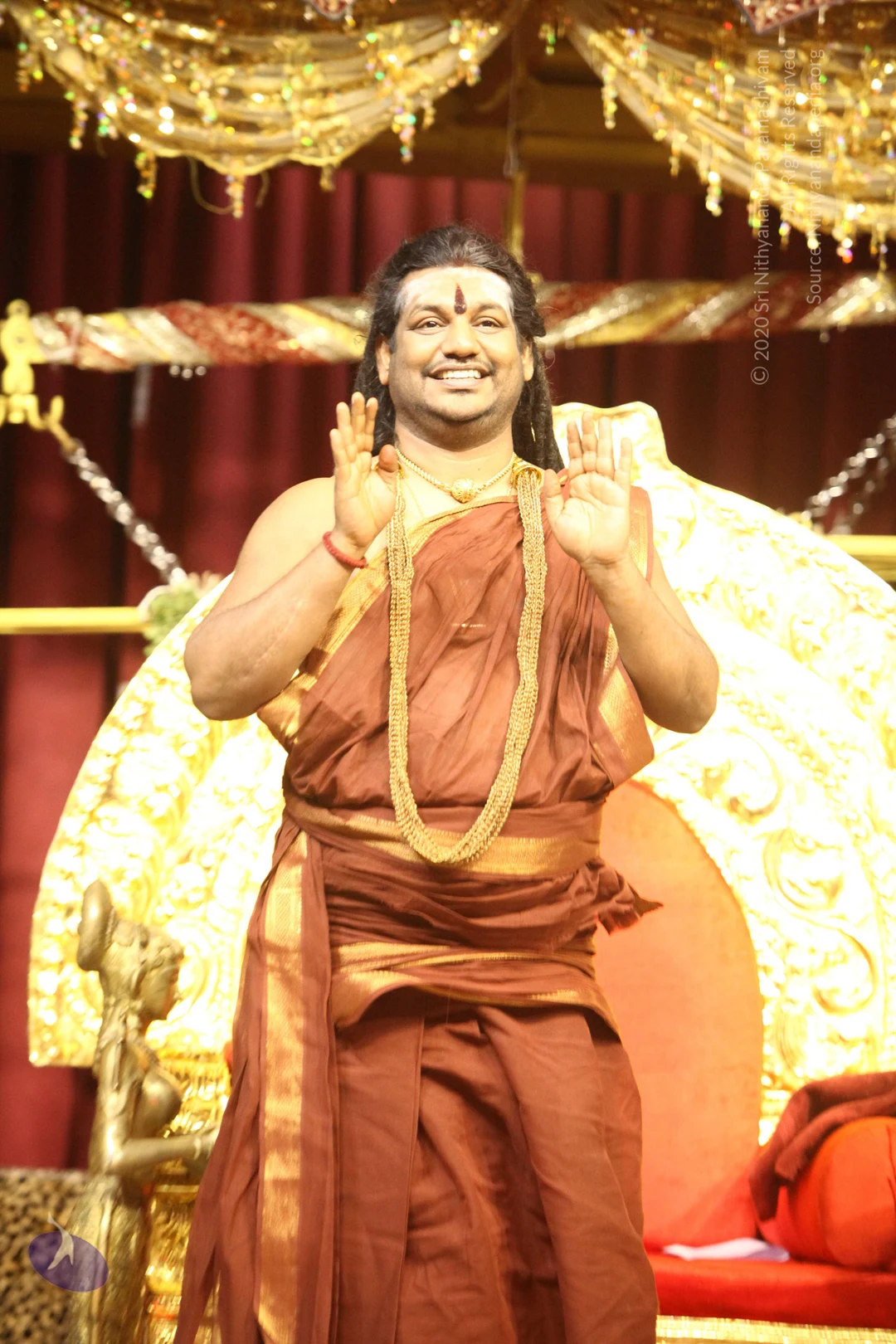
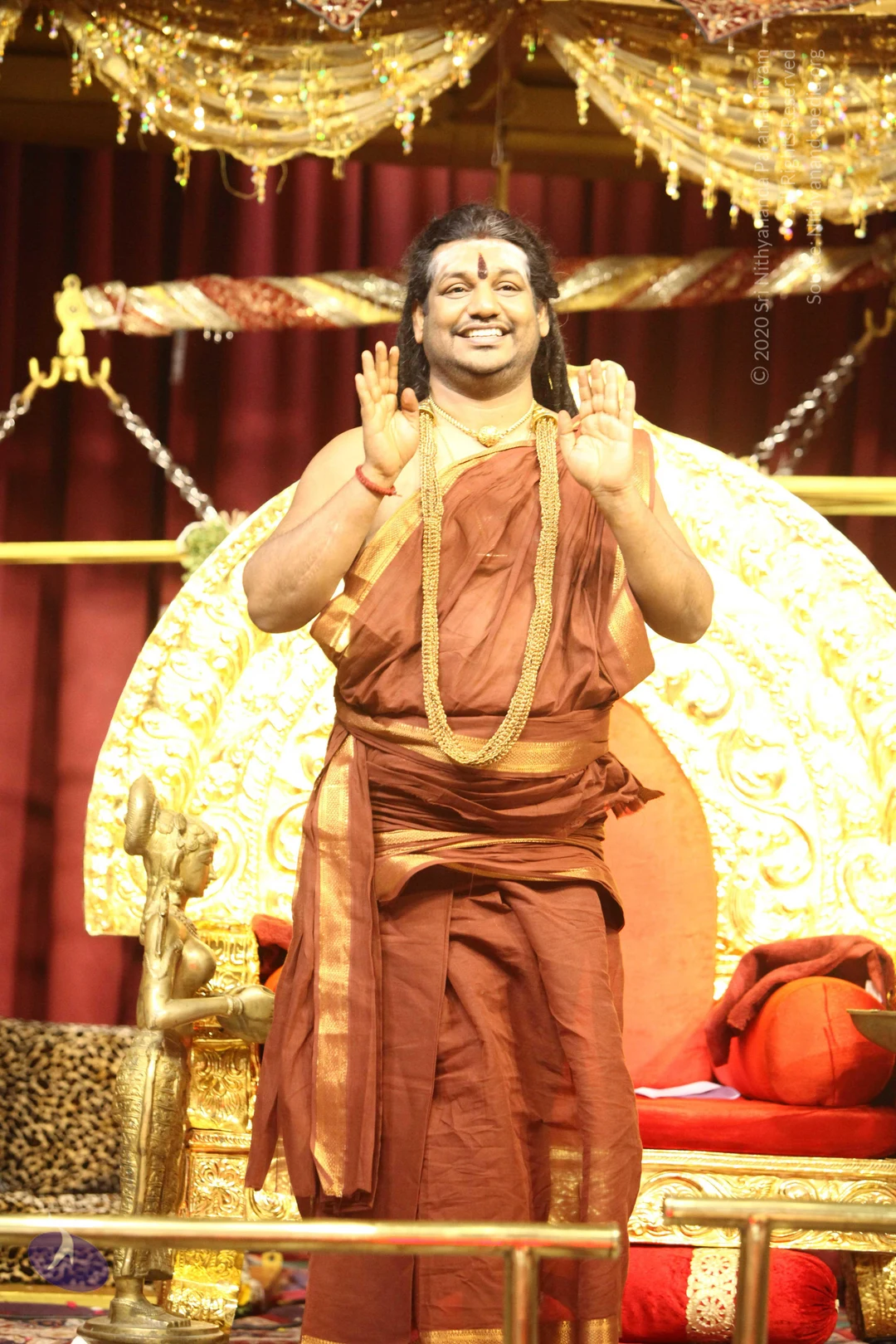
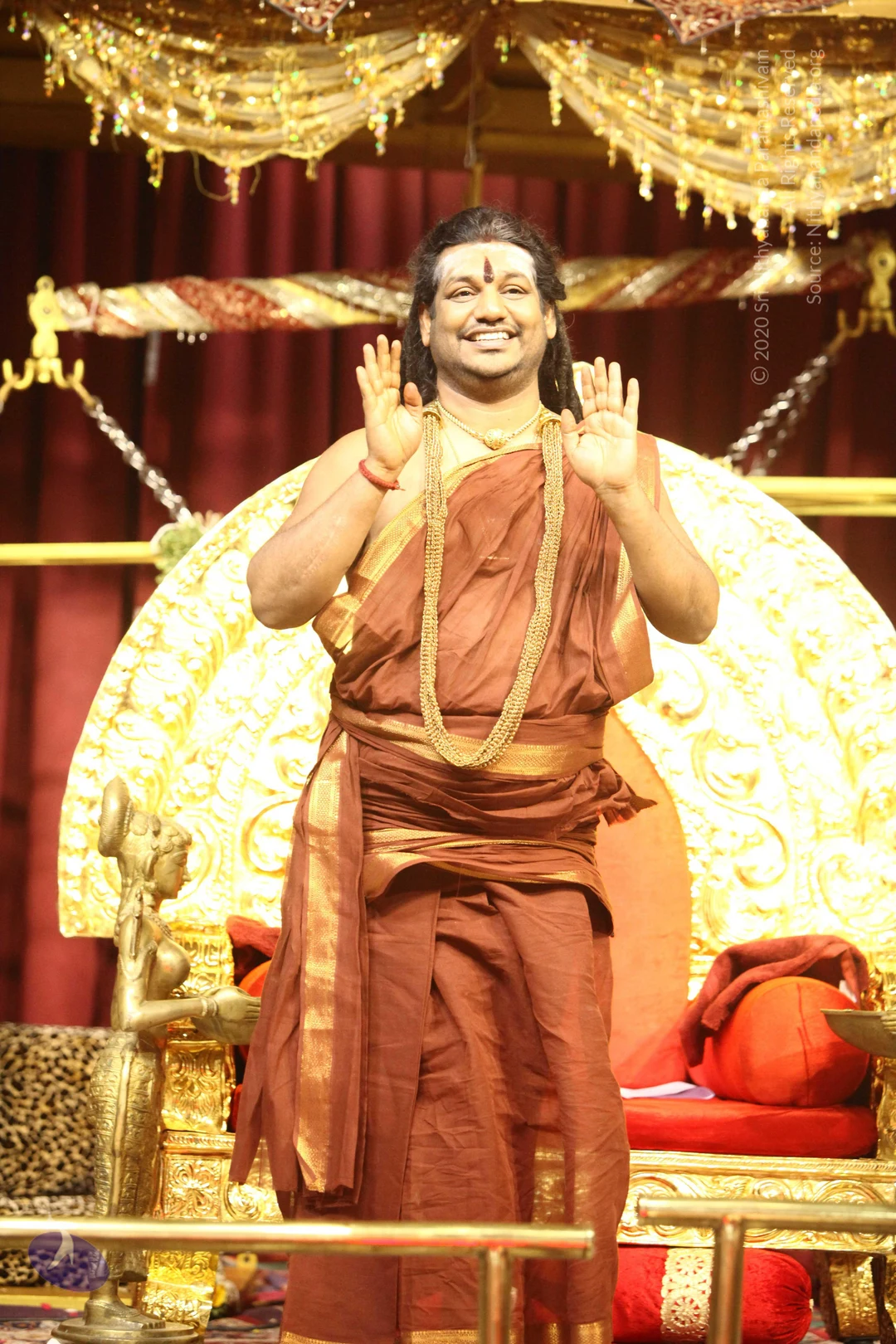
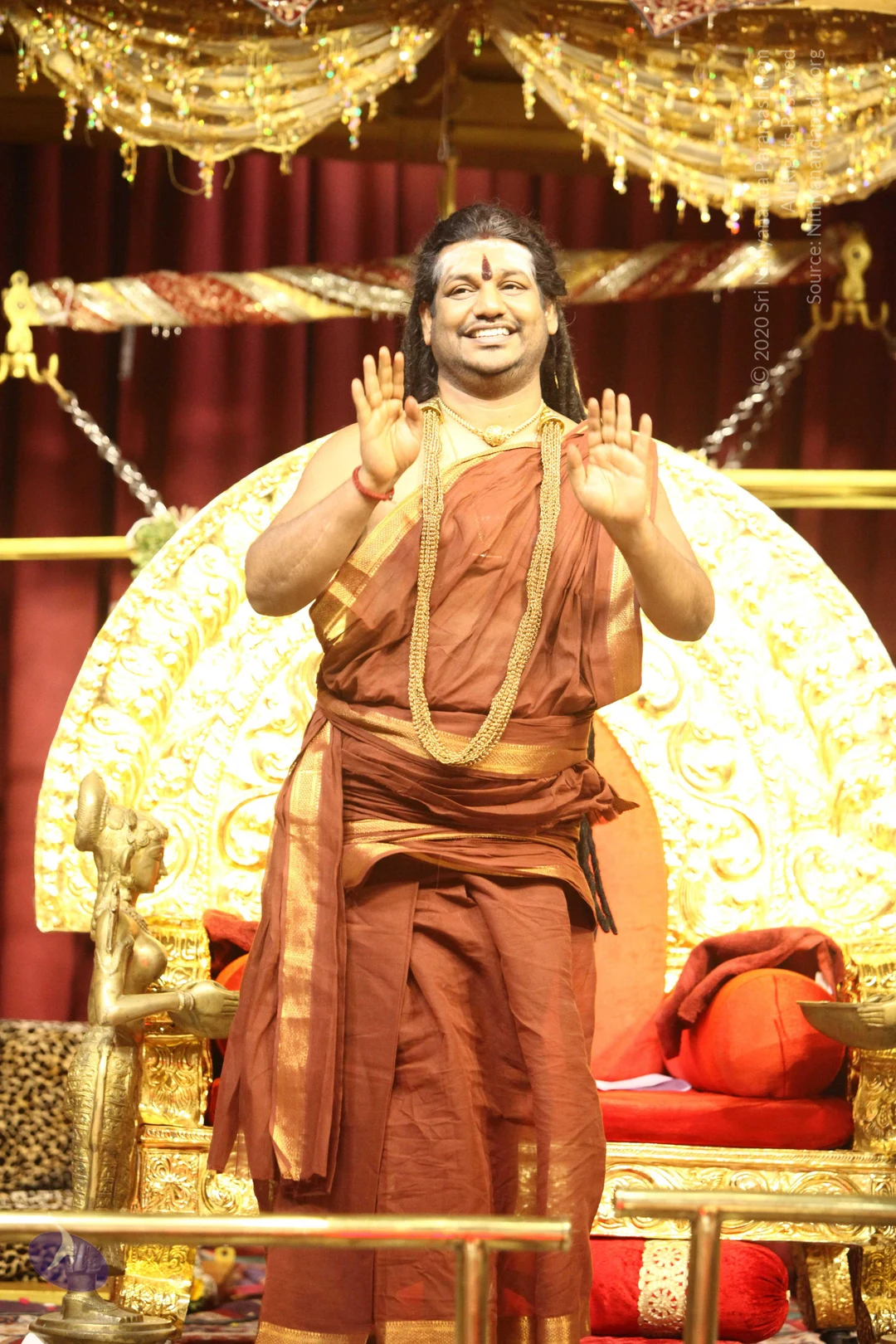
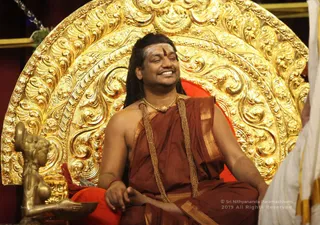
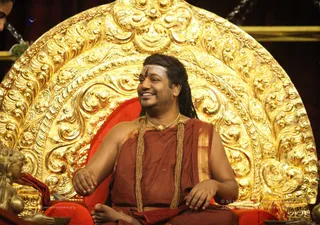
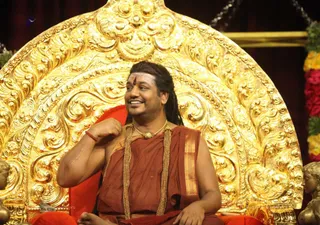
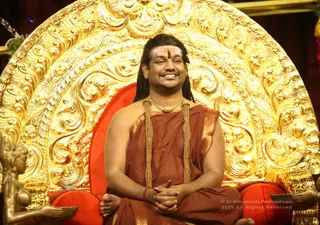
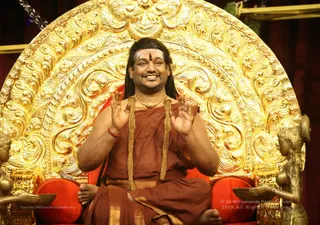
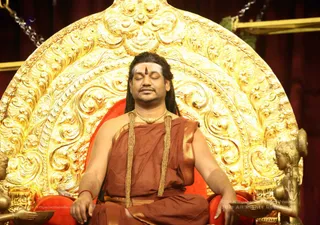
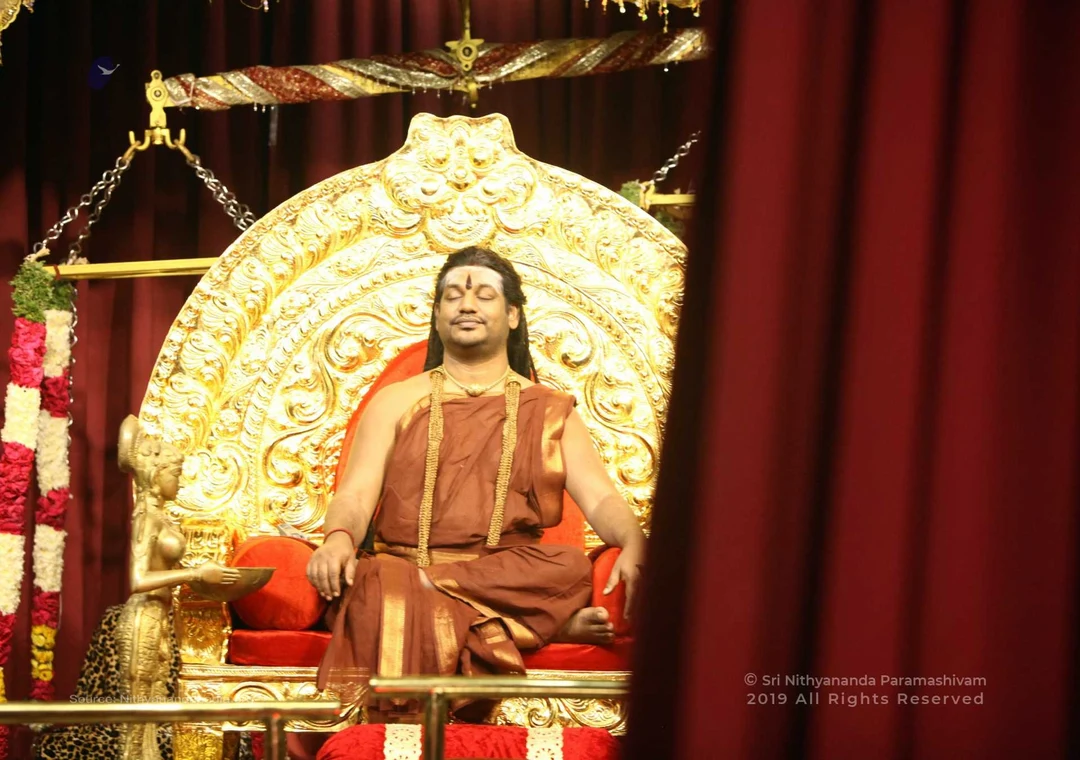
A photograph of a smiling man with long dark hair and a white tilak with a red bindi on his forehead, seated on an ornate gold throne with a large gold backrest and red cushion. He wears a rust-red saffron-style dhoti and shawl with gold borders, a gold chain necklace with a large pendant, and multiple long gold-toned mala strands. His hands rest together in his lap. A small brass lamp with an oil lamp and a brass figurine stand to the left, and a white-clad person's arm is visible at the right edge. The scene suggests a satsang or darshan setting.A seated man in a rust-red robe with a gold-thread border sits on a large ornate gold throne with a repoussé arched backrest and red cushions. He wears a gold necklace, a red tilak on his forehead and white vibhuti on his brow, with long dark hair falling past his shoulders. He smiles and gestures with his right hand. Brass lamps or vessels sit at the edge of the frame. Overlaid copyright text appears in the corner.A man with long swept-back dark hair and a red tilak on his forehead sits smiling on a red cushioned seat in front of an ornate gold repoussé throne backrest. He wears a rust-orange sleeveless garment with a gold-bordered cloth, a gold chain and layered gold-beaded necklaces, and a red thread on his wrist. He raises one hand near his face. Bronze figurines are at the left and right edges and fresh flower garlands in yellow, orange and red hang along the right side. a person's presence is indicated by the swept hair, saffron-orange clothing and gold necklaces, seated on a throne during a ceremonial setting.A seated man in a rust-red dhoti and wrap with gold border sits smiling on an ornate gold throne with a large gilded backrest and red cushions. He wears a gold chain necklace, layered gold neck ornaments, a forehead tilak, and a red thread on his wrist, with his hands folded in his lap. A gilded figure stands at the lower left edge. The appearance matches the Swamiji (probable) description: long swept-back hair, ceremonial gold necklaces and saffron-toned clothing, seated in a throne setting, so this is a photo of one person in a stage or temple setting.A photograph of a smiling man seated on an ornate gilded throne with a large repoussé halo-shaped back, a red cushion beneath him. He wears a rust-red robe, a gold ceremonial chain necklace, a red wristband and a red-and-white forehead mark, with long dark hair falling to his shoulders. He raises both palms outward in a blessing gesture. Two gilded attendant statues flank the throne, each holding a small lamp-like tray. Red drapes form the background.A seated man with eyes closed sits on a red cushioned throne with an ornate gold halo-shaped backrest. He wears a rust-brown dhoti and shawl with a gold-toned patterned border, long gold chains draped across his chest, a gold pendant necklace, a red sacred thread on his wrist, and a red-and-white forehead mark. His hands rest on the chair arms in a meditative pose. Gold sculpted figures flank the throne on both sides against dark red curtains.
Ganesh-Brahmotsav

43 photosSource gallery
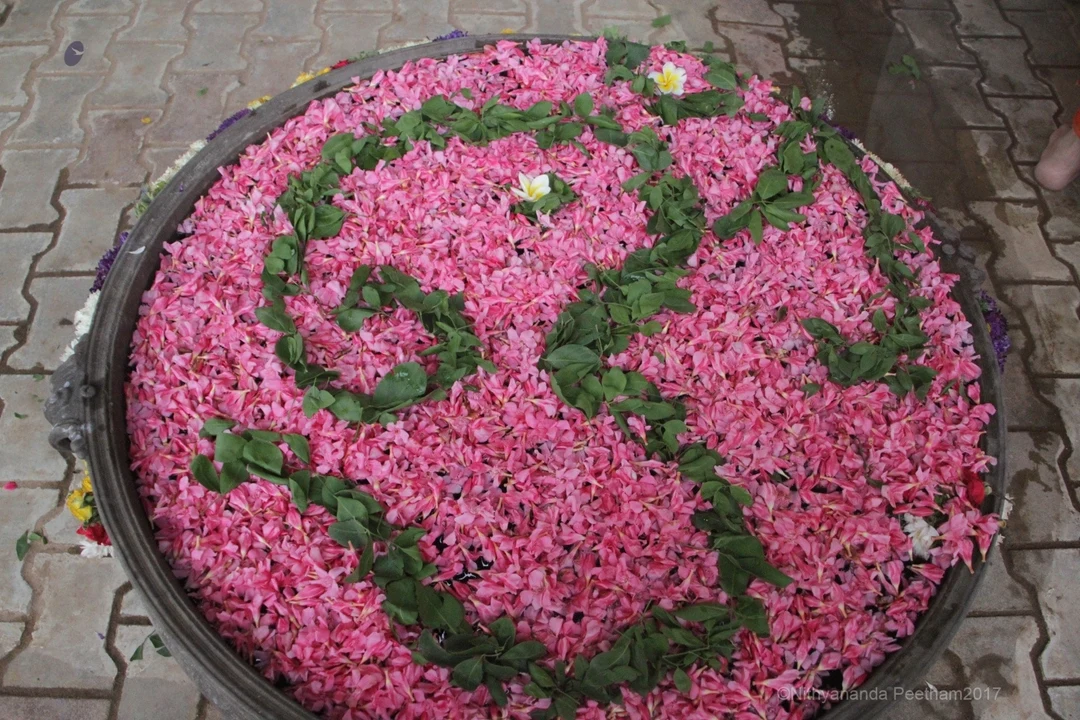
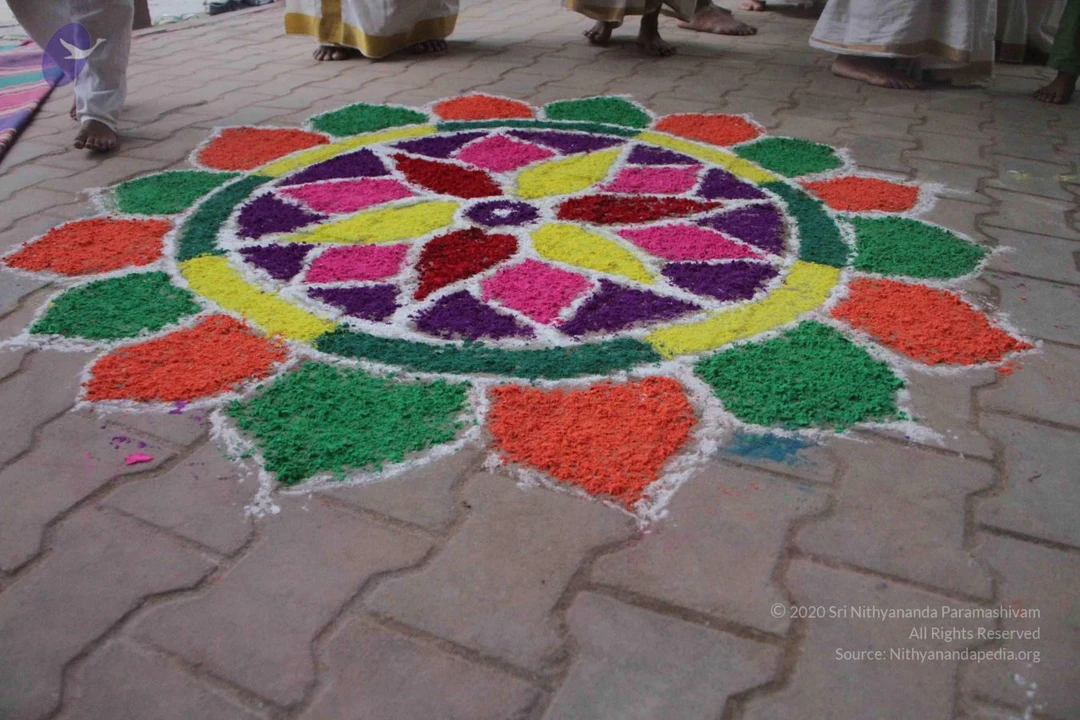
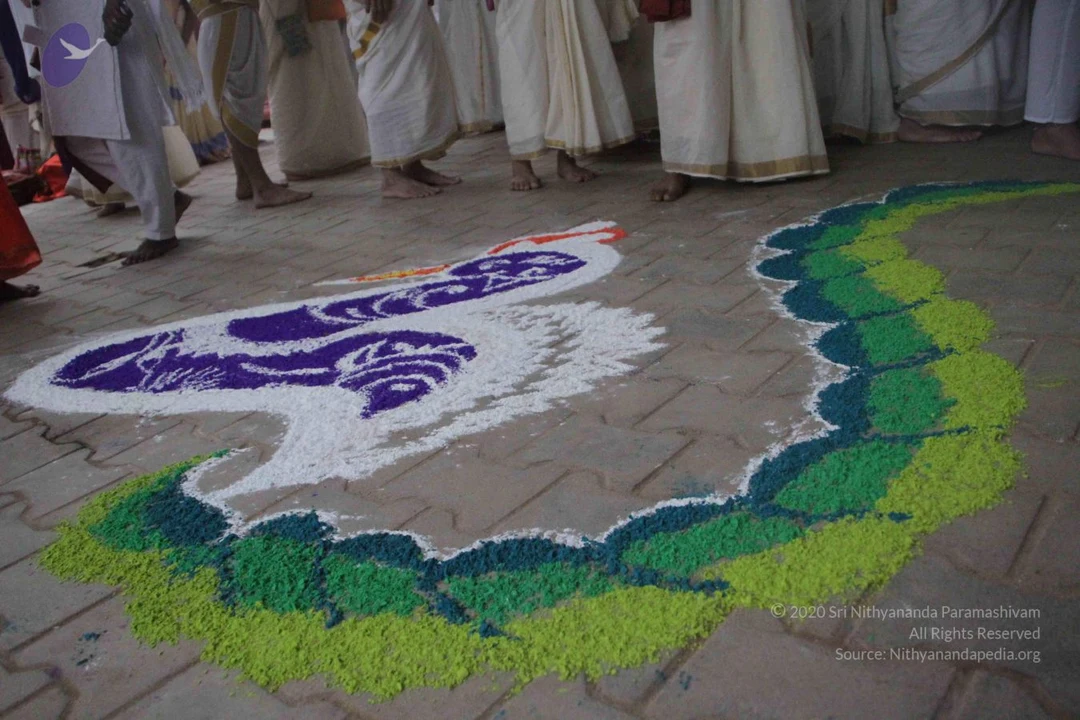
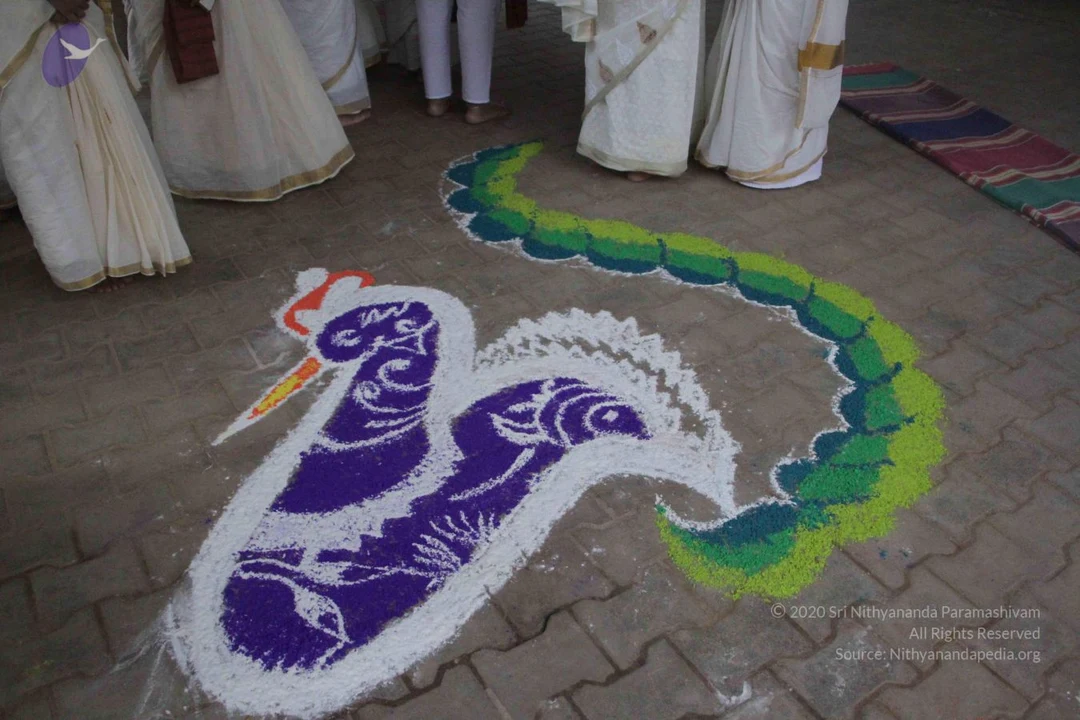
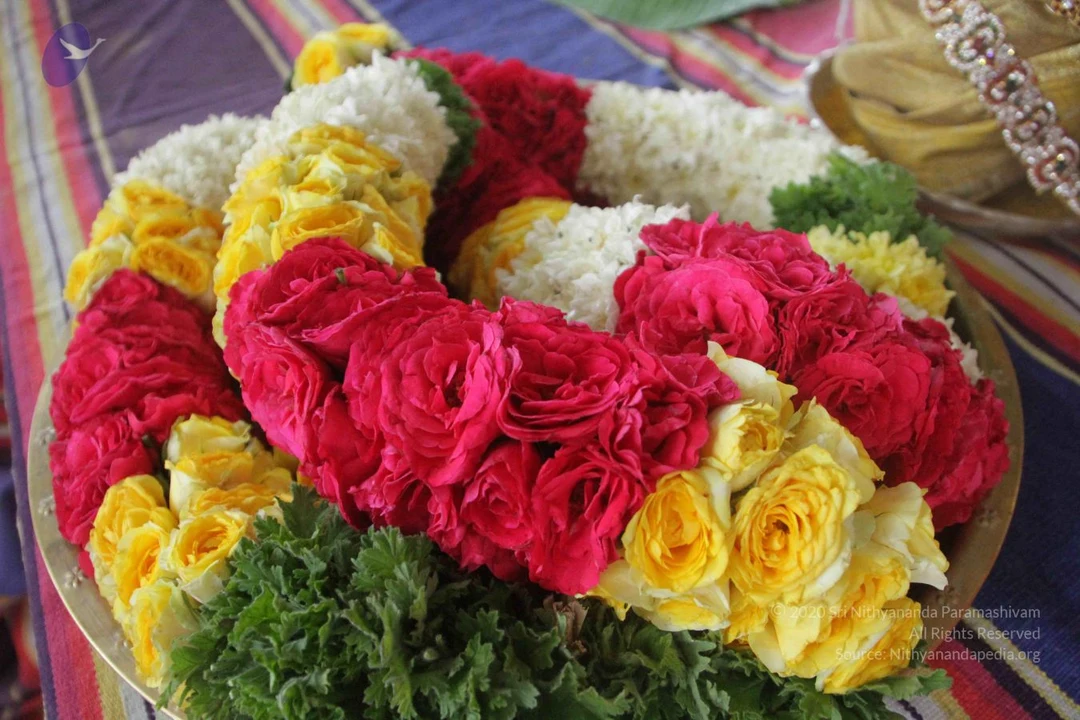
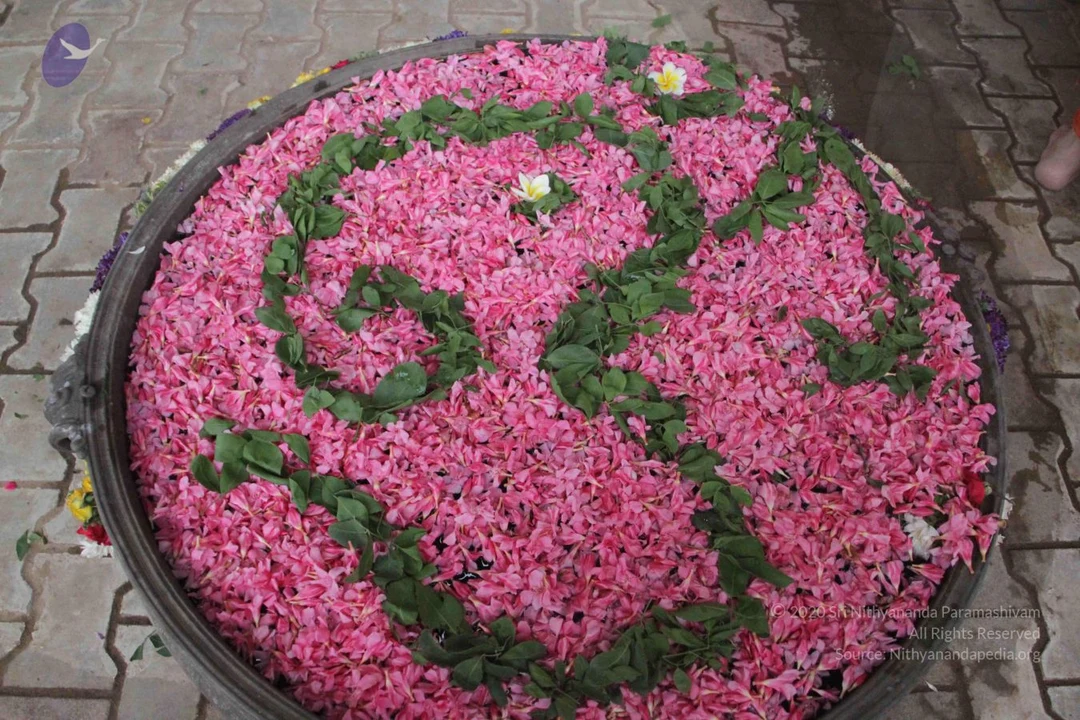
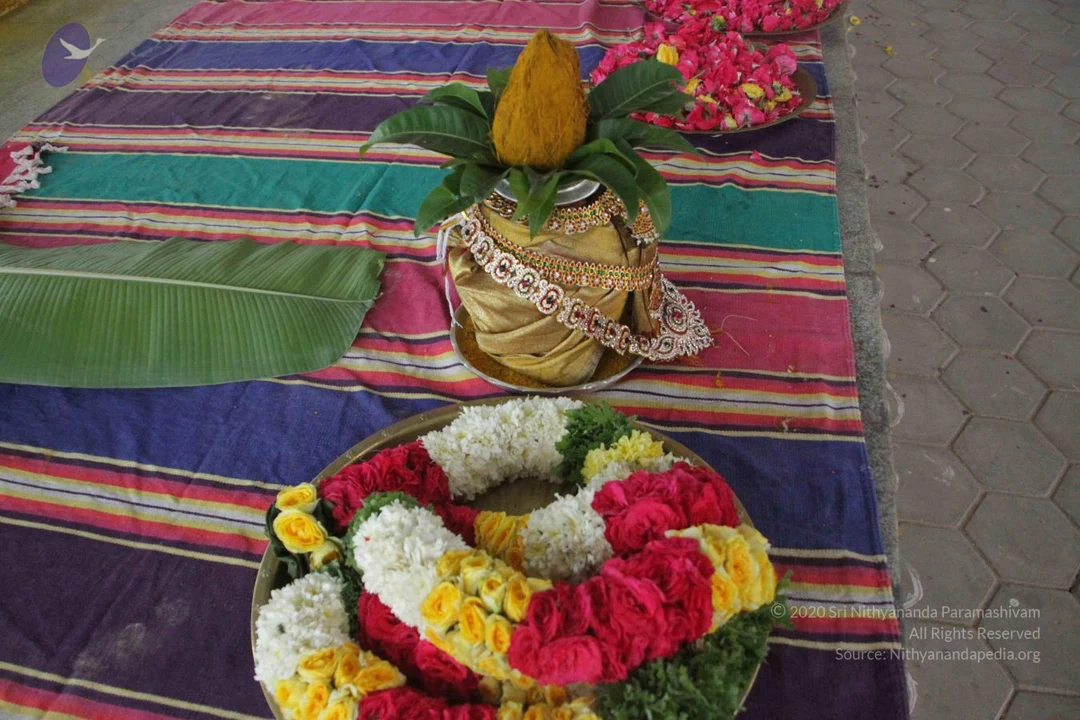
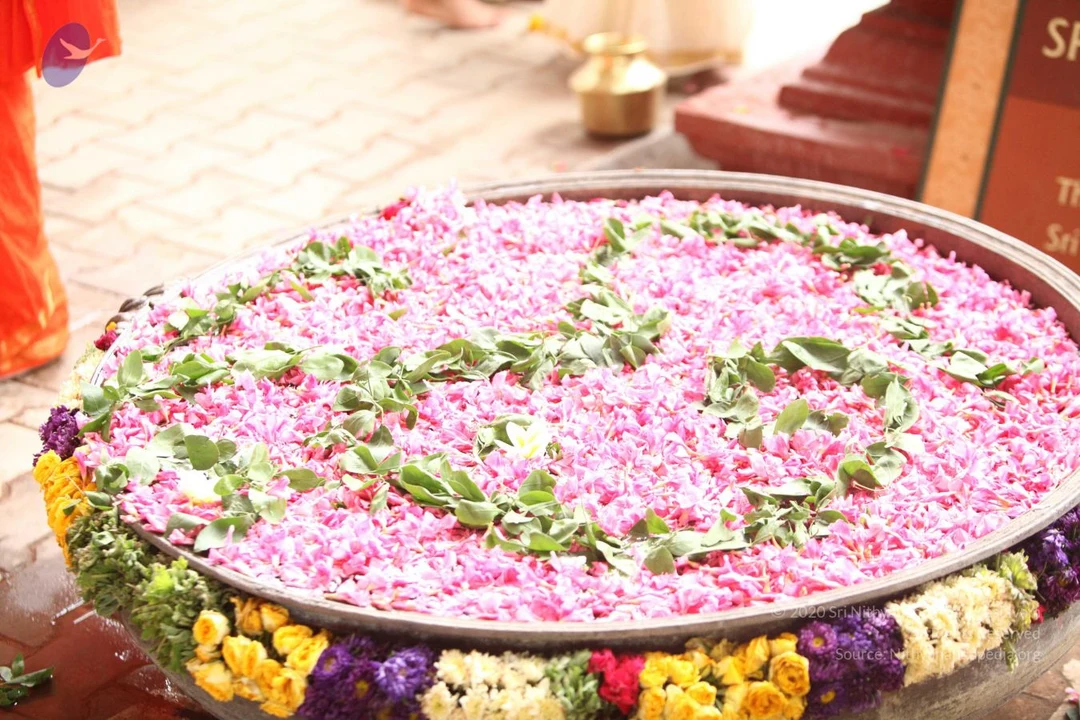
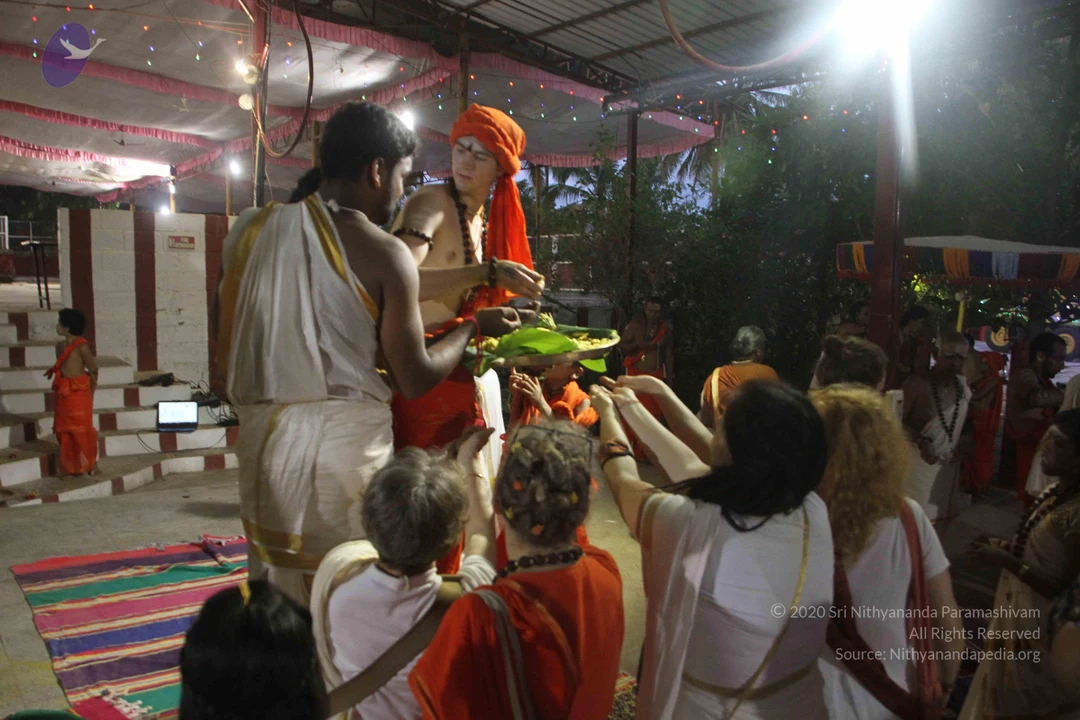
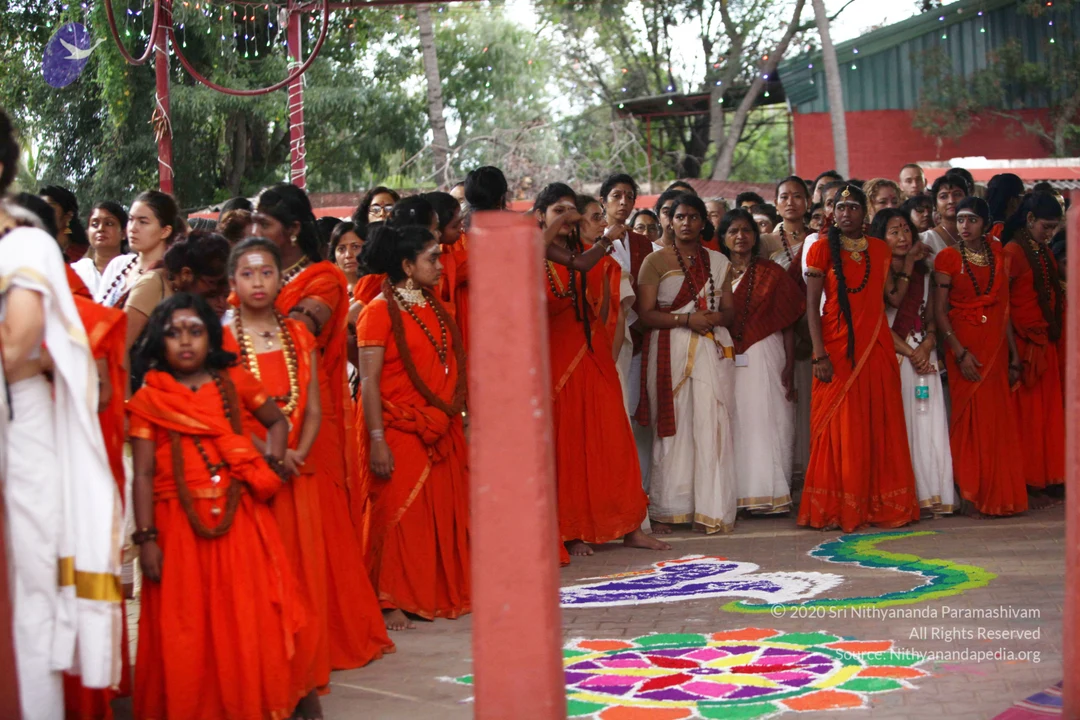
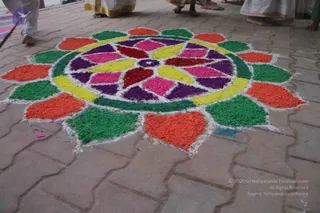
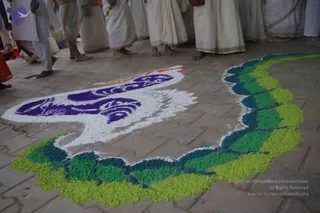
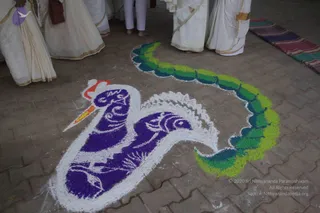
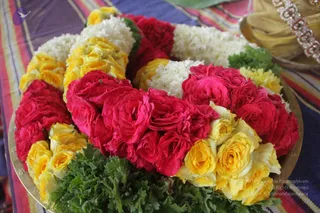
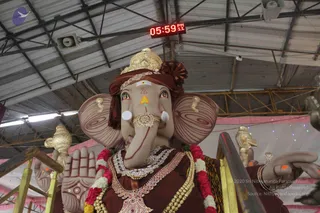
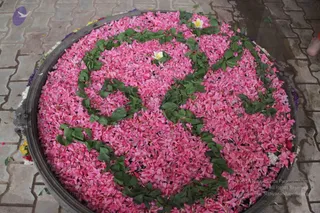
A photograph of a large circular floor mandala made from coloured powders on paving stones. The design has a central ring of pink, red, purple and yellow petals surrounded by a green band, with scalloped outer petals alternating orange and green and a white outline. Only the bare legs and white dhoti or lower garments of several people standing around the edge are visible, and no faces appear. The setting suggests a ritual mandala preparation for a temple or ashram event.A photograph of a floor mandala made of coloured powders on paved brick ground. The design shows a white field with purple swirling forms and an orange-tipped curve, bordered by bands of blue and bright green powder. Around it stand the bare feet and lower legs of people in white dhotis with gold-bordered hems, indicating a ritual gathering. No faces are visible. The mandala appears to be part of ceremonial preparations.A photograph of a ground-level rangoli or kolam drawn on a brick-paved floor. A large peacock-like figure is made of white, purple and green powder, with a red and orange beak and crest, its tail sweeping into green feathers. Feet of several people in white dhotis or mundus with gold borders stand at the top edge, cropped out of frame. A striped cloth lies at the right edge. The floor art is the main subject of the scene.A close-up photograph of a large garland on a brass tray, made of red roses, yellow roses, white flowers and sprigs of green leaves, arranged on a striped multicolored cloth. A jeweled gold ornament is visible at the upper right edge. No people are visible; the garland appears to be a ritual offering.A large Ganesha murti, a deity statue with an elephant head, dominates the frame under a corrugated metal roof. It wears a gold crown, a maroon cloth headpiece, a white and red tilak on the forehead and a red and yellow bindi, with an ornate gold trunk ring. Its garlands of red and white flowers, gold-and-maroon necklaces and raised hands with orange-painted palms are visible. A digital clock on the ceiling beam shows 05:59 PM, and a pink and white draped canopy hangs behind it. No physical people are visible.A large round brass or bronze vessel filled with pink flower petals, arranged with green leaf vines forming a curved design, with white and yellow frangipani-style blossoms set on top. The vessel sits on a paved grey brick floor, with more flower garlands and petals along its rim. No people are visible. This appears to be a floral mandala or decorative flower arrangement prepared for a ritual setting.

Padapuja

49 photosSource gallery
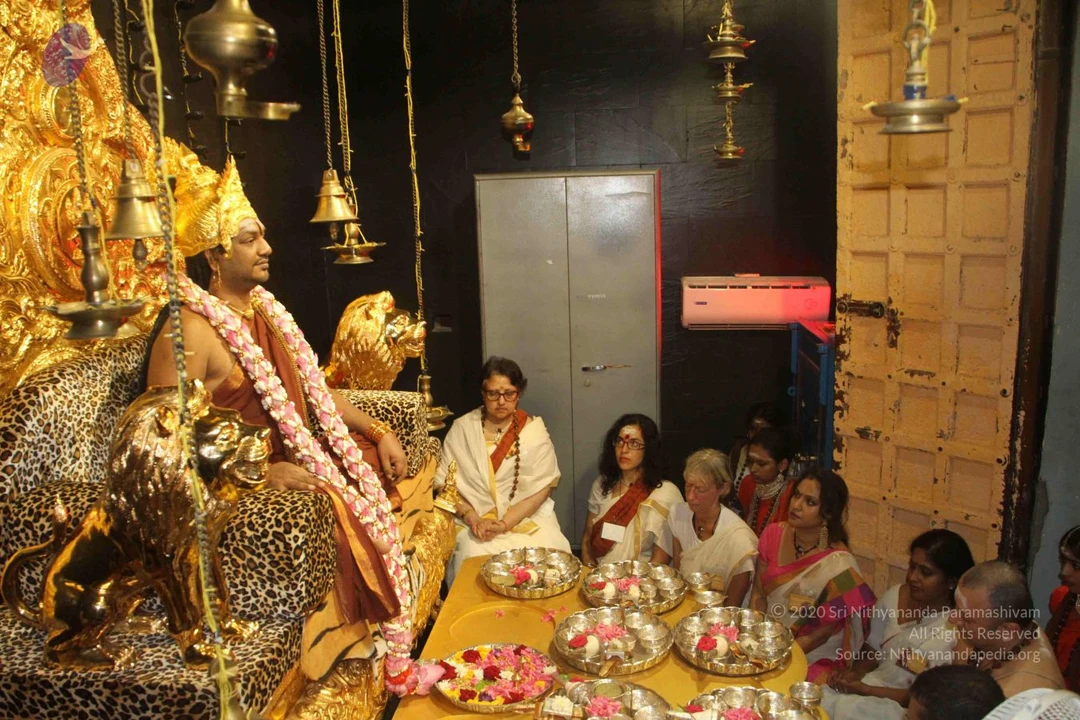
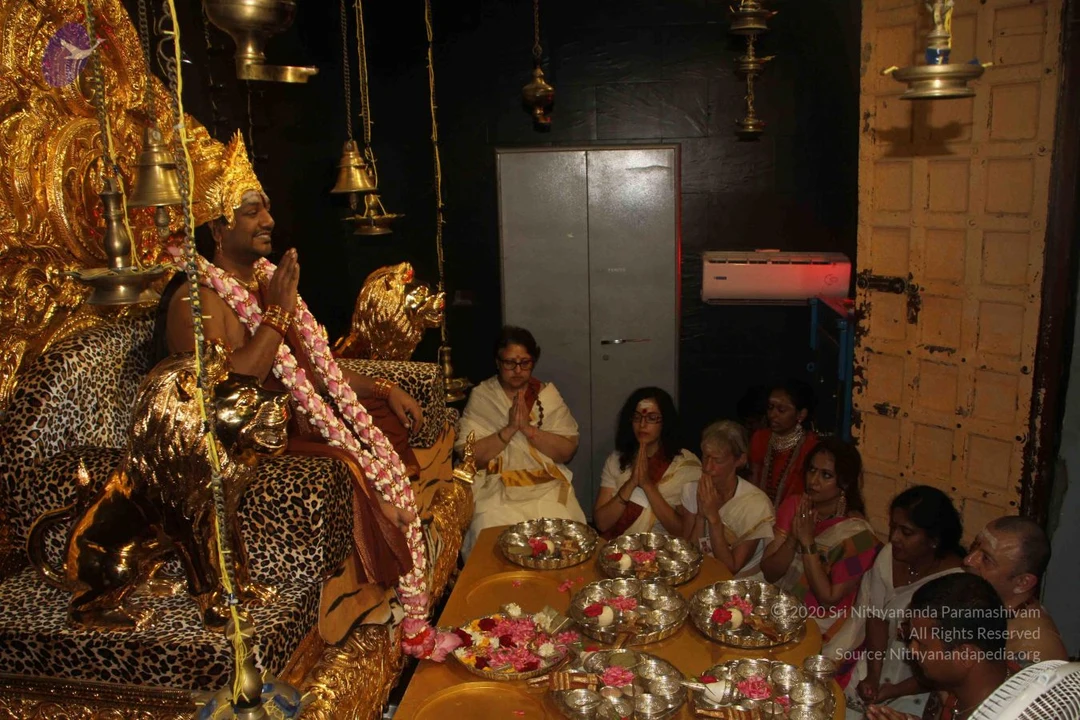
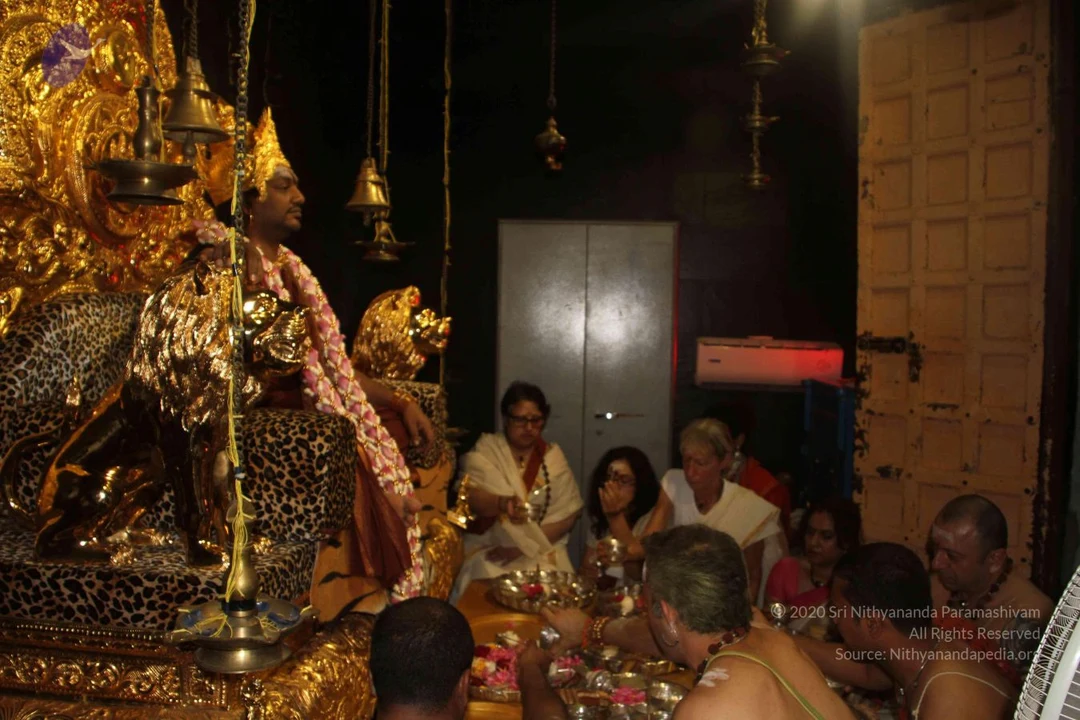
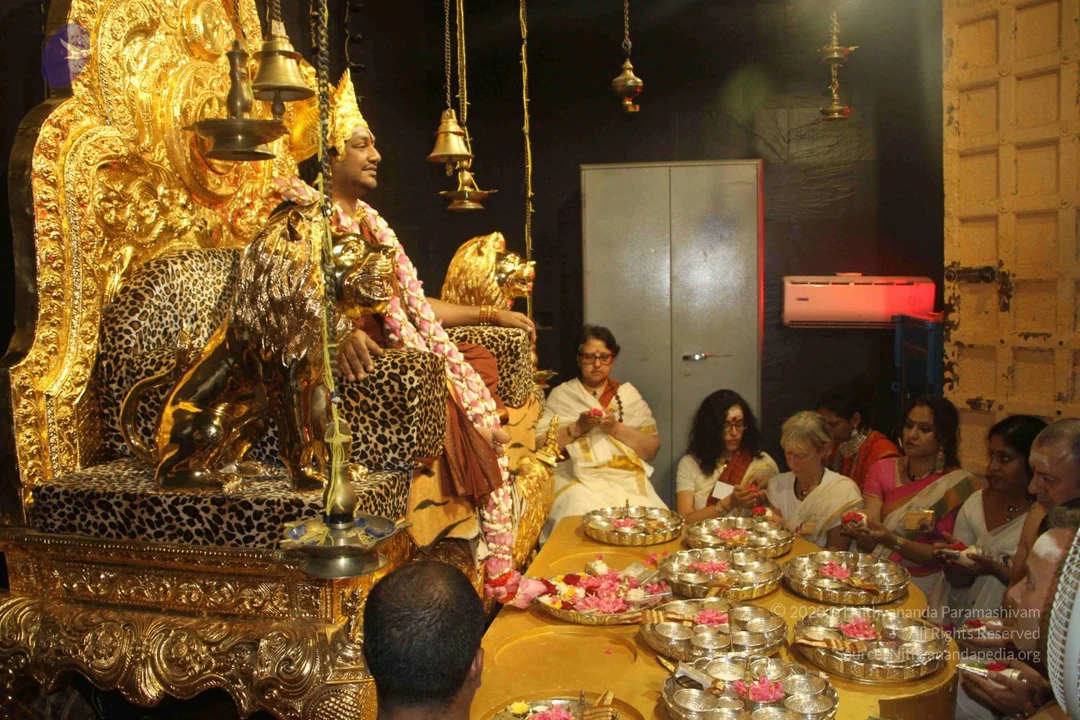
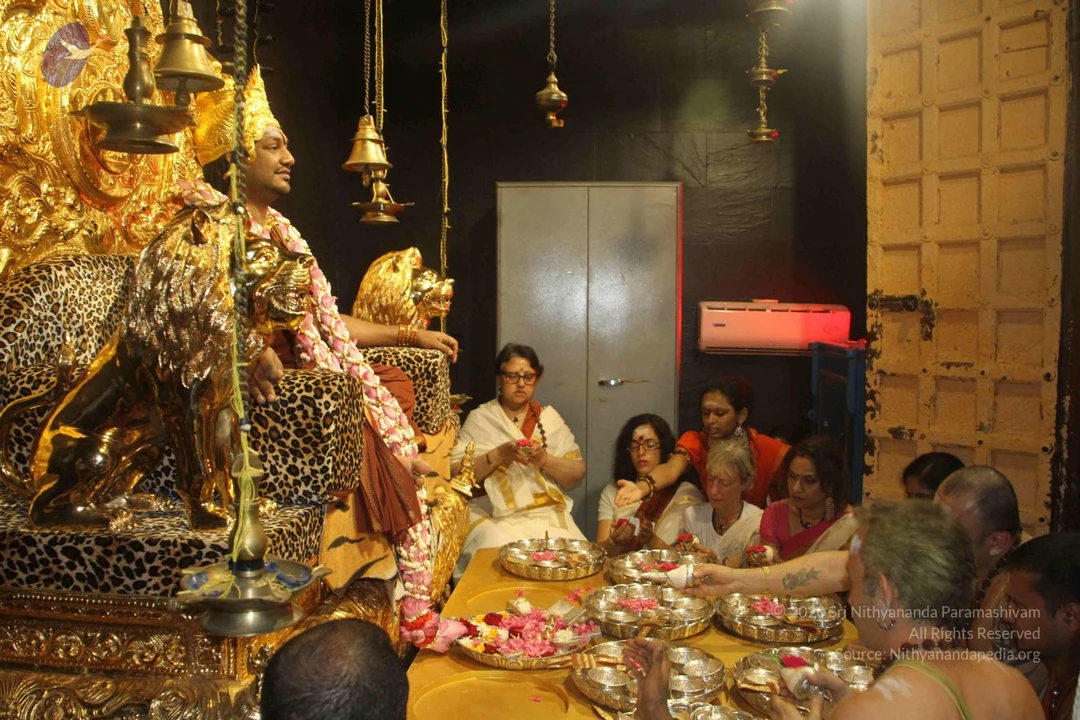
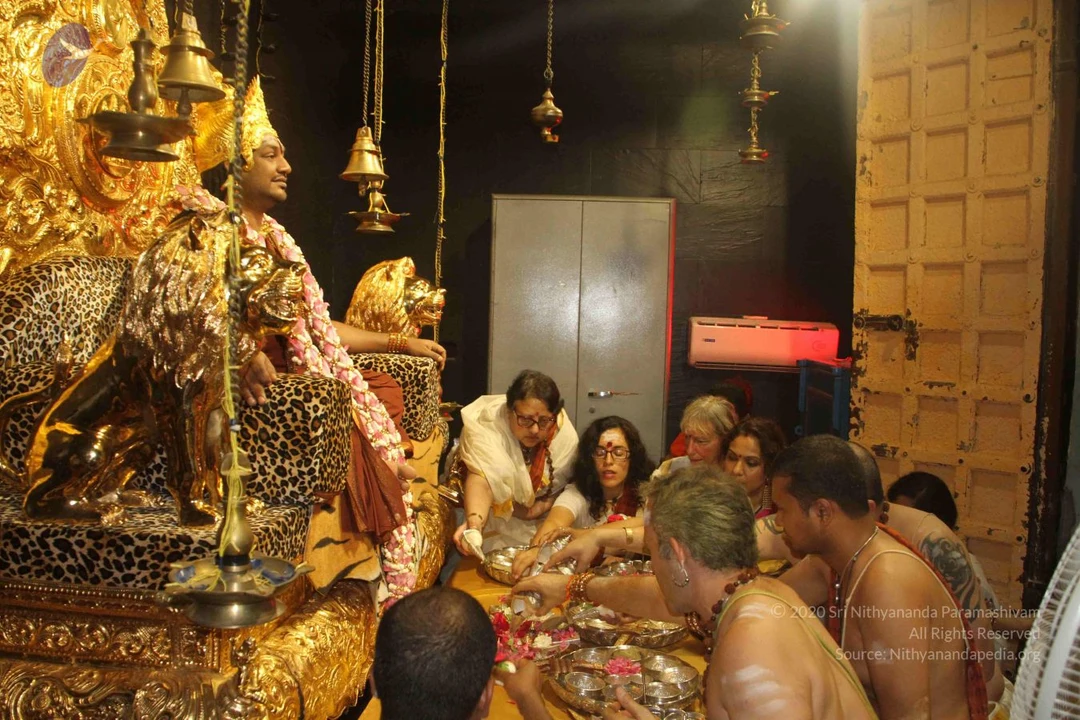
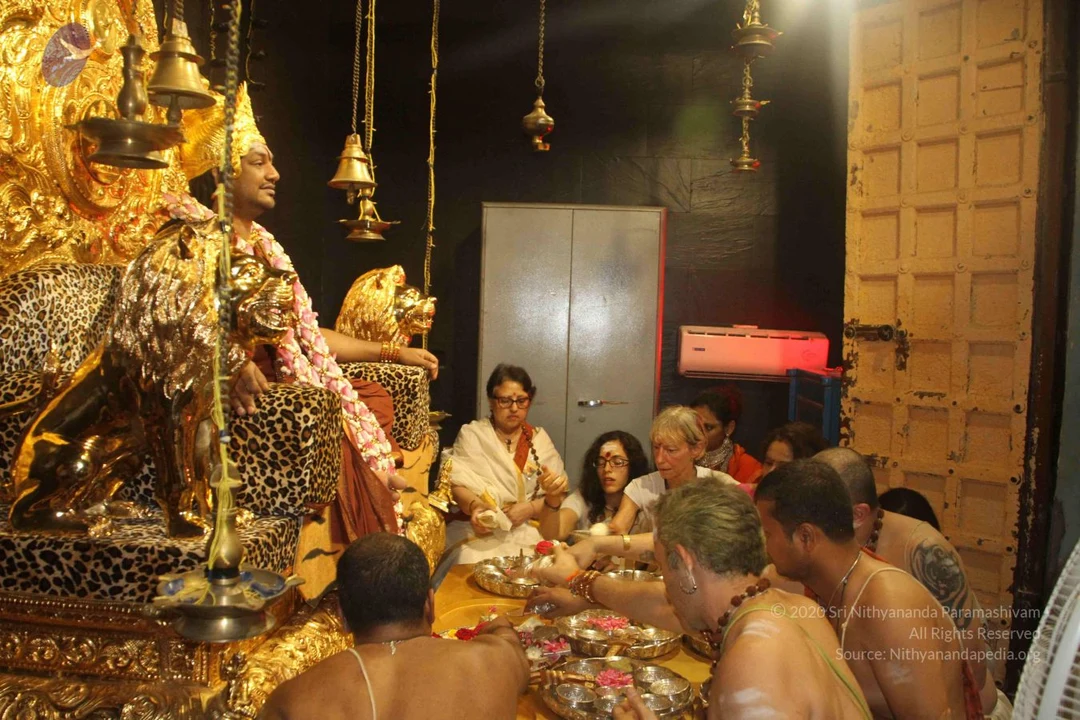
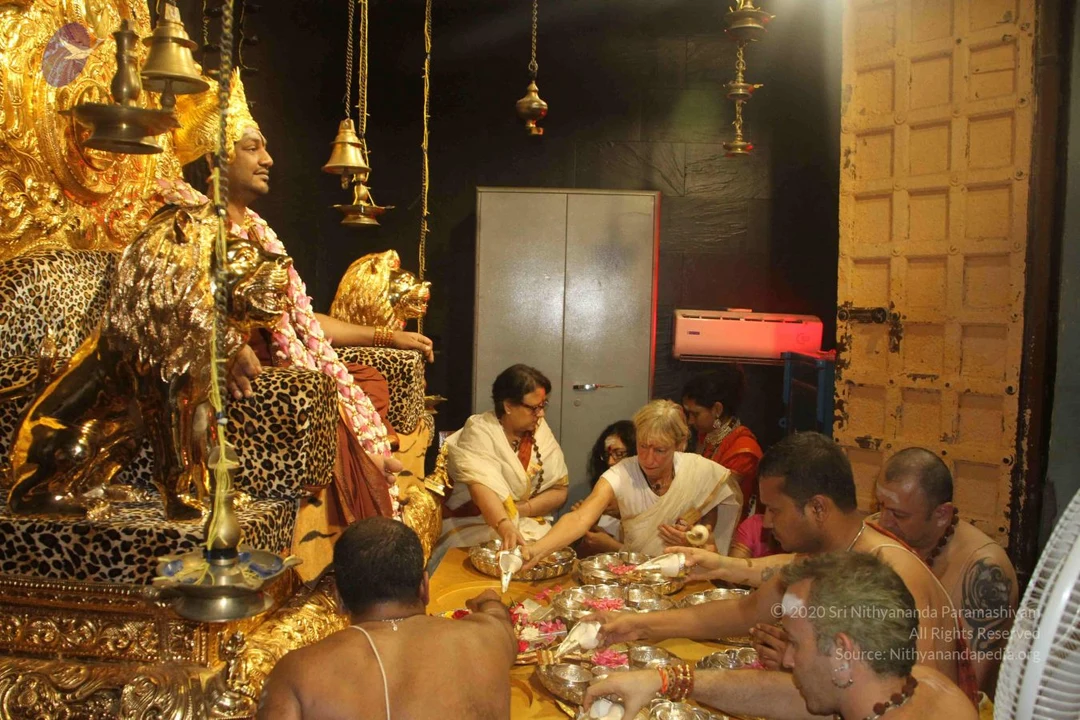
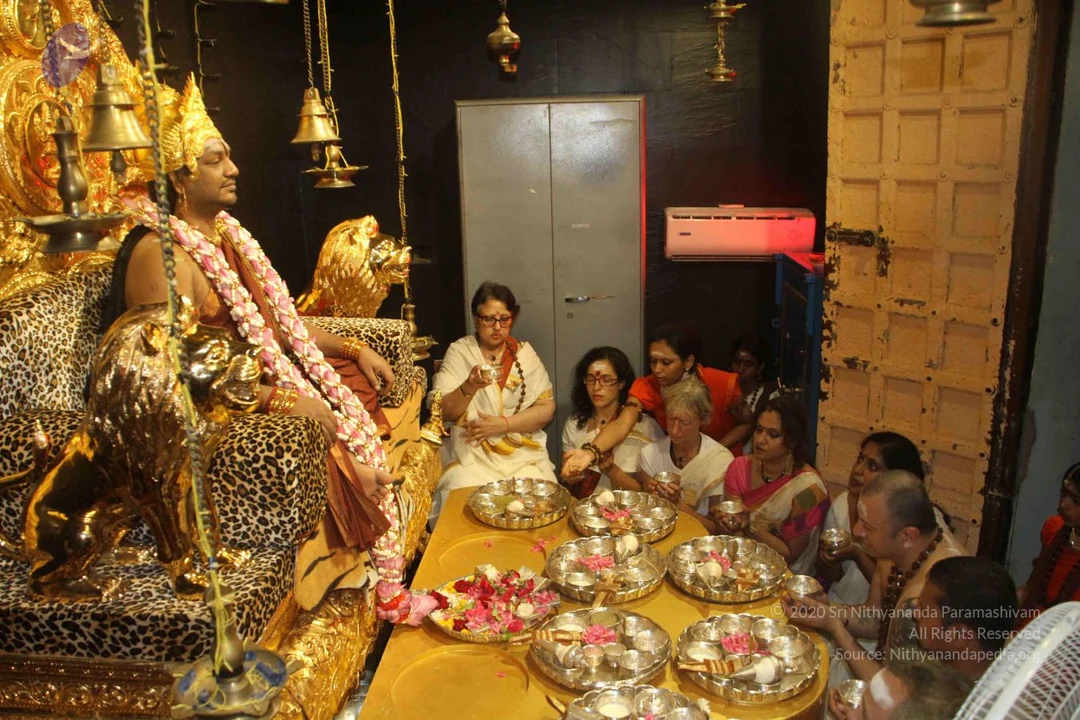
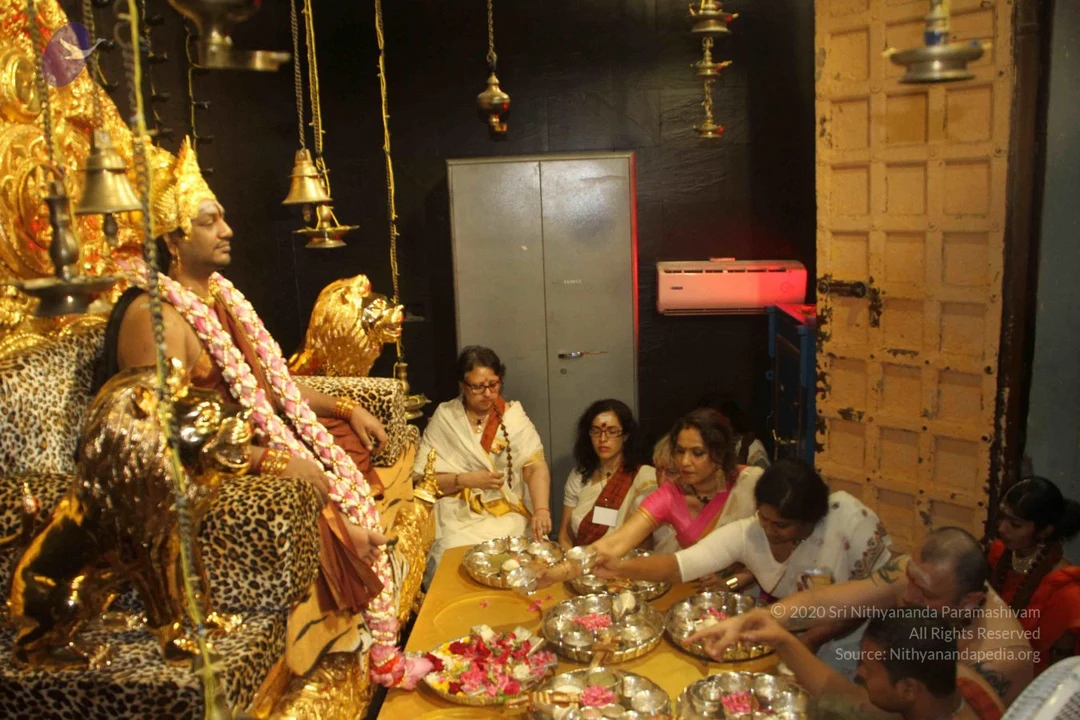
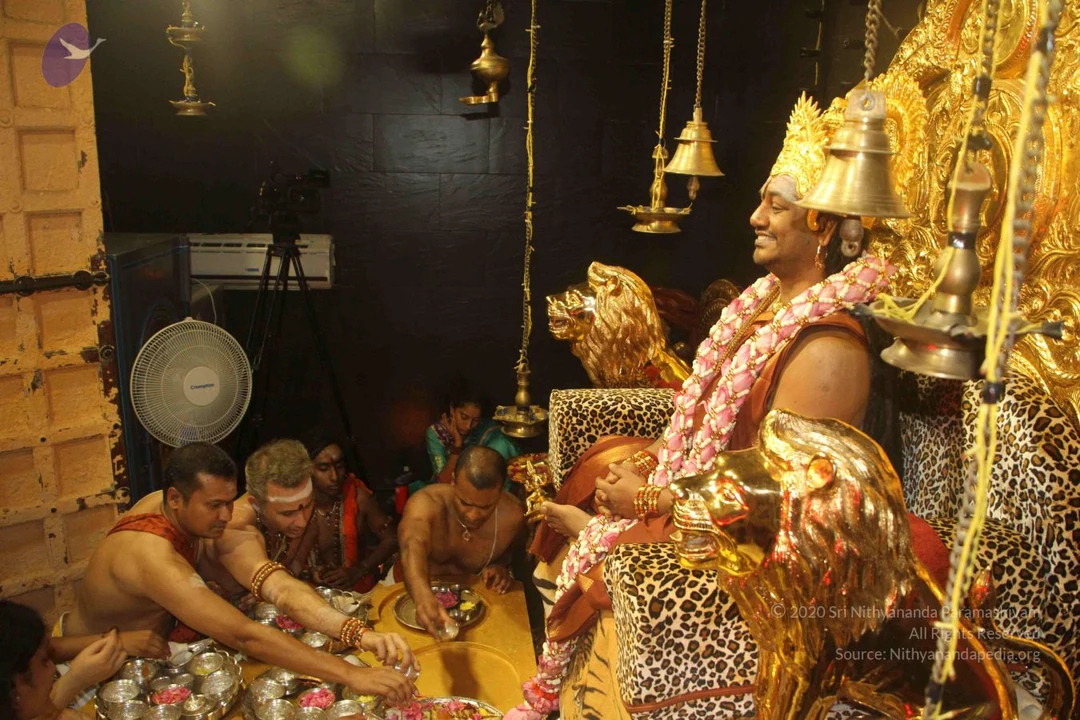
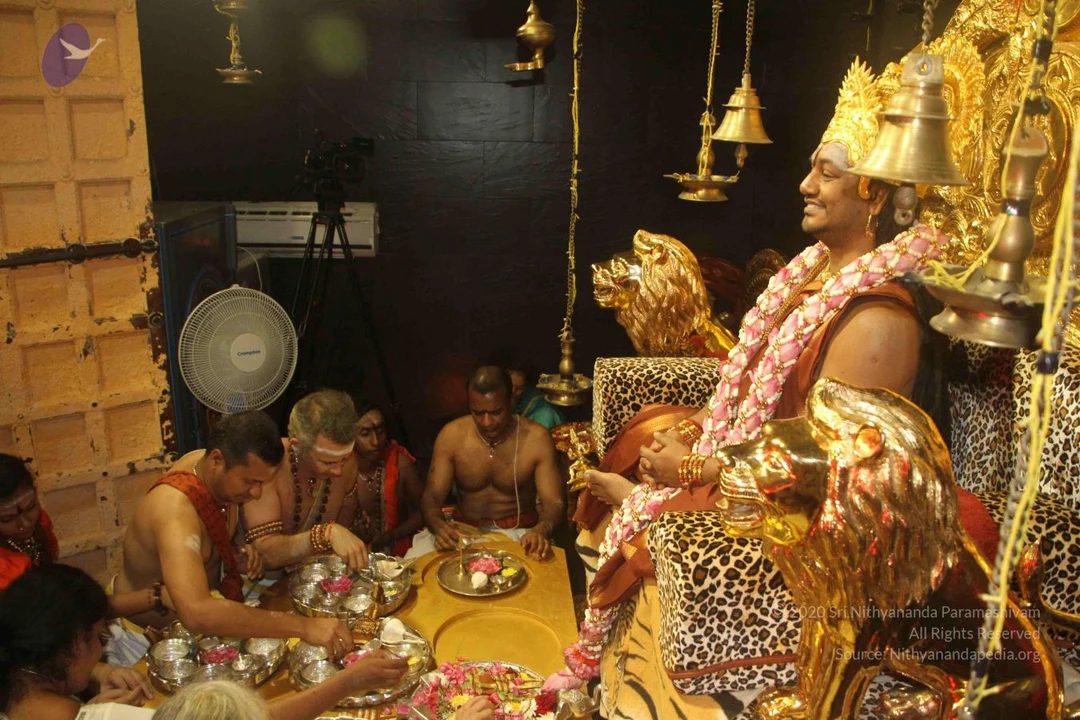
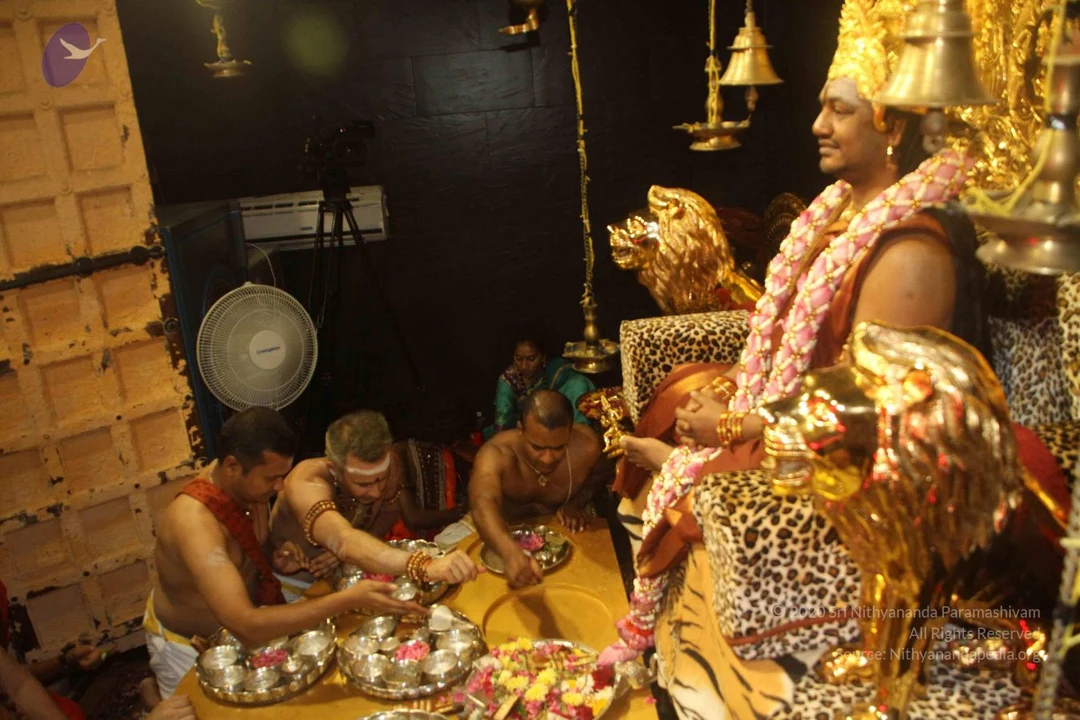
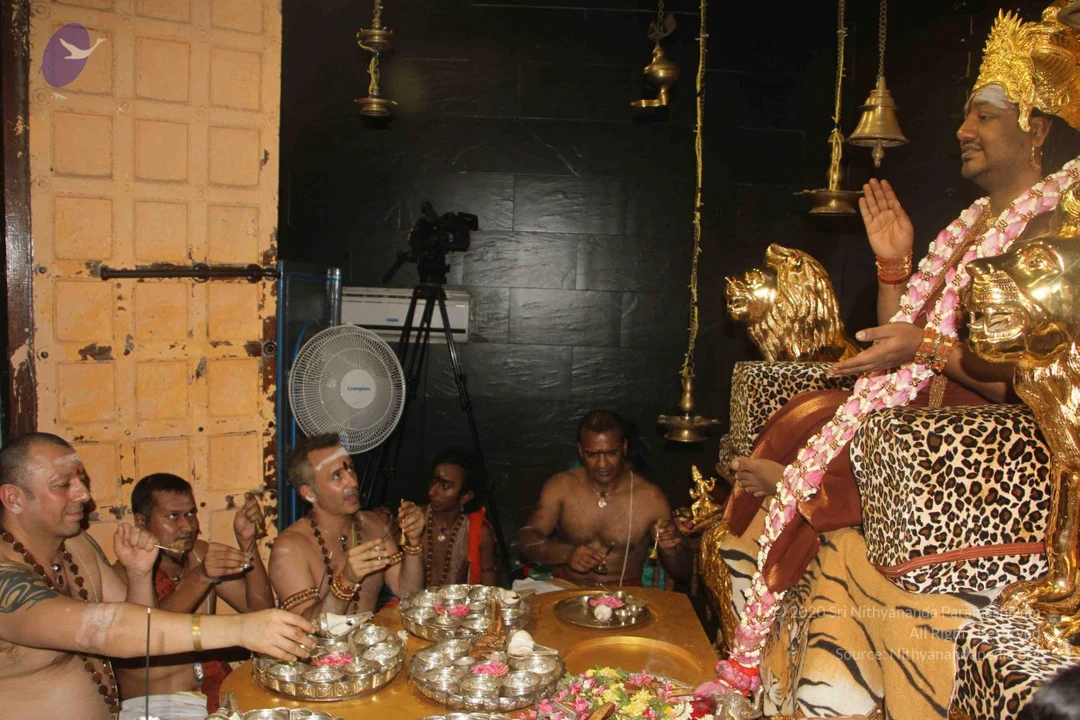
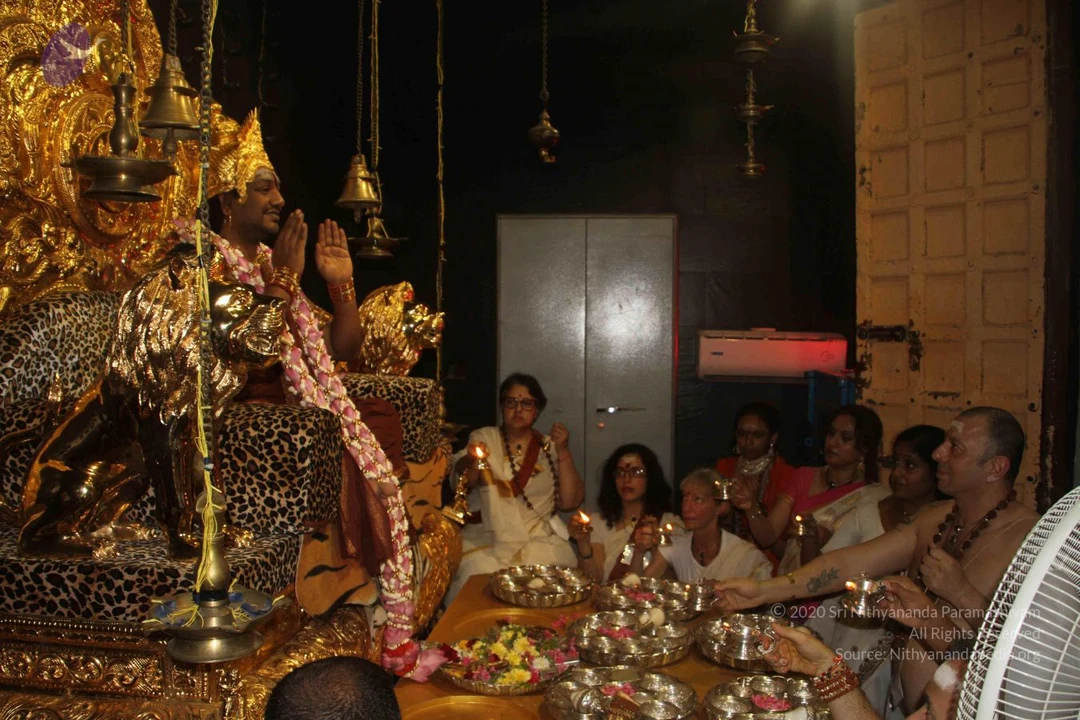
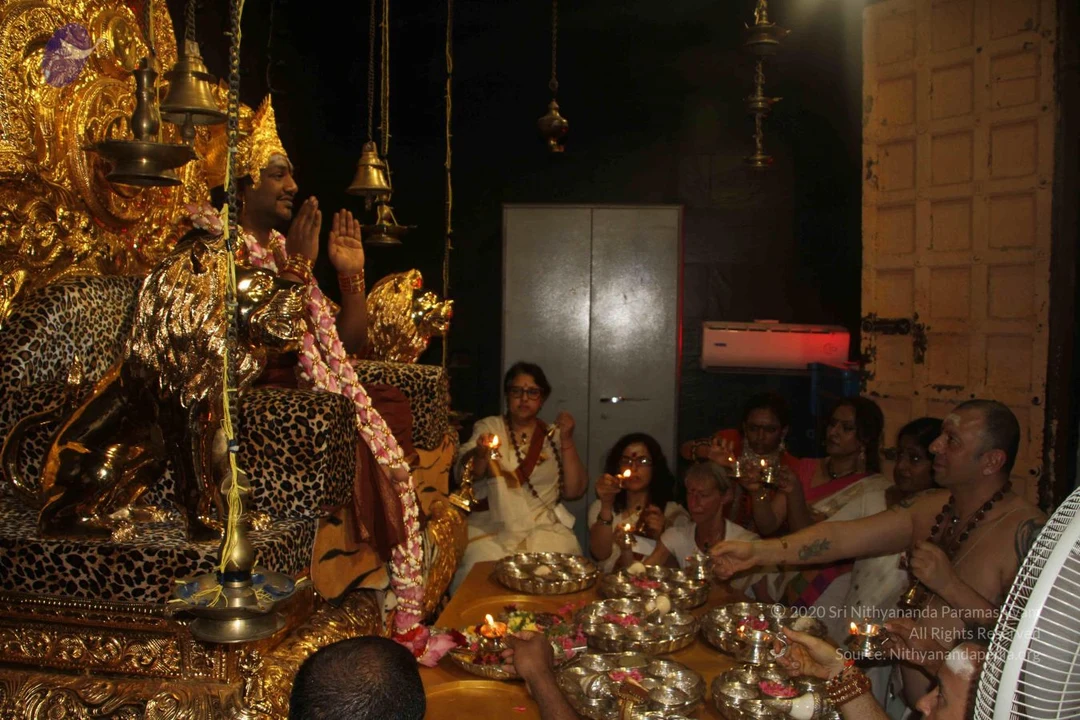
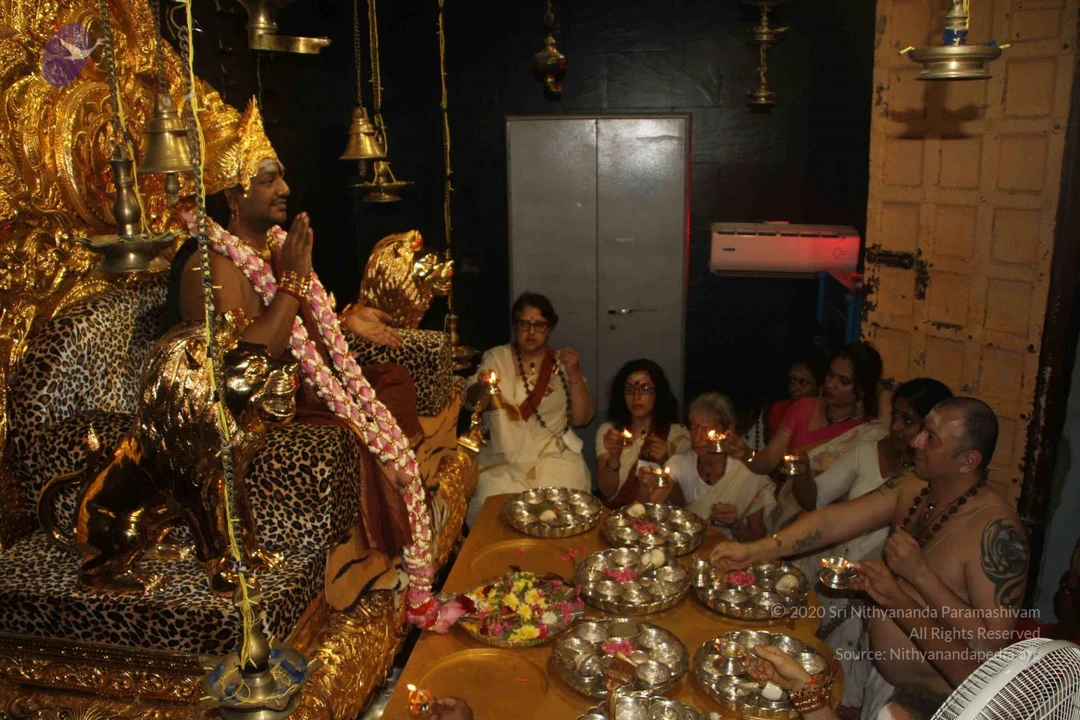
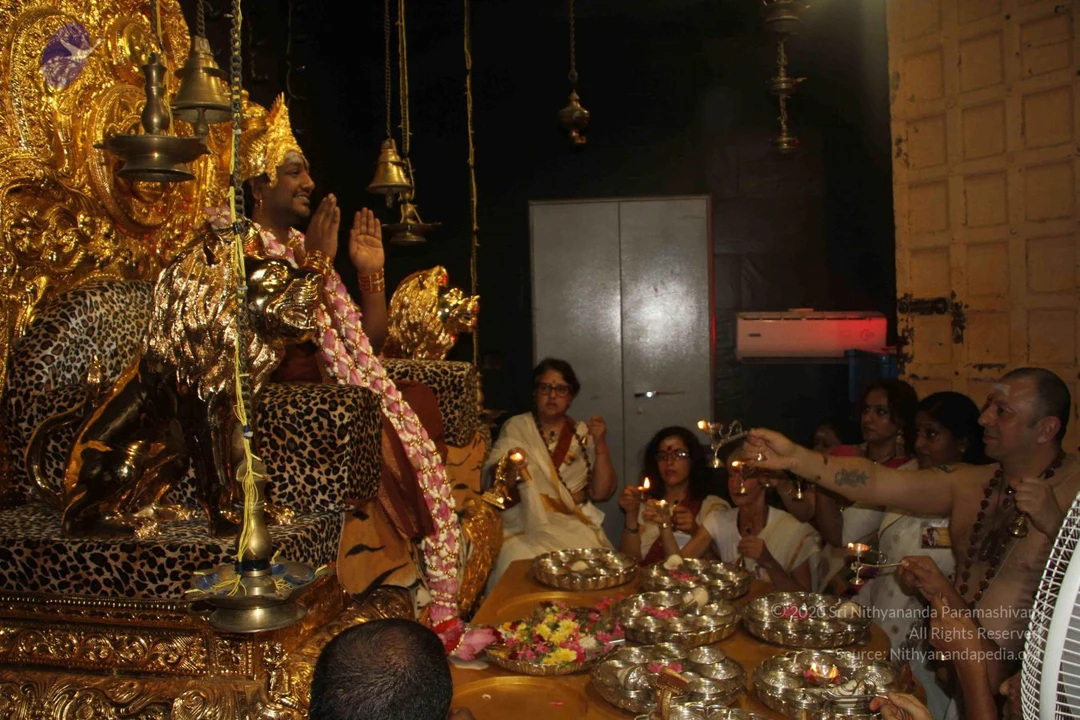
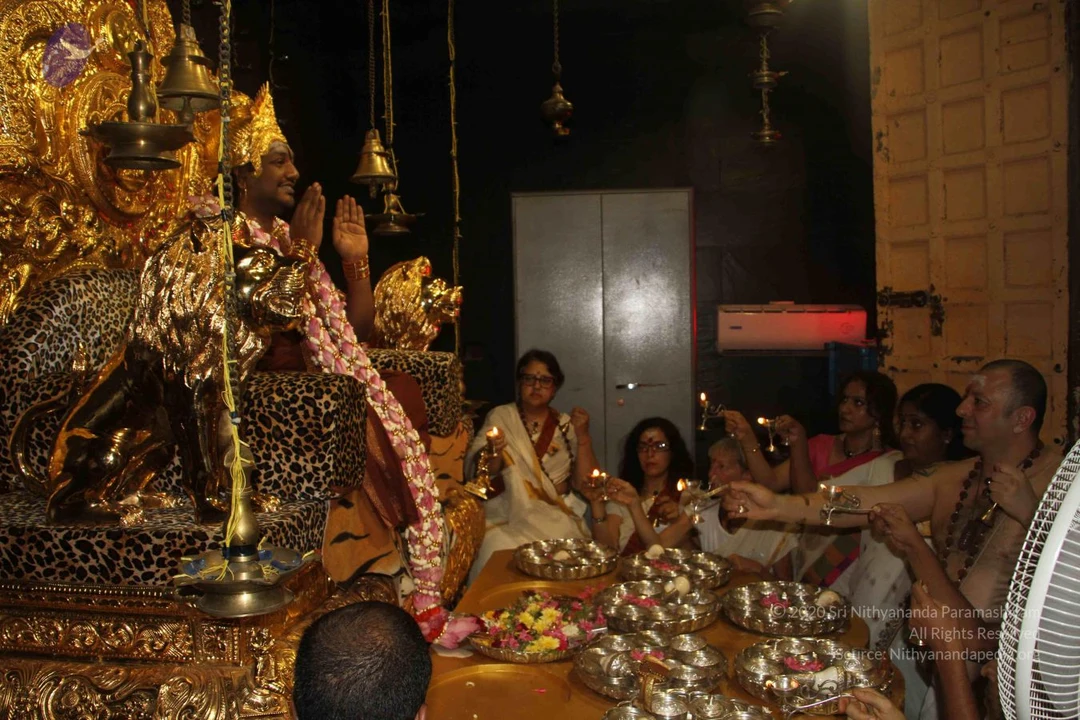
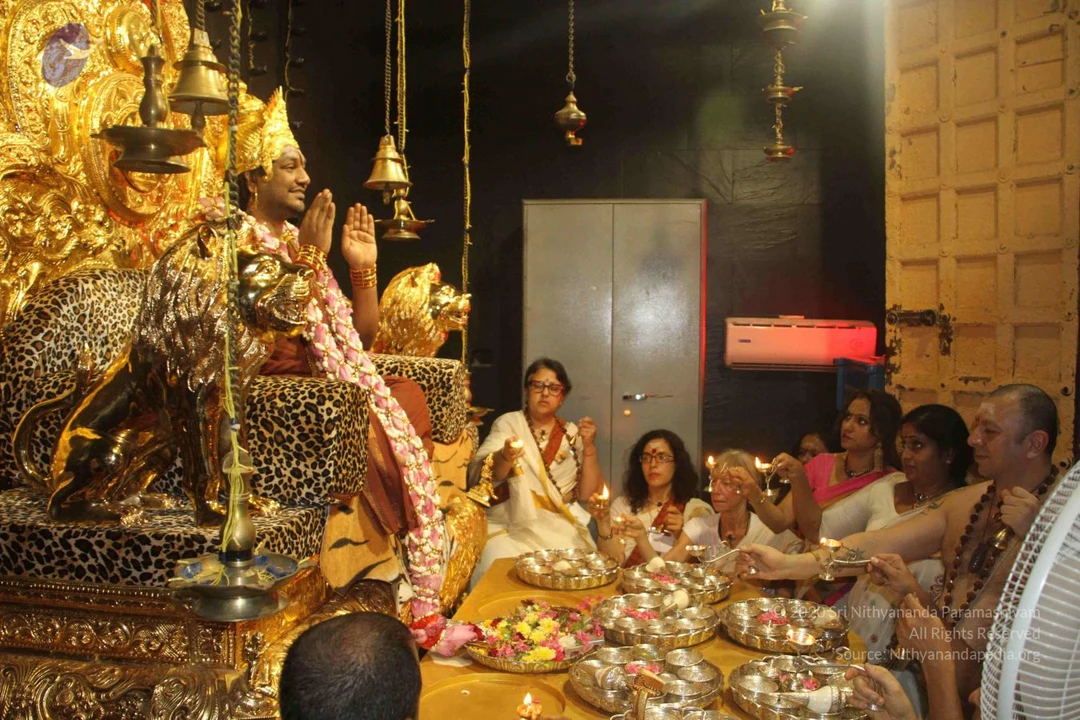
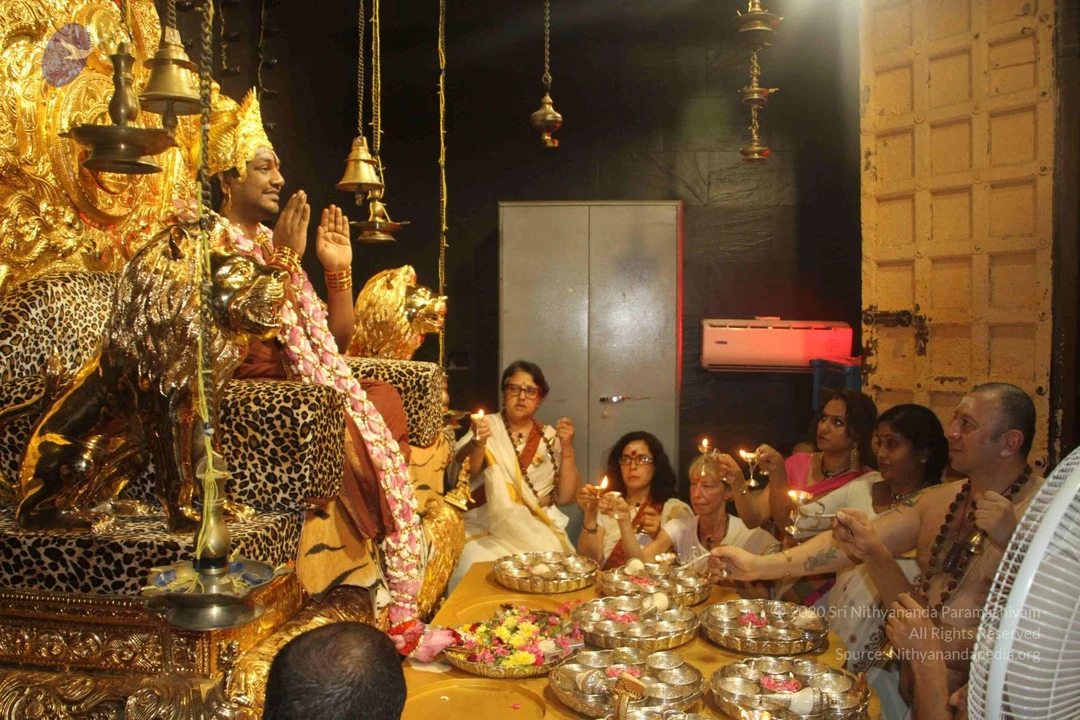
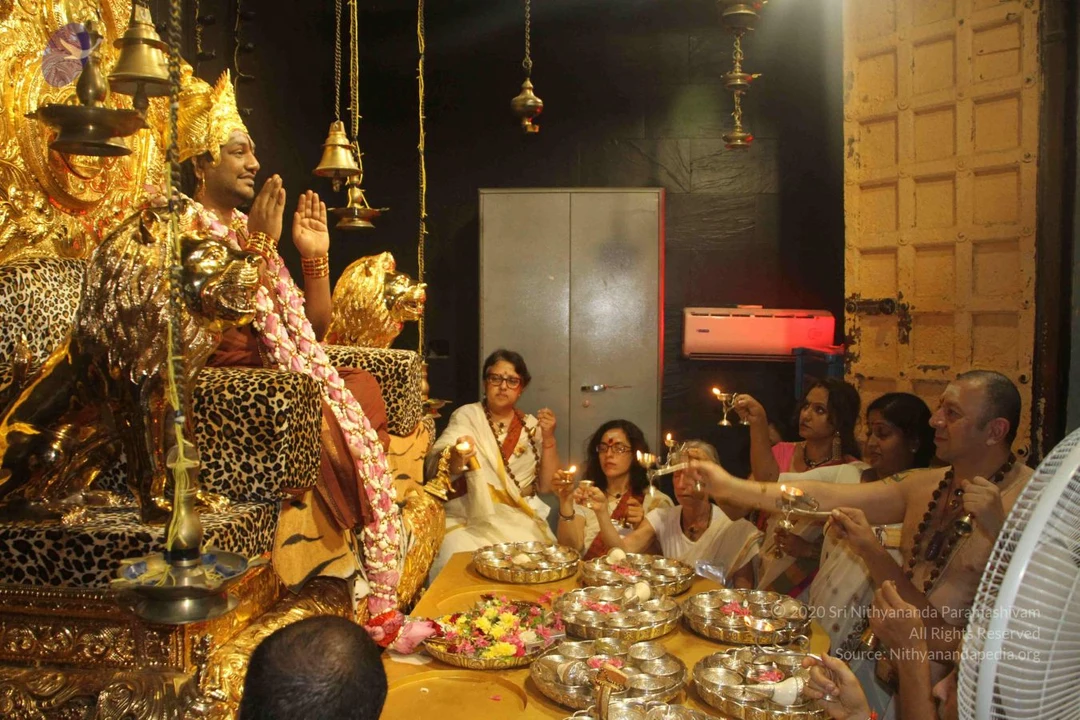
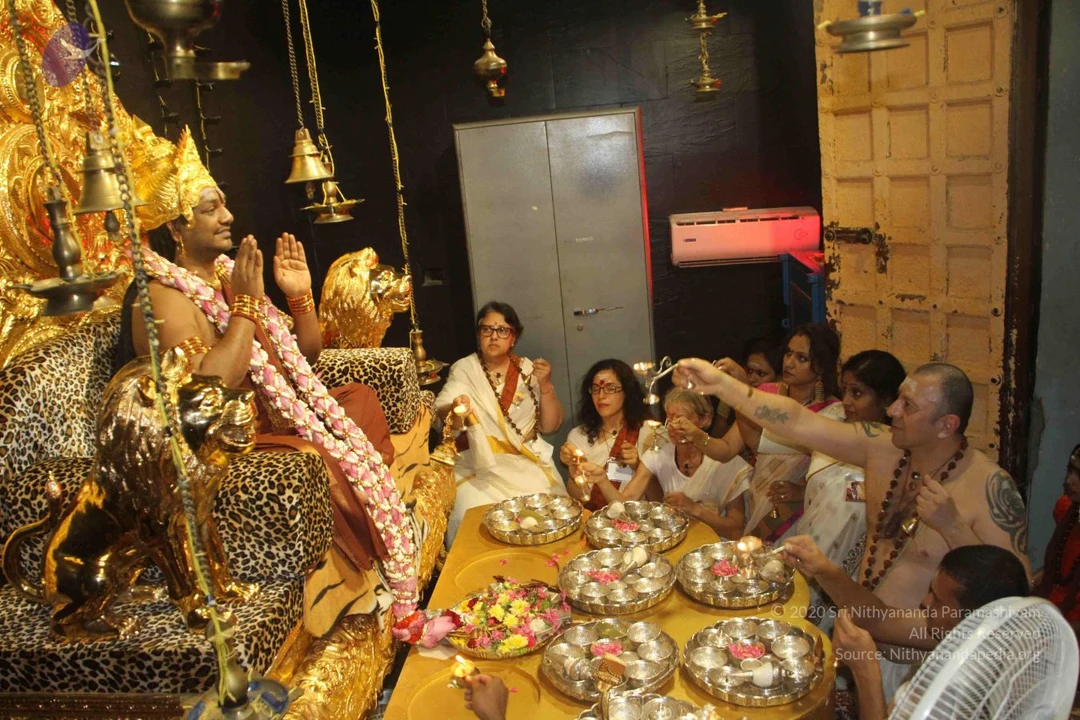
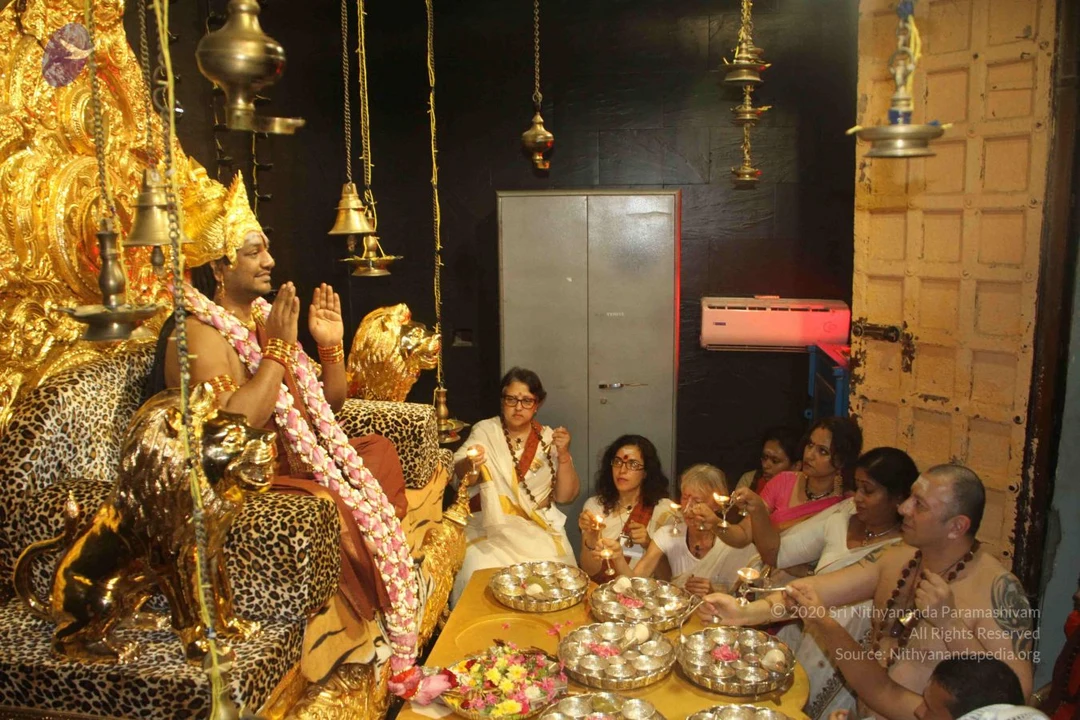
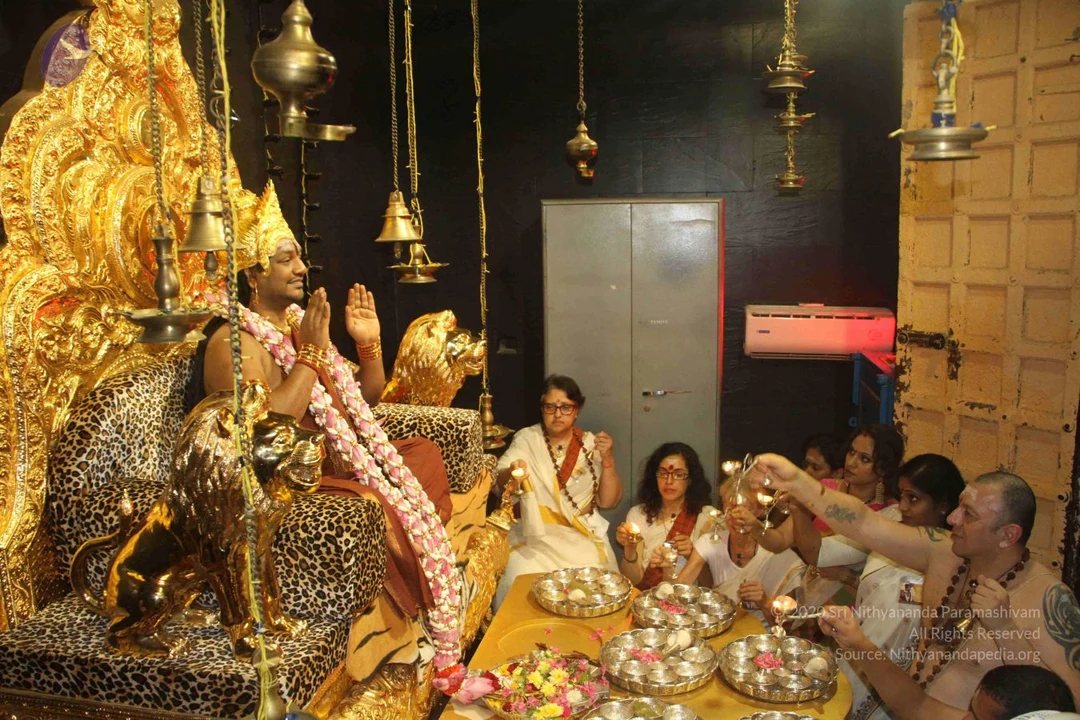
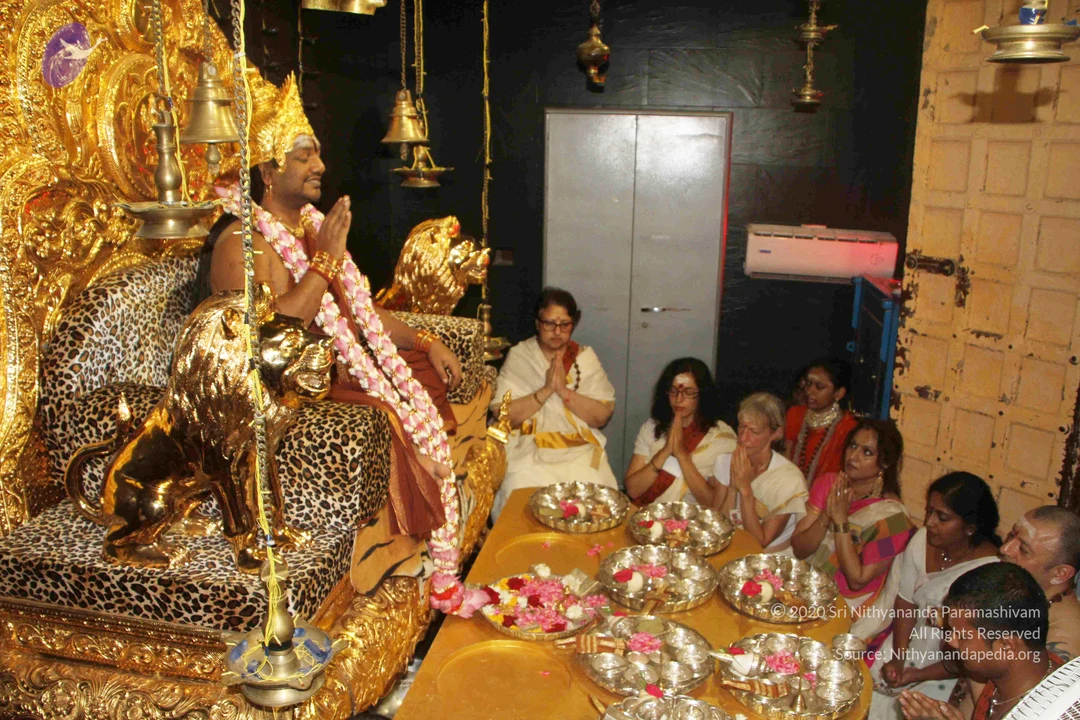
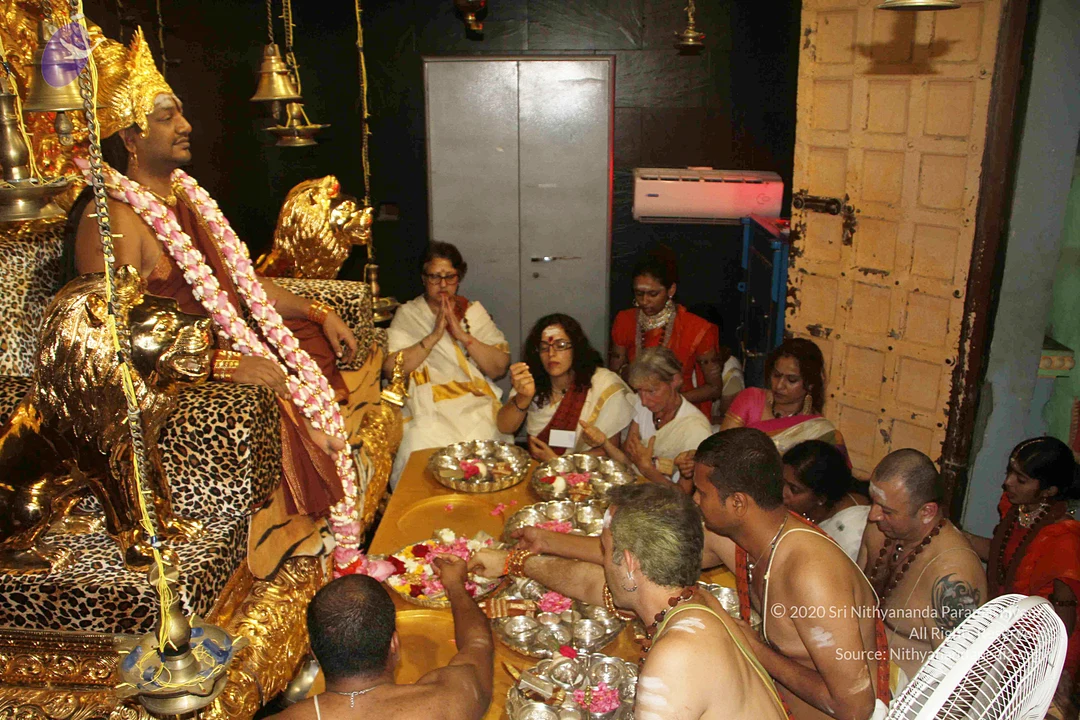
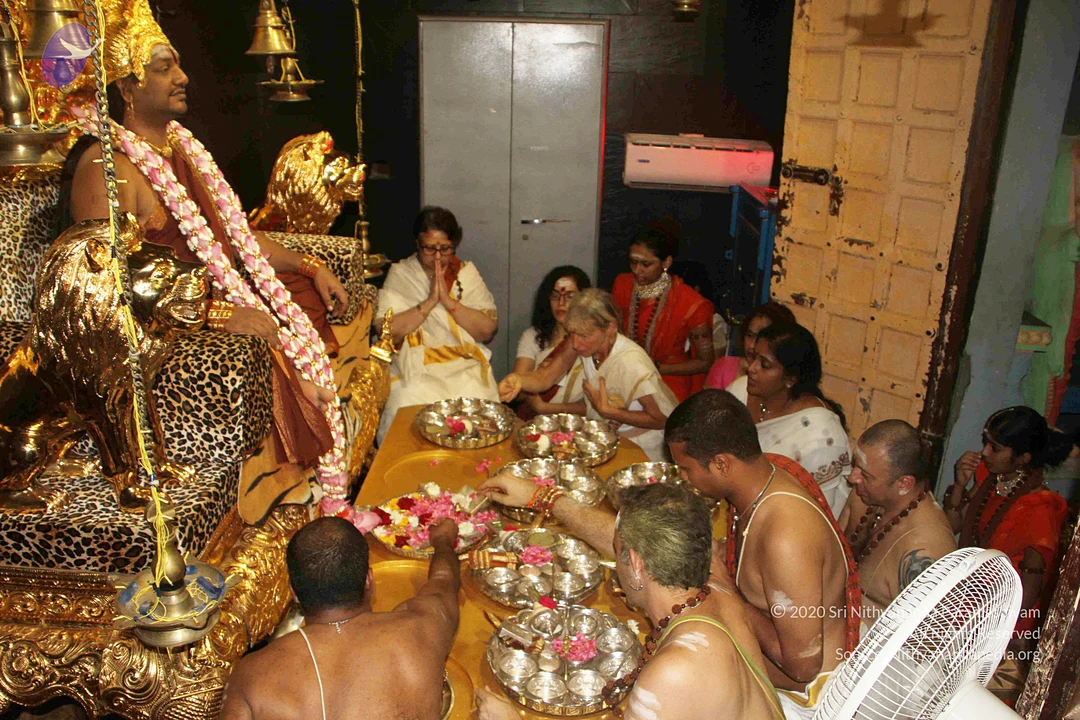
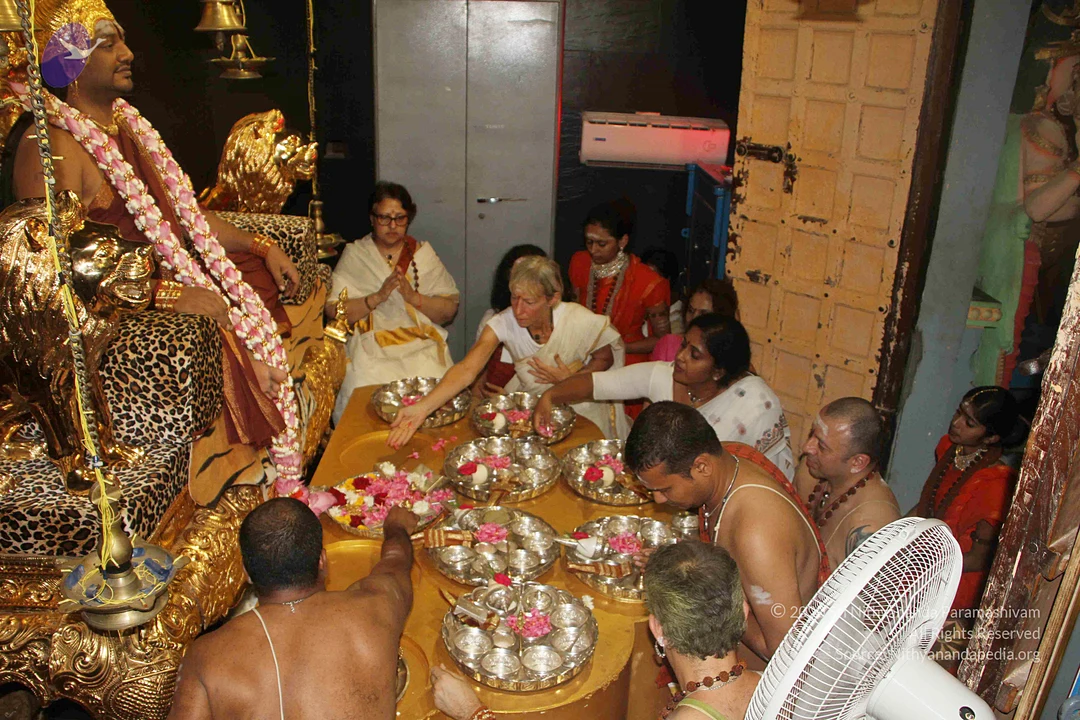
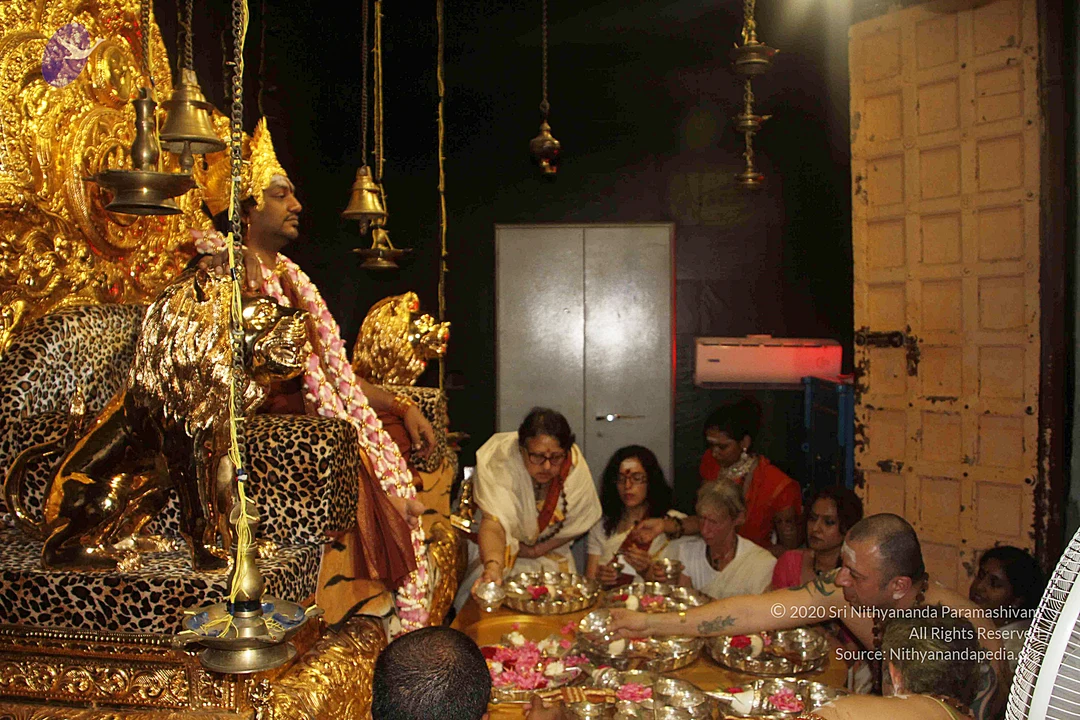
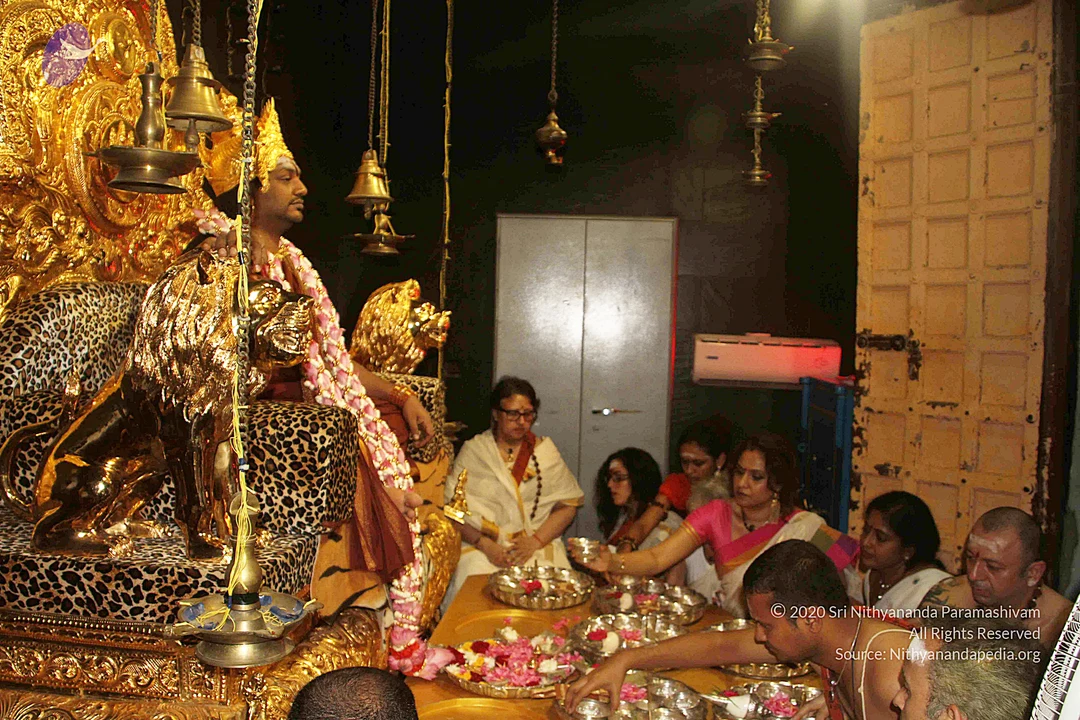
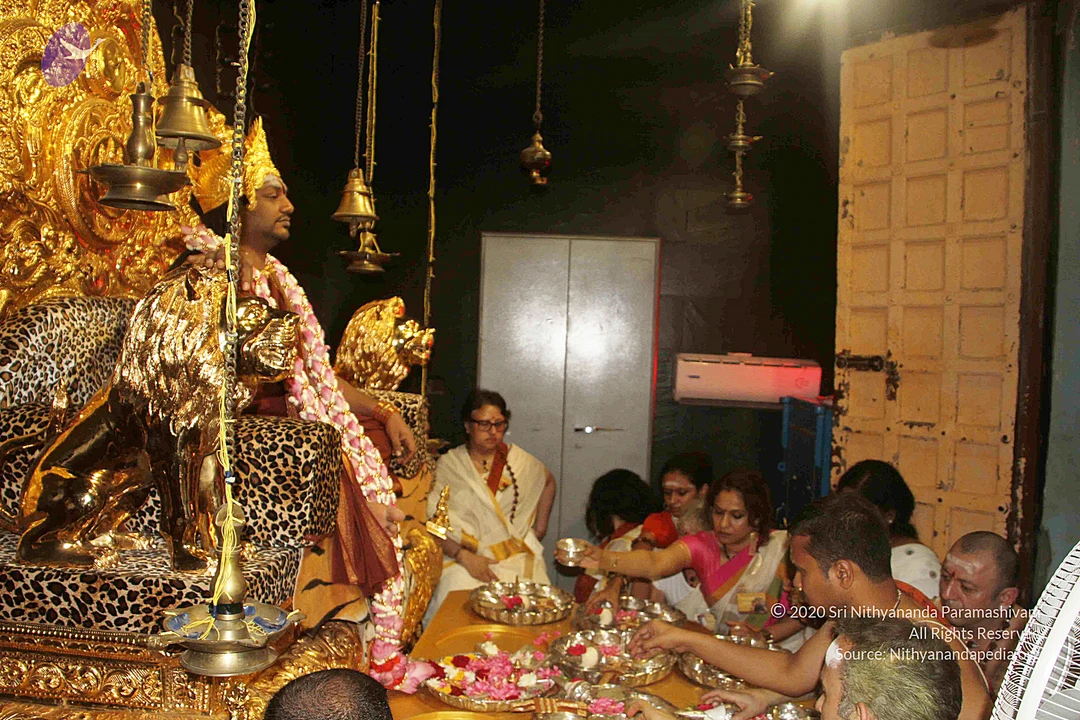
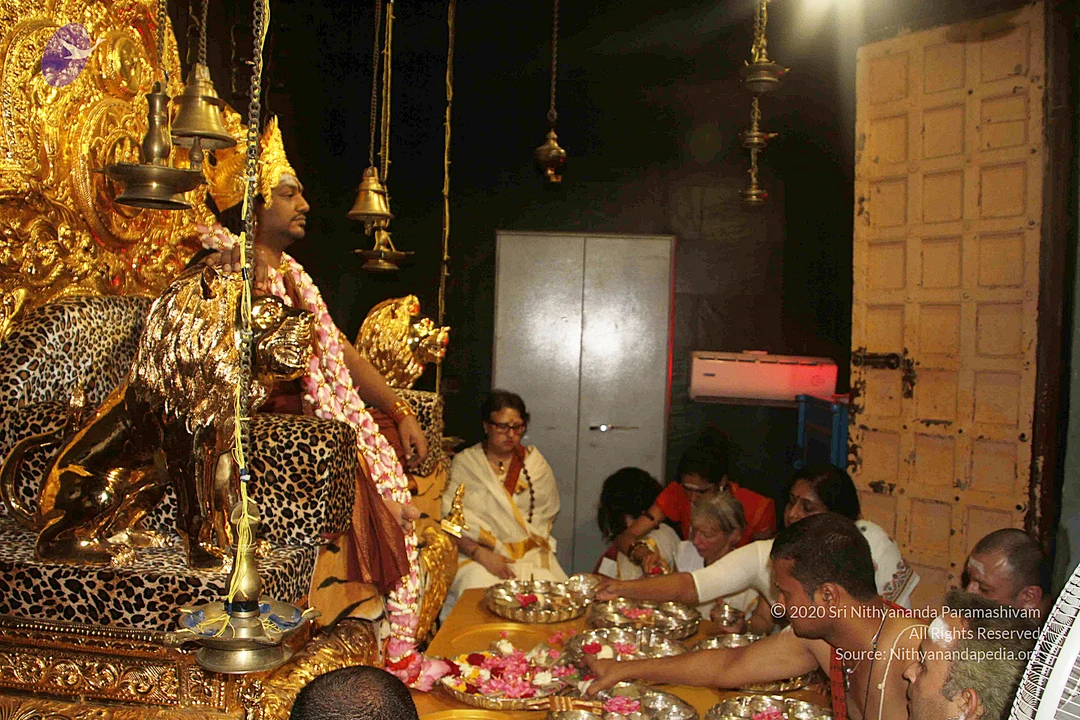
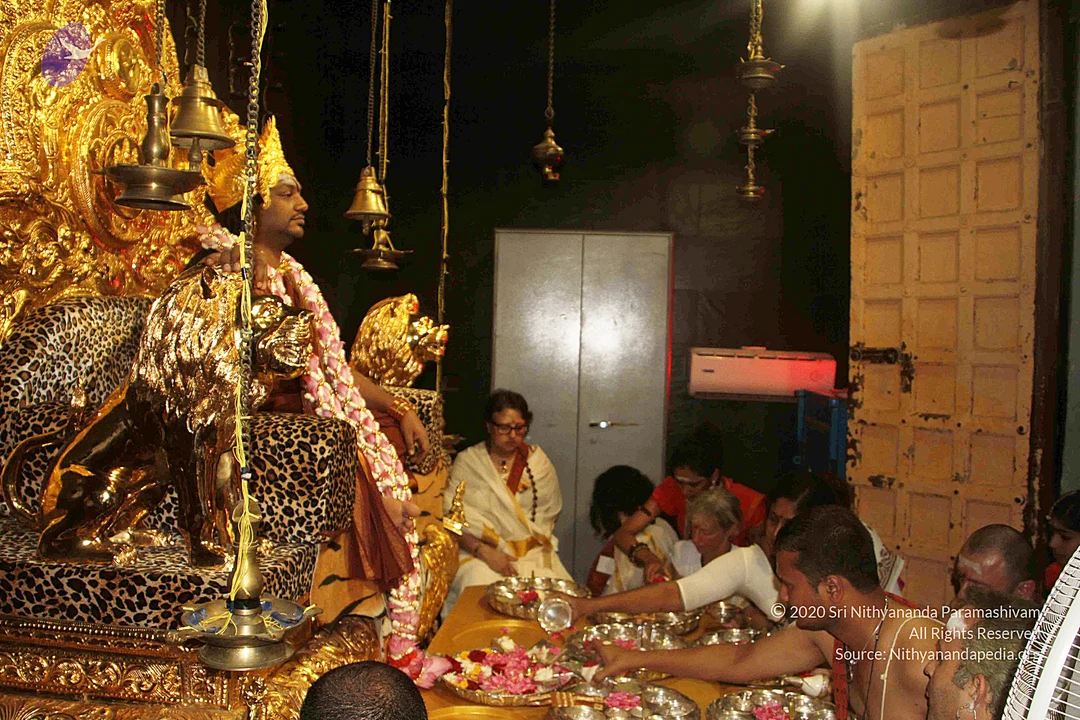
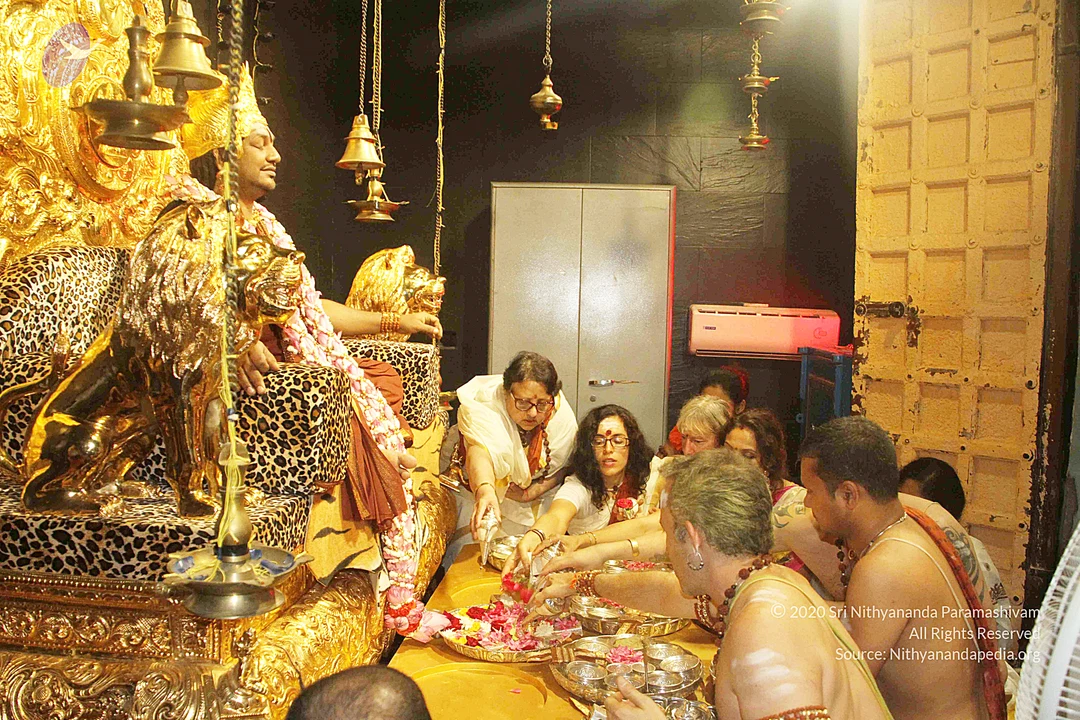
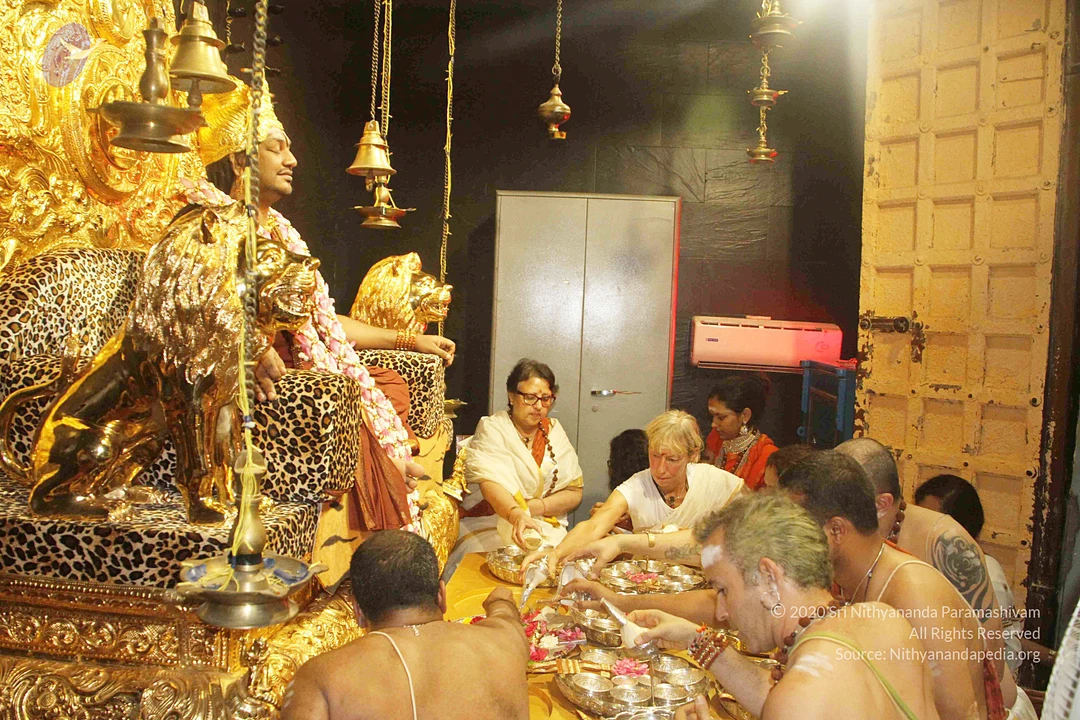
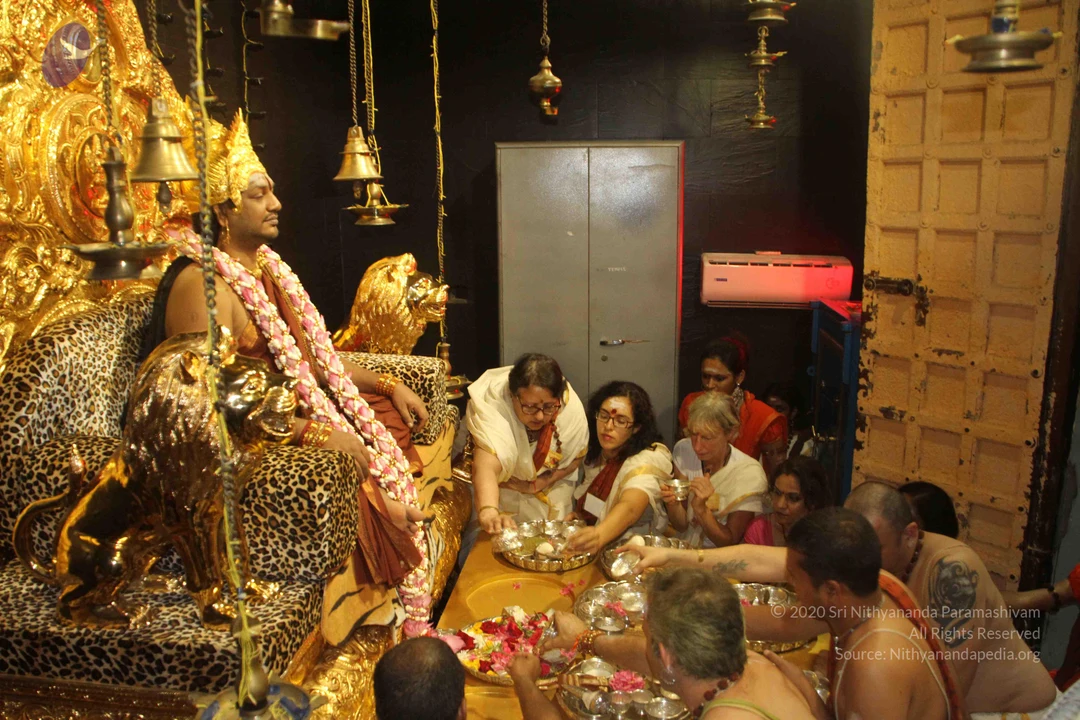
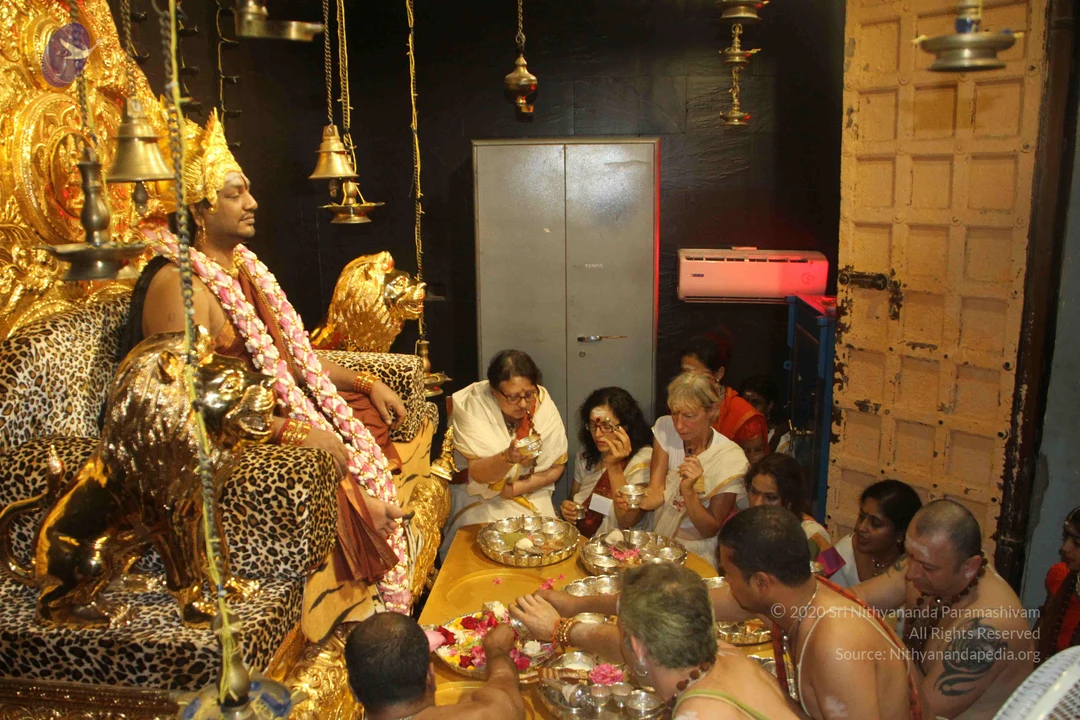
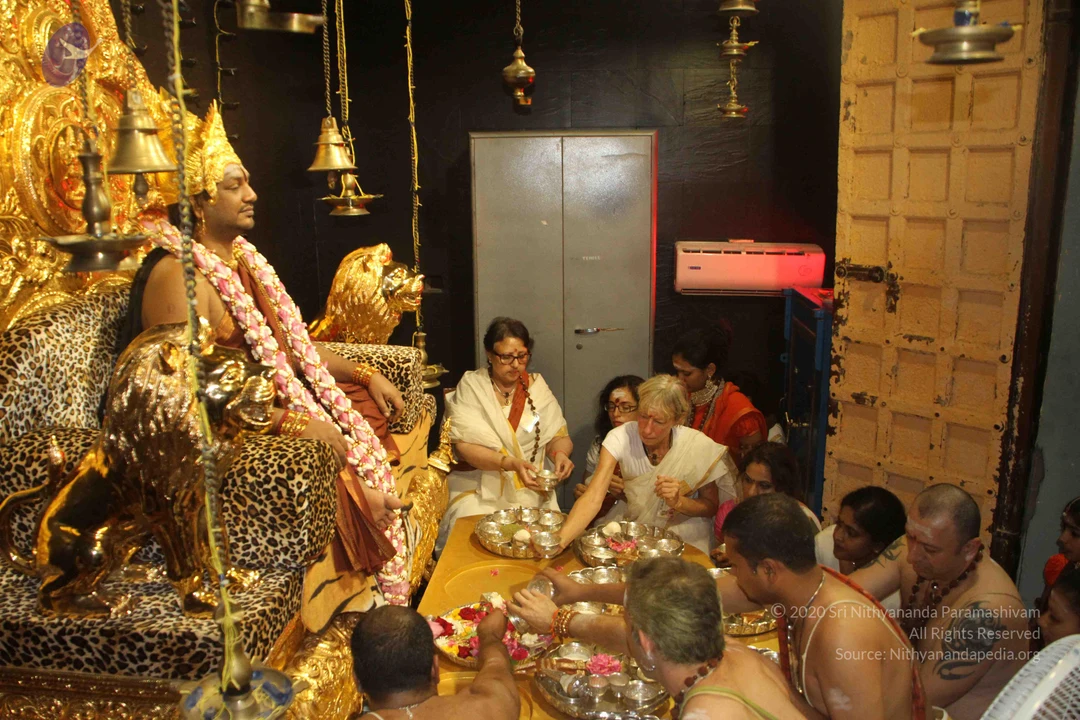
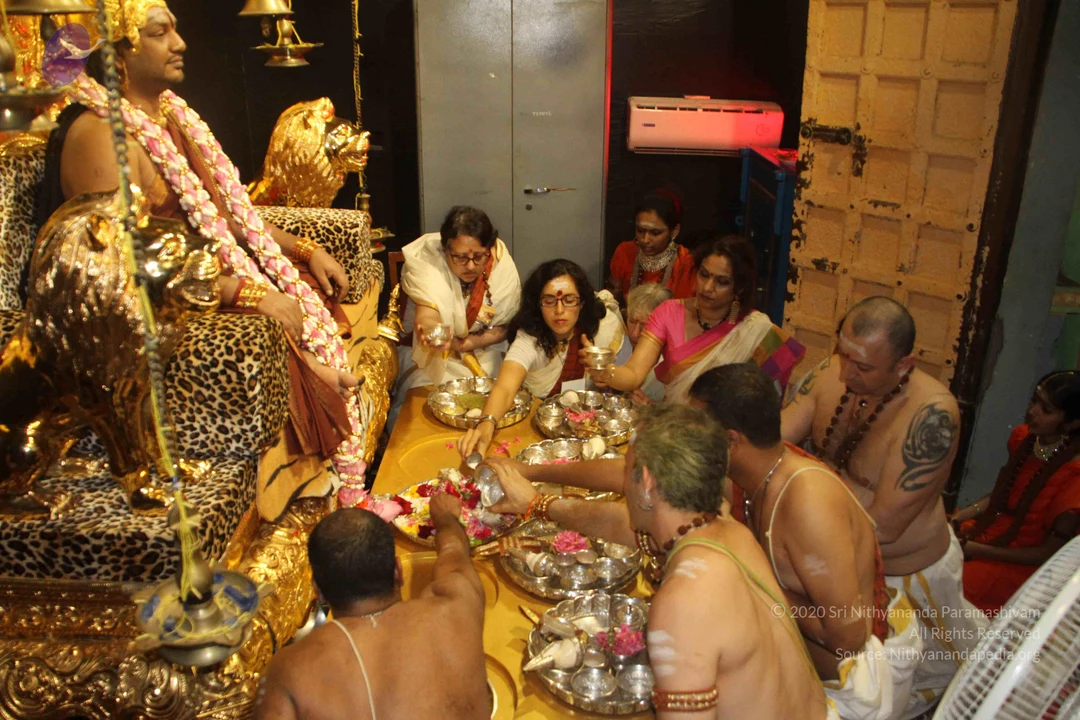
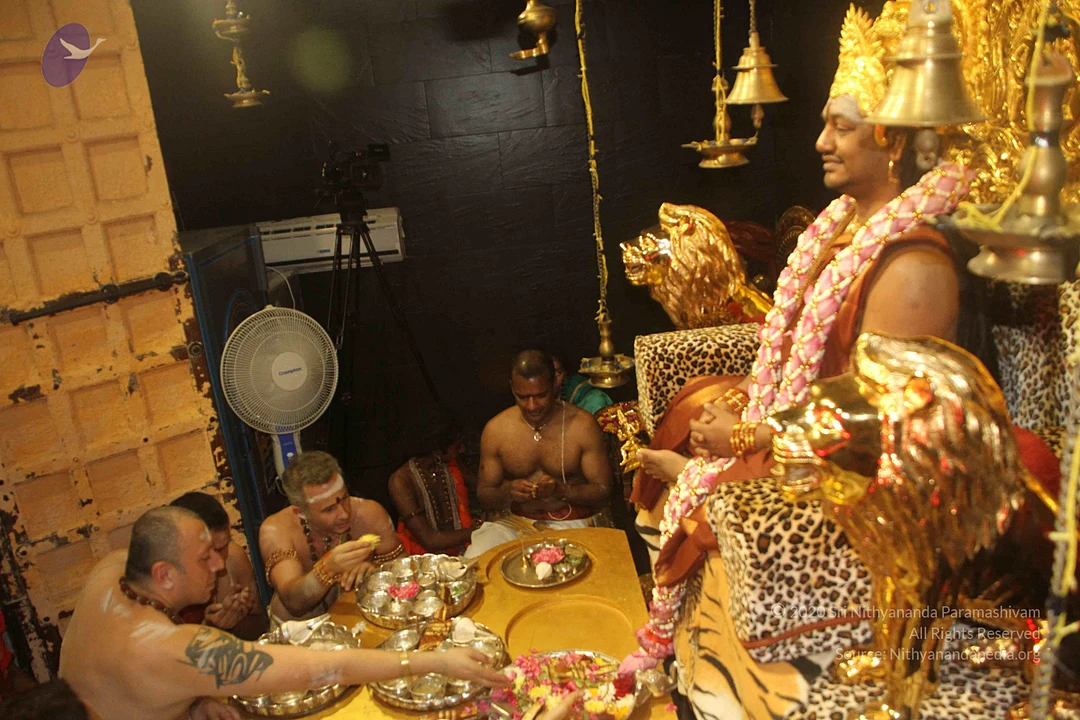
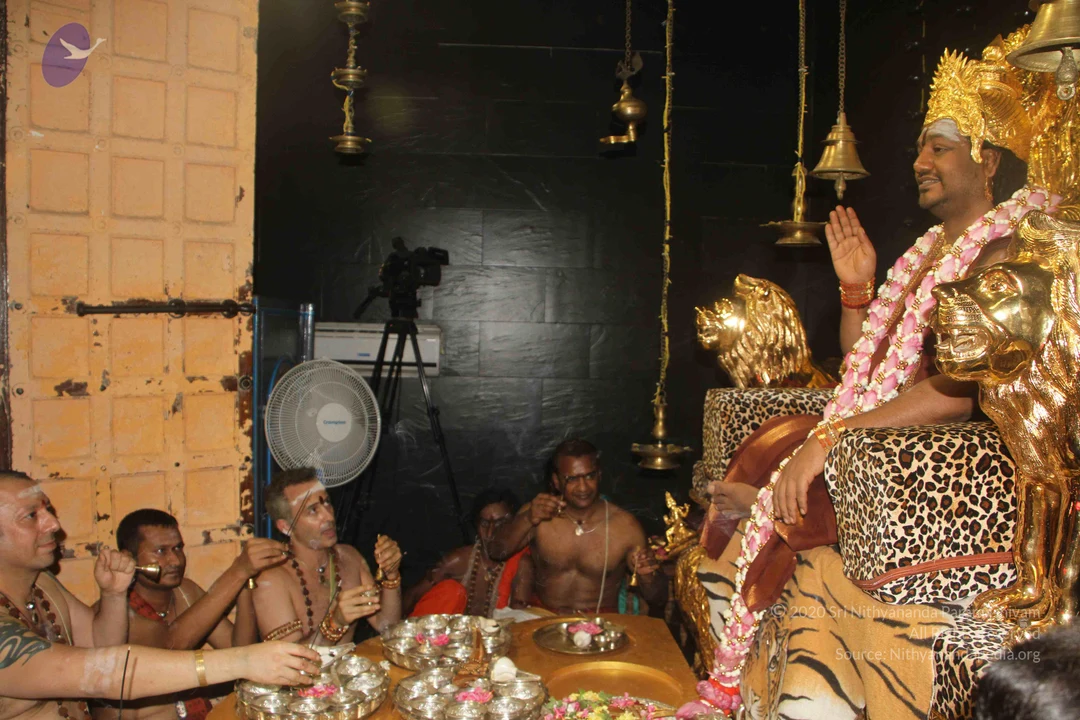
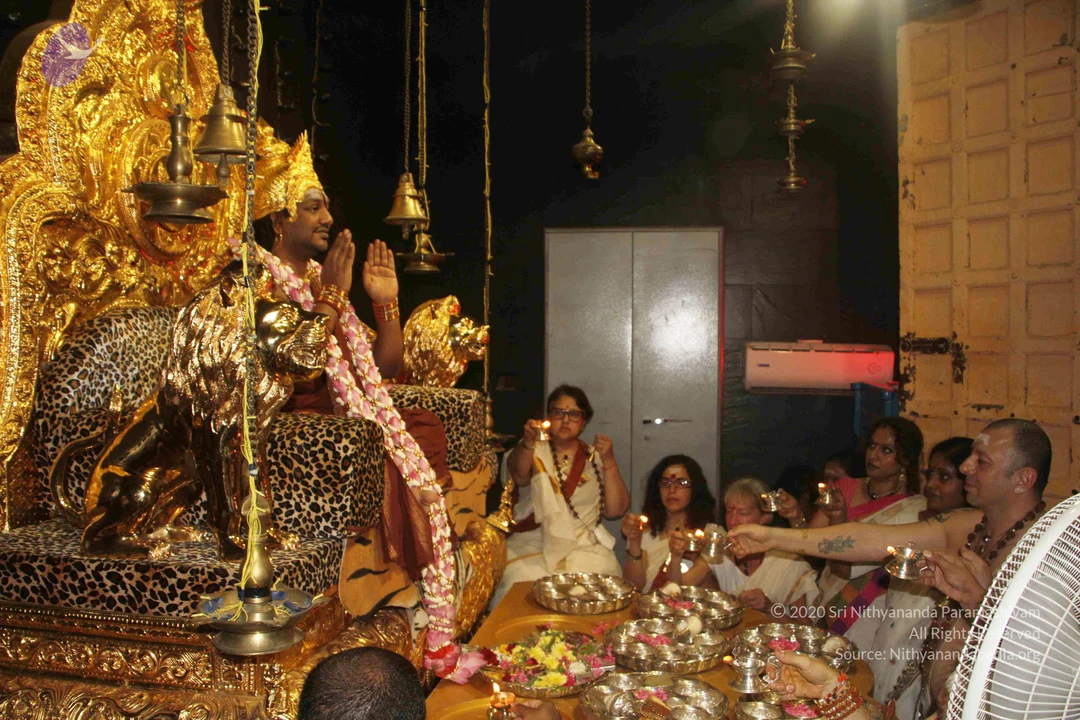
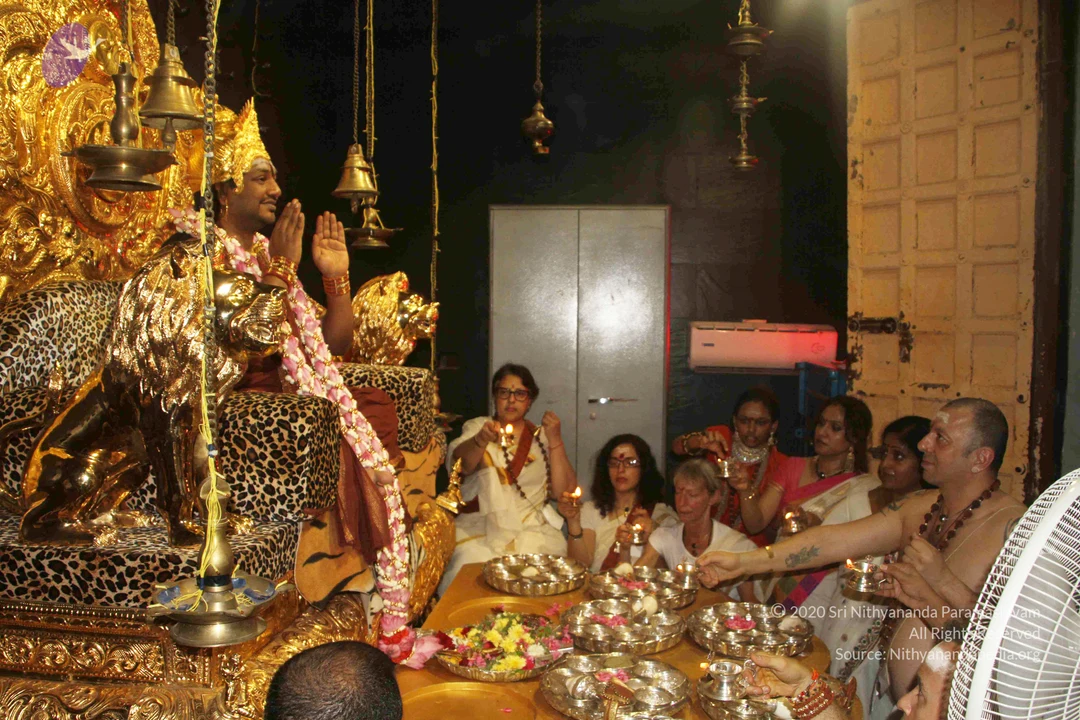
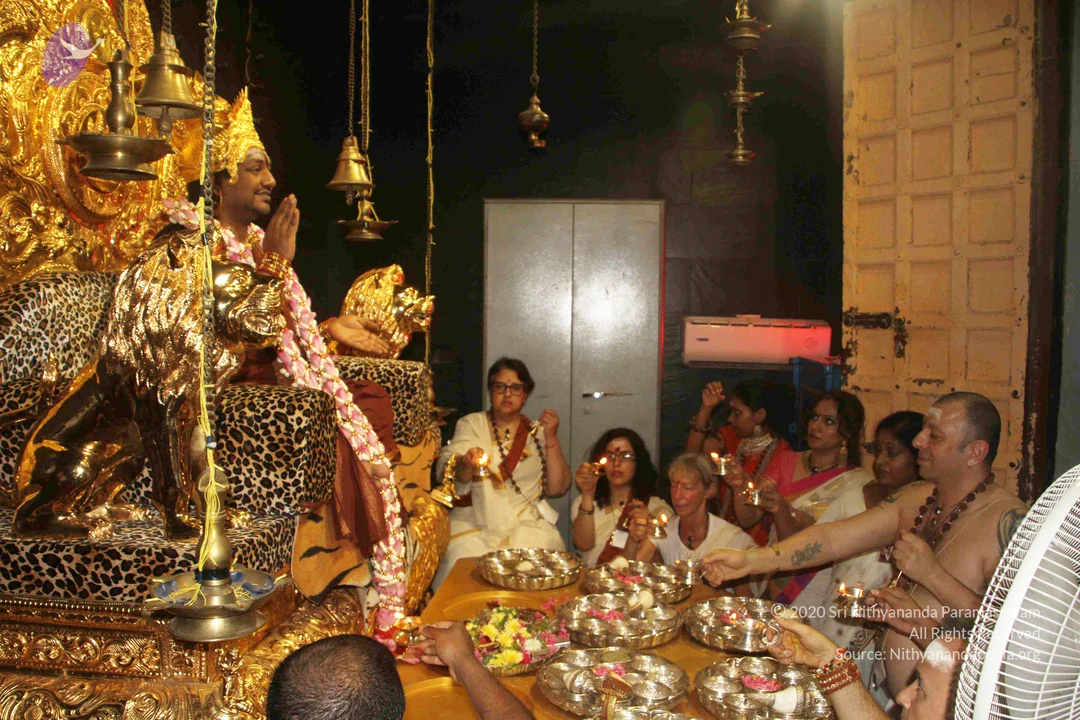
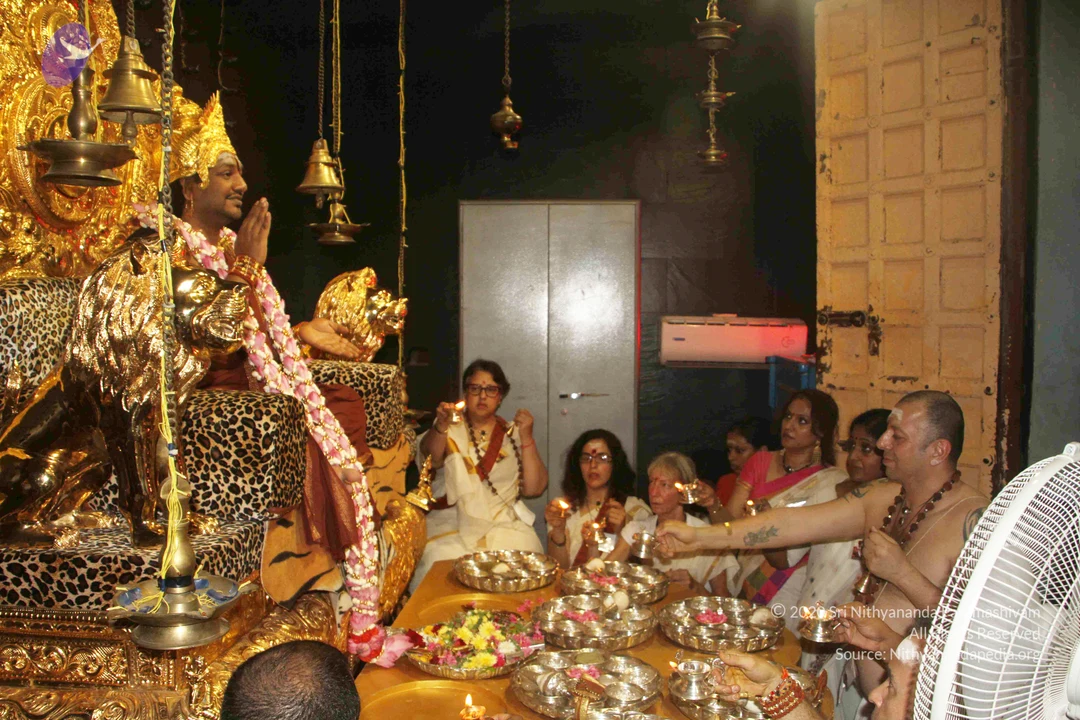
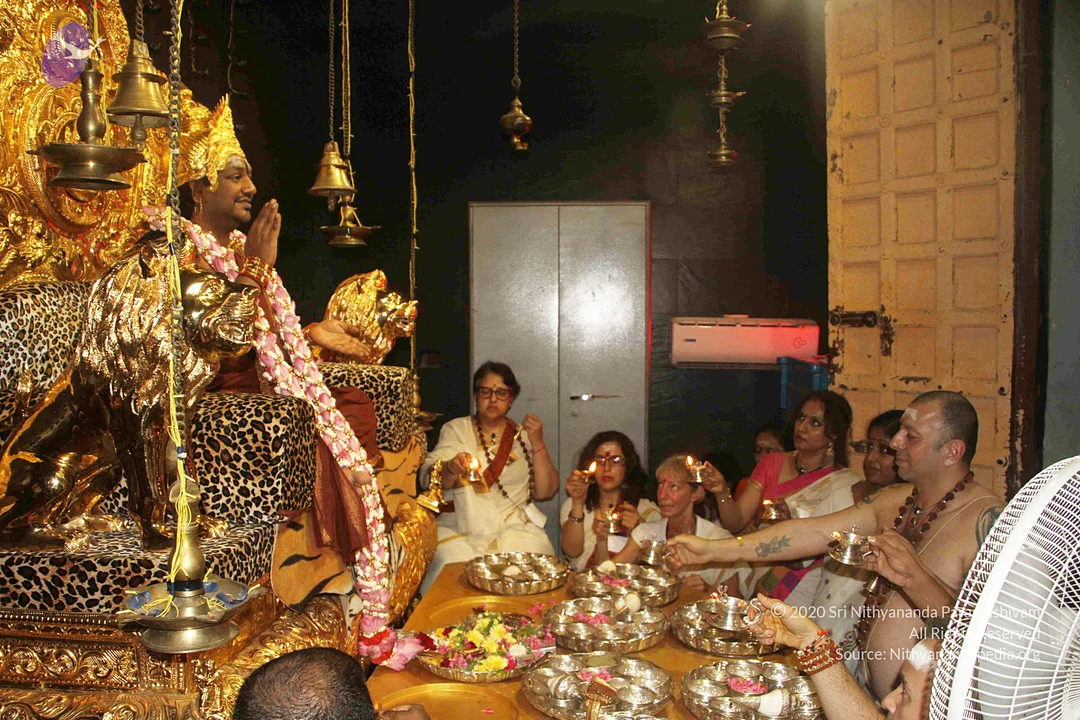
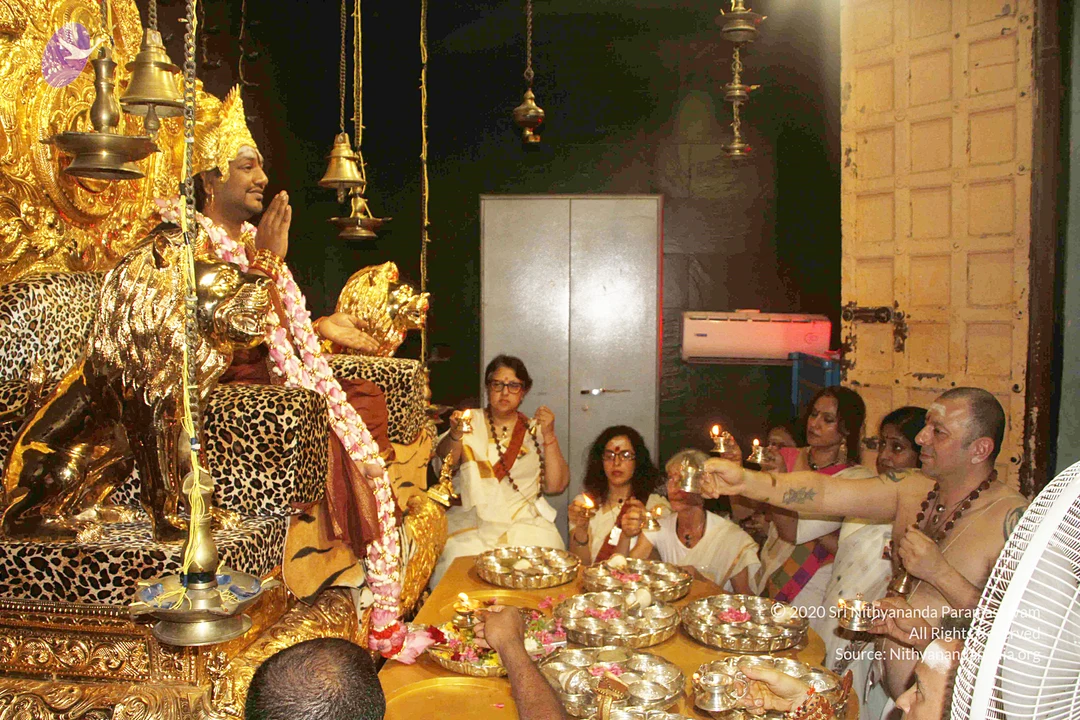
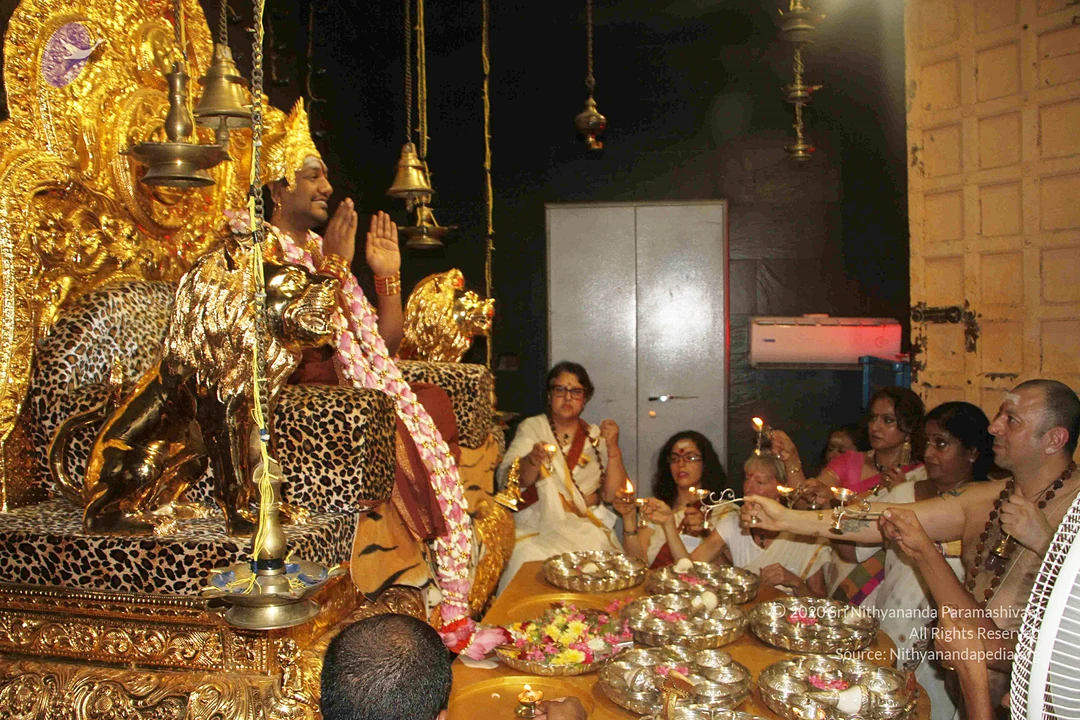
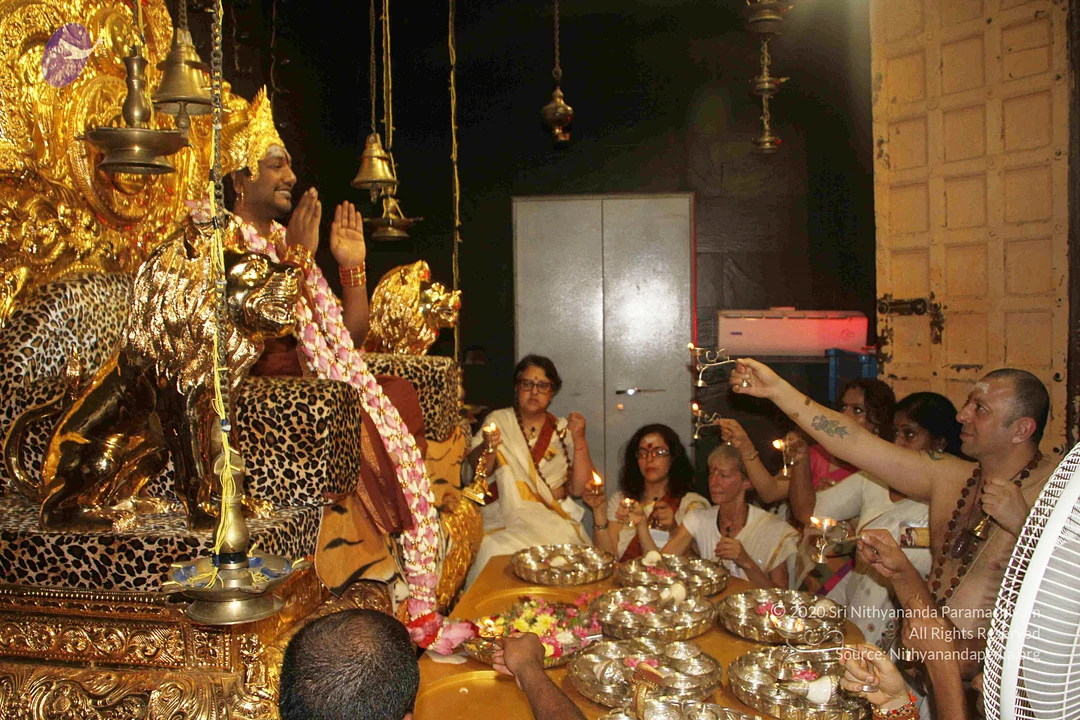
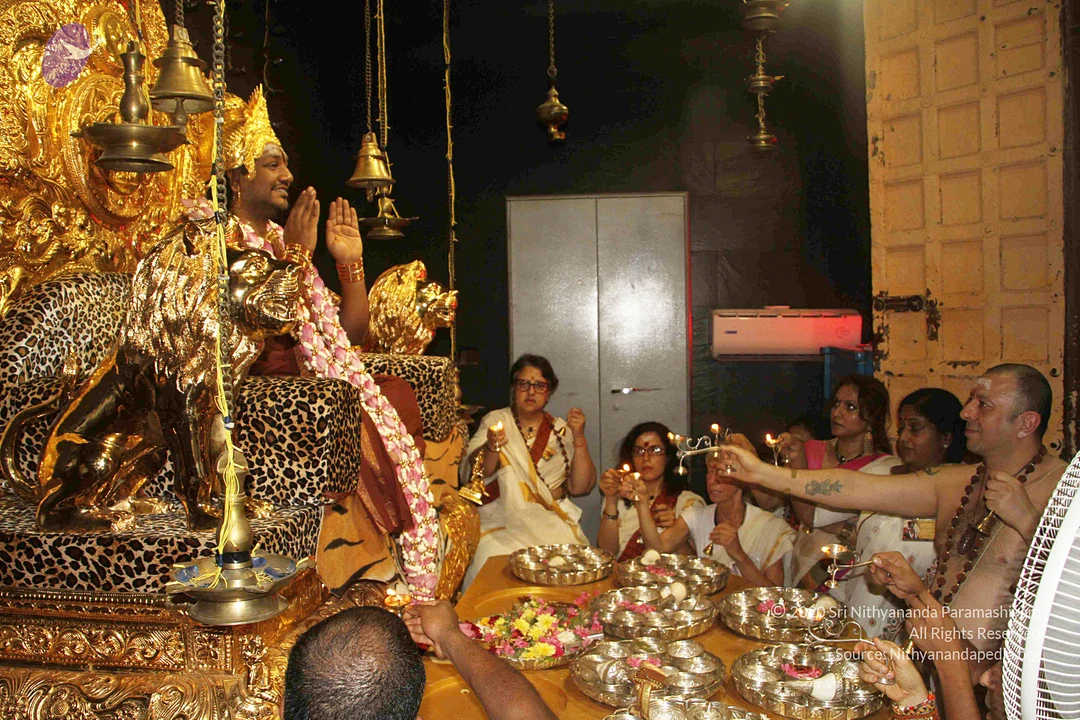
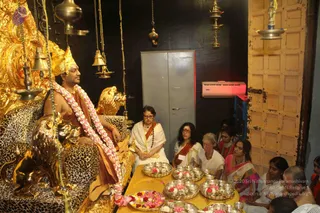
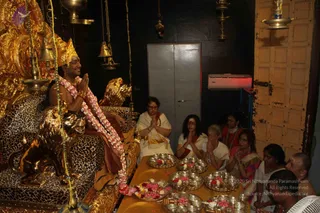
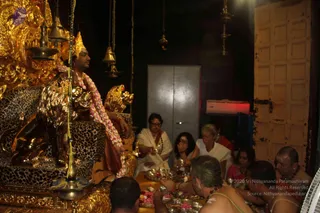
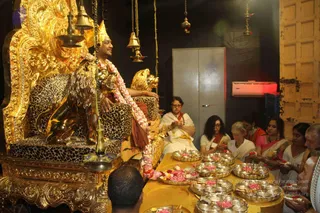
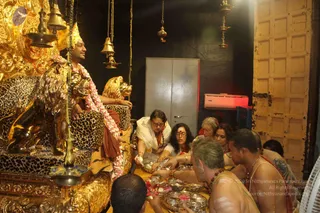
A seated man on a gold throne with leopard-print upholstery and a gold lion-head armrest, wearing a gold crown, an orange-brown garment and a pink and white flower garland. Beside him, a woman in a white shawl with an orange border sits with hands folded, and several women in white and pink saris and a man with a shaved head sit on the floor behind a low golden table laid with brass plates of flowers, fruit and offerings. Hanging brass oil lamps and bells decorate the black walls, and a golden-embroidered panel stands behind the throne. Five to six people are visible in total.Inside a dim room with dark walls and hanging brass oil lamps, a figure seated on an ornate gold throne with leopard-print cushions and gilded lion-head armrests presses palms together in namaskar. He wears a gold crown, a pink and white flower garland, gold bangles and a saffron shawl over bare shoulders. Before the throne, a long low table holds silver thalis of flowers, pink petals and offerings. Seated devotees in white clothes, a woman in a red blouse and a woman in a pink sari, fold their hands in prayer beside a metal door and a wall air conditioner. A padapuja style offering is taking place. The figure's appearance is consistent with the a person candidate, so the description is labelled accordingly.Indoor ritual scene in a dim room with a gilded throne decorated with leopard-print cushions and golden lion figures. A man seated on the throne wears a golden crown, a pink and white flower garland, and a saffron cloth, with a gold-embroidered wrap, and is being honoured by devotees. Seated before him at a low table, women in white saris and other attendees hold brass plates with flowers and offerings, and a man in the foreground bends over the table. Hanging brass oil lamps and bells are suspended above, and an orange-cloth-wrapped shrine-like setting frames the scene.A seated man on a gilded throne with leopard-print cushions and carved lion-armrests wears a pink-and-white garland and an ornate gold crown, with a saffron-coloured cloth draped over his shoulder. Beside him a gold lion sculpture and hanging brass oil lamps and bells frame the scene. Before the throne, several women in white and cream saris sit at a low table holding flowers and offering brass trays of petals and small bowls, while a man in a white shirt and other devotees in saris kneel nearby. This appears to be a padapuja-style offering ceremony.Indoor puja scene beside a golden throne backed by ornate gold carvings and a leopard-print seat, with a gold lion-form armrest. A figure seated on the throne wears a gold crown, a pink and white flower garland, and a saffron-toned cloth, with a gold bangle on his wrist. In front, a woman in white with glasses holds flowers, and women in saffron, pink and white saris sit at a low golden table set with brass and silver plates of petals and flowers. Hanging brass bells and oil lamps hang overhead, and a closed grey cabinet and wall air conditioner sit behind them. A man with a shaved head in a white garment is seated at the right edge. The figure on the throne is a probable Swamiji by appearance cues: crown, garland, ornate gold clothing and throne setting.A photograph of a ceremonial padapuja scene in a dimly lit room with gold-ornate throne. On the left, a figure seated on a golden throne with leopard-print cushions and gold lion-head armrests wears an orange-brown cloth and a pink-and-white flower garland; a person candidate with long dark hair and a gold crown, seated on the throne. Hanging brass oil lamps and bells hang above. In the foreground, several devotees sit on the floor around a low table holding silver plates and bowls with flowers and offerings. A woman in white with glasses and a woman in white with a red bindi are prominent; a man in a bare-chested upper garment with white markings and a rudraksha-style neck mala sits at the right. An air conditioner and a closed metal cabinet are in the background.

Tulabharam
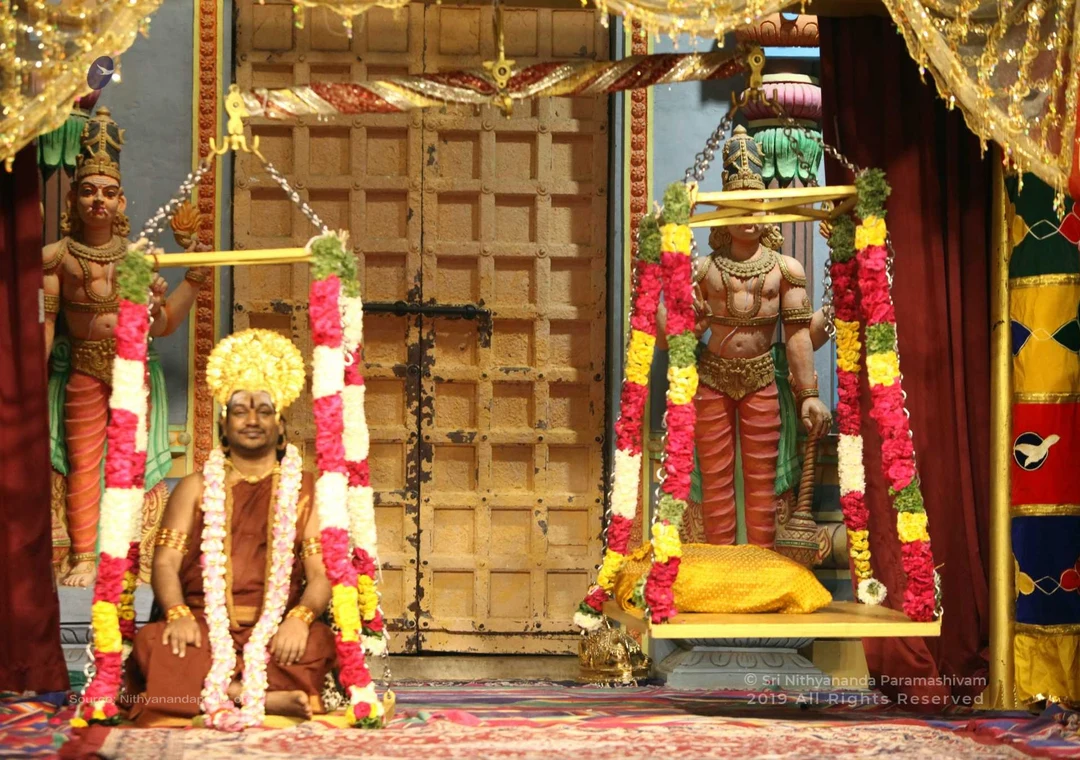
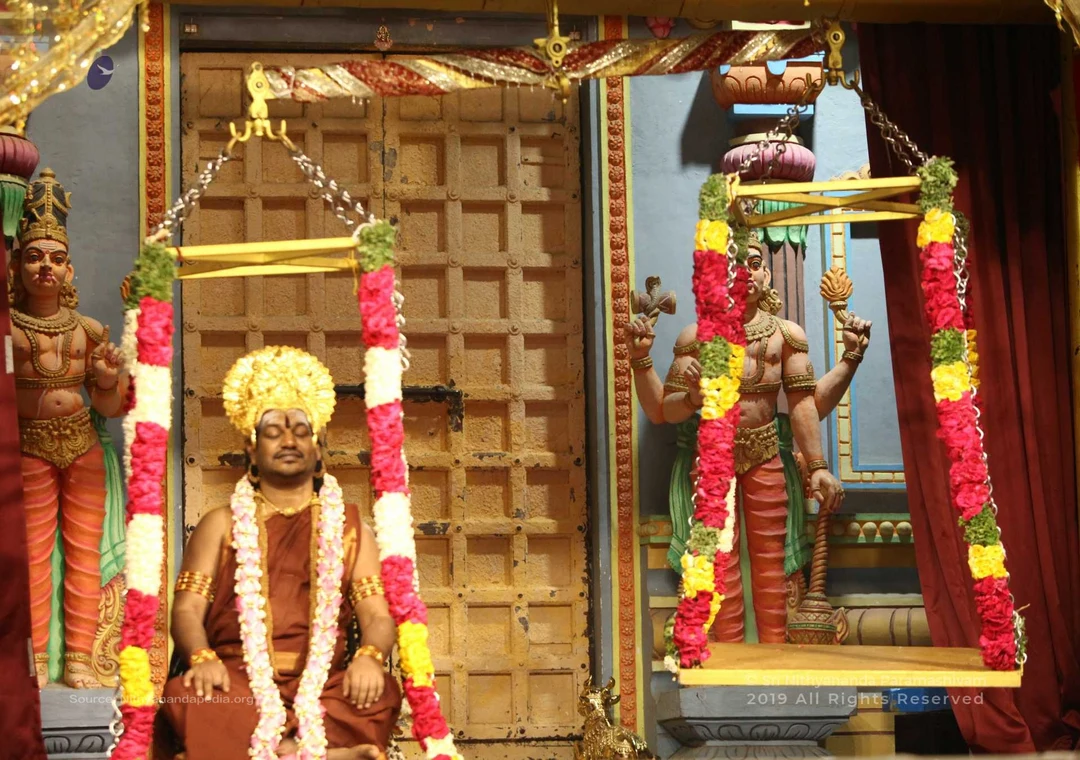
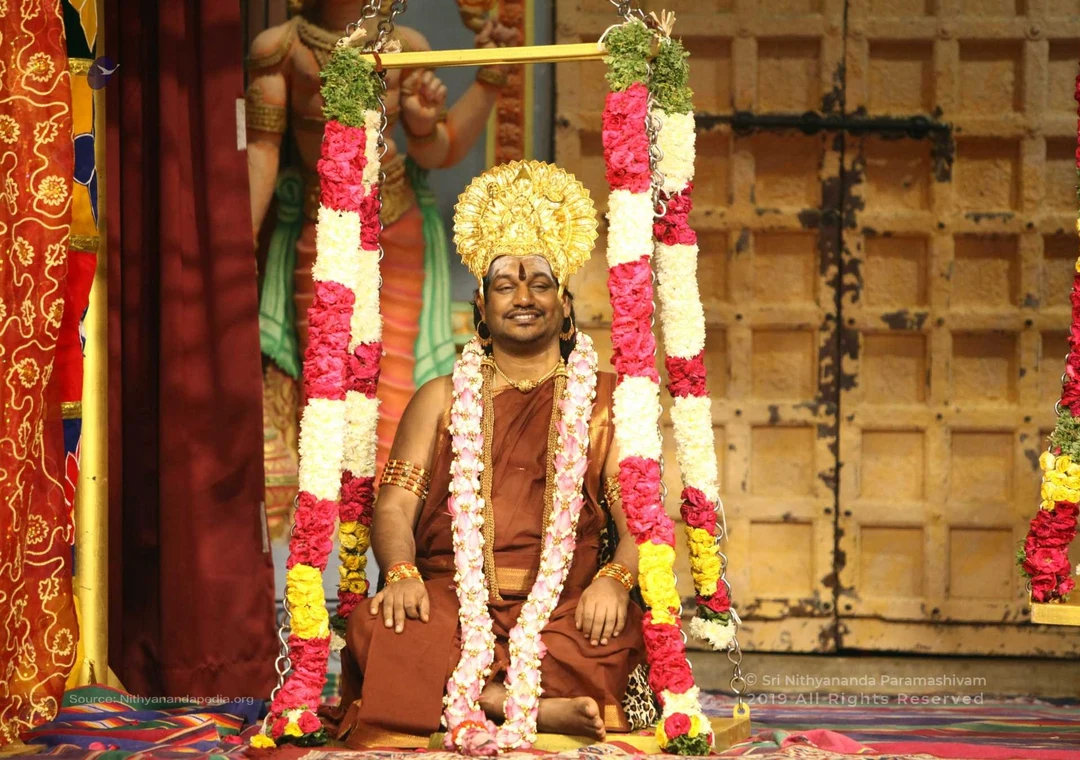
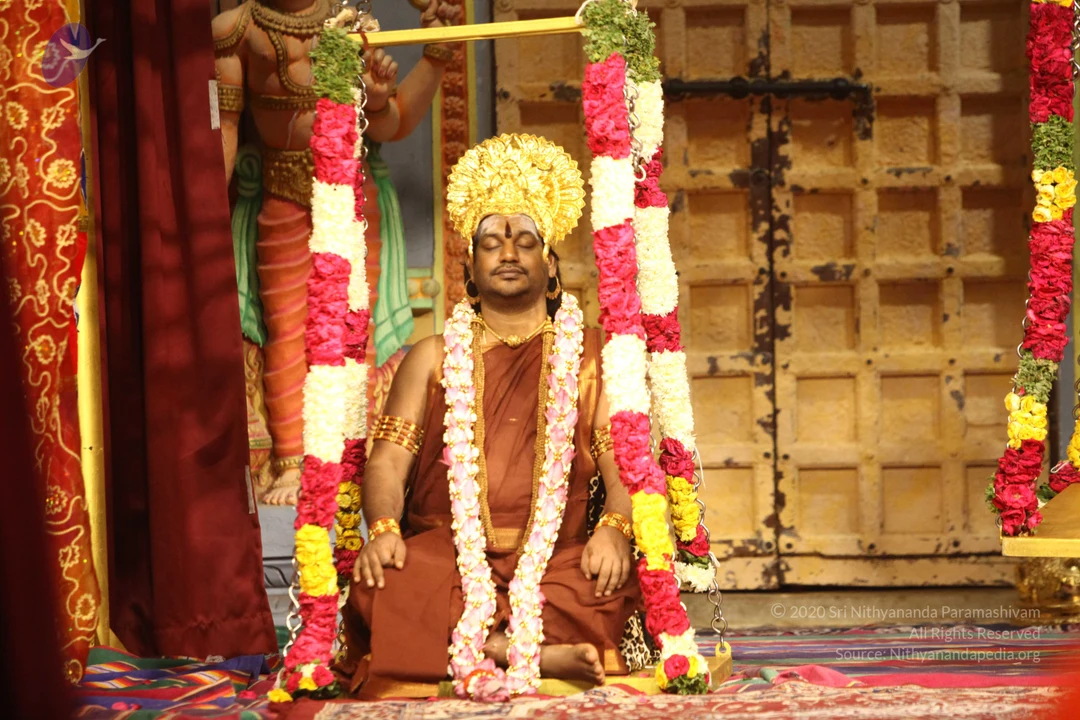
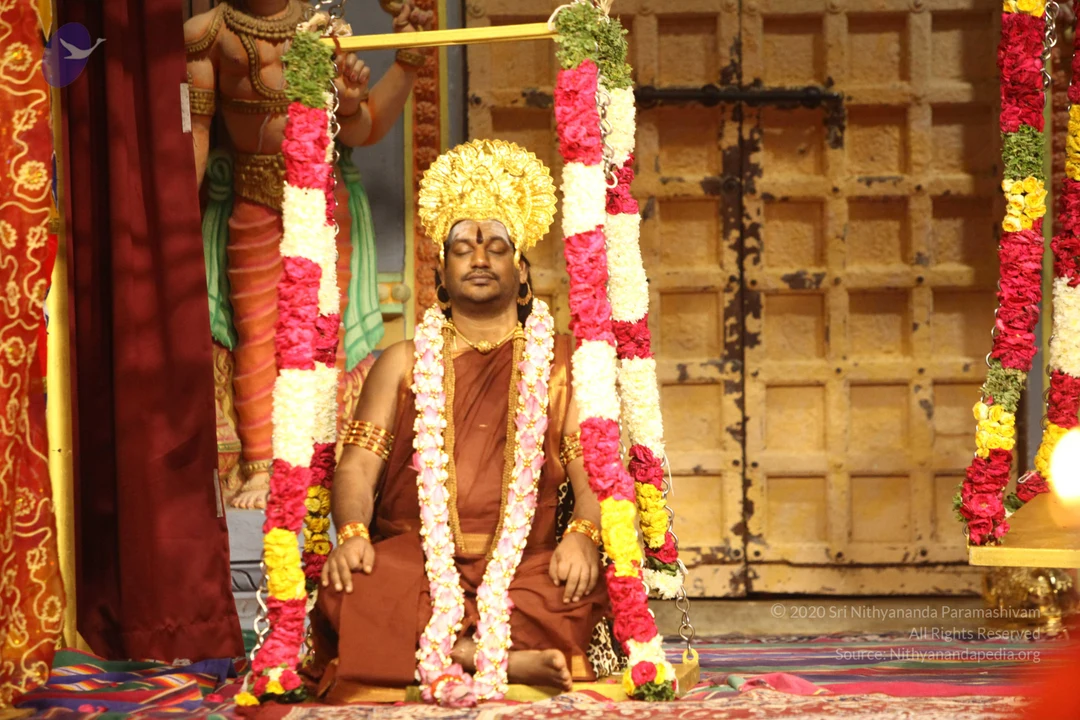
74 photosSource gallery
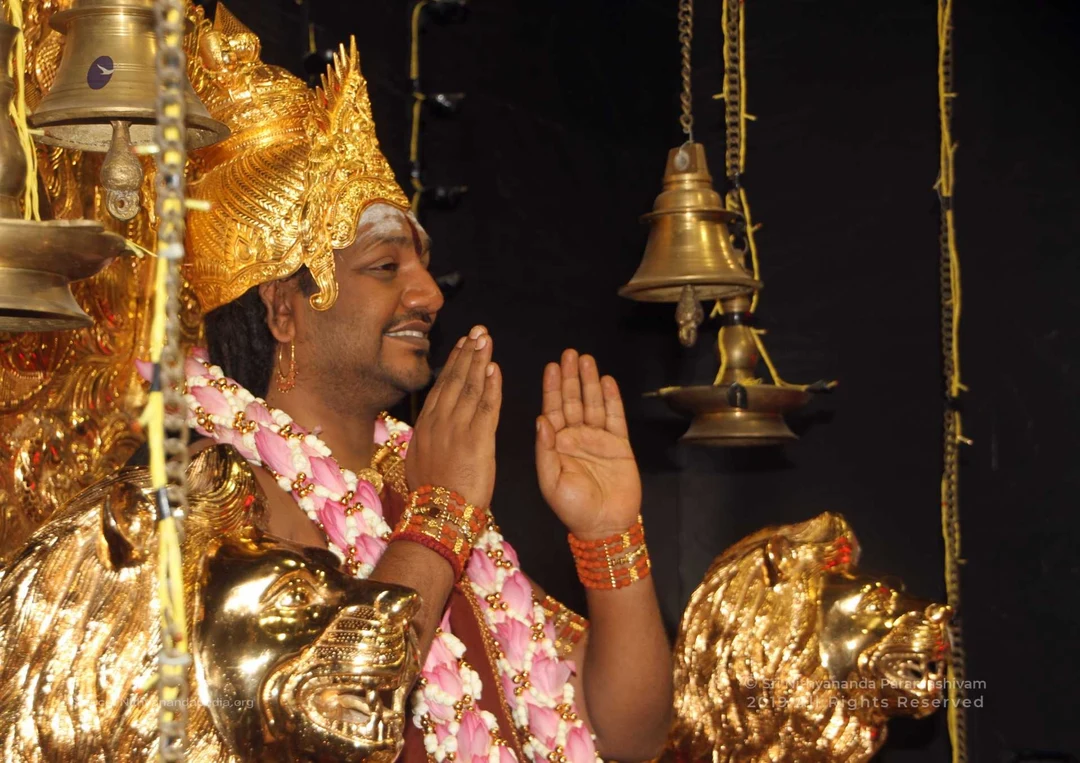
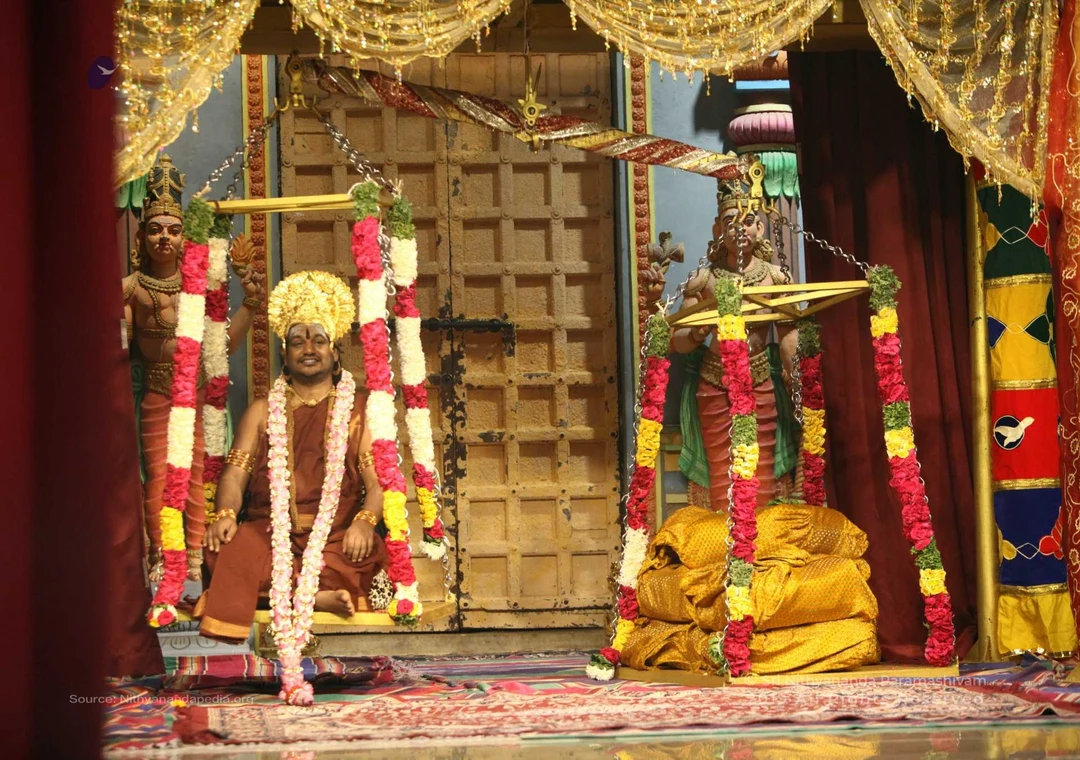
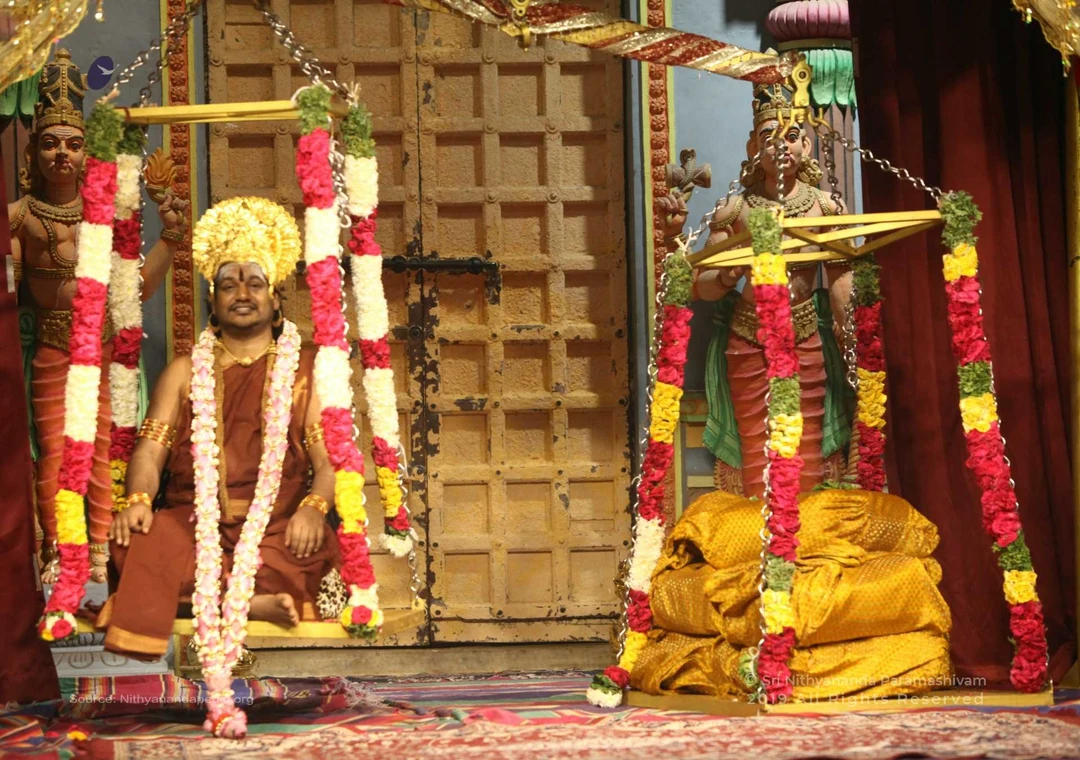
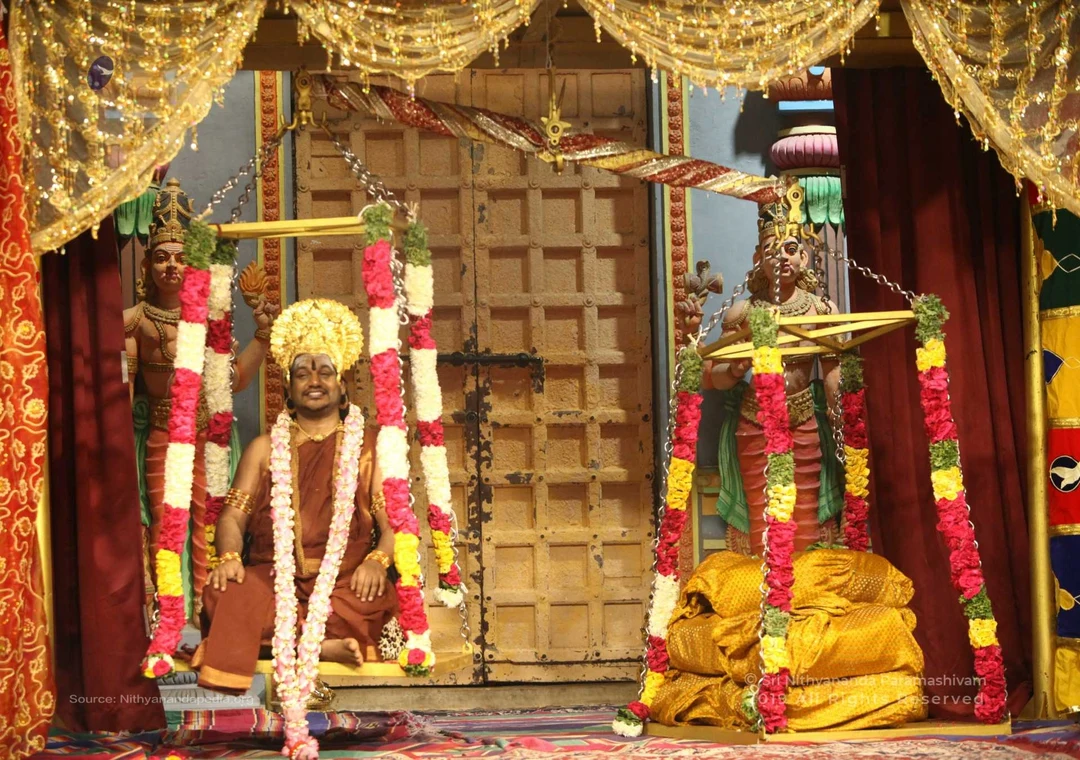
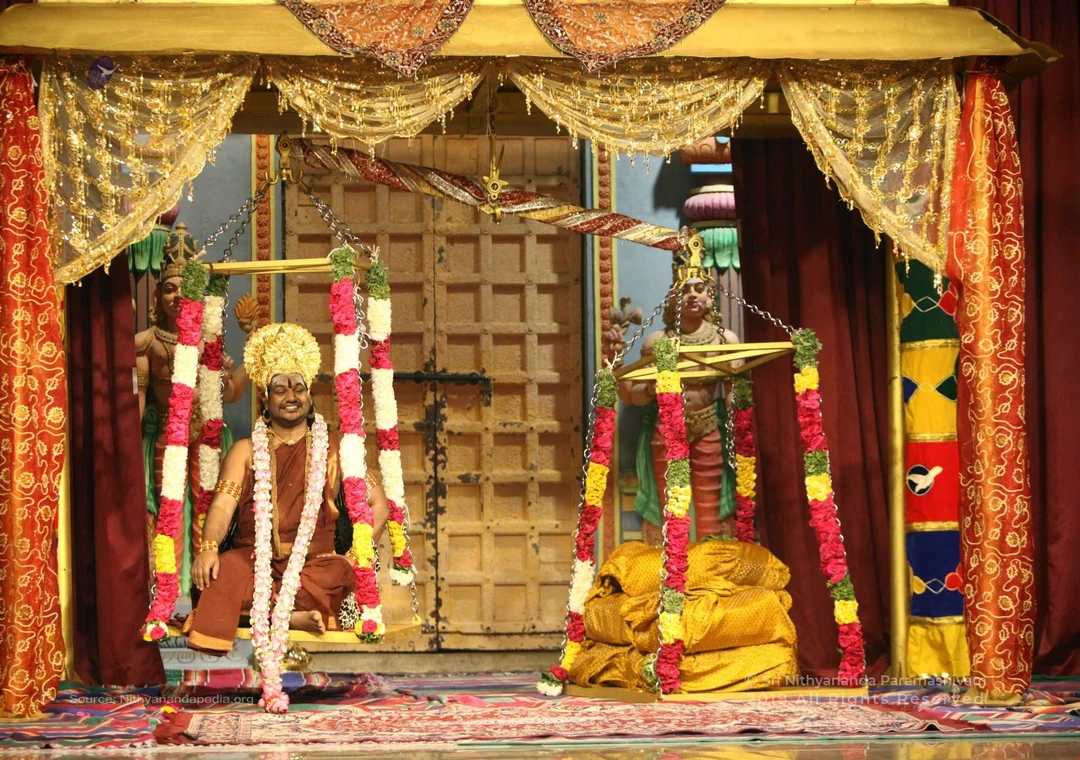
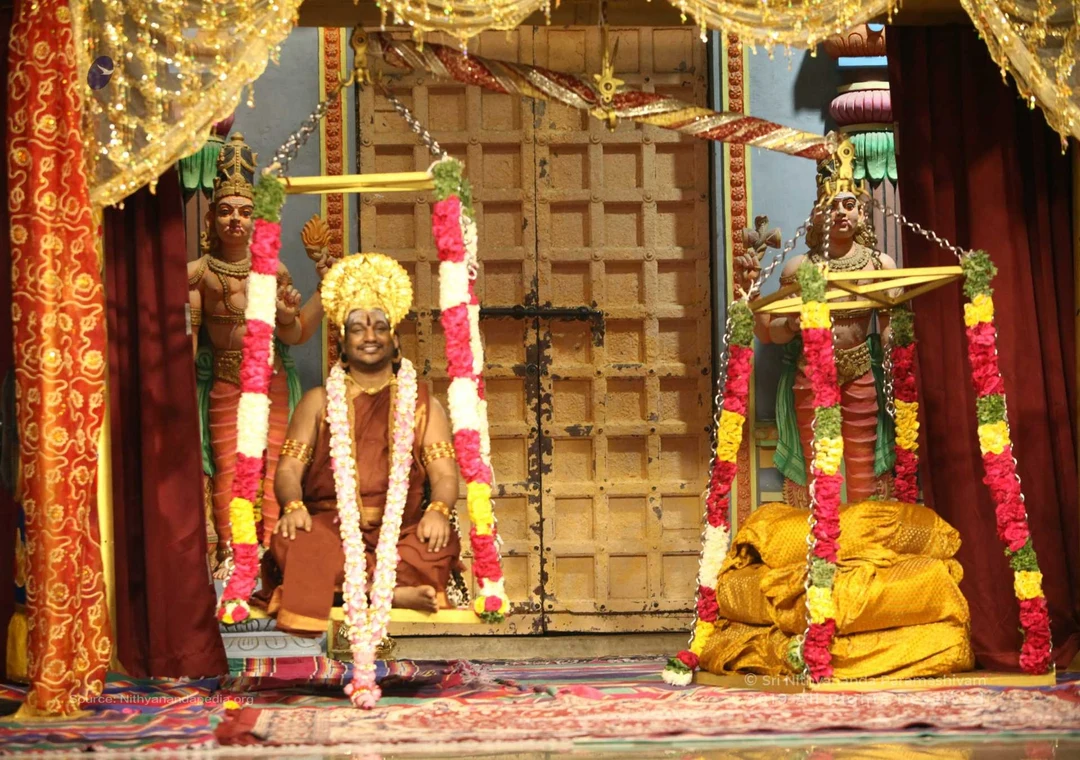
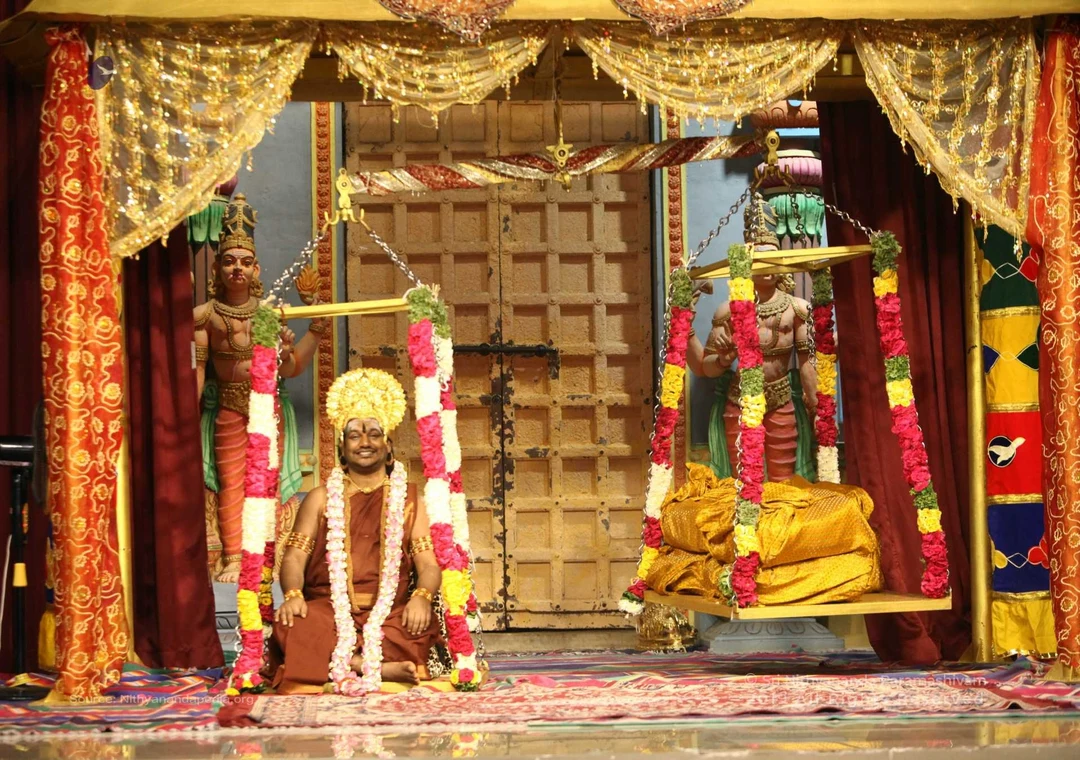
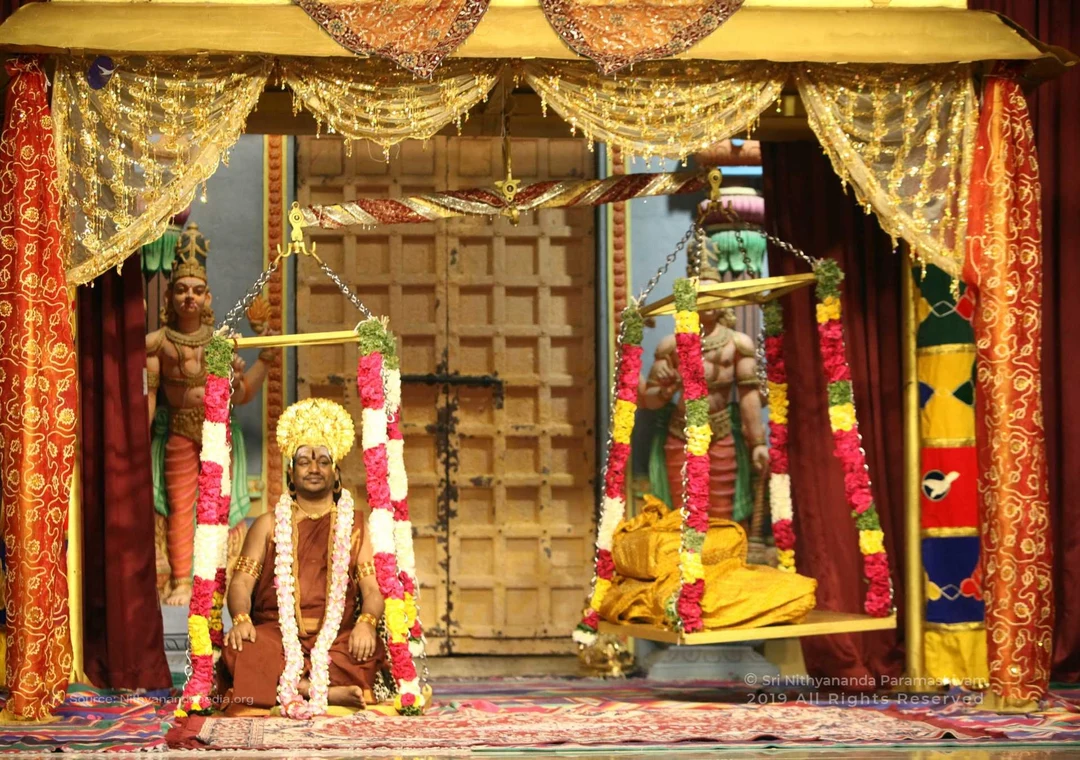
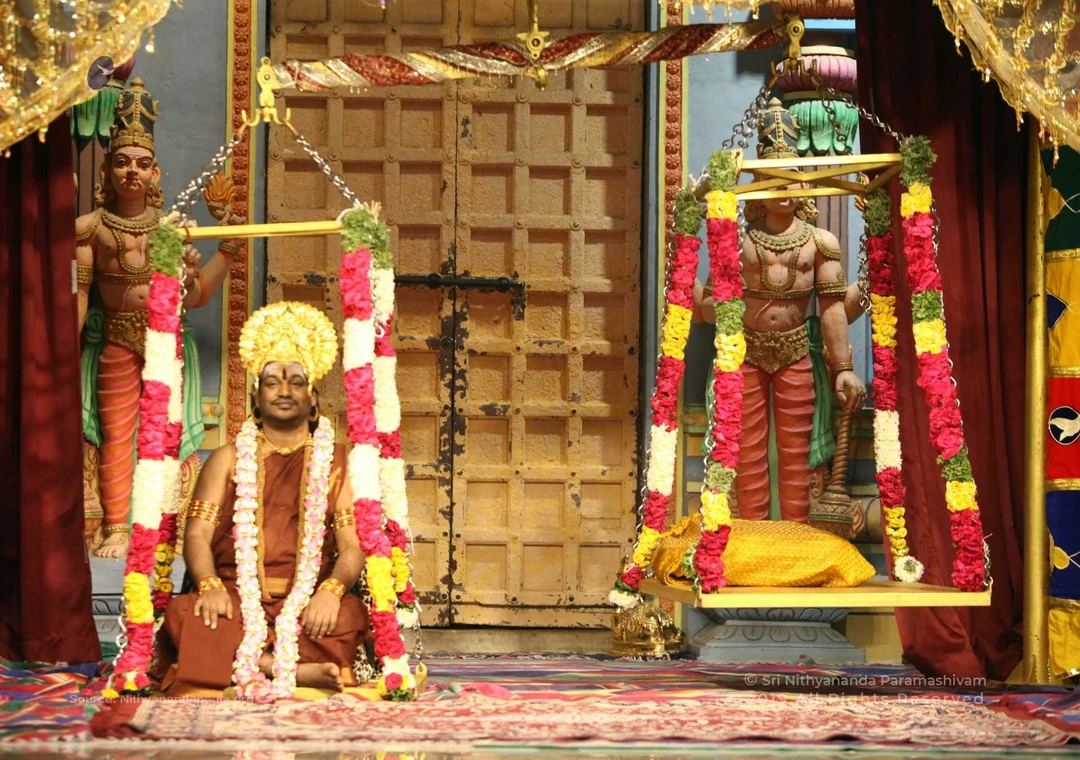
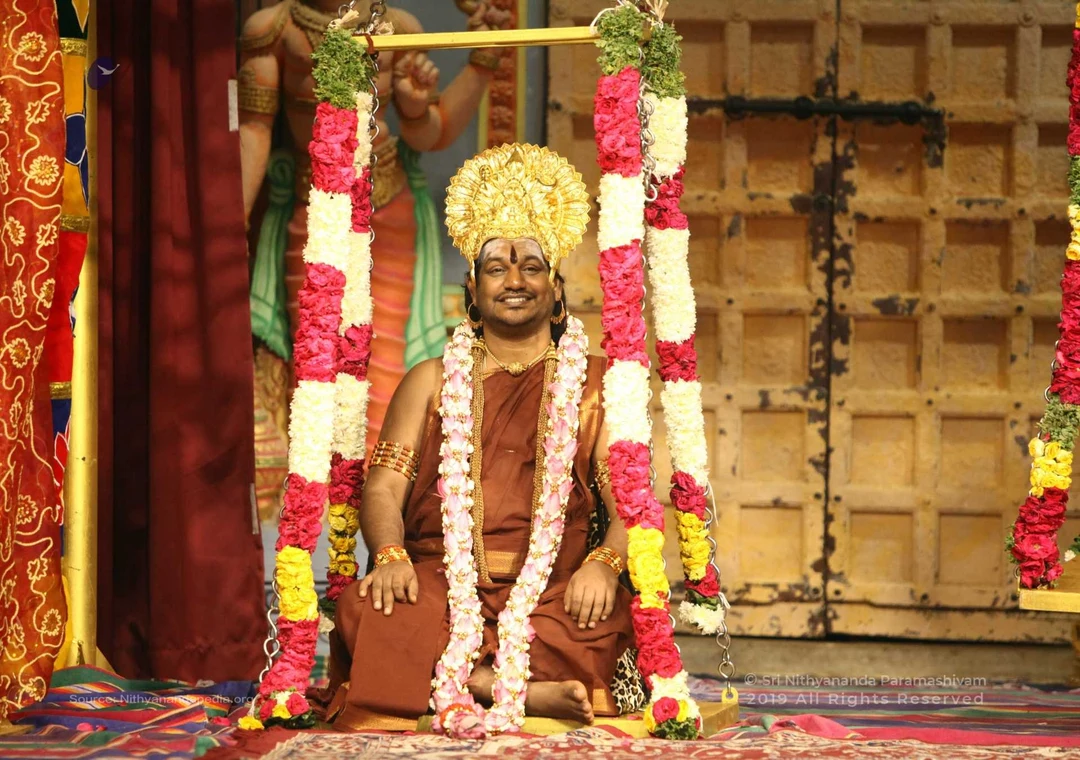
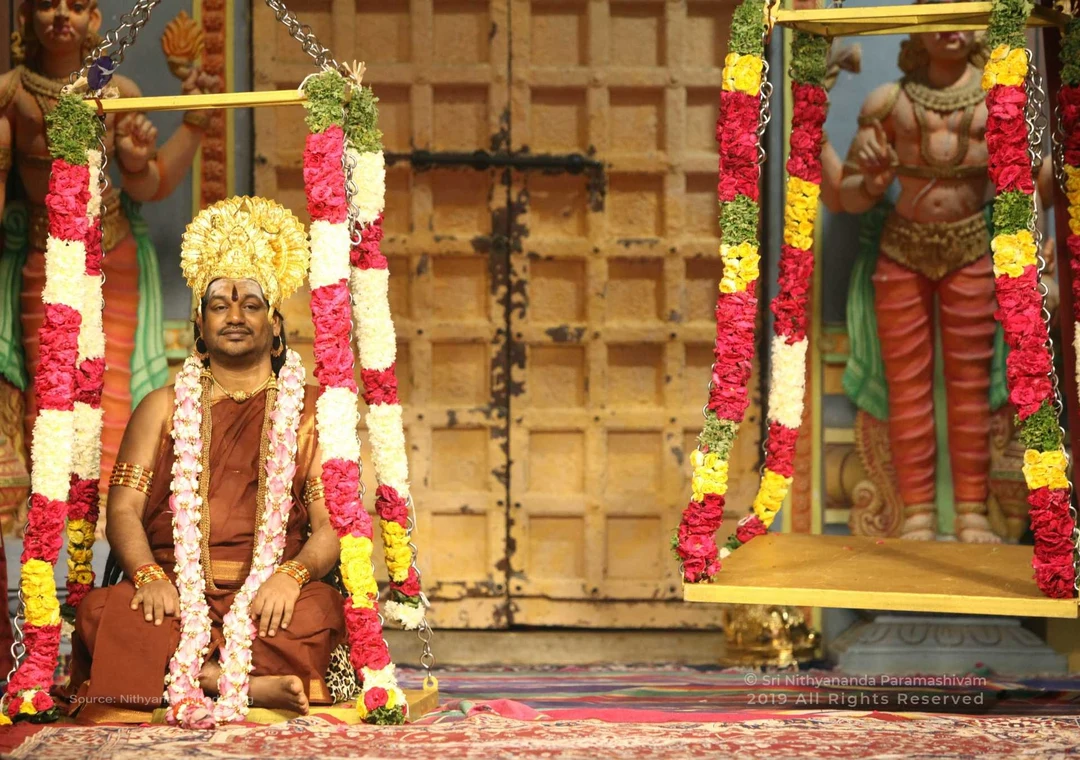
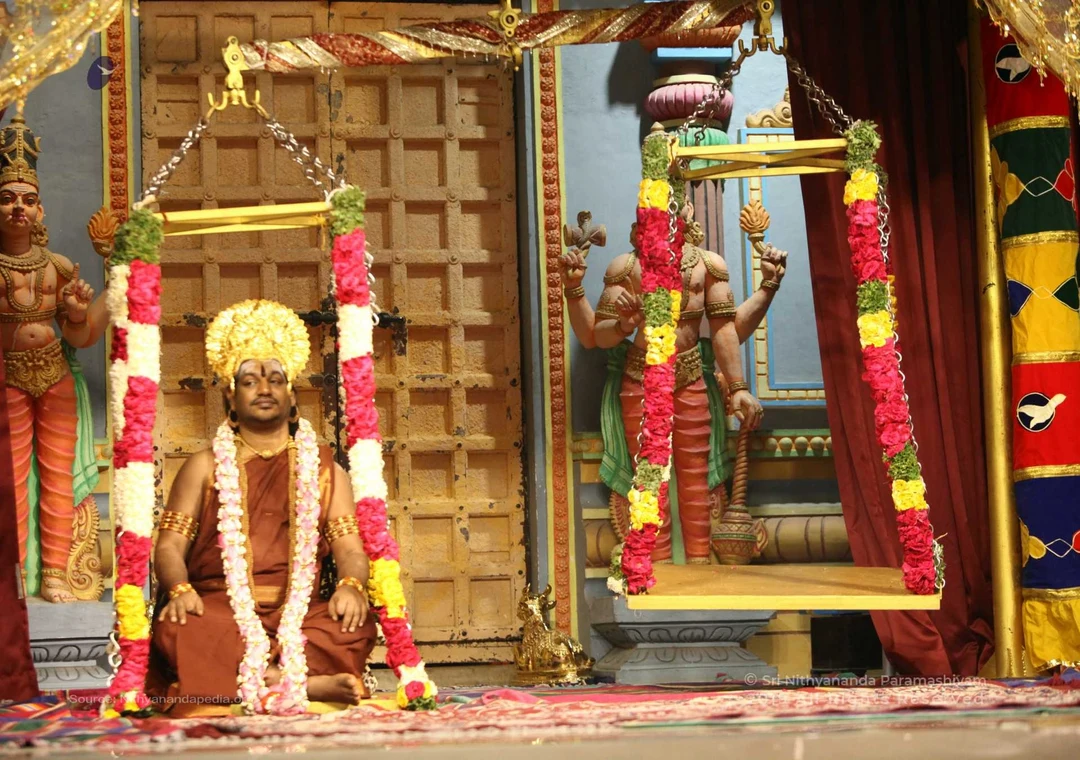
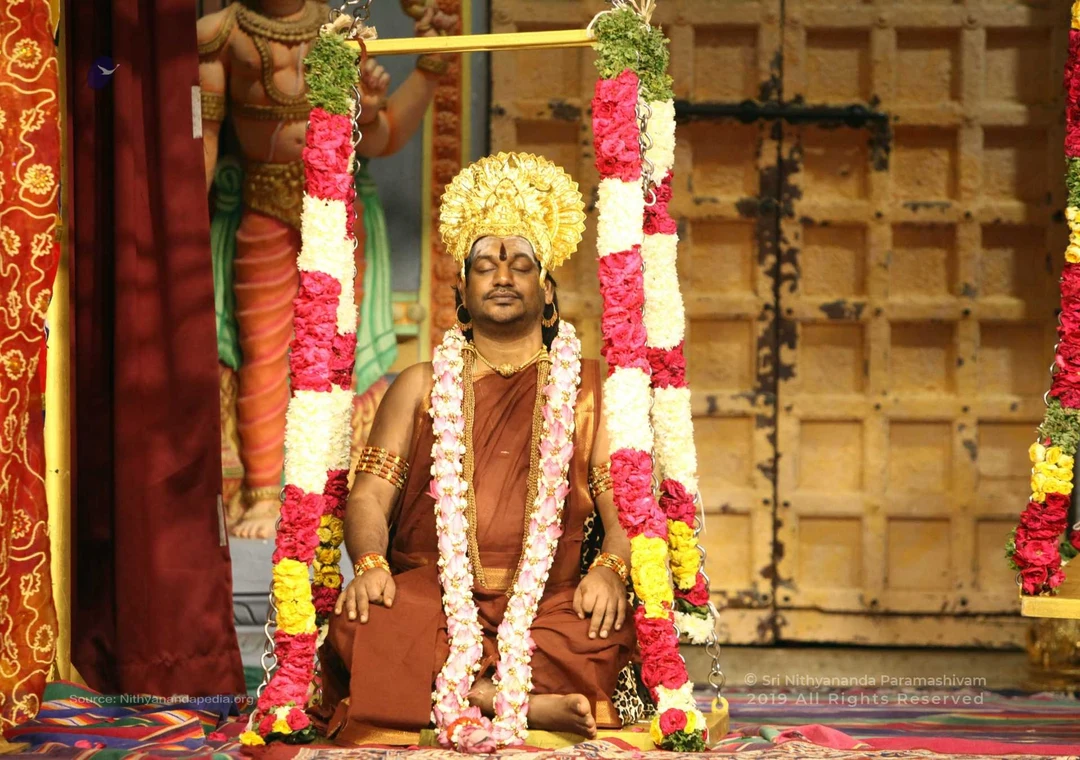
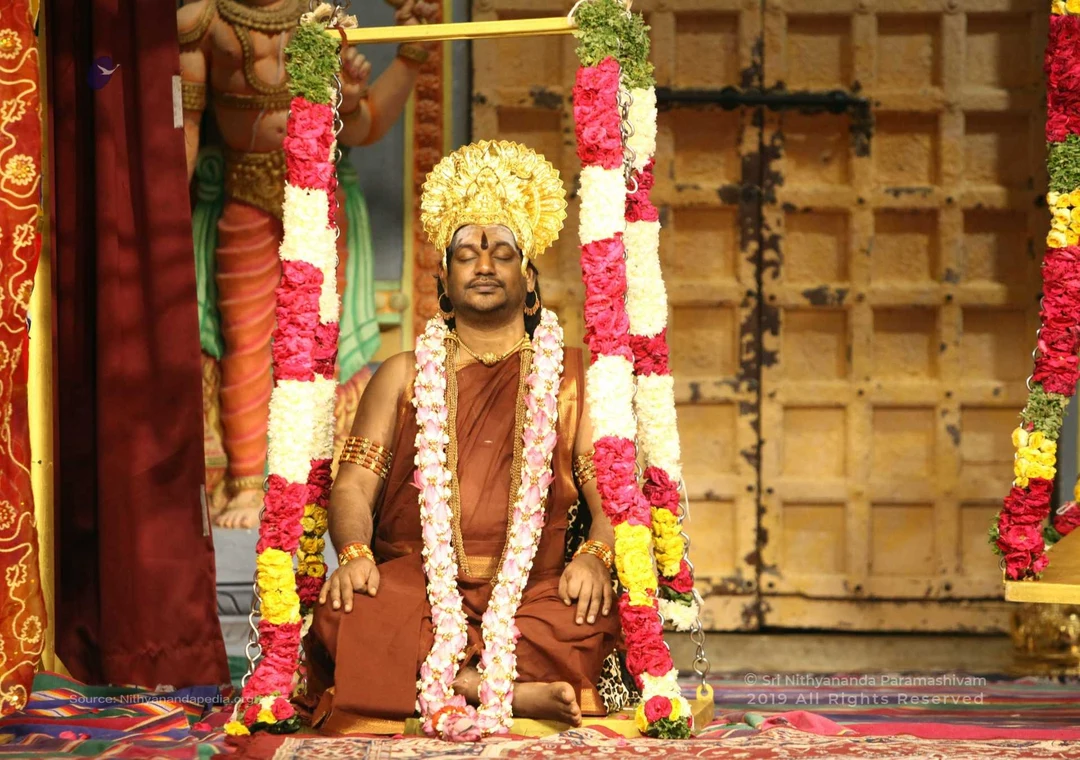
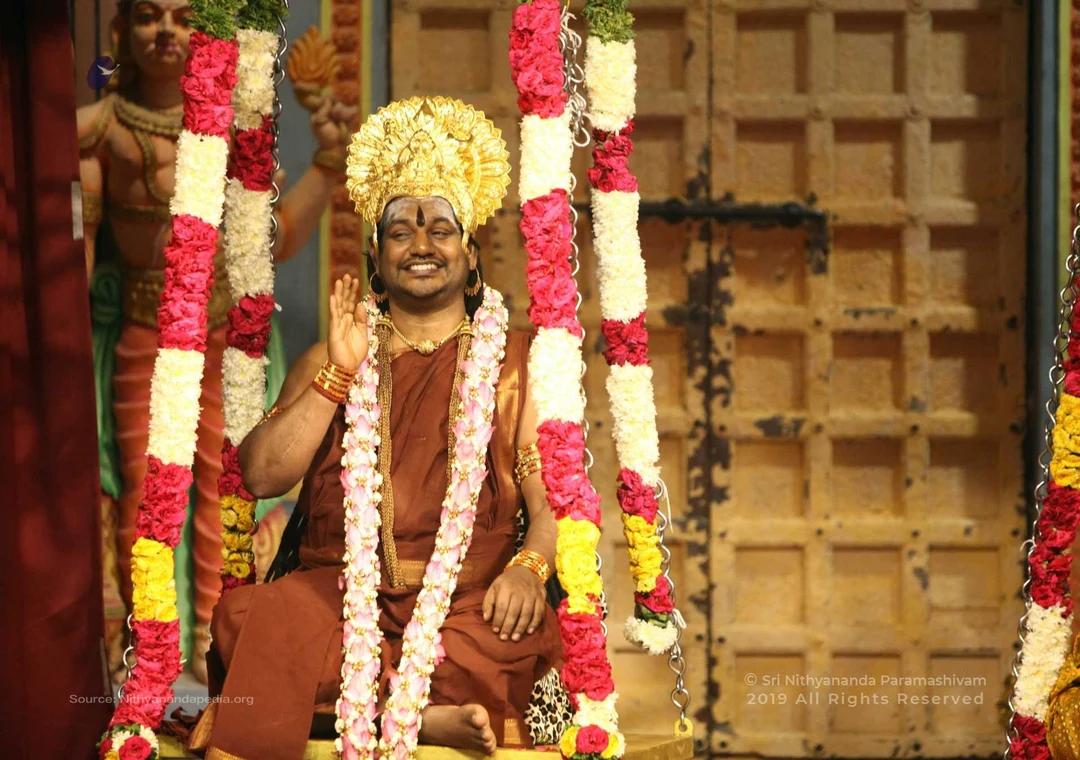
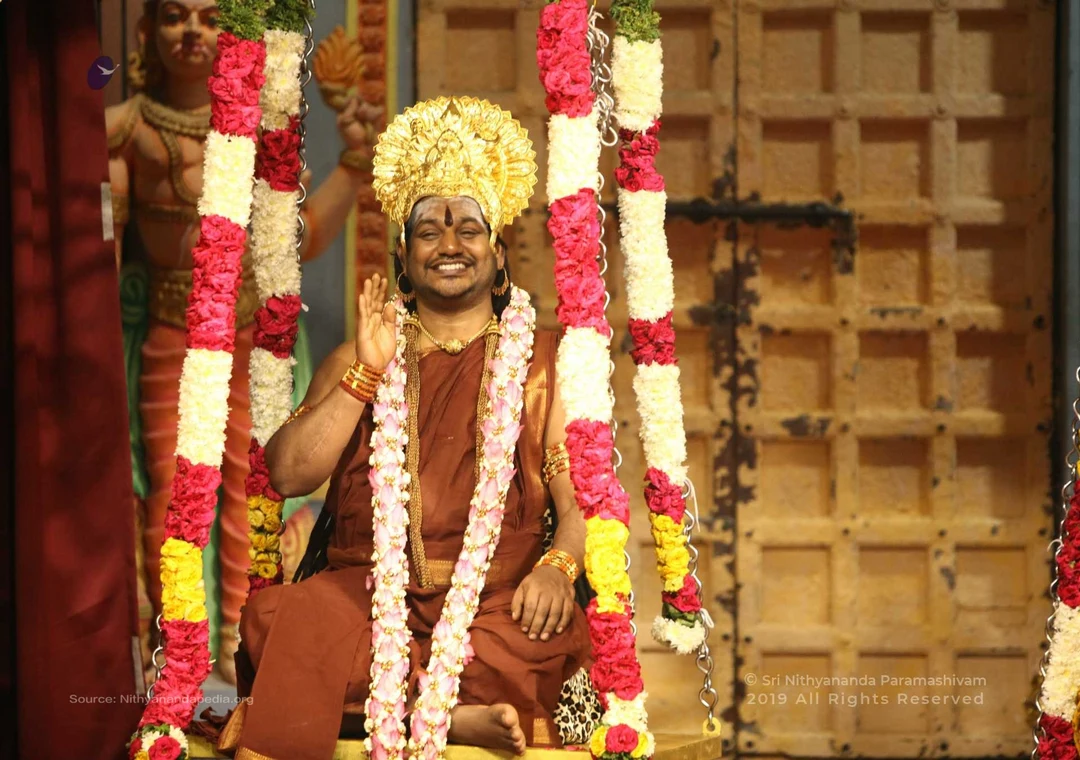
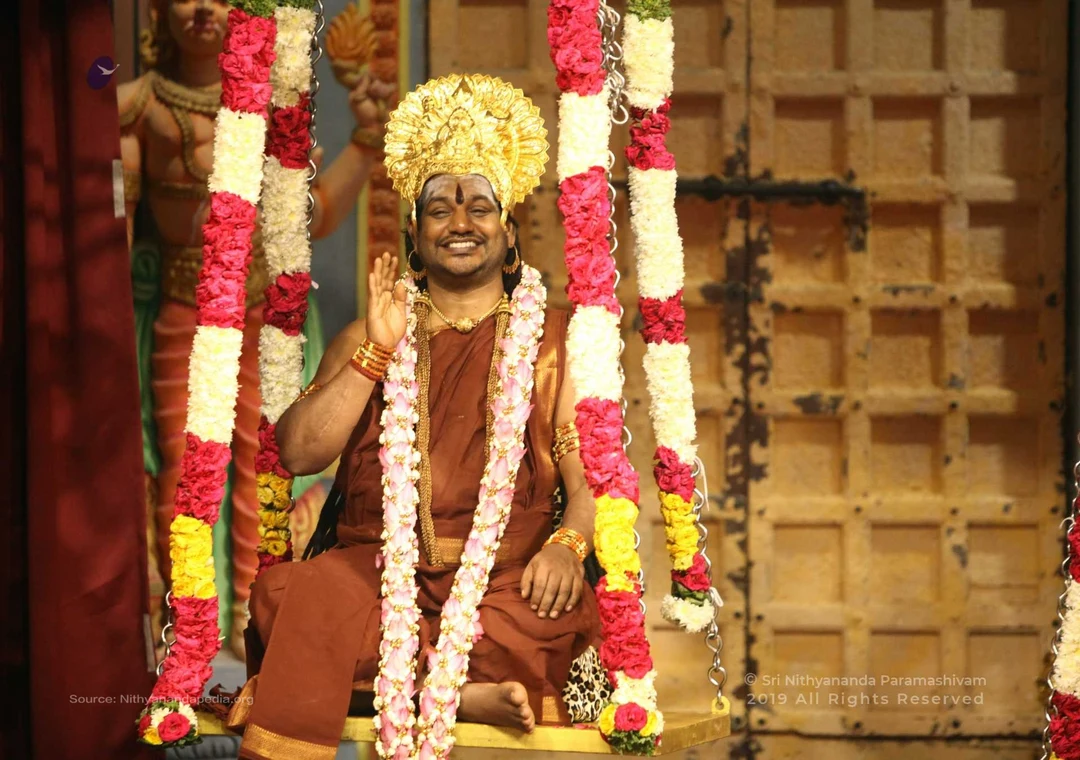
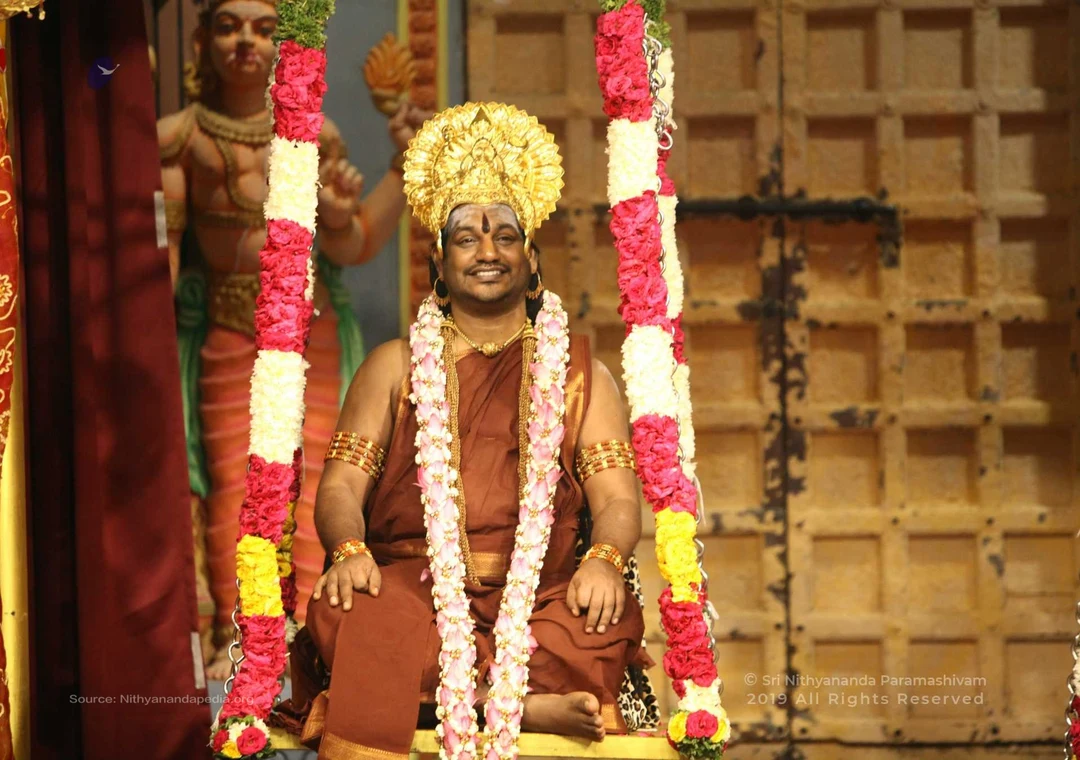
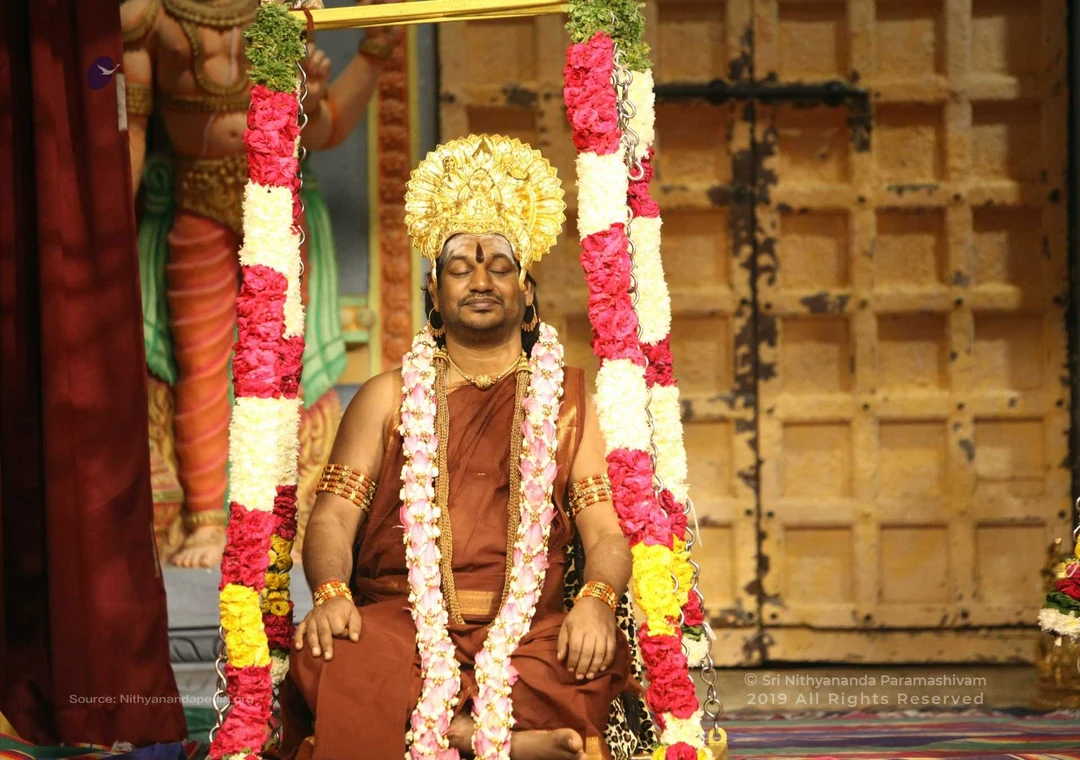
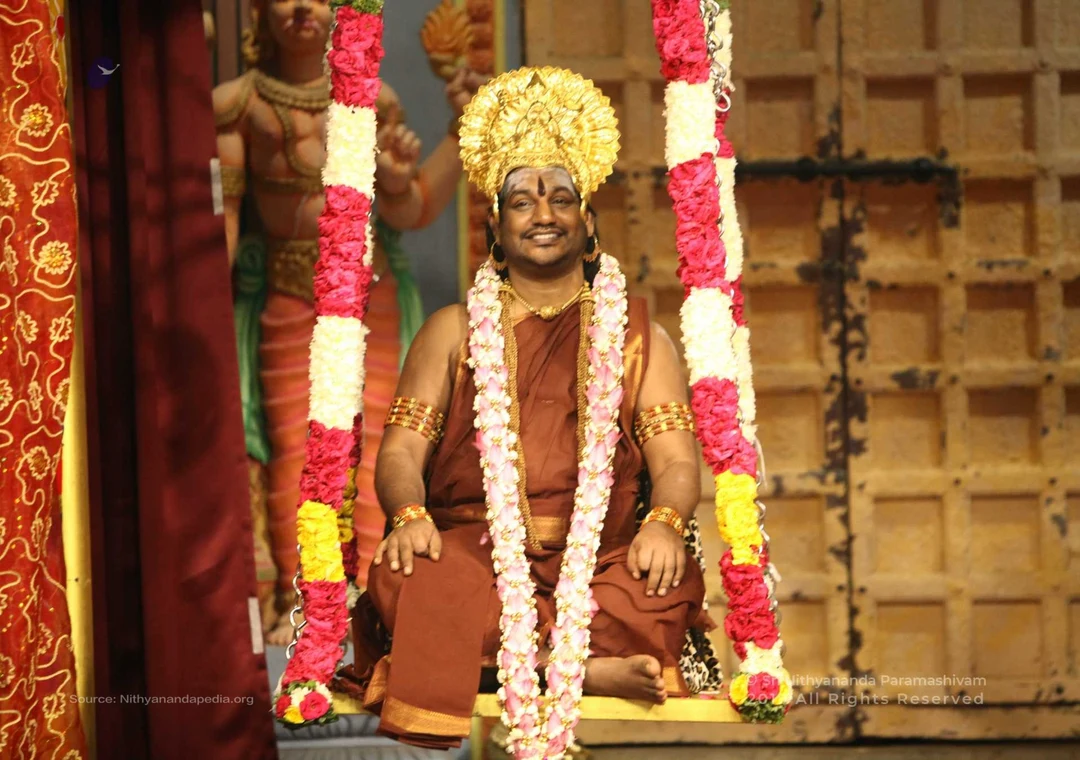
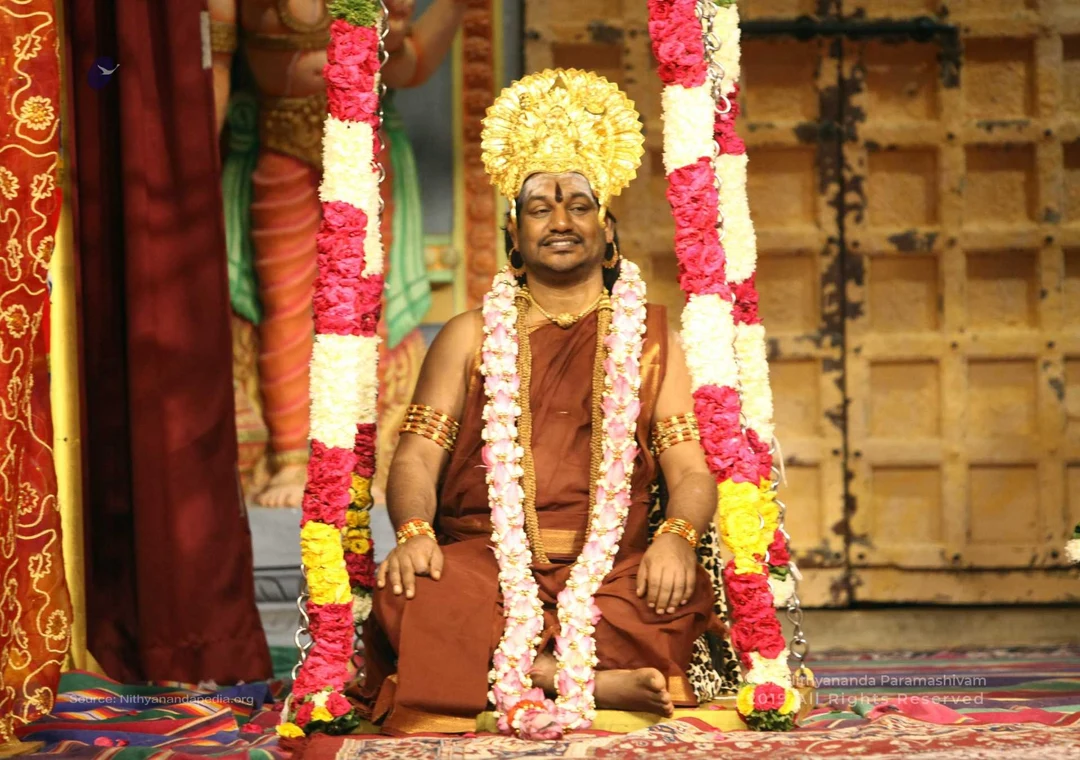
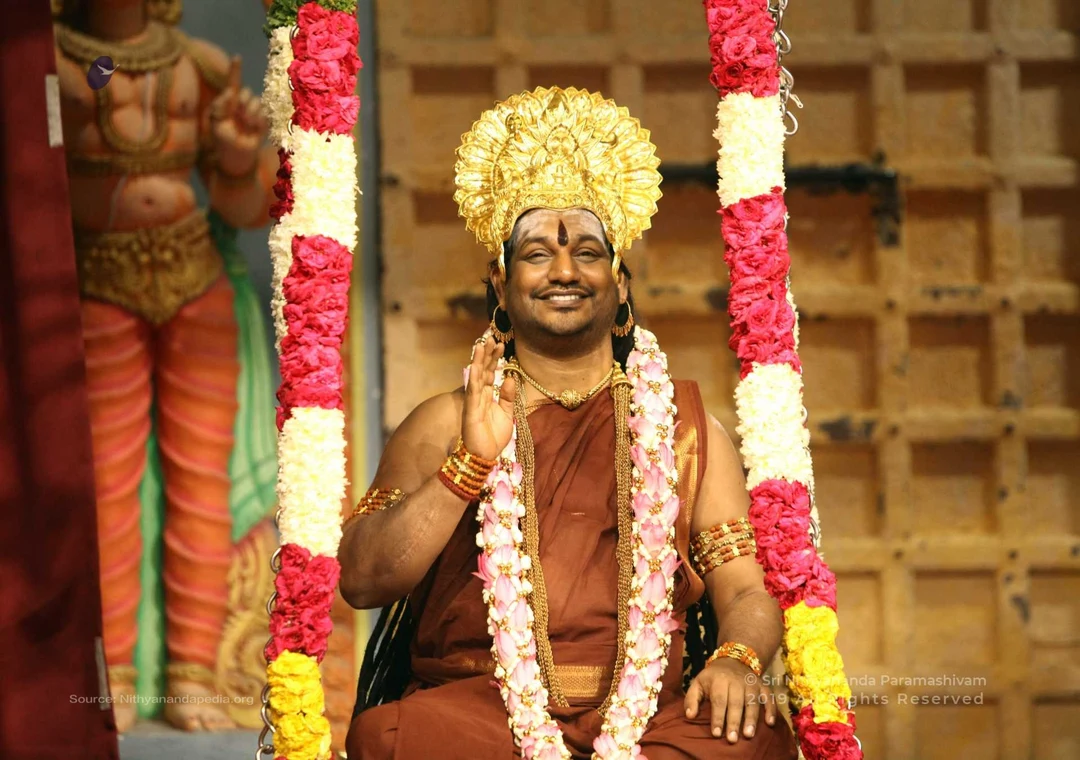
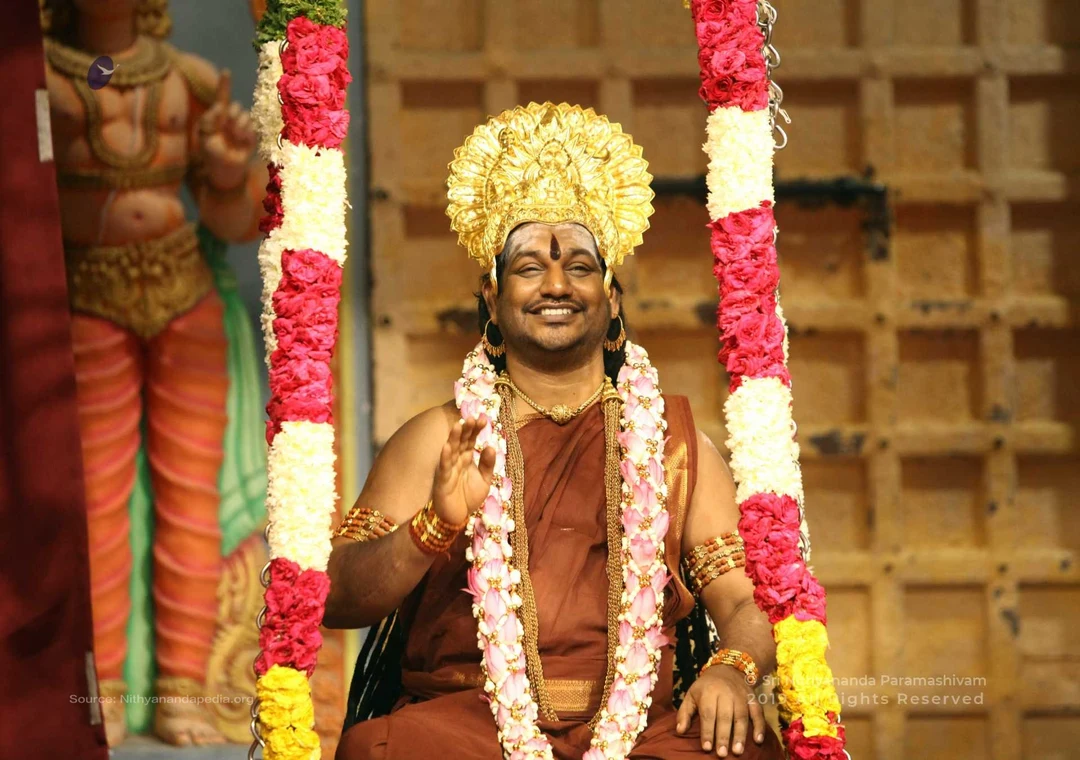
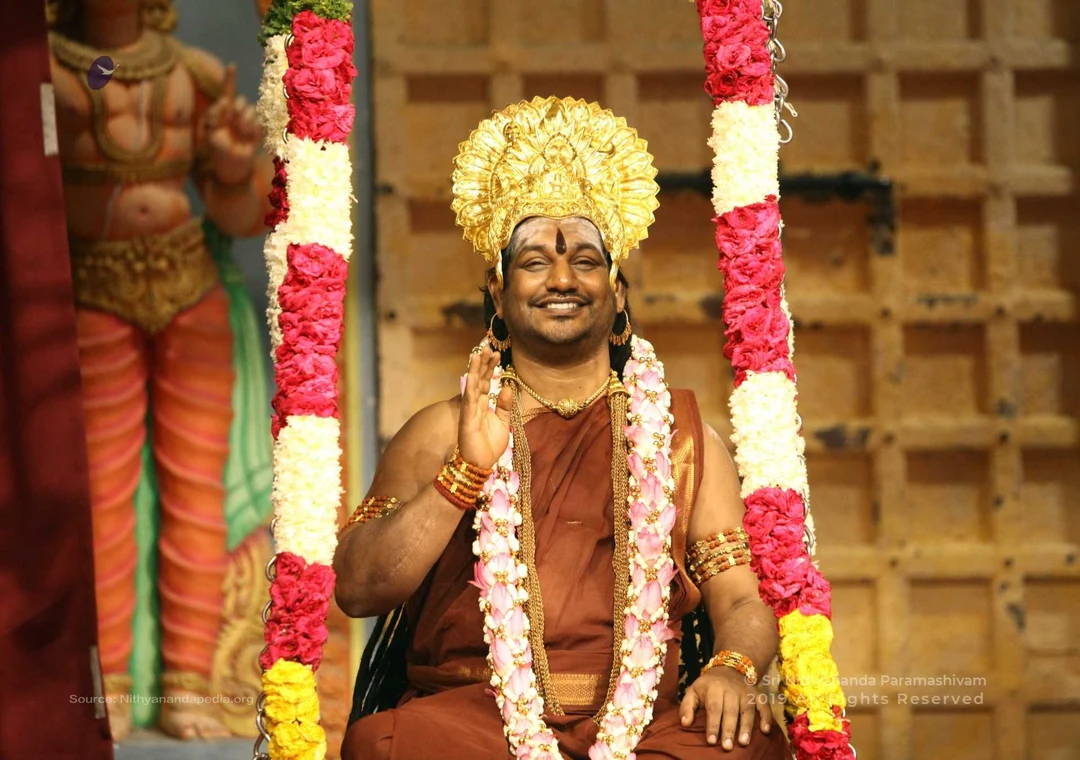
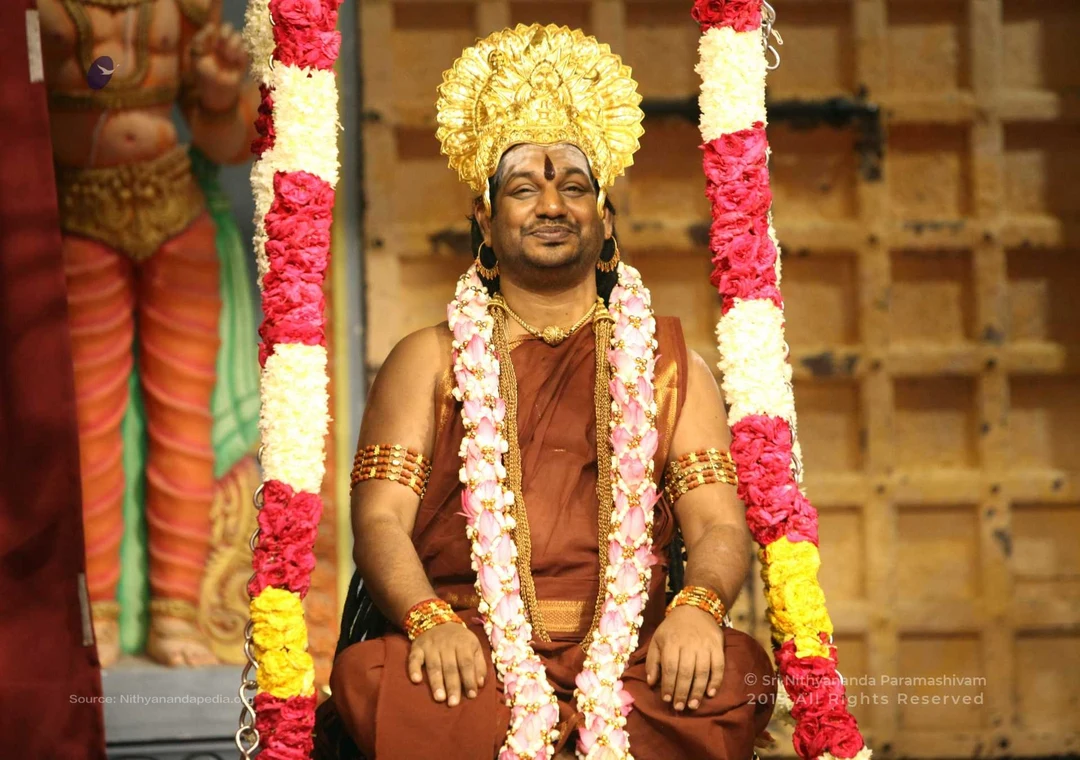
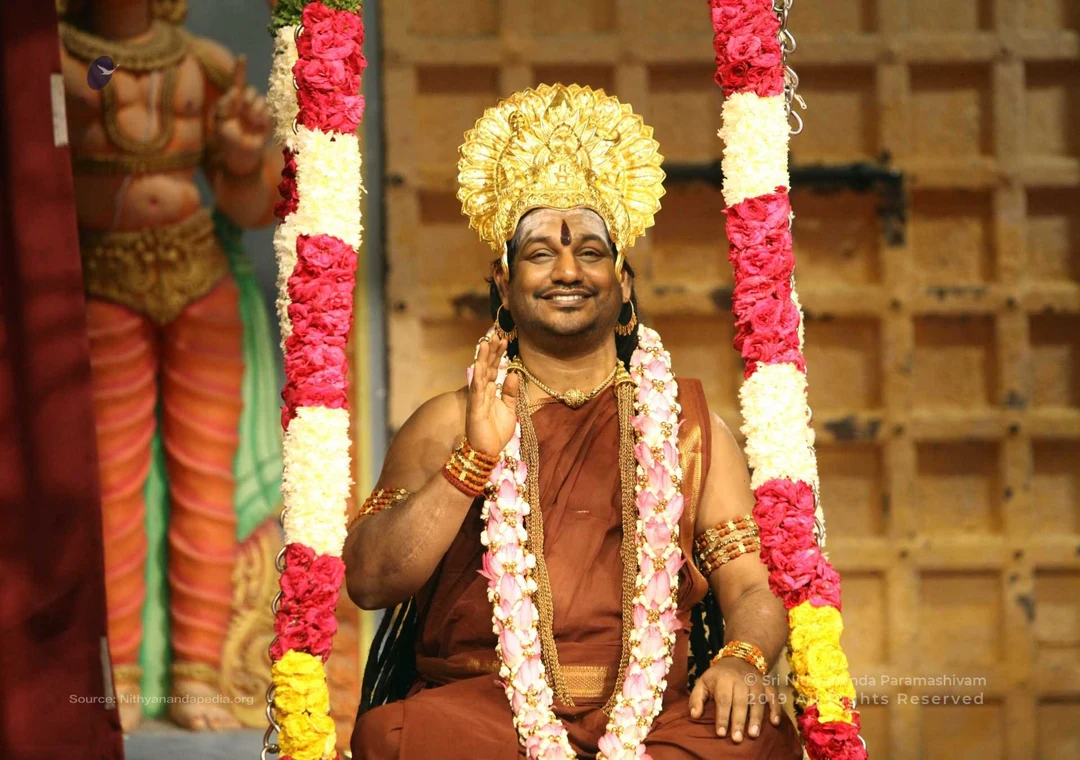
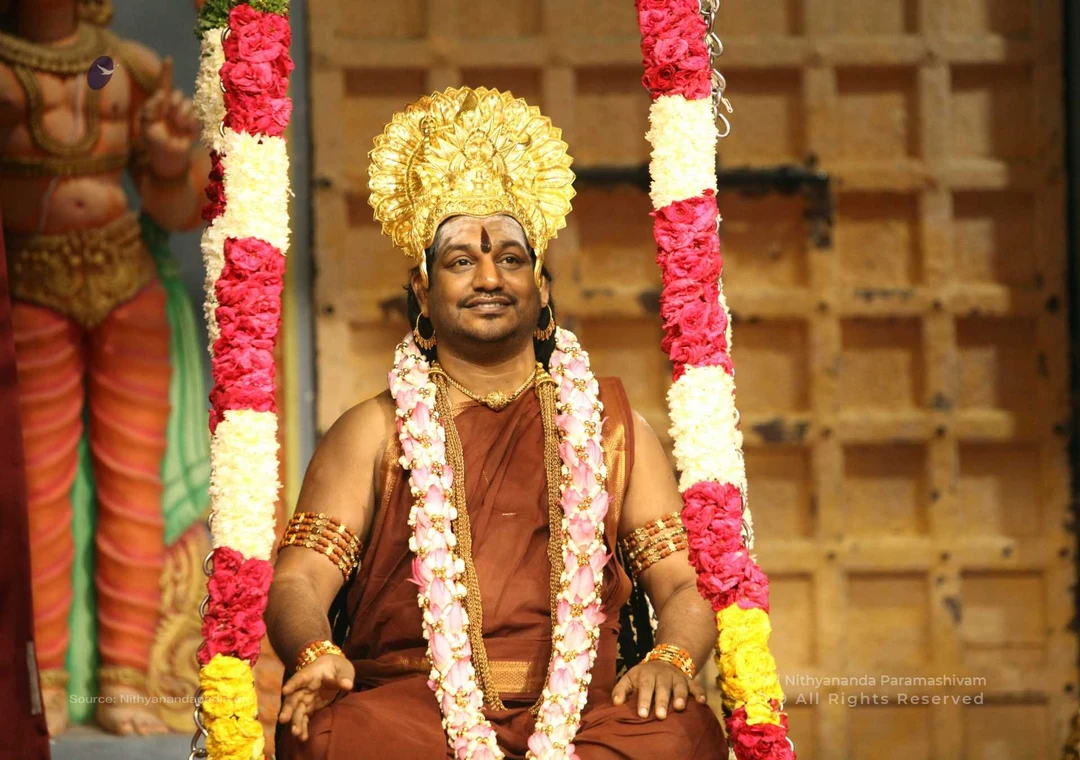
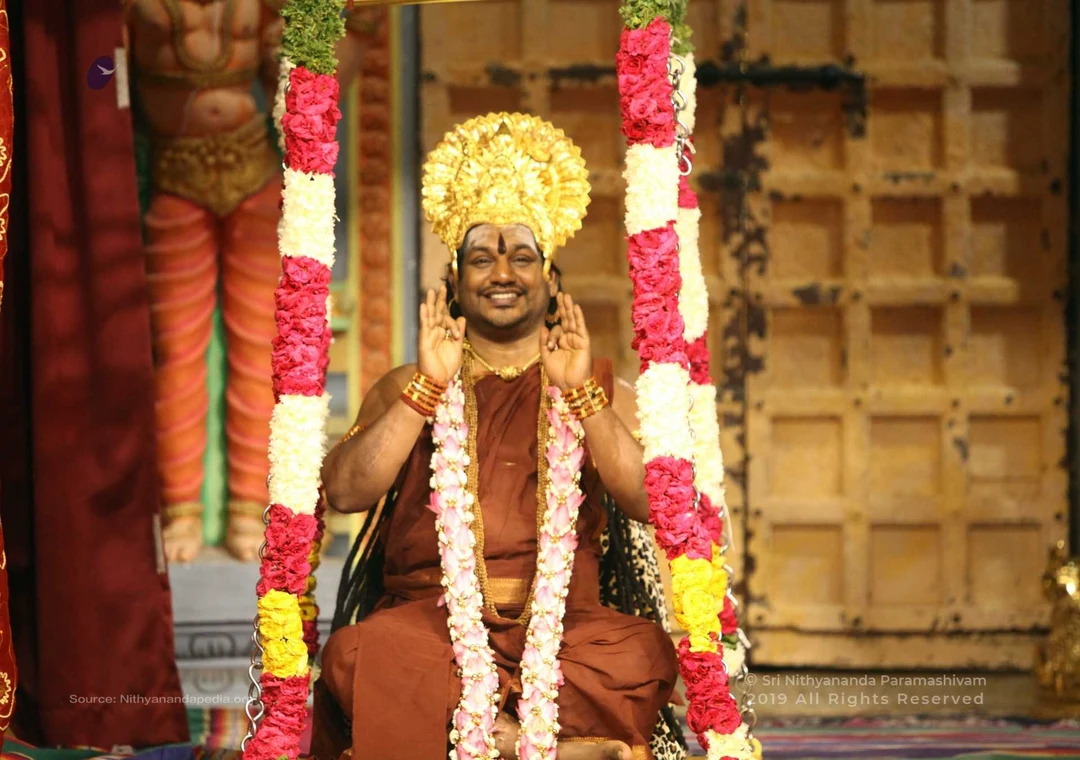
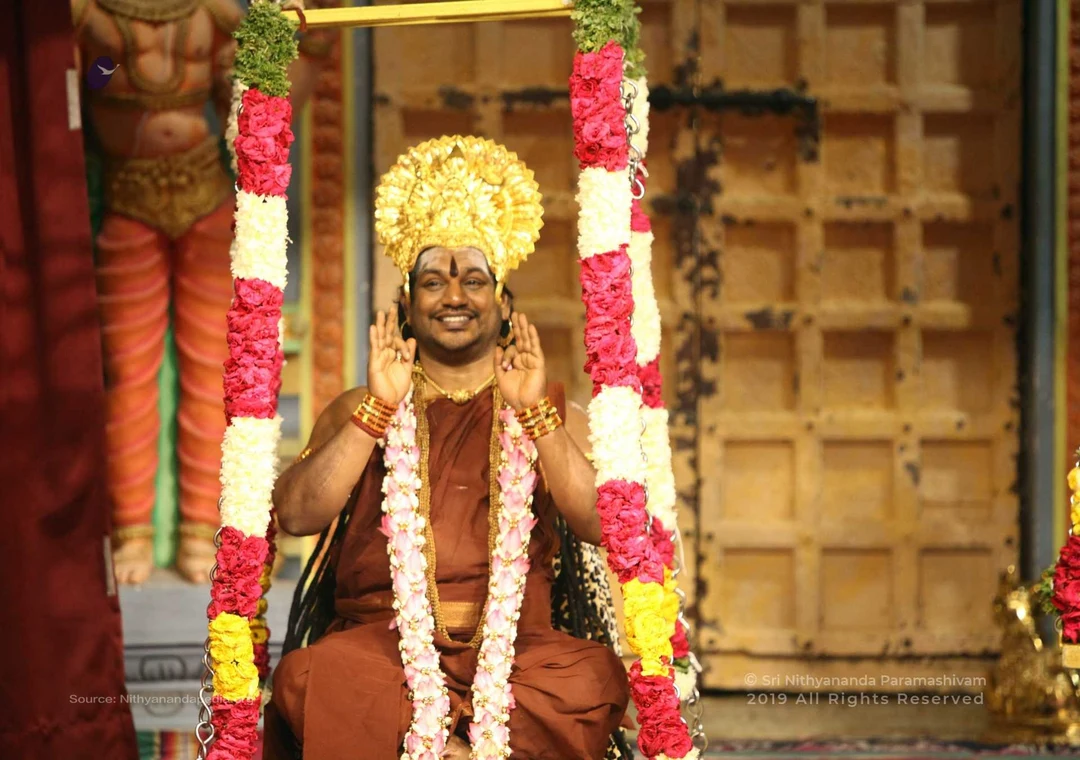
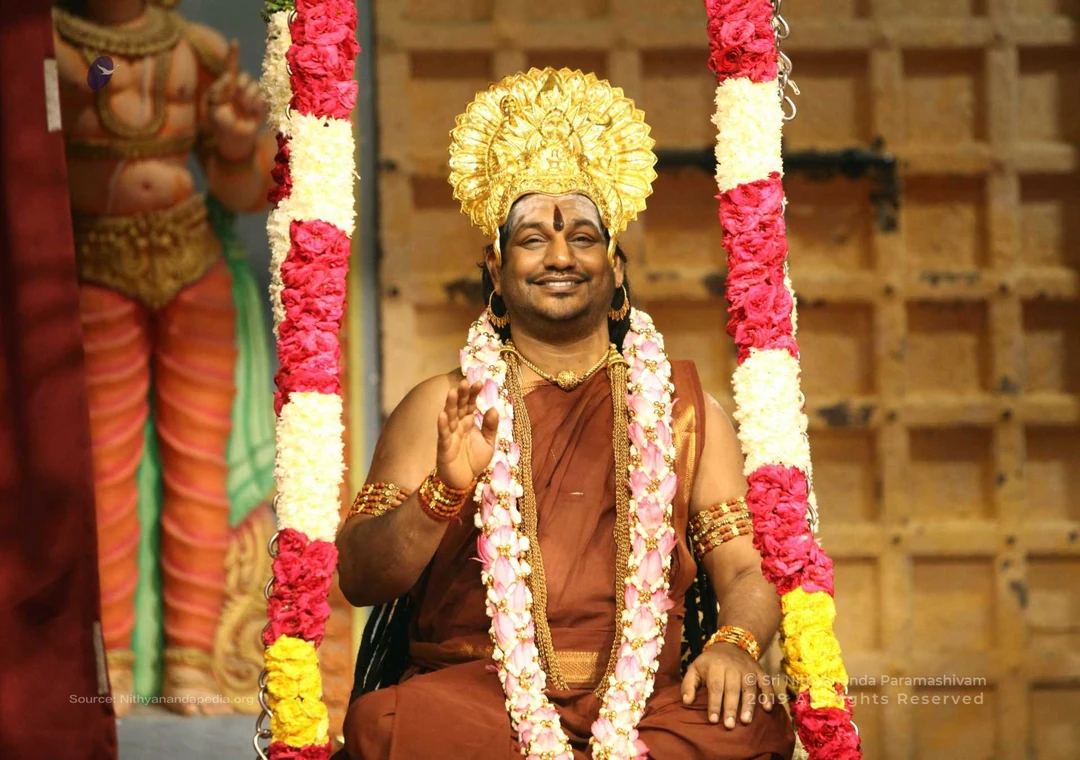
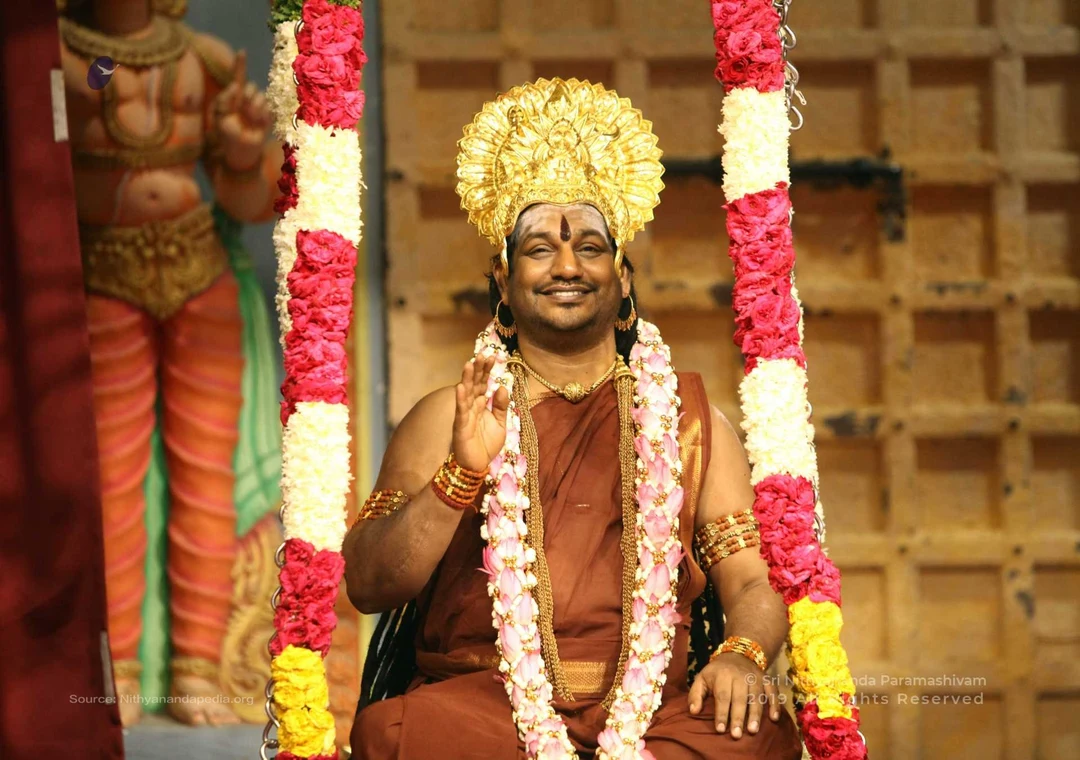
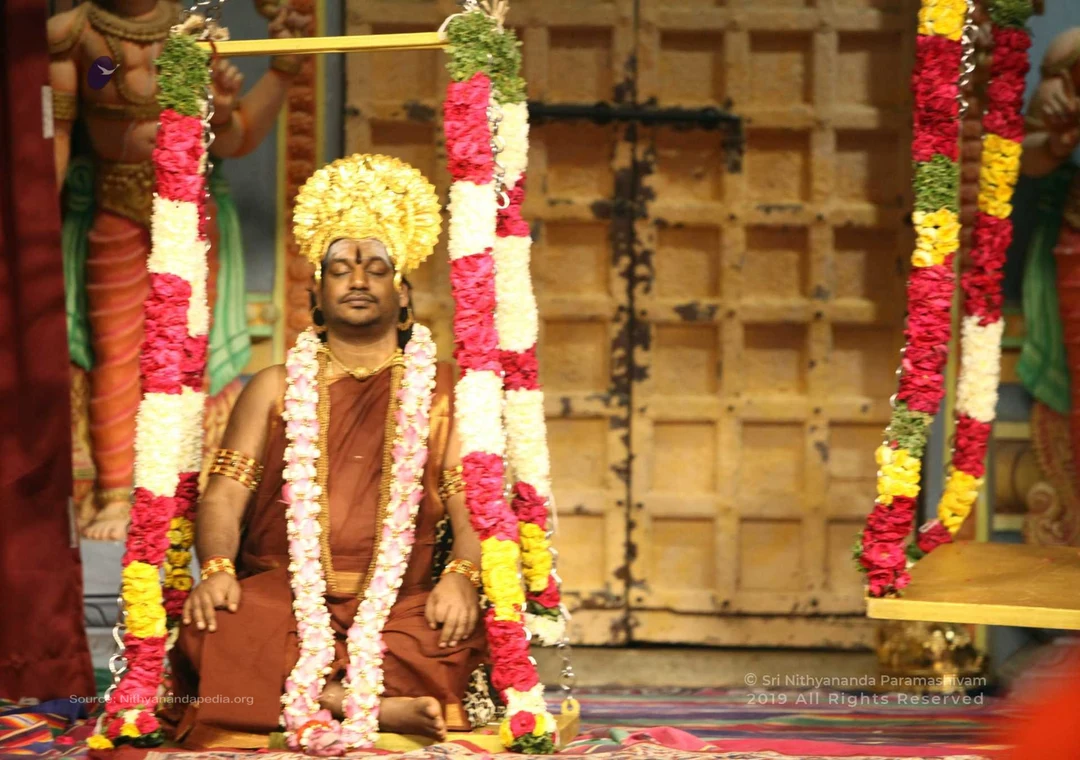
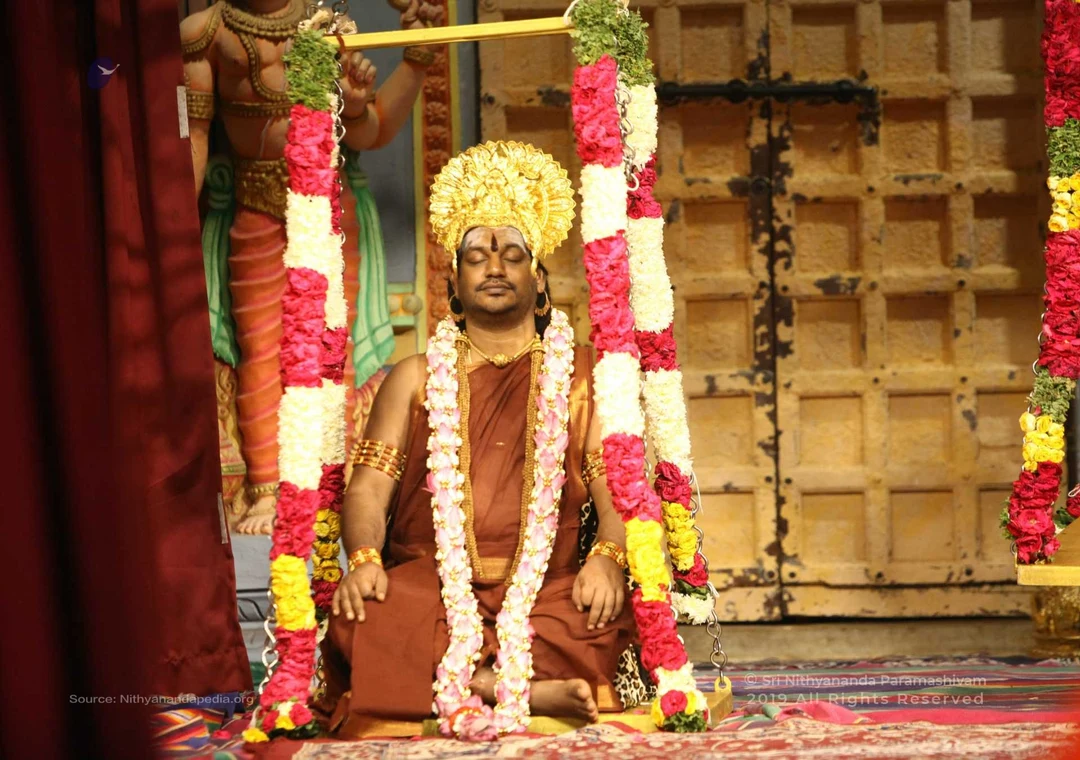
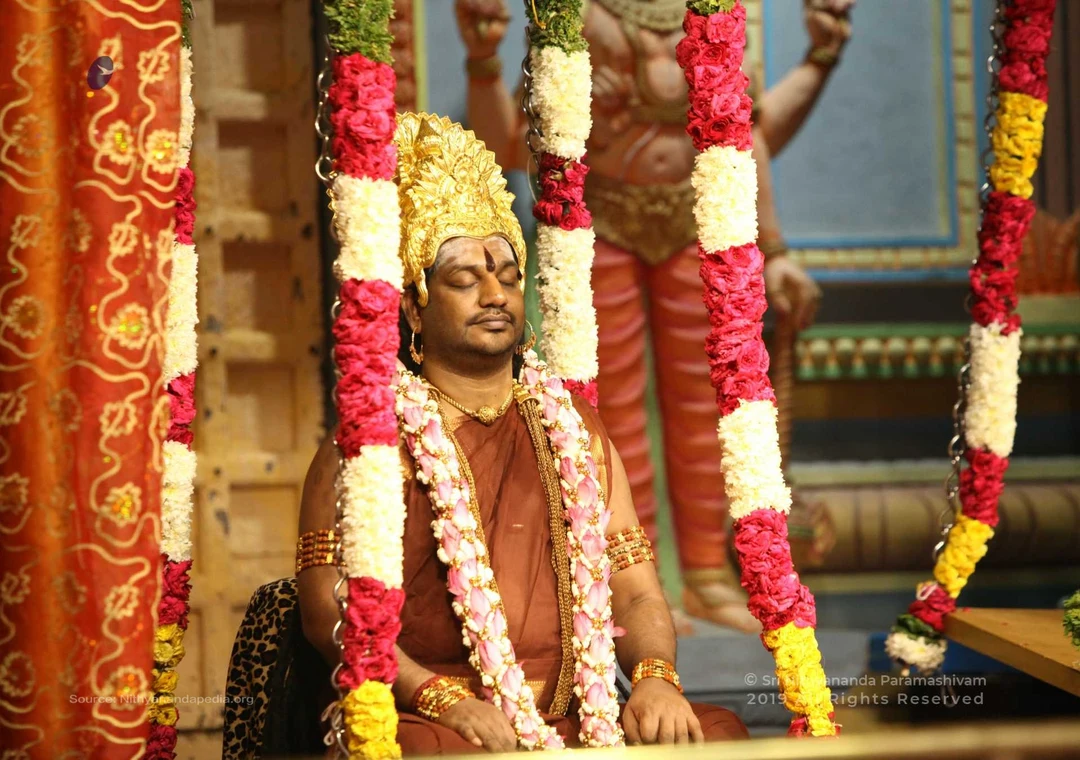
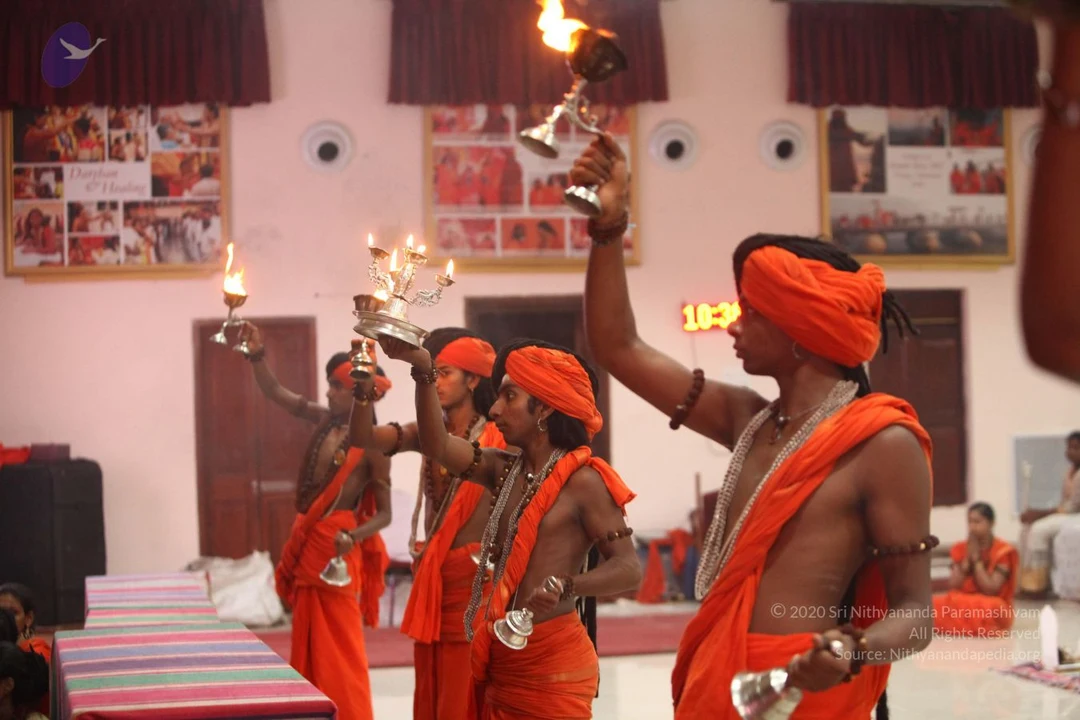
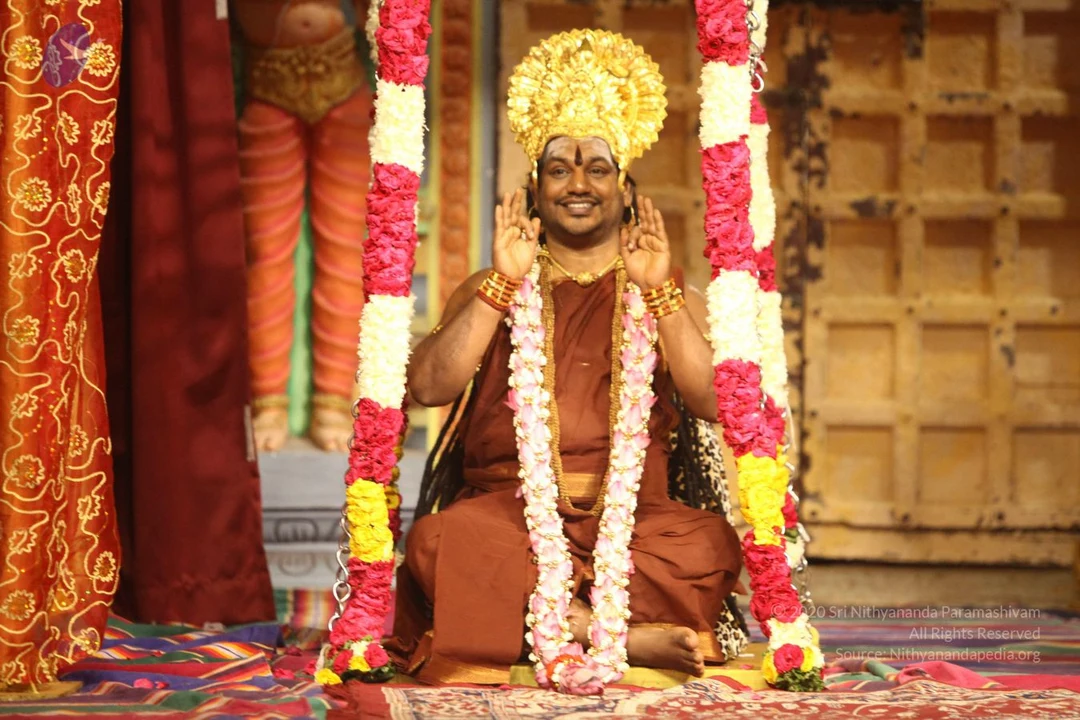
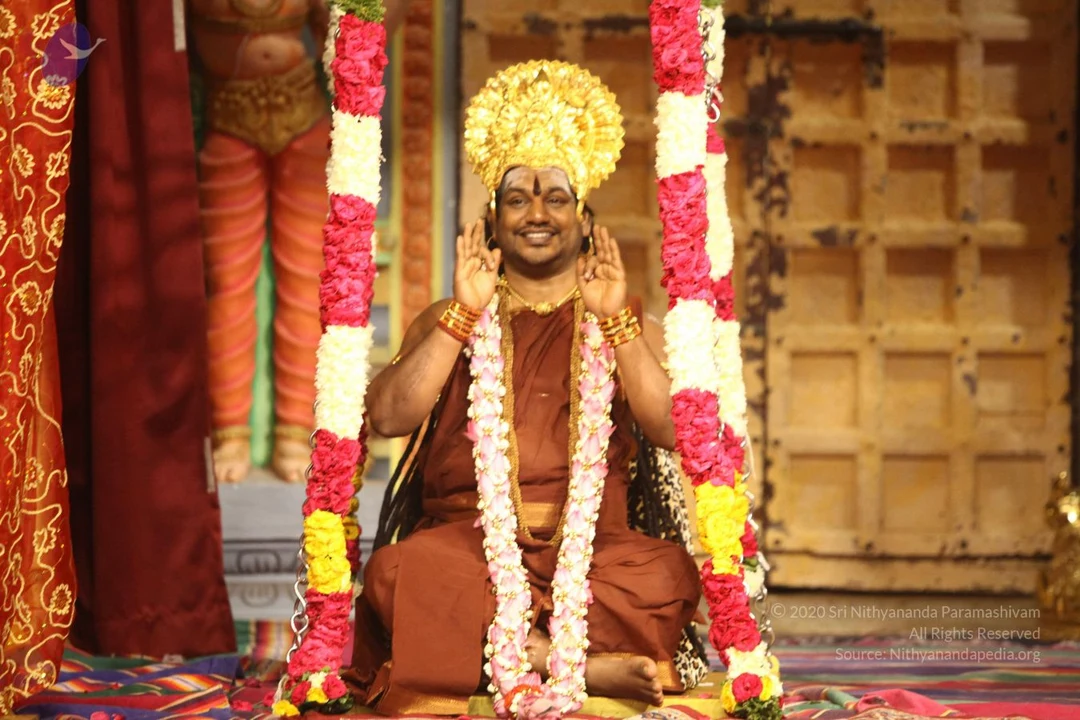
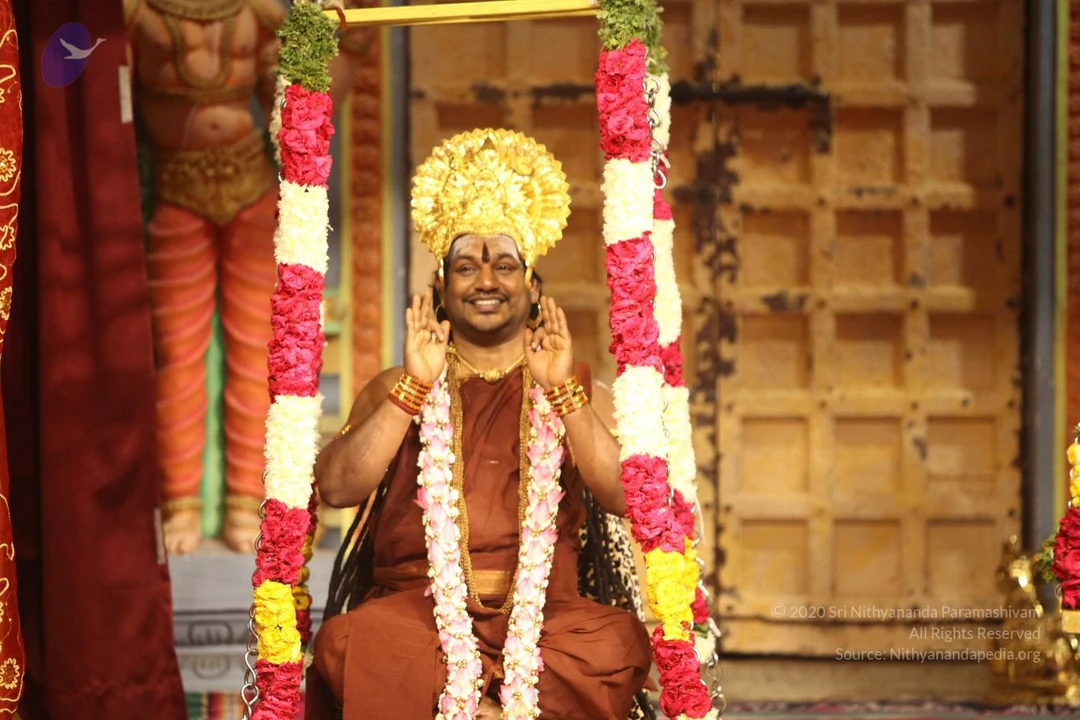
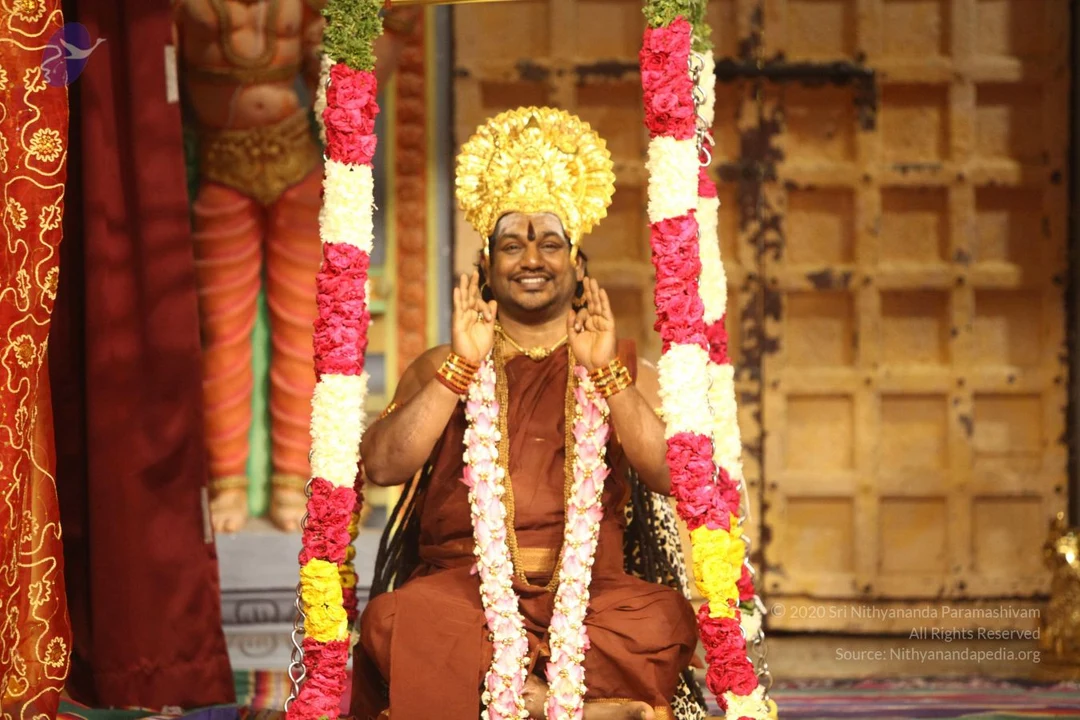
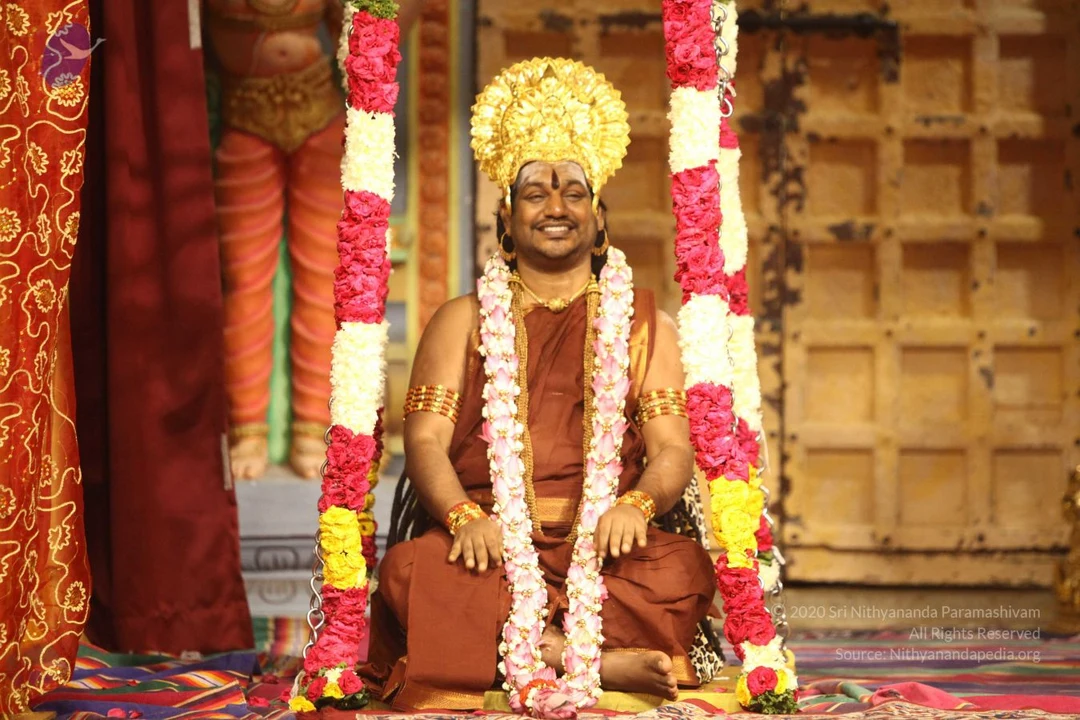
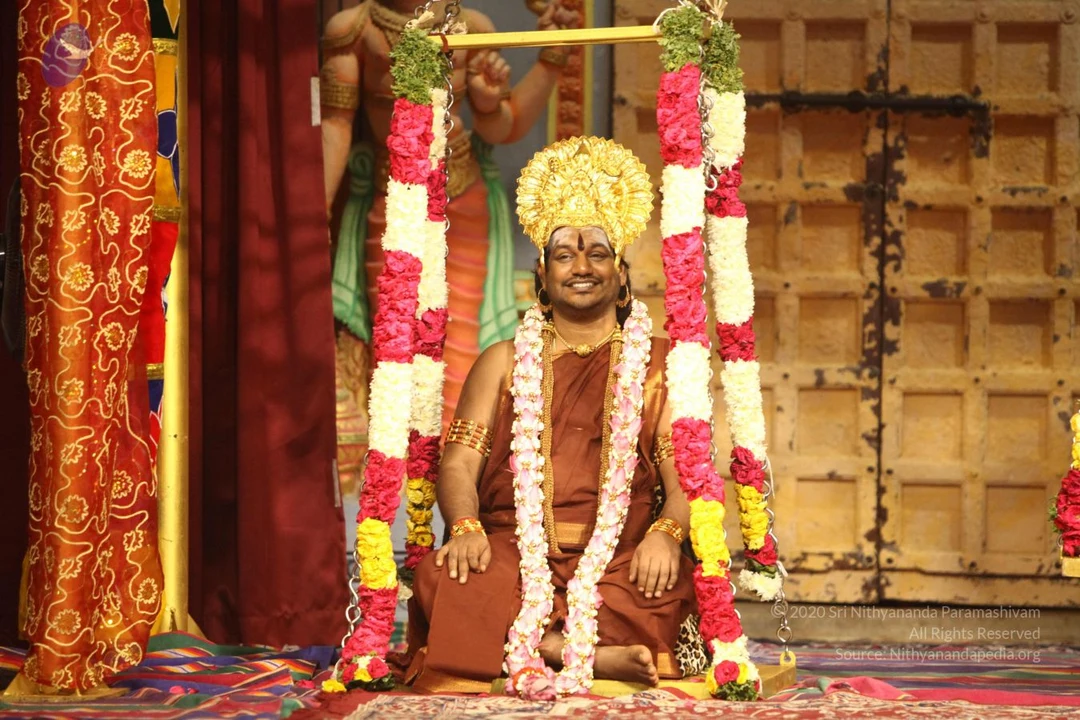
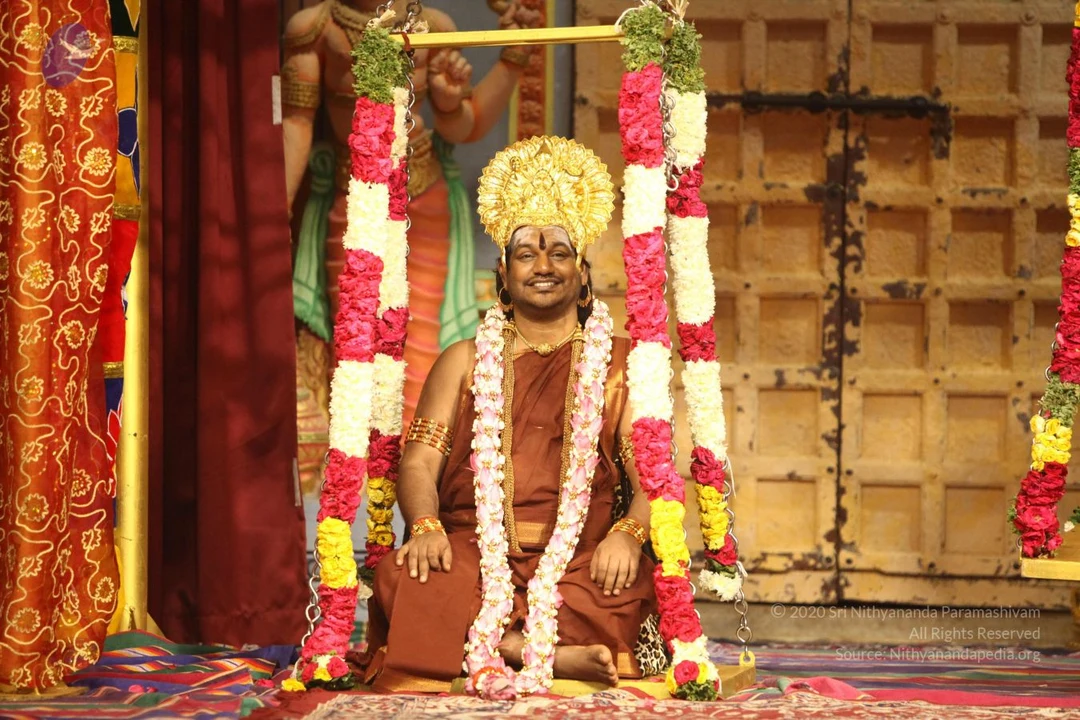
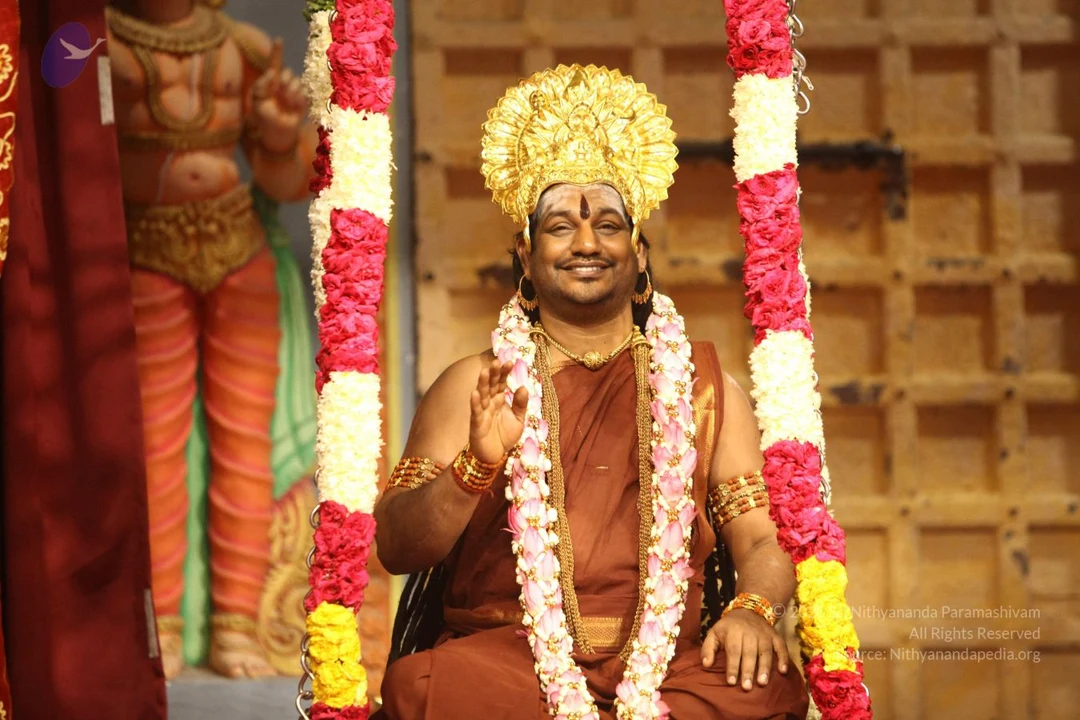
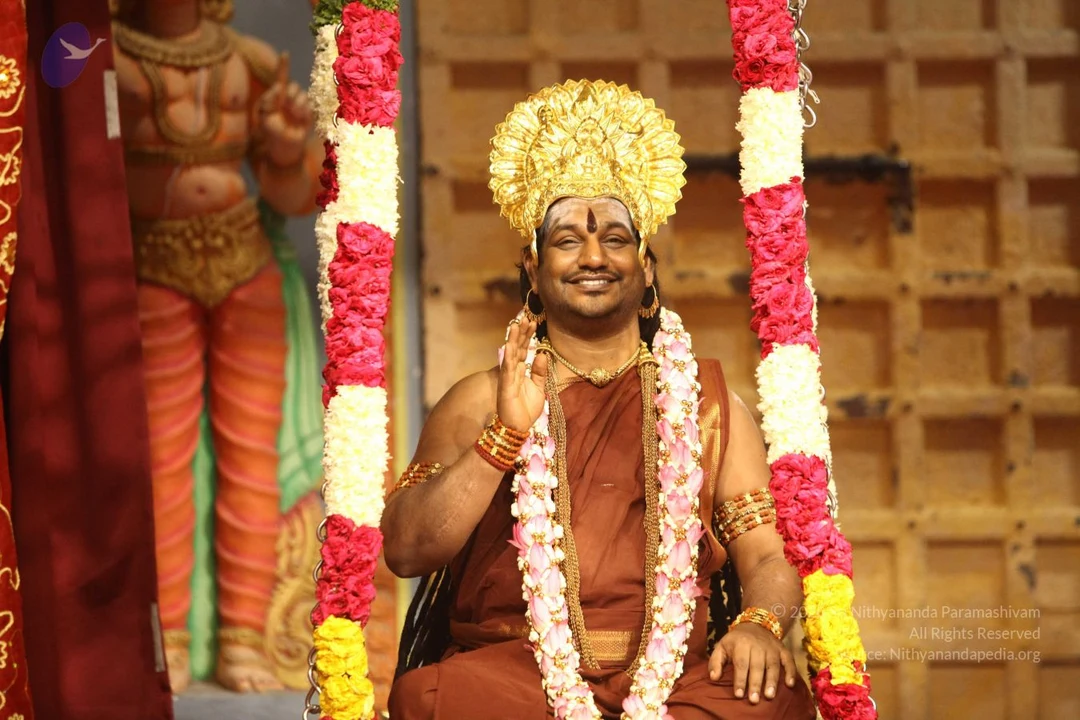
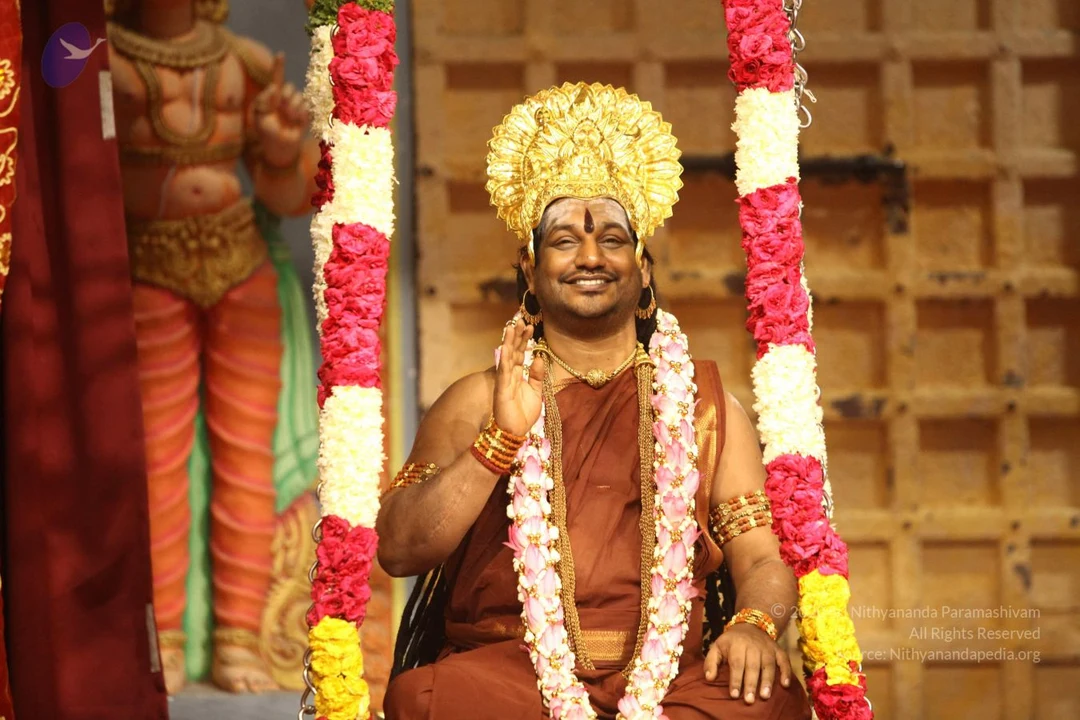
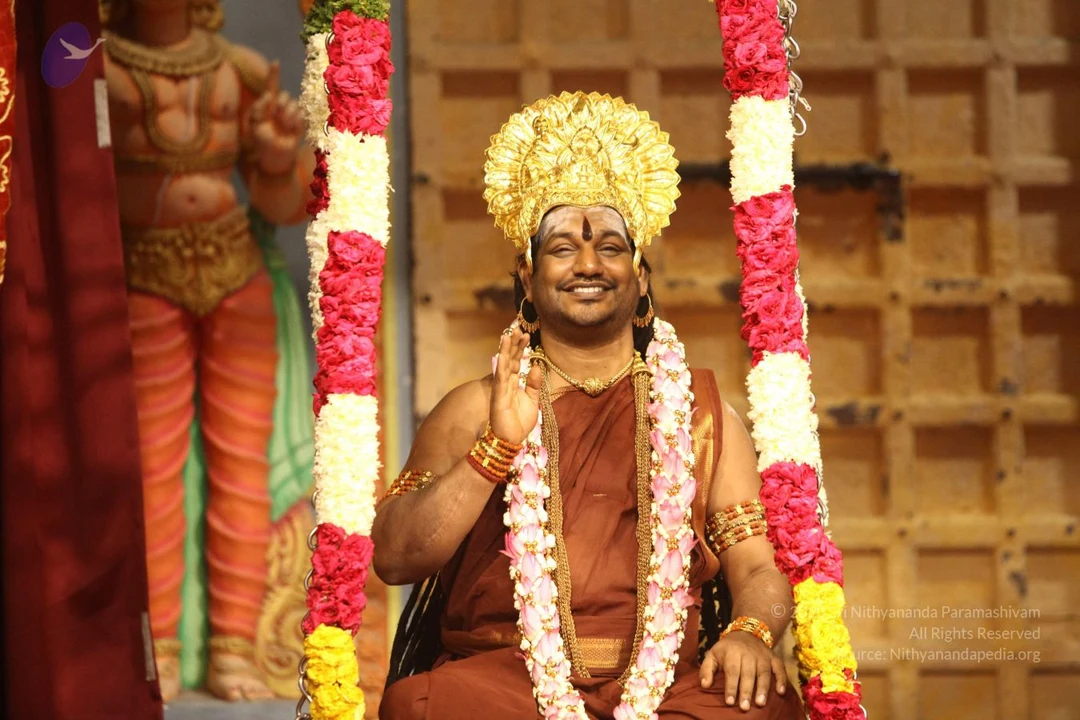
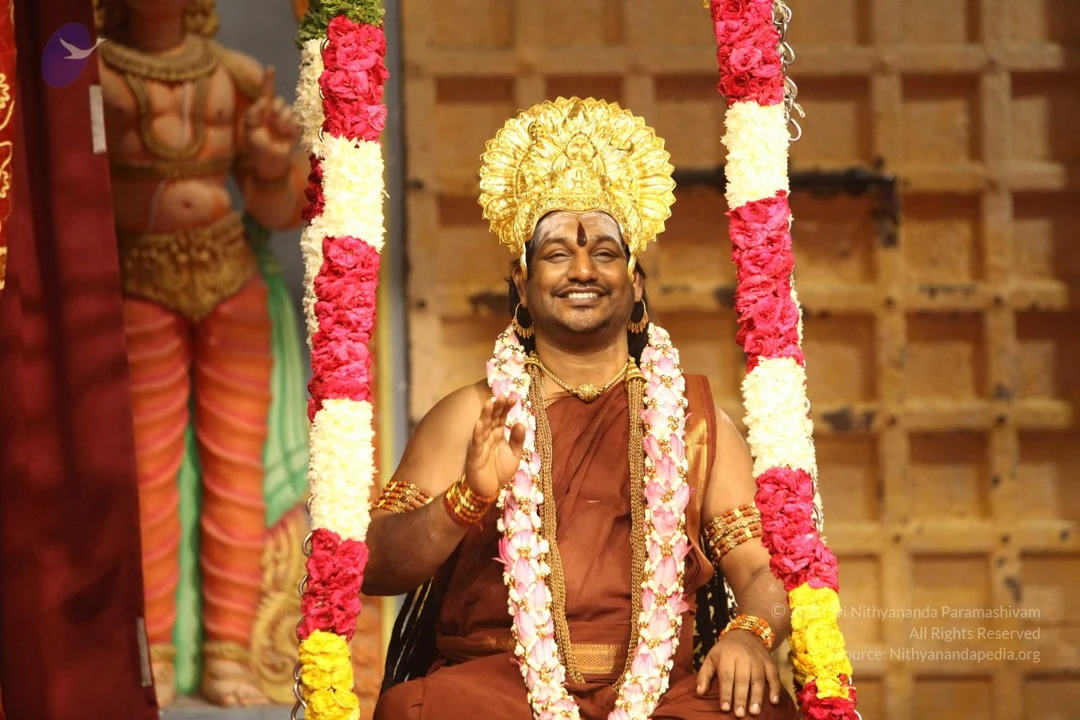
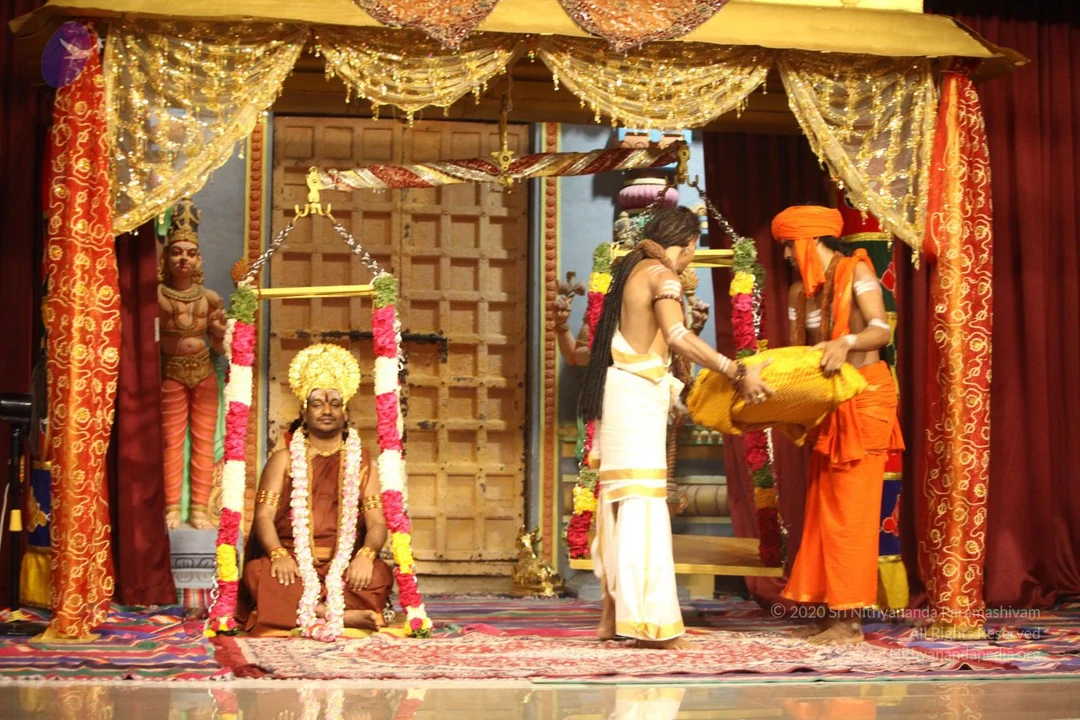
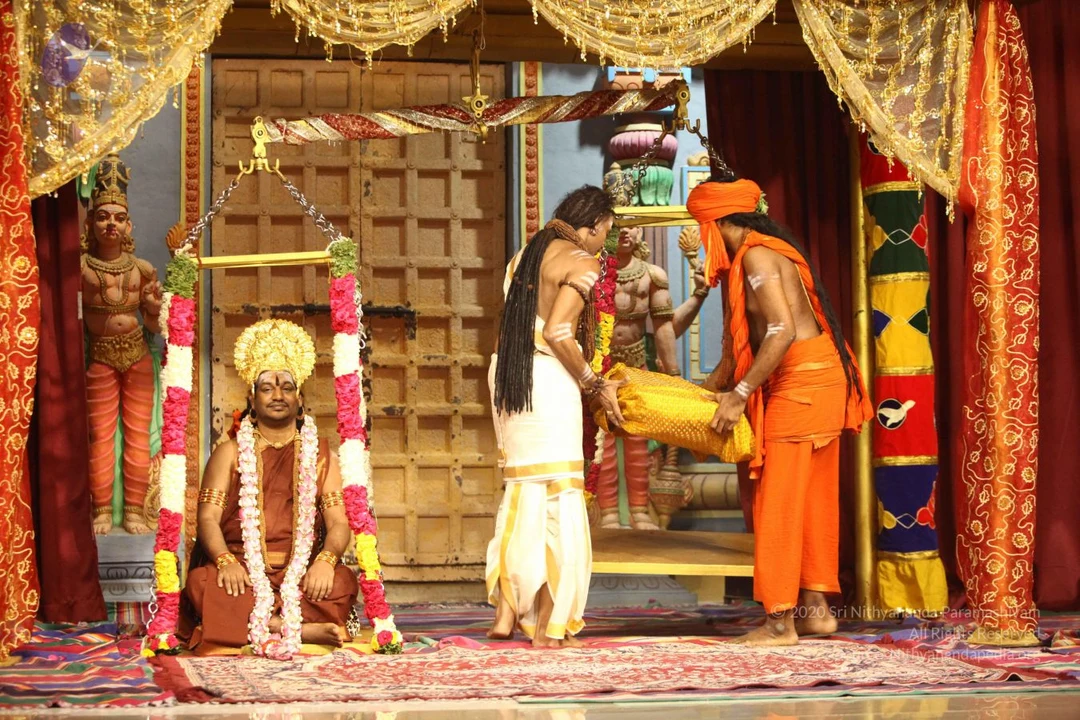
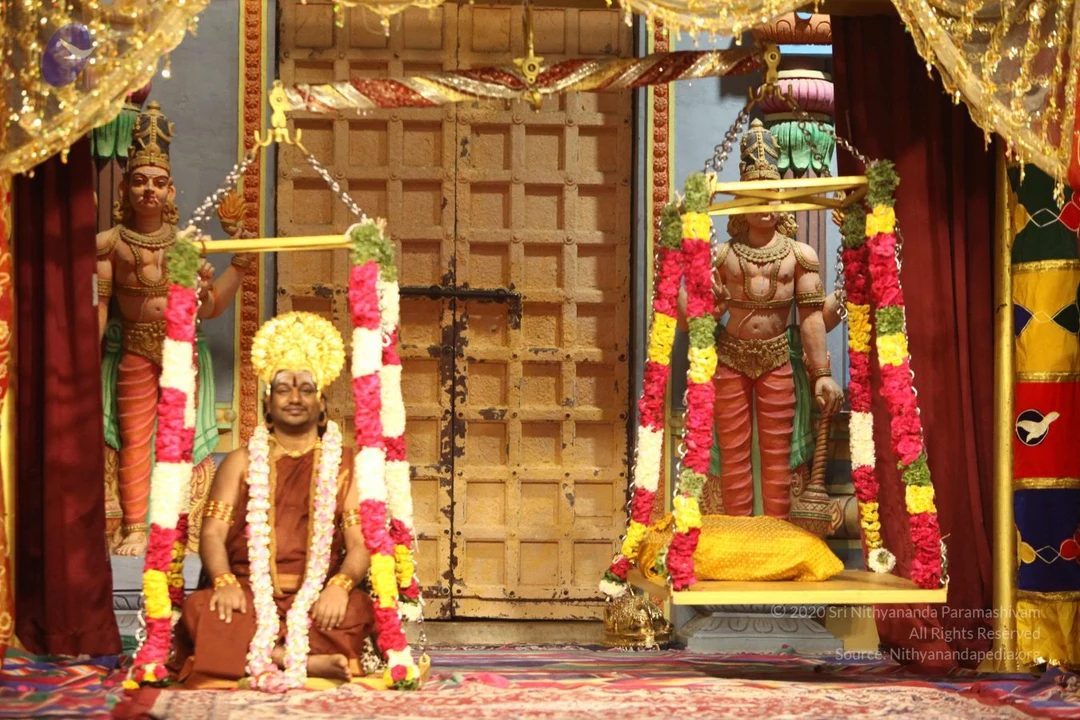
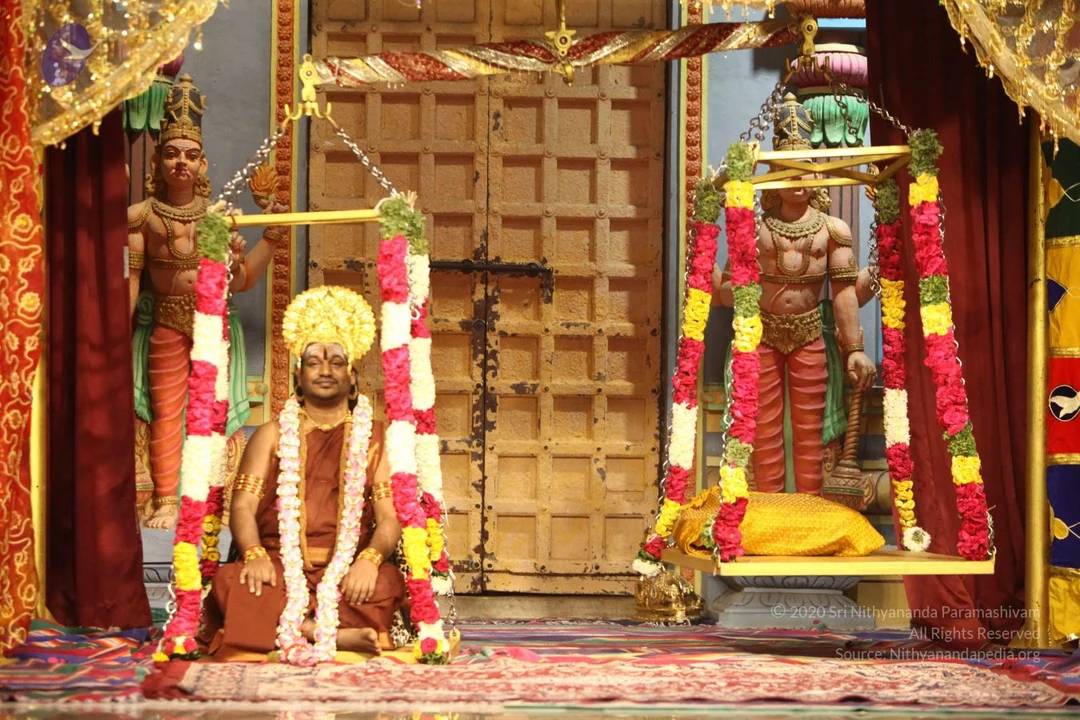
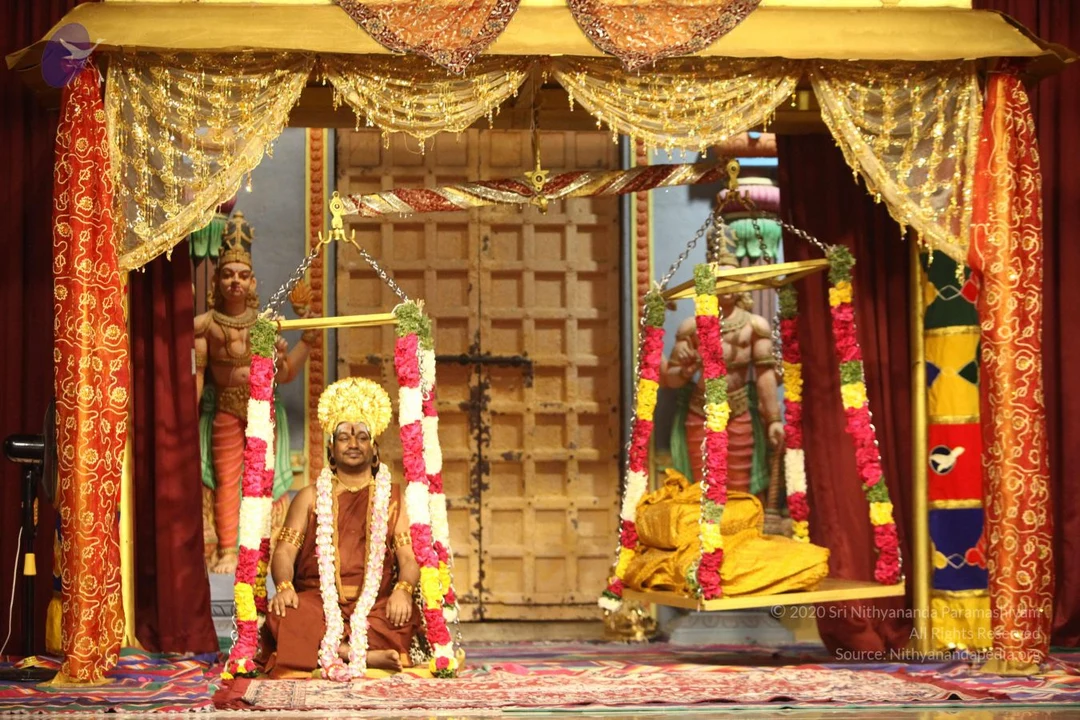
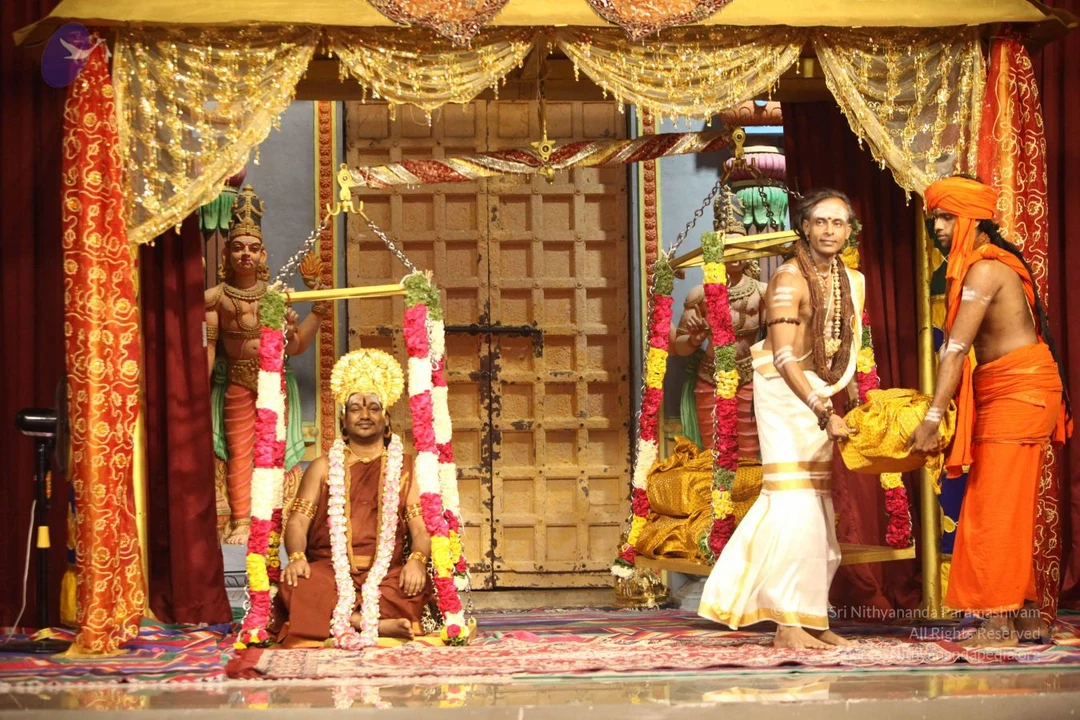
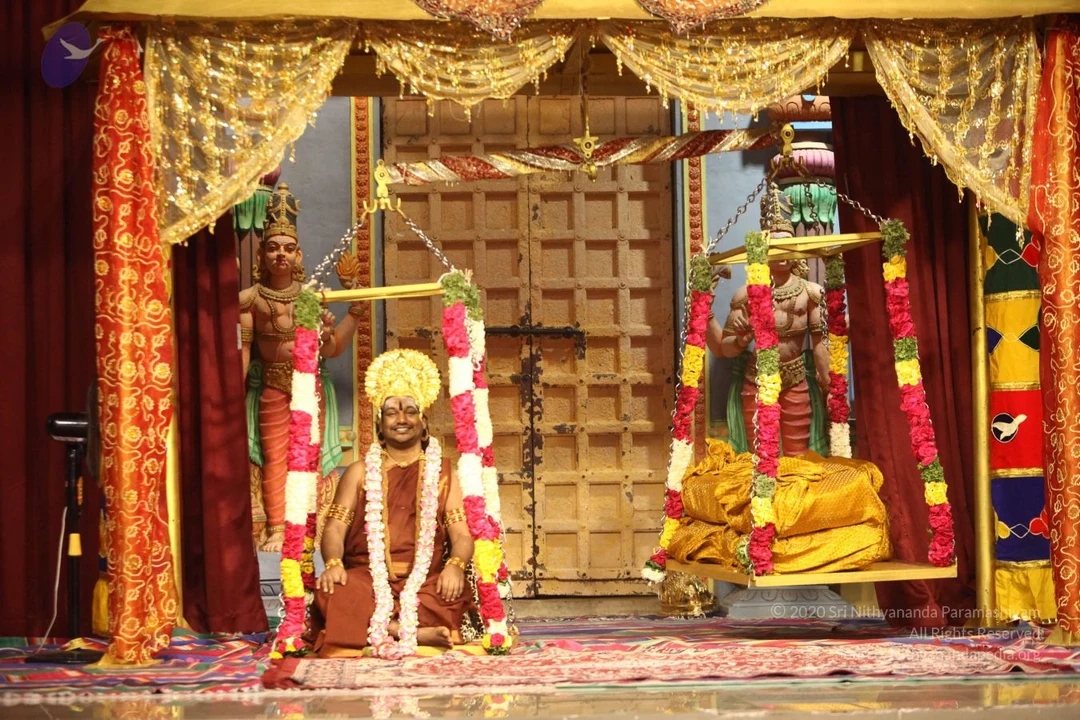
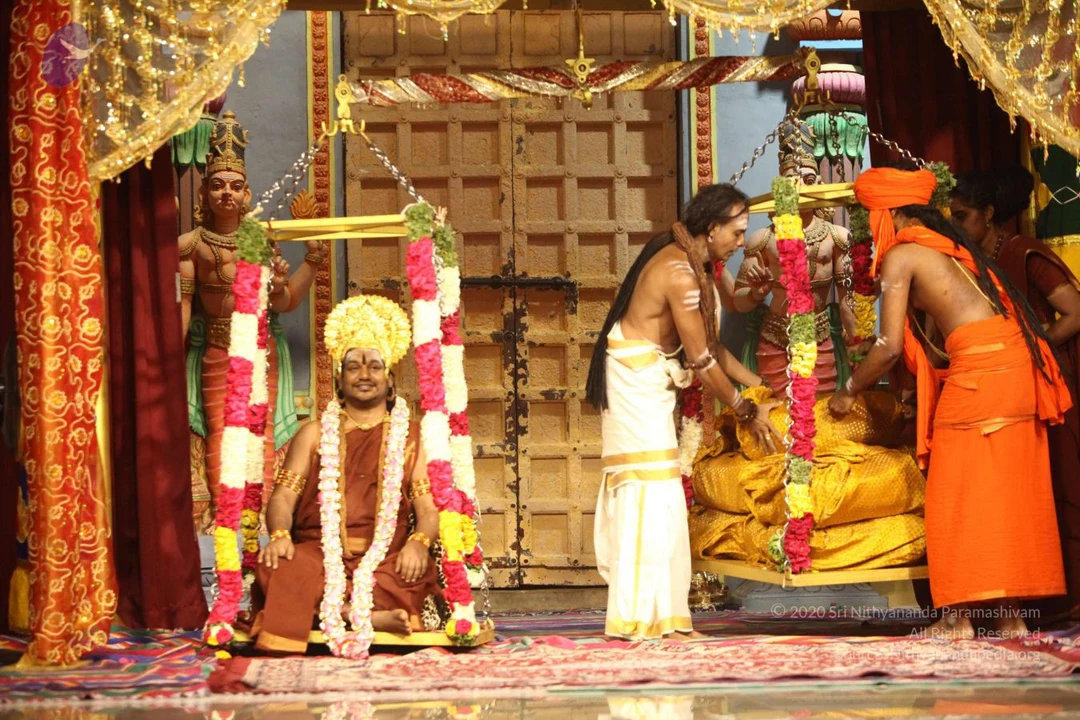
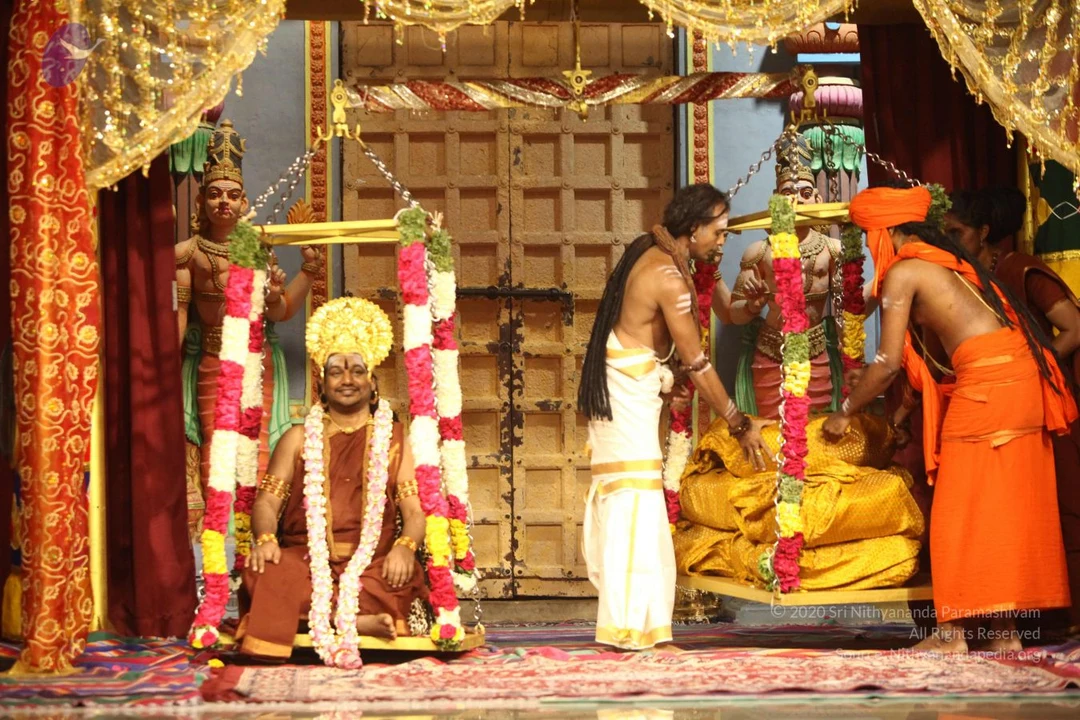
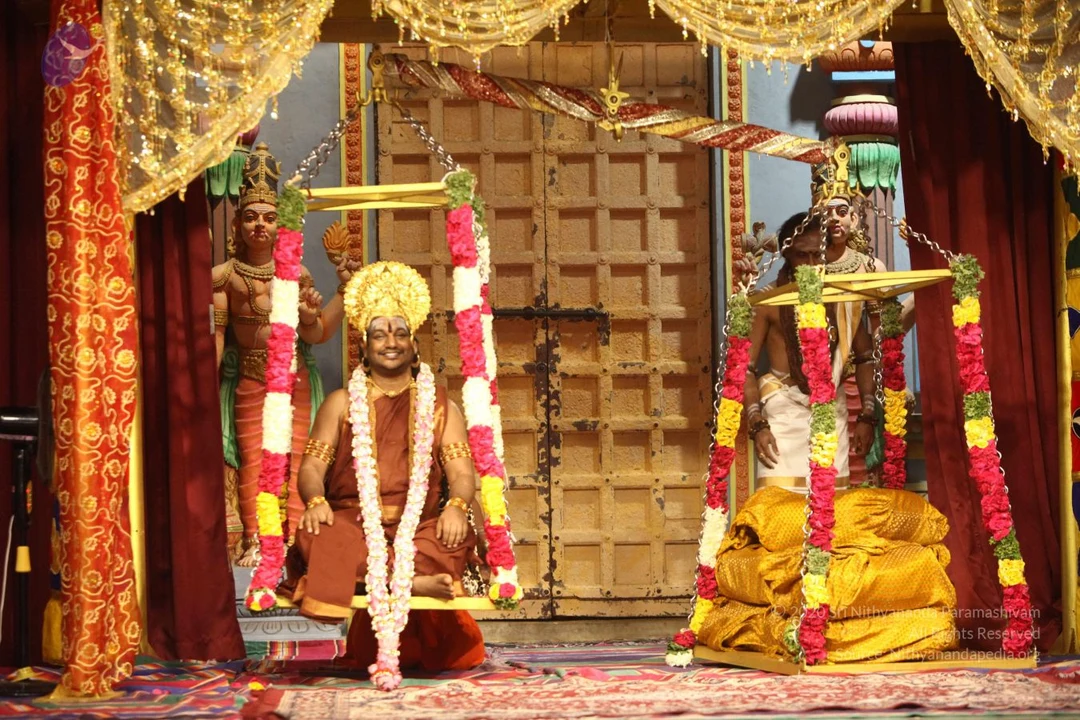
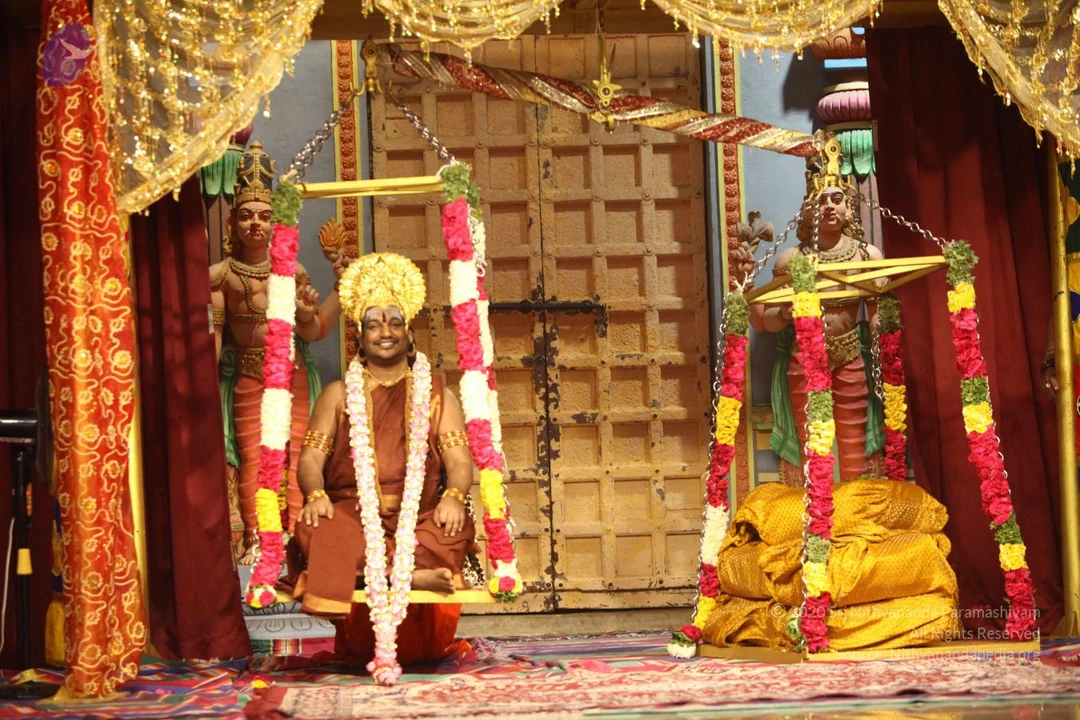
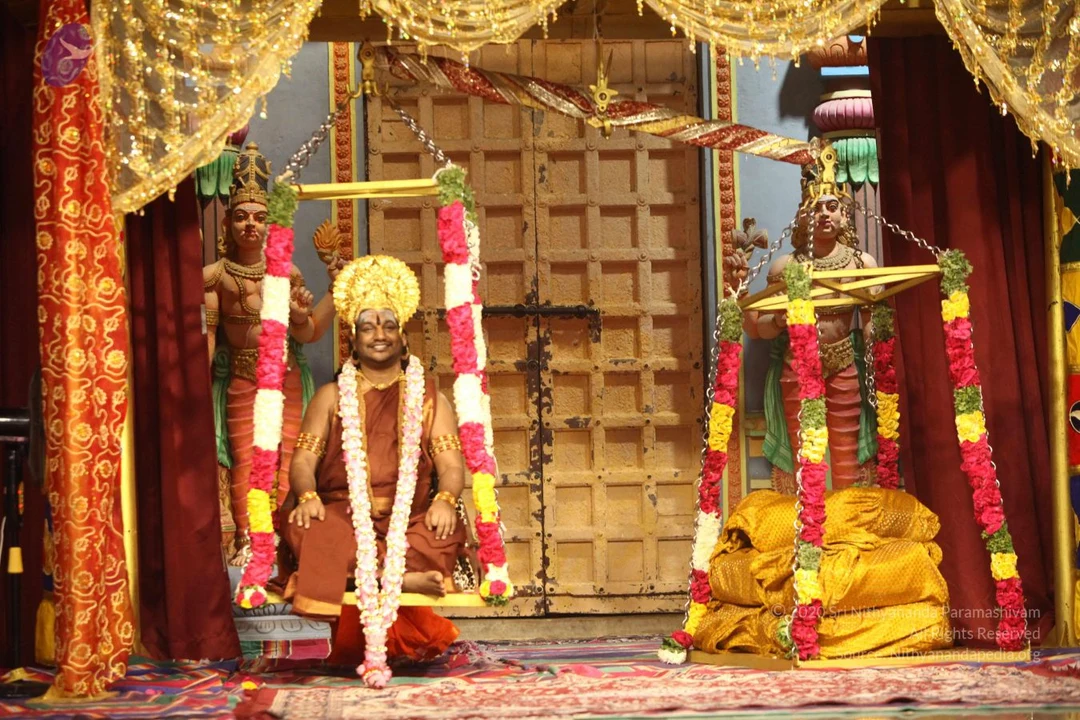
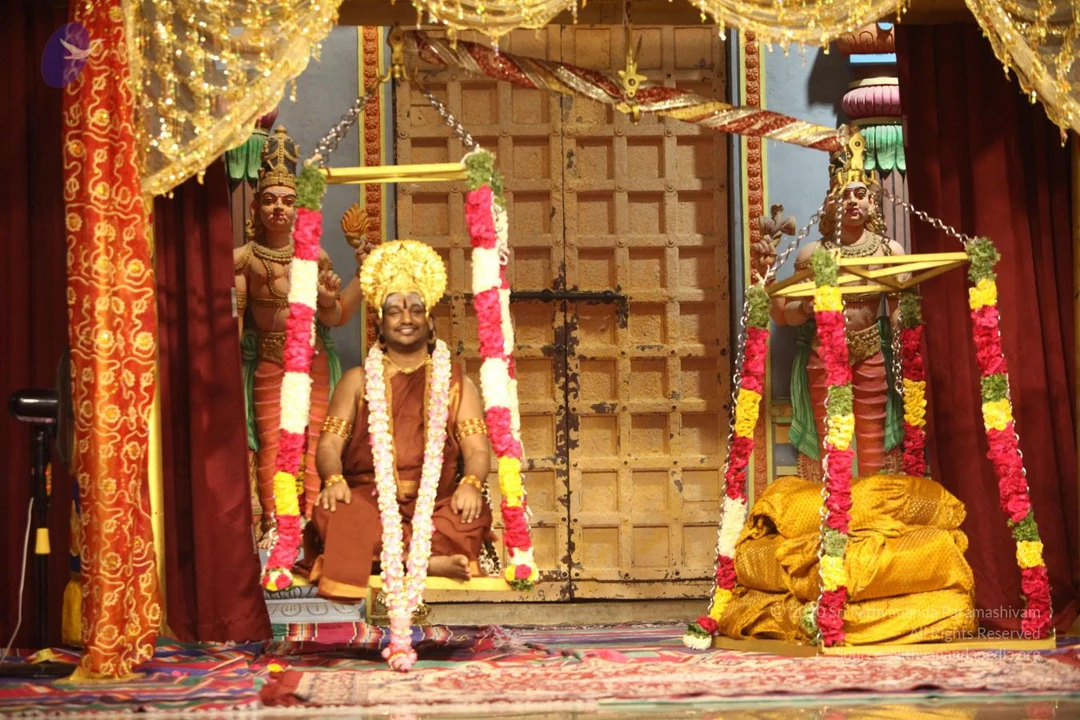
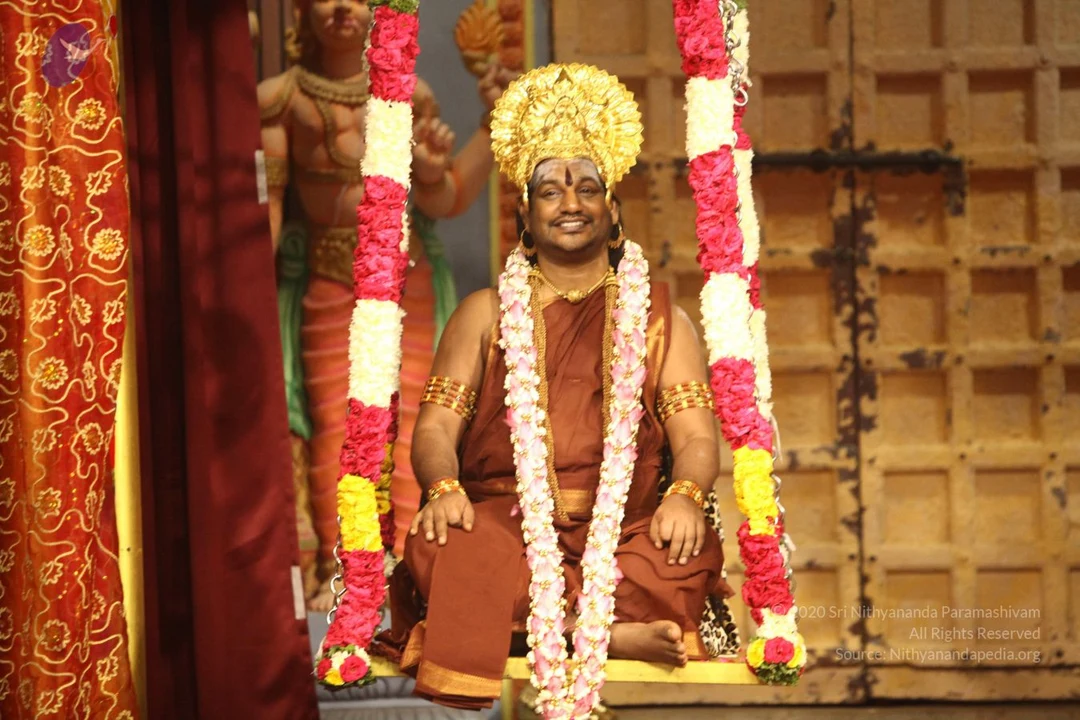
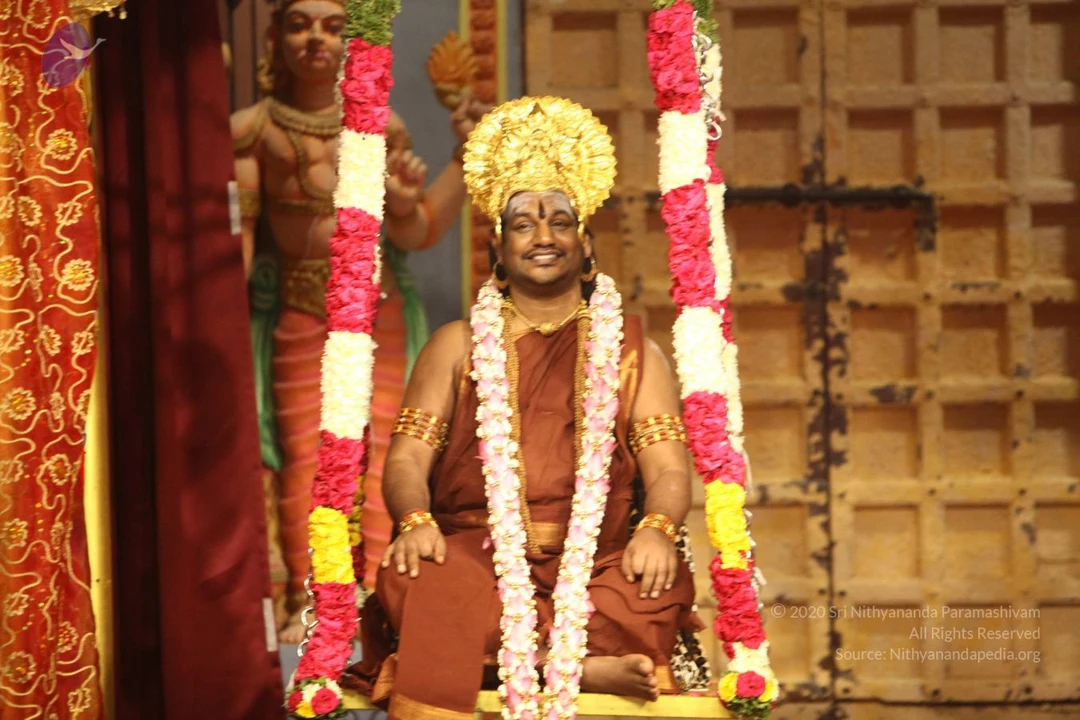
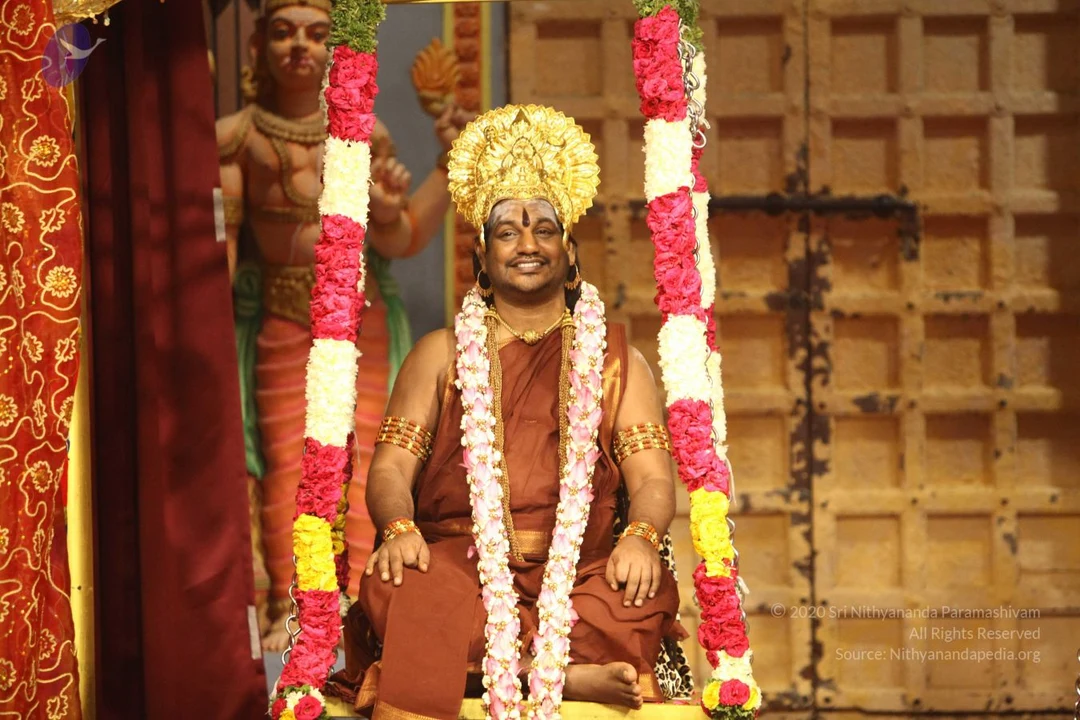
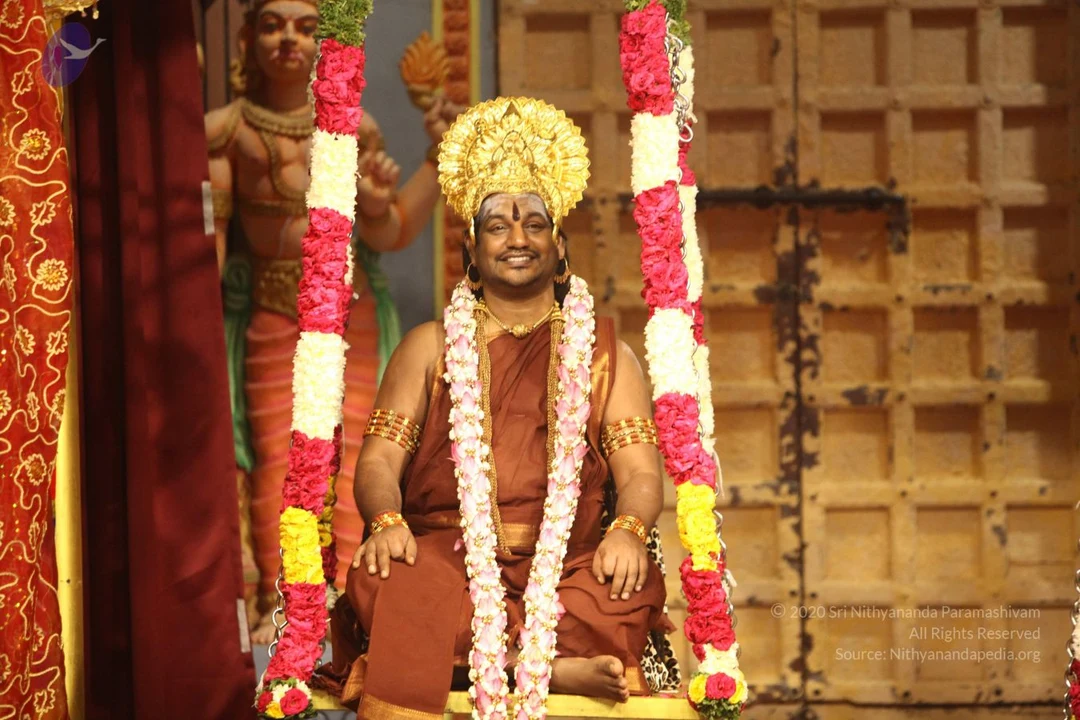
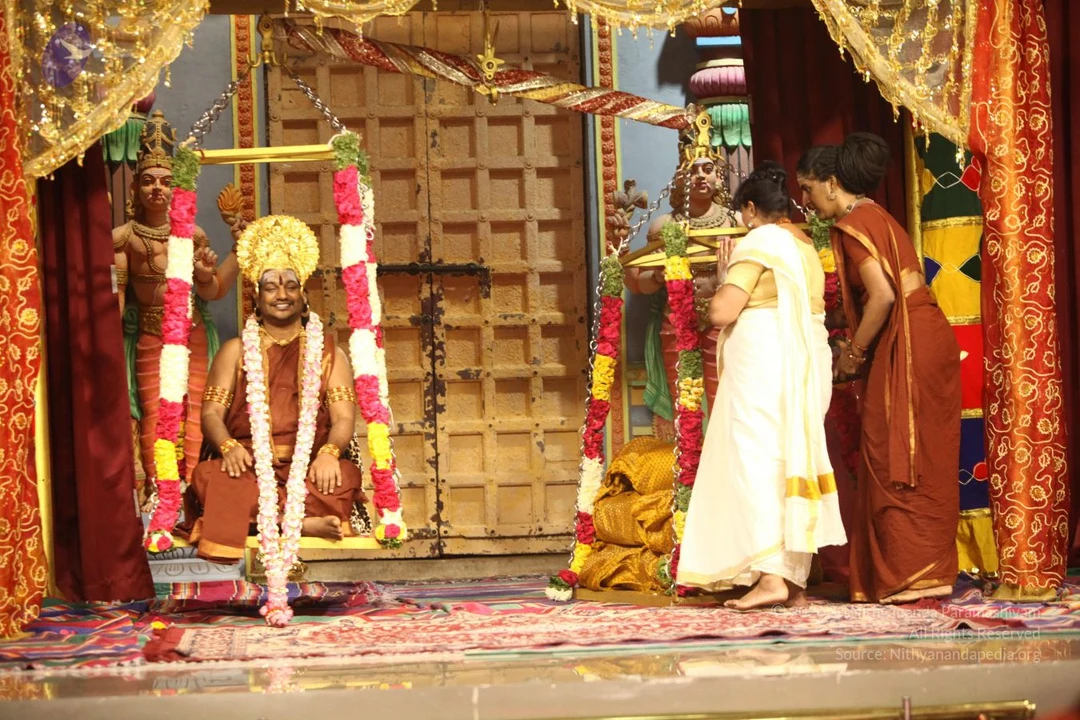
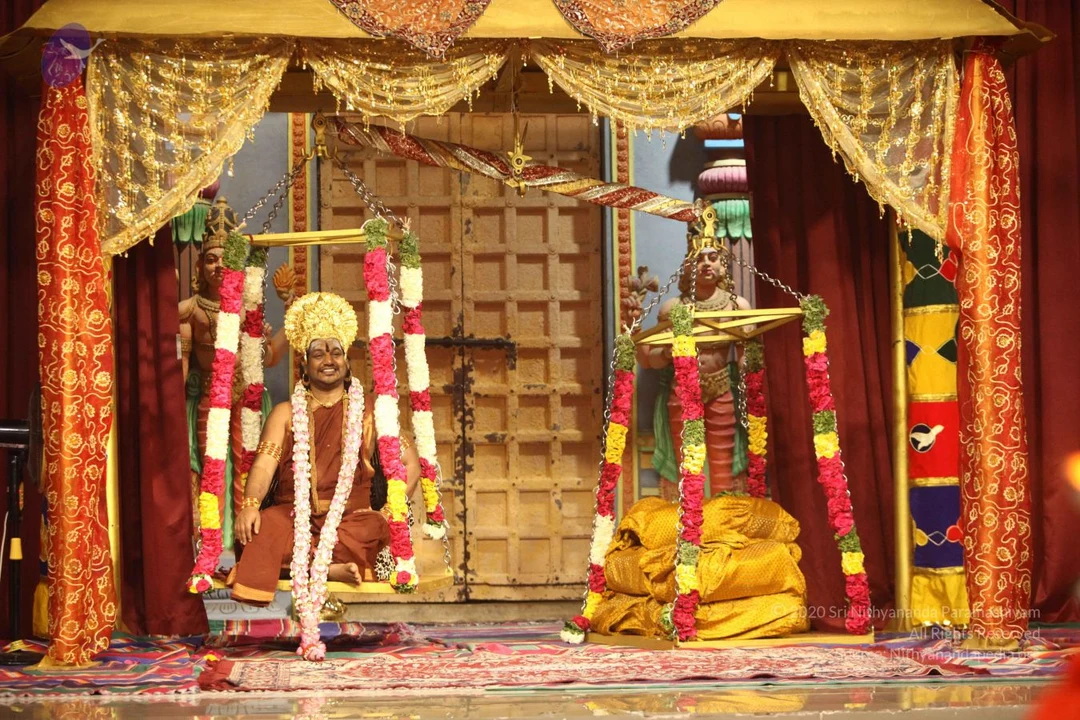
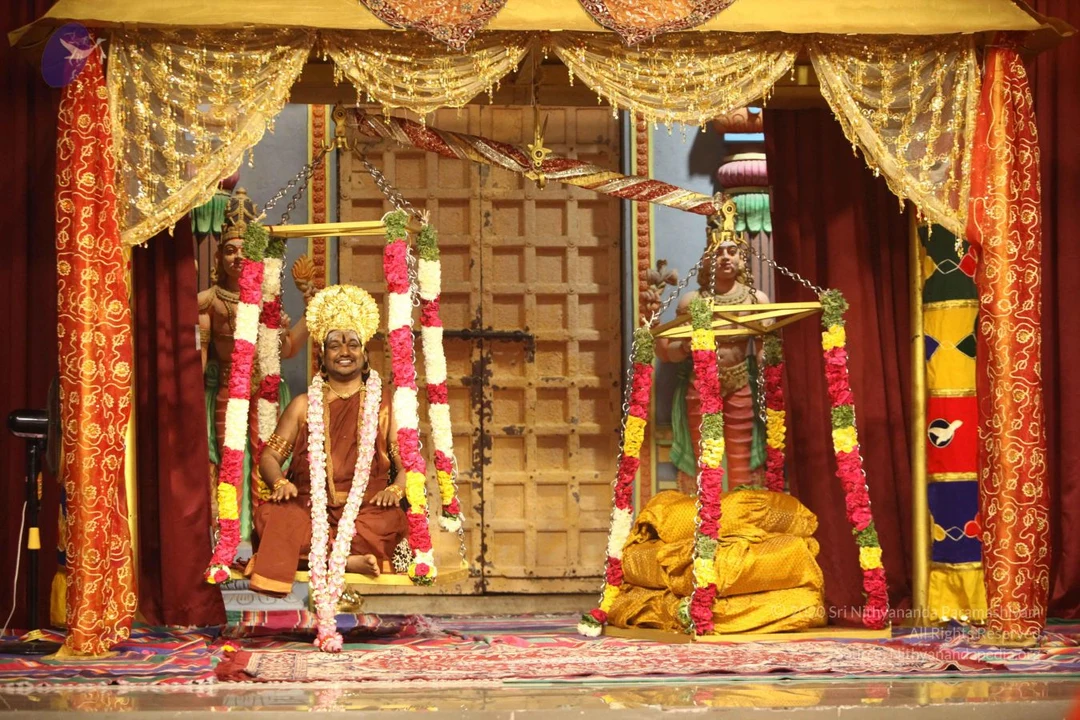
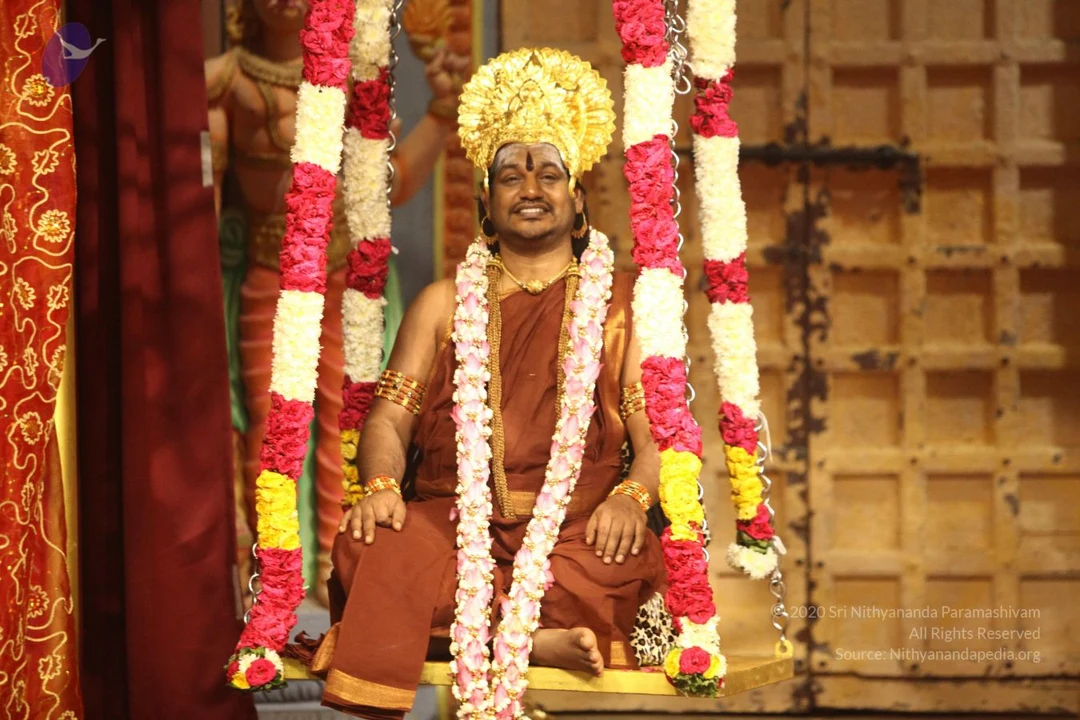
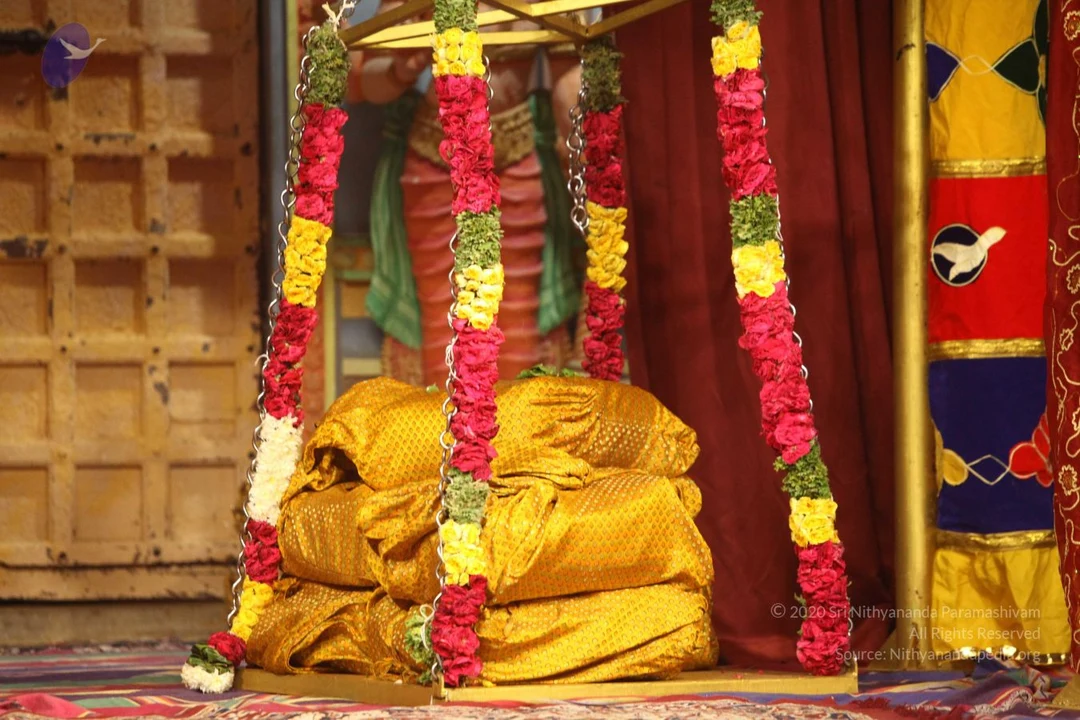
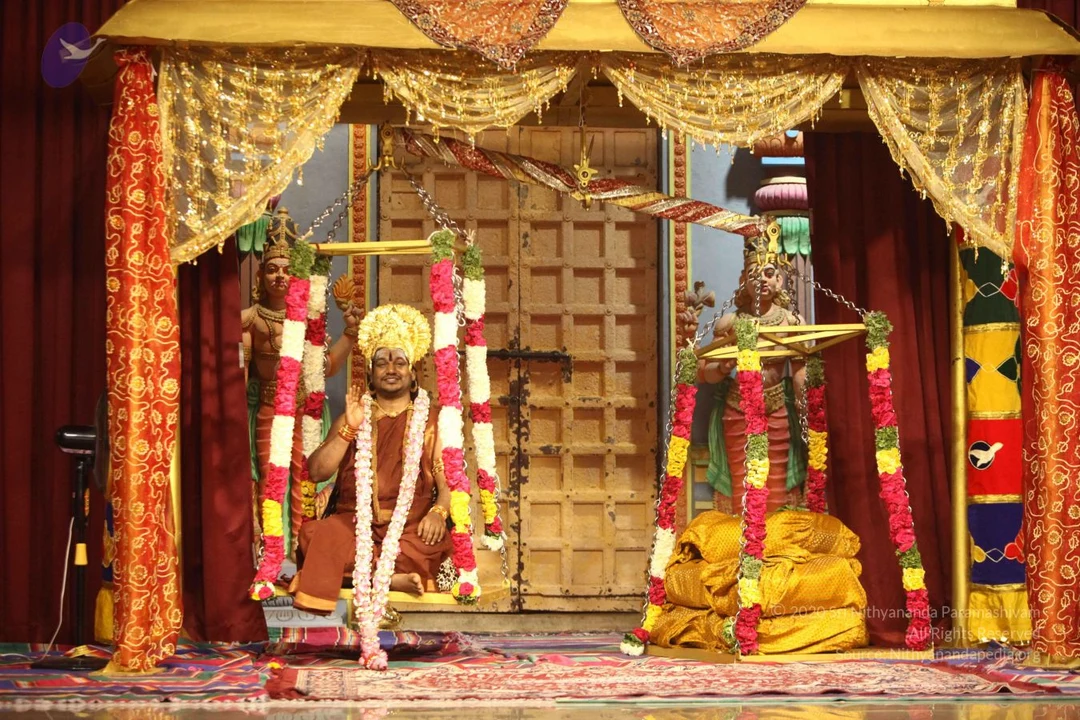
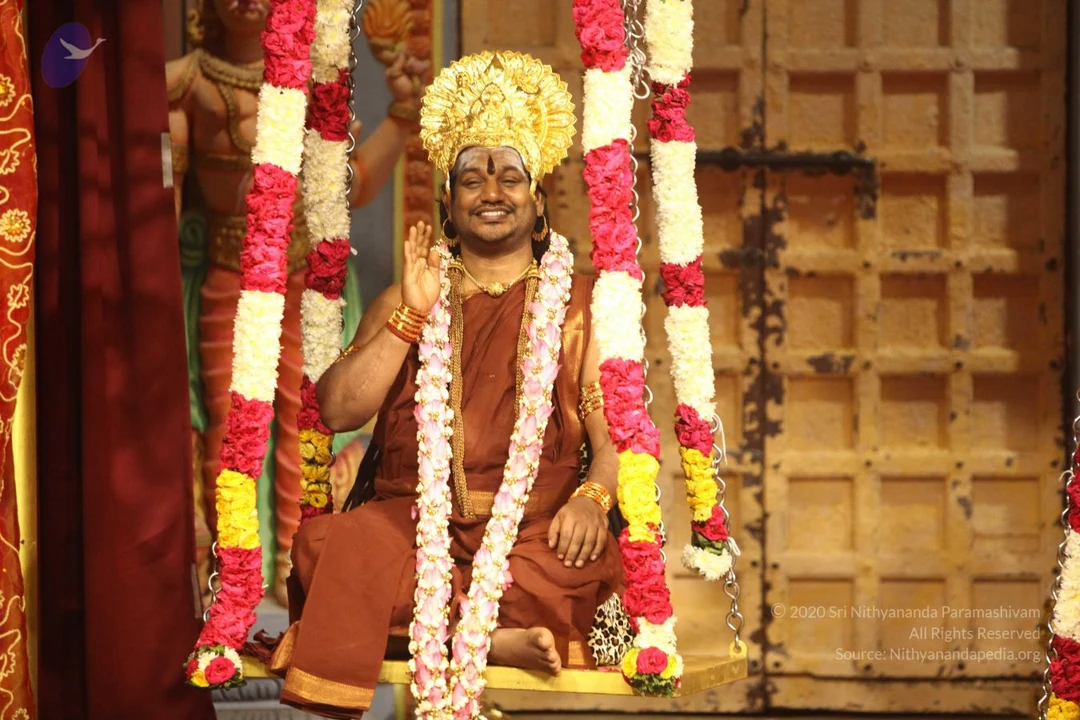
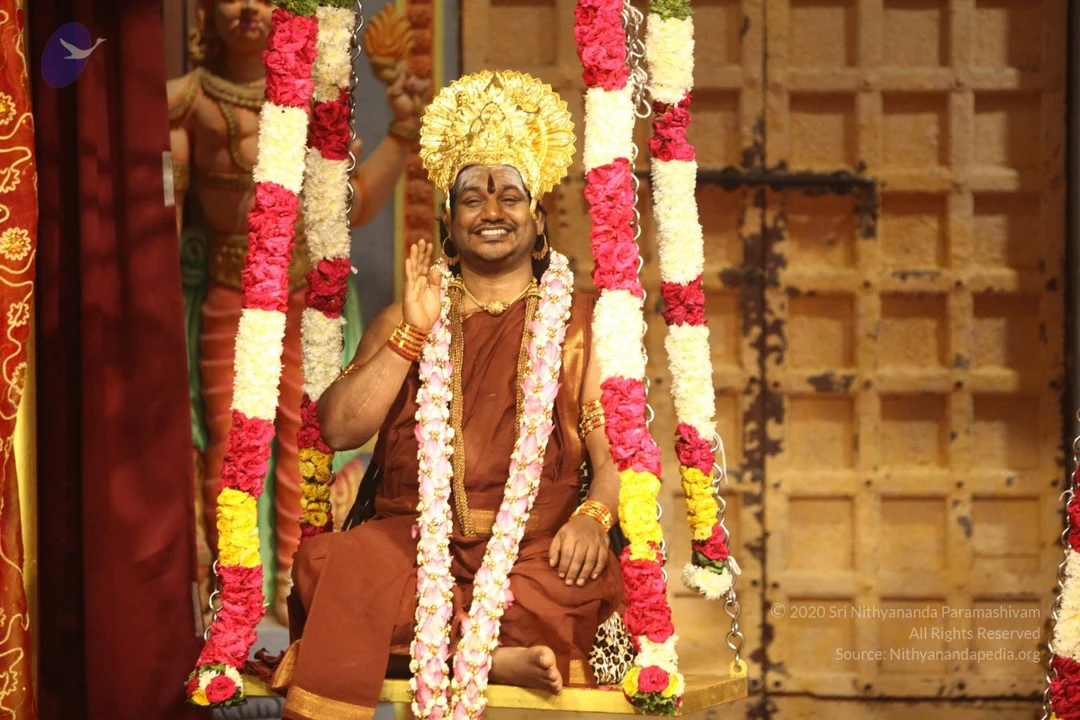
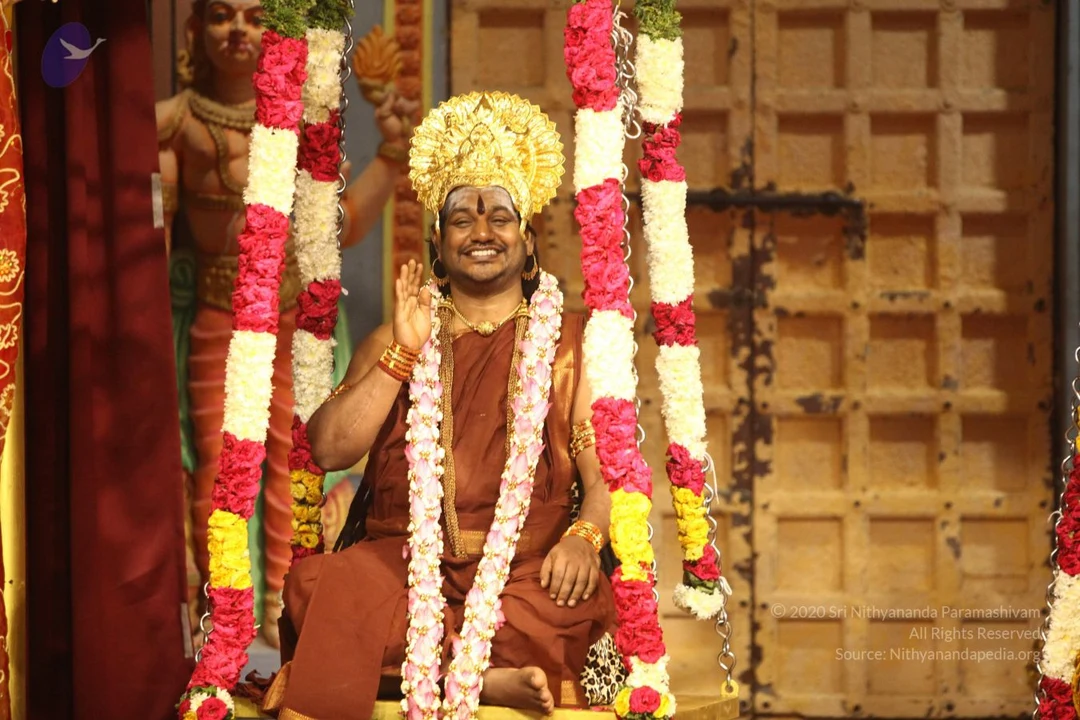
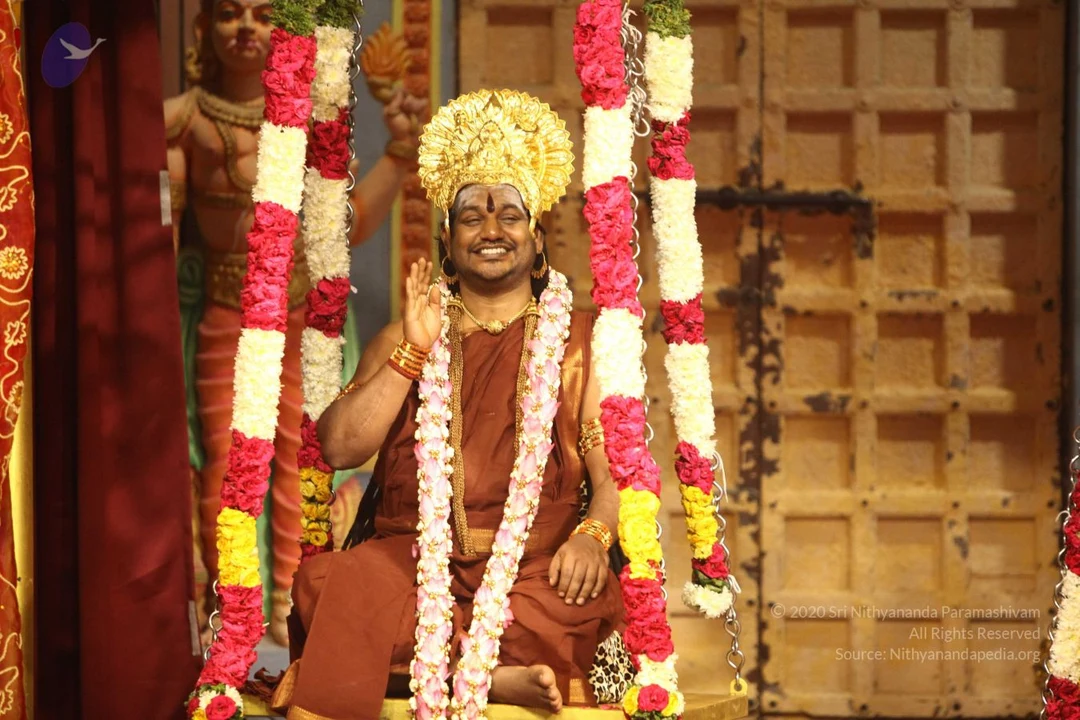
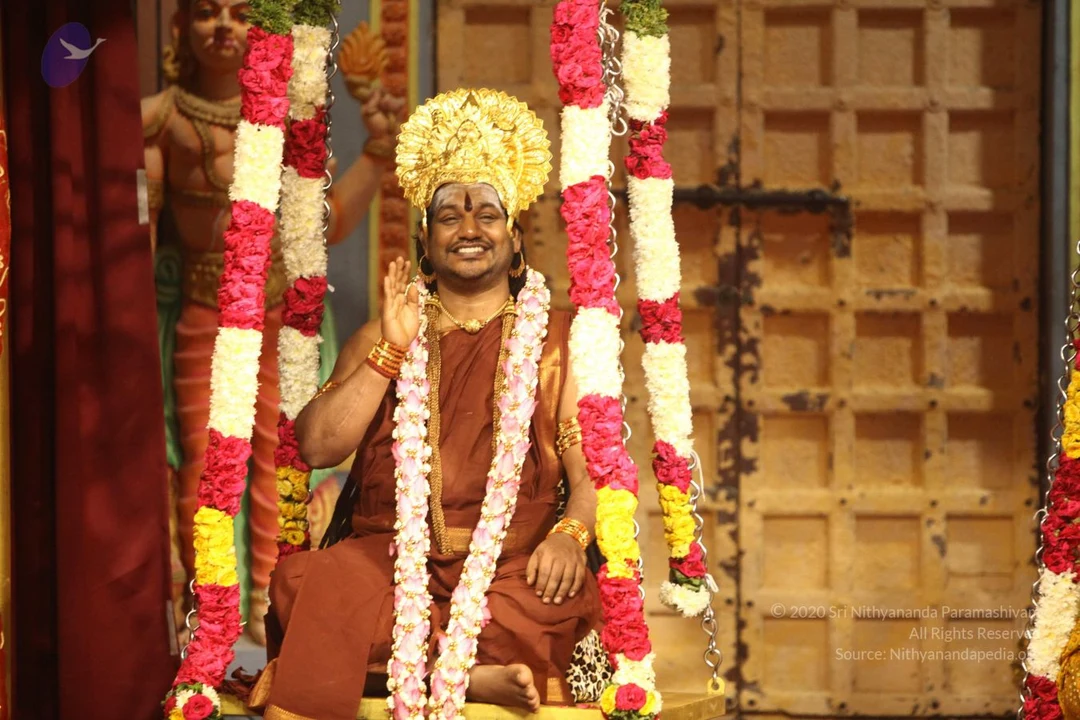
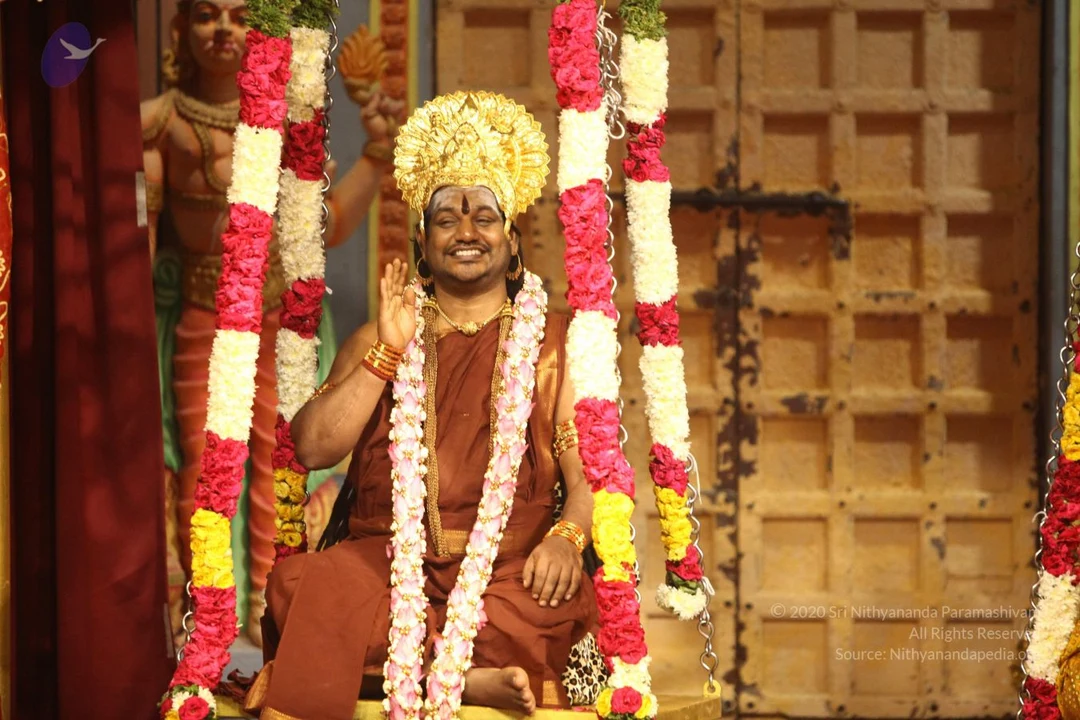
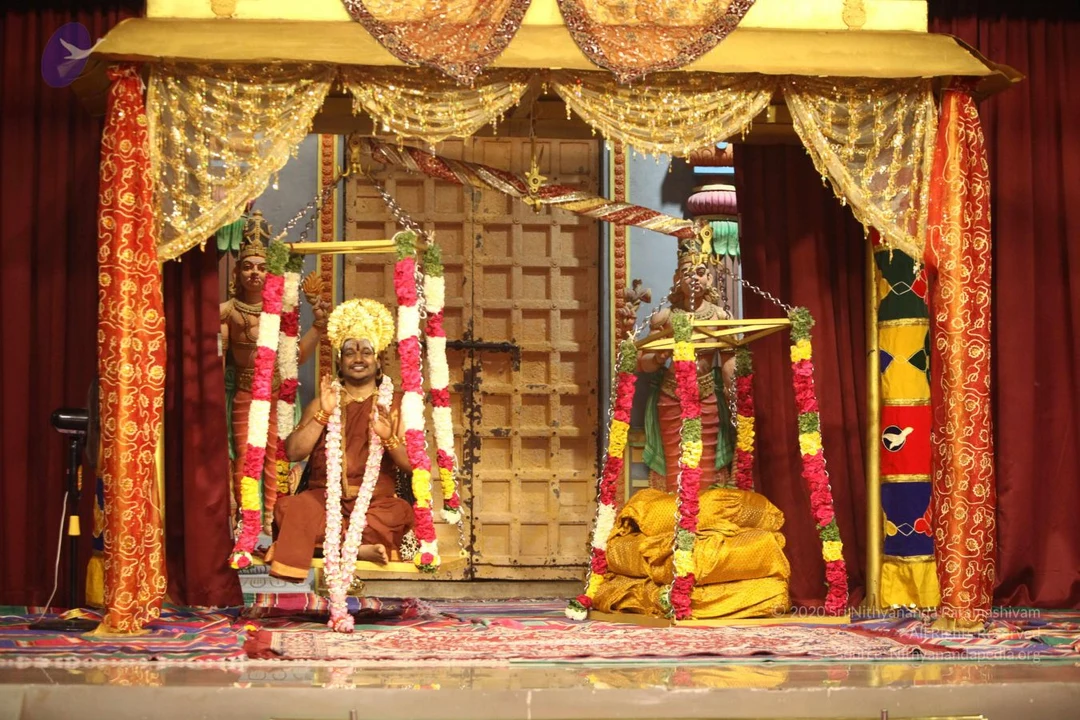
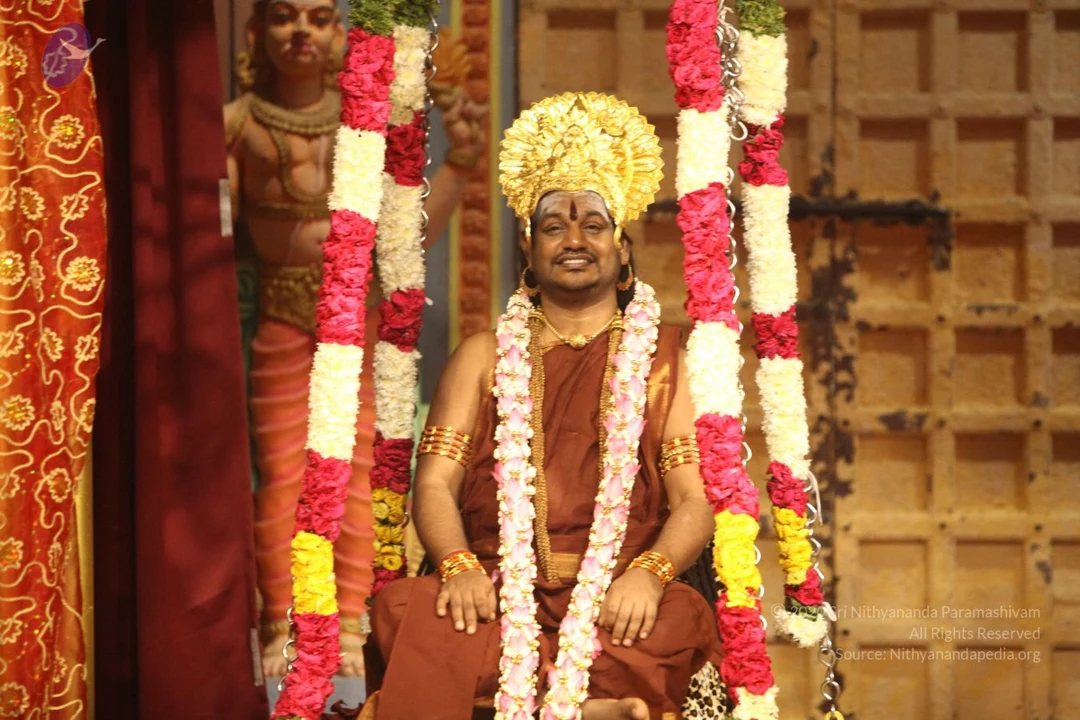
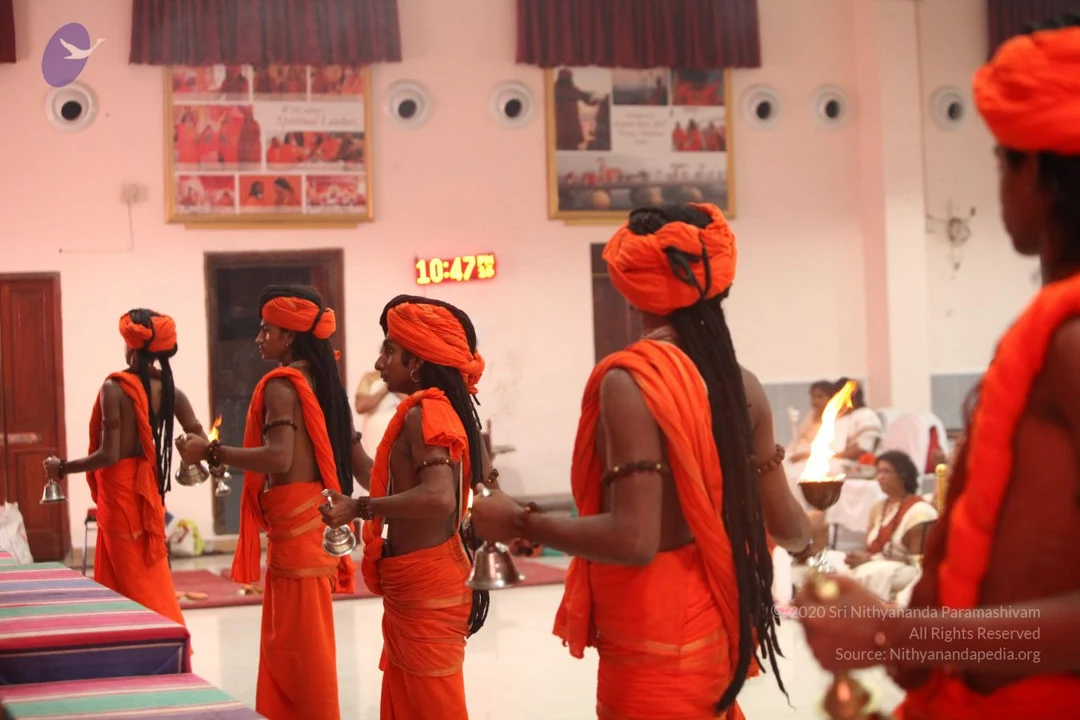
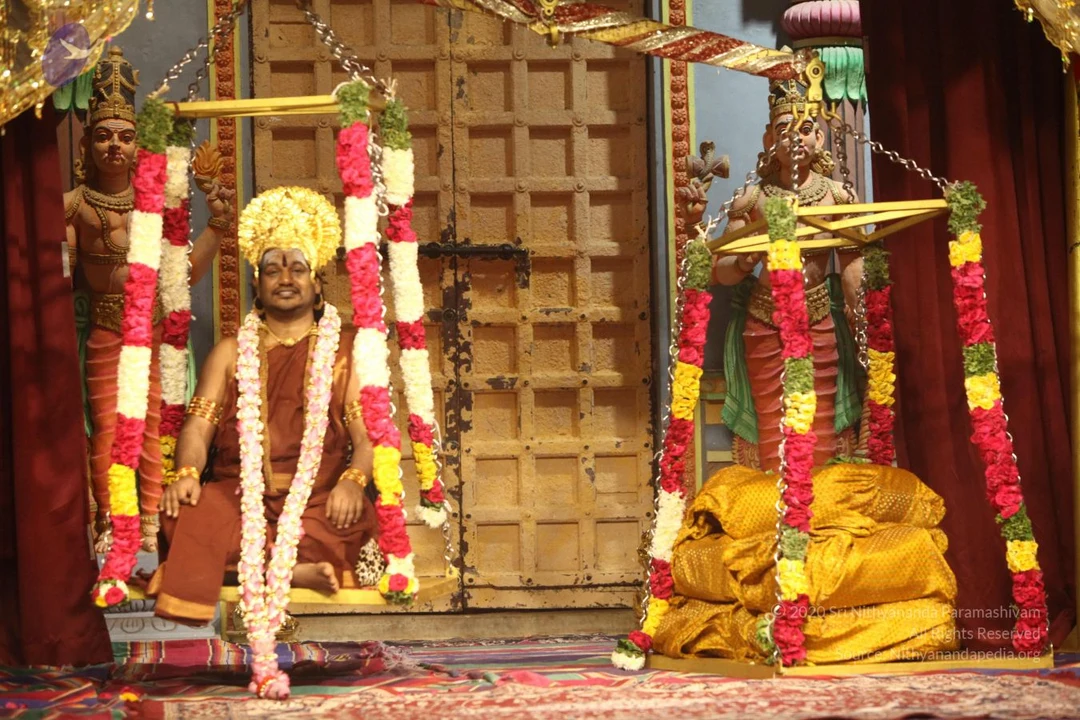
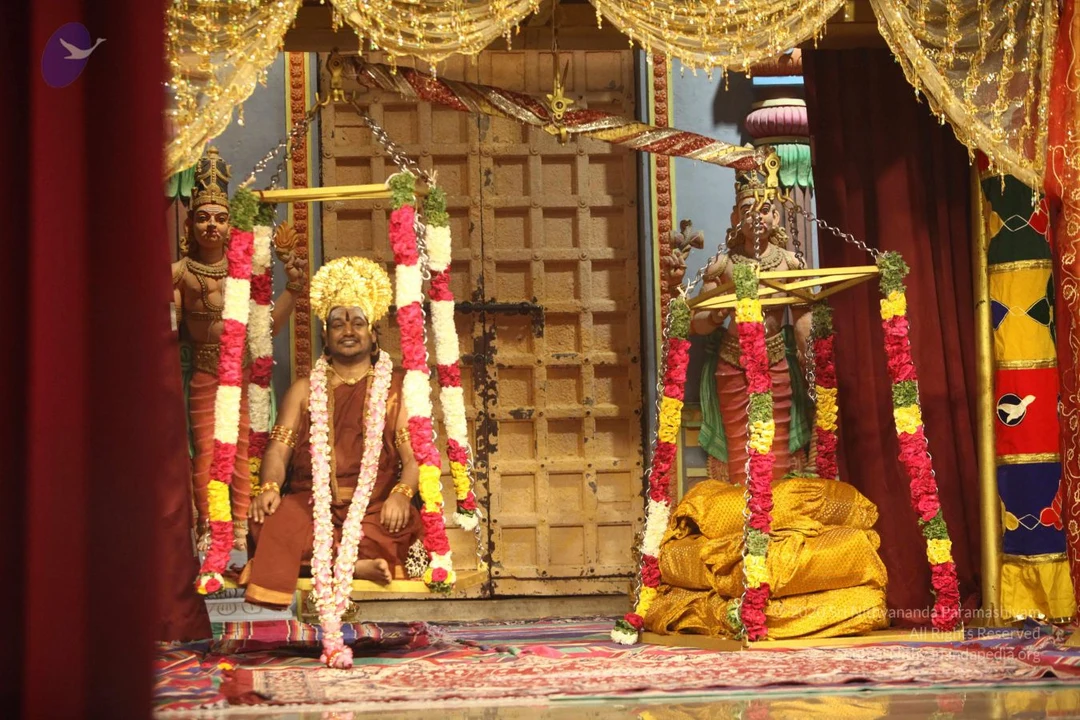
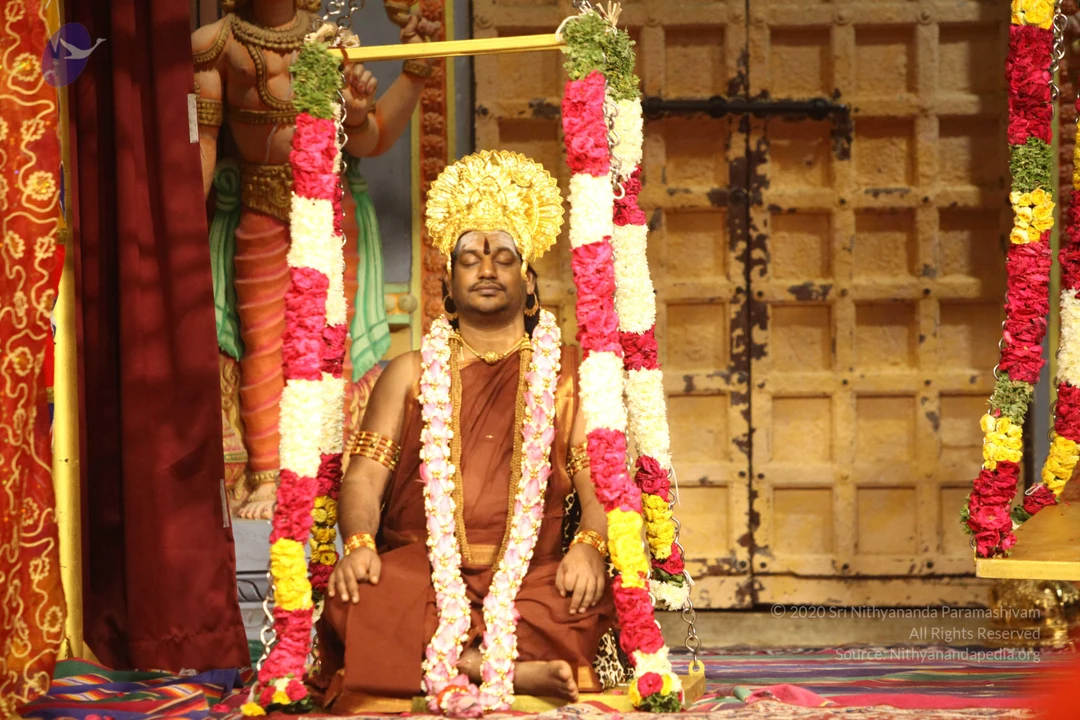
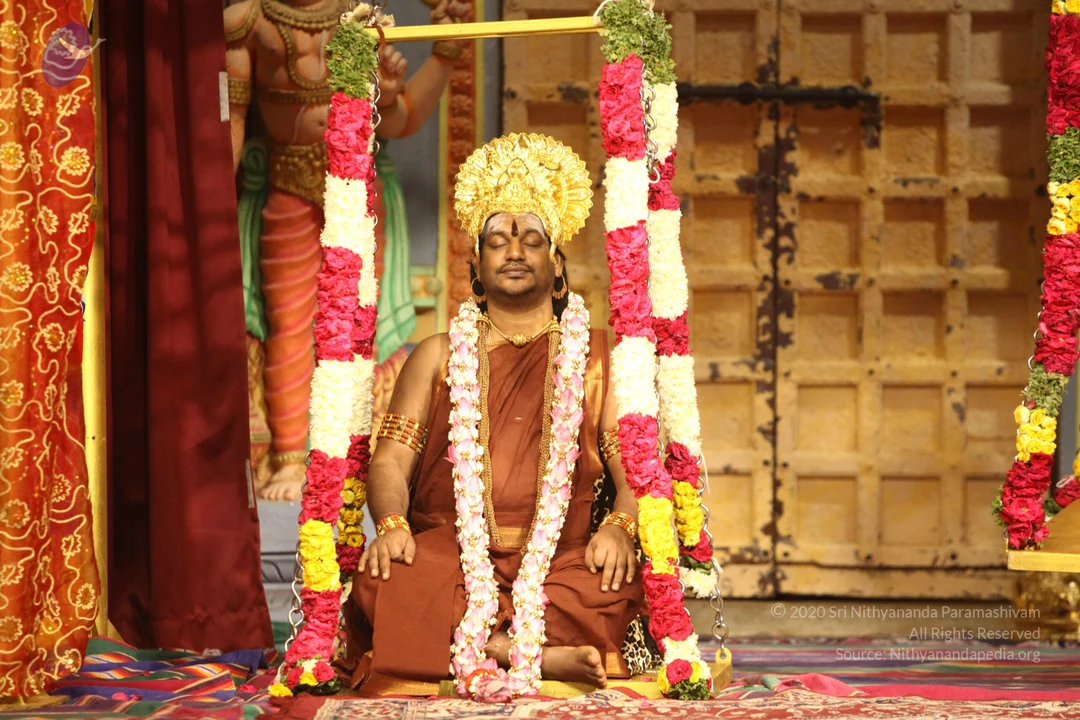
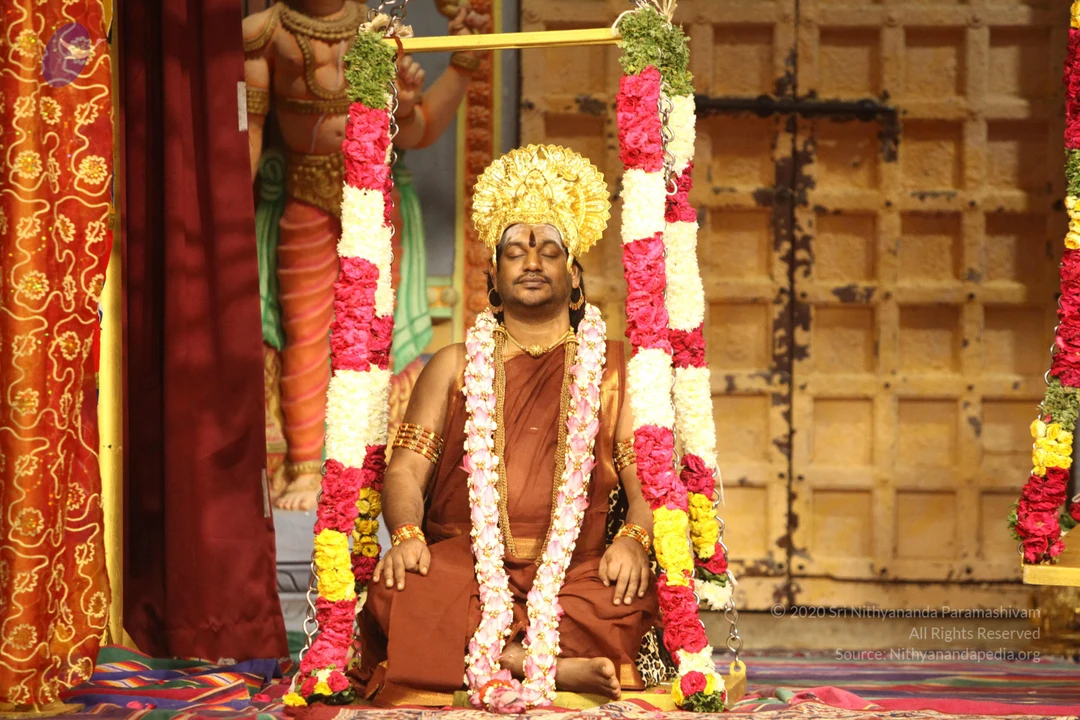
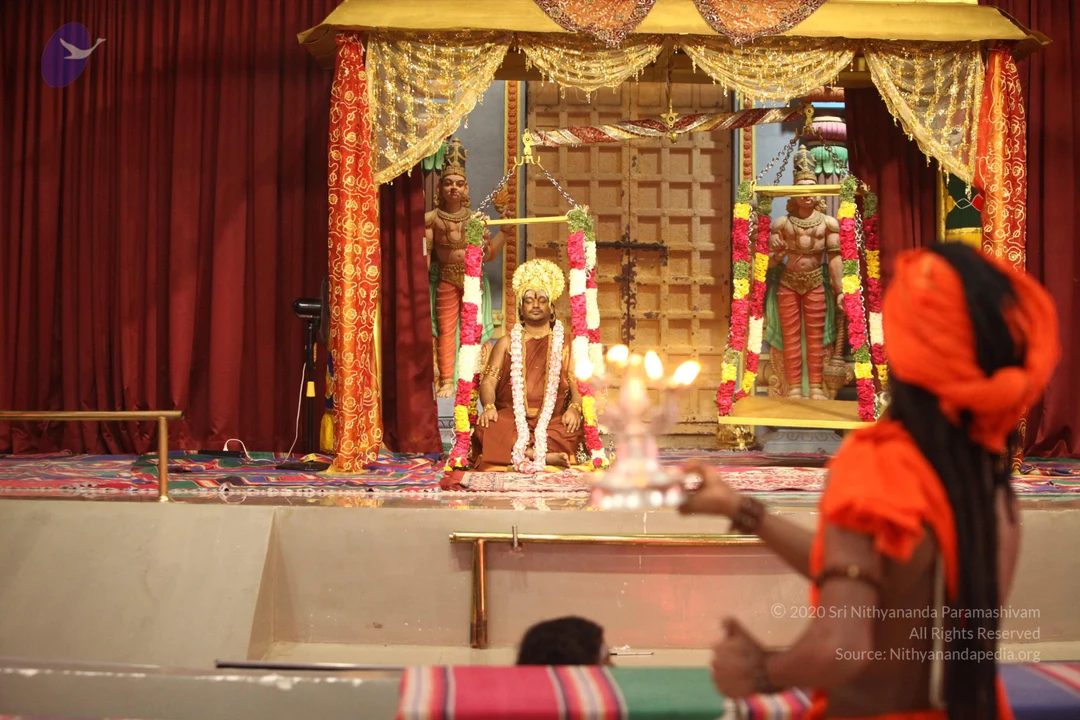
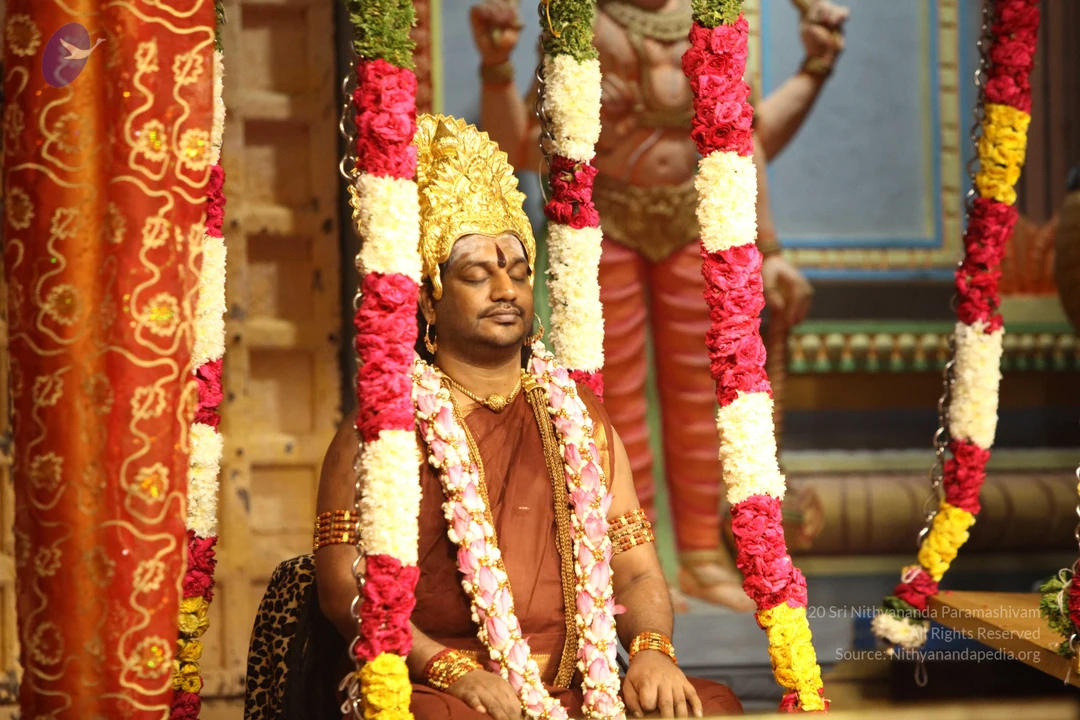
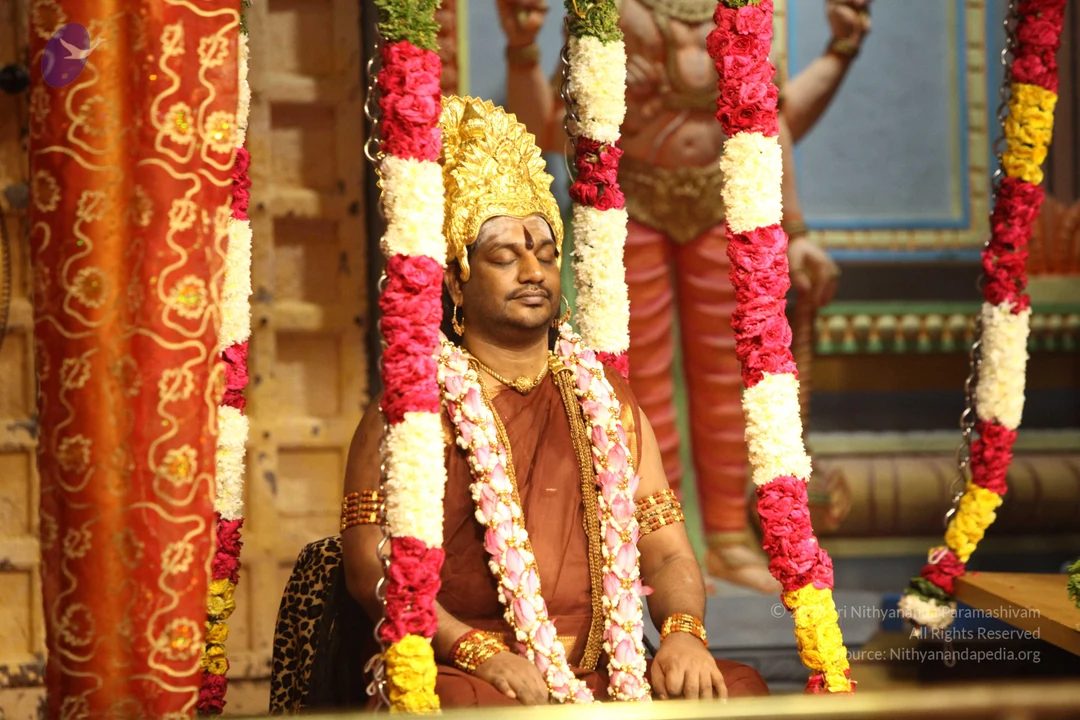
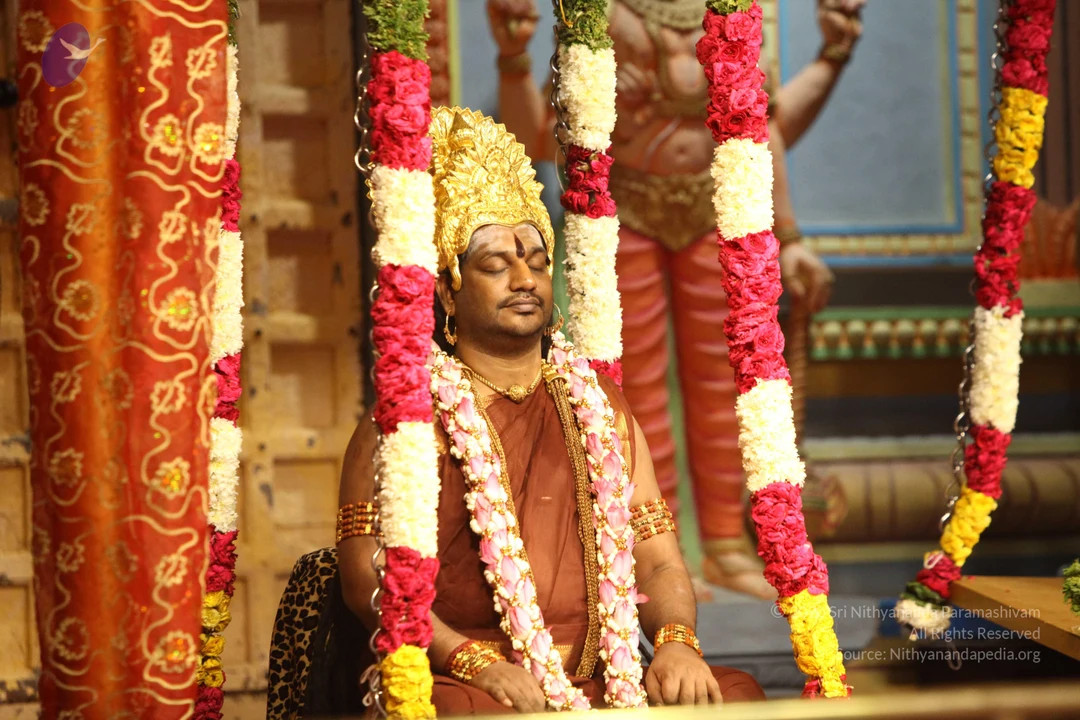
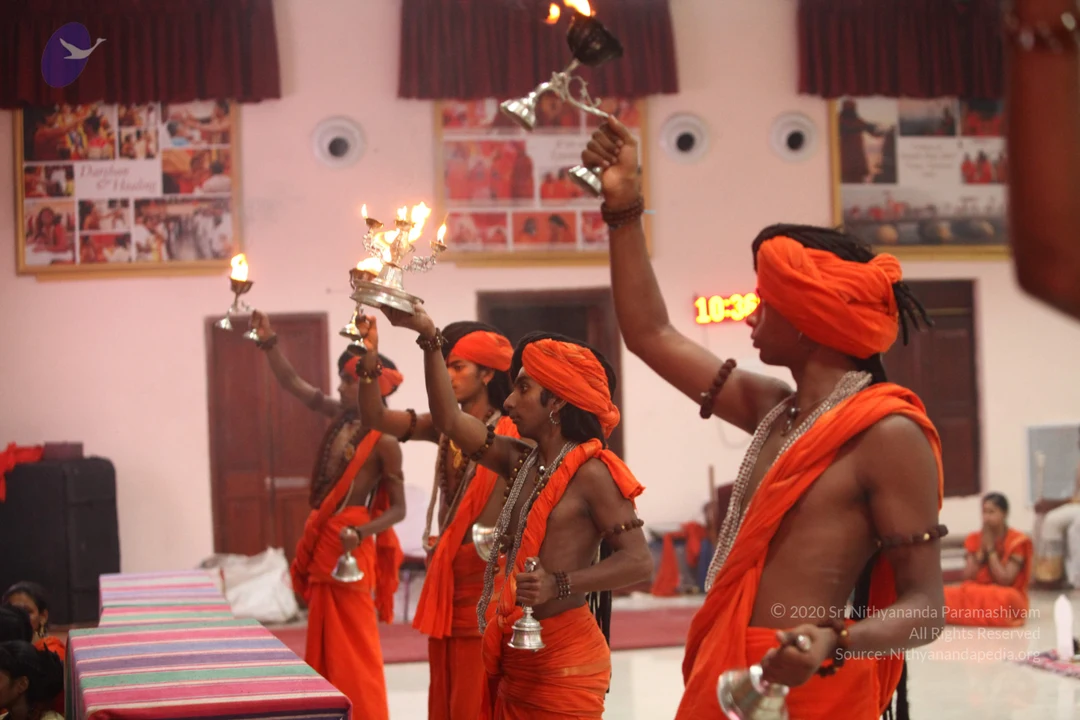
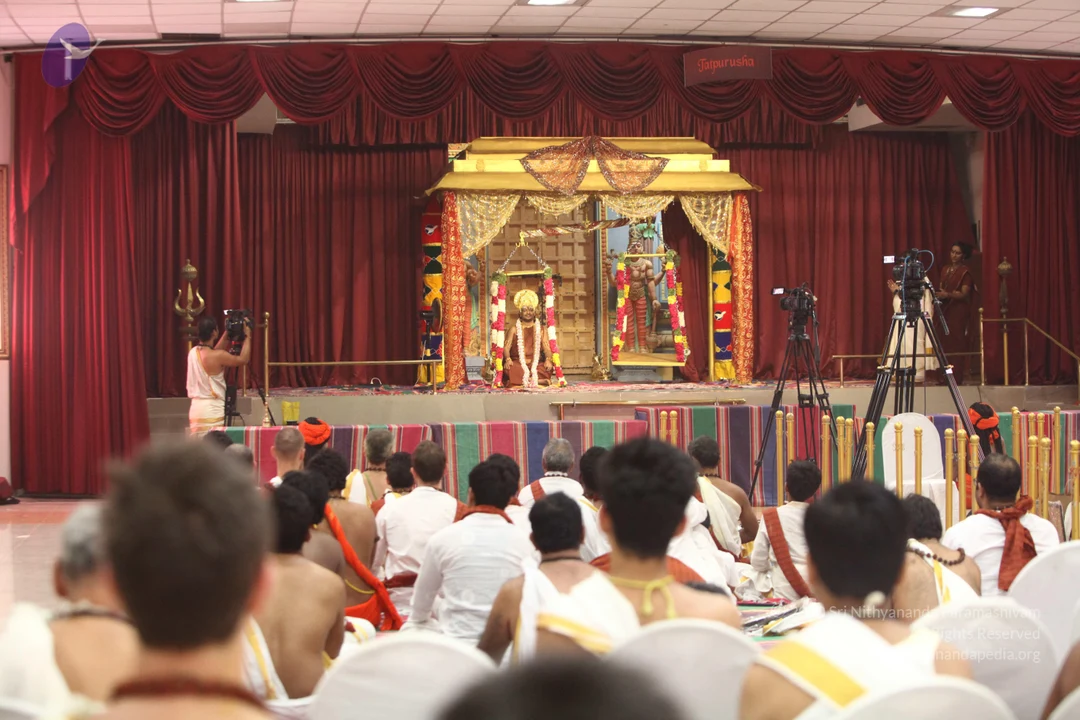
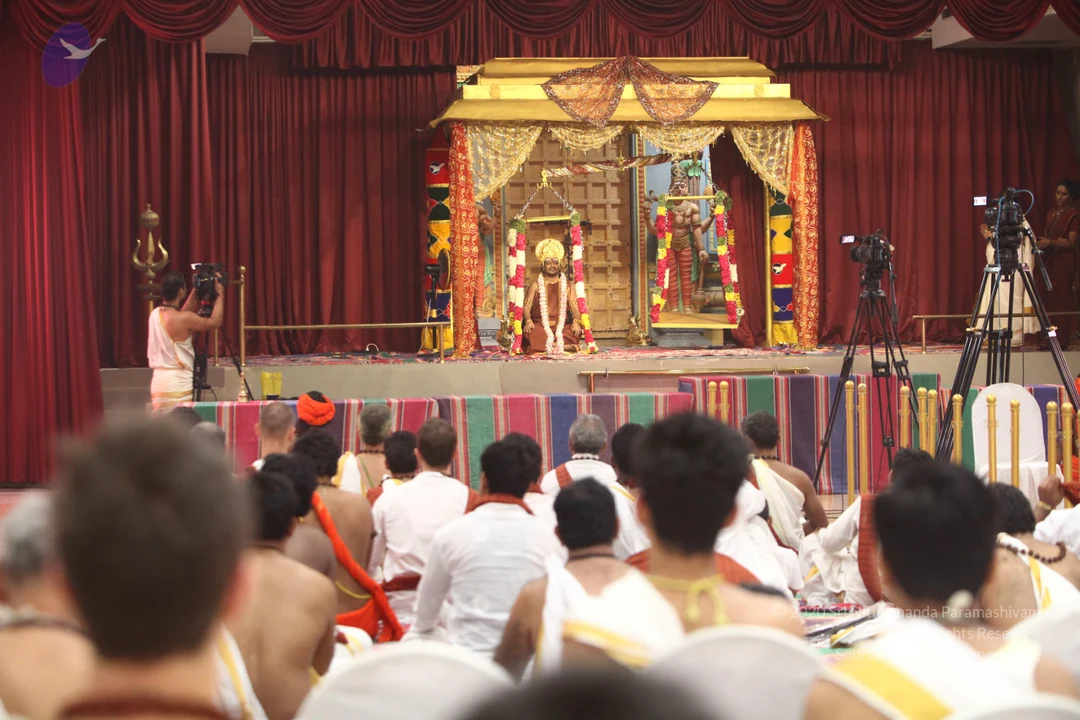
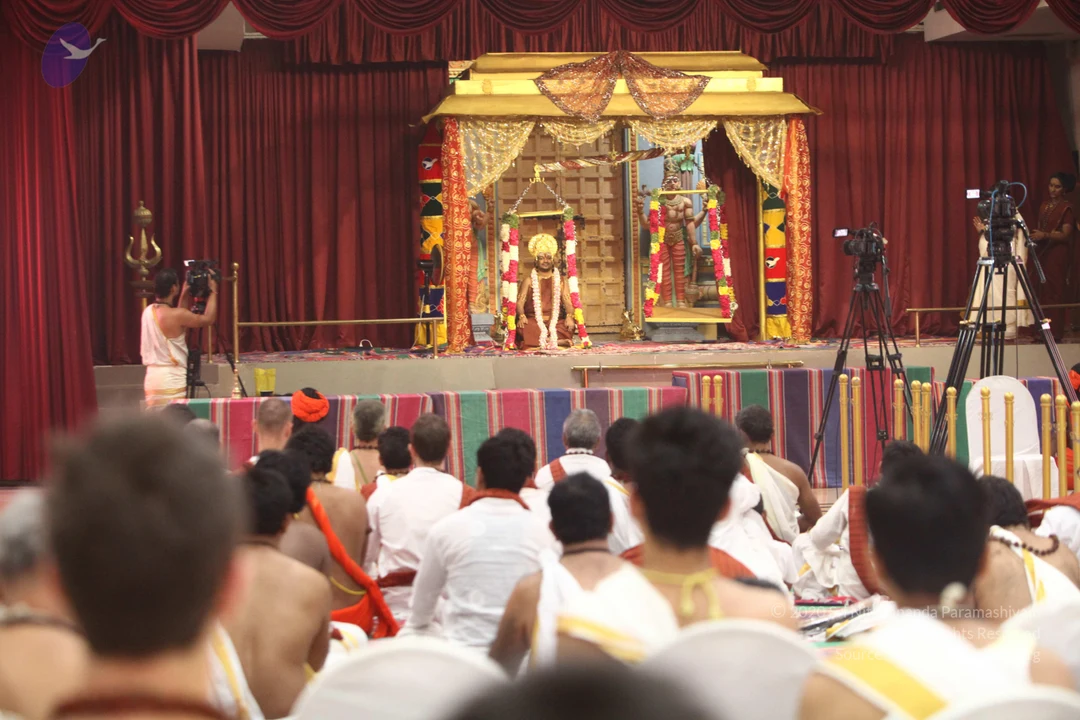
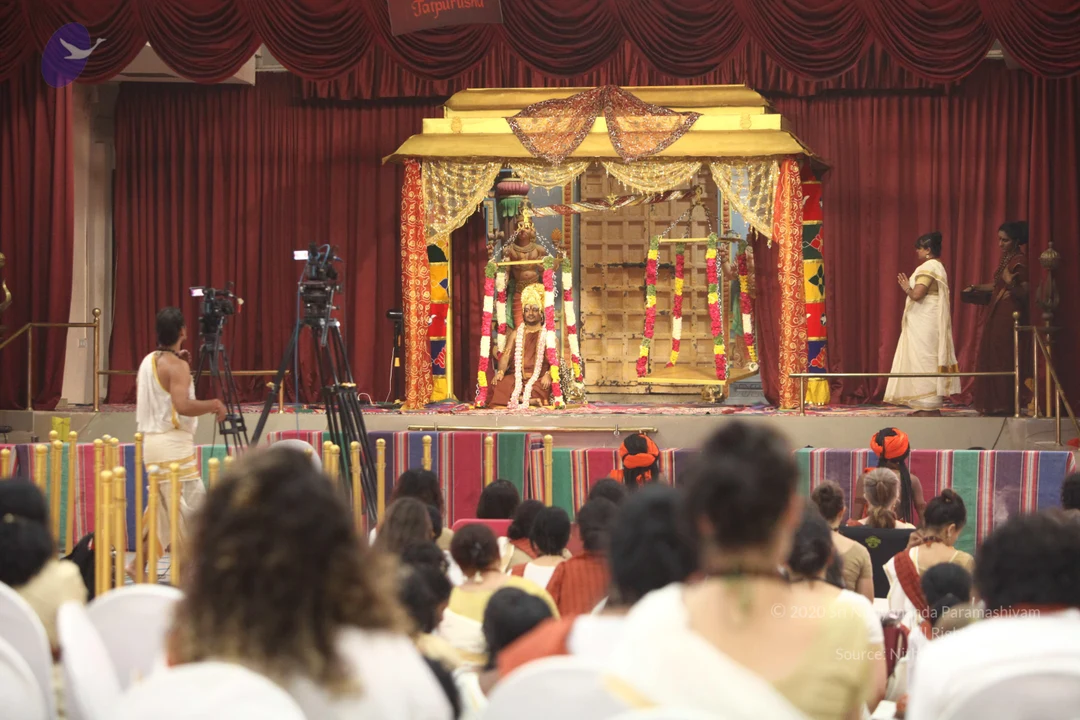
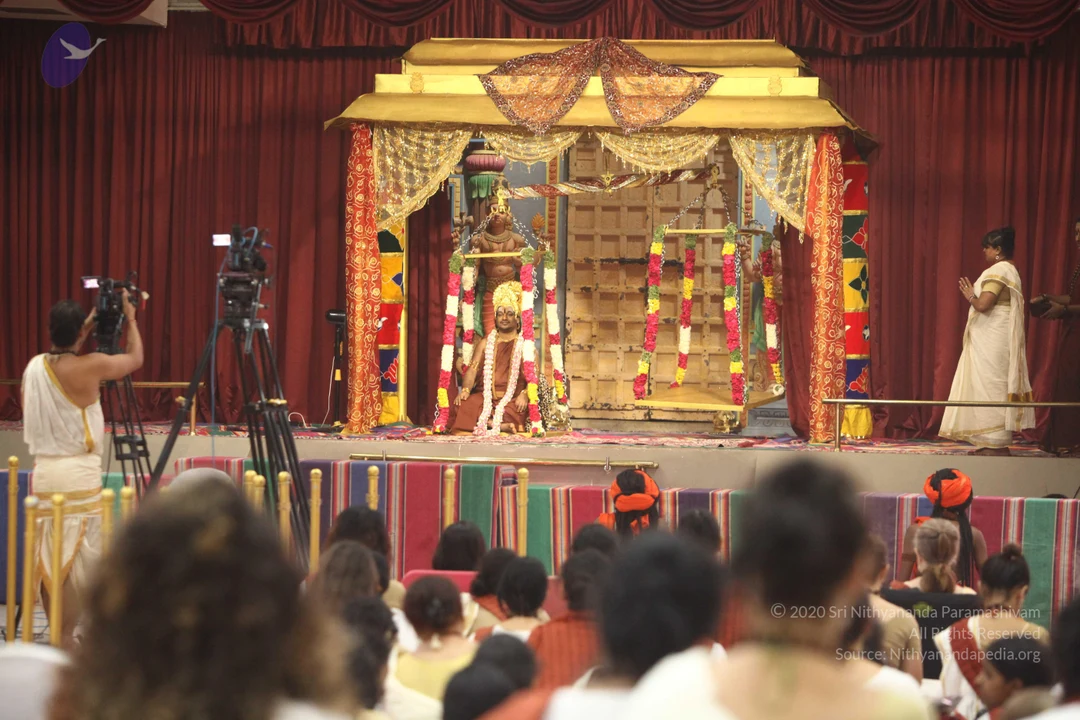
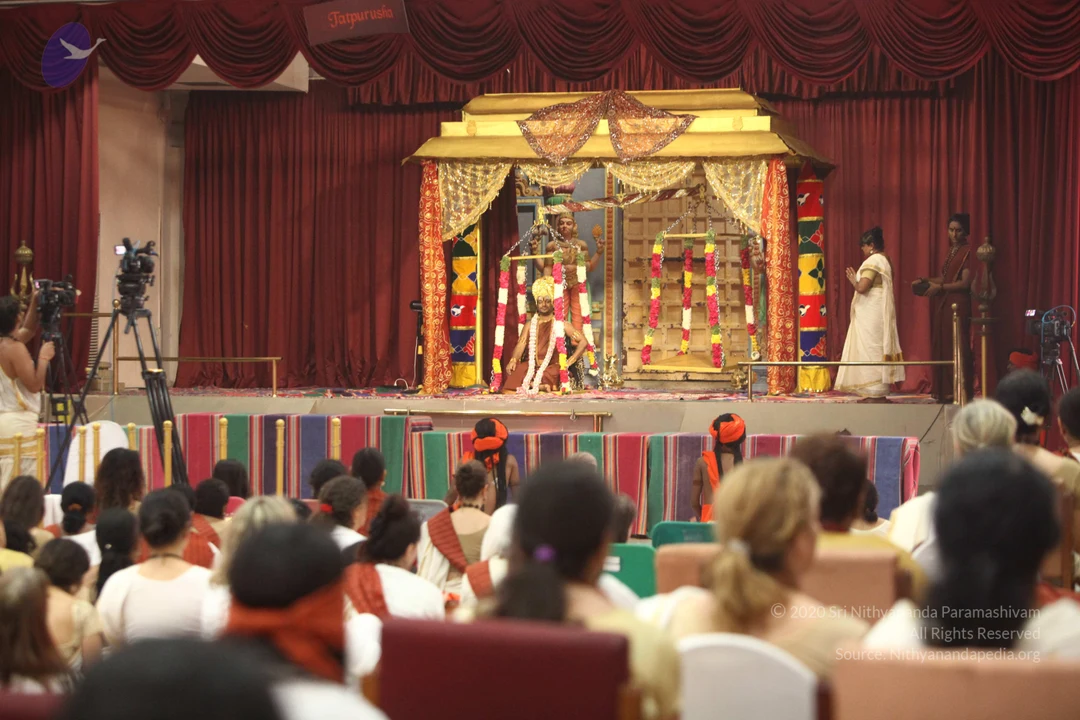
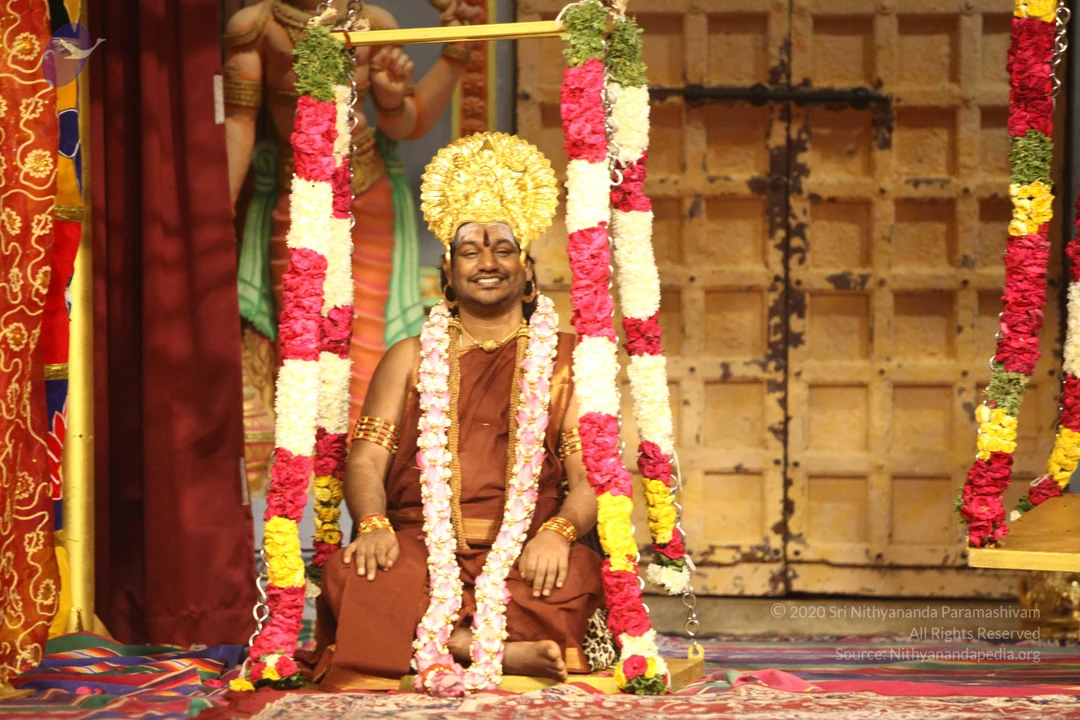
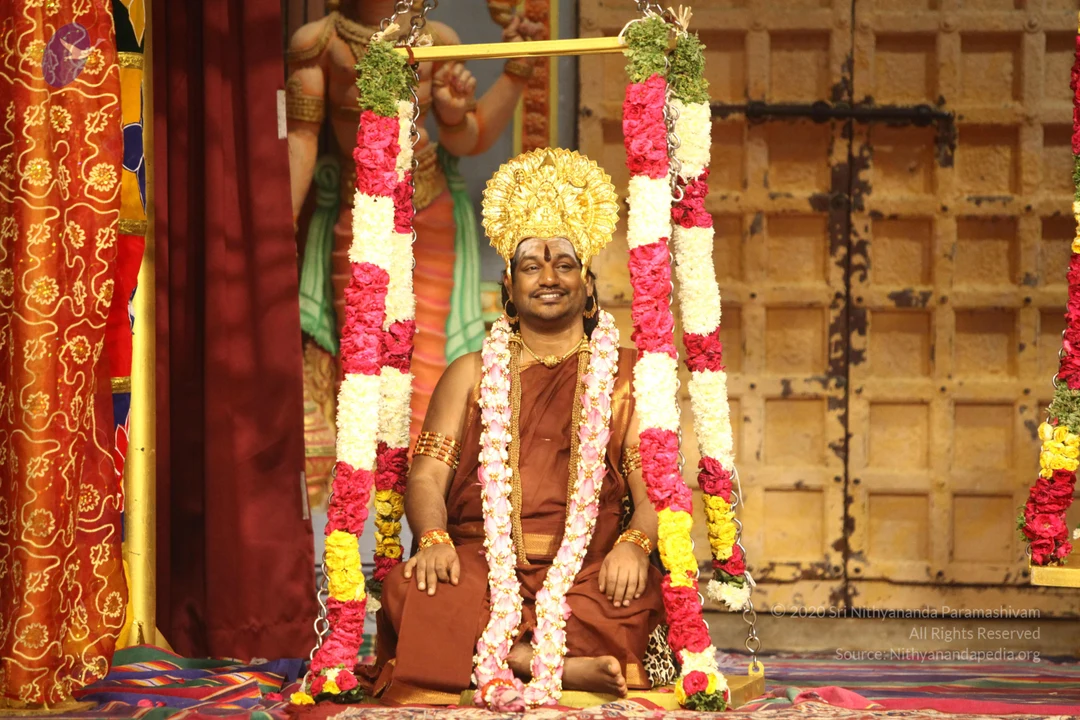
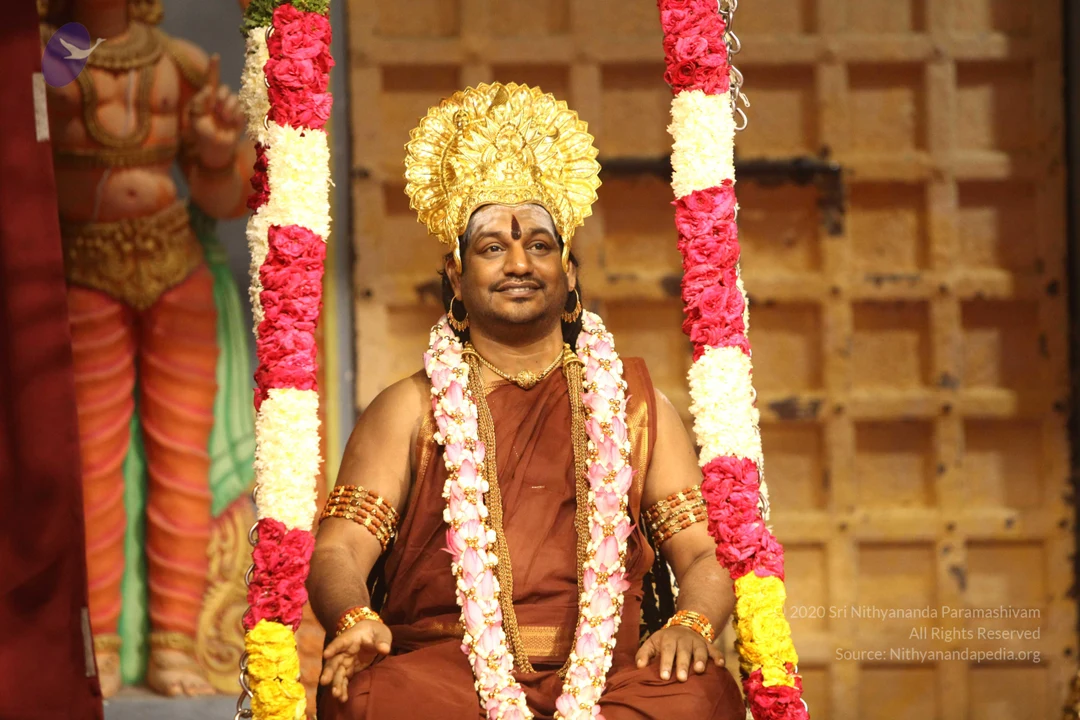
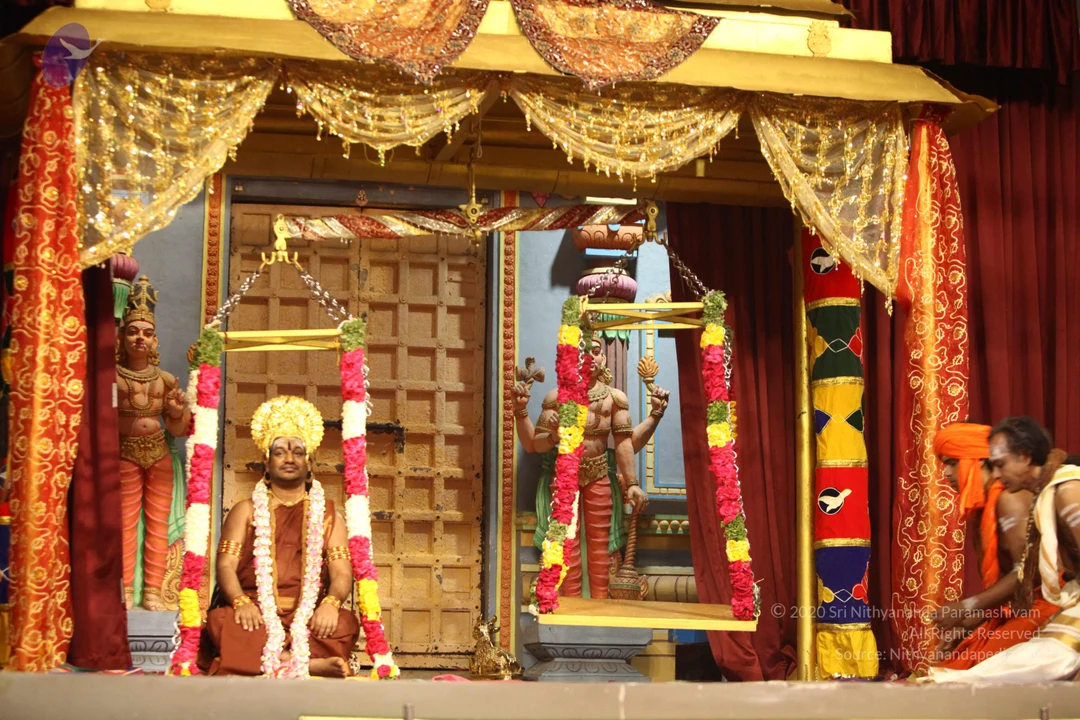
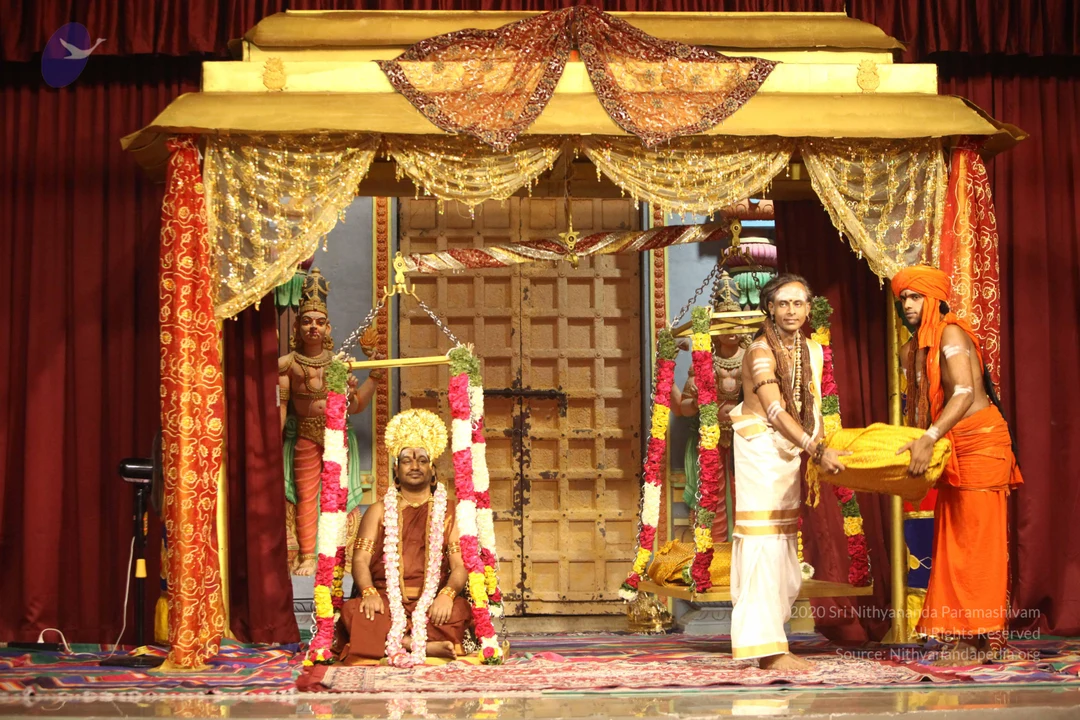
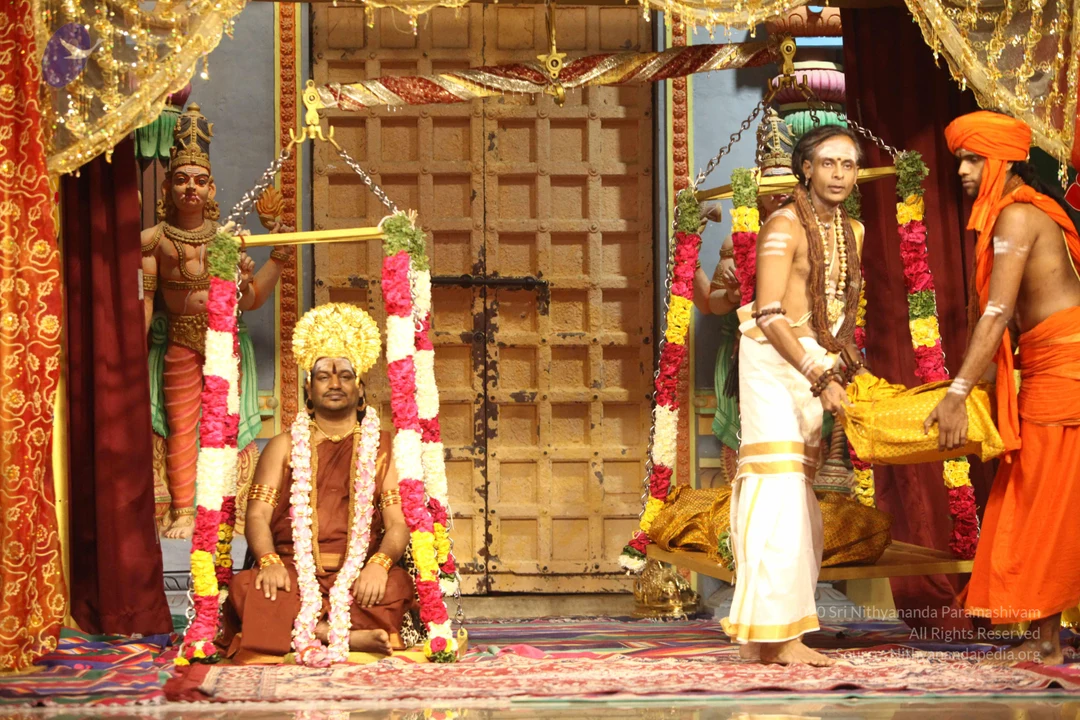
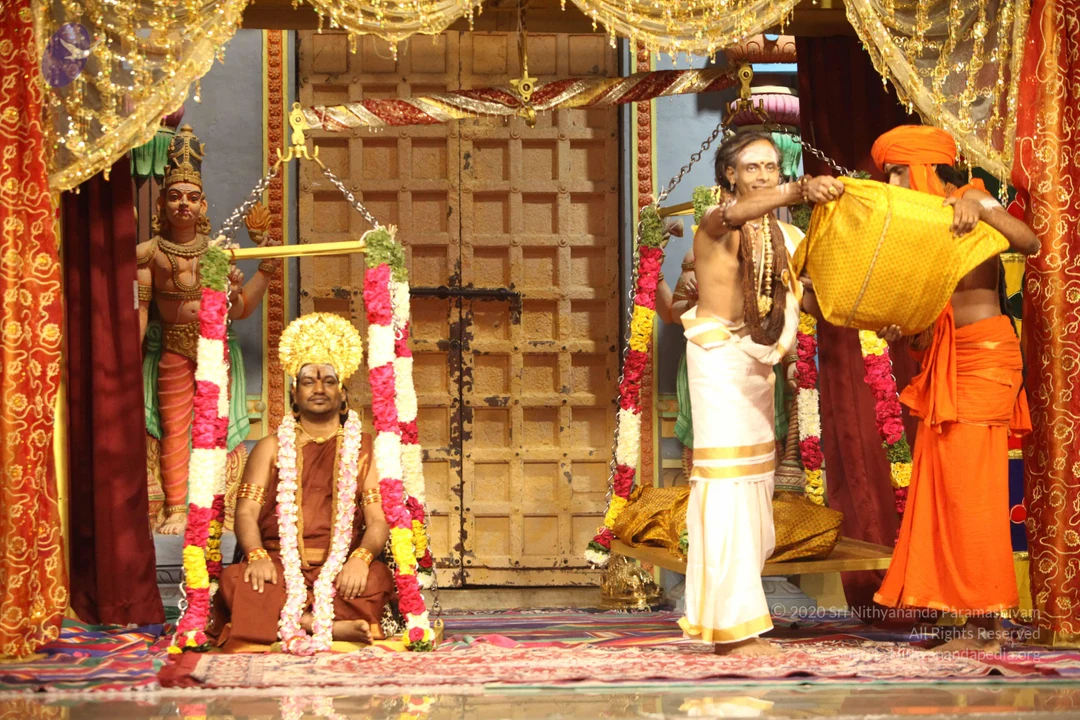
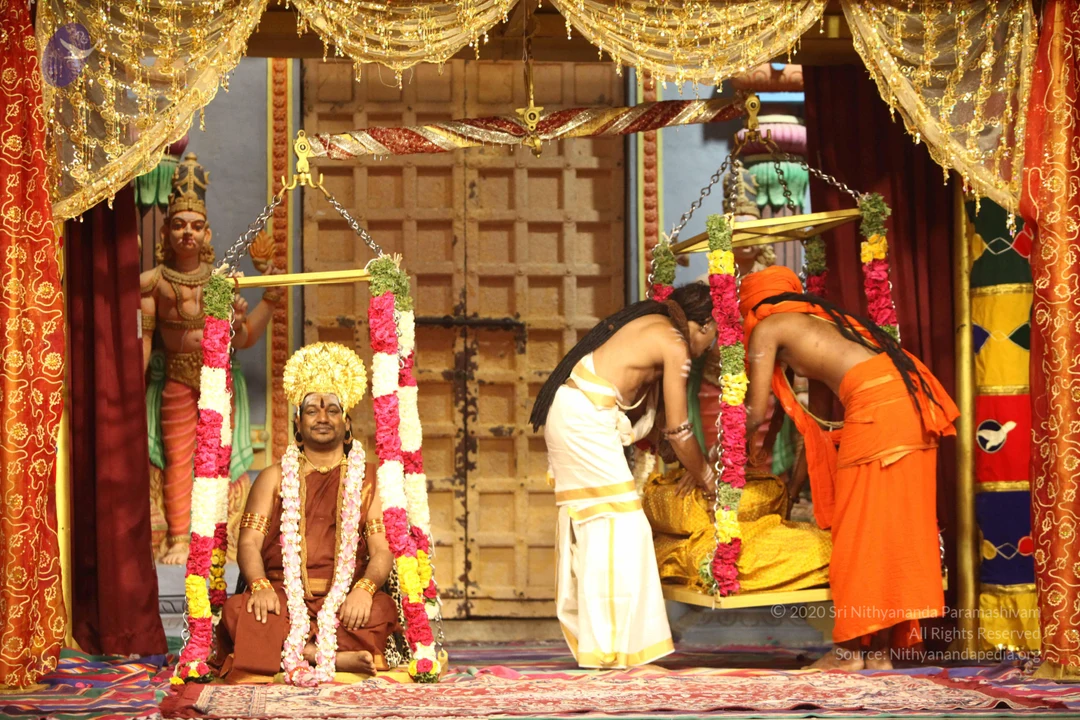
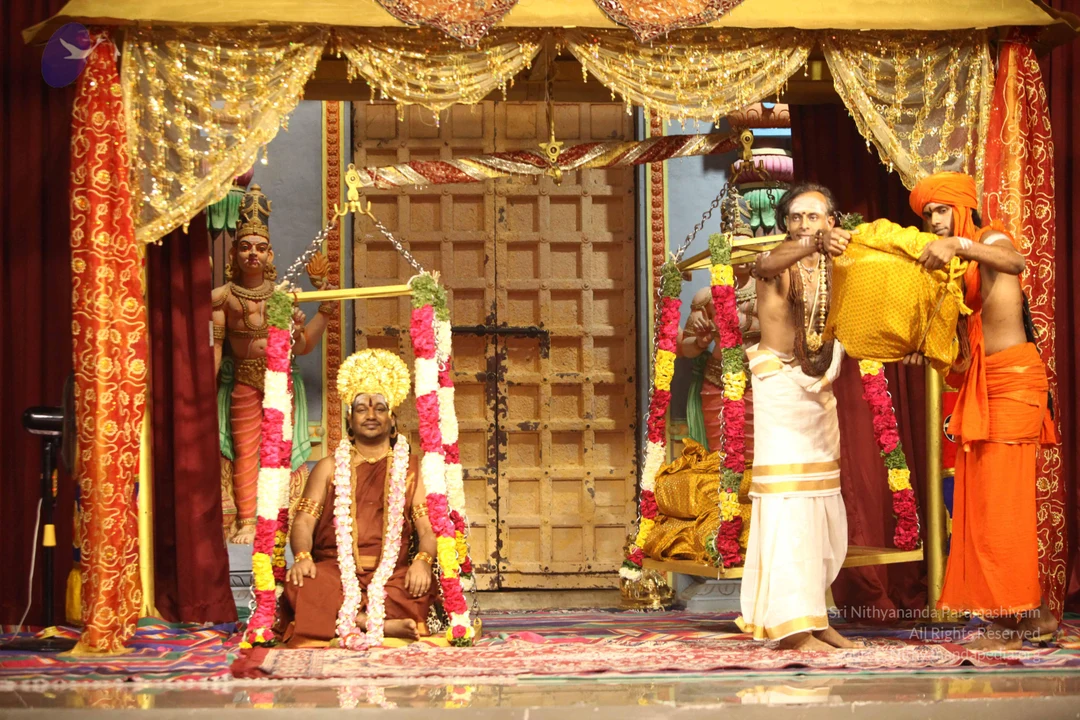
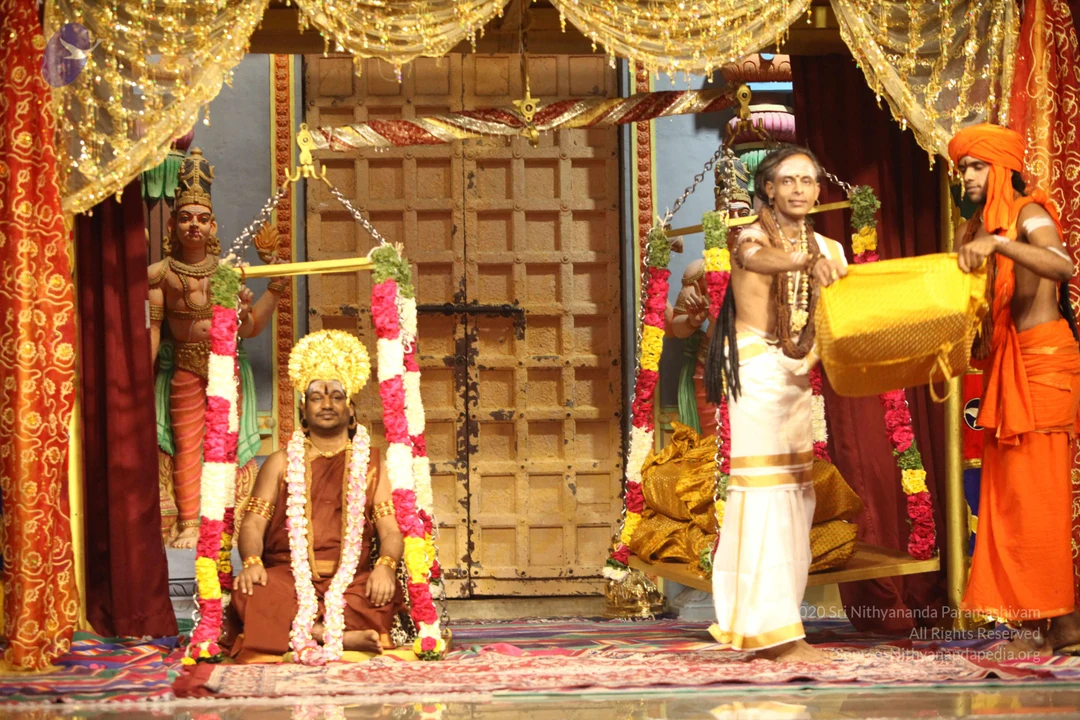
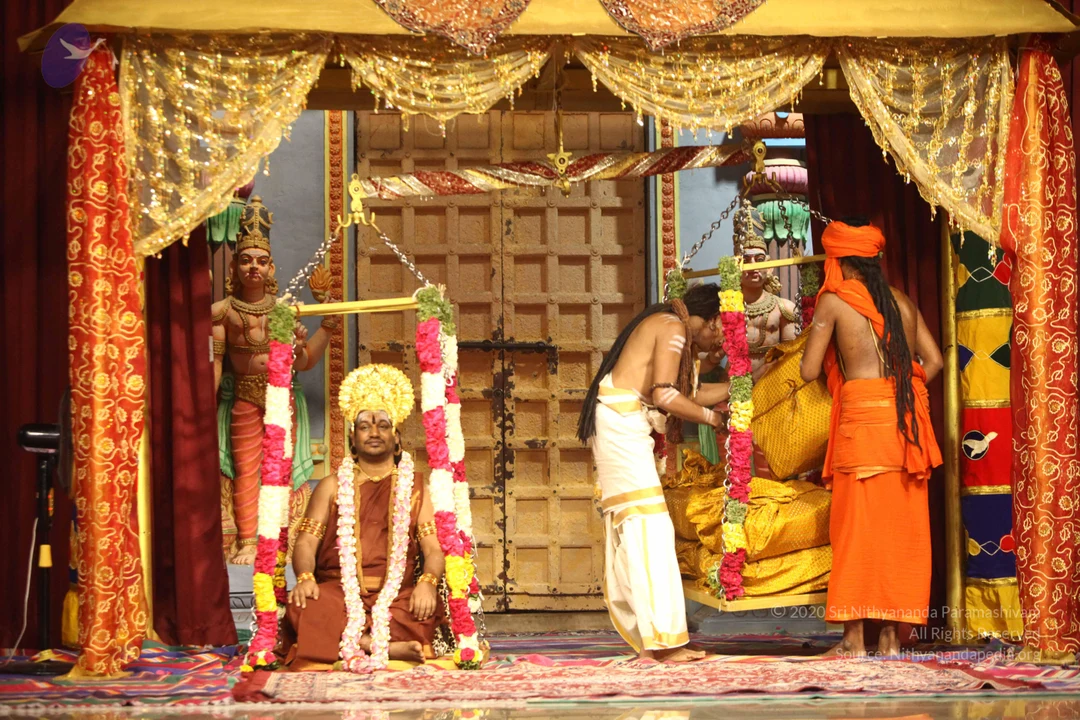
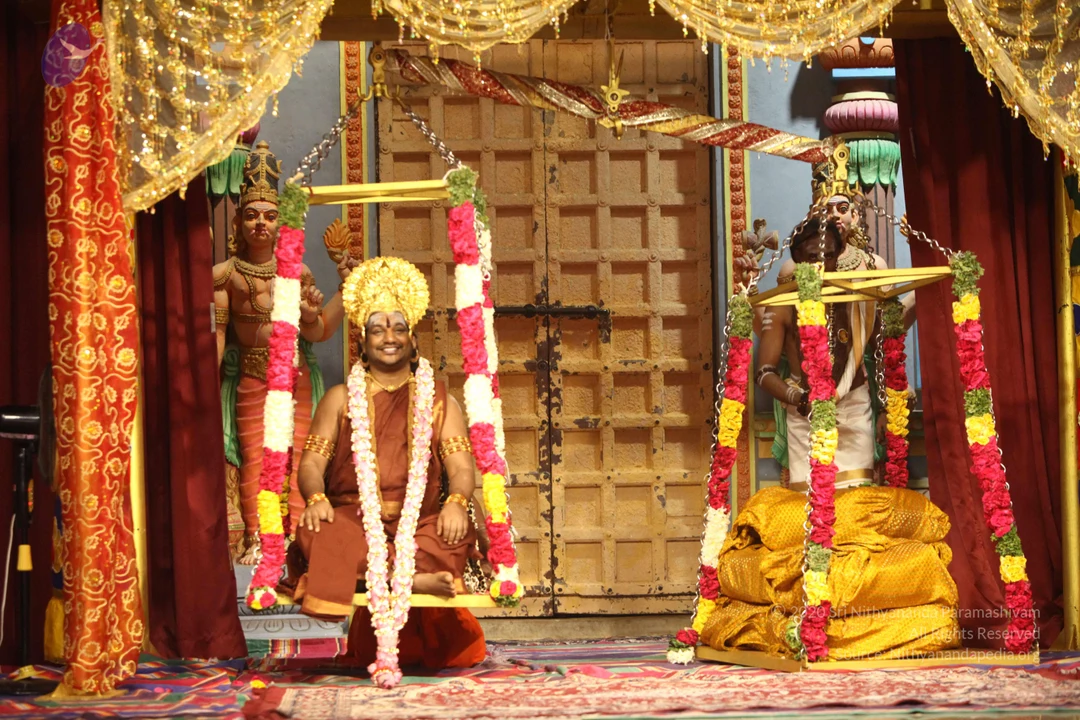
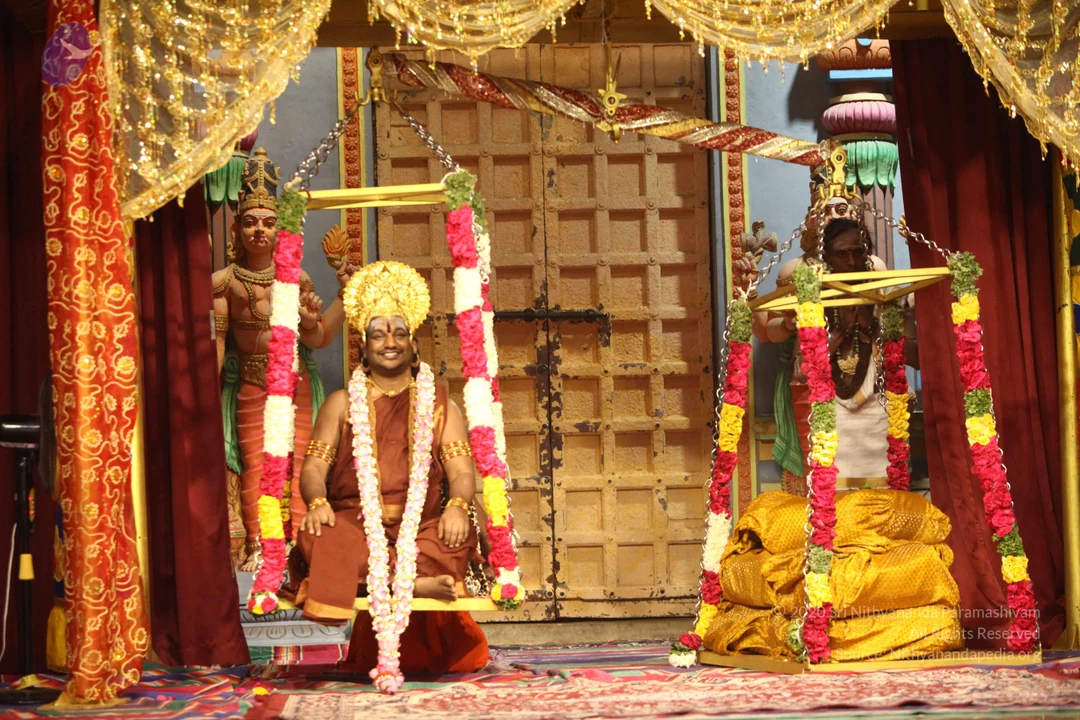
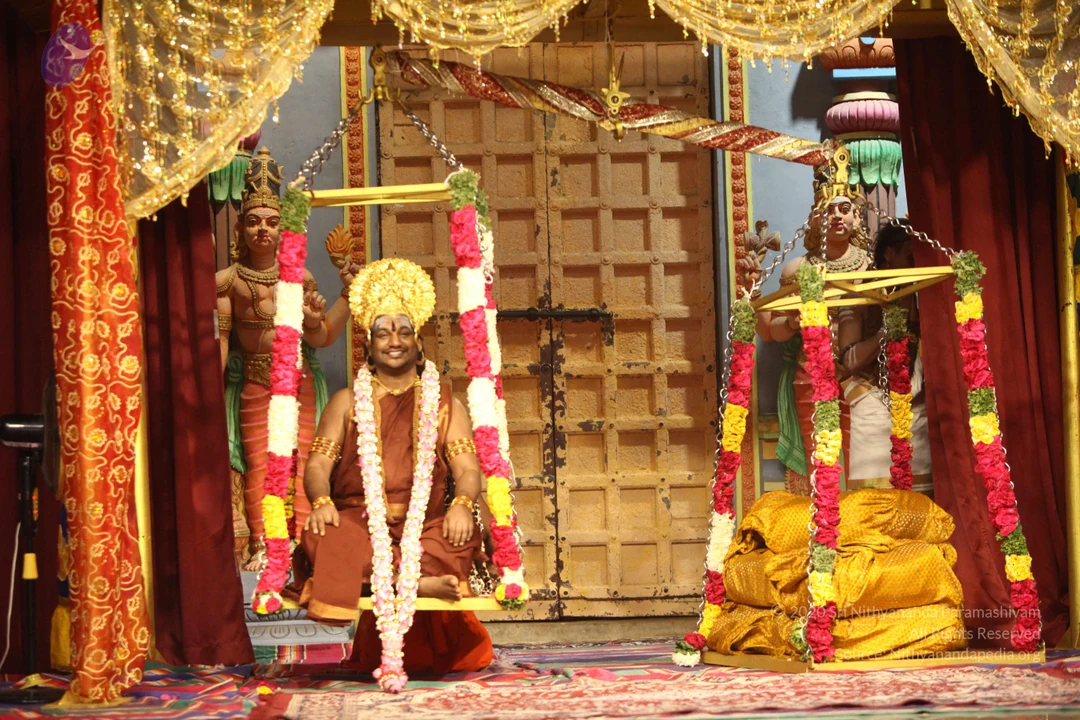
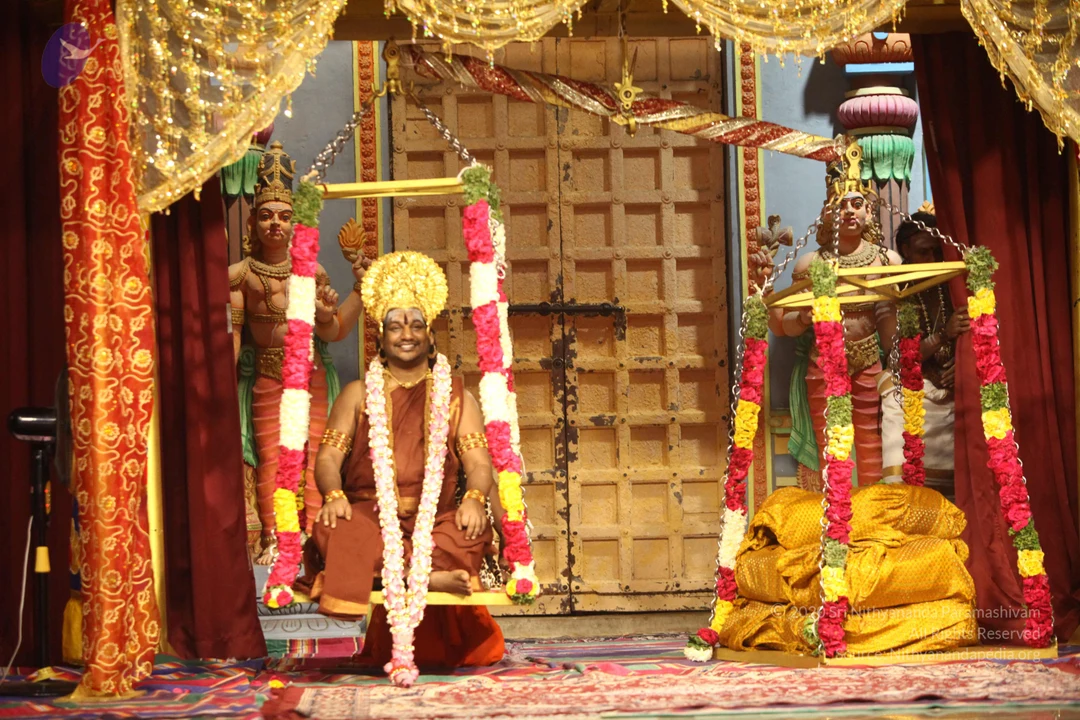
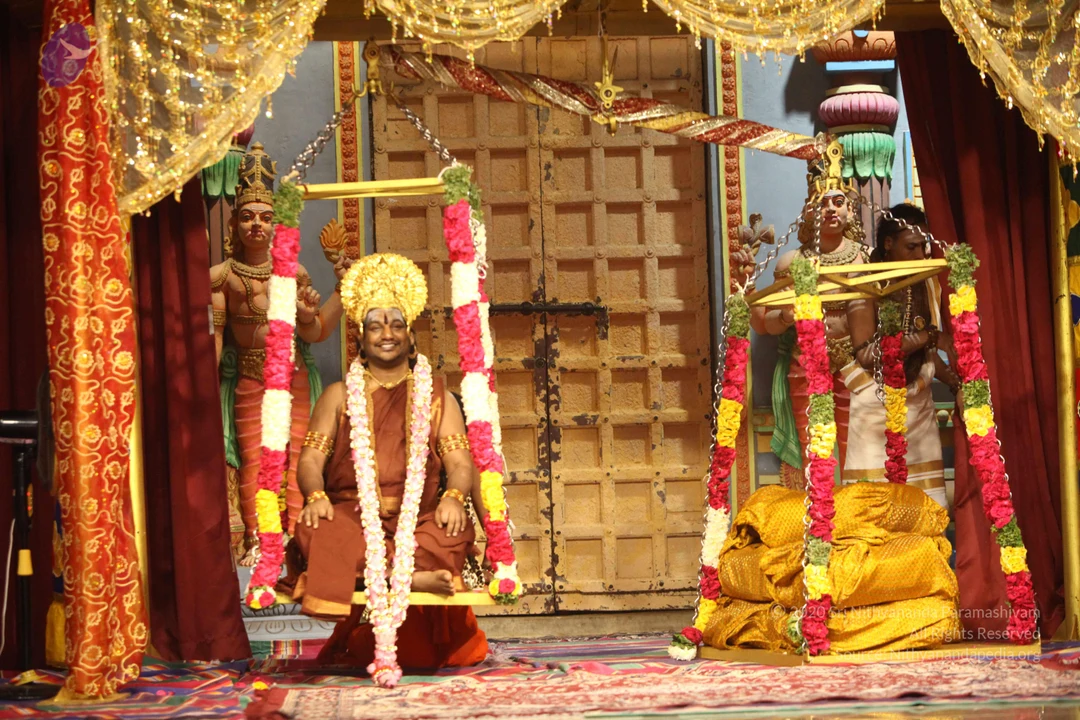
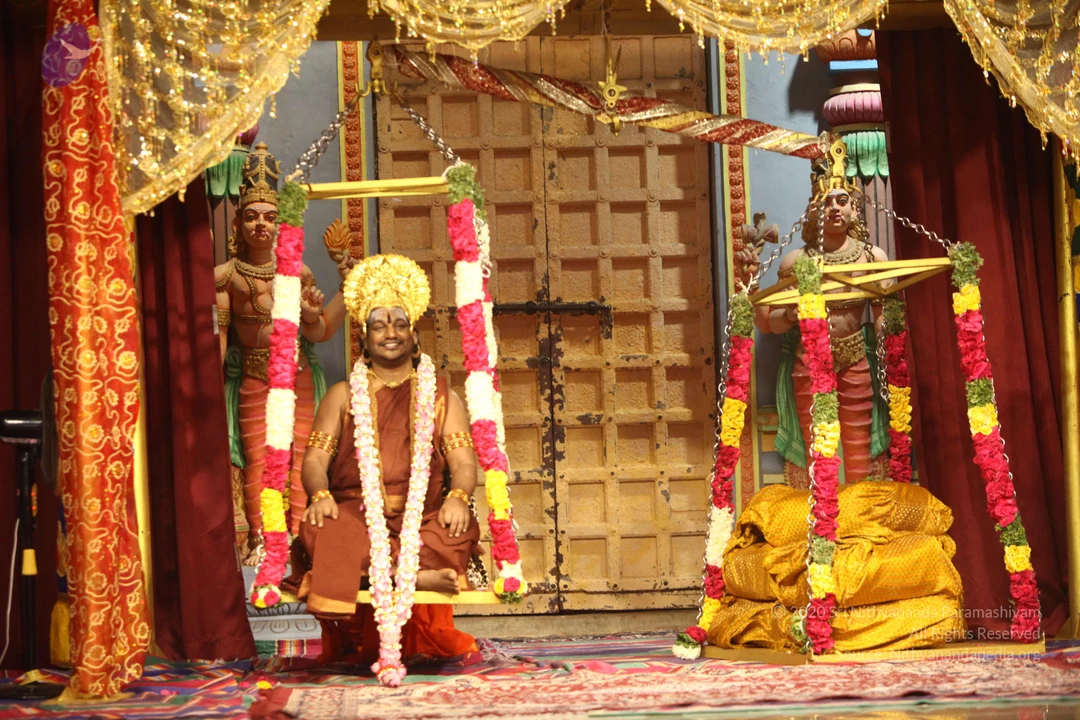
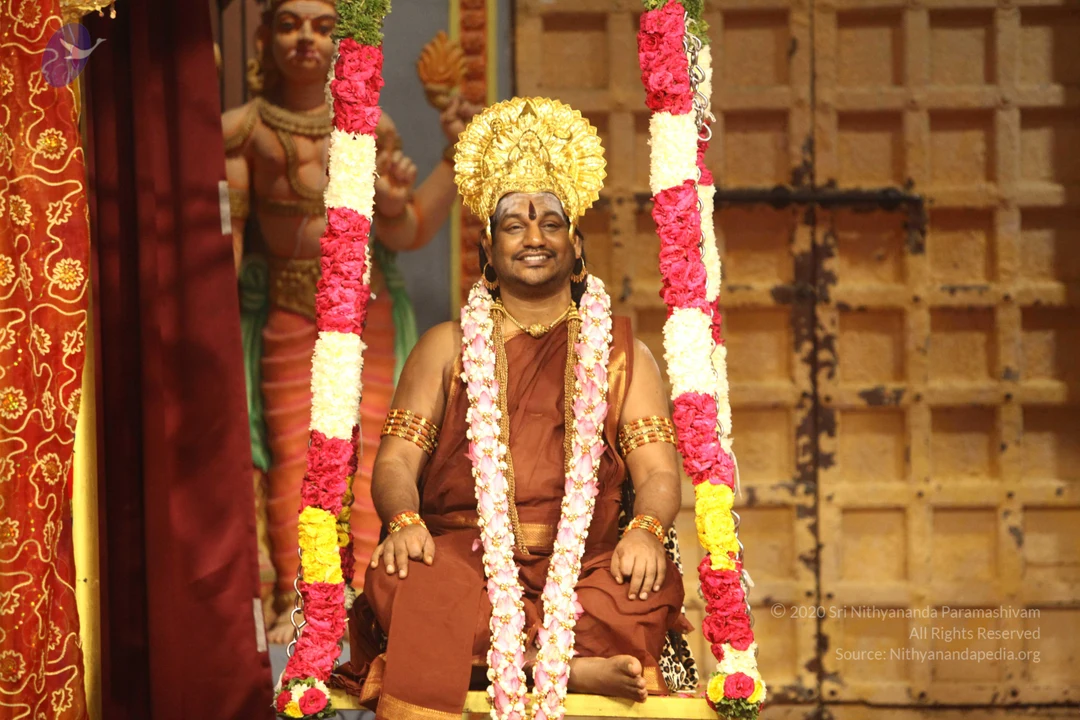
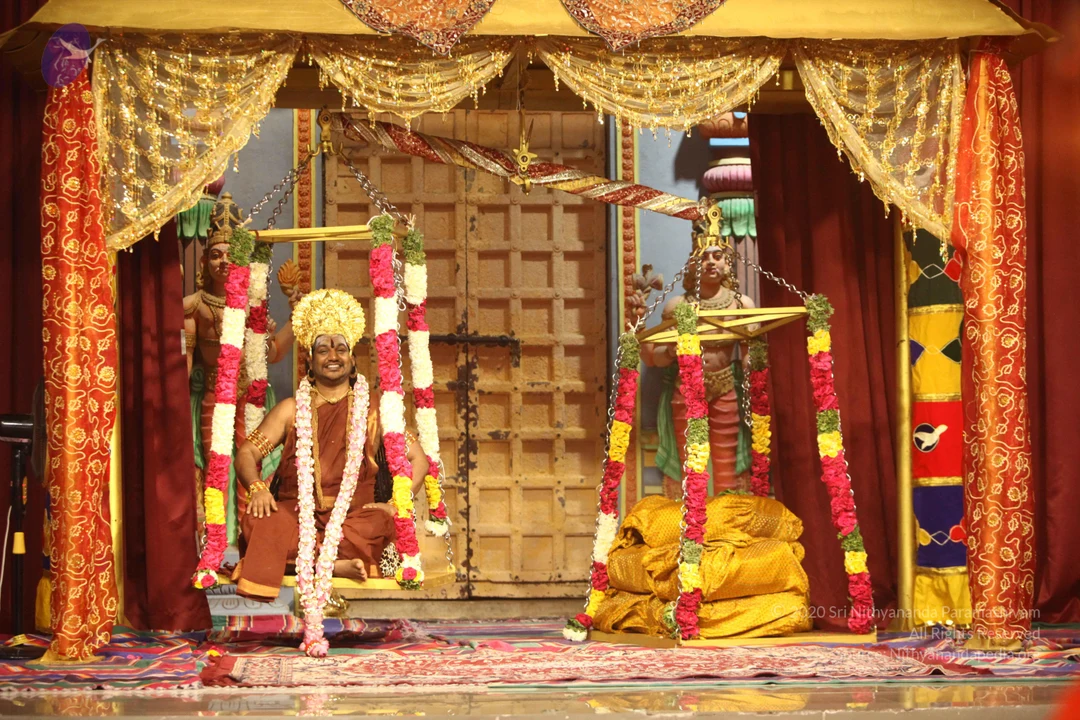
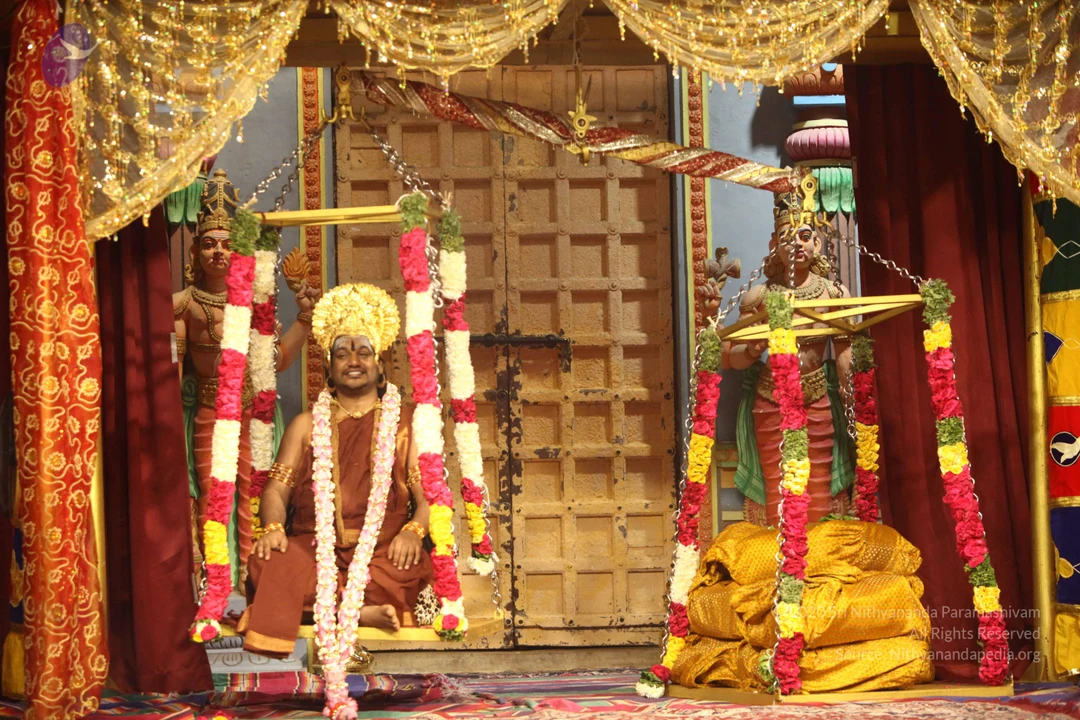
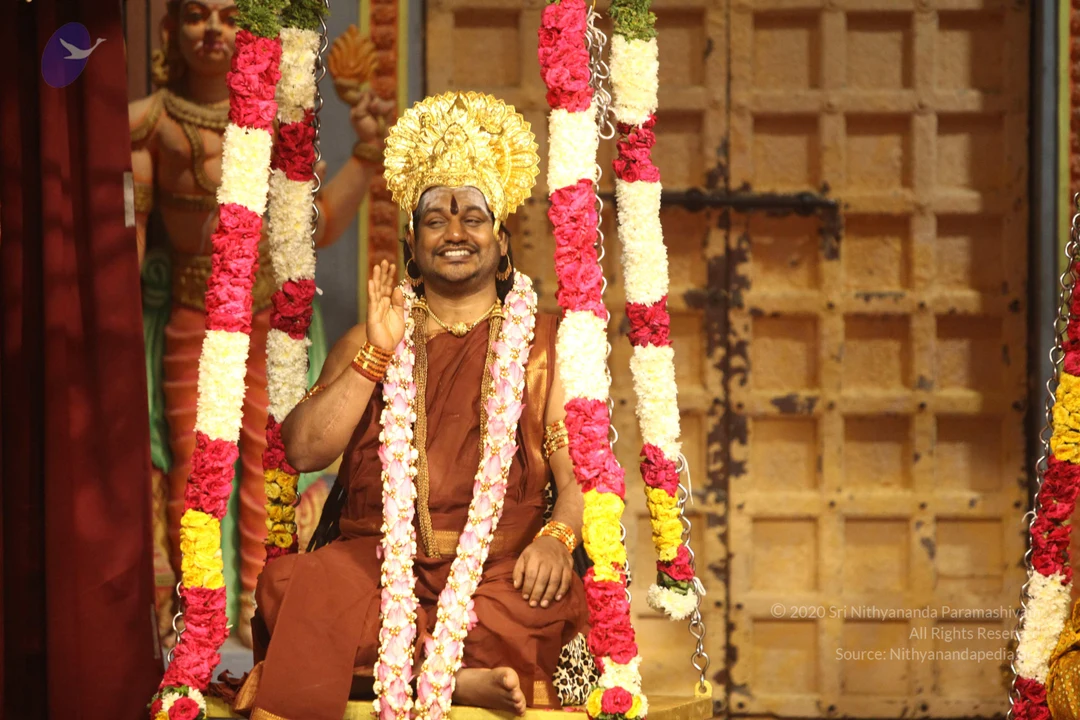
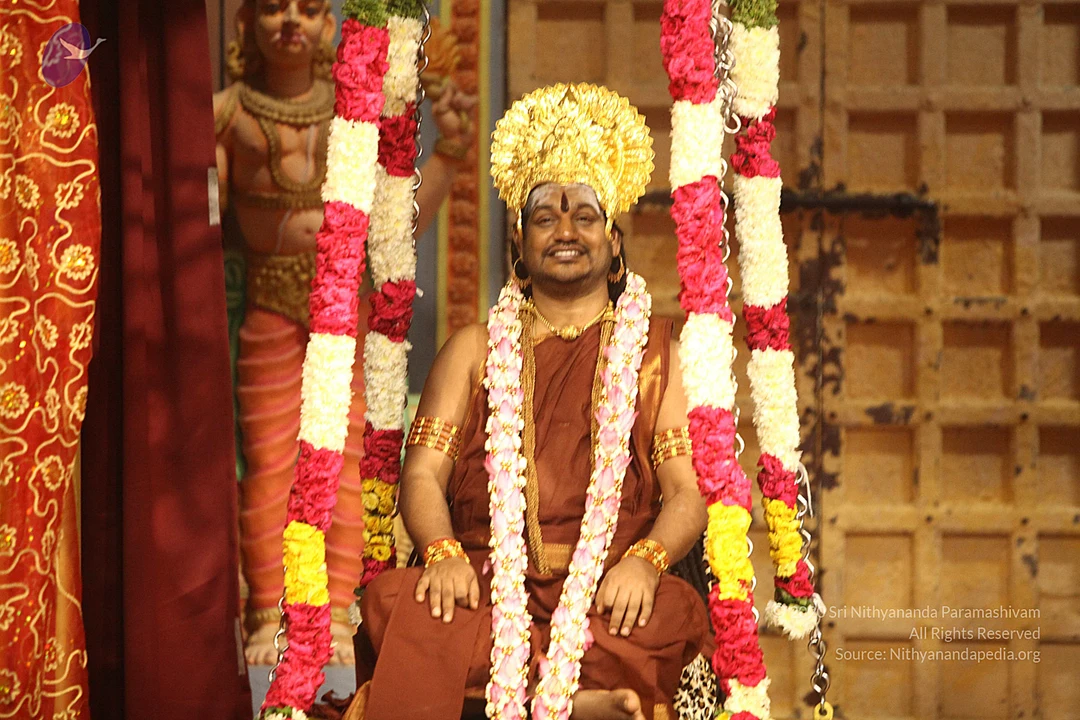
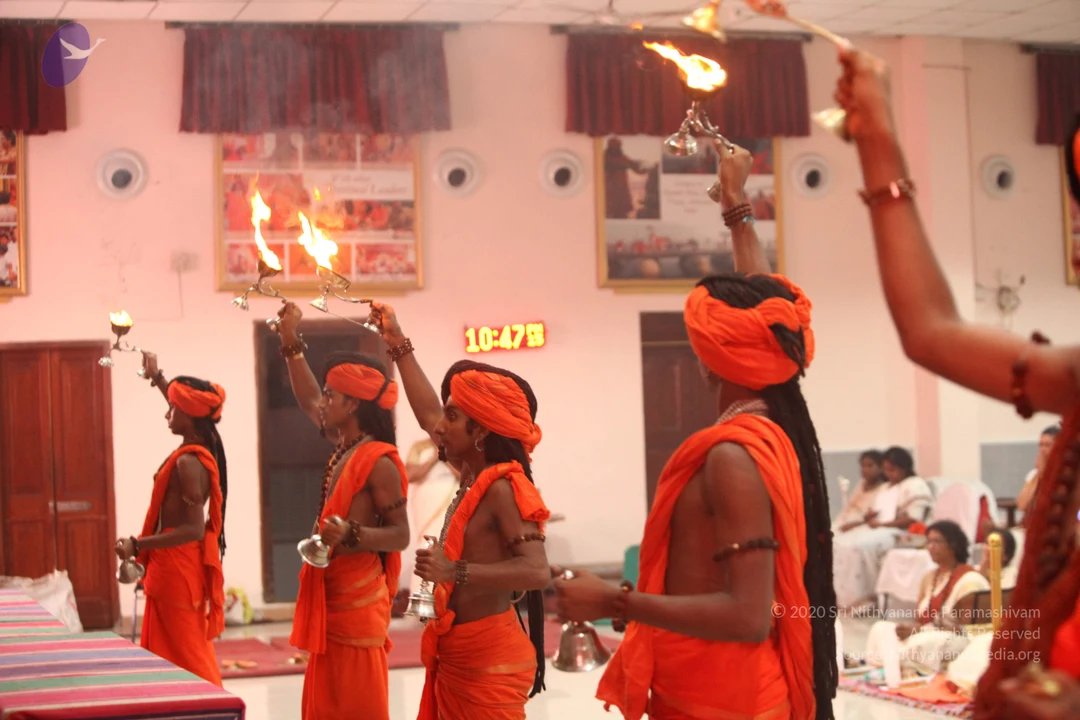
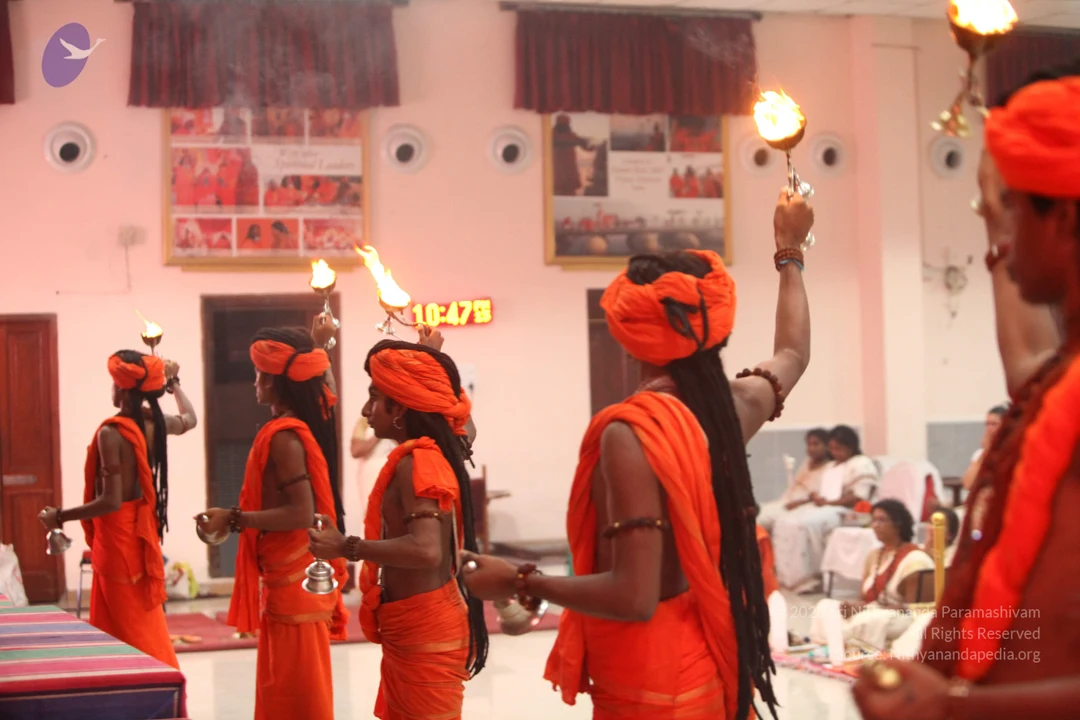
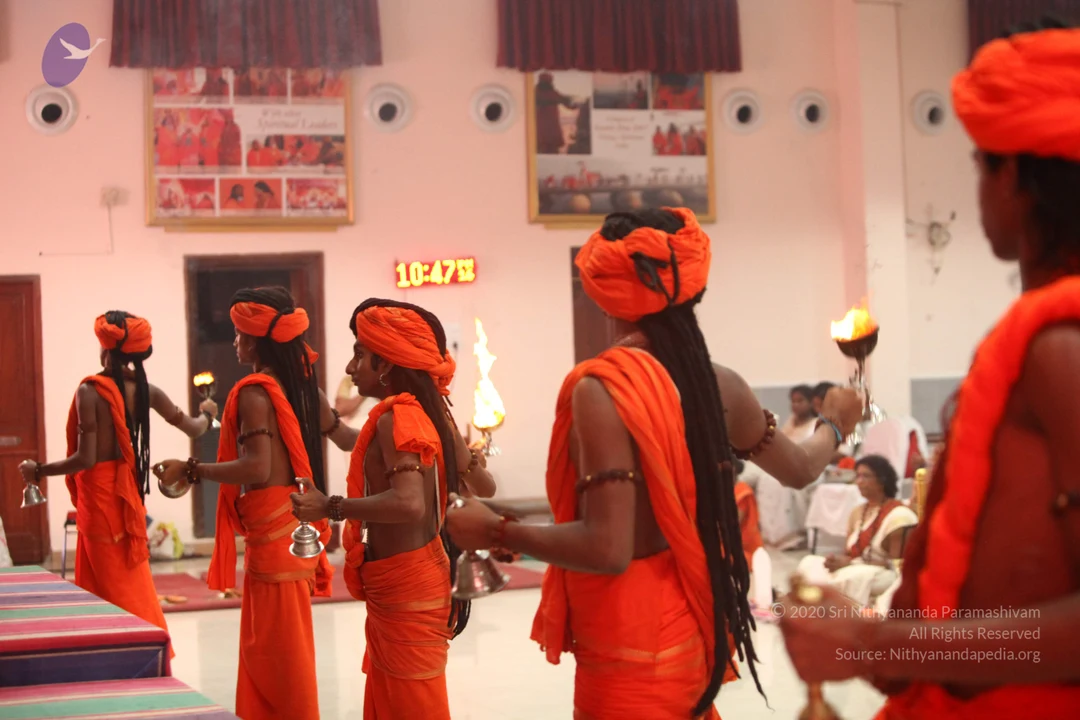
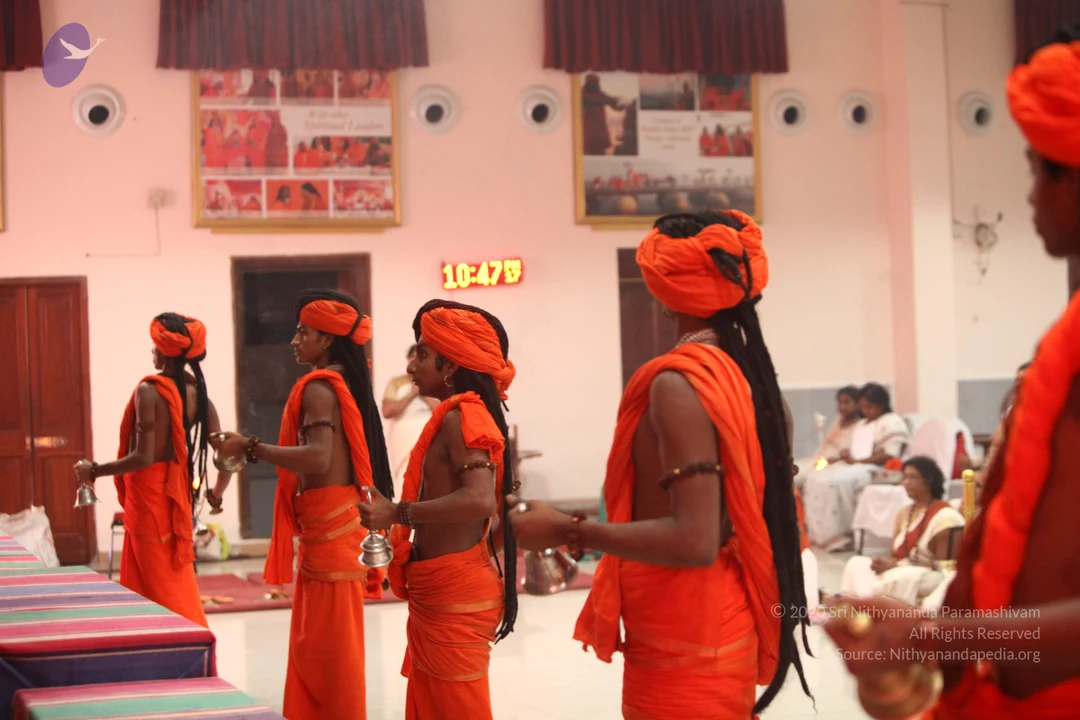
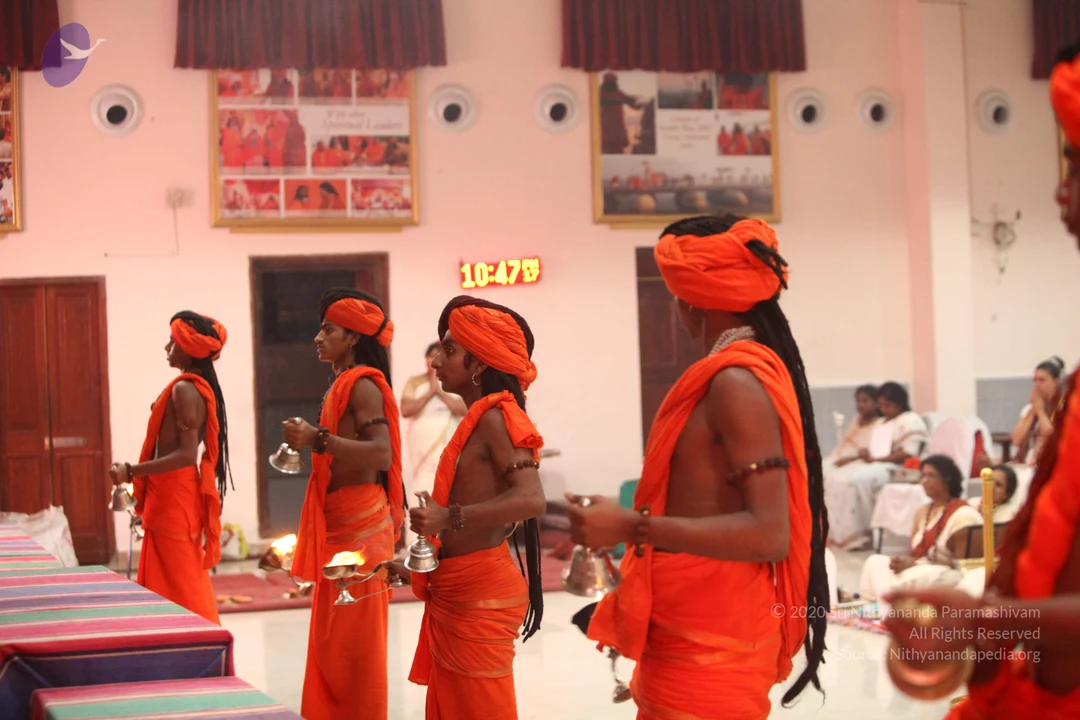
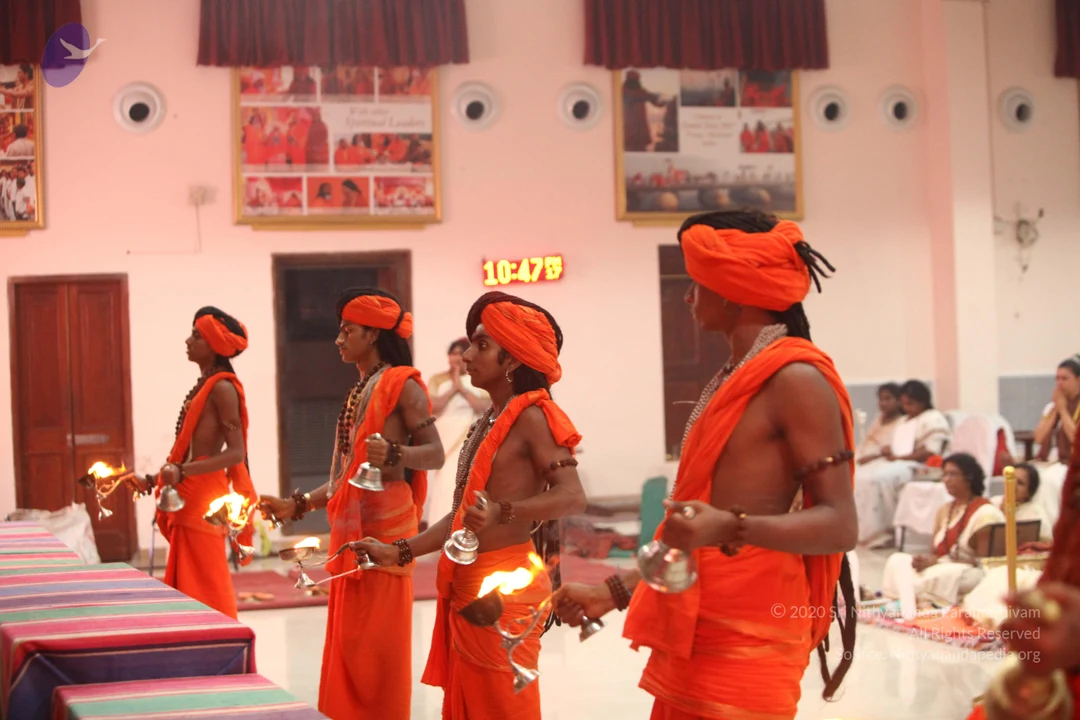
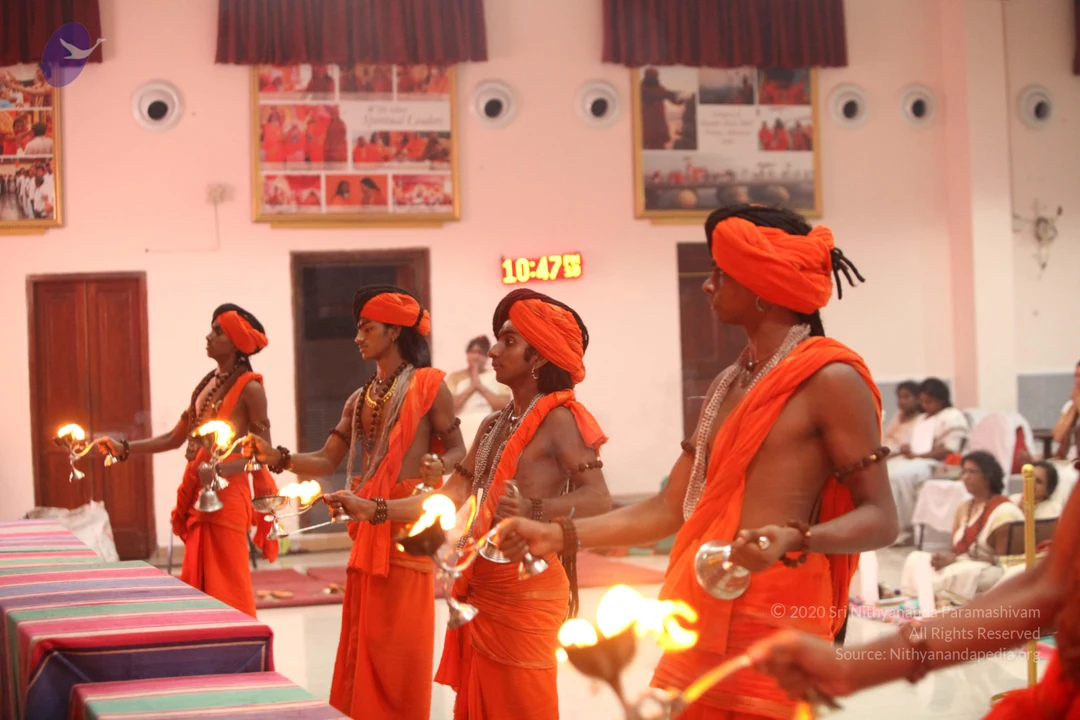
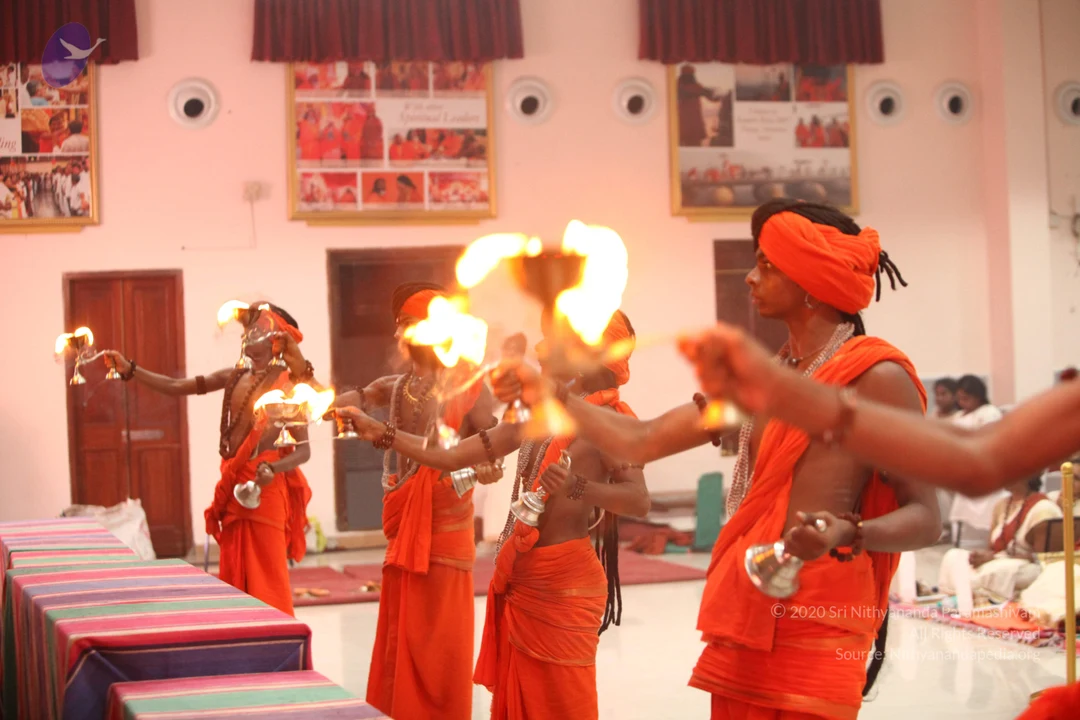
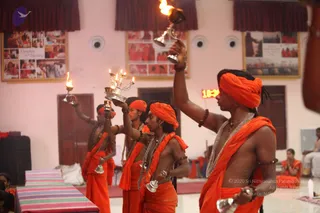
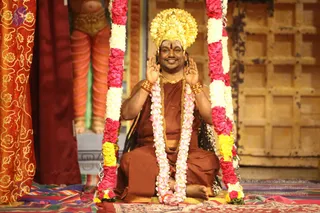
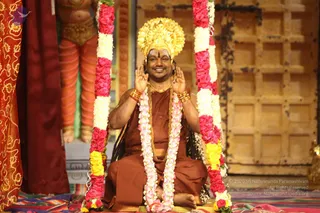
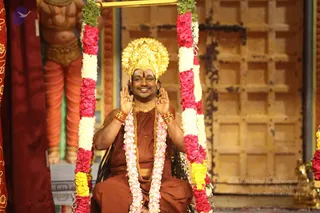
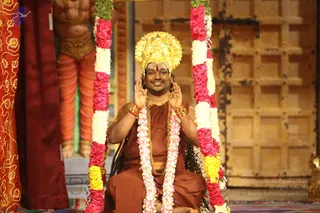
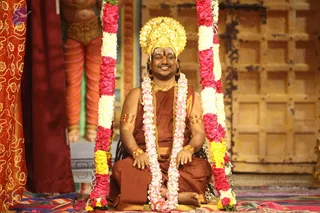
Four saffron-clad men in orange dhoti-style wraps and orange head turbans perform an aarti ceremony in a hall with pink walls and maroon curtains. The men in front hold up lit oil lamps and a multi-branched silver lamp on a silver tray, one arm raised, with rudraksha and pearl malas on their chests and arms. Behind them a few people sit on the floor in orange garments, and a red digital clock shows 10:3x. Framed photo collages hang on the walls, and a striped cloth-covered table stands at left.A seated man in rust-brown robes sits cross-legged on a colourful patterned rug in front of a carved wooden door. He wears a large golden crown, a golden necklace and gold armbands, with a red tilak on his forehead. He raises both hands with palms open beside his face and smiles. Long garlands of red, pink, white and yellow flowers hang on either side of him. Behind him a painted red and gold cloth backdrop shows the legs of a figure. A single person is visible.A seated man in a golden crown with a decorative halo-like headpiece sits on a low platform, smiling and raising both palms beside his face in a blessing gesture. He wears a rust-brown robe, a gold necklace and gold armlets, and is framed by two long garlands of red, pink, white and yellow flowers hanging from above. Behind him stands a painted deity figure in red and orange garments, beside a carved wooden door and red drapes. The appearance-based cues of a golden crown, ornate jewellery and a ceremonial setting match the page's a person label, so this is a person presence, seated as a guru receiving devotion during ritual festivities.A smiling man sits centered on a swing decorated with red, pink and white flower garlands, his palms raised beside his face in a playful gesture. He wears a large golden crown-like headdress, a rust-orange robe, layered gold necklaces and gold bangles, with a sandalwood tilak on his forehead. Behind him stands a painted statue of a muscular deity in orange dhoti. Wooden carved doors and a red draped curtain frame the stage, with gold ritual vessels at the right edge. Swamiji (probable) by appearance cues: ornate golden crown, saffron-orange ceremonial clothing and gold necklaces, seated in an honoured position on a decorated swing.Photograph of a smiling man seated on a swing decorated with garlands of red, pink, white and yellow flowers. He wears a golden floral crown, a rust-brown robe, gold necklace and gold armbands, with a red-orange tilak on his forehead, and his palms are raised beside his face in greeting. Behind him stands a large painted statue of a deity in red and orange with a gold waistband, beside a red curtain and a carved wooden door. Swamiji (probable): the seated figure has a golden crown, gold ornaments and ceremonial saffron-brown clothing, and the page indicates he is present at this event.A smiling man sits cross-legged on a red-and-multicoloured cloth in front of a golden door, with a tall standing deity murti partly visible at left. He wears a large golden crown, a rust-brown robe, gold armlets and bangles, a gold necklace, and a bindi. Long garlands of pink, white and yellow flowers hang on both sides of him. Appearance-based candidate: Swamiji (probable), seated in ceremonial dress with a crown and garlands as the central figure of the scene.

Mandala-Process

125 photosSource gallery
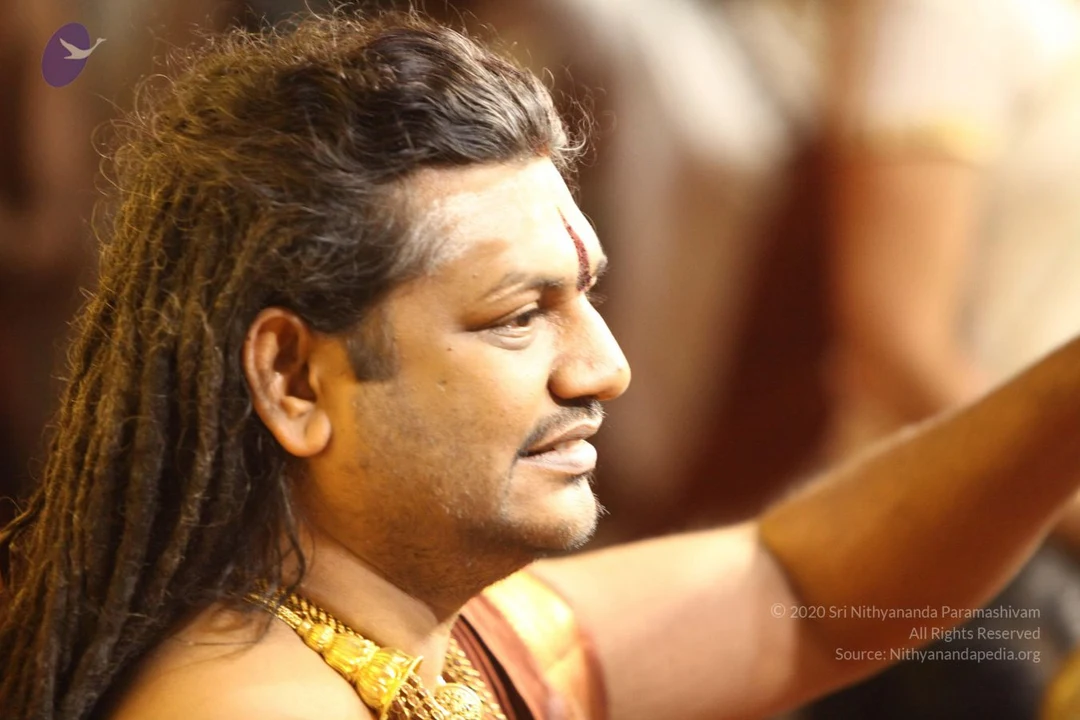
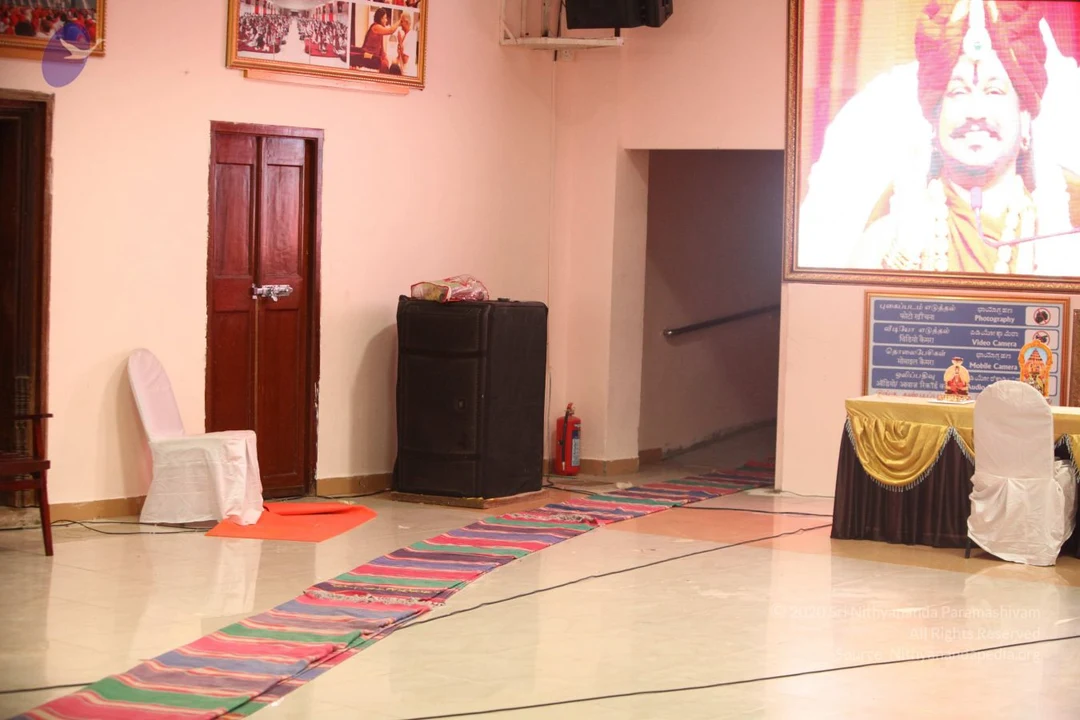
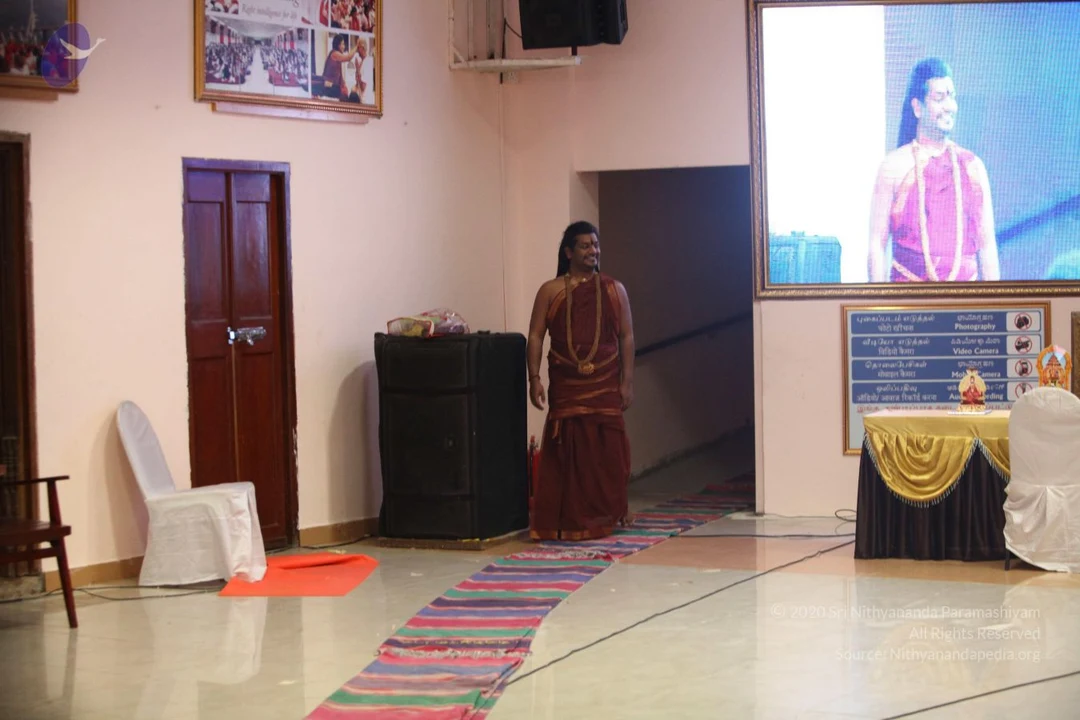
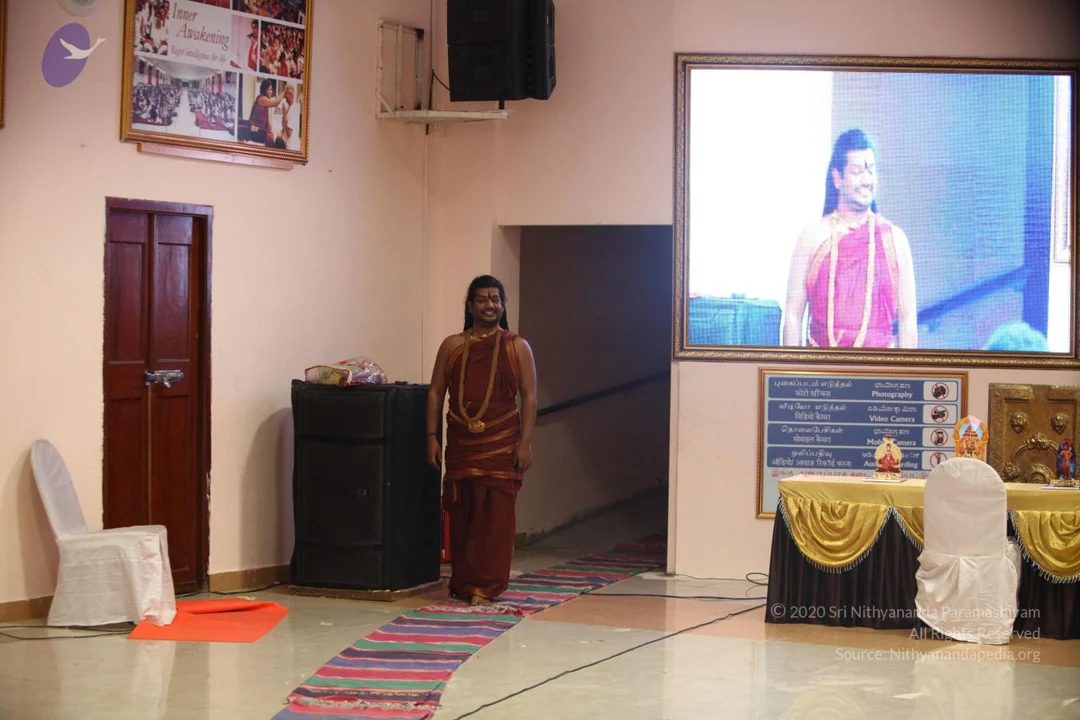
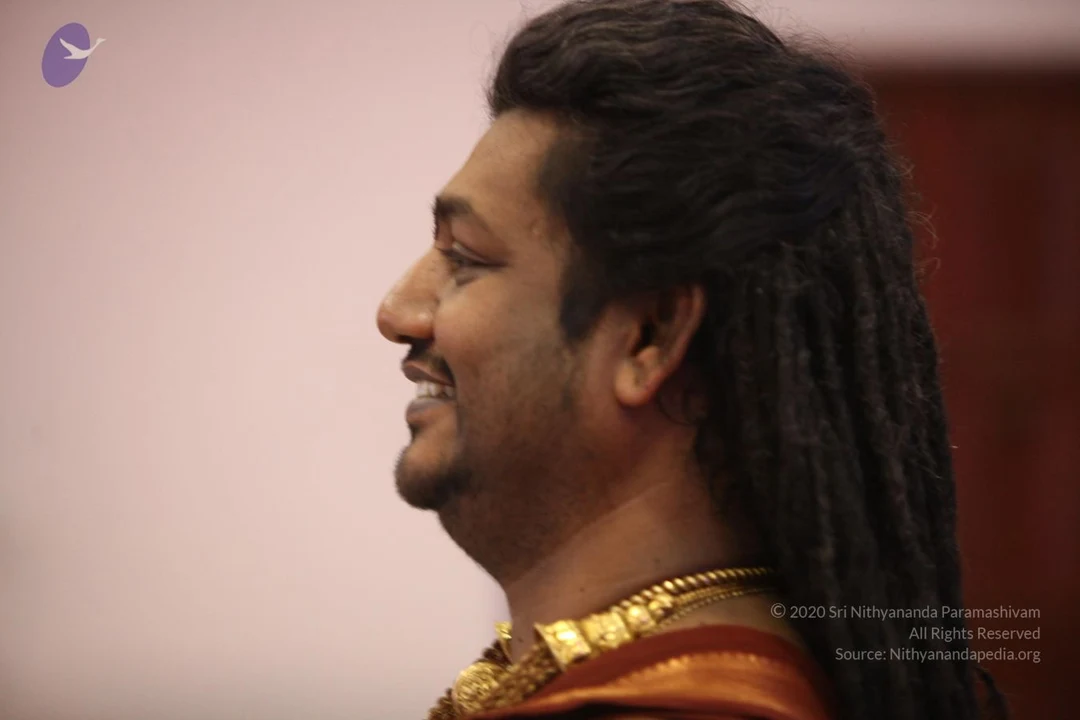
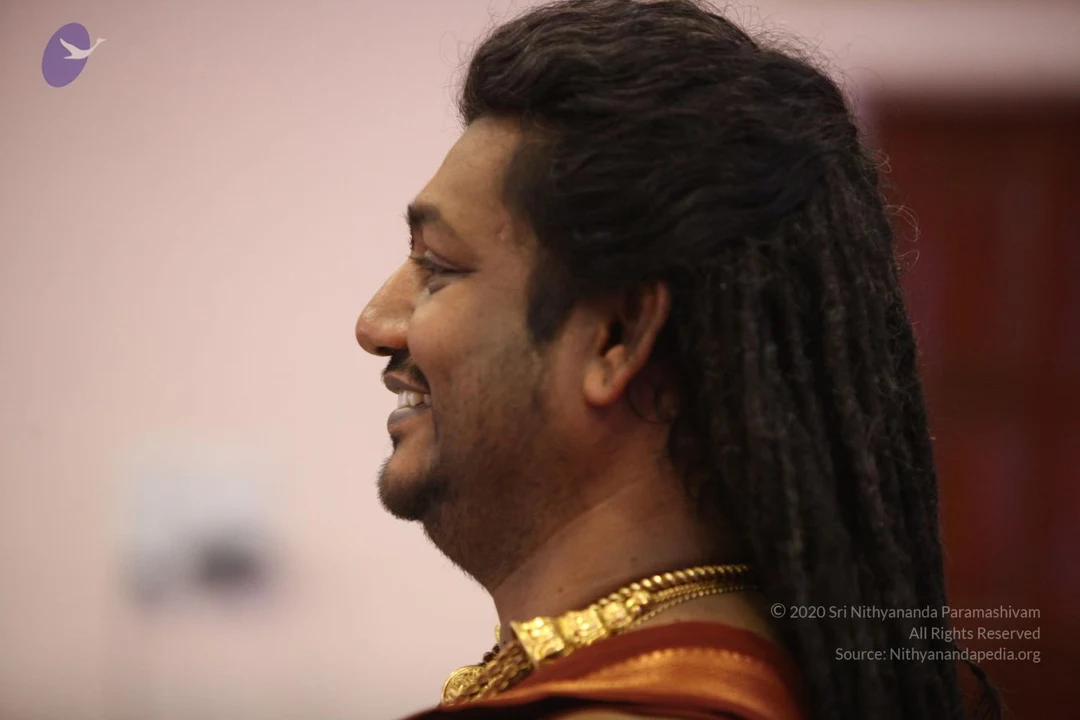
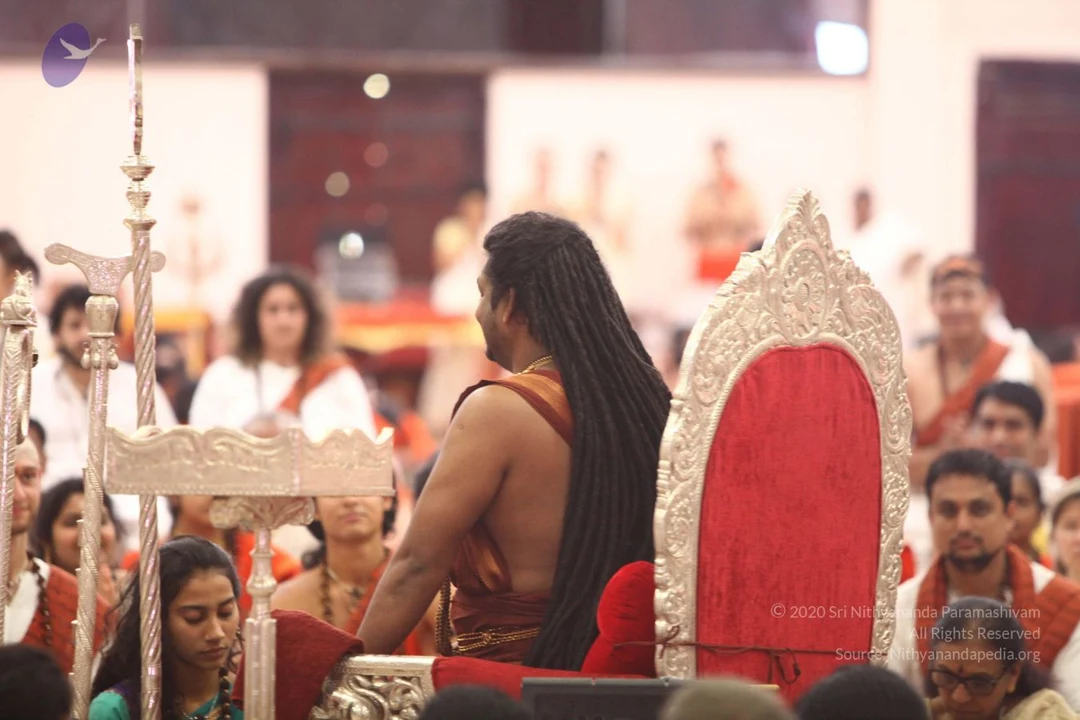
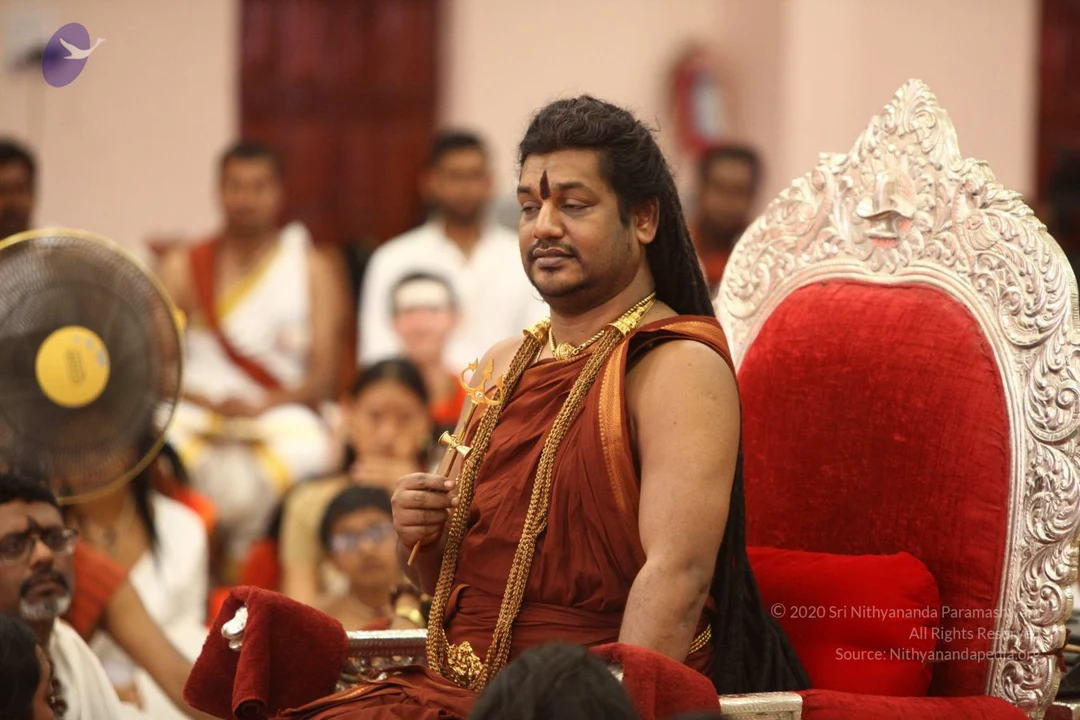
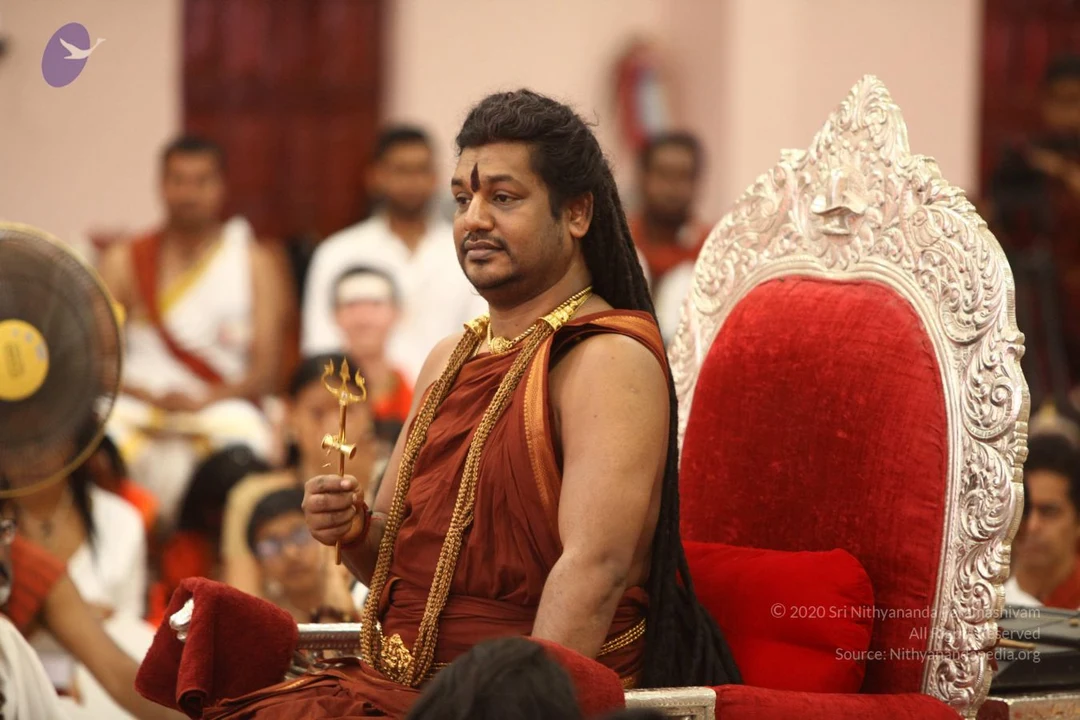
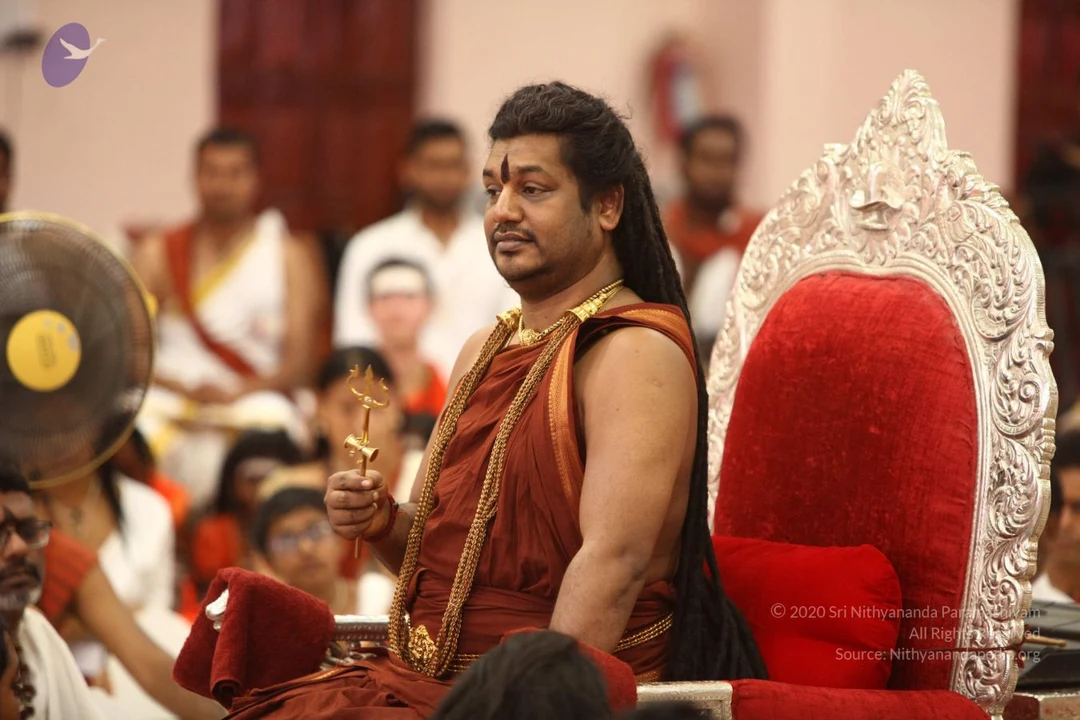
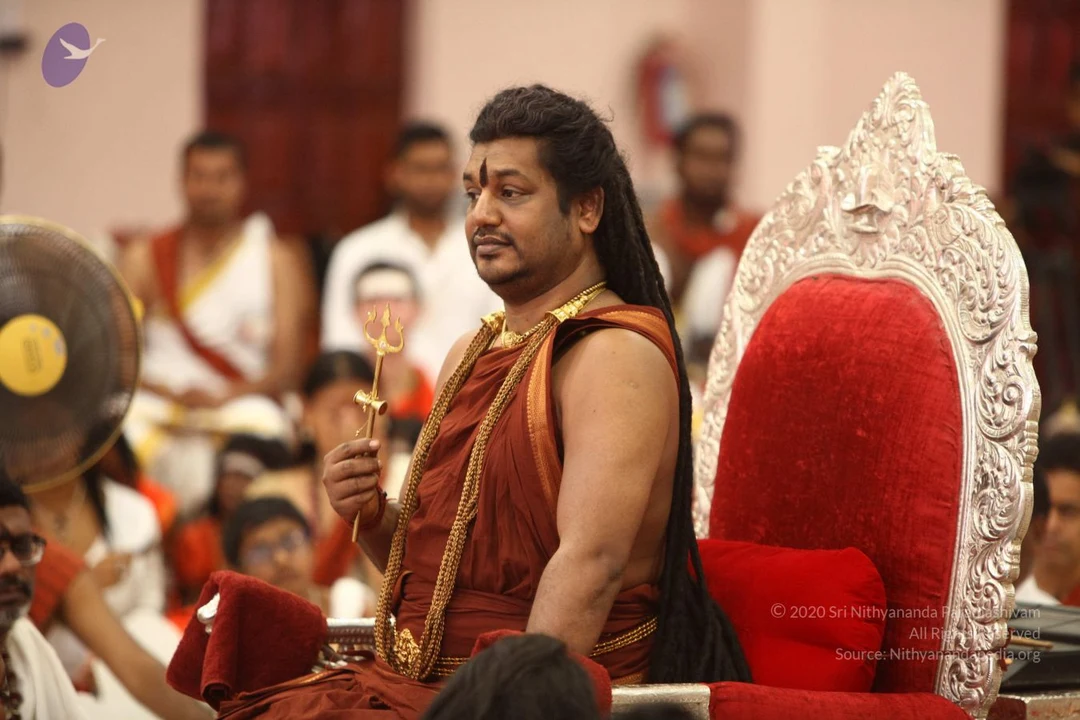
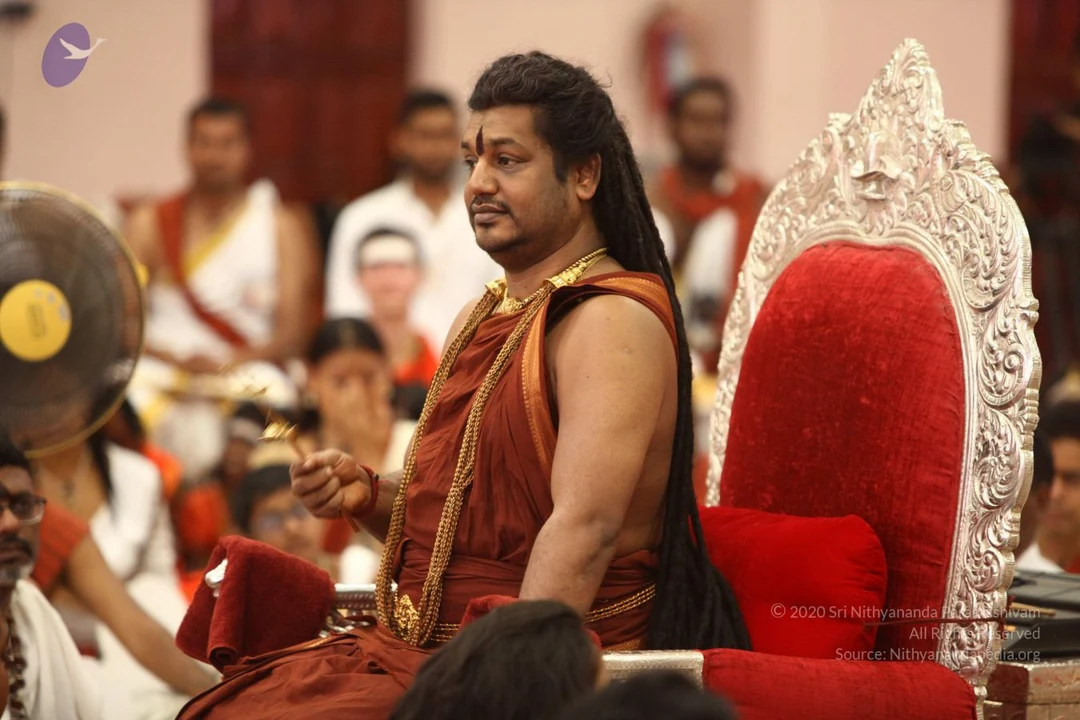
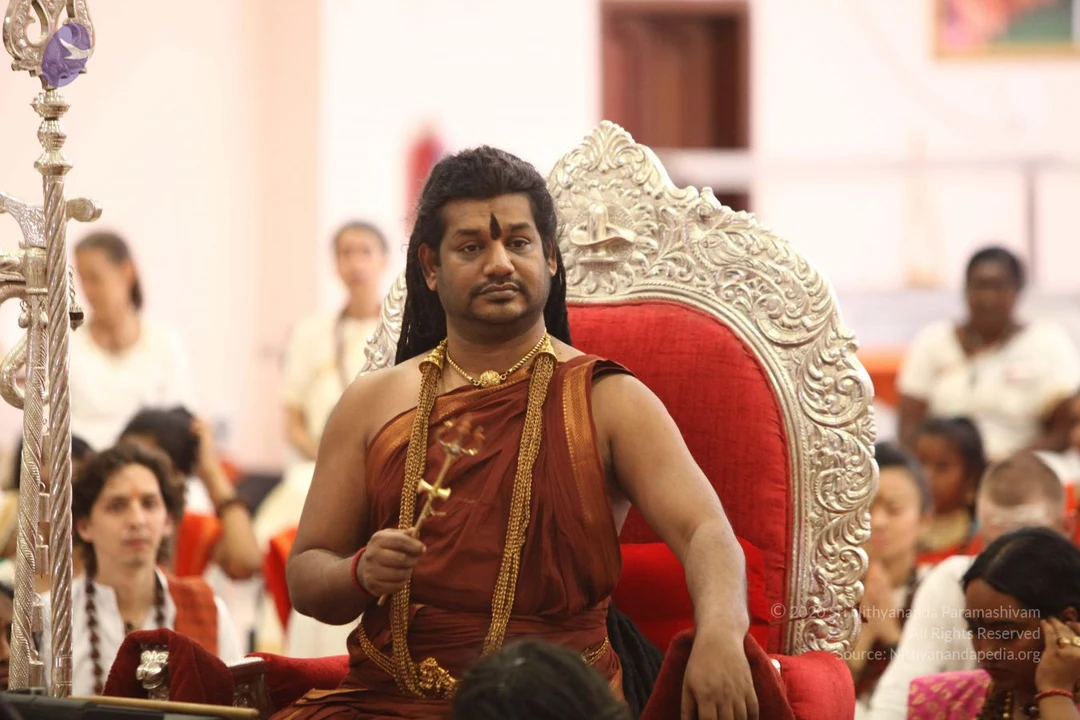
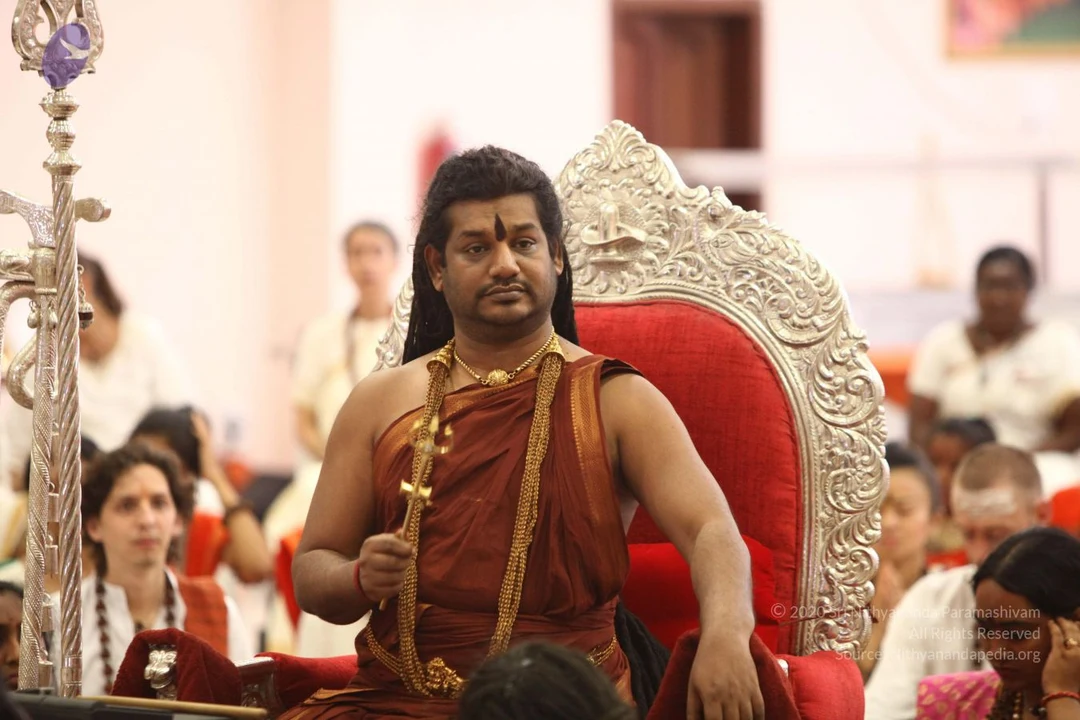
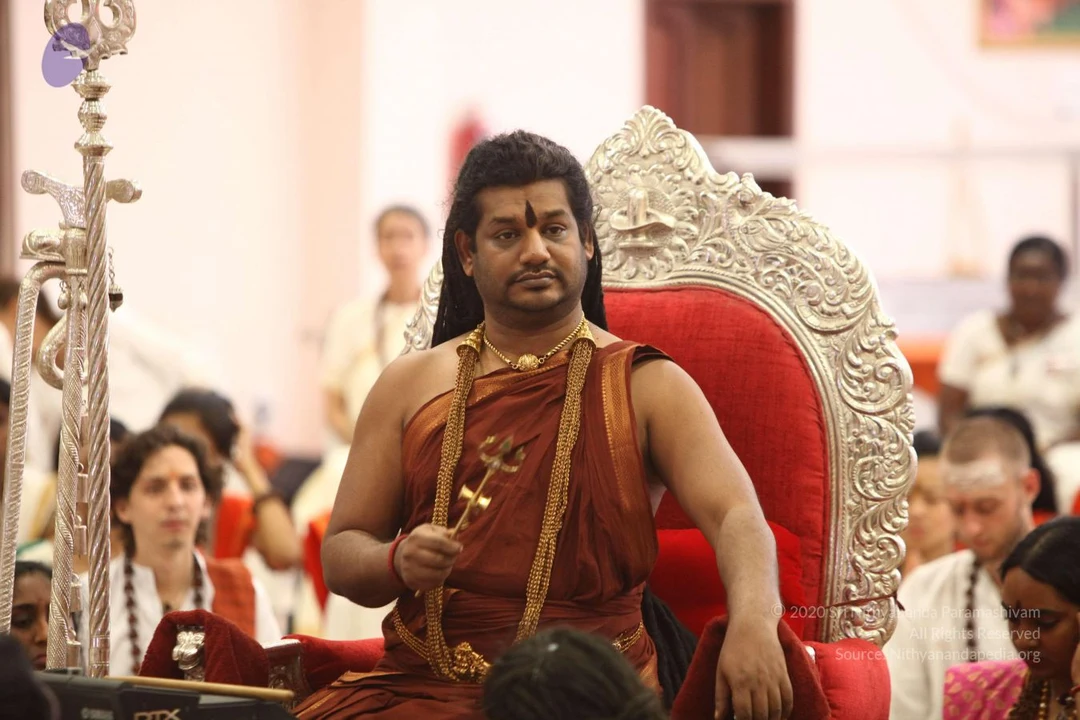
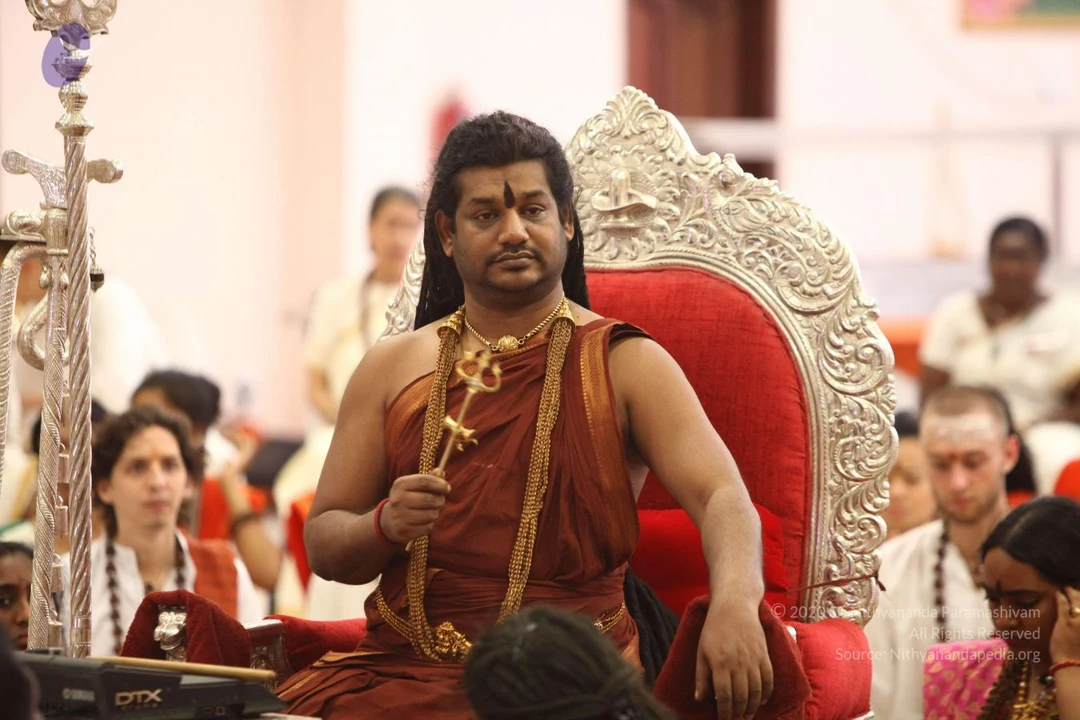
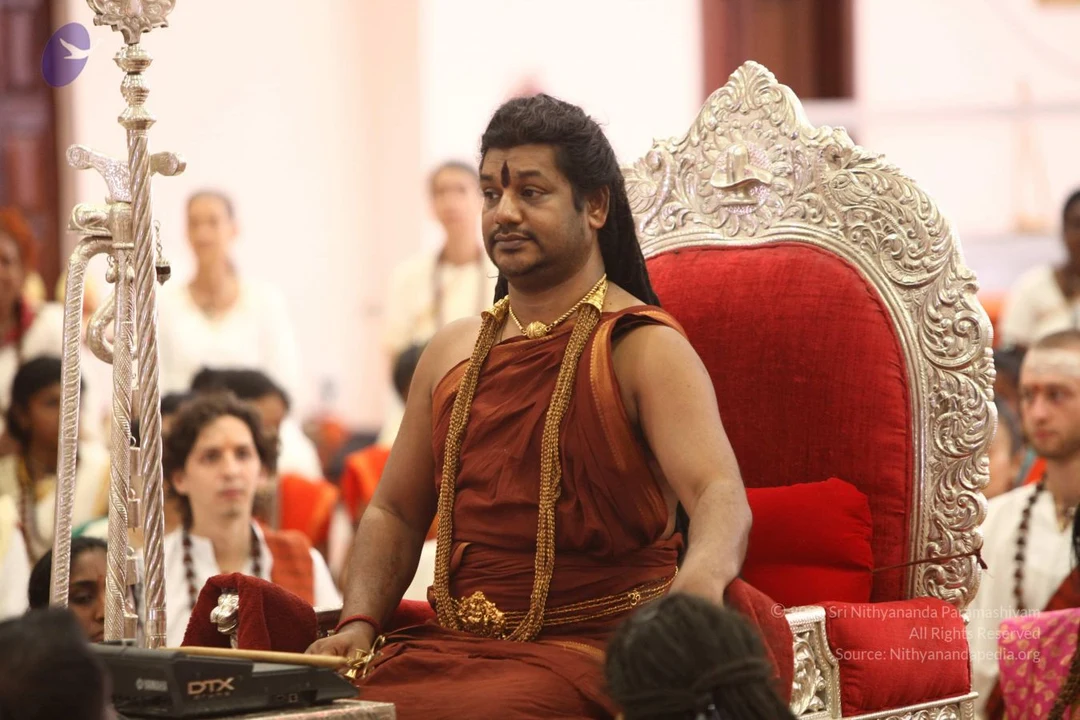
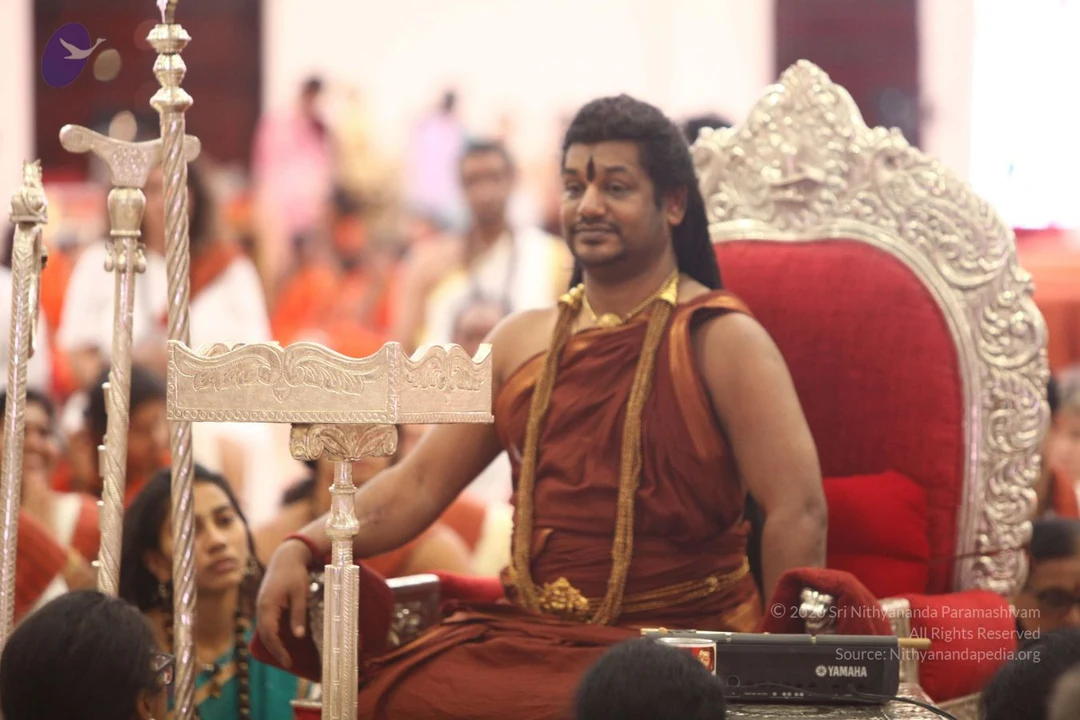
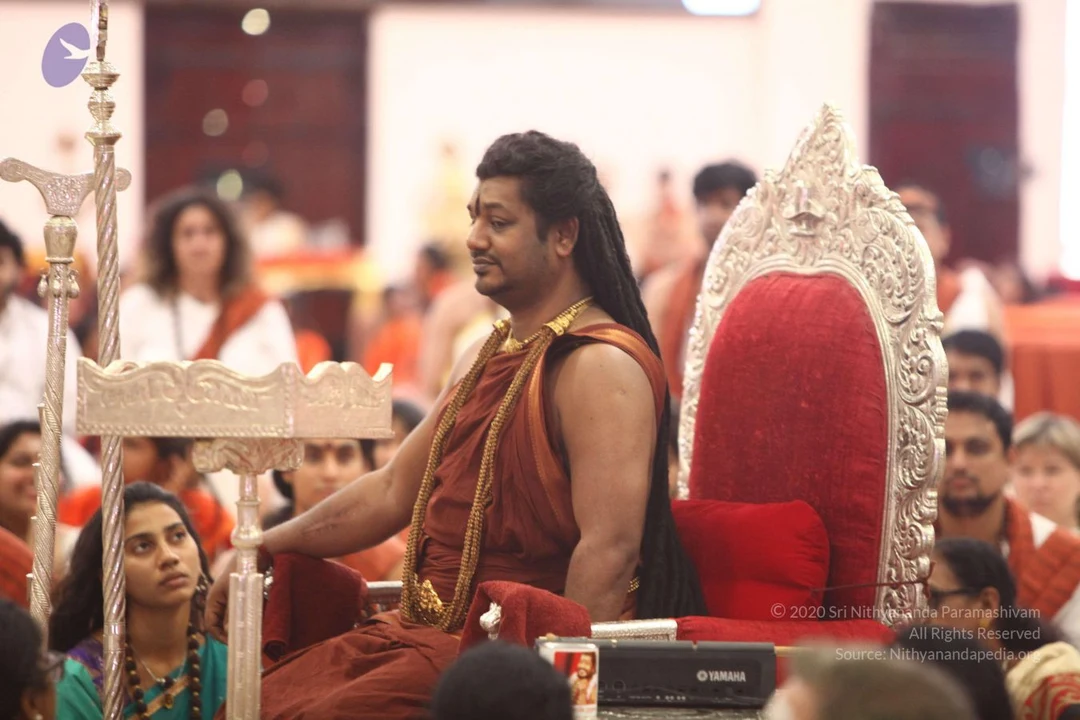
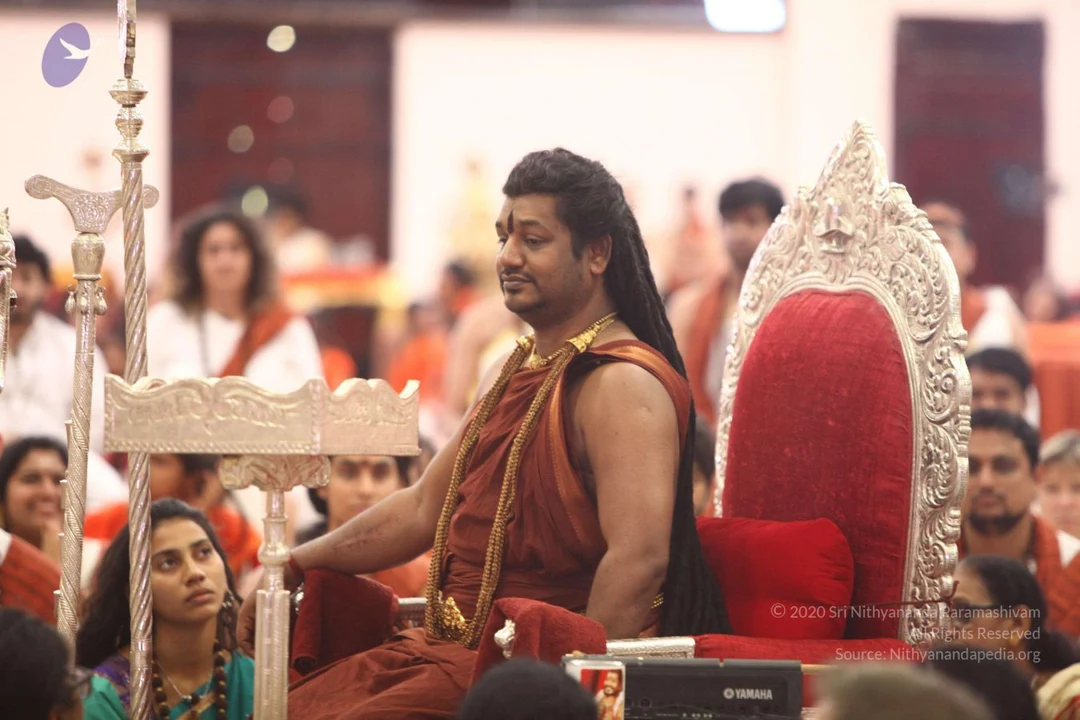
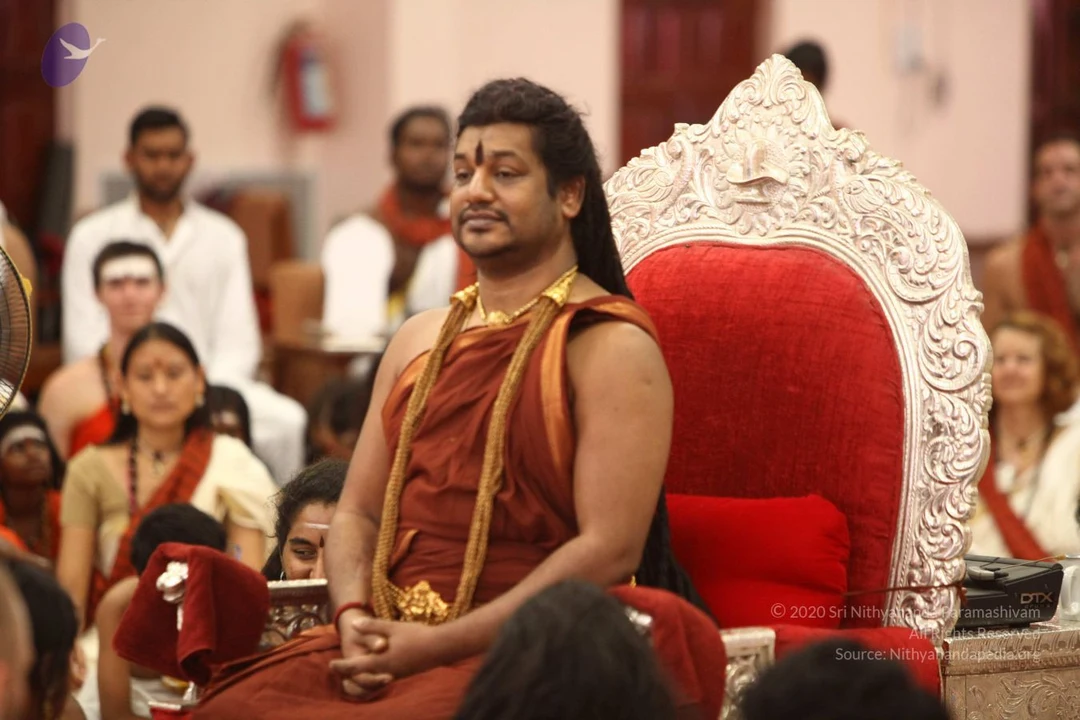
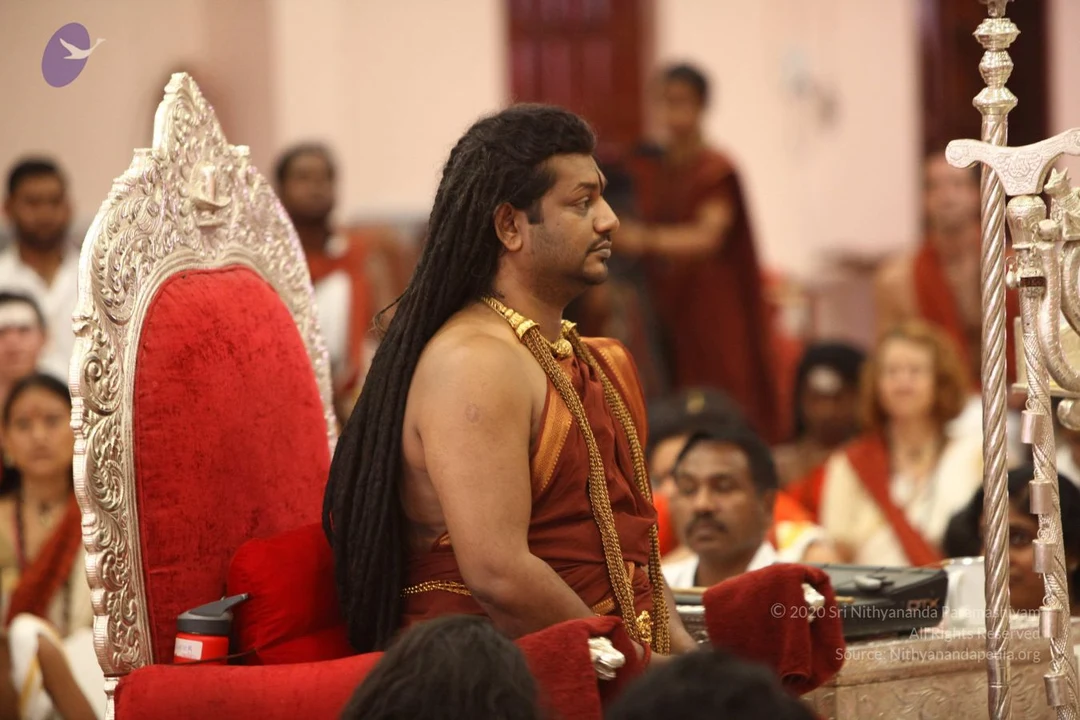
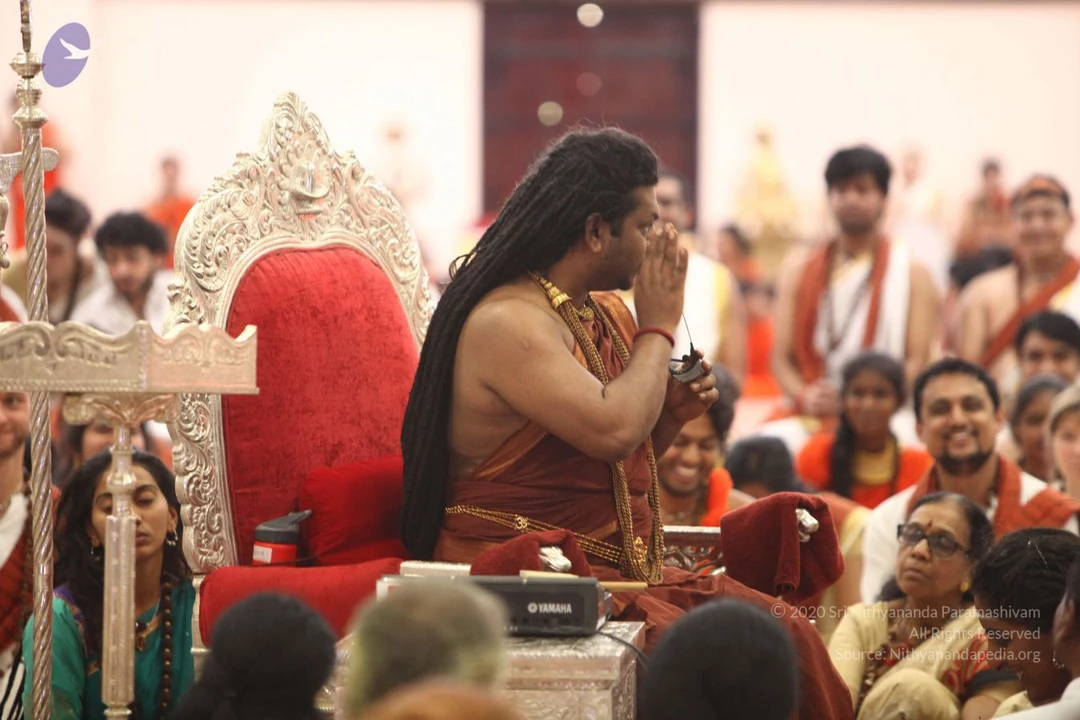
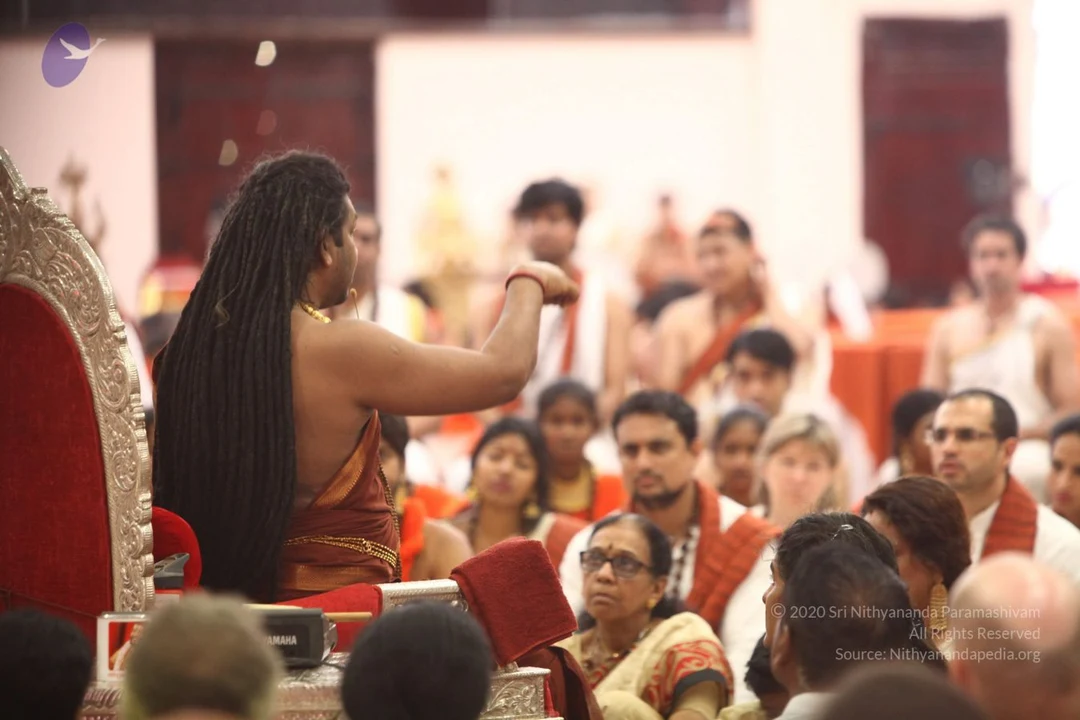
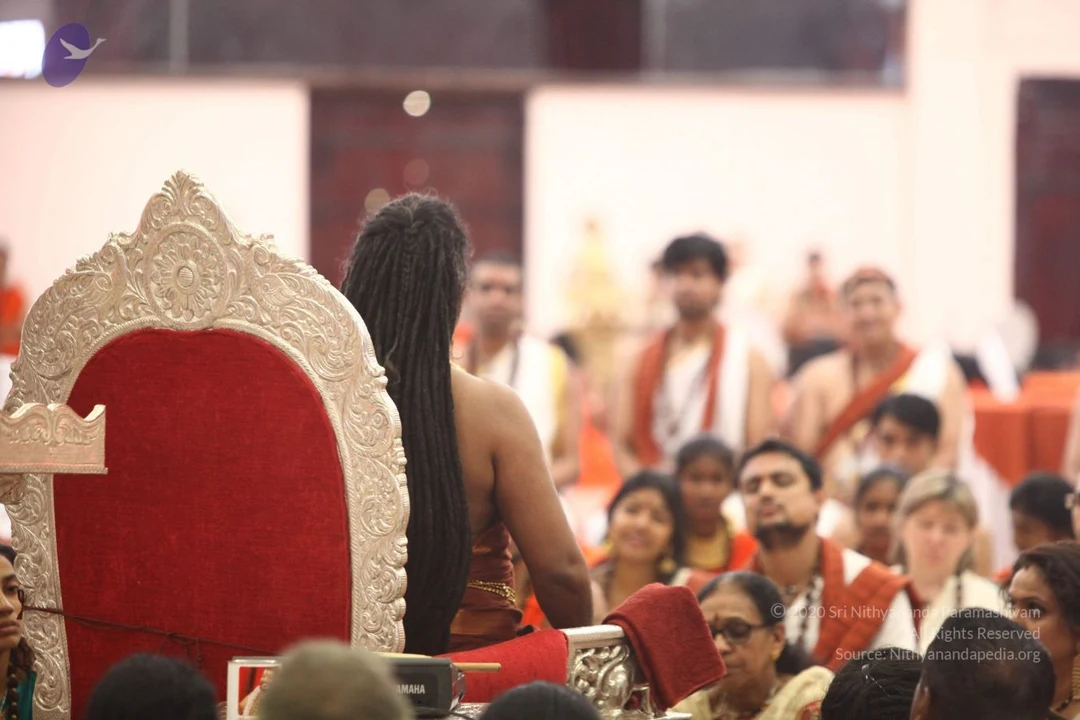
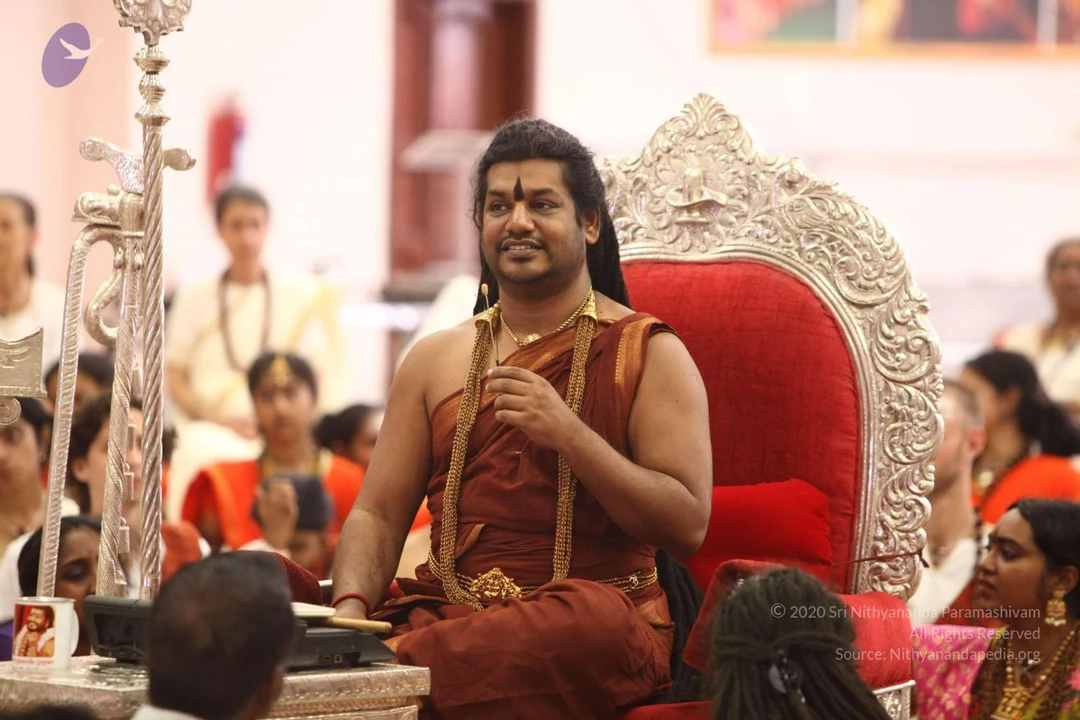
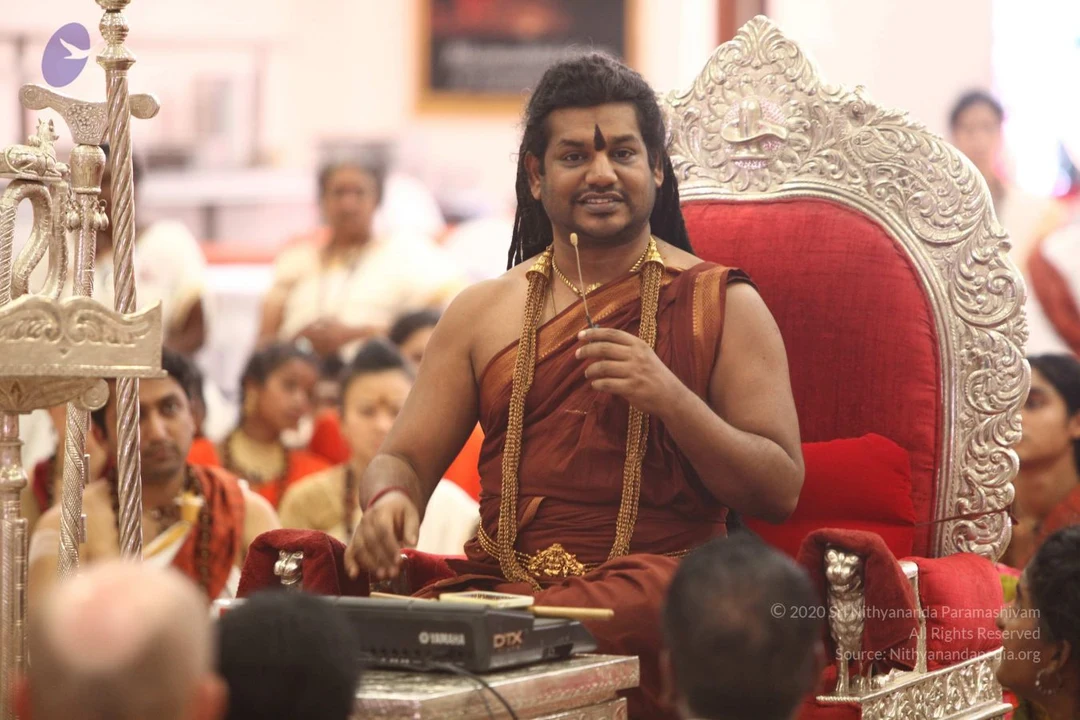
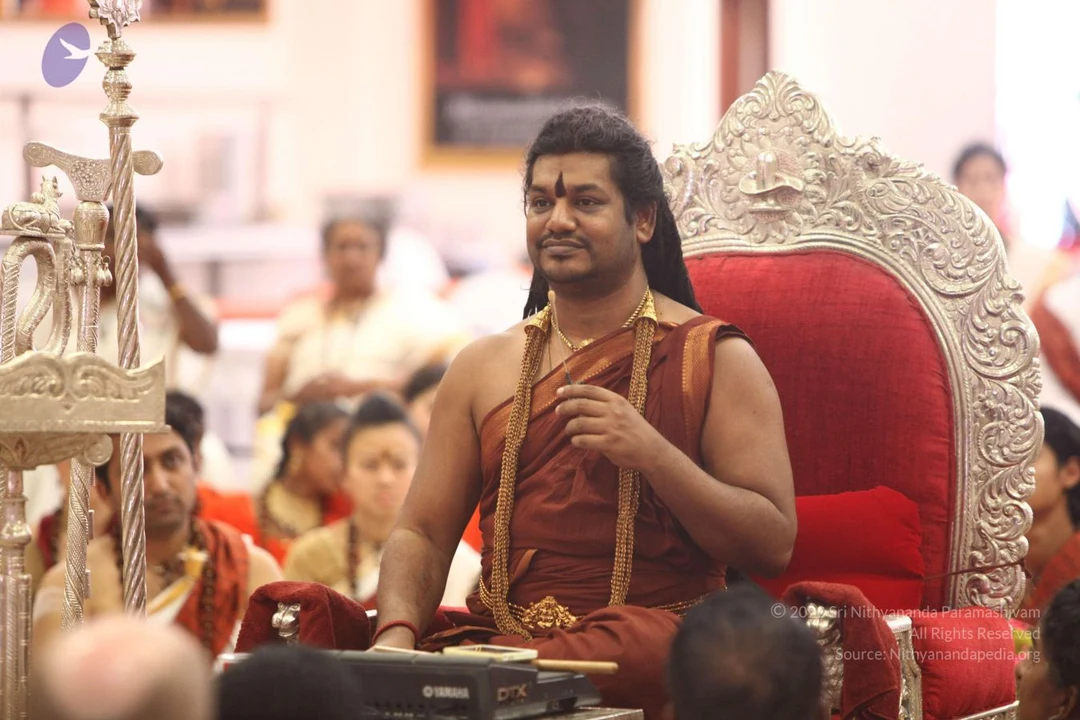
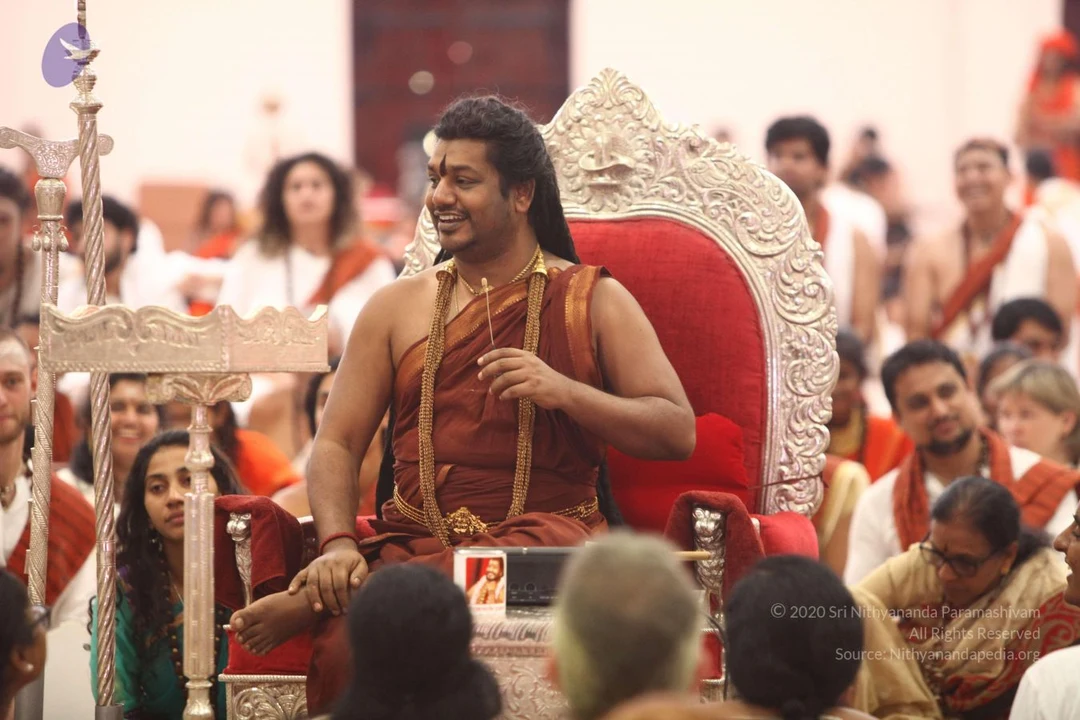
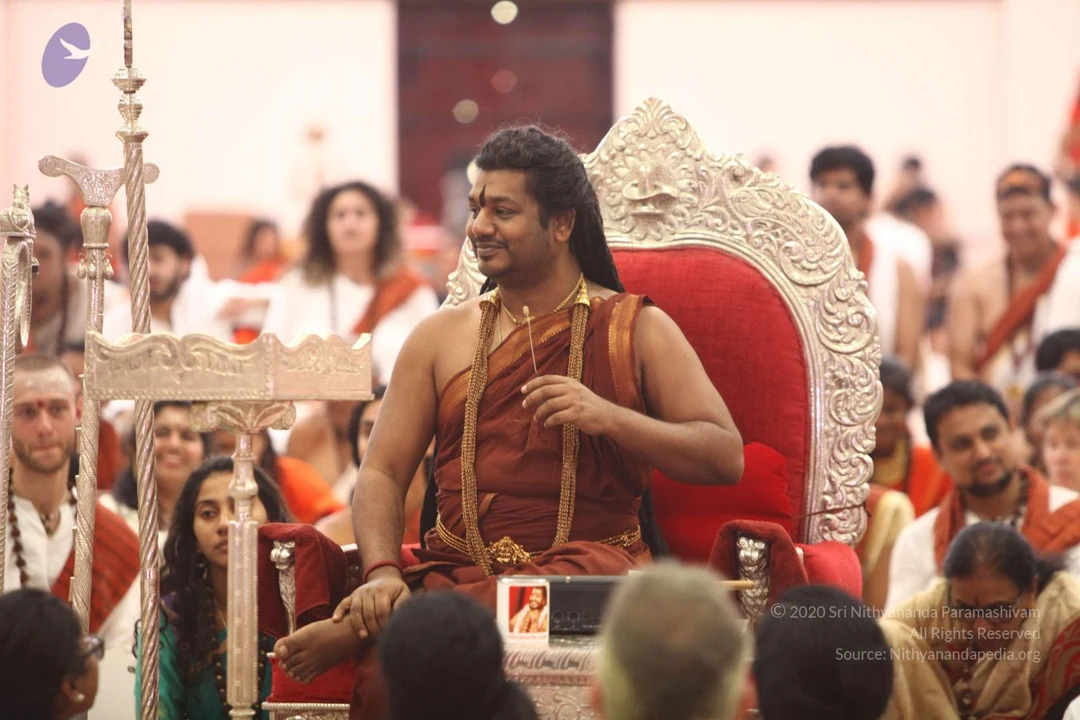
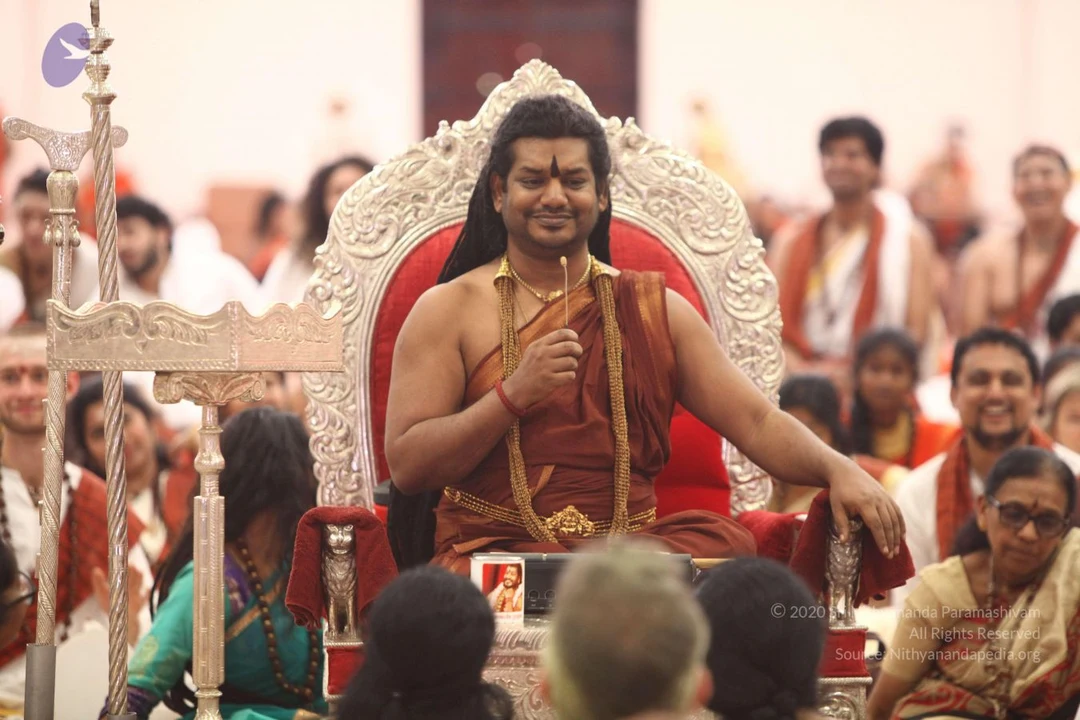
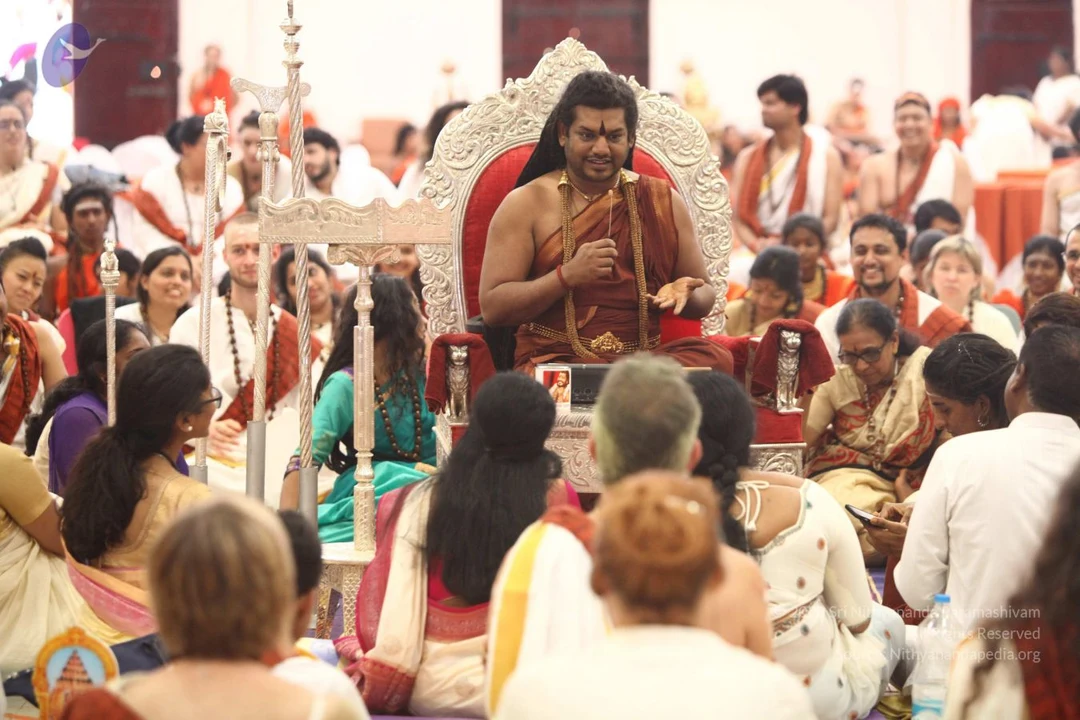
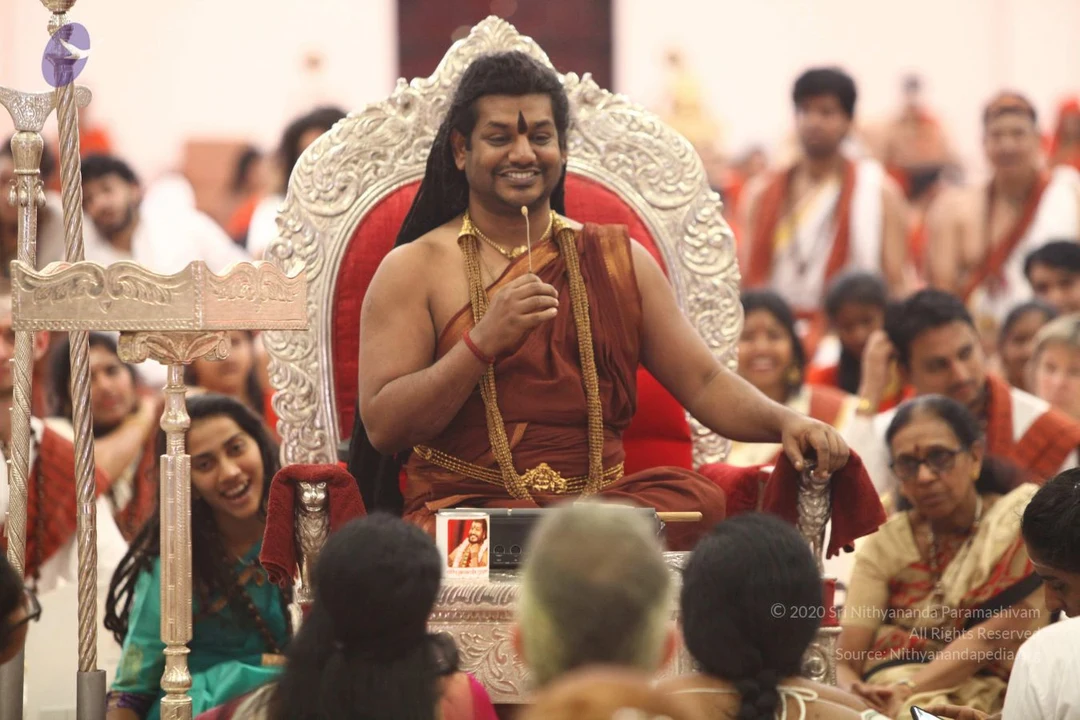
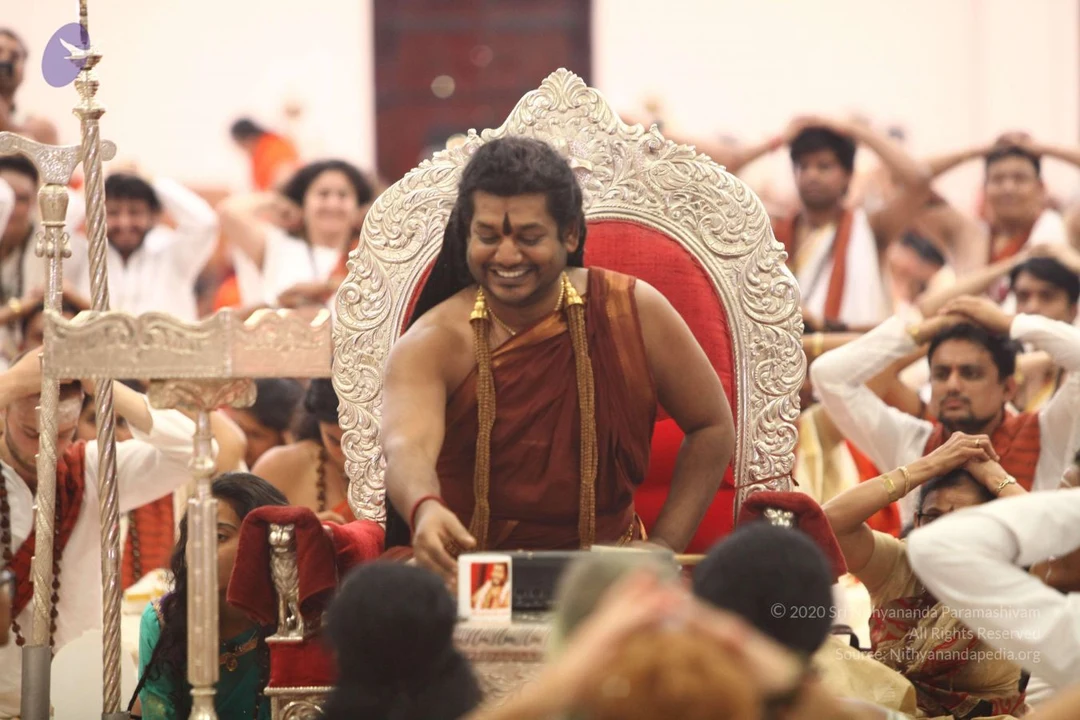
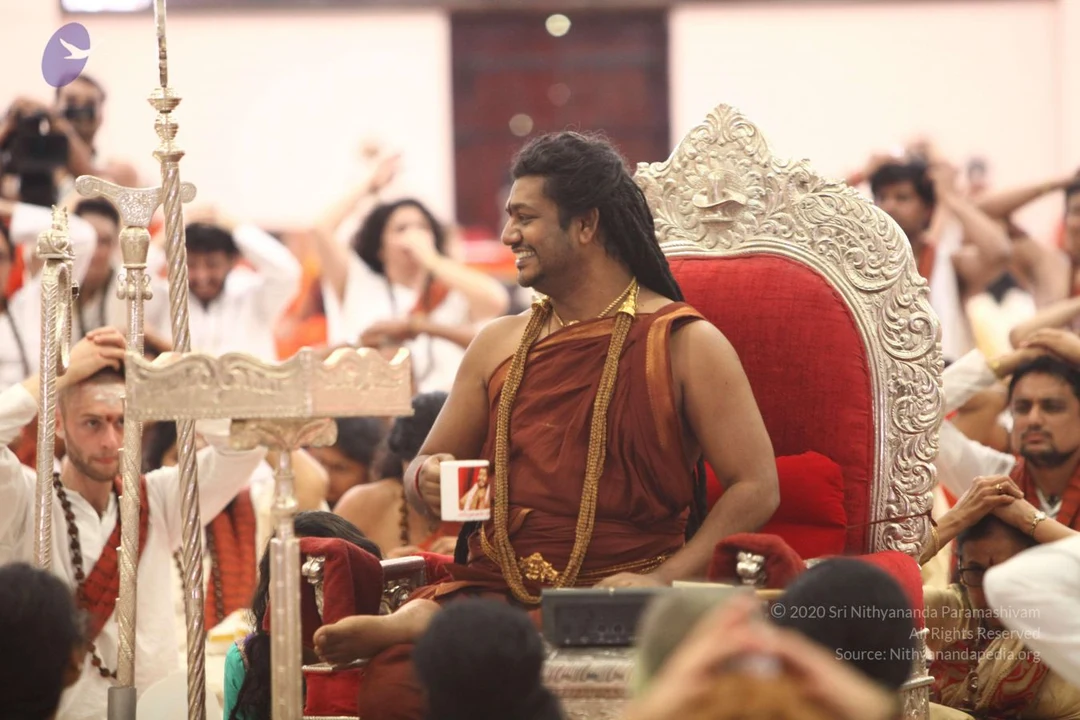
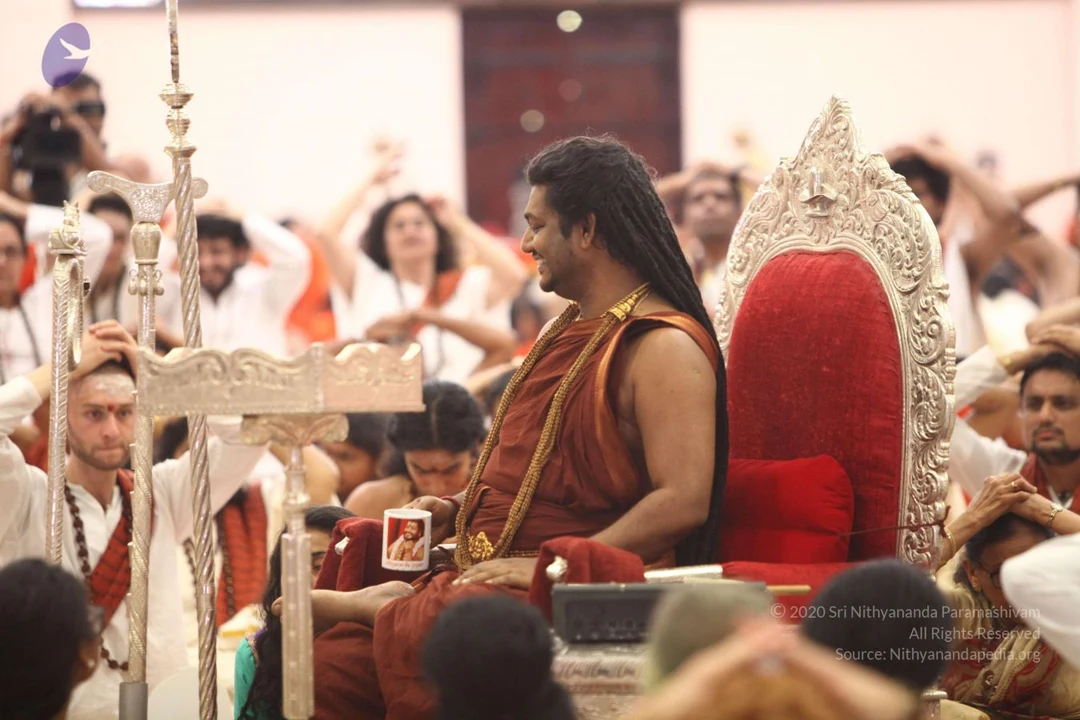
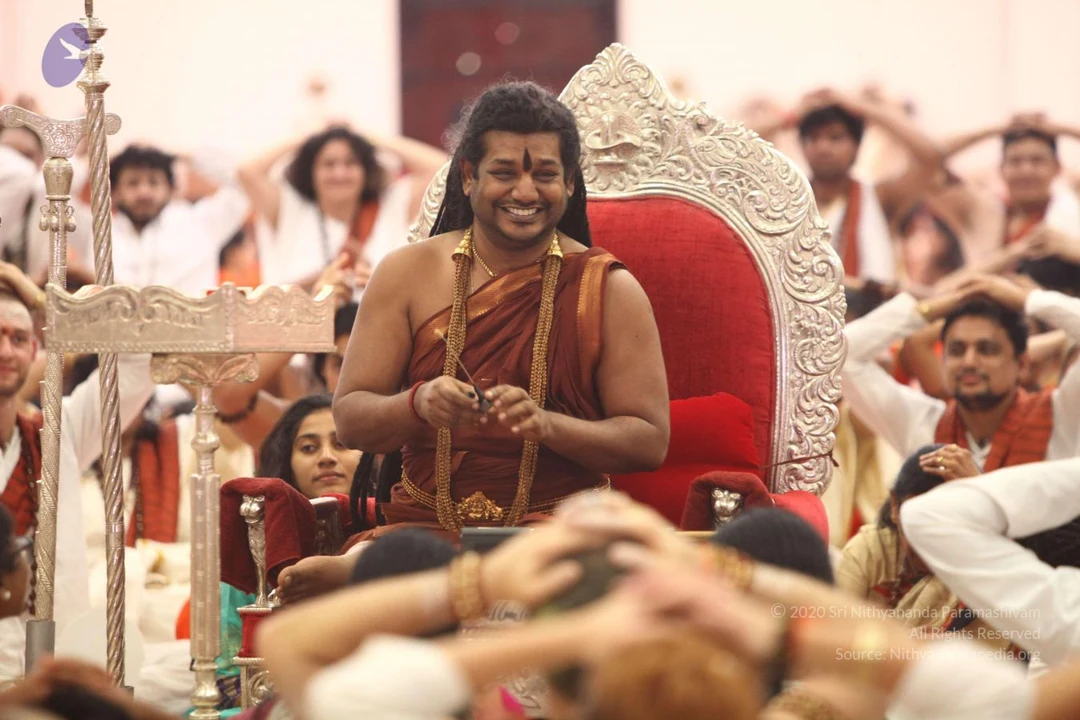
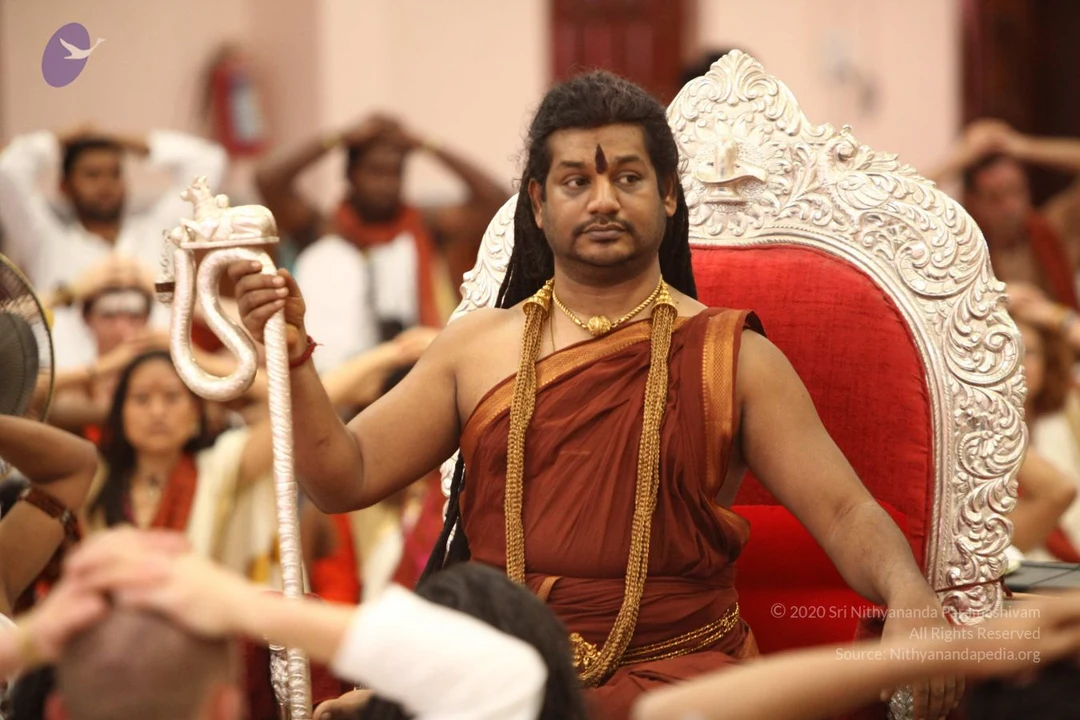
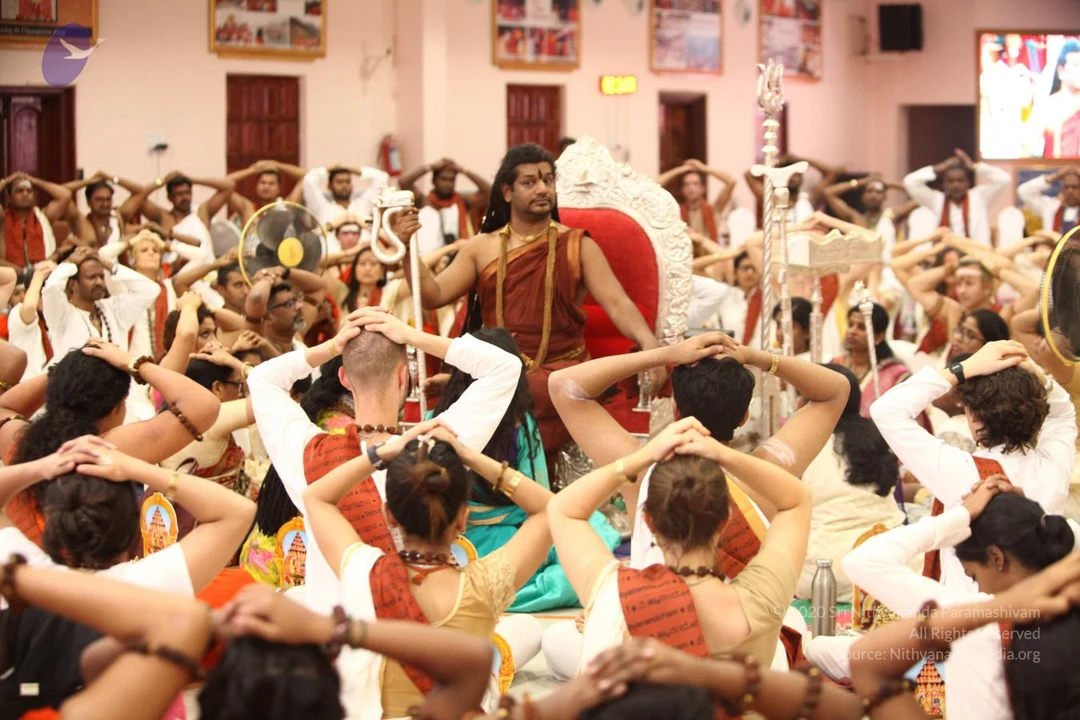
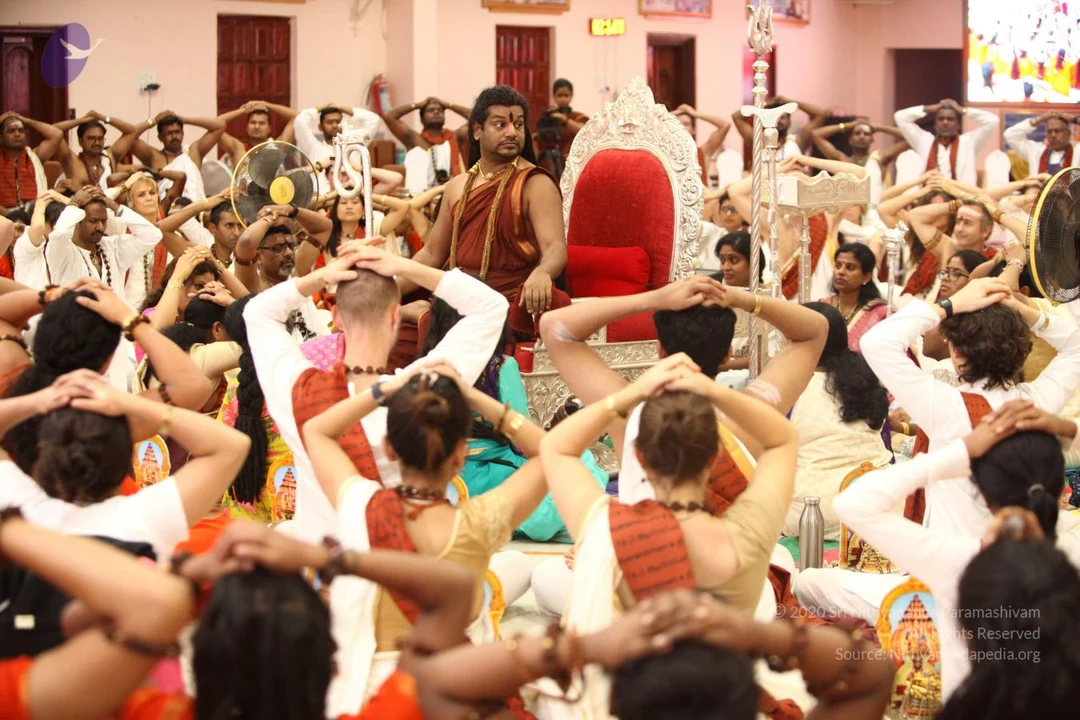
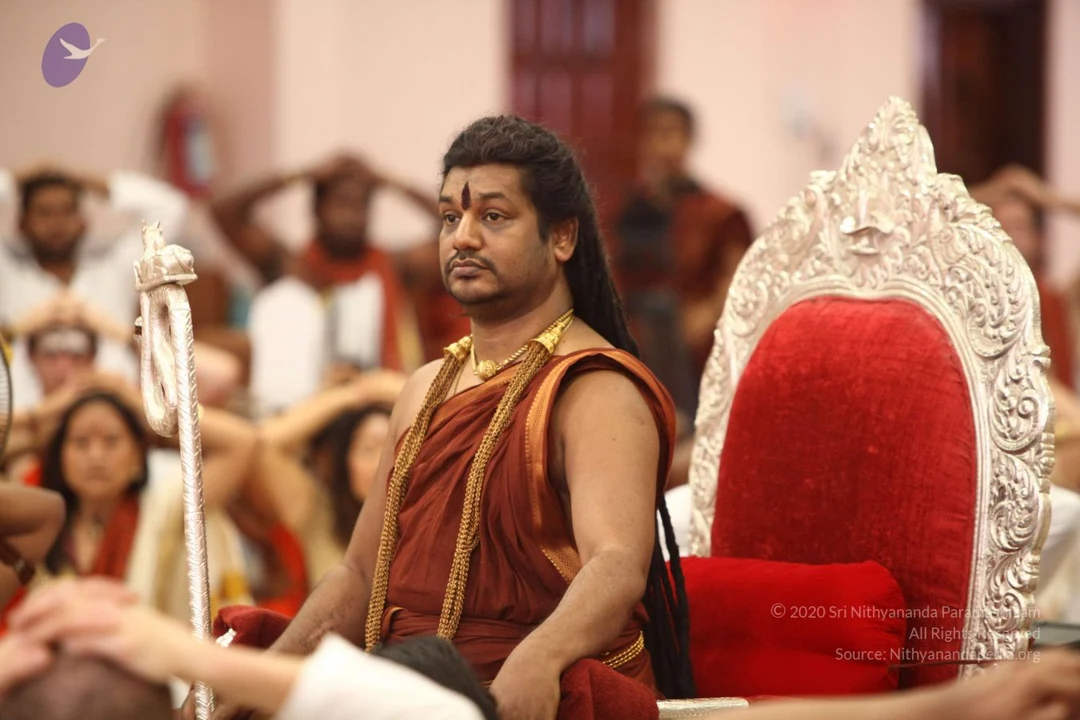
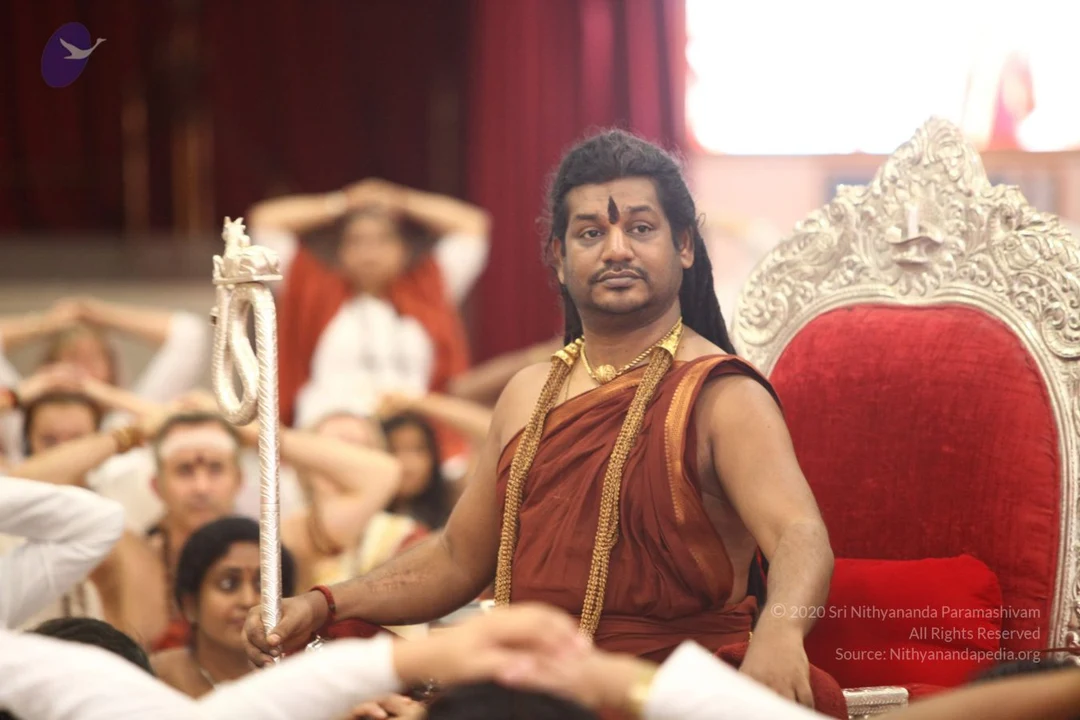
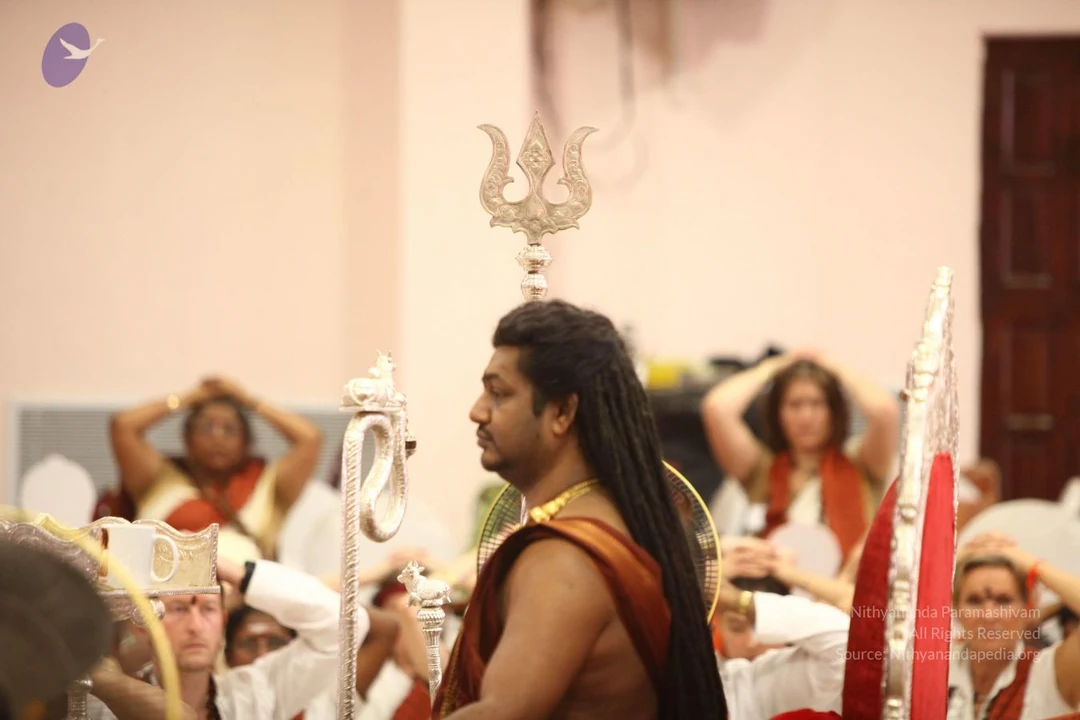
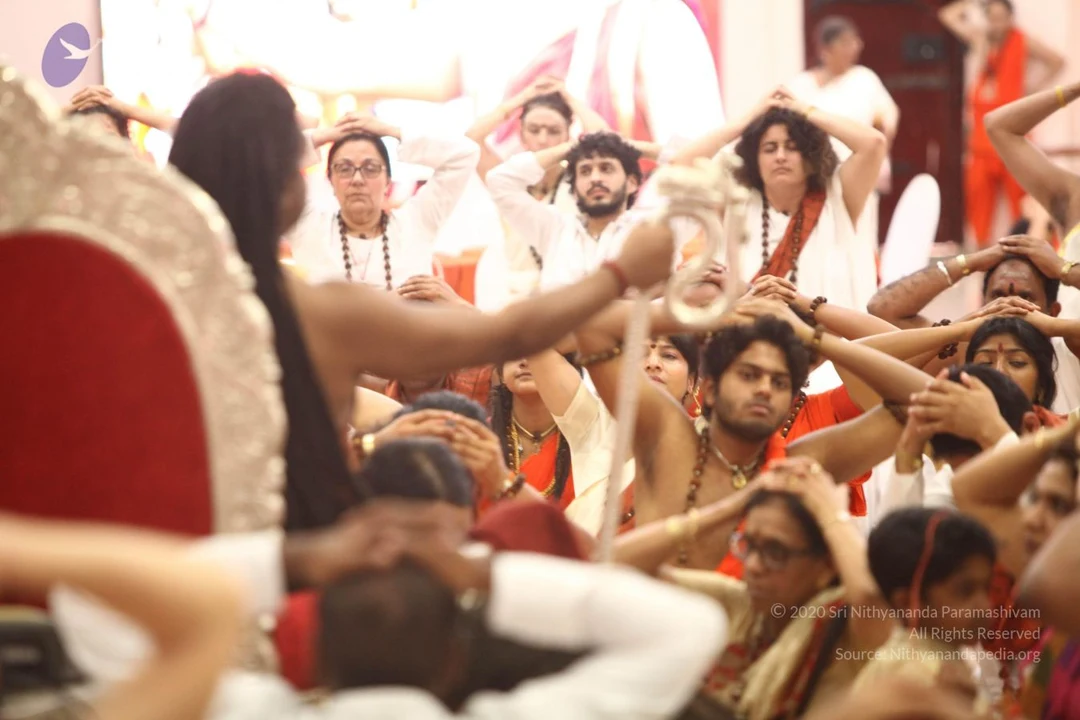
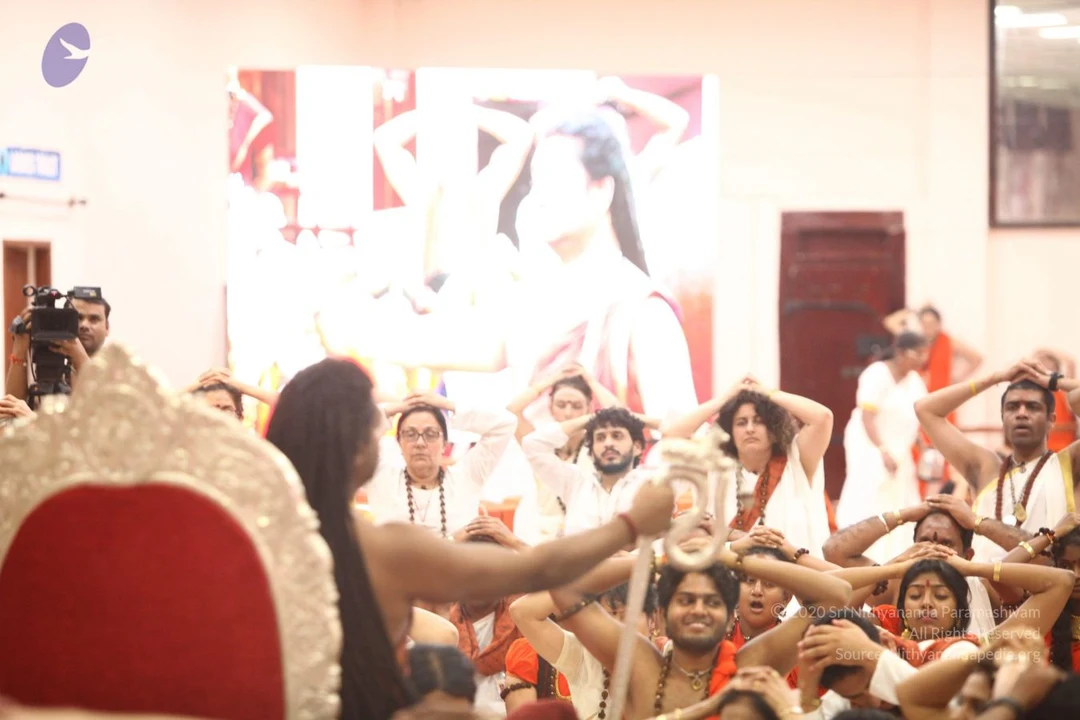
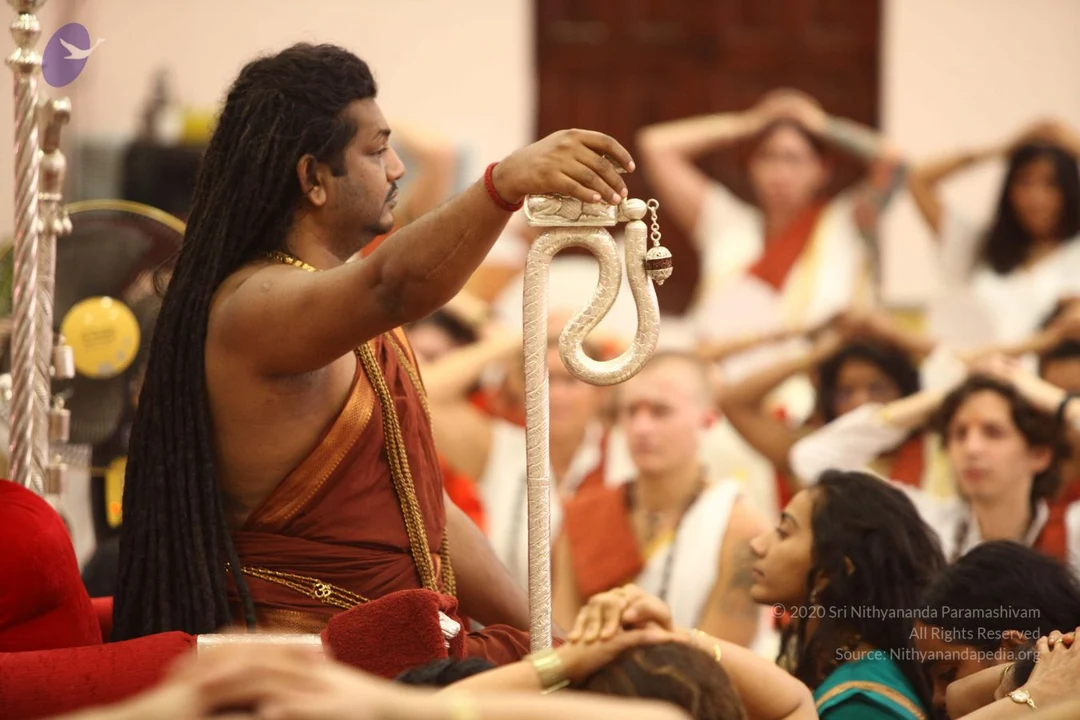
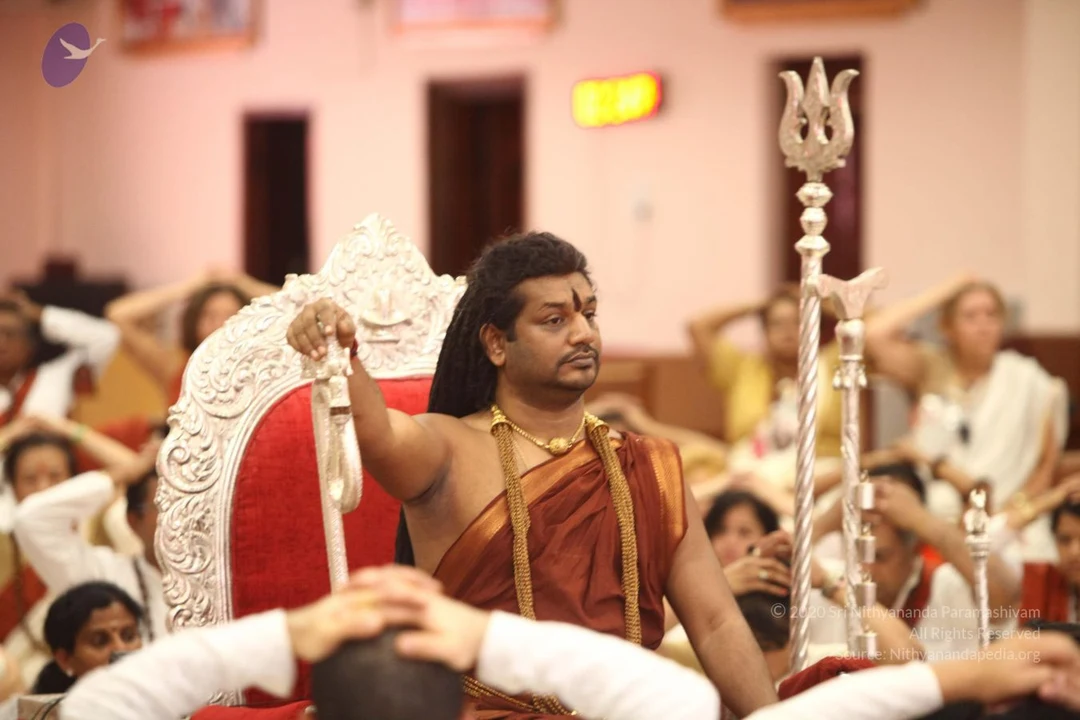
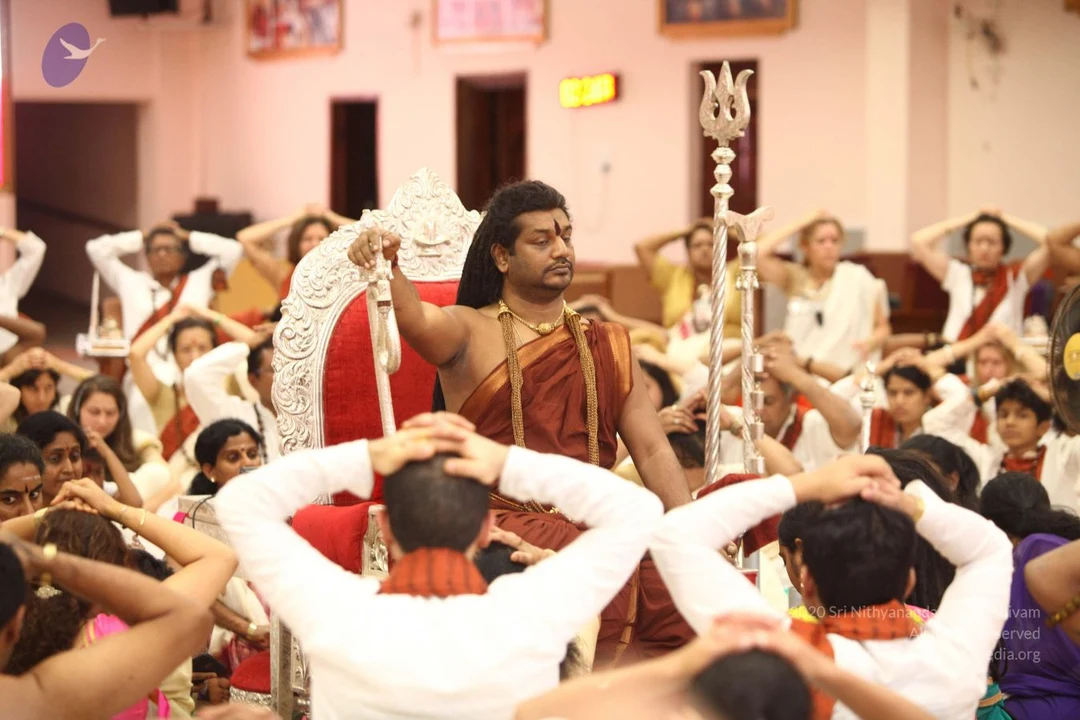
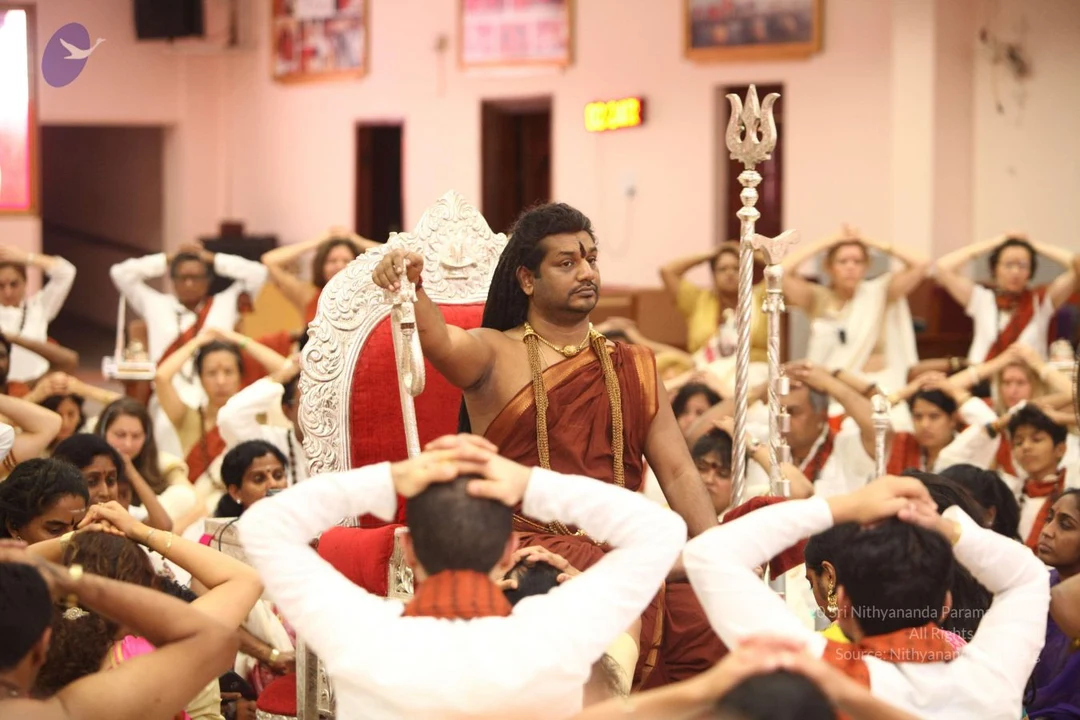
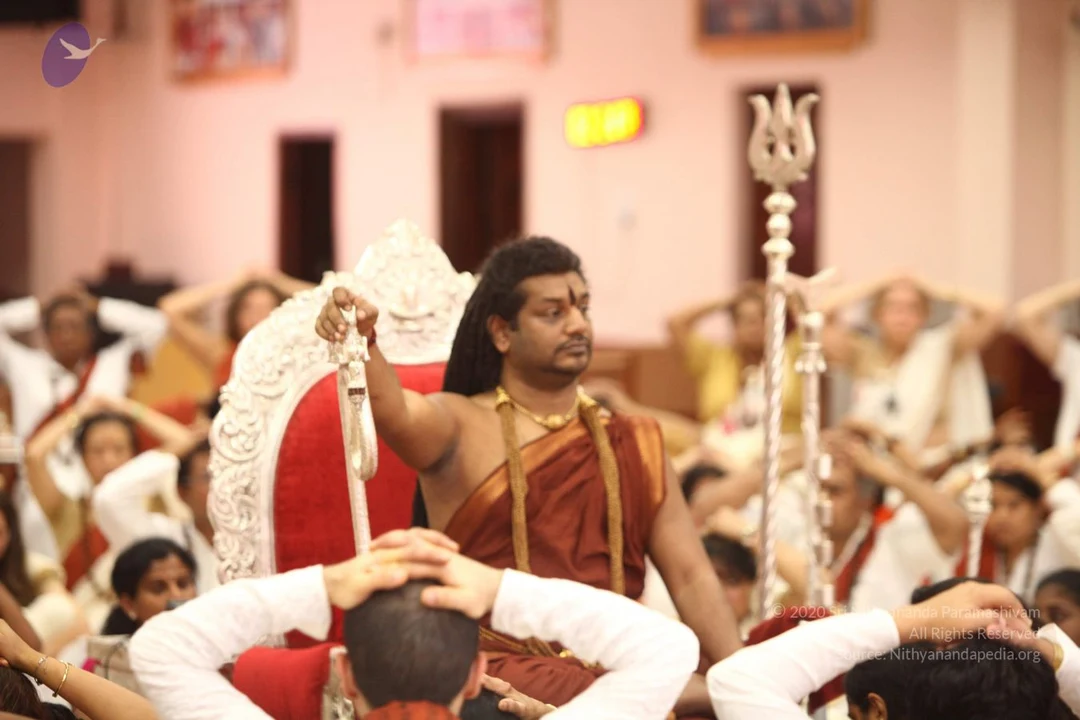
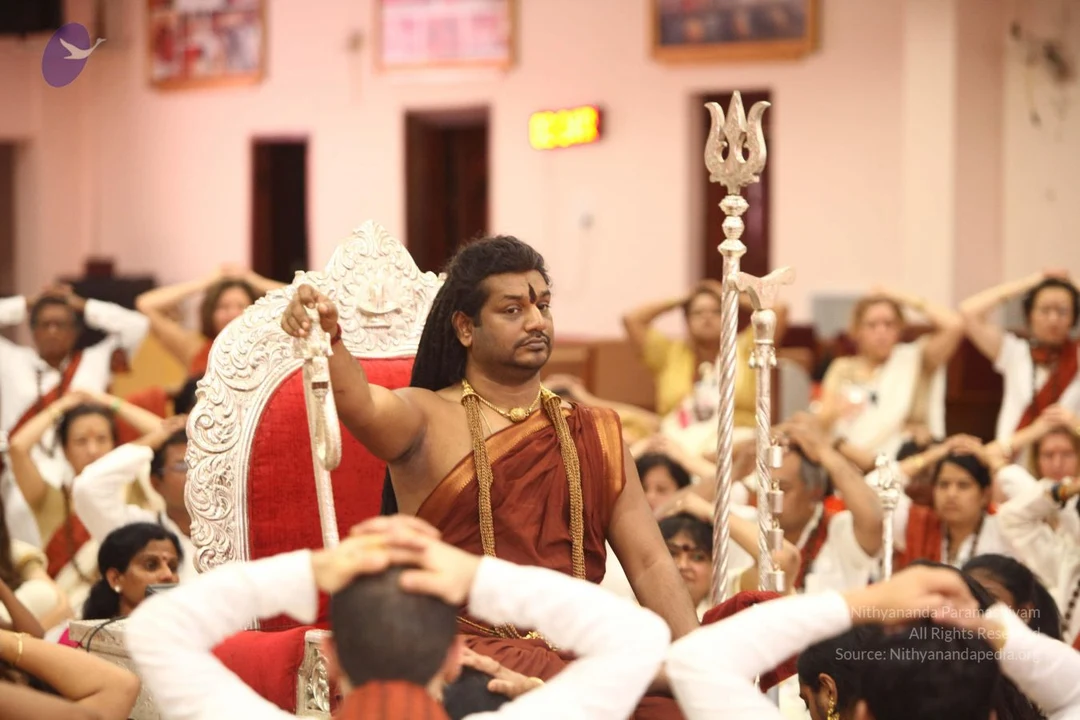
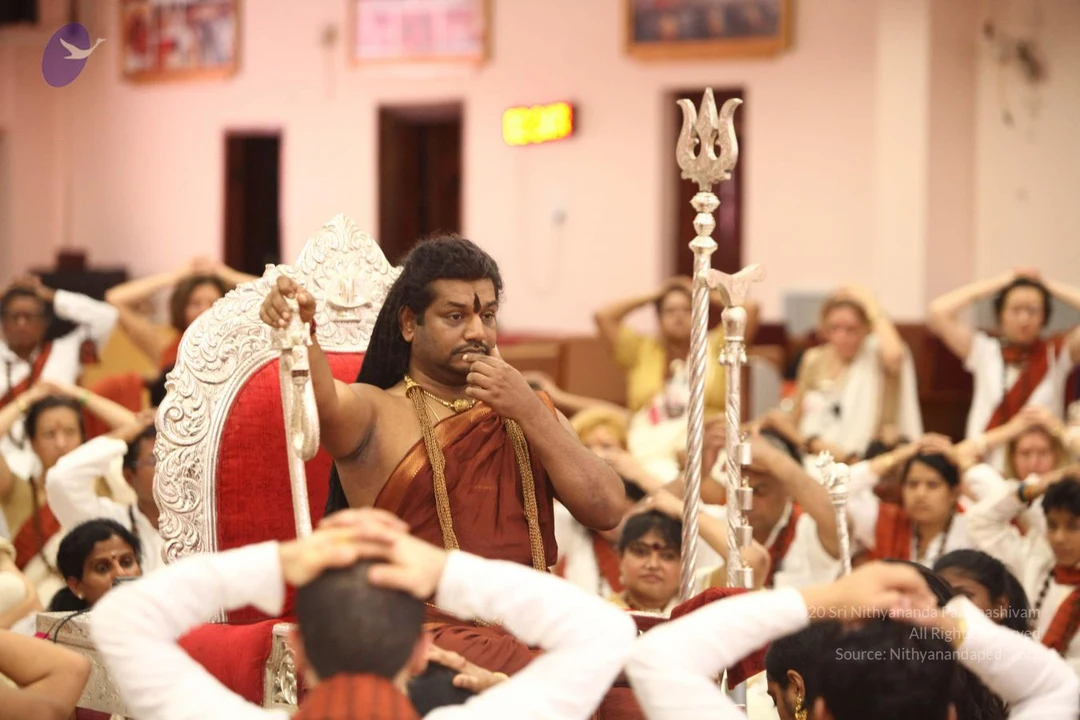
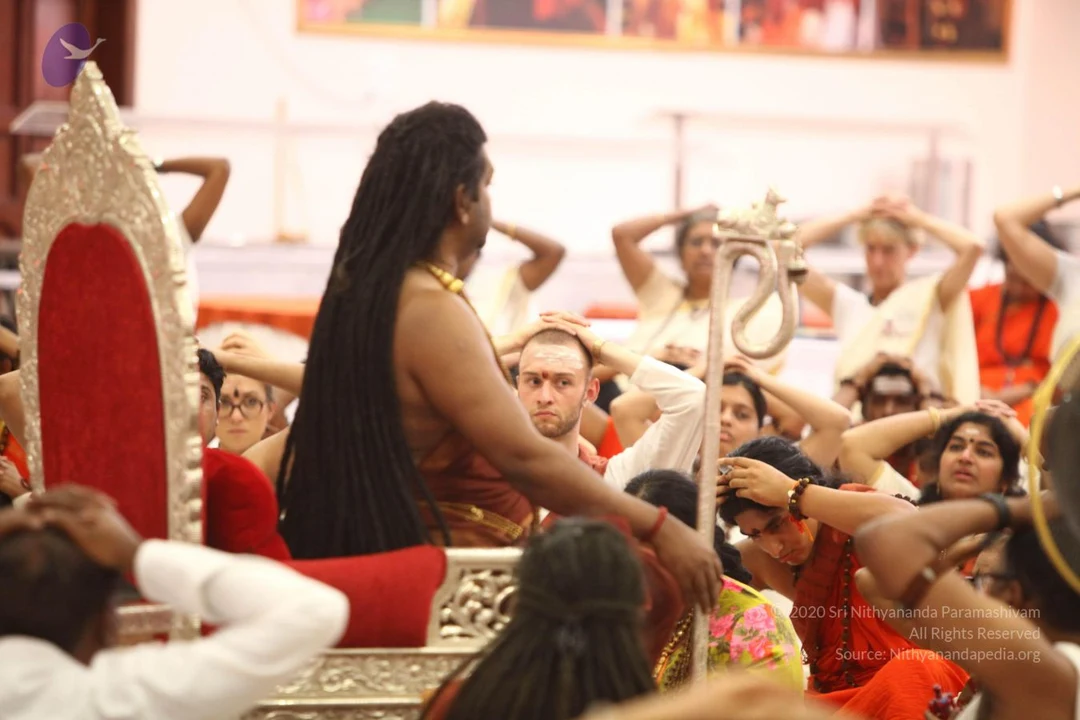
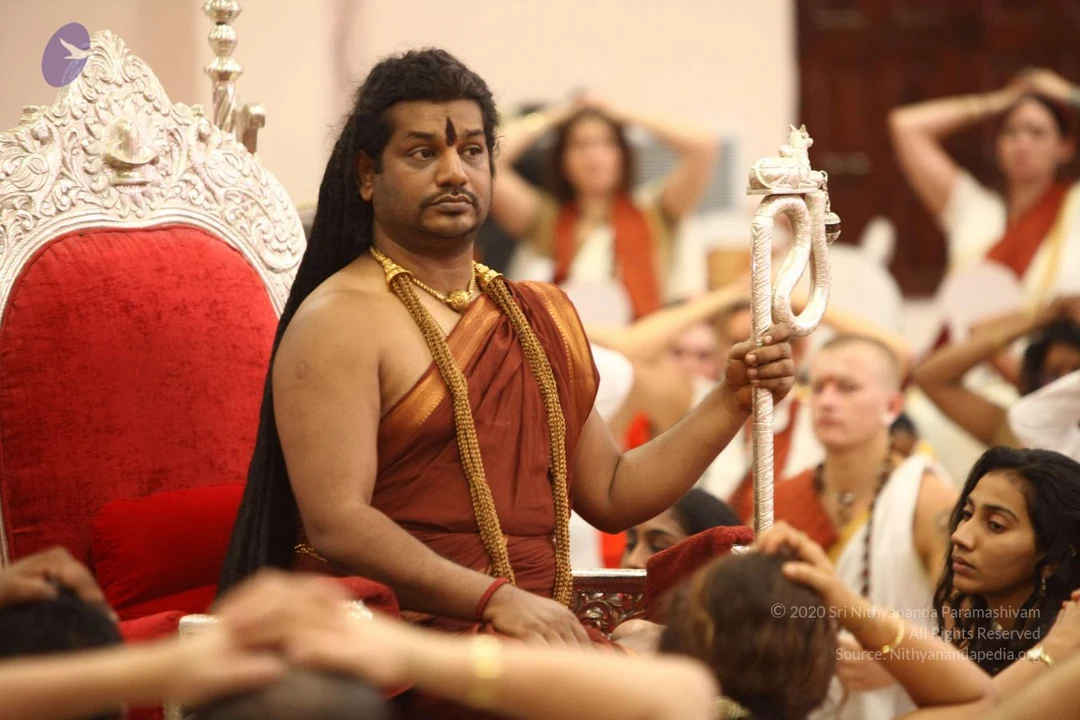
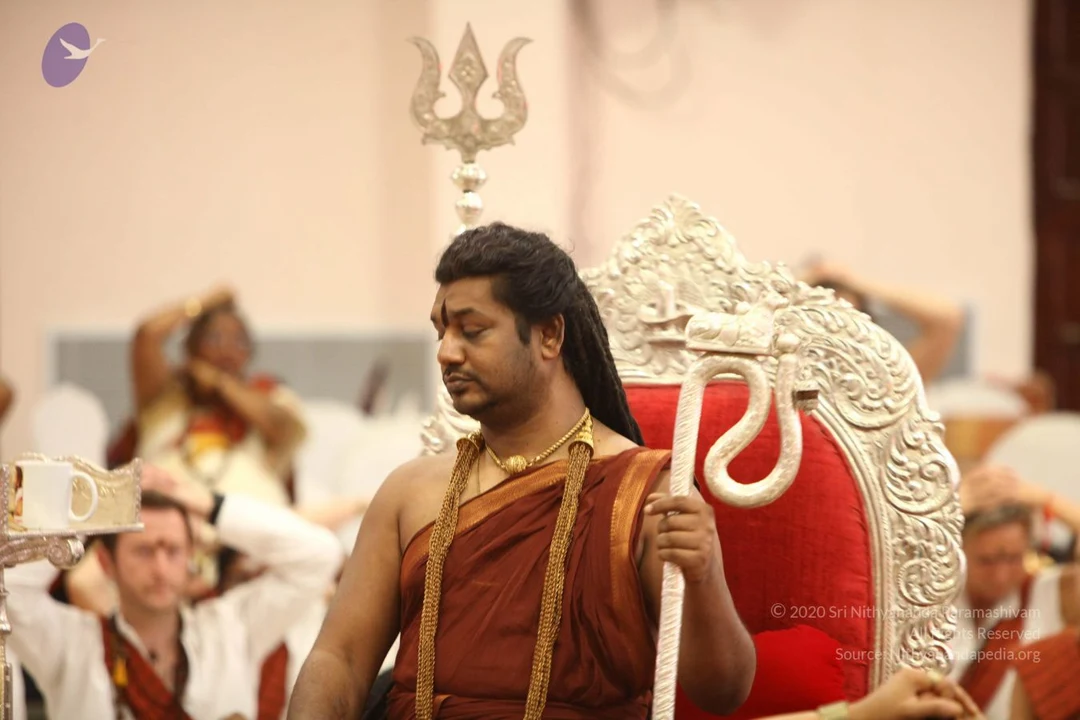
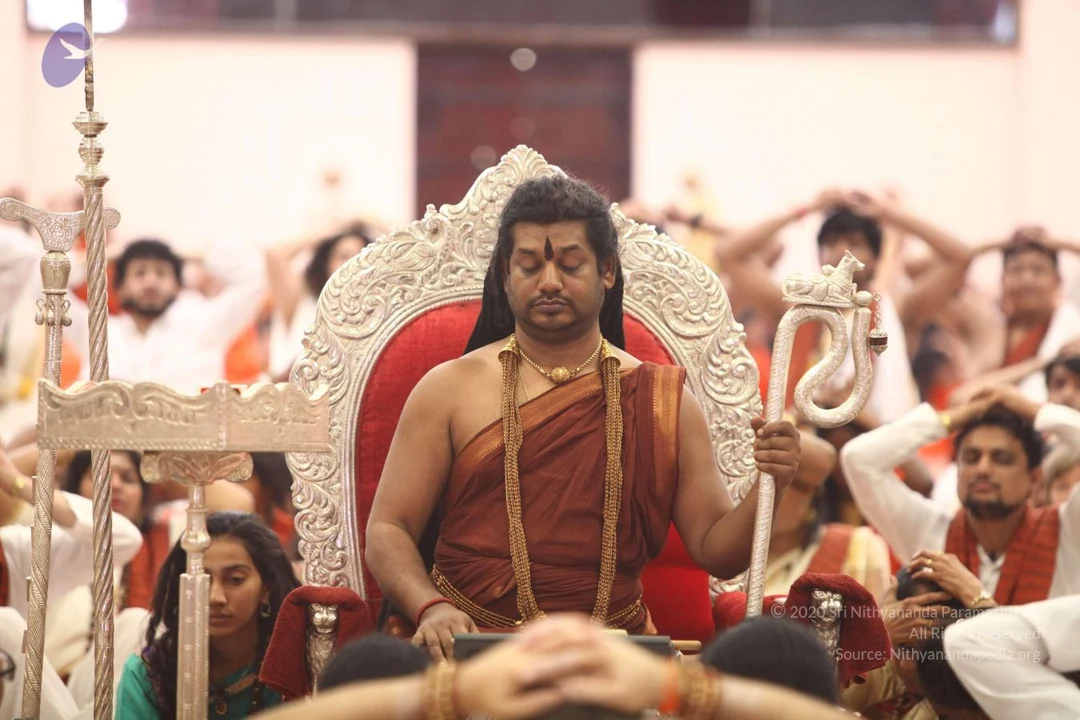
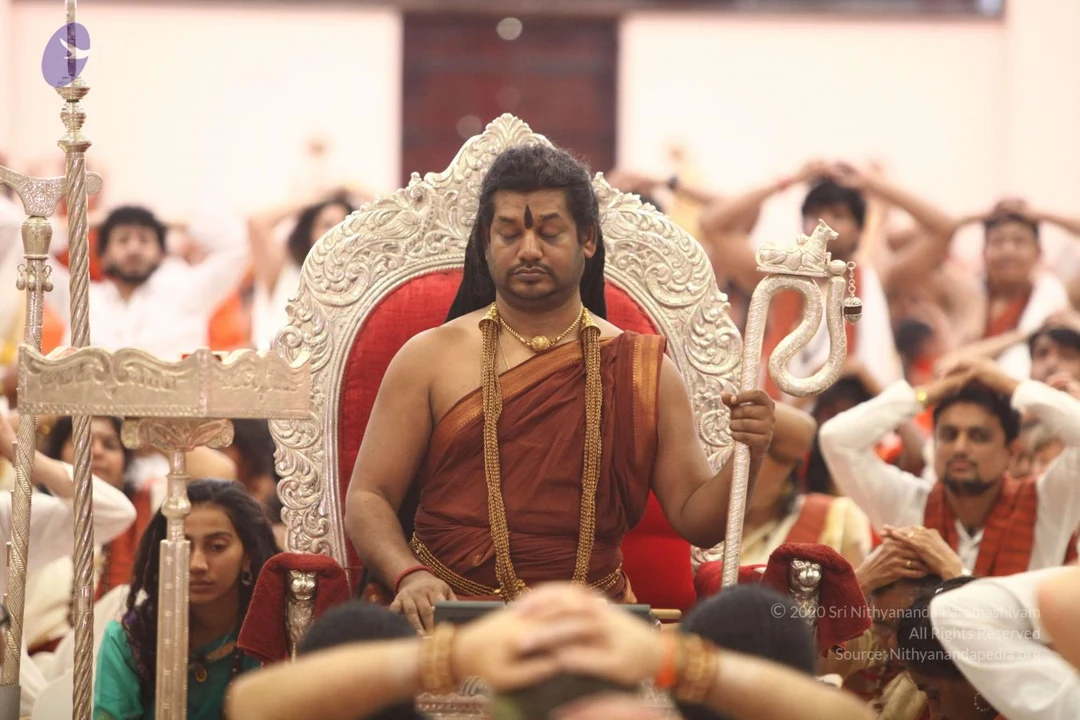
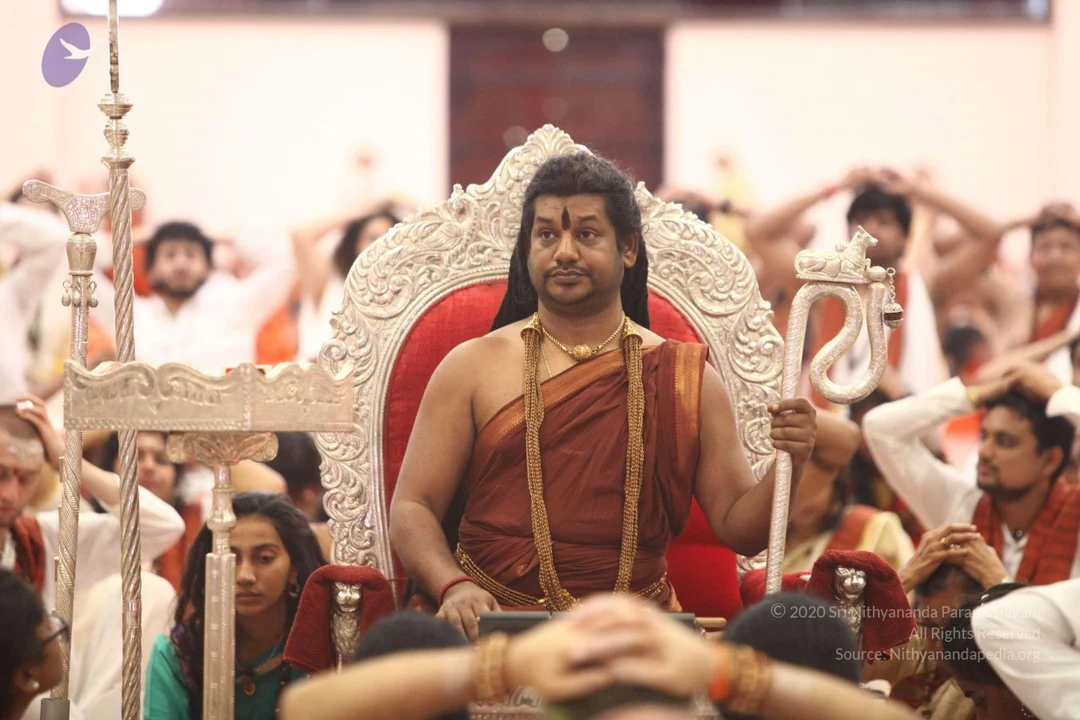
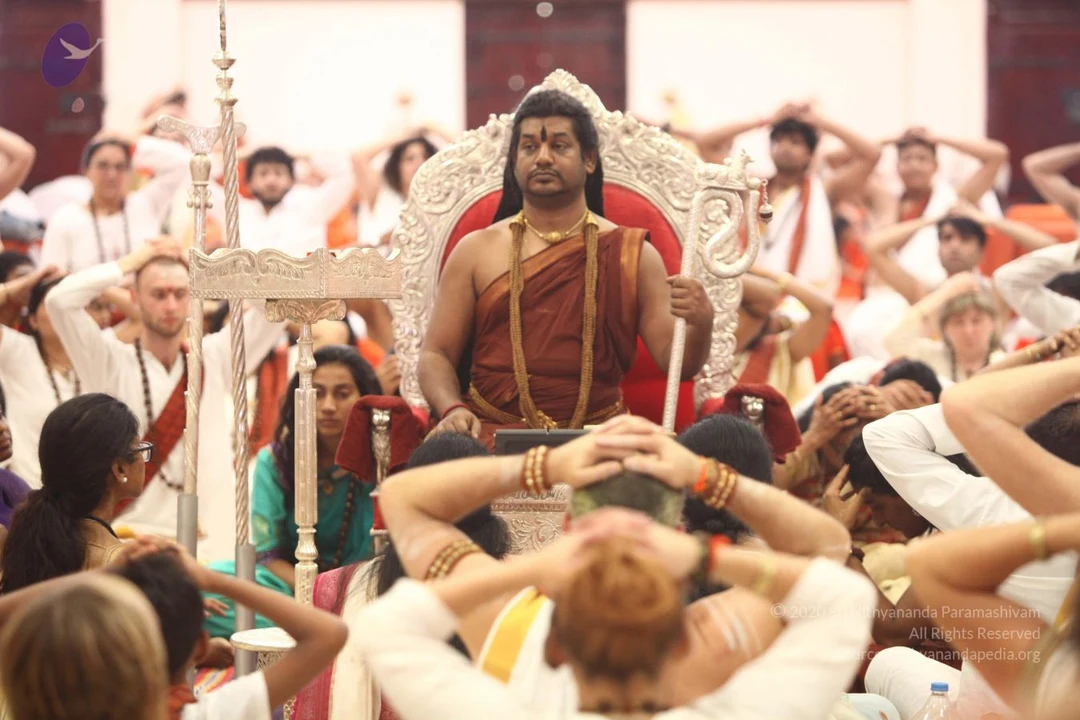
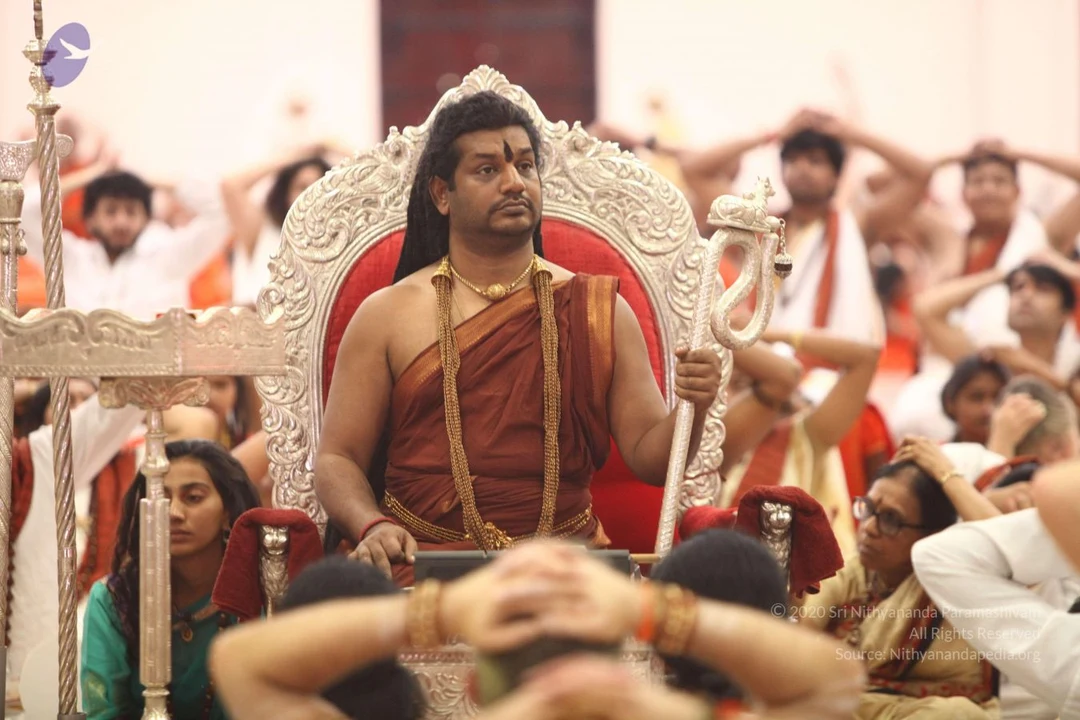
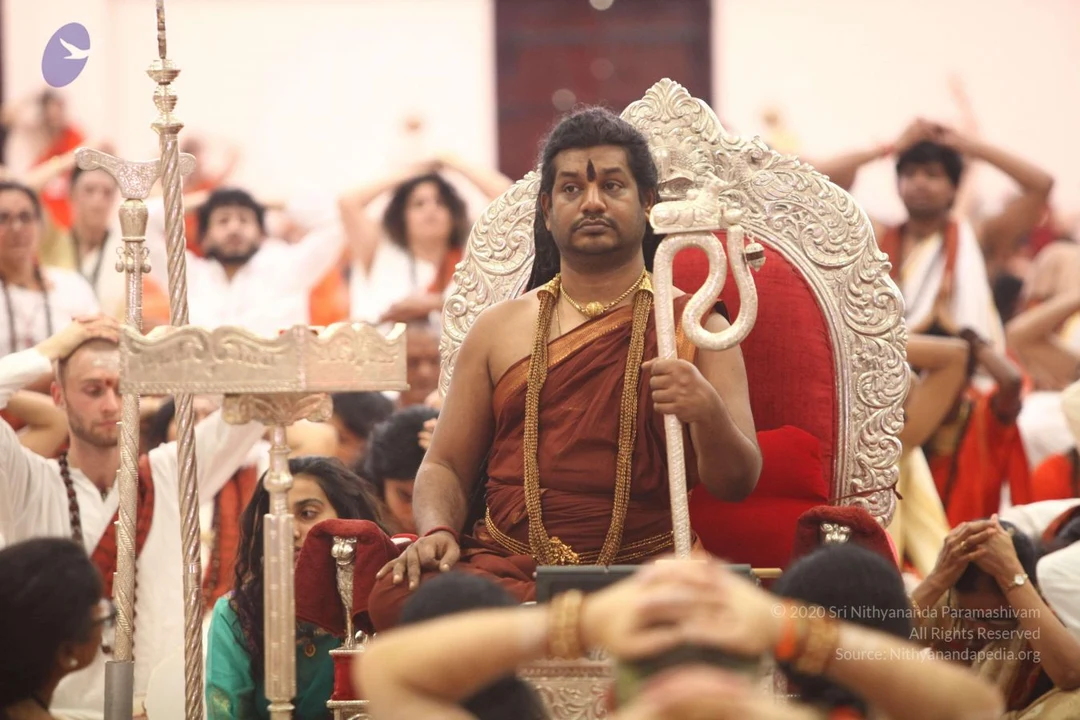
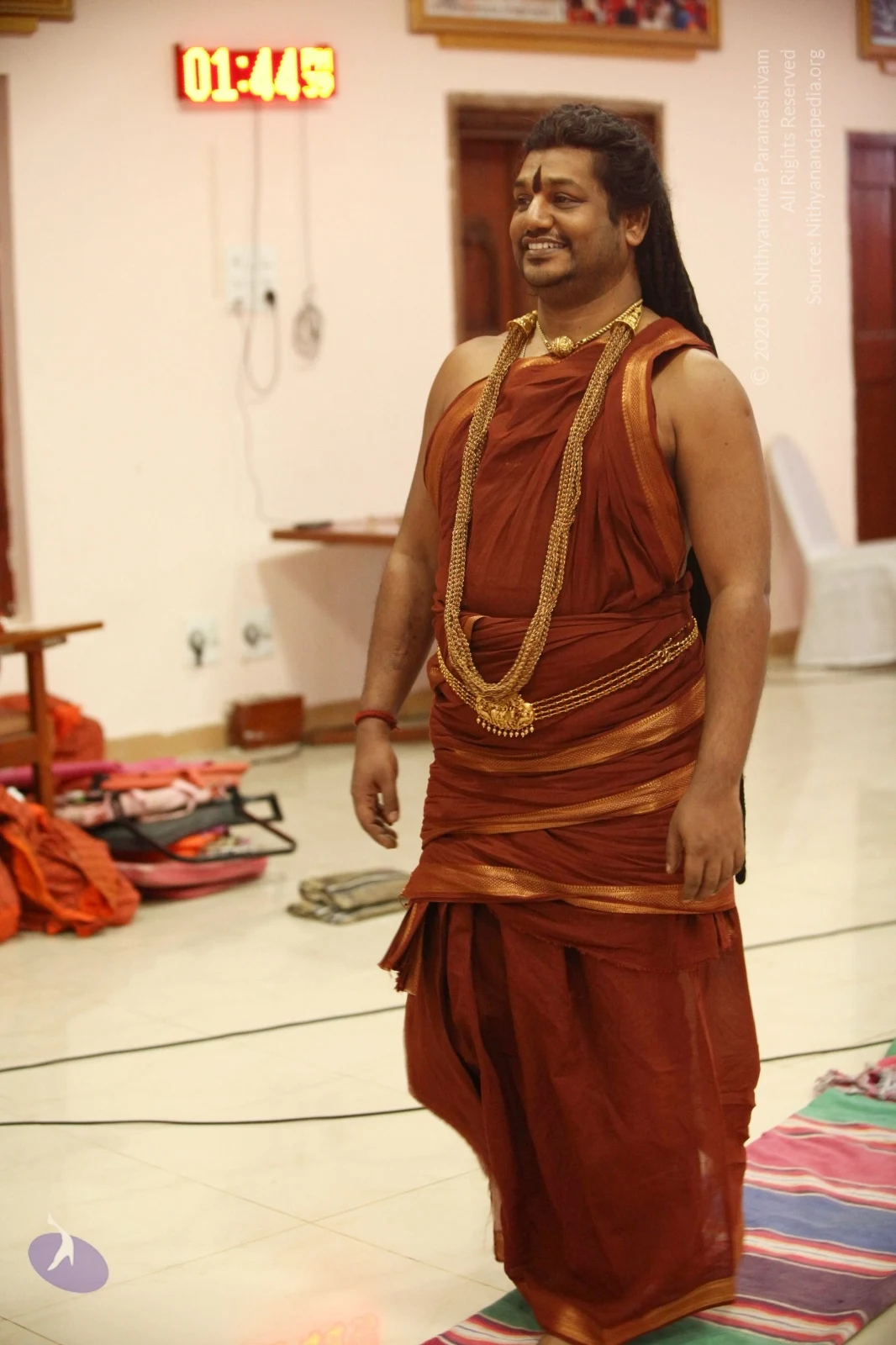
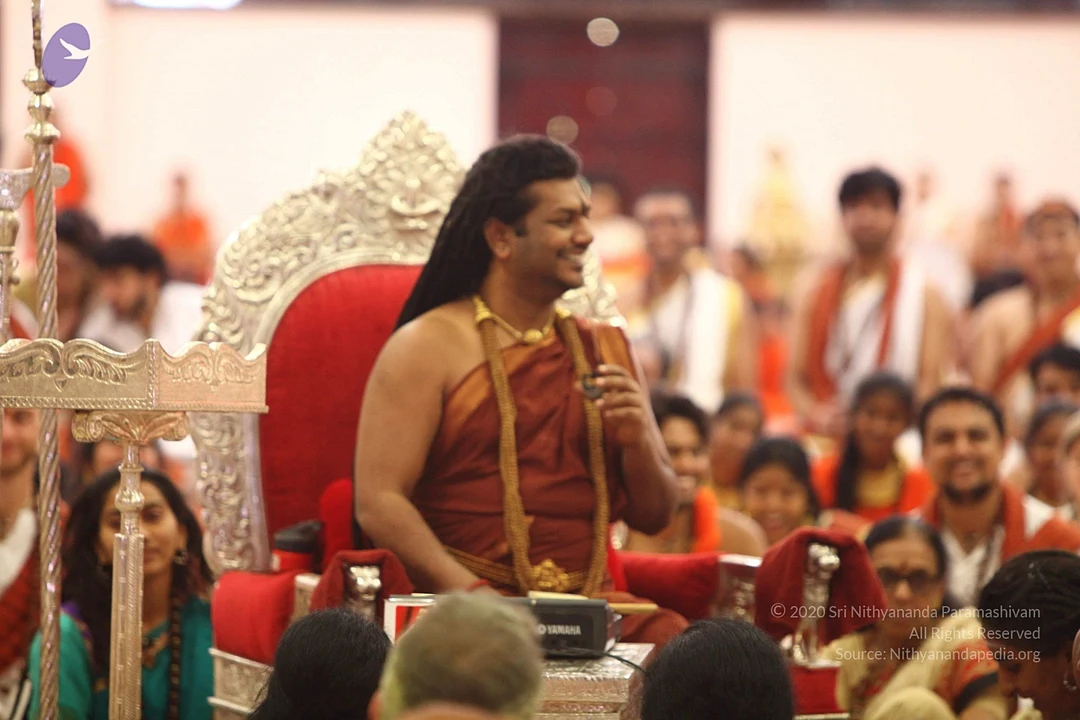
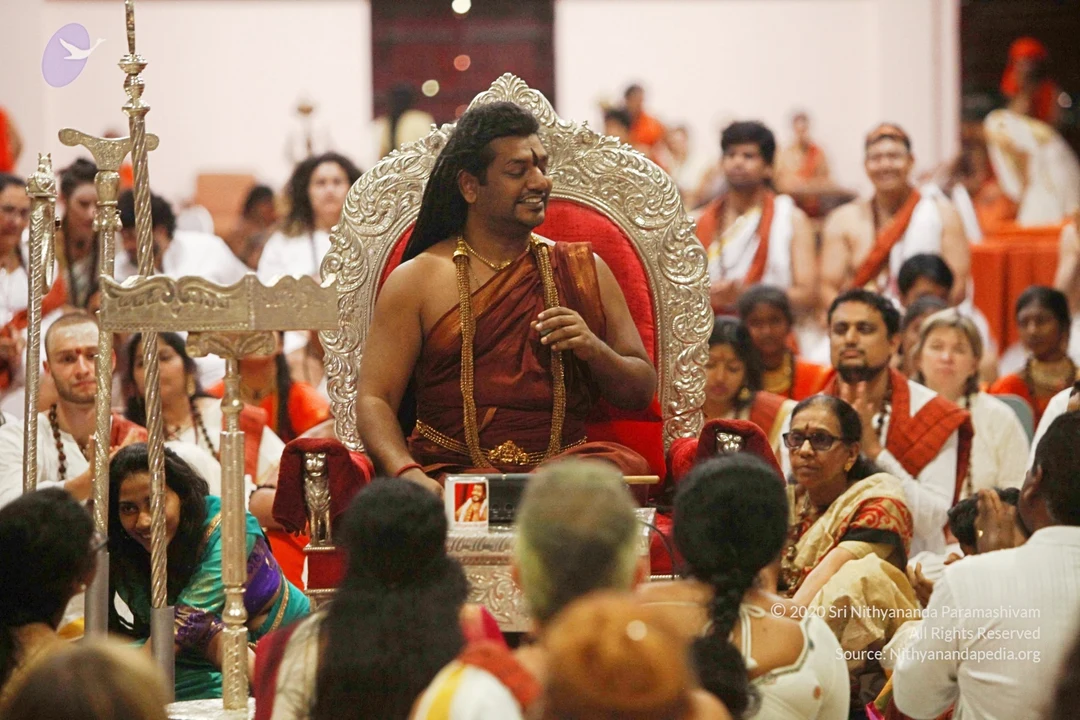
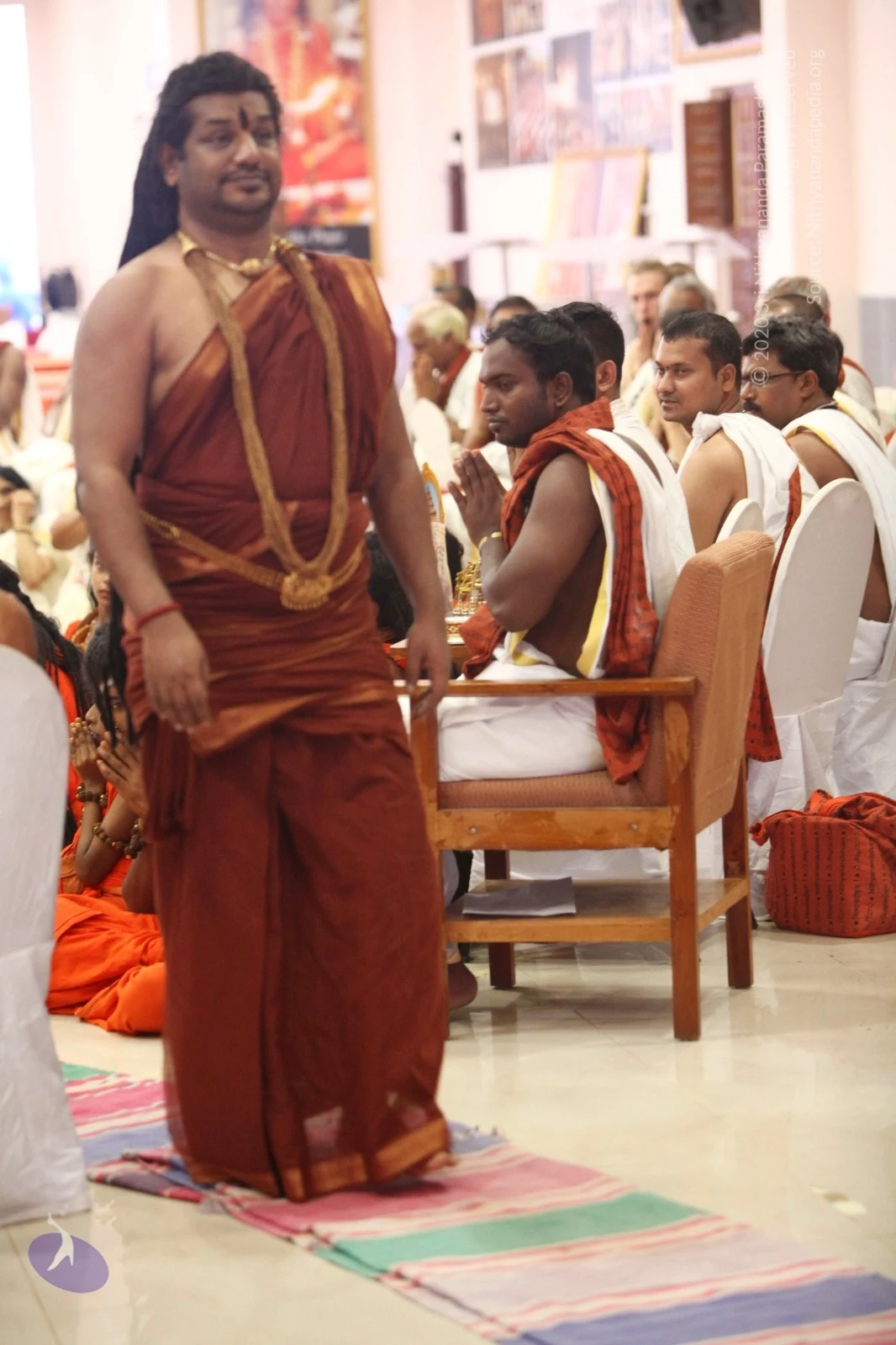
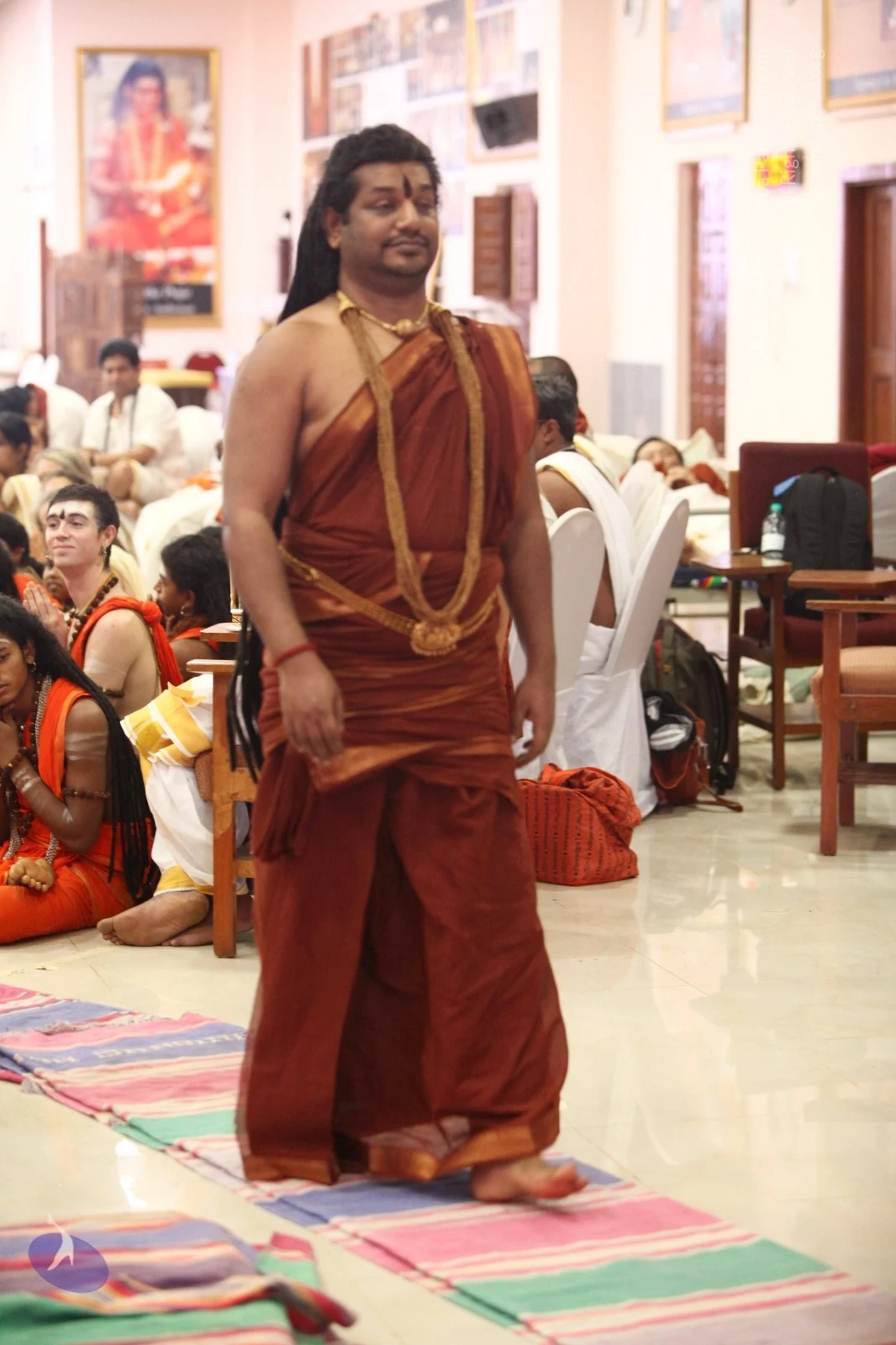
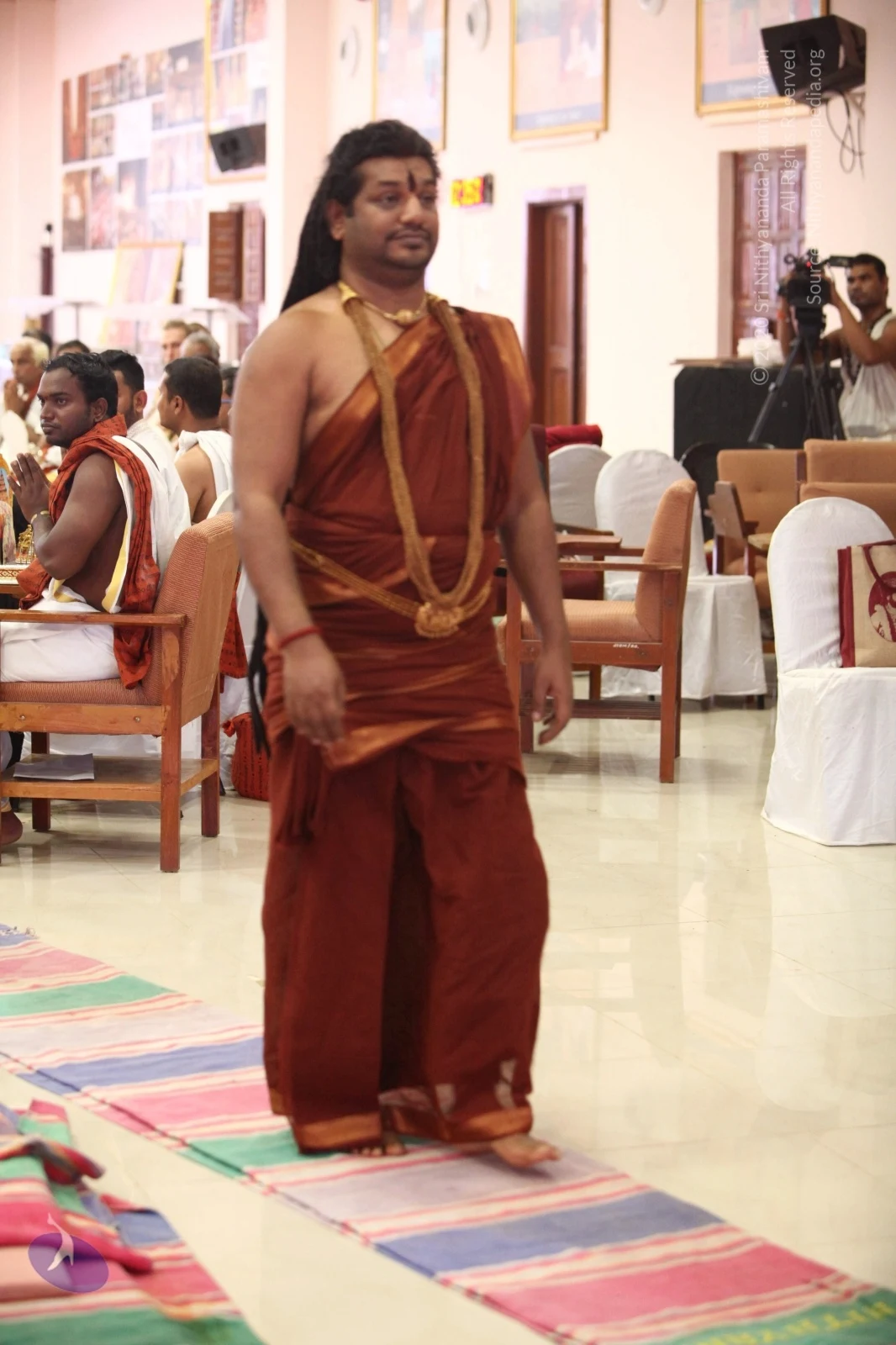
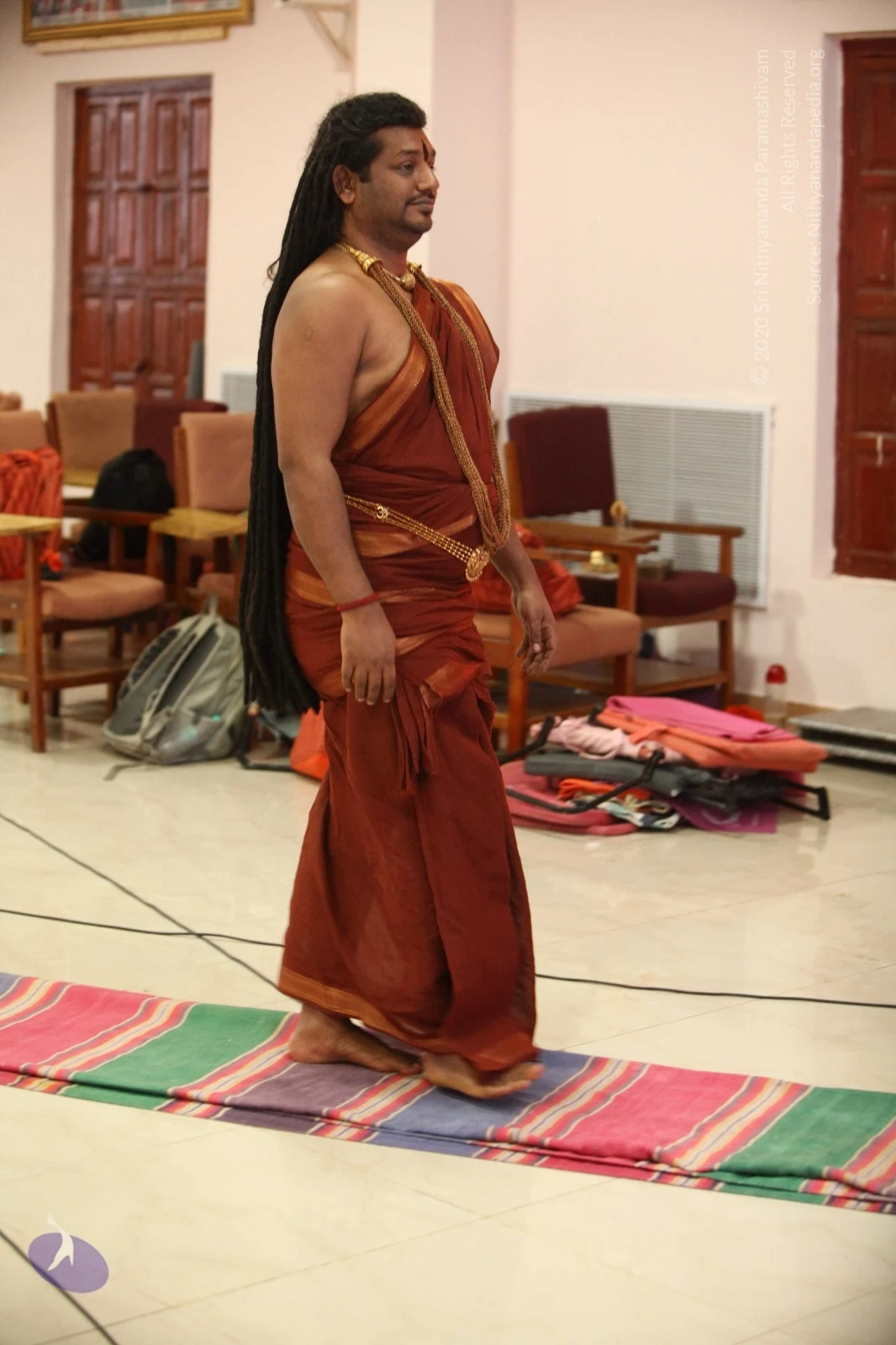
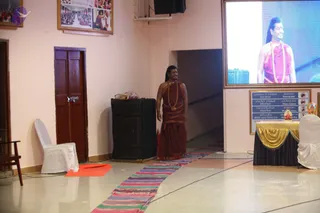
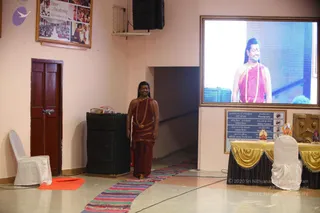
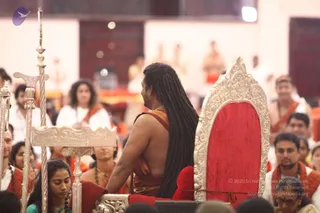
Empty interior hall with pale pink walls and a polished tile floor. A striped multicolour runner stretches across the floor toward a wooden door and a black speaker box. On the right, a large screen shows a close-up of a smiling man with a red turban and gold-embroidered yellow garment, while a white-covered chair sits beside a gold-draped table bearing a small deity murti. Framed photographs hang on the wall and a sign lists Photography, Video Camera and Mobile Camera prohibitions. No people are visible in the room.A photograph of an indoor hall with pale pink walls and a polished floor. A man with long dark hair and a gold chain necklace stands on a striped runner wearing a maroon-red dhoti and a matching shawl; he appears to be the person speaking. Behind him a large screen shows a close-up of a man with long hair and a beaded necklace in a maroon top. To the right, a draped table with a gold cloth holds a small deity murti and a framed sign listing Photography, Video Camera, Mobile Camera and Audio Recording services. A white chair and an orange mat sit near the left door.Indoor hall with pink walls and a tiled floor. A man with long dark hair and a rudraksha-style gold necklace, wearing a maroon-red wrap and dhoti, stands on a striped runner rug at the centre, smiling. Behind him a large screen shows a close-up of a similarly dressed man in a red garment with a gold chain. To the right a table draped in gold and black cloth holds a small deity murti and lamp, beside a bronze-look panel. A plaque lists photography and video camera rules in Tamil and English text. A framed Inner Awakening photo hangs on the left wall beside a wooden door, and a white chair sits at the left edge.Photograph in profile of a smiling man with long dark dreadlocked hair swept back, wearing a heavy gold ceremonial necklace over an orange-red garment. Pale pink wall background with a dark wooden panel at right. Appearance cues include long swept-back hair, ornate gold necklace and saffron-orange clothing, consistent with a person seated or standing at an event on the page's date.Close side profile of a man with long dark dreadlocks falling past his shoulders, smiling, with a short beard and moustache. He wears a heavy gold ceremonial necklace over an orange-red garment with gold border. Plain pale pink wall behind him and a dark wooden panel at right. Appearance-based label: a person, with long dreadlocks, ornate gold necklace and saffron-orange clothing as qualifying cues, shown in person as a speaker or attendee.A photograph taken from behind at an indoor ceremony. A bare-shouldered figure with long dark dreadlocked hair, wearing an orange-brown shawl and gold necklace, sits on an ornate silver throne with a red velvet seat and backrest. A silver ceremonial staff stands at left. Around the throne, seated devotees in orange and white clothing face toward the throne, including a young woman in a green and purple outfit at lower left and a bearded man in orange at lower right. Wall decorations and a blurred background of more people are visible.

01-Glimpse-of-IA

81 photosSource gallery
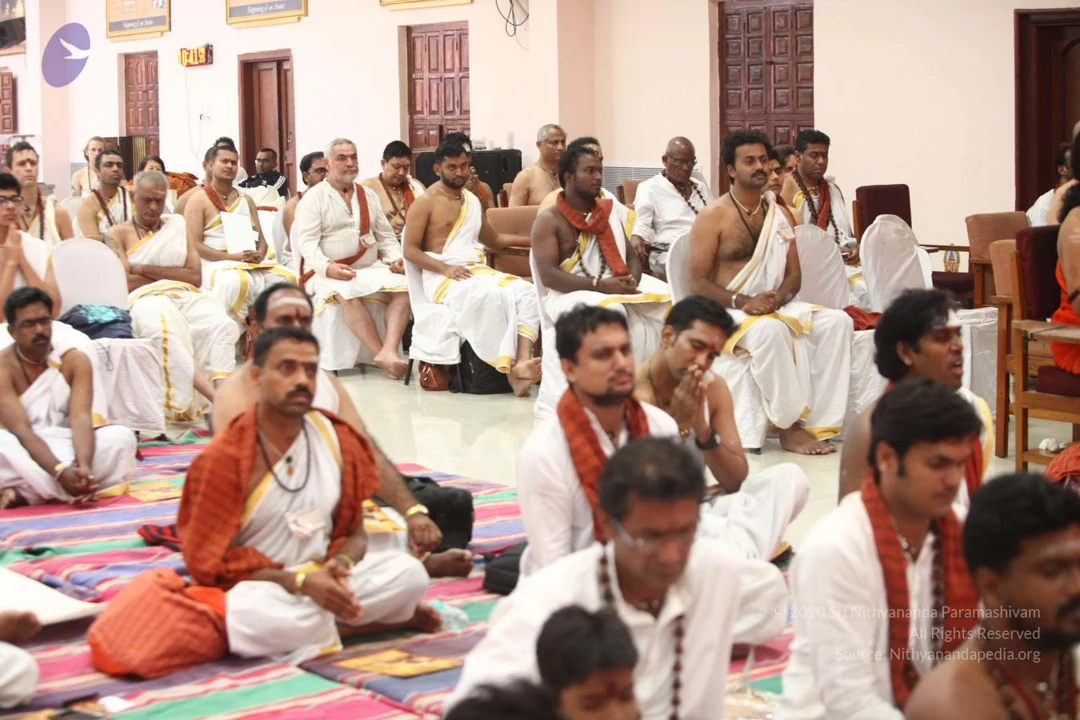
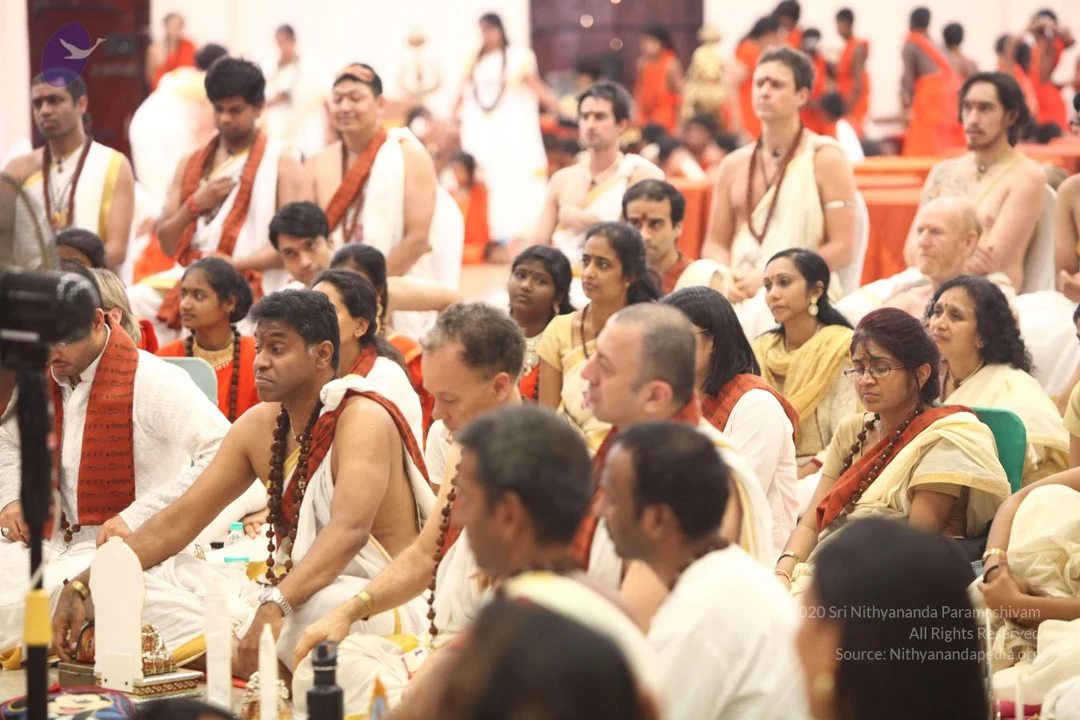
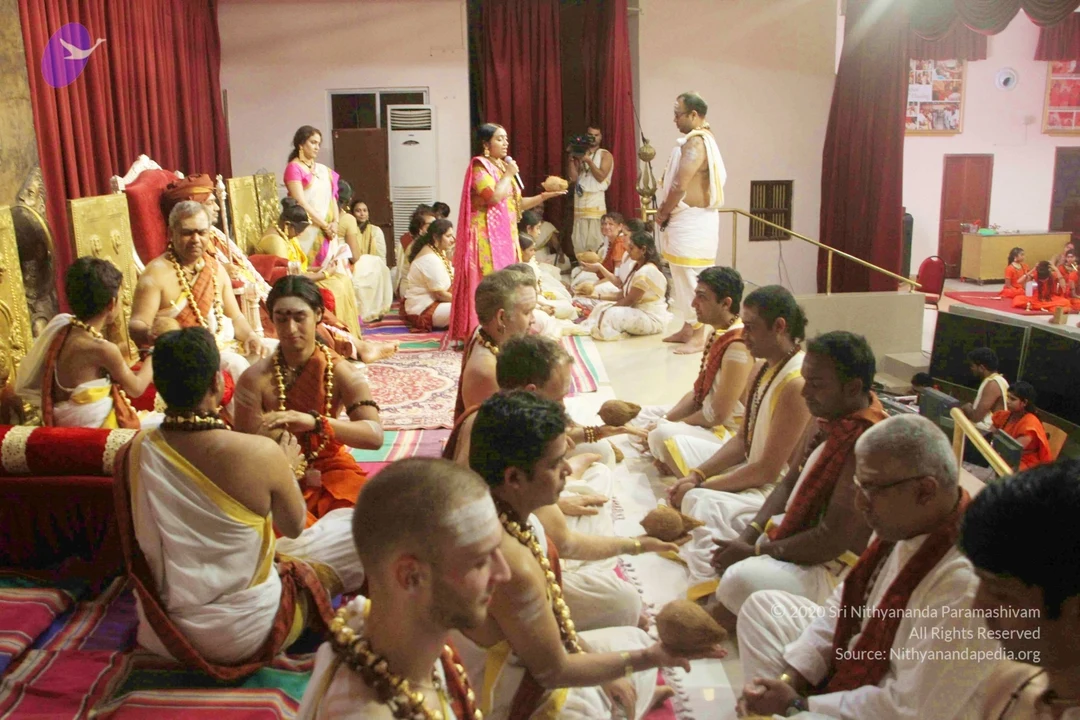
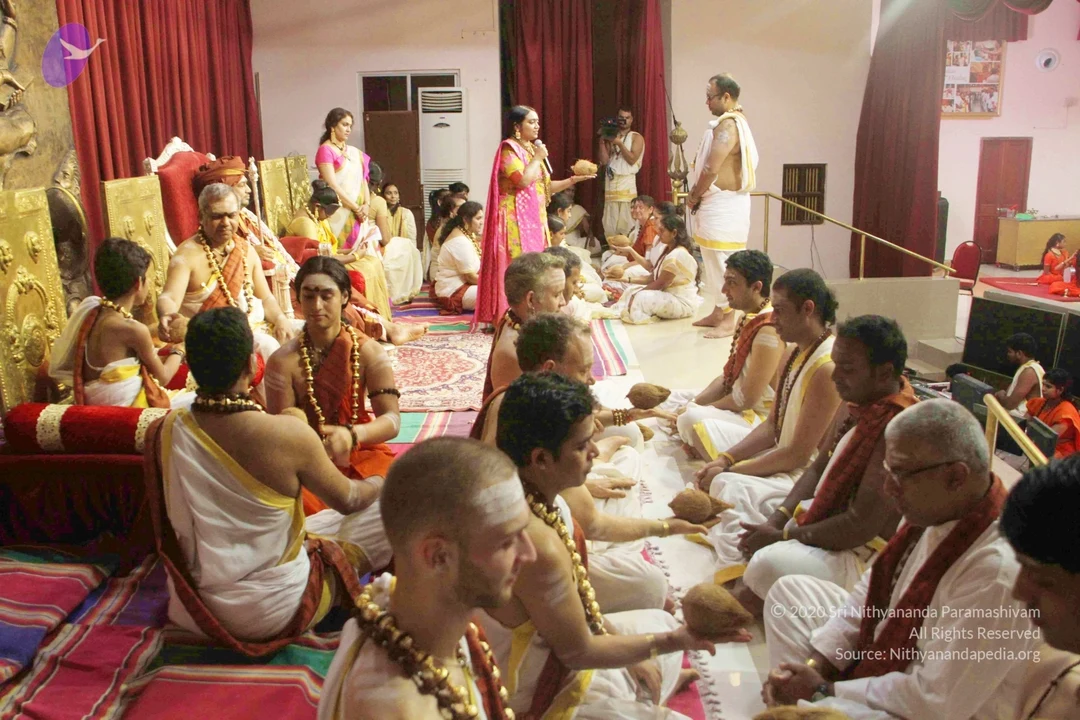
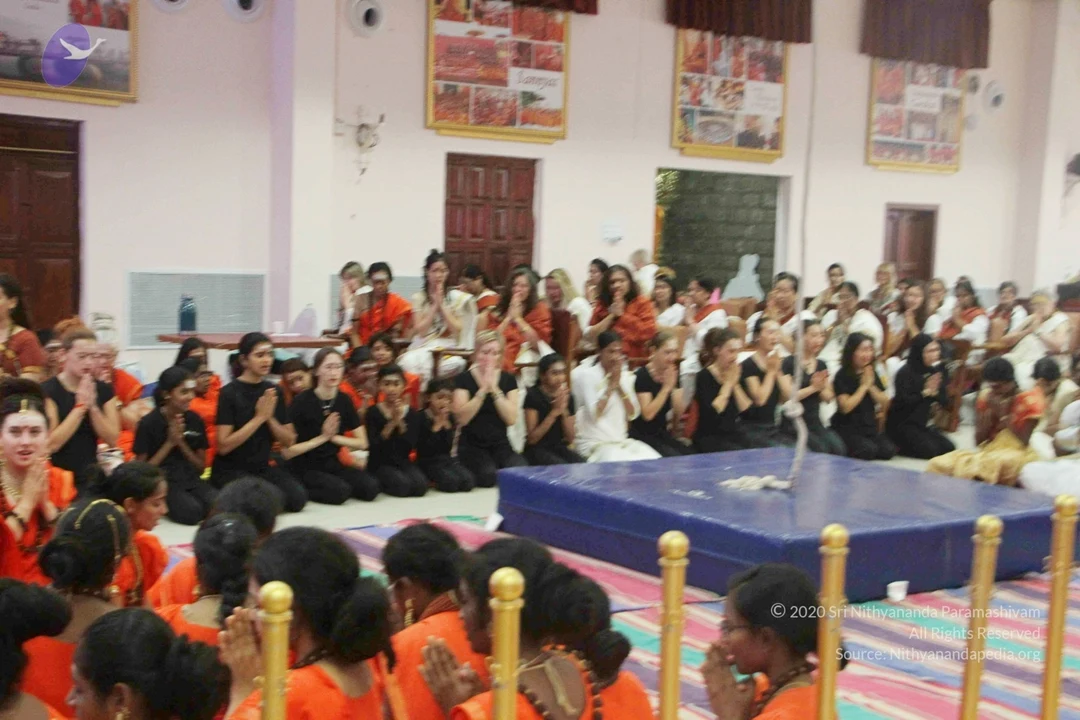
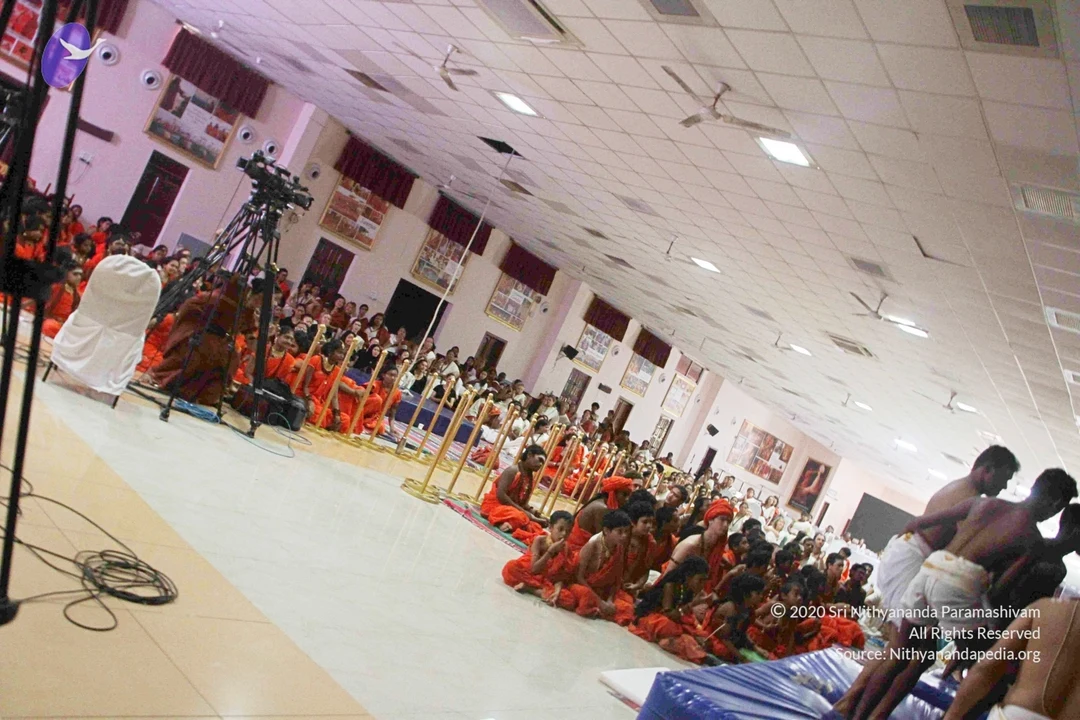
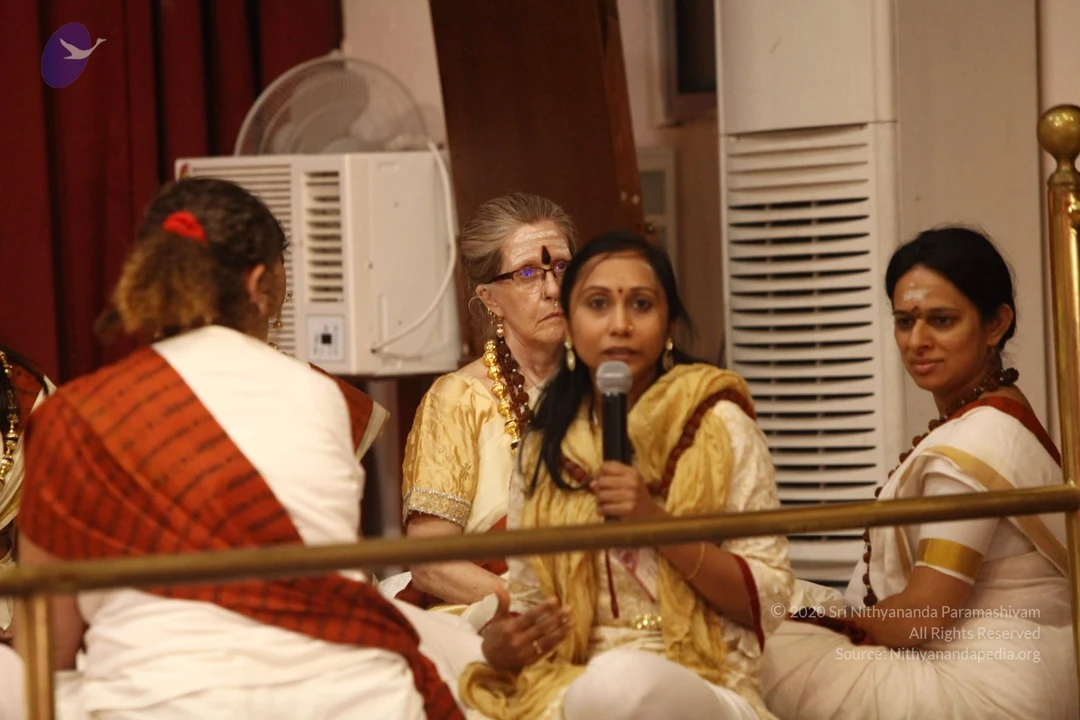
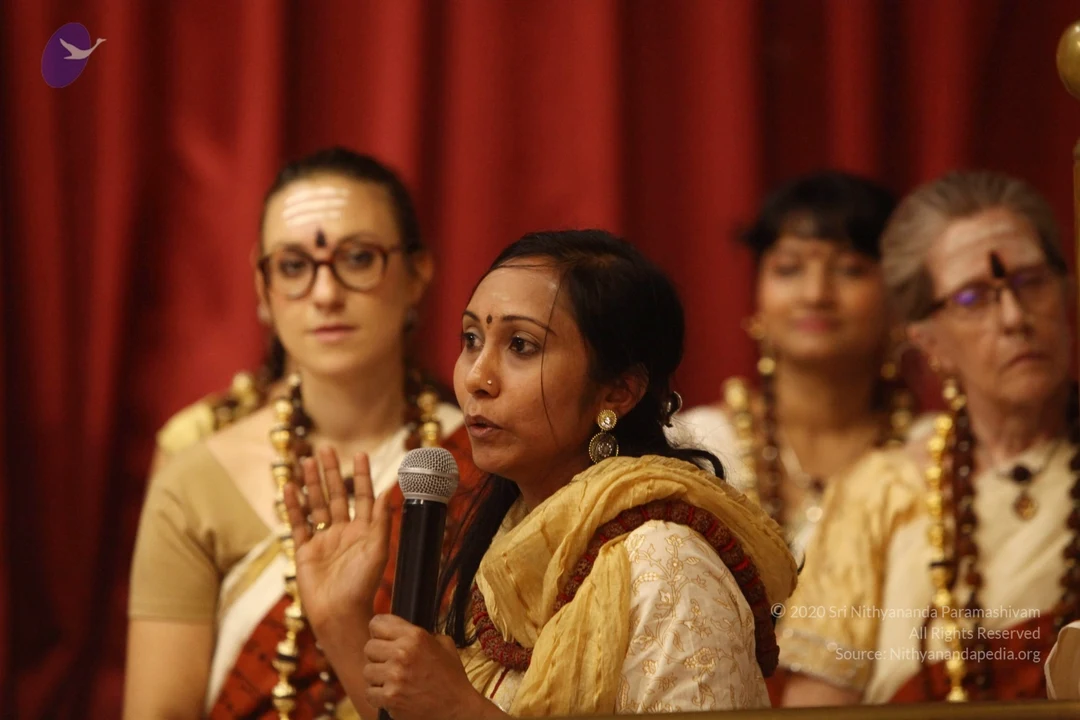
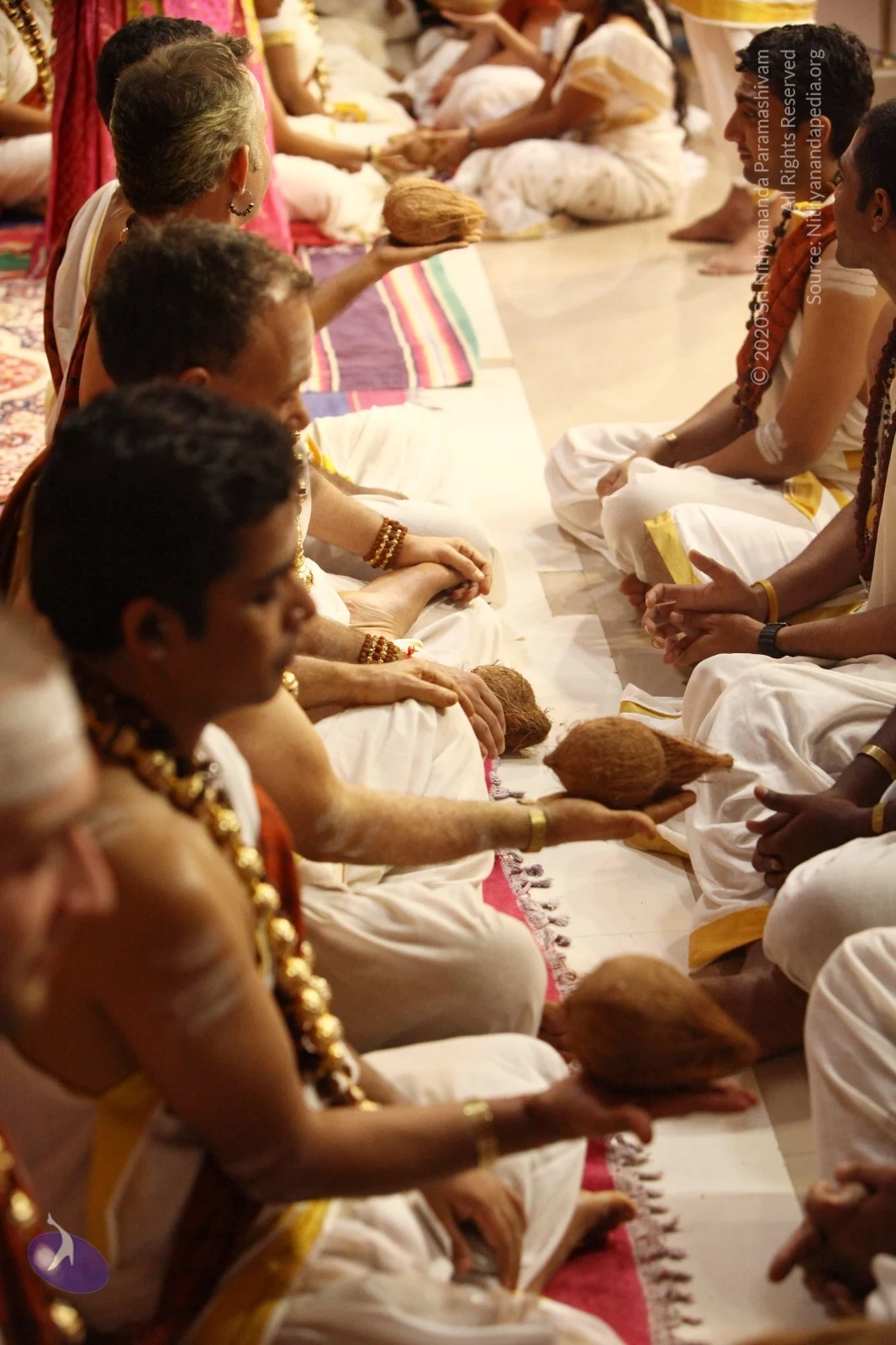
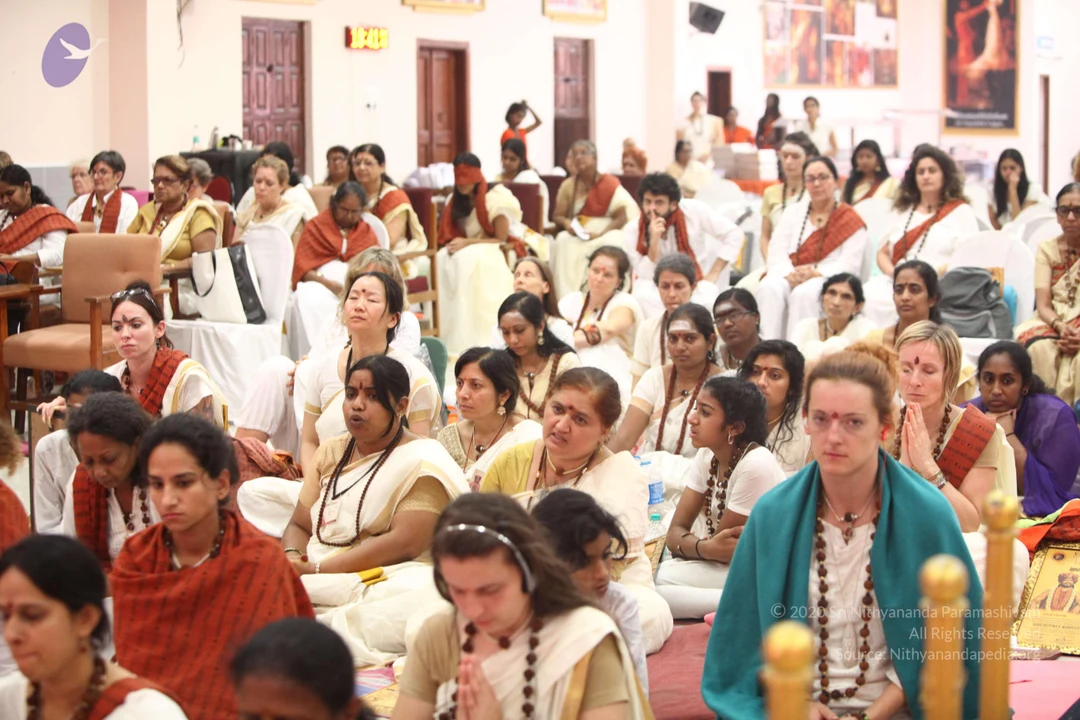
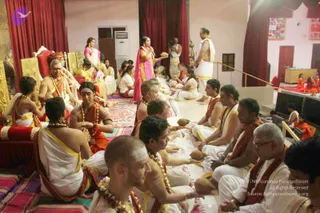
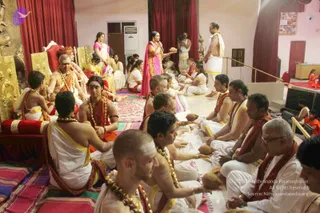
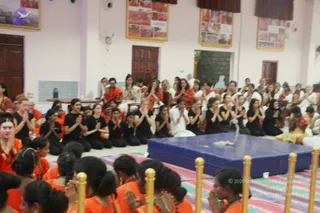
A ceremonial puja inside an ashram hall with red drapes and a wall air conditioner. Many seated devotees in white dhotis and white shawls with yellow borders, several wearing rudraksha malas and red-orange stoles, hold coconuts in their hands. A woman in a pink sari stands in the centre holding a microphone and a coconut while speaking. A bare-chested priest in a white dhoti stands at right with a white shawl. A figure seated on a gold-and-red throne at left wears orange-saffron cloth and a crown-like headwear. Orange-clad children sit at right near a low table. Roughly twenty people are visible in the scene.A ceremonial puja in an indoor hall with red curtains and gold-framed panels. Seated on the floor on colourful striped mats, devotees in white dhotis with gold borders and orange or red shawls hold coconuts in their hands and wear rudraksha malas. A woman in a pink sari stands at centre holding a microphone and a coconut, while another woman in pink and gold stands behind her. A man in white with a sash stands at right near a gold railing, and a cameraperson films. On the left, a figure seated on a red cushioned throne wears a saffron shawl and rudraksha mala; his appearance is not clearly distinctive enough to confirm identity. A deity murti stands at far left, and a wall display is visible at upper right.Indoor ashram hall with pink walls and framed photo panels on the back wall. A large blue padded platform sits in the centre, with a white cloth draped over it. Seated rows of devotees with palms pressed together in anjali fill the hall; many women wear orange or saffron saris and kurtas, while others wear black or white. In the foreground, women in orange saris with red-and-gold bindi and jewellery sit in front of gold-topped barricade posts, pressing their hands together in prayer. Colourful striped mats cover the floor. The scene suggests a puja or padapuja gathering, though no clear presence of a central figure is visible.A tilted wide photograph of a large hall with a white-tiled ceiling and pink walls hung with framed pictures and maroon curtains. Many young people in saffron-orange robes sit in rows on the floor, while a crowd of seated spectators in white and light clothing fills the back. In the foreground a black camera on a tripod and a white-draped chair face the front. Two bare-chested men in white dhotis kneel at the right edge, and tall brass lamps stand among the rows of seated attendees.A photograph of a large hall where a shirtless man stands atop a tall wooden pole, balanced on a small round platform, while several bare-chested men in white dhoti-style cloths with gold borders steady and support the base on a blue mat. Dozens of people, many in orange or red robes and some with red headwear, sit on the floor in rows watching. Ceiling fans, framed pictures and red banners line the walls. A logo appears in the top-left corner. The scene reflects an athletic display of balance and support.