Monday
23 February 2009
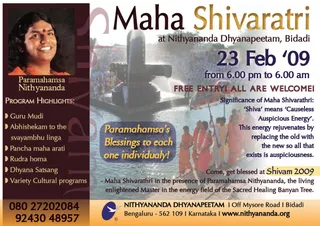
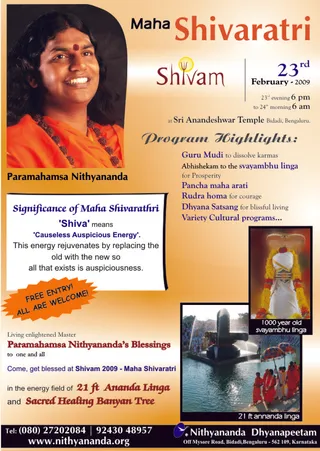
2009 Shiva Rathri Message Awaken Your Inner Space
- Dated photos
- 309
- Source pages
- 1
- Media
- 2
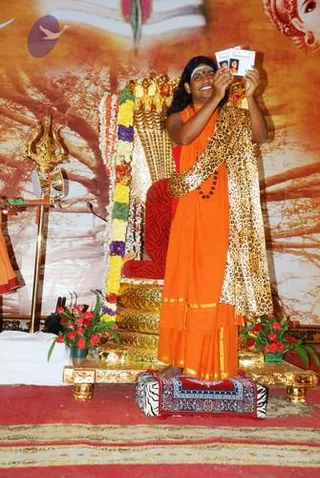
February 23 2009
Original wiki pageTitle:
2009 Shiva Rathri Message Awaken Your Inner Space
Video and Audio:
| Video | Audio |
Transcript:
[00:43]
I welcome you all with My love and respects. This Shiva Ratri, My message is only one word: Inner Awakening. Awaken your inner space; the tremendous potential energy which is inside you - awaken that. That is what we call in tradition, Kundalini. Awakening that higher consciousness. See, our inner space is filled with darkness. That is why you don’t know what is happening there. Ninety nine percent of your activities are done almost in darkness. You don’t know why you talk the way you talk. You don’t know why you like something. You don’t know why you hate something. You don’t know why you behave the way in which you are behaving. You don’t know anything. You don’t know why you look the way you look. You don’t know why you act the way you act. All the activities are happening in a deep darkness, which is dangerous not only for you, for the people who are living around you.
[02:07]
Understand. Awakening your inner space - The ideal of Shiva…Shiva. Shiva is the being whose inner space is completely awakened, who is living in light, radiating the energy. If inner awakening happens in you, you are living as Shiva. So, this Shiva Ratri, we dedicate to awaken the kundalini for inner awakening. To awaken the potential energy which is inside you. Understand few things about this kundalini, inner awakening. When the inner awakening happens, each chakra comes to life, each energy center comes to life. You can see, beautifully in Shiva’s story this inner awakening is described. A person in whom all the seven chakras are awakened, are in light, is Shiva. Who has experienced the kundalini awakening is Shiva. Kundalini is metaphysically portrayed as a snake. That is why Shiva… Shiva’s pictures are always portrayed as Him with many snakes - in neck, in head, all over his body. Means each and every chakra is awakened. Not only the major seven chakras. In the hands and all you have minor chakras - even those chakras are awakened. That is why you will see snake in the hands of Shiva.
[03:57]
Inner Awakening. Shiva is a being in whom the inner awakening has happened. You can see beautifully from the stories, how metaphysically they are describing Shiva is a being in whom inner awakening has happened. In Shiva, the muladhara is pure - awakened muladhara. That is what they say through the story of Manmatha dahana. Please understand. It is wonderful story. Manmatha dahana. The story says, Shiva was sitting and meditating. The devatas, they wanted to disturb Shiva. So, they are sending Manmatha and Manmatha throws the arrows. Shiva opens His third eye and burns Manmatha. Don’t take it literally. It has a metaphysical meaning. And another wonderful thing you should know. Shiva burnt the Manmatha, then married Parvati. Understand. Understand it means the marriage was not based on lust. The marriage was not based on fantasy. The whole story, such a wonderful story. And Manmatha throws his arrows - means, trying to create fantasy inside Shiva. He opens his third eye - means inner awakening. He opens his third eye and by just his presence, intense presence… Opening third eye means bringing your awareness to its peak.
[05:43]
If you bring your awareness to its peak… Please understand. If you bring your awareness to its peak, this moment, you are opening the third eye. When the opening the third eye happens, suddenly you will see all the fantasies are burnt. They are not there any more. So, Shiva’s muladhara is awakened muladhara. When you awaken your muladhara by intense awareness, you will become Shiva. Nothing, simple technique, very simple technique. Whenever fantasy overtakes you, I am not even saying suppress it. Just bring intense awareness. If it is more powerful than your awareness, it will move your body. Make it act. Be aware. Don’t try to suppress. If it is less powerful than your awareness, it will just die down. If it is more powerful than your awareness, it may make your body move. Allow it. But just be aware intensely. You will see the experience will add more understanding to you. Even if there is experience, physical experiences, suddenly it will add more understanding, more awareness to you. Bringing awareness to the root chakra, muladhara chakra, awakens your being, Shiva’s being whose muladhara is awakened. That is what they mean by this story.
[07:17]
The second story: Swadhisthana. Second chakra, Swadhisthana, where your root is centered. Where your being is centered. Another one beautiful story, story of Markandeya. Markandeya is young saint. At the age of sixteen, he was supposed to be taken away by the death, Kala, Yama. He worshiped Shiva intensely. When Yama appears, Yama tries to take the life of the Markandeya. Story says, Markandeya was so close to Shivalinga, he was hugging the Shivalinga. And Yama threw the rope. It fell not only on Markandeya, on the Shivalinga also. So, Shiva came out of that Linga and killed Markan…killed Yamadharma…killed the Death itself. Please understand the metaphysical meaning behind the whole story. When Death comes, if you really hug tightly, not physical Shivalinga 😃 not physical Shiva Linga. If you really, if you are tight, close to the Shiva Consciousness, if you are intensely connected to the Shiva consciousness, whenever fear arises in you, be completely connected to Shiva Consciousness, you are hugging Shivalinga. See, the story says beautifully: If Kala, Yamadharma has thrown the rope only on Markandeya he would have taken his life and gone. But there was no distance between Markandeya and Shiva. Understand. This can happen only in your inner space the awakening has happened. If Shiva is in your inner space not otherwise, not otherwise.
[09:16]
Any physical linga, at least there will be few micron distance. Few microns there will be distance. If your inner space is filled with Shiva, if Yama, the Death, if he throws his rope, naturally, he can't catch onlyu you. He has to throw the rope on Shiva also. And he already learnt his lesson. He will never try to throw. So, be very clear, be filled, completely feel connected to the Shiva Consciousness you will experience what Markandeya experienced. The story says, Shiva came out, and killed the Yama and gave Chiranjeevi patha. Eternal Life to Markandeya. Understand the story, it is nothing but if you strongly feel connected, Shiva will come out of that Consciousness. If you take the literal meaning, then all of us can have one, one small Shivalinga in our ICU unit where death may come, and hug it. That is not the literal meaning. Develop Shiva Consciousness in your inner space. Have a deep feeling connection to Shiva in your inner space. Suddenly you will see, Yama cannot separate you from Shiva. If Yama cannot separate you from Shiva, you are in eternal life. You have achieved the eternal life. What Markandeya achieved – the chiranjeevitva is achieved by you. It is a very subtle truth. One more thing: you don't know when Yama will come. Don’t wait till he comes. Start feeling connected from now.
[11:15]
In the West, there is a beautiful saying: Go to church when you walk. Don’t wait for four people to carry you. You don’t have to wait till death comes. Start now. And you don’t know when it will come. So, start that deep feeling connection this moment. Awaken Swadhishtana chakra. Each chakra has a beautiful story related to Shiva. Shiva’s stories can be connected to each energy center. One more thing: it is not that fear comes inside you only when death comes. Every moment there are so many fears happening in your life. When you get into the car and about to start your travel, always there will be one thought, always there will be one thought, maybe accident will happen. And one memory, one flash, you will see some memory of the accident or some photograph of an accident or some picture which you saw about some accident. Use even those moments to awaken your inner space. Don’t think, “No, no, no, accident won't happen.” Don’t try to suppress or don’t try to justify. Don’t try to give courage. Just relax. ‘Alright, if it has to happen, what can be done? Let me face.’ Bring intense awareness. Please understand. Courage is not absence of fear, it is energy to face the fear. Please understand. Courage is not absence of fear. There is no such thing as absence of fear. Anybody who is alive, will have fear. Anybody who has something to lose will have the fear of losing that.
[13:12]
Only one person will not have fear, who is already in the graveyard. He may not have fear. If you have life, you will have fear. The way to handle the fear is not suppression. People always come and tell Me, “Swamiji, I meditate for a long time. But still I have fears.” Understand. Do not try to create a space where there will not be fear at all. That is not the thing. As long as the breathing is happening, fear will be there. You see, every inhaling, and every exhaling, moves your swadhisthana. You can see very clearly, the inhaling, will touch your swadhisthana. Exhaling also touches your swadhisthana. Any movement in swadhisthana, there will be fear. There will be fear. Any activity in swadhisthana, there will be fear. There will be fear. Please understand. Don’t try to suppress fear. Be very clear. Courage means not absence of fear. There is no such space as absence of fear. Courage means the energy to face the fear. So, whenever fear thought raises, just try few times. Next time when you see fear arising in you, for any reason, so many reason. A cockroach is enough to create fear in you. Not even cockroach, even ant is enough. A frog is enough to create fear in you. Whenever that kind of fears arises in you, any fears arise in you, don’t suppress, Don’t justify, “No, no, no I wont die… I won’t… This wont happen… That won’t happen…no, no, no my driver has slept well… no, no, no.” Don’t justify. Just say, “If that has to happen, okay what can be done?”
[15:10]
A deep awareness, remembrance - remembrance of the Truth is what I call inner awakening. Remember the truth. I have seen people trying to divert from the truth in so many ways. Only when they walk in the darkness, night, alone they will start chanting all names: Rama, Krishna, Govinda…all kinds of stotras will come out. It is nothing but diverting yourself from the fear. Understand. I am not saying, don’t chant Rama, don’t chant Krishna, don’t chant Shiva. I am not saying that. But don’t use that as a tranquilizer. You are using that more as anesthesia, not to bring more awareness to you. Use the mantra, use the great names, use Shiva’s name to bring Shiva consciousness, not as a diversion, not as a tranquilizer, not as a anaesthesia. When you are walking alone. Naturally you feel the fear. What do you do? You will start loudly singing. When you start singing loudly, you feel as if somebody else is also with you. You feel people are there with you and you forget that you are alone. Don’t use Shiva’s name as a tranquilizer. Remember, if there is fear, if there is something can happen, nothing can be done. Relax. Bring the straight truth to your memory. Straightaway see the truth. Suddenly you will see…
[16:52]
Please understand. I have experienced what I am talking. I am responsible for what I am talking. I am talking to you after experiencing this technique. I have seen this working in Me. When you have the fear don’t divert by uttering Rama, Krishna, Govinda or some mantra or some loud chanting or some loud stotra. I have seen people chanting: kaaka, kaaka, kanagavel kakka, noka, noka, nodiyil noka, thaka, thaka thadaigal thaka, parga, parga pavam podipada, pilli chunyam perum daga...daga...daga.daga. Only at that moment, all kinds of mantras will come. All kinds of chantings will come. All kinds of stotras will come. Sometimes they will get mixed also. Because you are afraid, ‘if this god is sleeping, and his cell phone is not working, if he is not picking up the call, at least somebody else pick up the call.😃 If his cell phone is busy..busy let me talk to somebody else. Let me try some other number.’ Trying all kinds of number. Trying to send some SMSs. ‘If he is not picking up the call, at least let me send the SMS.’ Don’t try all those things. Just see the truth. Yes, what can be done? Understand. Only two-three times you need to try this. Suddenly you will see after few times, the very fear thought wont happen in you.
[18:19]
Understand. I am responsible for what I am talking. Try, try, experiment. Any fear arises in you, don’t divert yourself. Don’t use any tranquilizer. Don’t use any mantra. No anesthesia, no cell phone, no SMS. Nothing. Just remember and say, “Nothing can be done.” That’s all. It is inevitable. Fear is inevitable. When there is life, death is inevitable. When there is wealth, losing is inevitable. When there is something, the possibility of losing is inevitable. Just remember the inevitability of the moment. Suddenly you will see the swadhisthana will be awakened. Just try few times. I am not saying, try this technique forever twelve years, then you will have achievement. No. I am not saying all that kind of words. What I am saying I am responsible practice just few times. Bring your awareness. Just accept inevitable of this moment…. inevitability of this moment. Suddenly you will see, the very remembrance of the fear will not happen in you. That is what I call inner awakening. When you are awakened in your inner space, when your swadhisthana is awakened, you won't even have thought. When I walk in the darkness, and alone, I don’t even have the thought it is darkness, I am alone.
[20:01]
Please understand. It is not that you will have fear, then you will suppress or divert. The very fear will disappear. This is the technique to connect with the Shiva consciousness. So, whenever the fear thoughts arise, remember the inevitability and surrender to this moment. You will see, when real death happens, you will be surrendering to this moment. Surrendering to this moment is Shiva consciousness. You are in Shiva Consciousness. You will see, Yama dharma cannot throw his rope on you. Death cannot throw his rope on you. You will see, Shiva is appearing in you, and giving you the eternal life, Chiranjeevitva. When the fear disappears, you are living eternal life. Please understand. Your everyday sleep and death, has no difference. Everyday you sleep and come back next day morning. Sameway only death. You die and take next birth. But you are so frightened about death. Just because of the fear, there is so much of suffering. Nothing else. See, to fall asleep you don’t have fear. That is why you fall asleep smoothly and get out. If you somehow overcome the fear of death, sameway you will just fall asleep and you will come out.
[21:36]
People say, “No, no, no… in the sleep we know there is continuity. In the death, we don’t know whether there is continuity or not.” What do you mean by saying in the sleep there is continuity? Who knows next day morning you will get up or not? Everybody who lies down thinks that next day morning they will get up. Understand. Every night there are millions of people who are not getting up next day morning. You don’t remember about that. And you think there is a strong possibility of continuity. No. So, be very clear it is fear makes the death worse. Not death creates fear. Fear creates death. When you bring the awareness to this moment. Surrendering to this moment, surrendering to the inevitability, suddenly you will see the fear disappears. It is not there anymore.
[22:43]
Next manipuraka - worry. Understand. beautiful story of churning the ocean. It's nothing but the poison which came out is nothing but the collective negativity means the worry of the whole universe. Shiva is such a pure space. He has digested the whole thing. Please understand. Again the story has deep metaphysical meaning. When good thoughts and bad thoughts try to achieve something inside you, they churn your whole inner space. Good thoughts are Devatas. Bad thoughts are demons. They churn your inner space. That is what is your life. The churning is what is your life. The rope, Vasuki snake, is your mind. When the churning is done, naturally worry comes up. Worry comes up. Usually when worry happens in you, you vomit it on others. Shiva has digested it. It has not crossed His throat. That is why He is called Neelakanta. It has not crossed His throat. Anything comes up, he completely digests it. Understand. He is beyond worry. His inner space is awakened I wanted you to understand an important truth. When Shiva digested the poison, next thing immediately happened is nectar came out. In your life also, whenever the anger comes, whenever worry comes, just digest it, means accept it.
[24:43]
Don’t give a title worry. All your problem is not even worrying, Worrying about worrying is your problem. Just look little deep, your real problem is not just worry. Worry is a simple act. Anything you do, you have to think. A chronological planning is a basic need for Existence. So, that is not a problem. You start worrying thinking that you have too much worry; means, you are not able to swallow the poison. You are not able to swallow the outcome of the churning. Acceptance is what is denoted expressed through this story of drinking the poison. When the tremendous worry raises in you, the depression, when it raises in you, behave like a Shiva. Just digest and sit. Don’t be shaken. Don’t be perturbed. Have deep acceptance. Let it raise. Have a deep acceptance. You will see, the poison will become nectar. That is what has happened in the story. That truth is only expressed by this story. Shiva drank the poison and next thing came out of the churning is nectar.
[26:11]
Please understand. When the nectar comes out, all the Devatas are enjoying, they drink the nectar and they become immortal. Means all the good energy in you will be energized by that nectar. You will become immortal and you will enjoy the eternal life. Whenever, worry happens in you, when the poison happens in you, don’t vomit on people. That’s what we are doing. Continuously we vomit on people. We continuously vomit that worry on people. When you vomit the worry on others, it is called anger. When you vomit verbally, it is verbal abuse. When you vomit physically, it is violence. When you vomit with strategy planning, it is terrorism. Understand. It is nothing but your worry. The person who is constantly worrying, restless, only he can be terrorist. The person who is completely peaceful within himself will never be a terrorist. There won’t be terrorism. There won't be violence. If you are completely settled with yourself. So, bring acceptance, the deep acceptance. Suddenly you will see, the poison has disappeared. See when Shiva digested the poison, it is not that he was hurt by the poison. The poison has lost its killing quality and it has become nectar. So, when you accept the worry, not only you will not be hurting others, the worry won't hurt even you. You will just lose, the worry will lose its quality of hurting. It will just relax. You will experience a beautiful nectar feeling in your navel, in your manipuraka. Whenever you accept, whenever worry happens in you, understand a beautiful chance for you. The poison is in front of you - whether you want to be a Neelakanta or you want to be shaken away. Whenever the worry comes, just accept the worry. A deep acceptance. Suddenly you will see, the worry loses its quality. I am not saying about physical poison. I am saying about the mental poison. Understand. The story is also about metaphysical truths. Whenever depression arises in you, it’s a mental poison. Acceptance will completely transform the quality of that mental poison. It will disappear. You will experience the nectar.
[28:54]
Next comes anahata chakra. Shiva is embodiment of love. This very story - He gets married after the Manmatha was burnt - shows, the marriage was pure love. It was pure love. The pure bhakti. The pure anahata chakra. He is a embodiment of anahata chakra. Understand. There is a beautiful description of Shiva and Parvati’s relationship in Tantra. The description says, “The Shiva had the motherly attitude towards Devi.” The relationship was described. I was surprised when I read those descriptions. It says, Shiva felt Devi is His own mother. A strong motherly connection means what? The pure anahata, the pure anahata energy. When the pure anahata energy is experienced, you feel with the whole world… either you feel that you are the mother of the whole world or you feel the whole world is your mother. The story, the description says, Shiva felt Devi is His own mother. And she felt the whole world is Her child. If you are in the female body, the female psychology, when anahata opens, you will feel everybody is your child. When you are in the male body, when you are living with male psychology, if the anahata opens, you will feel everybody is your mother.
[30:58]
The pure feeling connection. When the inner awakening happens, in your anahata, if you are in the male body, you will feel the whole world is your mother. The whole world is mothering you, protecting you, caring you. The Existence loves you. Existence is fulfilling itself through you. Please understand. You are the expression of Existence’s strong, pure will. You are not an accident. You are conscious miracle of Existence. When your anahata opens, I tell you, even this one example, you can understand. If you fall in love with somebody suddenly, even if you fall in love with one person, suddenly you will see so much of fulfillment and you will feel everything is so rosy, flowery, green. It's because of anahata. Love has the quality to give you the feeling that whole world cares for you; whole world mother’s you. Shiva’s anahata is awakened anahata. That is why, even with Parvati, with Uma, He has such a deep feeling of motherly love. What Ramakrishna and Sharada Devi exhibited, that strong feeling of motherly love, means awakened anahata.
[32:45]
Next vishuddhi. Next vishuddhi the energy center. Shiva is the ultimate energy – Kalabhairava. The amazing energy. The very description of Shiva is the third layer energy. Awakened vishuddhi, awakened vishuddhi chakra is the Shiva energy. He is the ocean of energy living in a different consciousness. That is why Shiva is described as living in Himalayas, very arduous place, very difficult place. Only high energy people will be able to survive there. Only whose vishuddhi is awakened, will be able to survive in Himalayas. Shiva is an awakened being whose vishuddhi is awakened. His kundalini has crossed the vishuddhi chakra. Of Course, the third eye, brow center-the Shiva’s unique expression or we can say Shiva is described as Trinetri, the third eye. His intense awareness is what is described as the third eye. His third eye is an awakened energy. He has destroyed Tripurasuras just by opening the third eye.
[34:24]
There is a beautiful story. Three demons were disturbing Devatas. Devatas went and requested Shiva, “Please kill those demons.” Shiva says, “Alright. I’ll kill them.” Suddenly, all Devatas, they request, “Oh Lord, we will create a chariot for you.” So they created a beautiful chariot. All the four Vedas have become horses, and all the Devatas have become the toys, carvings in the chariot. And Yama himself became a base, lower base. And Brahma became a charioteer and the whole chariot is ready. Suddenly Indra had a ego. If like this chariot happens, if all the Devatas and powers are together, if this kind of chariot is given, anybody will kill these rakshasa. Why we need Shiva? Immediately Shiva just smiled. He understood and He smiled. You guys come and ask Me to kill the rakshasa and you yourself say you want to make a chariot. Now you are expressing your ego. Neither I asked I want to kill nor I asked for a chariot. And He says, now relax. He just opens his third eye and all the Tripurasuras are burnt. Indra was shaken.
[36:00]
This story has a beautiful meaning. I have seen many time, people come to Me, “Swamiji I have this problem I have that problem. Please help me.” If I try to help, suddenly they will have their ego. What kind of help He can give? All kinds of doubts. Many people come and they think if such a big organization is there, I can also do what Swamiji is doing. Sometime when ego comes, you start judging. Shiva says, “No. For My mission, no organization is needed.” He just opens the third eye and Tripurasuras are burnt. There is a beautiful subtle truth, one more truth in this story. You can understand the story from this angle also. The three rakshasas, three demons are nothing but our own inner engrams – the fear, greed and worry. The fear, greed and worry - these are the three rakshasas. And the chariot is all kinds of techniques – rituals, techniques, all those things. Opening the third eye is unclutching this moment. Bringing your intense awareness to this moment. If you can bring your awareness to this moment, unclutch, you don’t need chariot to burn three rakshasas. You don’t need these chariots to burn all the three rakshasas. Bring your awareness to this moment and unclutch. You will open your third eye. The inner awakening will happen.
[38:04]
Ultimately the sahasrara: Shiva is the overflowing fulfillment. That is why He is always dancing. He is the god who is remembered as a great dancer – Nataraja in ananda tandava. His cosmic dance is constantly happening because He is overflowing in ecstasy. He is so grateful about what He is having and what He has created around Himself. Understand. When you bring that gratitude, feeling fulfillment of what you are having and what you created around you, suddenly you will see, you will also be dancing like Shiva. Understand. If Shiva can have the fulfillment… He has nothing around Him, He is the poorest guy, whatever we rejected He is using. See what is His living place? The burial ground where nobody goes. Rejected place. That is His.
[39:11]
Whenever I travel, when I….. nine years when I traveled by walk, when I did pada yatra, I will always go and stay in burial grounds only, cemeteries only, graveyards. People ask Me, “Why do You go and stay in graveyards Swamiji?” I said, “That is the place where you don’t need reservation. It will be always empty.” People ask Me, “You are not afraid of ghosts?” From My experience I tell you, only living people disturb others. Dead people never disturb others. I have never been disturbed by any dead people. Only living people disturb others. Dead people never disturb others. They are all sleeping happily. They are in eternal silence. All rejected things He is using. What is His ornaments? Rudrakshas, beads, useless, cheap. Not ratna, vaira, vaidurya, komegala. See Vishnu all best things: Milky ocean, snake bed, to press the feet Miss World…! Lakshmi! Miss. World of those days, or I can say eternal Ms. World and all luxuries - flight Garuda. All best things. See Shiva. Tyagaraja. Poor guy. Who are the companions? Bhootas, Pretas… and it continues till today. 😃What are the ornaments? Snake, rudraksha and who are the friends? Scorpions, crocodile. And what is the vehicle? Old bull which cannot go more than ten kilometers per hour. All rejected items, rejected by the society. He is living with them, but constantly dancing in eternal bliss. Nataraja! Understand. If he can be so contented, then what about us? All of us have surely much more than Shiva… much more than Shiva.
[42:12]
Even… see everything around Shiva. Who is the wife? Tribal girl. Himalayan girl. Uma is Himalayan girl. And not only that, she runs away in between to the father’s house. If He can be contented, why not we? He has very minimum things. But He is completely fulfilled. That is why He is dancing in ecstacy. His sahasrara is open. Gratitude is the greatest attitude you can have. He is in that attitude. That is why He is Nataraja, eternally dancing. So, bring your awareness to what you have, what you have created as you and around you. Celebrate the existence of you and around you. Please understand whatever you are having, you are worthy of it. If you remember that, suddenly the insecurity which you are carrying constantly, whether this will be there with me or it will go away…that insecurity will disappear. You always feel you are not worthy of what you are having. That is why you have that deep insecurity feeling, this may go away from you. The moment you have the insecurity, you want to acquire more, so that at least that will be there. If this goes, that will be there. When that comes, again more insecurity. Then you say, let me create one more layer. If this goes, that layer will be there.
[43:57]
That is why in different banks you have account. If this bank goes bankrupt, I will have in that bank. And after some time in different country banks you create account. If you remember you are worthy of what you have, you will not be afraid of even death. People are afraid of death, why you know? Forty, fifty years I made money and settled, now if I die, next time I have to take birth, I don’t know where I will take birth. I may have to work again for forty, sixty years to settle down. That is the problem. Remember, you are worthy of what you have. The moment you remember you are worthy of what you have, the insecurity will disappear. If I die here, I will take birth in a place where I have all these things already. That is the way people take birth in rich families. Understand. The moment you are clear about this truth, the tremendous security feeling will happen in you. You will stop acquiring layer and layer and layer and layer, different banks and different country banks and you will stop all these acquiring. You will have such a deep fulfillment, contentment.
[45:14]
First thing you need to understand, celebrate the way you are and the things you created around you. Feel fulfilled. You will have… understand. If you feel fulfilled, even if you create wealth, it will not be out of insecurity, it will be out of joy. It will be out of joy. You can have any number of bank balance, any number of bank accounts in any number of country. If it is out of joy, it is worthy. If it is out of insecurity, it is not worthy. If it is out of insecurity, if you believe you are not worthy of what you are having, how much ever you create, you will have the deep insecurity. If you remember, you are worthy of what you have, whatever you have, you may have, may not have, you will live like Nataraja. You will live celebrating life. Anything you create will be out of joy, not out of insecurity. You will not be creating out of insecurity. You will be creating out of joy. So, please understand. When you awaken all the seven energy centers, you become Shiva. You become Nataraja. The kundalini awakening makes you Shiva. When the kundalini is not awakened, you are just shava. If the kundalini is awakened, shava becomes Shiva. When the kundalini is not awakened, even if you are alive, you are just shava.
[47:03]
So, understand this one truth. Understand this one deep truth. Kundalini awakening is the essence of spiritual life. Inner awakening is the essence of spiritual life. People have all kinds of fear. If kundalini is awakened, I may become mad… this.. that. Nobody will become mad, disturbed by meditating and kundalini awakening. There is no record somebody has become mad because of meditation. There are enough of record people have become mad because they did not meditate. So, don’t be afraid of kundalini energy. Don’t be afraid of awakening your spiritual energy. The inner awakening. Of course there are all kinds of weird ideas and understandings, written in different kinds of books about kundalini. I don’t support those ideas. I don’t support that descriptions. What I am talking about kundalini is a safe spiritual method of awakening that energy, awakening that energy. Now, let’s enter into the safe, beautiful, spiritual method of awakening your kundalini energy.
[48:33]
Let us all achieve the inner space of Shiva. Let’s all reside in the inner space of Shiva. Remember, whether you believe it or not, you are in inner space of Shiva now. You are in the inner space of Shiva now. You are in Shiva’s energy field. So, just connect yourself with Him, with His energy. We will have a beautiful technique. If you can, sit in vajrasana, otherwise sit in normal squatting pose. Let Me describe the technique. Please understand. Have your hands in the hip. Let Me describe, then you can start doing. Visualize from the root center, from your… the root of the spine, the end of the spine, an intense energy is overflowing. It is flowing like a ….let Me describe the energy experience. It will be shining like thousands of suns and it will be cool like thousands of moons. Intense light but very cool light. Visualize that intense light from the root center, the intense light raising and reaching the head center, crown center. Understand the technique.
[50:25]
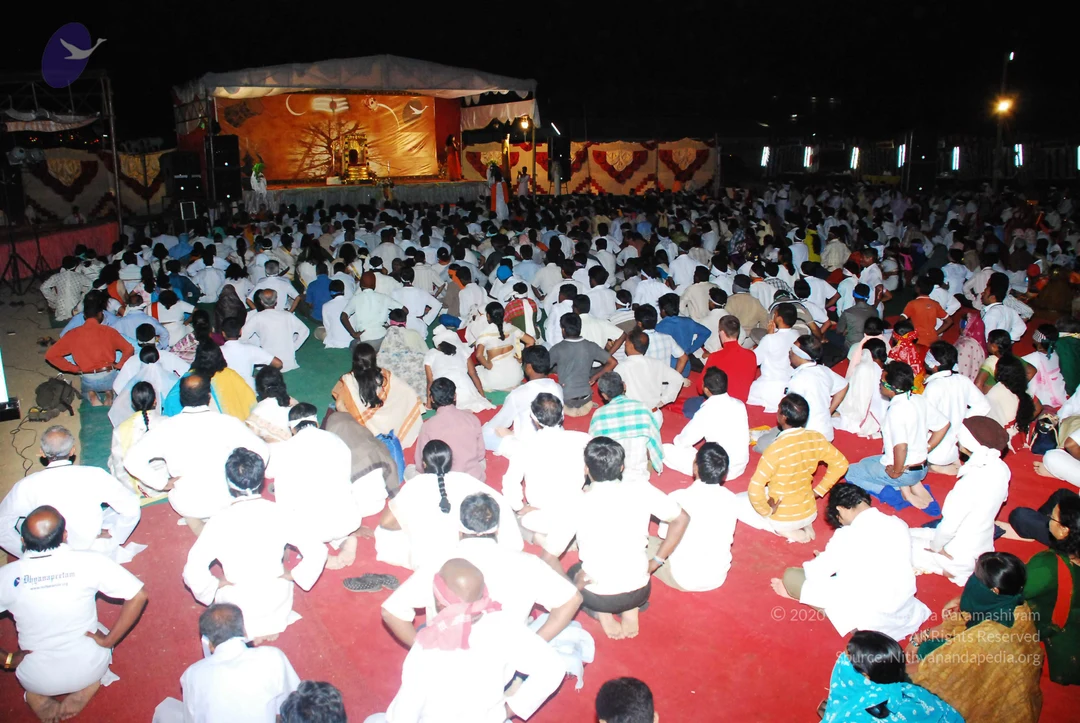
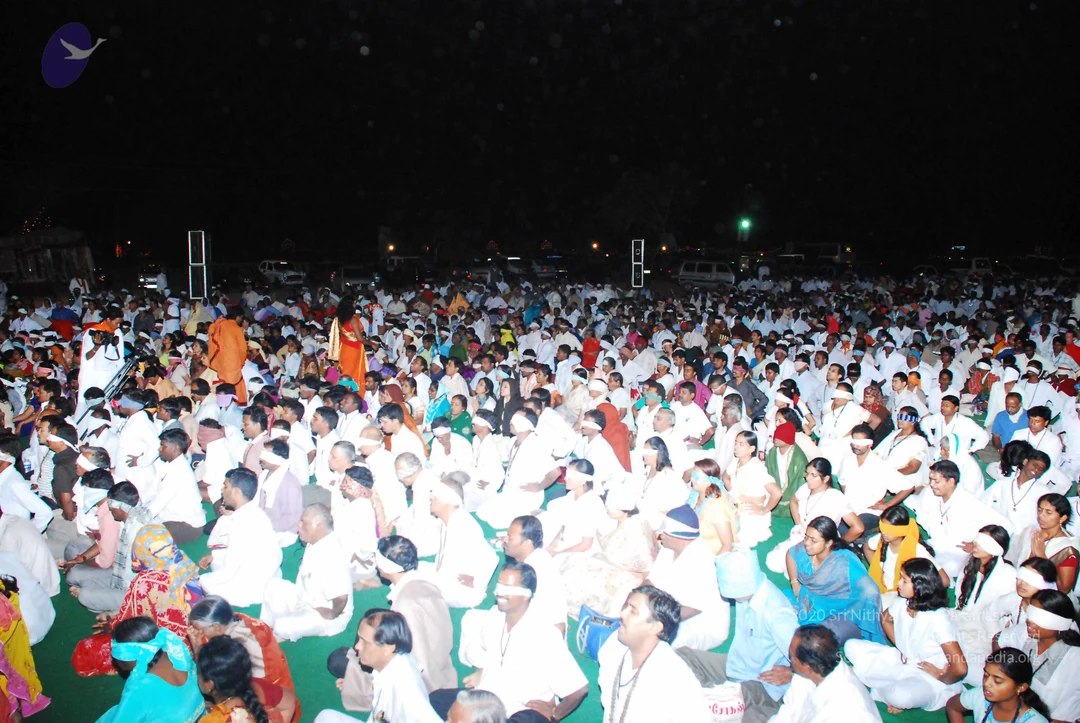
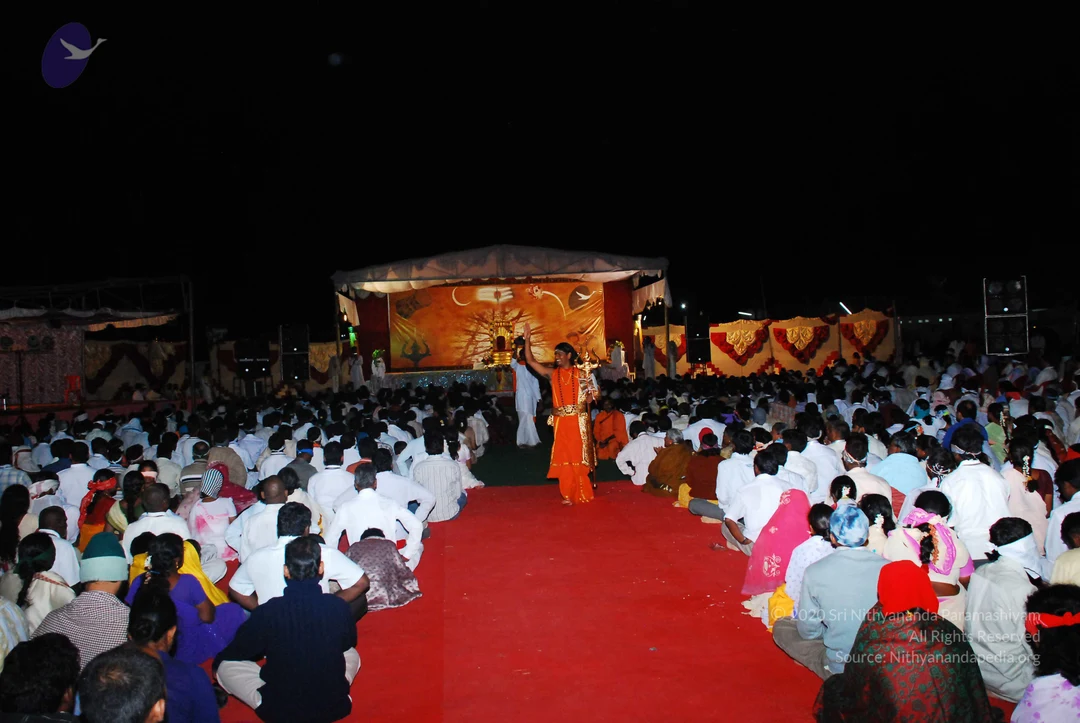
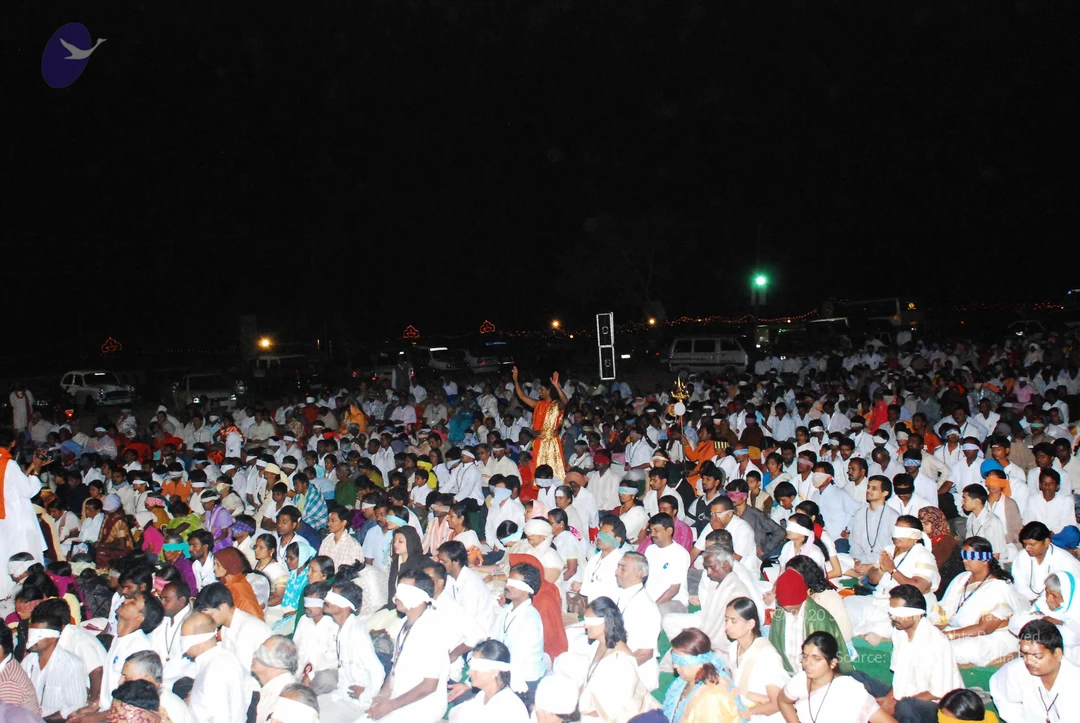
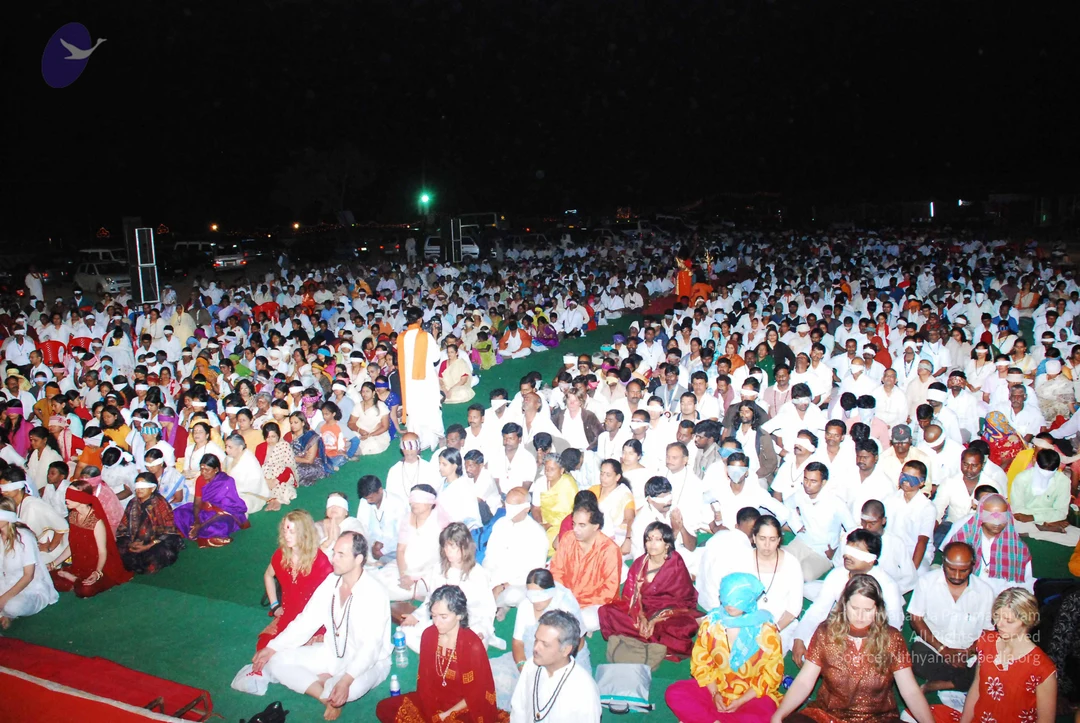
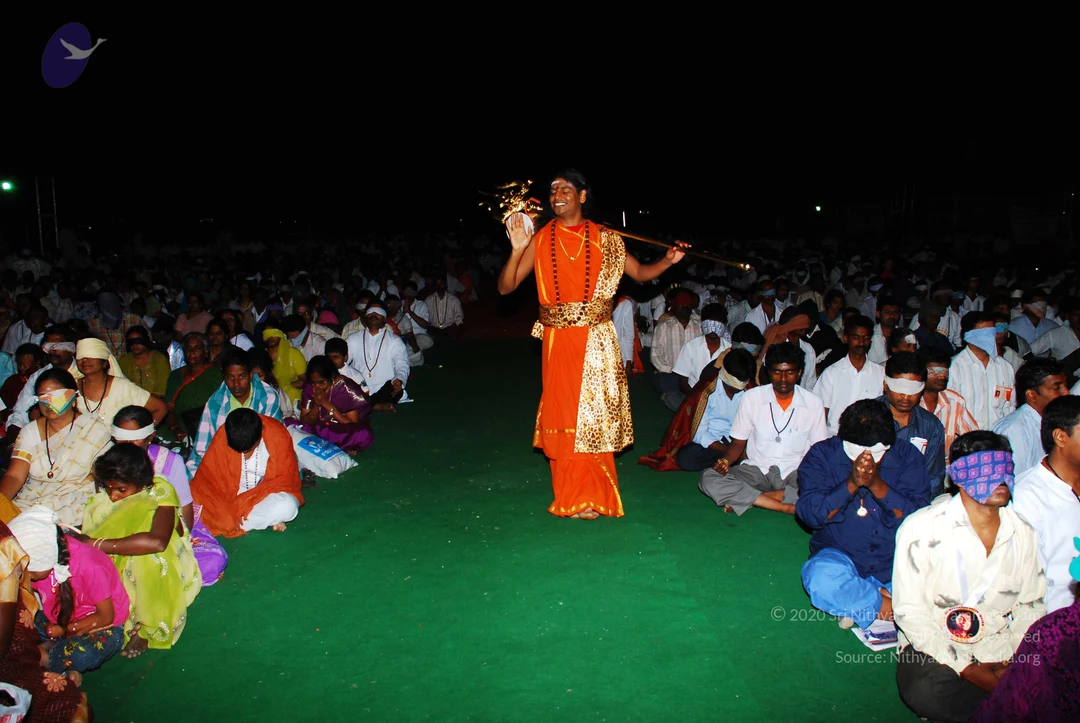
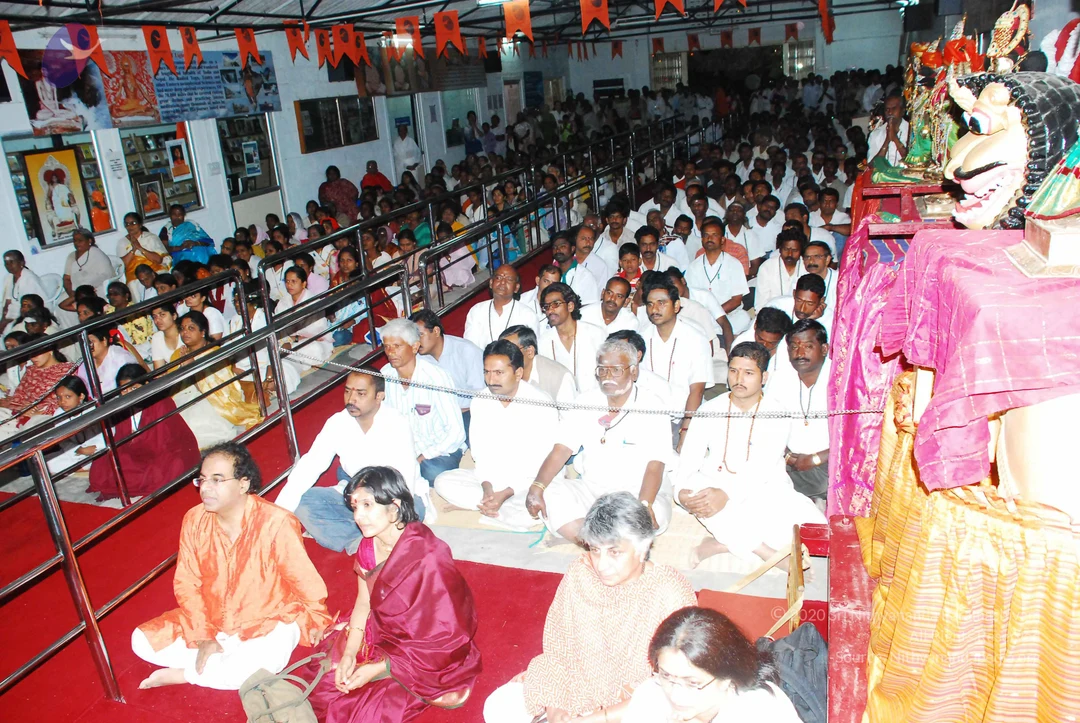
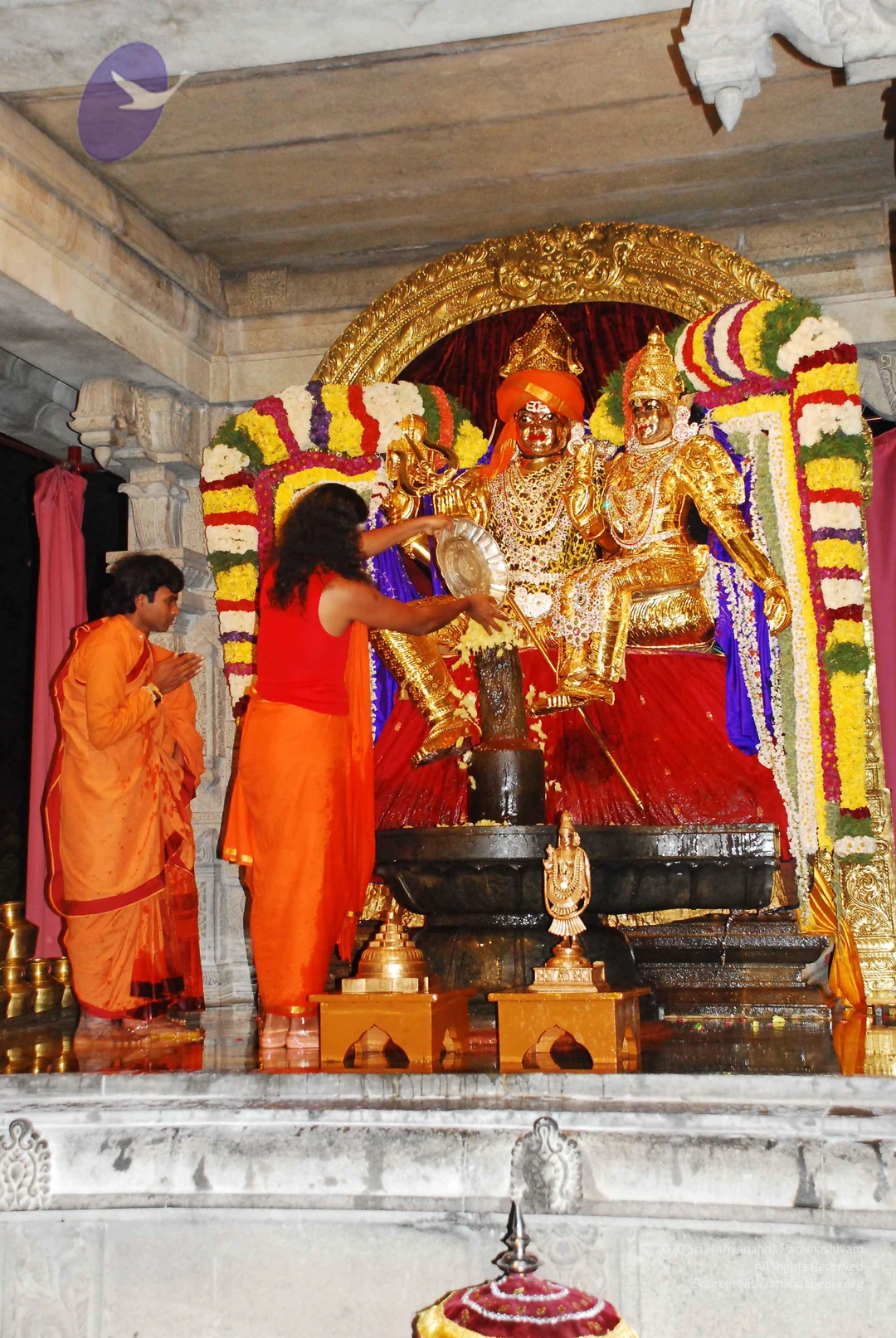
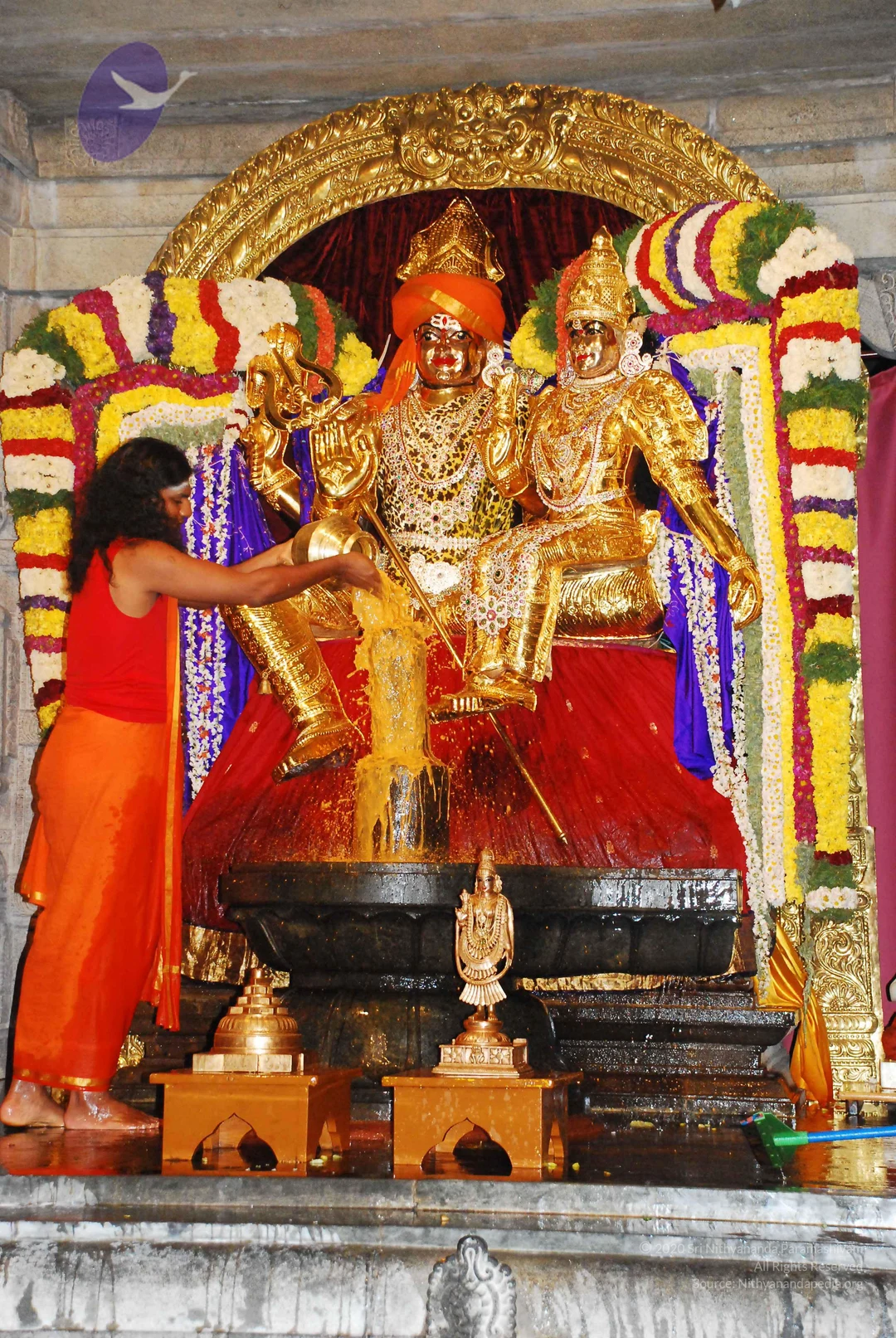
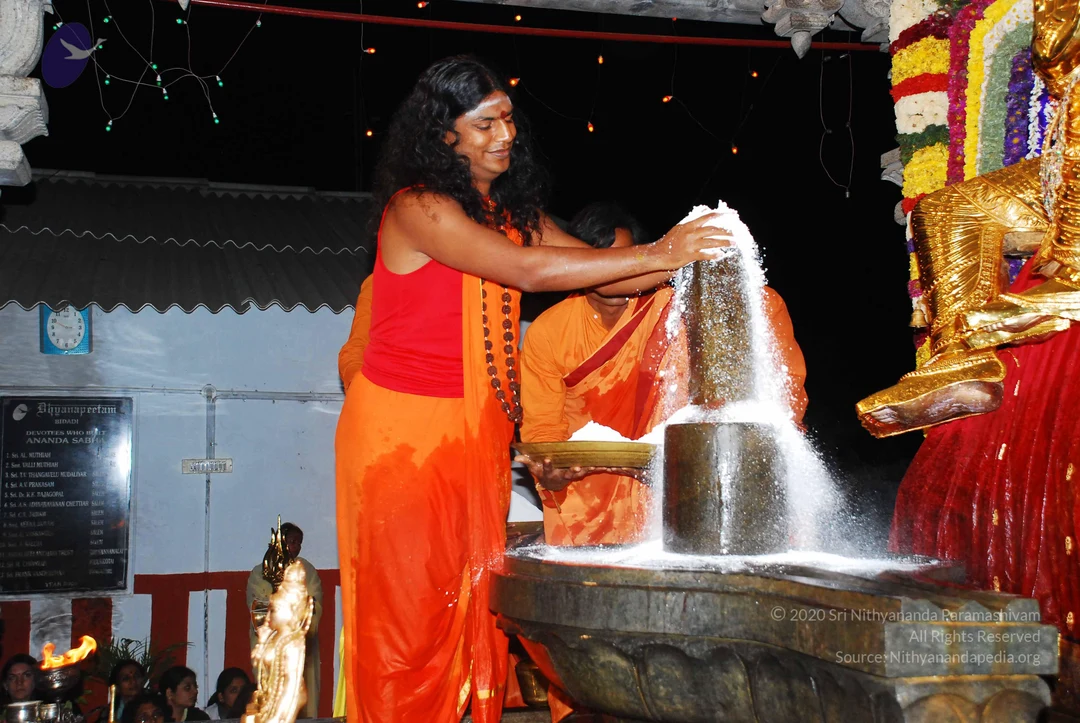
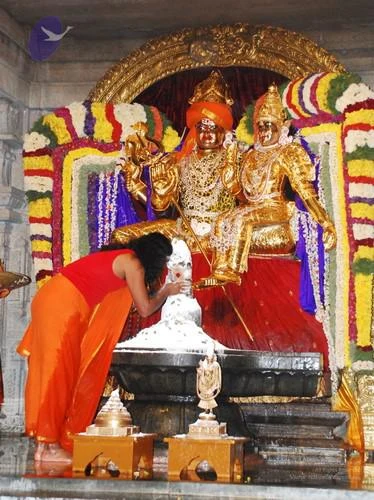
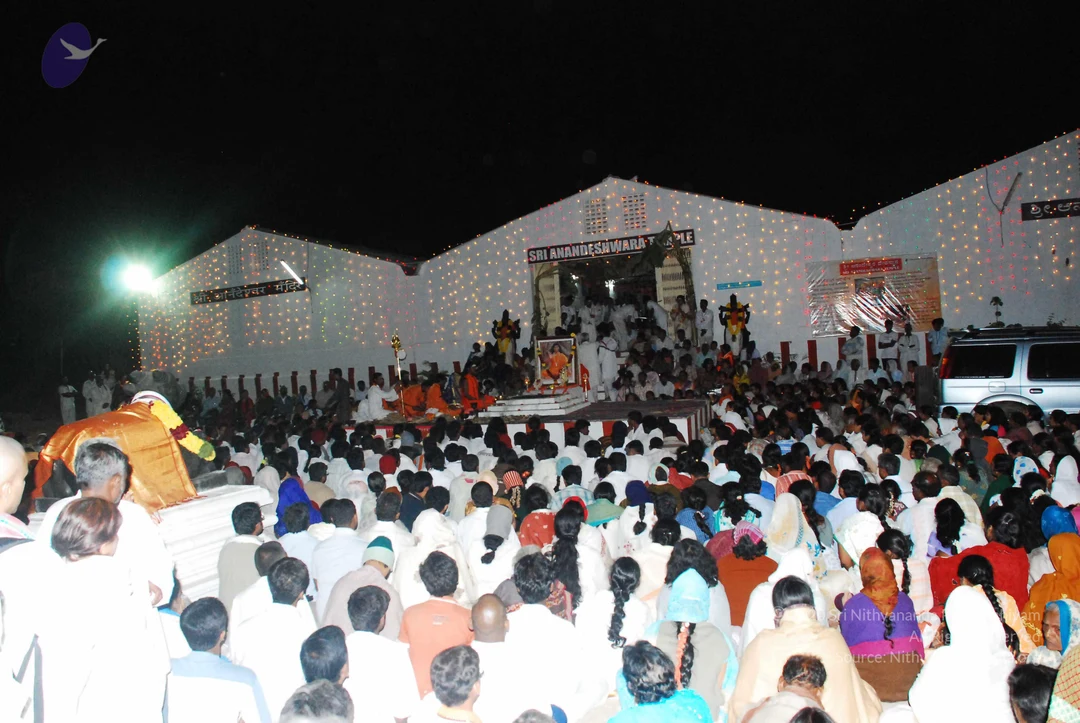
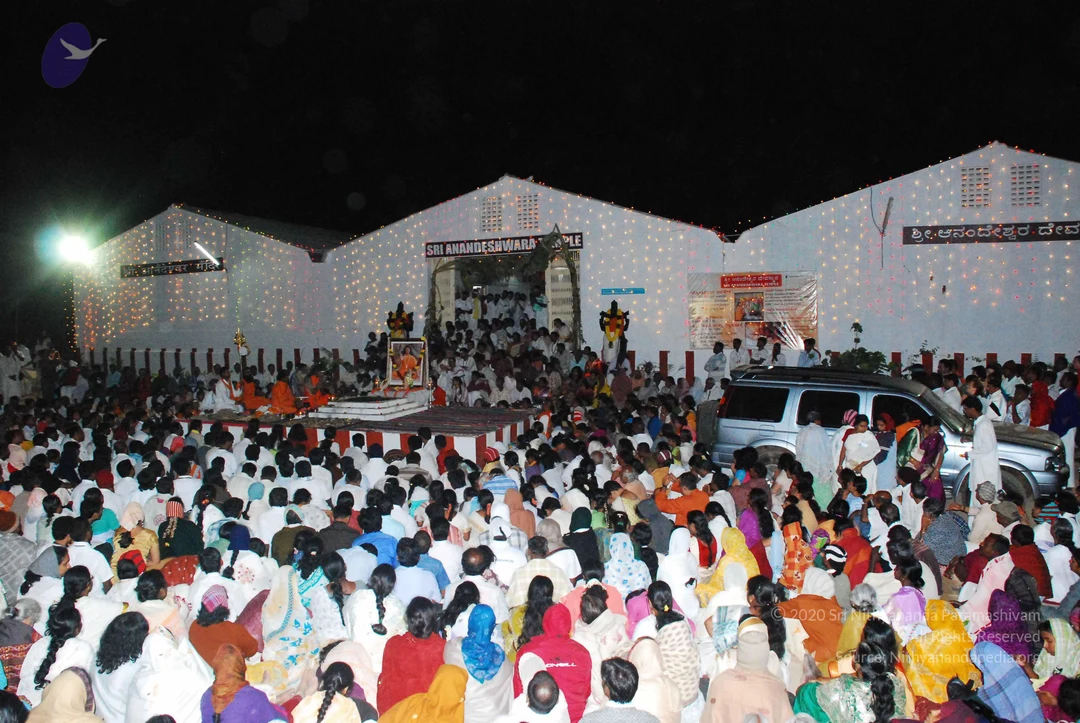
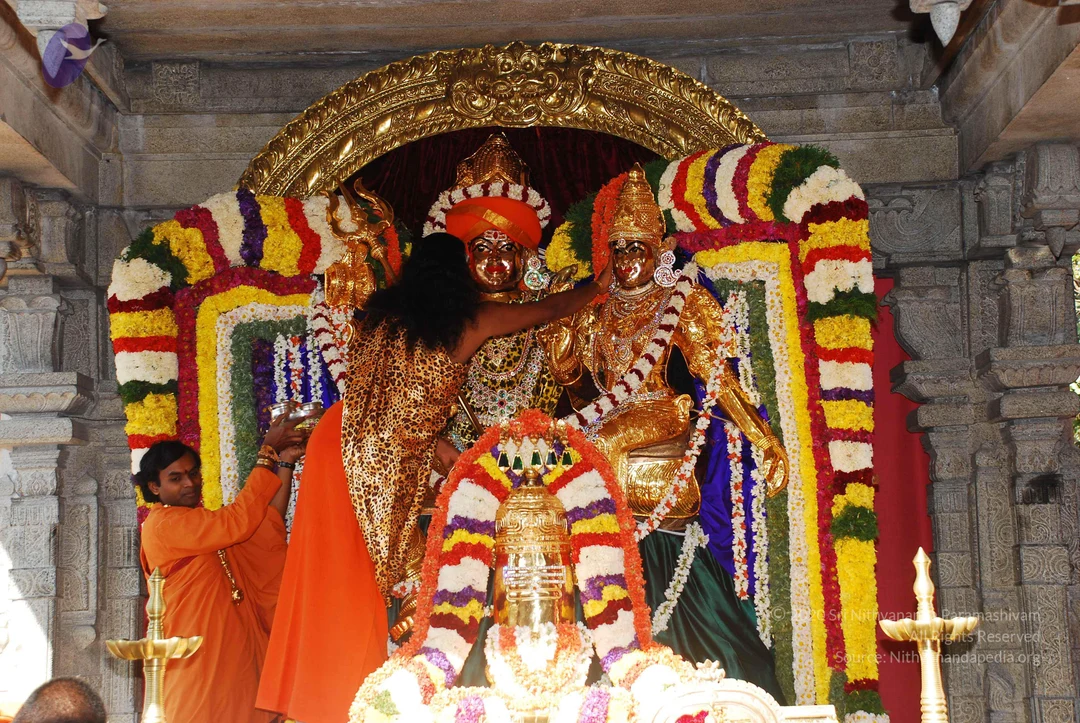
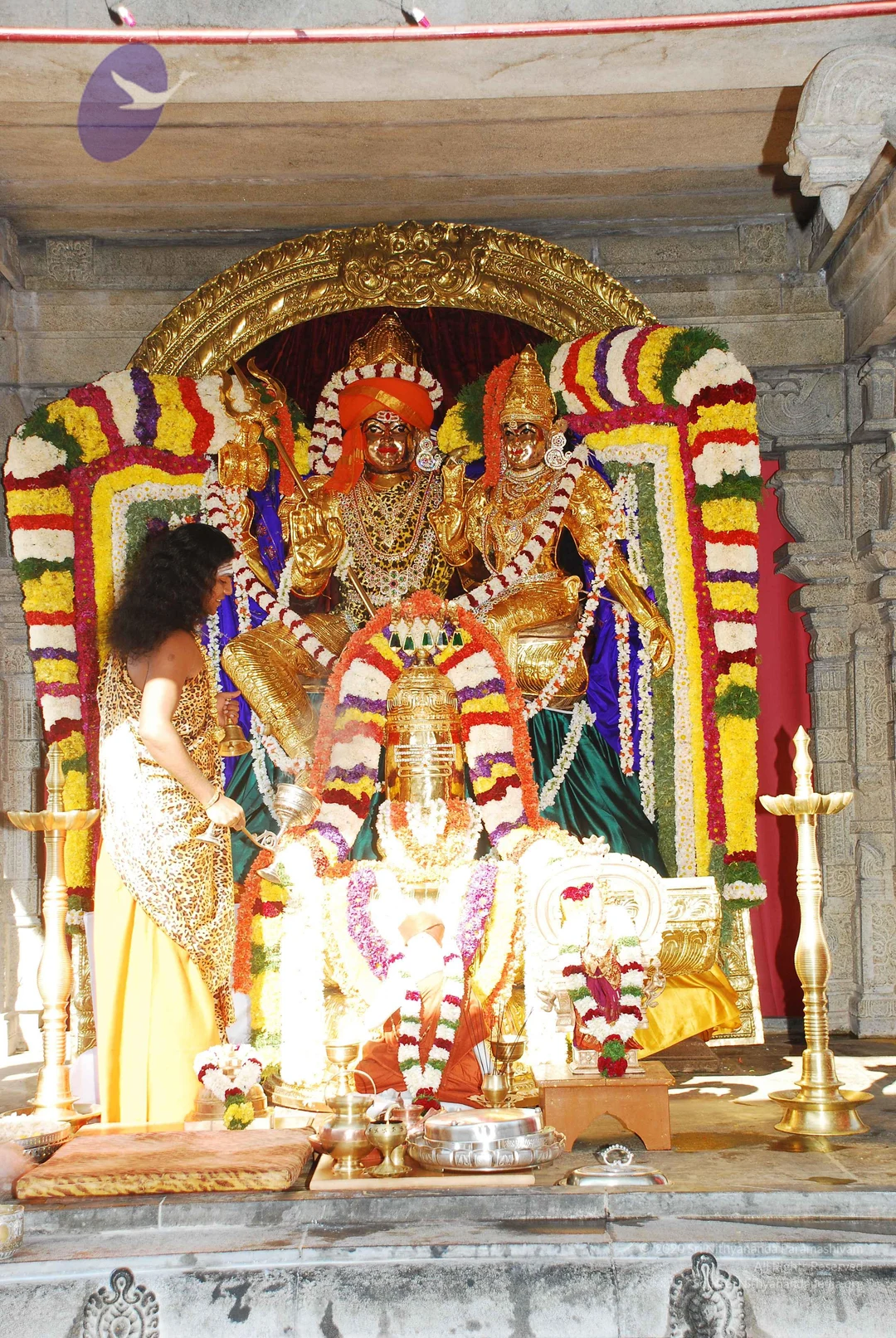
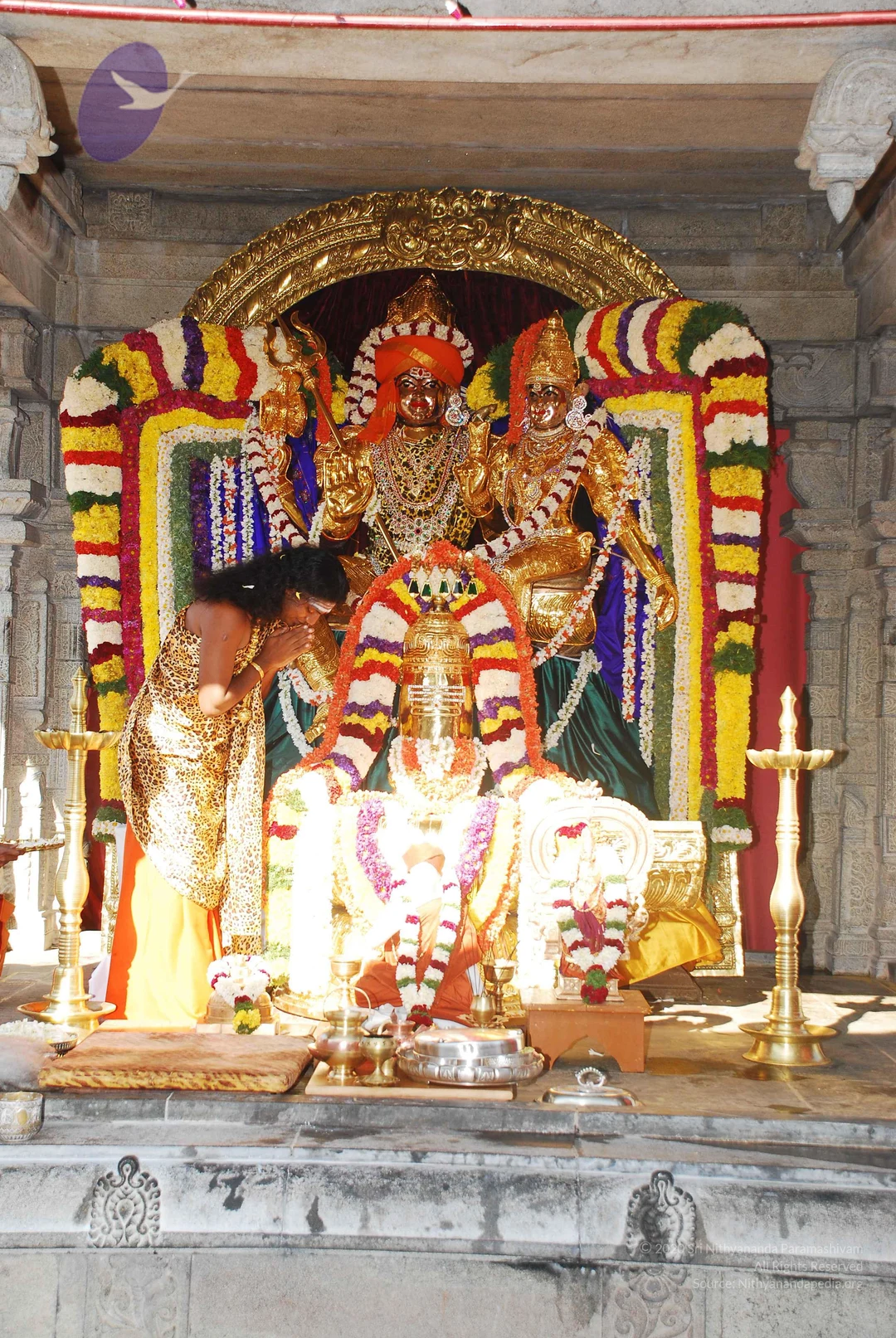
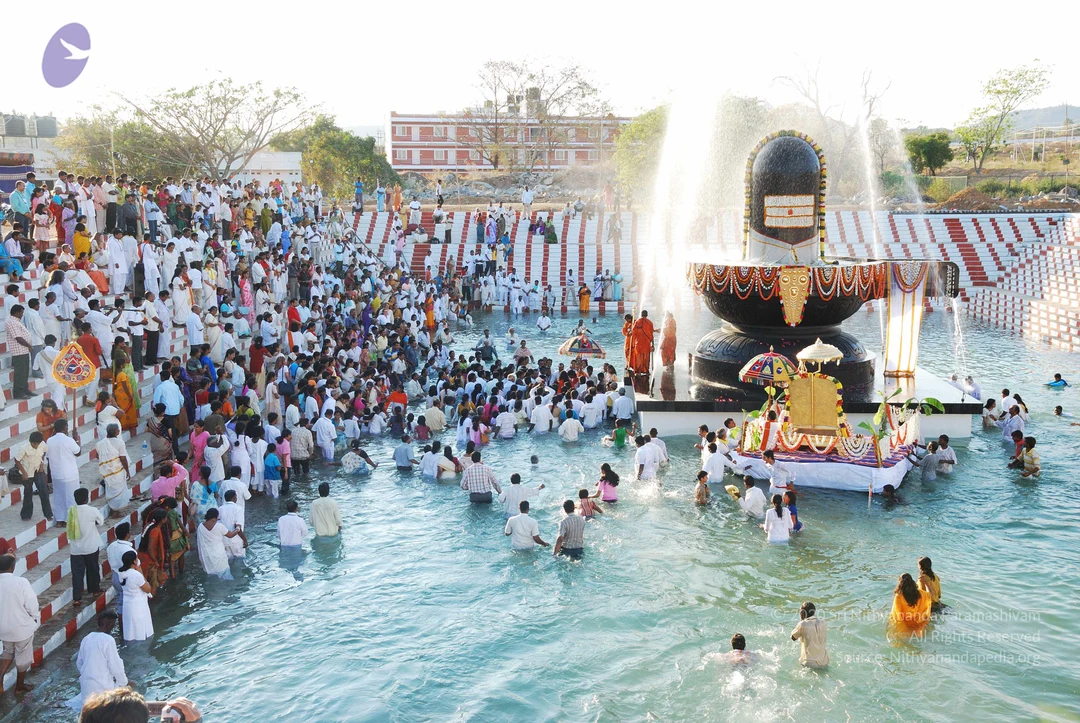
Please settle down. Sit in vajrasana. Keep the hands in… on the hip. Visualize the intense energy flowing from the base, the root of your spine, end of the spine to the head. All over the body it is spreading. Visualize intense light, intense energy and chant the maha mantra: Om Namah Shivaya. Understand. Visualize intense energy flowing all over the body and chant the maha mantra Om Namah Shivaya. Allow whatever happens in your body to happen. Allow whatever happens in your body to happen. I’ll guide you. And I’ll see that the mantra awakens the energy in you. I’ll also guide and help the awakening of your kundalini by instructions. By guided instructions. So whenever I give instructions, whatever happens inside your body, allow it to happen. After this meditation, we will go for Shiva puja. We will have abhishekam in the temple, and homa, Shiva homa...homa. Then you can all come and have individual darshan. Each one of you can come and have darshan.
[51:57]
Please understand. You have to become Shiva to worship Shiva. Unless you become Shiva, you can't do puja to Shiva. So, now first become Shiva. Then you can…only when you become Shiva, you can even understand what space Shiva is. And you will have respect for Him and you will be able to worship Him. So worship happens only when you become. Not otherwise. Otherwise you will be imagining Shiva. Now let us experience Shiva. Close your eyes. If you have kerchief or dupatta, tie your eyes.
[53:07]
[Instructions in kannada given by ….]
[53:40]
Swamiji in Kannada: Om Namah Shivaya Maha mantra chant maadbeku [instructions in kannada continues]
[53:52]
(Swamiji gives the instructions for meditation in Tamil) தியானத்தின் செய்முறையை மட்டும் தமிழ சொல்லிறேன். வஹ்ராசனத்தில் அமர்ந்து இருப்பில் கைகளை வைத்துக்கொண்டு மூலாதத்திலிருந்து சஹஸ்ராரம் வரை, முதுகெழும்பின் நுனியிலிருநது தலை உச்சிவரை ஆழமான சக்தி ஒளி பொங்குவதாக பாவித்து மஹா மந்திரமான "ஒம் நமச்சிவாய" எனும் மந்திரத்தை வேகமாக உச்சரியுங்கள். நானும் உங்கள கைடு (Guide) பண்ணி ஒரு நிமிஷம் இன்ஸ்டக்ஸன் (instruction) கொடுத்து முடிச்சிருறேன், அதுக்கப்பறம் செயலாம். நான் உங்கள கைடு (Guide) பண்ணி உங்களுடைய குண்டலினி சக்தியை உயிர்ப்பிப்பதற்கான செயல்களை செய்கின்றோம். இந்த சாநித்தியத்தினால் குருவின் சாநித்தியத்தினால் உங்கள் குண்டலினி சக்தி விழிப்படையும்). (Vajirasanathil amarnthu, iduppil kaikali vaithu kondu, mulatharathil irunthu sahastratharam varai muthuku elumpin nuniyil irunthu thalin uchi varai alzamana sakti oli ponguvataha pavithu maha mantamana om namah shivaya enum mantathai vegamaka uchariyungal. Naanum ungalai guide panni oru nimisham instruction kuduthu mudichuran. Appuram cheiyalam. Nan ungalai guide panni ungaludaya kundalini sakiti iy uyirpitpatahkana cheyalkali cheykindrom. Intha Sannithyathinal guruvin sanithiyathinal ungal kundalini sakthi vizhipadayum)
[54:38]
Close your eyes. Sit straight. Sit in vajrasana. Start chanting the maha mantra. Om Namah Shivaya, Om Namah Shivaya,Om Namah Shivaya, Om Namah Shivaya……. Music.
[56:45]
Enriching Material
English
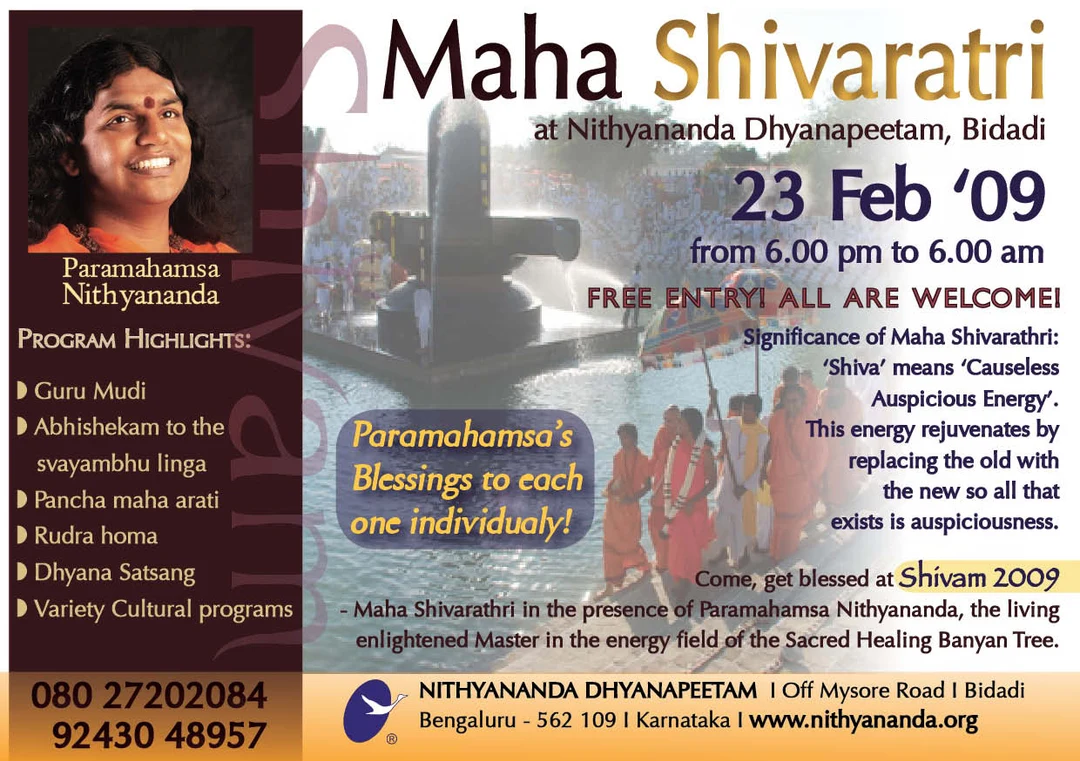
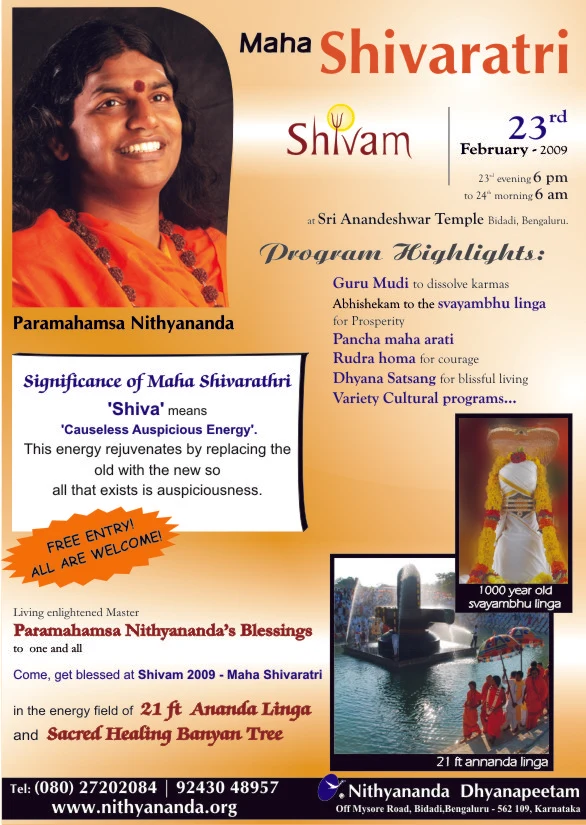
Photos Of The Day:
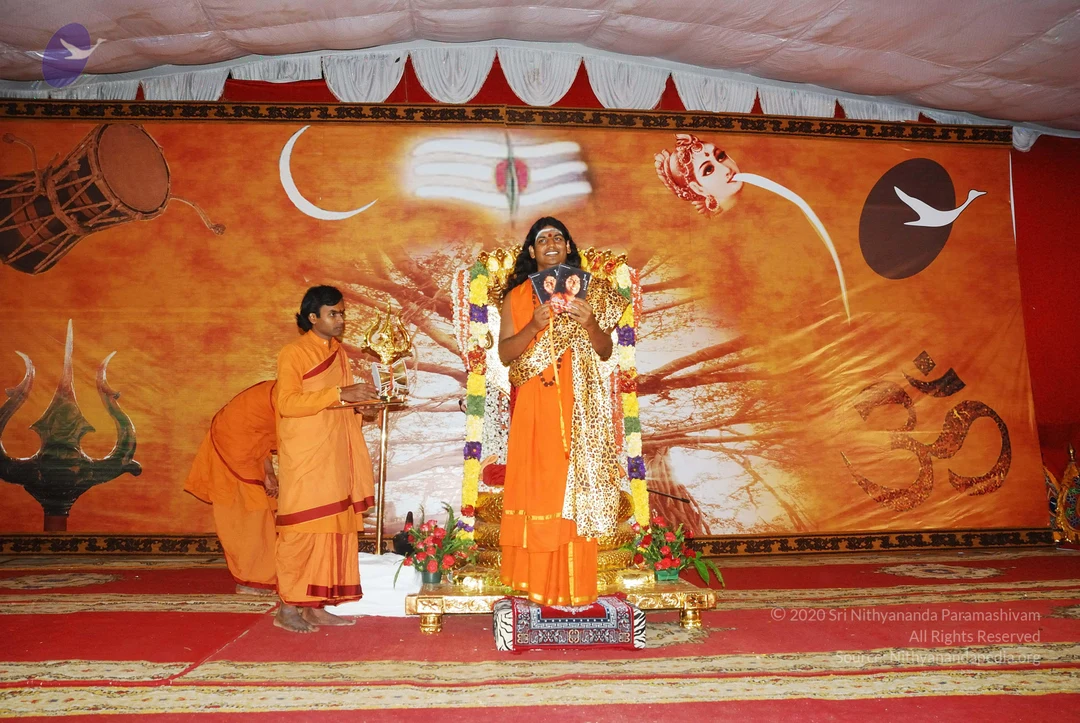
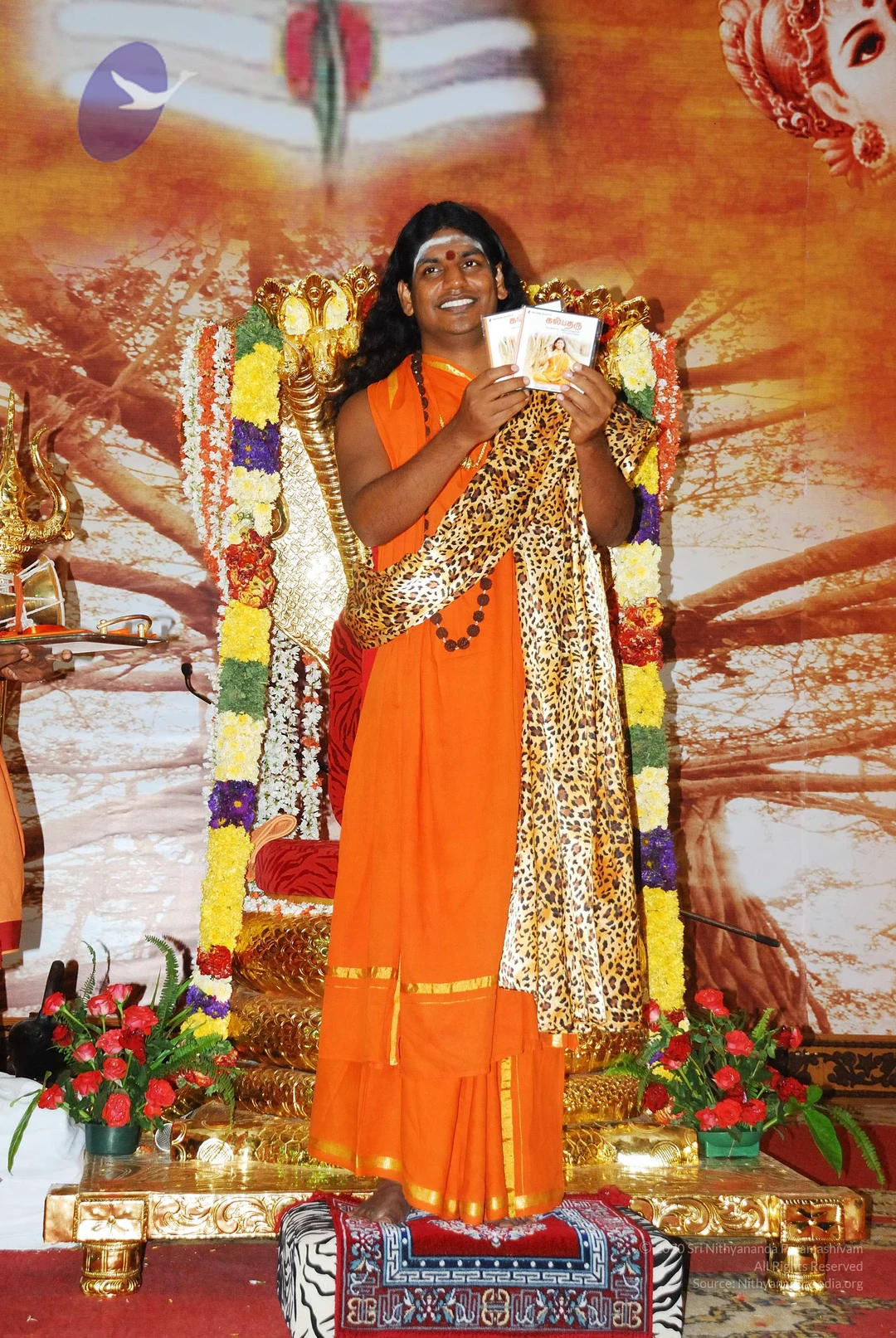
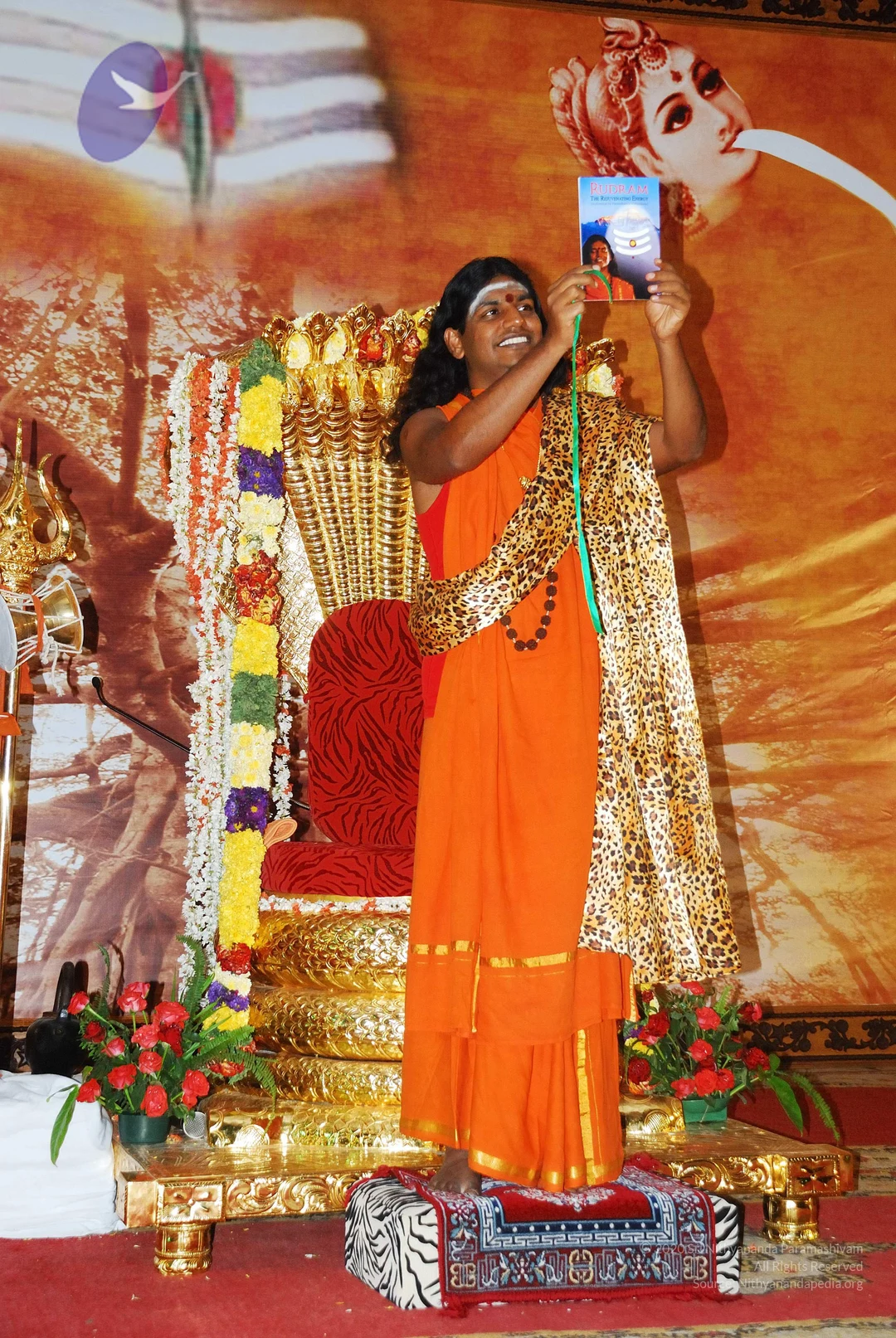
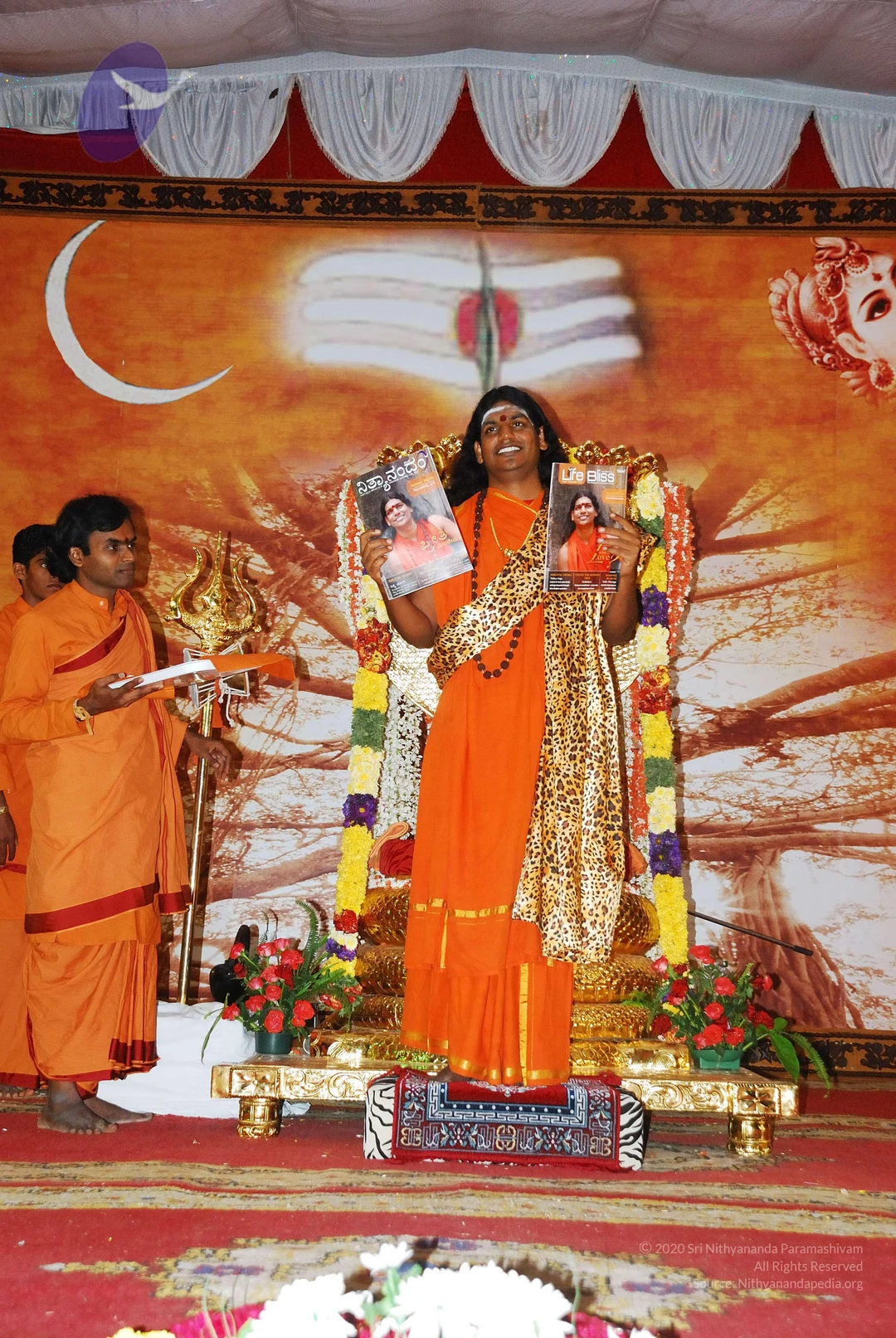
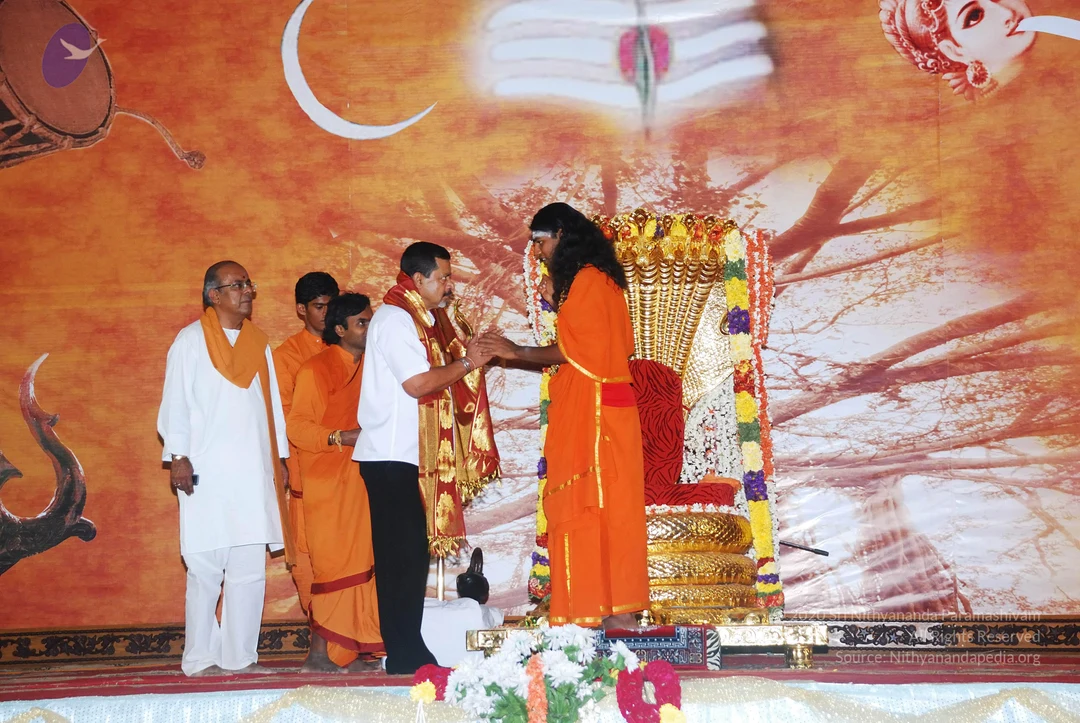
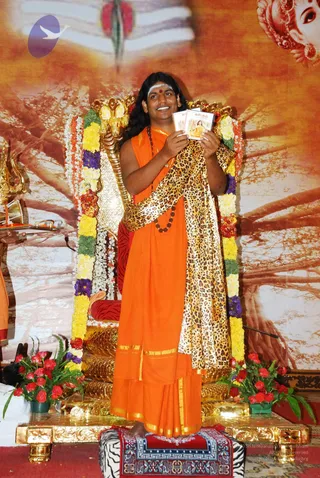
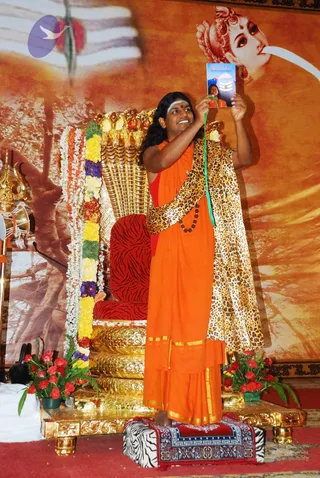
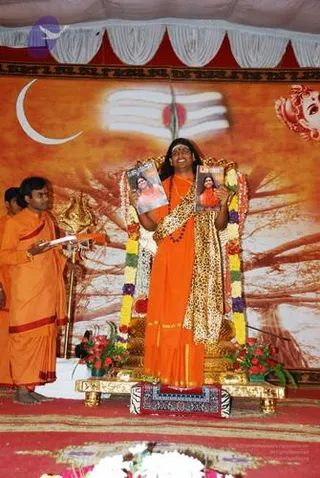
1-BOOK-RELEASE
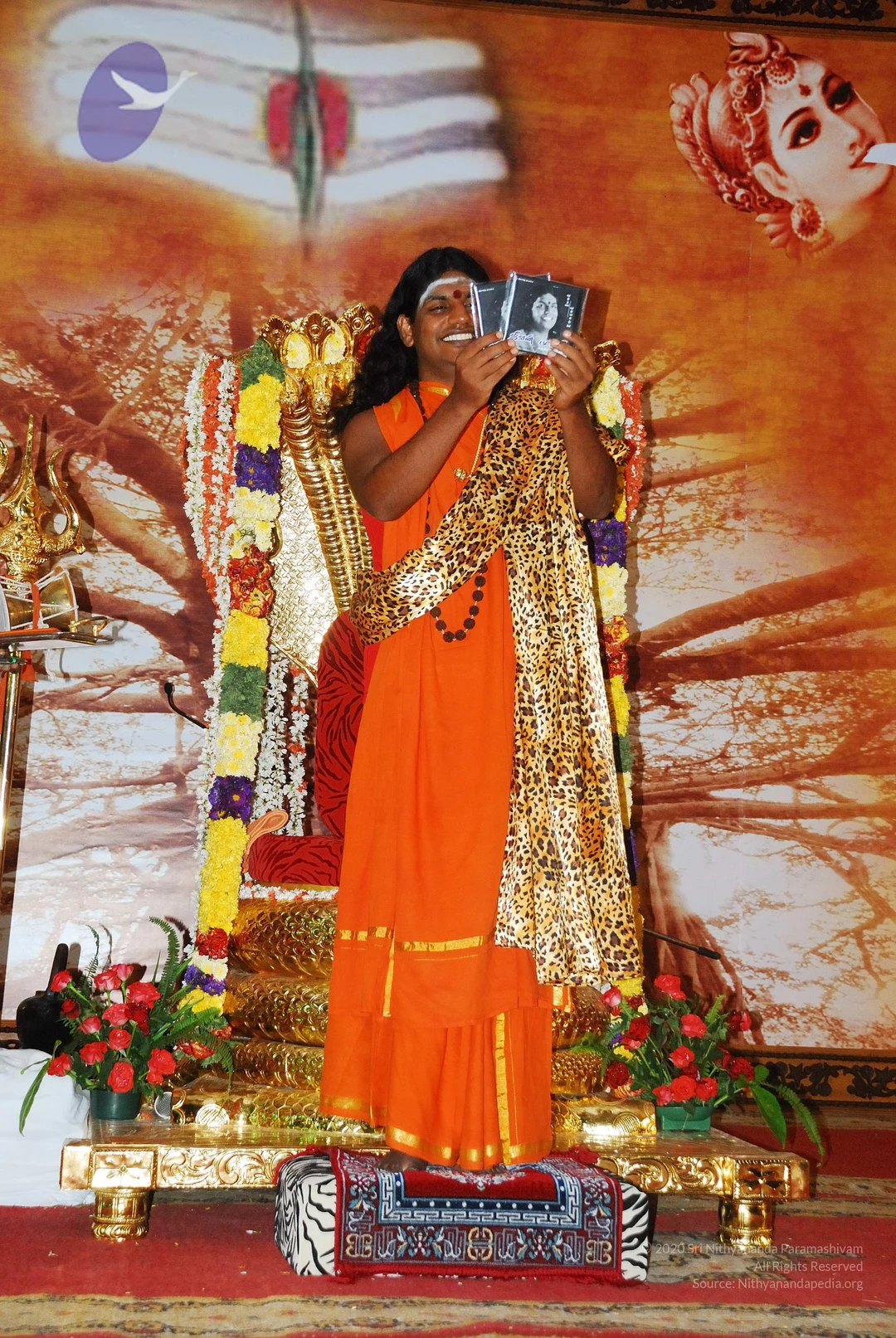
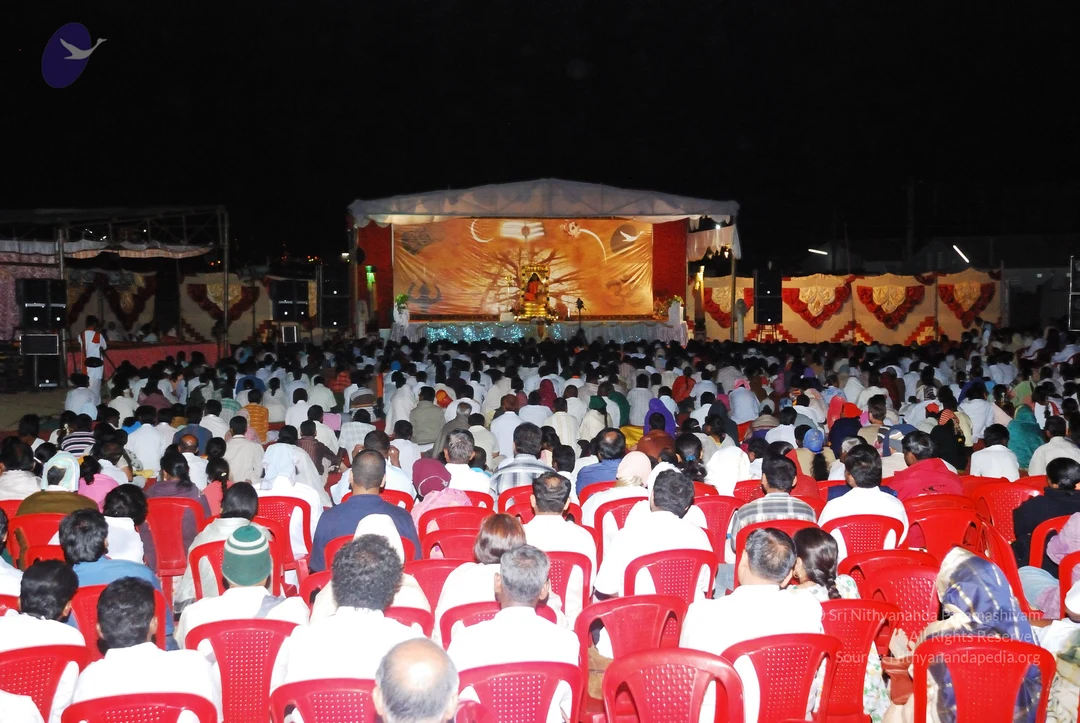
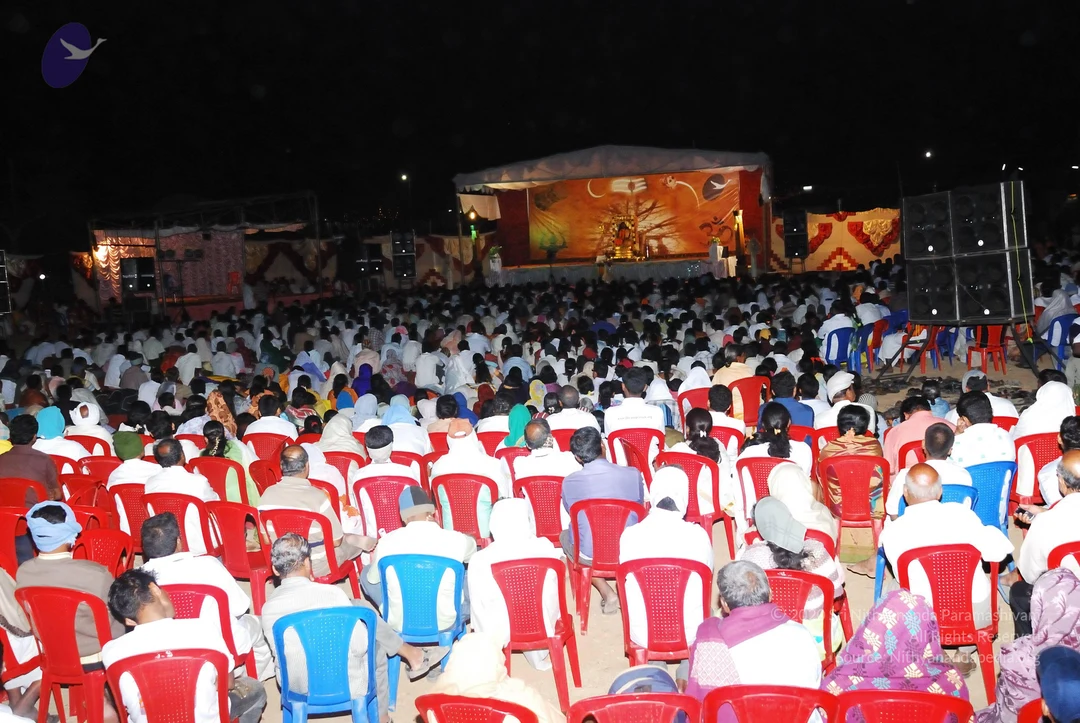
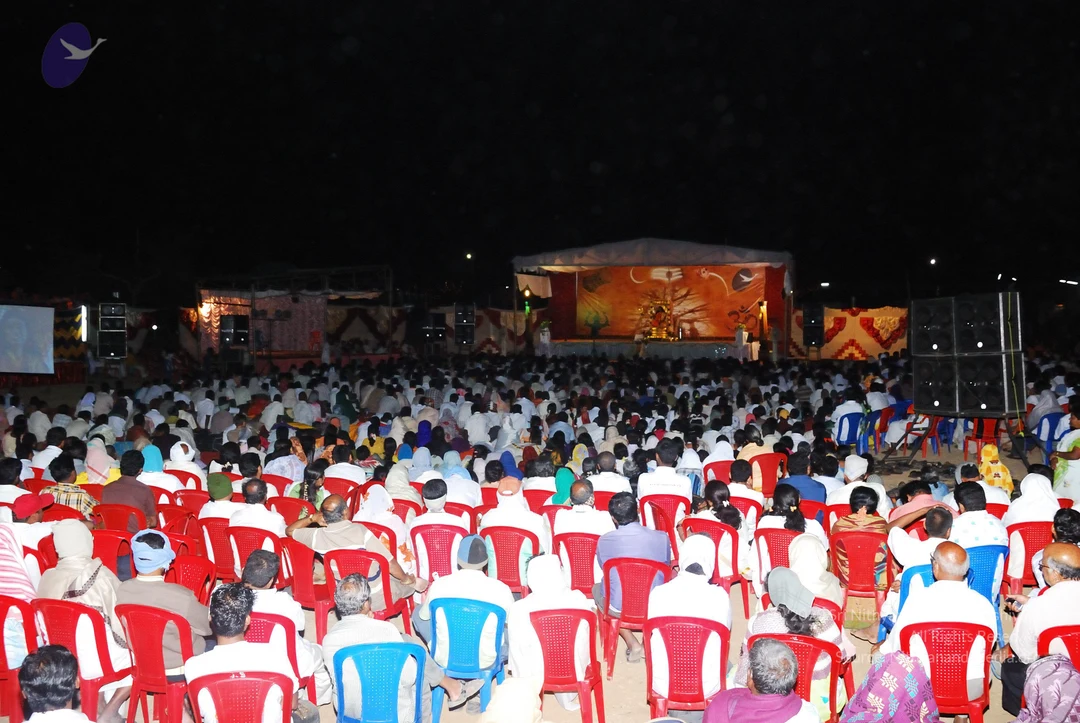
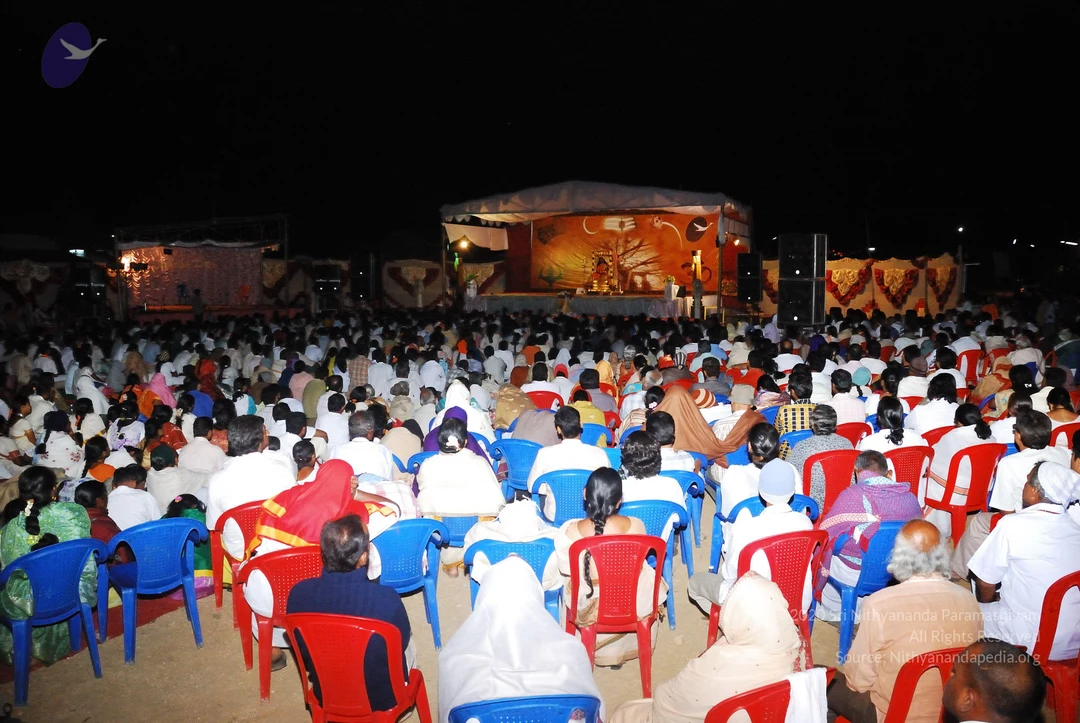
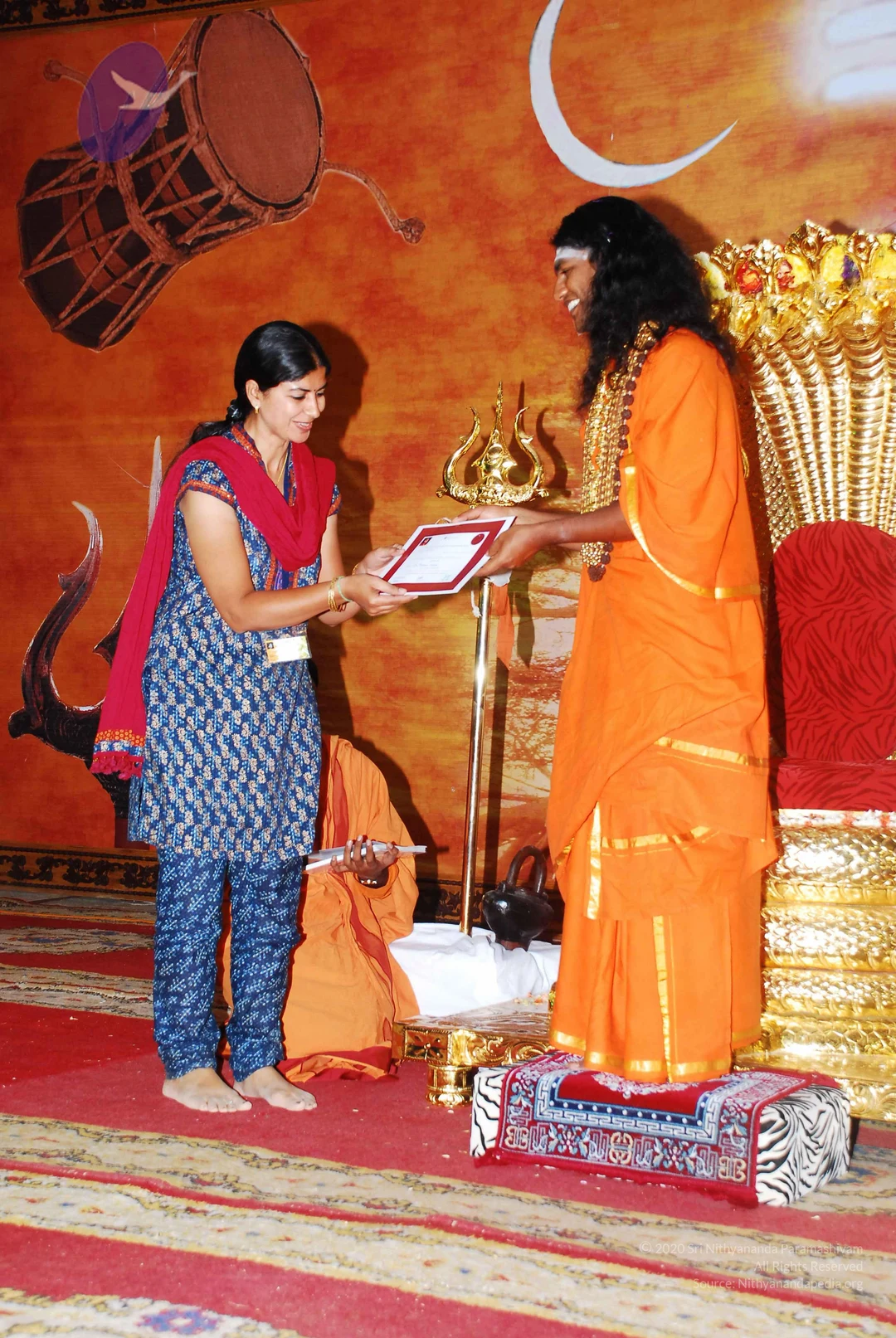
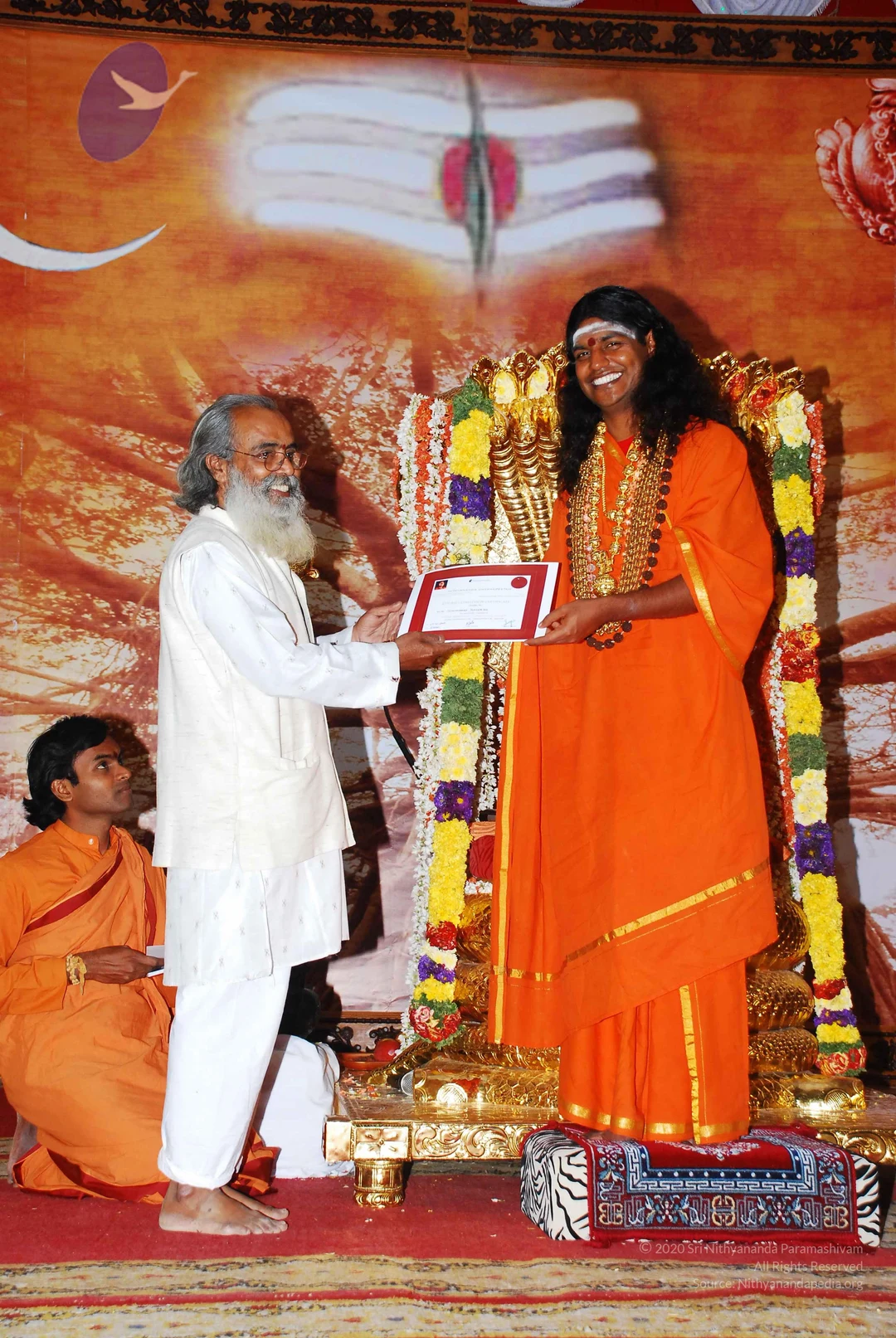
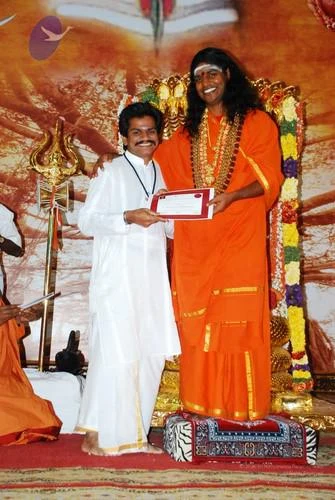
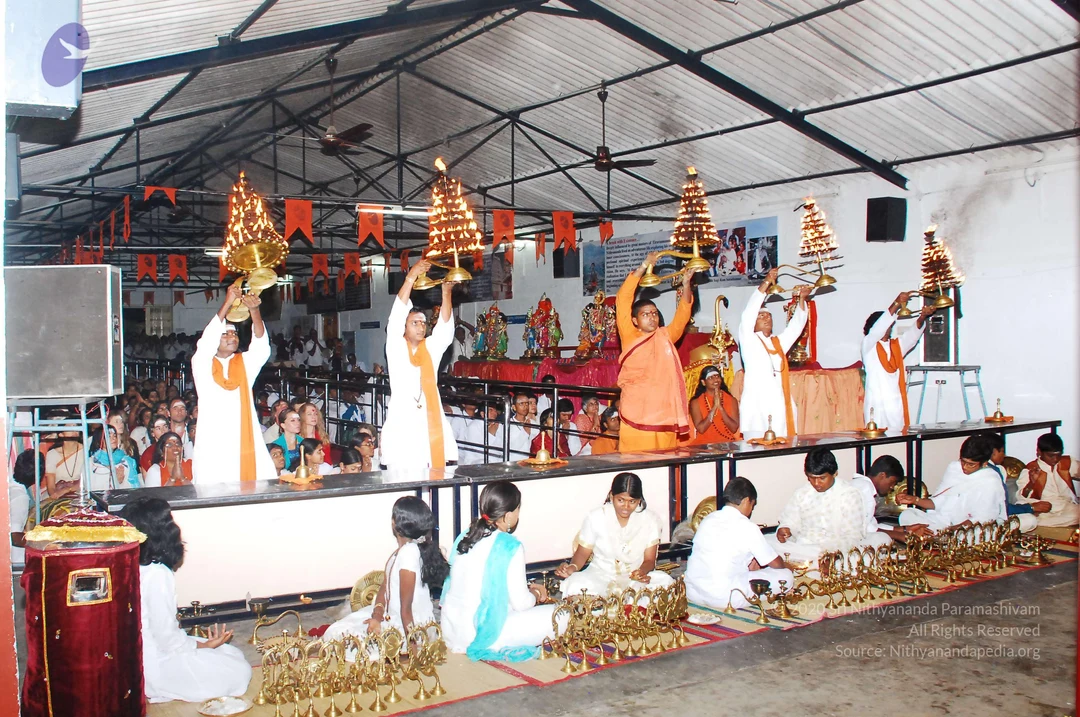
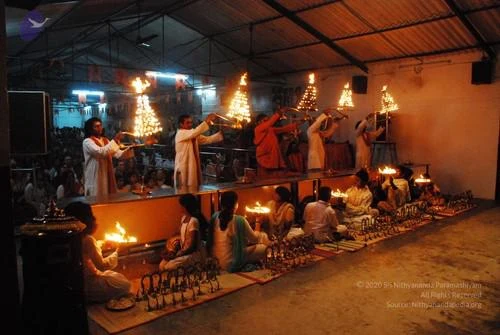
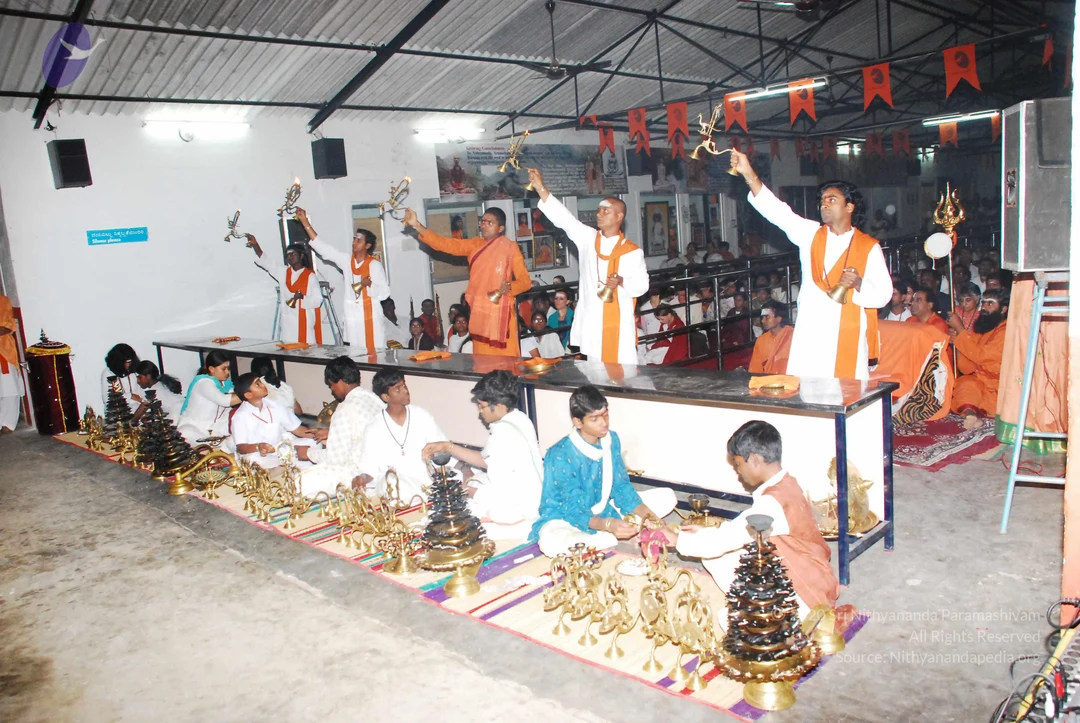
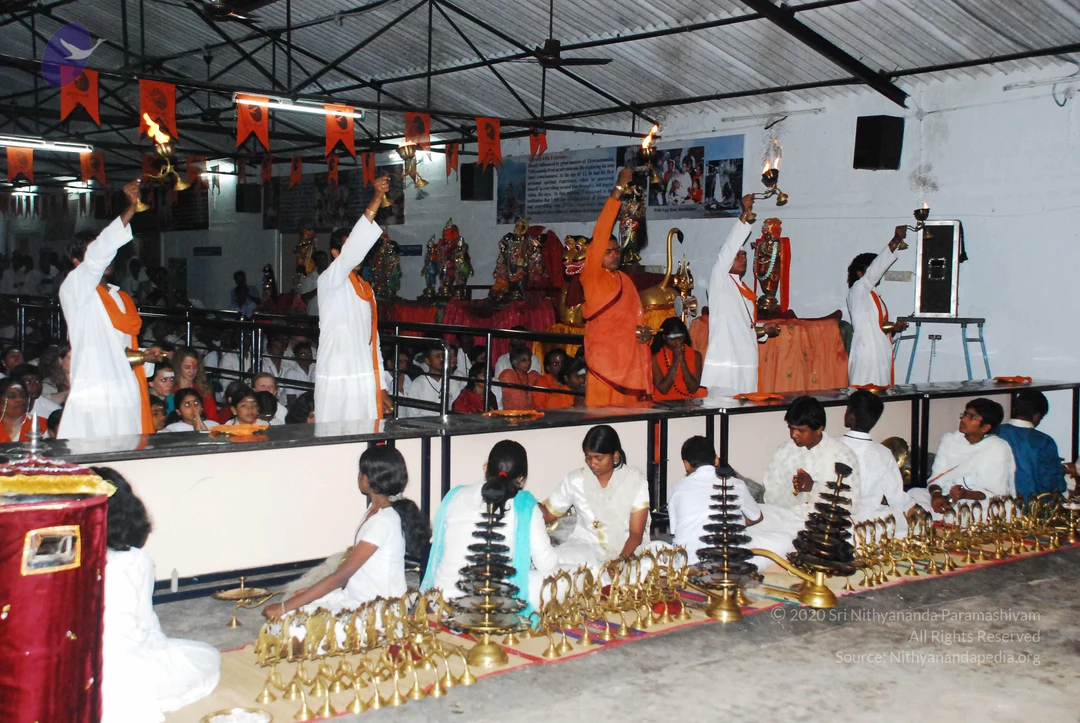
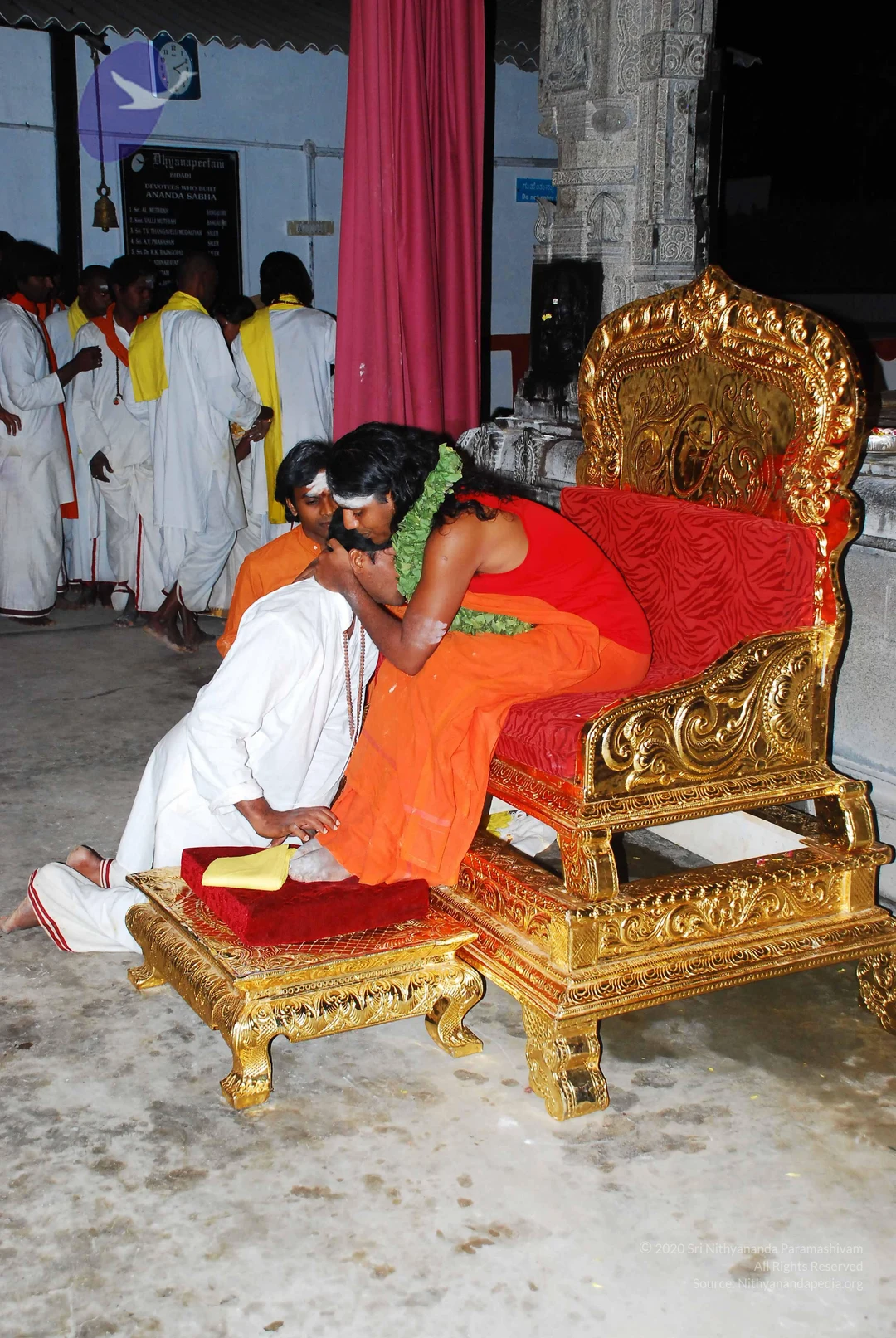
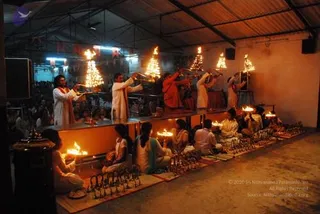
10-NIGHT-ARATI-AND-BRAHMACHARIYAM-INITIATION
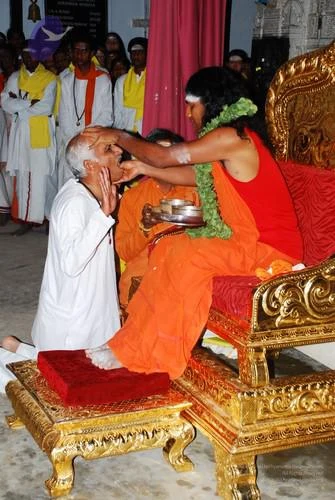
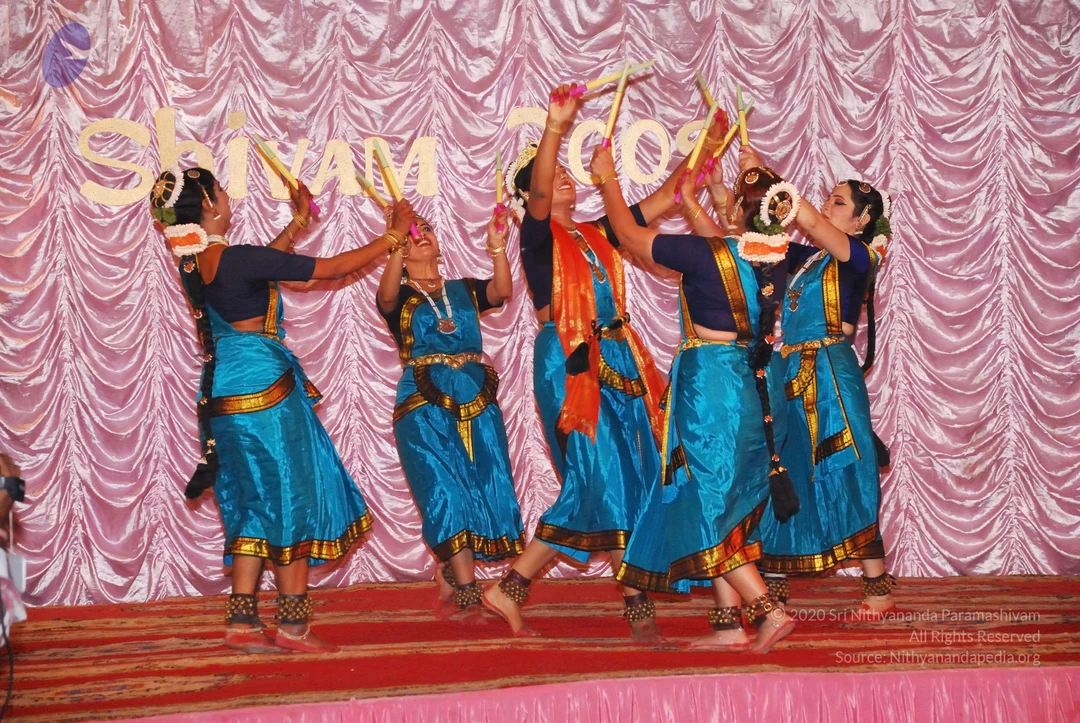
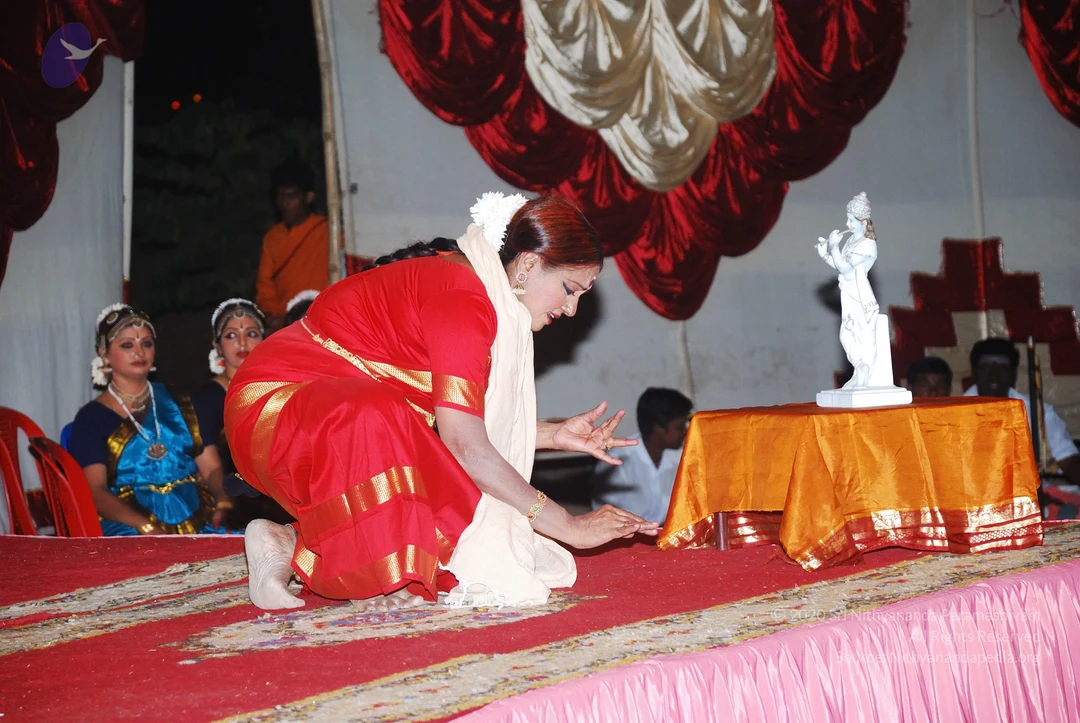
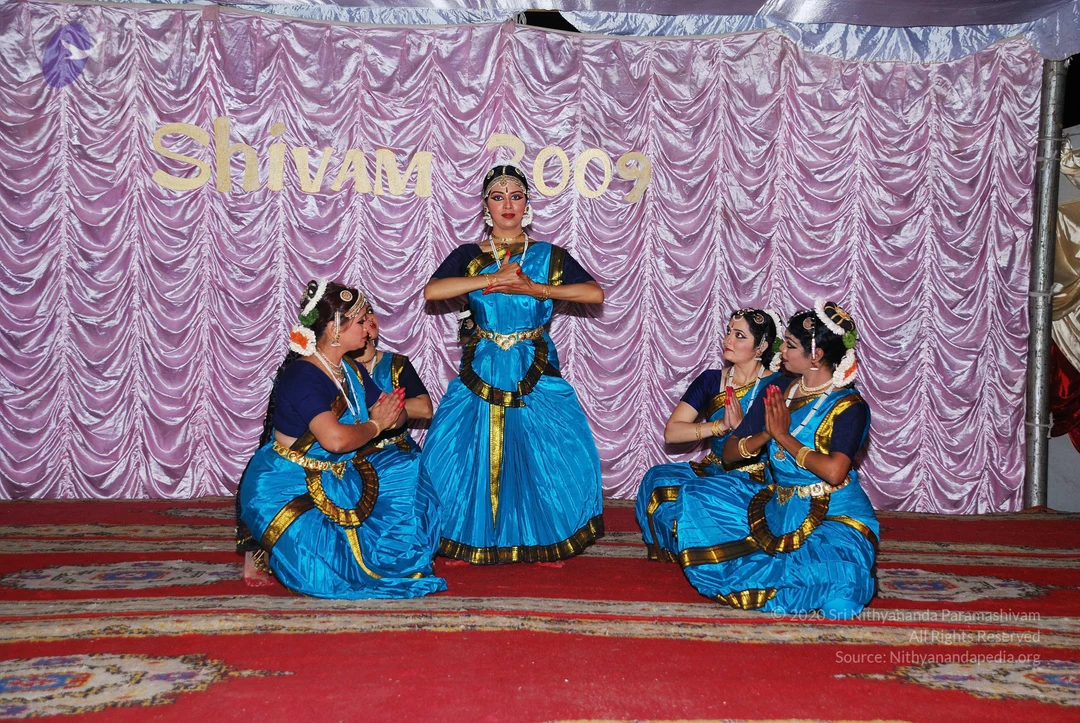
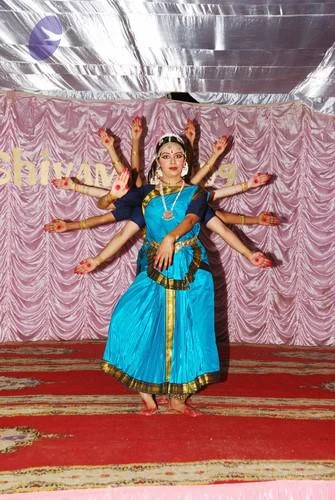
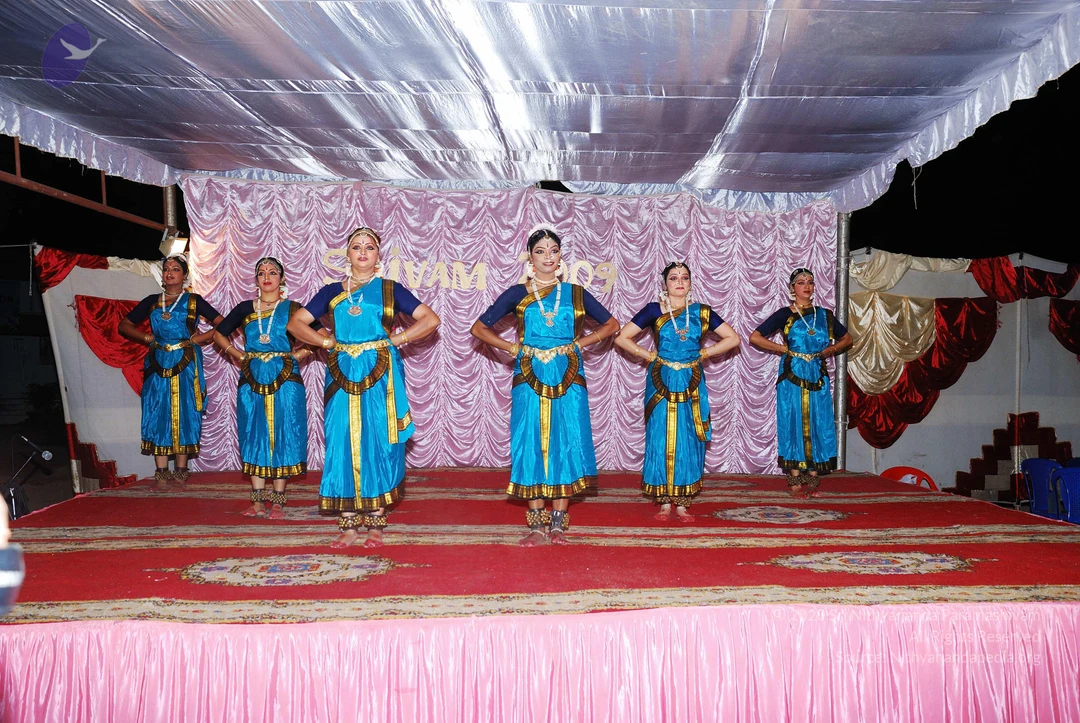
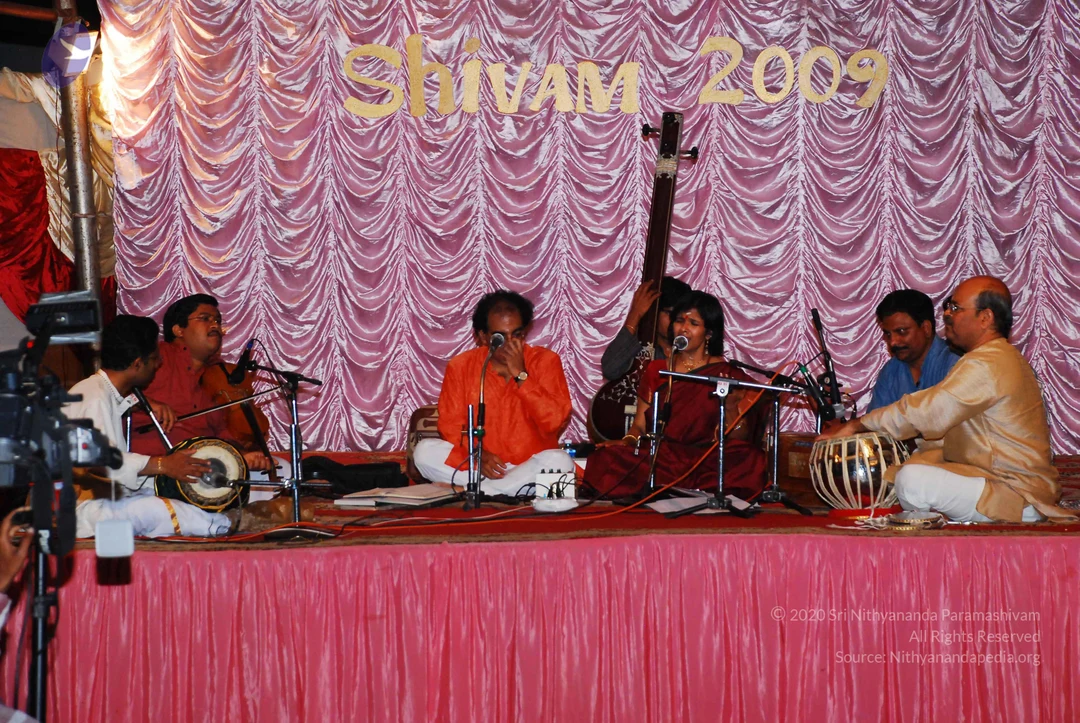
2-CULTURALS
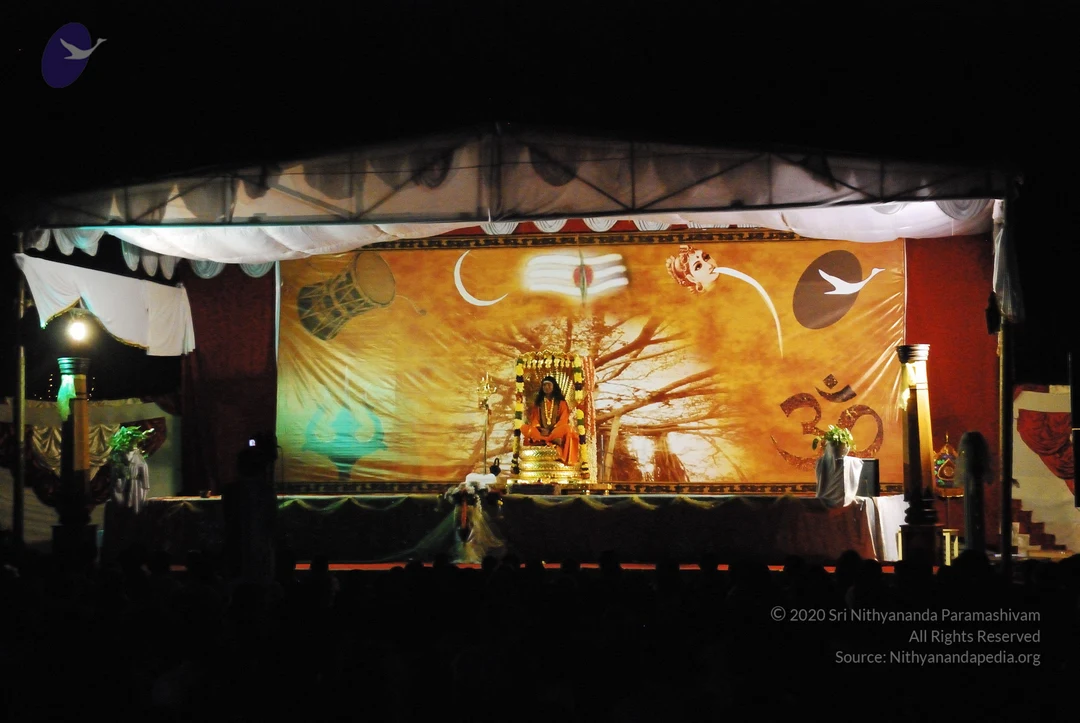
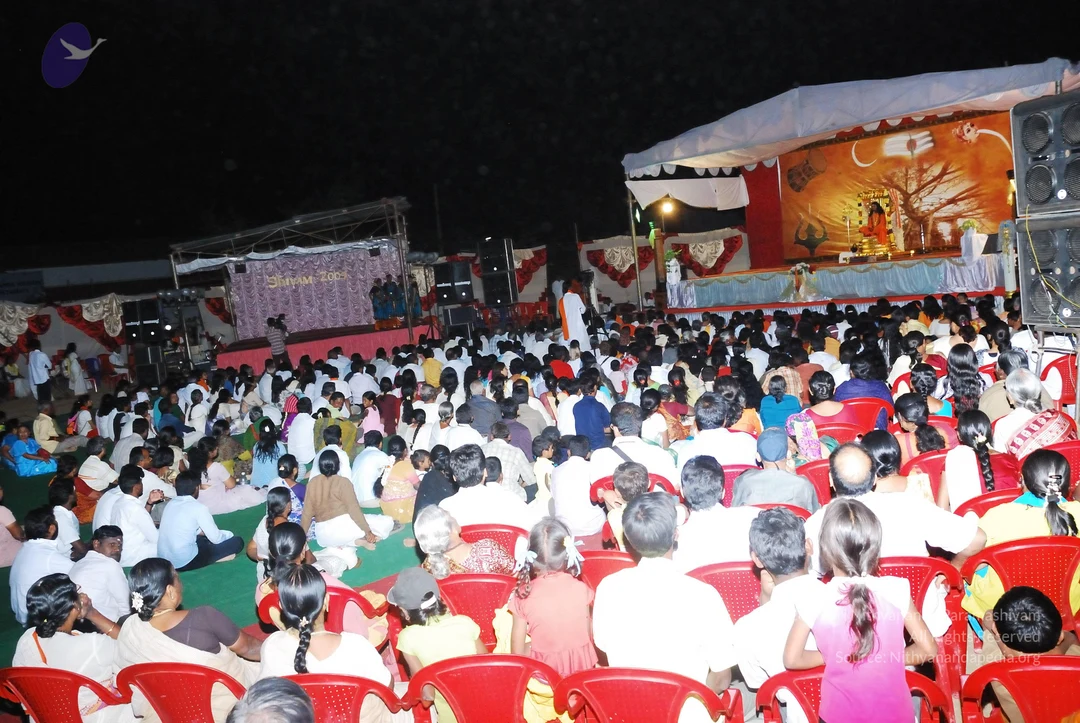
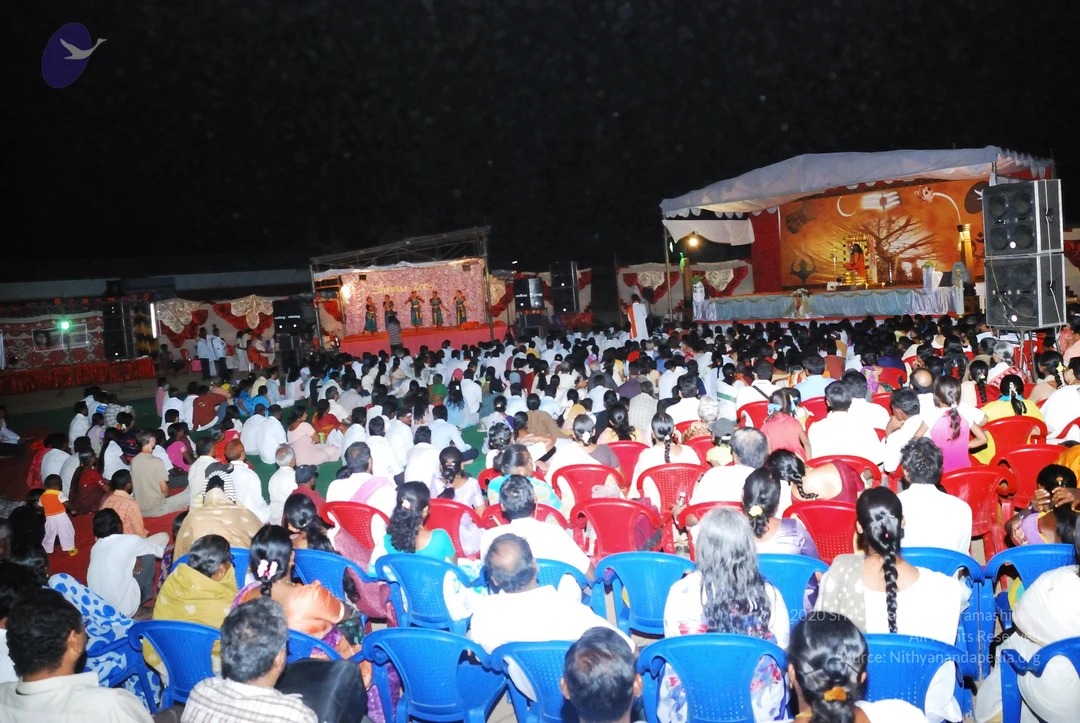
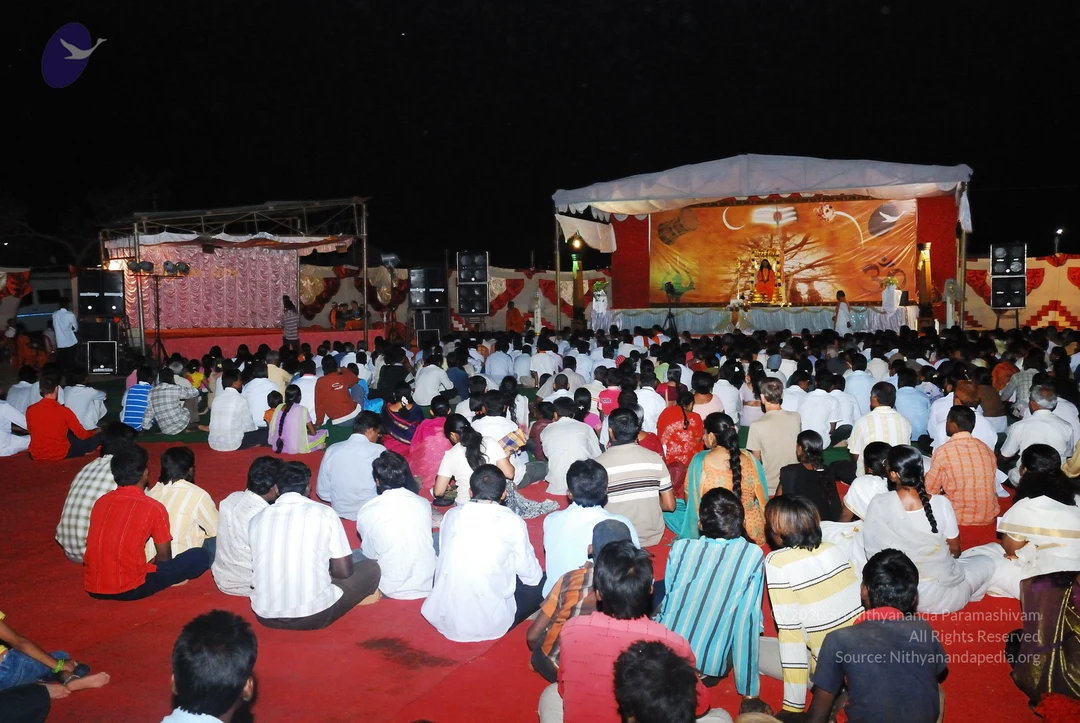
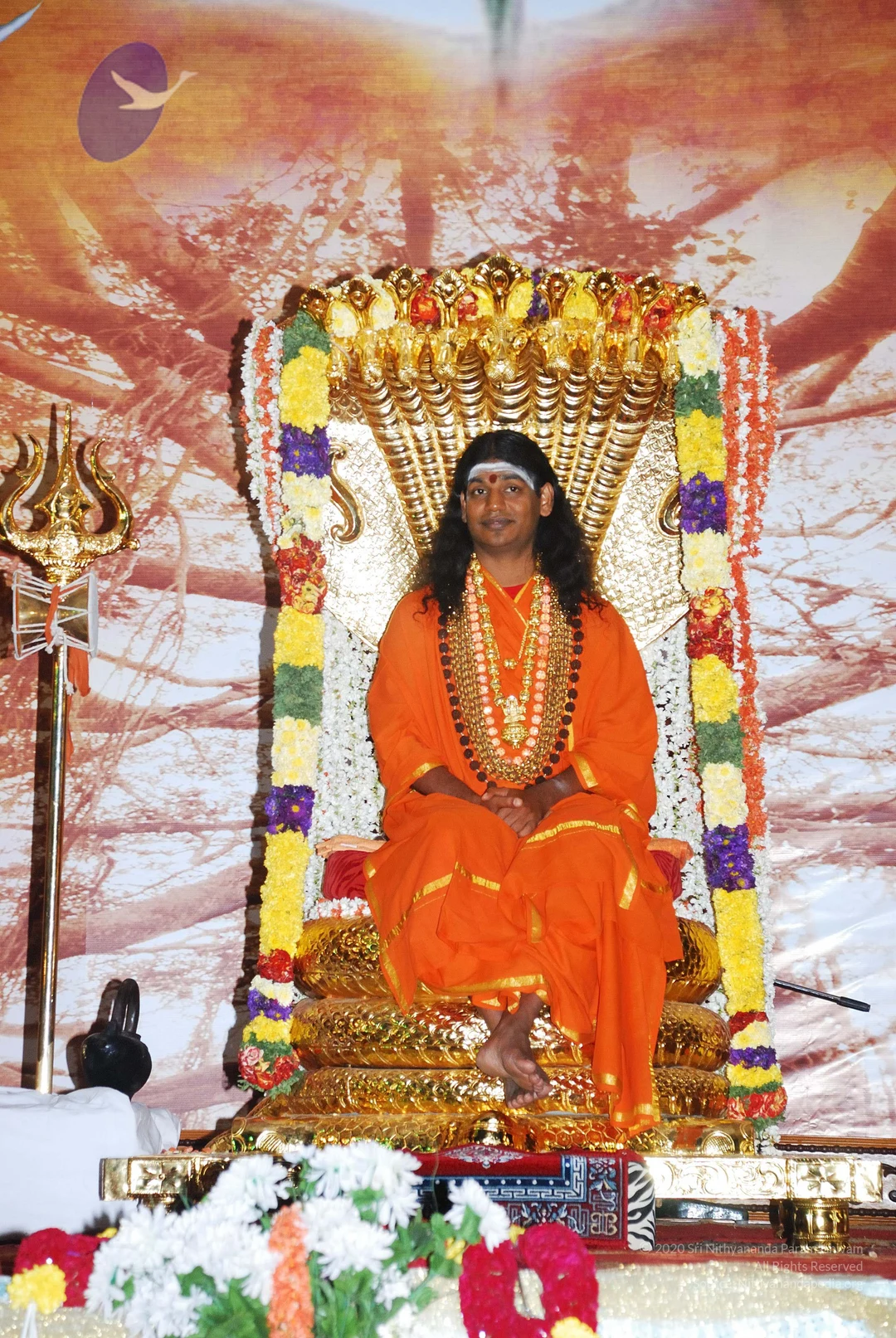
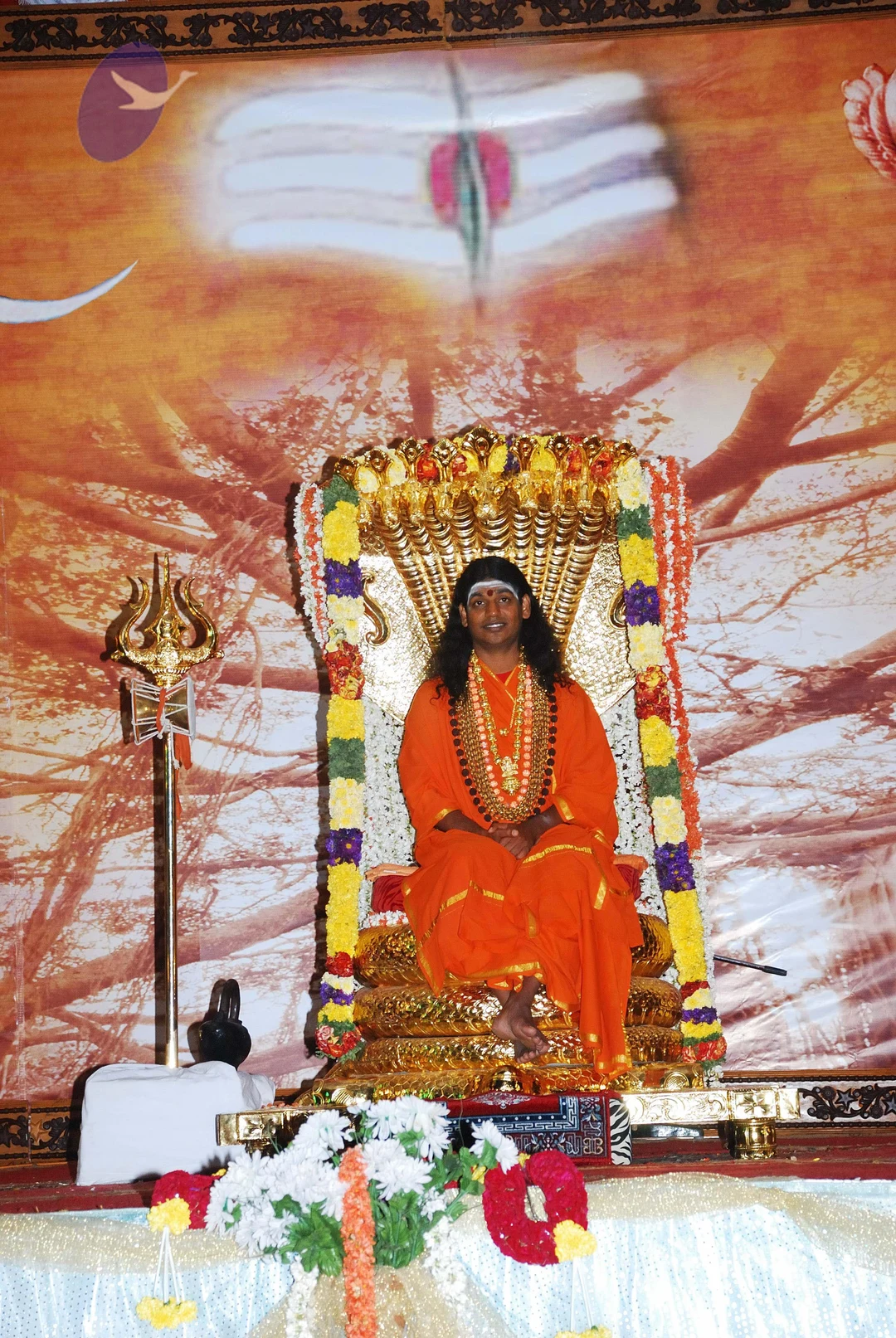
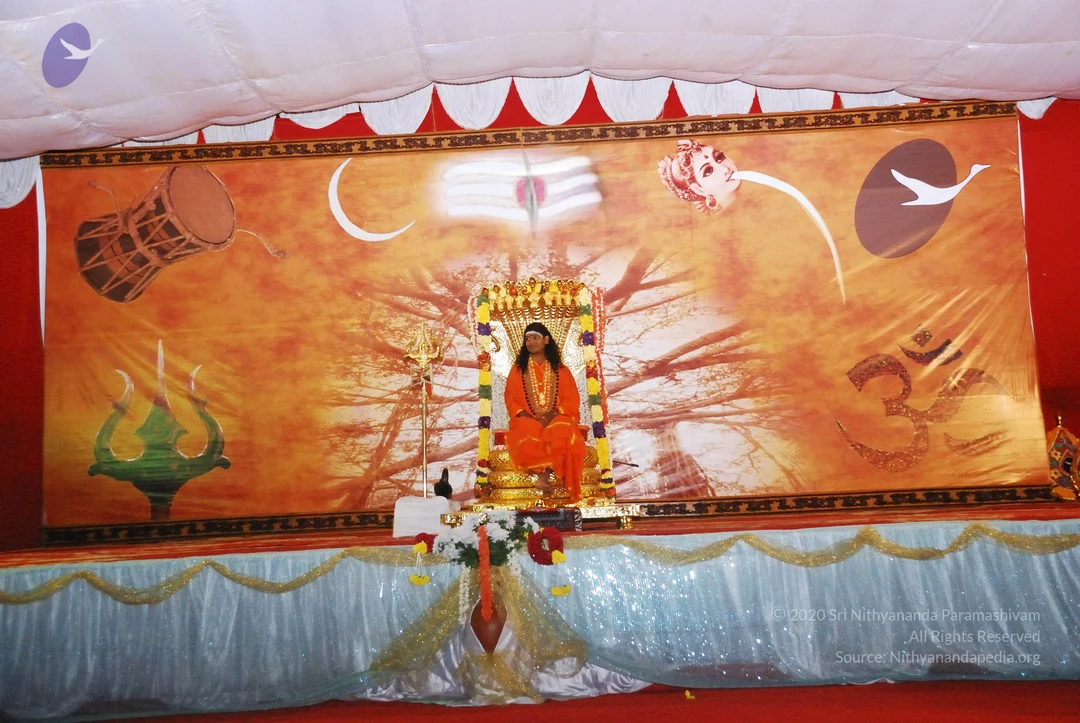
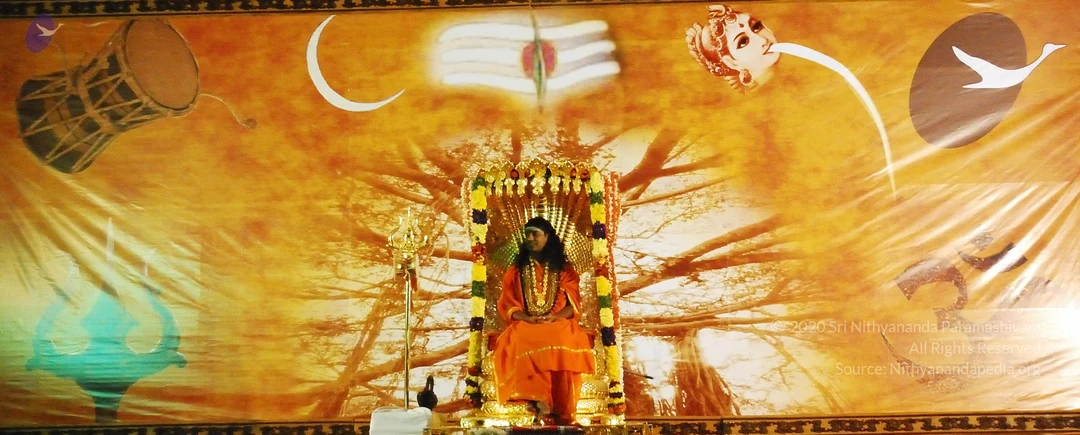
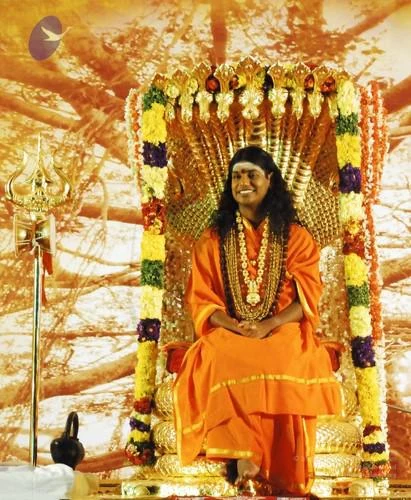
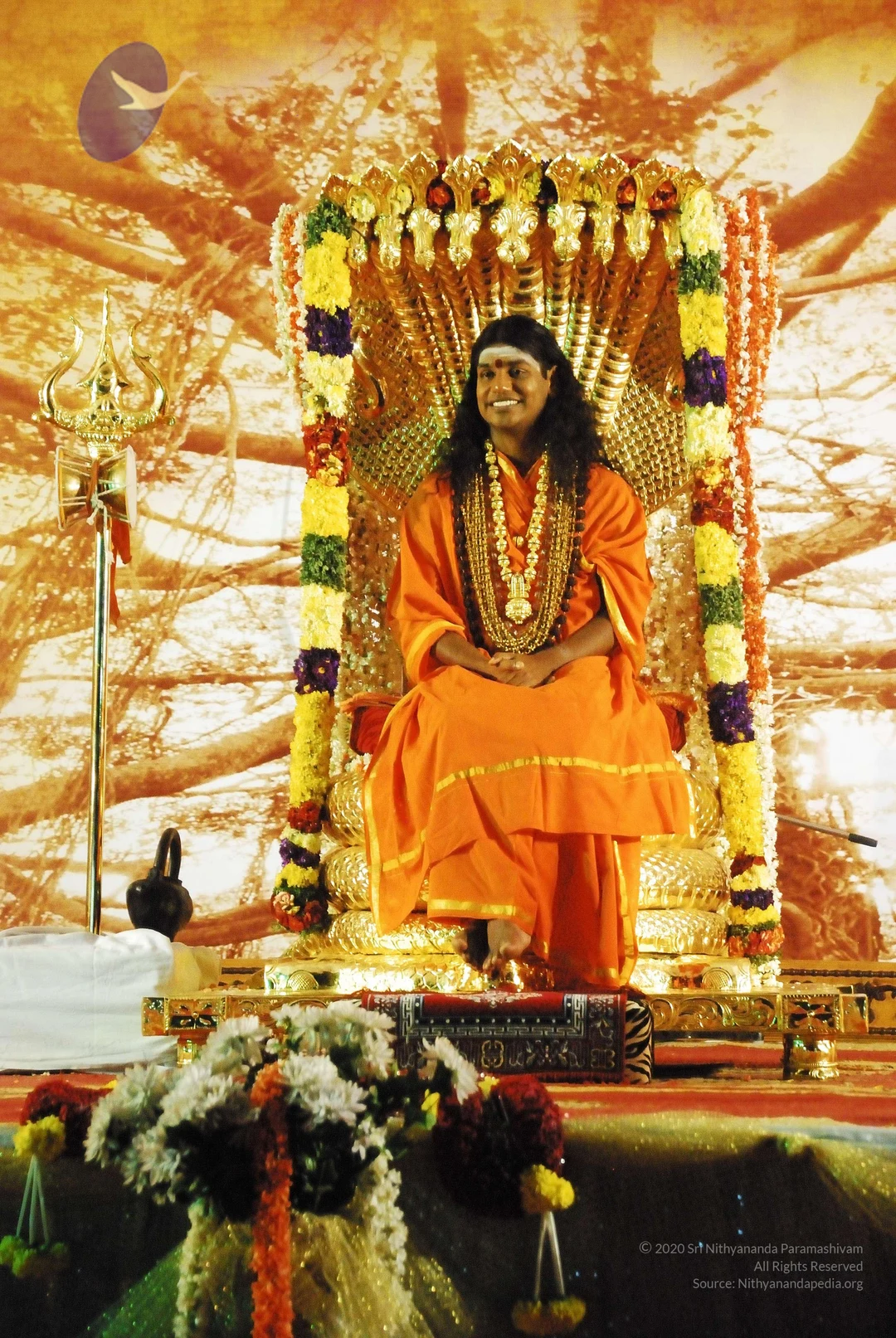
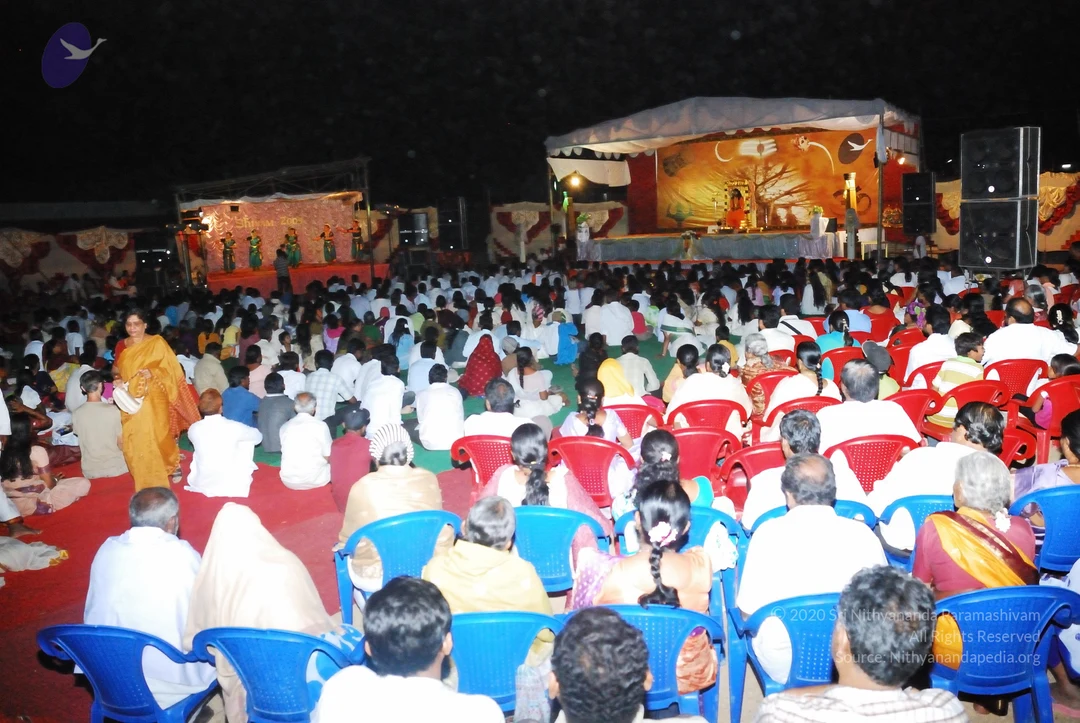
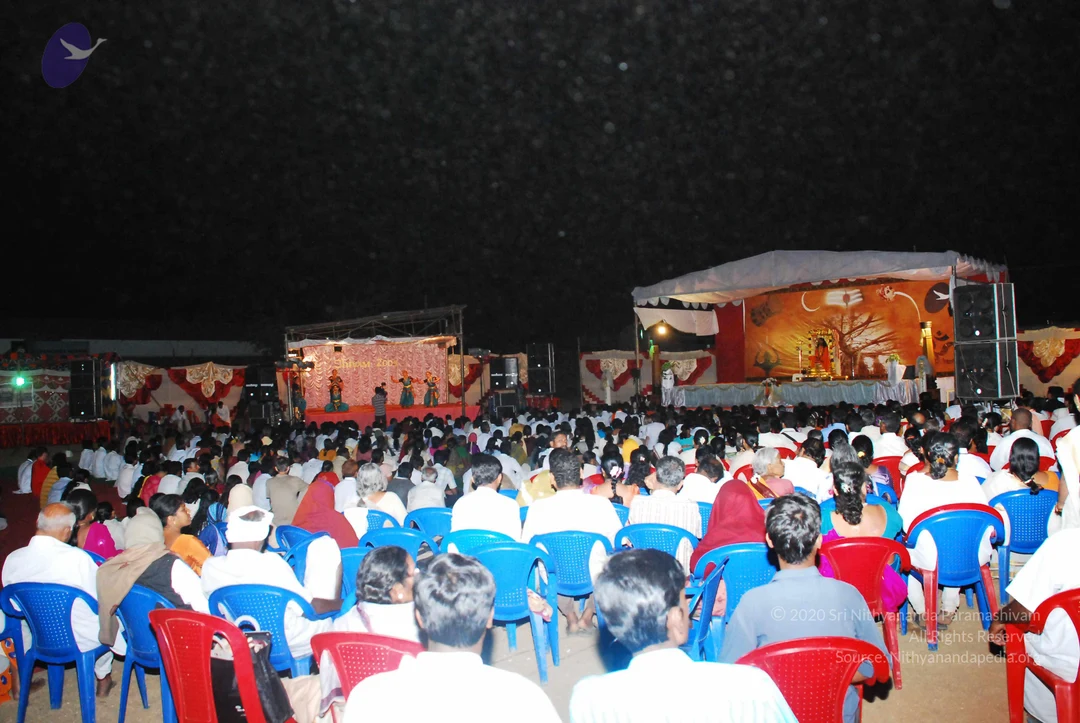
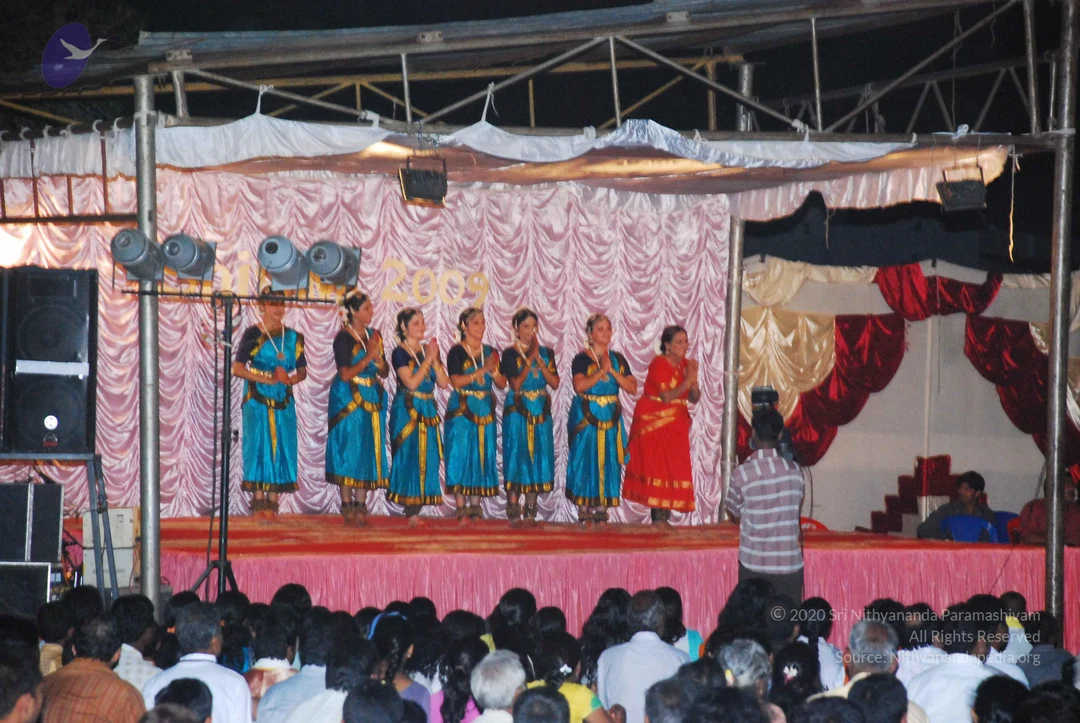
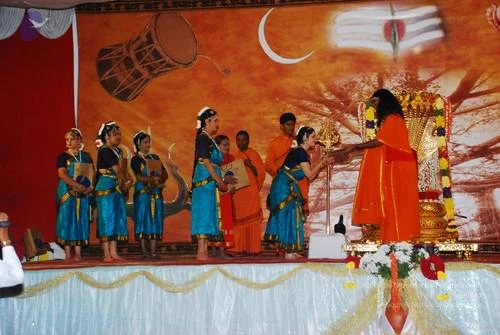
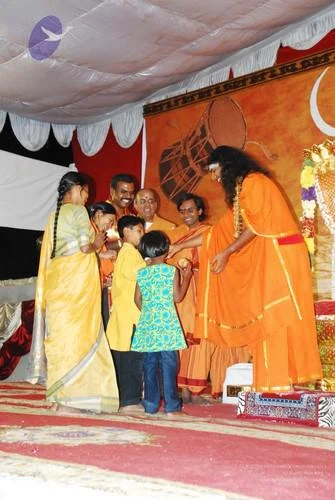
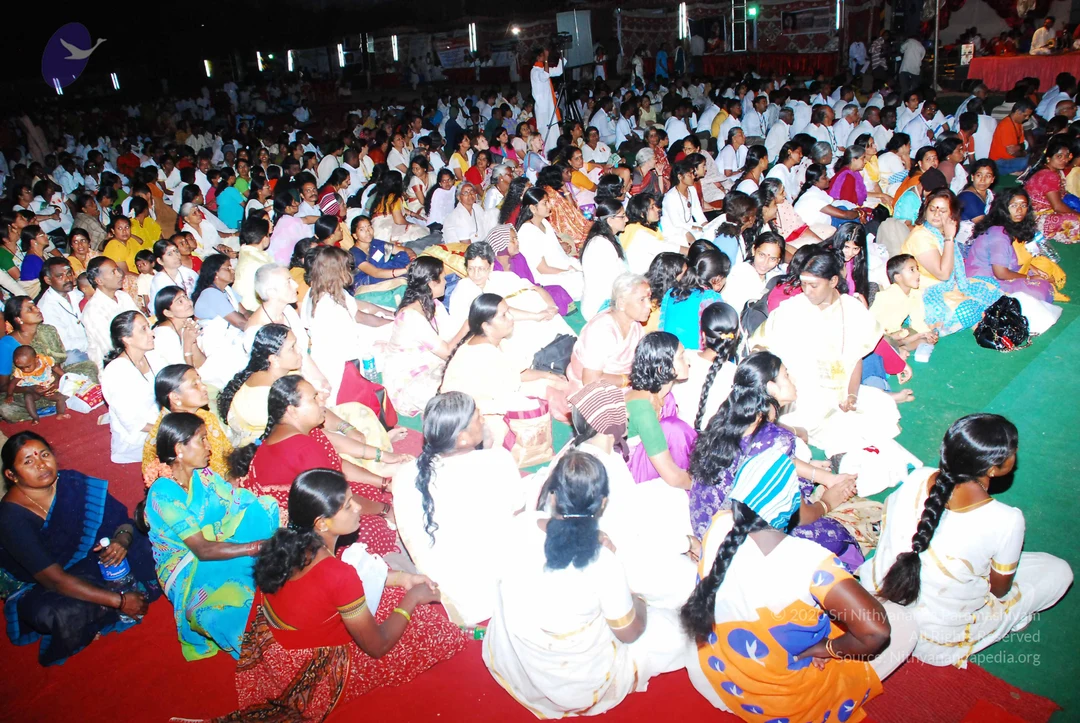
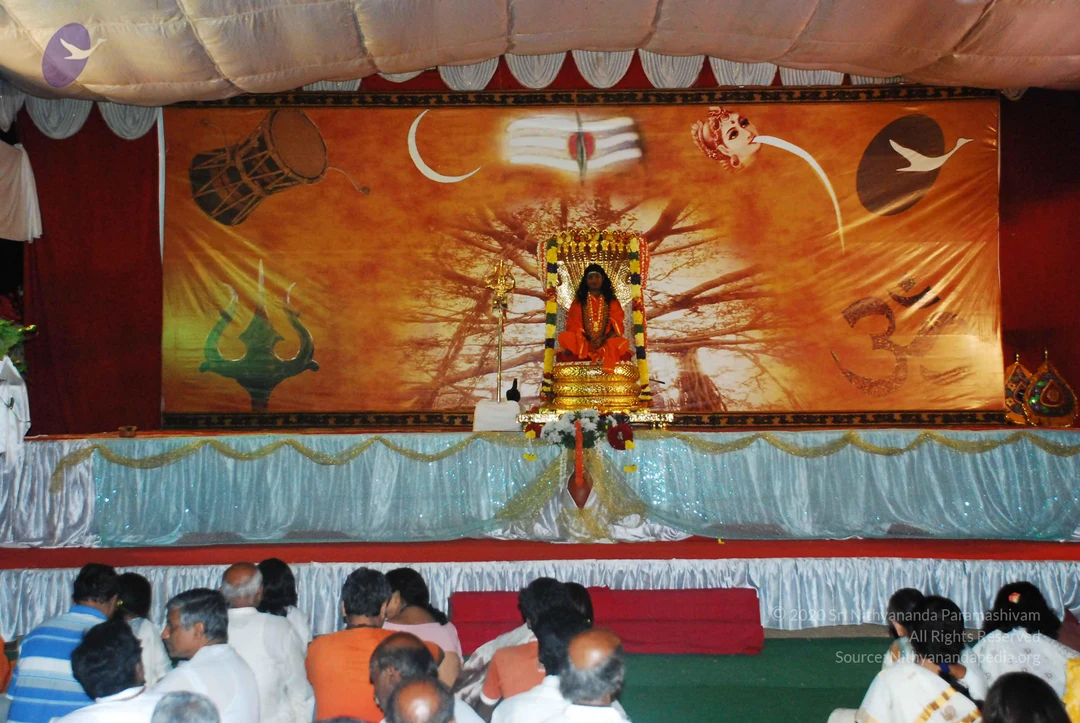
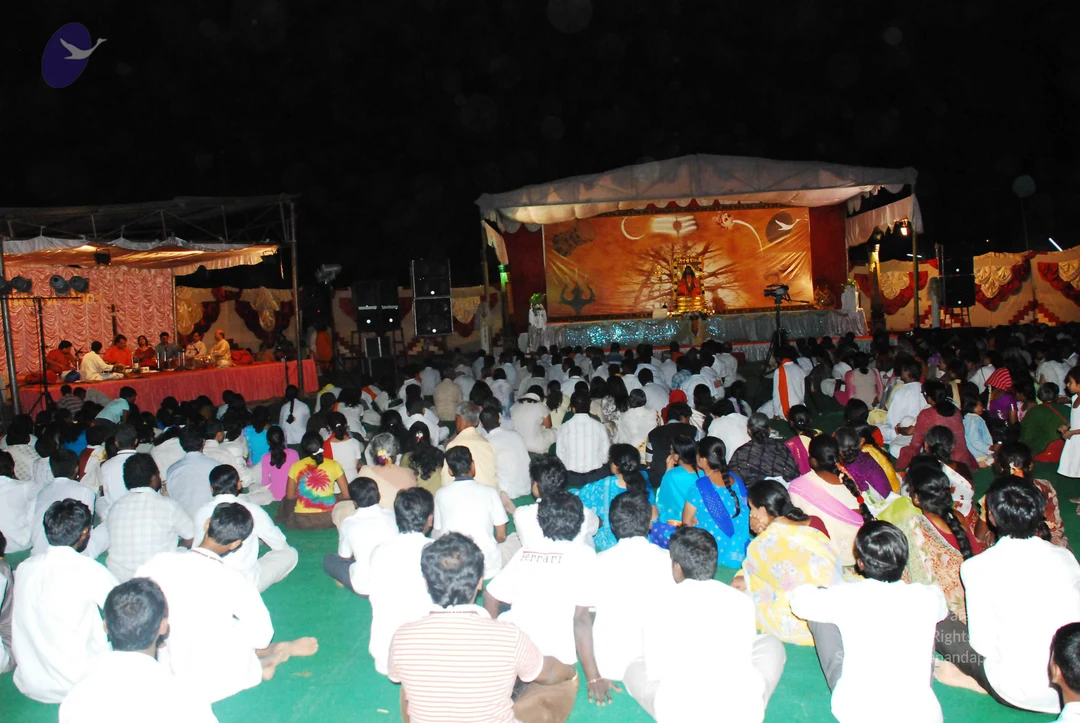
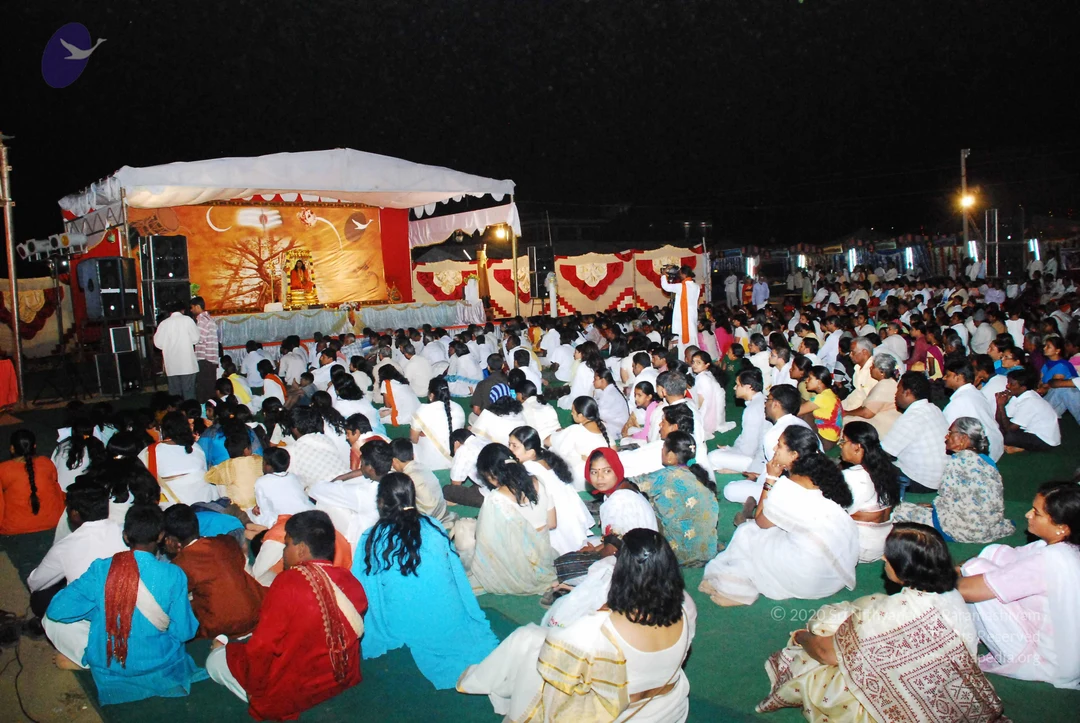
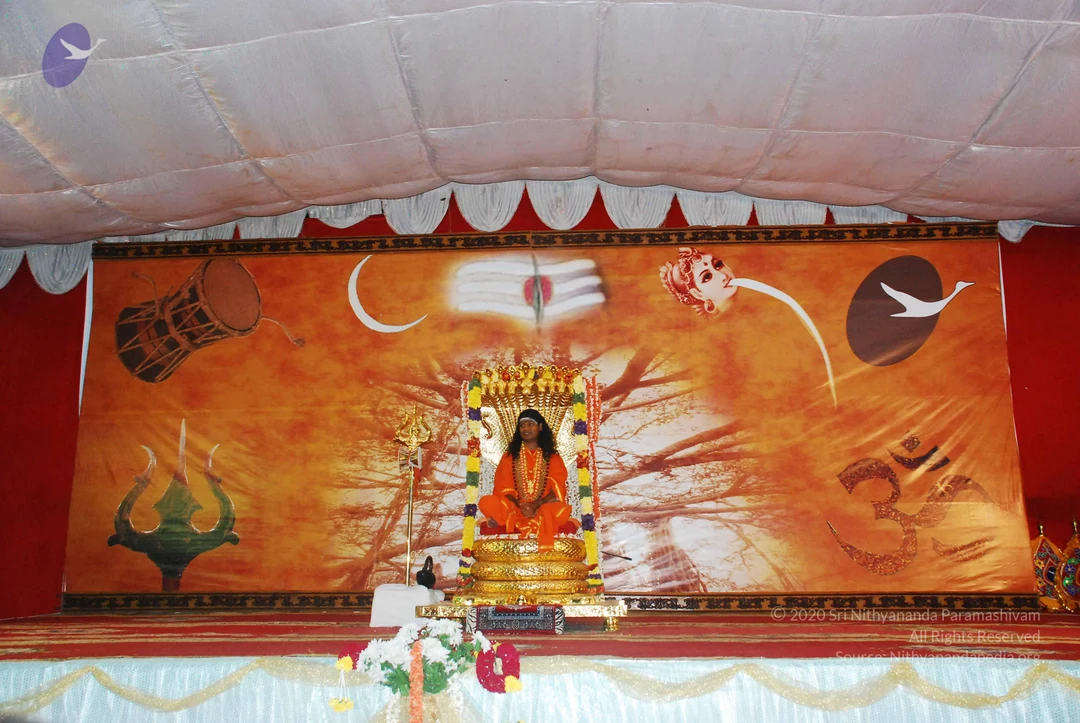
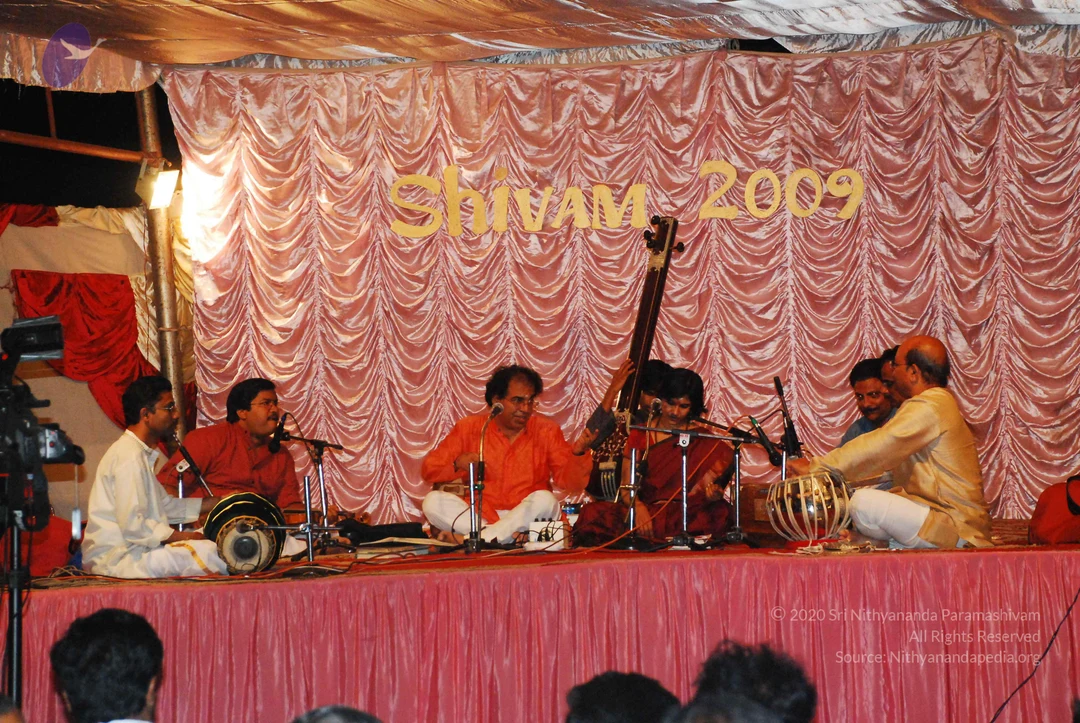
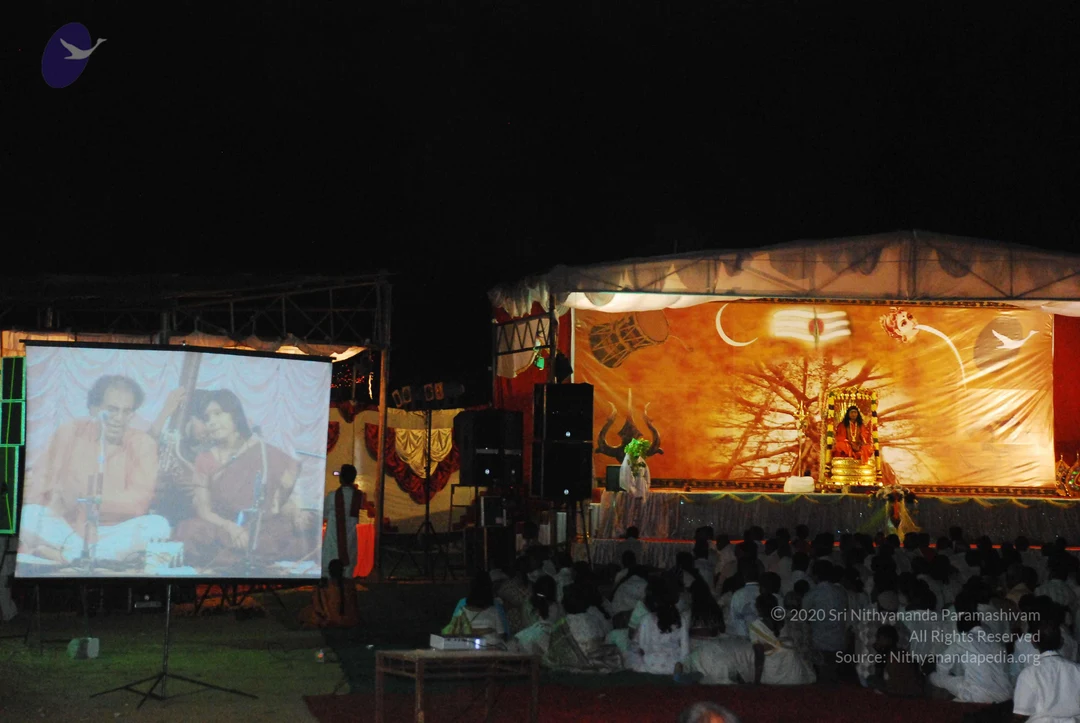
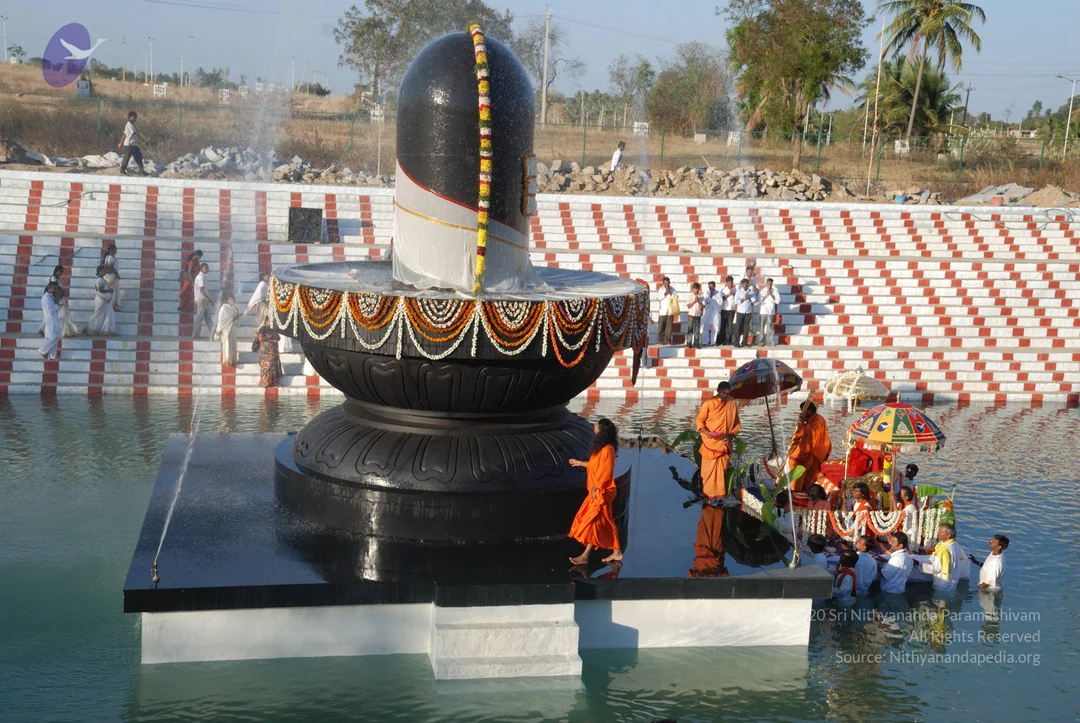
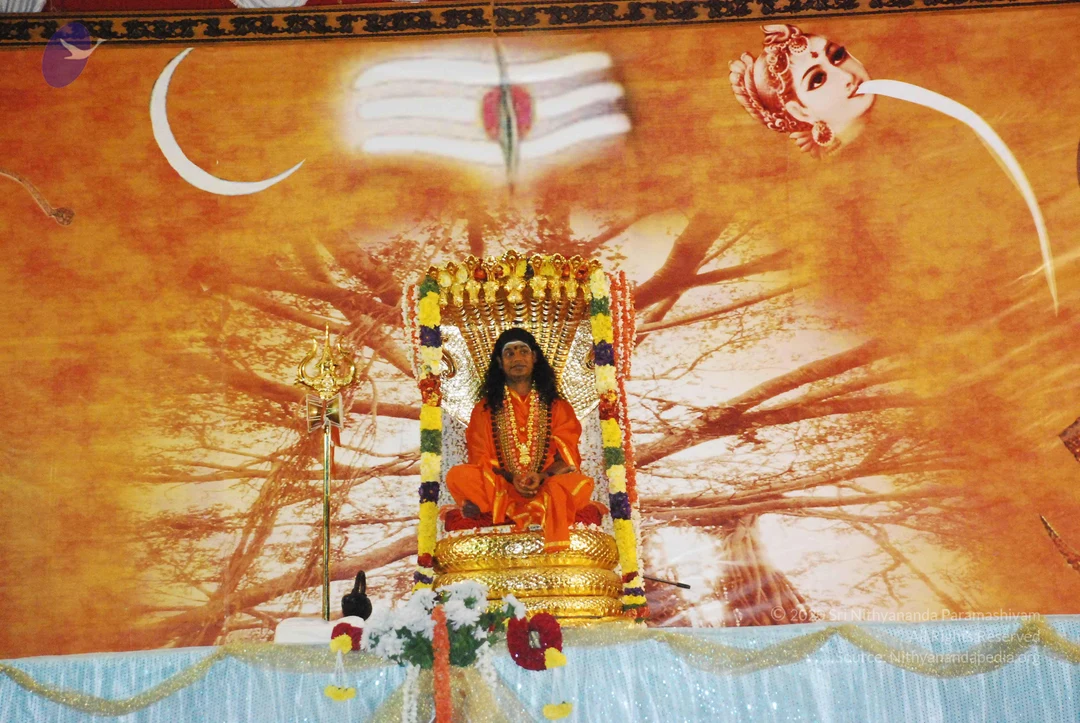
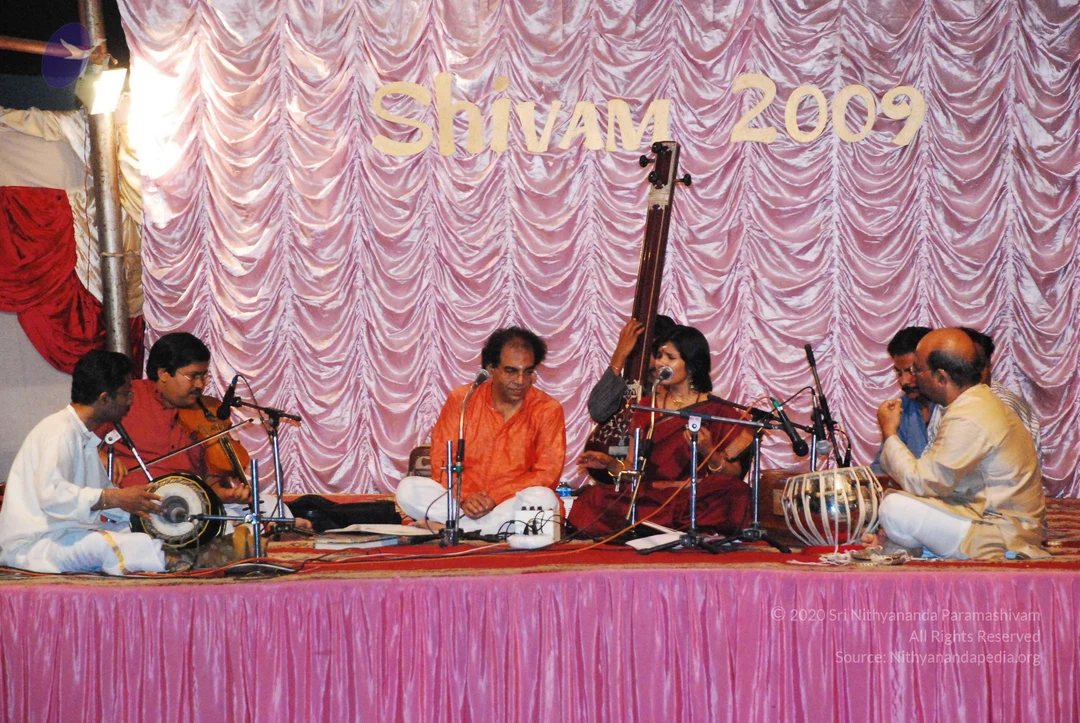
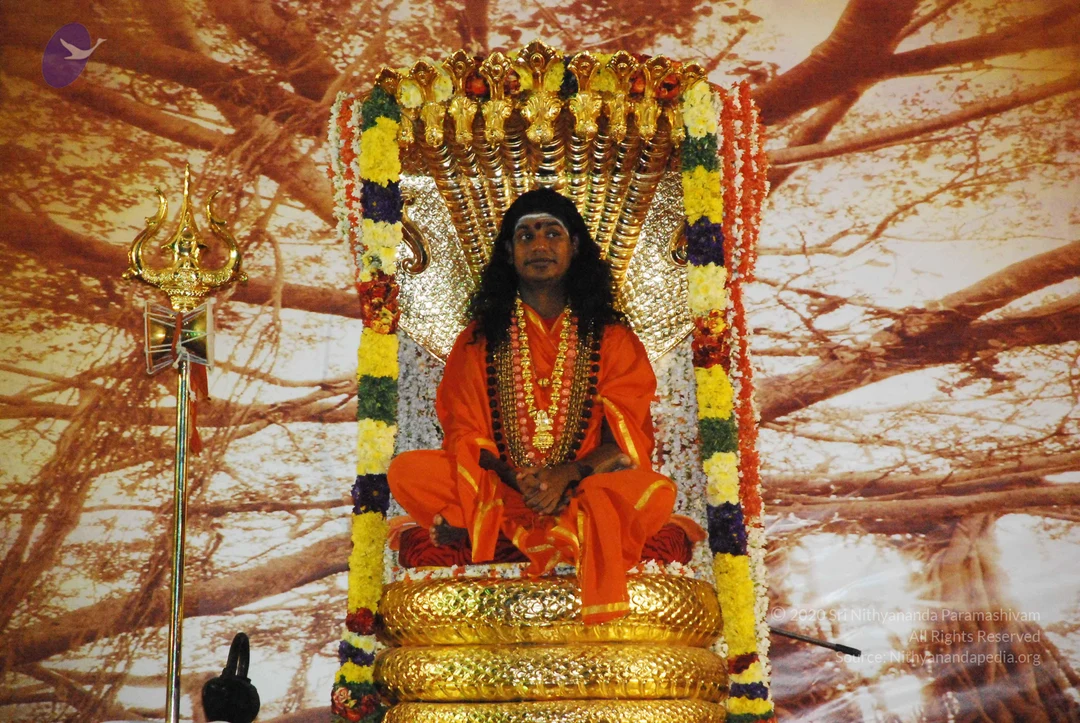
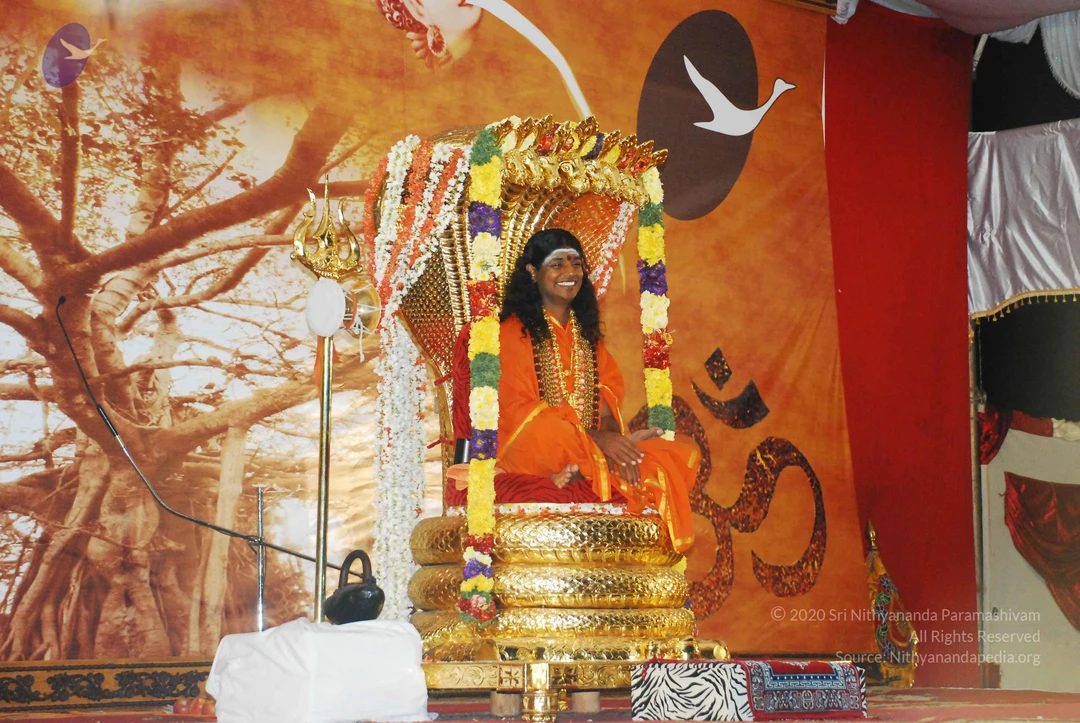
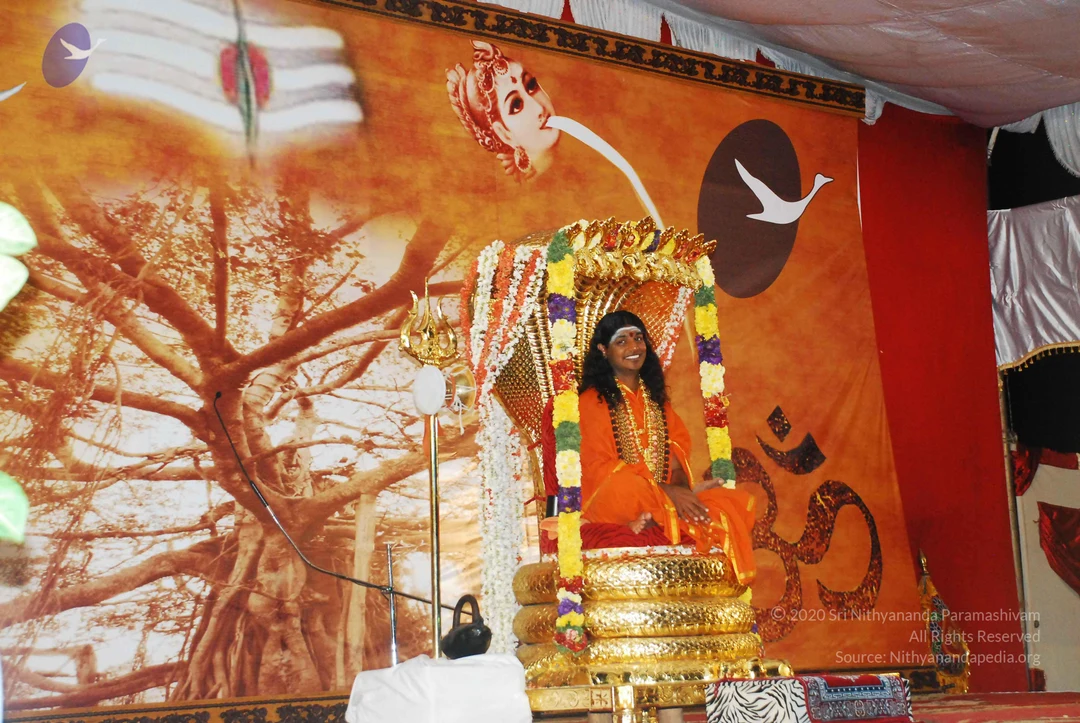
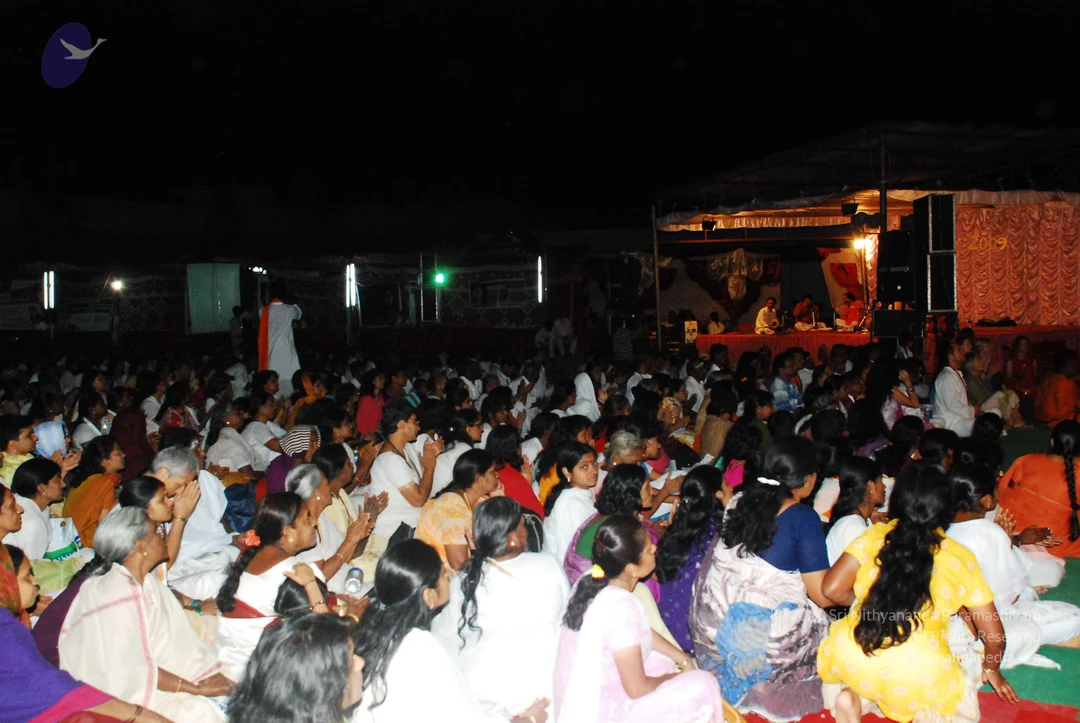
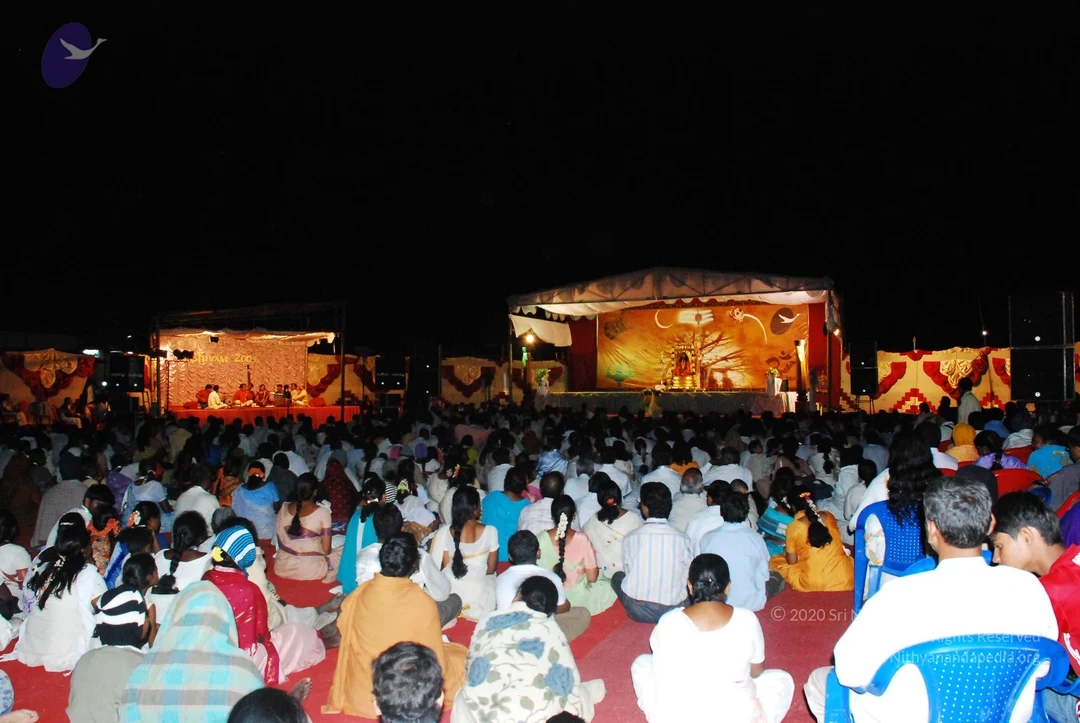
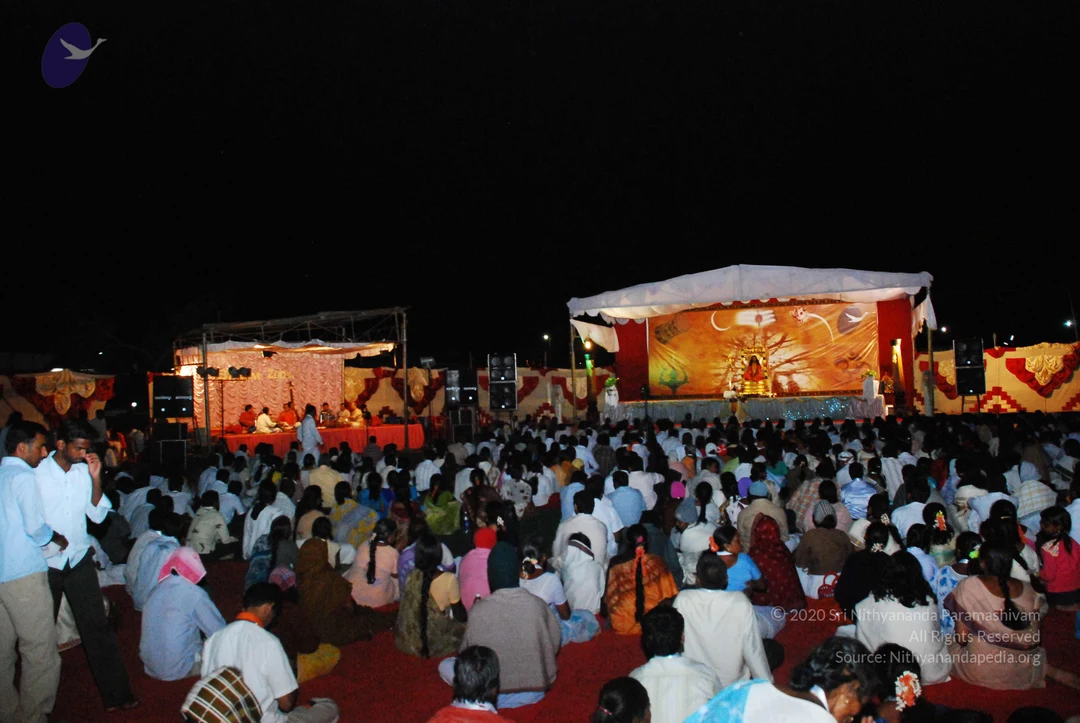
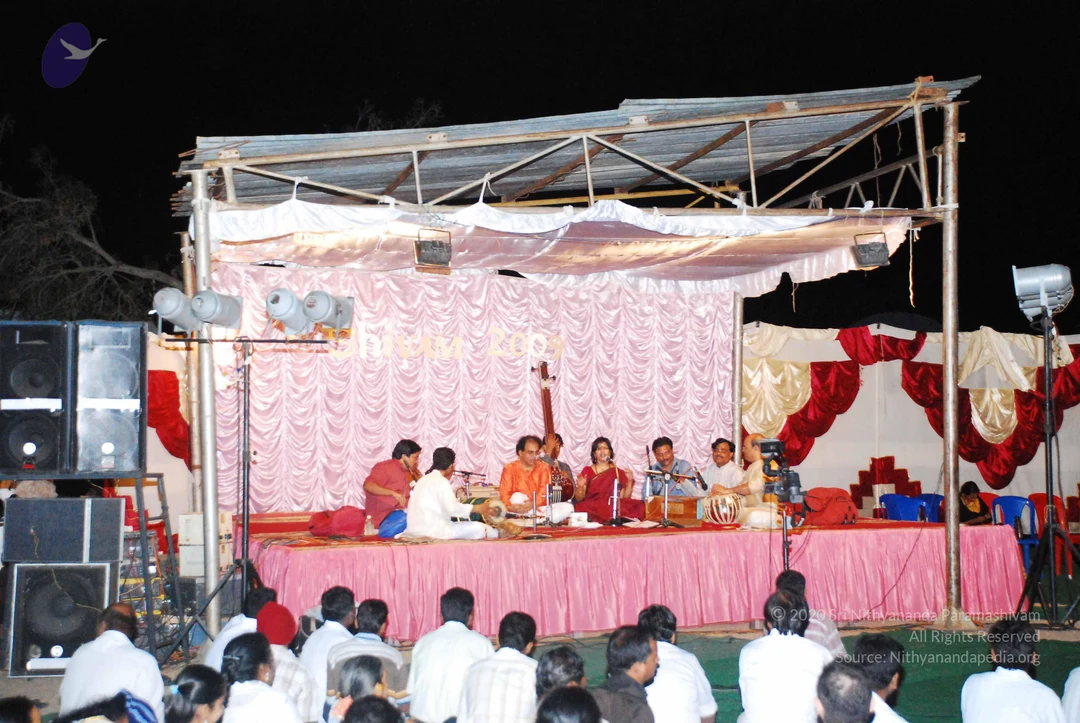
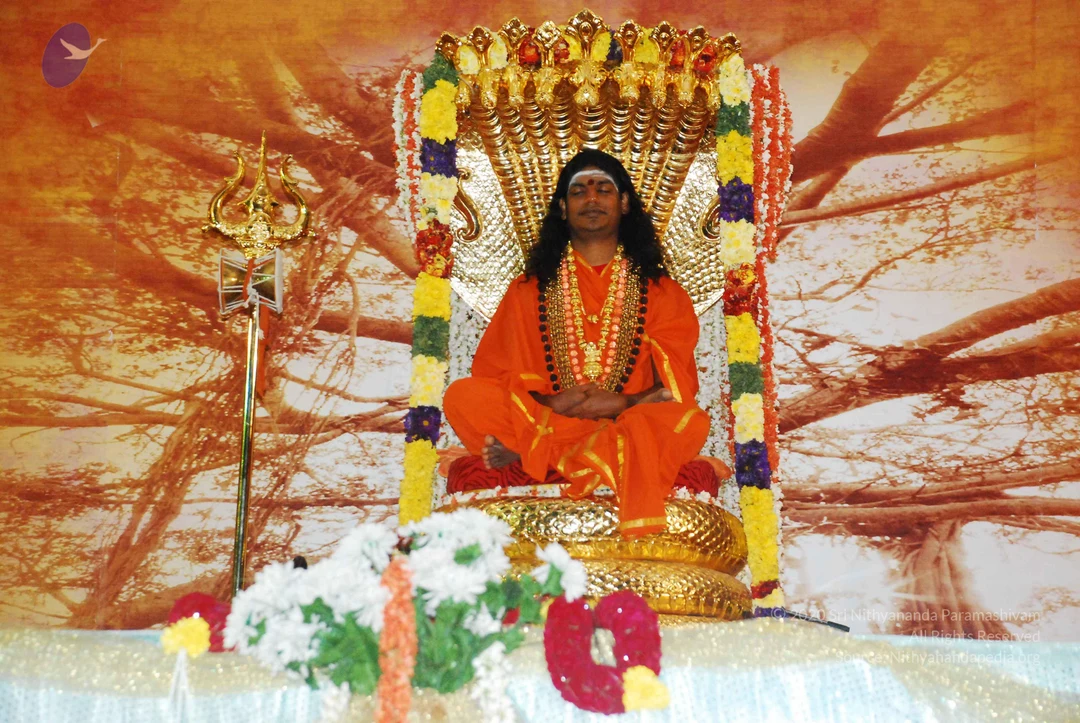
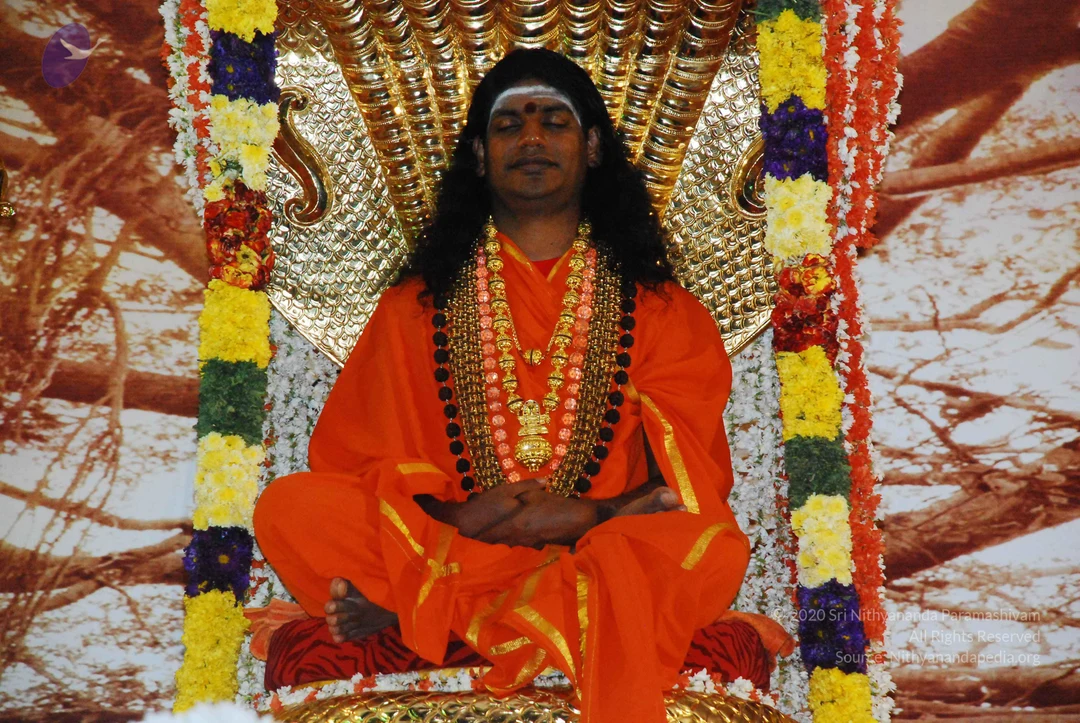
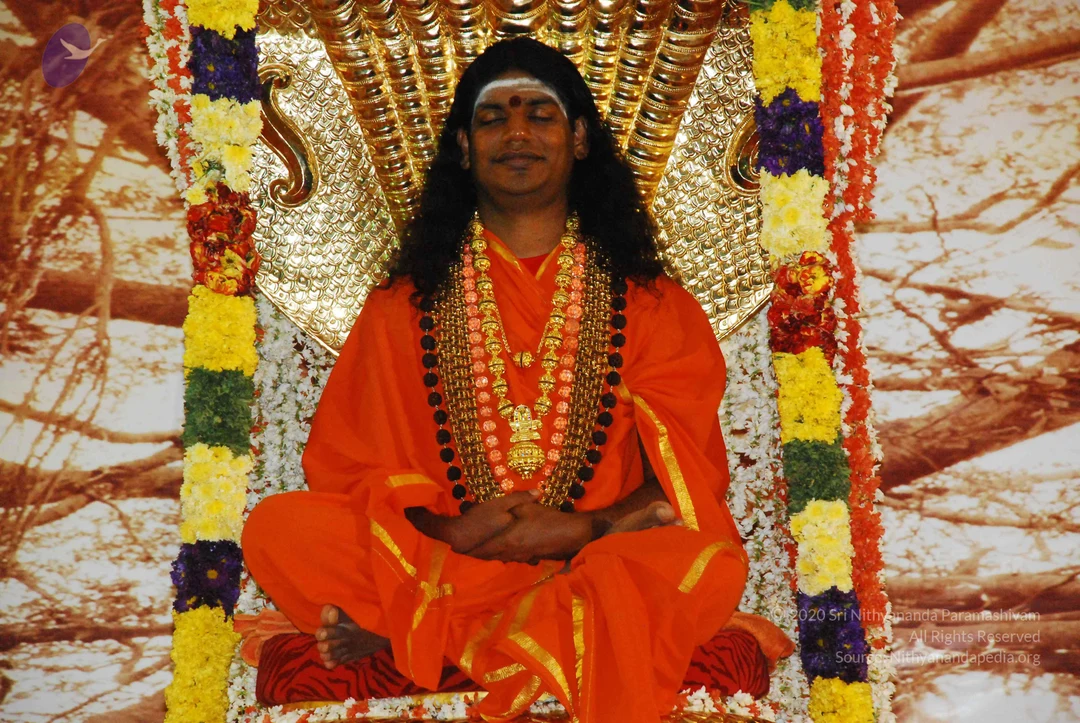
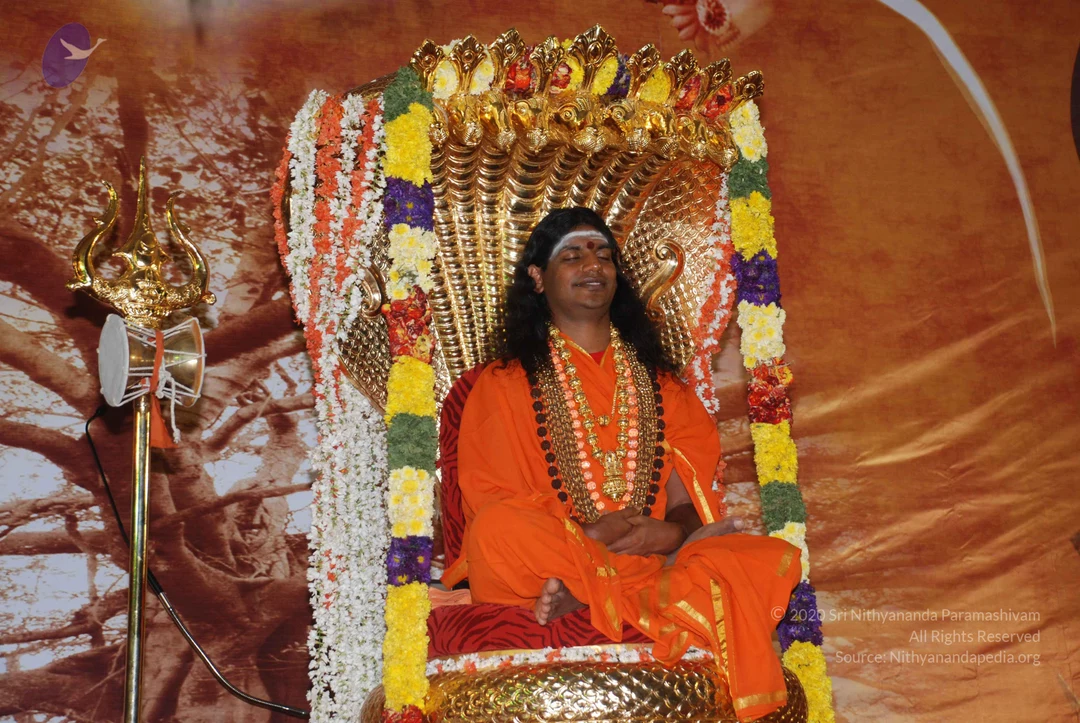
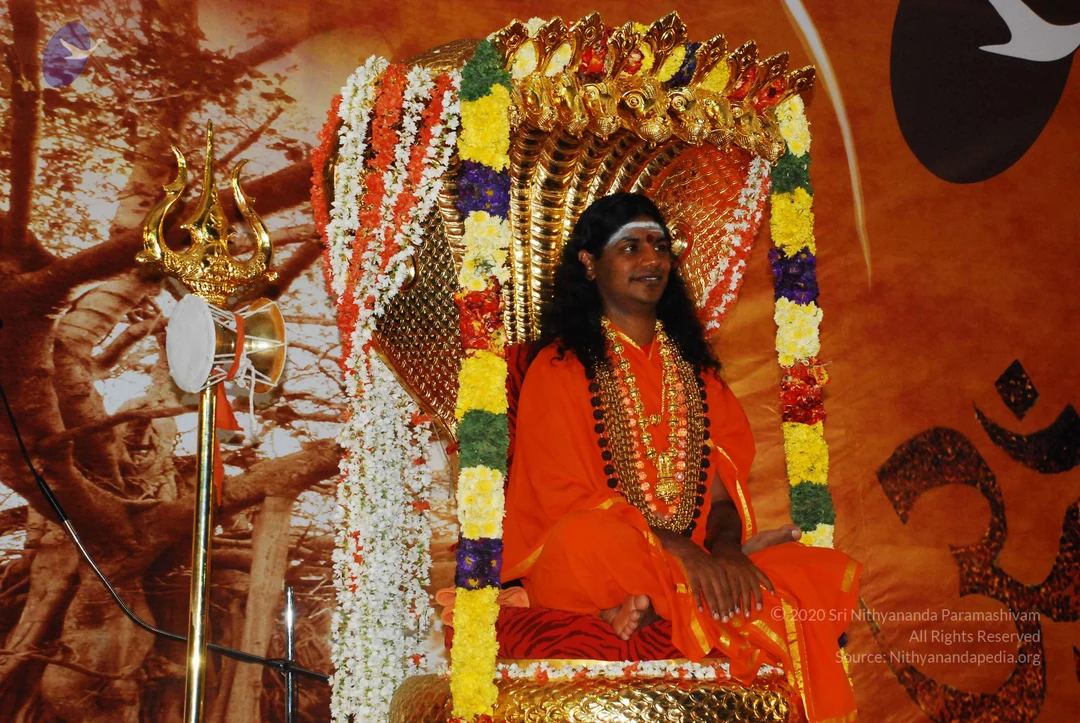
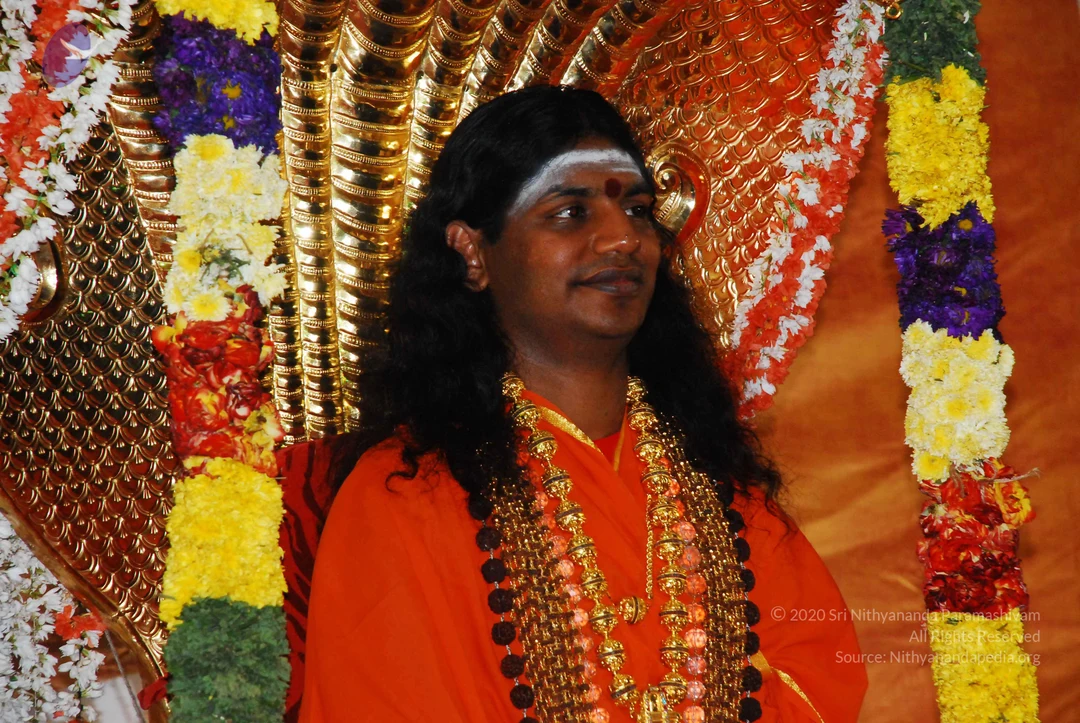
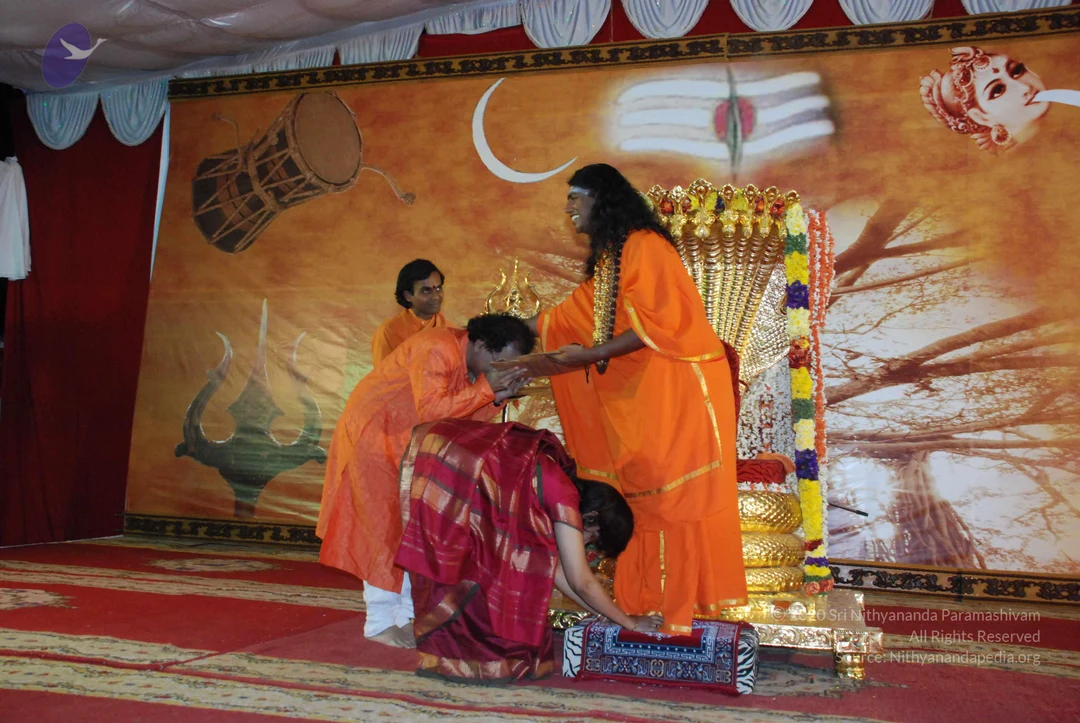
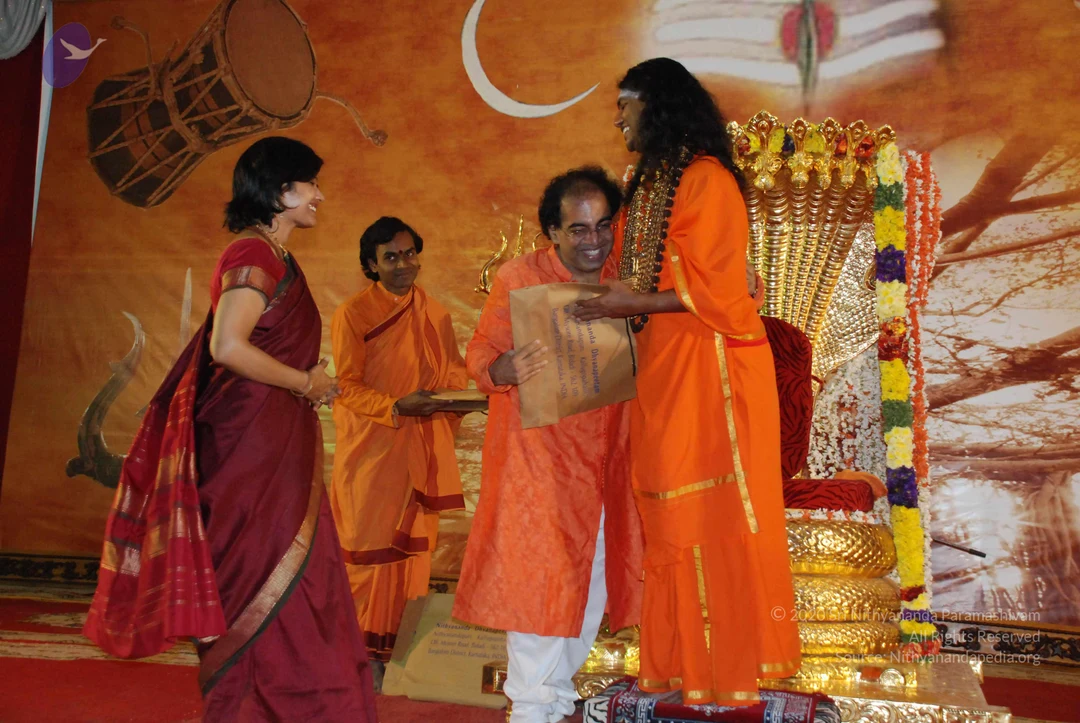
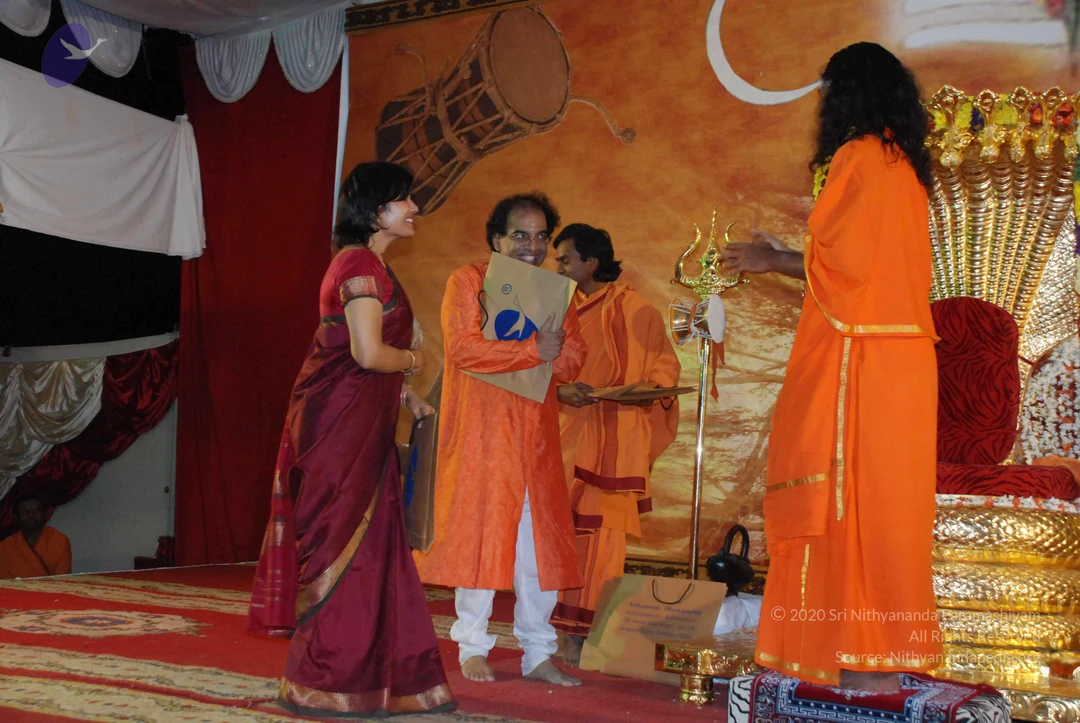
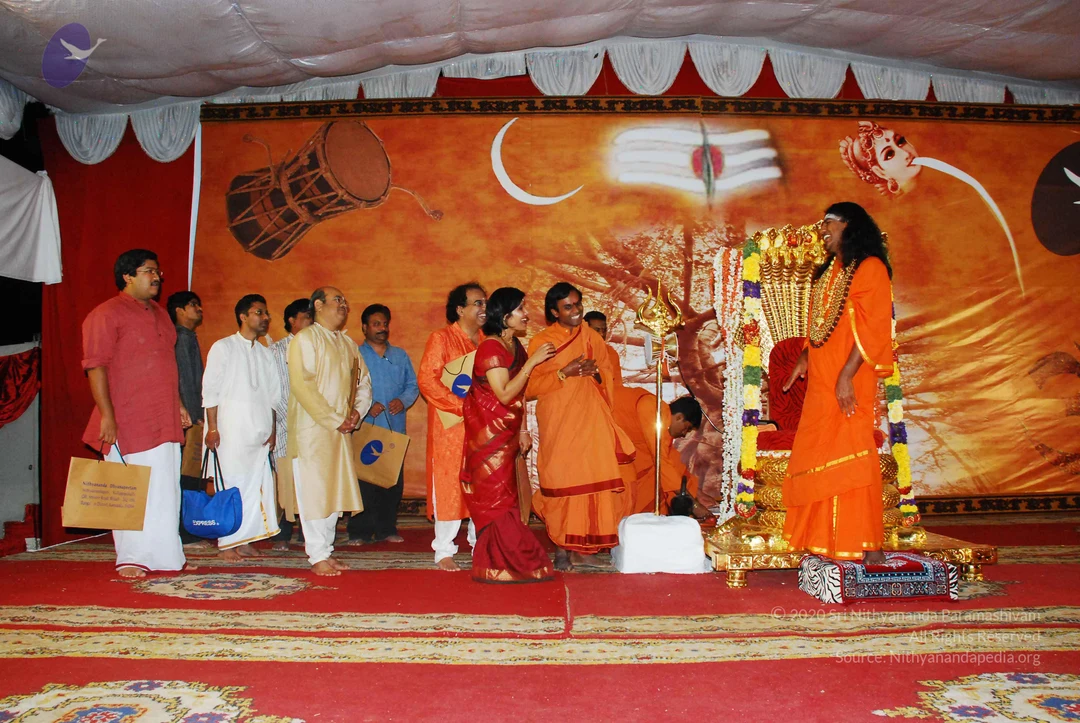
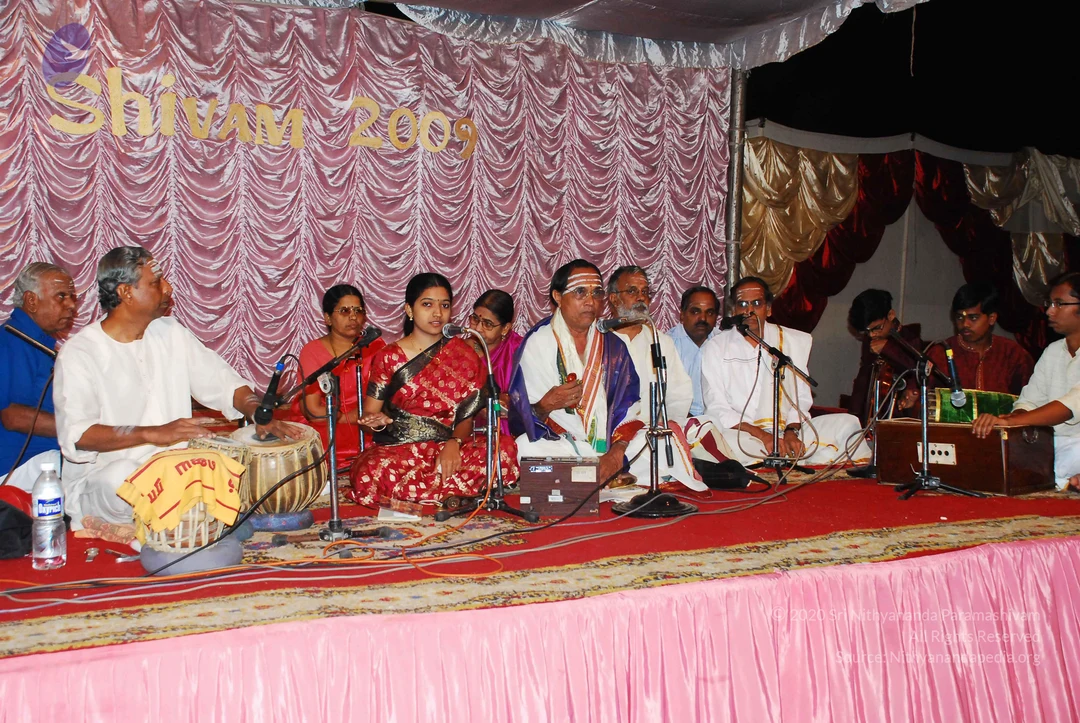
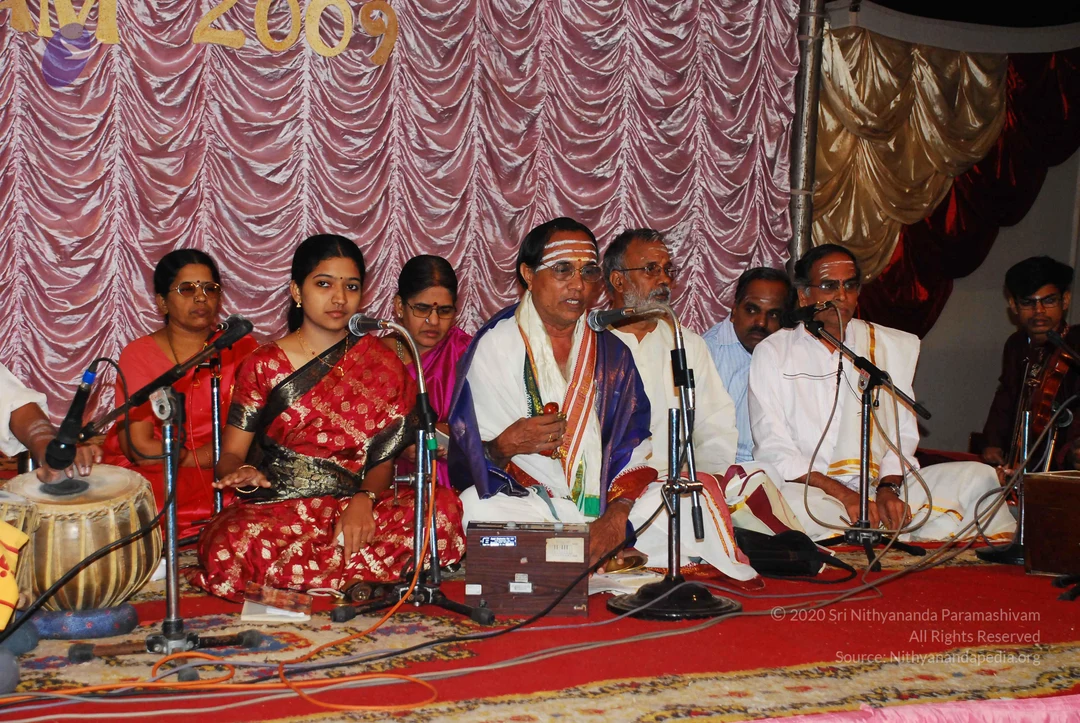
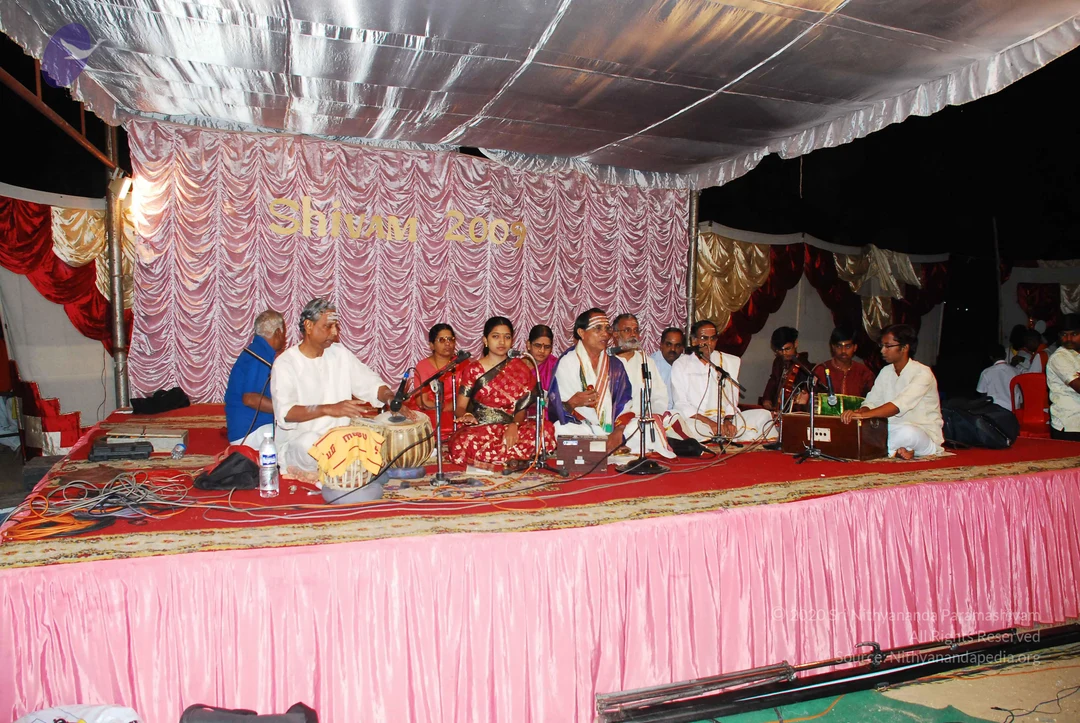
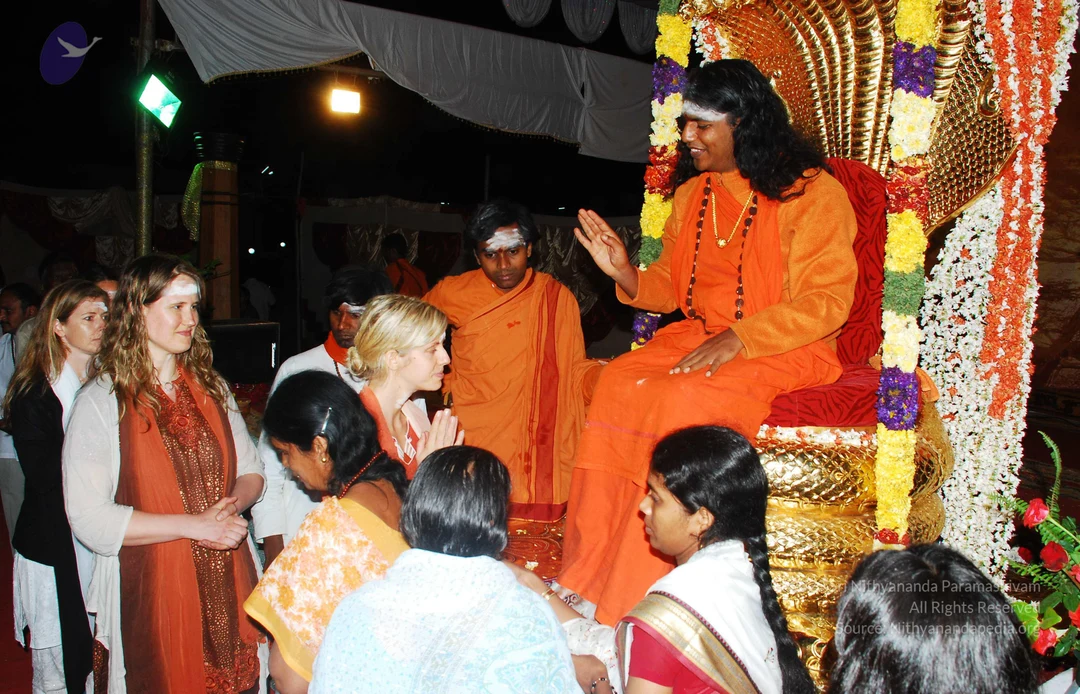
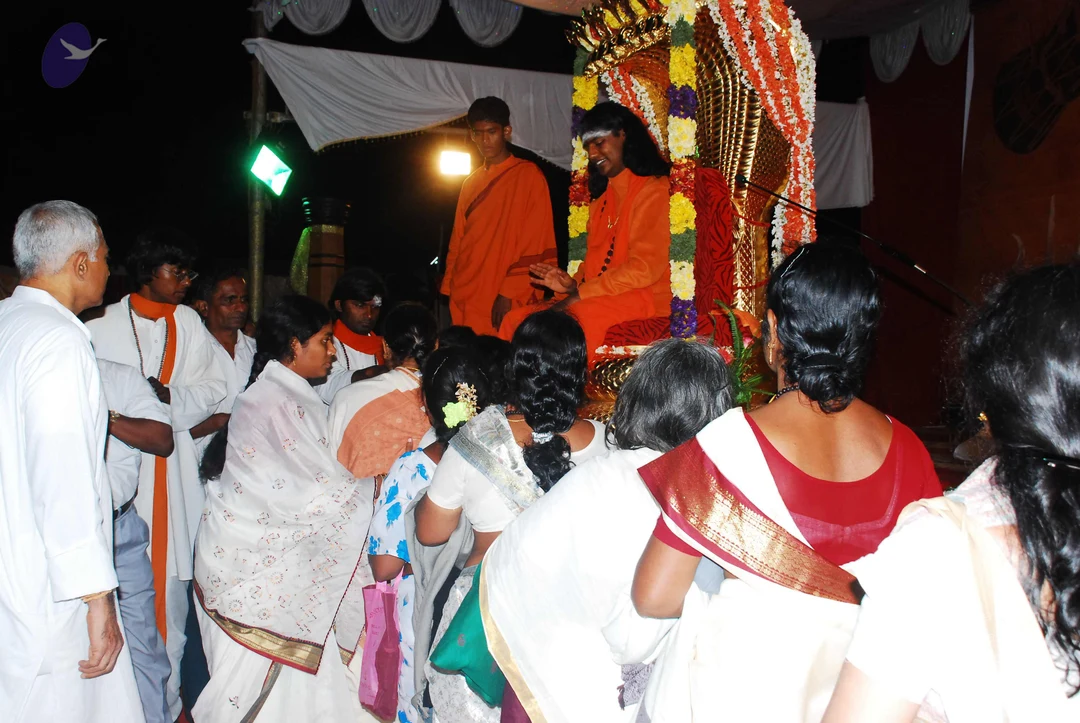
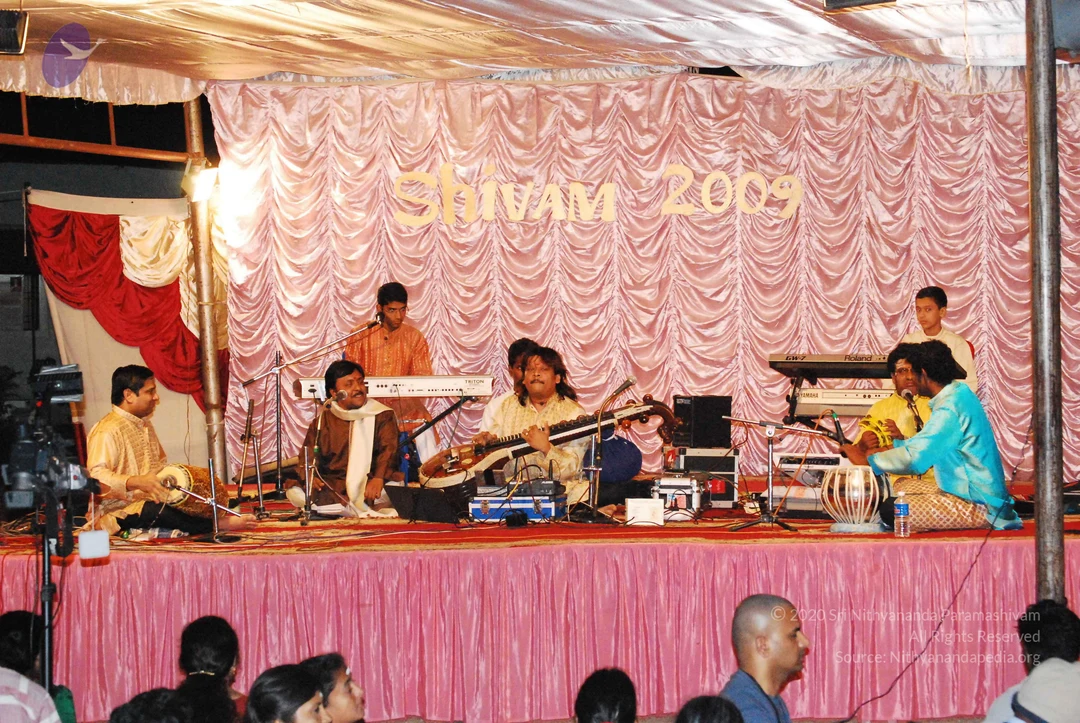
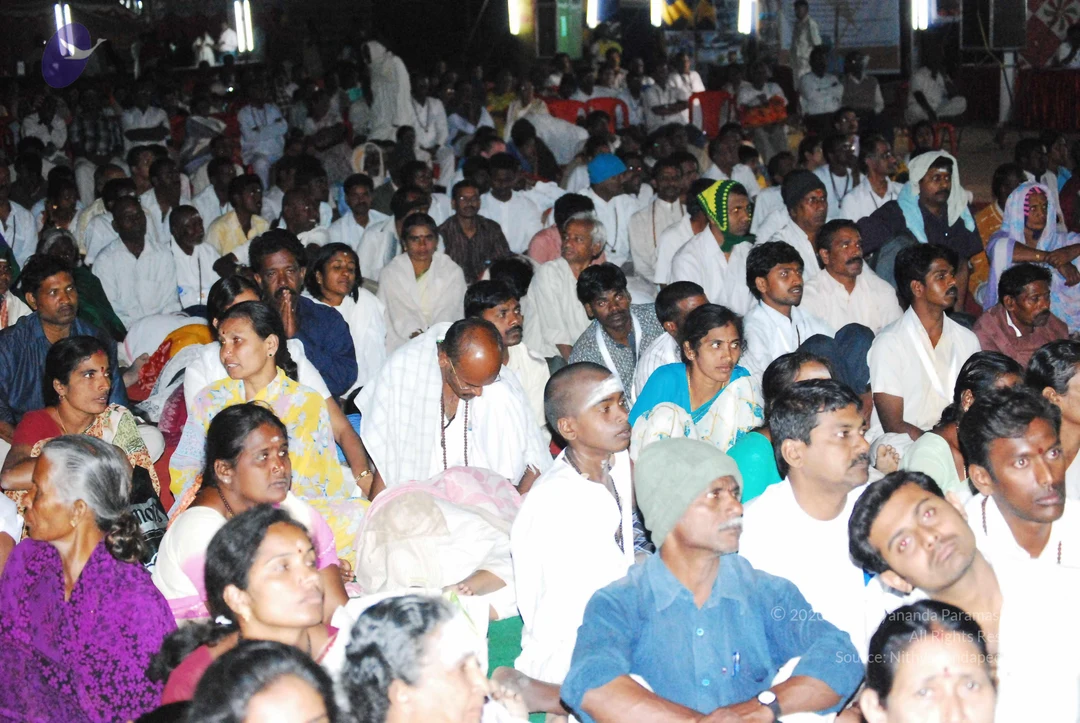
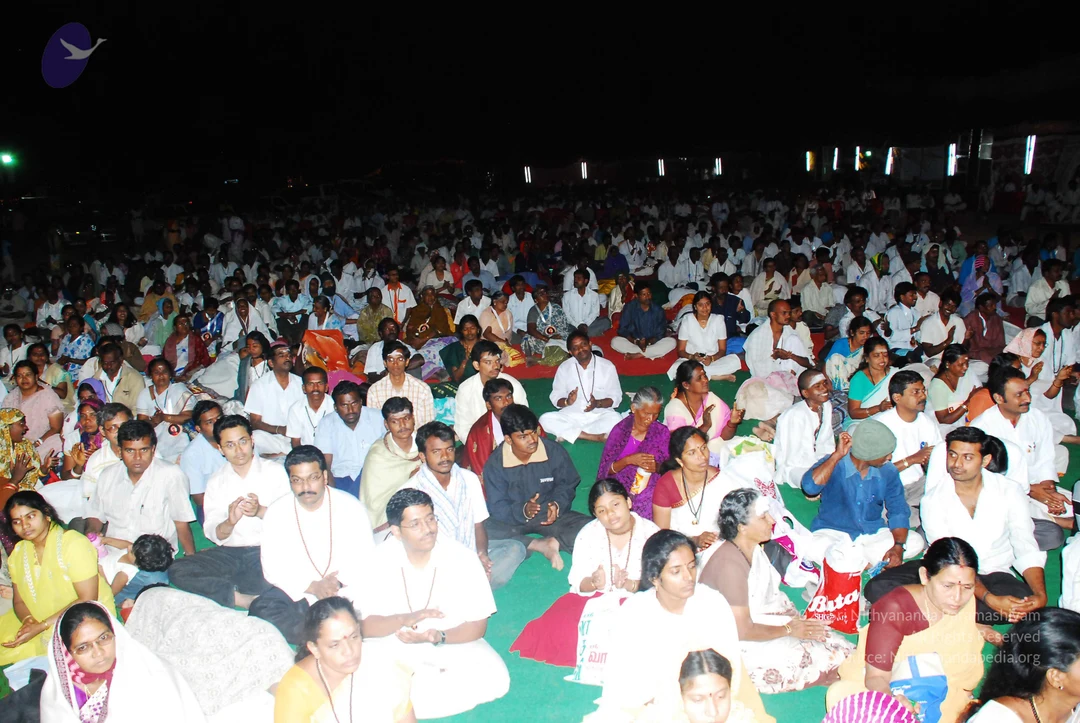
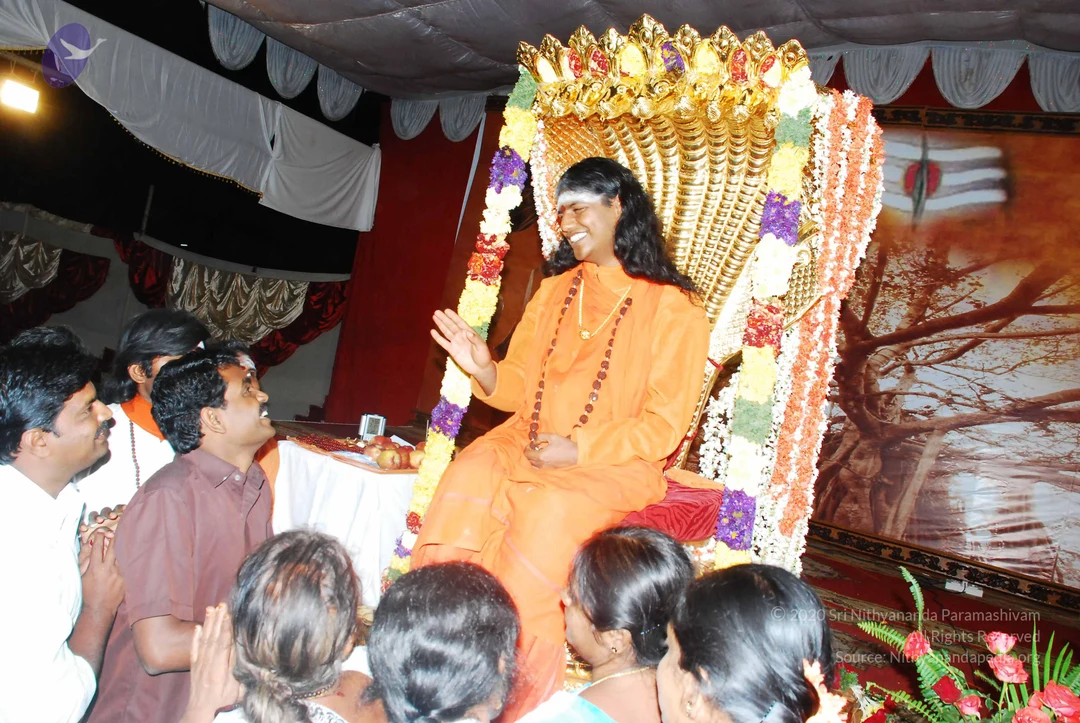
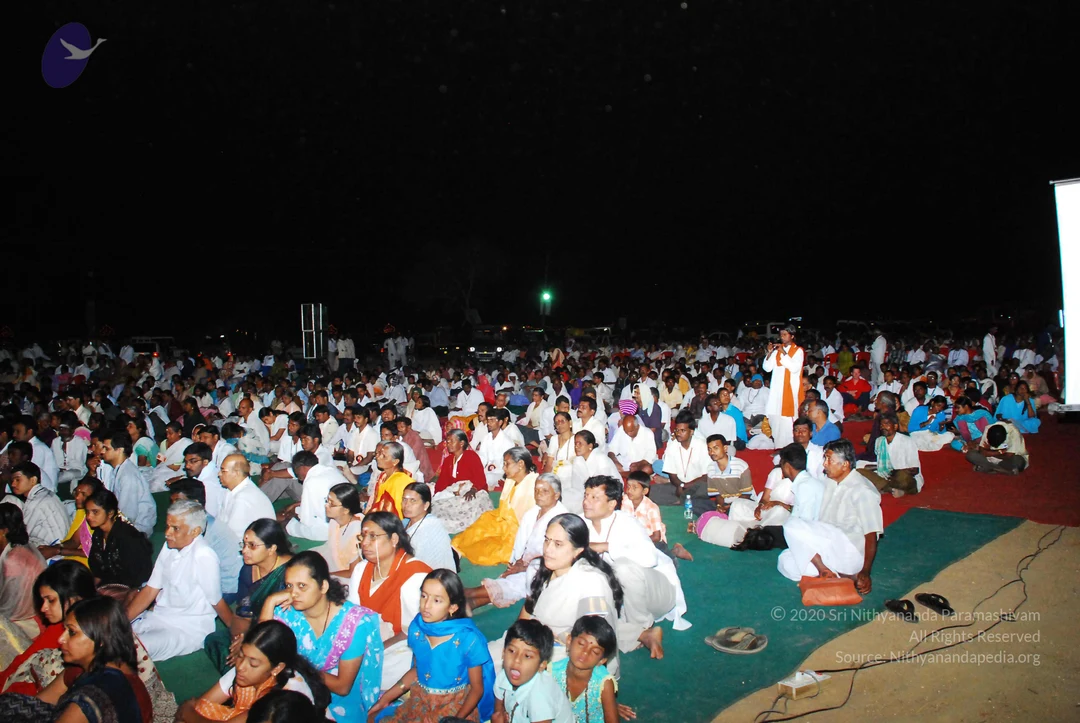
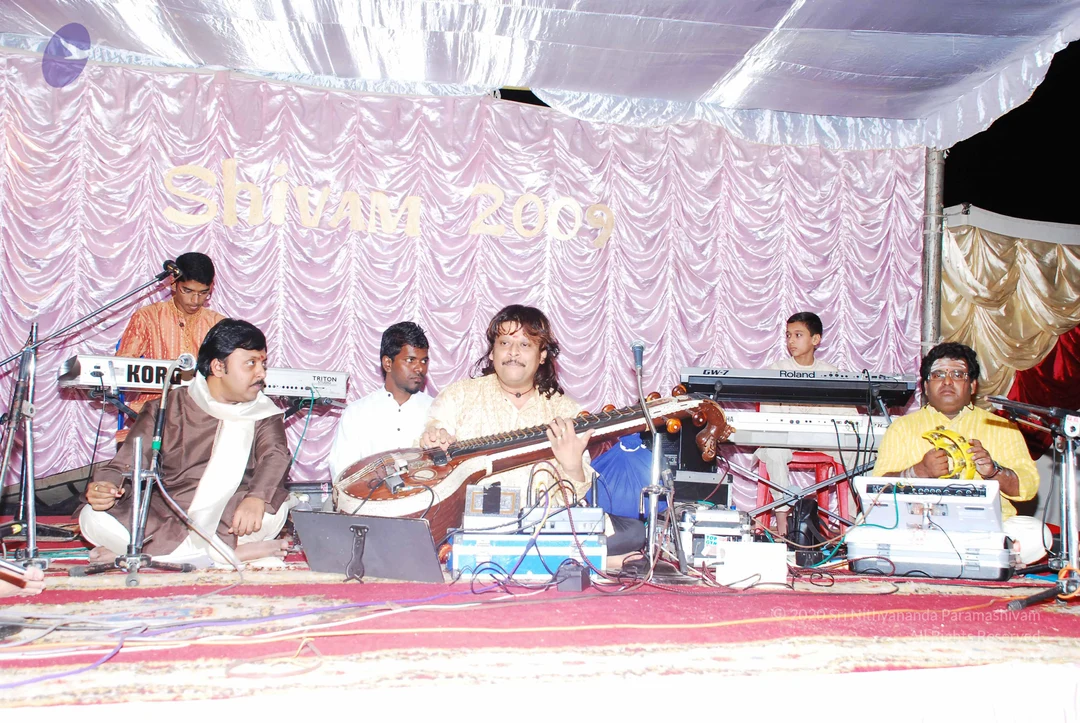
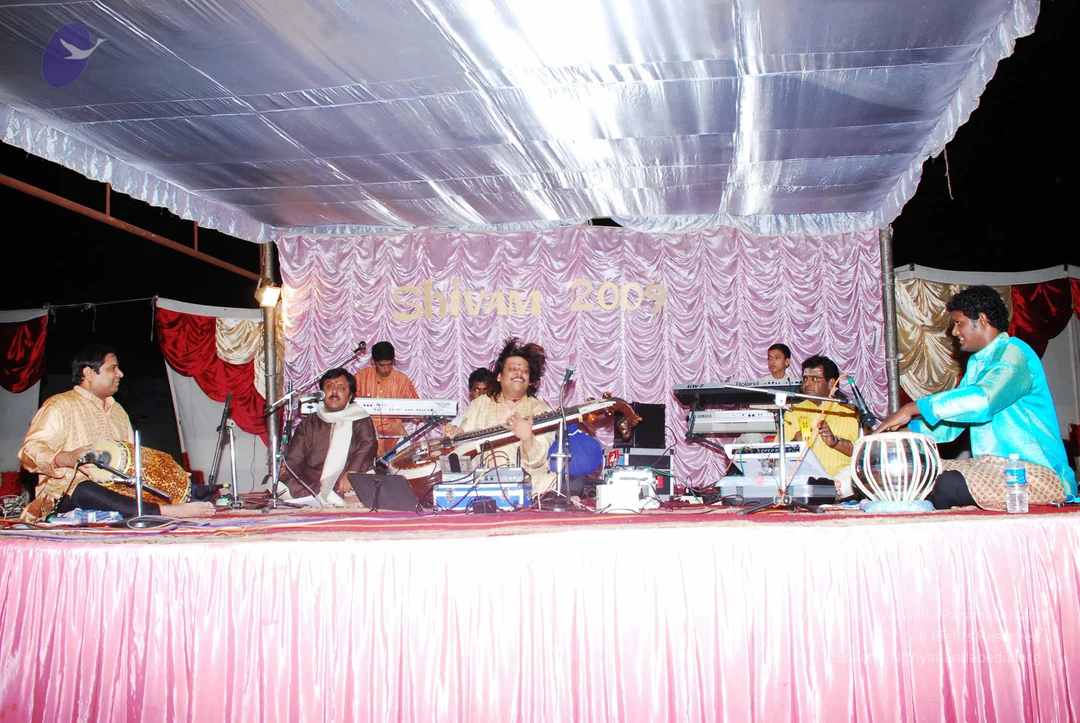
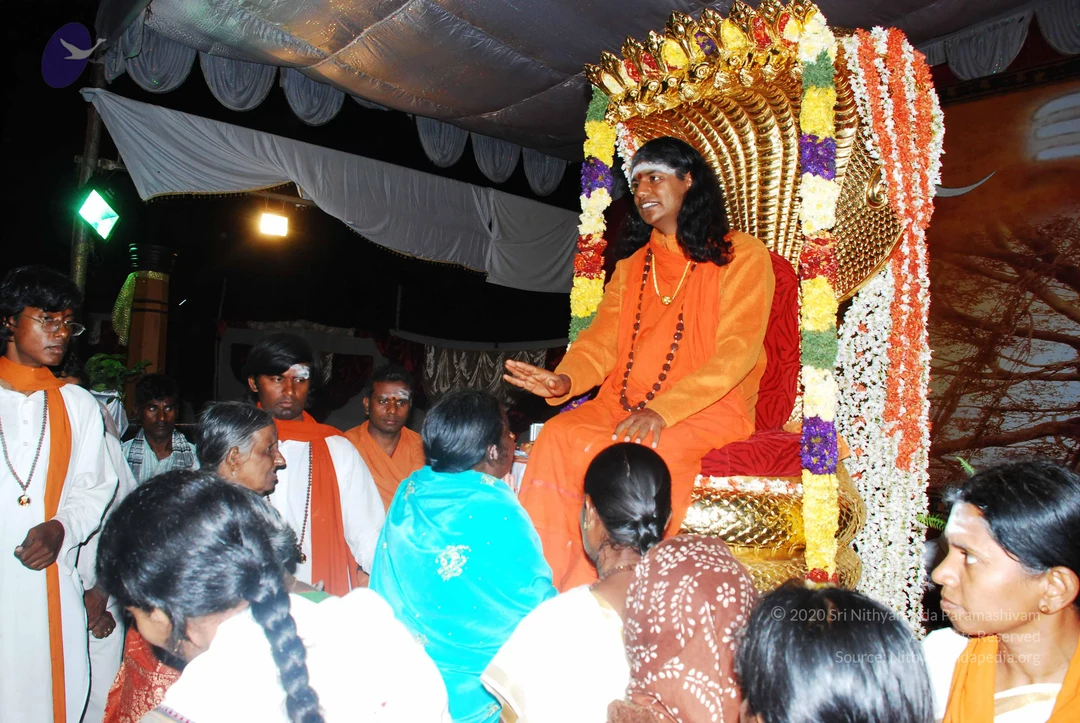
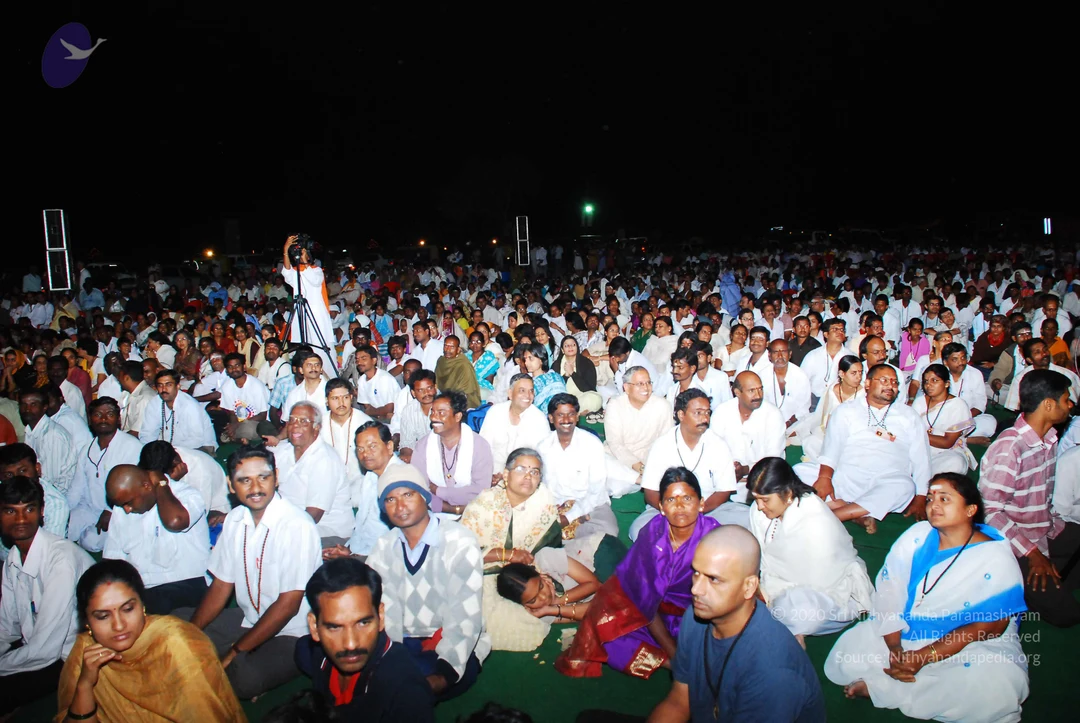
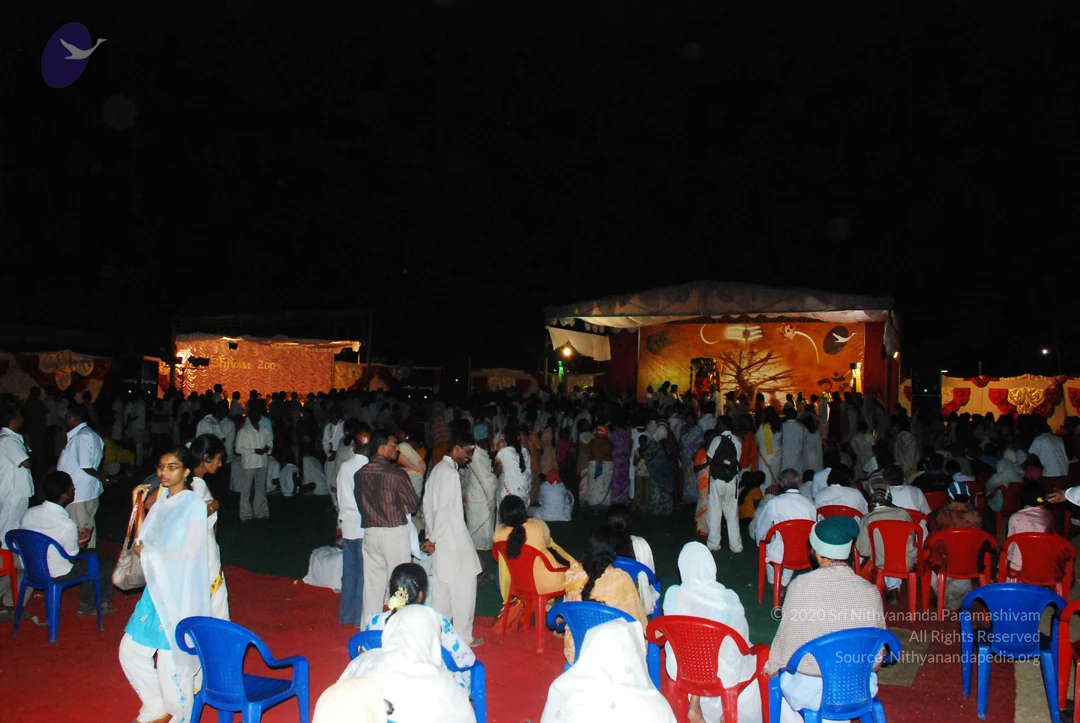
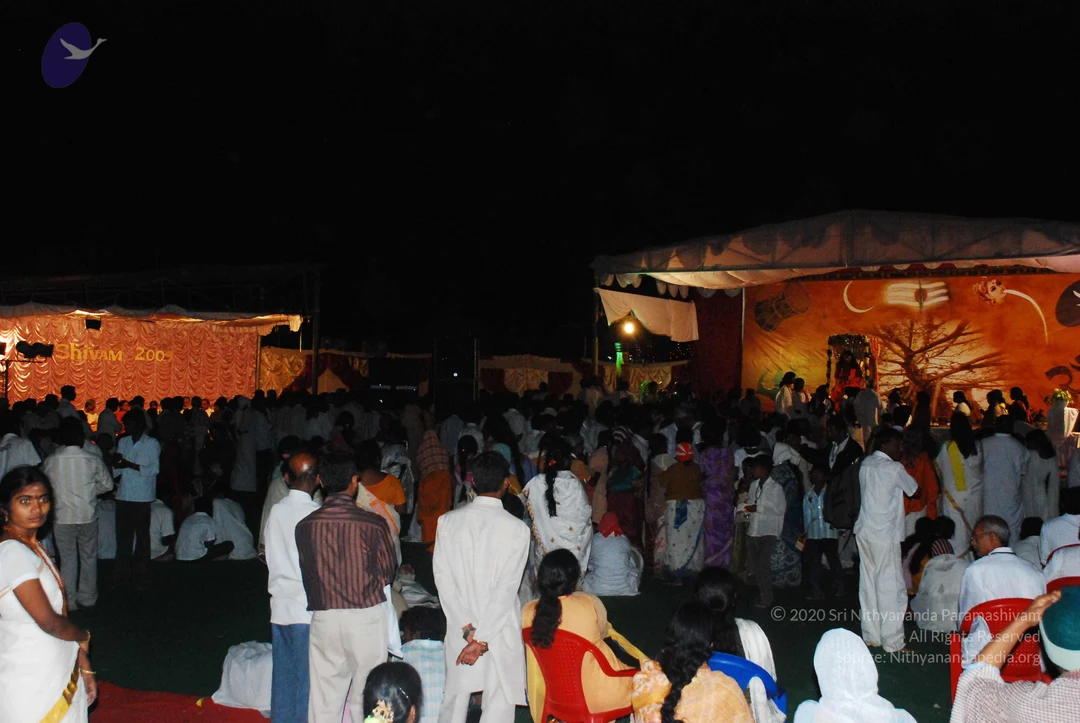
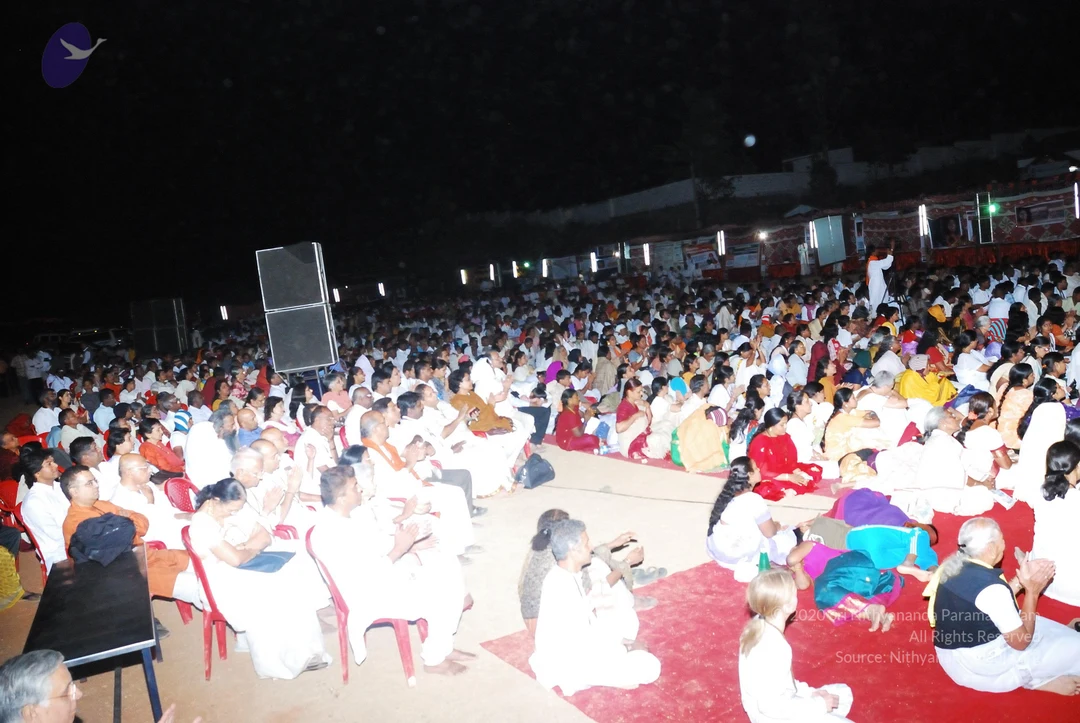
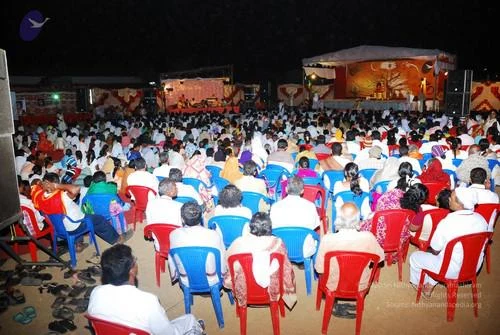
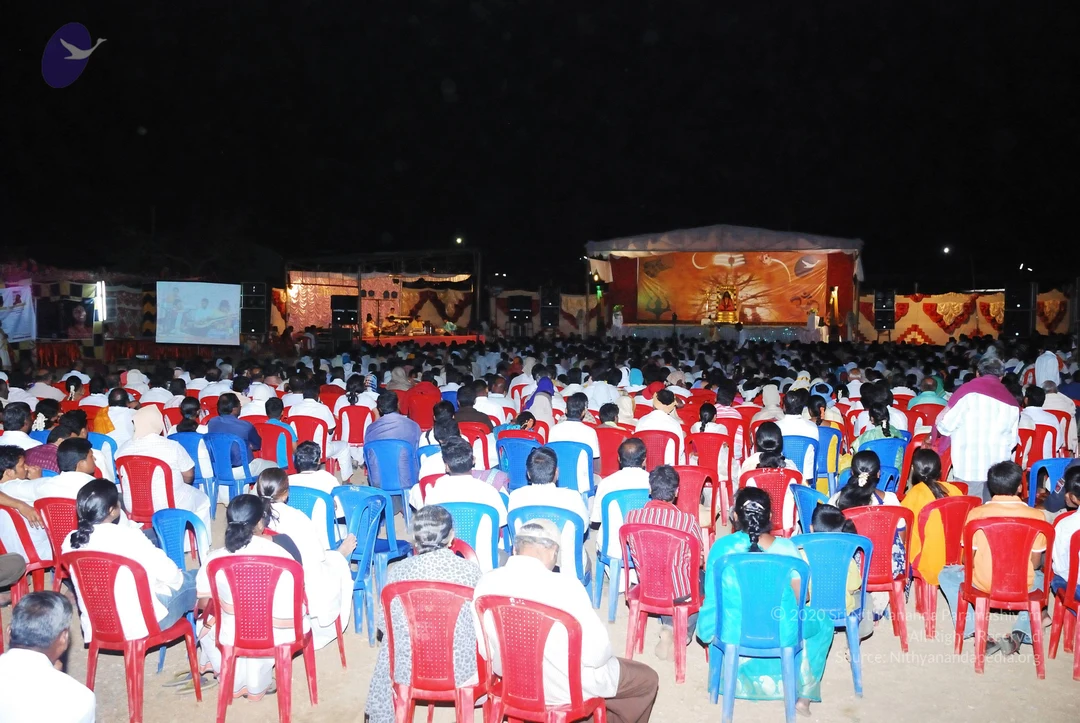
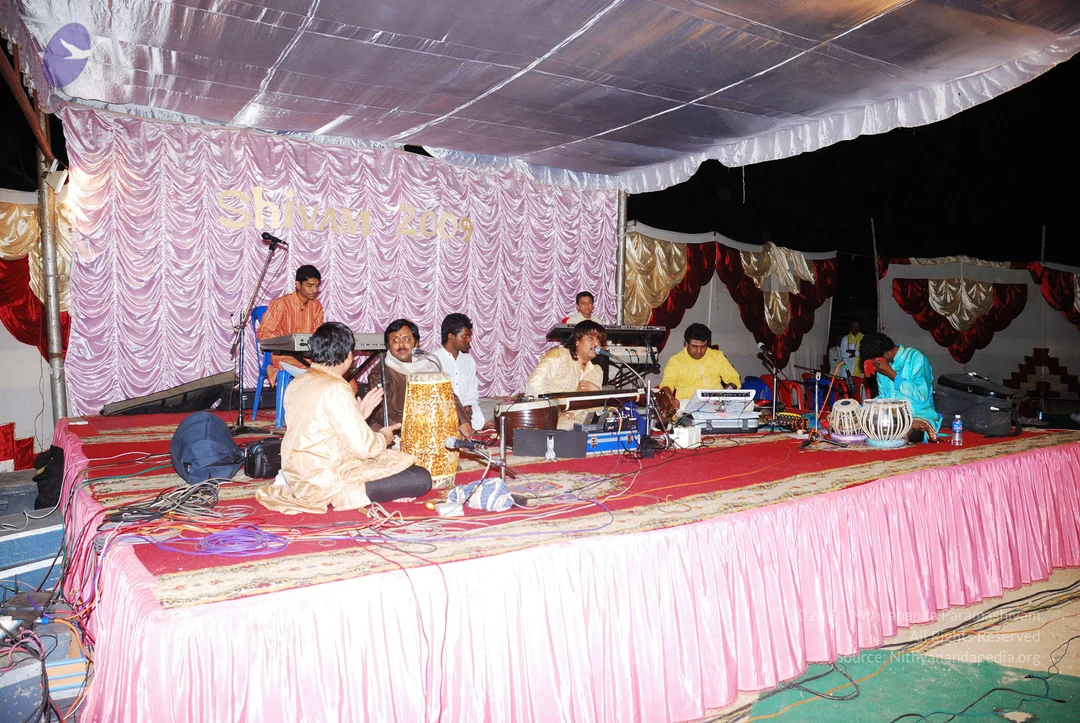
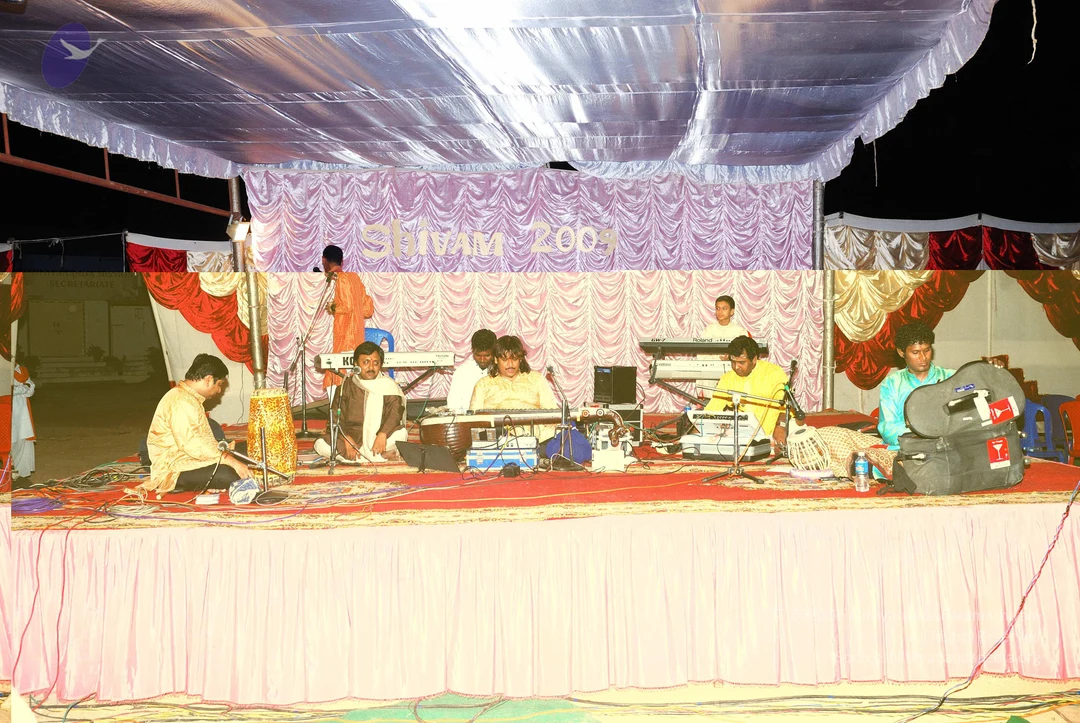
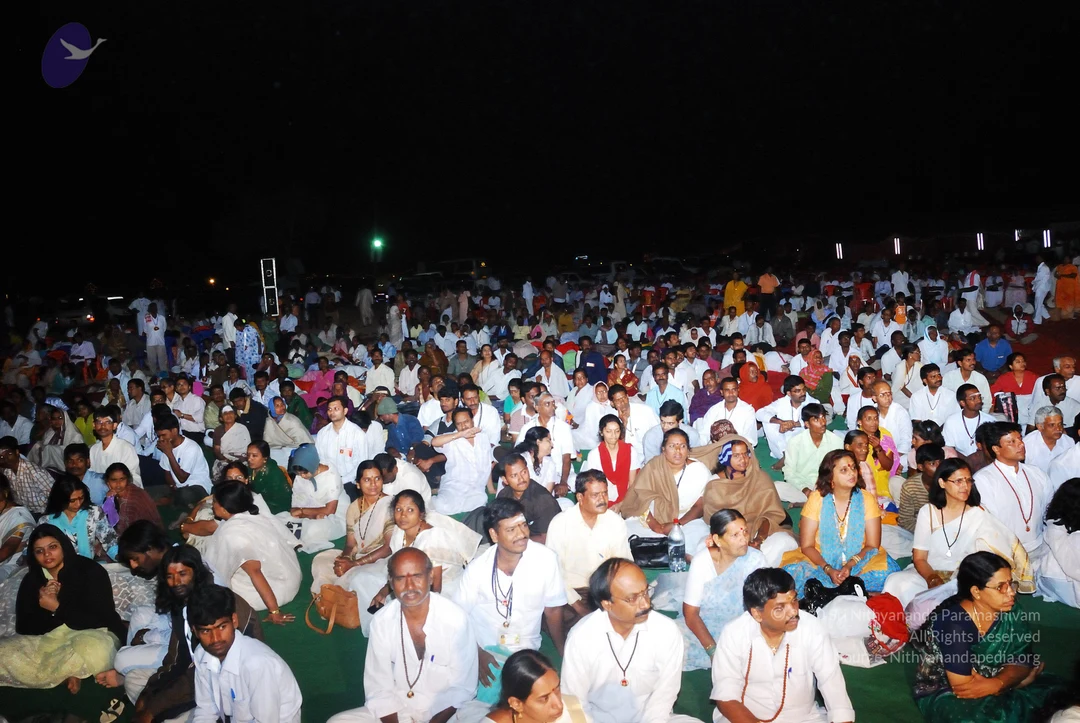
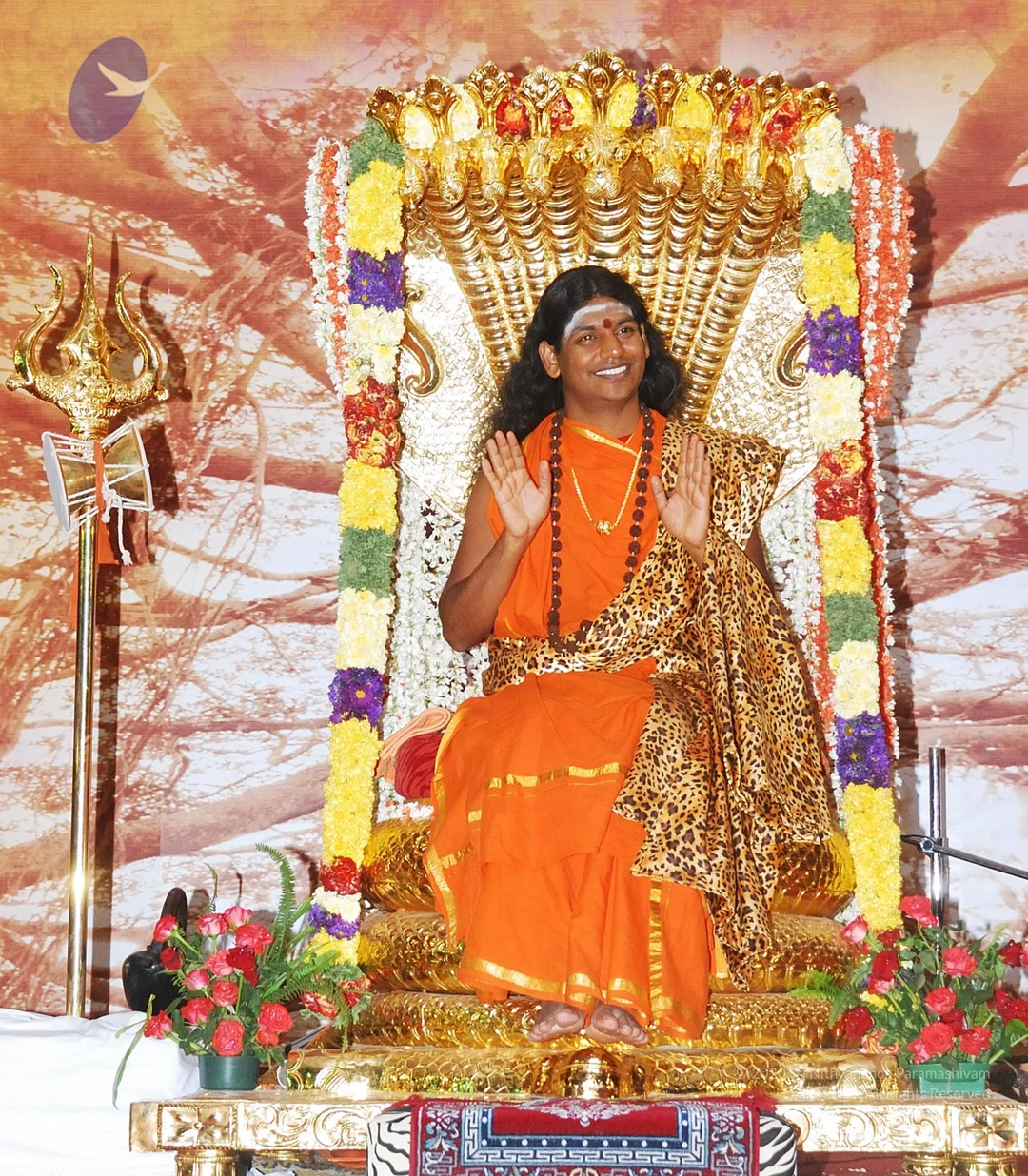
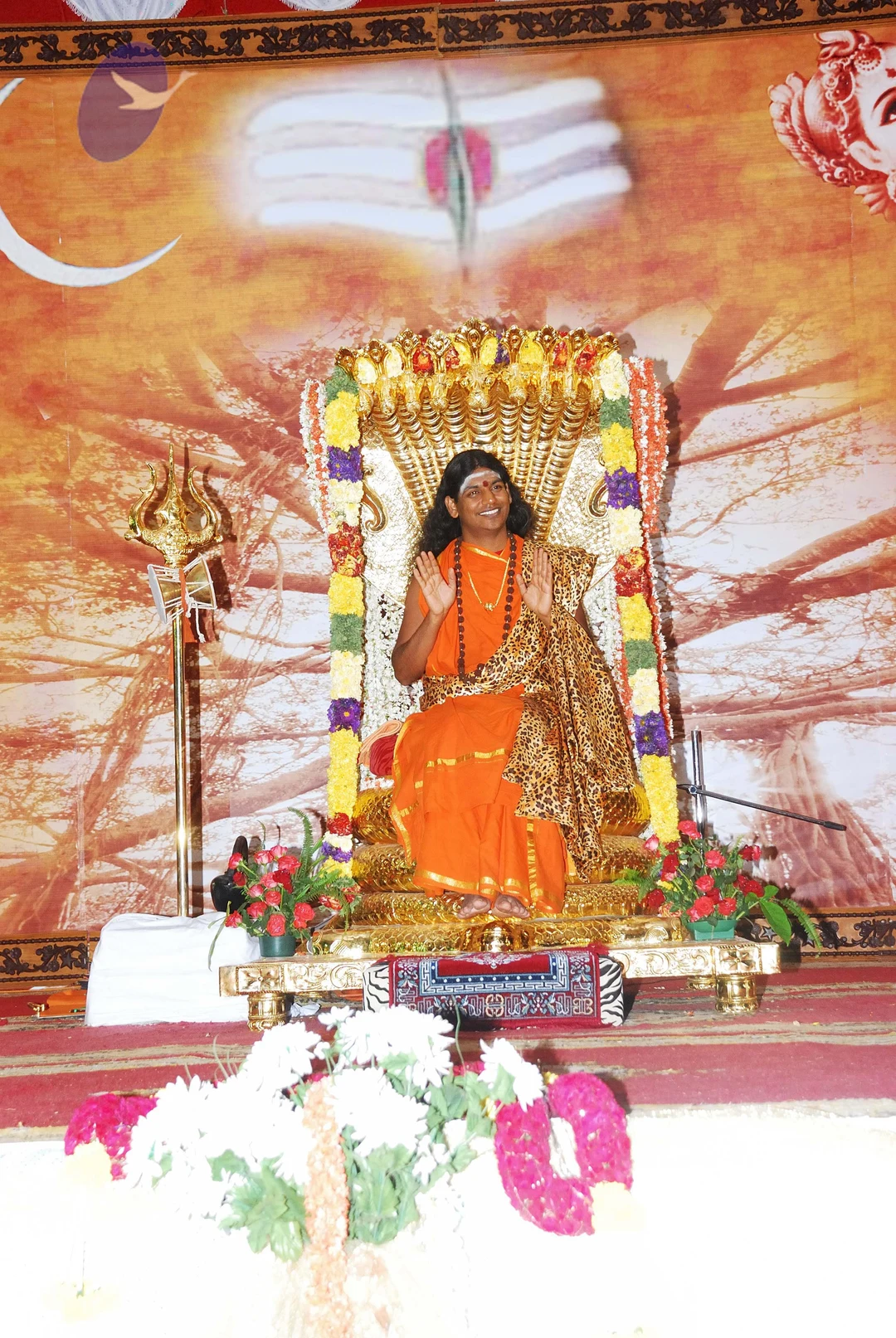
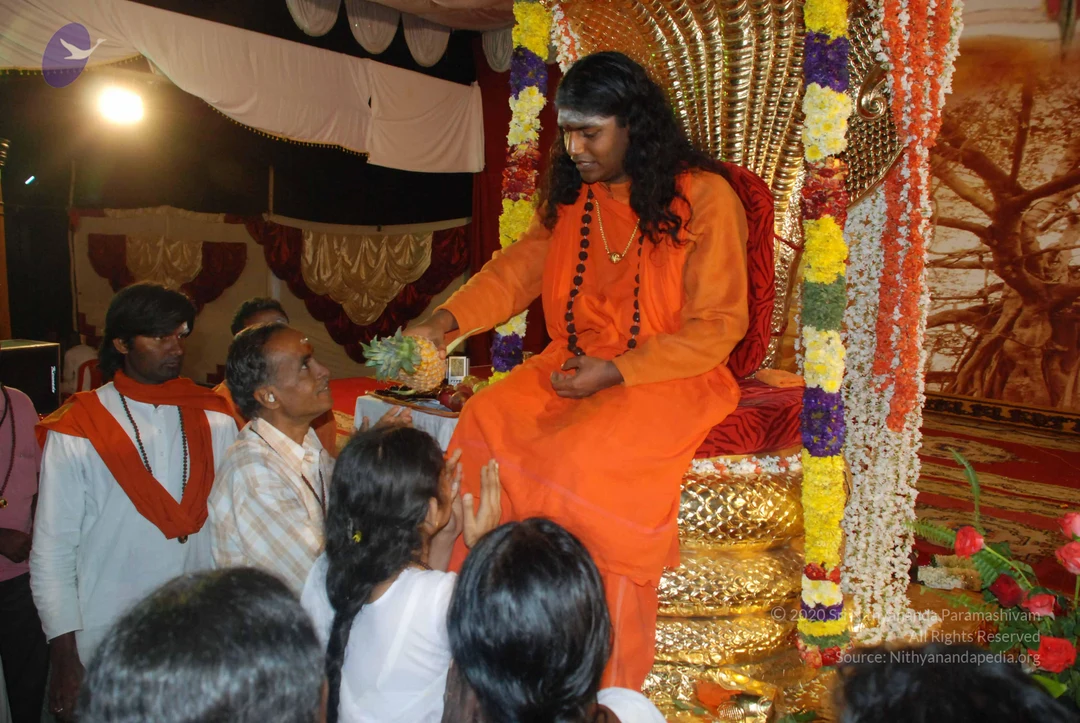
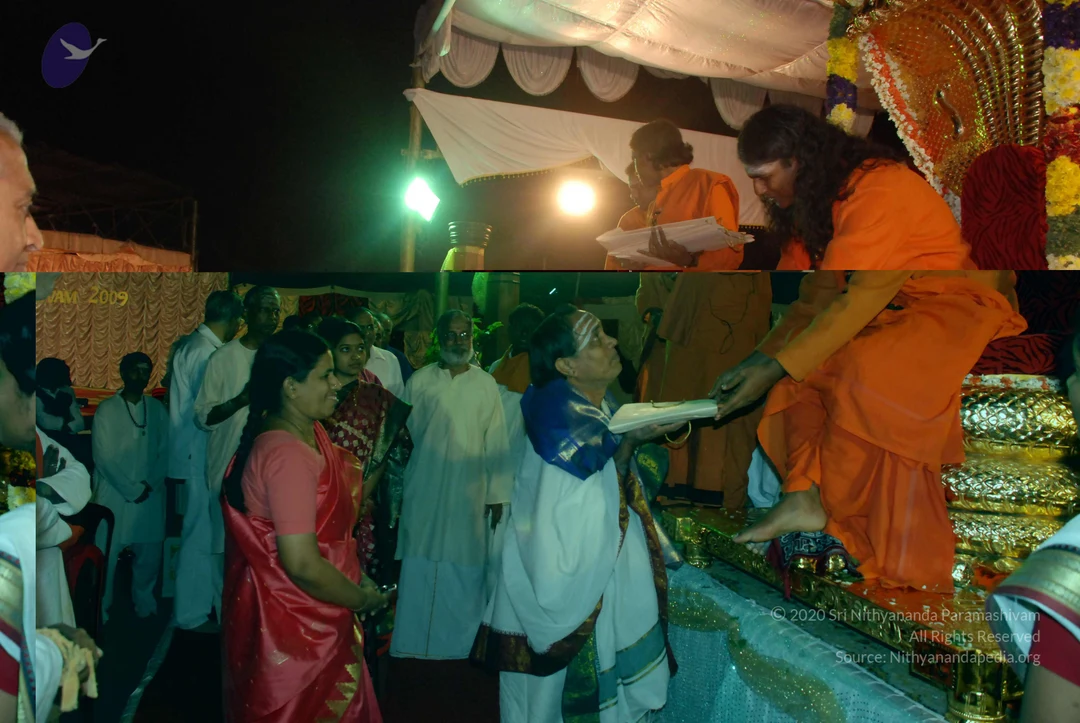
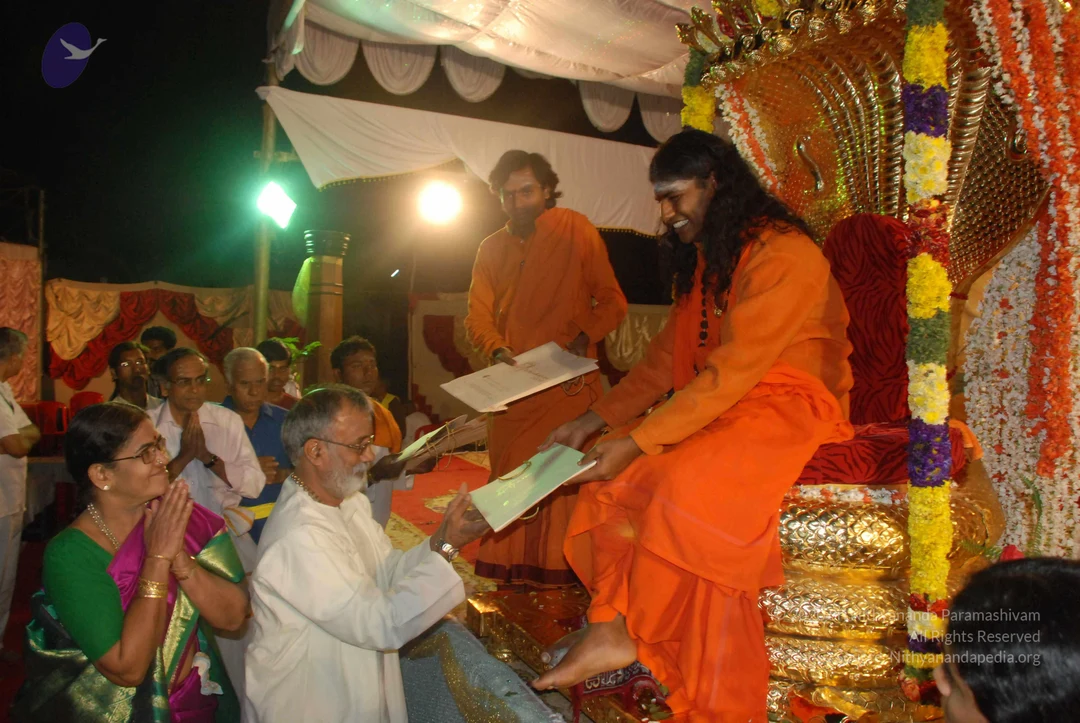
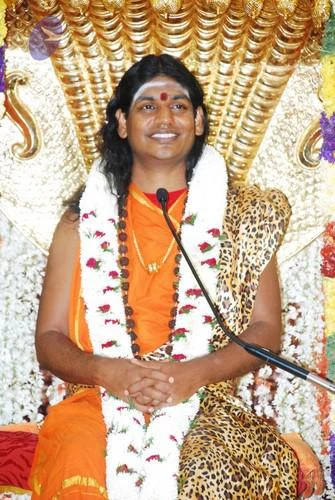
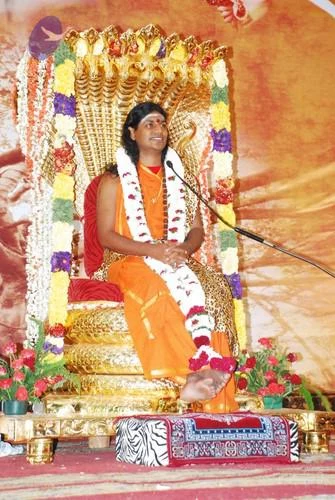
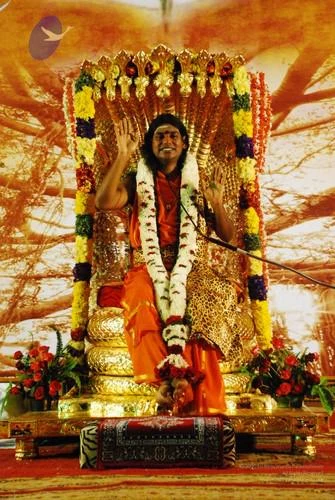
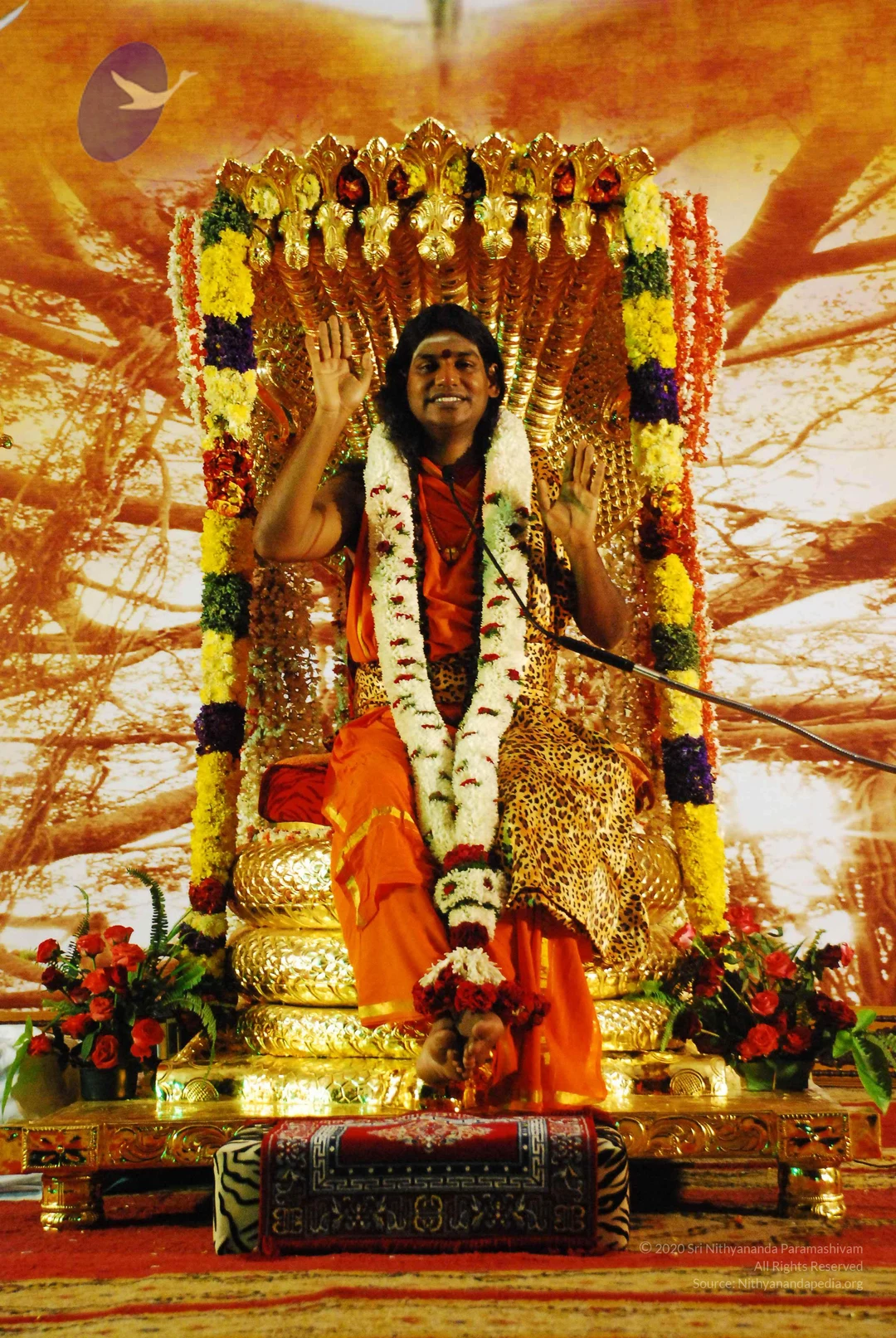
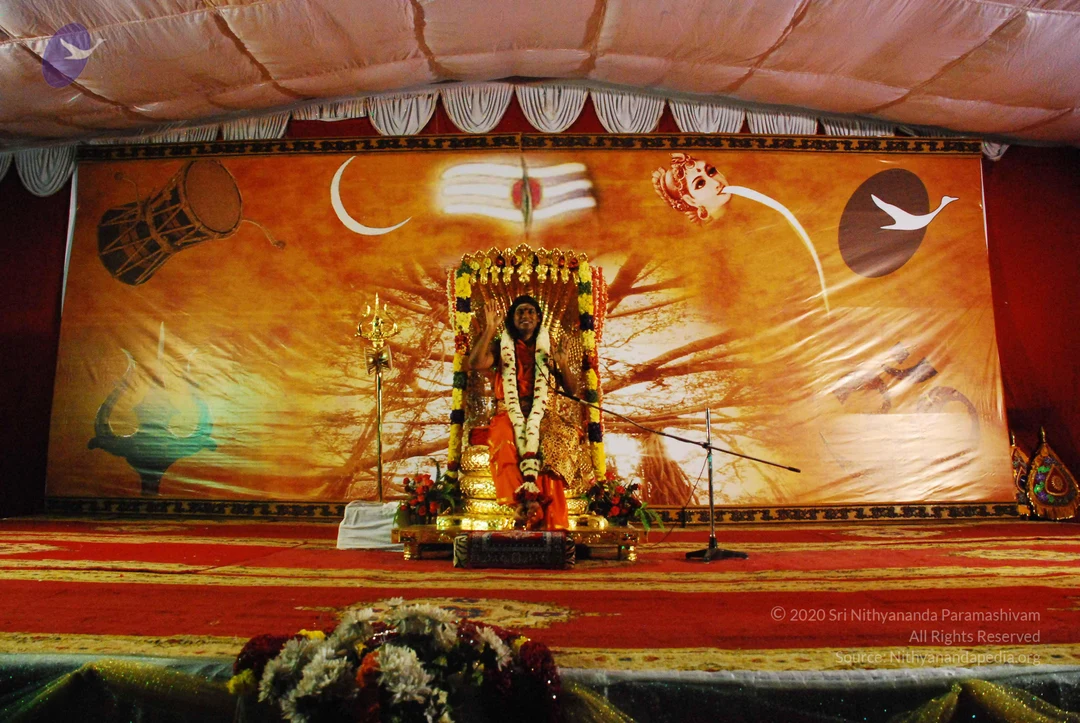
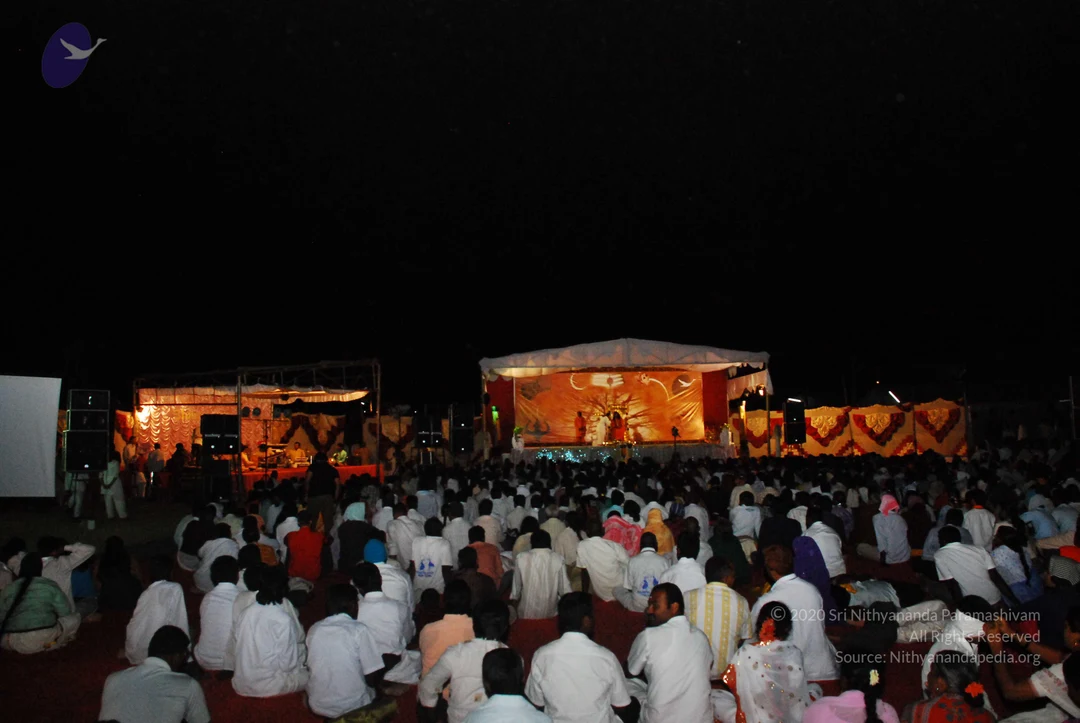
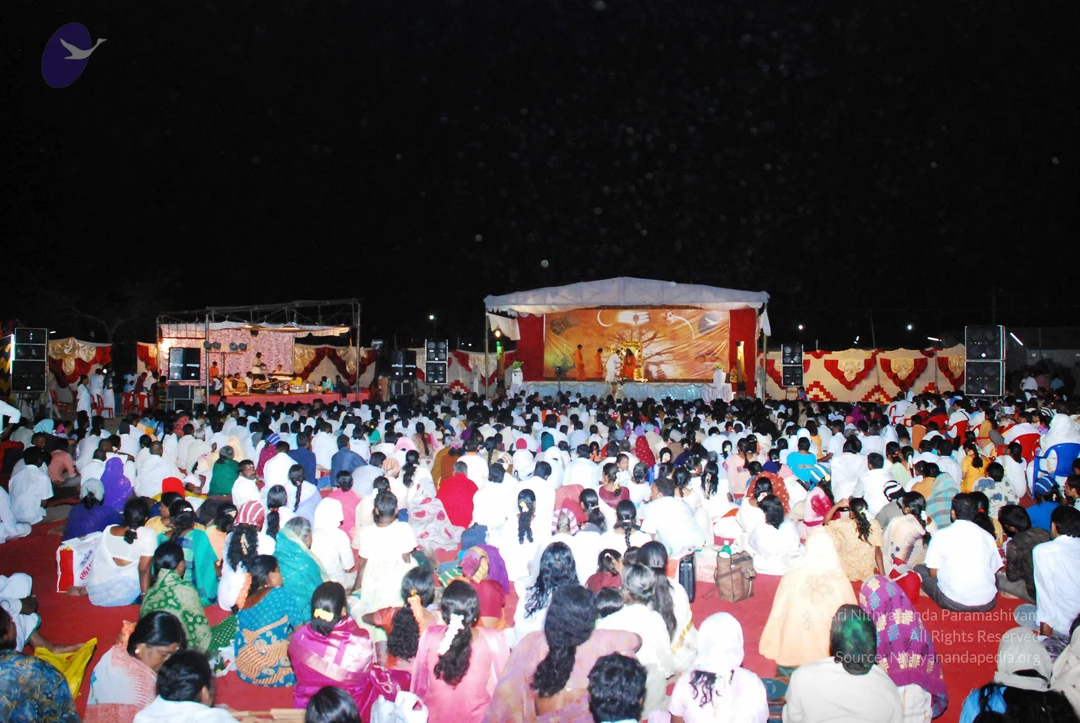
3-KUNDALINI-MEDITATION
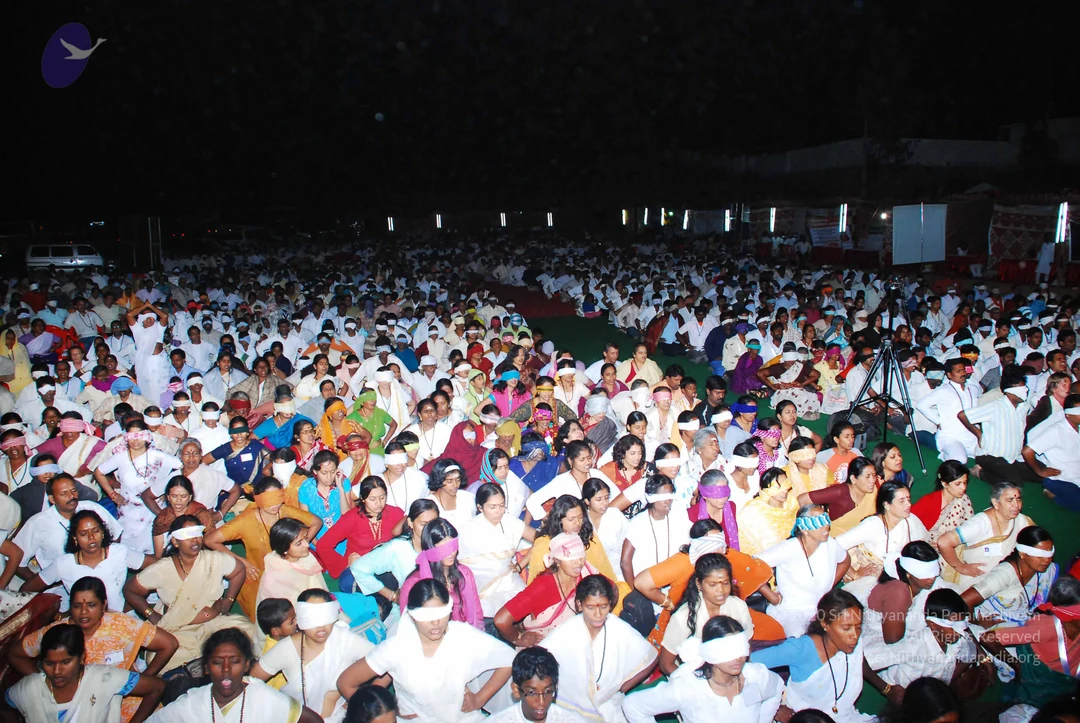
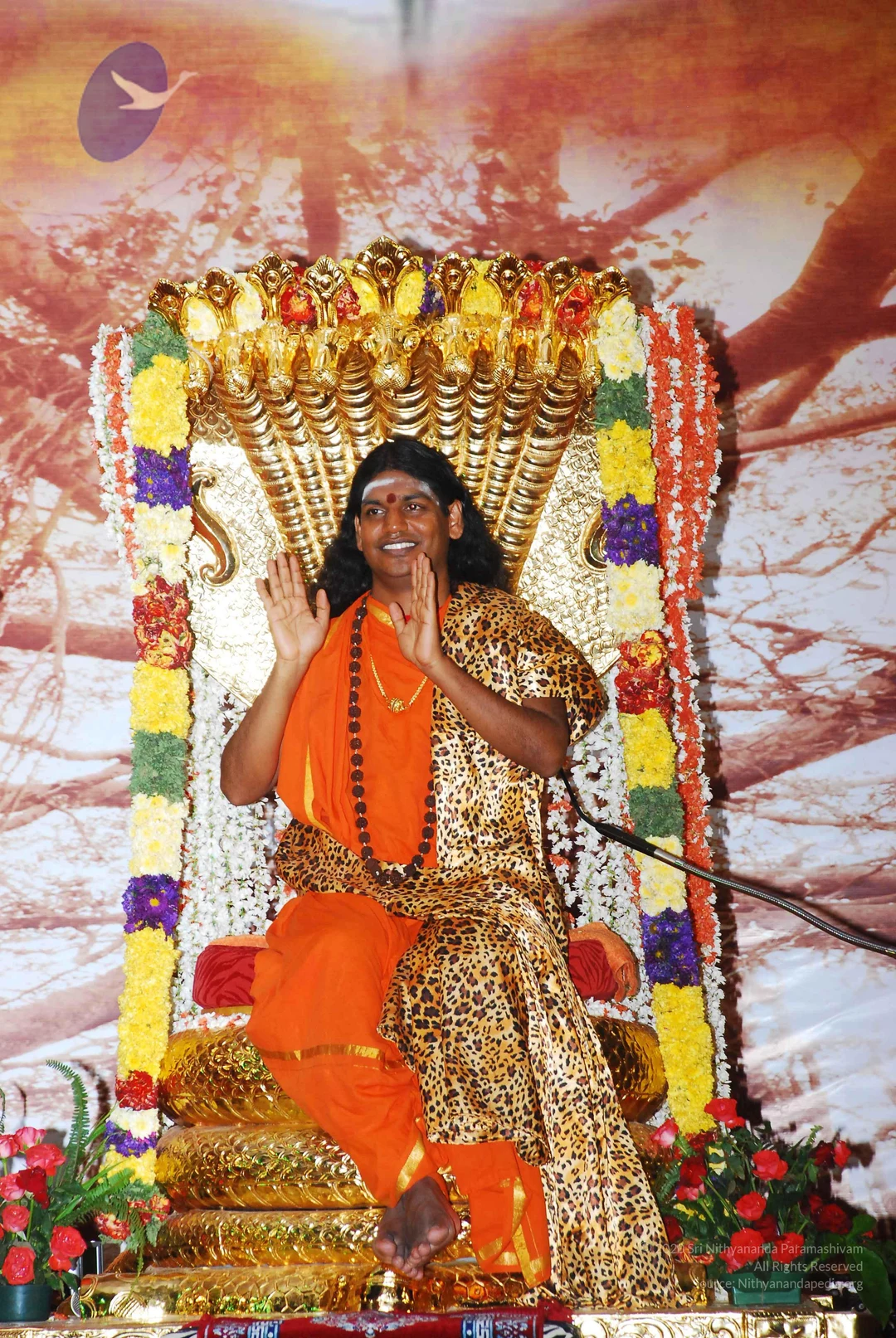
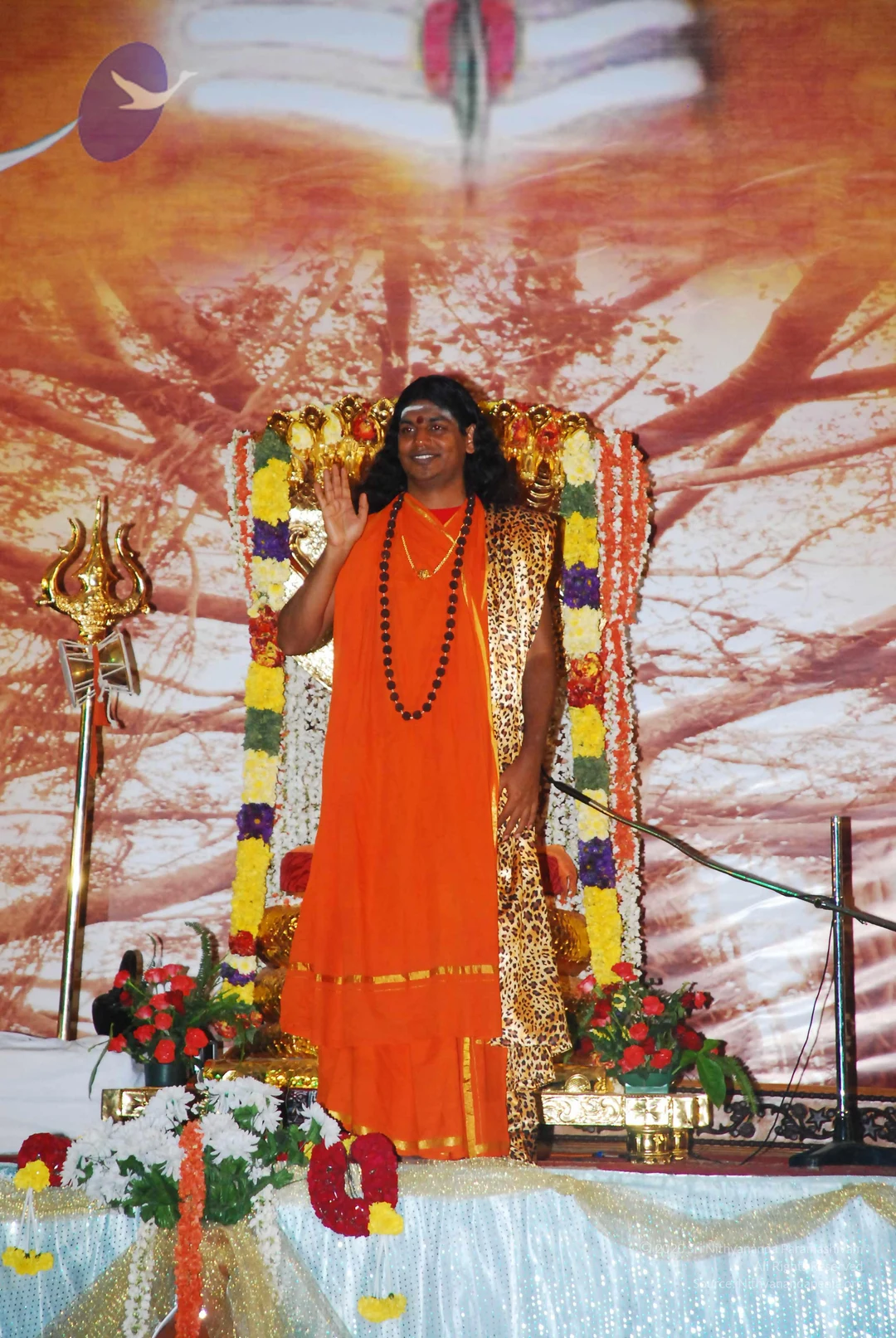
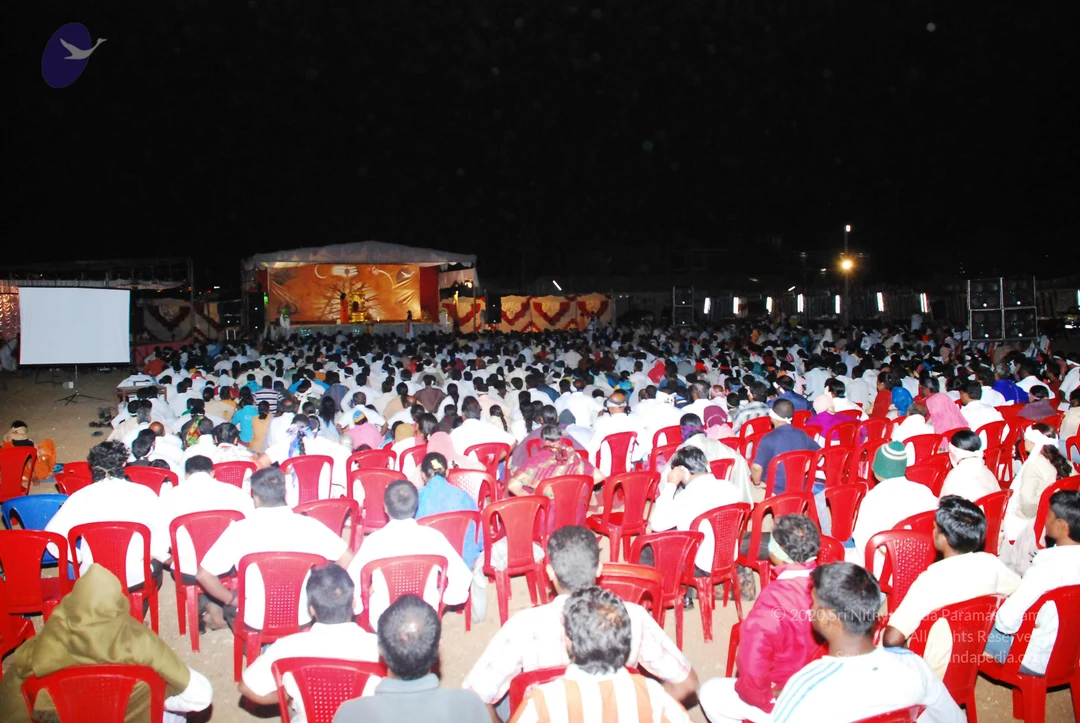
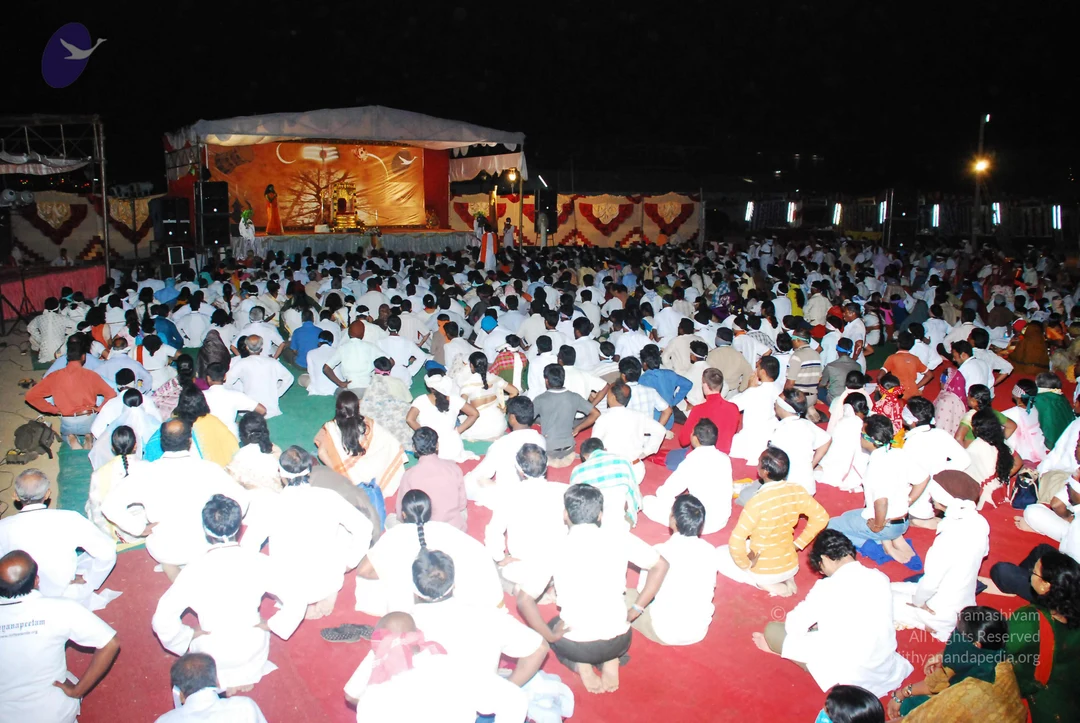
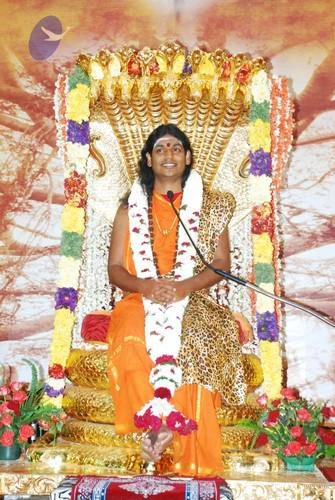
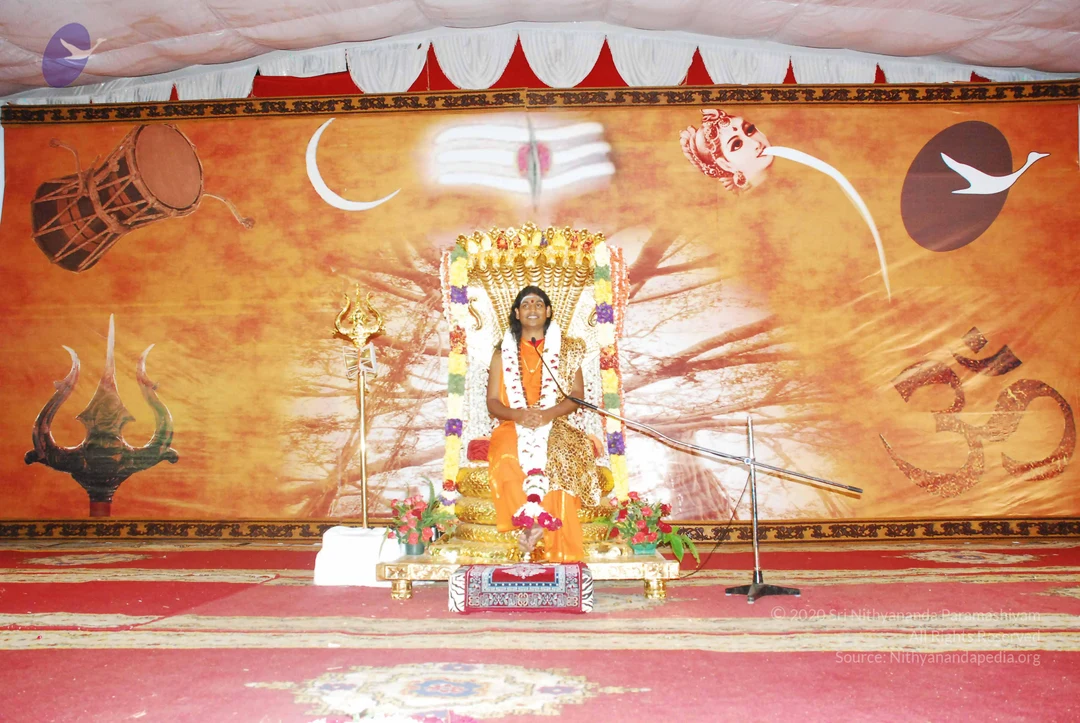
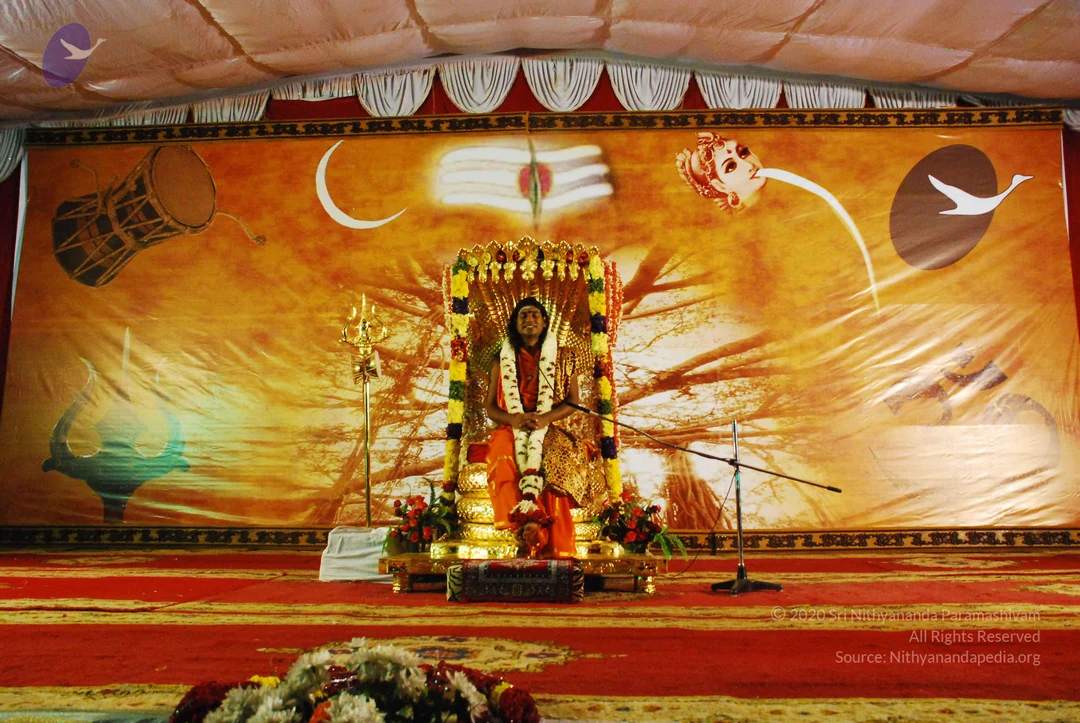
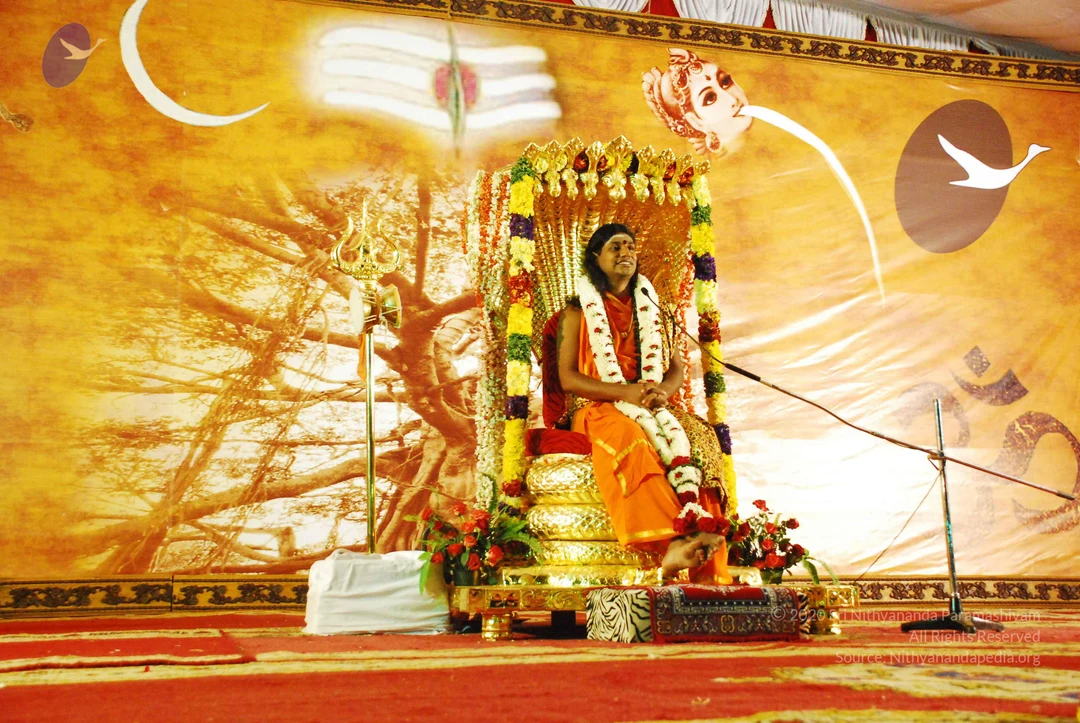
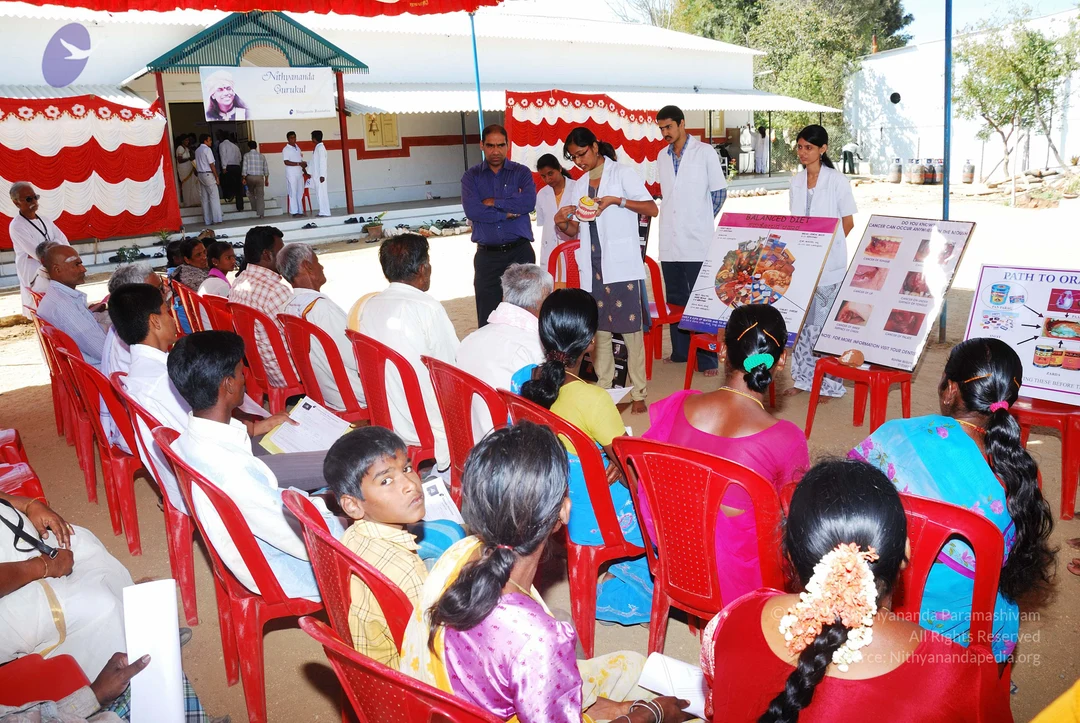
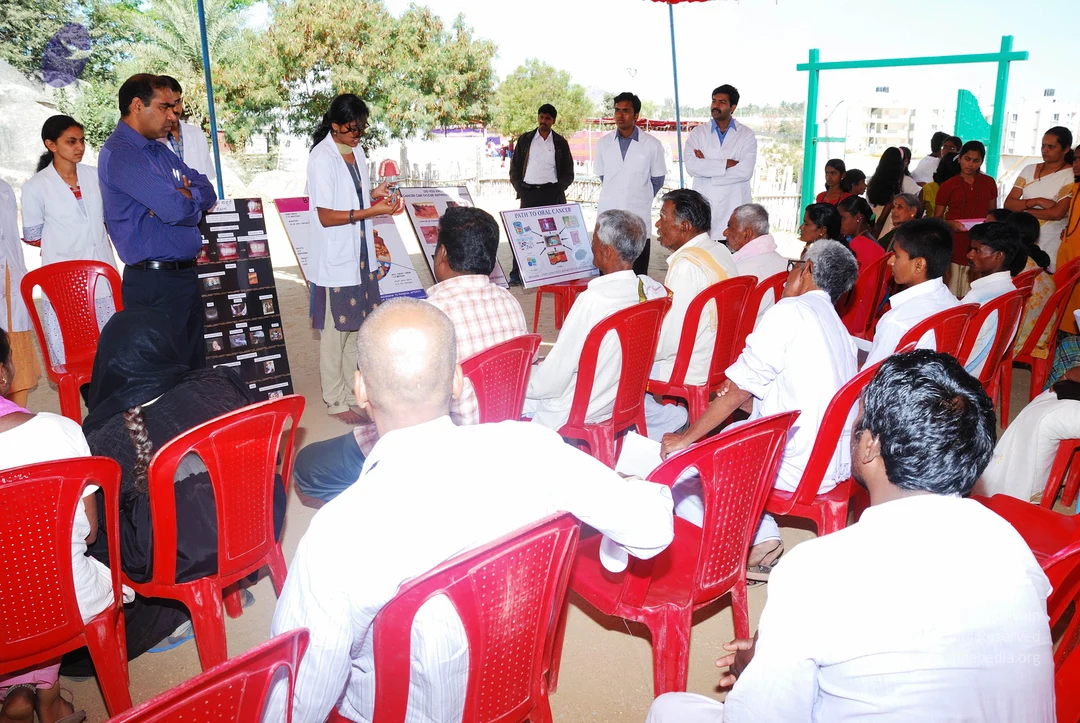
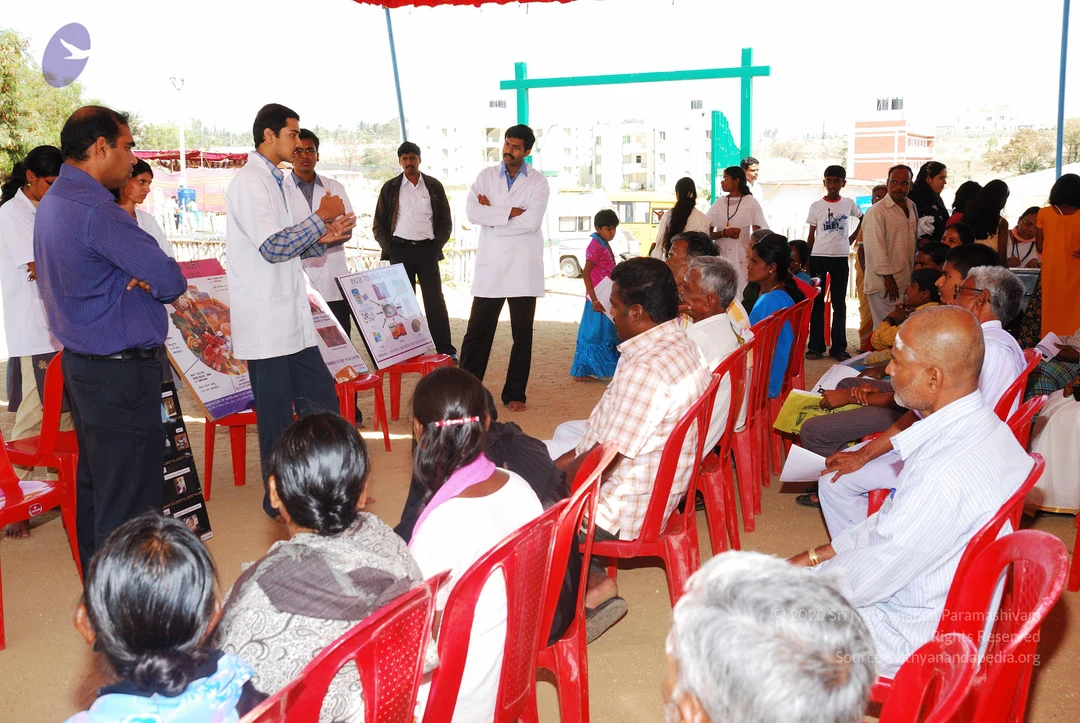
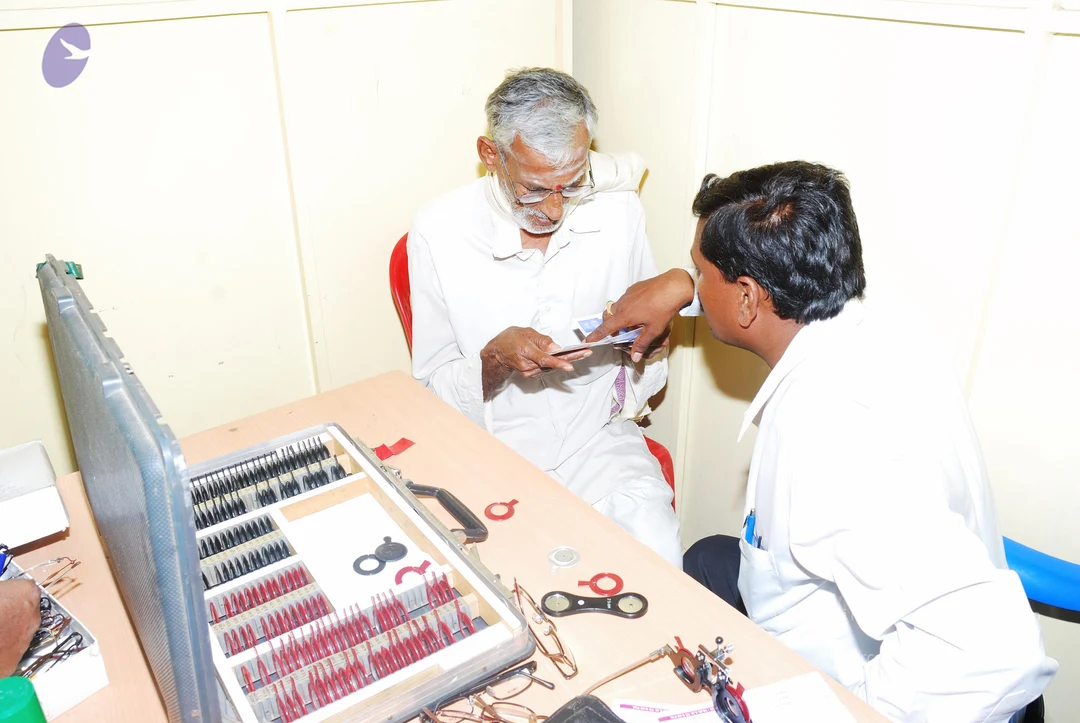
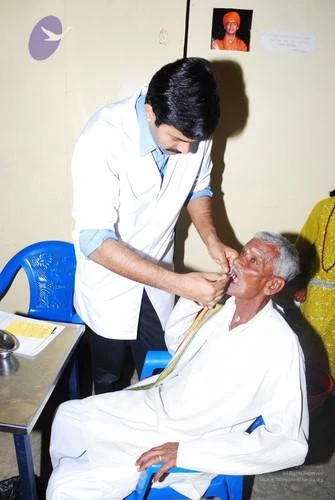
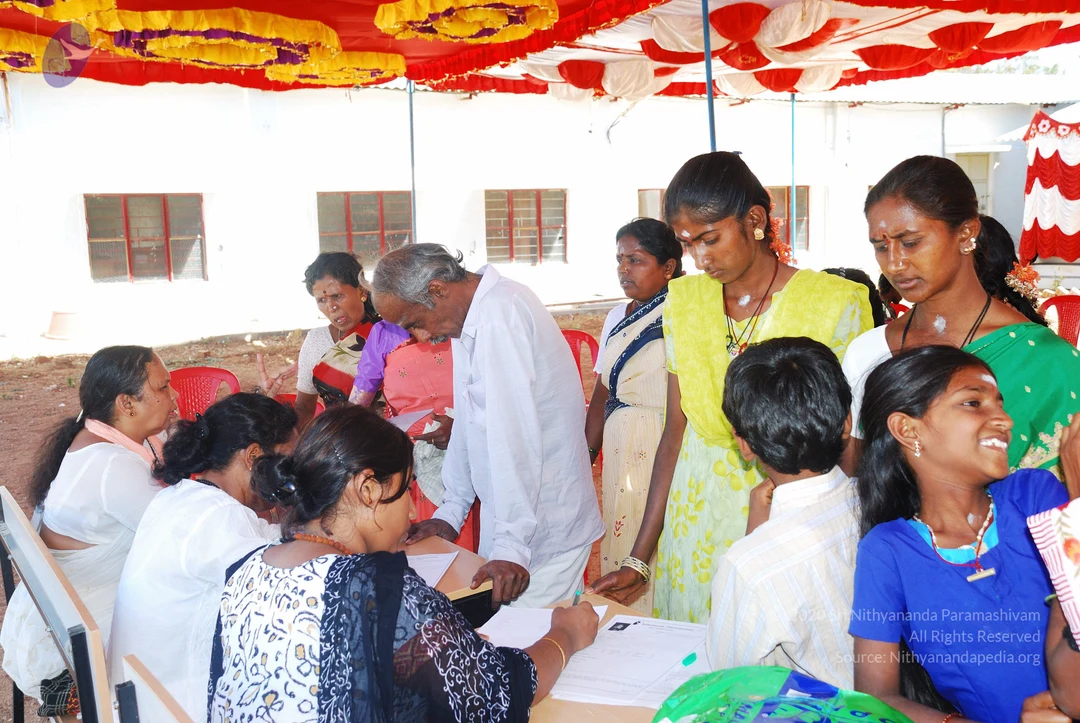
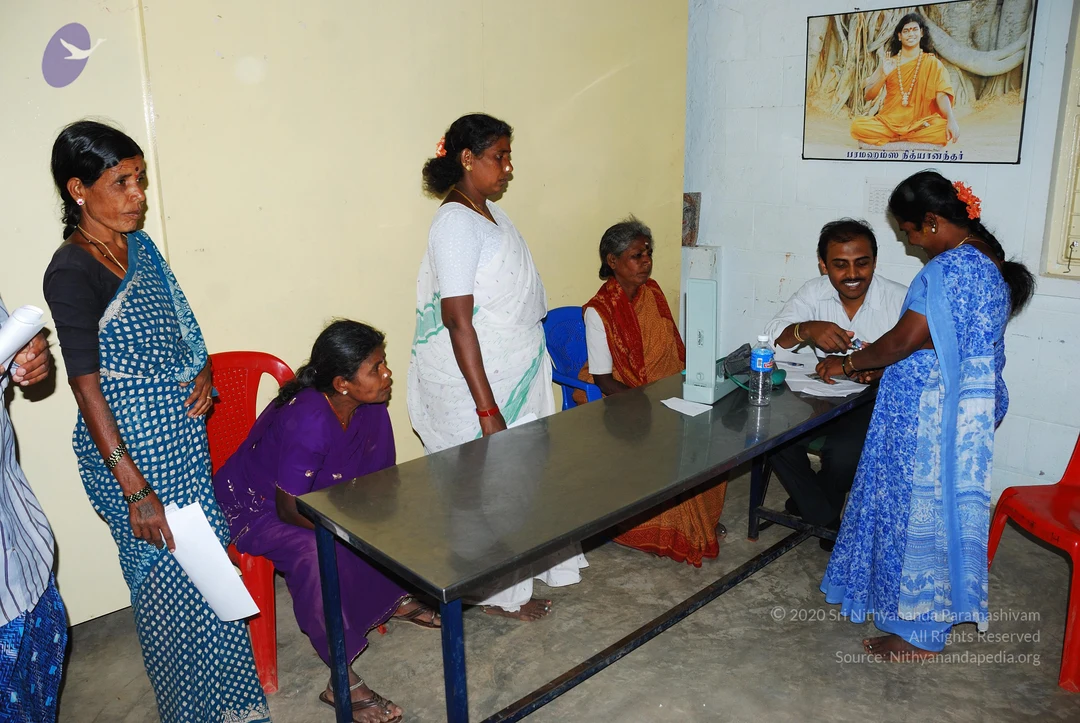
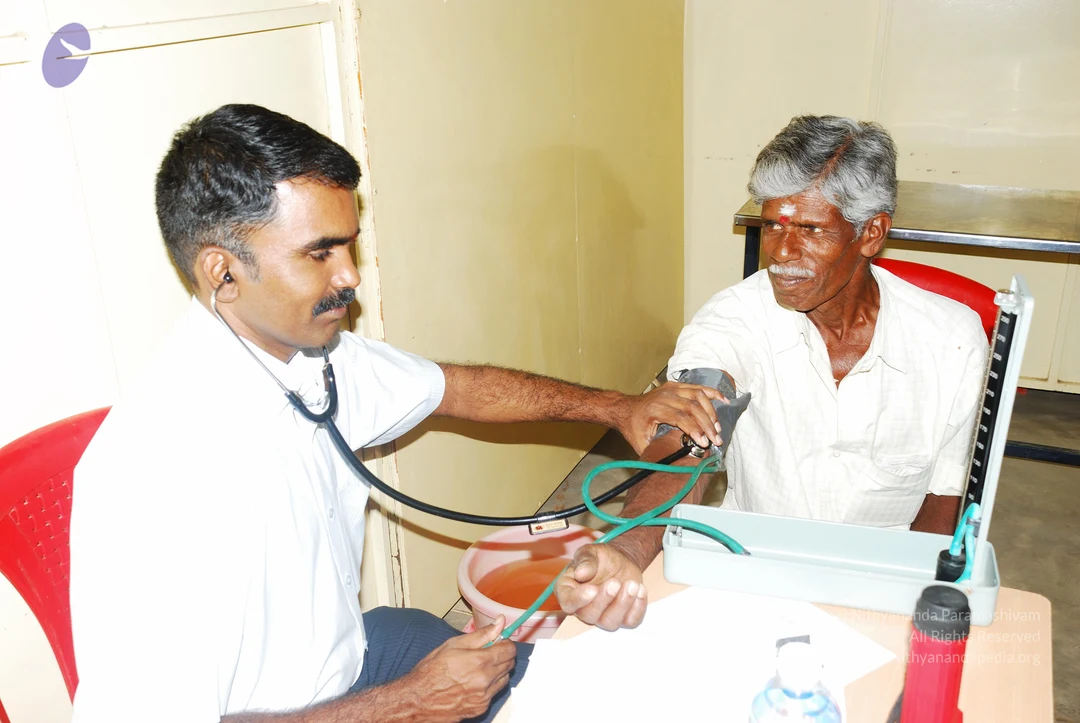
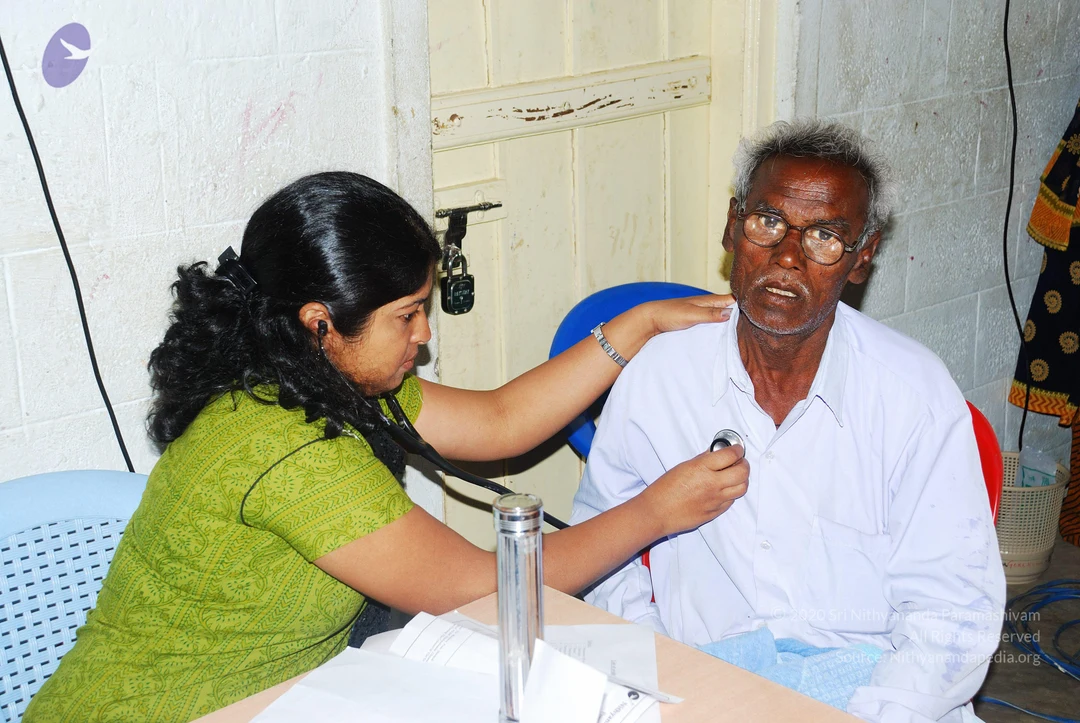
4-MEDICAL-CAMP
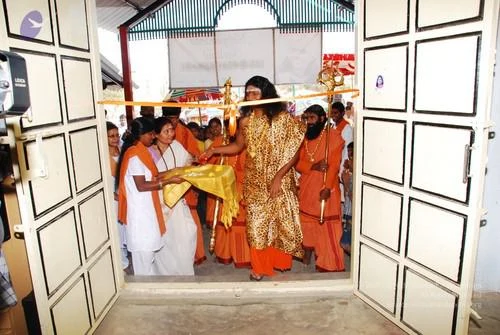
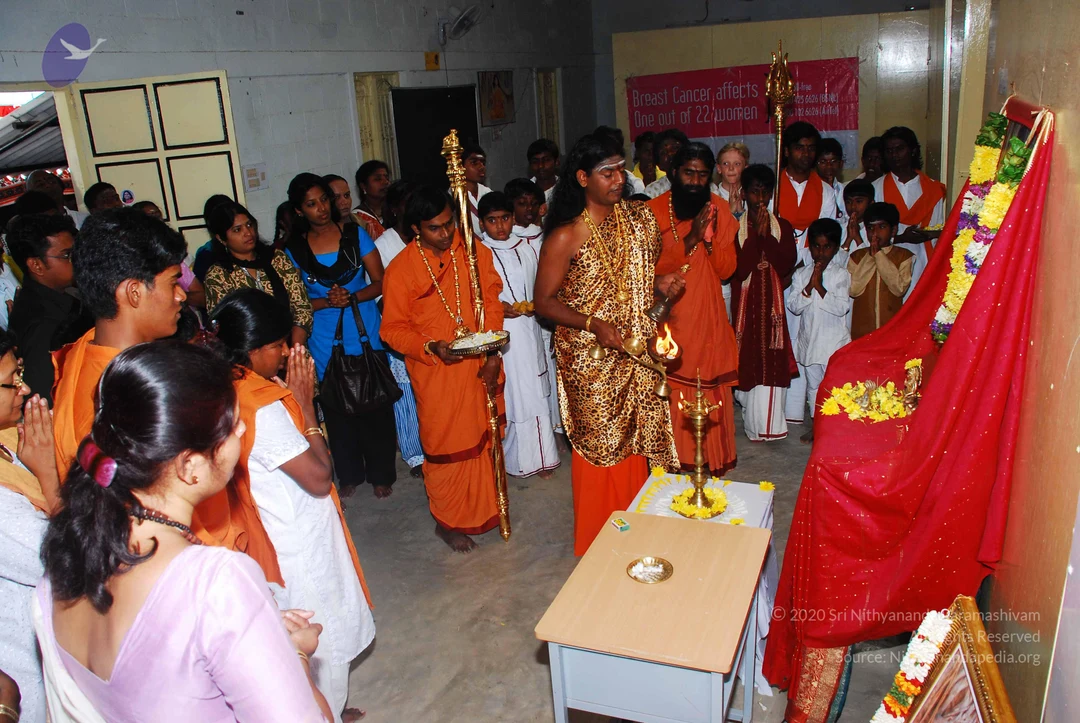
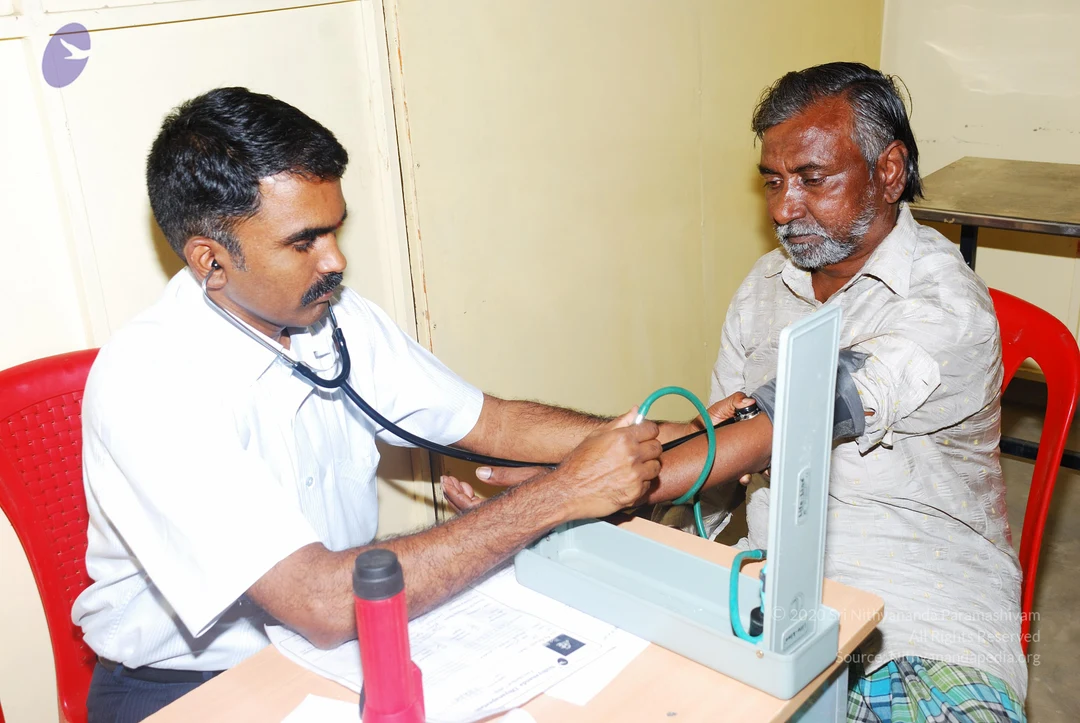
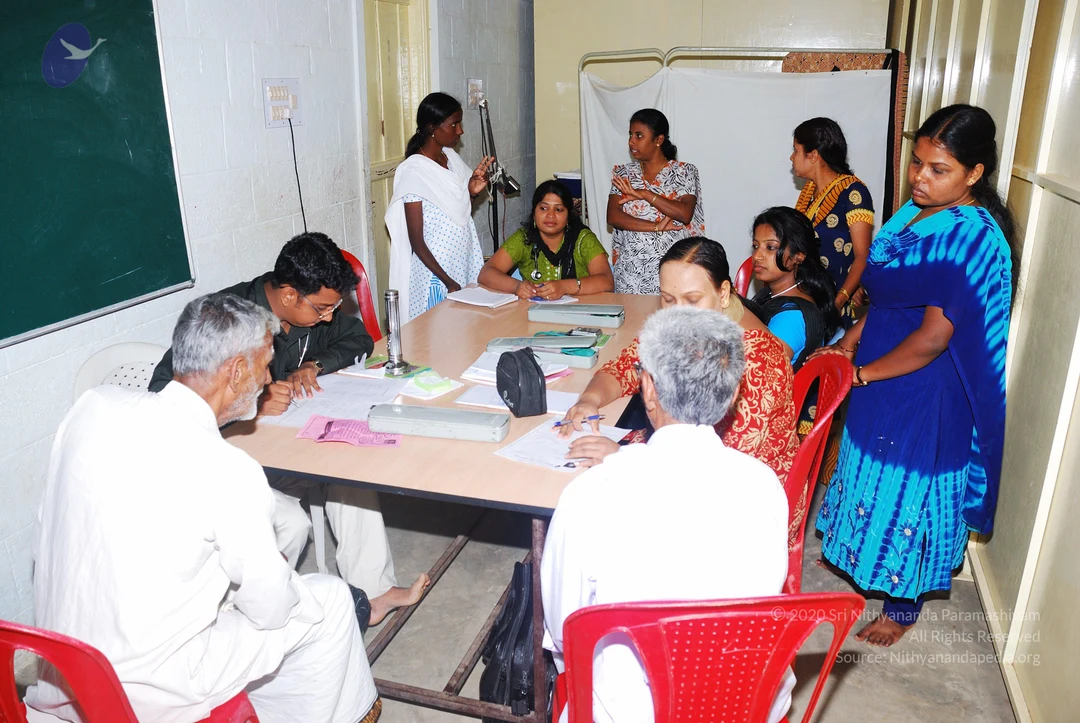
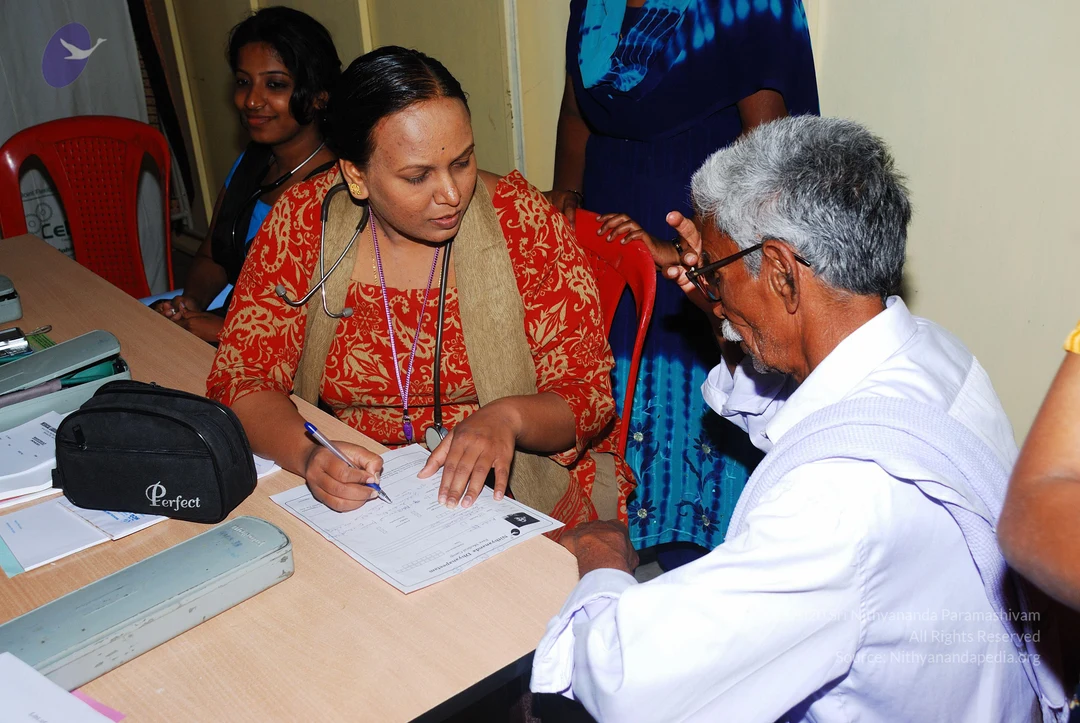



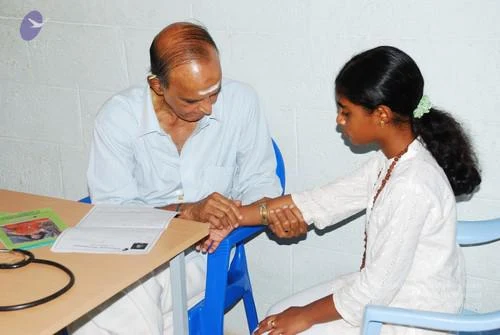
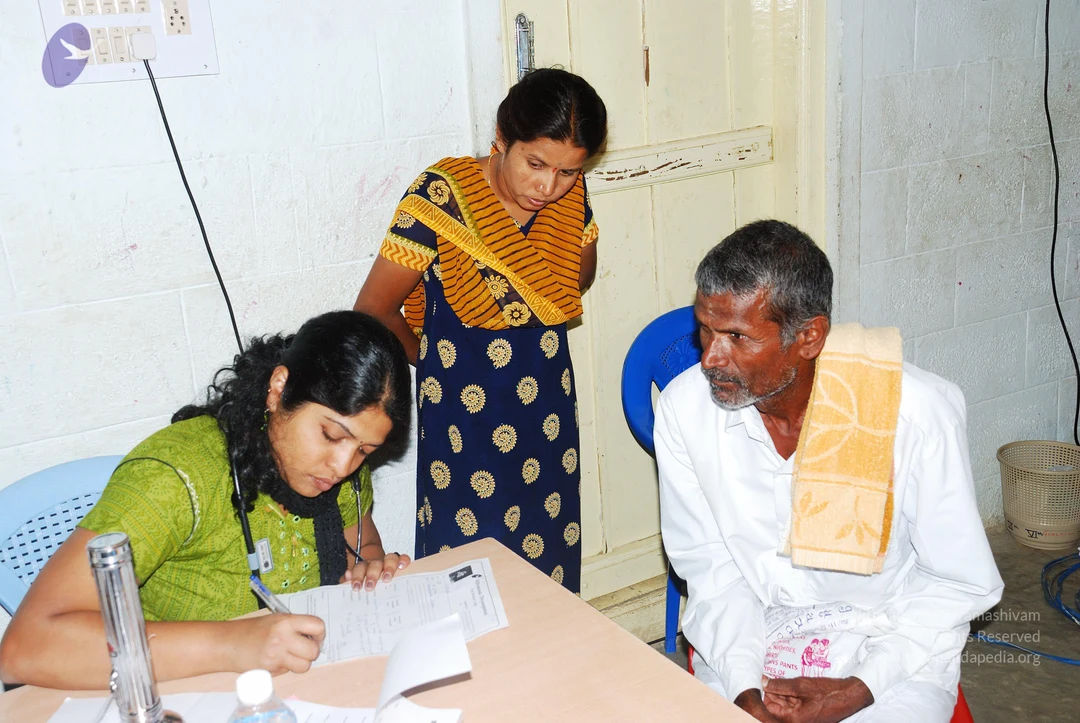
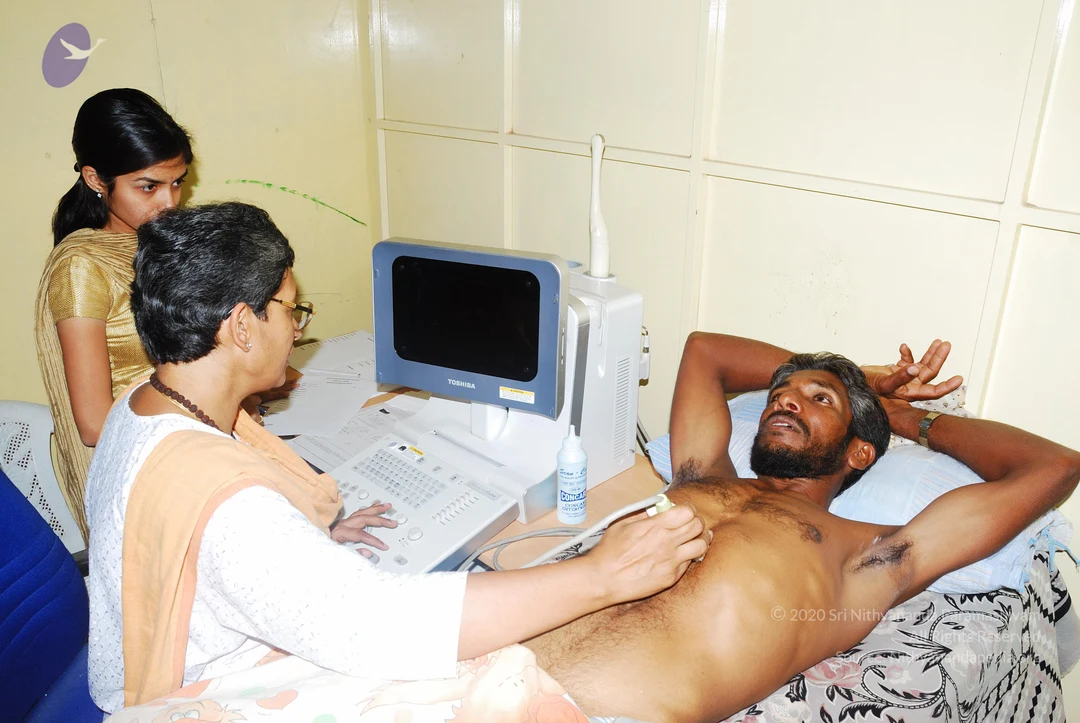
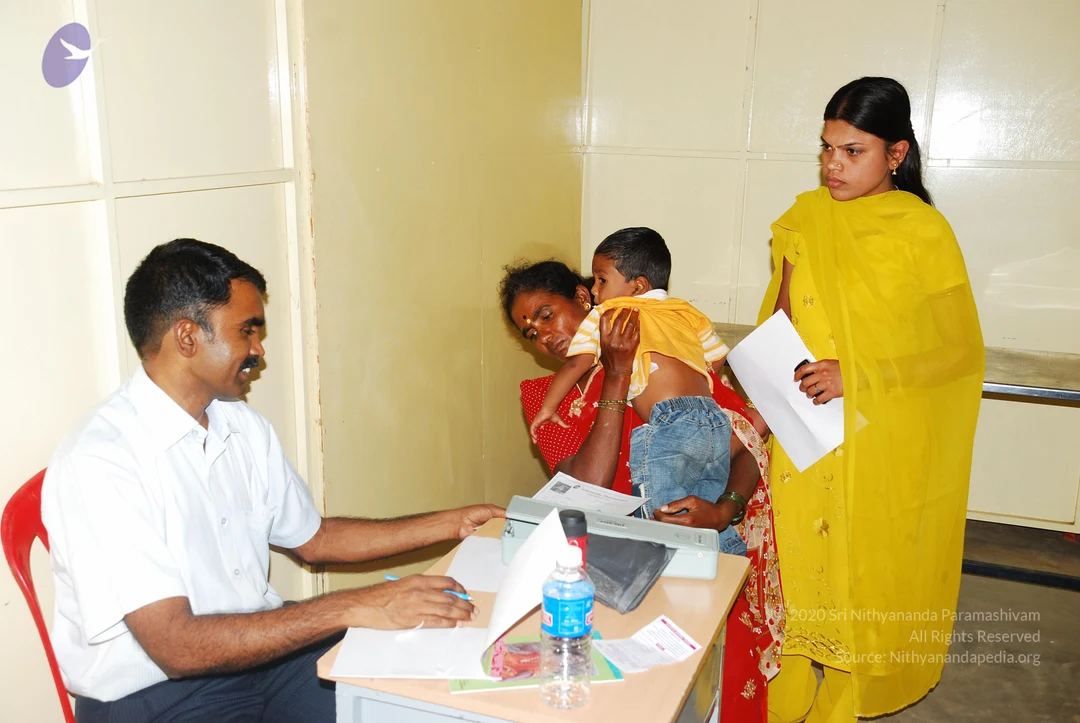
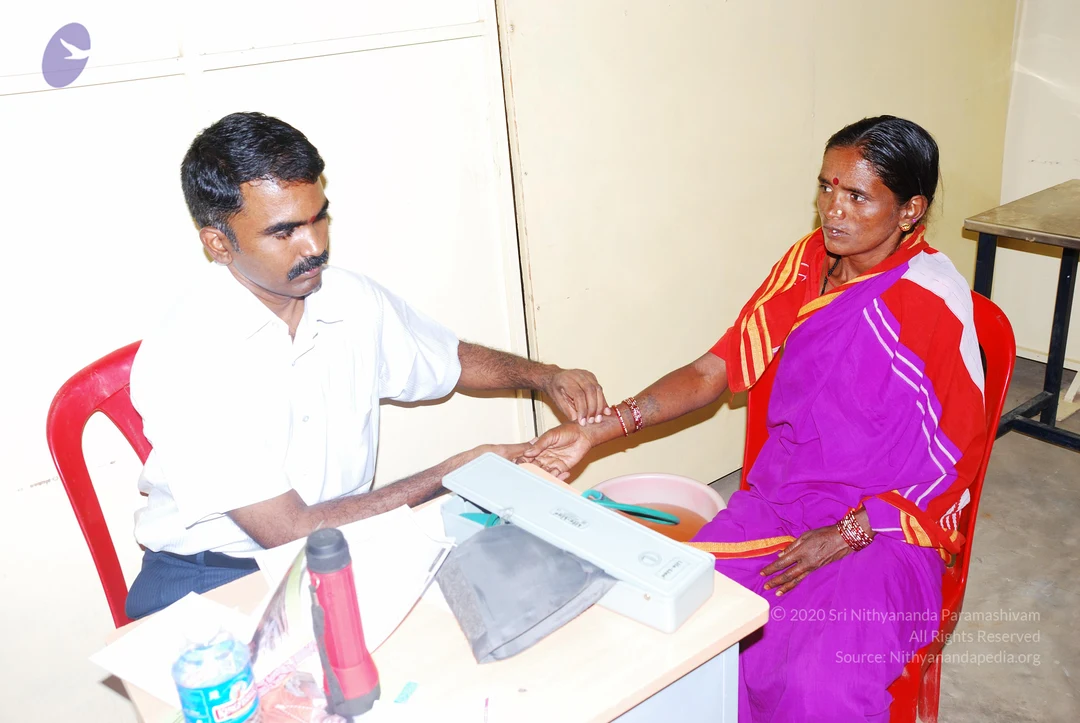
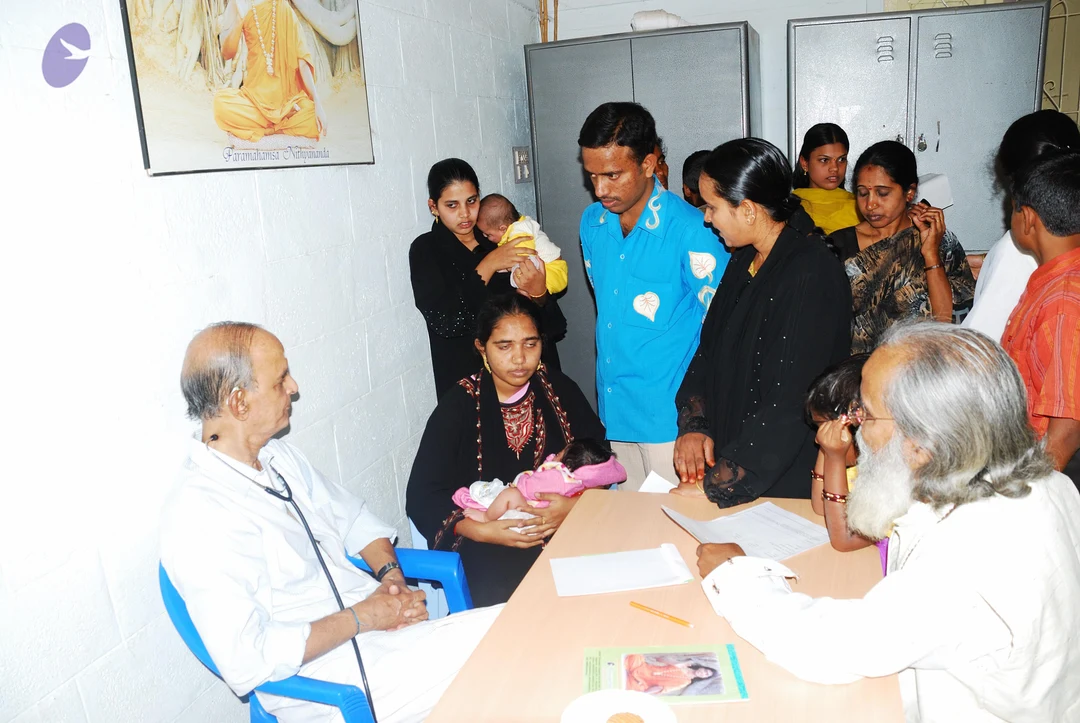

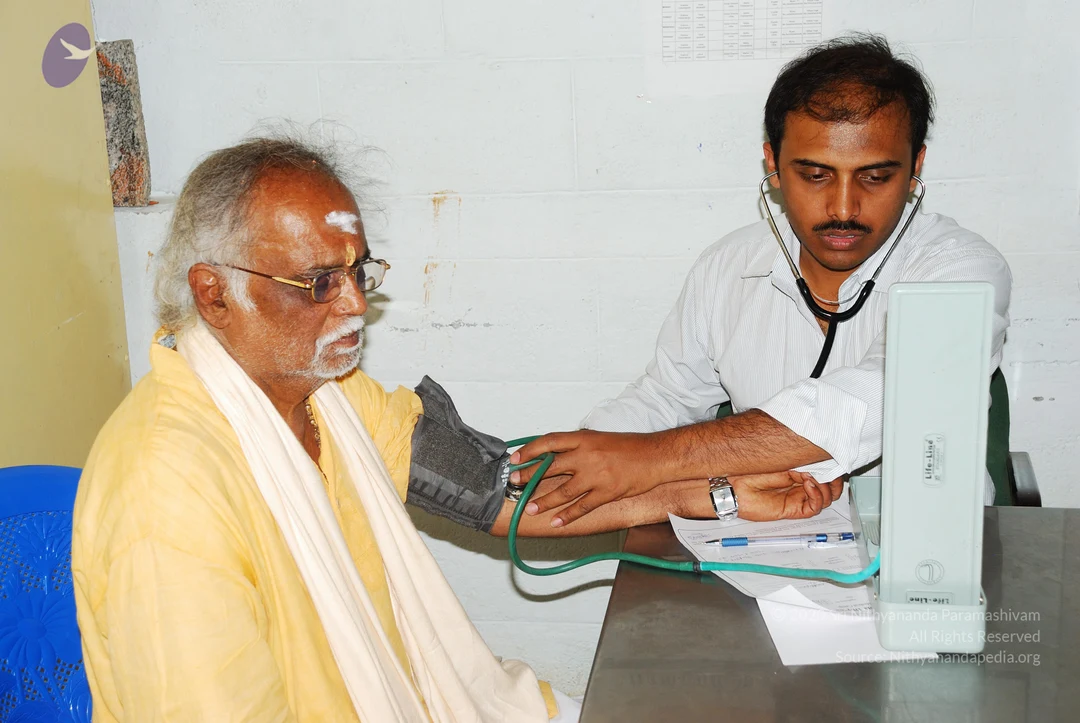
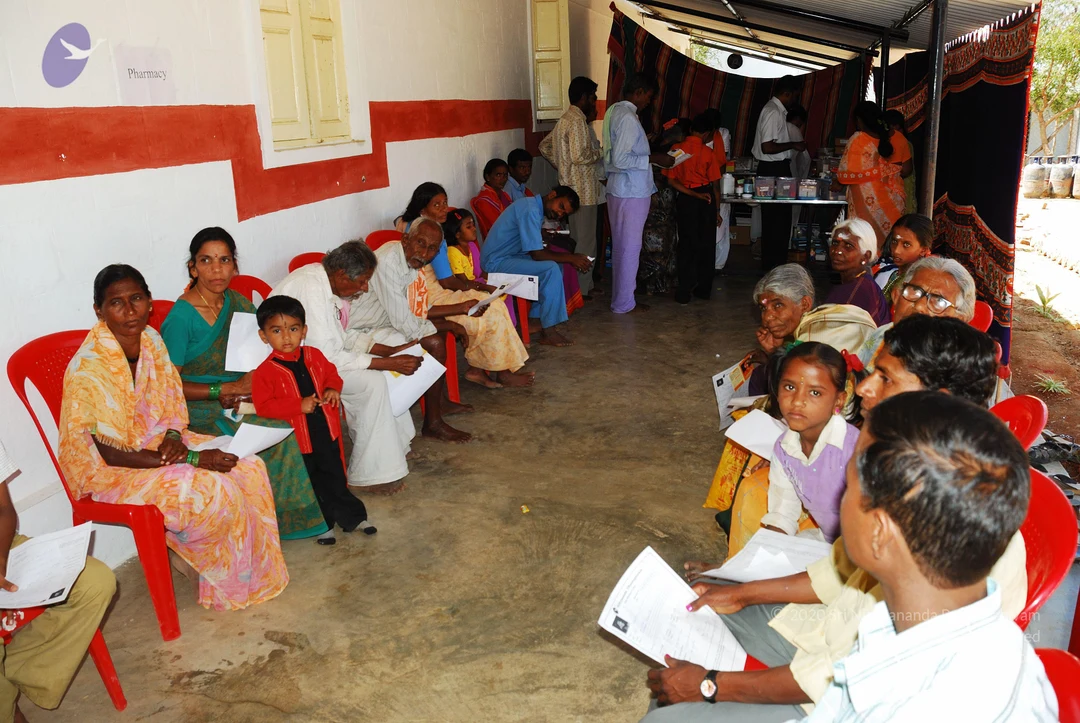
5-ABHISHEGAM-AND-ARATI
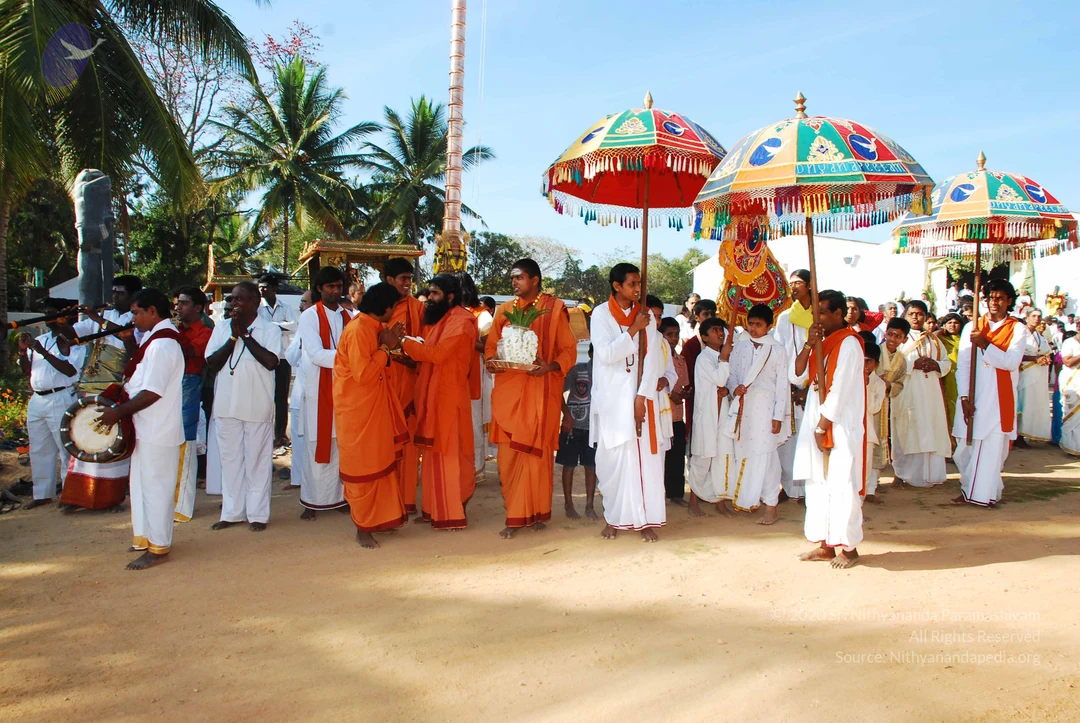
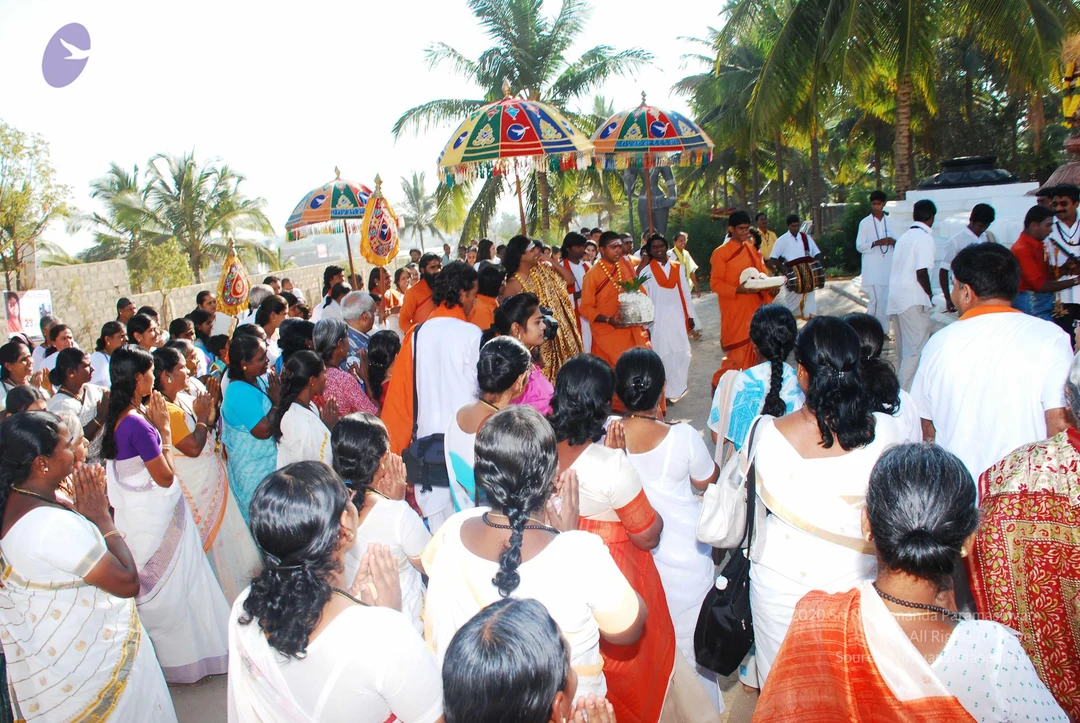
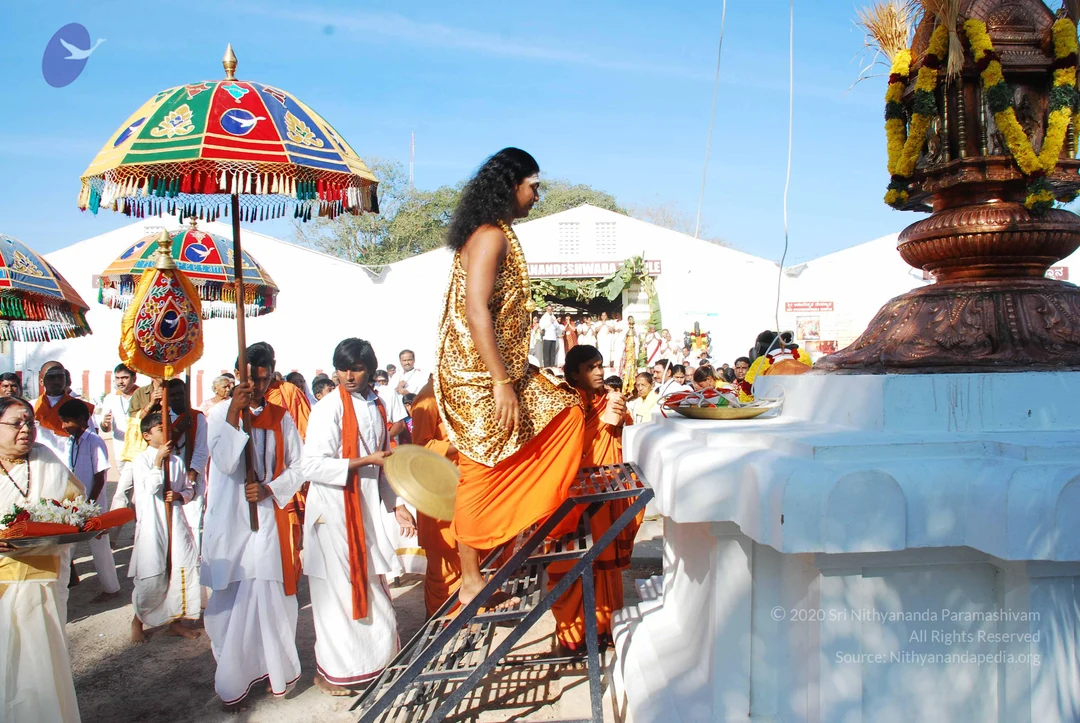
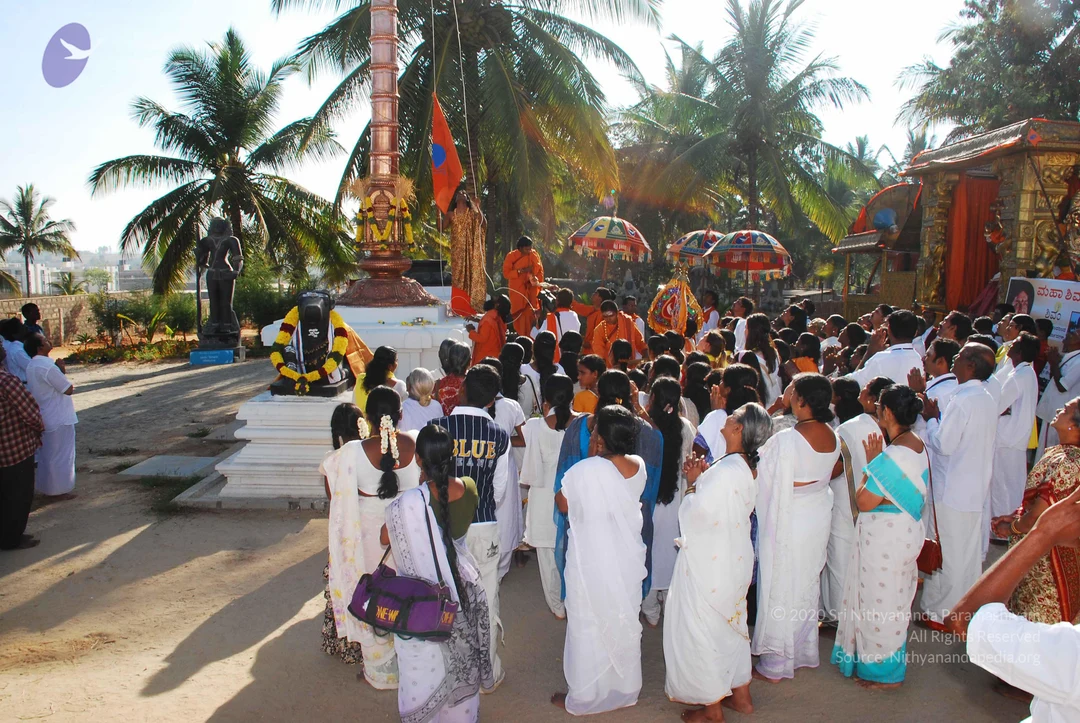
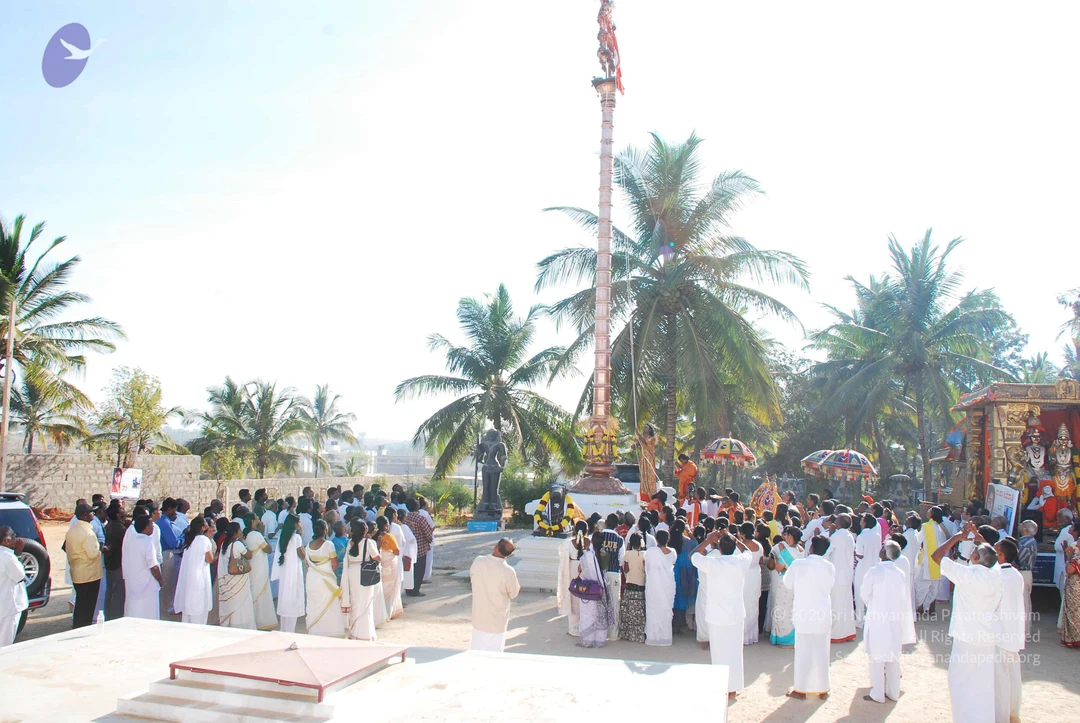
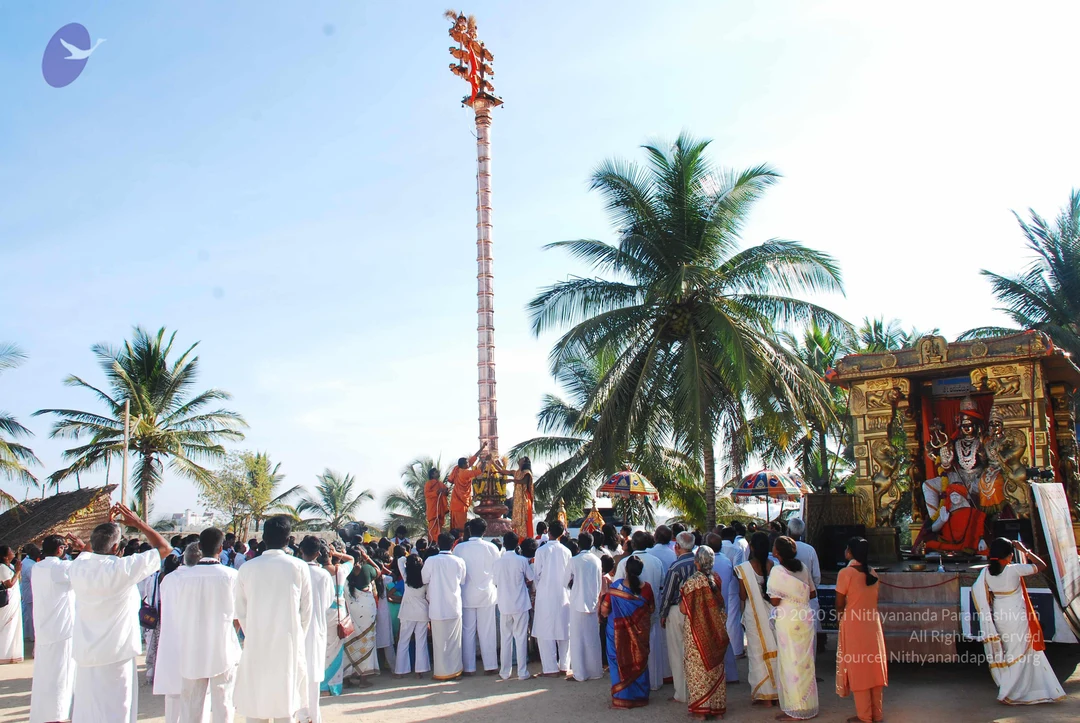
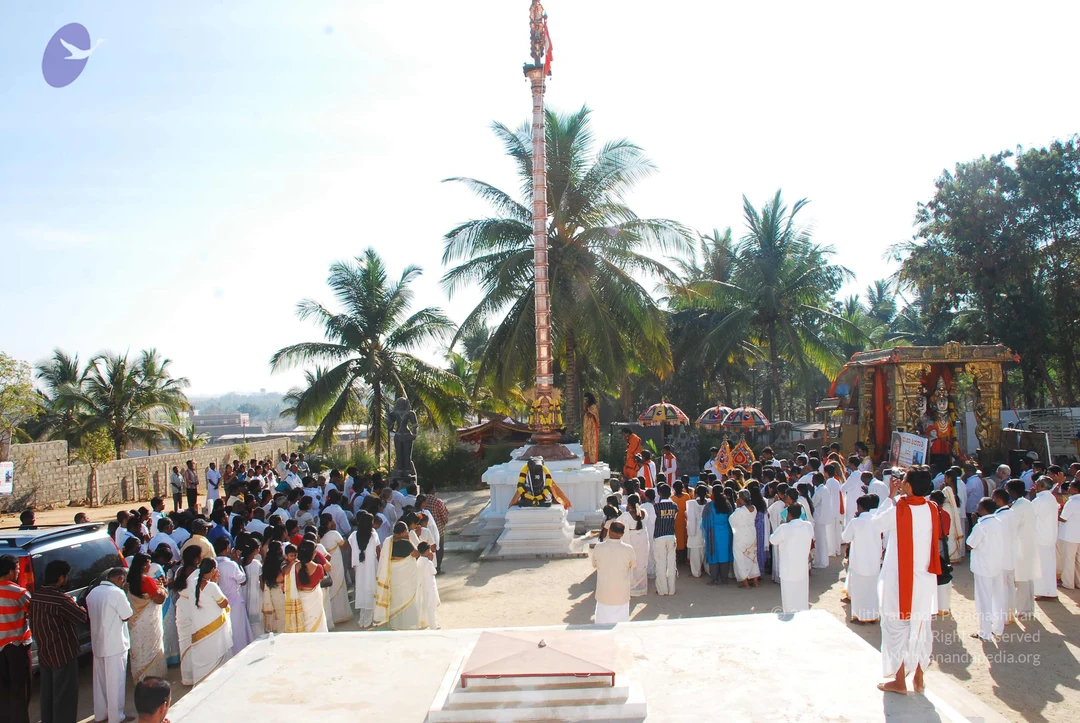
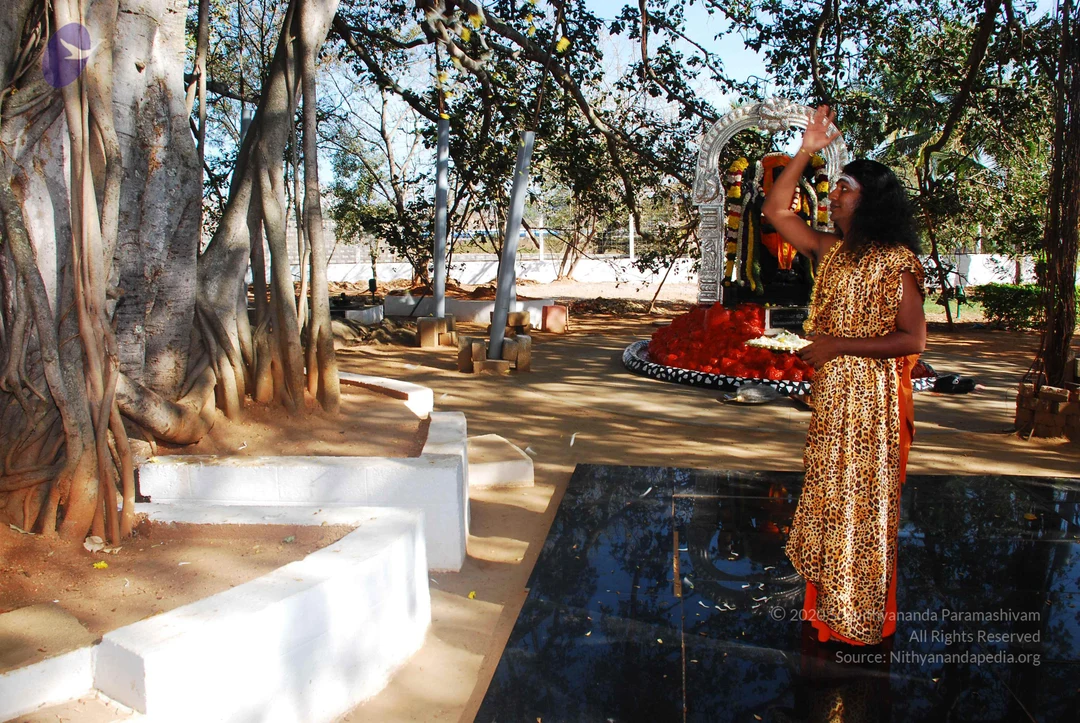
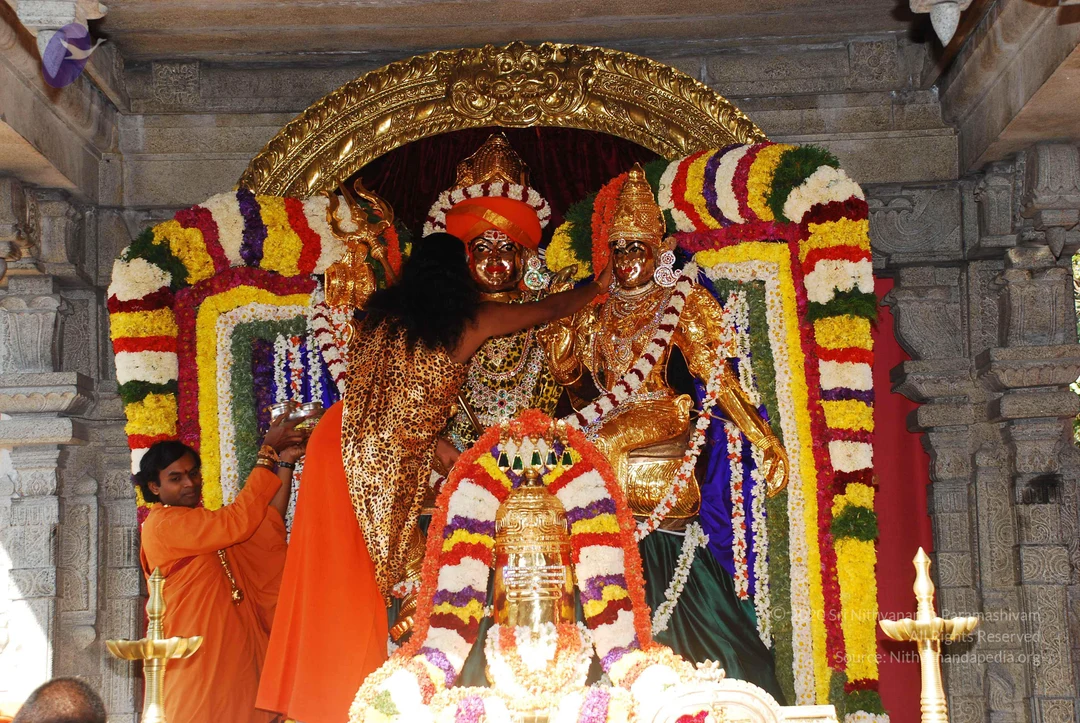
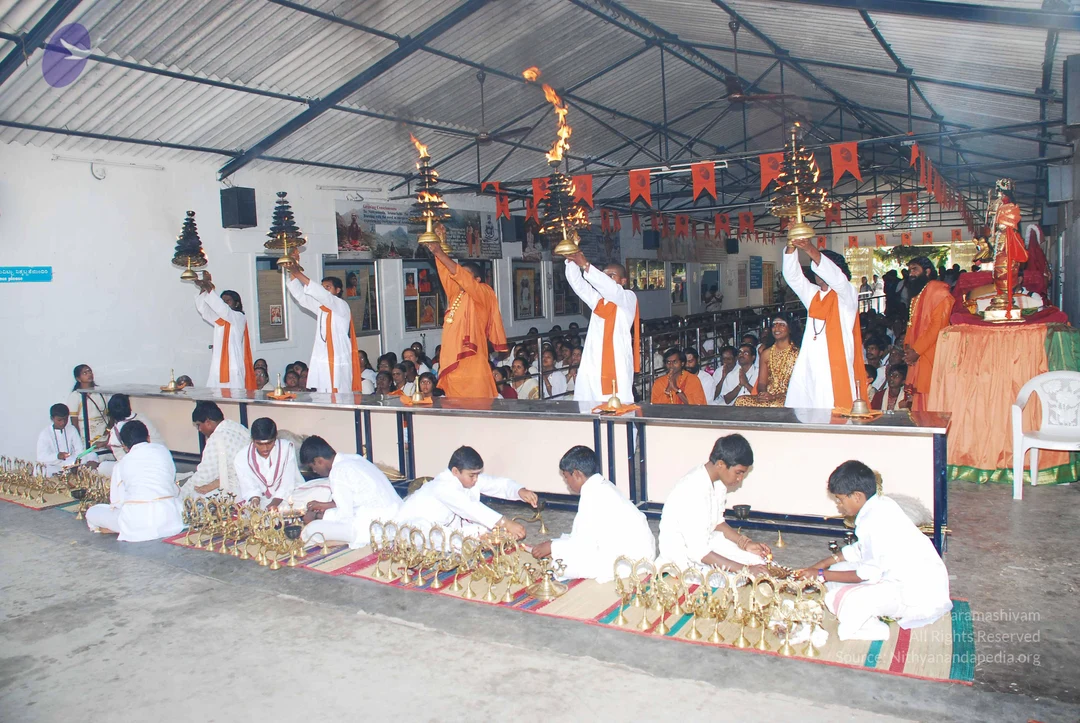
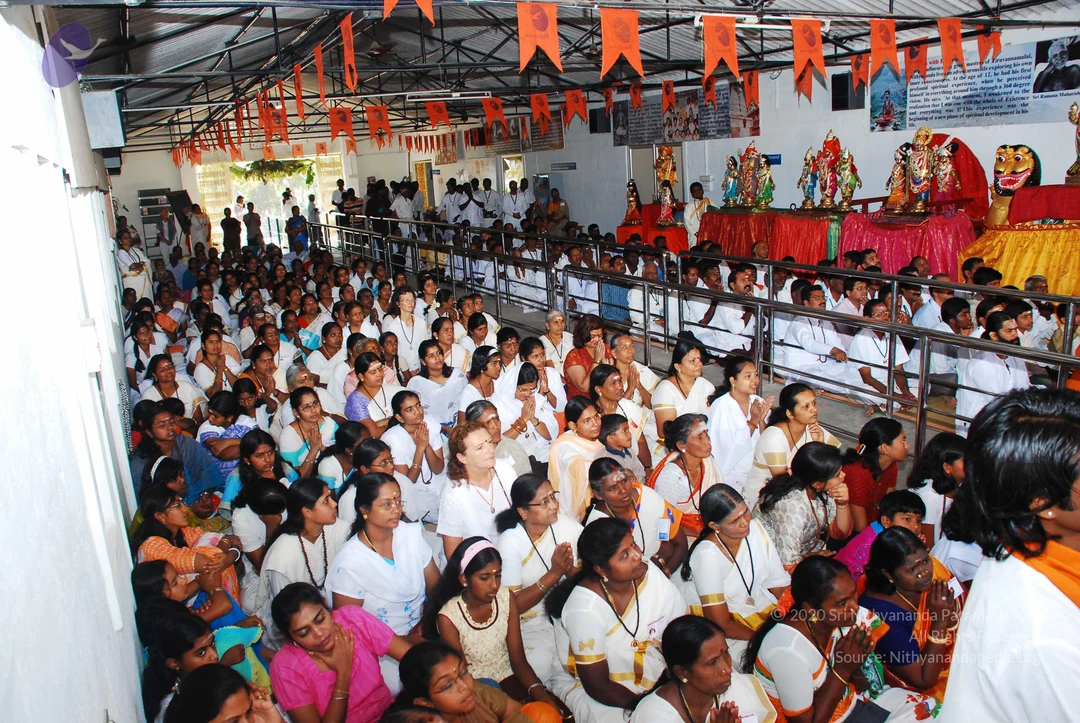
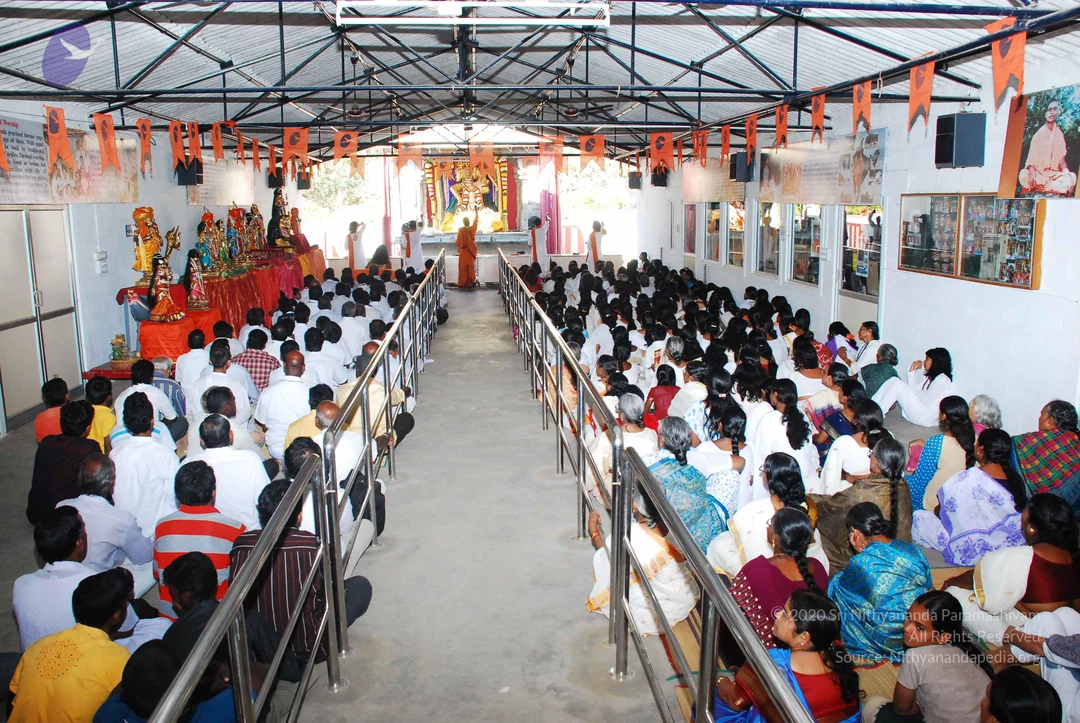
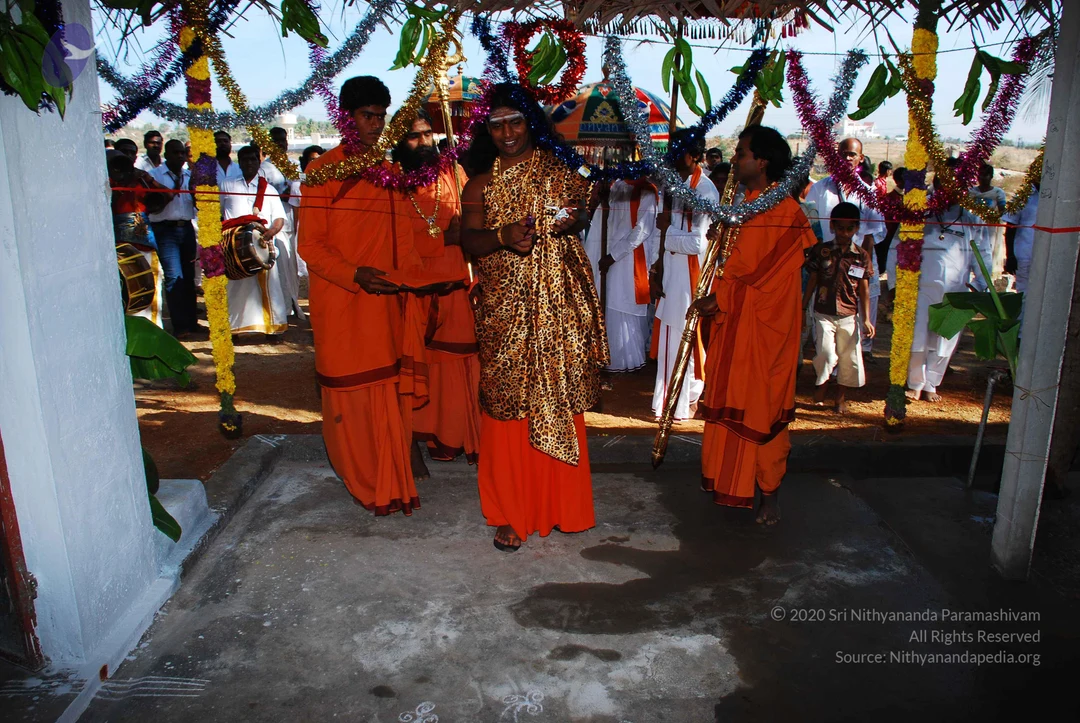
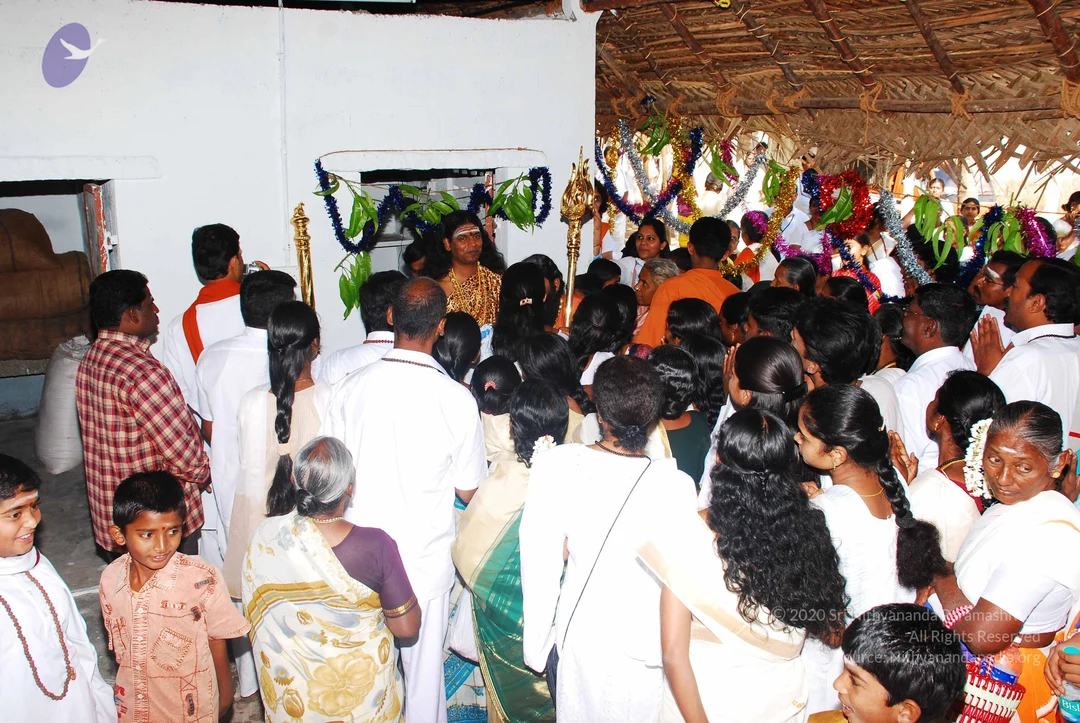
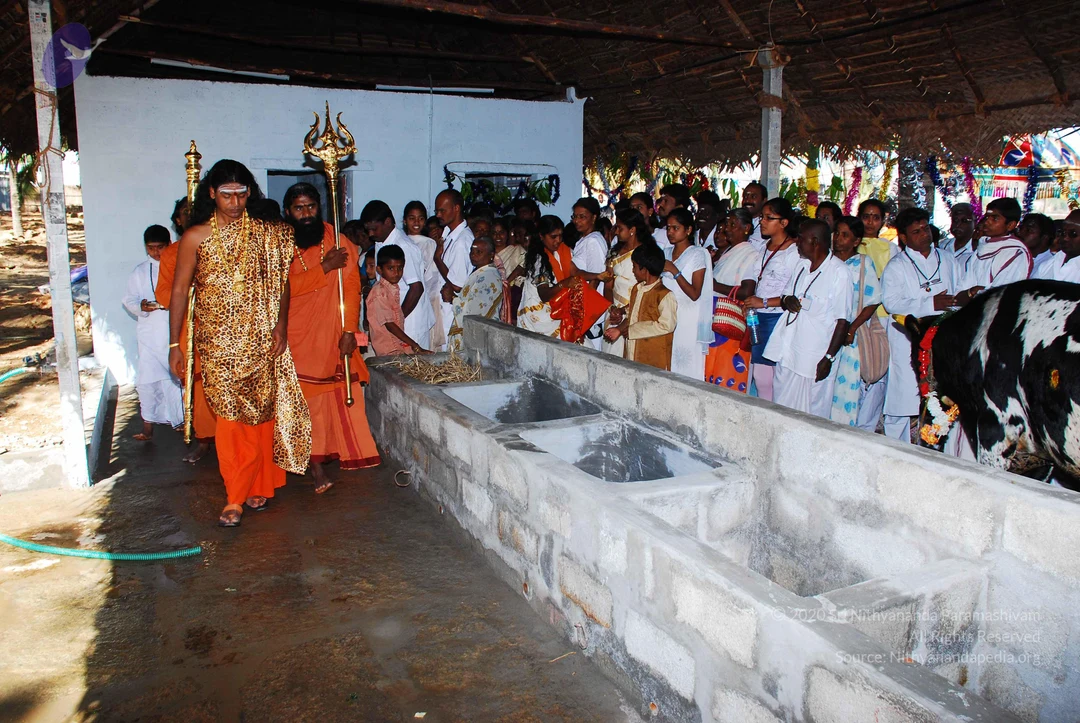
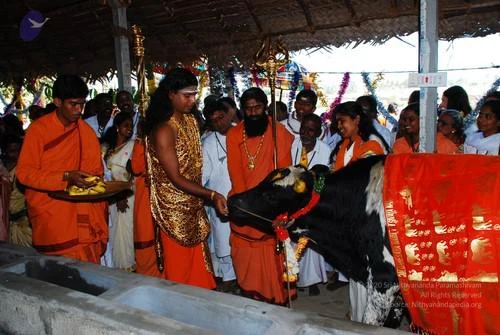
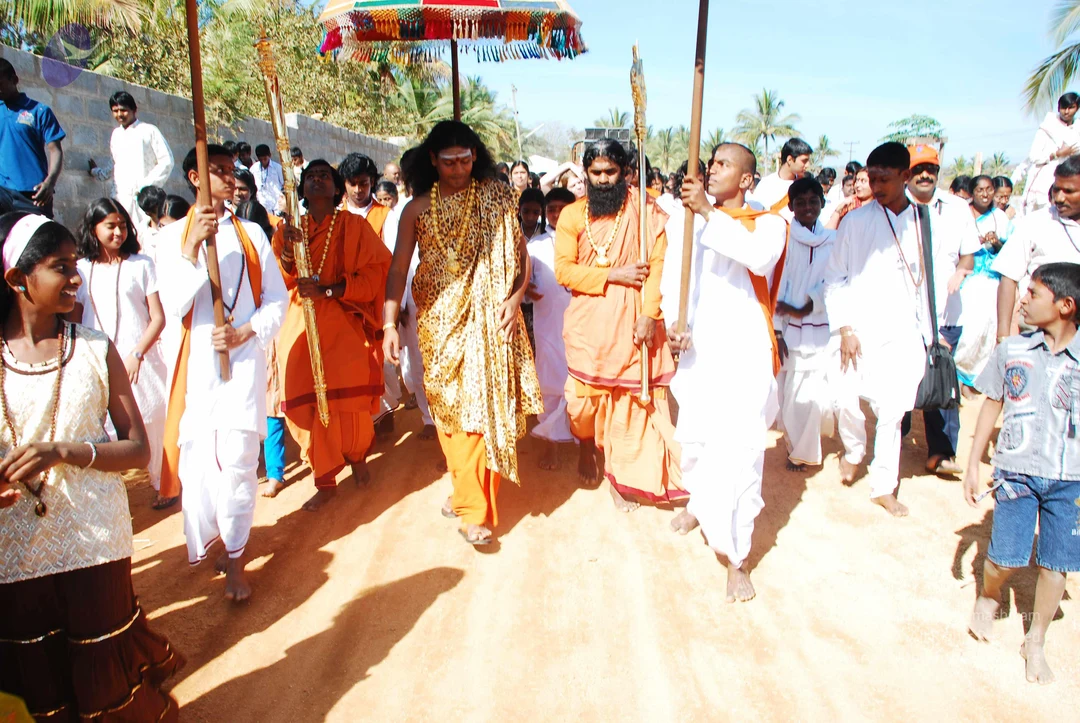
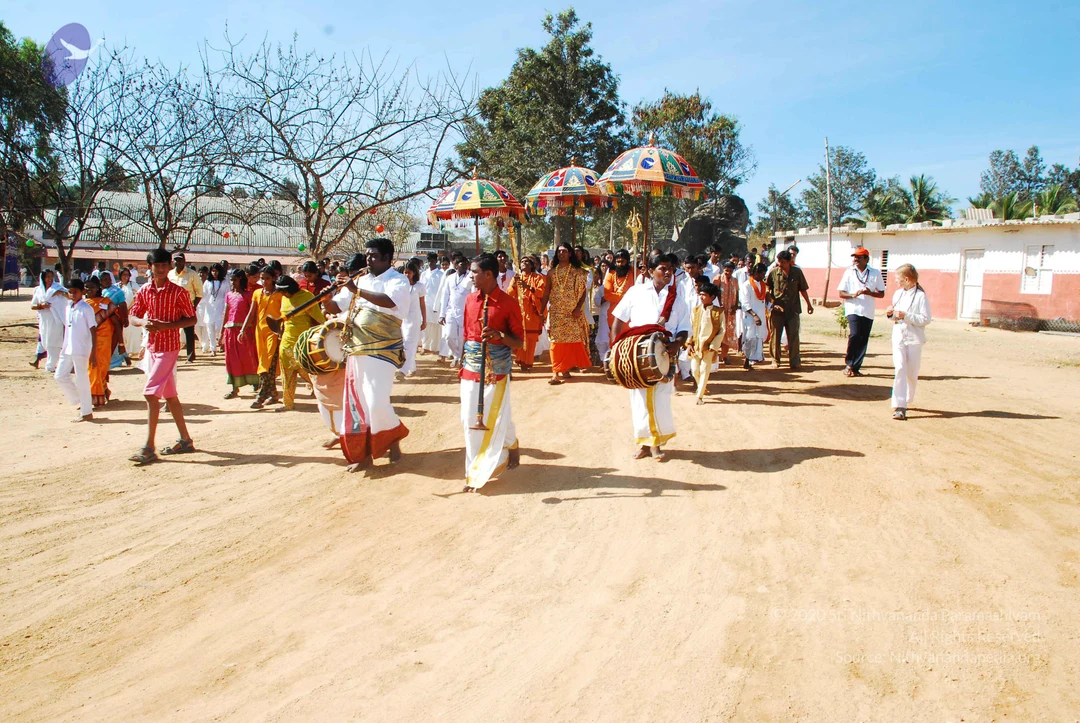
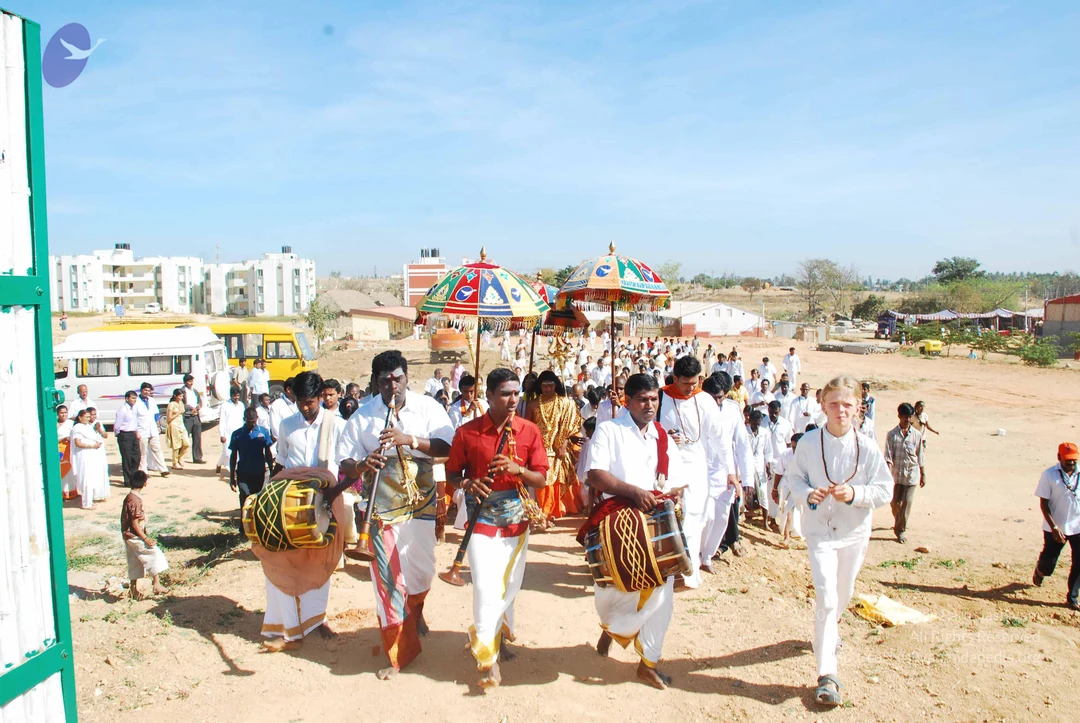
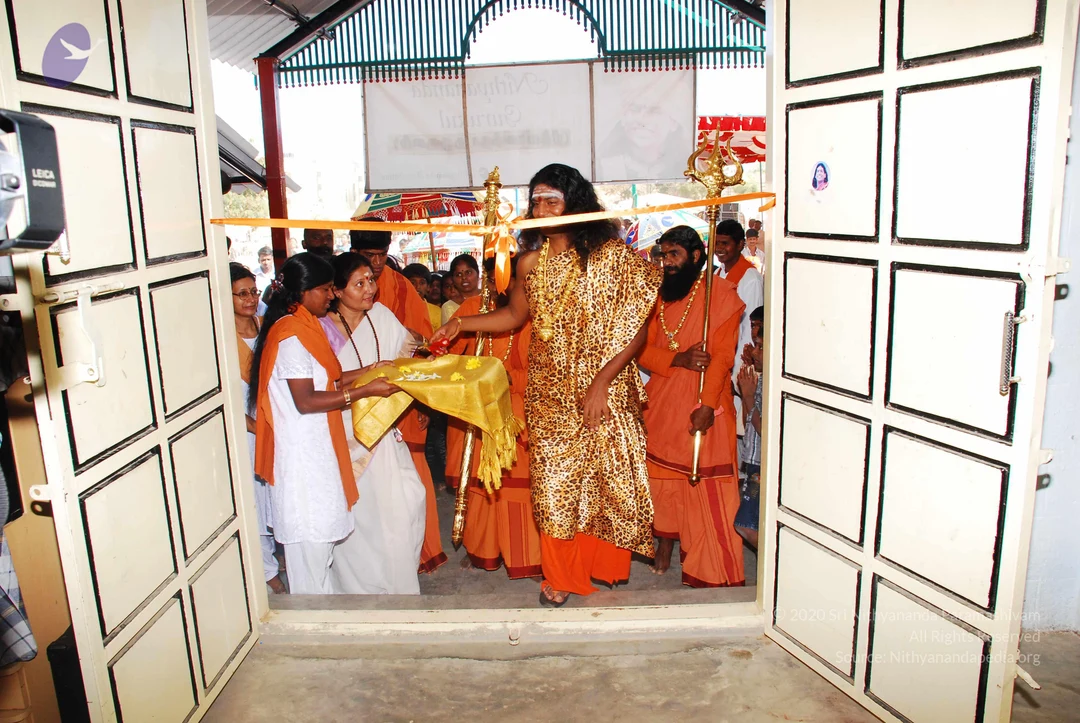
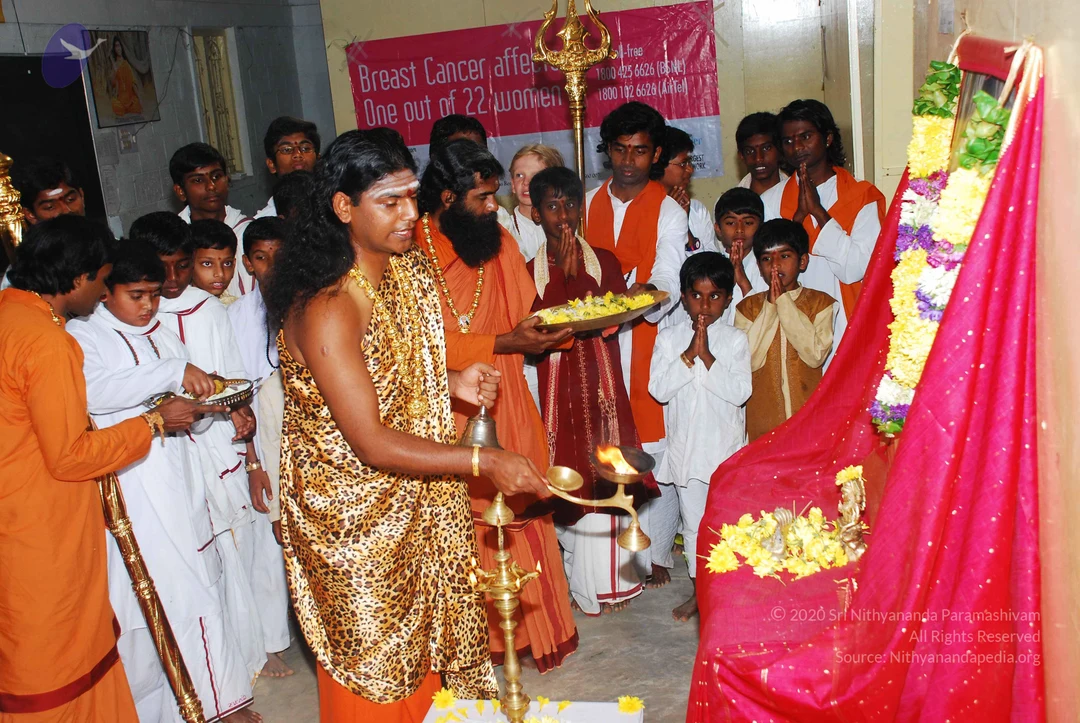
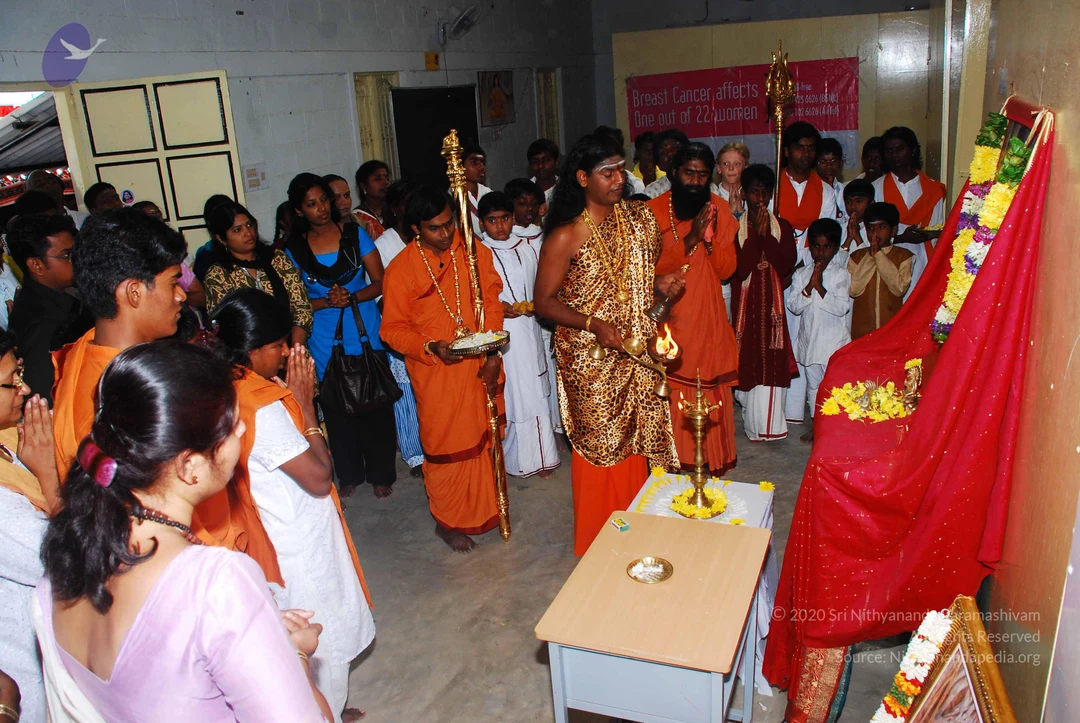
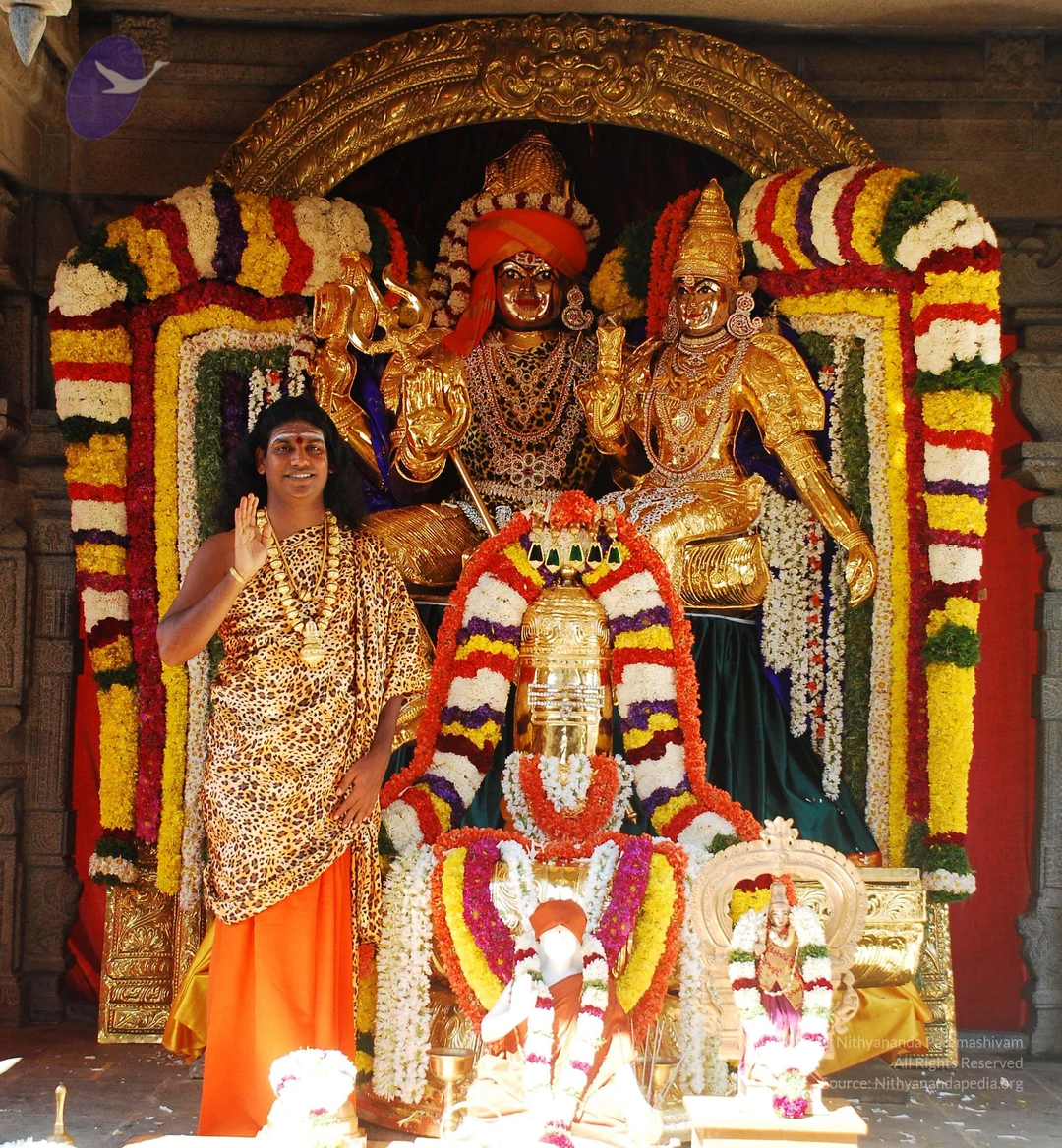
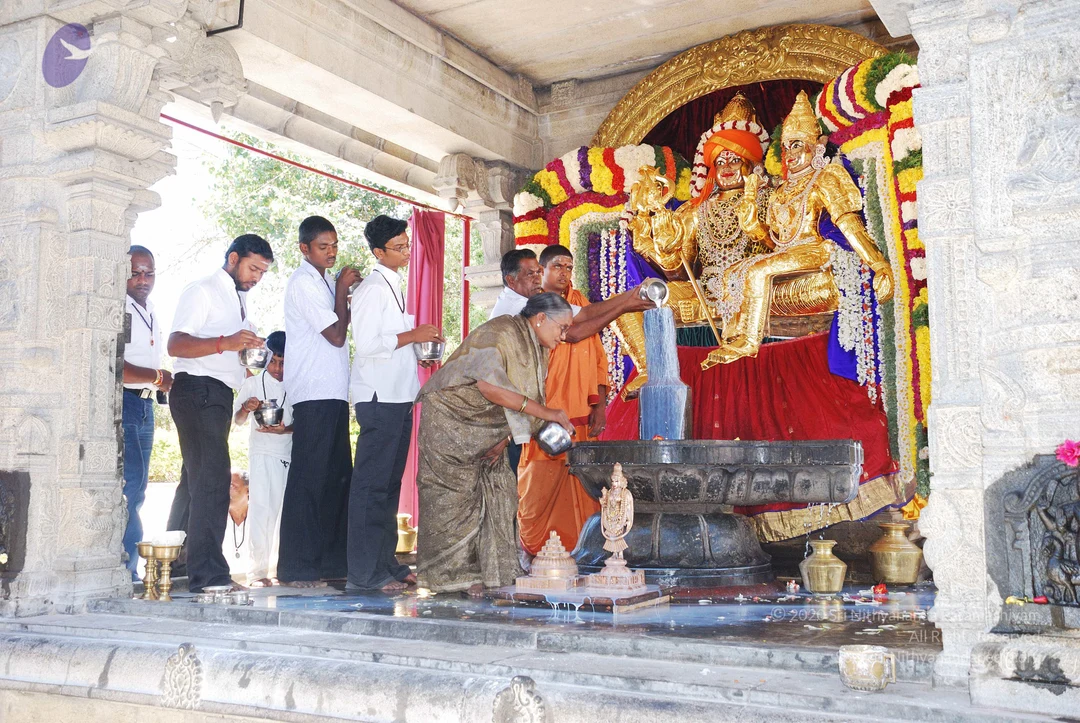
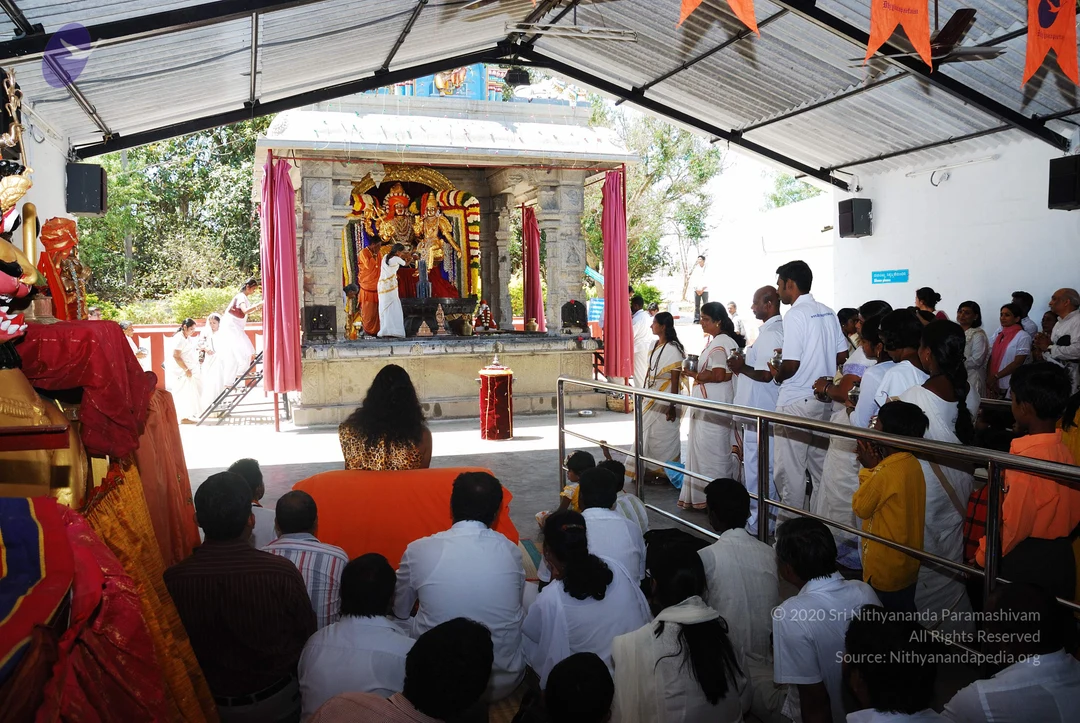
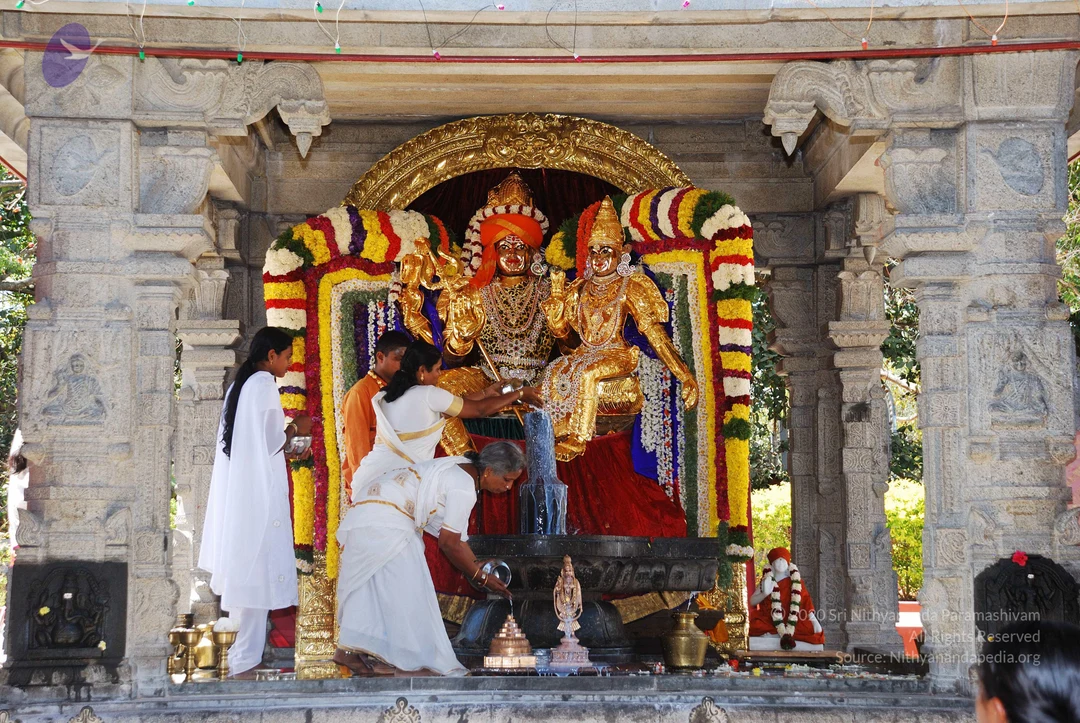
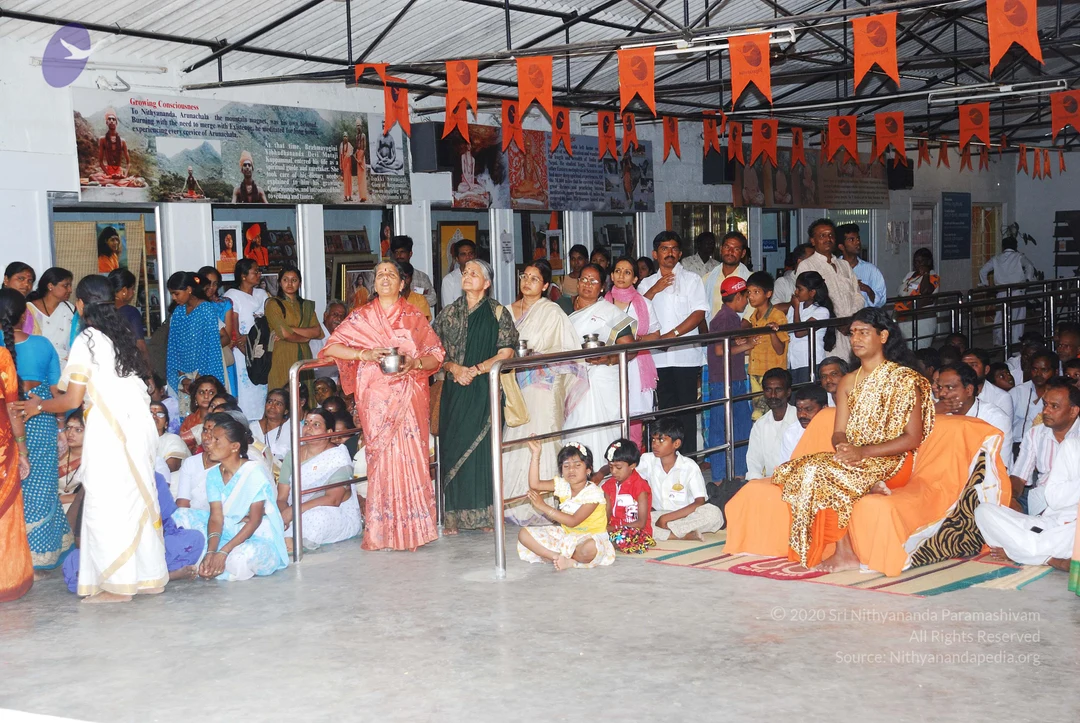
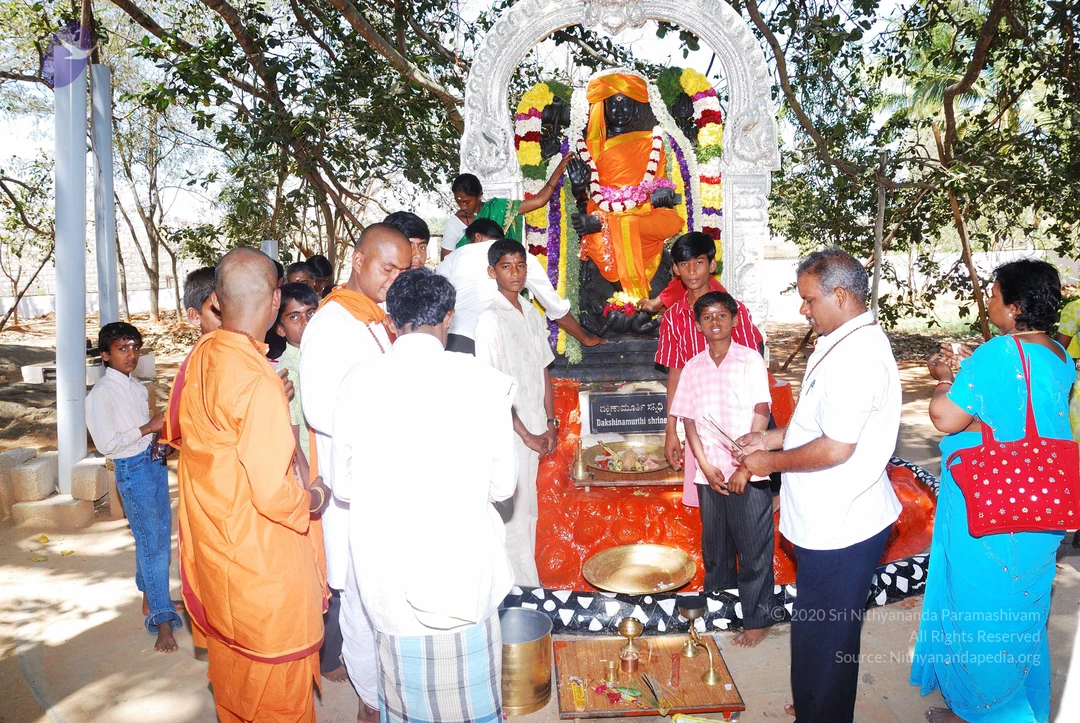
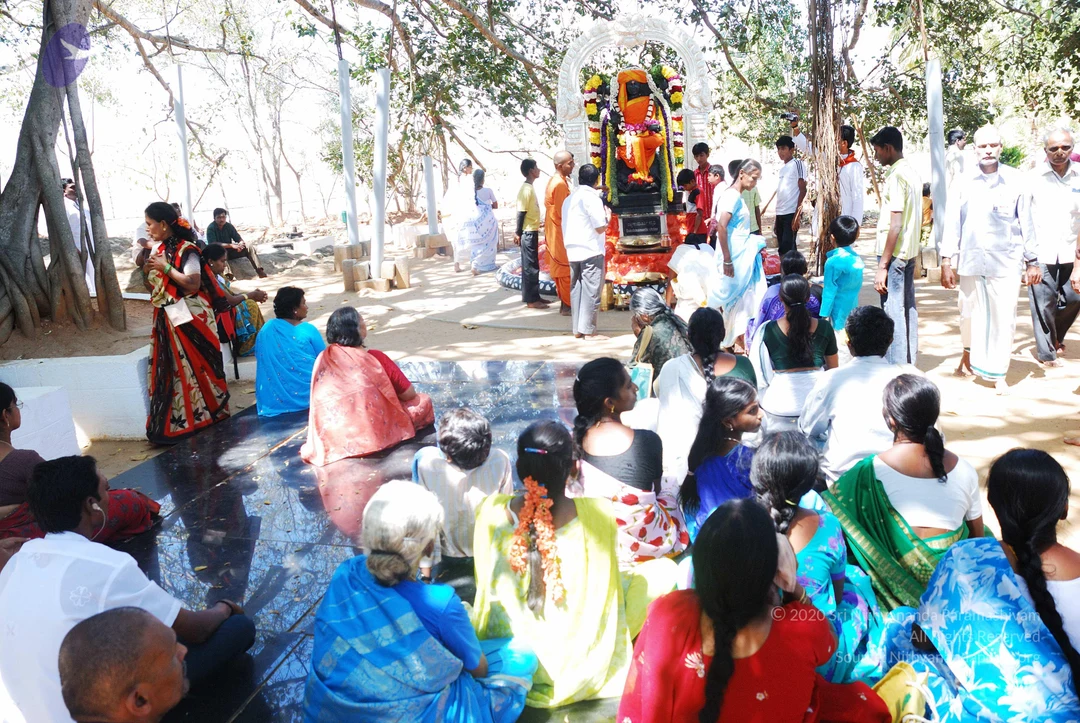
6-ABHISHEGAM-AND-HOMA
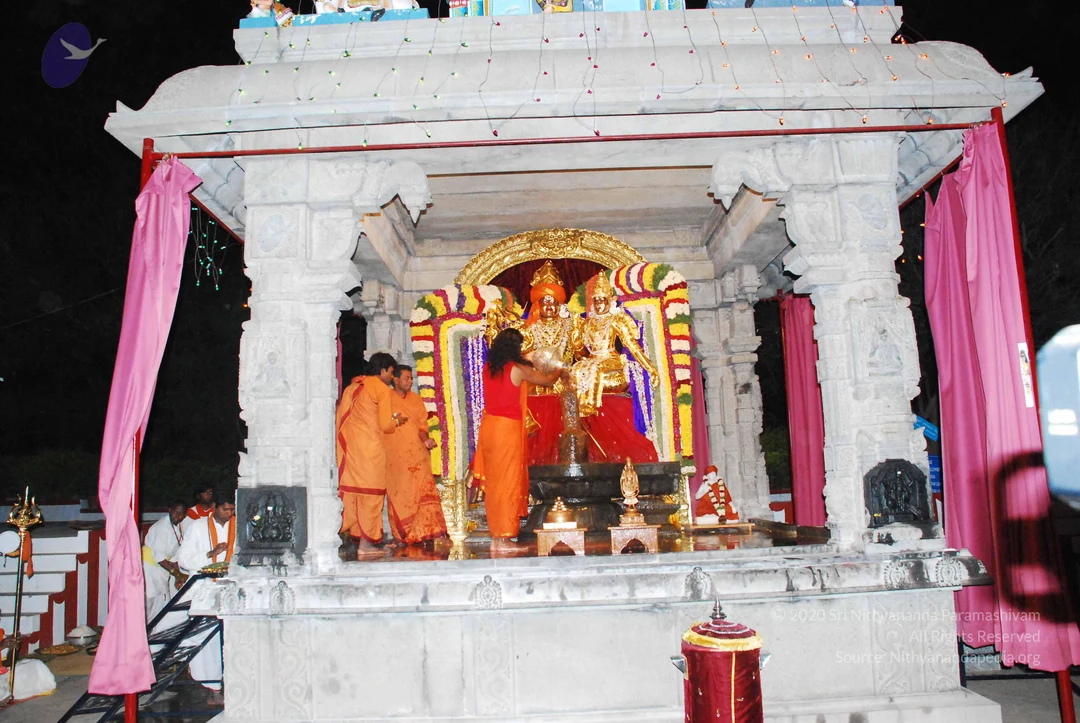
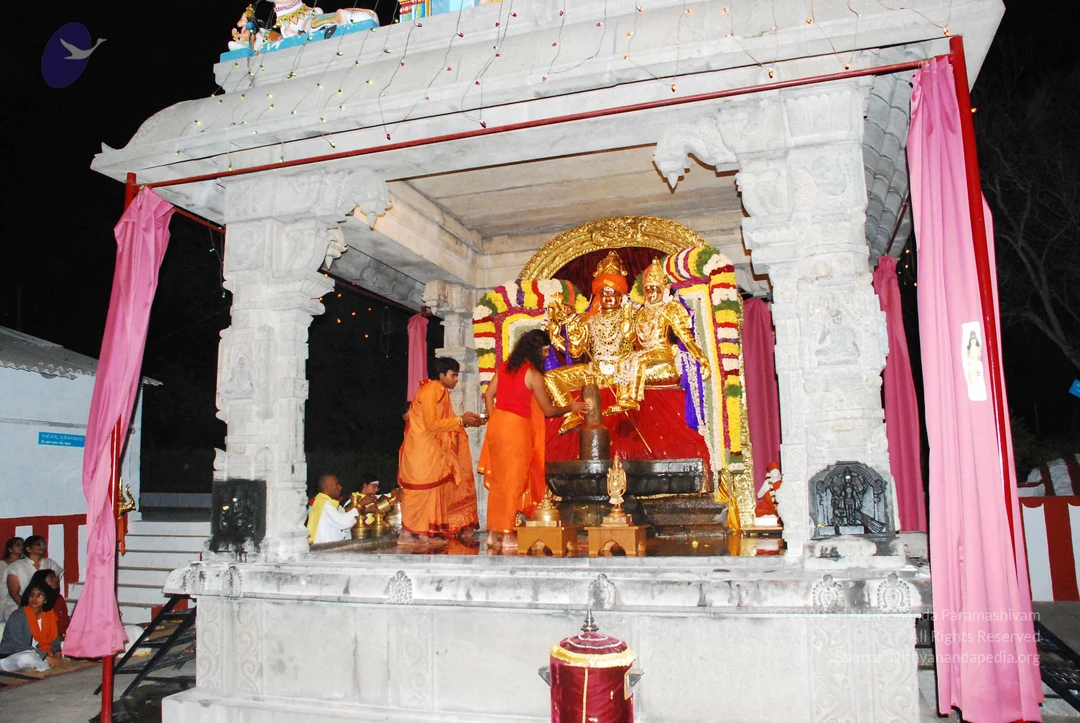
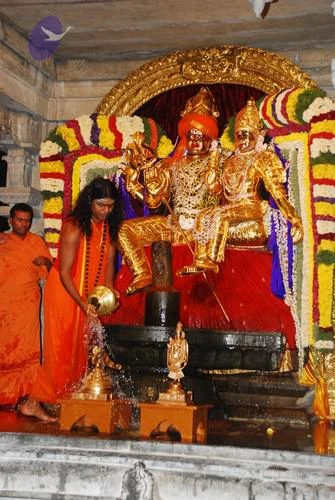
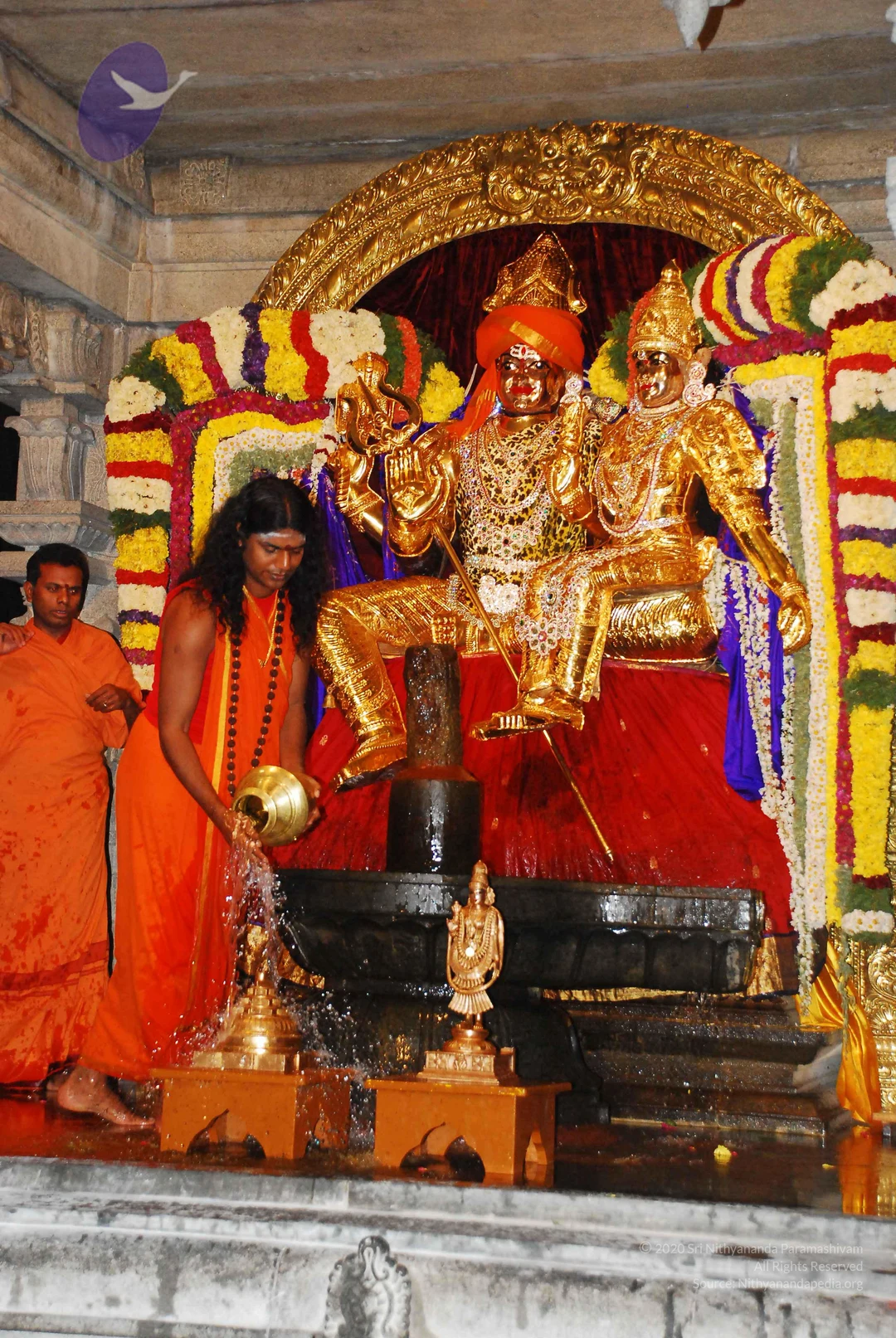
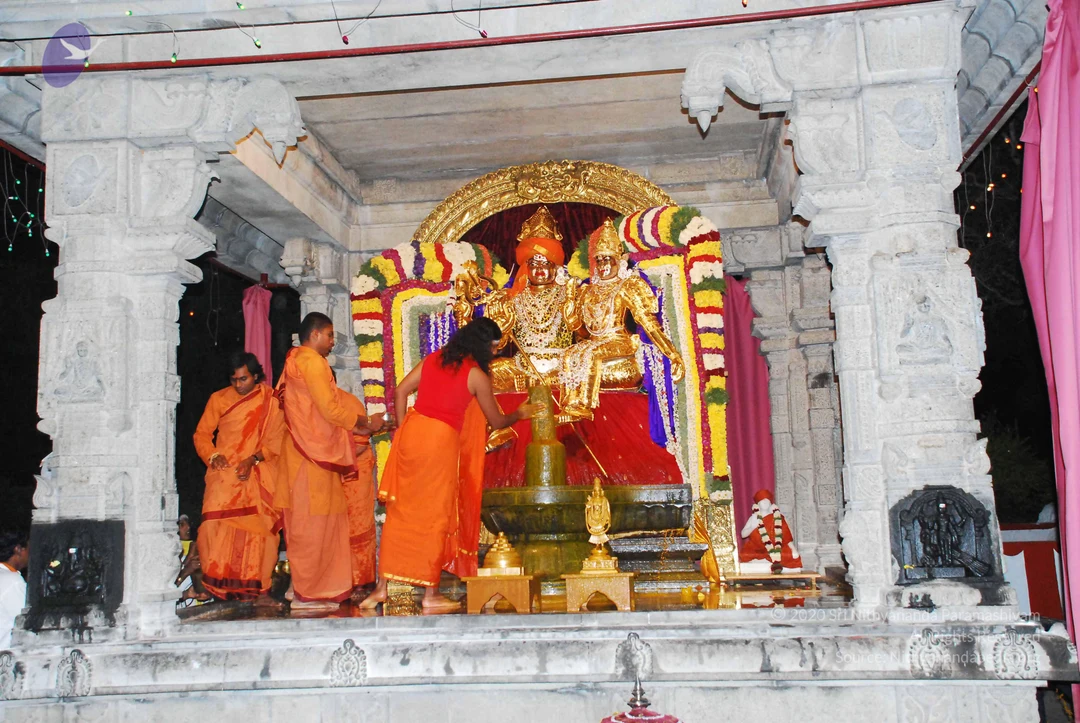
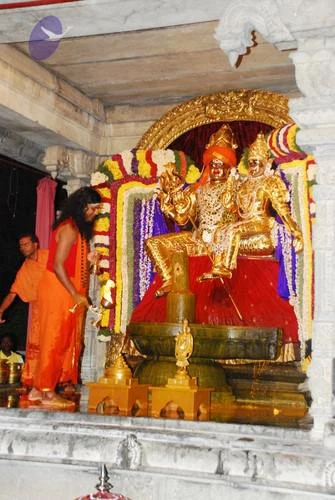
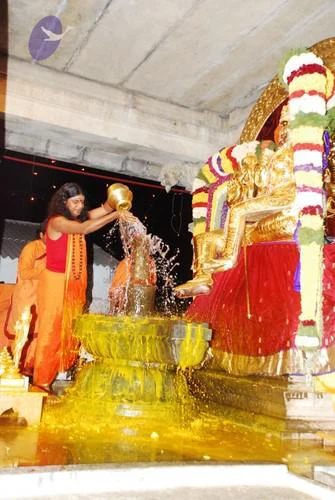
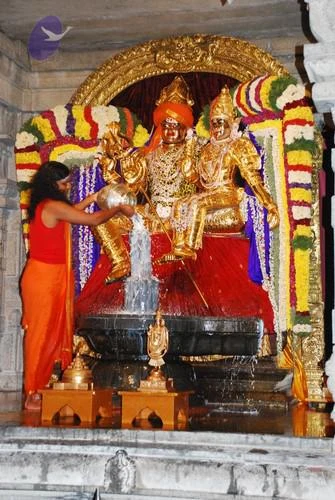
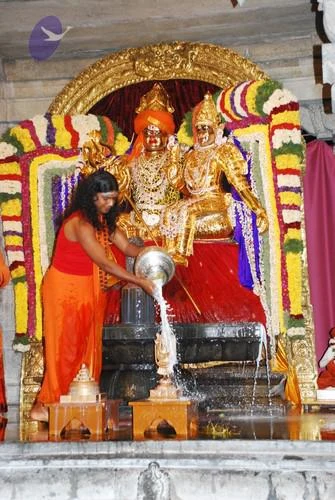
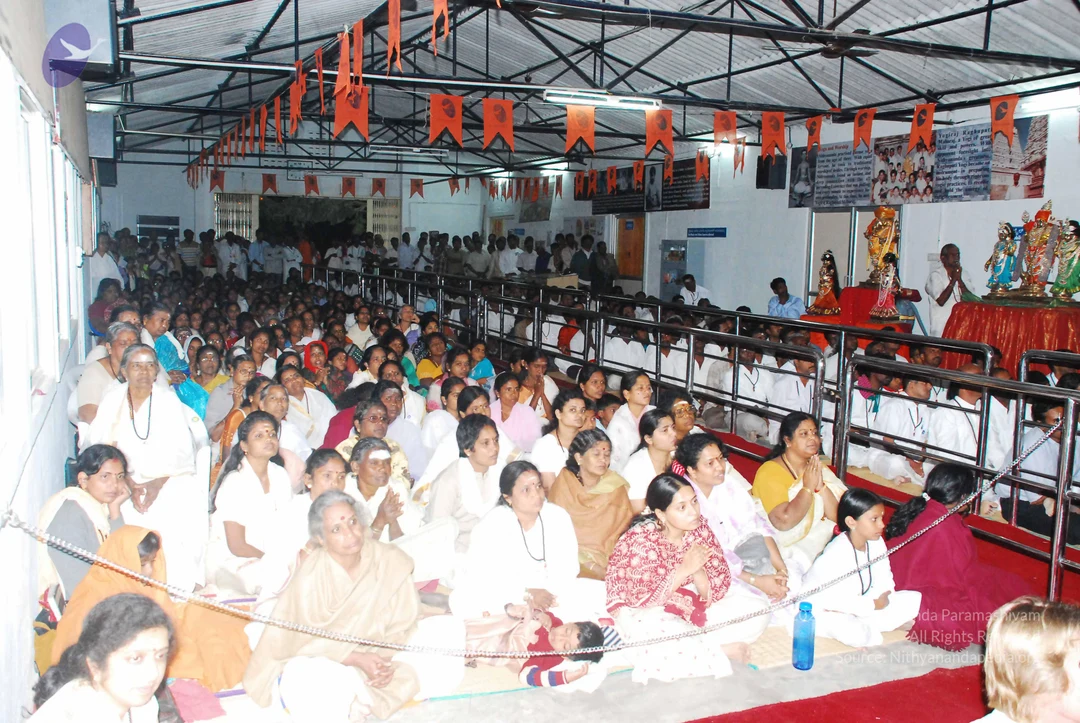
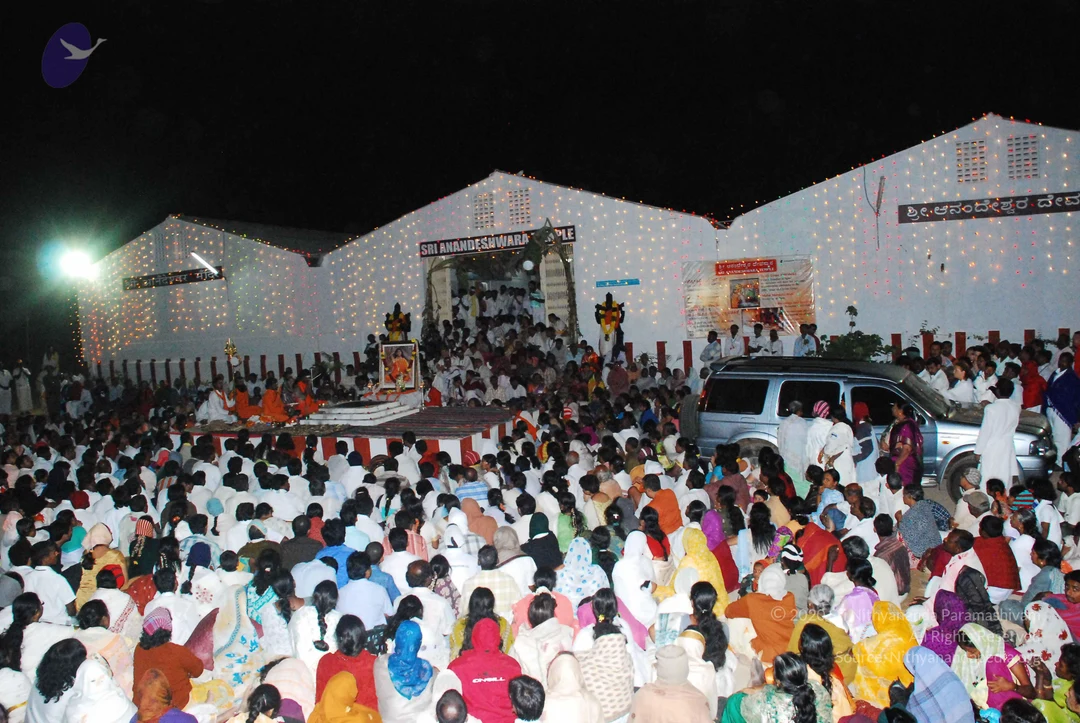
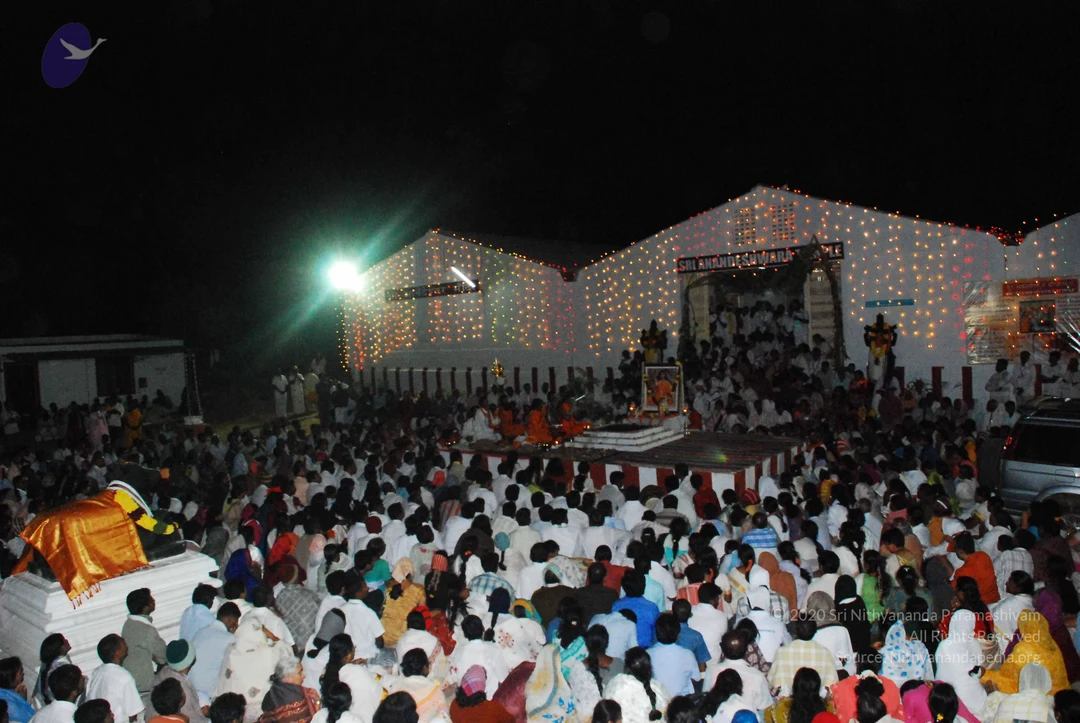
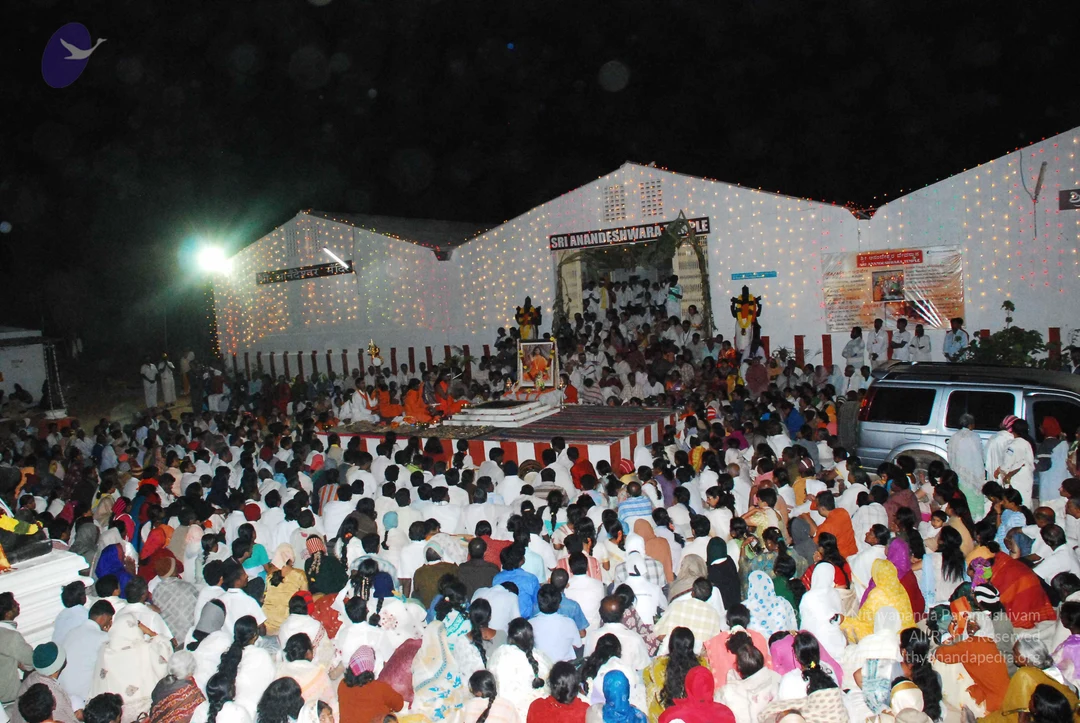
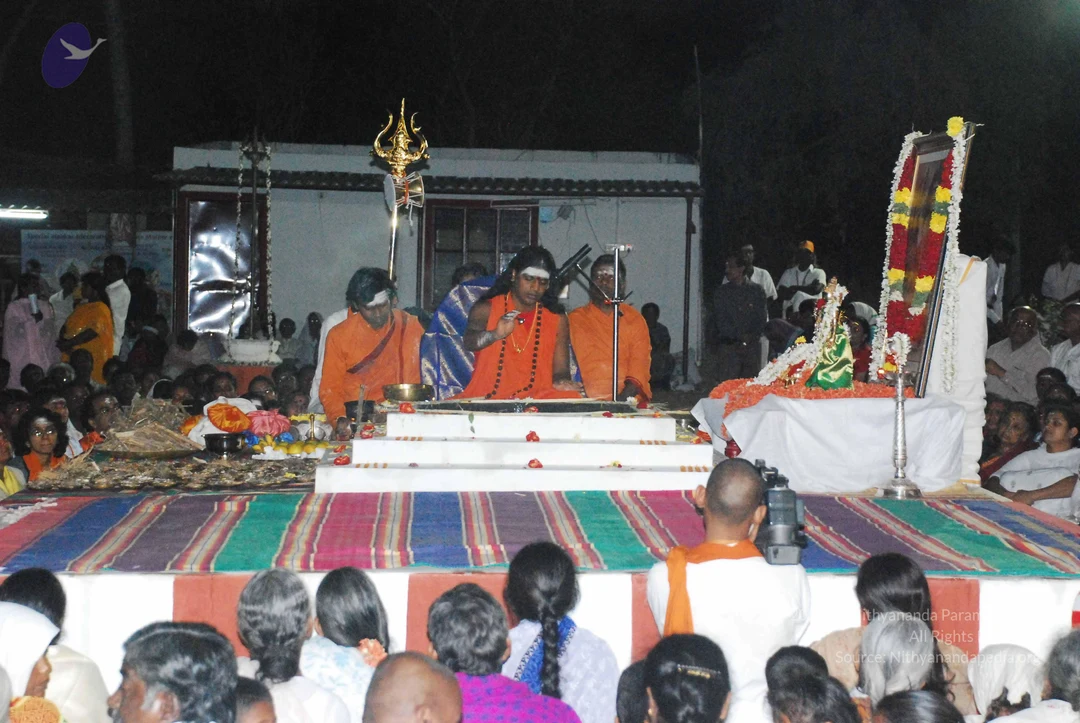
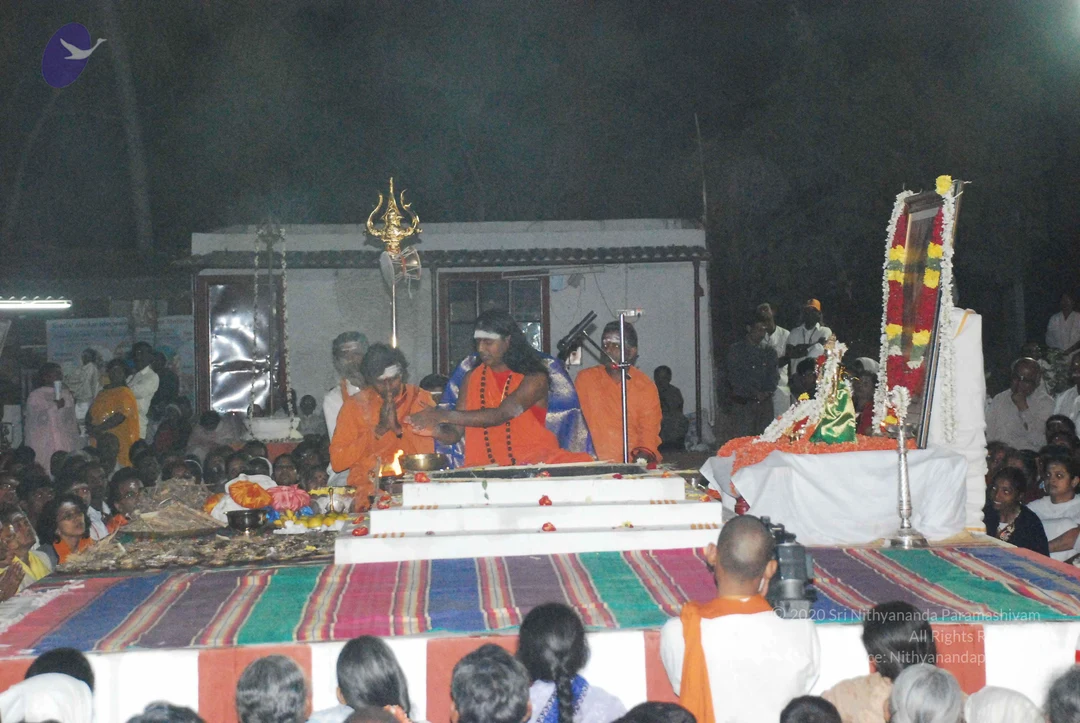
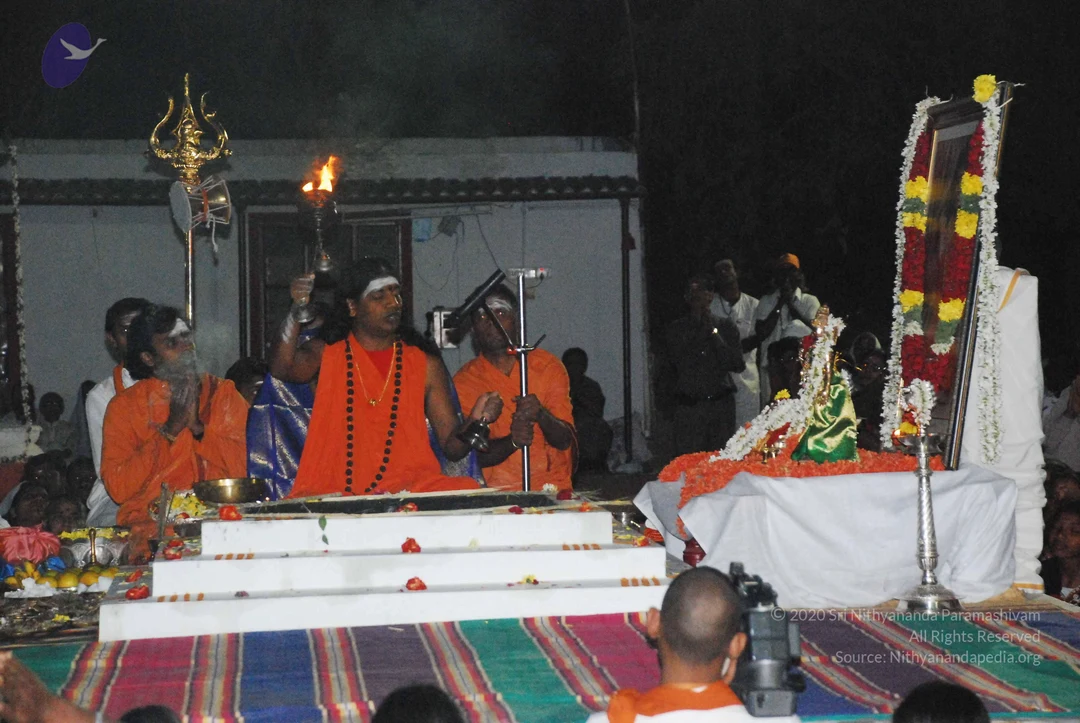
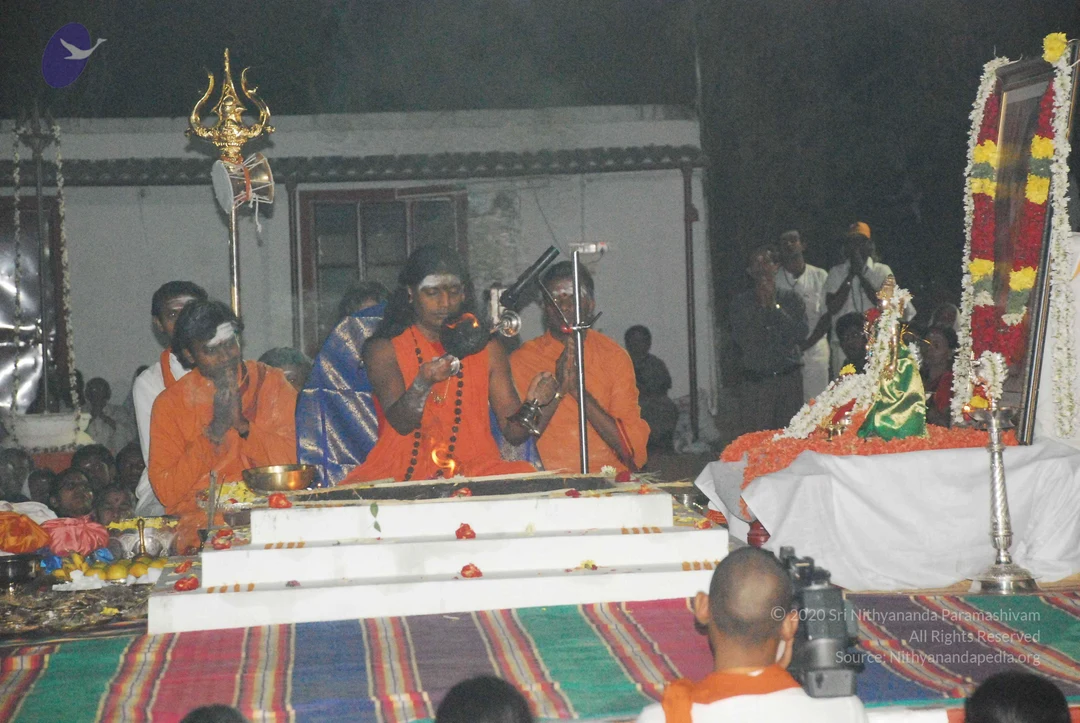
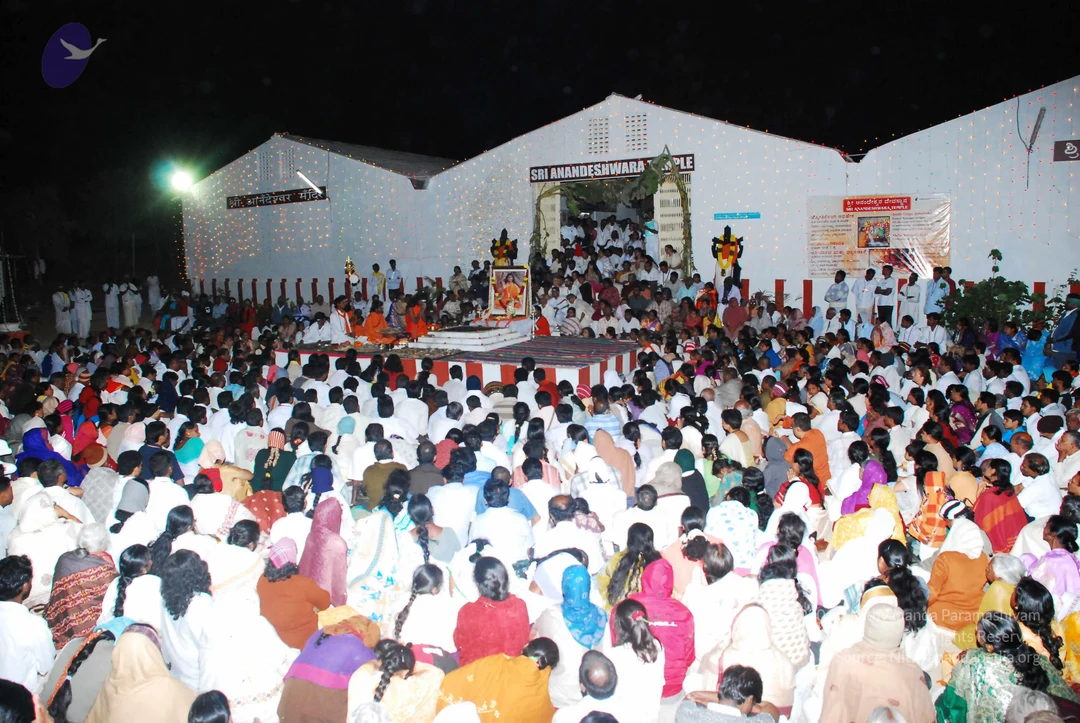
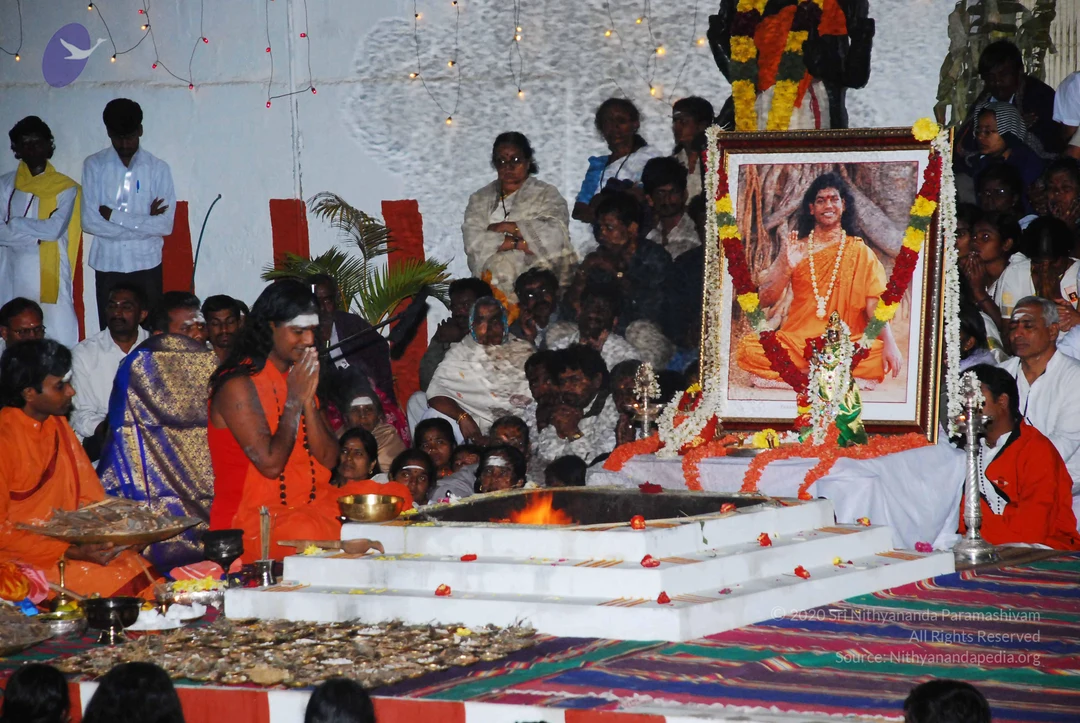
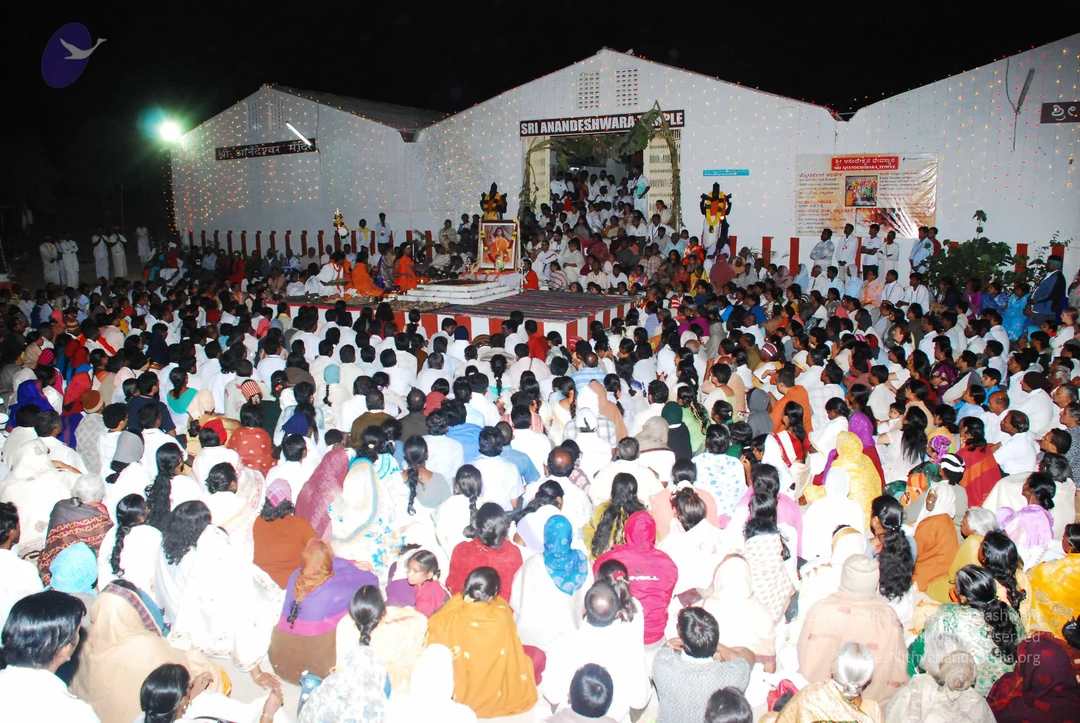
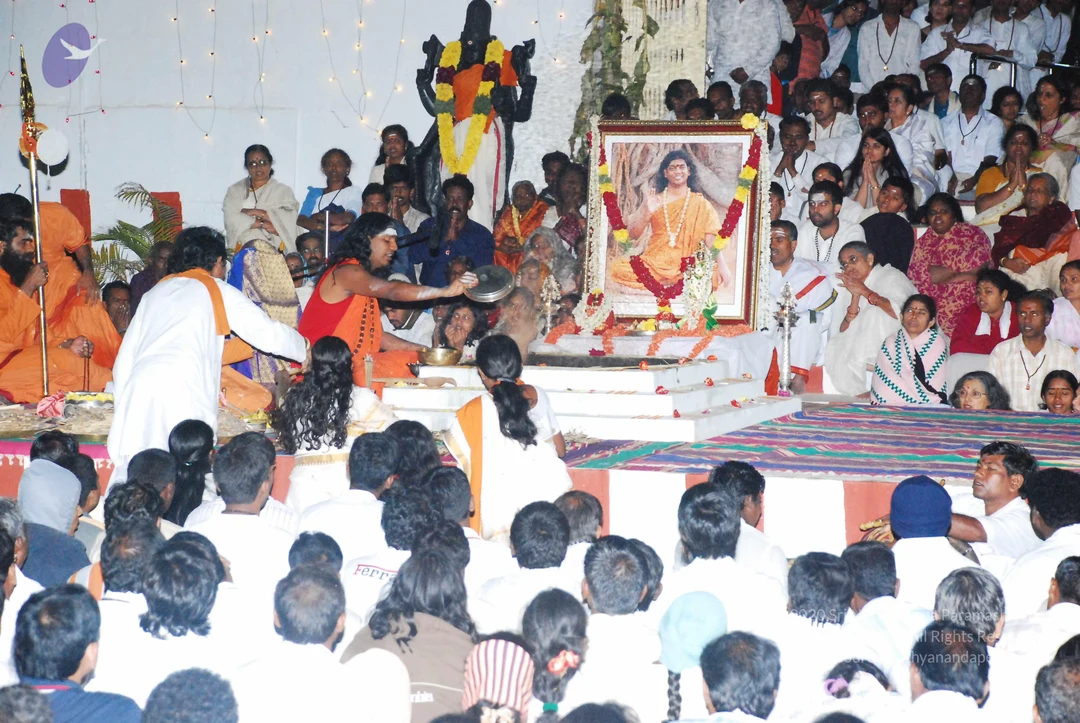
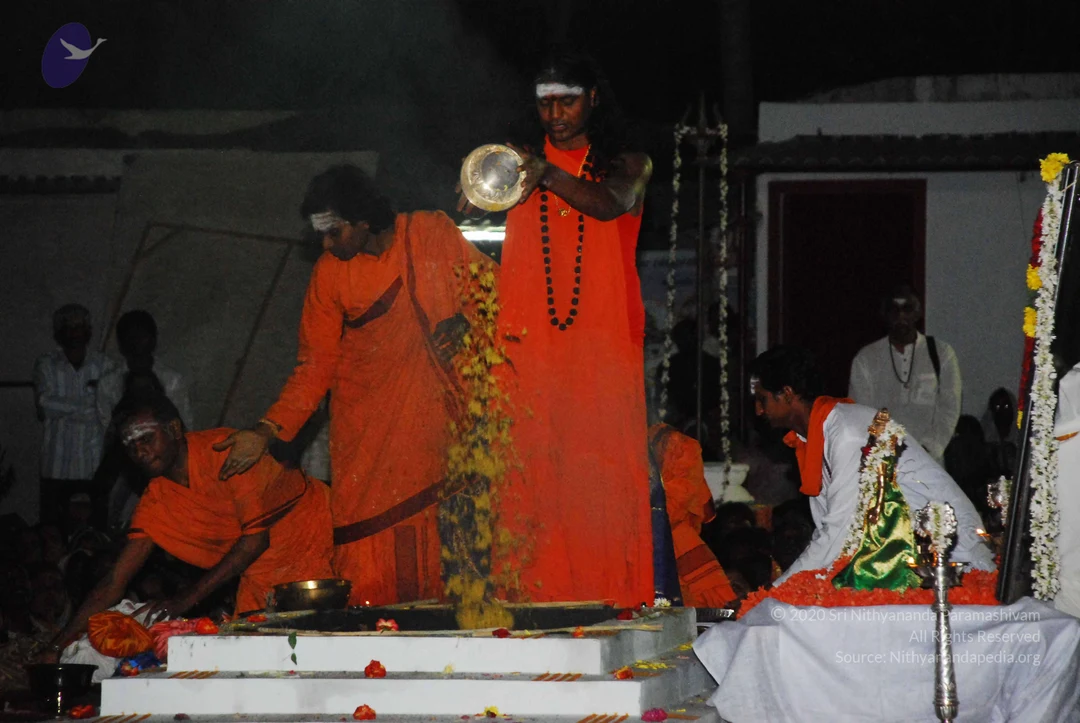
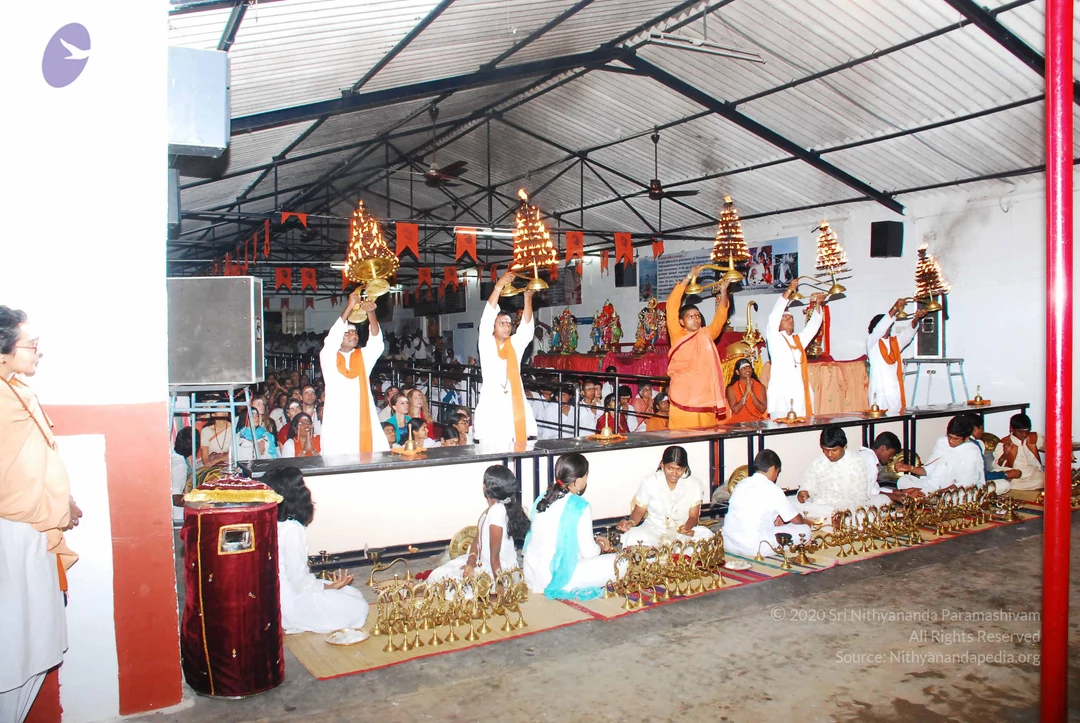
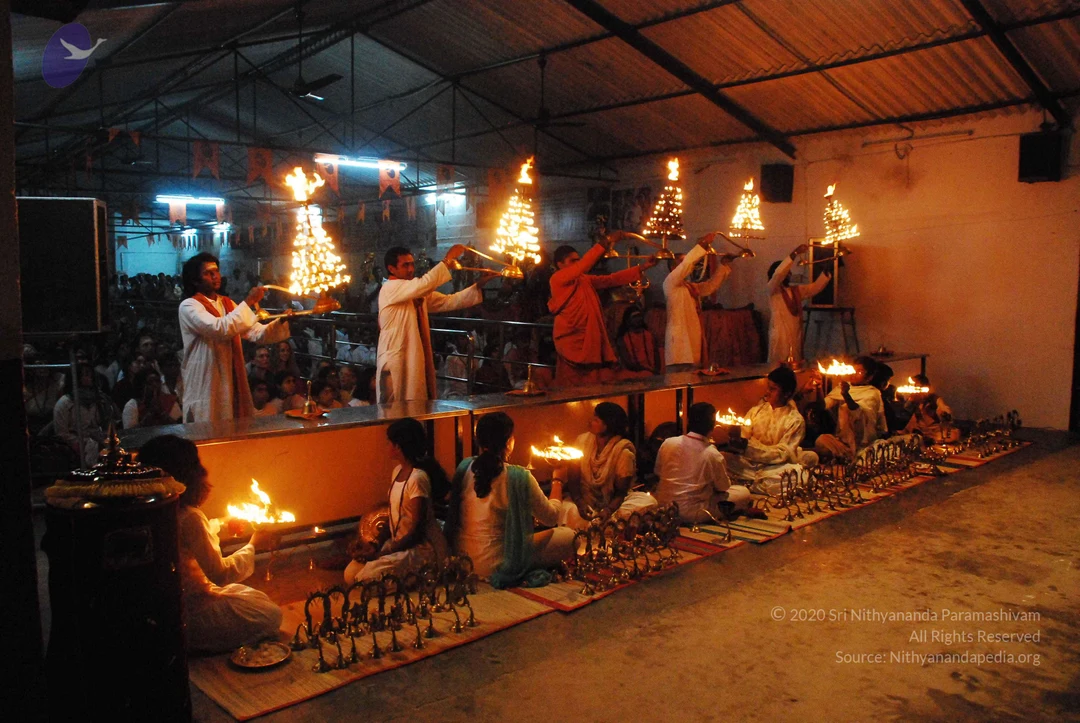
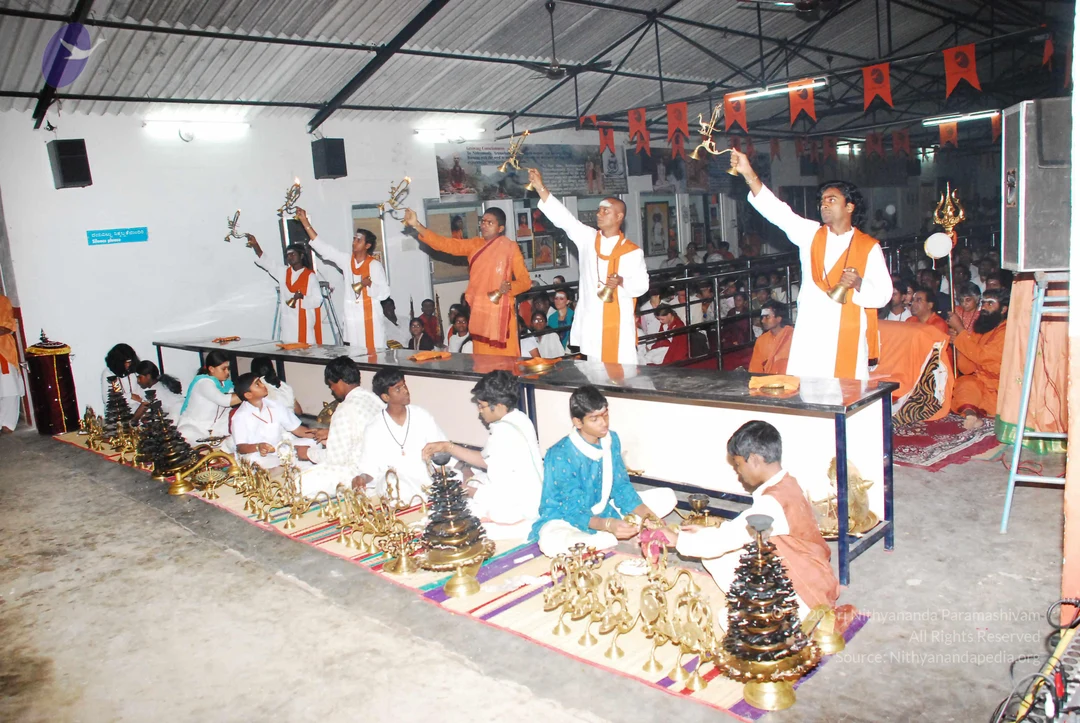
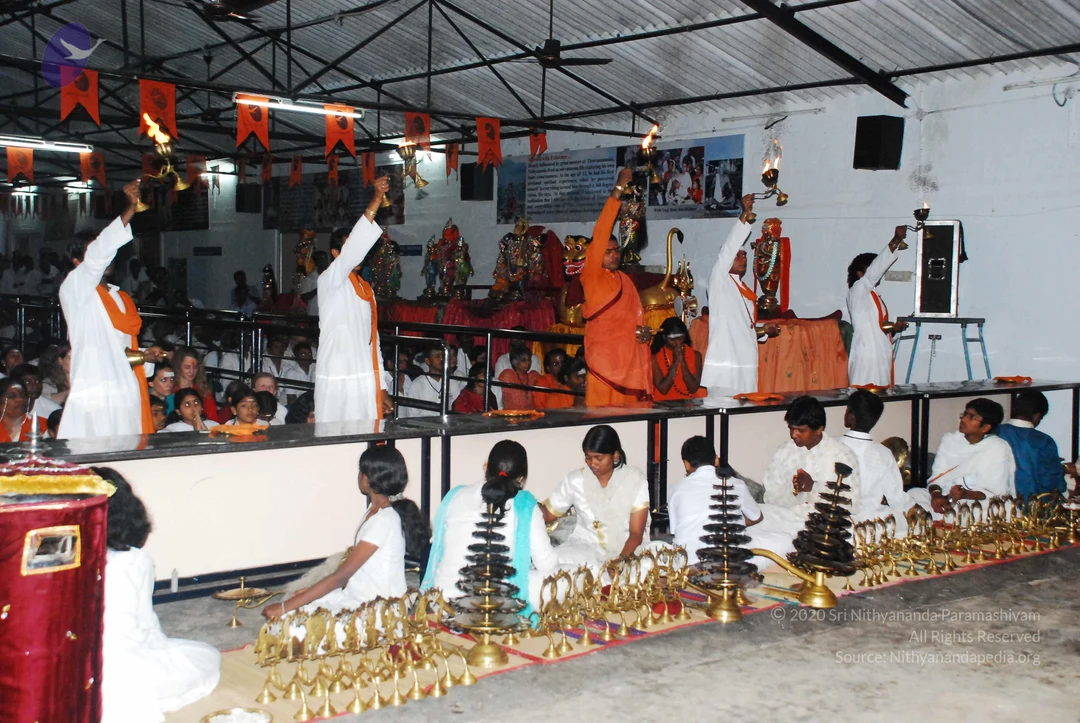
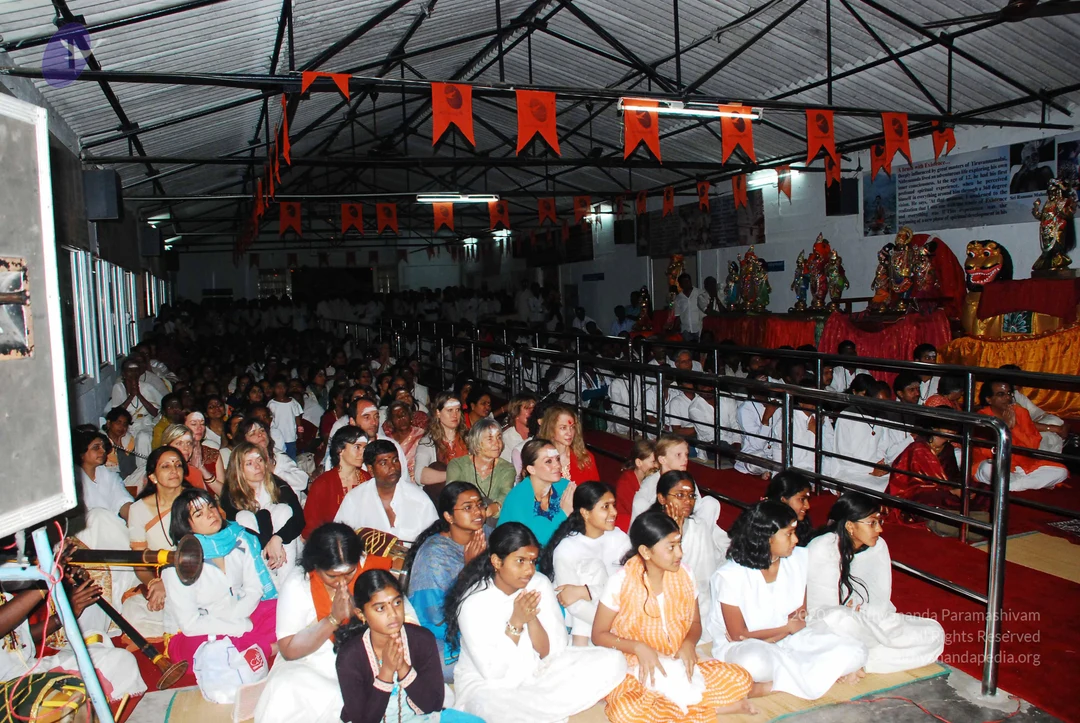
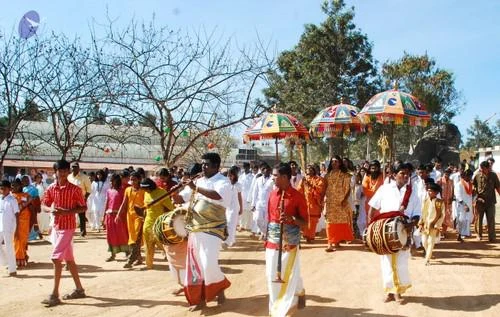
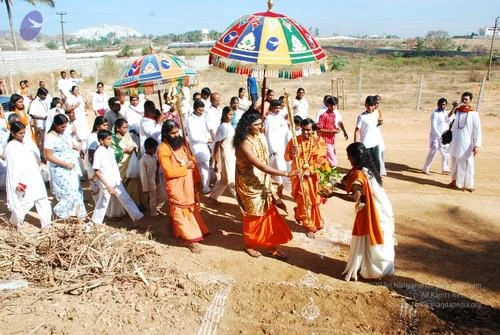
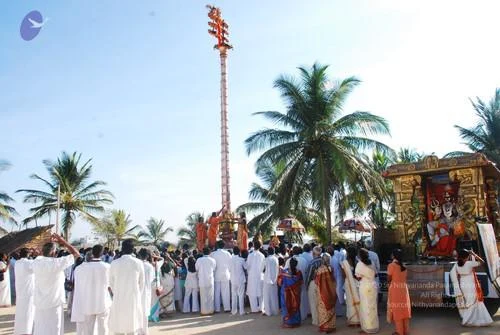
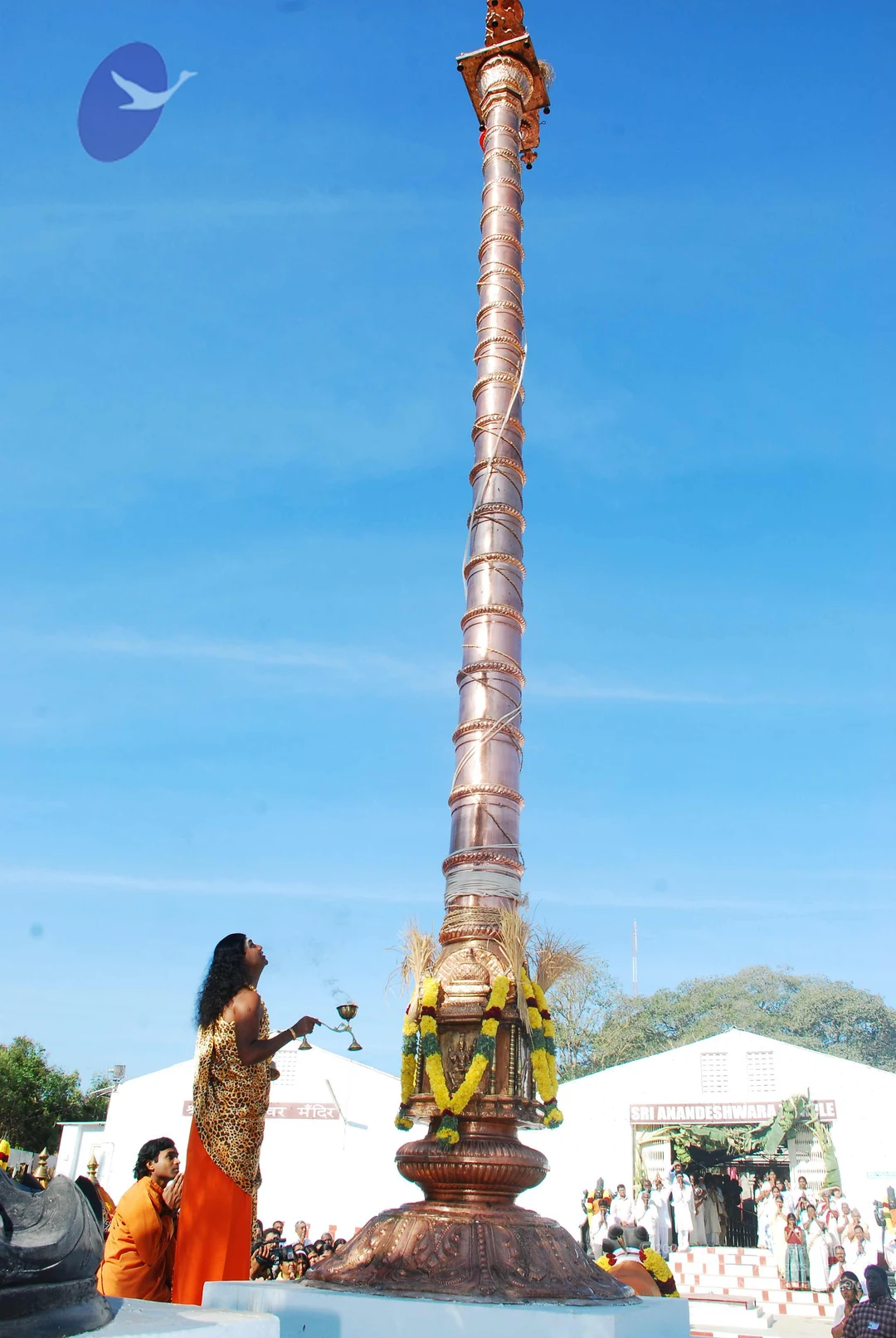
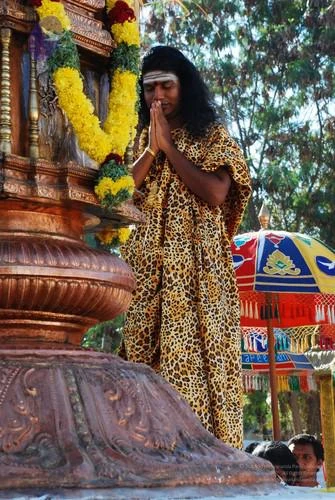
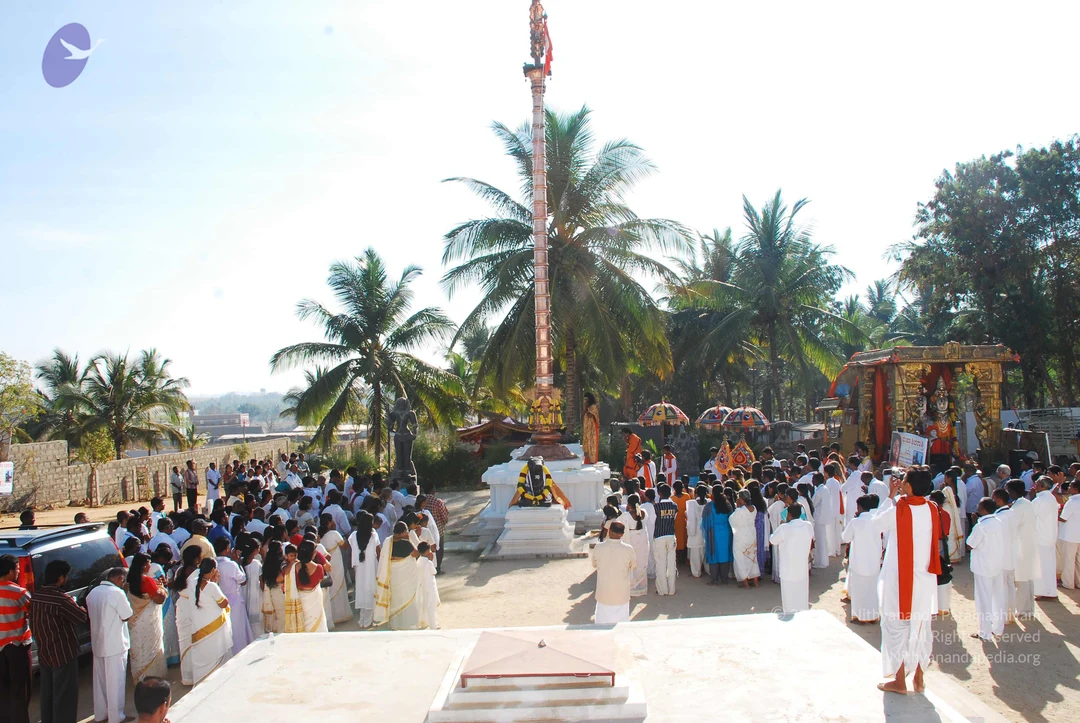
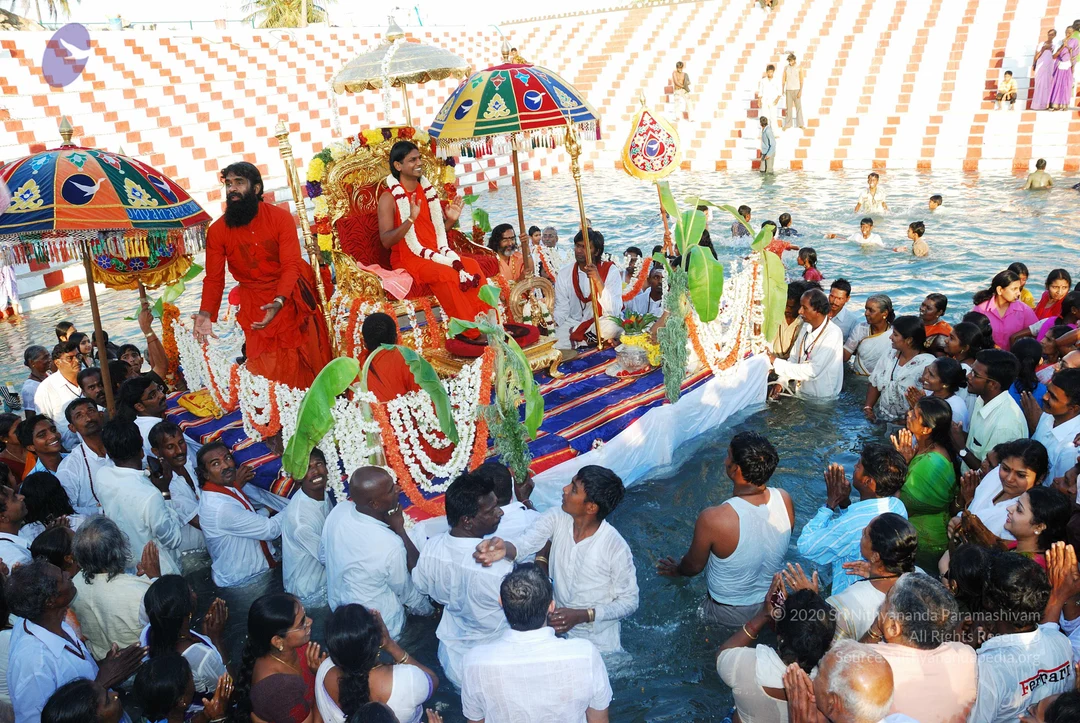
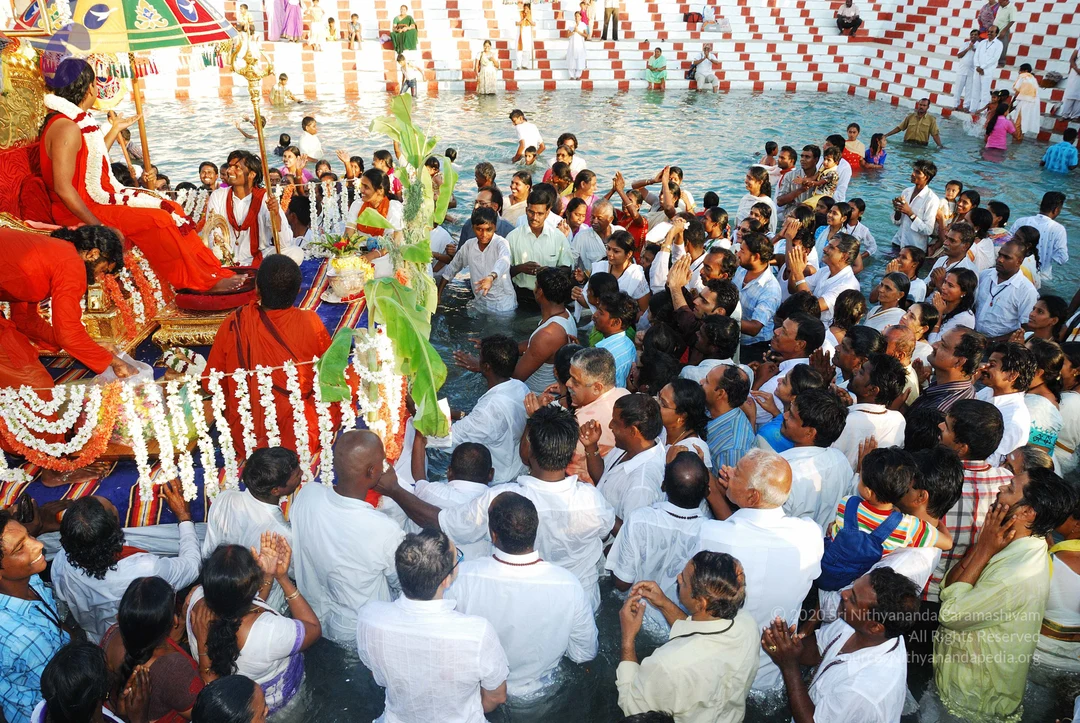
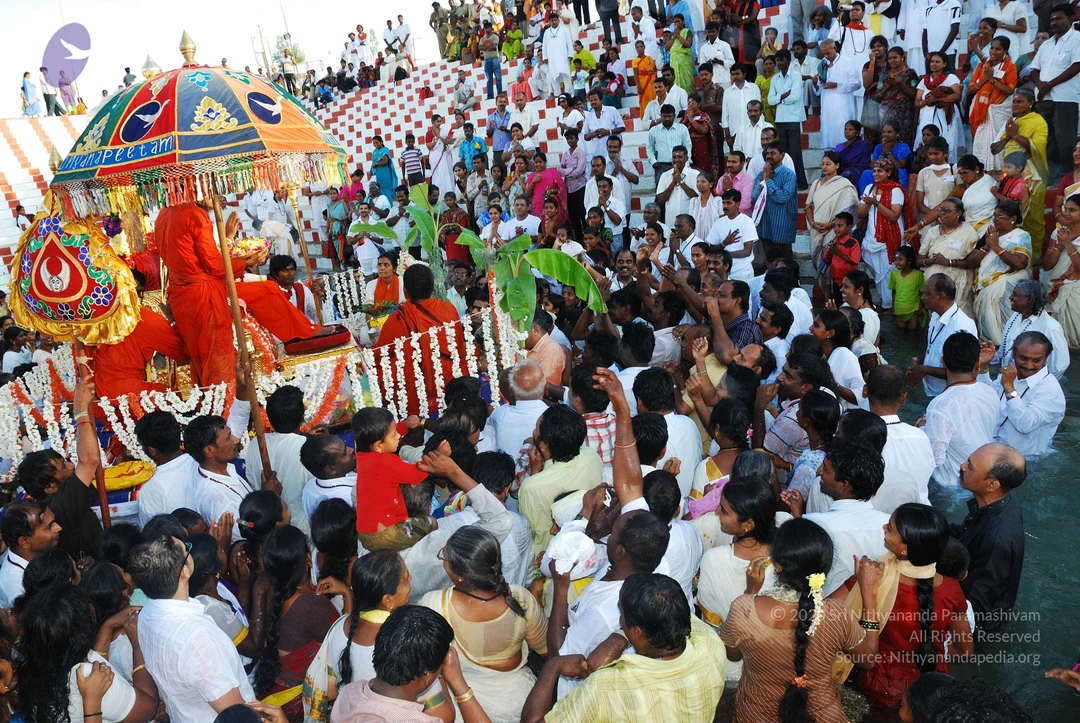
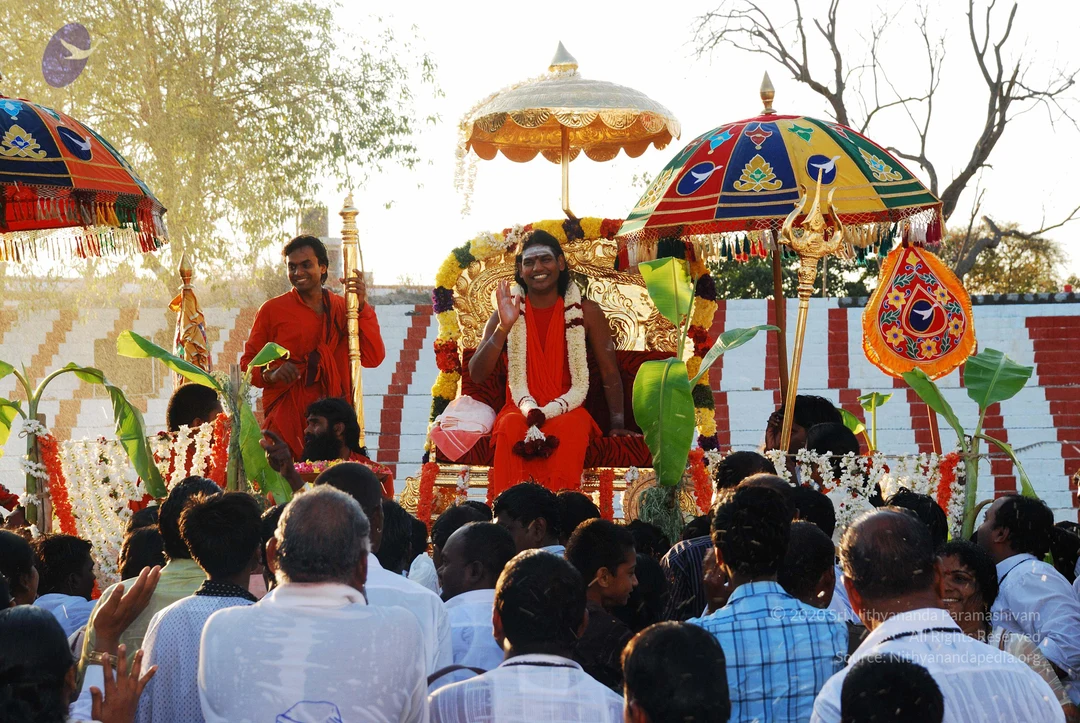
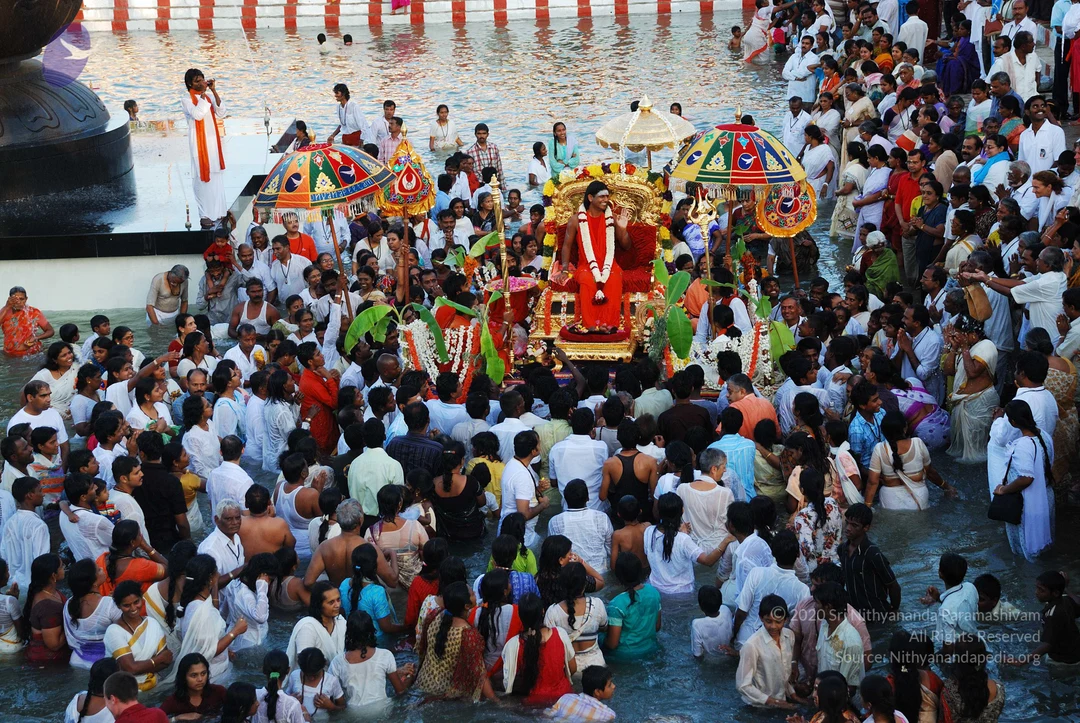
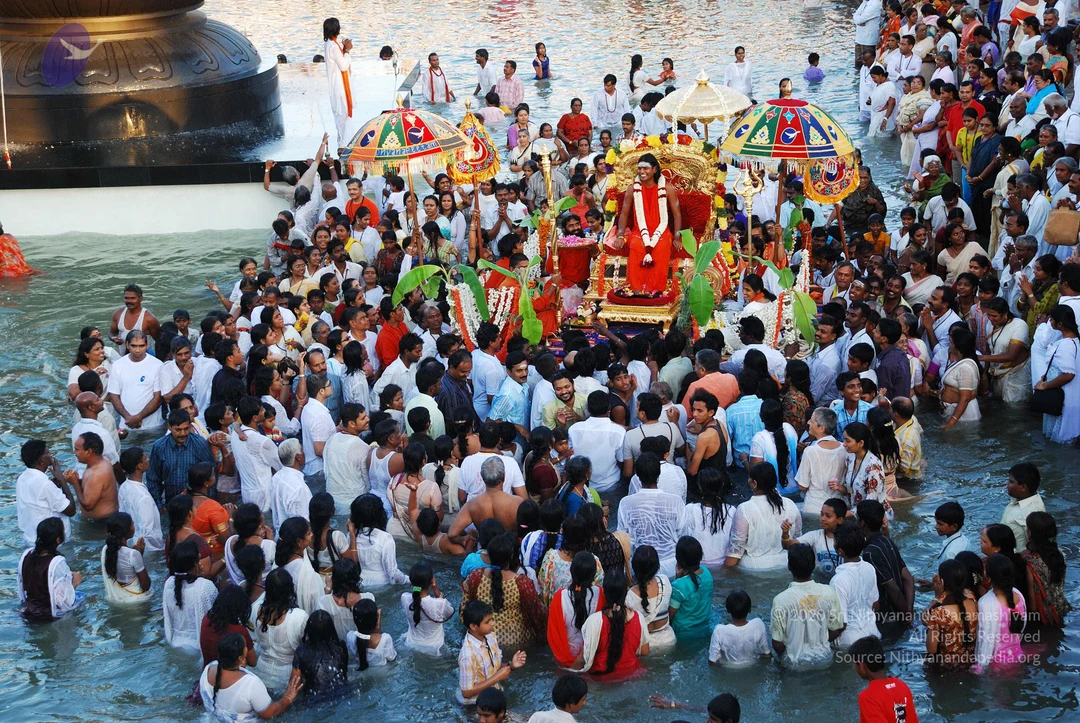
7-PROCESSION-AND-FLAG-HOISTING
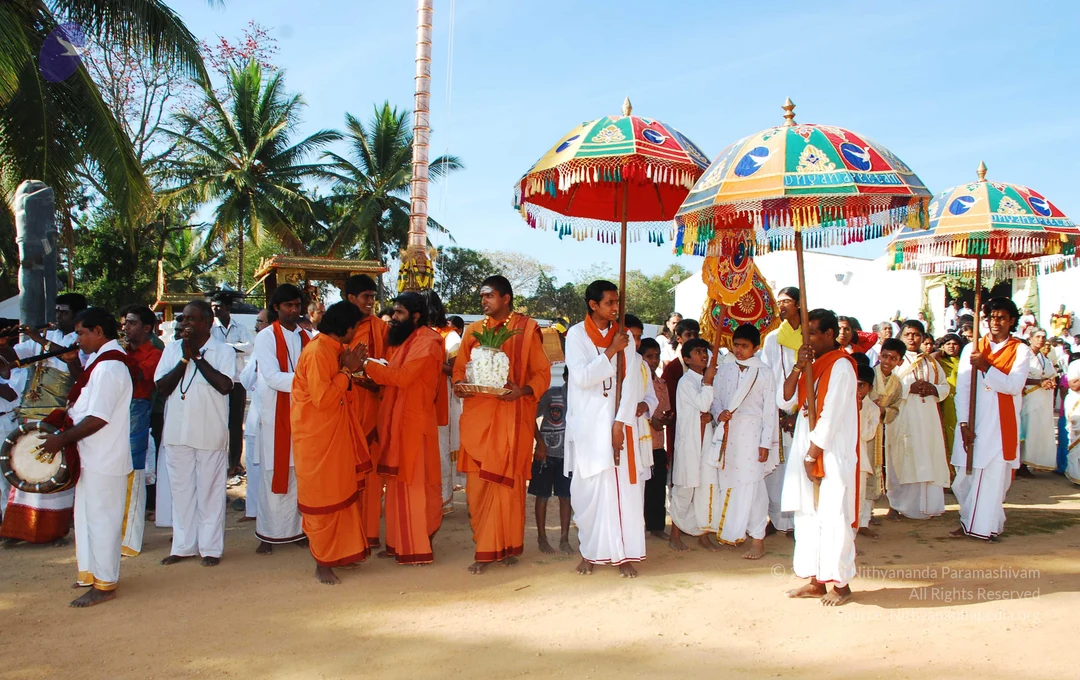
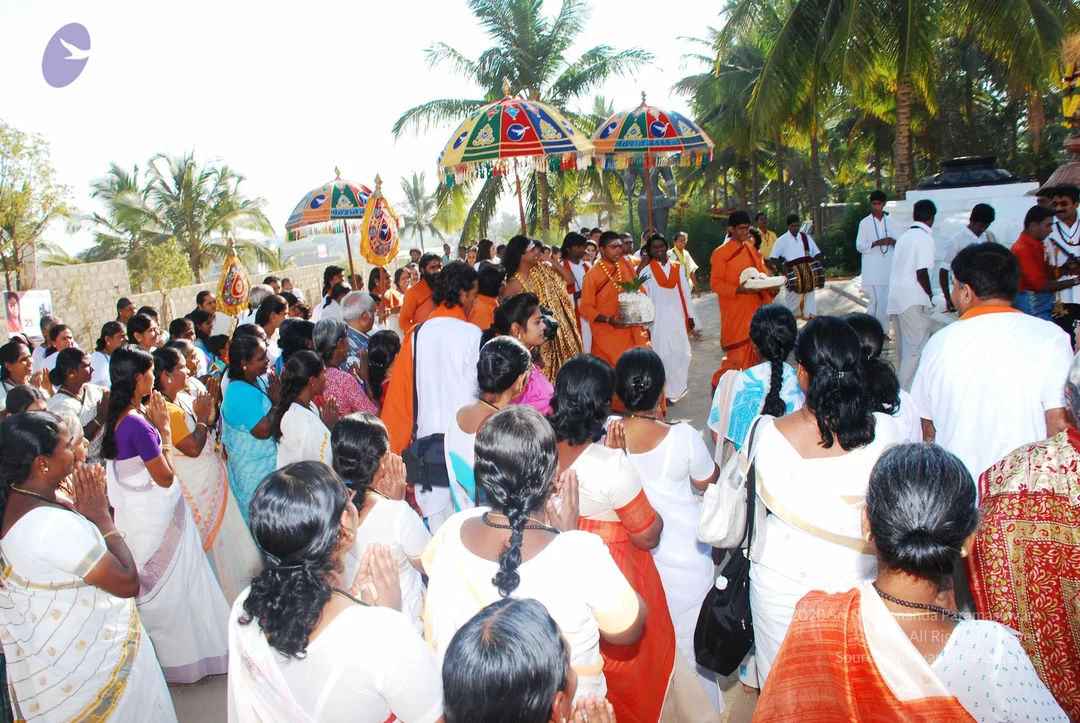
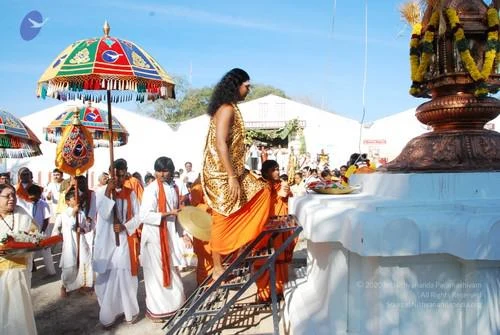
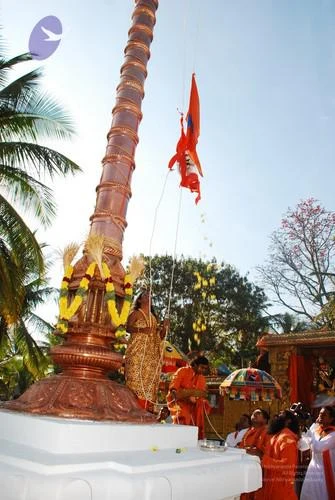
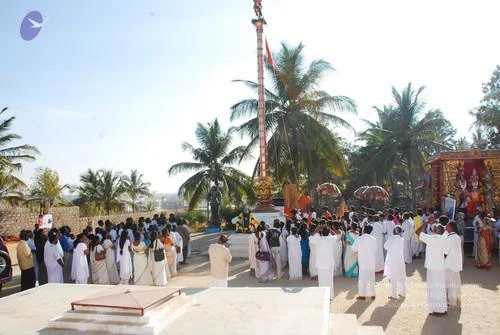
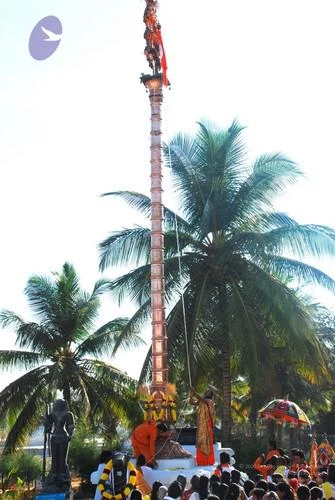
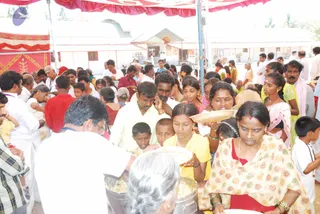
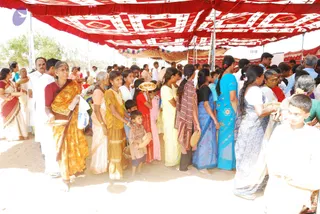
8-ANNA-DHAN
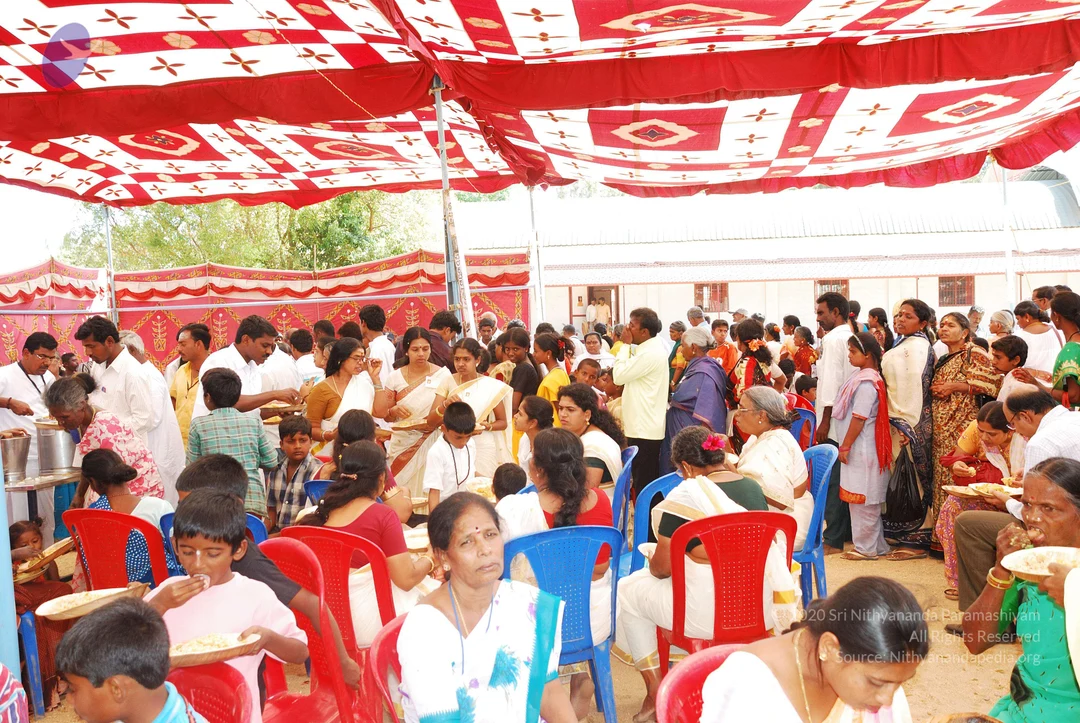
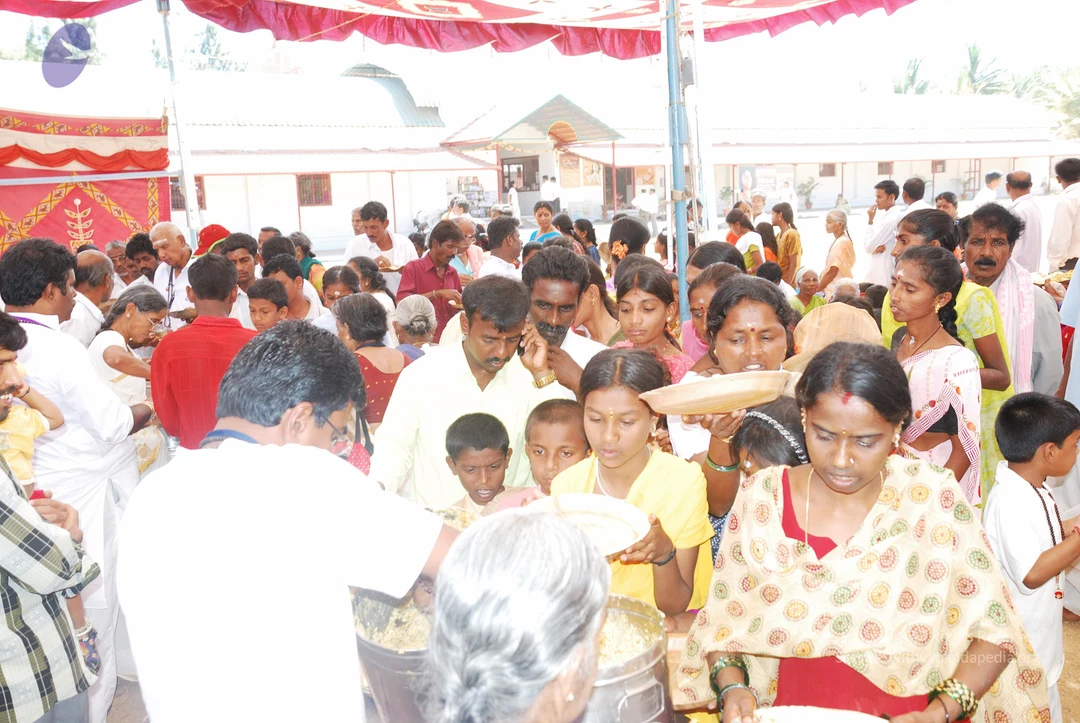
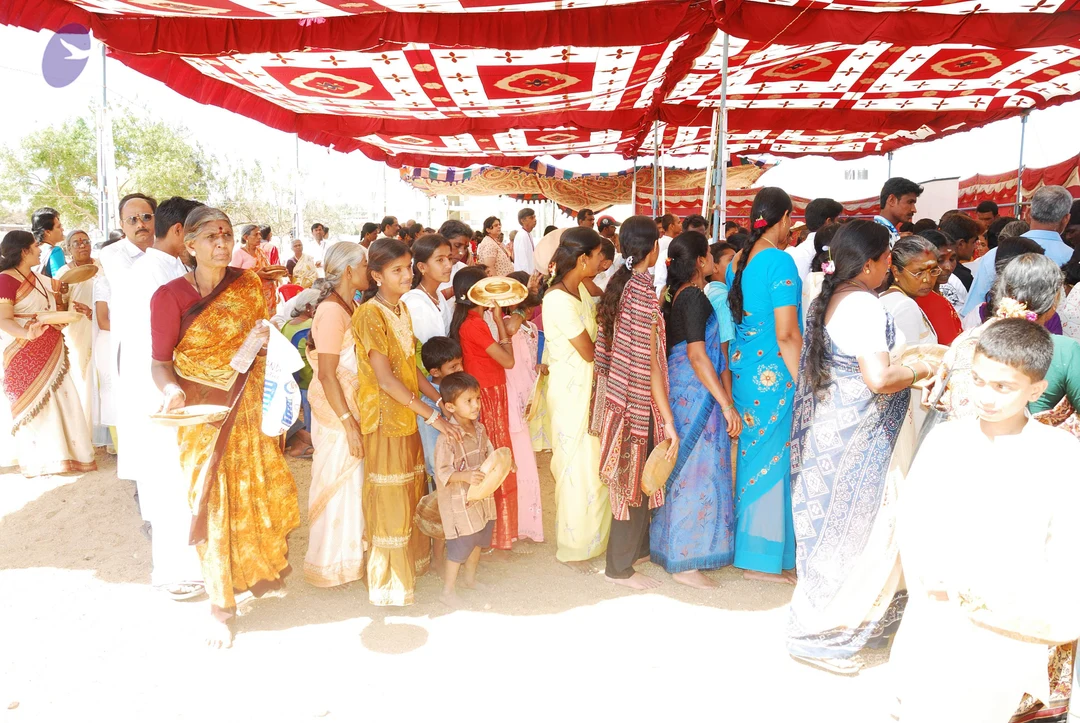
9-THEPOTSAVAM
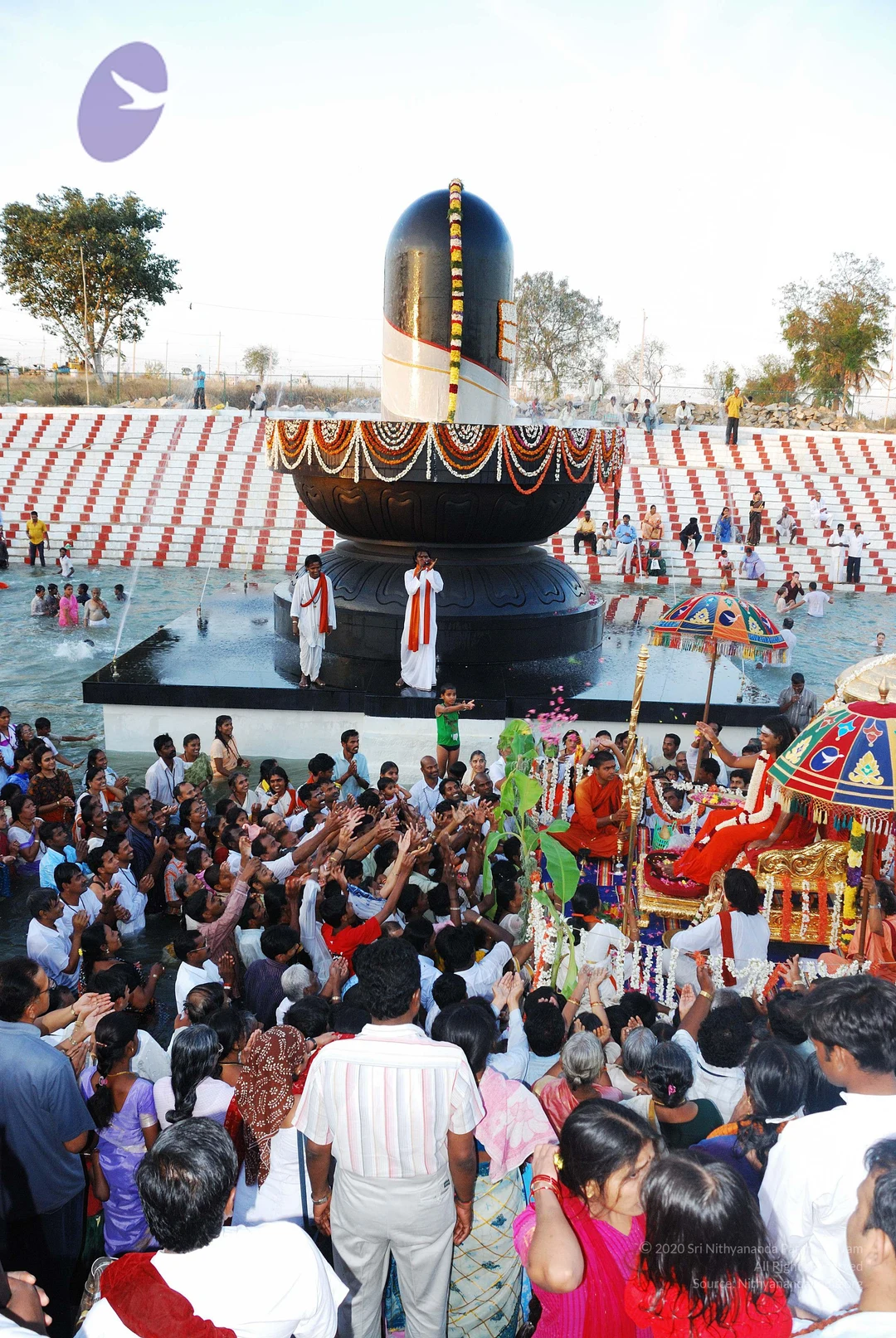
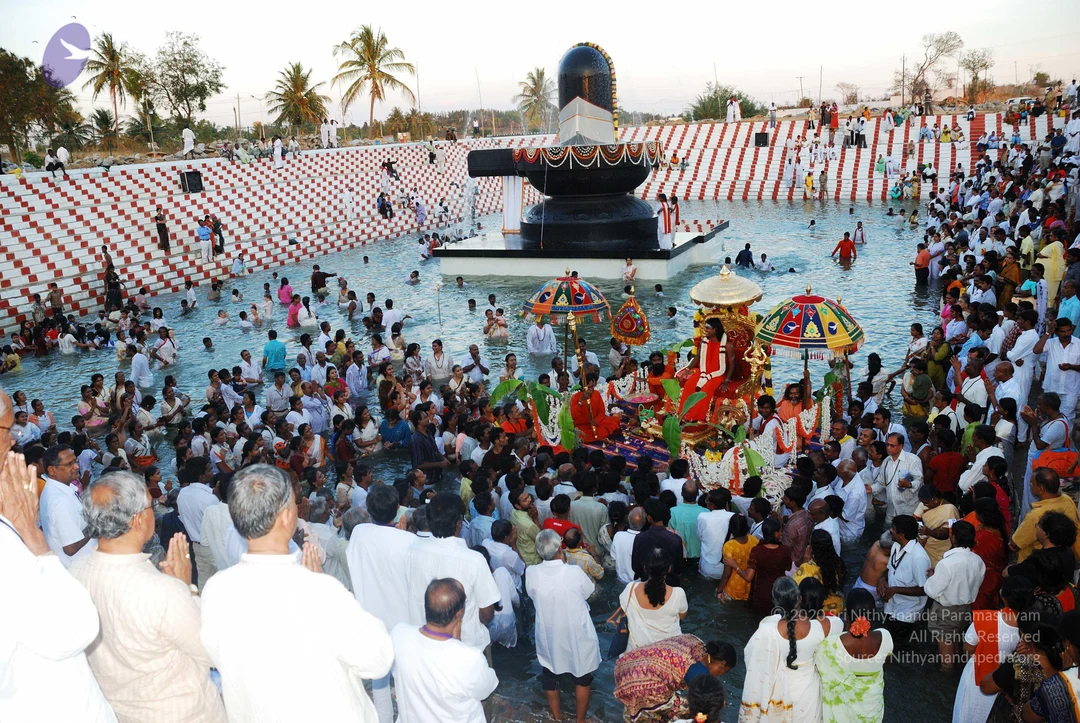
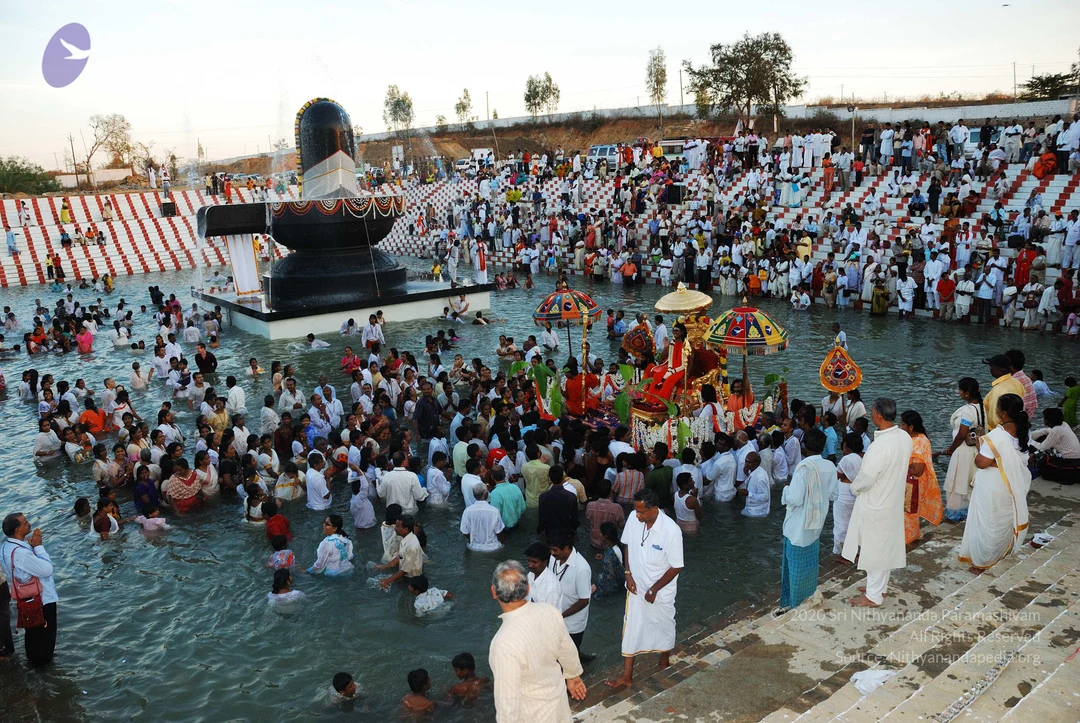
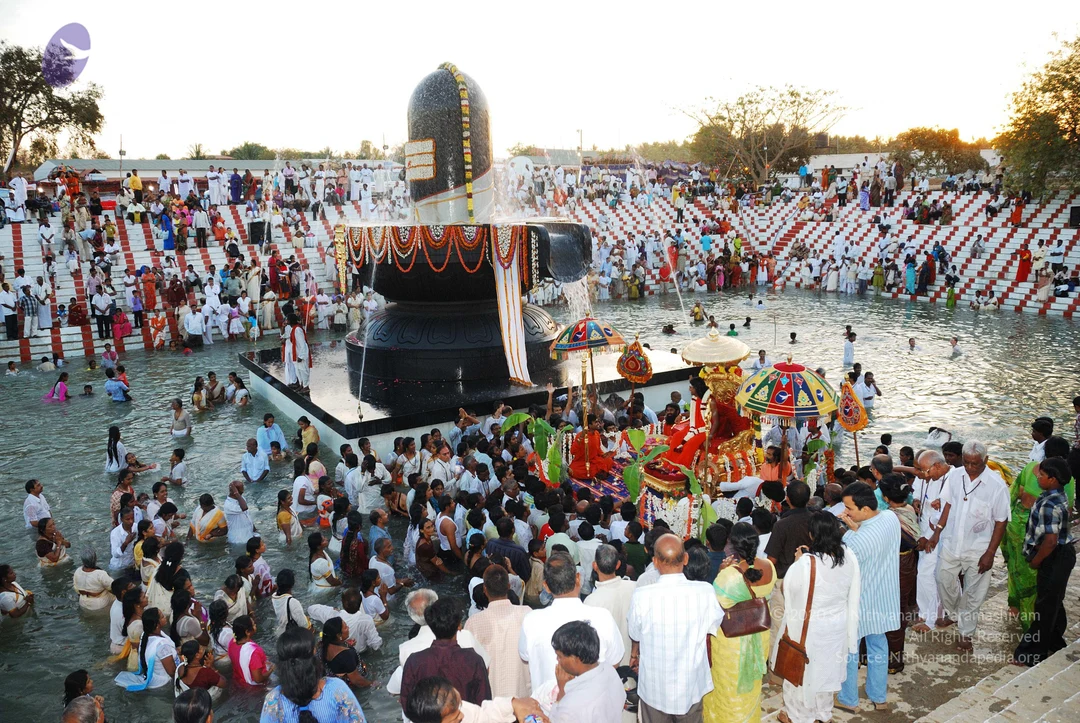
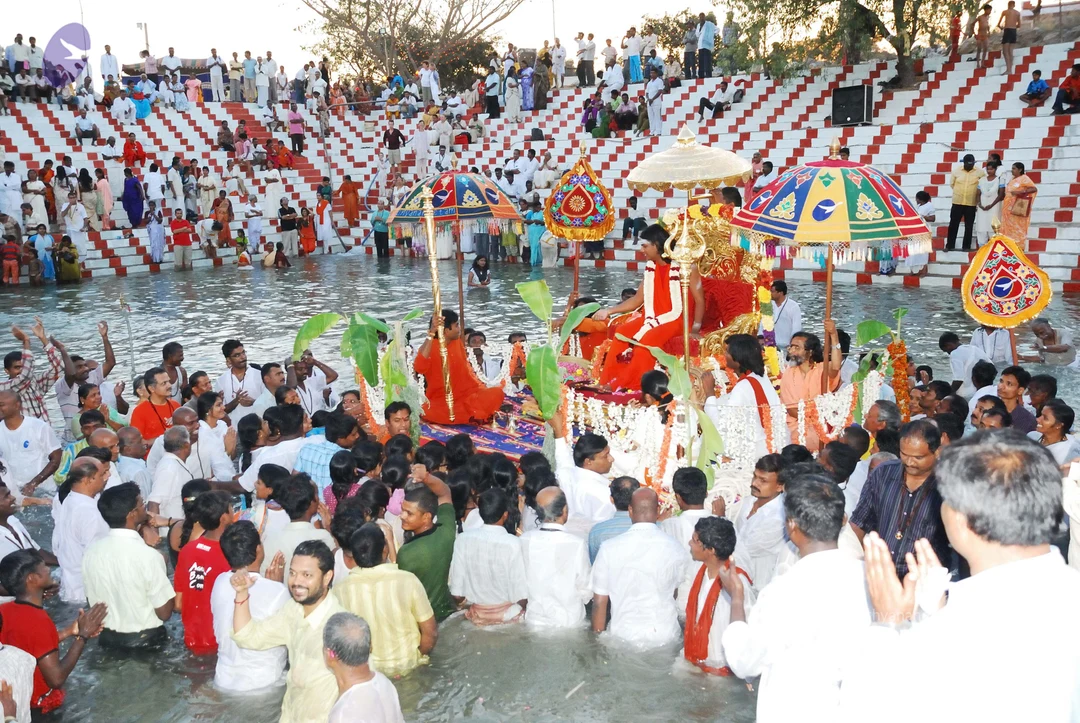
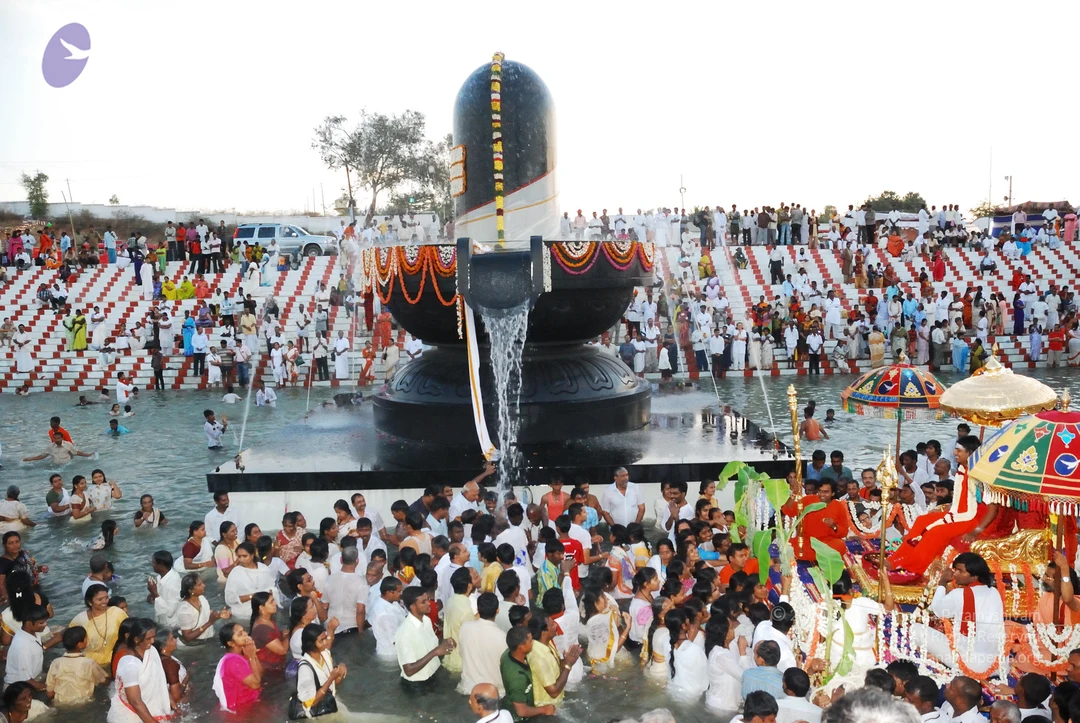
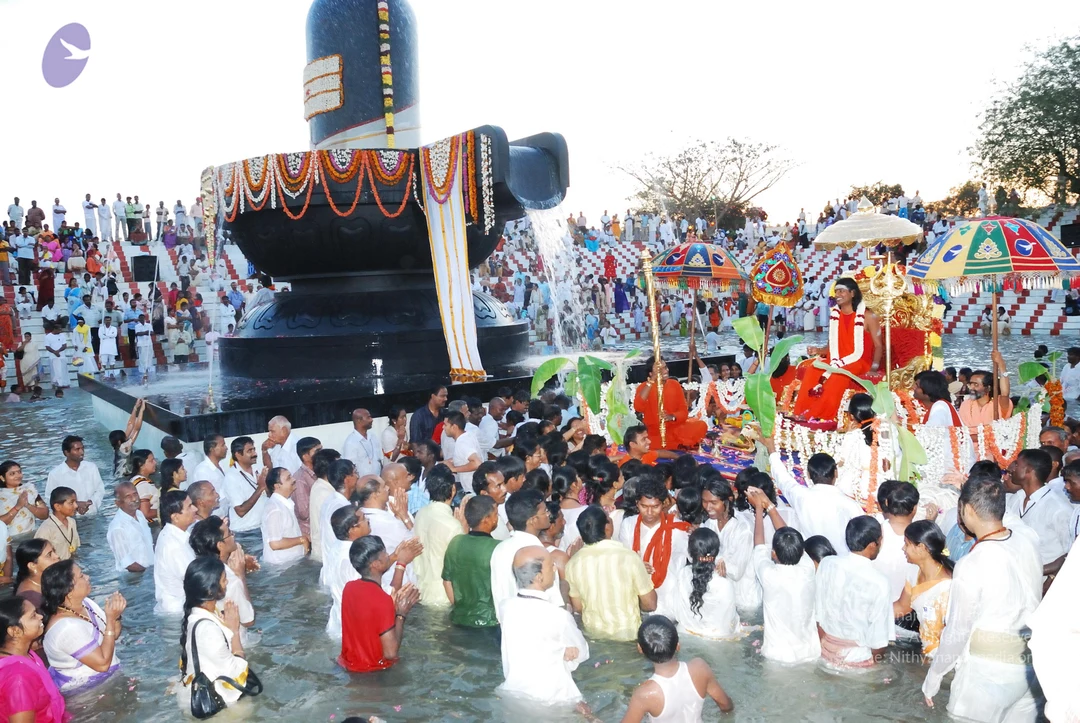
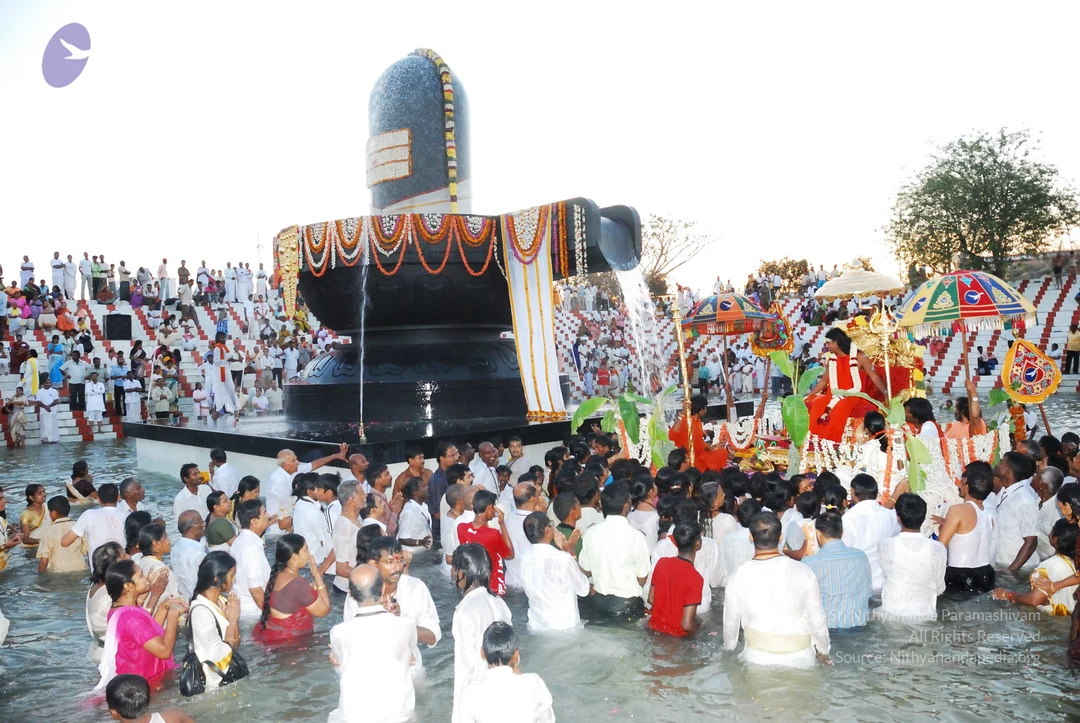
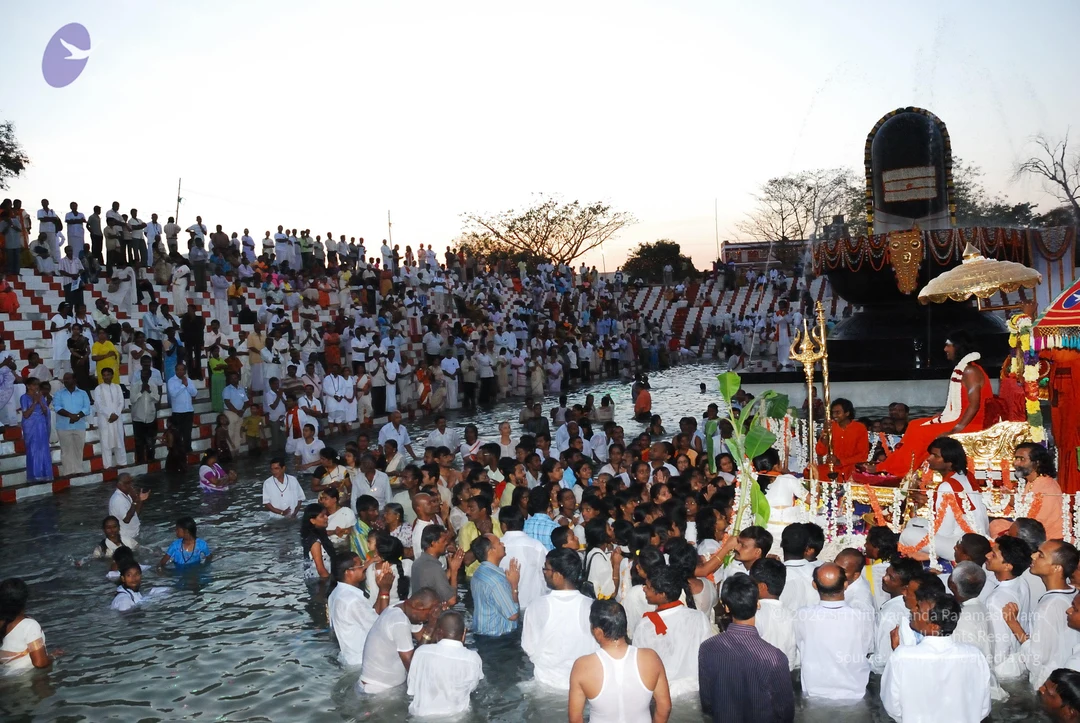
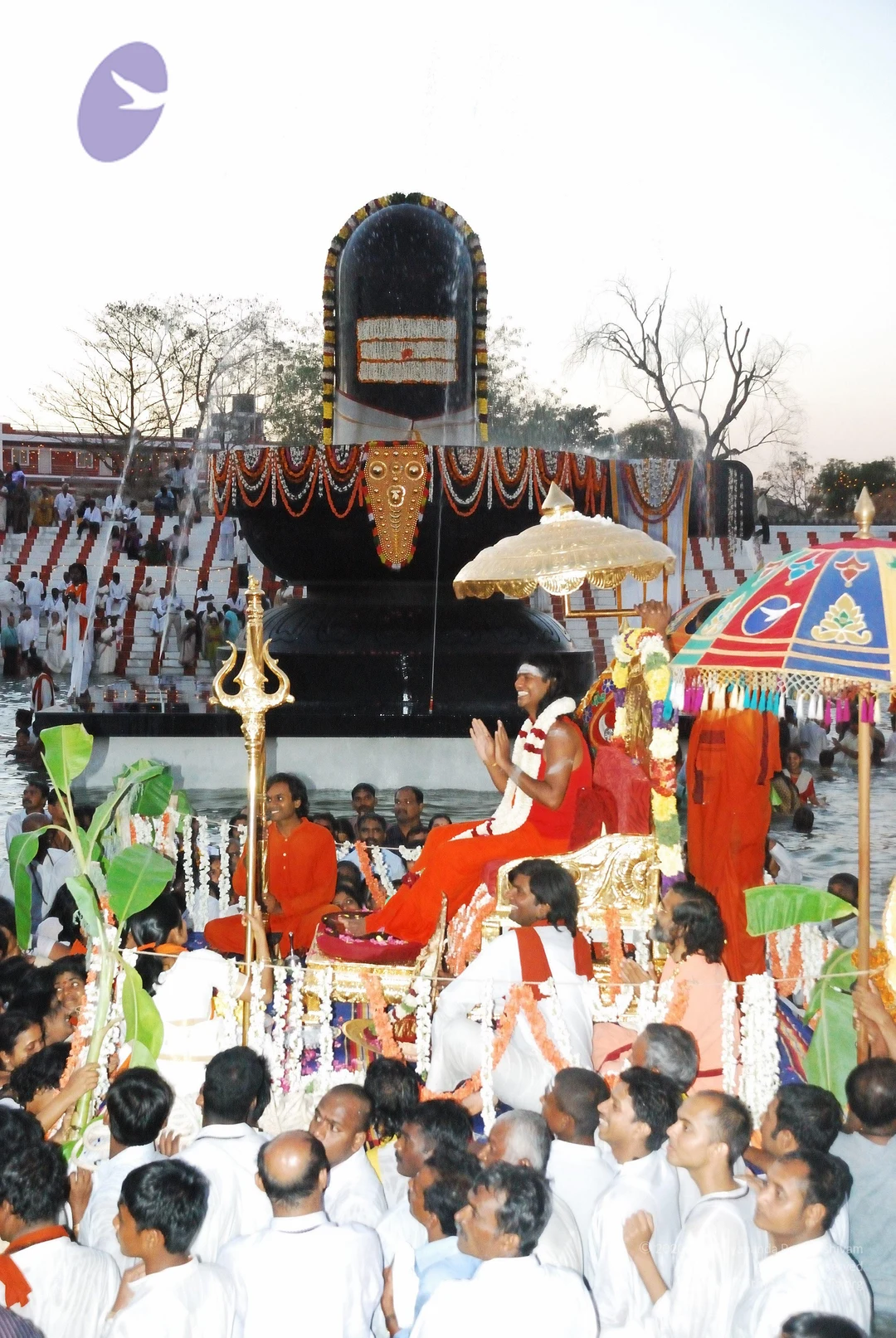
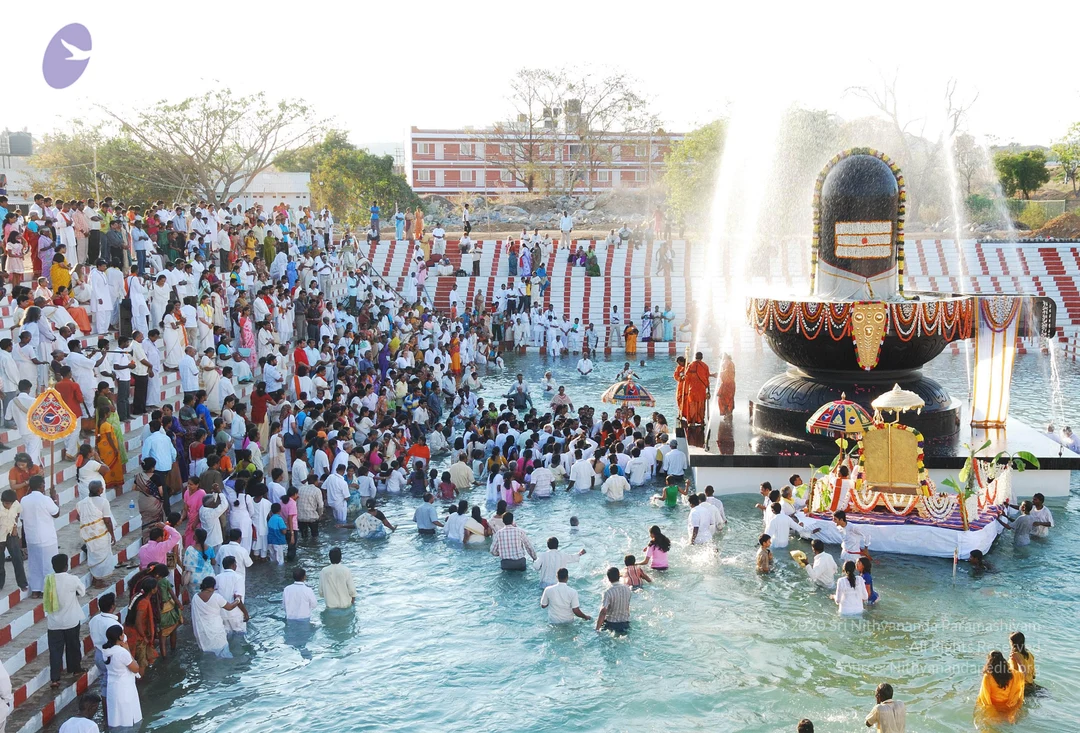
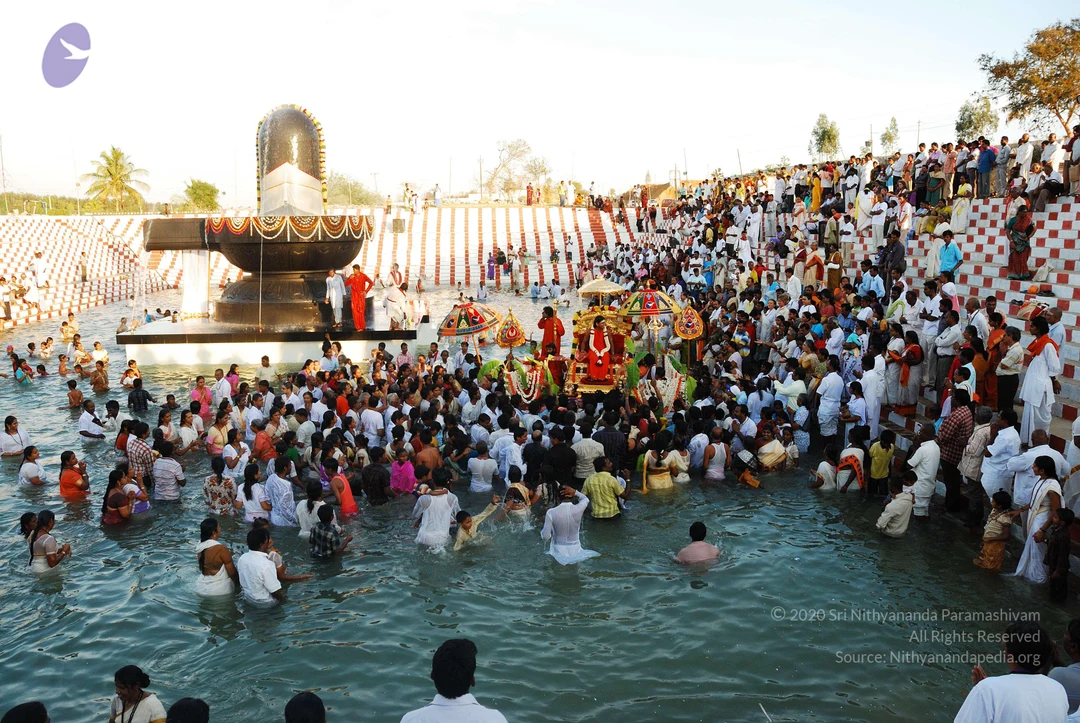
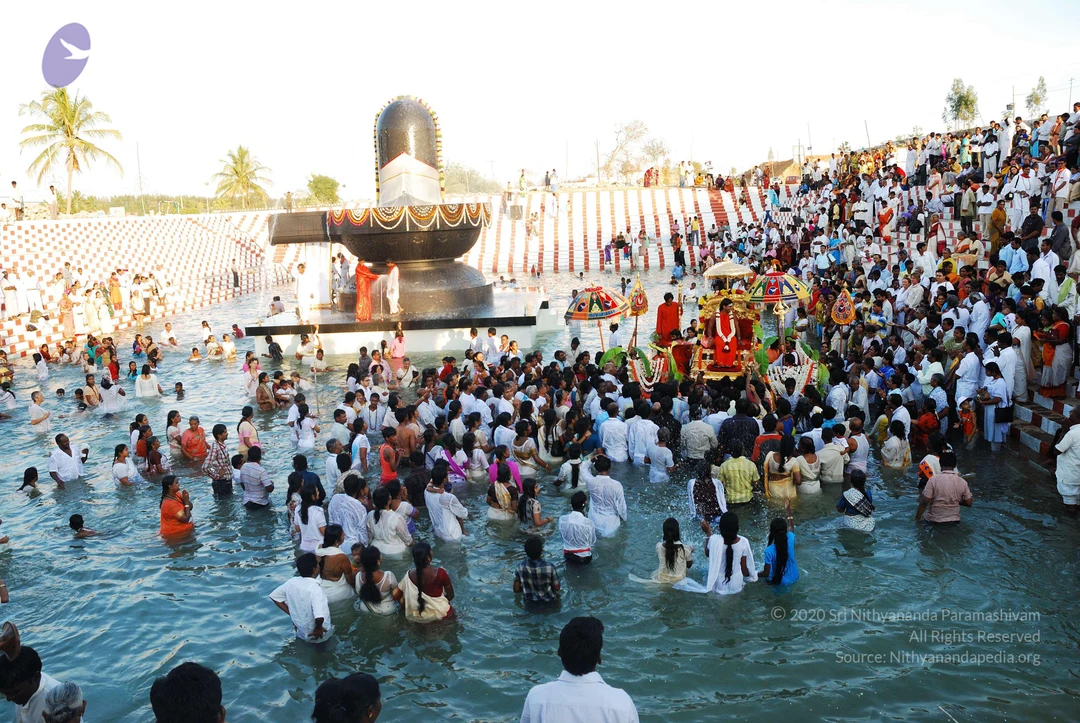

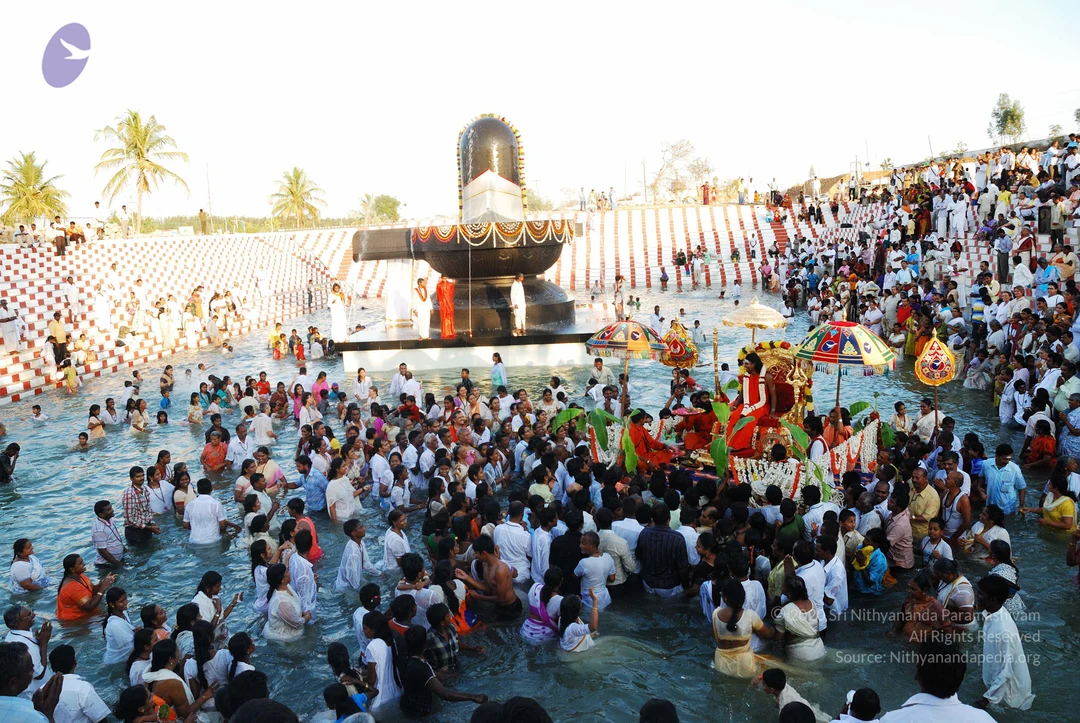
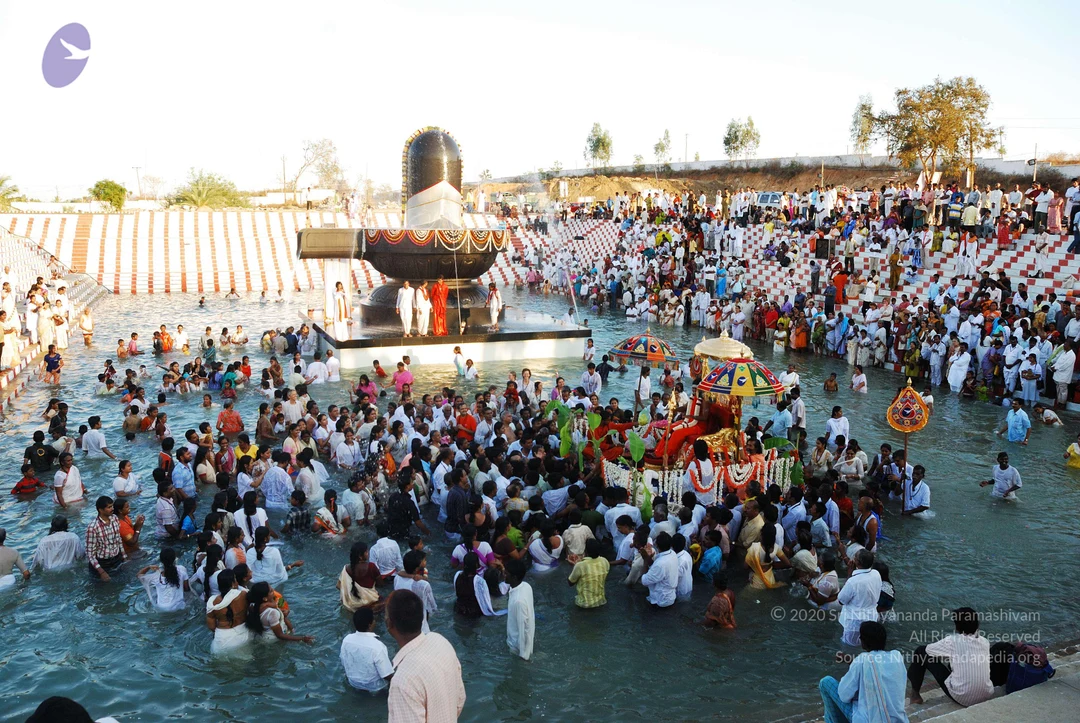
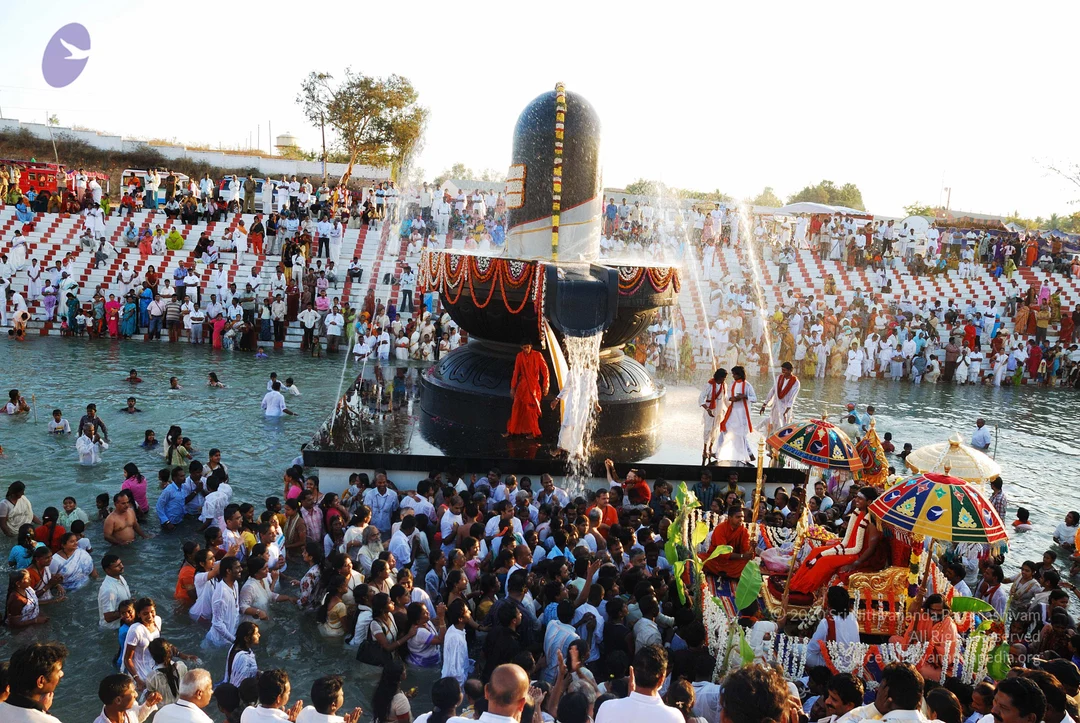
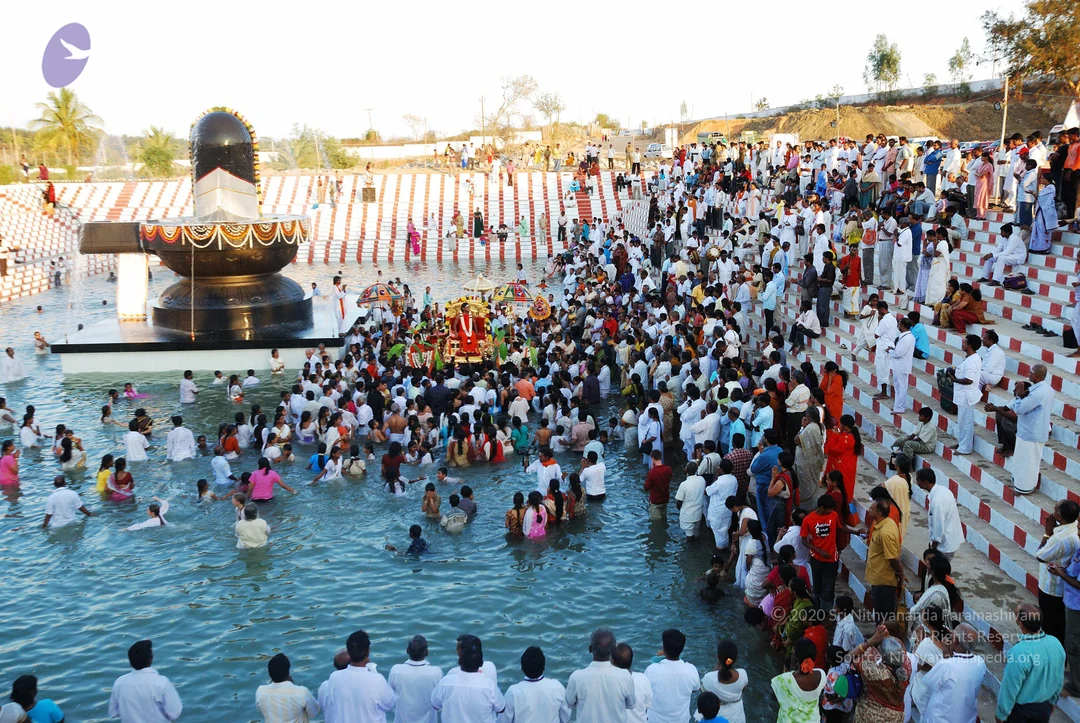
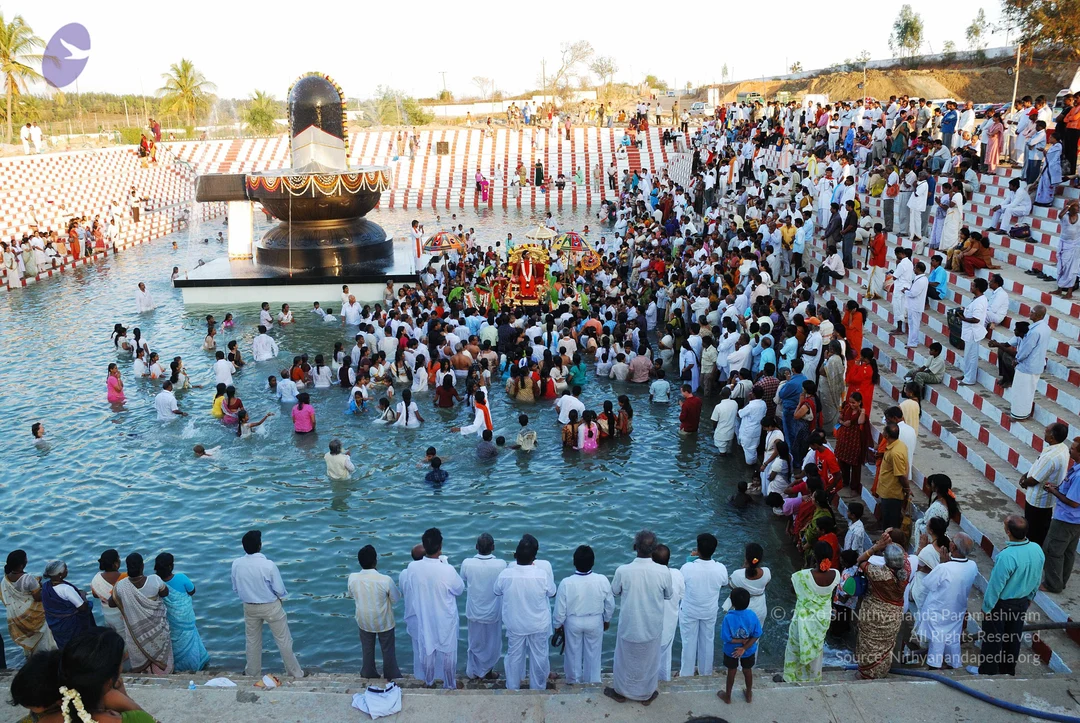
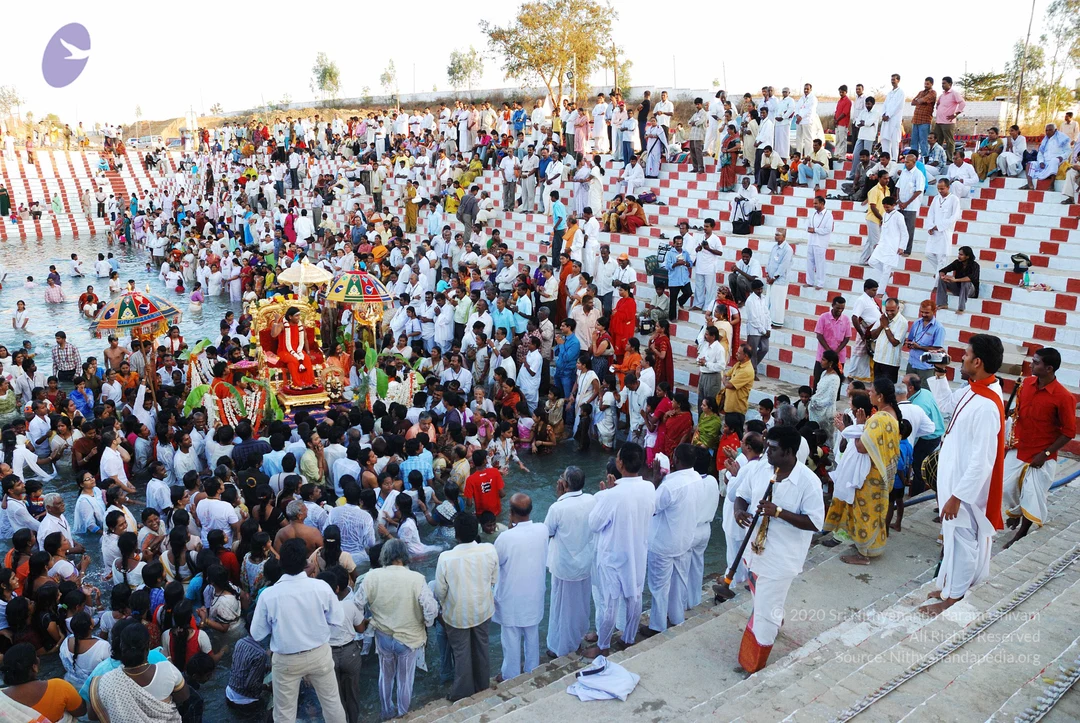
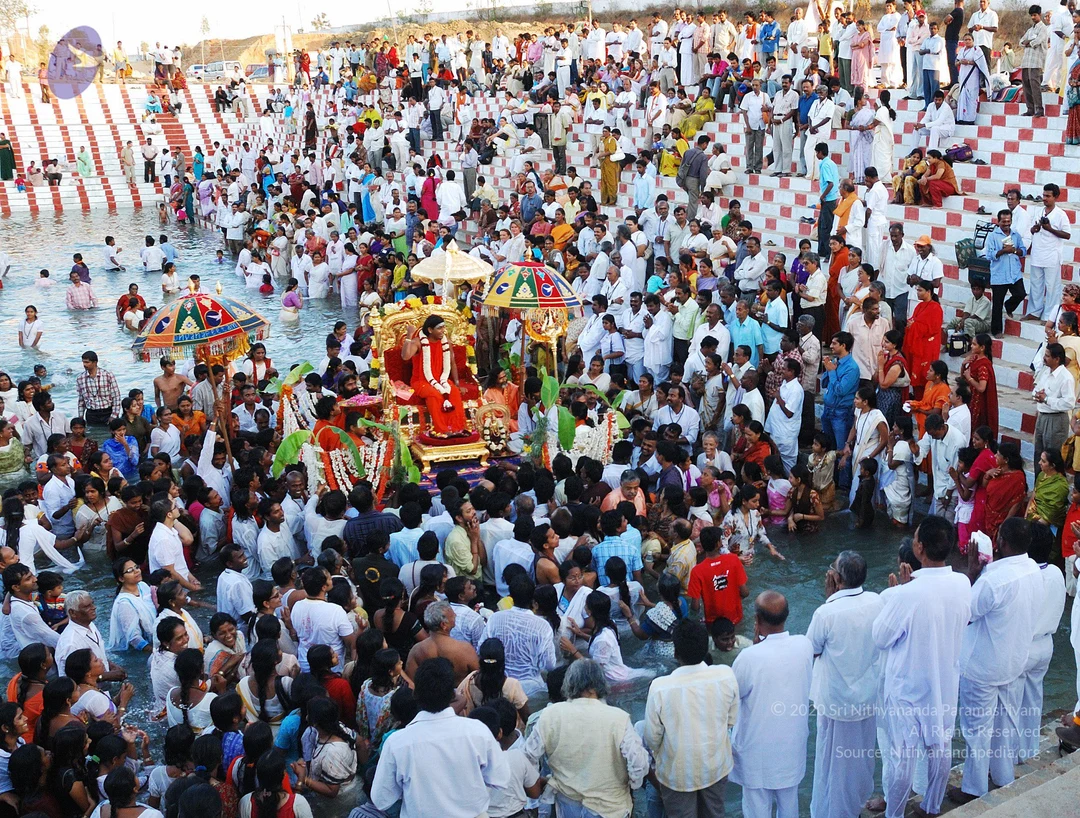
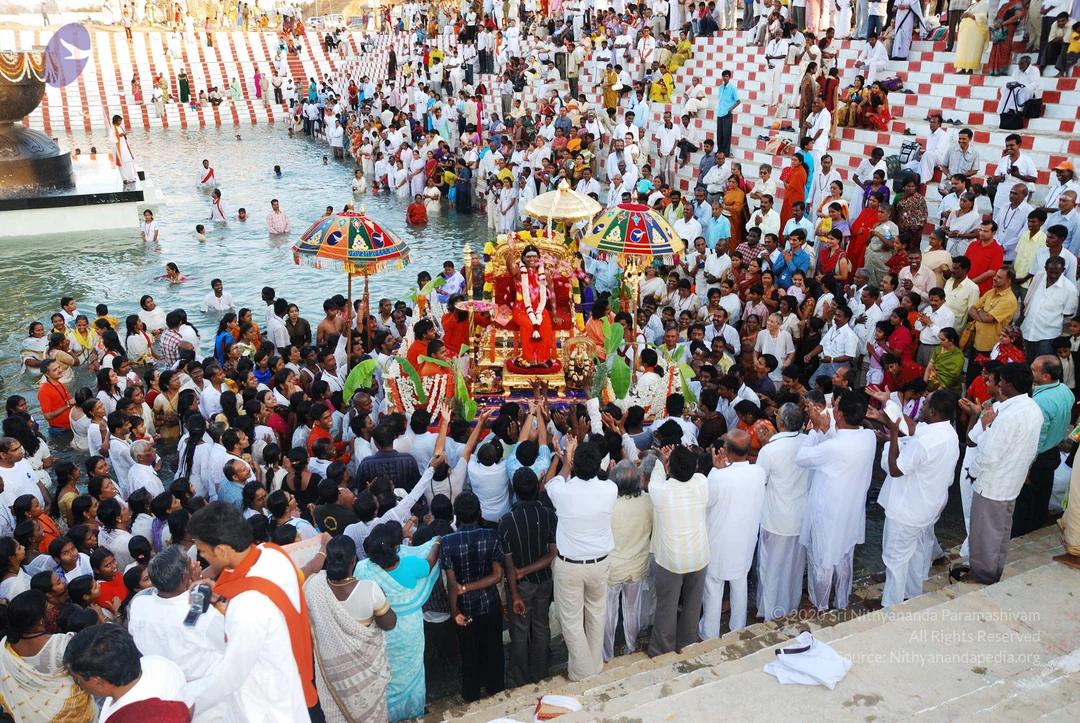
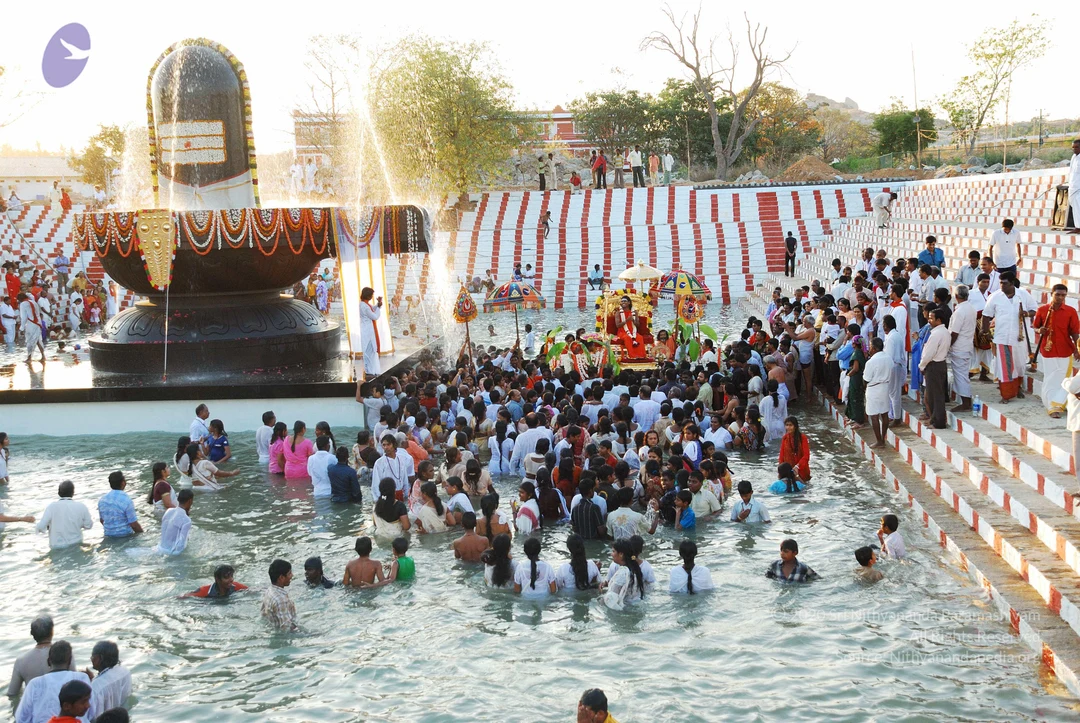
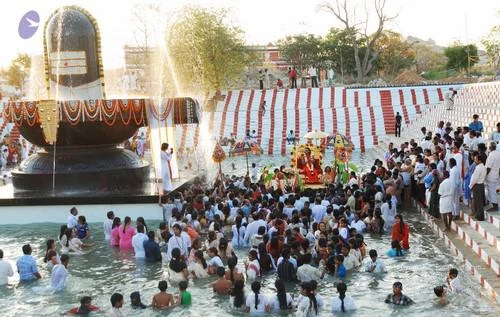
Photos from this day
View all 309 photos1-BOOK-RELEASE
18 photosSource gallery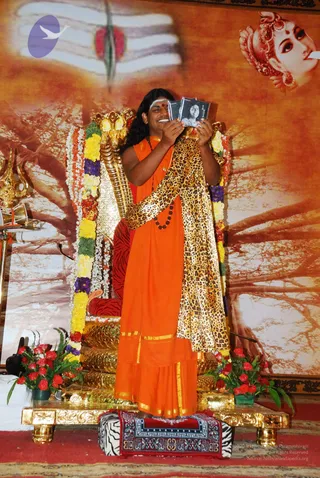
10-NIGHT-ARATI-AND-BRAHMACHARIYAM-INITIATION
10 photosSource gallery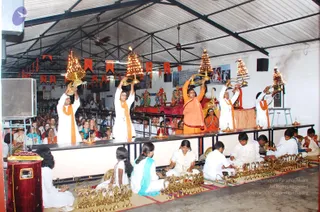
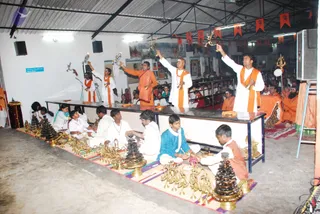
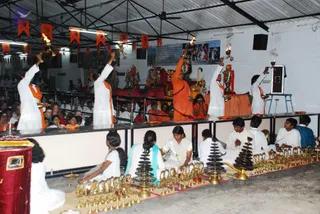
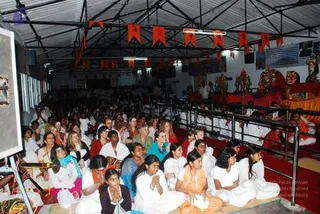
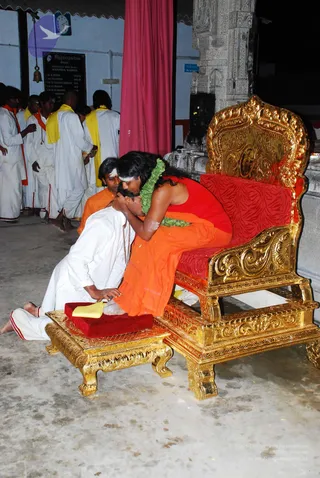
2-CULTURALS
84 photosSource gallery
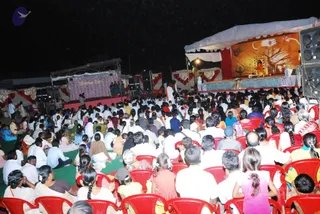
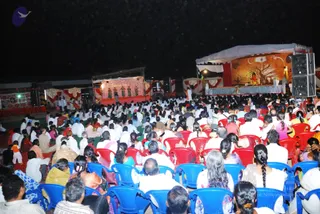
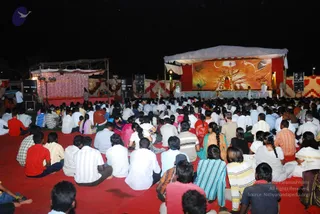
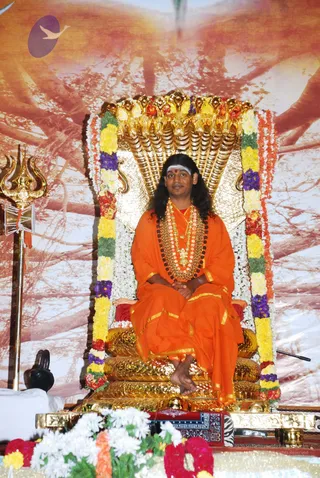
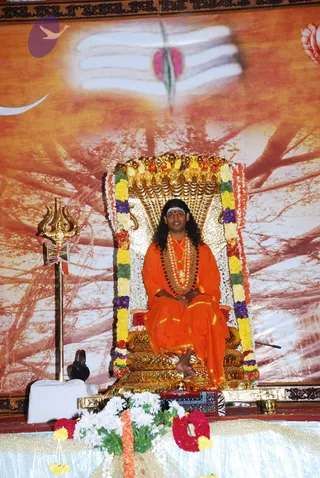
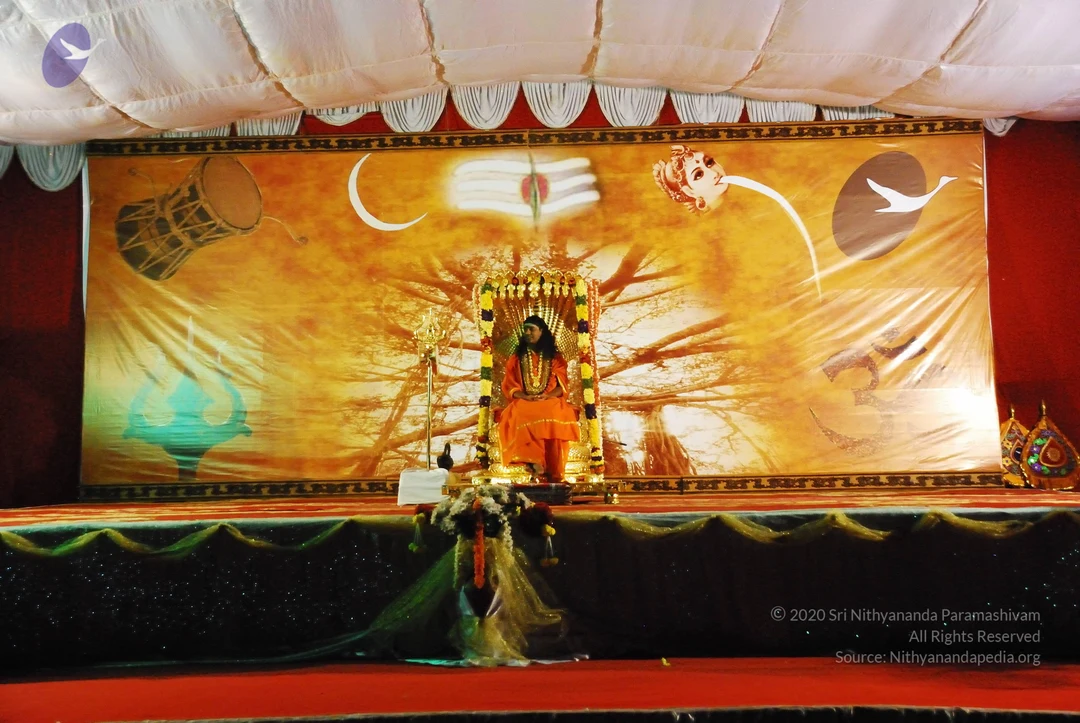
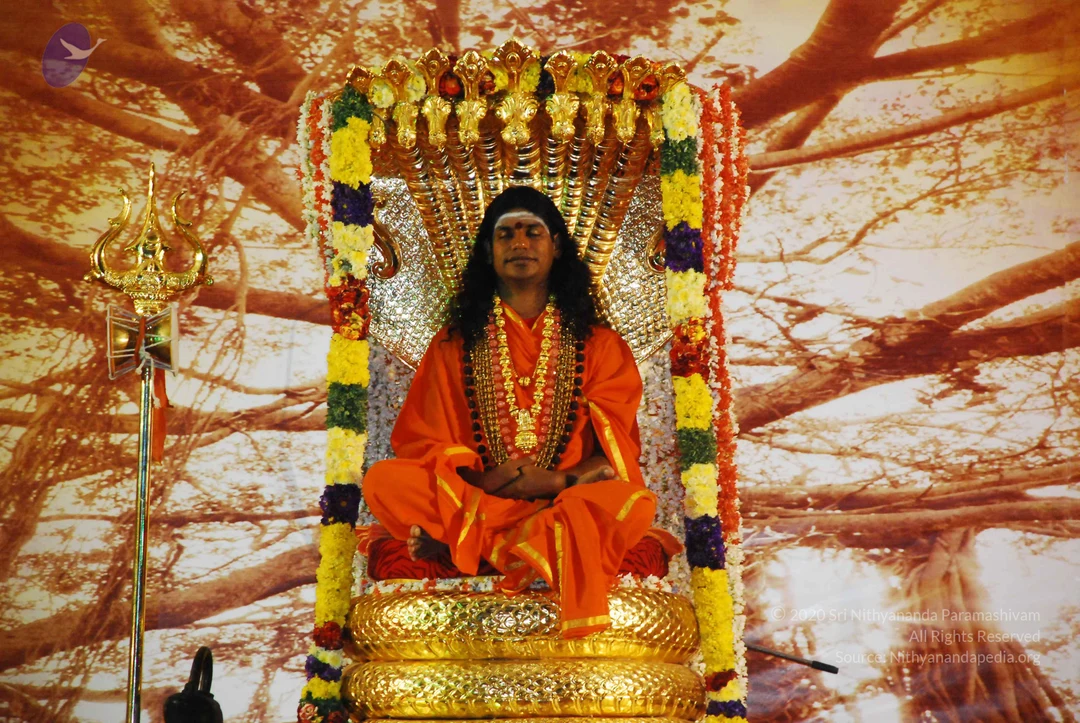
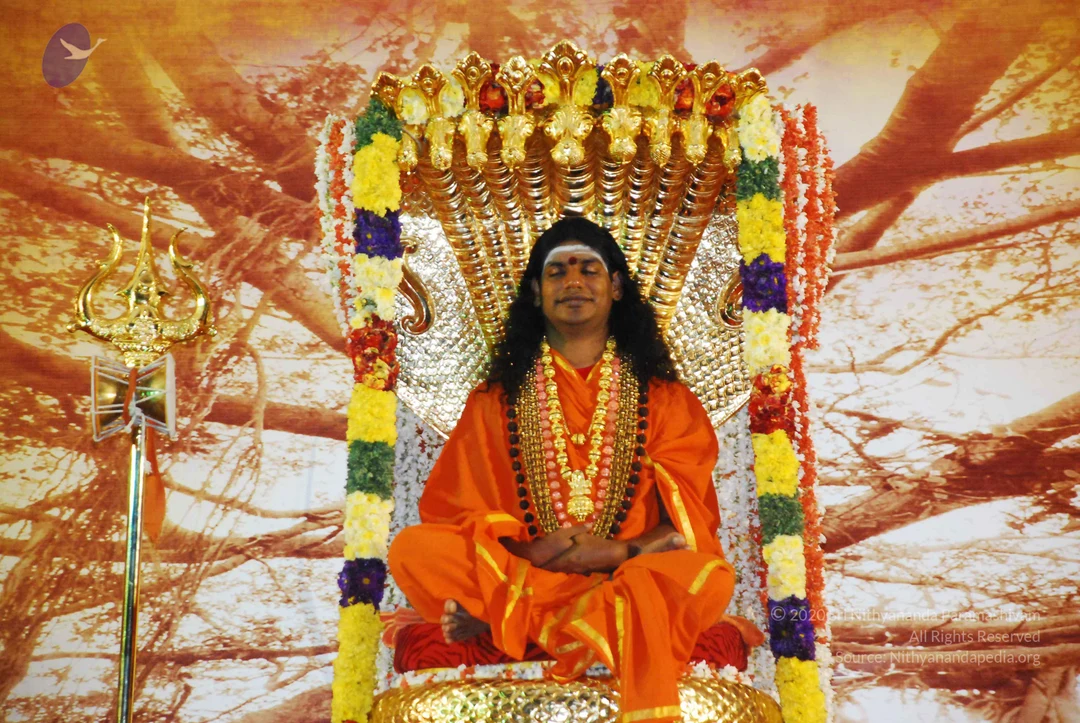
3-KUNDALINI-MEDITATION
20 photosSource gallery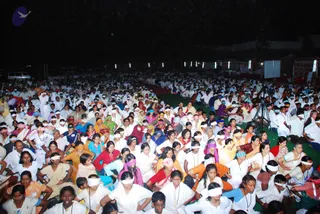
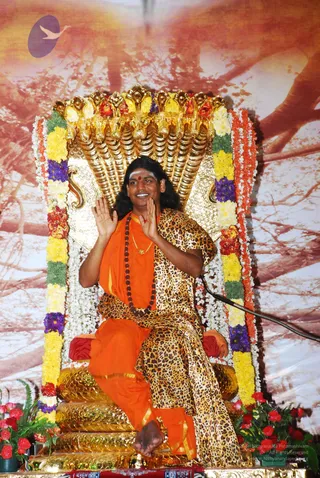
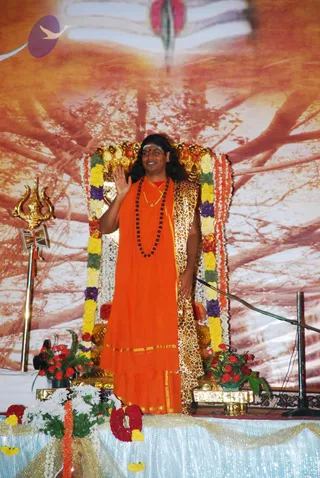
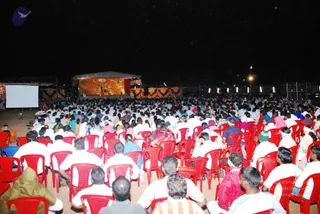
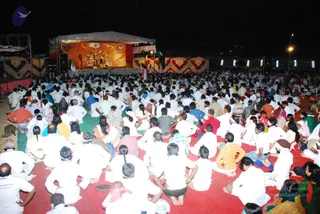
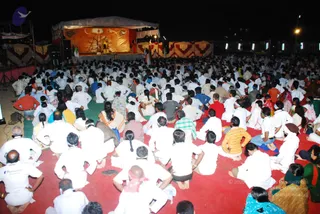
4-MEDICAL-CAMP
28 photosSource gallery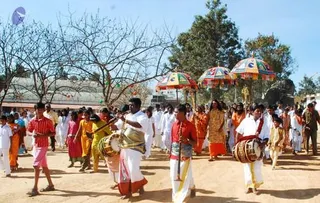
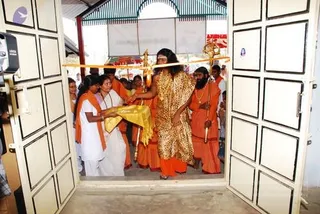
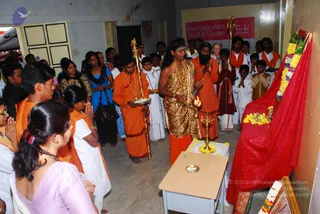
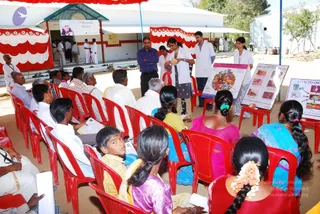
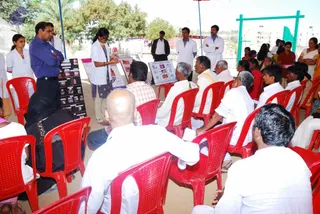
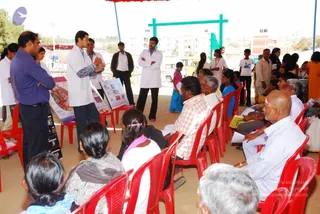
5-ABHISHEGAM-AND-ARATI
28 photosSource gallery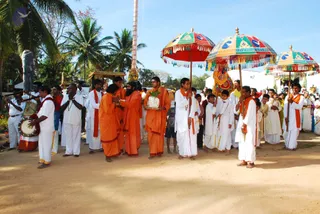
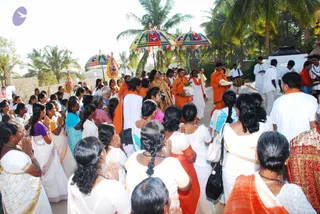
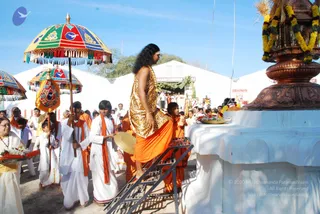
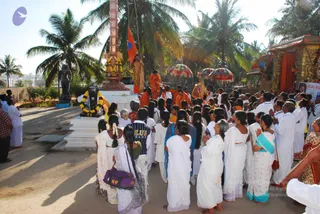
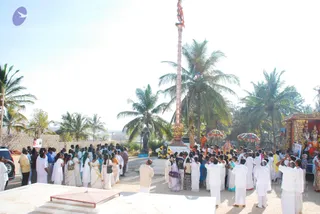
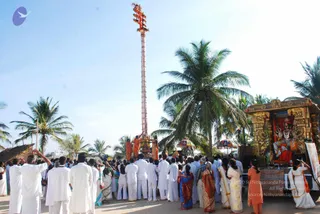
6-ABHISHEGAM-AND-HOMA
31 photosSource gallery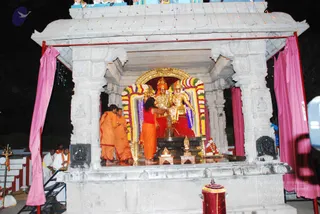
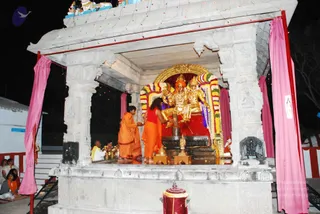
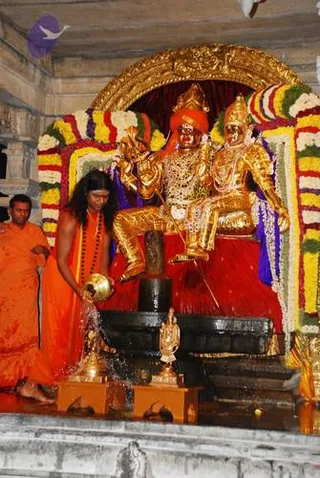
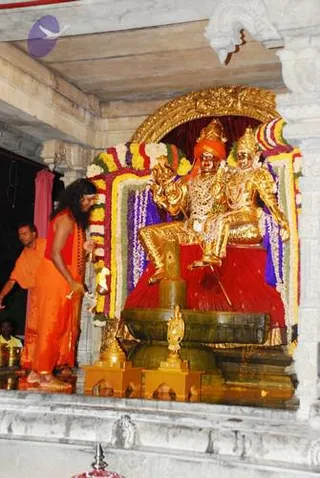
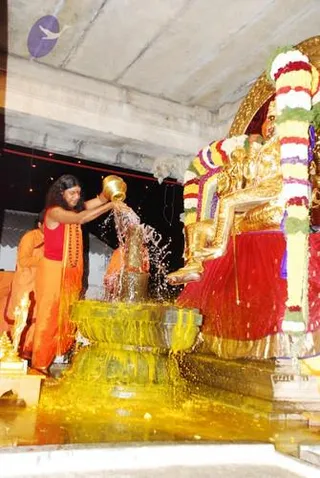
7-PROCESSION-AND-FLAG-HOISTING
12 photosSource gallery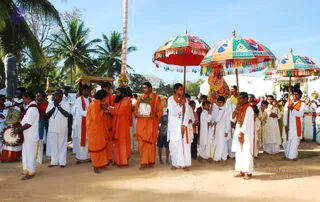
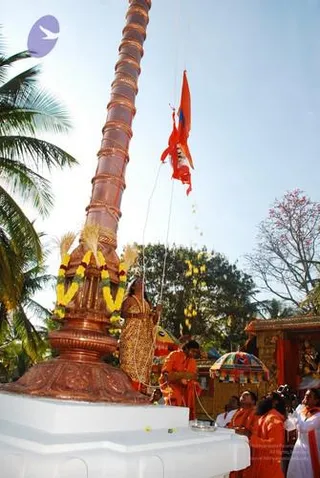
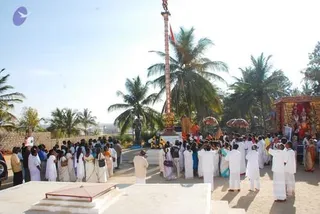
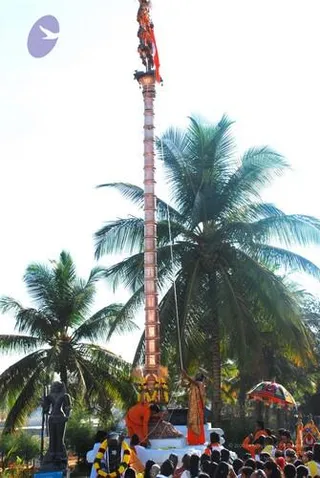
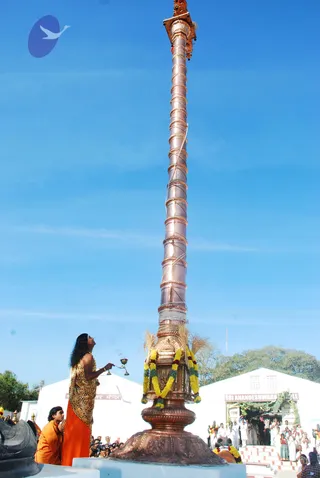
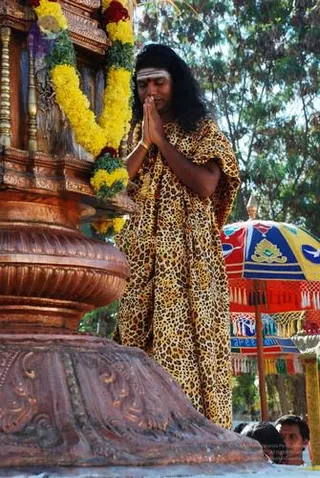
8-ANNA-DHAN
3 photosSource gallery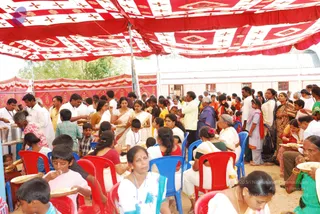
9-THEPOTSAVAM
73 photosSource gallery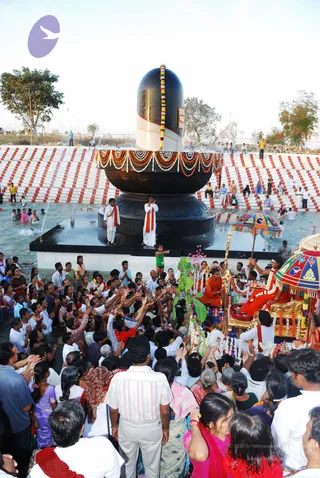
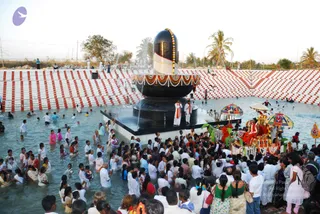
February 23 2009
2 photosView all