Skip to content
Sunday

16 November 2003

ஞானகுருமார்களுக்கு பாடல்கள் பாடி நன்றி தெரிவிக்கும் தியானமுறை

Dated photos
137
Source pages
1
Media
5
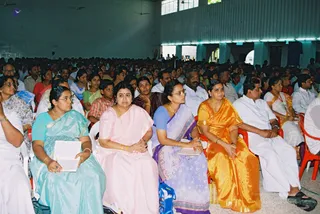
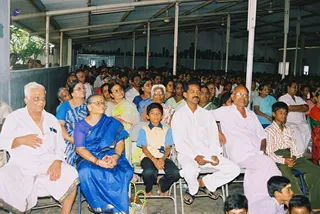
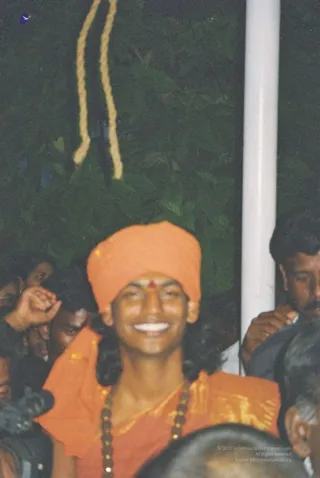
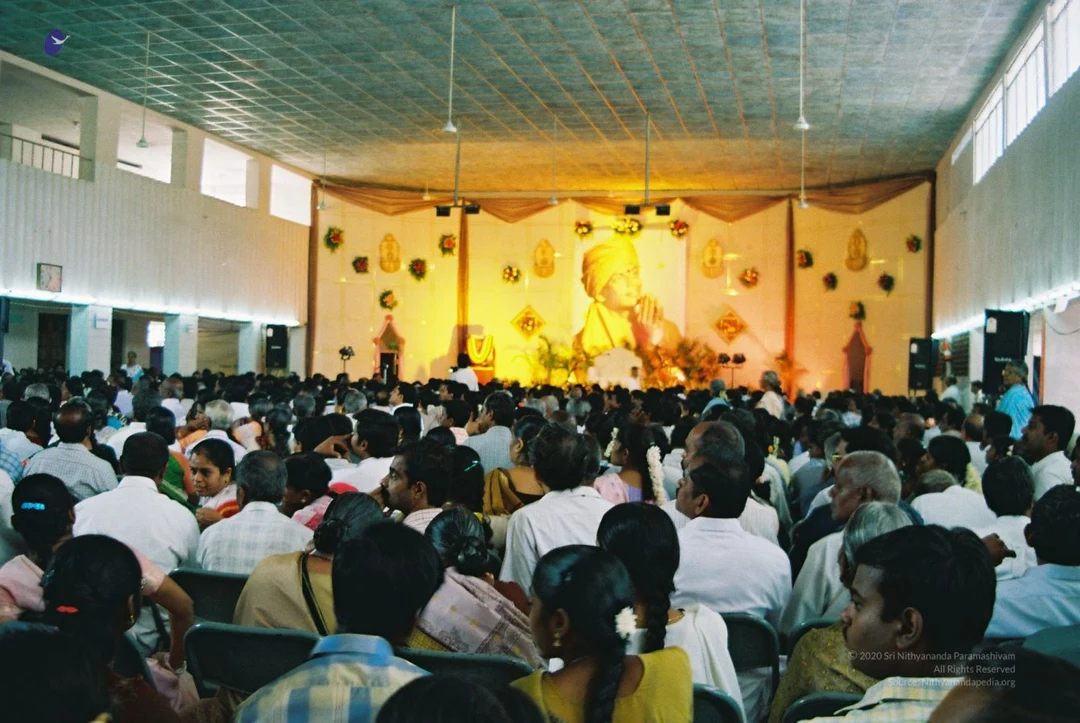
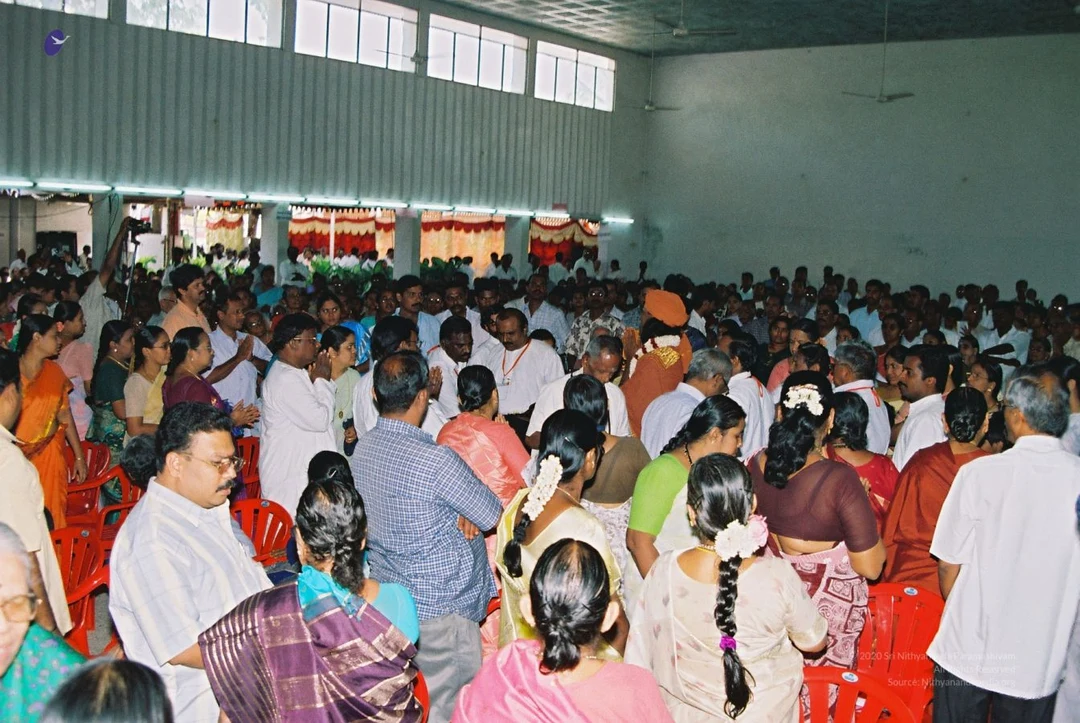
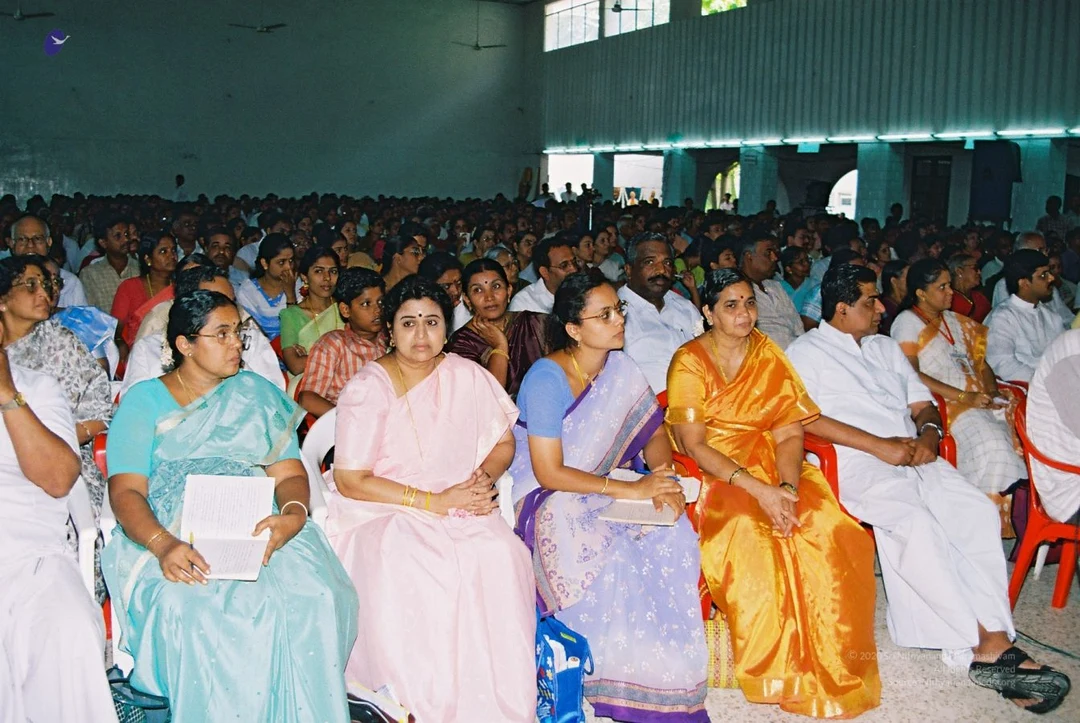
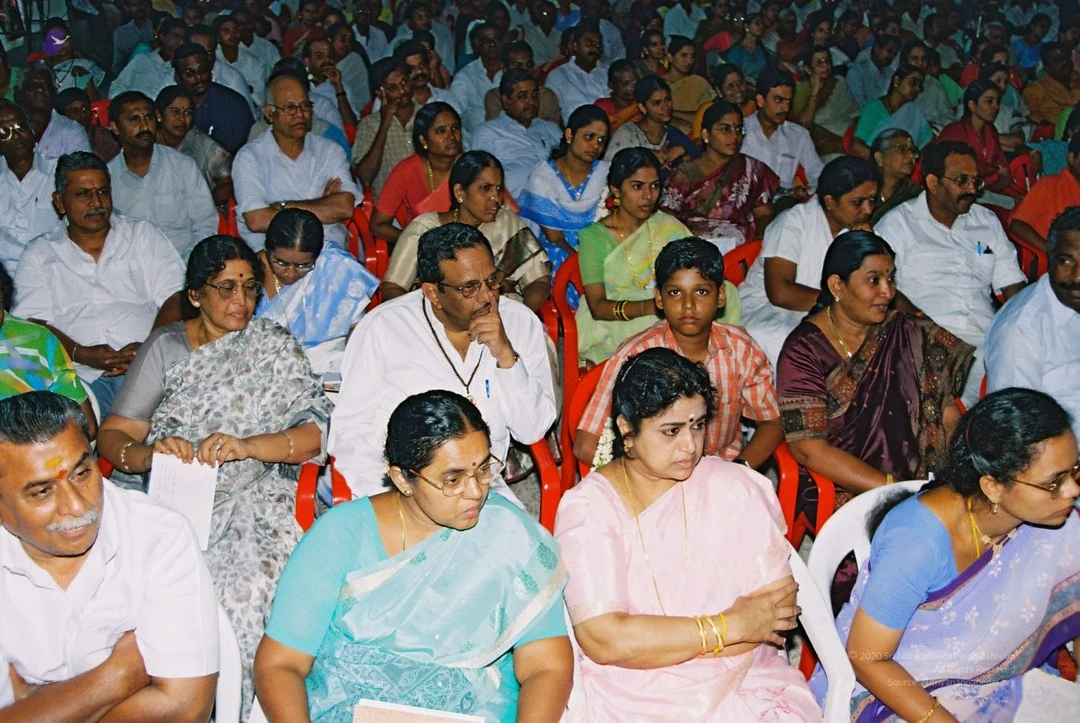
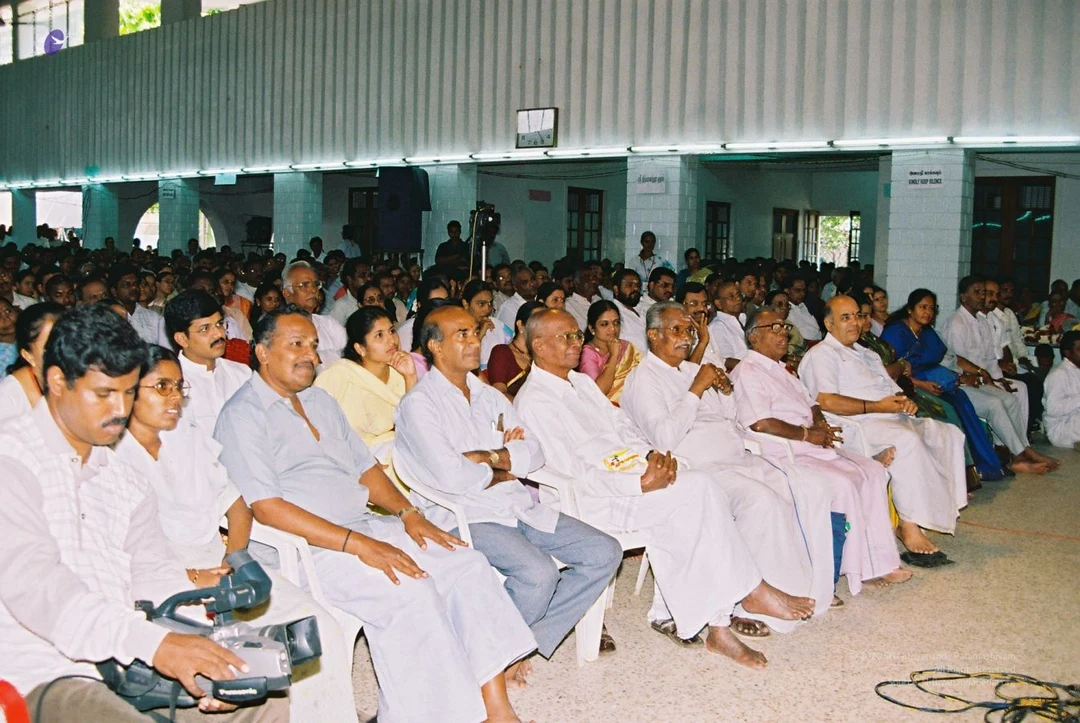
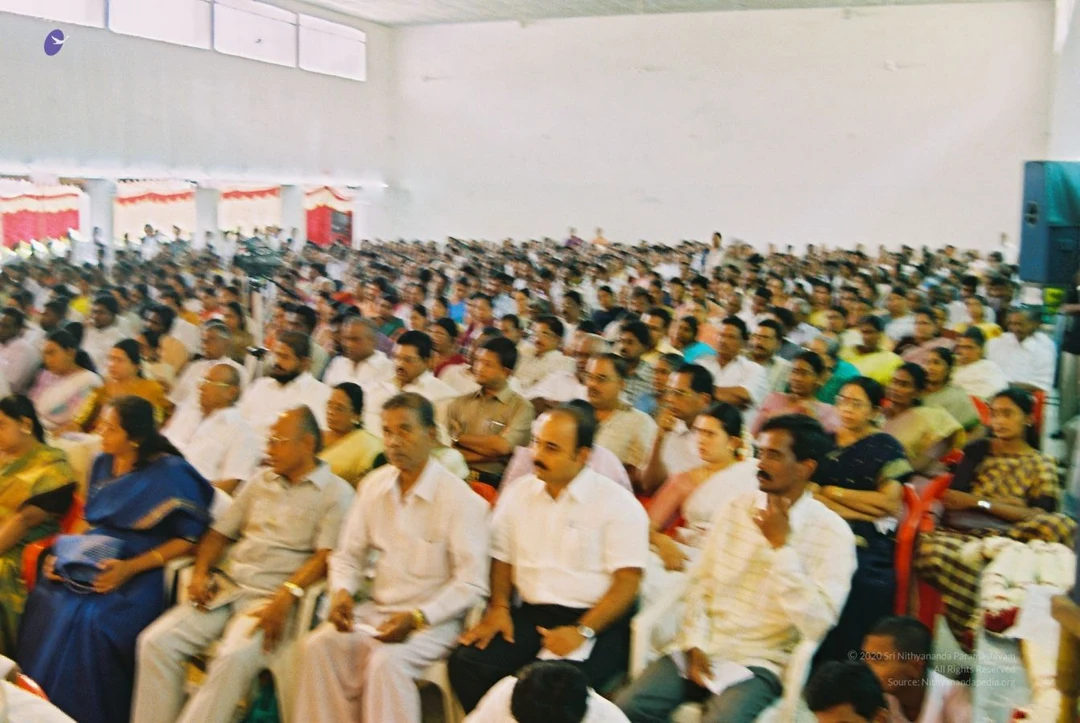
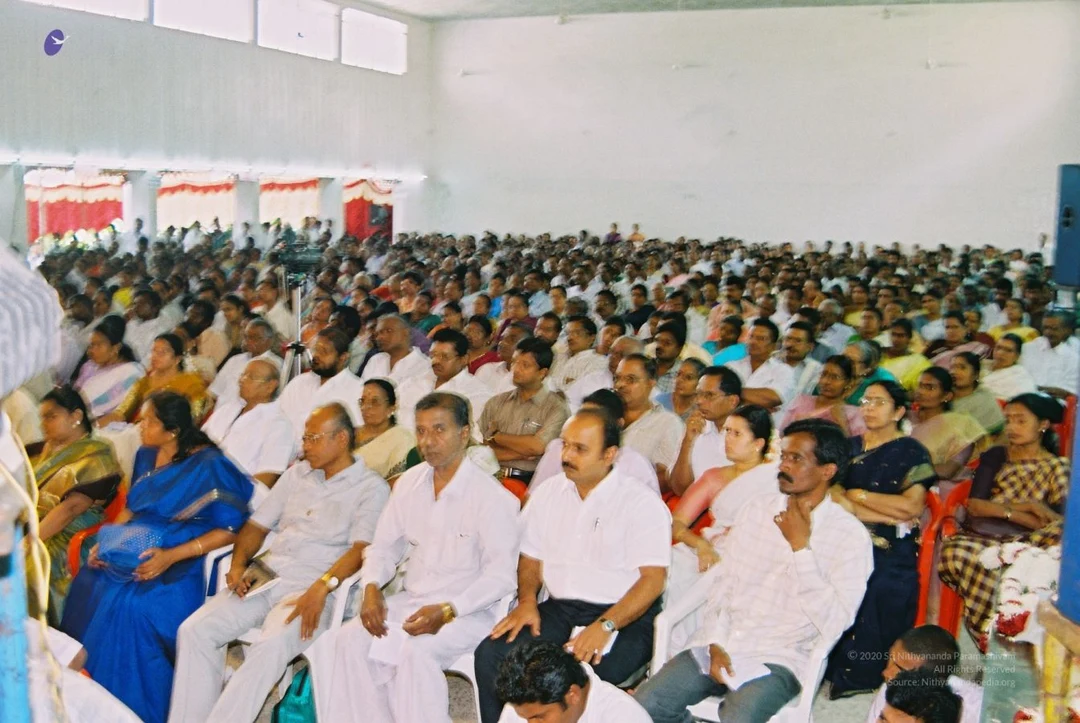
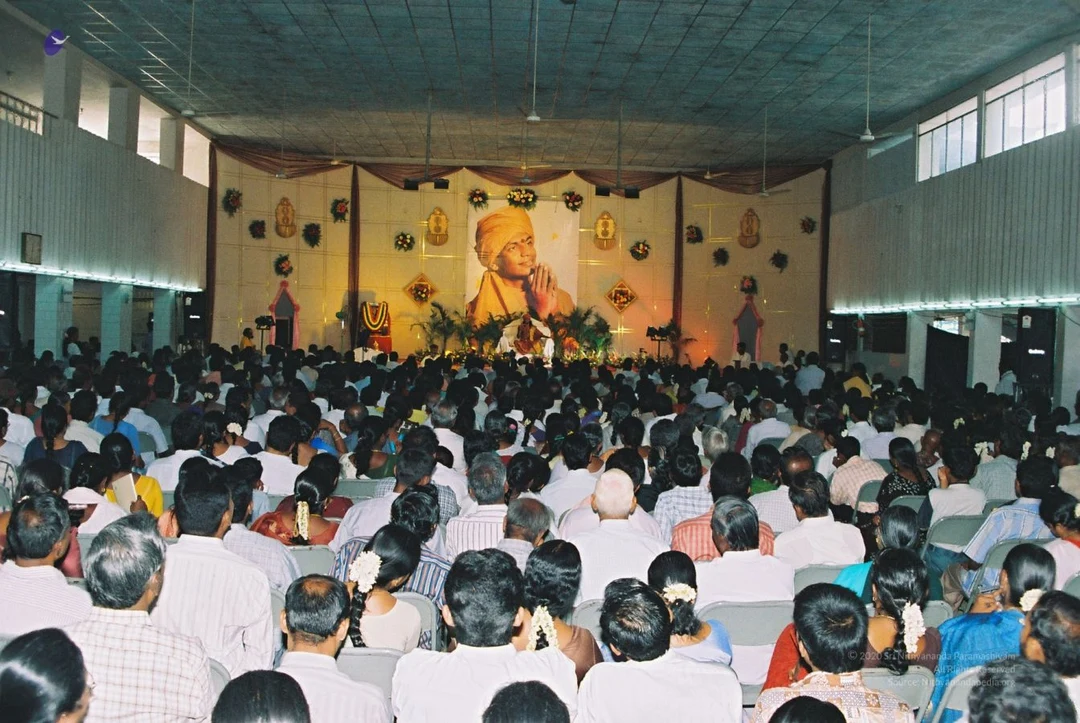
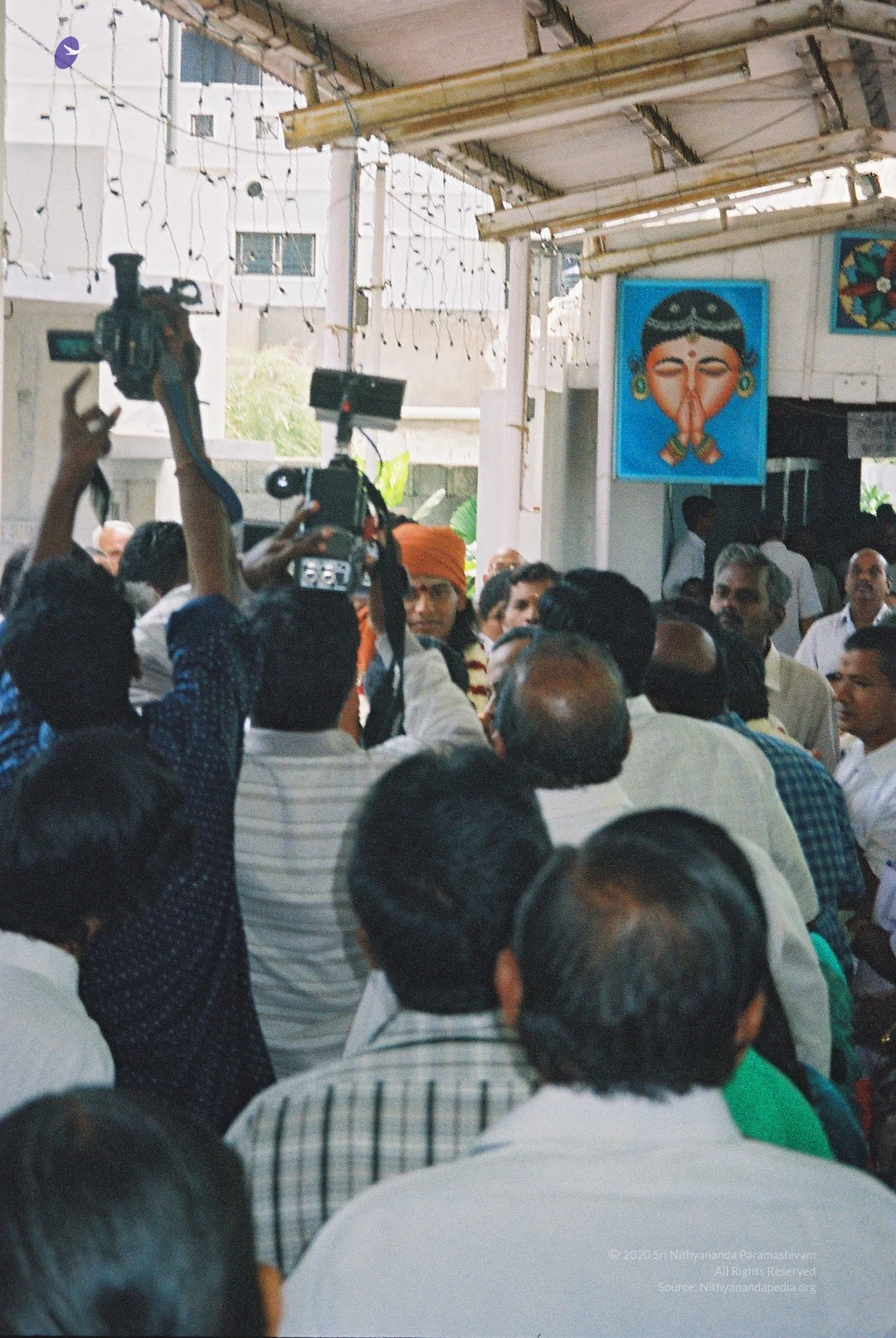
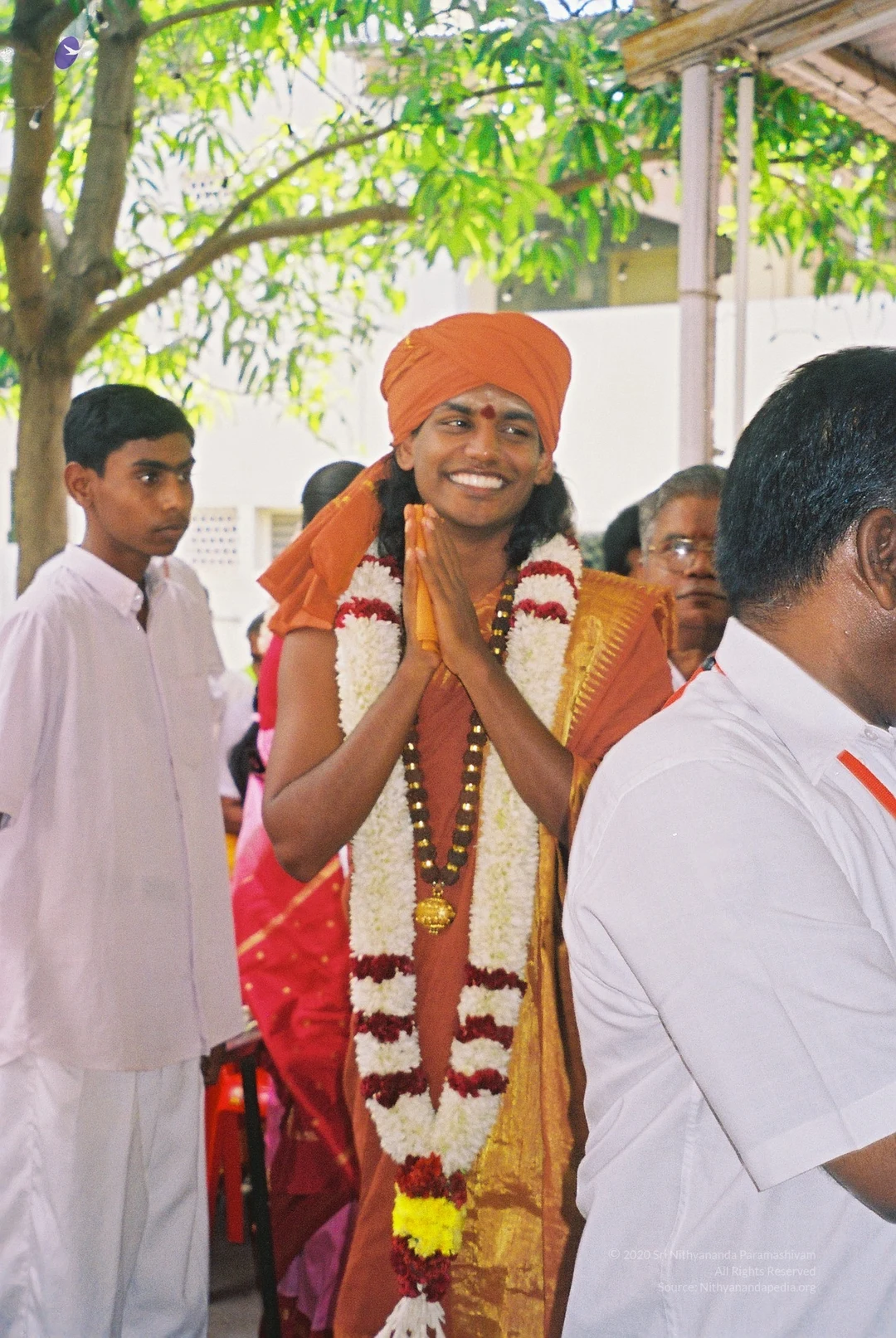
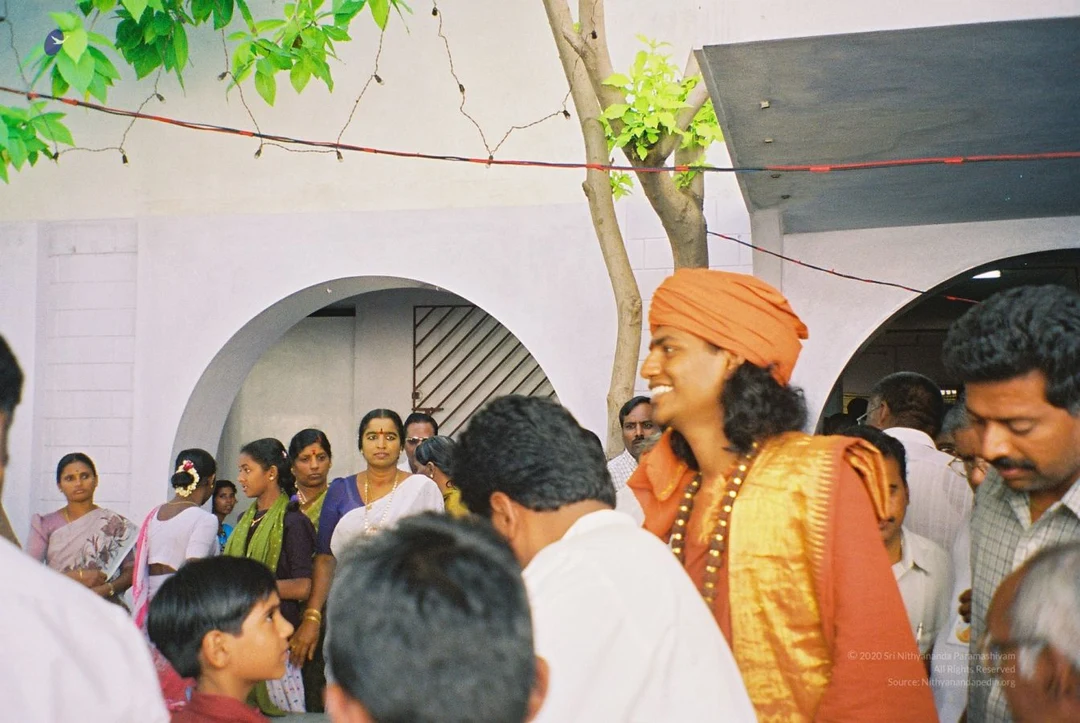
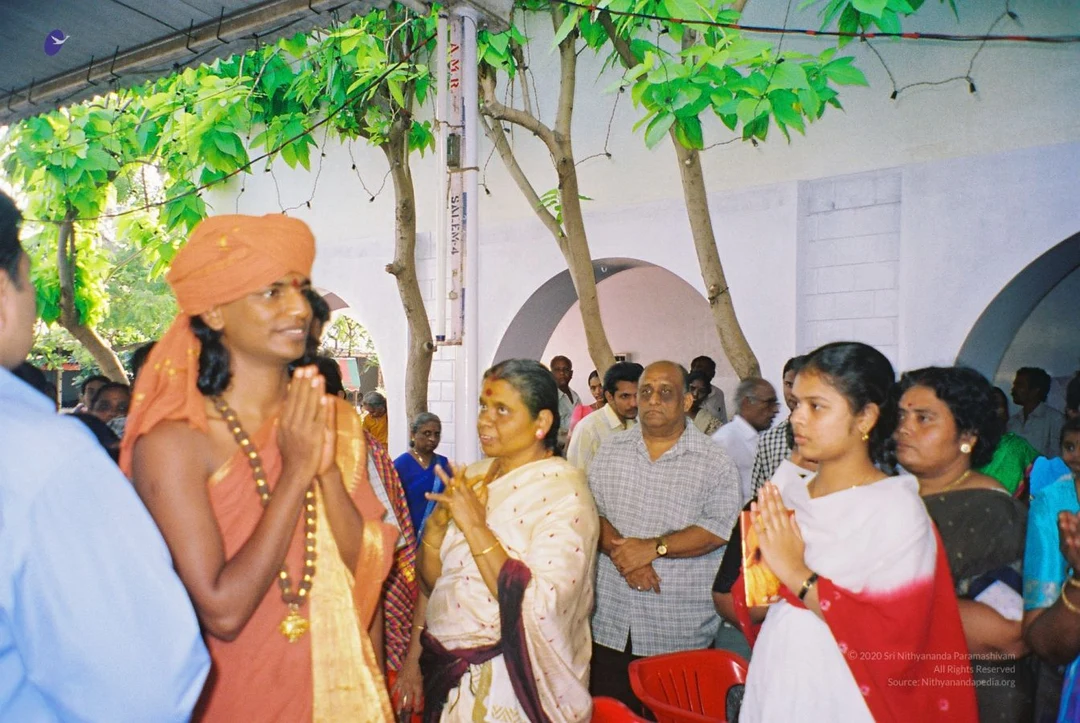
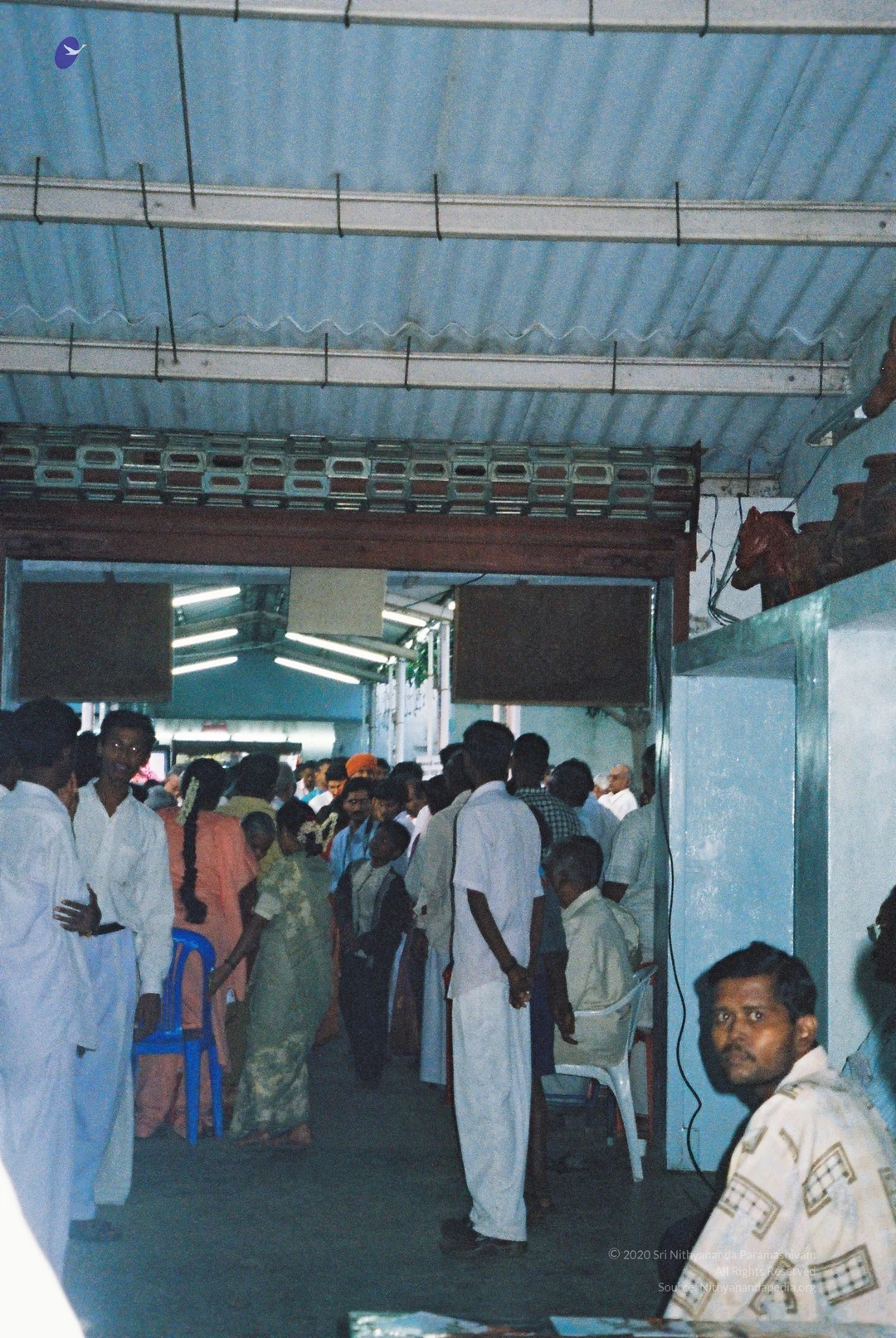
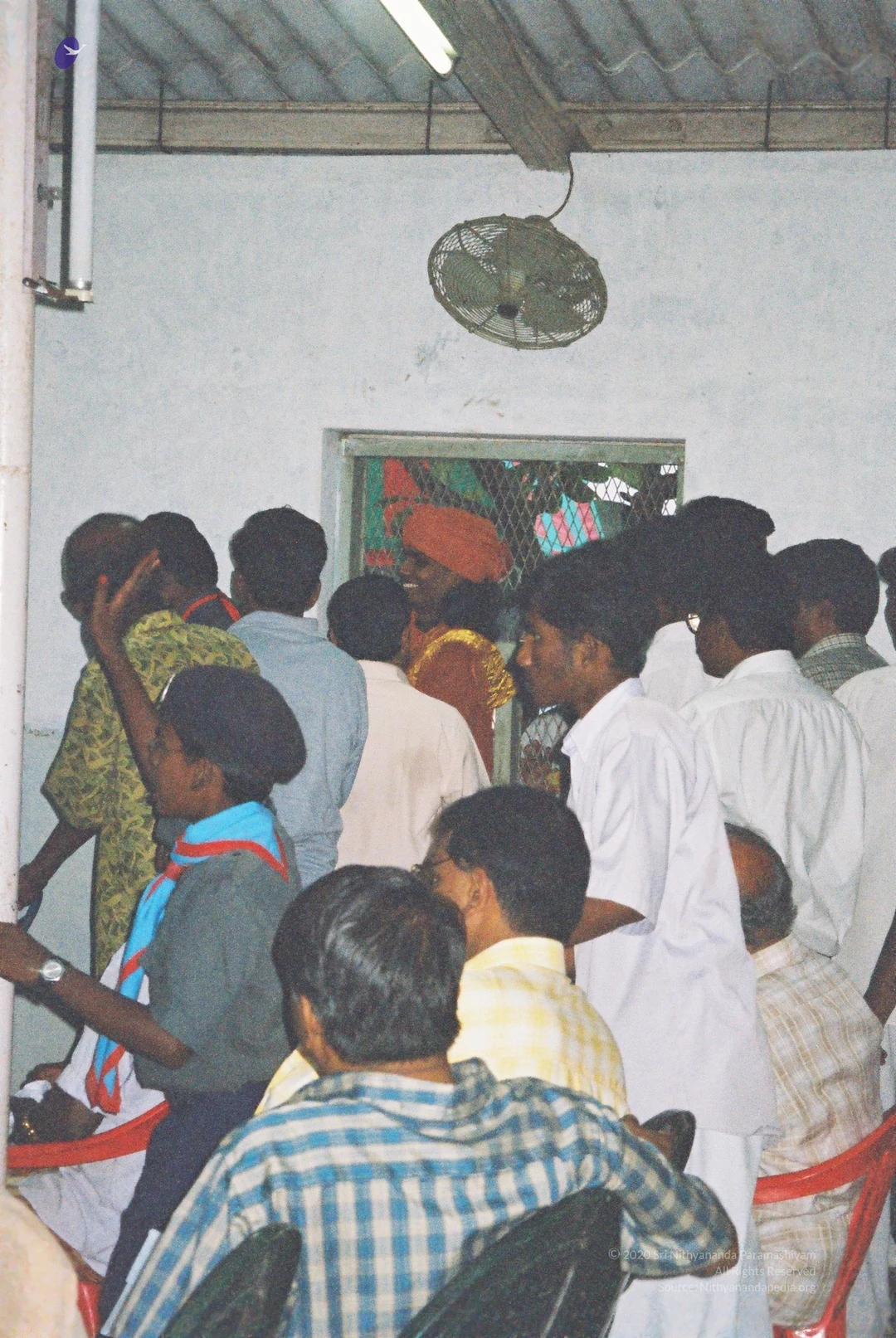
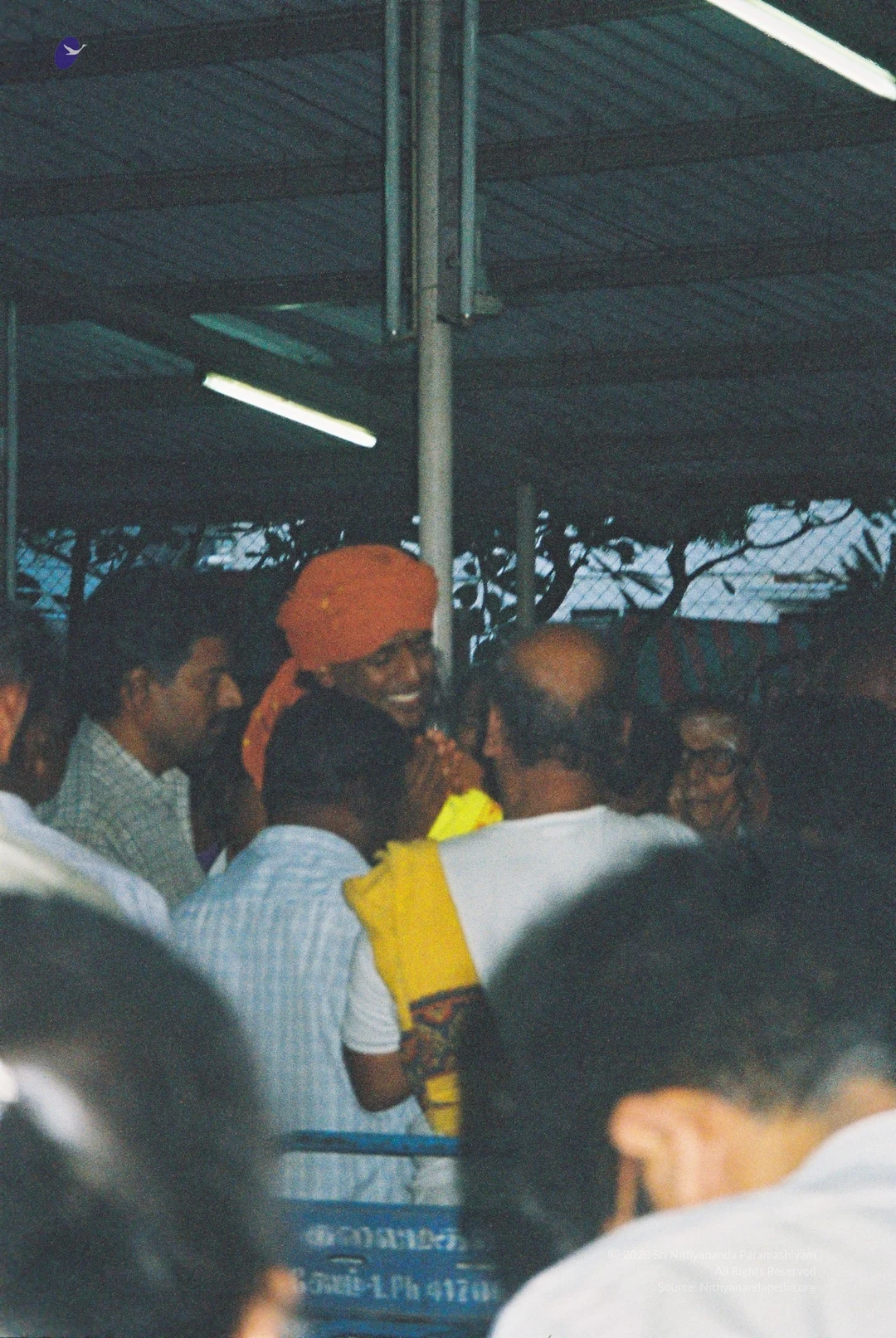
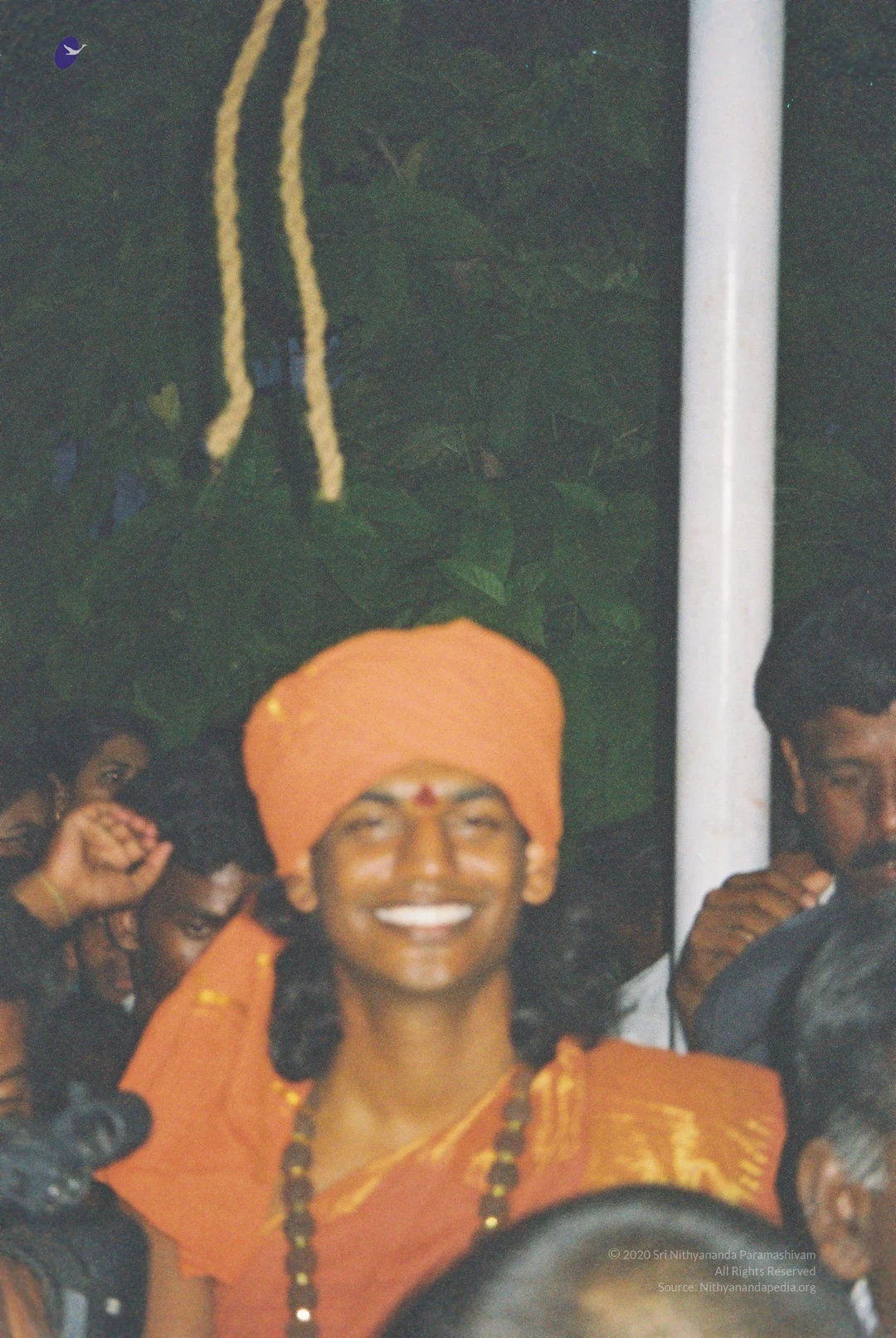
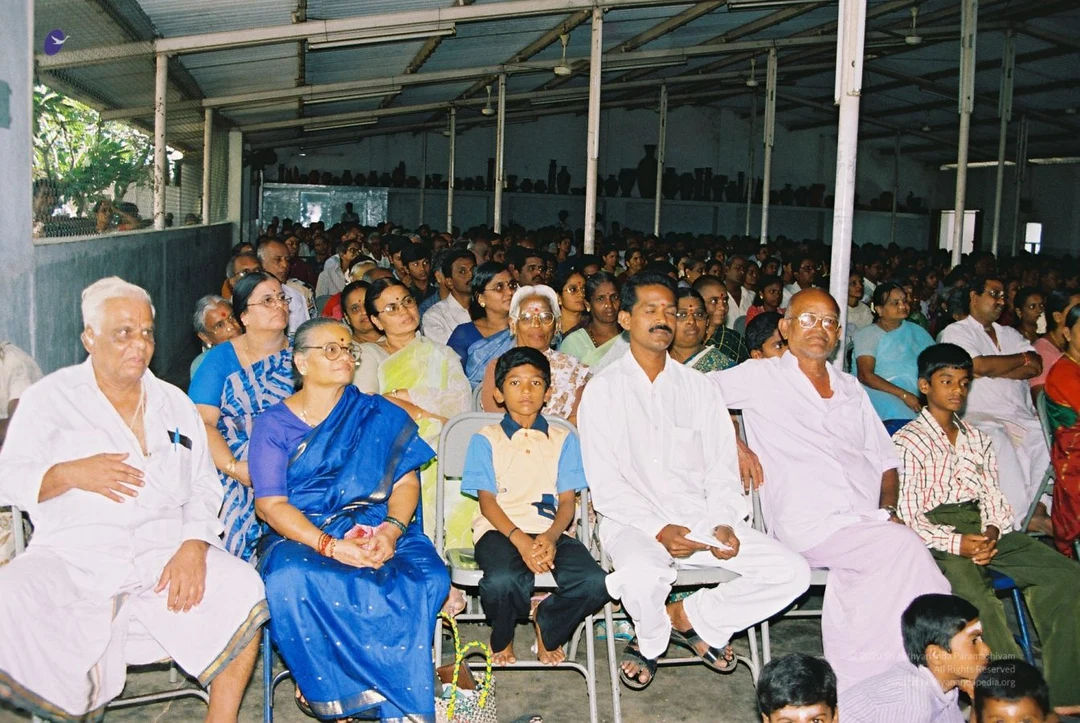
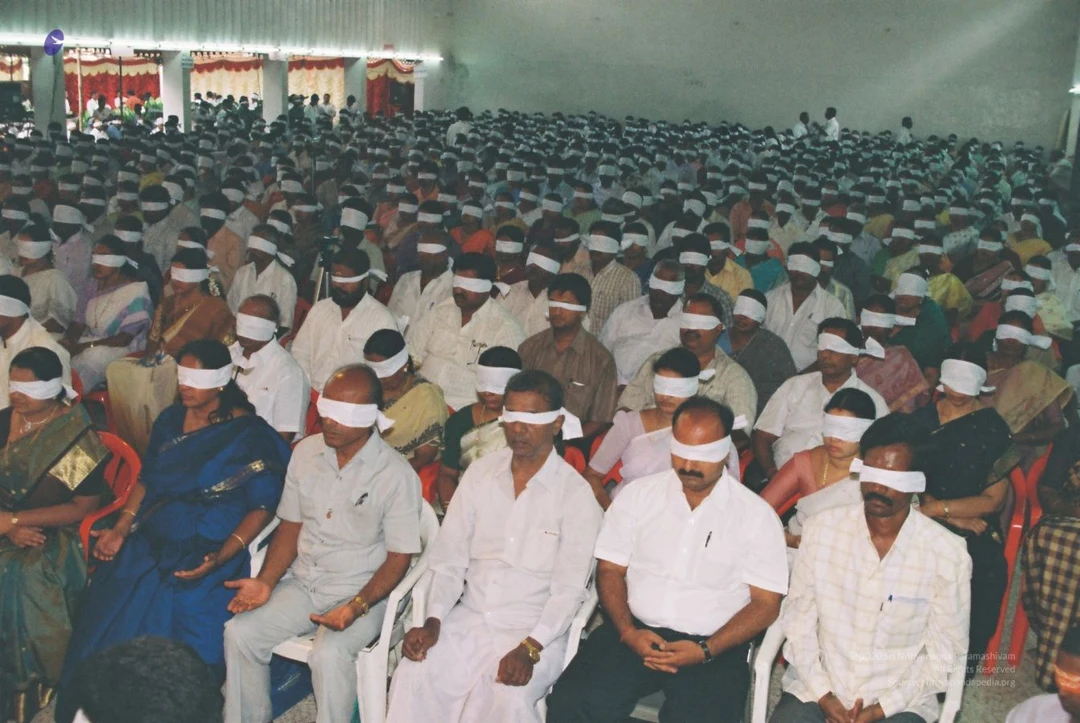
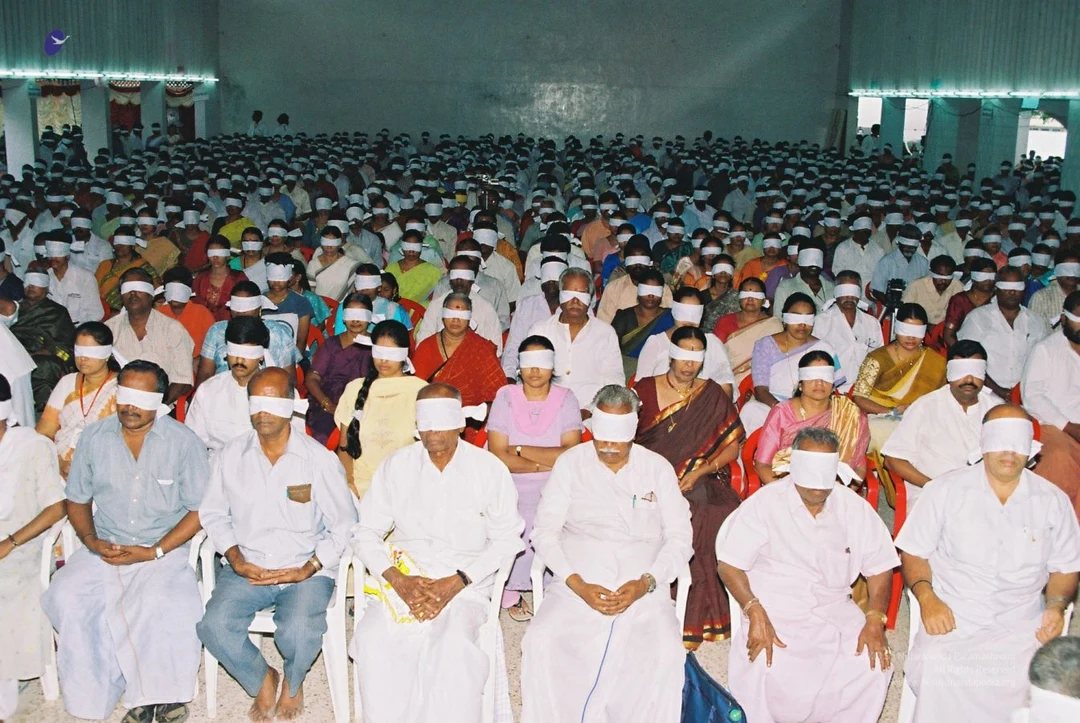
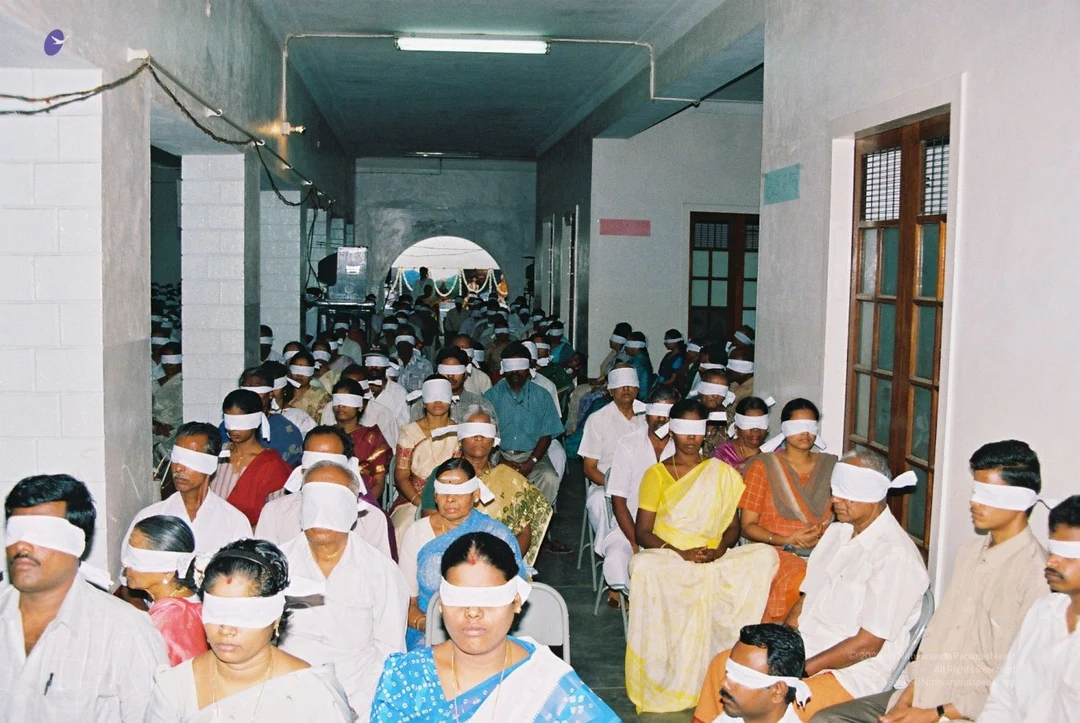
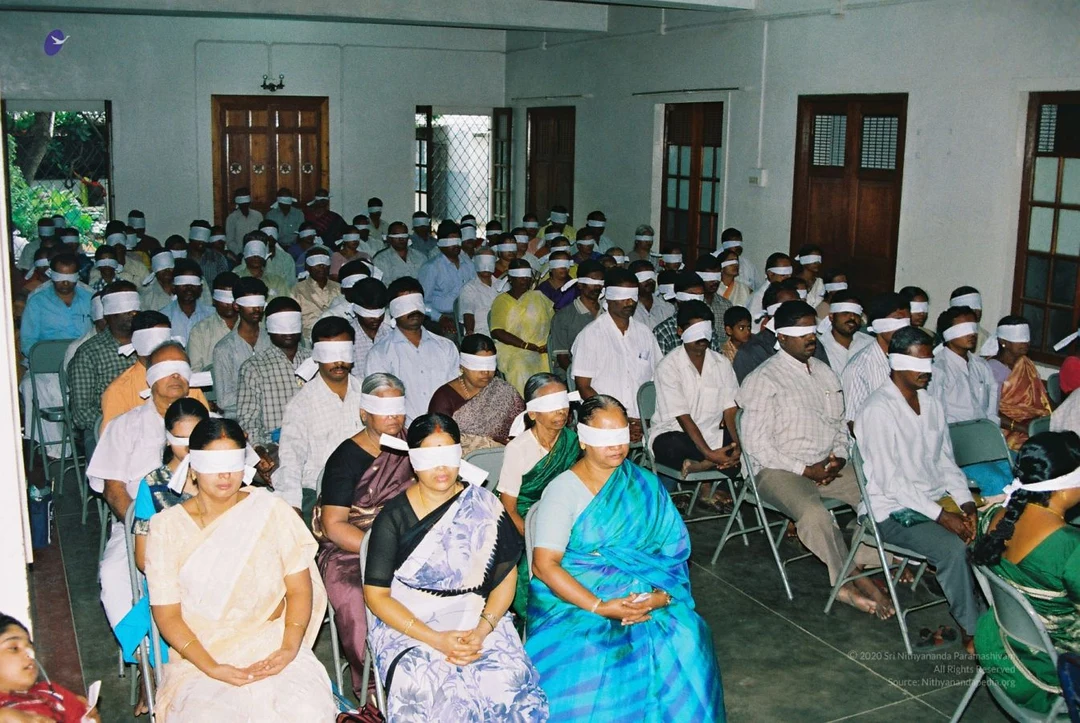
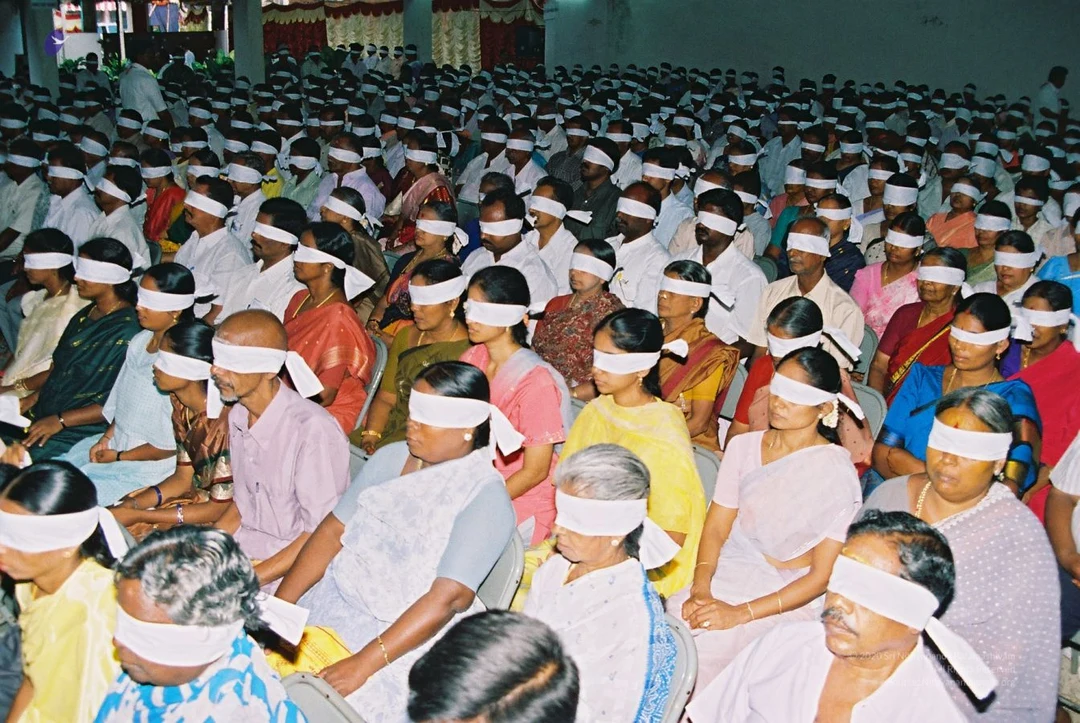
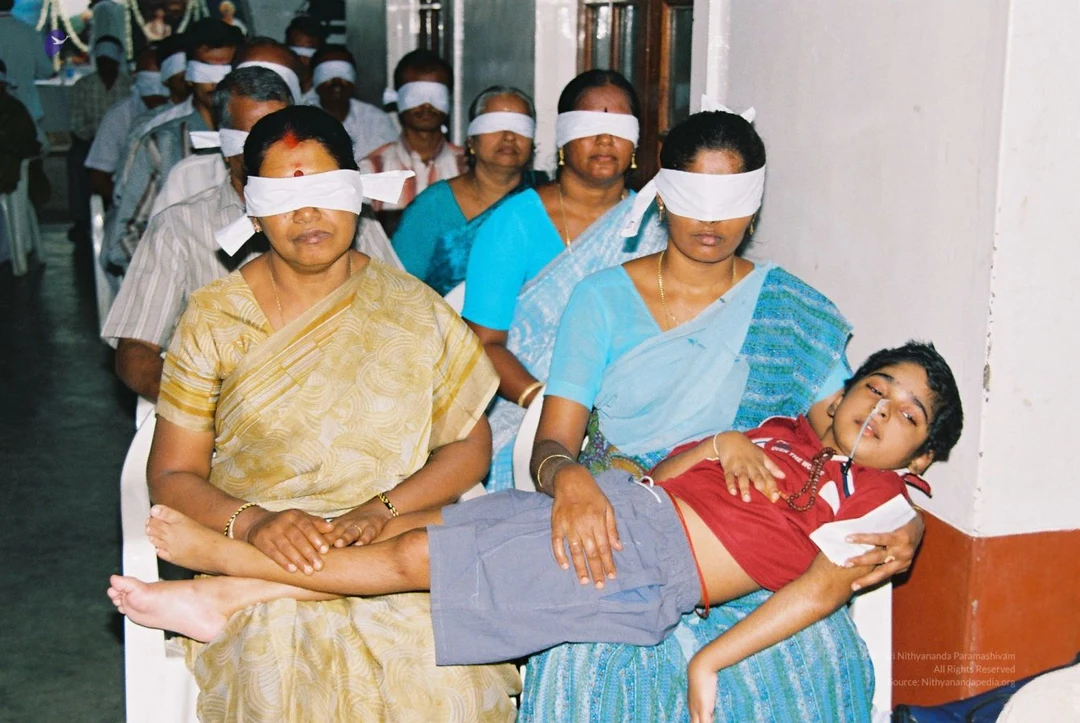
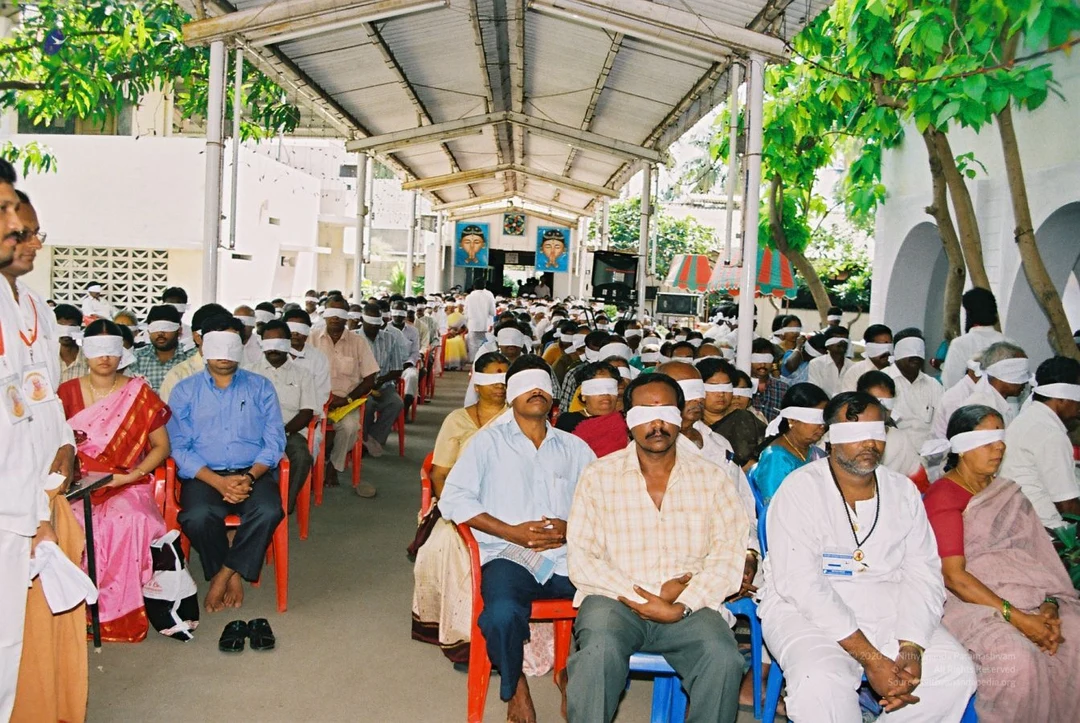
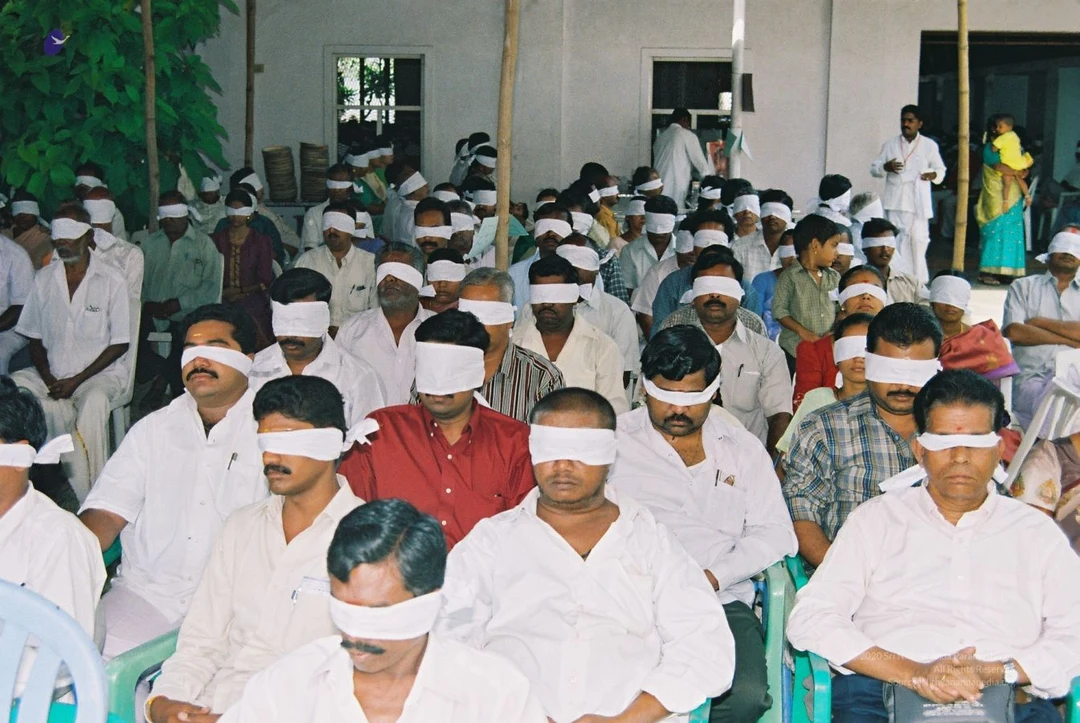
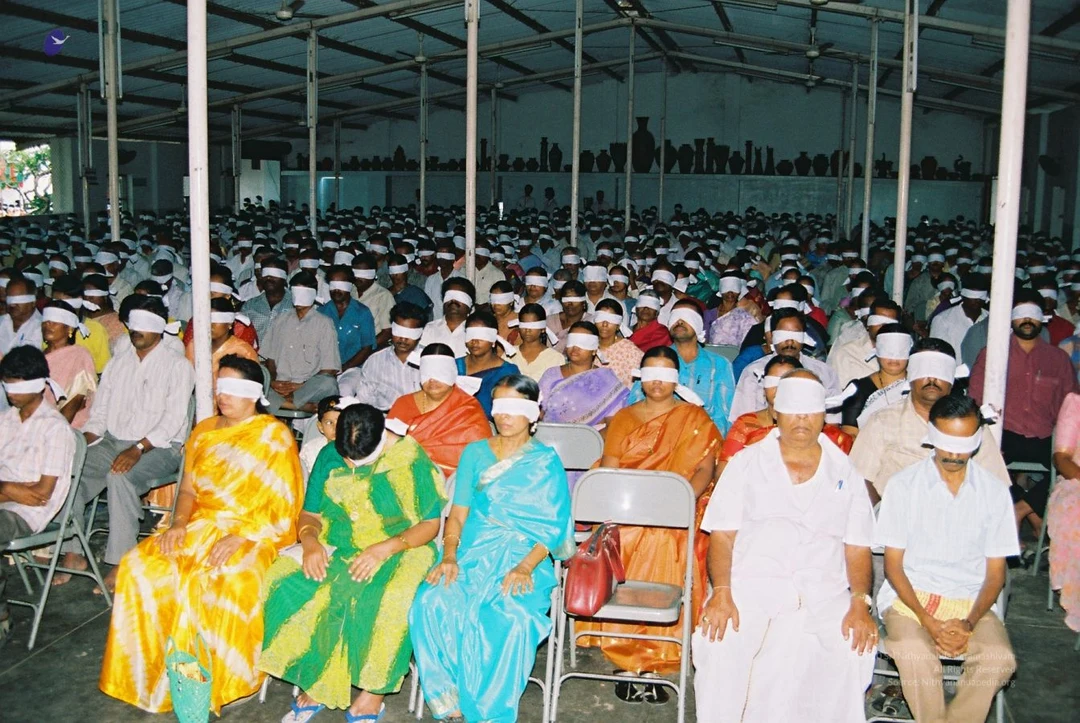
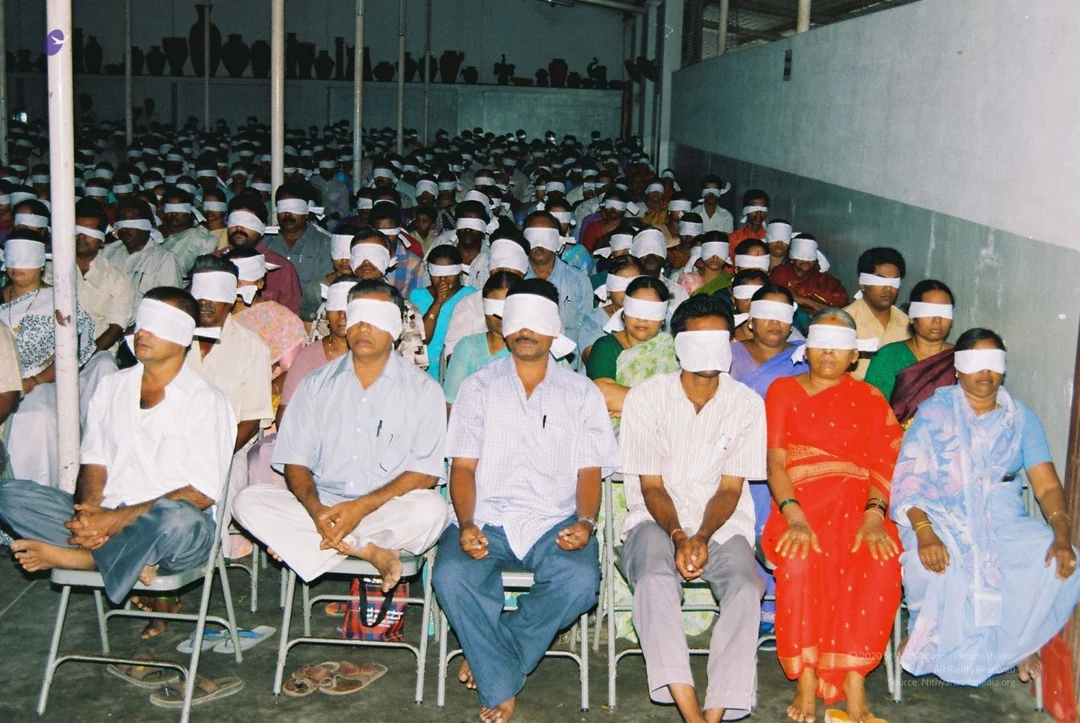
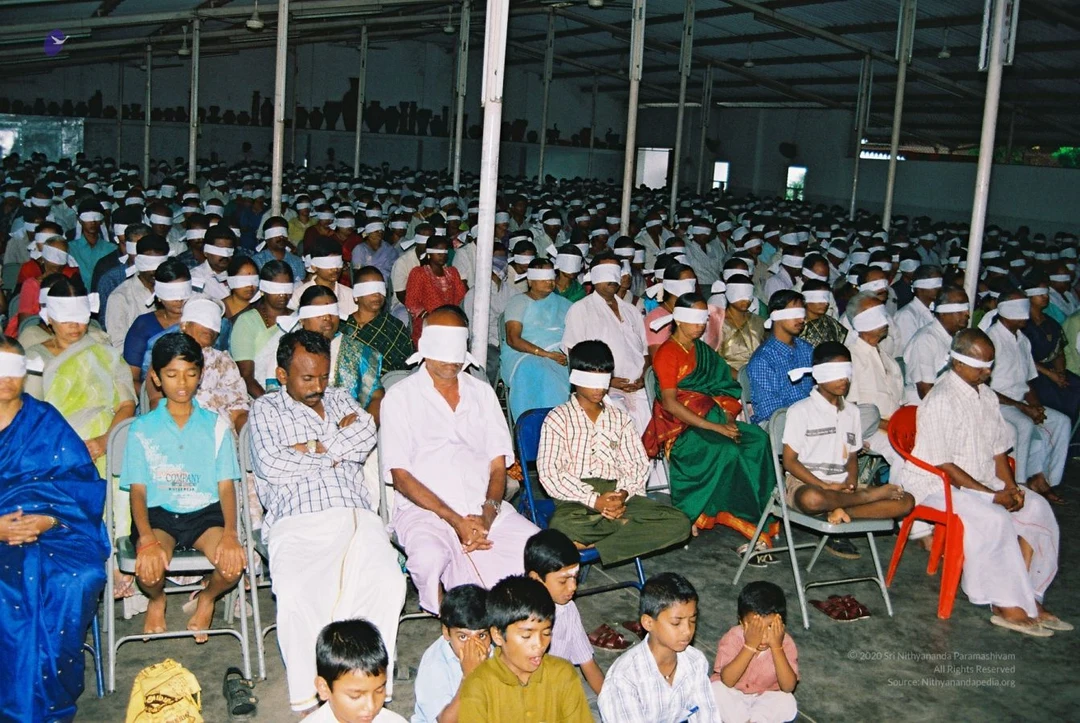
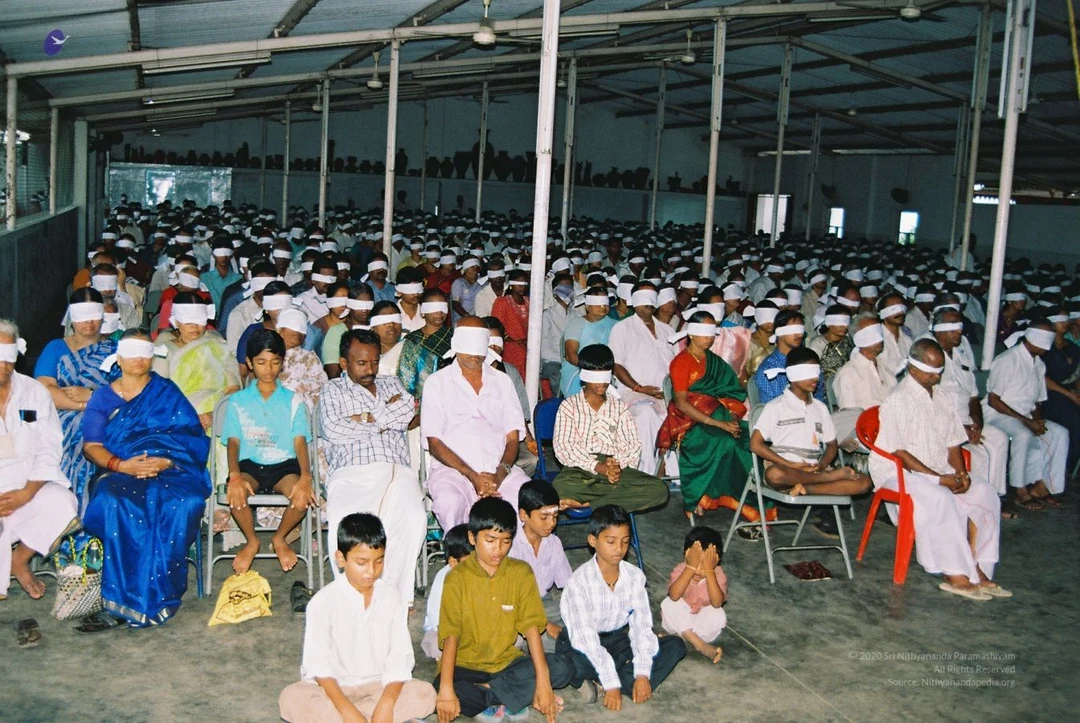
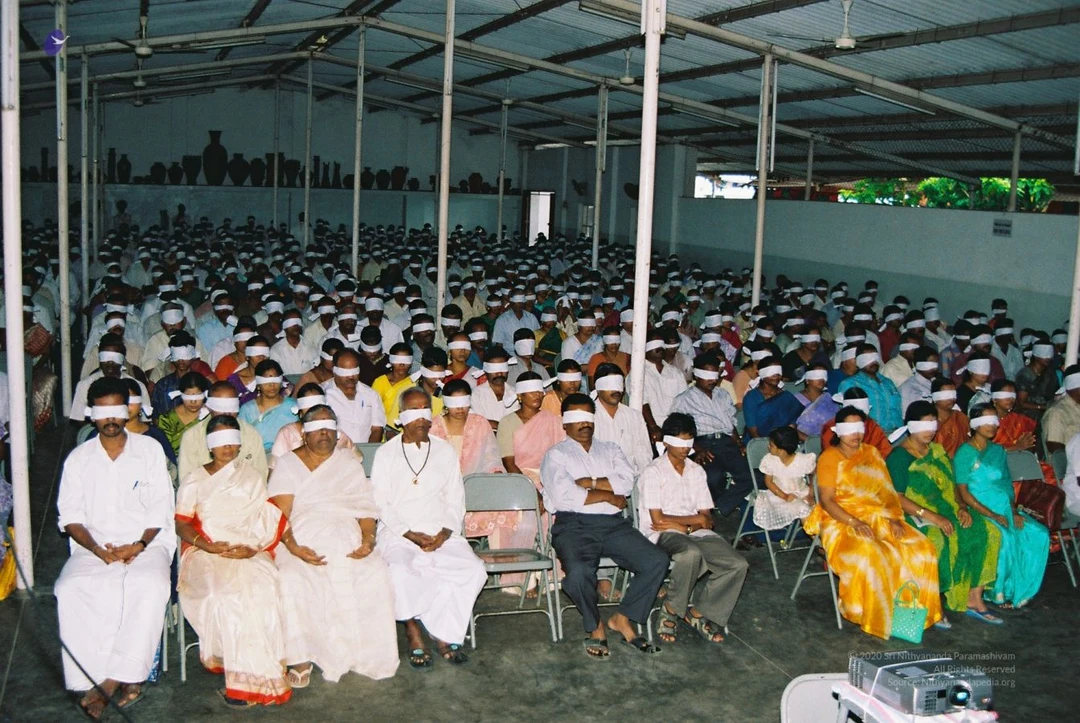
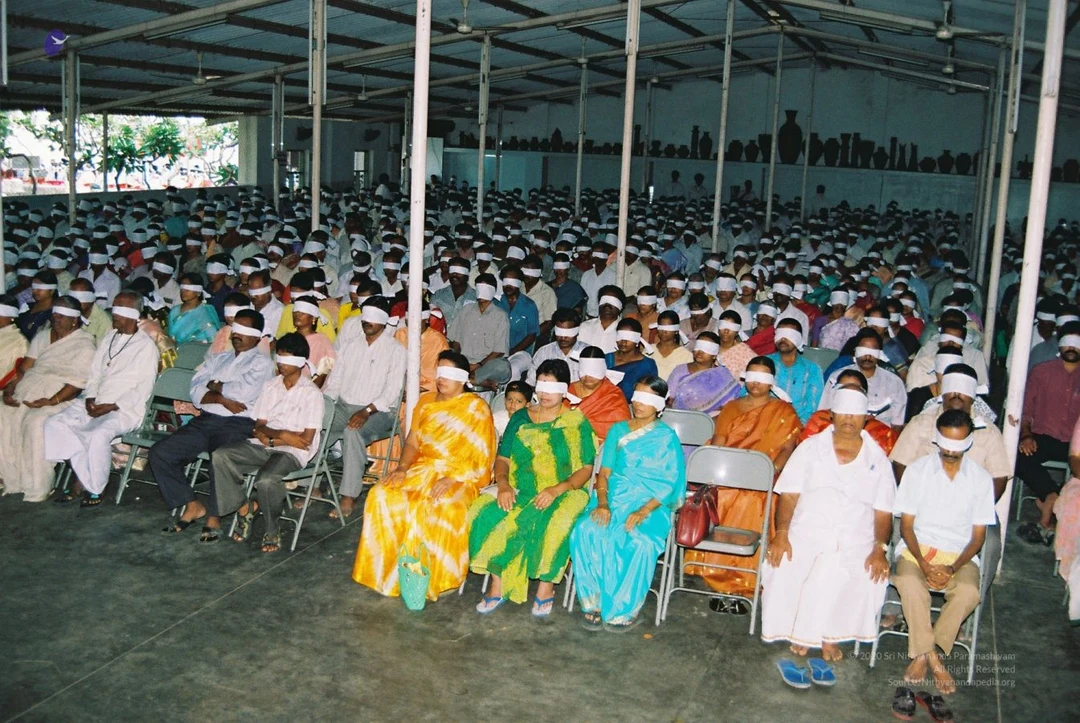
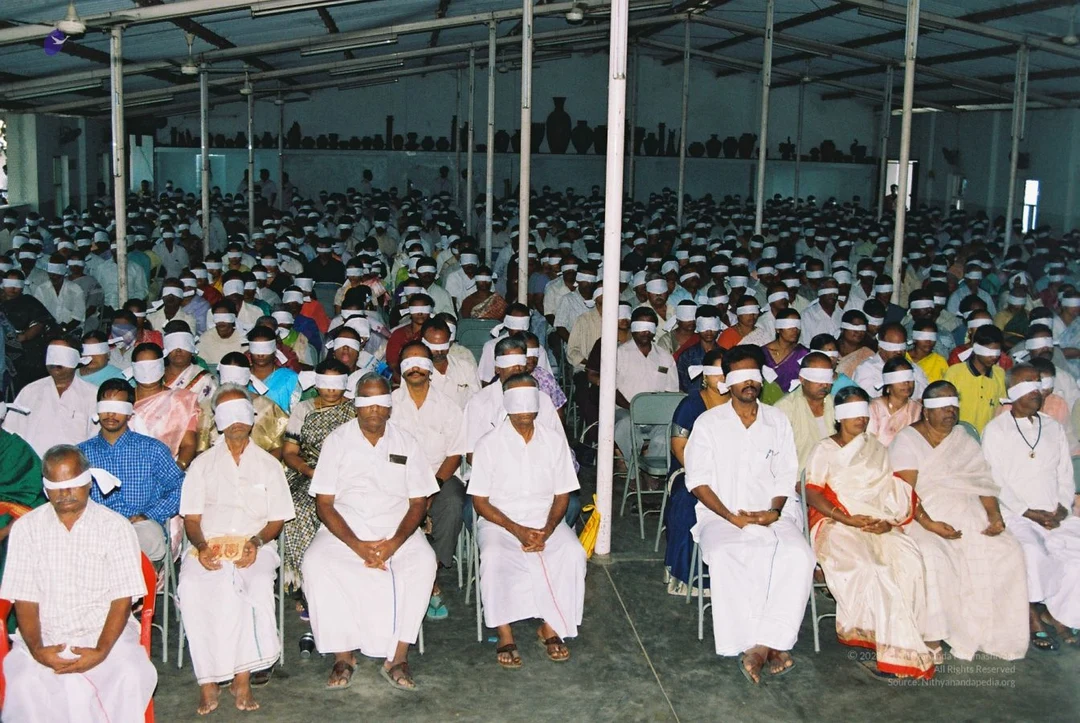
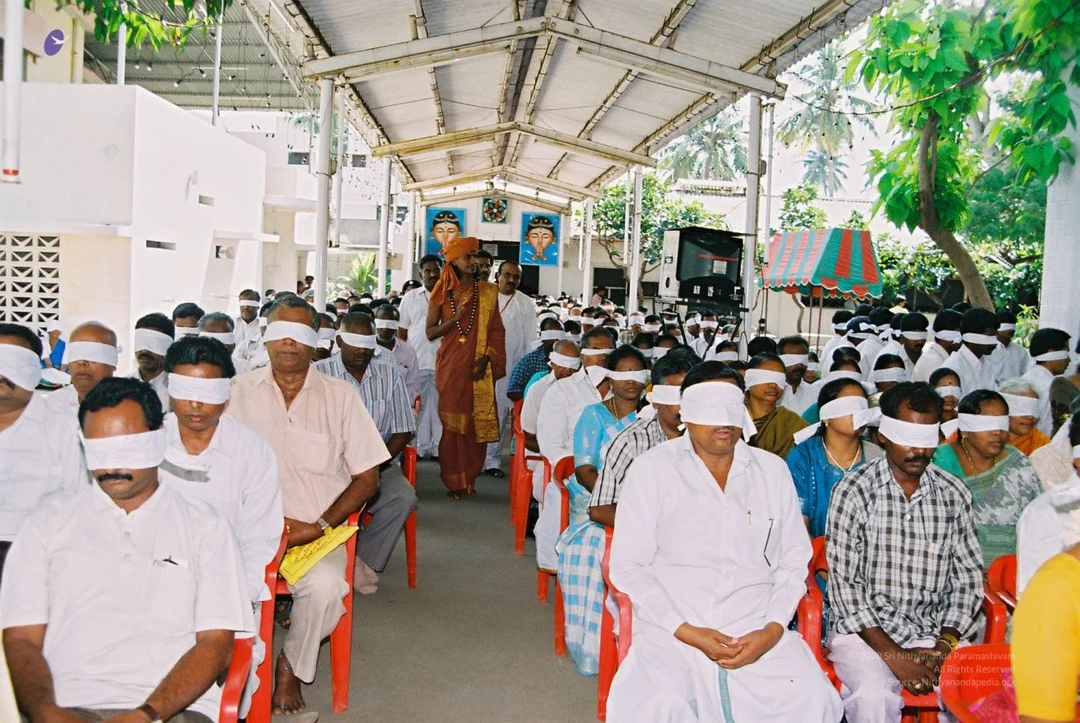
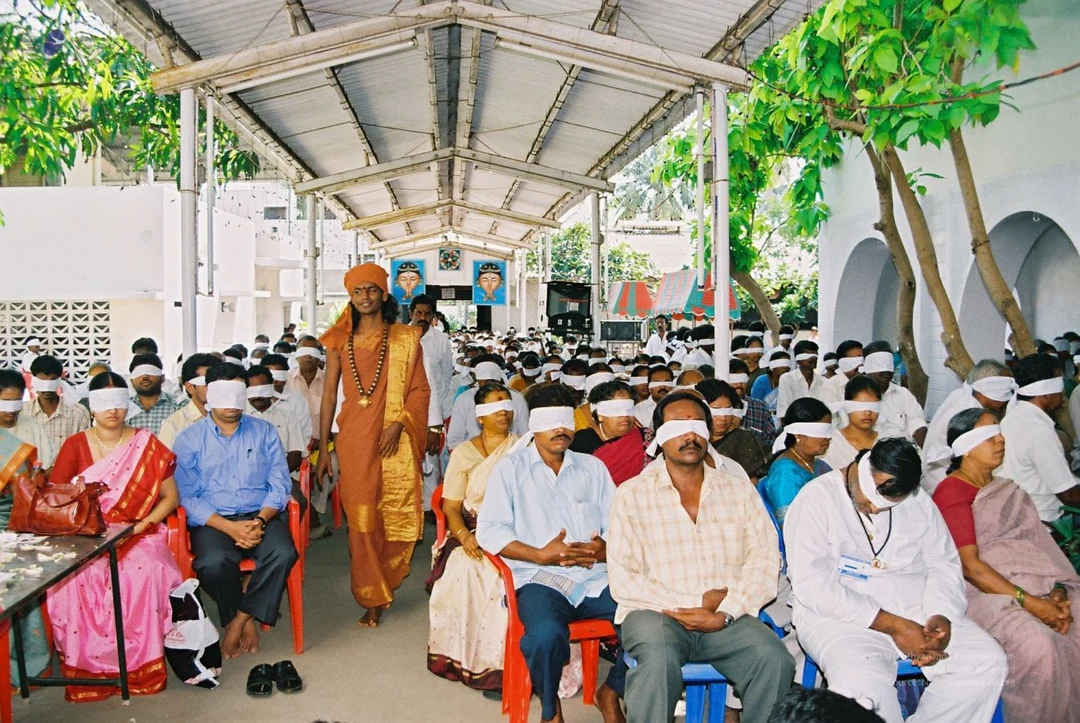
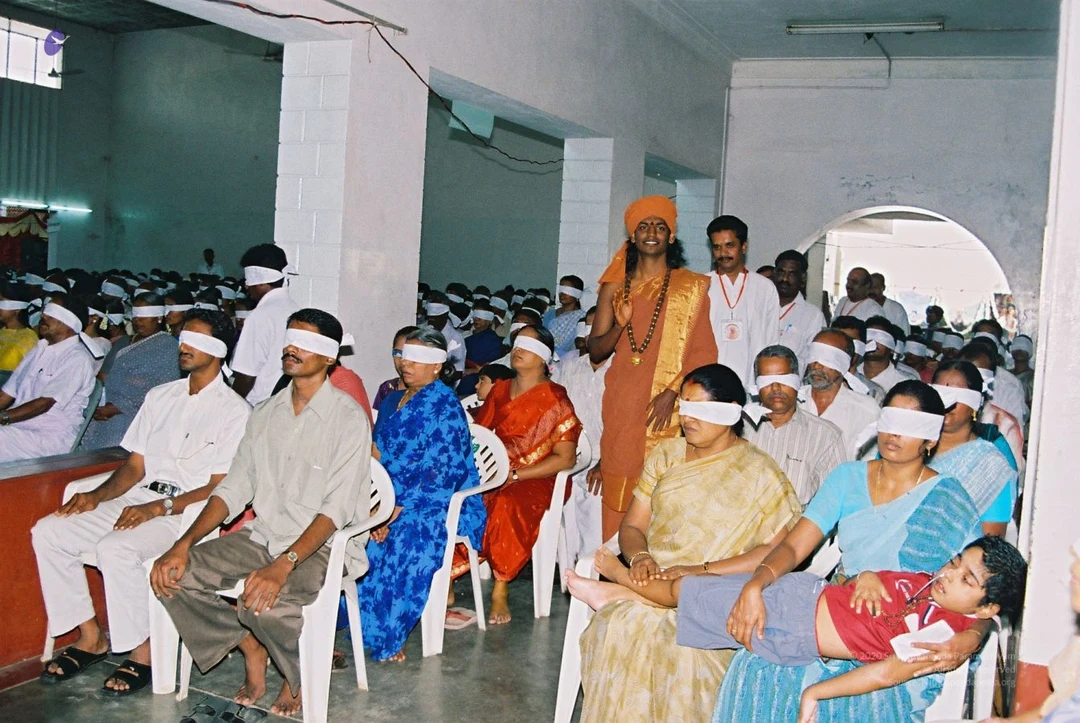
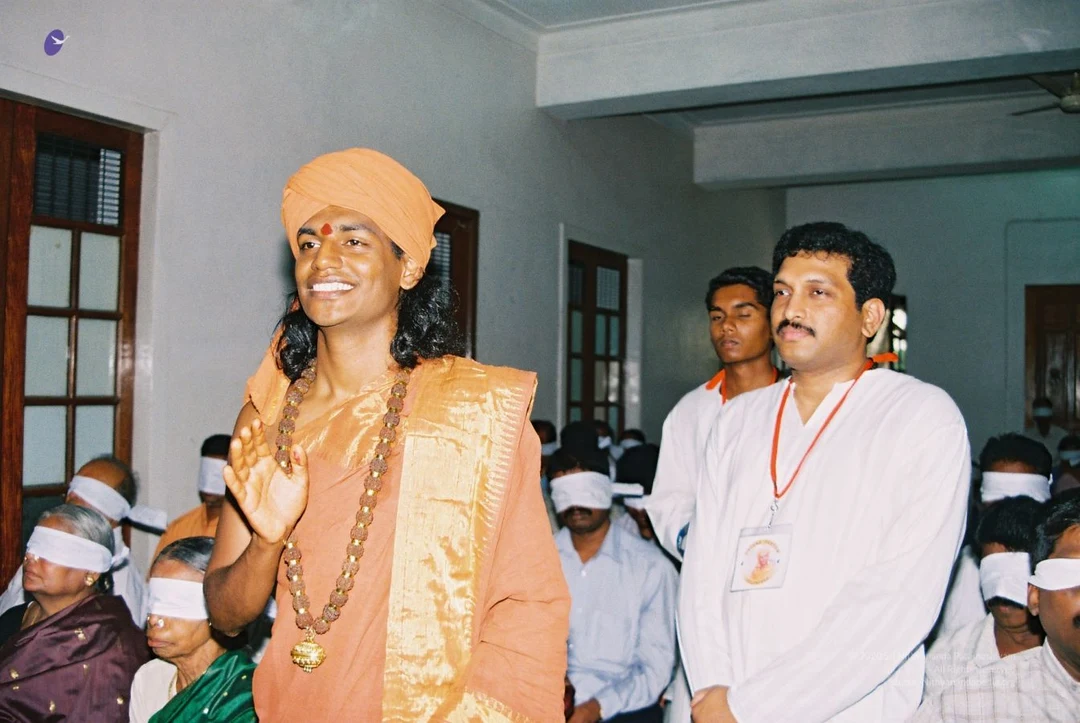
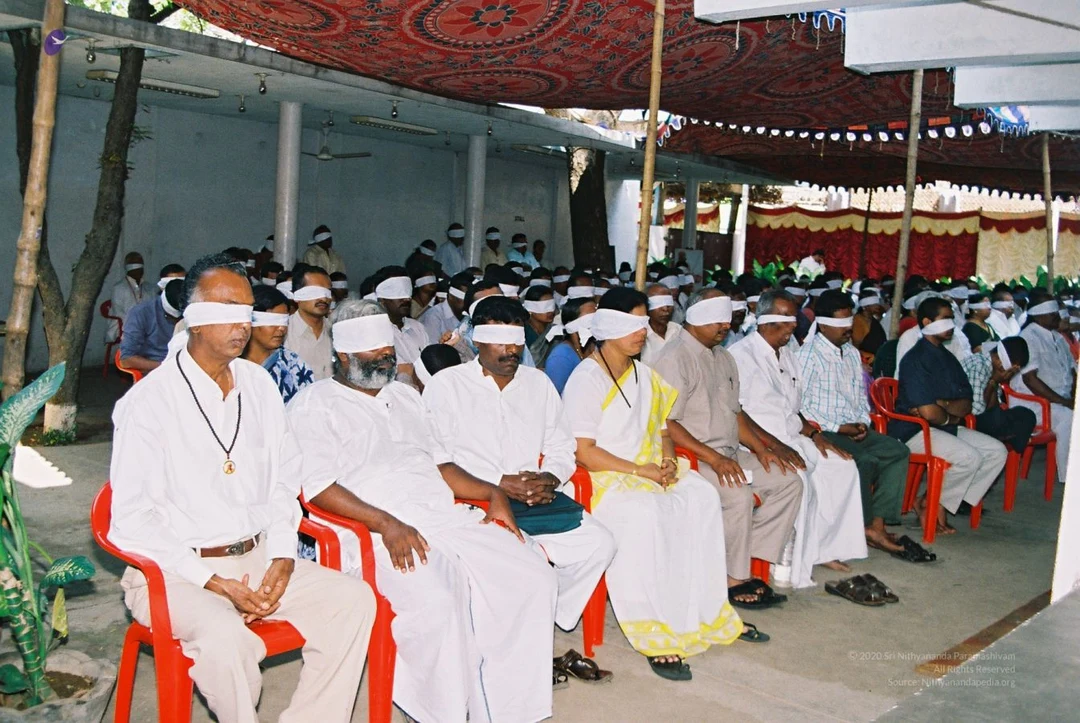
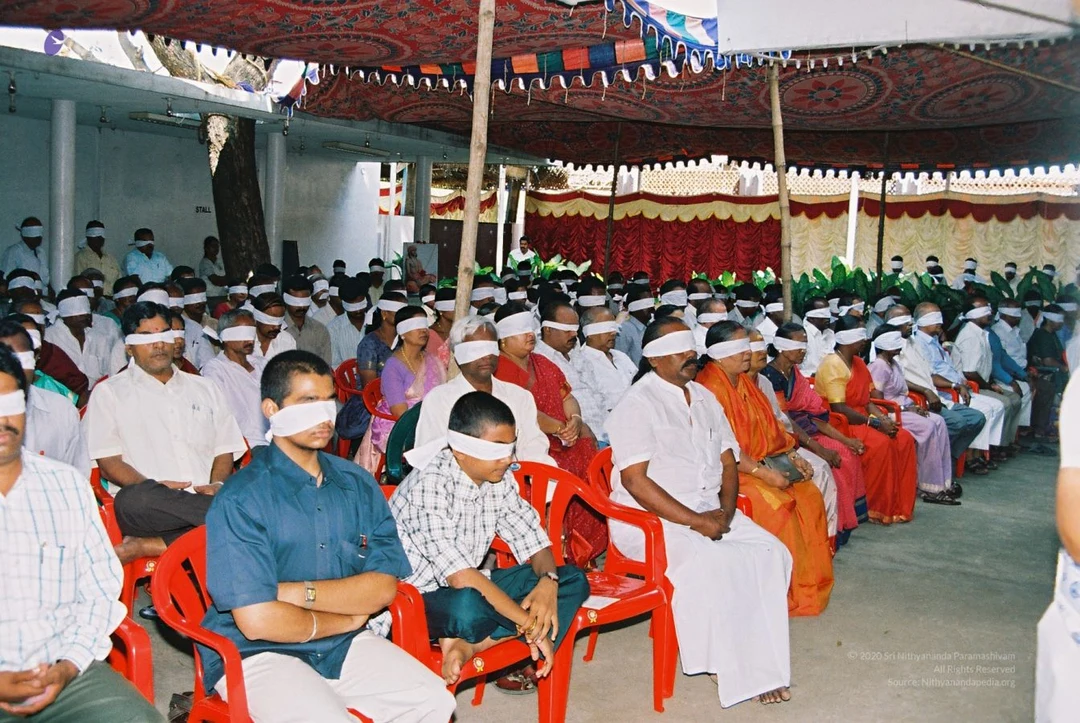
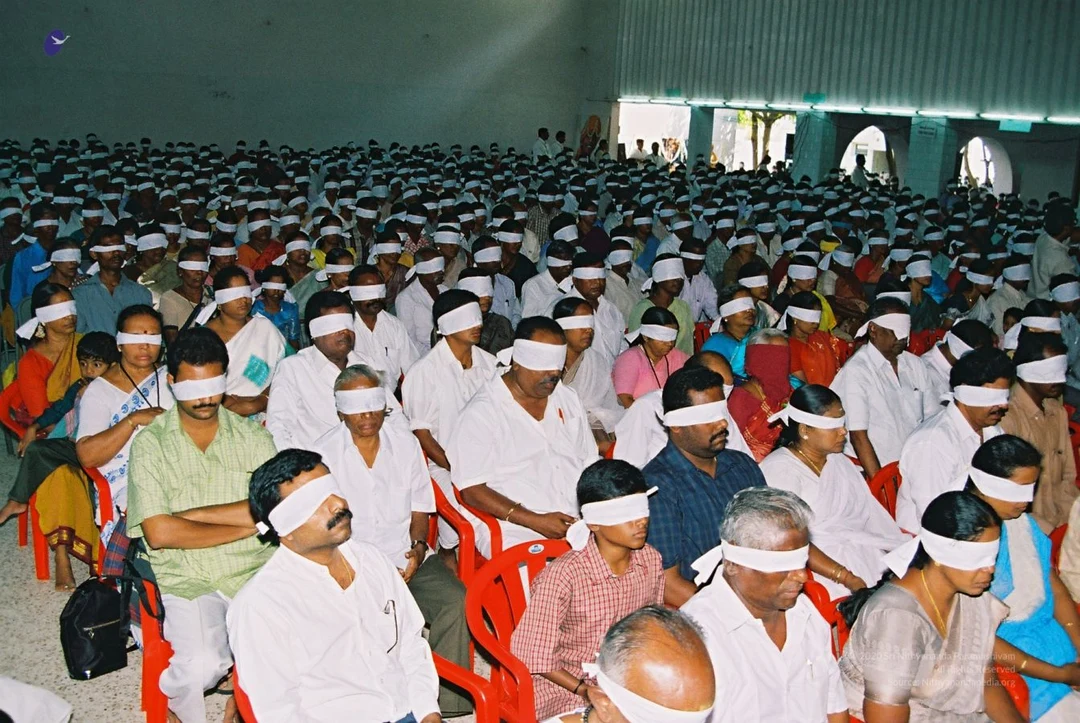
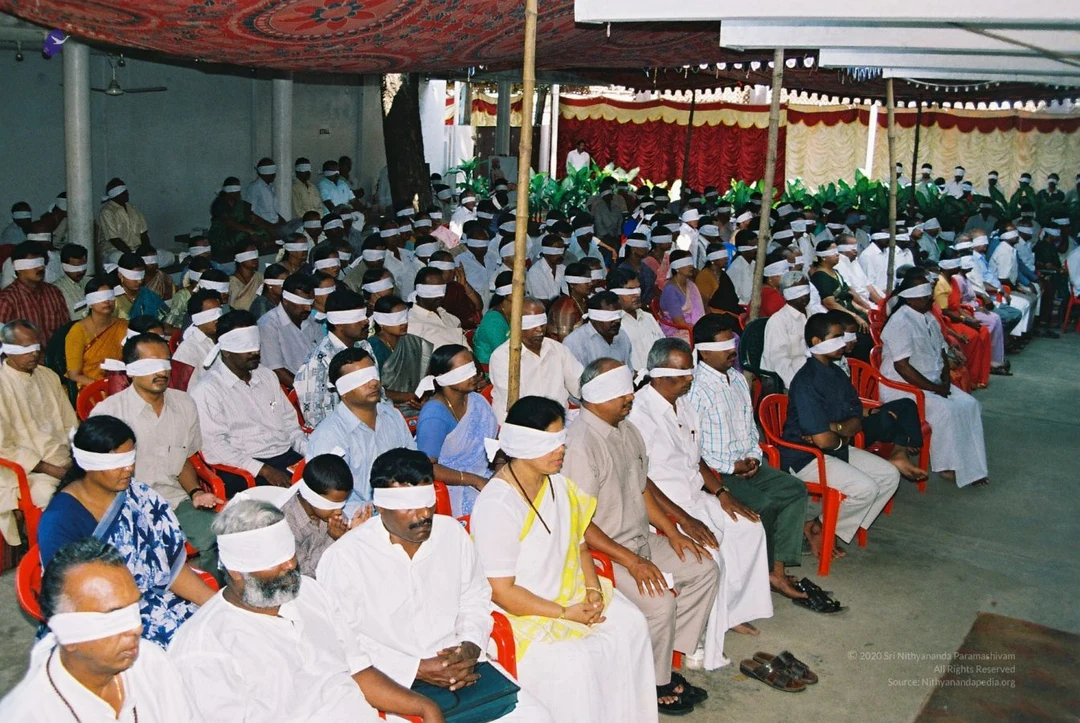
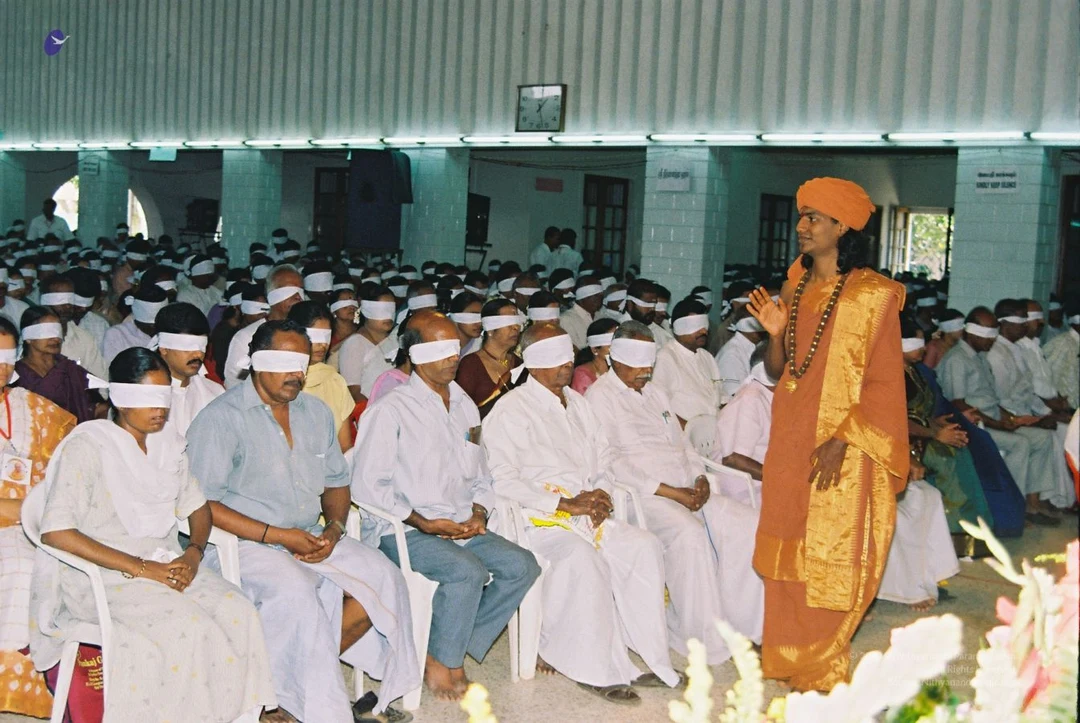
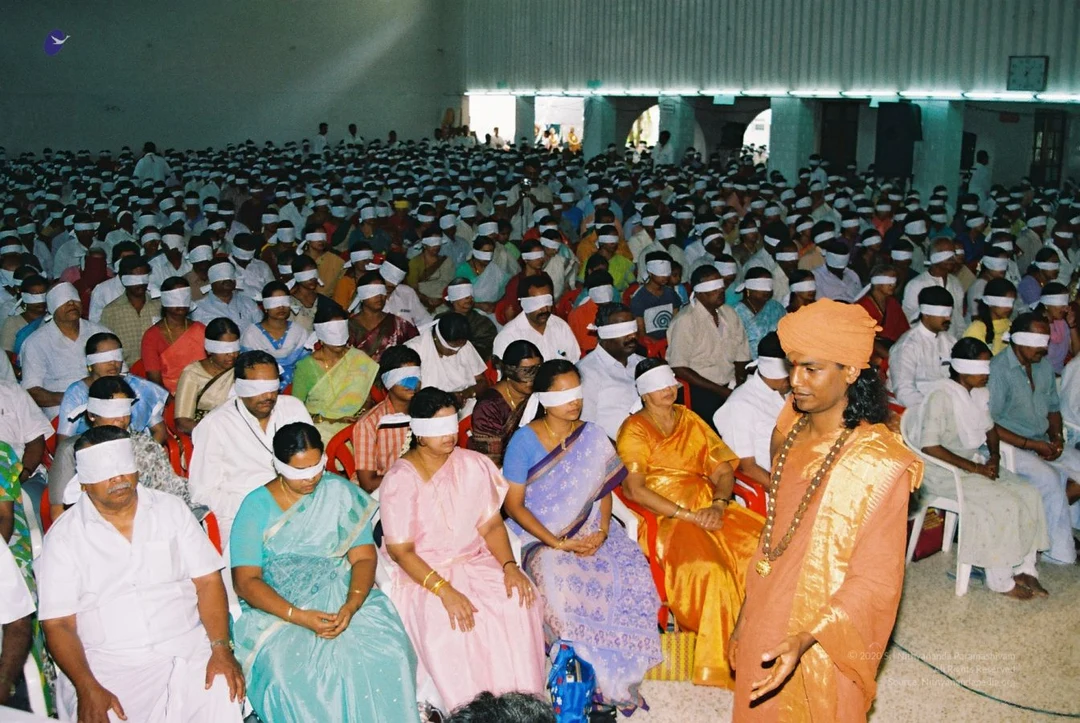
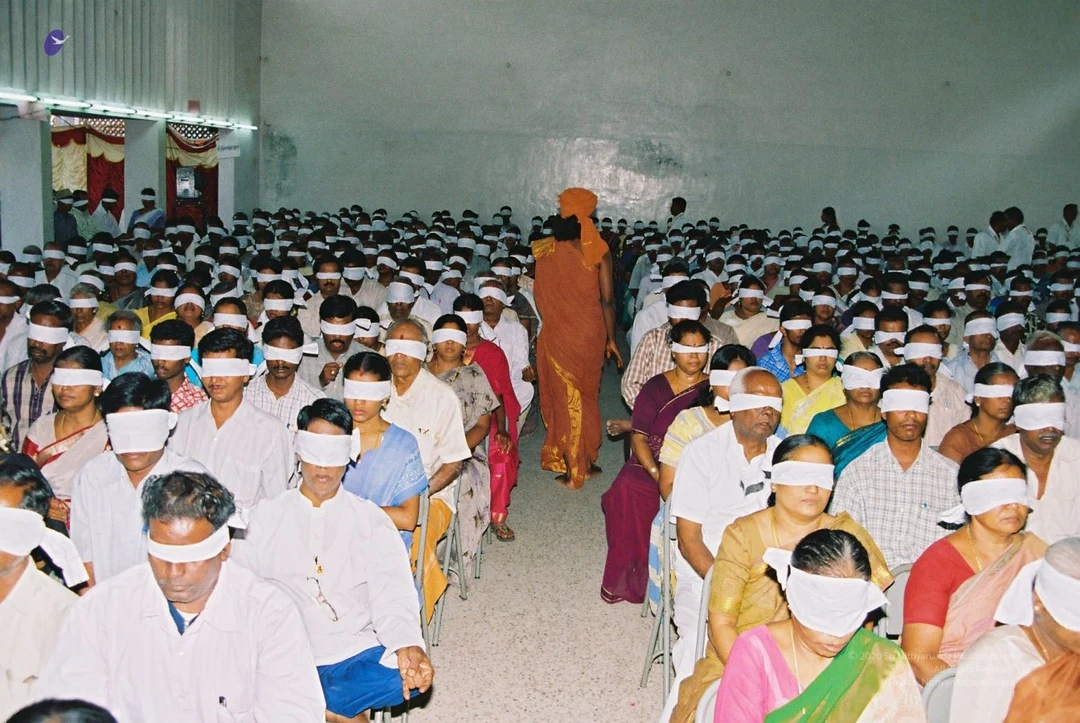
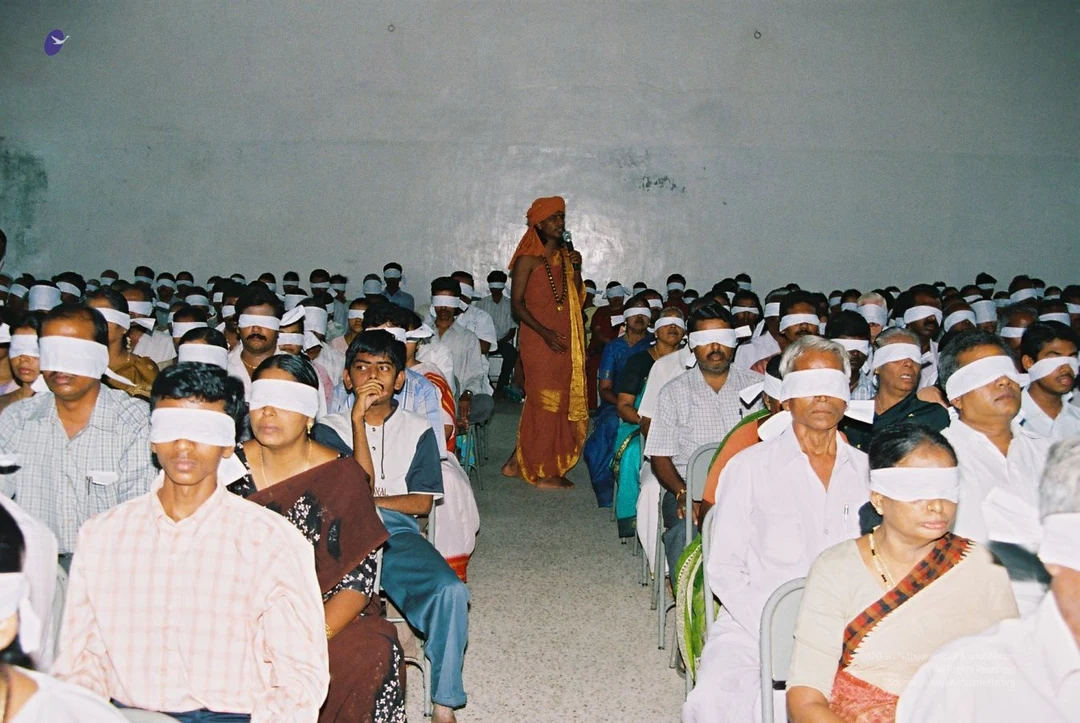
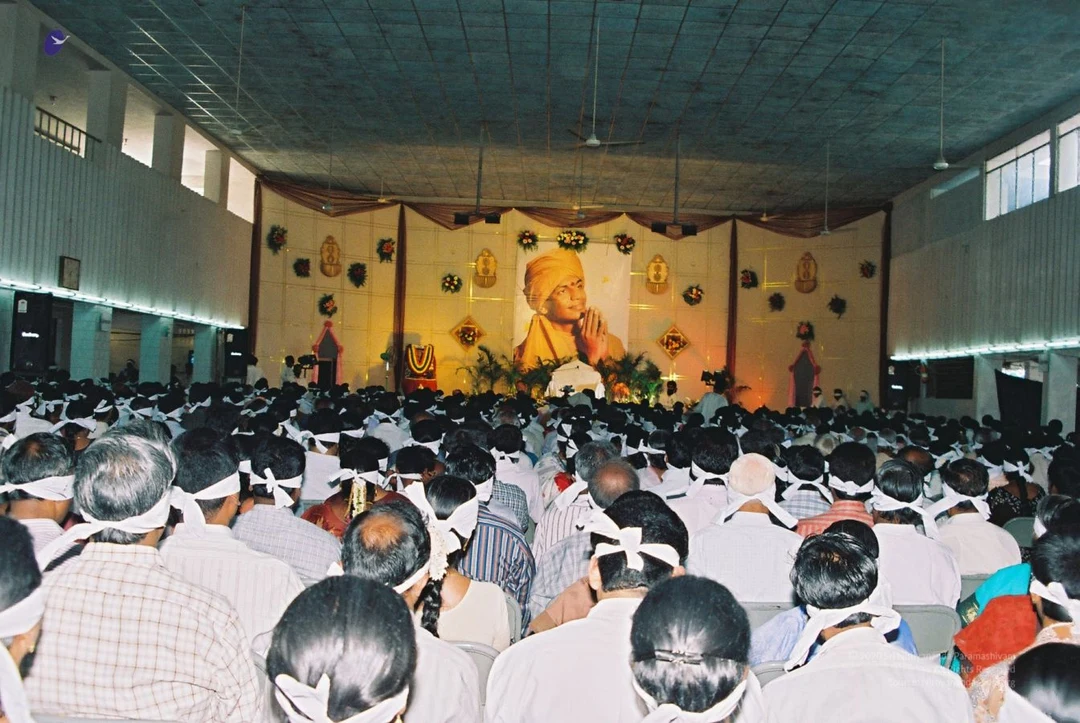
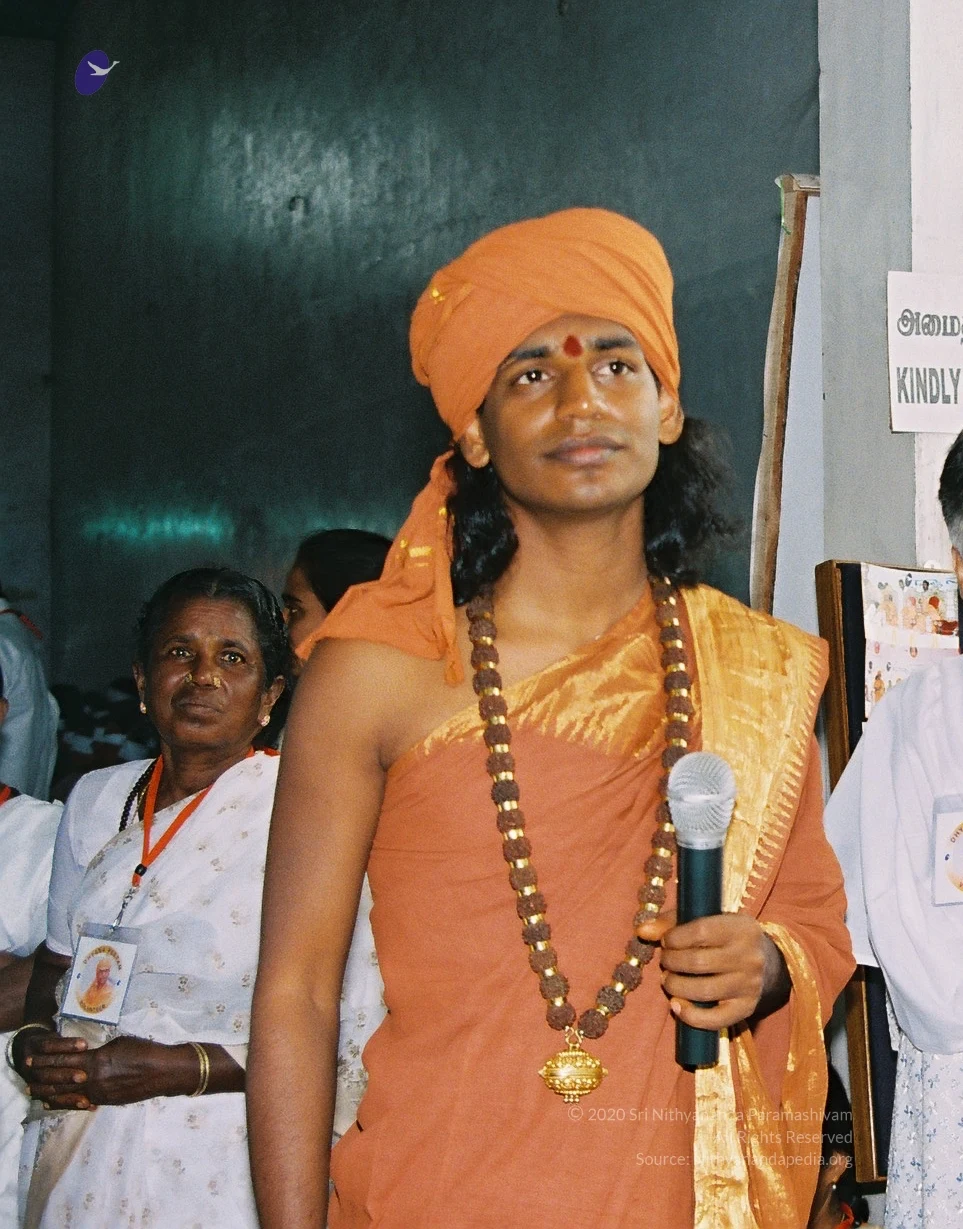
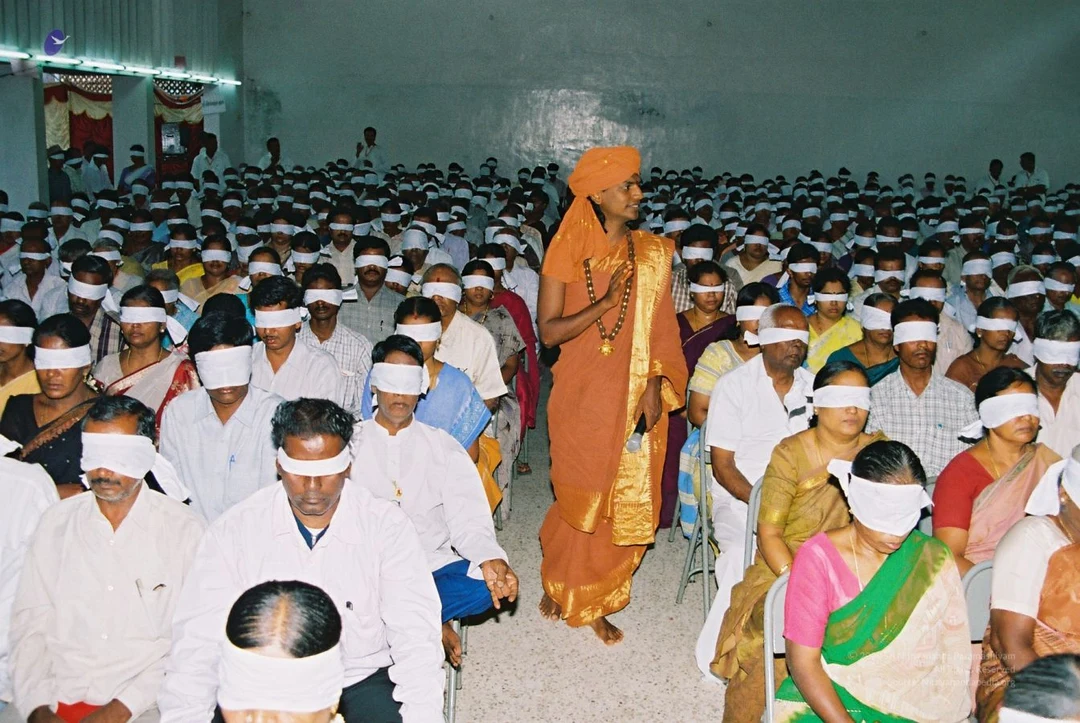
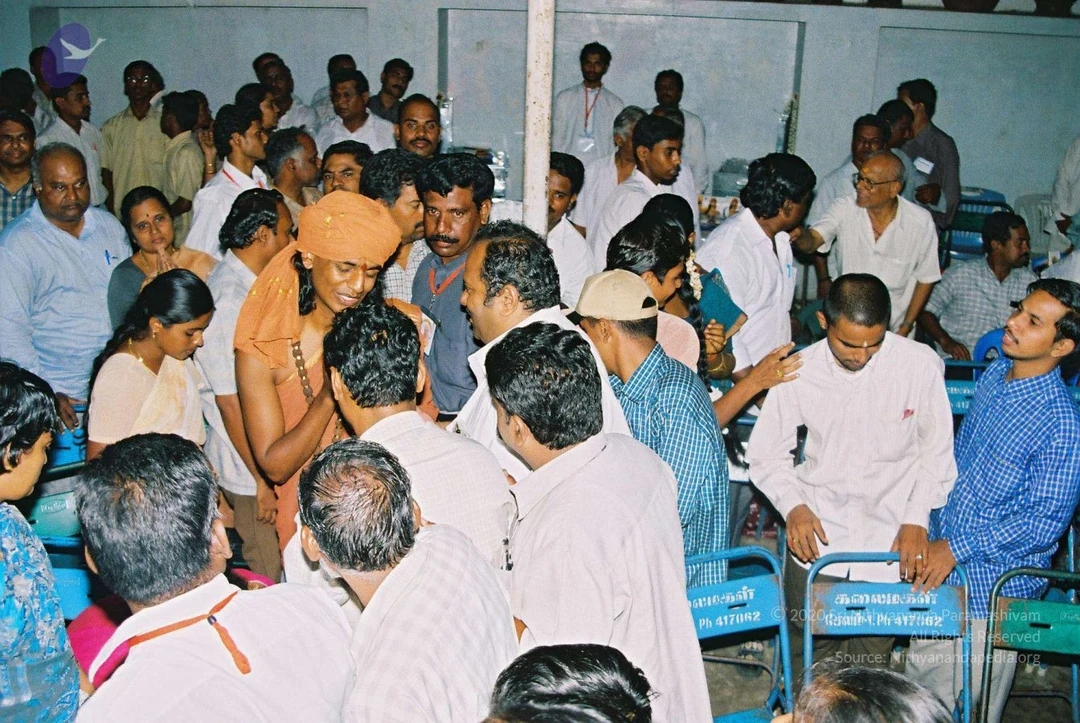
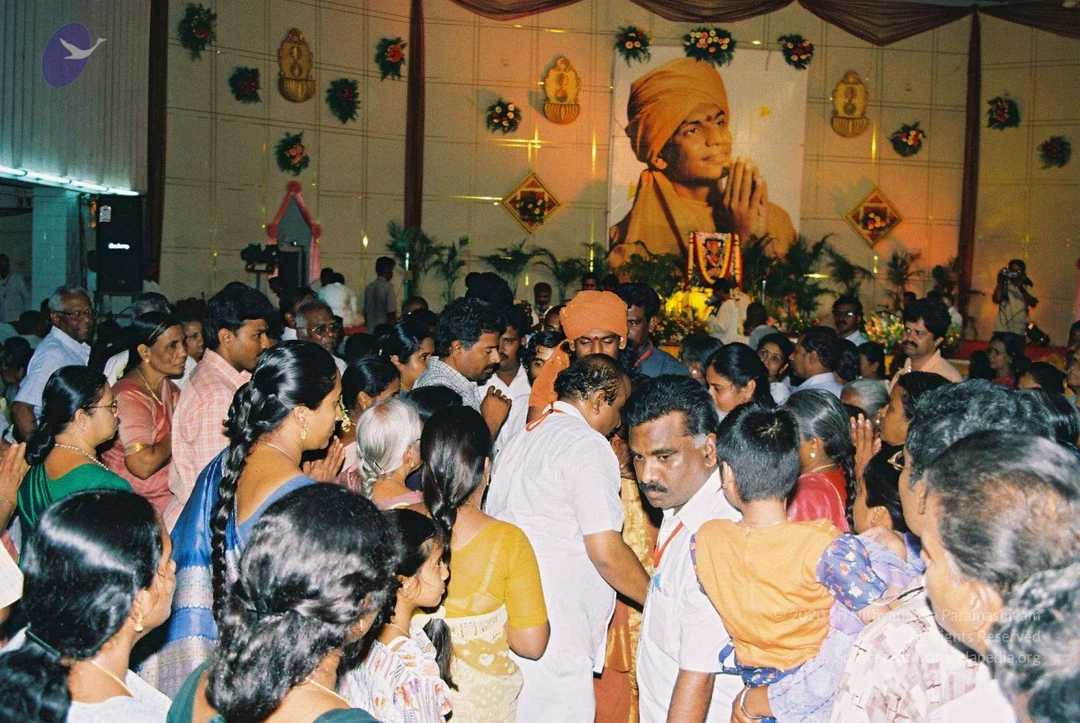
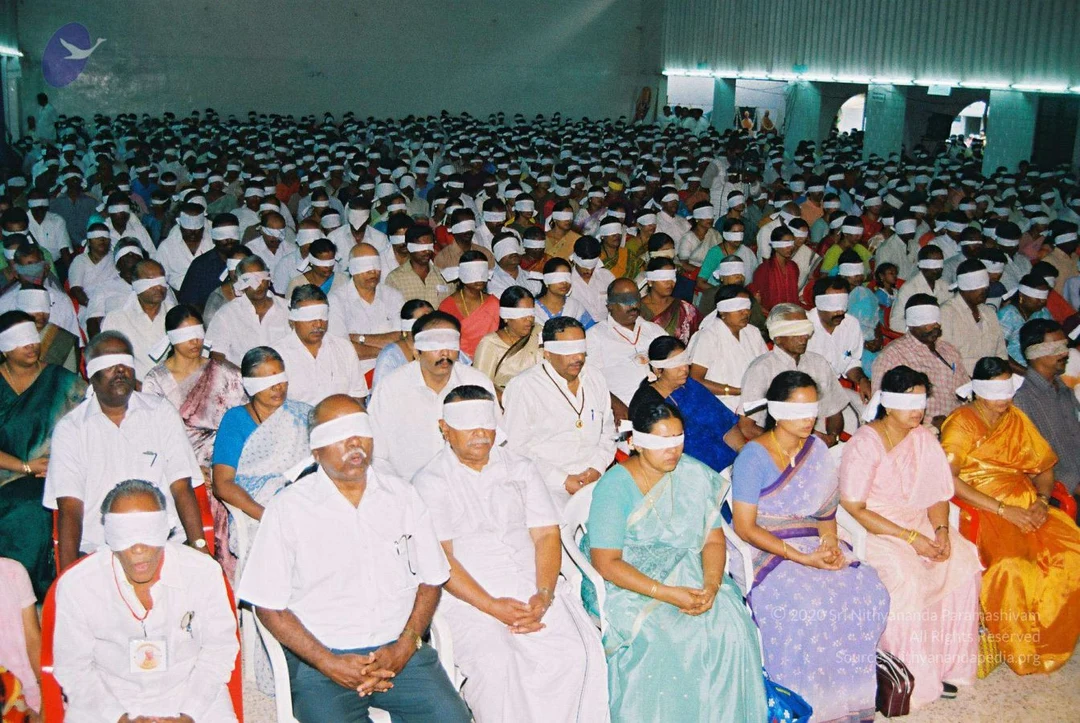
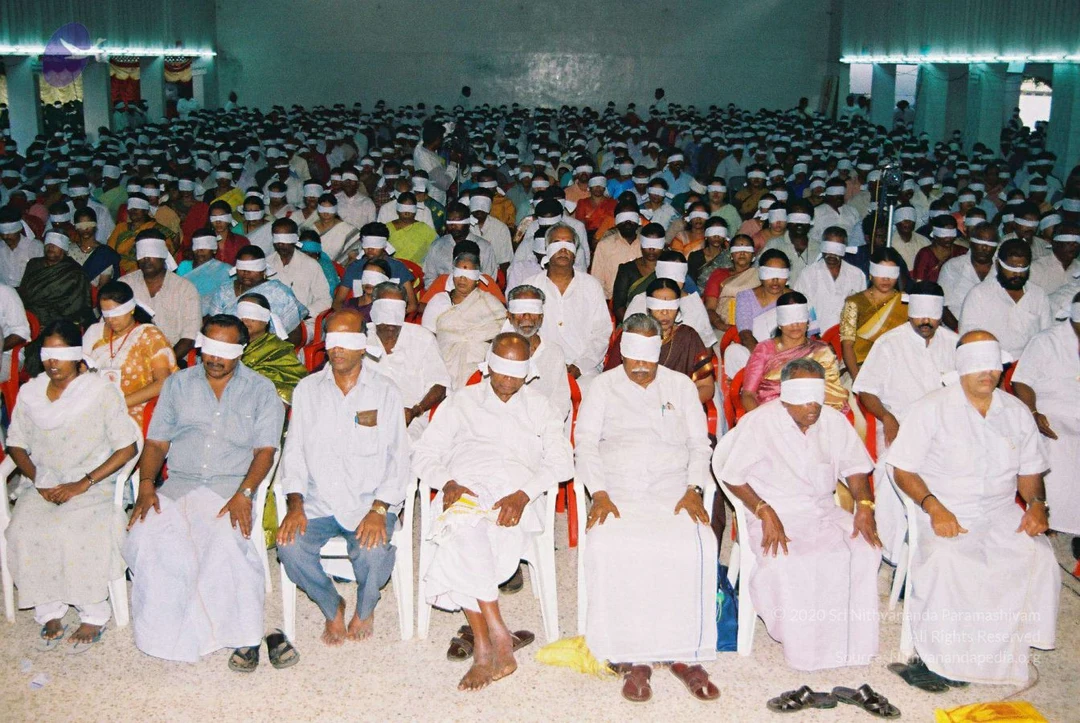
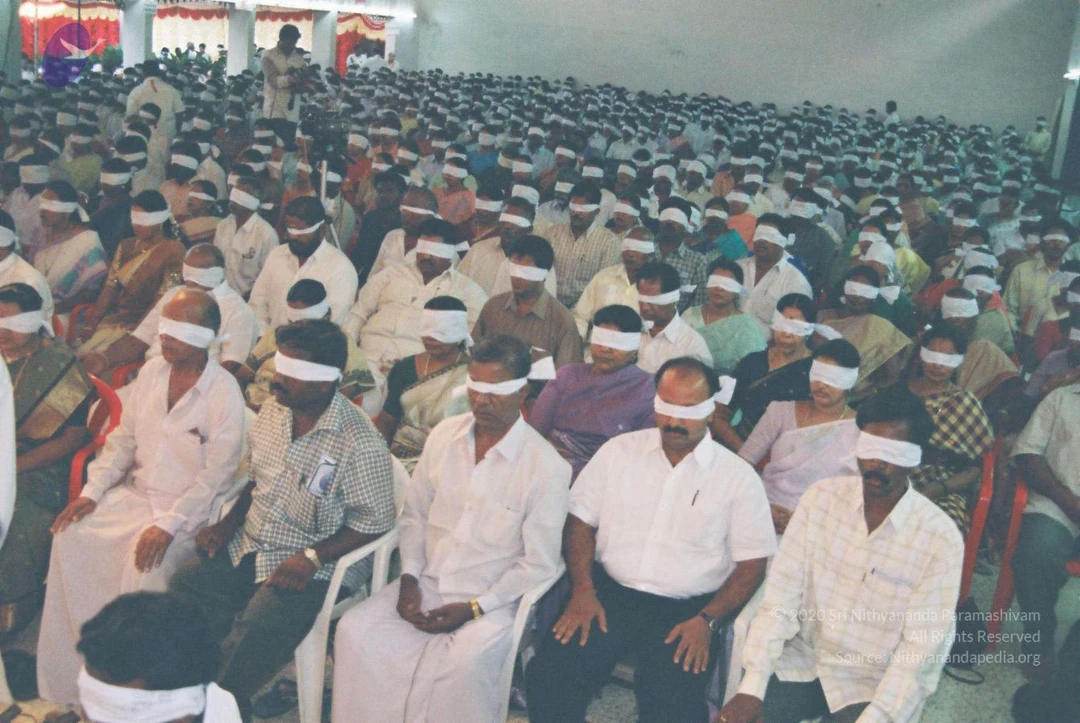
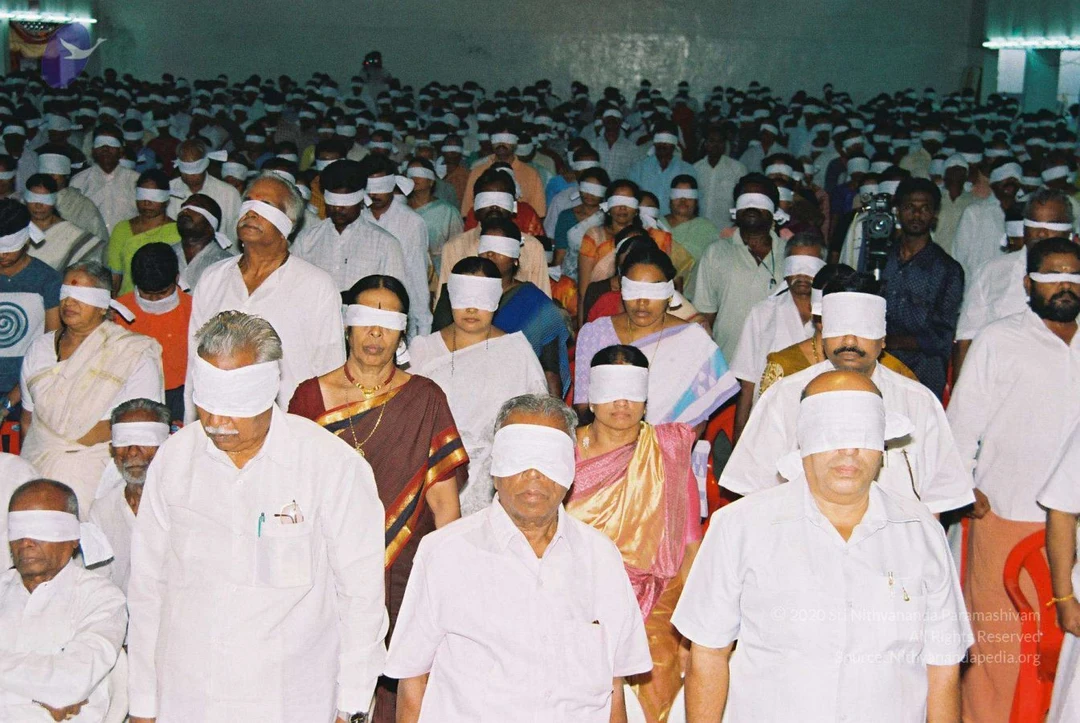
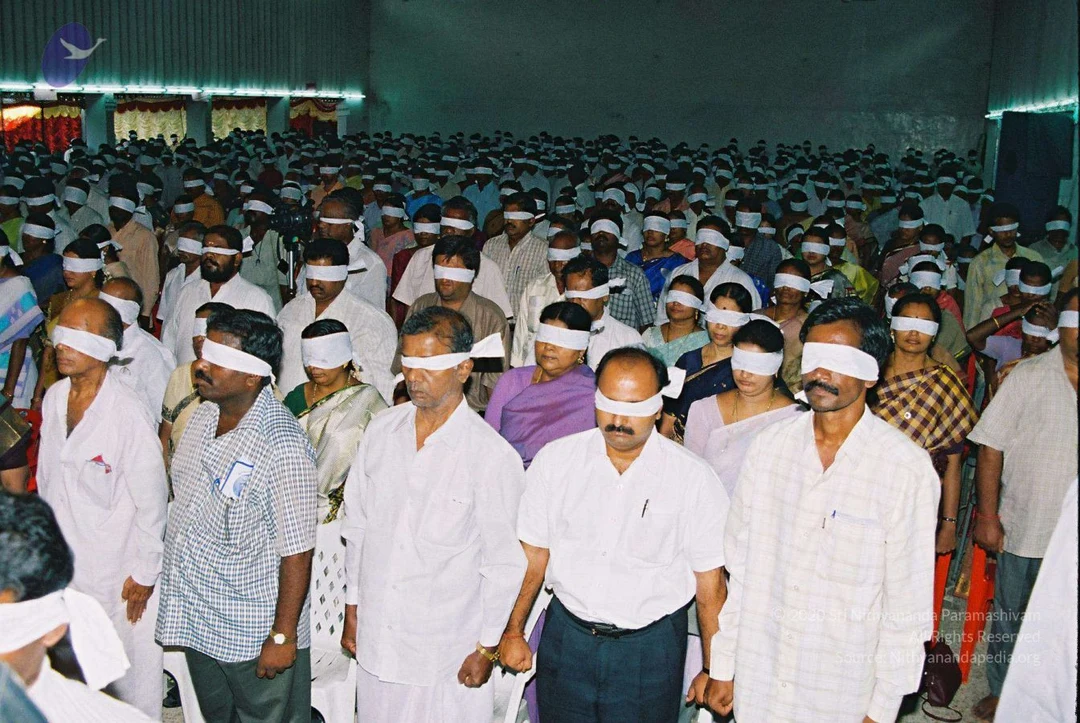
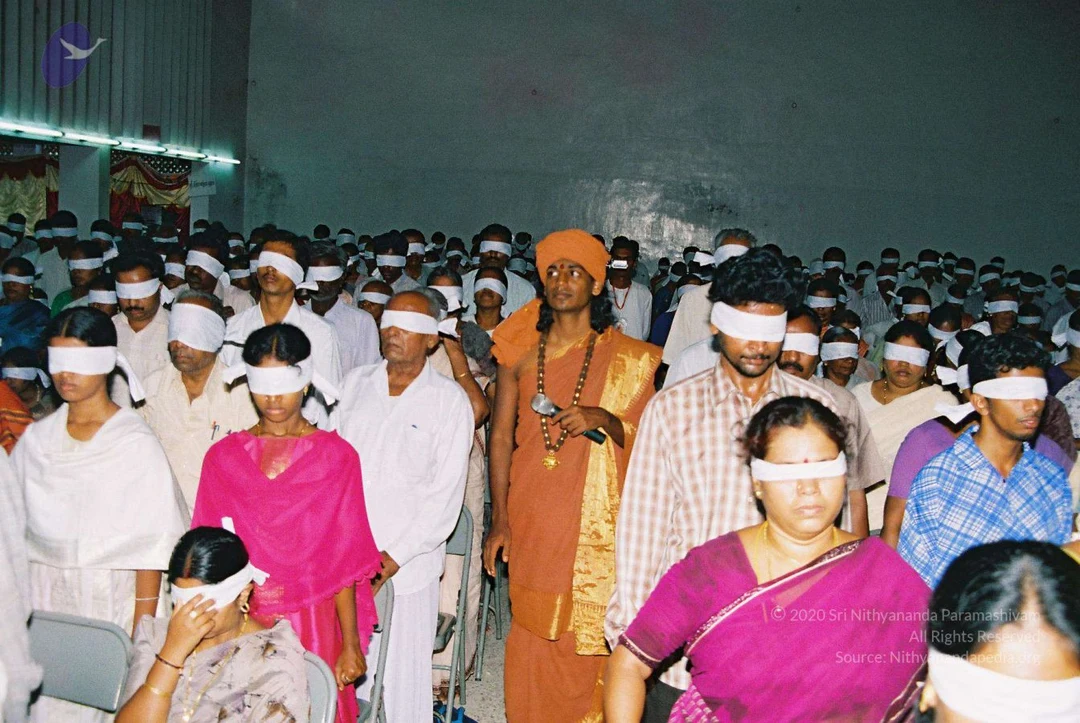
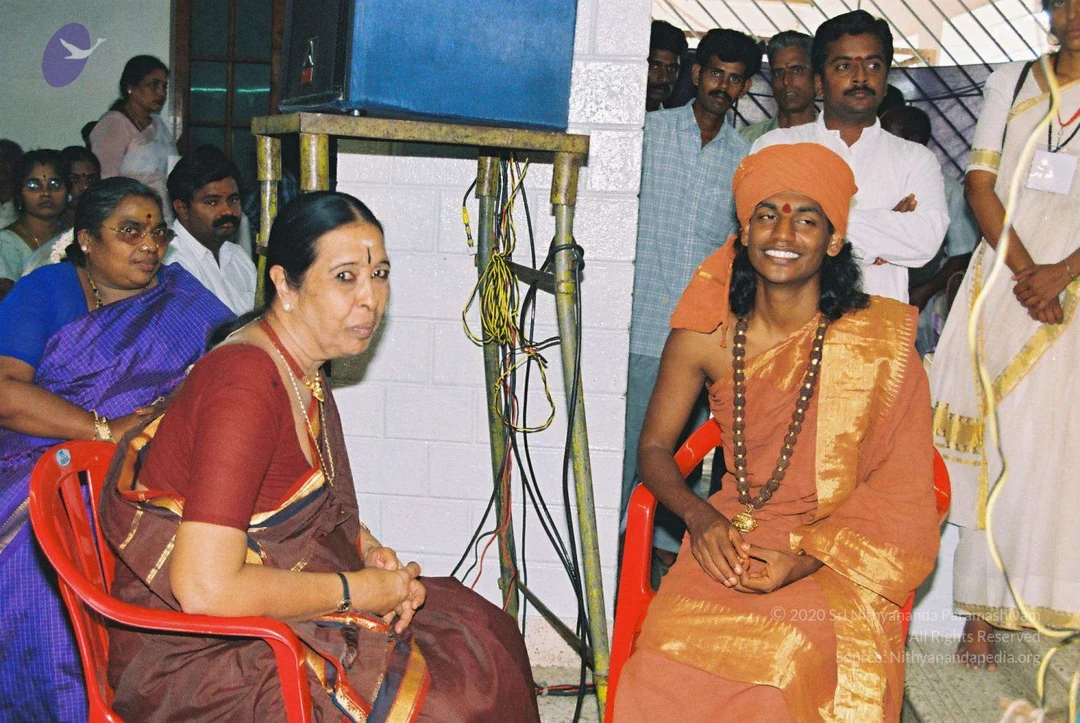
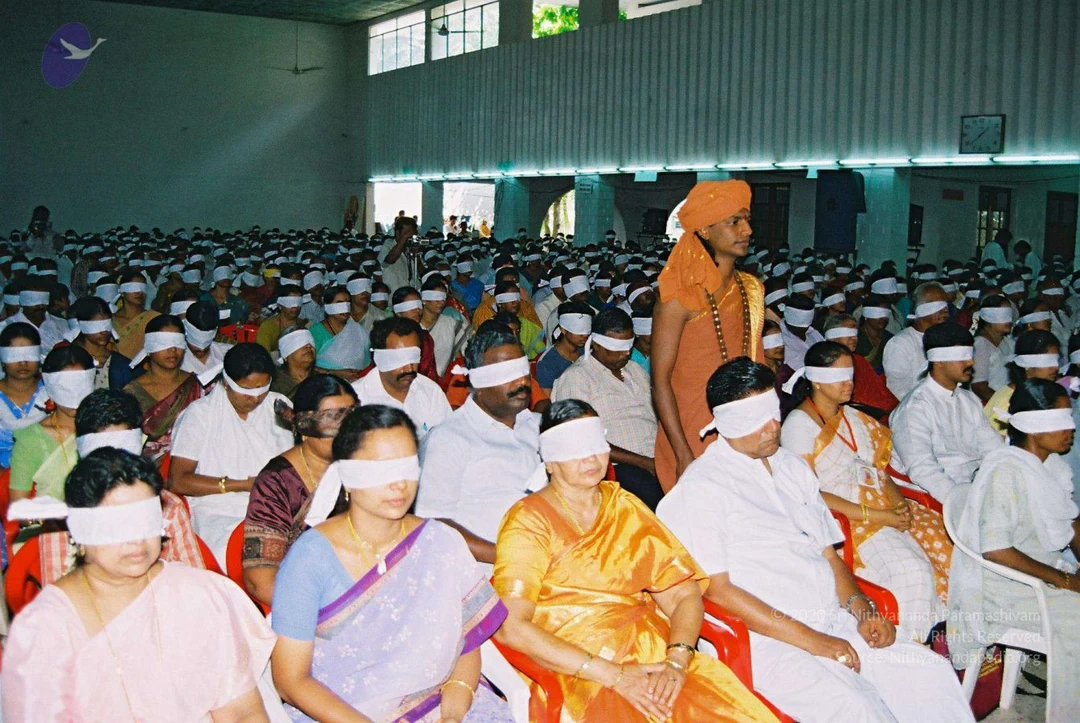
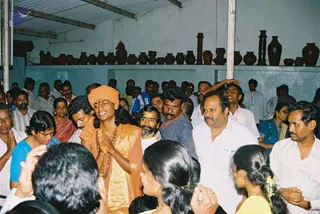
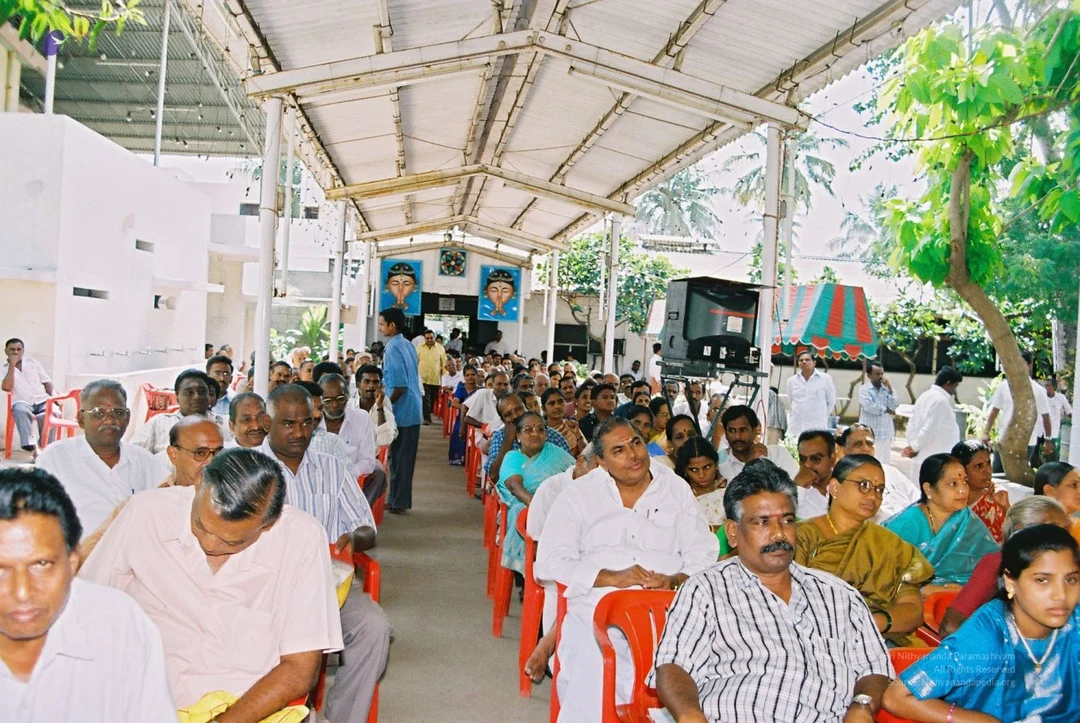
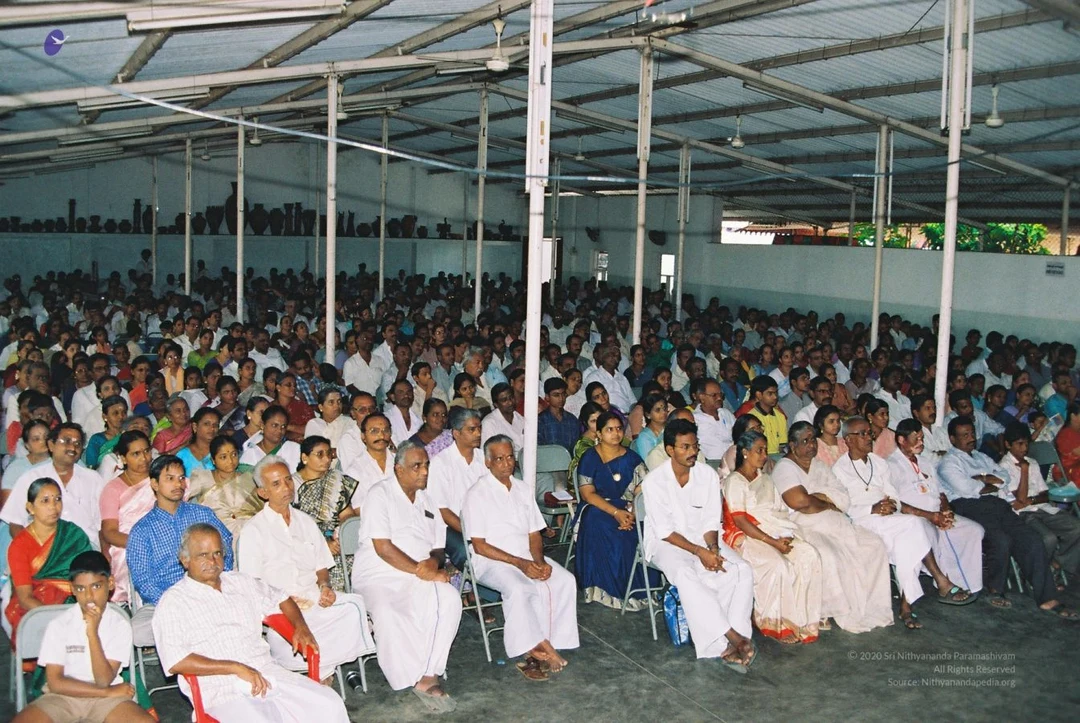
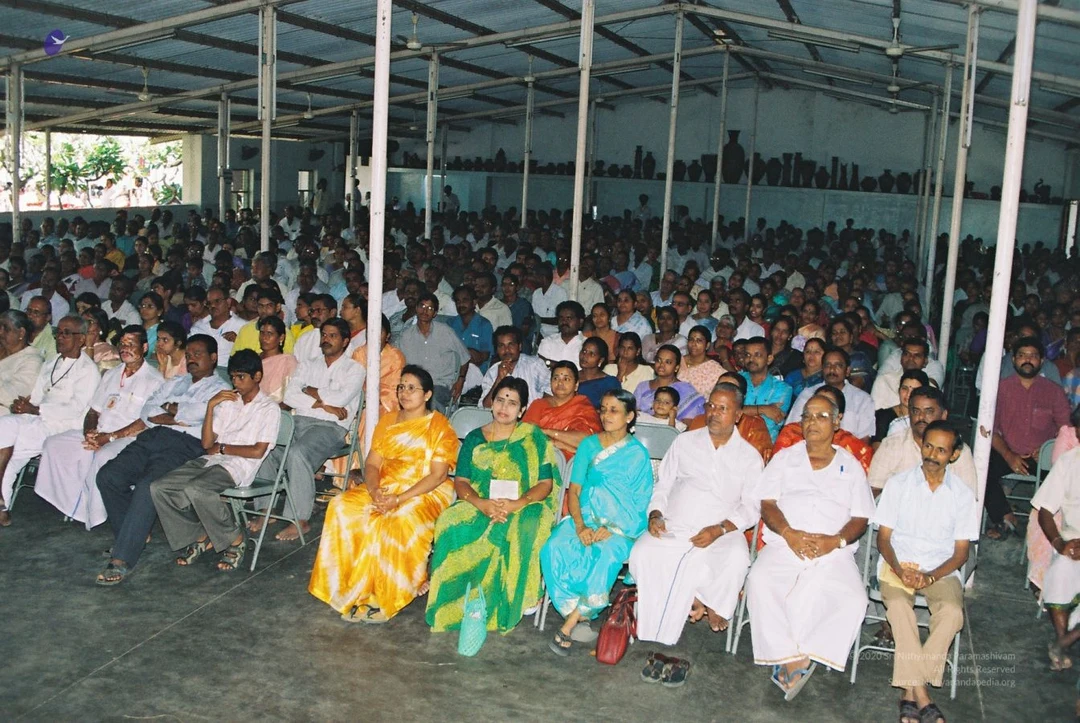
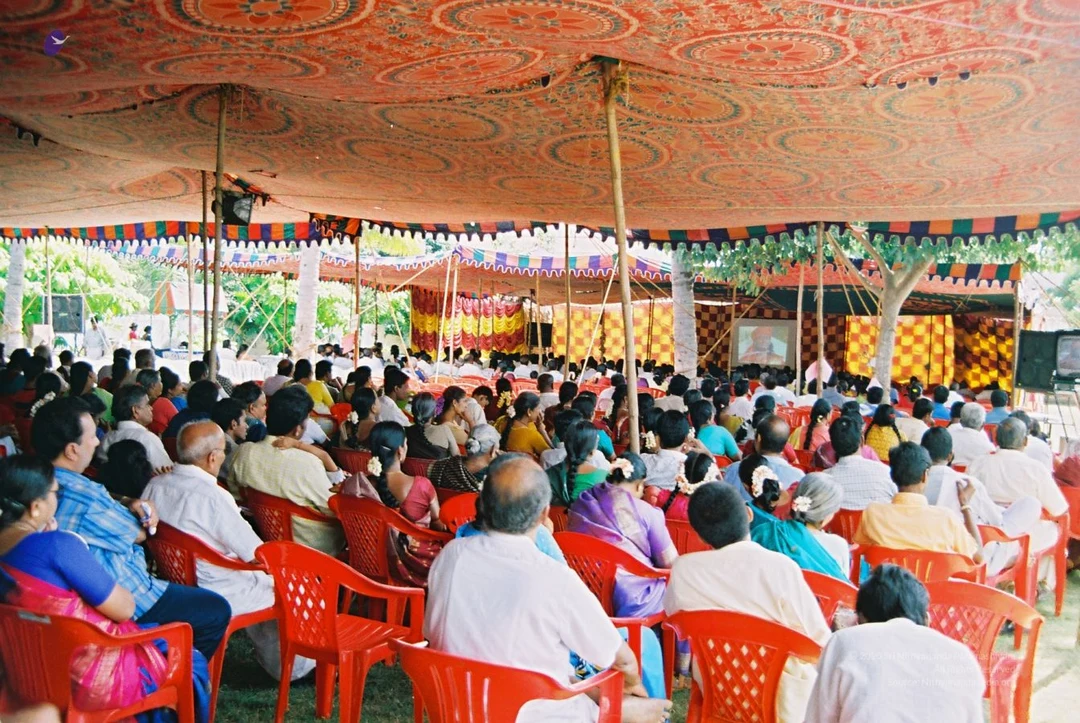
A large indoor hall filled with a dense crowd of seated attendees on red plastic chairs, facing toward the front of the room. In the foreground, several women sit together: one in a teal sari with an open notebook, one in a pink sari with hands folded, one in a lavender sari holding a booklet, and one in a gold-orange silk sari. Men in white shirts and white dhotis sit among them, and a man in a white kurta sits at the right edge. Ceiling fans, fluorescent tube lights and arched openings line the pale green walls, and a stage area is visible in the distance behind the audience.A photograph of a large seated audience inside a covered hall with a corrugated roof and white pillars. In the foreground, an older man in white clothes sits at left, a woman in a bright blue sari with red bindi sits beside a boy in a yellow vest and blue shirt, and a man in a white shirt and white dhoti sits next to an older bald man in pale pink clothes. Behind them rows of people in cotton saris and shirts fill the hall, and clay pots are stacked on shelves along the back wall.Photo at night of a smiling young man in an orange saffron turban and orange shawl with a red bindi, wearing long dark rudraksha-style beaded mala. Dark foliage and a white pole behind him, with several people crowded around, including a man at right in a dark shirt and one at left gesturing. Visible in the scene: a man in dark clothing at right and partially visible people at left. Matches the welcome/arrival section of a person event page, with a cue-bearing figure in saffron and rudraksha.

November 16 2003

Original wiki page
Contents

Title

ஞானகுருமார்களுக்கு பாடல்கள் பாடி நன்றி தெரிவிக்கும் தியானமுறை

Description

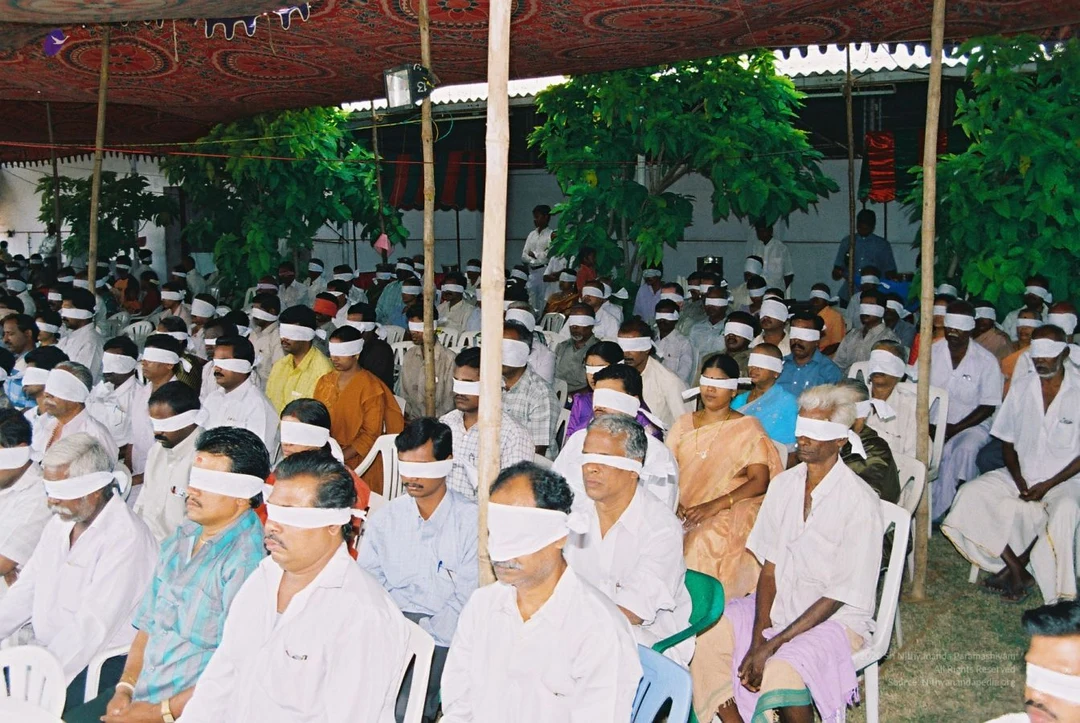
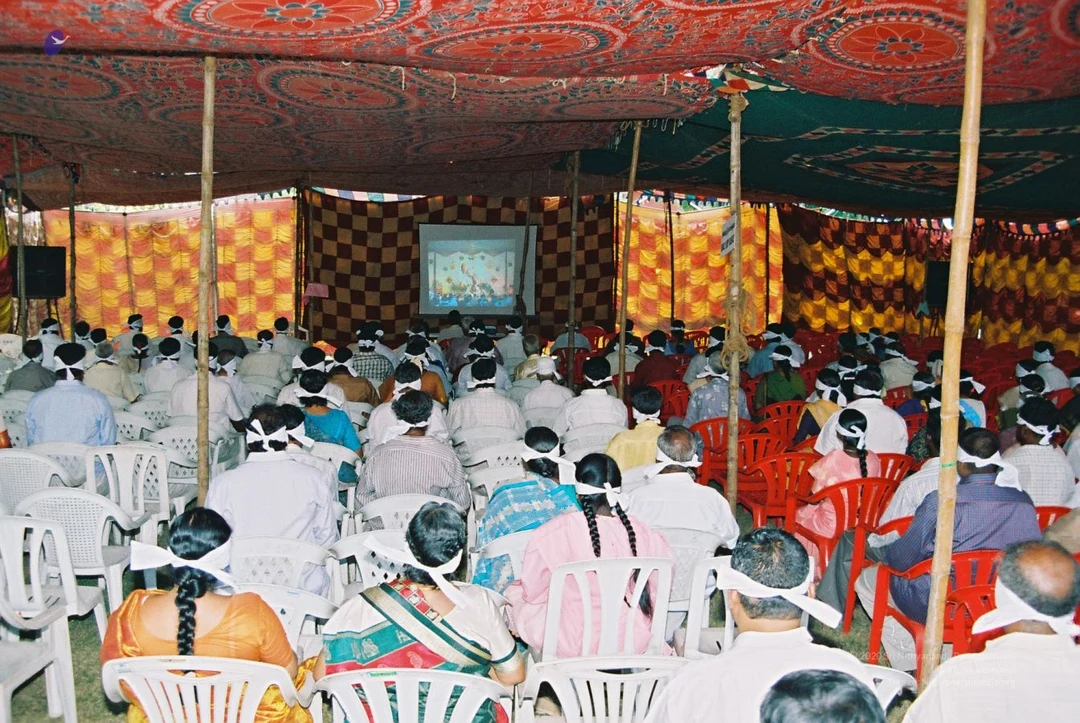
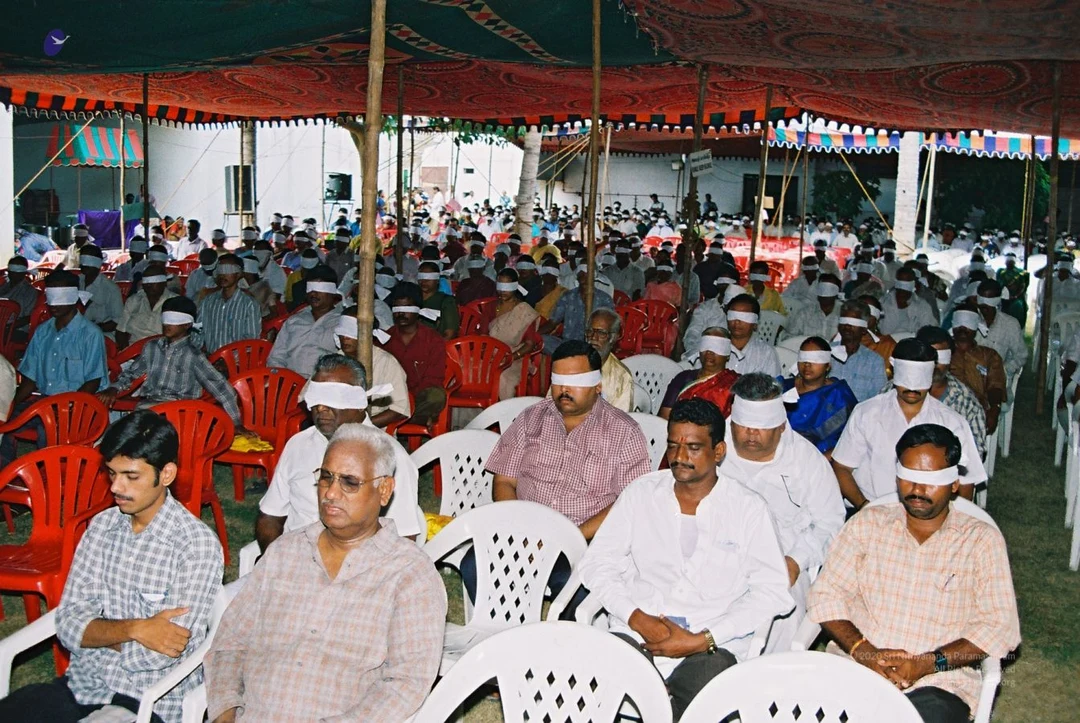
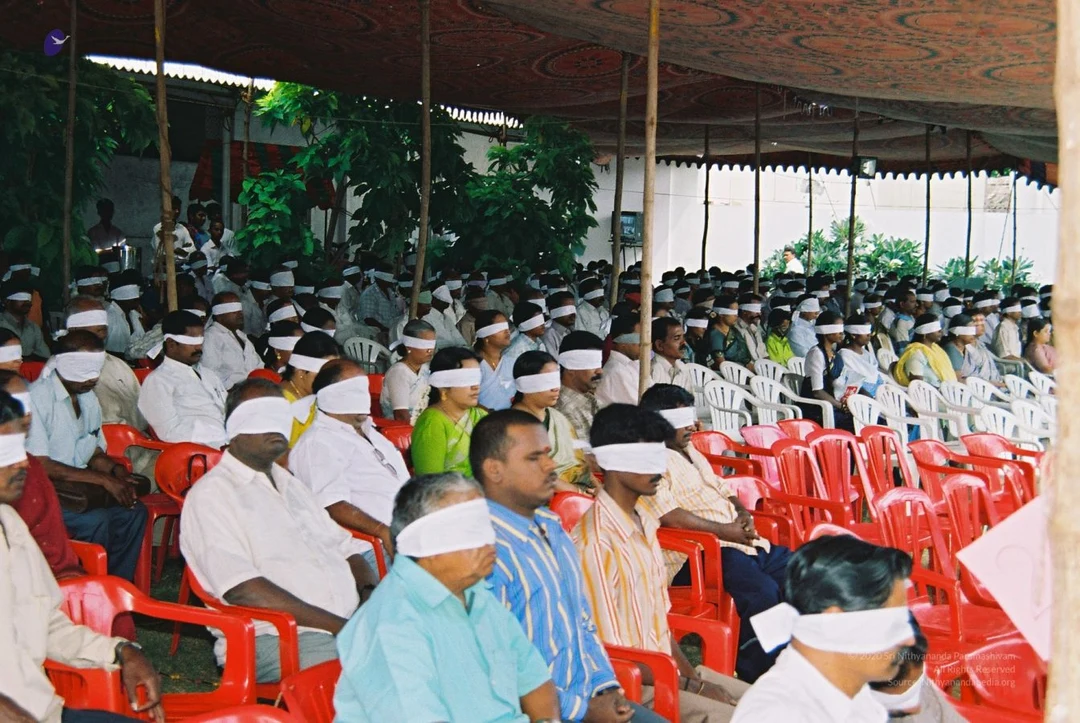
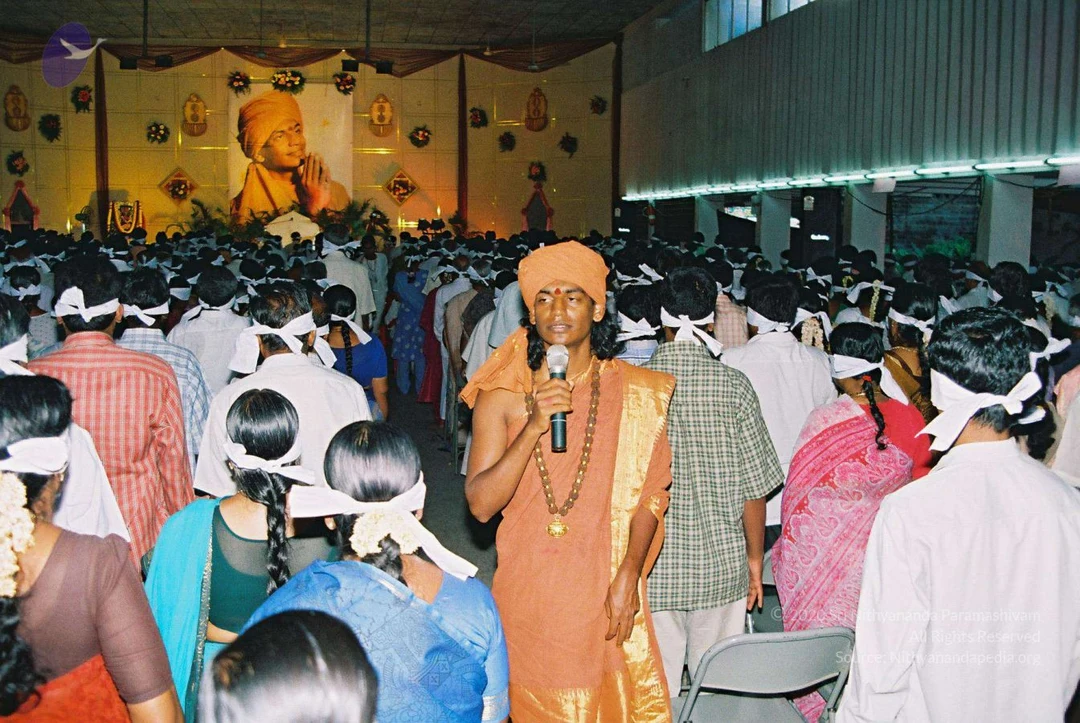
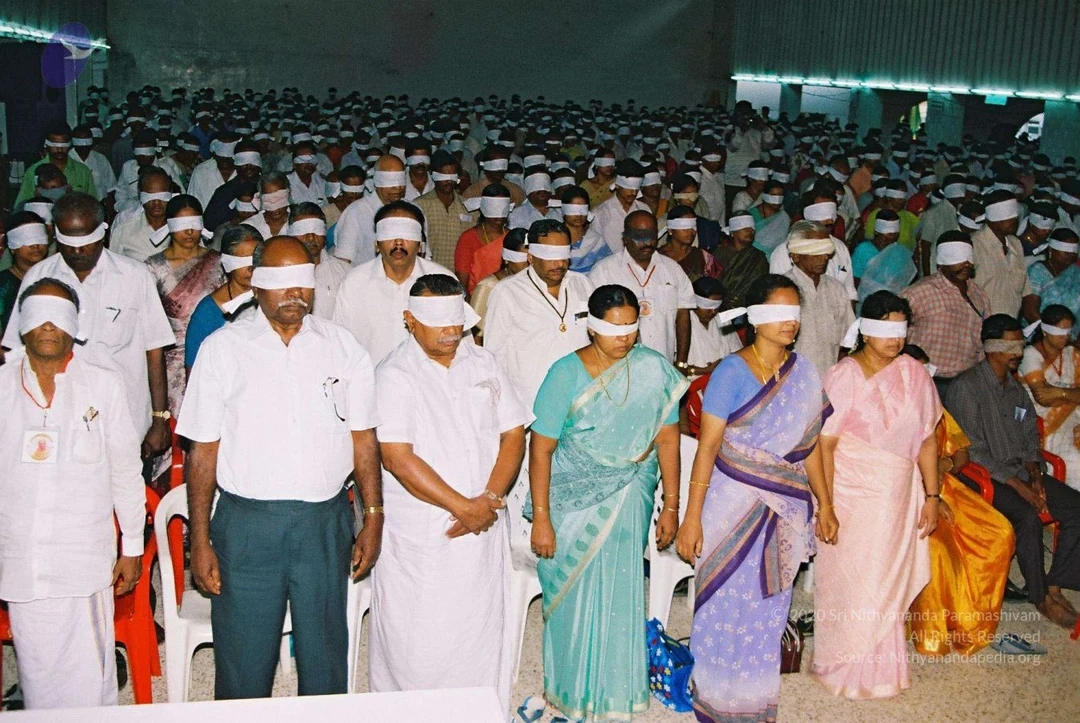
ஆதிகுரு தக்க்ஷிணாமூர்த்திக்கும் மற்றும் ஞானகுருமார்களுக்கும் பாடல்கள் பாடி நன்றி தெரிவிக்கும் தியானமுறை முகாம் - ஆனந்த ஸ்புரணா தியான முகாம் இடம் - சேலம், தமிழ்நாடு தேதி - 16 நவம்பர் 2003 In this discourse , Bhagawan Sri Nithyananda Paramashivam describes about offering gratitude to AdiGuru Dakshinamoorthi and other ancient enlightened Masters through kirtans - singing songs about them so that in which space and state those songs were manifested we will also attain the same space and state by singing the verses . This discourse from Ananda Spurana program happened in Salem 16 Nov 2003

Video and Audio - ஞானகுருமார்களுக்கு பாடல்கள் பாடி நன்றி தெரிவிக்கும் தியானமுறை

VideoAudio

Video and Audio -

VideoAudio

Link to Video2:

Promotional material

Photos

Arrival and Welcome
Photos from this day

View all 137 photos

Promotional material

2 photosSource gallery
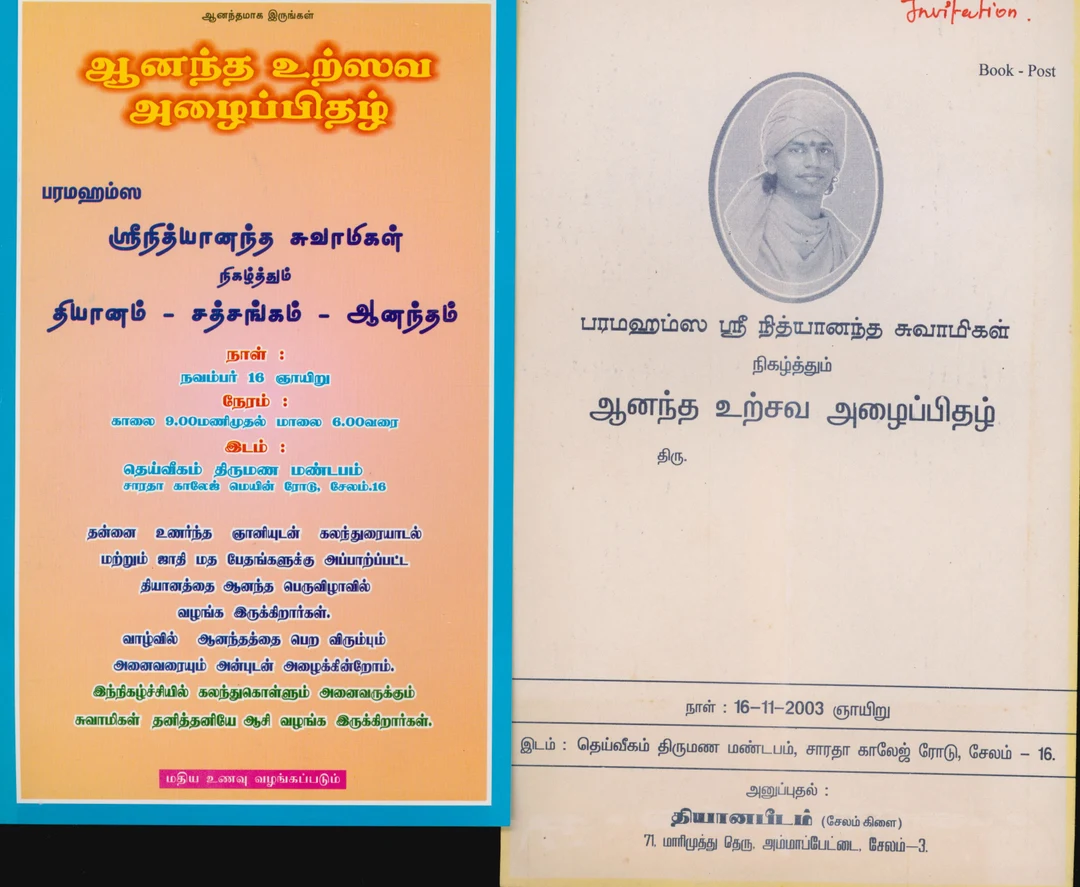
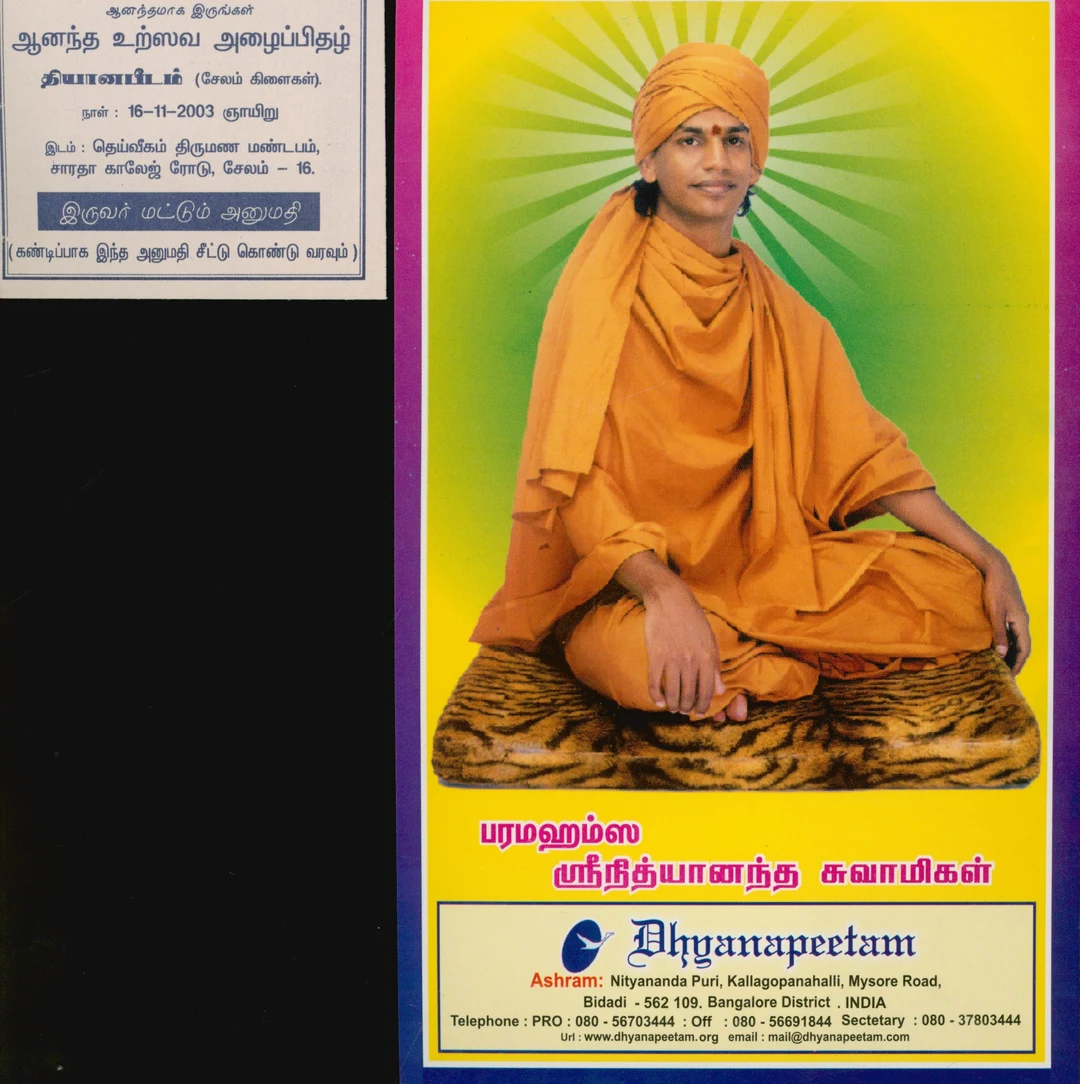
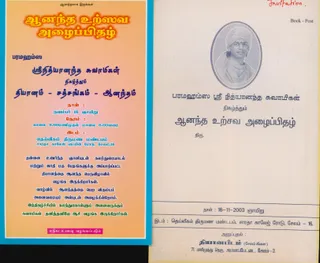
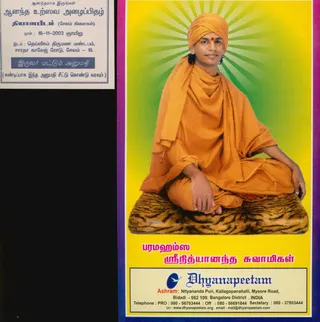
A scan of two printed invitations side by side for an Ananda Utsava event. The left poster has an orange-to-yellow gradient background with a blue border, with large red-and-yellow headline lettering and blue text listing the programme. The right invitation is cream-coloured, with a grey oval portrait of a man wearing a head wrap and shawl at the top, and a handwritten red word in the top corner. No physical people are present; the portrait is a printed depiction on paper. The text gives the date, time and venue, and the sender is listed as Dhyanapeetam (Salem branch).A scan of two printed items side by side: a small white invitation card at top left and a tall yellow-and-magenta bordered promotional card at right. The card shows a seated figure in orange robes and an orange turban with a red forehead mark, seated cross-legged on a tiger-striped cushion before a green and yellow sunburst background; the image is printed, not a live scene, so no physical people are present. A caption on the card reads Paramahamsa Sri Nithyananda Swamigal, labelled as the printed caption under the picture. The card's footer gives the Dhyanapeetam ashram address in Bidadi, Bangalore District, with telephone and email details. The invitation card is in Tamil and gives the date 16-11-2003, a Dhyanapeetam Salem branch venue at Devi Kam Thirumana Mandapam on Sarada College Road, and a note that the invitation admits two persons only.

Photos

102 photosSource gallery
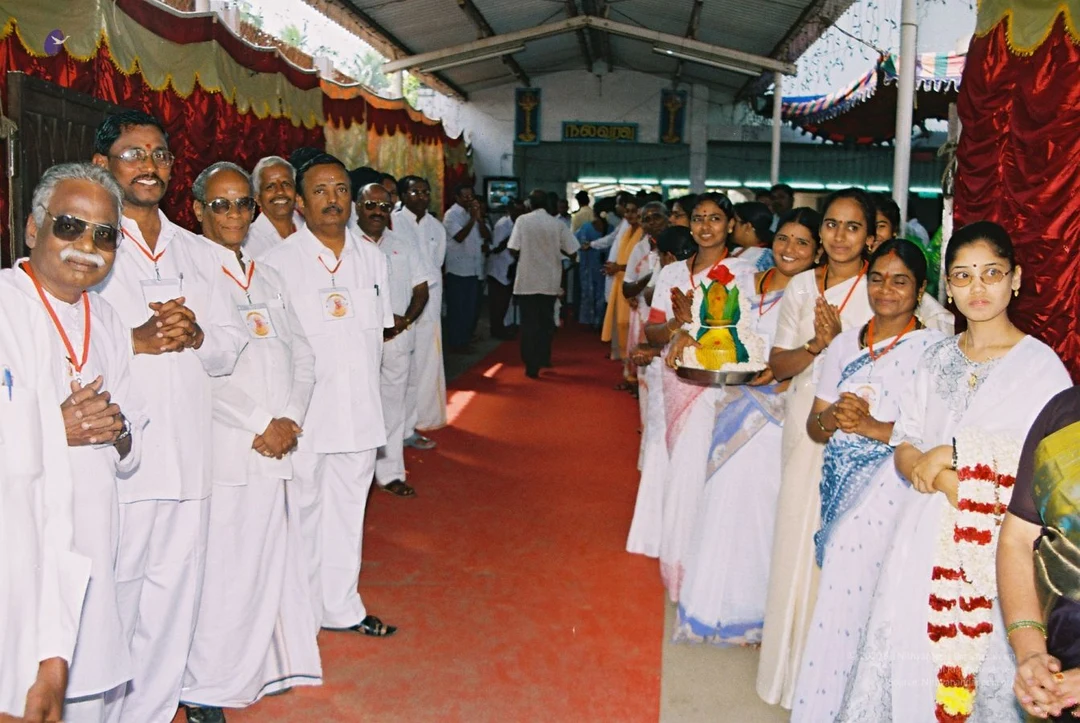
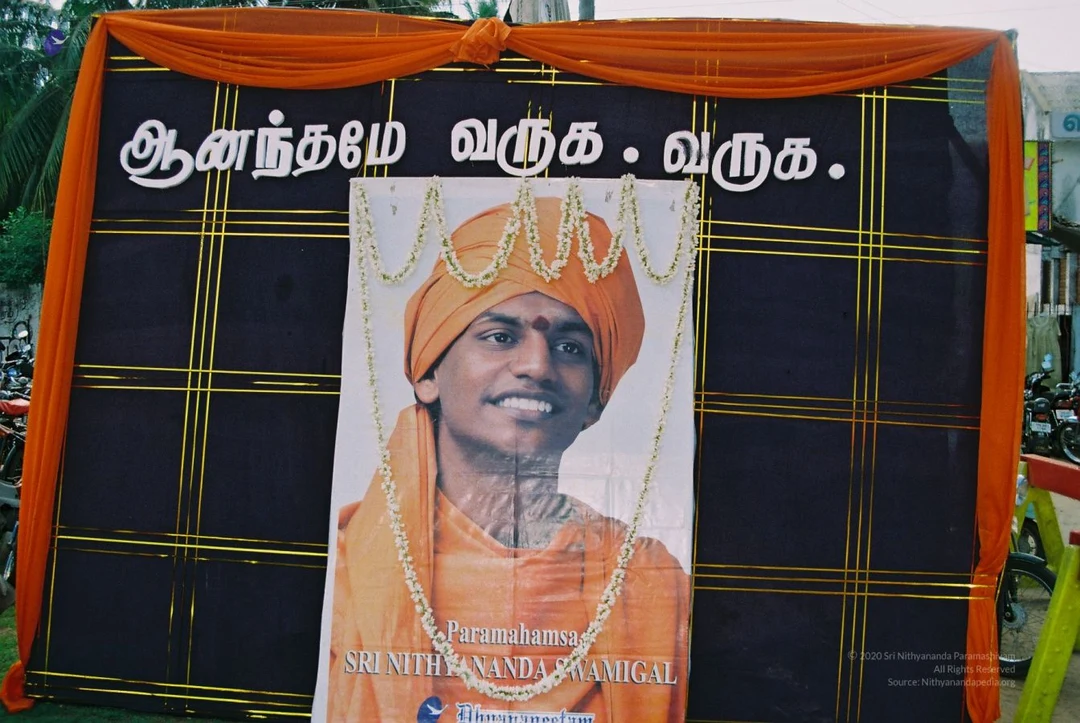
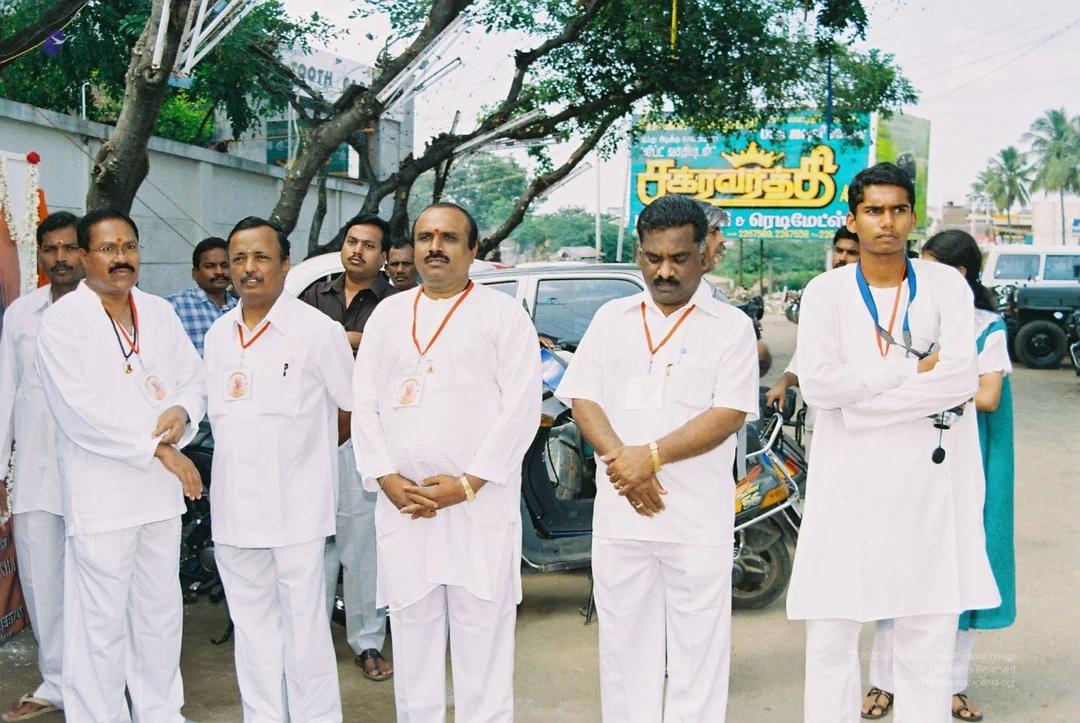
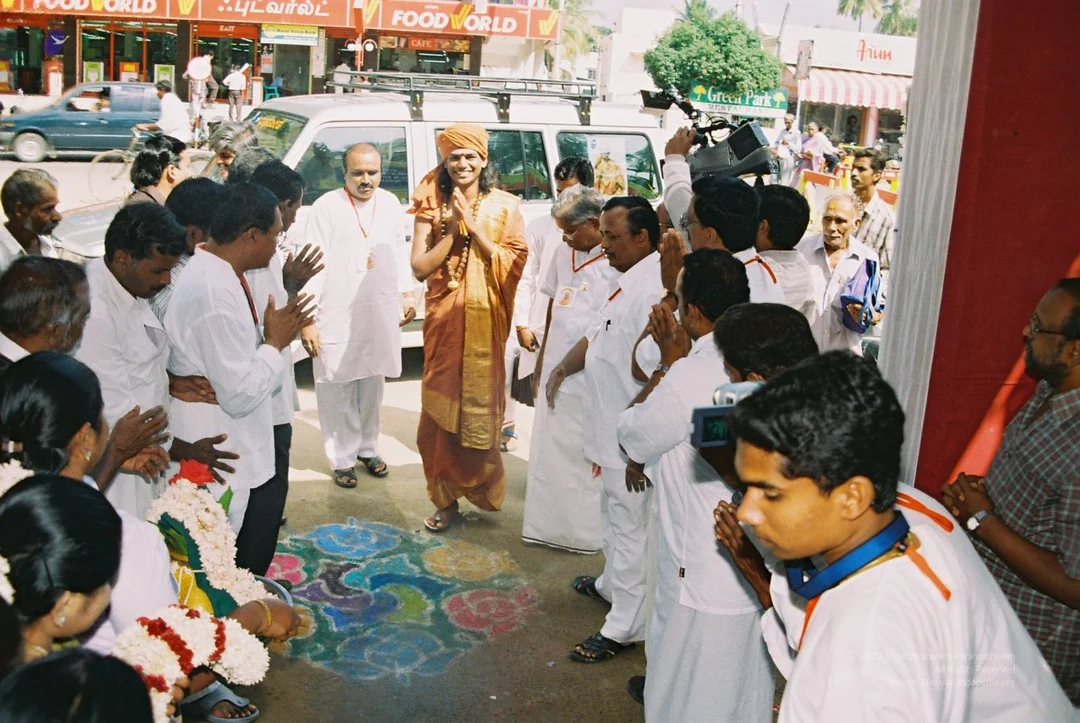
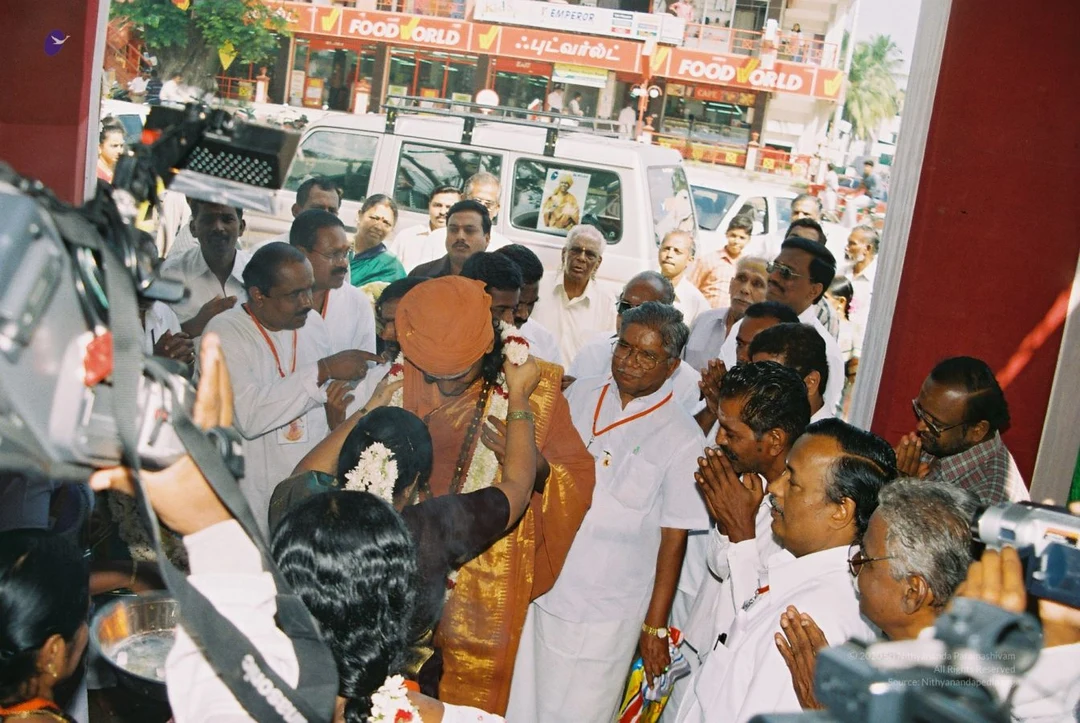
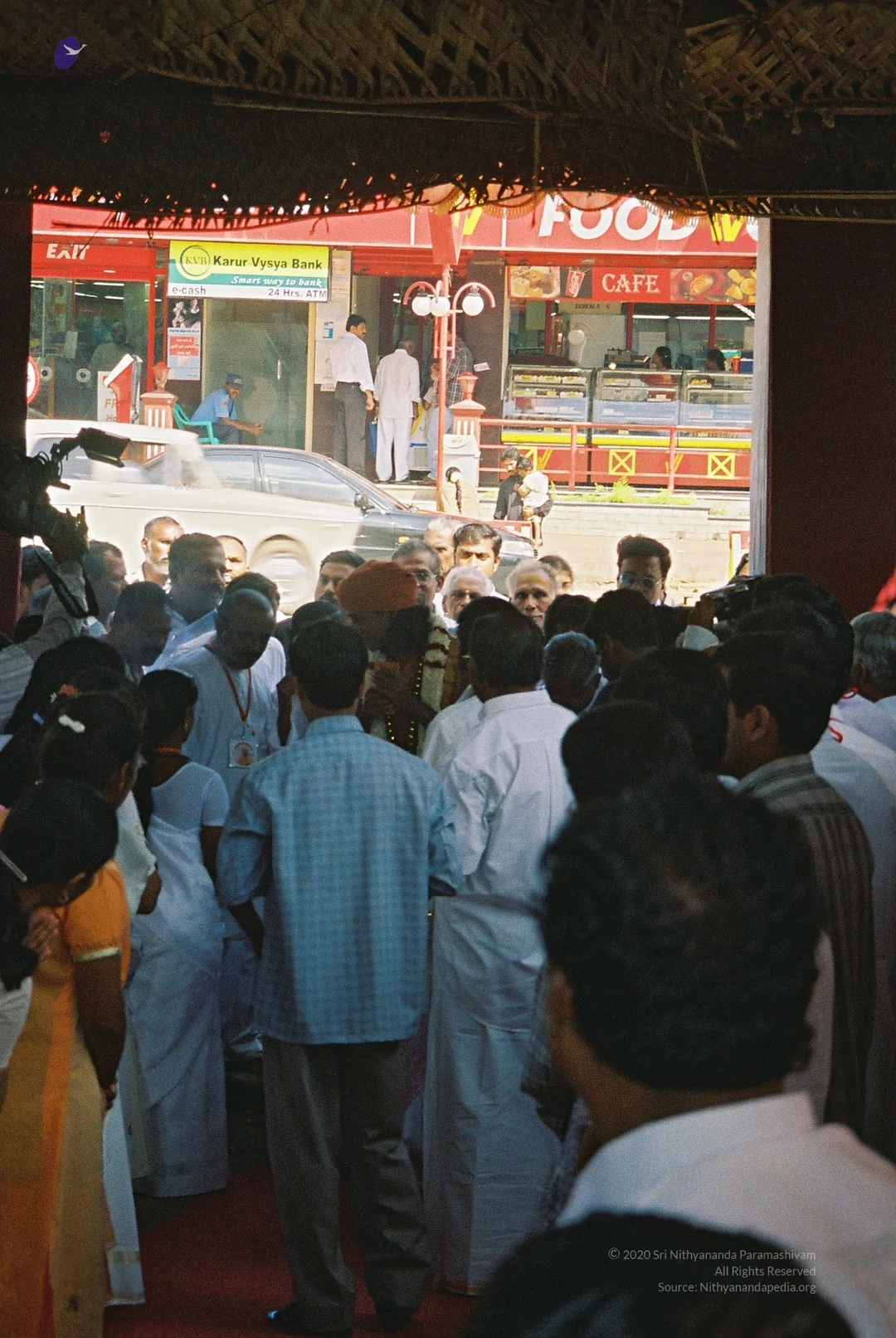
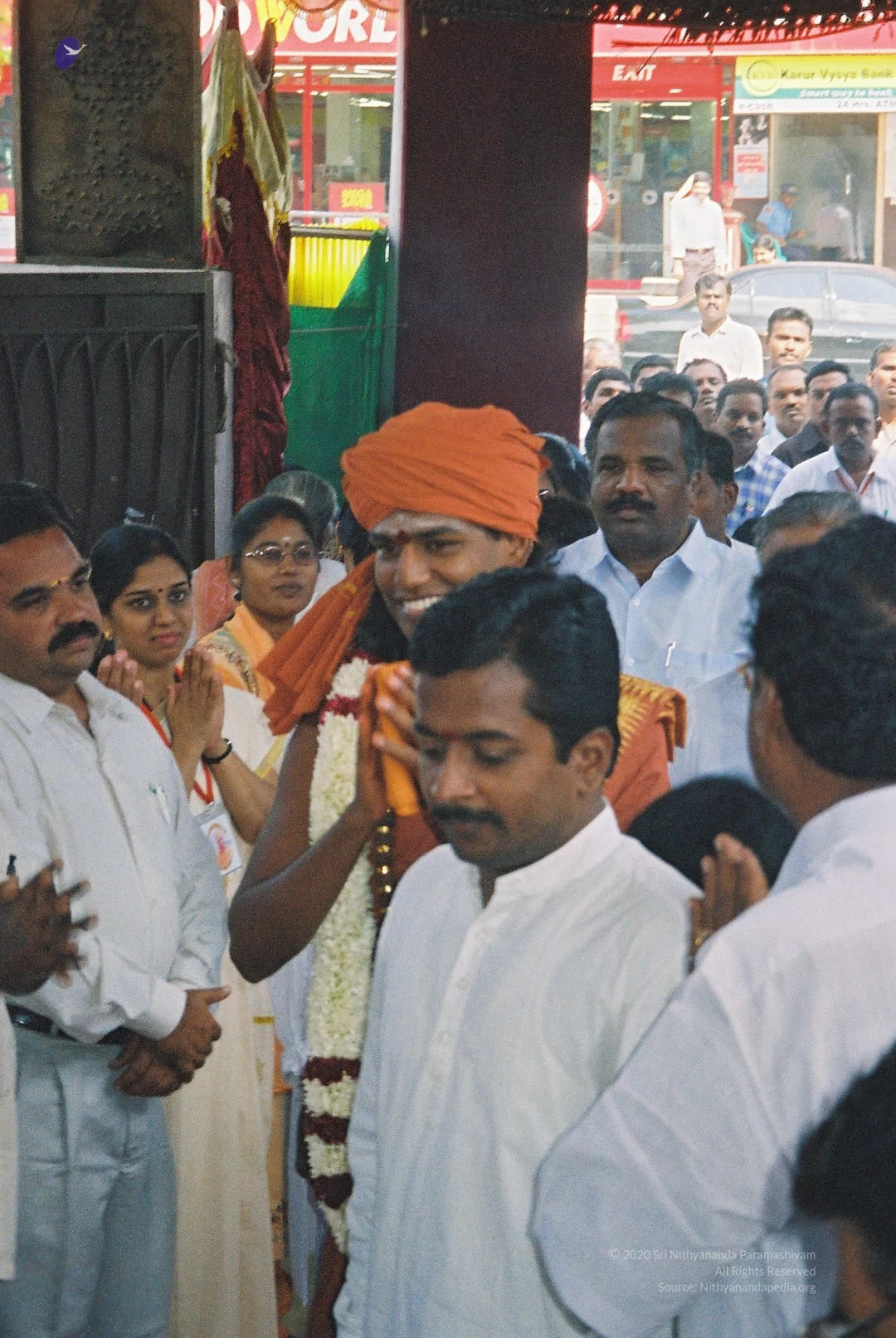
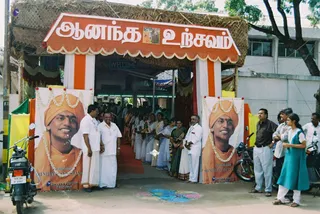
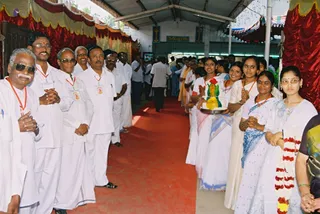
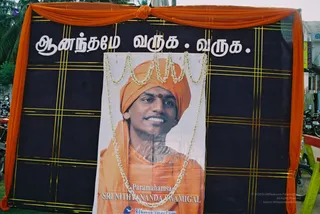
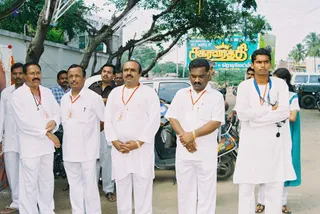
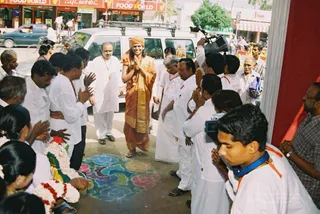
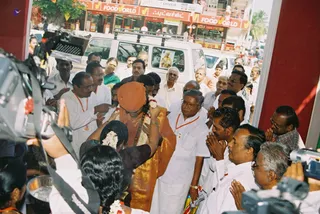
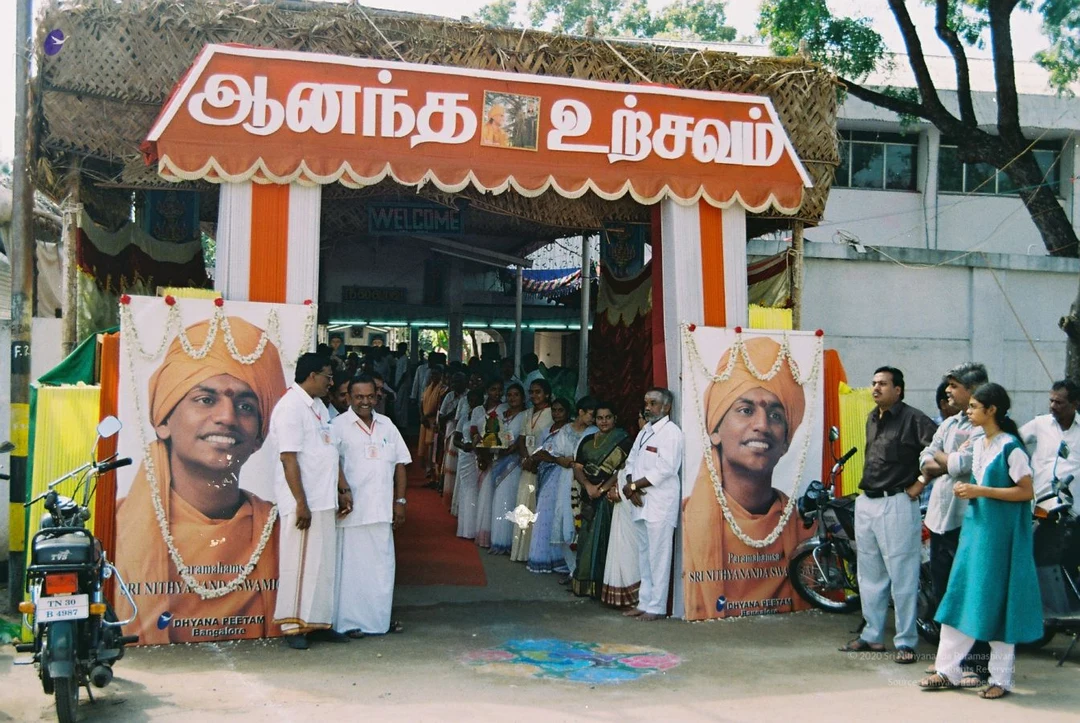
Outdoor festival entrance decorated for the Ananda Utsavam event, with a thatched palm-leaf canopy topped by an orange and white banner reading ஆனந்த உற்சவம். Two large printed portraits flank the walkway, each showing a smiling man in an orange turban and orange robe with a flower garland, labelled Paramahamsa Sri Nithyananda Swamiji and Dhyana Peetam Bangalore. Around fifteen people stand near the entrance: men in white dhotis and shirts, and women in sarees, including a woman in a teal salwar at right. A rangoli design lies on the ground in front of the gate, and a WELCOME sign hangs inside.Photograph of devotees lining a red-carpeted corridor under red and gold draped canopies at an event venue, apparently welcoming a visiting guest. On the left, men in white dhotis and shirts with orange lanyards and badges stand with hands folded in namaskar; several wear sunglasses. On the right, women in white saris with orange lanyards hold a silver tray with a decorative kalasha-like arrangement and flower offerings, and a woman in a white sari with a long red and white garland stands with hands joined. Behind them more people in white move along the corridor, and a sign reading நலவாழ்வு is visible above. No clearly identifiable a person appears in the frame.A photograph of an outdoor welcome backdrop hung with orange drapery and a black cloth with gold grid lines. Above it, white Tamil lettering reads a welcome greeting. At the centre hangs a large printed banner of a smiling man in an orange turban and orange robe, with a red mark on his forehead, framed by white flower garlands. The banner is captioned "Paramahamsa SRI NITHYANANDA SWAMIGAL" with a Dhyanapeetam logo beneath. Parked motorcycles and a small building appear at the edges. No physical people are visible.A photograph of a street outside a venue where a group of men in white ritual clothing stand in a row. The man in the centre wears a white kurta with an orange cord around his neck and a small identity badge, hands clasped in front. Men beside him wear white shirts and dhotis, orange neck cords and badges; one on the right has a blue lanyard and crossed arms. Behind them stand other men, a woman in a teal outfit, parked scooters and cars. A large blue signboard reads Chakravarthi with a crown logo, and garlands hang on the left.Outdoor street arrival scene with a central figure in an orange-saffron dhoti and shawl, a rudraksha mala and gold-toned necklaces, hands pressed together in greeting and a broad smile. Around him, men in white dhotis and white shirts, several with orange-red neck cords, stand with palms joined in welcome. A white van and street traffic are behind, and a rangoli-style floral design in pastel colours lies on the ground. Foreground devotees hold white and red flower garlands. Lit by daylight with shop signs visible in the background.A street-side photograph of a welcome at a city entrance with shops behind, including Food World and Emperor signage. A man in an orange-saffron turban, shawl and ornate gold-bordered orange cloth, wearing a garland of white flowers, is greeted by a woman in a dark outfit who holds a flower garland toward him. Around them, men in white dhotis and shirts with orange ceremonial cords stand with hands pressed together in namaste, and a camera operator with a video camera is at the left edge. A white van is parked behind the crowd. Appearance cues for the turbaned man in saffron-orange attire and garland match the page's a person reference, so he is described as a person receiving a welcome on arrival.
Photos

33 photosSource gallery
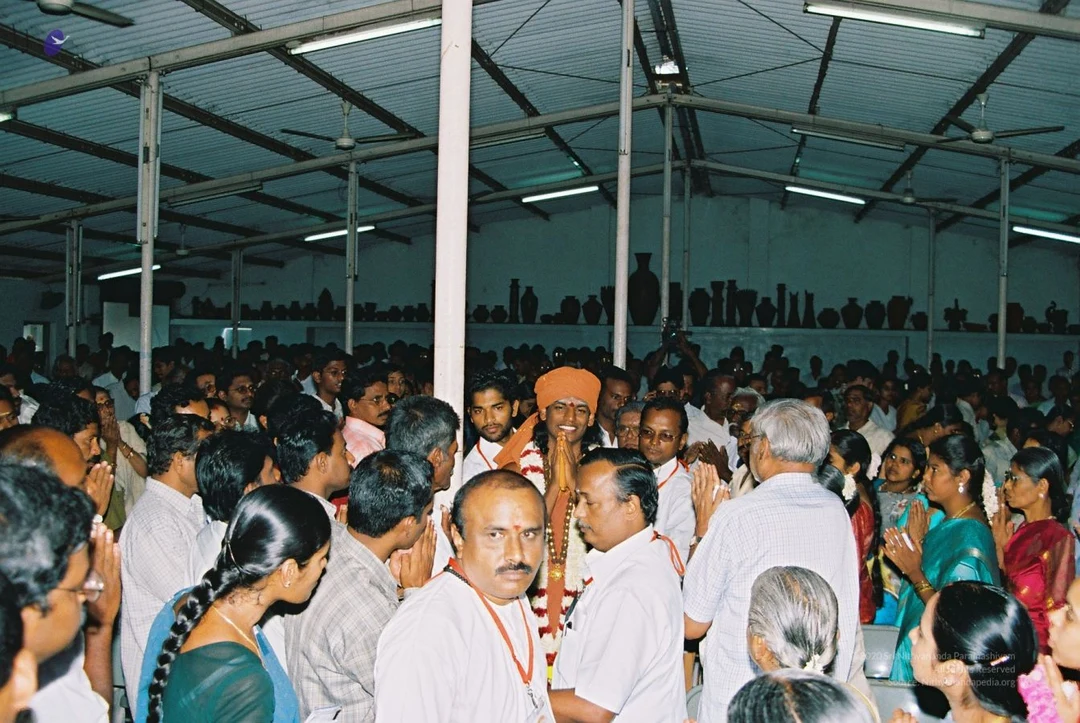
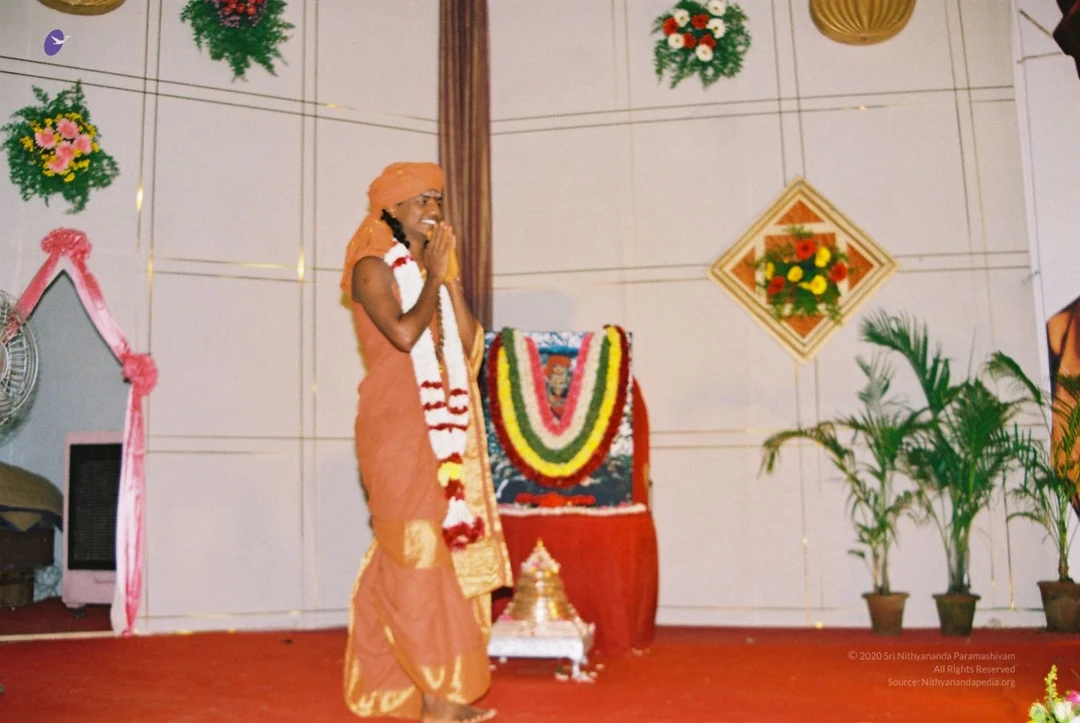
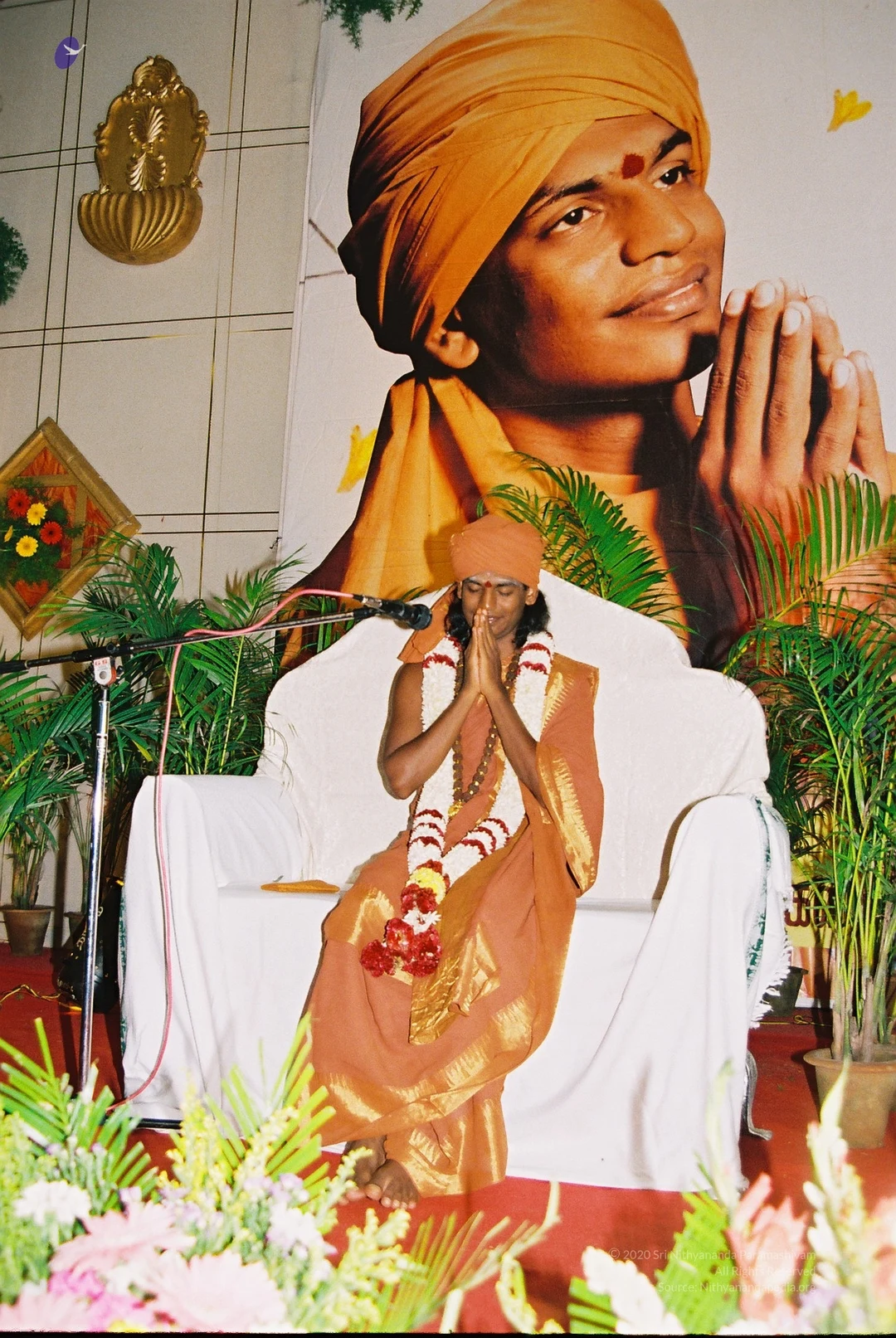
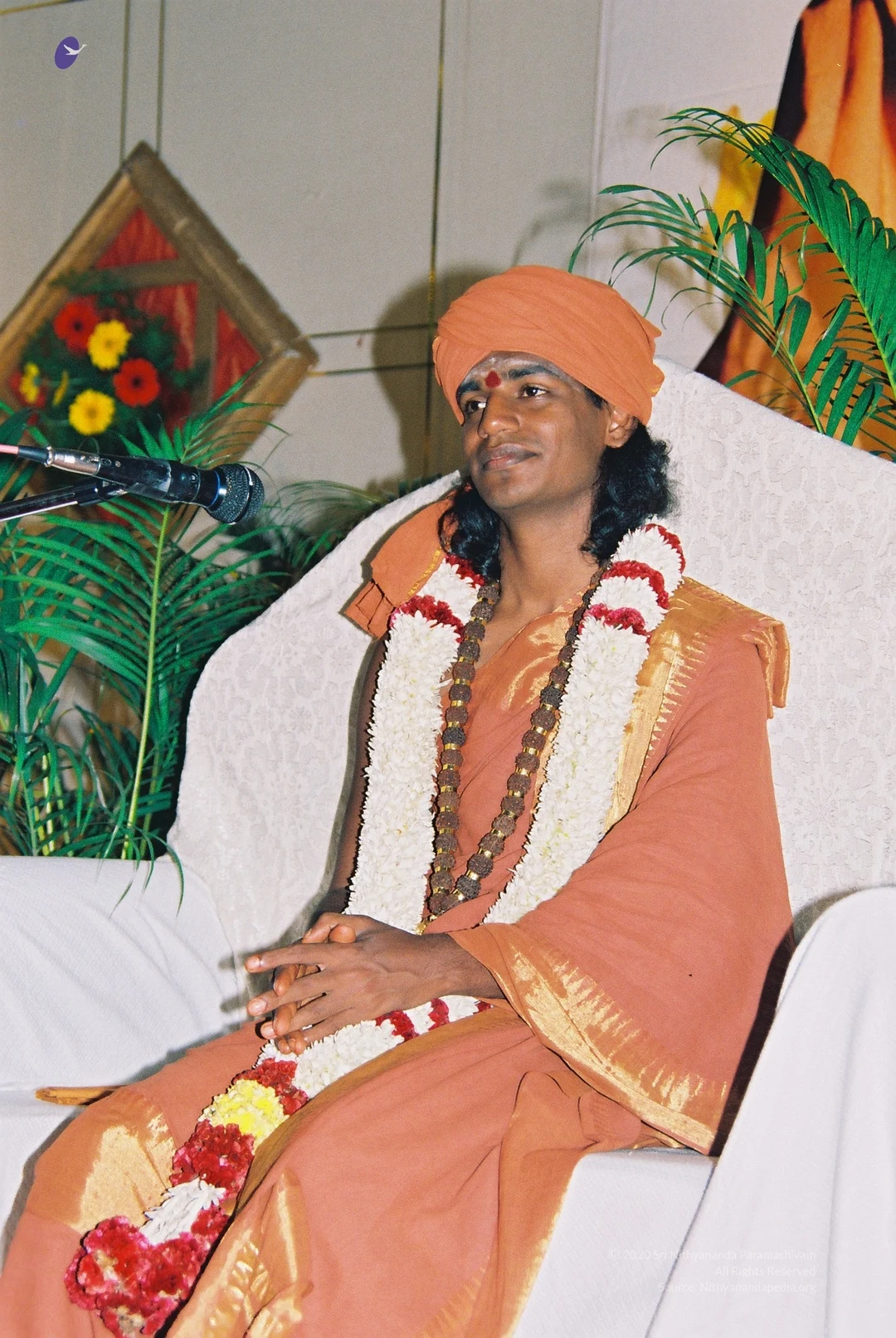
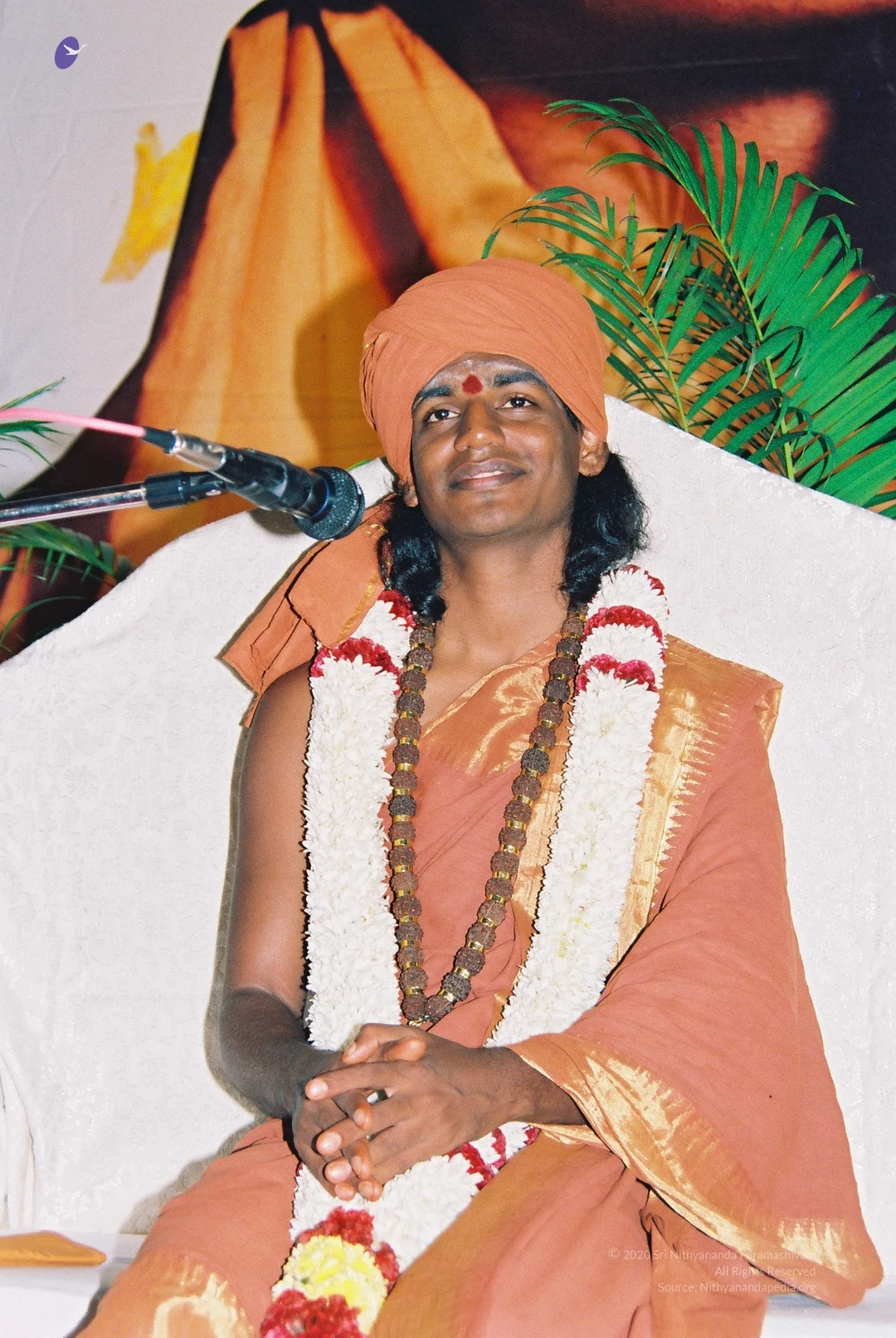
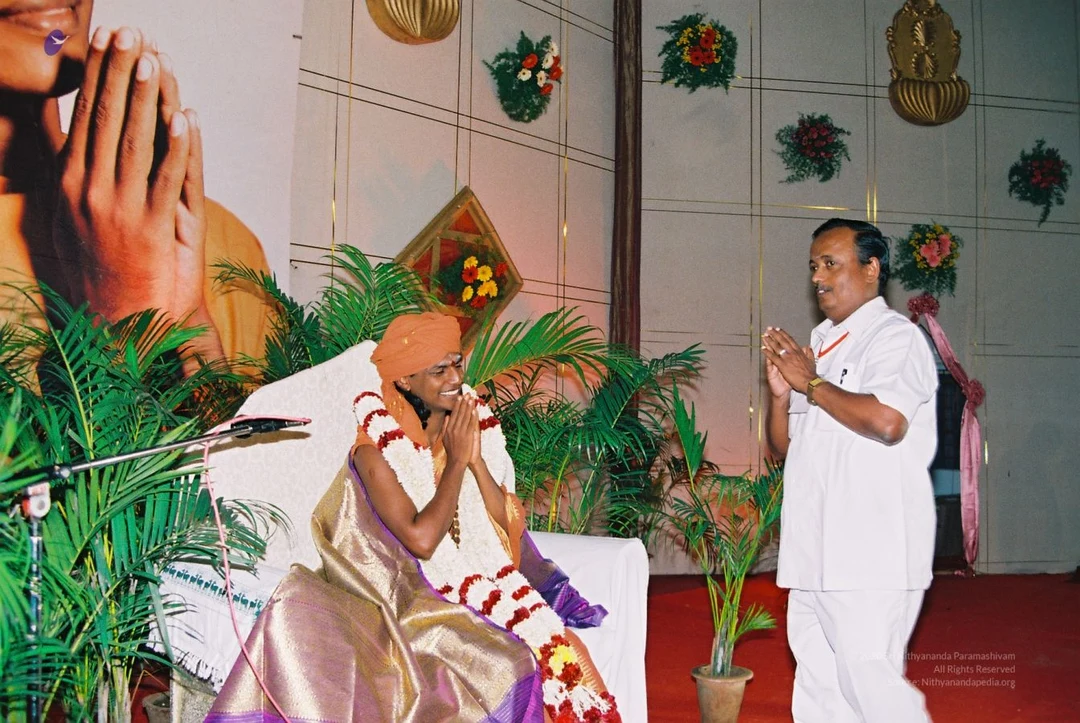
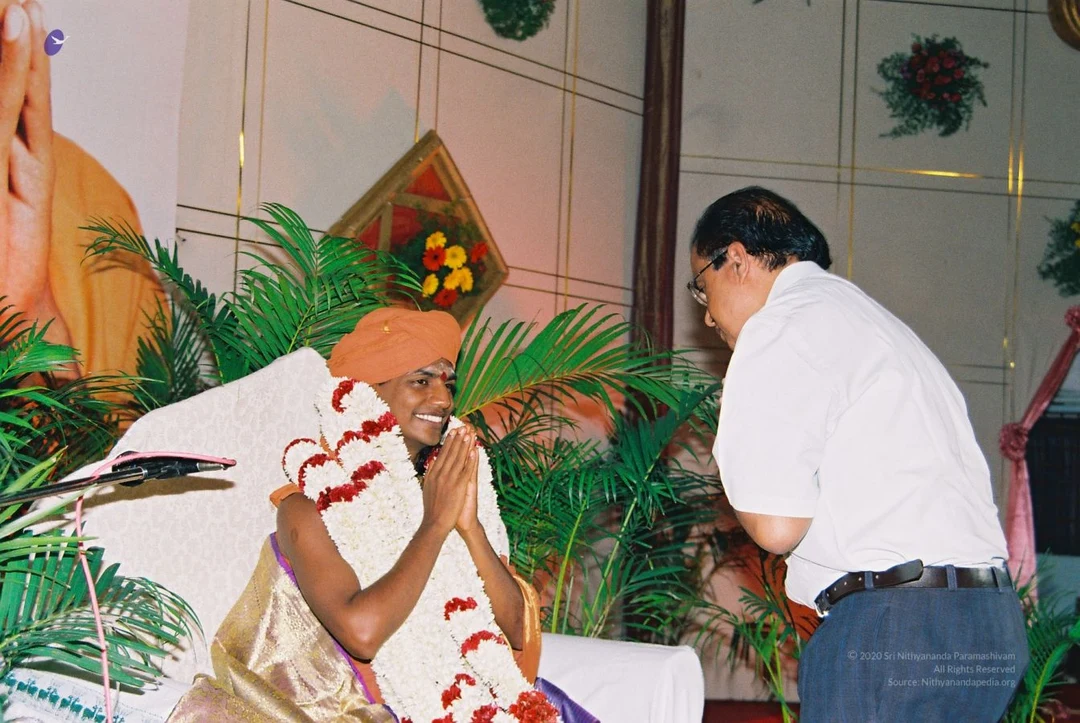
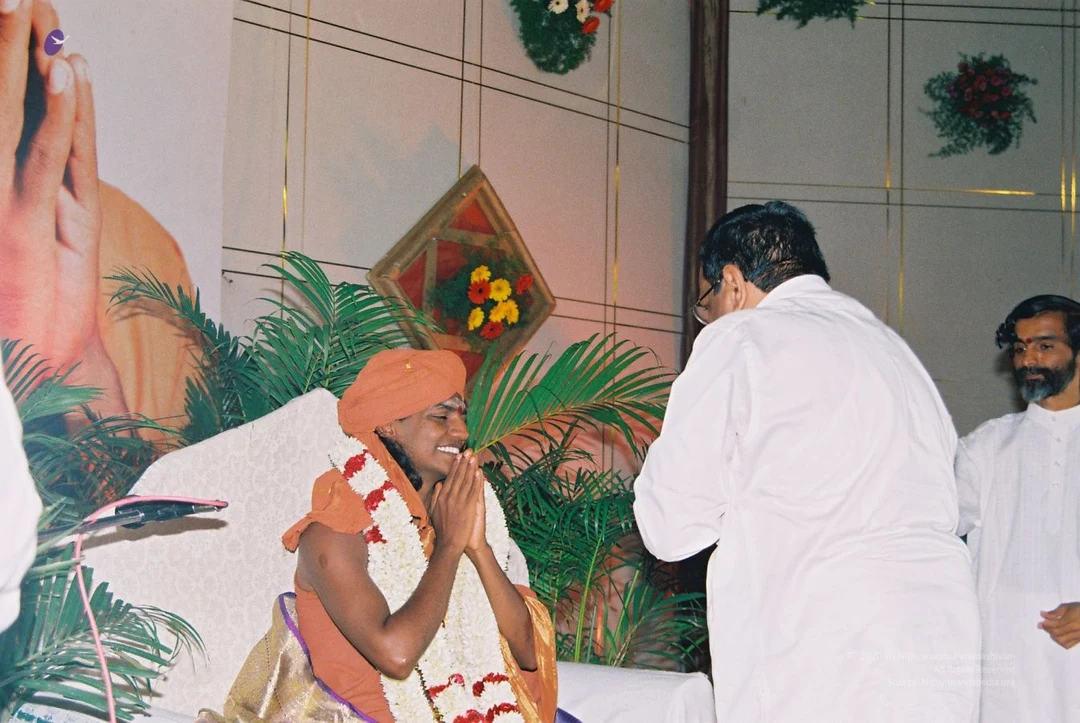
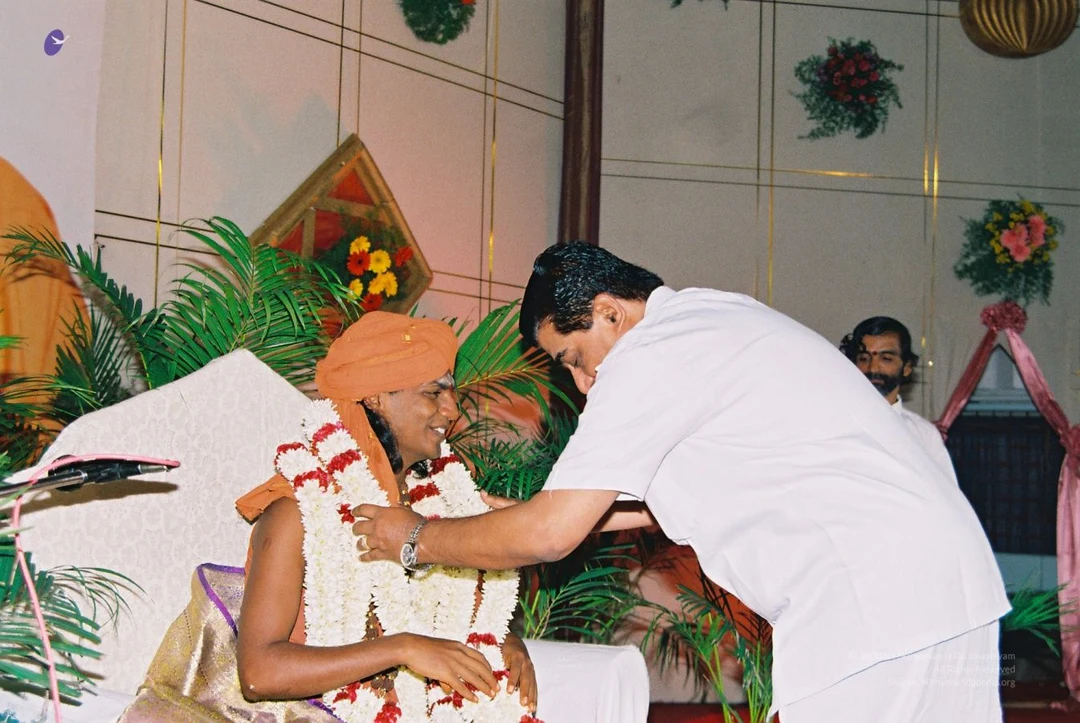
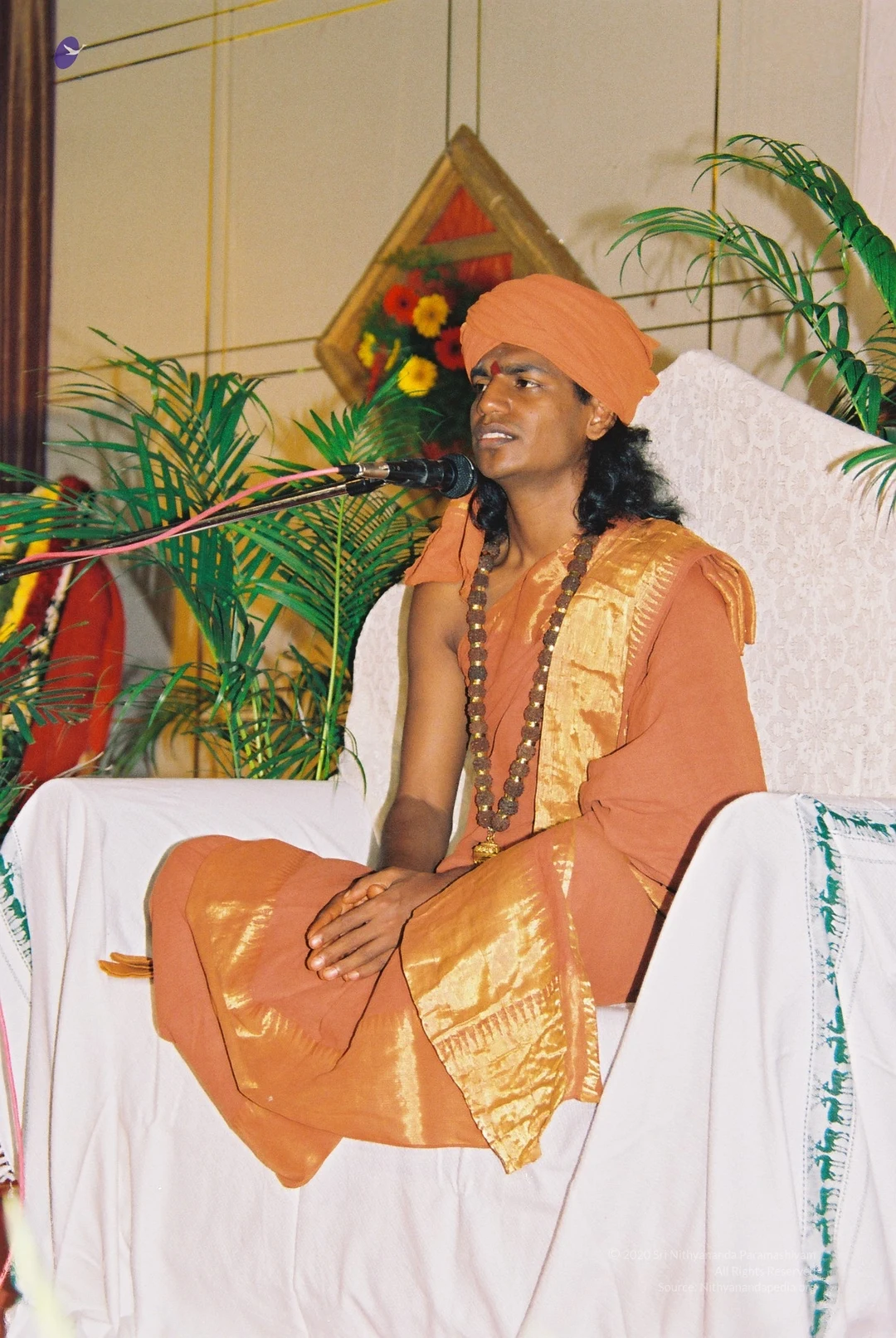
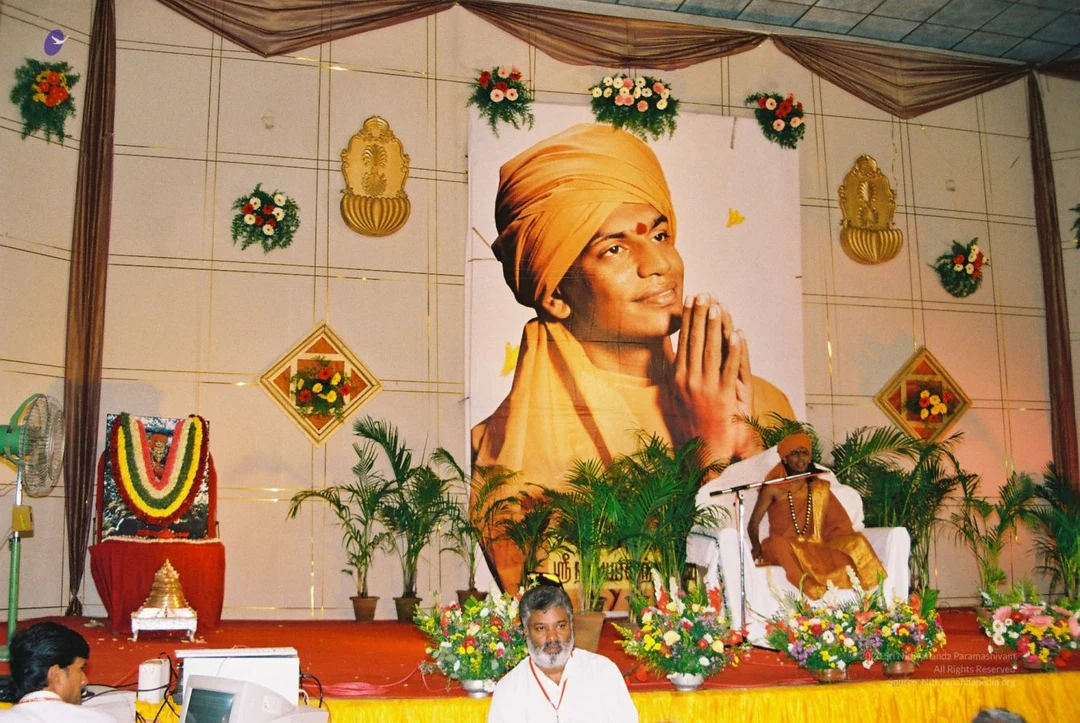
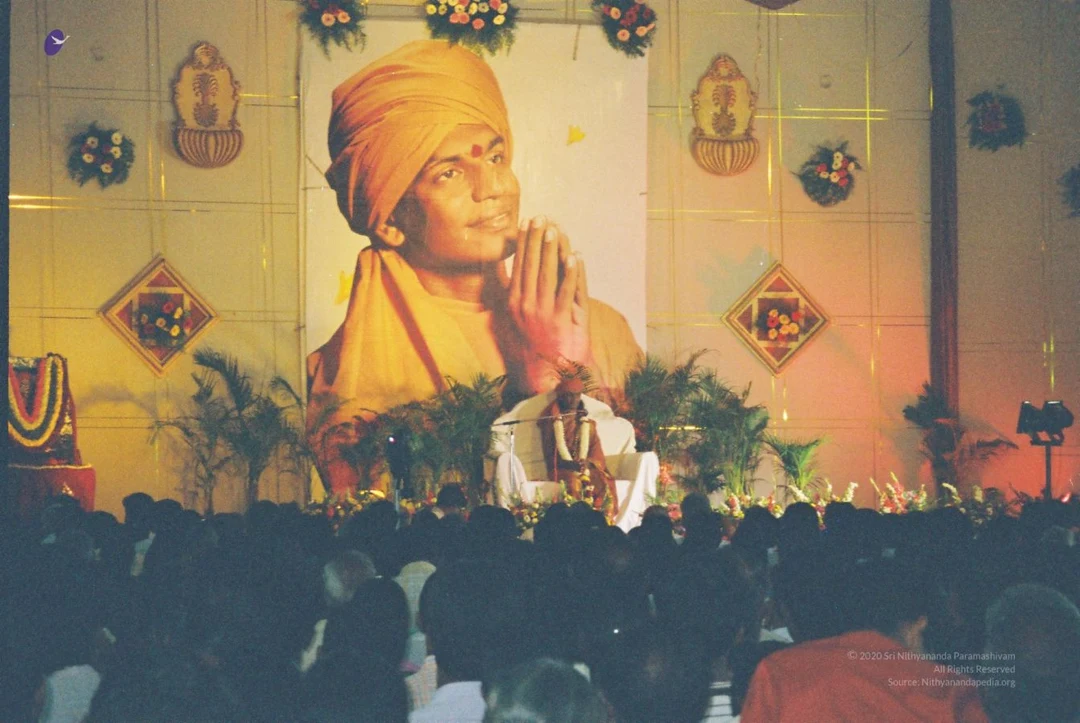
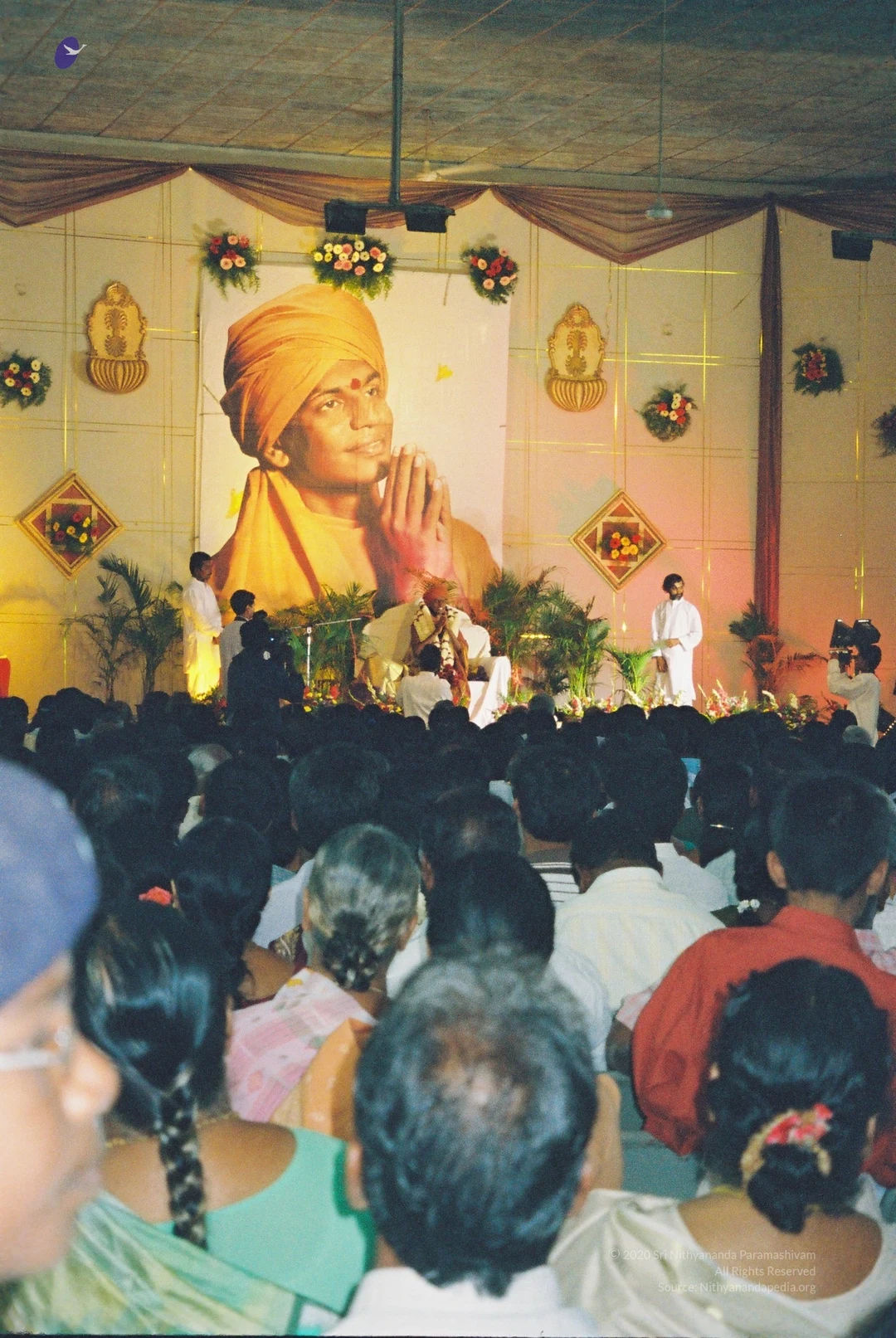
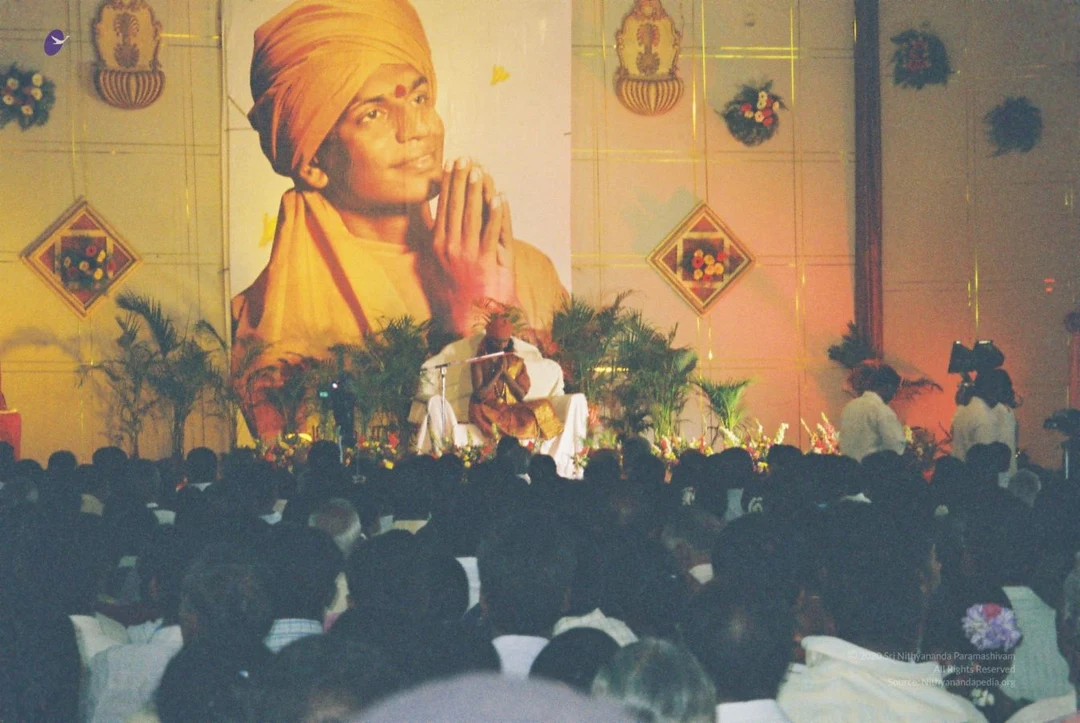
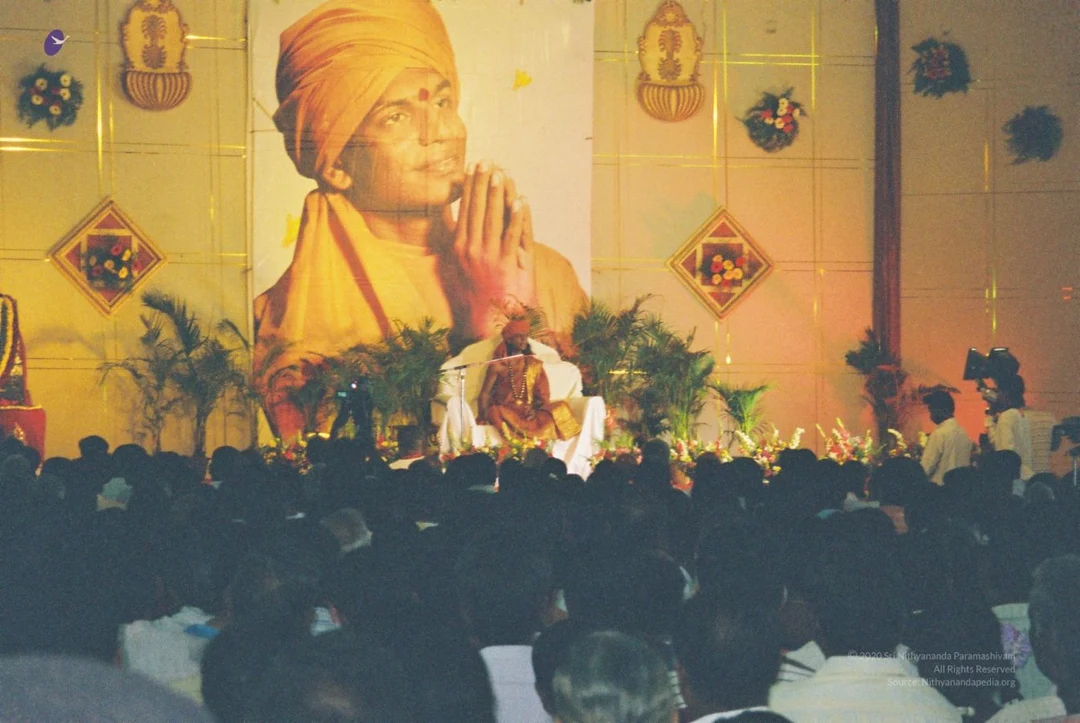
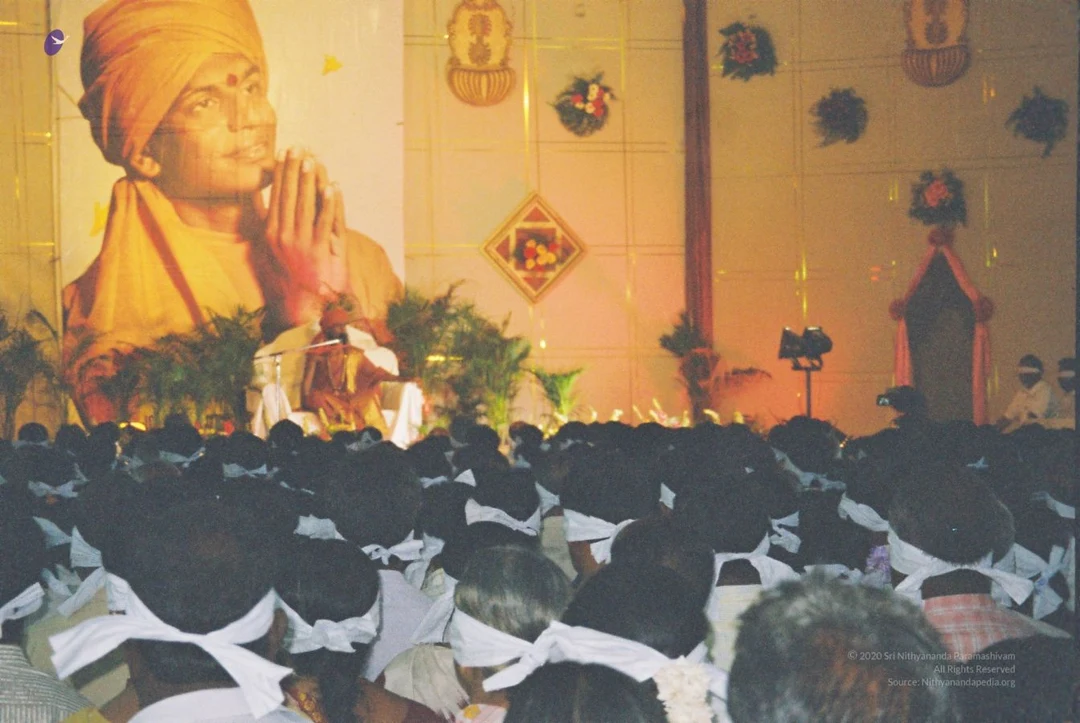
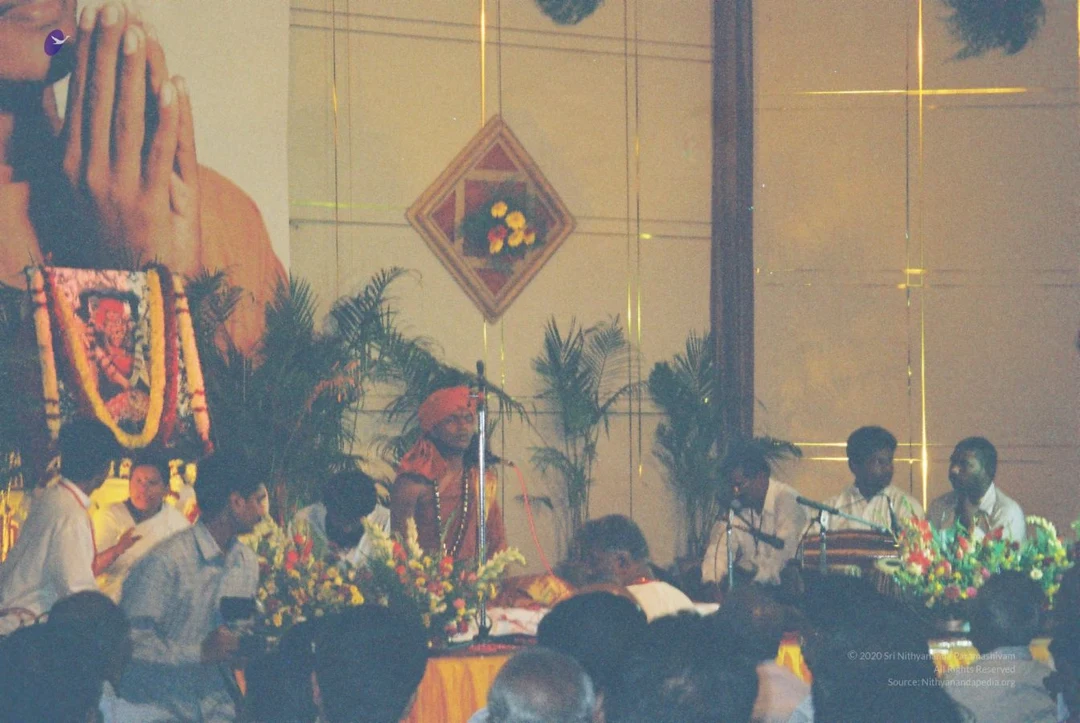
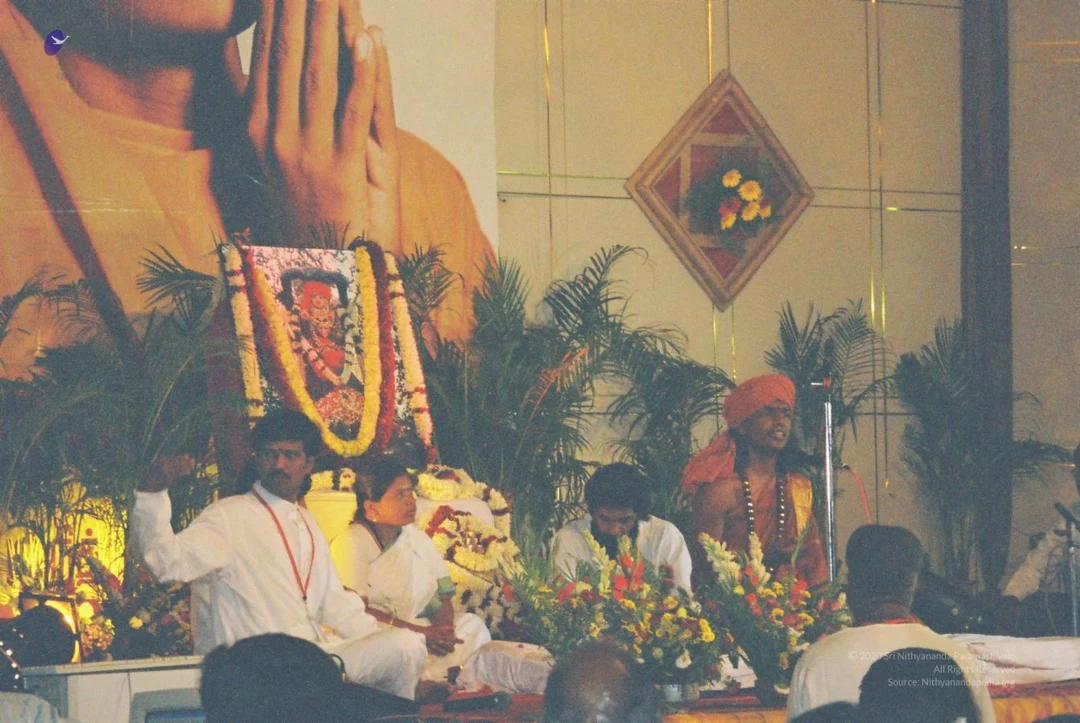
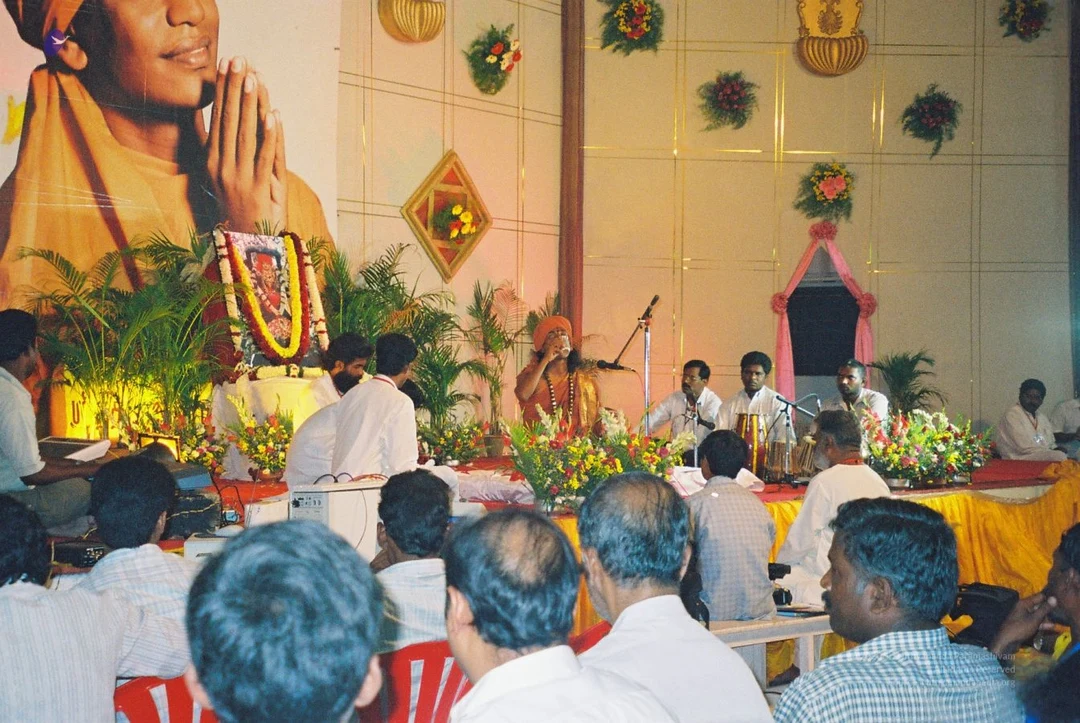
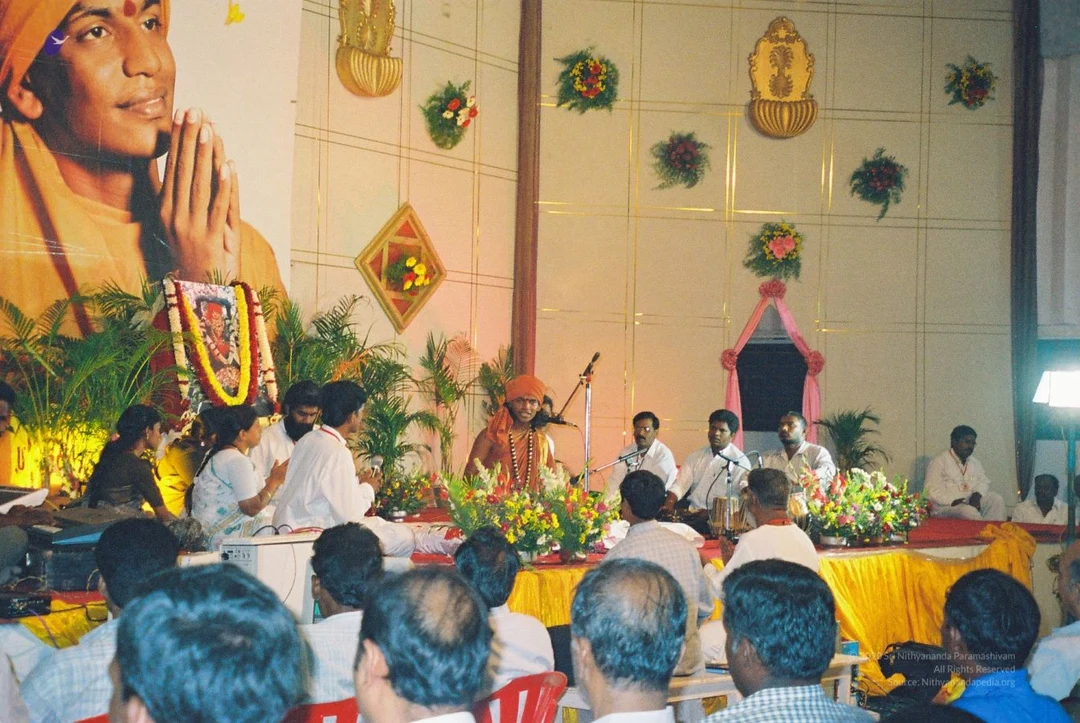
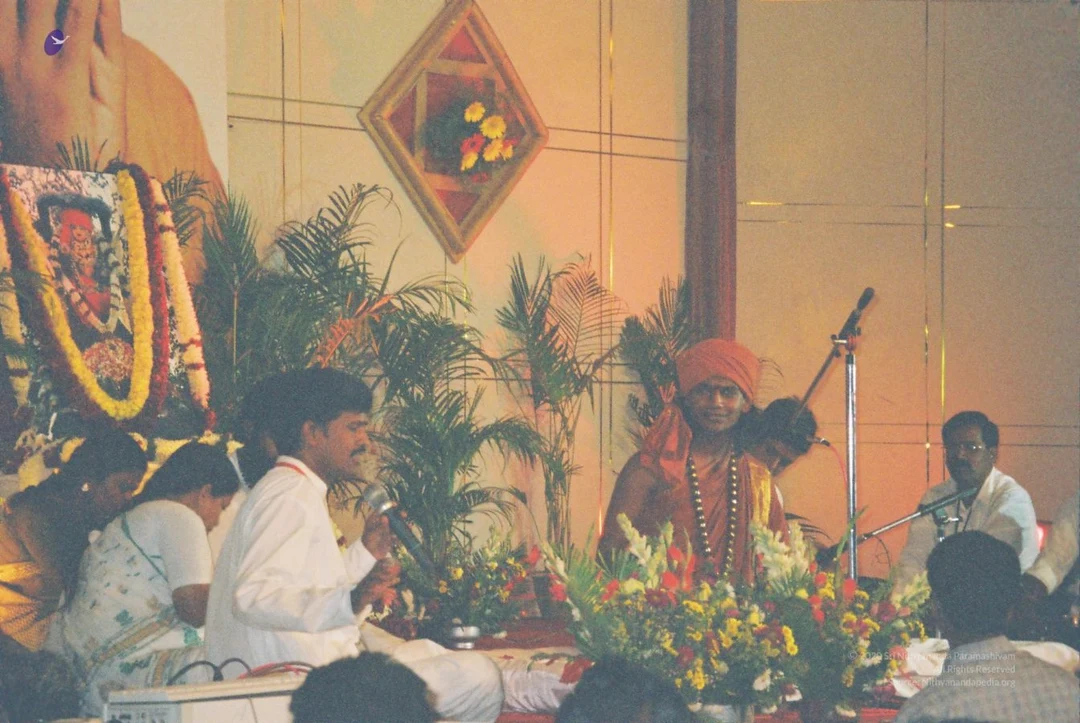
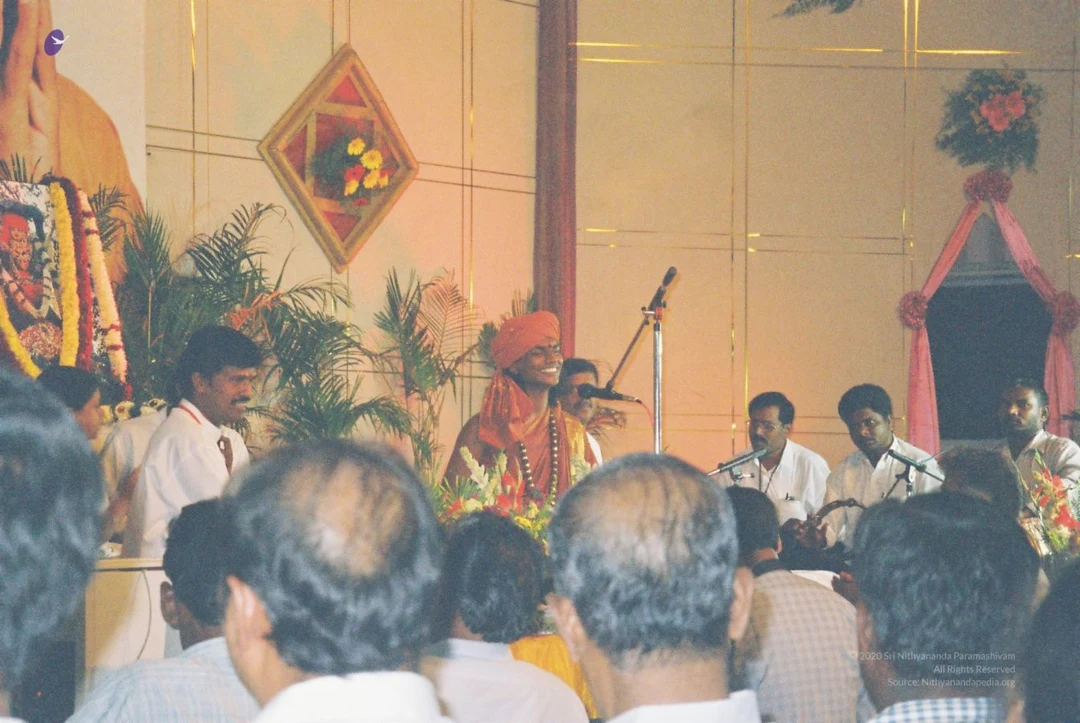
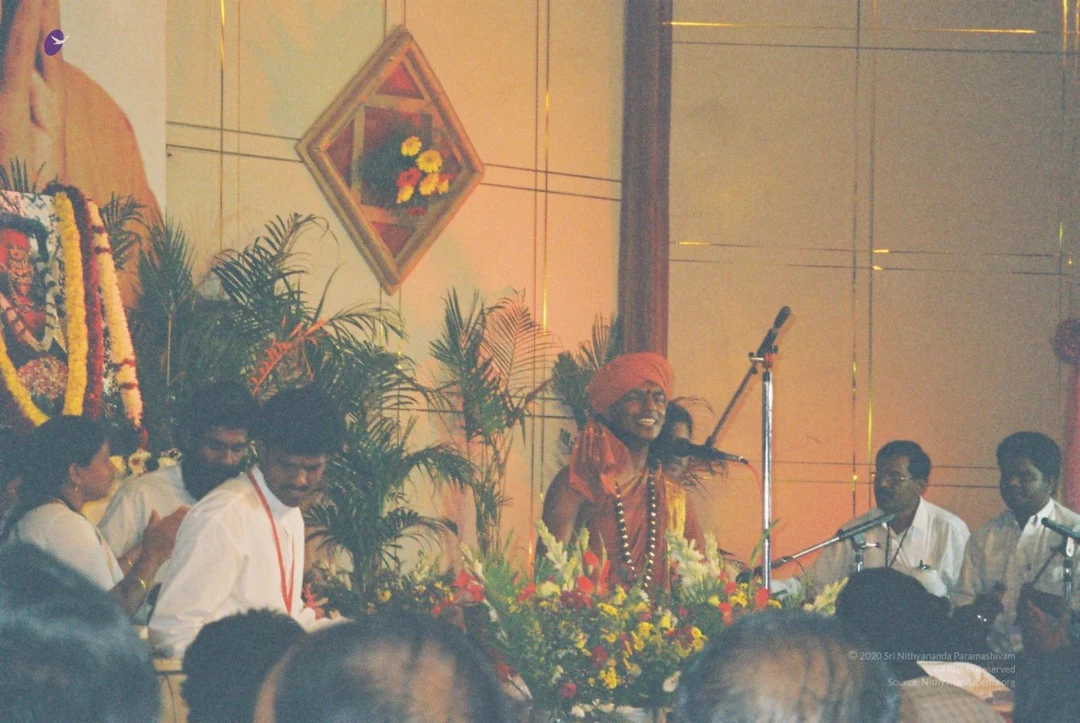
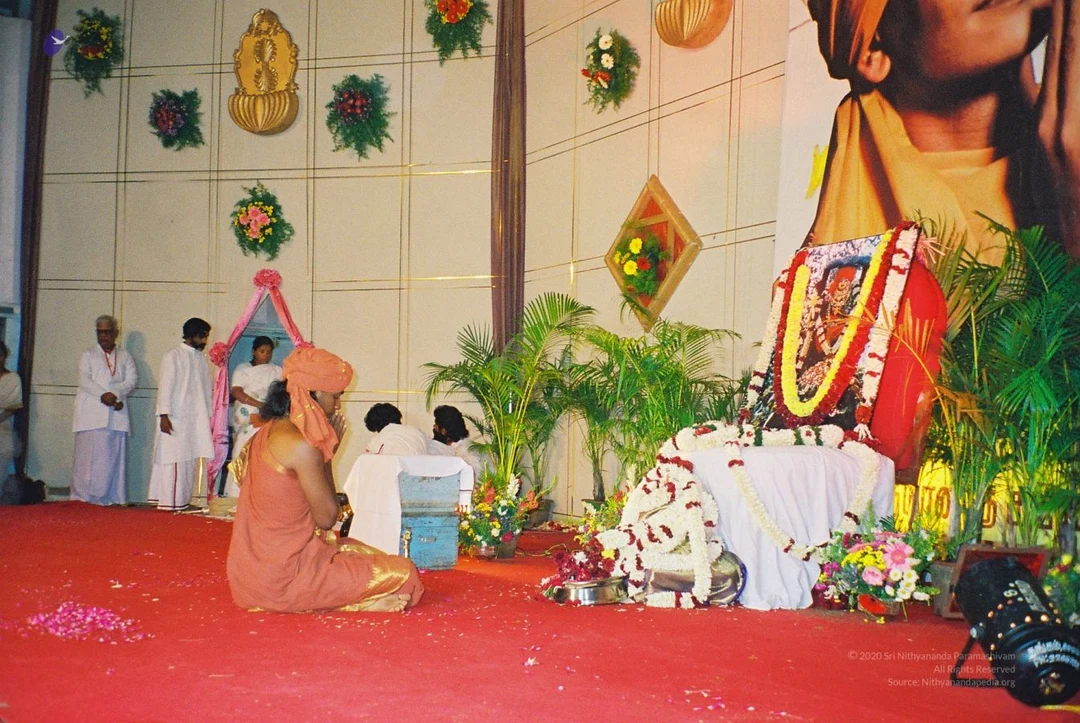
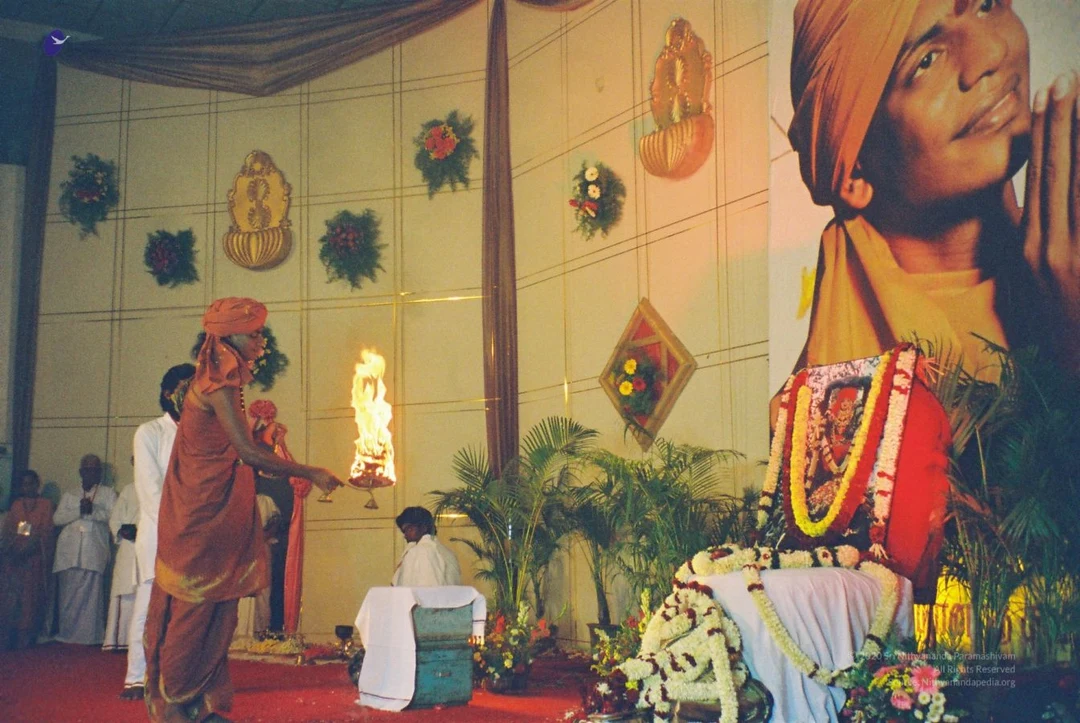
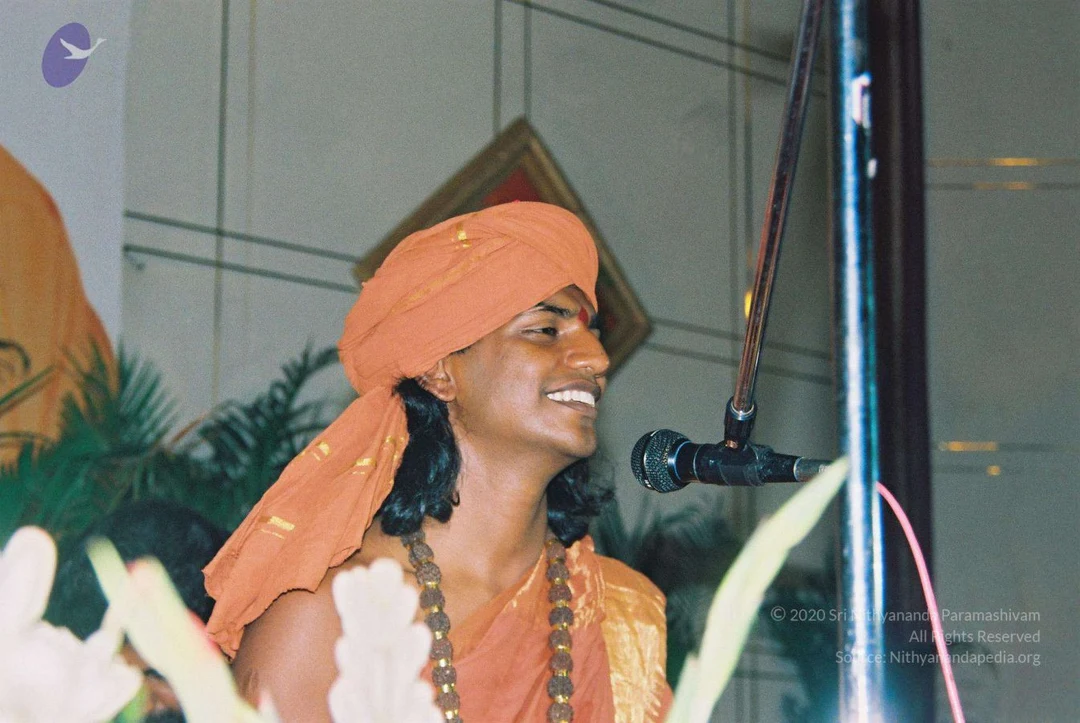
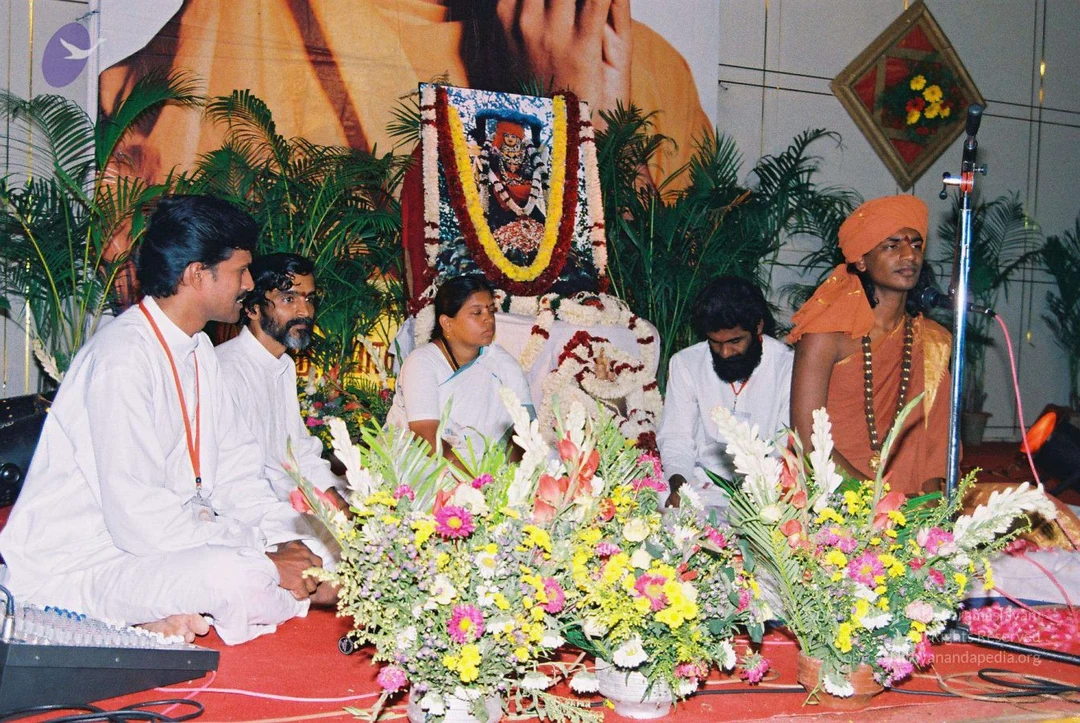
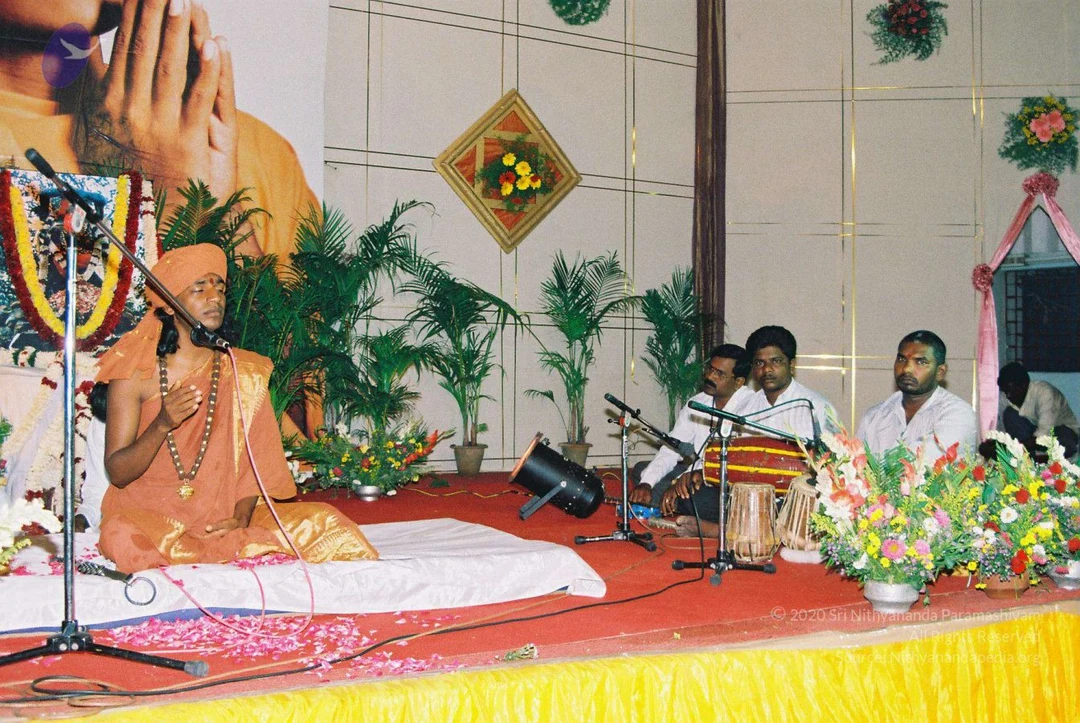
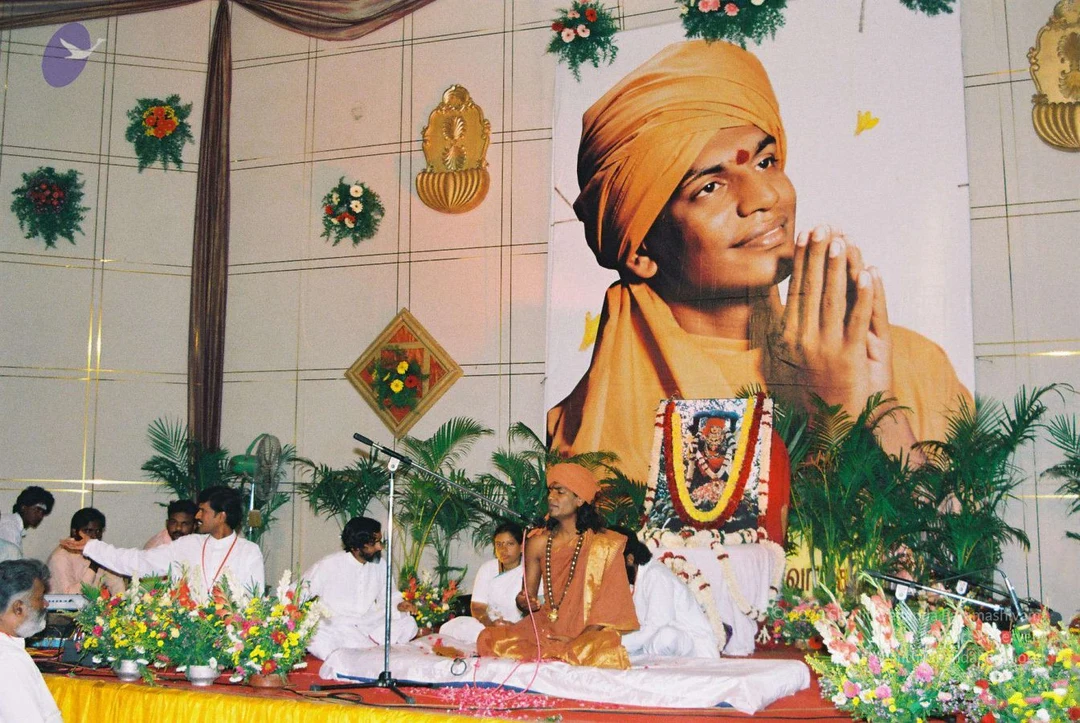
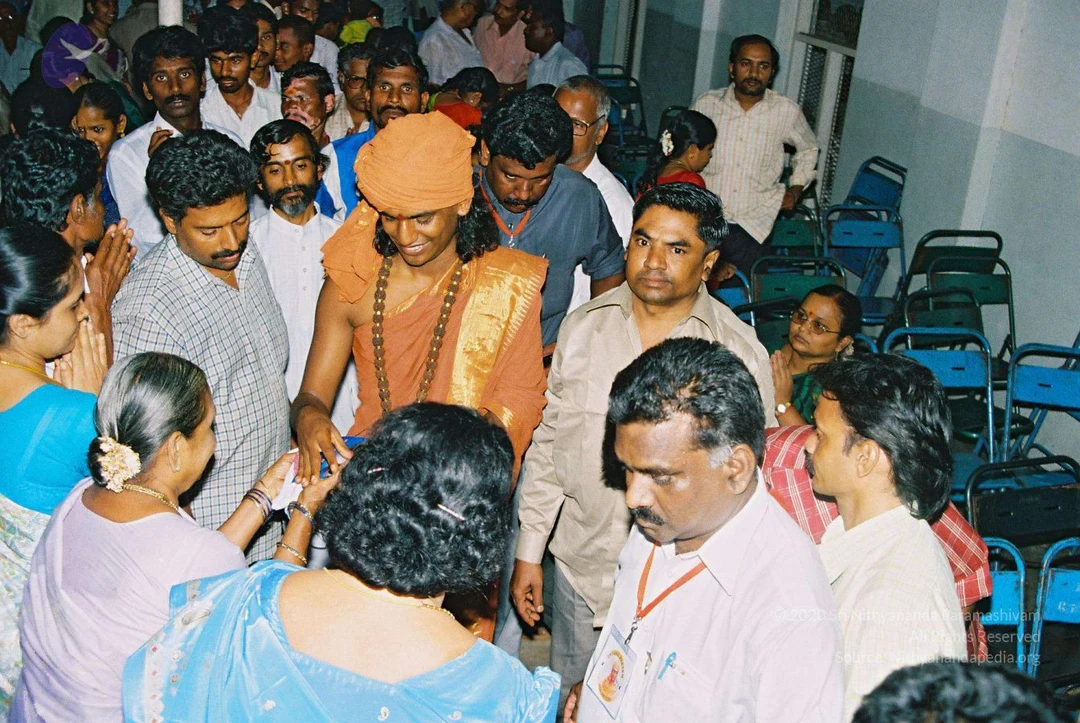
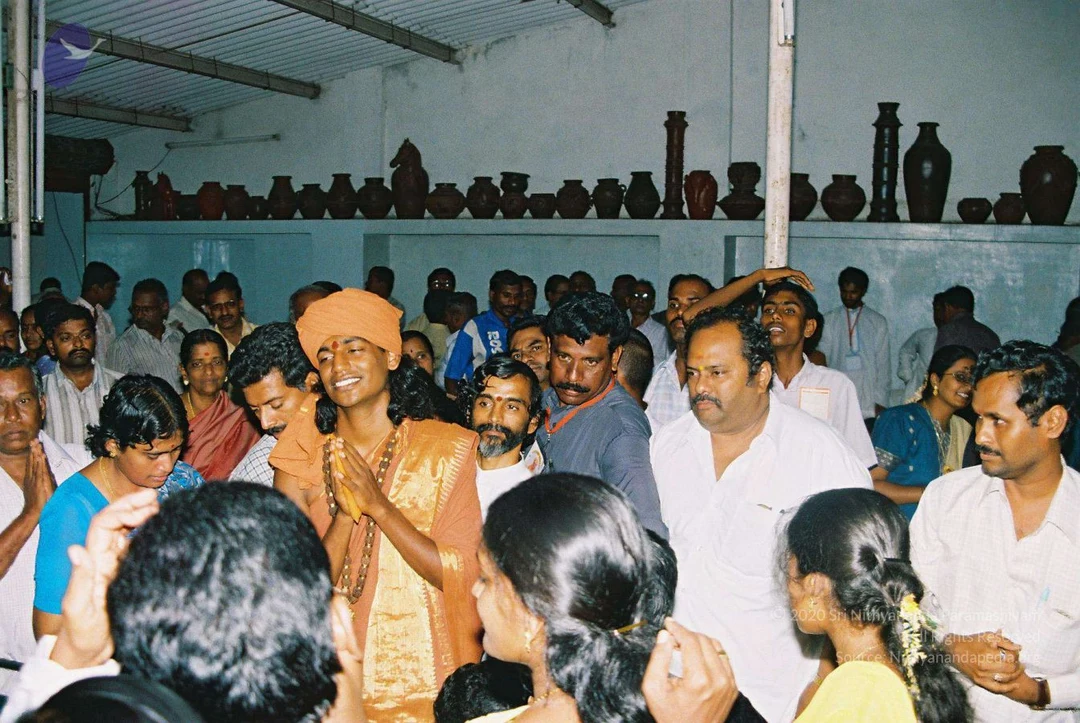
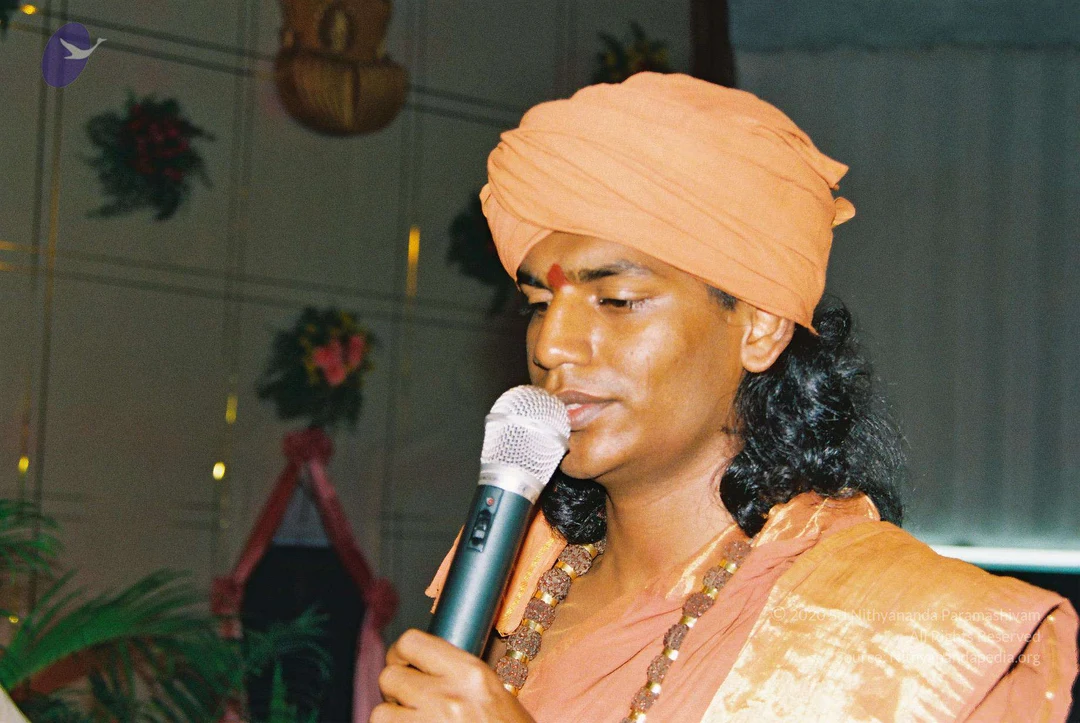
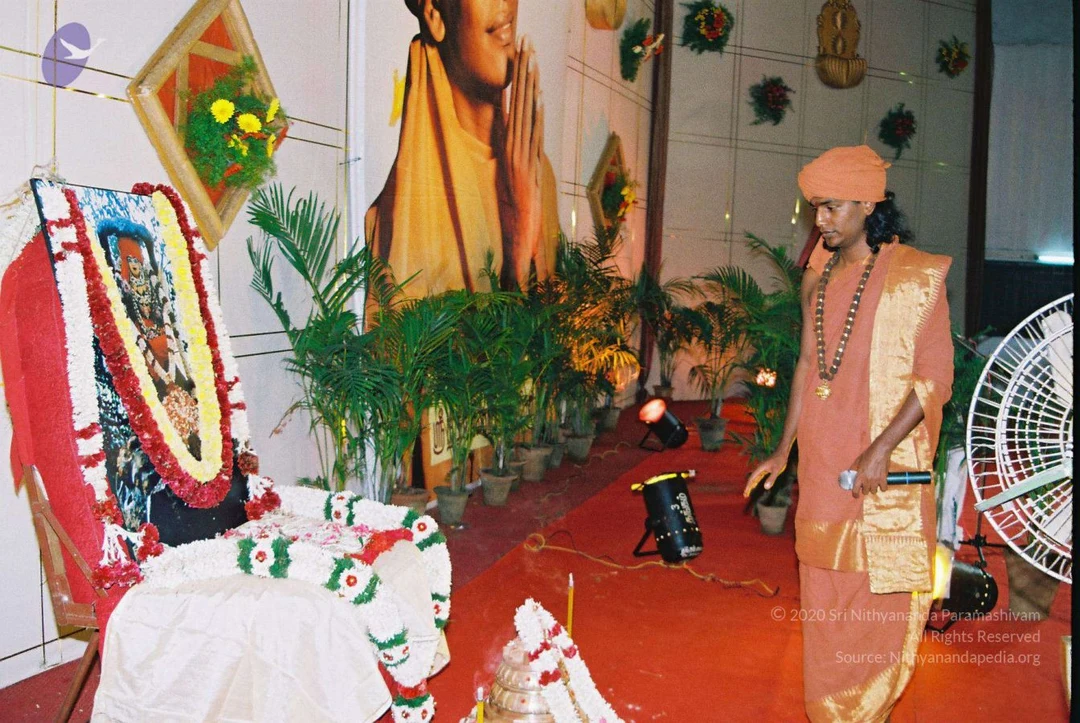
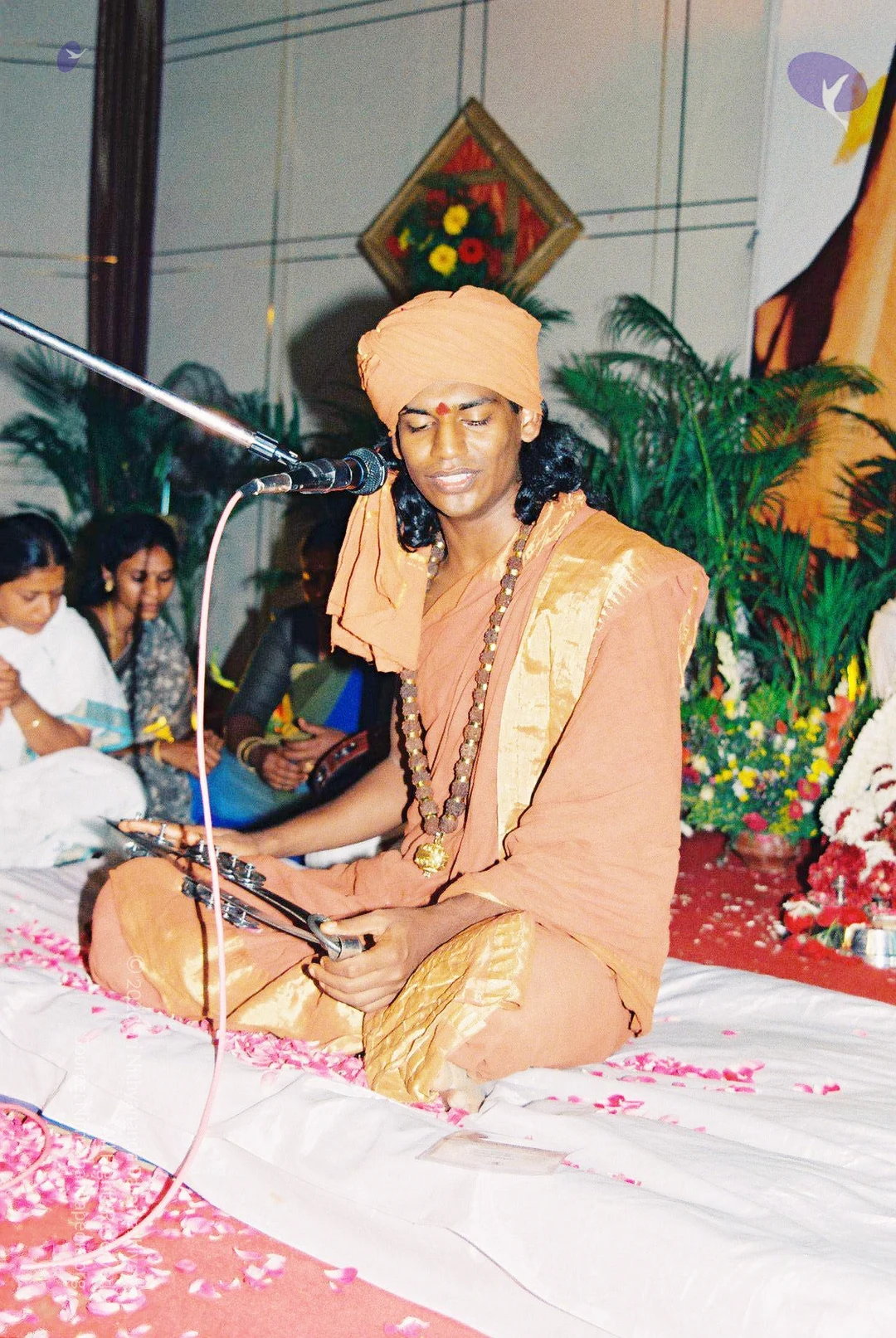
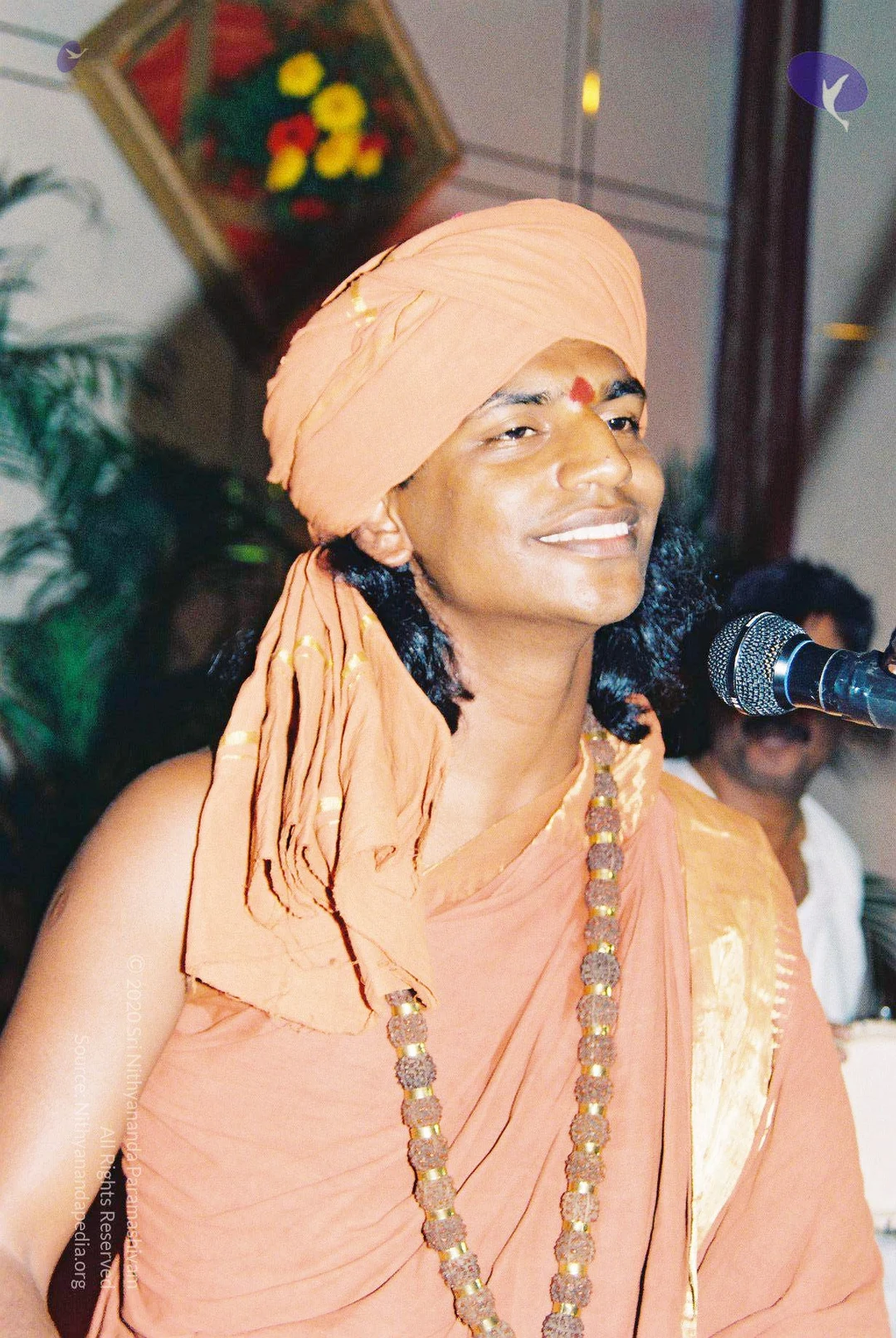
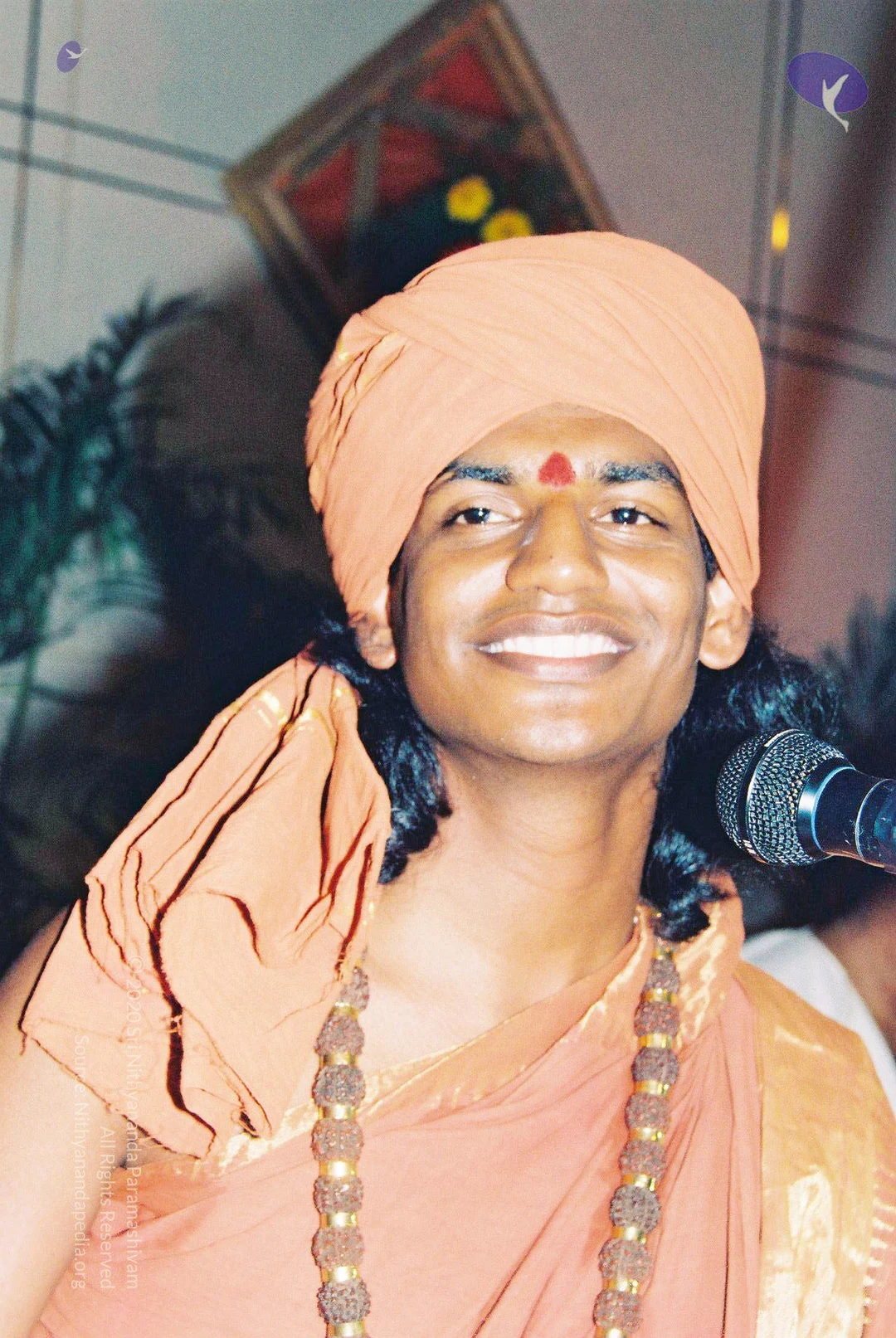
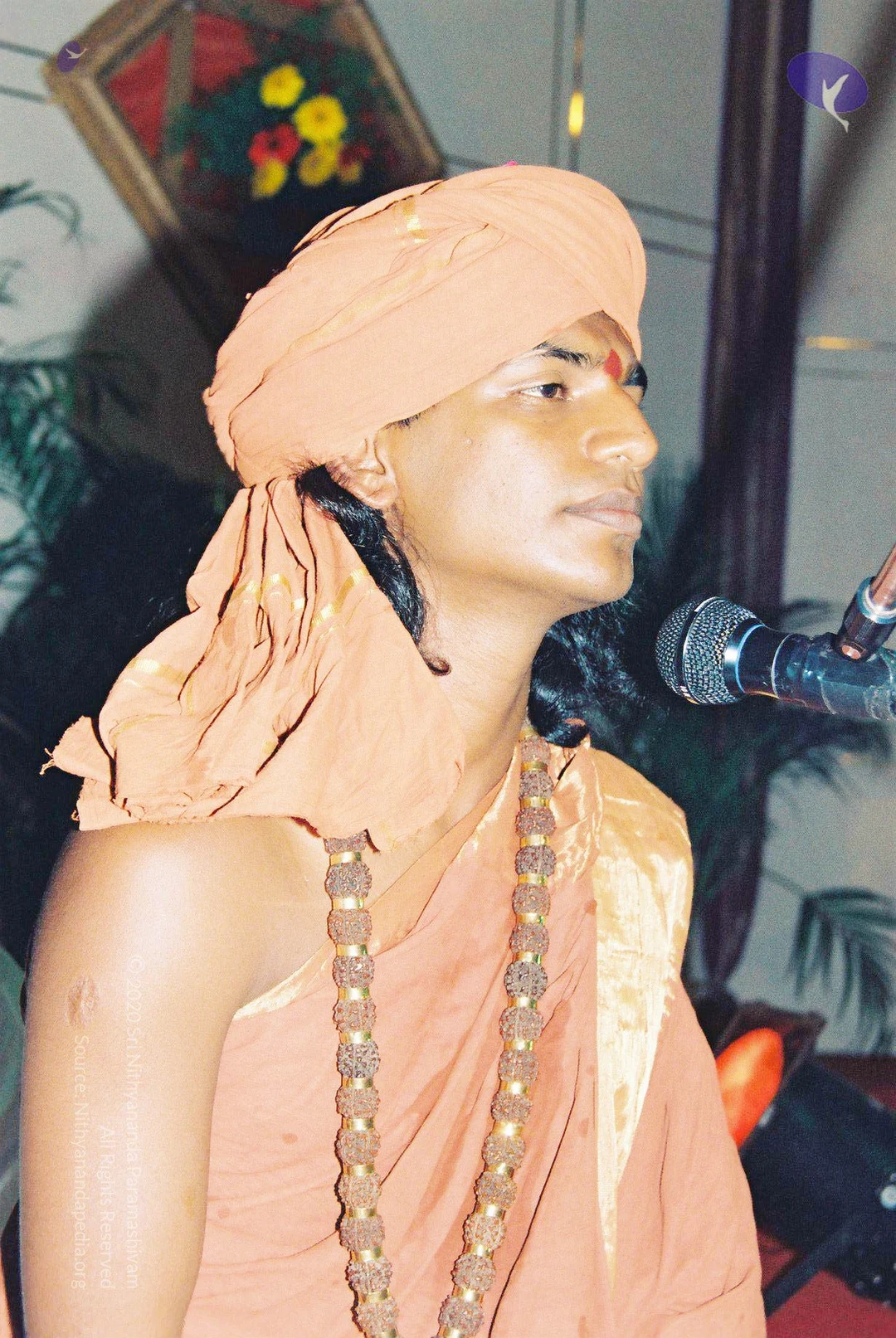
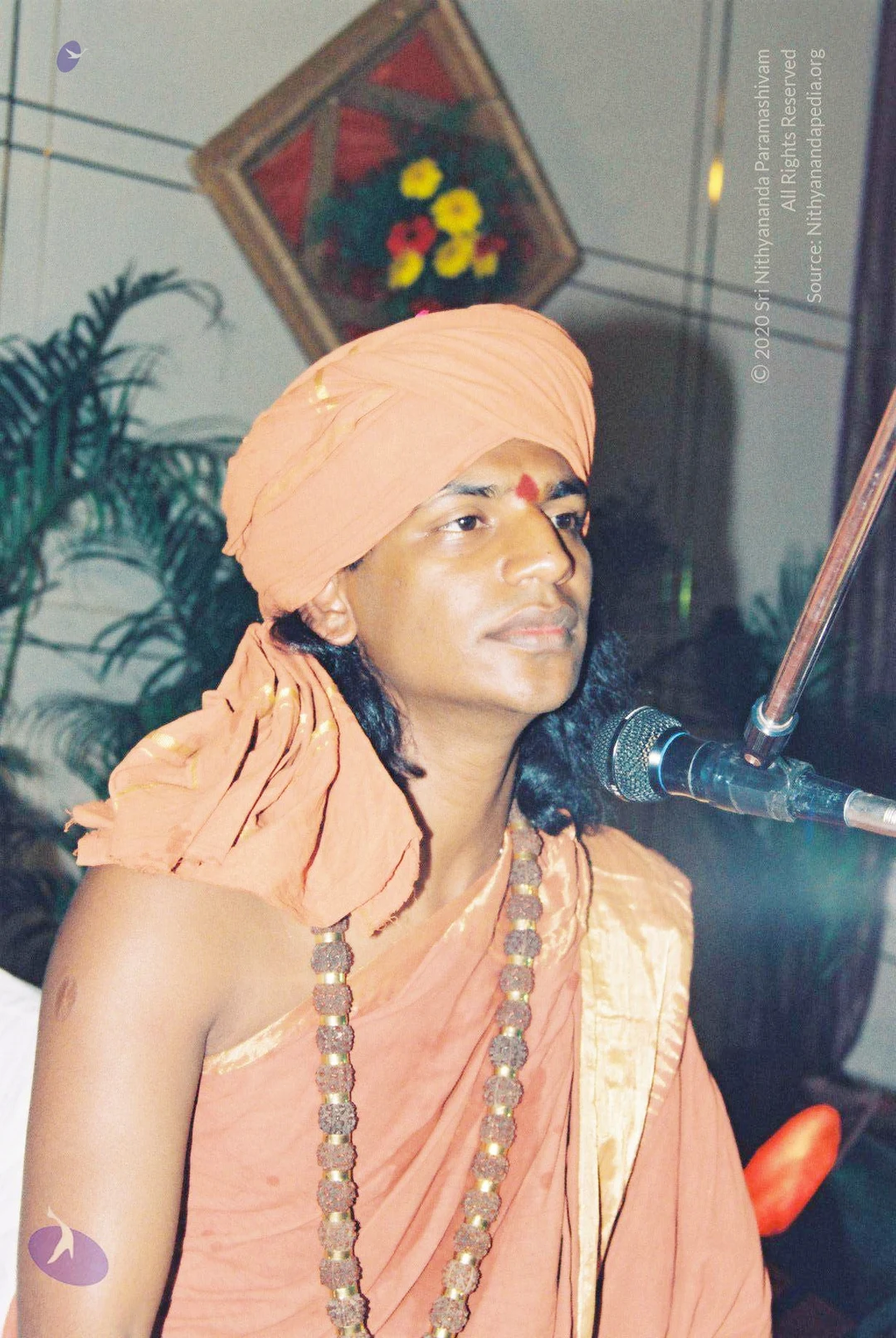
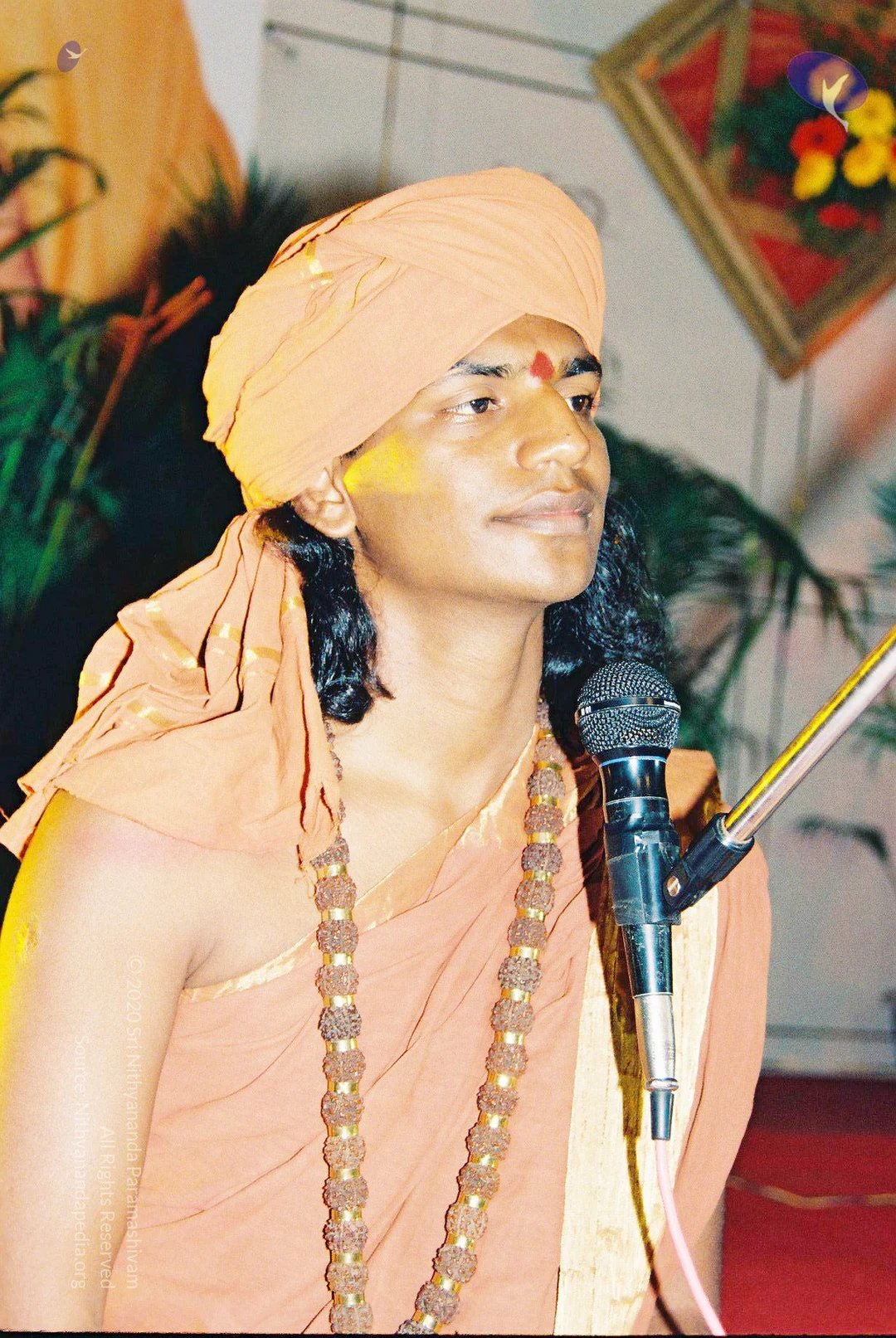
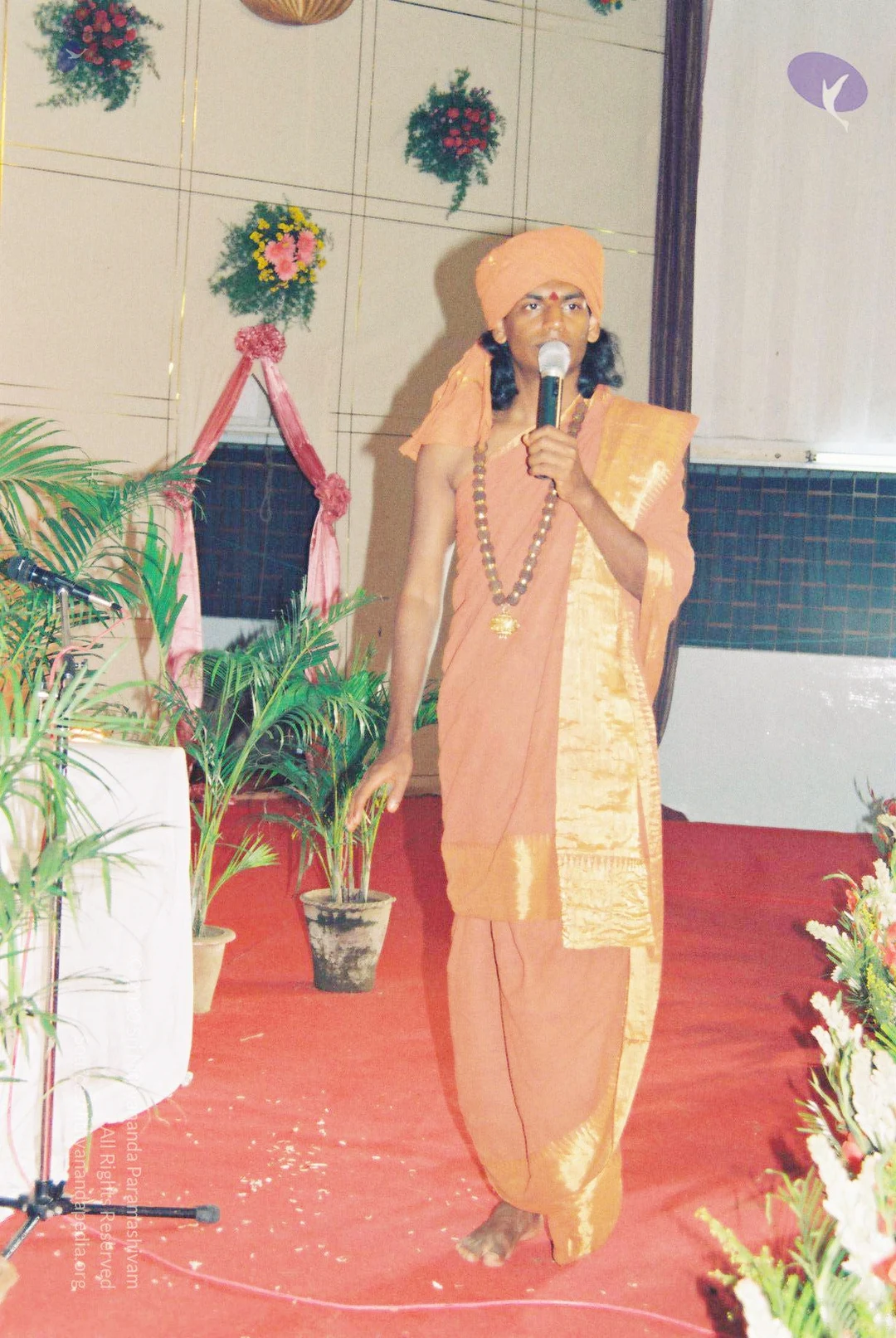
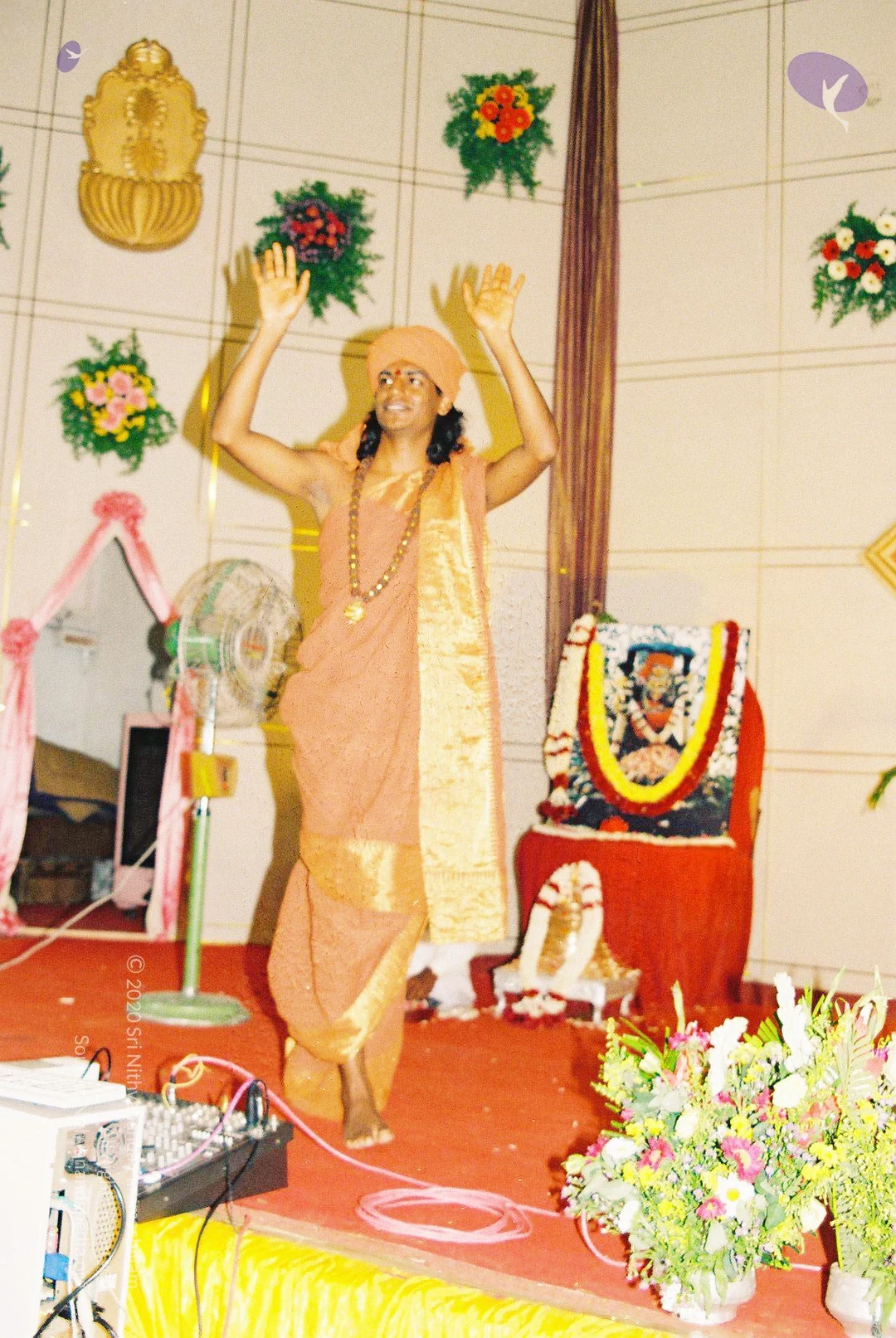
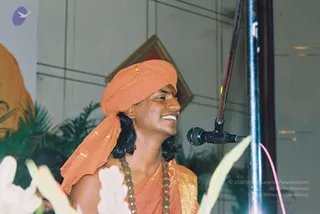
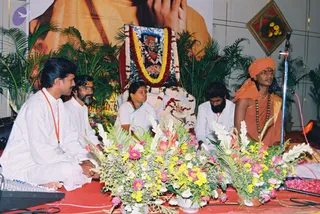
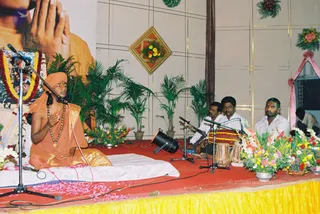
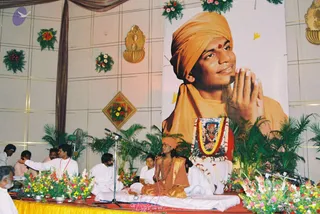
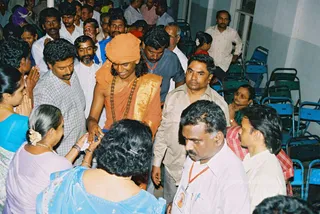
A smiling man in an orange saffron turban and orange-gold robe stands at a microphone on a stand, with a red tilak on his forehead and a long beaded rudraksha-style mala necklace around his neck. White flowers and green foliage fill the foreground, and a framed picture hangs on the pale wall behind him. Swamiji (probable) appears in person, with cues of orange turban, ornate saffron garment and beaded necklace, and is shown speaking into the microphone at a discourse.A photograph of a seated satsang stage with a red carpet and flower arrangements in front. Five people sit on the floor: at left a young man in white kurta with an orange lanyard, beside him a bearded man in white, then a woman in a white sari with orange border, a bearded man in white kurta, and at right a young man in saffron-orange cloth wrapped on his head and shoulders, wearing a rudraksha mala, seated at a microphone stand. Behind them stands a framed deity murti garlanded with yellow and red flowers, flanked by potted palms and a large saffron-robed portrait banner on the back wall. Keyboard equipment is visible at lower left. The saffron-clad man at right has distinctive ceremonial cues, so he is noted as a person candidate.A photograph of a discourse stage with a seated figure in saffron-orange robes and an orange head wrap, hands pressed together at the chest, with a rudraksha mala and a pendant around the neck, seated on a white cloth in front of a microphone stand. Two dark-haired men in white shirts and a third man sit to the right playing a tabla and drum set on a red carpet. Behind them stand potted palms, a large photographic backdrop showing folded hands in orange robes, a garlanded framed picture, and floral arrangements in pink and yellow. A yellow skirted table draped at the front holds flowers and petals are scattered on the stage. The scene suggests a satsang or kirtan session.A photograph of a stage event with flower-decorated platform. A large banner on the right shows a smiling man in an orange-saffron turban with a red bindi, hands joined in namaste; a small Ajna-area red mark is visible. In front, a man in orange-saffron robes with a rudraksha mala sits cross-legged on a white cloth on the stage, with a framed deity murti garlanded with marigolds nearby. Around him, several people in white clothes sit or stand, some with microphones; a man in white gestures at the front left. Palm fronds, flower arrangements and gold wall ornaments decorate the hall. a person seated in saffron robes with rudraksha mala and orange turban-style cloth; appearance cues are present but uncertain.A photograph of a crowded indoor hall with rows of blue folding chairs along the right wall. At centre, a man in an orange saffron turban and orange-saffron dhoti with a gold border, wearing a long rudraksha mala, smiles and reaches toward a woman in a light blue sari who holds out her hands. Around him devotees press in: a woman in a lavender sari with a white flower in her hair, men in white shirts and checked shirts, and a man in a grey shirt with an orange lanyard badge.Crowded indoor scene in front of a wall shelf lined with terracotta pots and vases. In the centre, a young man in an orange-saffron head wrap and a saffron-and-gold dhoti-style garment, with rudraksha malas around his neck, stands with palms pressed together in greeting and smiles. Around him, many devotees press close: a bearded man in white, a man in a blue shirt, men in white shirts, women in saffron-red and blue saris, and a woman in yellow. Some hold up hands in namaskar. The setting appears to be a welcome or arrival moment. a person appearance candidate present with saffron head wrap, saffron garment and rudraksha malas, described by role only.