Skip to content
Sunday

9 November 2003

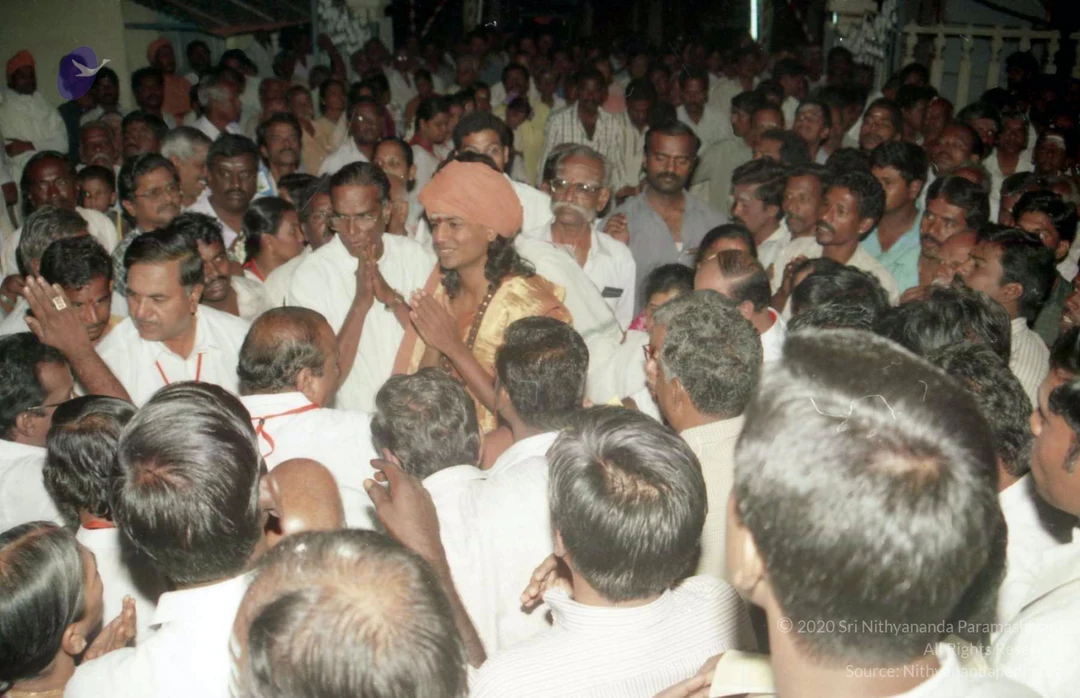
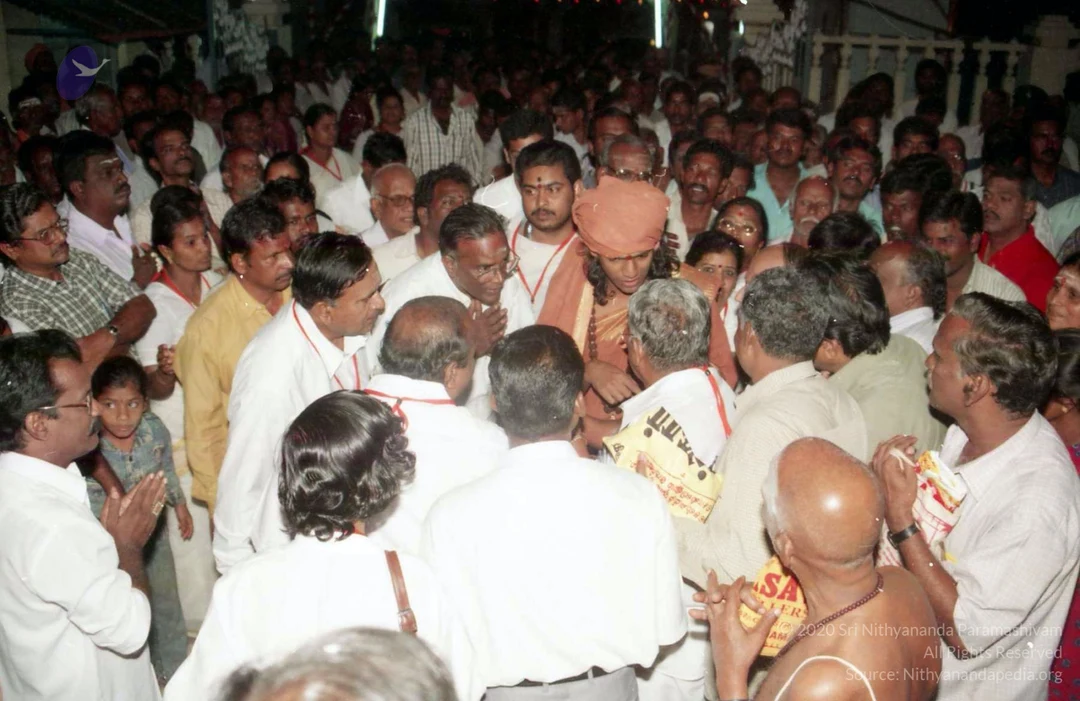
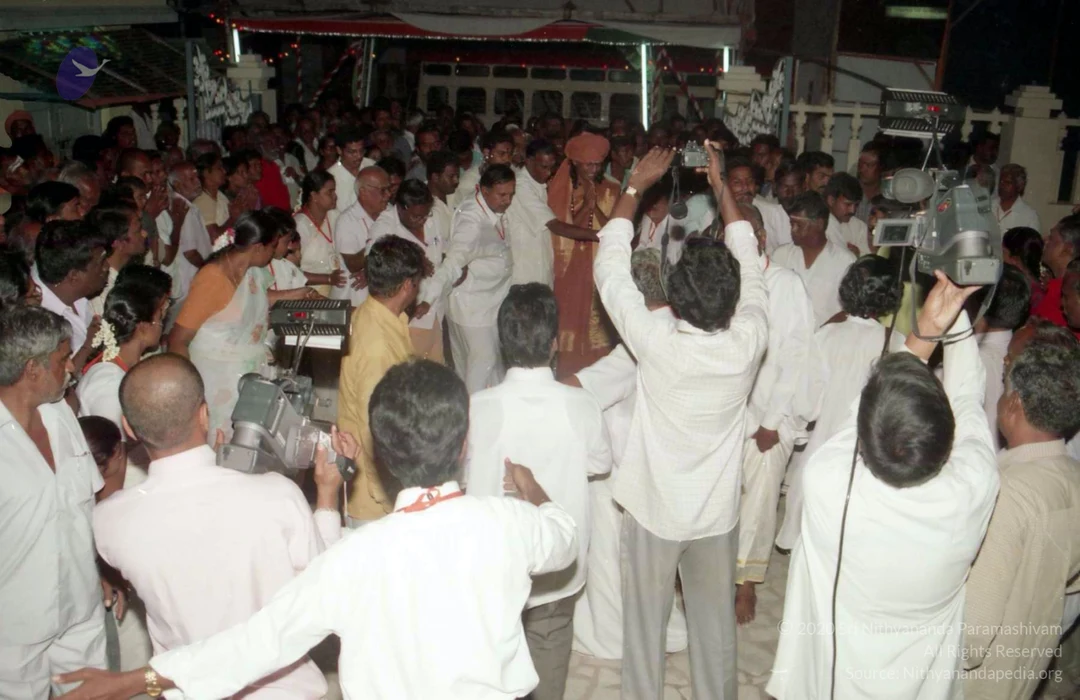
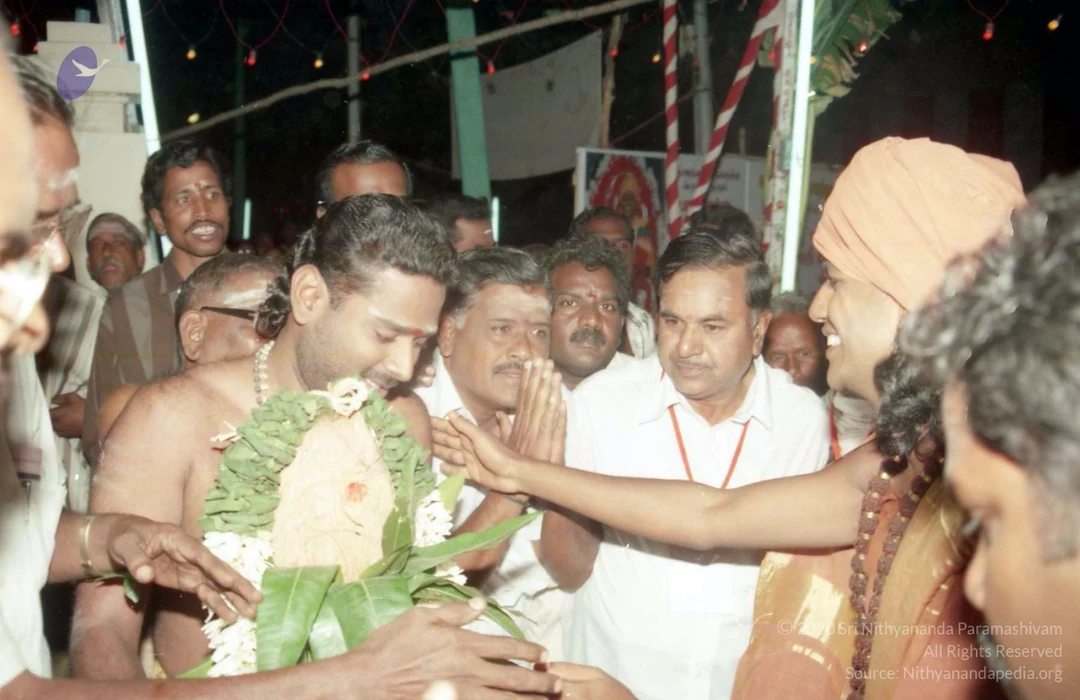
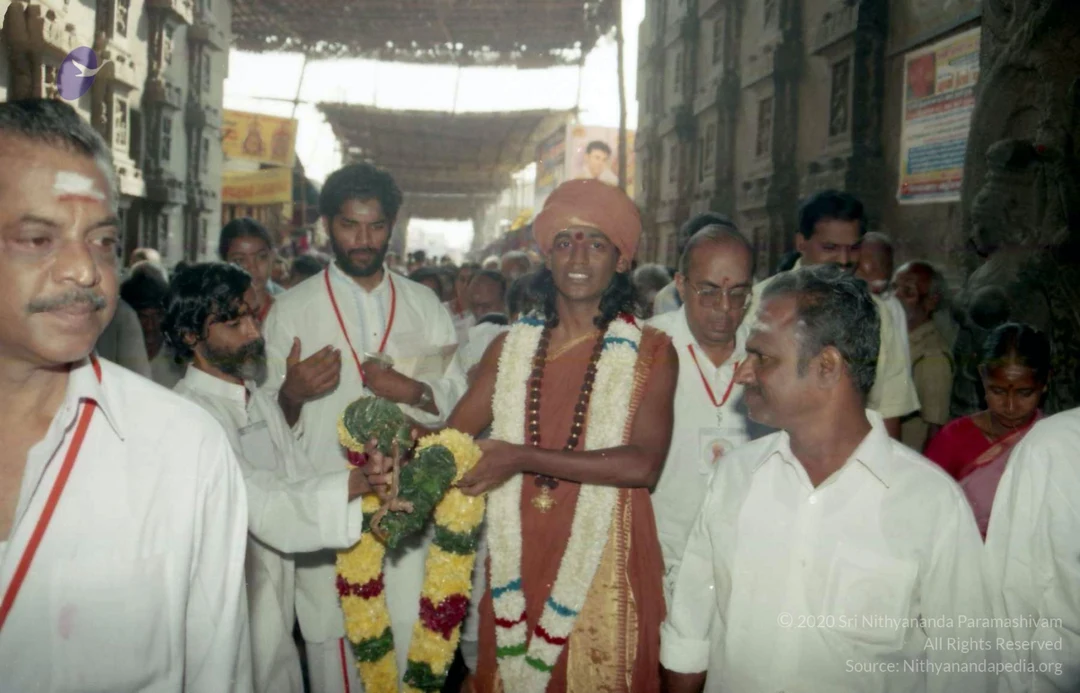
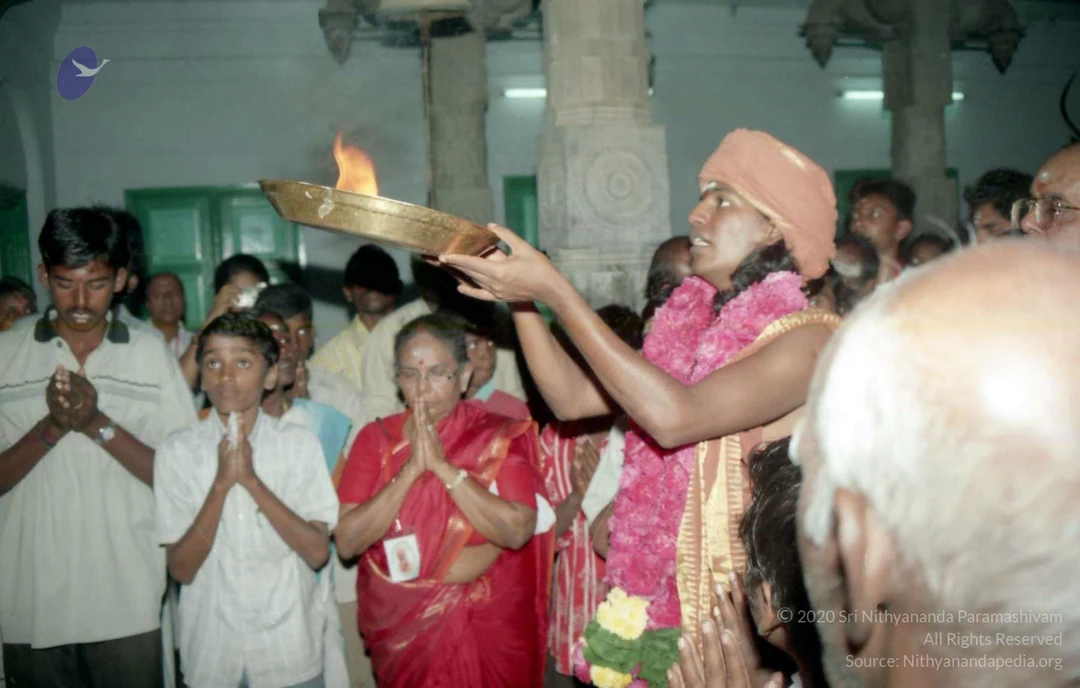
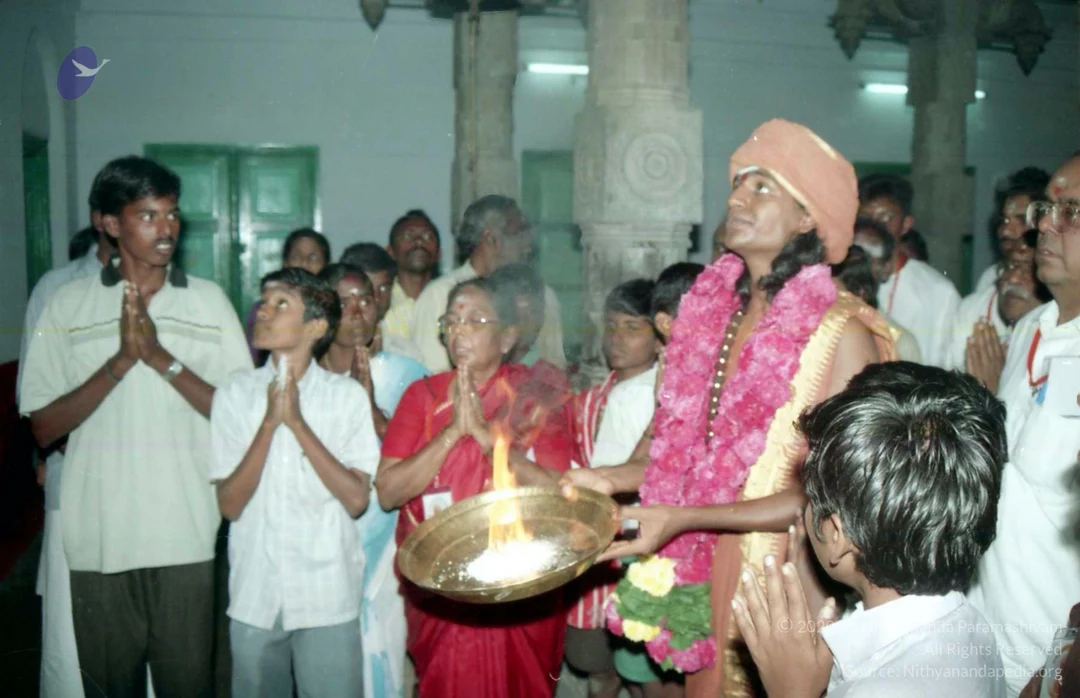
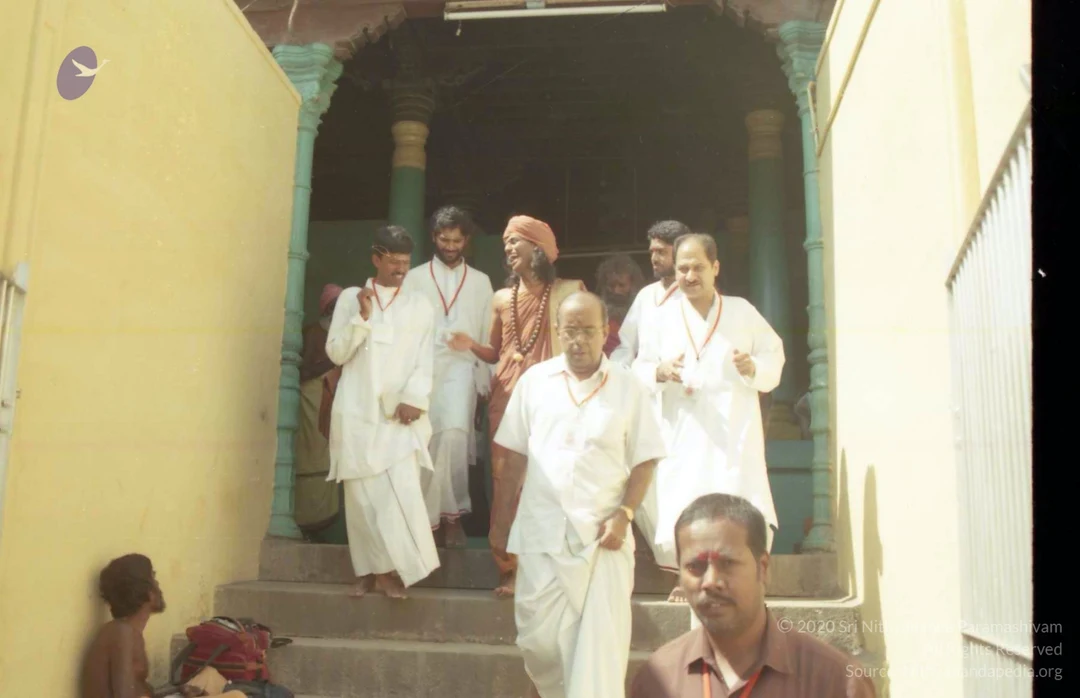
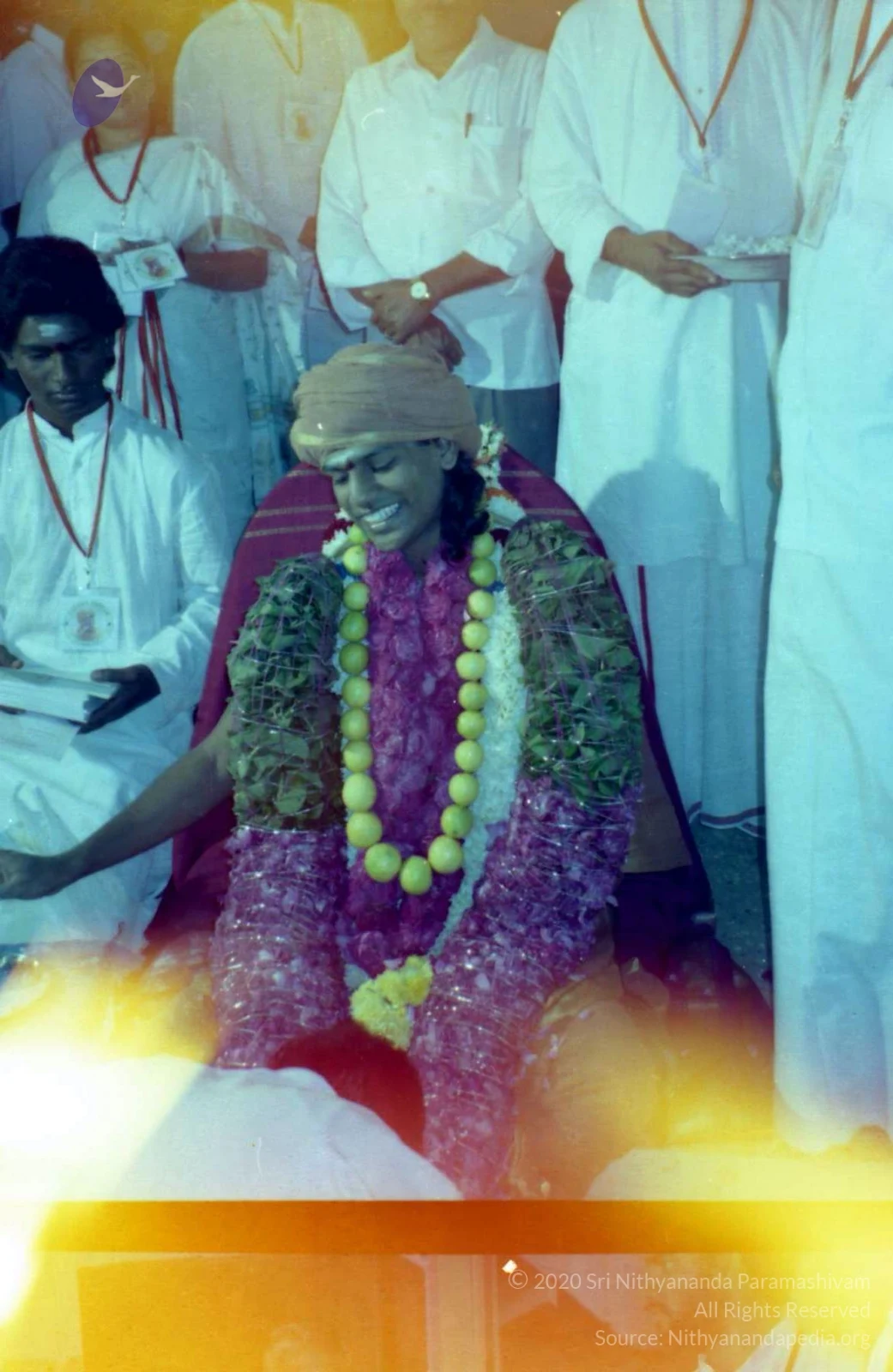
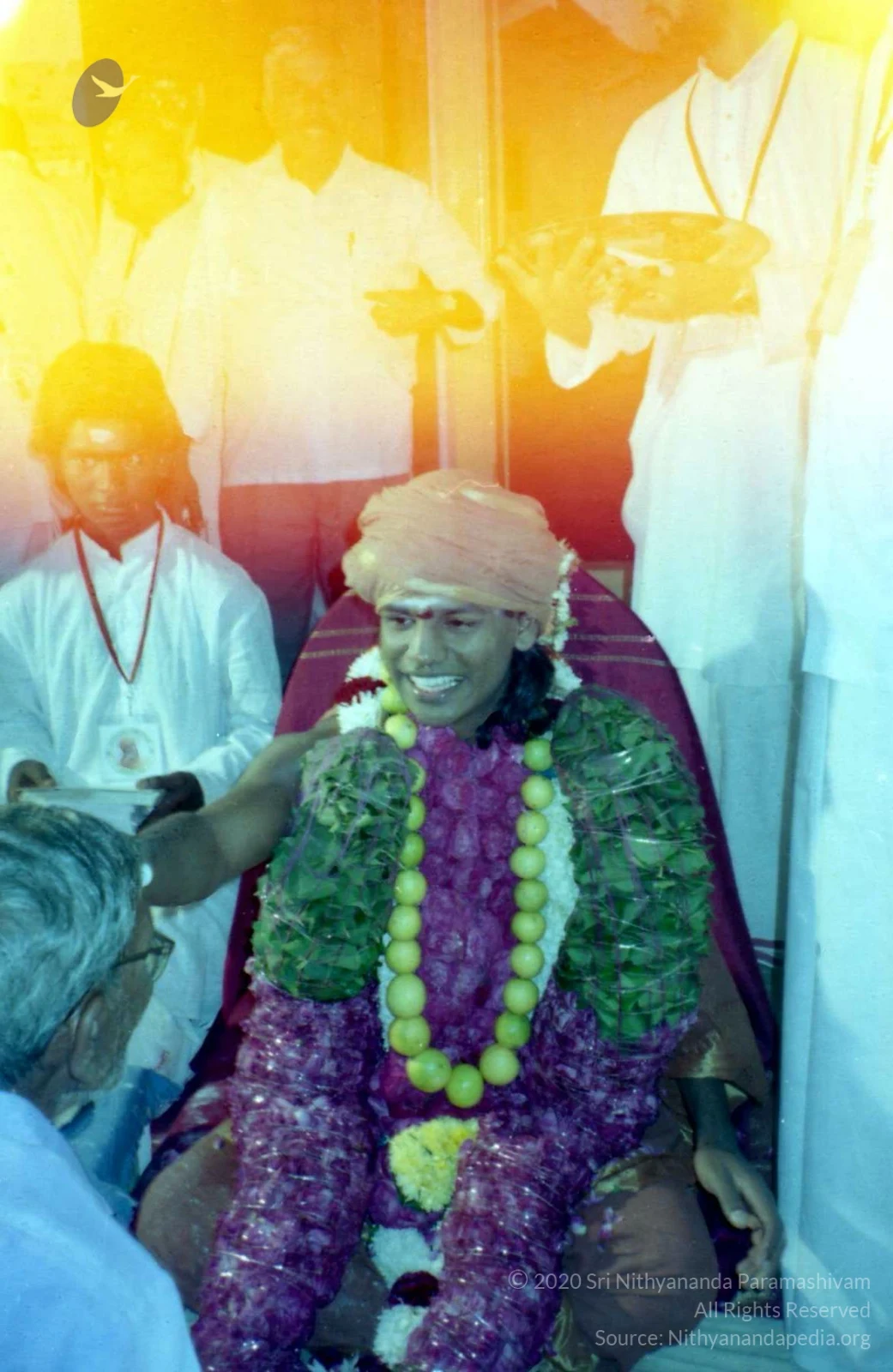
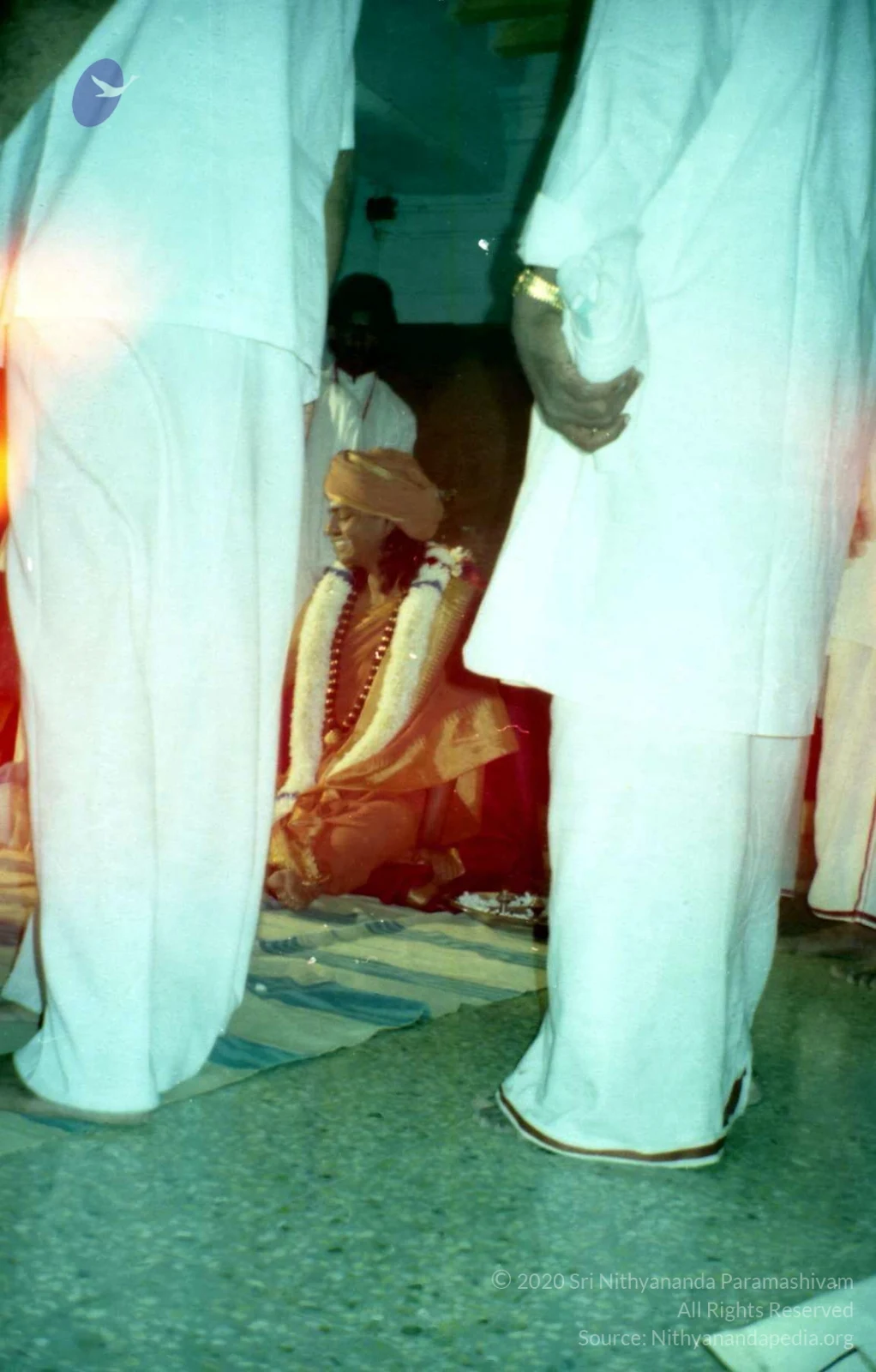
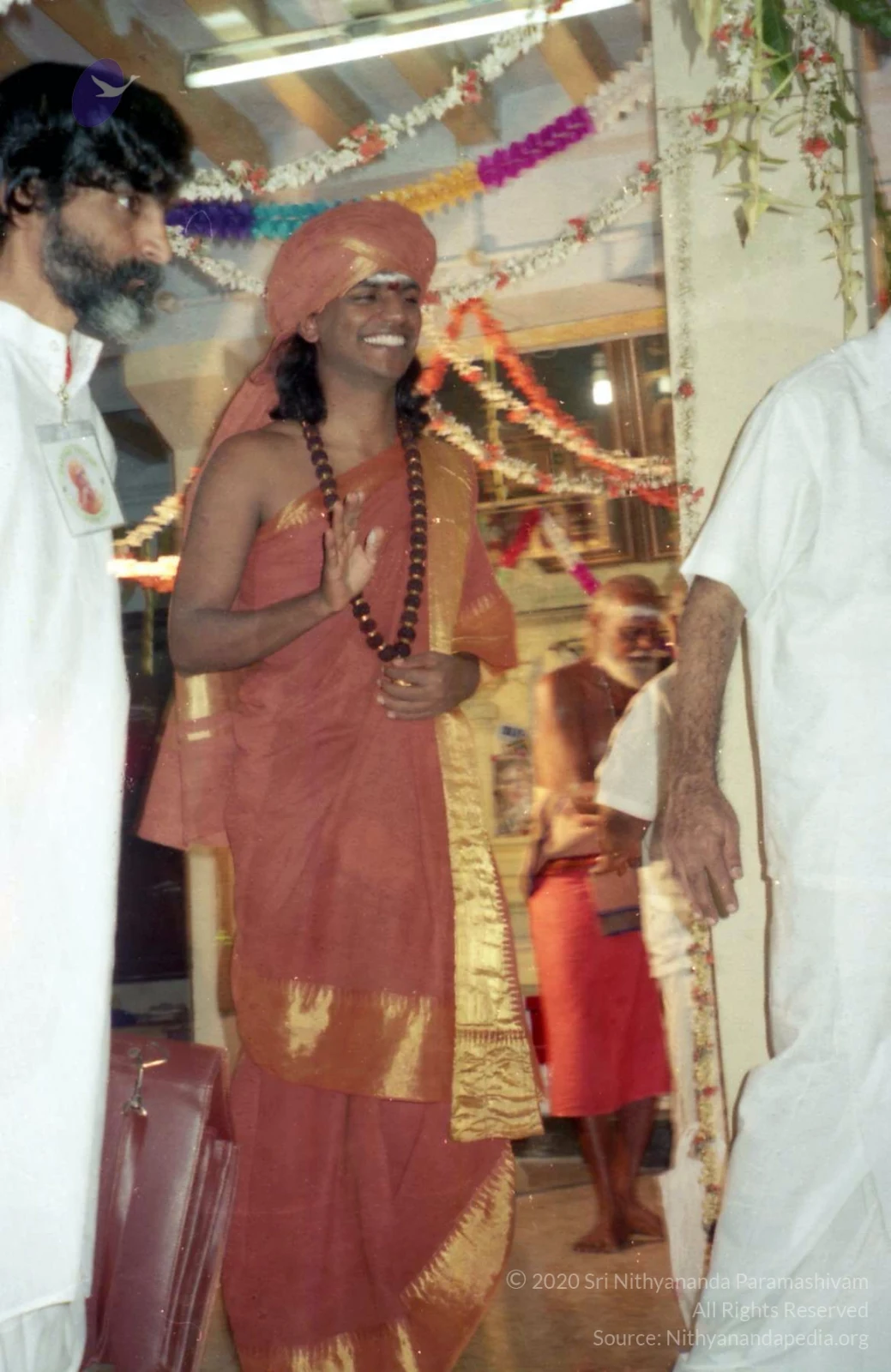
Rare Kirtans by Swamiji || Offering Arthi in Tiruvannamalai

Dated photos
100
Source pages
1
Media
3
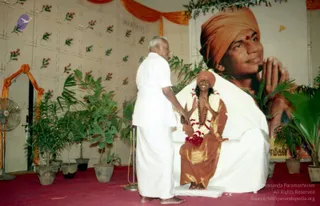
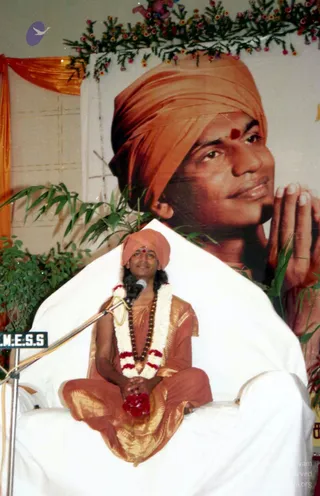
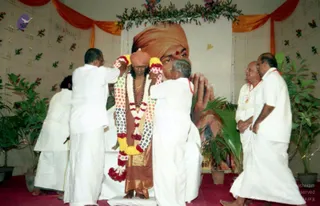
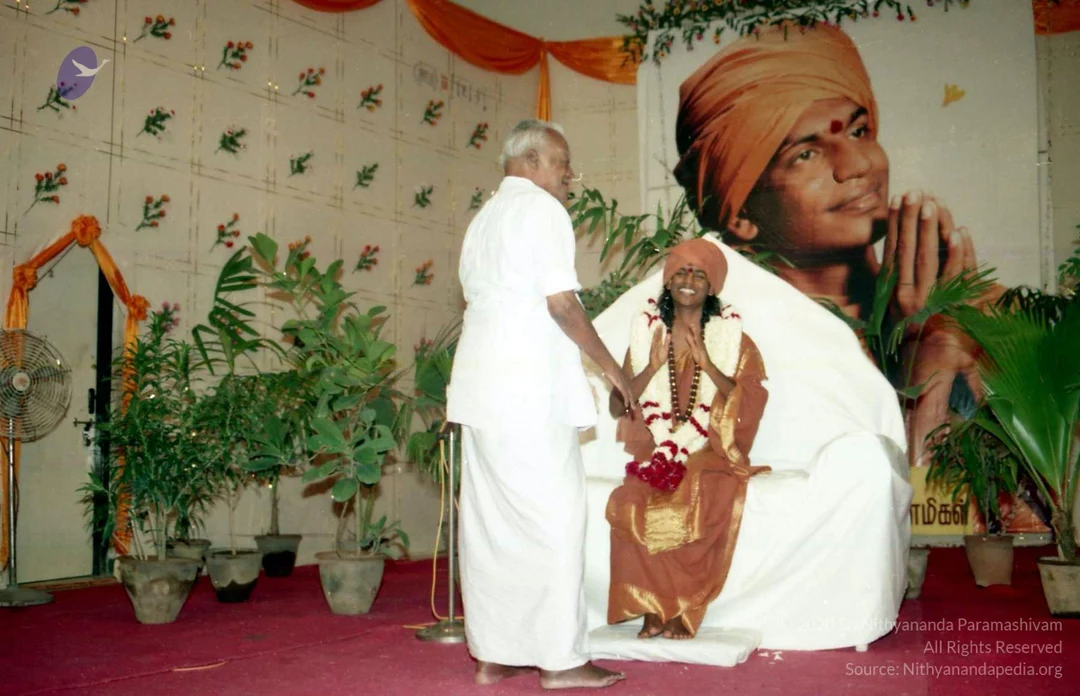
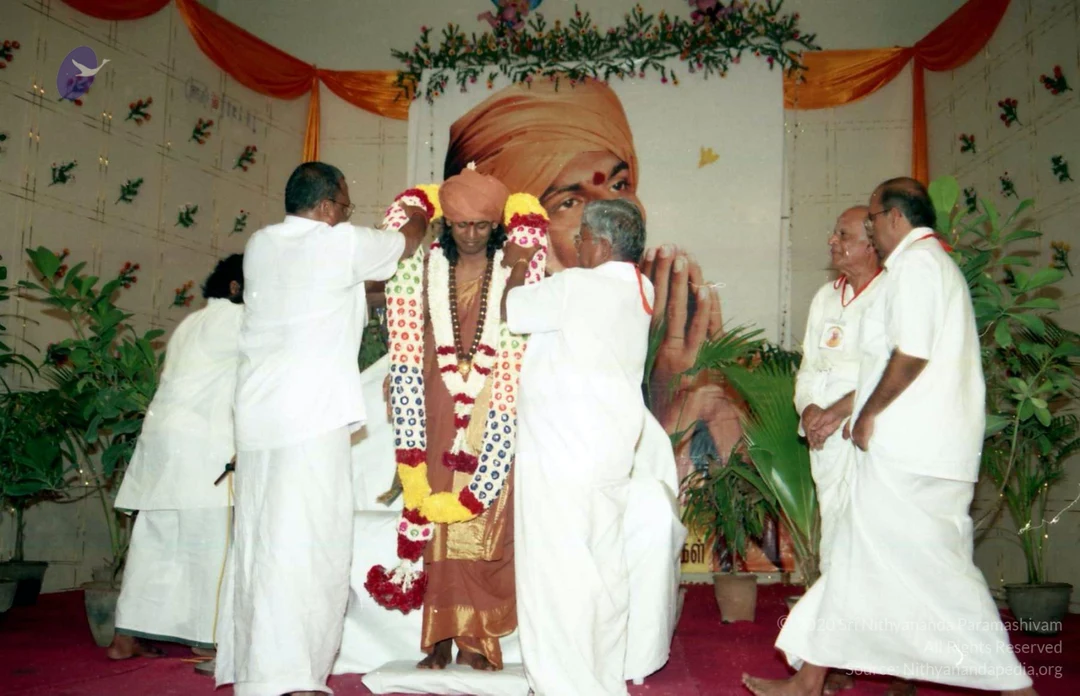
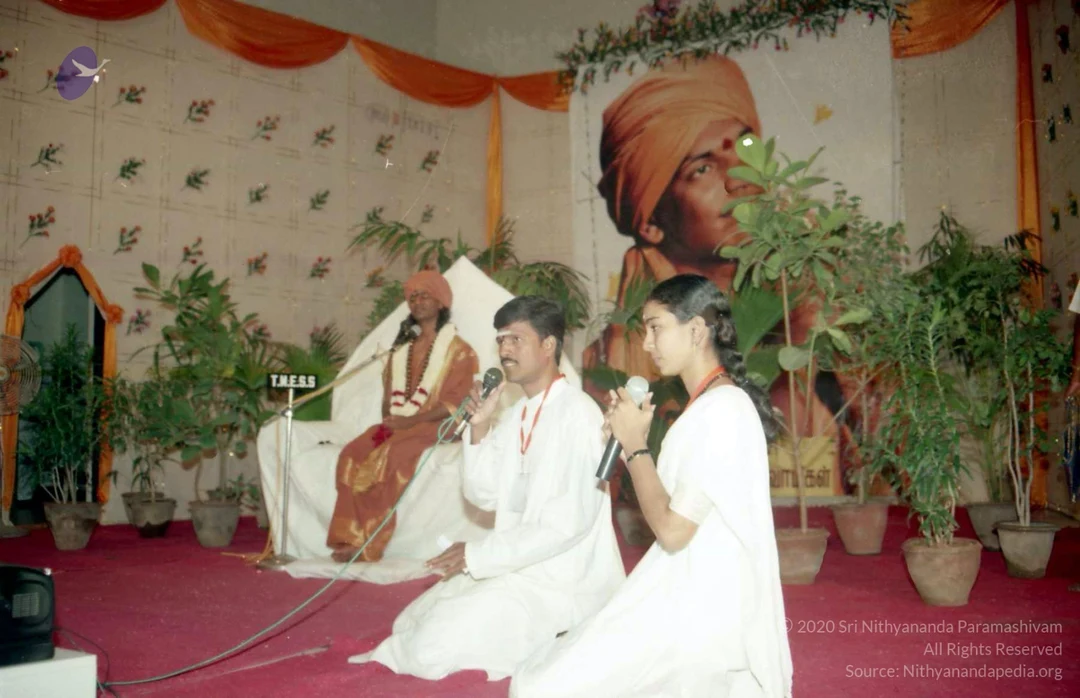
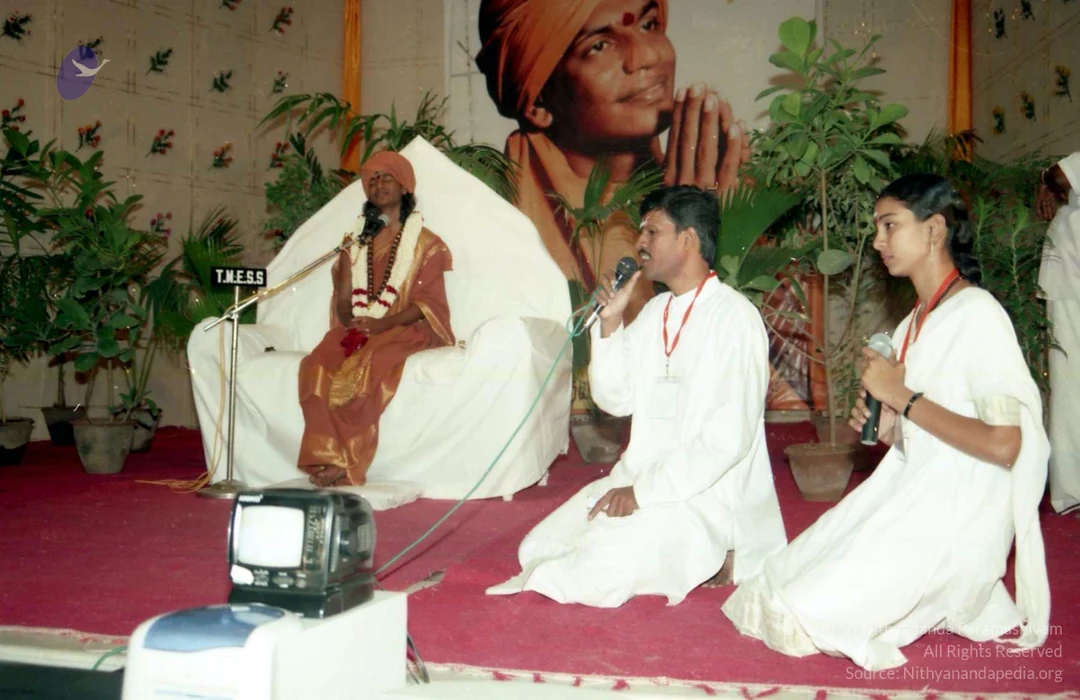
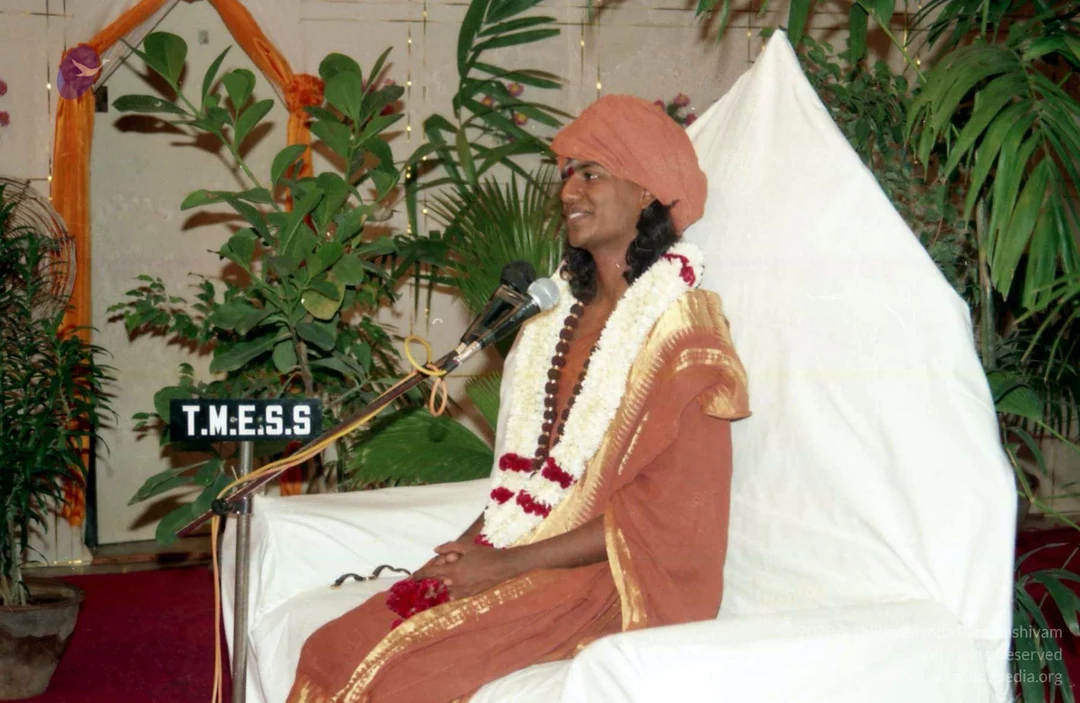
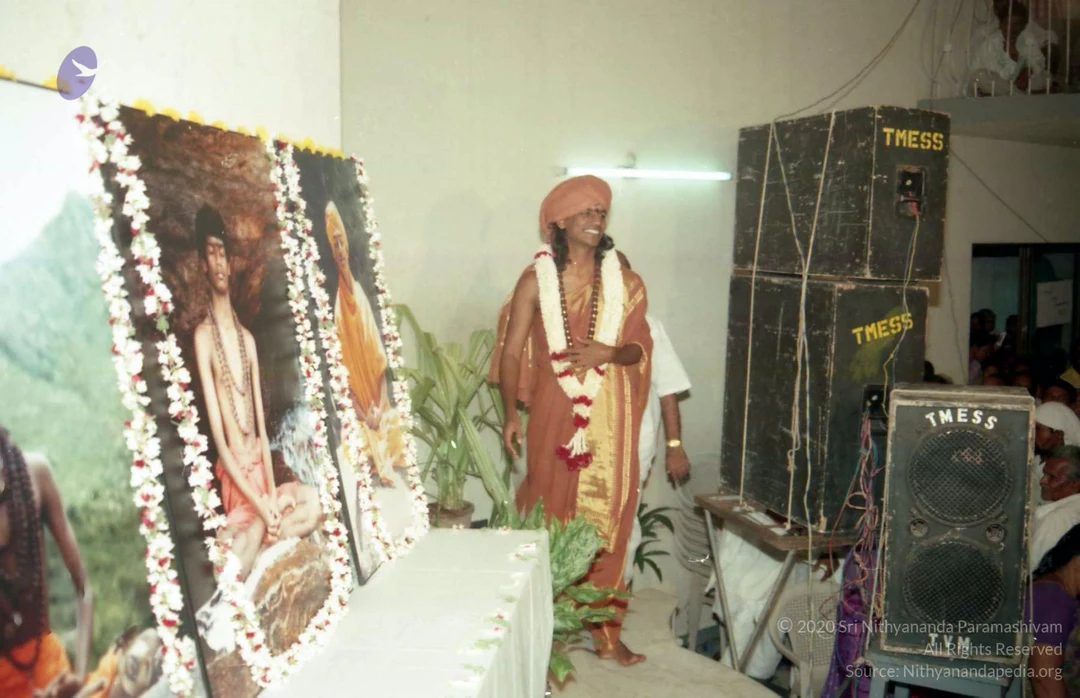
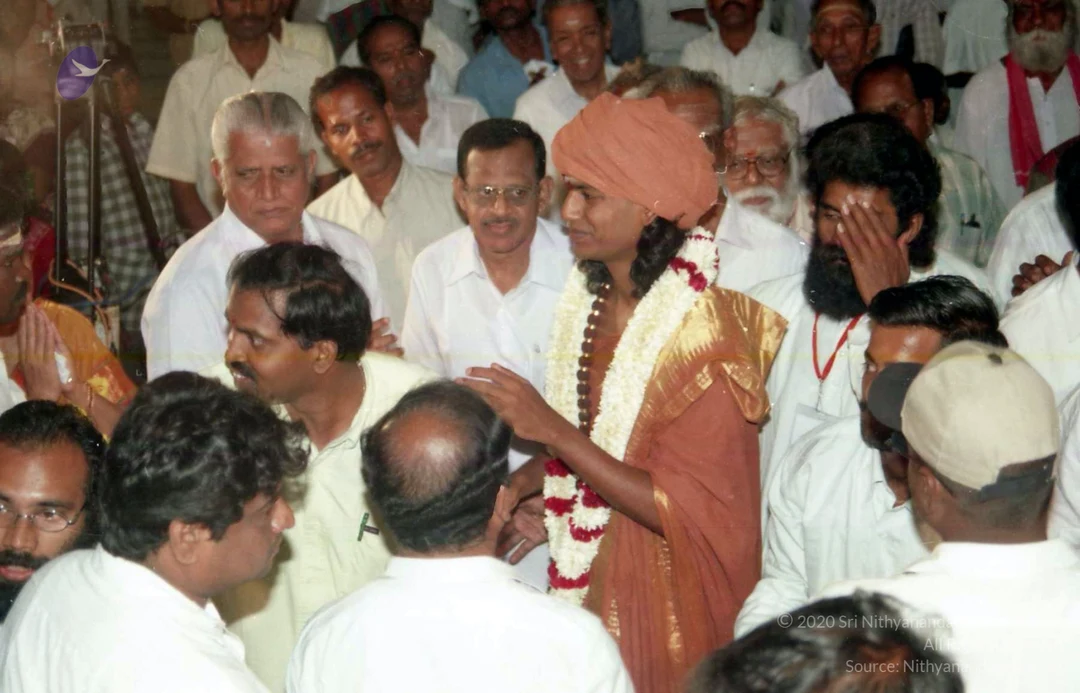
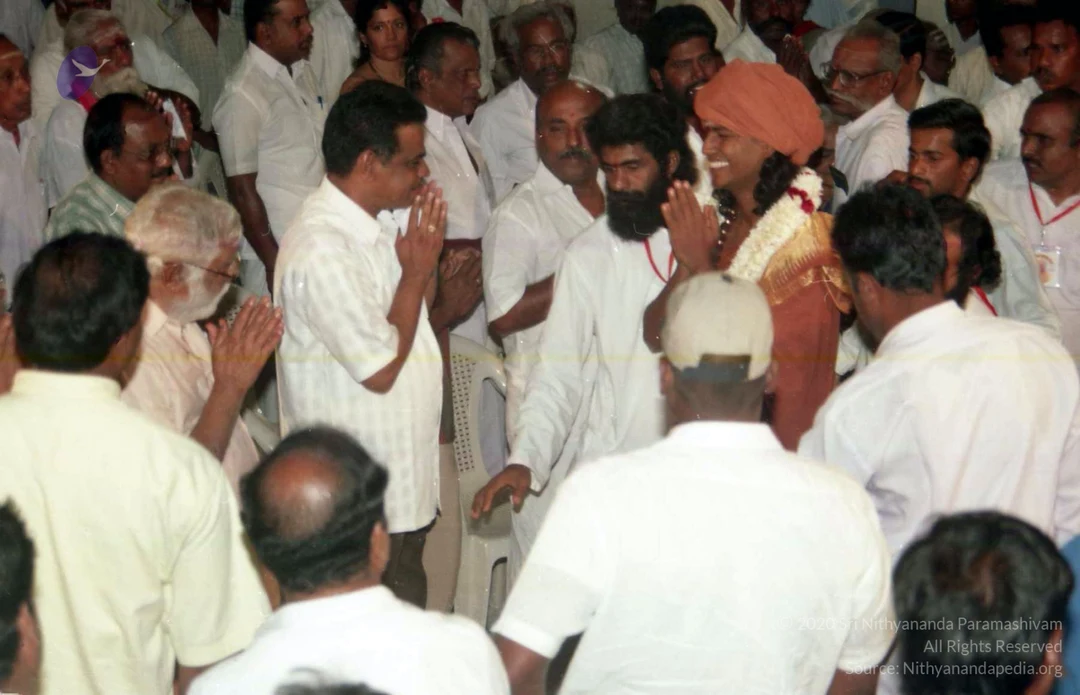
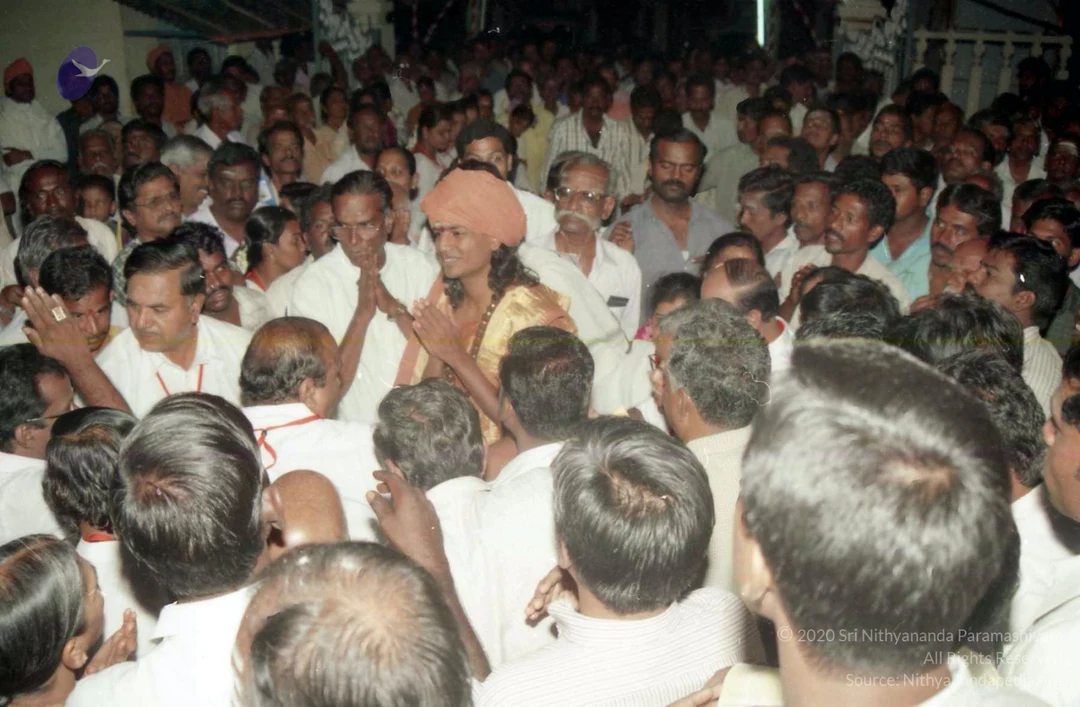
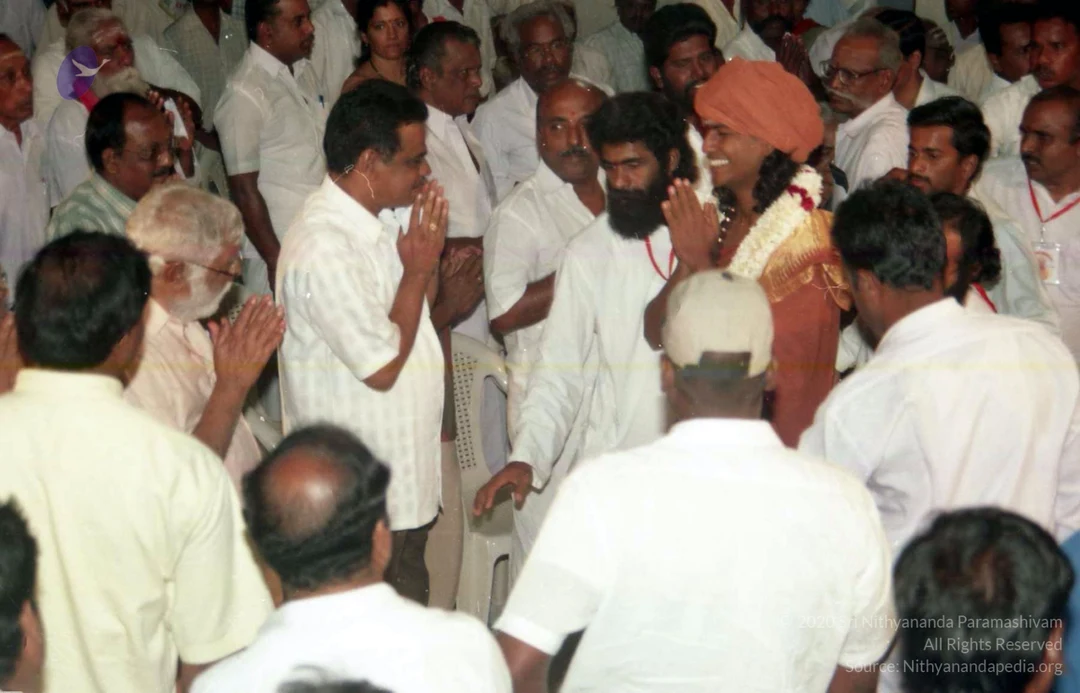
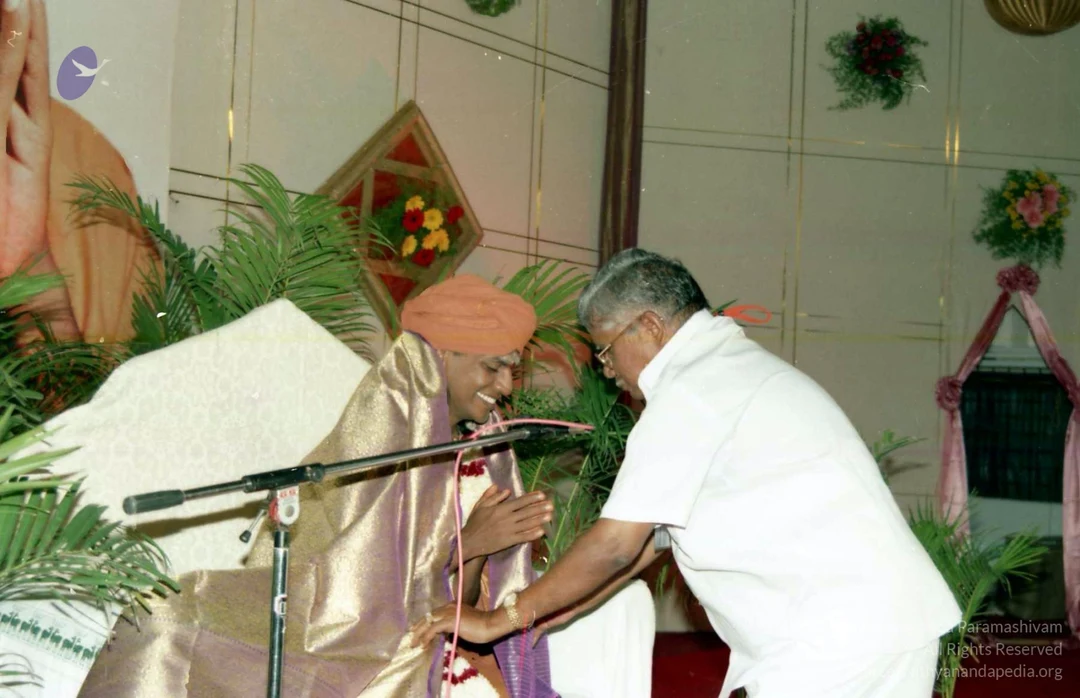
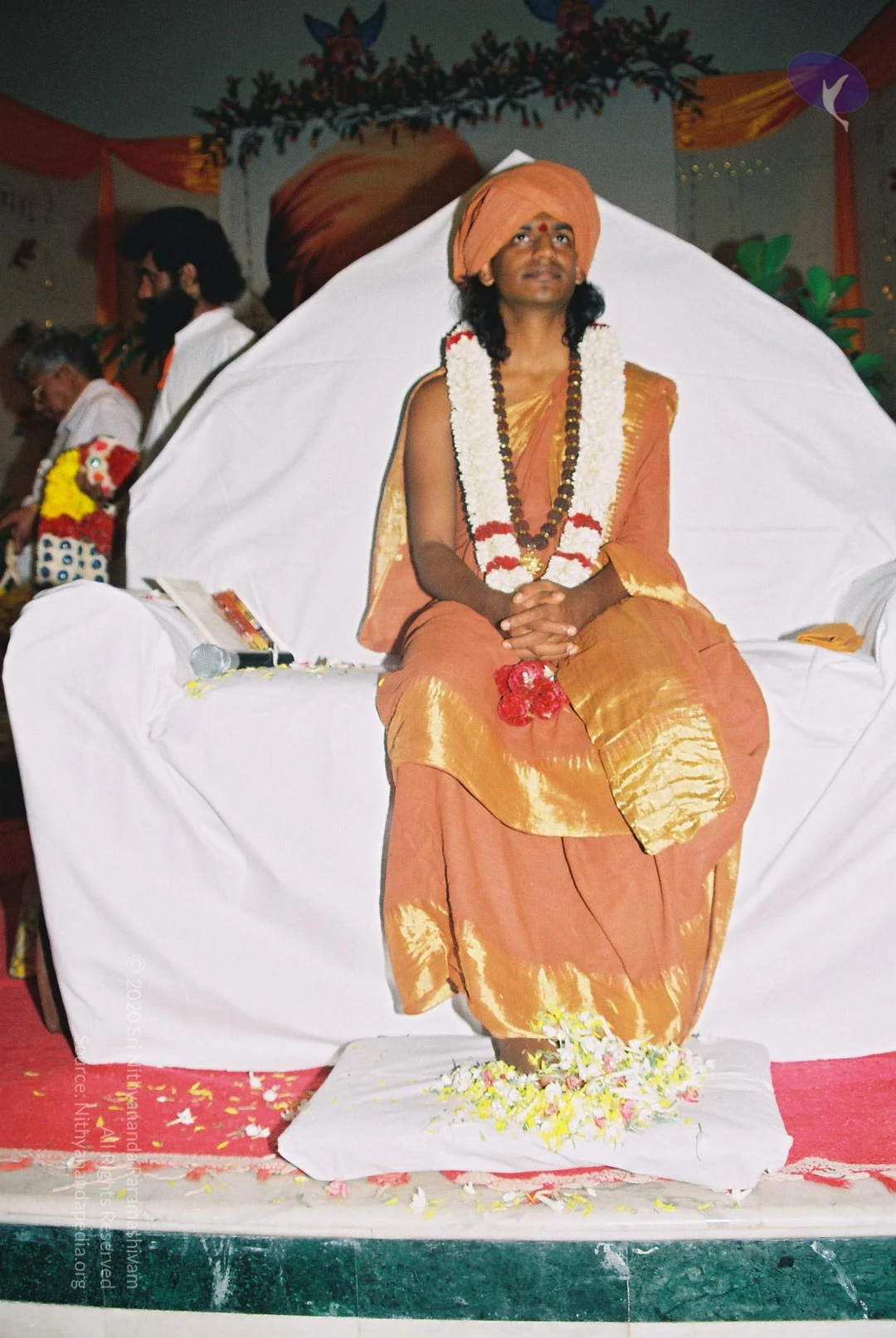
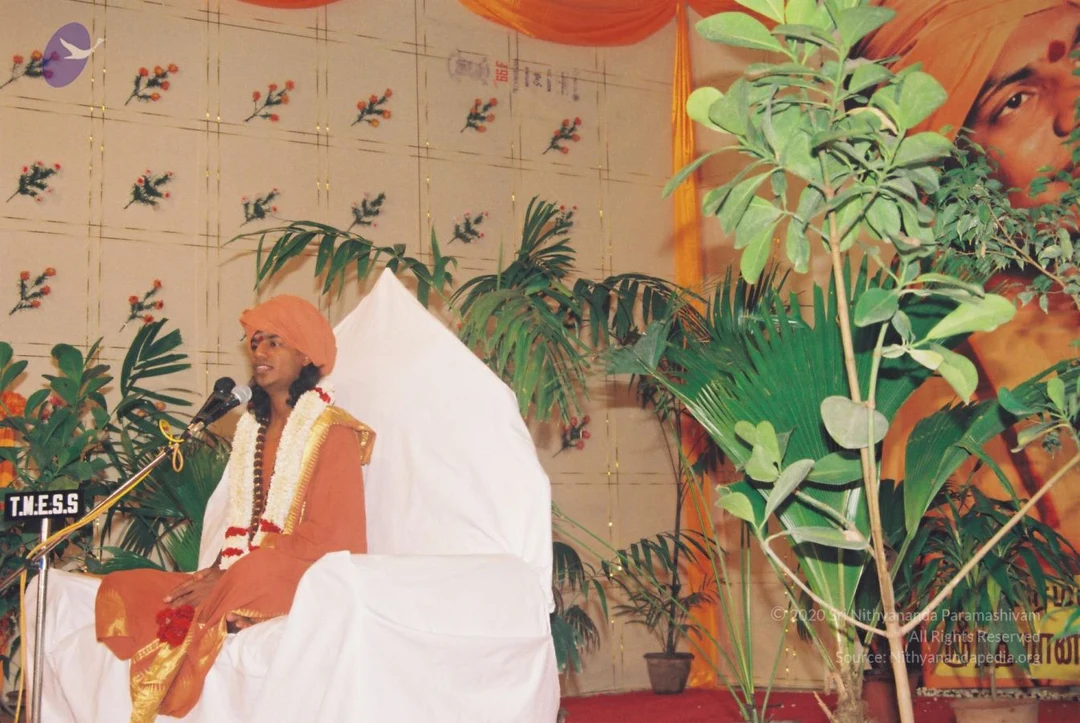
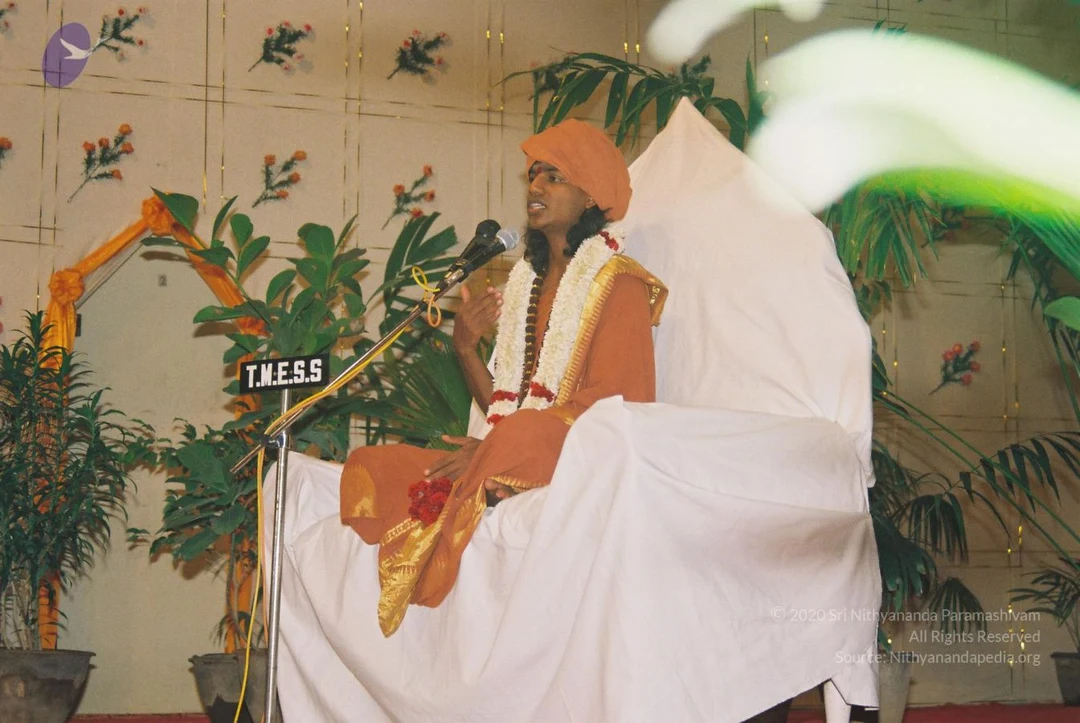
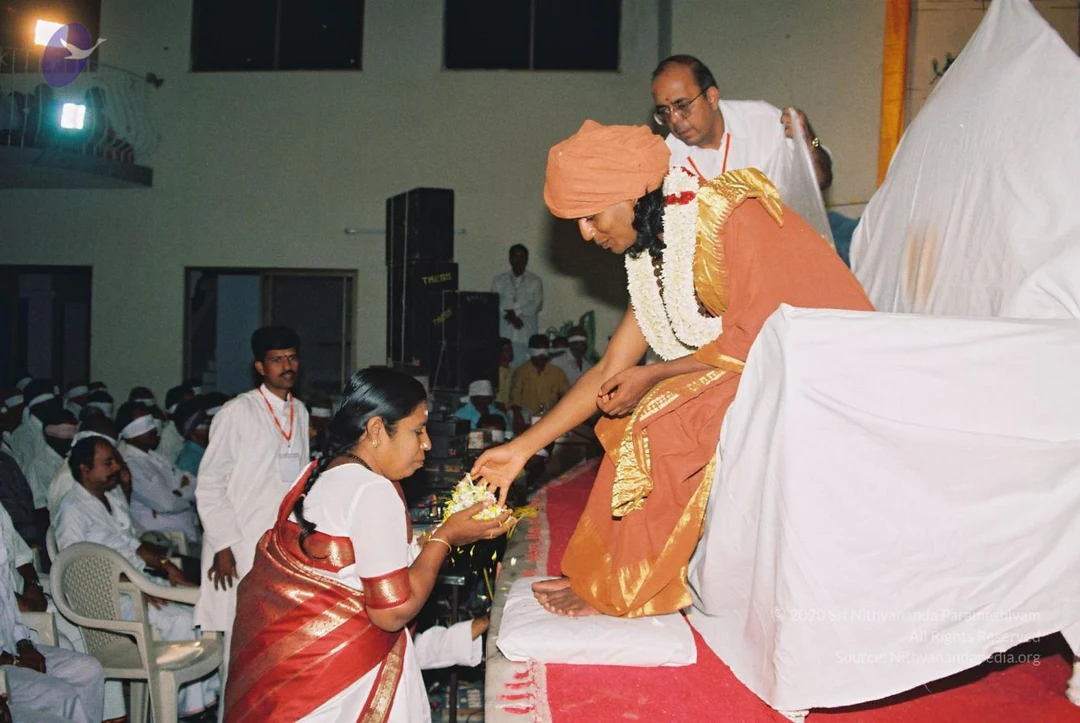
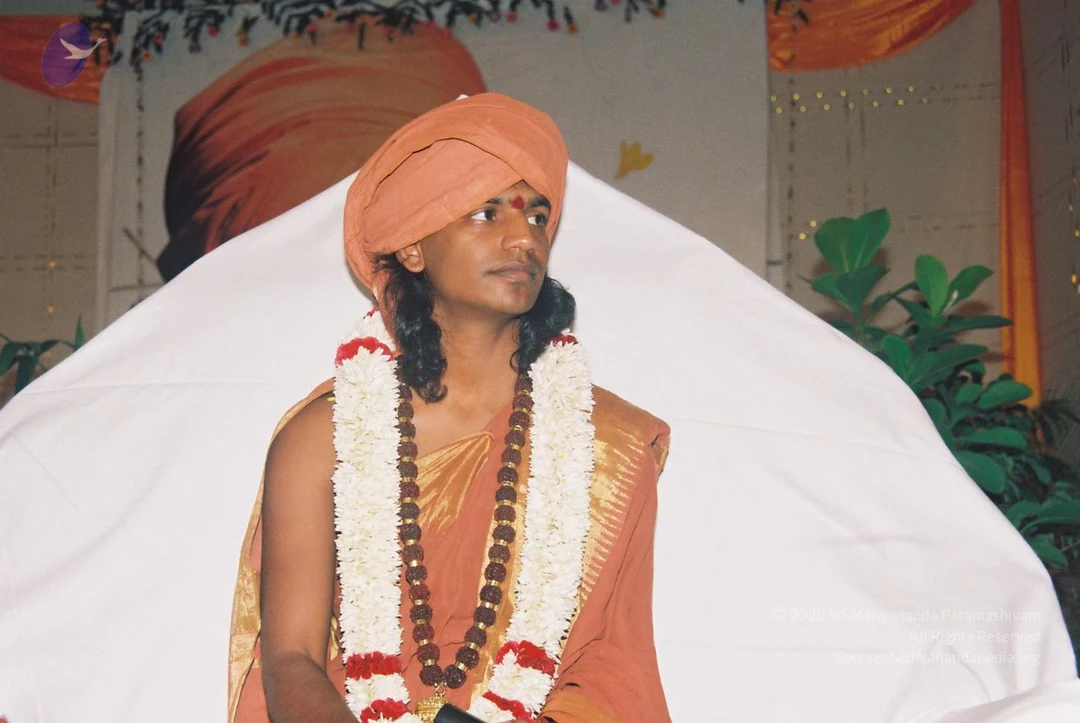
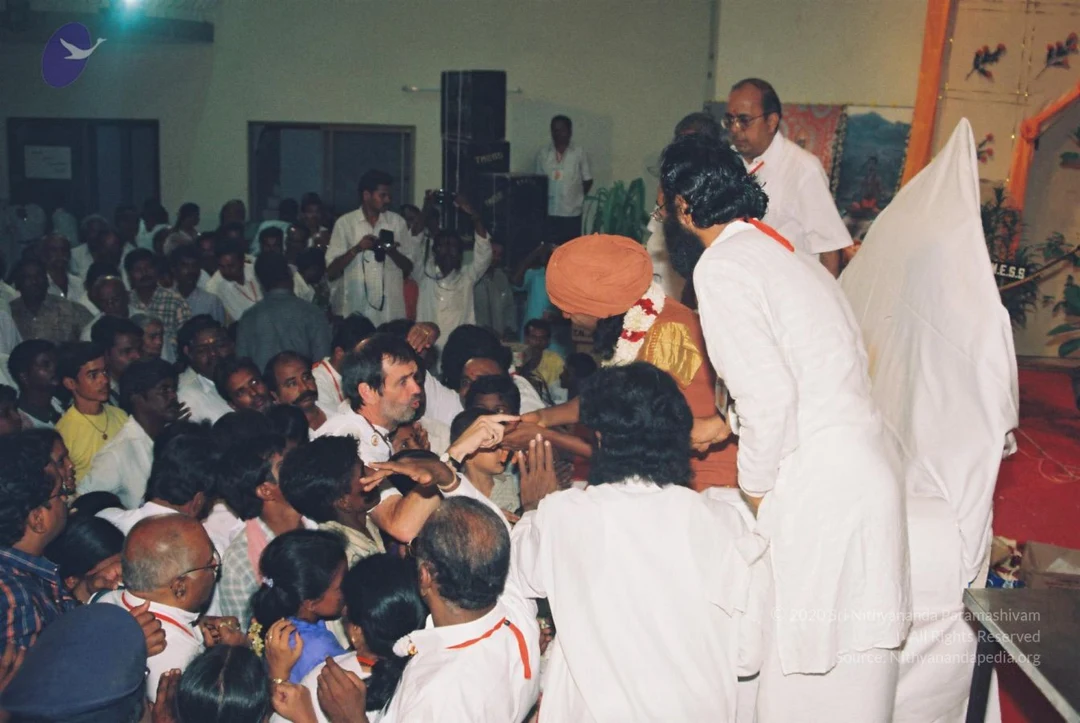
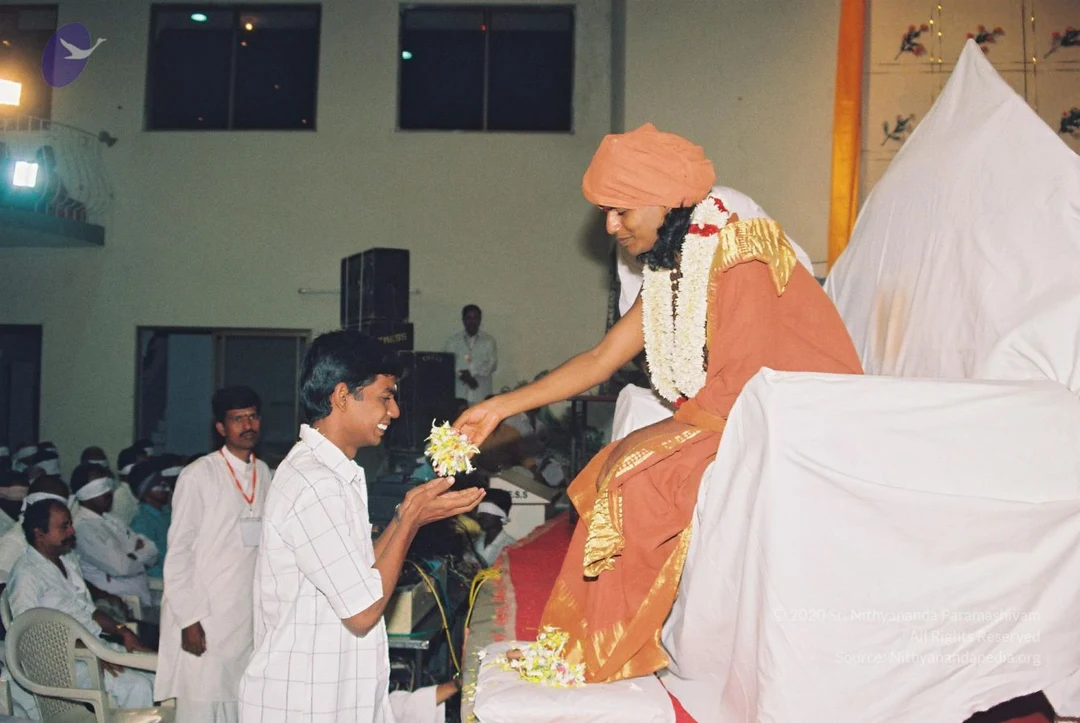
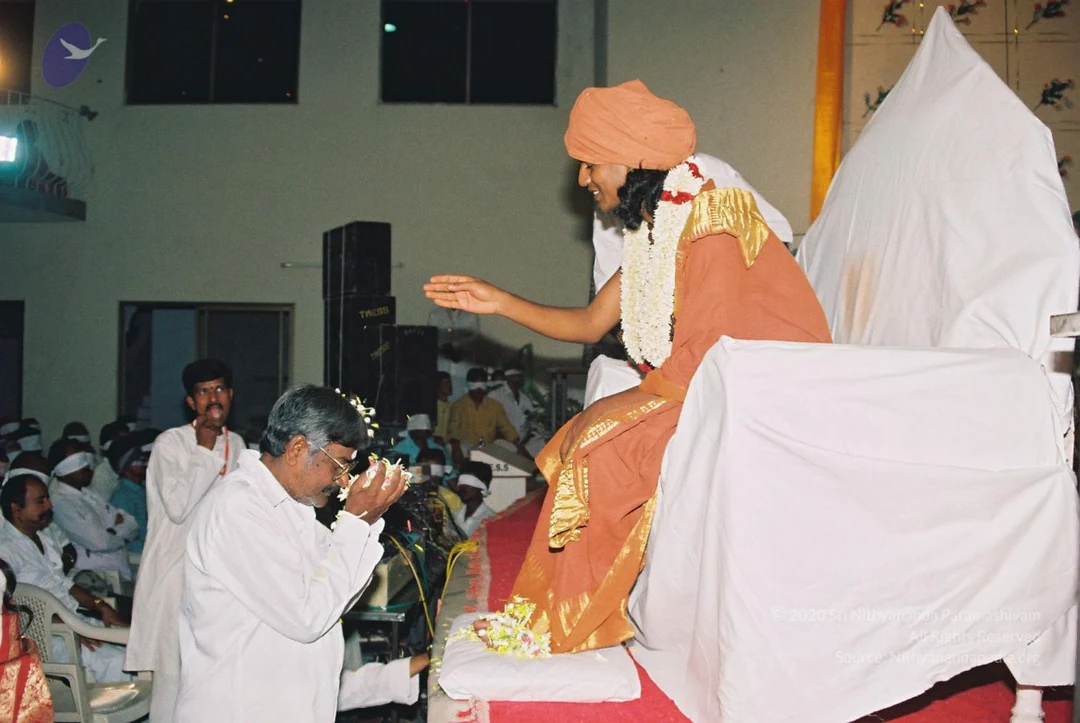
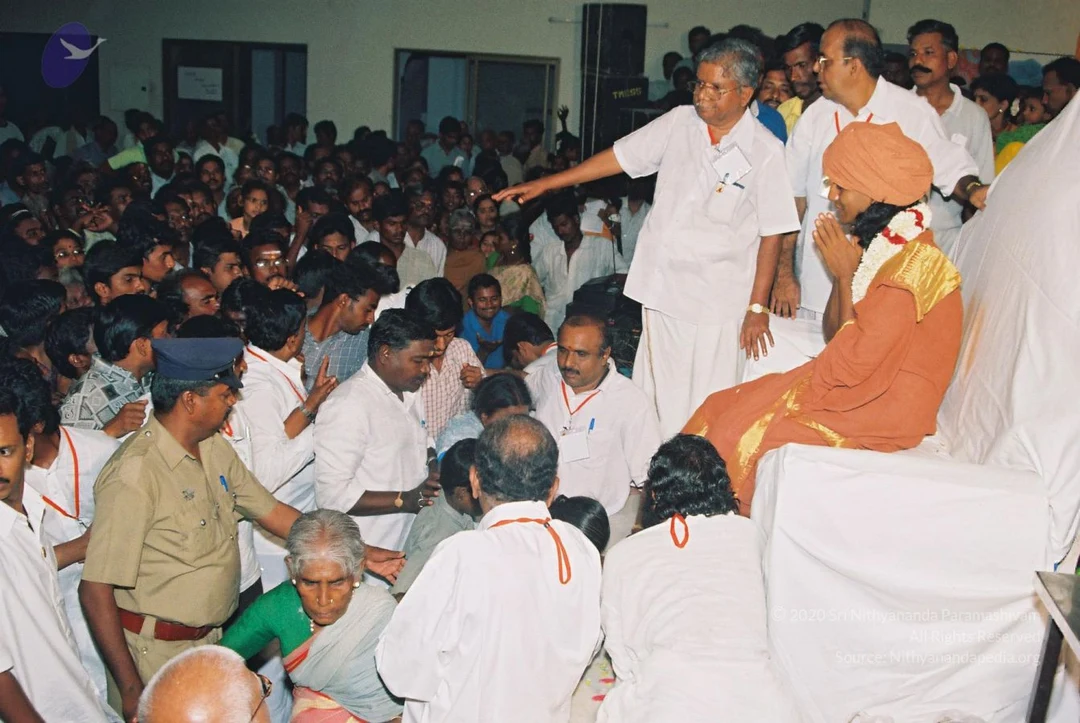
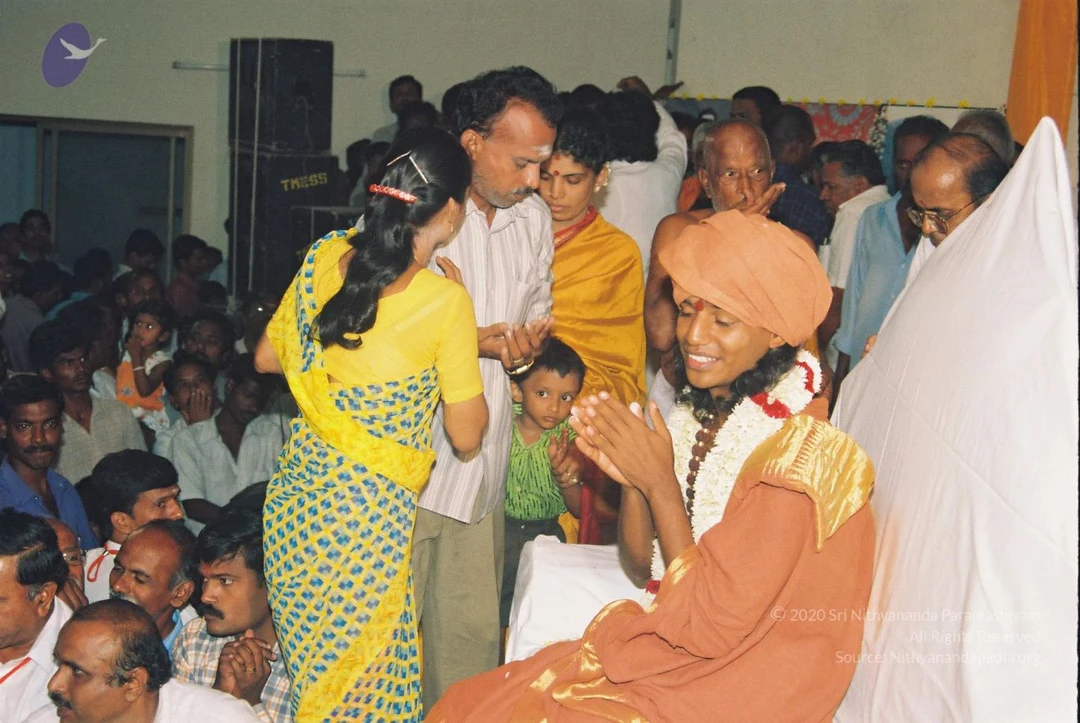
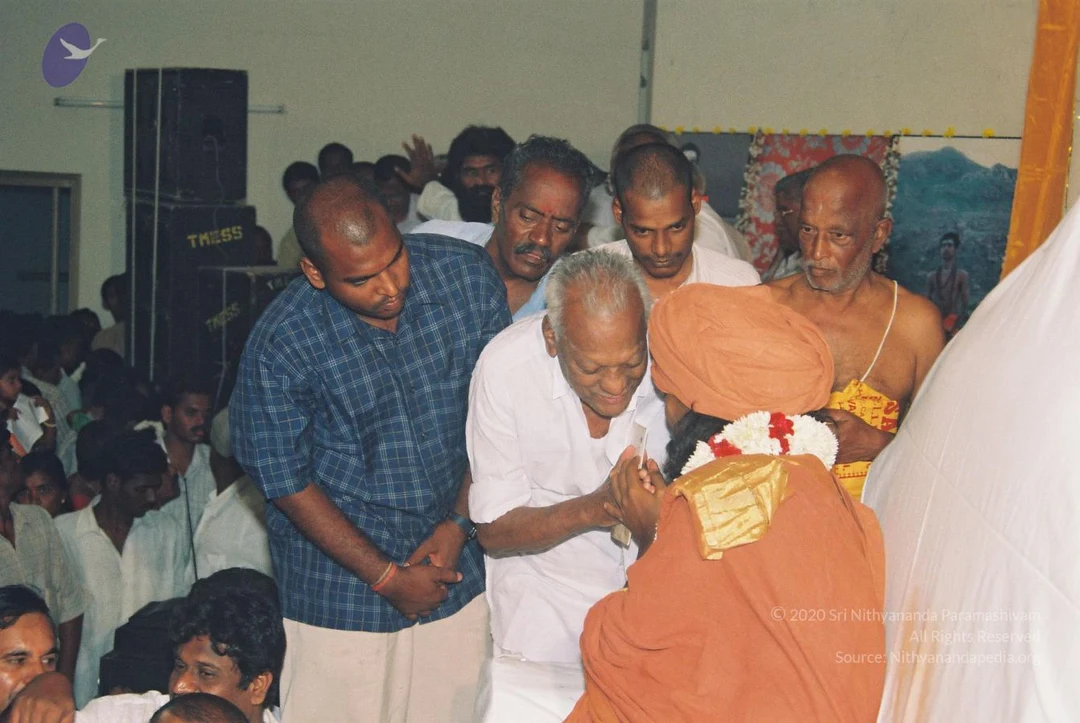
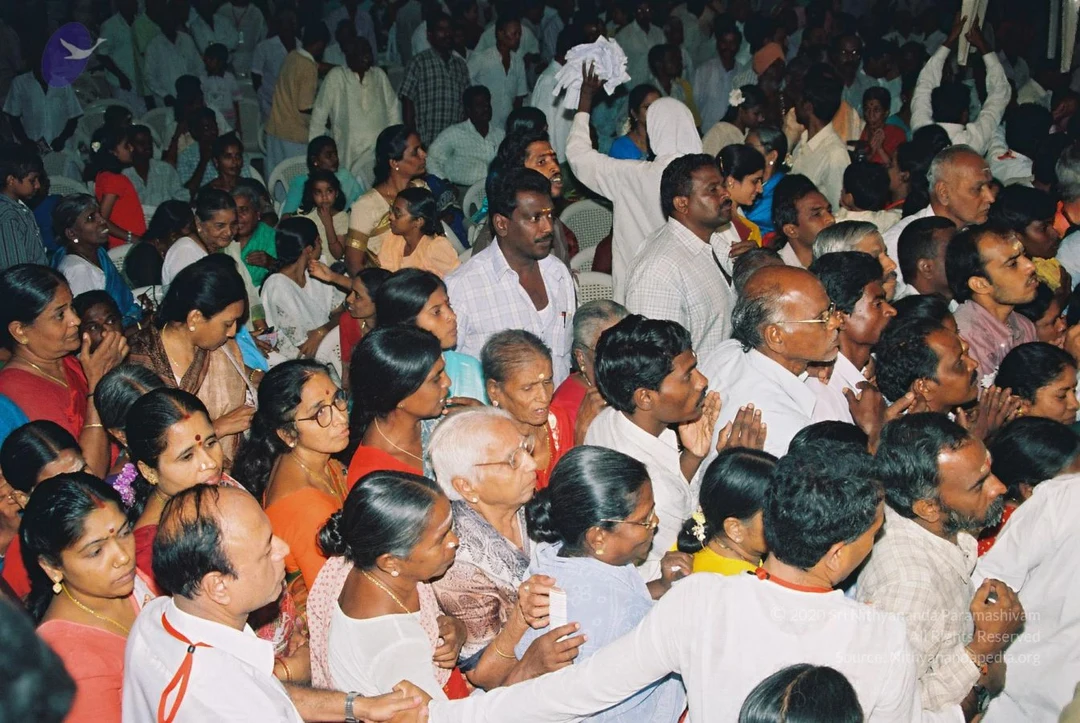
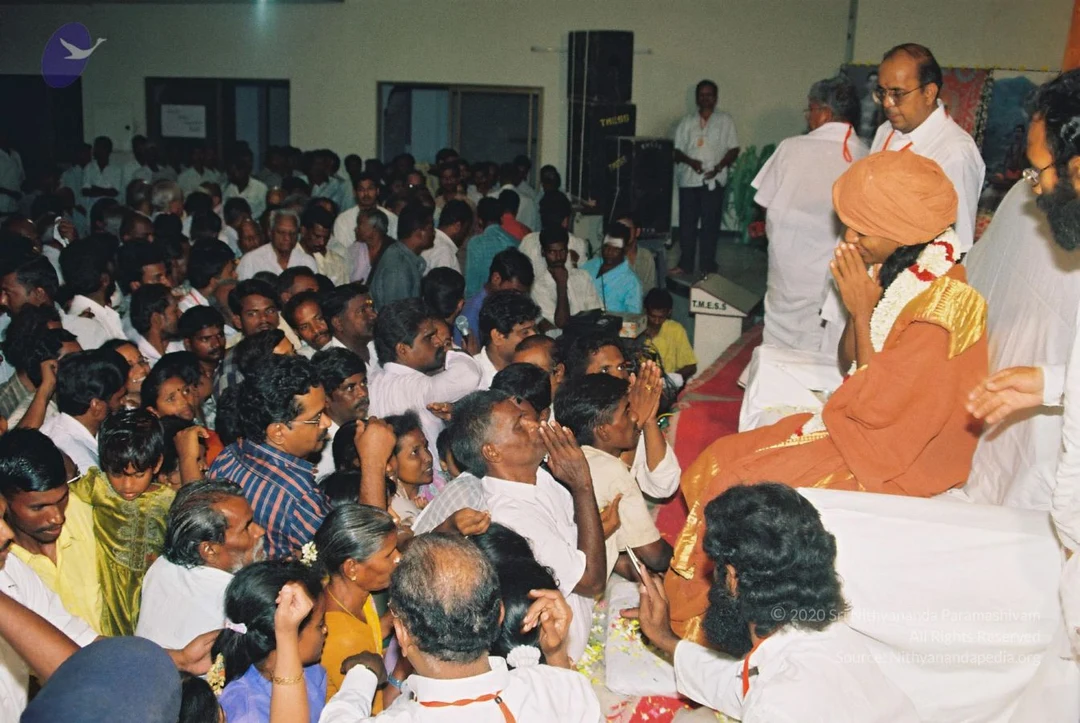
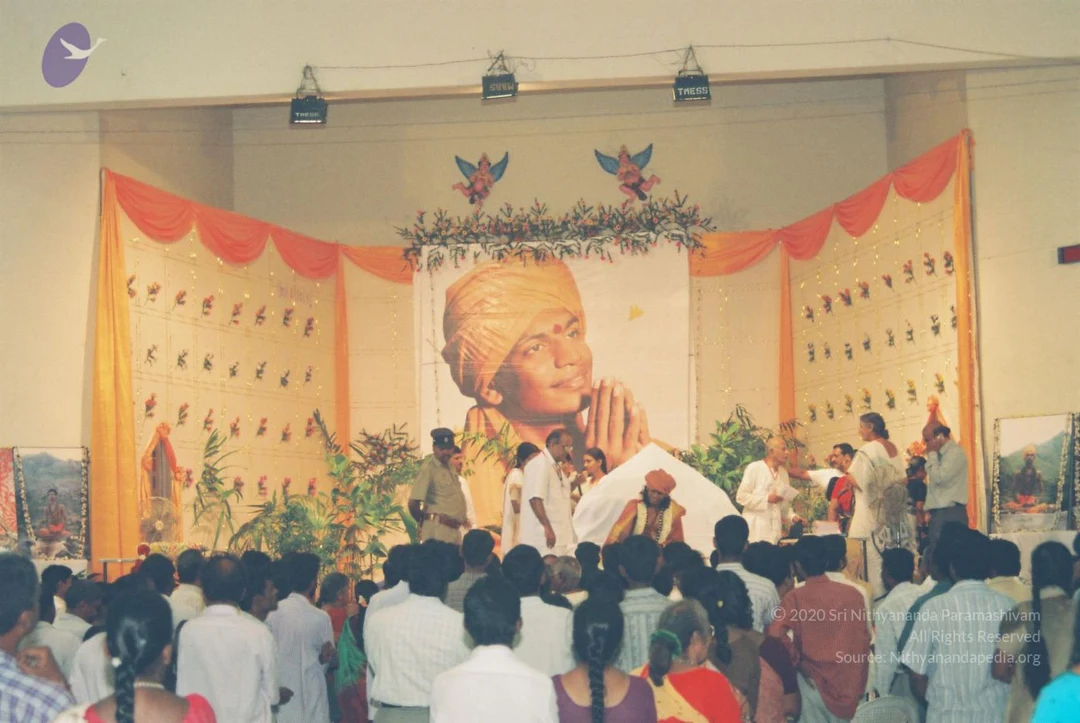
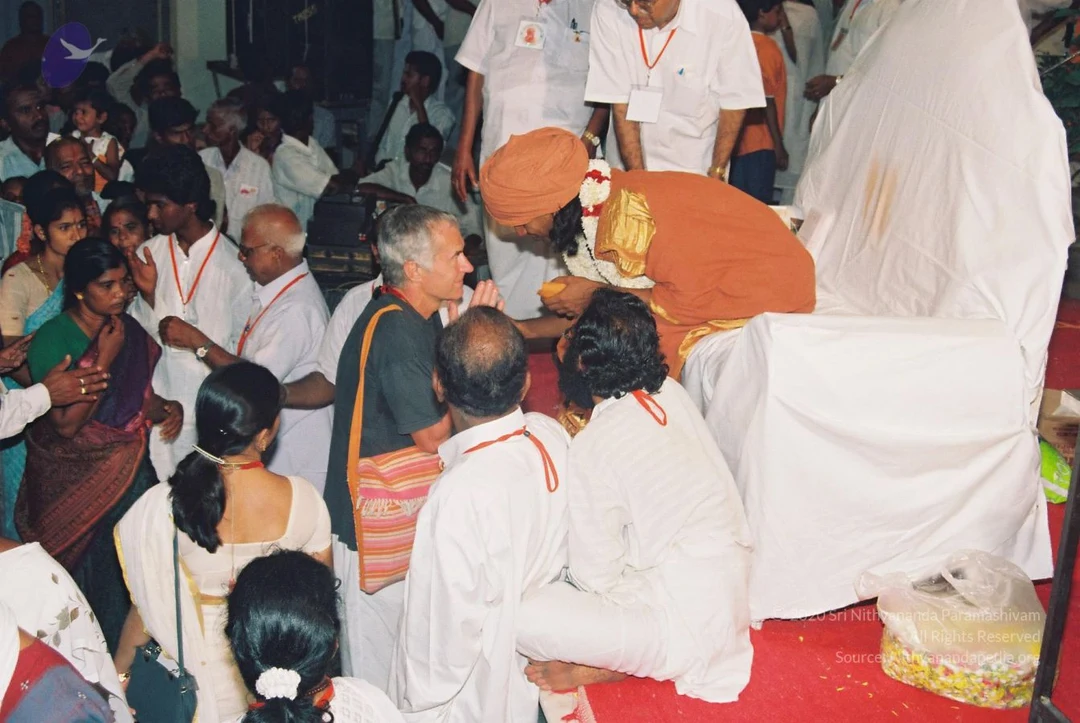
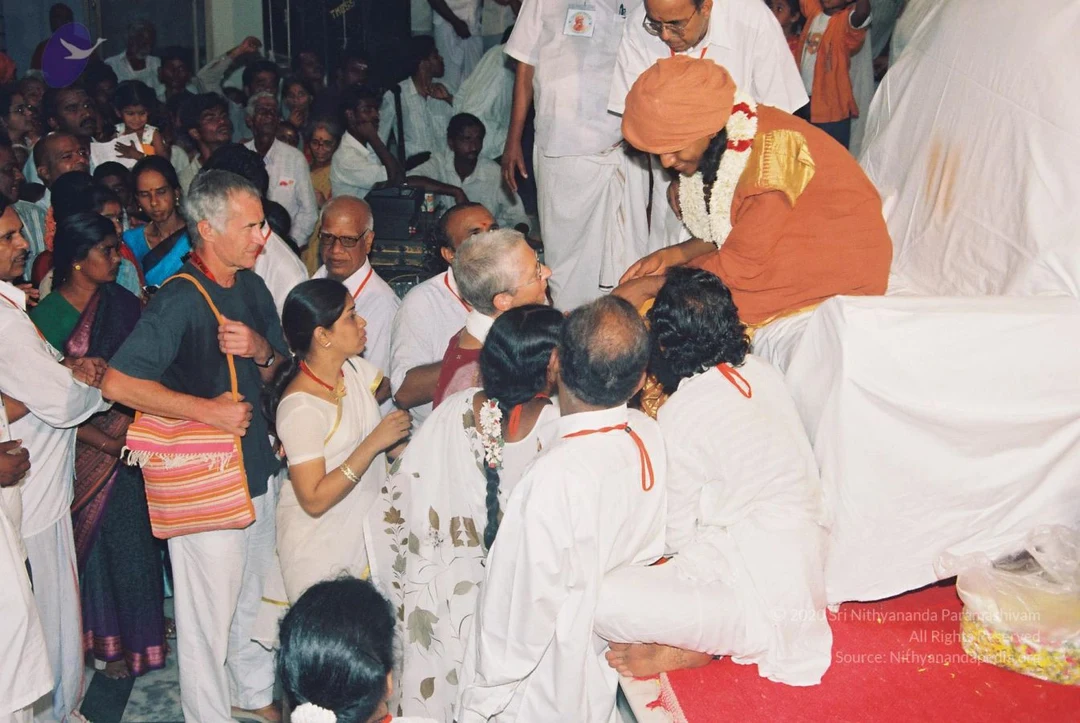
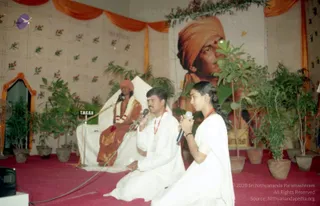
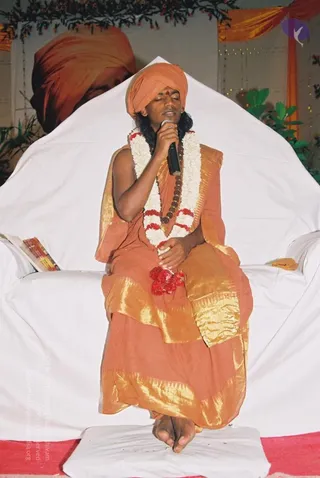
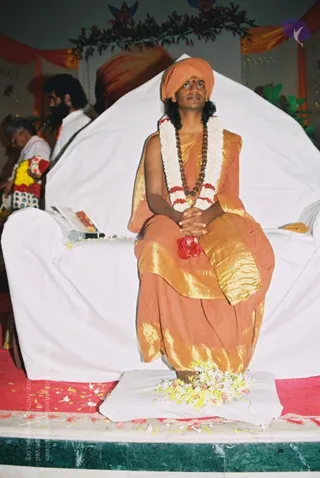
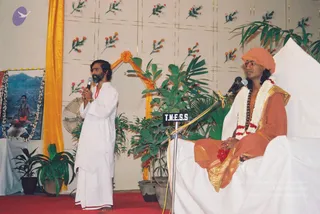
A photograph of an indoor stage set with a red carpet and potted green plants. A seated figure in saffron-orange robes and an orange head wrap with a red bindi sits on a large white draped seat, wearing a white flower garland, a red flower garland and a rudraksha mala, with palms pressed together in greeting. Behind the seat a large portrait shows a smiling man in an orange turban with palms joined, and orange drapery hangs along the top. A standing elderly man in white dhoti and white shirt, barefoot, stands to the left and extends his hand toward the seated figure.A seated man in orange-saffron robes and a matching orange turban with a red tilak sits cross-legged on a white-draped raised seat before a microphone stand, wearing a long white and red flower garland, rudraksha mala, and holding red flowers in his hands. Behind him a large printed portrait shows a man in an orange turban with red forehead mark, hands folded in anjali, framed by orange drapery, green leafy plants and a garland of colorful flowers across the top. A partially visible sign reads M.E.S.S. The seated man appears to be Swamiji (probable) based on the saffron turban, saffron robes and rudraksha mala, and is shown giving a discourse or satsang.A central figure in a rust-brown robe with a matching brown turban and a rudraksha mala stands barefoot on a red-carpeted stage being garlanded. Two men in white dhotis and shirts lift a multicolour flower garland over his shoulders, while a third white-clad man on the left stands nearby and two more men in white stand on the right, one with hands folded in namaste. Behind them is a large framed portrait of a man in an orange turban with a red bindi, flanked by orange drapery, flowers and potted palms.

November 09 2003

Original wiki page
Contents

Title

Rare Kirtans by Swamiji || Offering Arthi in Tiruvannamalai

Description

The word "Darshan" means "to have a glimpse of". Having Darshan of an Avatar can cleanse the karmas of lifetimes, and create a deep and lasting transformation in the receiver. Darshan is something far beyond mere physical "seeing". Darshan is the powerful superconscious vibration that is present around an Avatar at all times. It is a word that cannot be translated; it has to be experienced.

Paramahamsa Nithyananda has breathed power into these videos. Even if you were not physically present during Darshan, just by watching this video you will experience Kundalini Awakening, manifestation of powers and the ultimate space of Oneness - Advaita. During these sessions, Paramashiva manifests Himself through Swamiji intensely. Look carefully through your Third Eye, as you watch this Oneness Capsule, you will powerfully experience the energy. Look through the third Eye, lightly but intensely, like how you would look at a rose.

These Darshans do not have a past, present or future. They are just happenings. There is no "was" or "will" for these happenings. Just by watching, you can get the same experience as watching it live, in-person. To get a live experience of this Darshan, come and experience PARAMASHIVOHAM.

Video - Paramashivoham Oneness Capsule 189 (Kirtans by Swamiji 09 Nov 2003)

Video - Paramashivoham Oneness Capsule 190 (Kirtans by Swamiji 09 Nov 2003)

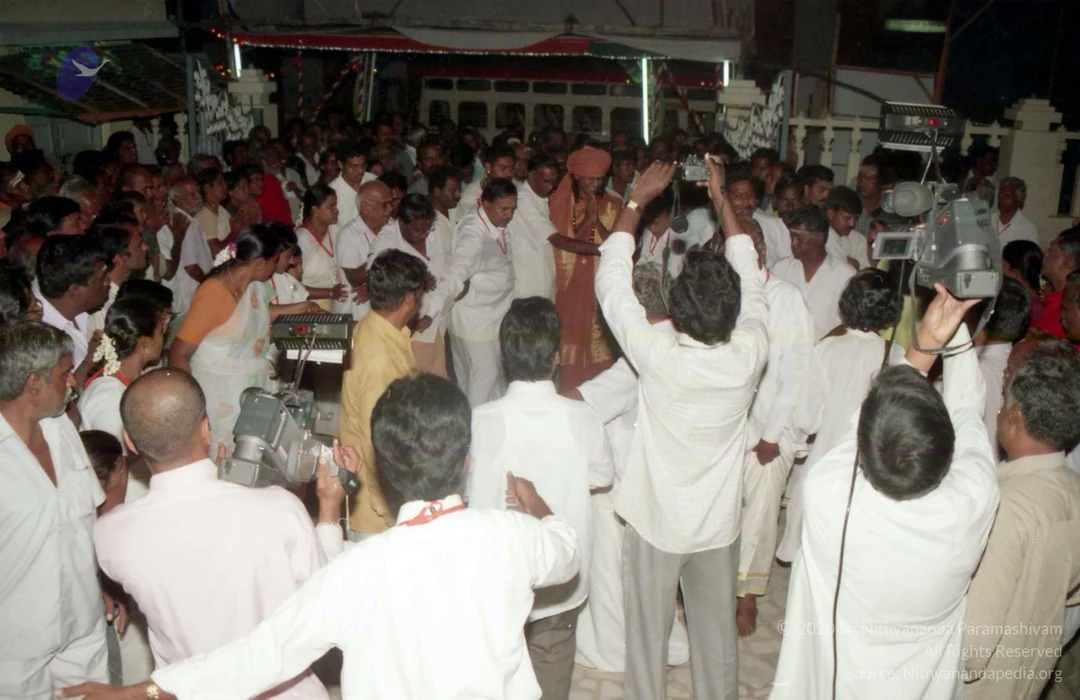
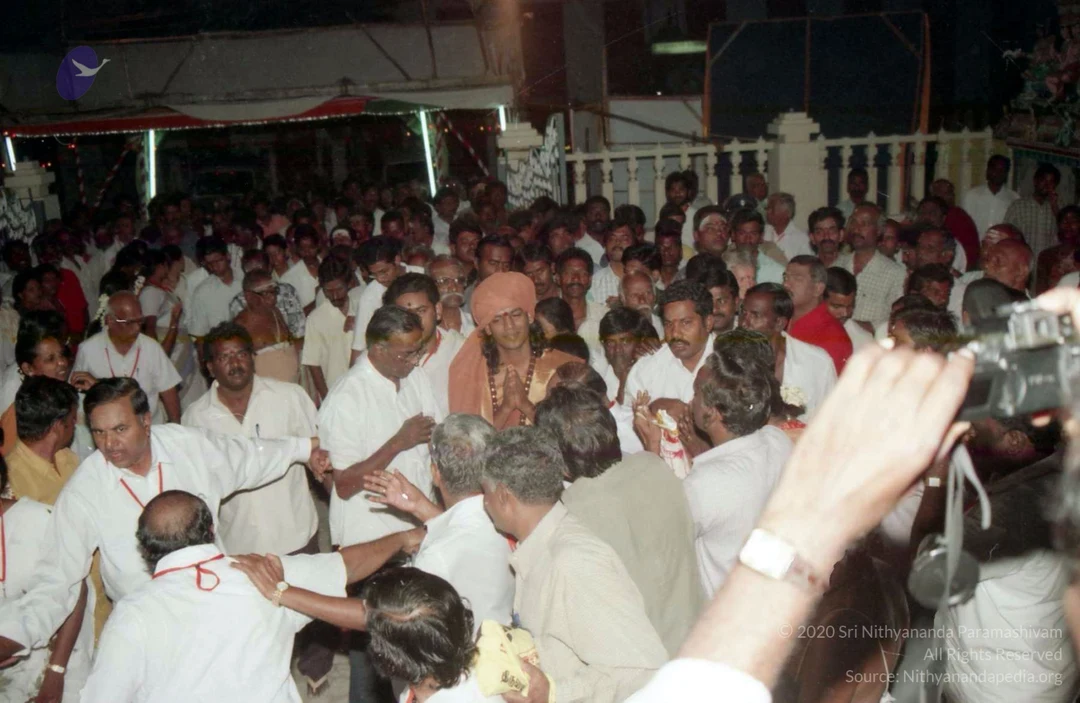
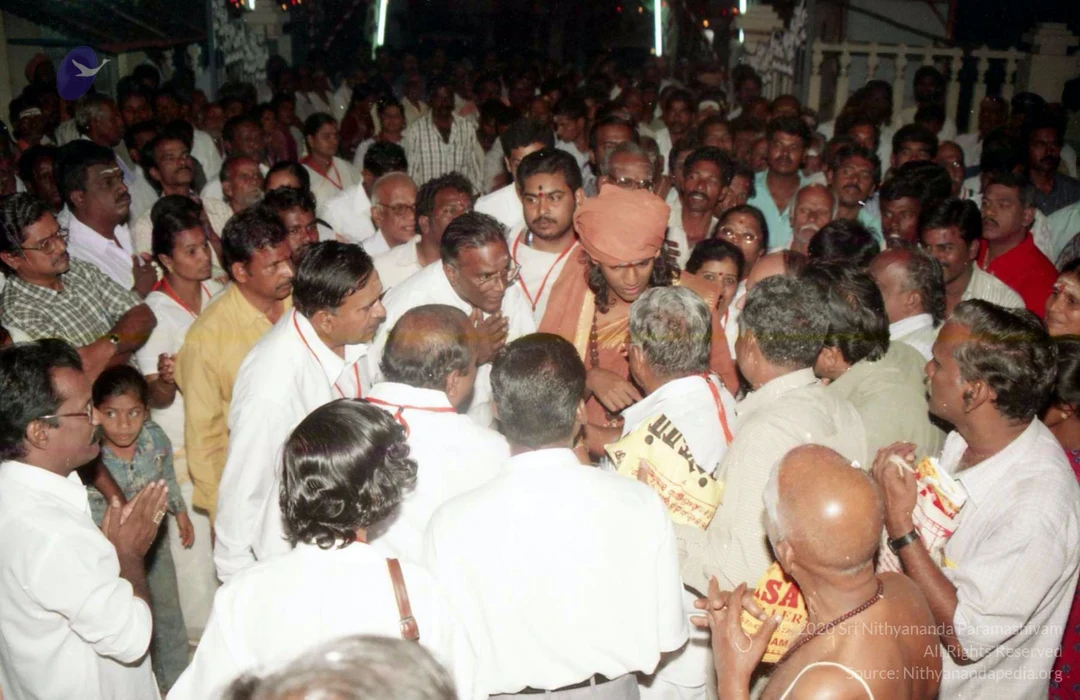
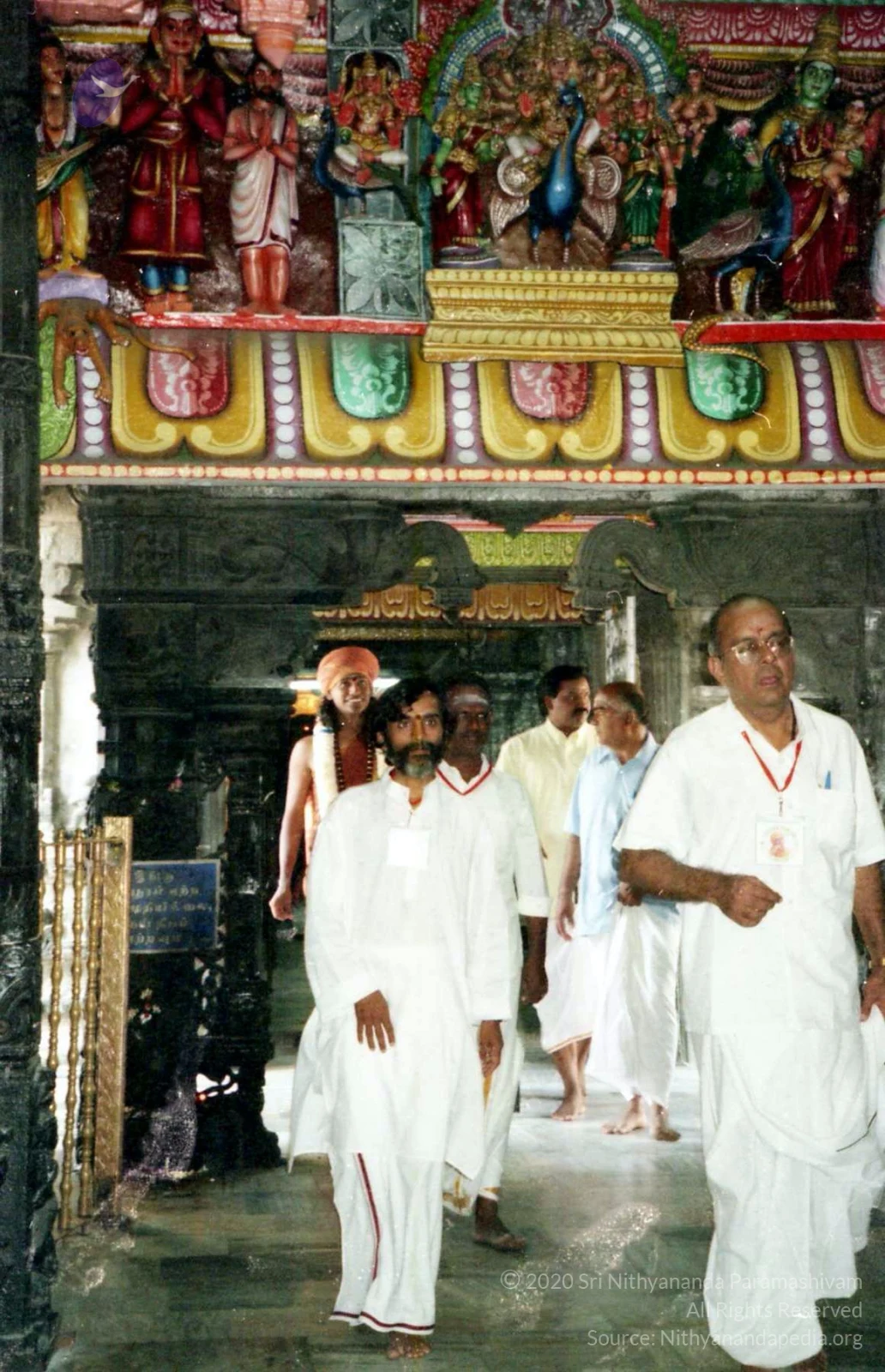
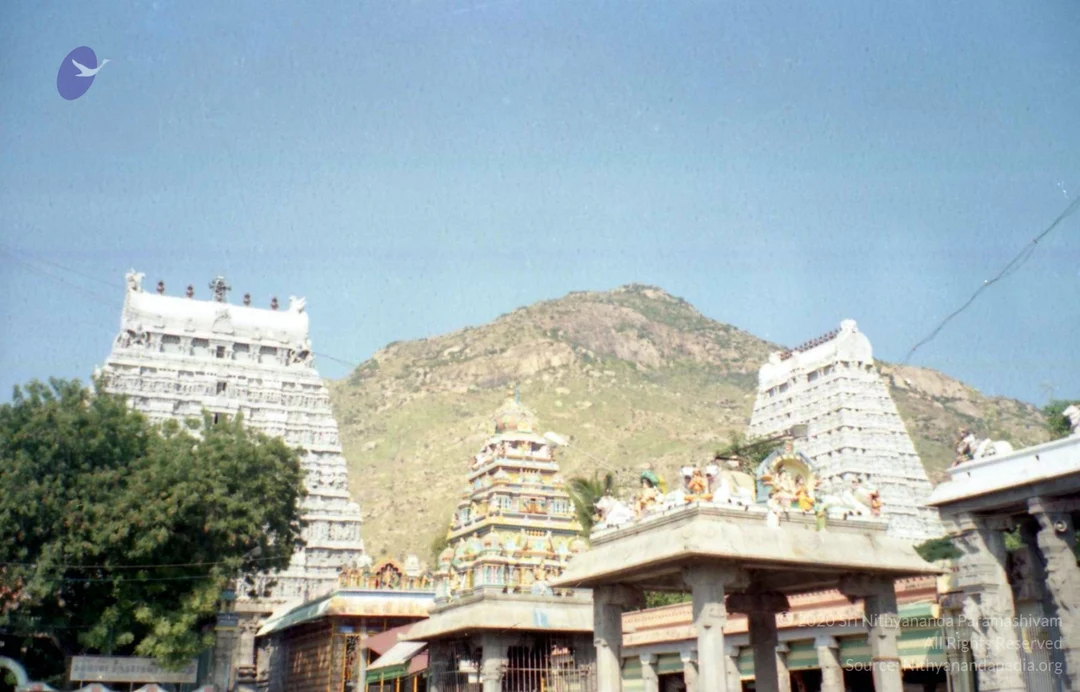
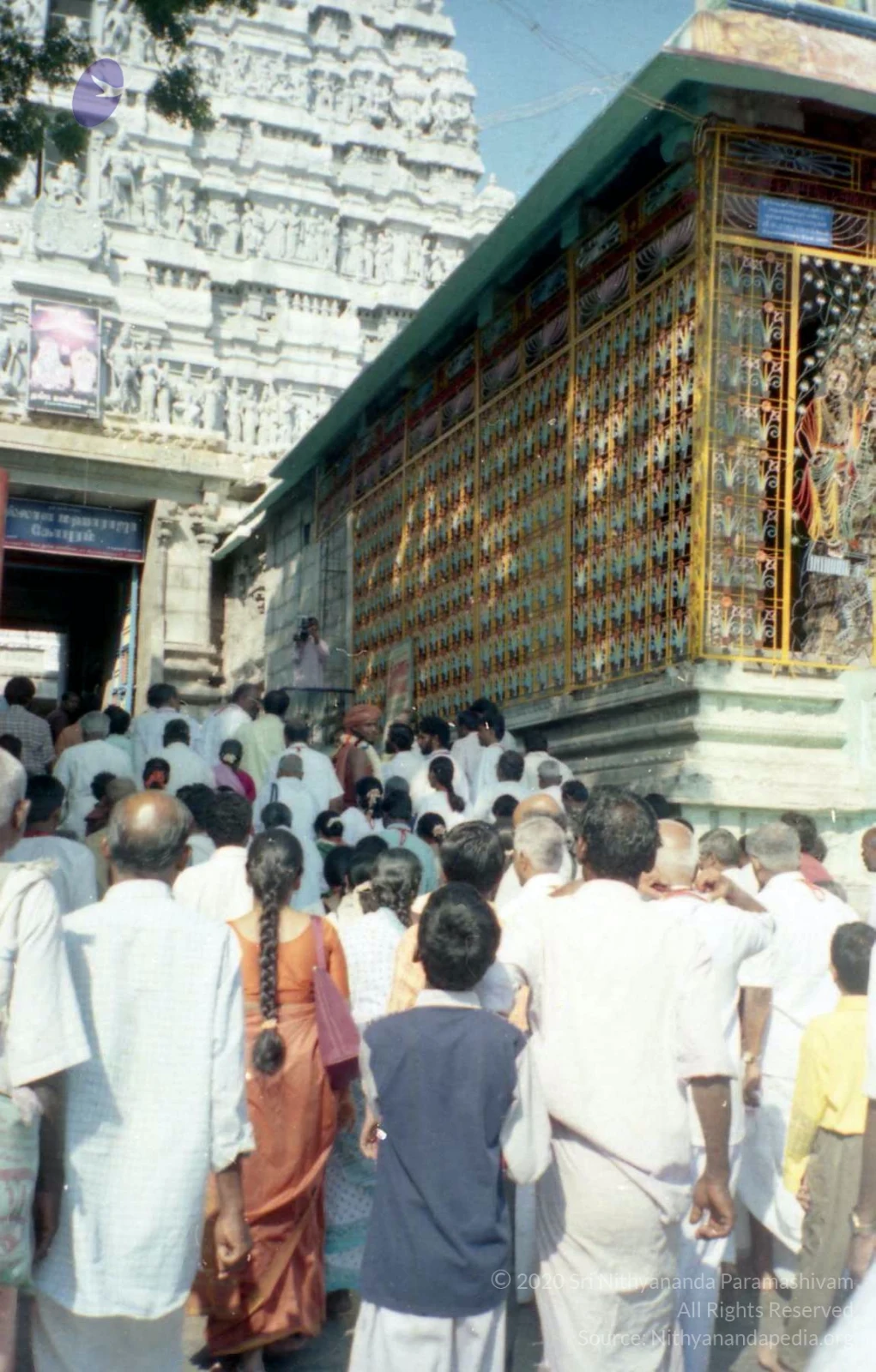
Link to Video - Paramashivoham Oneness Capsule 156 (Swamiji Offering Aarthi in Tiruvannamalai 09 Nov 2003)

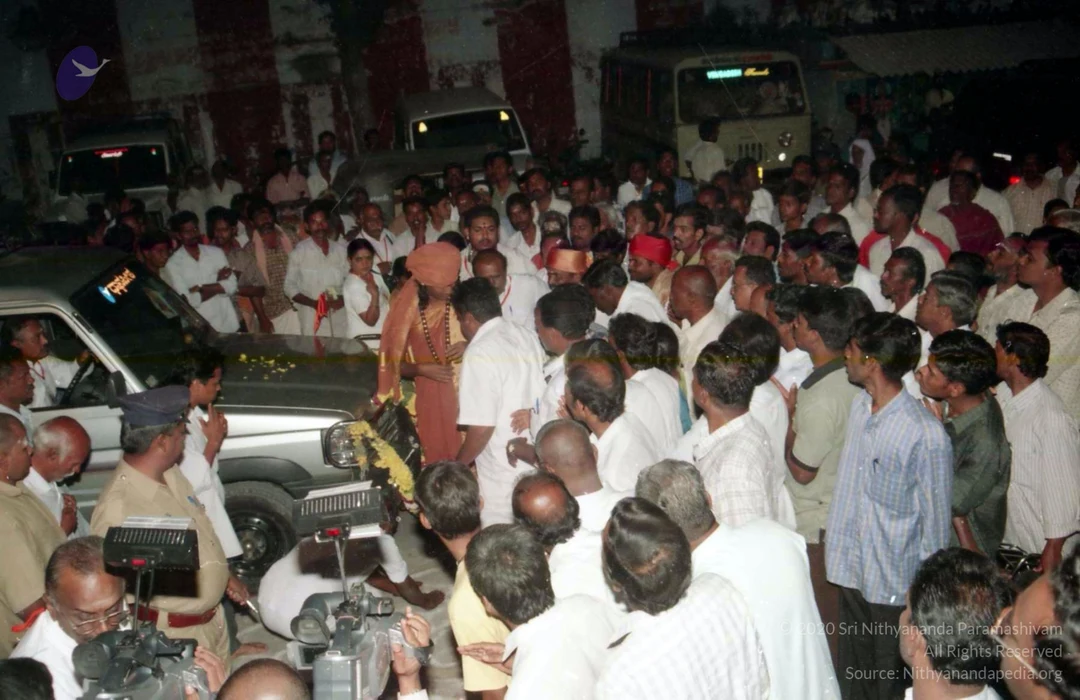
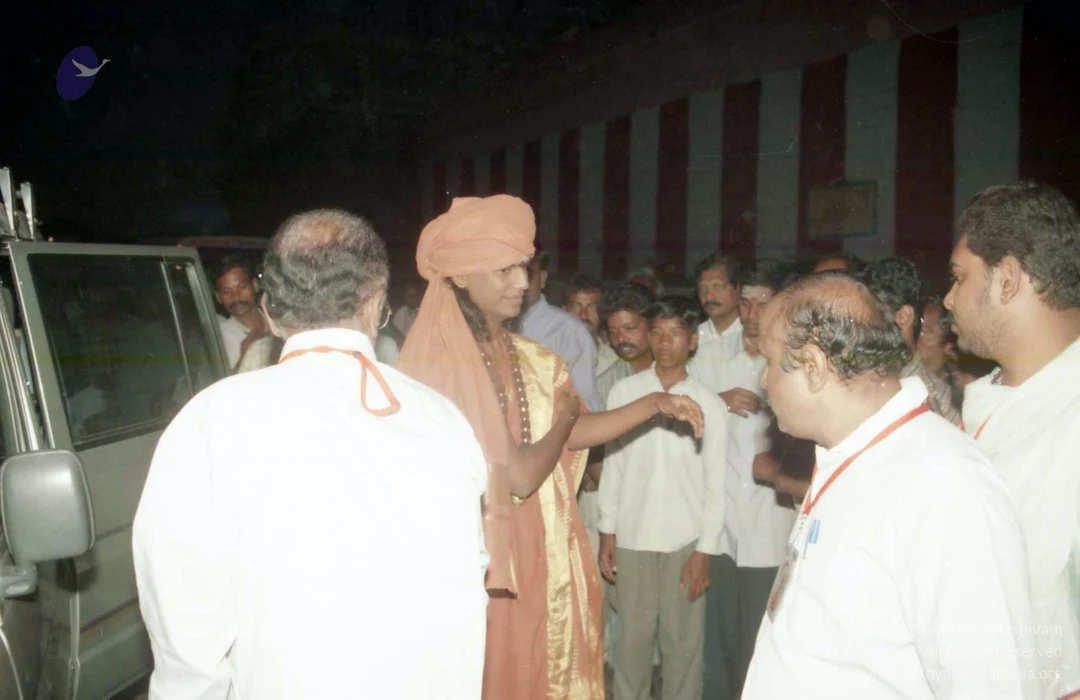
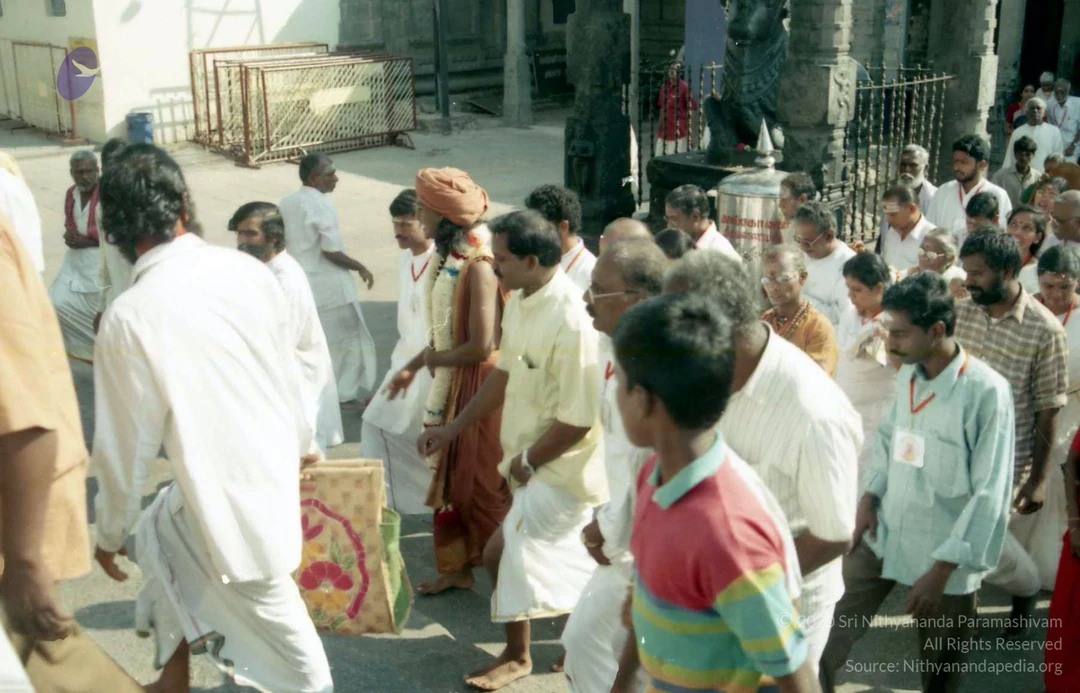
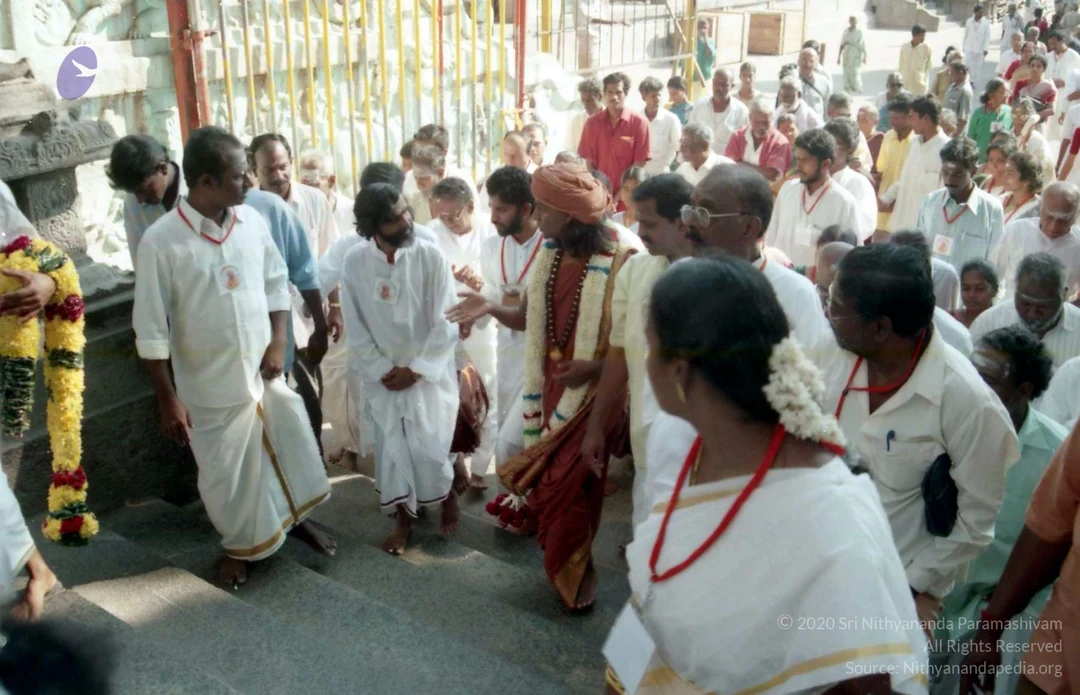
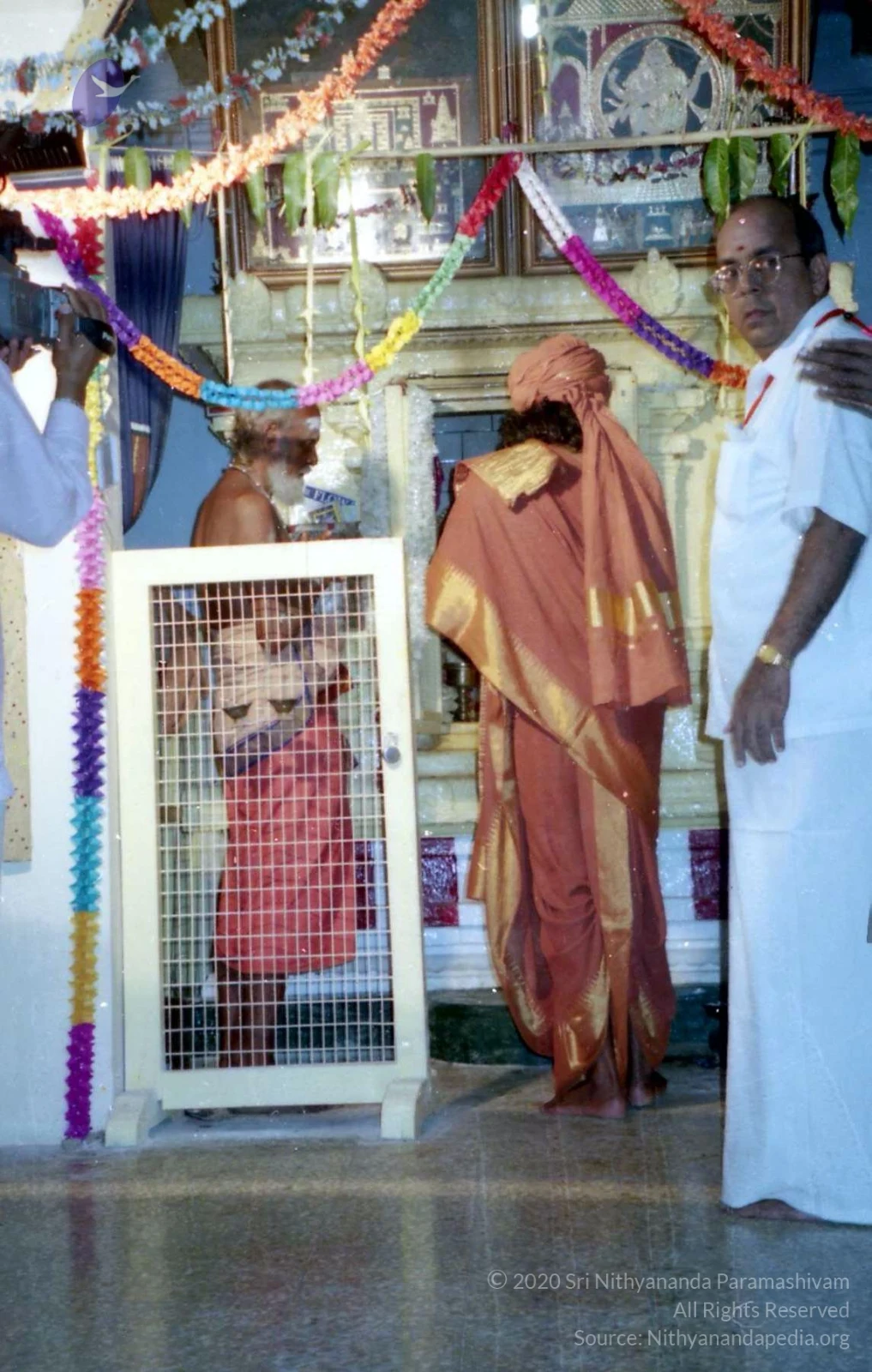
Behold this rare darshan of His Divine Holiness offering the sacred arati at the Tiruvannamalai. As the avatar, the sachalamurthi, performs this sacred seva to Achalamurthi, our very biomemory picks up the foundational truth of Hinduism.. even as you worship, you are that. Even as you worship, you are Paramashiva.

Photos Of The Day:

Tiruvannamalai-picures
More Photographs

Photos from this day

View all 100 photos

Tiruvannamalai-picures

70 photosSource gallery
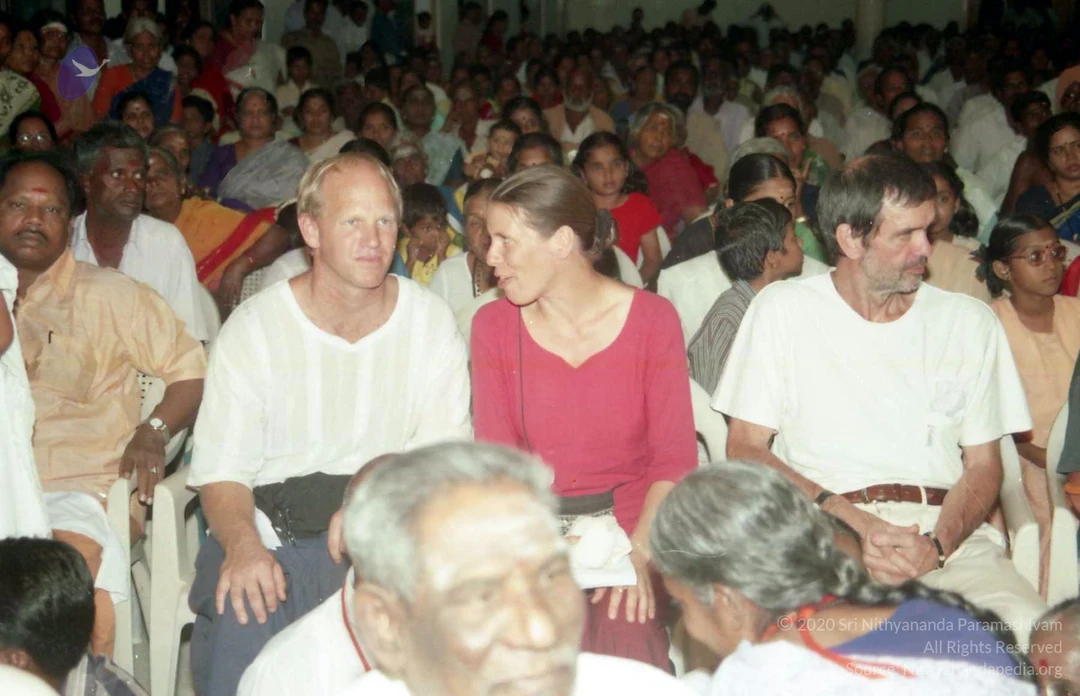
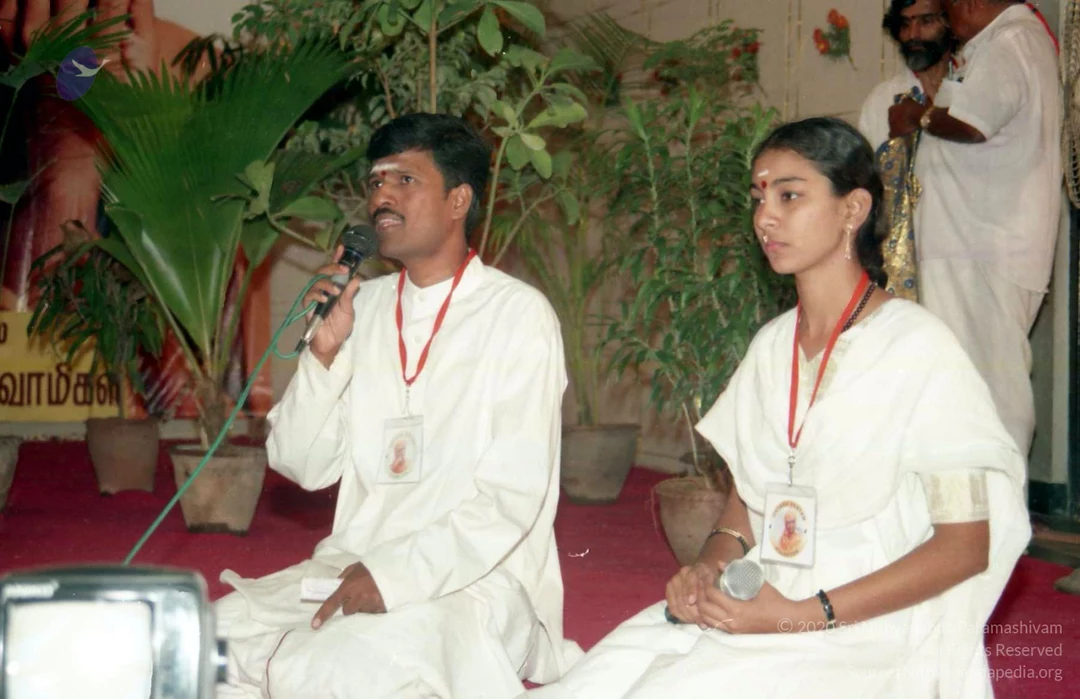
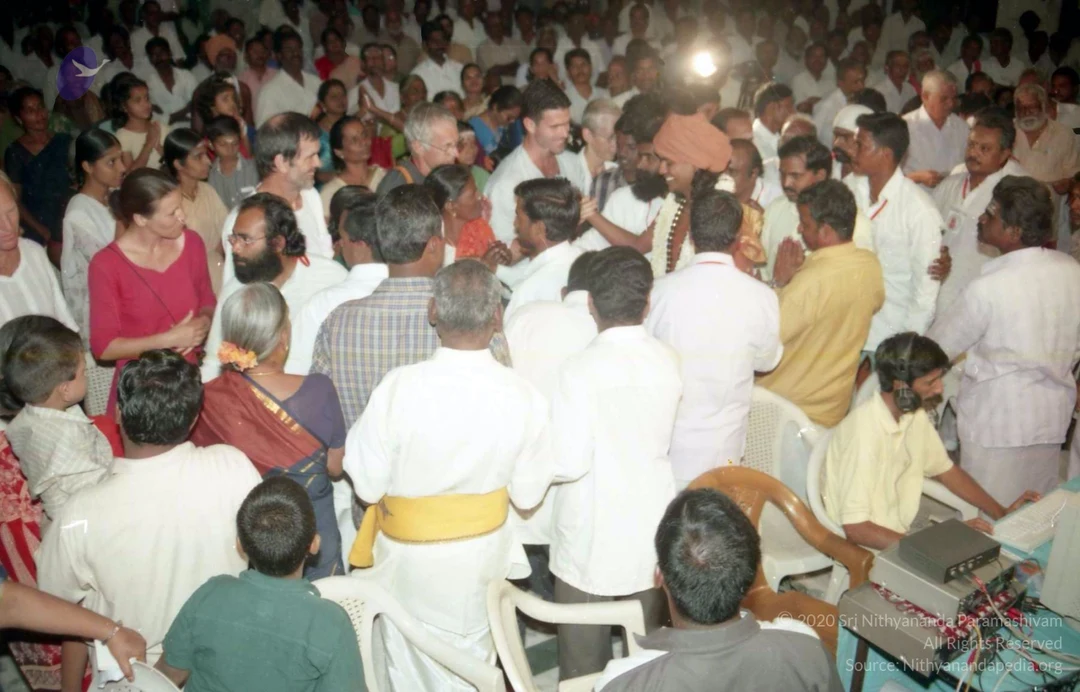
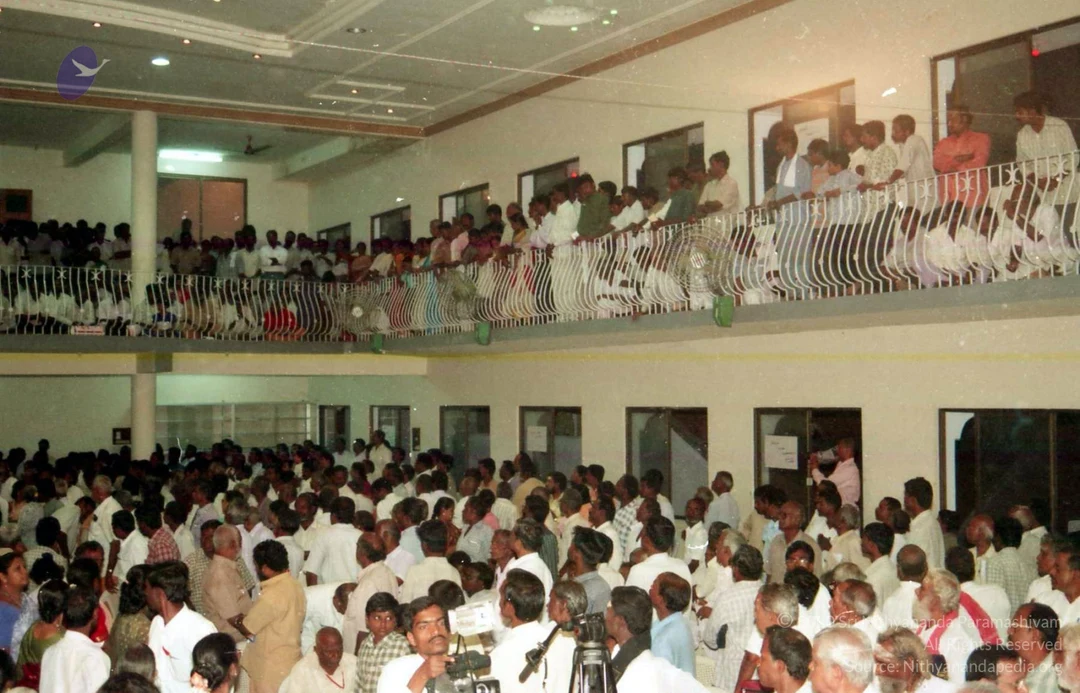
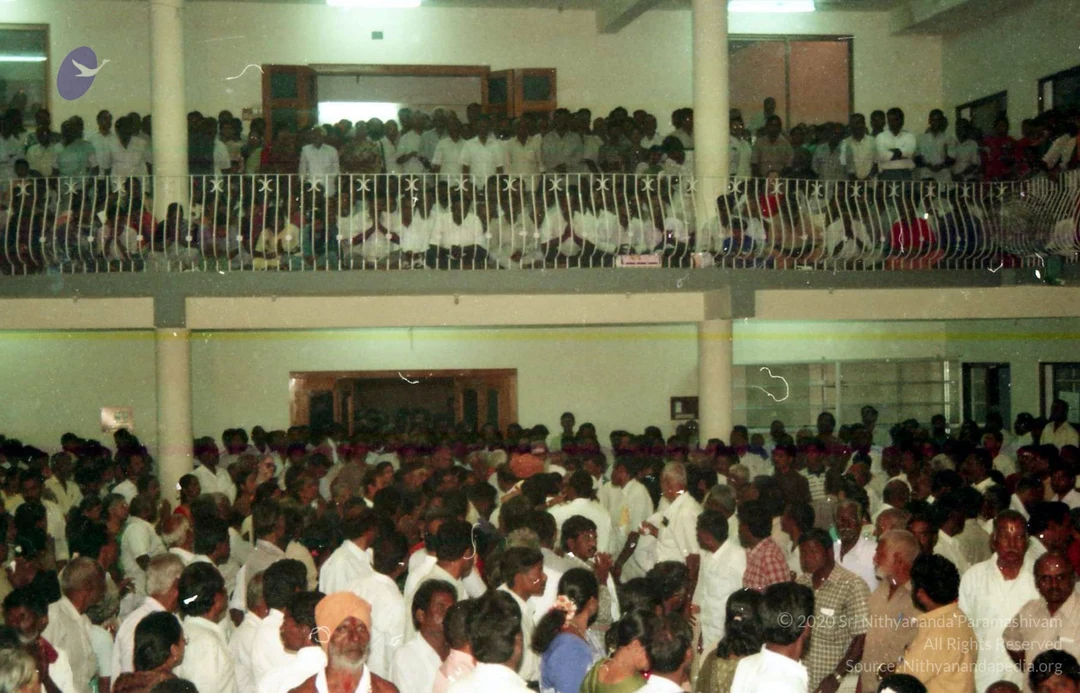
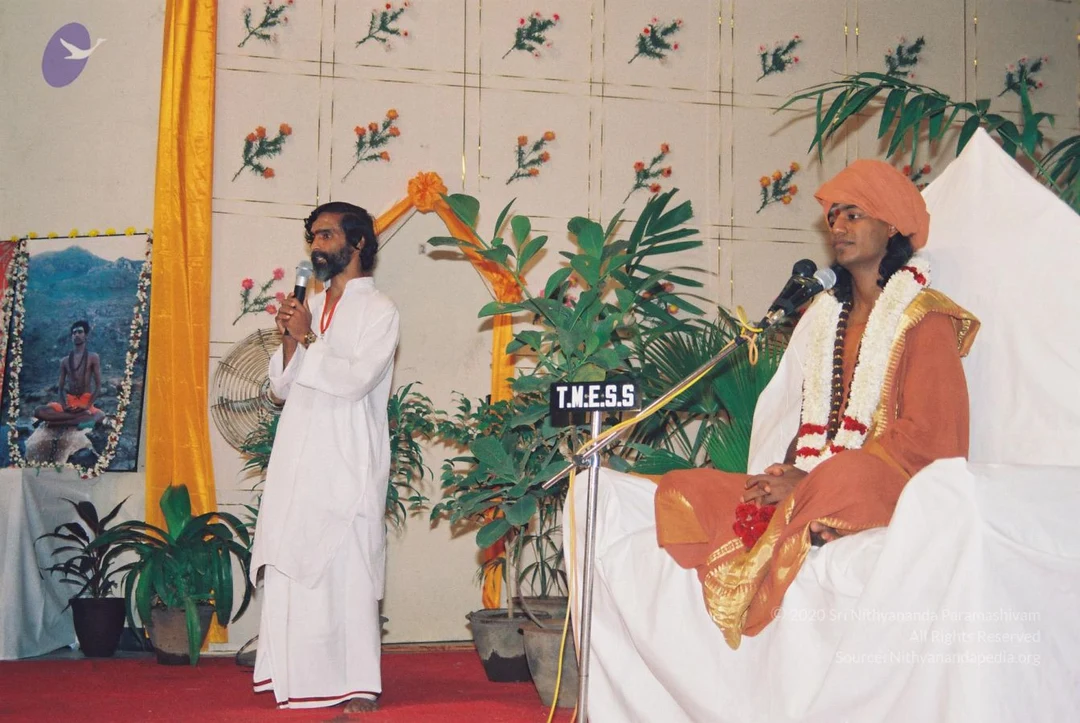
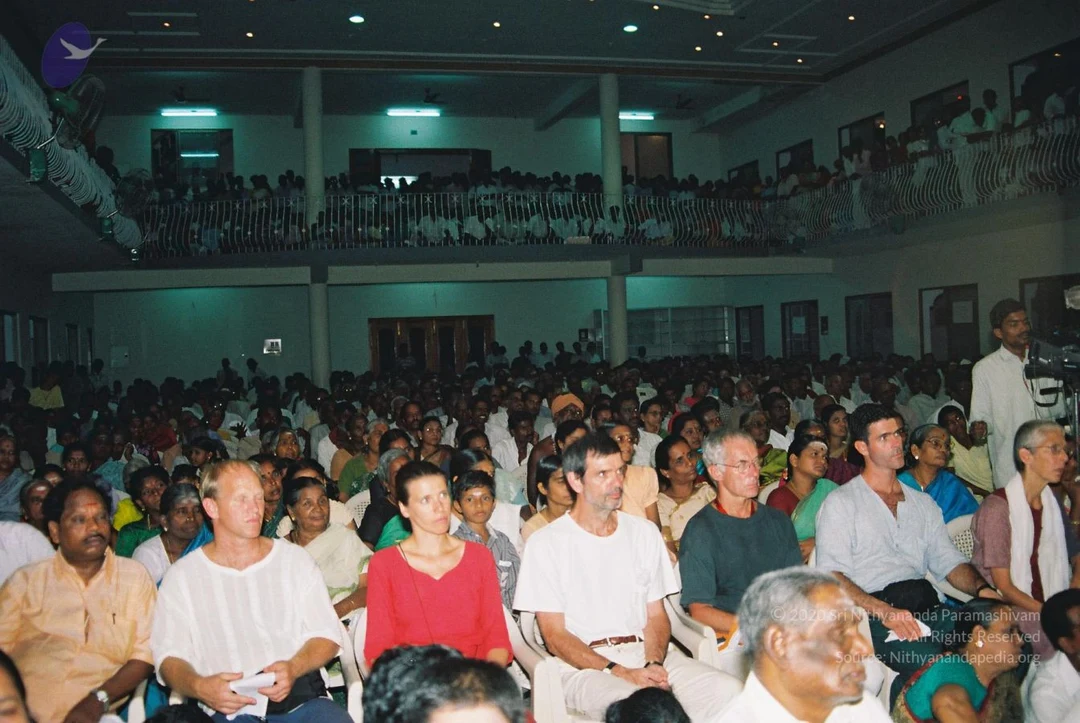
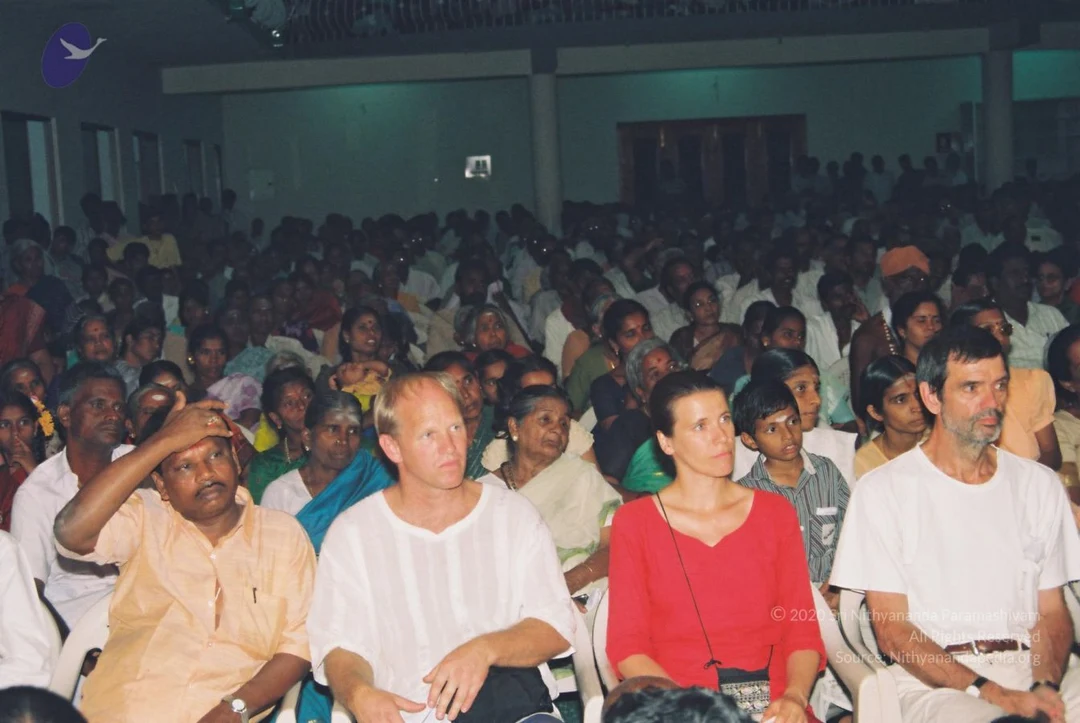
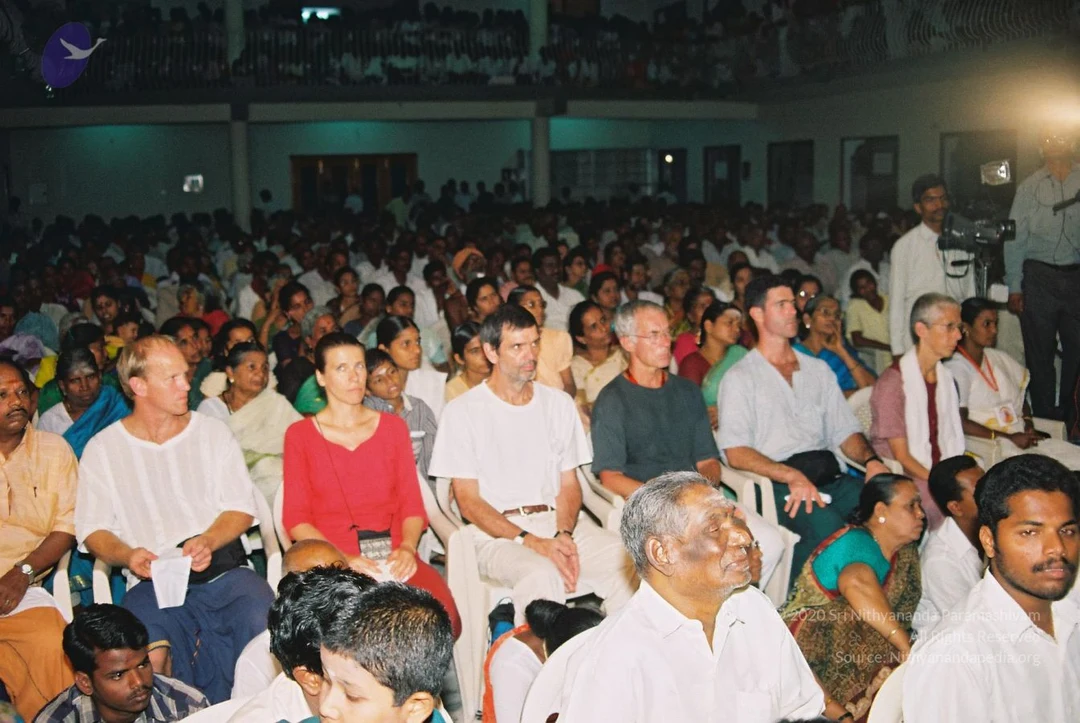
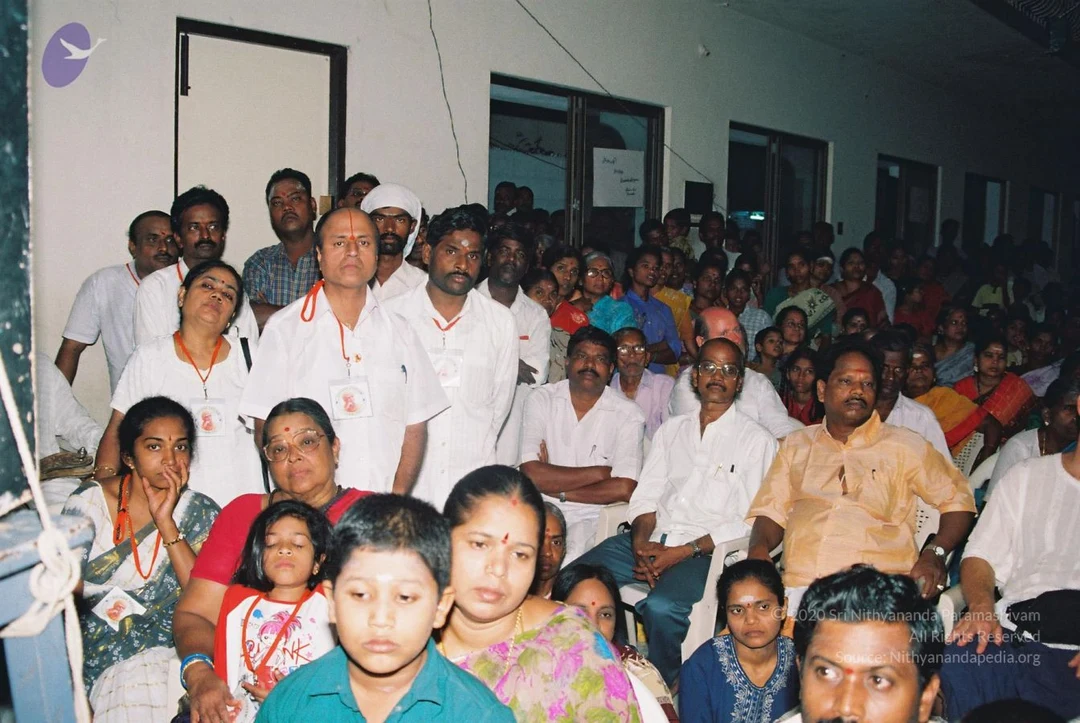
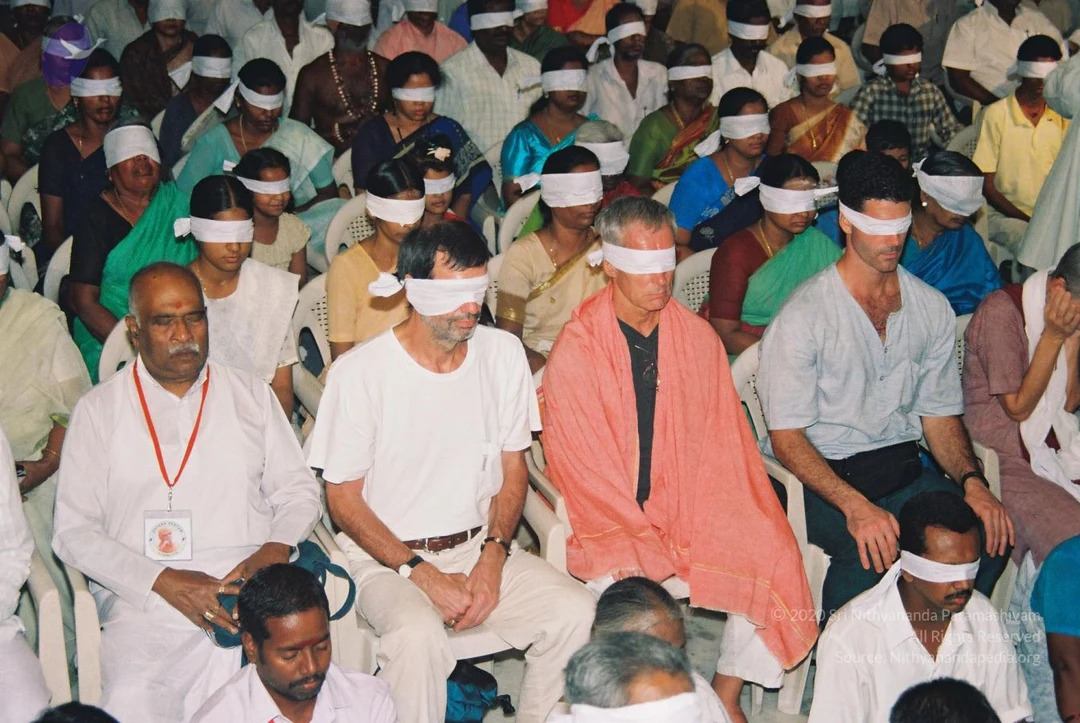
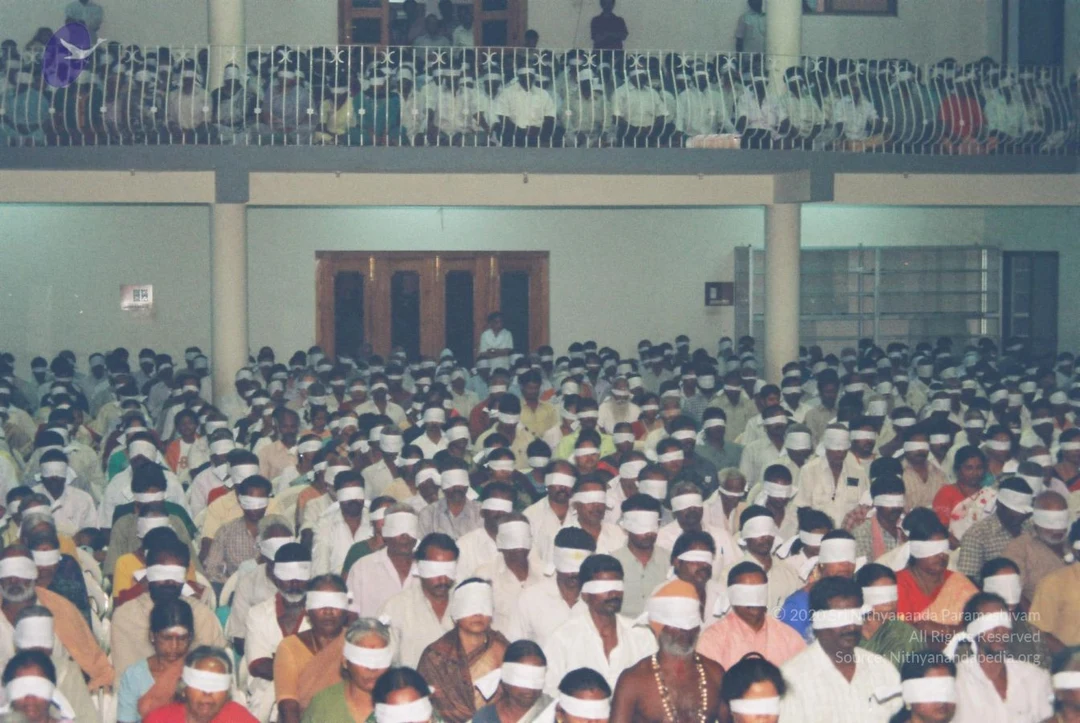
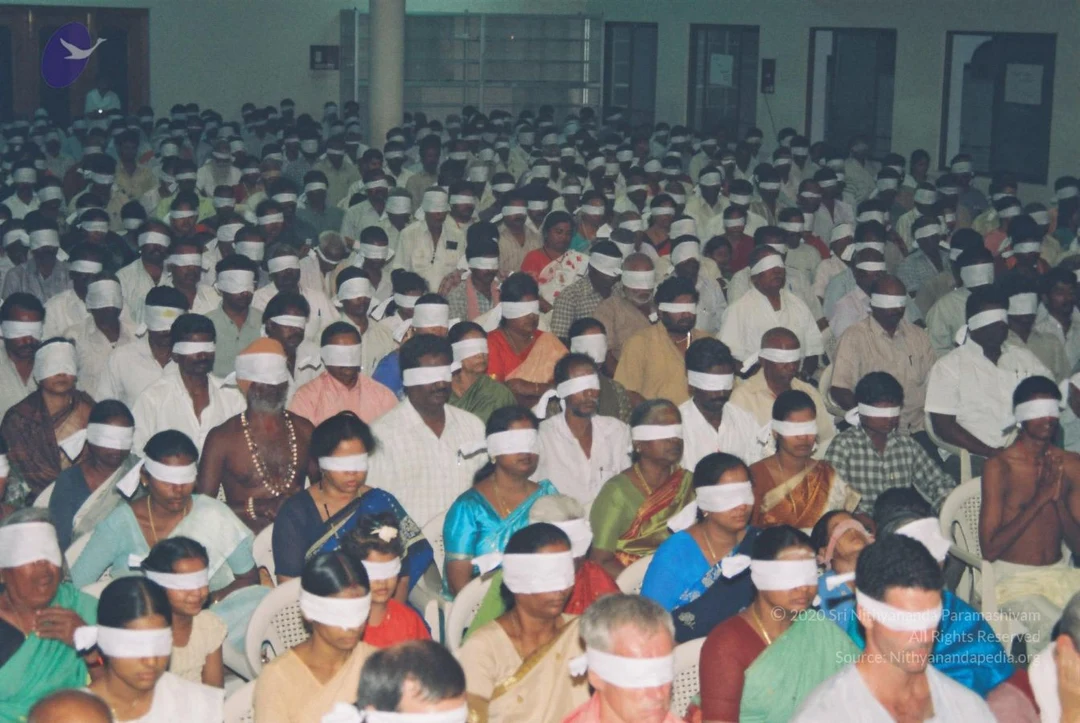
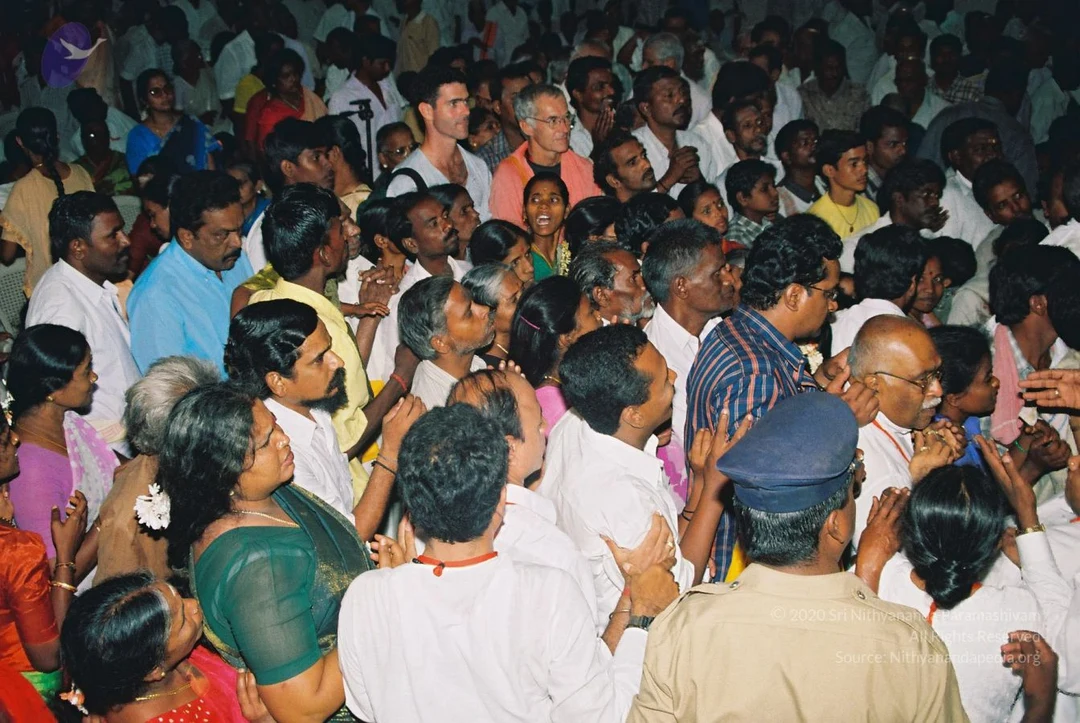
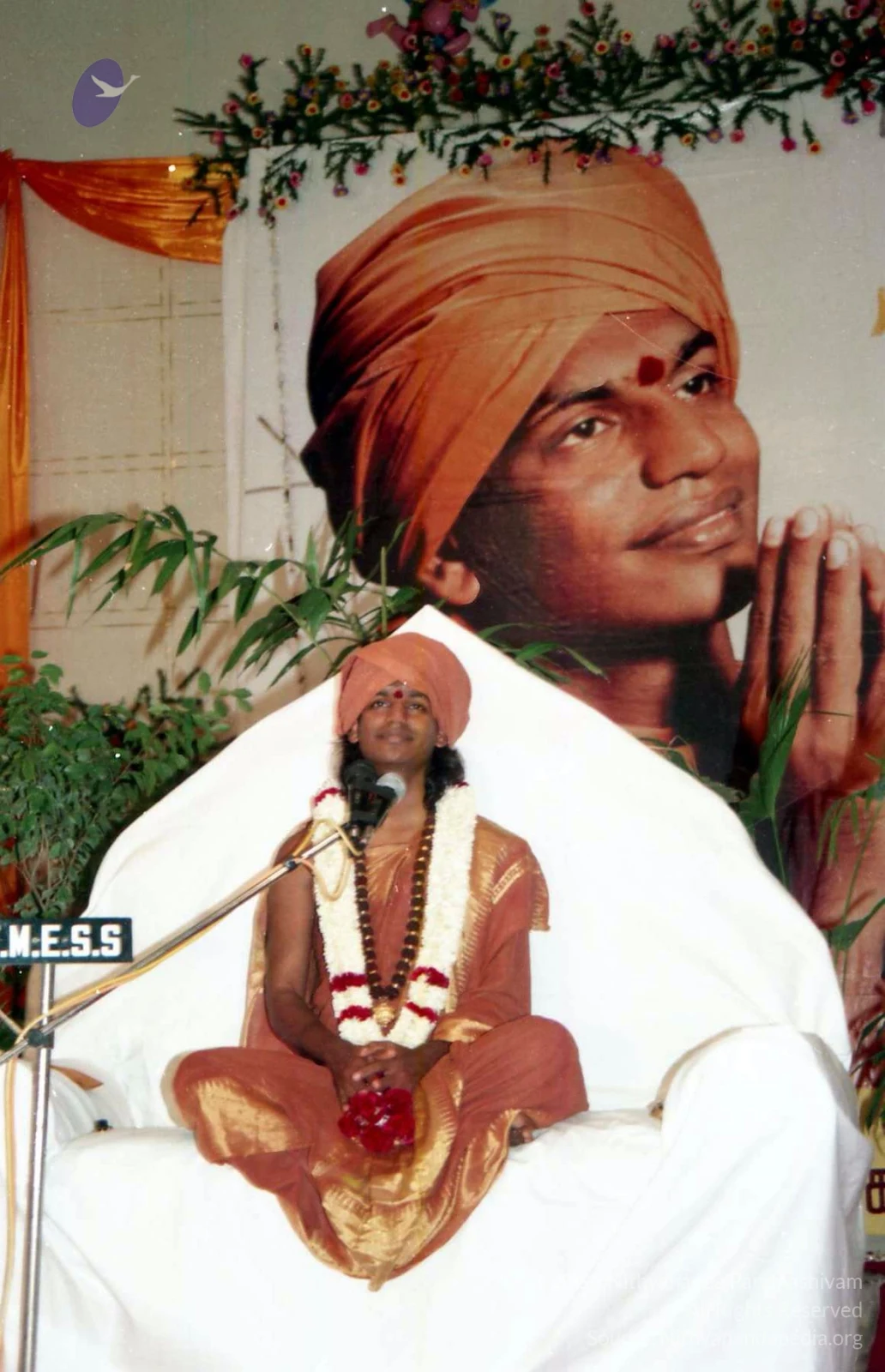
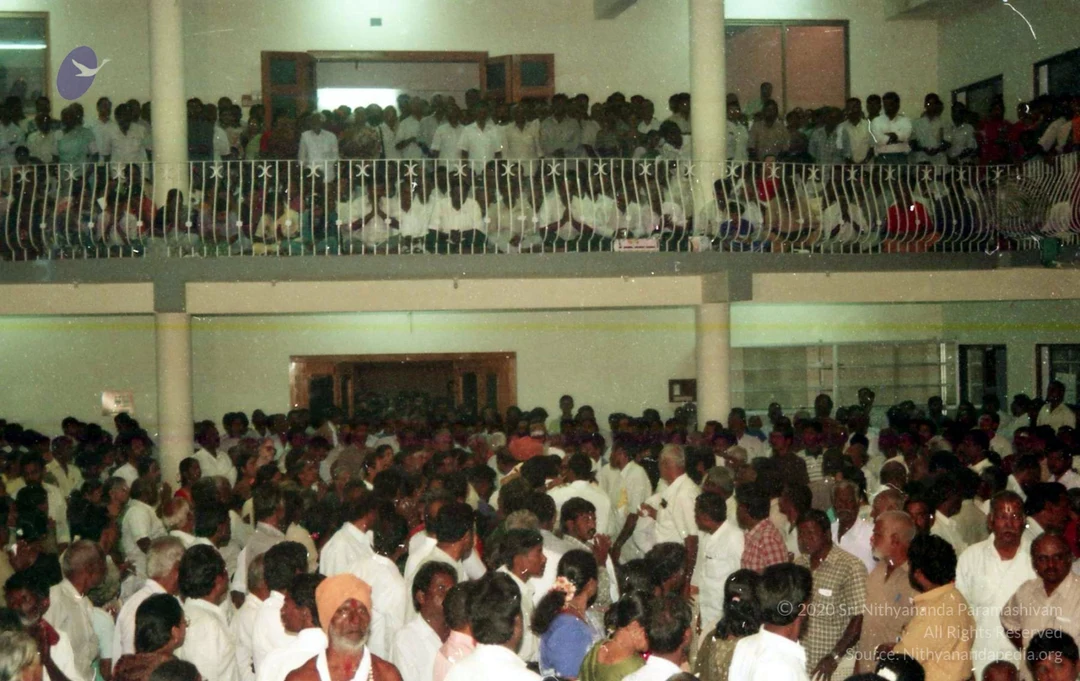
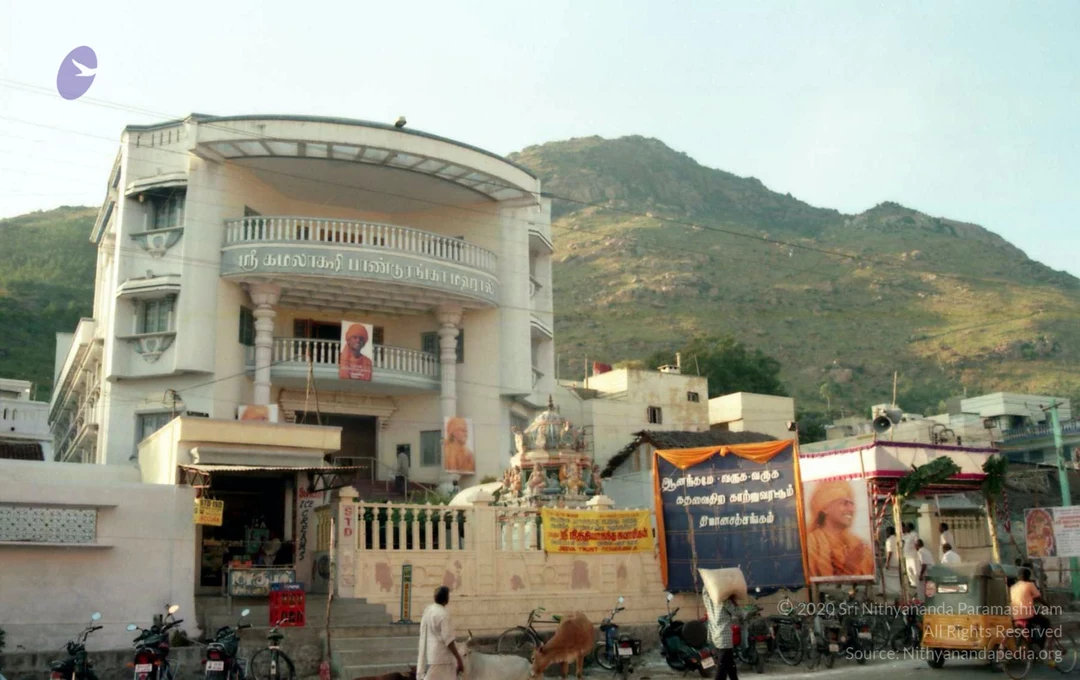
A seated man in orange-saffron robes and a matching orange turban with a red tilak sits cross-legged on a white-draped raised seat before a microphone stand, wearing a long white and red flower garland, rudraksha mala, and holding red flowers in his hands. Behind him a large printed portrait shows a man in an orange turban with red forehead mark, hands folded in anjali, framed by orange drapery, green leafy plants and a garland of colorful flowers across the top. A partially visible sign reads M.E.S.S. The seated man appears to be Swamiji (probable) based on the saffron turban, saffron robes and rudraksha mala, and is shown giving a discourse or satsang.A photograph of an indoor stage set with a red carpet and potted green plants. A seated figure in saffron-orange robes and an orange head wrap with a red bindi sits on a large white draped seat, wearing a white flower garland, a red flower garland and a rudraksha mala, with palms pressed together in greeting. Behind the seat a large portrait shows a smiling man in an orange turban with palms joined, and orange drapery hangs along the top. A standing elderly man in white dhoti and white shirt, barefoot, stands to the left and extends his hand toward the seated figure.A central figure in a rust-brown robe with a matching brown turban and a rudraksha mala stands barefoot on a red-carpeted stage being garlanded. Two men in white dhotis and shirts lift a multicolour flower garland over his shoulders, while a third white-clad man on the left stands nearby and two more men in white stand on the right, one with hands folded in namaste. Behind them is a large framed portrait of a man in an orange turban with a red bindi, flanked by orange drapery, flowers and potted palms.A large seated crowd fills a hall, mostly in white and pale clothing, with many women in saris in orange, yellow, blue and red. In the foreground, two Western men in white shirts sit on white plastic chairs, with a woman in a red top between them. Other people sit in the rows behind and in front, some with grey hair and red or white marks on their foreheads.A photograph of two people seated on a red carpet in front of a stage with potted palms. A man in white ritual clothes with a red vibhuti mark on his forehead speaks into a handheld microphone. Beside him a young woman in a white sari holds a microphone in her lap and wears a red lanyard with an ID badge. Behind them a standing bearded man in white and a figure with a dark cloth are partly visible near a pillar. A red and white banner with Tamil lettering runs along the left edge, and a tripod-mounted monitor sits in the lower left corner.A stage event with a red carpet and potted plants. A seated figure in an orange-saffron robe and matching orange turban sits on a white cushioned seat behind a microphone, with a garland of red and white flowers and a rudraksha mala. In front, a man in white ritual clothes with a red garland sings or speaks into a microphone, and beside him a young woman in white with a long braid holds a second microphone. Behind them, a large portrait of a man in an orange turban hangs on the orange-draped backdrop, and a wall of floral-patterned fabric with orange trim surrounds the stage. A small sign on a stand reads T.M.E.S.S.
More Photographs
30 photosSource gallery
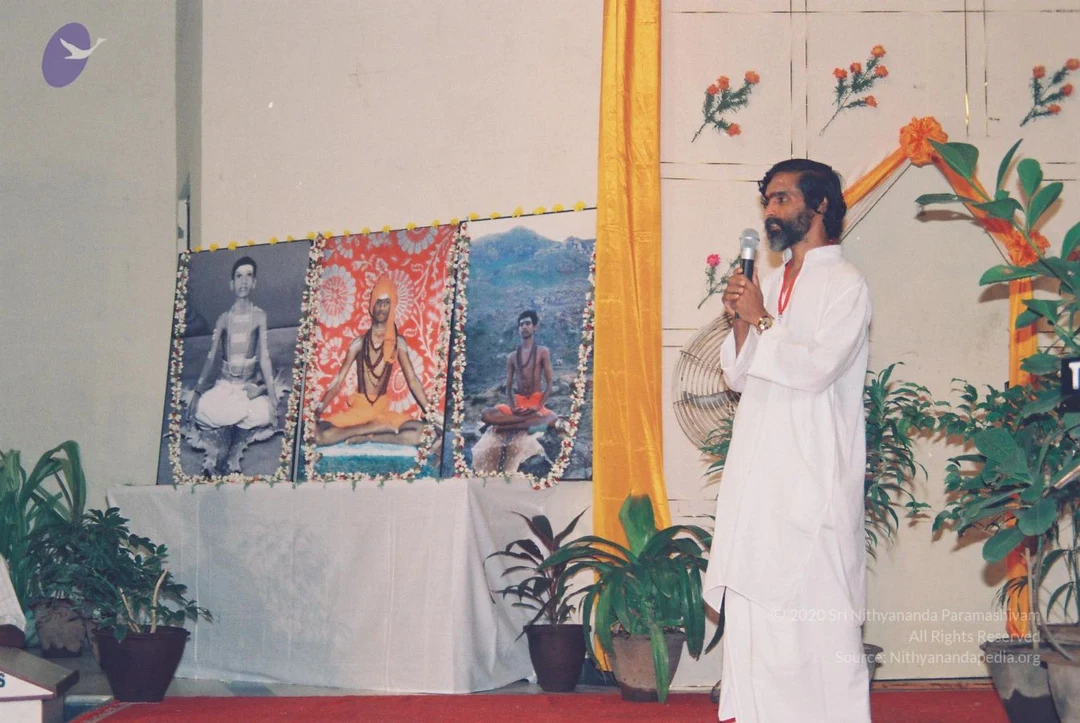
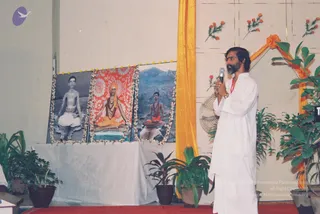
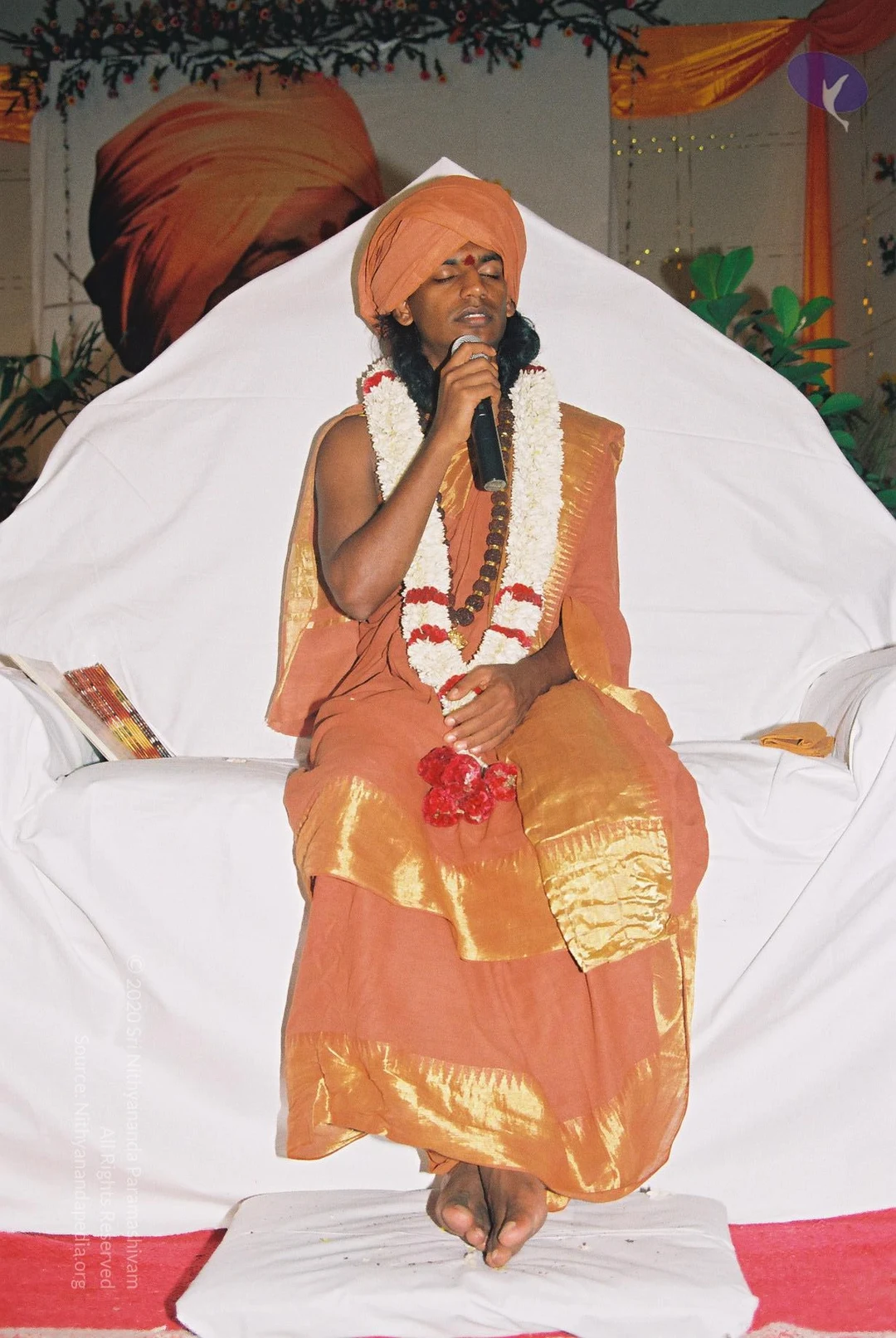
A seated man in an orange-saffron turban and orange robe with gold-bordered edges sings into a handheld microphone with eyes closed. He wears a long white and red flower garland and a rudraksha mala, and holds red flowers in his lap. He sits on a white draped seat with bare feet on a white cushion over a red carpet. Behind him hangs an orange drape with a large painted portrait of a turbaned figure, plants and fairy lights.A young man seated cross-legged on a white-draped raised seat in a decorated hall, wearing an orange turban with a red tilak, a saffron and gold-bordered robe, a long white and red flower garland and a rudraksha mala. His hands are folded at his lap holding a red flower, and he gazes upward. Petals of white, yellow and pink flowers scatter the white cushion and red carpet at his feet. A microphone and a book sit on the seat beside him. Behind him, orange drapes and foliage frame the stage, with a bearded man in white and an older man in white partly visible at left. Swamiji (probable): long hair, saffron turban, rudraksha mala and orange gold-bordered robe on a throne-like seat.A man in white ceremonial clothes with a long white kurta and white dhoti, a red thread around his neck, and a wristwatch holds a microphone and speaks at a stage. Behind him, three framed photographs are displayed on a white-draped table decorated with garlands of yellow and orange flowers: a black-and-white image of a seated figure on the left, a central figure in saffron-orange robes seated in meditation on a red patterned cloth, and a figure in orange clothing seated on rocky ground on the right. Potted green plants surround the stage, a saffron-yellow curtain hangs behind, and orange flowers decorate the wall. The printed portraits are not physical people.Photograph of a stage event with a seated figure in orange and gold robes, an orange turban, and a white and red-bead garland, sitting on a white-draped throne-style chair. Beside him a bearded man in a white dhoti and white kurta holds a handheld microphone and stands on a red carpet. Behind them are a yellow drape, potted plants and a wall decorated with floral motifs, and a framed photo of a seated ascetic in orange appears at left. A table sign reads T.M.E.S.S. The seated figure has long hair, a saffron turban and saffron-orange robes with gold trim, matching the page's a person claim in appearance; the bearded man is a speaker. Two people are visible.A large seated audience fills an indoor hall with teal-lit walls, rows of white plastic chairs and a balcony crowded with more spectators behind a white railing. In the foreground, a man in a white shirt holds folded papers, a woman in a red top sits upright, and a man in a white t-shirt and belt sits beside a man in a dark green shirt and glasses. A man in a white shirt stands at the far right near a camera on a tripod, and several women wear sarees in green, blue and orange. The scene looks like a darshan or discourse gathering; no speaker or deity is visible in frame.A photograph of a large indoor hall filled with seated devotees facing toward the front, where the stage is out of frame. In the foreground, a man in a peach shirt rests his hand on his head, a bald man in a white shirt sits beside a woman in a red top with a shoulder bag, and a bearded man in a white t-shirt sits at right. Behind them, many women in colourful saris and salwar, older women in cream and blue, and a young boy in a striped shirt watch attentively. Pale green walls, fluorescent lighting and a carved wooden doorway appear in the background. No a person is visible in this frame.