April 02 2003
Original wiki pageConsecration of Ādi Dakṣiṇāmūrti and inauguration of Ananda Sabha in Adi KAILASA
On 2 April 2003, The Supreme Pontiff of Hinduism (SPH) engaged in two historic services in the divine mission of reviving KAILASA, the ancient, enlightened, Hindu civilizational Nation:
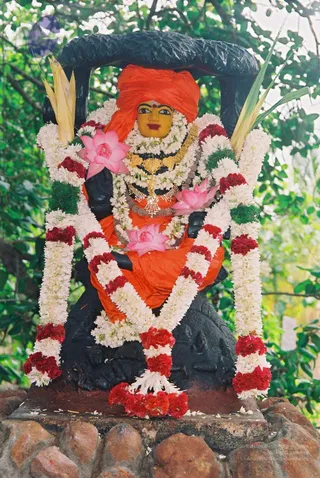
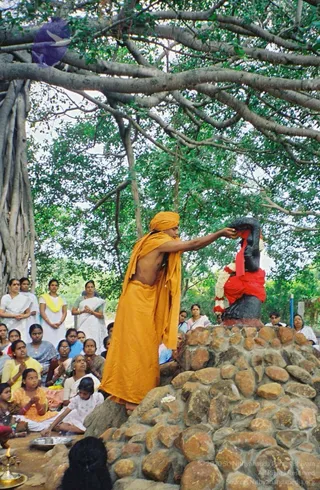
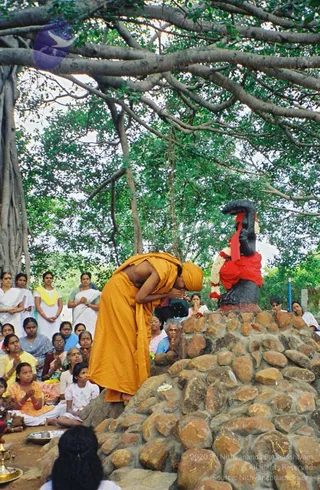
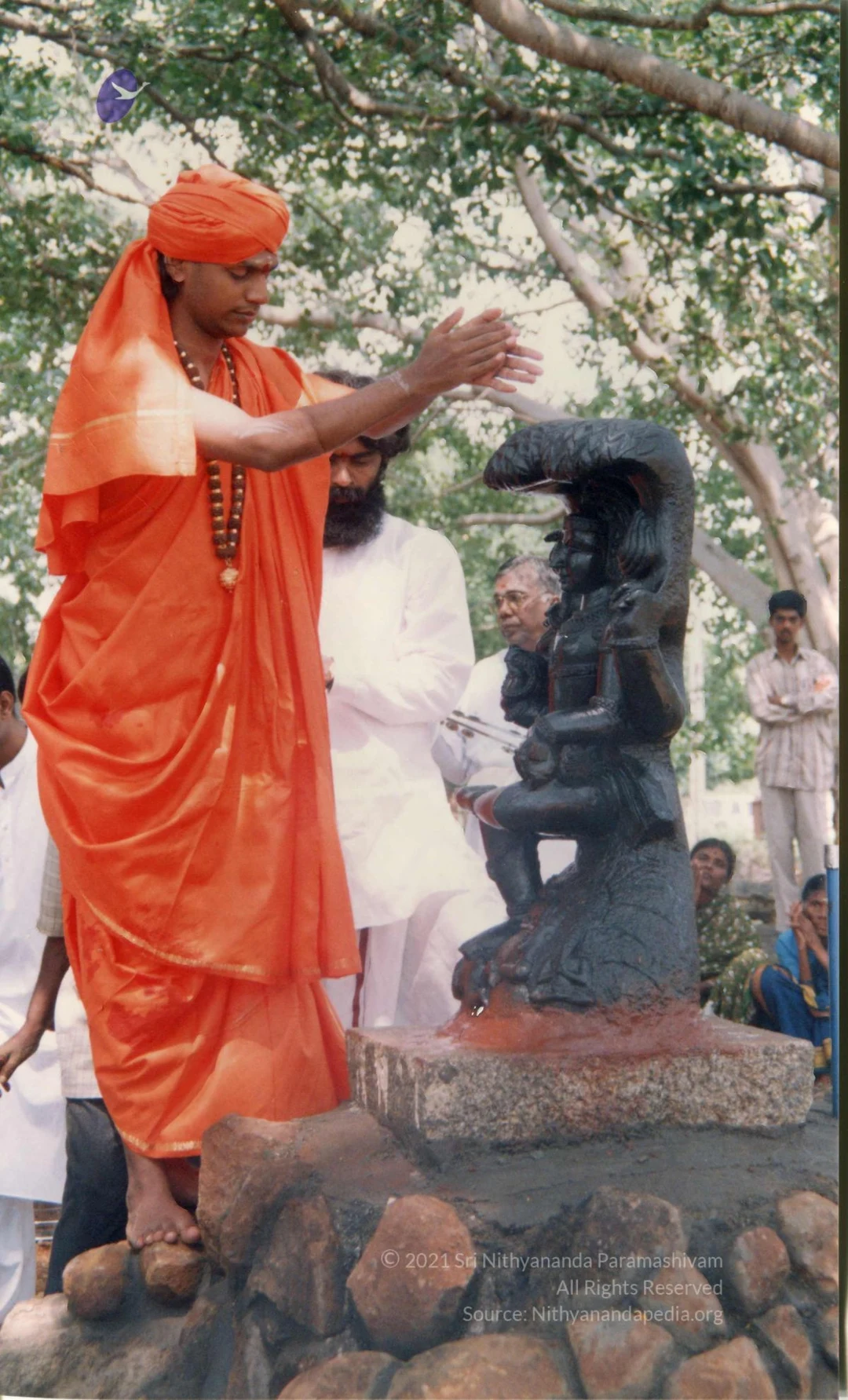
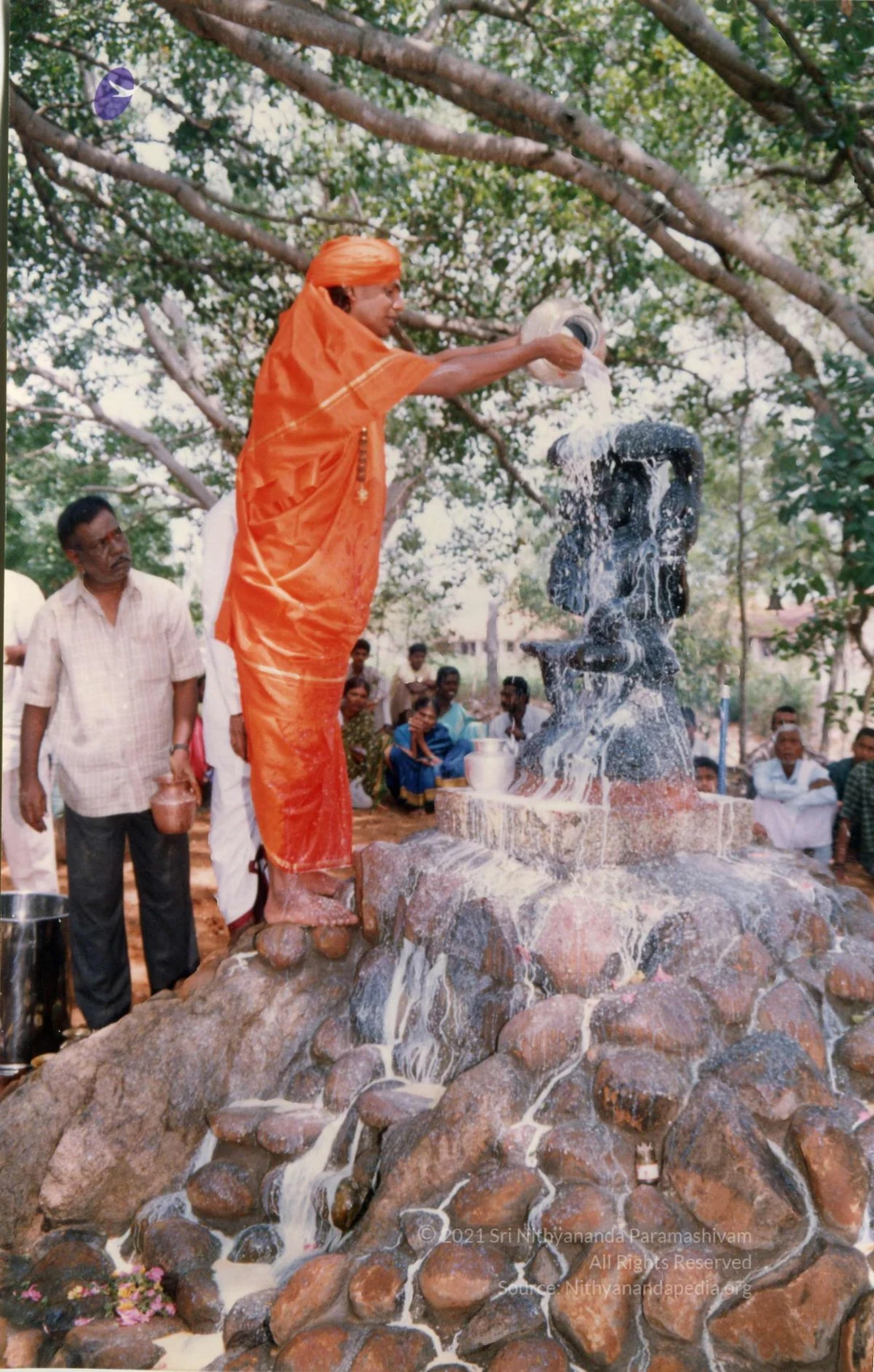
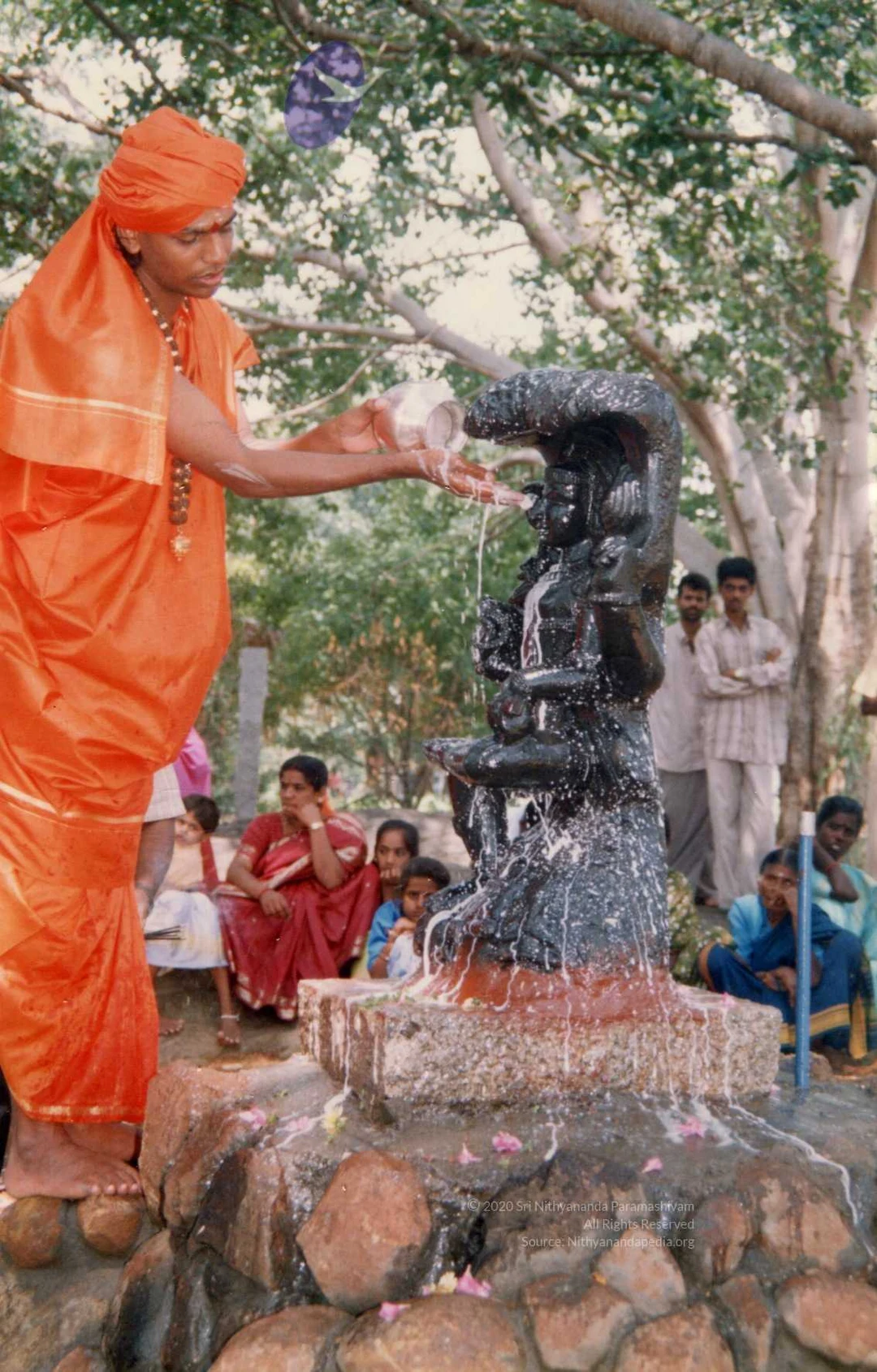
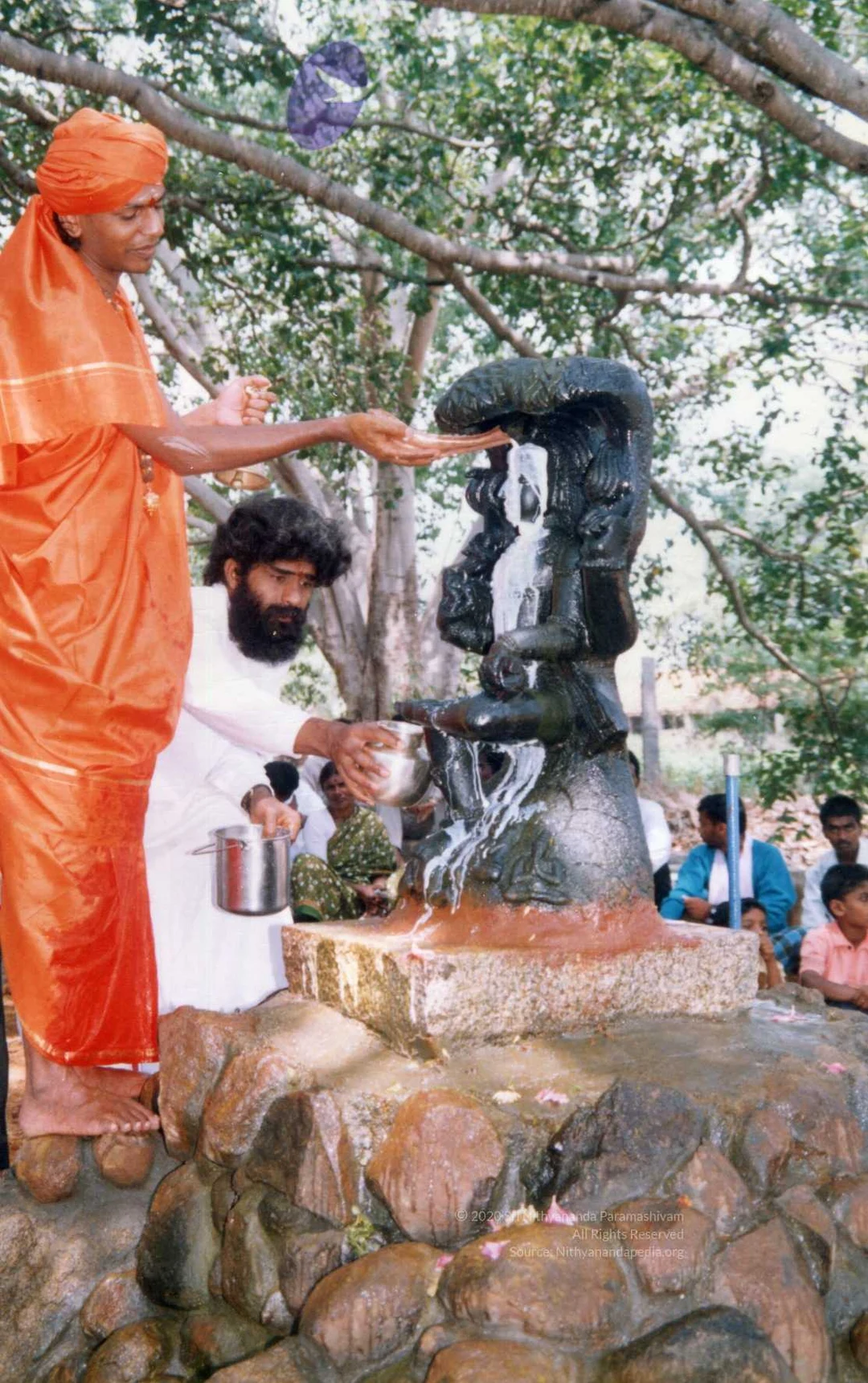
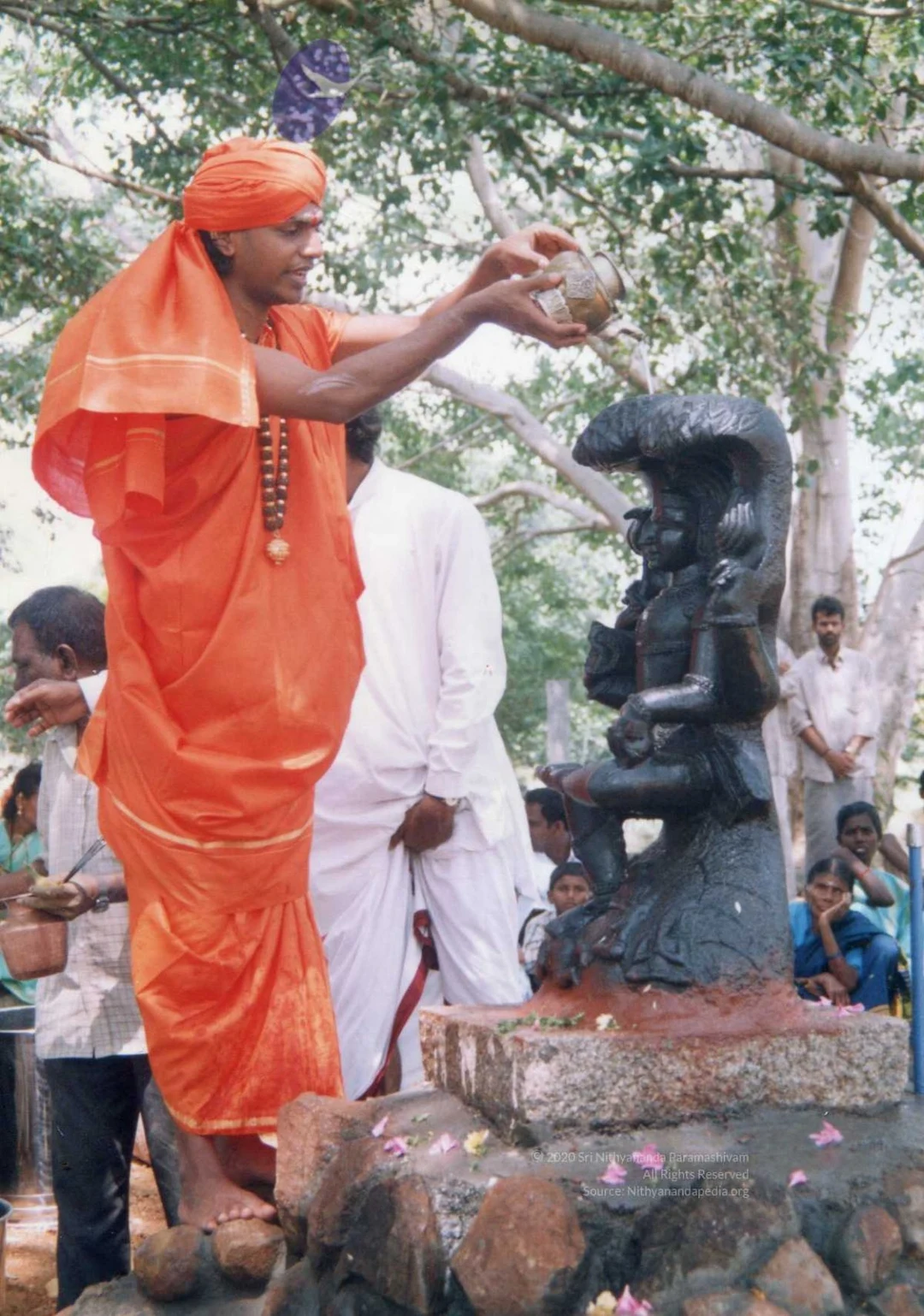
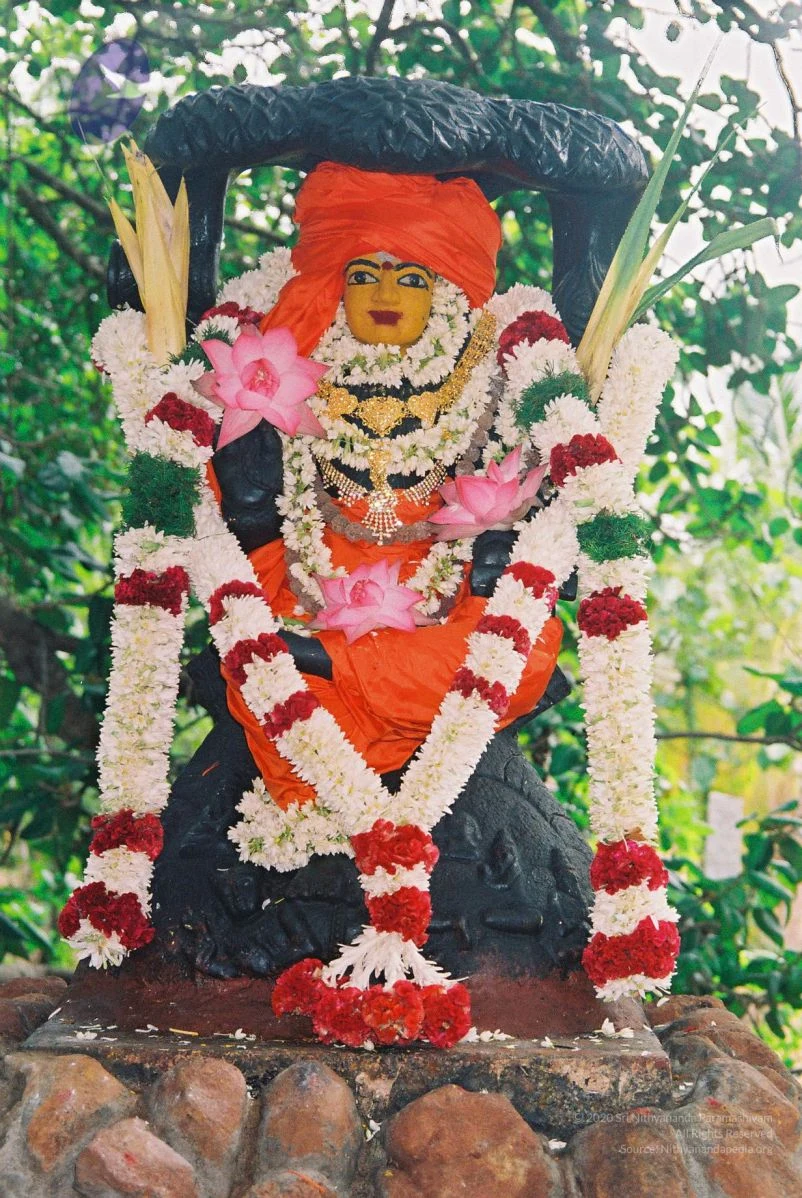
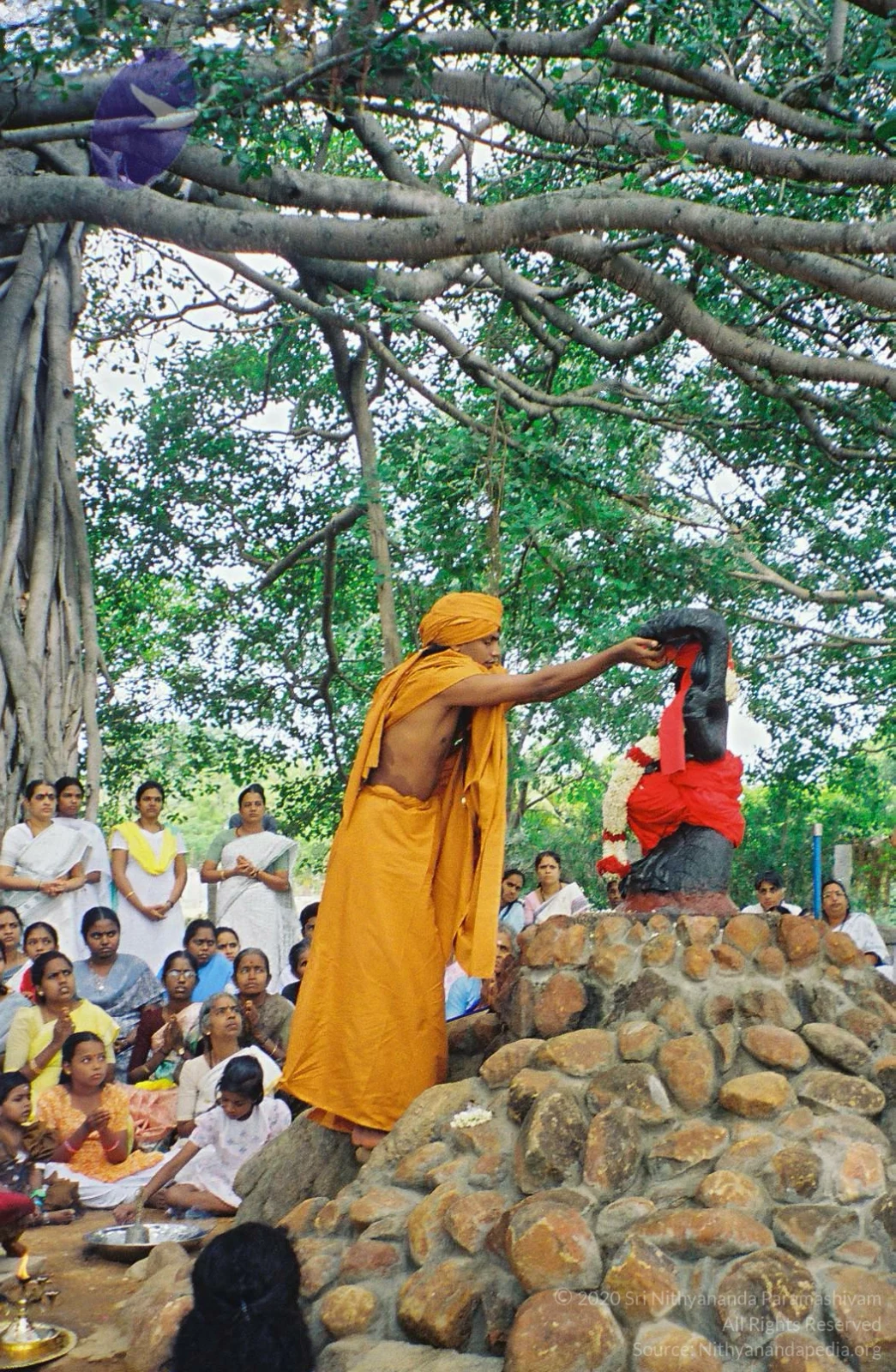
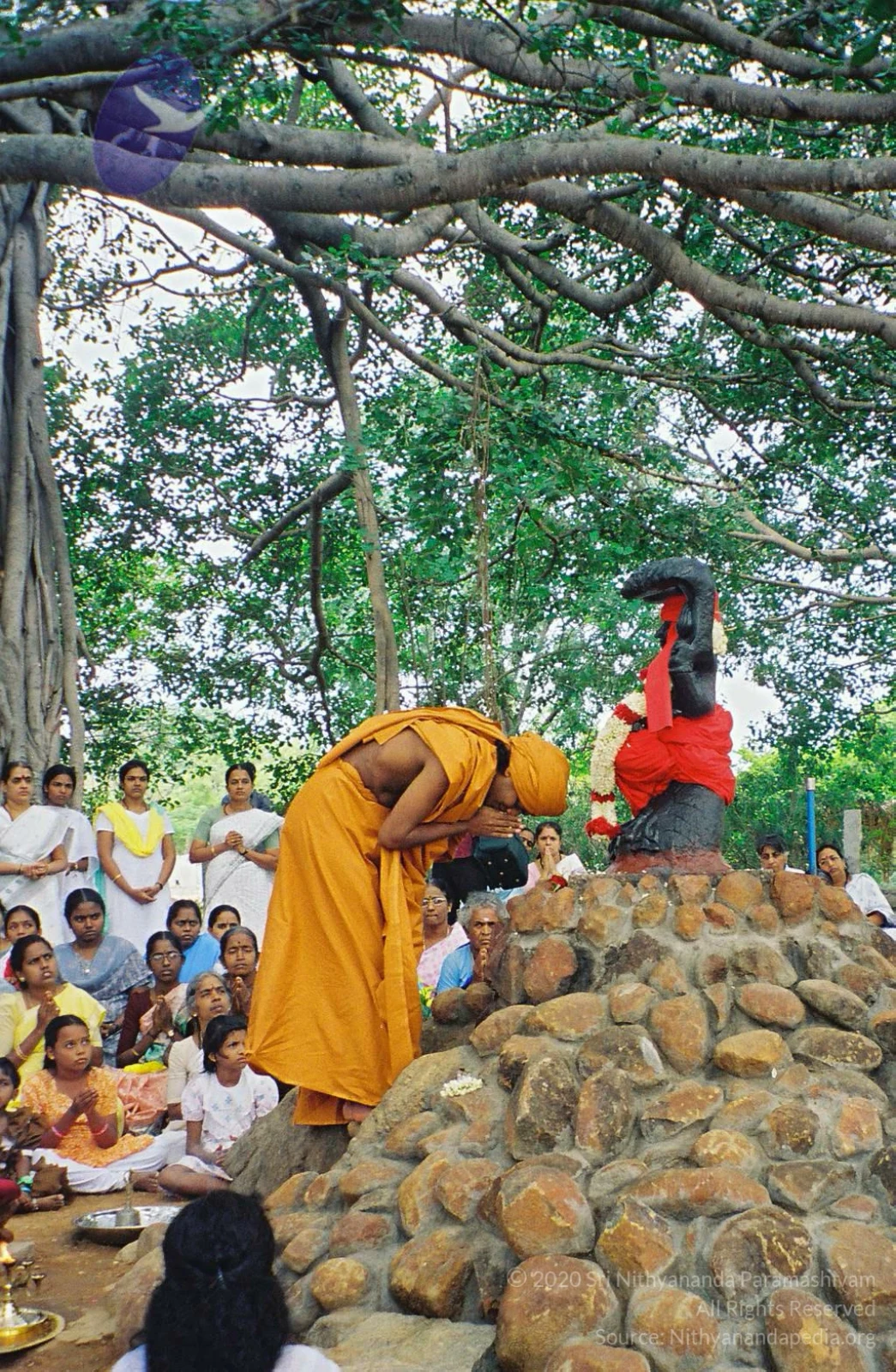
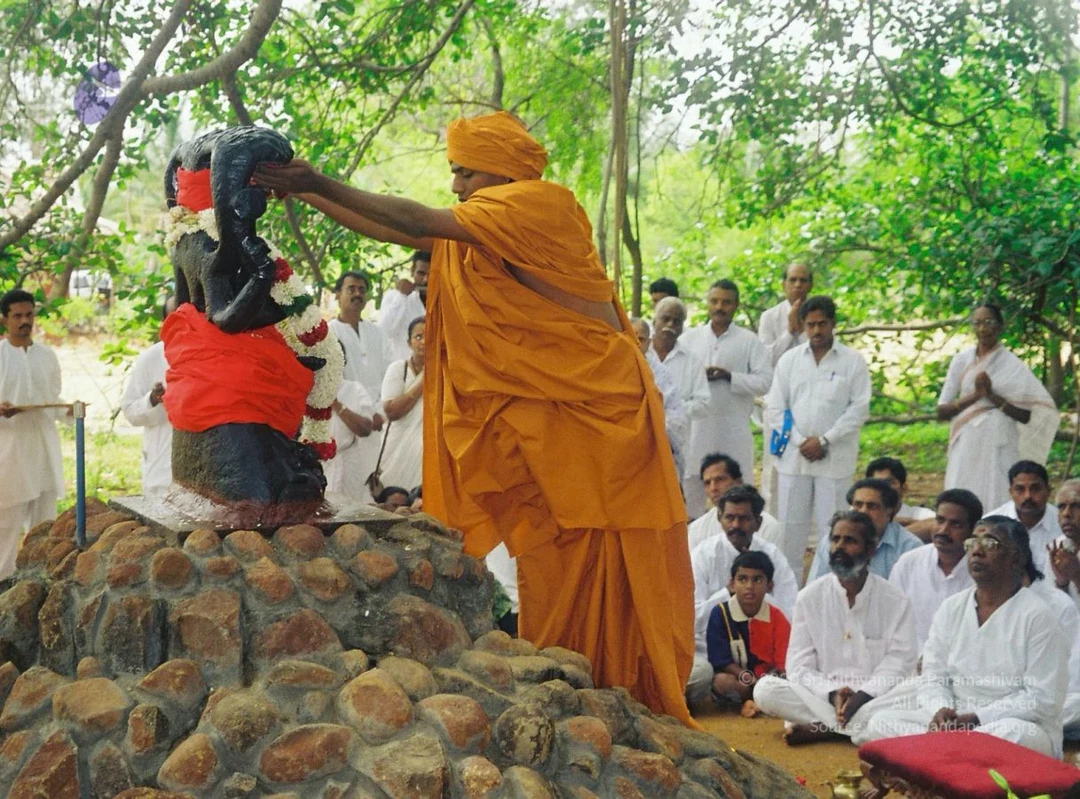
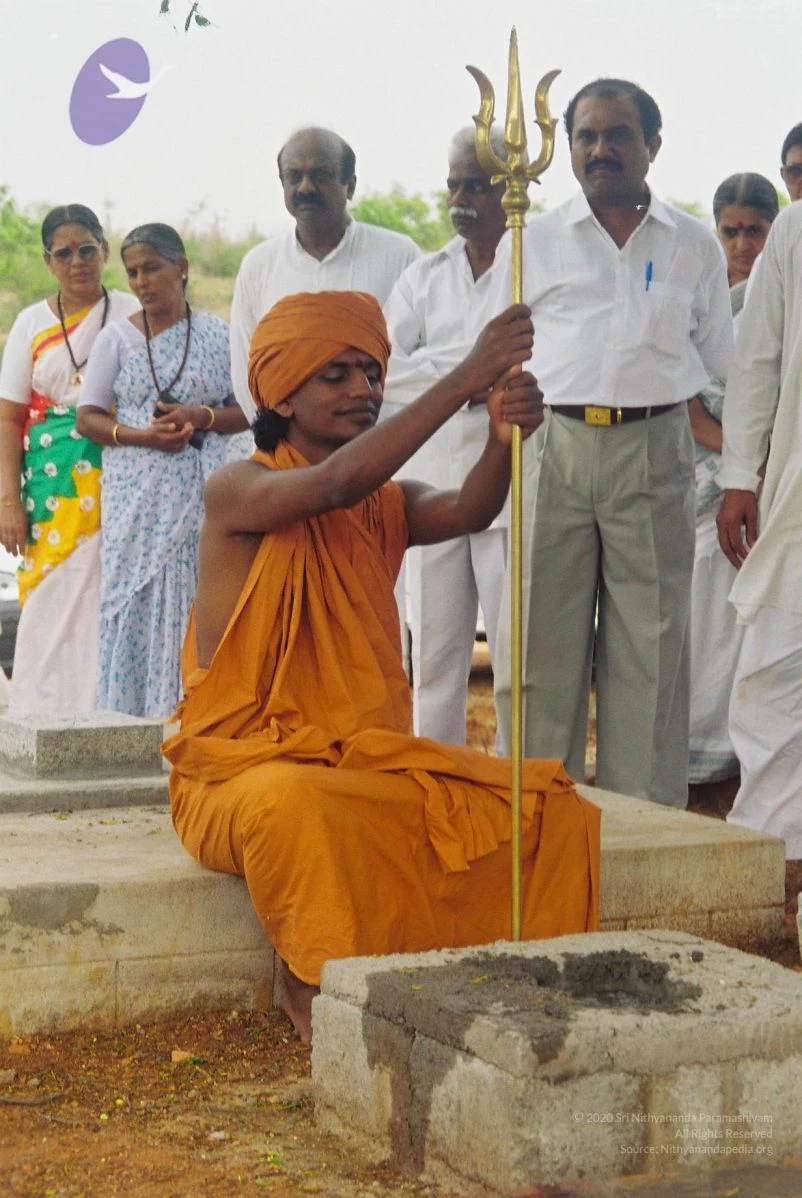
1) In the wee hours of the morning, SPH consecrated (through the method of prana pratishtha) the first ever Ādi Dakṣiṇāmūrti deity under the divine Banyan tree in Adi KAILASA - Nithyananda Peetham, spiritual headquarters of the global mission of KAILASA, in Bengaluru, South India. 2) He also inaugurated the first humble meditation hall ‘Ānanda Sabha’ in Adi KAILASA, opening the doors for international seekers to come, learn, receive initiation and get enlightened.
Consecration of deities is the process of installing life energy into them through various methods, the most powerful method being 'prāṇapratiṣṭhā', which can be performed only by an incarnation through direct installation of the Cosmic Energy into the deity. The deity is thus birthed and starts functioning as independent Cosmic intelligence, responding to devotees' prayers and guiding them to enlightenment.
The Hindu God - Ādi Dakṣiṇāmūrti represents the 'Guru' dimension of Paramaśiva in Hindu Tradition, Paramaśiva being the primordial Hindu Divinity and Cosmic Principle. If Paramaśiva's manifestation as Dakṣiṇāmūrti is understood, it can enlighten one, as stated in the sacred Hindu revelation: Dakshinamurti Upanishad (https://vdocuments.mx/dakshinamurthy-upanishad.html).
In the Dakṣiṇāmūrti Upaniṣad, it is stated in verses 1 to 7, that the sages once approached sage Mārkaṇḍeya and asked him, “How do you manage to be a Chirañjīvī (deathless one) and how are you always in the happy state?” He replied, “This is because of the knowledge of the highest Secret of Śiva, the Reality. This very secret of Reality by which Paramaśiva who is the Guru Dakṣiṇāmūrti, who, at the time of the universal dissolution, absorbs all into Himself, and who shines and delights in the happiness of His own inherent bliss."
It goes on to say: "I salute him who is white like a crystal, who holds in his hands, a chain of pearl beads, the pot of nectar which is the form of knowledge, and the mudra (symbol) of wisdom, who ties himself with a snake, who wears the moon on his head and who wears different type of ornaments.
Let the three eyed god who does only good, who has in his three hands, the sign of protection, deer and axe in three hands and fourth hand kept on his knee, who has tied a snake on his body, who shines white like milk, who sits below a banyan tree and who is surrounded by sages like Shuka, gives us pure thoughts.
Let the God Dakṣiṇāmūrti, who has a white body due to application of holy ash, who wears the crescent moon on his head, who holds in his hands, Jnāna mudra (symbol of wisdom), beaded chain, Veena and books, who wears all ornaments, who wears the elephant hide, who resembles the meditating Rāma, who sits on the throne of explanation and who is being served by great sages protect us always.
We have to see that lamp of wisdom, which burns with renunciation as oil, devotion as wick and which shines in the full vessel of wake up state.
In the beginning of Creation, Lord Brahma prayed this Dakṣiṇāmūrti, and obtained the capacity of creating beings and became very happy. He became blessed after getting what he desired. That Brahma therefore has become a devotee as well as somebody who deserves our devotion.
The one who reads this philosophy of Shiva with understanding, would get rid of all his sins. The ones who know this truly will attain salvation."
The SPH has always reiterated that His entire life is the essence of the Guru-Shishya parampara, the Guru-Disciple tradition, which is the backbone of Hinduism and key system through which the Science of enlightenment is manifested as an enlightened civilization. All the great enlightened Hindu incarnations, masters and disciples, belong to this enlightening Order. It is therefore of huge purpose and context that the SPH consecrated Dakṣiṇāmūrti in the spiritual headquarters of the mission soon after inauguration of Adi KAILASA.
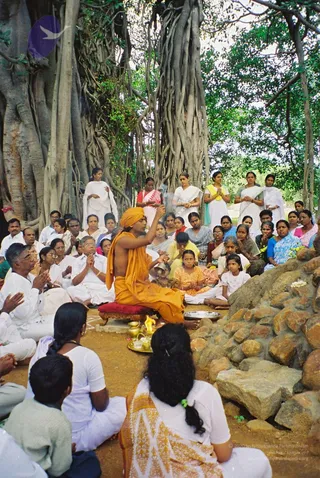
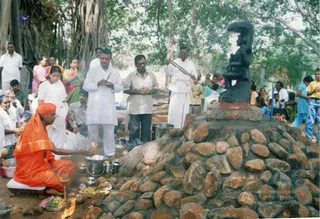
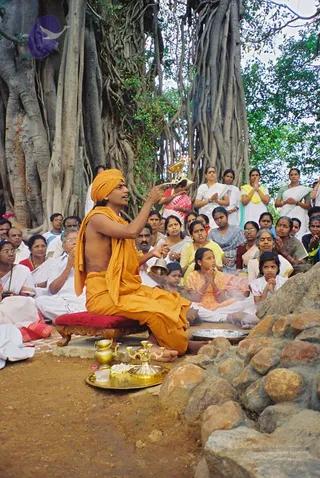
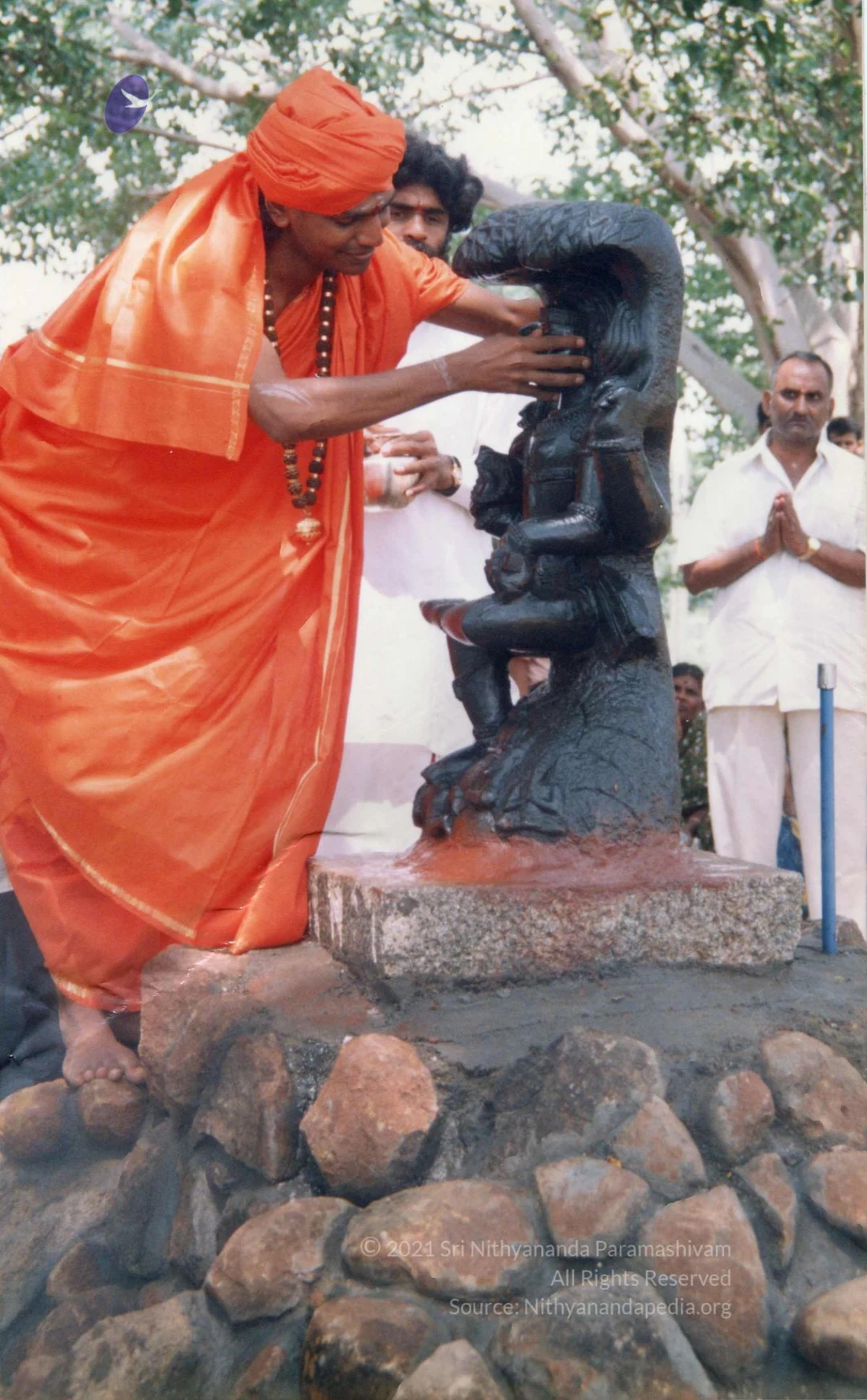
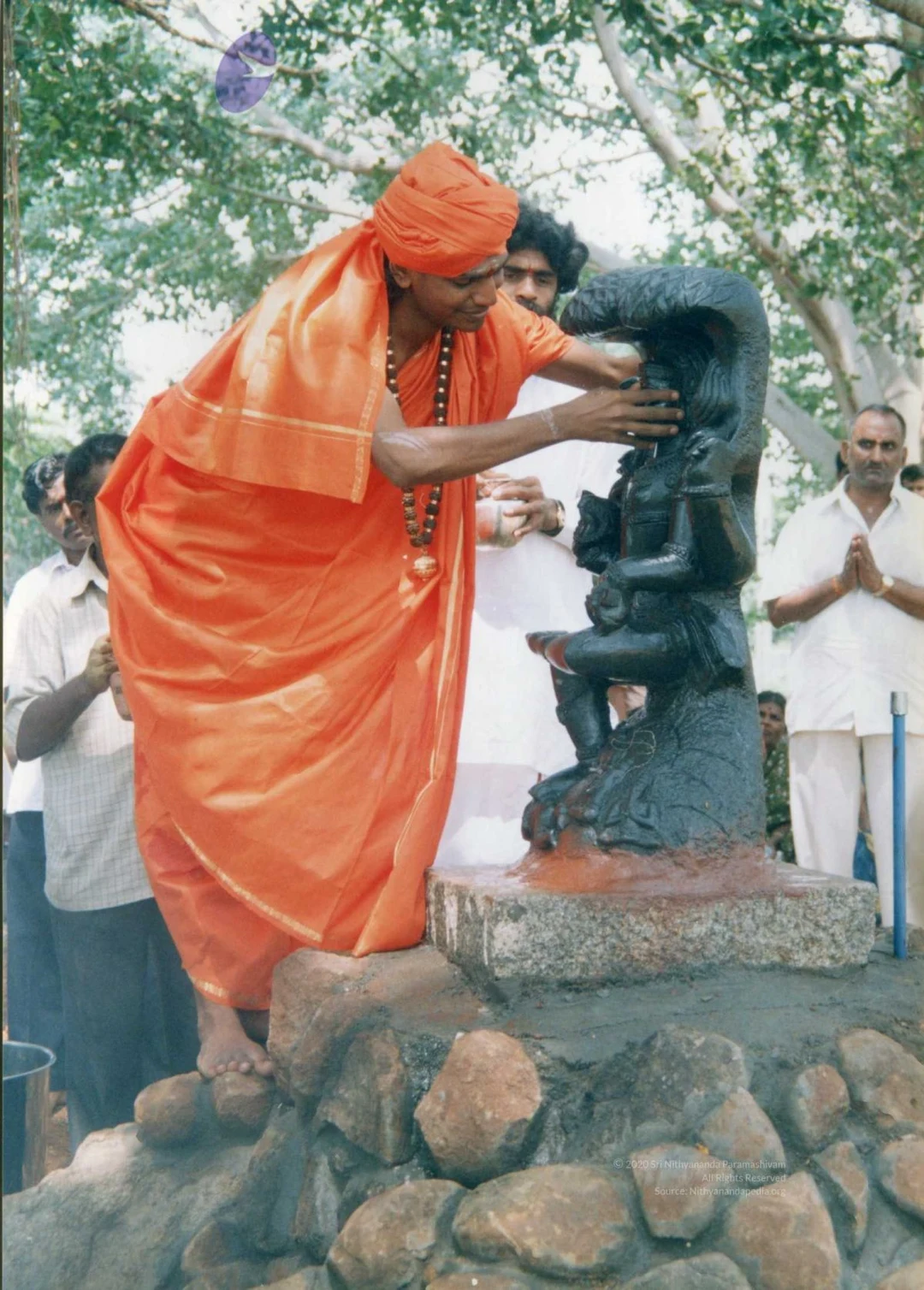
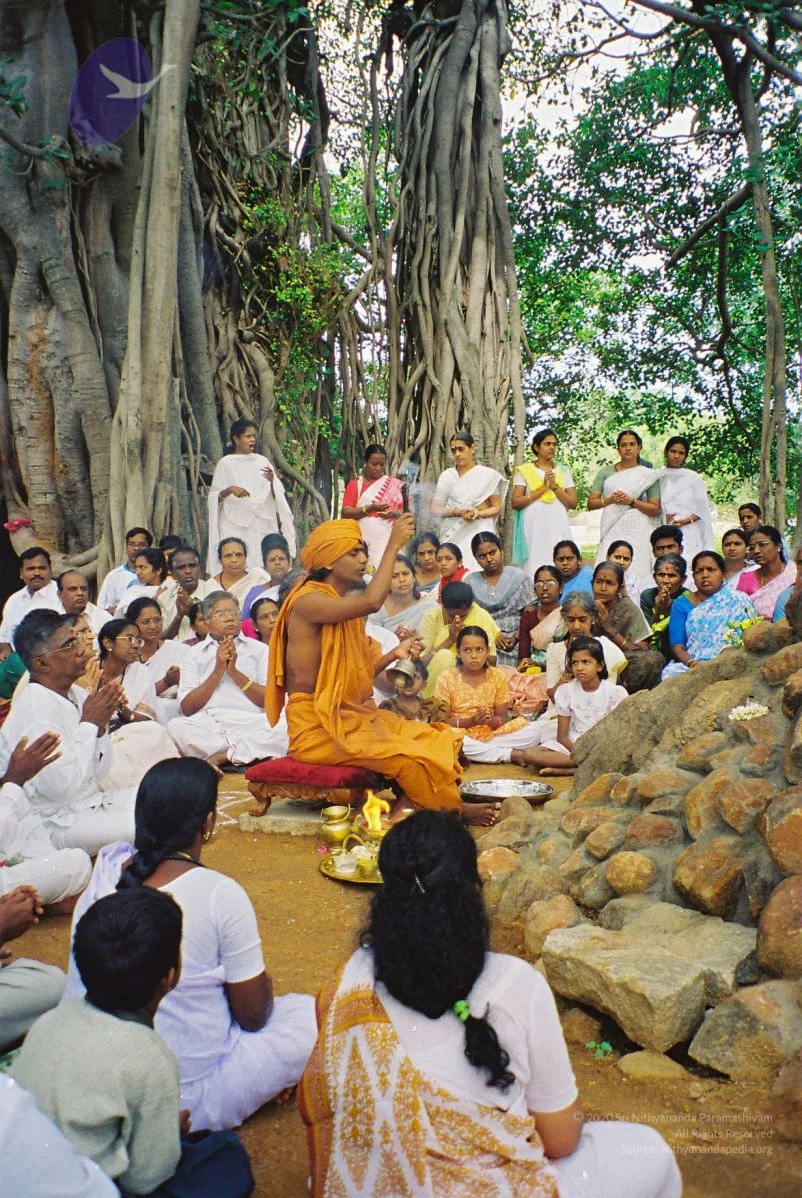
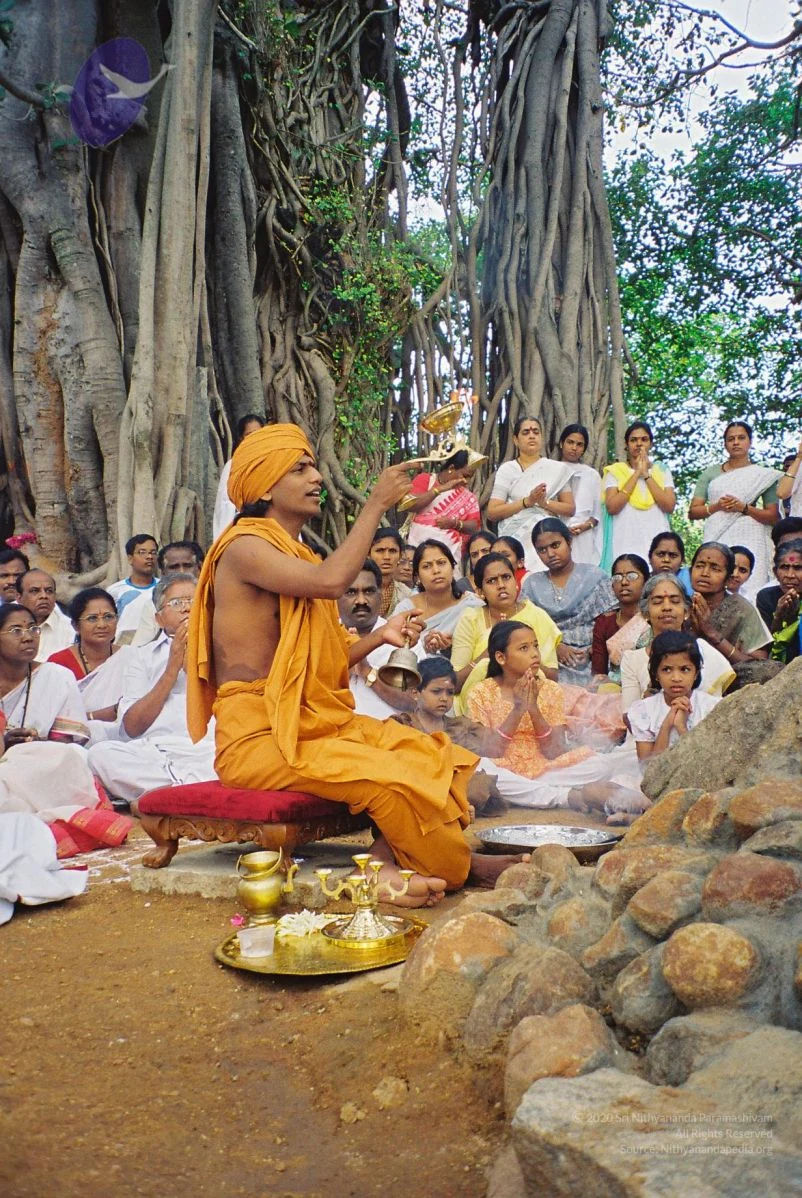
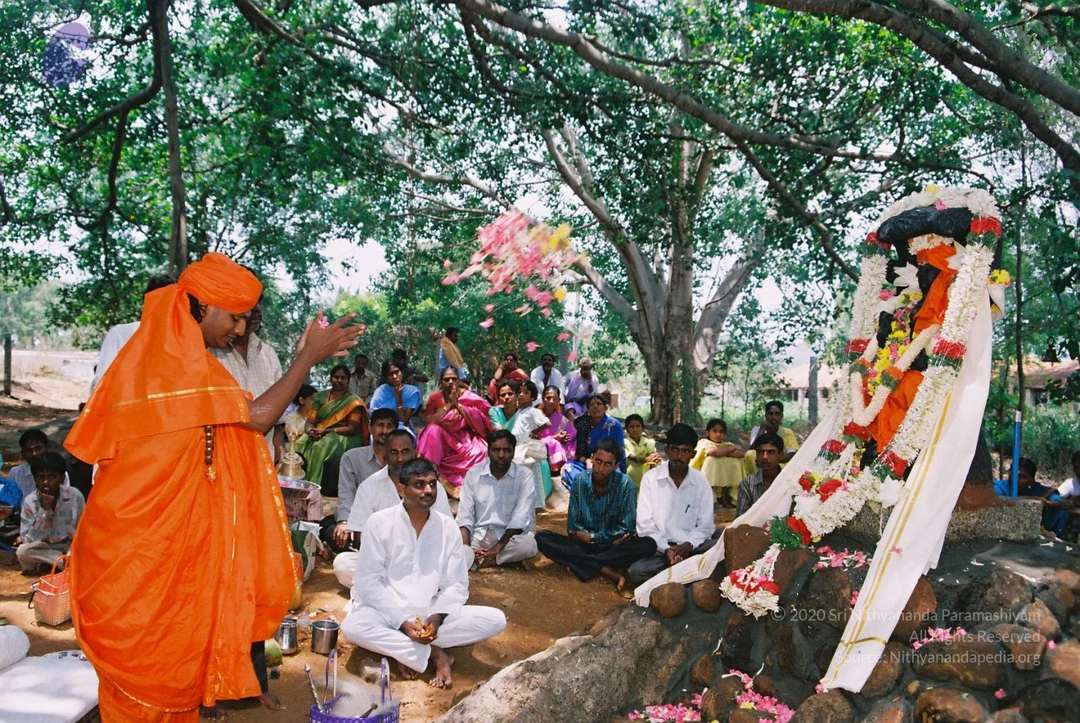
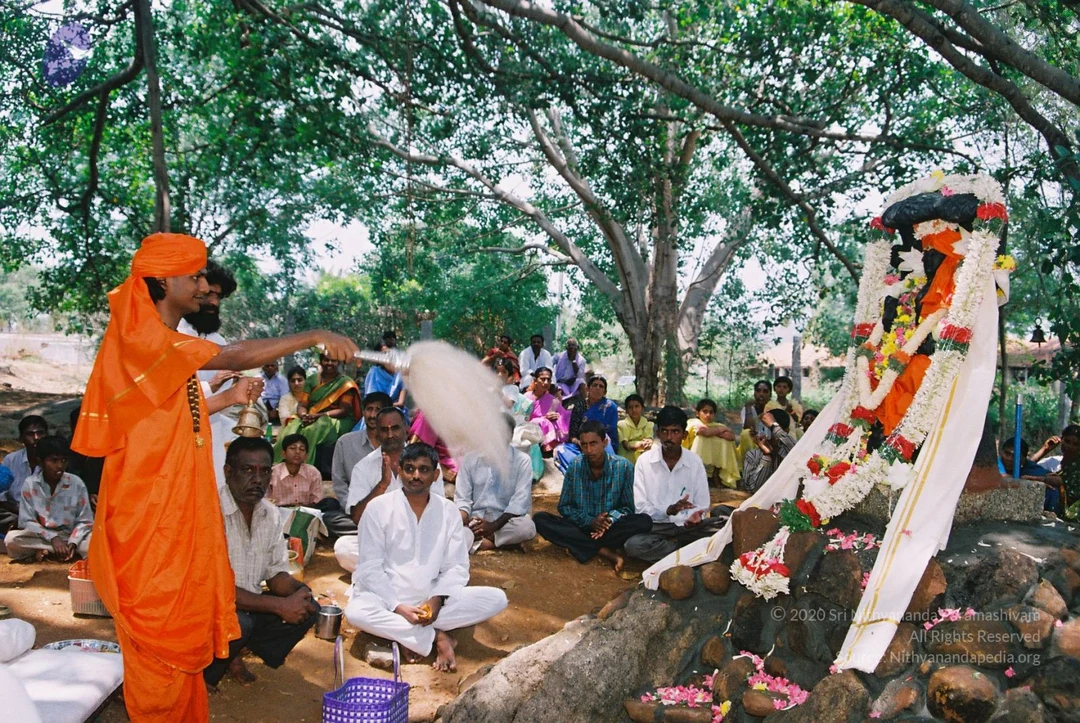
Here, The SPH, after consecration, offers the Guru pūjā - ritualistic worship called upacāra pūjā - to Guru Dakṣiṇāmūrti, as prescribed in the ritualistic worship section - Arcanāvidhipaṭala - of the sacred revelations - The Kāmikāgama, of Paramaśiva himself.
One can see The SPH, adorning the role of ācārya - Śaiva preceptor - offering the sacred offerings. He offers the arghya - made up of water to wash, durvā grass, flowers and akṣata (turmeric smeared rice), all of which together symbolise one's mundane mind which is offered to the Guru in surrender. The SPH reveals beautifully in a talk in Uttarakhand, in the scenic environs of the Himalayan mountains on 12th Jul 2007, while explaining the ritual of Guru Puja: "MANASTU ARGHYAM NIVEDAYET: 'MANASTU' IS A PLURAL WORD. IT MEANS 'MINDS'. YOU DON’T HAVE ONE MIND. YOU HAVE A PART OF THE MIND OF ALL THE PEOPLE AROUND YOU! ALL THE MINDS YOU OFFER AS ARGHYA!"
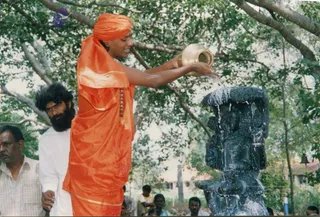
Following this, He offers the ceremonious bath (abhiṣeka), adorning the deity with robes and ornaments (alankar), offering lit camphor (ārati), offering food (naivedyam, thus rendering it consecrated food) and other ritualistic offerings.
The SPH in His everyday morning talk 'Nithyananda Satsang' on 5 Aug 2020 repeated His most often uttered statement:
"GURU DISCIPLE SAMPRADAYA, TRADITION, IS THE CORE OF HINDUISM."
And on 7 Aug 2020, as the incarnation of Paramashiva, who through His Divine play (Leela) of life on the planet, adorned the role of the most chaste disciple to many illustrious Gurus, thus illumining the Guru-Disciple tradition for humanity to understand and follow, He spoke thus:
"I HAVE STARTED DOING WHAT I AM DOING NOW THE MOMENT I IDENTIFIED MYSELF AND MY GURUS, WHAT THEY HAVE TO OFFER TO ME, AND WHAT I AM SUPPOSED TO OFFER TO THE WORLD. NITHYANANDA AND KAILASA IS NOTHING BUT A LIVING SMALL STREAM OF LIVING ENLIGHTENED MASTERS, GURU-SHISHYA PARAMPARA GONE RIGHT! THAT'S ALL! IT IS A SIMPLE “GURU-SHISHYA PARAMPARA" GONE RIGHT!"
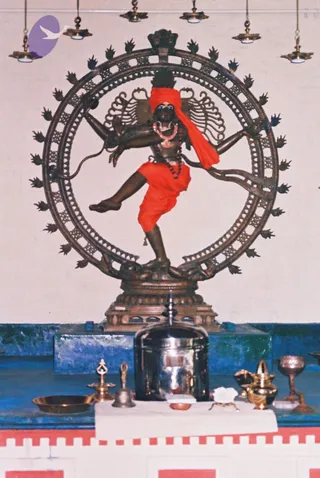
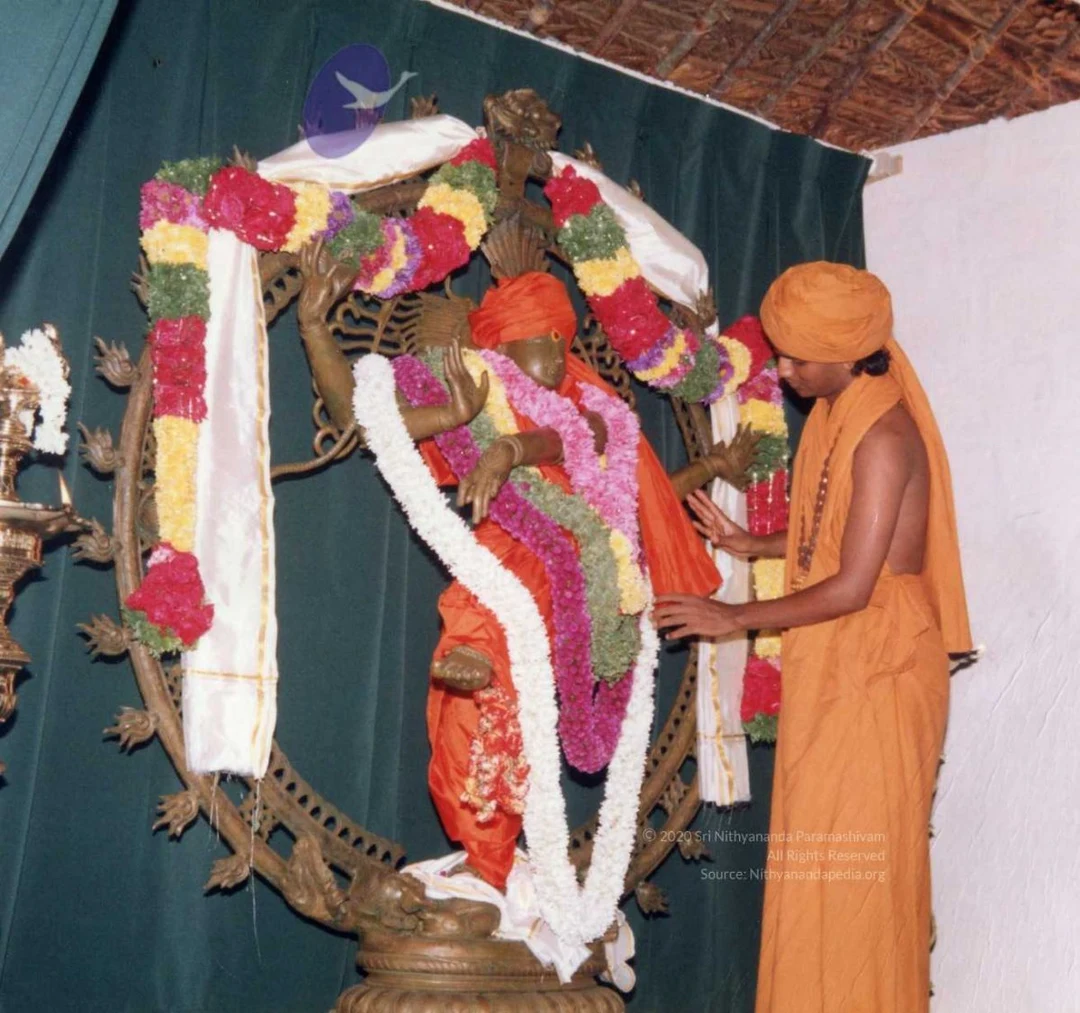
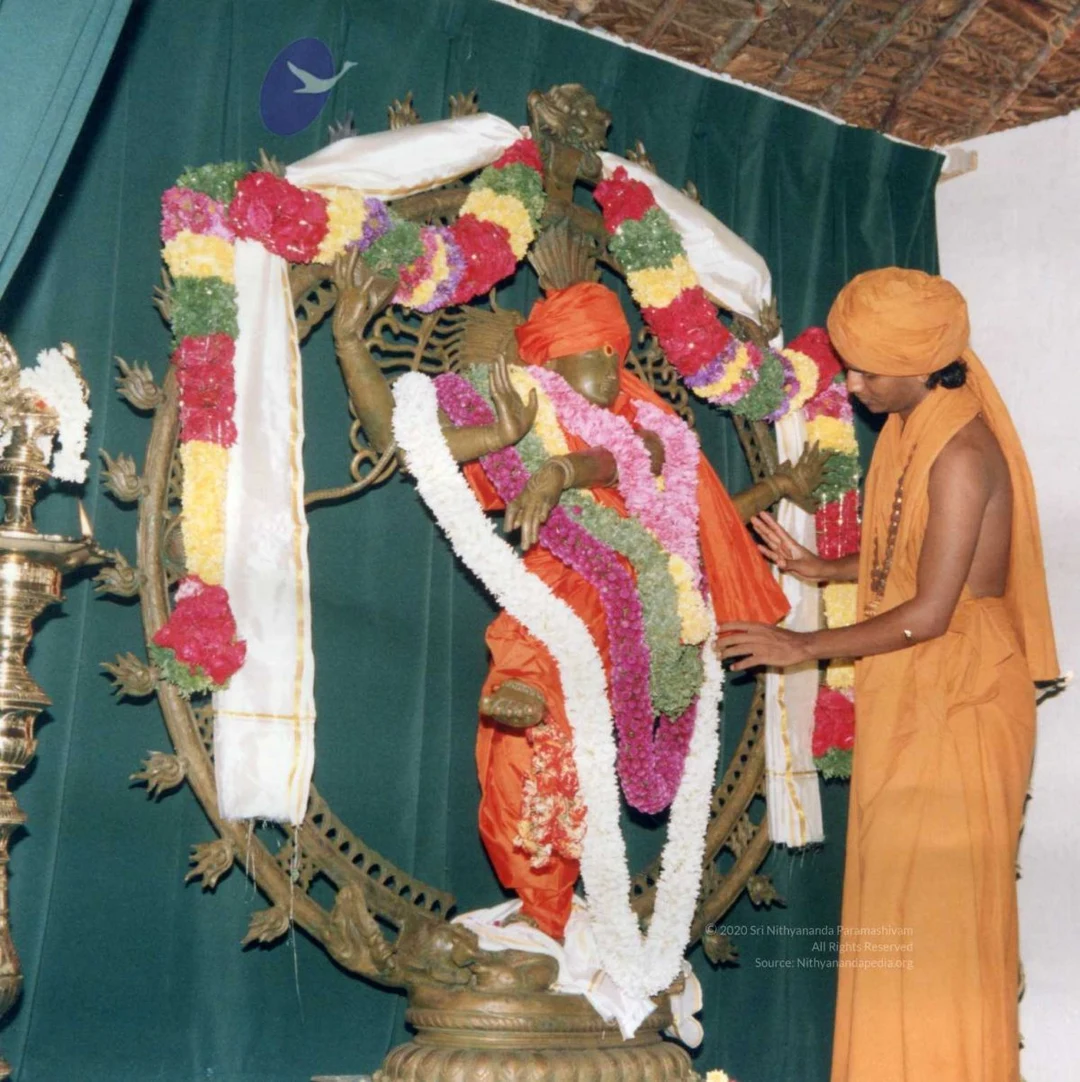
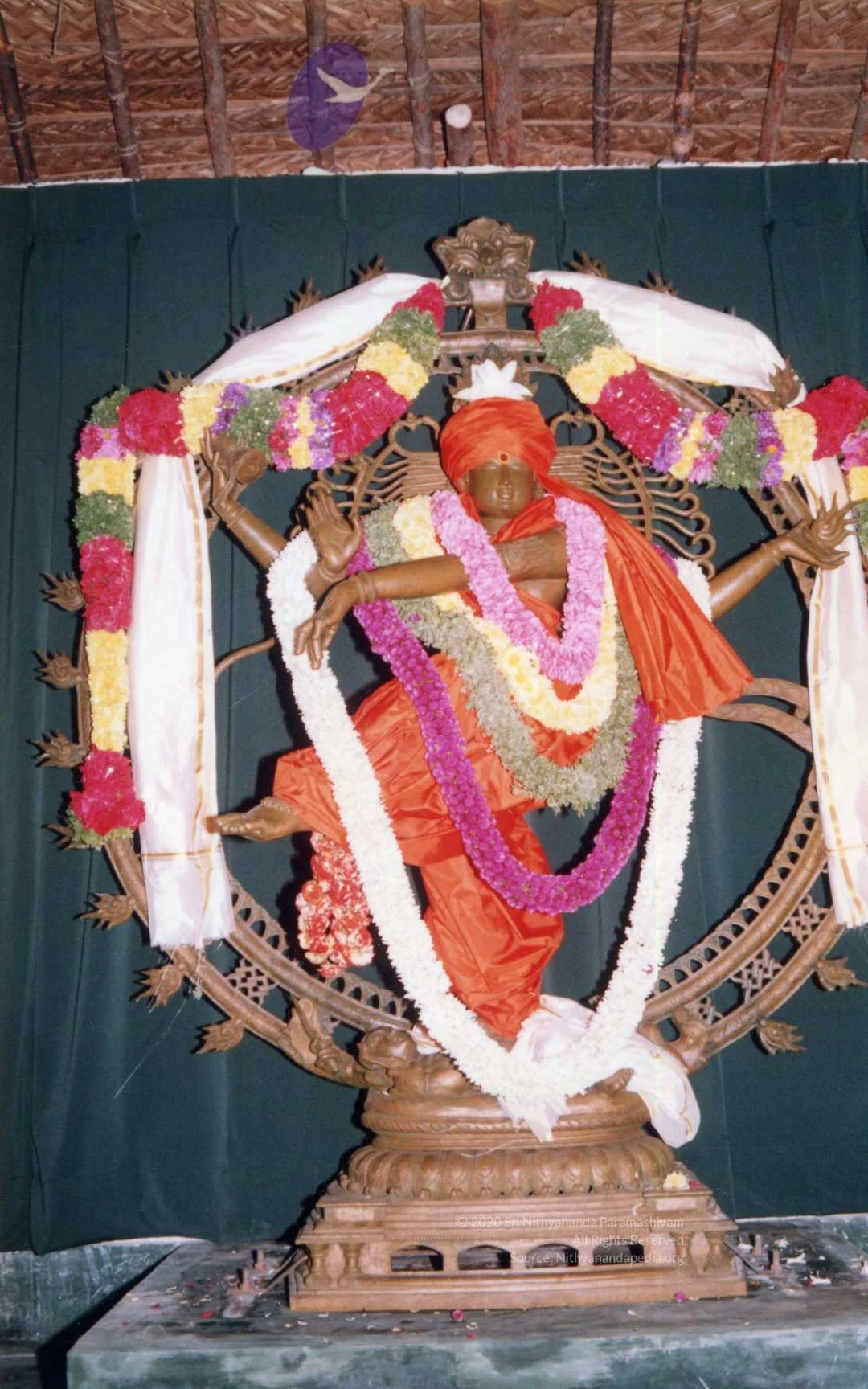
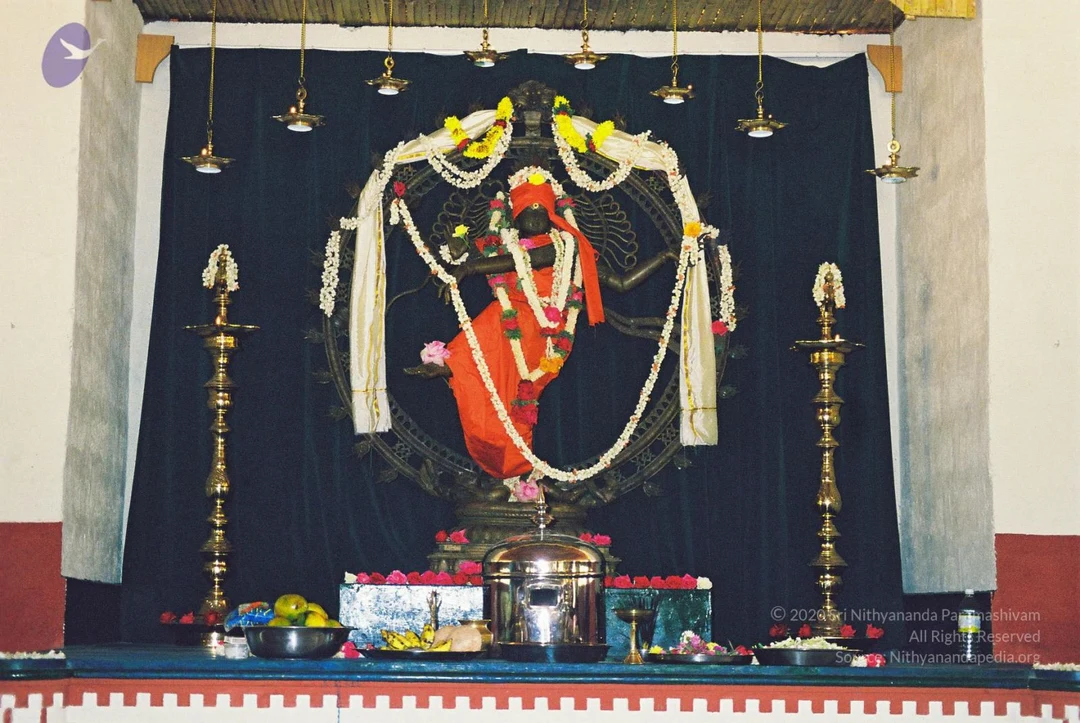
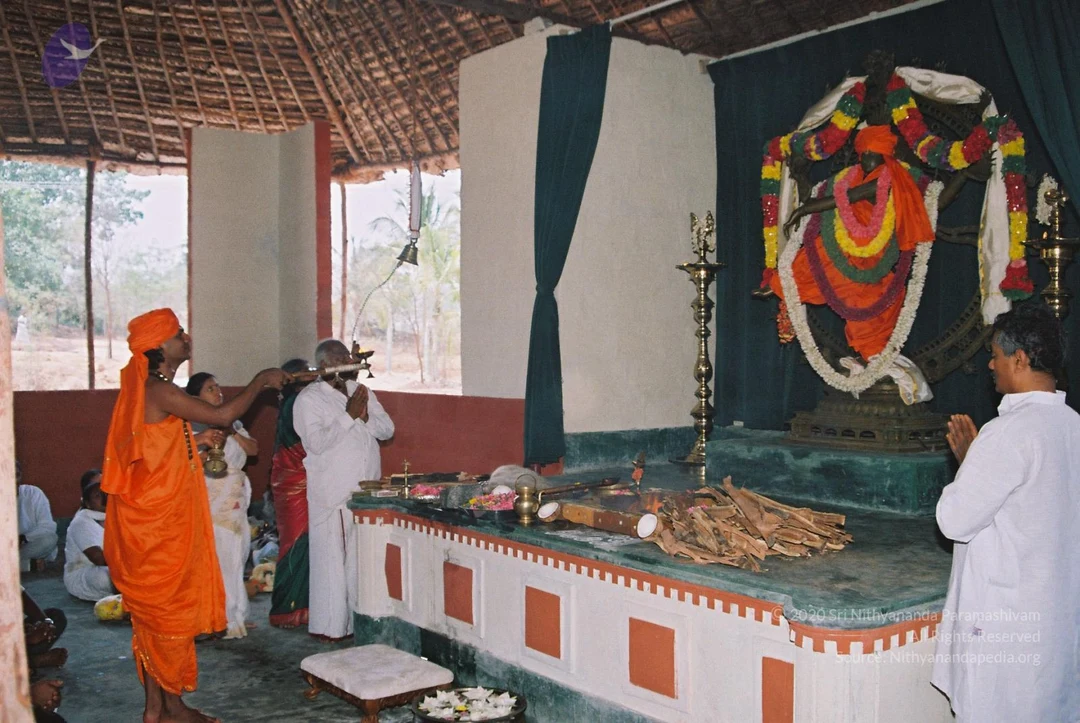
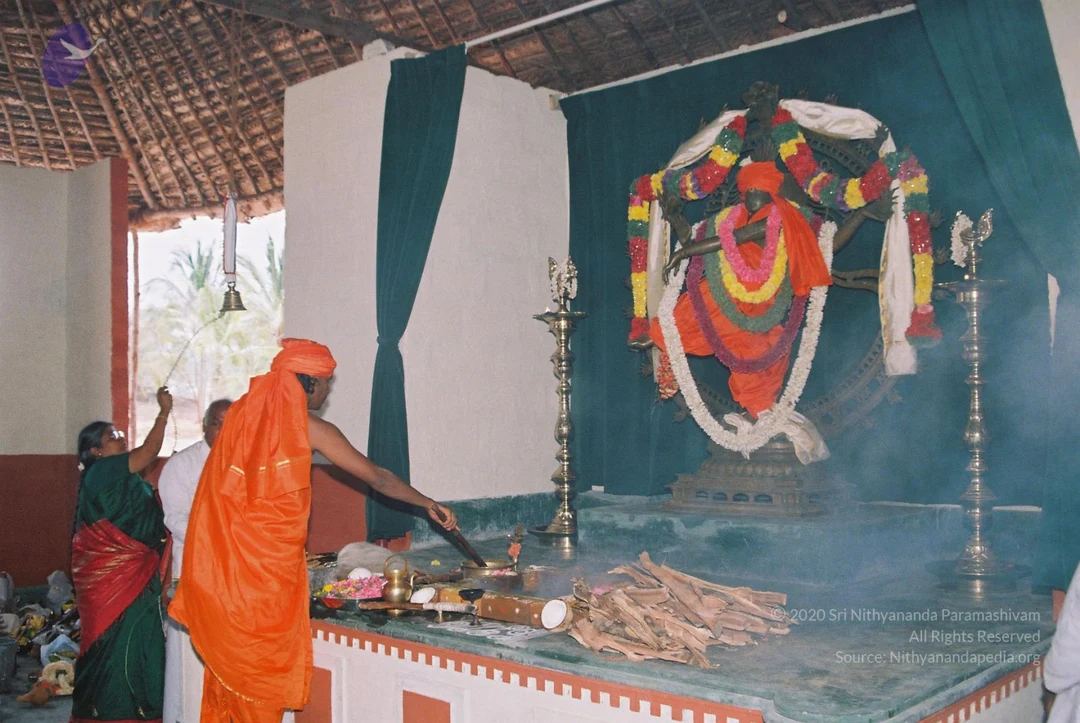
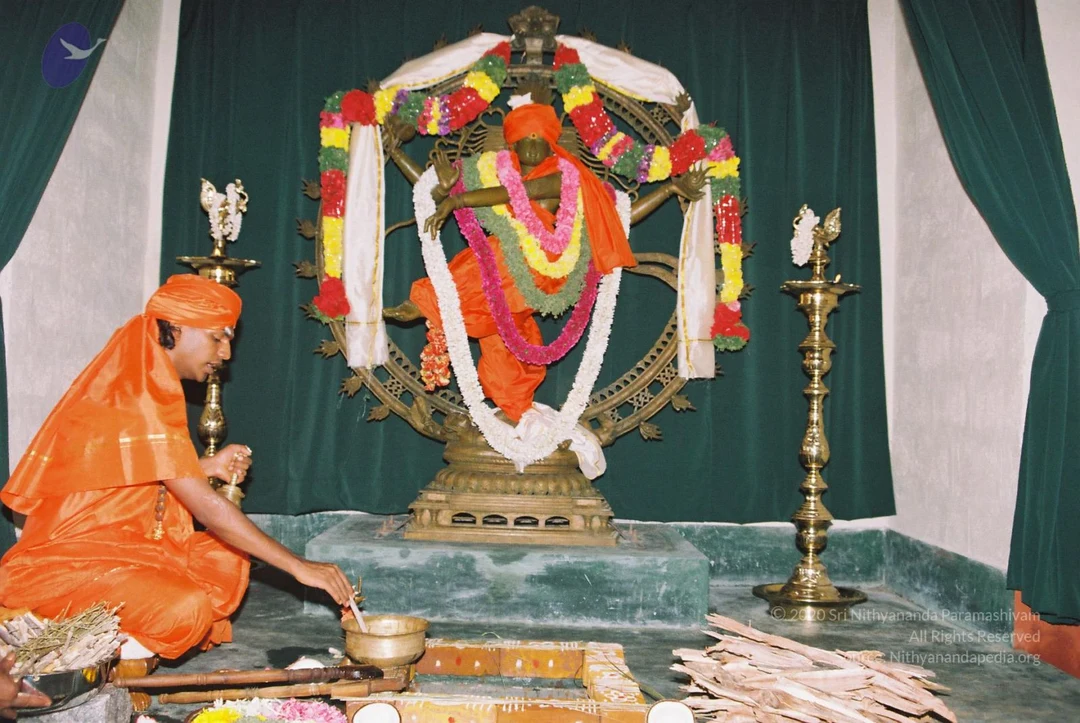
Further, as part of inaugurating the Ānanda Sabha - the humble structure made of bamboo and bricks, one can see The SPH Himself again offering the fire ritual (homa), decoration (alankār) and lit camphor (ārati) to the Naṭarāja deity inside the Ānanda Sabha. Before start of the official ceremony, The SPH is seen in His everyday saffron robes, immersed in adorning the Naṭarāja deity with robes, flower garlands and ornaments. After completing the preparation of the deity, He can be seen in changed attire for the inaugural ceremony, moving with the small group of devotees for the historic inauguration.
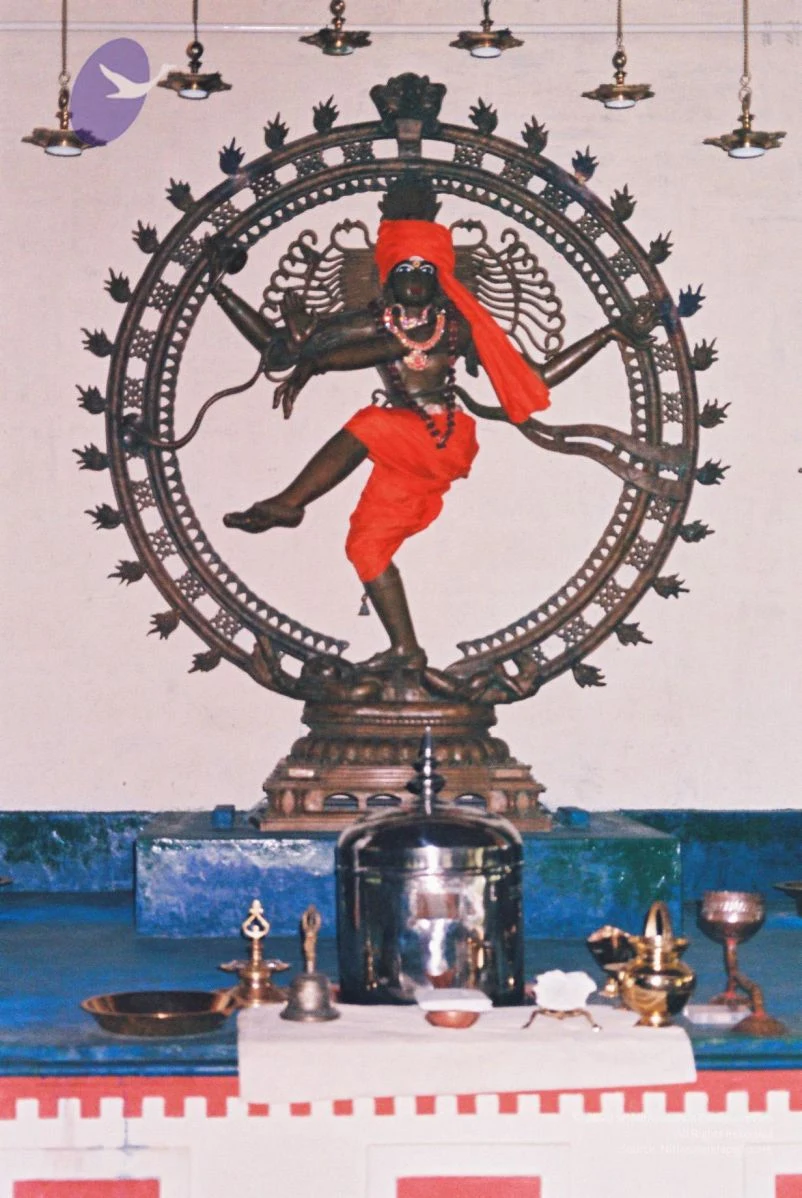
It is very significant that Naṭarāja is one of the earliest deities birthed by The SPH. Nataraja holds a key secret to enlightenment for human beings to absorb and manifest. Naṭarāja is the dancing form of Paramasiva who performs the five cosmic tasks of creation (sṛṣṭi), sustenance (sthiti), rejuvenation (saṃhāra), putting into delusion and pulling out of delusion (tirobhāva) and liberation (anugraha), alongwith his dance. The SPH has expounded the ultimate Truth that if one understands the attributes and actions of Lord Naṭarāja, one will awaken to the same 5 divine activities happening within oneself and will realise that one is nothing but the microcosmic manifestation of the macrocosm.
The SPH in a talk on the five activities happening inside our own body (dated 15 Aug 2020) has said, "YOU ARE DOING ALL FIVE ACTIONS EVERYDAY. YOU ARE CREATING BODY PARTS, MAINTAINING, DESTROYING MANY THINGS, MANY TIMES YOU GIVE CLARITY TO YOURSELF AND OTHERS, WHICH IS PULLING OUT OF DELUSION, AND YOU HELP YOURSELF AND OTHERS TO COME OUT OF SUFFERING, WHICH IS LIBERATION..."
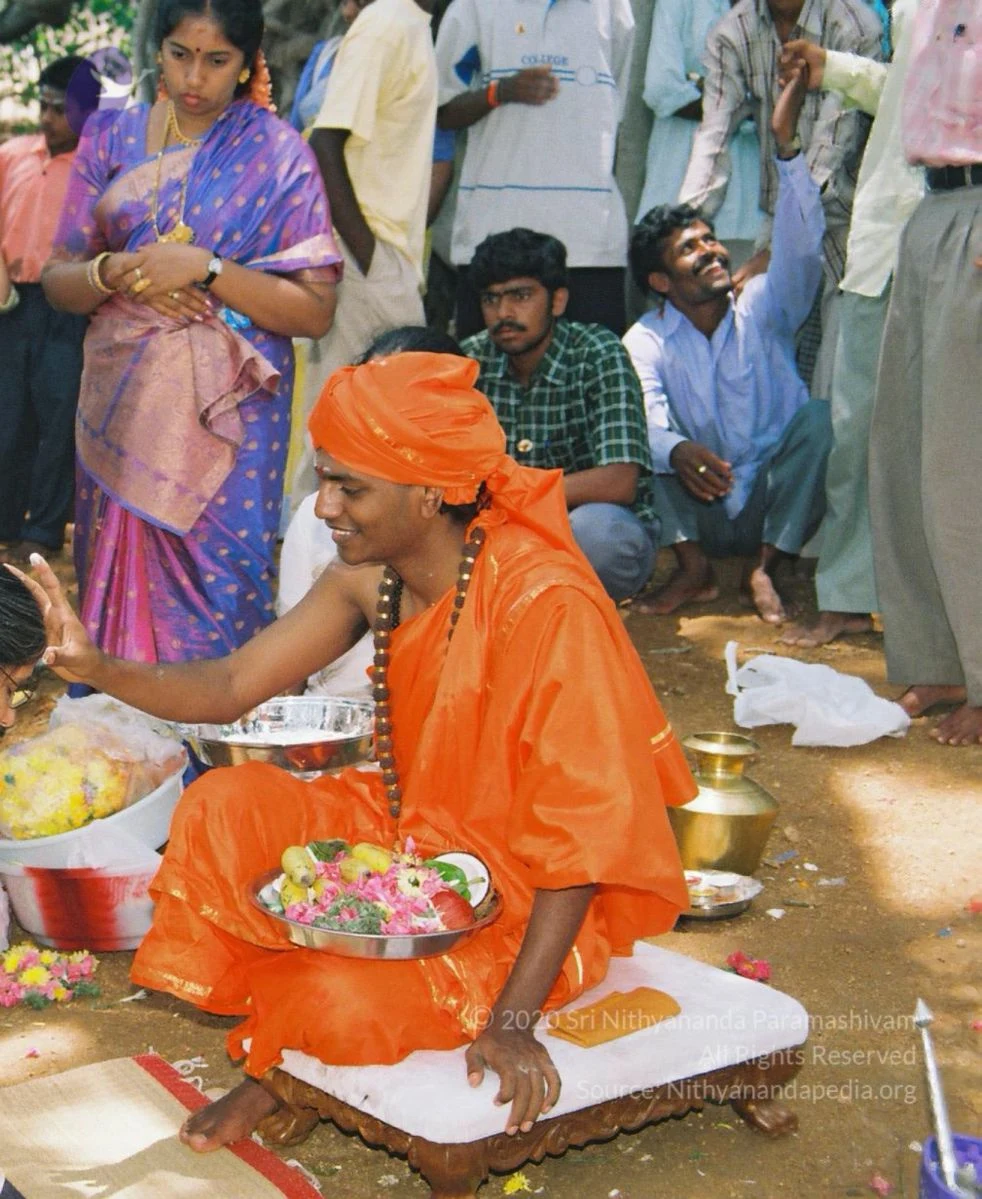
The SPH gives prasad (energised offerings from the ritual when partaken aids in awakening of the Consciousness) to Smt. Prema, wife of the then Chief Minister of Karnataka, Sri SM Krishna, an ardent devotee and took every opportunity to be in Adi KAILASA, driving all the way from the heart of Bengaluru city to the outskirts where Adi KAILASA is located. Also receiving prasad is Smt. Valli achi, daughter of the famous philanthropic family, the AMM Murugappa Group, and her husband Sri AL. Muthiah Chettiar, who are pioneer devotees in the Mission of KAILASA.
In His talk on 25 Aug 2020, The SPH spoke thus about why Gurukul (residential Vedic school) children should eat only consecrated food: THAT IS WHY I INSIST ON NOT EATING OUTSIDE FOOD. EAT ONLY GURUKUL FOOD, AADHEENAM FOOD - THE FOOD IS OFFERED TO DEITIES WHO ARE LITERALLY ARCHA AVATARAS, GODS! THIS IS ANOTHER TECHNIQUE MY GURUS USED TO USE ON ME. THEY WILL INSIST I EAT THE FOOD OFFERED IN THE ARUNACHALESHWARA TEMPLE, OFFERED TO PARAMASHIVA!"
Every effort and action of The SPH is towards each individual's enlightenment, towards reviving the enlightened civilization of KAILASA.
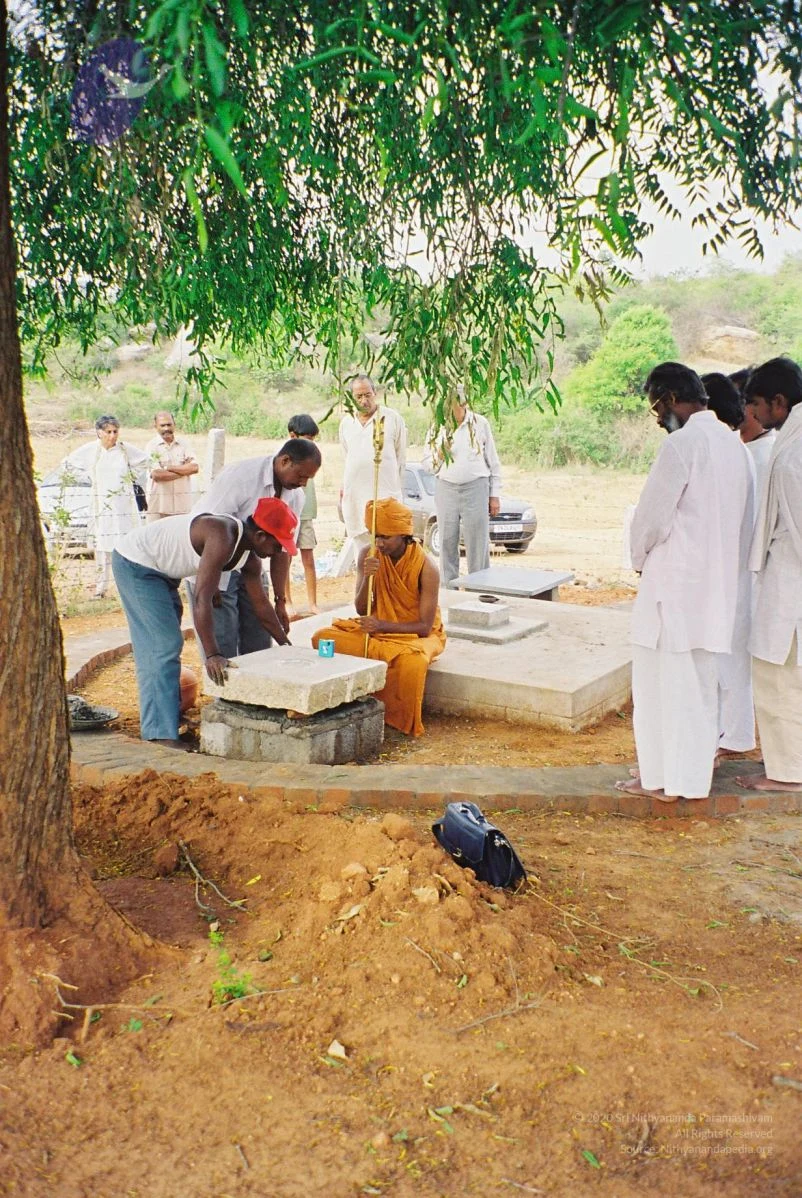
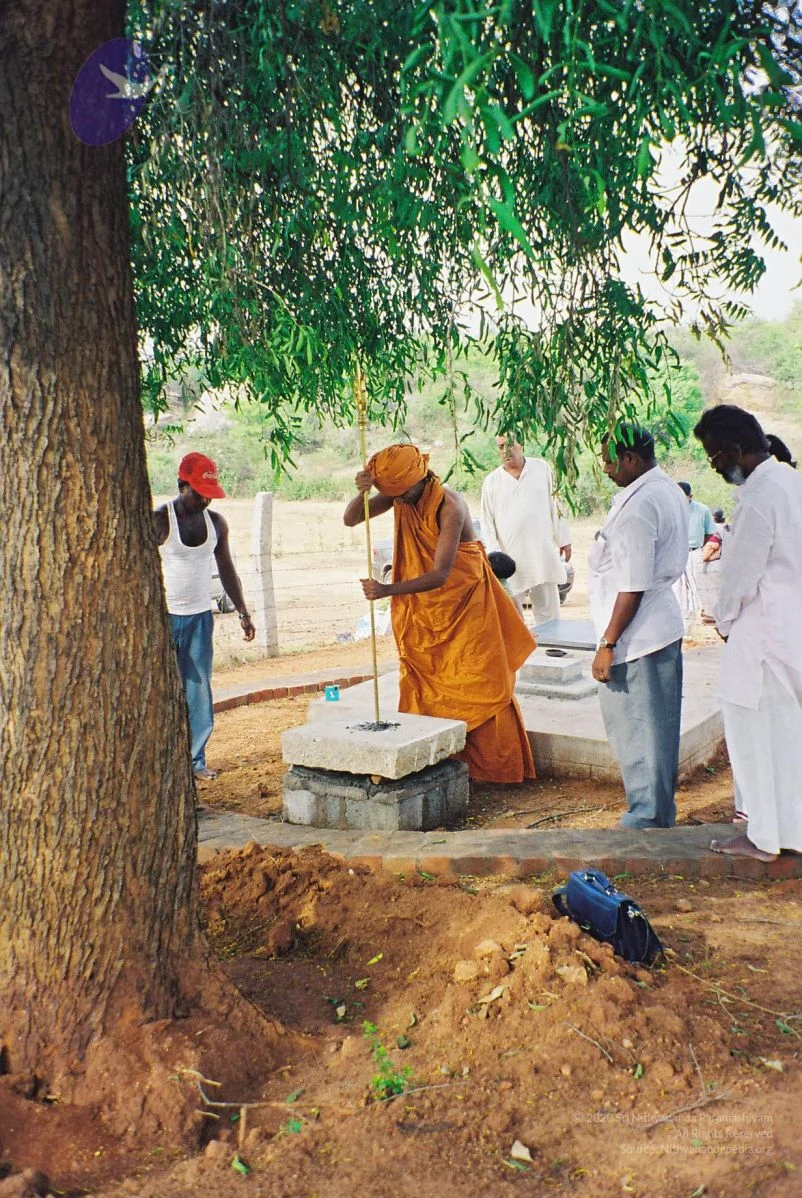
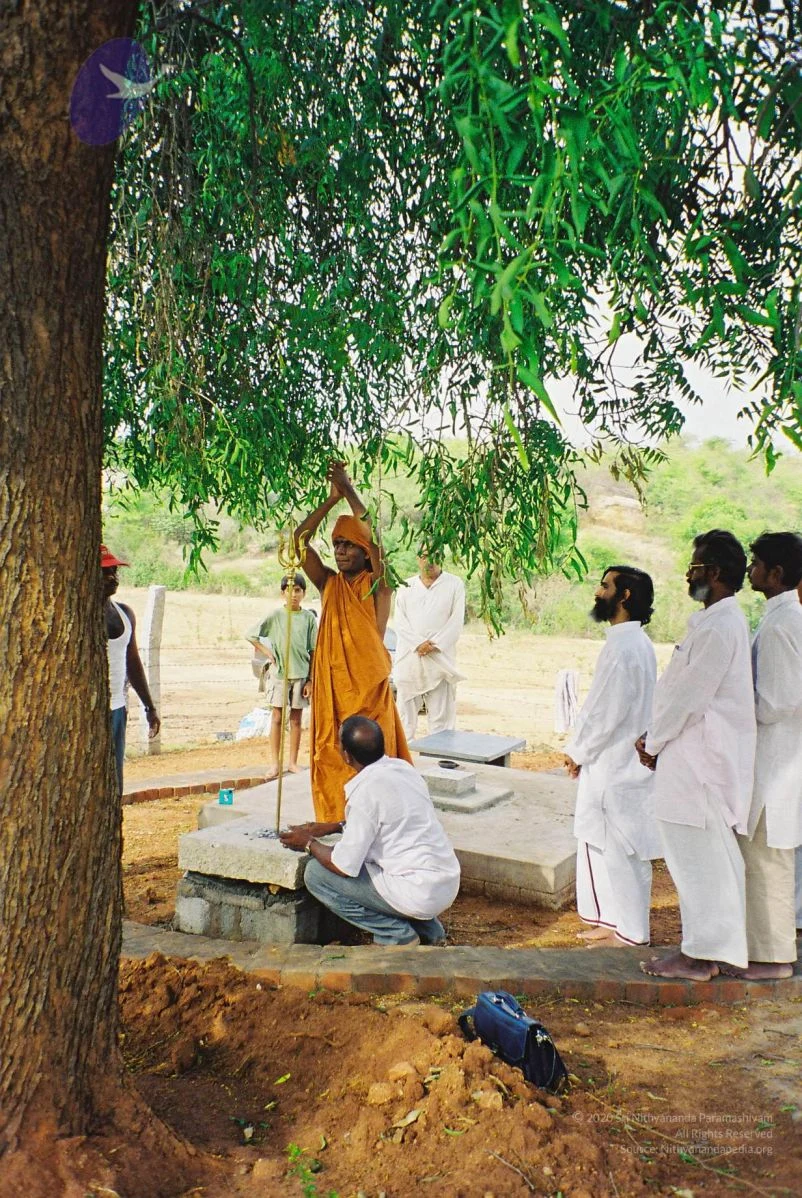
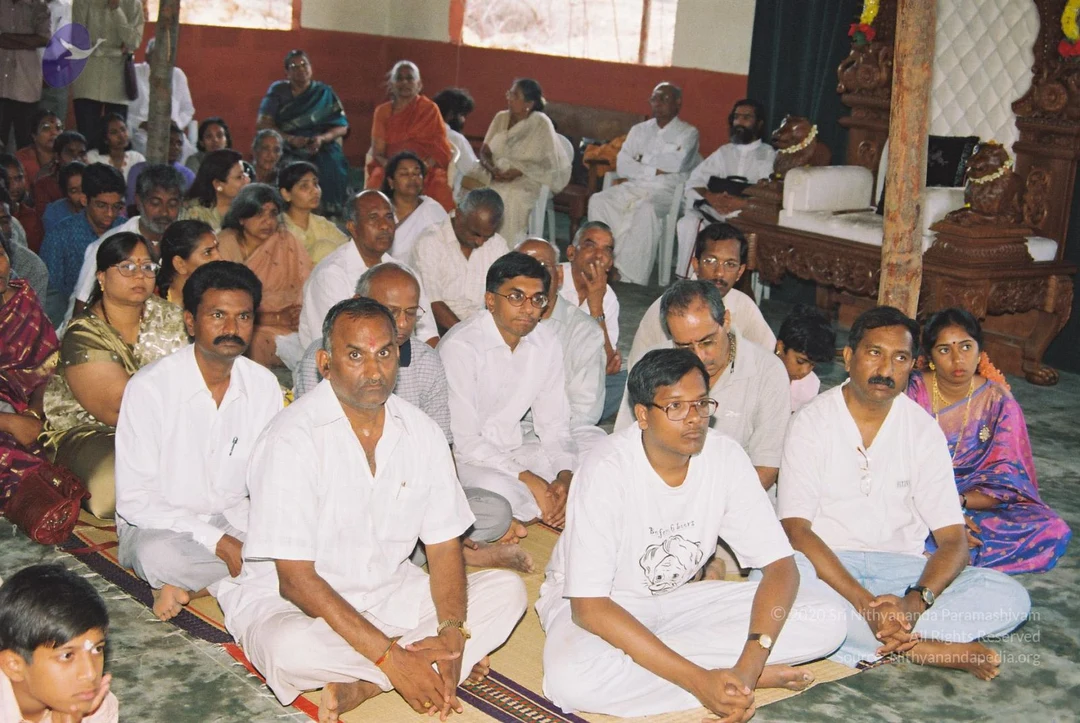
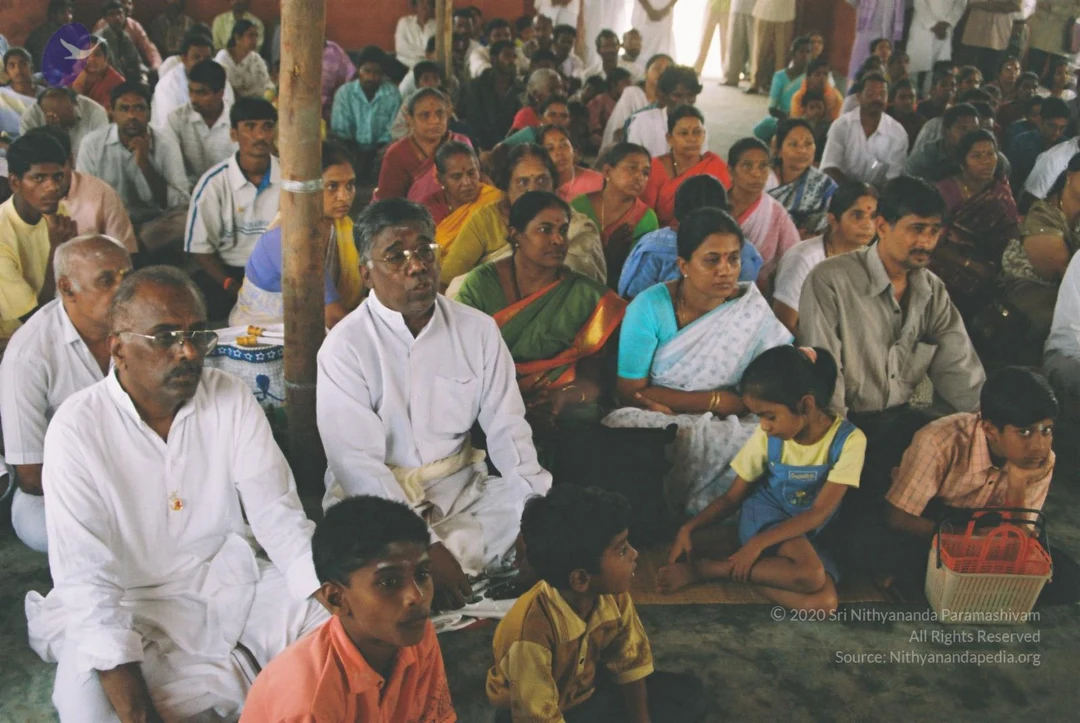
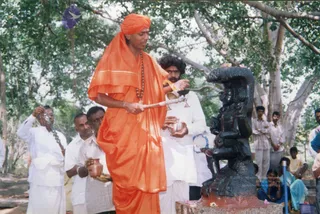
The blessed gathering of early devotees sat and watched the entire proceedings personally conducted and offered by The SPH Himself, under the glowing foliage of the sacred Banyan.
Photos
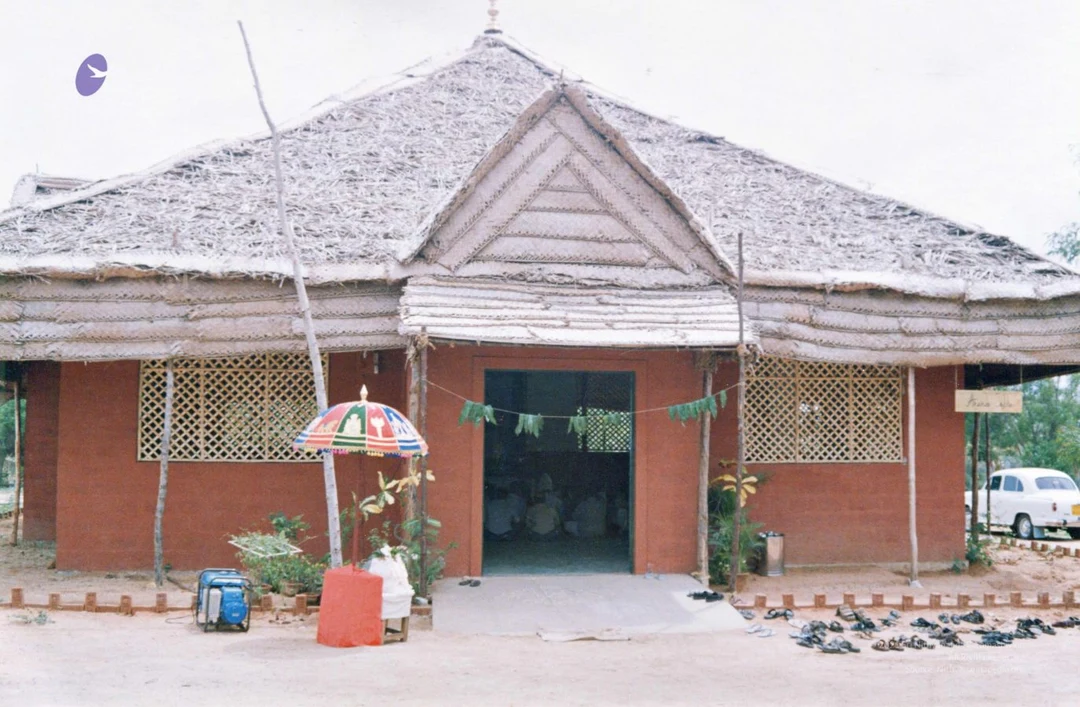 A View Of Ananda Sabha
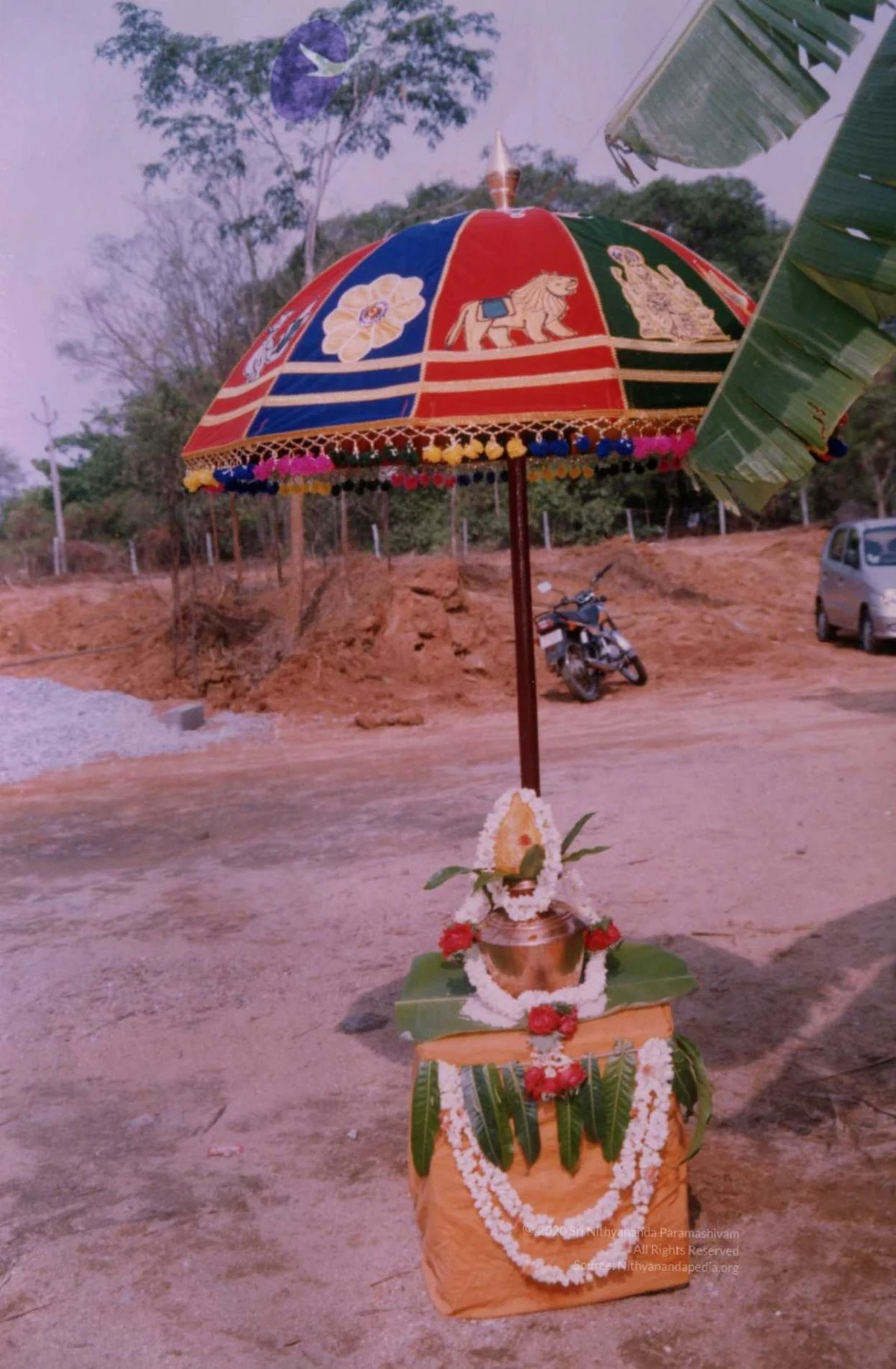
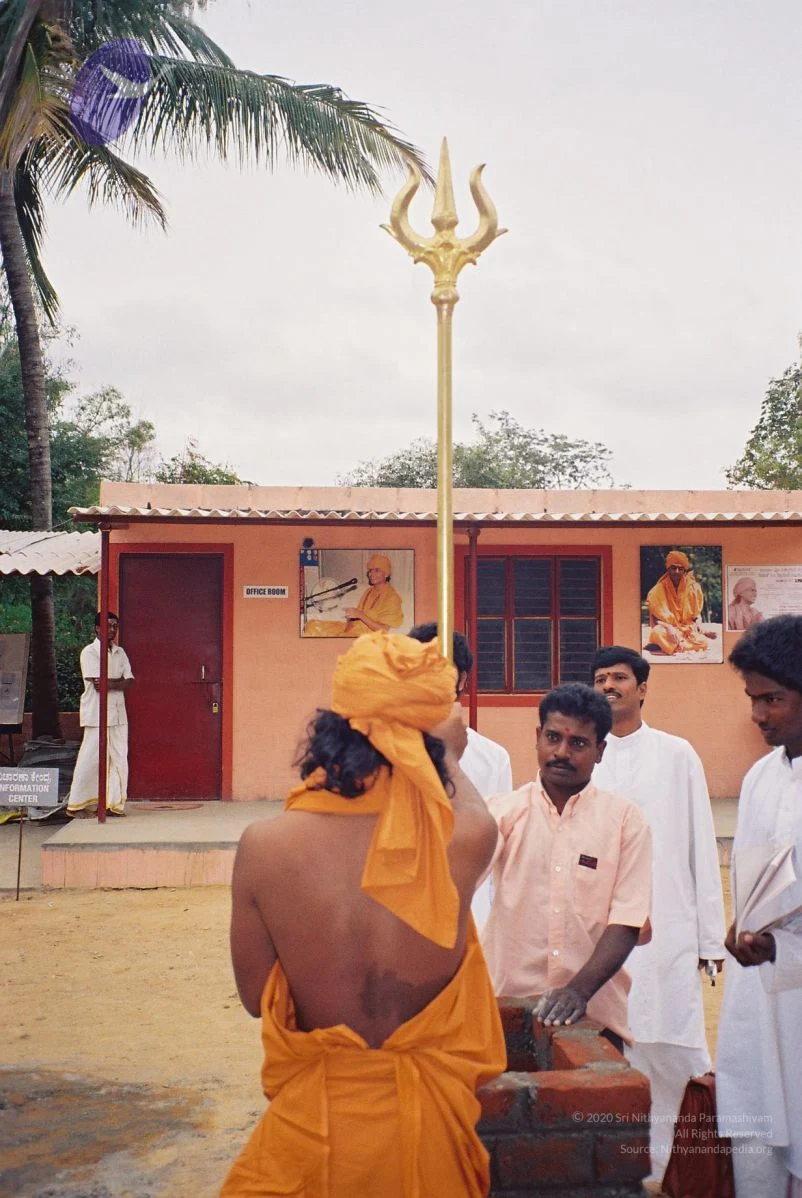
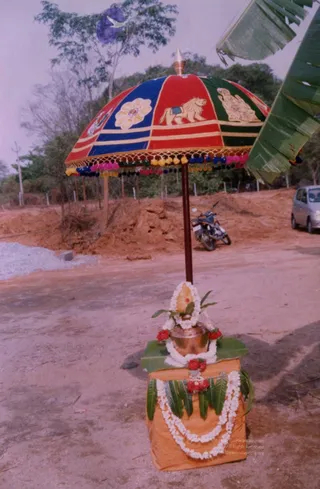 Devalayam Chatram - Temple Umbrella Marking the Festivities
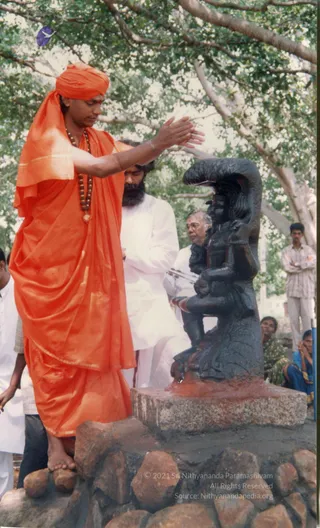 The SPH performing Prana Pratishtha to Dakshinamurthy
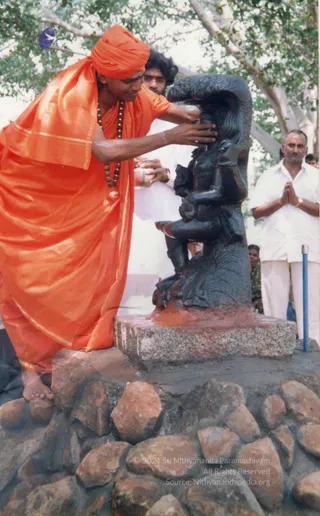 The SPH performing Prana Pratishtha to Dakshinamurthy
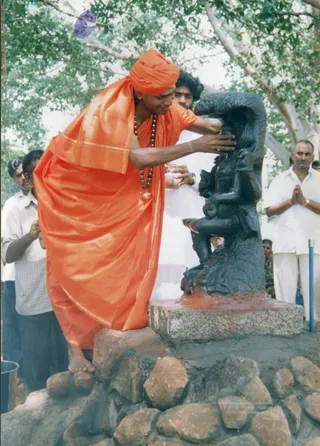 The SPH performing Prana Pratishtha to Dakshinamurthy
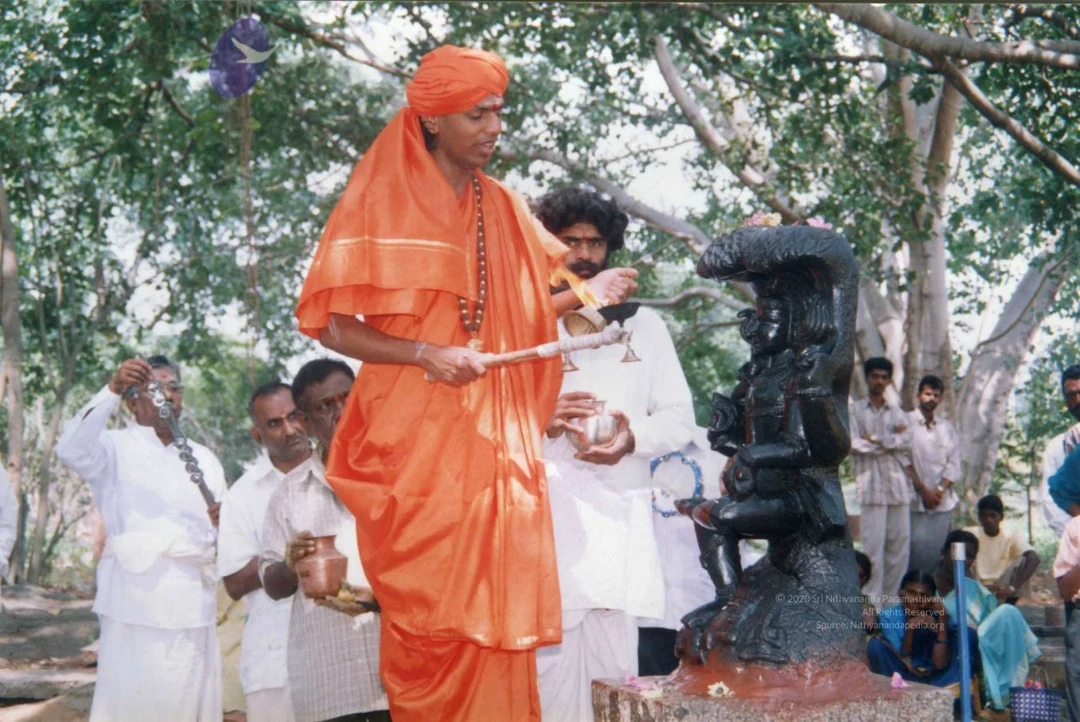 The SPH Offering Arati to Dakshinamurthy
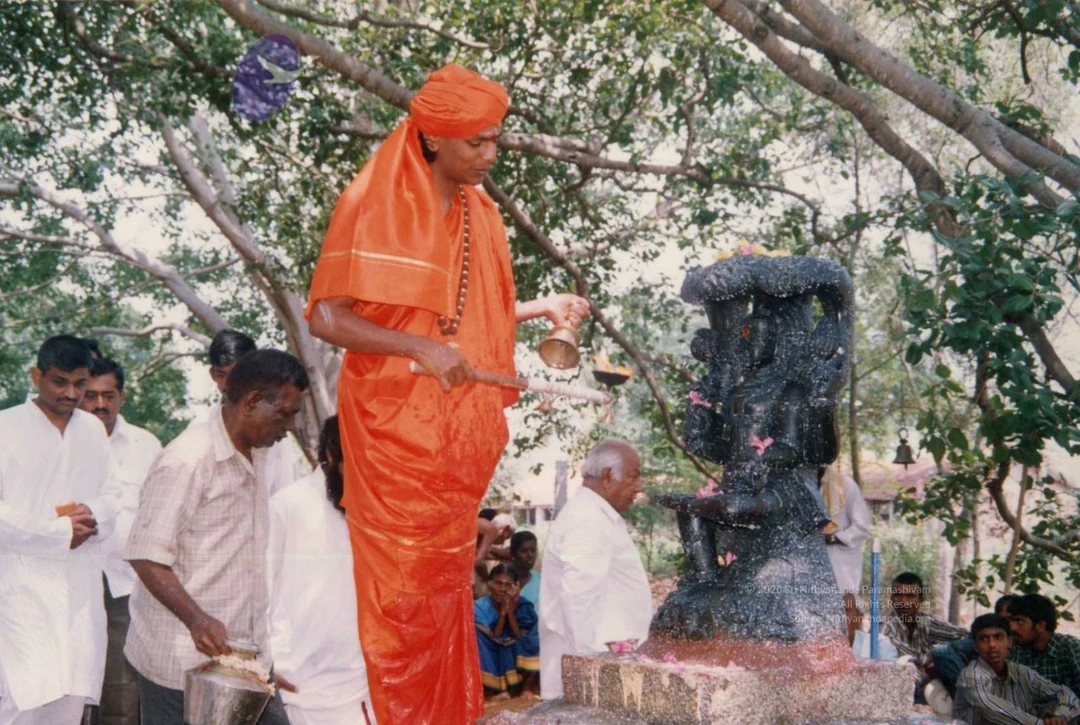 The SPH Offering Arathi to Dakshinamurthy
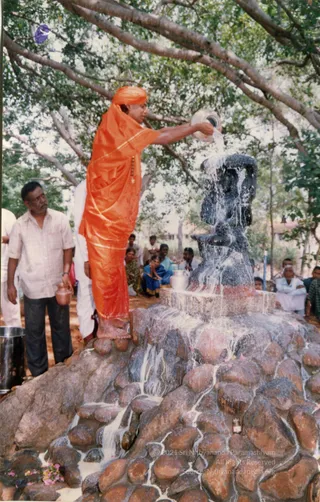 The SPH Offering Ksheerabhishekam to Dakshinamurthy
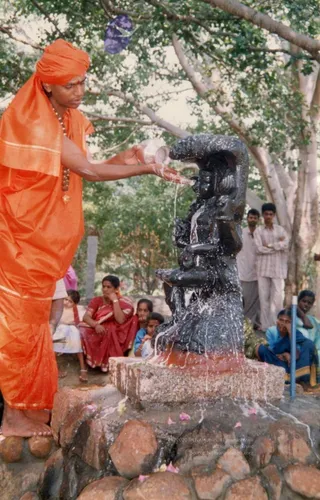 The SPH Offering Ksheerabhishekam to Dakshinamurthy
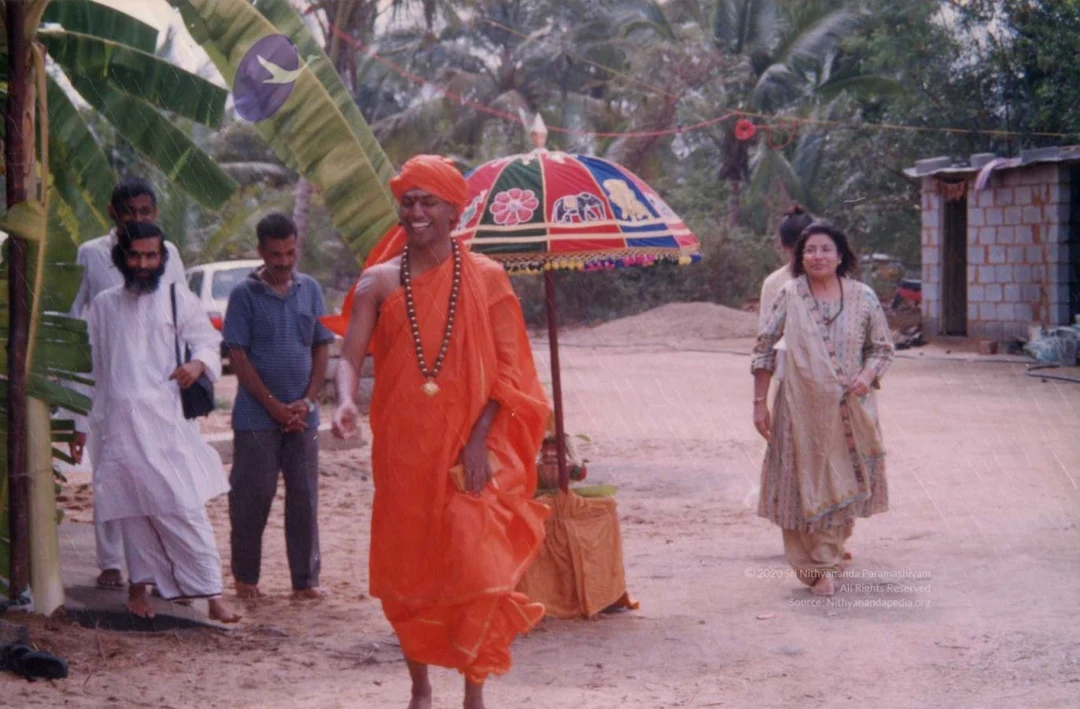 The SPH Offering Ksheerabhishekam to Dakshinamurthy
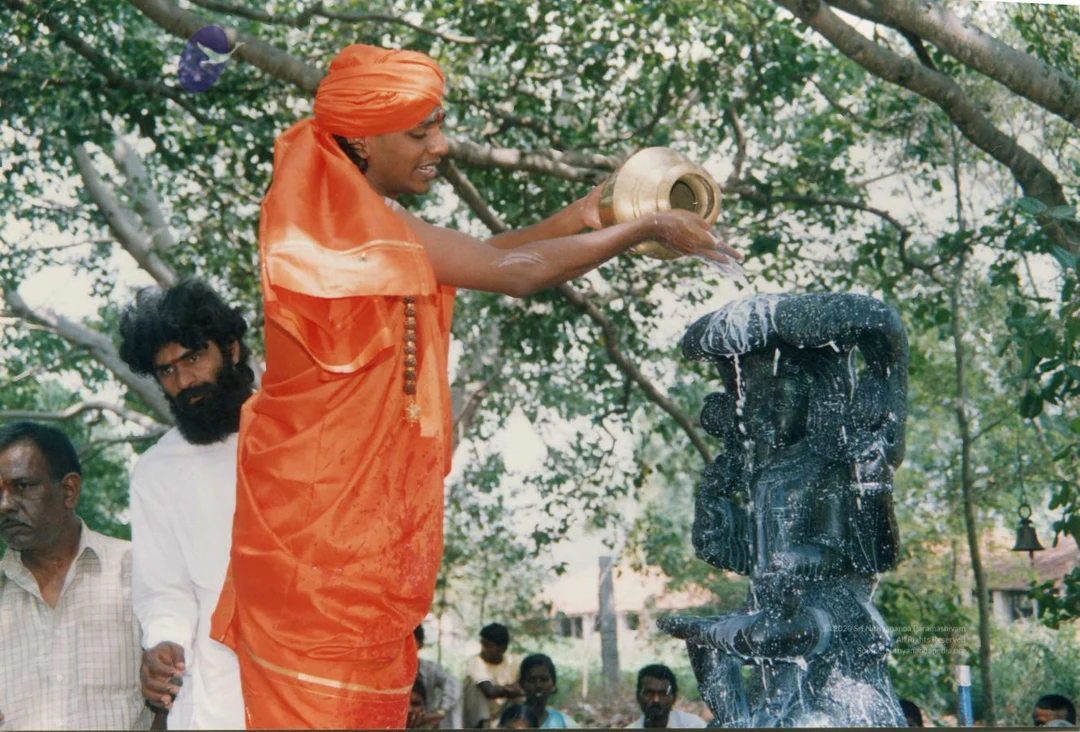 The SPH Offering Ksheerabhishekam to Dakshinamurthy
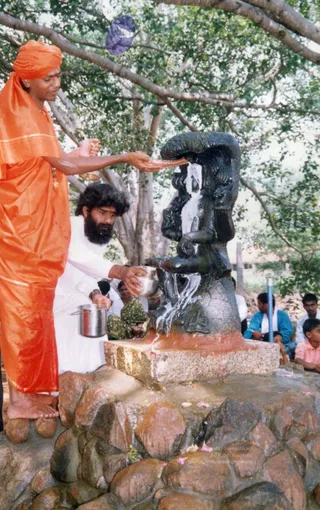 The SPH Offering Abhishekam to Dakshinamurthy
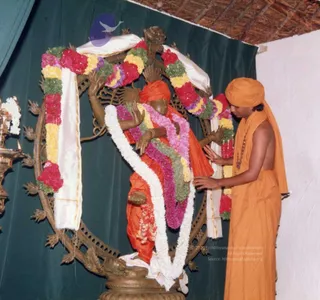 The SPH Adorning Pushpamalas on Ananda Nataraja
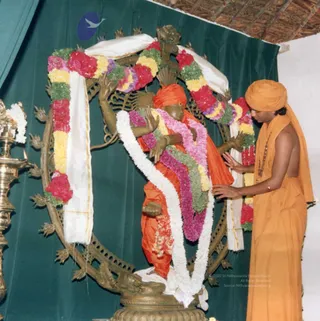 The SPH Adorning Pushpamalas on Ananda Nataraja
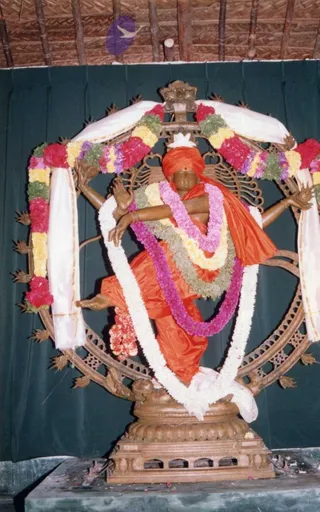 Ananda Nataraja, the Presiding Deity of Ananda Sabha, Nithyananda Peetam Bengaluru Aadheenam
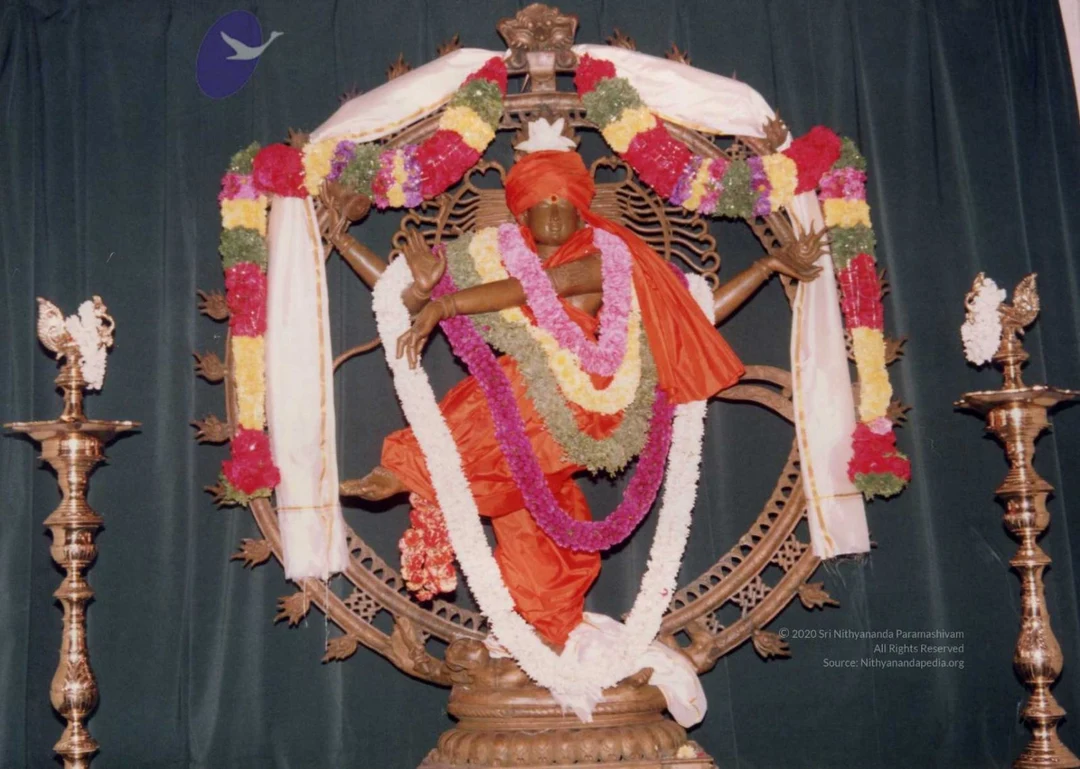 Ananda Nataraja, the Presiding Deity of Ananda Sabha, Nithyananda Peetam Bengaluru Aadheenam
 The SPH at the Inaguration of Ananda Sabha, Nithyananda Peetam Bengaluru Aadheenam
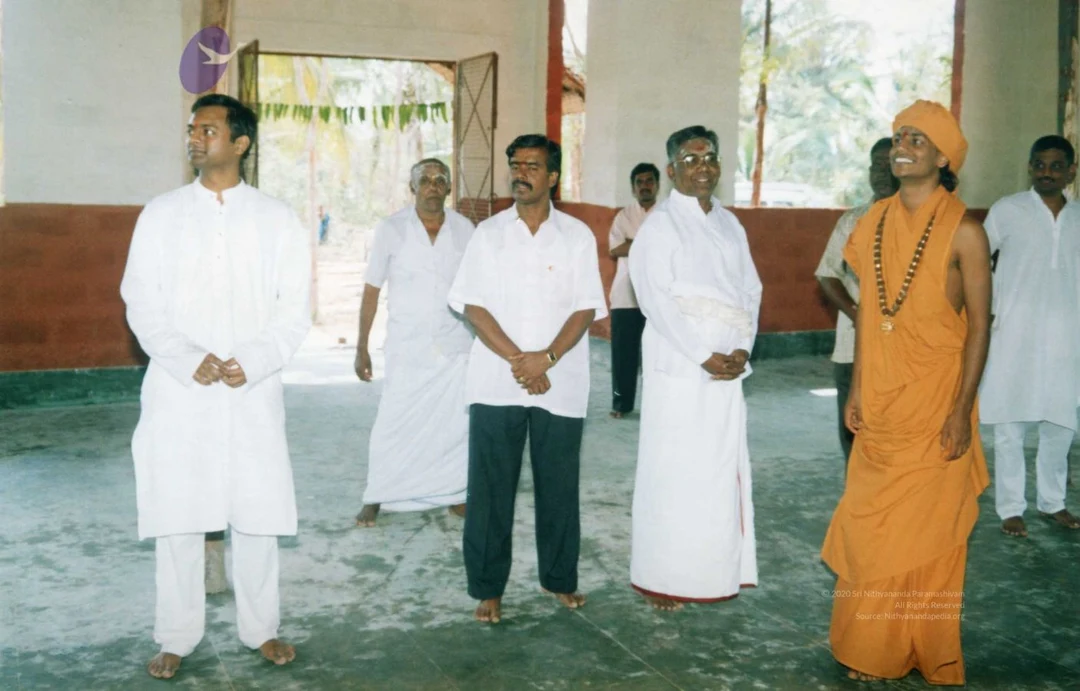 The SPH at the Inaguration of Ananda Sabha, Nithyananda Peetam Bengaluru Aadheenam
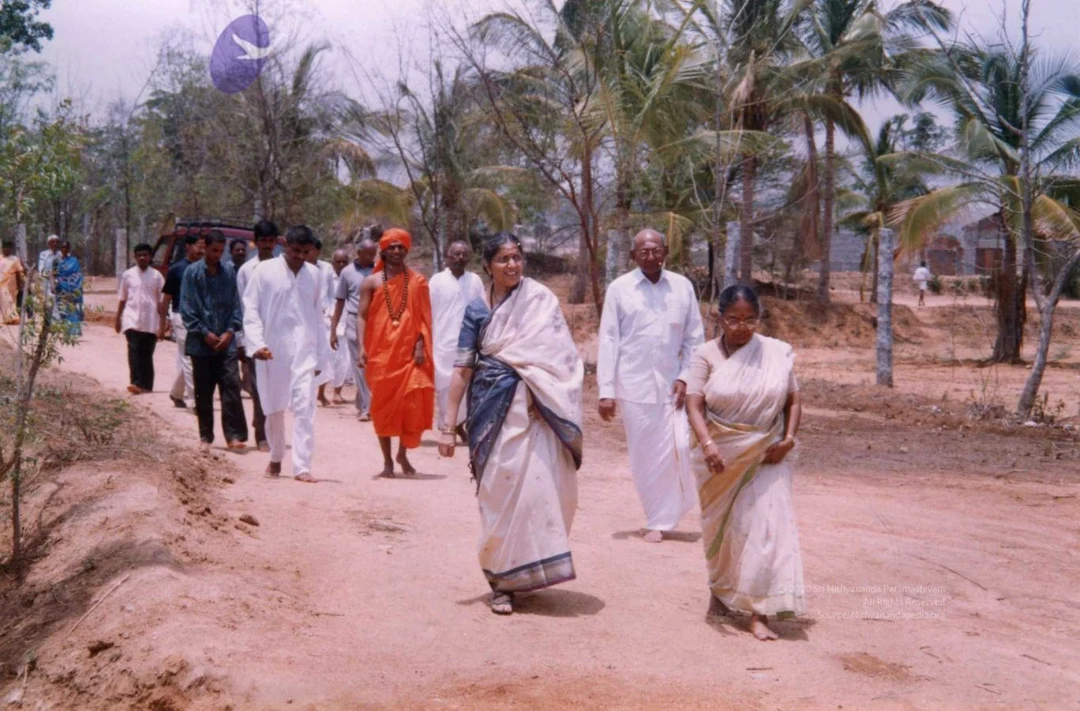 The SPH and Devotees Walking Toward Kalpavriksha Banyan Tree to Have Darshan of Dakshinamurthy
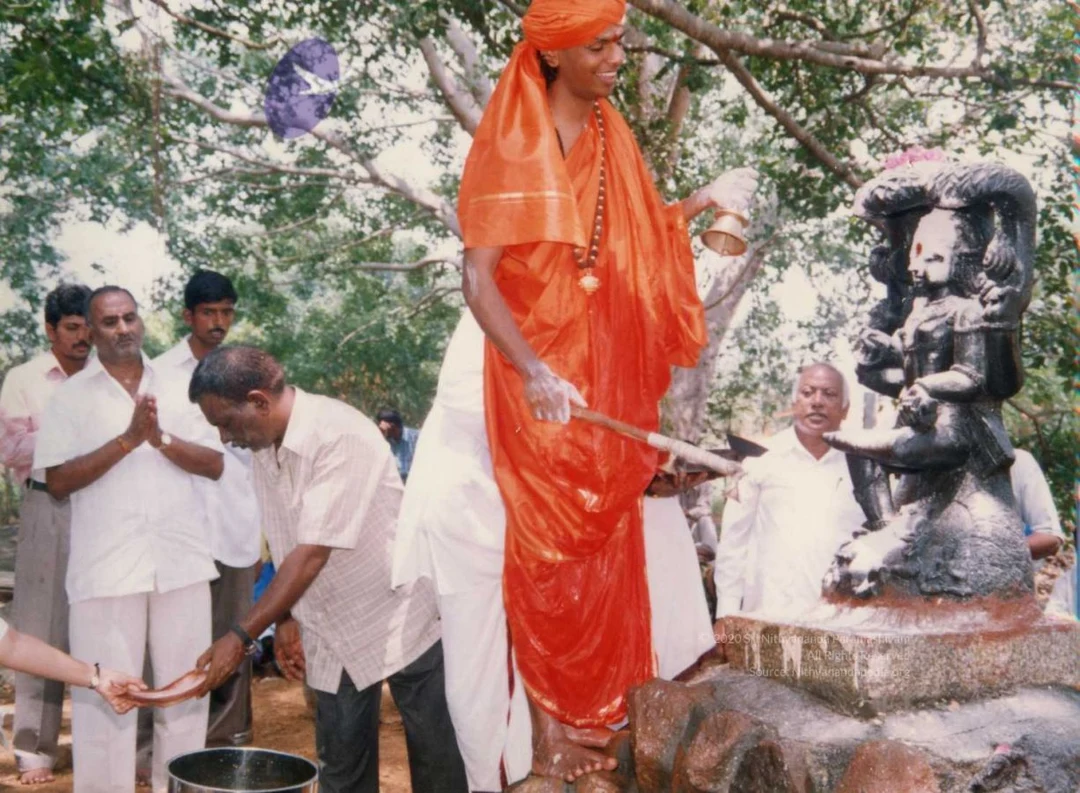 The SPH Offering Karpoora Arathi to Dakshinamurthy
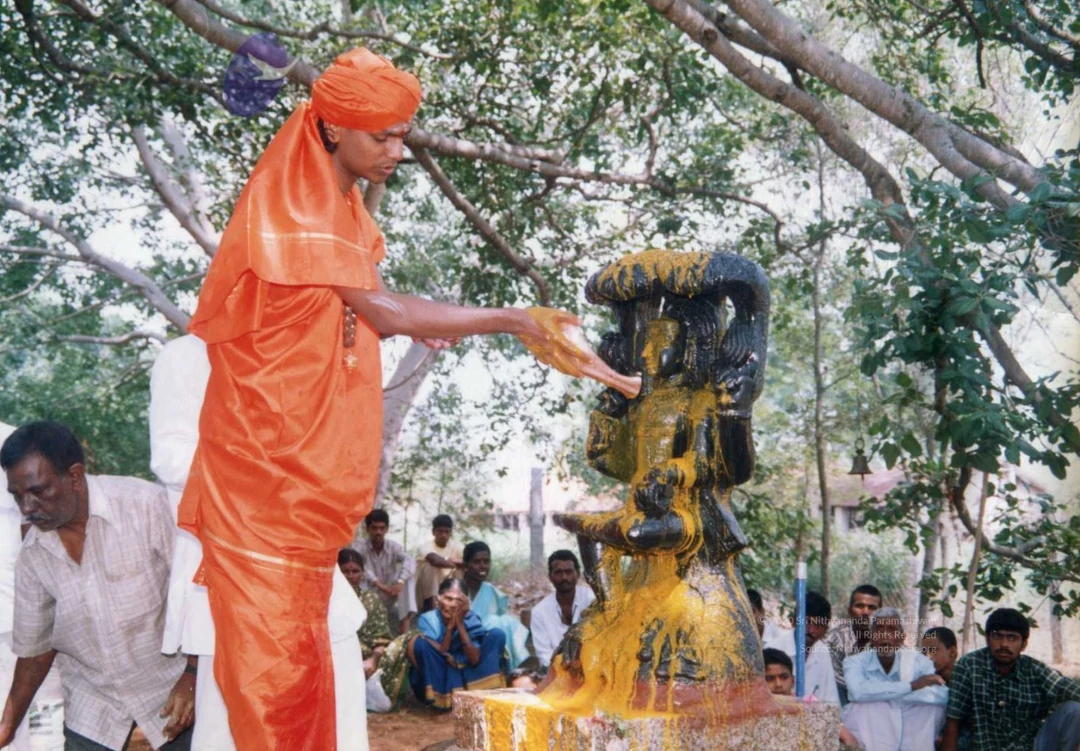 The SPH Offering Chandan Abhishekam to Dakshinamurthy
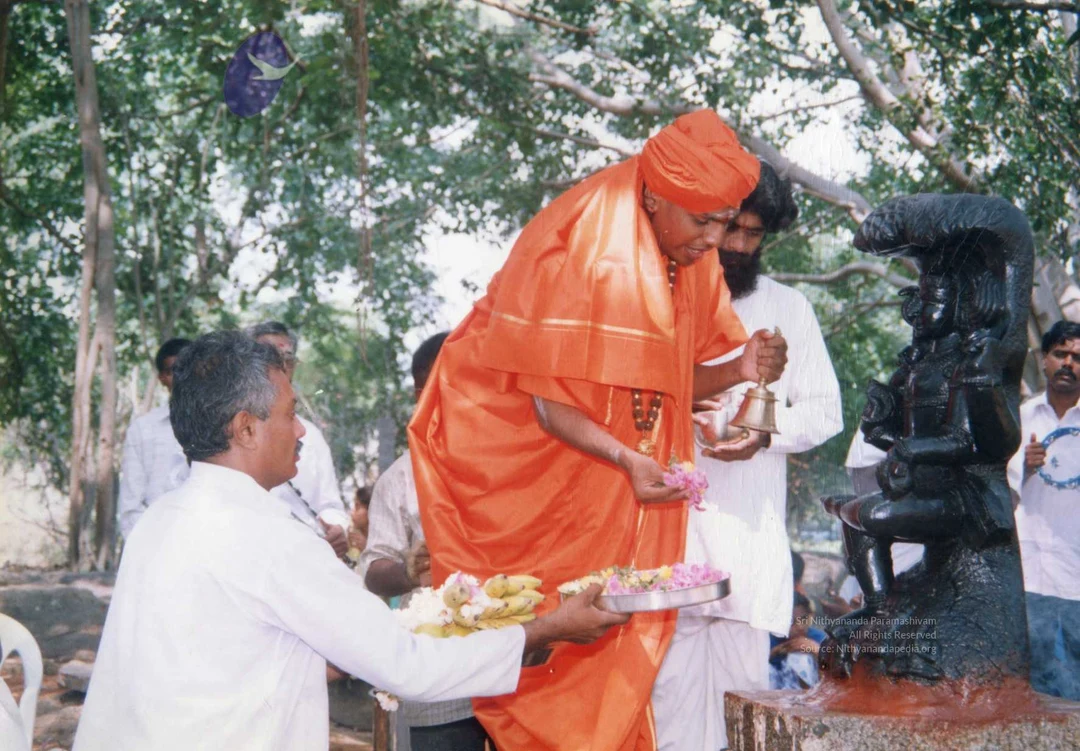 The SPH Offering Flowers to Abhishekam to Dakshinamurthy
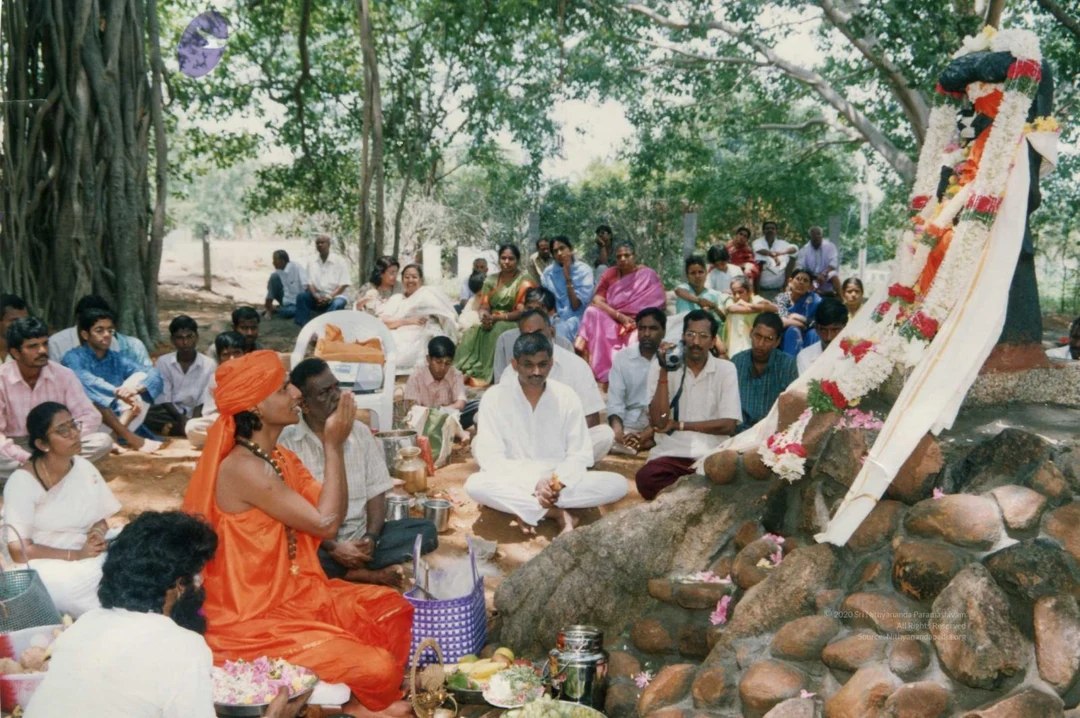 Pooja Offerings to Dakshinamurthy by The SPH
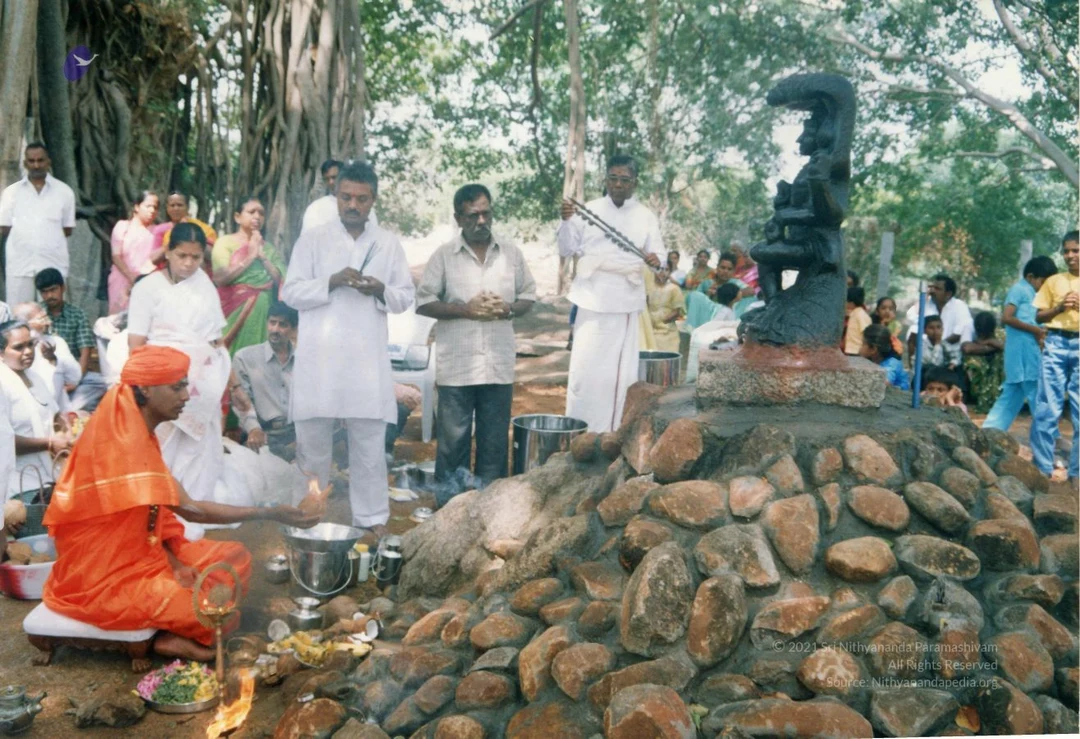 The SPH Offering Karpoora Arathi to Dakshinamurthy
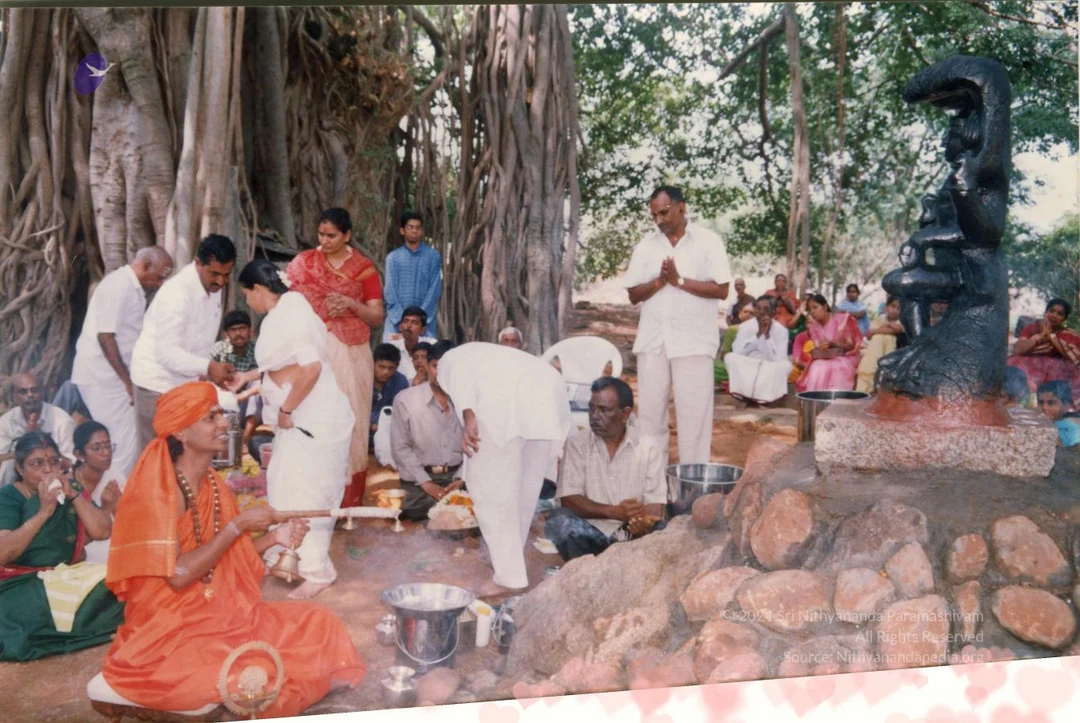 The SPH Offering Karpoora Arathi to Dakshinamurthy
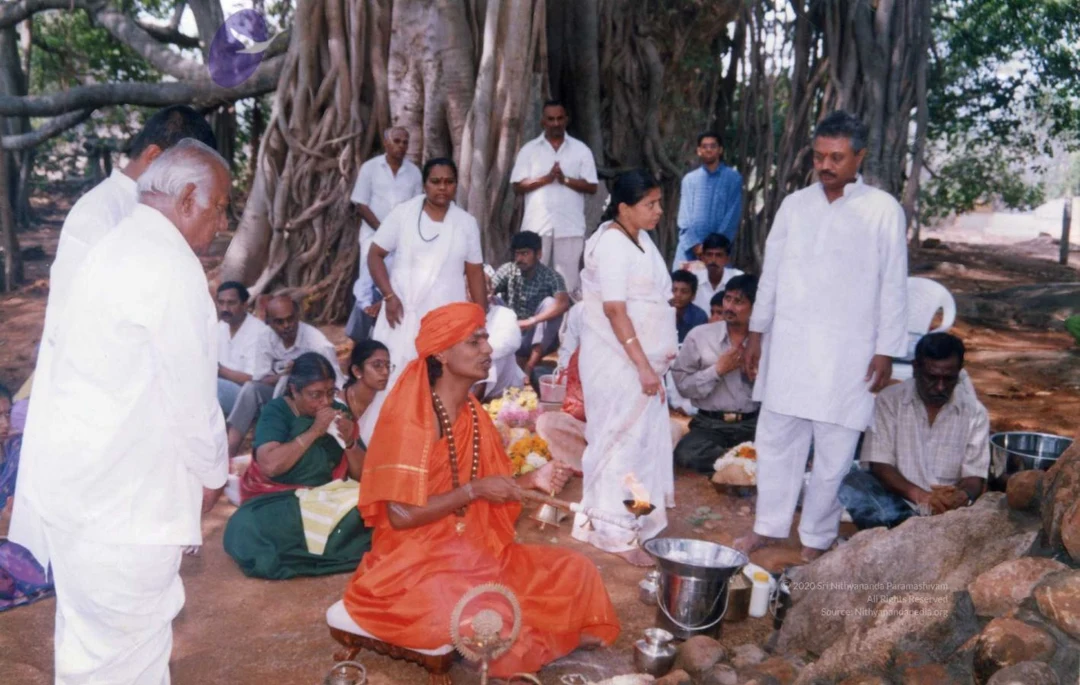 The SPH Offering Karpoora Arathi to Dakshinamurthy
 The SPH Offering Karpoora Arathi to Dakshinamurthy
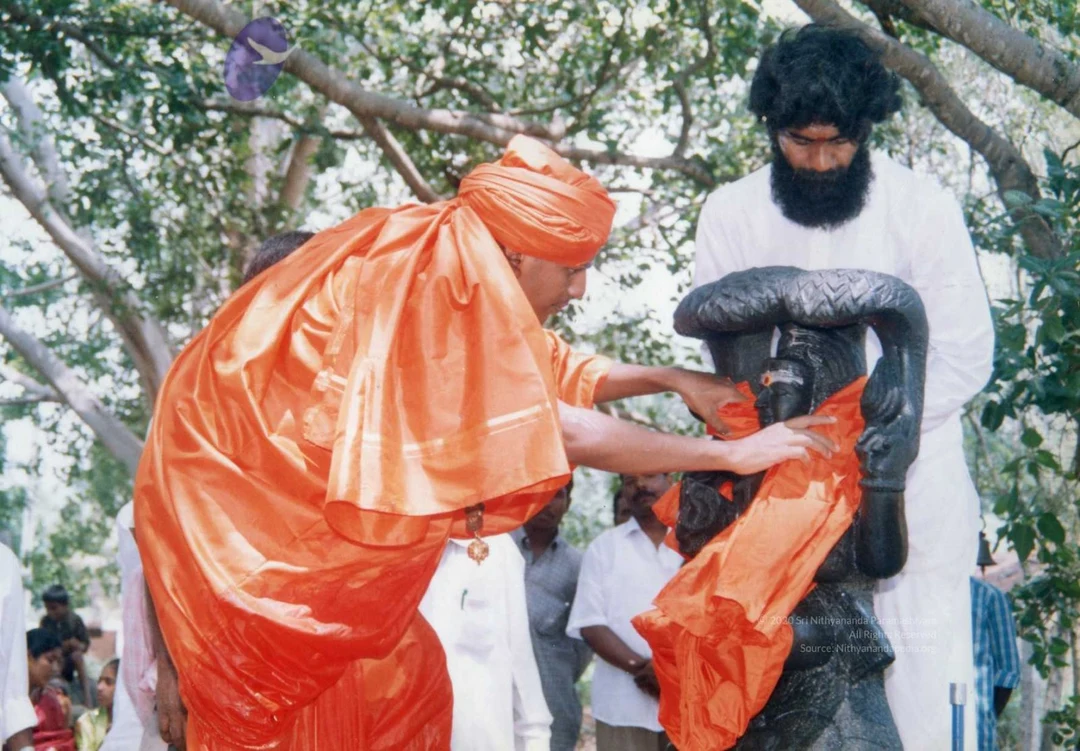 The SPH Offering Vasthram to Dakshinamurthy
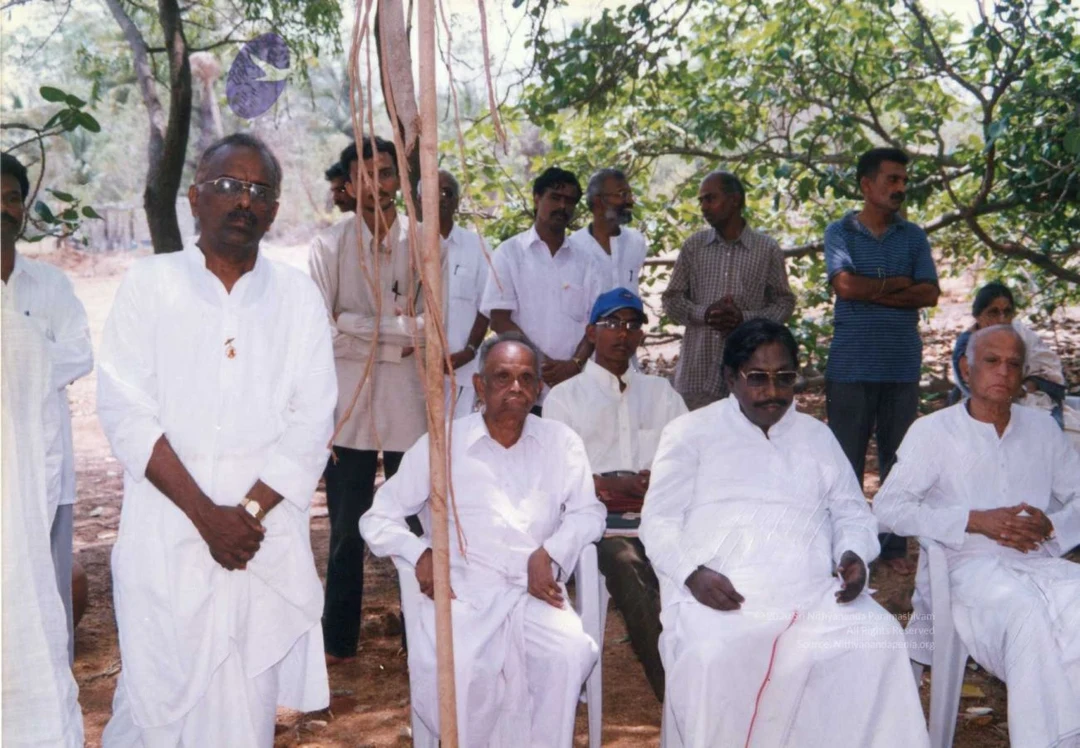 Dignitaries & Delegates Being A part of the Inaguration of Ananda Sabha, Nithyananda Peetam Bengaluru Aadheenam
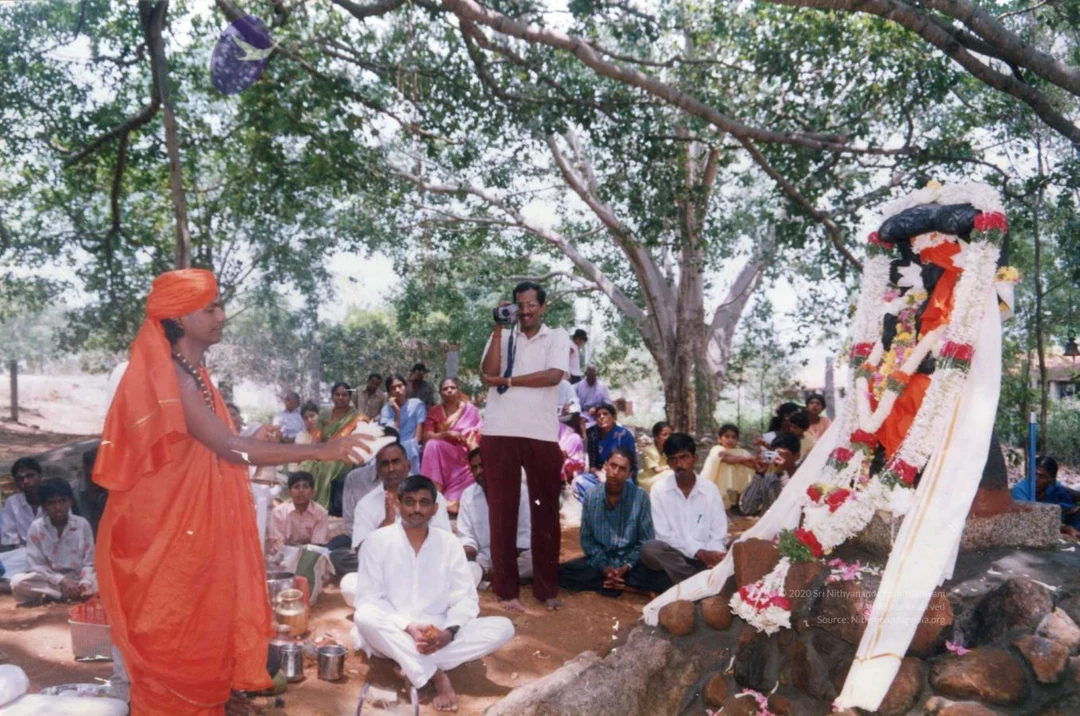 Pooja Offerings to Dakshinamurthy by The SPH
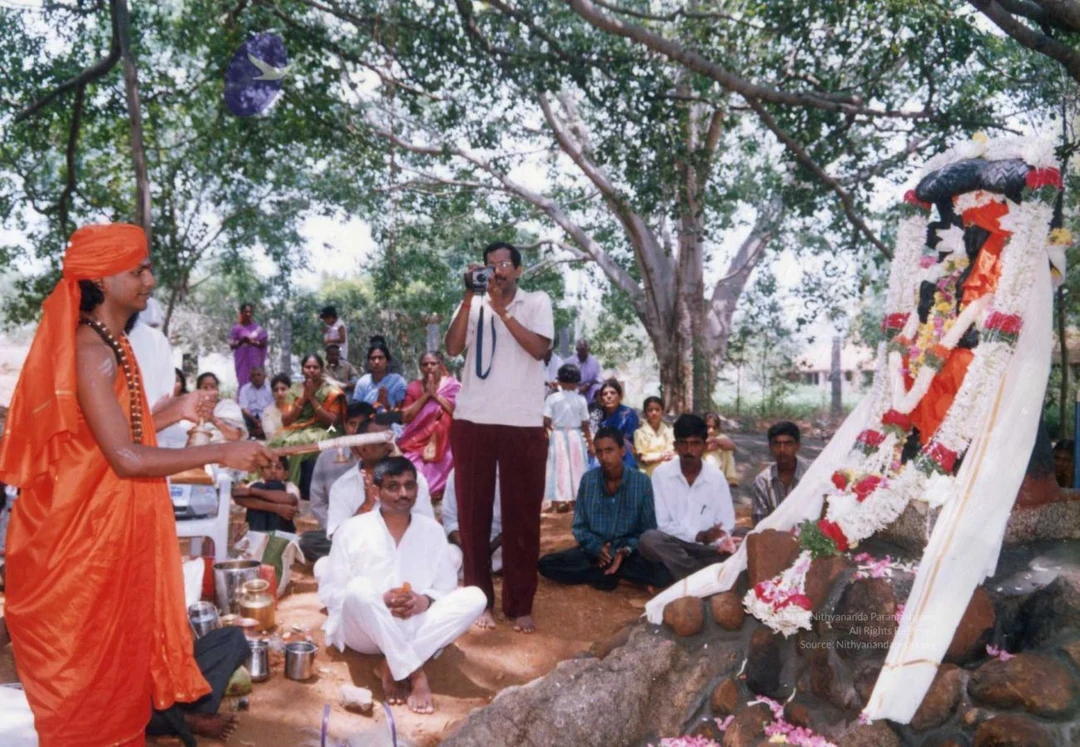 Pooja Offerings to Dakshinamurthy by The SPH
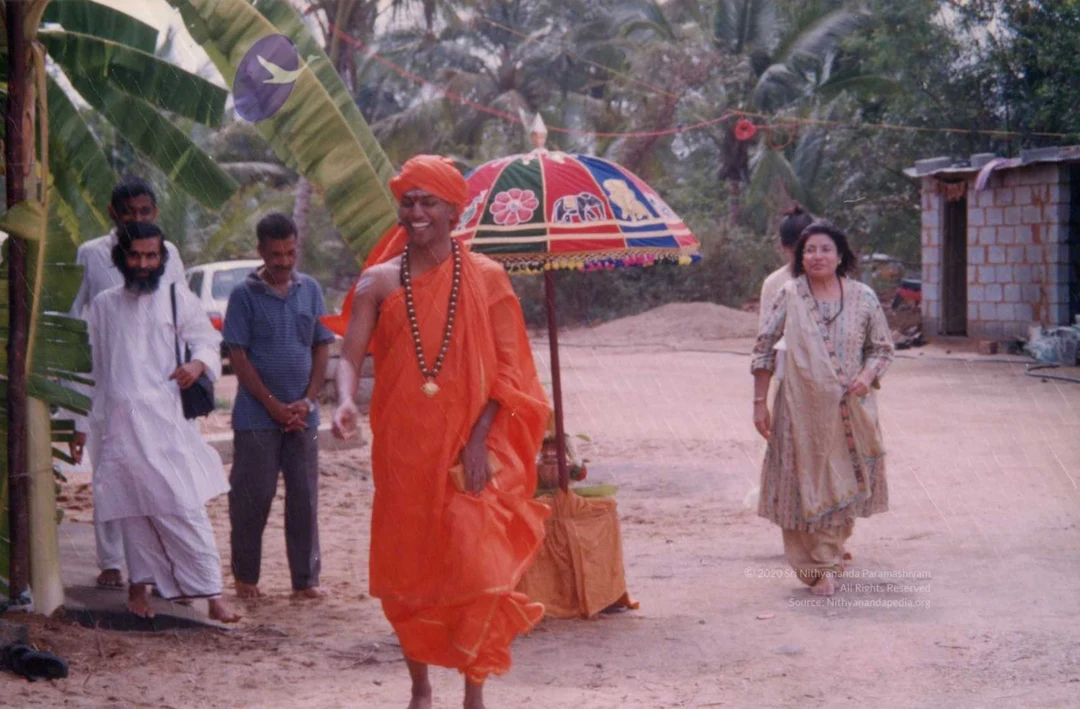 The SPH Radiating Bliss at the Inaguration of Ananda Sabha
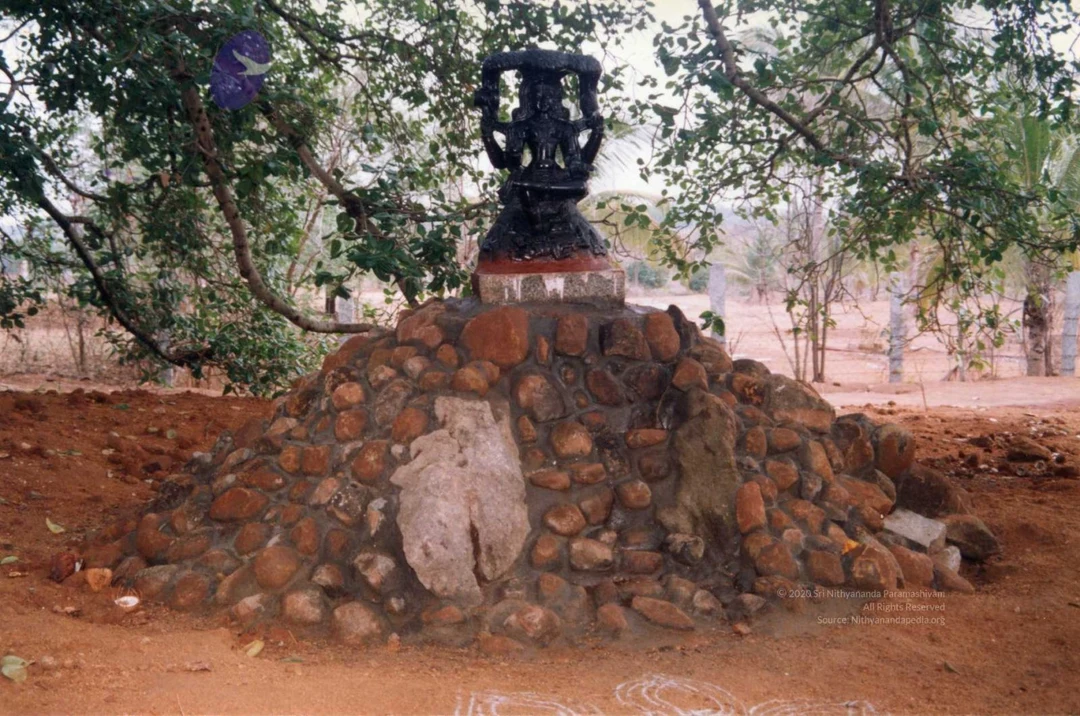 AdiGuru Dakshinamurthy under the Kalpavriksha Banyan Tree, Nithyananda Peetam Bengaluru Aadheenam
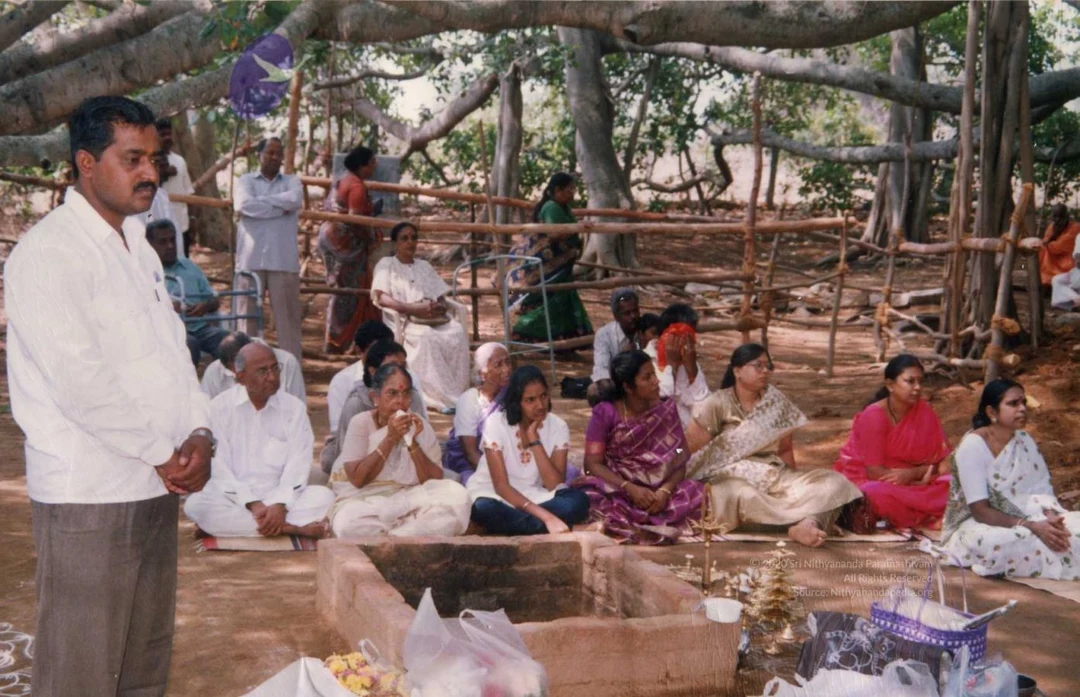 Blessed Delegates Being A part of the Inaguration of Ananda Sabha, Nithyananda Peetam Bengaluru Aadheenam
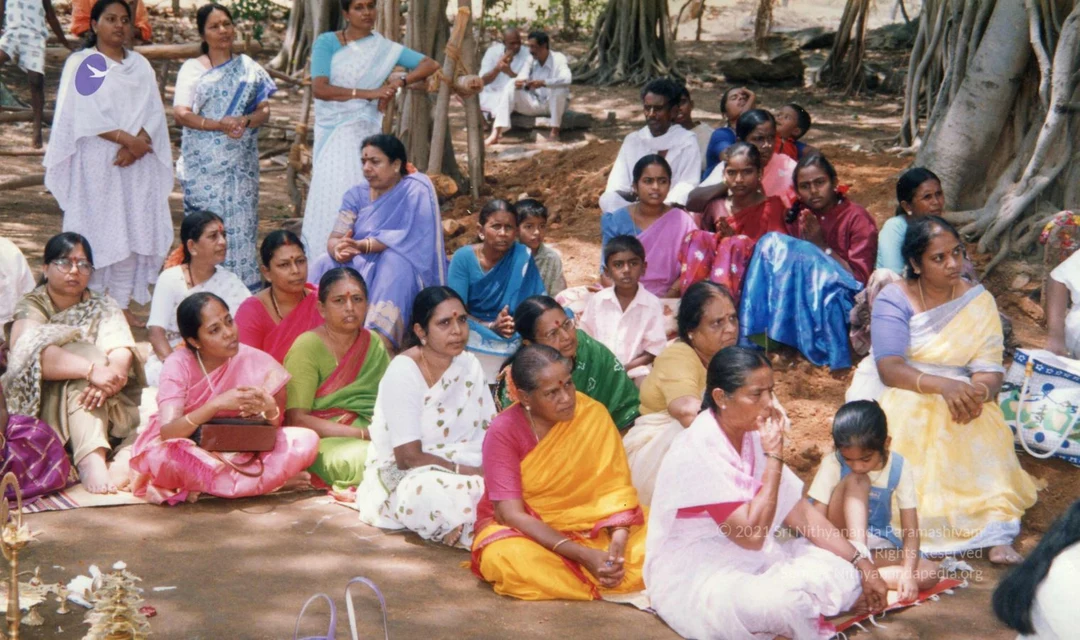 Blessed Delegates Being A part of the Inaguration of Ananda Sabha, Nithyananda Peetam Bengaluru Aadheenam
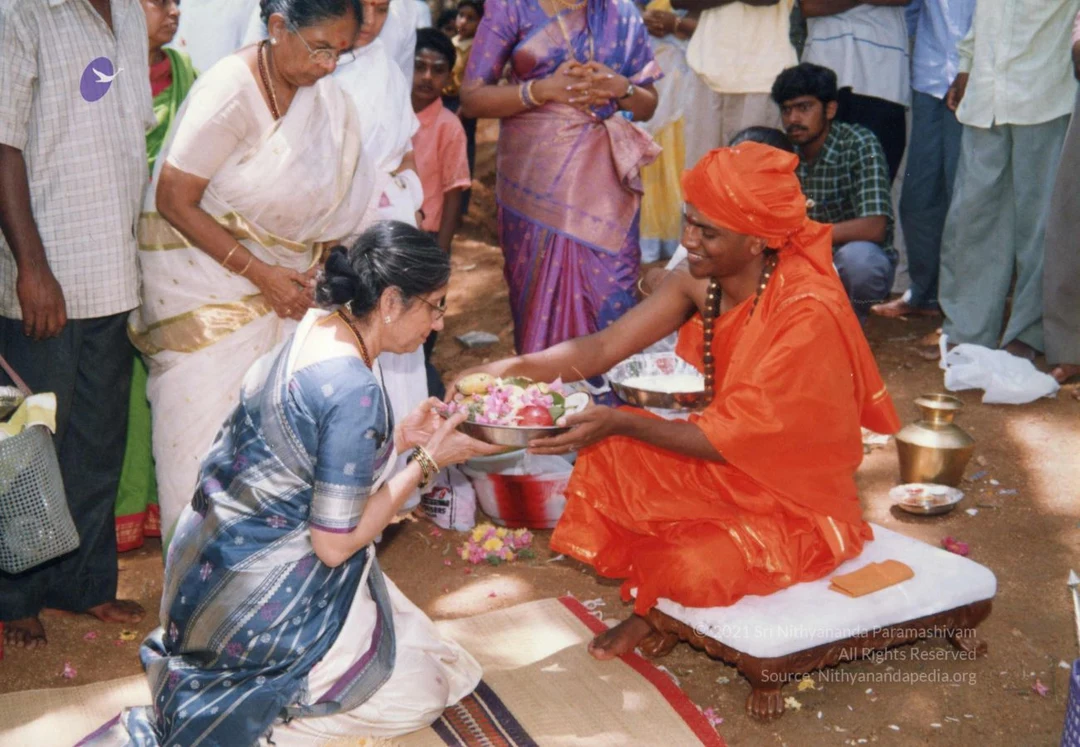 SPH Blessing Delegate taking part in the Inaguration of Ananda Sabha, Nithyananda Peetam Bengaluru Aadheenam
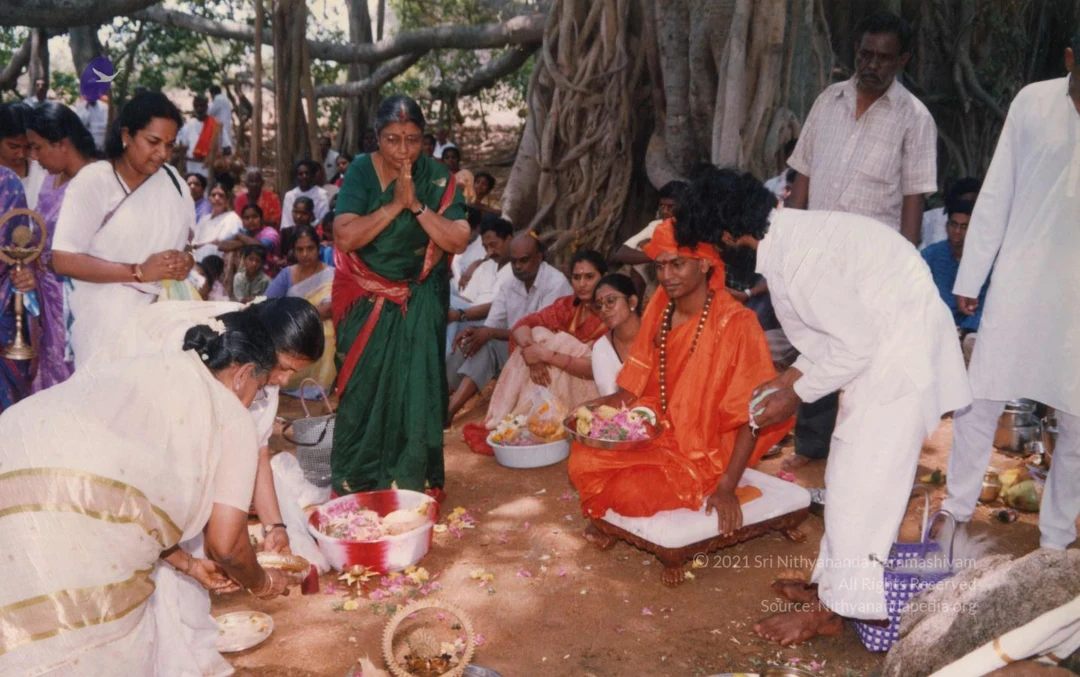 SPH Blessing Delegates taking part in the Inaguration of Ananda Sabha, Nithyananda Peetam Bengaluru Aadheenam
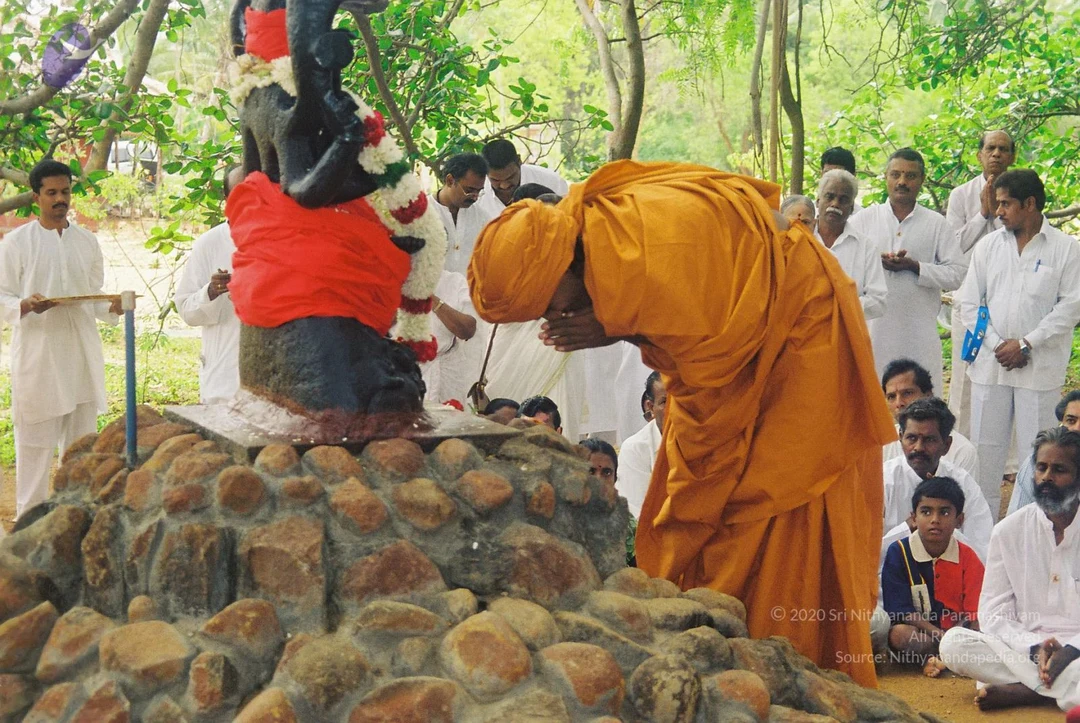
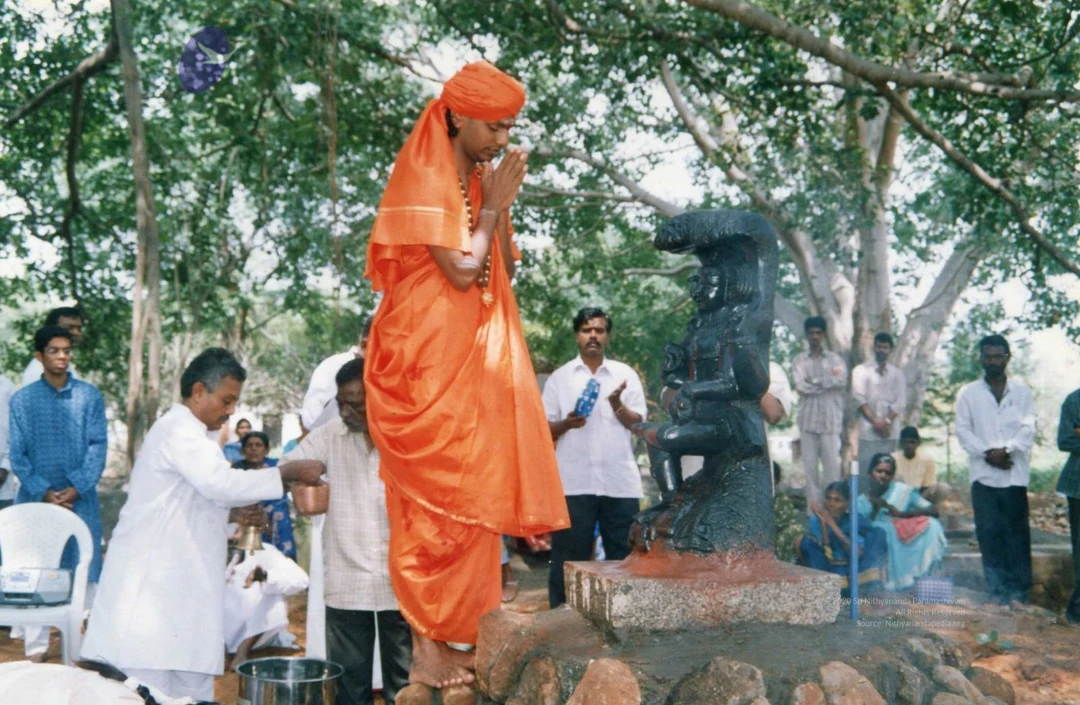 The SPH Offering Pranams and Reverance to Dakshinamurthy
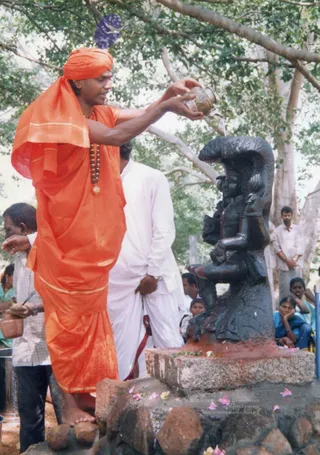 Pooja Offerings to Dakshinamurthy by The SPH
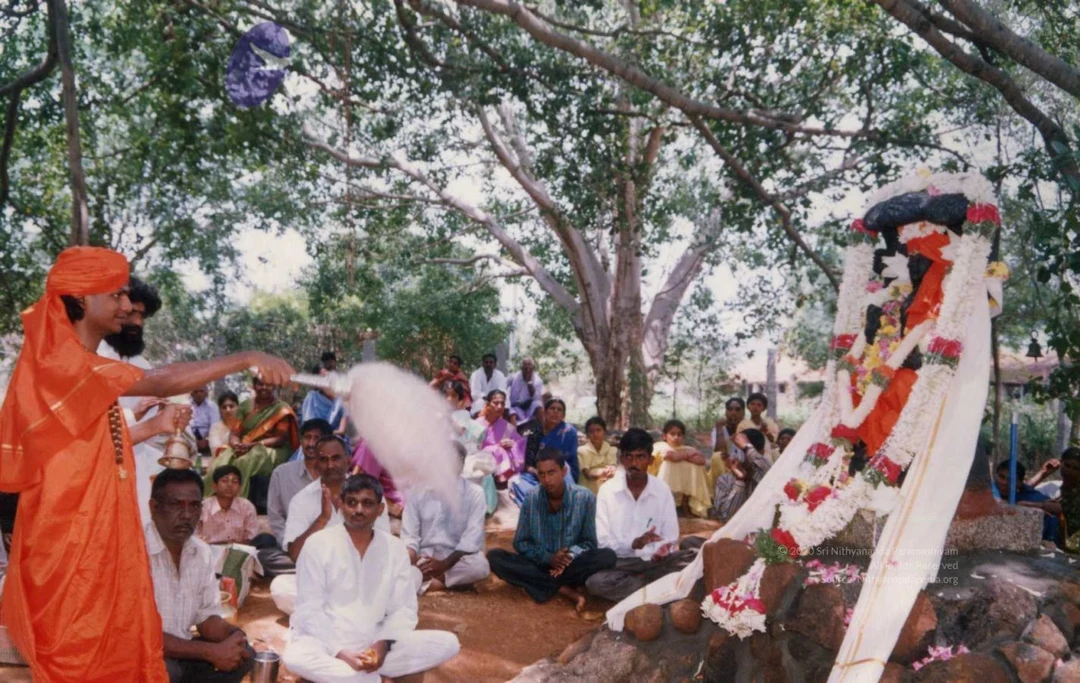 Chaamara Seva to Dakshinamurthy by The SPH
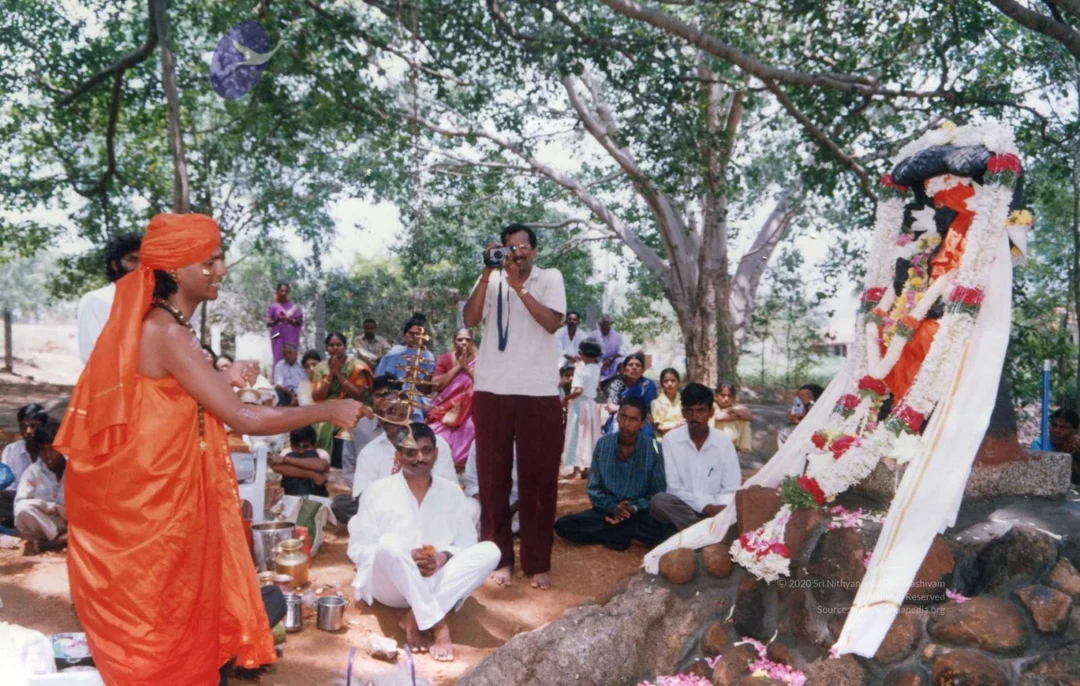 The SPH Offering Arathi to Dakshinamurthy
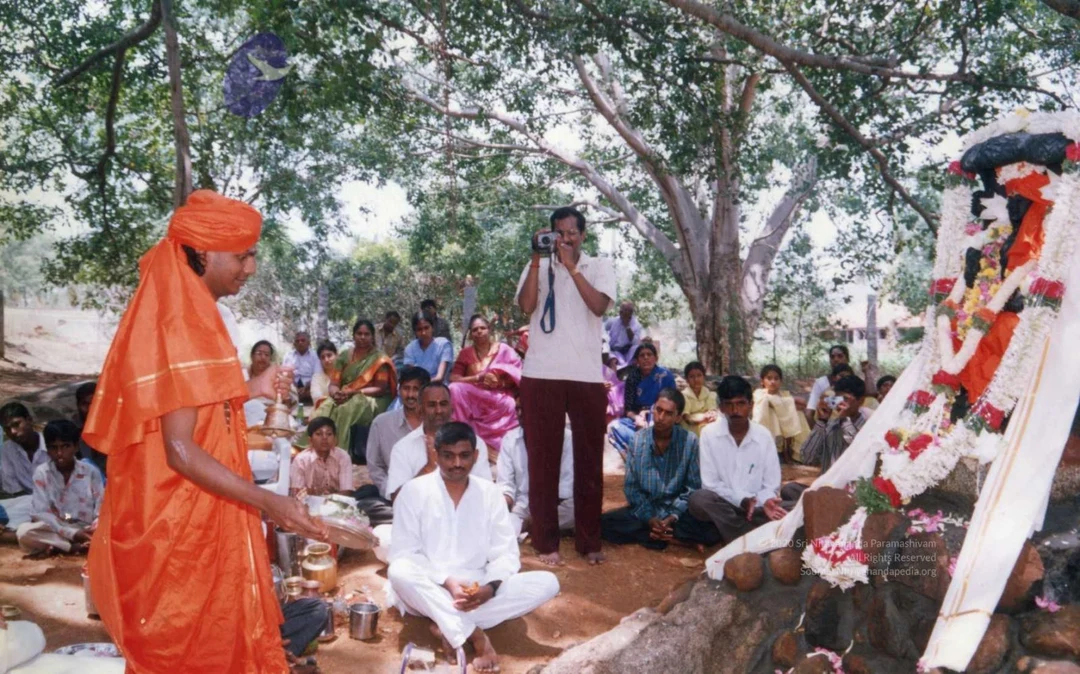 Pooja Offerings to Dakshinamurthy by The SPH
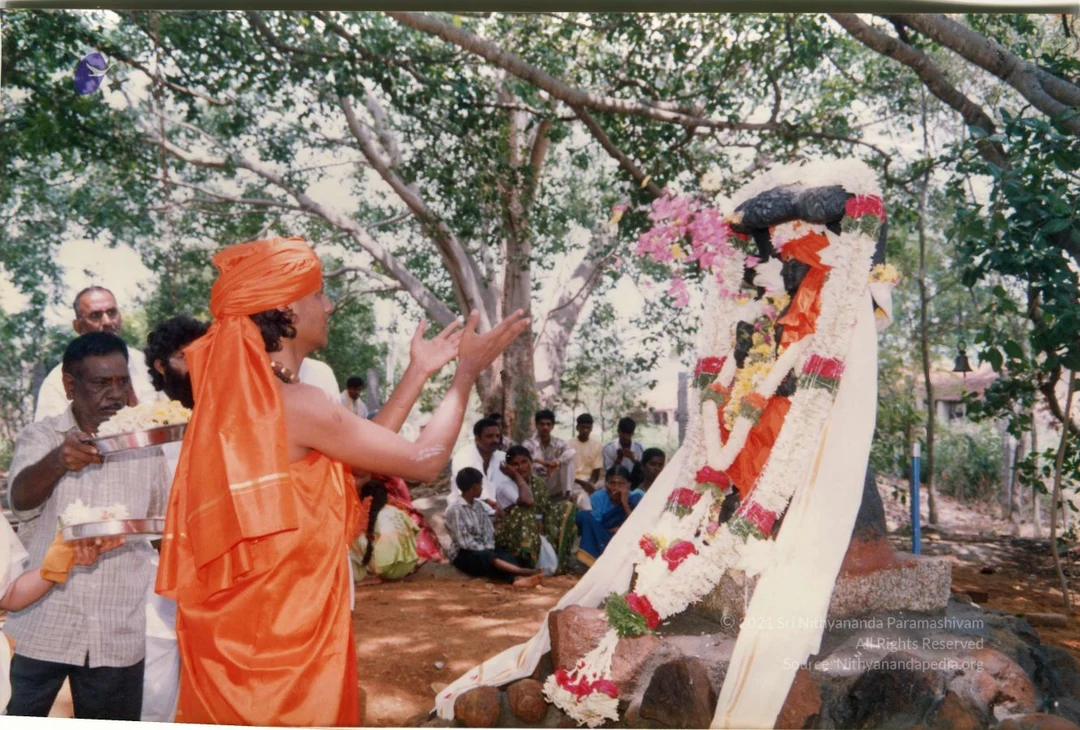 The SPH Offering Flowers to Dakshinamurthy
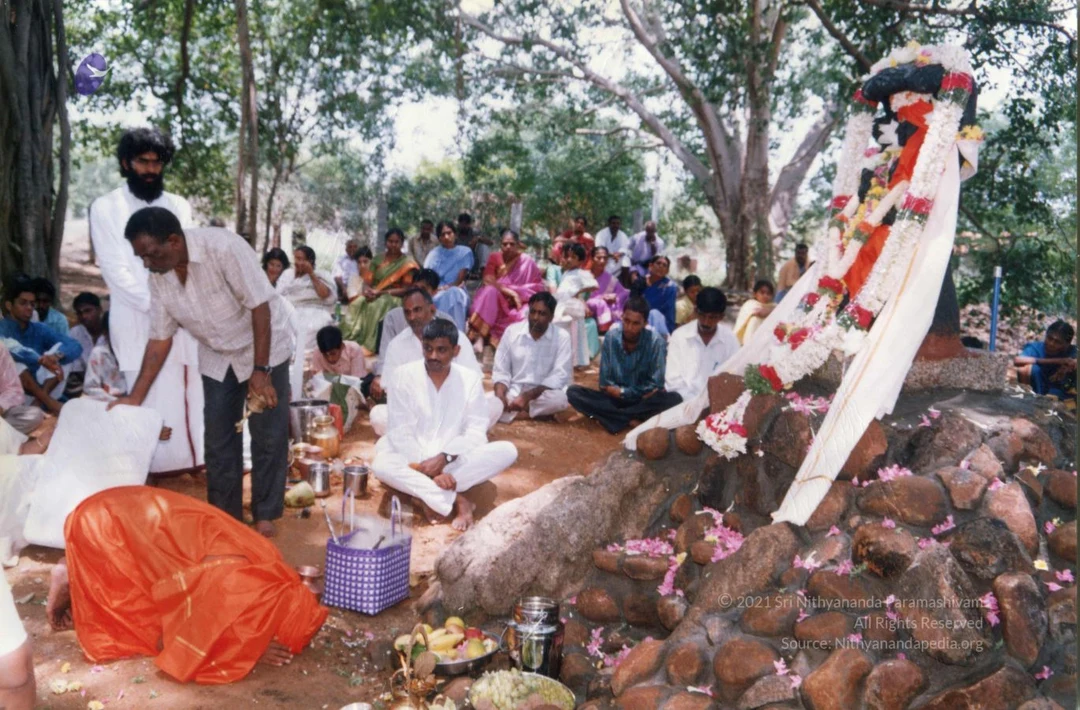 The SPH Offering respects to Dakshinamurthy
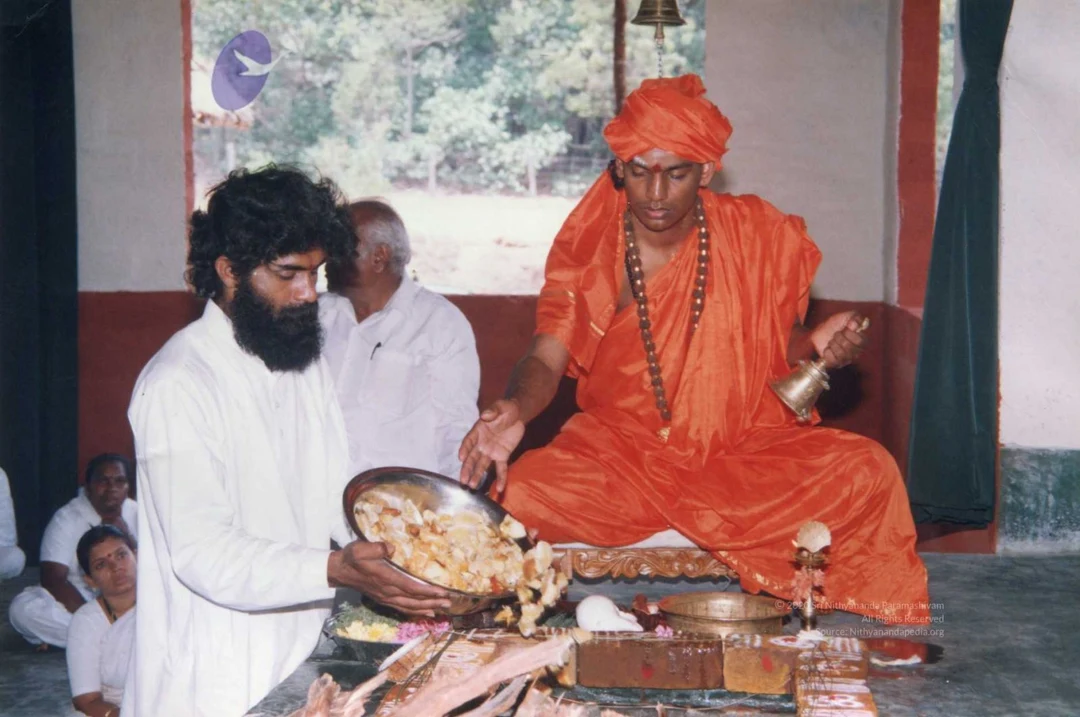 The SPH Offers Oblations to Homa Kunda
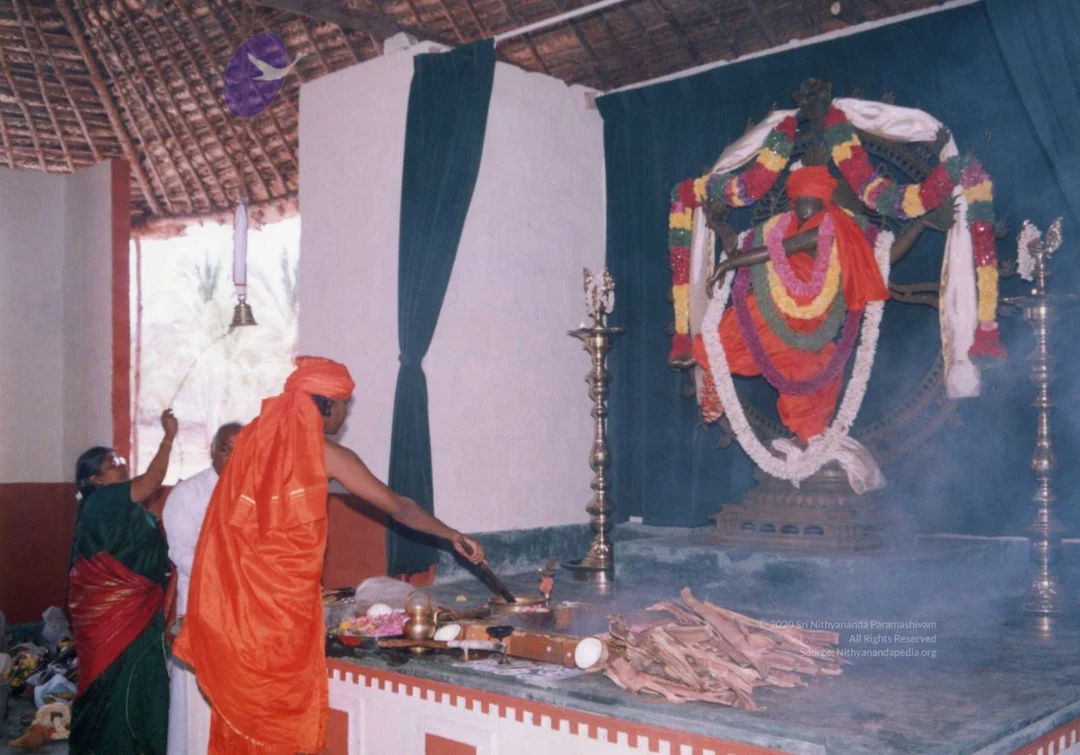 Ananda Sabha Inaguration, Nithyananda Peetam Bengaluru Aadheenam
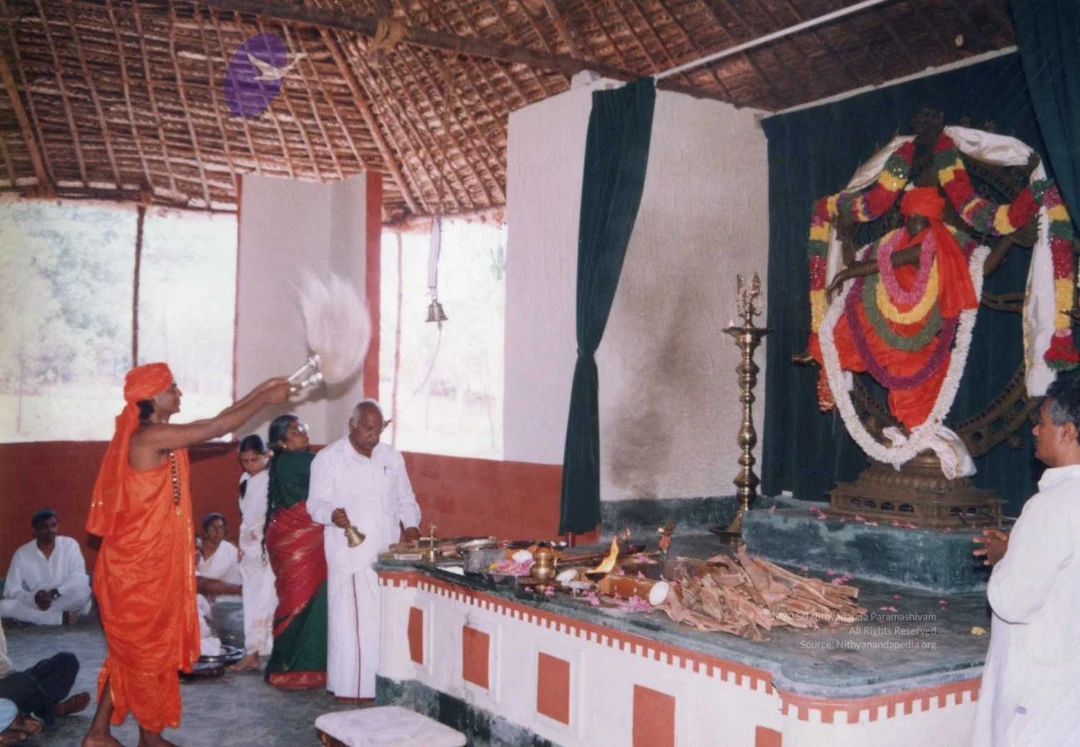 Chaamara Seva to Ananda Nataraja by The SPH
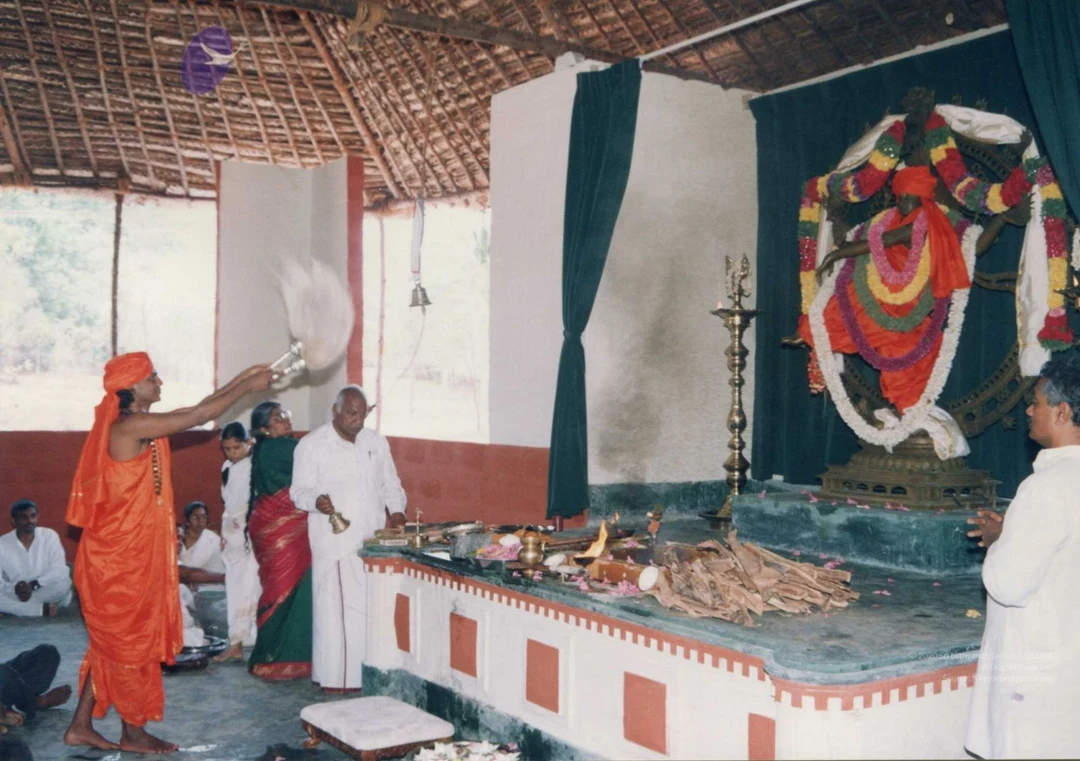 Chaamara Seva to Ananda Nataraja by The SPH
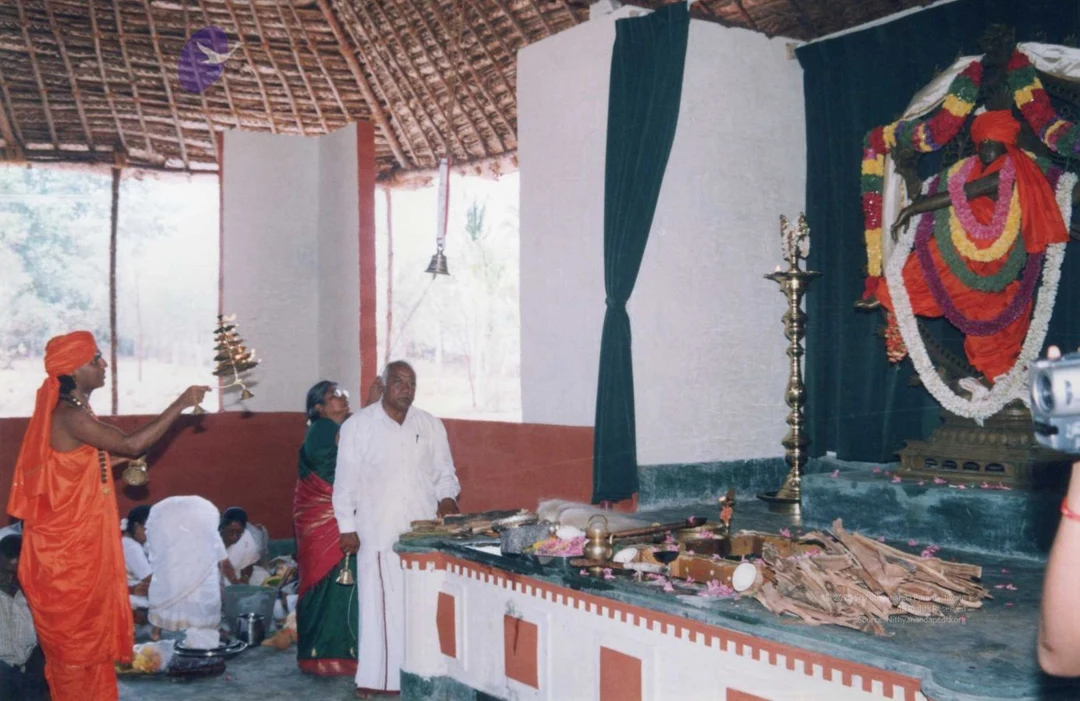 Offering of Aduku Deepam Arathi to Ananda Nataraja by The SPH
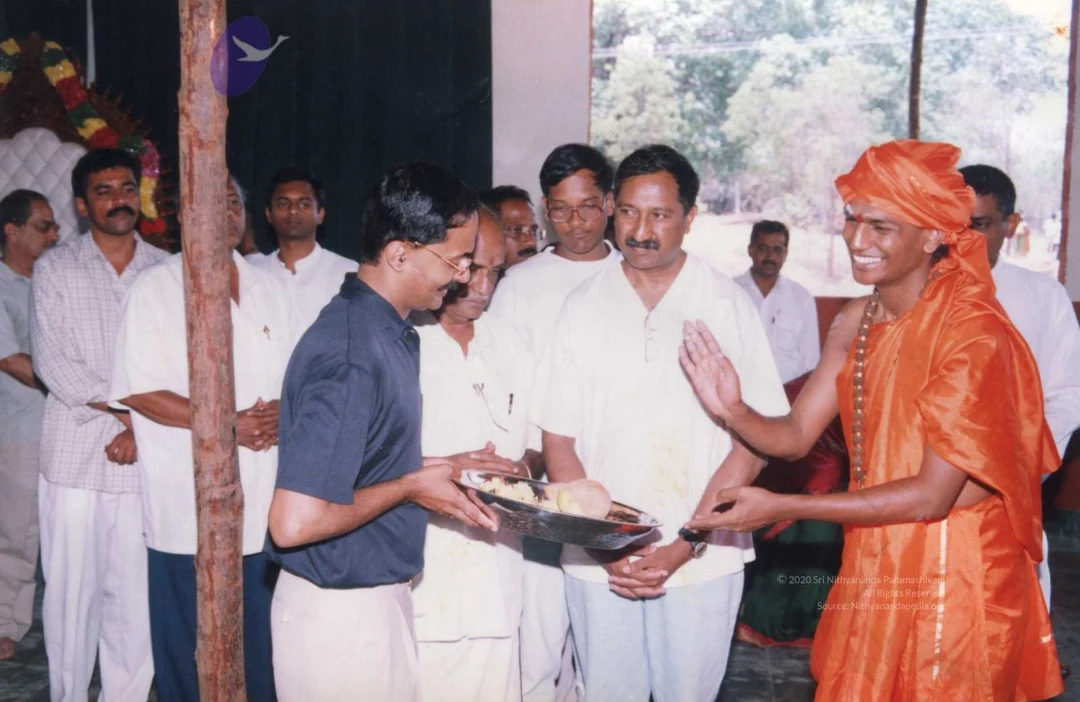 The SPH Blessing Devotees Attending the Ananda Sabha Inaguration, Nithyananda Peetam Bengaluru Aadheenam
Ananda-Sabha-Inauguration
Photos from this day
View all 69 photosPhotos
47 photosSource gallery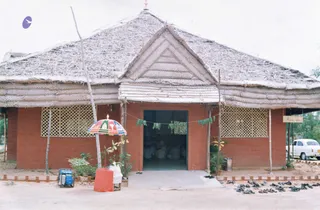
Ananda-Sabha-Inauguration
22 photosSource gallery