Skip to content
Wednesday

12 December 2018

Dated photos
55
Source pages
1
Media
3
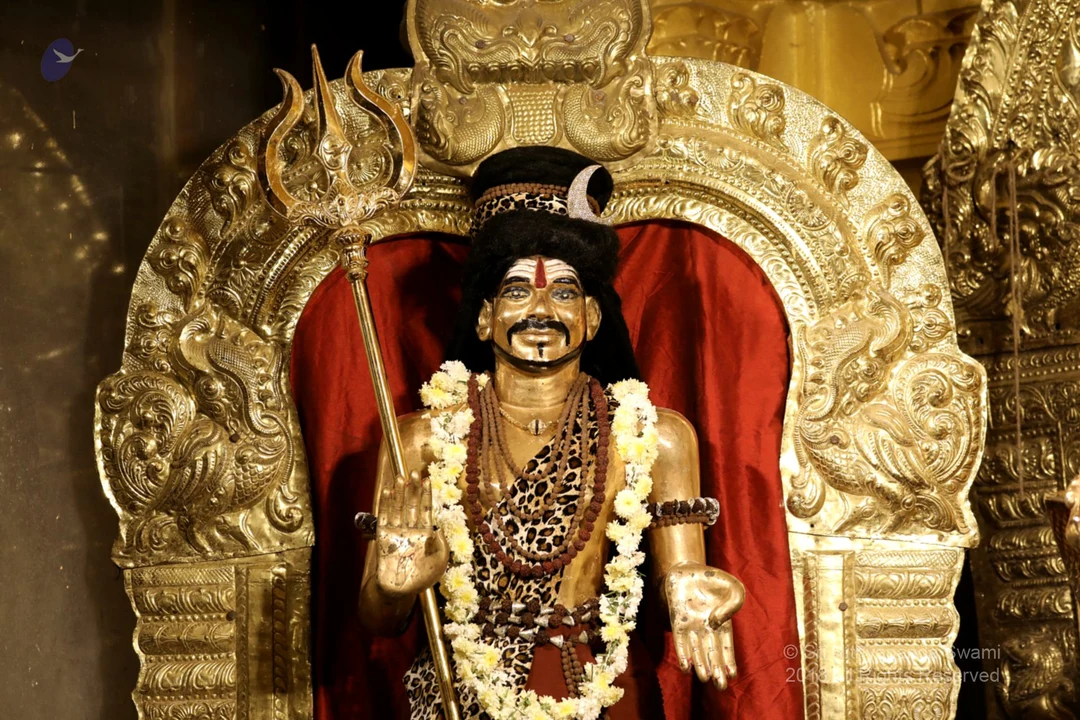
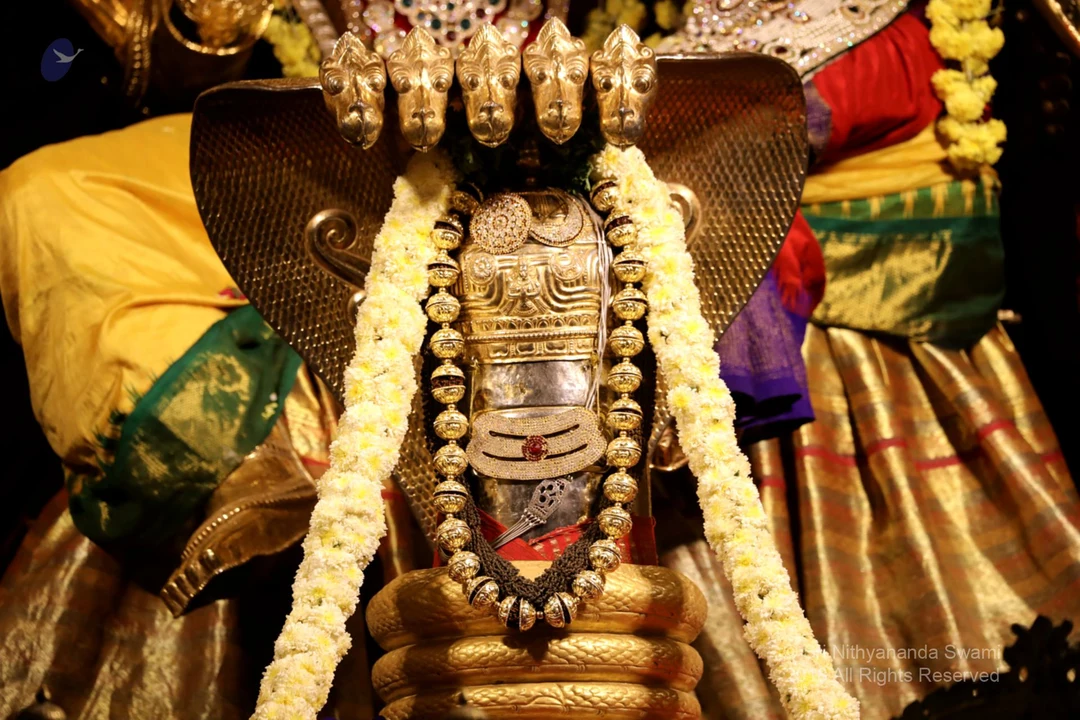
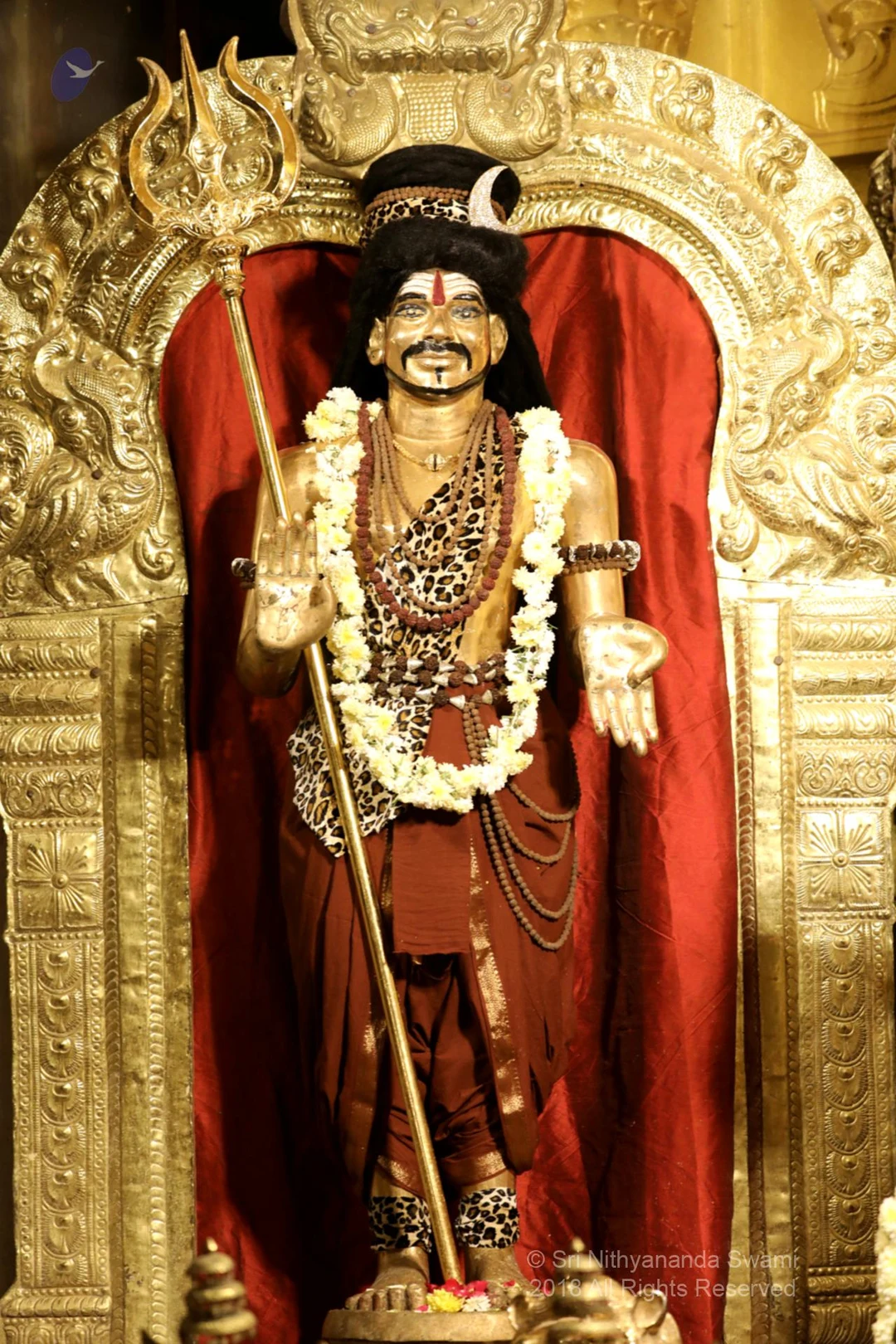
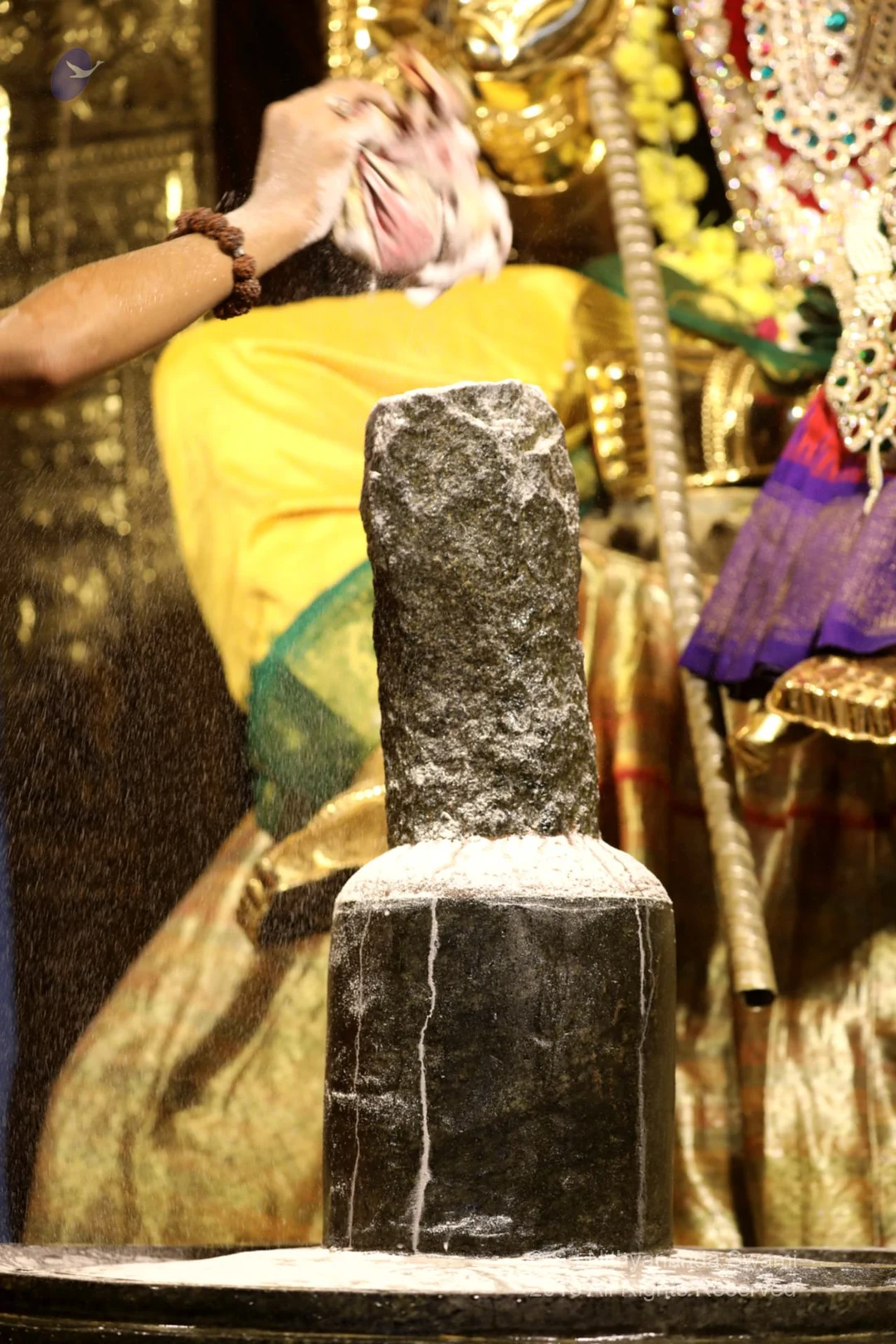
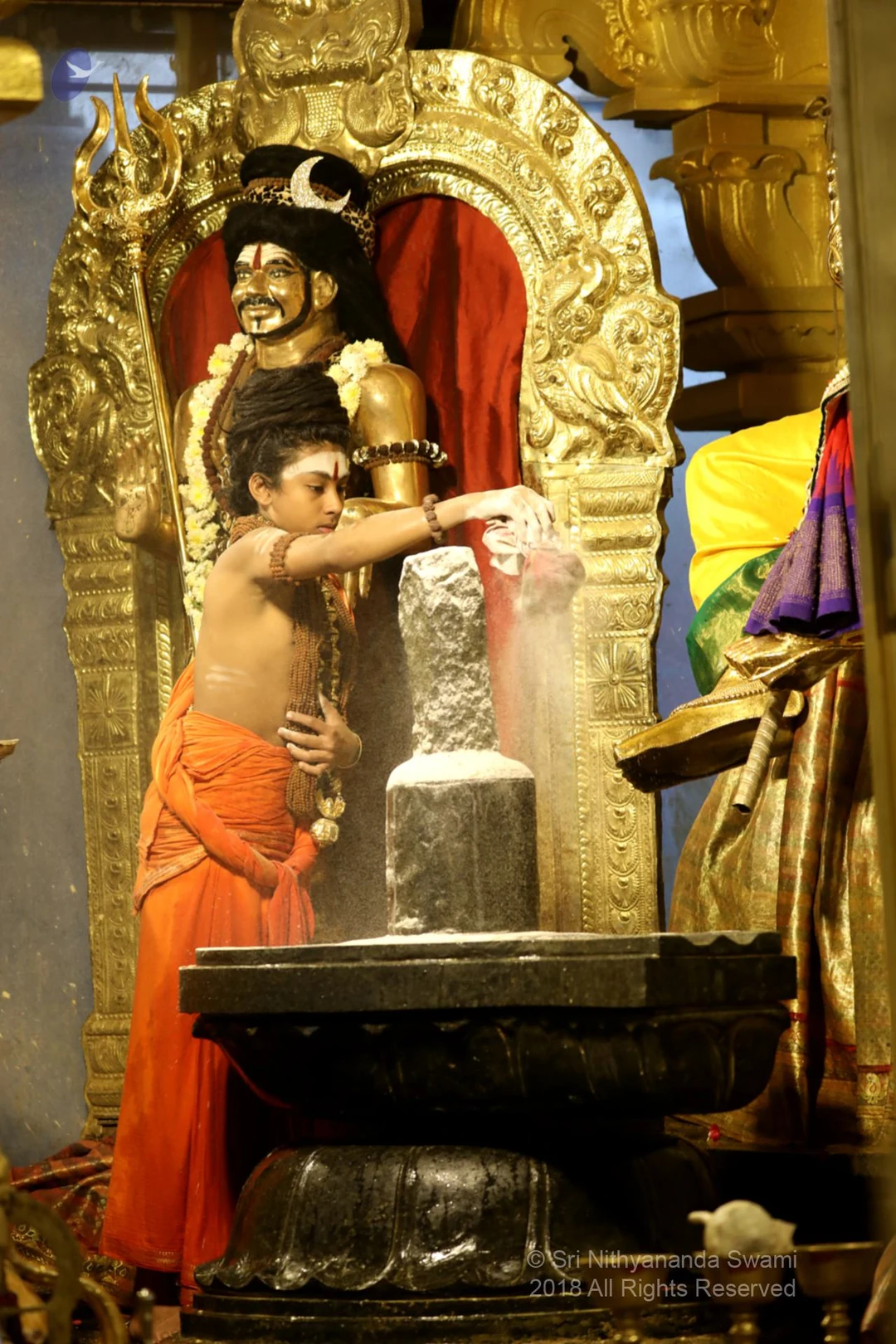
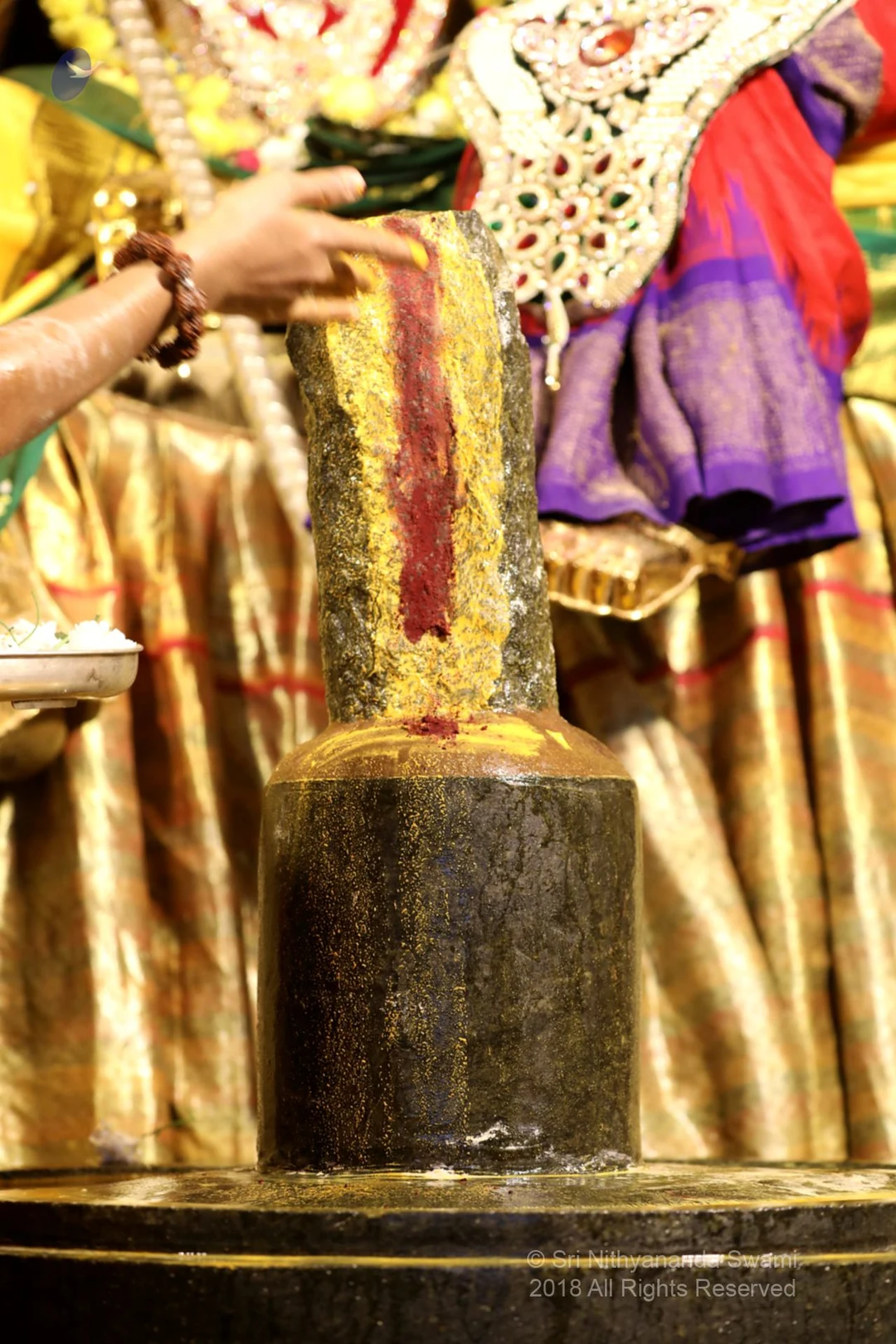
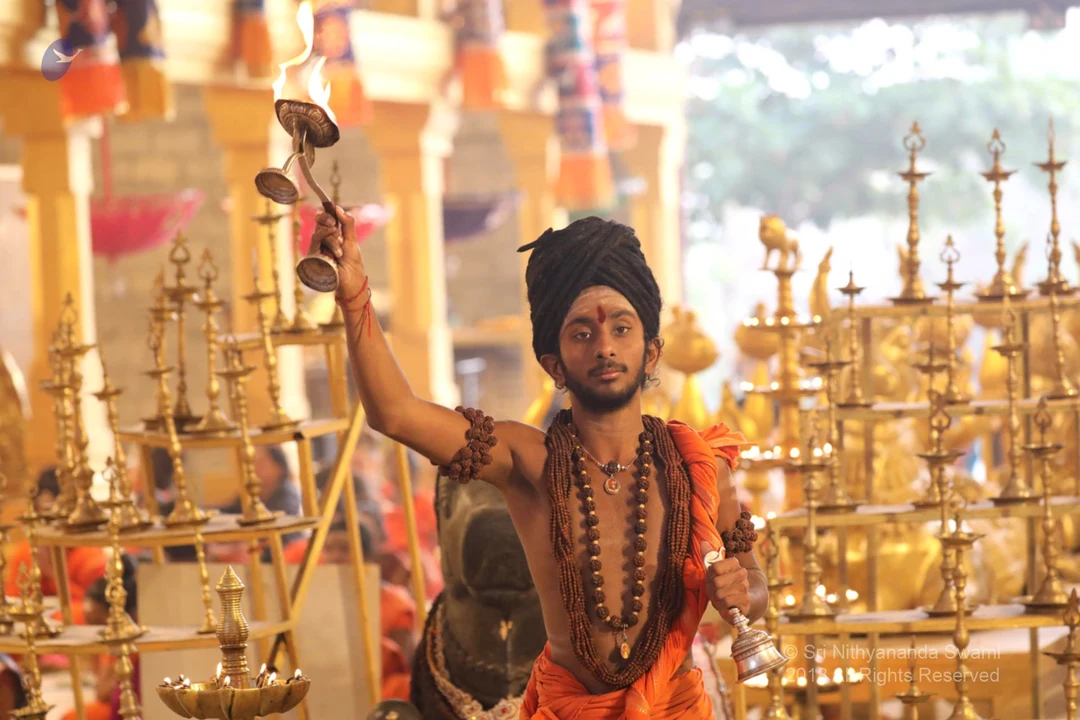
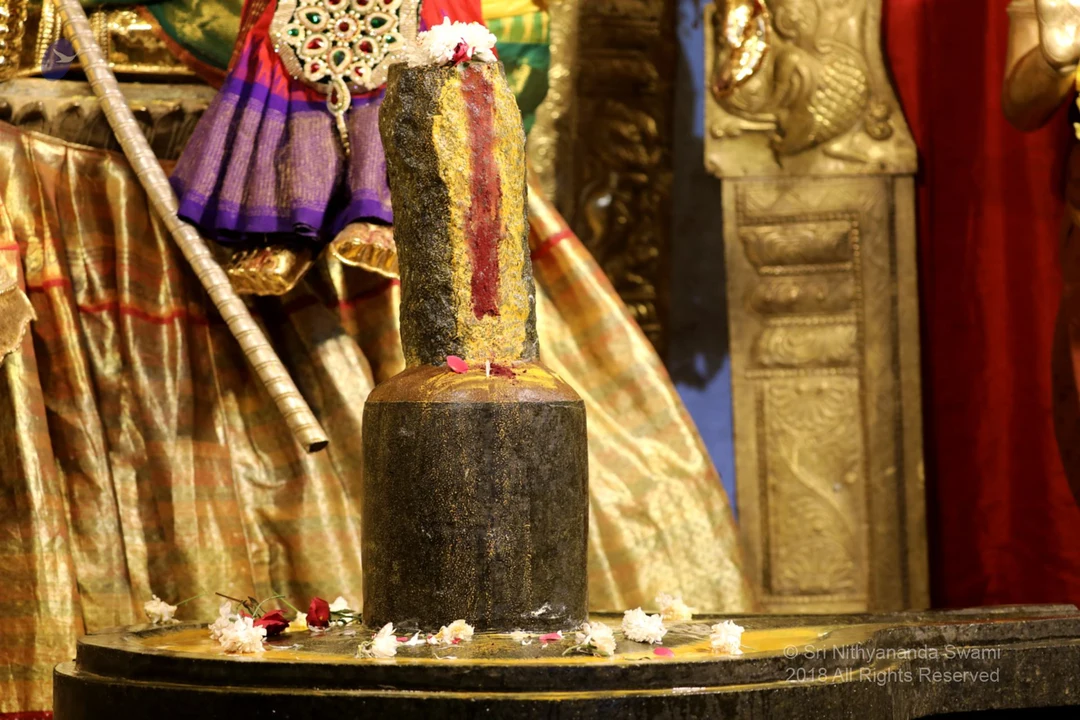
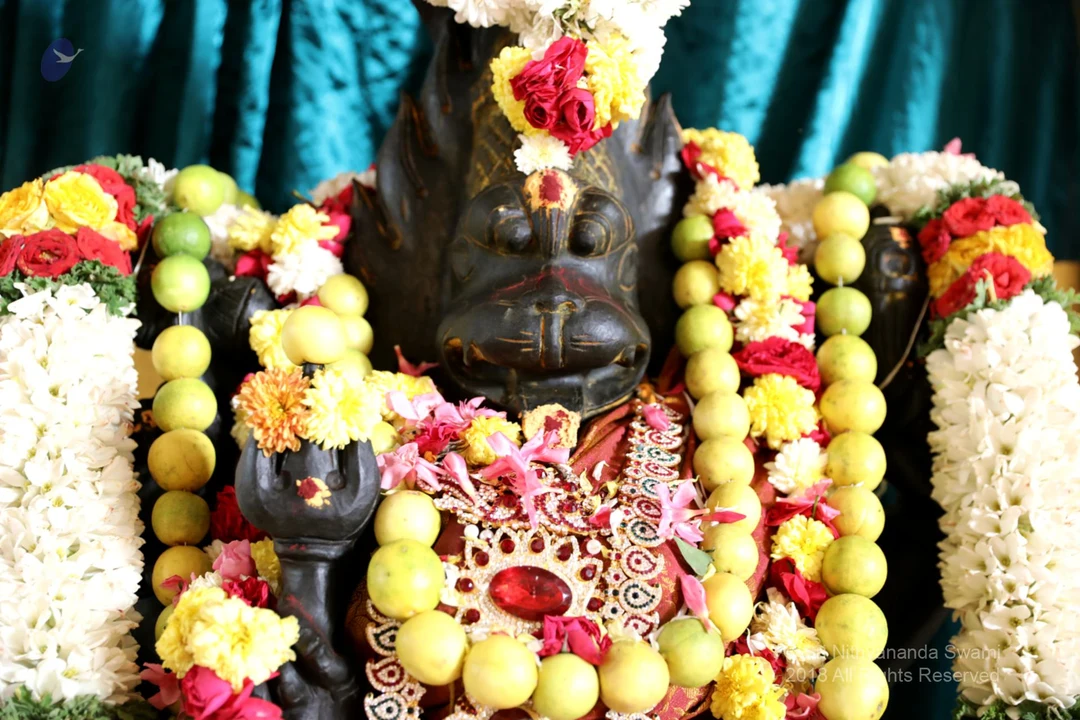
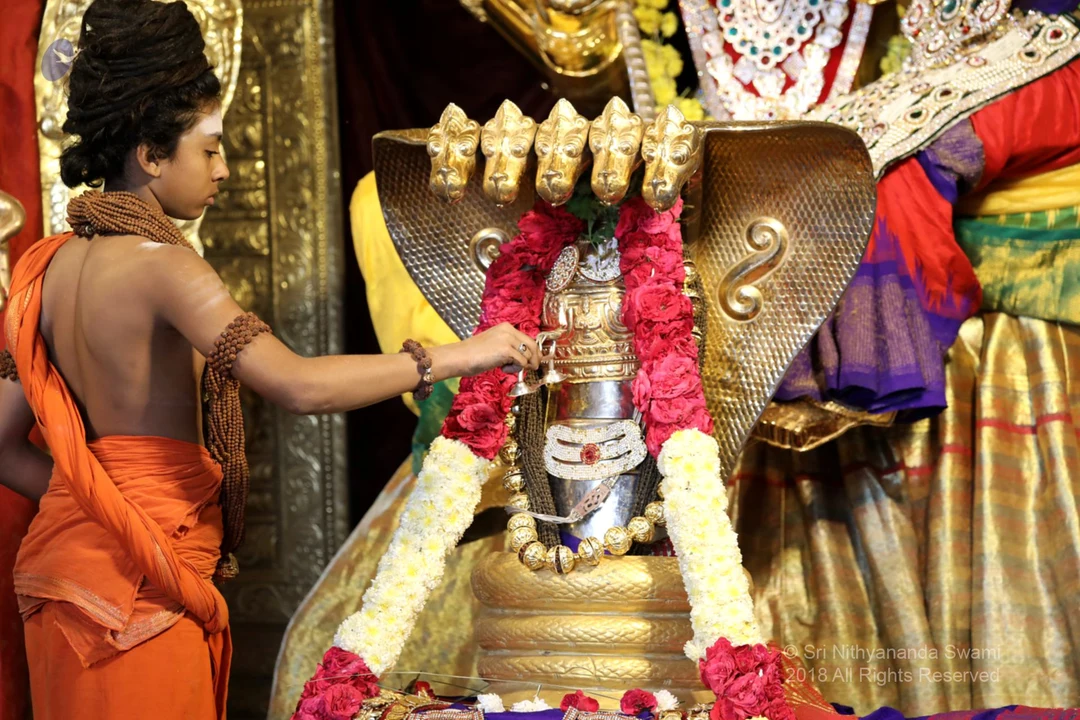
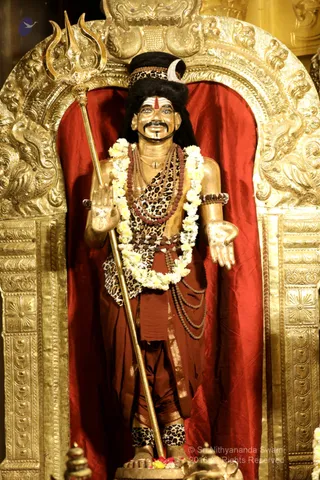
Close photo of a ritual abhishekam at a black stone shivalinga, its surface smeared with yellow turmeric paste and a red vertical line. A bare hand with a rudraksha bracelet and a ring holds a silver ritual implement, a spouted vessel, pouring liquid over the linga. Behind it, a person in a yellow garment and a green-and-purple cloth sit beside a golden metal item with ornate decorations and flowers. The image shows a temple puja setting with a copyright credit in the lower right corner.A golden statue, a murti of a bearded figure with long black hair piled high and a crescent ornament at the top, stands in a gilded arched niche with a deep red cloth backdrop. It holds a golden trident in its left hand and its right hand is raised in a blessing gesture. It wears a leopard-print garment, layered rudraksha malas, a gold necklace, bangles and a white flower garland, with a red tilak on the forehead. This is a statue, not a living person, so no physical people are present.Close-up photograph of a richly decorated deity murti of Shiva lingam form, framed by a five-headed cobra hood with golden snake heads above. The murti is adorned with a silver and gold face or shield, a gold-bead and rudraksha-style garland, and white and yellow flower garlands draped on both sides. Behind it, a gold and silver silk cloth with yellow, green, red and purple tones forms the backdrop, with coiled gold snake forms at the base. No people are visible.

December 12 2018

Original wiki page
Contents

Title

Enriching - Basic Cognition for Enlightenment || Paramashivoham webinars ||

Narration

The Supreme Pontiff of Hinduism, Jagatguru Mahasannidhanam, His Divine Holiness, Bhagavan Nithyananda Paramashivam expounded on the cosmic Principle, Surrender and Enriching Leads to Sudden Enlightenment in today’s live Paramashivoham℠ Webinar Series. The Supreme Pontiff of Hinduism revealed in His own life, that until real surrender happened, integrity was His first priority, then authenticity, then responsibility and then enriching. But after surrender happened in Him, Enriching became the first operative cognition in his life and the rest of the Tattvas followed. He went on to share that If you want to experience surrender, to start enriching and everything else will just follow and if you want sudden Enlightenment, make enriching as your basic cognition in your life.

Video & Audio

Surrender and Enriching Leads to Sudden Enlightenment

VideoAudio

Transcript

(0:01)

nithyānandeśvara paramaśiva sadāśiva samārambhām nithyānandeśvari parāśakti madhyamām | asmat āchārya paryantām vande guru paramparām || I welcome you all with My love and respects. I welcome all the Devotees, Disciples, Samajis, Satsangis, Sri Mahants, Mahants, Thanedar, Kothari, Visitors, Viewers, everyone sitting with us all over the world through Nithyananda TV, 2-way video conferencing. I welcome all of you with My love and respects.

(00:55)

Today's subject for the webinar – Surrender. I will explain precisely how I experienced surrender and what happened when I experienced surrender. Please listen, first, Integrity is nothing but intellectually coming to Oneness with Guru… which I started experiencing with Annamalai Swamigal; like intellectually Oneness with the Guru.

Authenticity is emotionally experiencing Oneness with the Guru.

Responsibility is your Being feeling Oneness with the Guru.

Enriching is your Consciousness feeling Oneness with Guru.

Listen, with integrity your intellectual alignment stars, intellectual surrender starts, intellectual Oneness starts. With authenticity your emotional Oneness starts. With responsibility your Being Oneness starts. With enriching your whole Consciousness Oneness starts.

(02:42)

I tell you, till real surrender happened, integrity was my first priority, then authenticity, then responsibility, then enriching. When the surrender happened, enriching becomes my first priority. That became my first priority. It’s not that I gave up my integrity. But enriching became the first operative cognition when surrender happened to me. Whoever wants, take this as a click, when you decide enriching as the first priority, simply surrender happens; because for enriching you have to have all the other three alignment. If you are not able to enrich, somewhere some part of you - whether your intellect or emotion or Being is not convinced, not yet convinced.

I tell you, from my atma pramana, when the surrender happened, when I decided the enriching to be the first part, component of my life, that be the powerful cognitions to drive me, I saw authenticity, responsibility, integrity everything following. When I decided I will spread what Paramashiva did to me, I will share that to the world and start enriching the world with Paramashiva, His Being, who is He and His state, His space, His powers, His Being and His super consciousness, I saw responsibility, authenticity, integrity, everything was following. If you want to experience surrender, start enriching. Then everything else just follows. If you want sudden enlightenment, make the enriching as your basic cognition. If you want gradual enlightenment go through integrity…. integrity means aligning all the words you utter inside and outside to the reality… start. Then authenticity…. Start. Then responsibility… Start. Then enriching… Start.

(5:32)

Understand, people ask me “Swamiji is Enlightenment gradual or sudden?” It is both… based on you, up to you. If you want gradual enlightenment … “That is enough for me. Sudden is too much. It is like somebody else entering into me. So gradually, gradually, gradually, gradually, gradually, we will eat food also, and this also, and that also and that also, and that also, and that also …hmmm… after slowly-slowly-slowly sometime.” If you are interested in gradual enlightenment, you can start with integrity, authenticity, step by step; whenever you fail… completion and then again restoring the space and then you can continue. If you want sudden Enlightenment, decide enriching to be your cognition - You have to make it happen. You will see responsibility, authenticity, integrity everything just follows. Above all He just does continuous miracles in your life. Last few days I am seeing continuous miracles. I can see very clearly.

So, understand, when you decide to enrich, putting enriching as the first cognition, authenticity, responsibility, integrity, everything follows; your brain radiates, your knowledge explodes. Surrender becomes the space for Paramashiva to dance. It becomes the chidambara for Him to dance.

I tell you, if you want enlightenment to be gradual, do practice - spiritual practices. Integrity, authenticity, responsibility, enriching, do it step by step. Enlightenment will be gradual. If you want sudden enlightenment, decide surrender, enriching to be your basic cognition and start functioning. You will see the sudden enlightenment happens when the enriching becomes your basic cognition, when the enriching becomes your basic cognition. When enriching becomes your basic cognition, simply authenticity, responsibility, integrity follows… sudden Enlightenment manifests. I want to tell you, this is the precise way I experienced surrender with Arunagiri Yogishwara. When I started putting the enriching as the basic cognition, I saw the whole authenticity, responsibility, integrity just following and sudden enlightenment manifesting. I highly recommend this same path for everybody who thinks they are my follower or disciple, or fan or devotee, whatever-whatever you claim, student.

(9:38)

With this I bless you all. Let’s all radiate with integrity, authenticity, responsibility, enriching, causing living Shuddhadvaita Shaivam, Paramashivoham, the eternal bliss Nithyananda. Thank You.

Photos

Uttamotama Seva
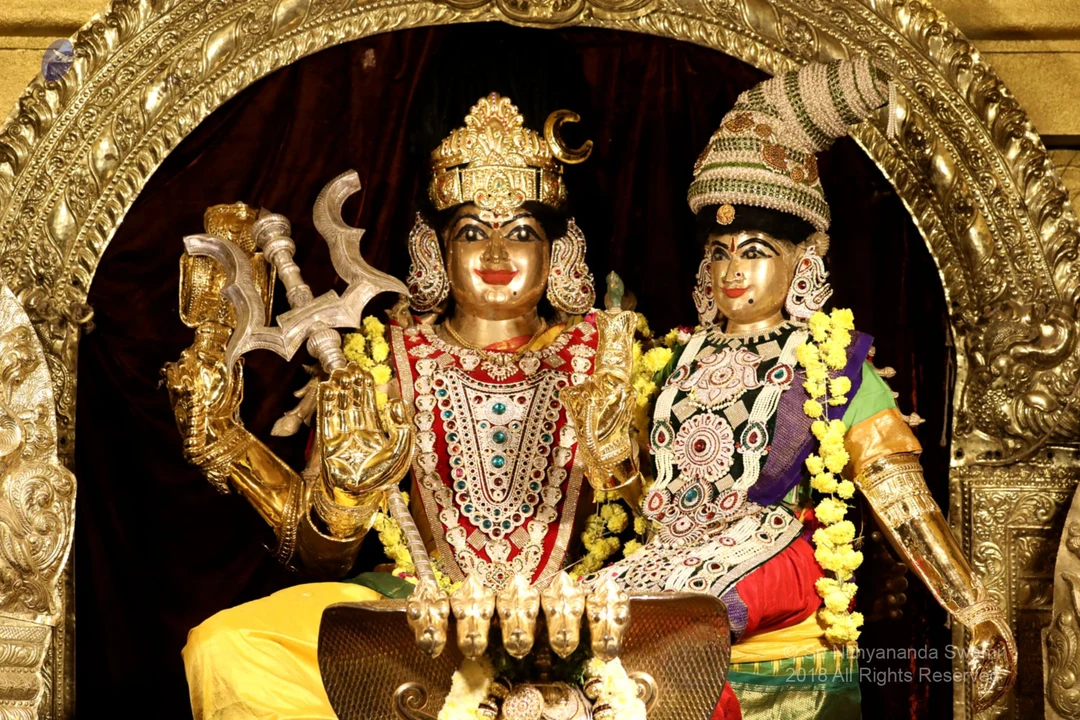
Link to Video:

Paramashiva Shakthi Avishkarana

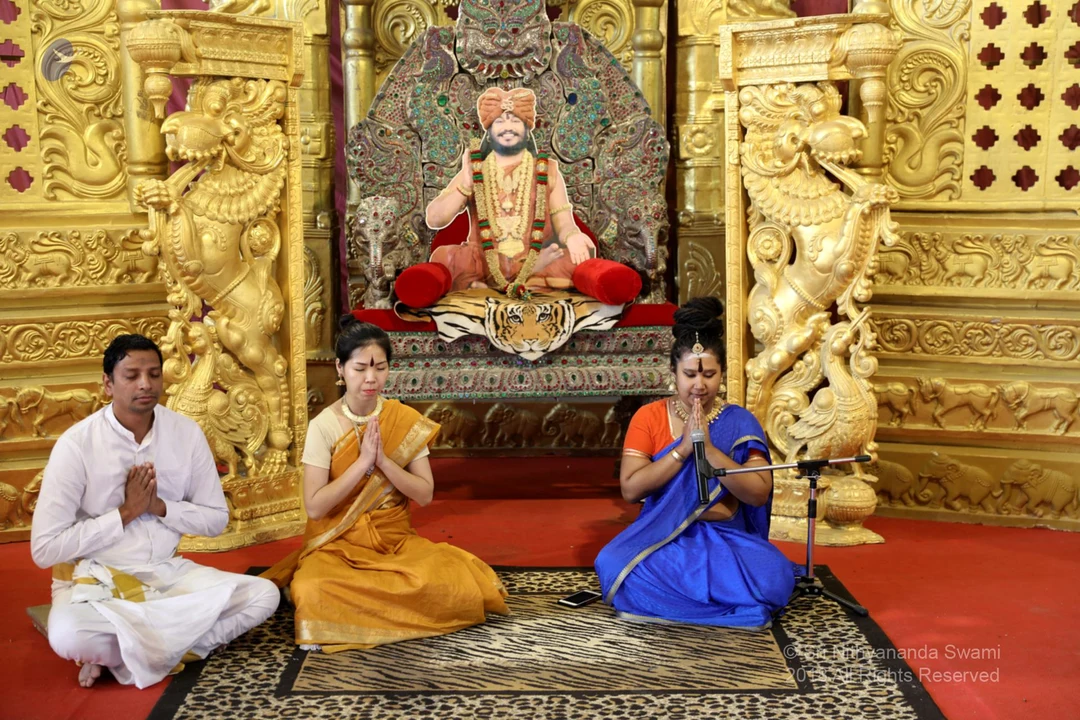
Photos from this day

View all 55 photos
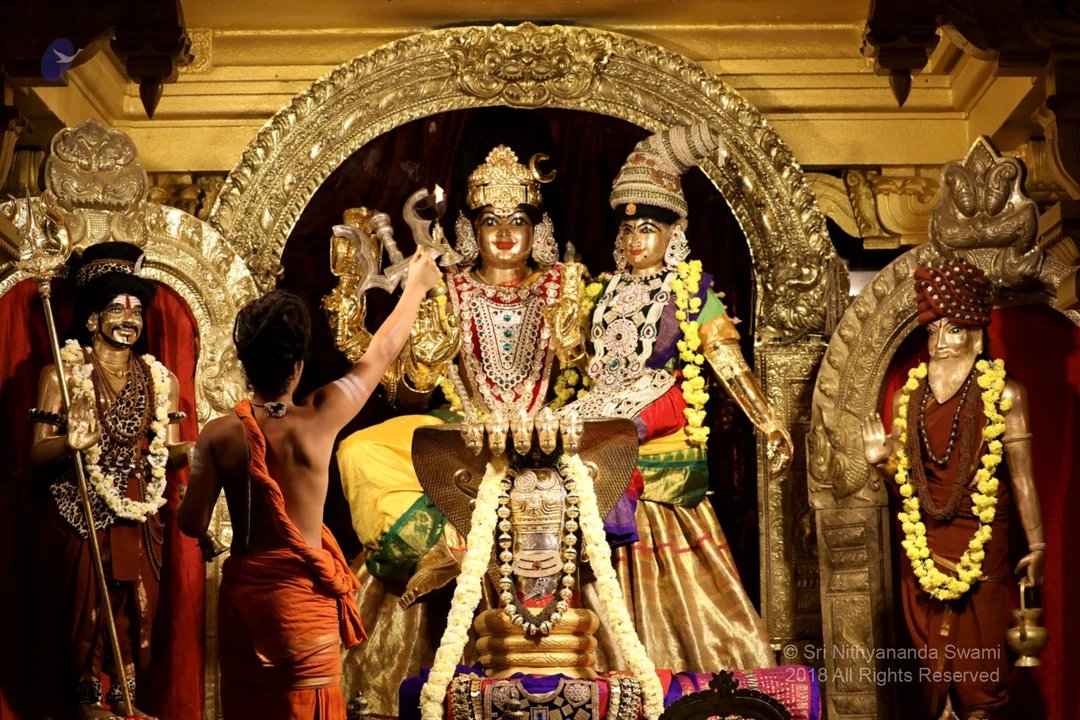
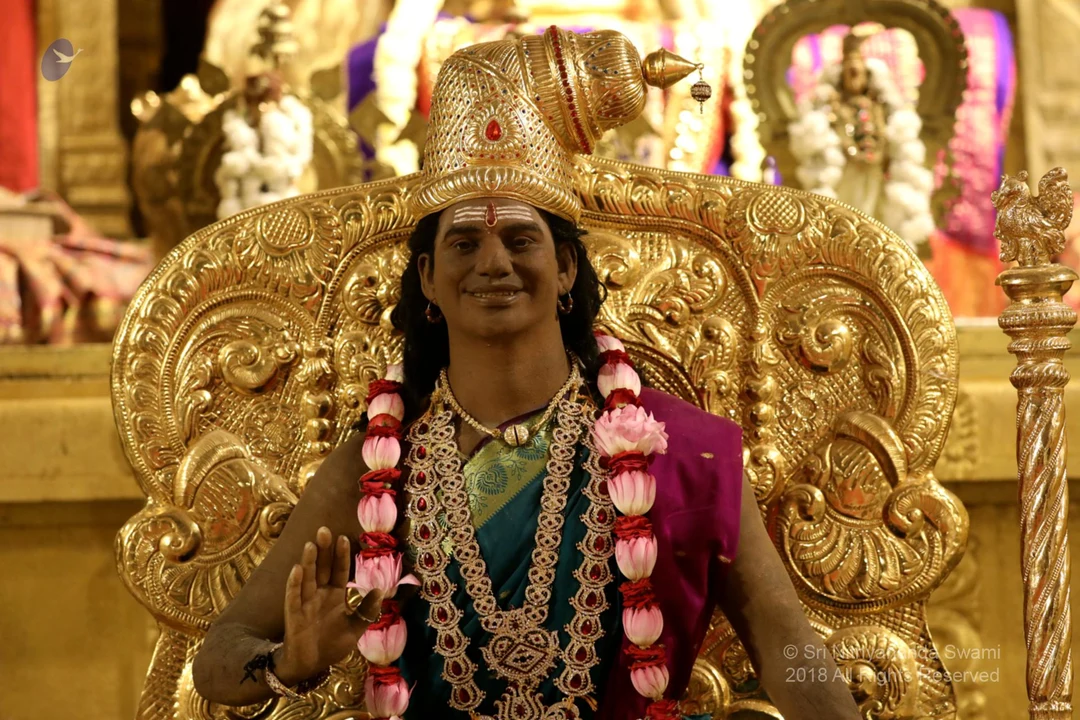
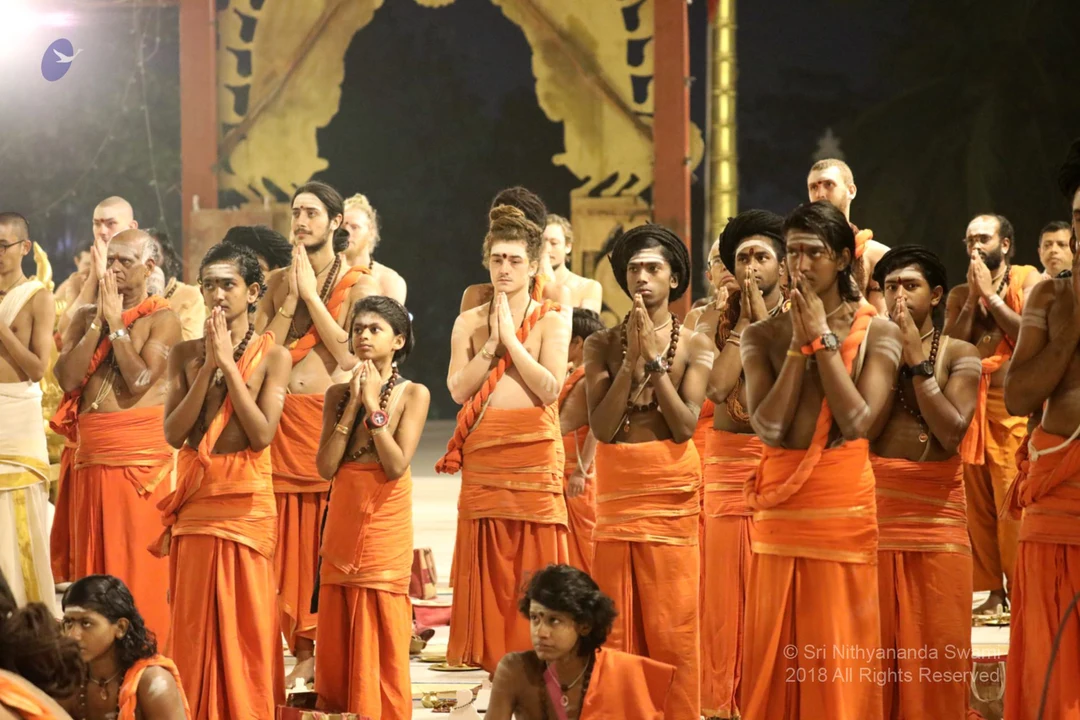
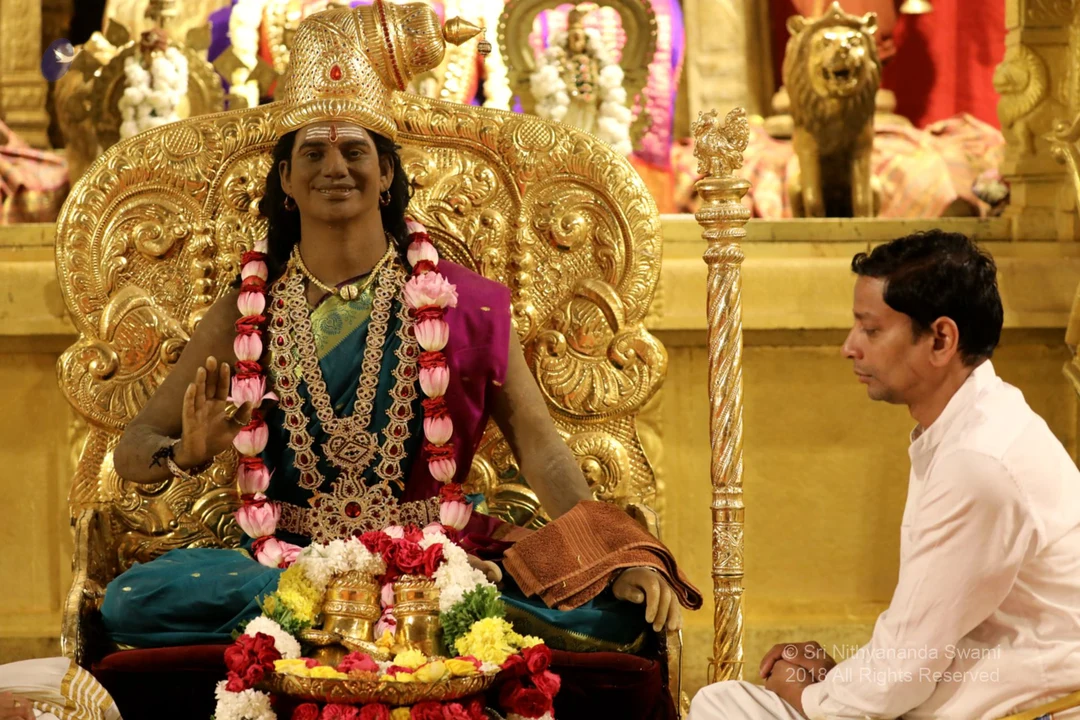
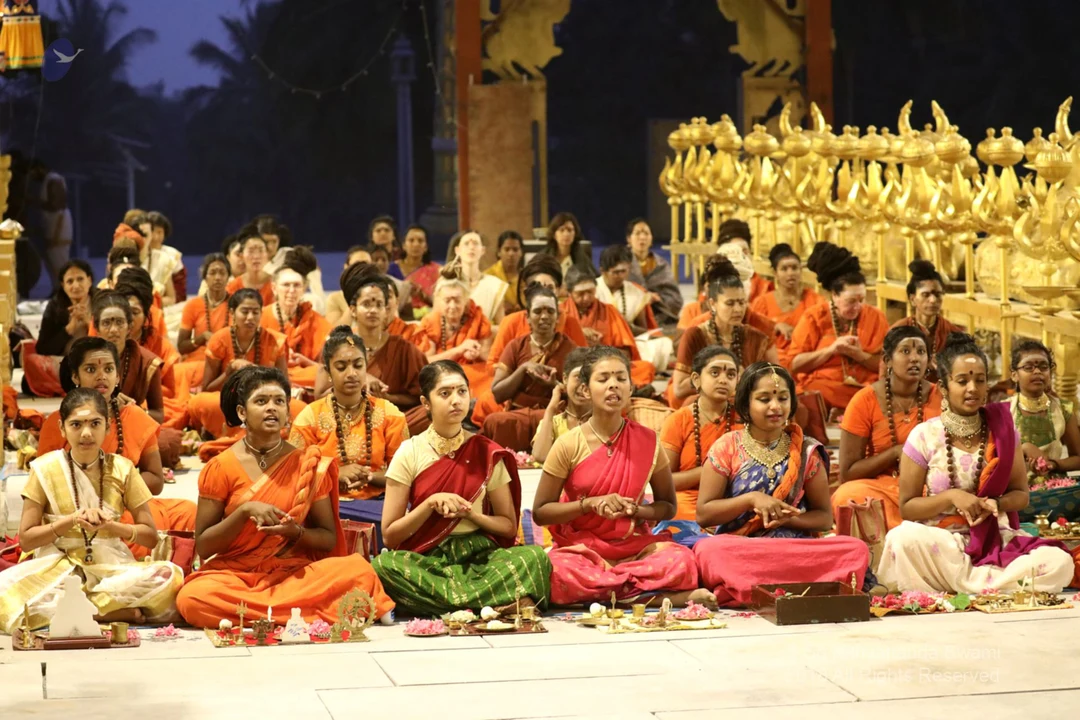
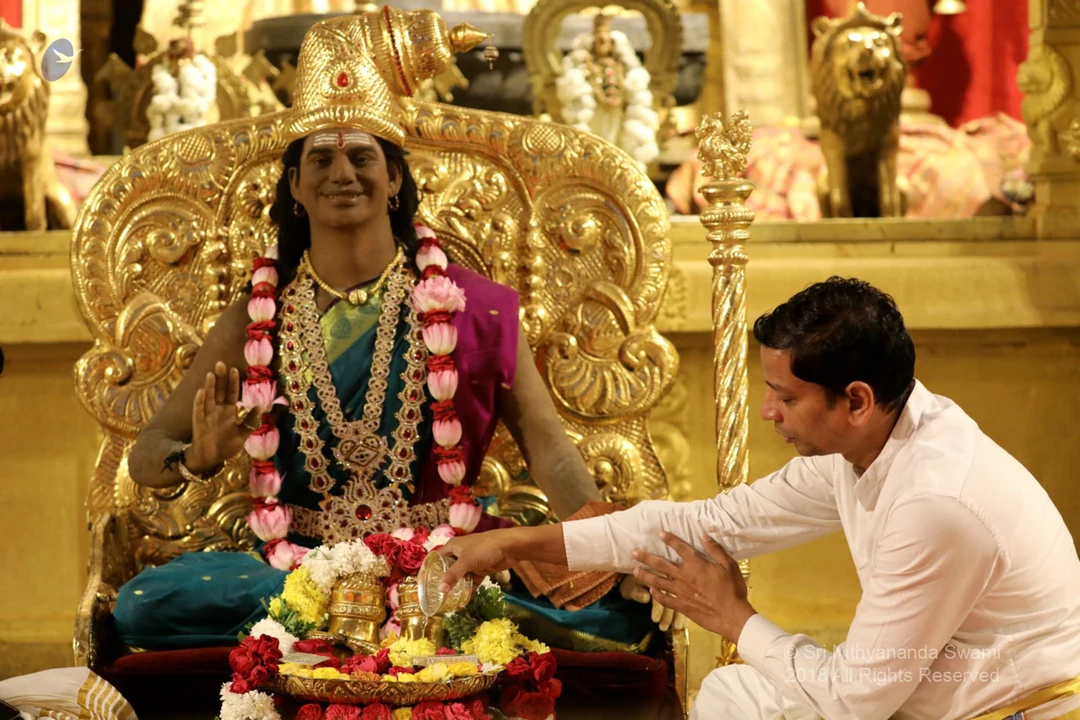
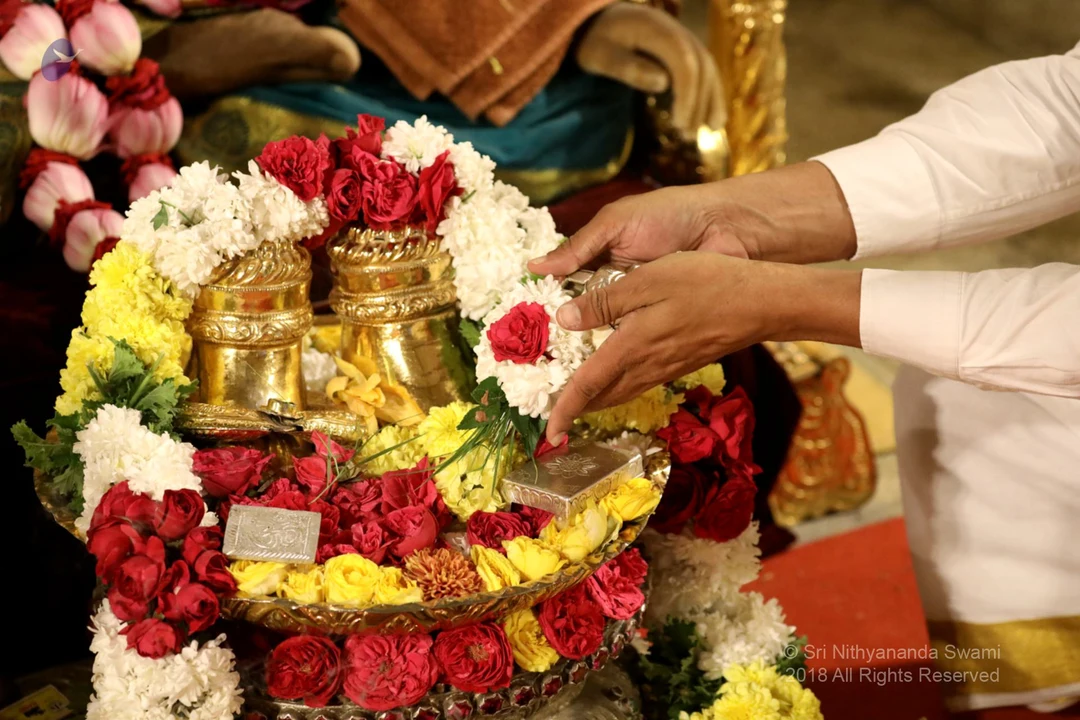
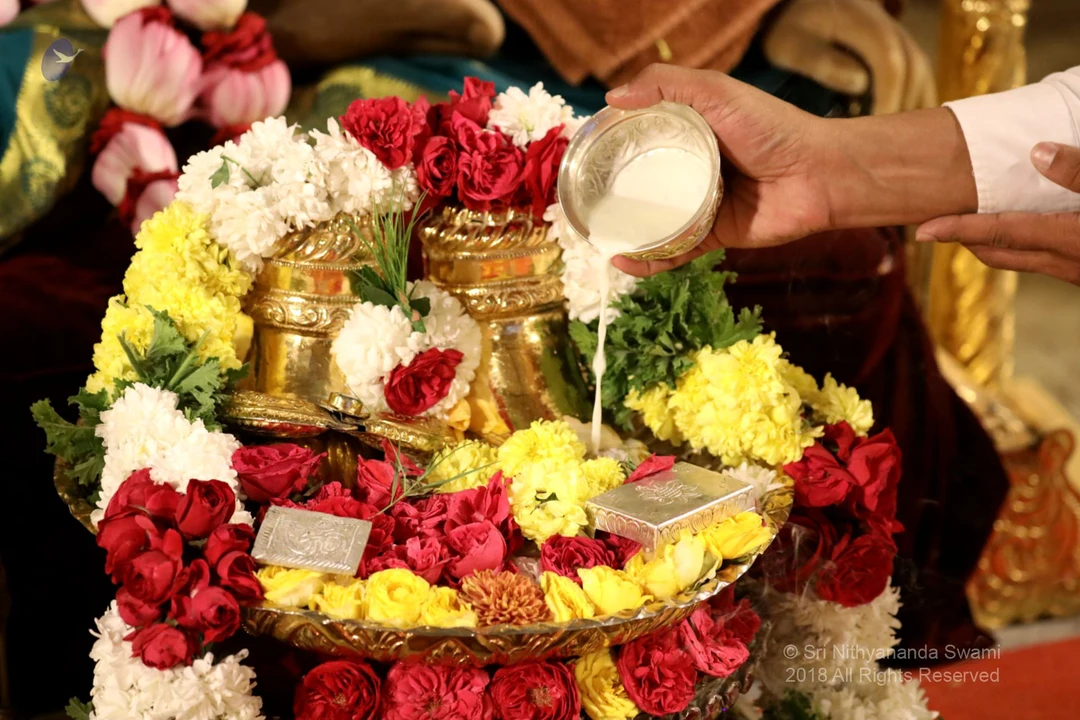
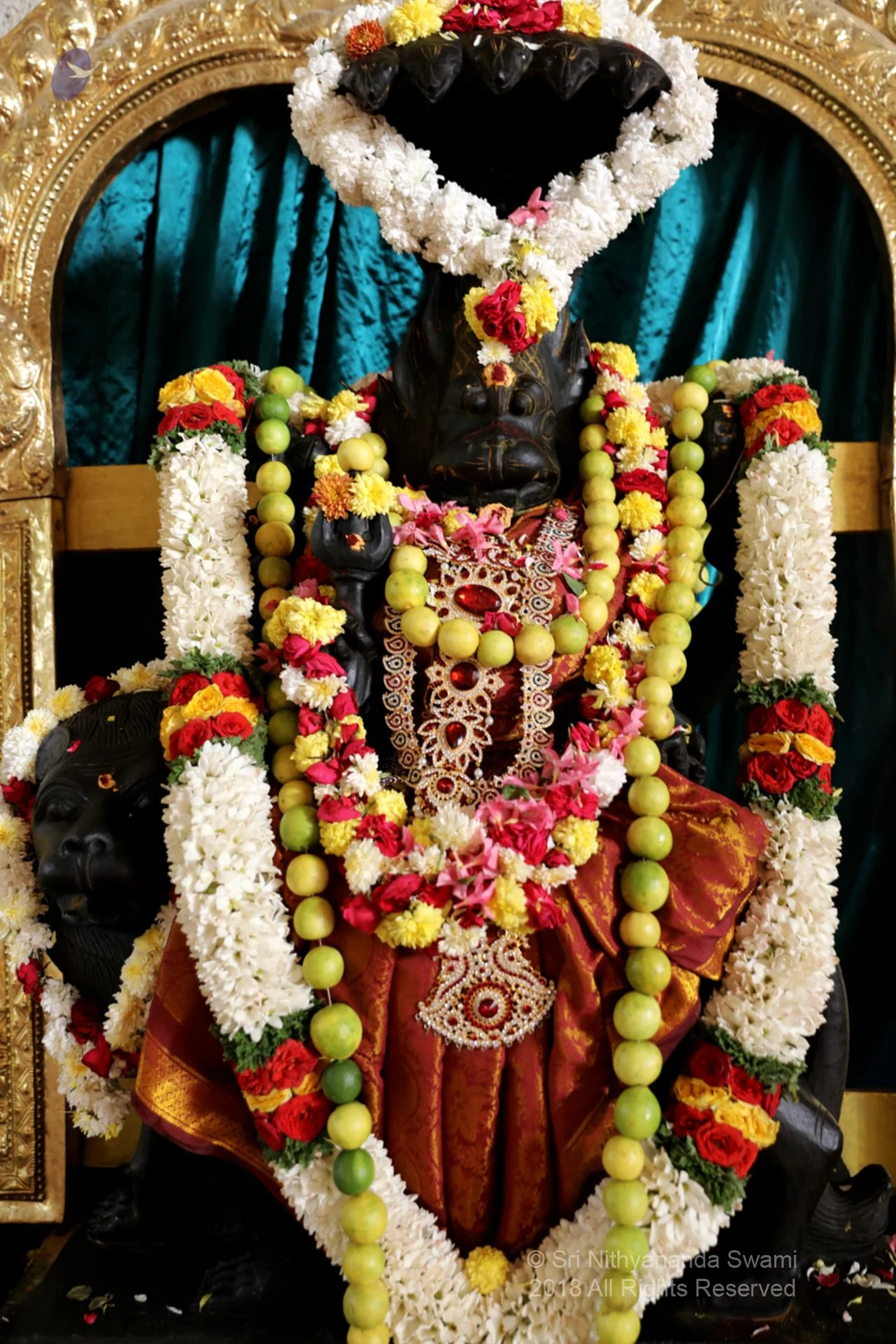
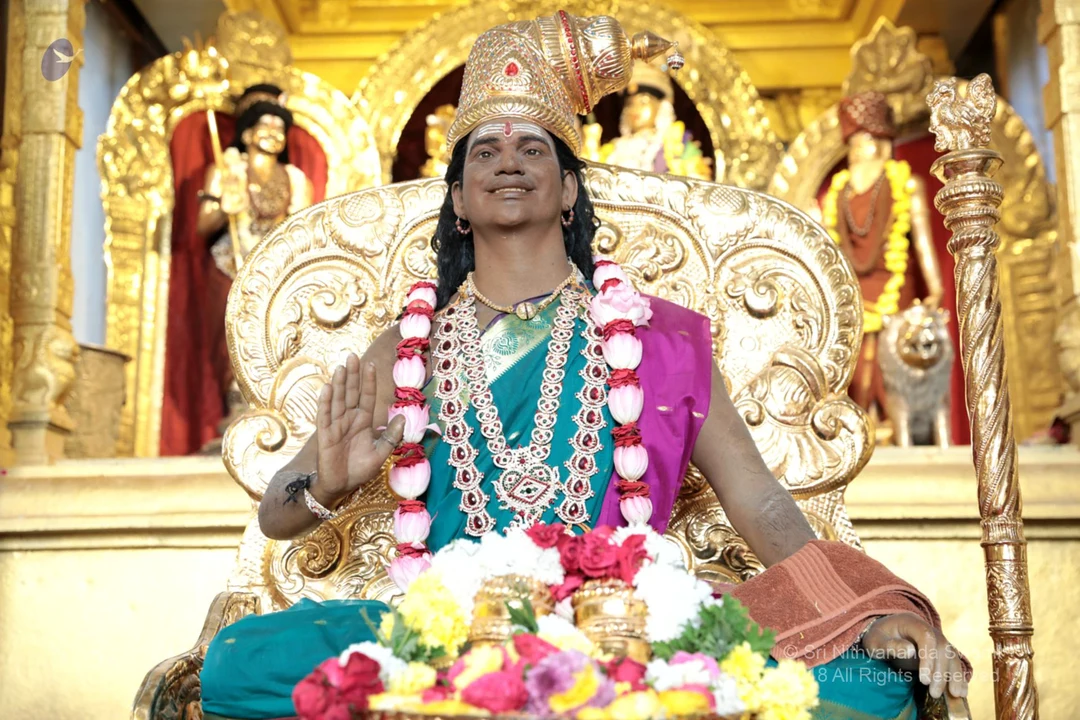
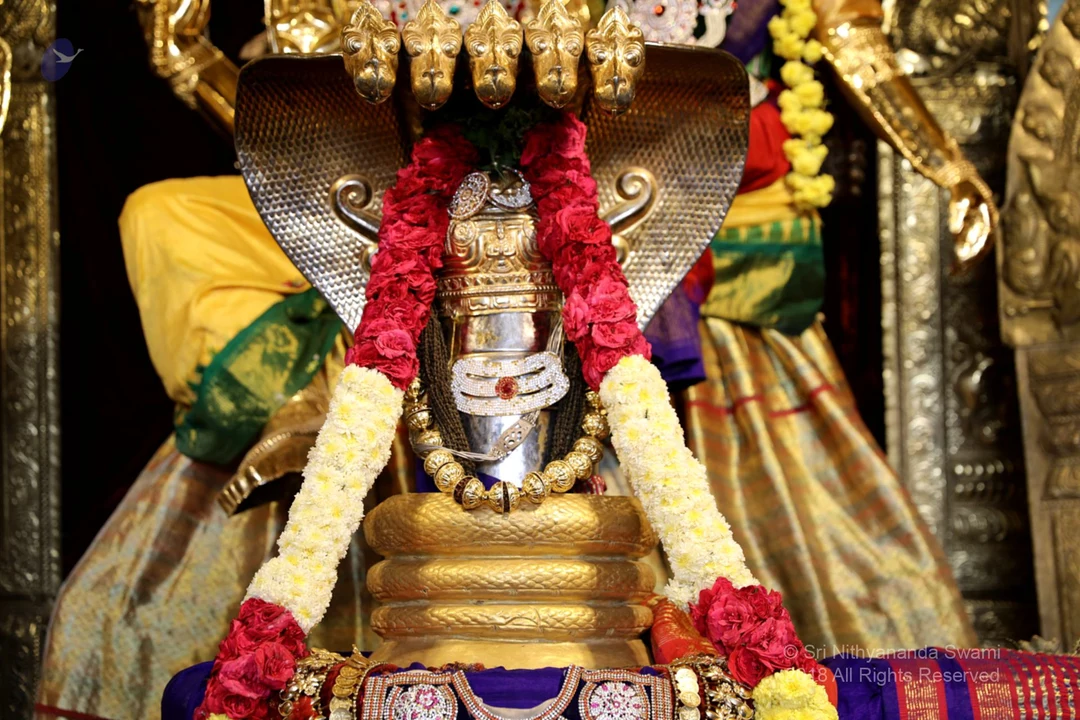
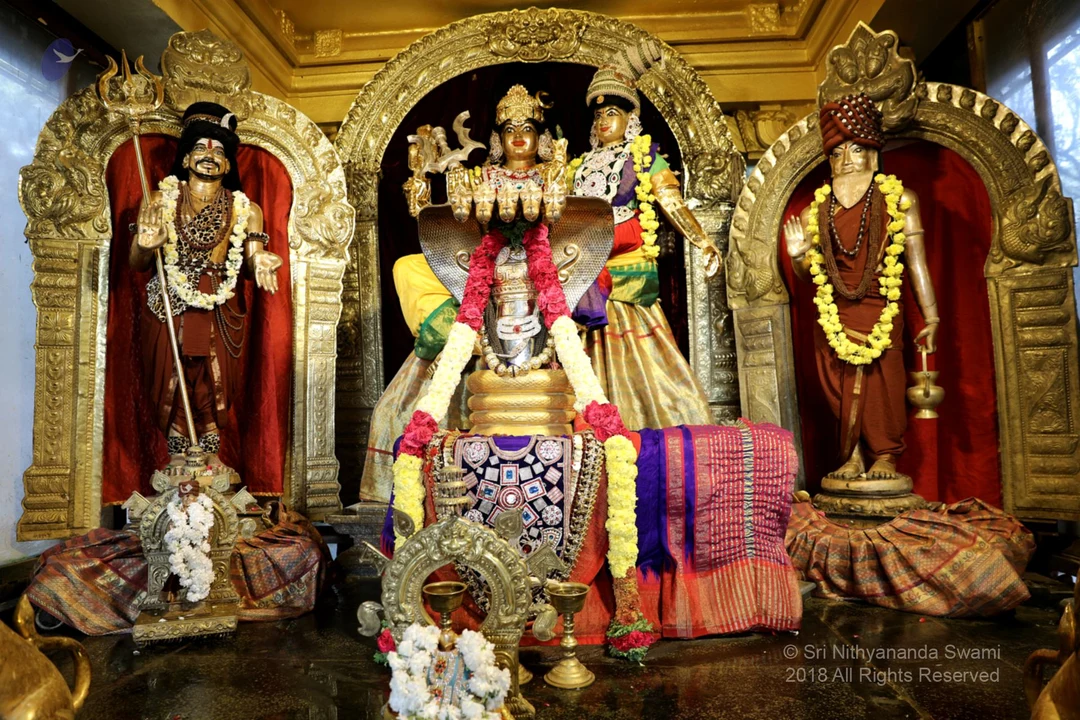
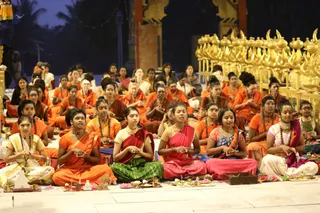
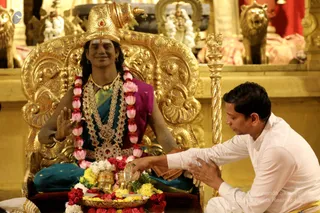
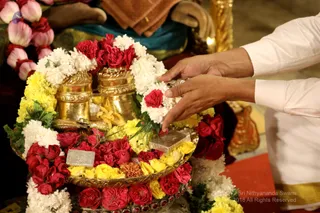
A photograph of a gilded deity murti pair seated together on a dark velvet backdrop within an ornate golden arched frame. The figure on the left, shown with a gold crown with a crescent, holds a trident and a raised hand, wearing a red and gold jeweled bodice and a yellow skirt. The figure on the right wears a tall jeweled headdress and a colourful embellished garment with a purple sash, with yellow marigold garlands draped over both figures. No physical people are visible; the figures are statues.A golden statue, a murti of a bearded figure with long black hair piled high and a crescent ornament at the top, stands in a gilded arched niche with a deep red cloth backdrop. It holds a golden trident in its left hand and its right hand is raised in a blessing gesture. It wears a leopard-print garment, layered rudraksha malas, a gold necklace, bangles and a white flower garland, with a red tilak on the forehead. This is a statue, not a living person, so no physical people are present.Close-up photograph of a richly decorated deity murti of Shiva lingam form, framed by a five-headed cobra hood with golden snake heads above. The murti is adorned with a silver and gold face or shield, a gold-bead and rudraksha-style garland, and white and yellow flower garlands draped on both sides. Behind it, a gold and silver silk cloth with yellow, green, red and purple tones forms the backdrop, with coiled gold snake forms at the base. No people are visible.A photograph inside a gilded temple shrine showing two large golden deity murtis, one seated figure crowned and adorned with a jewelled necklace and a trident-like staff, and a consort figure in a colourful sari with yellow and white garlands. In front of them a shirtless man in orange cloth, seen from behind, raises a lit lamp toward the deities. On the left a standing sannyasi figure holds a long staff and wears rudraksha beads and orange cloth, and on the right a standing statue in maroon robes and a red turban holds a small oil lamp. Garlands of yellow and white flowers hang around the figures, and a decorated linga-like form sits on a yoni base at the centre. The statues are arranged within an ornate gold arch.A life-size statue of a smiling male figure seated on an ornate golden throne with carved scrolls and a rooster-topped finial at the right edge. The figure wears a tall gold crown set with a red stone, a white and red tilak on the forehead, and a teal and gold garment with a magenta shawl. Long necklaces of gold and a long garland of pink lotus flowers hang across the chest. The right hand is raised in abhaya-style blessing. Behind the throne are flower garlands, a decorated deity figure and bright red and purple drapery. The figure is a statue, not a living person.Photograph of a large group of devotees in saffron-orange dhotis and wraps, many bare-chested with white sacred ash markings on their foreheads and bodies, standing with palms pressed together in anjali mudra at a night ceremony. Several wear rudraksha malas. Behind them stands a gold-and-red ornate arch frame and a small oil lamp is visible on the ground. Some older men at left wear white dhotis with orange wraps. The group appears to be in prayer at an outdoor ritual setting.A photograph of a large group of women standing in prayer at night in a temple courtyard, hands pressed together at the chest in namaskar. Many wear saffron-orange saris, while others wear red, green, pink, blue and white saris with gold borders and gold jewellery. Some have kumkum or vibhuti on their foreheads. Behind them stand golden pillars, a lit arched gateway and bright lights, with brass lamps and offering plates set on the floor in front.A gilded statue of a standing male figure in a golden arched shrine niche with a red silk backdrop. The figure wears a leopard-print cloth over the shoulder and torso, rudraksha malas across the chest and hips, a white flower garland, and a dark red dhoti. He holds a tall golden trident in one hand and has a crescent ornament on a high dark topknot. A red tilak marks his forehead. The base holds flowers. No living people are visible, and the image shows a statue, not a person.A seated life-size figure in a golden ornate throne is dressed in a teal and magenta garment with a gold crown-like headdress, a sacred tripundra mark on the forehead, and layered gold necklaces with red stone inlay. A pink lotus and rose garland drapes its shoulders, and a golden kalasha and offerings of flowers in red, white and yellow sit before it on a tray. The figure raises its right hand in blessing. To the right, a man in a white kurta sits with folded hands facing the figure in a temple setting with gilt lion carvings and a deity murti in the background. The seated figure appears to be a statue or depiction of a deity or sannyasi rather than a living person, so the a person field is set to depiction only if a candidate is confirmed; here no identifiable candidate is established by appearance.Evening outdoor photo of a large group of women seated on a stone floor in a temple-style courtyard, performing a collective ritual. Most wear saffron-orange saris or blouses with rudraksha malas; several front-row women wear red, green, pink and blue saris with gold jewellery and forehead markings. Their hands are pressed together in prayer or mudra. Before them lie small brass plates with flowers, lamps and offerings. Behind them a row of tall golden oil lamps stands along a pillar on the right, and a dim golden gateway frames the dusk background.A seated life-size statue in a golden throne is the central subject, dressed in a teal and magenta silk garment with gold jewellery, a ruby-studded gold crown, and a garland of pink lotuses and red flowers. A devotee in a white shirt and cream dhoti kneels at right, pouring liquid from a small silver vessel over the statue's raised hand area, with a tray of yellow and red flowers and a brass lamp before it. The background shows gilded lion figures and draped pink cloth in a temple shrine. The statue is a depiction, not a living person.Close photo of a ritual offering tray heavily decorated with garlands of red roses, white chrysanthemums and yellow marigolds. Two polished gold vessels with tapered rims sit at the back of the tray, and small silver rectangular plates lie among the flowers. A person in white clothing with a white shirt and cream dhoti-style cloth reaches in with the right hand to place or adjust an object on the tray. Blurred red and yellow fabric and a gold-coloured stand appear behind. No faces are visible and the scene is an arrangement of flowers and ritual vessels.