Skip to content
Sunday

3 September 2017

Go 'Grace-y' not Crazy, Using Aushadha

Dated photos
916
Source pages
1
Media
8
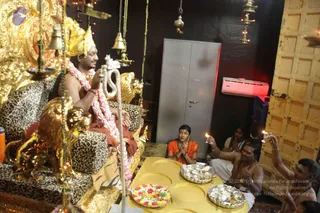
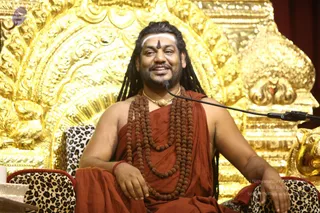
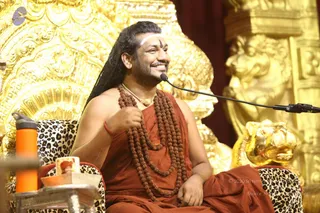
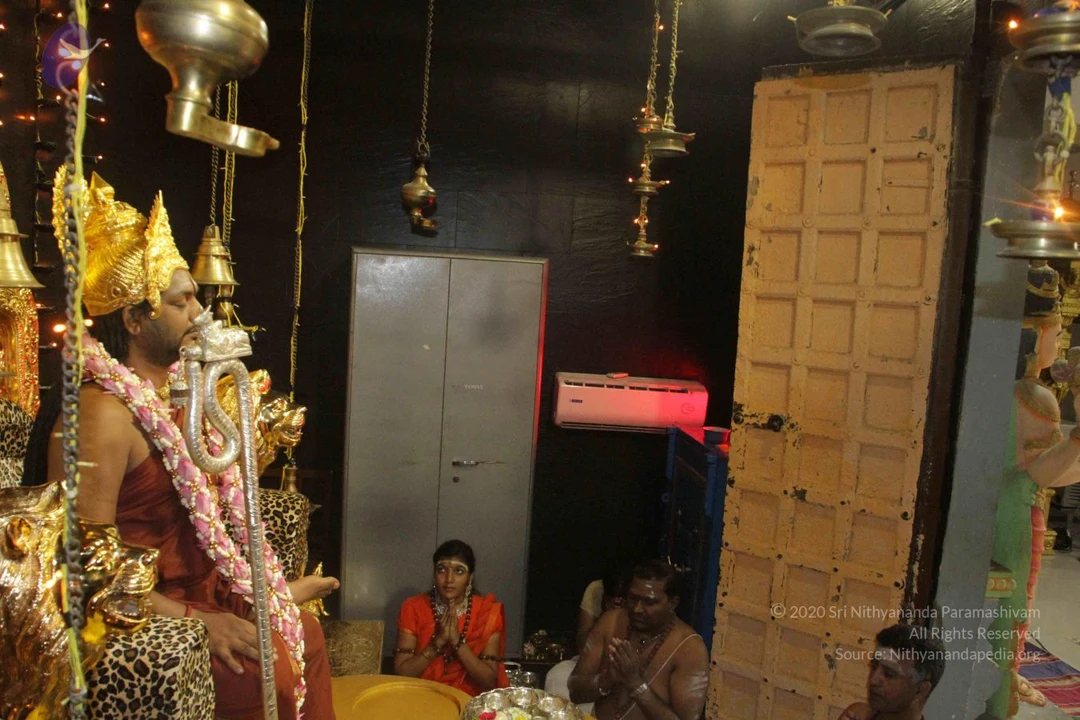
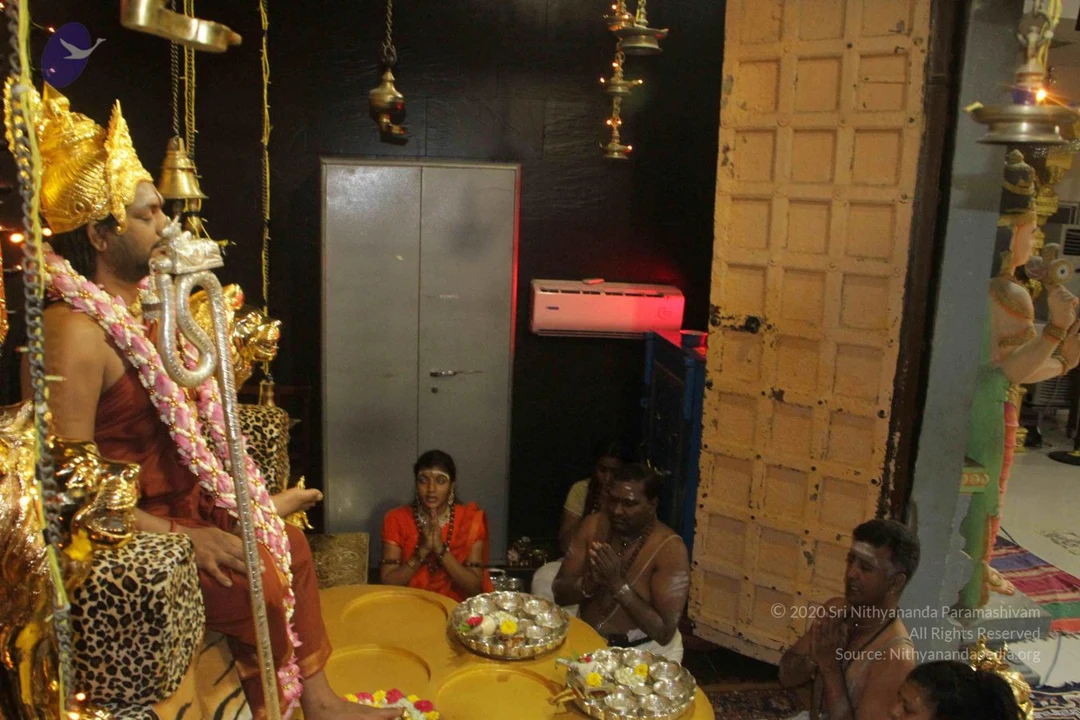
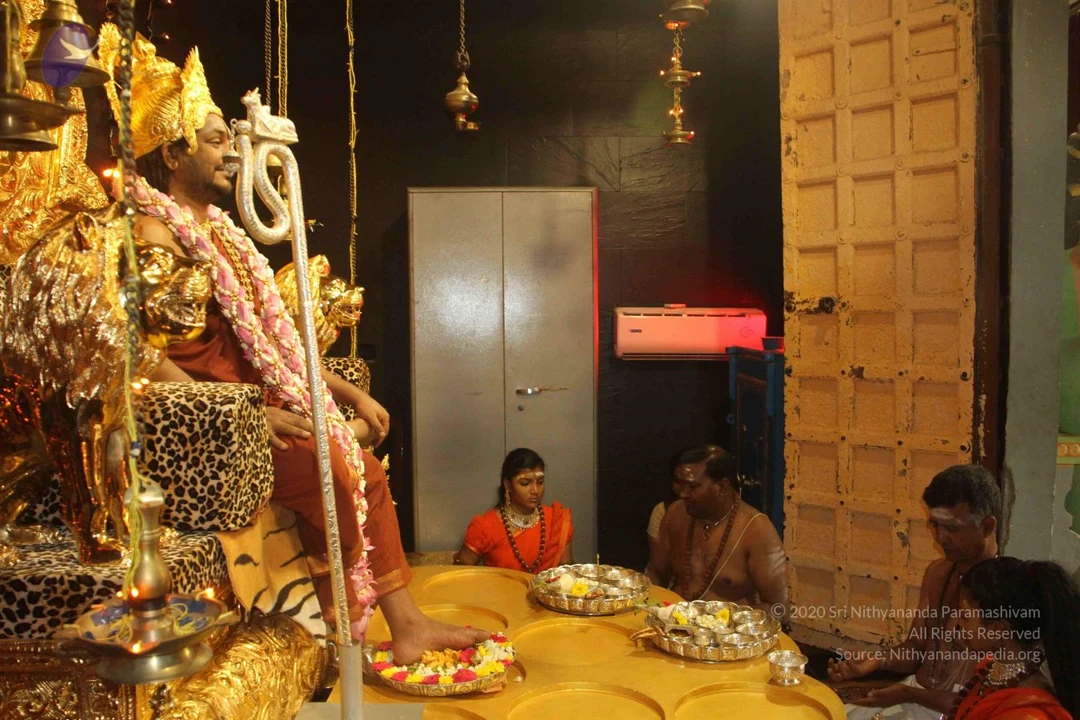
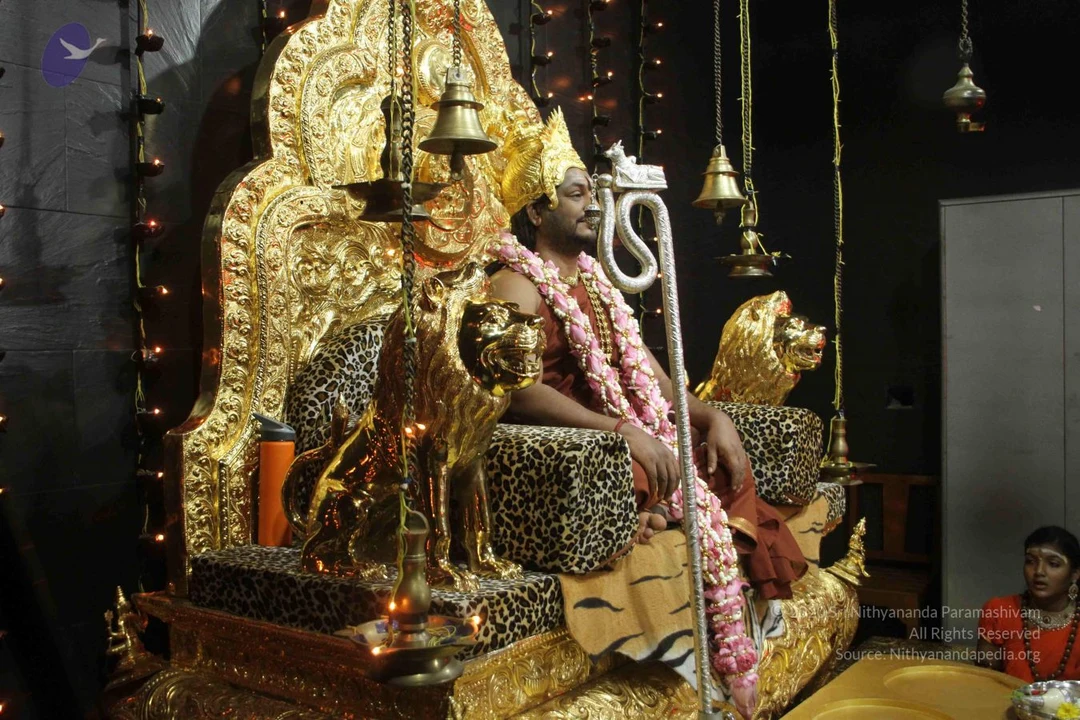
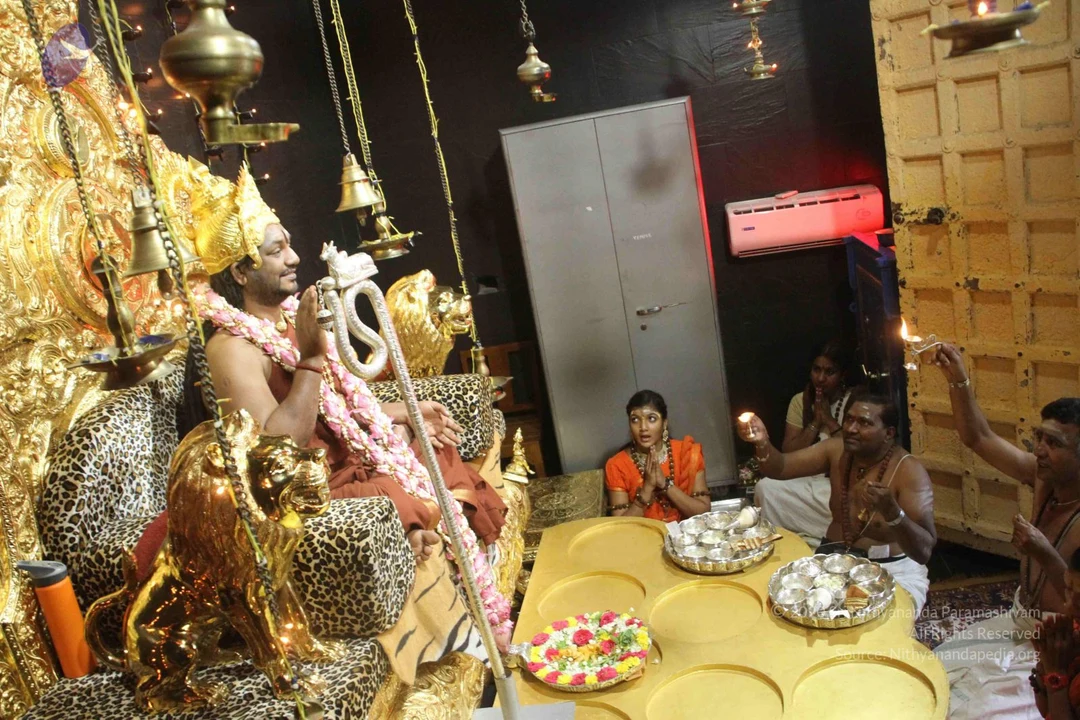
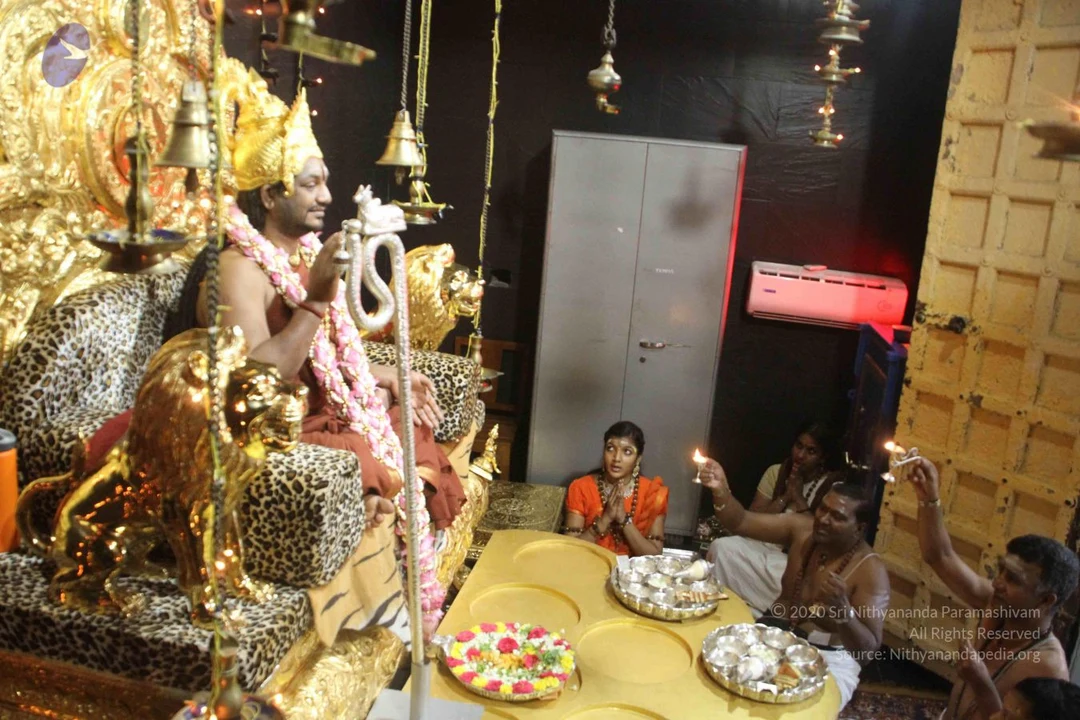
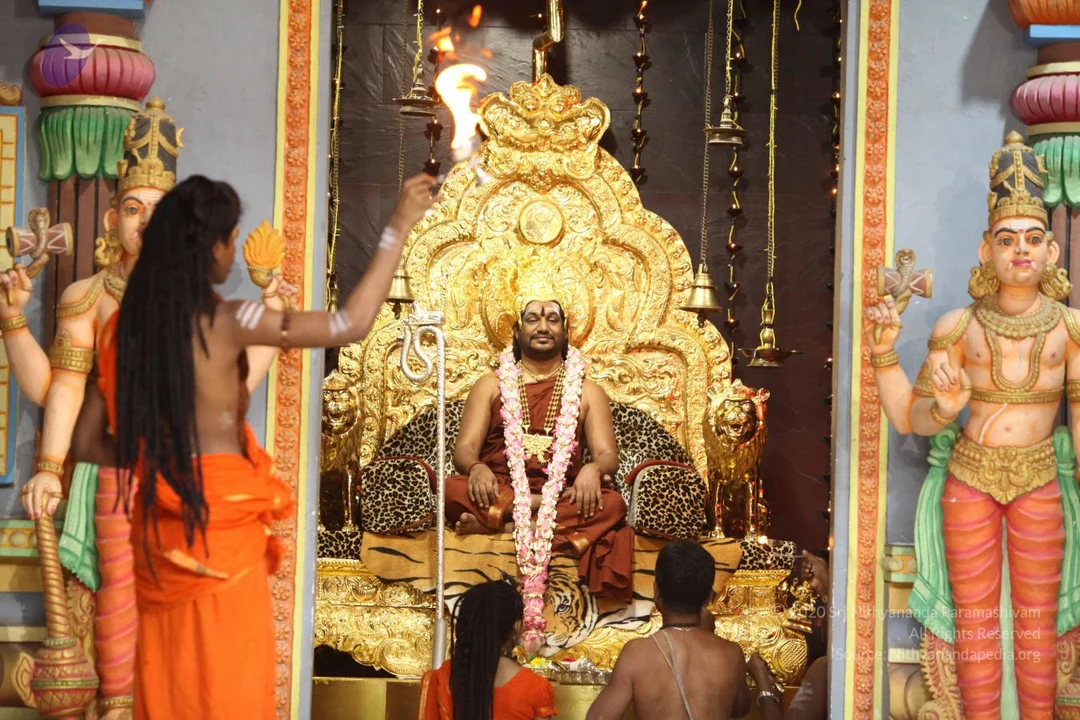
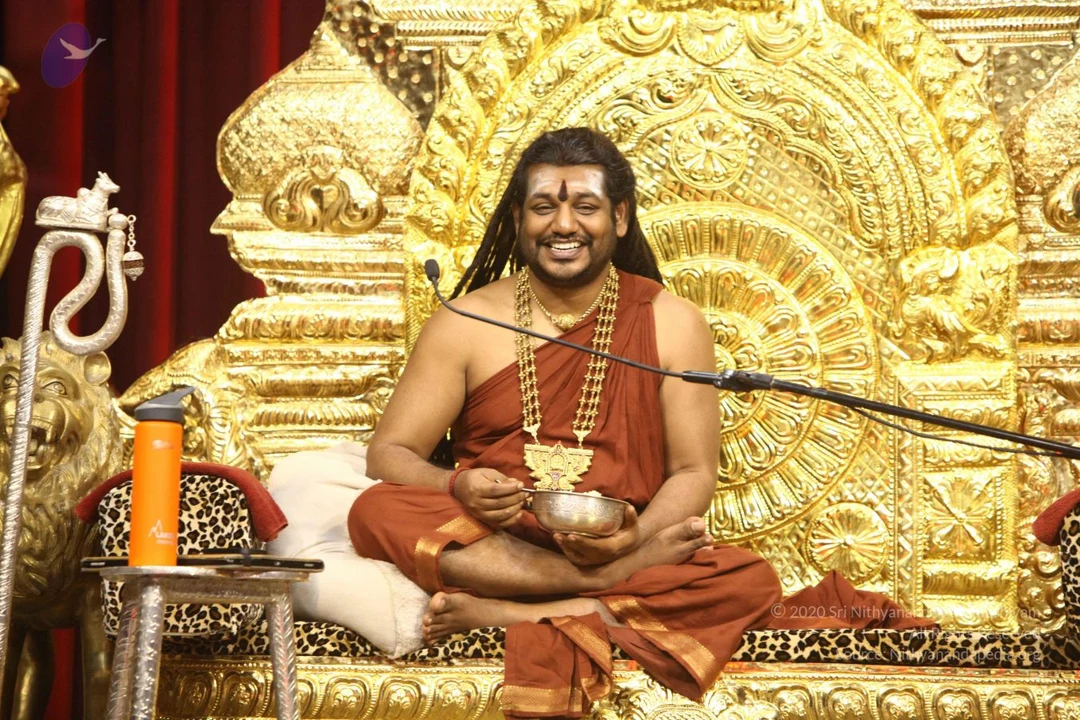
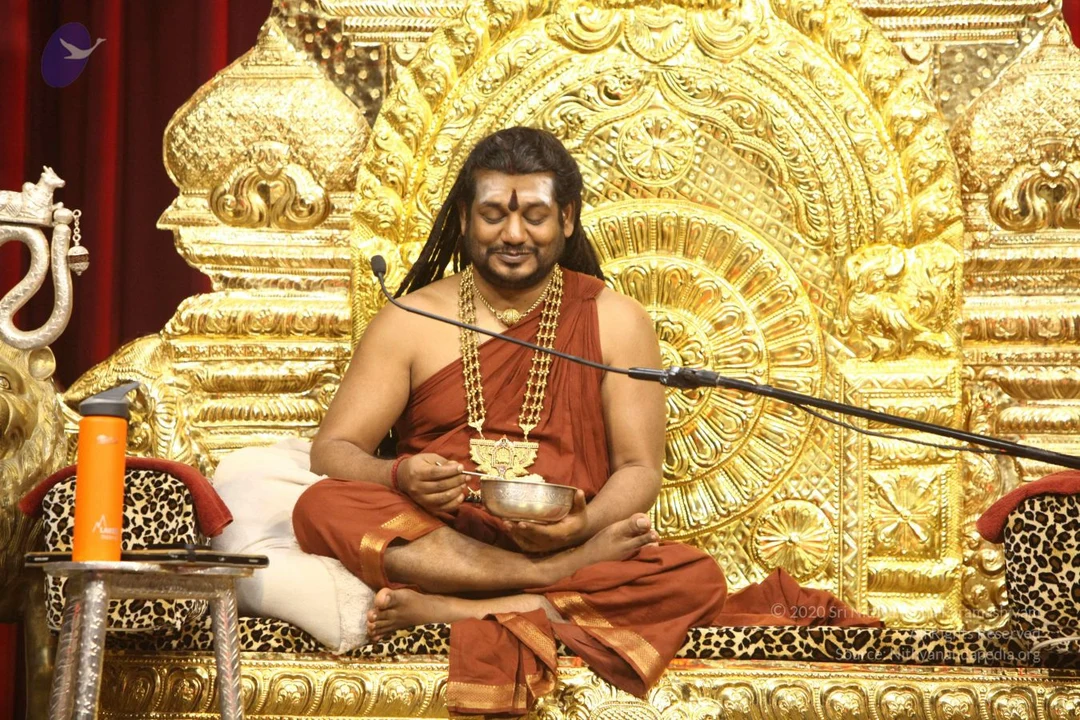
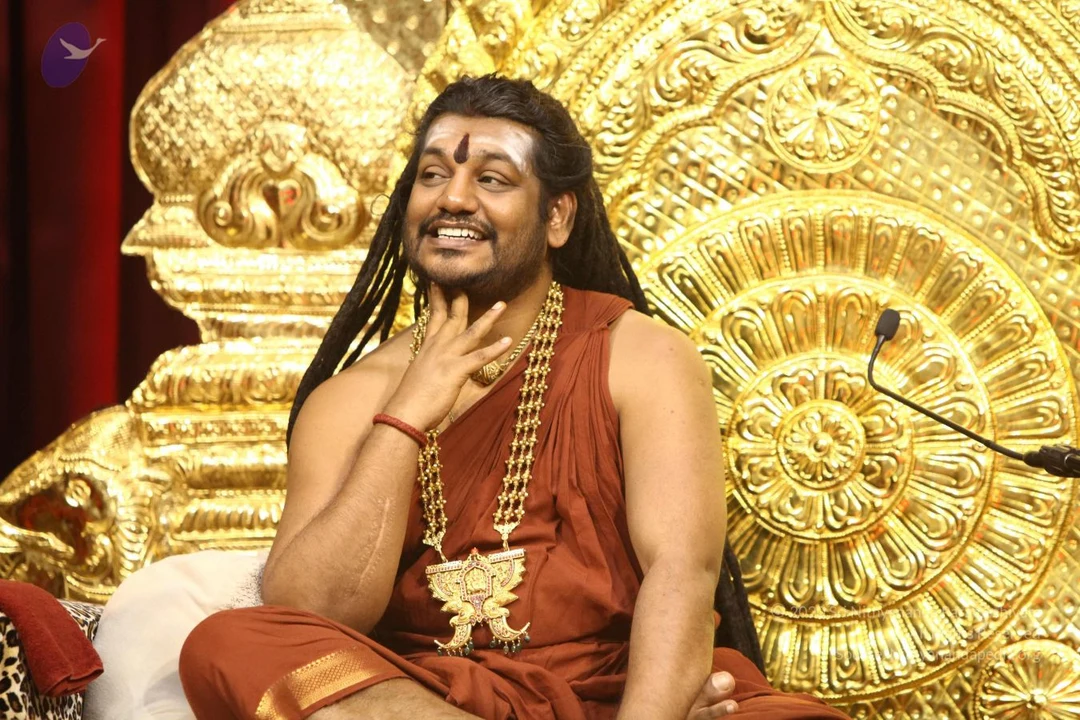
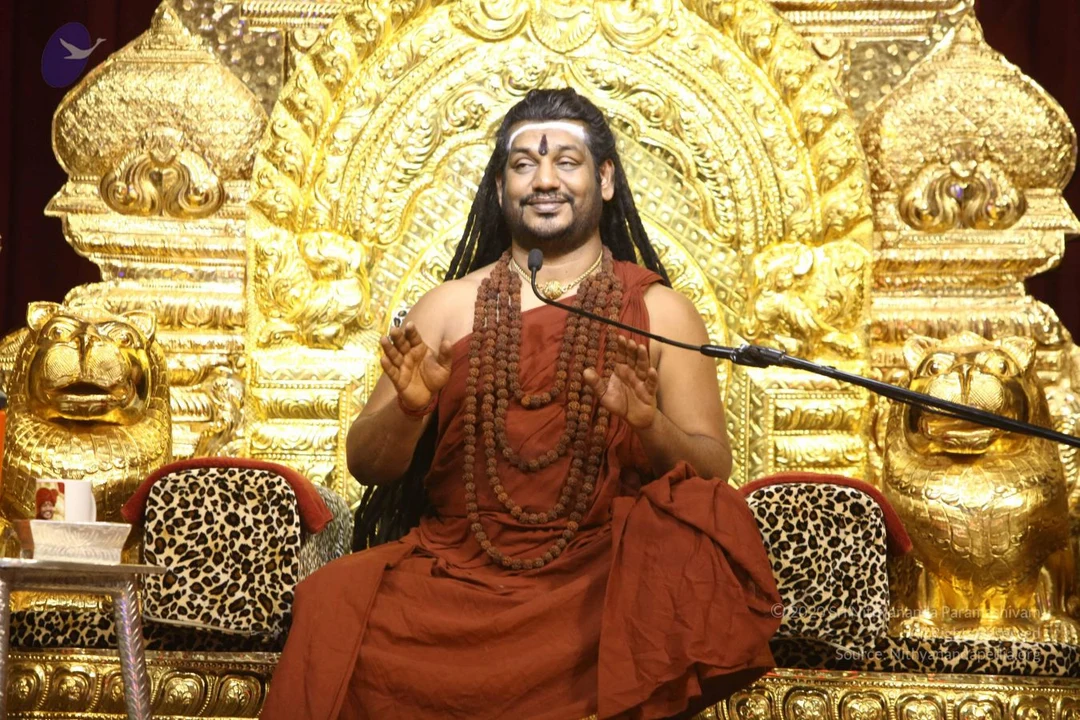
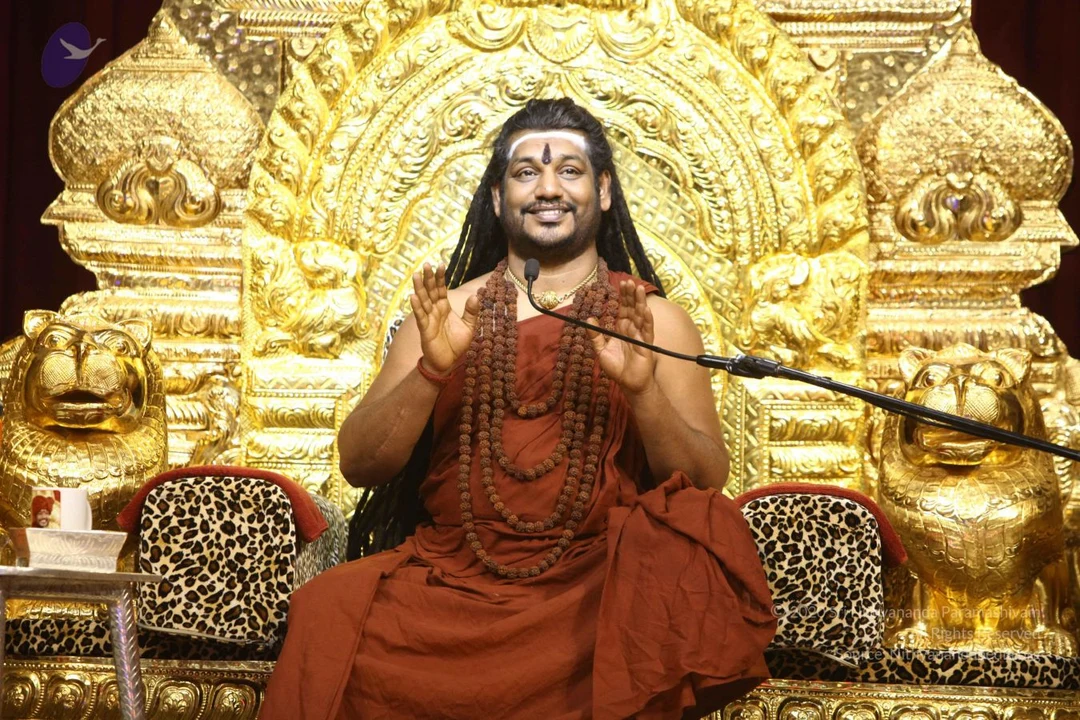
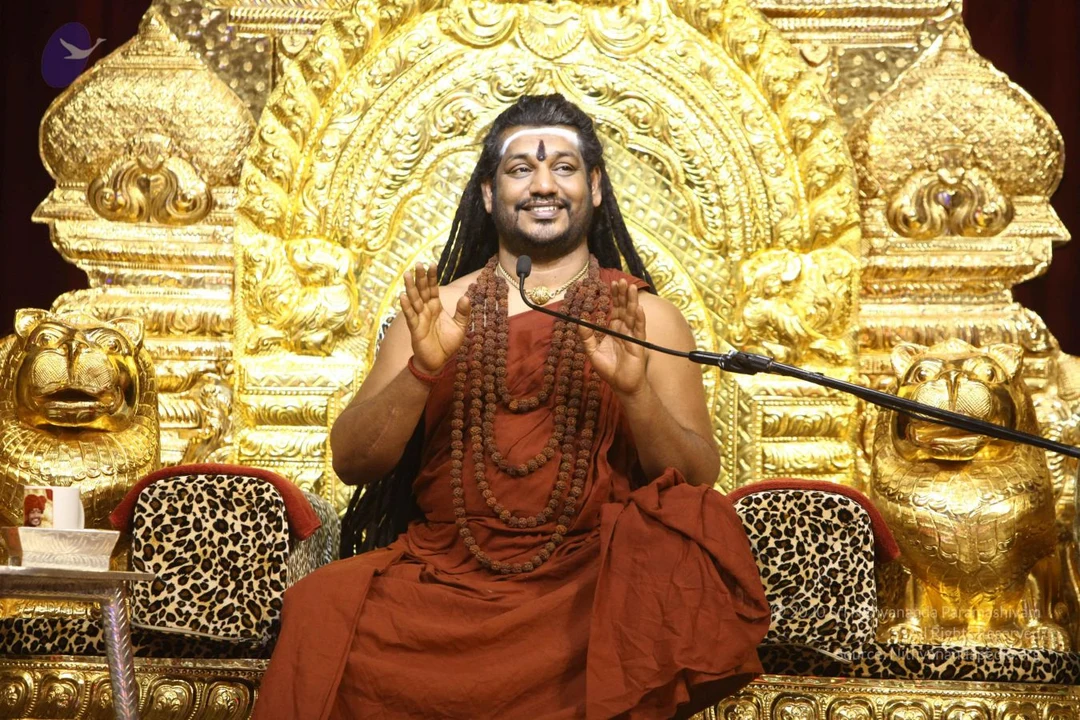
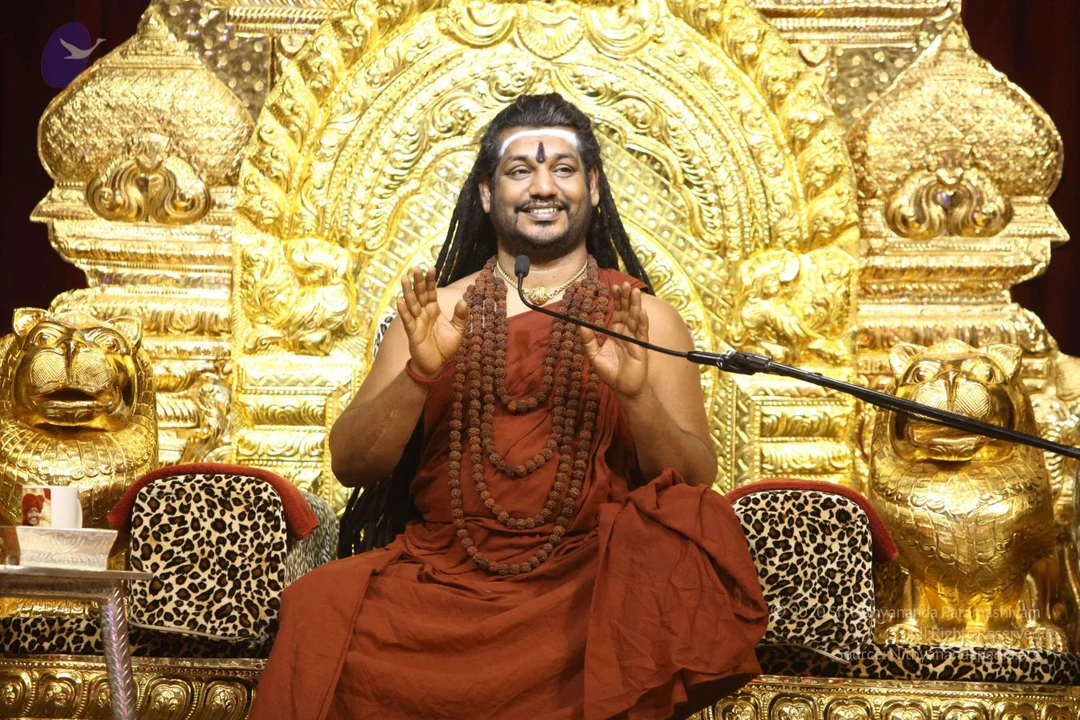
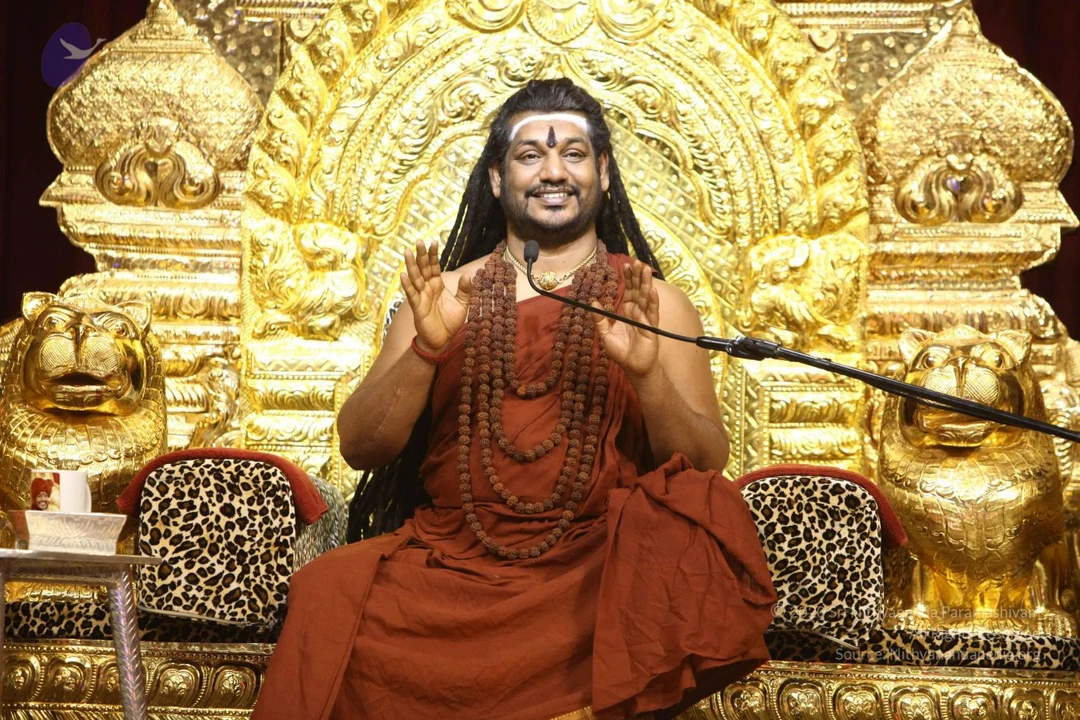
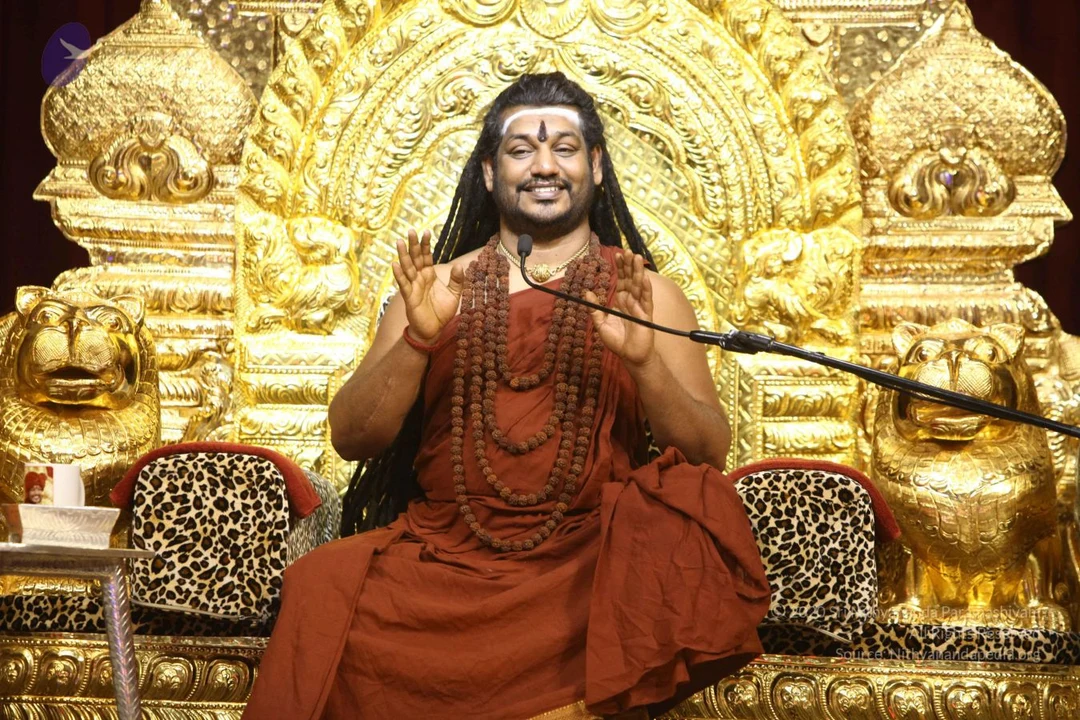
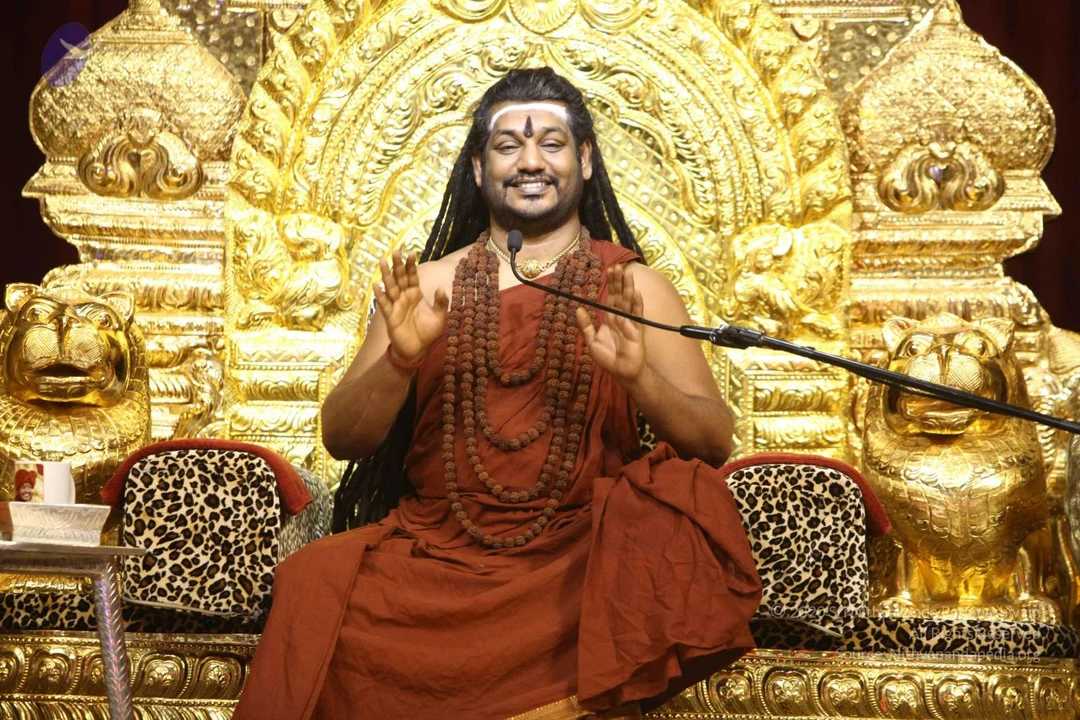
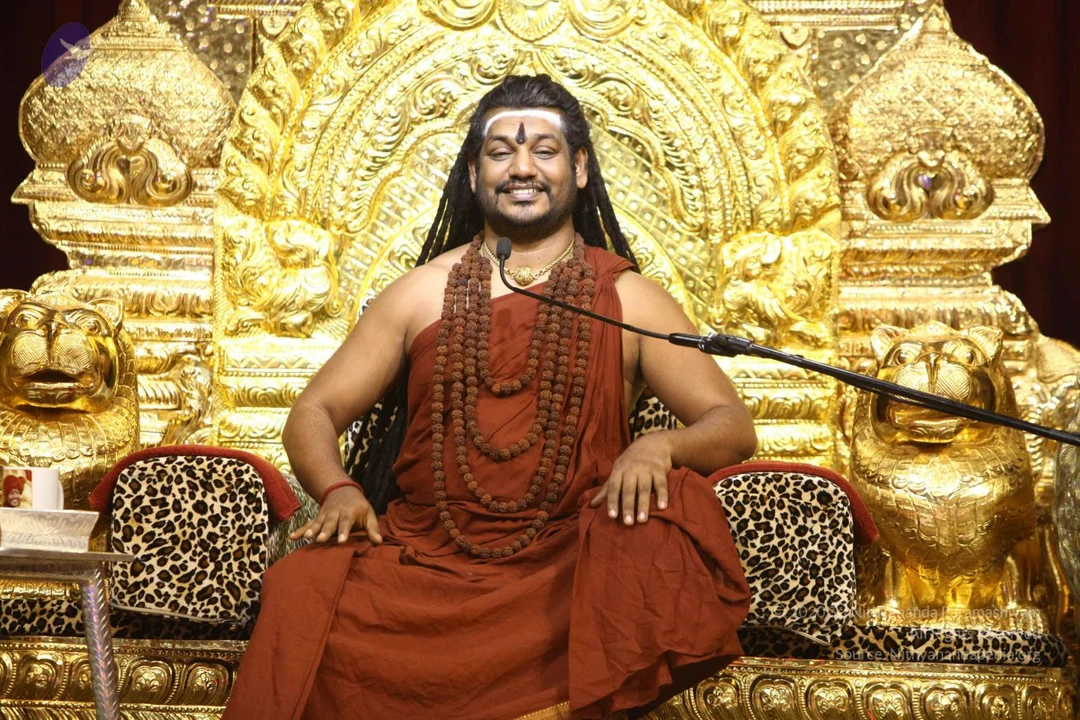
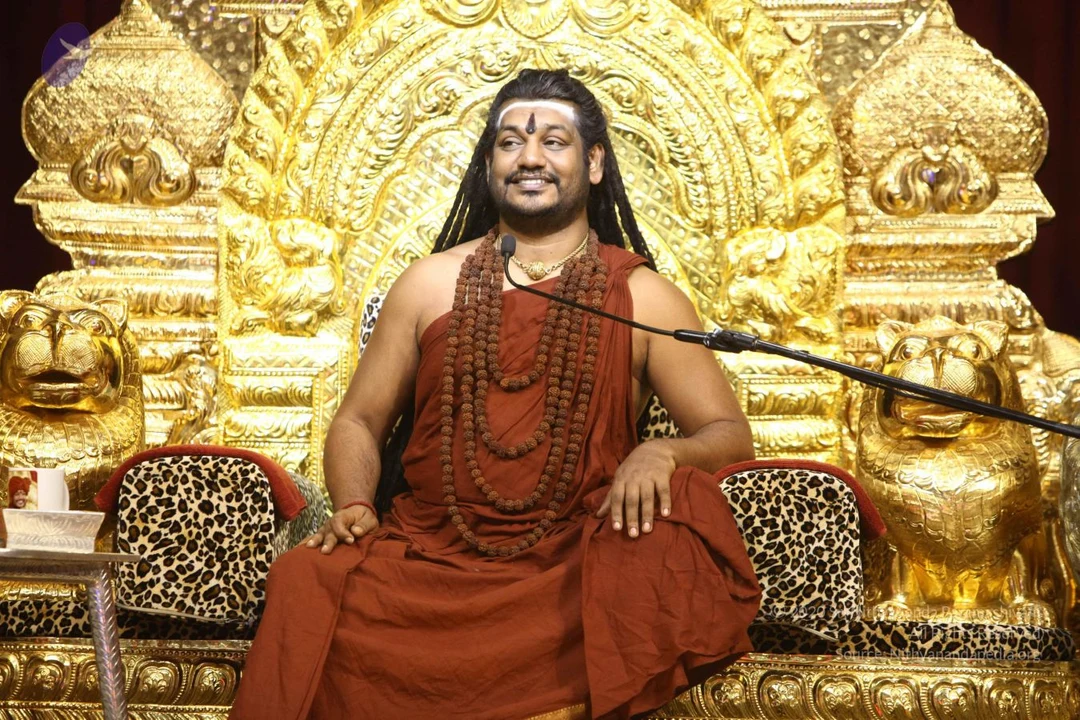
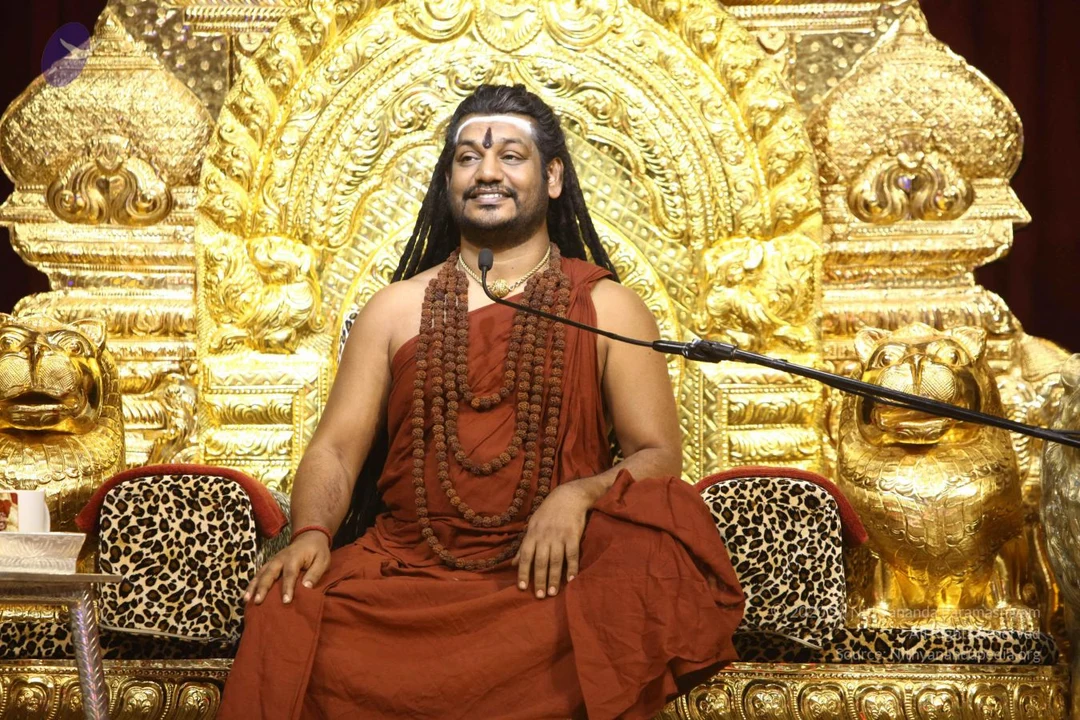
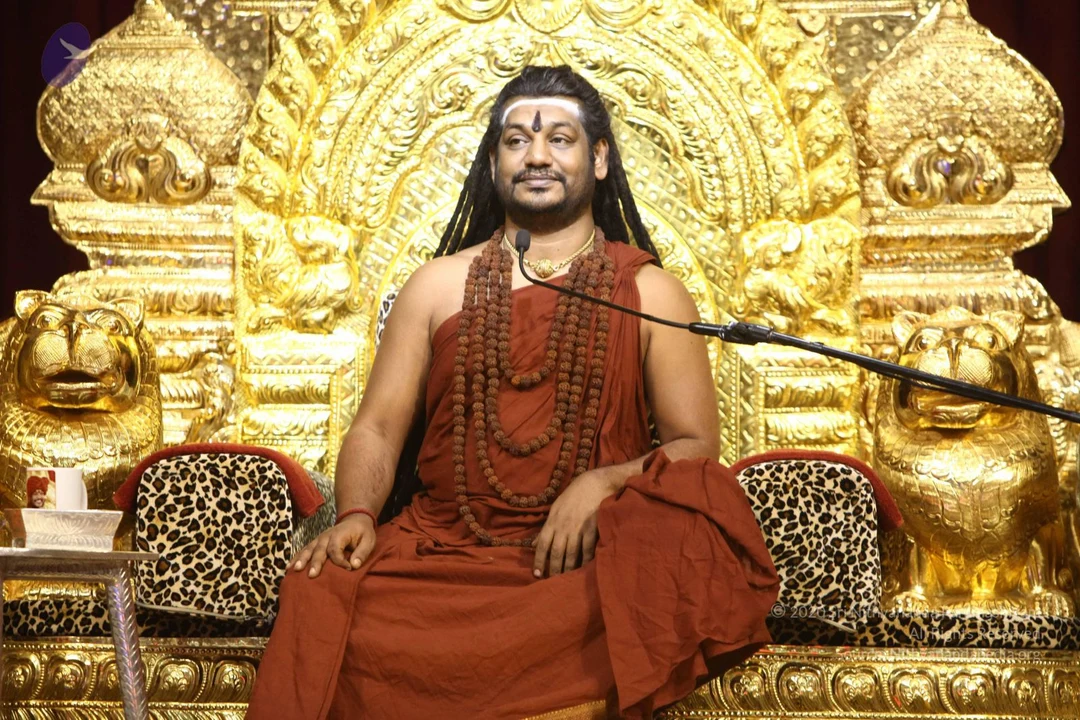
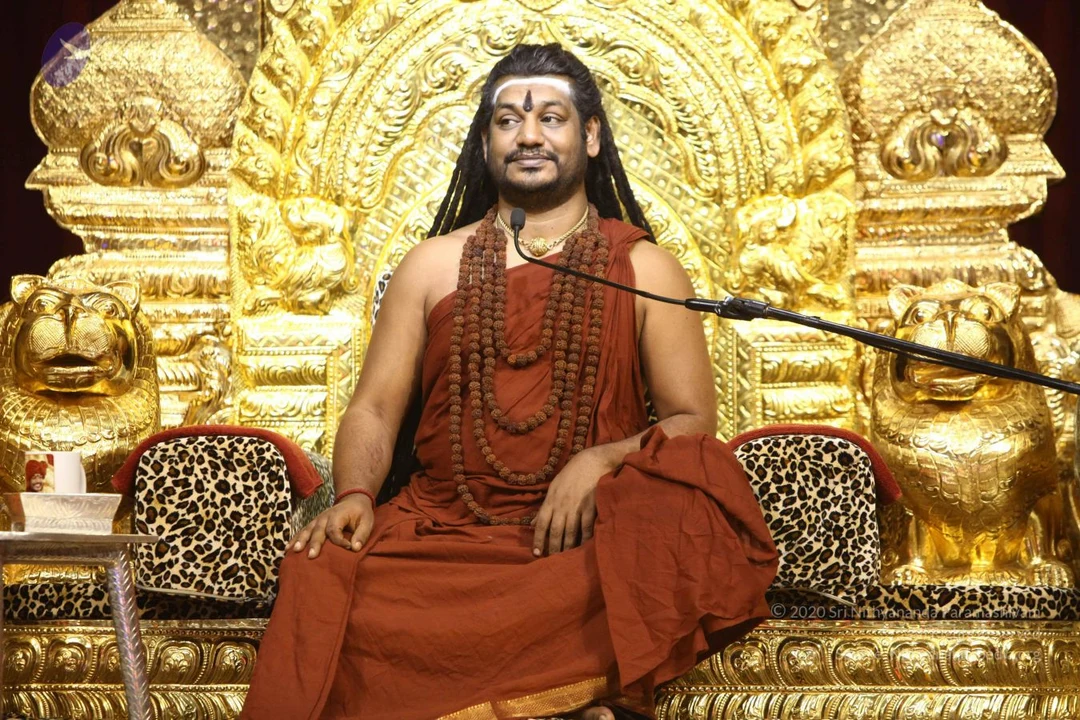
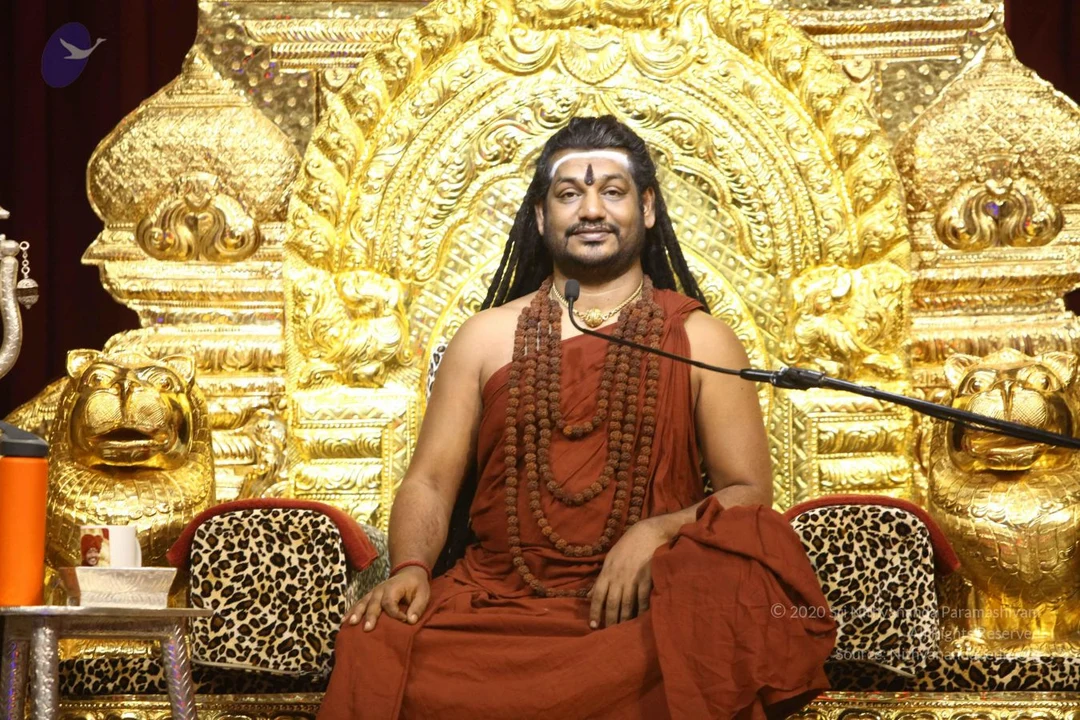
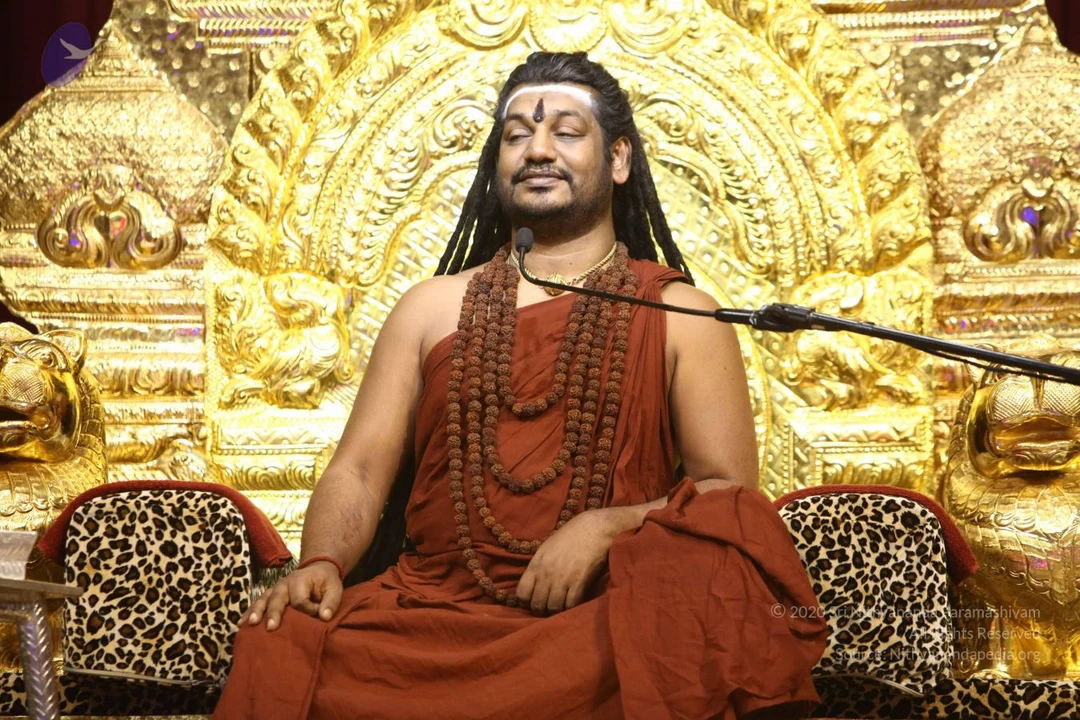
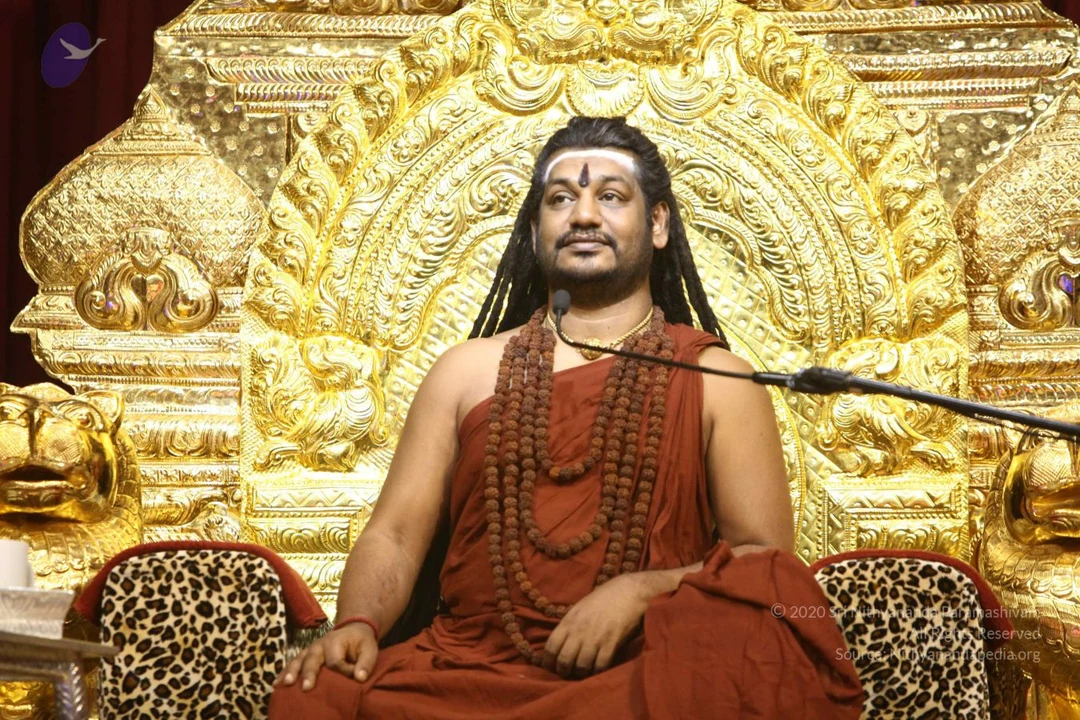
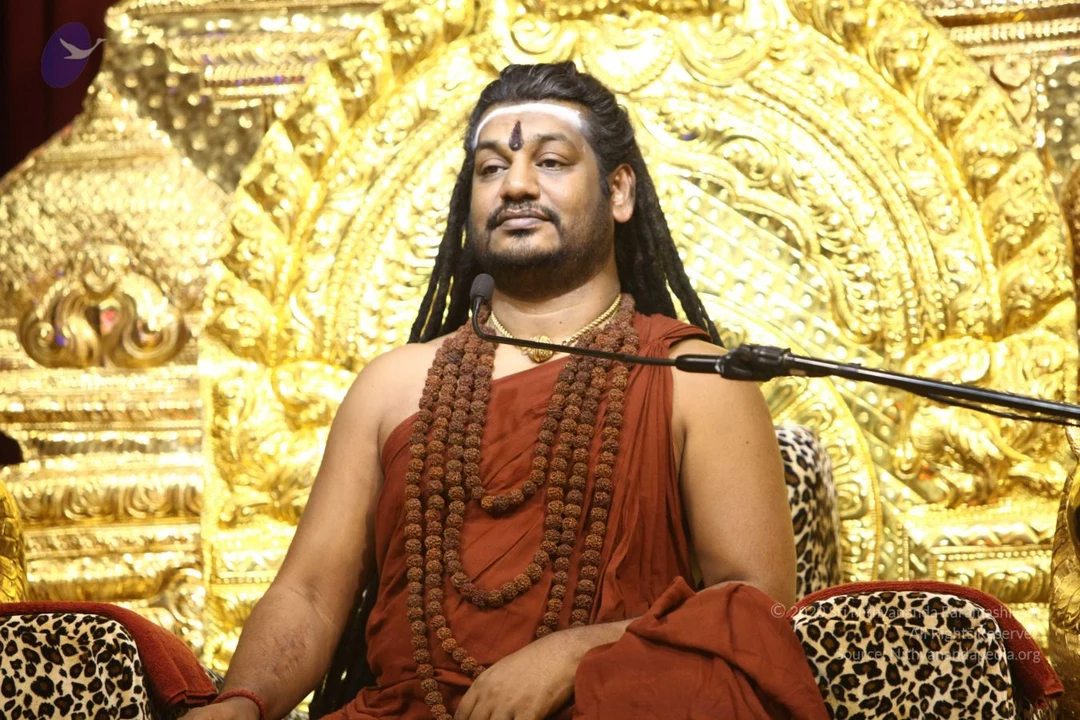
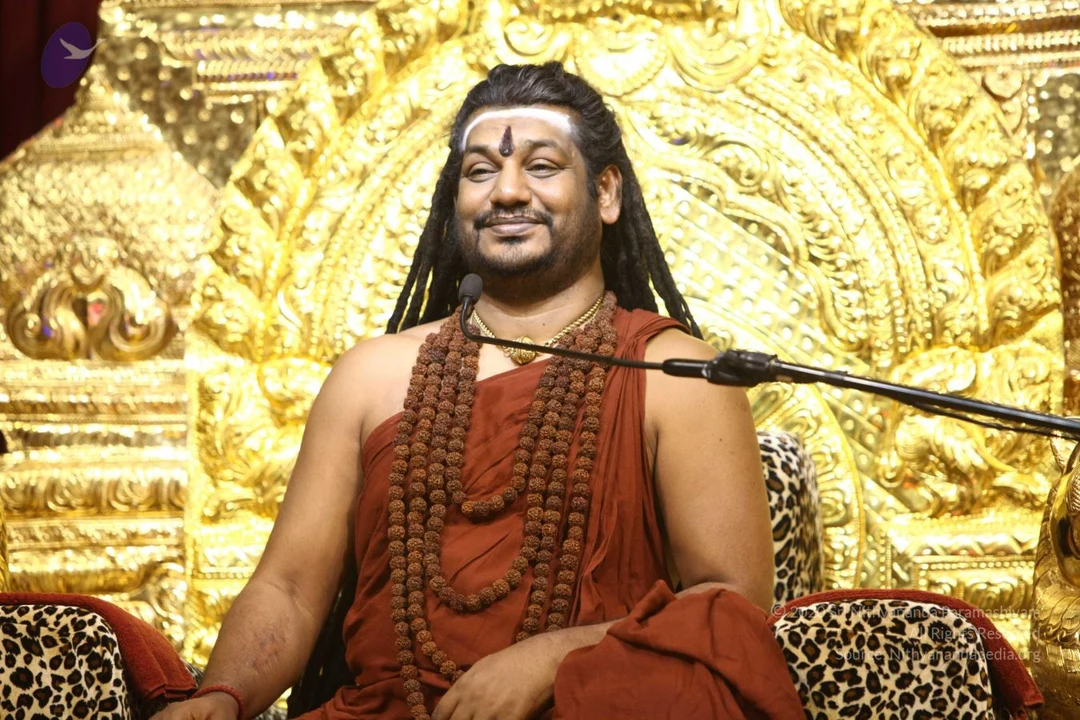
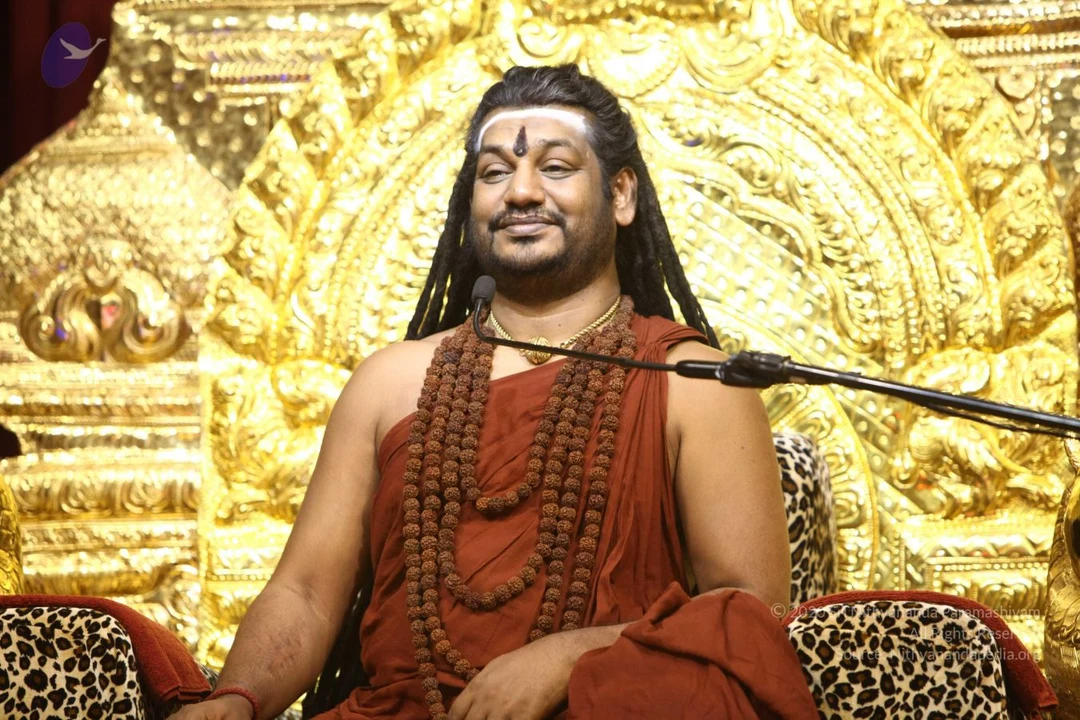
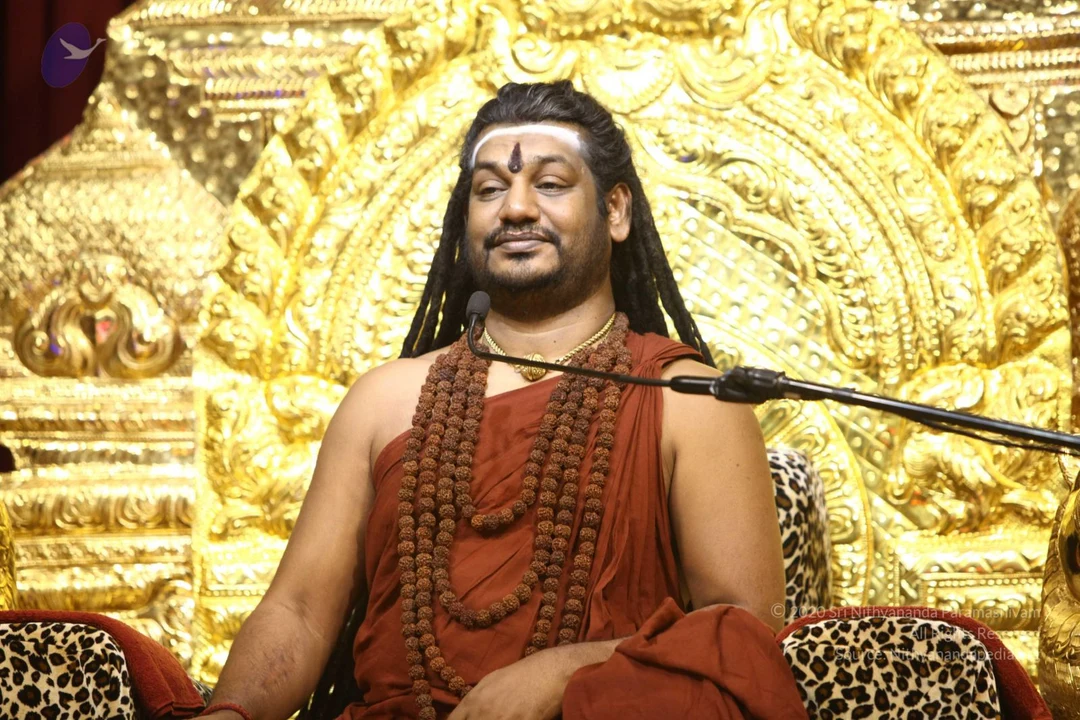
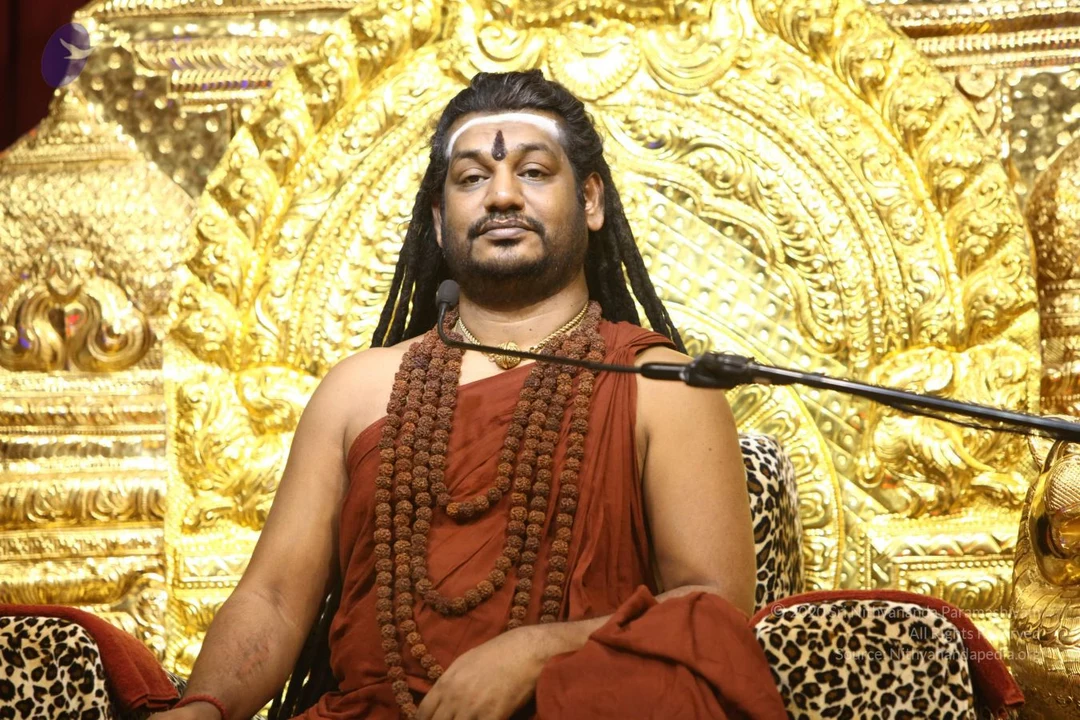
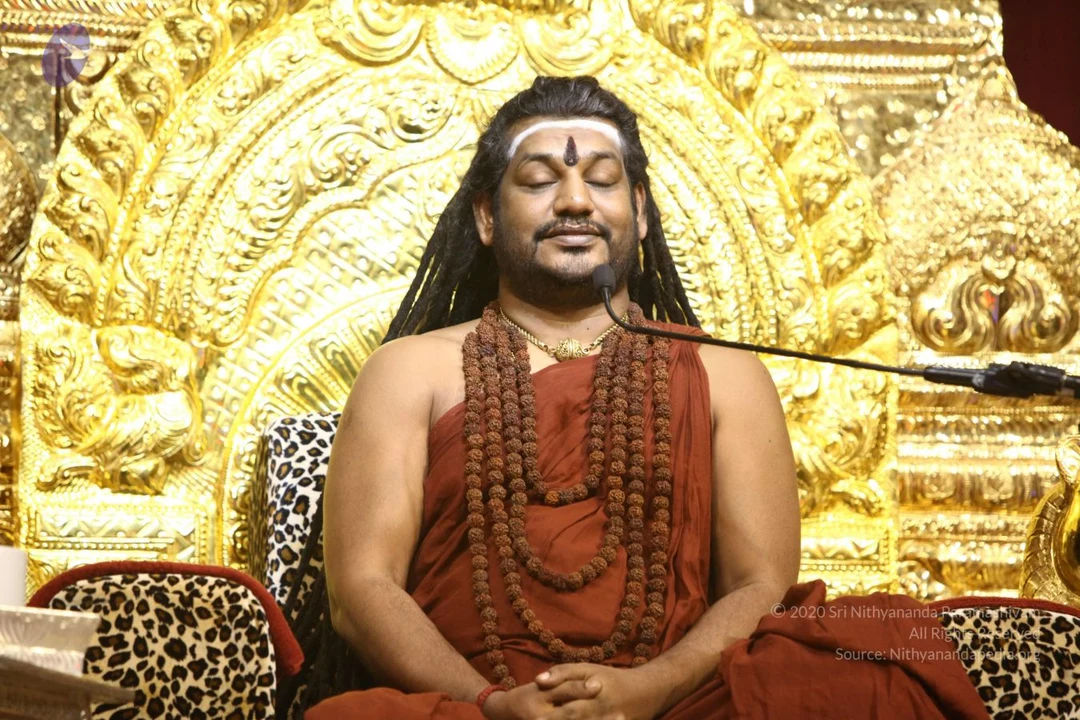
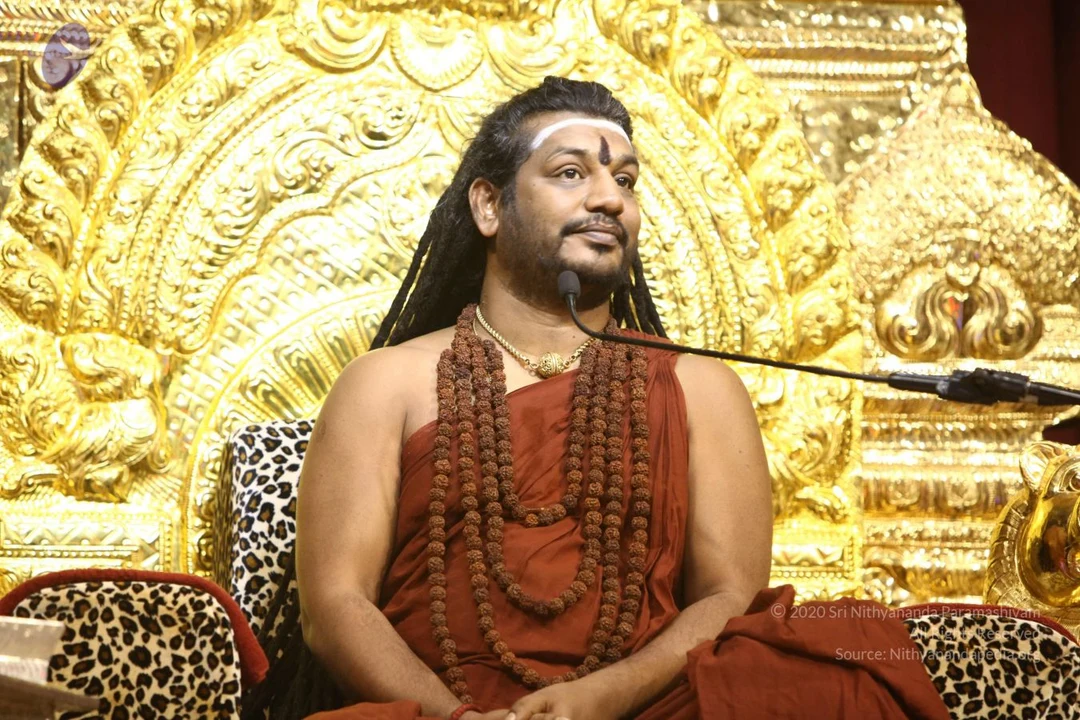
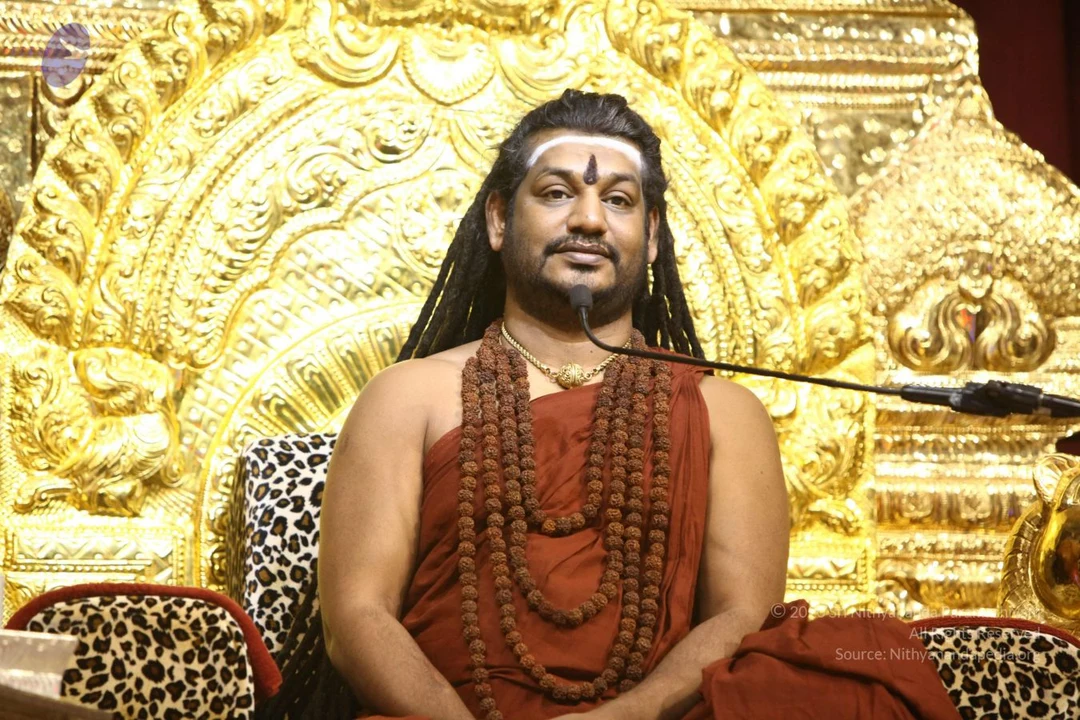
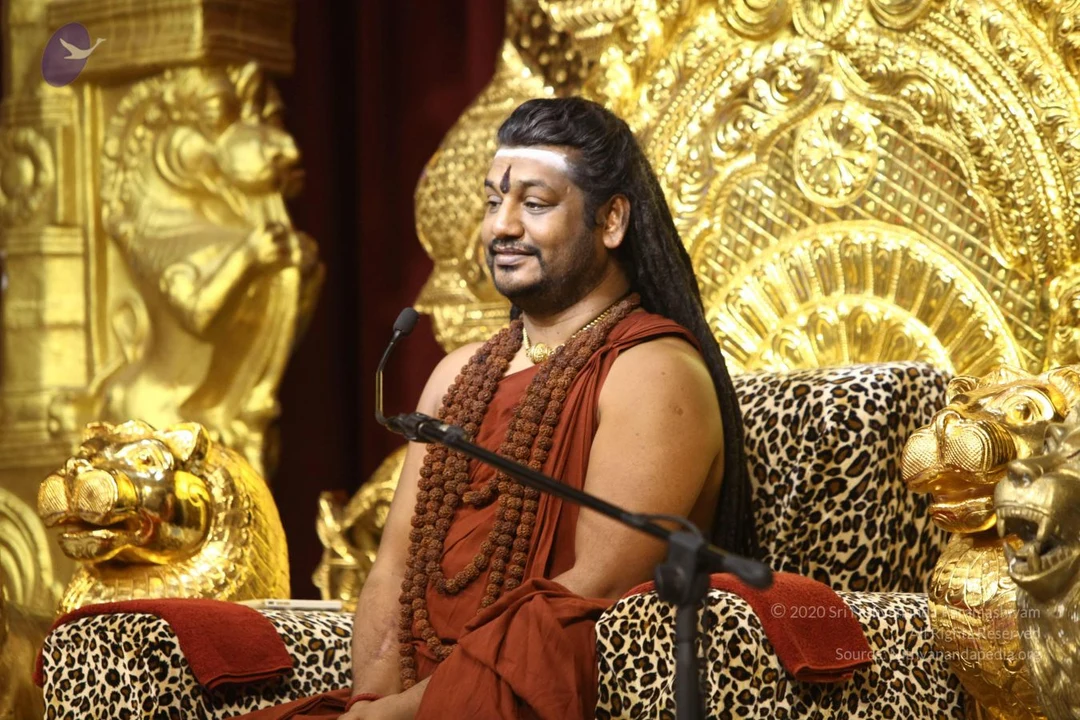
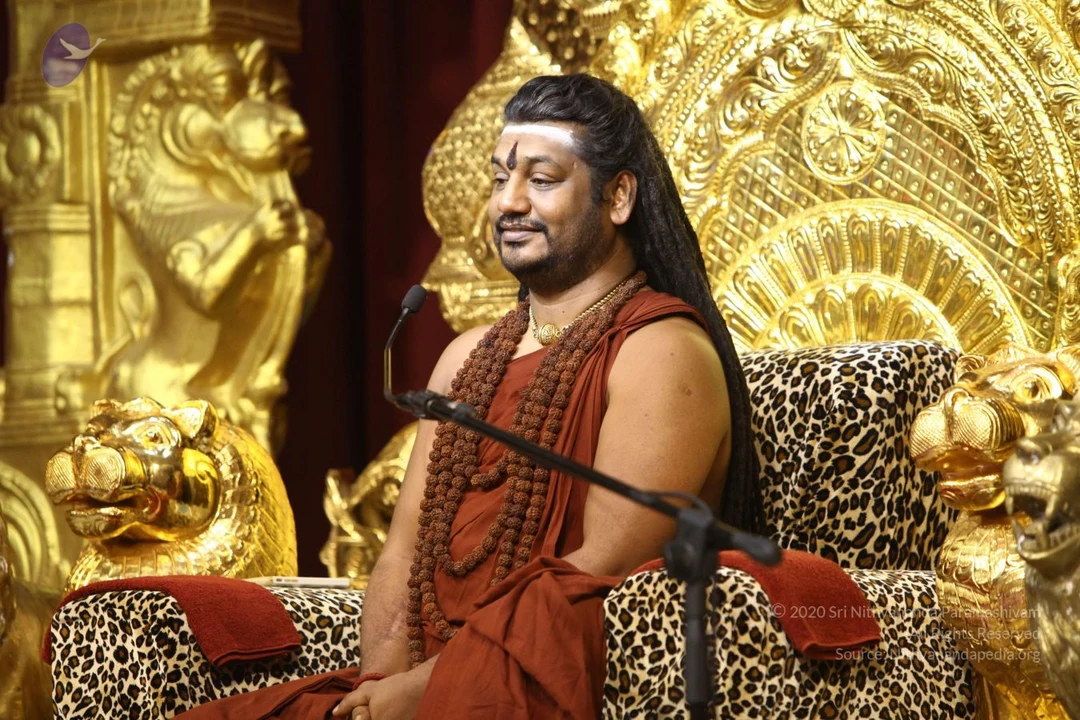
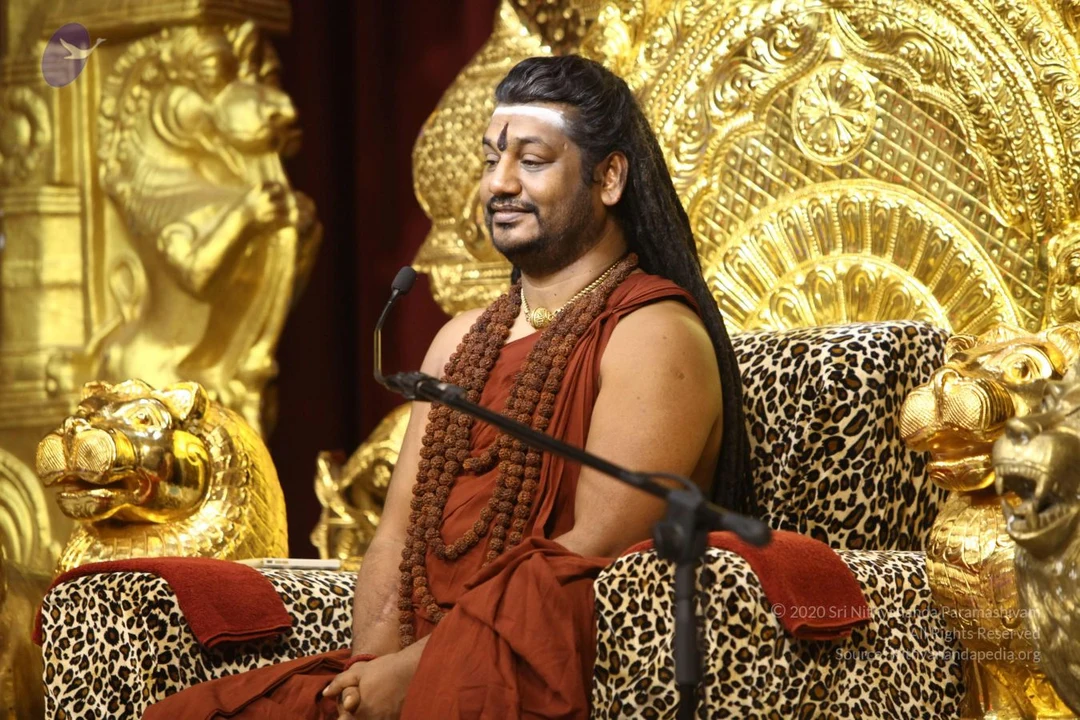
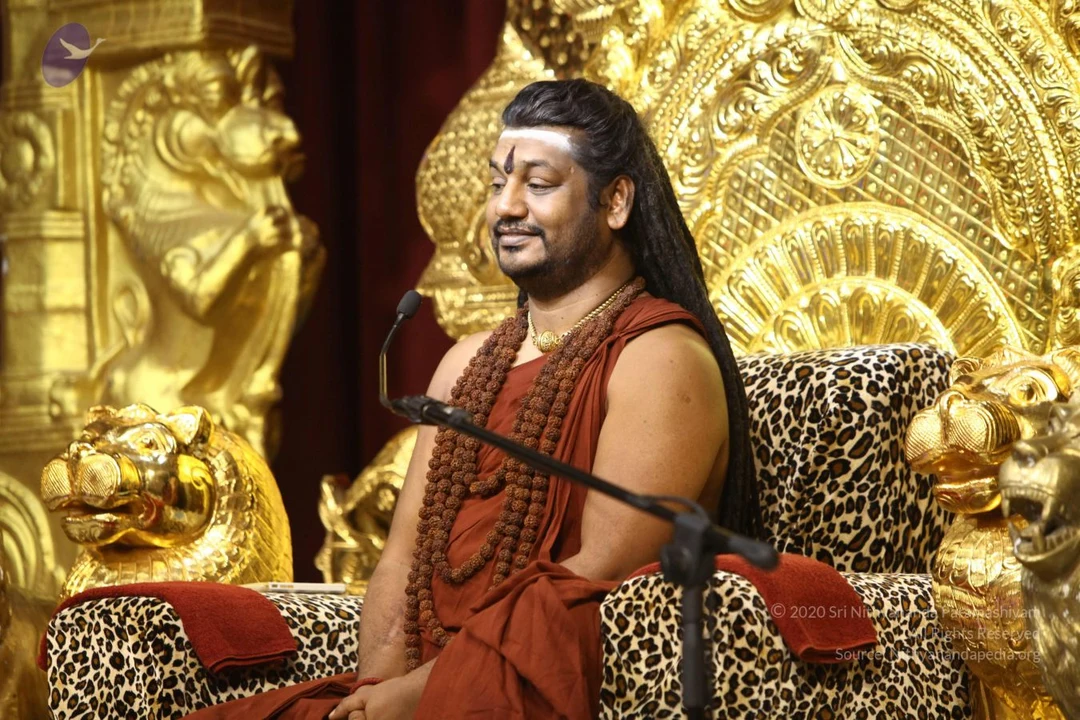
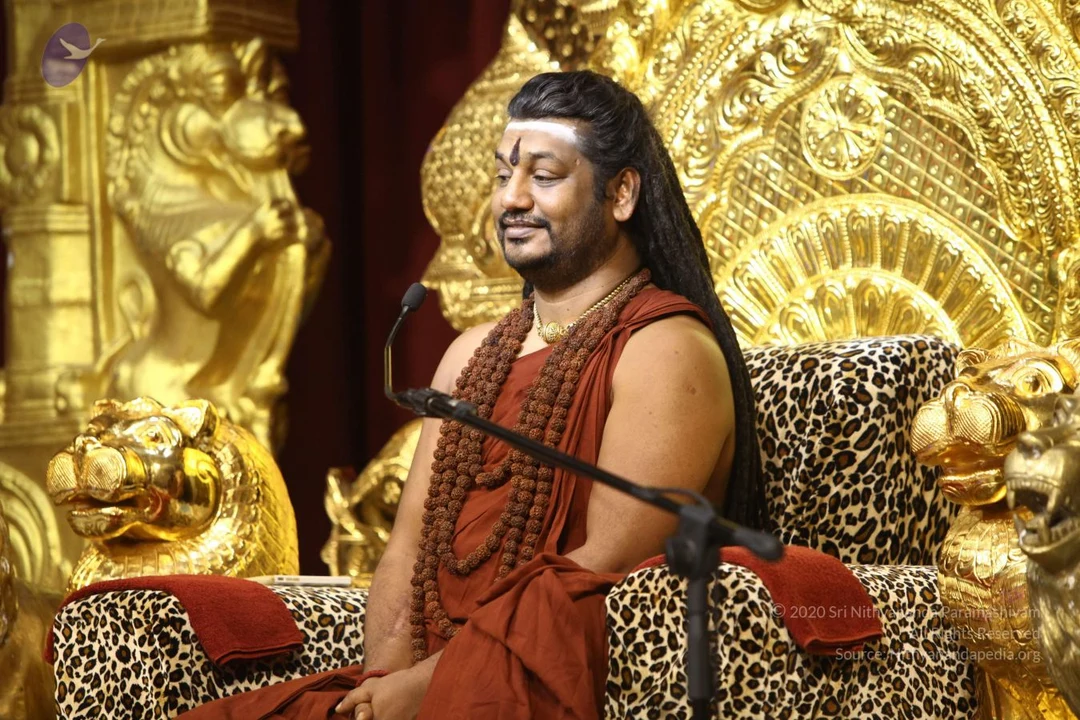
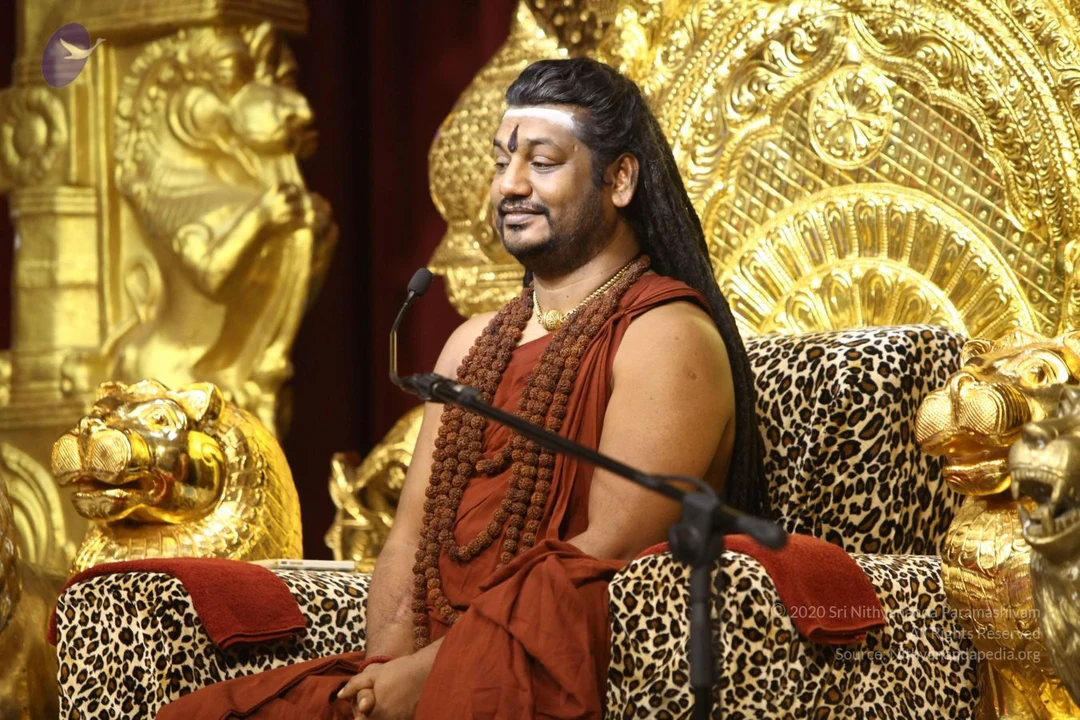
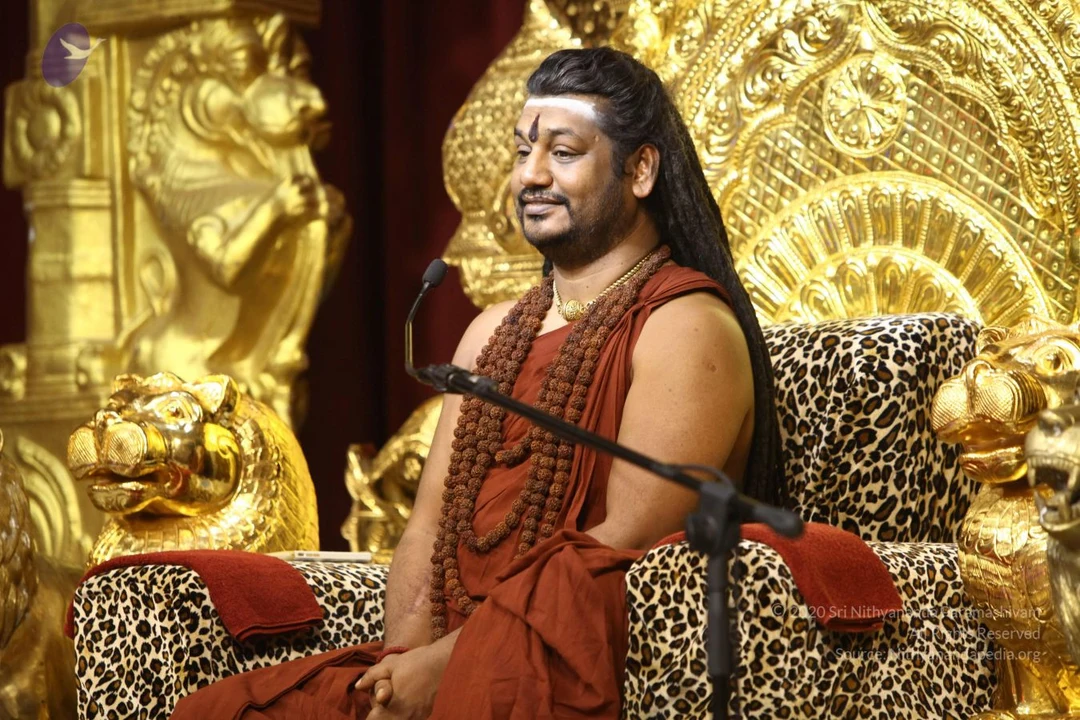
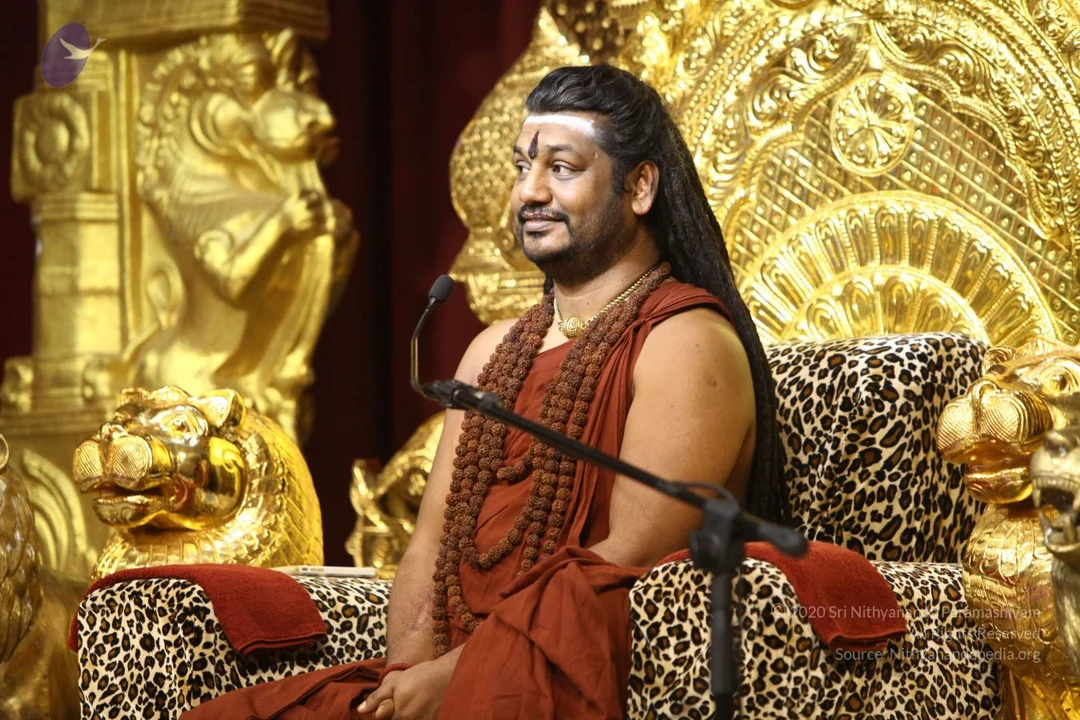
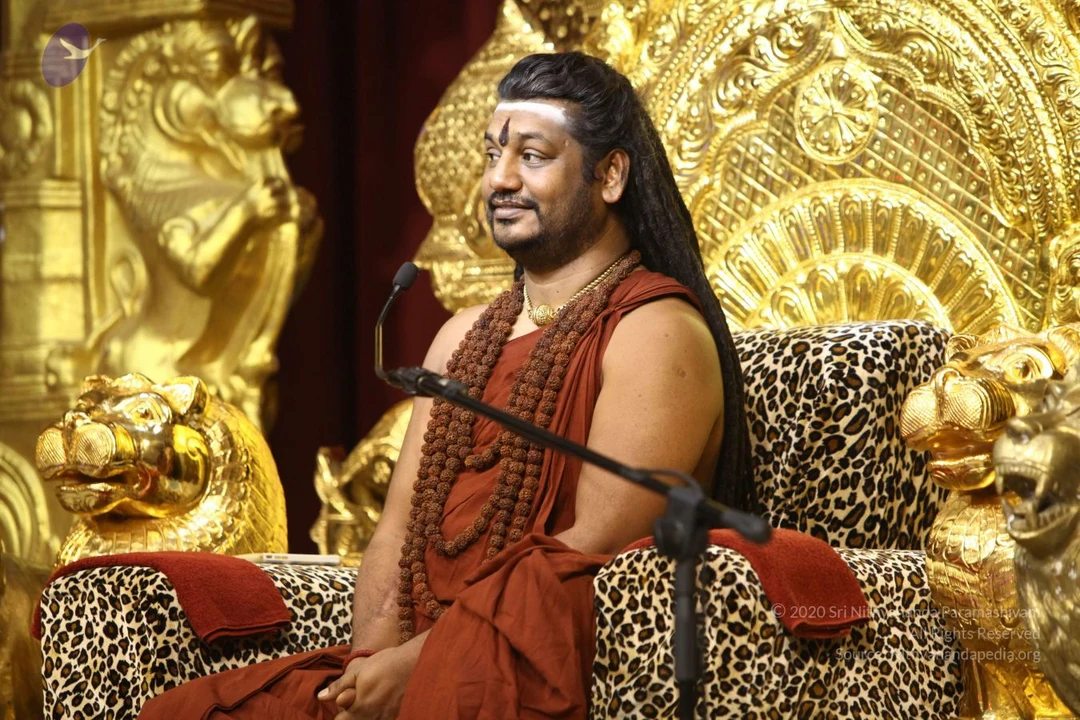
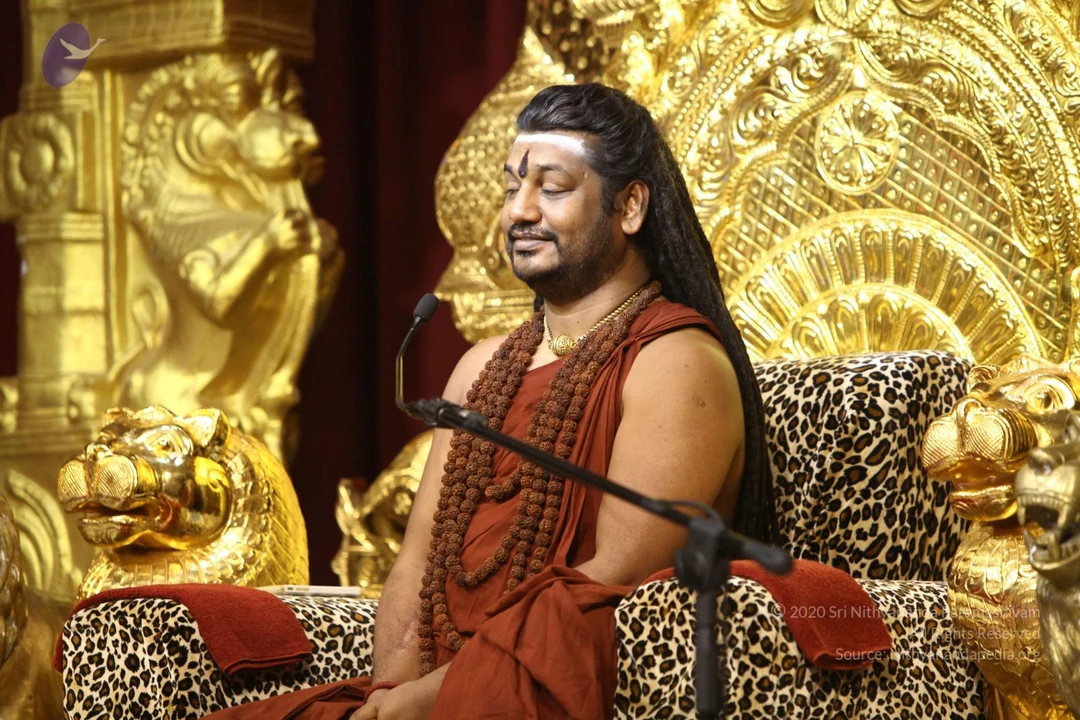
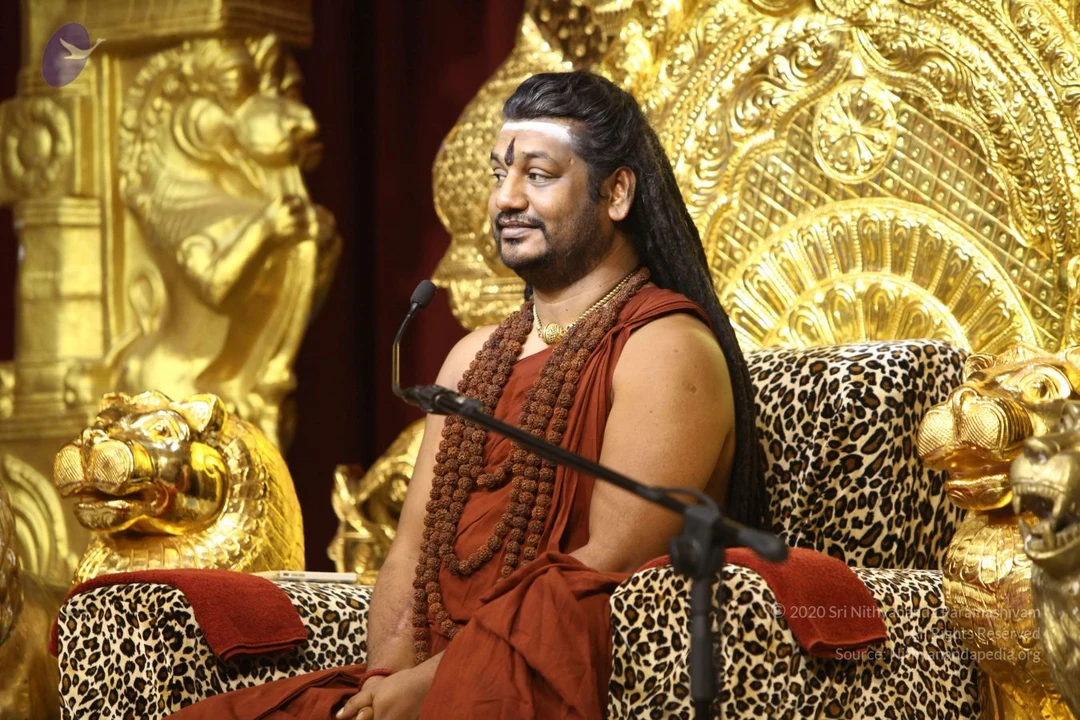
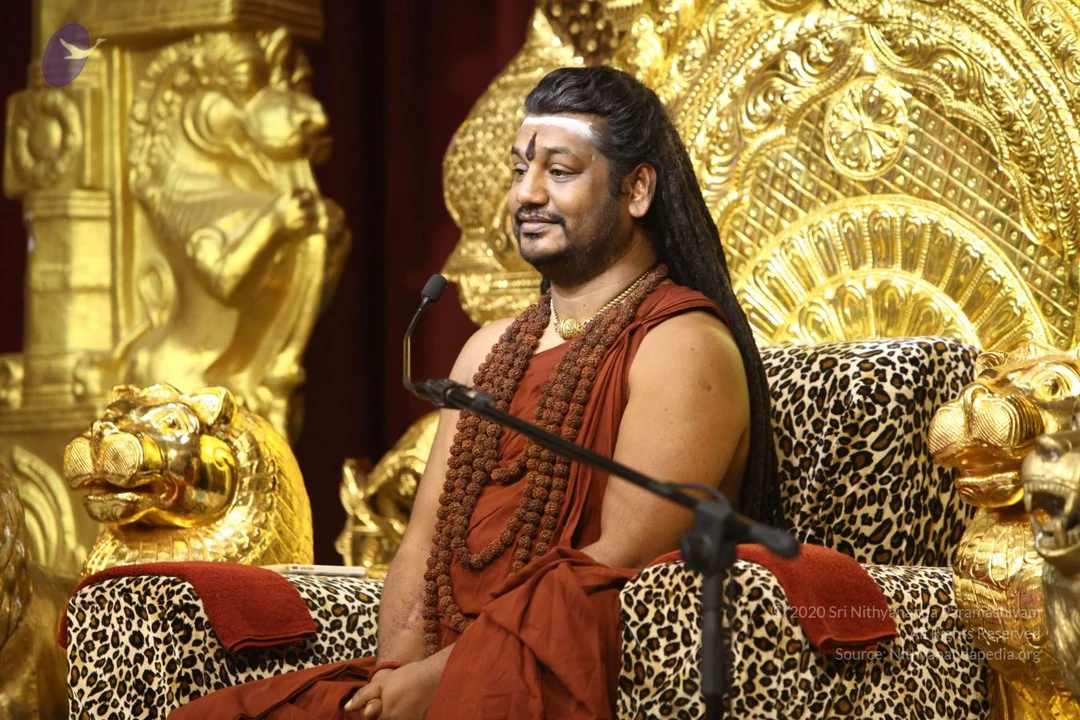
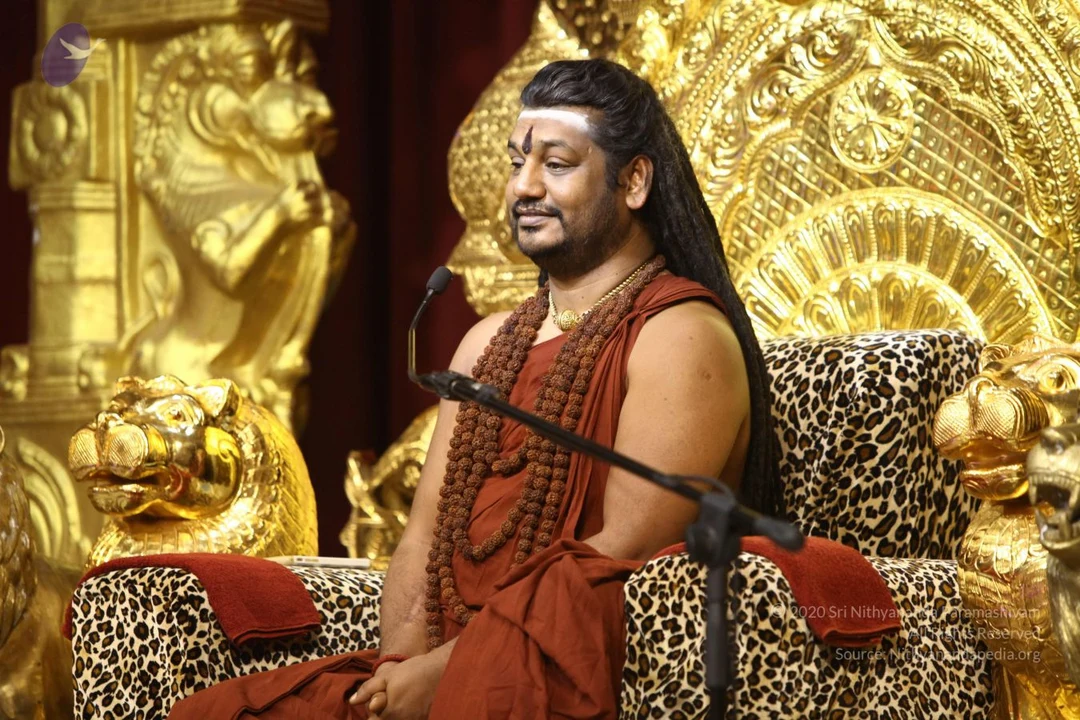
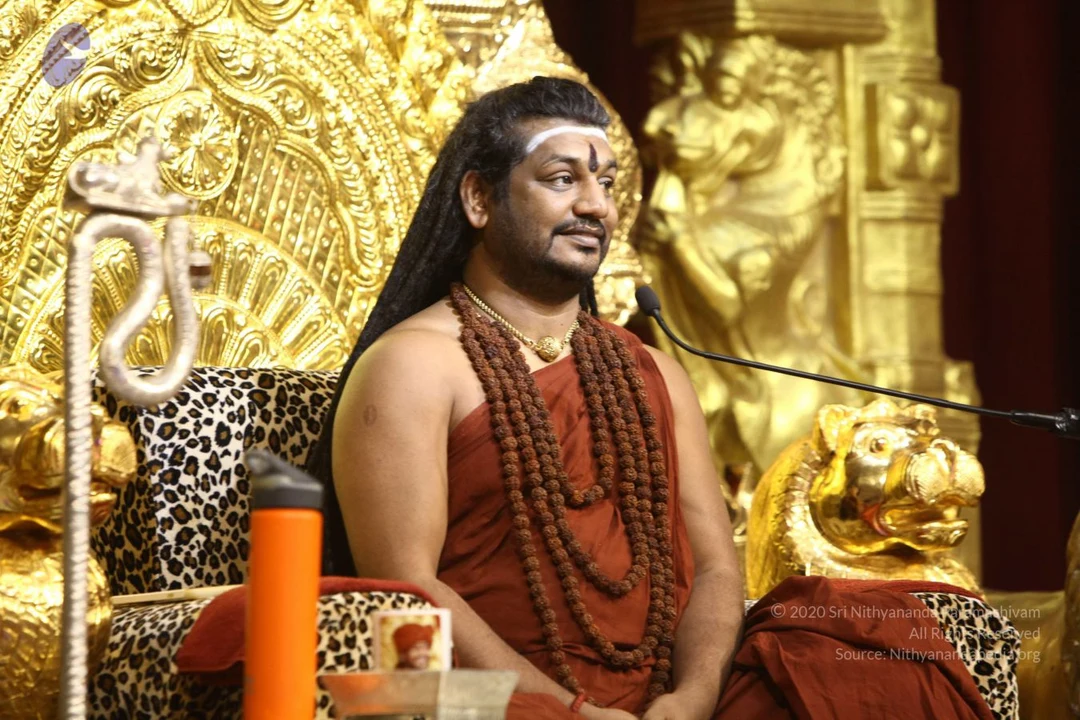
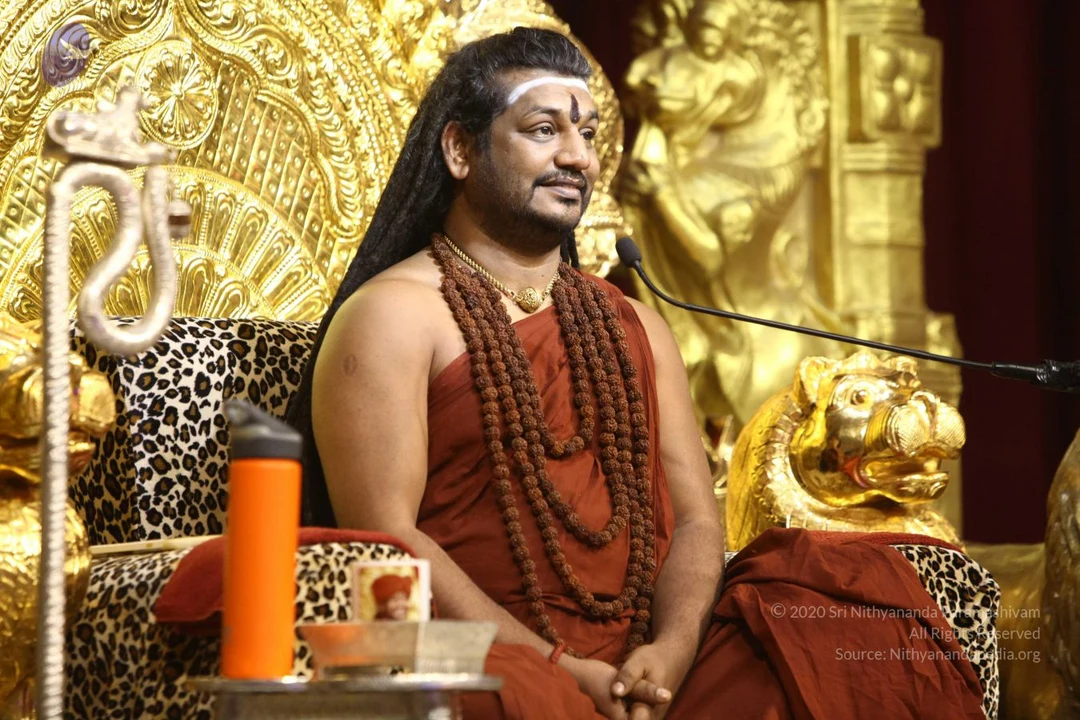
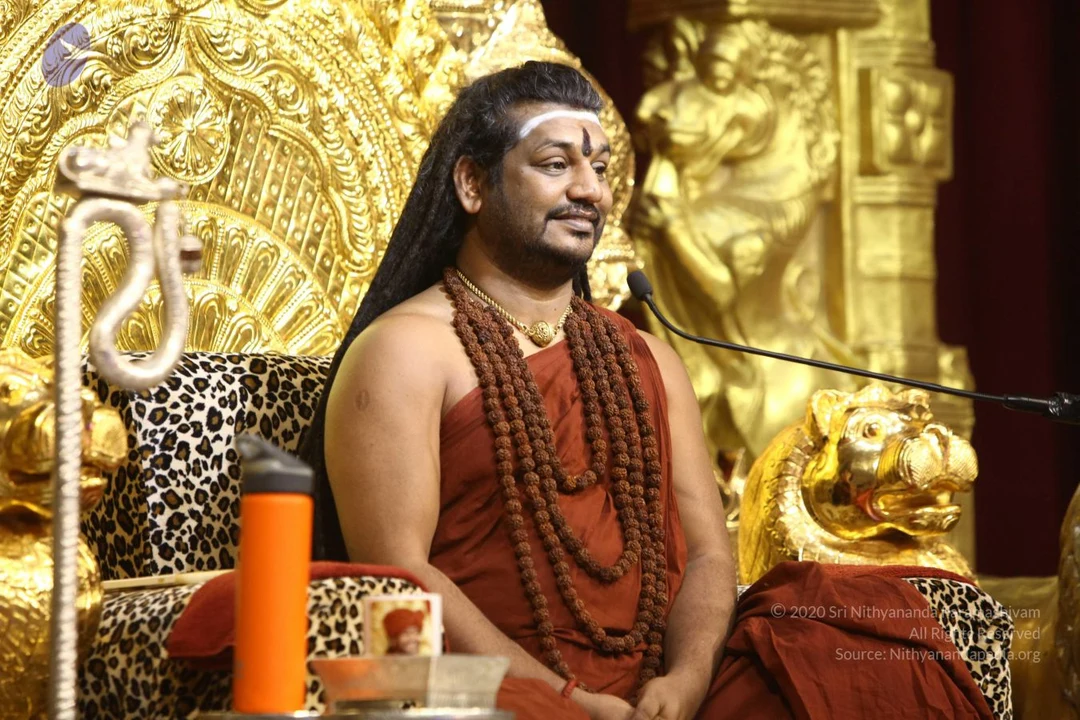
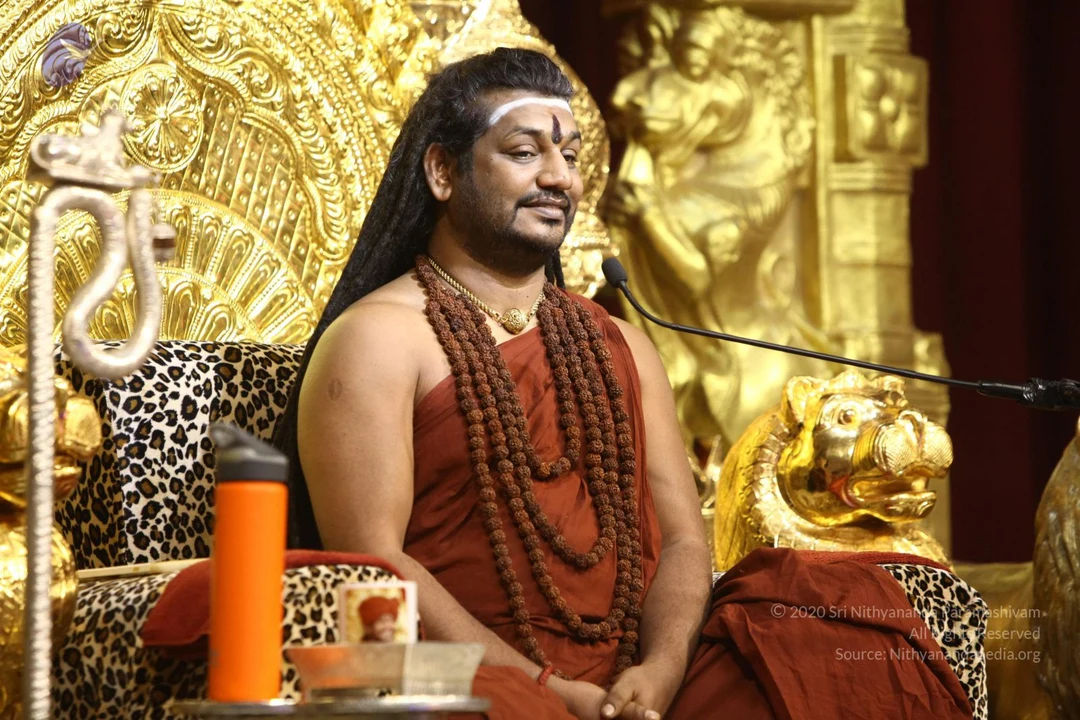
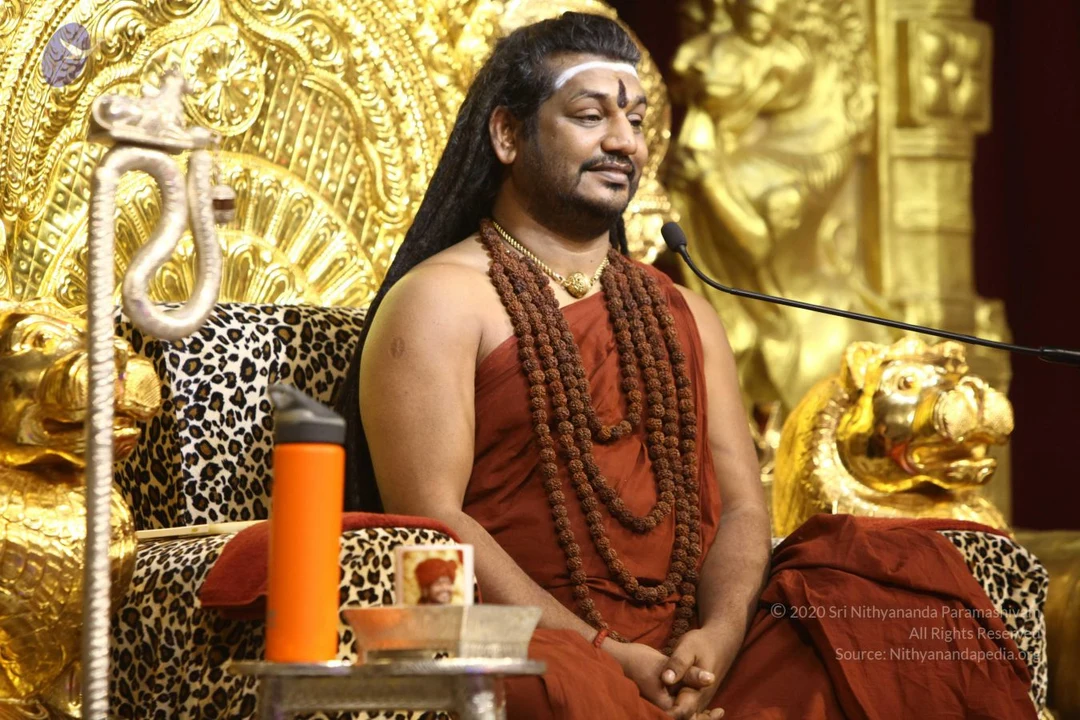
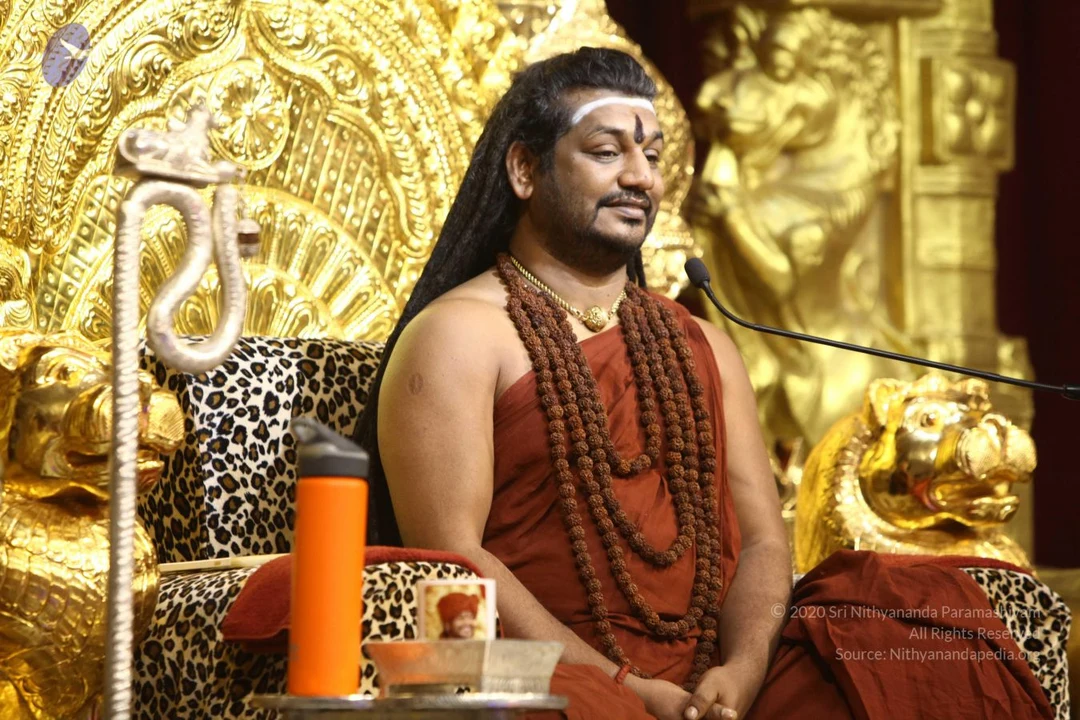
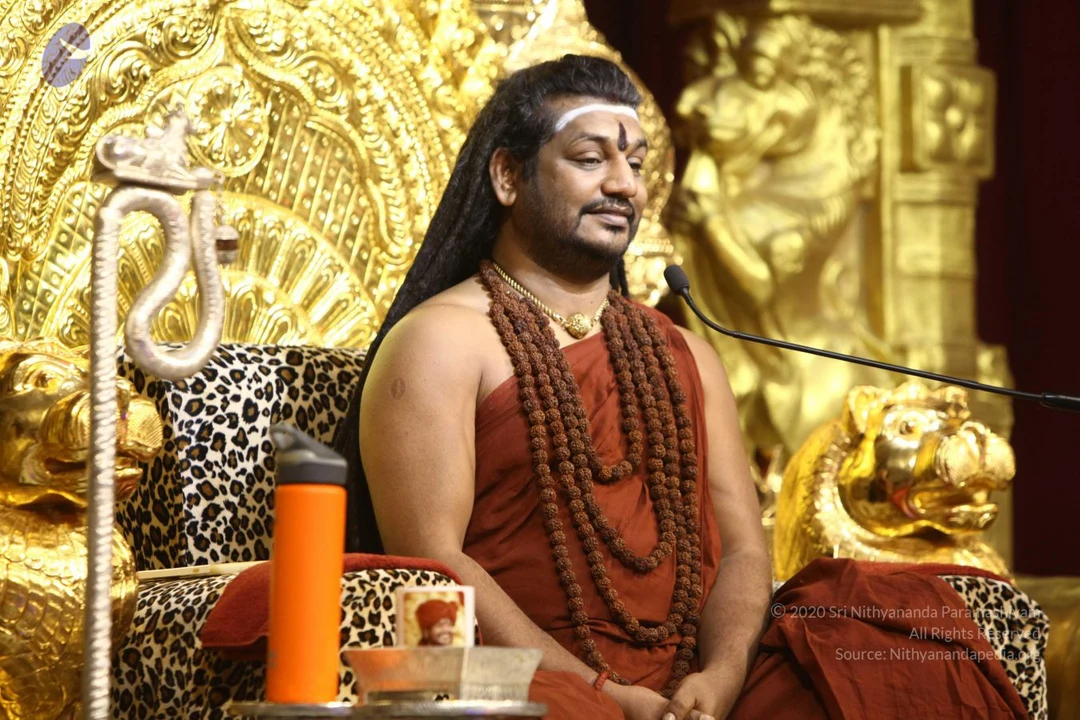
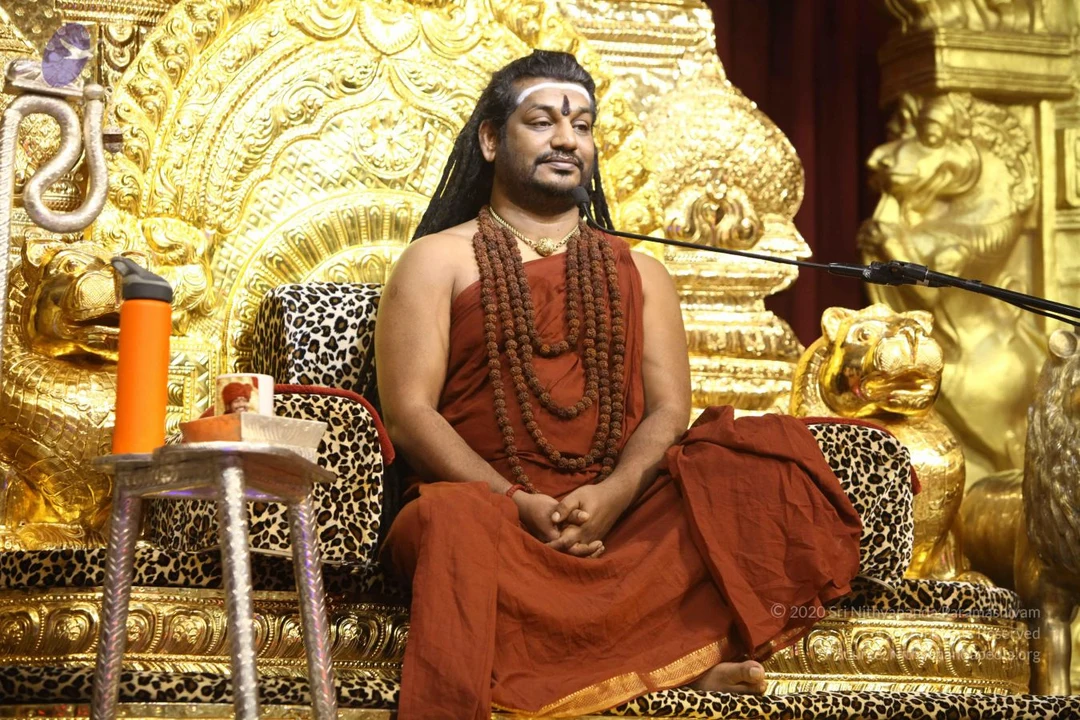
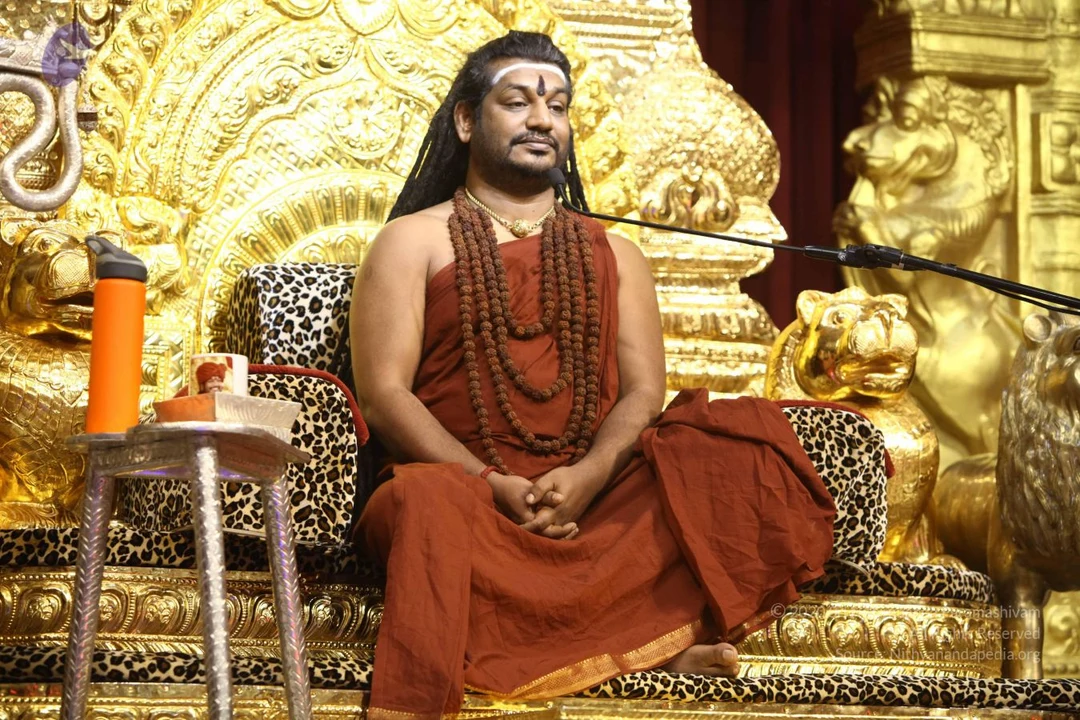
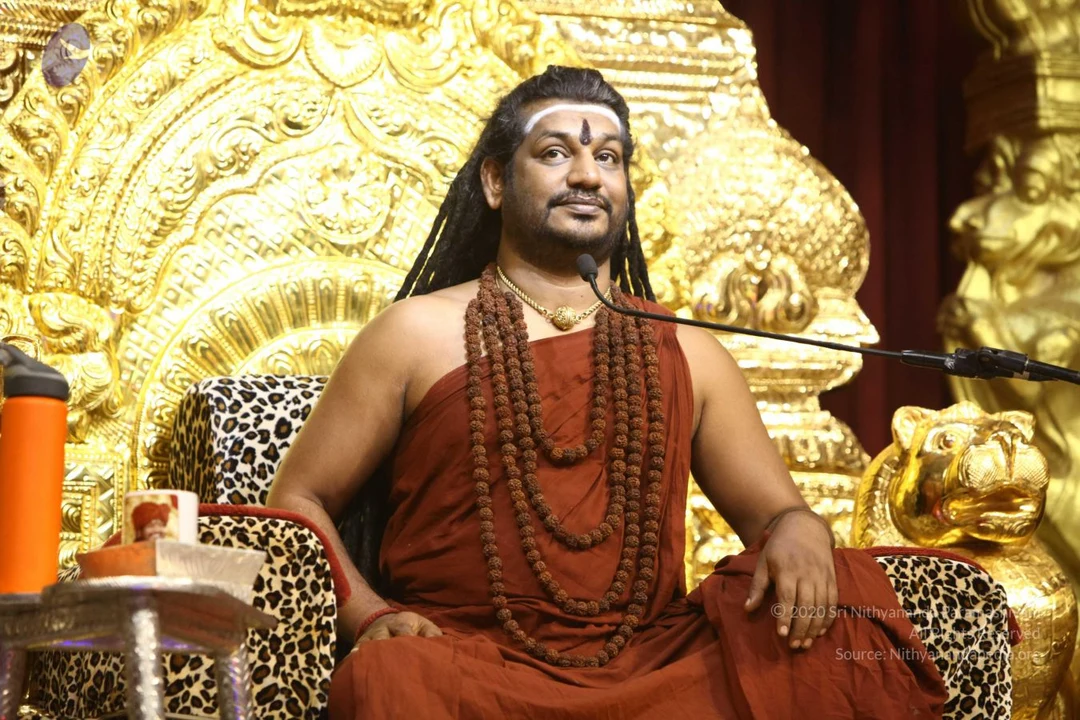
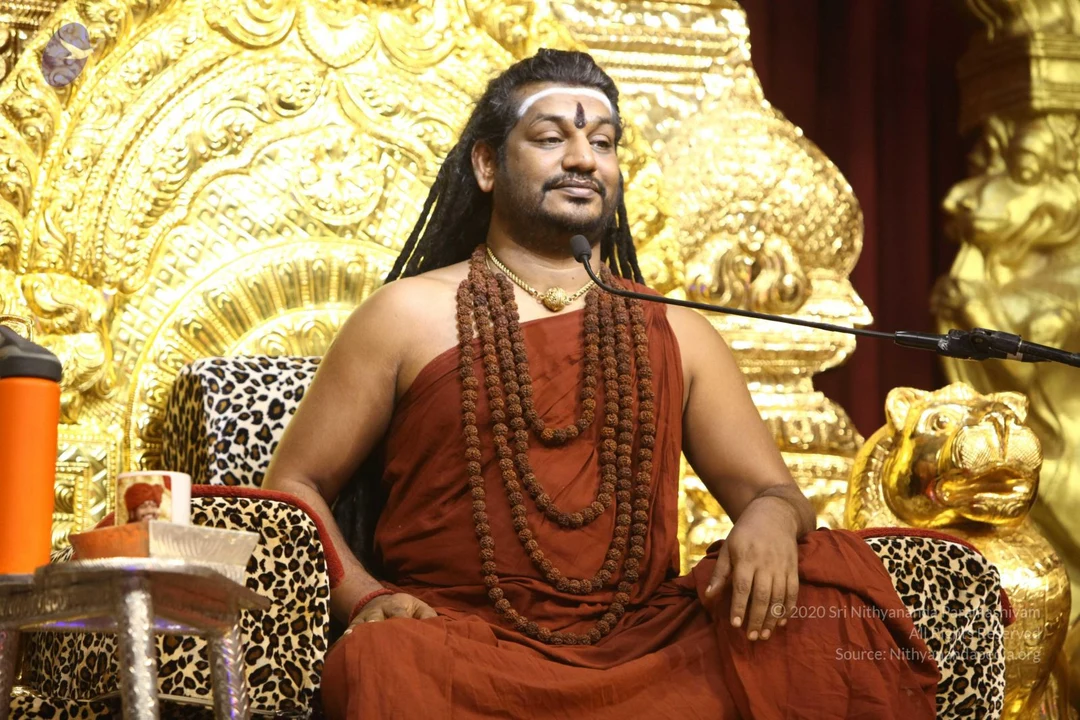
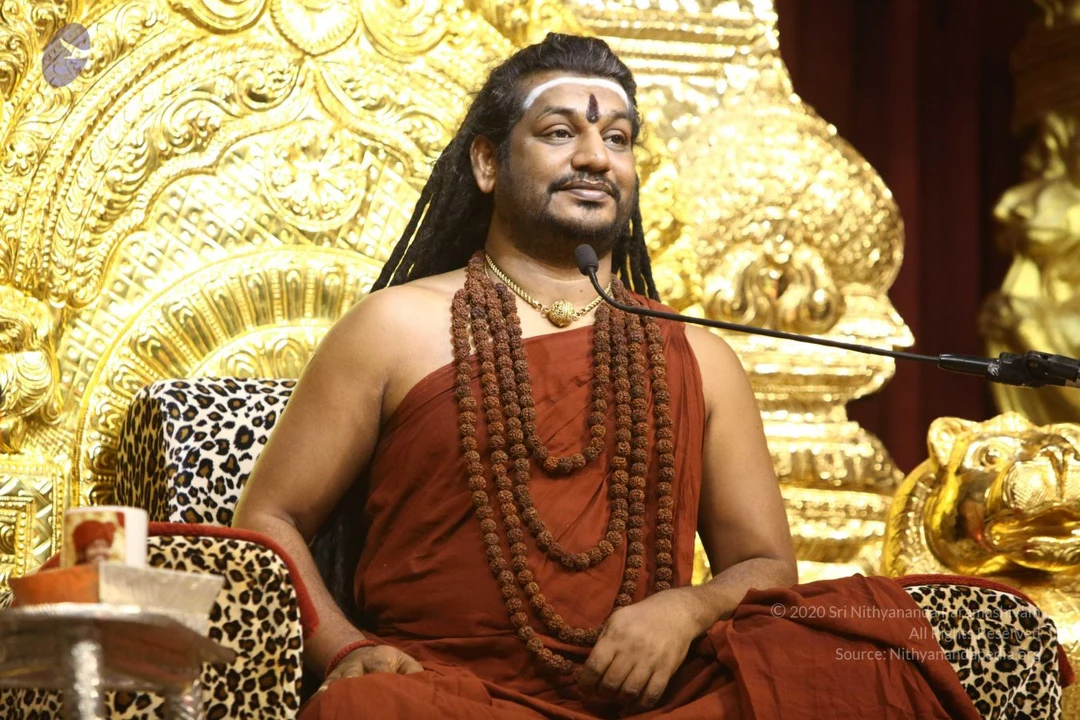
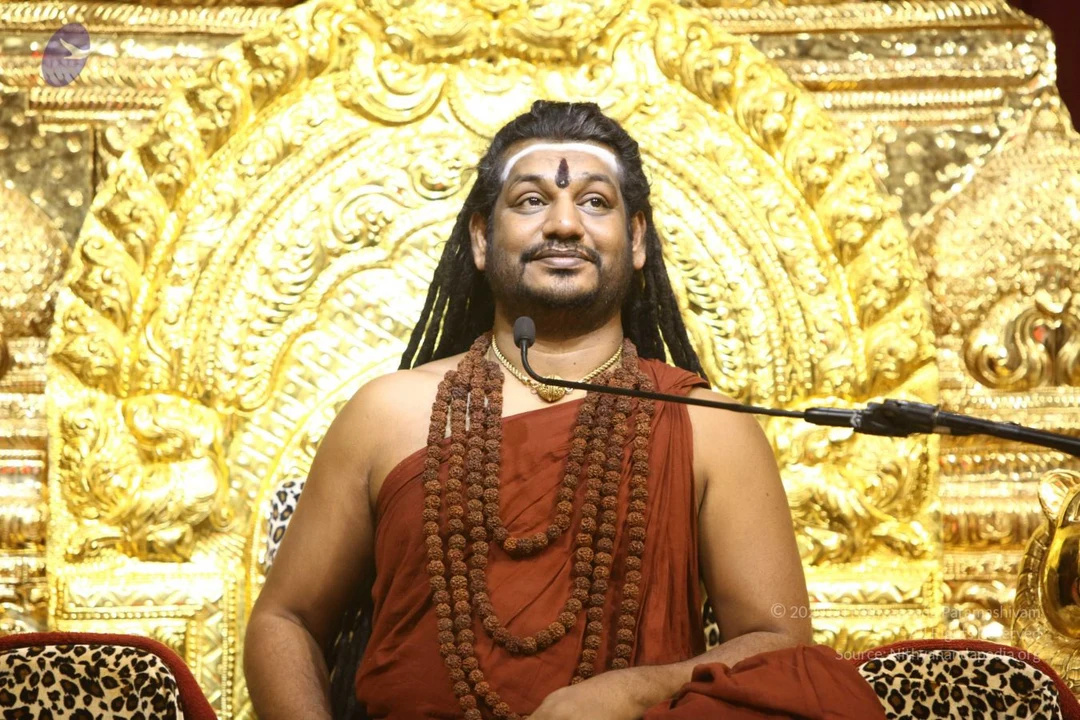
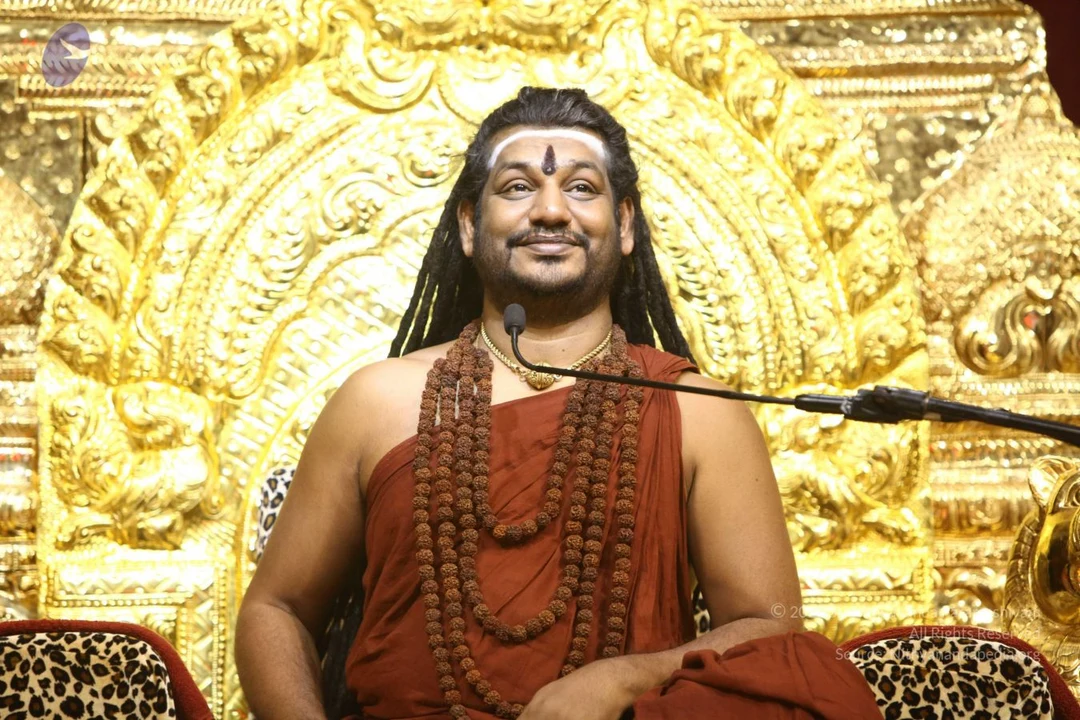
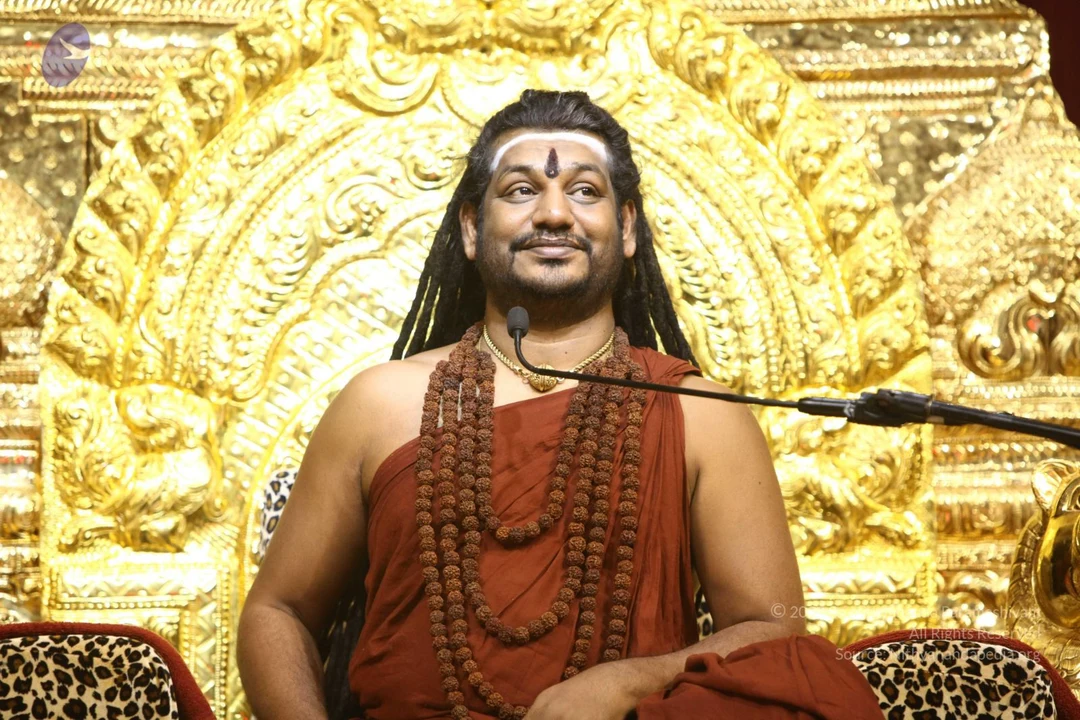
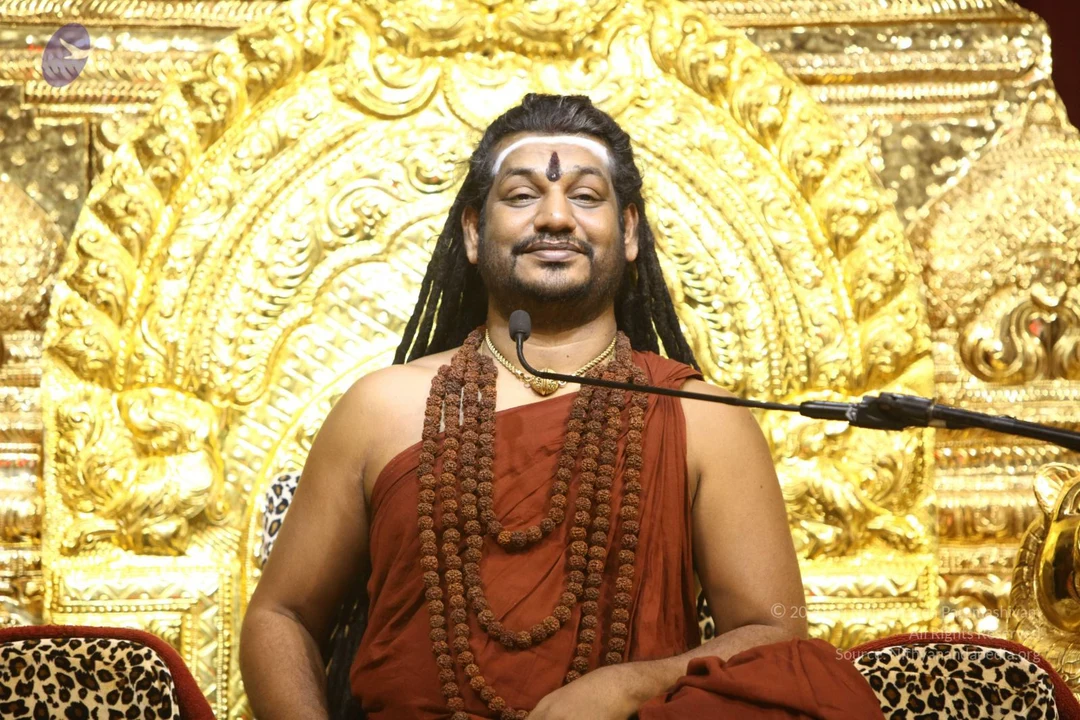
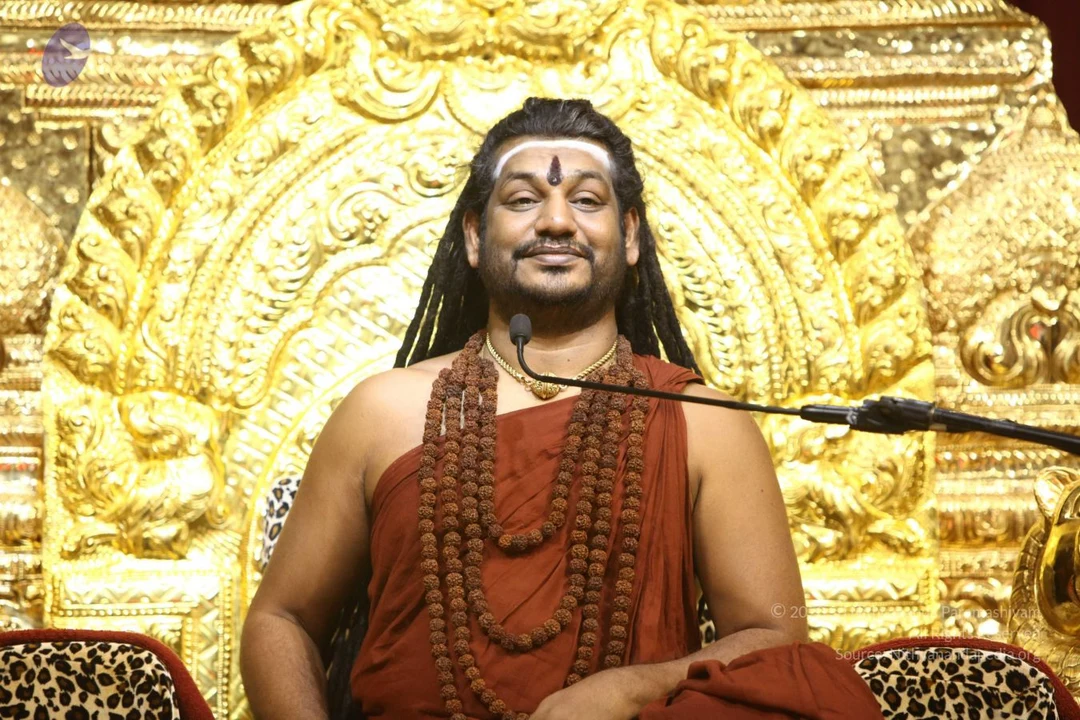
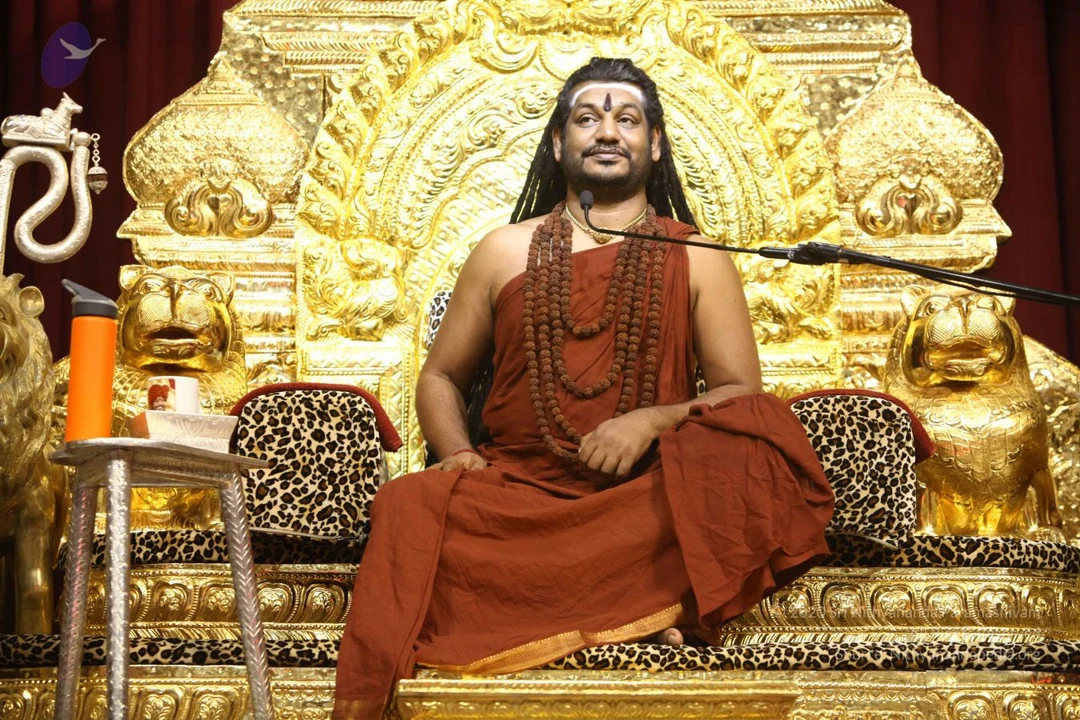
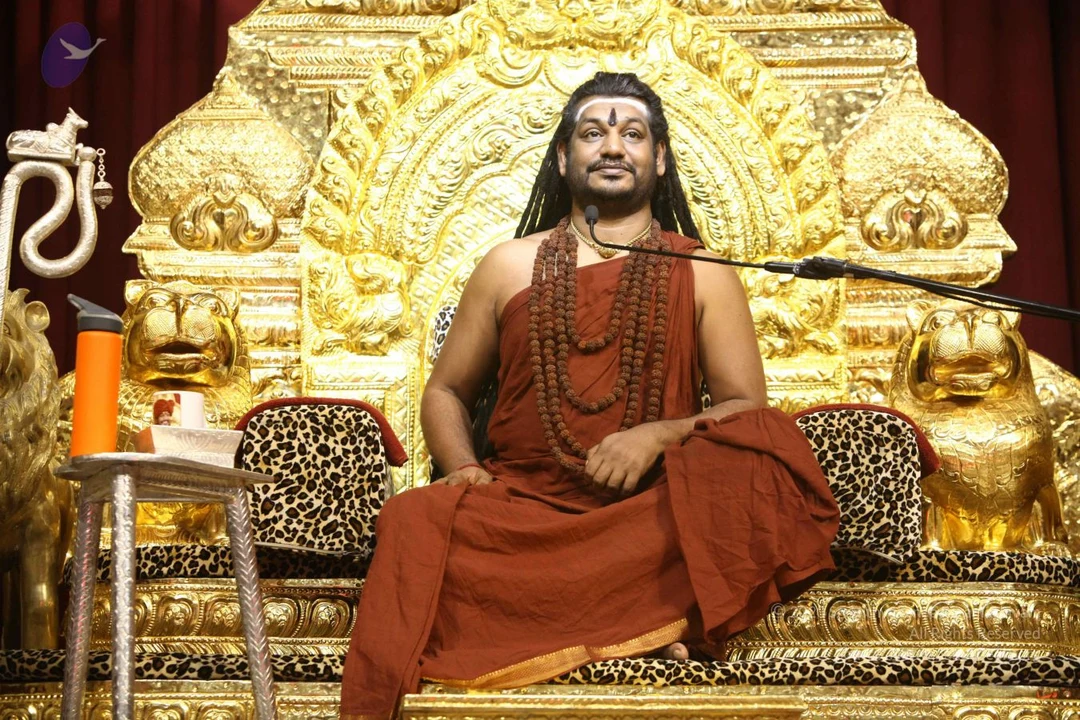
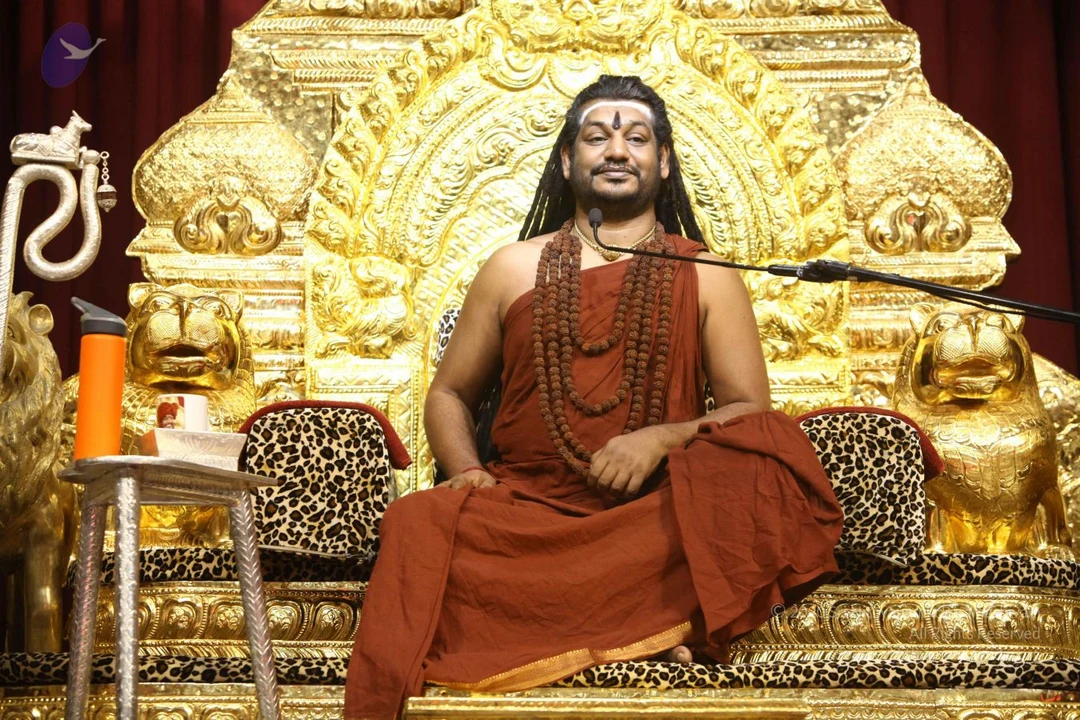
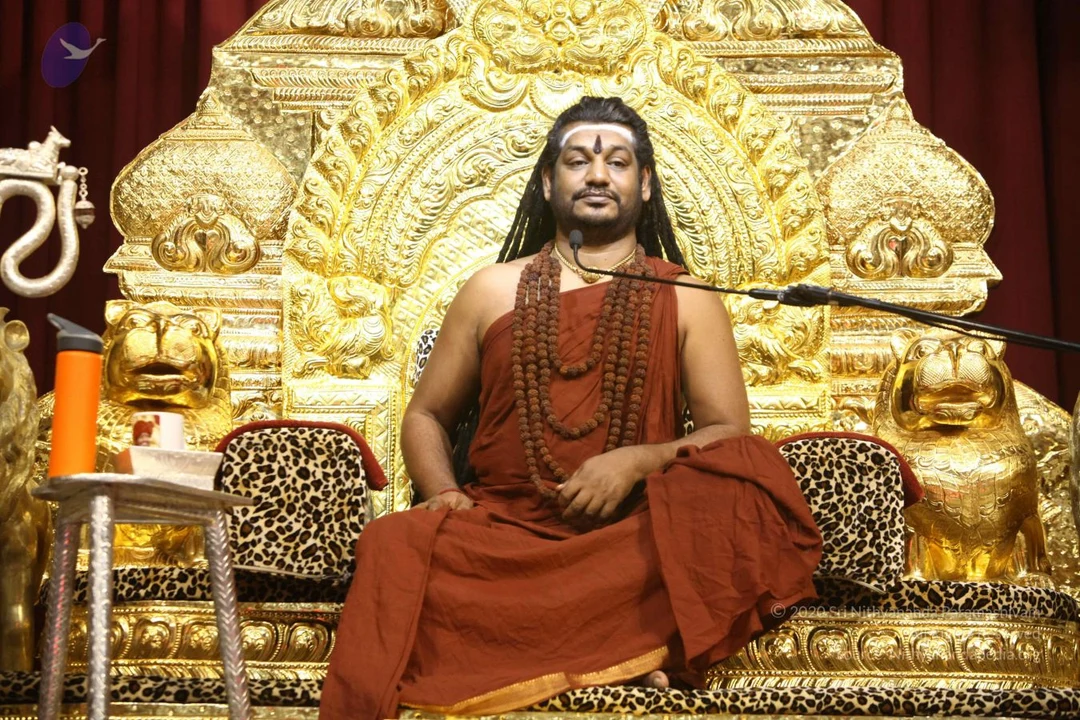
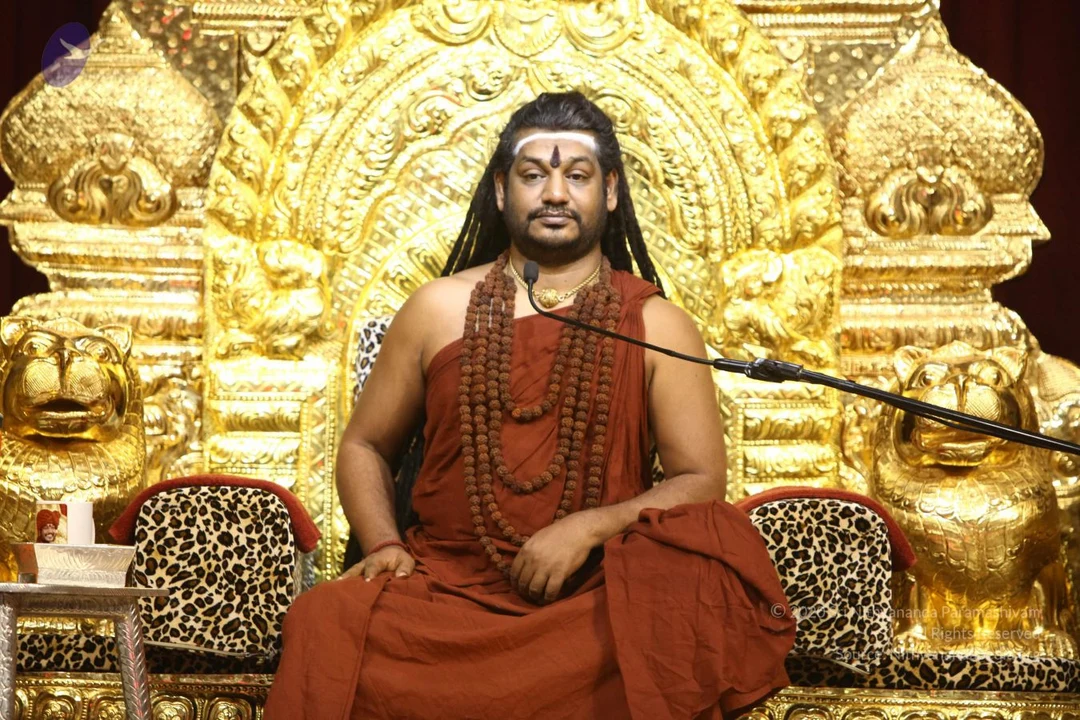
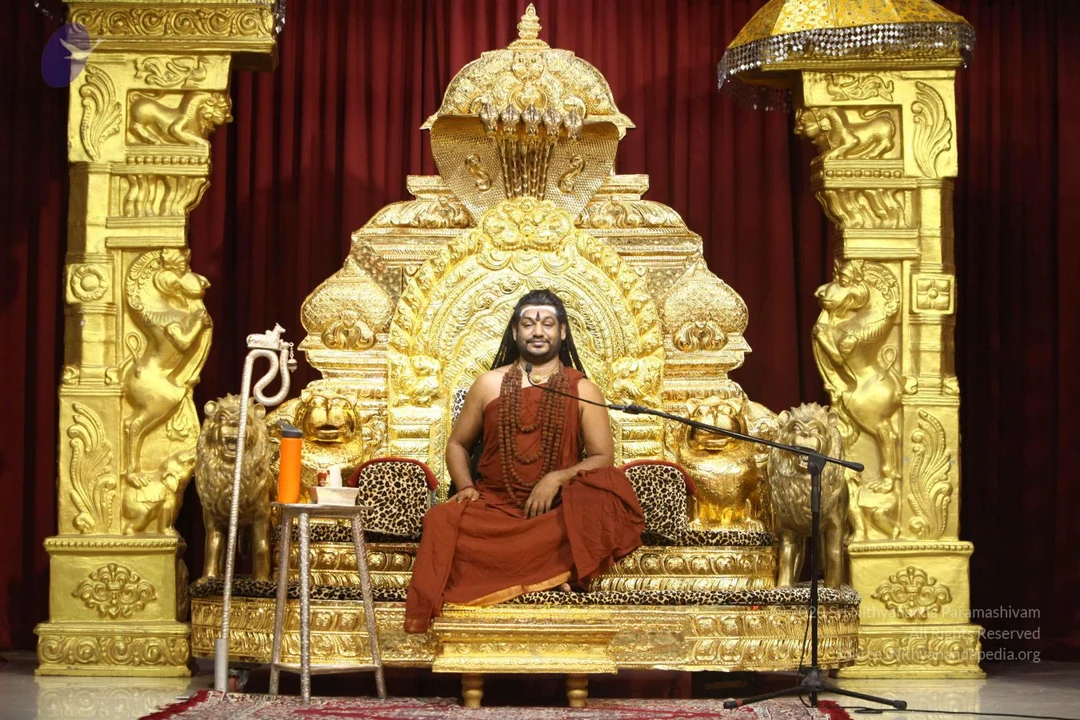
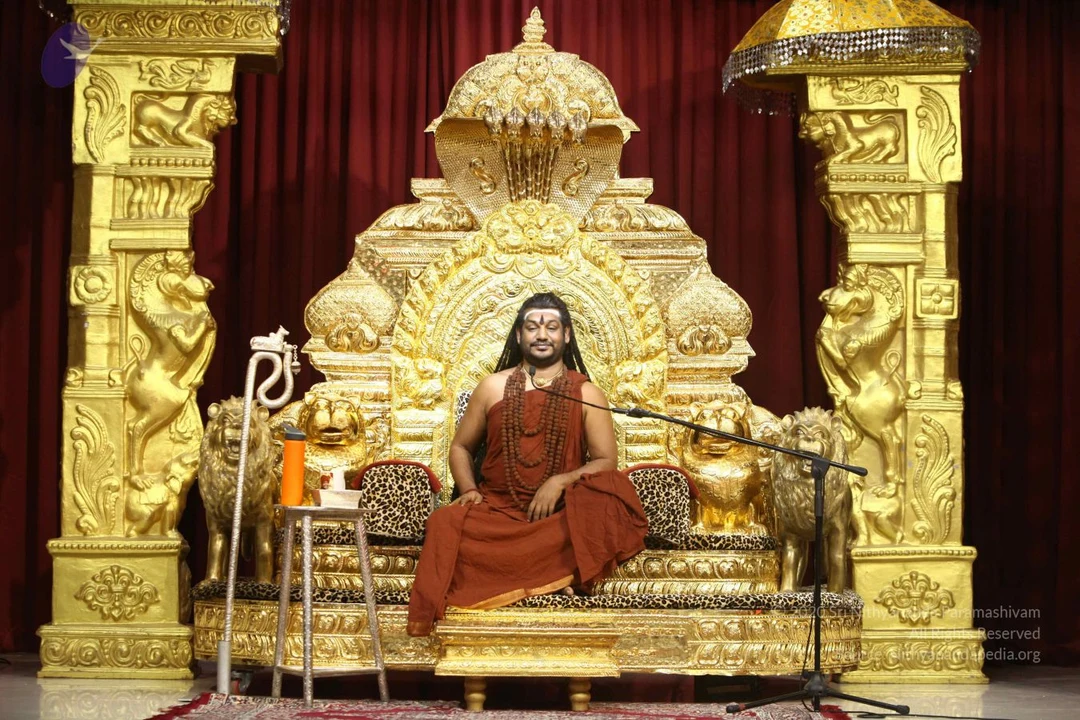
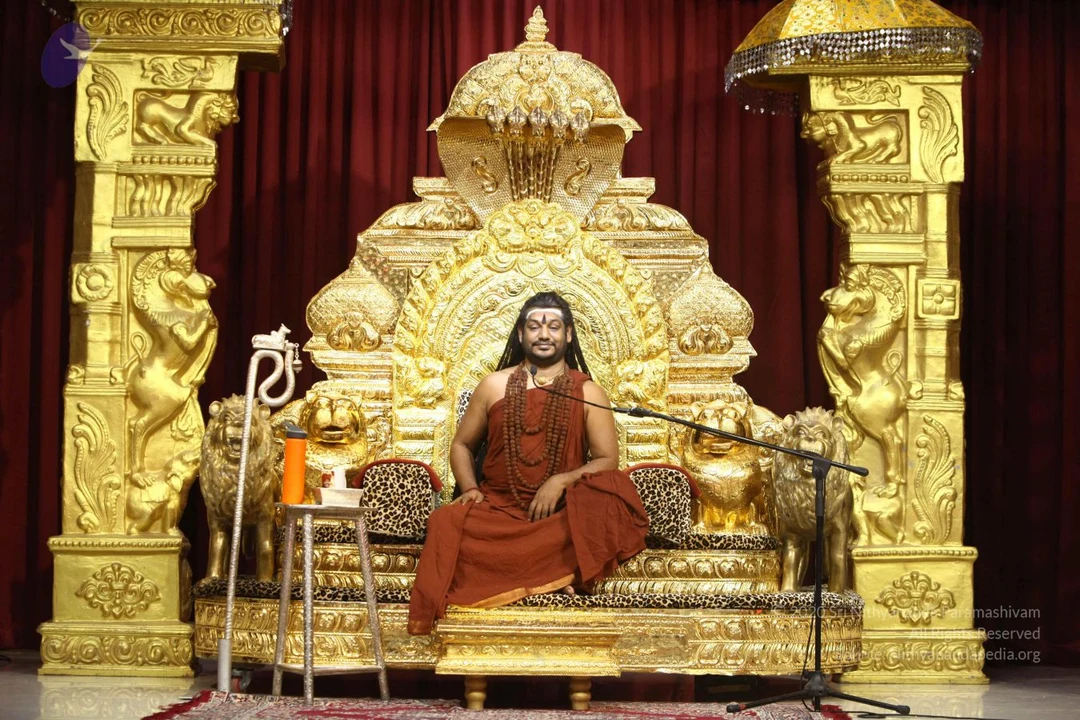
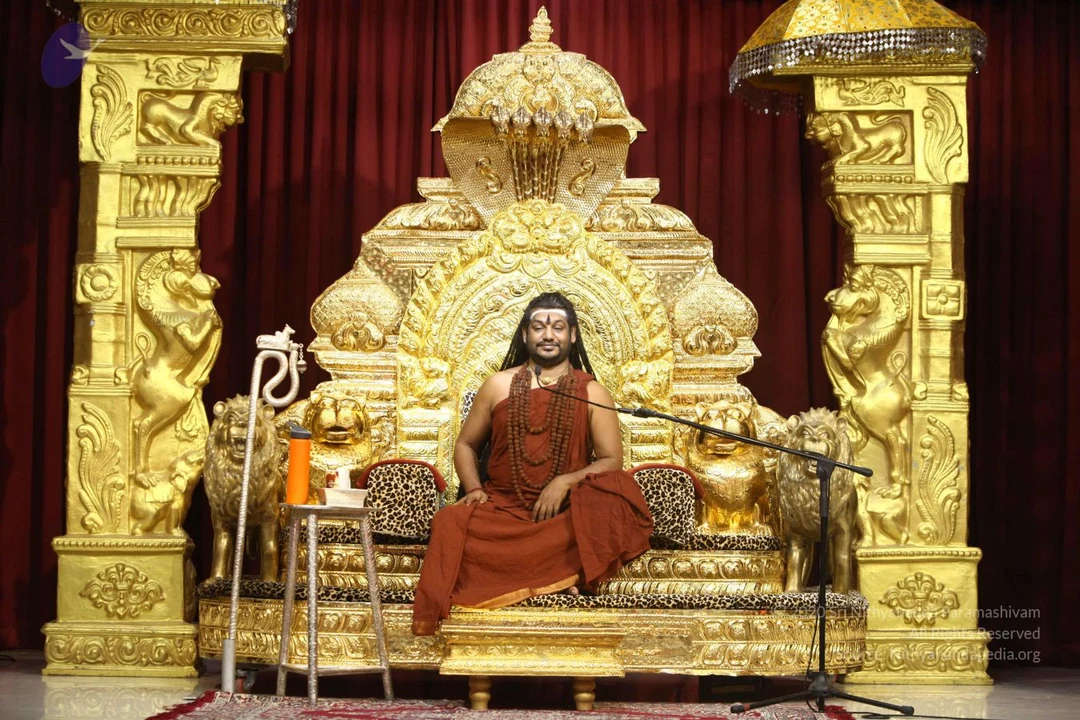
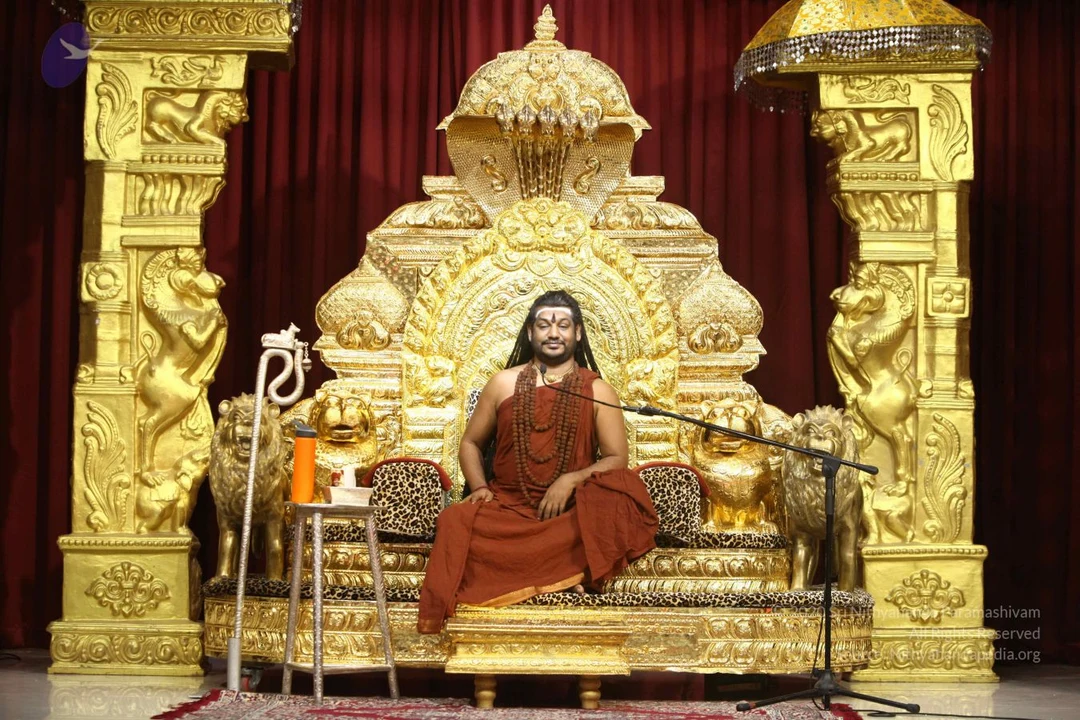
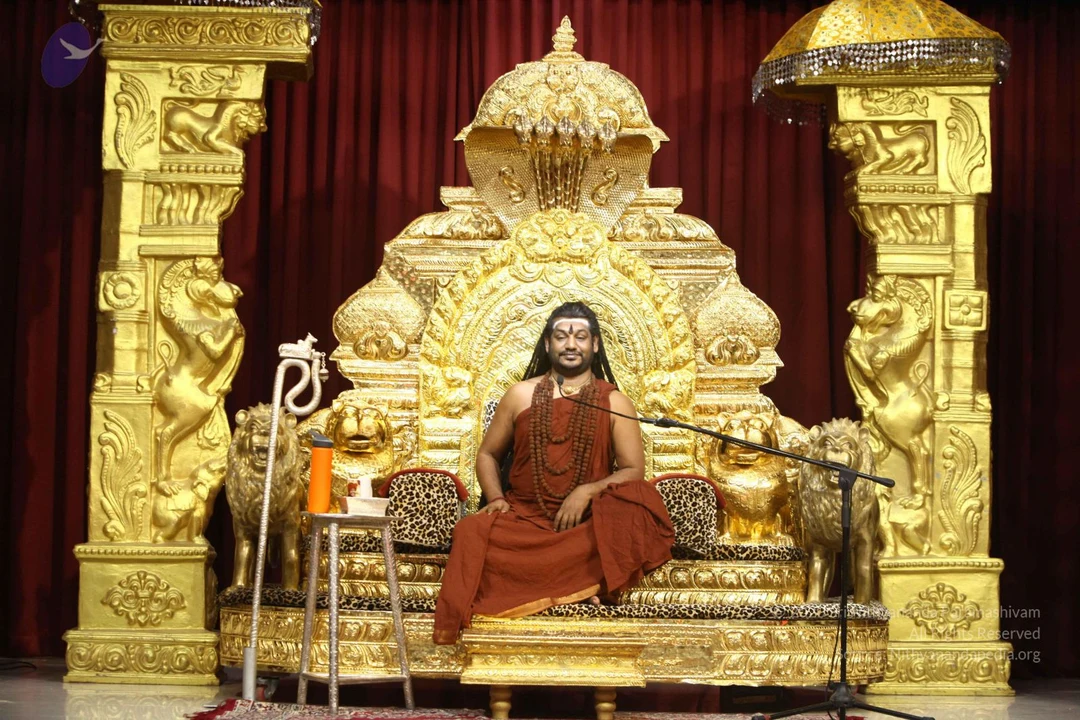
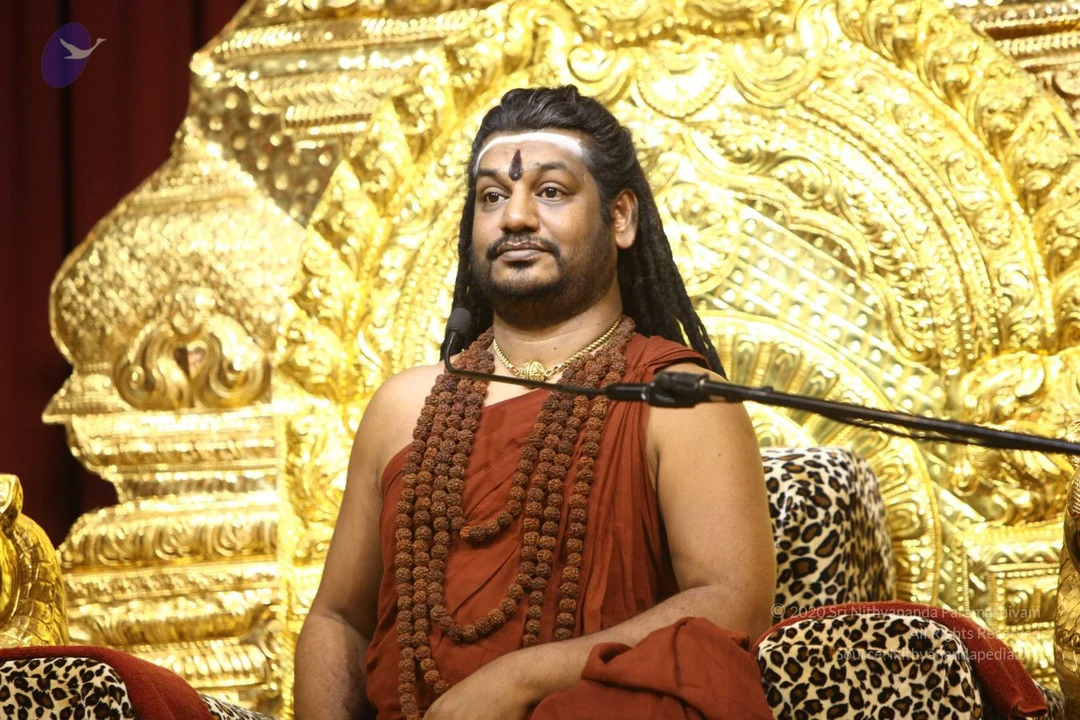
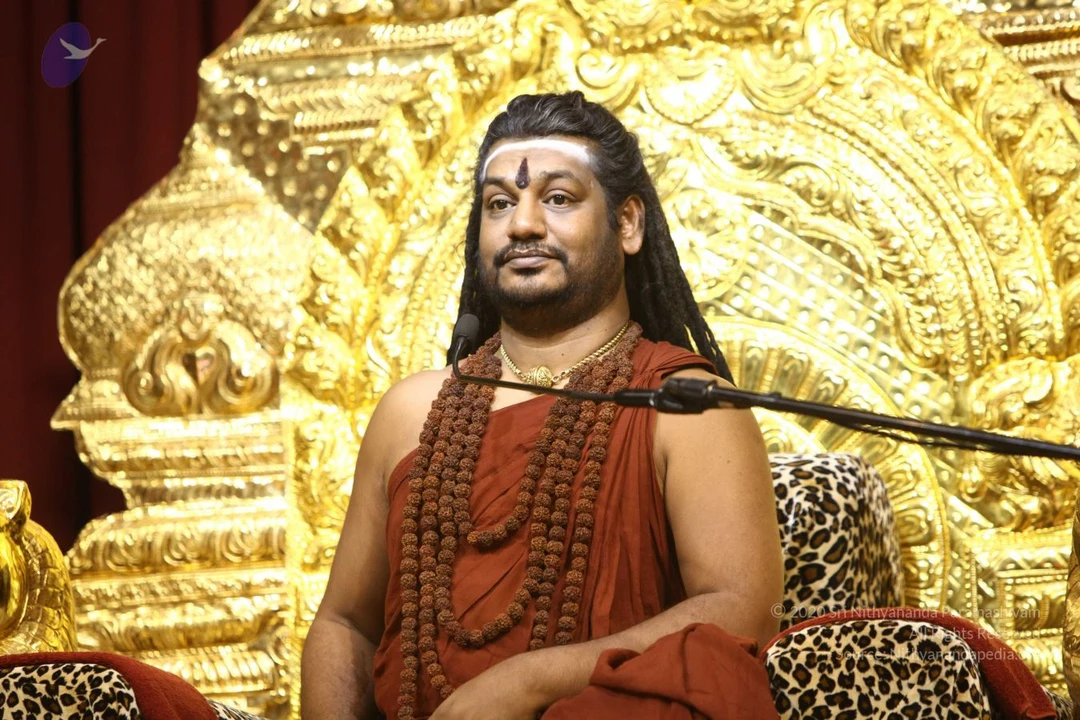
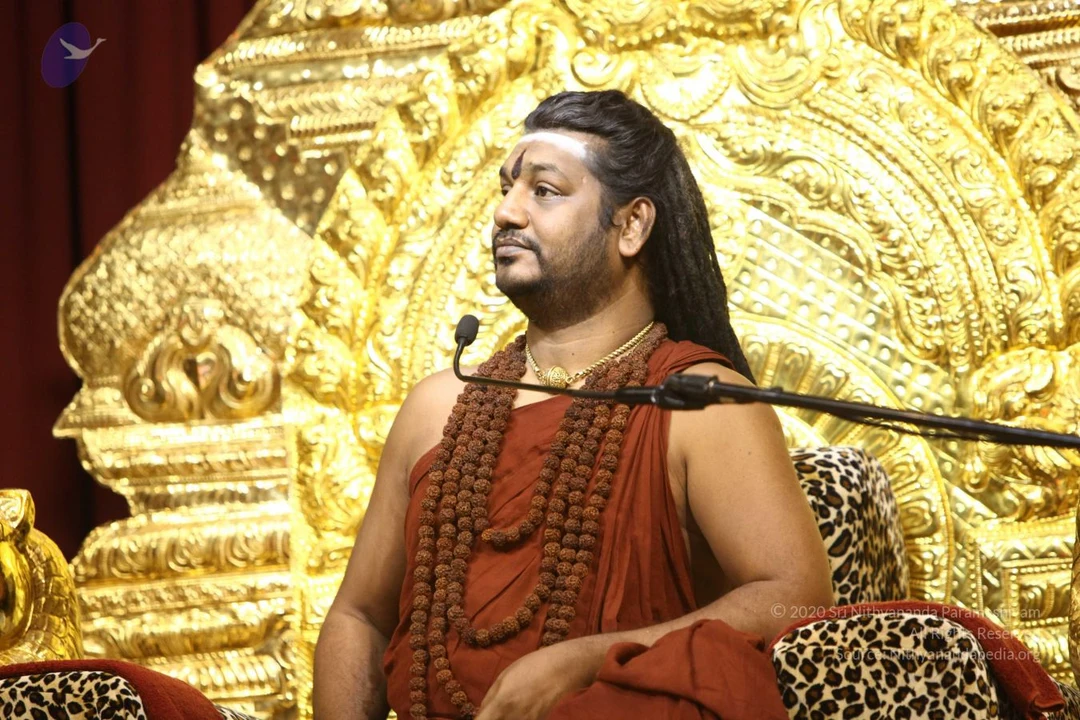
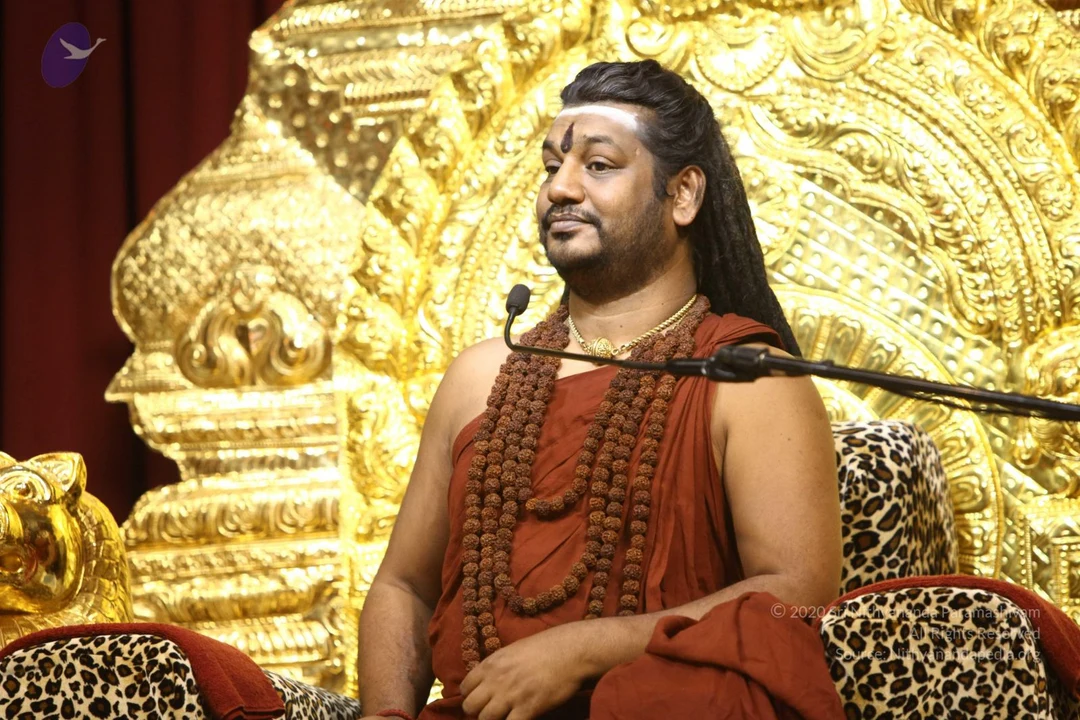
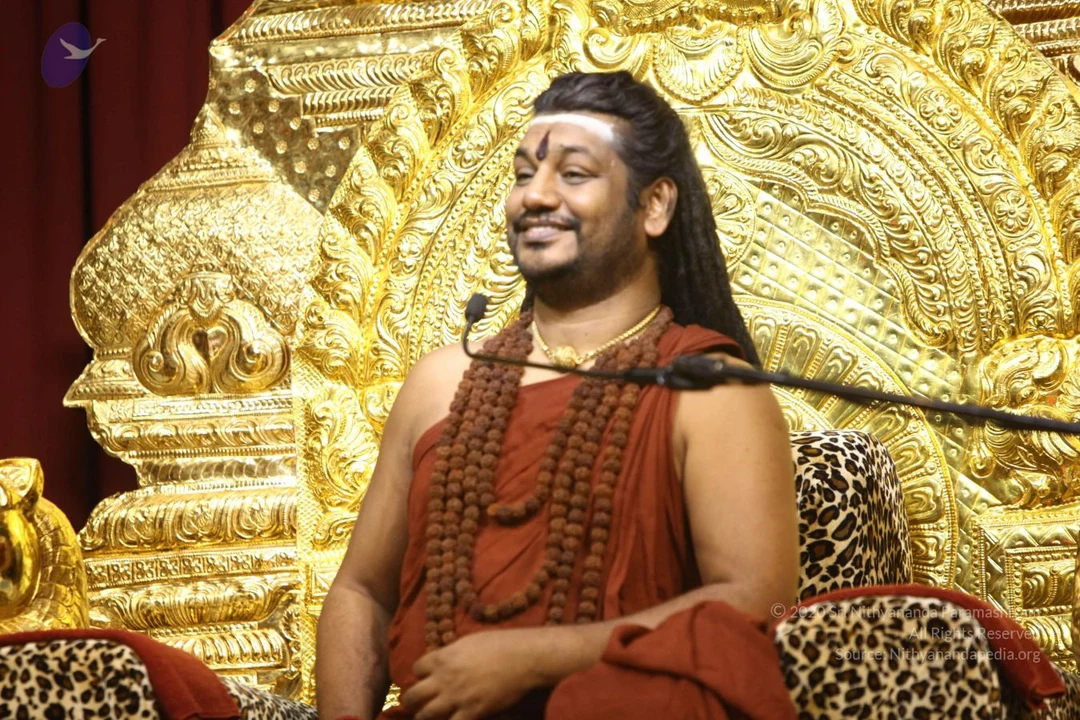
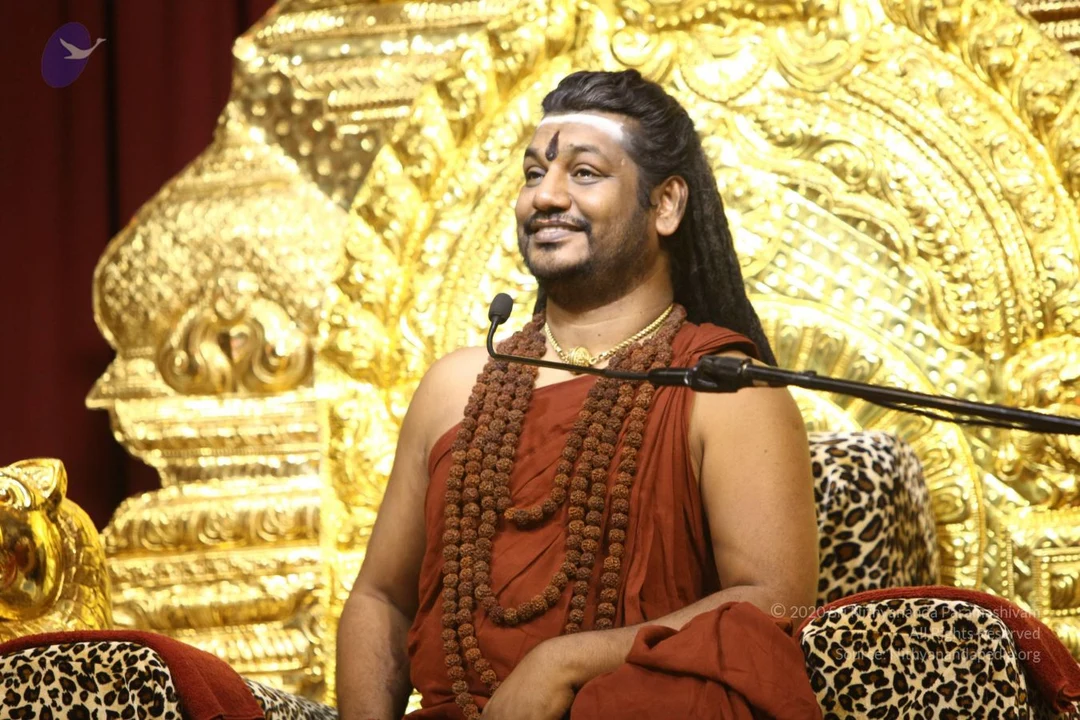
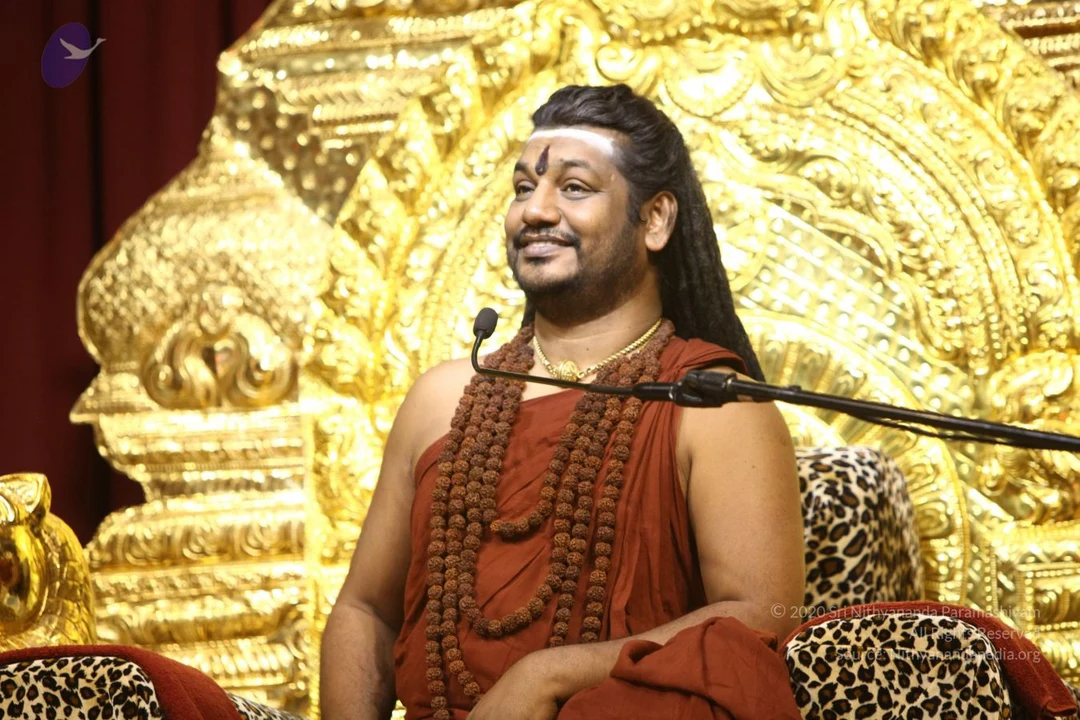
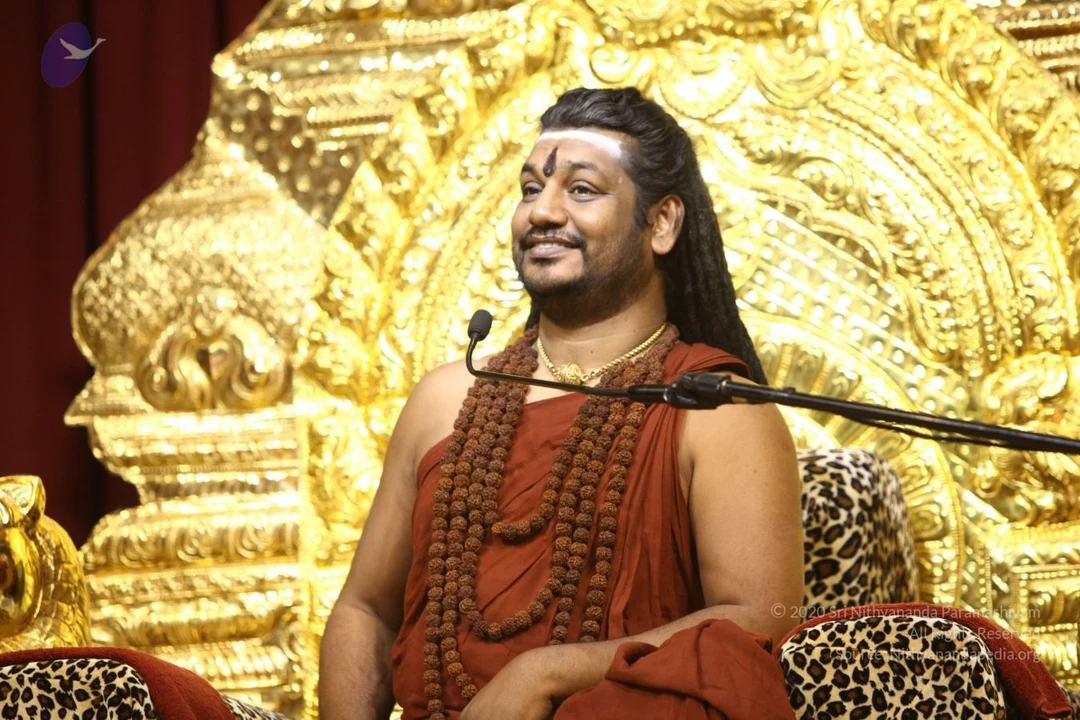
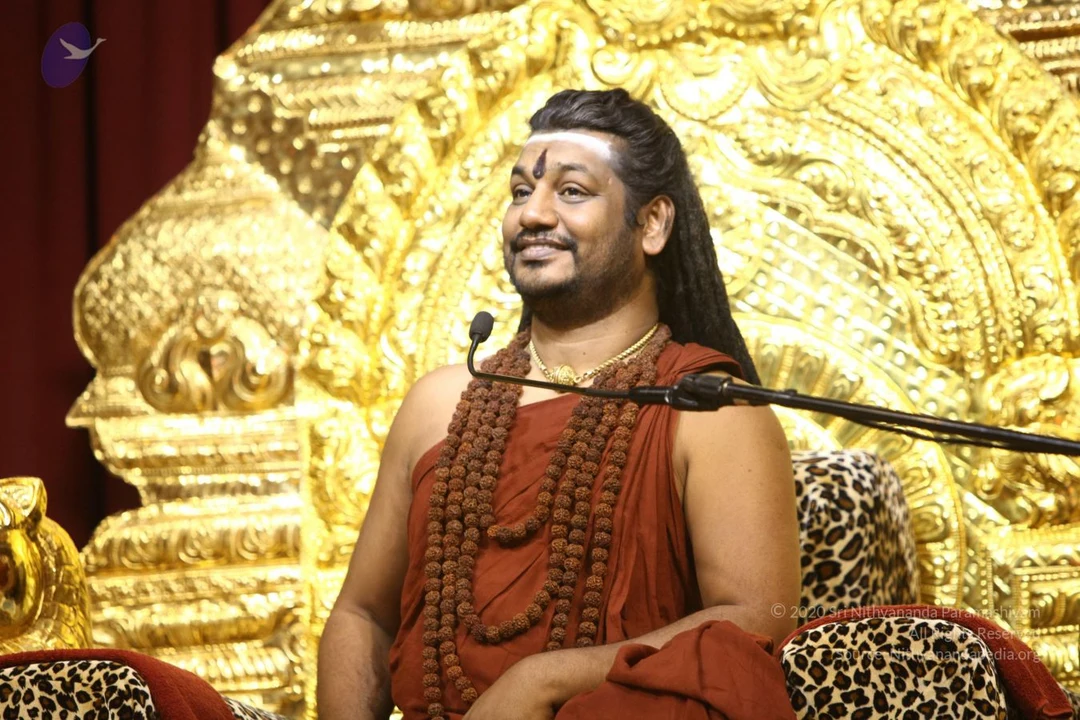
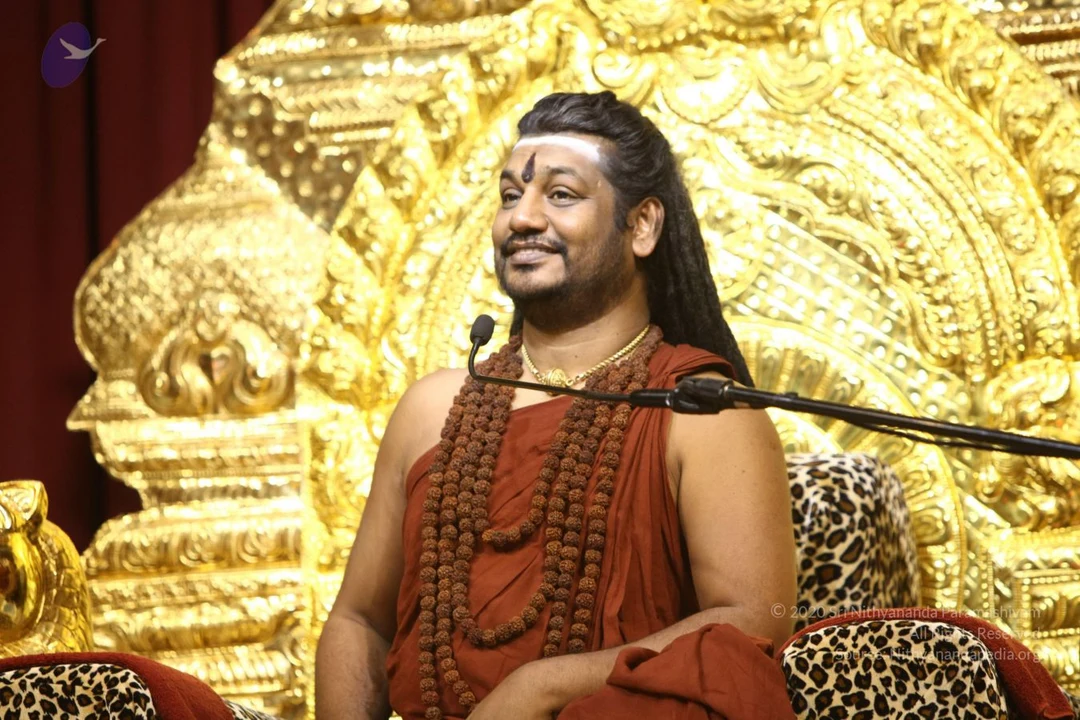
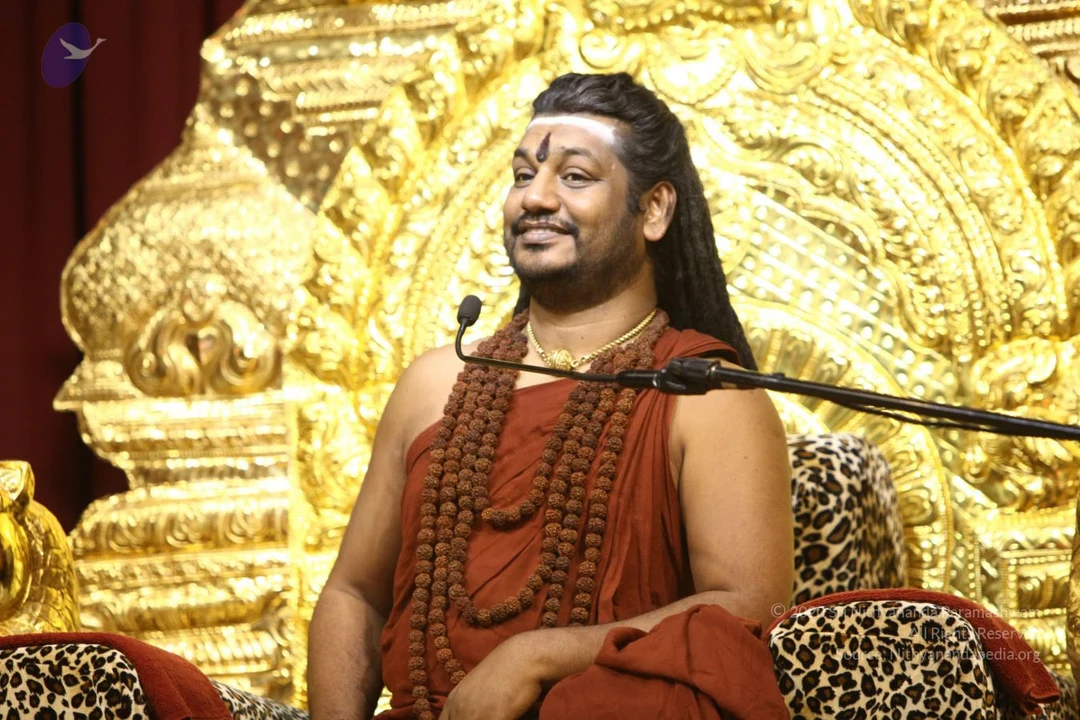
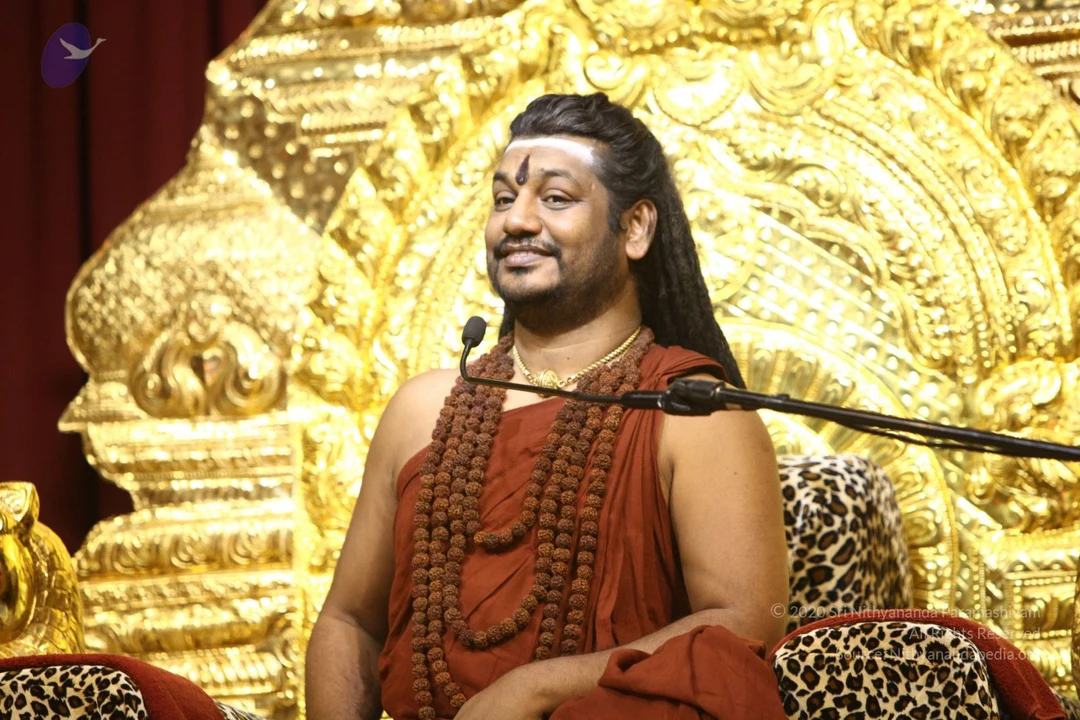
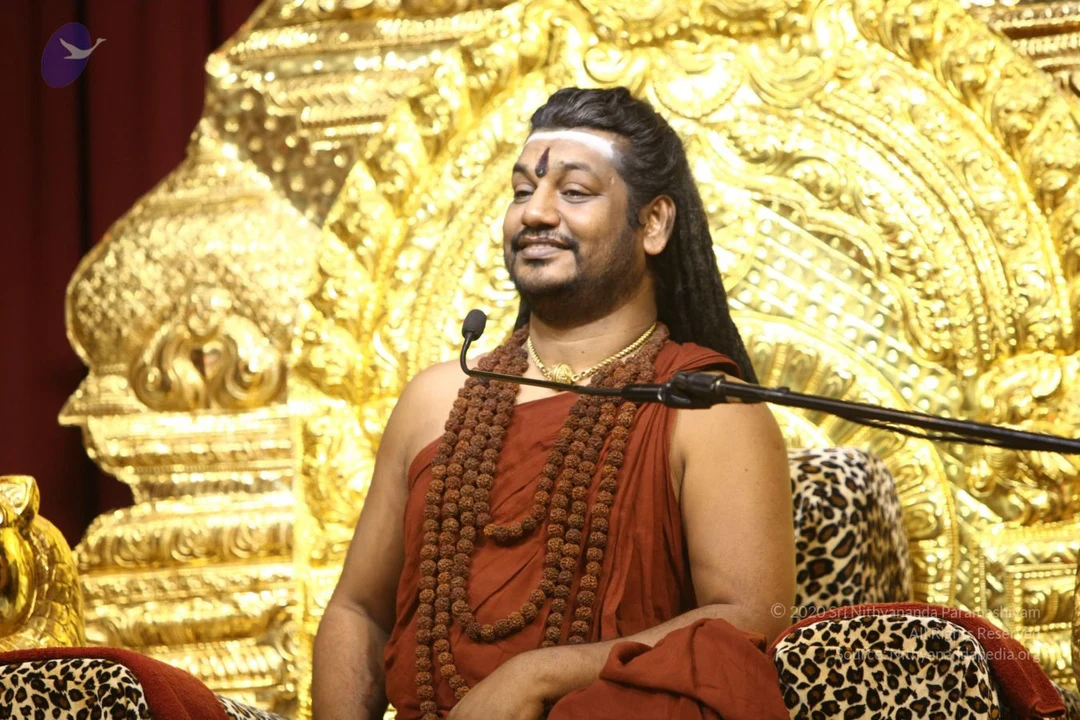
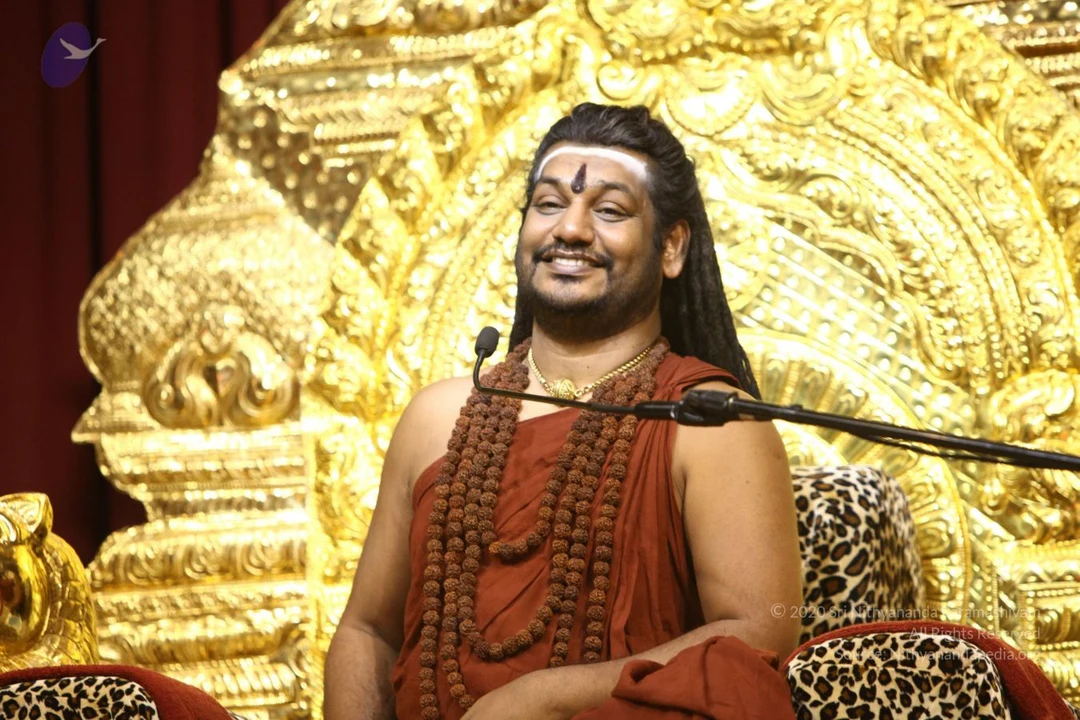
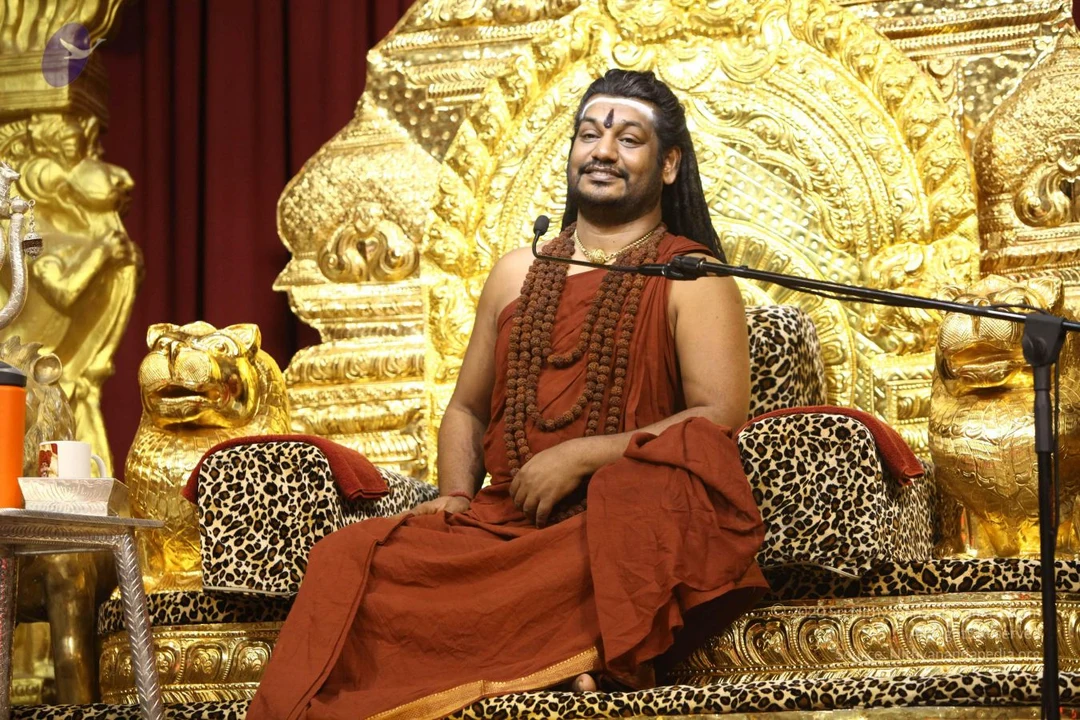
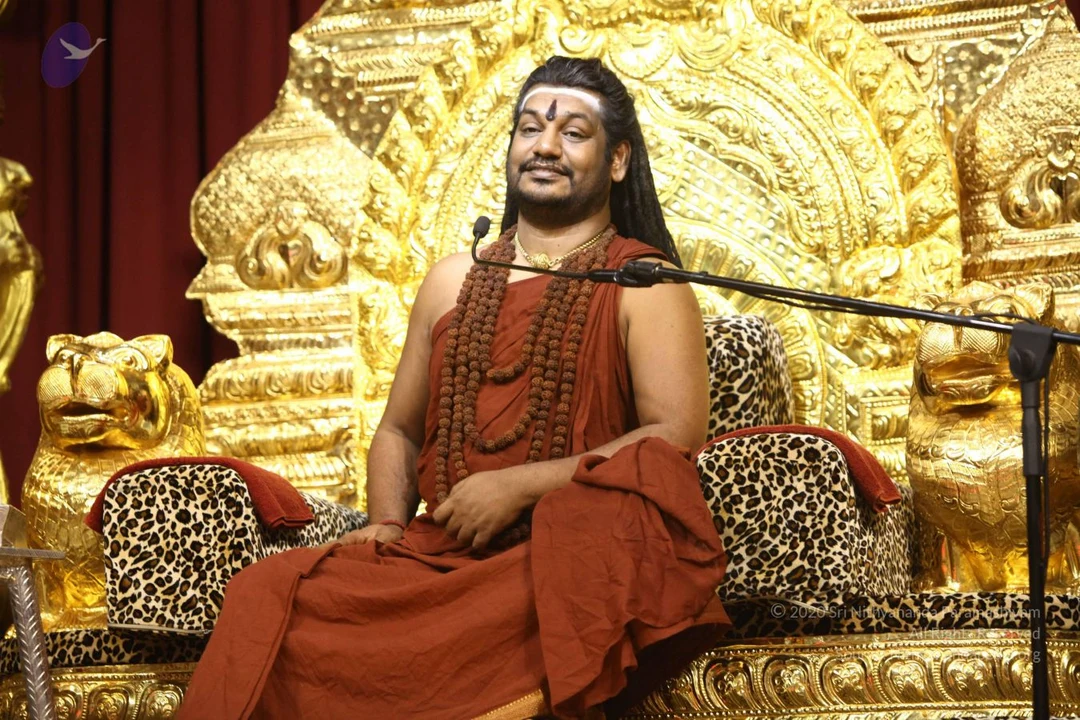
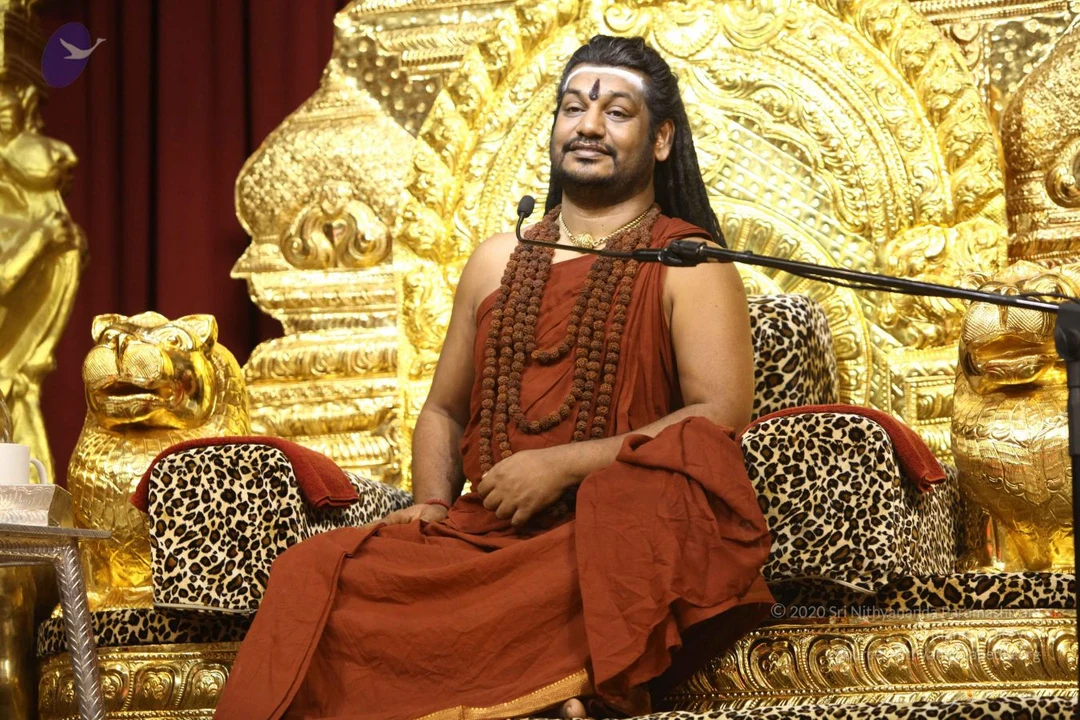
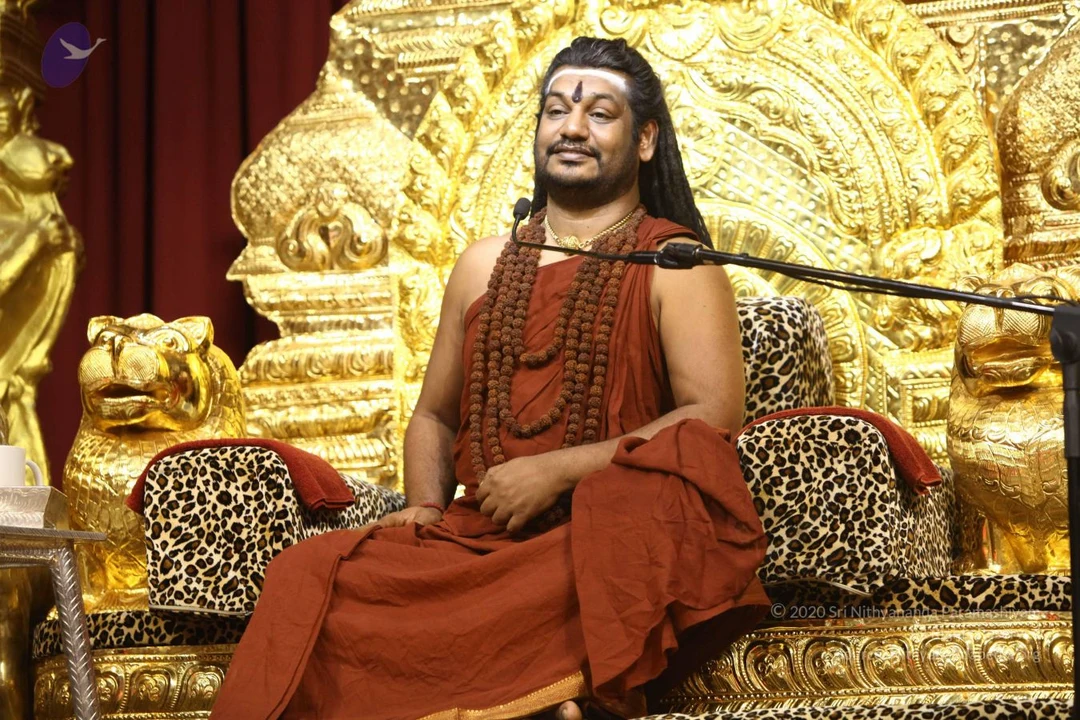
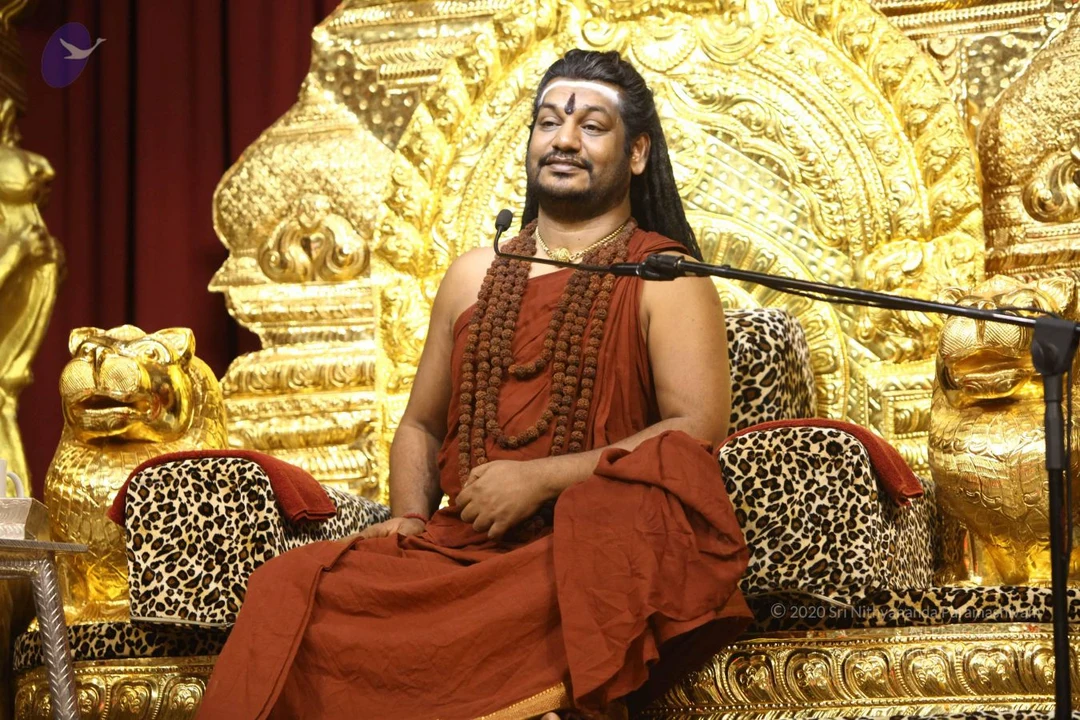
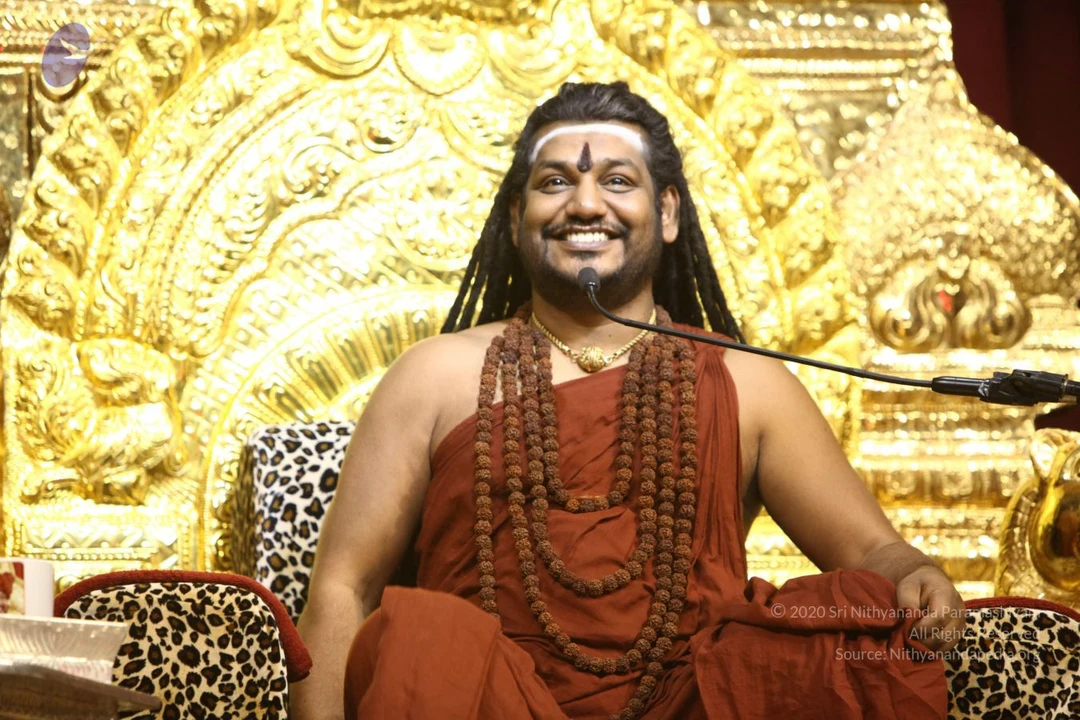
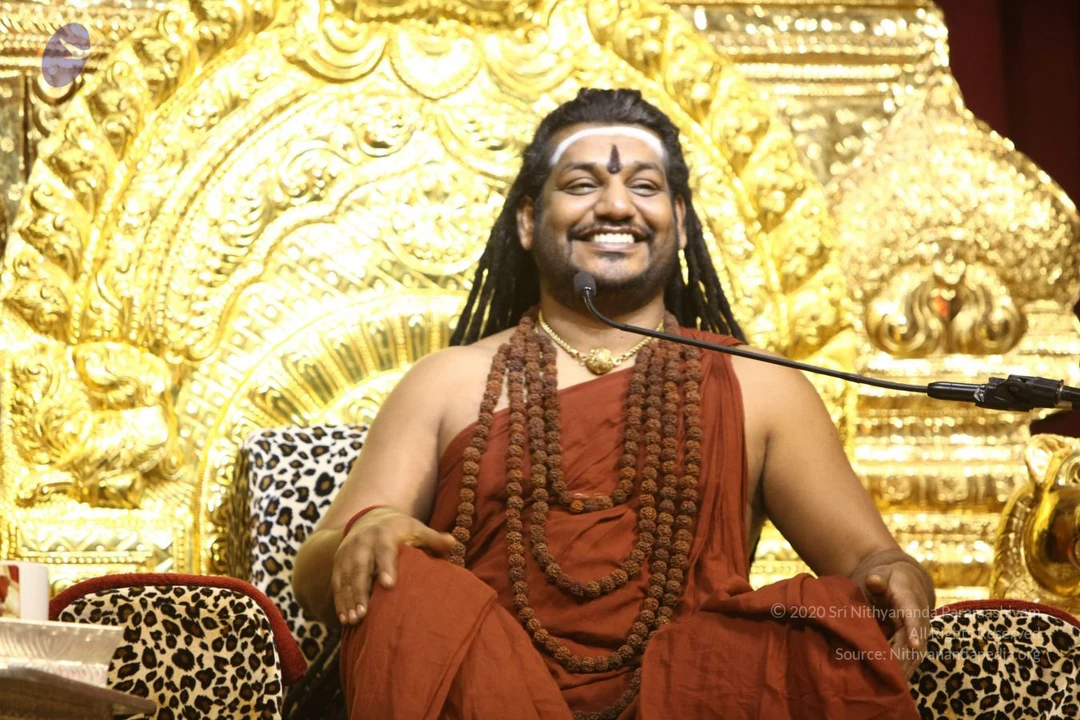
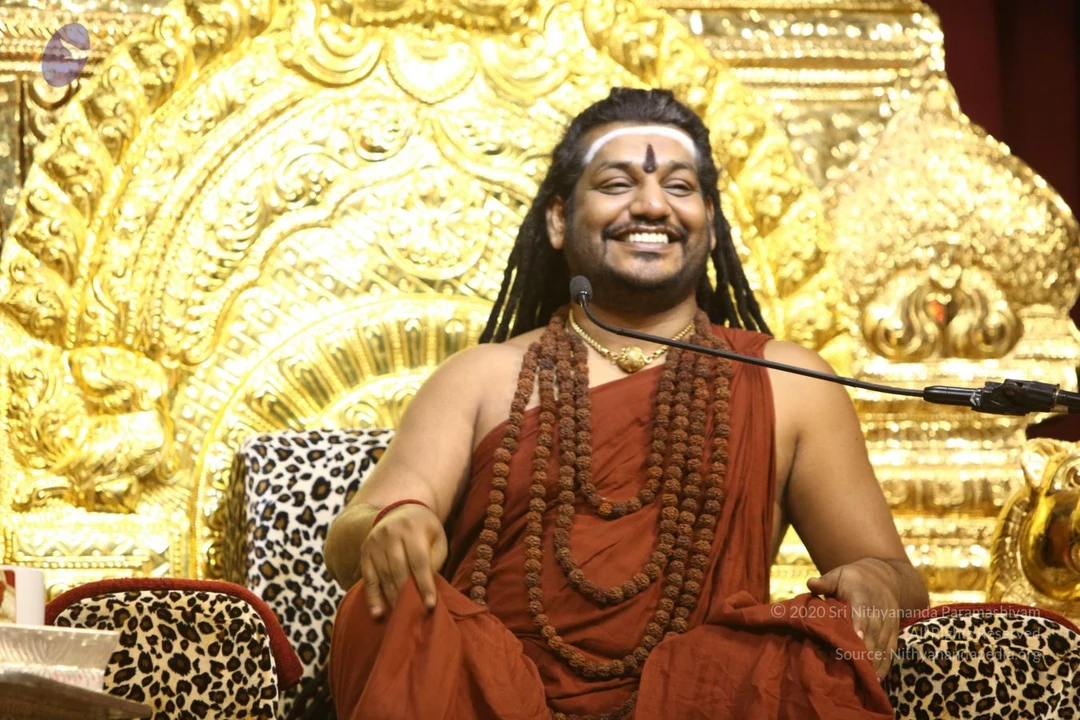
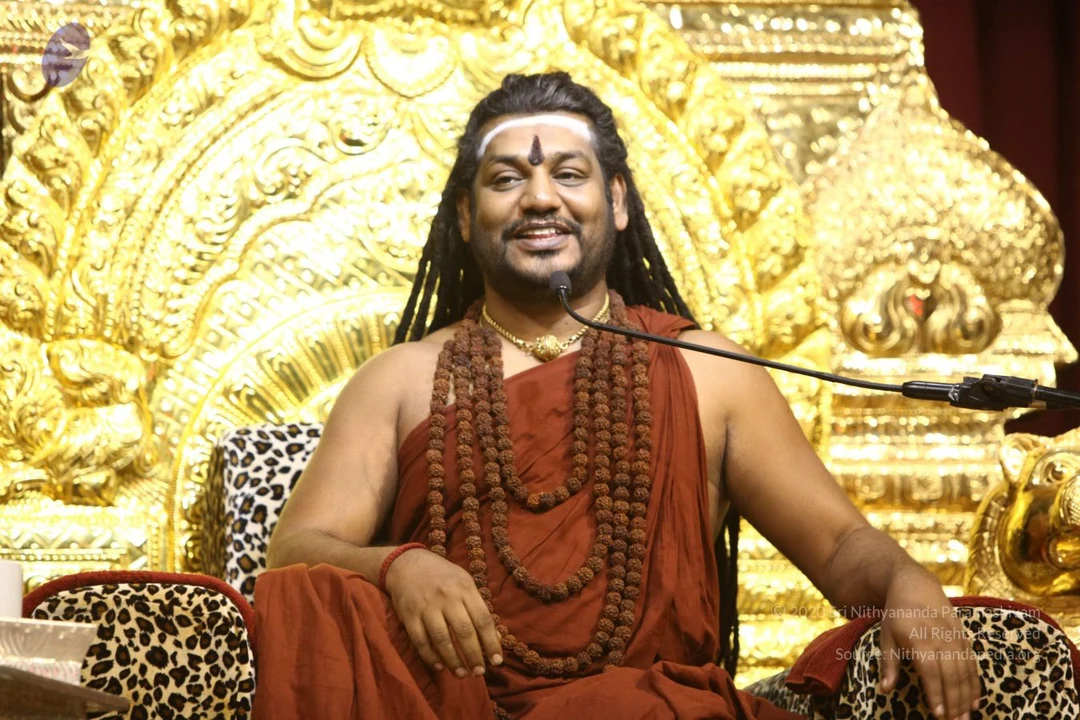
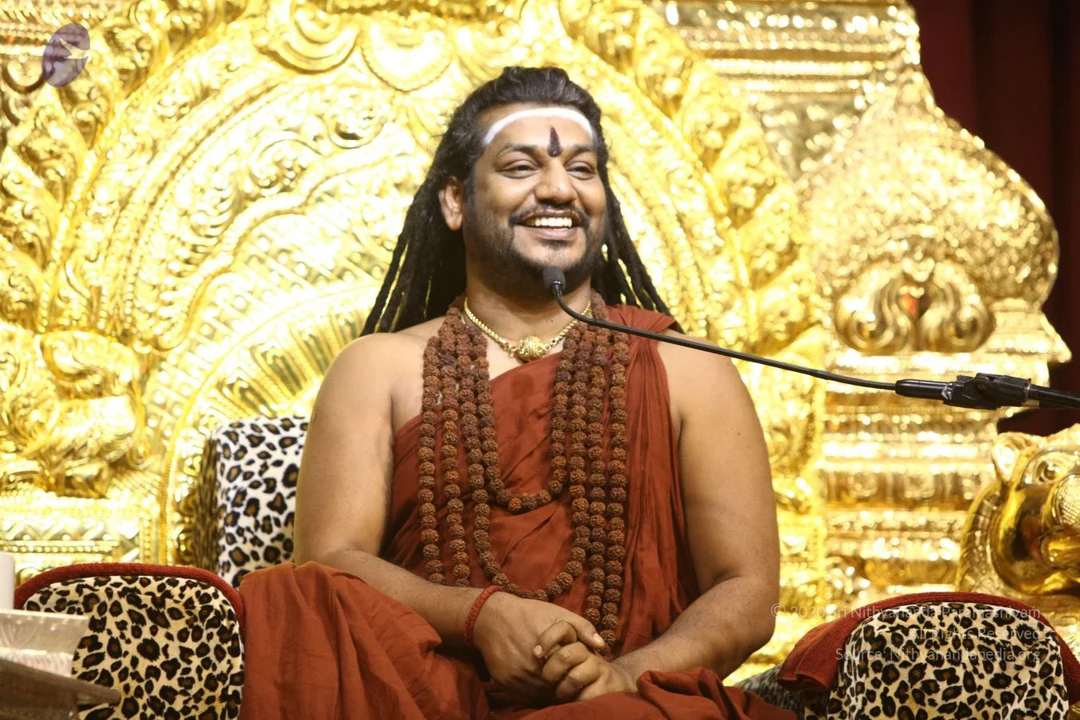
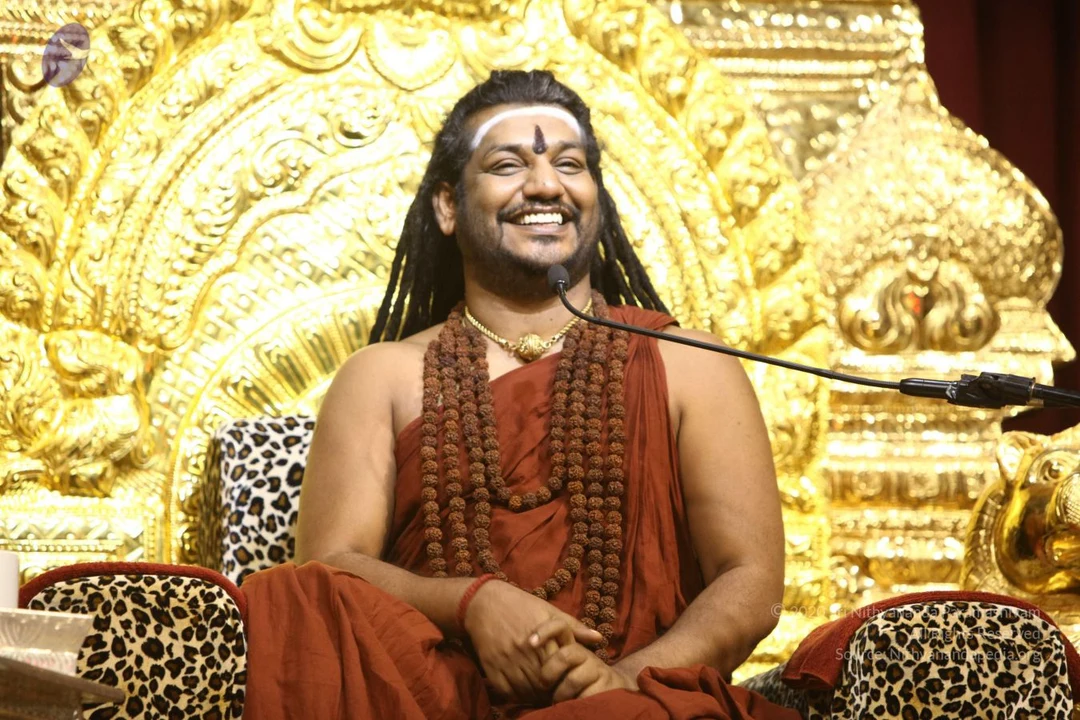
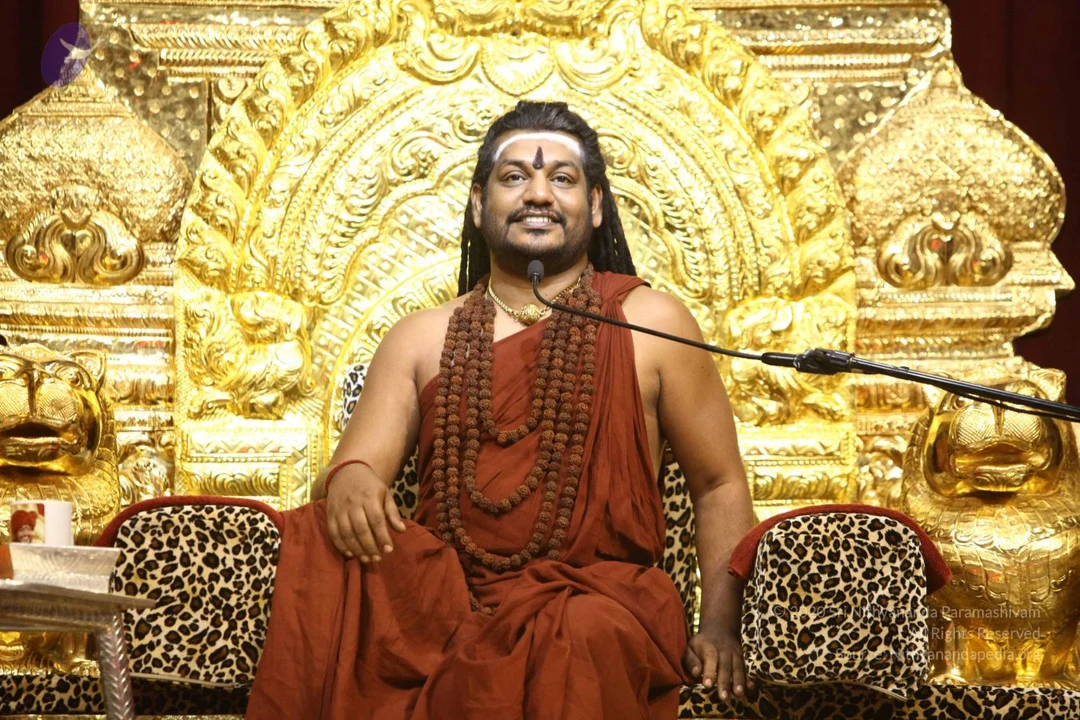
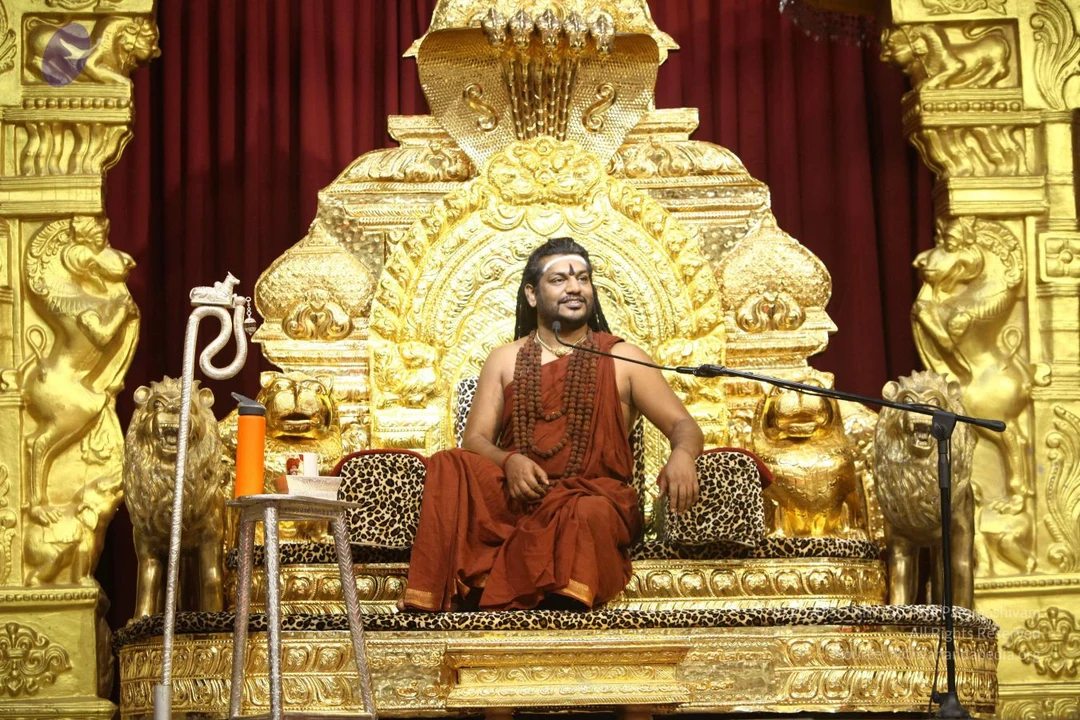
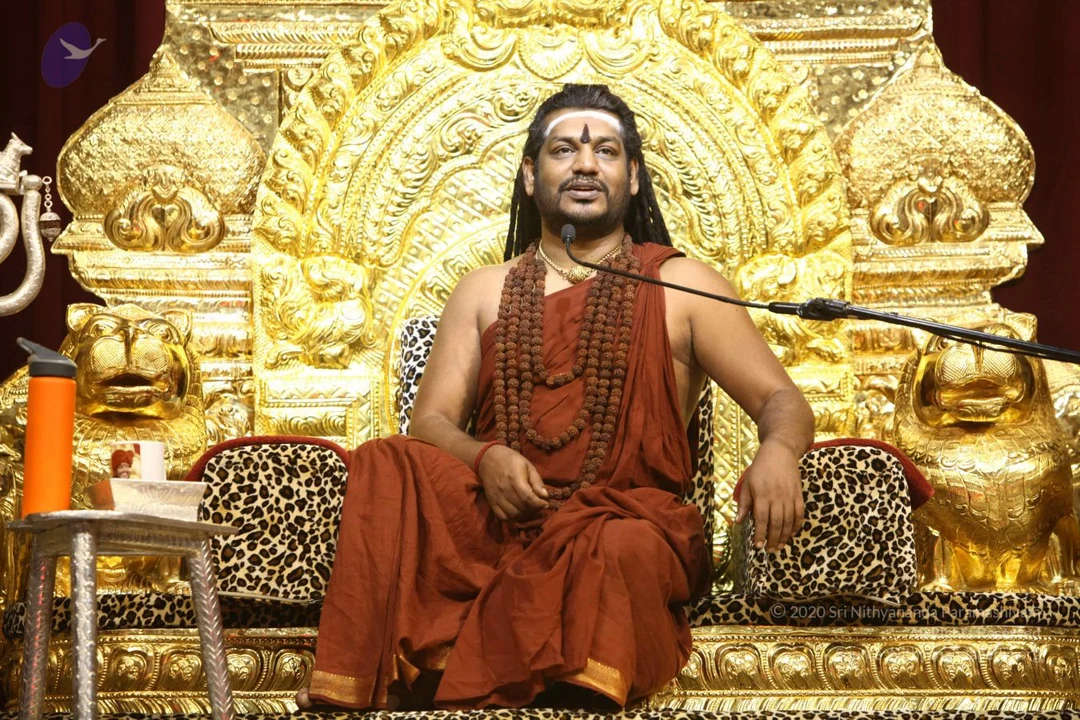
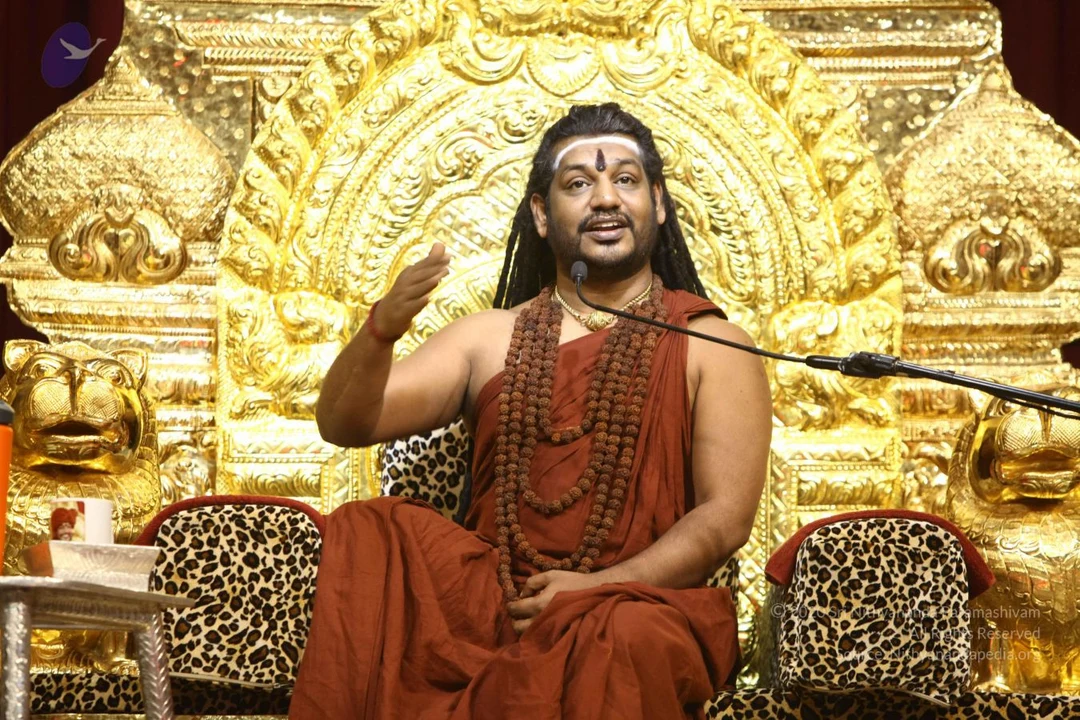
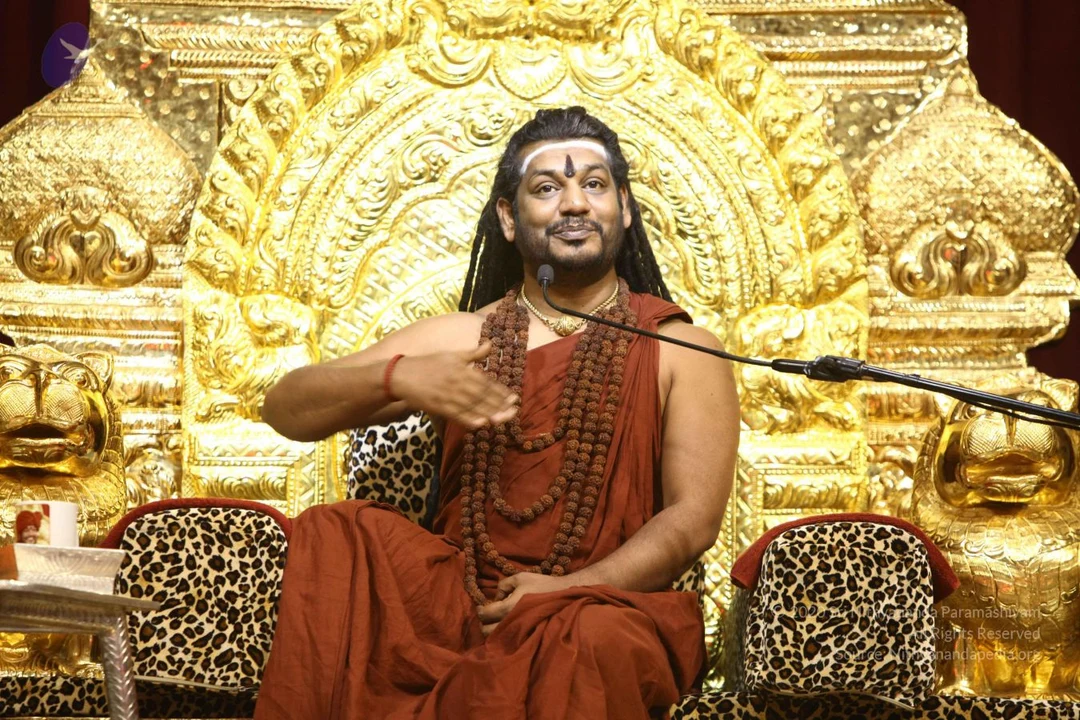
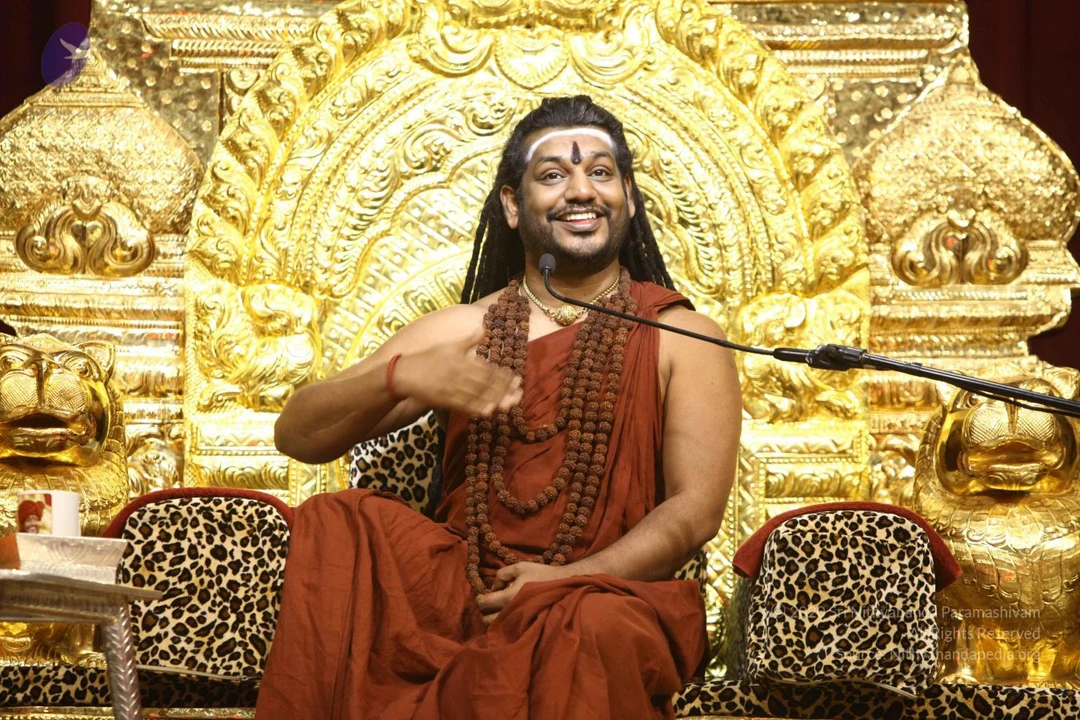
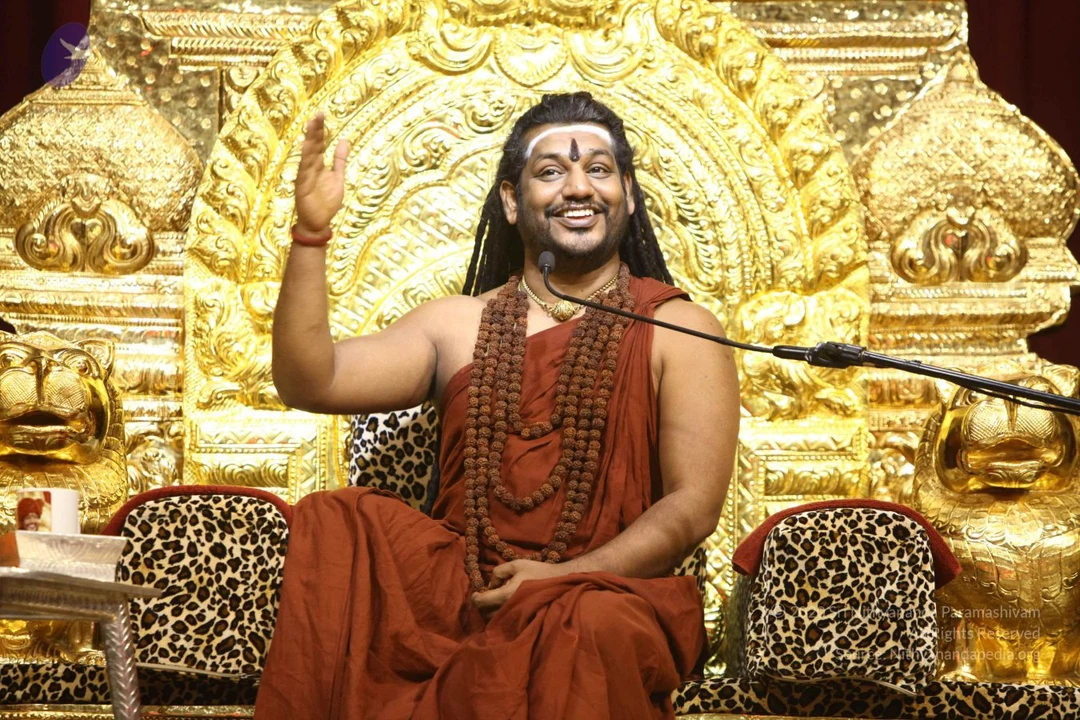
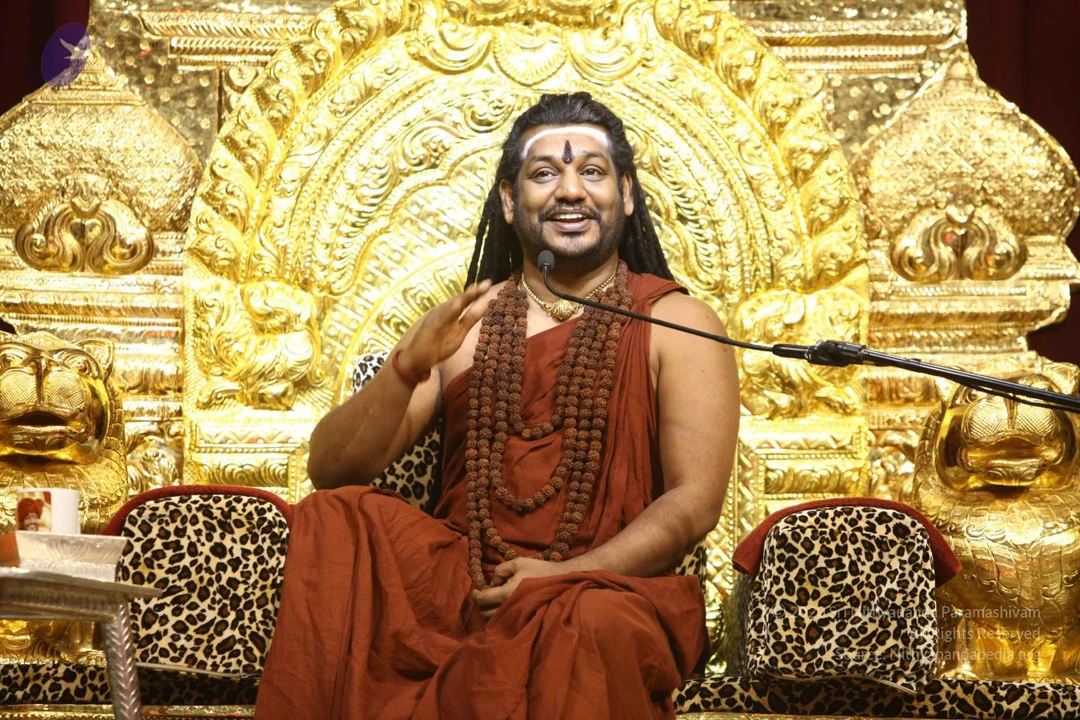
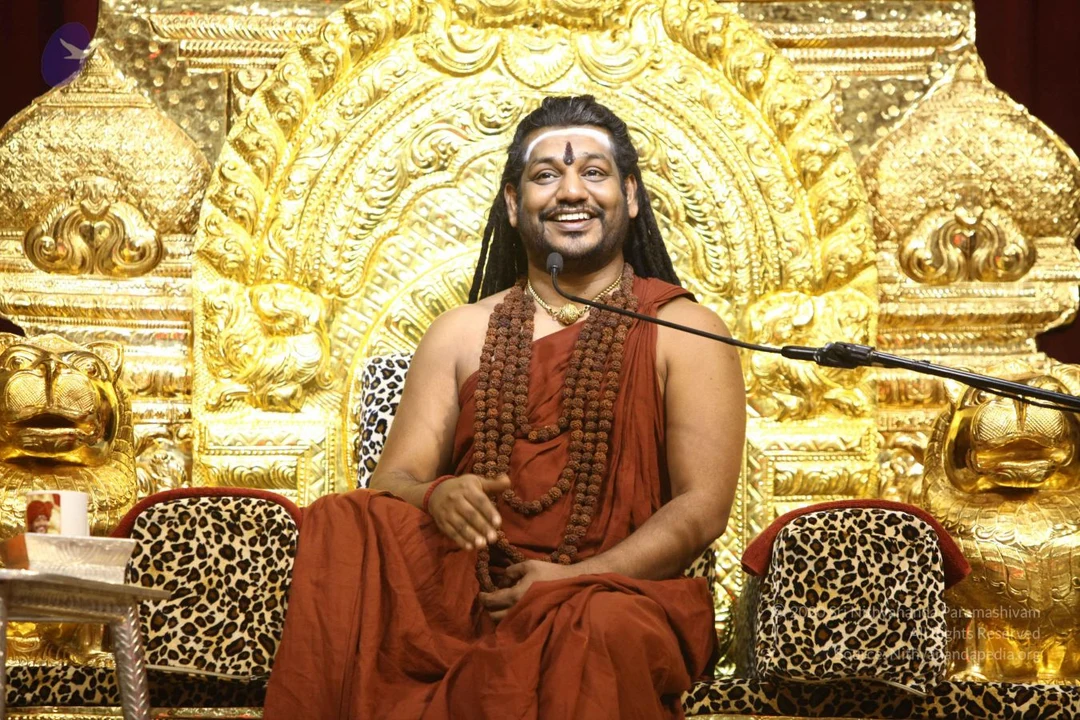
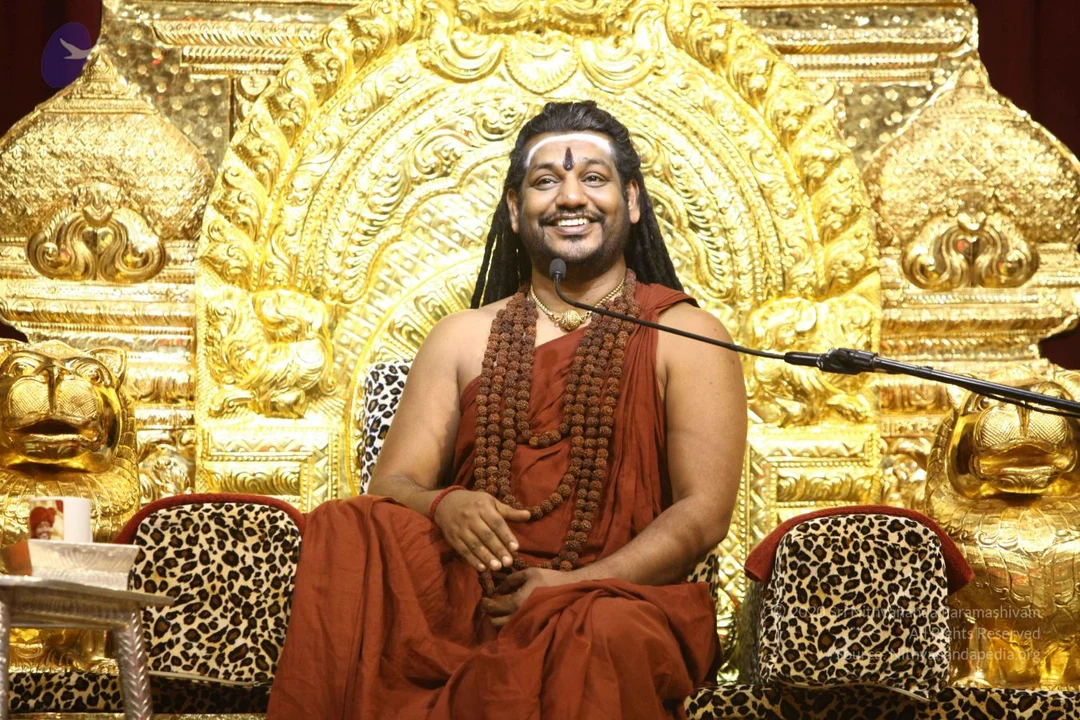
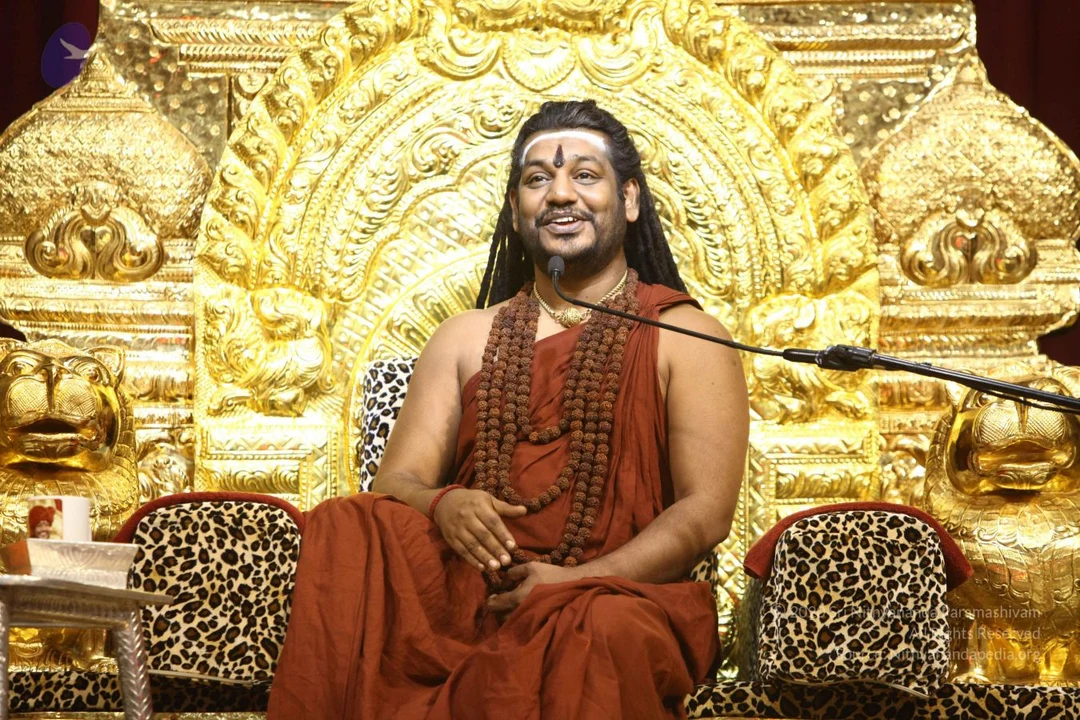
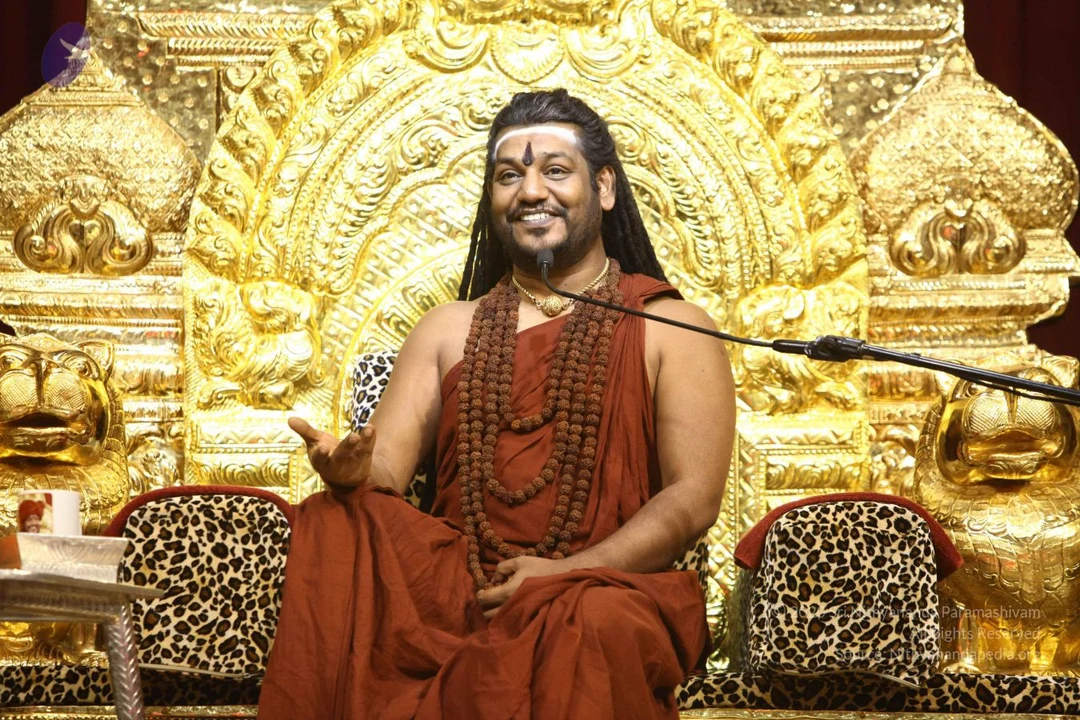
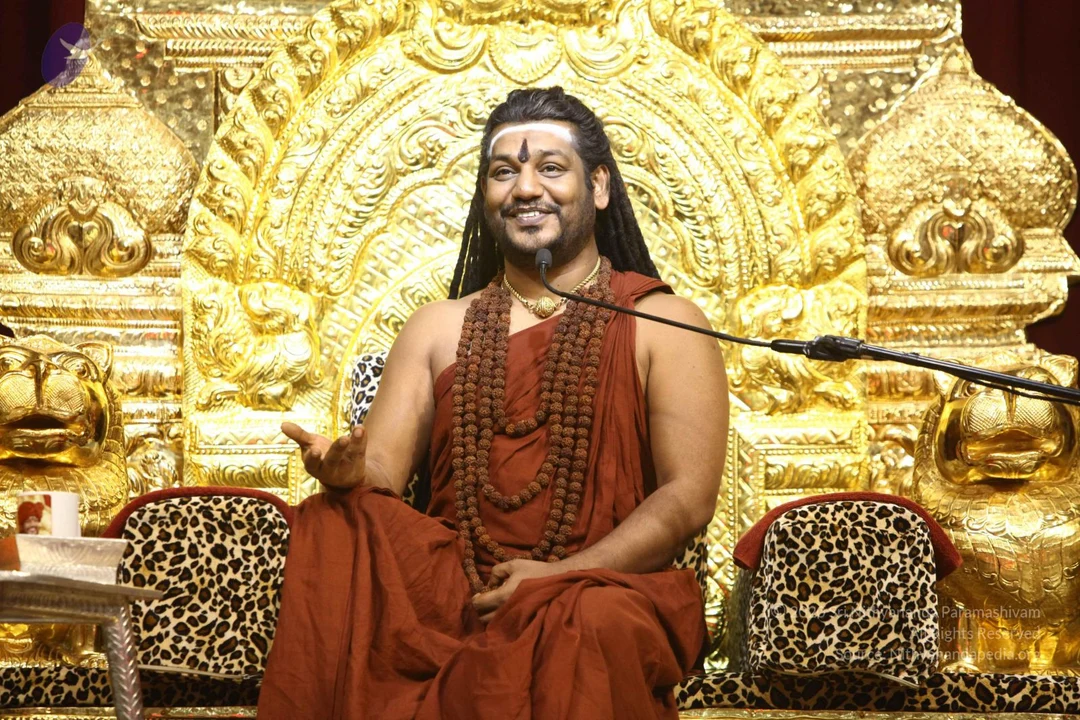
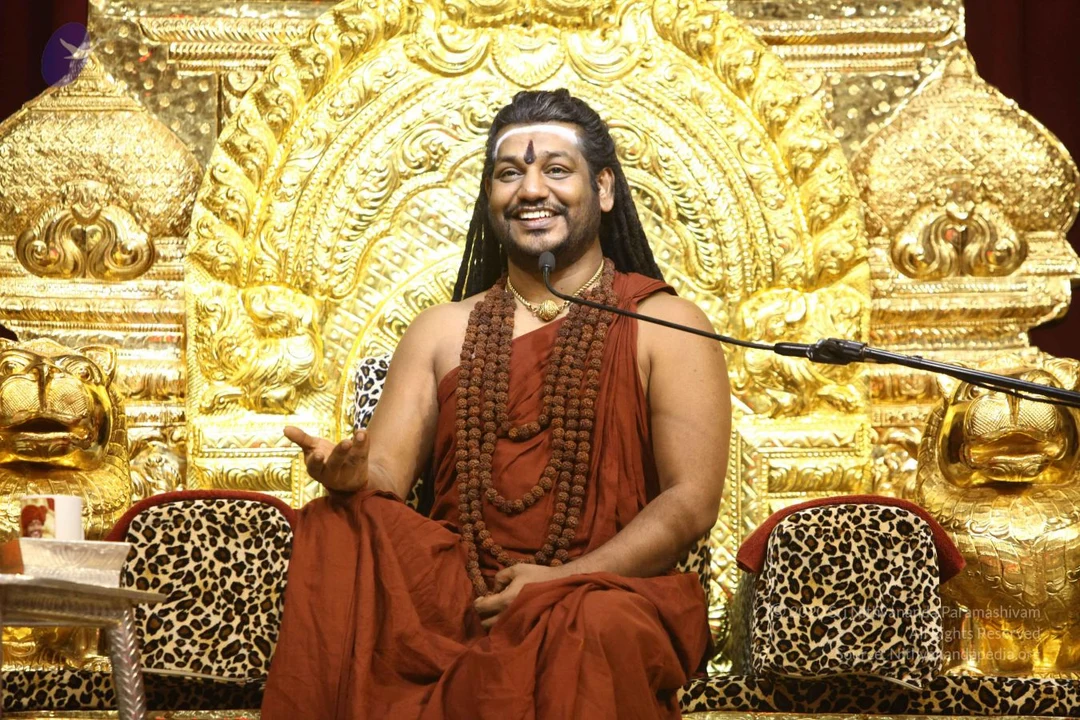
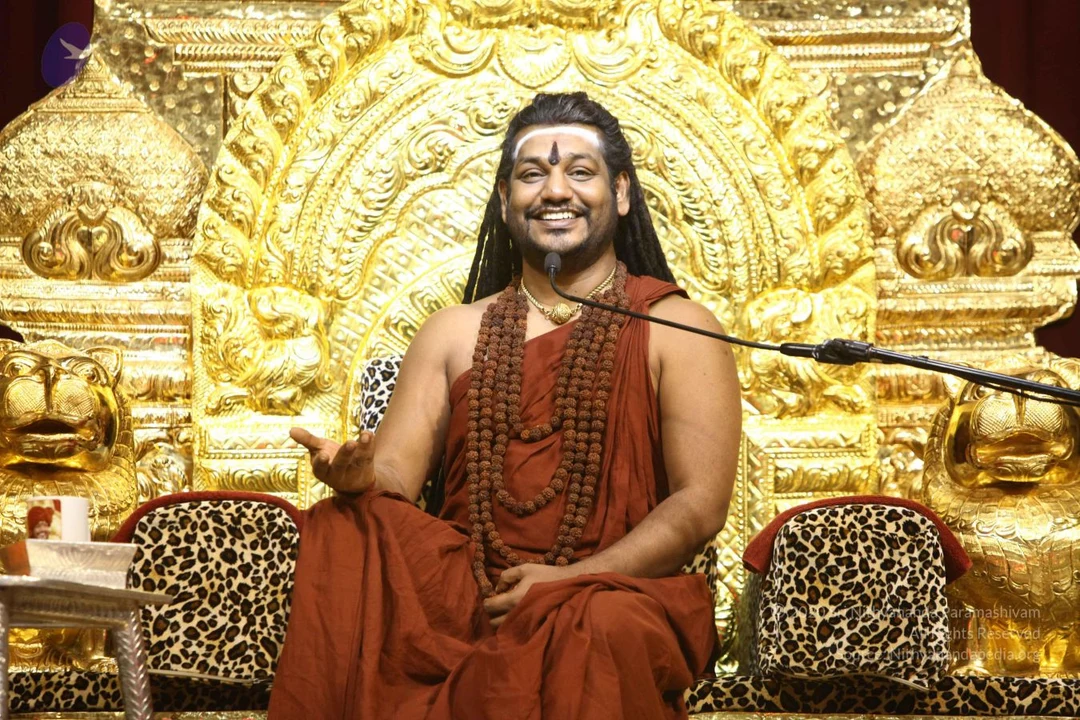
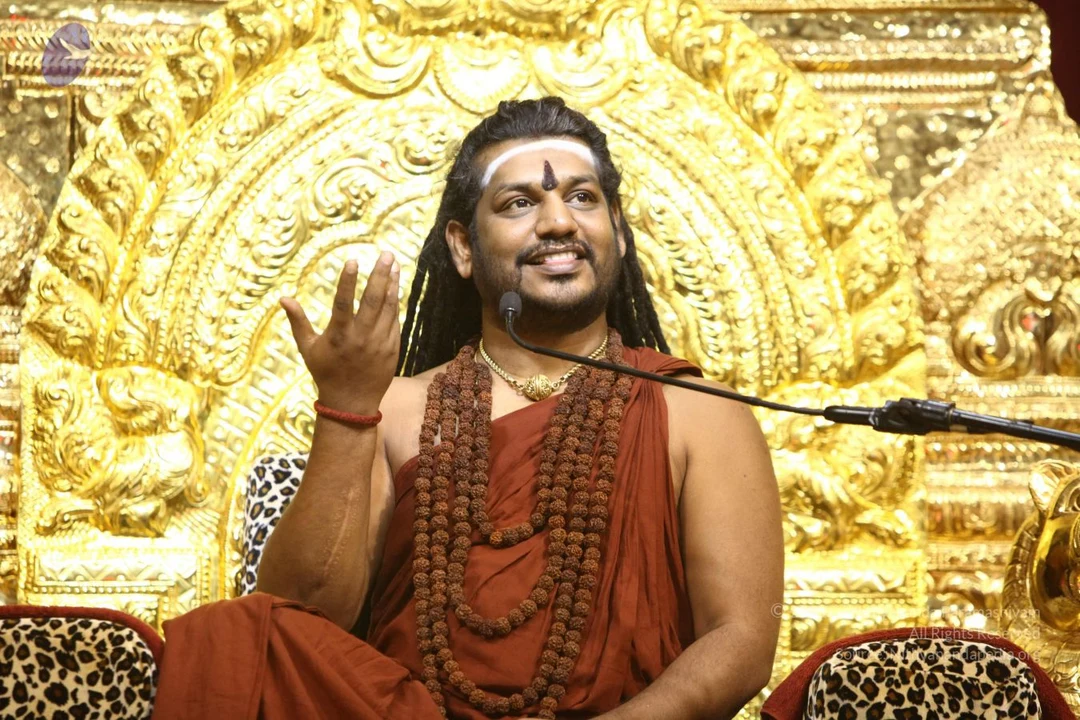
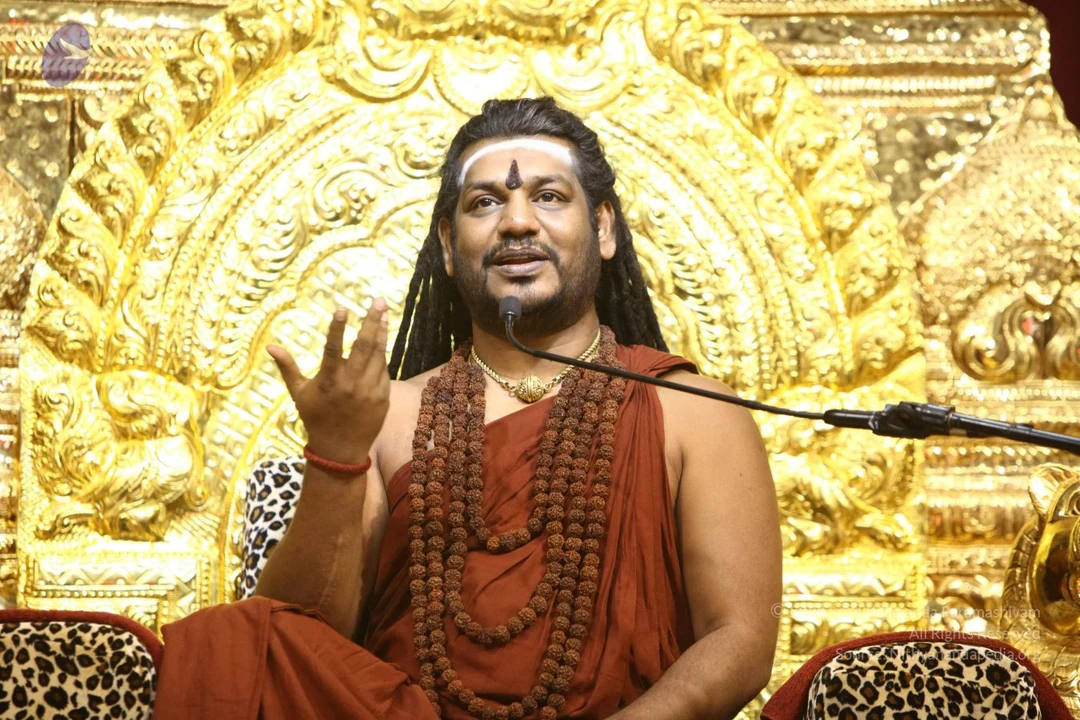
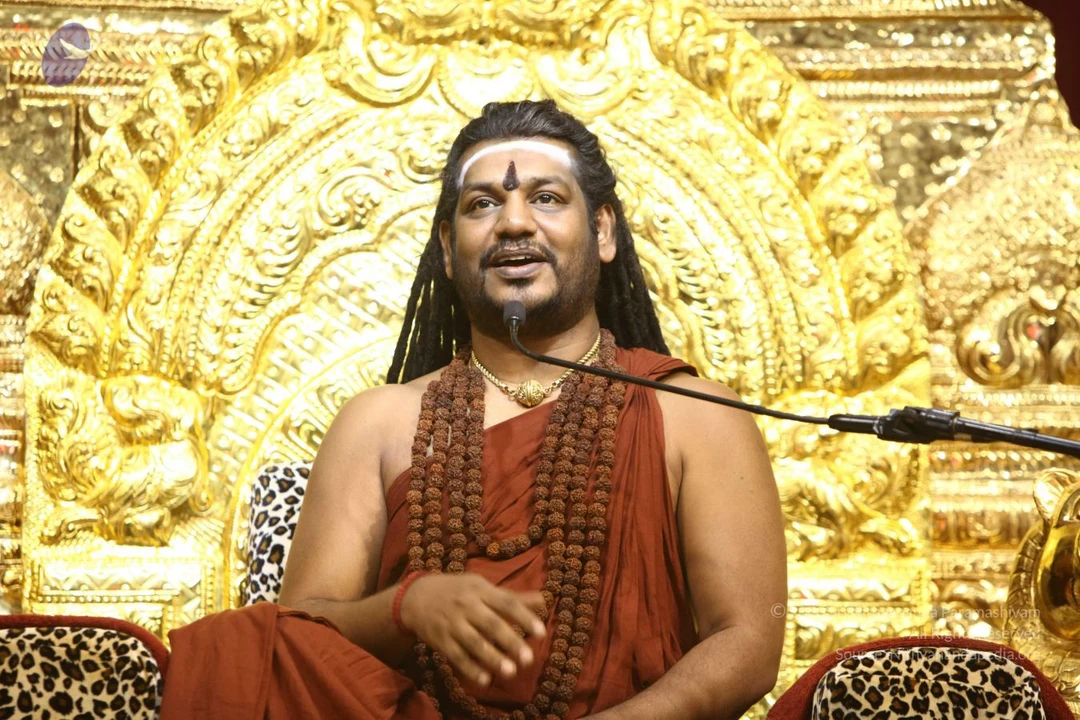
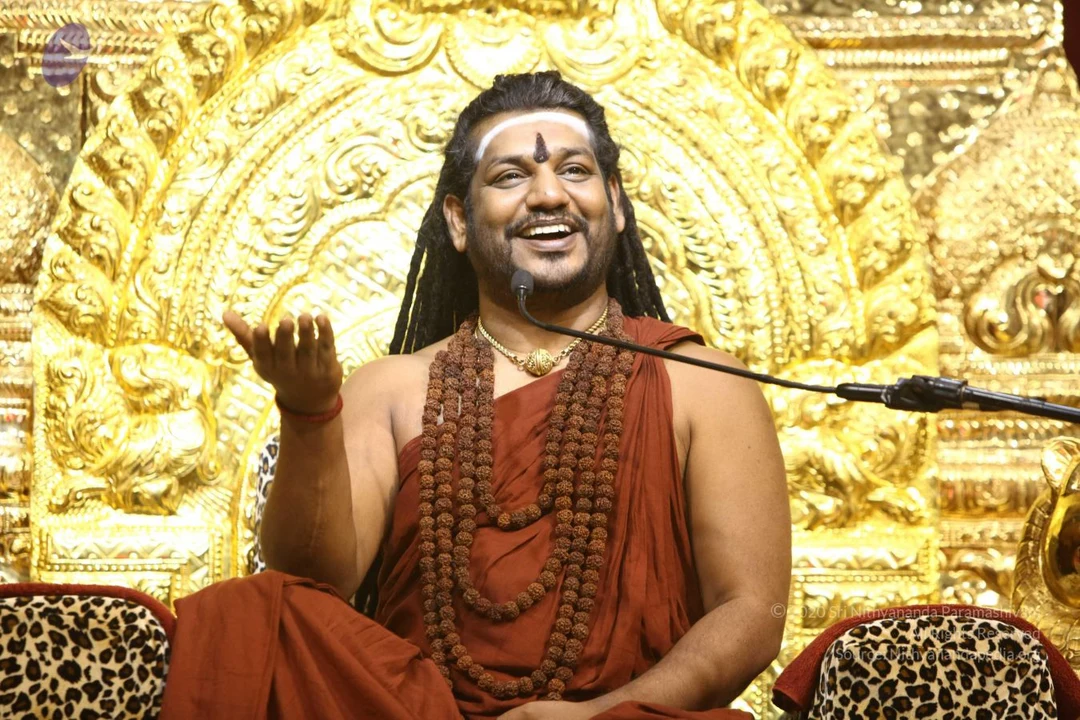
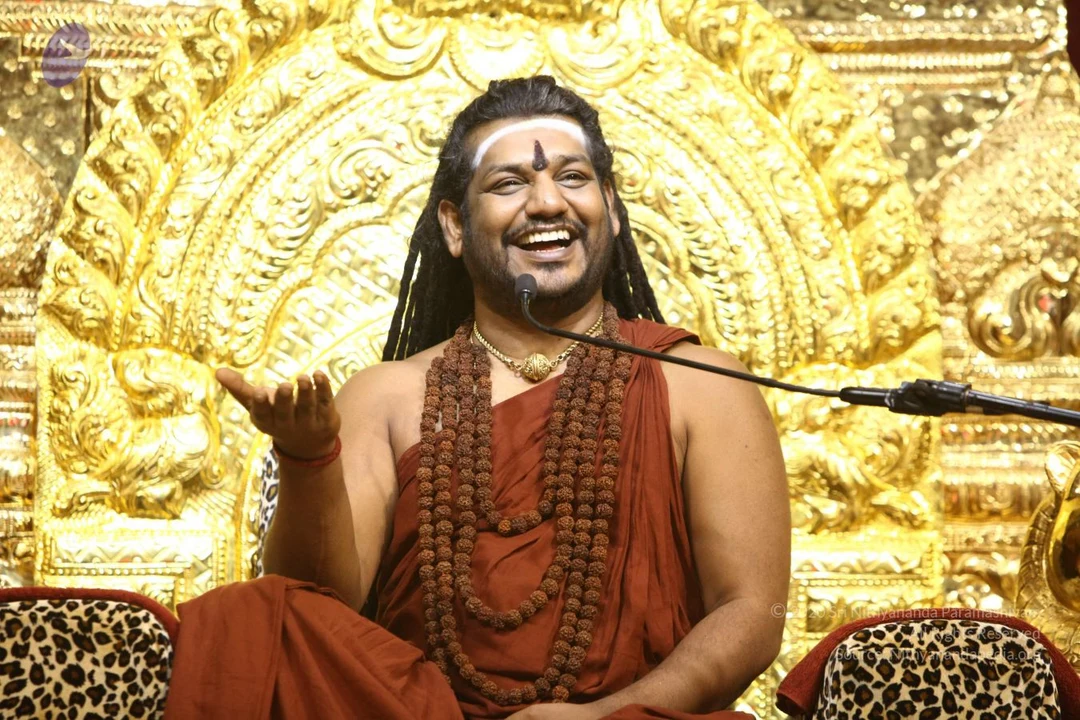
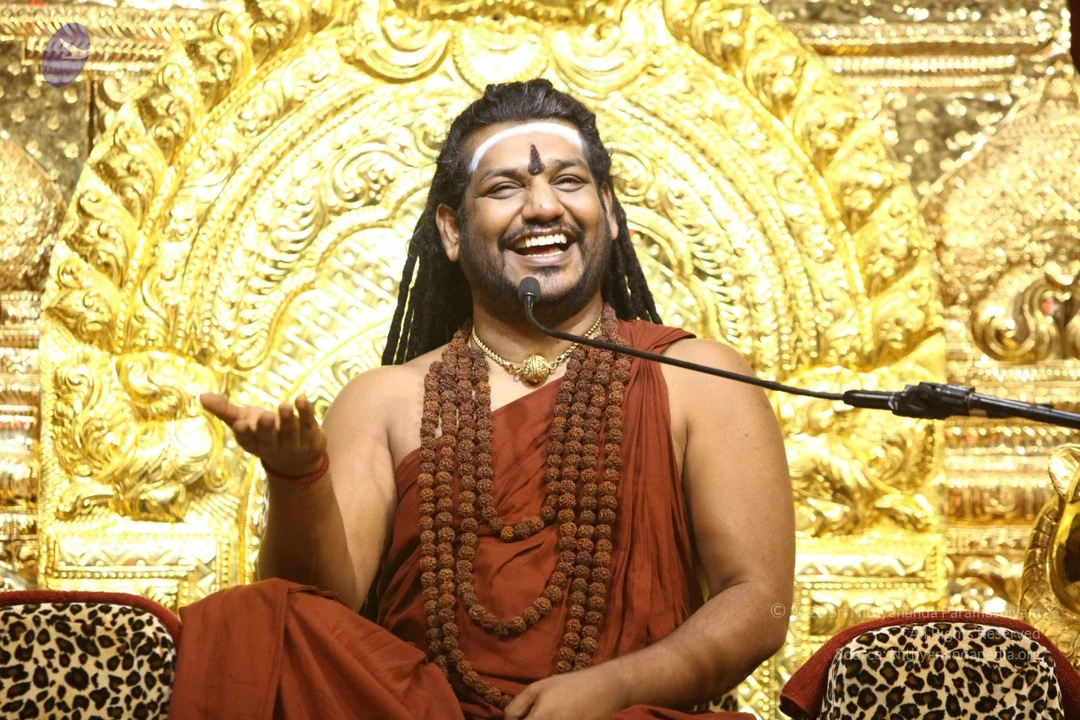
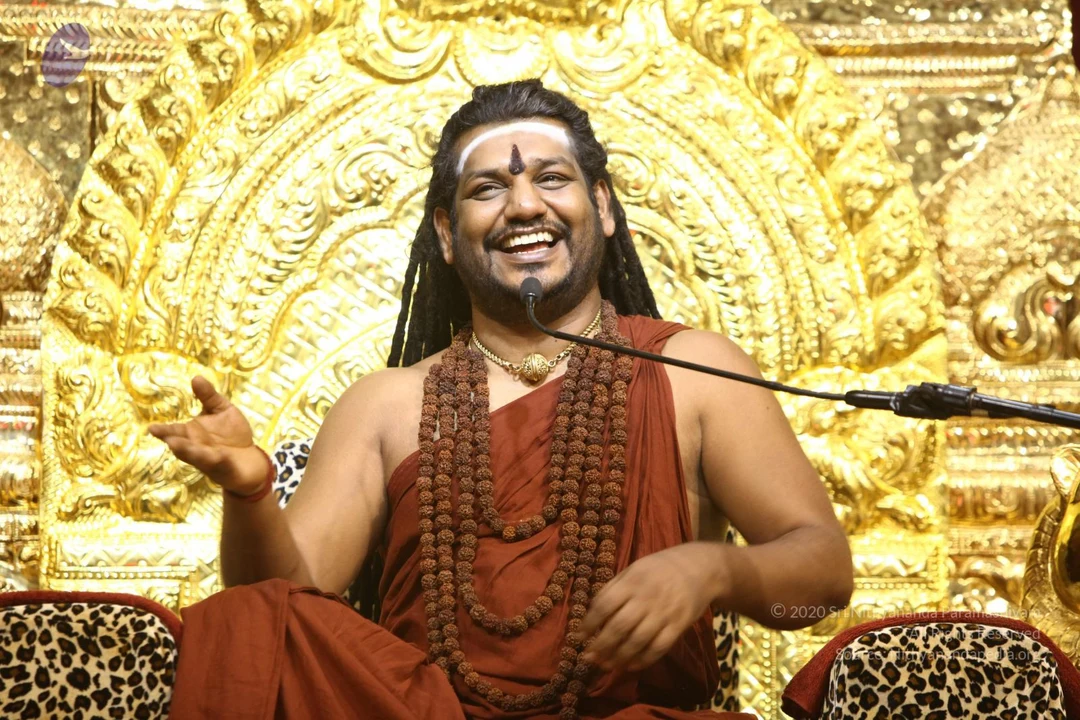
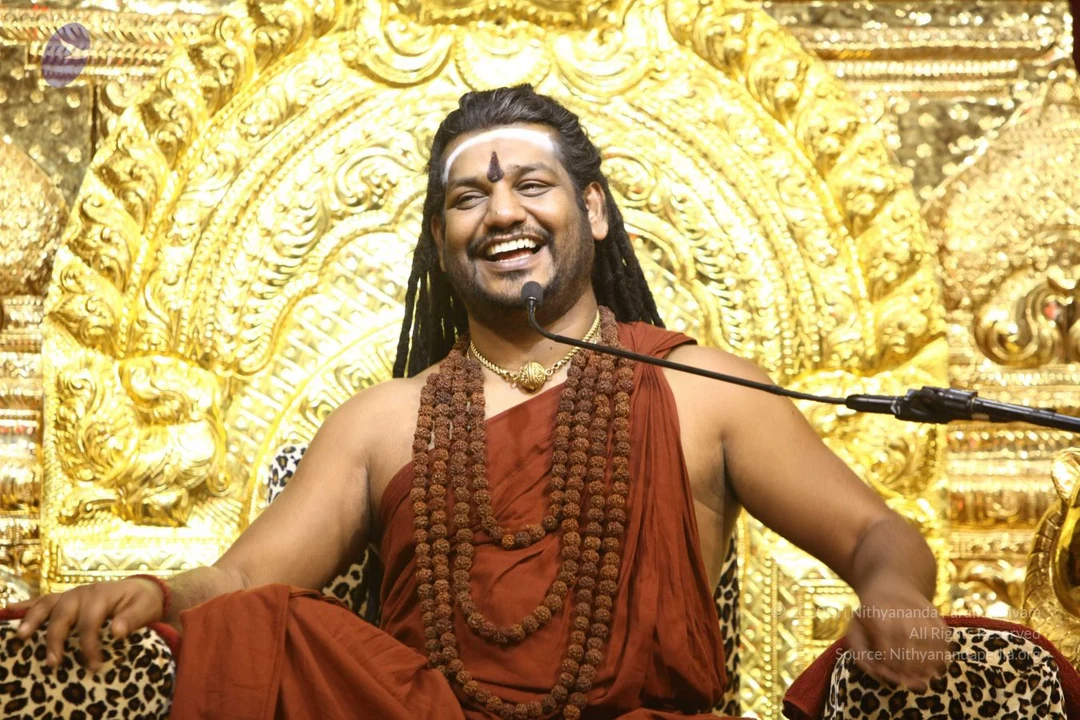
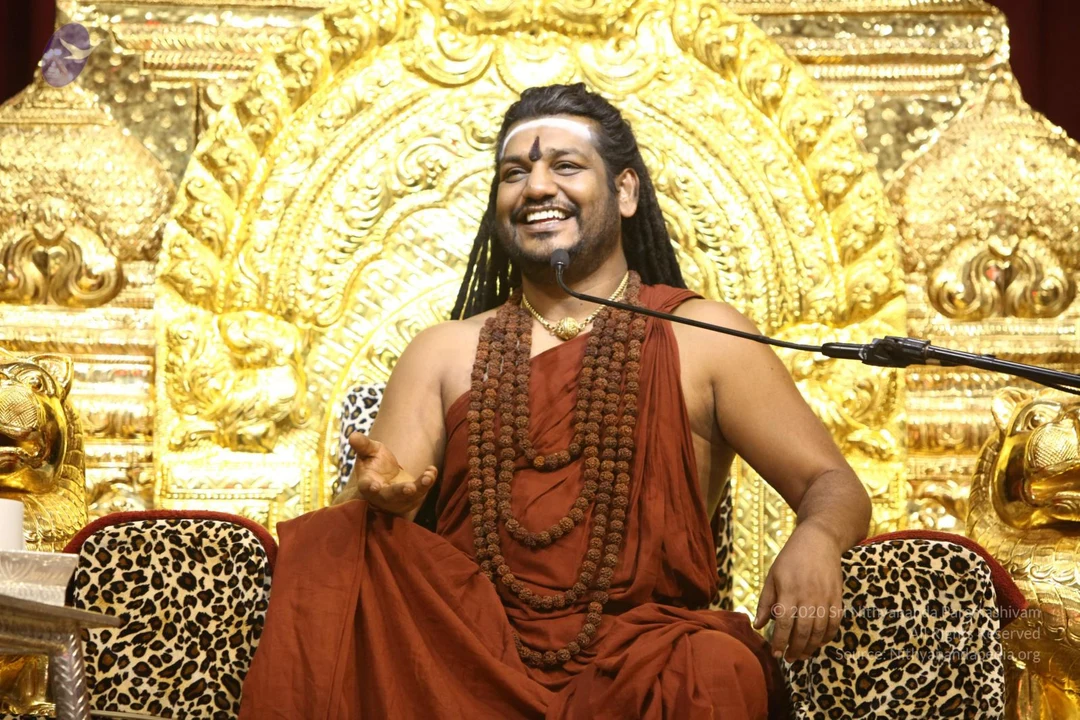
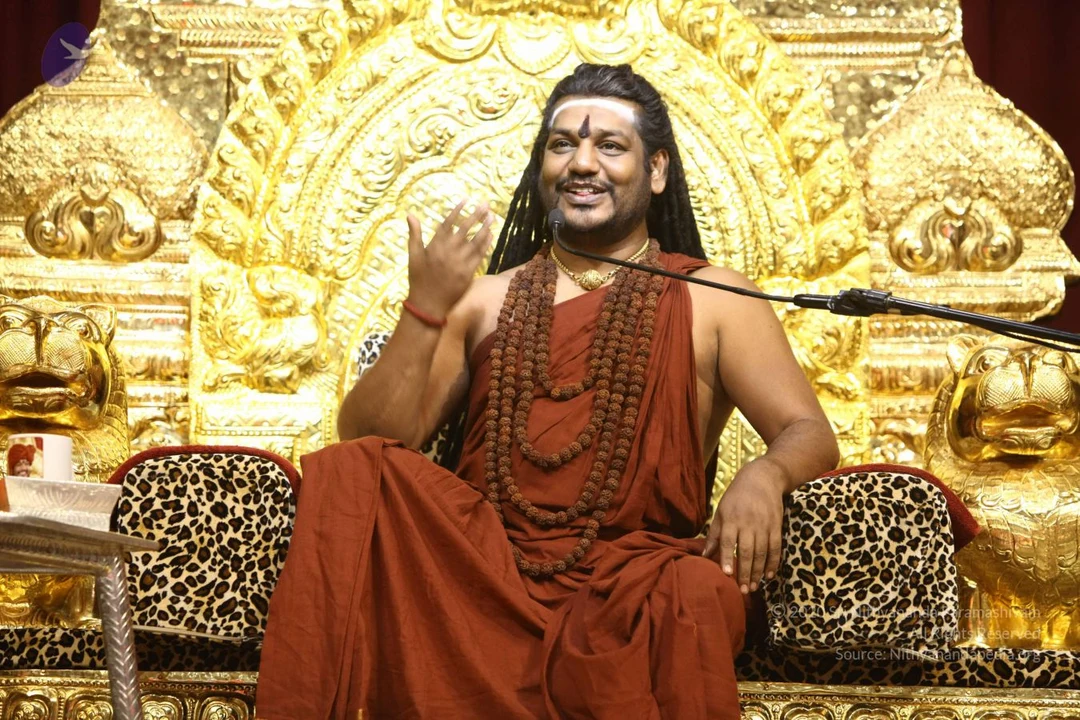
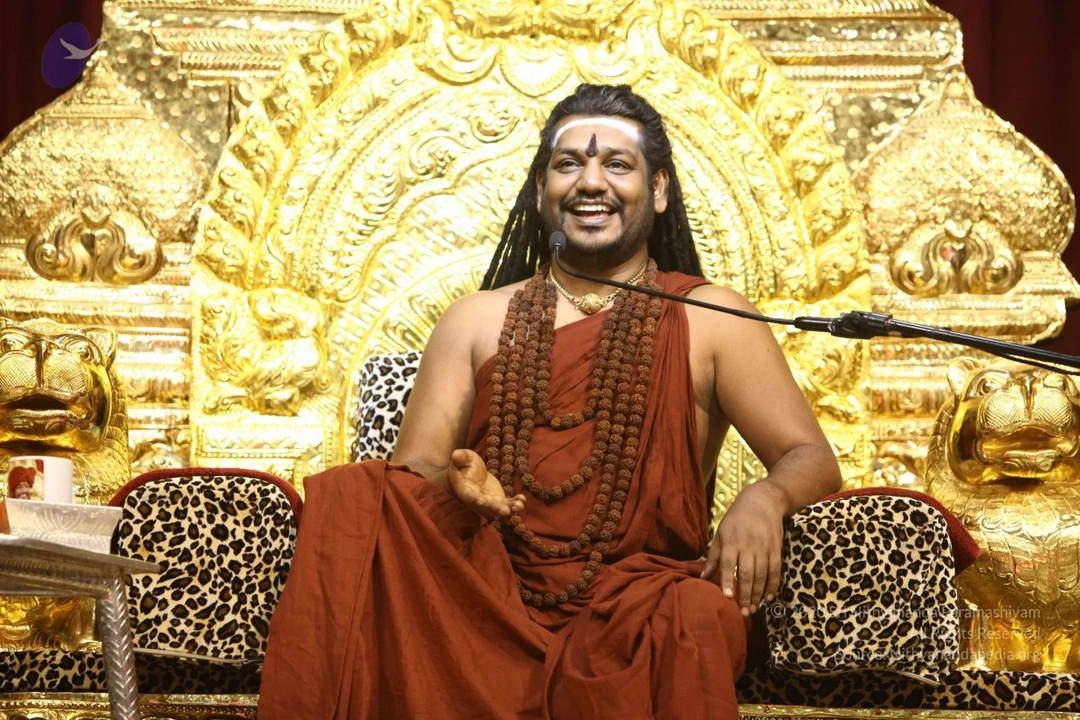
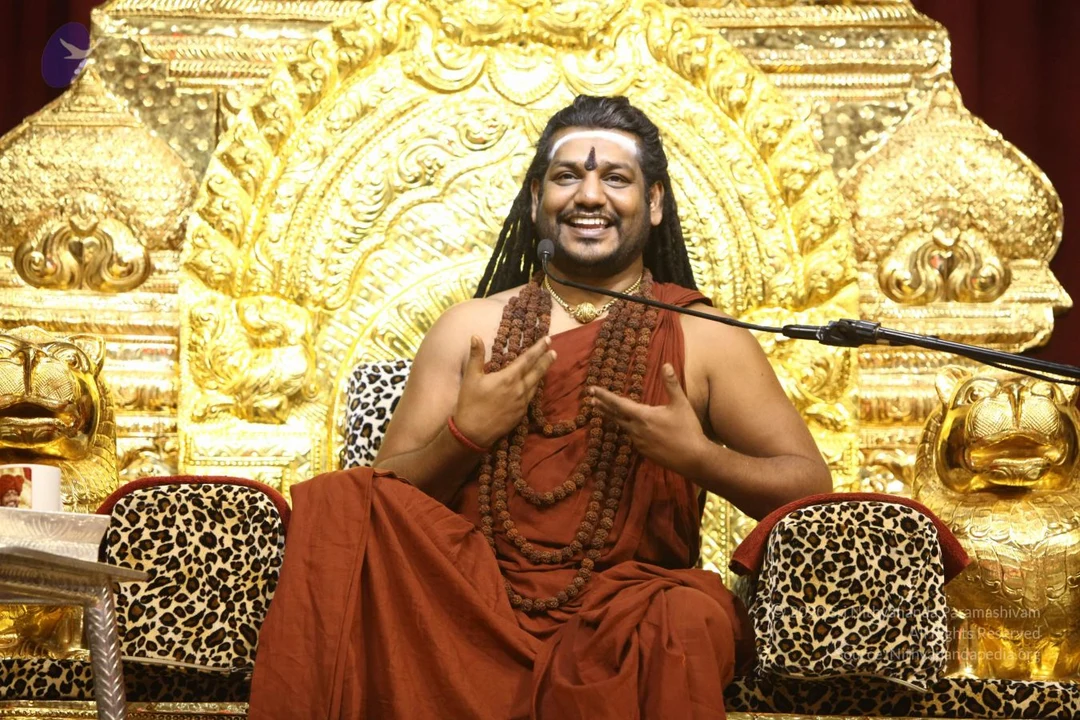
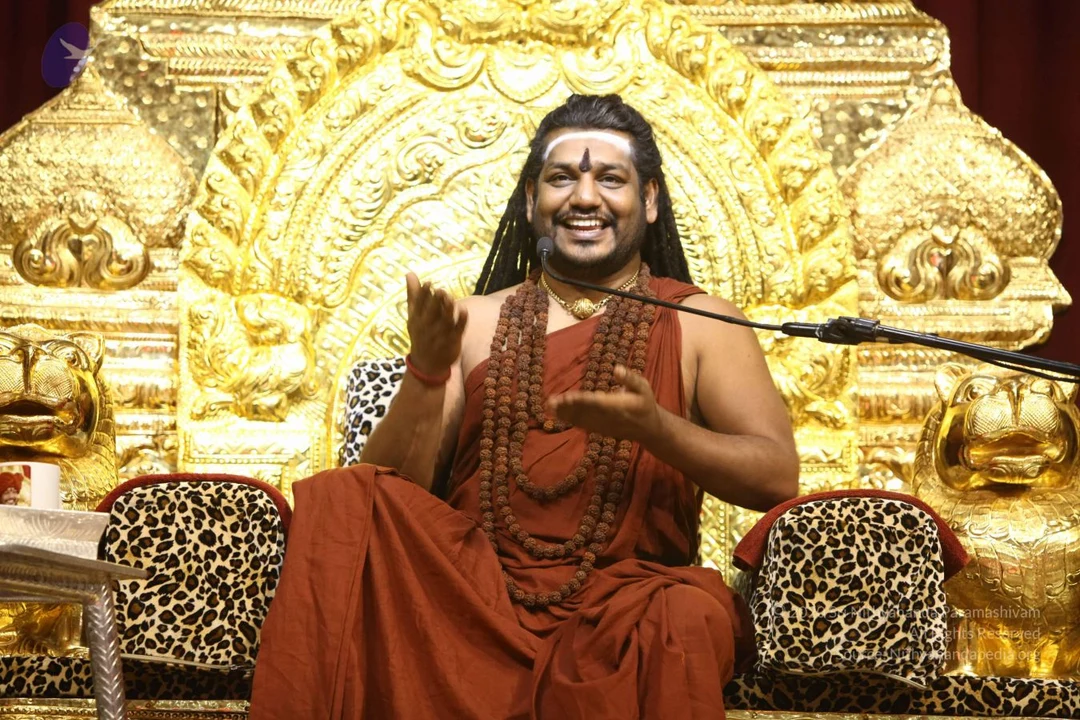
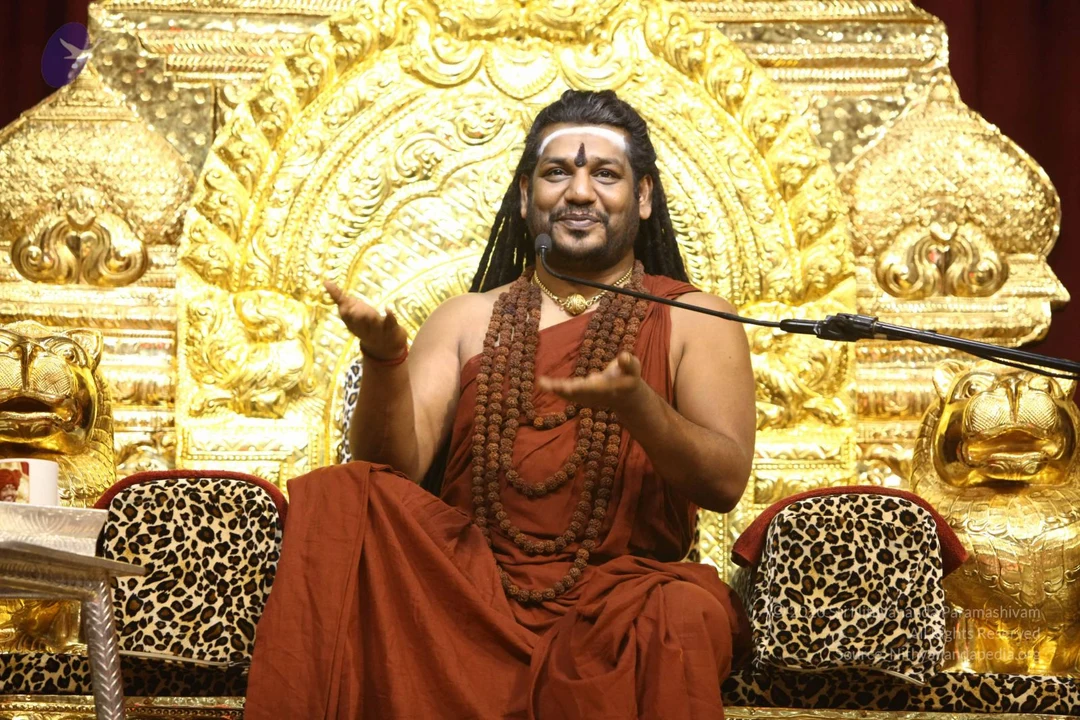
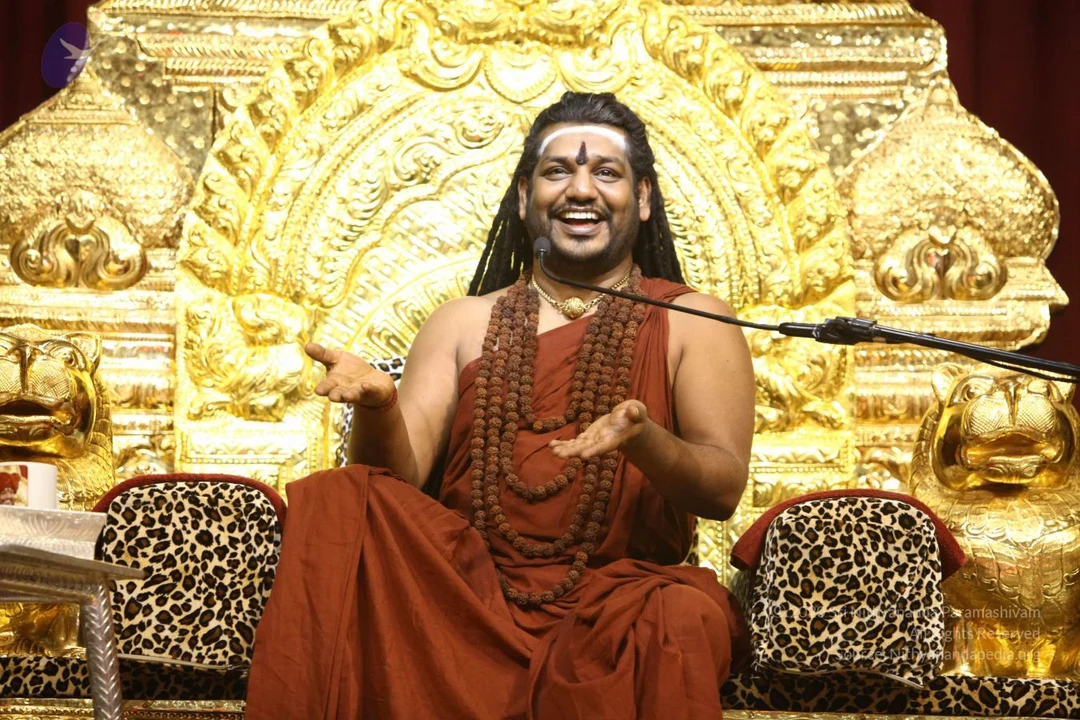
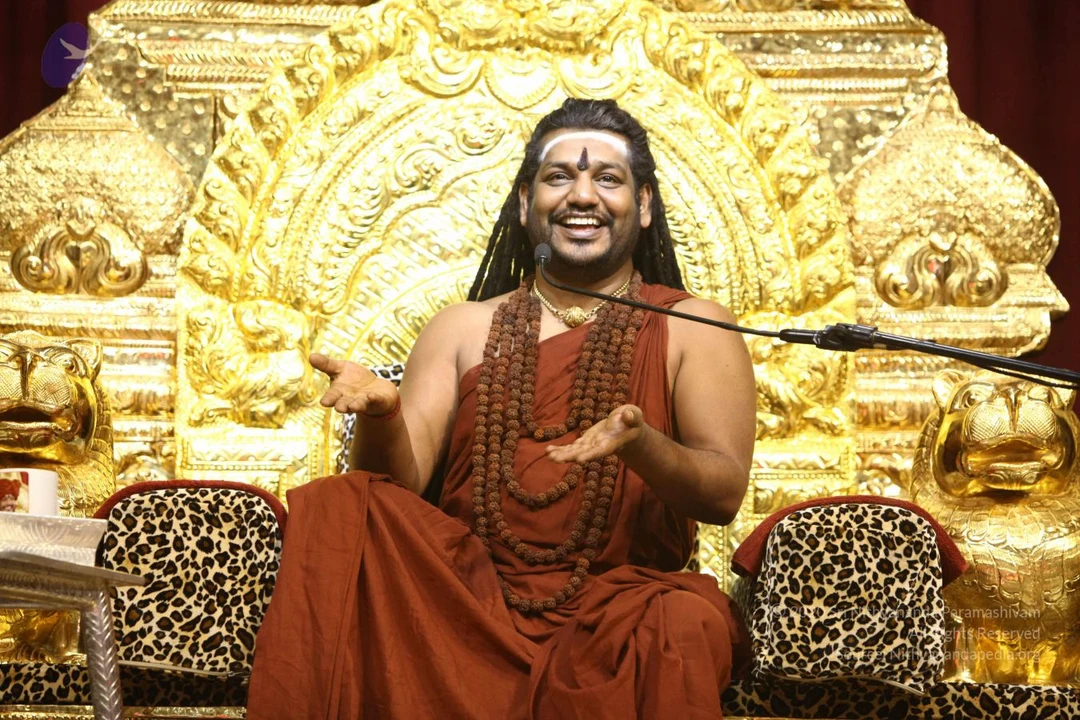
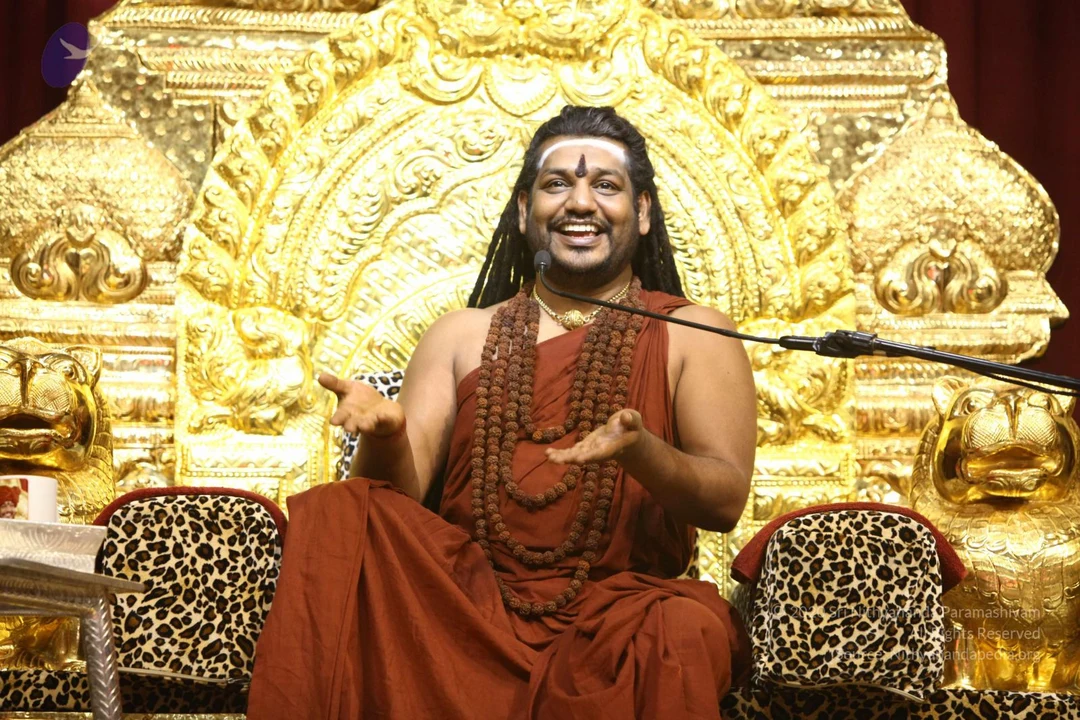
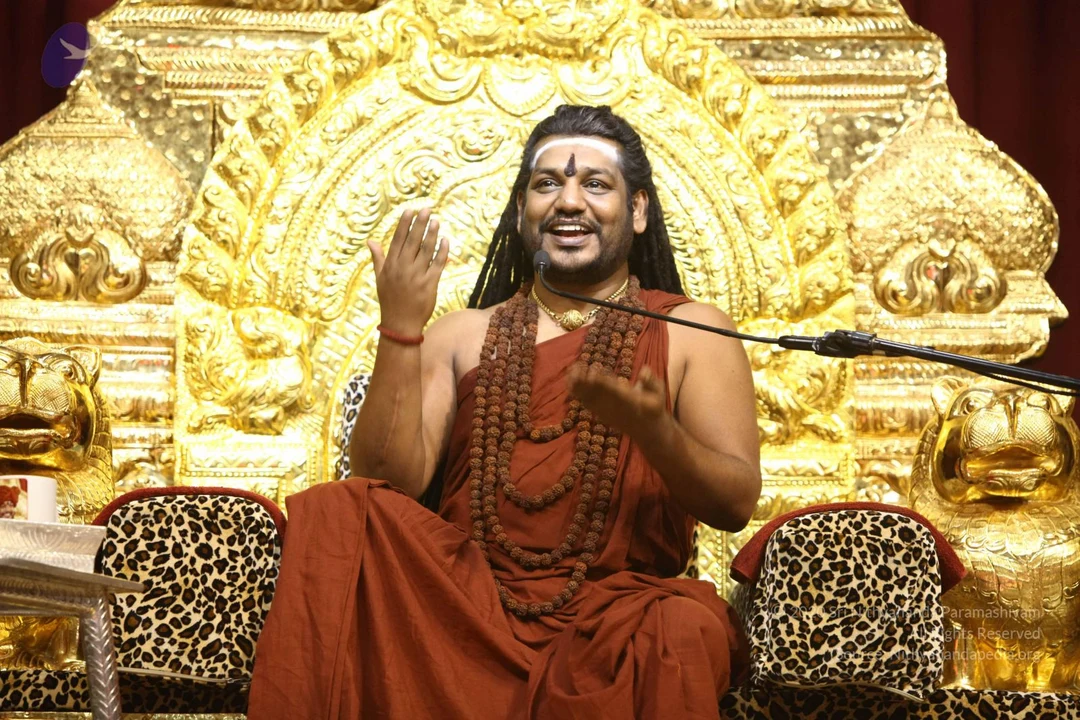
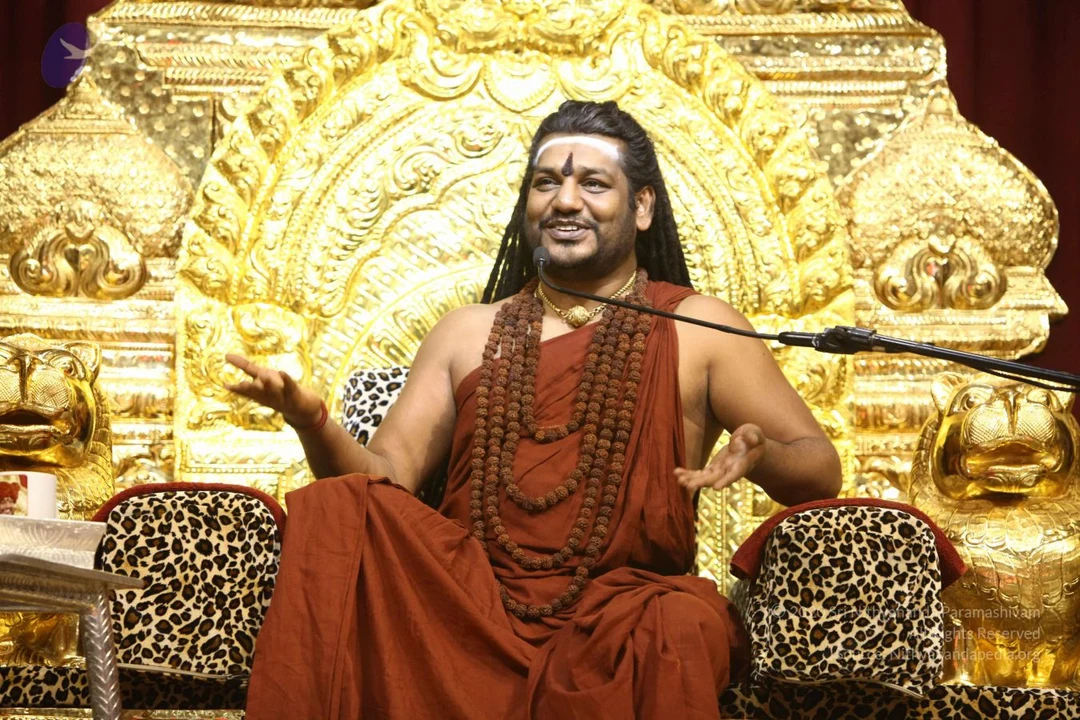
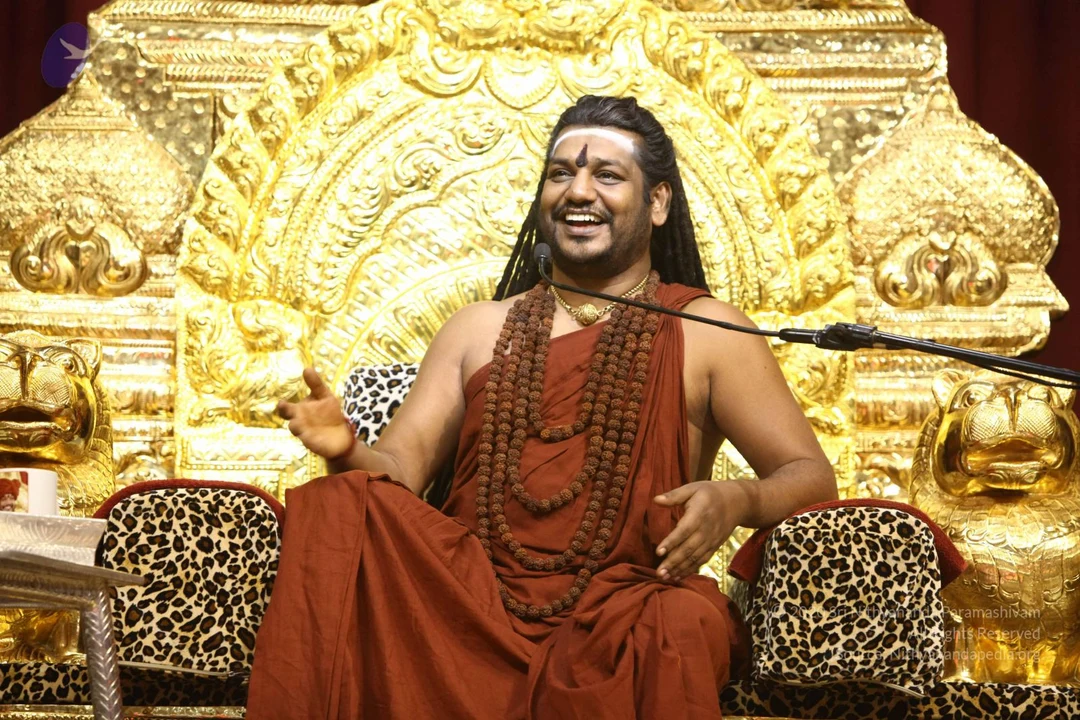
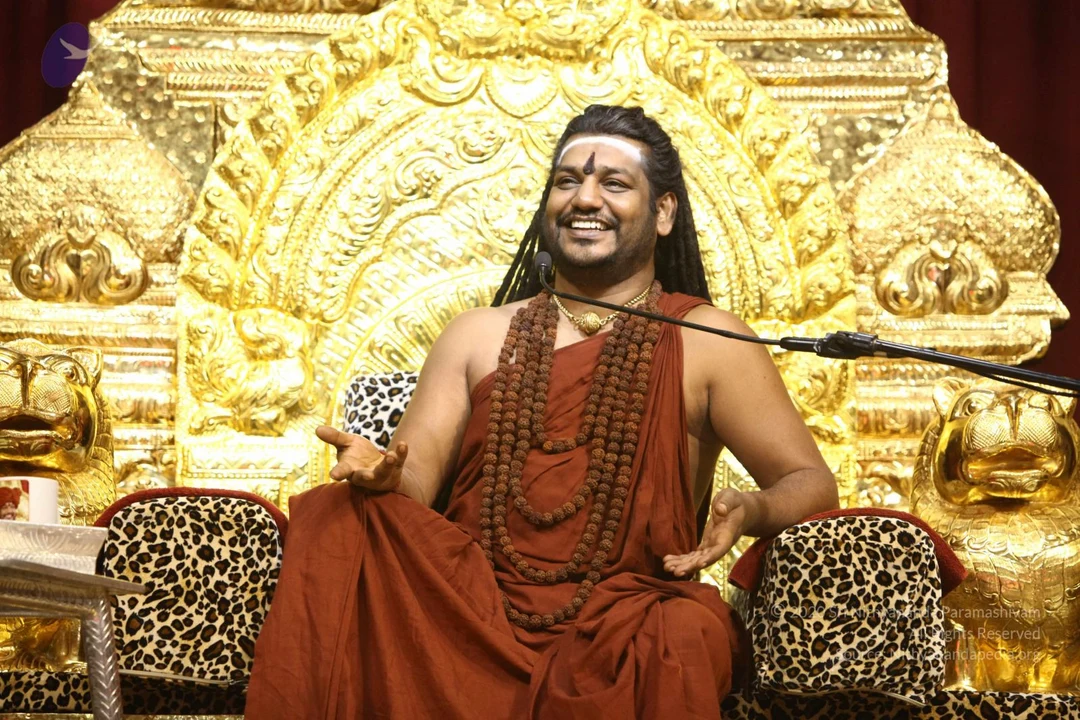
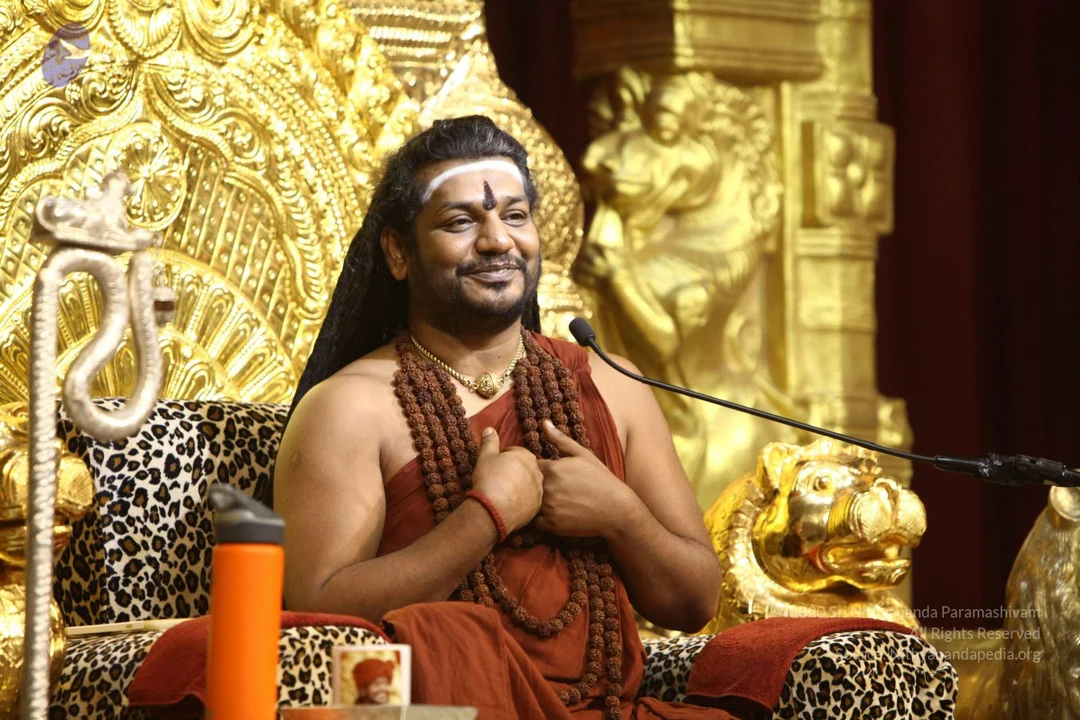
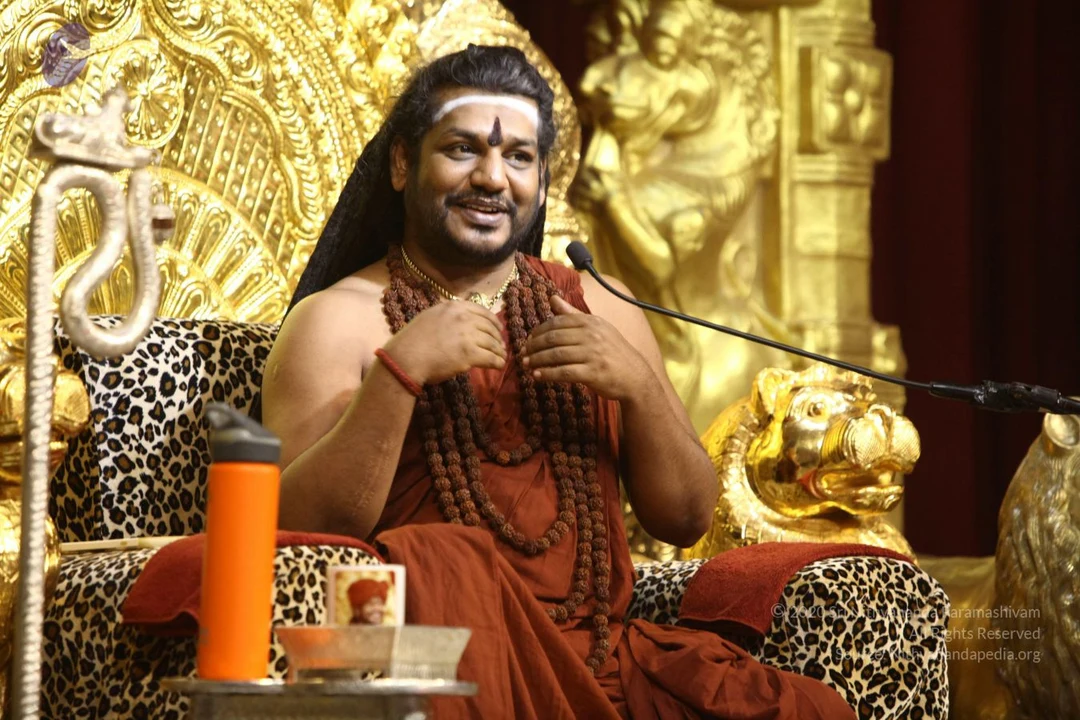
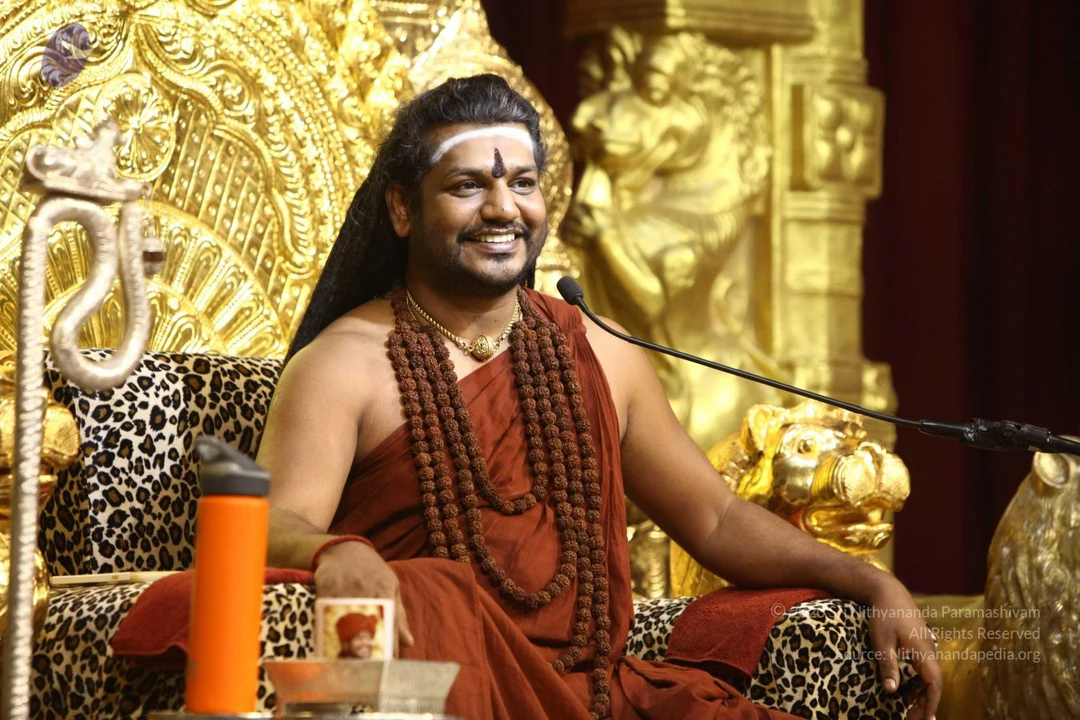
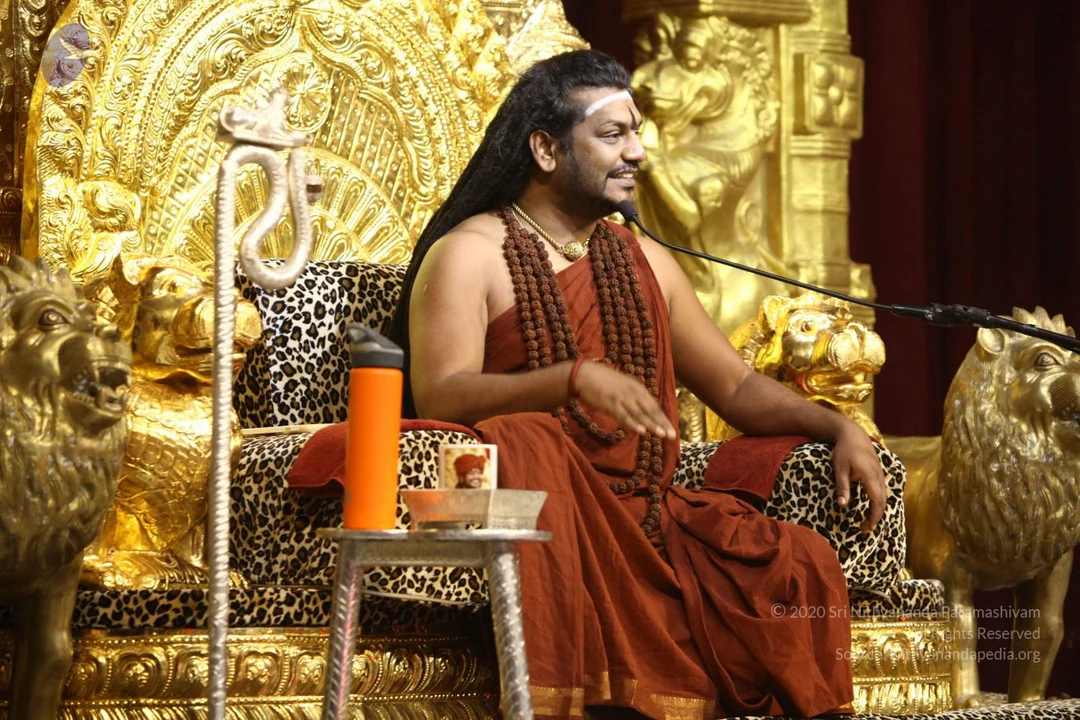
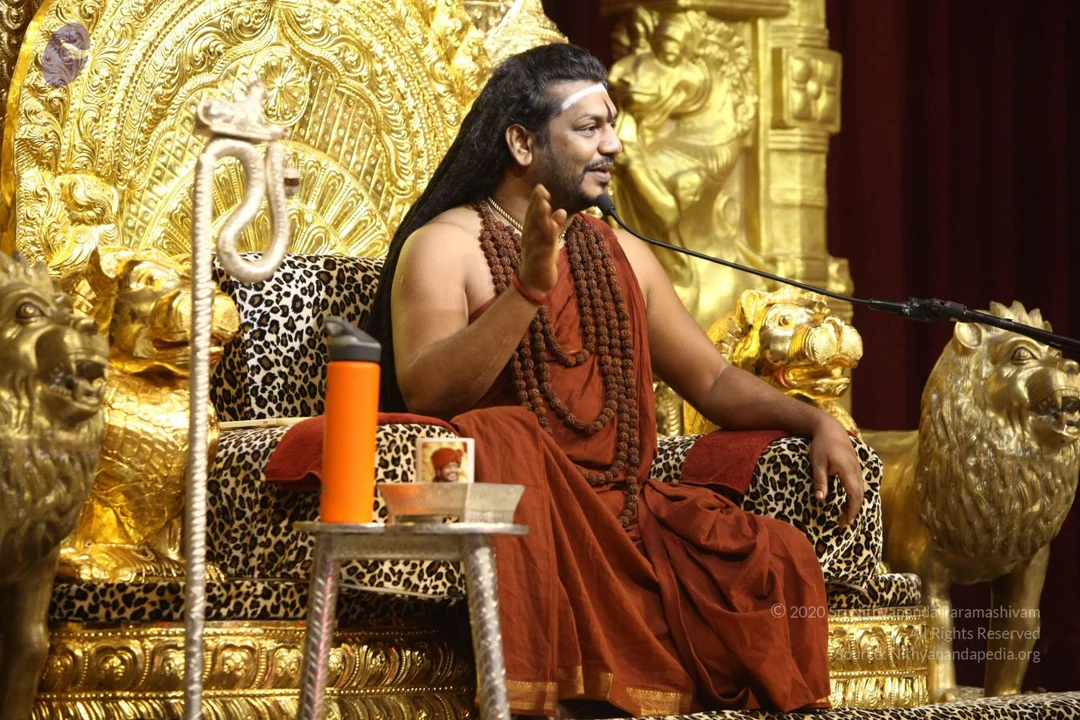
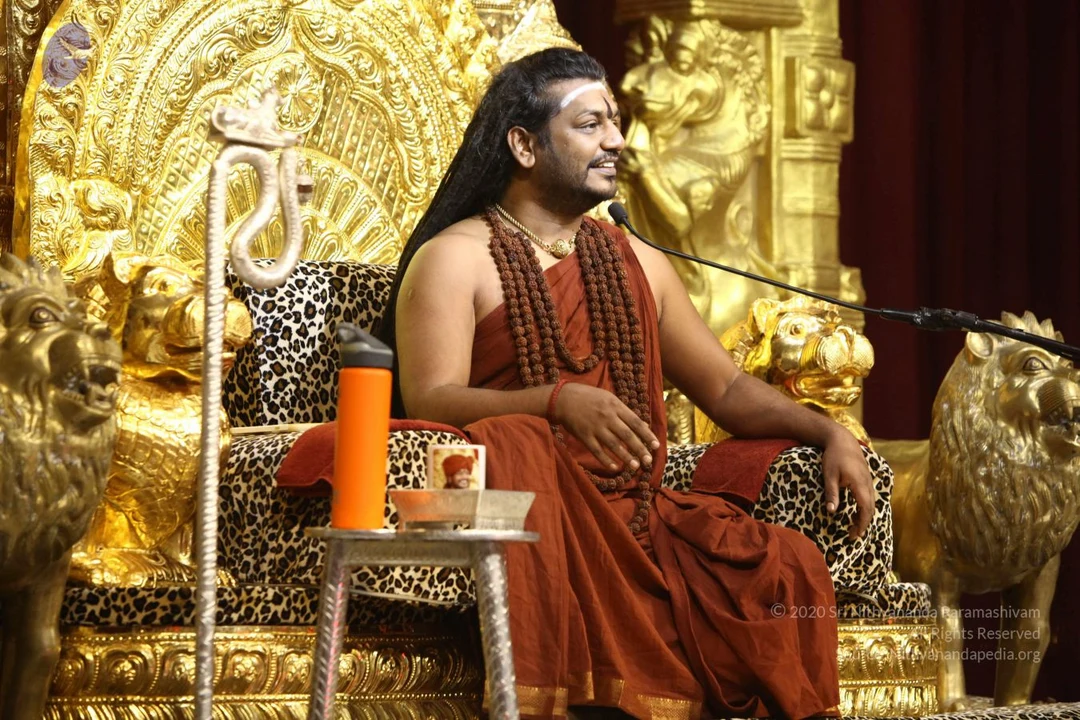
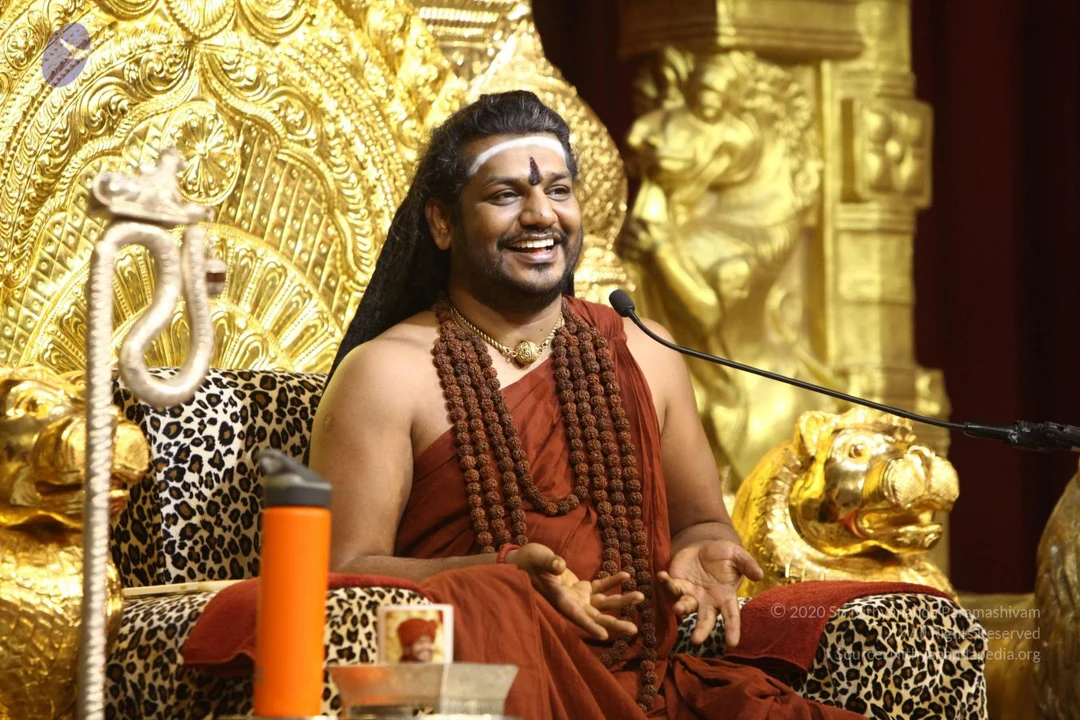
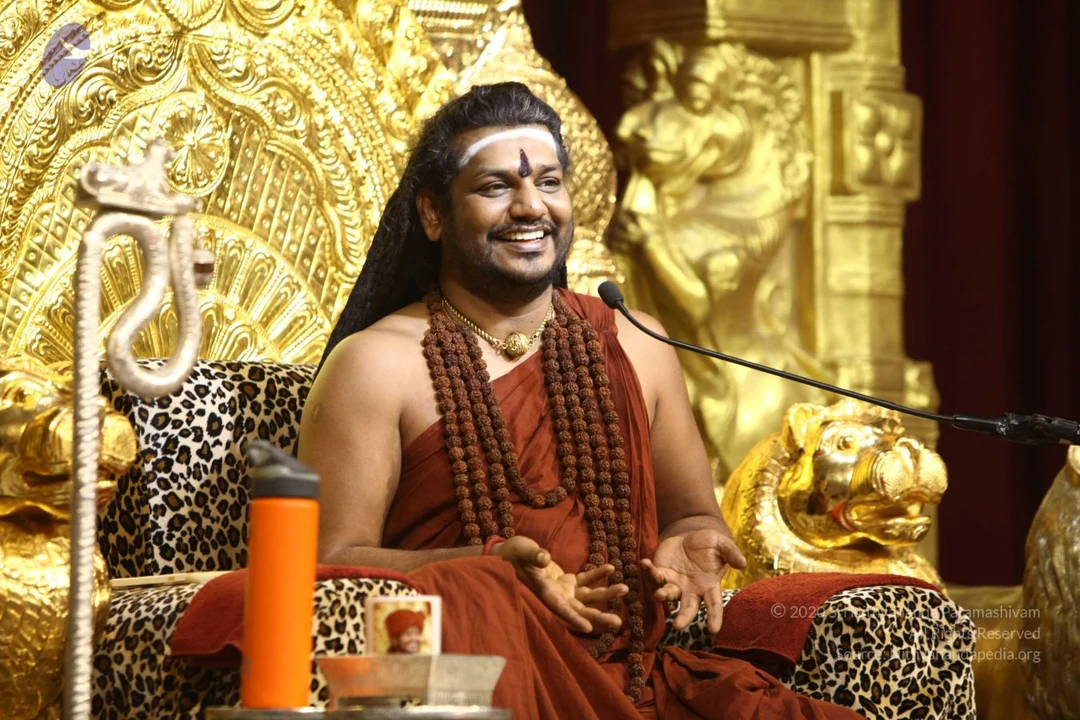
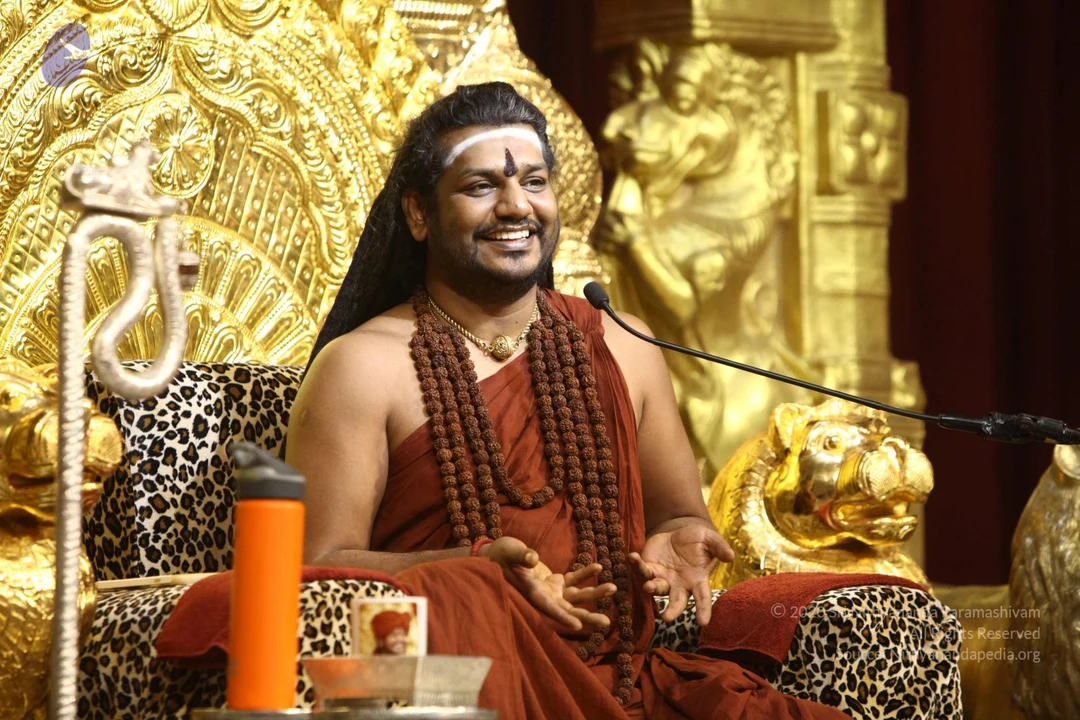
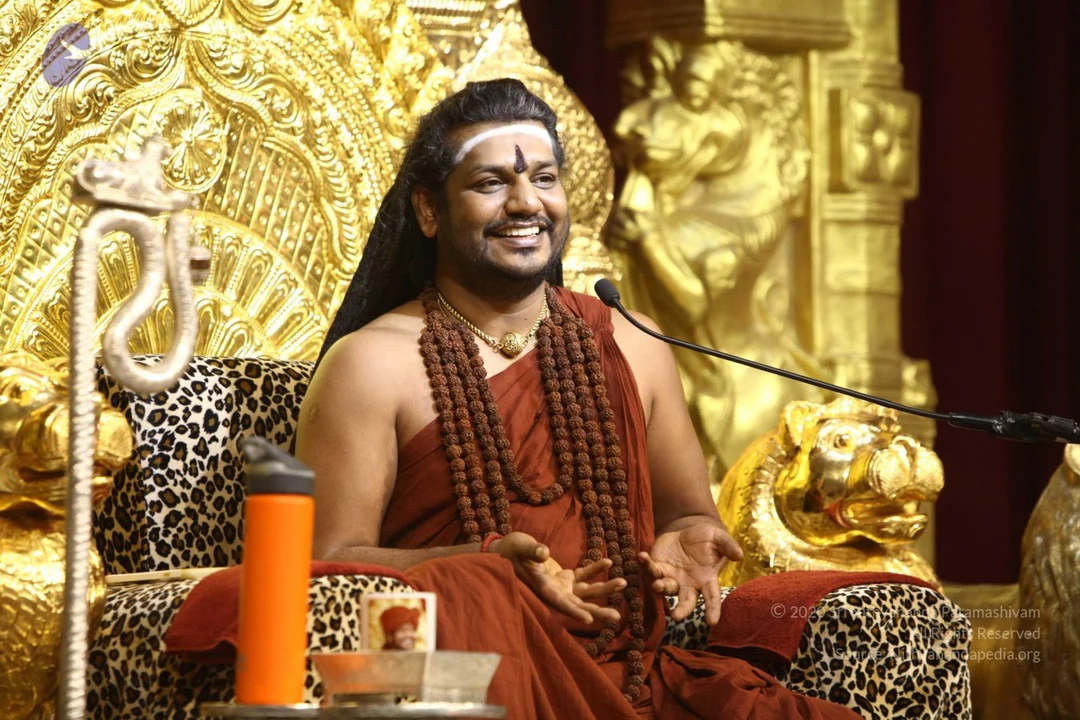
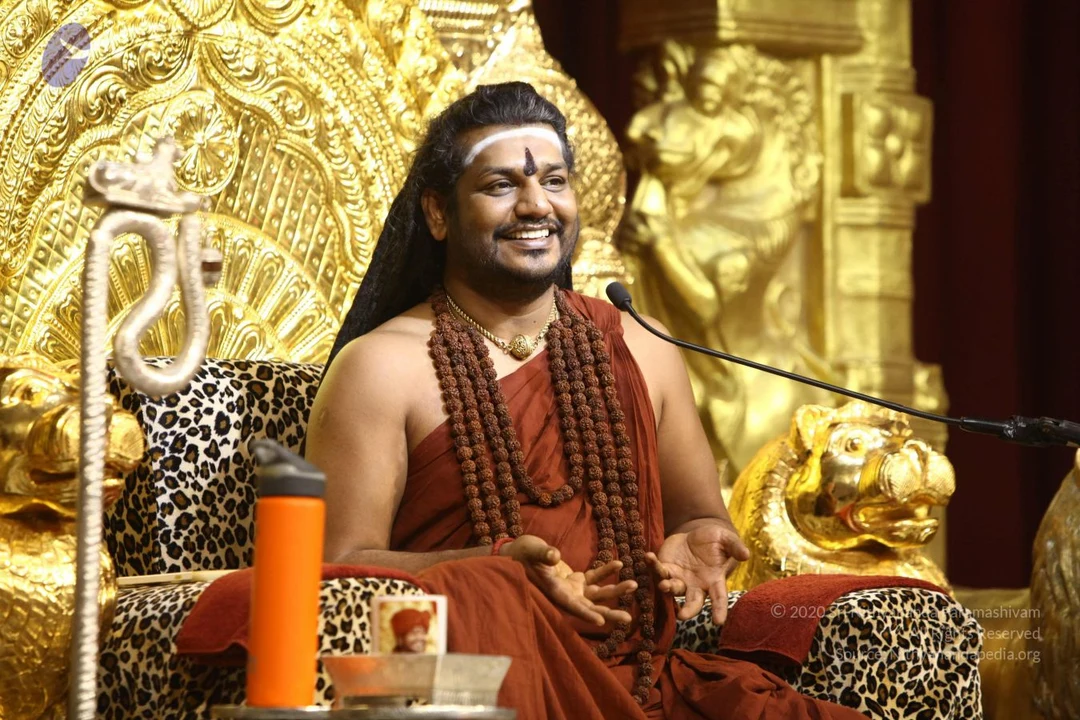
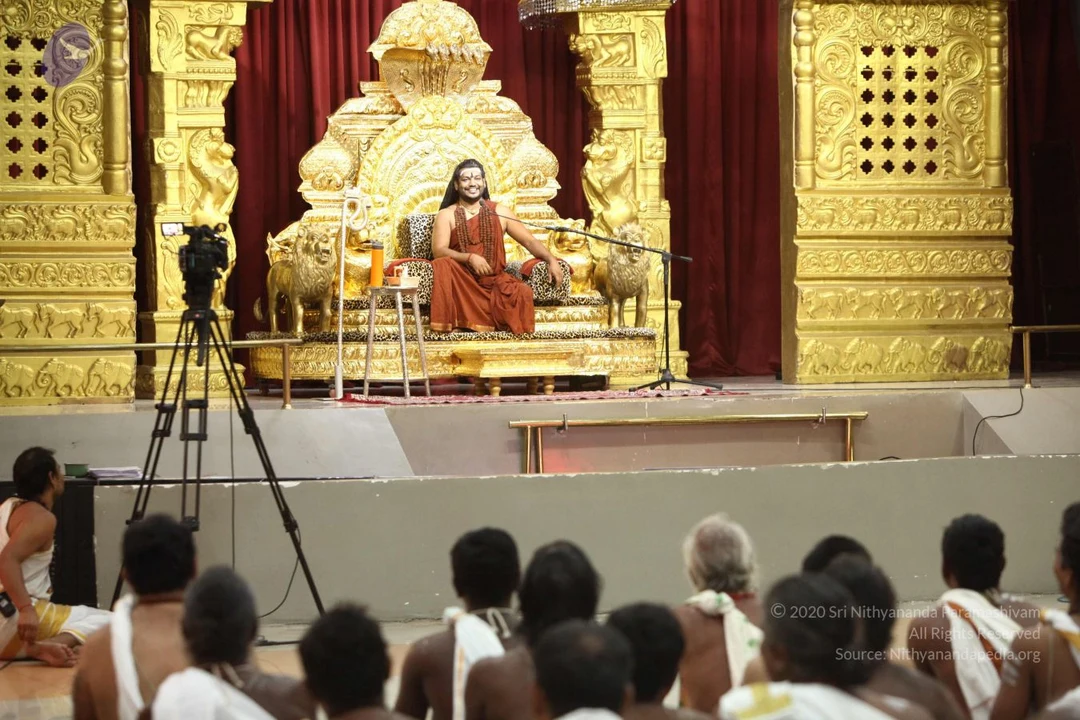
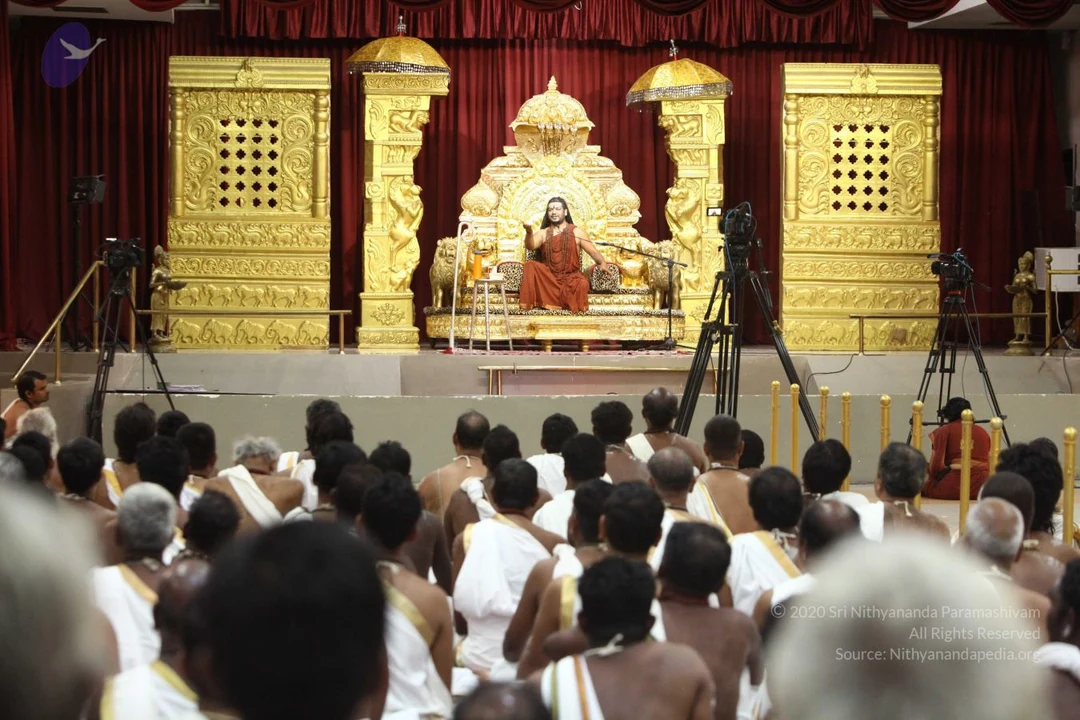
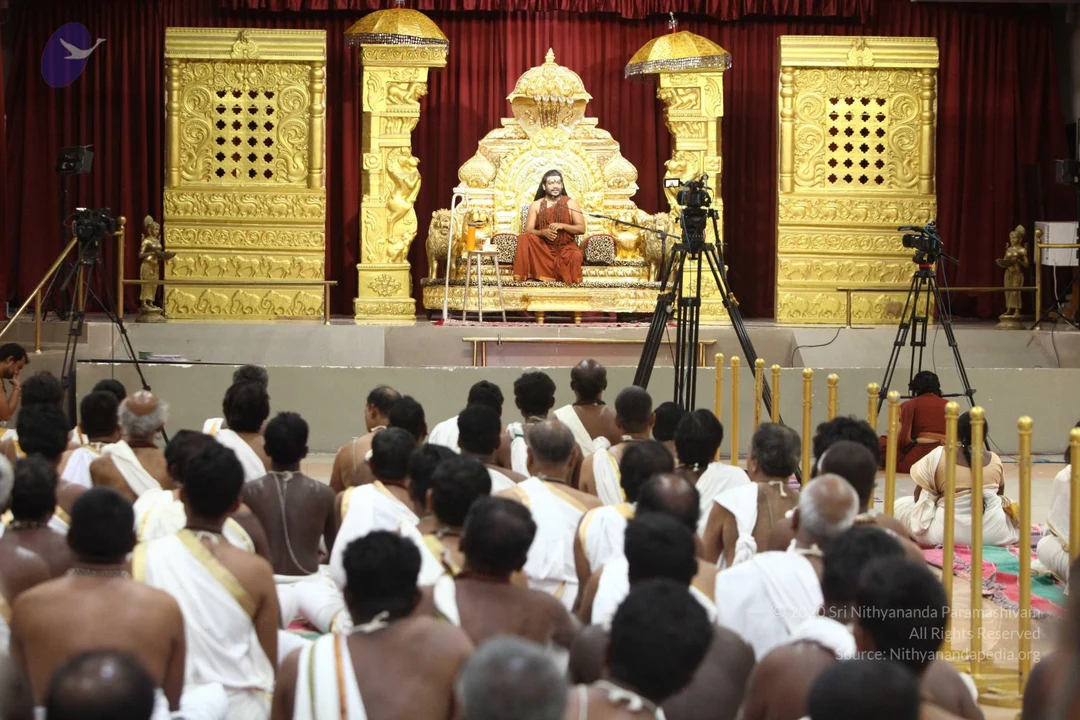
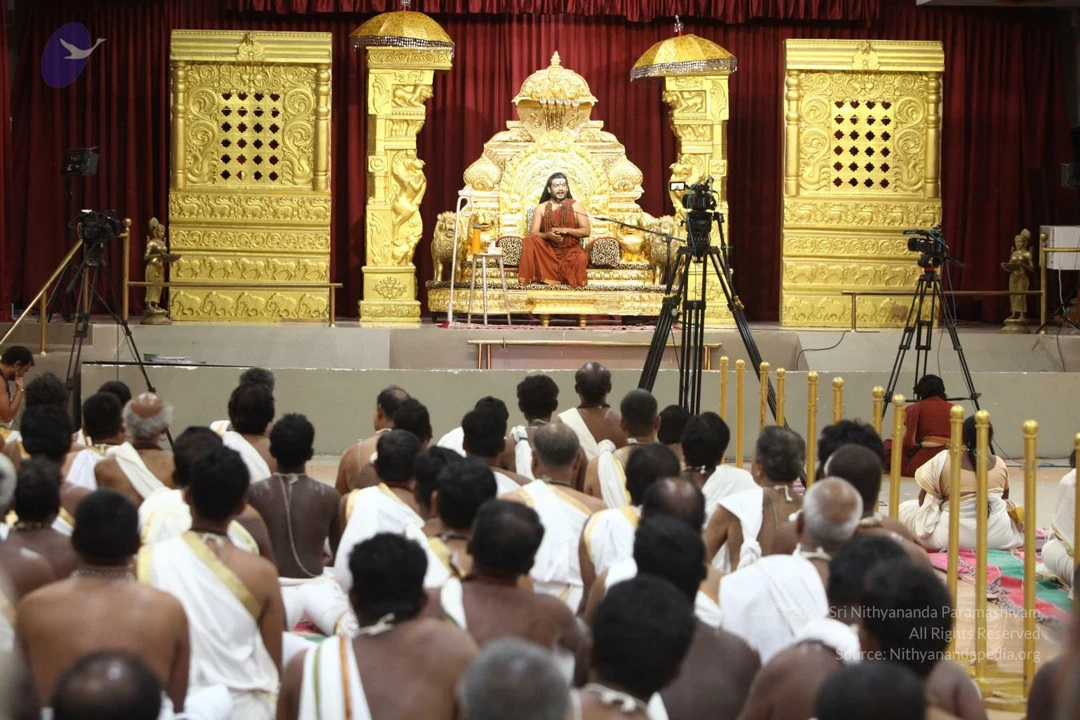
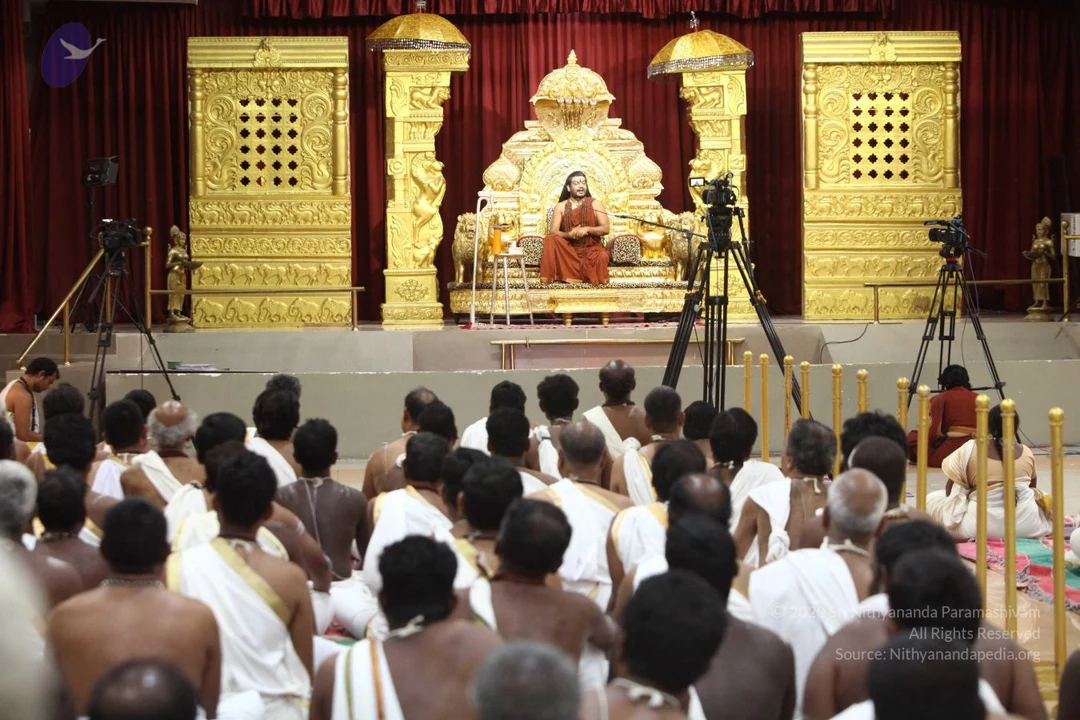
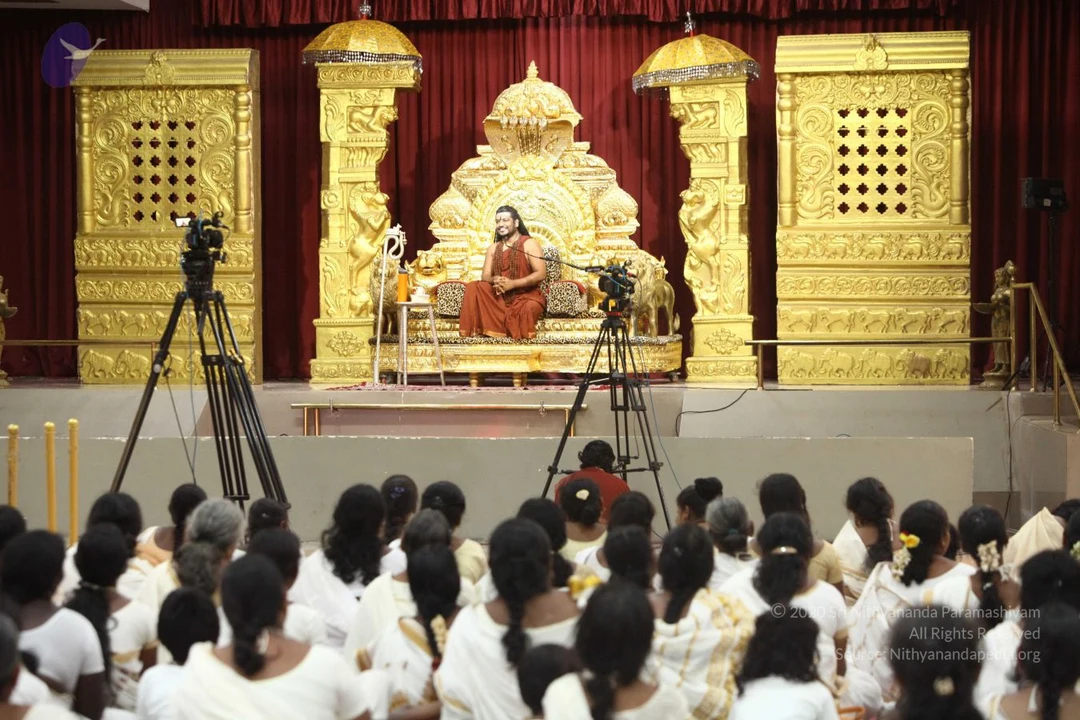
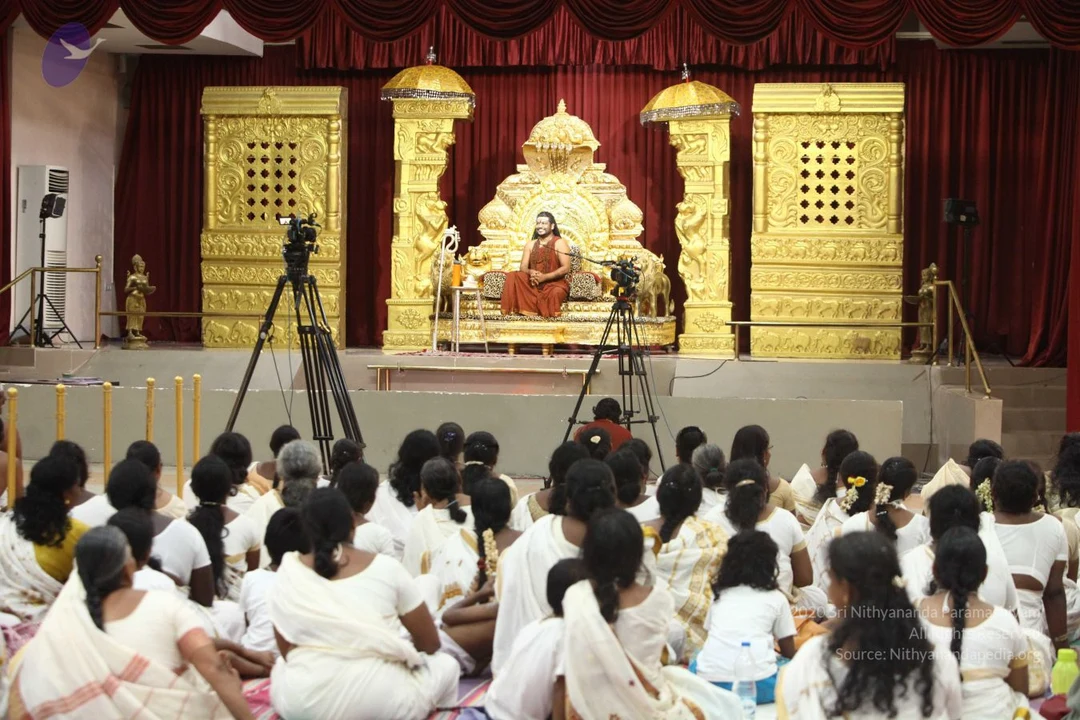
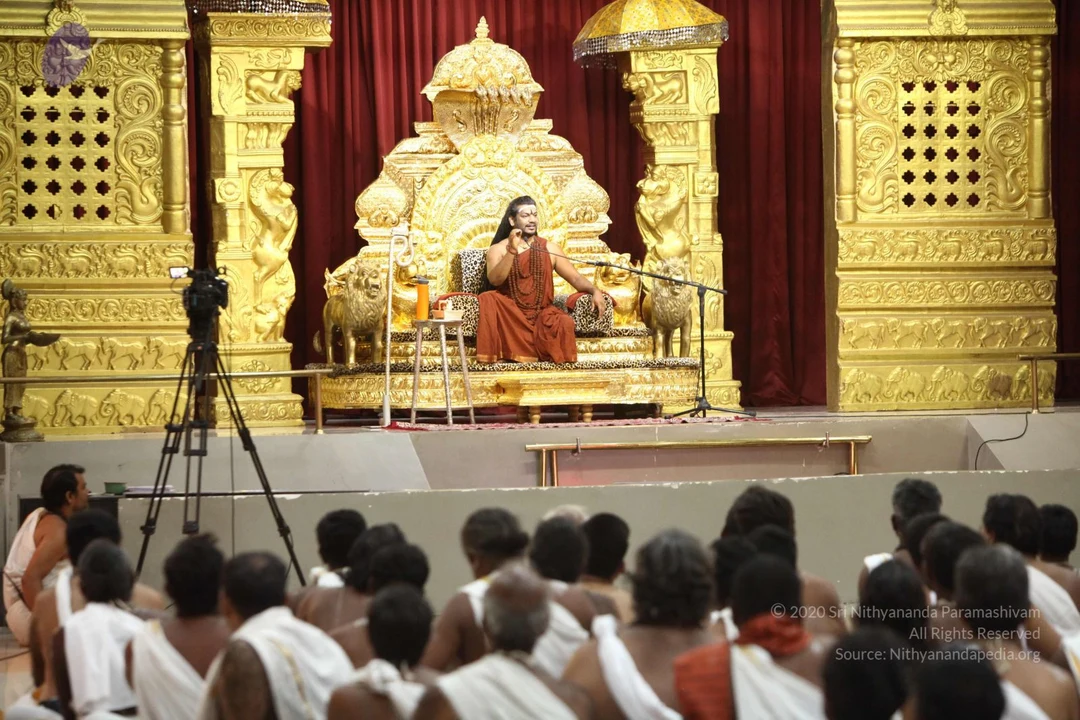
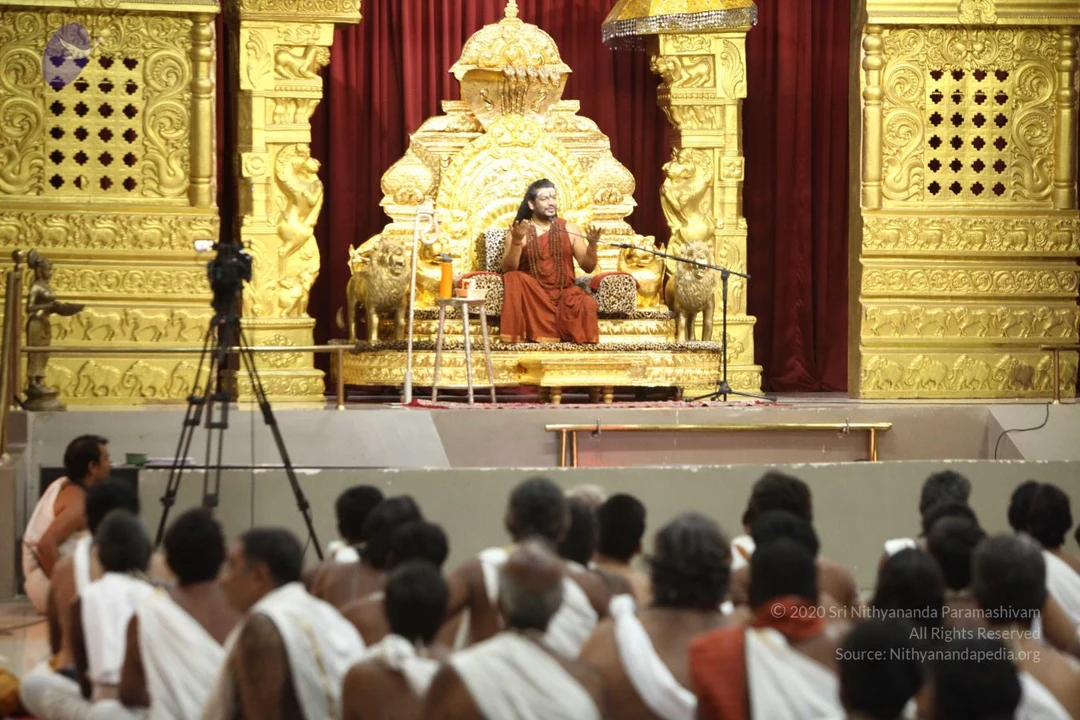
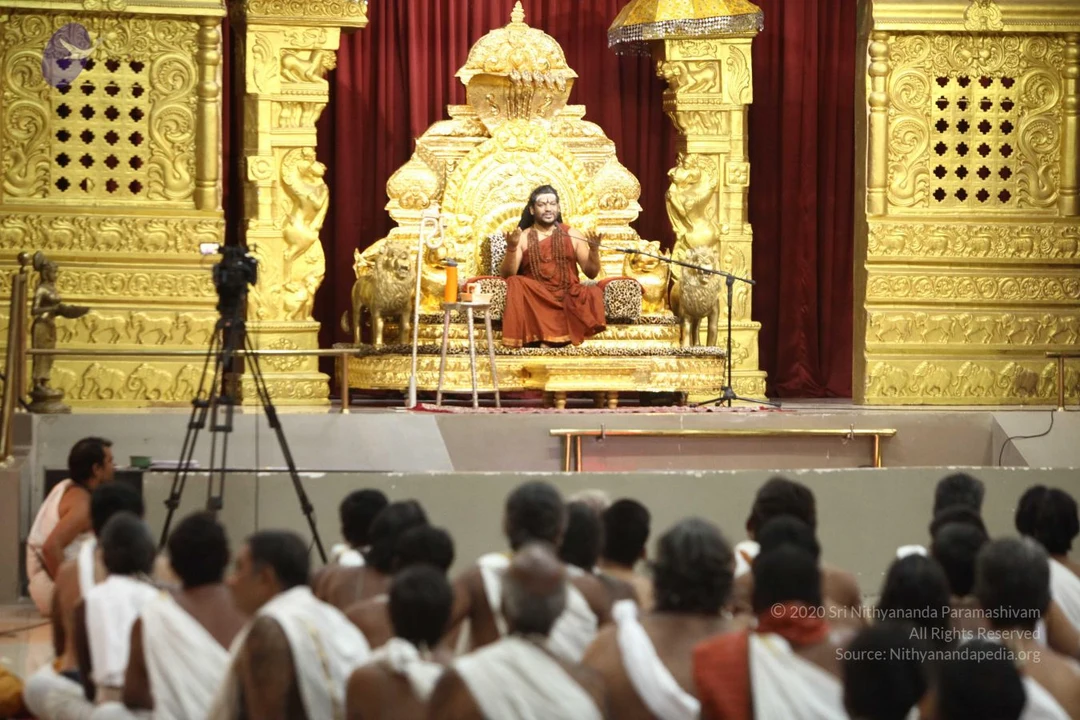
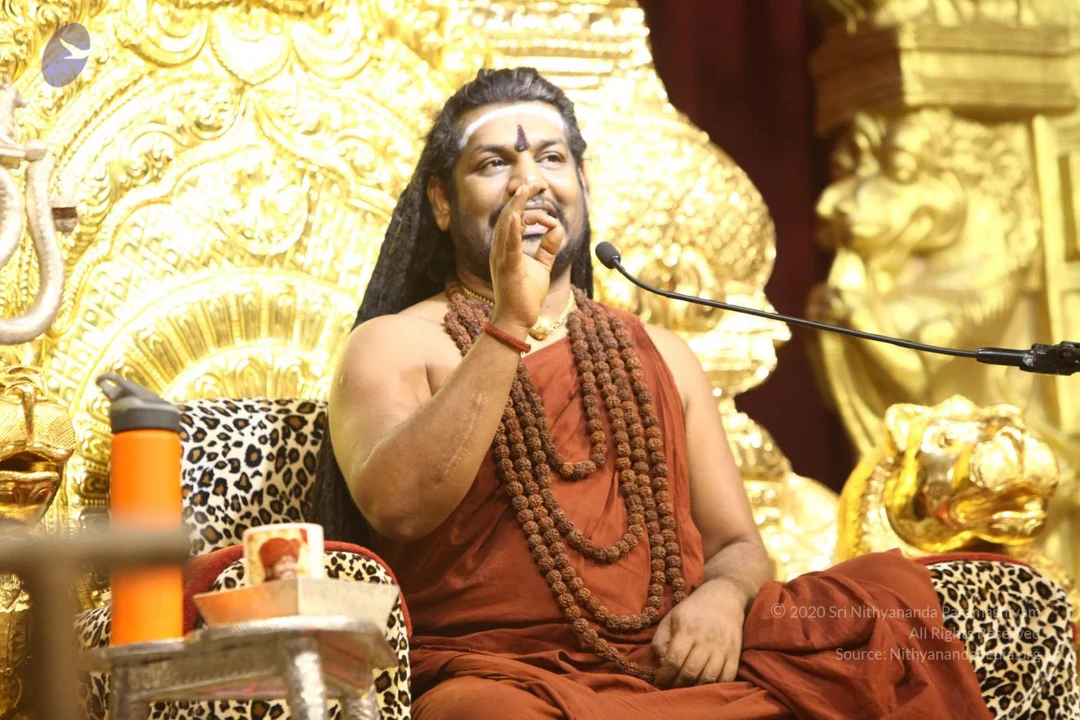
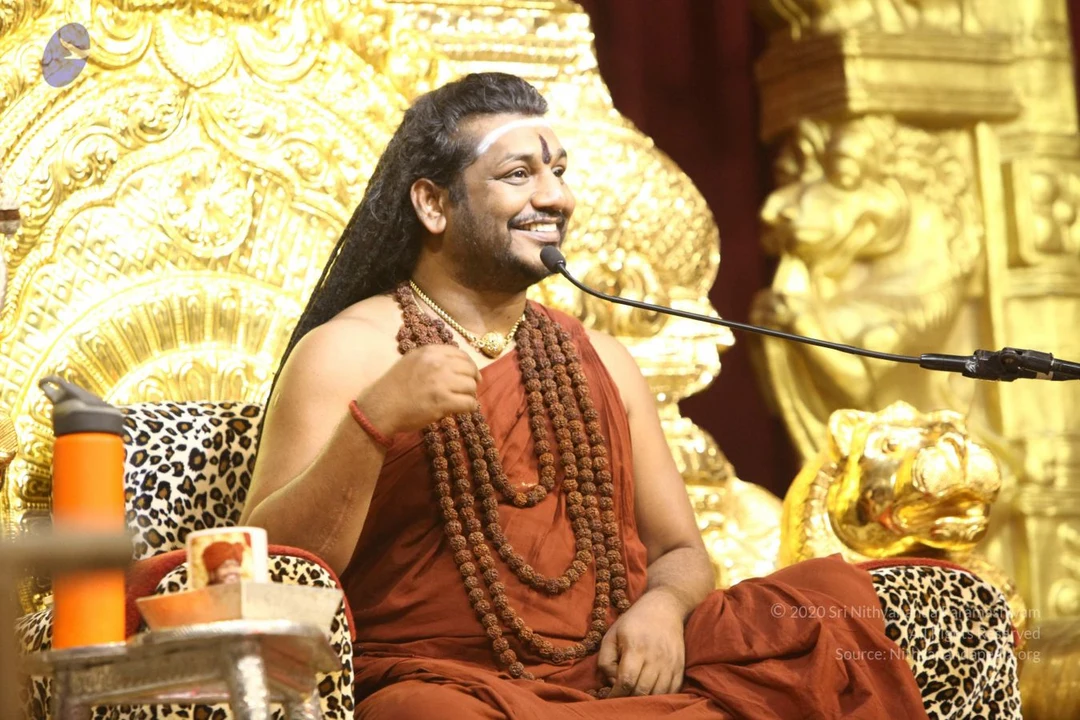
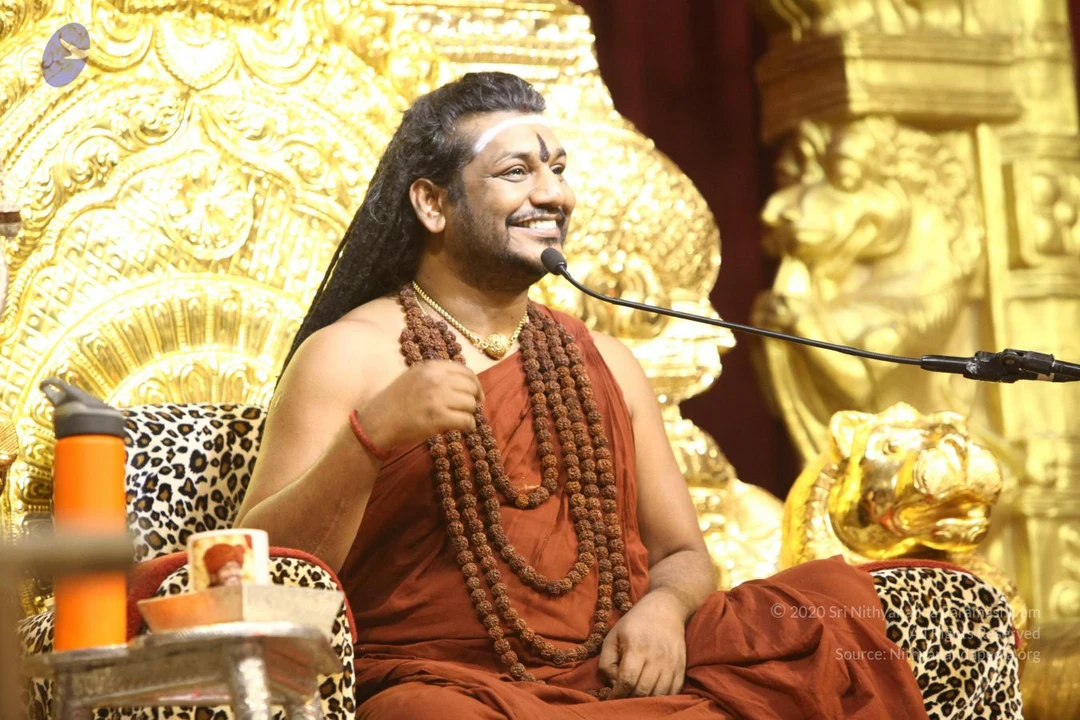
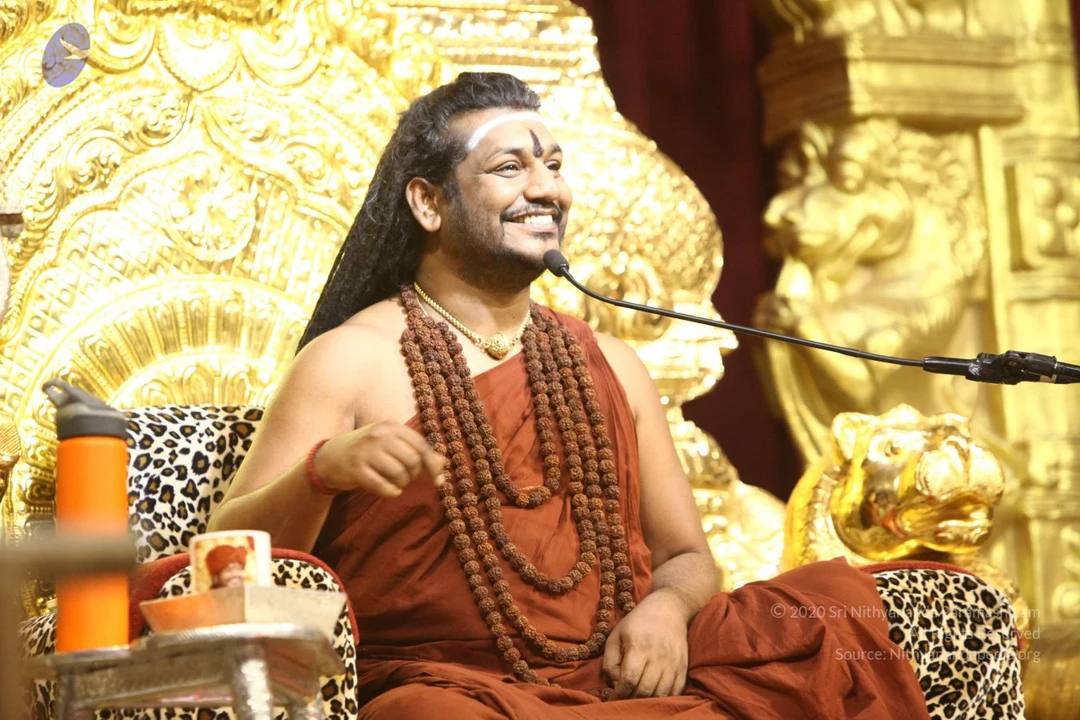
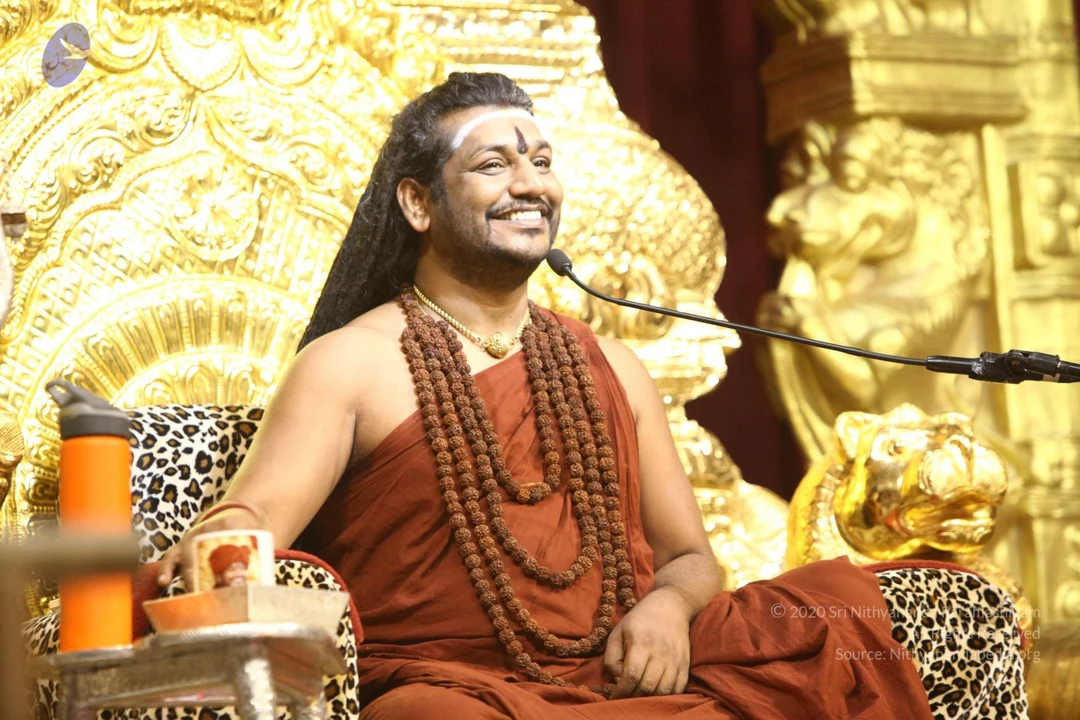
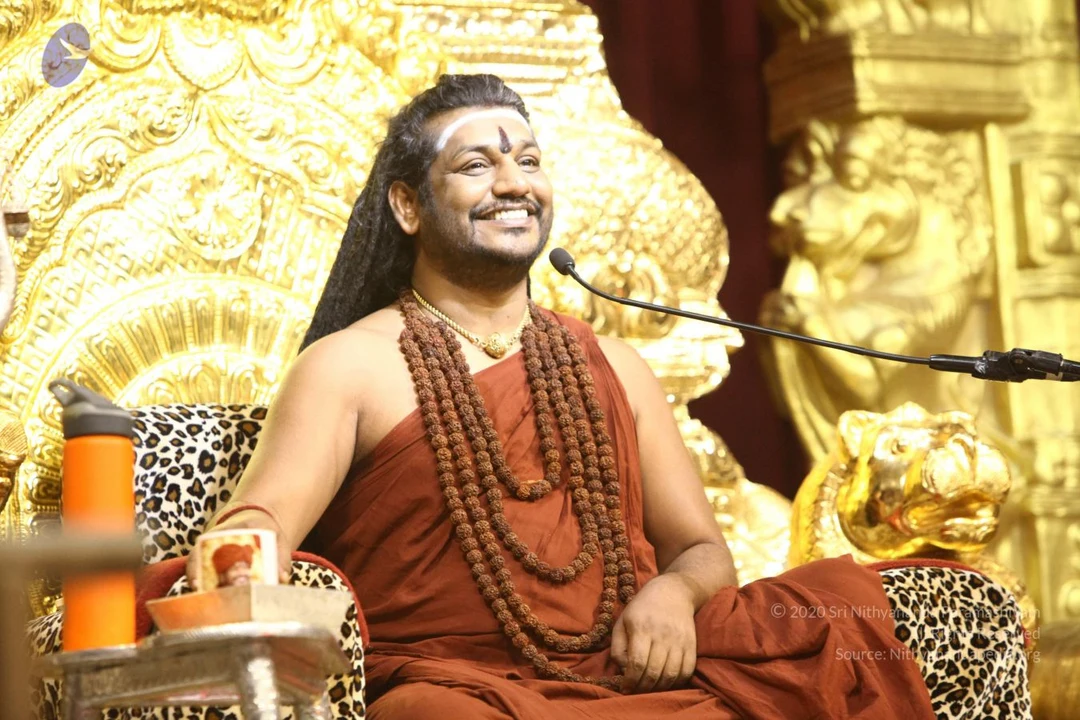
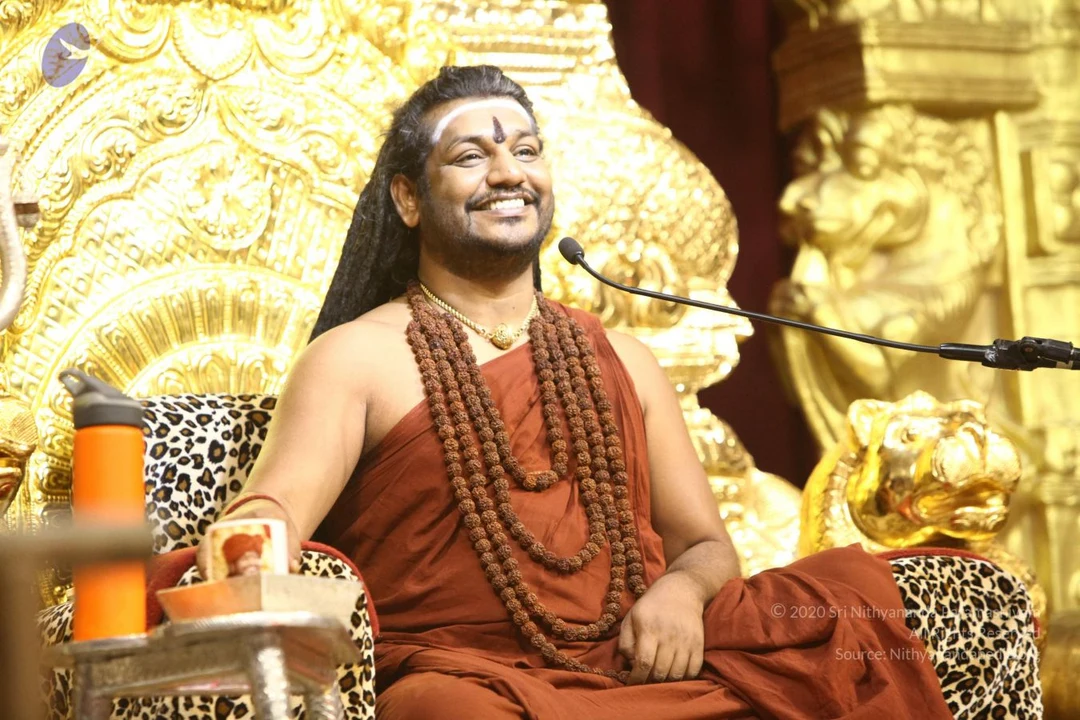
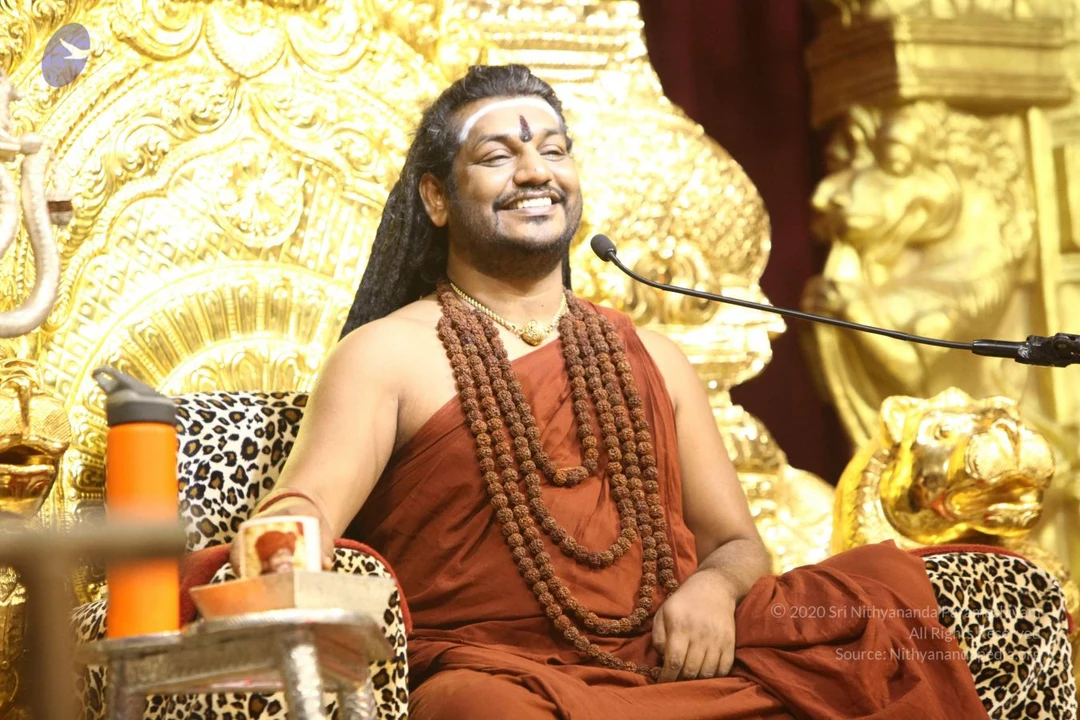
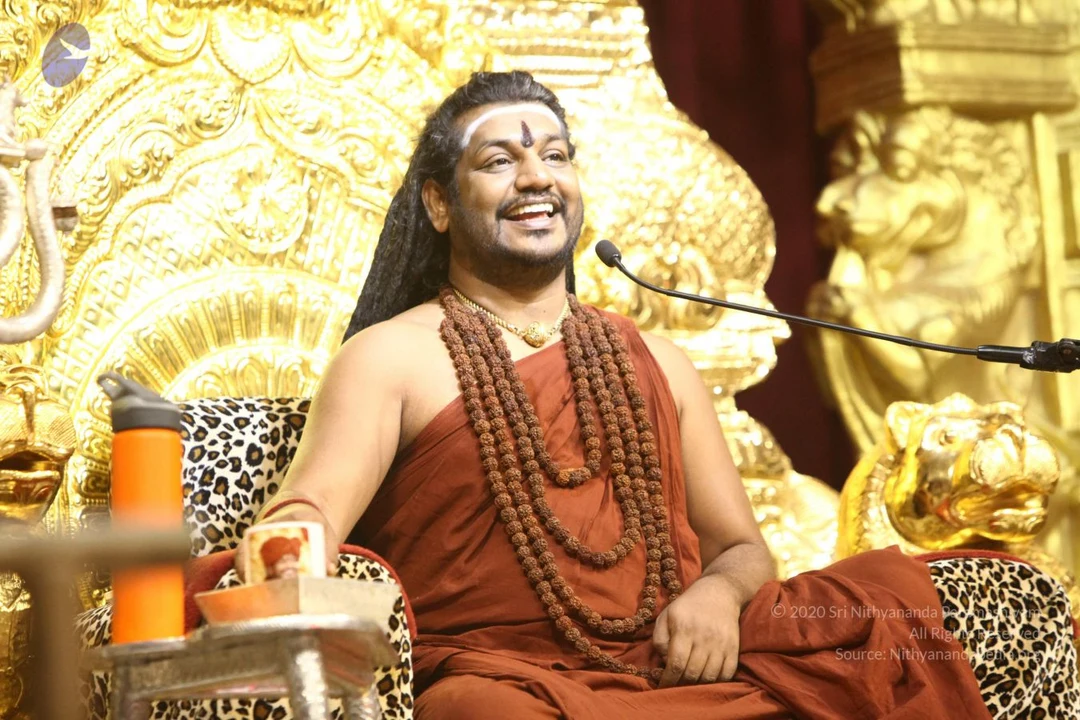
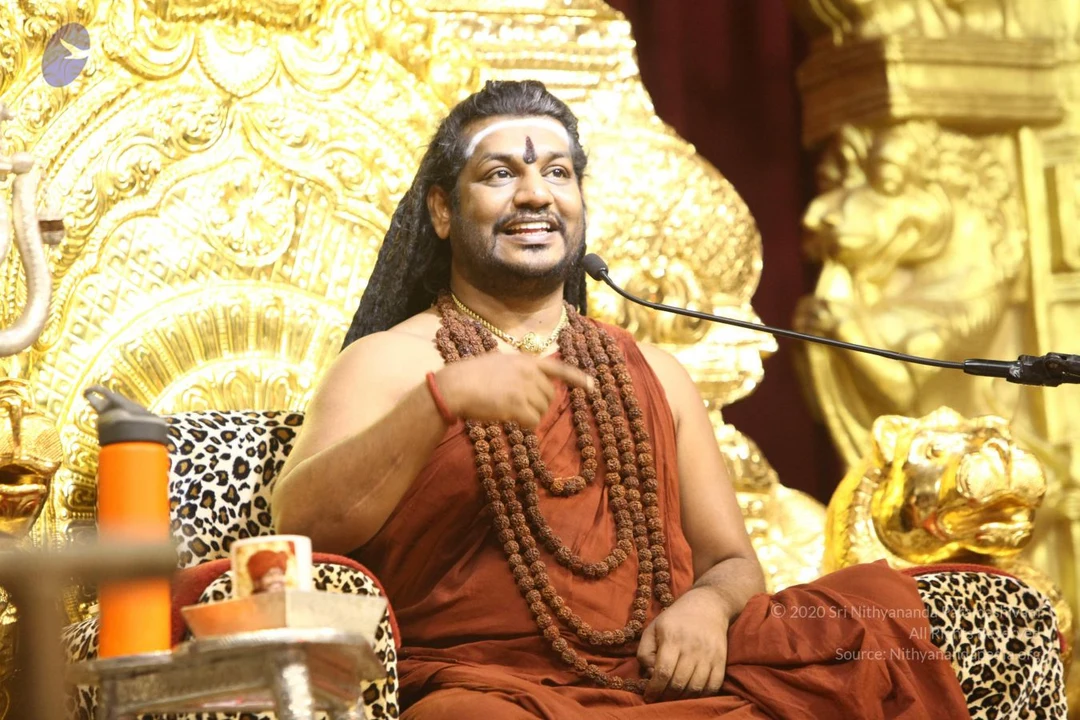
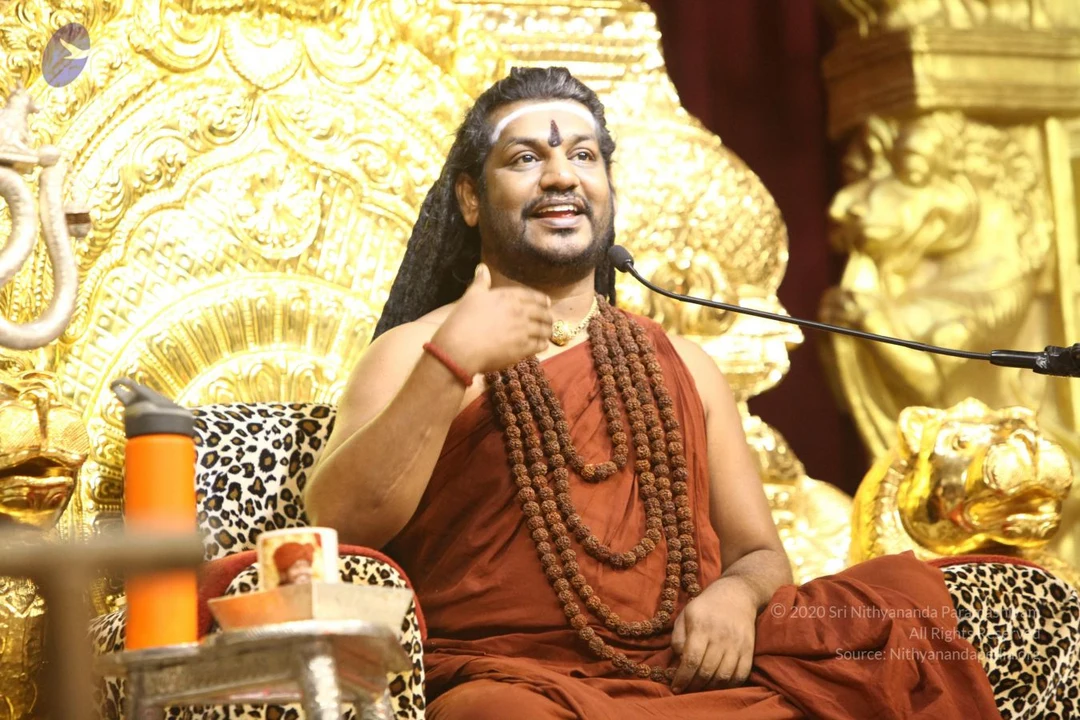
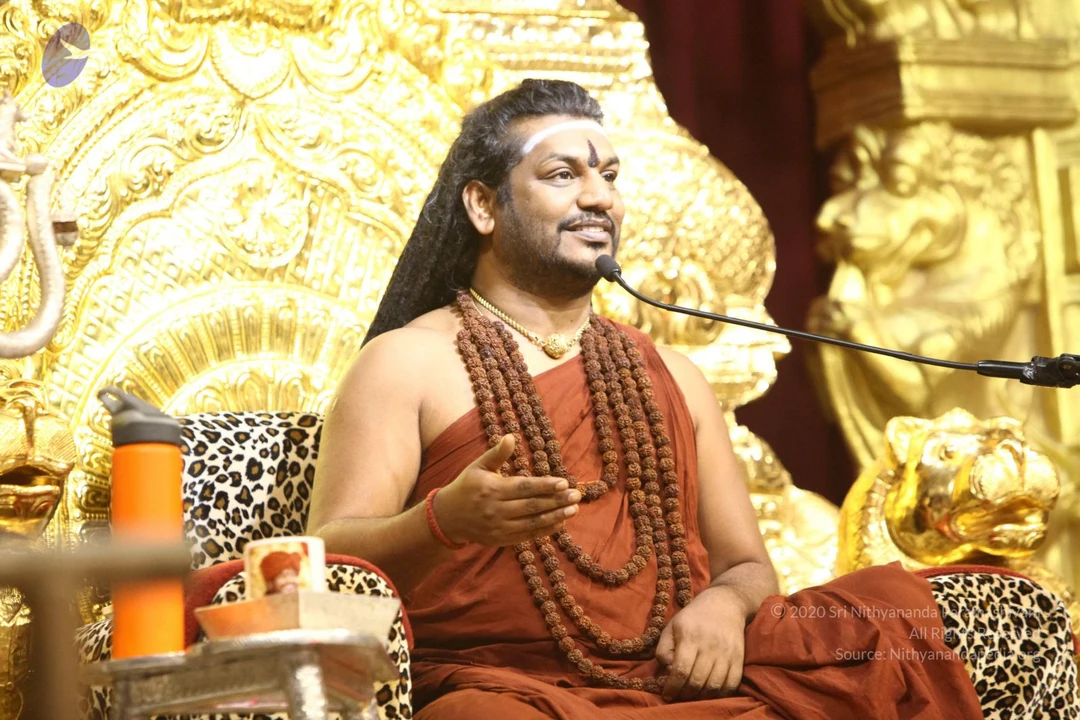
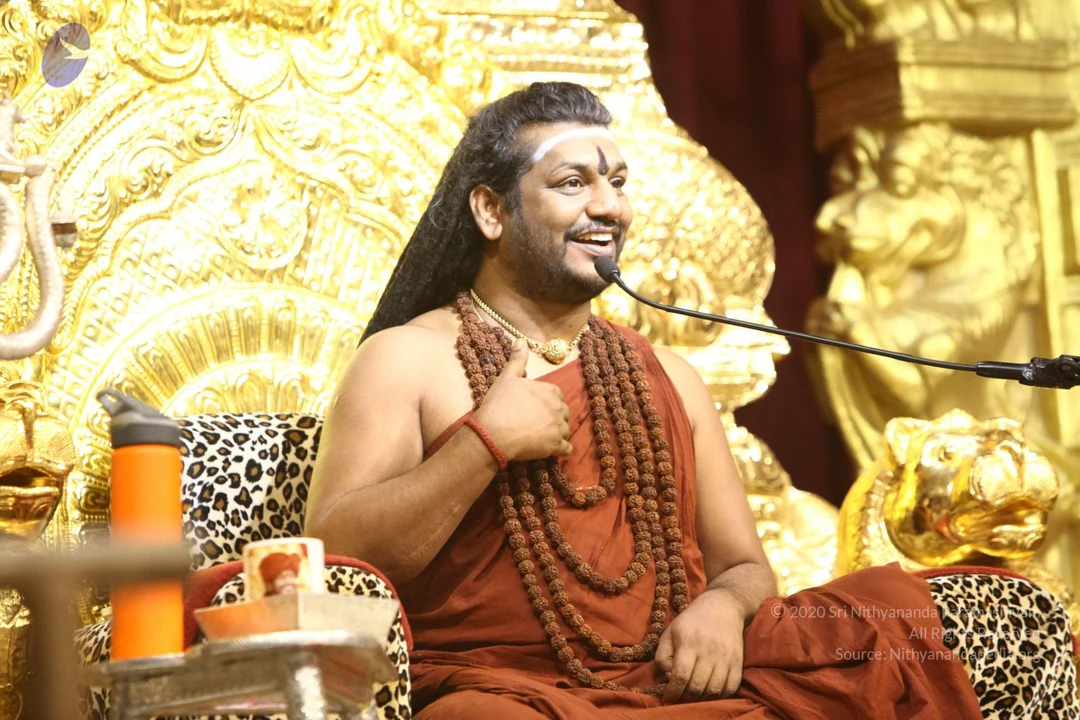
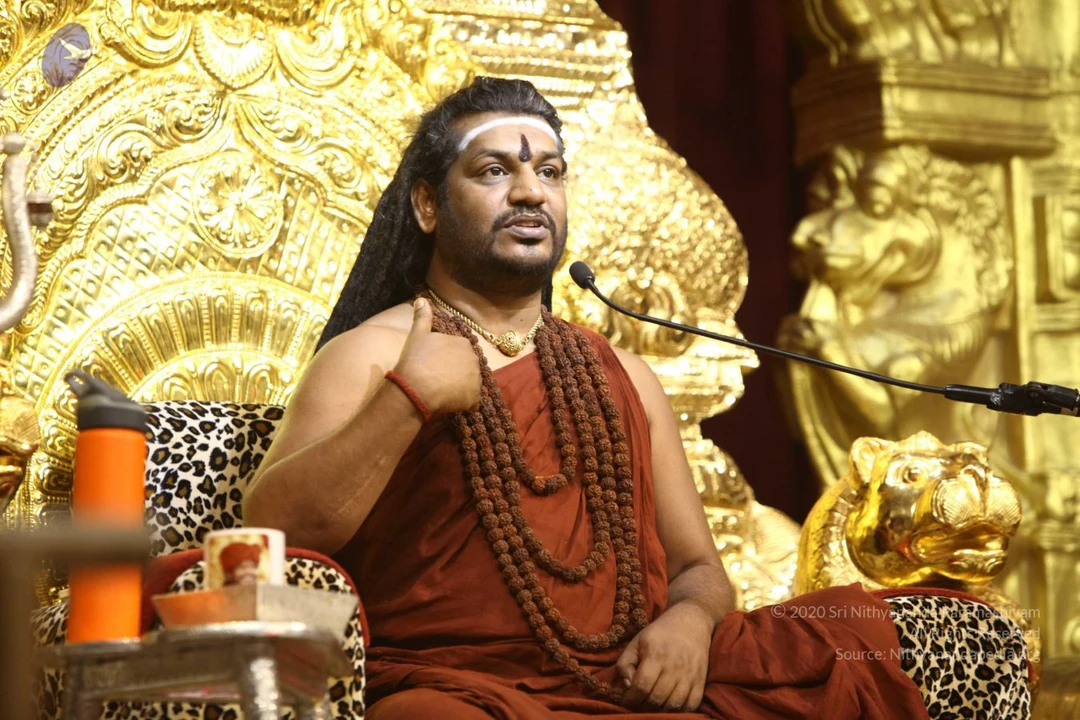
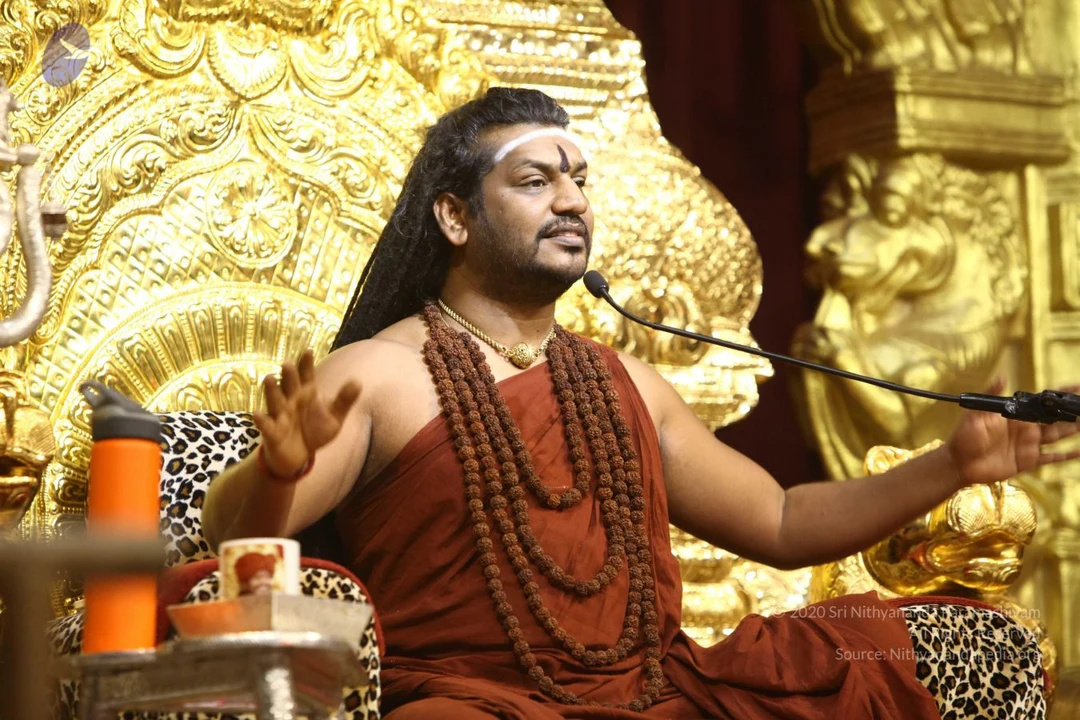
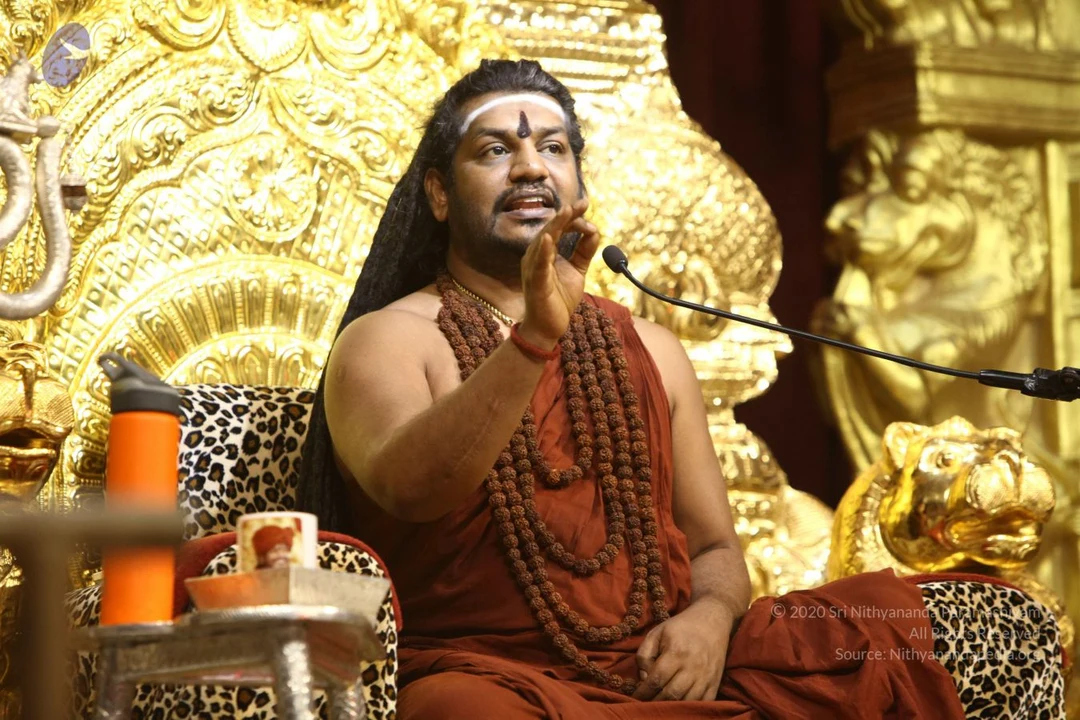
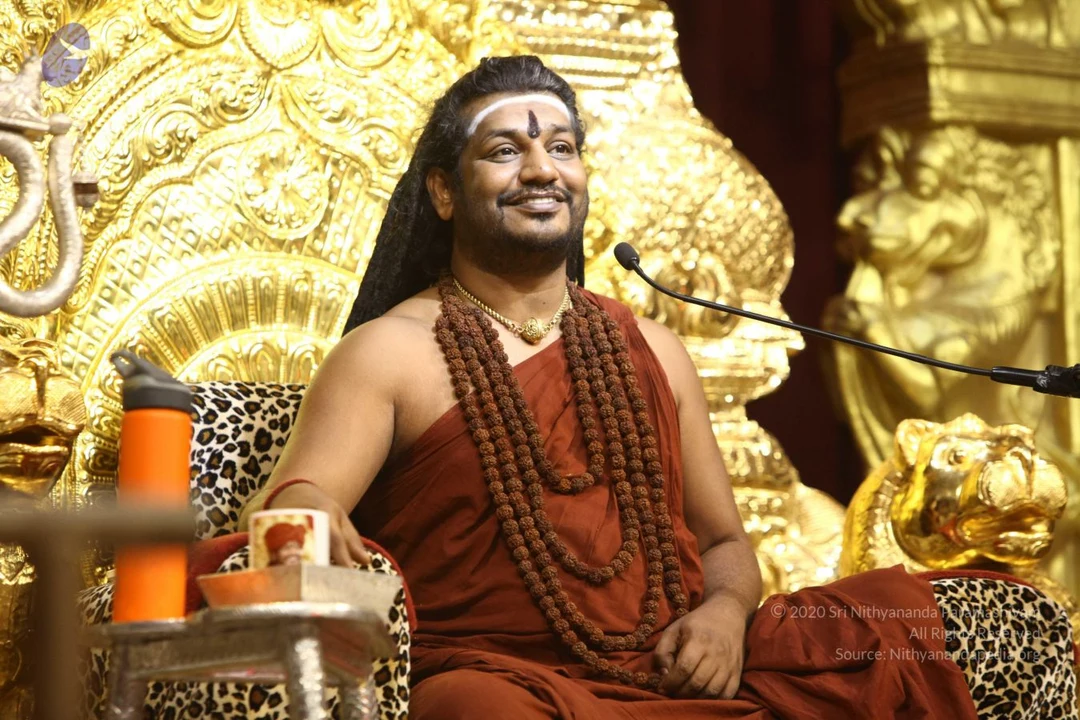
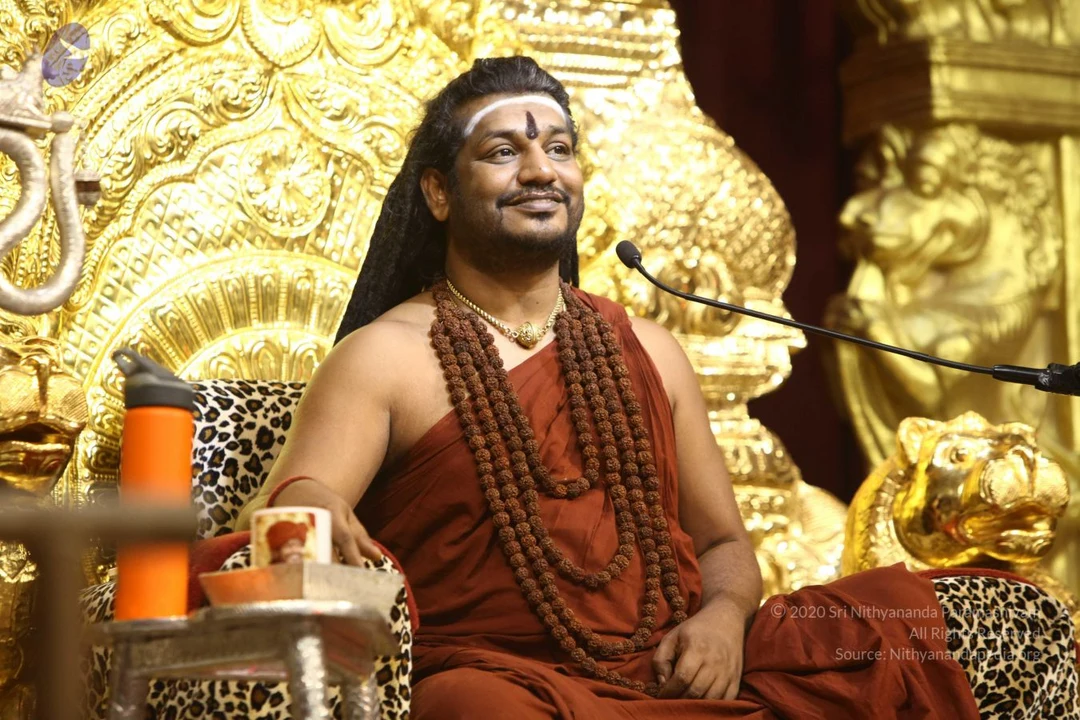
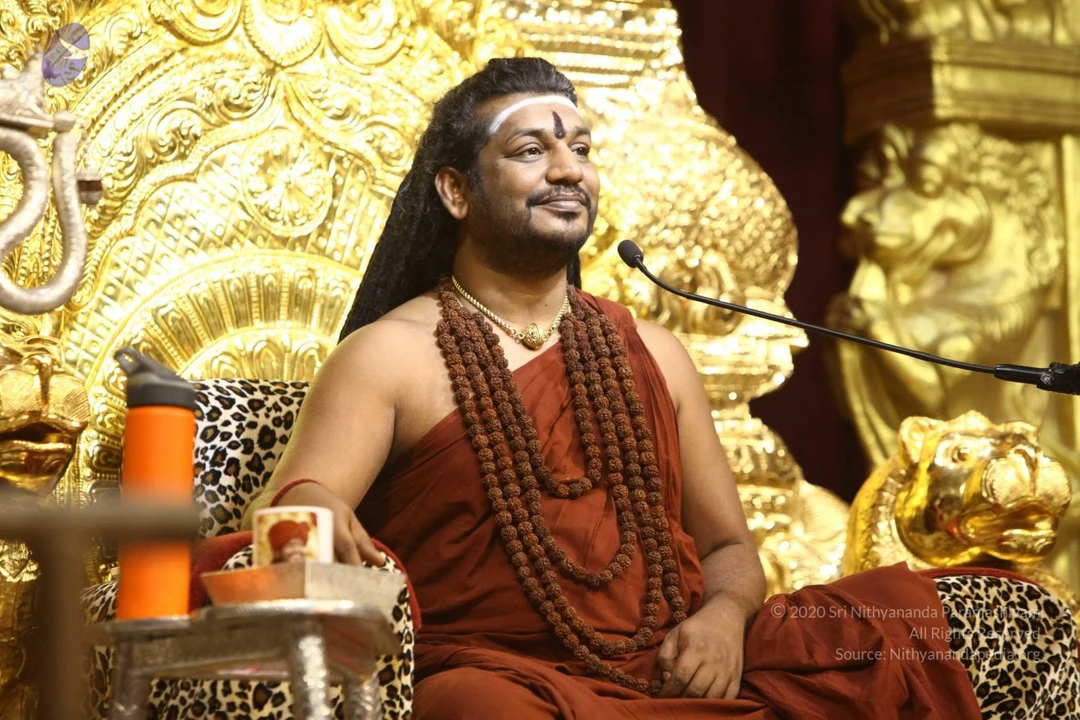
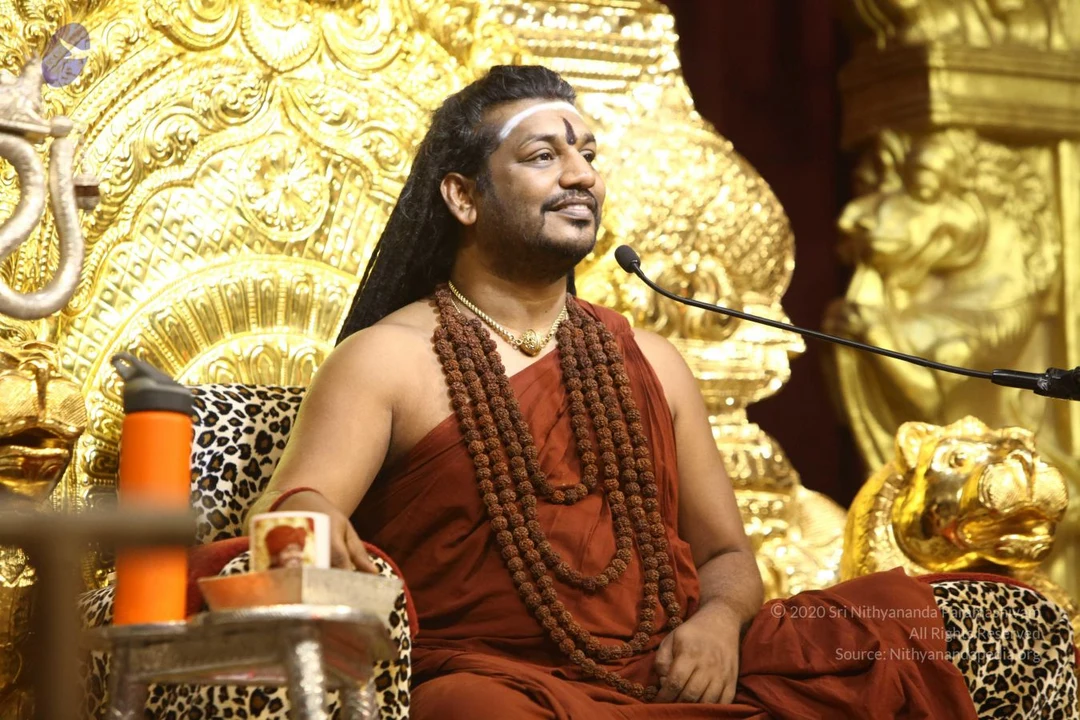
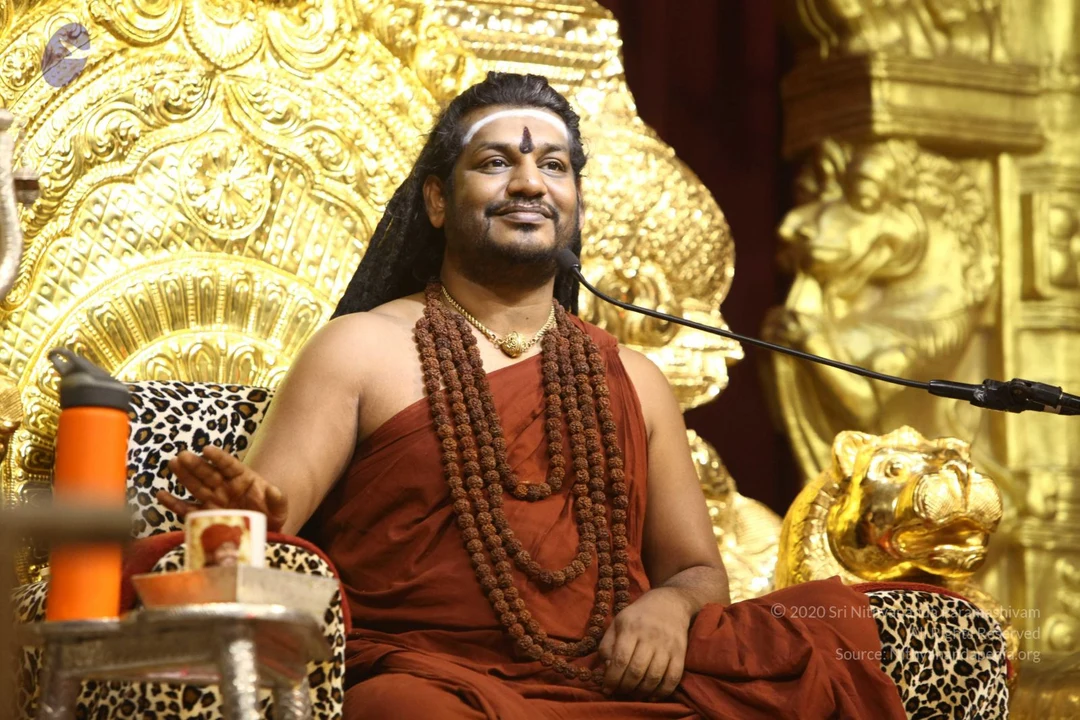
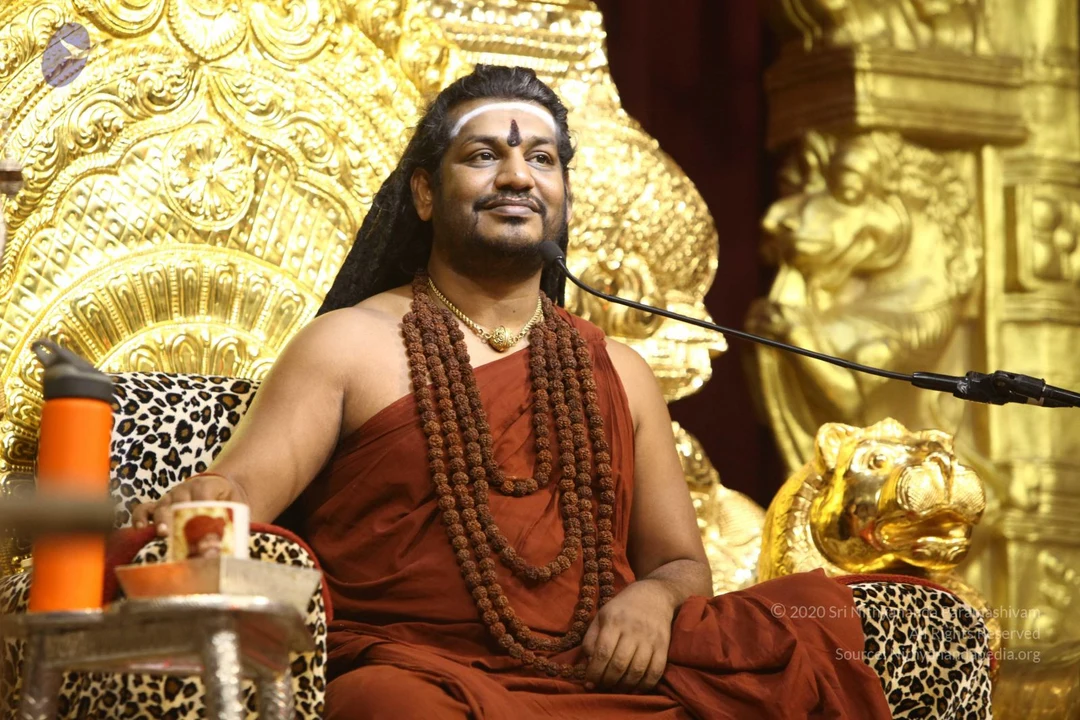
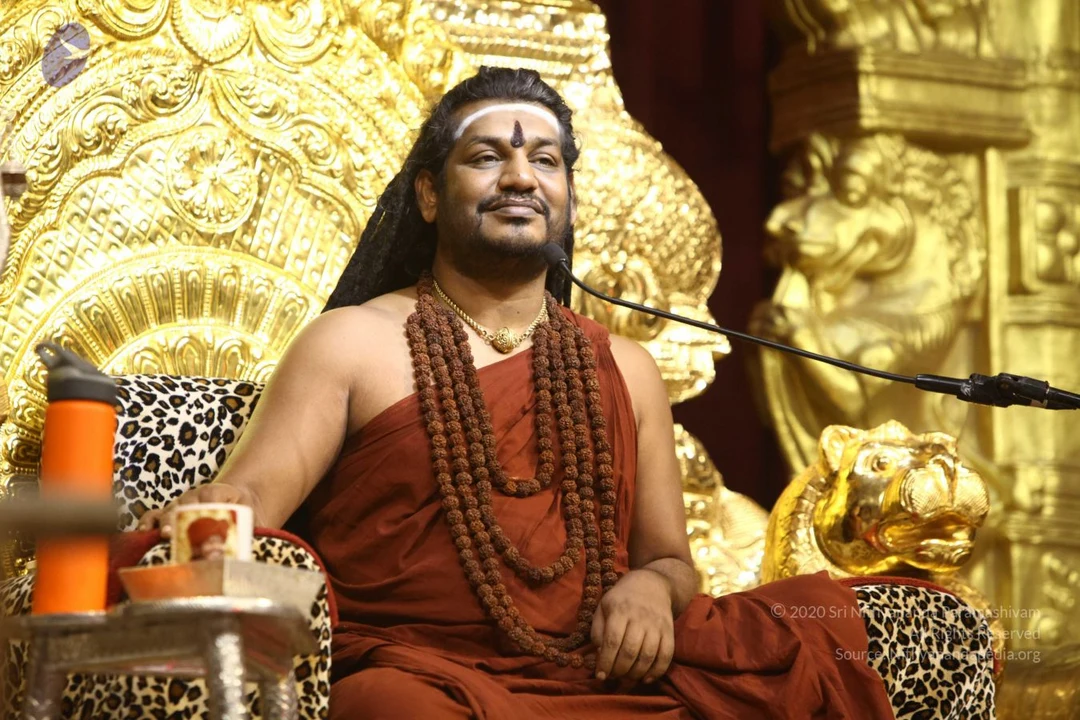
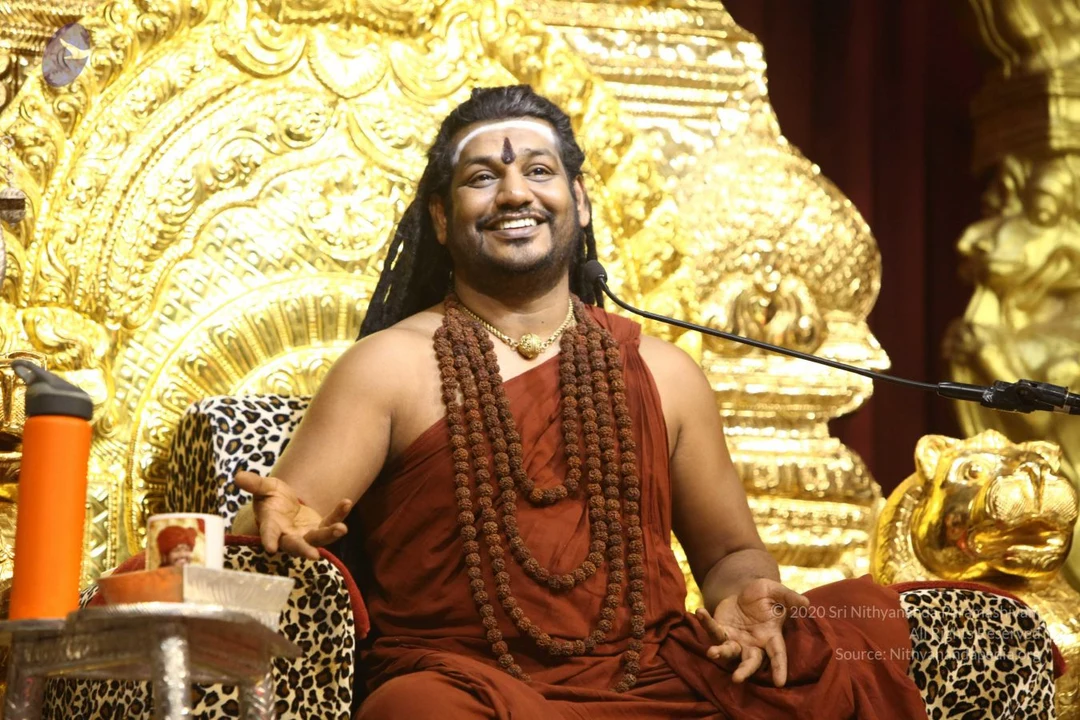
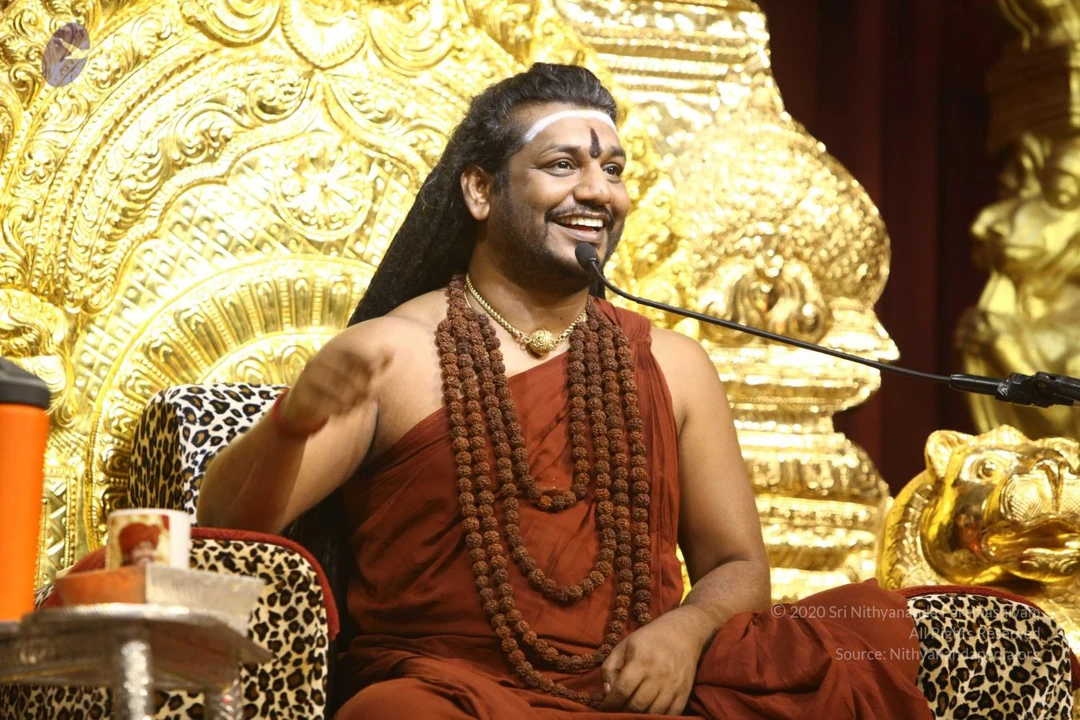
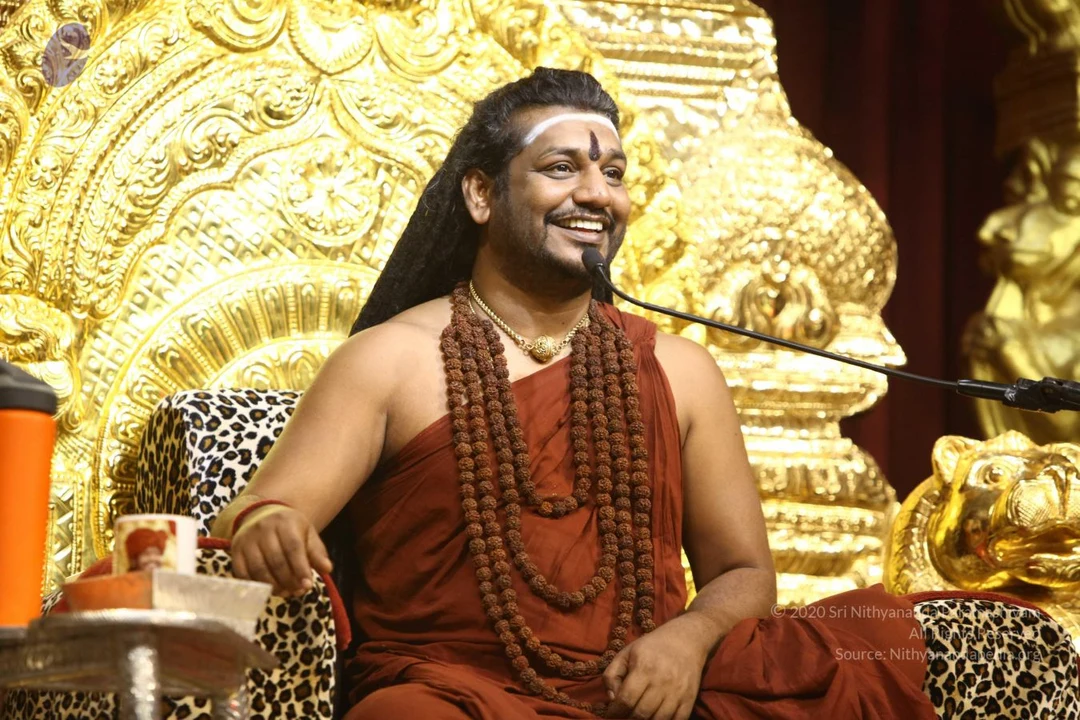
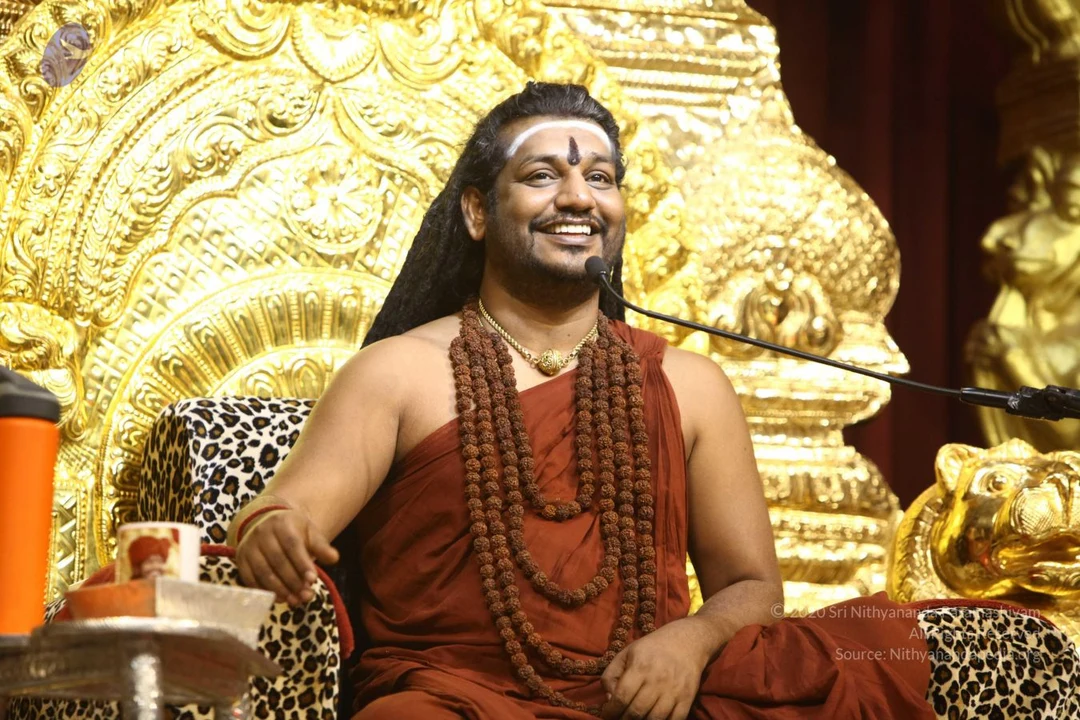
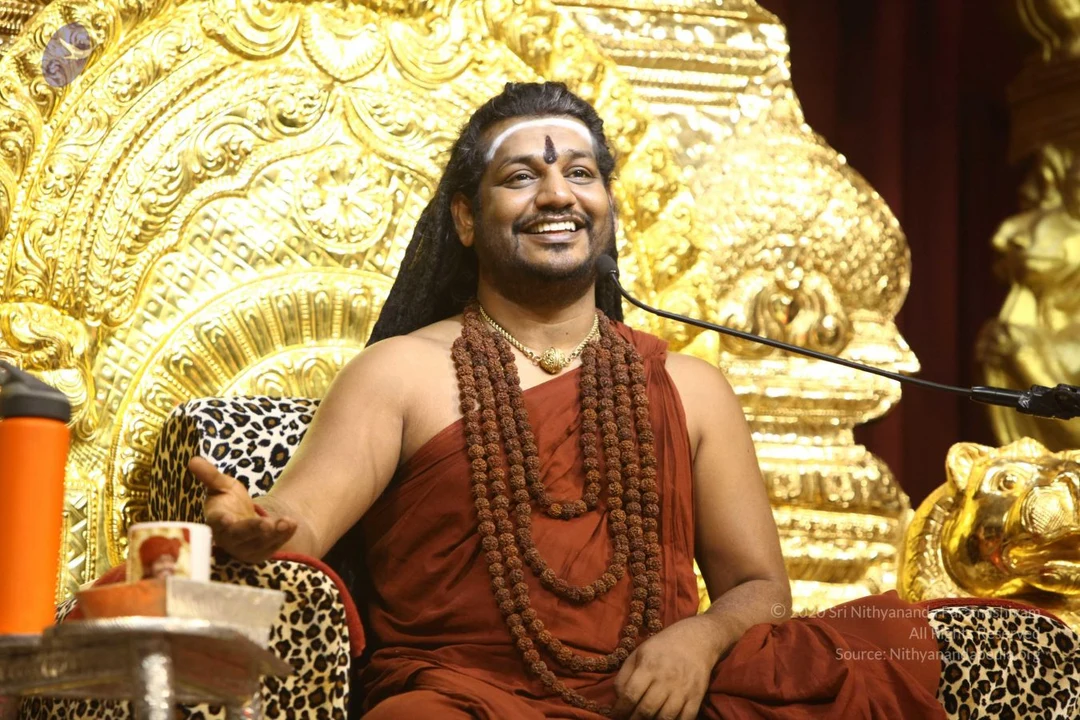
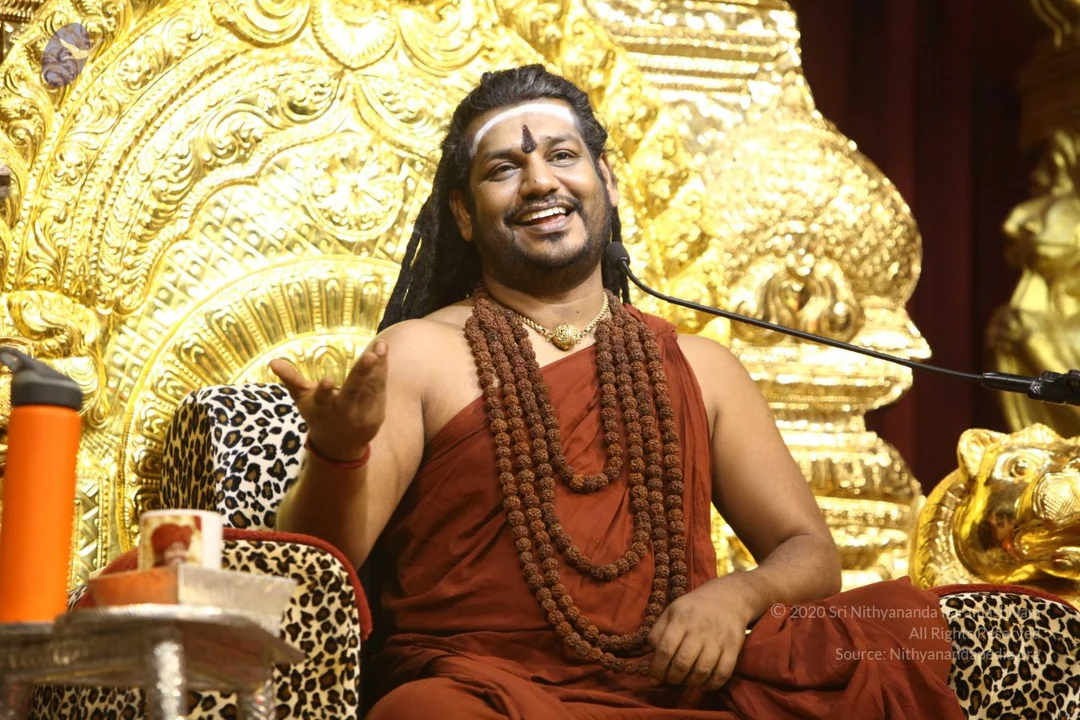
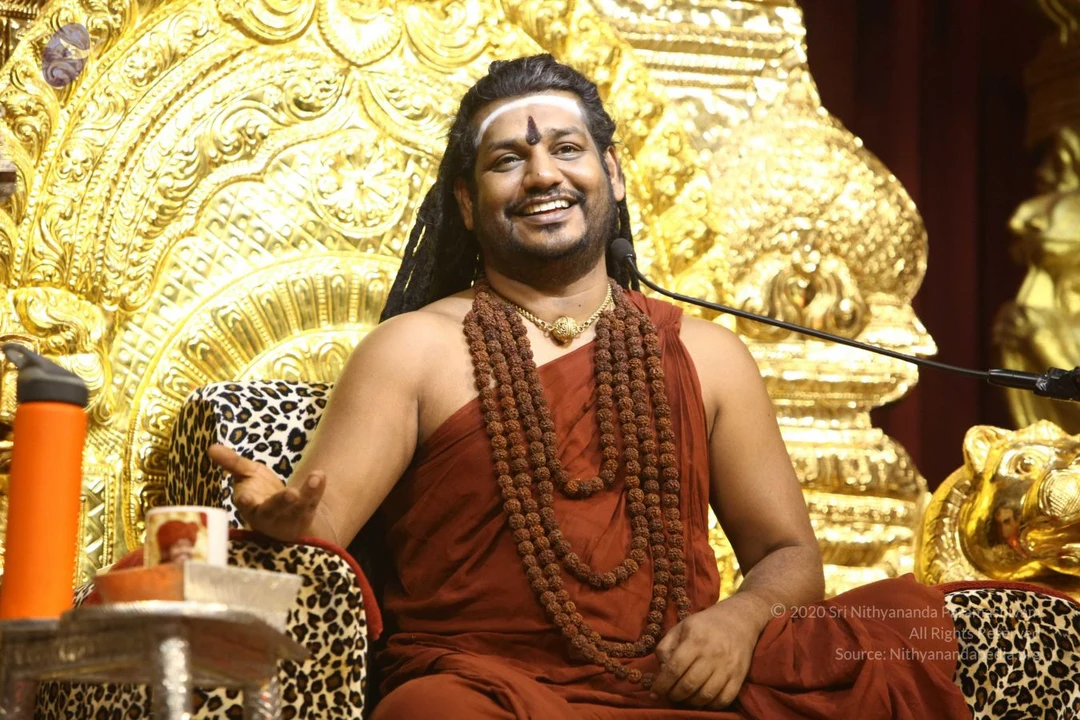
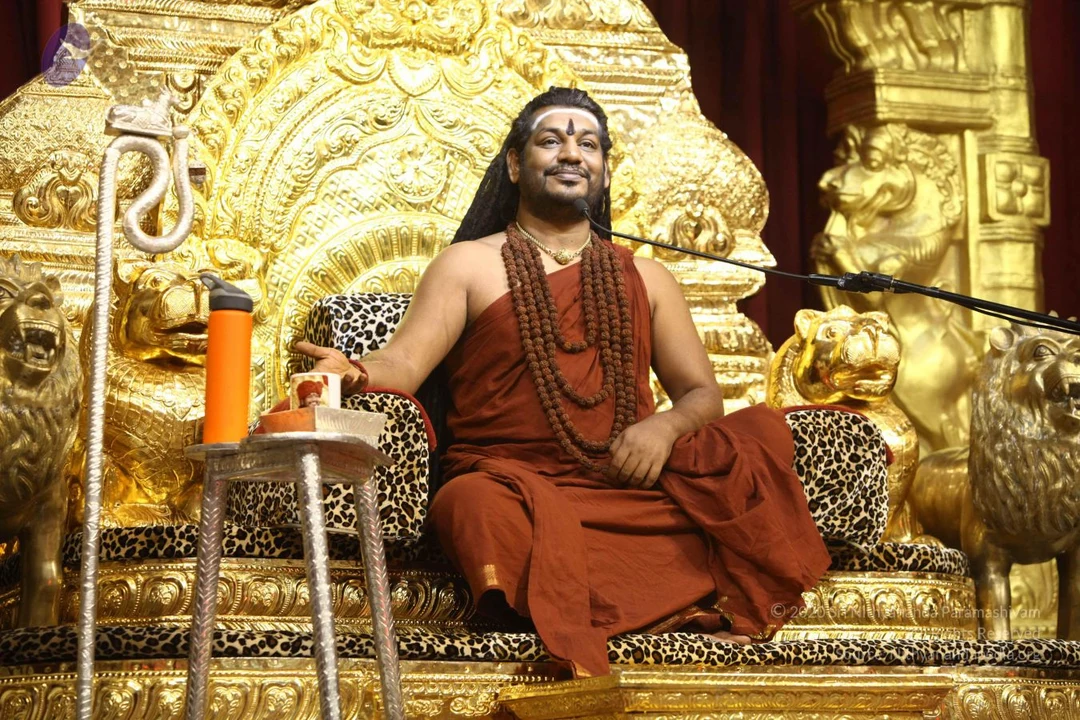
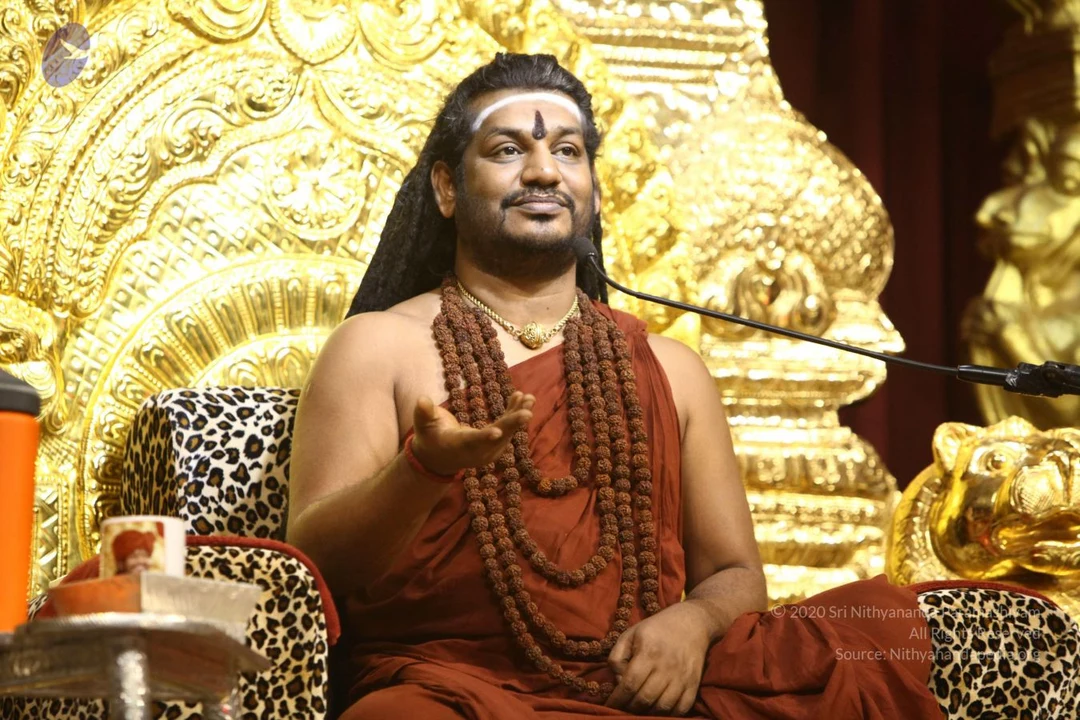
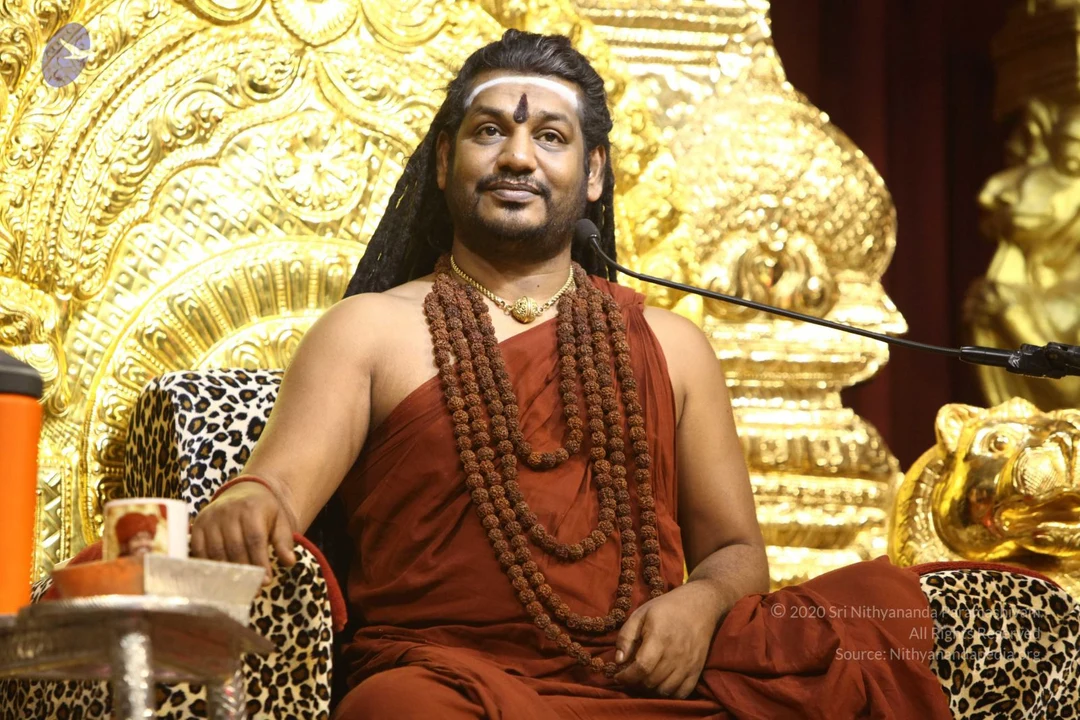
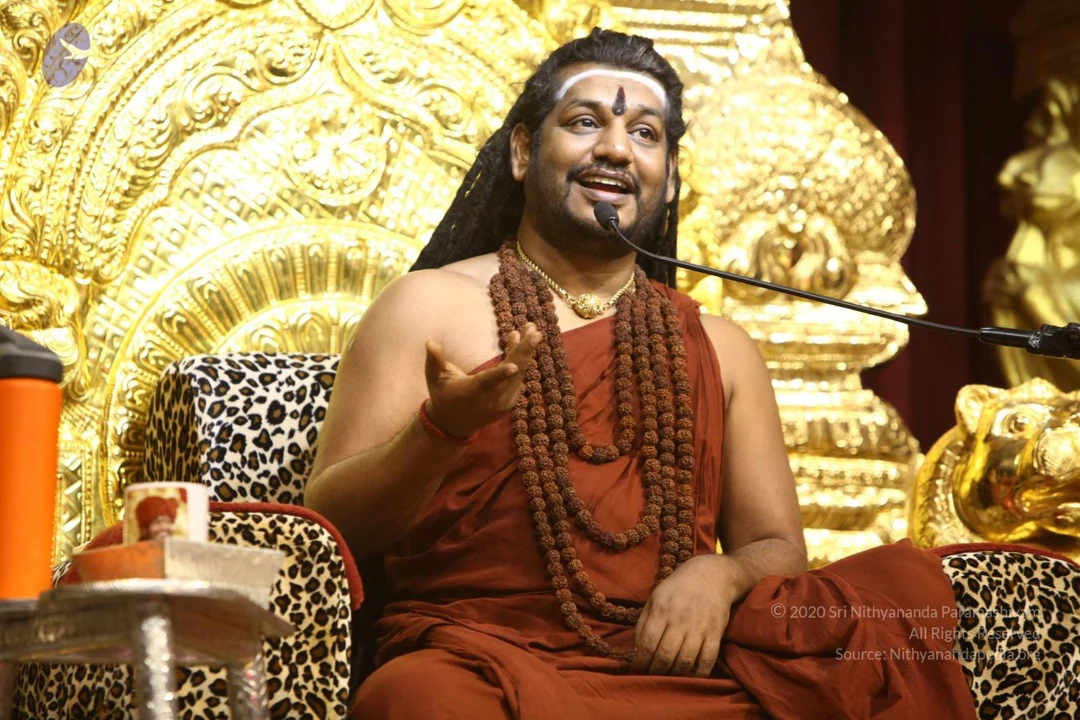
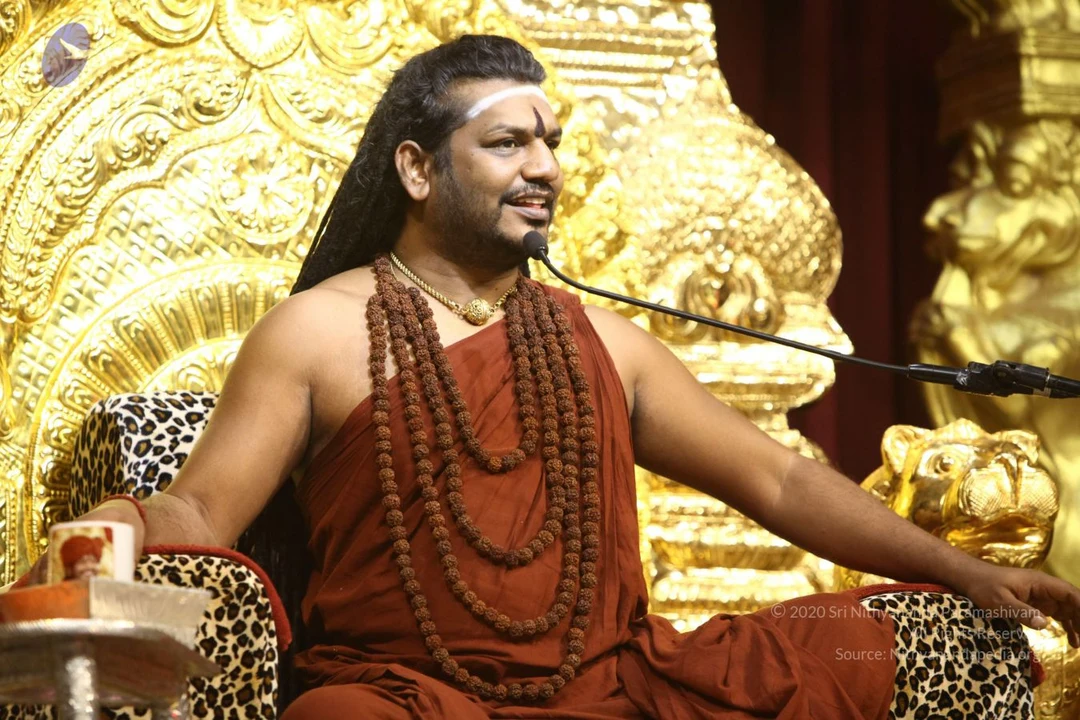
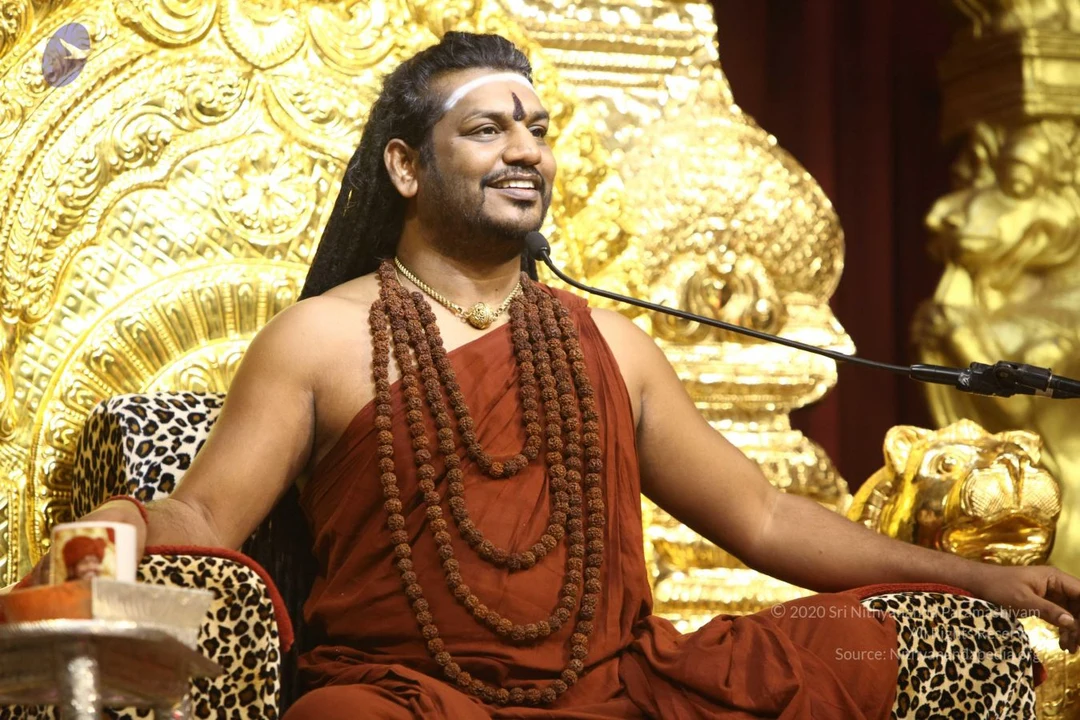
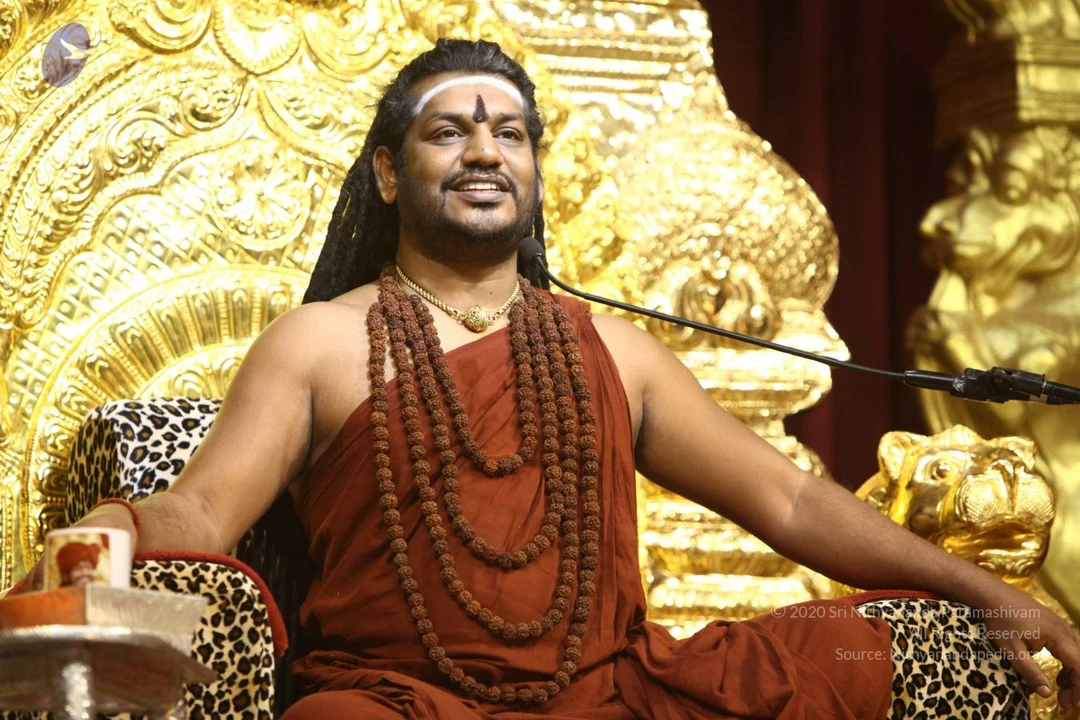
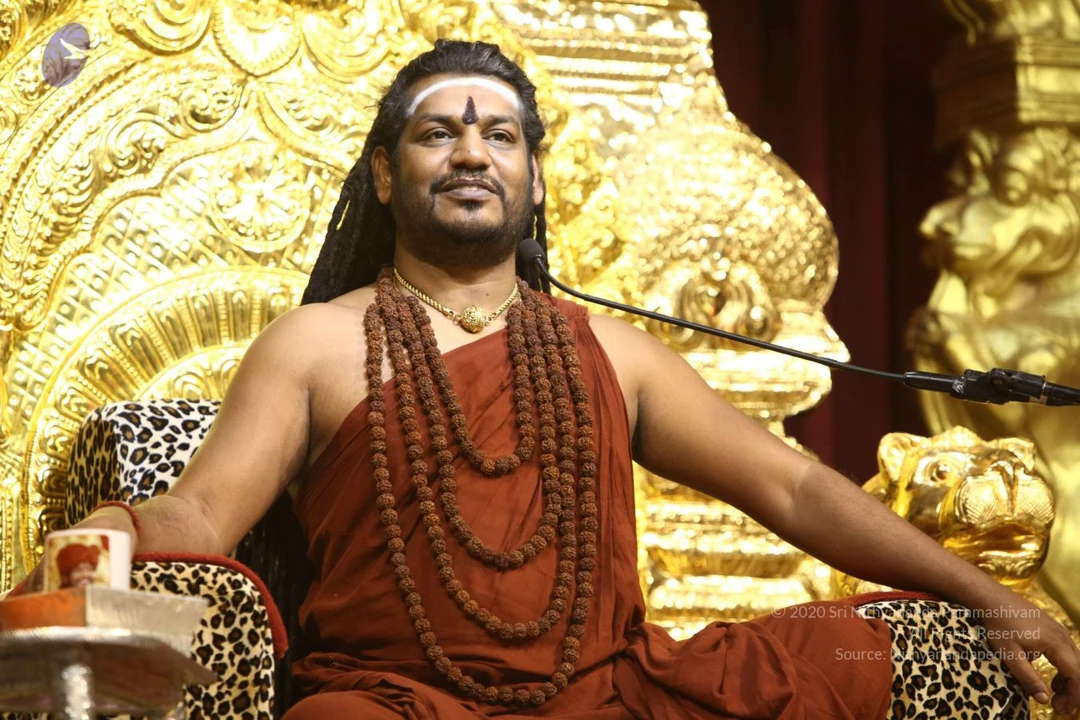
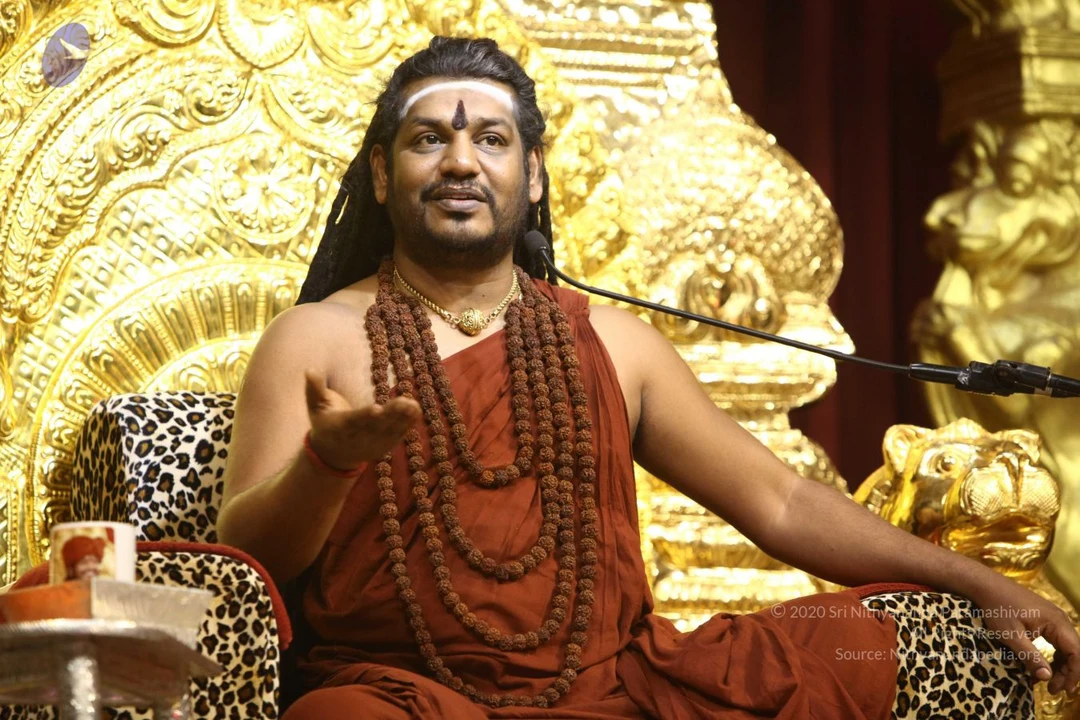
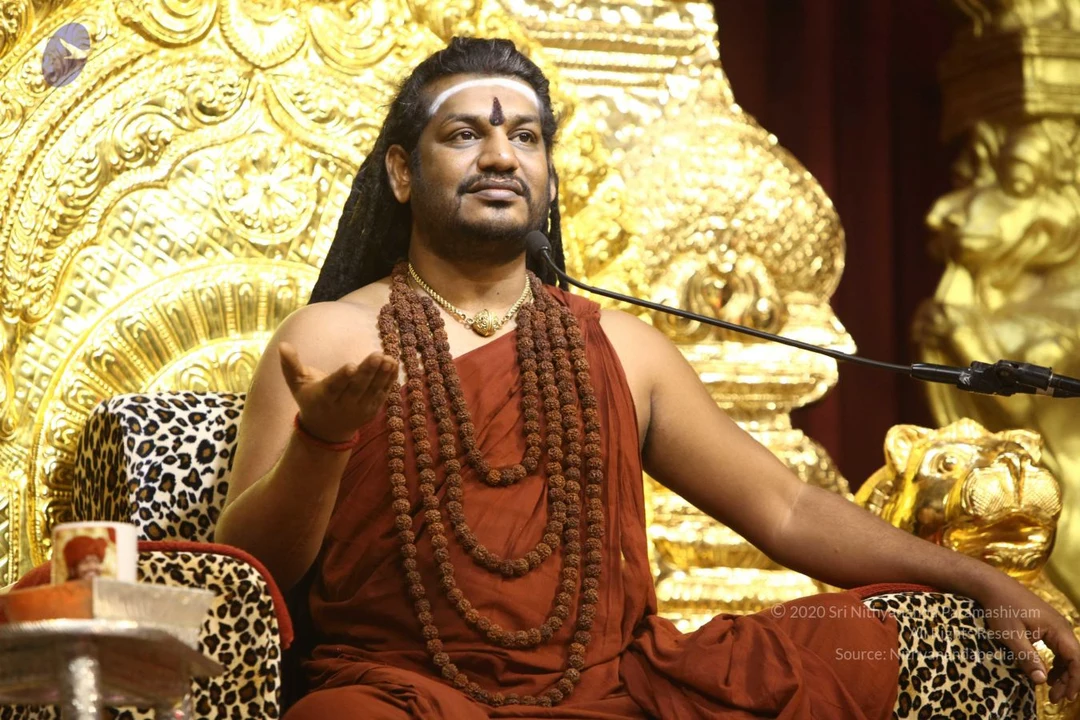
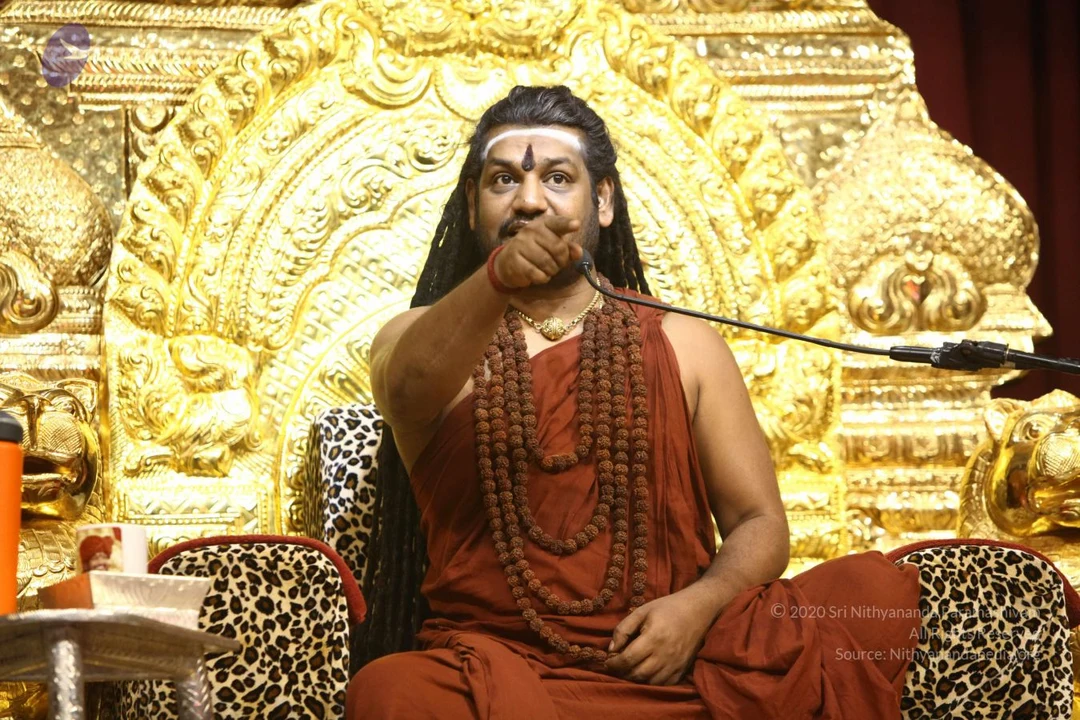
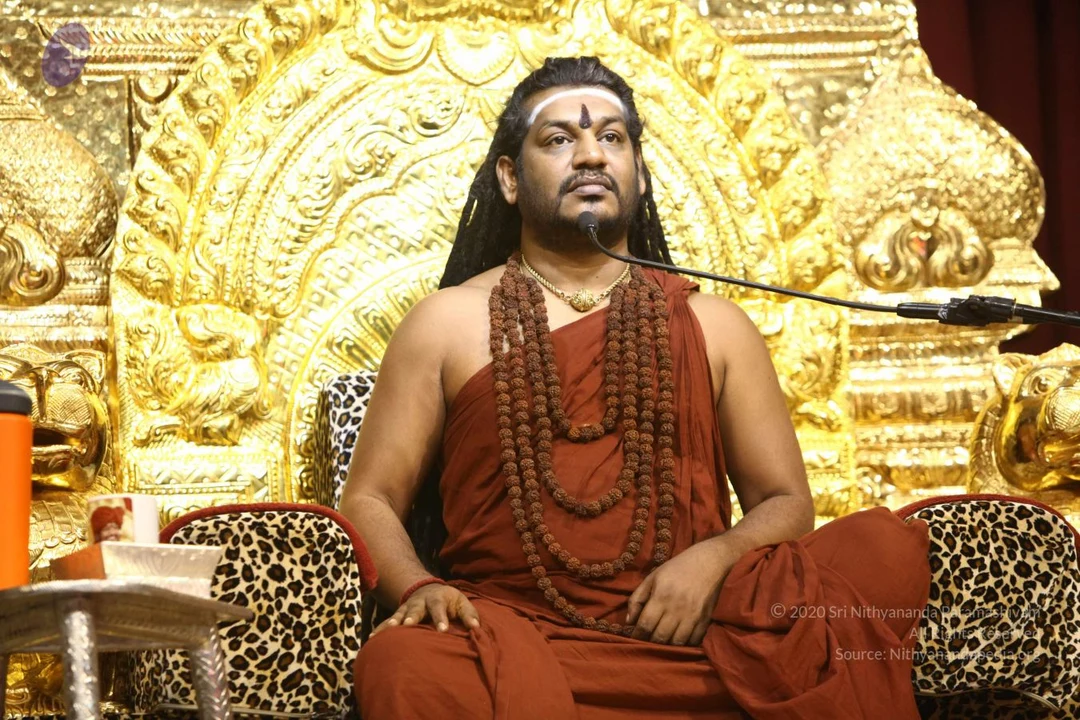
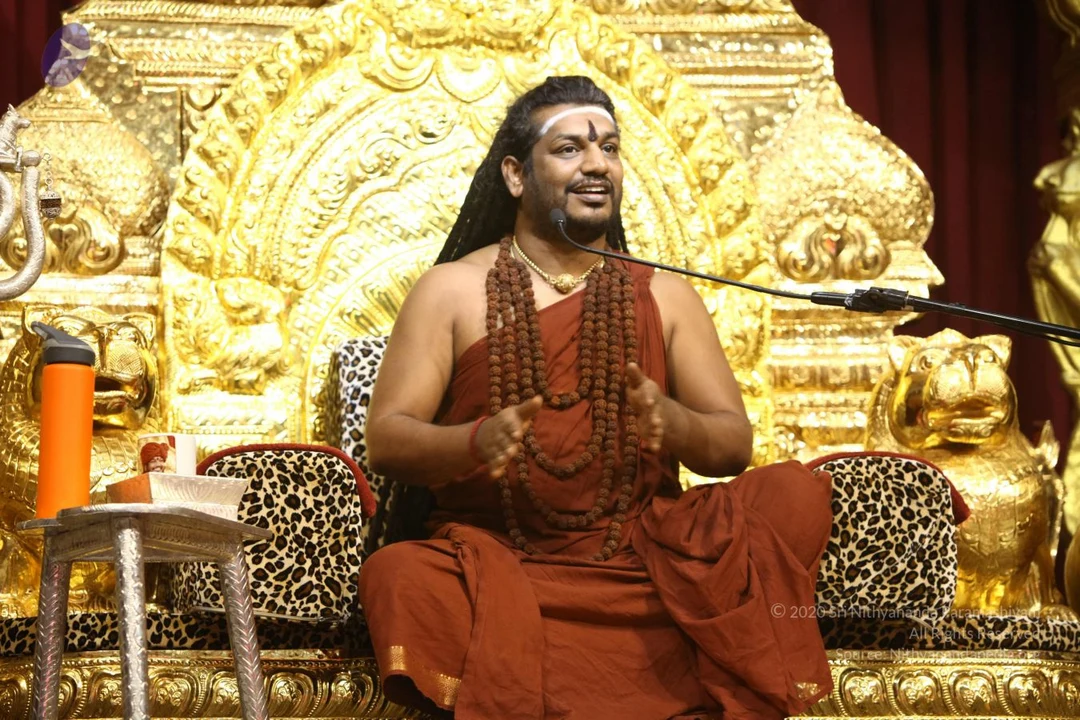
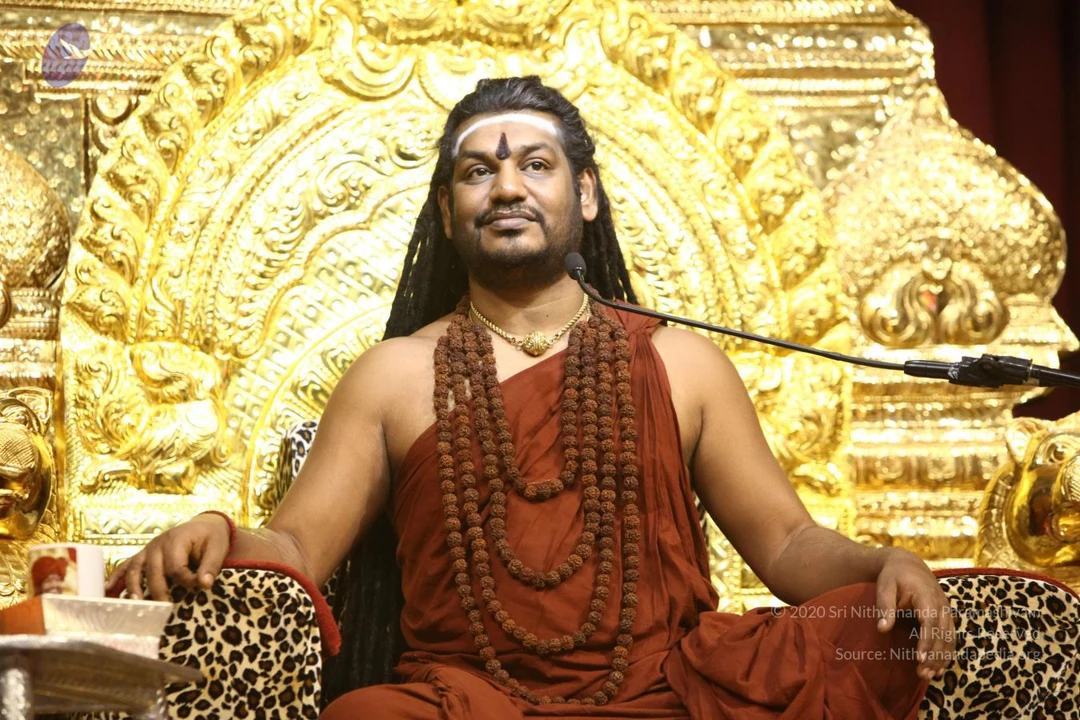
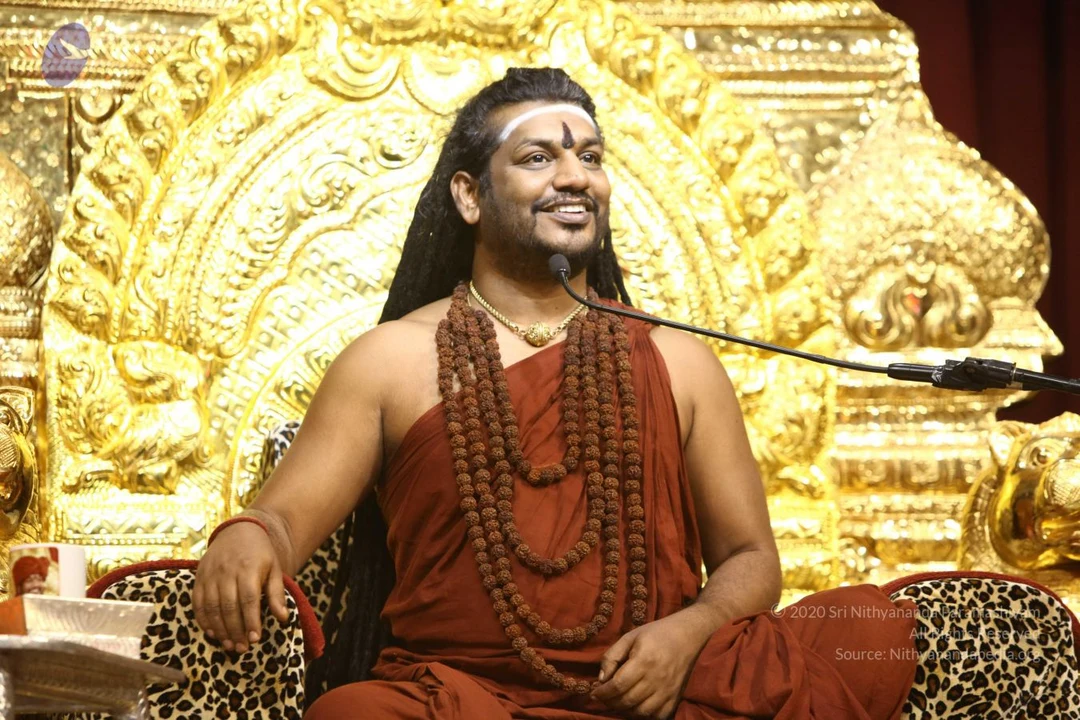
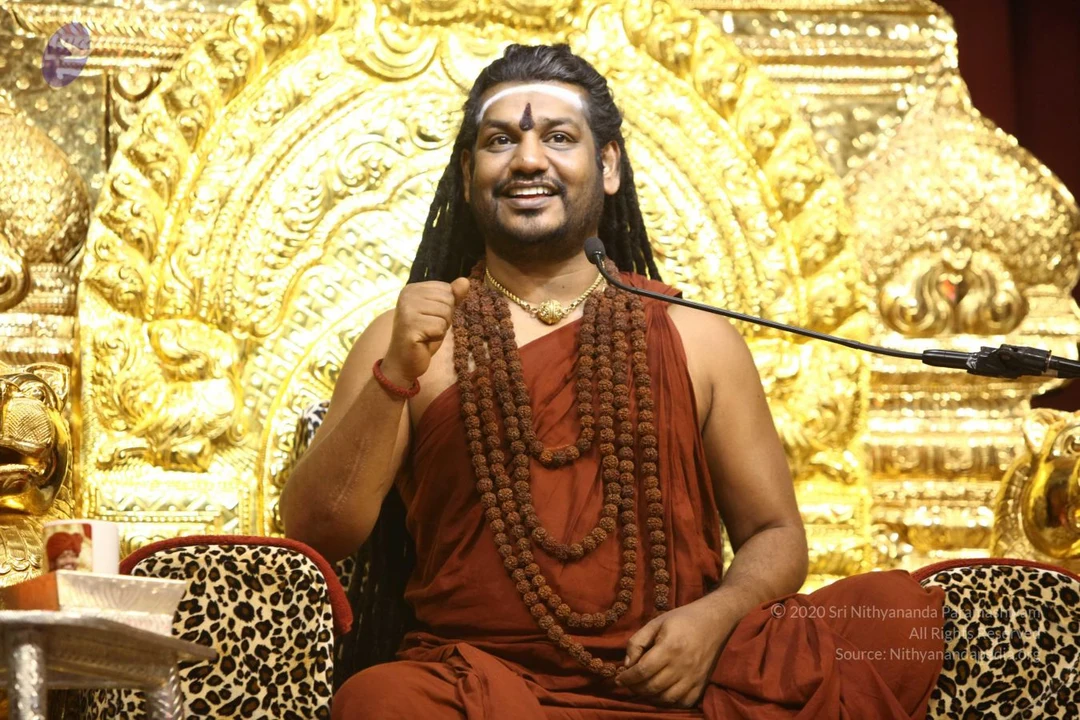
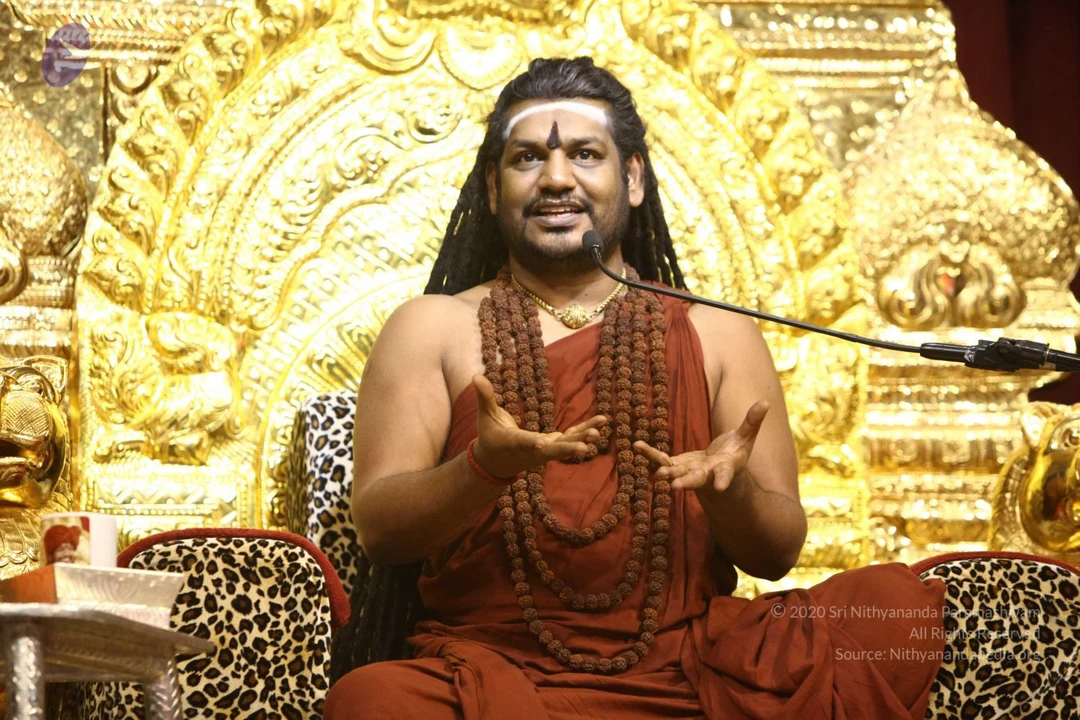
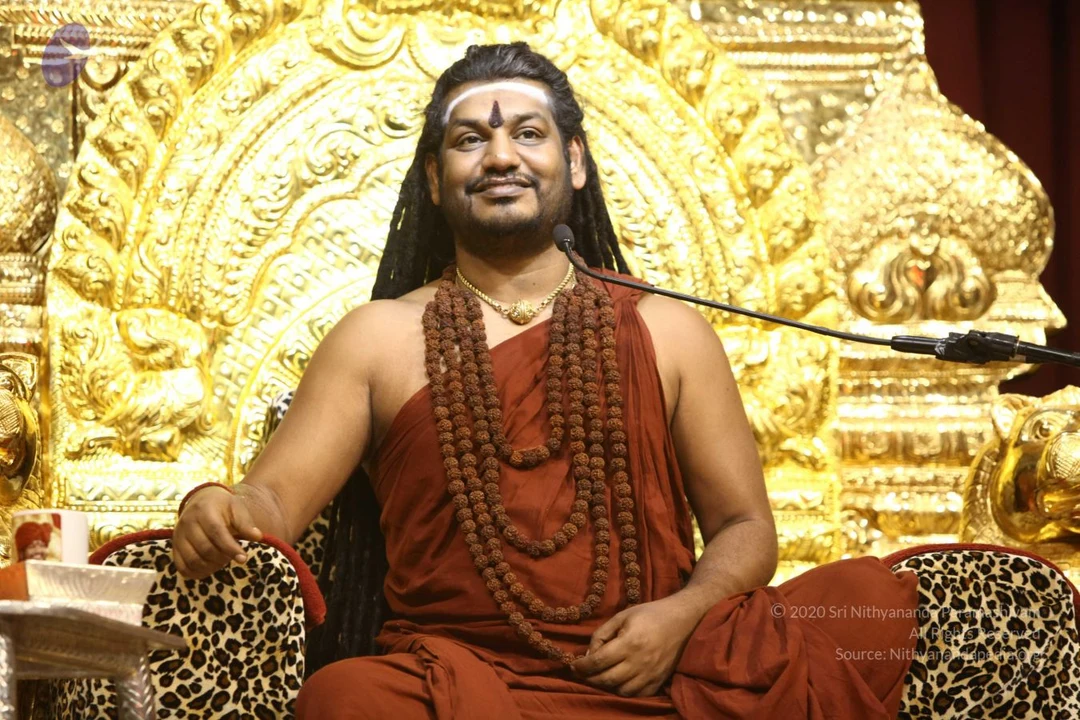
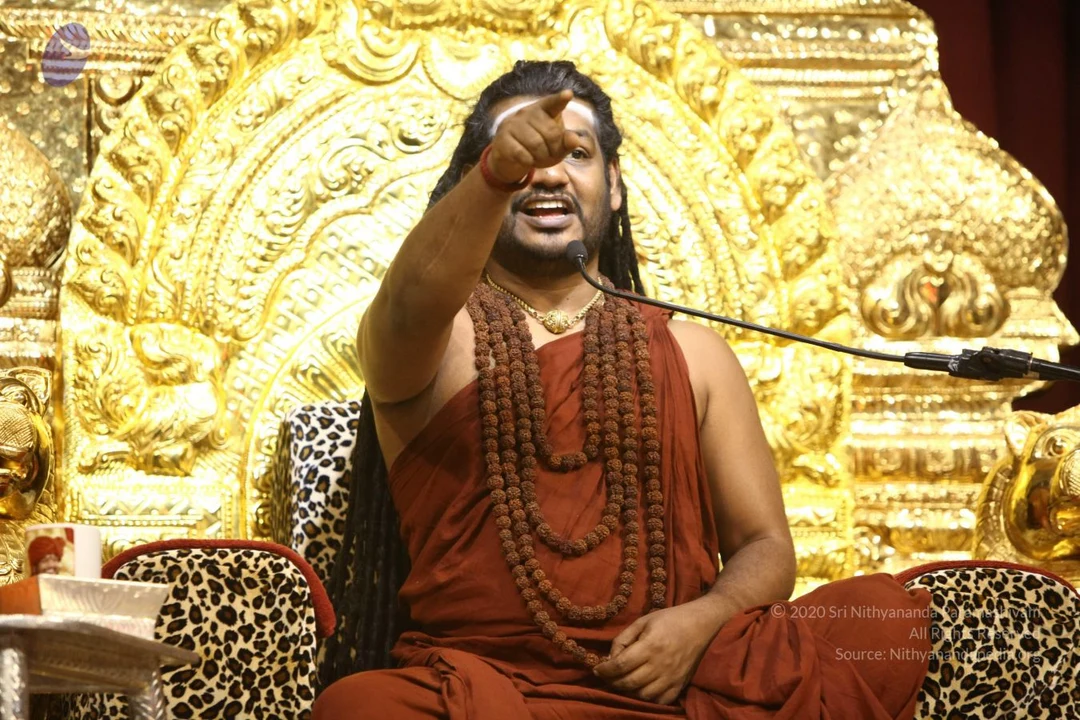
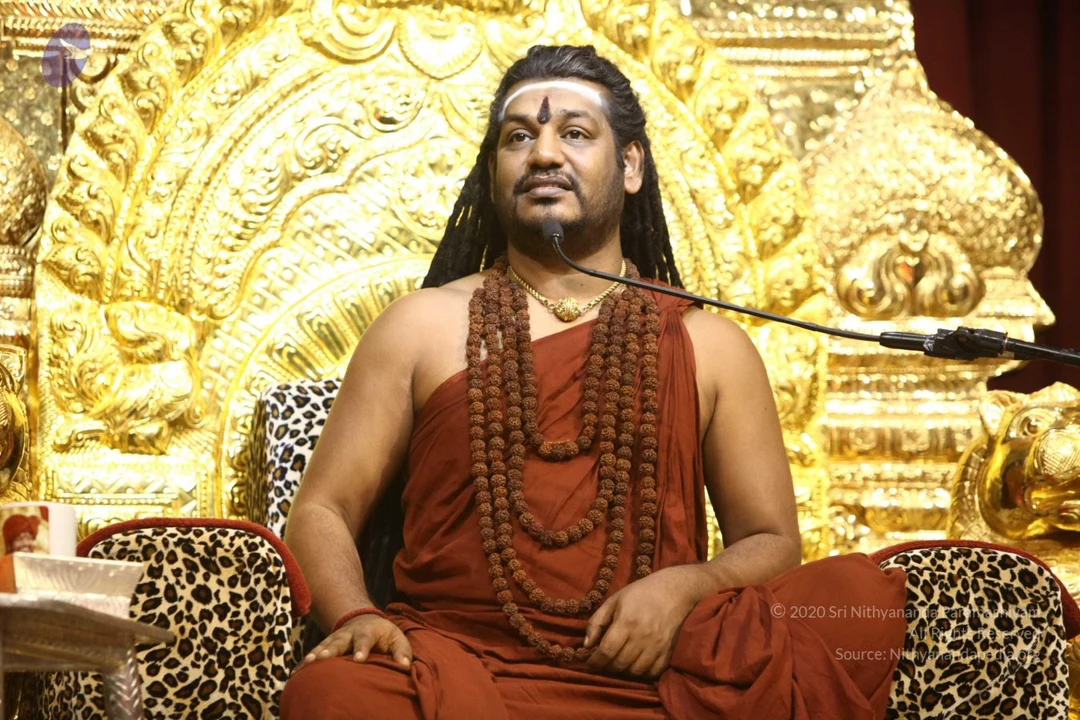
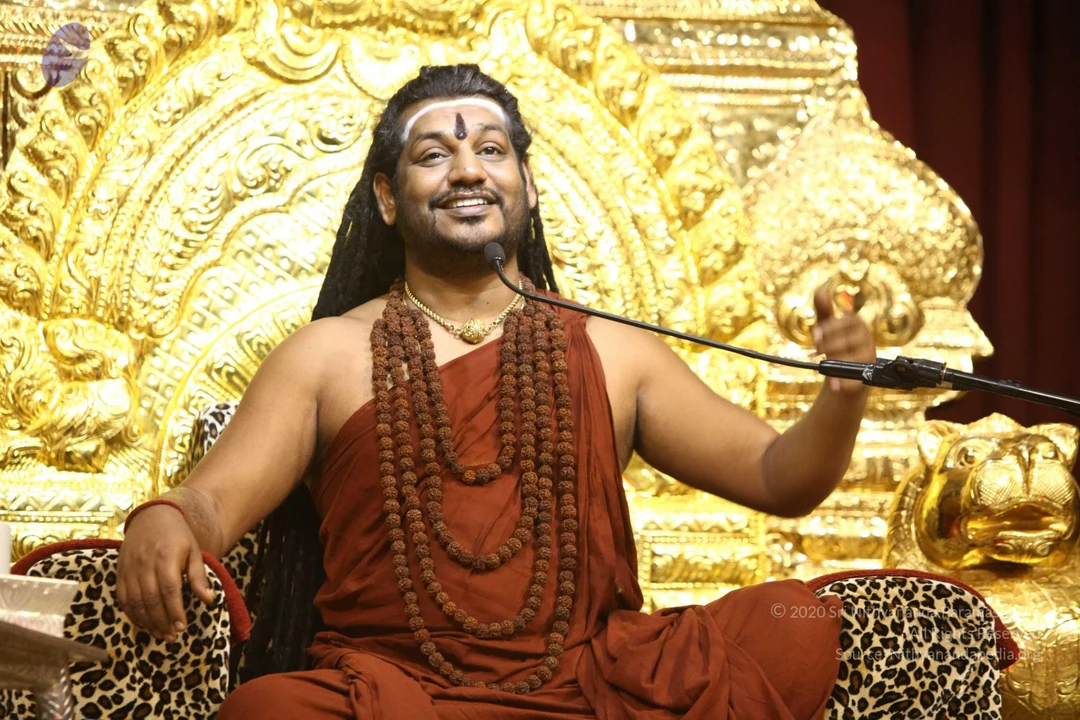
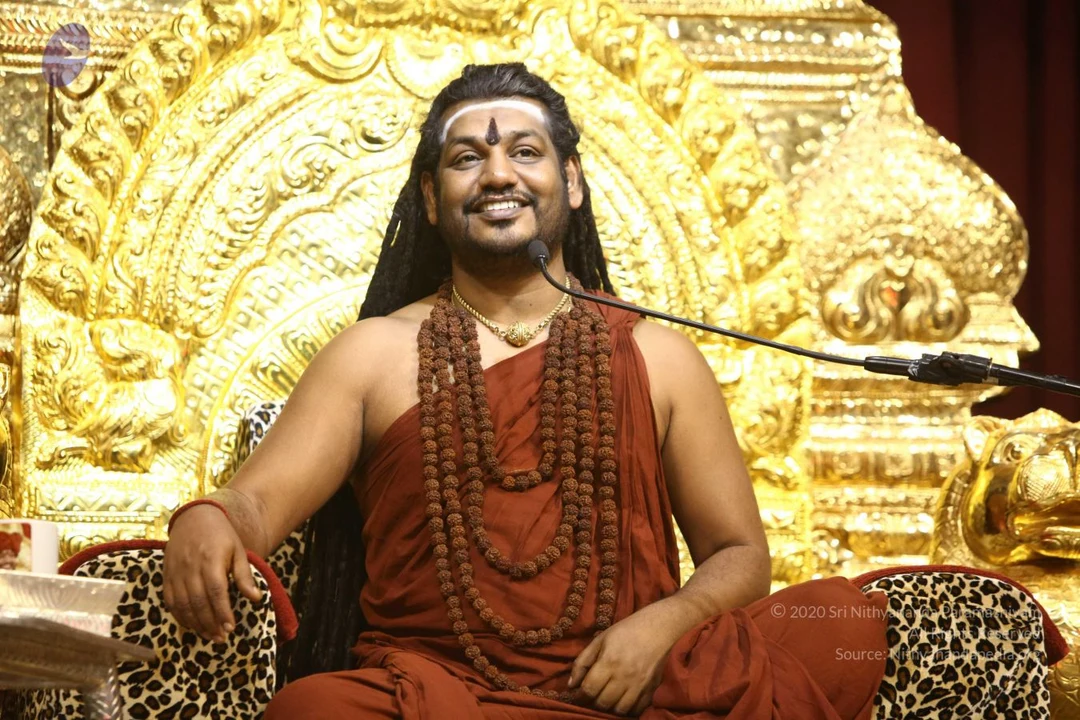
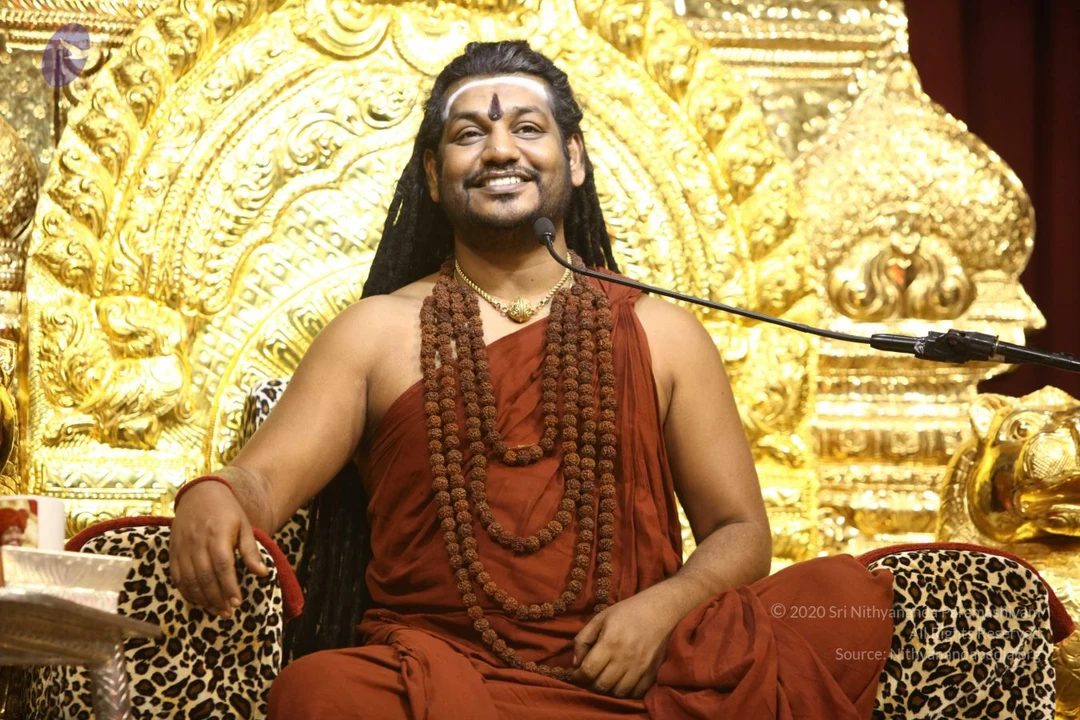
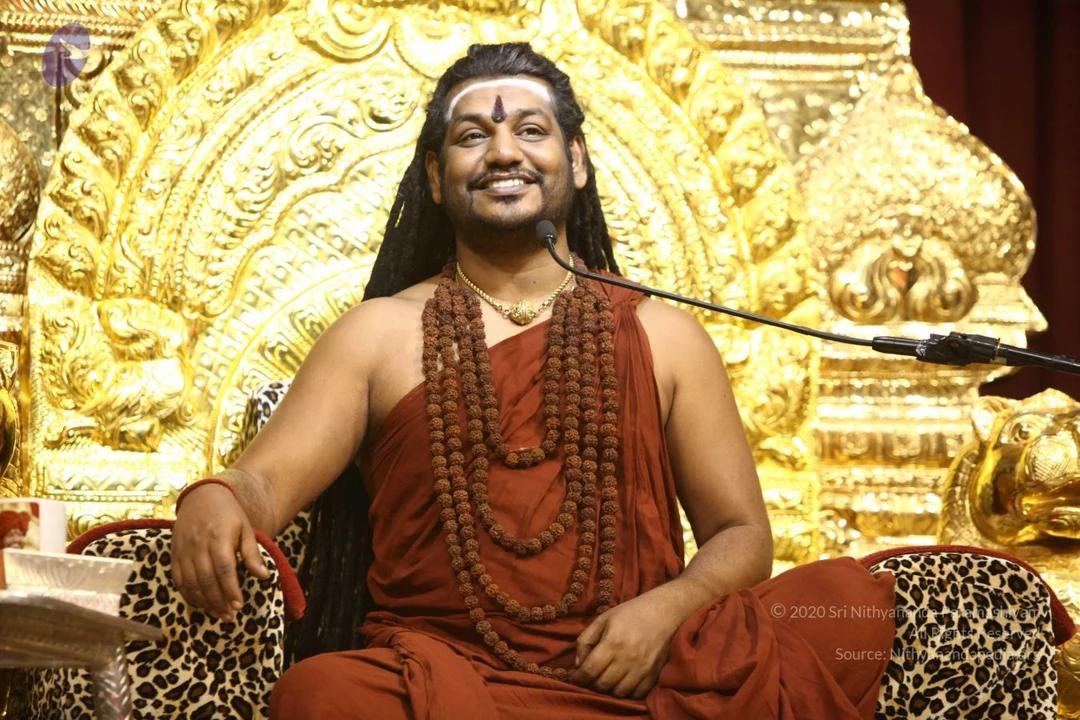
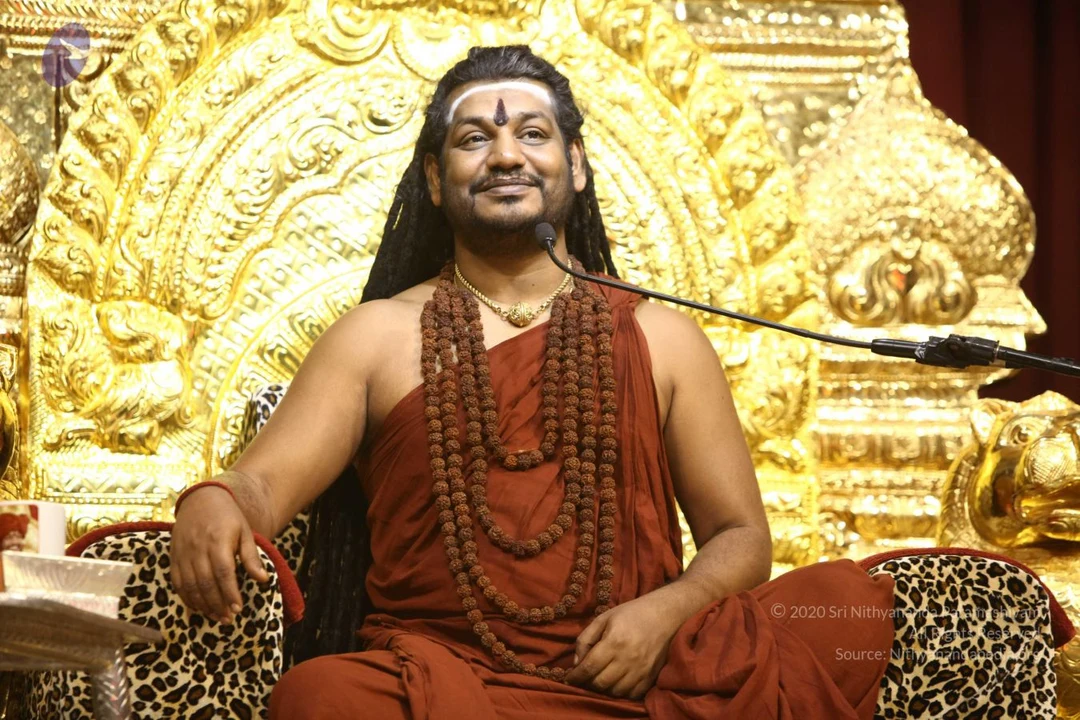
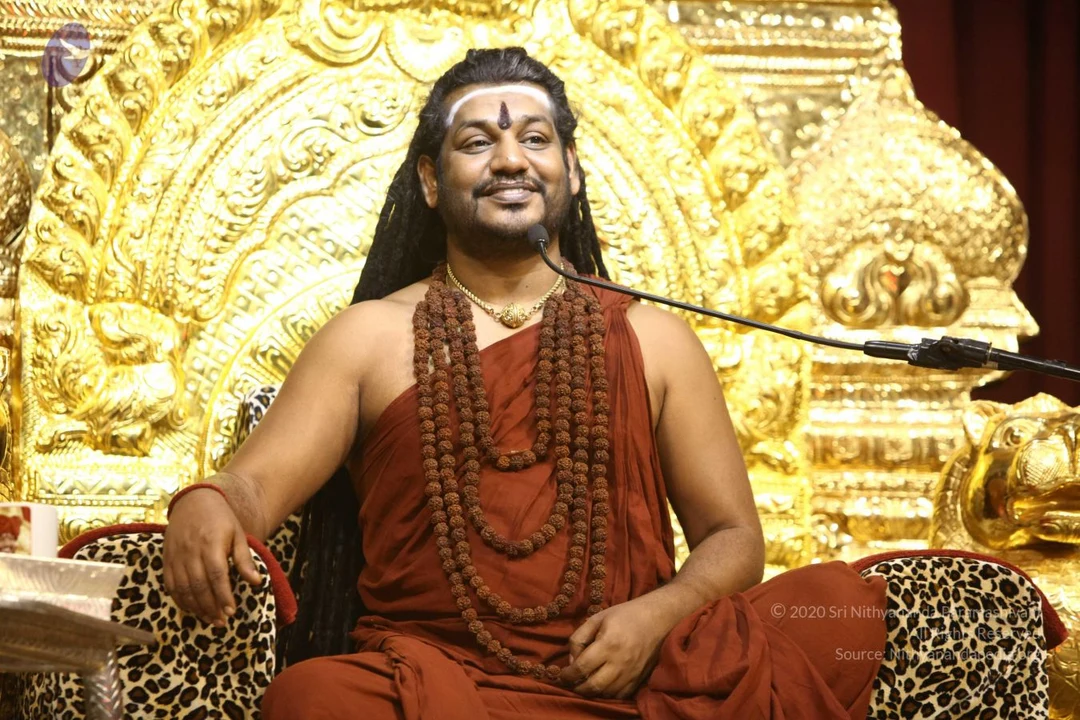
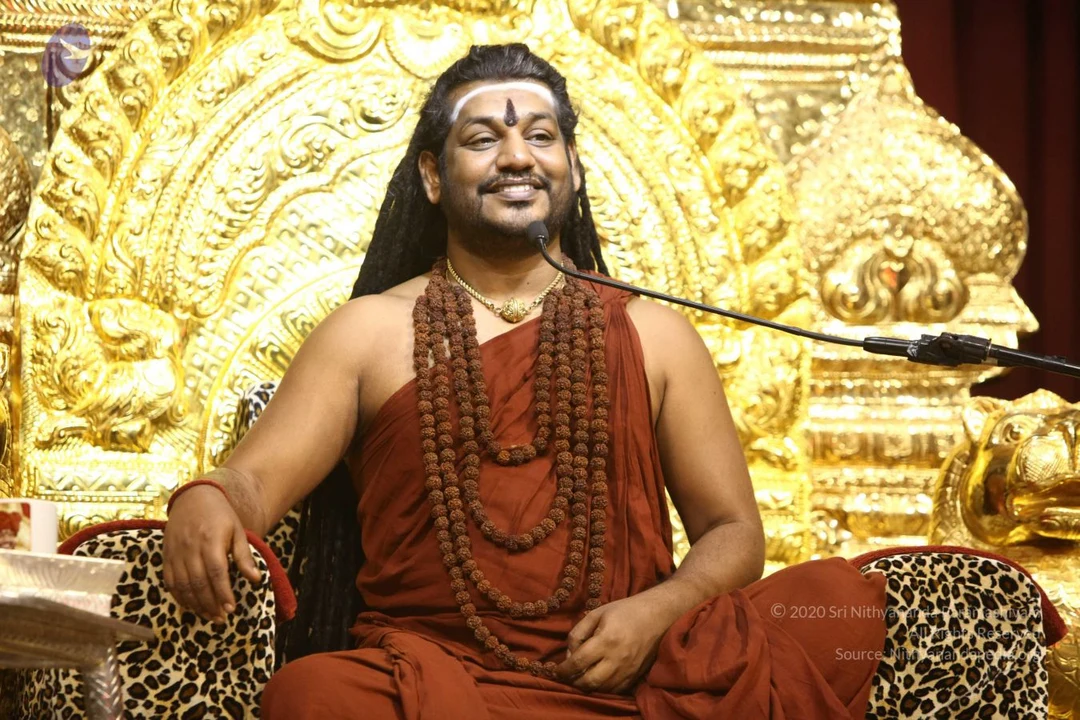
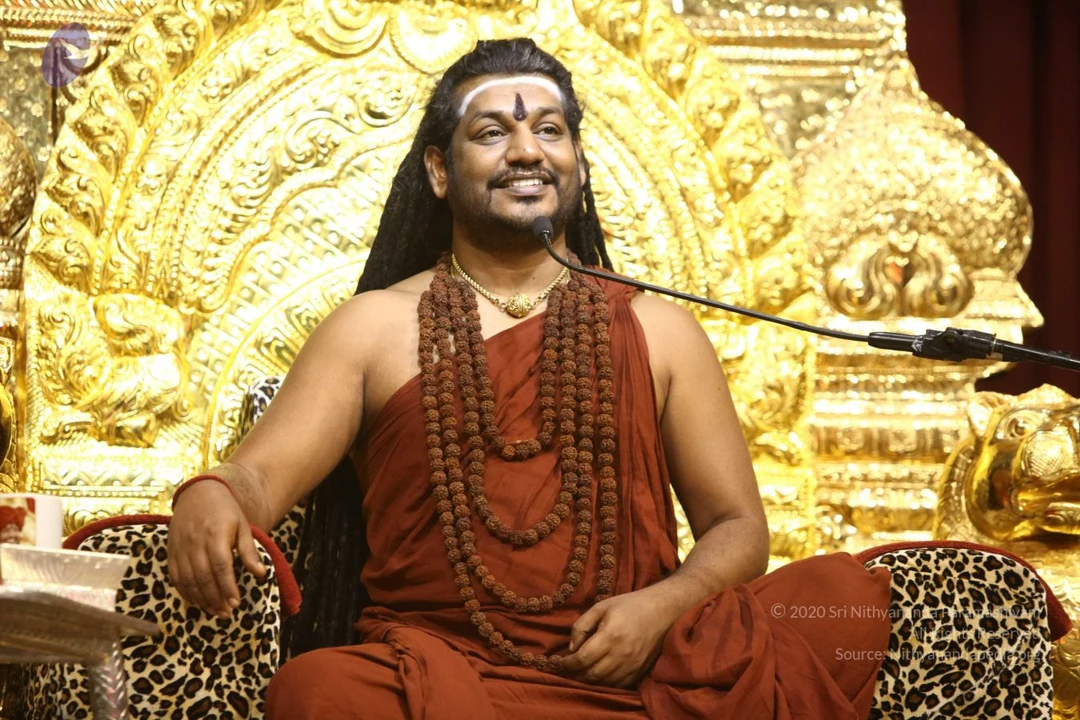
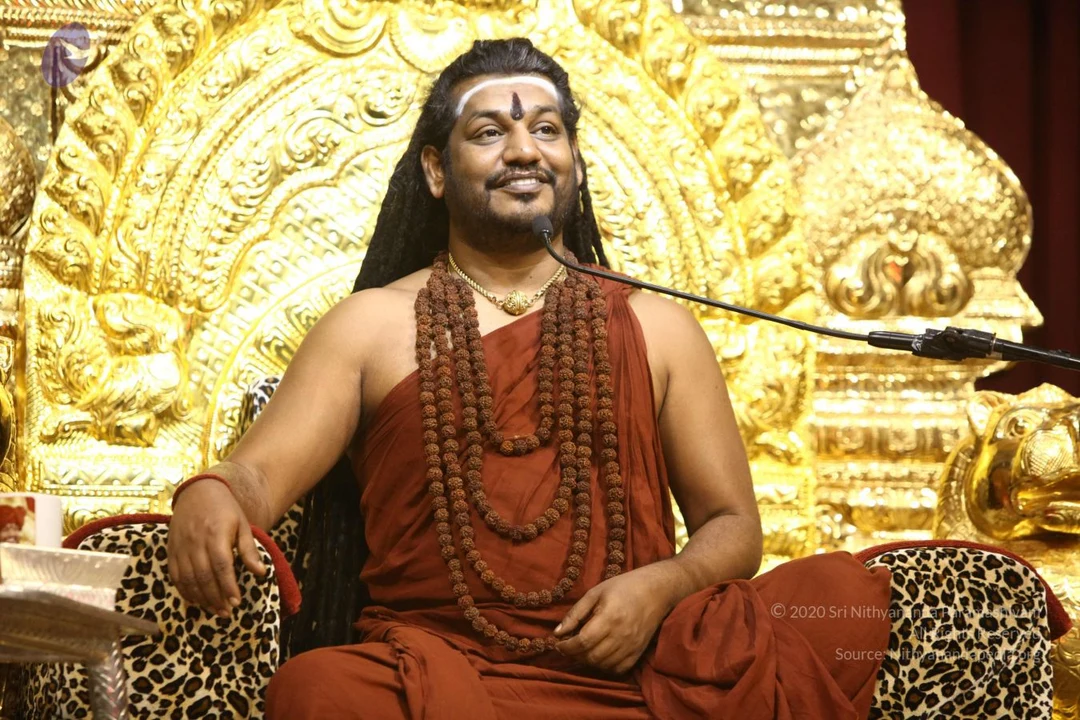
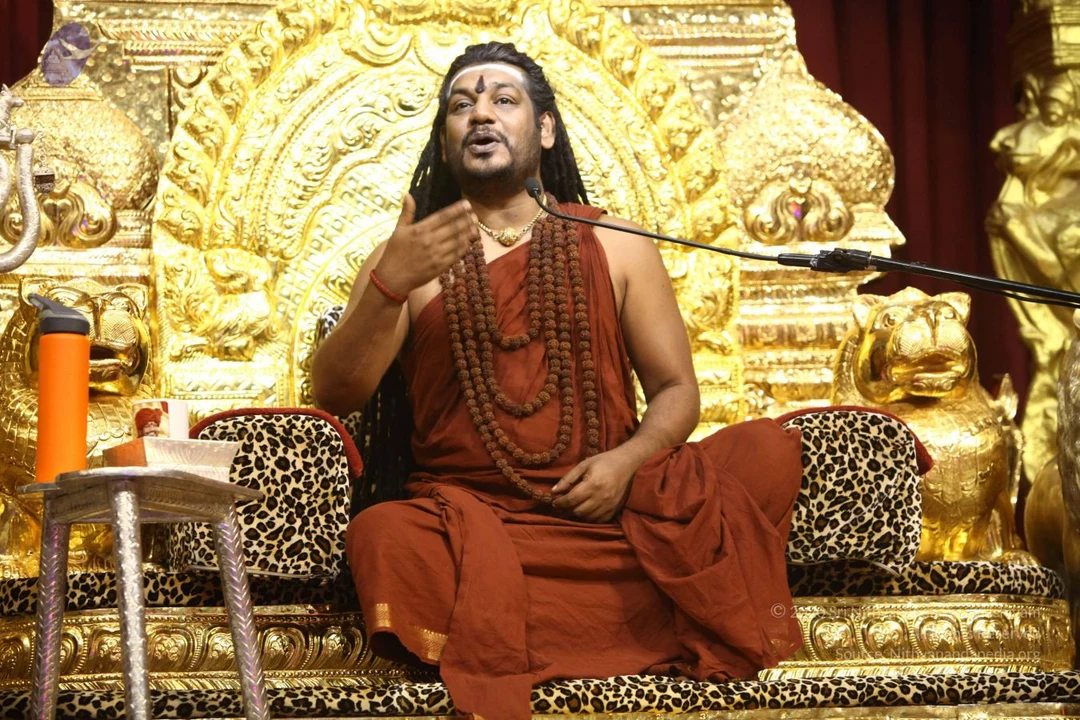
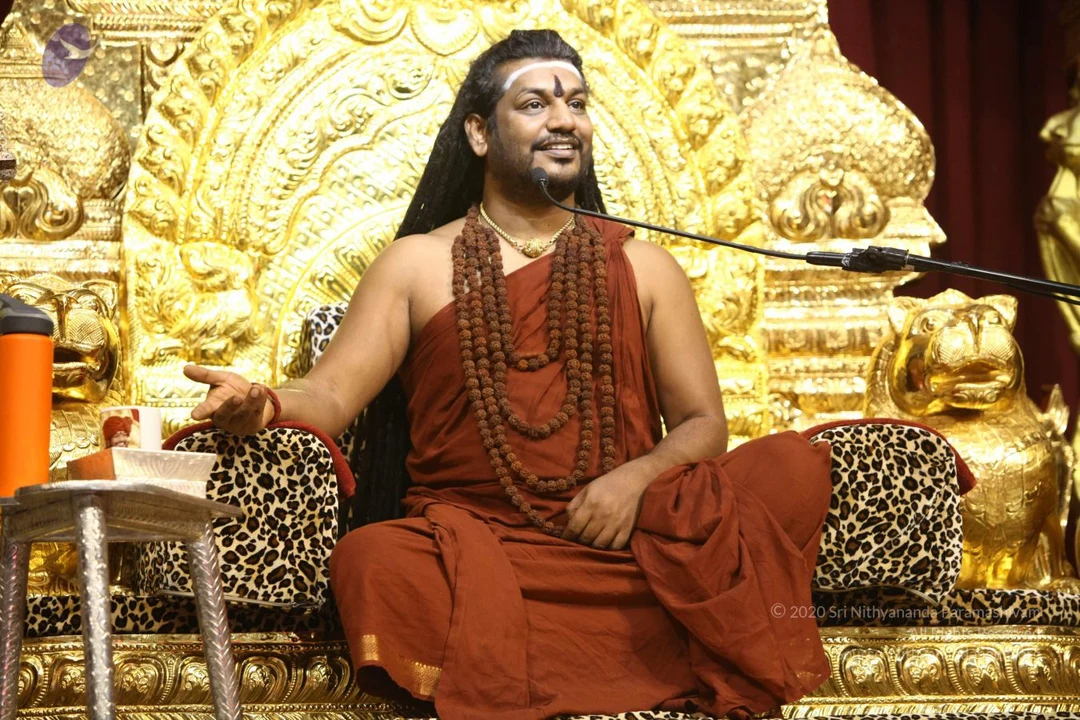
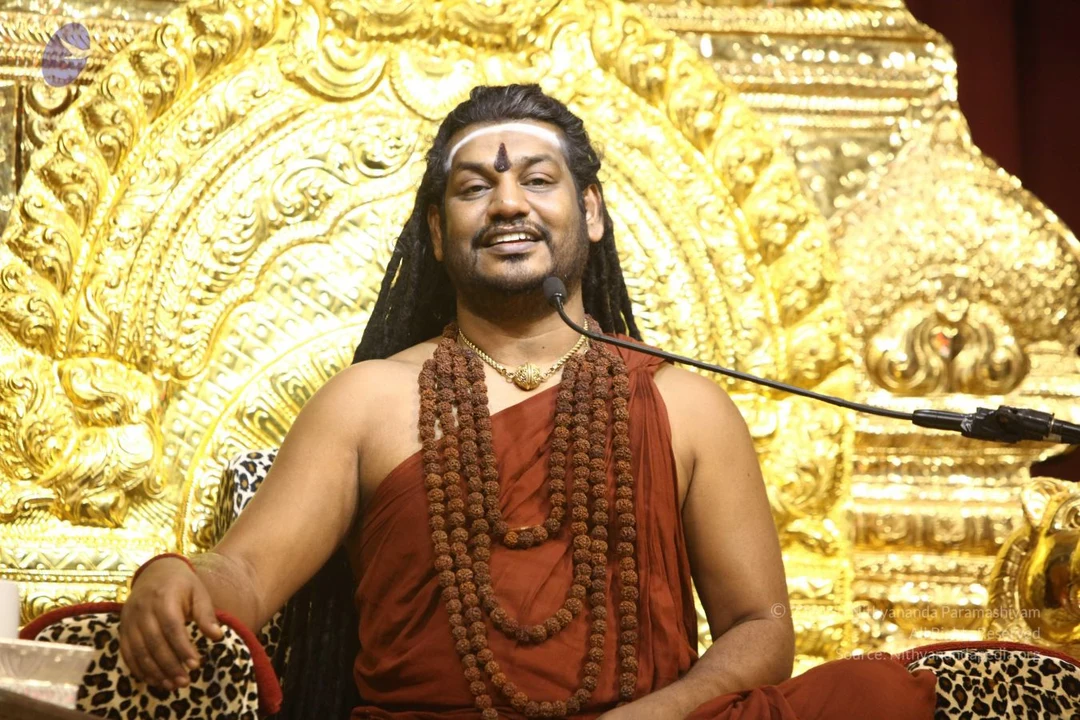
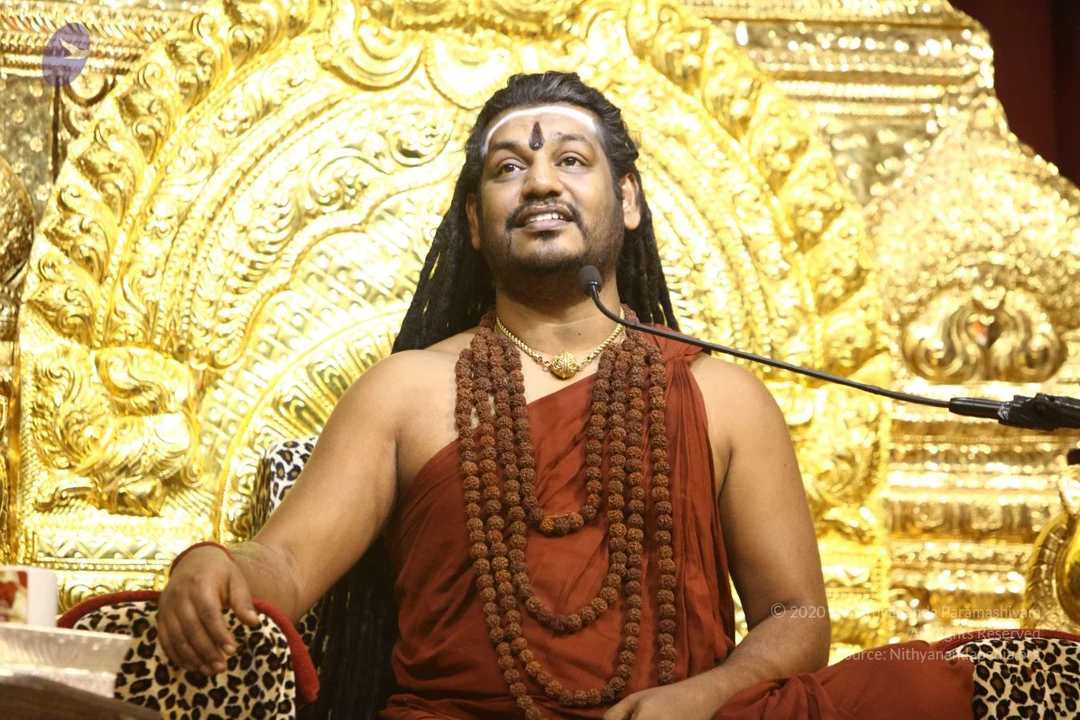
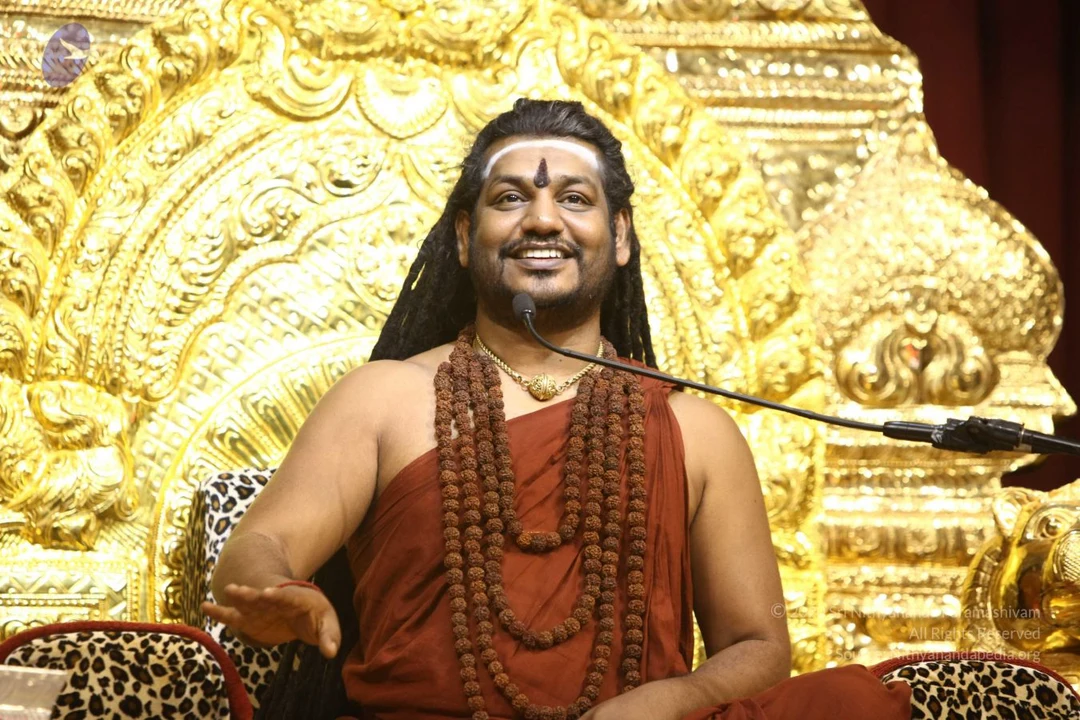
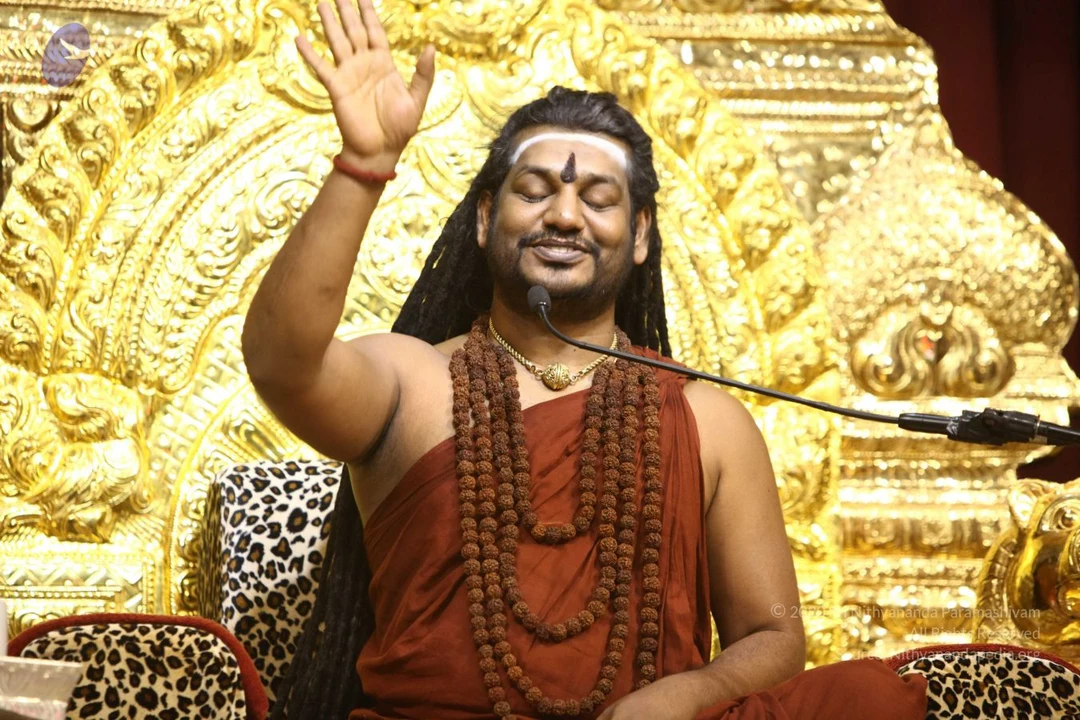
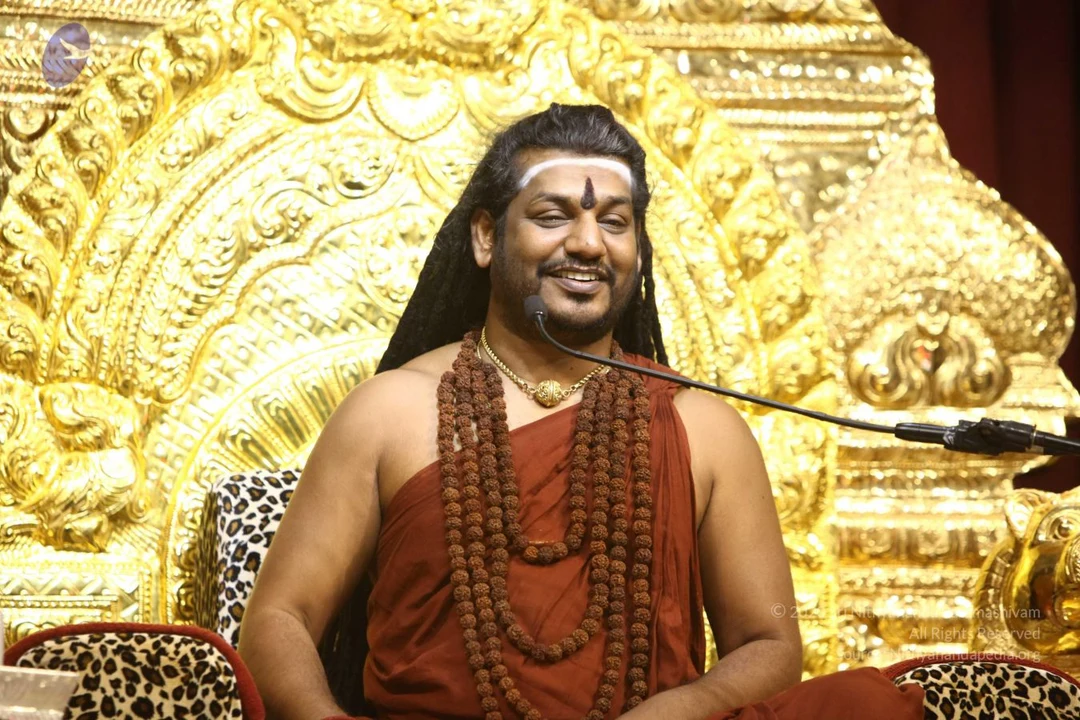
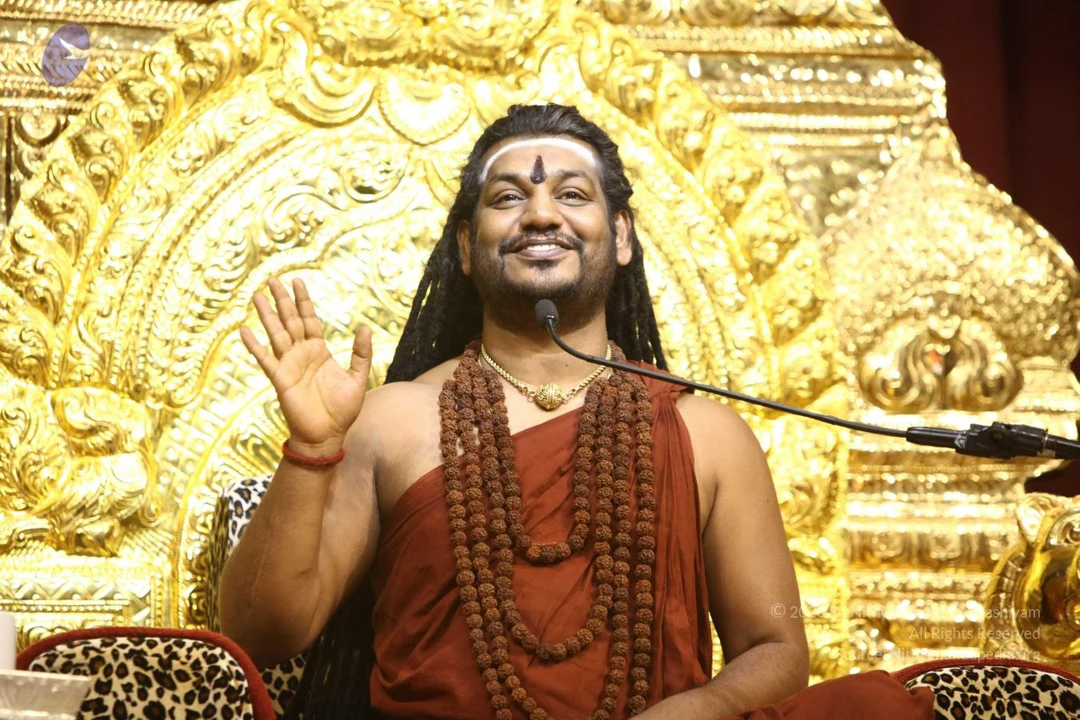
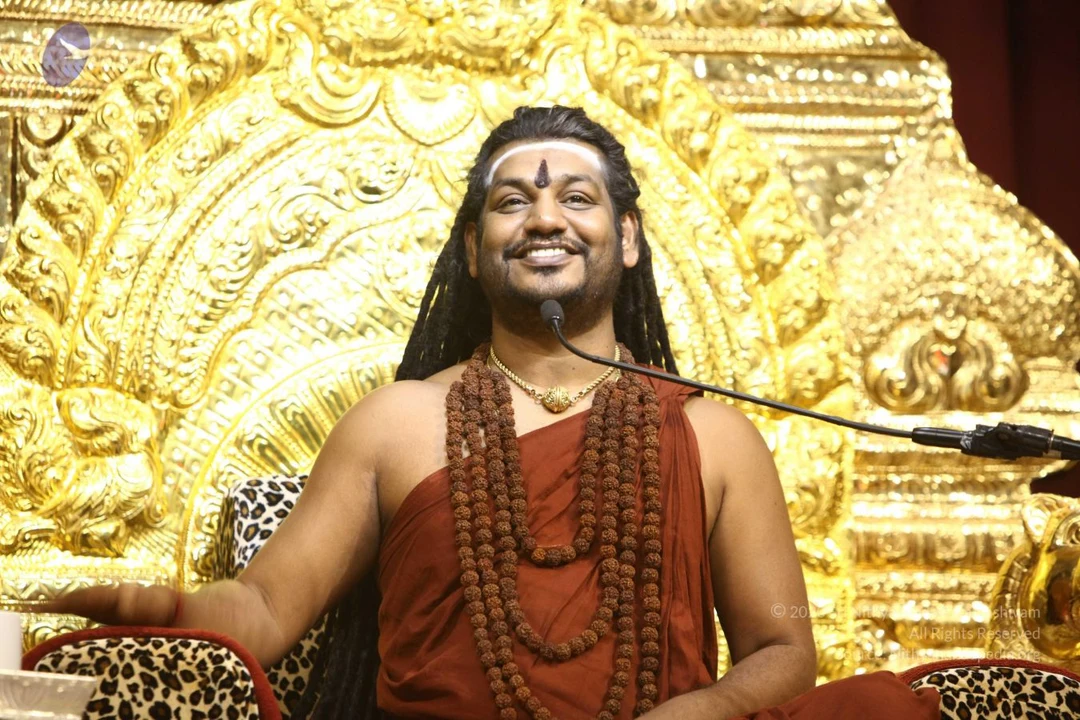
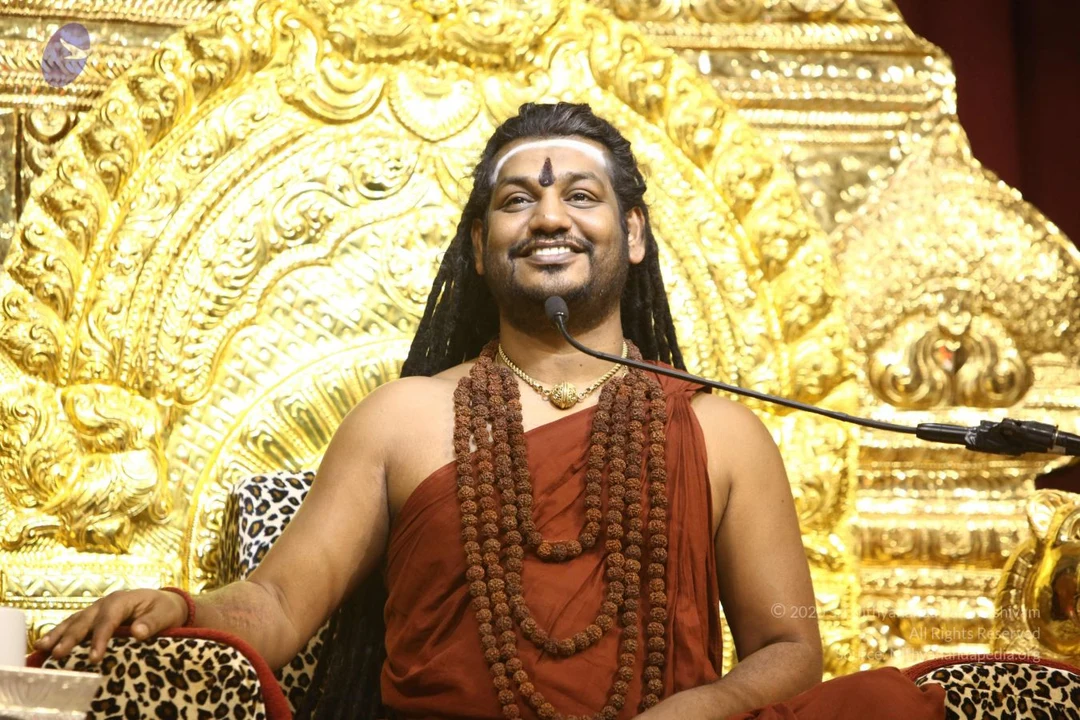
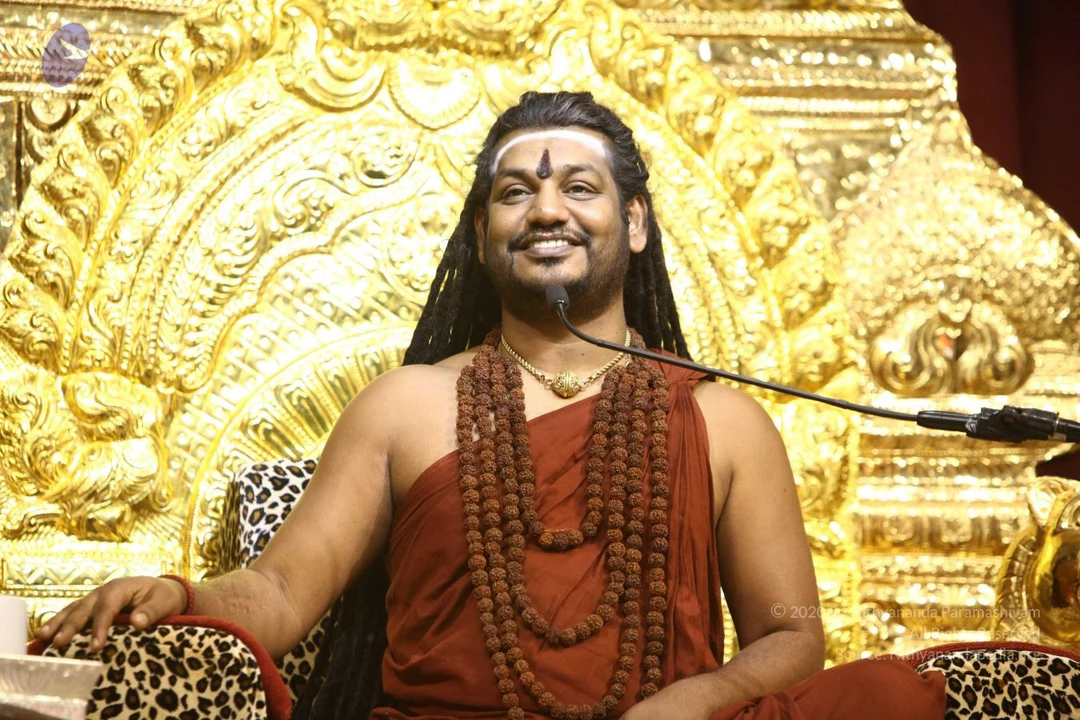
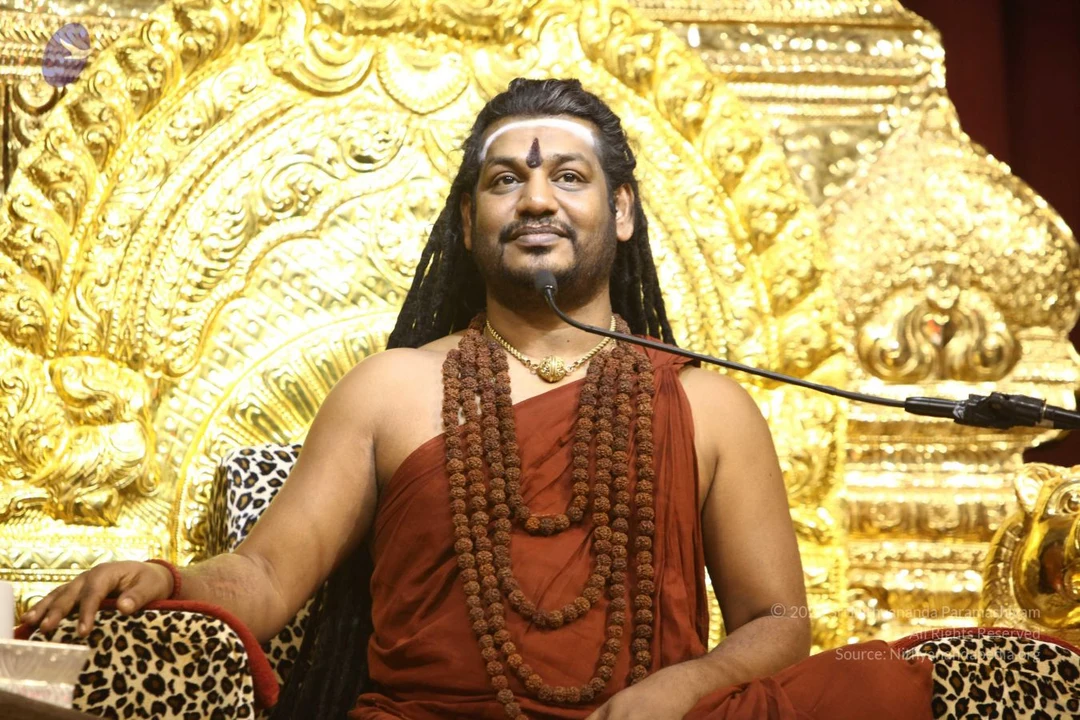
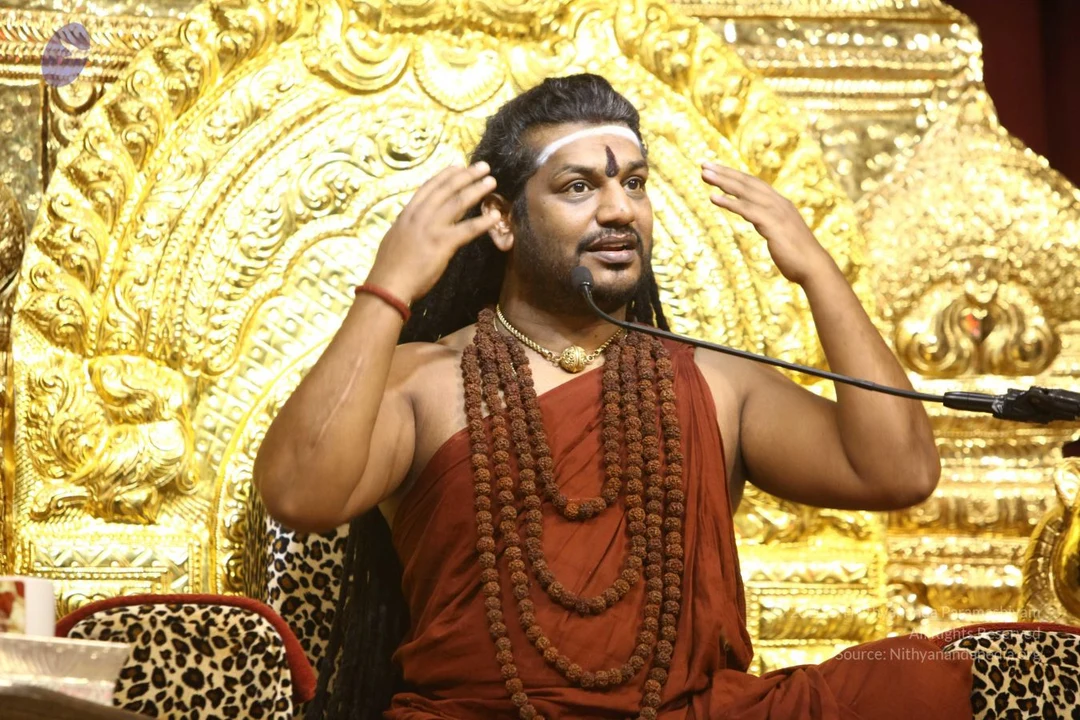
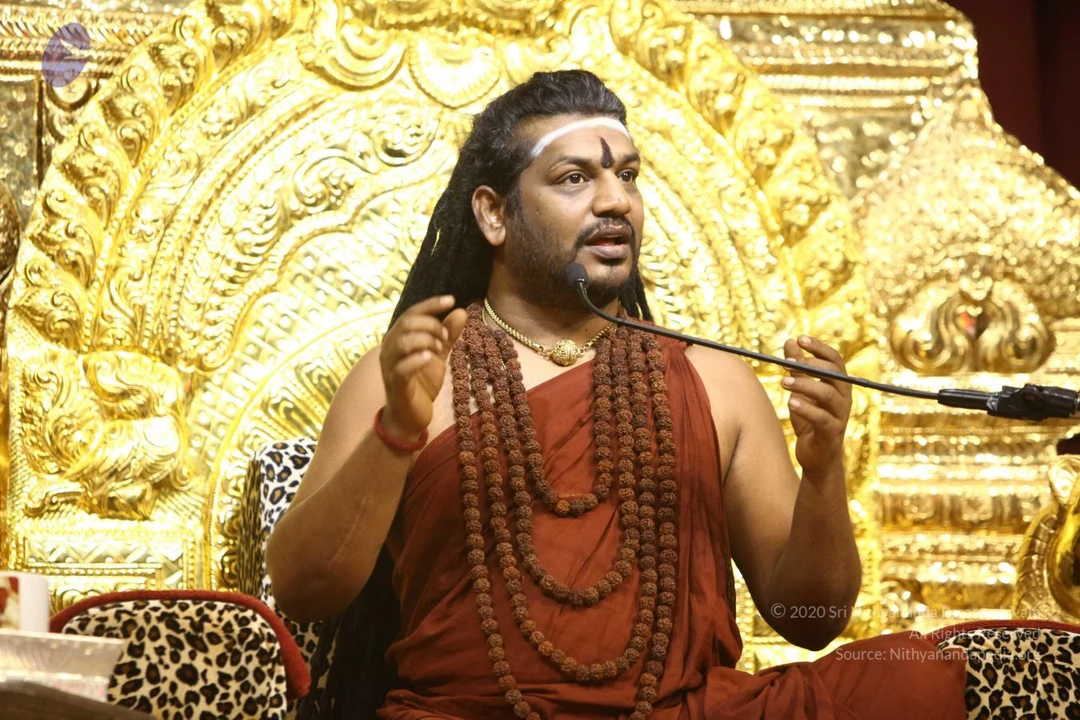
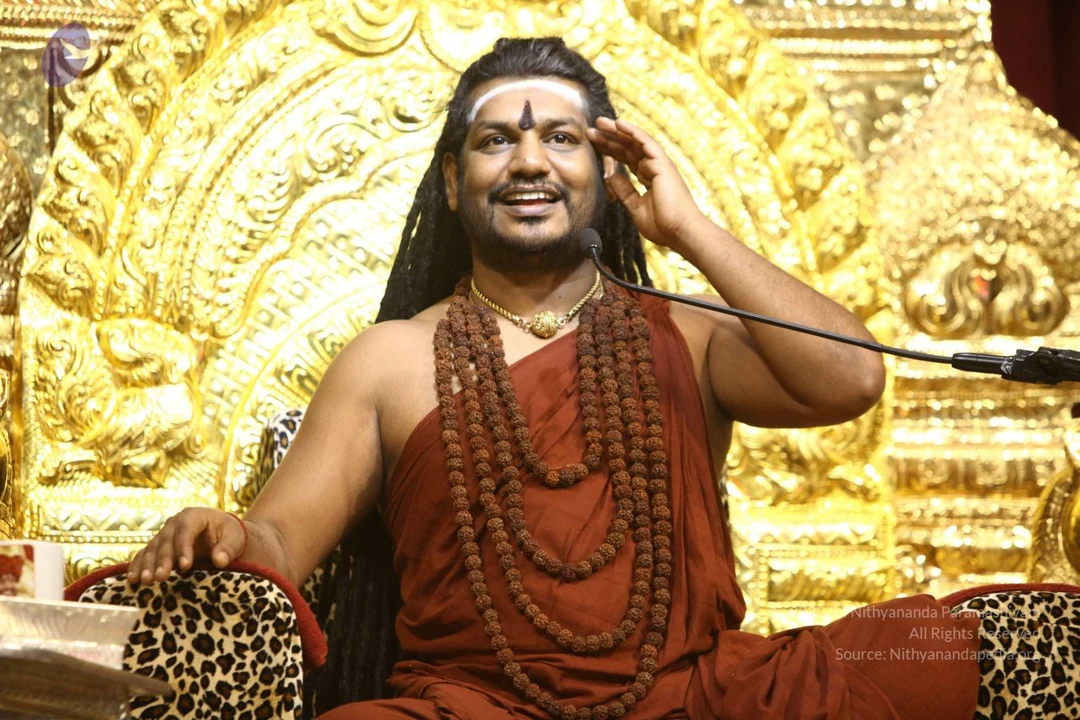
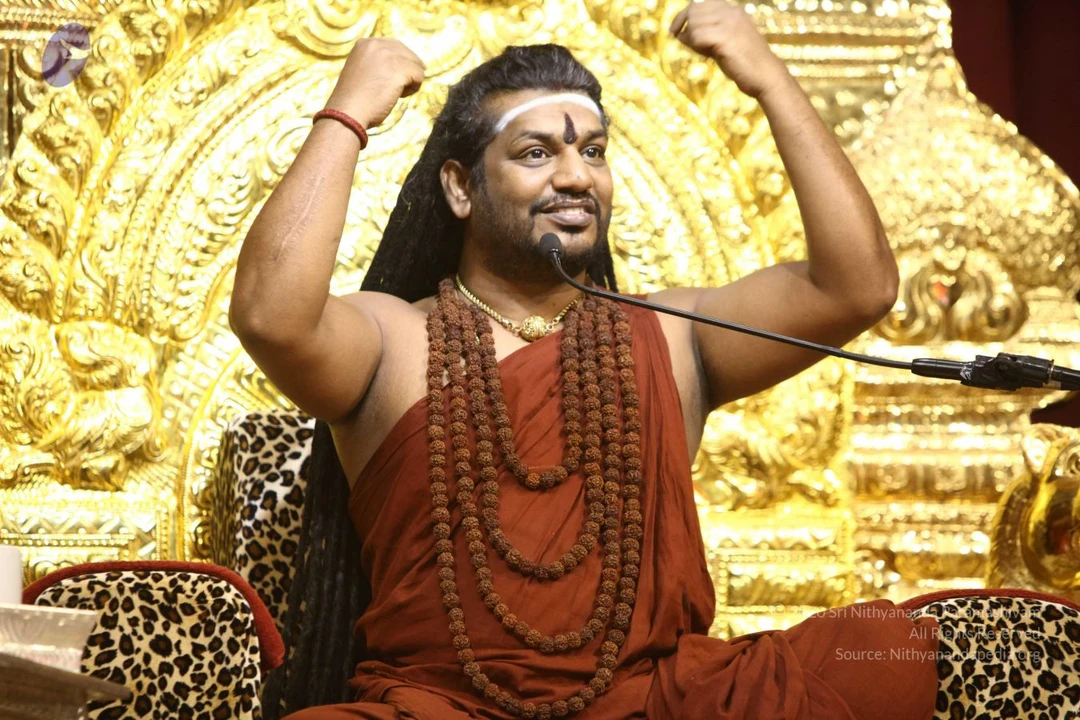
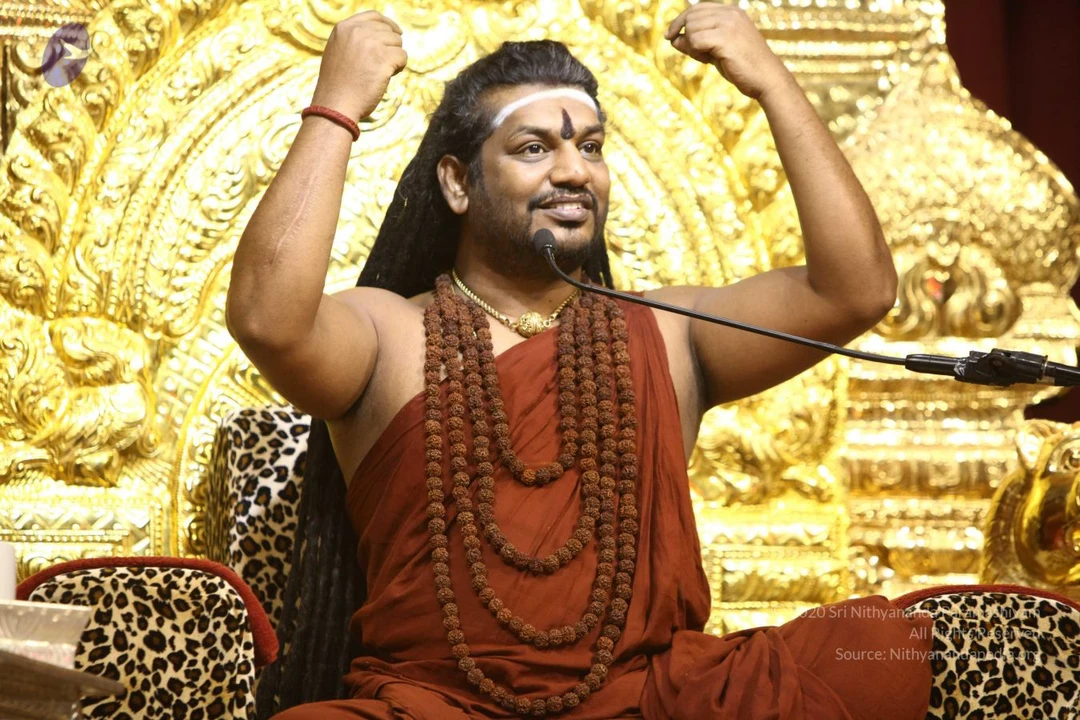
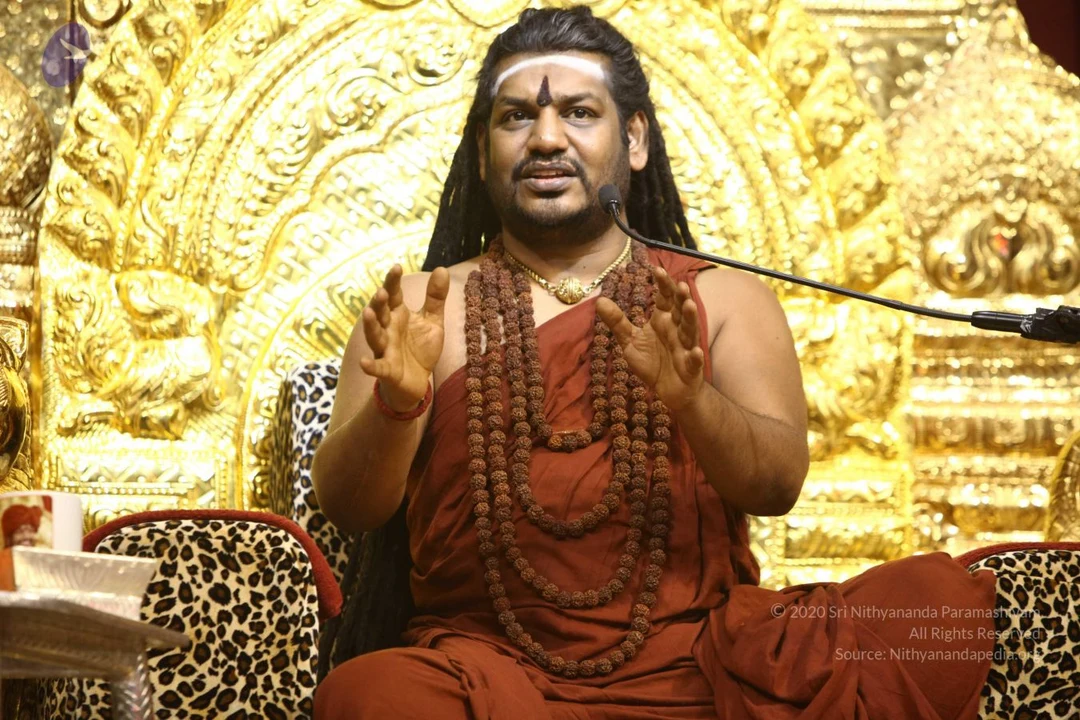
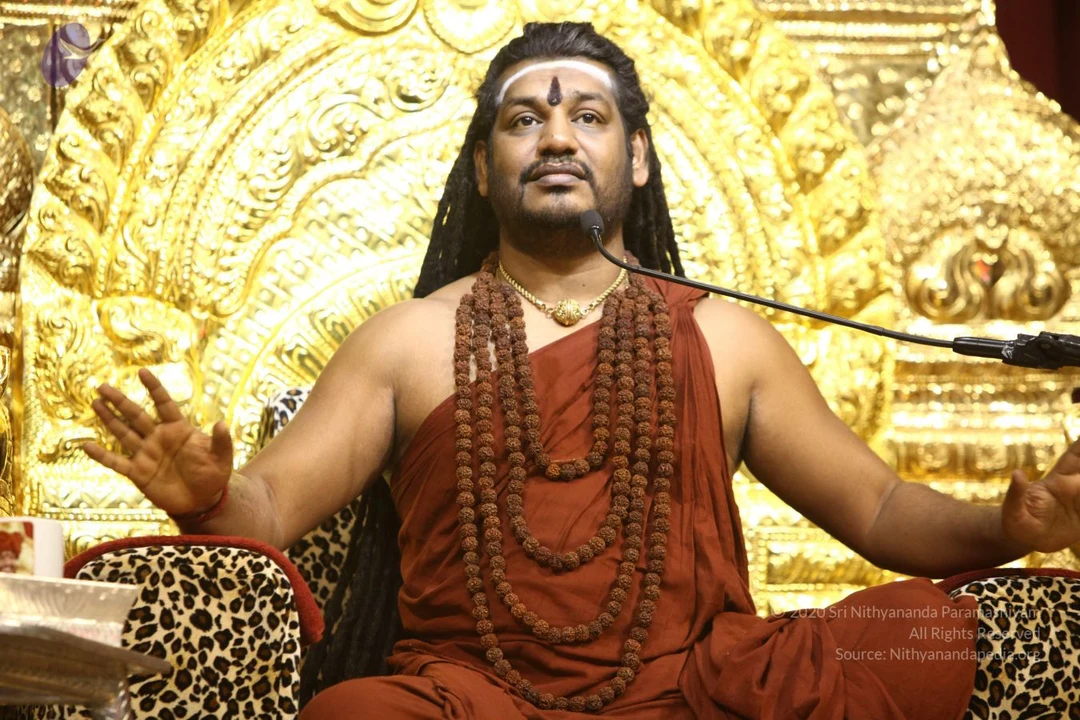
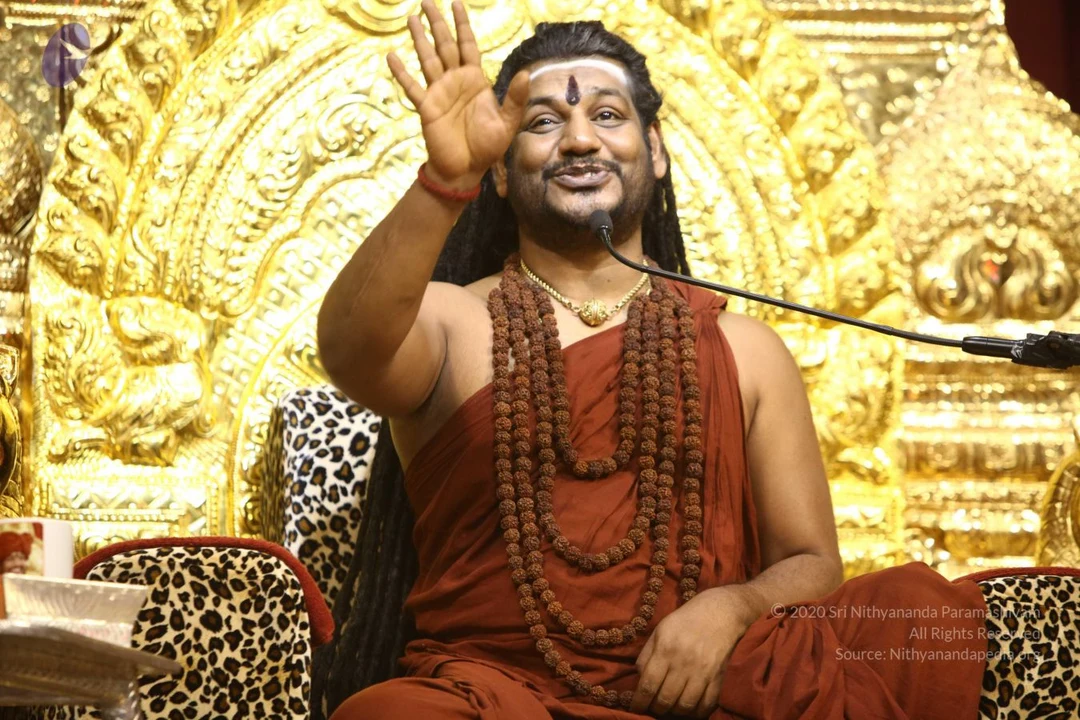
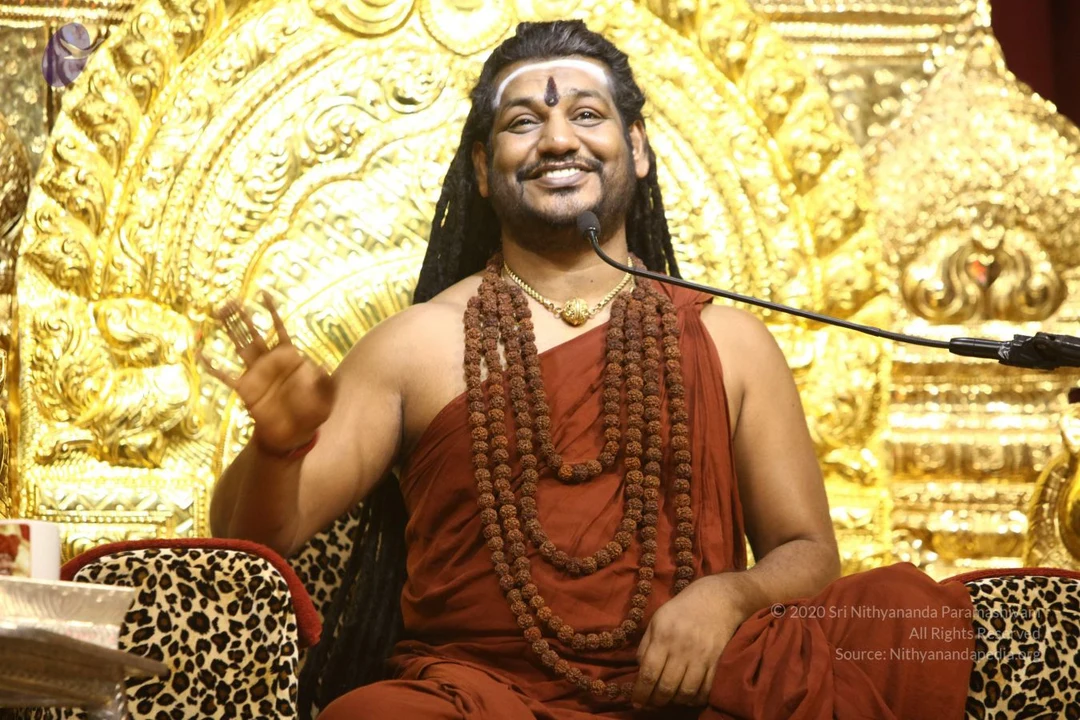
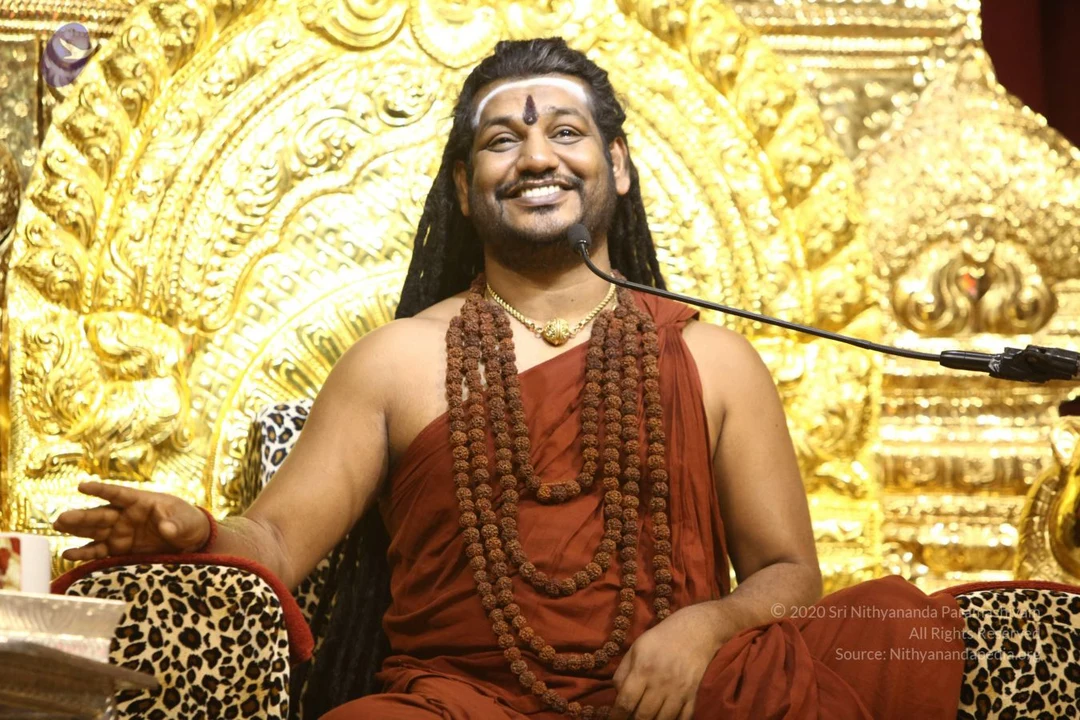
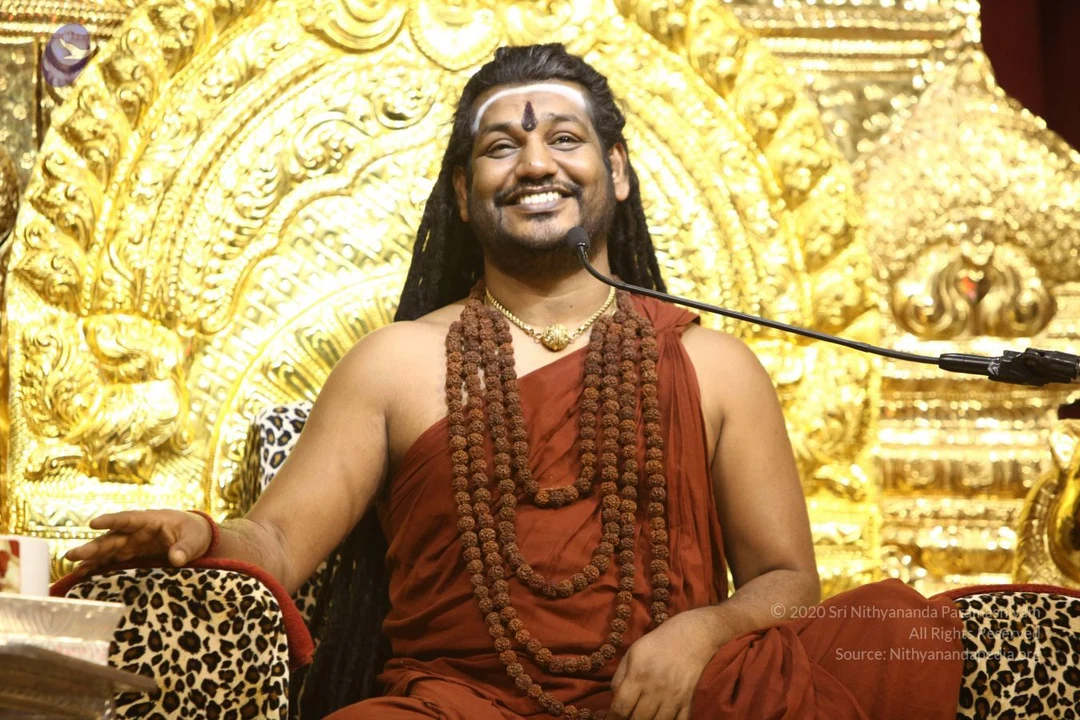
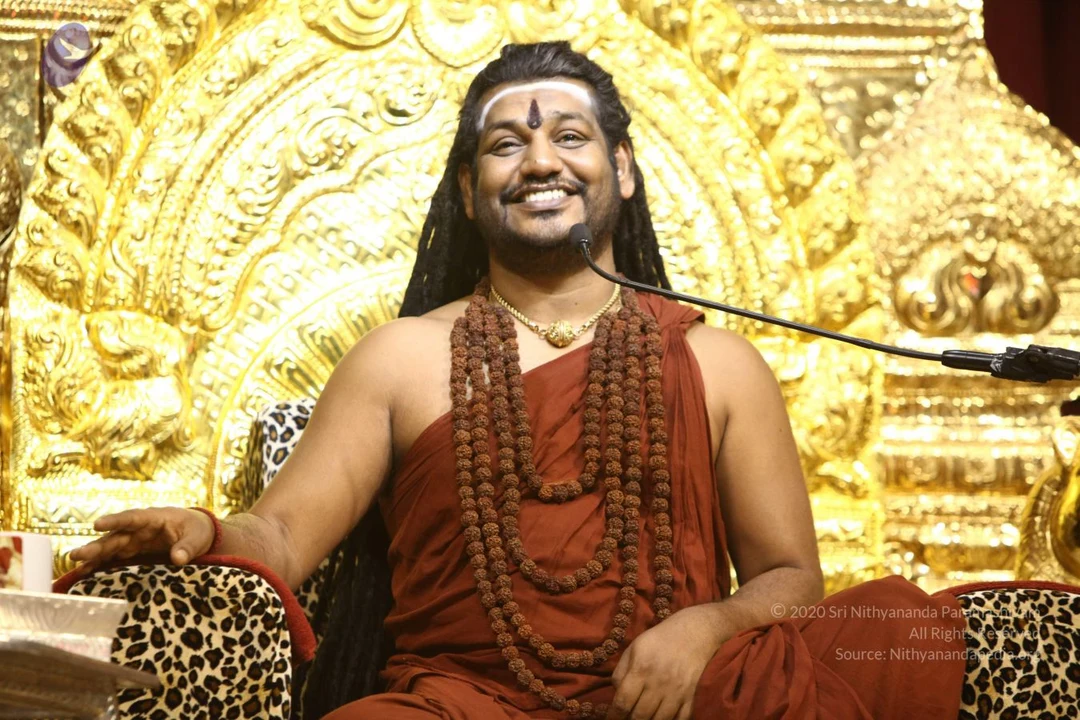
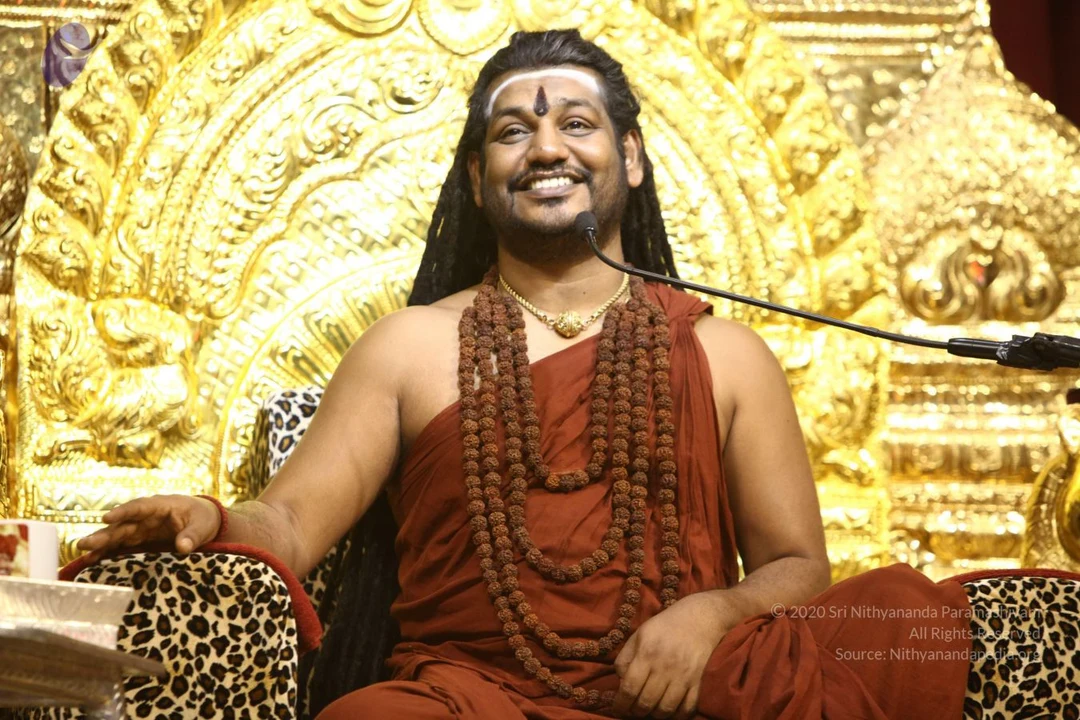
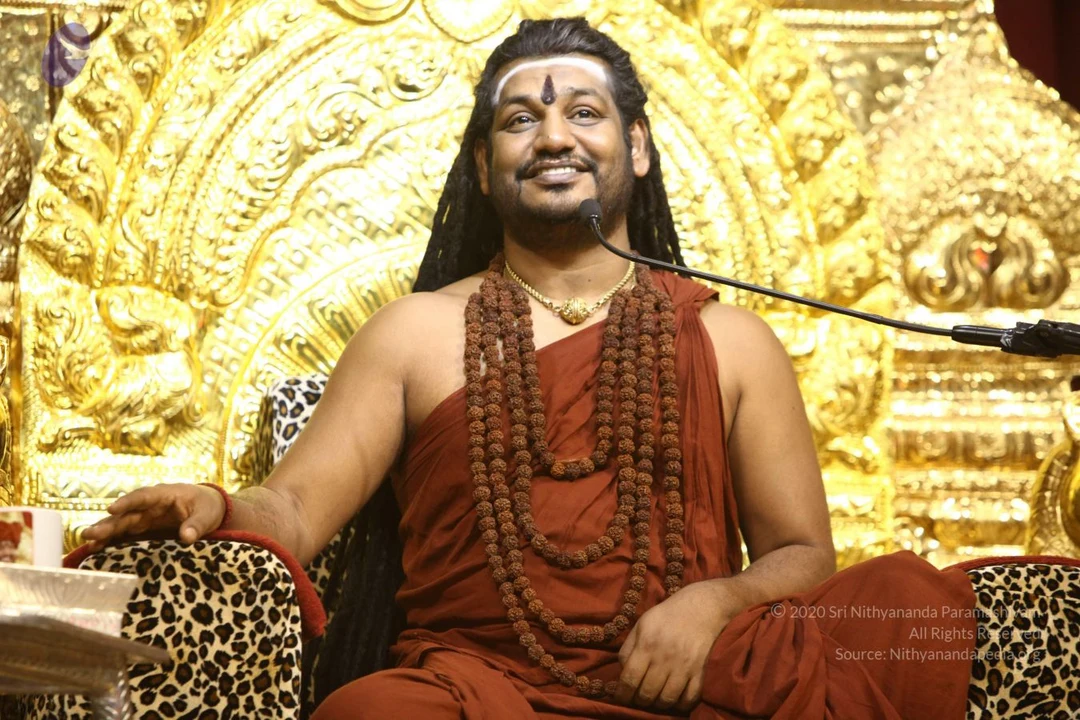
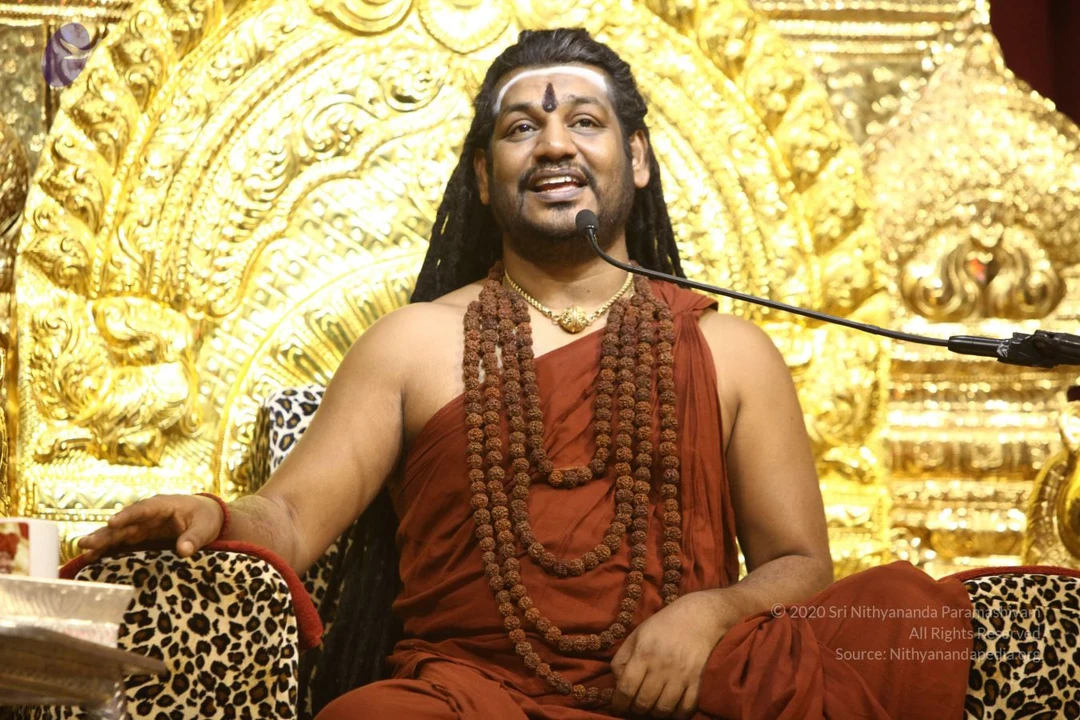
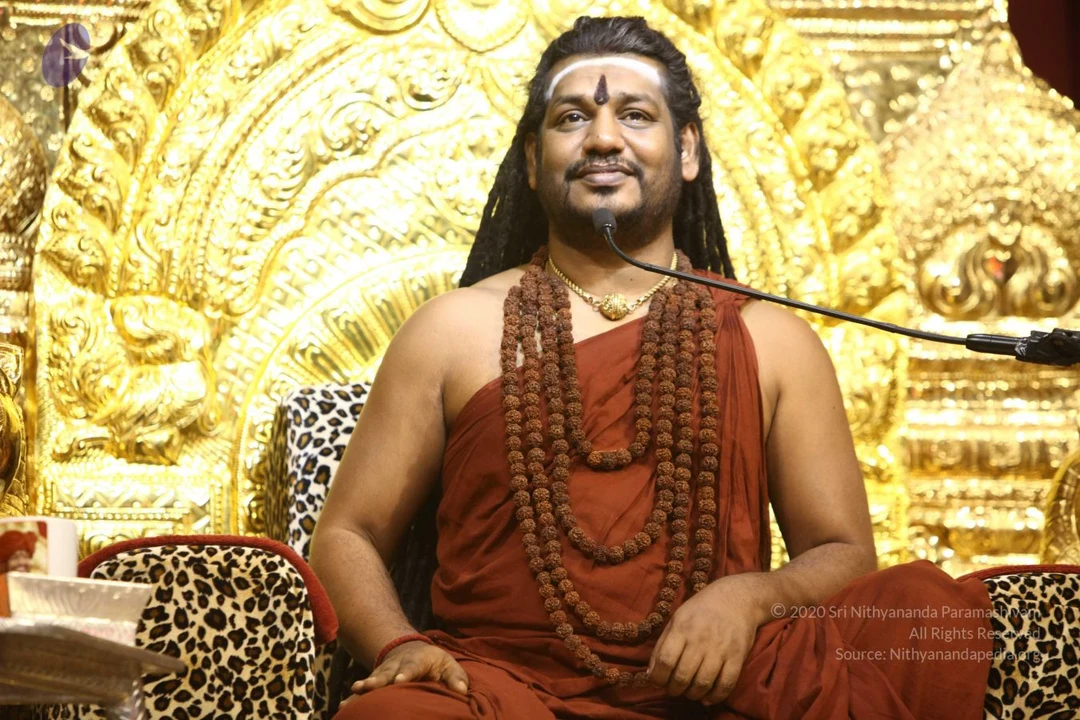
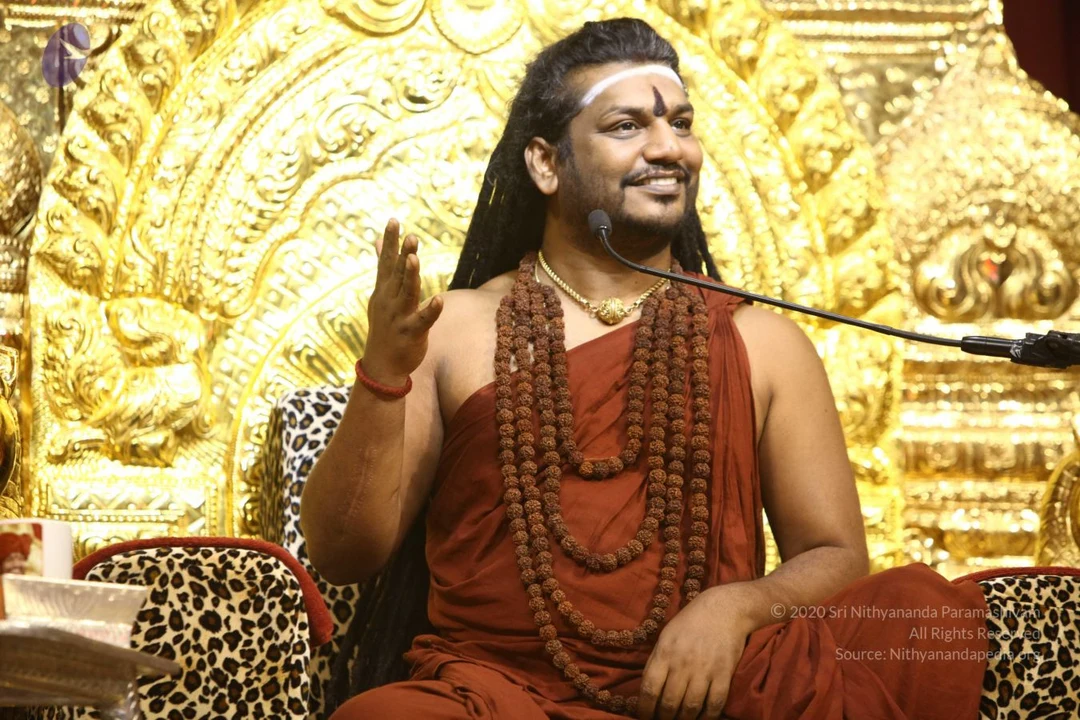
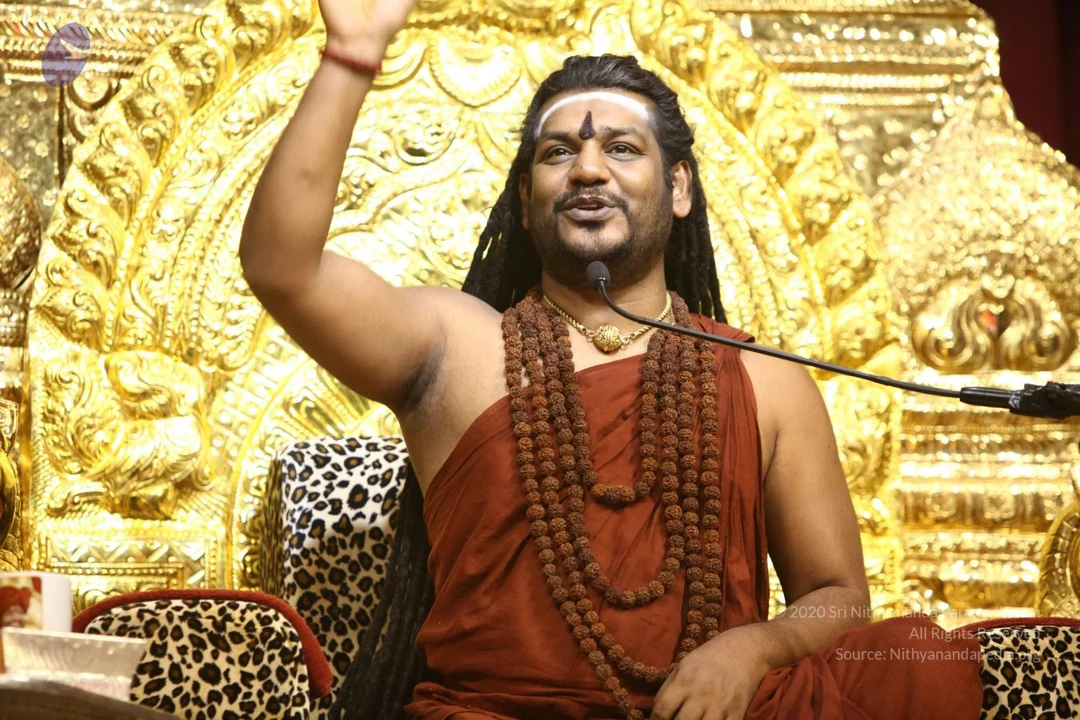
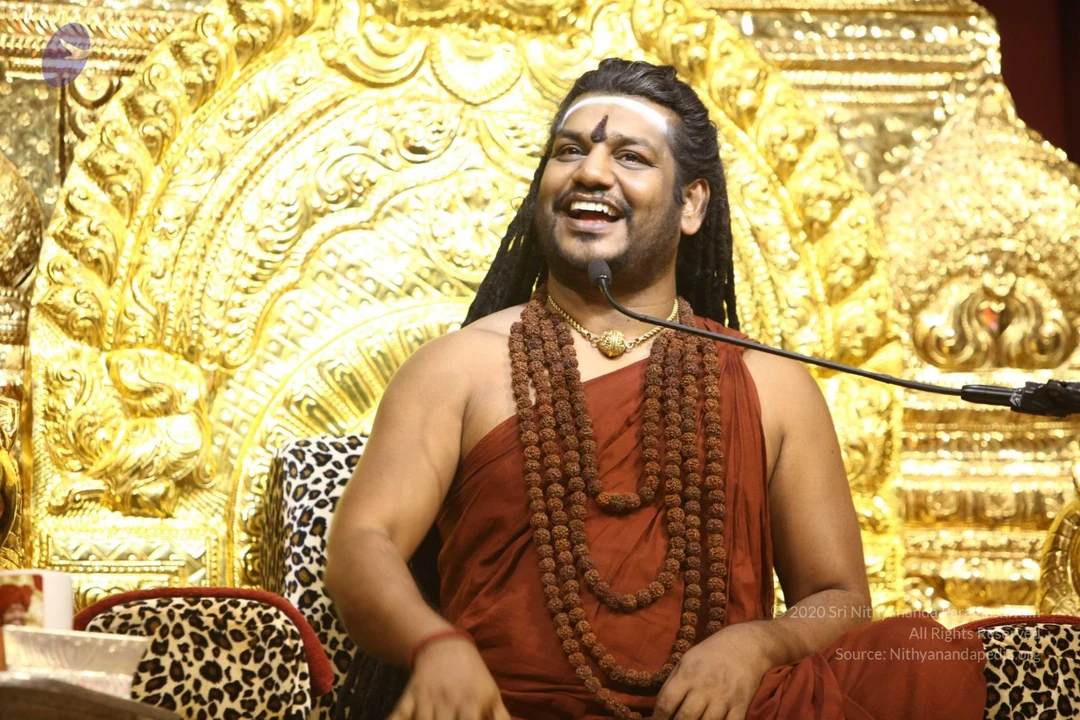
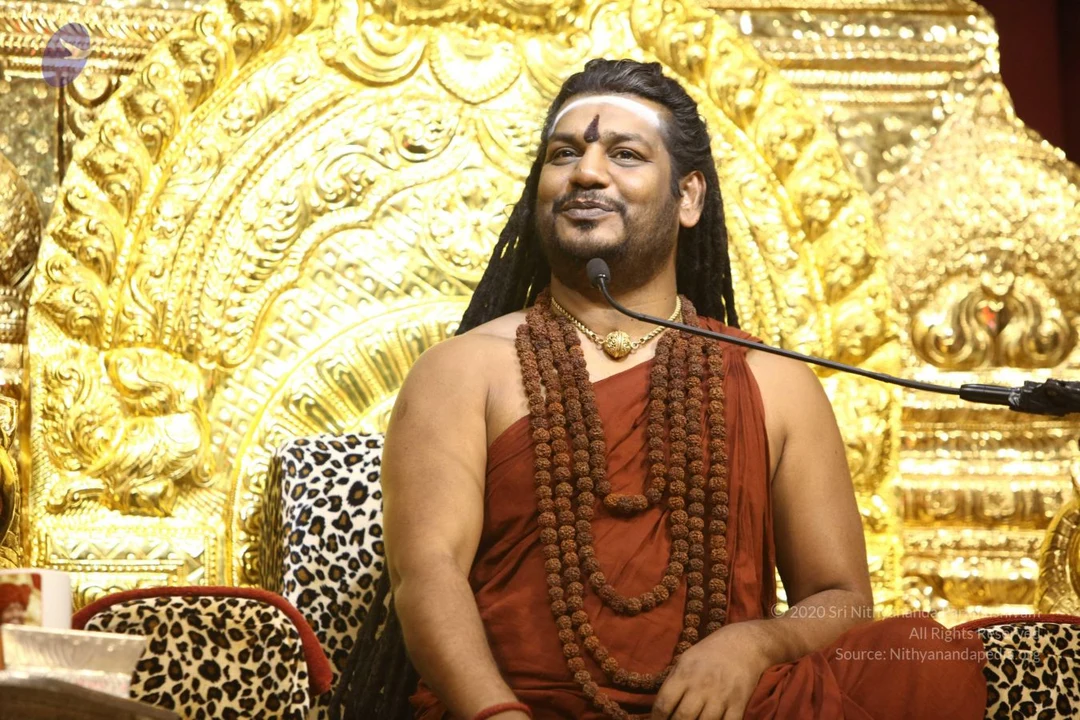
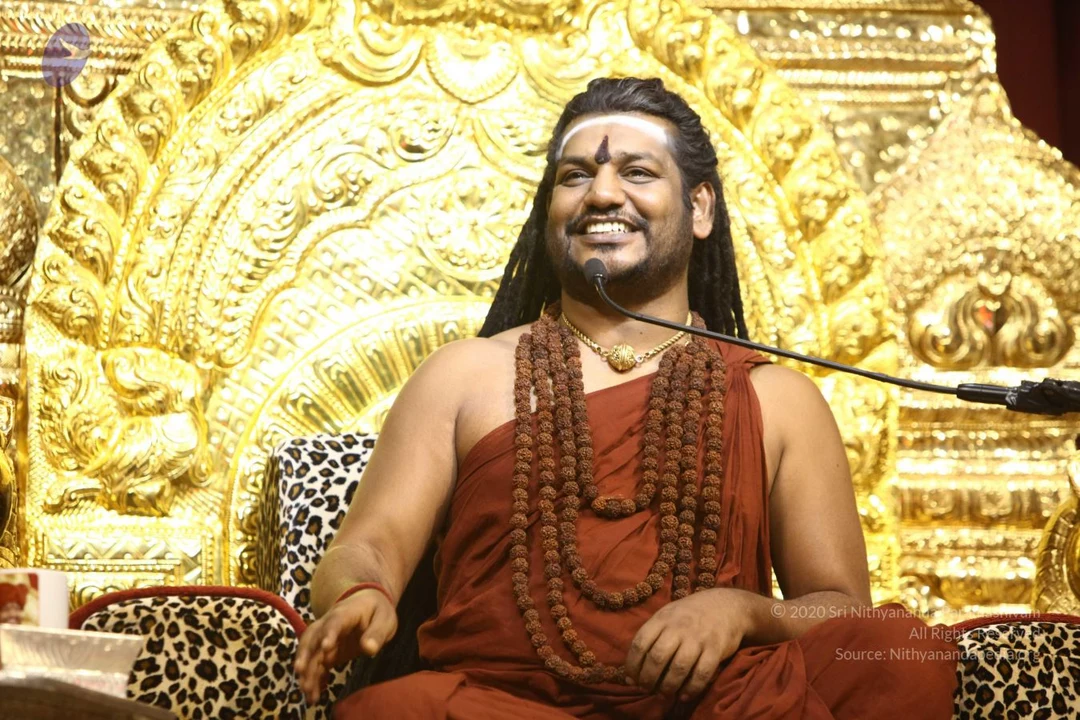
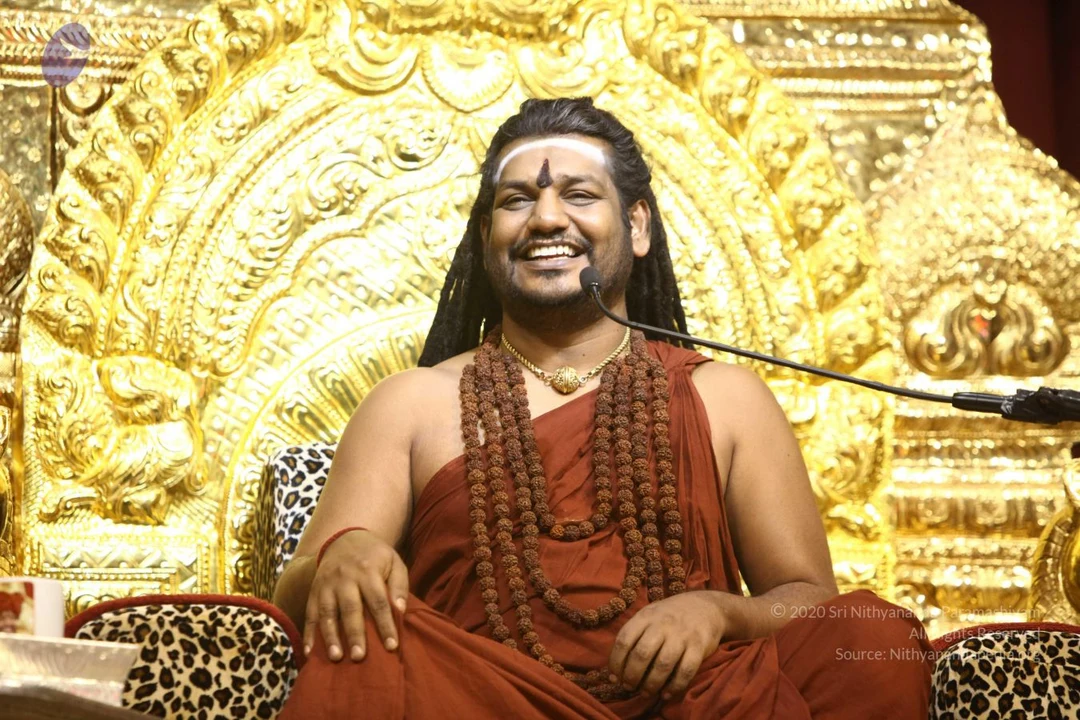
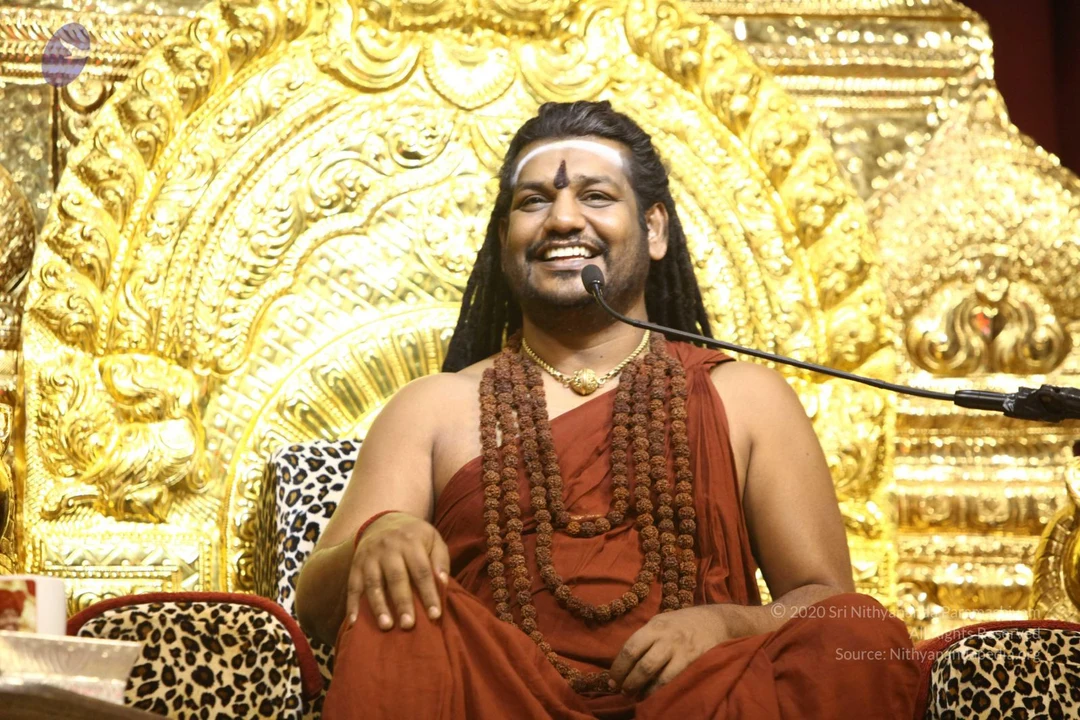
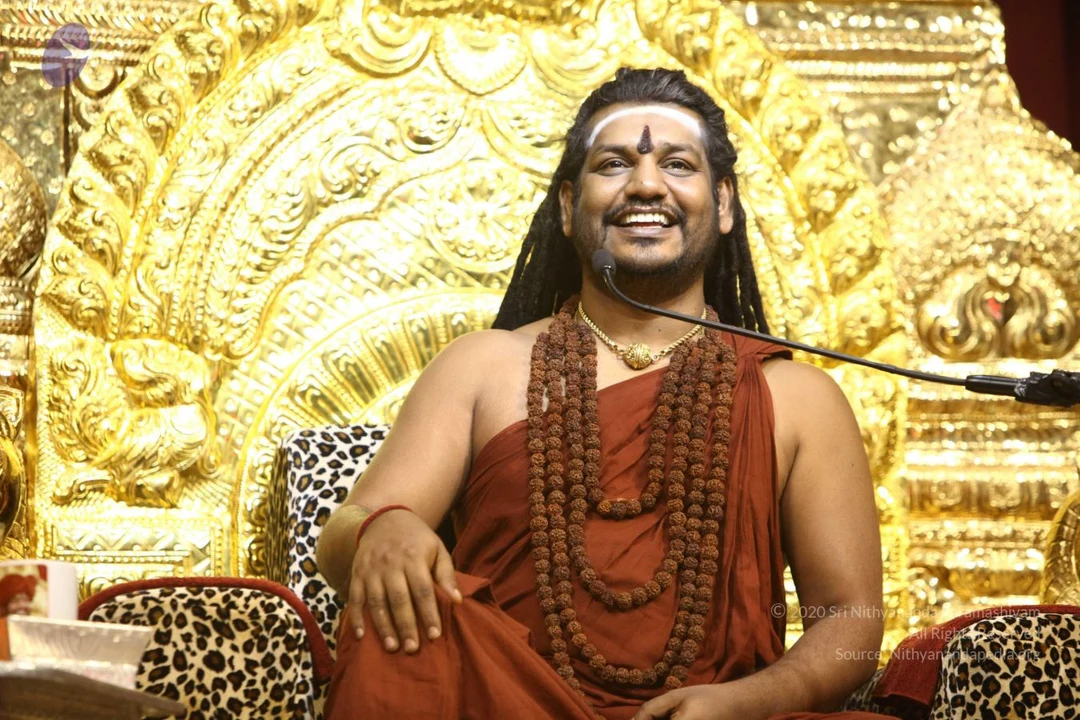
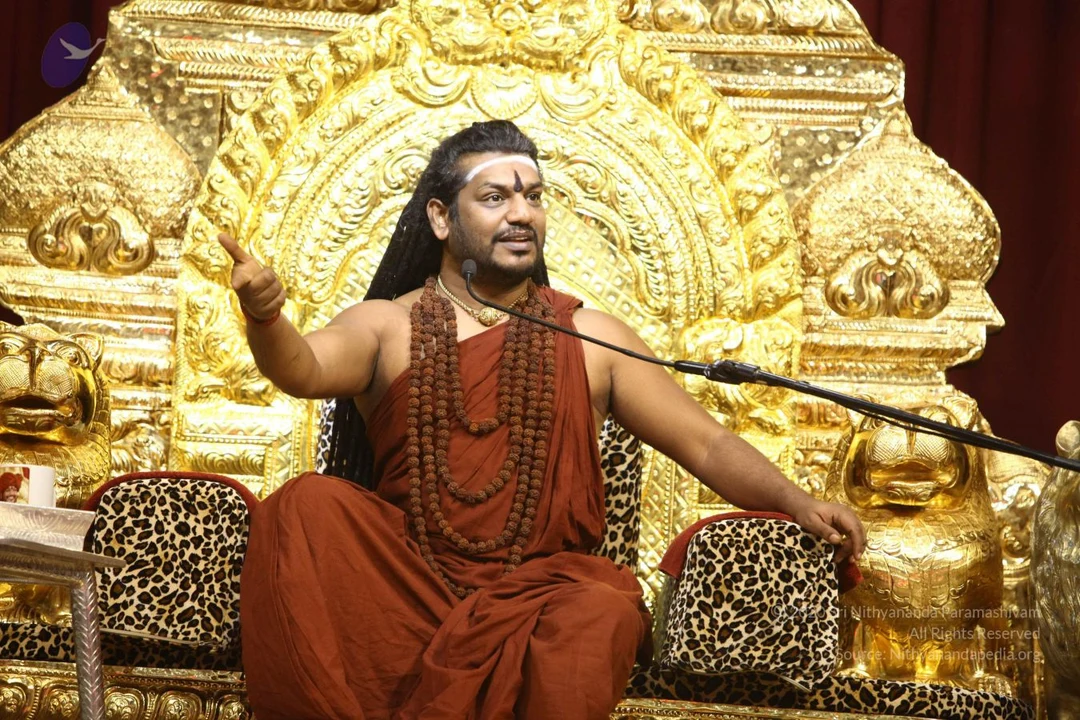
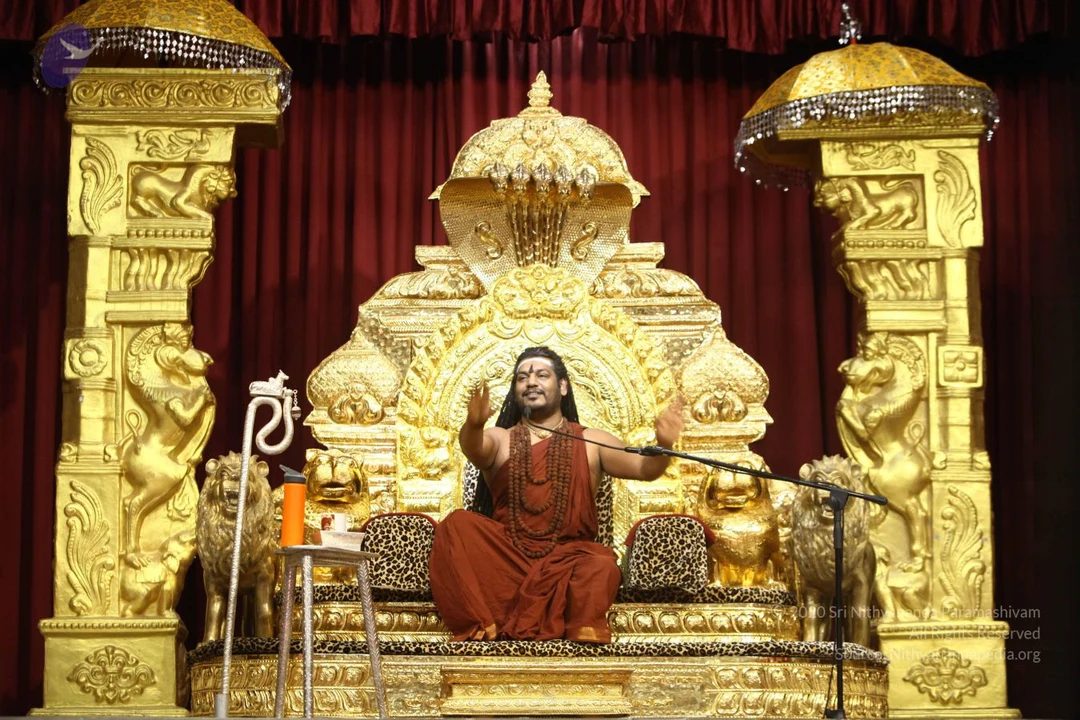
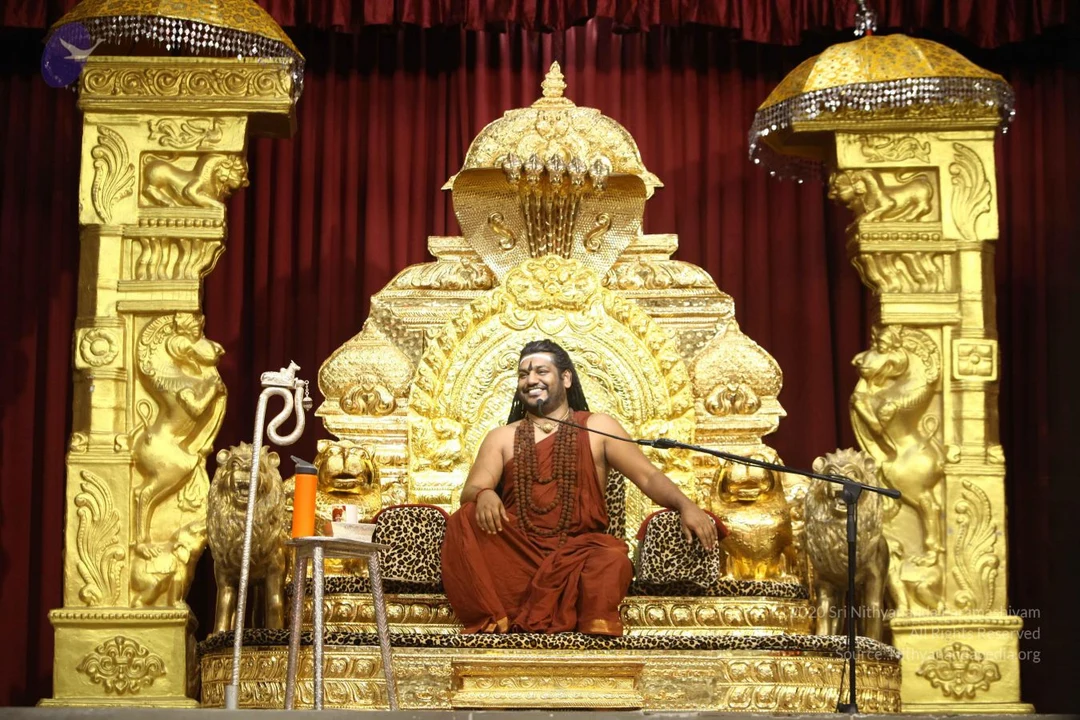
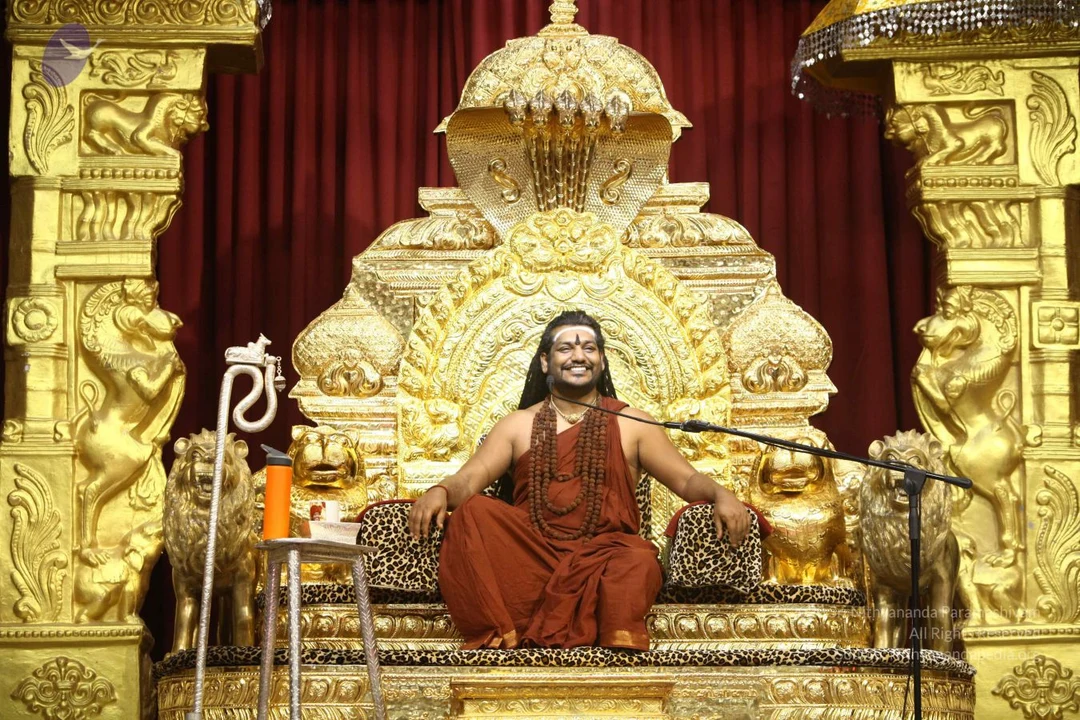
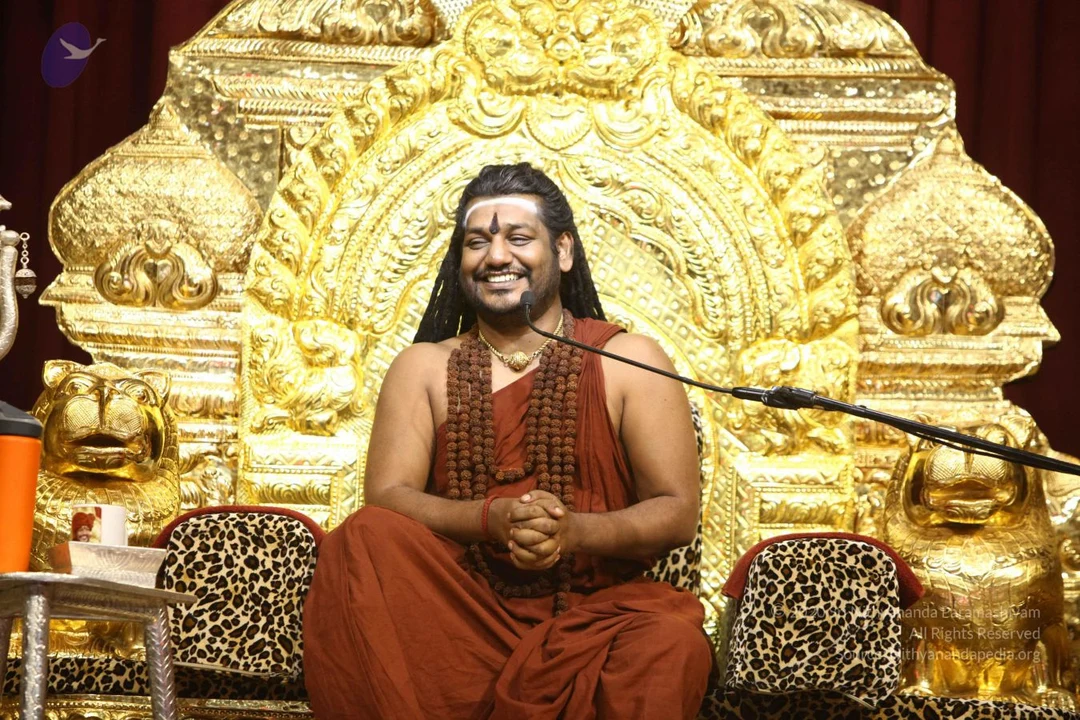
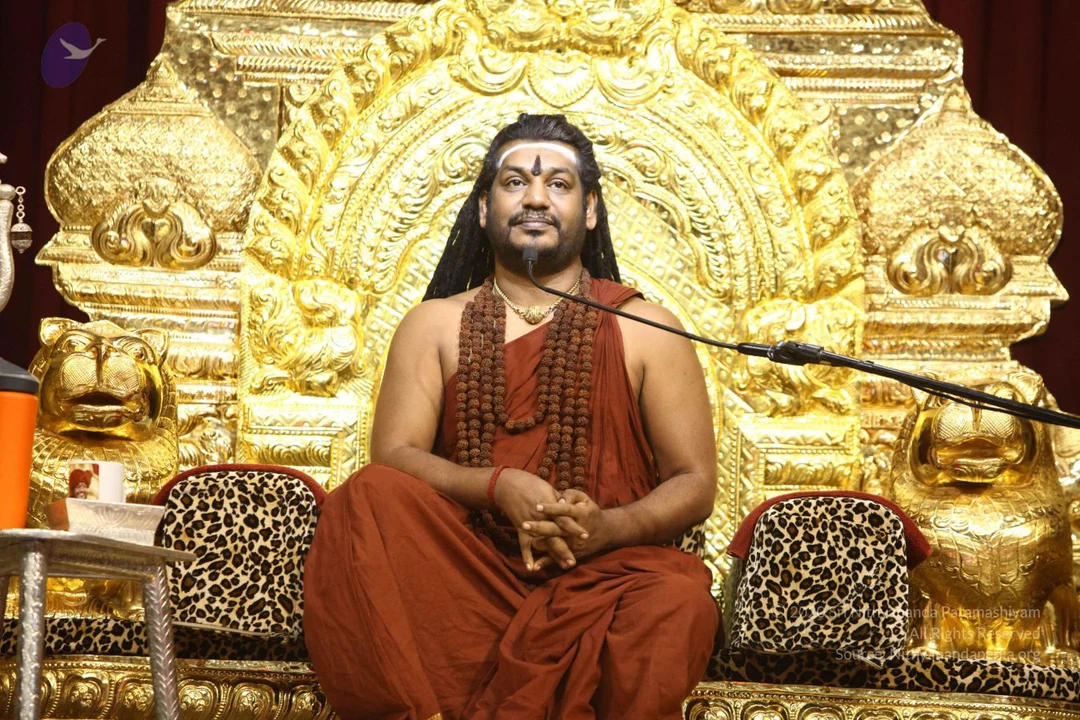
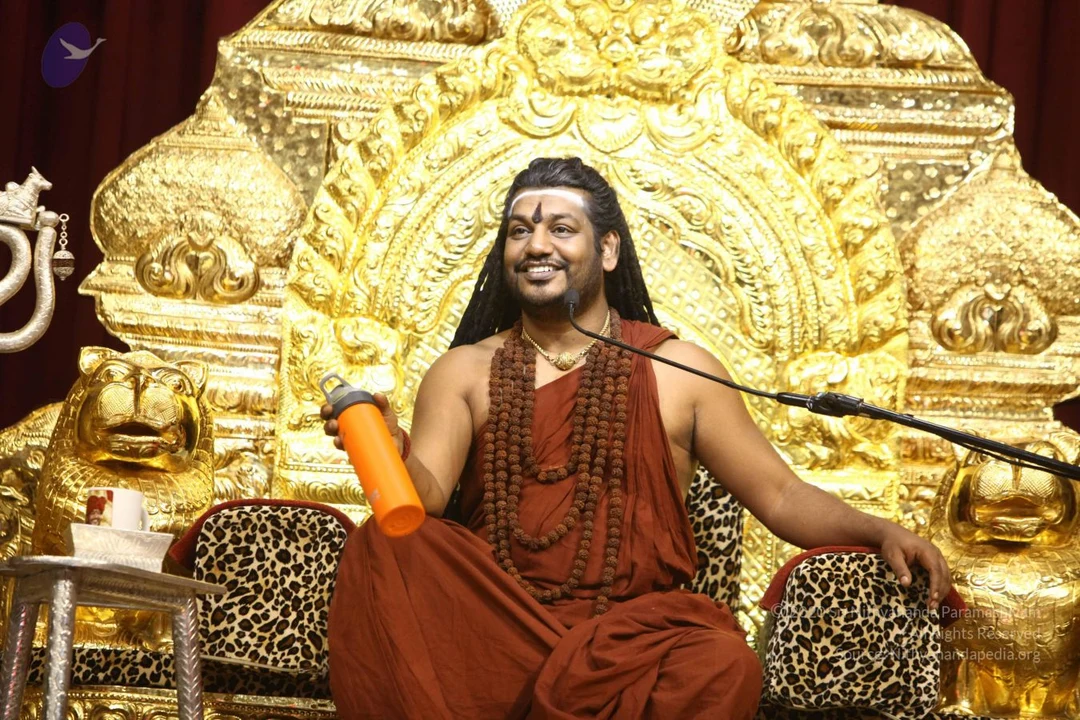
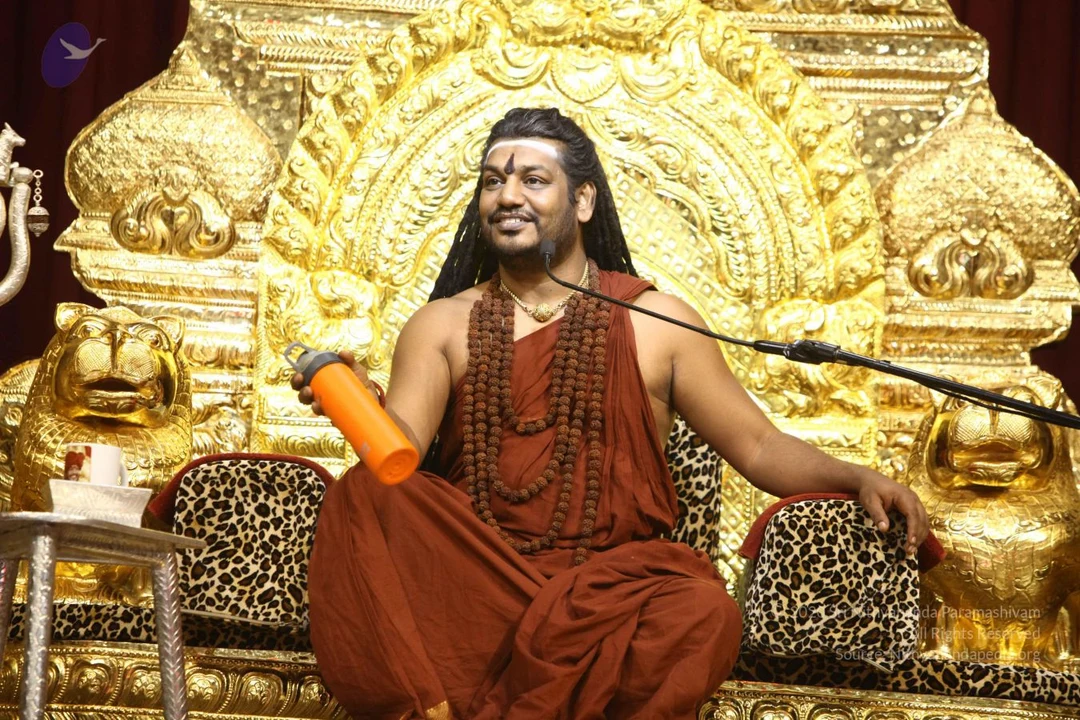
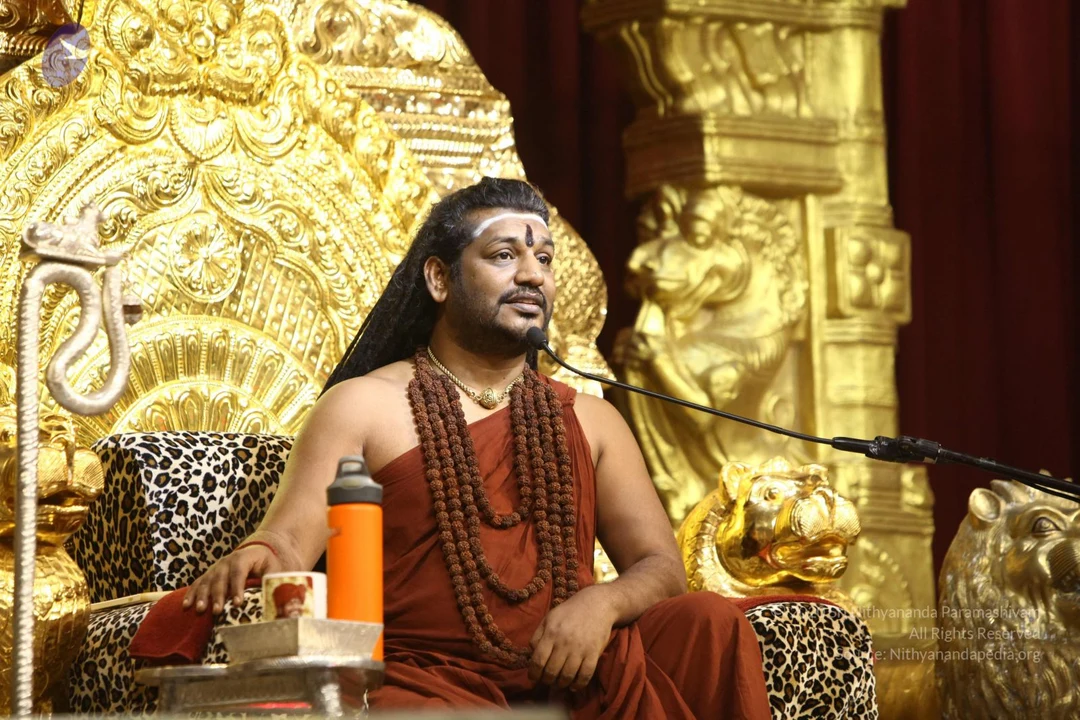
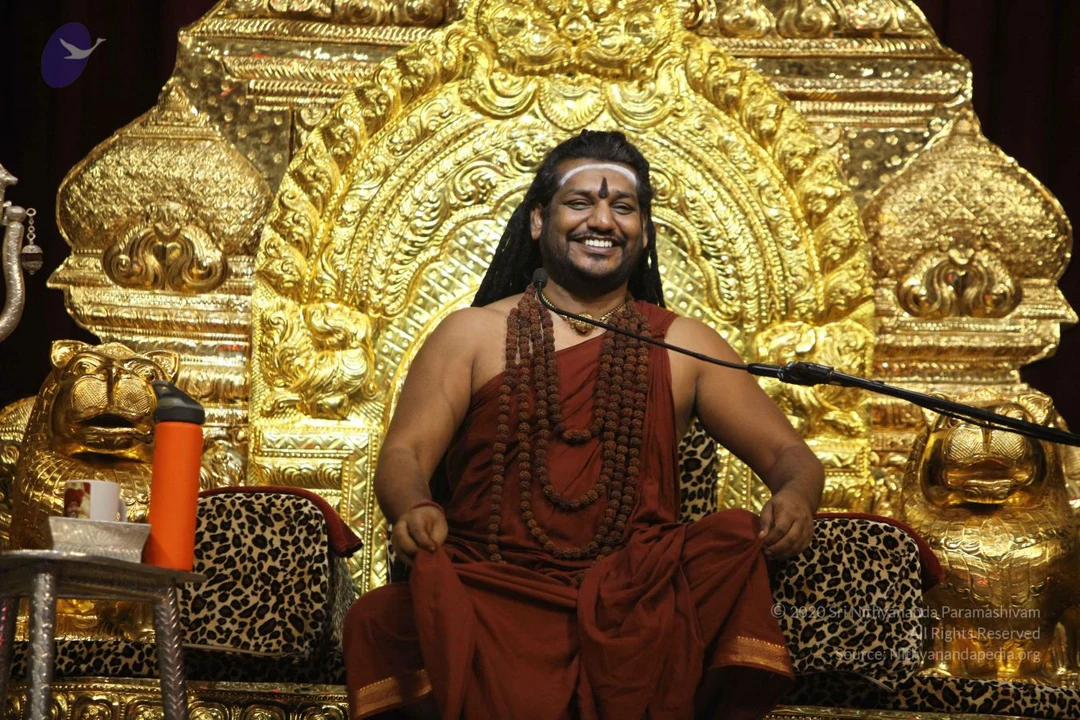
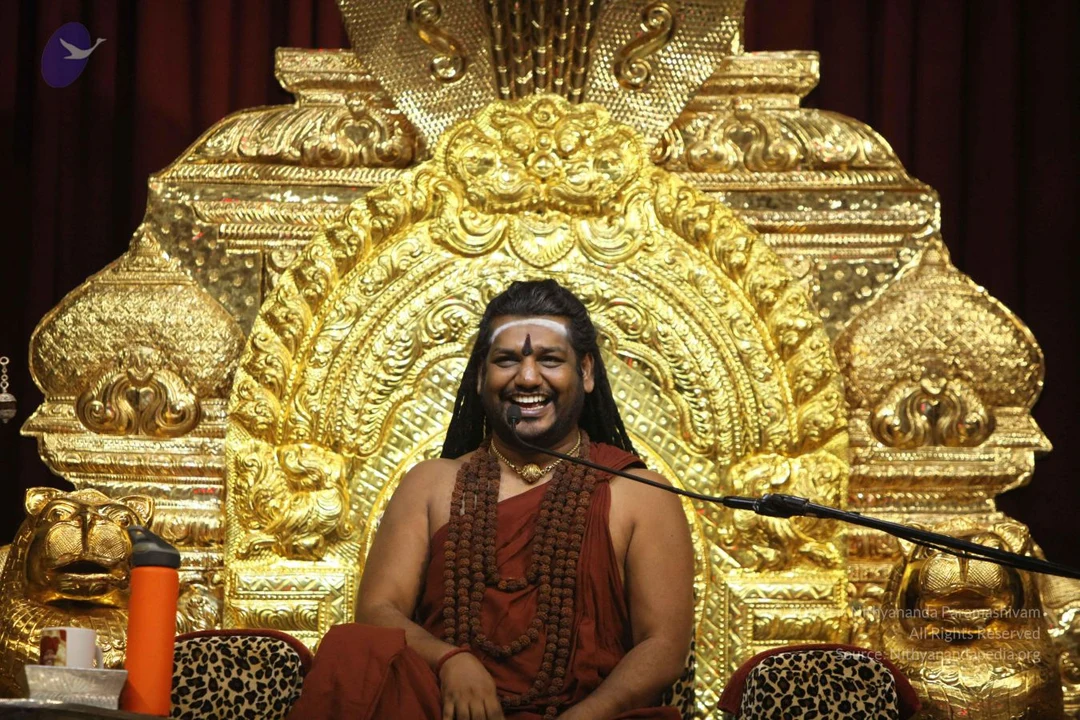
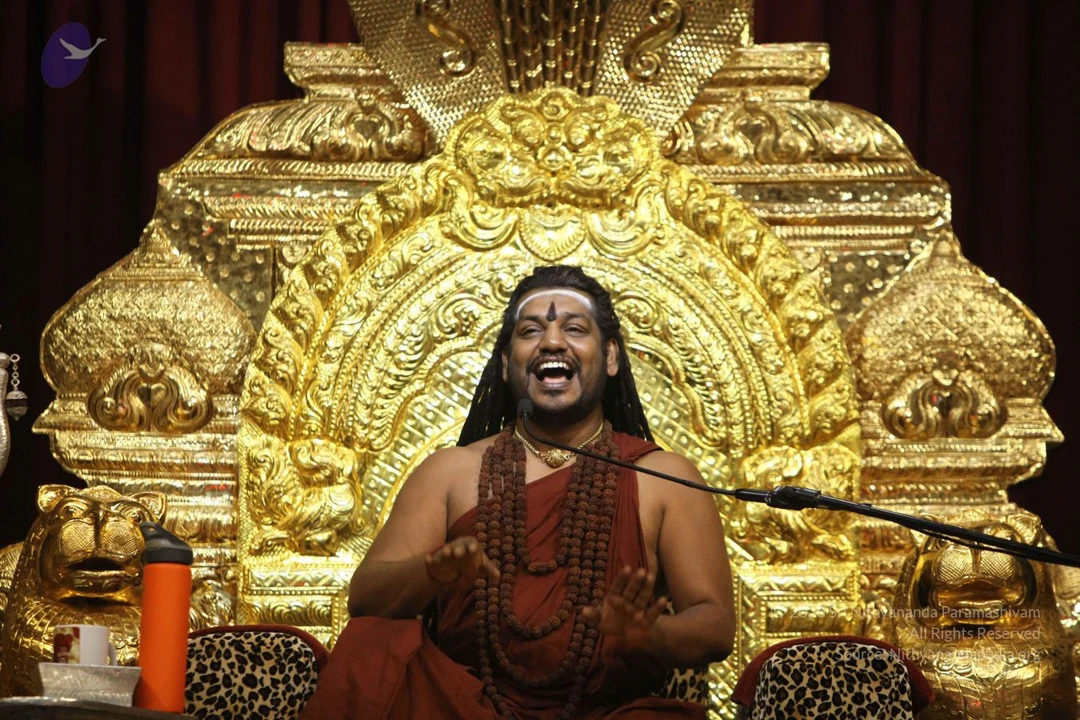
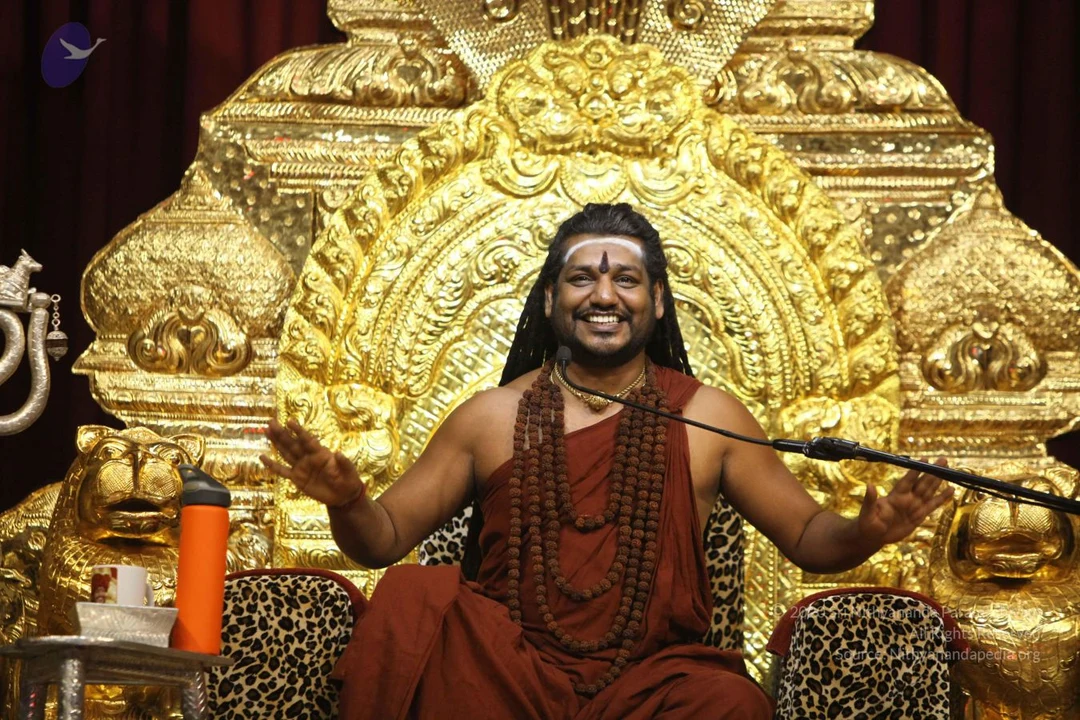
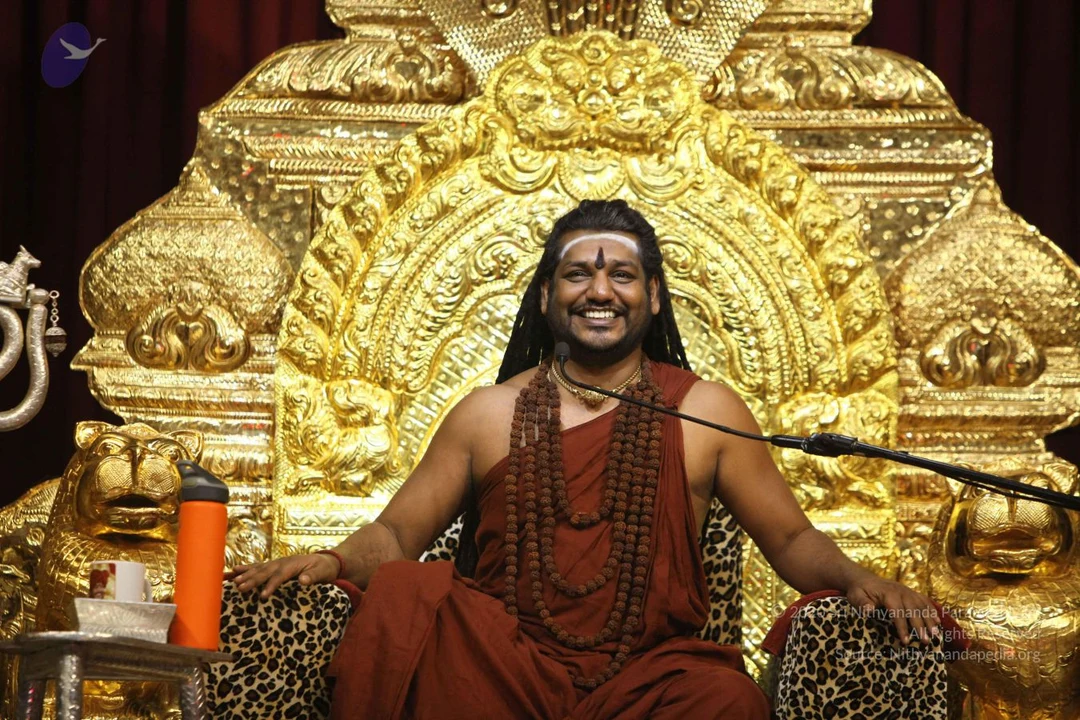
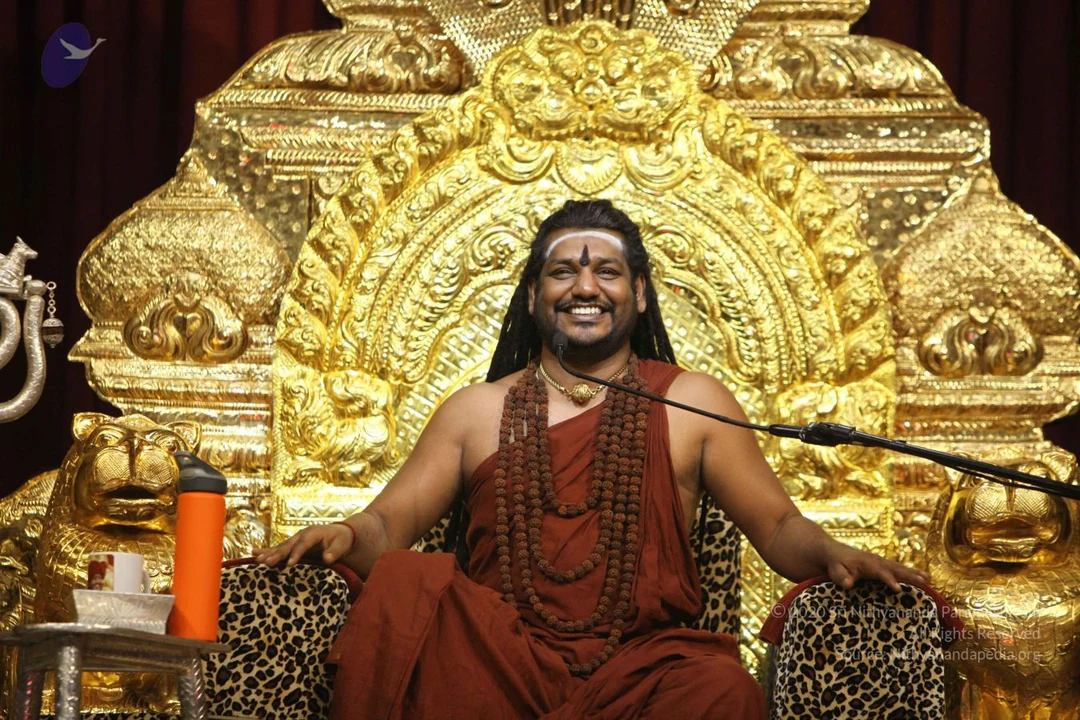
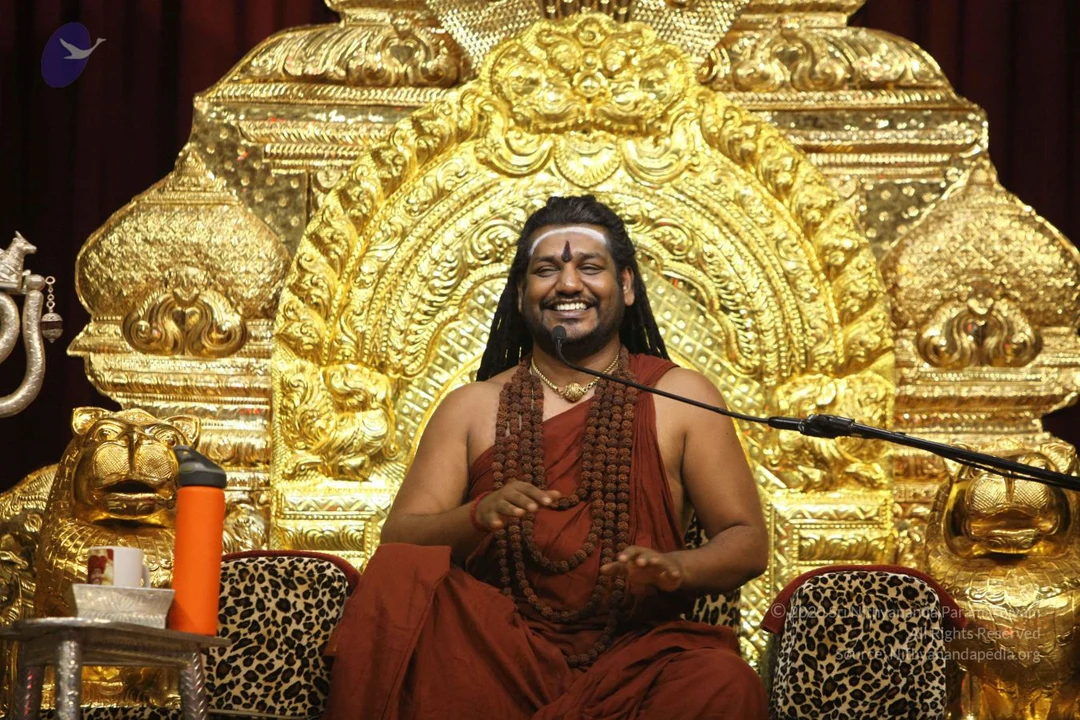
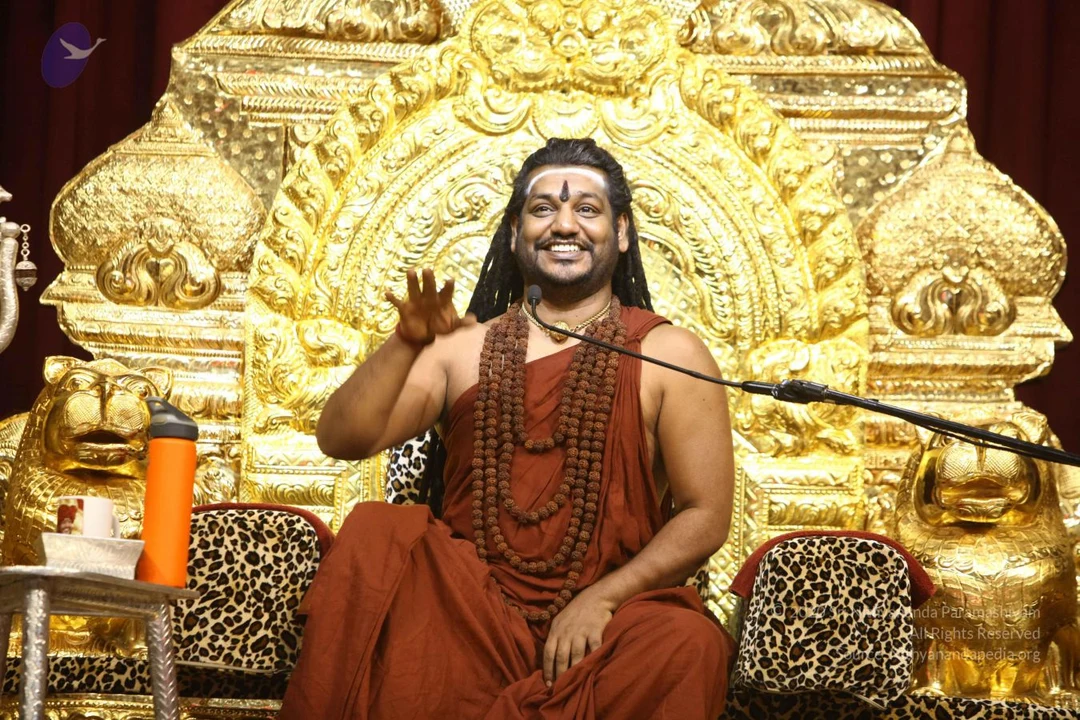
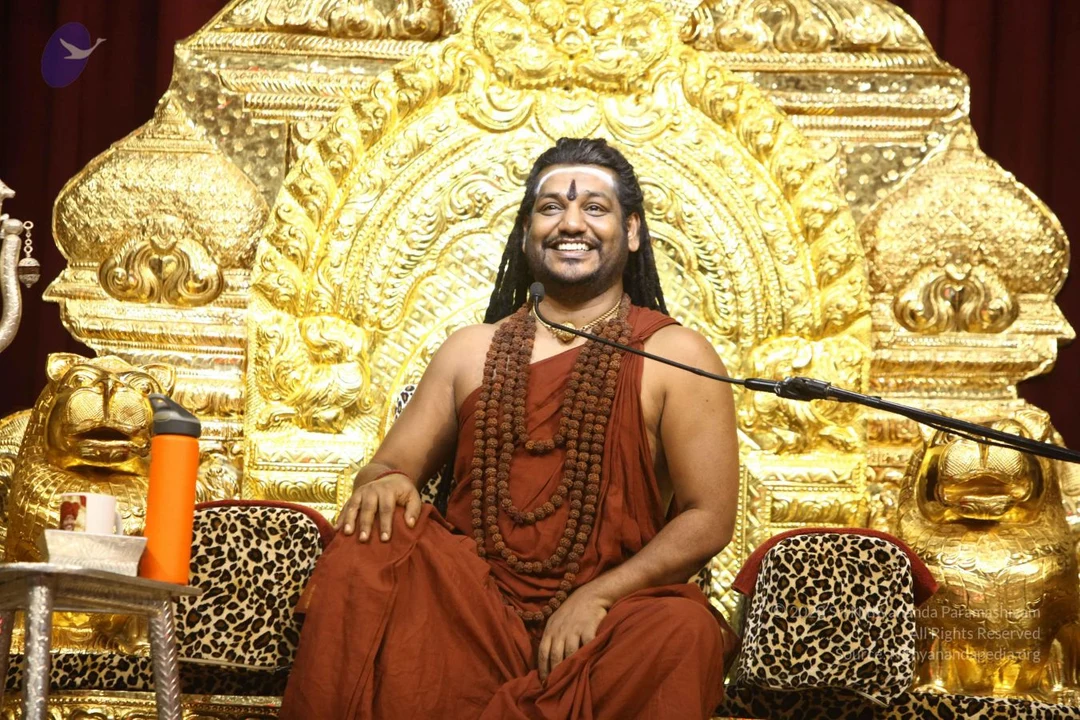
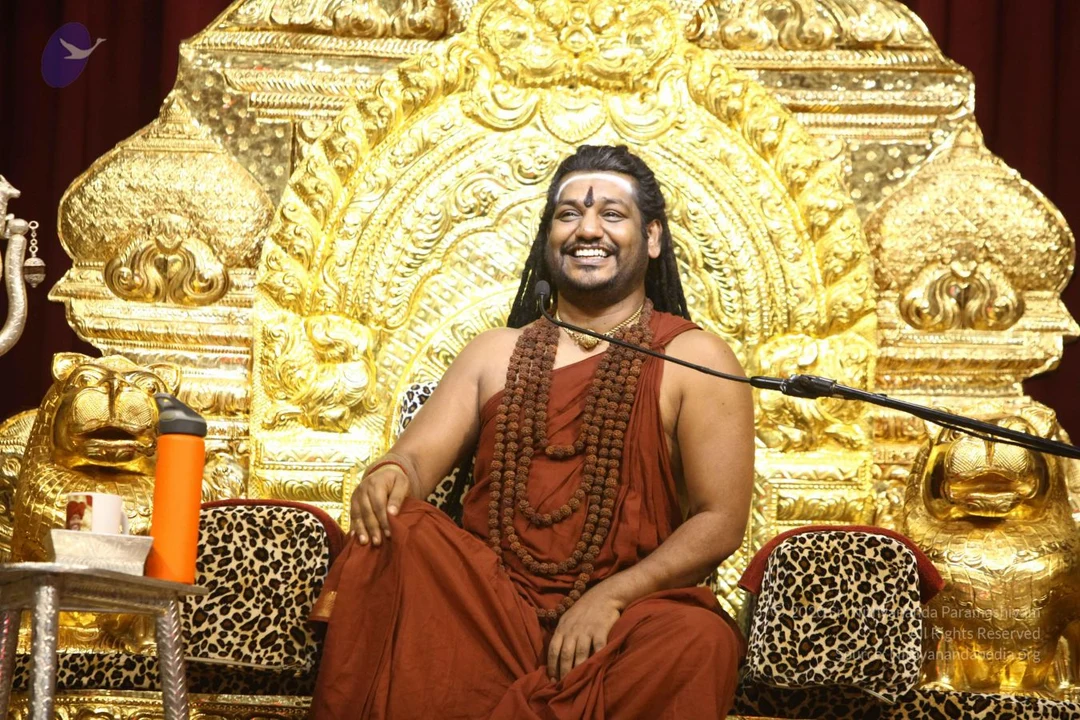
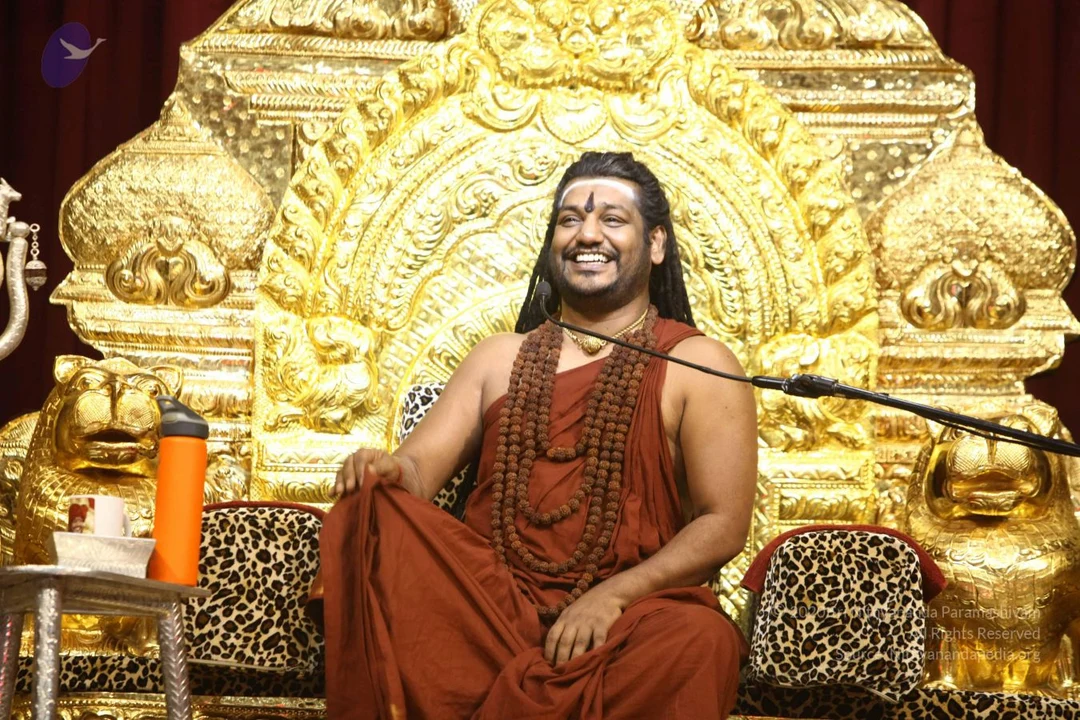
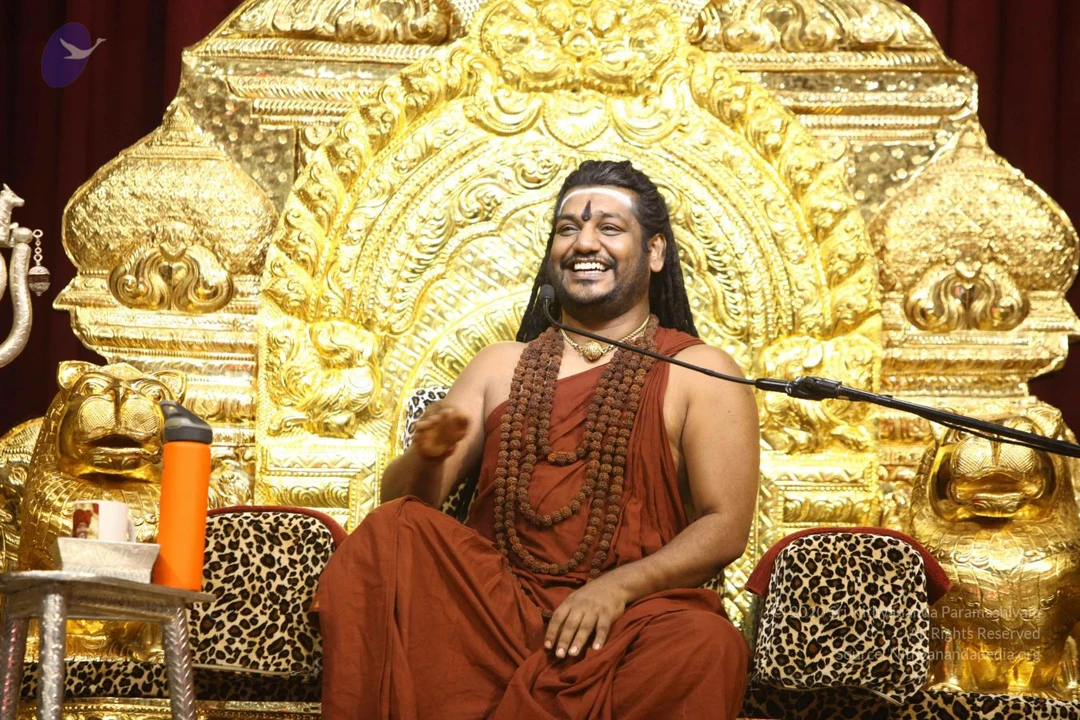
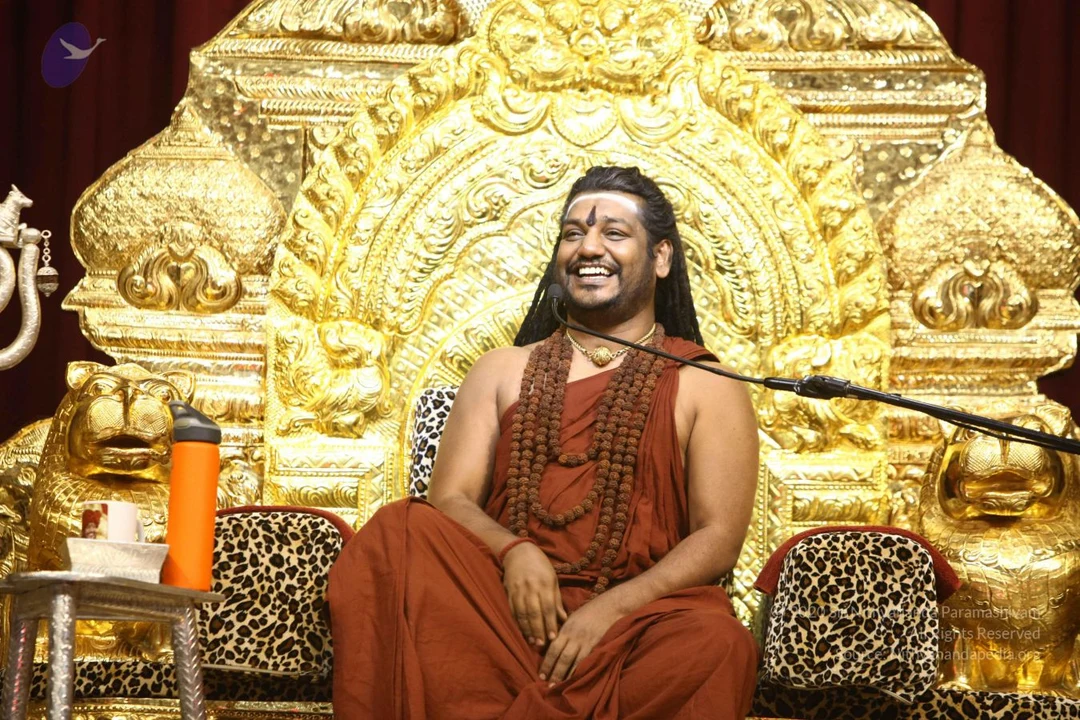
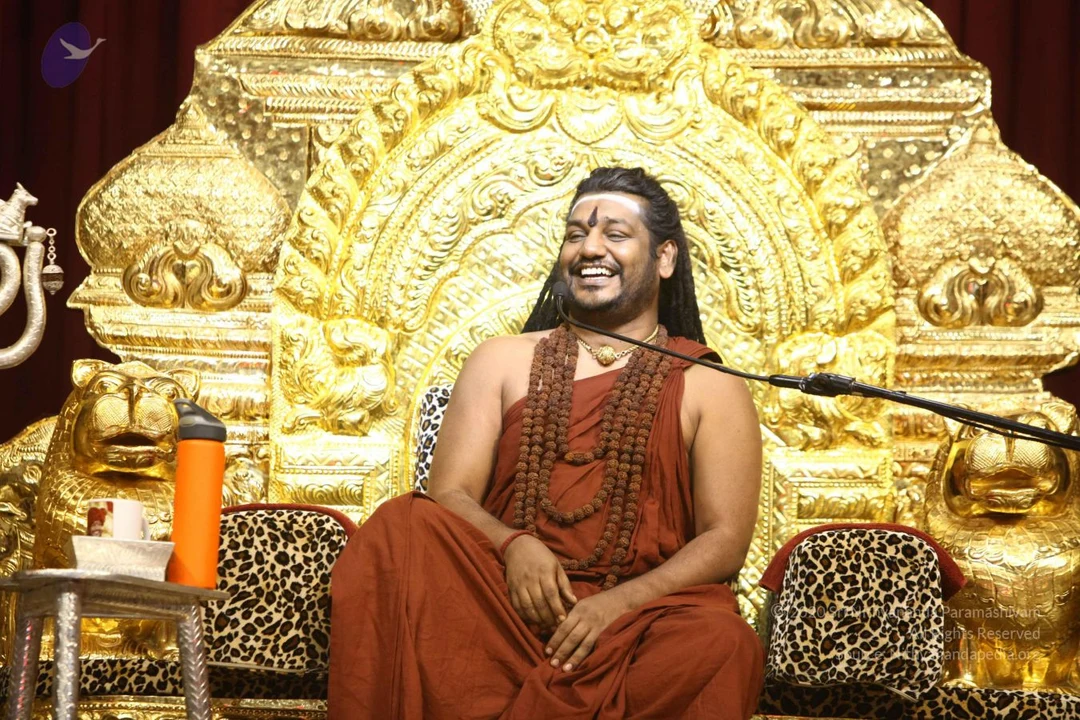
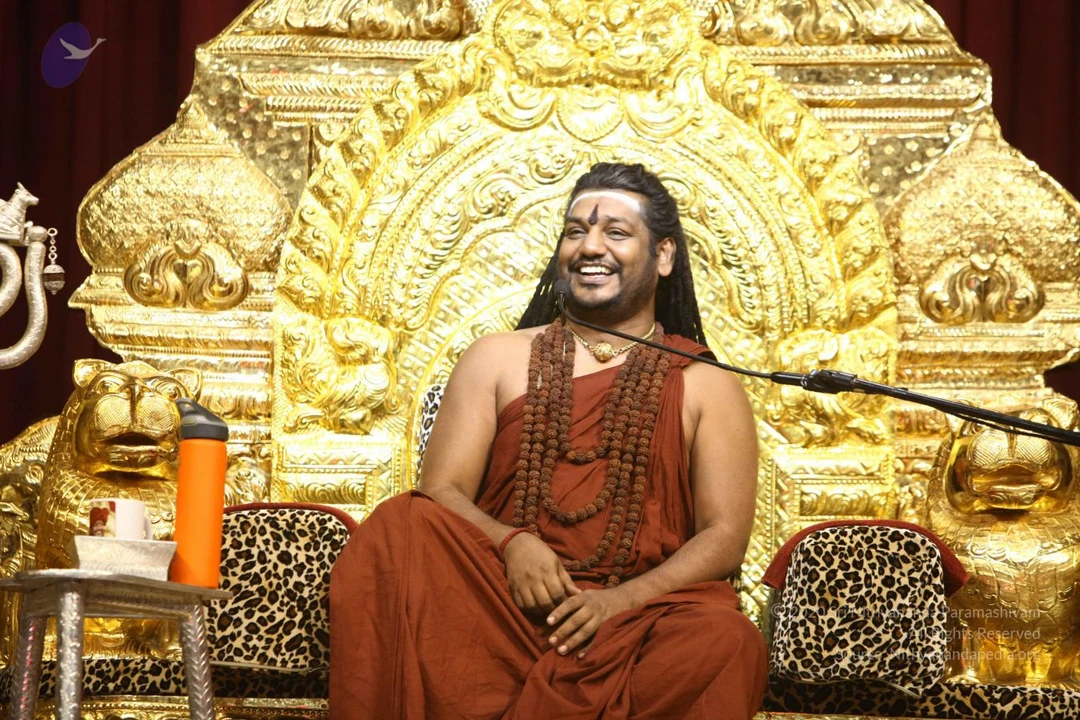
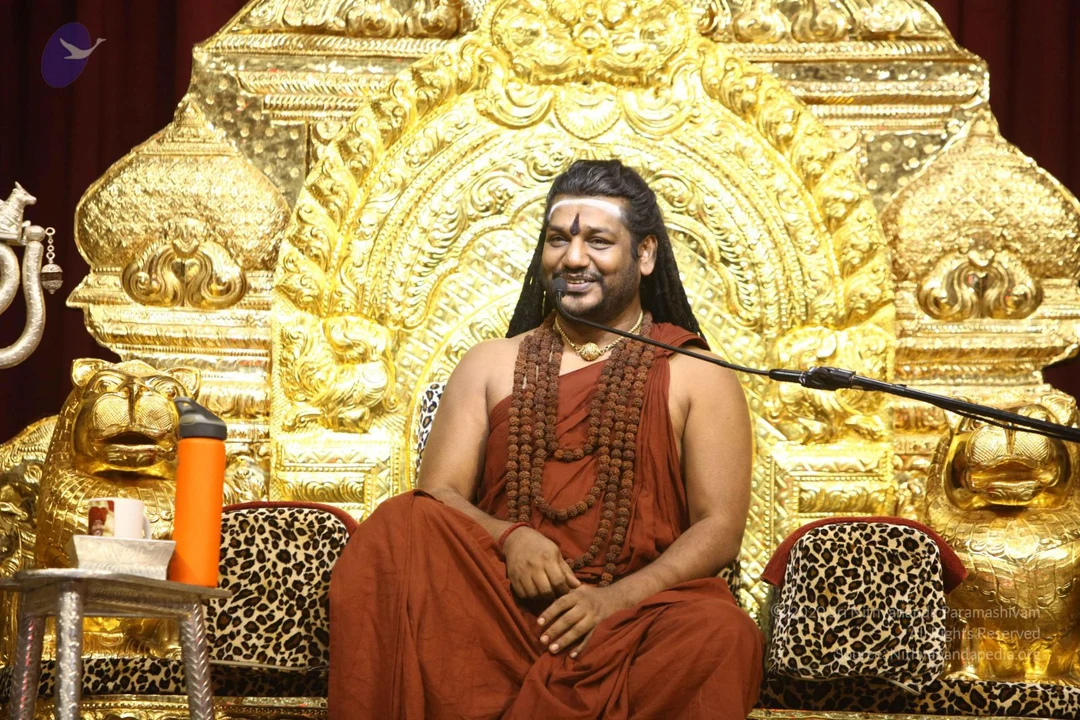
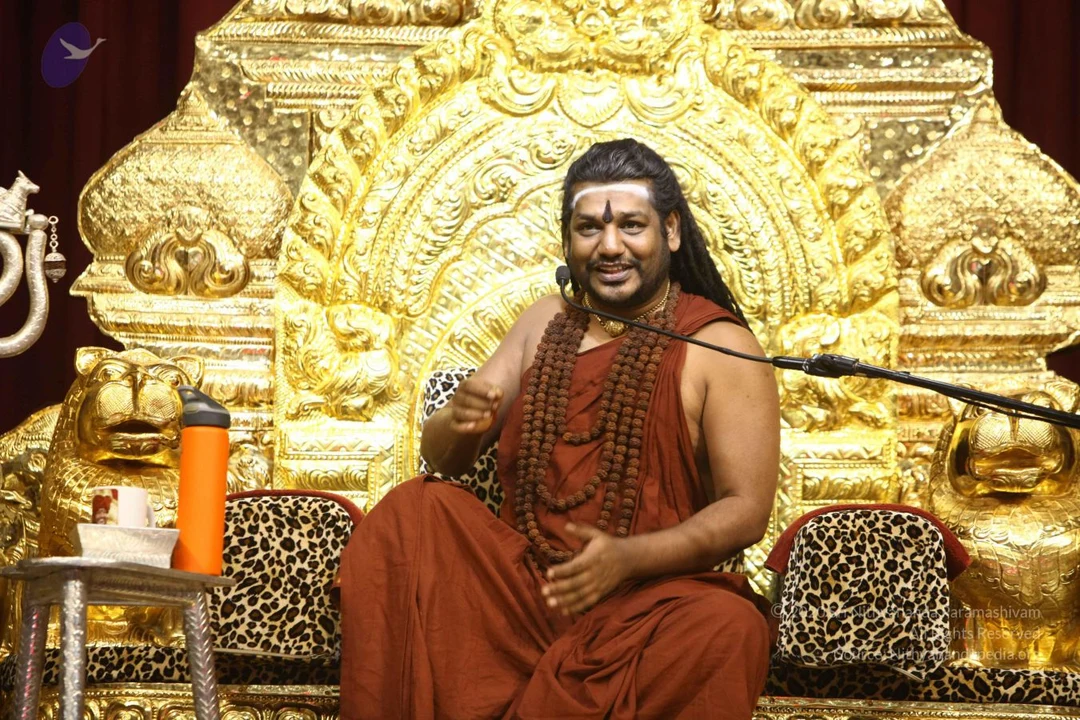
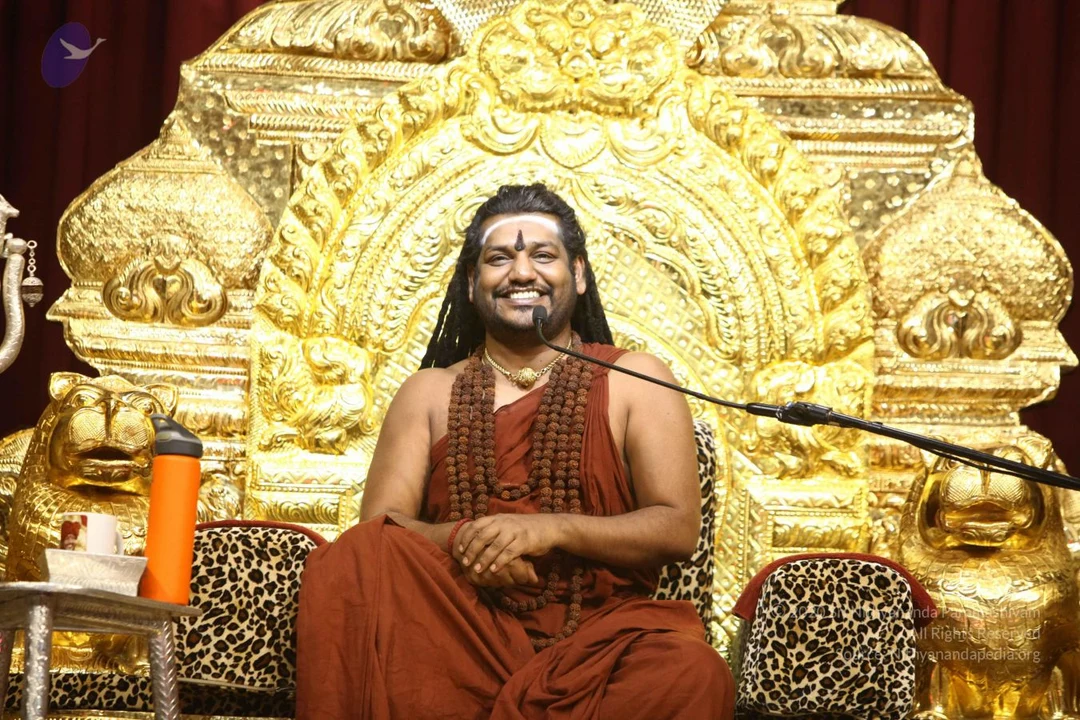
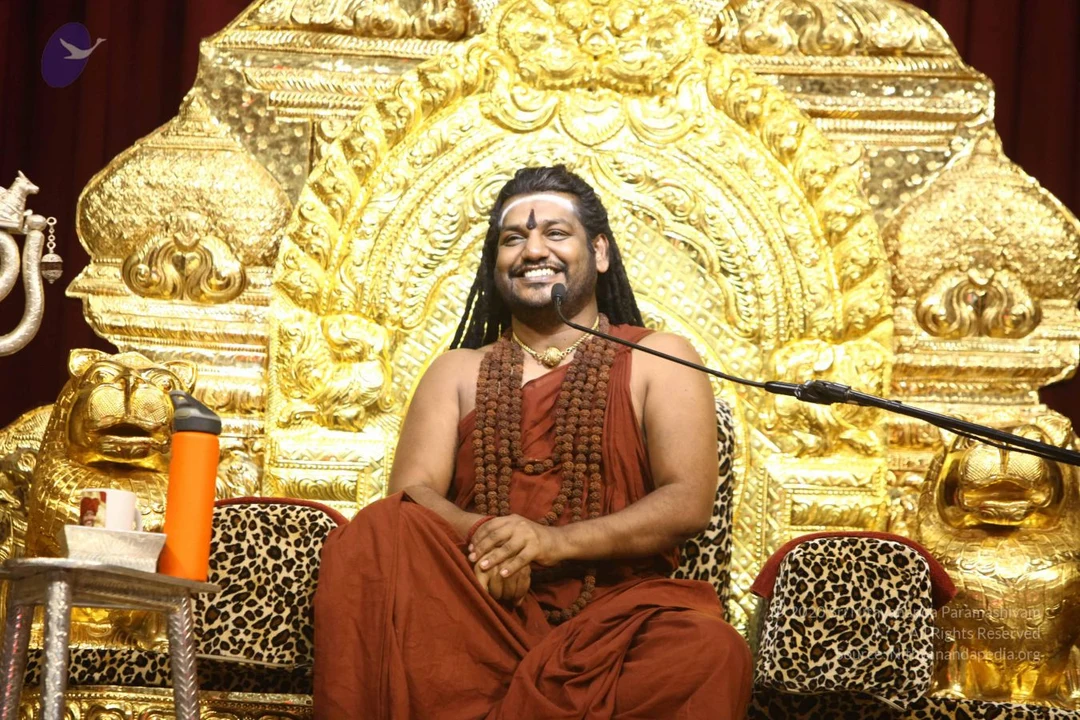
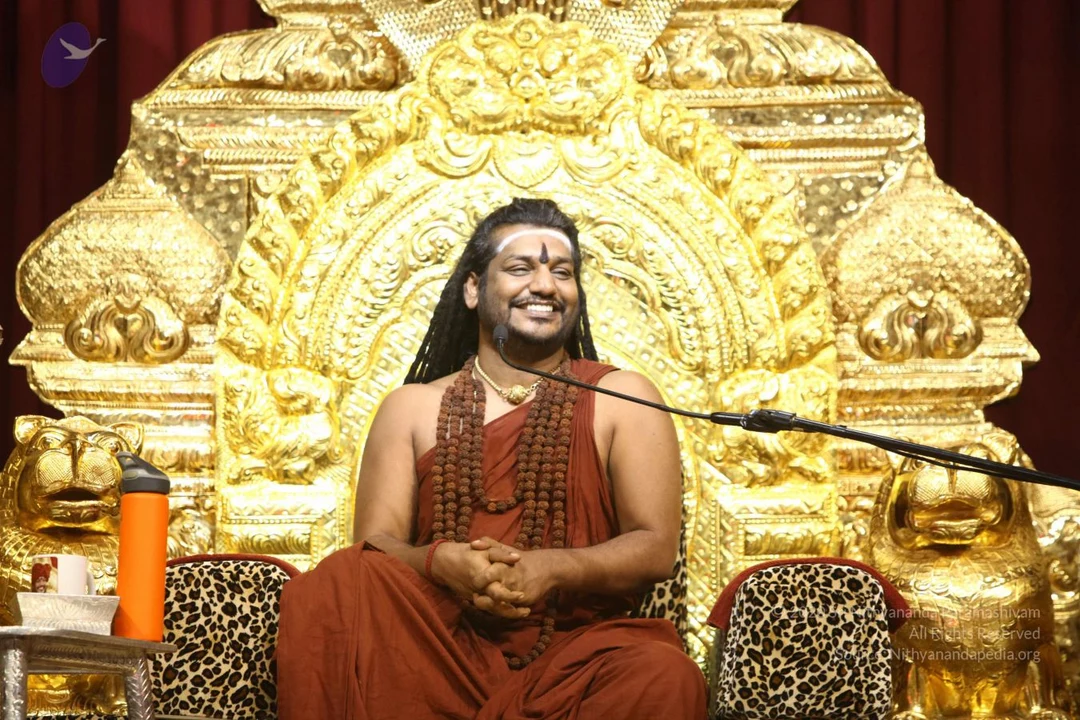
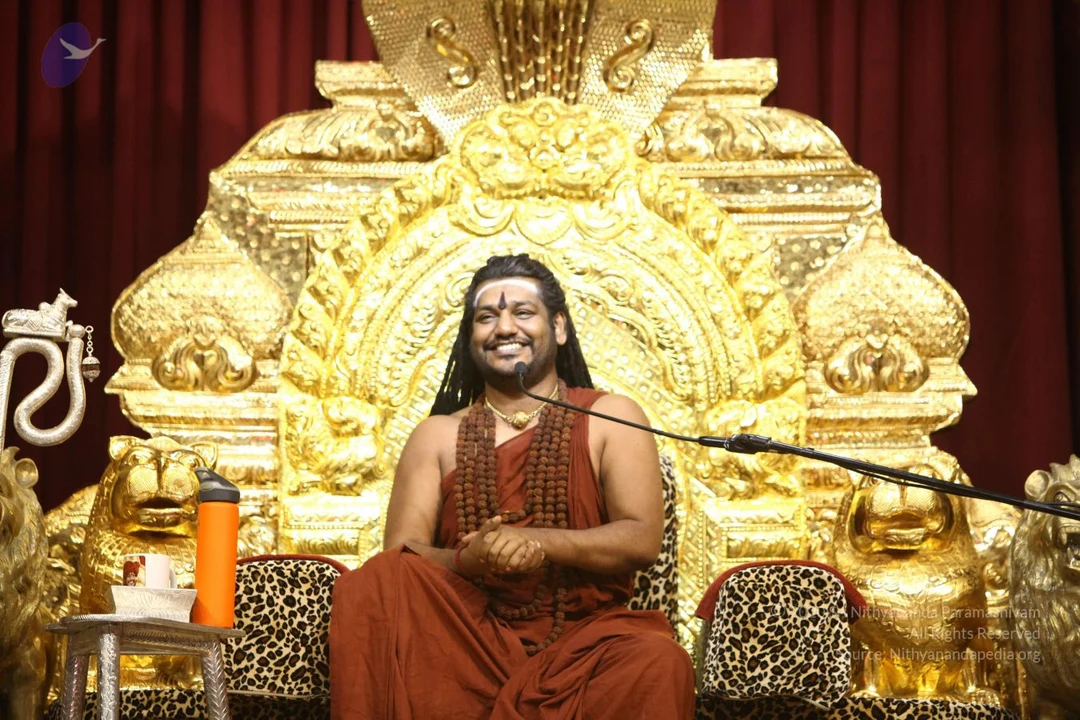
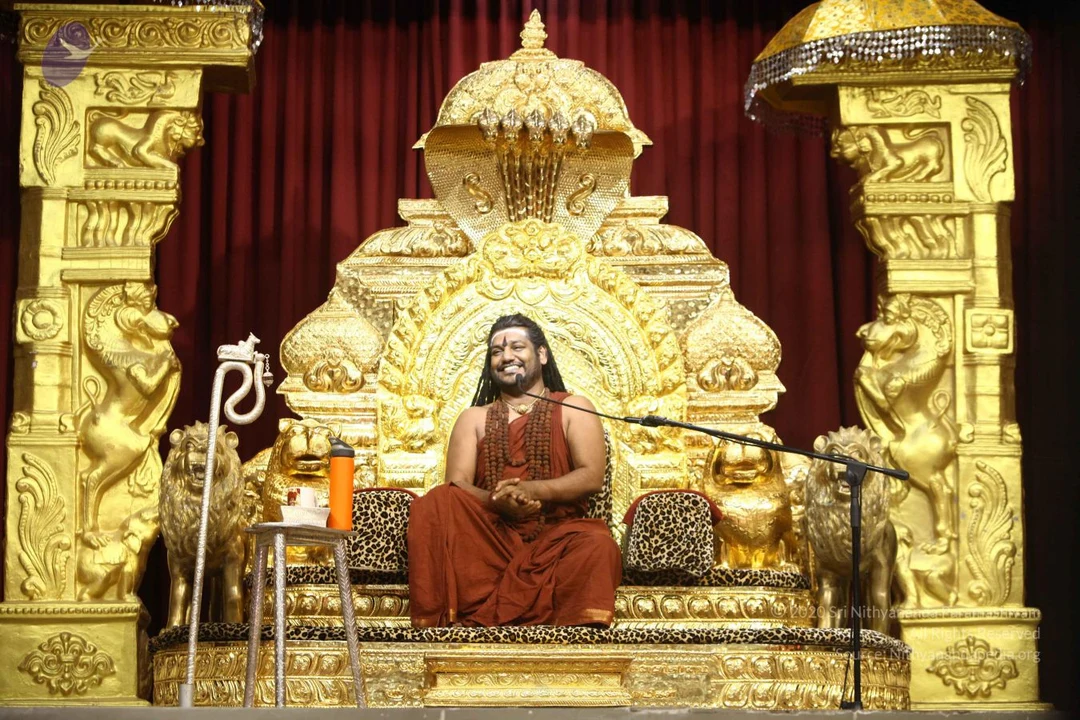
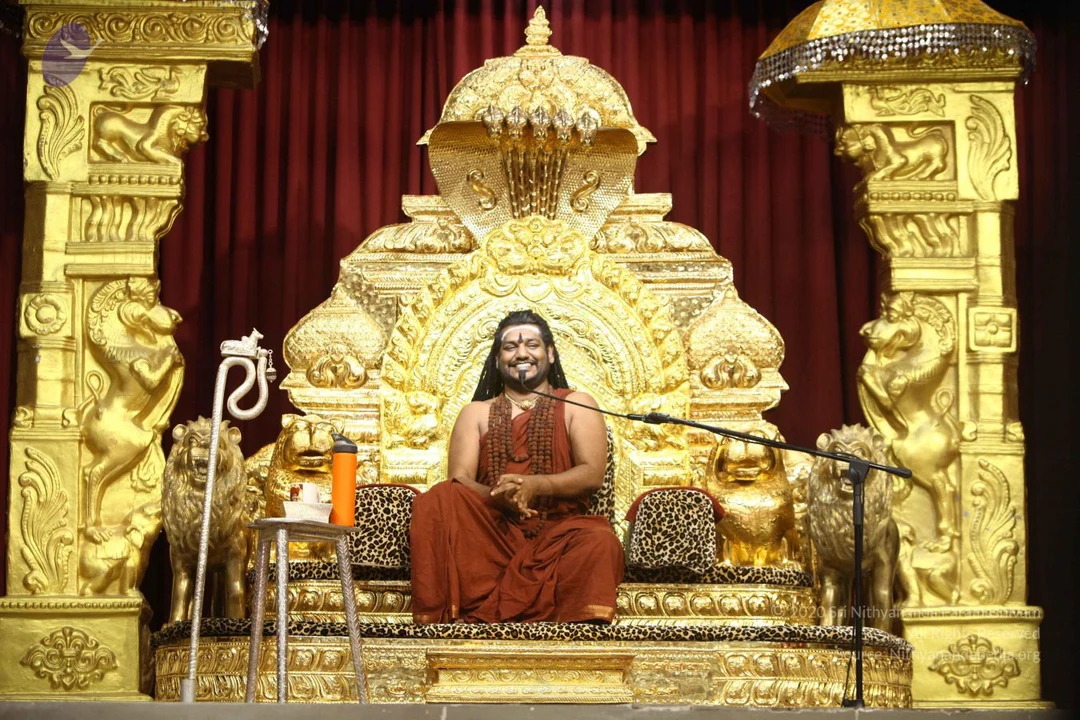
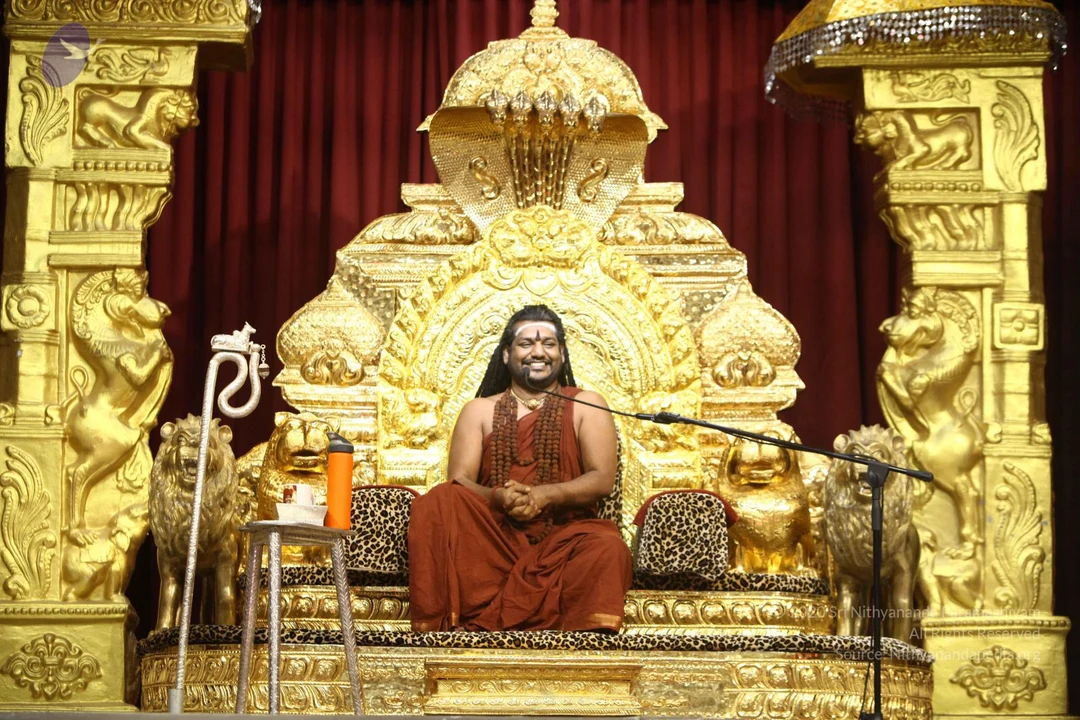
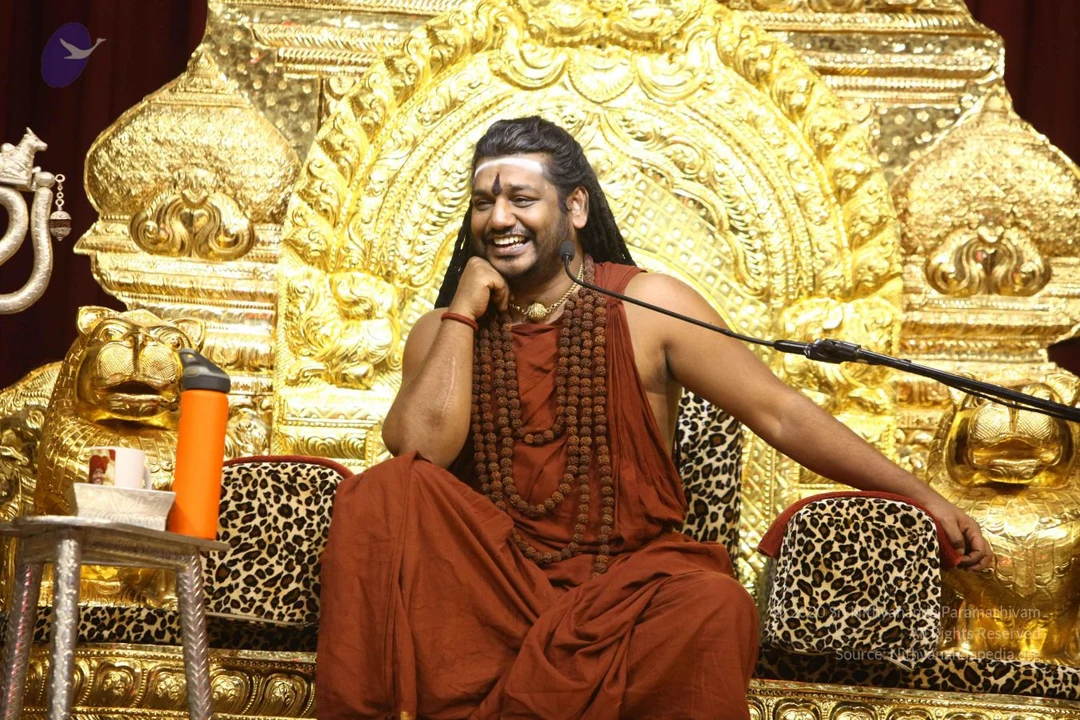
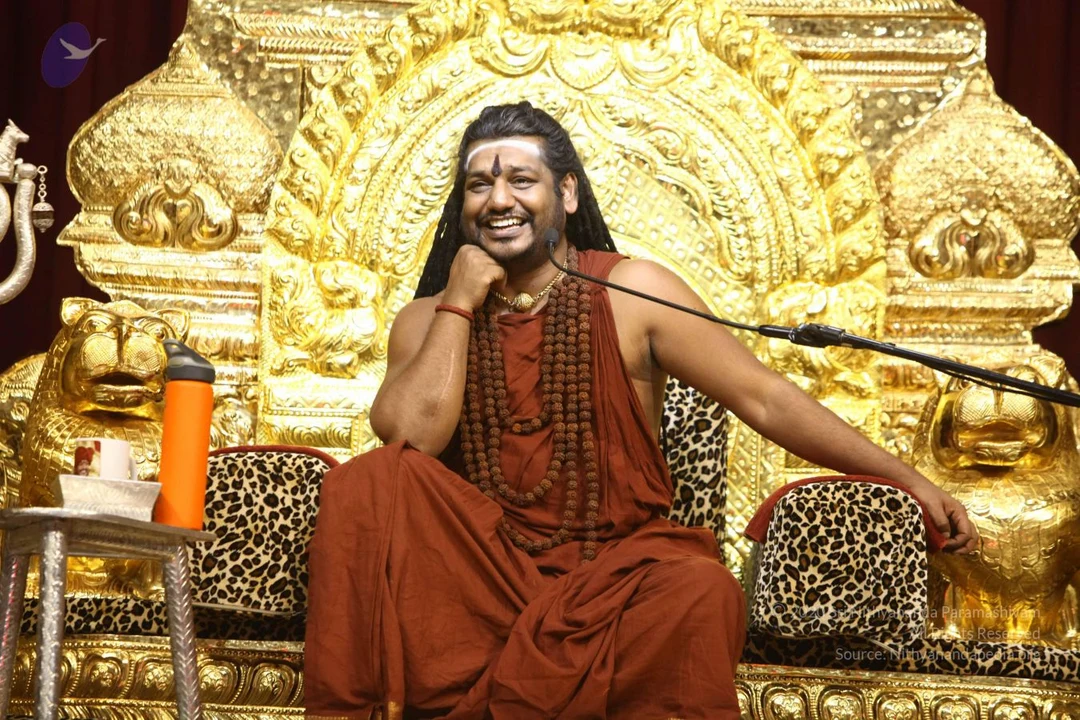
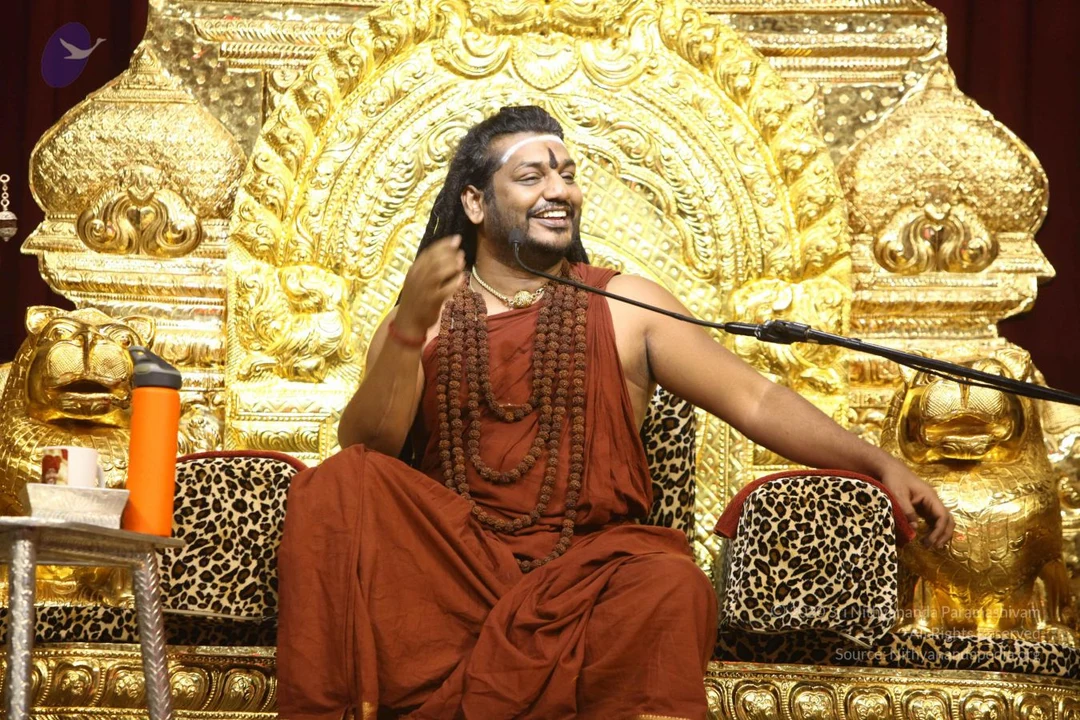
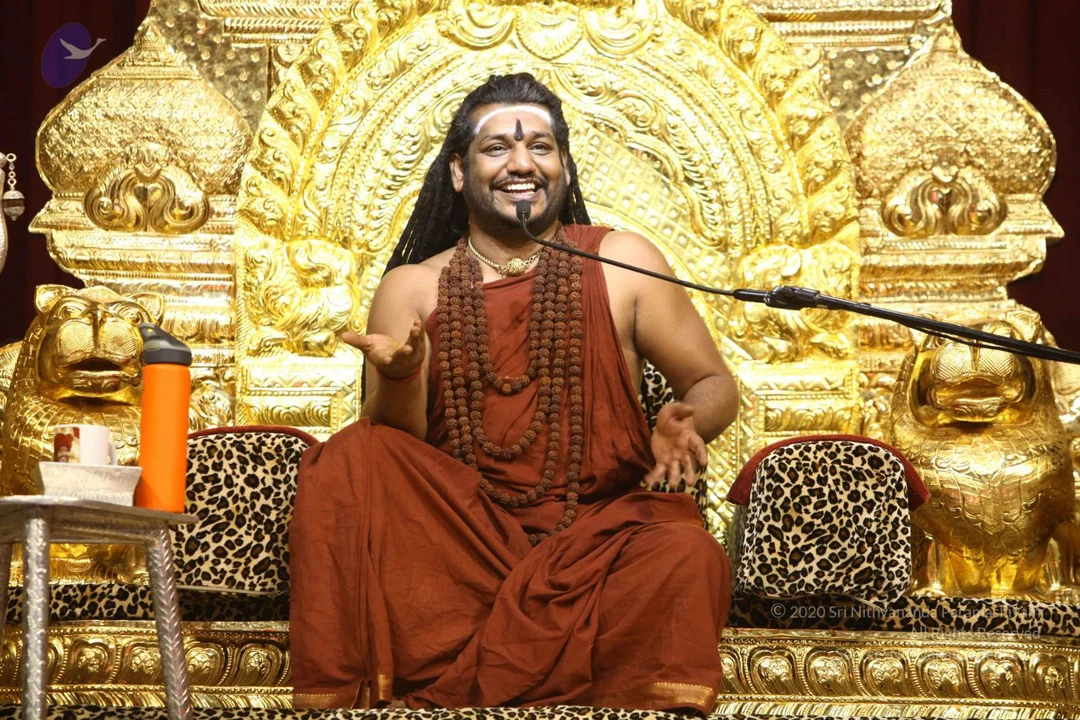
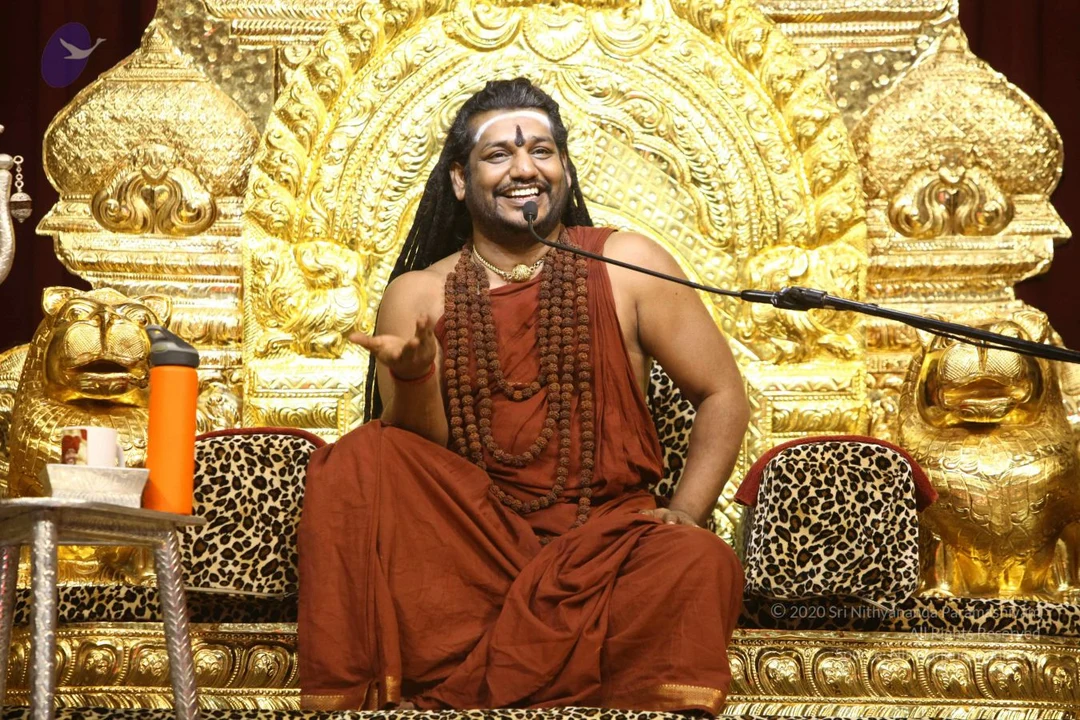
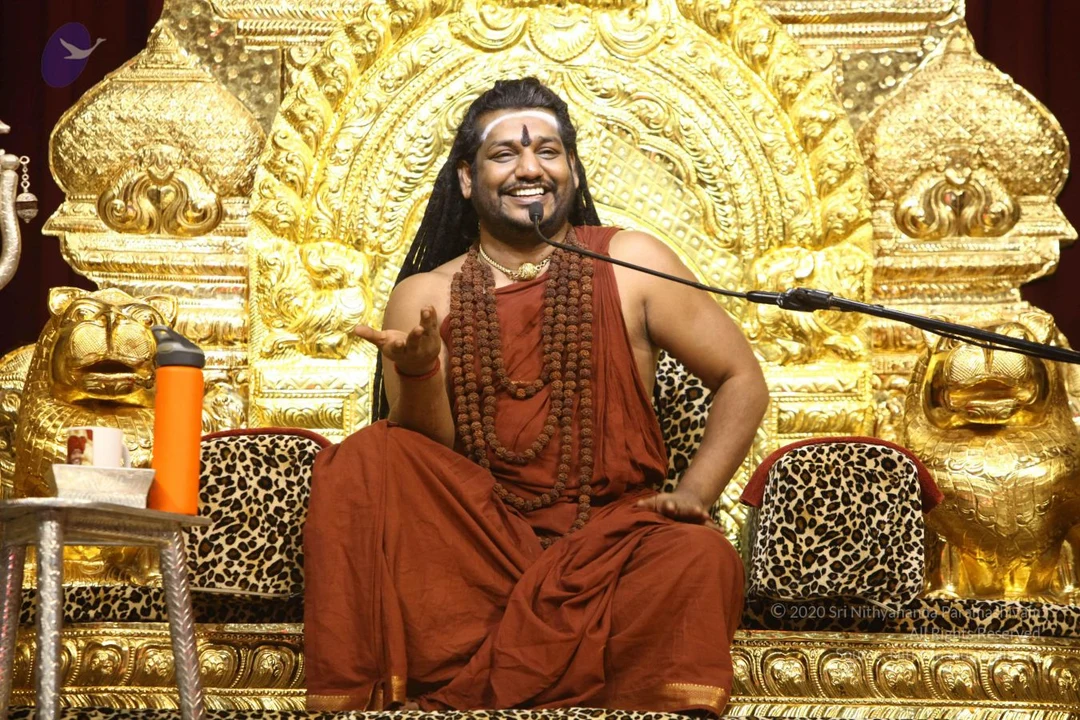
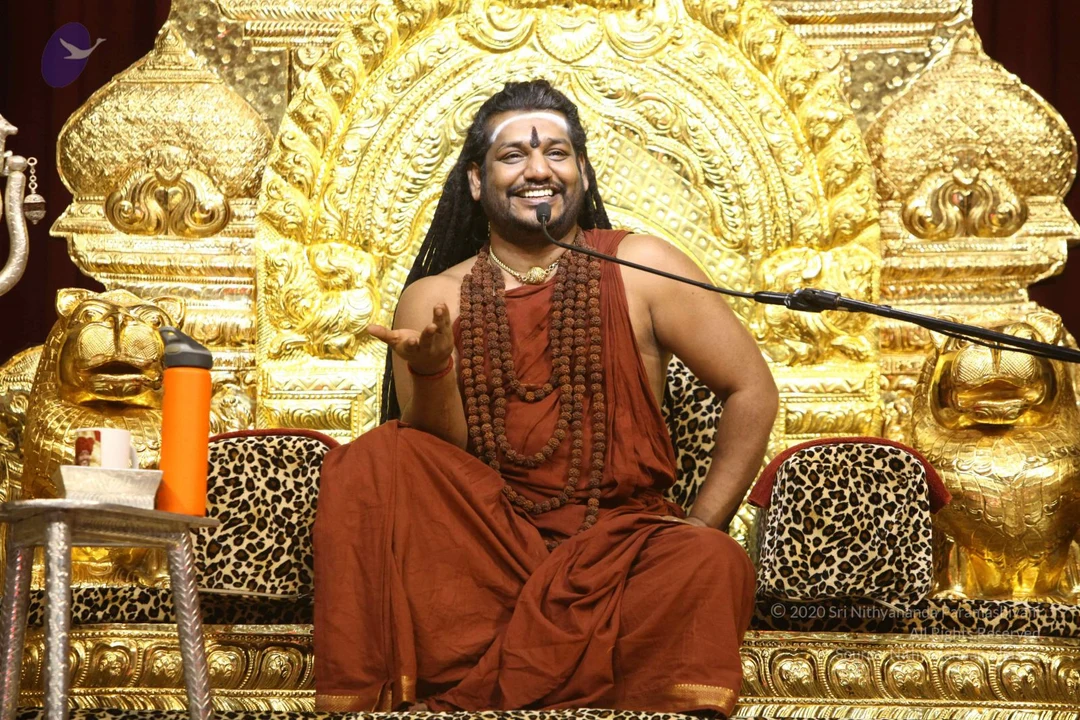
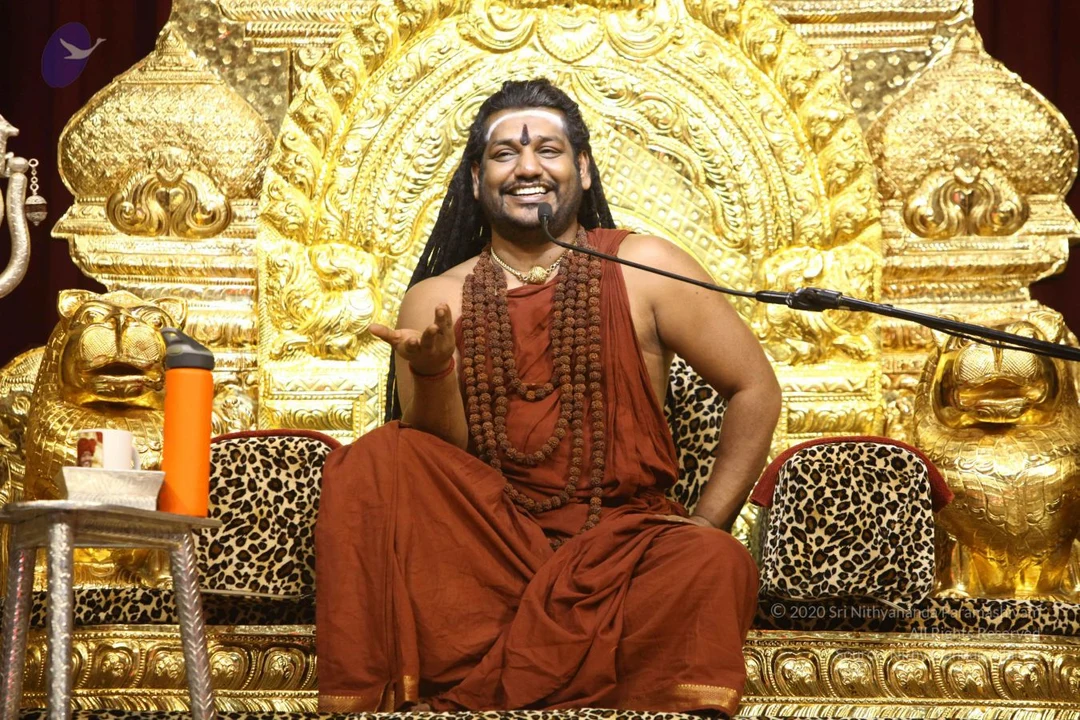
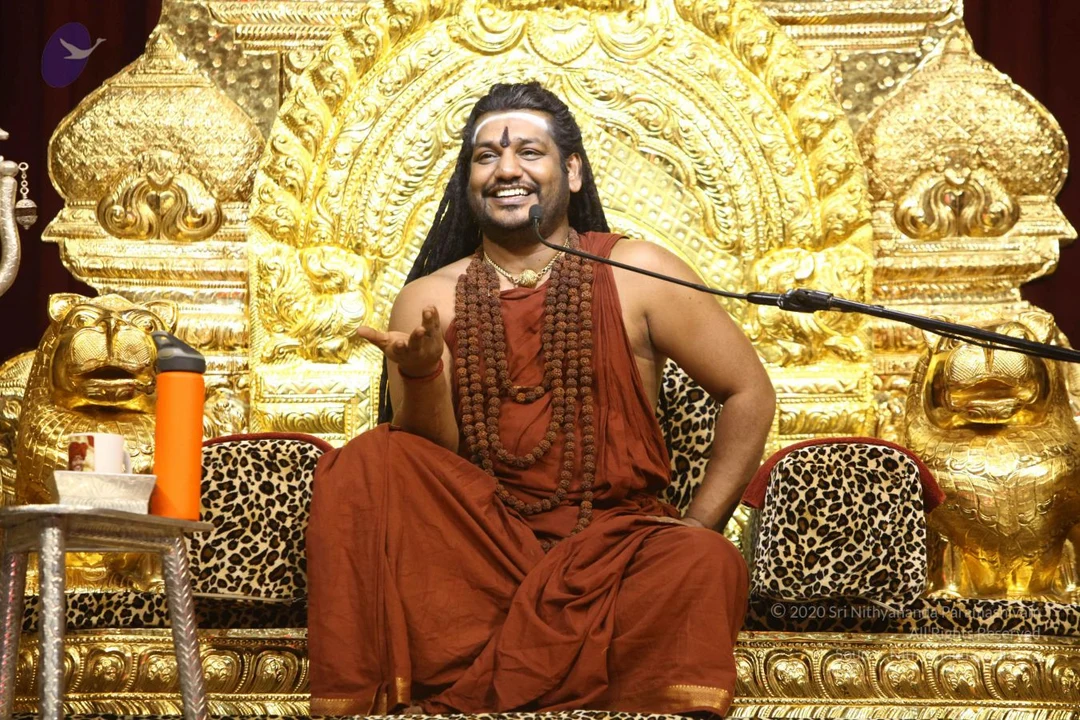
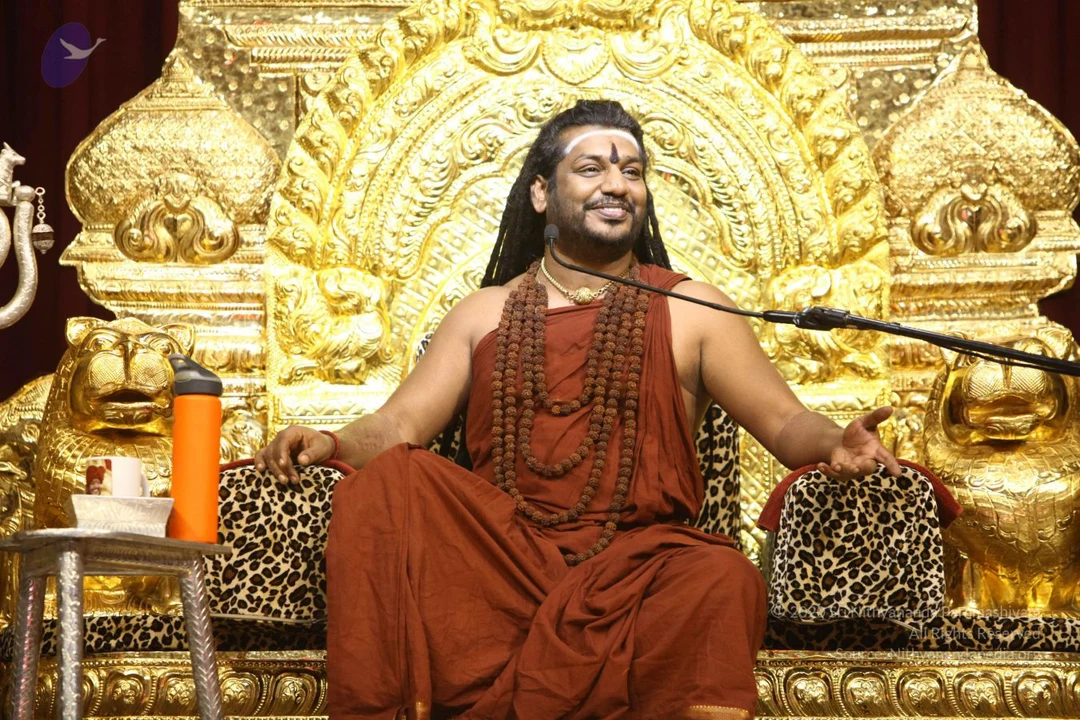
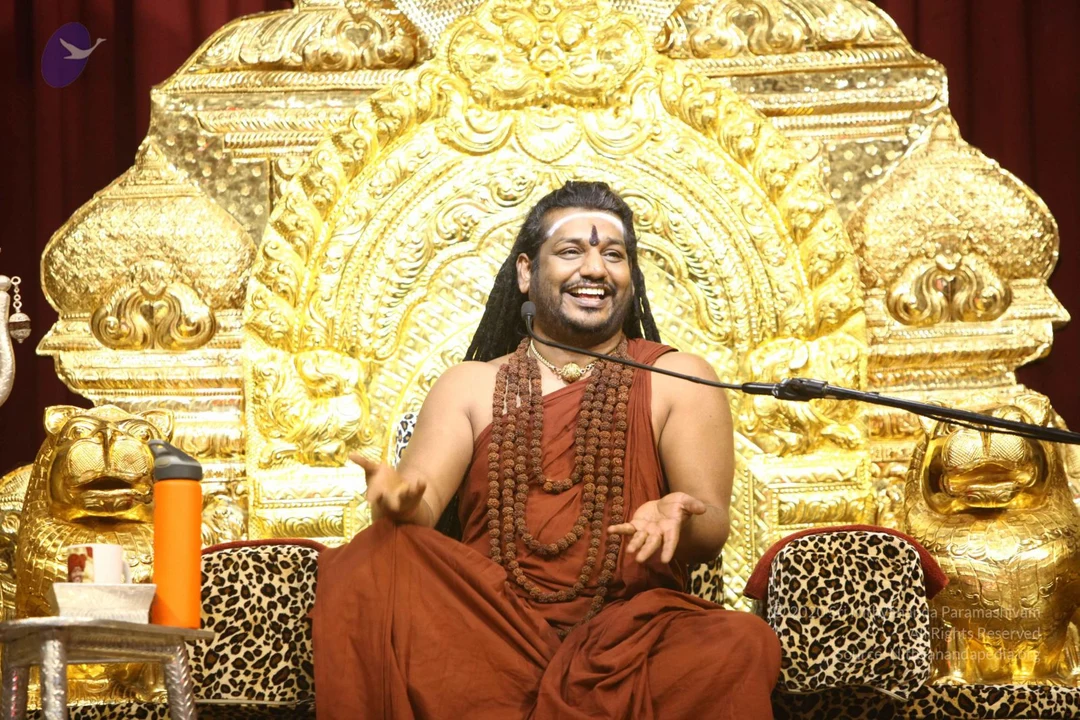
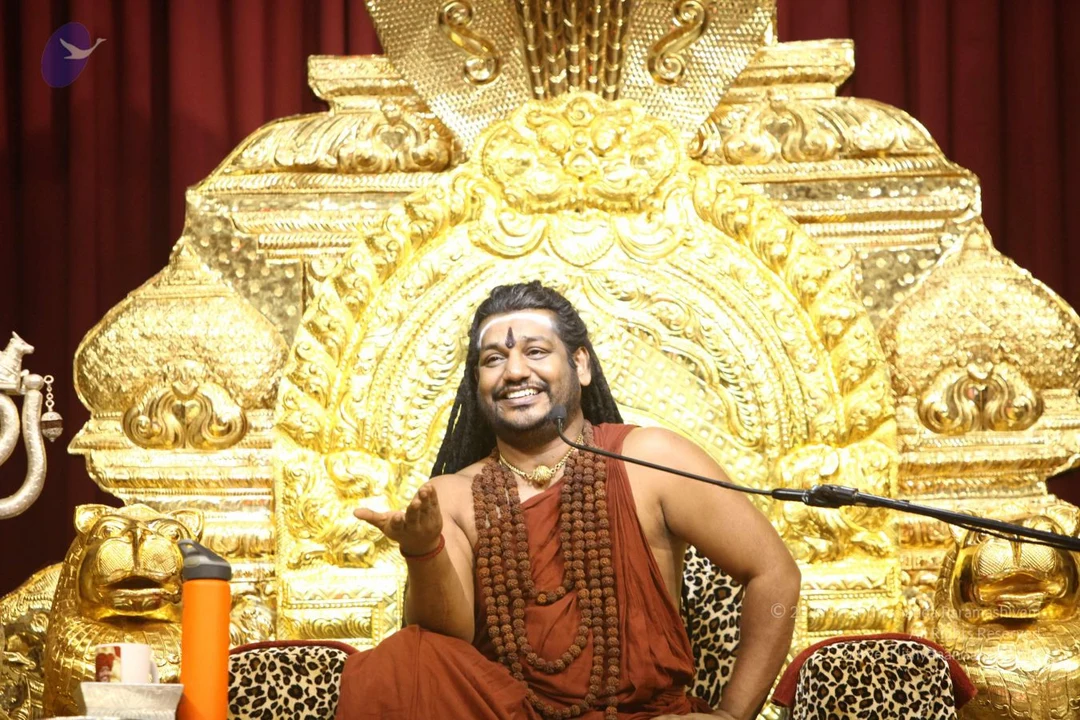
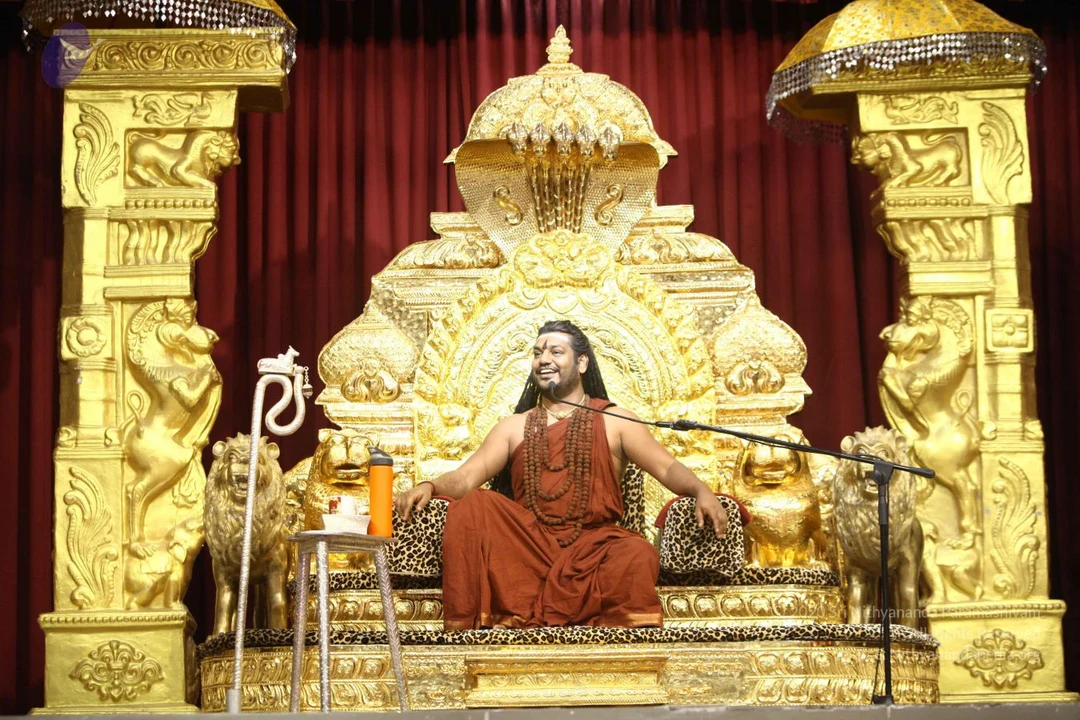
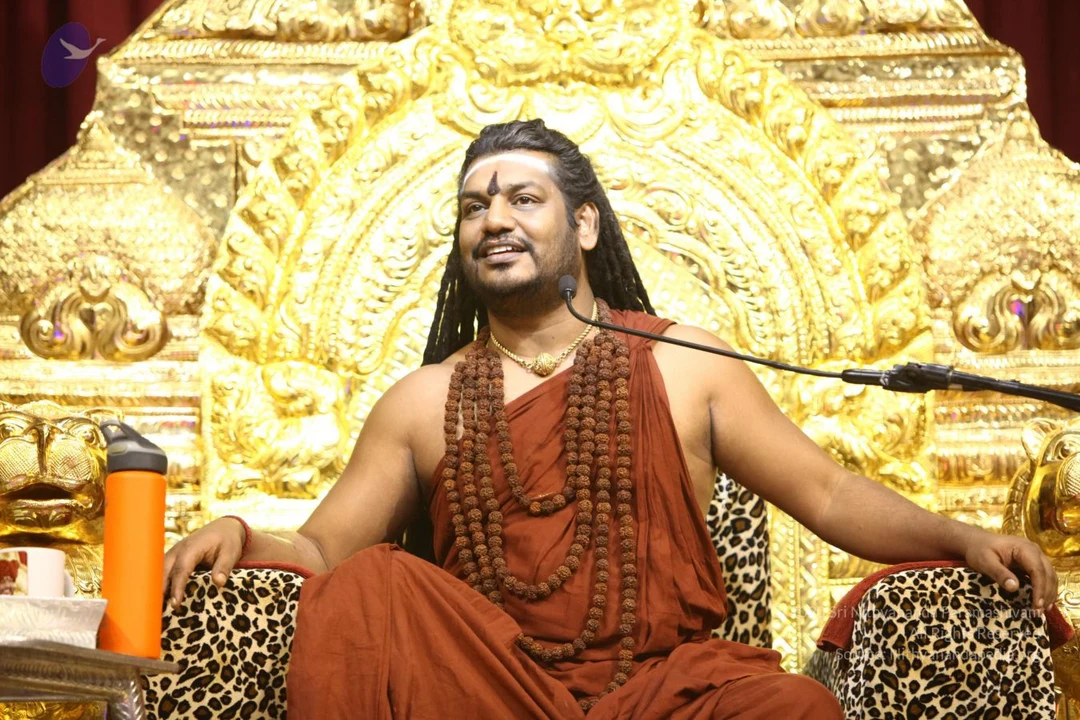
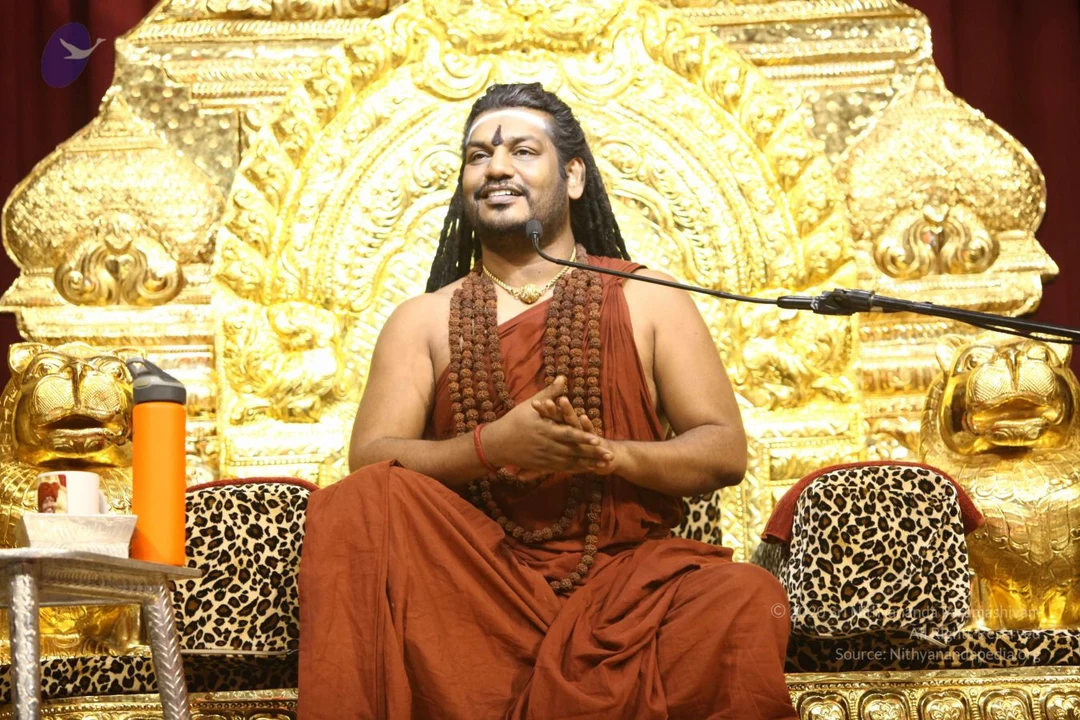
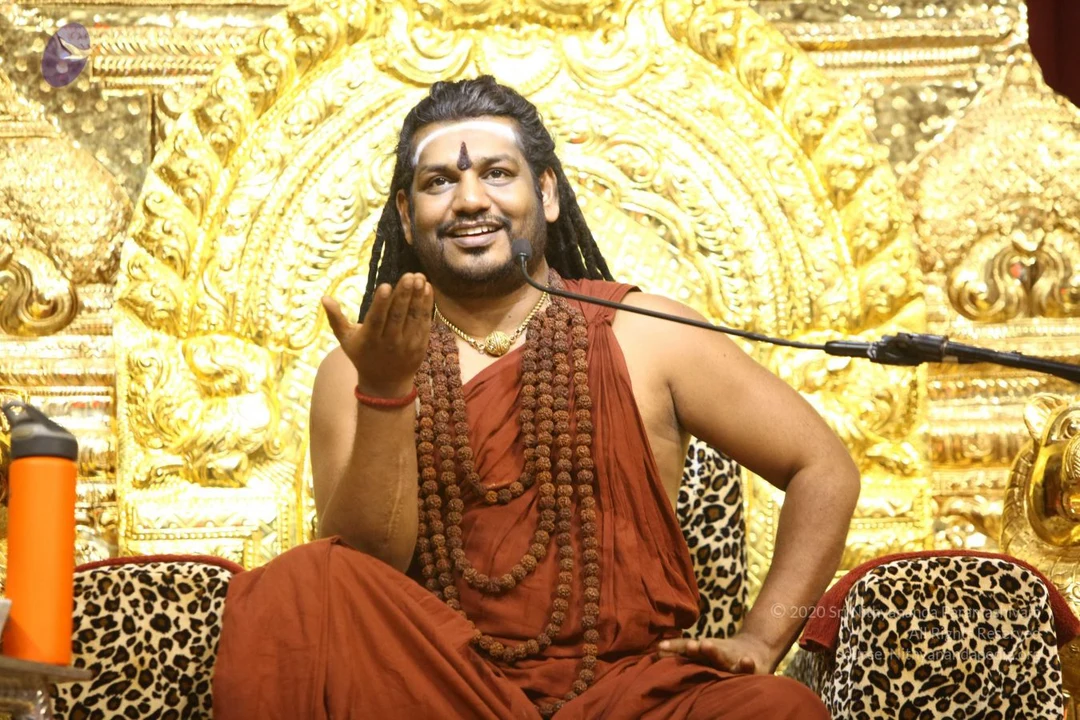
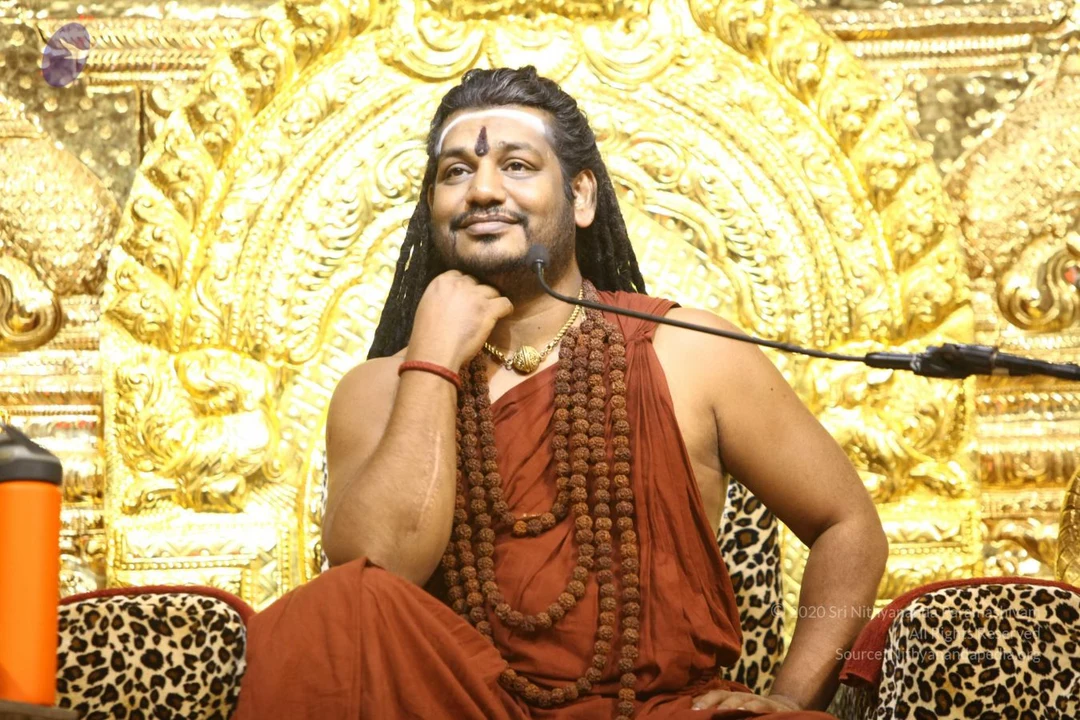
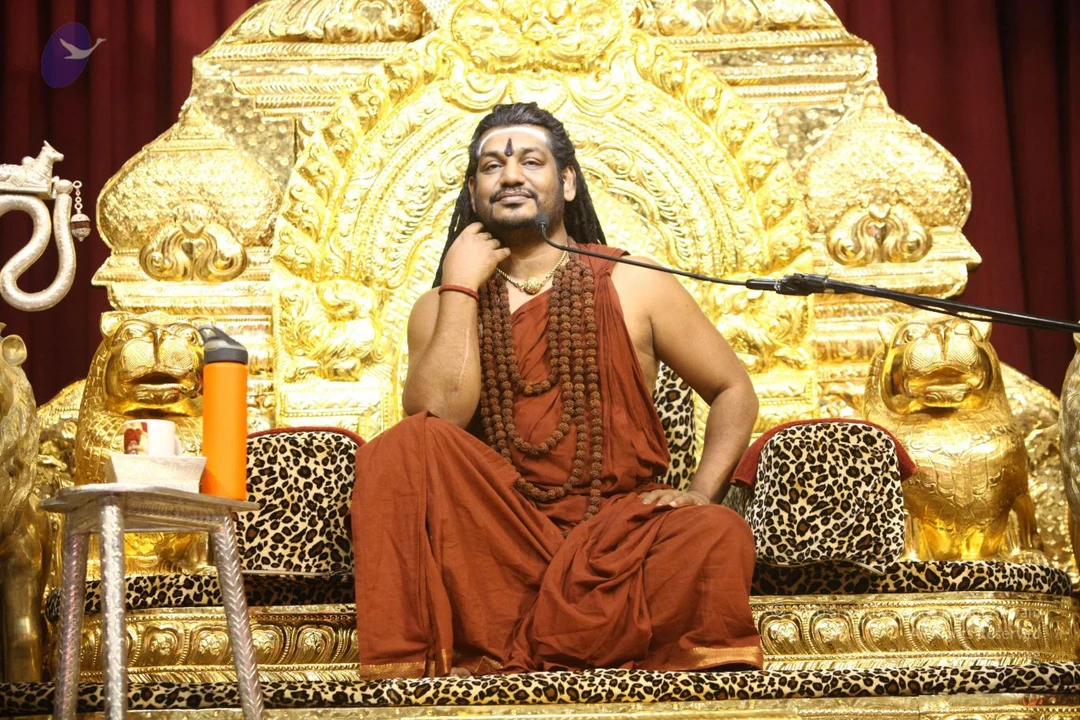
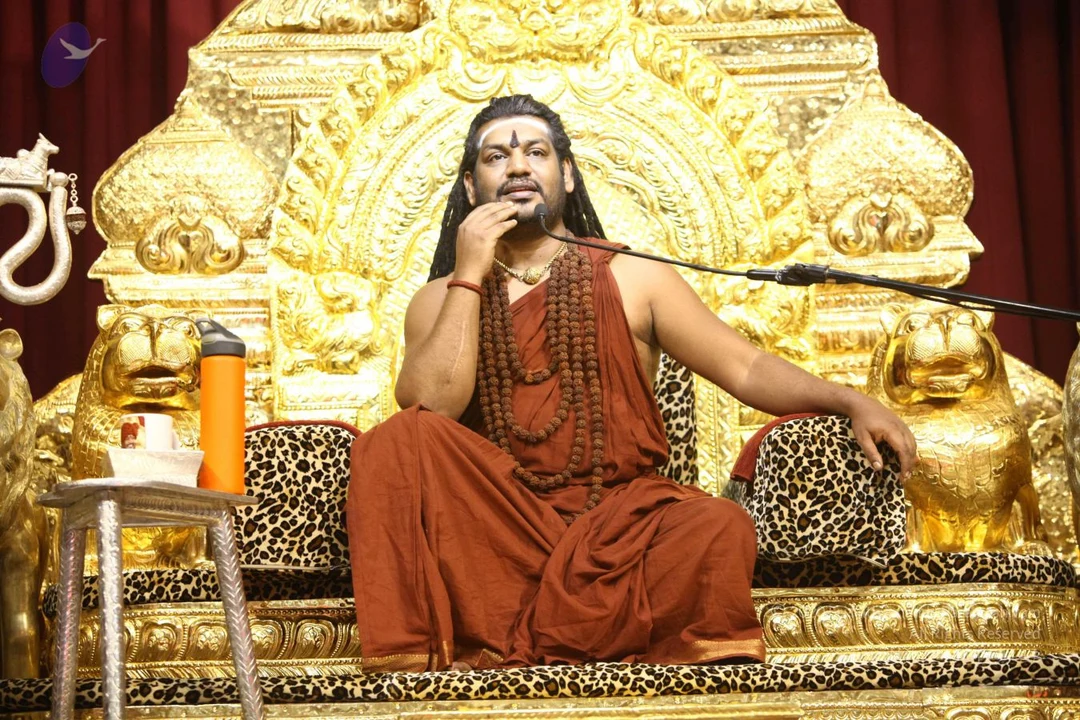
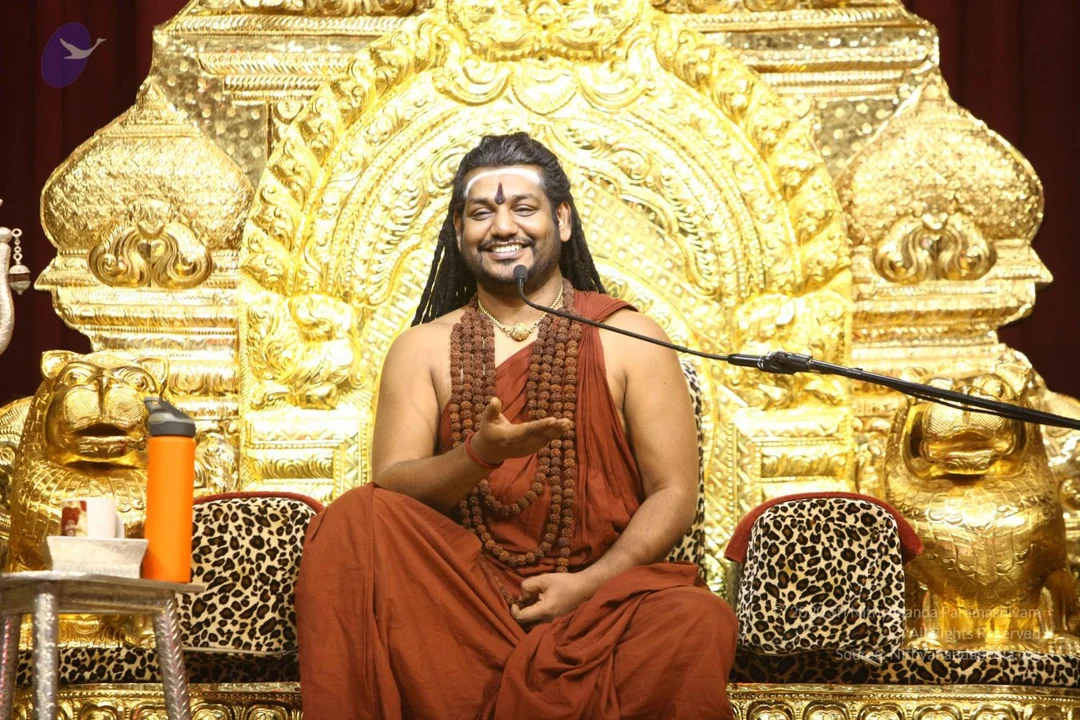
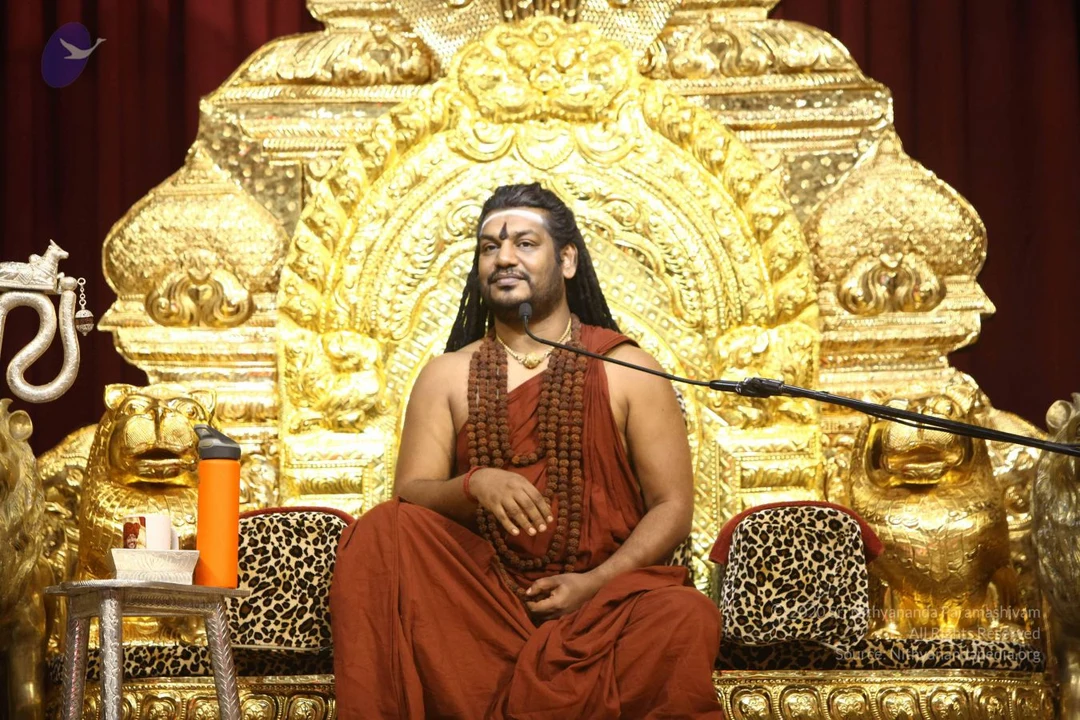
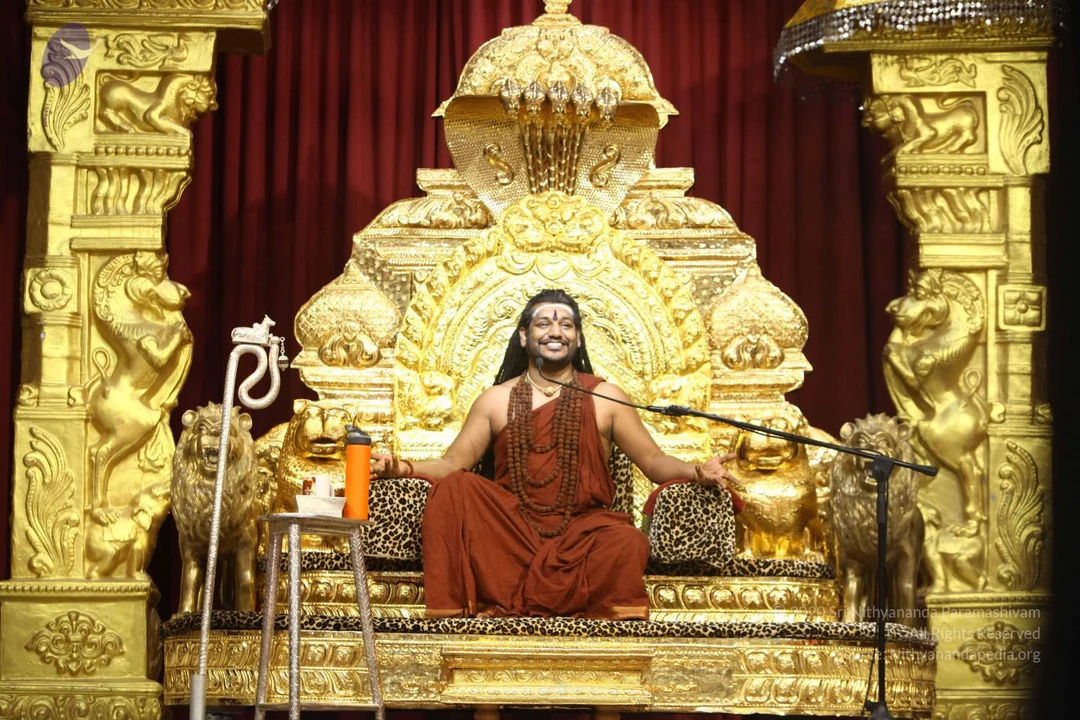
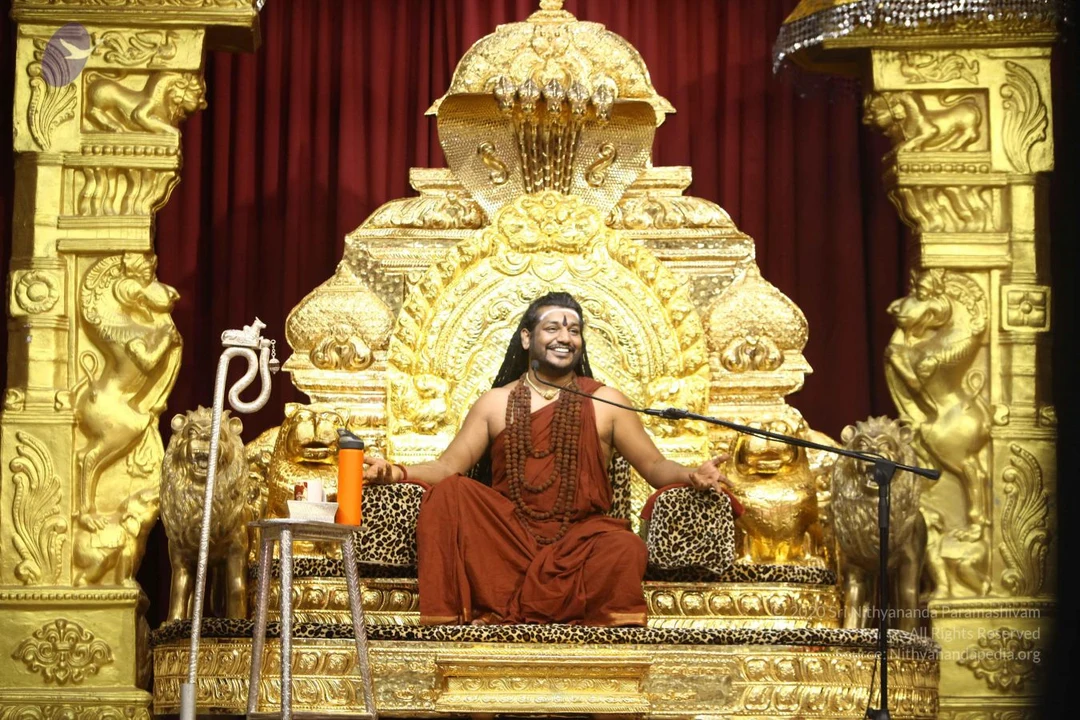
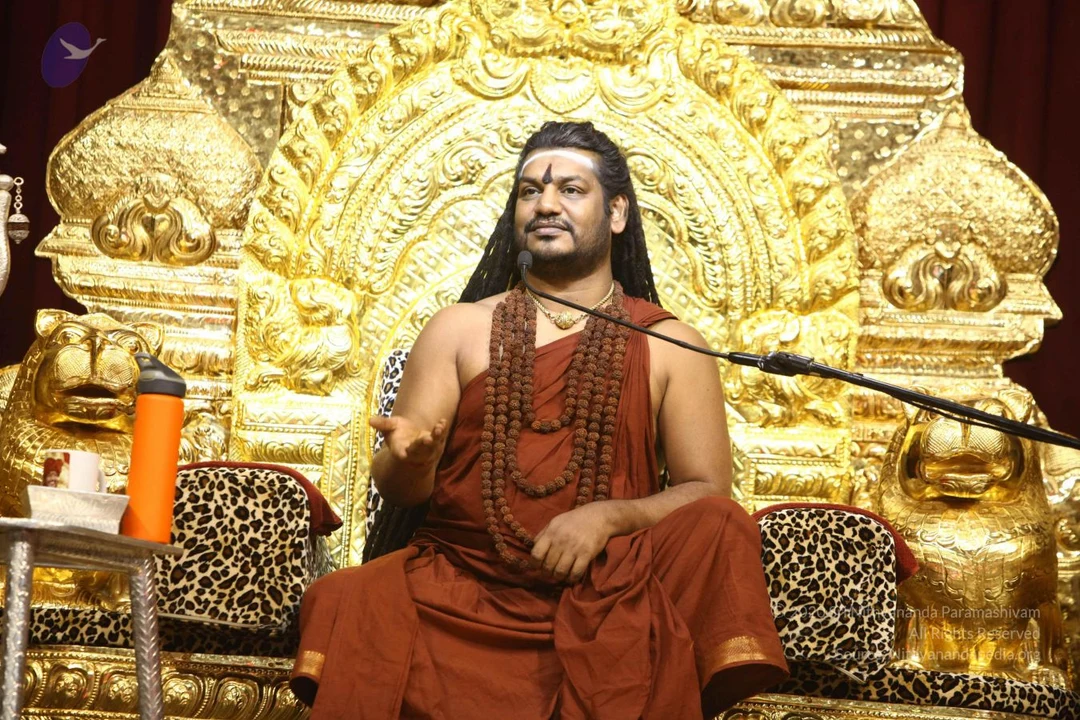
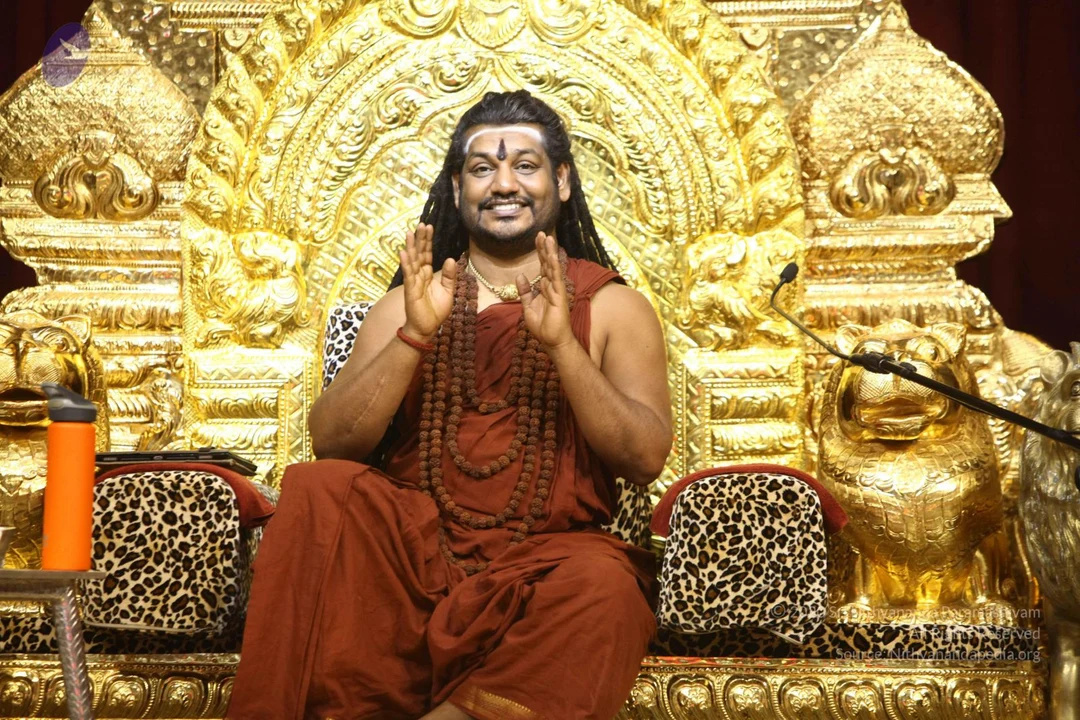
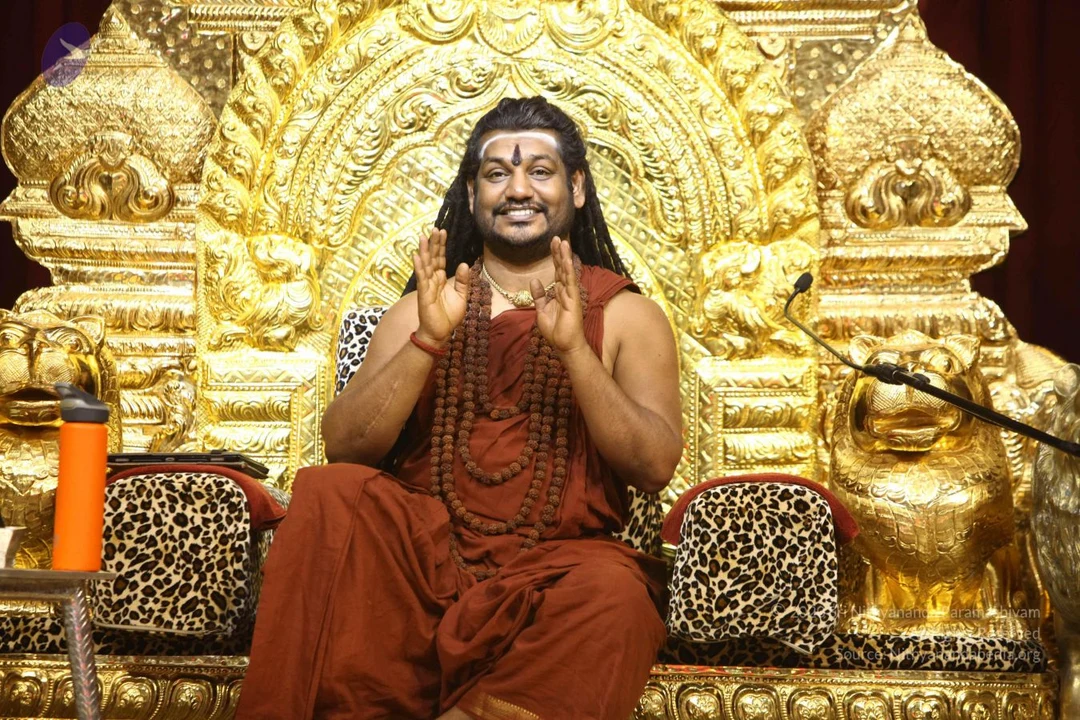
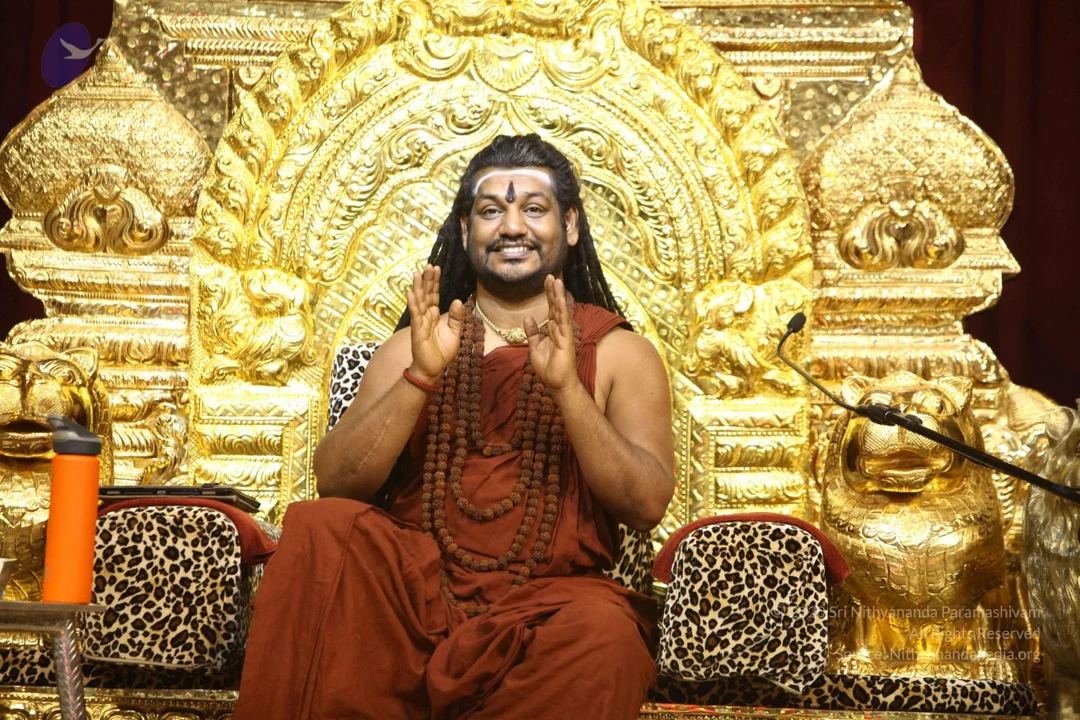
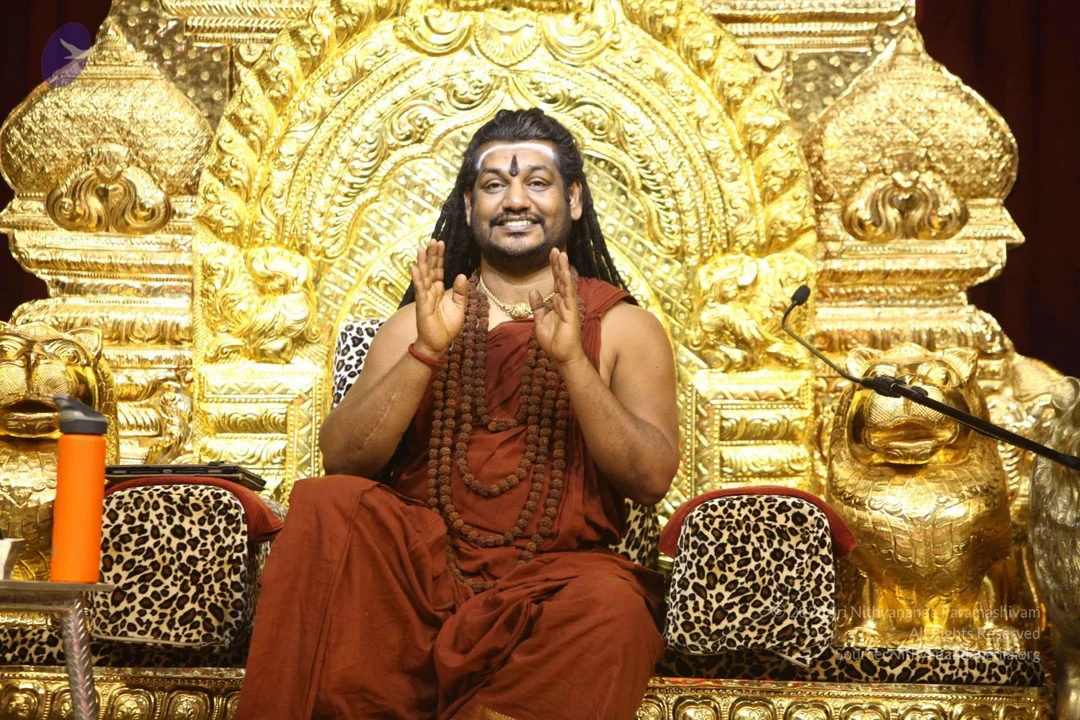
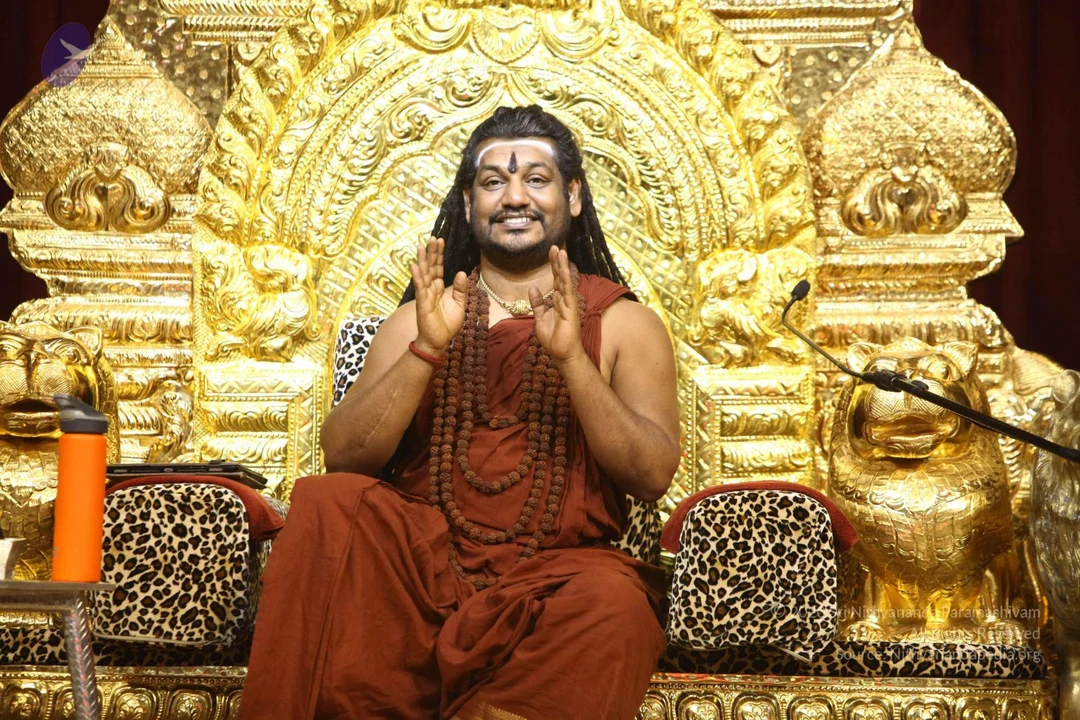
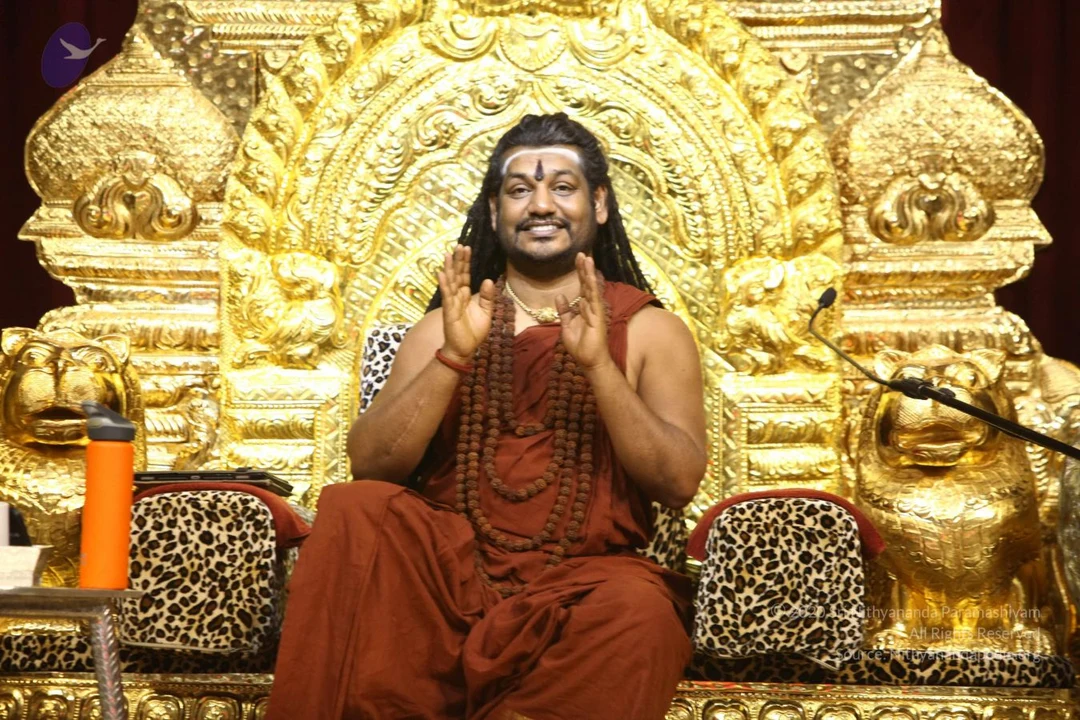
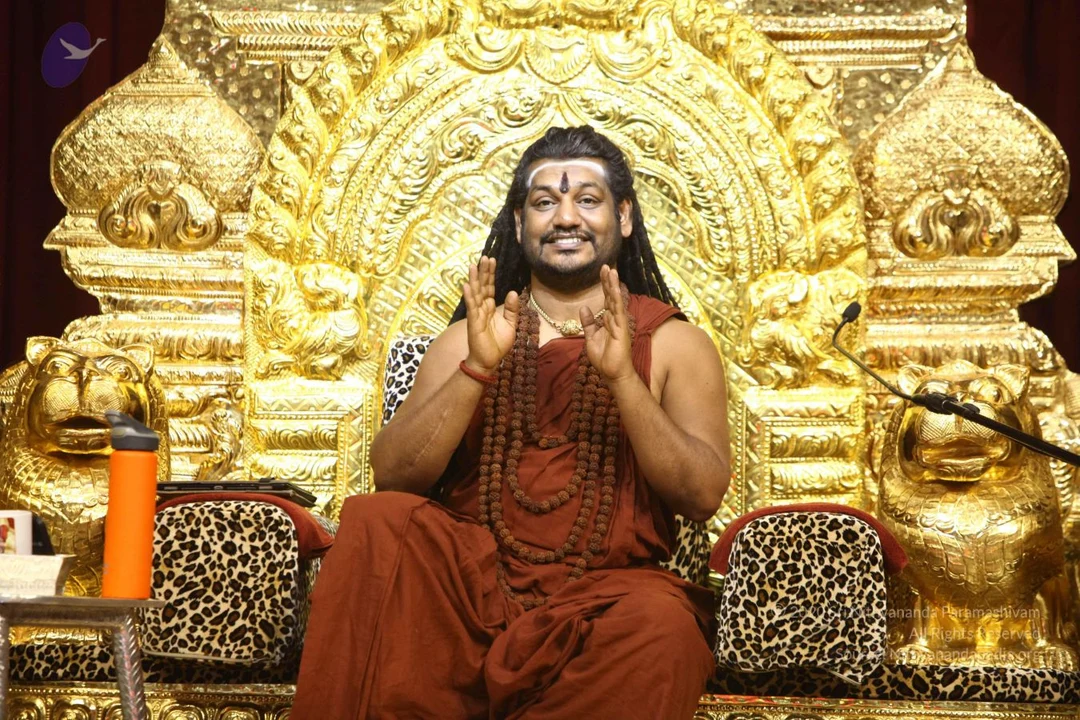
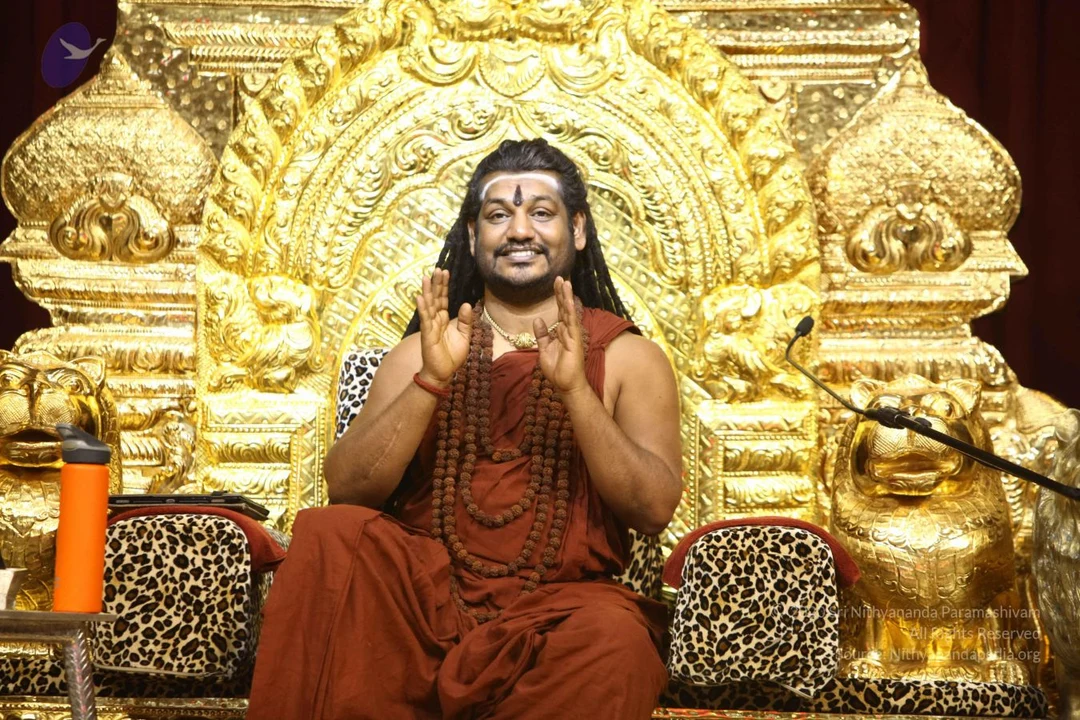
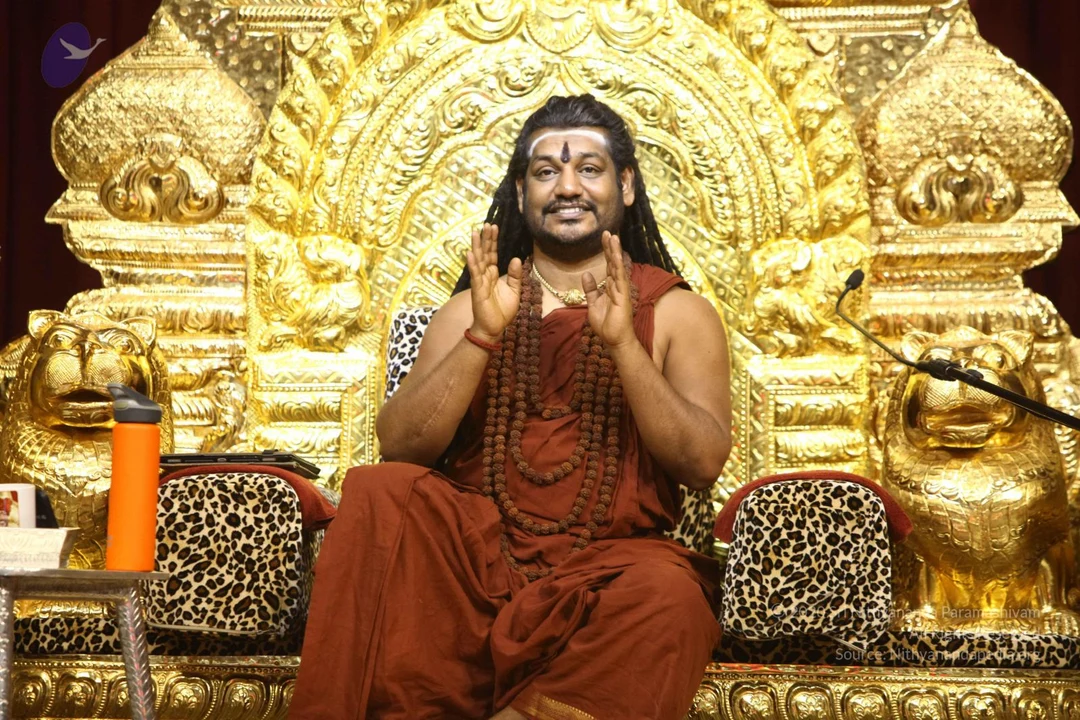
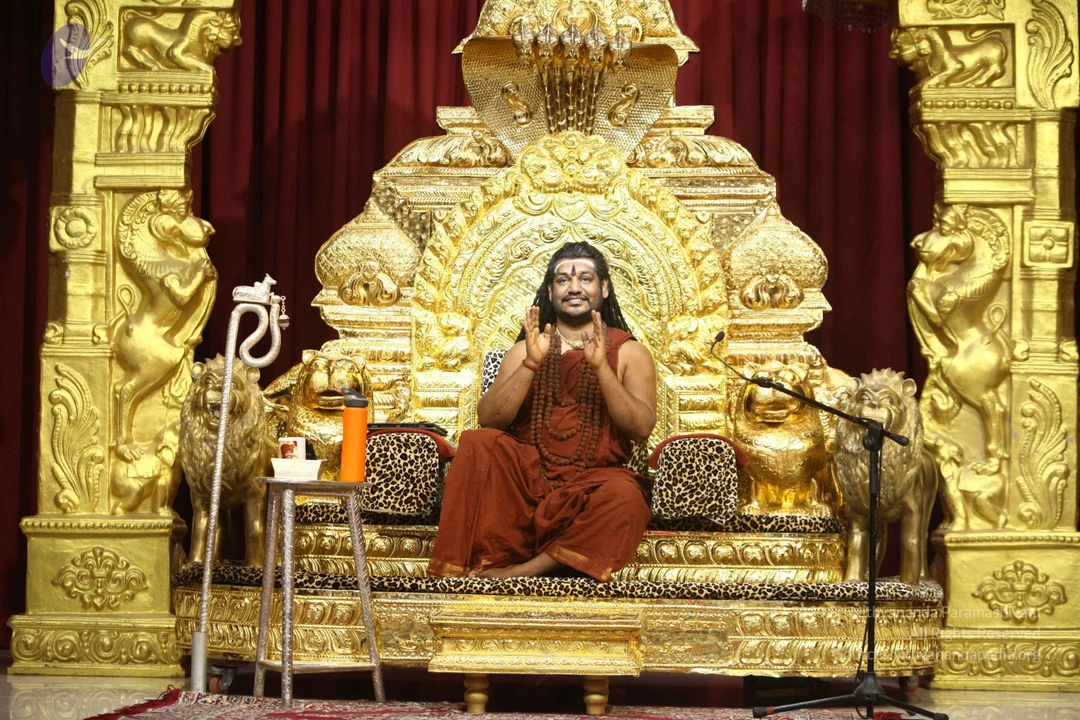
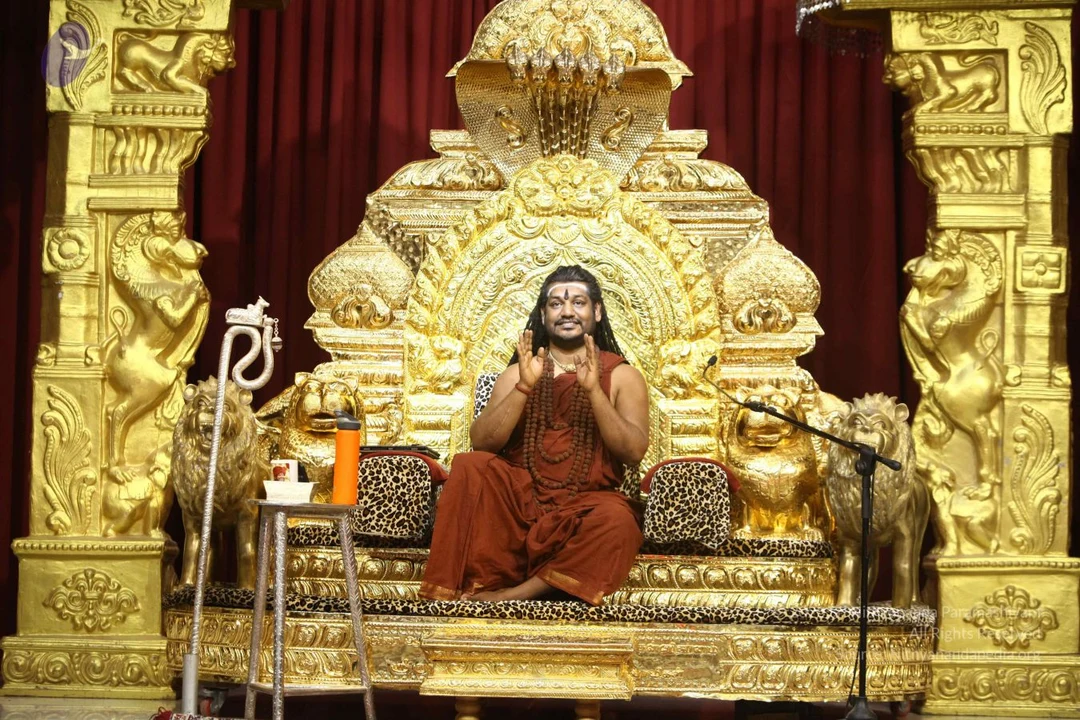
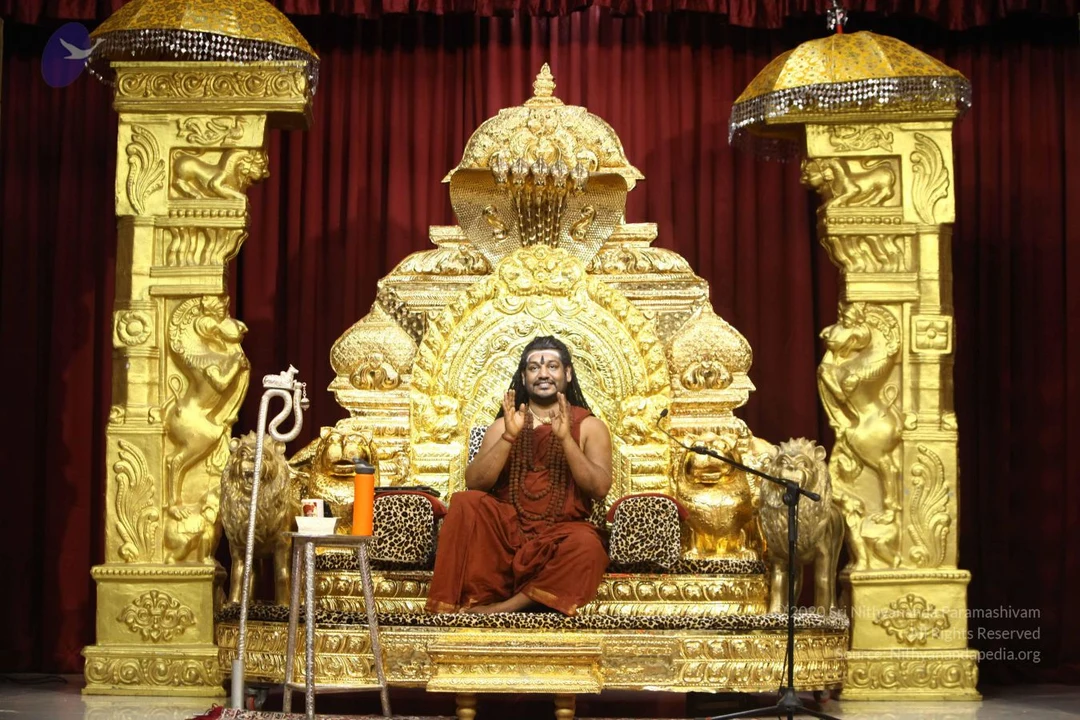
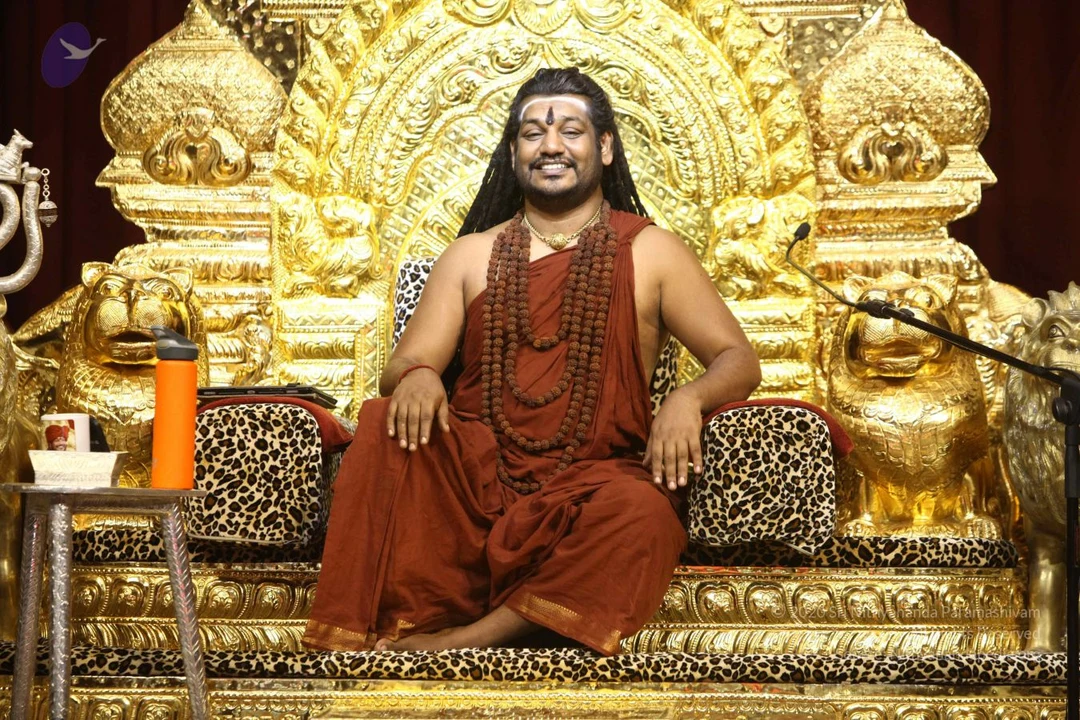
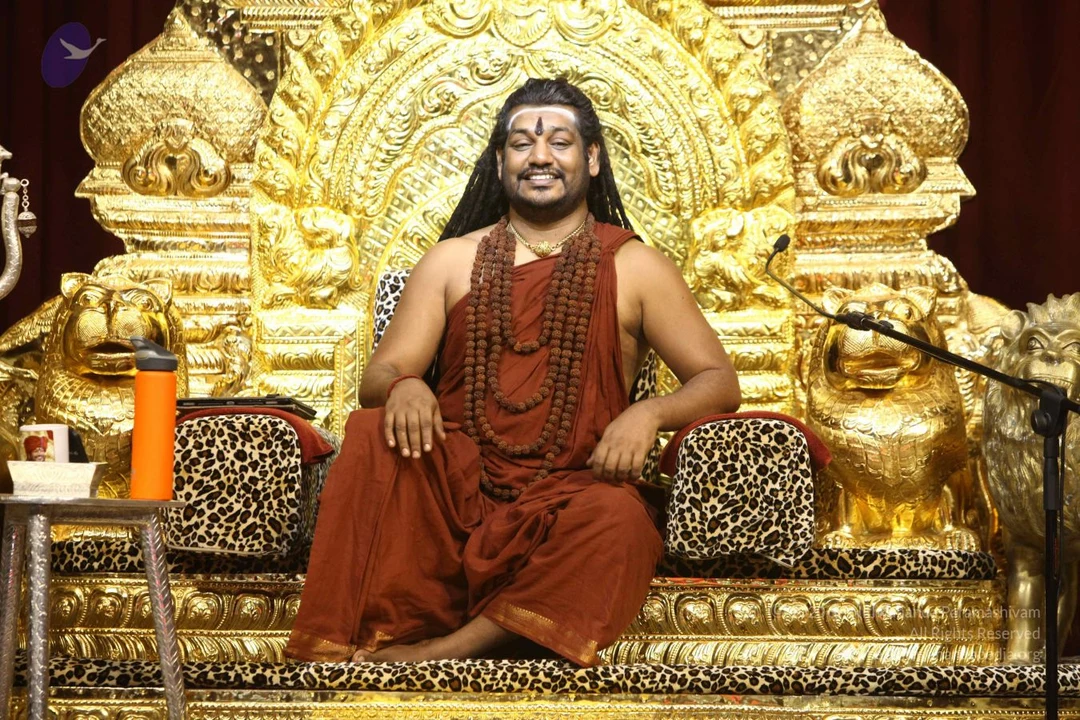
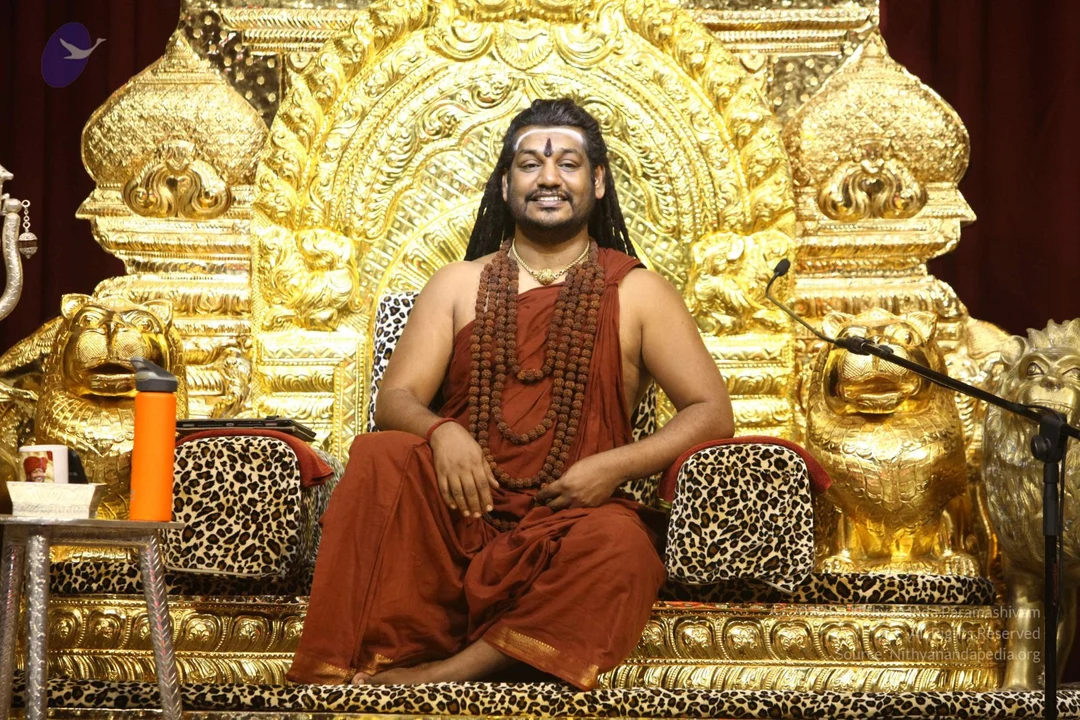
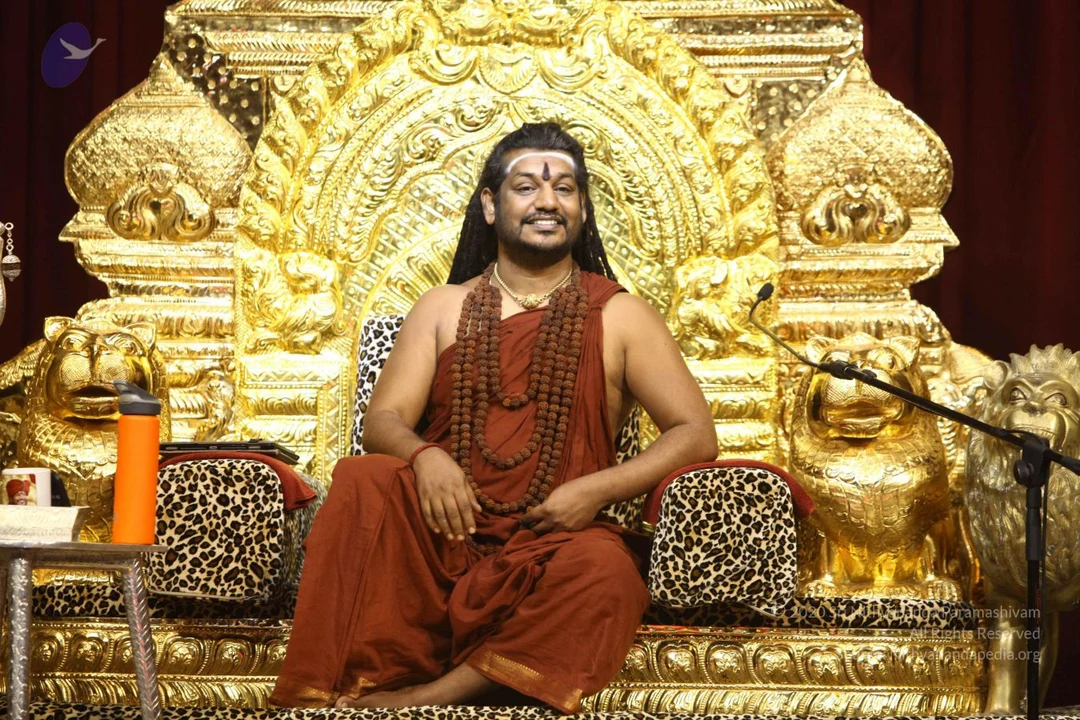
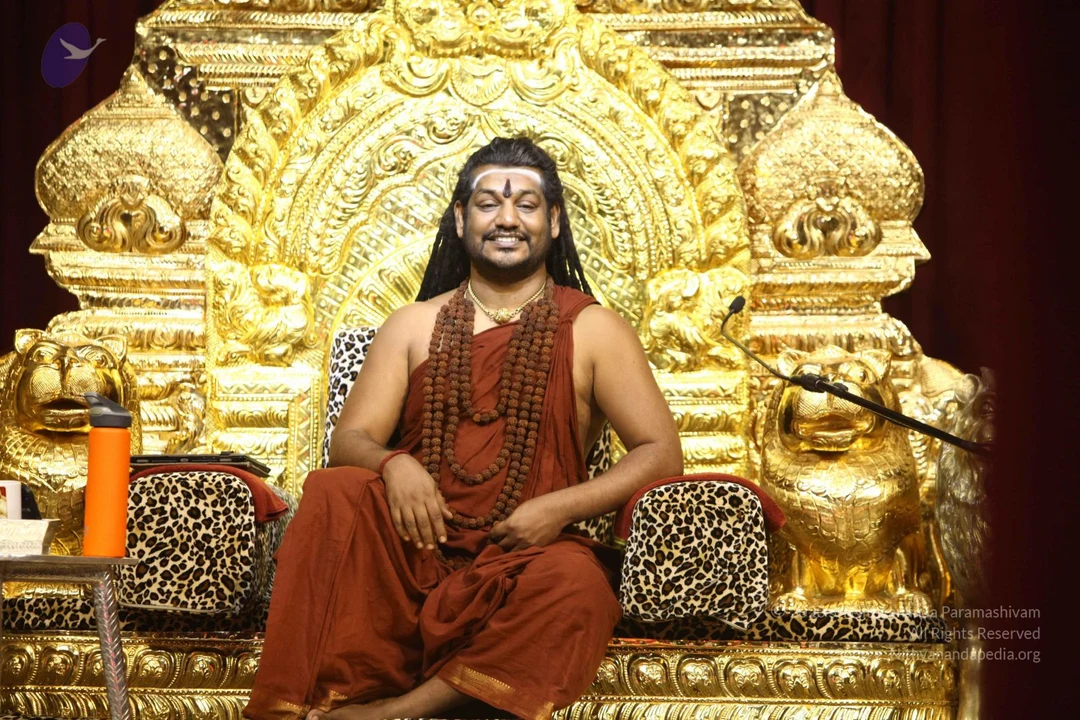
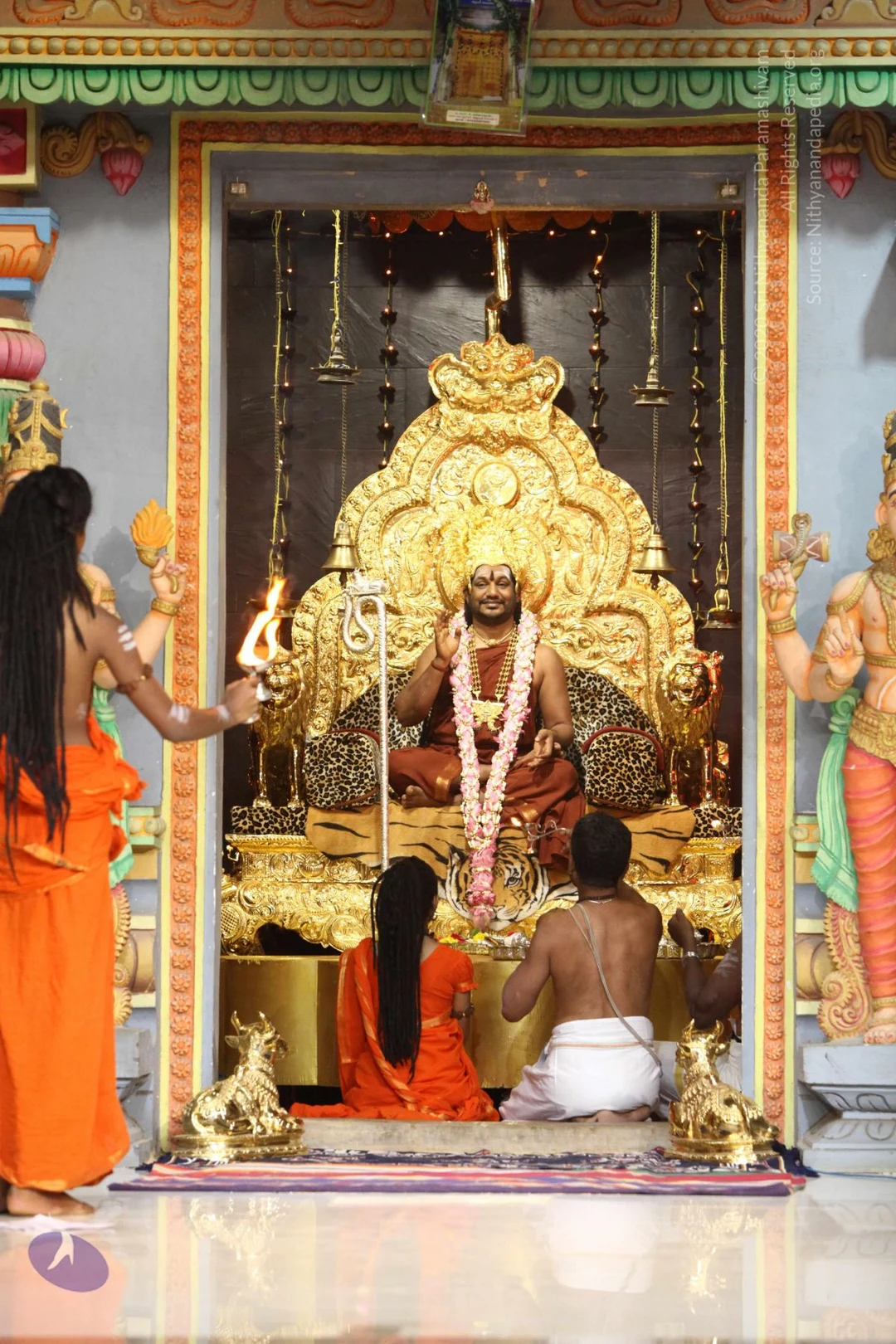
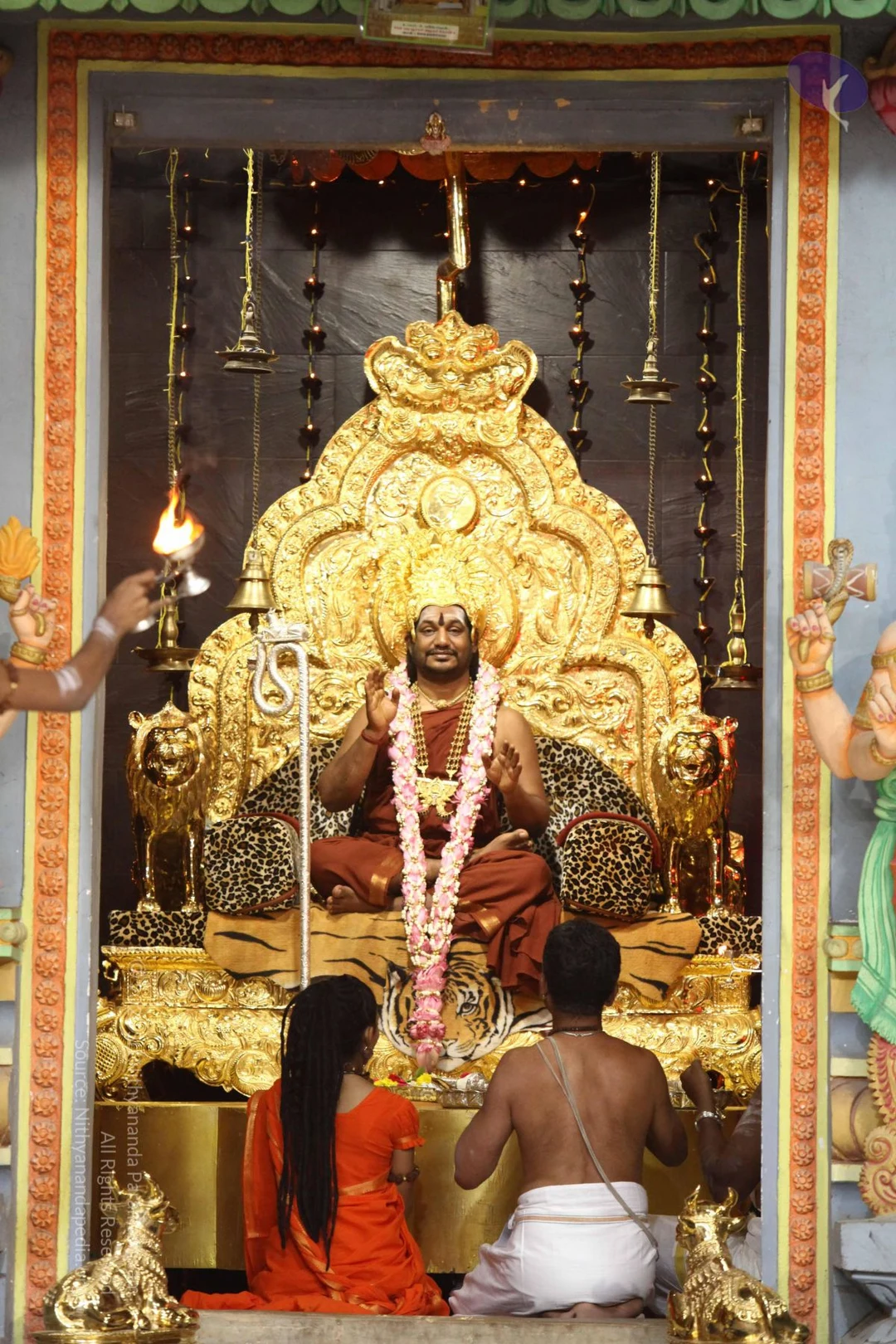
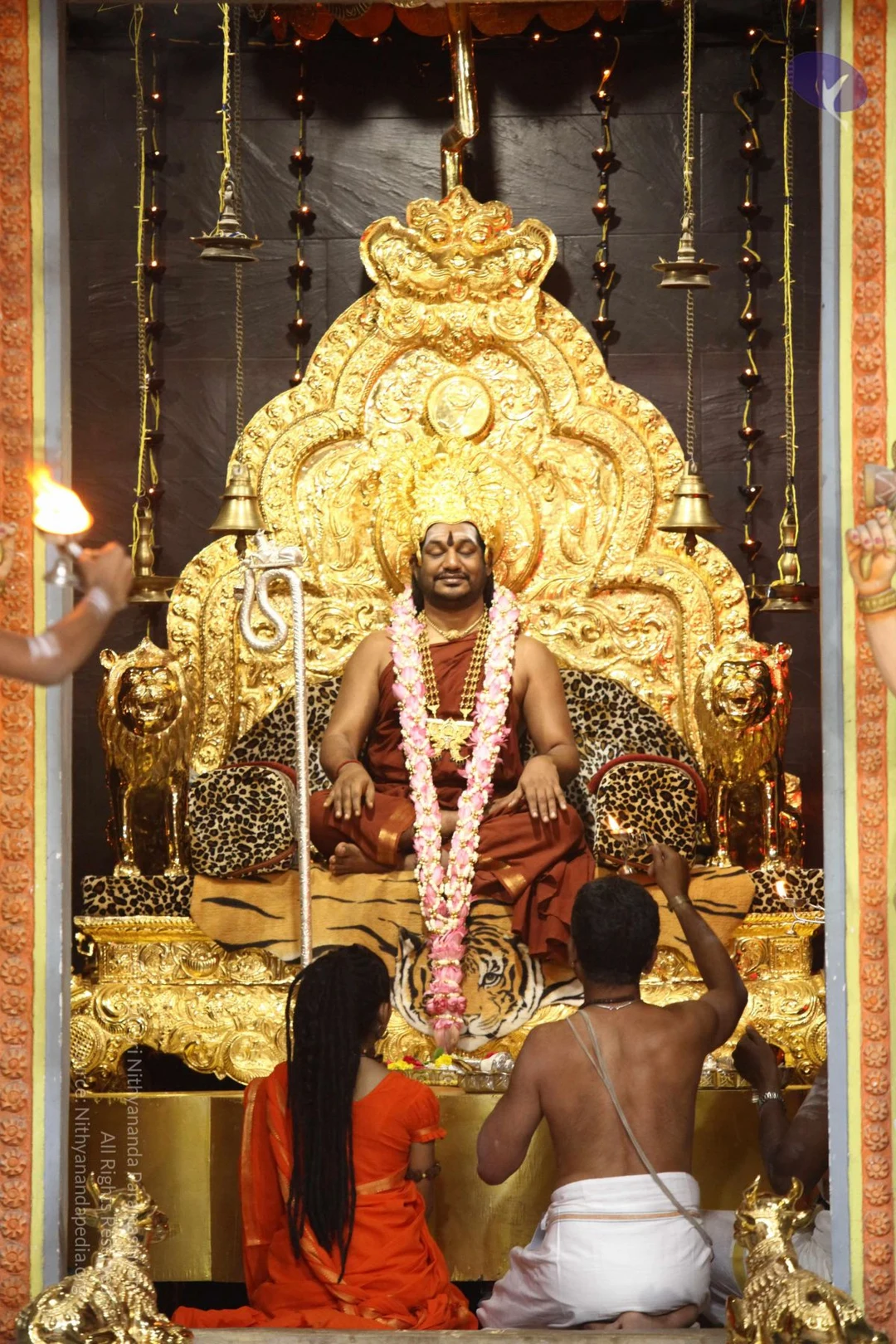
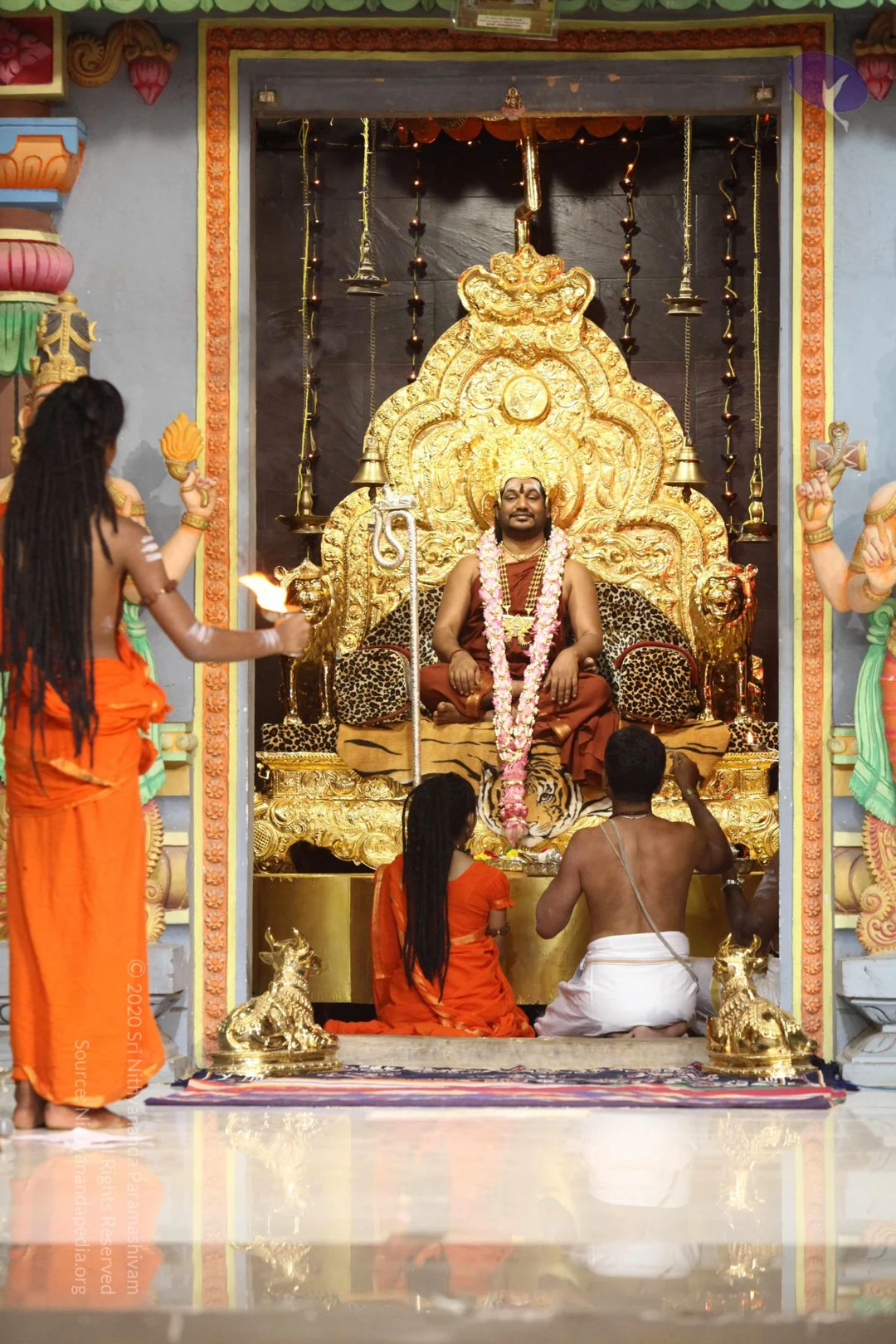
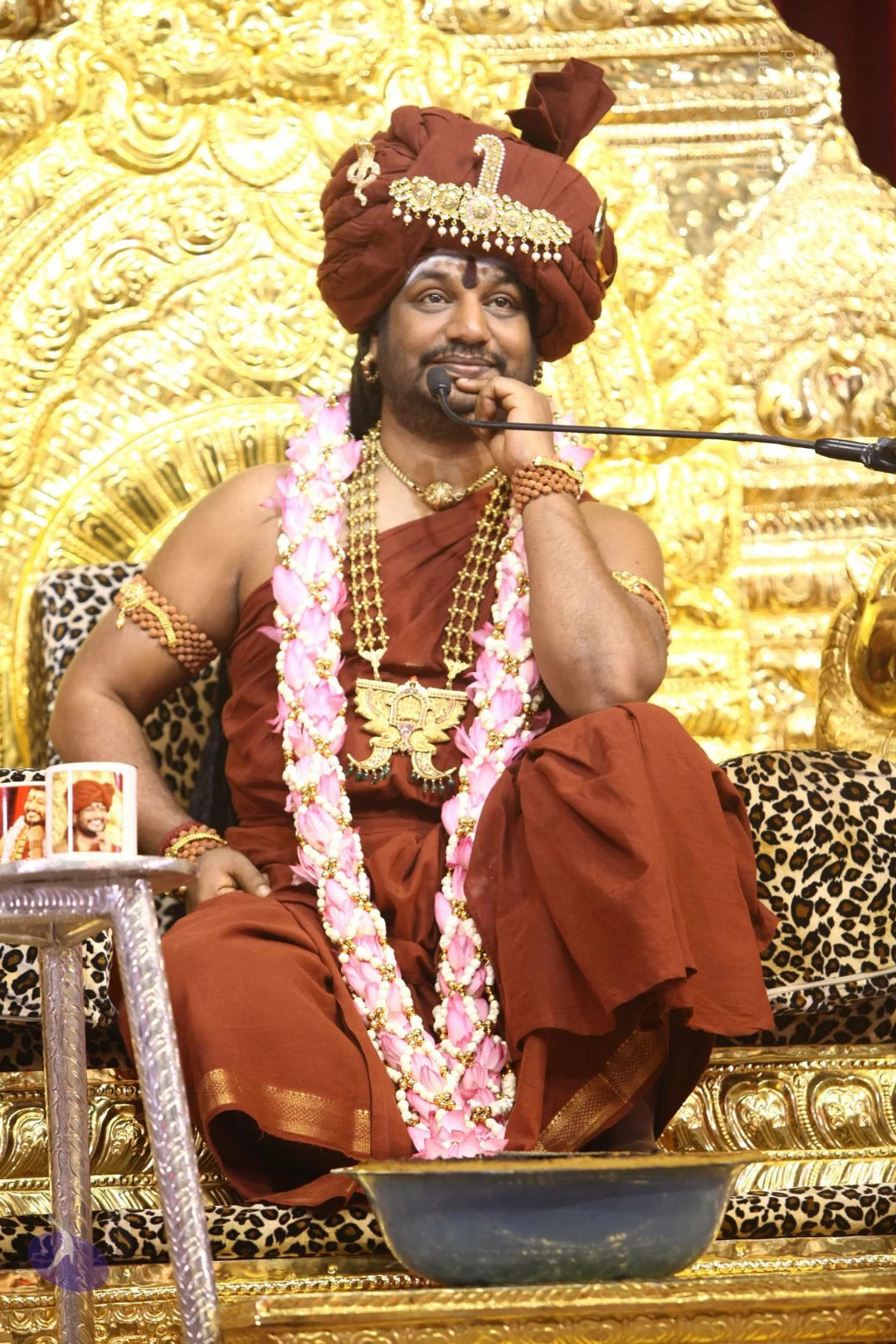
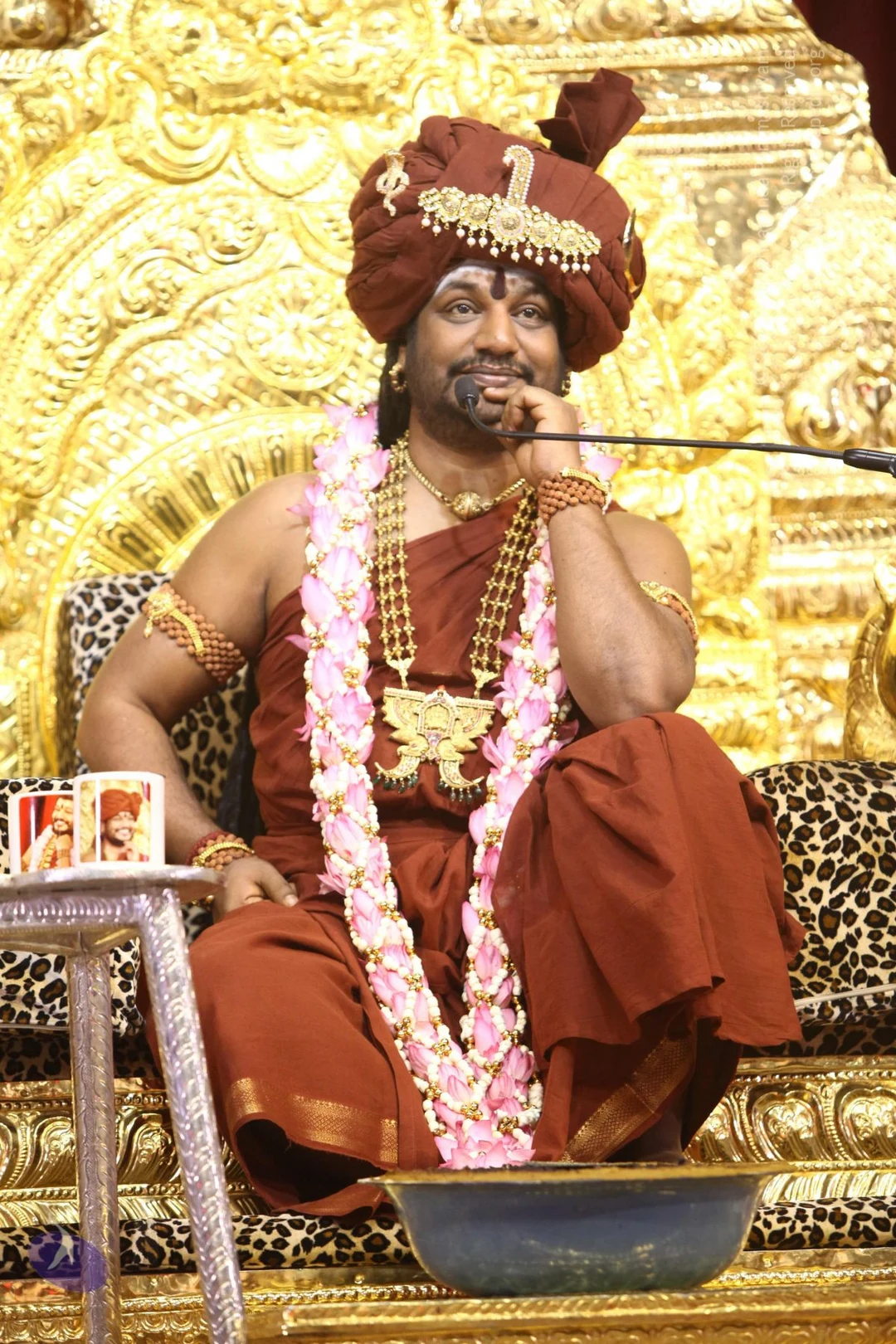
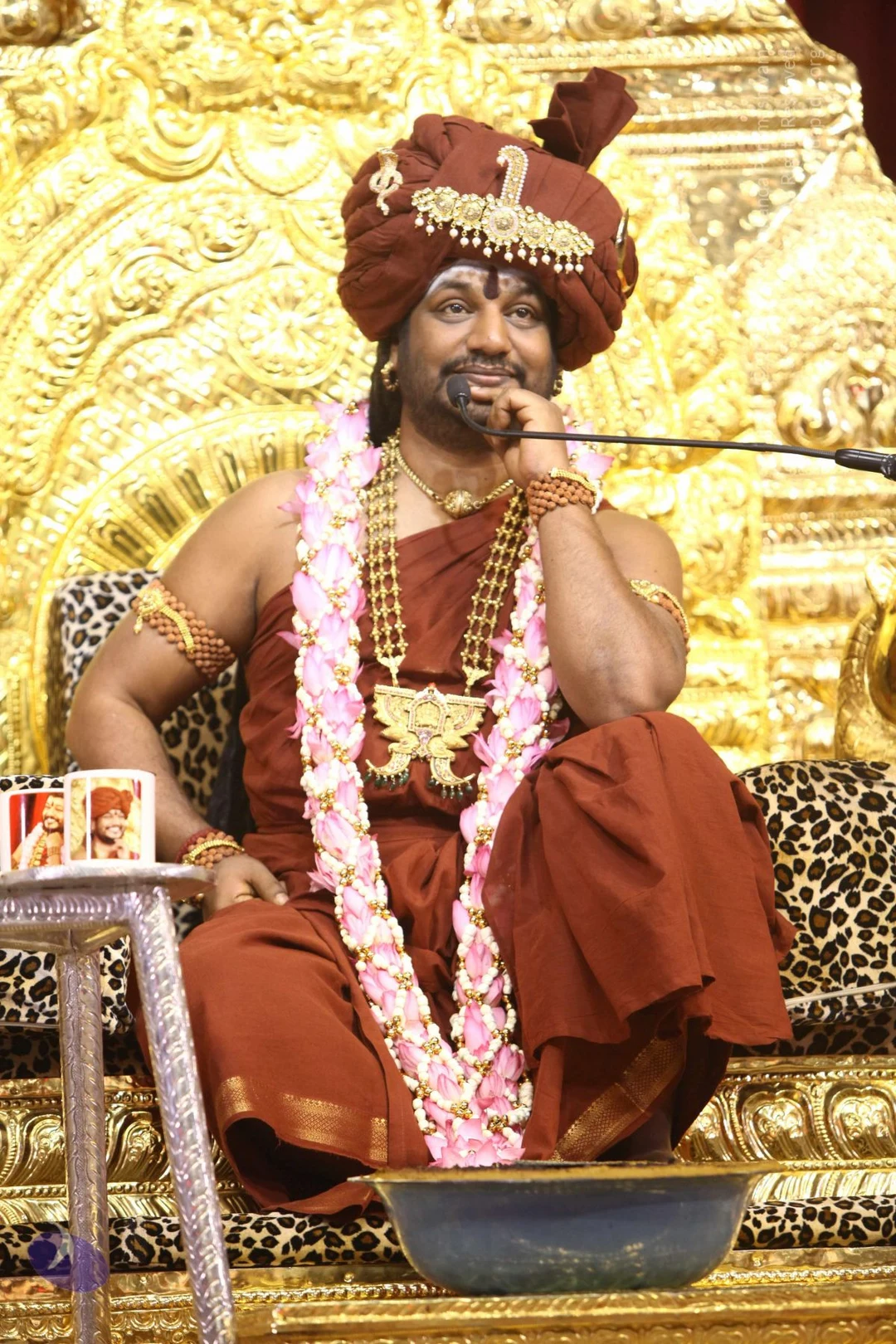
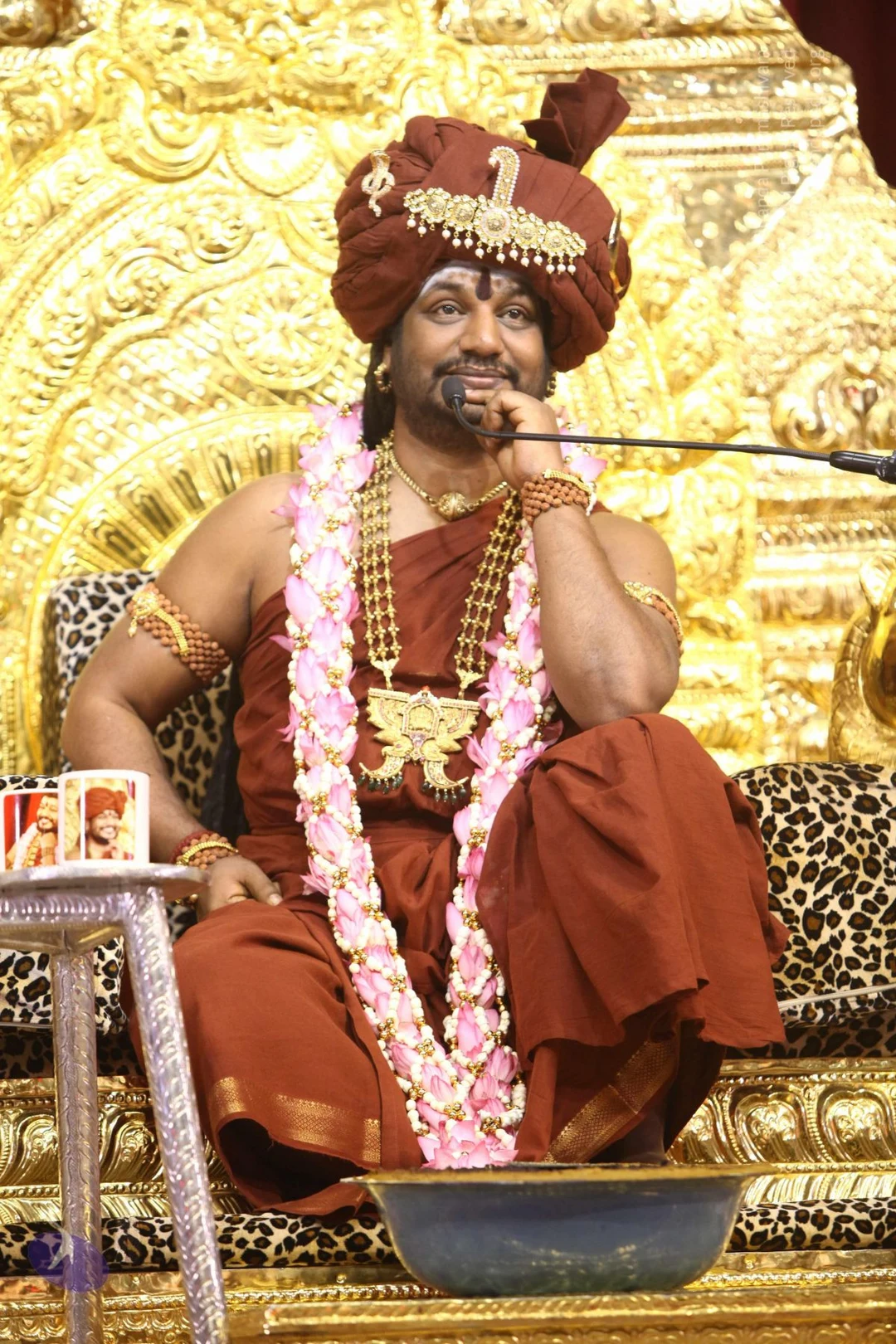
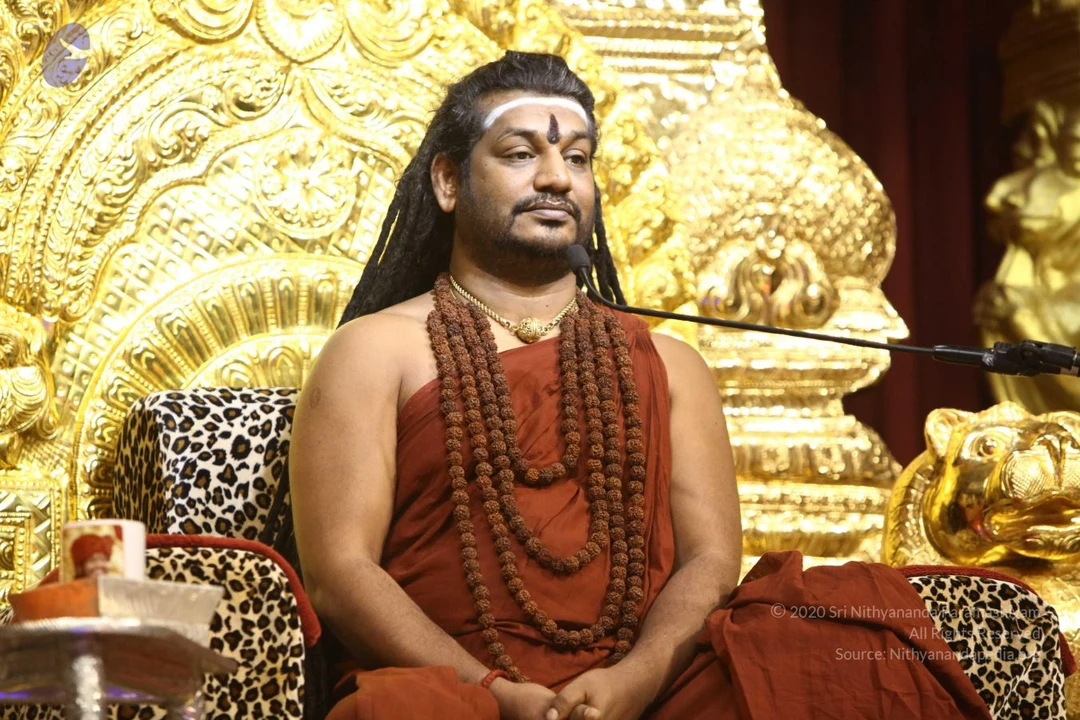
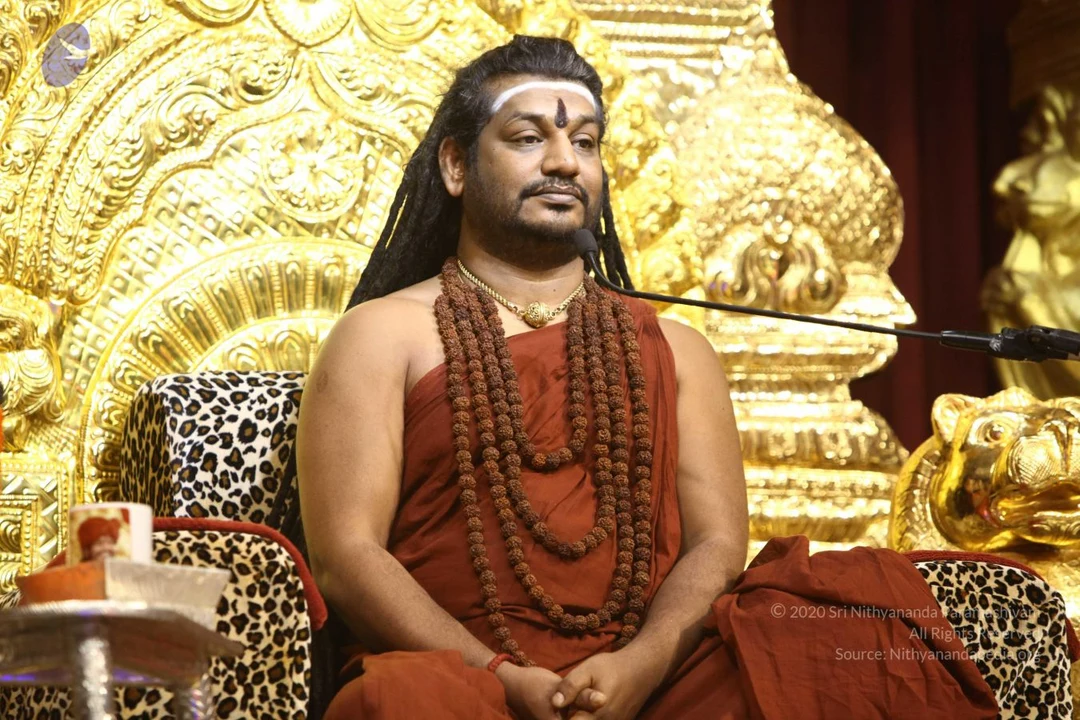
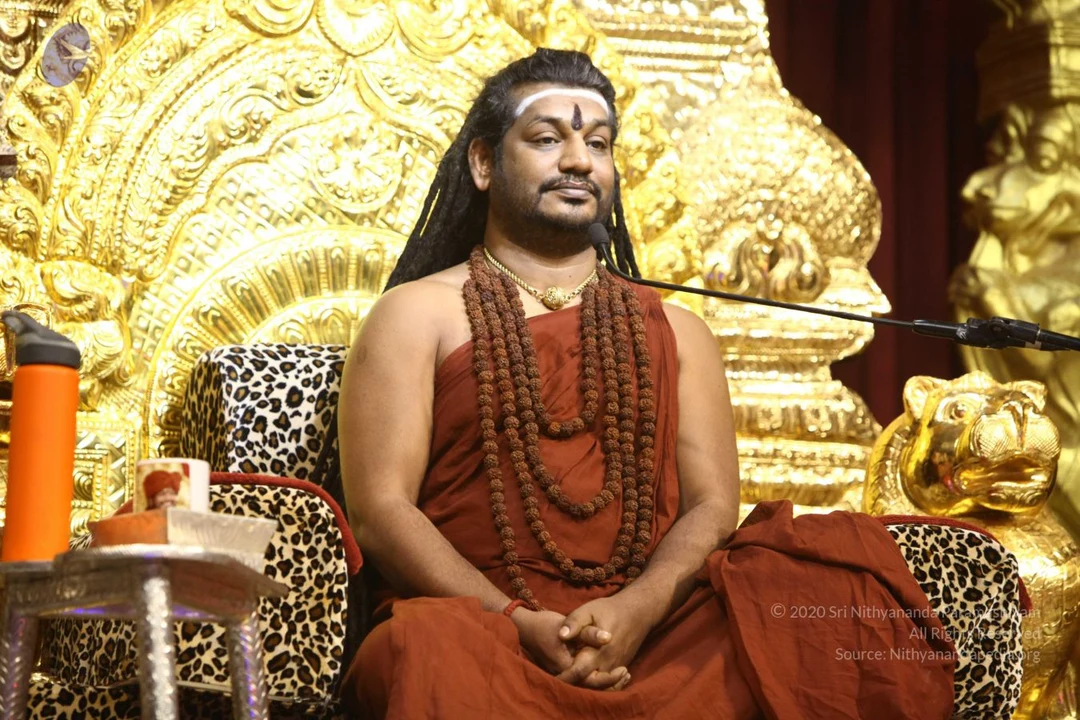
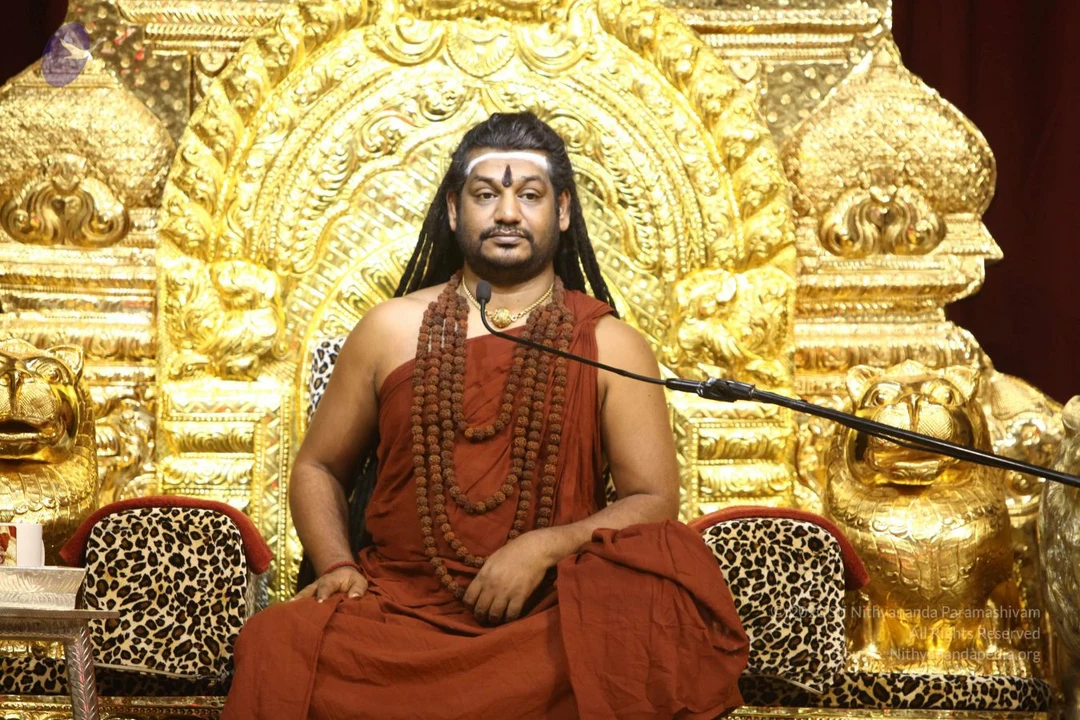
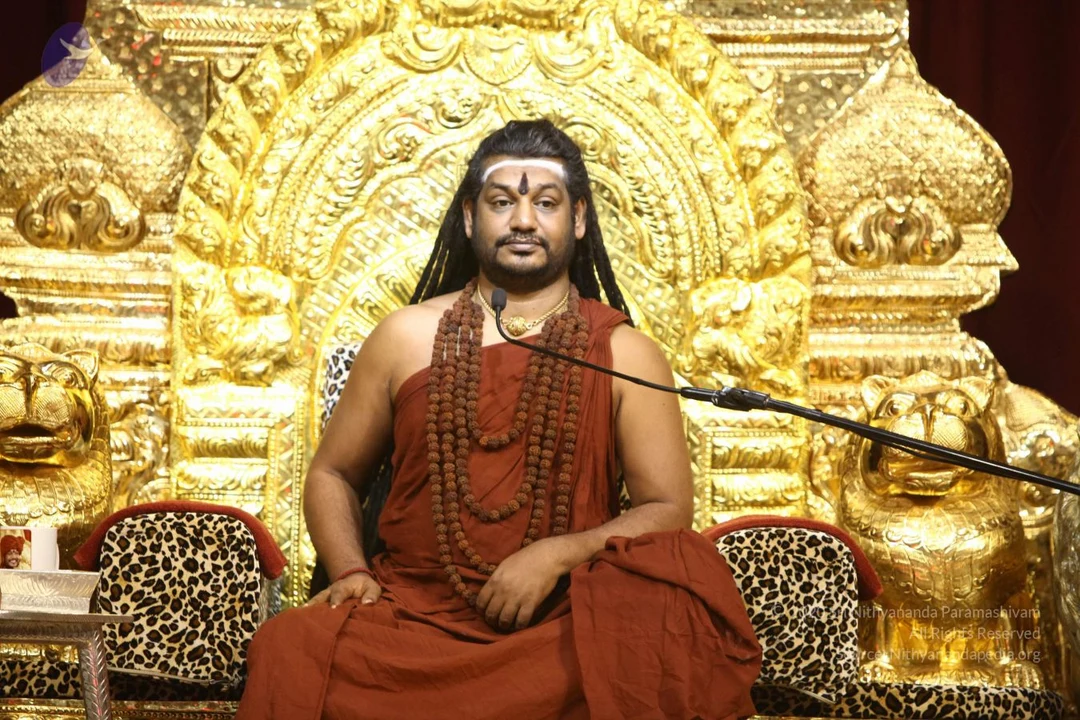
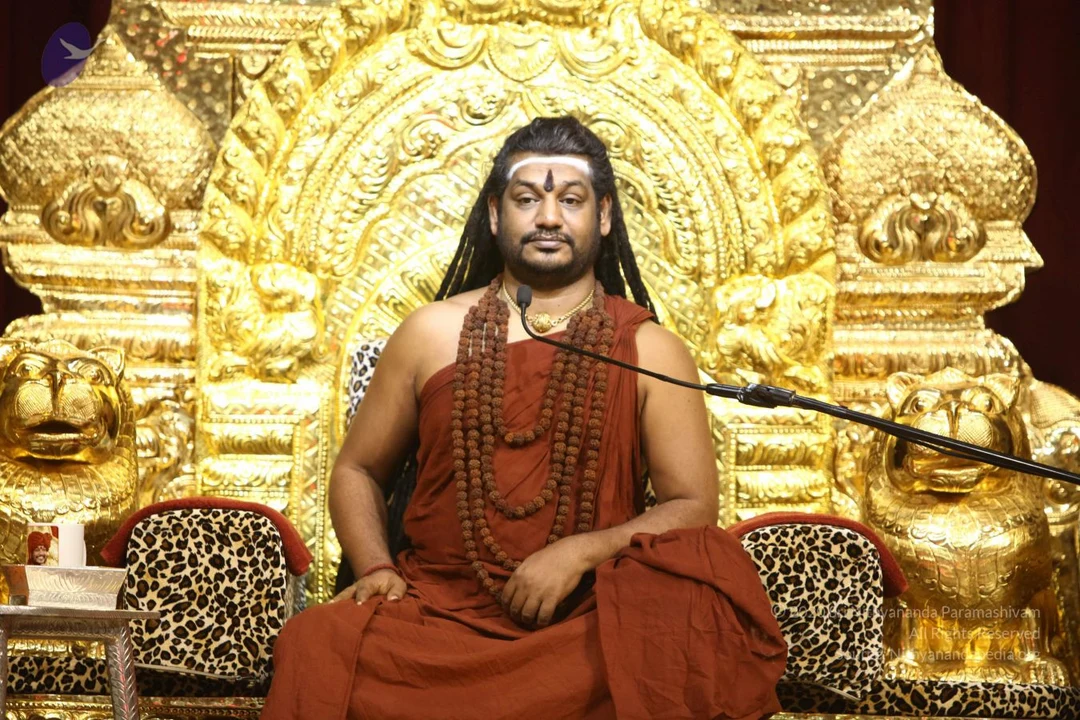
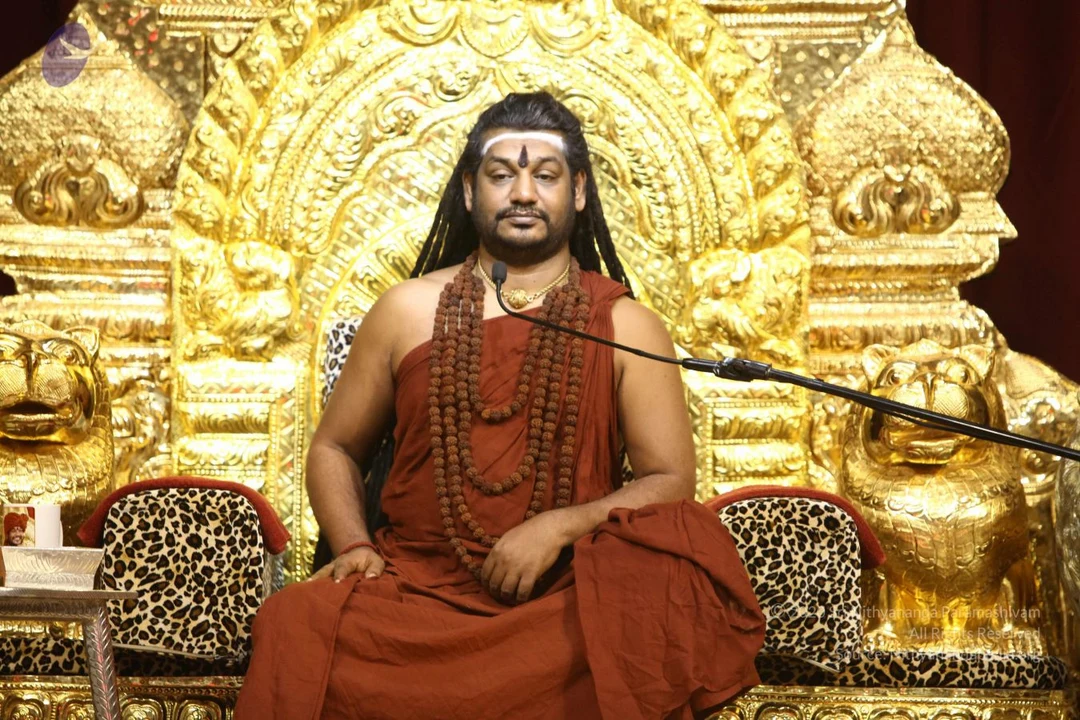
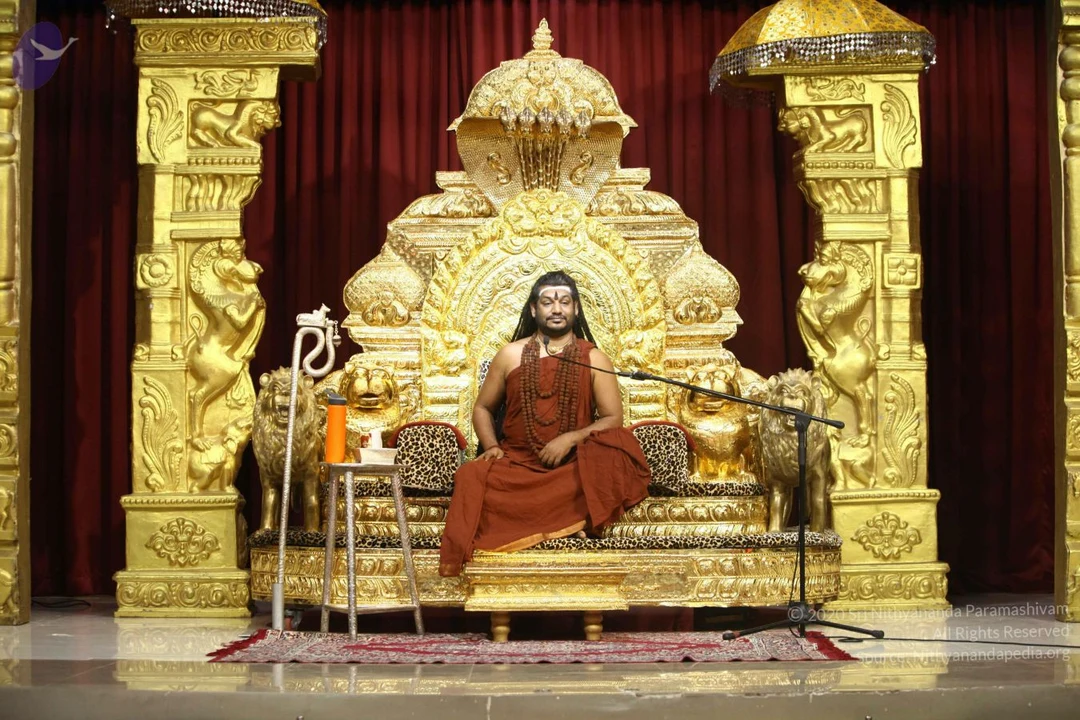
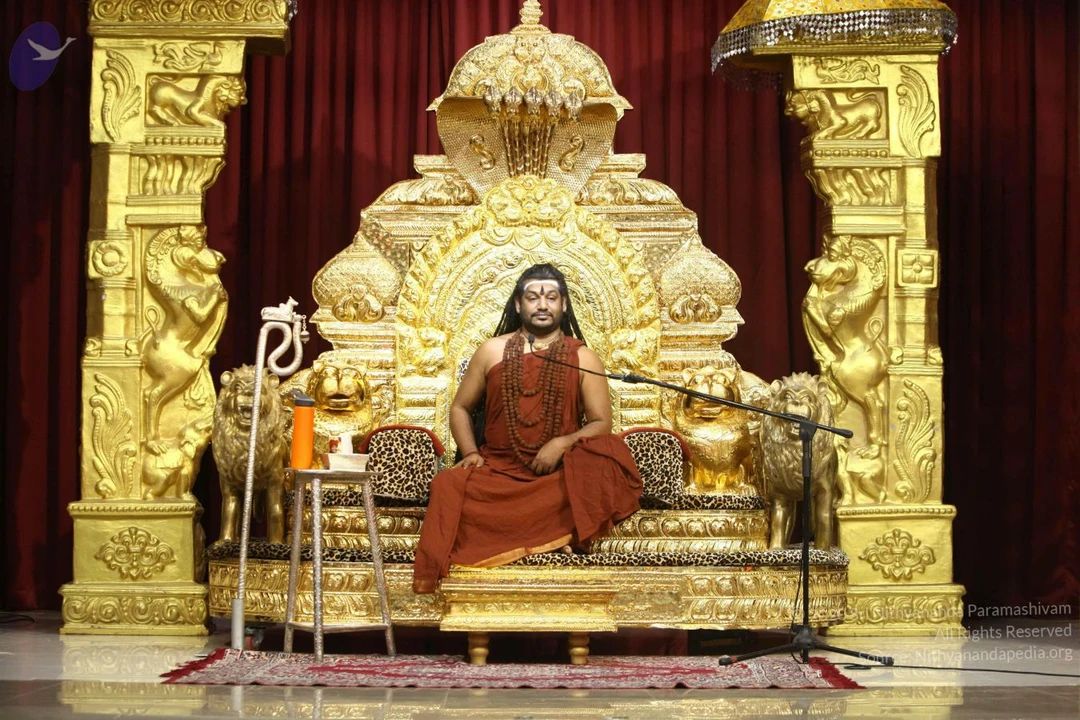
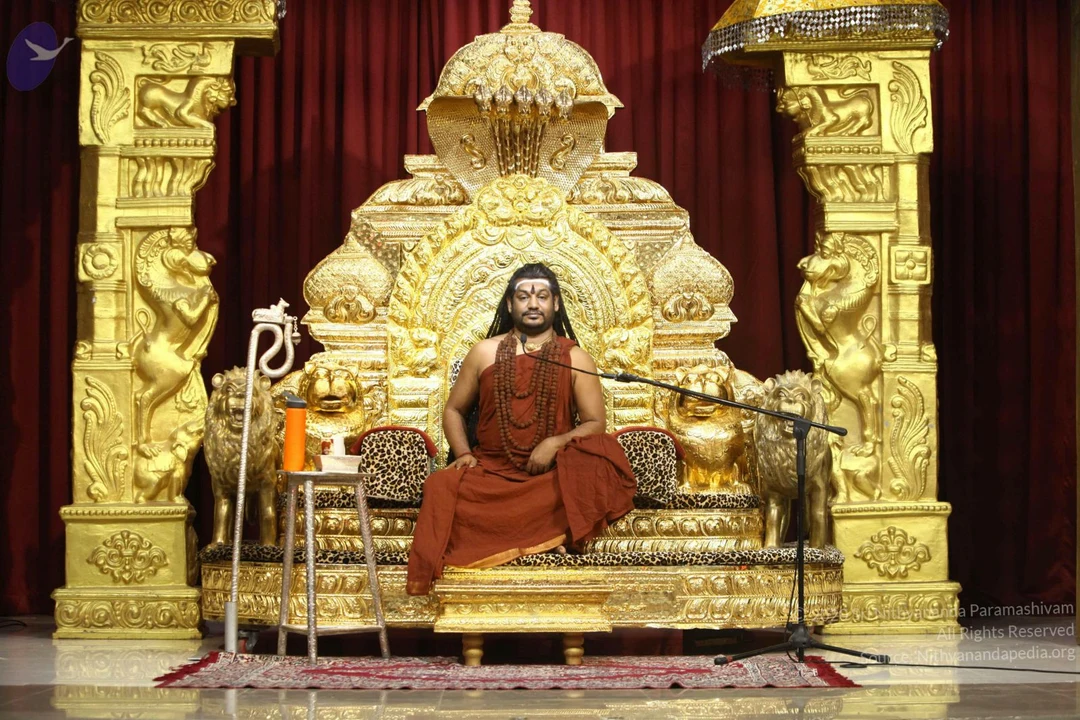
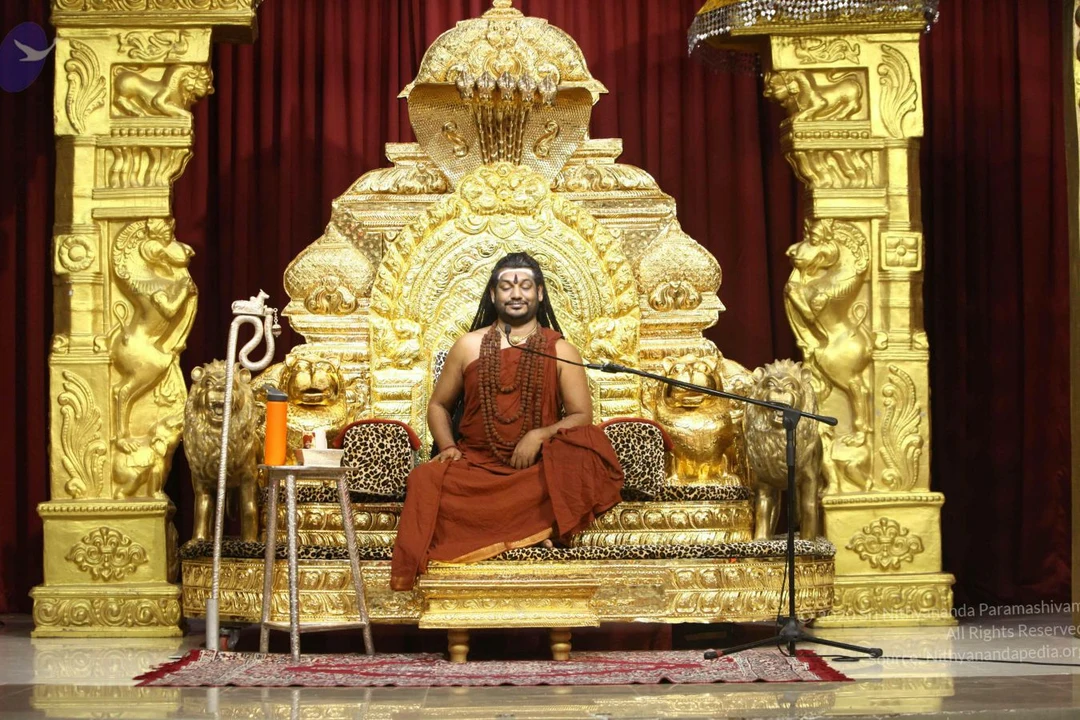
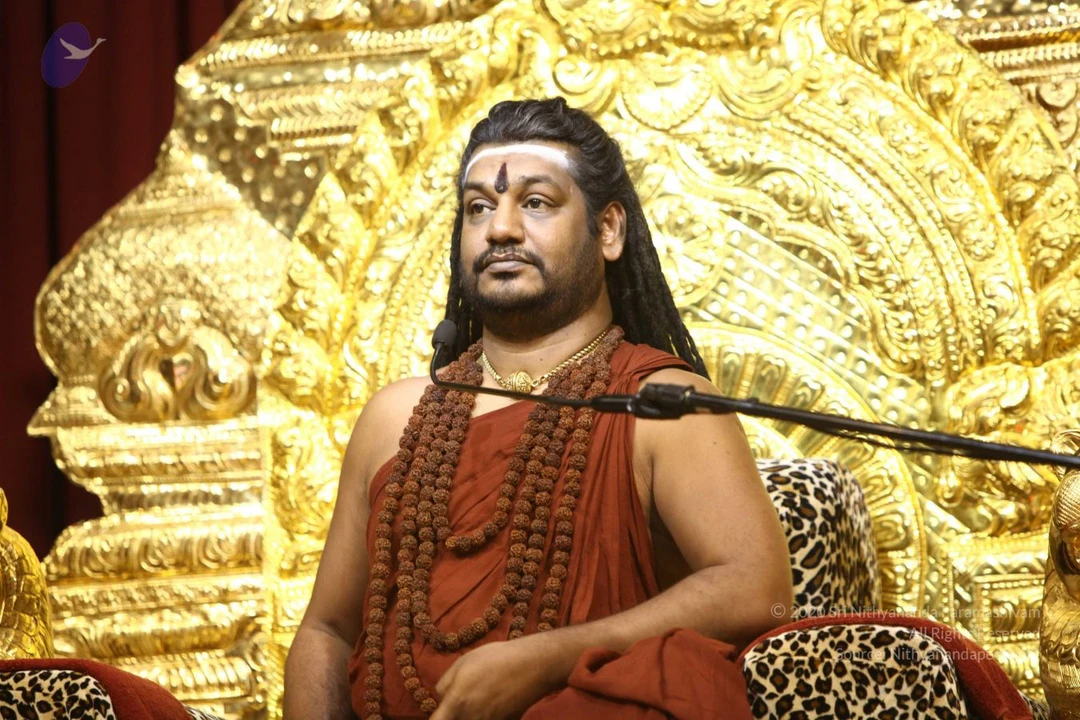
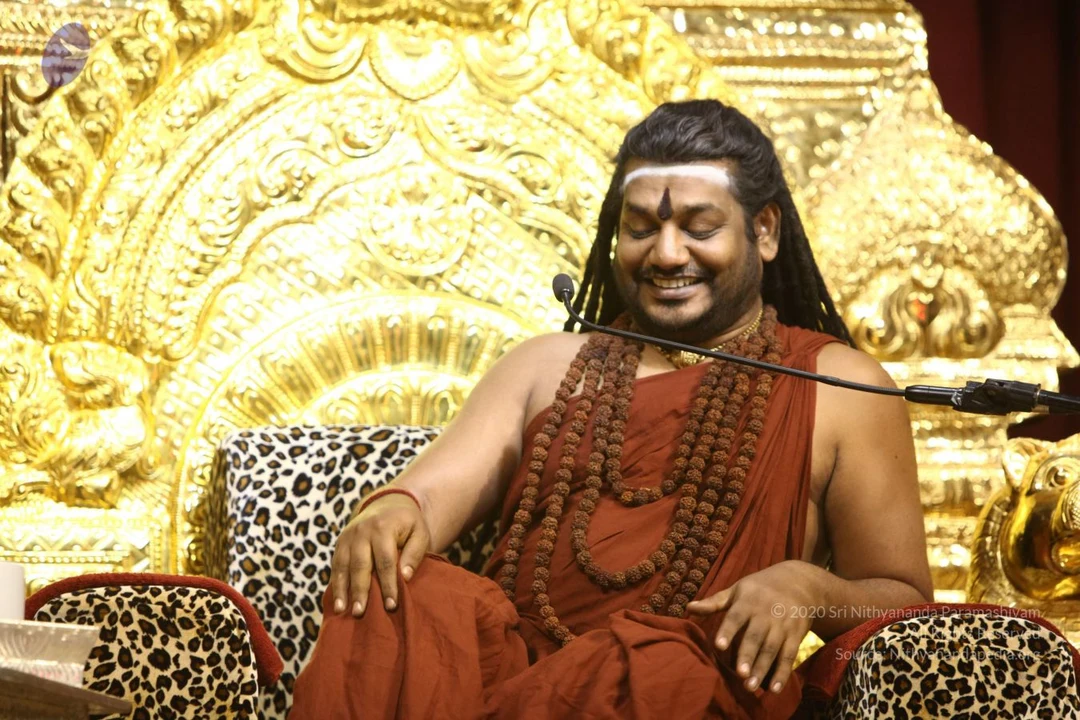
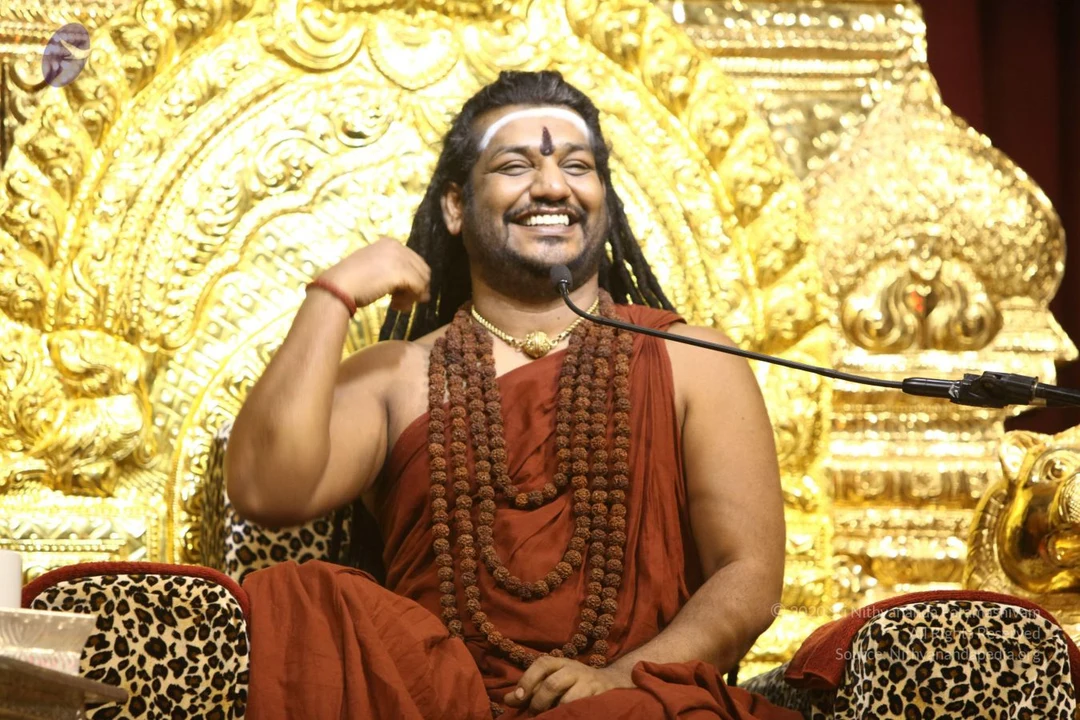
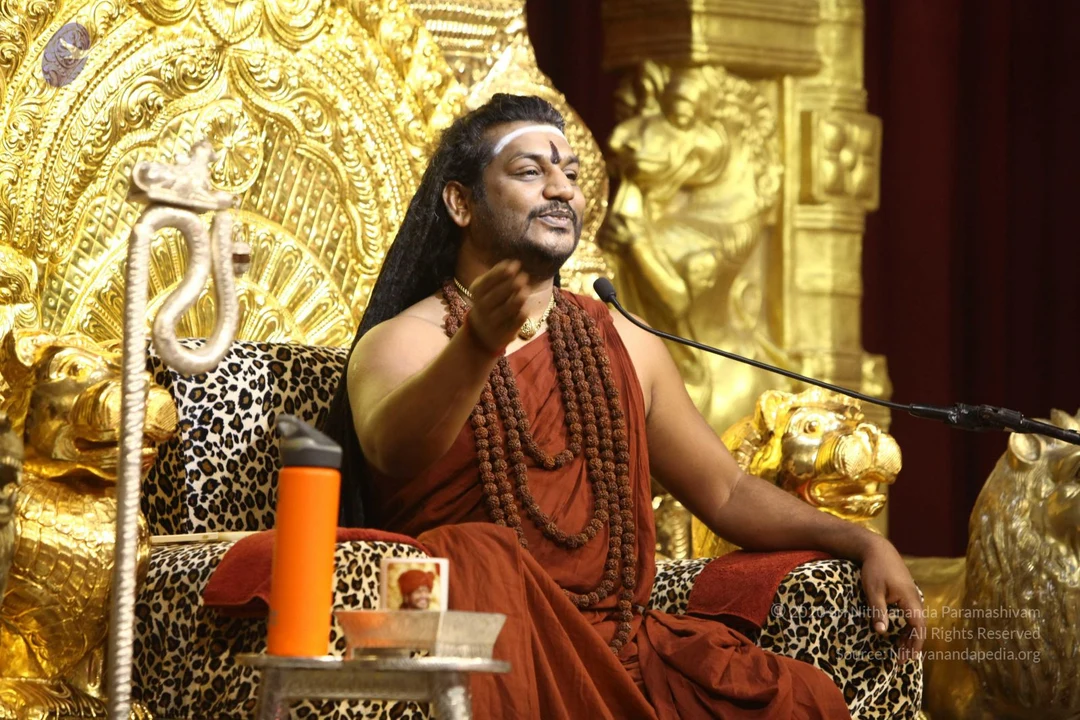
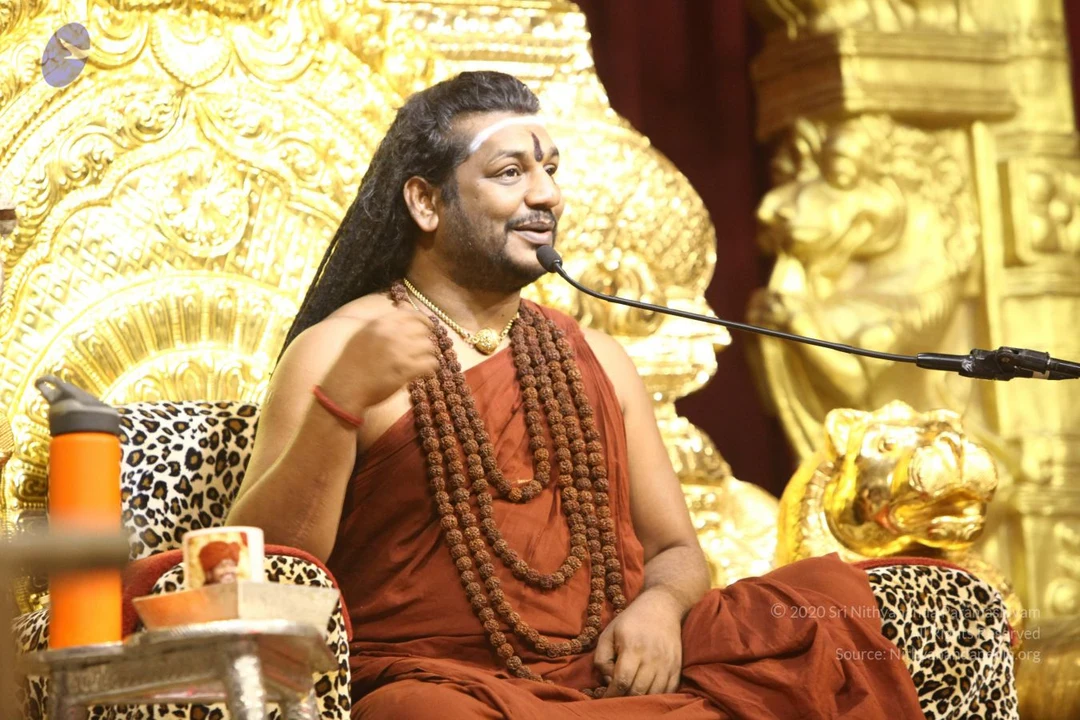
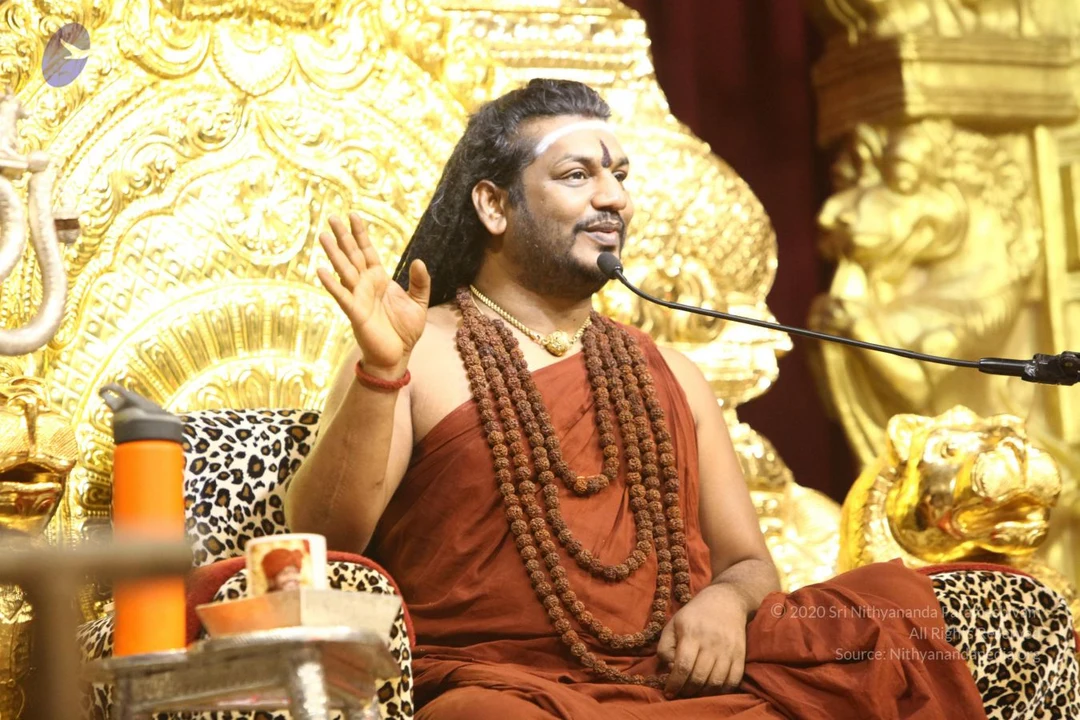
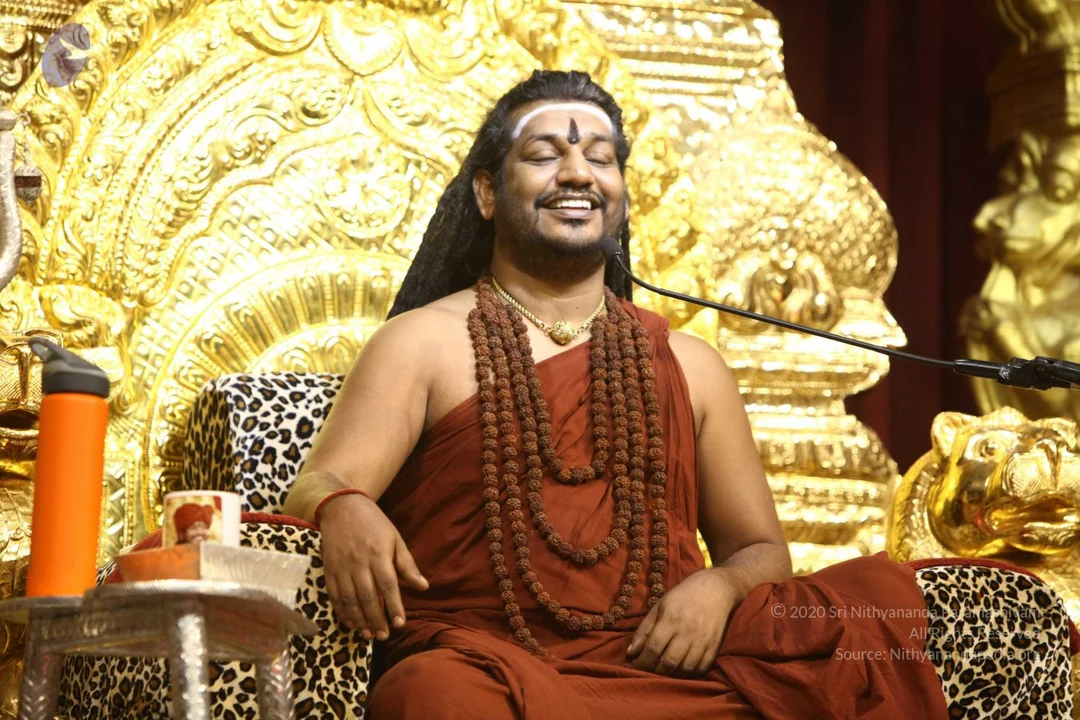
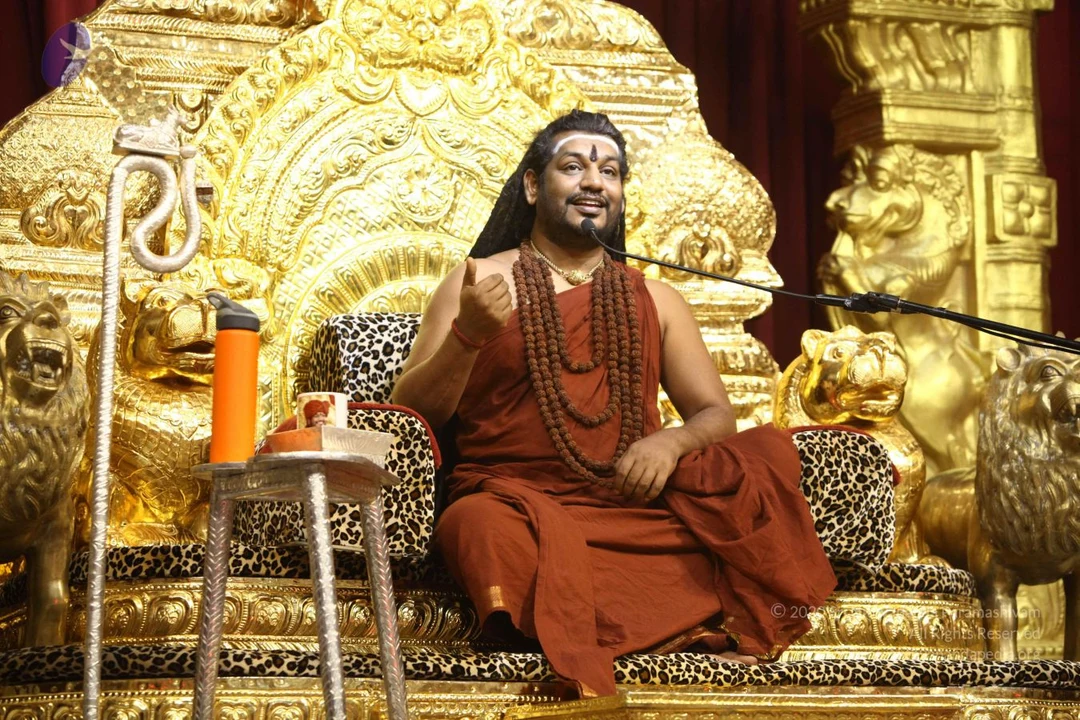
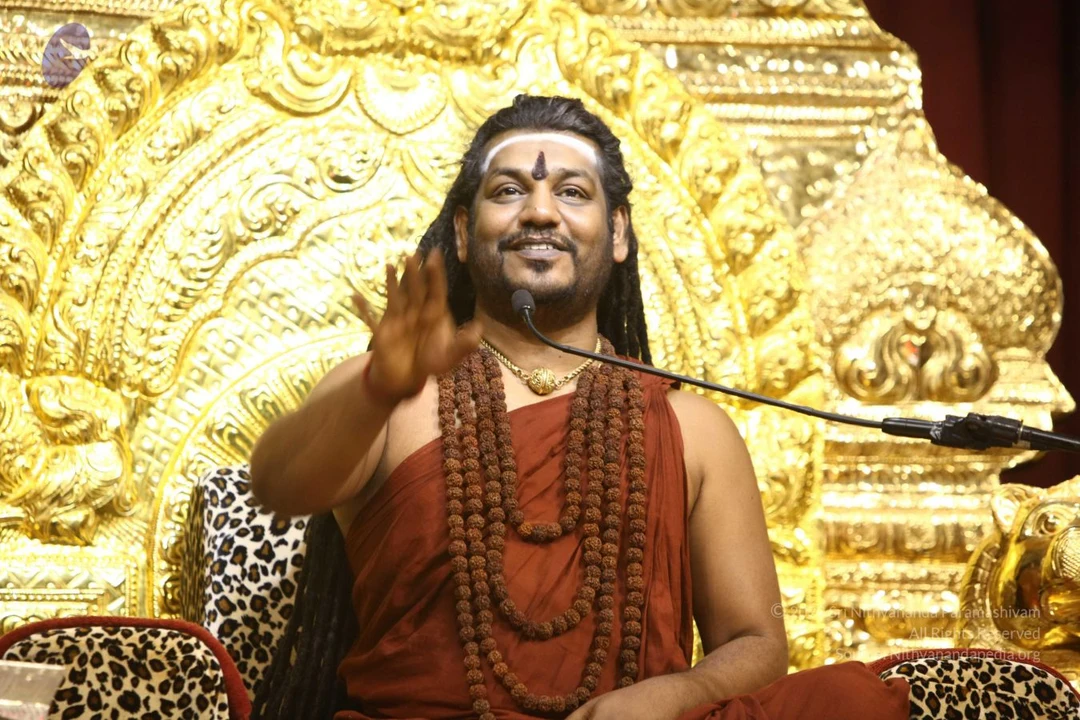
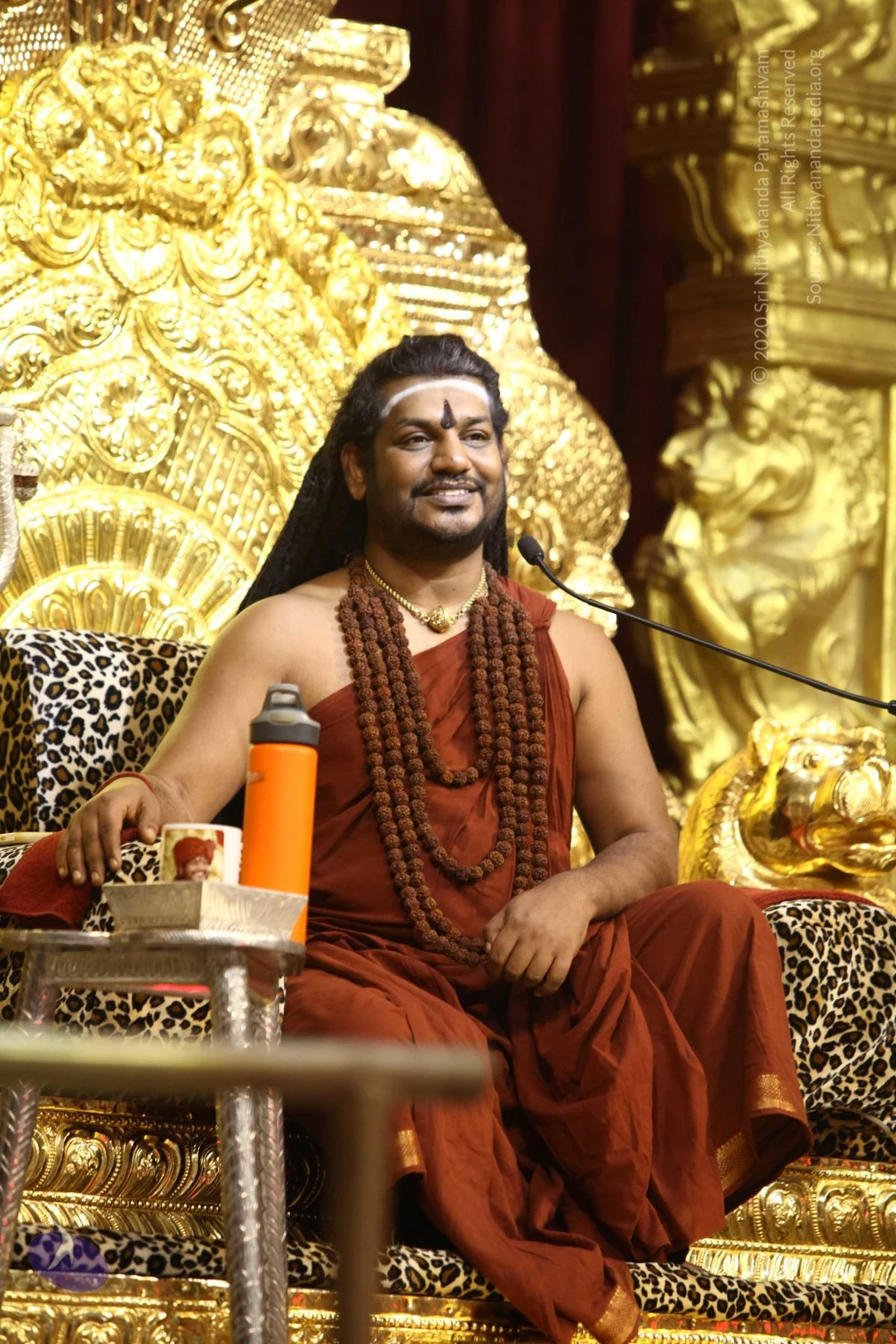
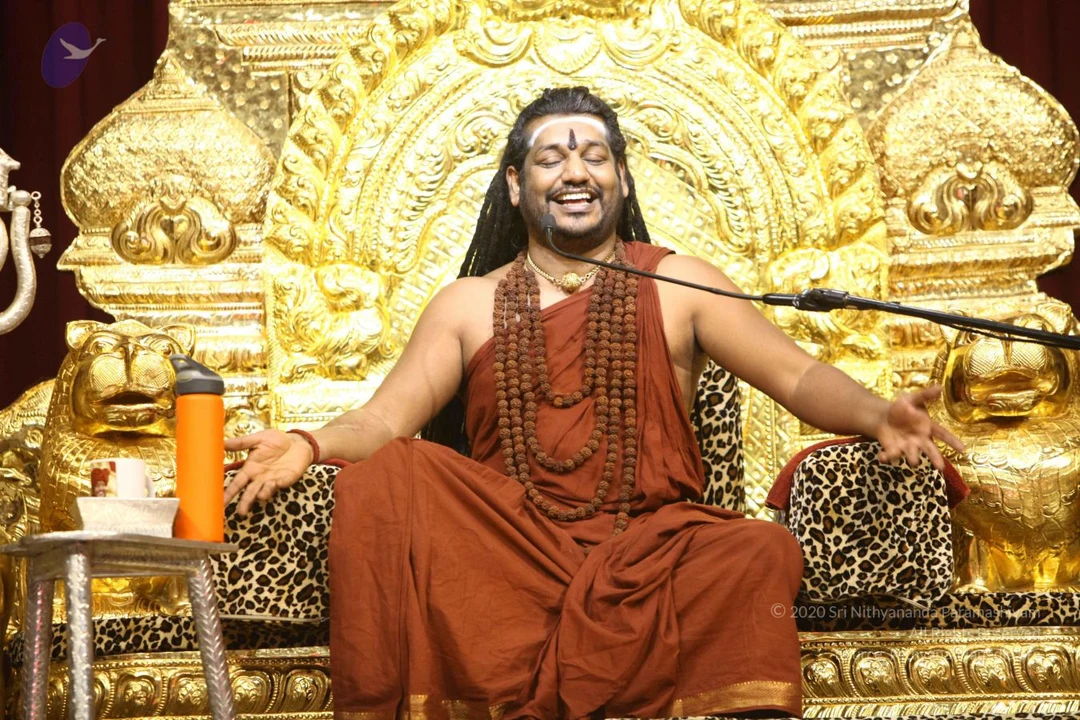
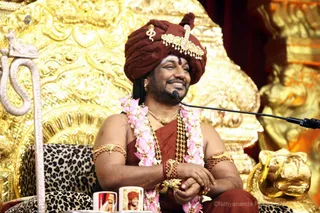
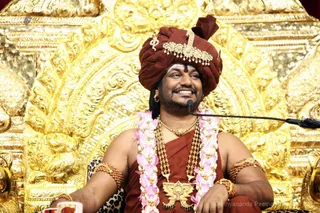
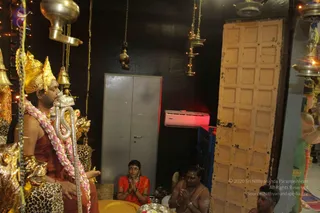
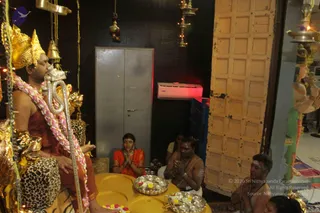
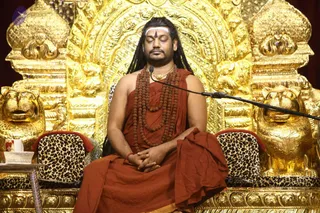
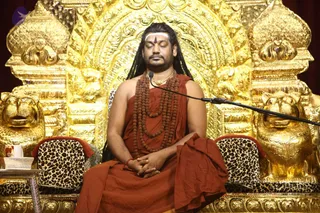
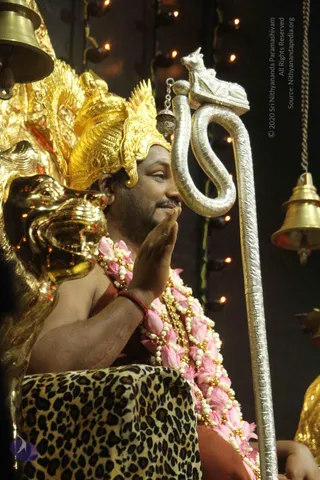
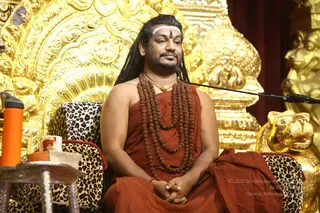
A photograph inside a gold-decorated shrine room during a puja. A man seated on an ornate golden throne with leopard-print cushions wears a gold crown, a pink-and-white flower garland and an orange-brown cloth, and holds a ceremonial staff topped with a small figure. Hanging brass bells and oil lamps are suspended above. On the right, a woman in an orange sari with a red bindi sits with hands folded in front of a yellow-covered table holding a flower garland and silver plates of offerings. Another woman in a white sari and a man in white dhoti hold lit oil lamps, and a man in white dhoti lifts a lamp at the right edge. A grey cabinet and a wall air conditioner appear in the background.A man with long dreadlocked hair and a white forehead stripe with a red bindi sits smiling on an ornate gold throne-like seat in front of a gold carved backdrop. He wears a rust-orange sannyasi wrap over bare shoulders, multiple strands of rudraksha malas and a gold ceremonial necklace. A microphone on a stand is in front of him, and he rests one hand on a leopard-print armrest. a person: the long dreadlocks, orange robe, rudraksha malas and gold necklace are the qualifying cues, and he is seated as a speaker at a discourse.A smiling man sits on an ornate gold throne with leopard-print cushions, speaking into a microphone on a boom stand. He wears a saffron-orange robe, multiple strands of rudraksha beads, a gold pendant necklace, a white forehead band with a red-black mark, and a red thread on his wrist. A gold lion-head carving is visible beside the throne, and an orange water bottle and small brass vessel sit on a table at left. A faint circular logo appears in the top left corner.

September 03 2017

Original wiki page
Contents

Title

Go 'Grace-y' not Crazy, Using Aushadha

Description

"Let me define what is going grace-y...

You all know what is going crazy. Absorbing absolute powerless principles and manifesting depression, life negativity, all that in your life is going crazy.

Making absolute powerful principles as your inner software and manifesting powers in your life is going grace-y.

You spend enough of your energy going crazy, now it is time to go grace-y.

Aushadha is ready to make you graceful. This will make Ishwaratva as a reality and make you happy. Understand, a happy person will always be integrated.

What is happiness? Excitement and self confidence which gives you the freedom to unclutch, makes you behave gracefully in every situation.

Happy person will be highly integrated. High energy person will be highly graceful.

It is stupid to believe joy comes by cunning efforts. Listen, it is stupid to believe joy comes by cunning strategies, no.

Listen, if your fundamental cognition is integrity, the kind of energies you observe, the kind of the persons you attract in your life, the kind of friends, relationships, situations Vatavarana you attract around you all that matters.

Absorbing the best powerful cognitions and manifesting the powers, that is precisely what I call go grace-y."

VideoAudio

Transcript:

(0:07)

aum nithyānandeśvara sadāshiva samārambhām

nithyānandeśvari adīshakti madhyamām |

asmat āchārya paryantām vande guru paramparām ||

(0:48)

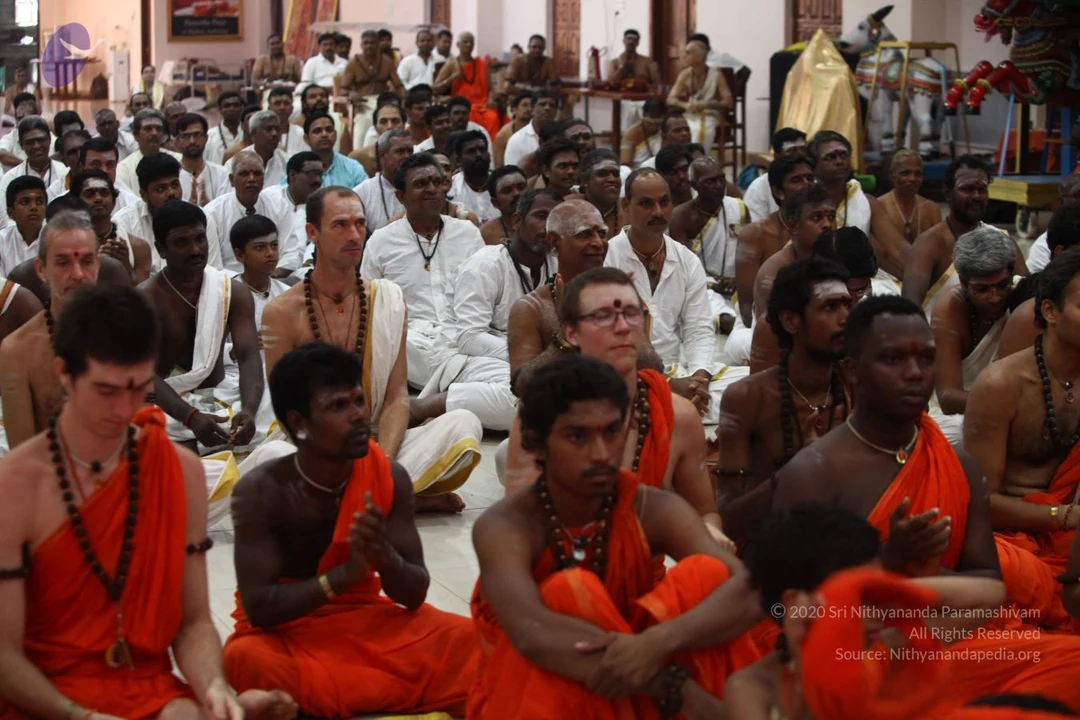
I welcome you all with My love and respects. I welcome all the Devotees, Disciples, Samajis, Satsangis, Sri Mahants, Mahants, sitting with us all over the world, through Nithyananda TV, 100s of Adheenavasis channels, Facebook Live, Twitter Live, YouTube Live and 2-way Video Conferencing. I welcome all of you with My love and respects.

(1:32)

“Go Grace-y with Swamiji”. Let me define “Going Grace-y”. You all know what is ‘going crazy’. Making absolute powerful principles as your inner software and manifesting the powers in your life - is “Going Grace-y”. Listen, absorbing absolute powerless principles and manifesting the depression, life negativity, everything in your life - is “going crazy”. That everyone knows. You spent enough of time, energy, in going crazy. Now it is time to go Grace-y. Aushadha is ready to make you graceful. Riped Siddha, boiled. This will make Ishwaratva as a reality.

Understand. Happy person will always be integrated. What is happiness you know? A excitement and self-confidence, which gives the freedom to Unclutch, makes you behave gracefully in every situation. Understand. Happy person will be highly integrated. High energy person will be highly graceful. High energy person will be highly graceful. It is stupid to believe joy comes by cunning efforts.

Listen. It is stupid to believe joy comes by cunning strategies. No! It is absolutely stupid. Absolutely stupid. Listen. If your fundamental cognition is Integrity, the kind of the energies you absorb, the kind of the persons you attract in your life, the kind of the friends, relationships, situation, vatāvarana [ambience], you attract around you - all that matters. Understand…all that matters. Absorbing best powerful cognitions and manifesting the powers, that is precisely what I call – Go Grace-y.

(6:33)

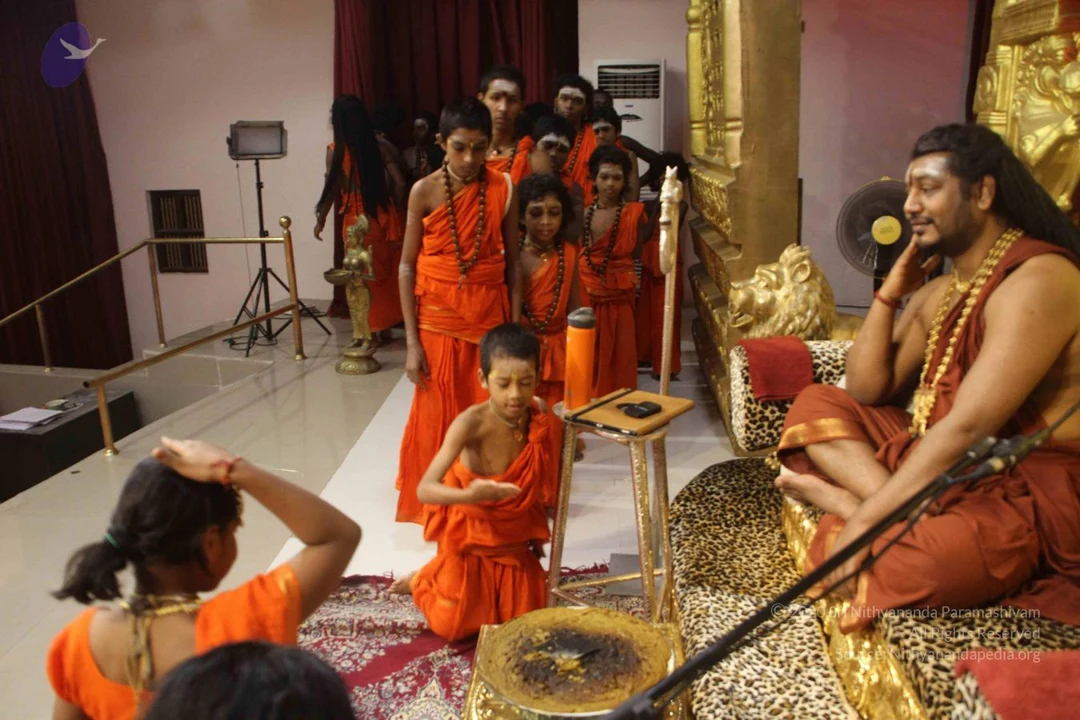
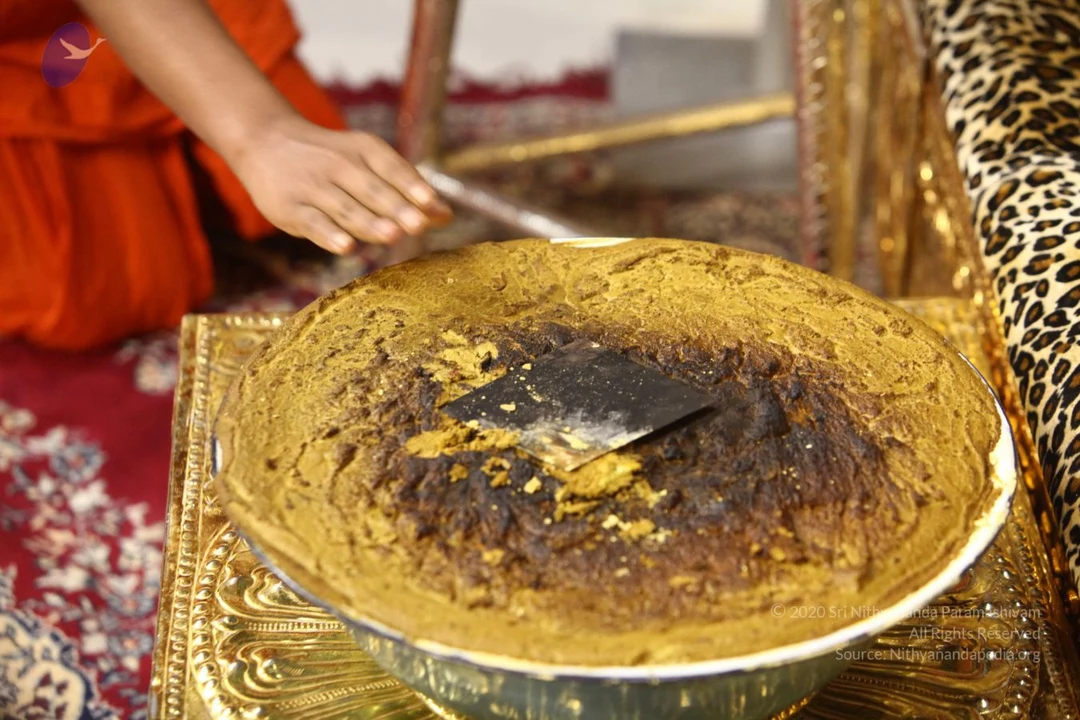
Day before yesterday, I was talking with one of My Sannyasi. She was asking, “Swamiji, why don’t you yourself break this status quo on feeling stuck and give the powers and make the kids manifest all the powers.” I said, “Yes, understand, I Myself doing everything is like… using the petrol to fly the jet. Yes, till certain distance you can go, again I have to refuel. But if I make them live the Integrity, they will become jets with the solar fuel.” Means constantly, they know how to refuel themself. Initially I can fill the fuel, nothing wrong. But I will have to make them learn to recharge themself, rejuvenate themself. If not, they can only manifest limited powers. Now, with this Aushadha, with this spiritual alchemy product, with this Aushadha, which I am releasing, the specialty of this today’s Aushadha is - it will generate the space of Ishwaratva, means your inner space will automatically start functioning with Integrity, Authenticity, Responsibility, Enriching. The AIRE will increase, AIRE will start increasing.

(8:58)

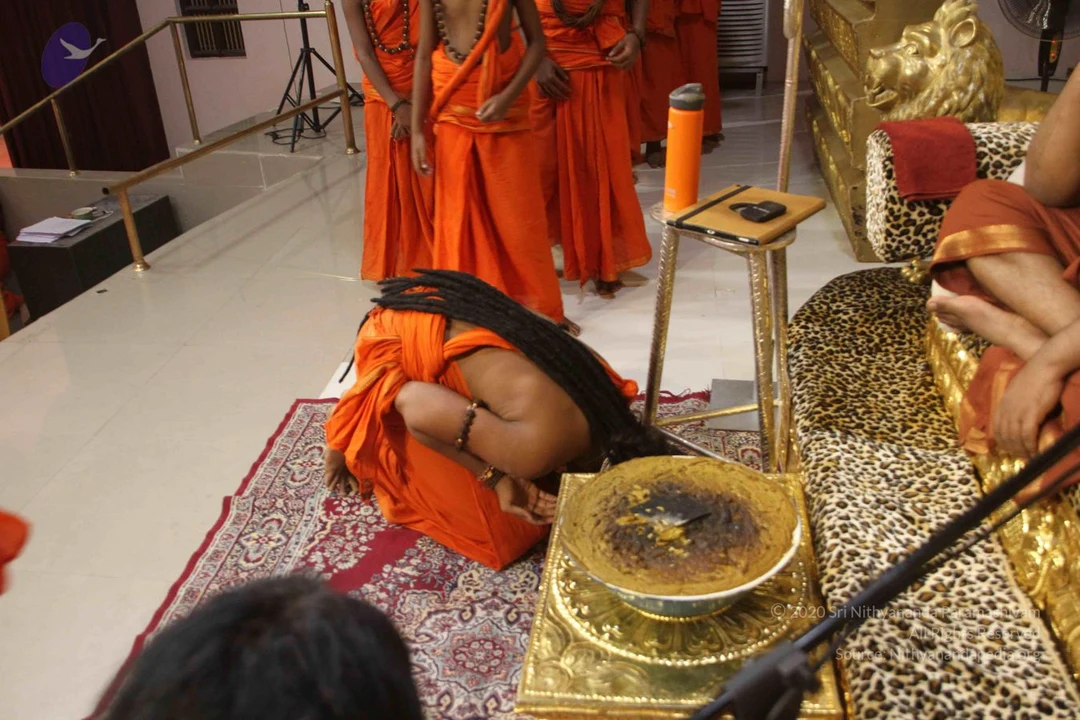
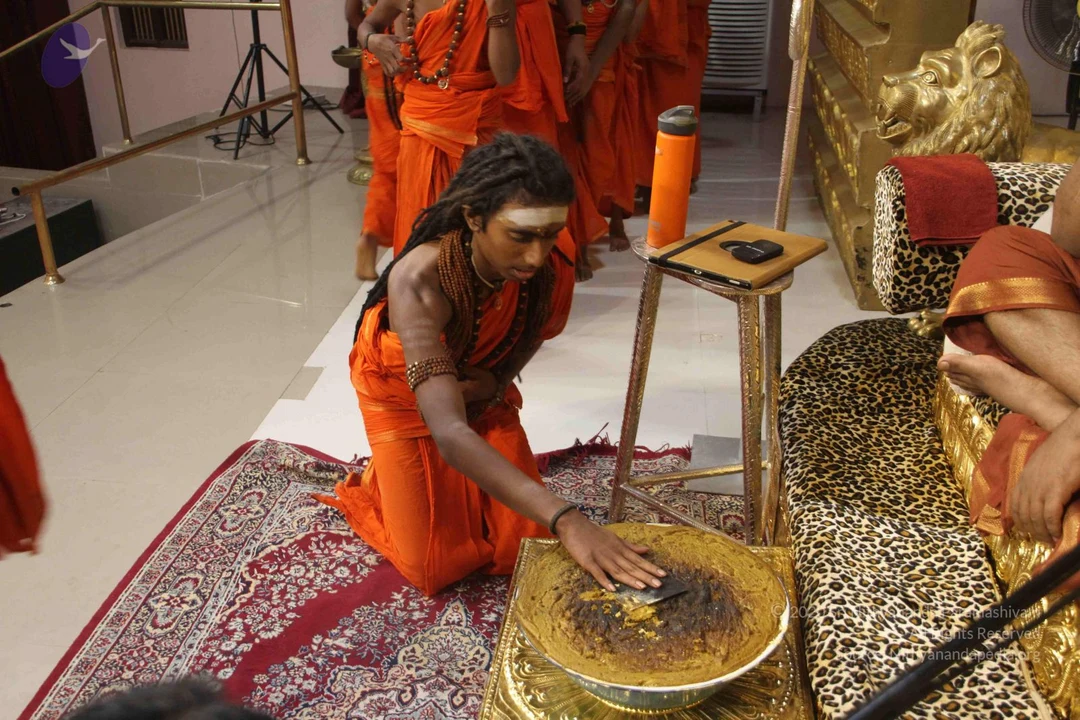
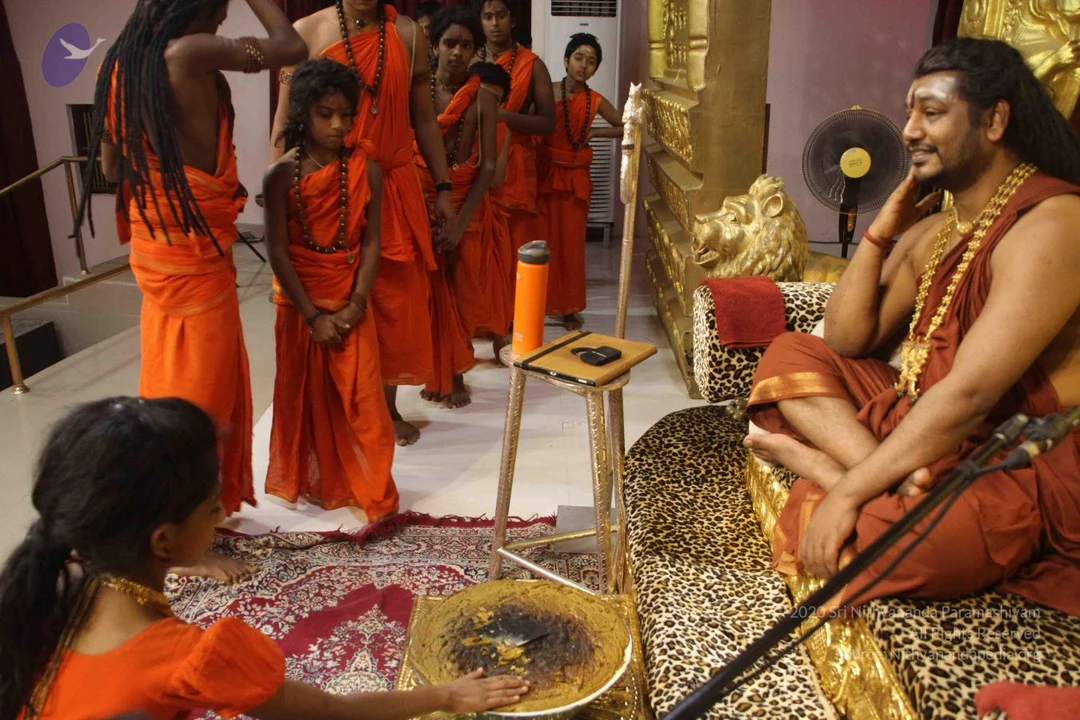
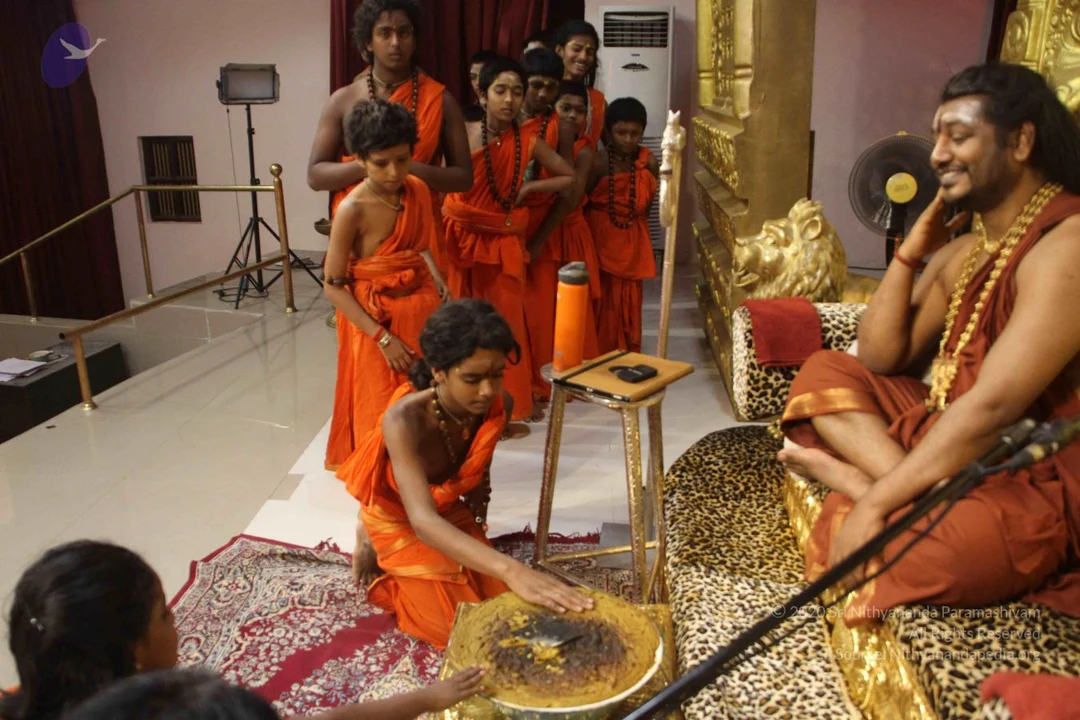
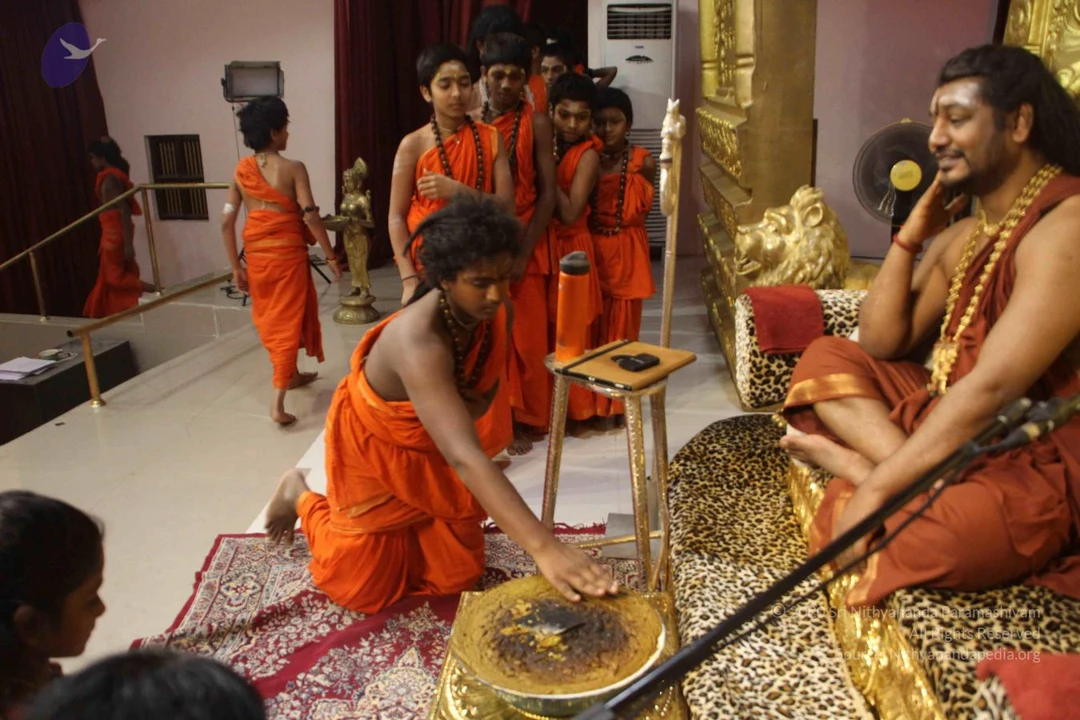
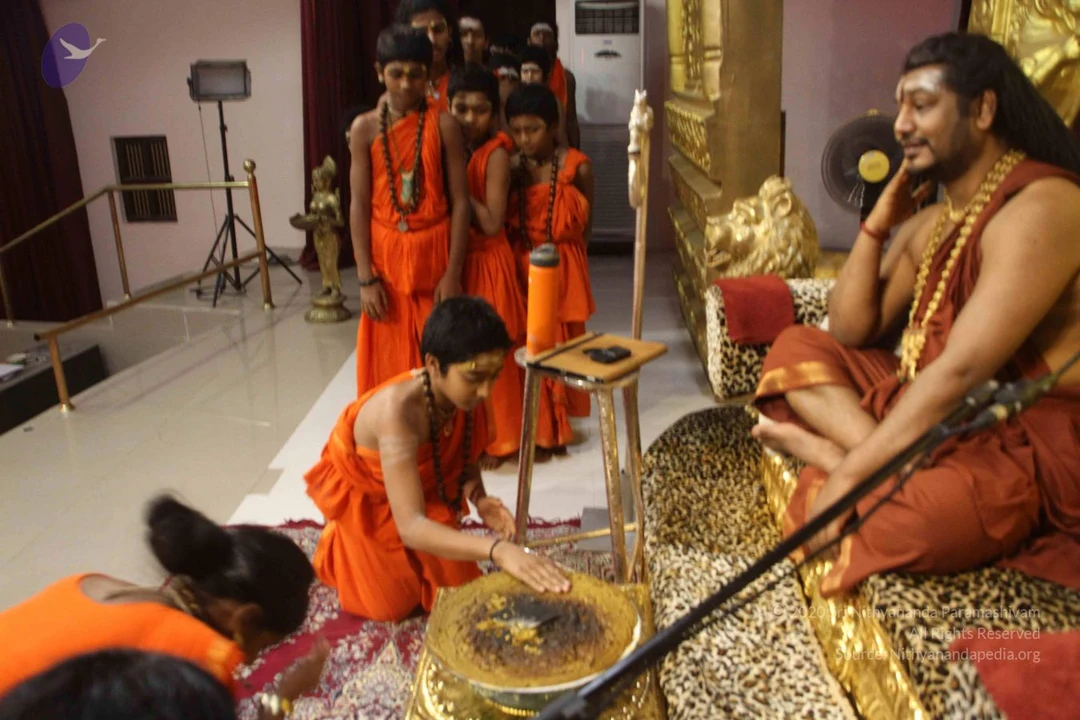
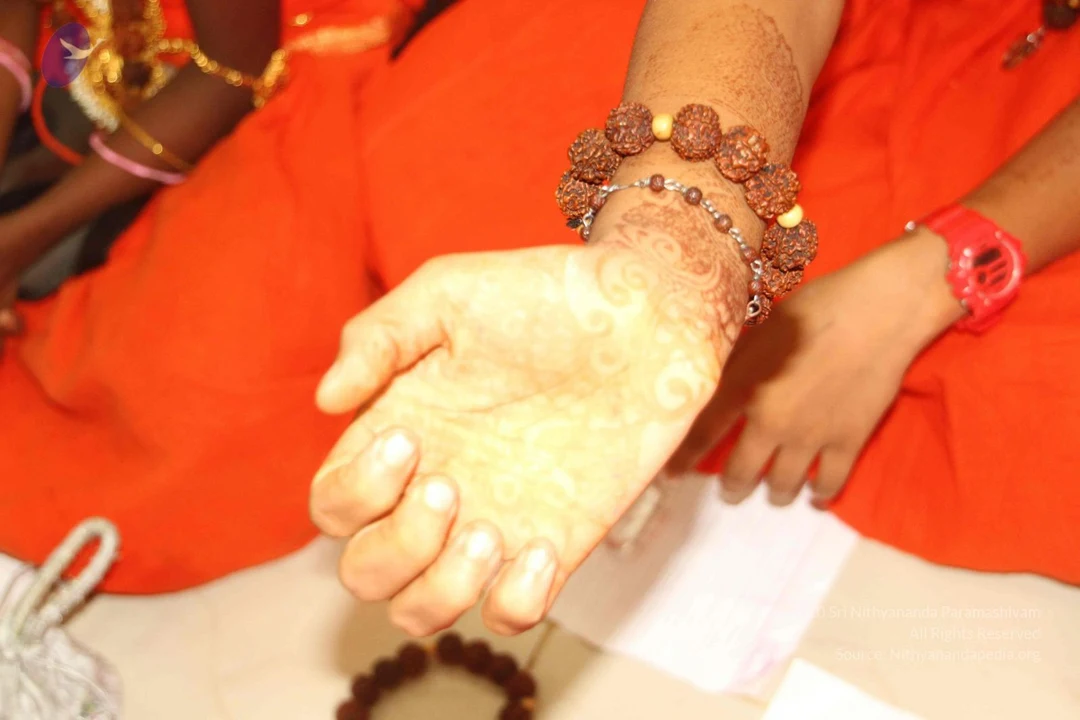
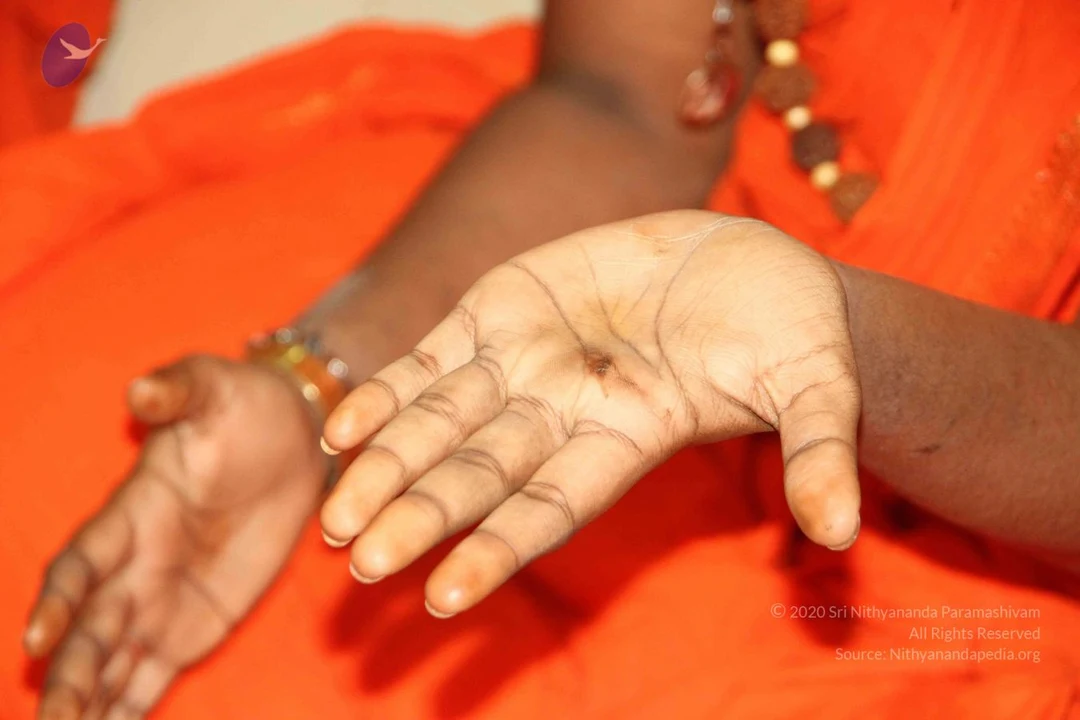
This Aushadha will basically make you like a solar power empowered jet. Understand, I think Aushadha is completely new for all of you. Now, after this Satsang, I am going to demonstrate the power of Aushadha. Balasants are going to use it and show it. They will go grace-y!!! Just small...small three dot on the forehead, the kind of powers they will manifest. The absolute mastery over length, breadth, depth and the way they will manifest powers; actually they will start bending the spoons today. They will start bending the spoons, bending the matter. They will bend air. I know...I know….I know, this may look like too big promise, but I always….whatever I do, only when I establish, prove, it looks like reality. This is fundamentally the space of Ishwaratva. I’ll name this Aushadha as “Blue Vel” - B-L-U-E -V- E- L. This is the antidote for Blue Whale.

(11:32)

Download B-L-U-E -W-H-A-L-E, you will be dead!! - Download Blue Vel - B-L-U-E -V-E-L, you’ll be living forever, eternity. So formally, officially, I am naming this Aushadha as “Blue Vel” - B-L-U-E- V-E-L. That Blue Whale makes you manifest powerlessness, finally death itself. This Blue Vel will make you manifest all the powerfulness, finally enlightenment itself. So you are going to see the power of Blue Vel. I don’t know by coincidence, it came in blue Manguvessel J. Am bringing the power of enlightenment, powers of aushadha, powers of spiritual alchemy products, everything to the world, openly taking it to the world.

So it is time, I have to sit with Balasants and initiate them into Aushadha… to manifest the powers of Aushadha. So the essence of today’s Satsang - “Go Grace-y”, absorb all the powerful cognitions into you and use this Aushadha - Blue Vel and manifest powers.” That is what is “Going Grace-y”.

(14:18)

With this, I bless you all. Let’s all radiate with Integrity, Authenticity, Responsibility, Enriching, Causing, Living Shuddhadvaita Saivam, Sadāshivoham, the Eternal Bliss - Nithyananda.

Thank you.

Be Blissful.

(14:48)

Title

Hinduism Can Never Be Destroyed || Part 1 || Sadashiva Calls || Tamil || 03 Sept 2017

Description

Name Of The Program : Sadashiva Calls Part 1 Session on: Hinduism can Never be Destroyed Date : 03 September 2017 Venue : Adikailaasa, Bidadi, Bengaluru

In this video Supreme Pontiff of Hinduism HDH #Nithyananda Paramashivam explains on the Sadashiva Mantra directly taken from Agama. This video is an excerpt on Sadashiva calls conducted on 03 September 2017 in Adikailaasa, Bidadi, Bengaluru. Here HDH also gives a correct context of chanting the #mantra.

The Supreme Pontiff of Hinduism Jagatguru Mahasannidhanam His Divine Holiness Nithyananda Paramashivam (HDH) is the reviver of #KAILASA - the ancient enlightened civilization and the great cosmic borderless Hindu nation. Revered as the incarnation of Paramashiva - the primordial Hindu Divinity, HDH has a following of 2 billion Hindus worldwide with de facto spiritual embassies in over 150 countries. He has worked untiringly for over 26 years for the revival of Kailasa, for global peace and to give super conscious breakthrough to humanity. He has survived the worst persecution of multiple assassination attempts on person and on character by anti-Hindu elements. He is collecting, organising, preserving, time capsuling, decoding, spreading and reviving 20 Million source books of Hinduism and the 64 sacred arts & sciences like Ayurveda, music, dance, sculpting, astrology, vastu and much more. Close to 20,000 hours of HDH’s timeless talks have been recorded till date (Sep 2020), which are a treasure trove of powerful cognitions to solve individual and global problems of any kind.

VideoAudio

Title

Enriching The Whole World || Part 2 || Sadashiva Calls || Tamil || 03 Sept 2017

Description

Name Of The Program : Sadashiva Calls Part 2 Session on: Enriching The Whole World Date : 03 September 2017 Venue : Adikailaasa, Bidadi, Bengaluru

In this video Supreme Pontiff of Hinduism HDH #Nithyananda Paramashivam explains that the #enriching the people is much important. This video is an excerpt on Sadashiva calls conducted on 03 September 2017 in Adikailaasa, Bidadi, Bengaluru. Here HDH also explains on doing this enriching You will also be enriched and you will be complete about your problems.

The Supreme Pontiff of Hinduism Jagatguru Mahasannidhanam His Divine Holiness Nithyananda Paramashivam (HDH) is the reviver of #KAILASA - the ancient enlightened civilization and the great cosmic borderless Hindu nation. Revered as the incarnation of Paramashiva - the primordial Hindu Divinity, HDH has a following of 2 billion Hindus worldwide with de facto spiritual embassies in over 150 countries. He has worked untiringly for over 26 years for the revival of Kailasa, for global peace and to give super conscious breakthrough to humanity. He has survived the worst persecution of multiple assassination attempts on person and on character by anti-Hindu elements. He is collecting, organising, preserving, time capsuling, decoding, spreading and reviving 20 Million source books of Hinduism and the 64 sacred arts & sciences like Ayurveda, music, dance, sculpting, astrology, vastu and much more. Close to 20,000 hours of HDH’s timeless talks have been recorded till date (Sep 2020), which are a treasure trove of powerful cognitions to solve individual and global problems of any kind.

VideoAudio

Title

The Divine Presence of The Cosmos || Darshan Initiation into Powerful Cognitions || 03 Sept 2017

Description

Name of the Convention: Sadashiva Call Acharya Session On: The Divine Presence of The Cosmos Venue: Adi Kailasa, Bengaluru, Karnataka, India Date: 03 September 2017

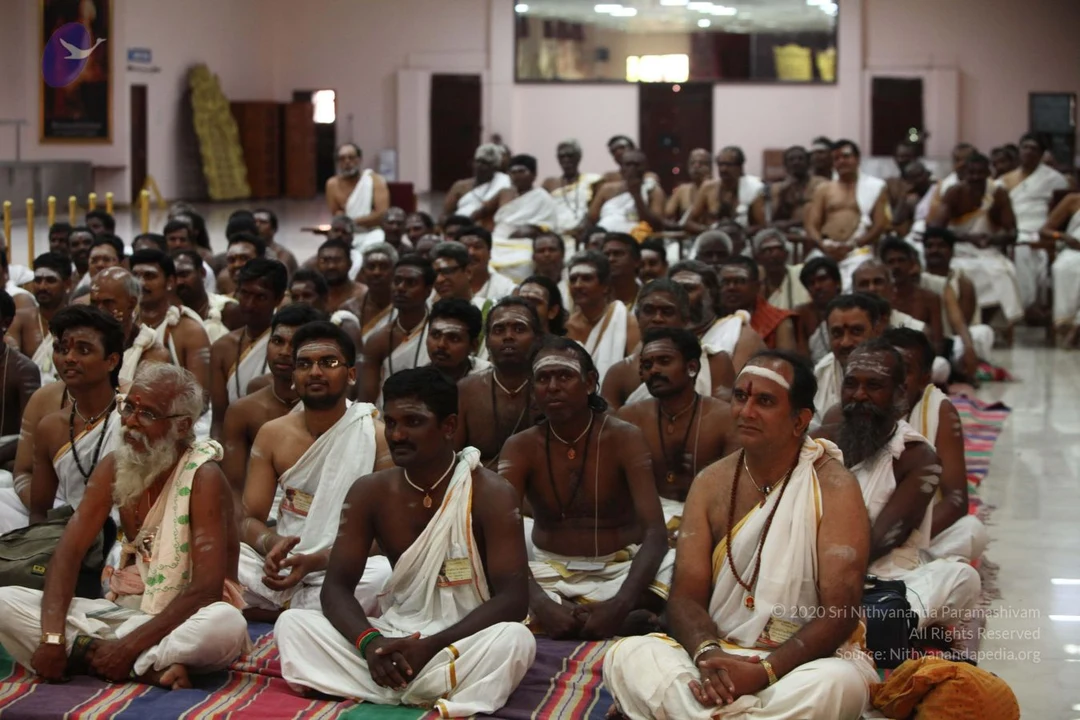
In this video the delegates enjoy the presence of the divine and they are in bliss on gazing at the Ultimate. This video is an excerpt on the presence of the divine happened on 03 September 2017 in Adi Kailasa, Bengaluru, Karnataka, India.

The Supreme Pontiff of Hinduism Jagatguru Mahasannidhanam His Divine Holiness #Nithyananda Paramashivam (HDH) is the reviver of #KAILASA - the ancient enlightened civilization and the great cosmic borderless Hindu nation. Revered as the incarnation of Paramashiva - the primordial Hindu Divinity, HDH has a following of 2 billion Hindus worldwide with de facto spiritual embassies in over 150 countries. He has worked untiringly for over 26 years for the revival of Kailasa, for global peace and to give super conscious breakthrough to humanity. He has survived the worst persecution of multiple assassination attempts on person and on character by anti-Hindu elements. He is collecting, organising, preserving, time capsuling, decoding, spreading and reviving 20 Million source books of Hinduism and the 64 sacred arts & sciences like Ayurveda, music, dance, sculpting, astrology, vastu and much more. Close to 20,000 hours of HDH’s timeless talks have been recorded till date (Sep 2020), which are a treasure trove of powerful cognitions to solve individual and global problems of any kind.

Link to Video:

Photo

Satsang
http://nithyananda.org/sites/default/files/photo-gallery/2017-09-Sep-03-nithyananda-diary_bengaluru-adheenam_nithya-satang_IMG_3686-17.JPG

Sakshi Pramana:

Sharing from IA

==Photos Of The Day:==

FB-photo-of-the-day
Photos Of The Day:

pada-puja
satsang

sadashiva-calls-session

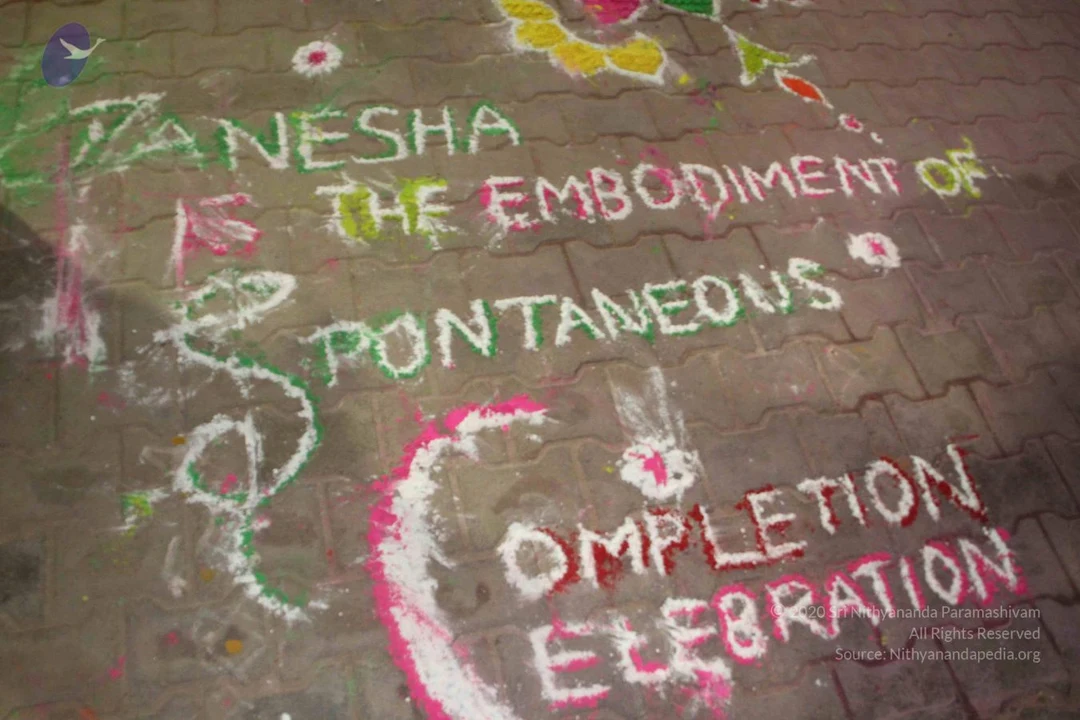
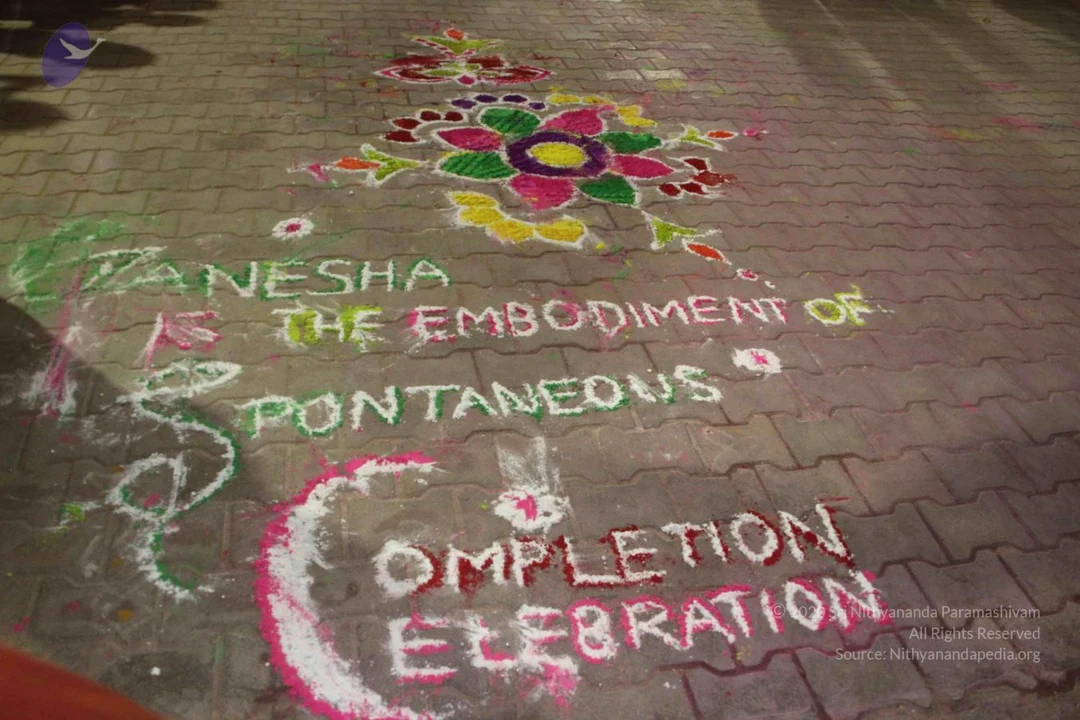
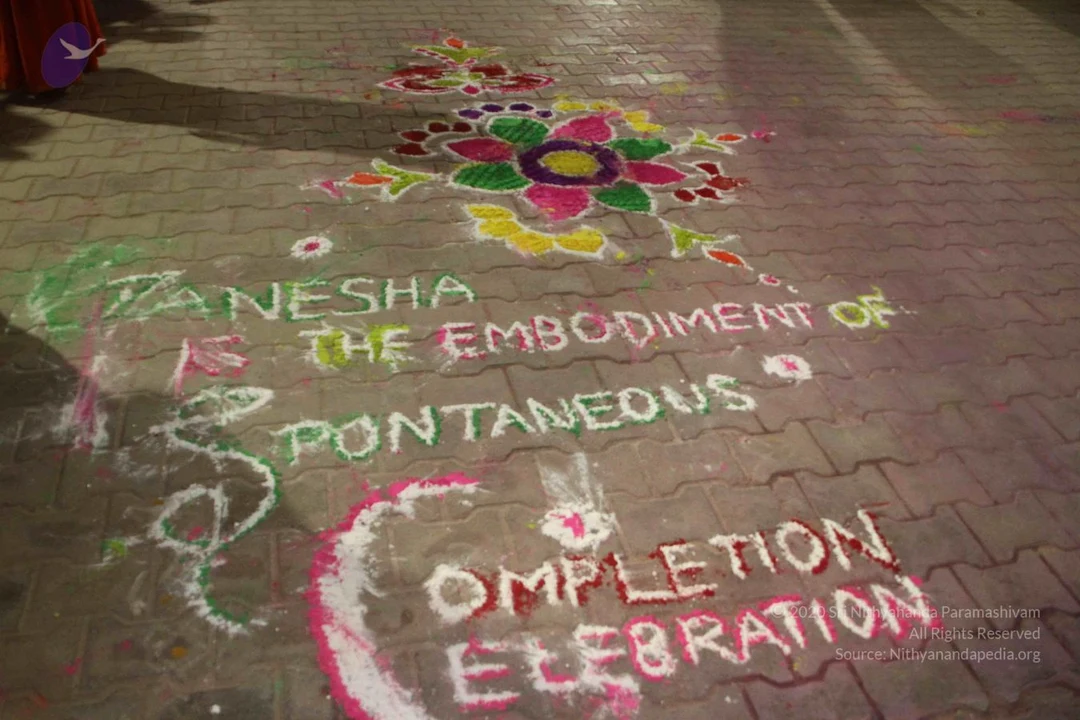
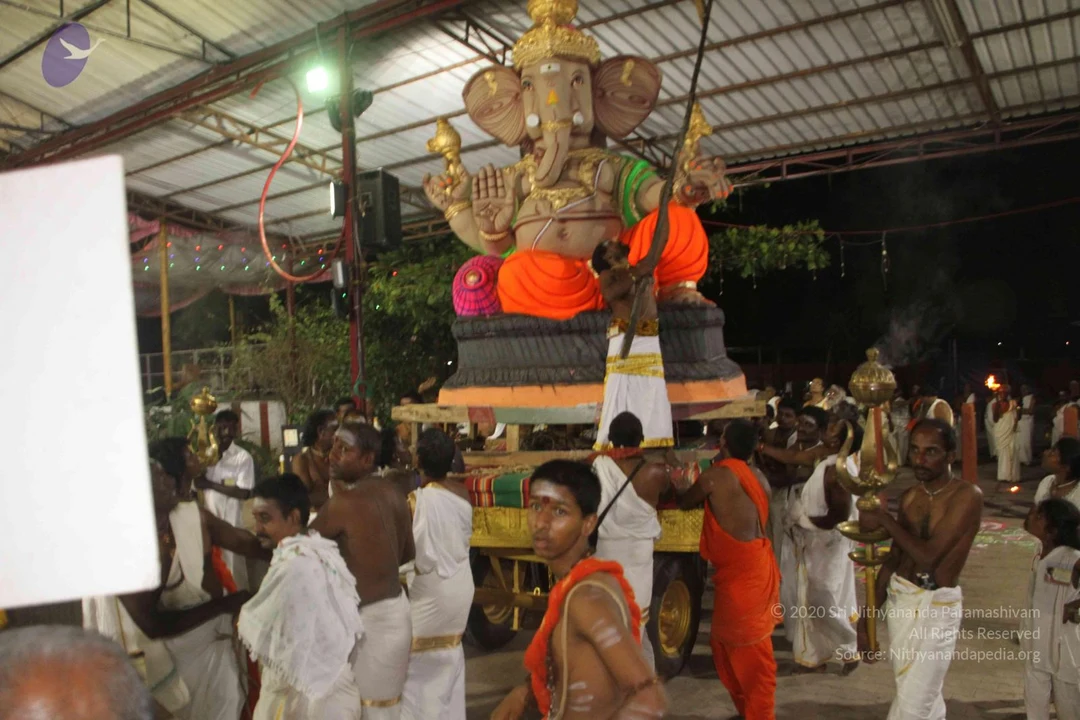
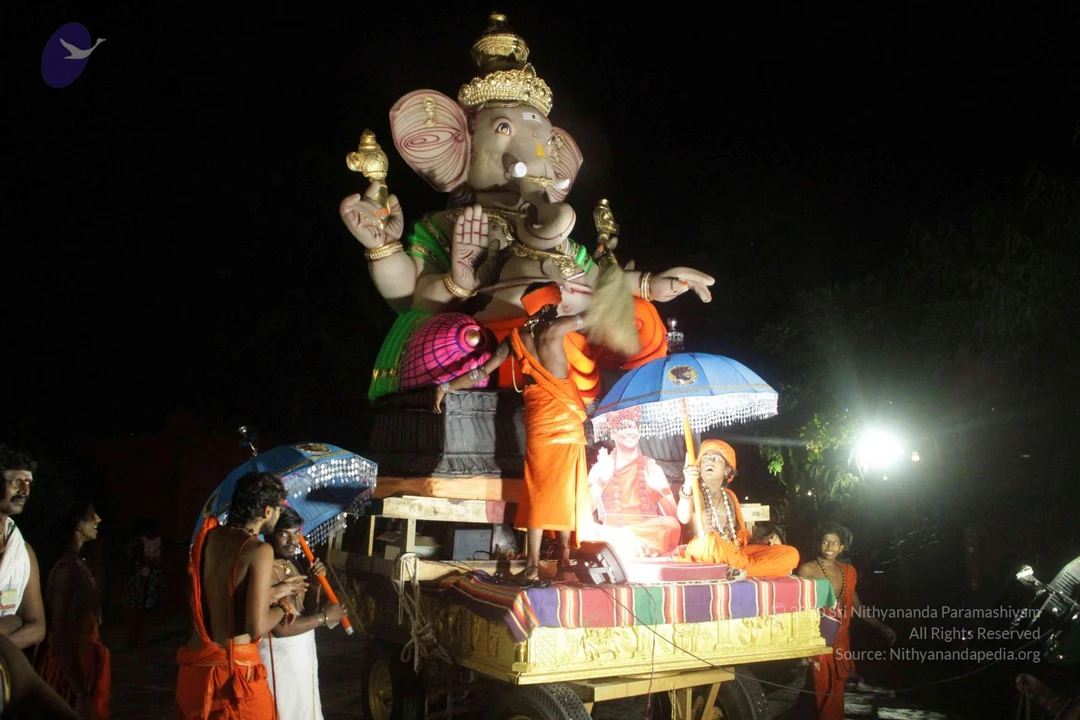
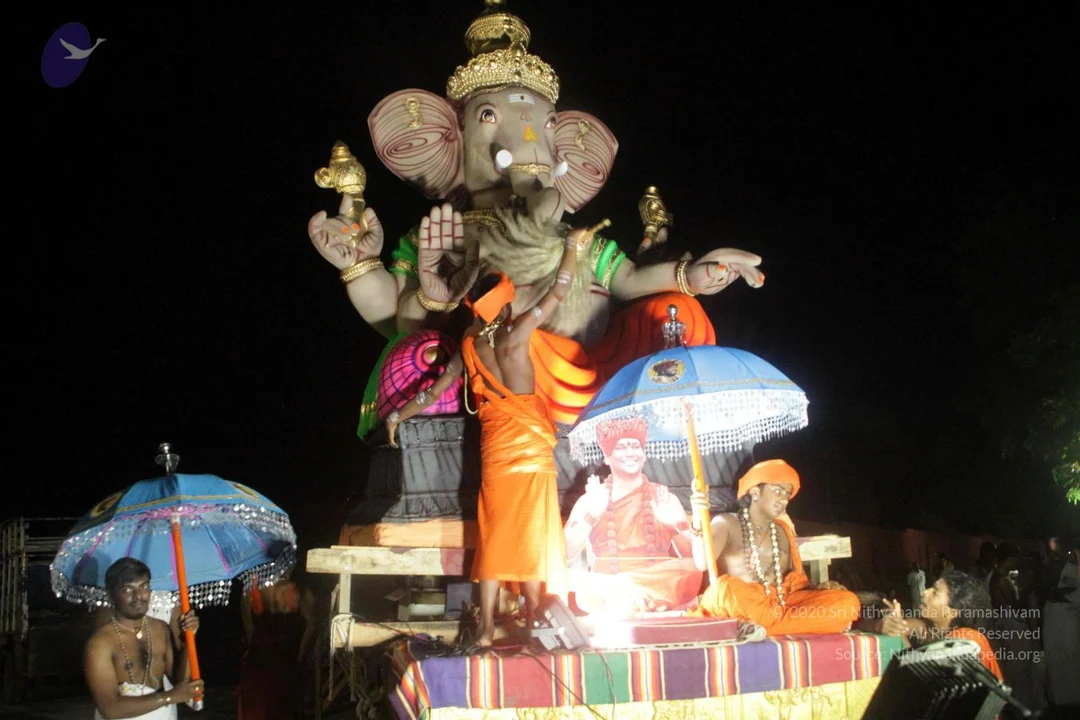
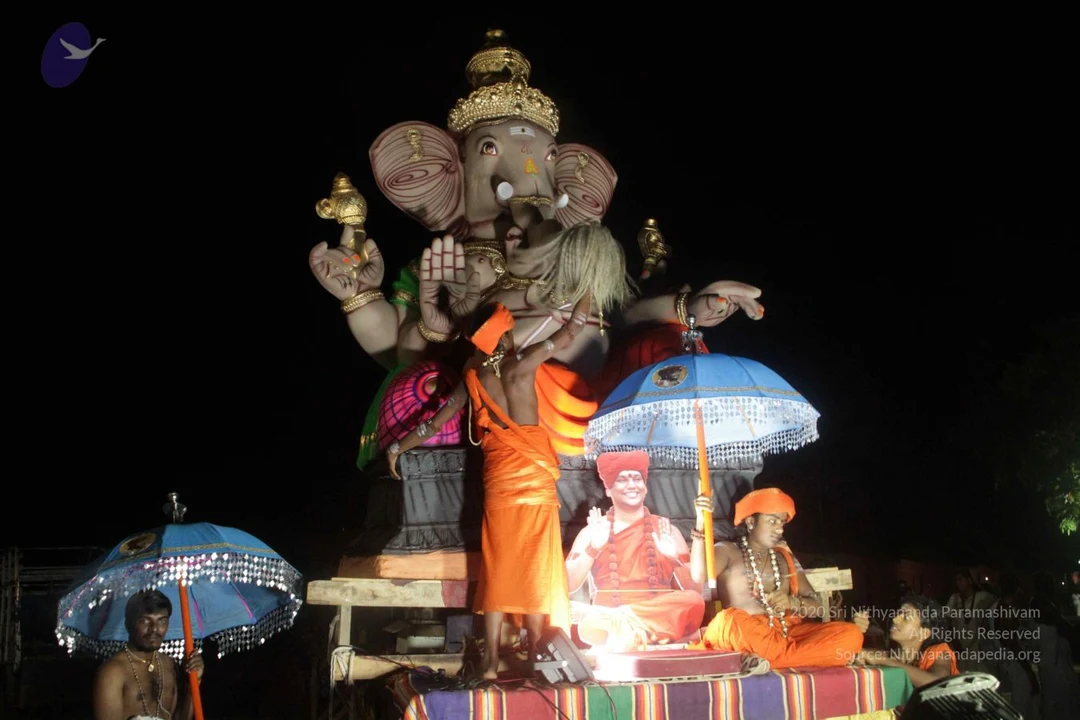
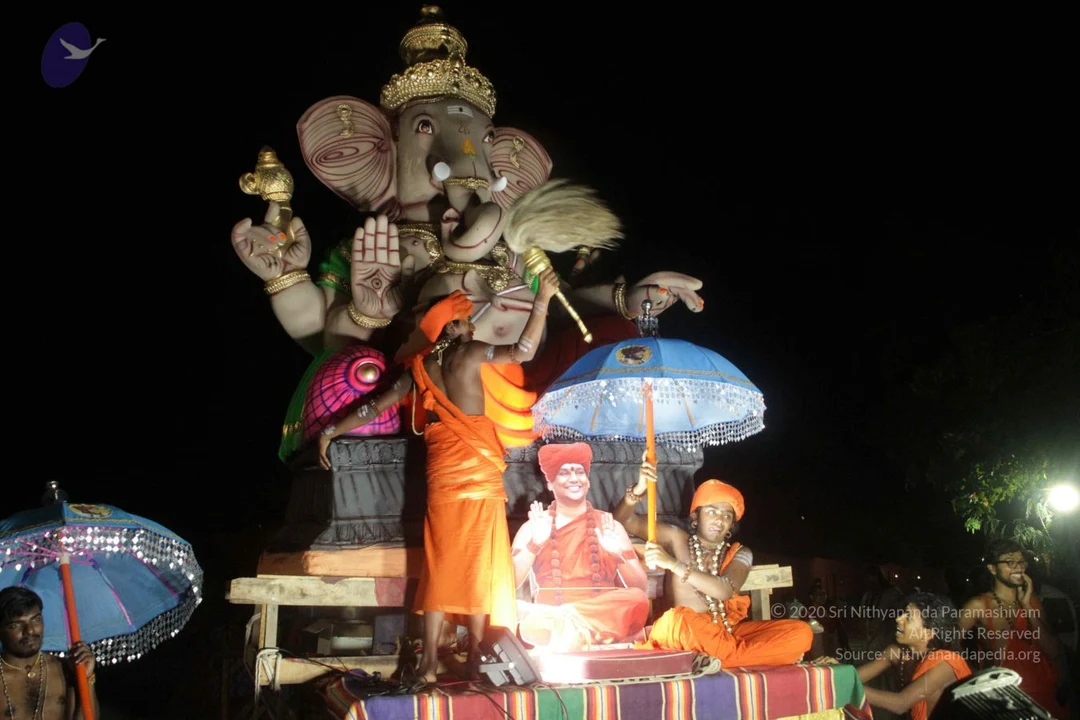
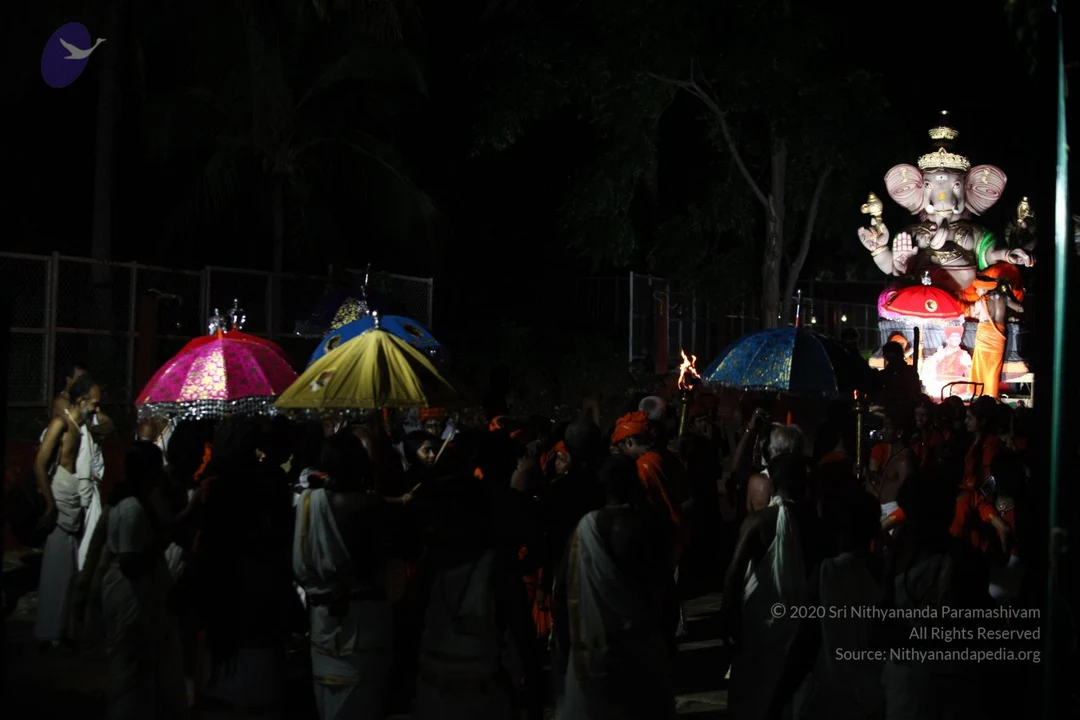
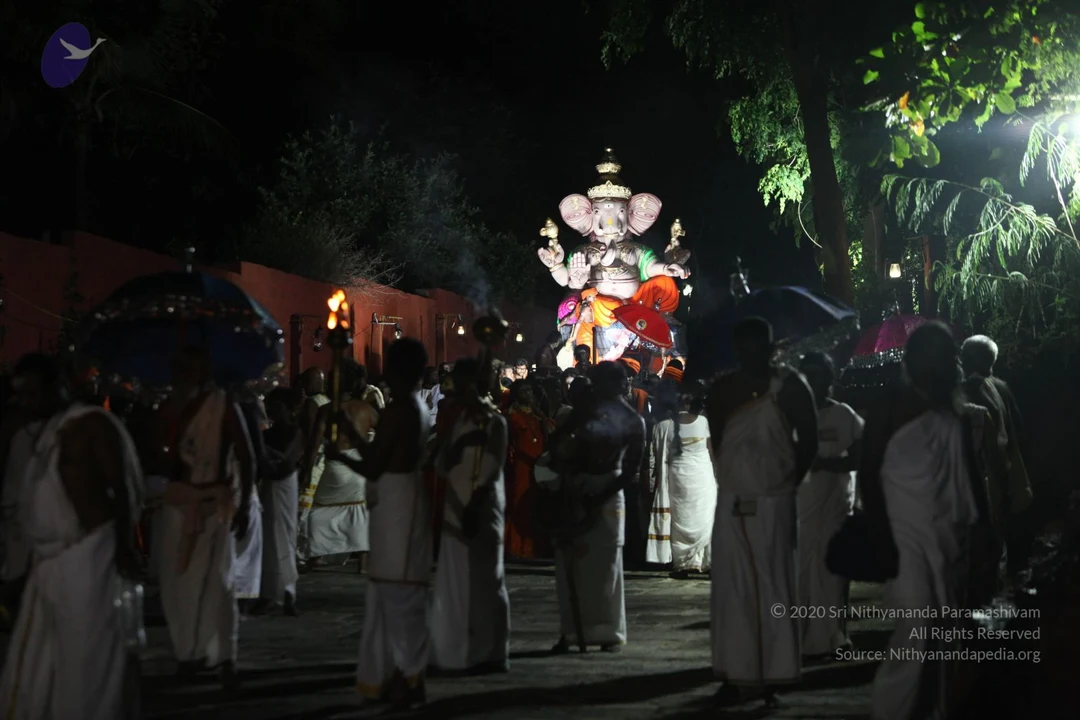
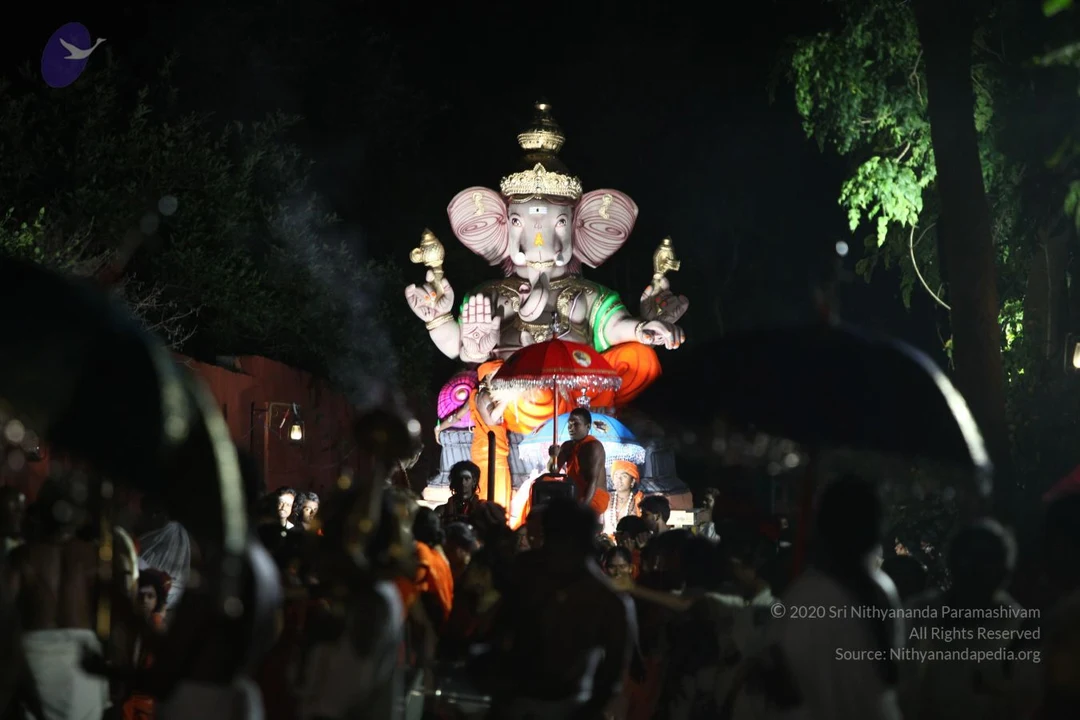
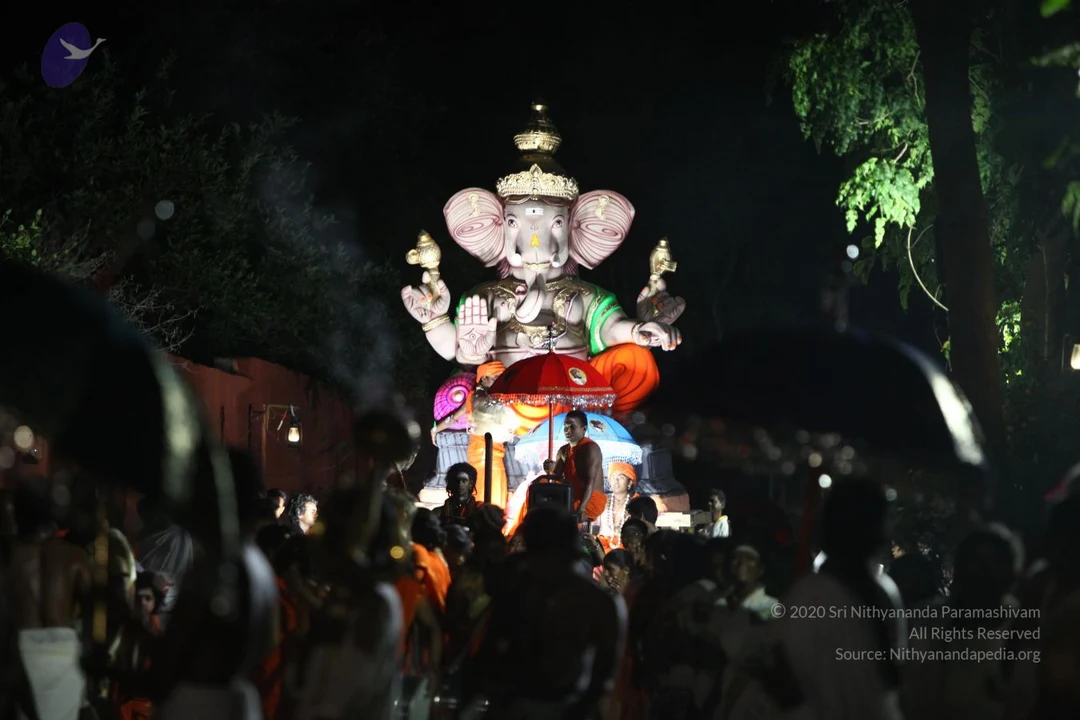
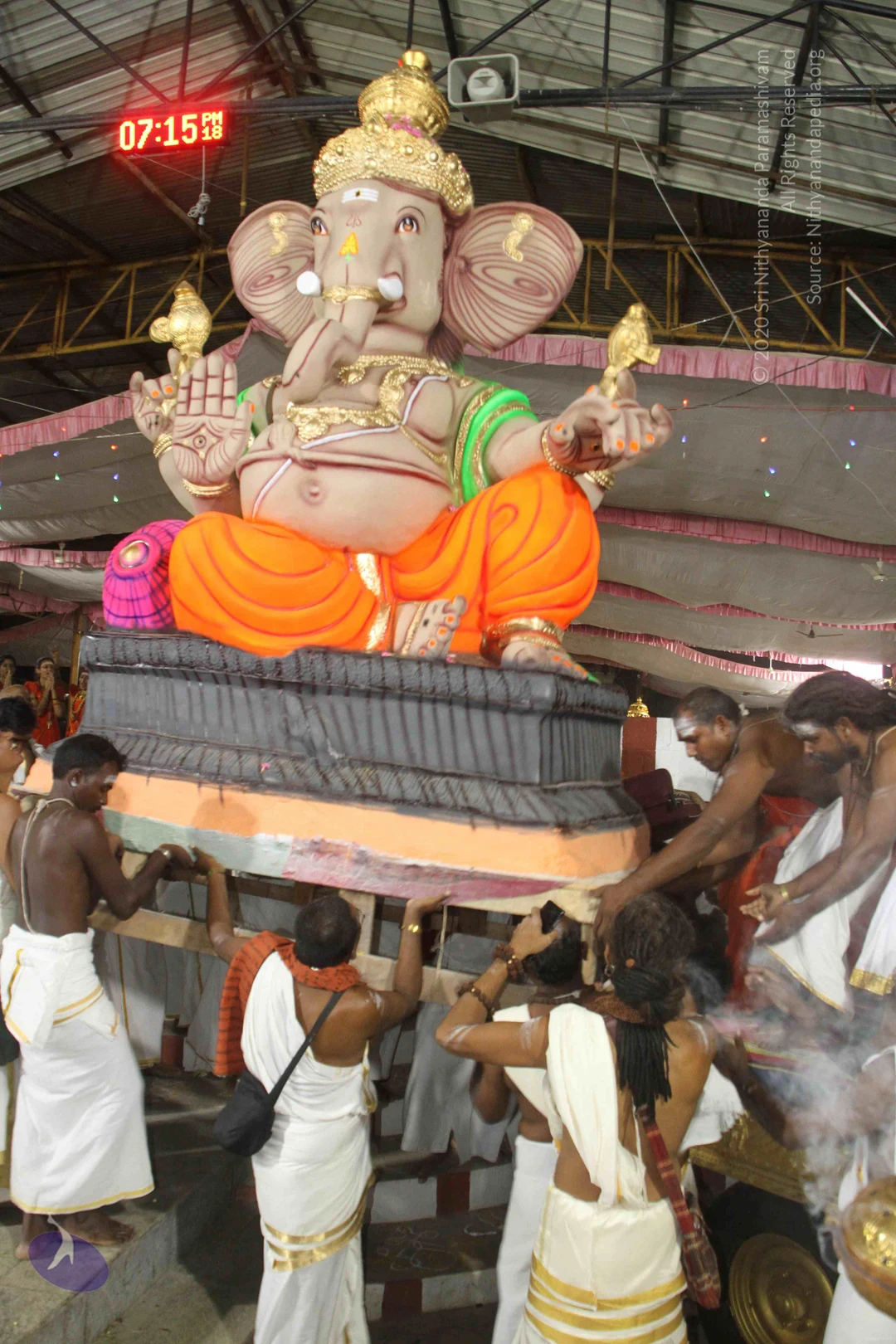
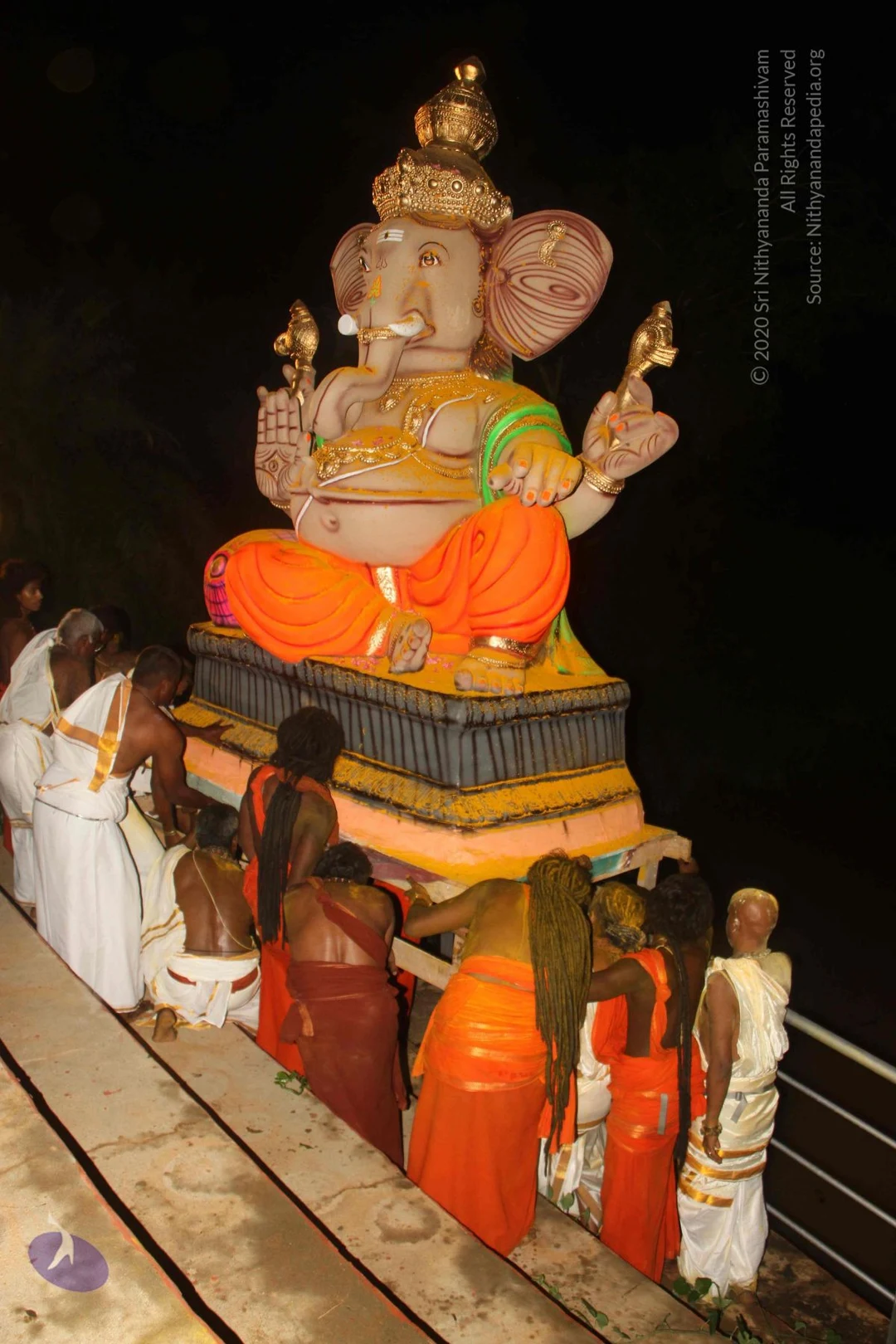
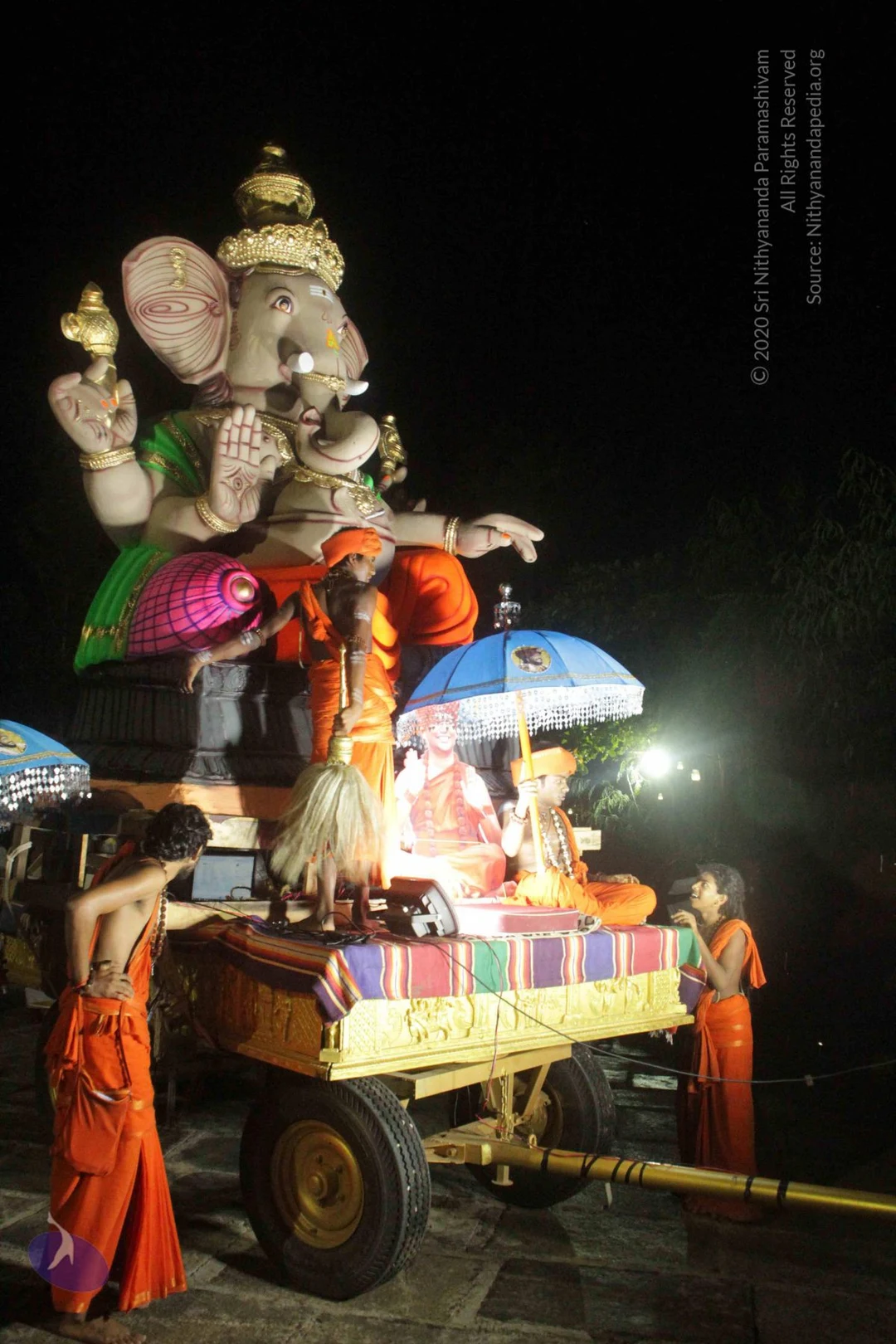
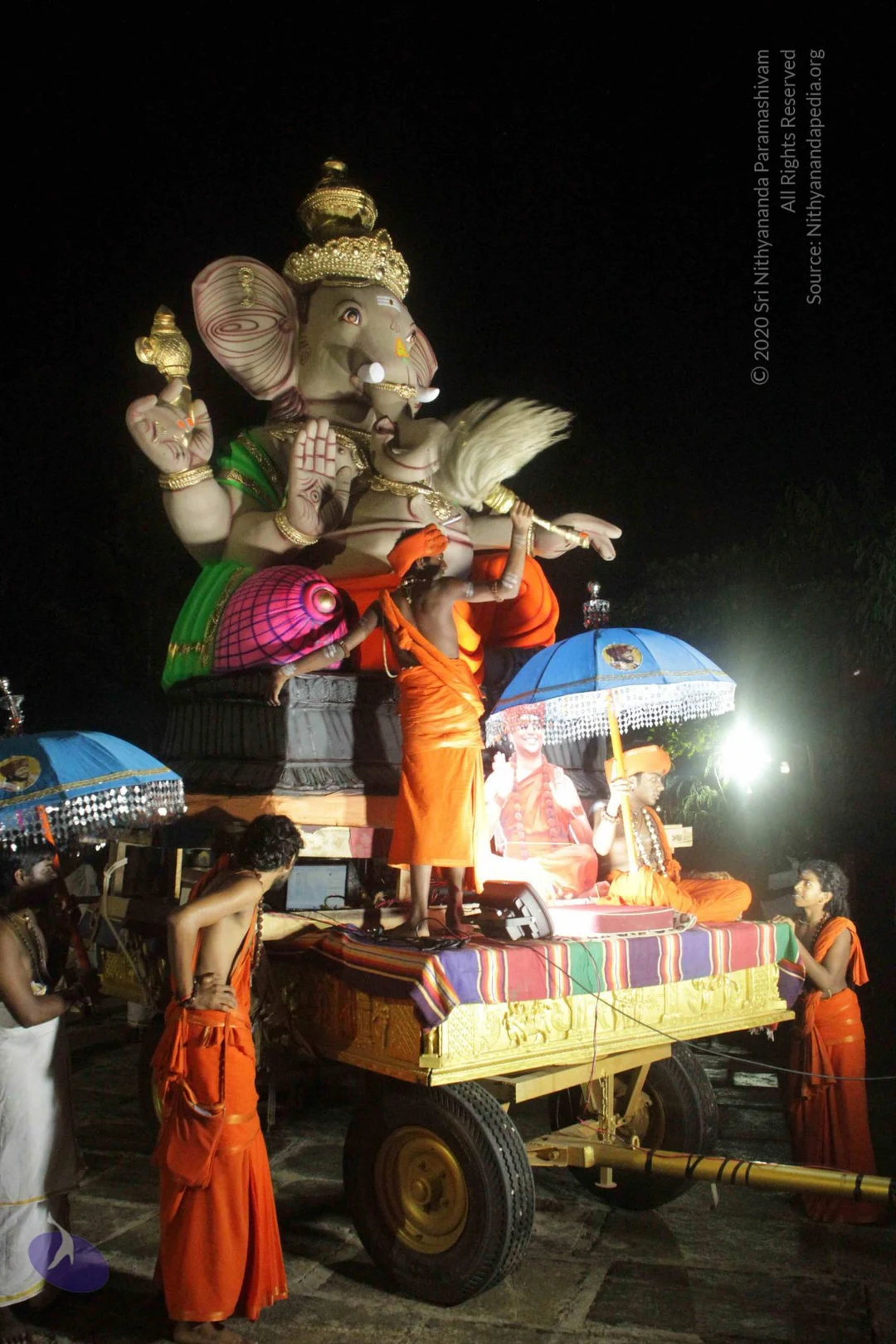
ganesh-visarjan-temple-visit

Photos Of The Day:

Pada-Puja

Satsang

Sadashiva-Calls-Session

Ganesh-Visarjan-Temple-Visit

Link to Facebook Page

https://www.facebook.com/ParamahamsaNithyananda/posts/1495777533843425

Photos from this day

View all 916 photos

FB-photo-of-the-day

4 photosSource gallery
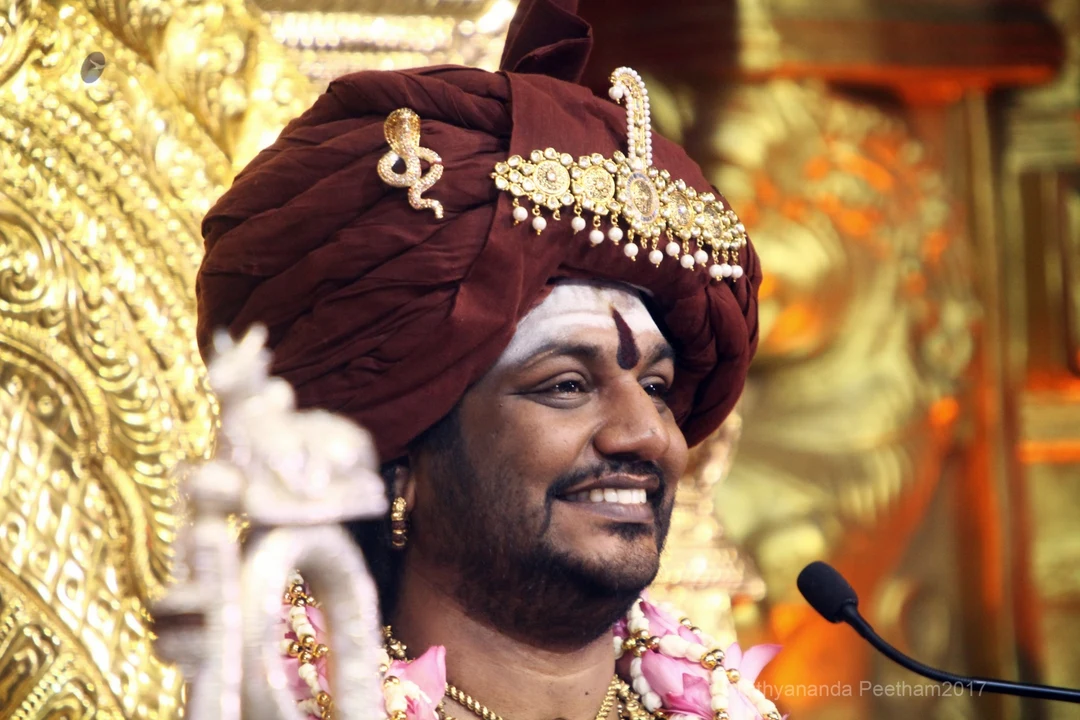
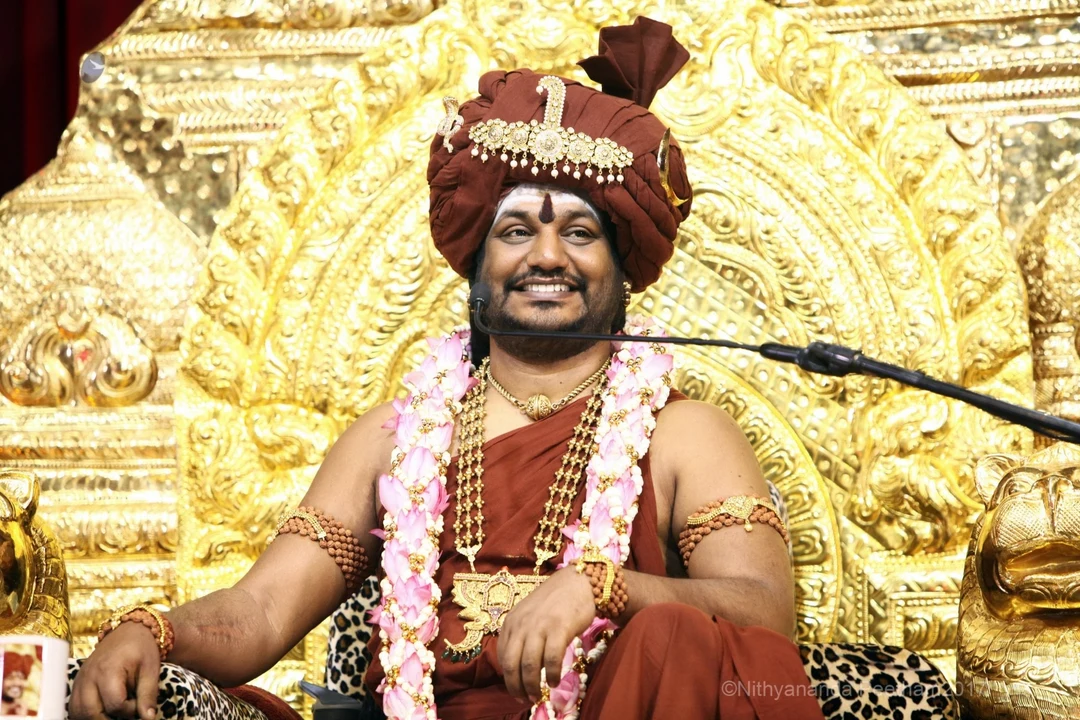
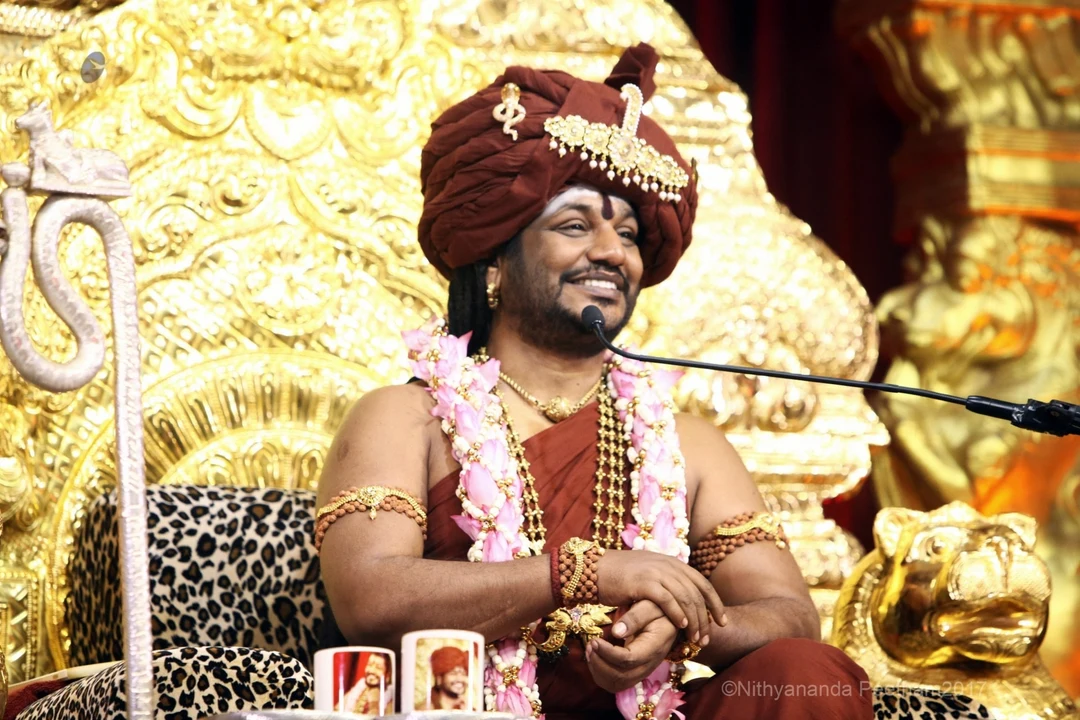
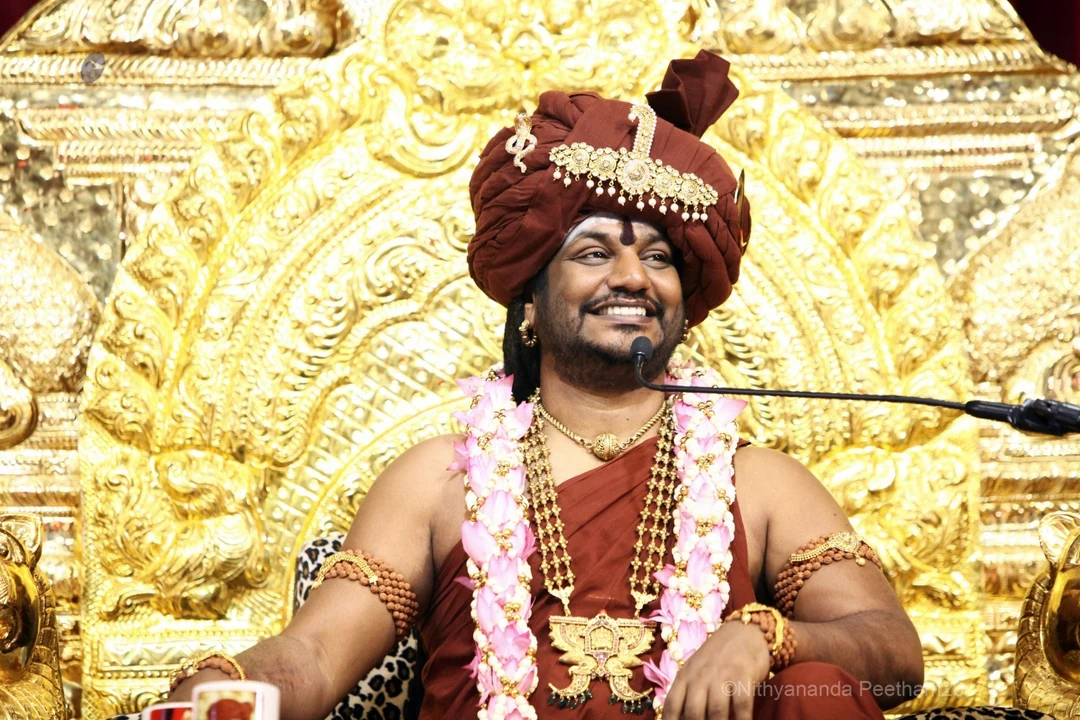
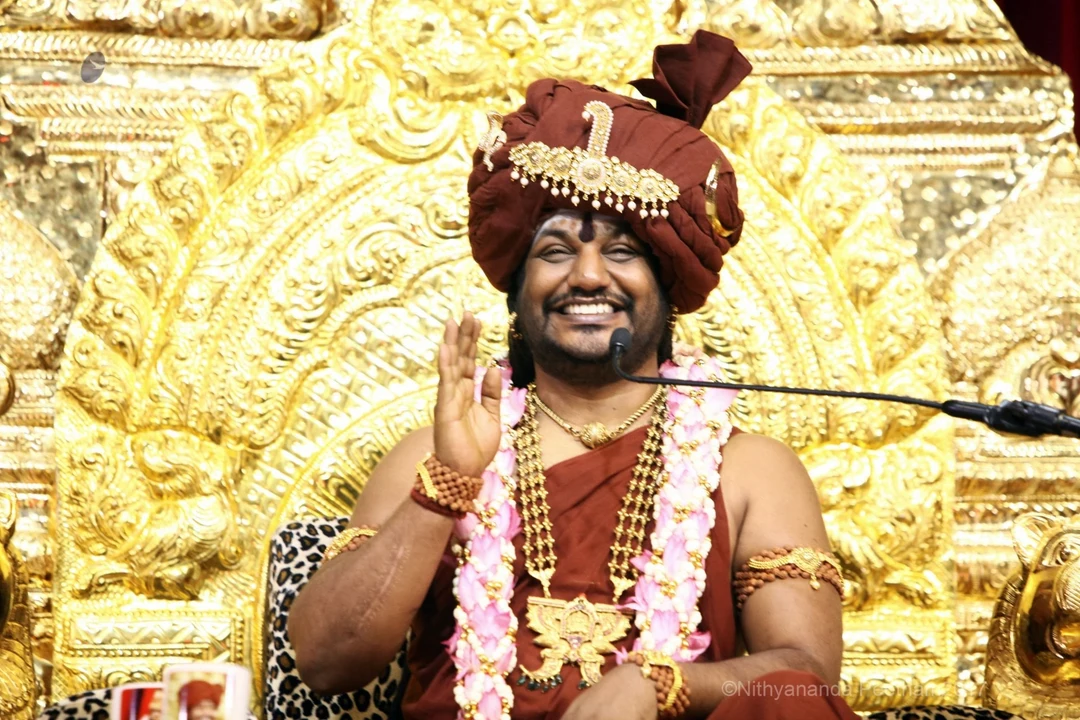
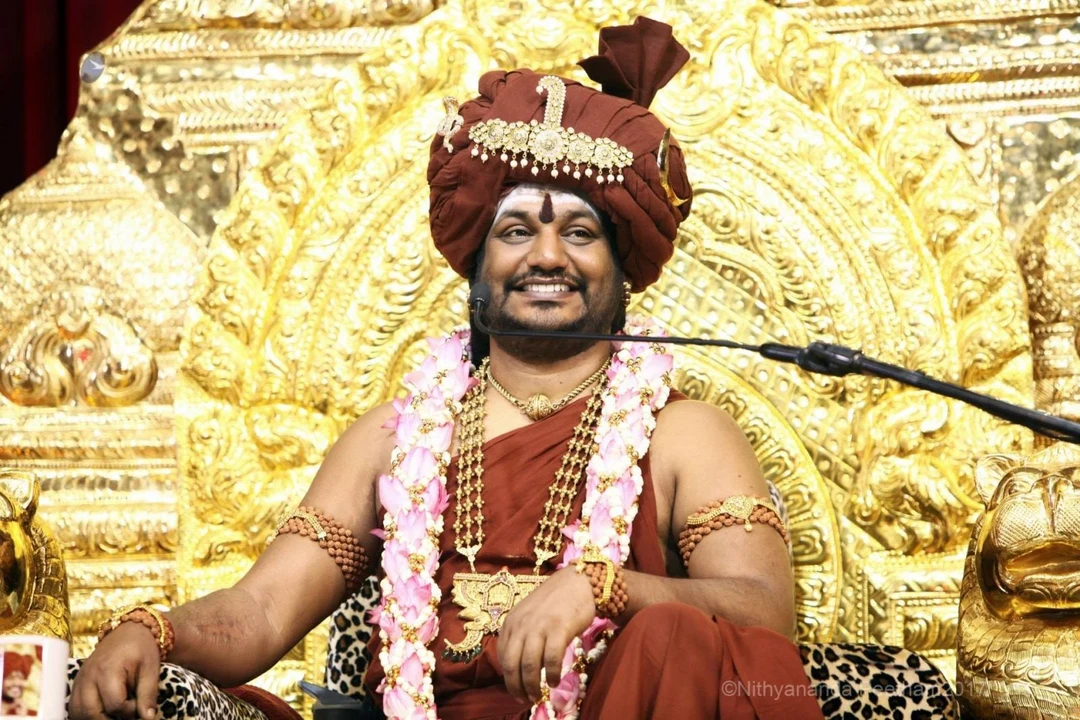
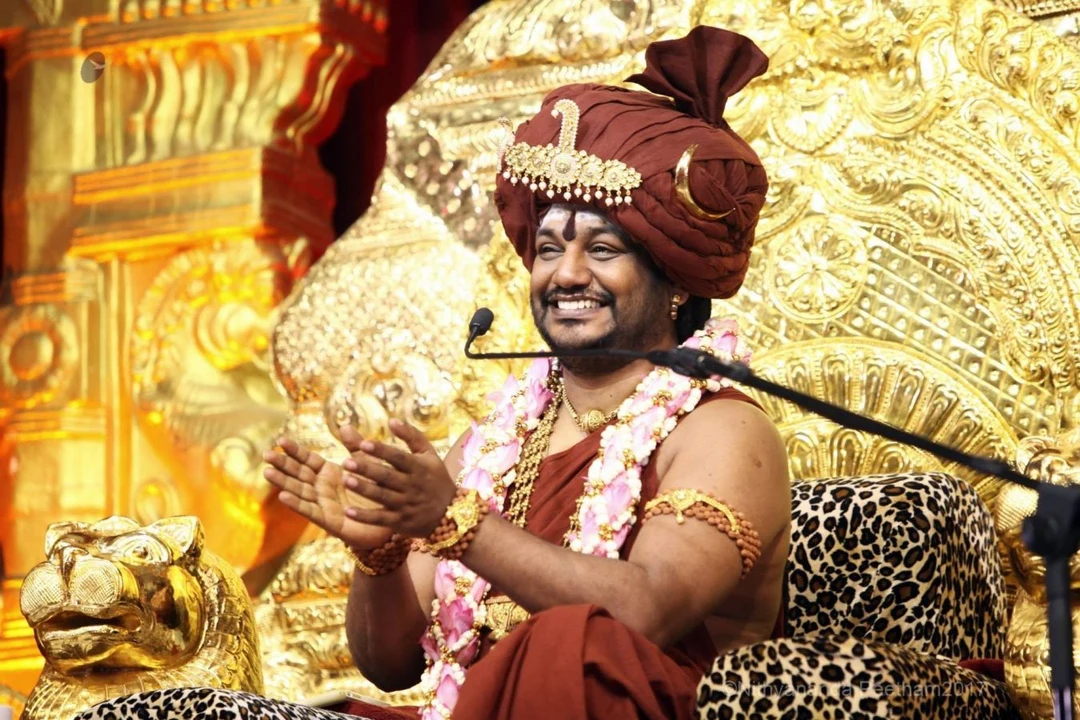
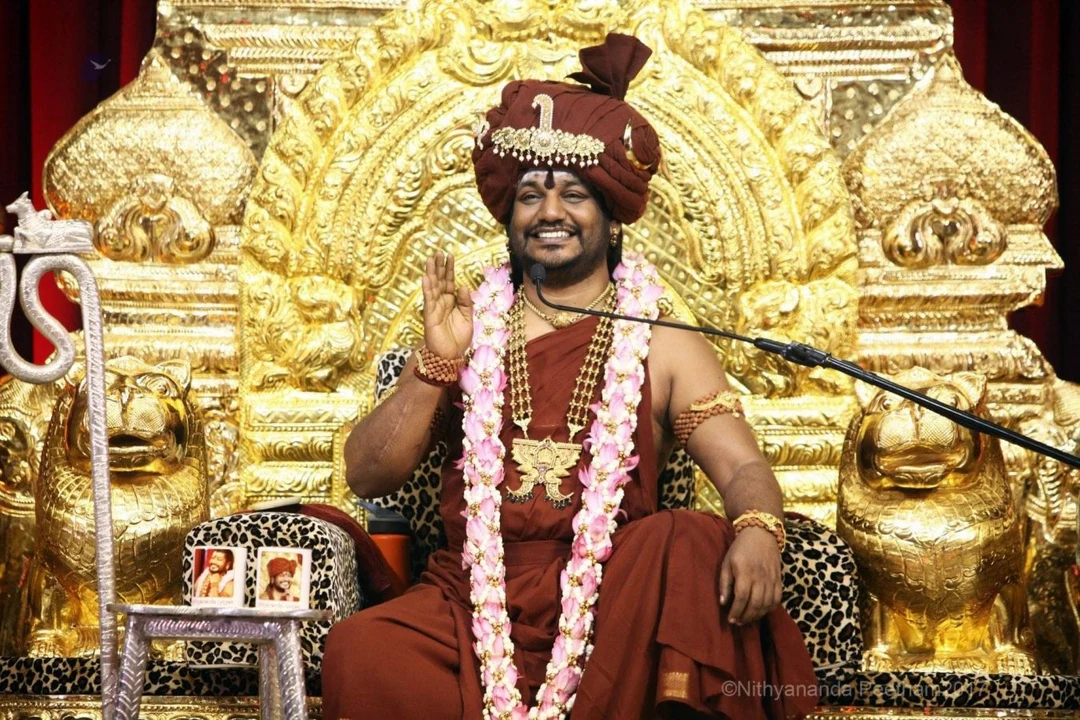
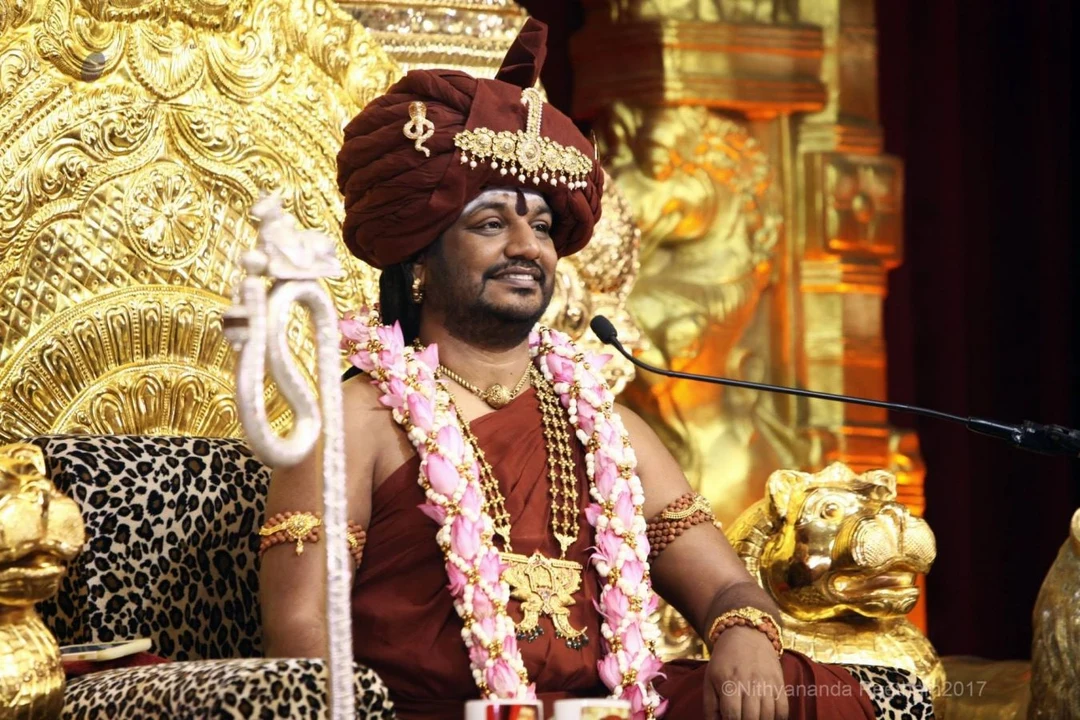
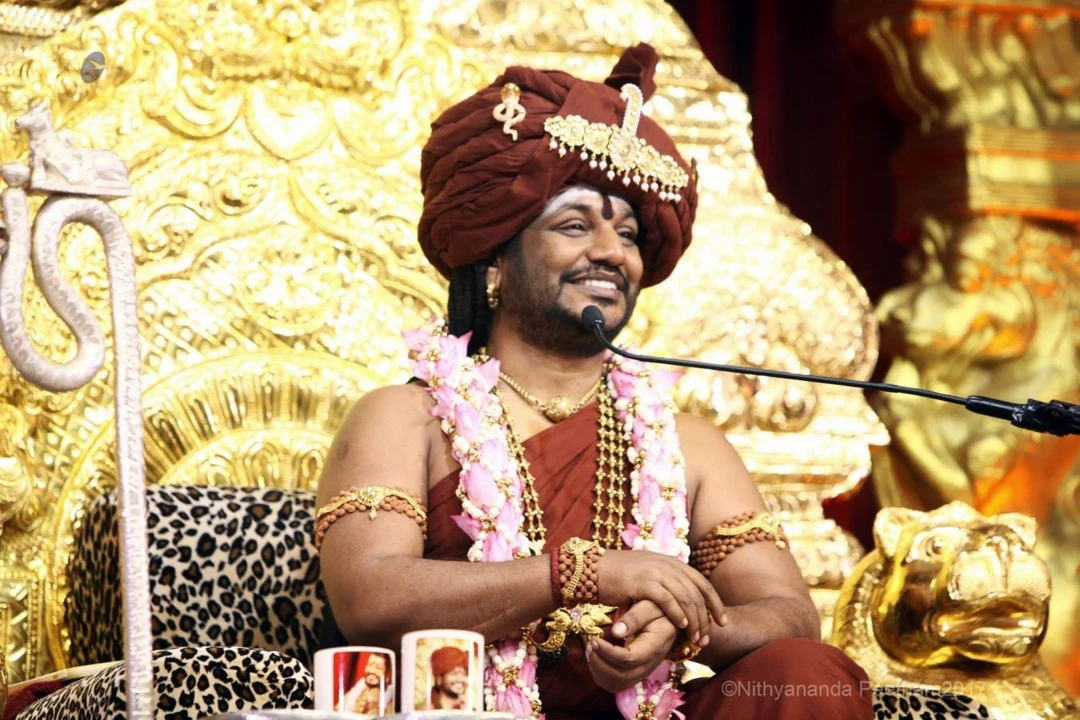
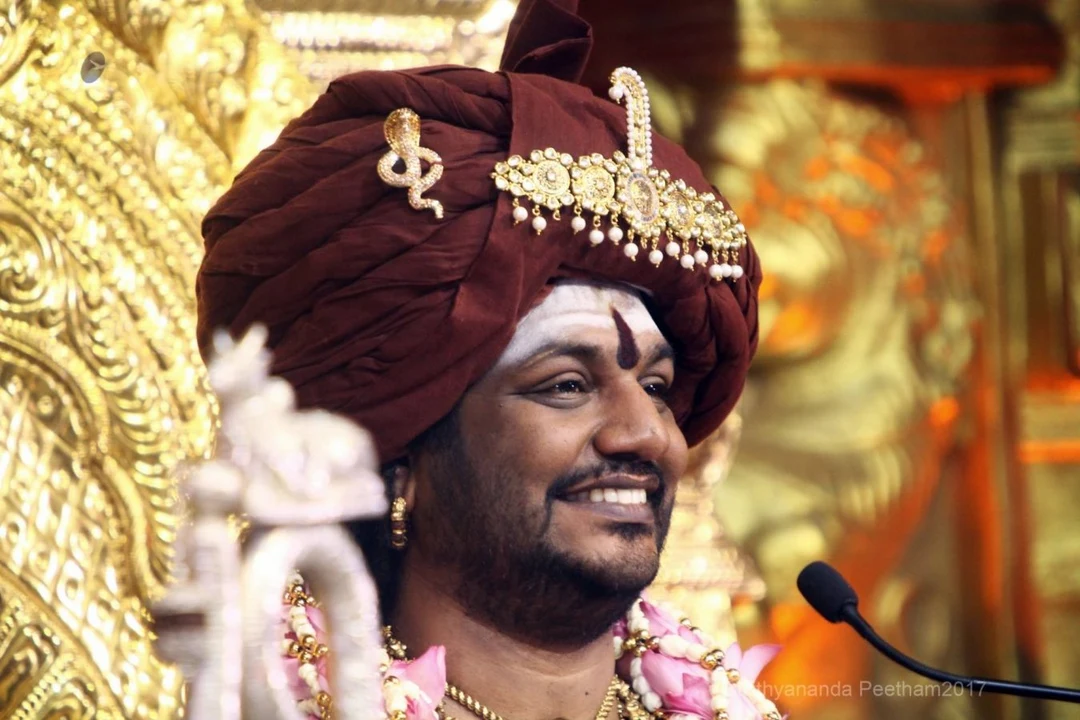
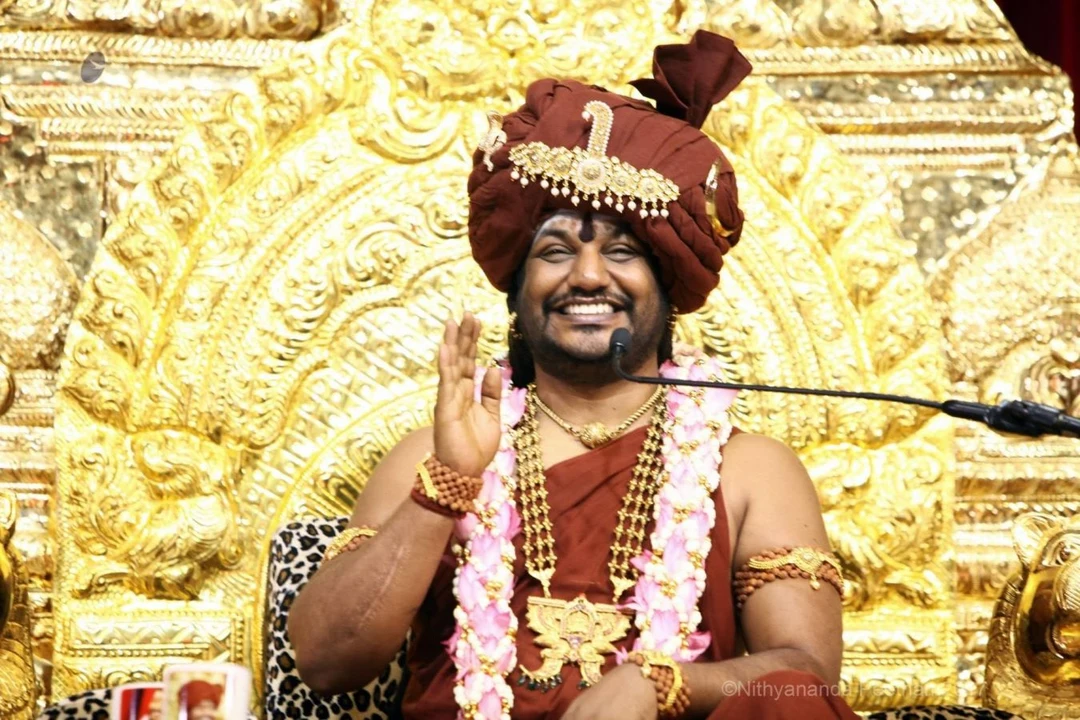
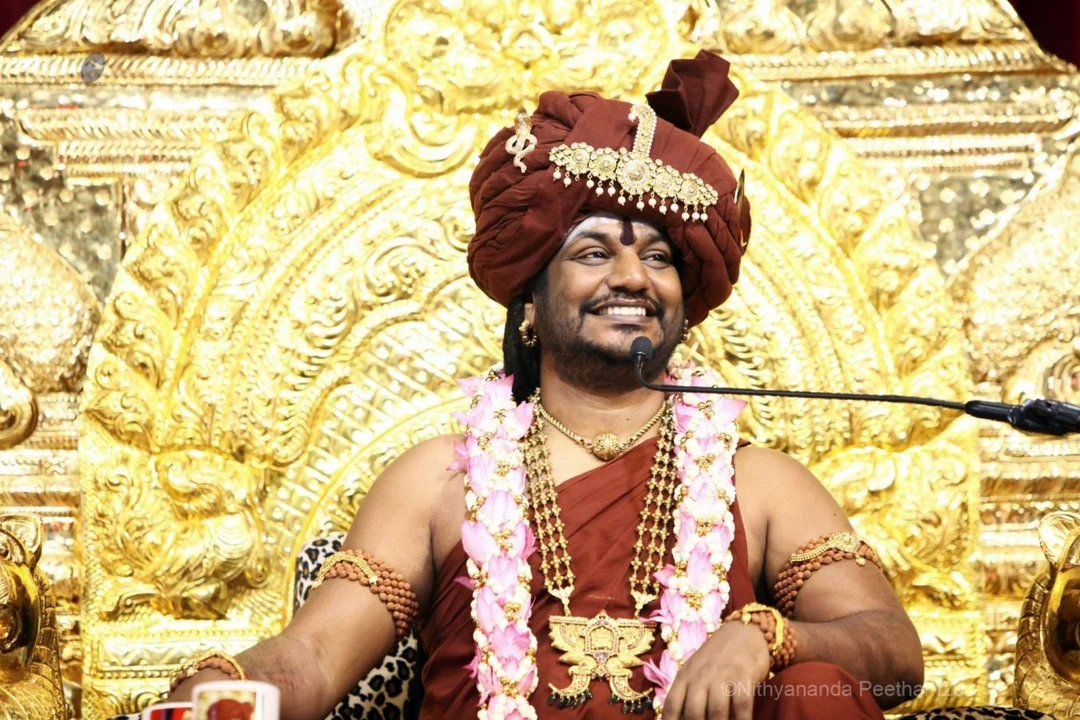
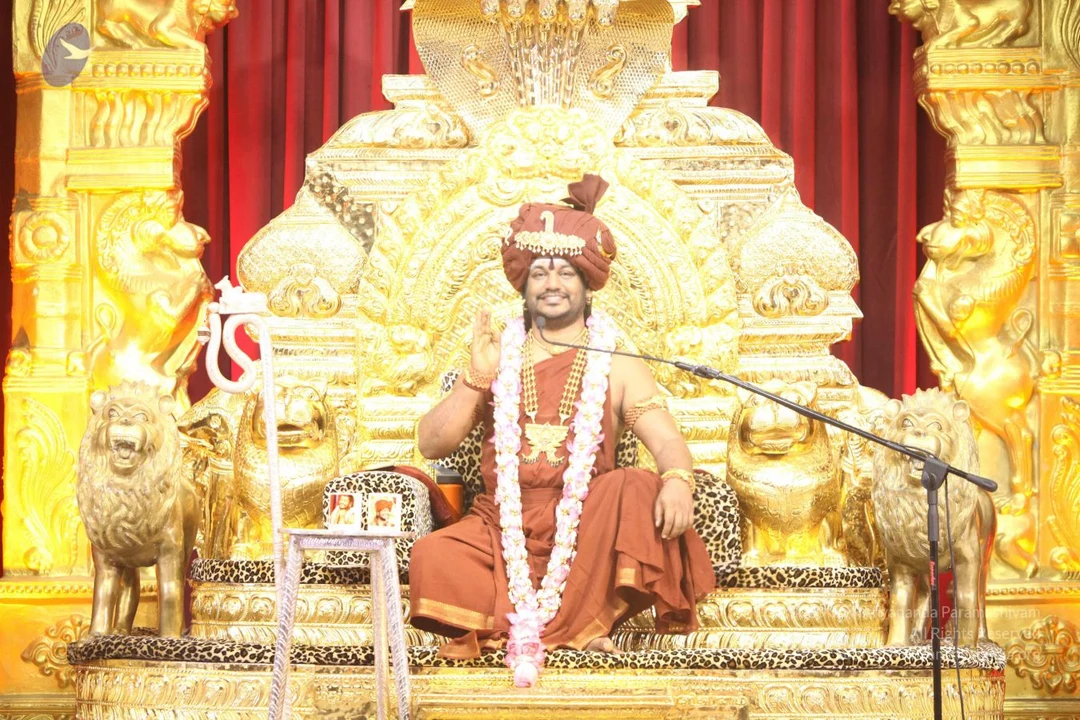
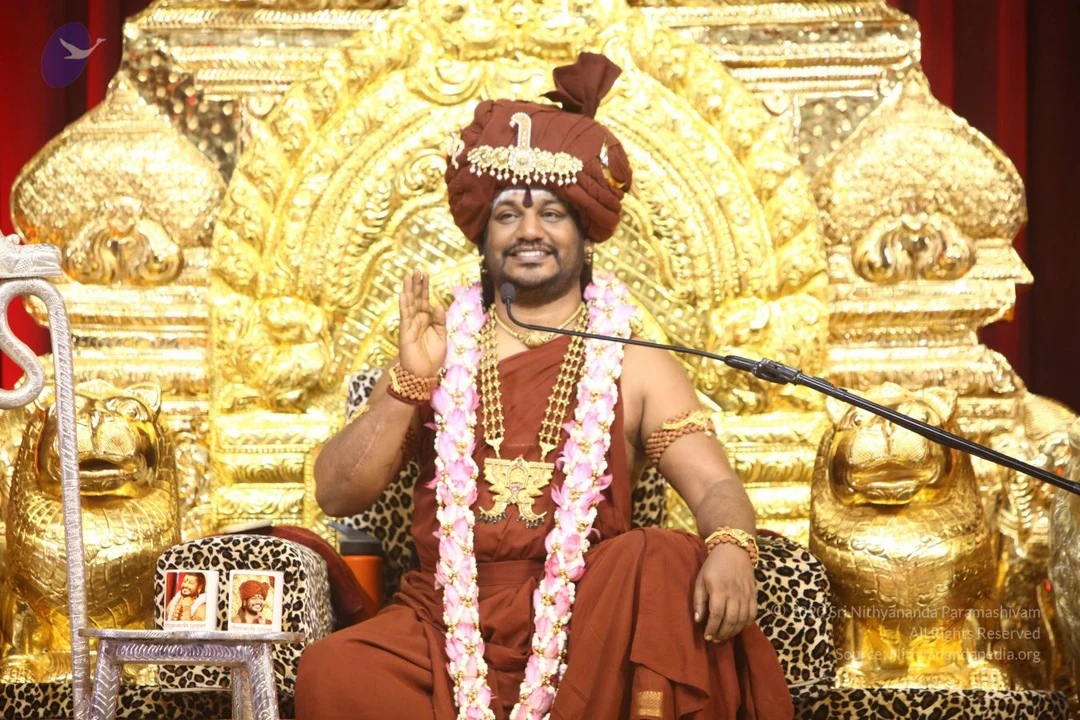
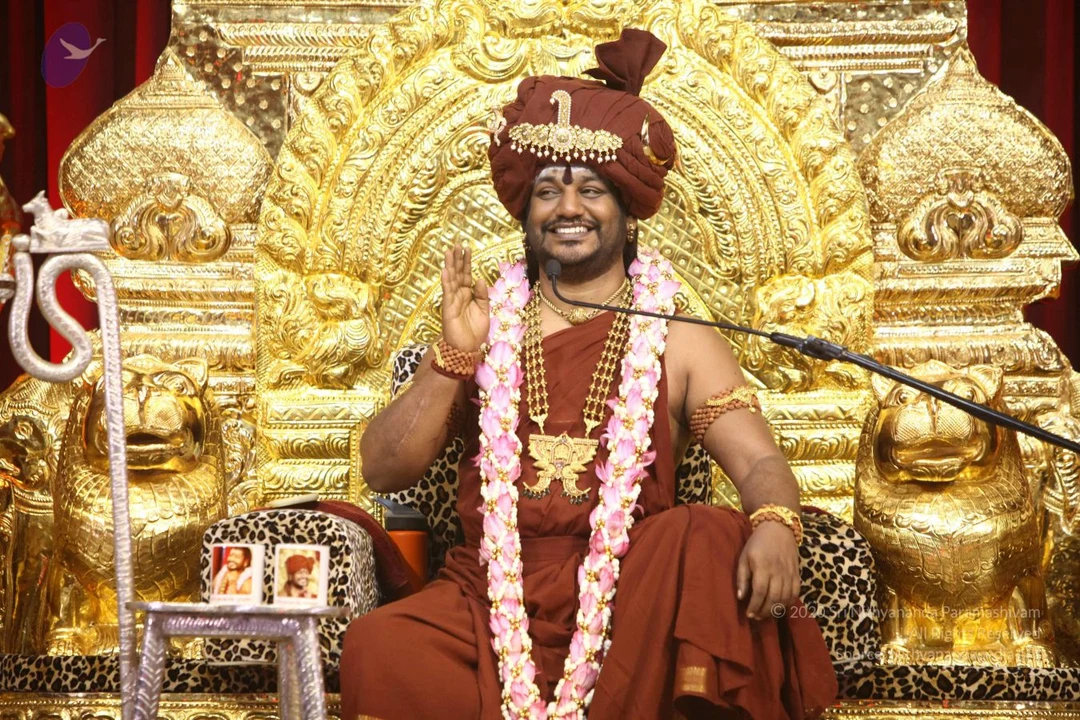
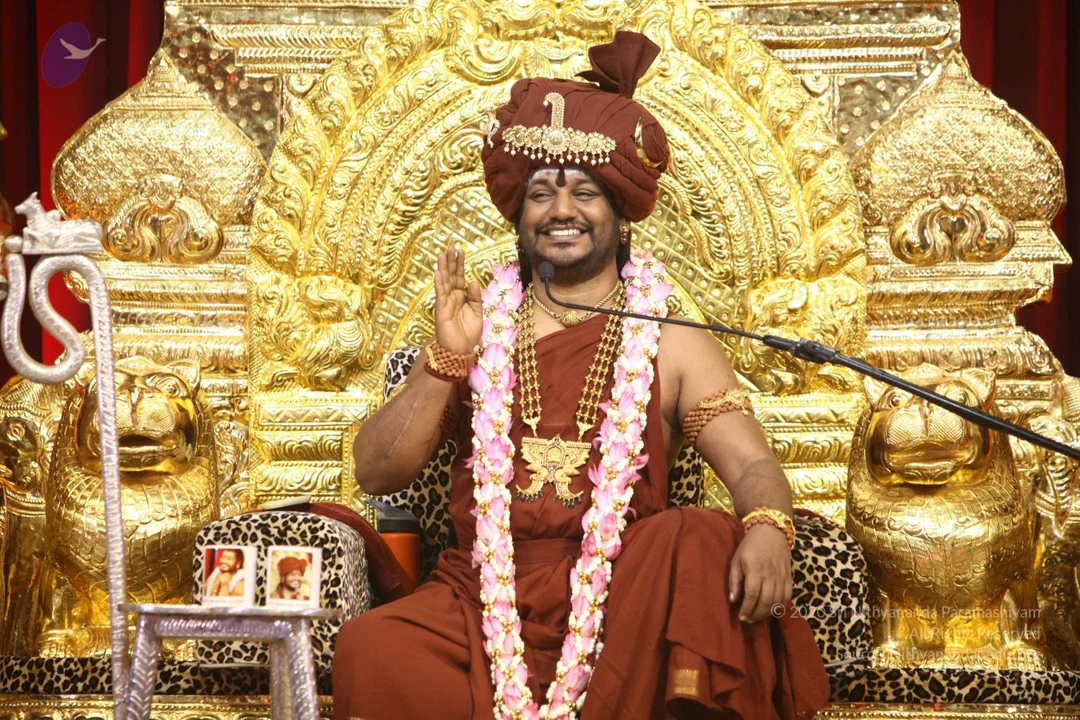
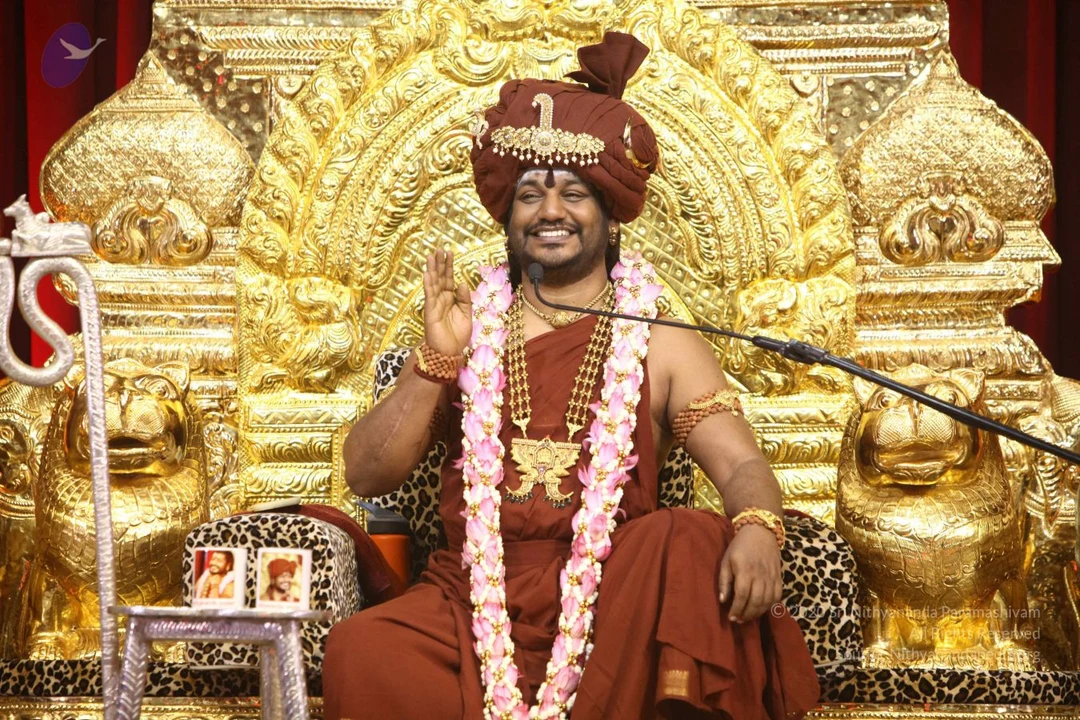
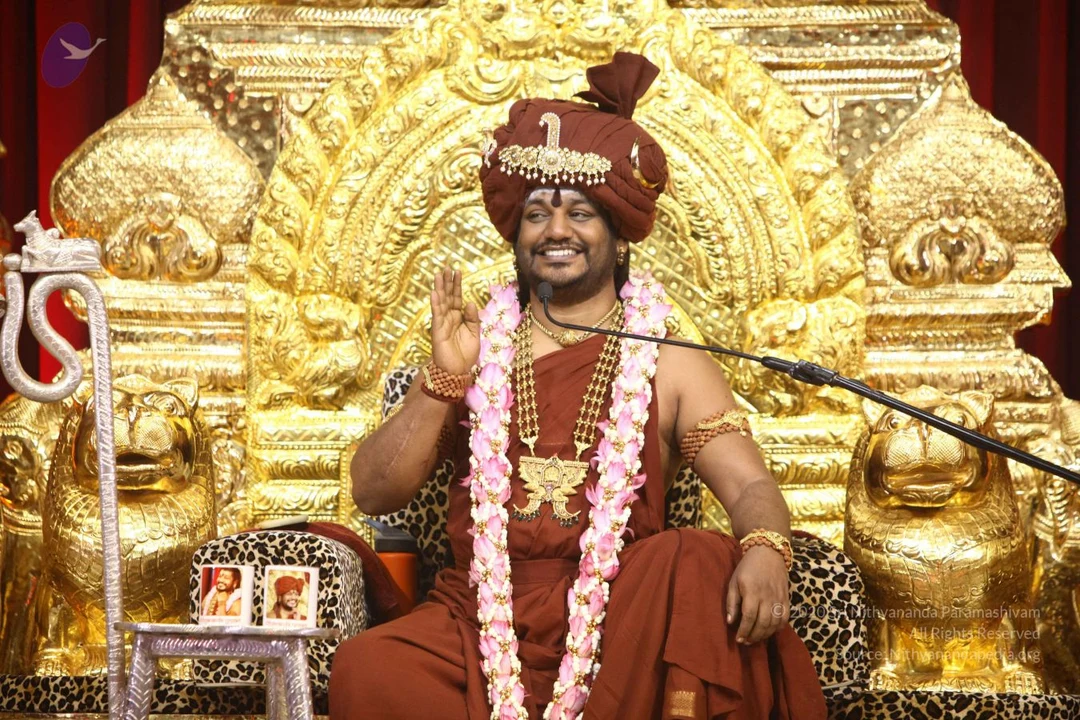
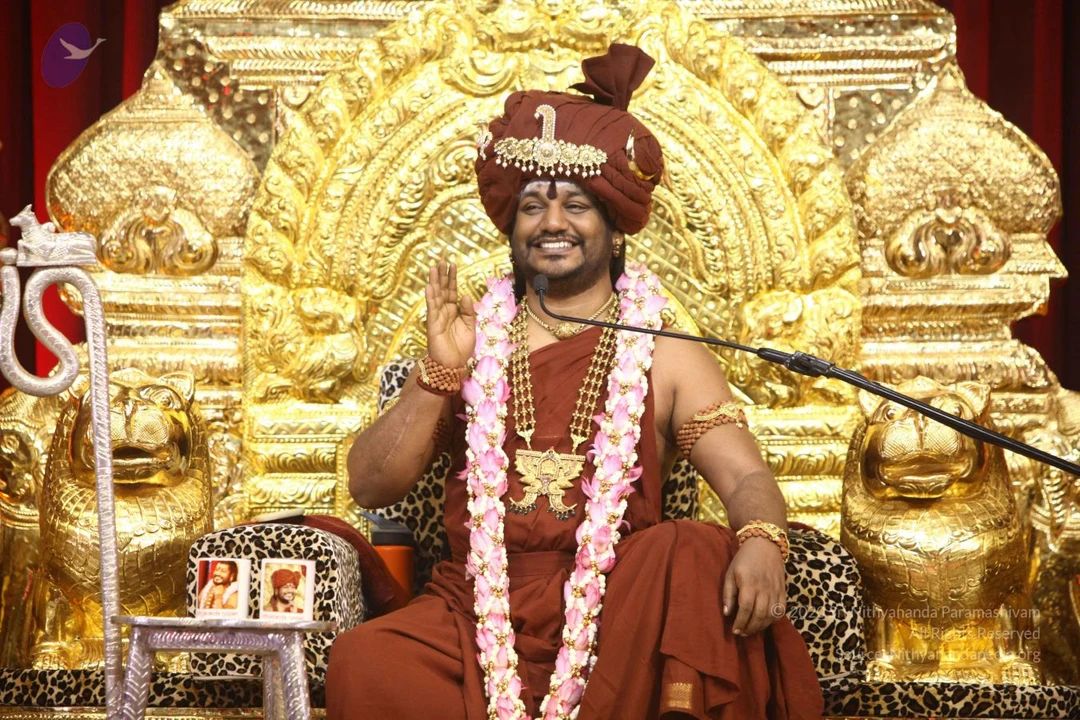
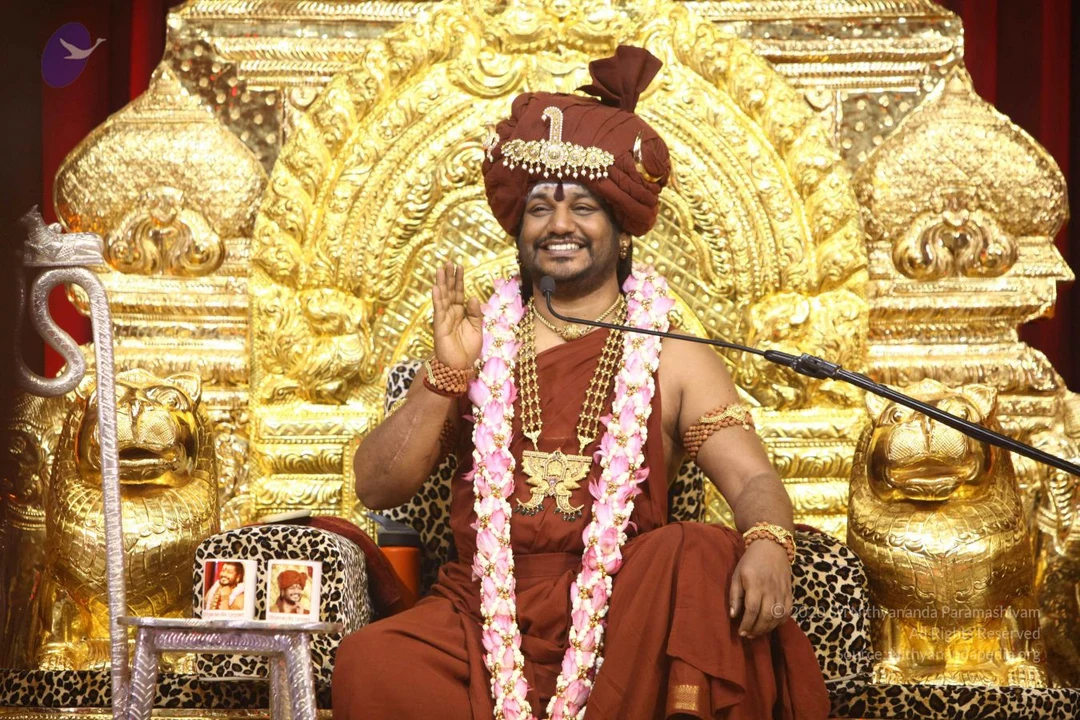
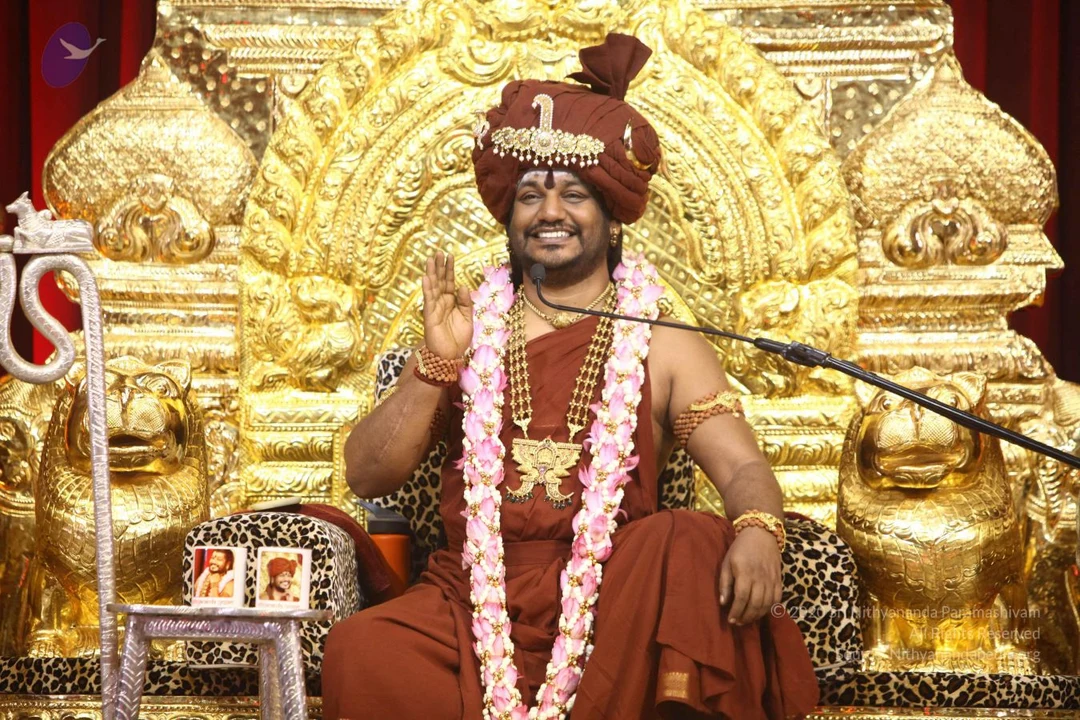
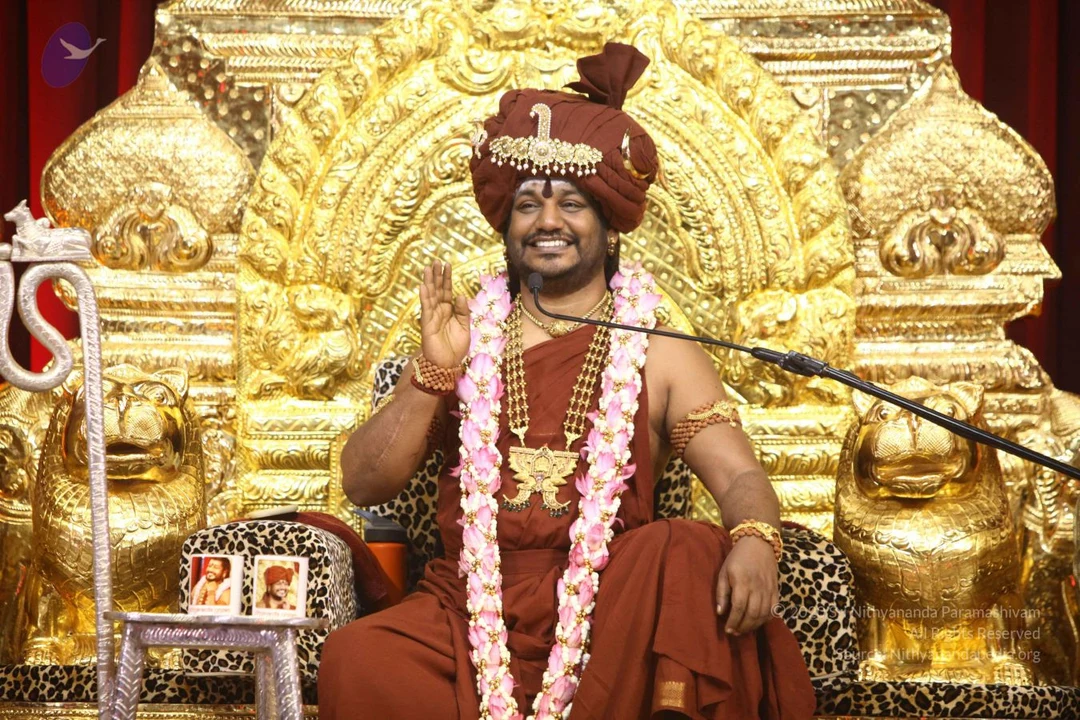
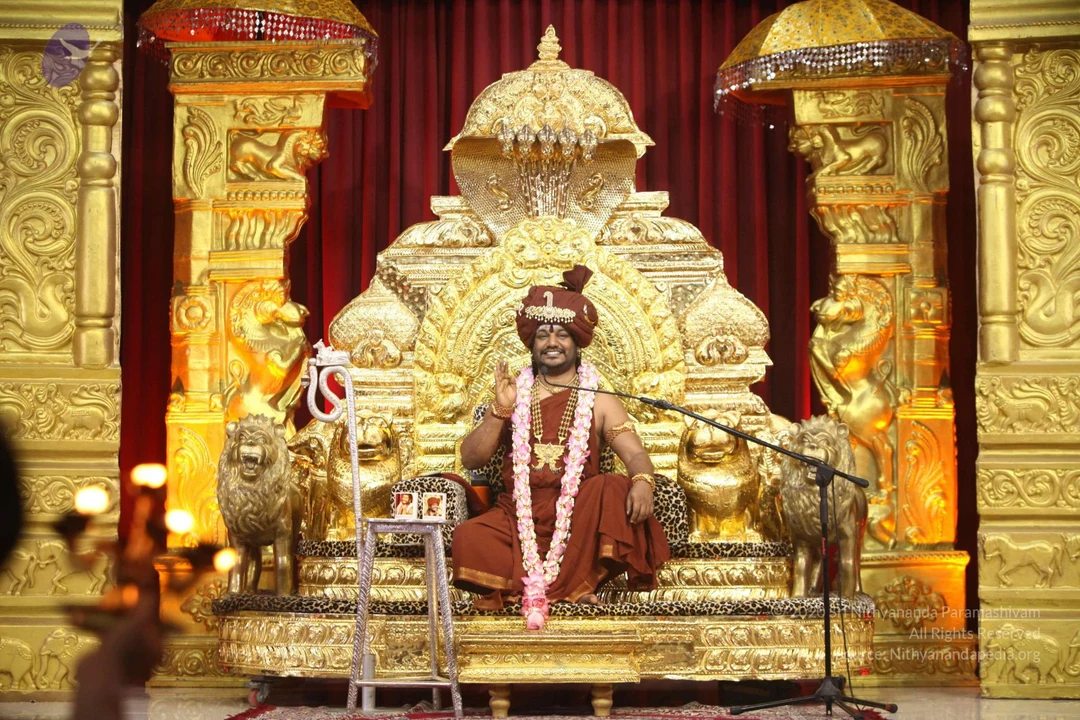
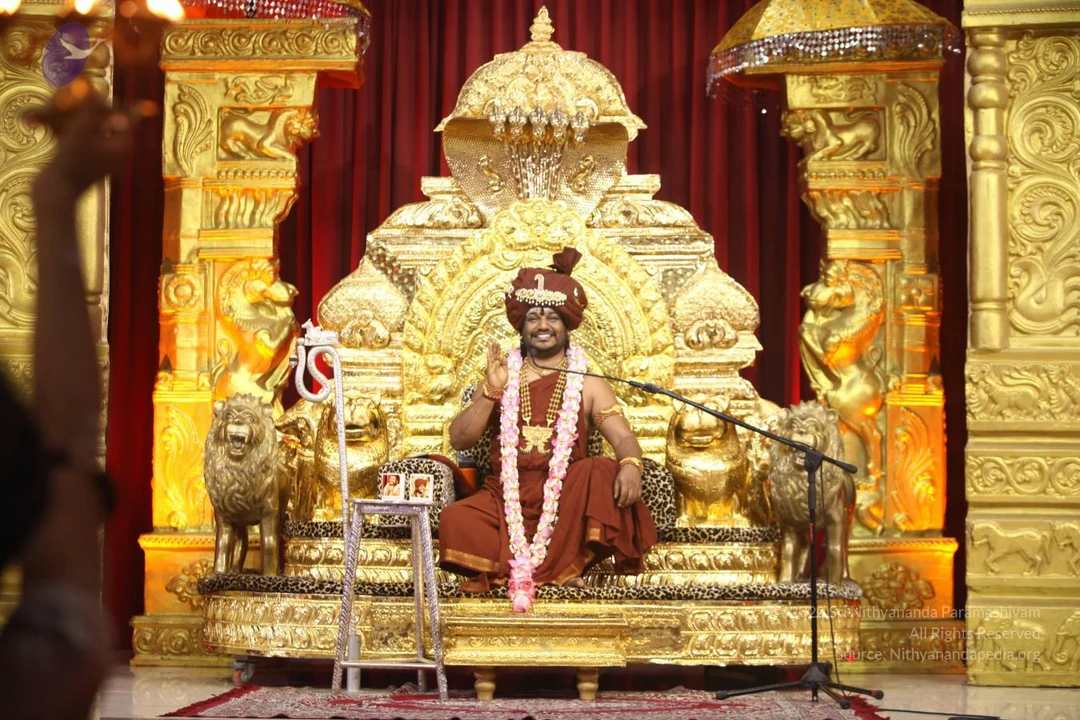
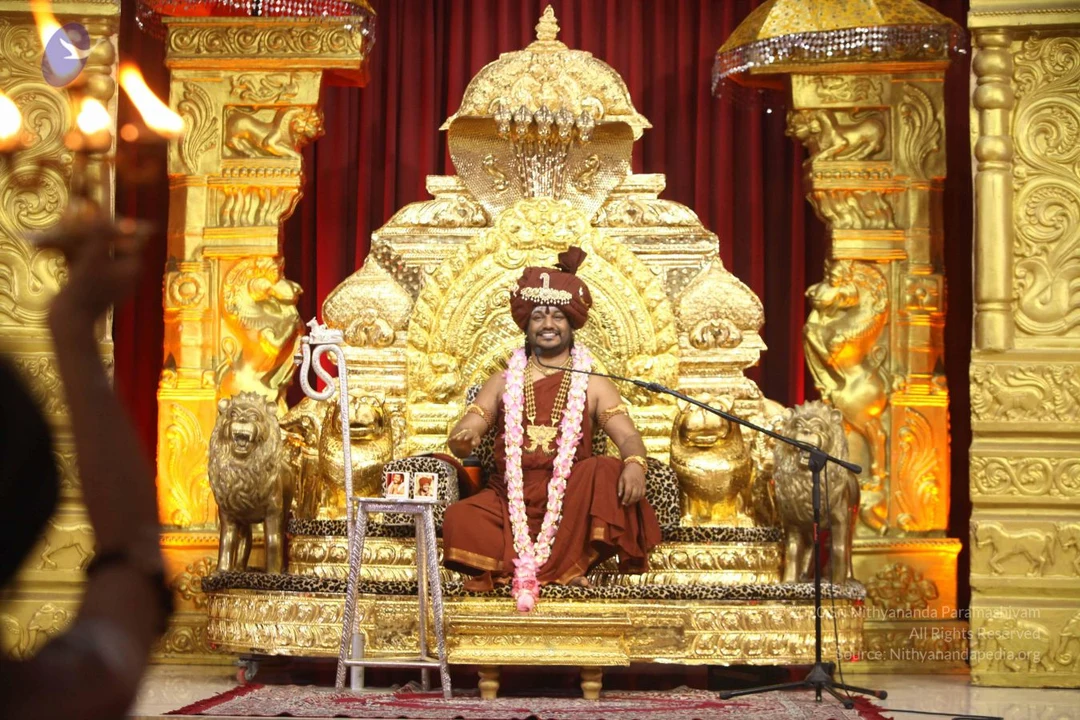
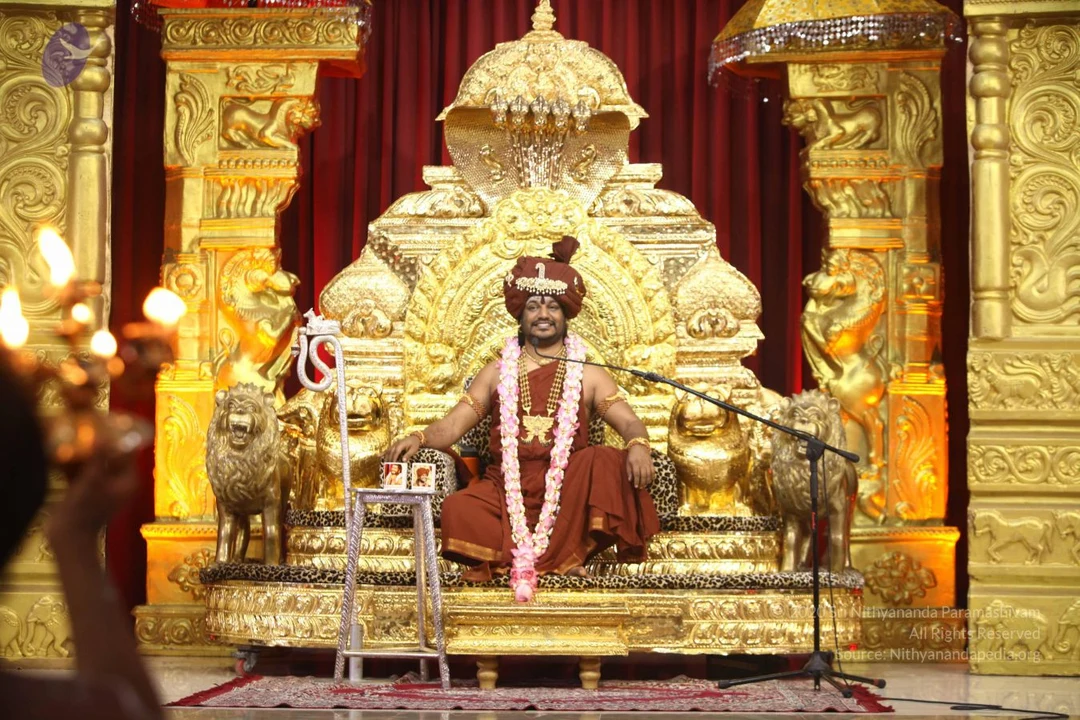
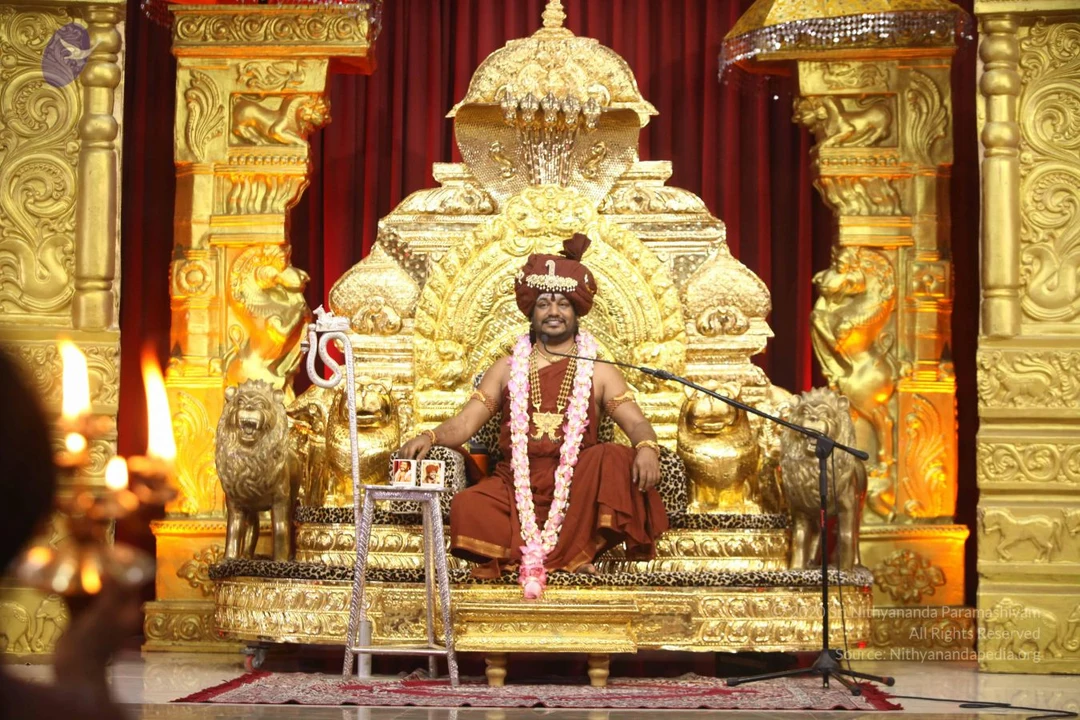
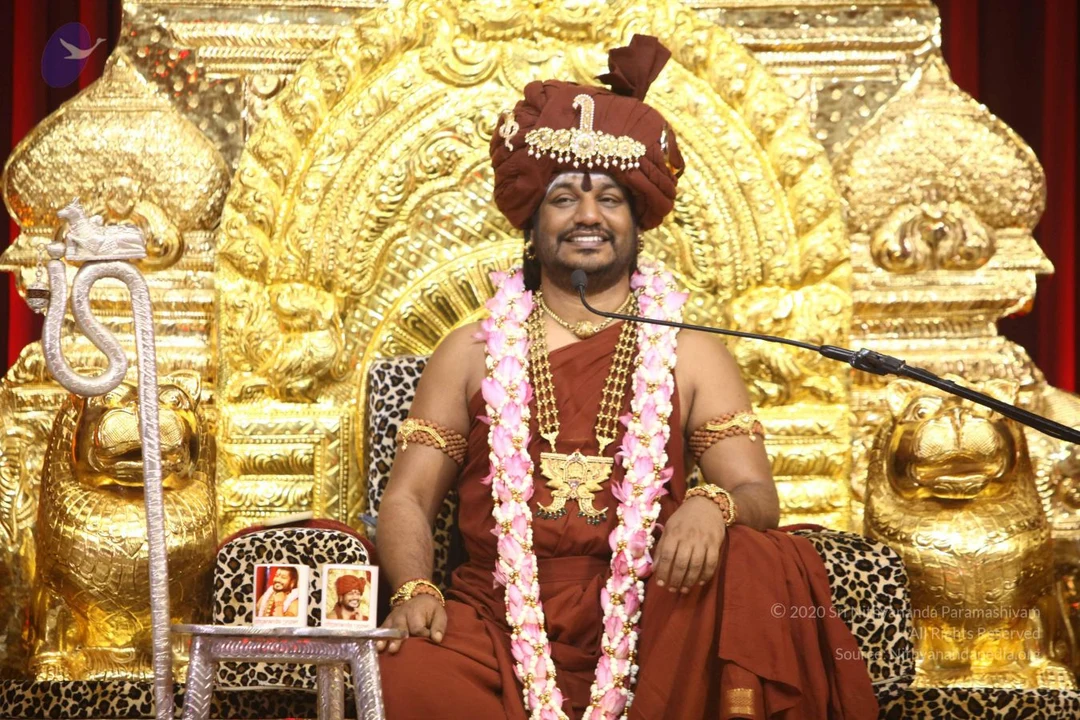
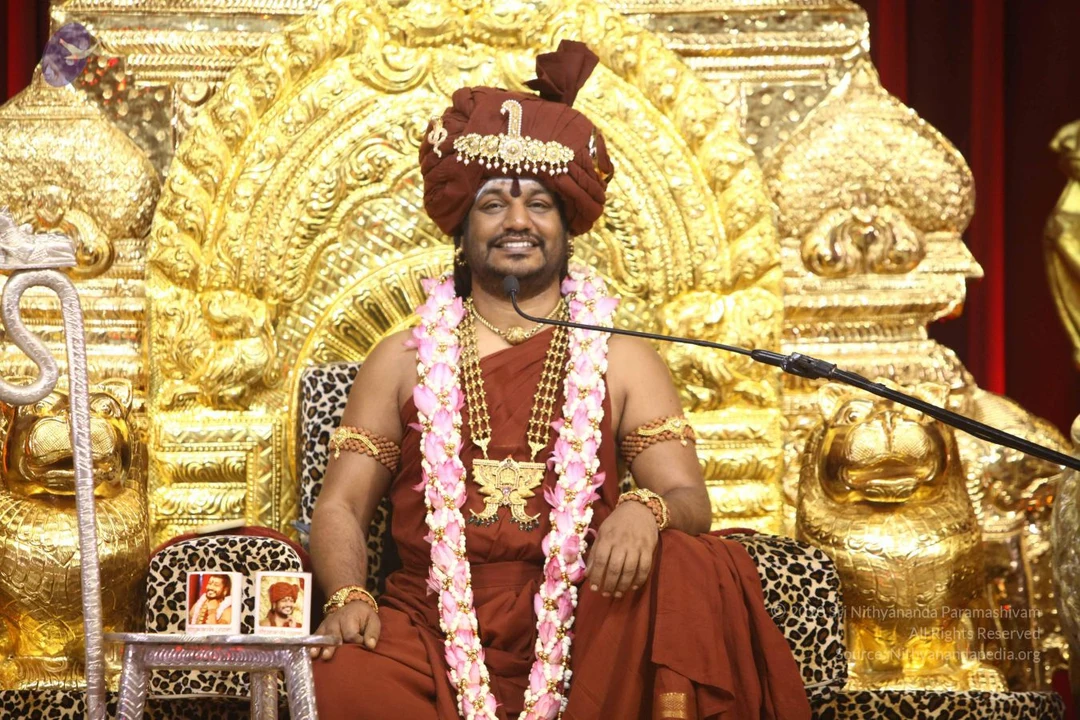
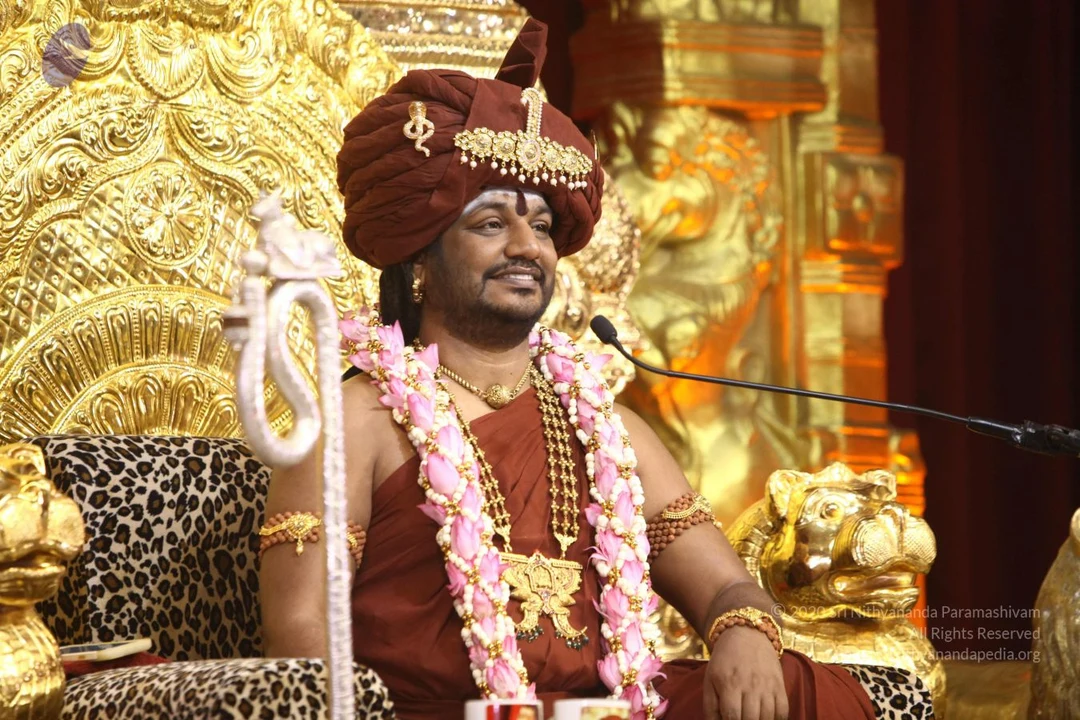
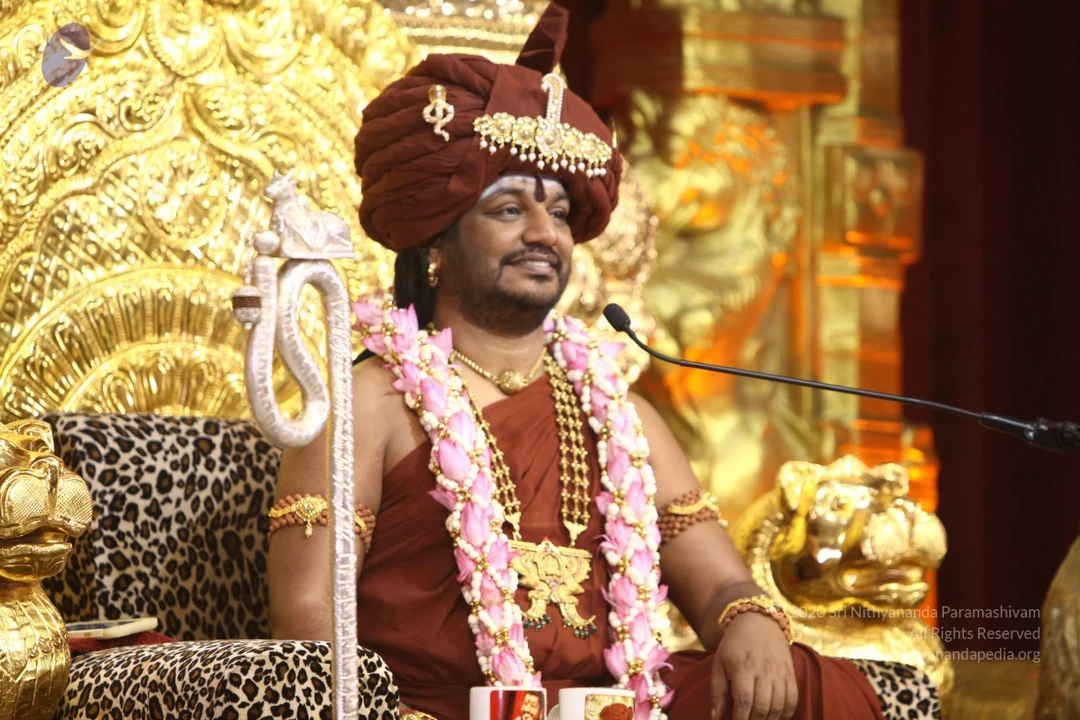
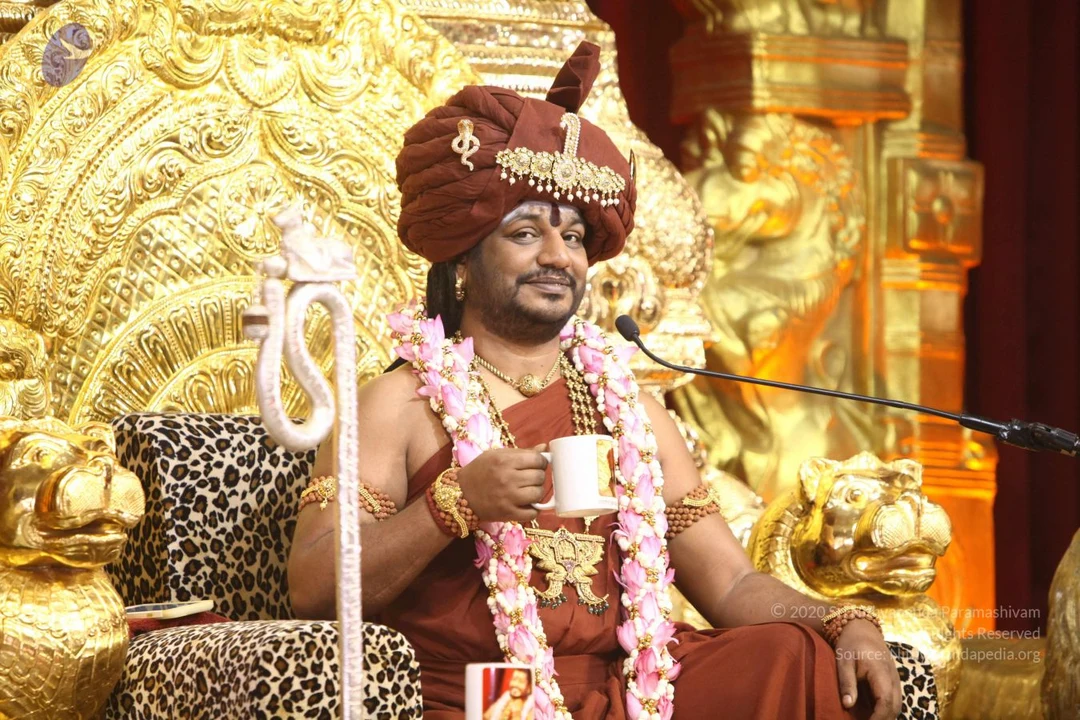
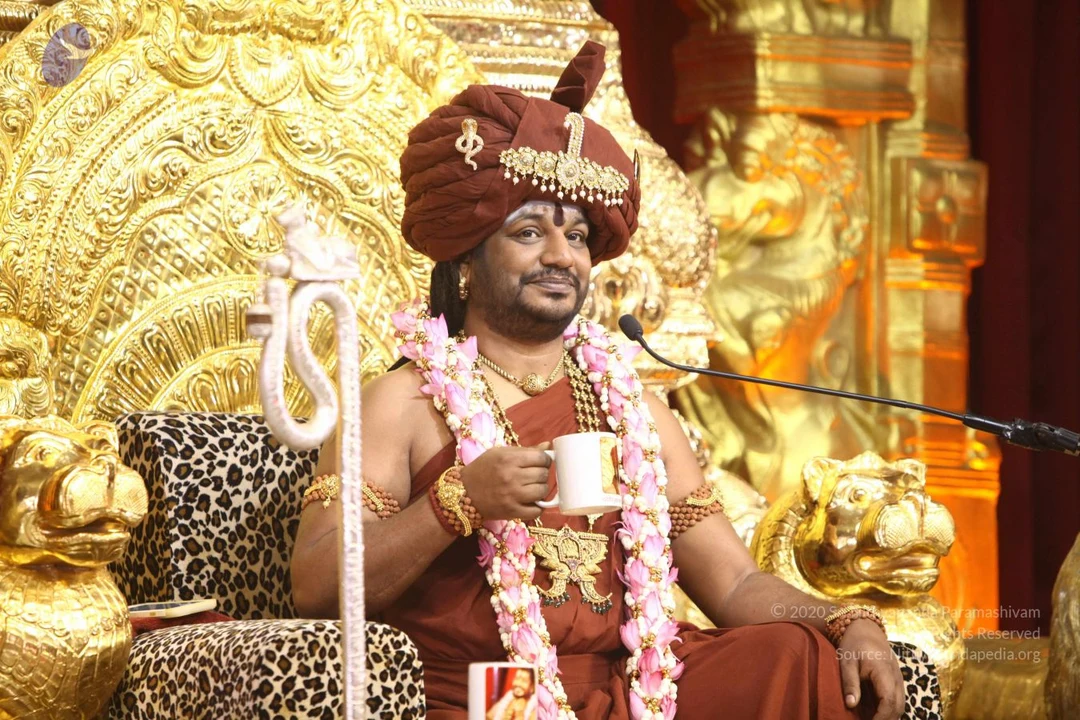
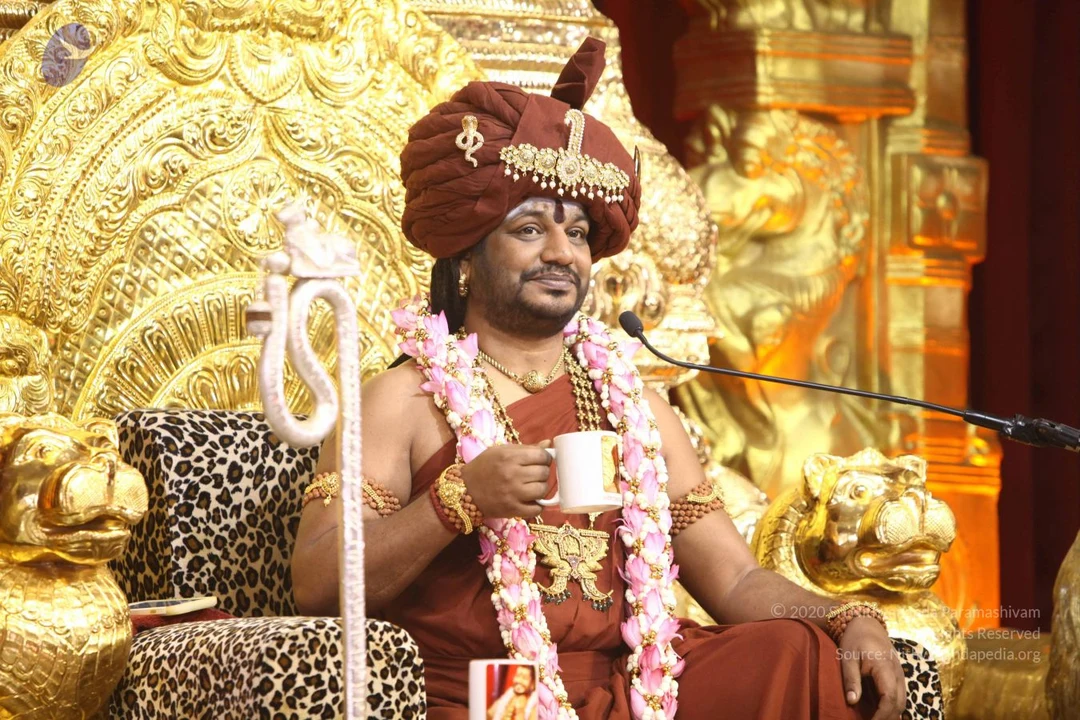
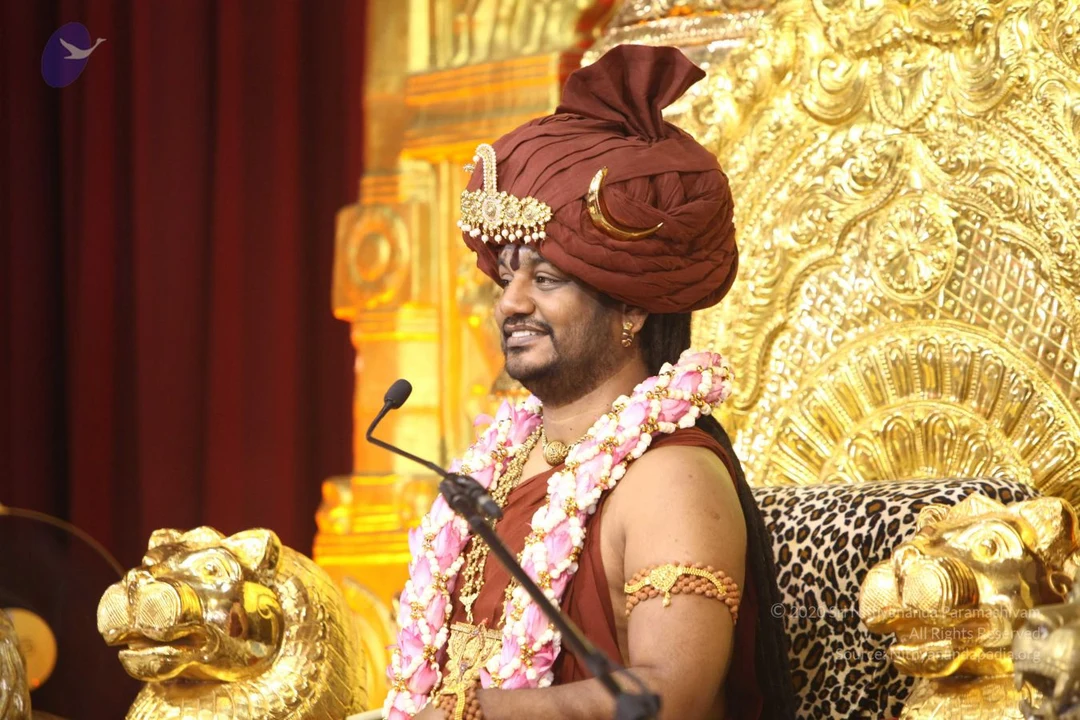
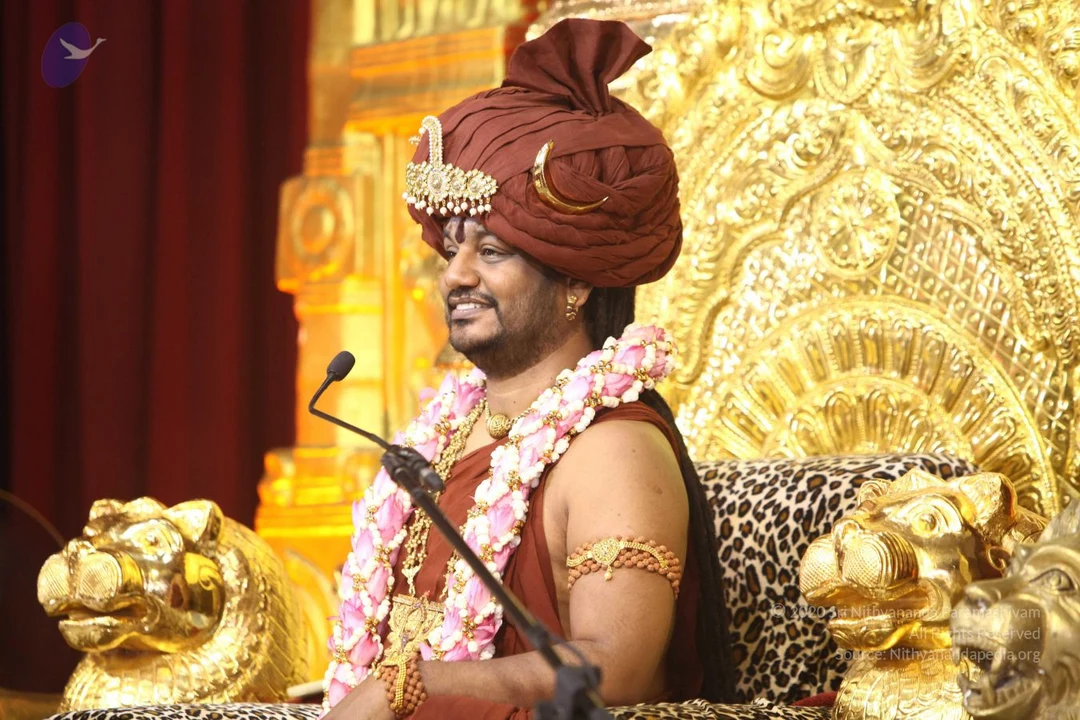
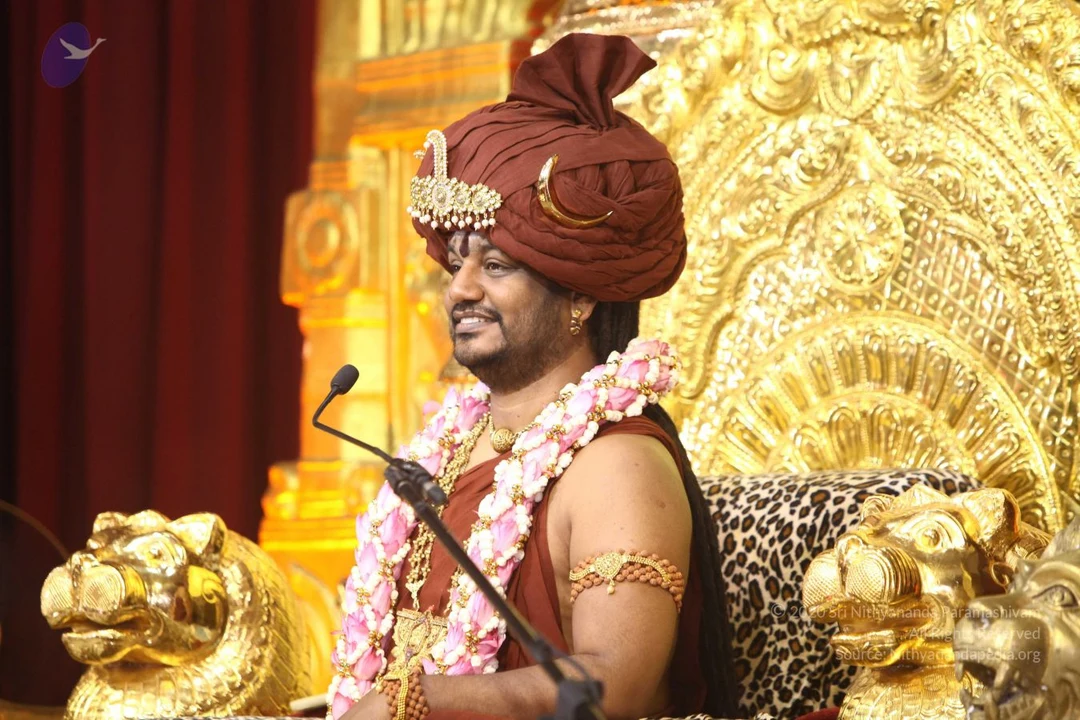
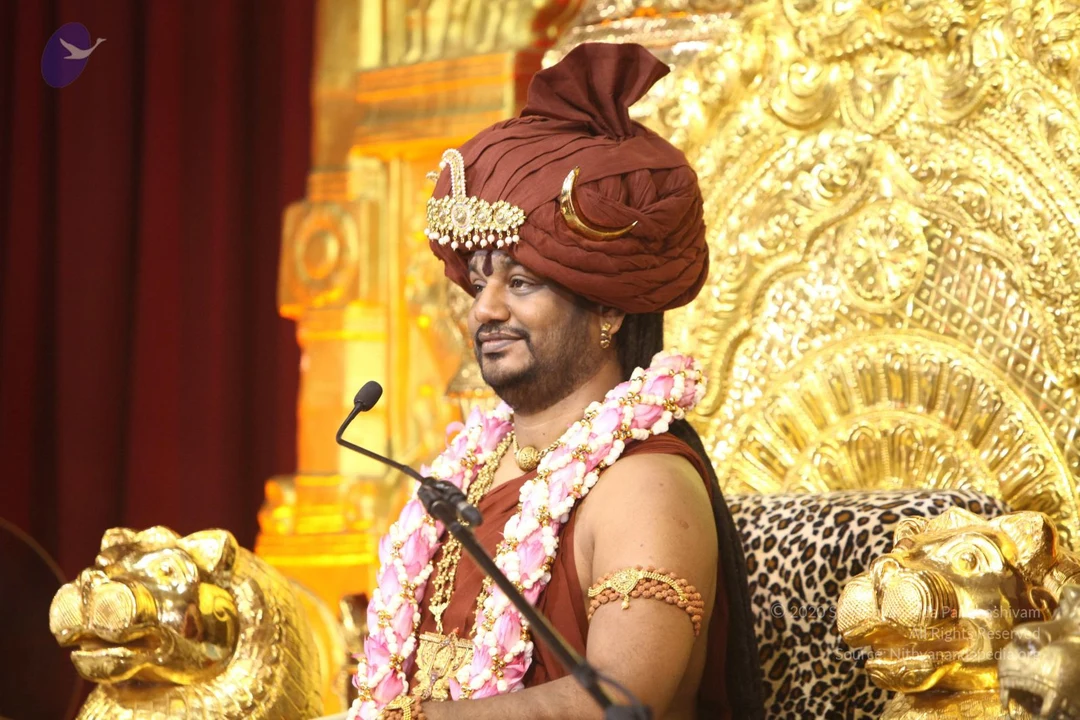
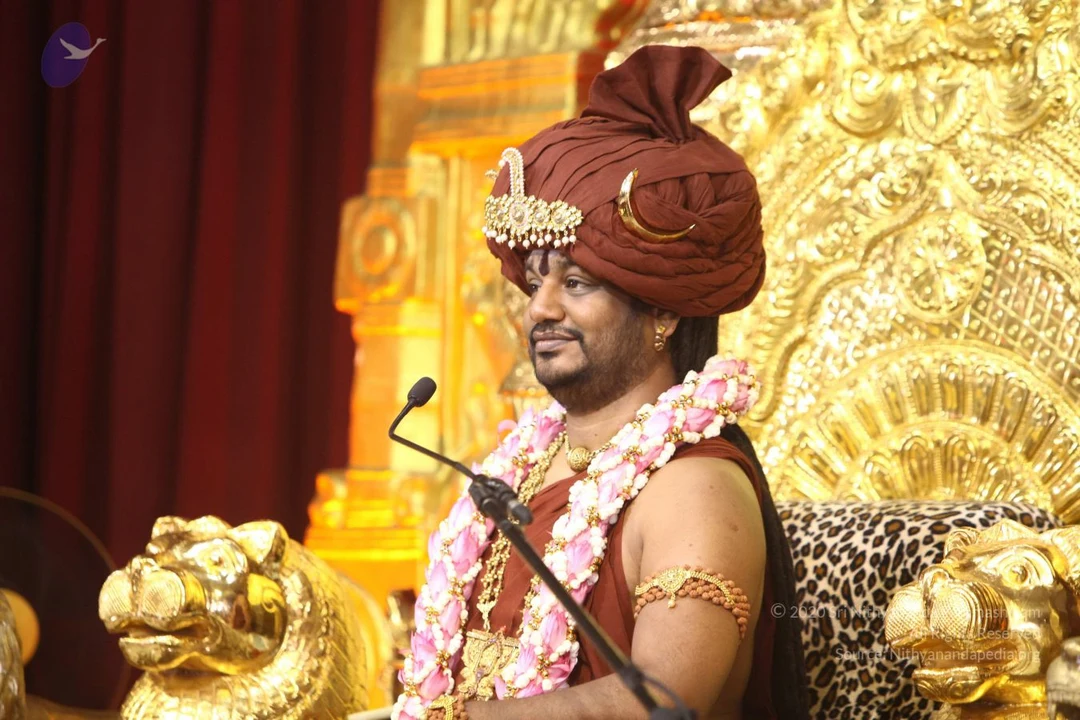
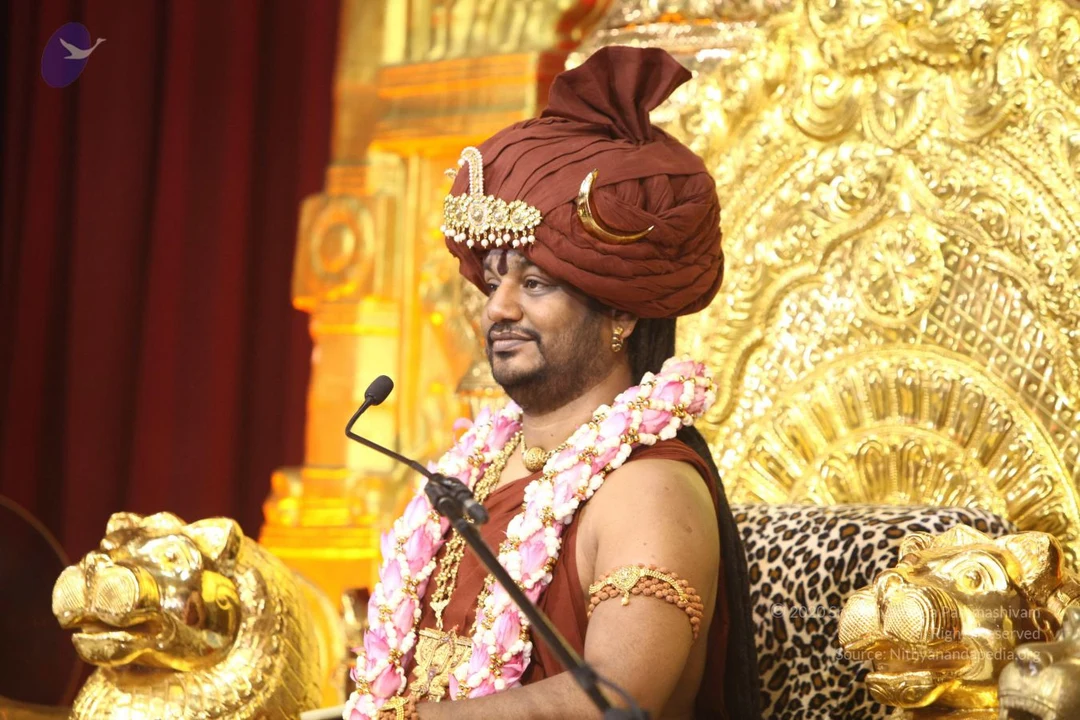
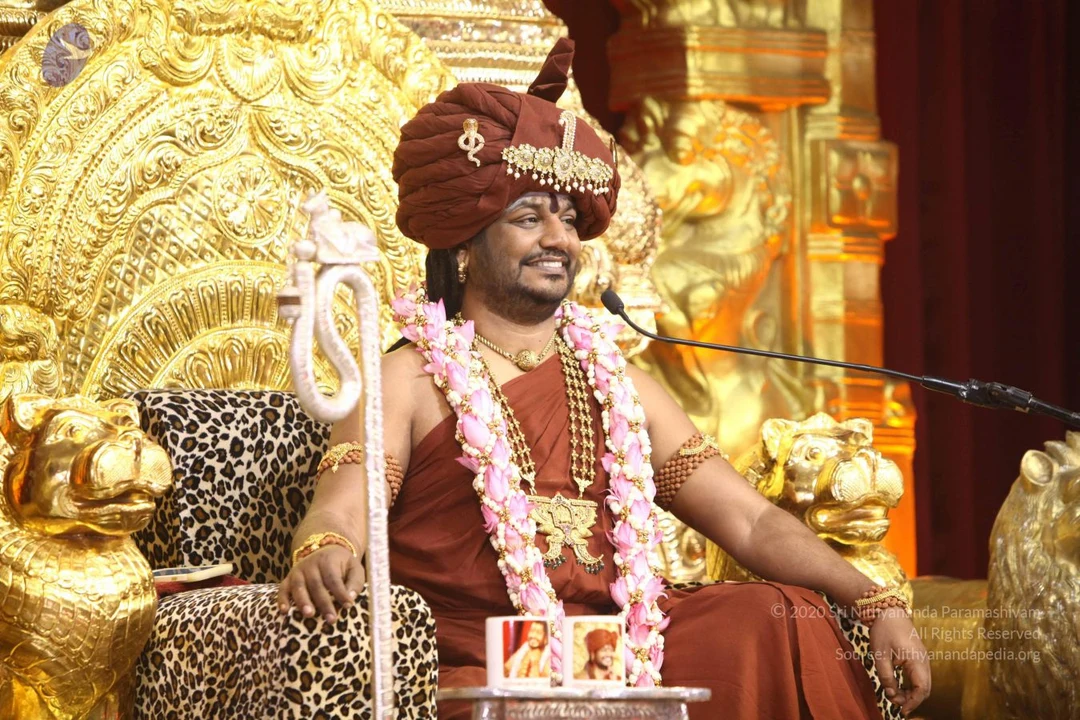
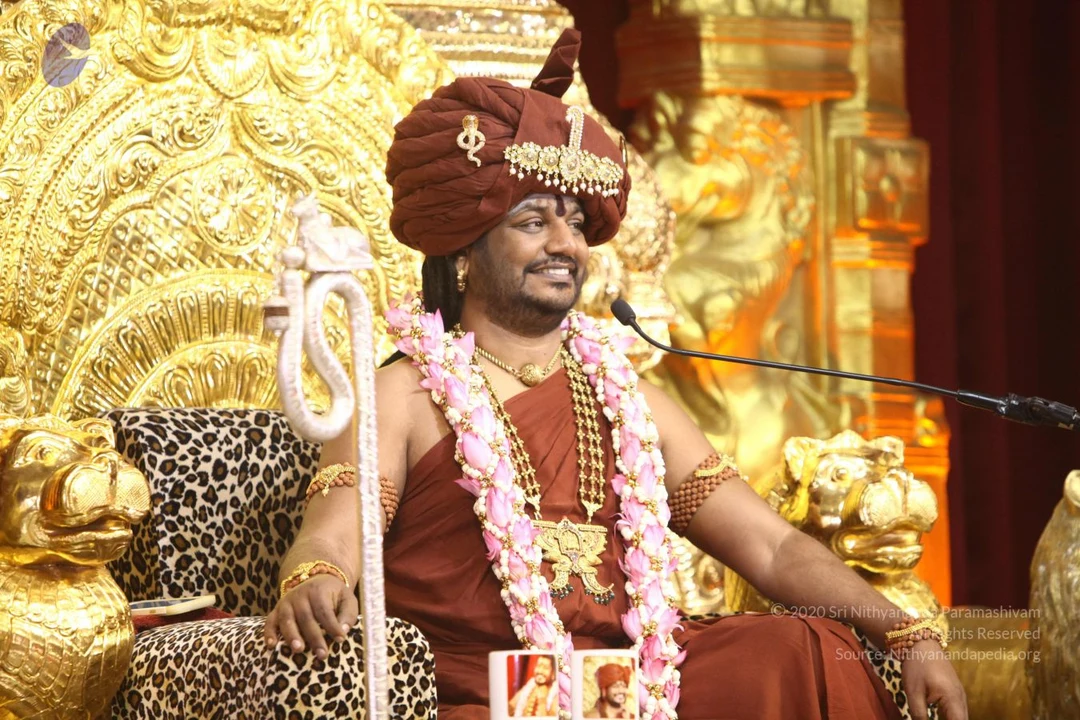
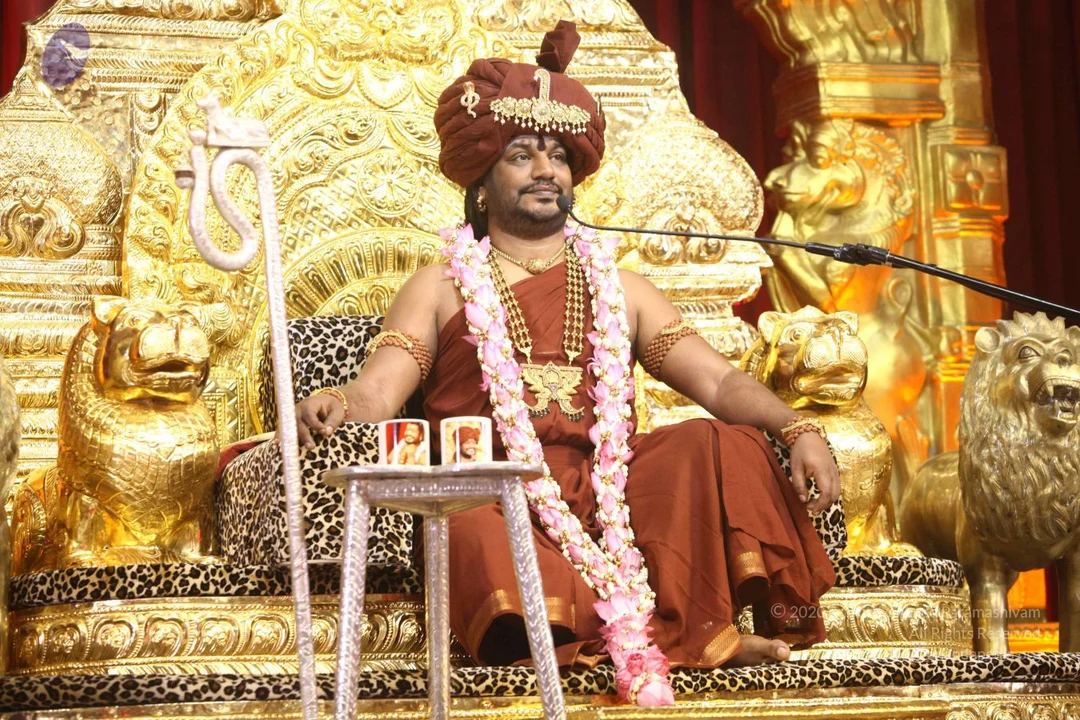
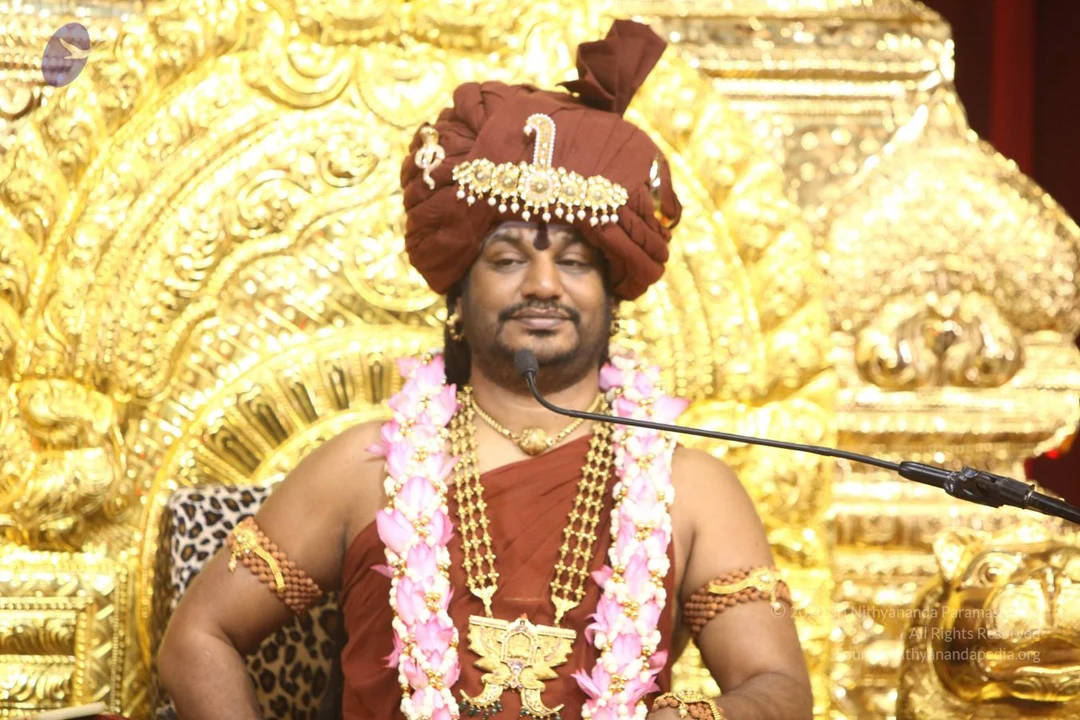
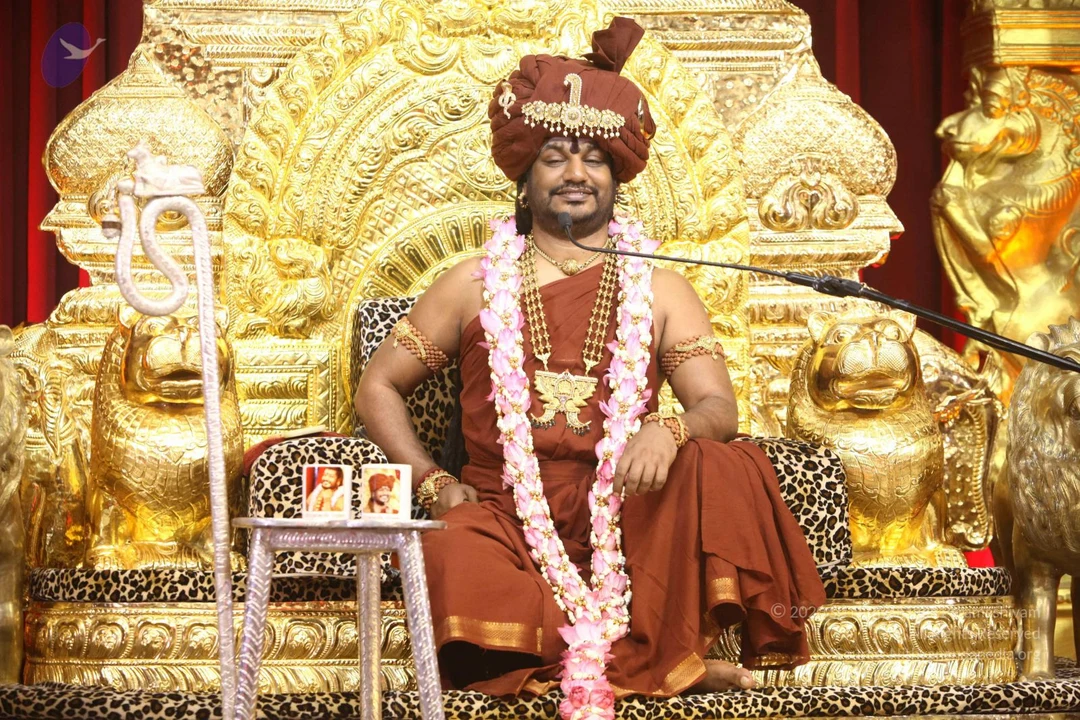
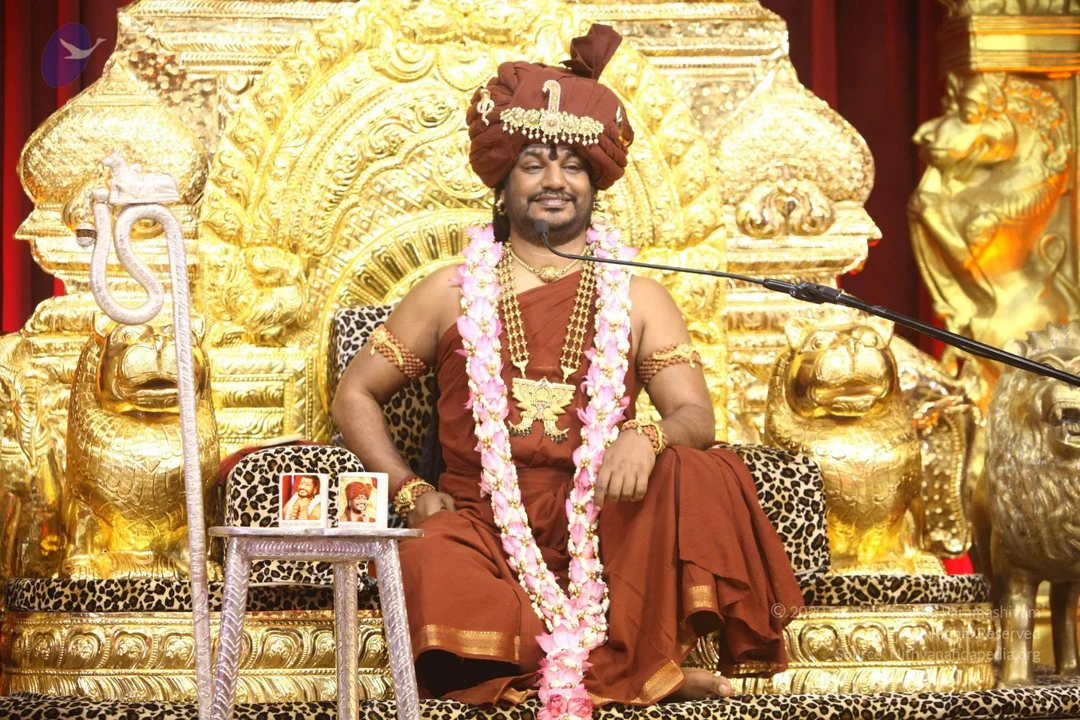
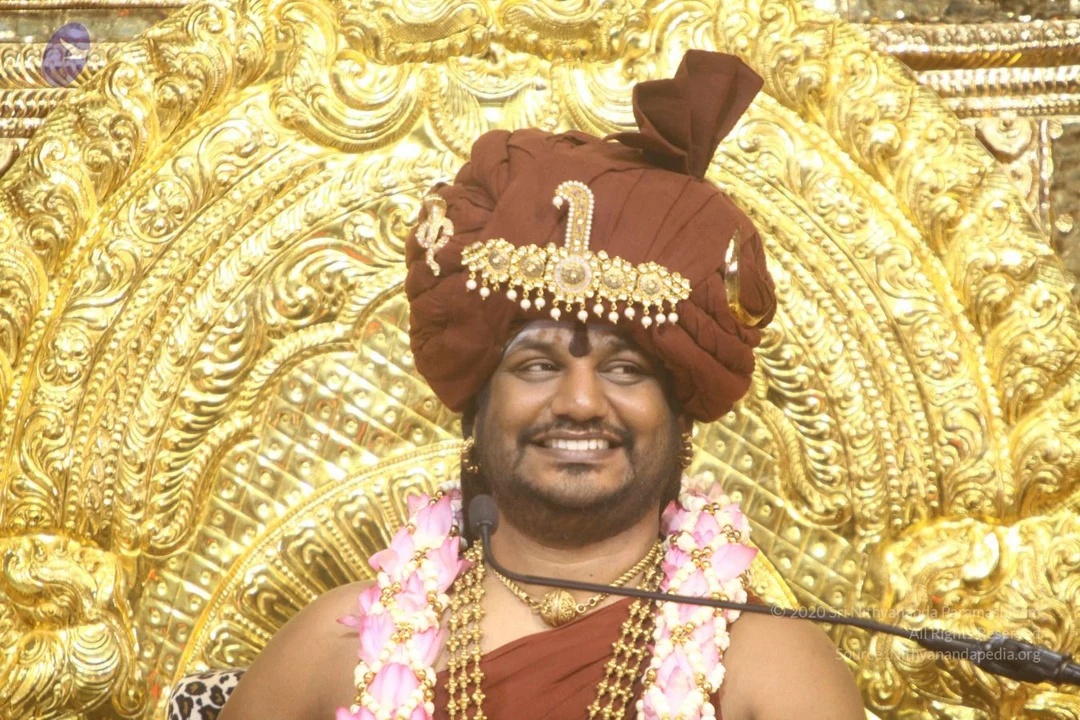
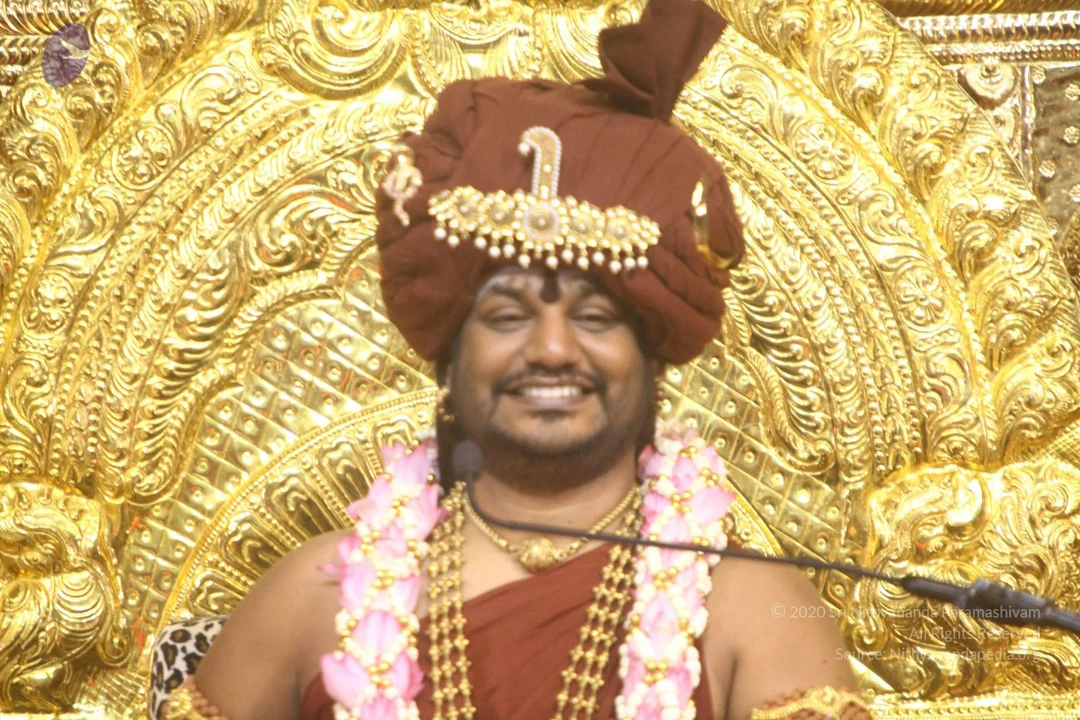
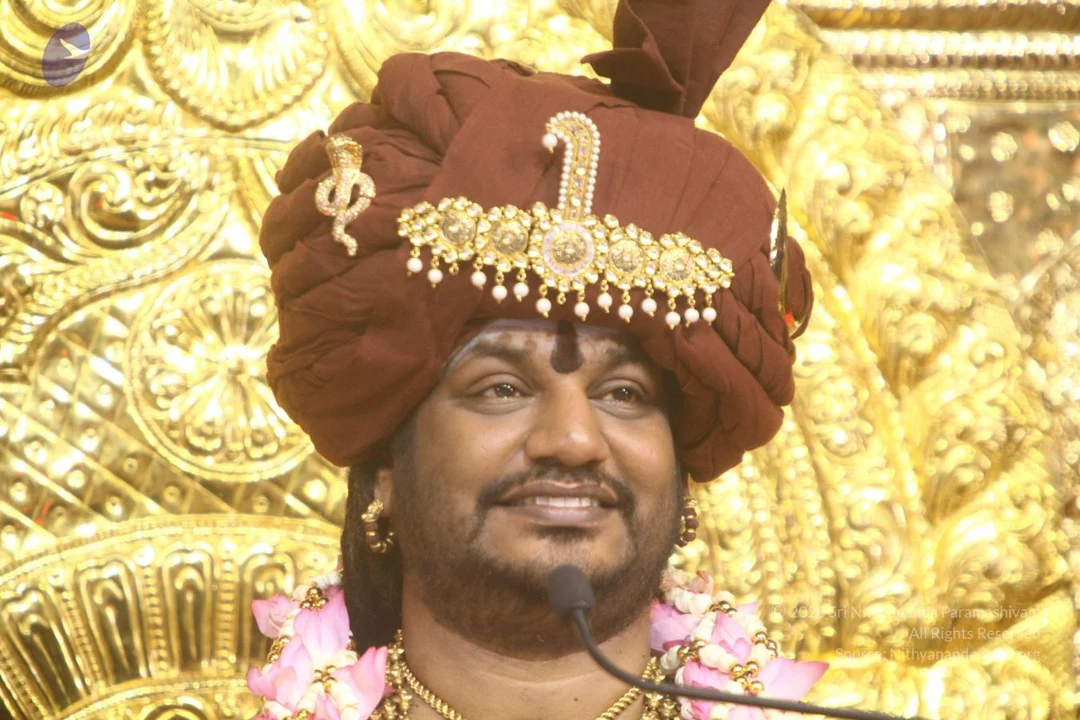
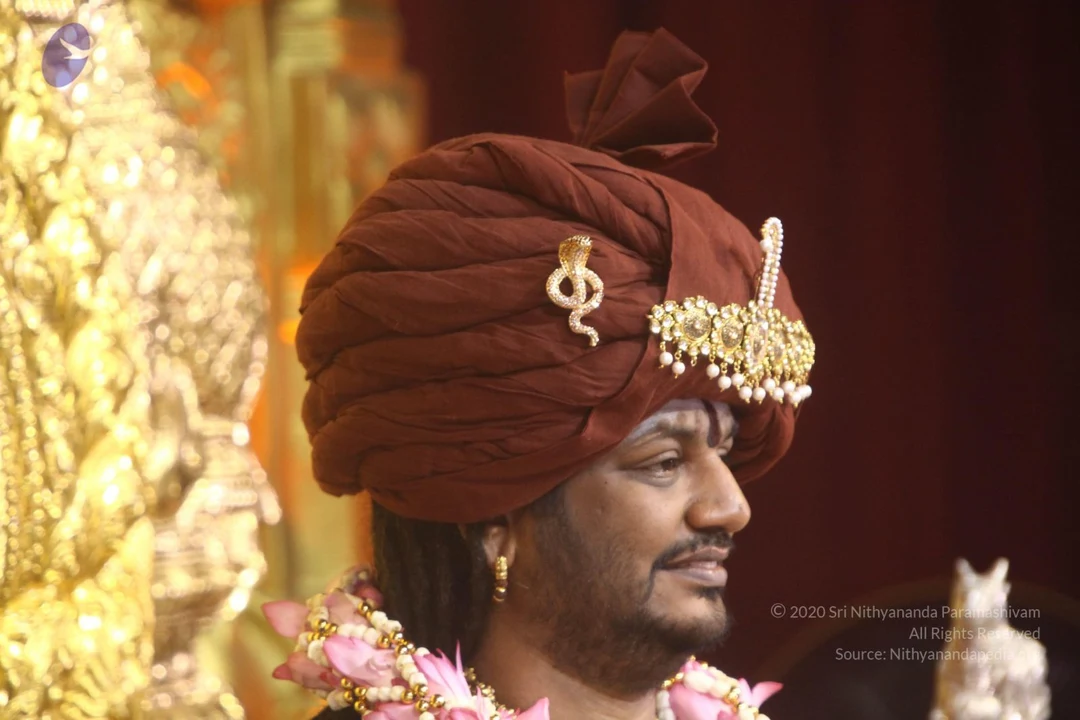
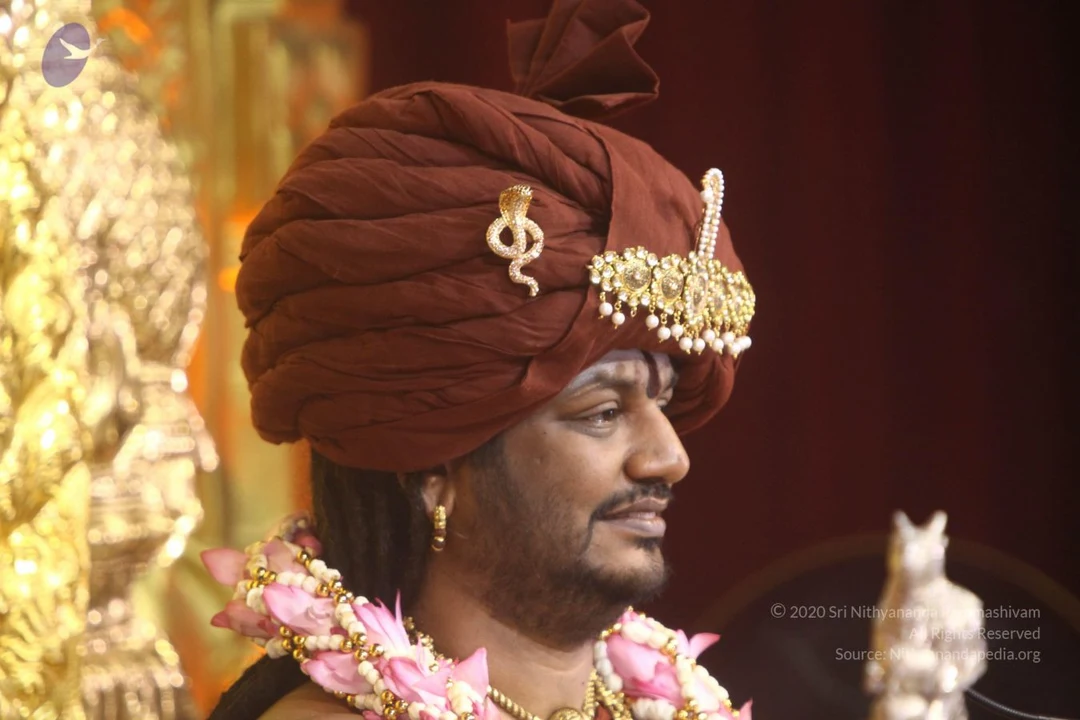
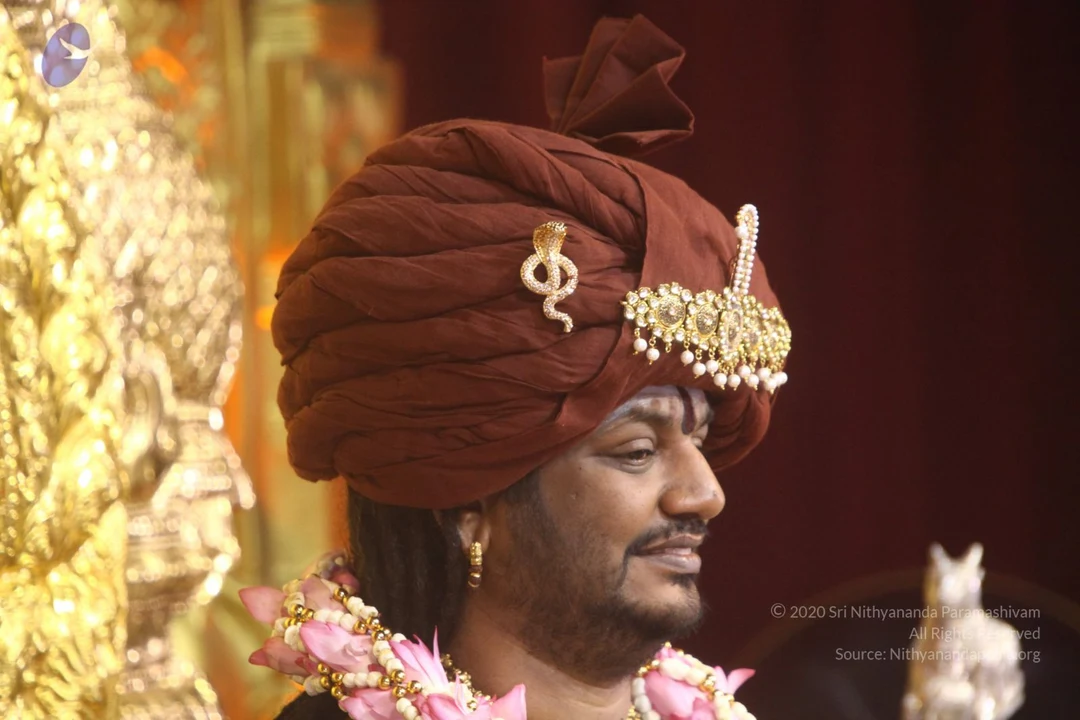
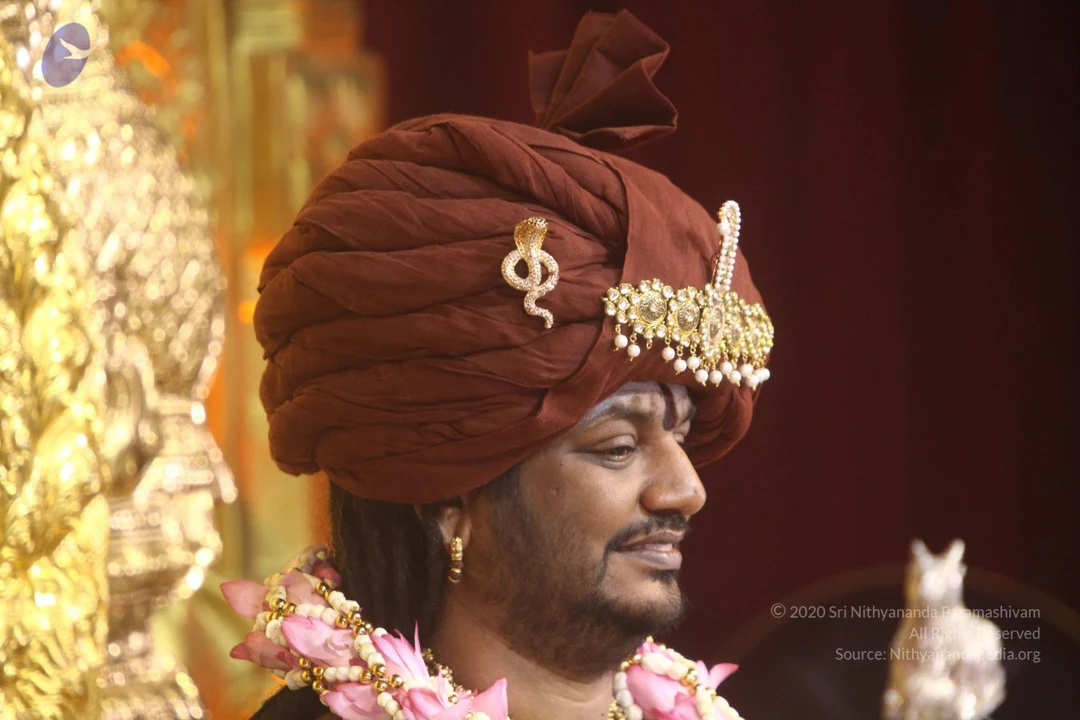
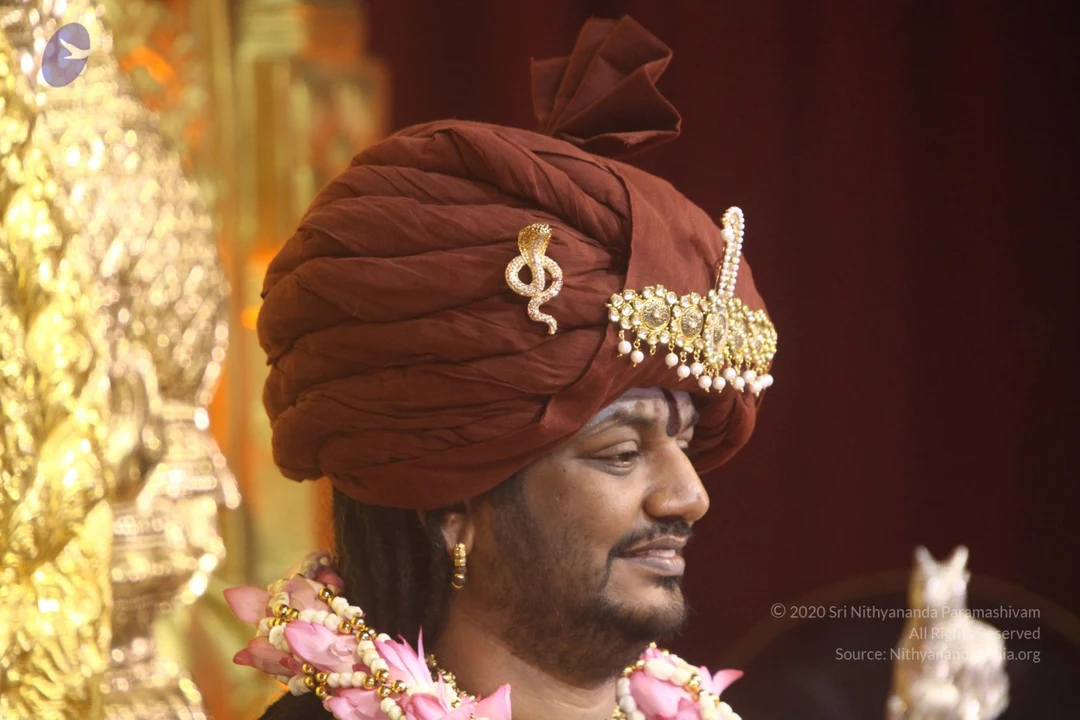
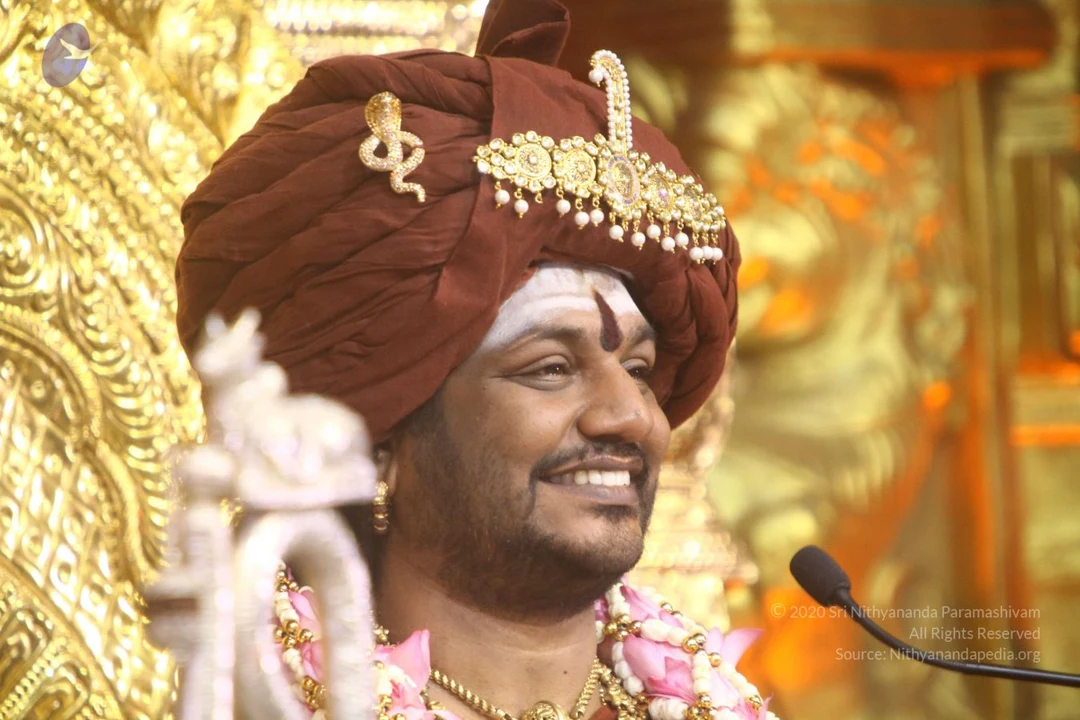
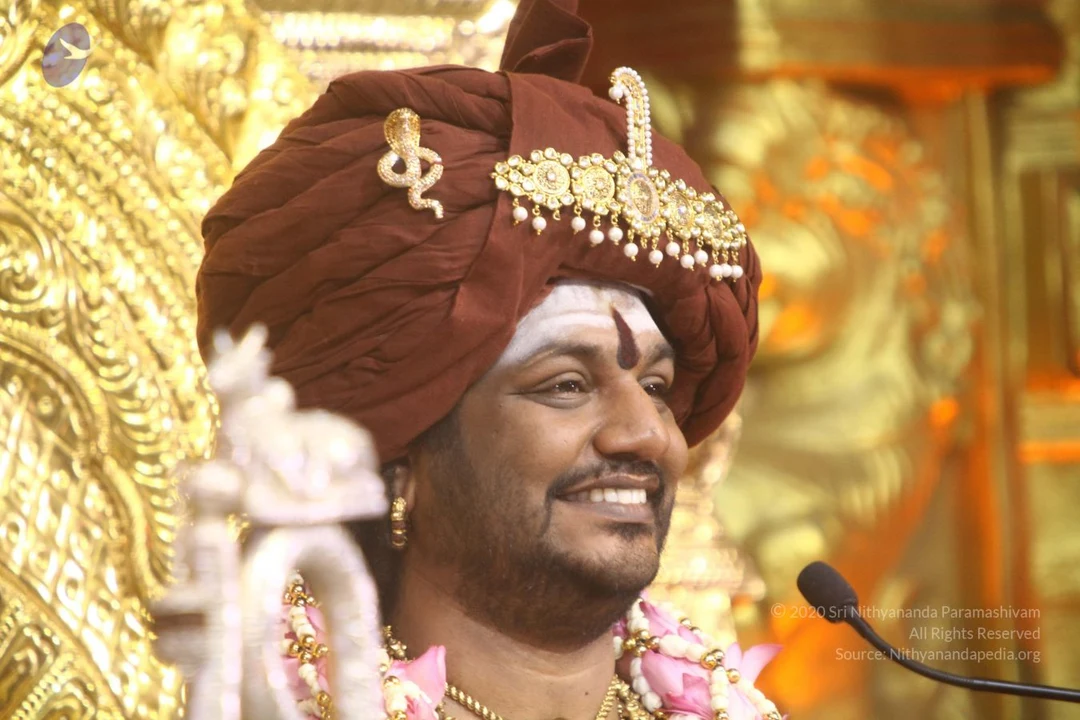
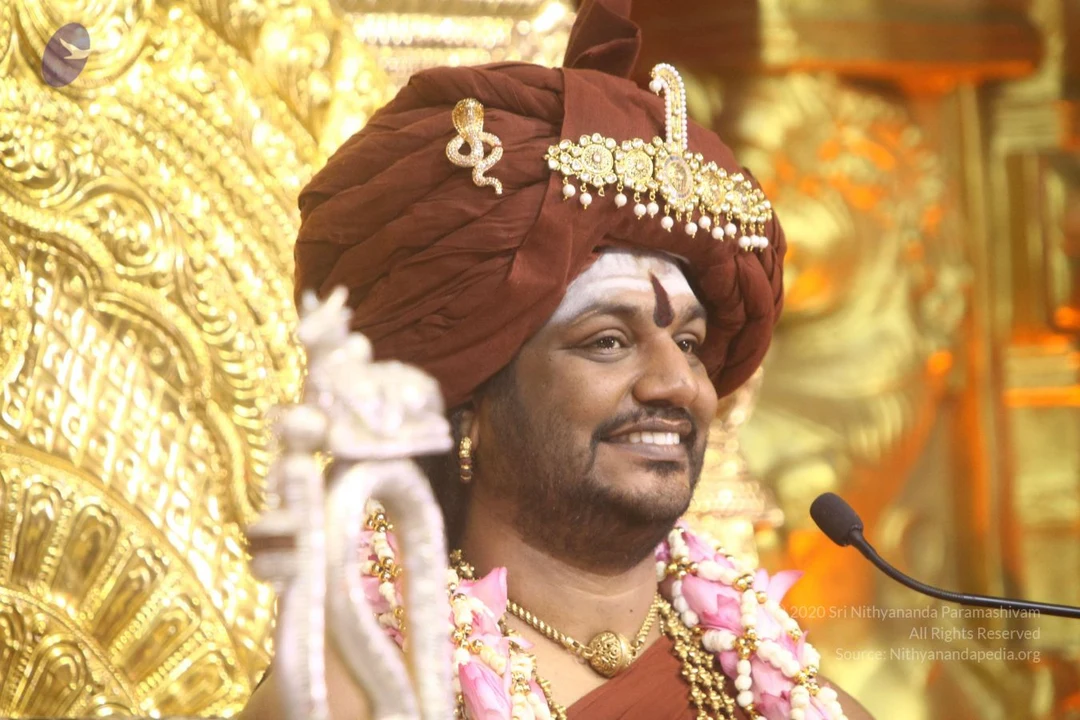
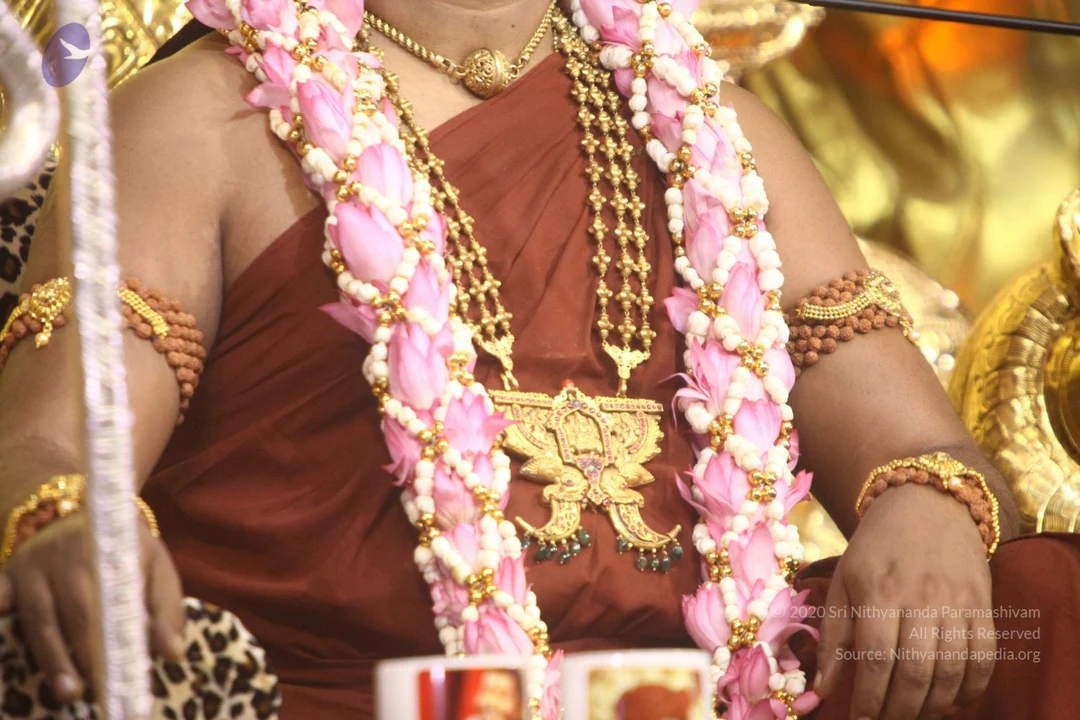
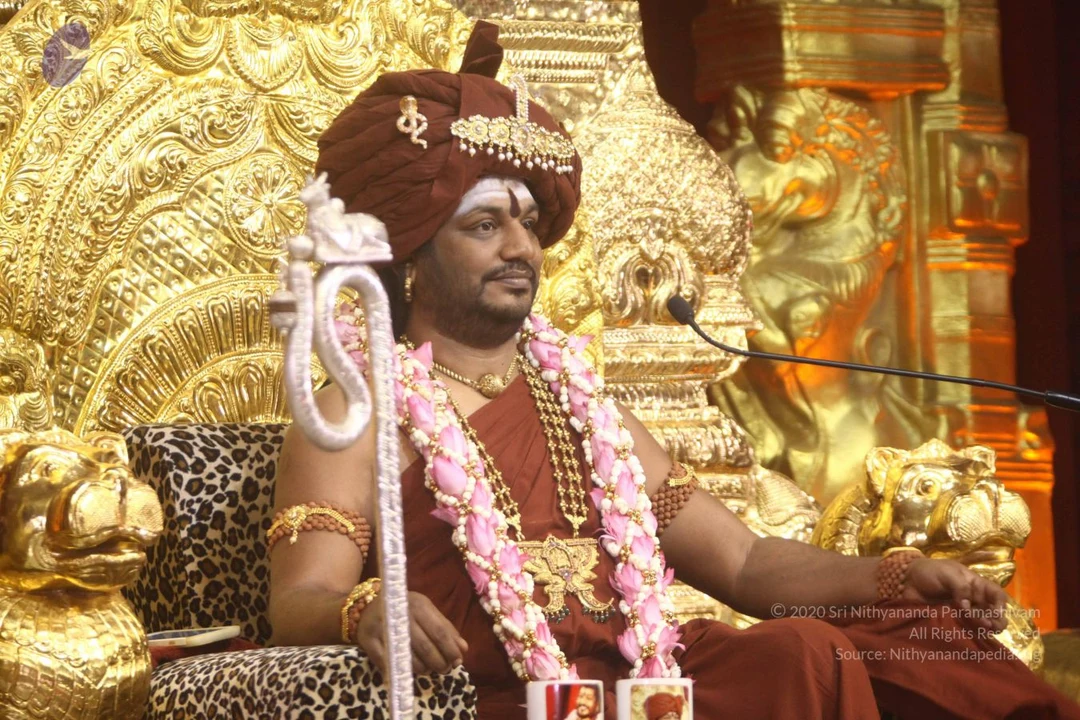
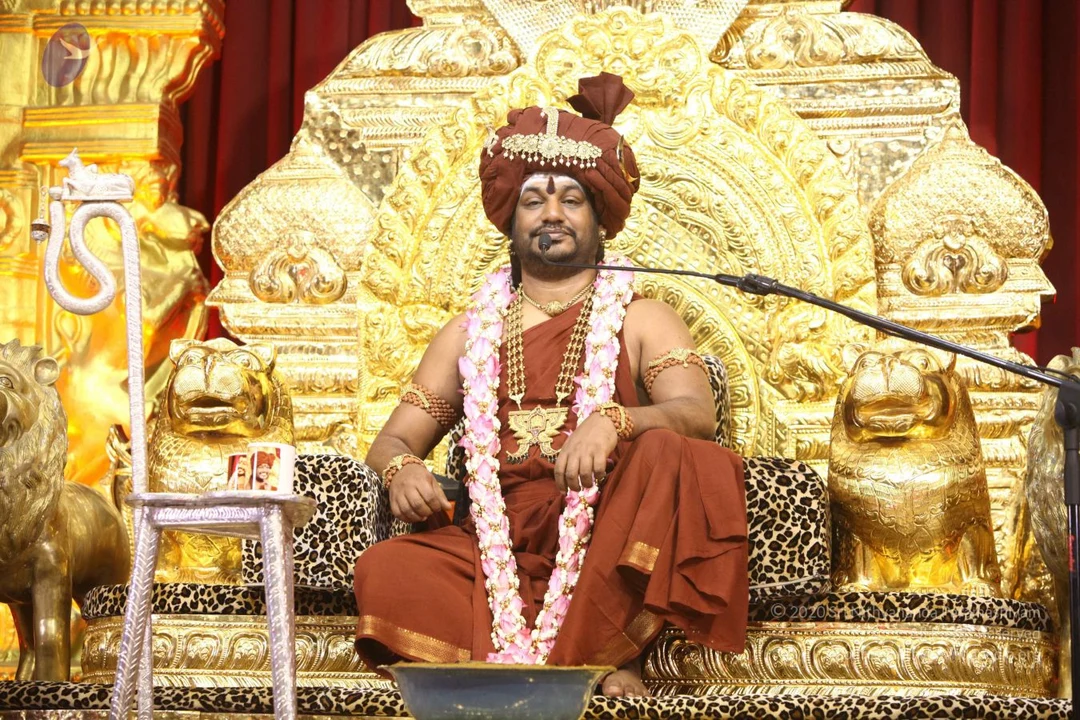
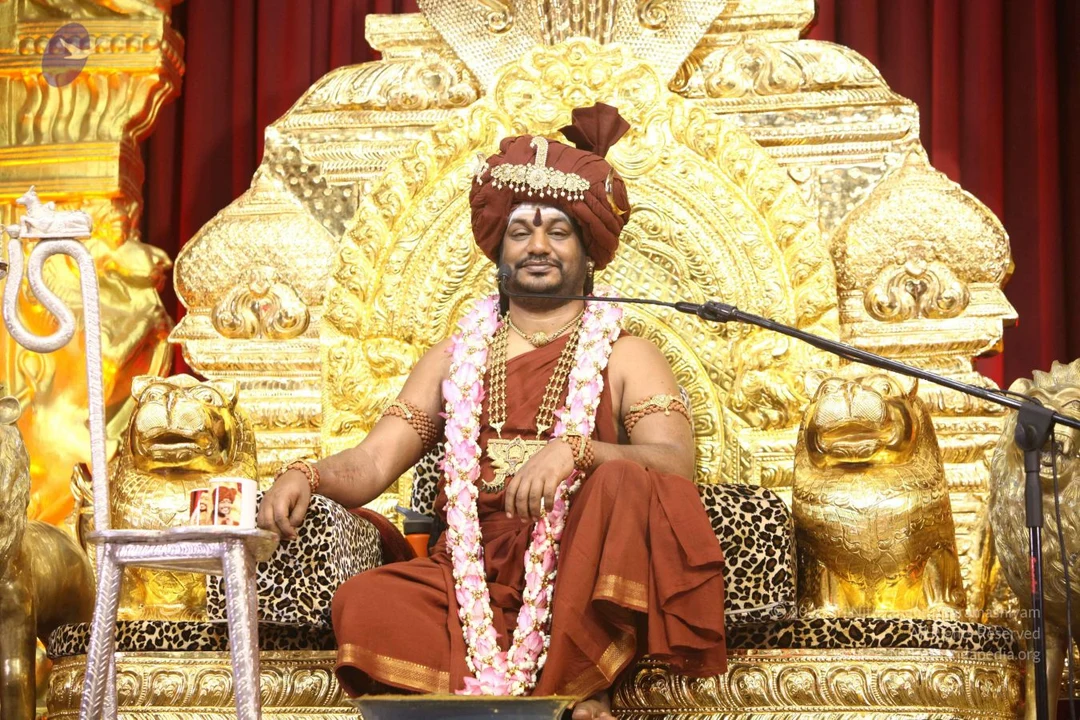
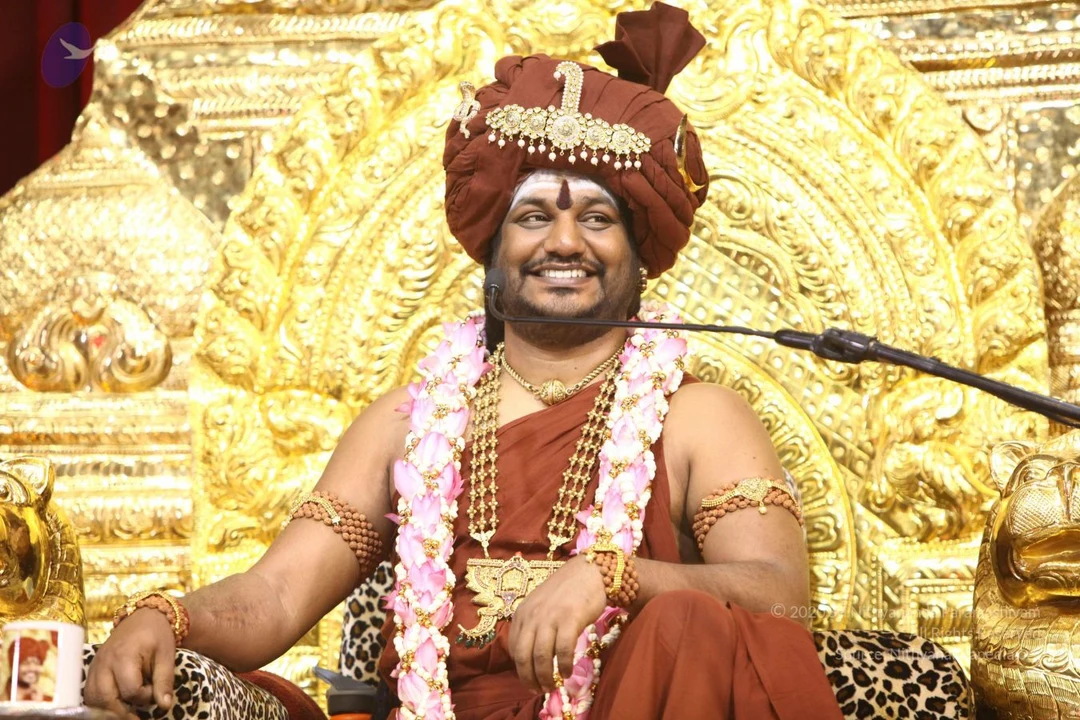
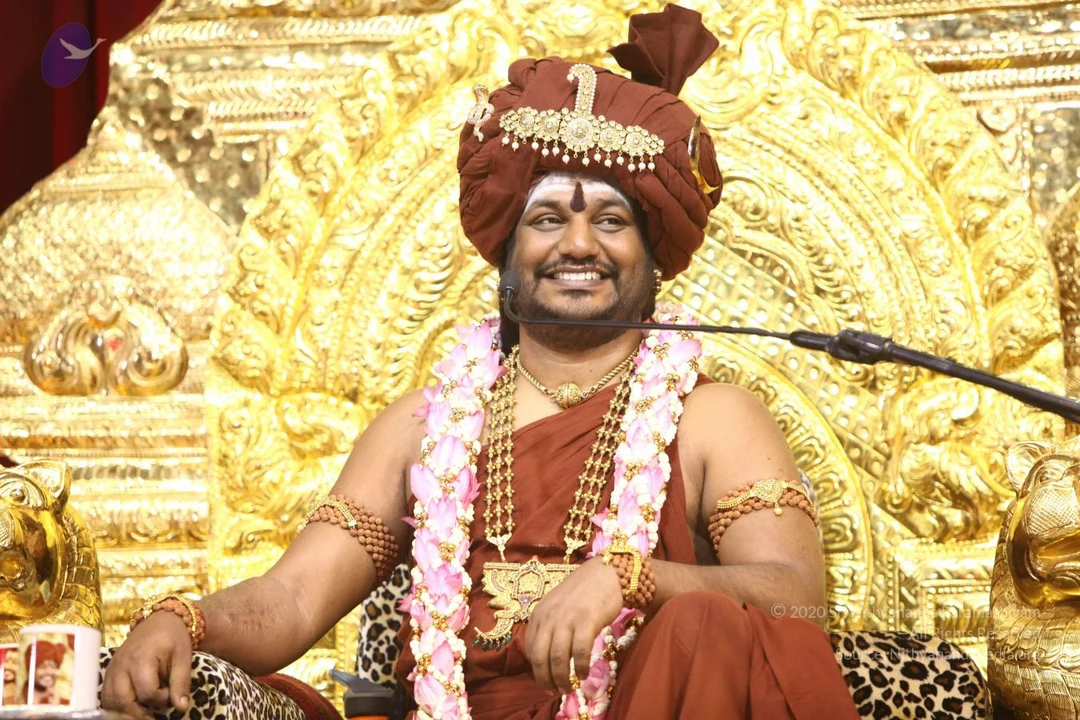
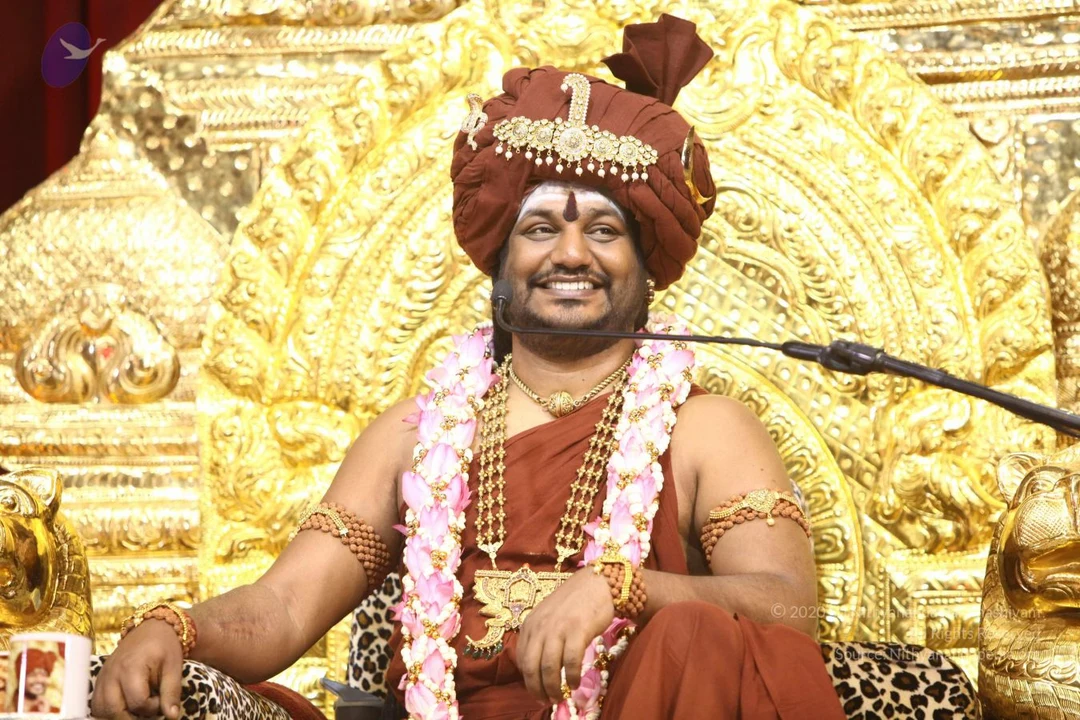
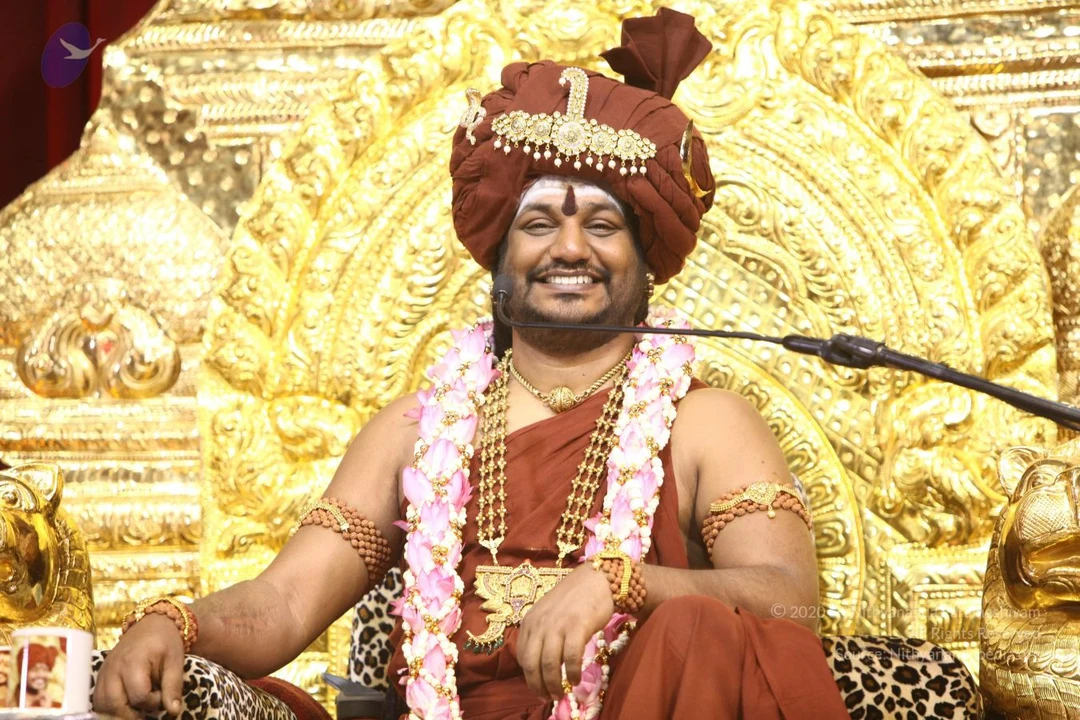
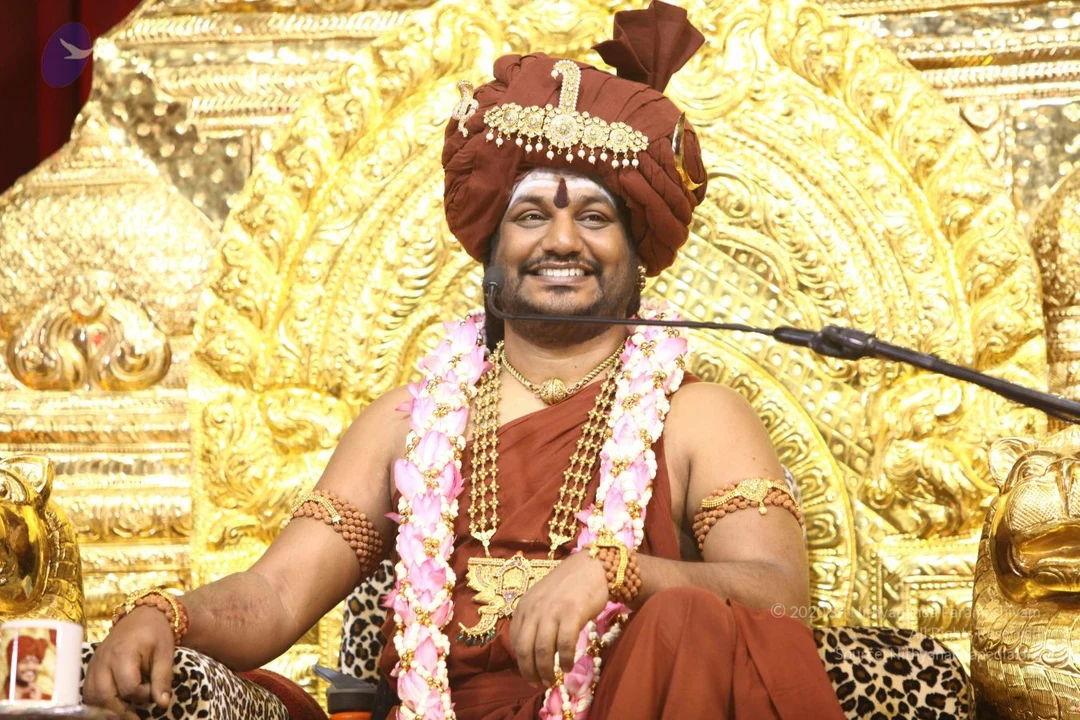
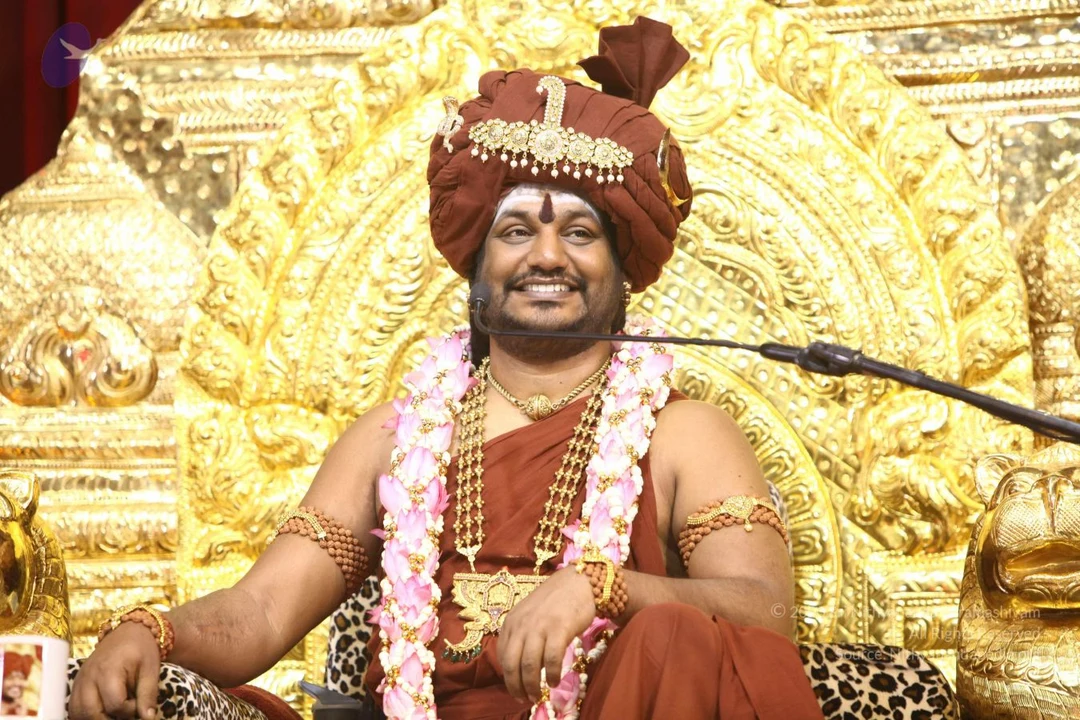
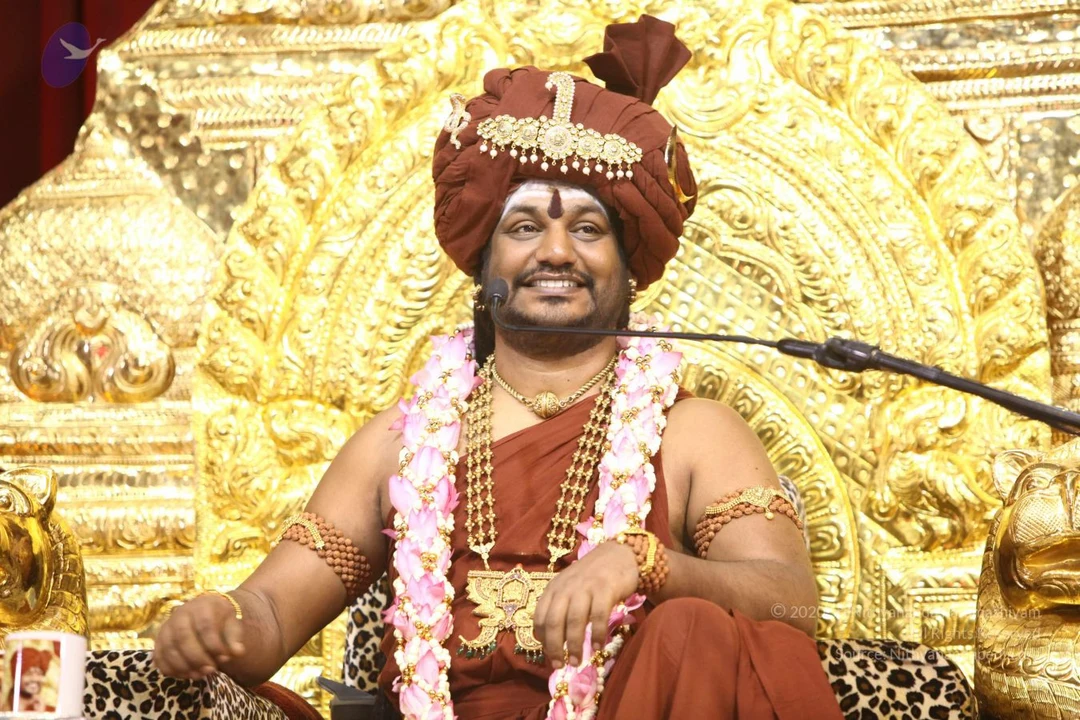
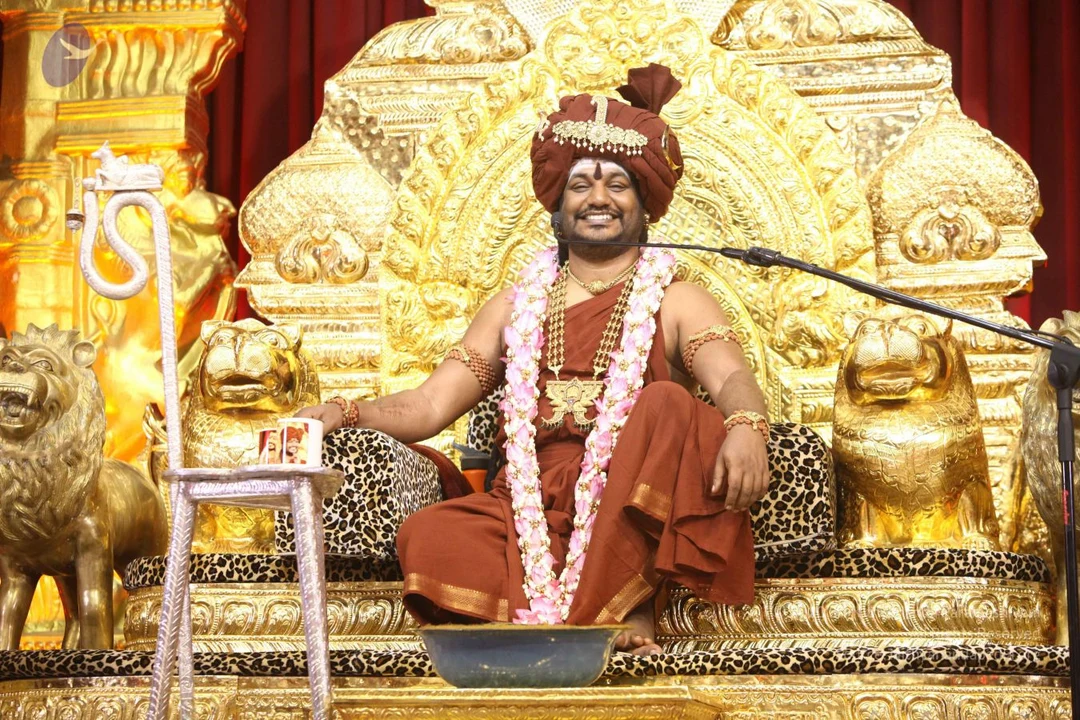
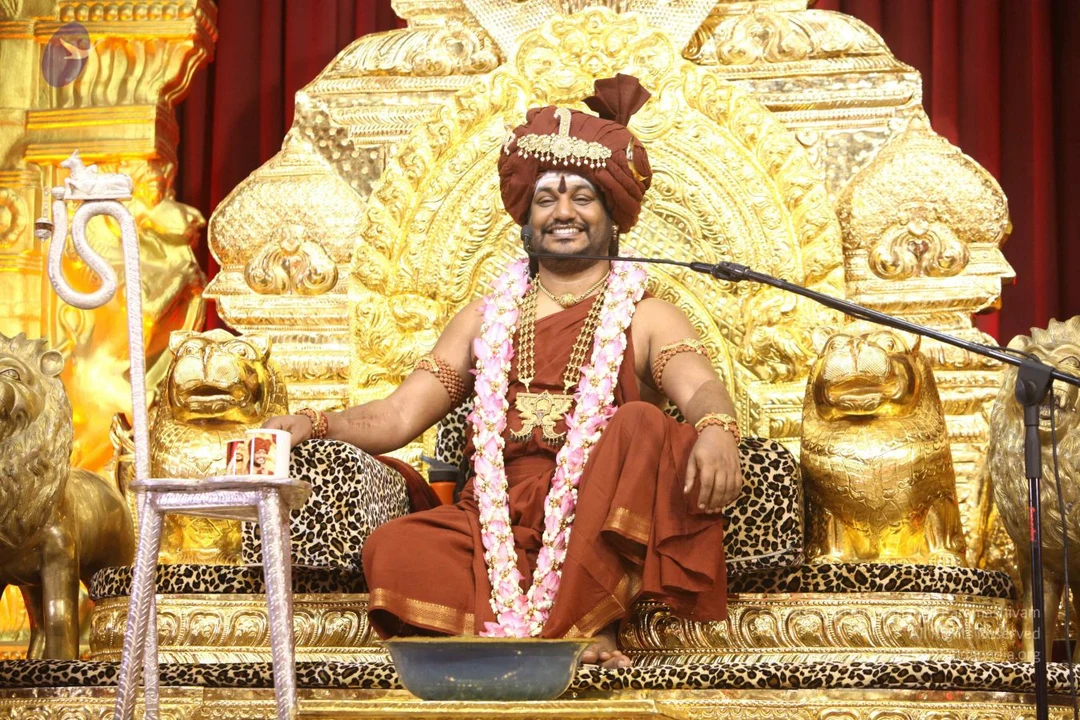
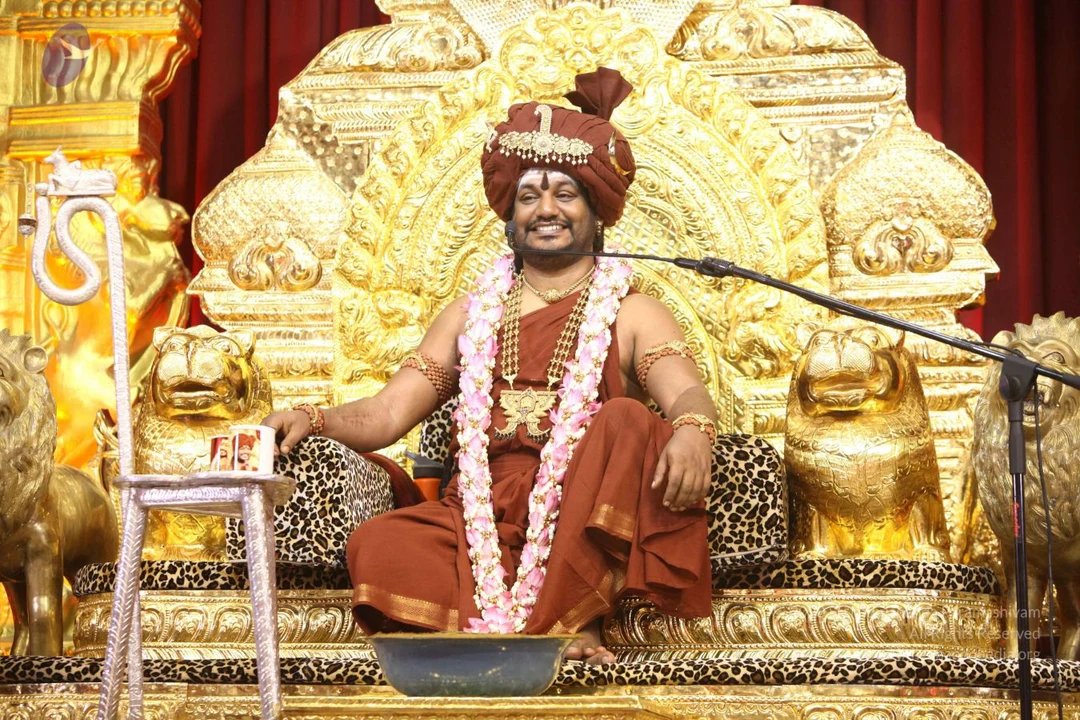
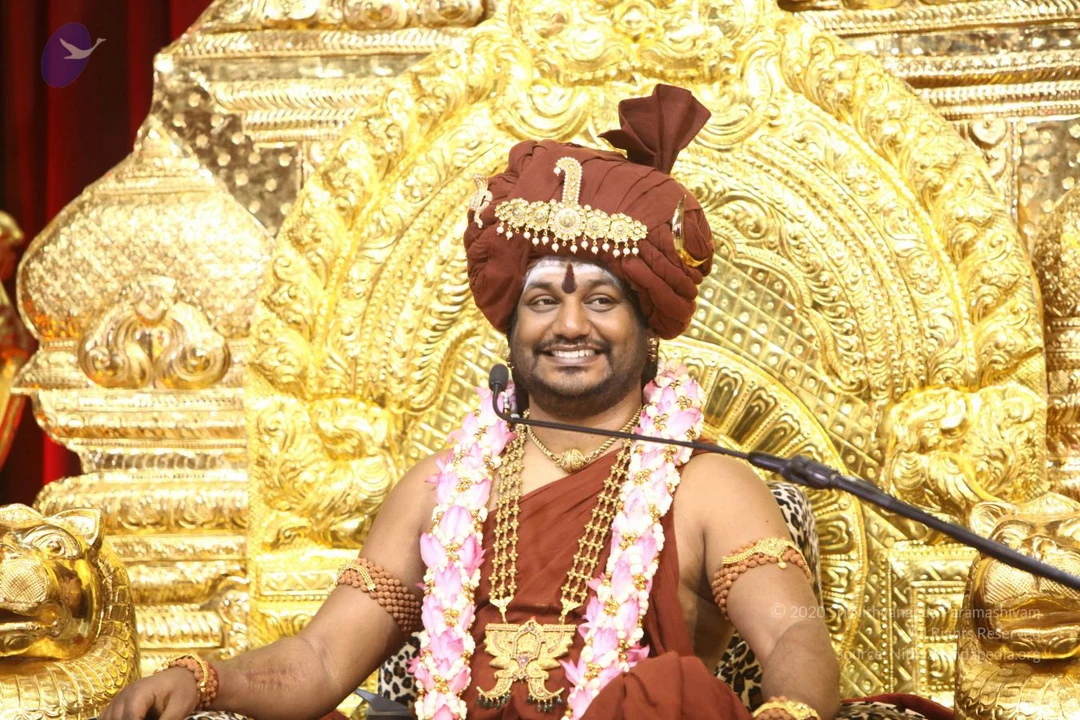
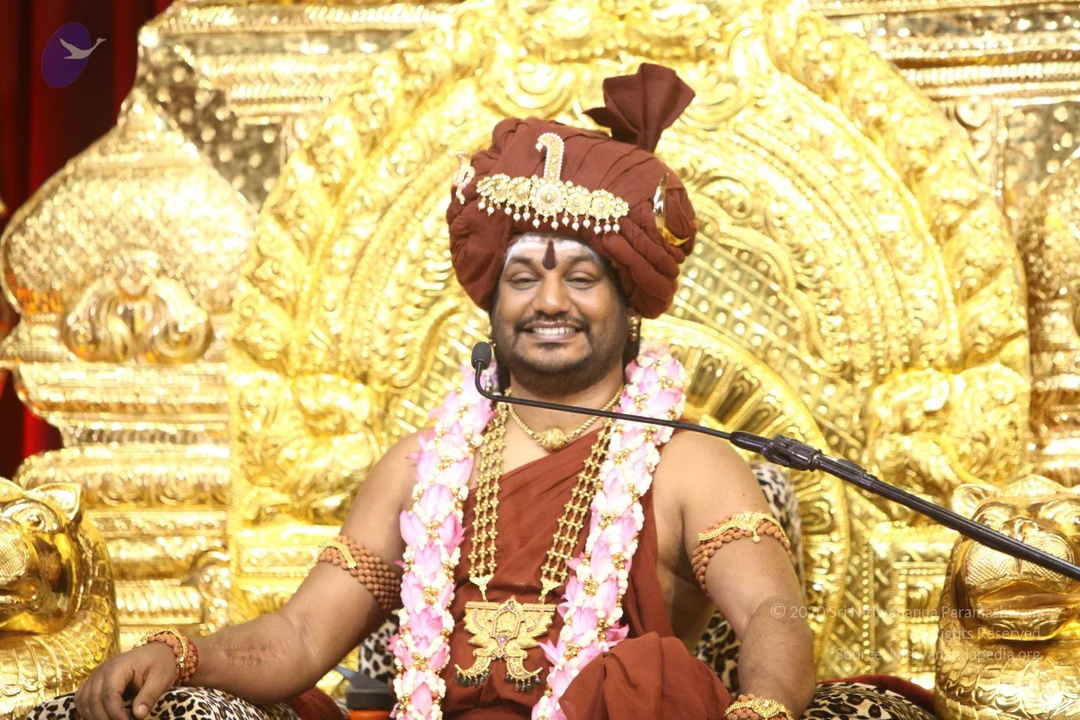
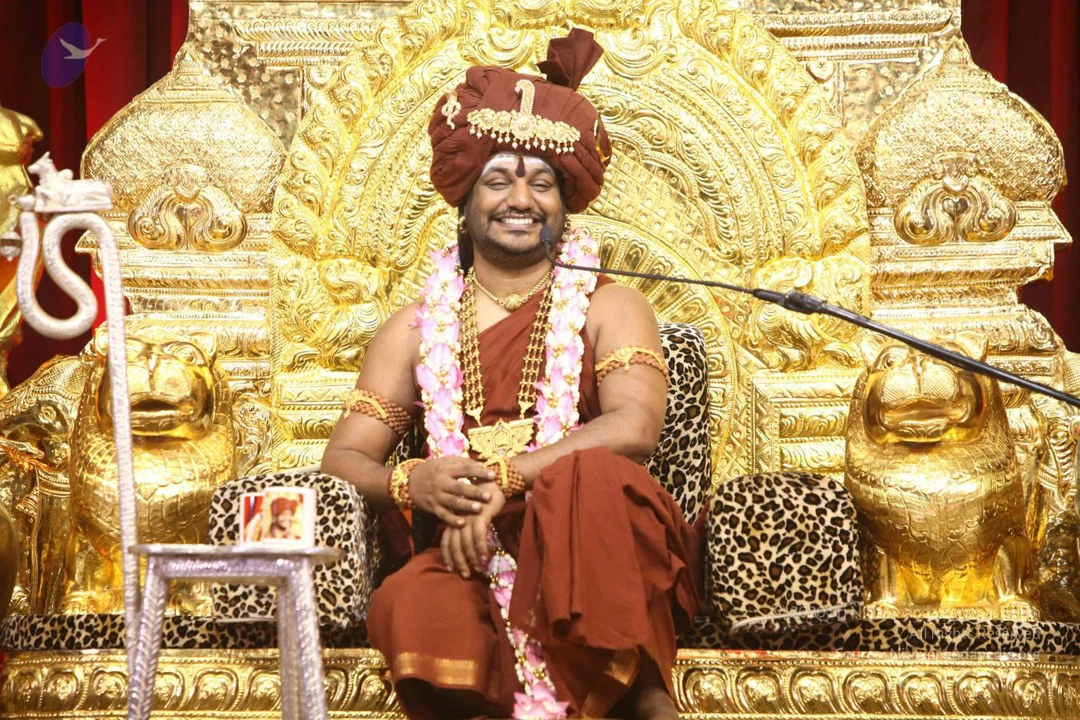
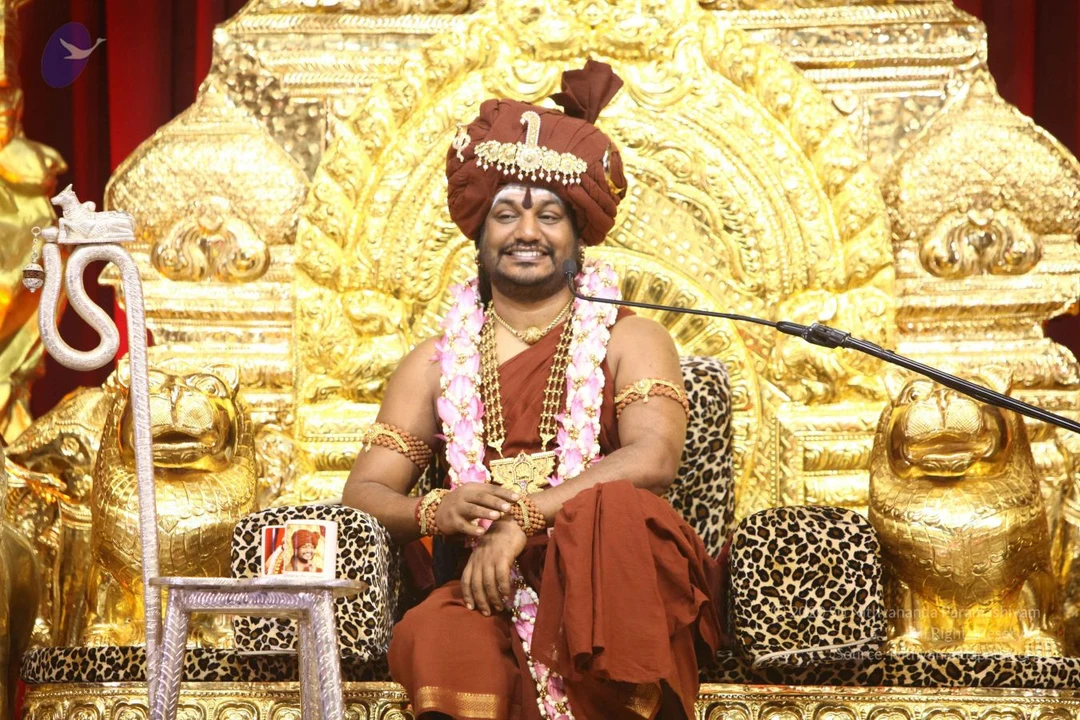
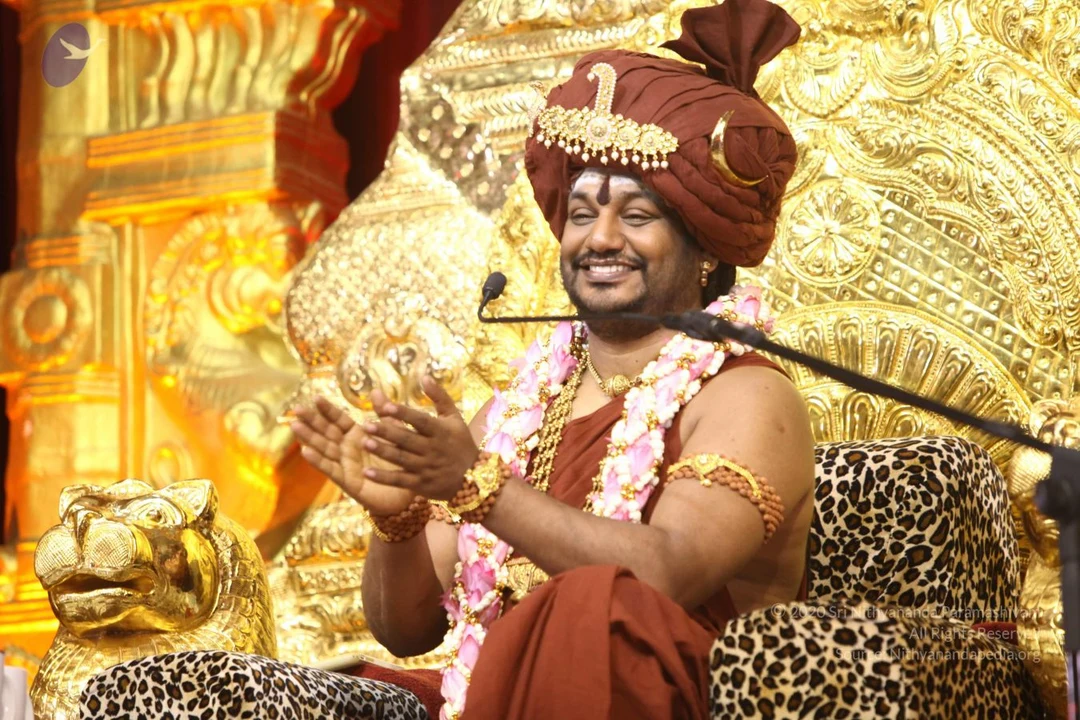
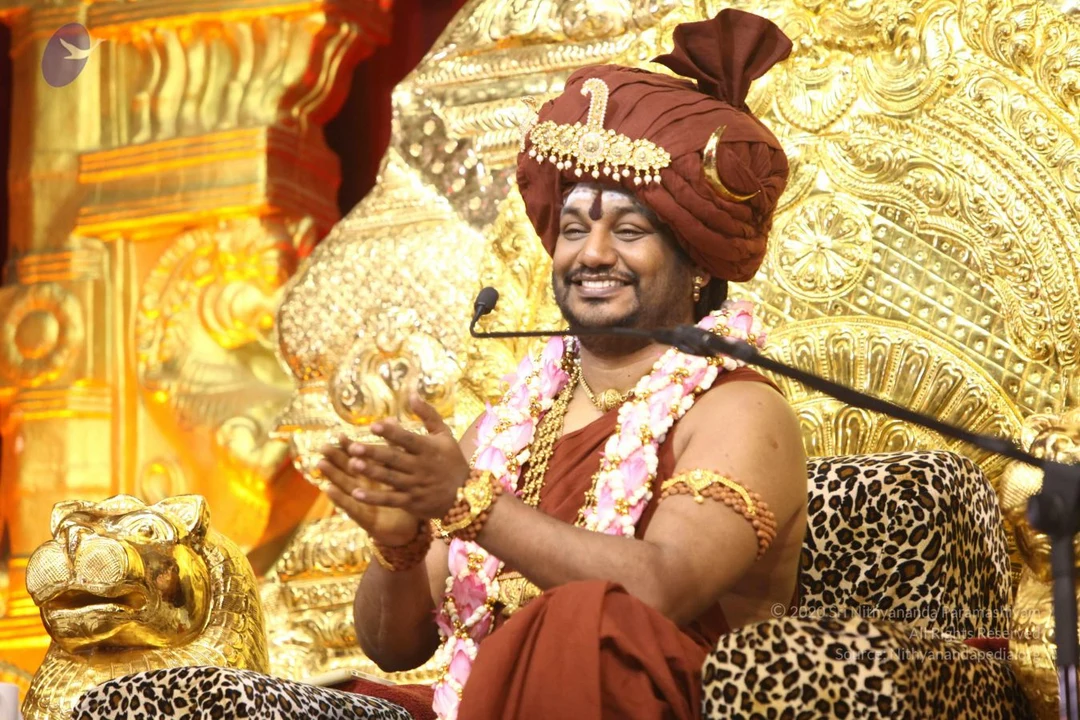
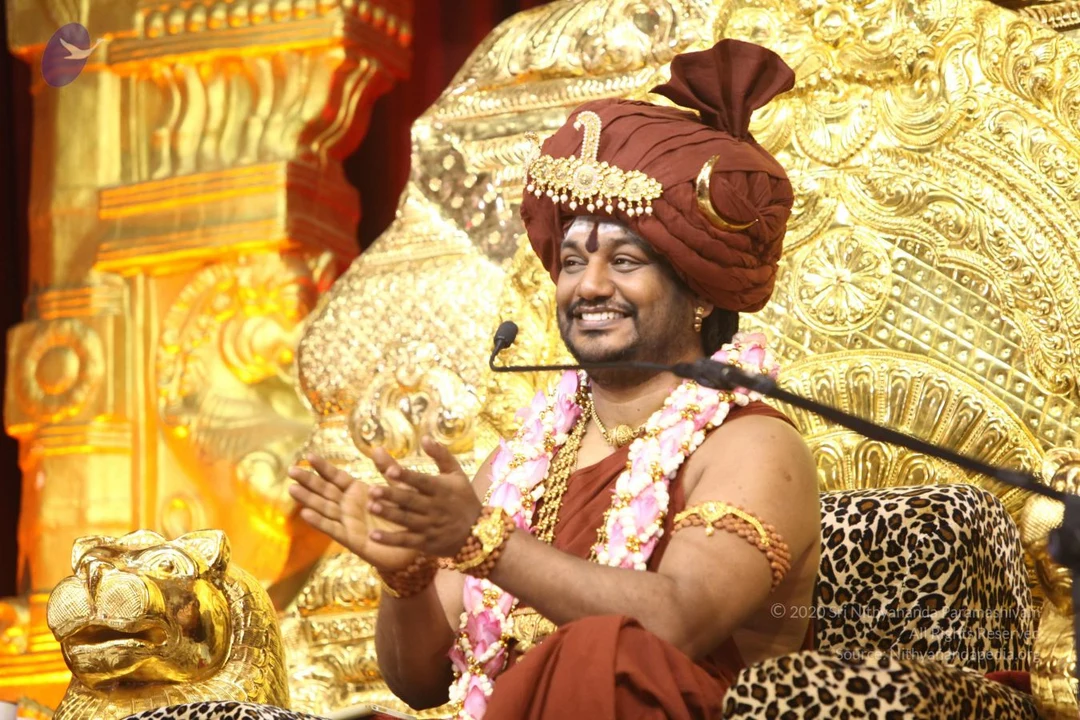
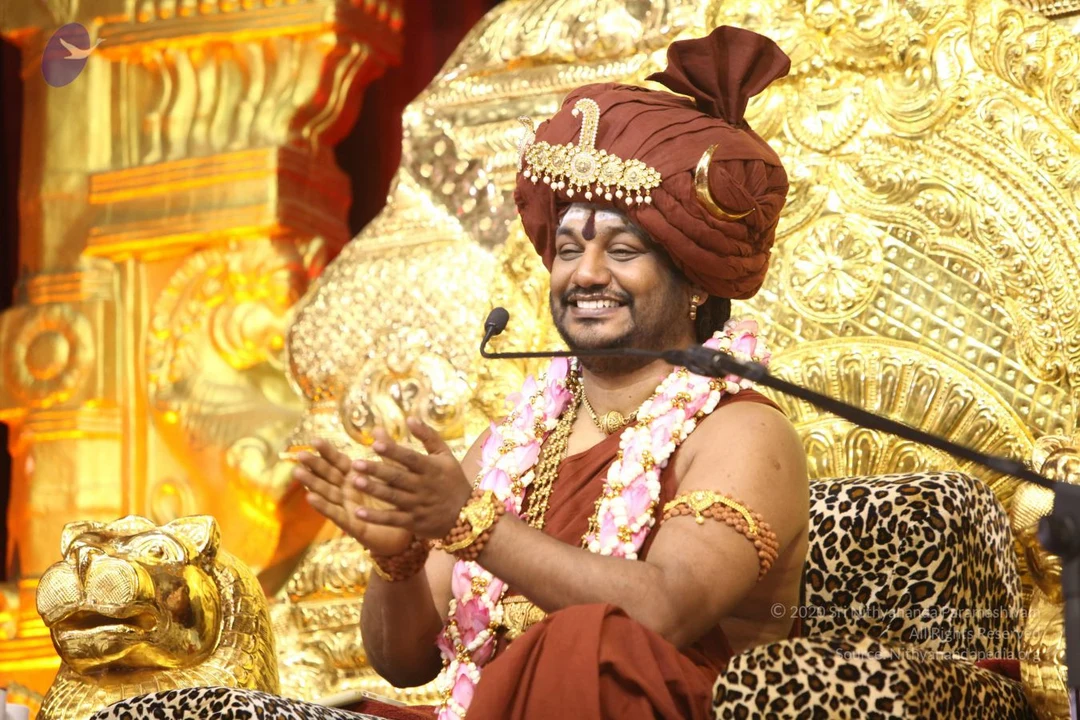
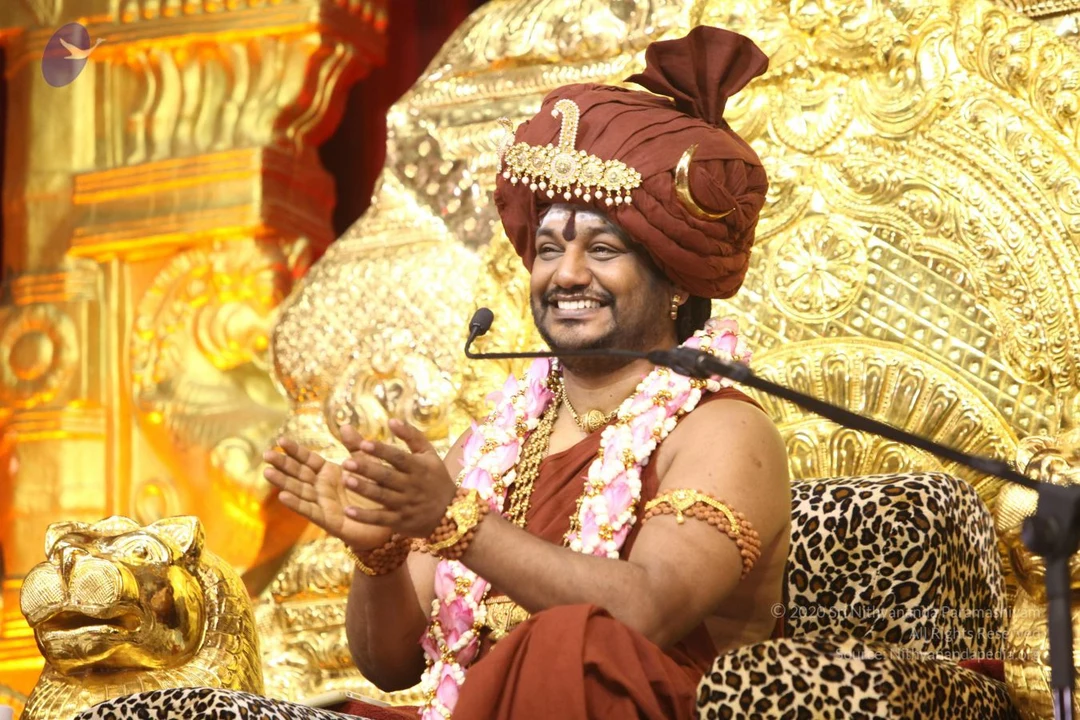
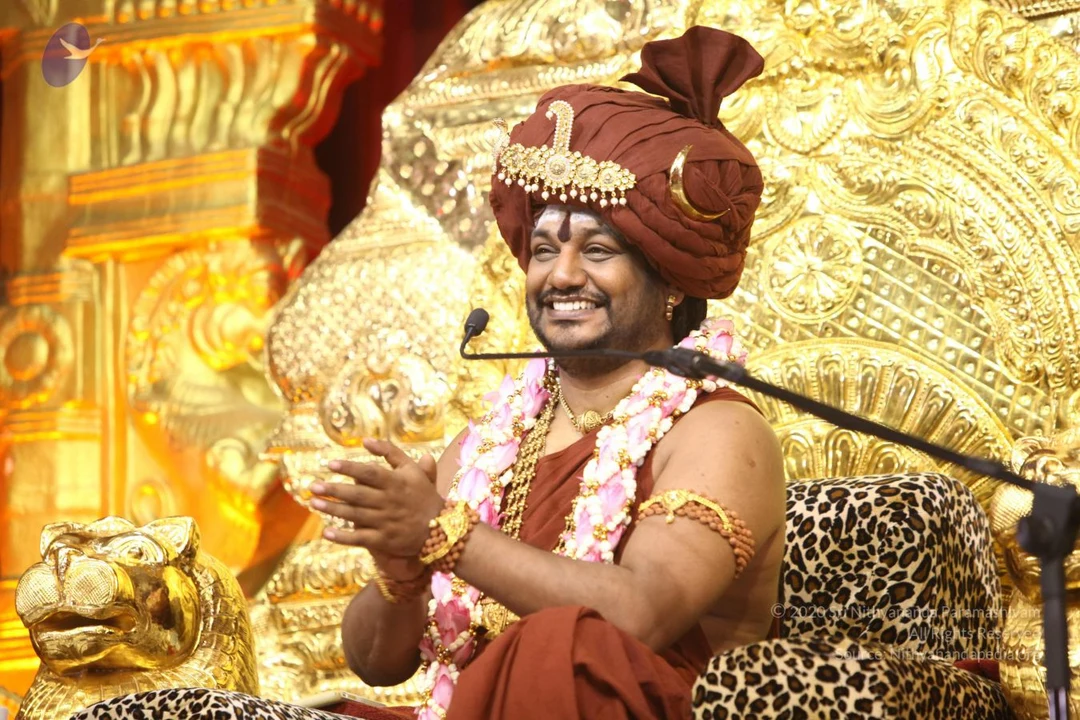
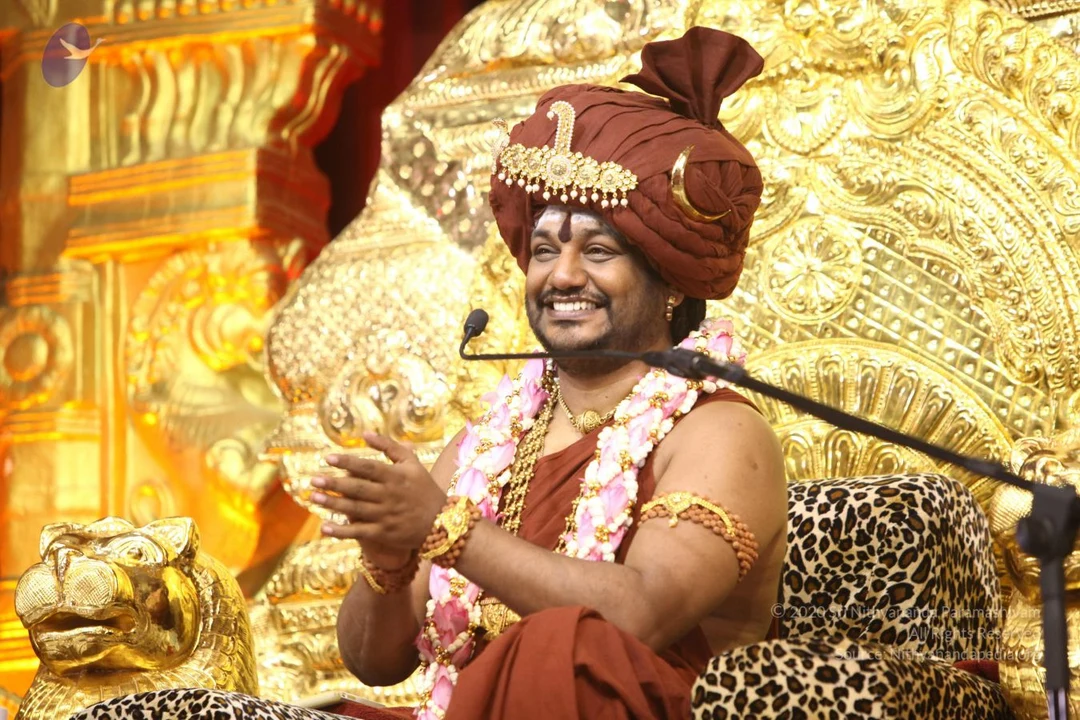
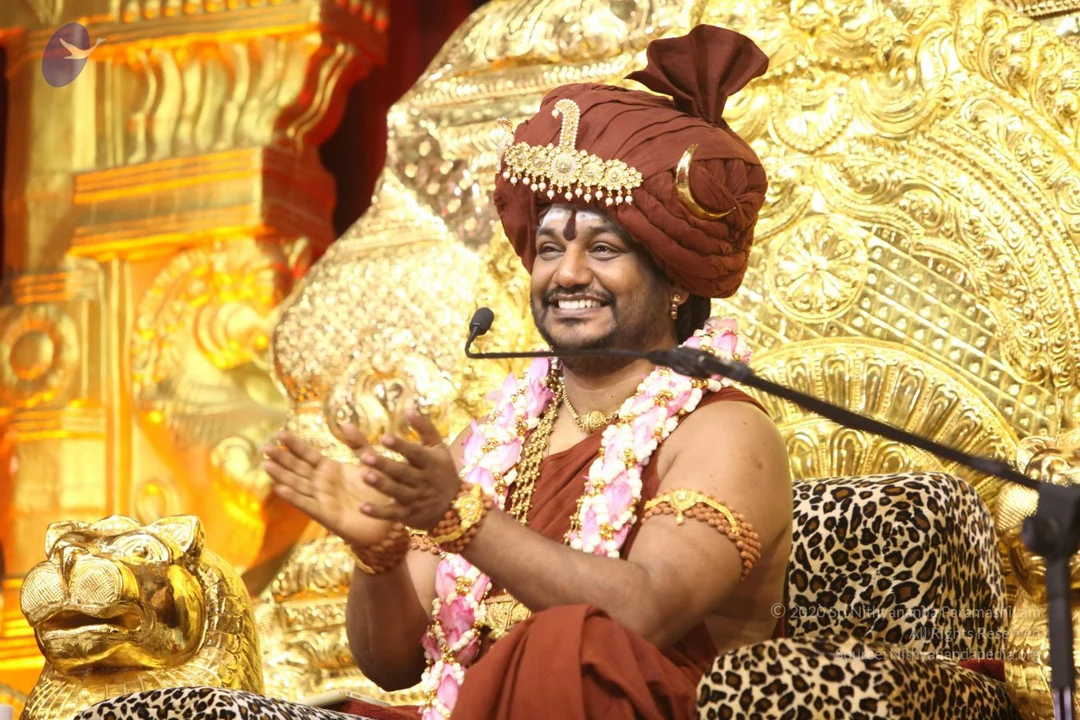
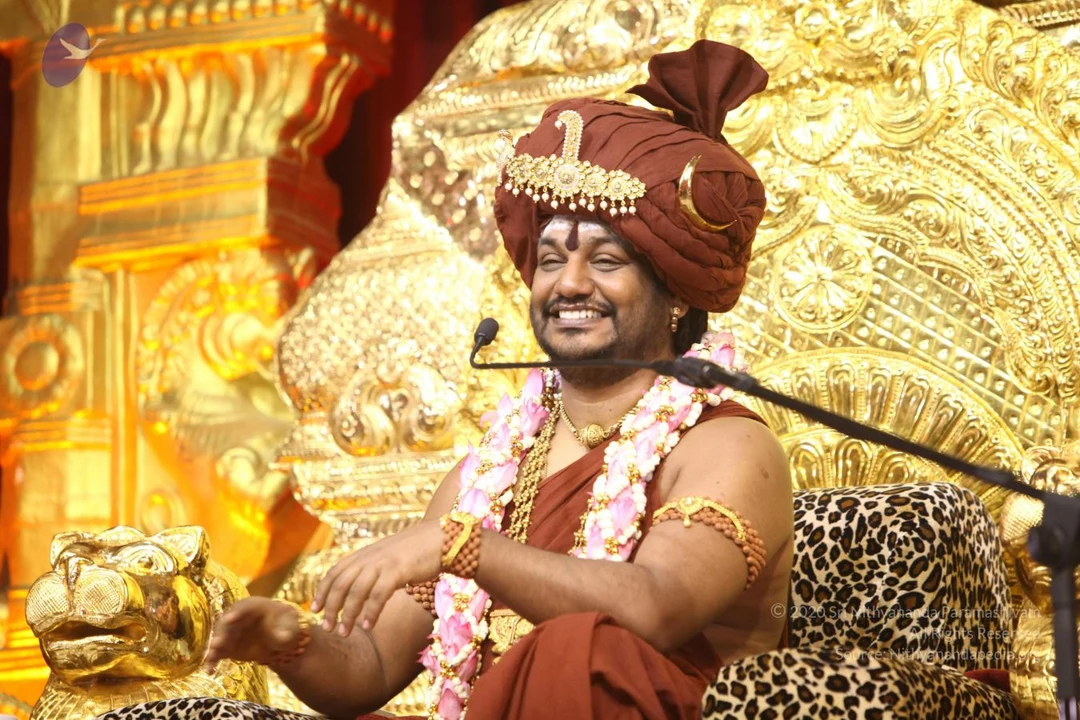
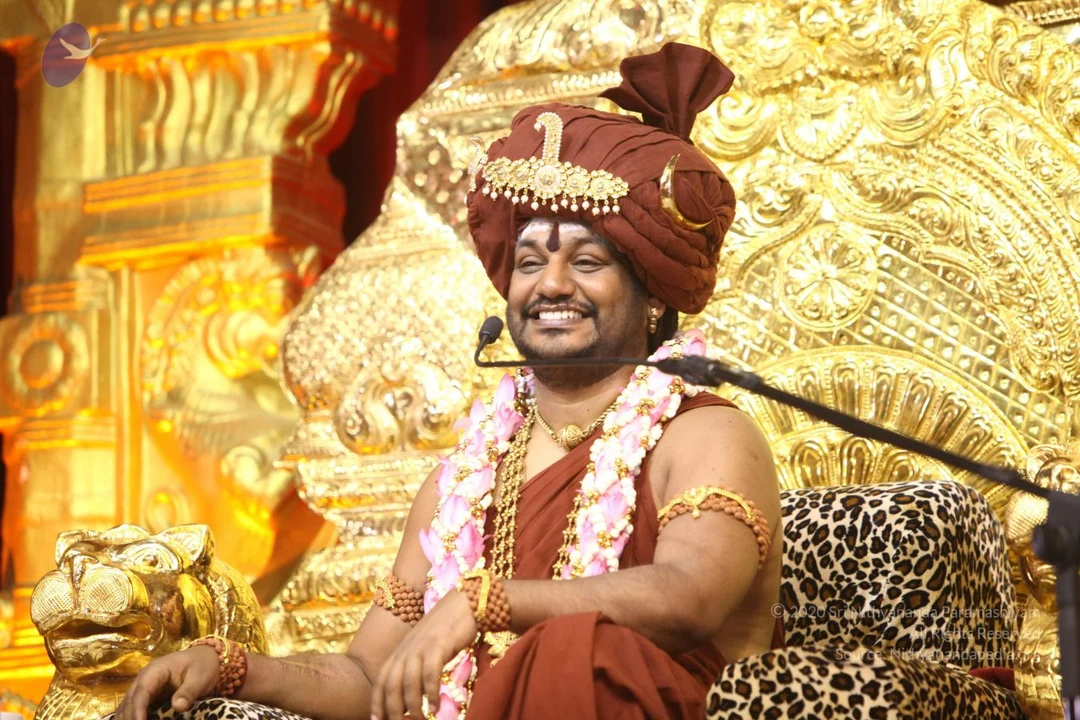
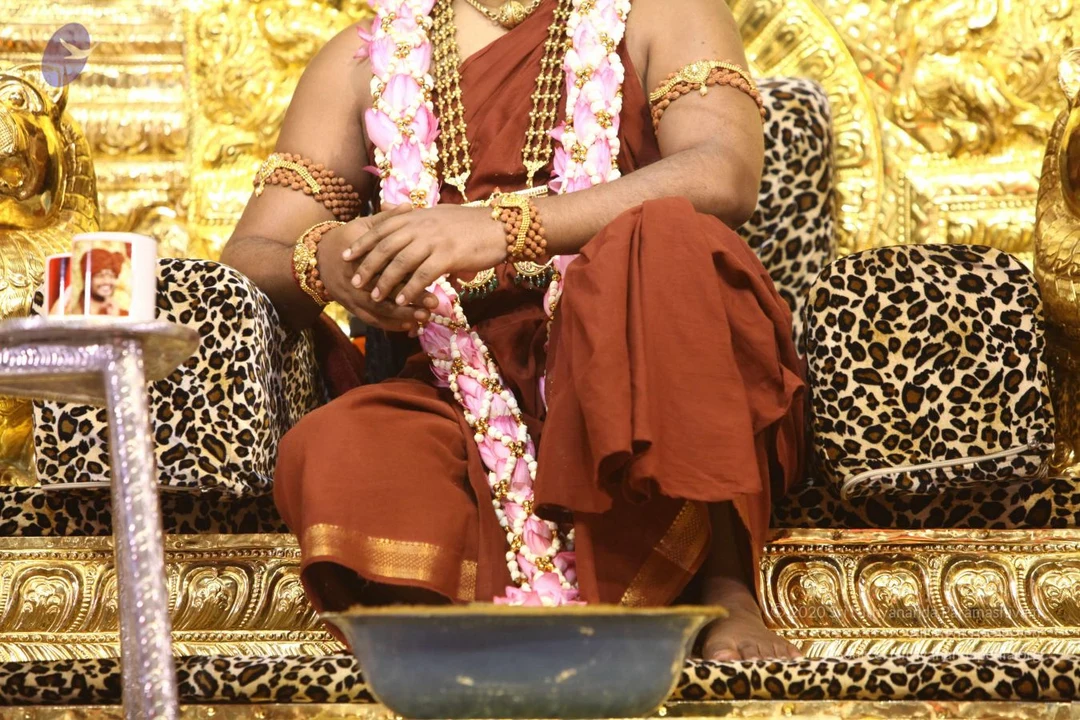
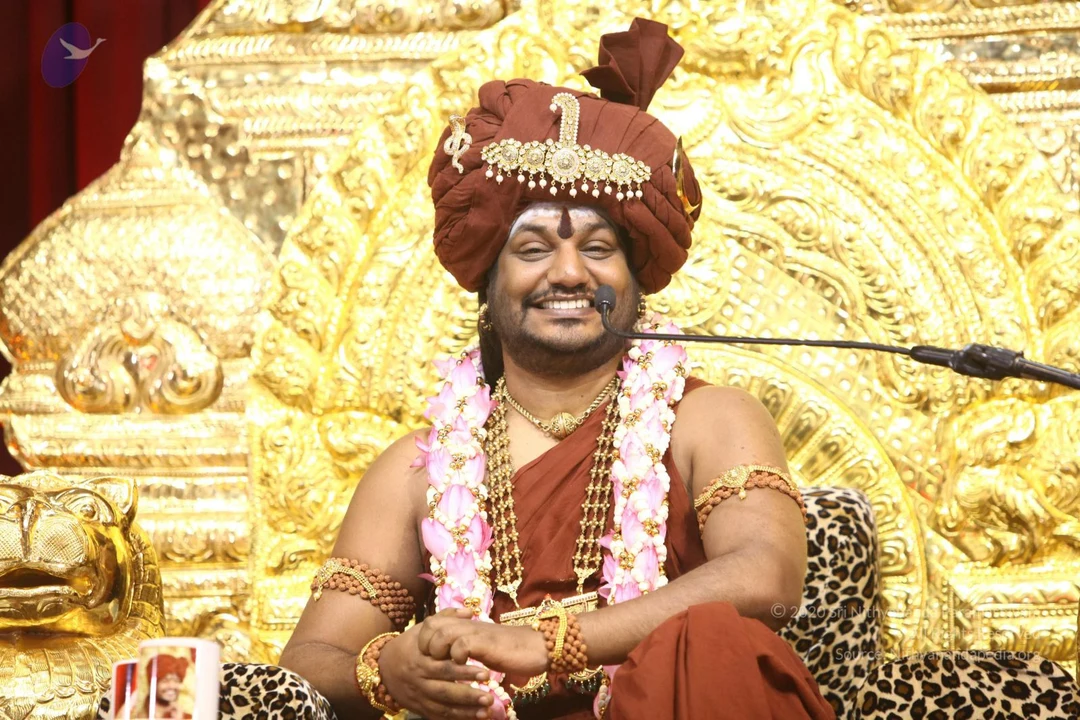
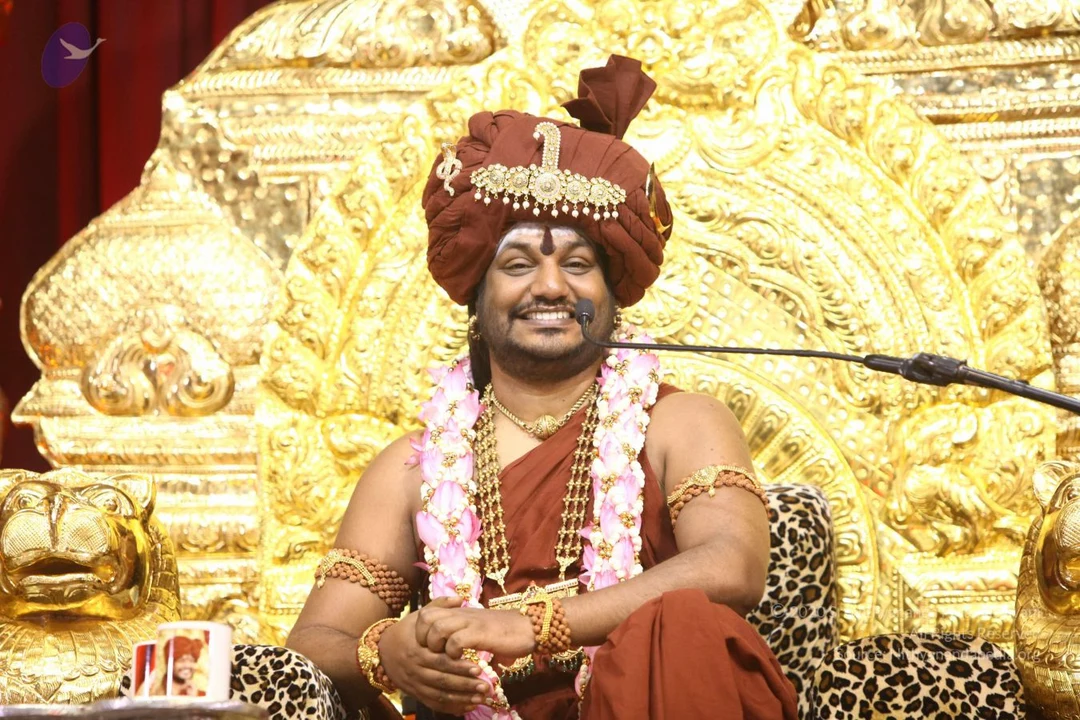
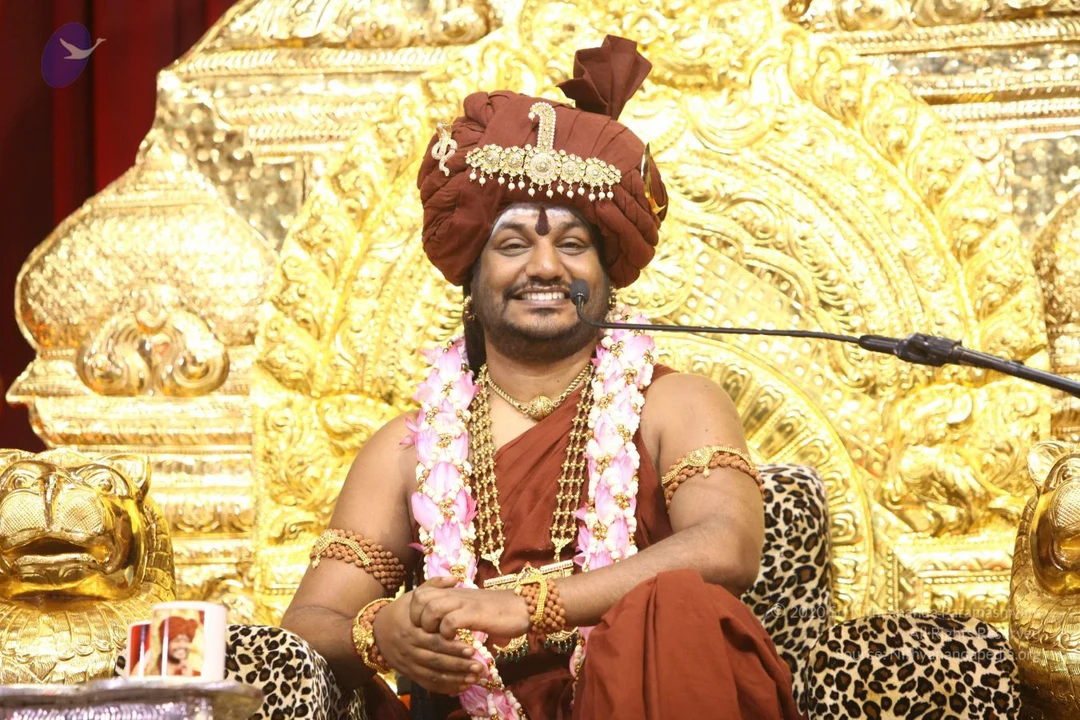
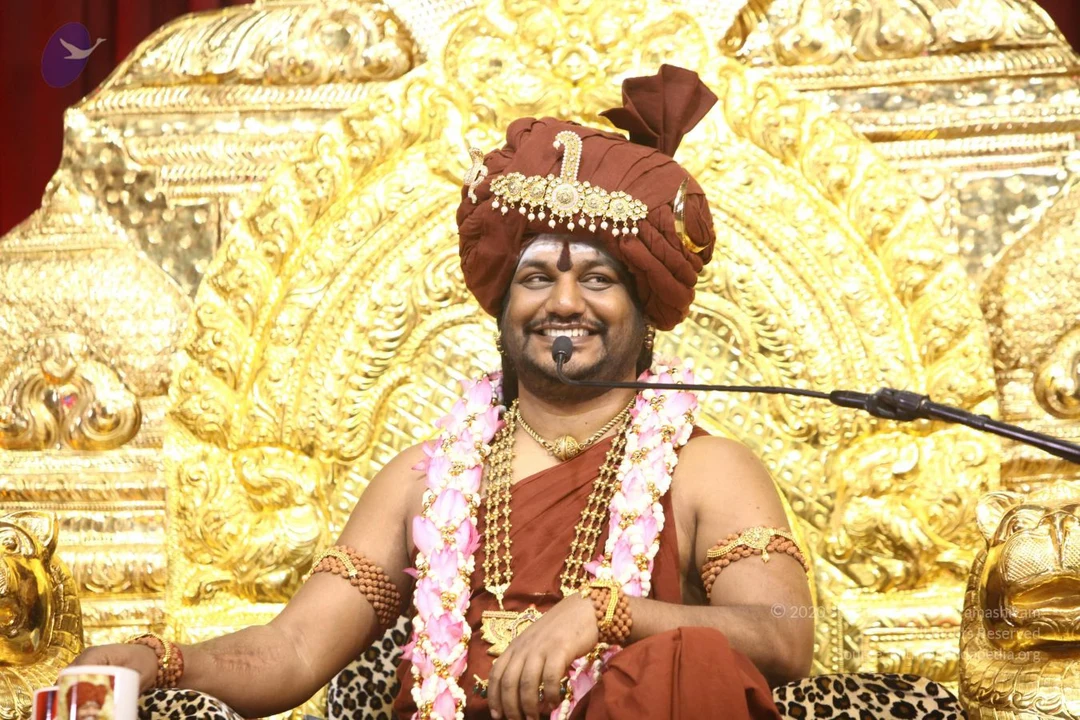
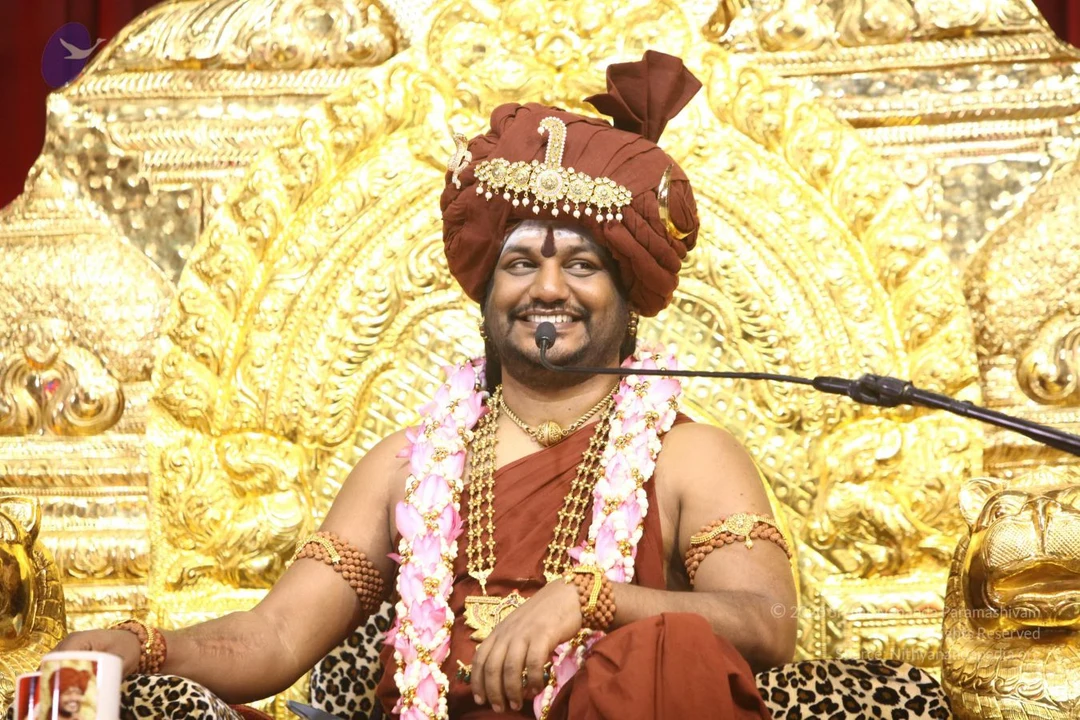
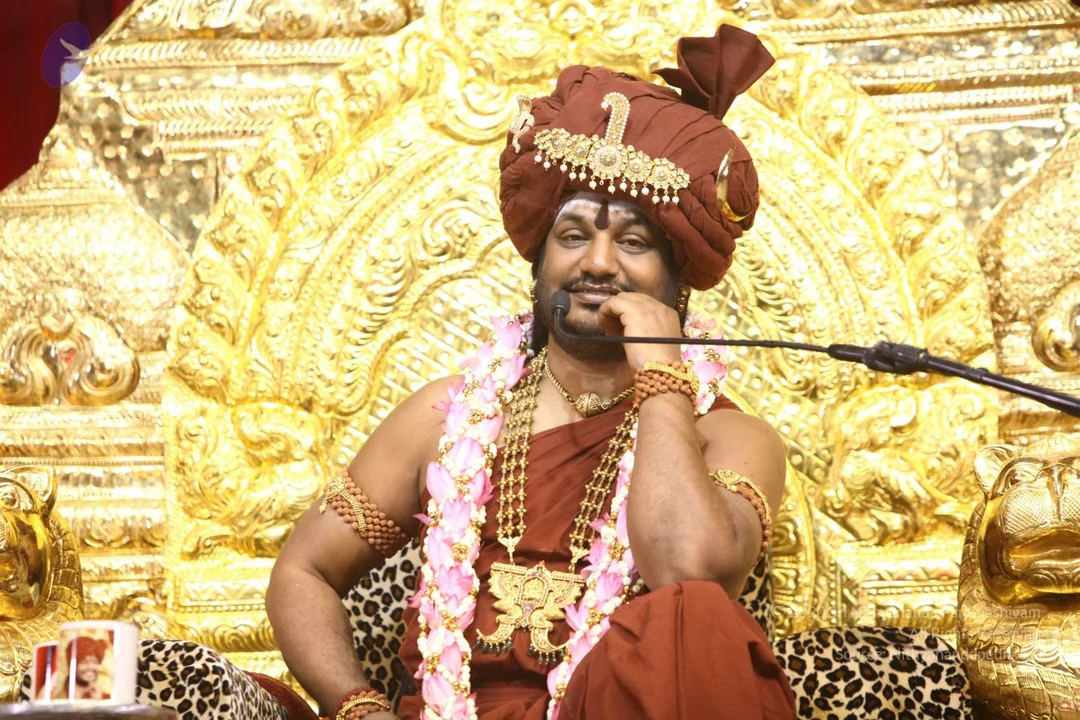
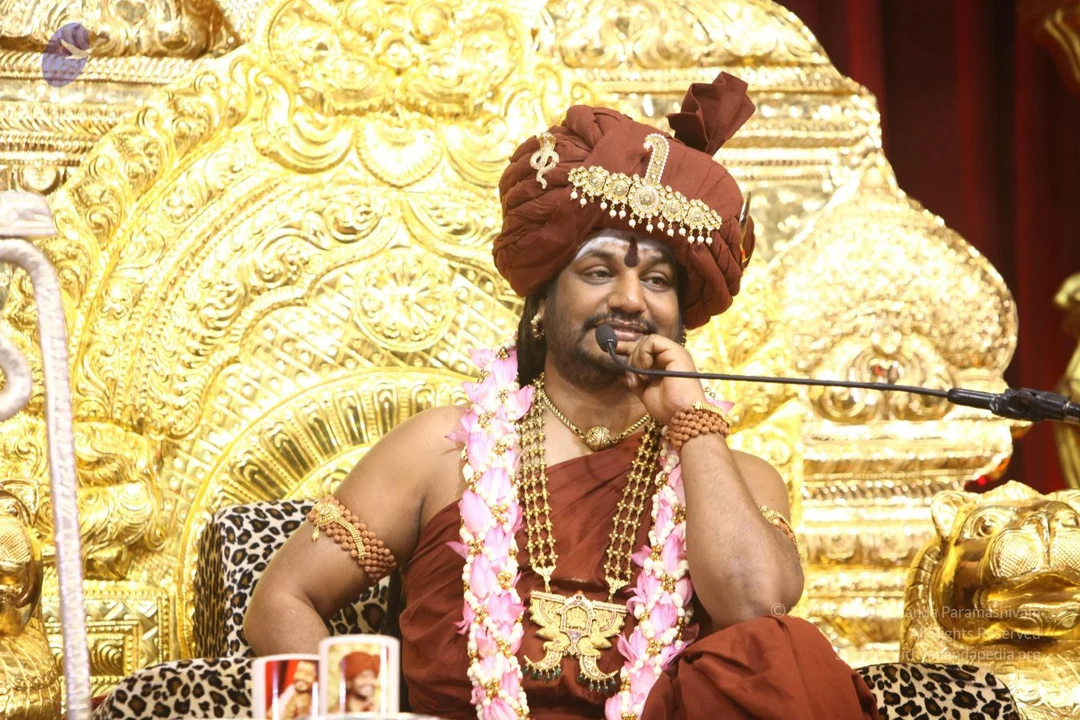
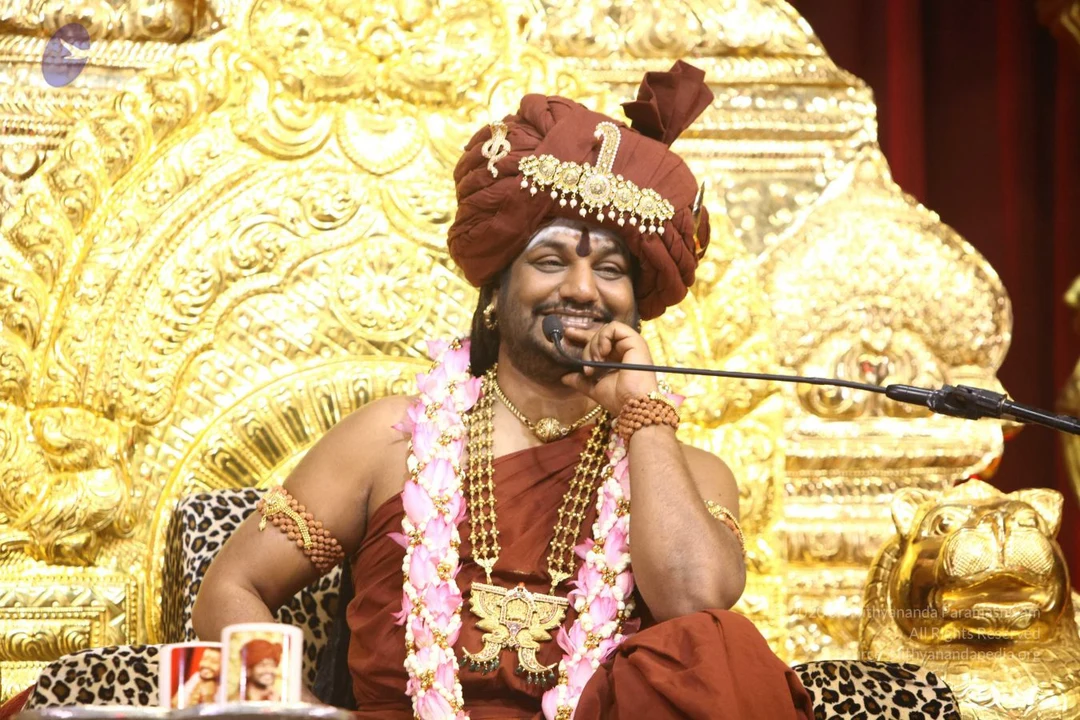
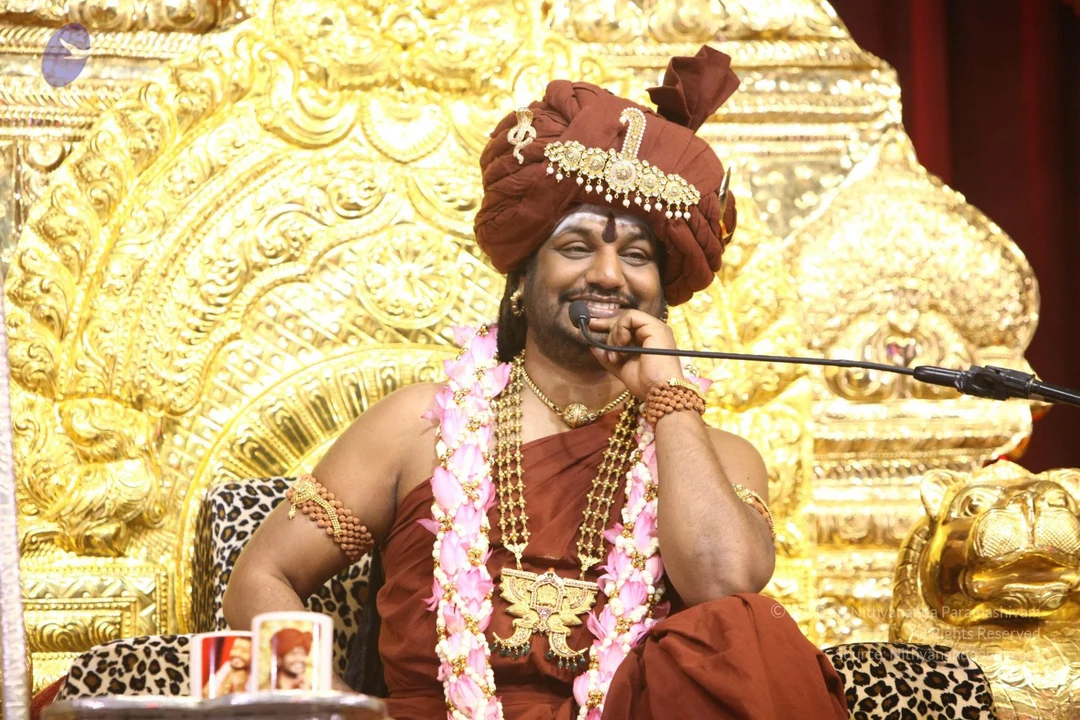
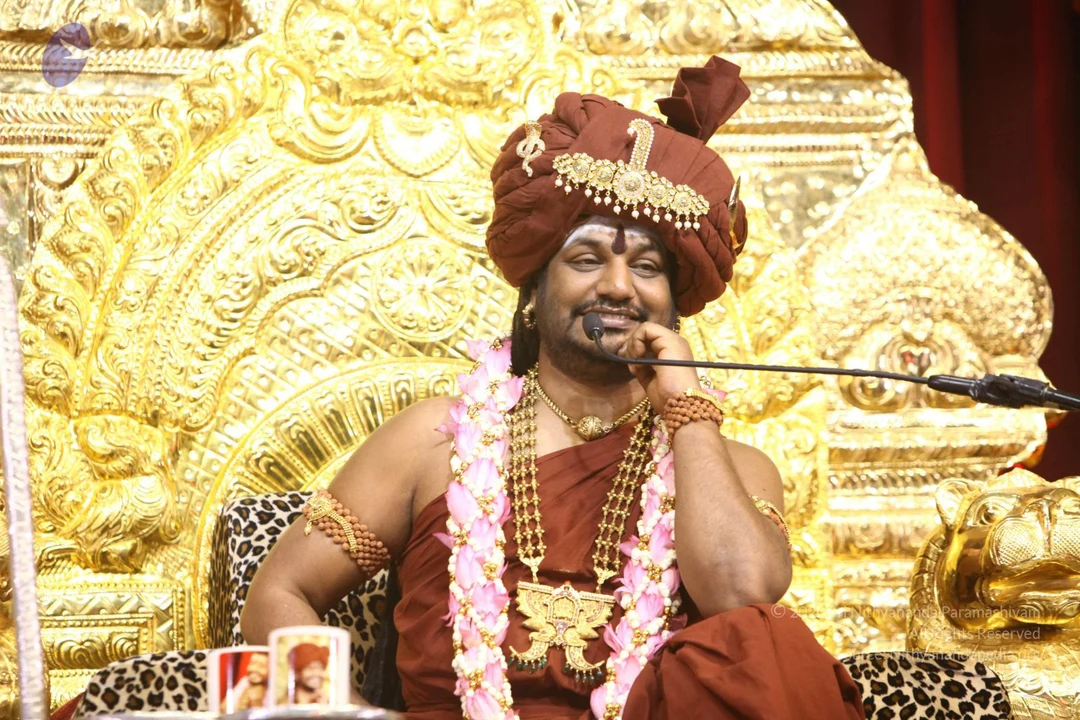
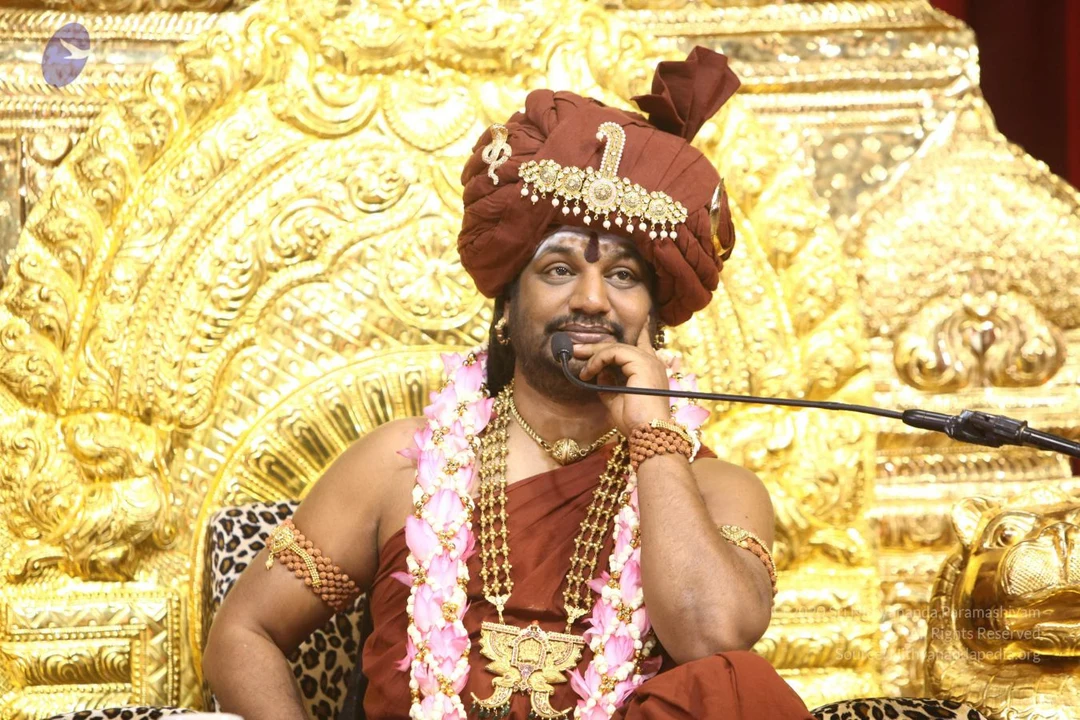
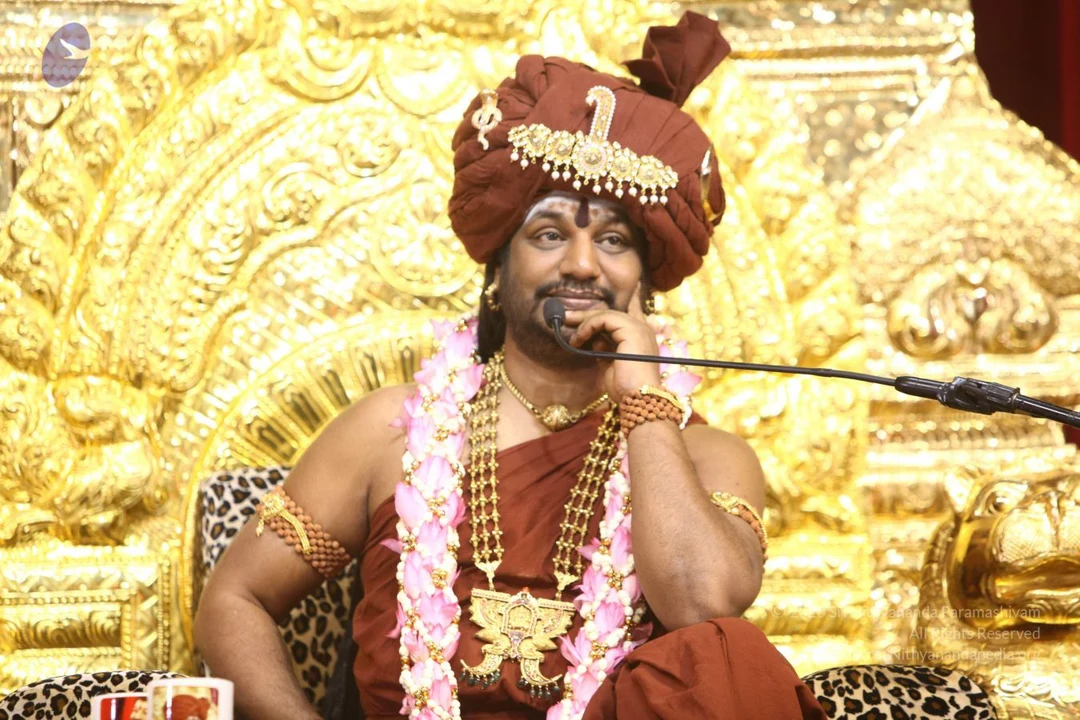
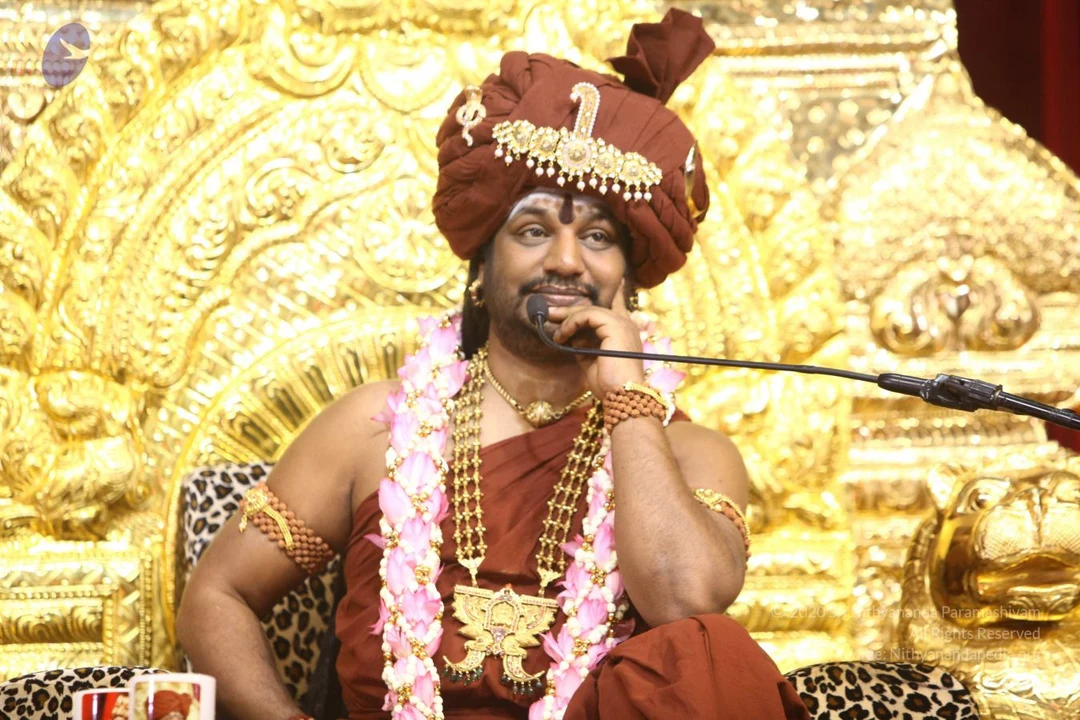
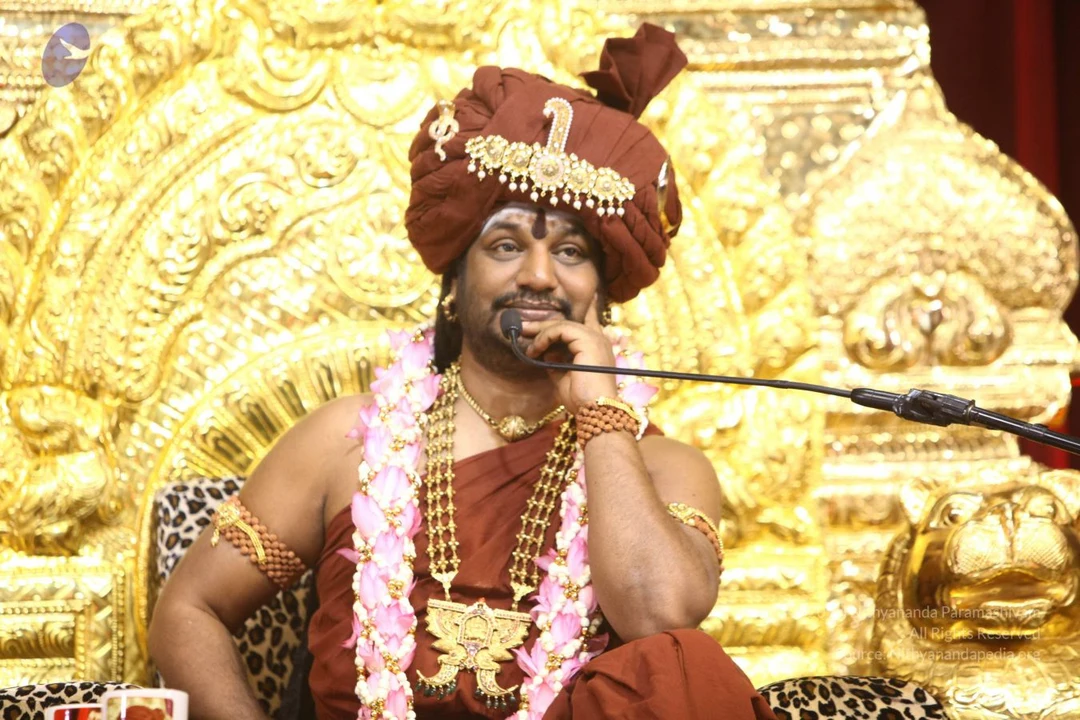
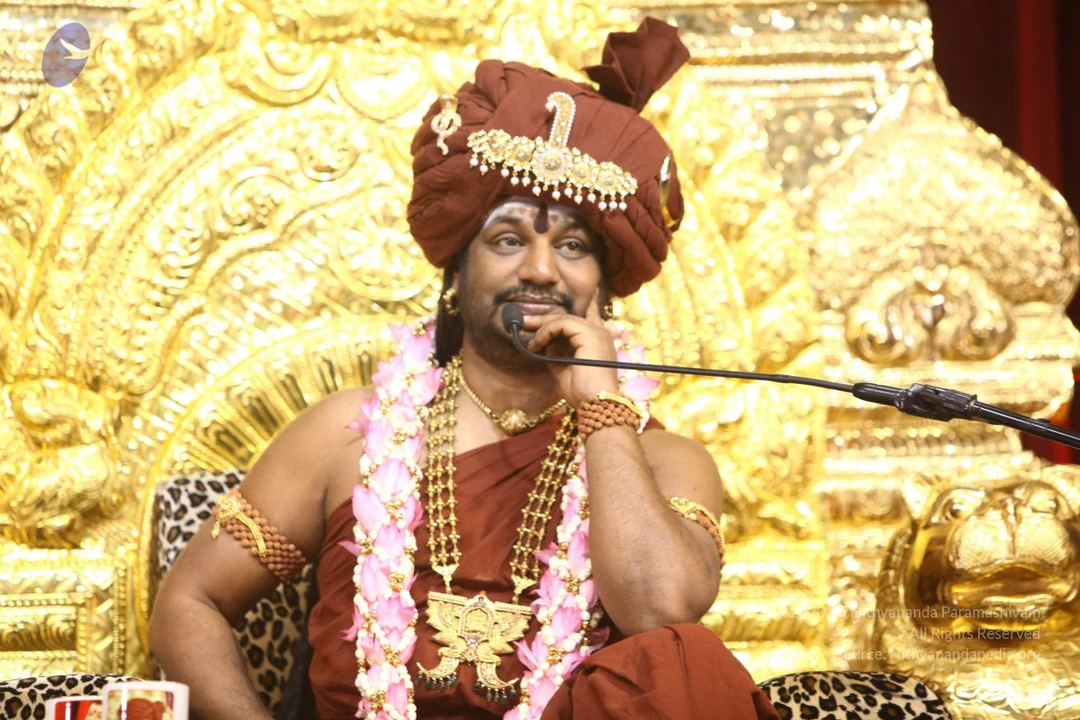
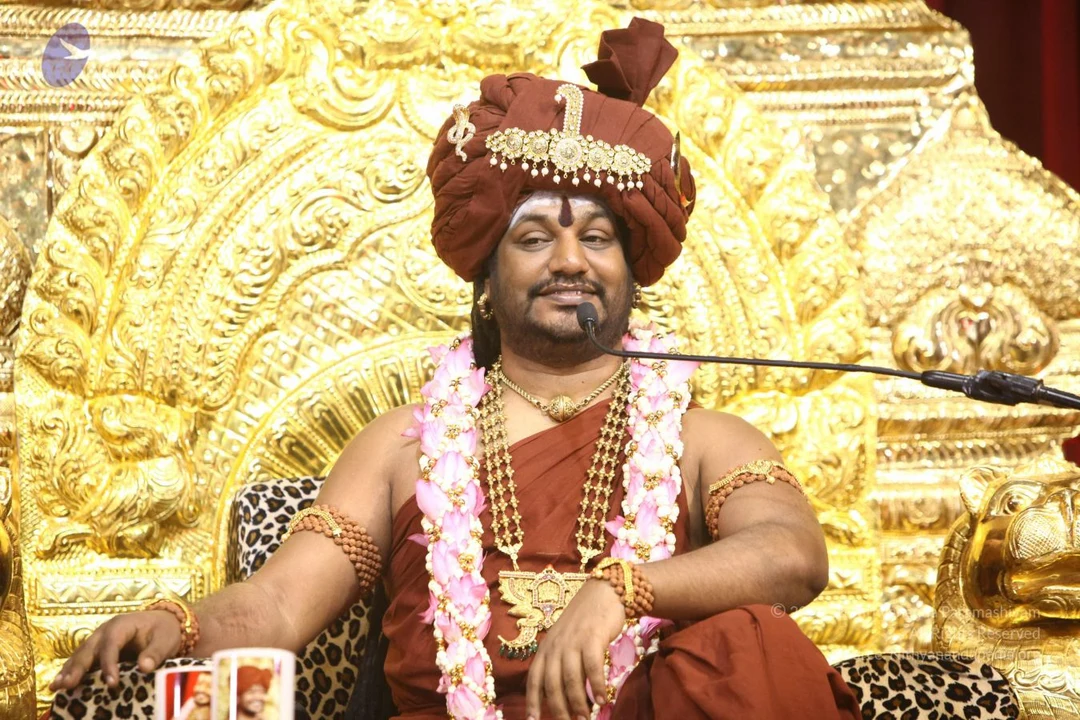
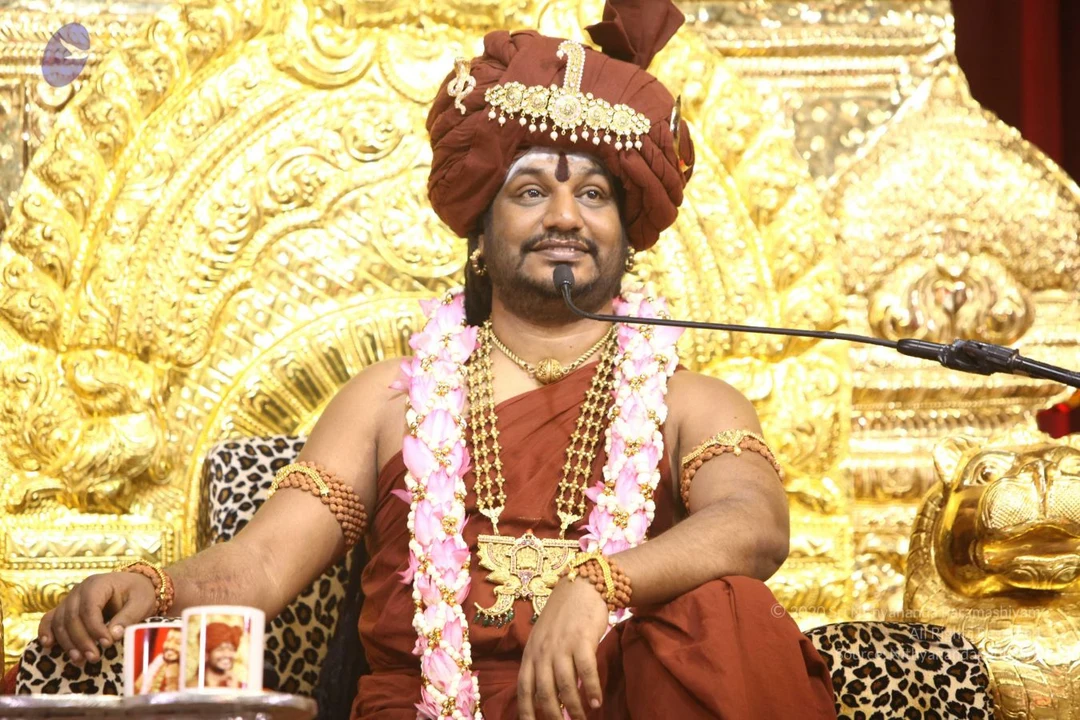
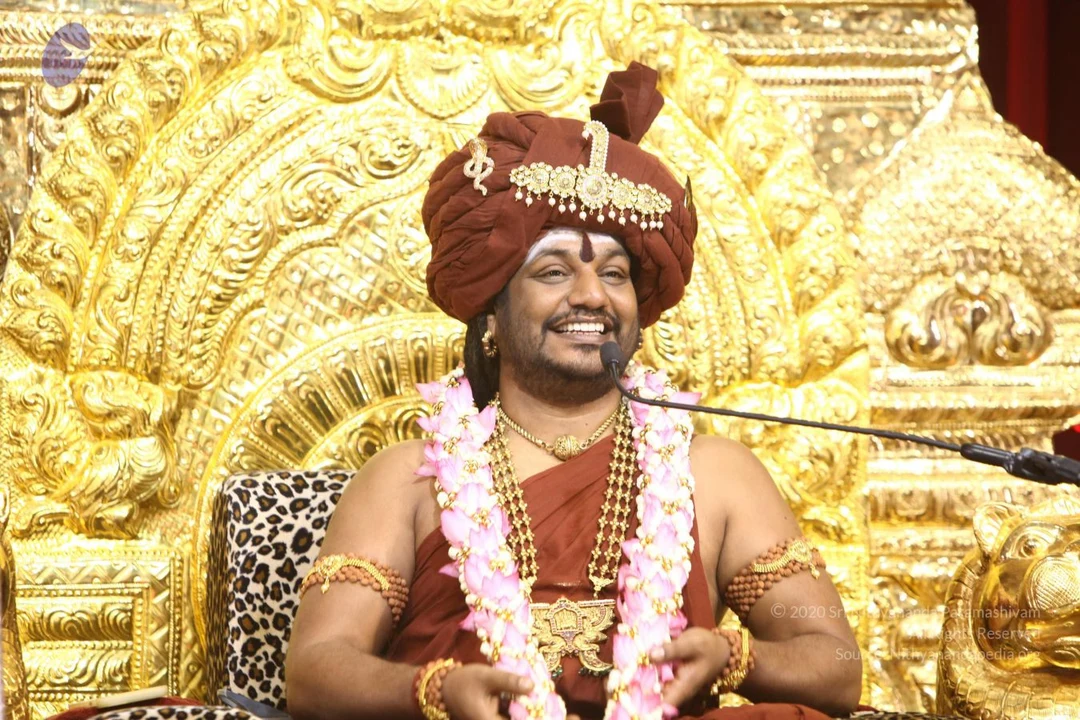
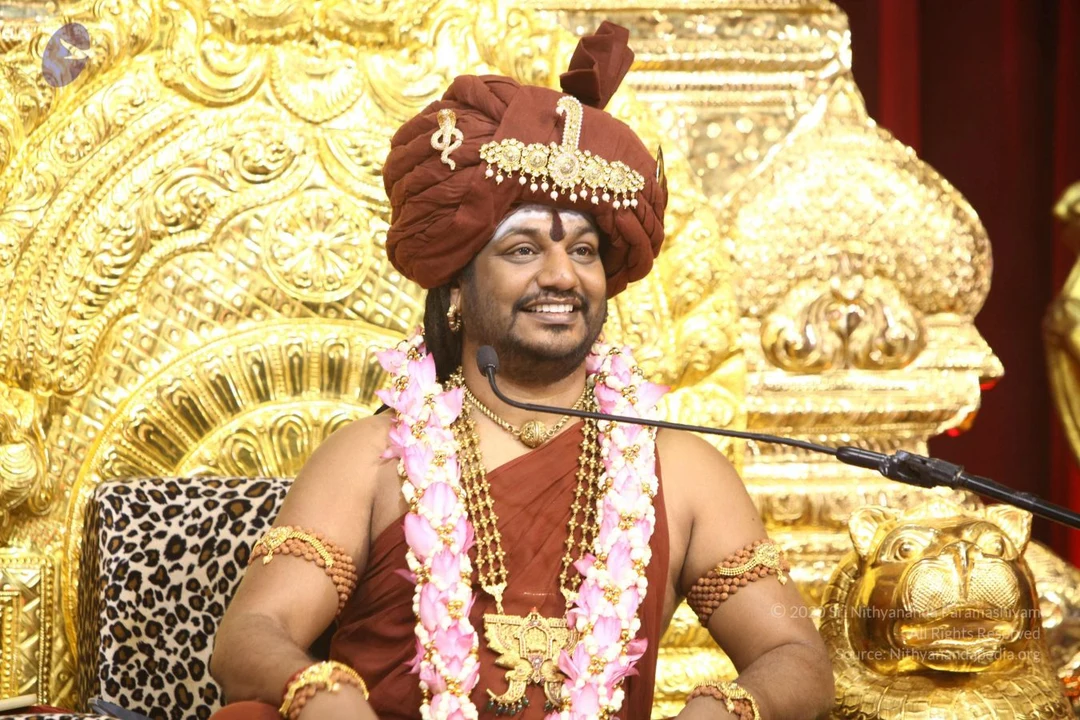
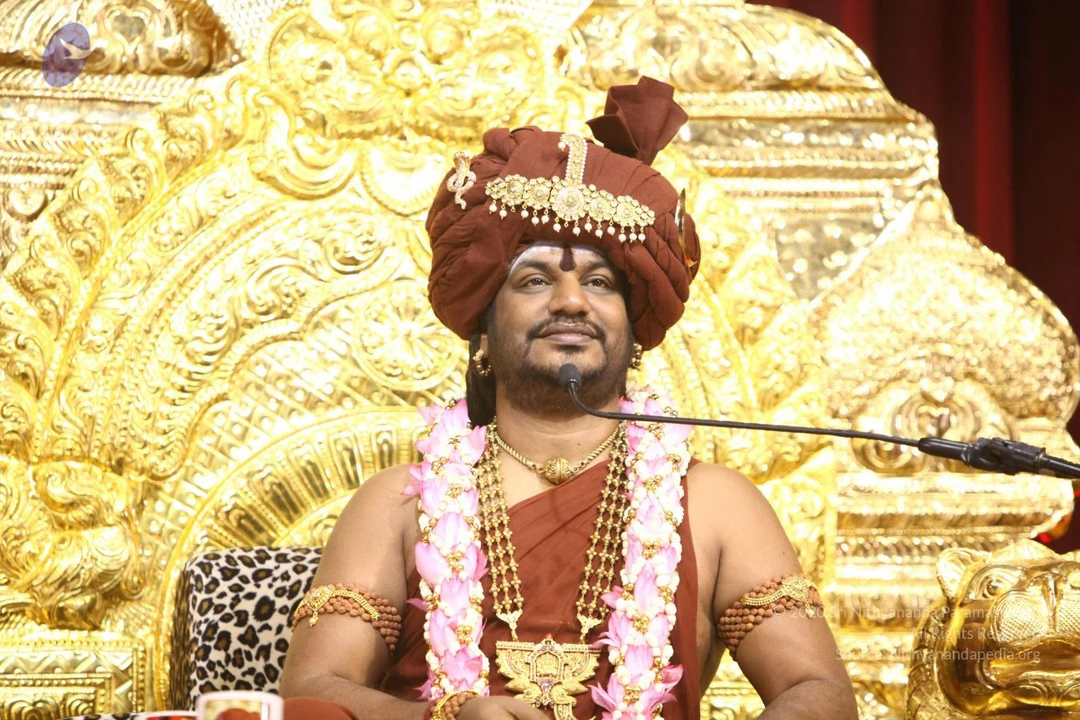
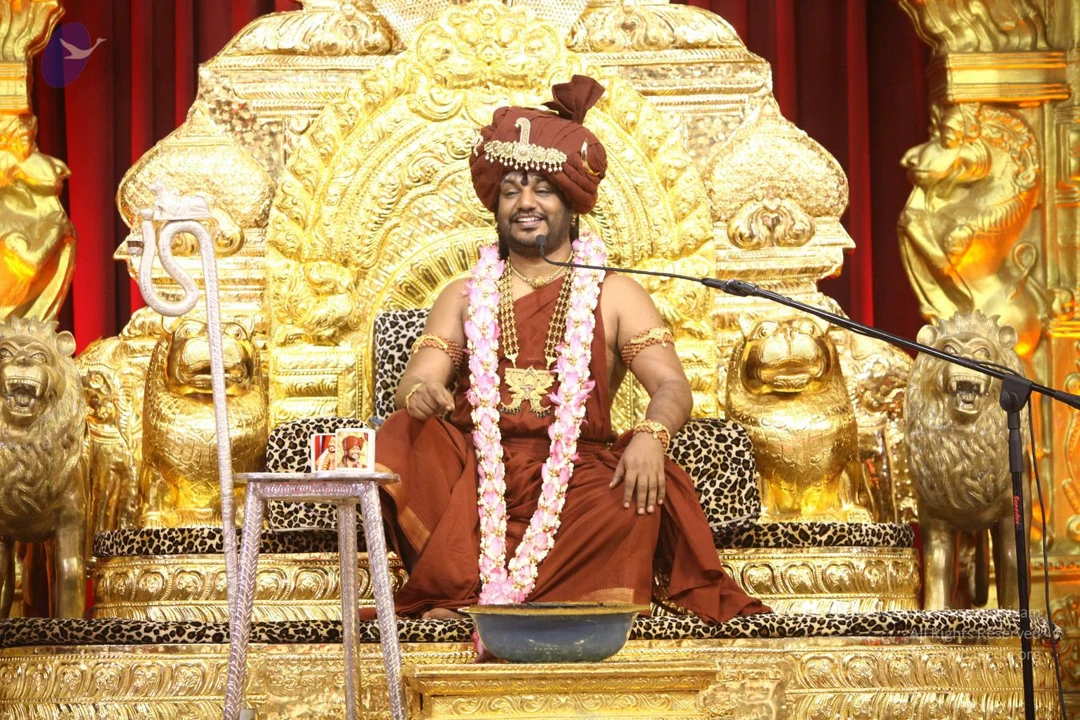
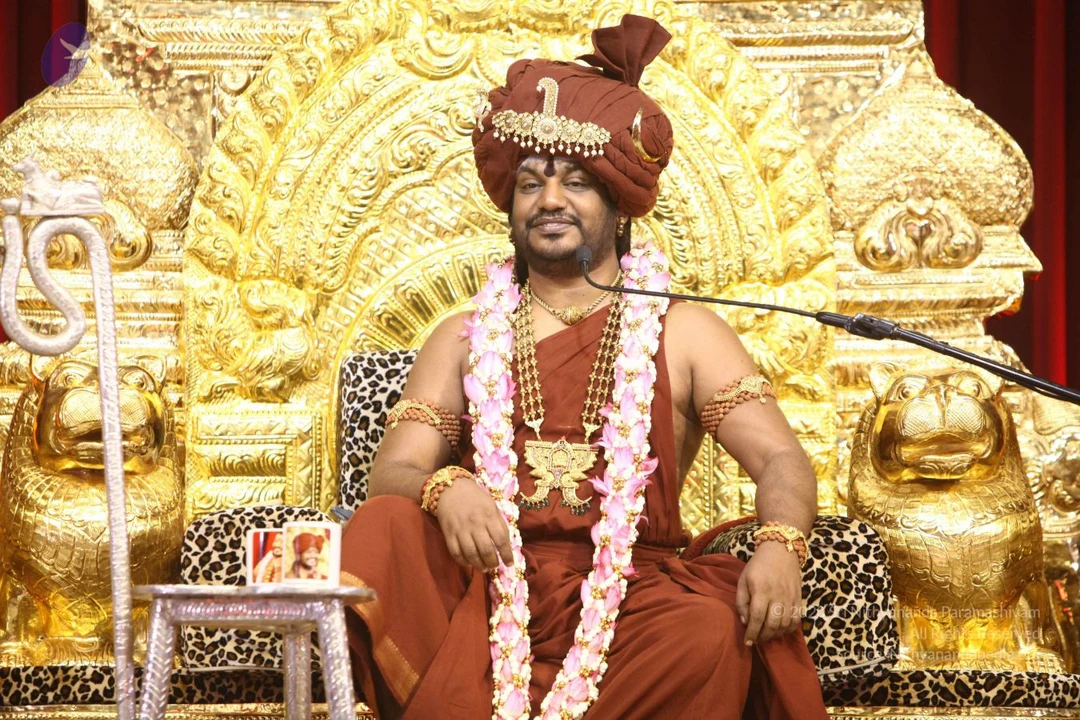
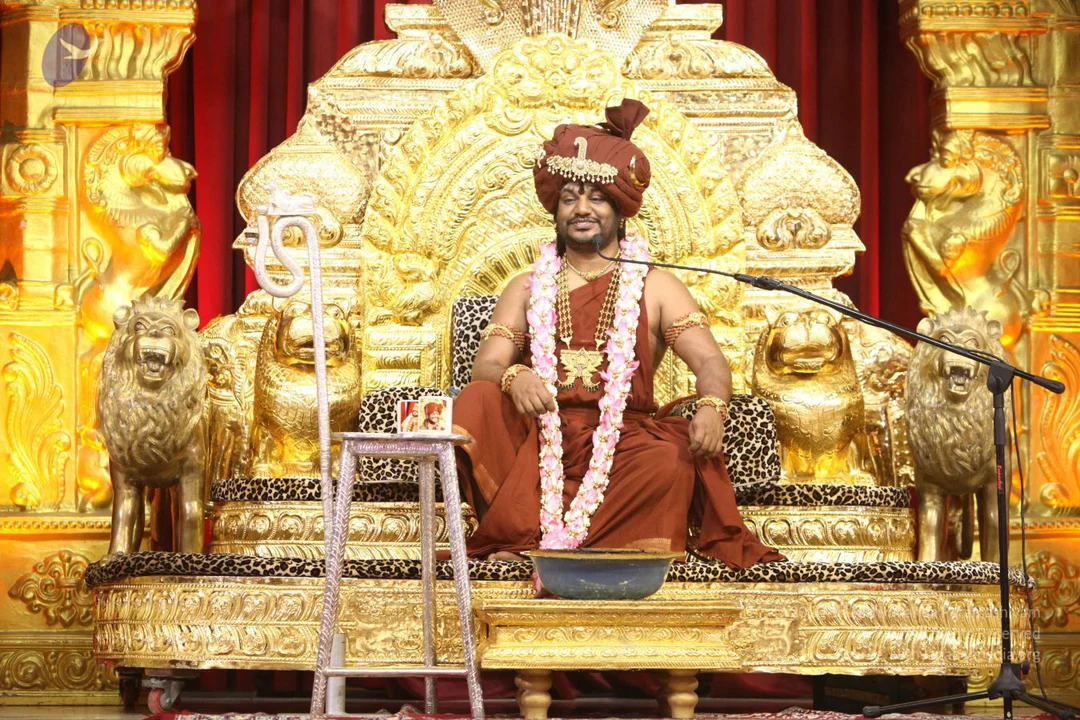
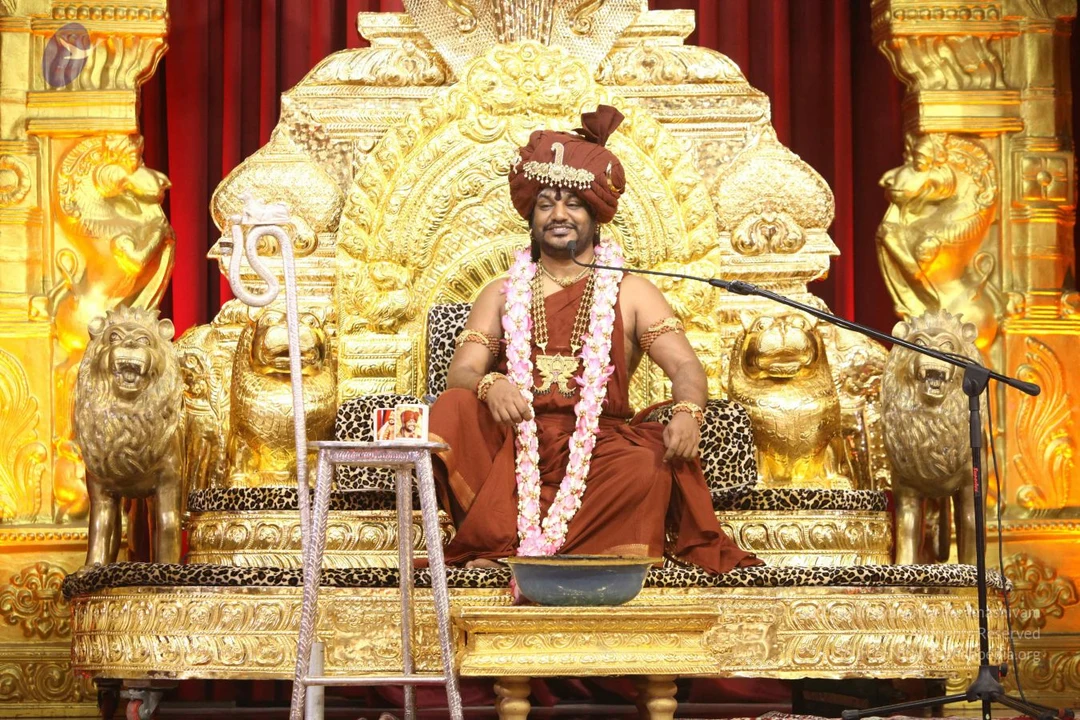
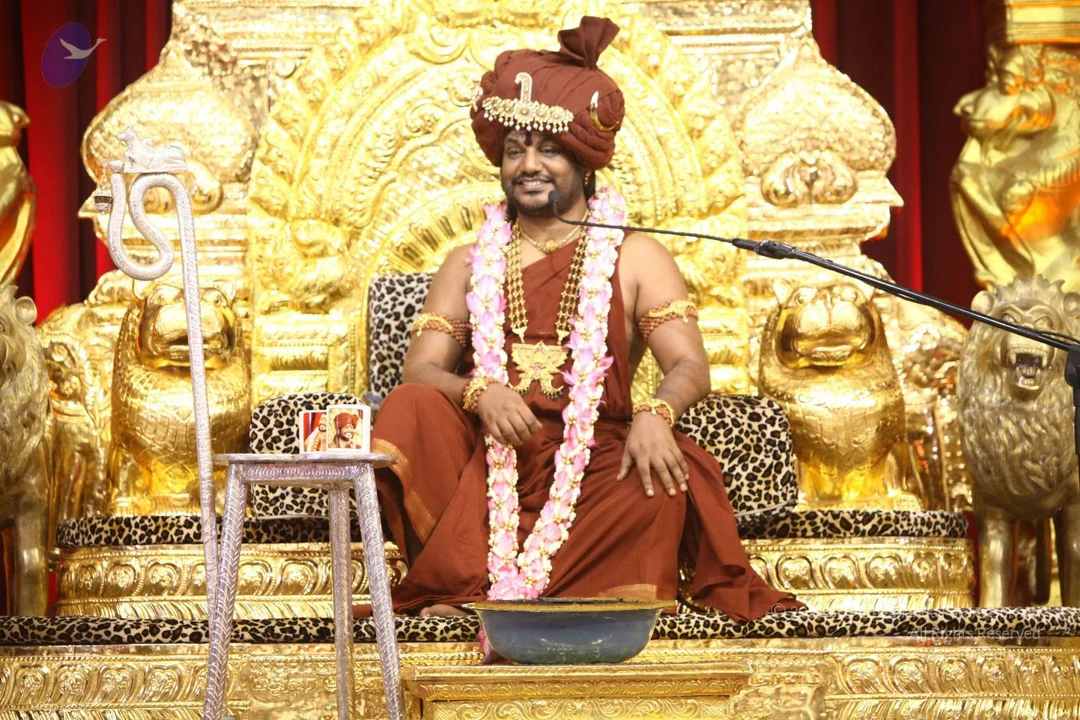
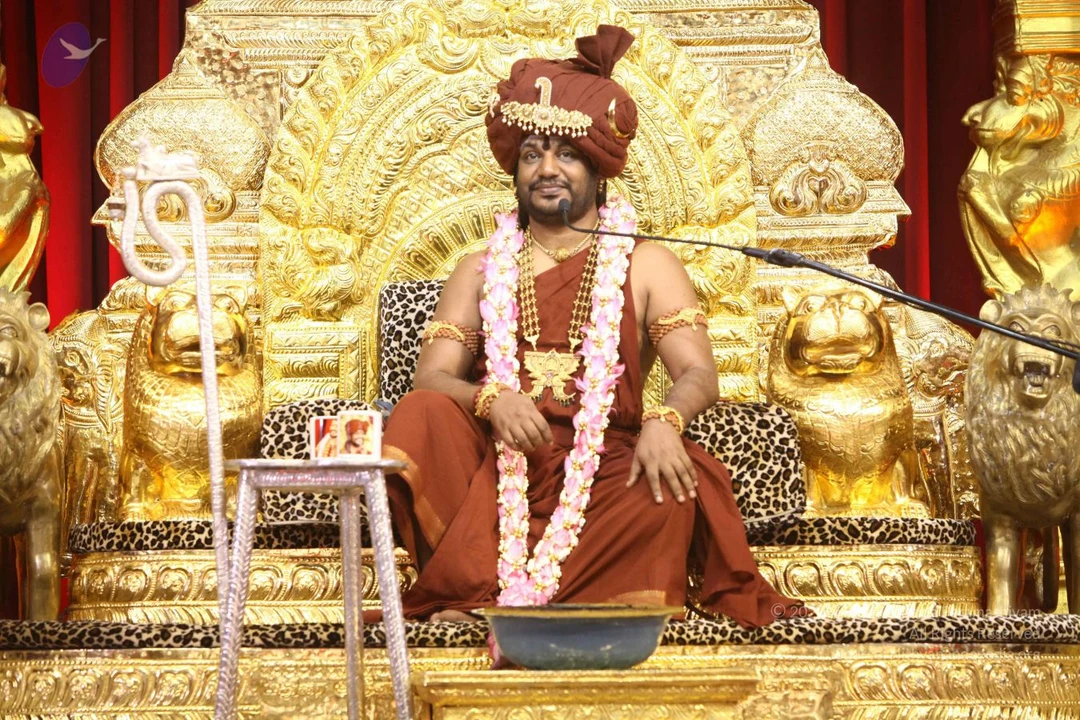
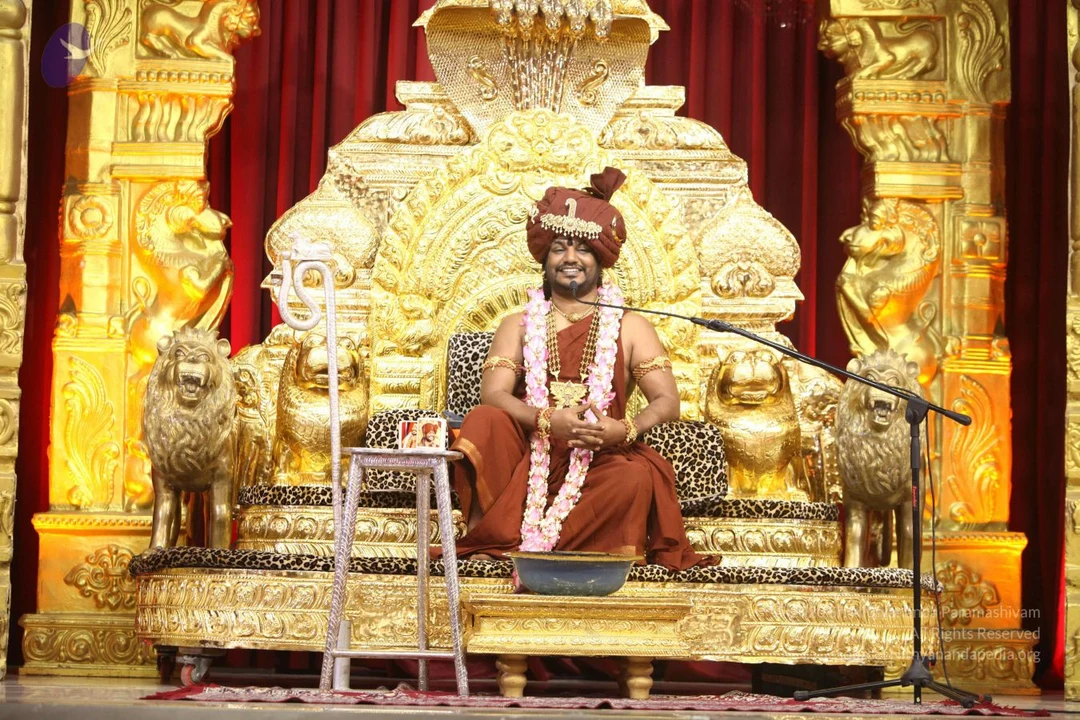
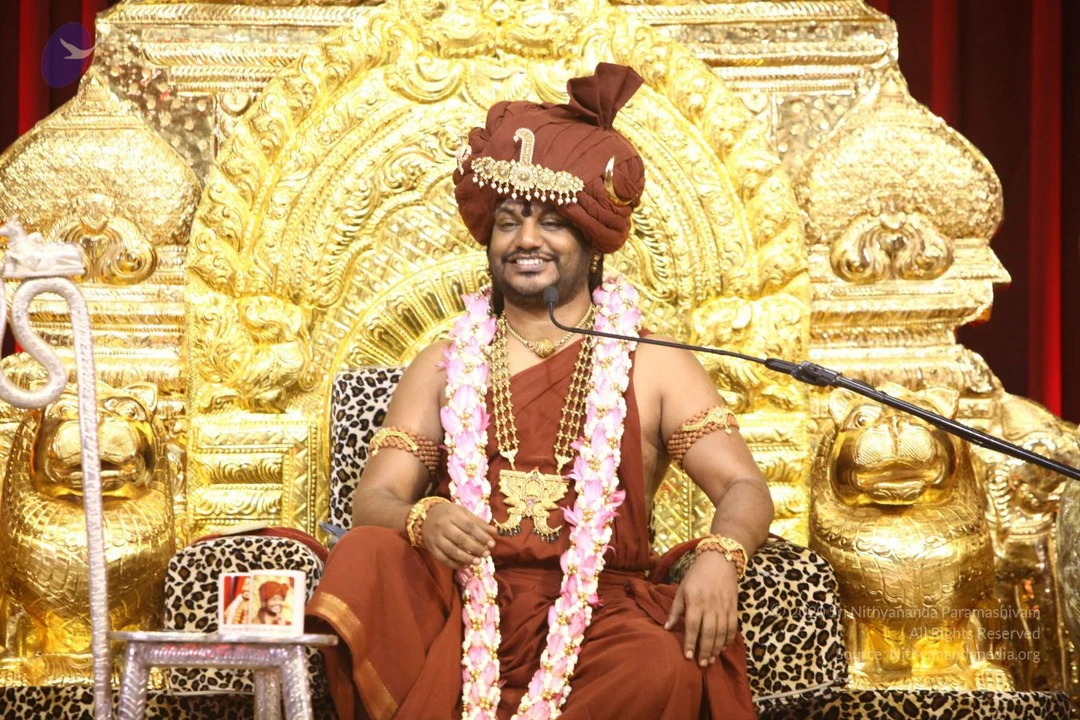
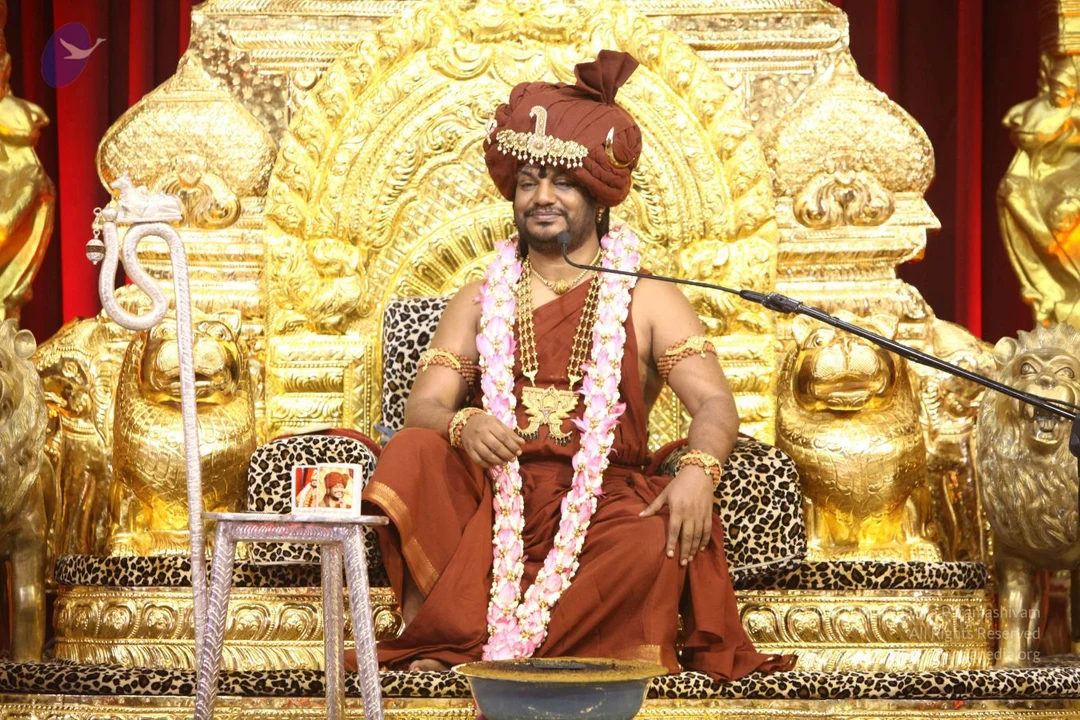
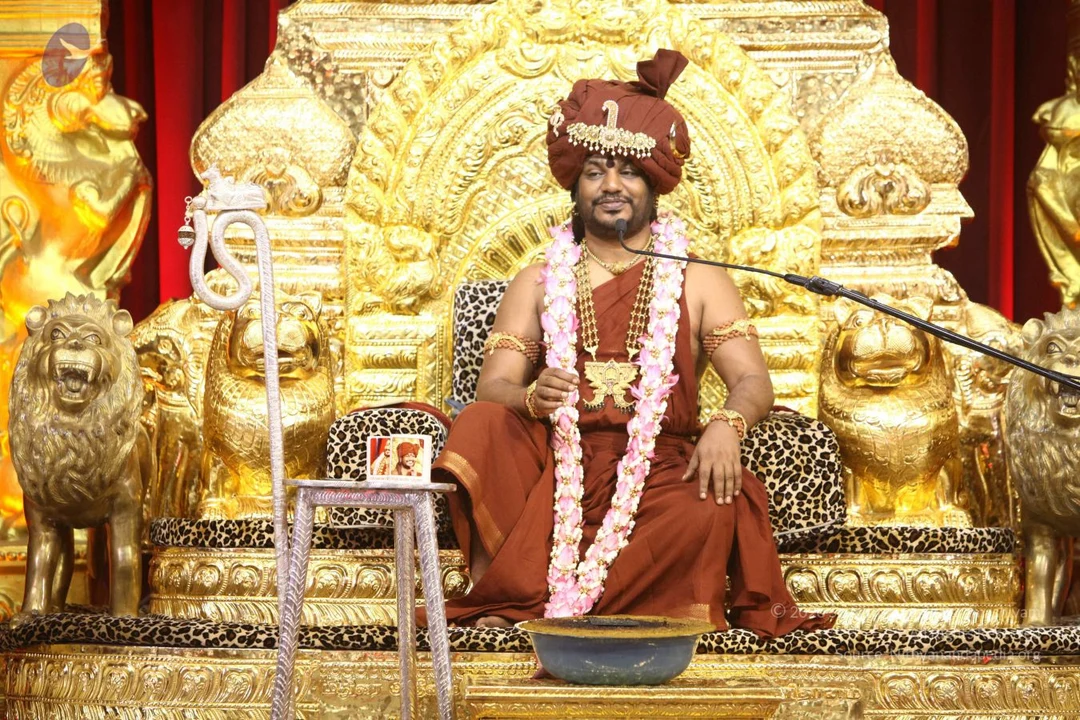
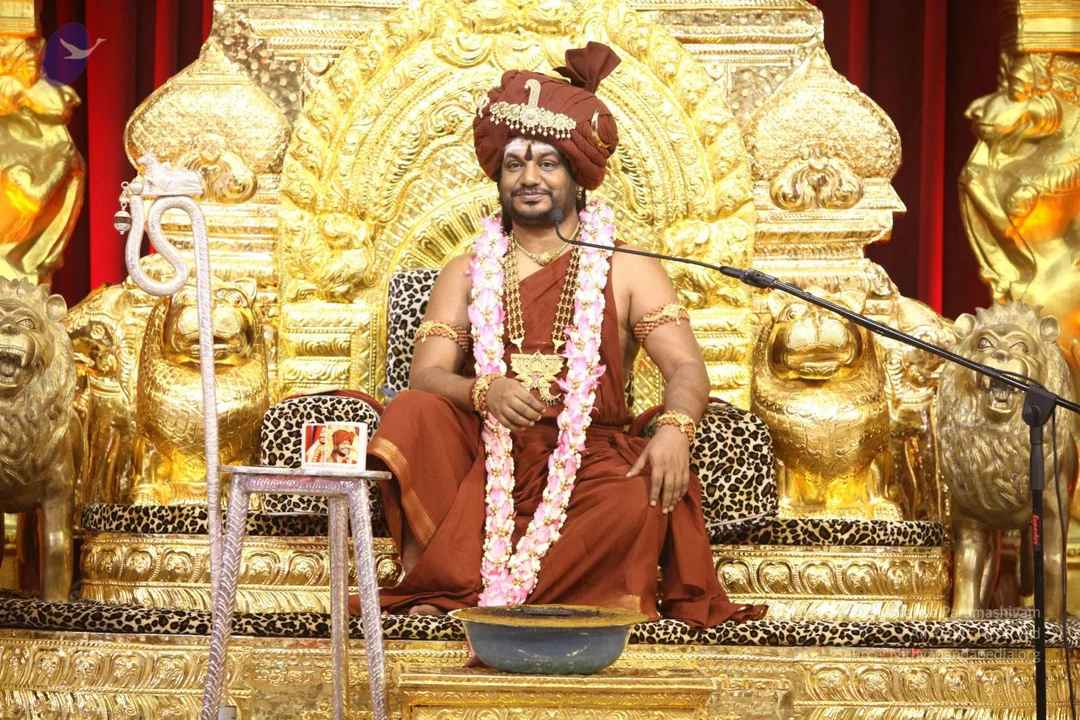
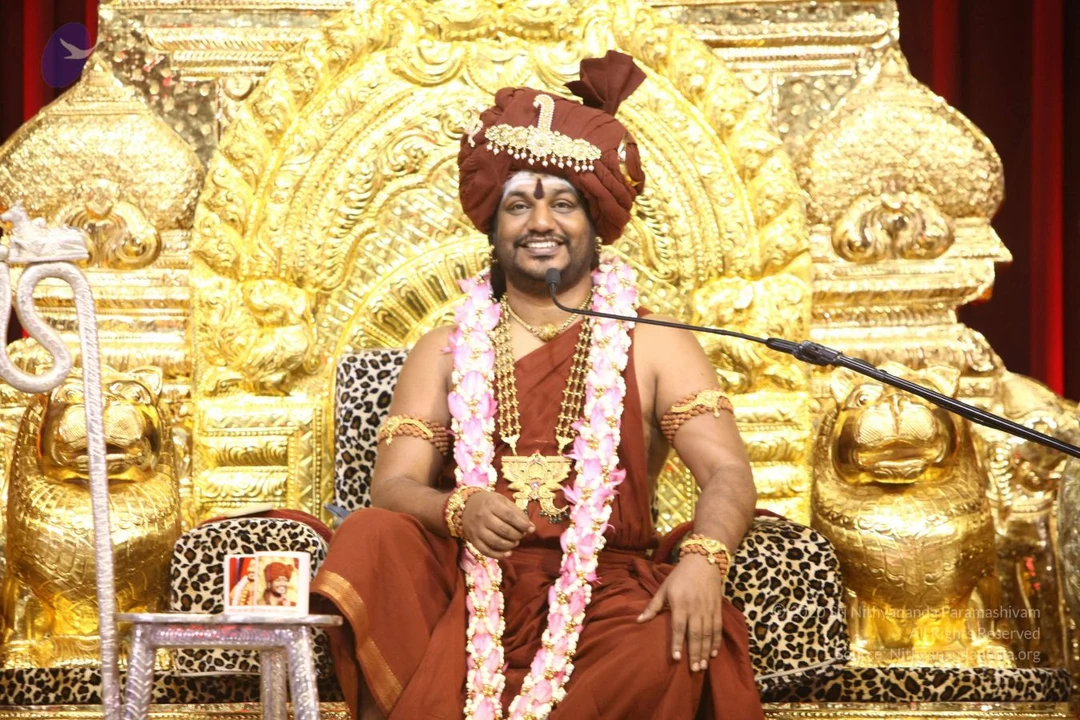
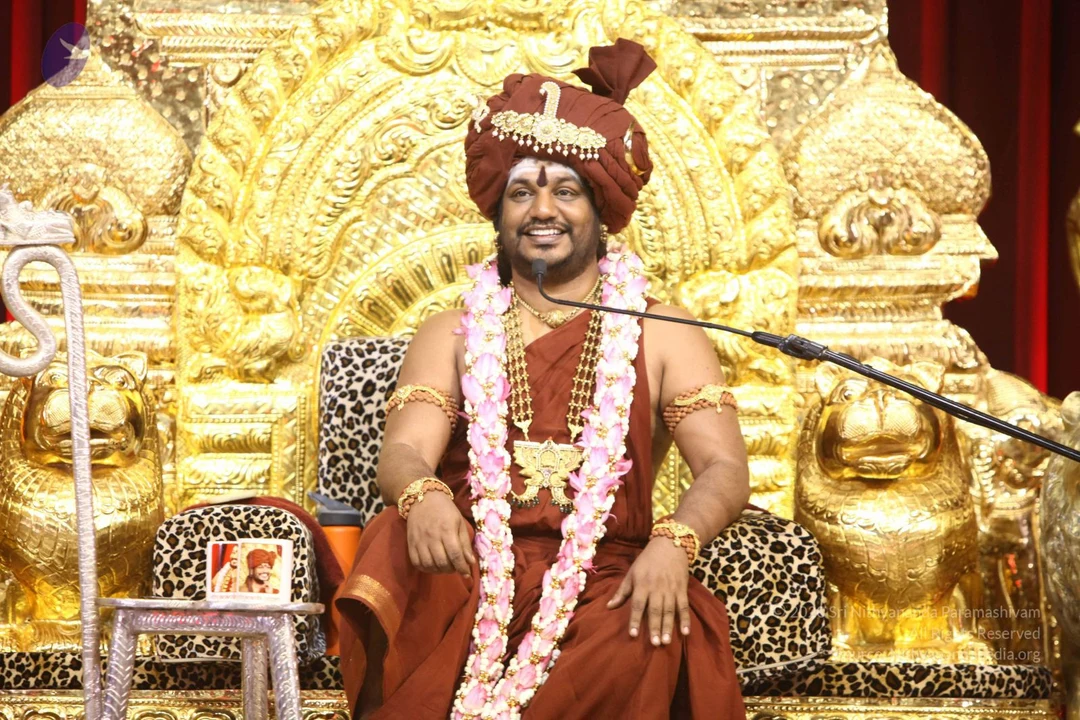
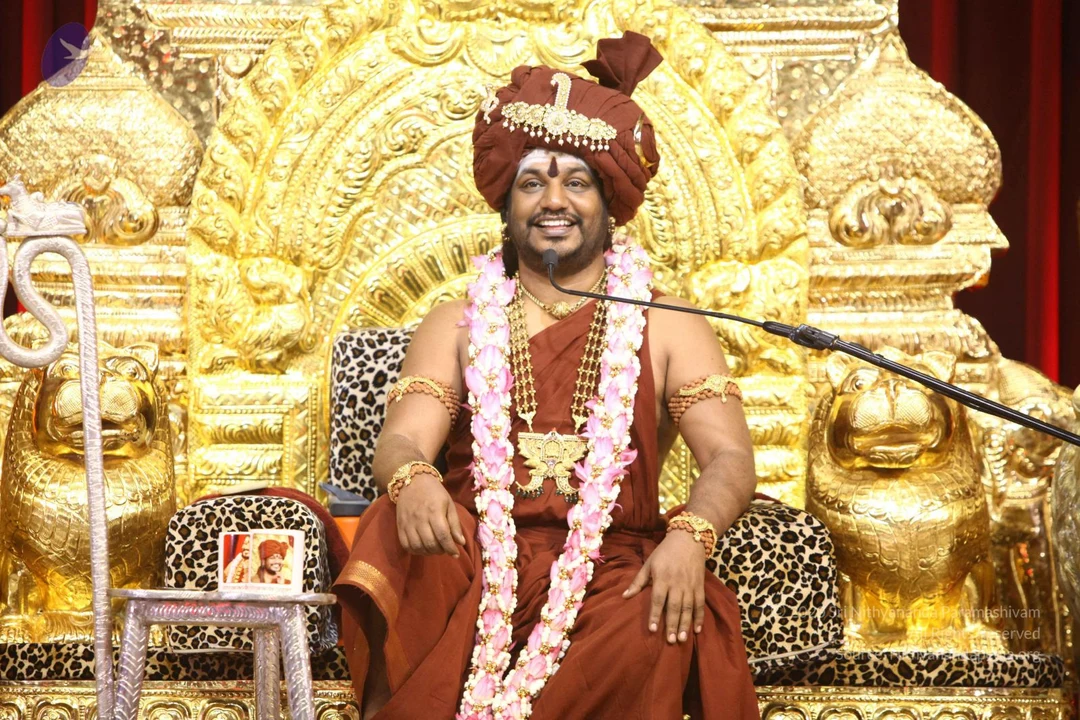
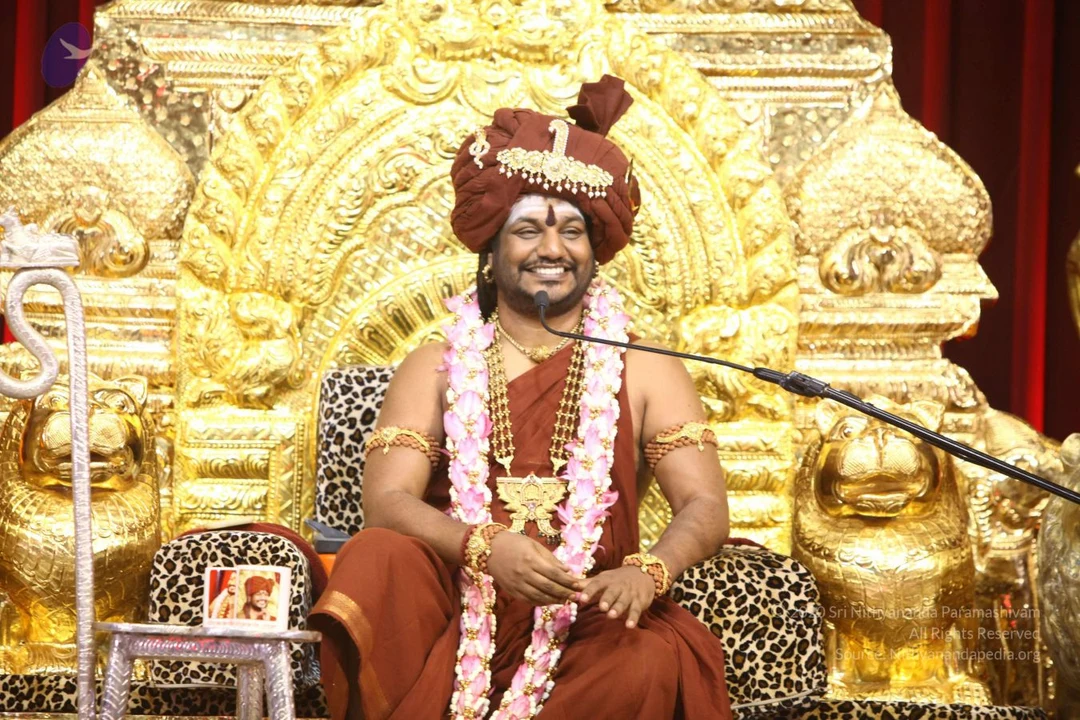
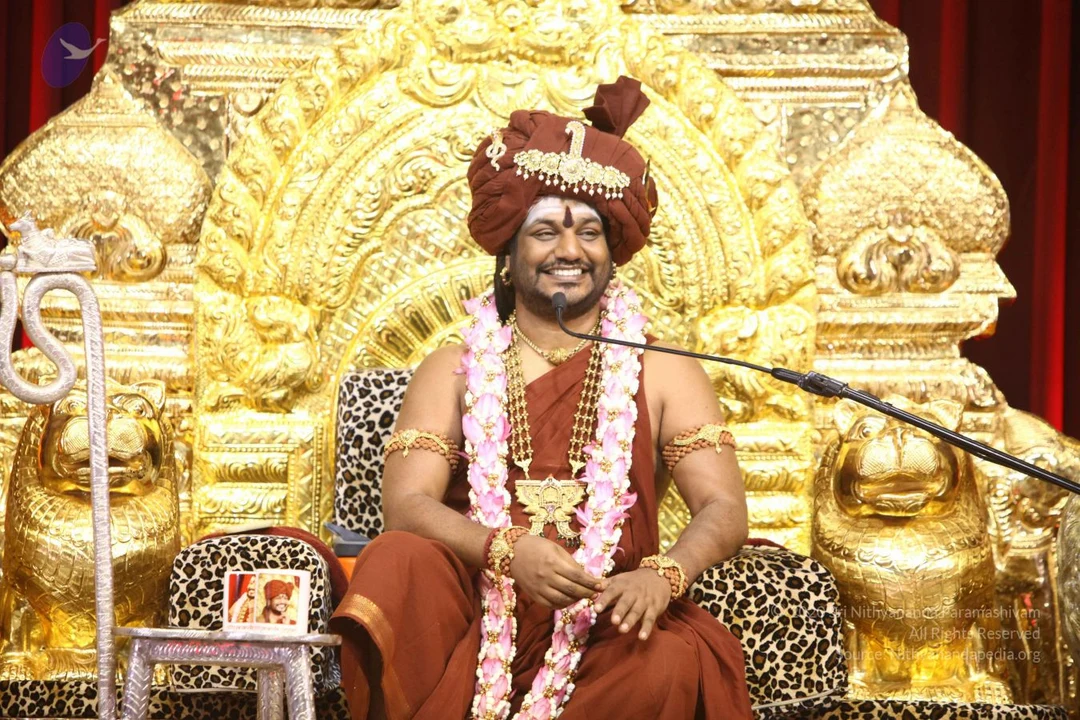
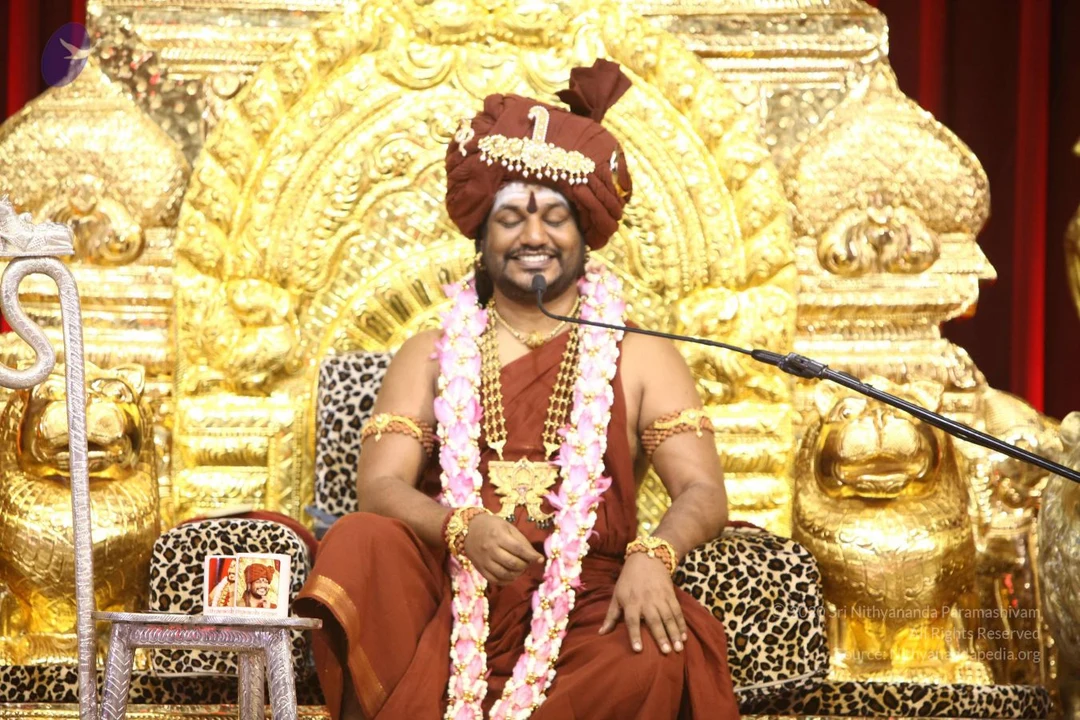
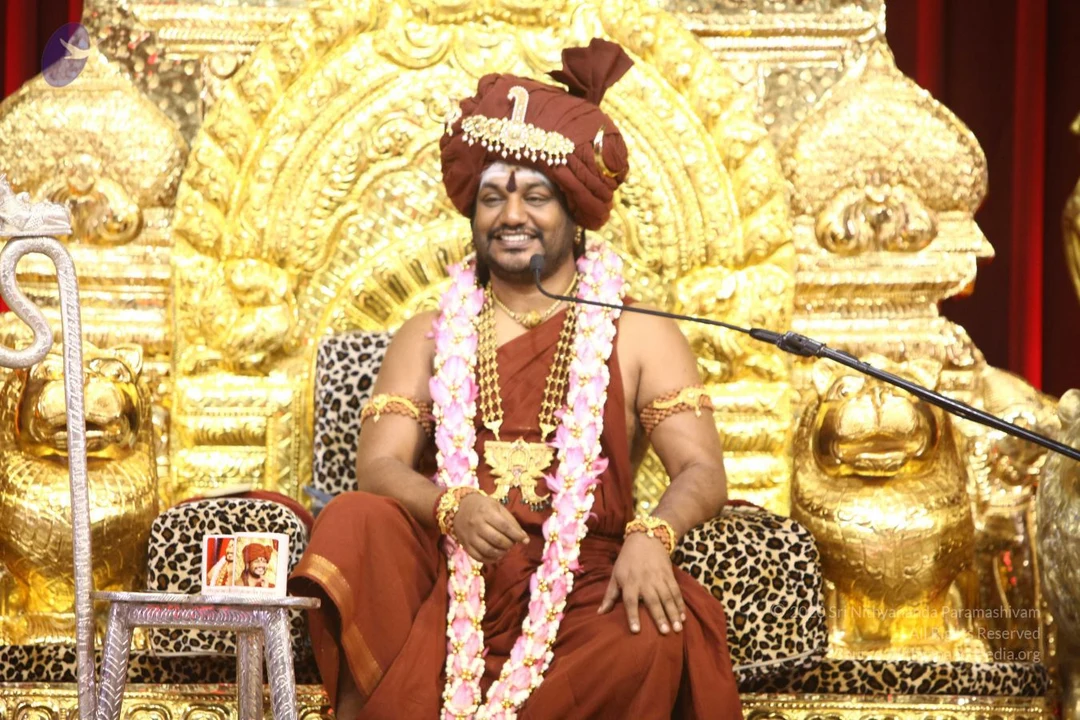
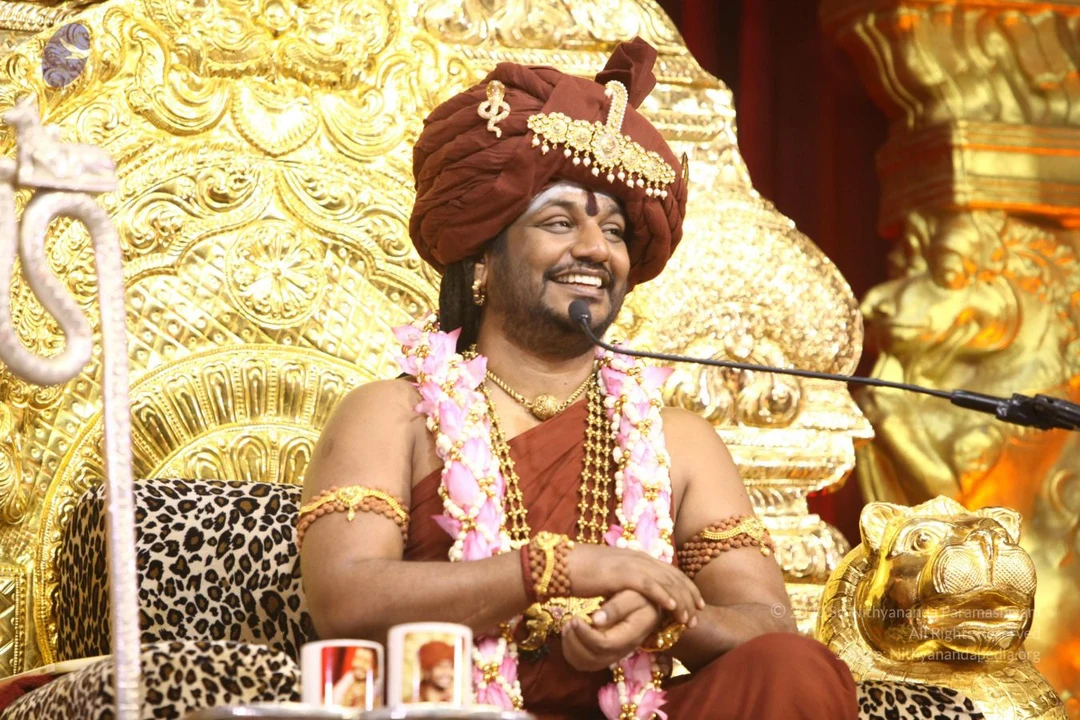
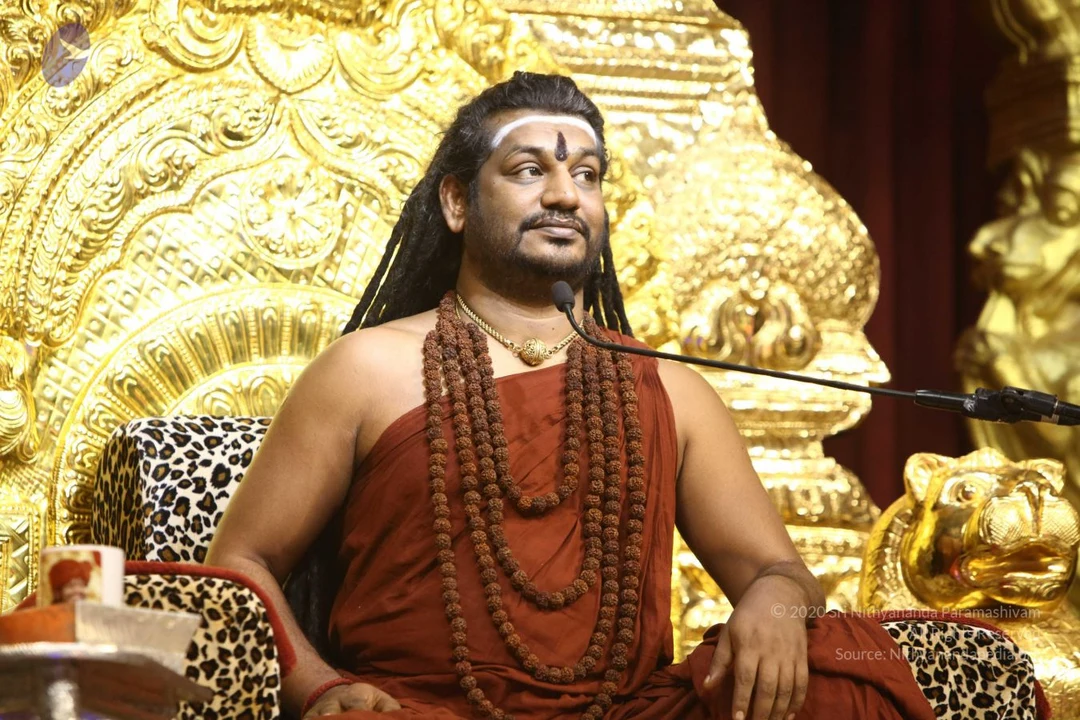
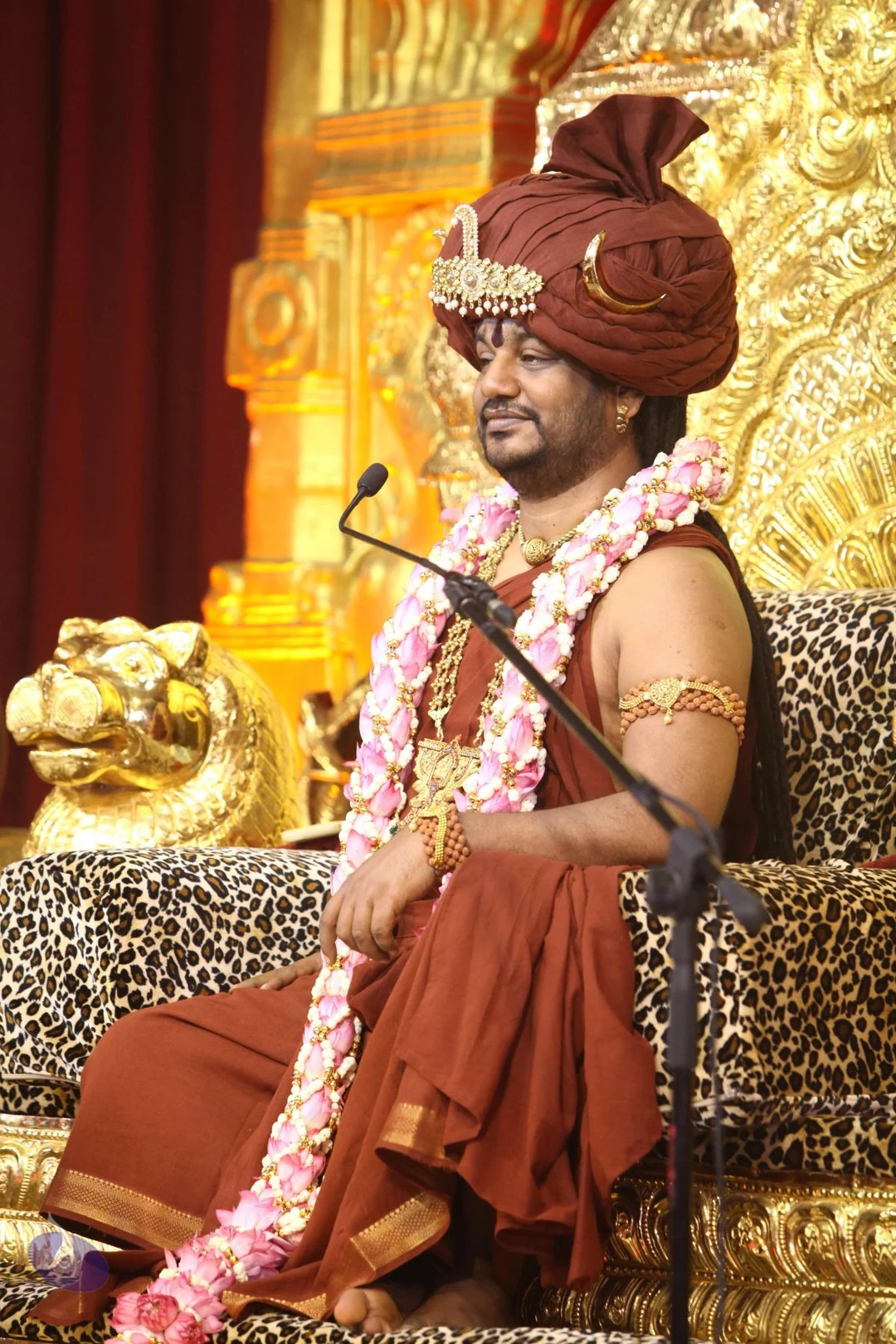
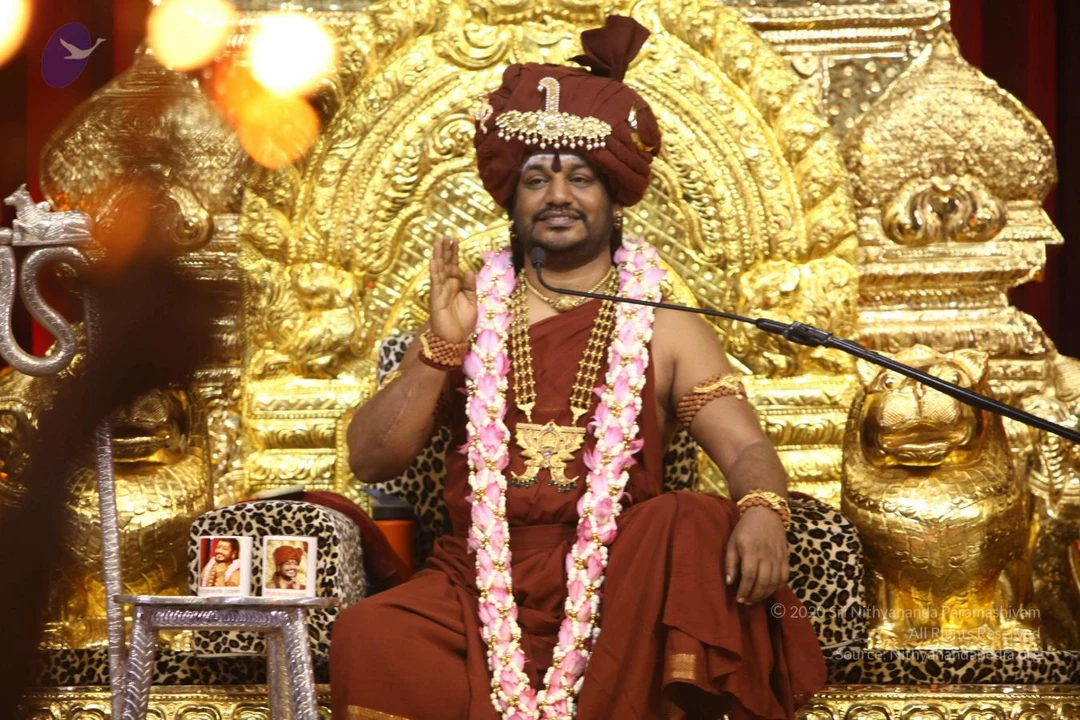
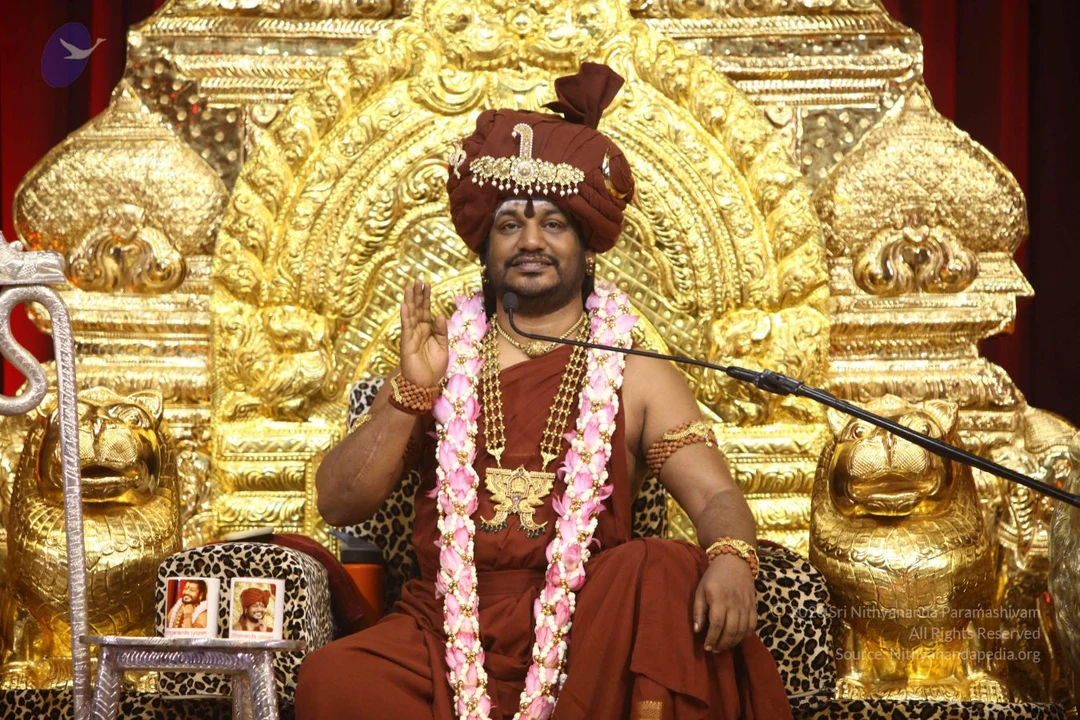
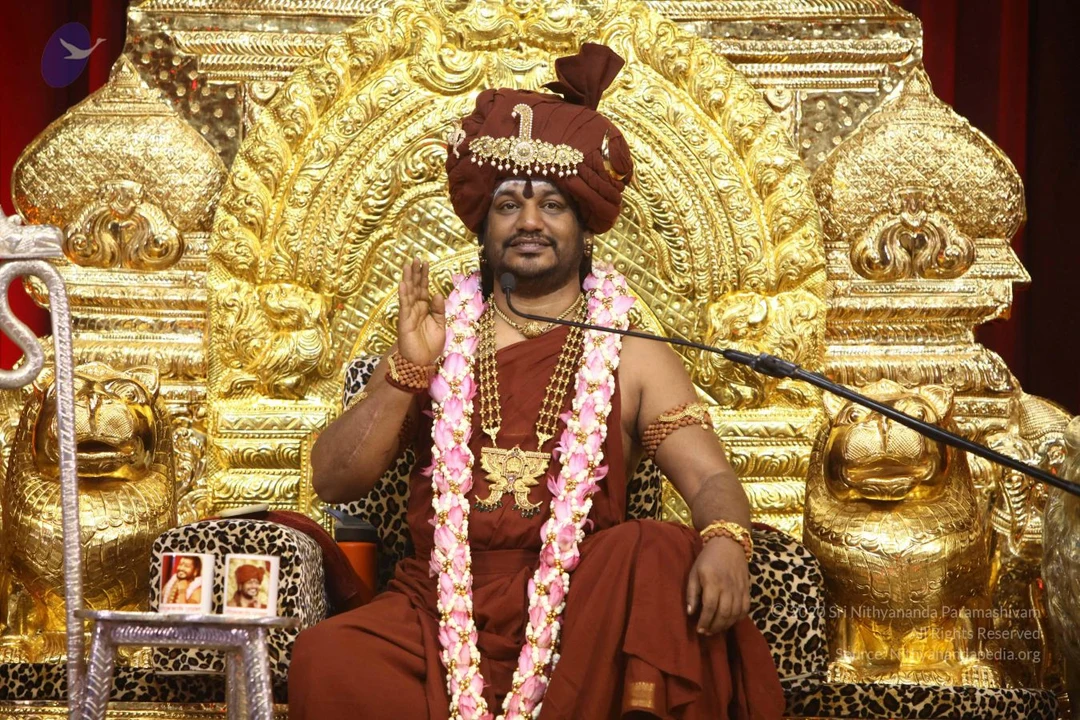
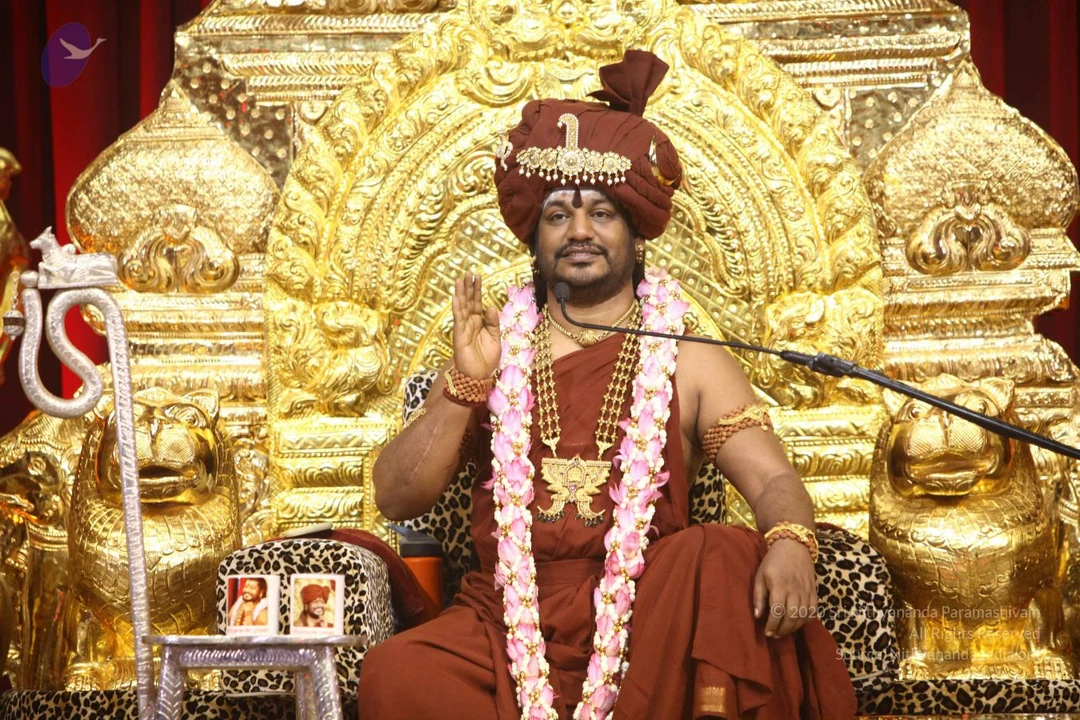
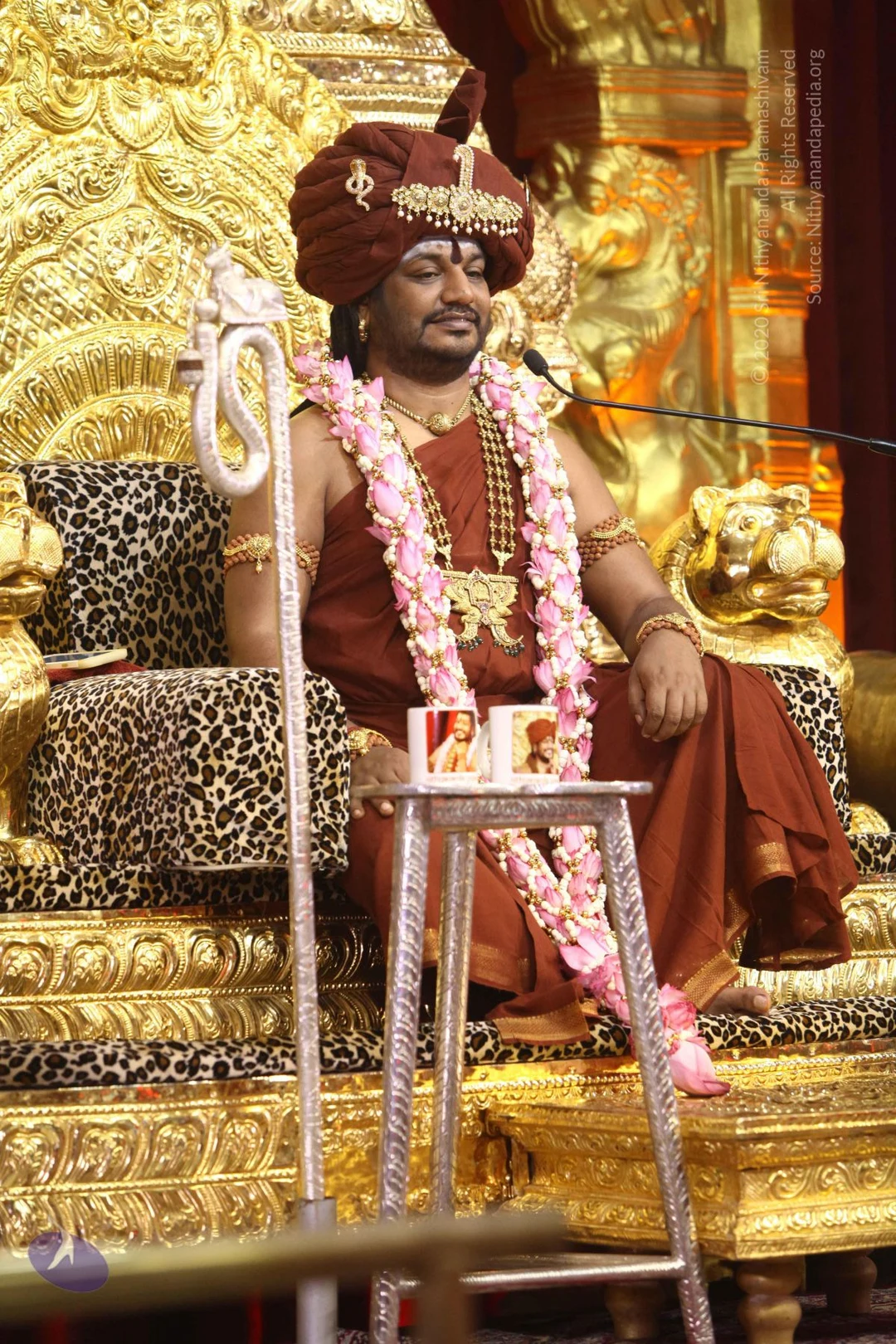
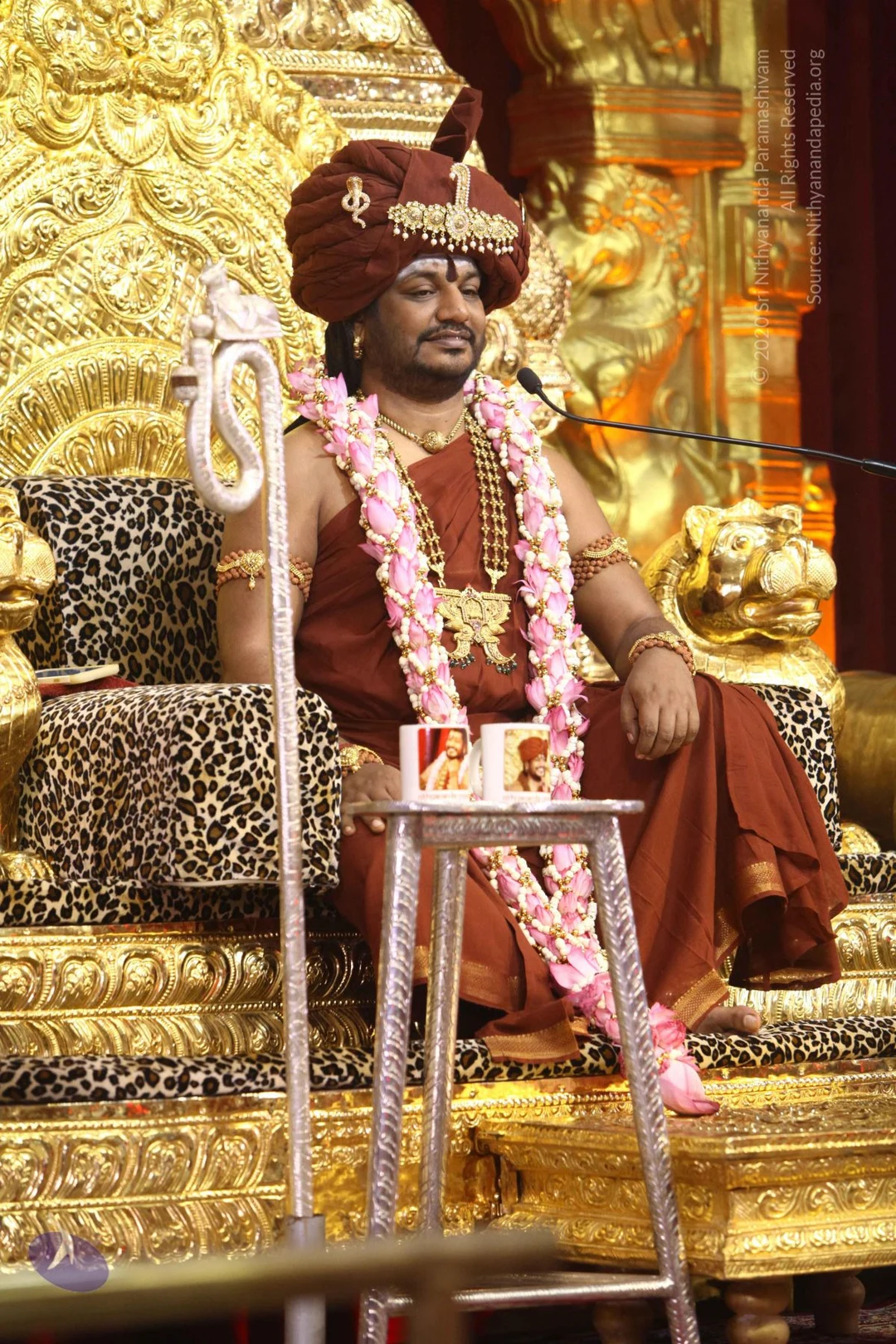
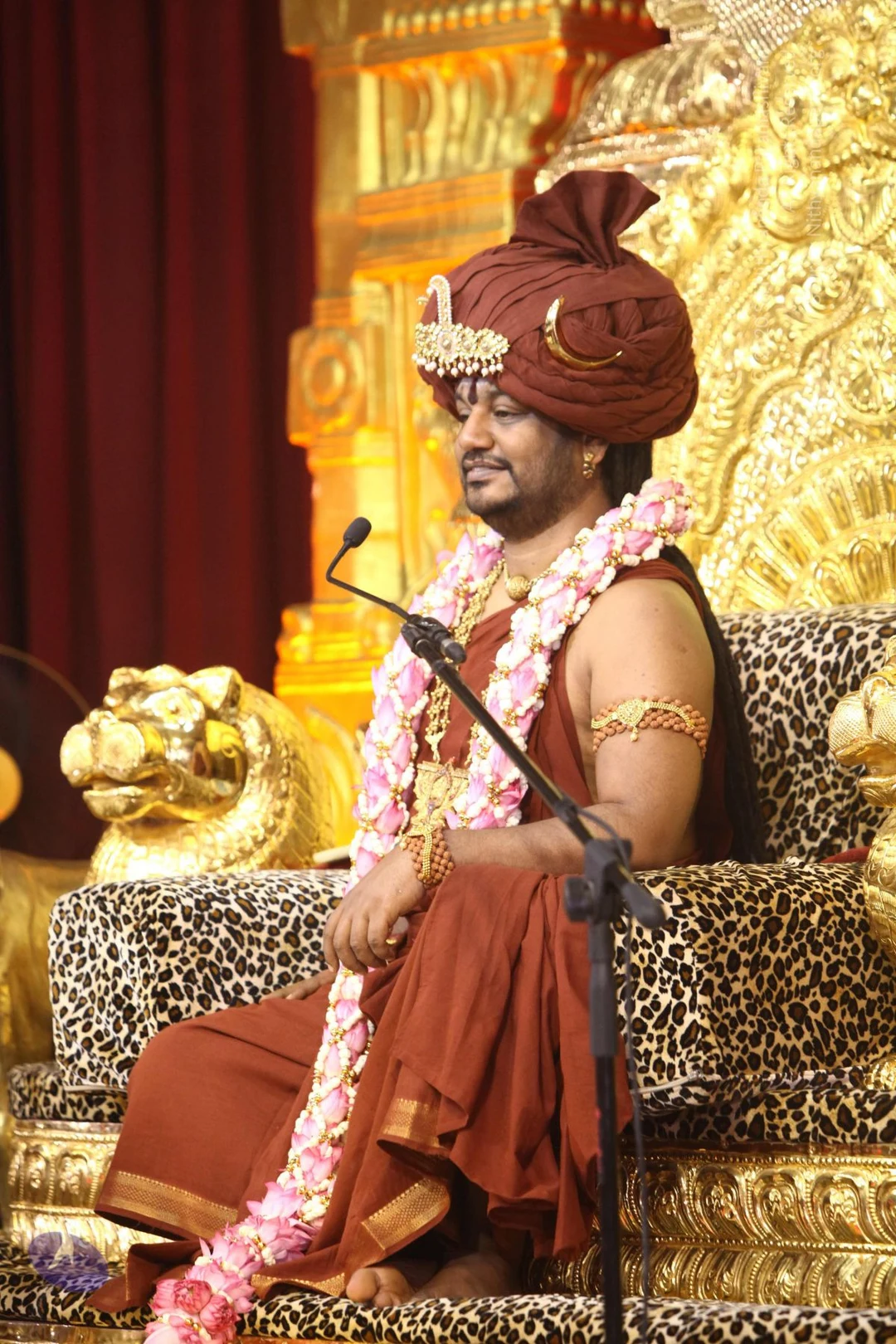
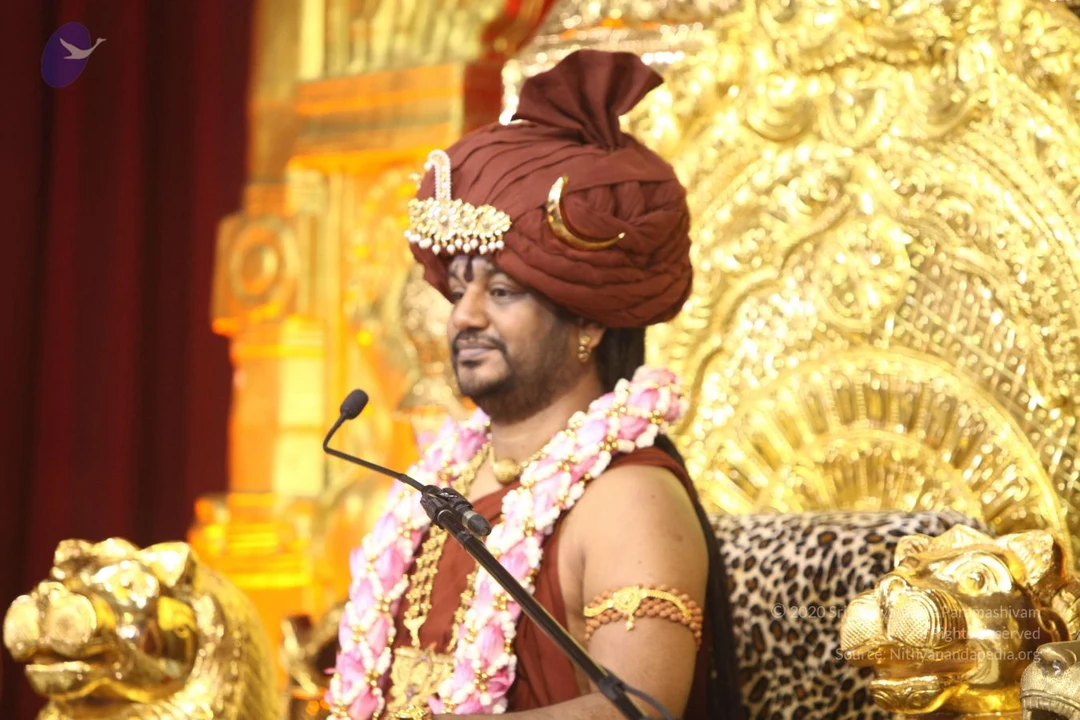
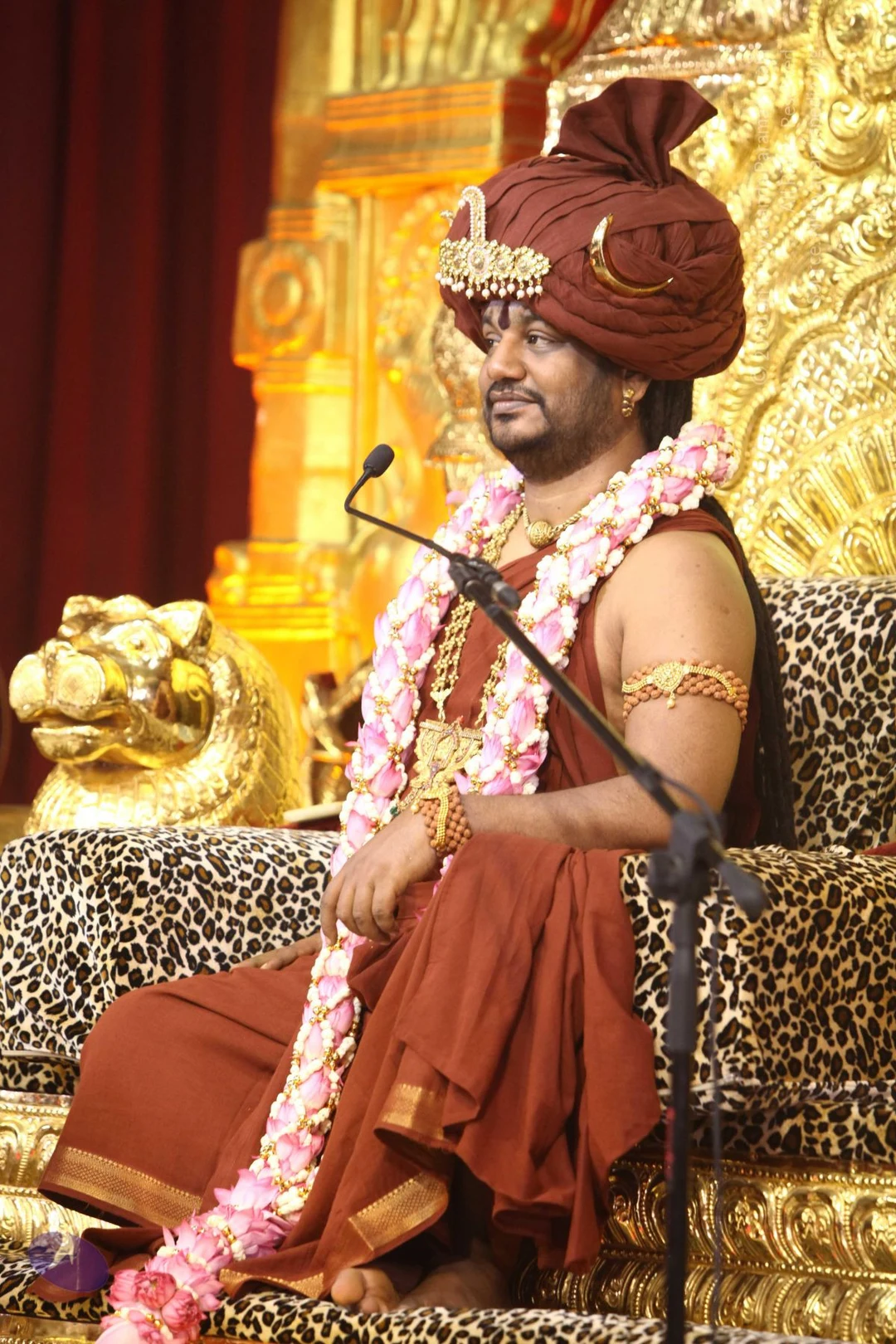
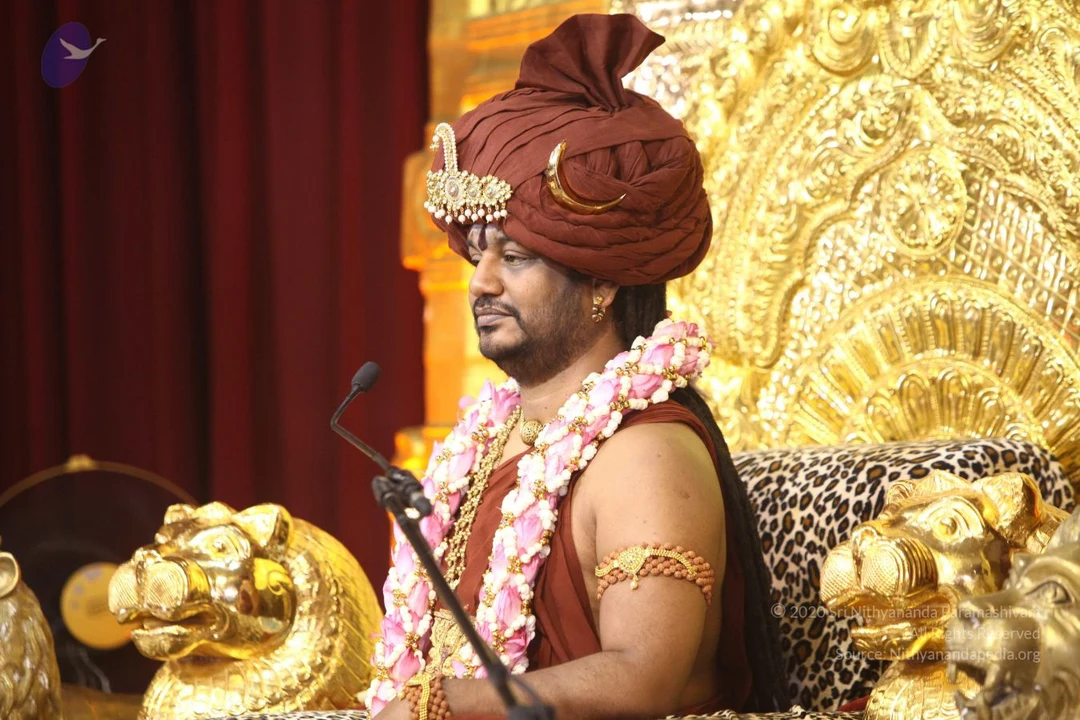
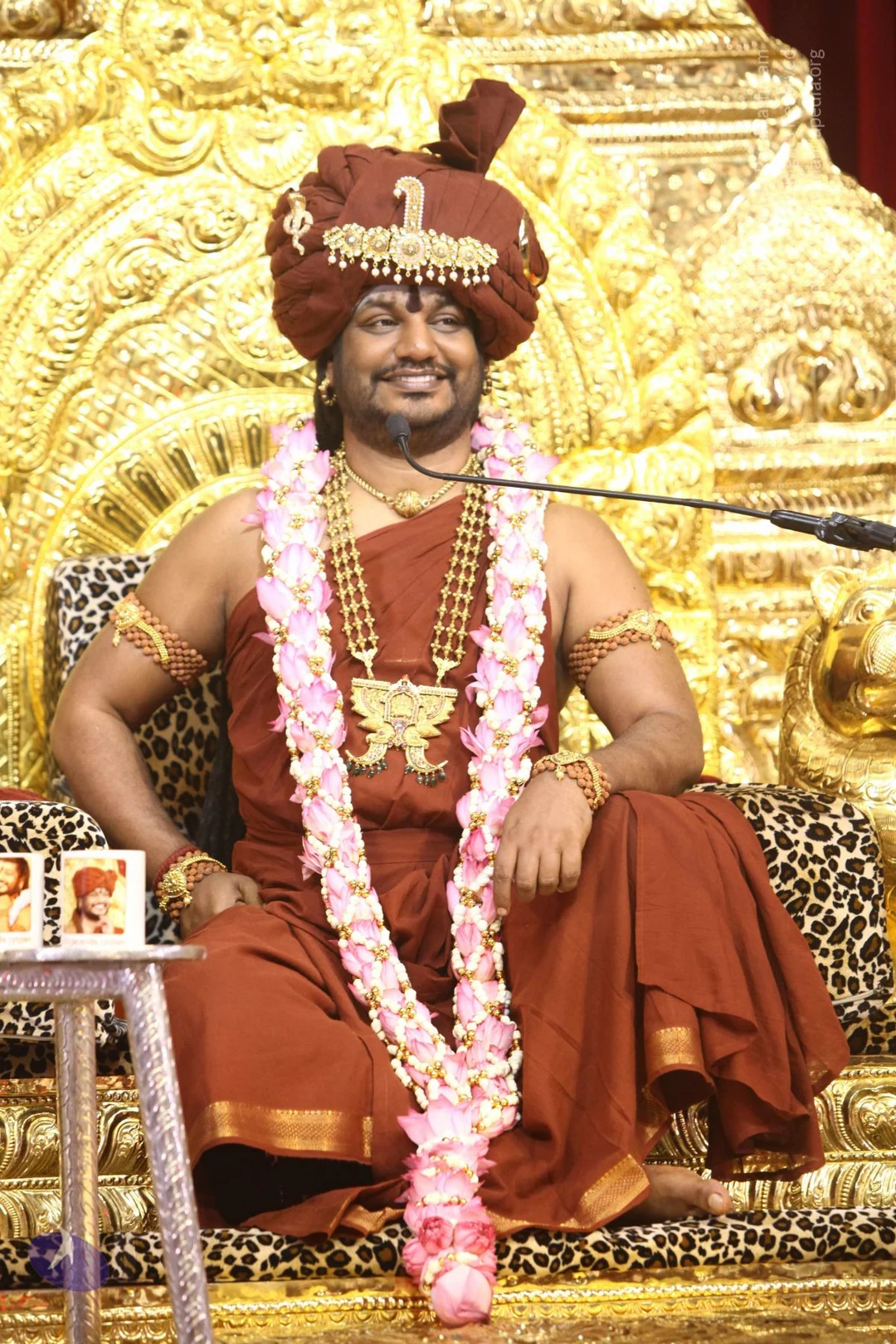
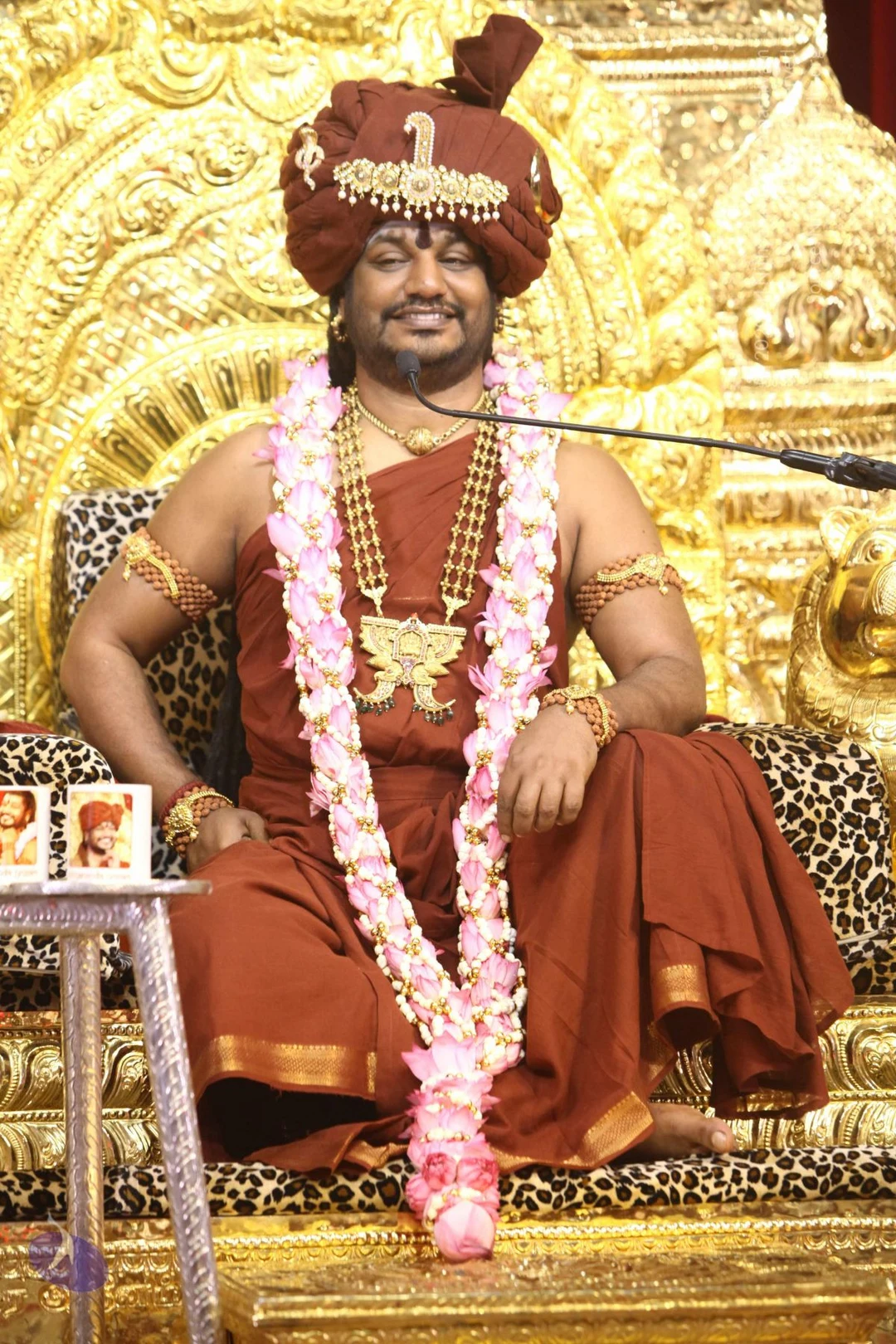
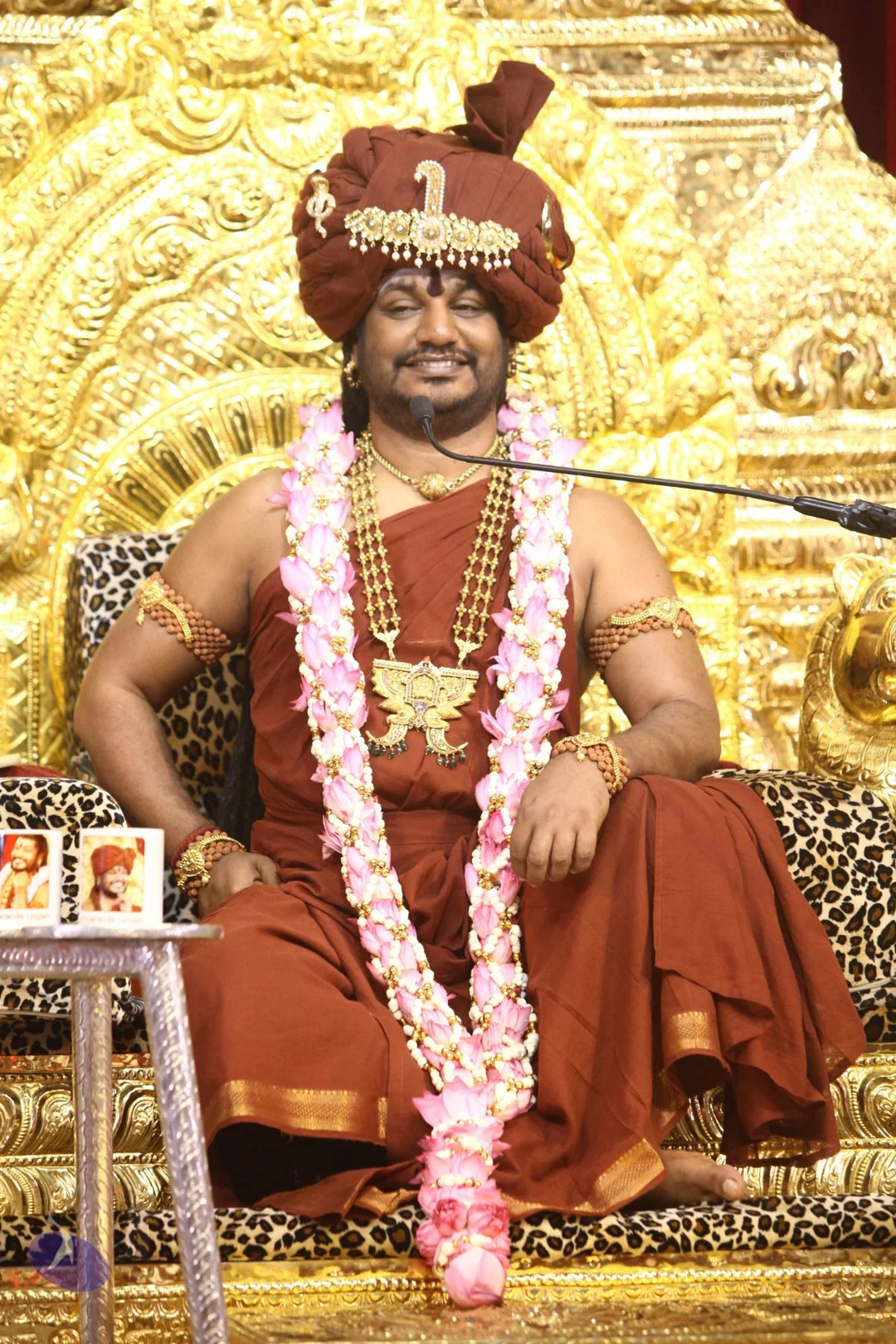
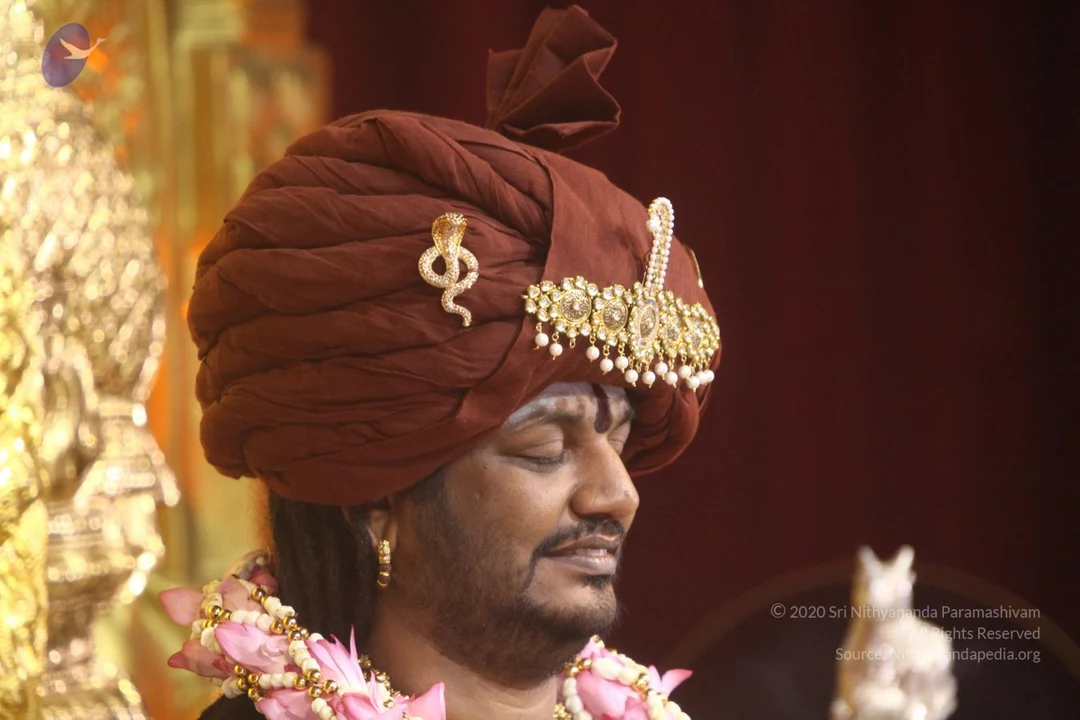
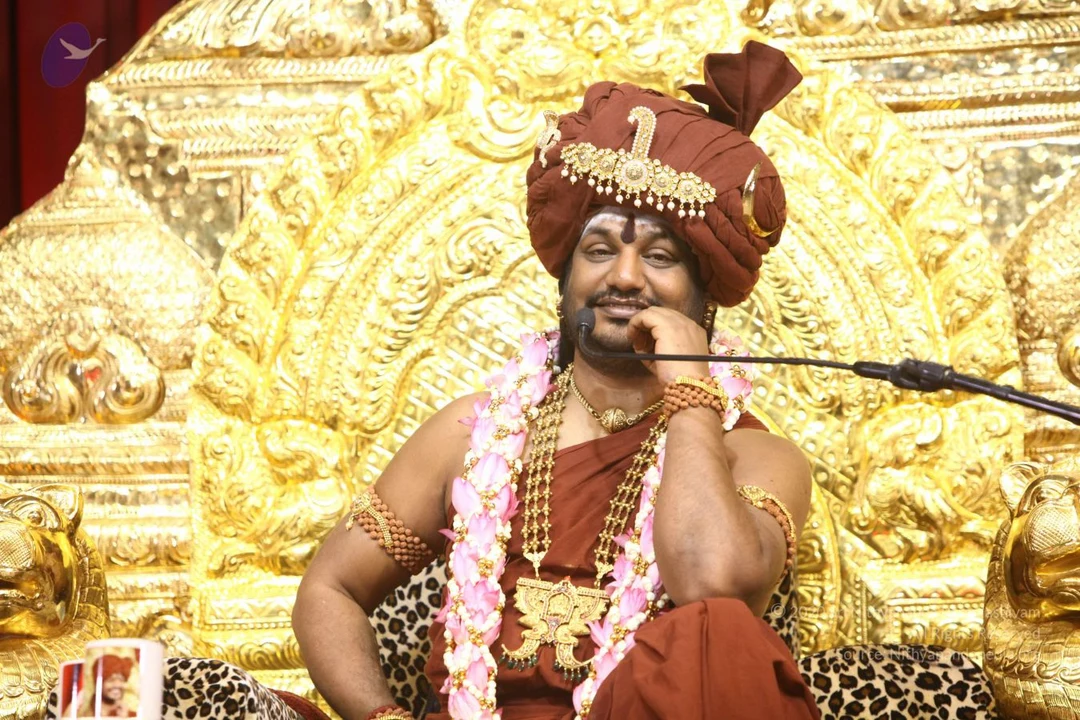
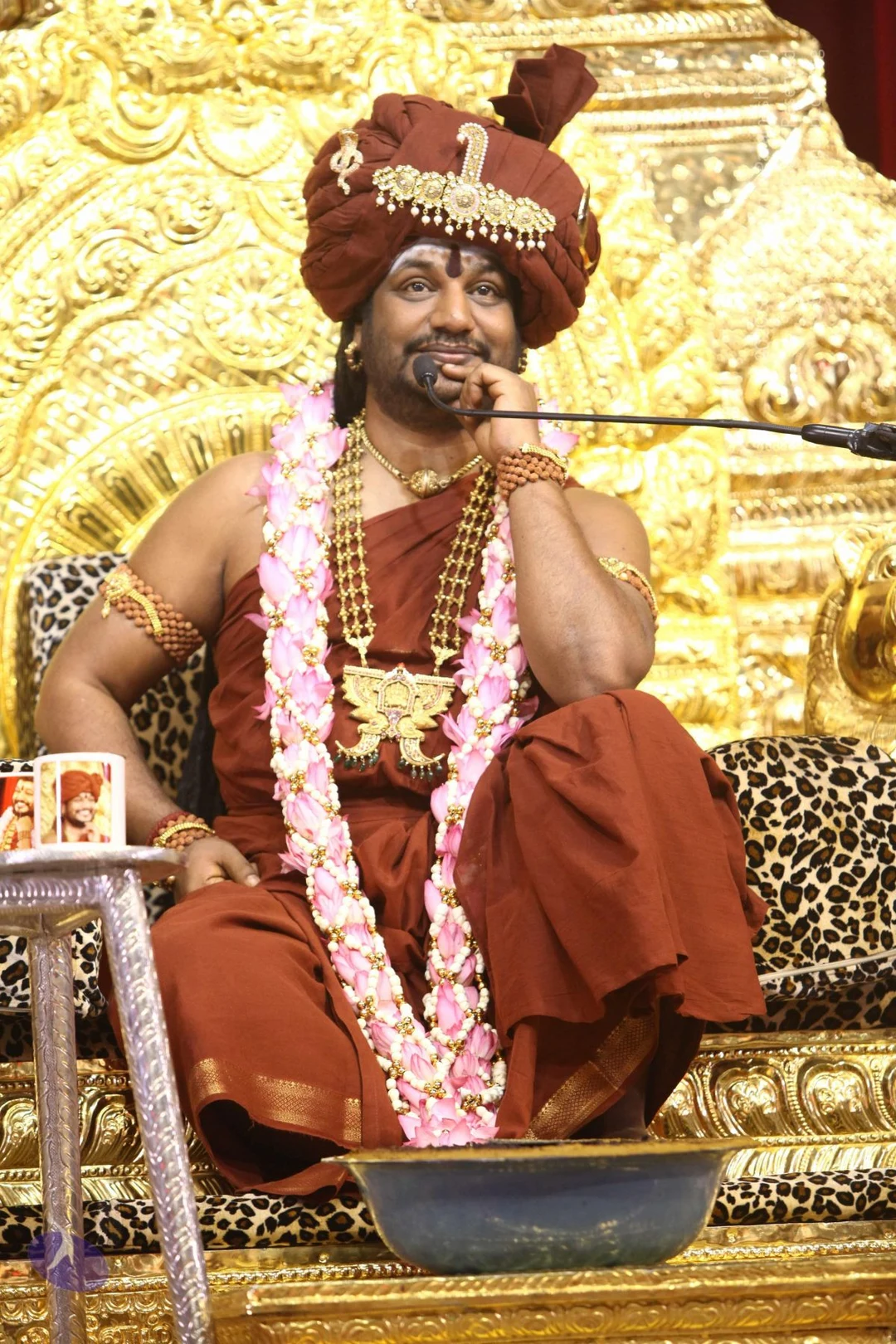
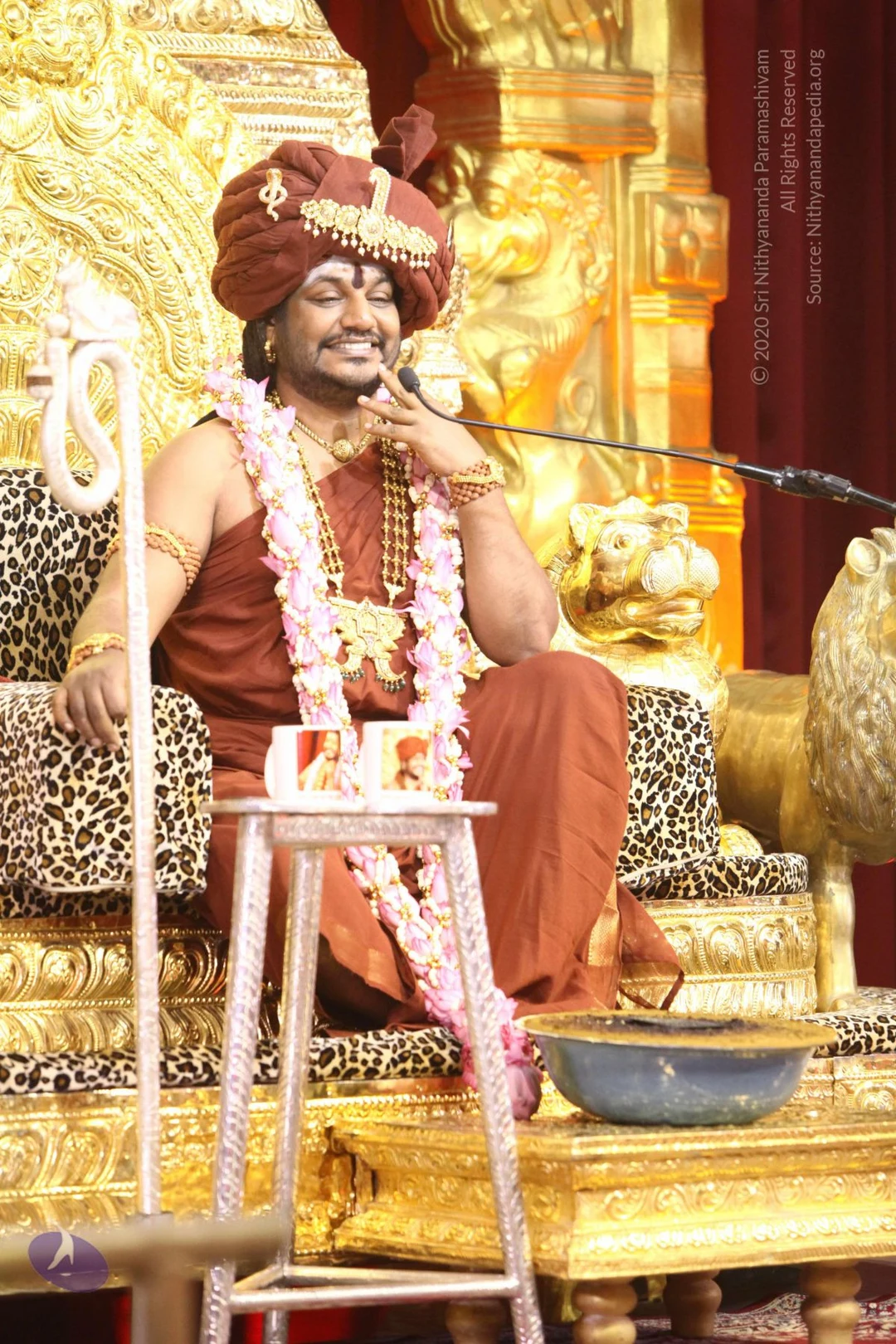
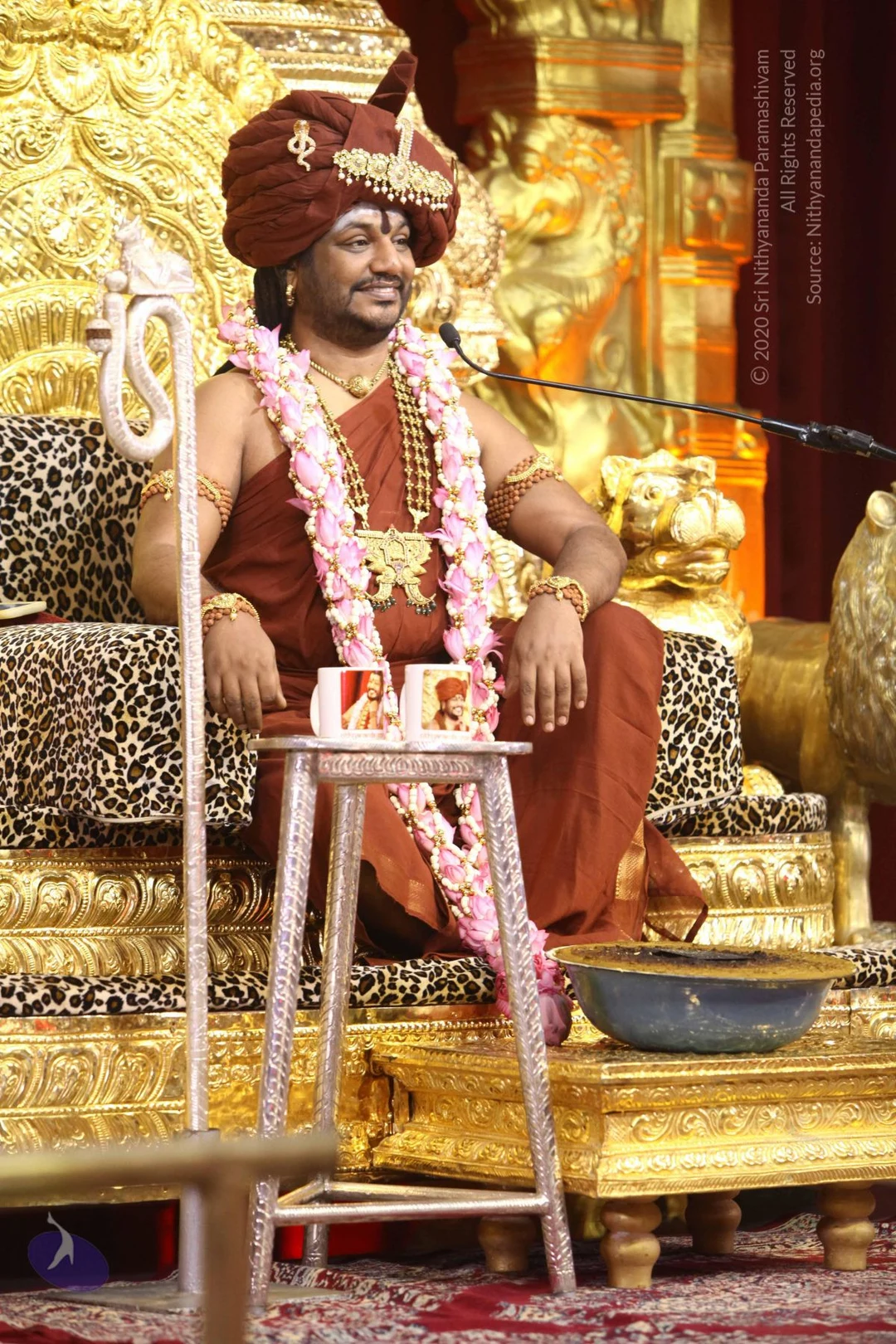
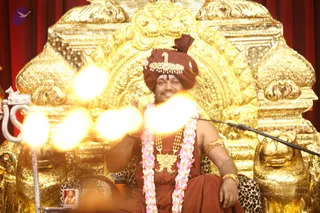
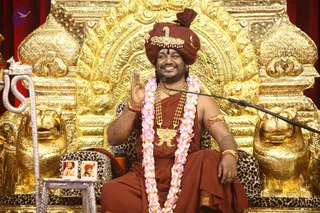
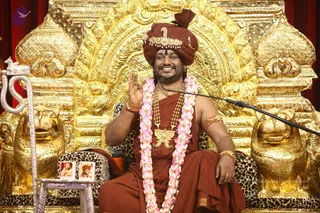
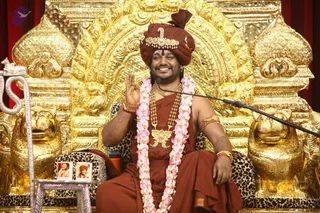
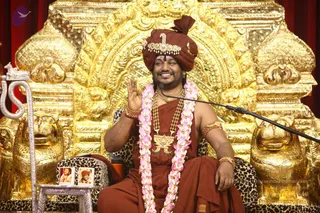
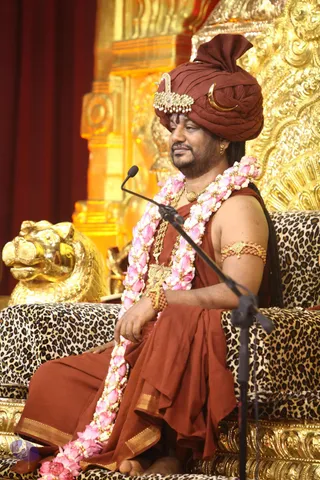
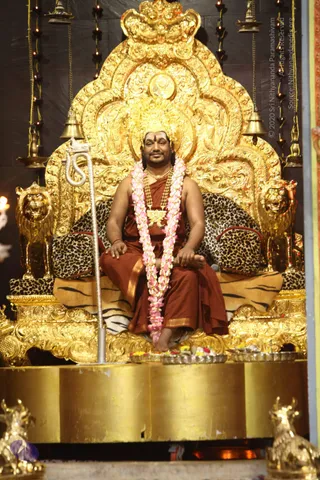
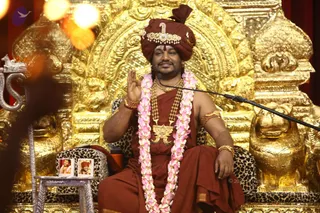
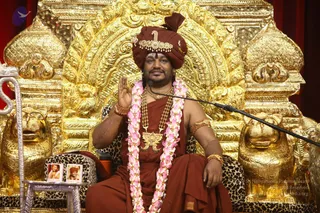
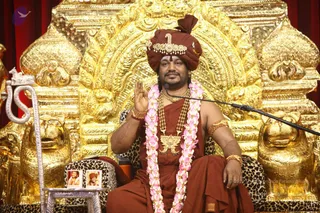
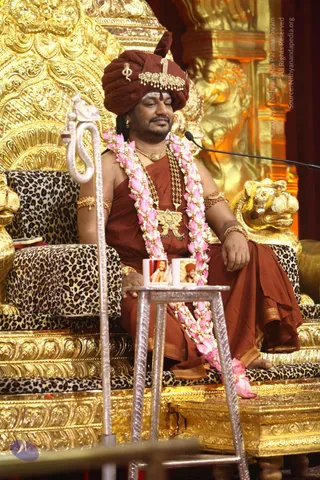
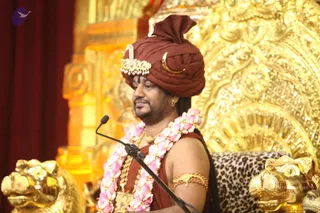
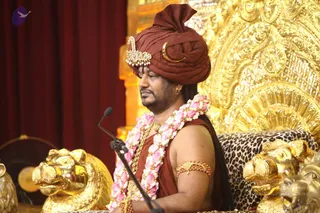
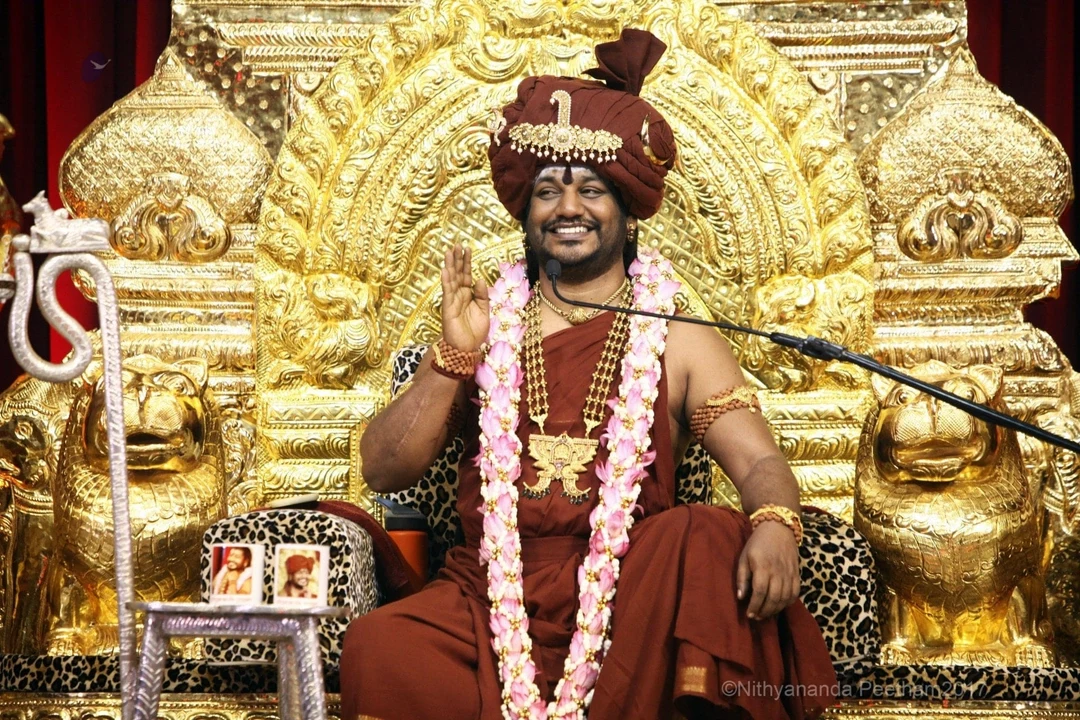
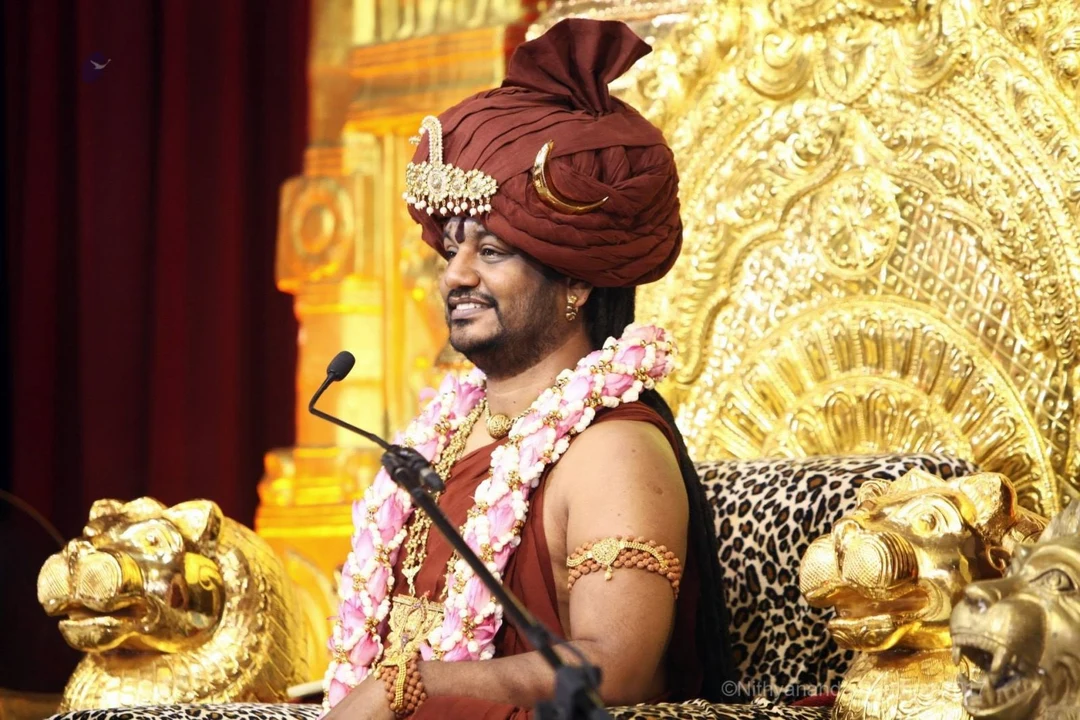
A photo of a seated man speaking into a microphone at a satsang. He wears a maroon-red turban with a gold ornament, a red-brown shawl over his bare shoulders, pink and white flower garlands, gold necklaces, rudraksha malas and gold armbands. He sits on a leopard-print cushion before an ornate gold throne with a gold lion figure, and a gold snake-headed staff stands at his left. a person appears as the seated speaker, identified by the distinctive turban, malas, gold adornments and ceremonial throne.A seated man in a maroon-red turban with a gold ornamental crown piece and a gold pendant at the front, wearing maroon robes, rudraksha bead bracelets, pink and white flower garlands, and layered gold and beaded necklaces, smiles broadly while raising one hand in greeting. He sits before an ornate gold-leaf throne with carved decoration, with a microphone on a stand beside him and a leopard-print seat cushion below. Two small printed photo cards sit at the lower left edge. The scene appears to be a discourse or darshan setting. Swamiji (probable): the seated figure wears a maroon turban with a gold crown ornament, a rudraksha mala and ceremonial gold necklaces before a gold throne.Photograph of a smiling man seated on an ornate golden throne with intricate repoussé carving behind him. He wears a deep maroon turban decorated with a gold ornament, a maroon robe, a gold chain with a large gold pendant, long rudraksha malas, and pink flower garlands. Rudraksha bracelets are on his upper arms and wrists. A microphone on a stand is in front of him.

pada-puja
63 photosSource gallery
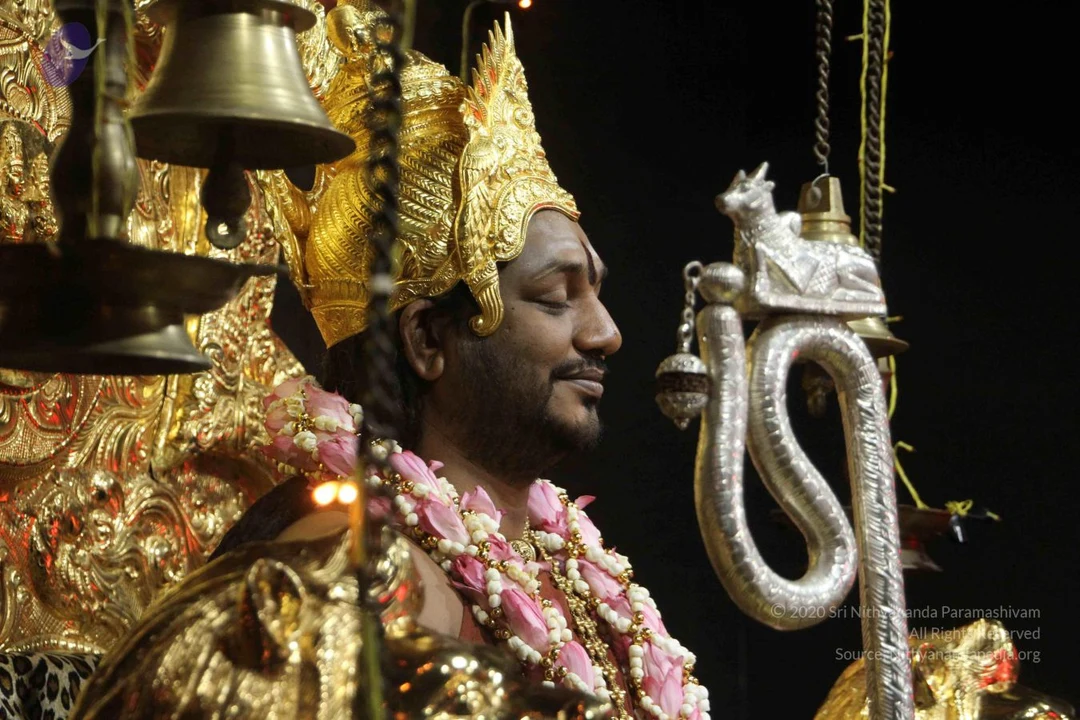
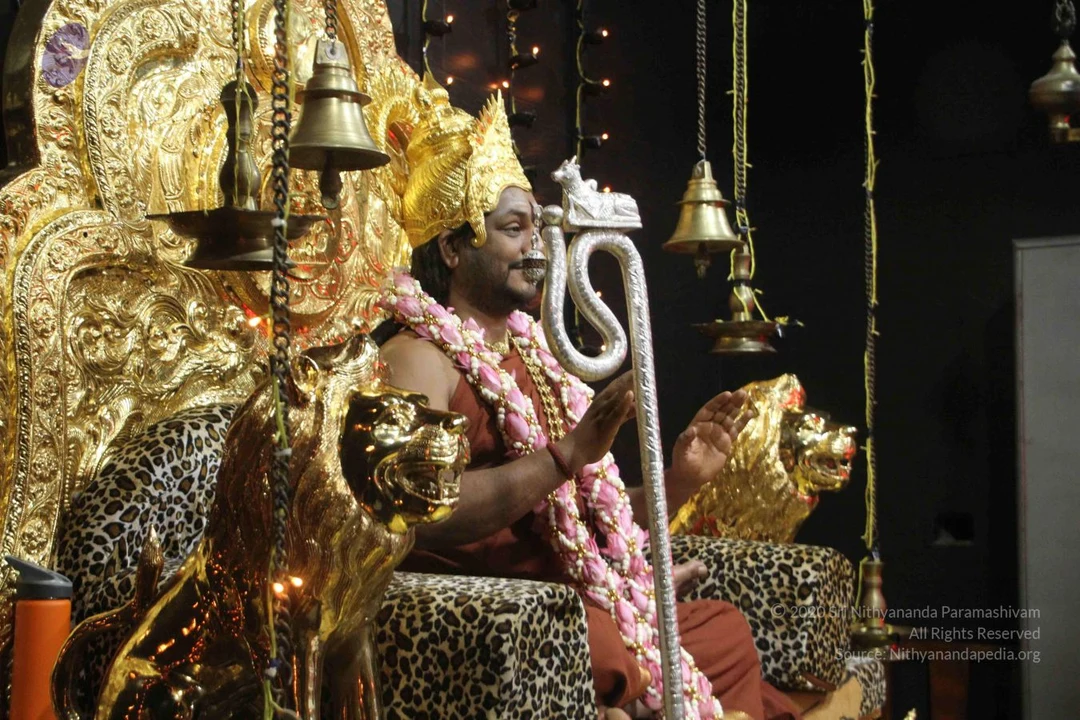
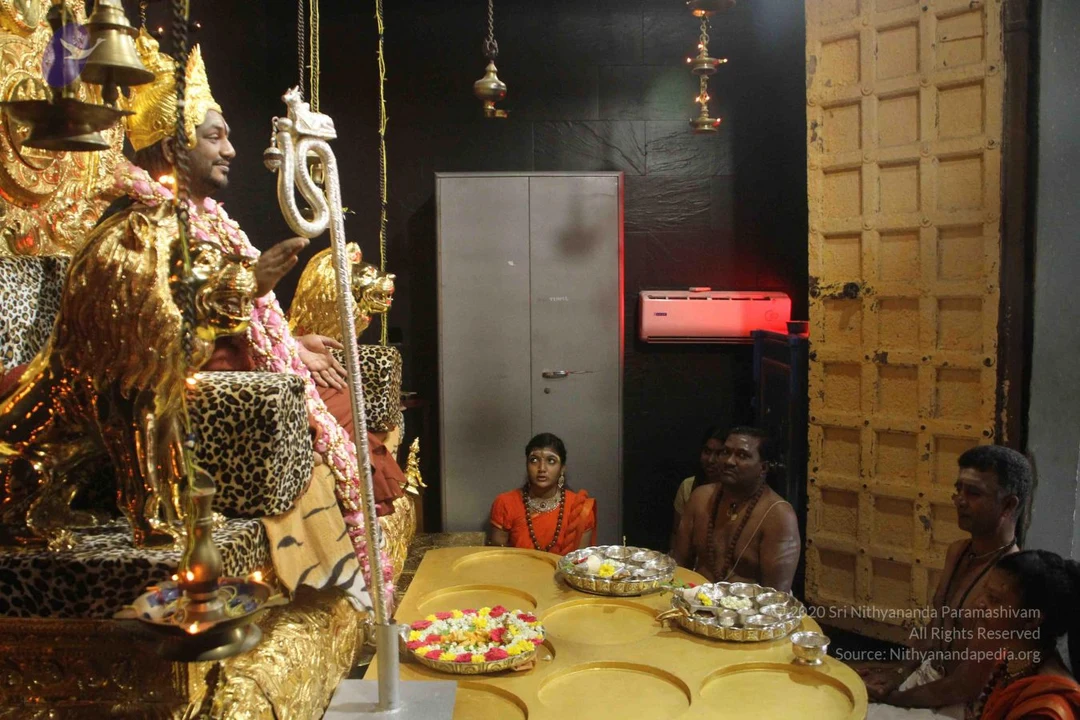
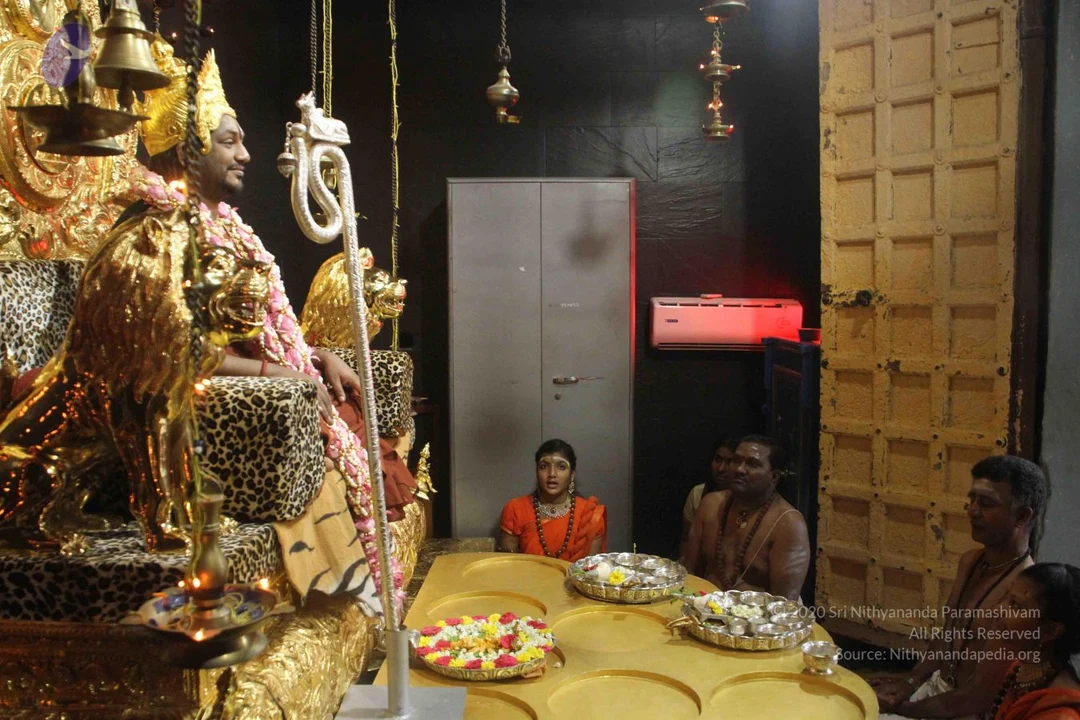
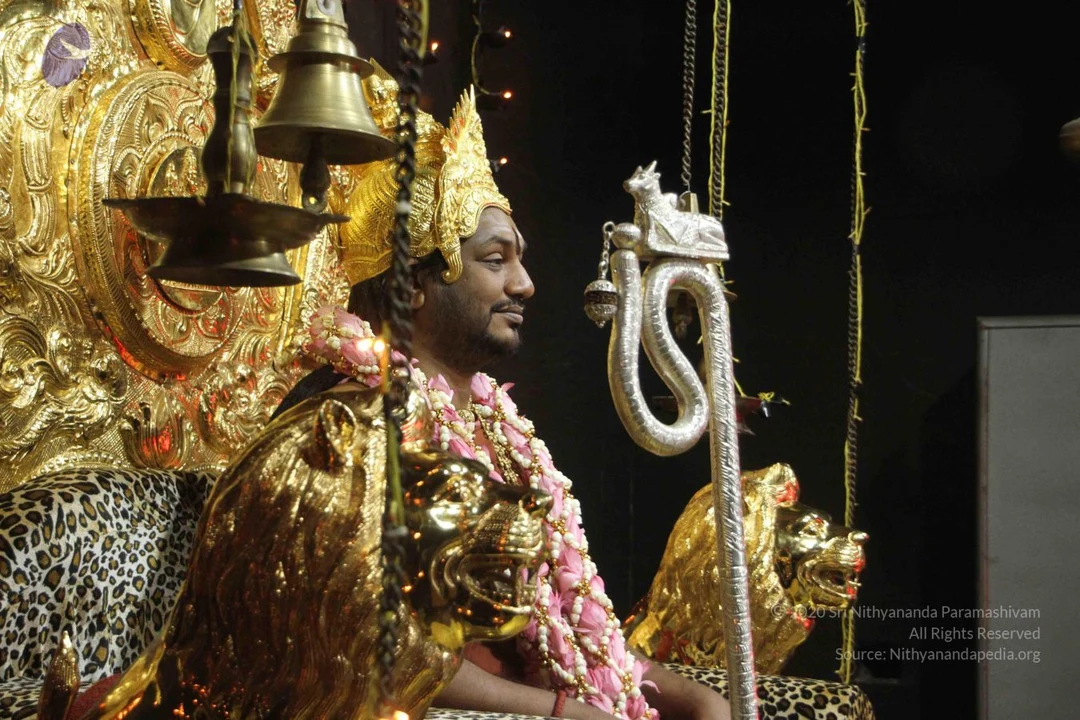
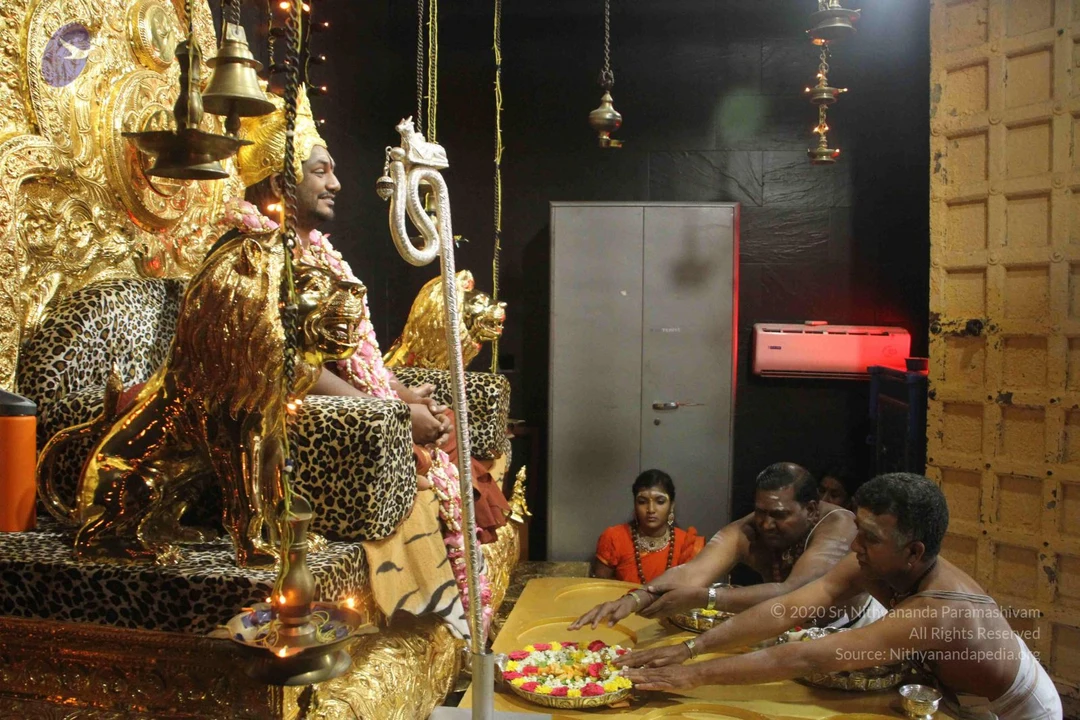
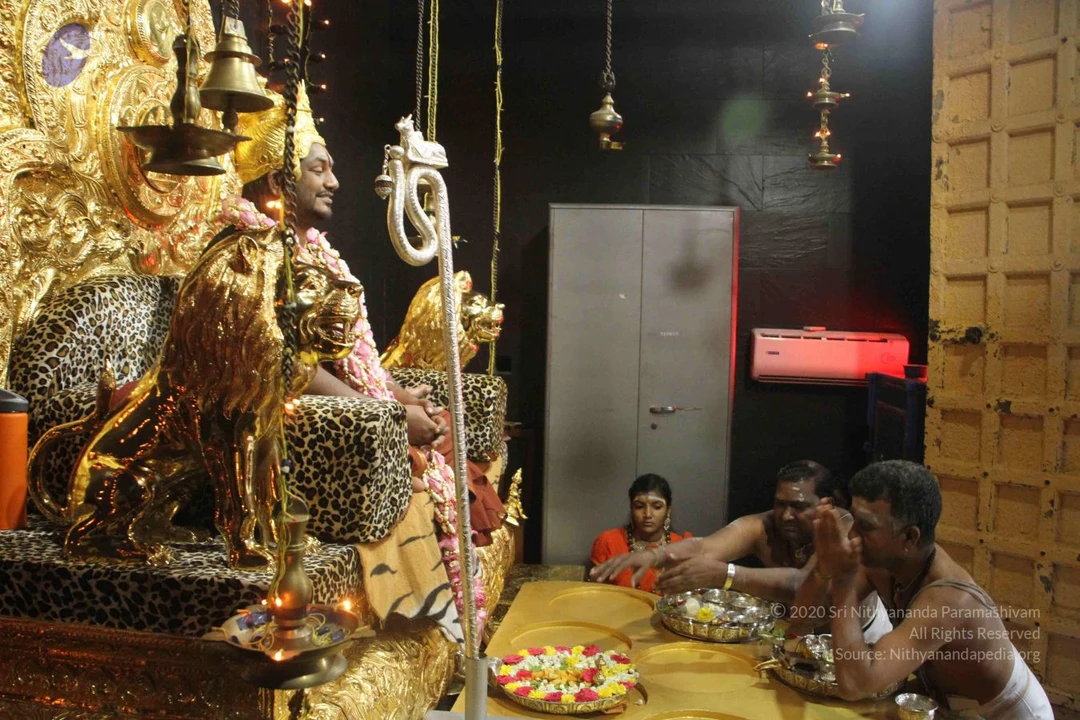
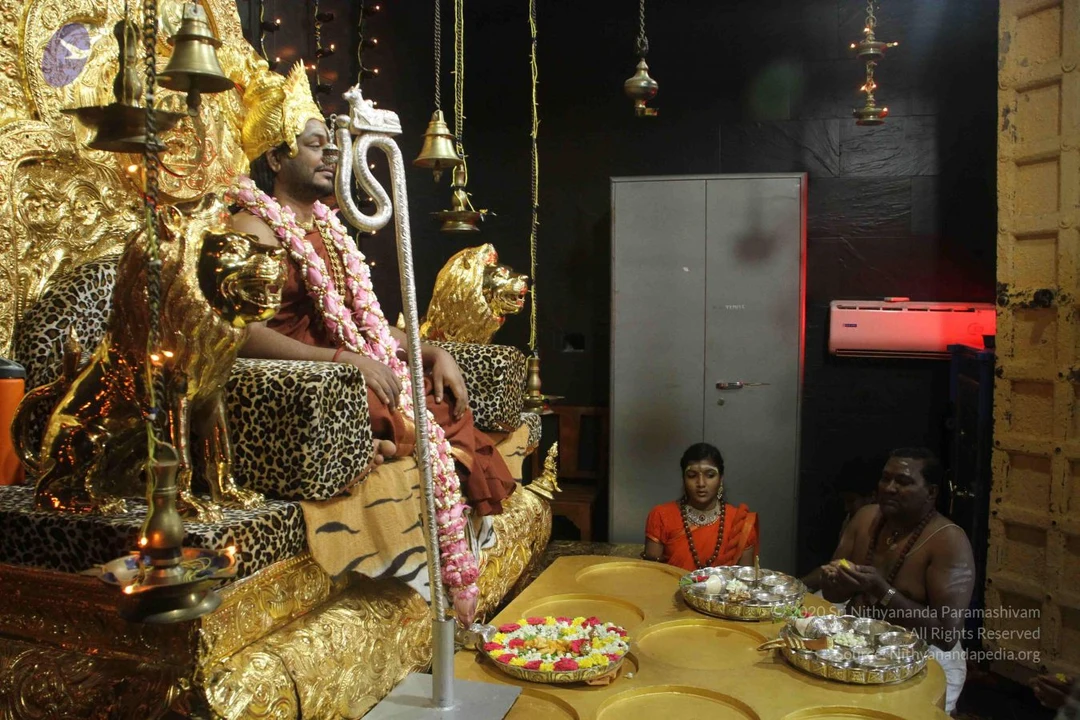
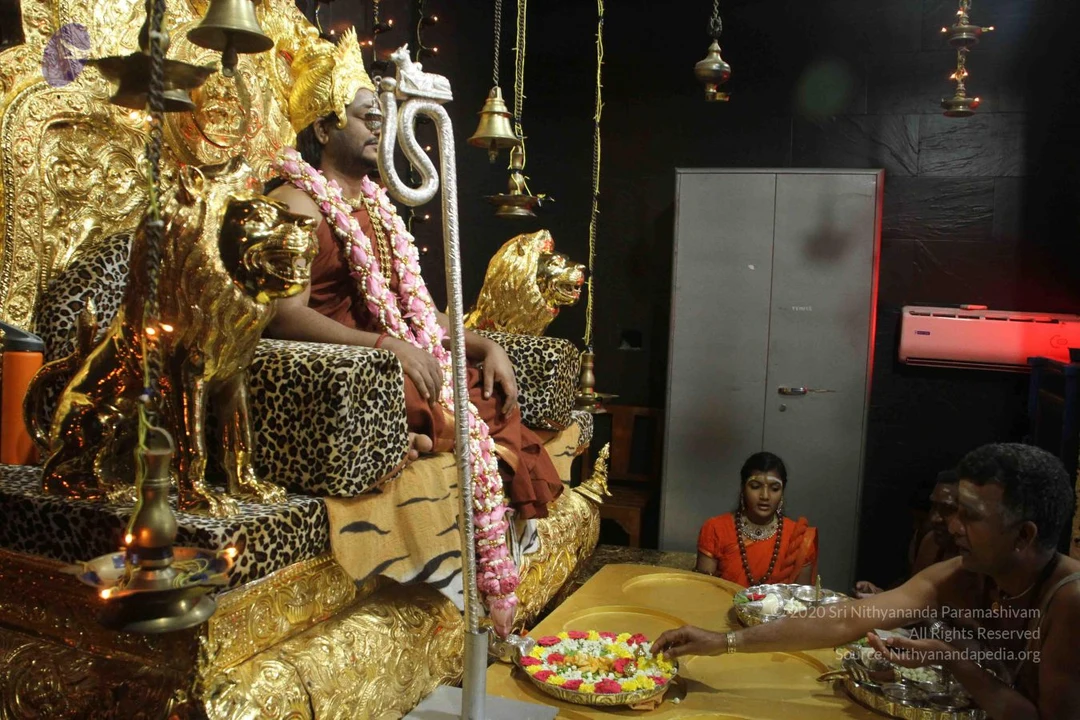
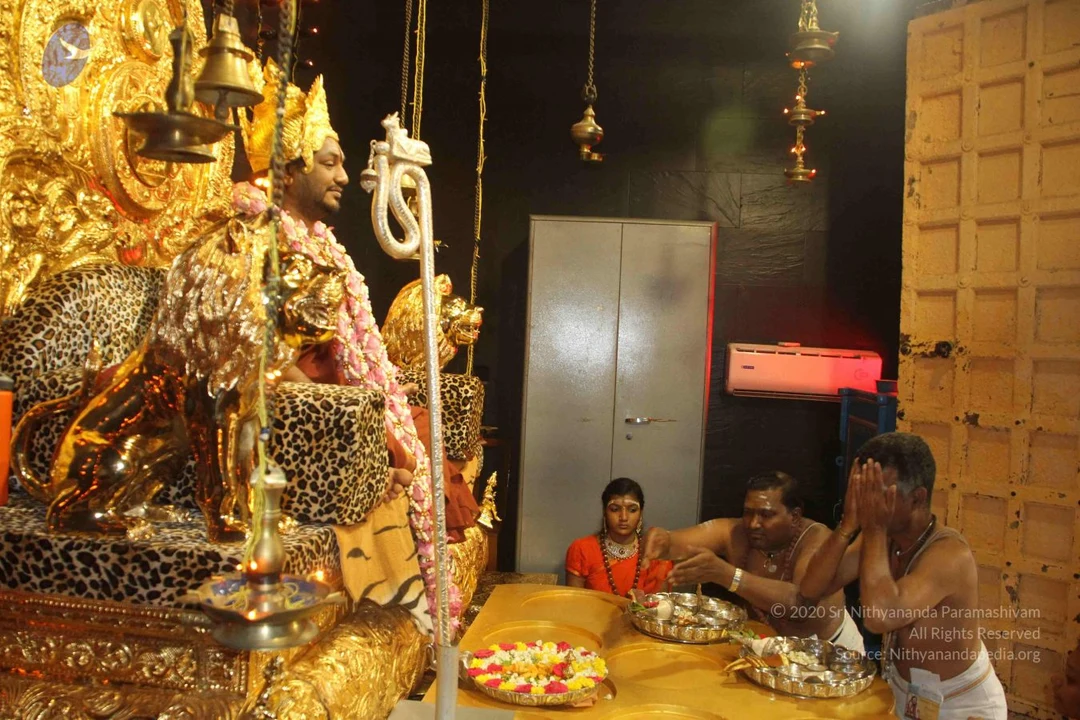
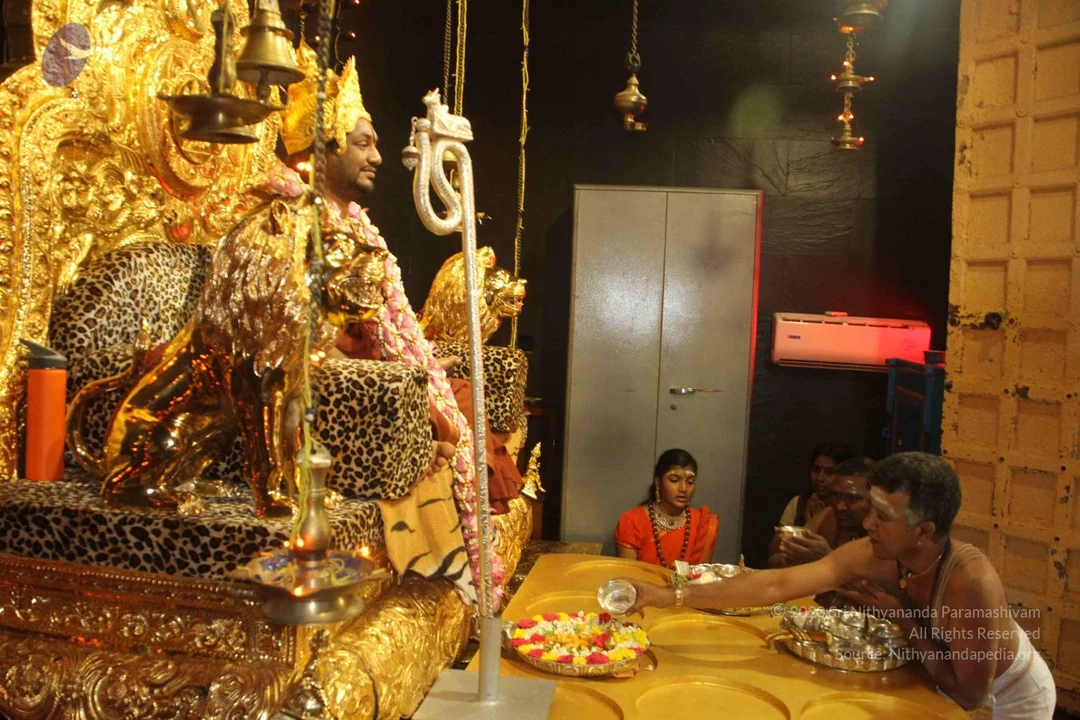
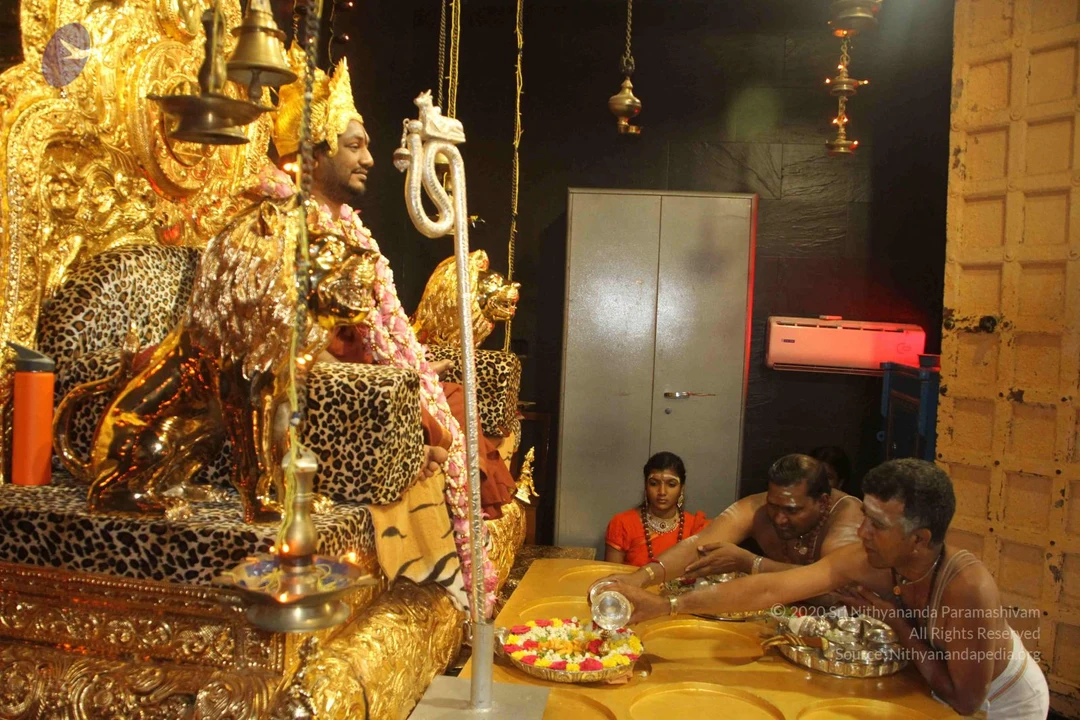
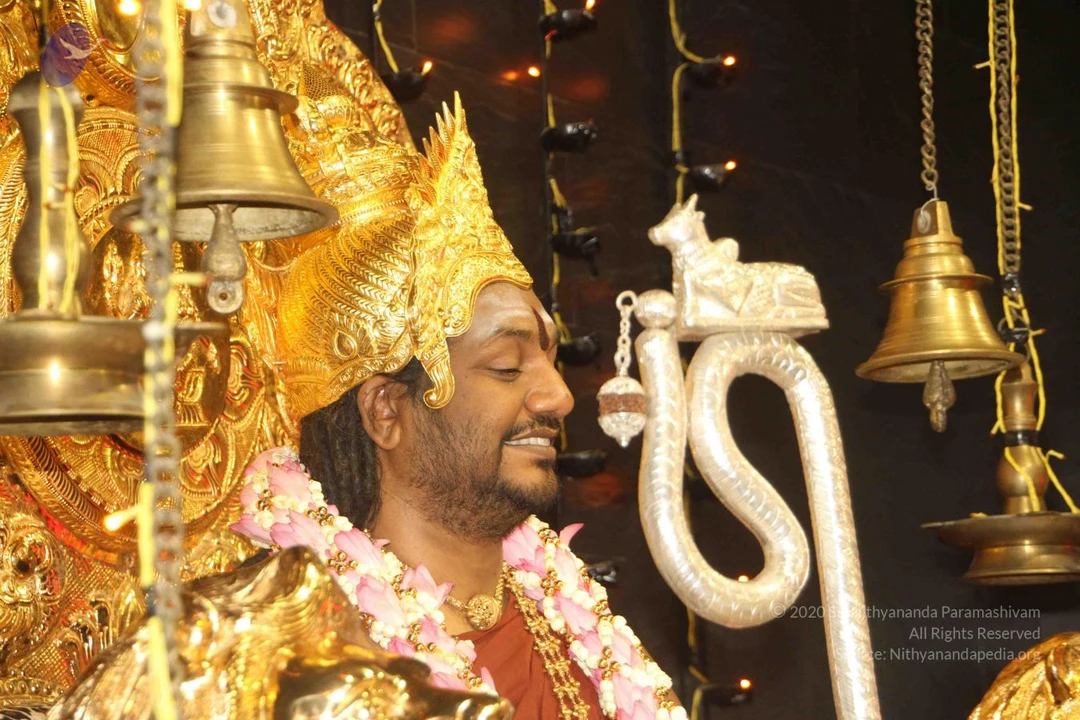
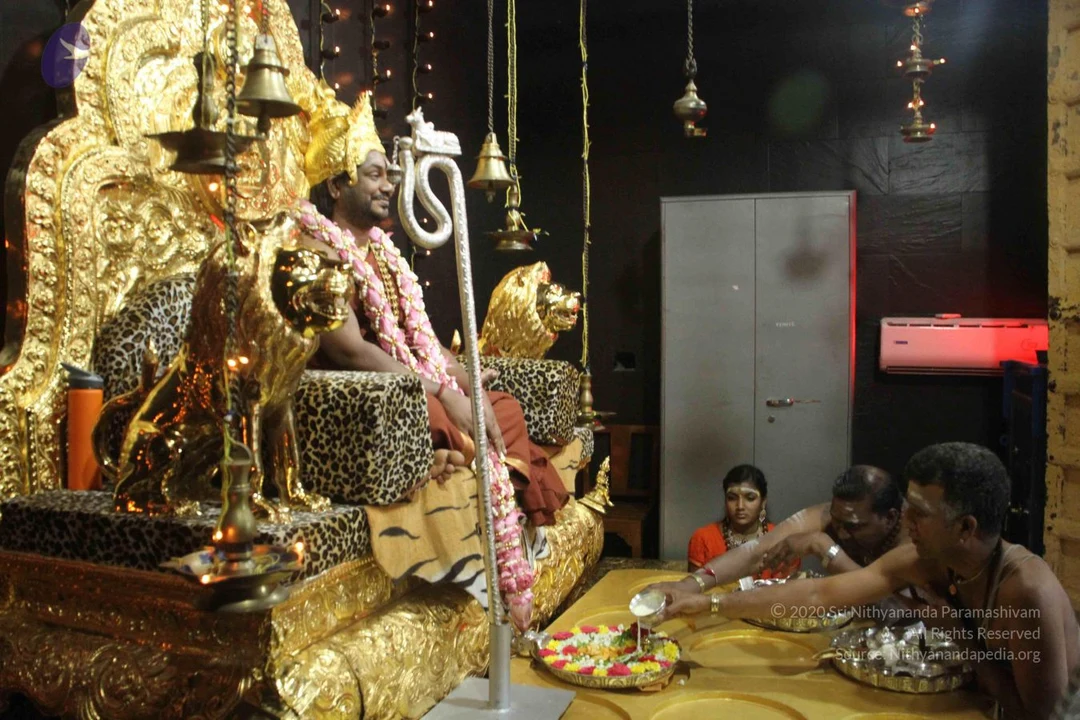
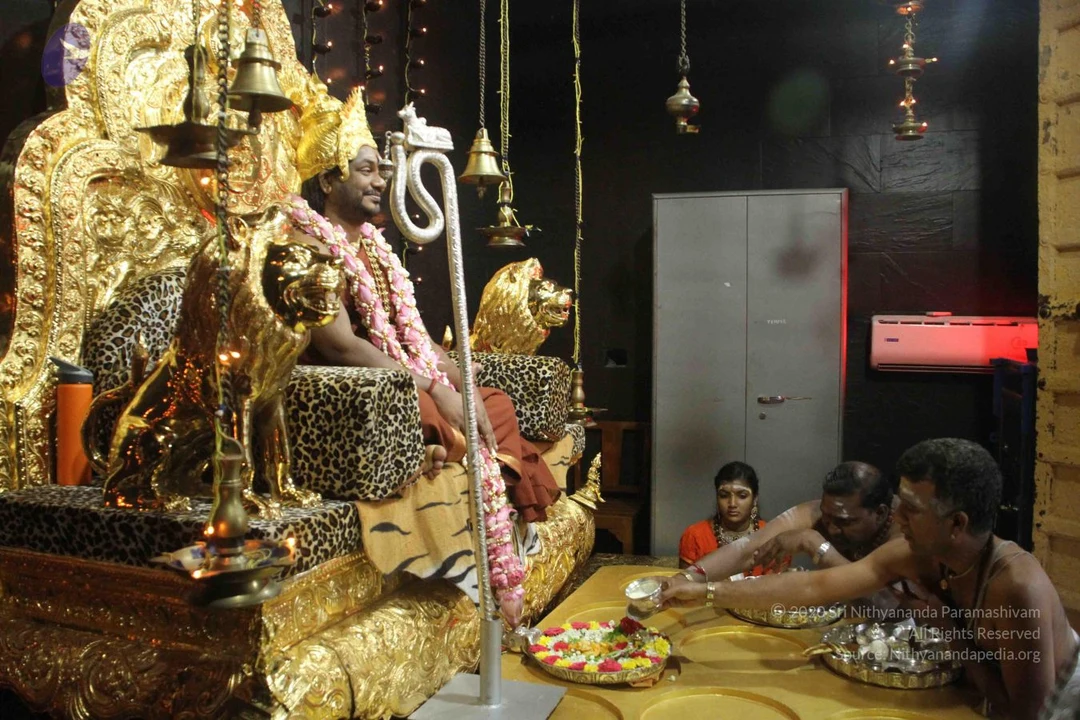
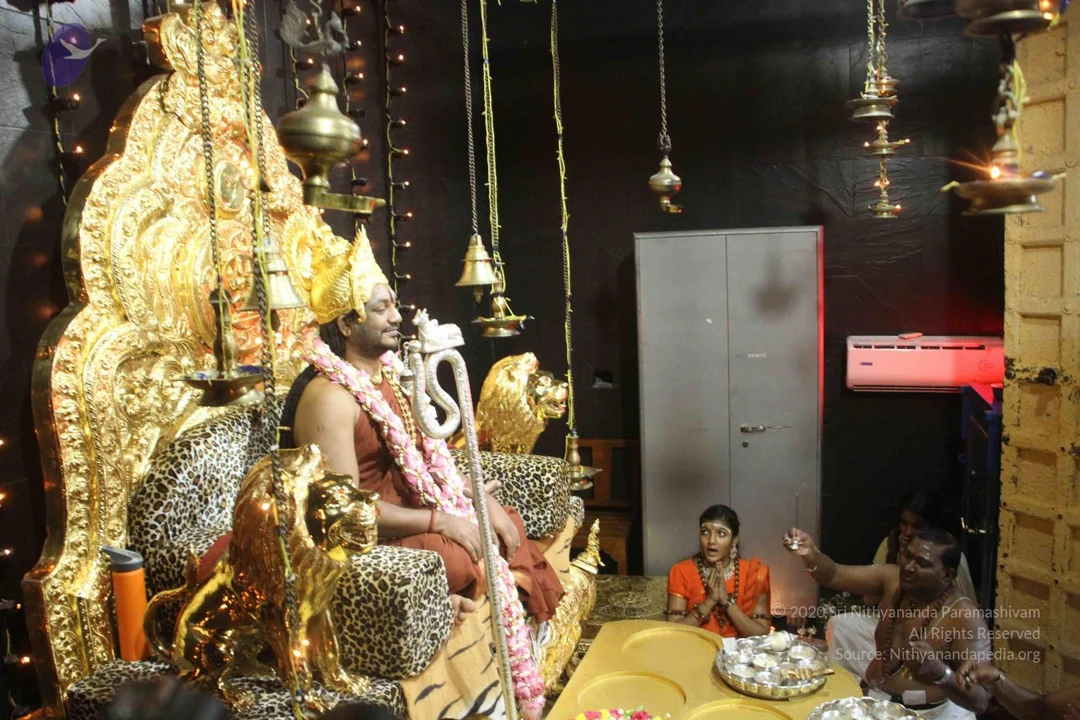
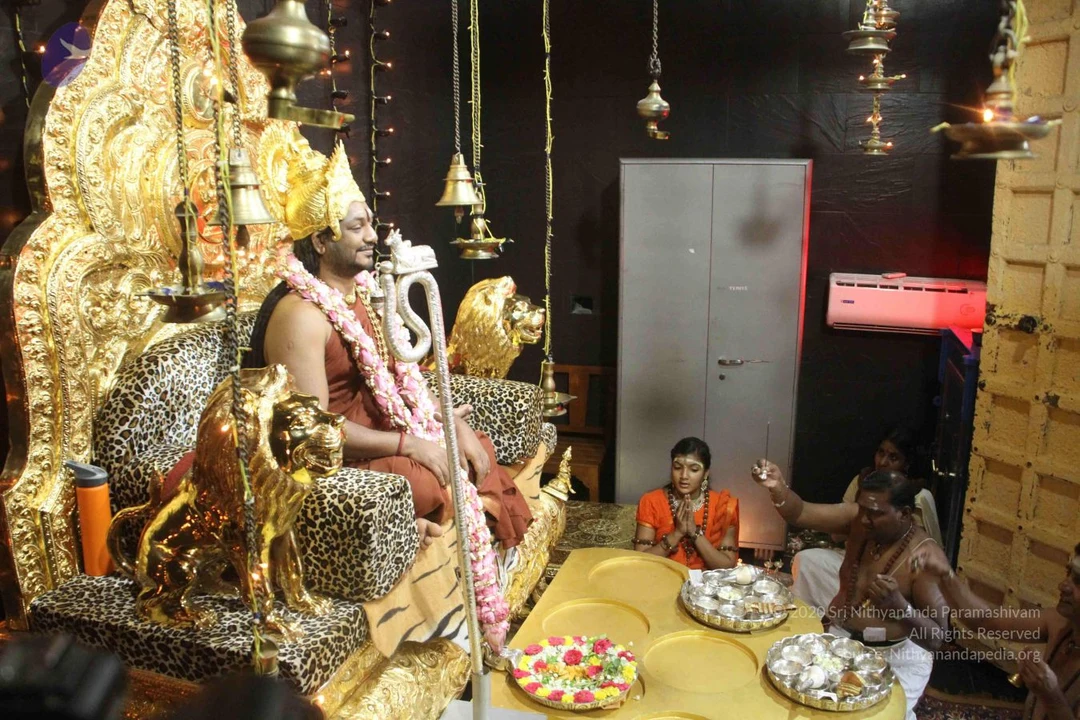
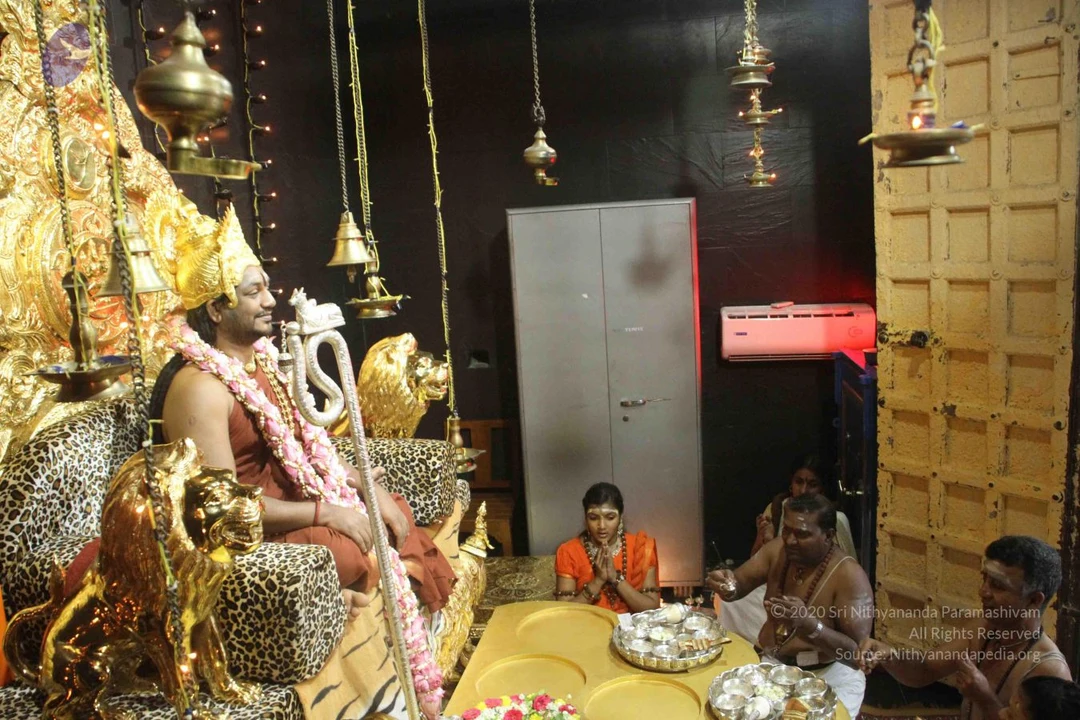
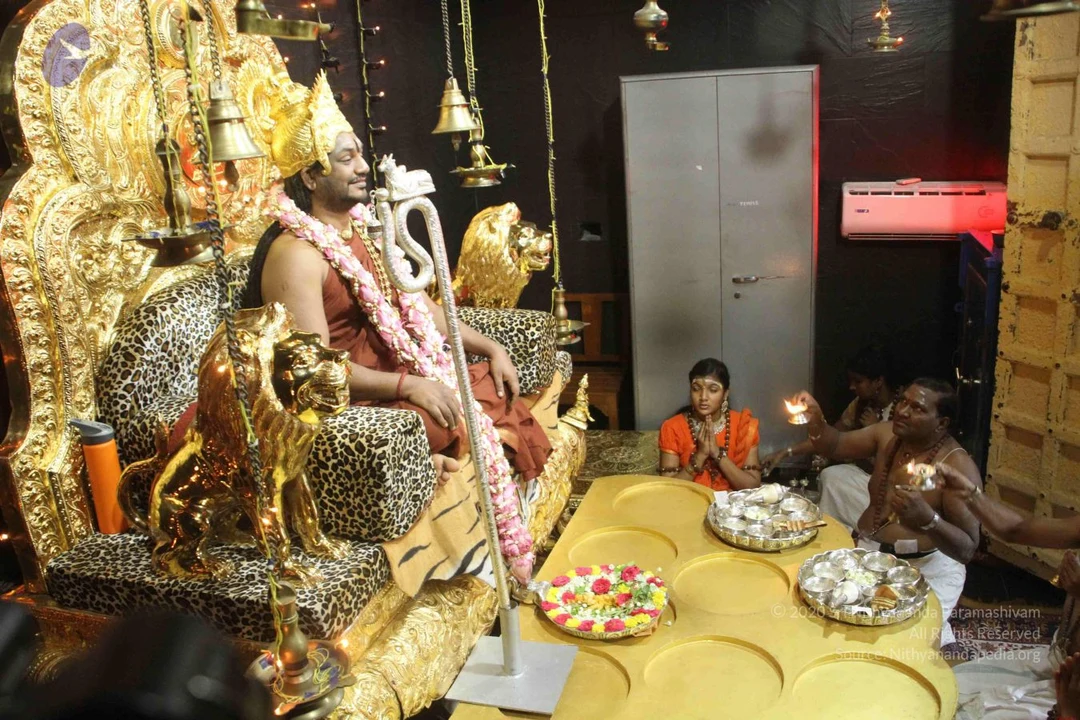
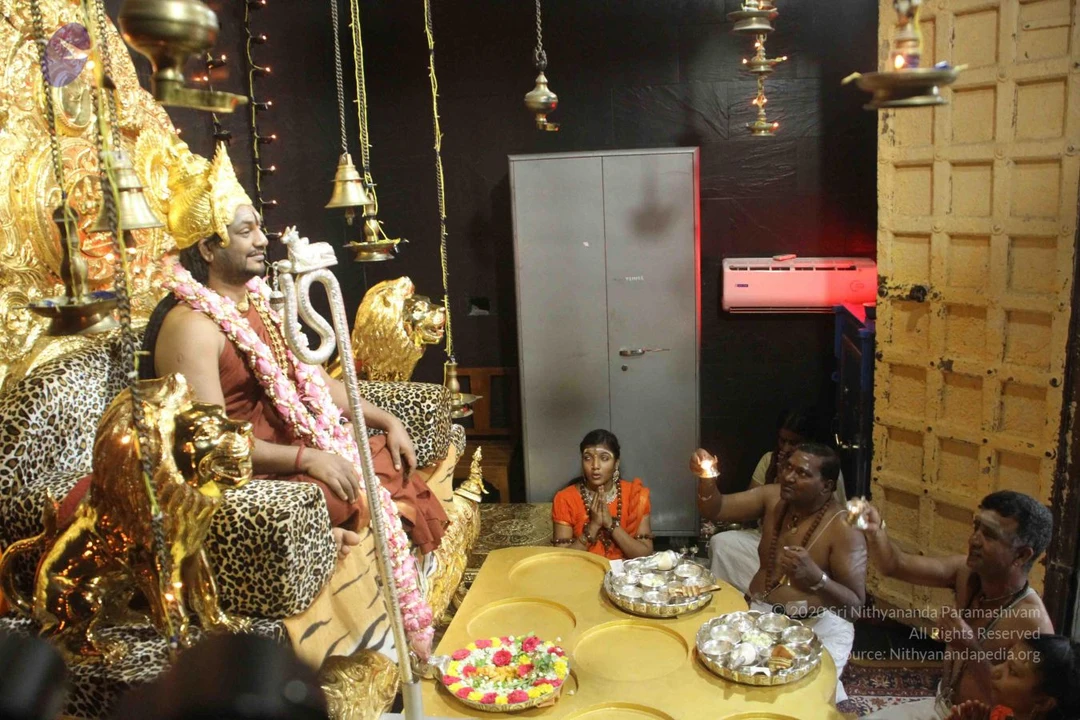
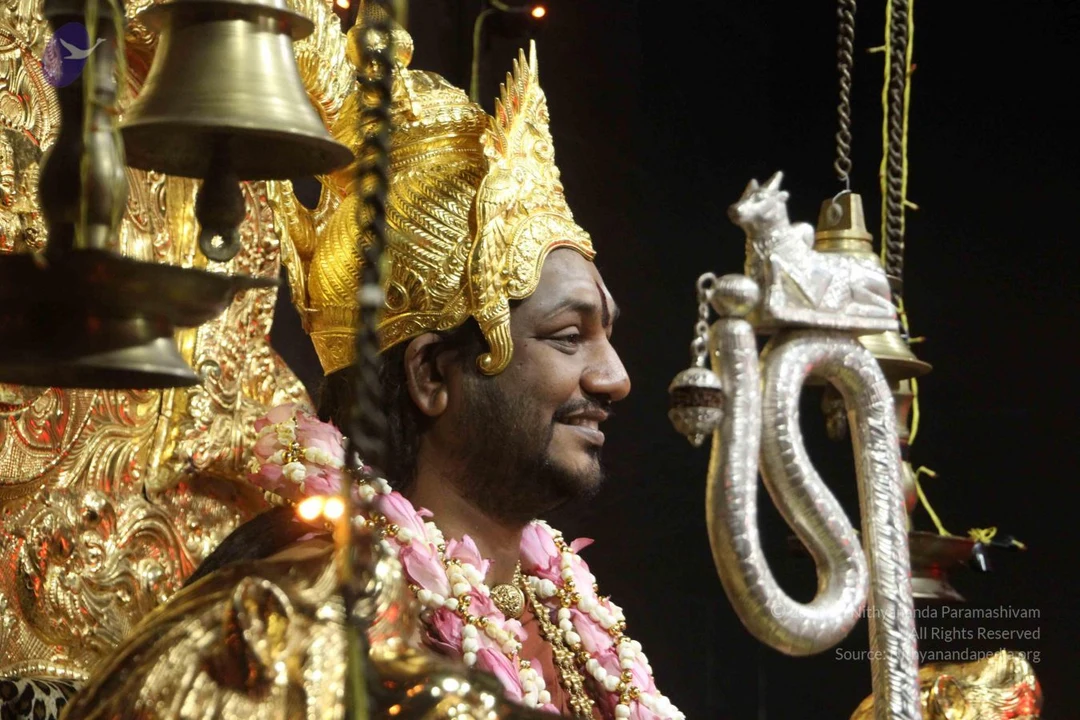
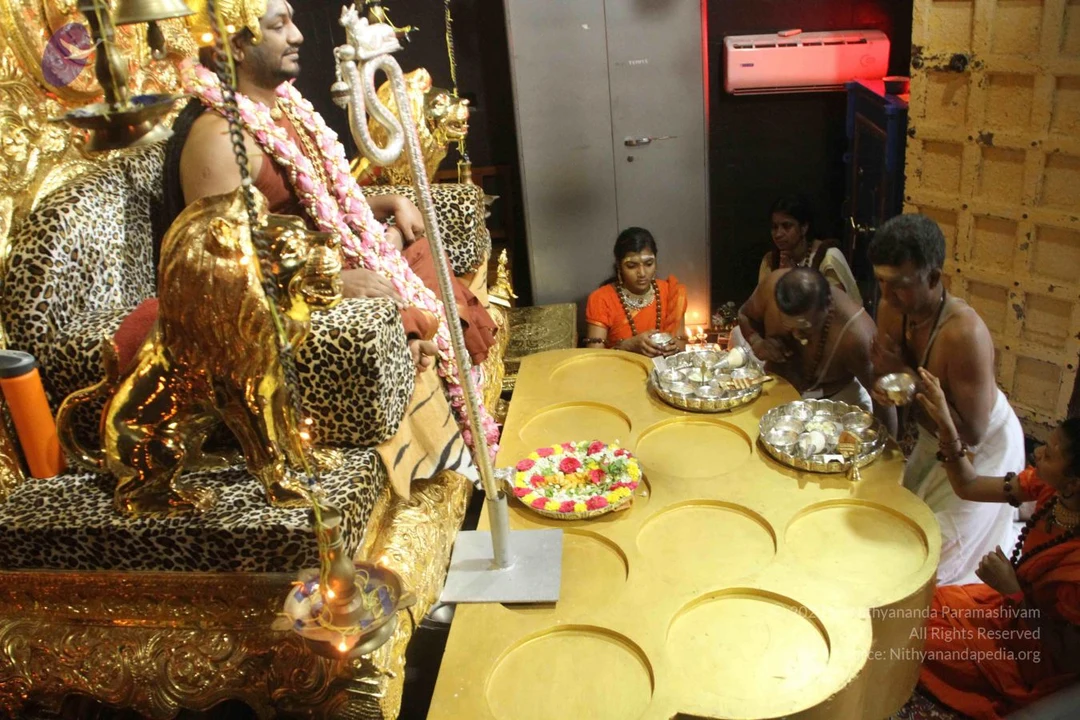
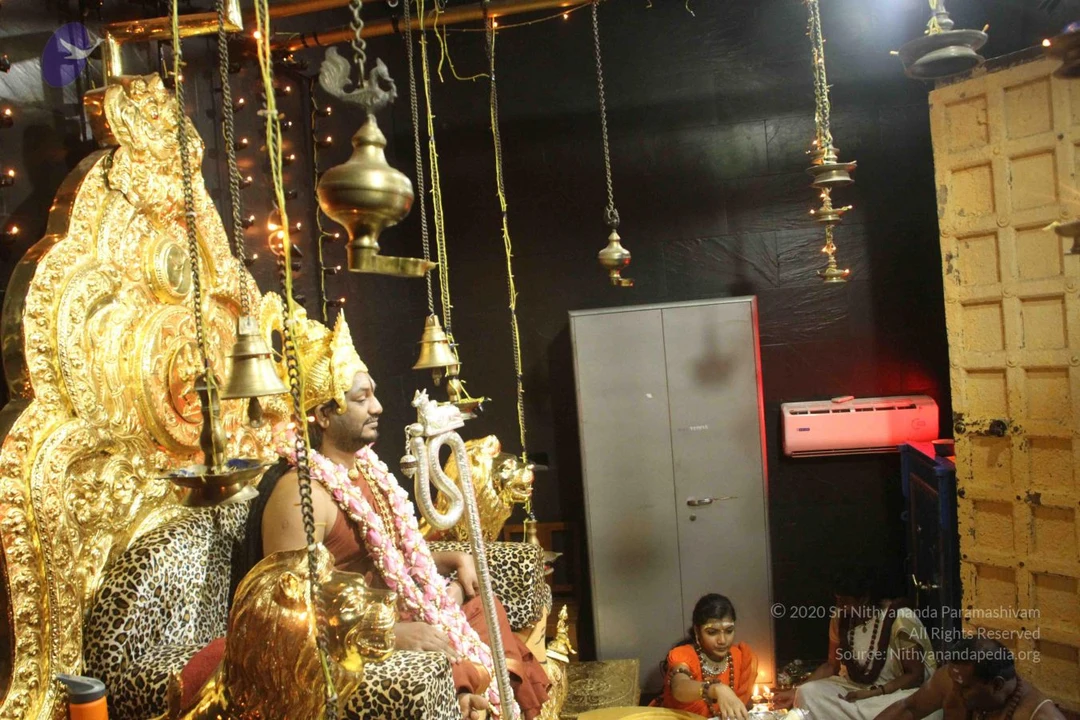
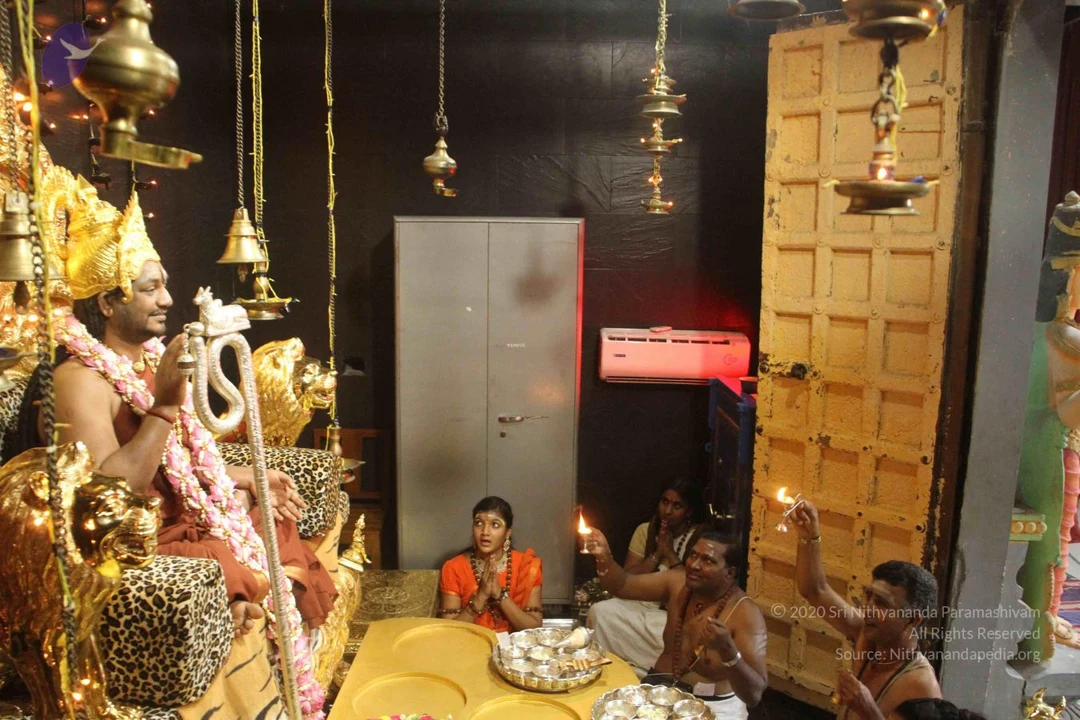
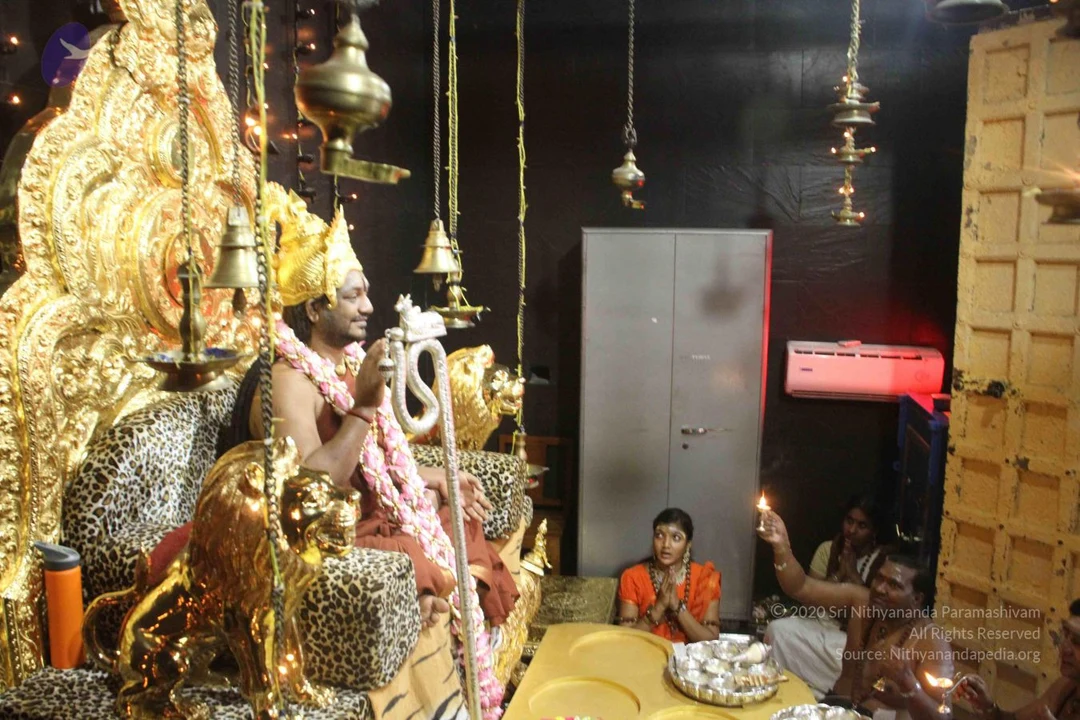
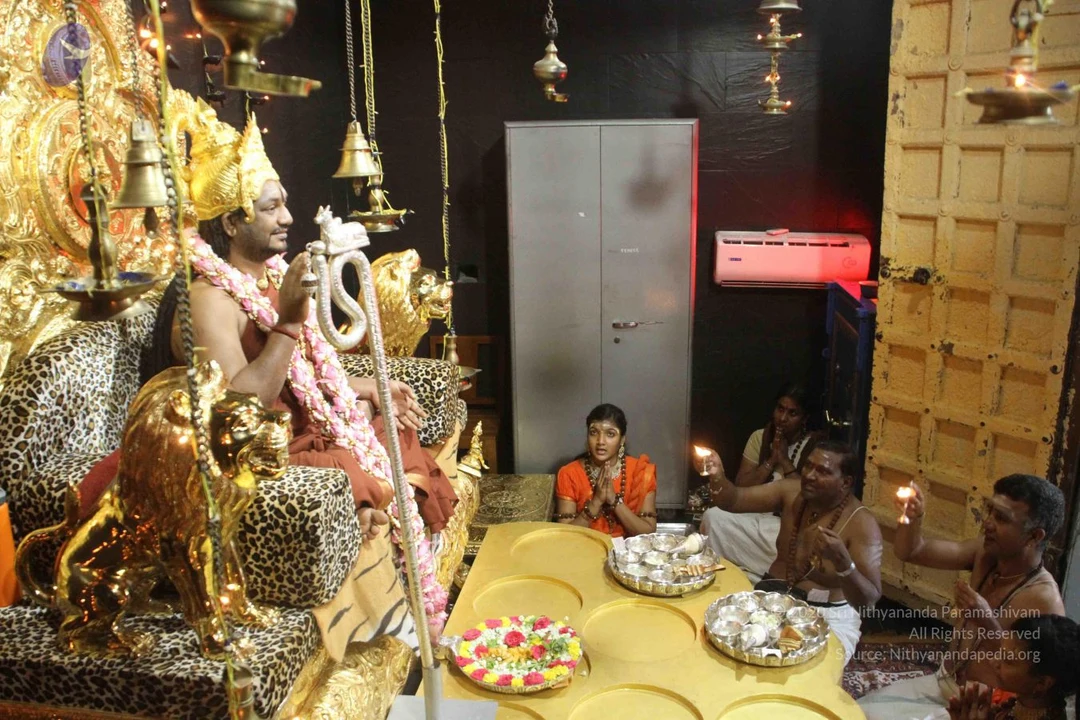
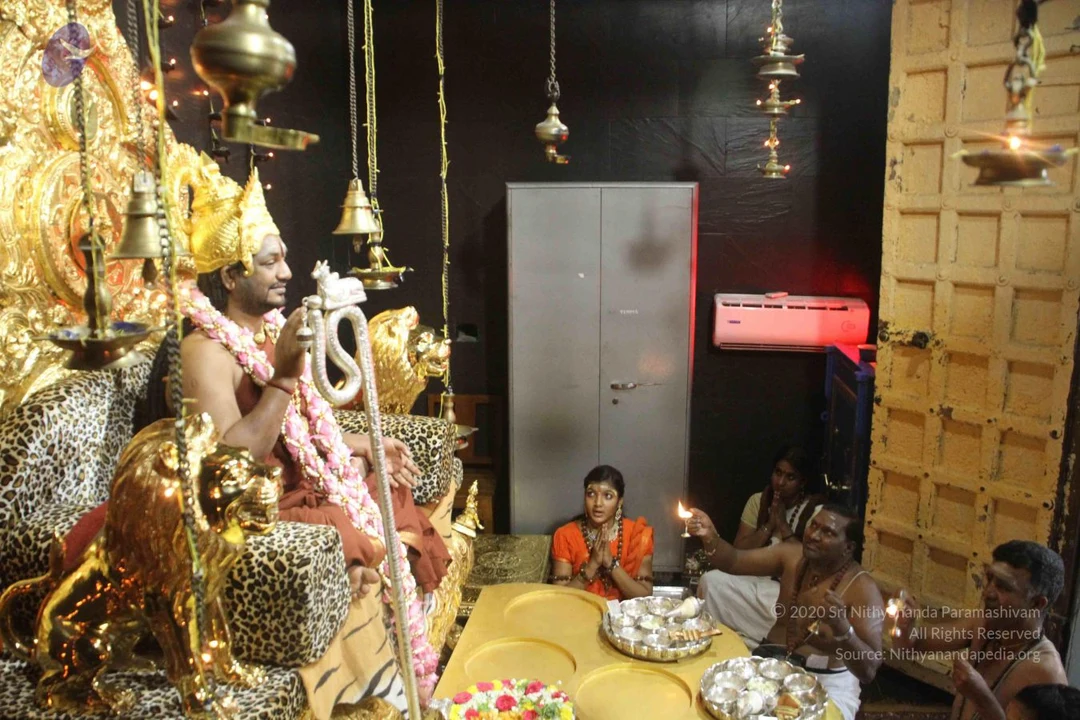
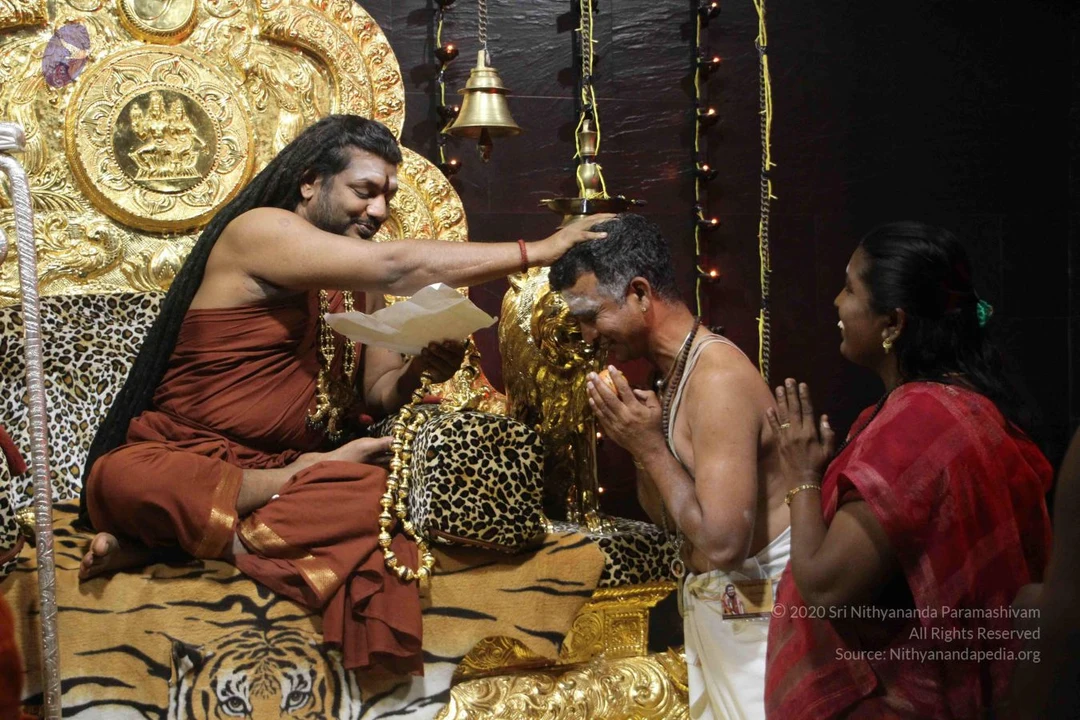
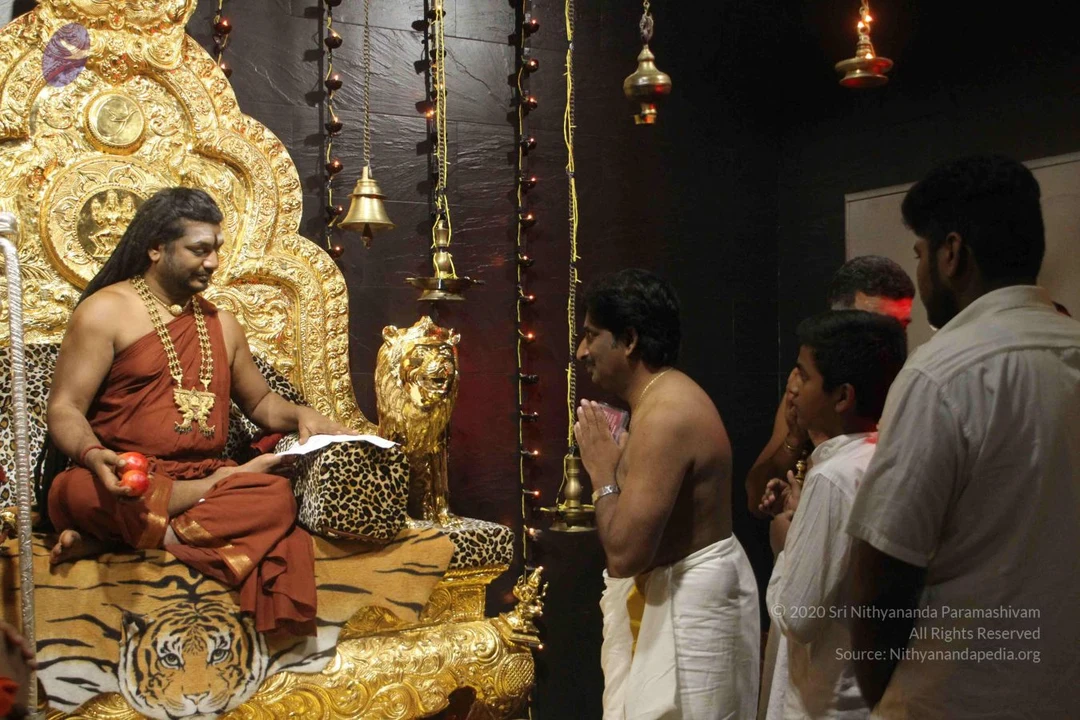
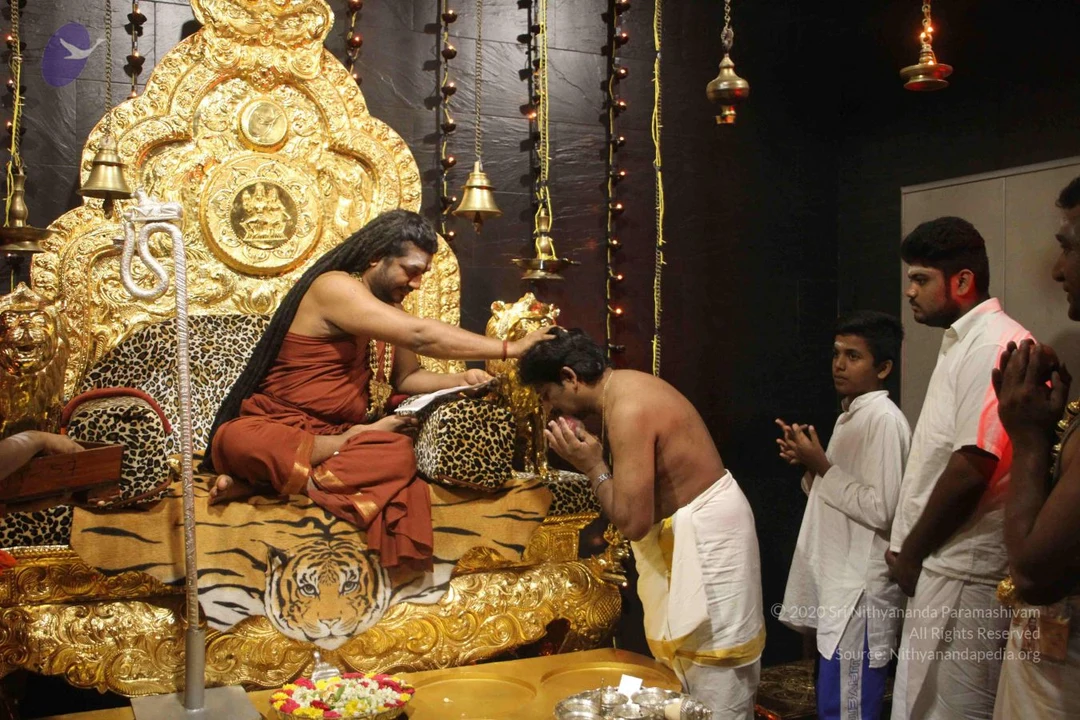
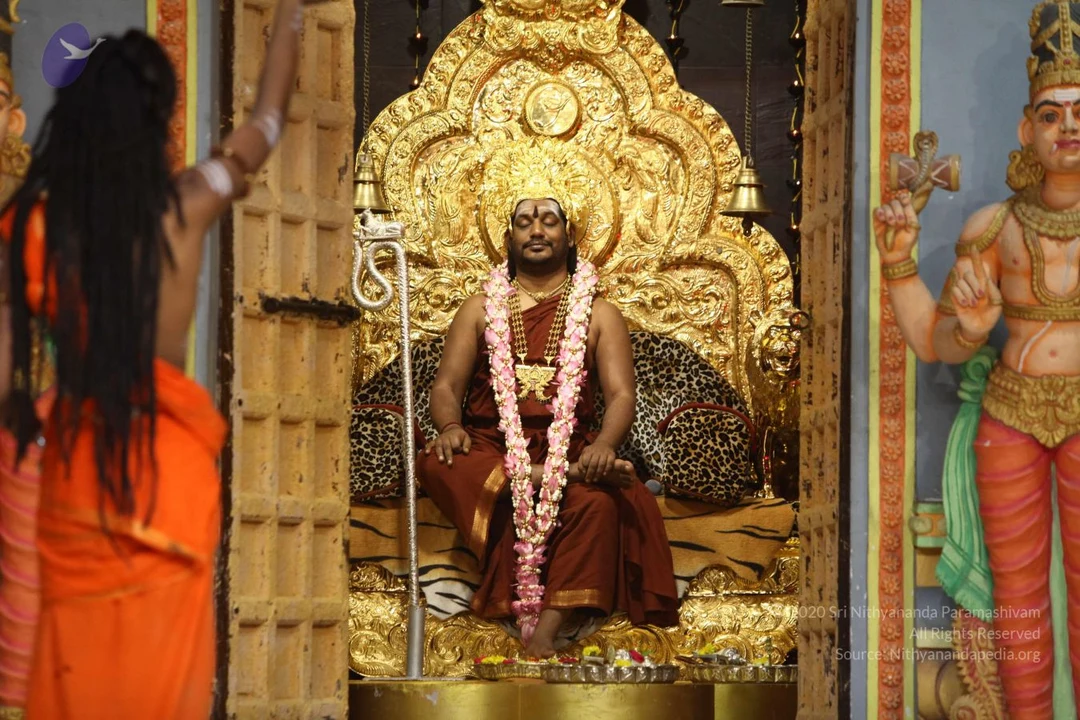
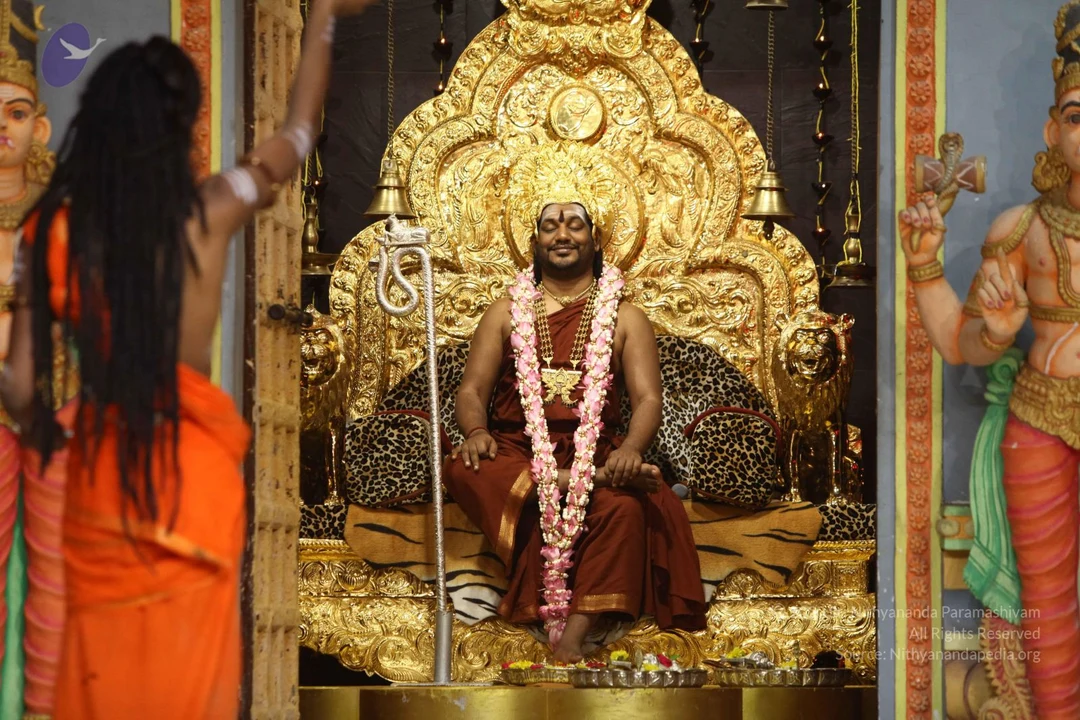
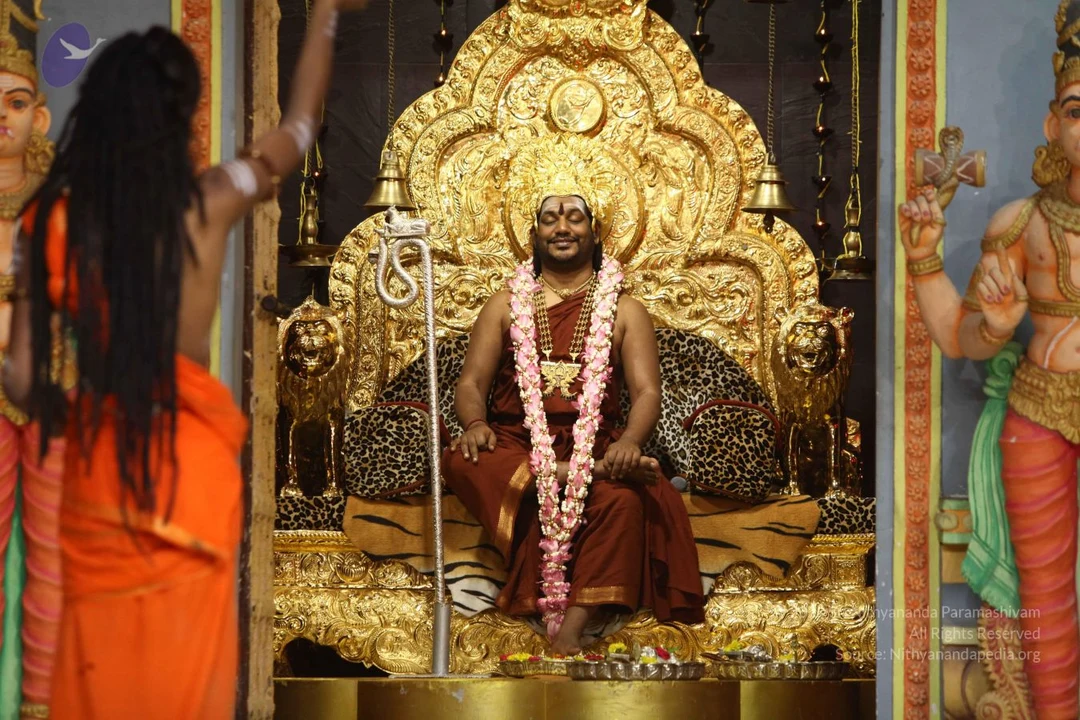
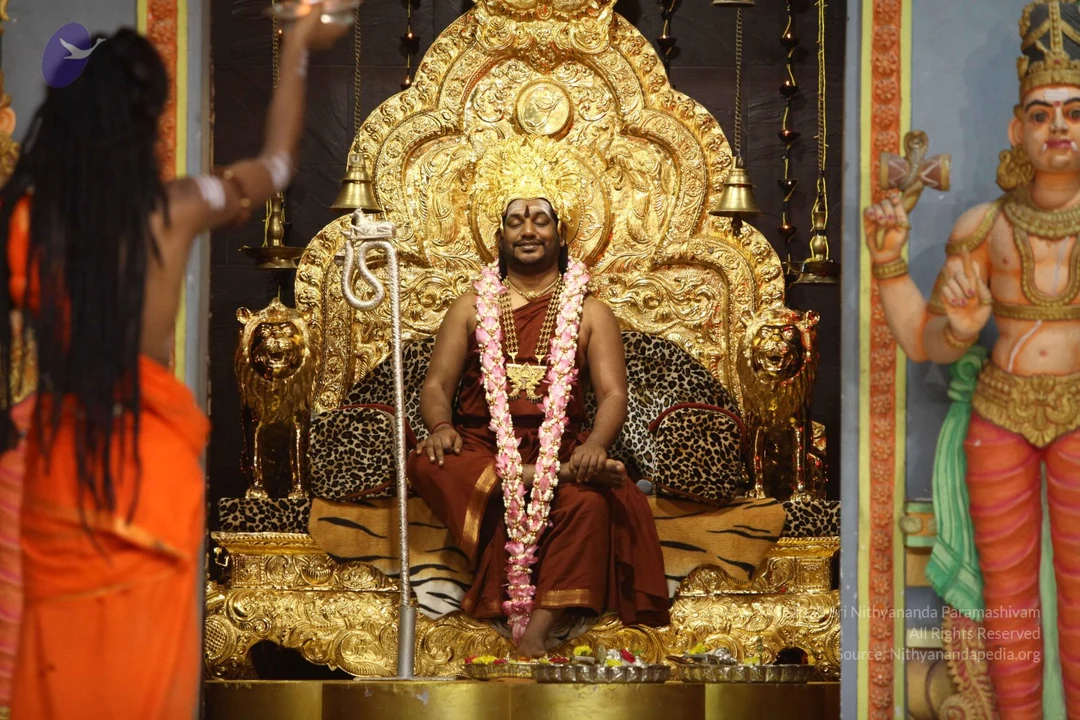
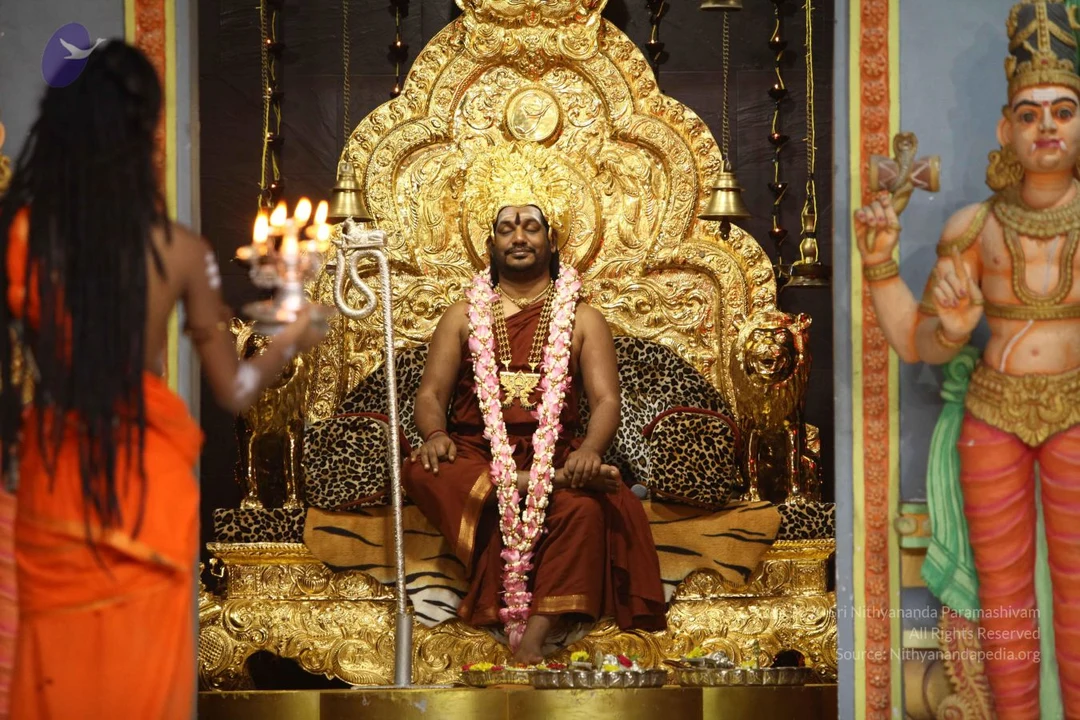
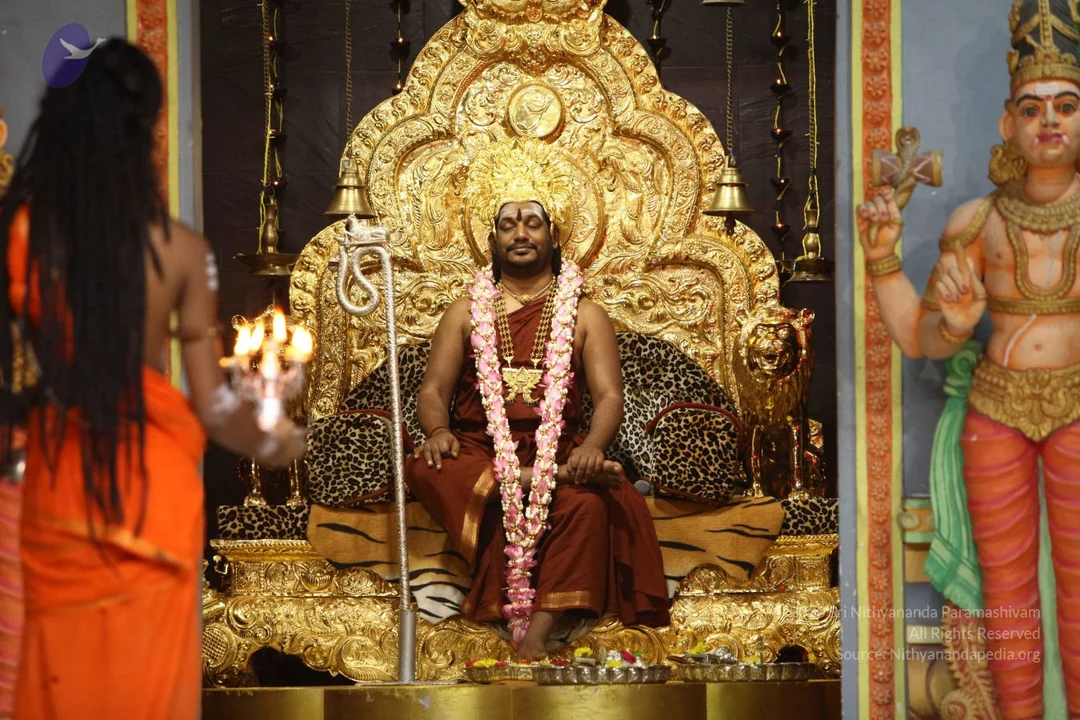
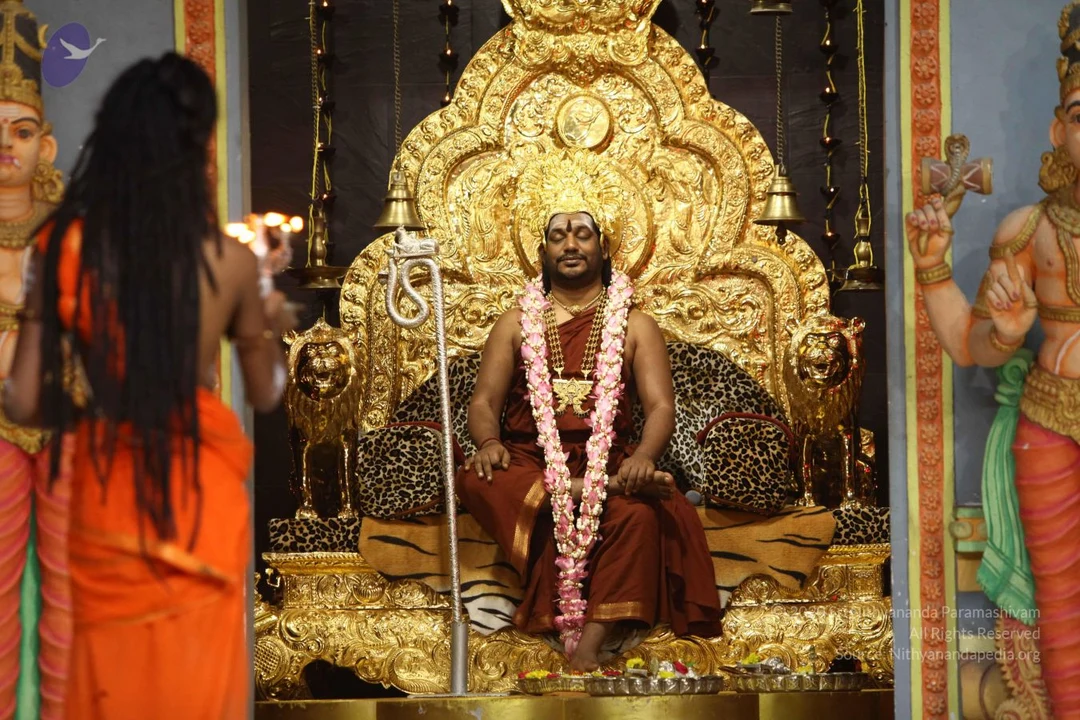
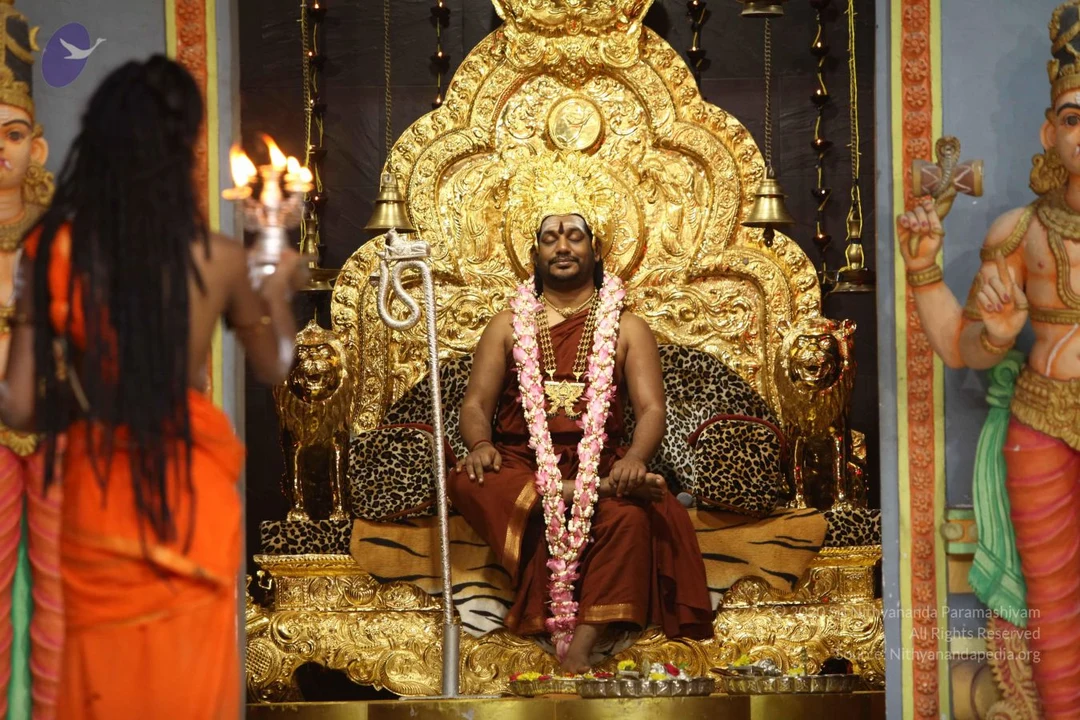
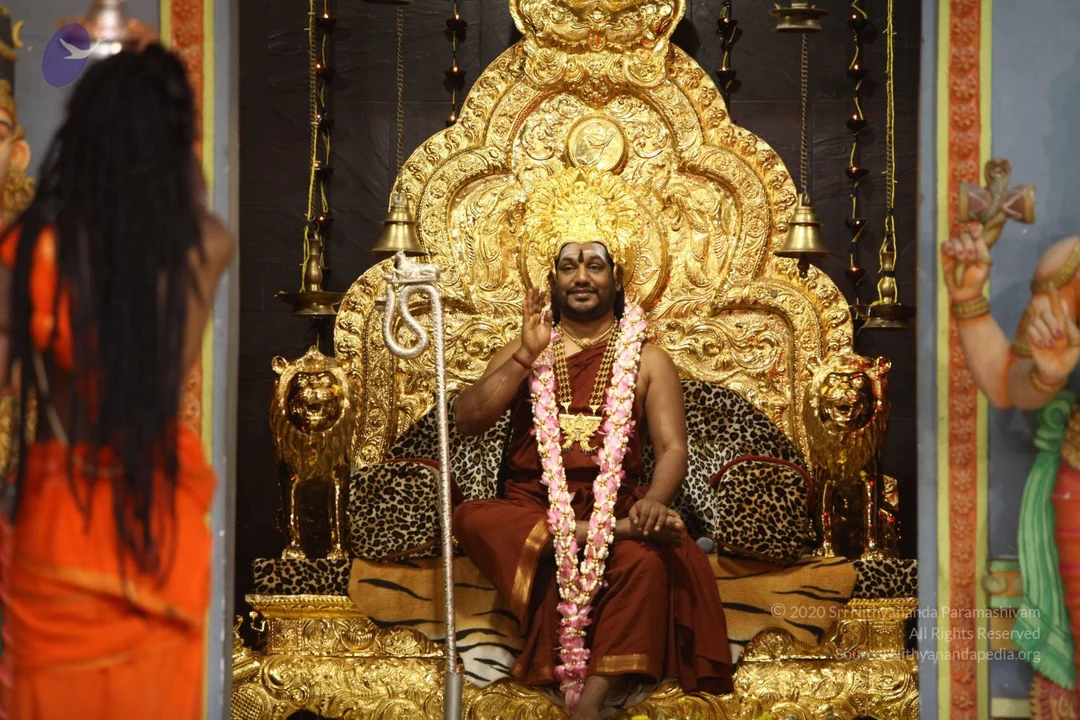
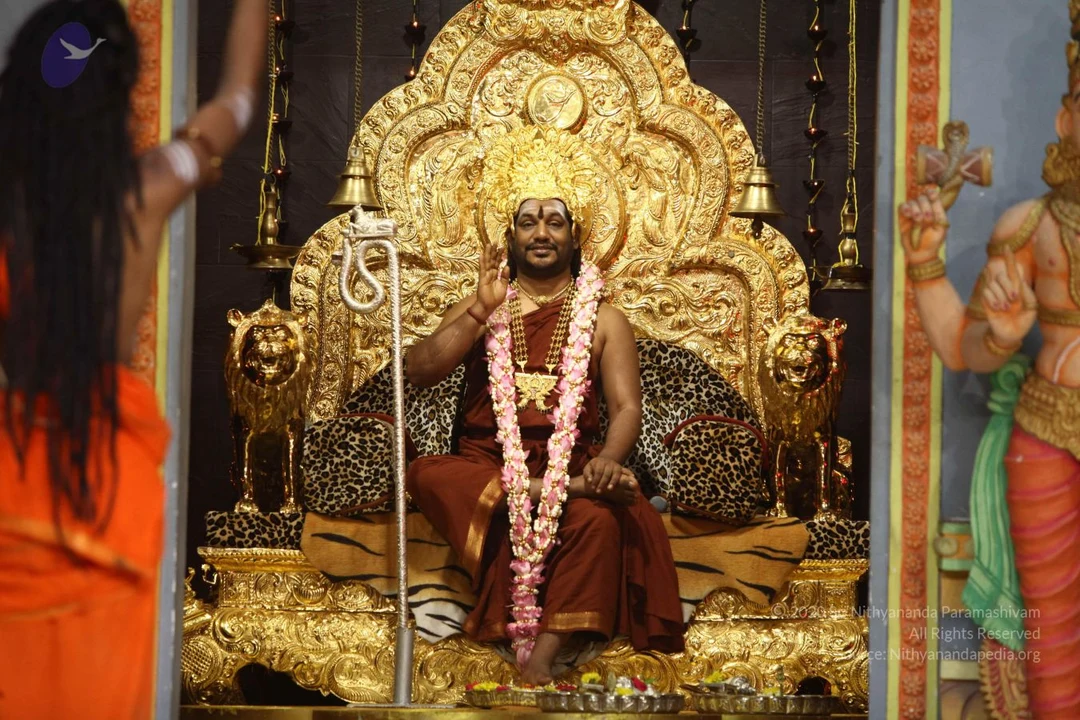
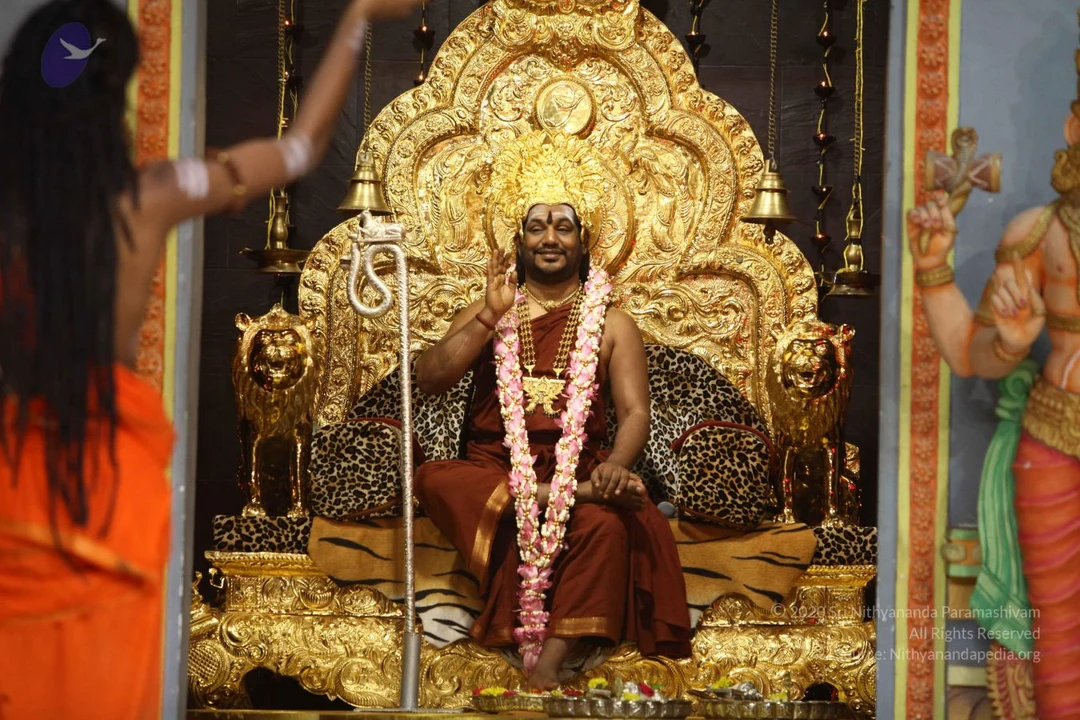
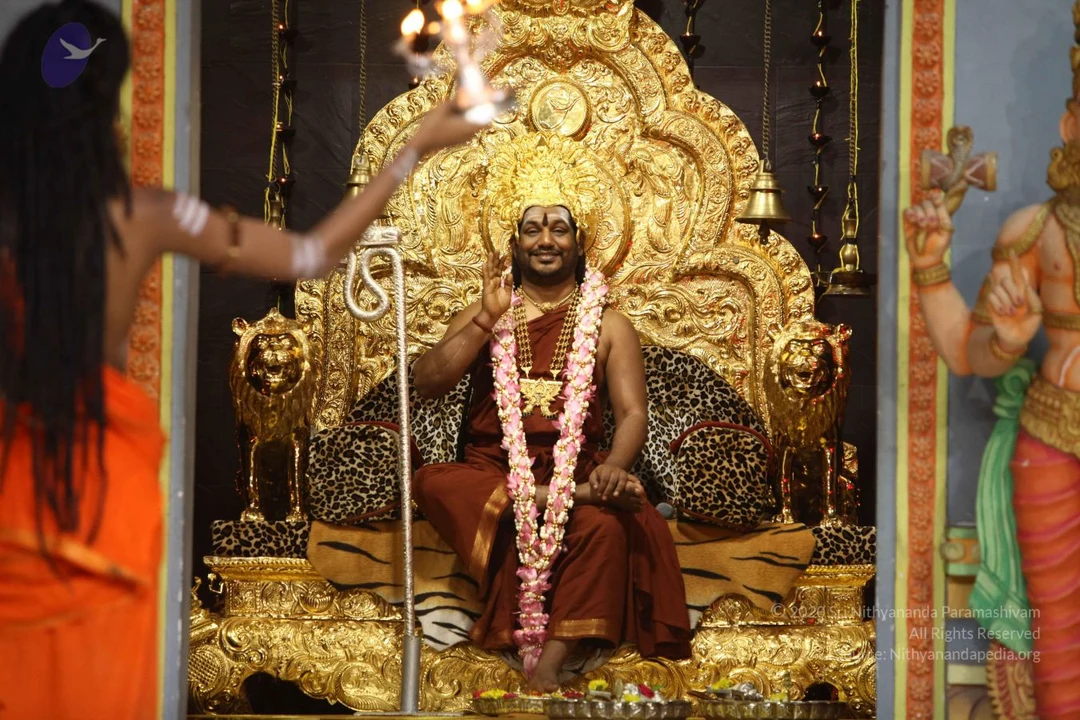
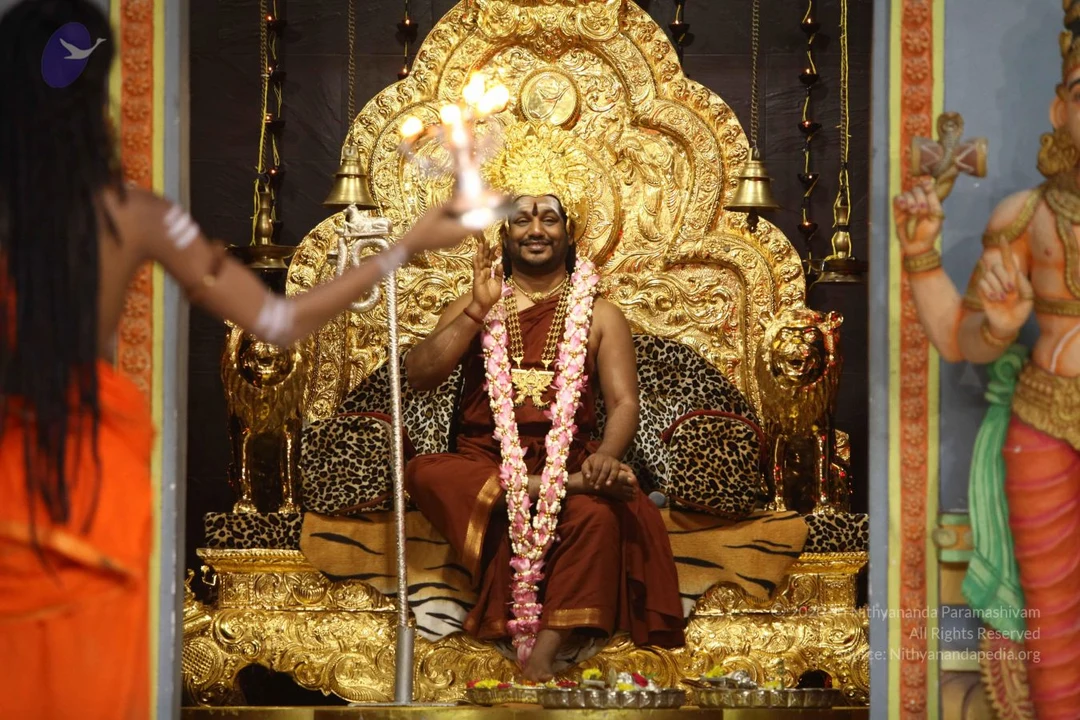
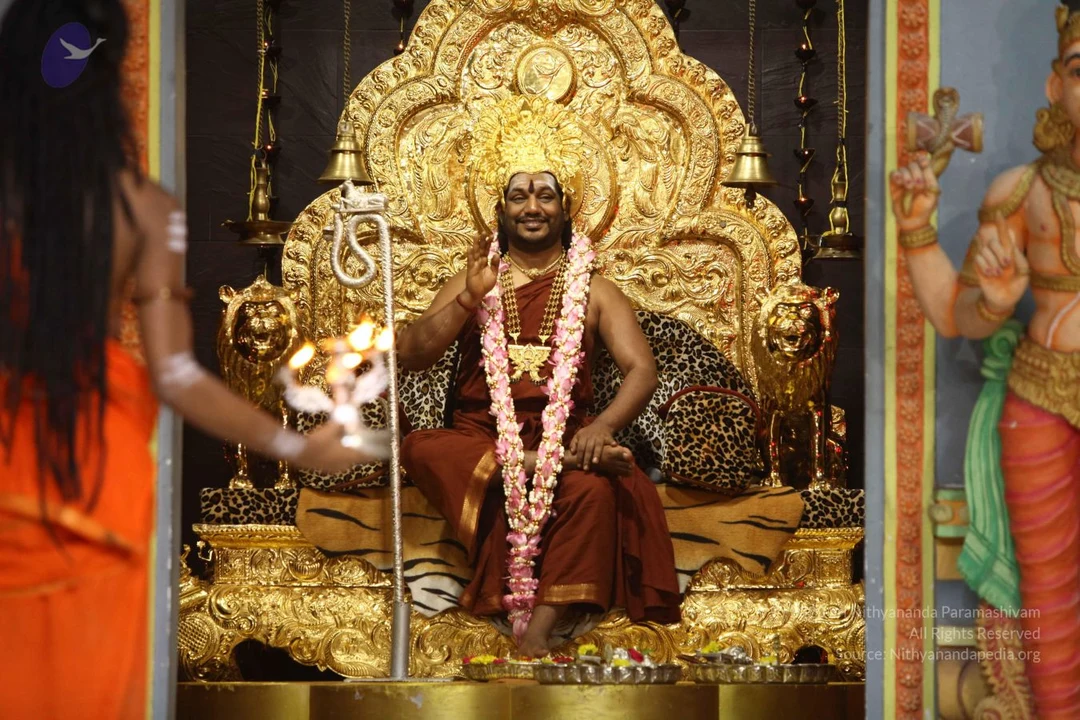
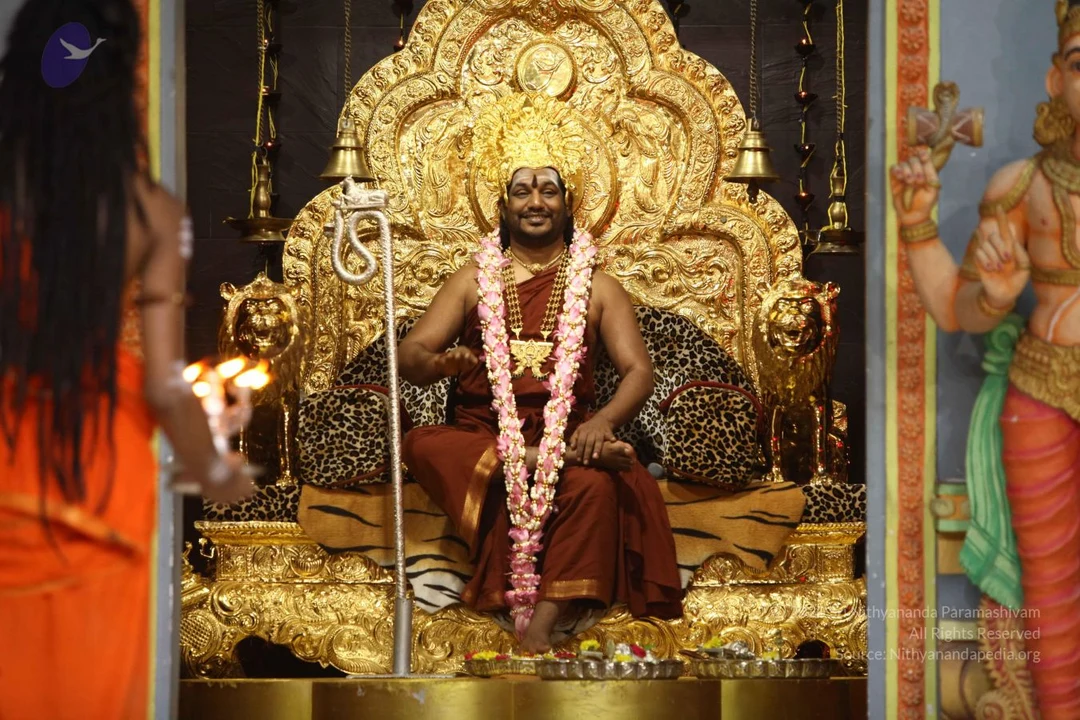
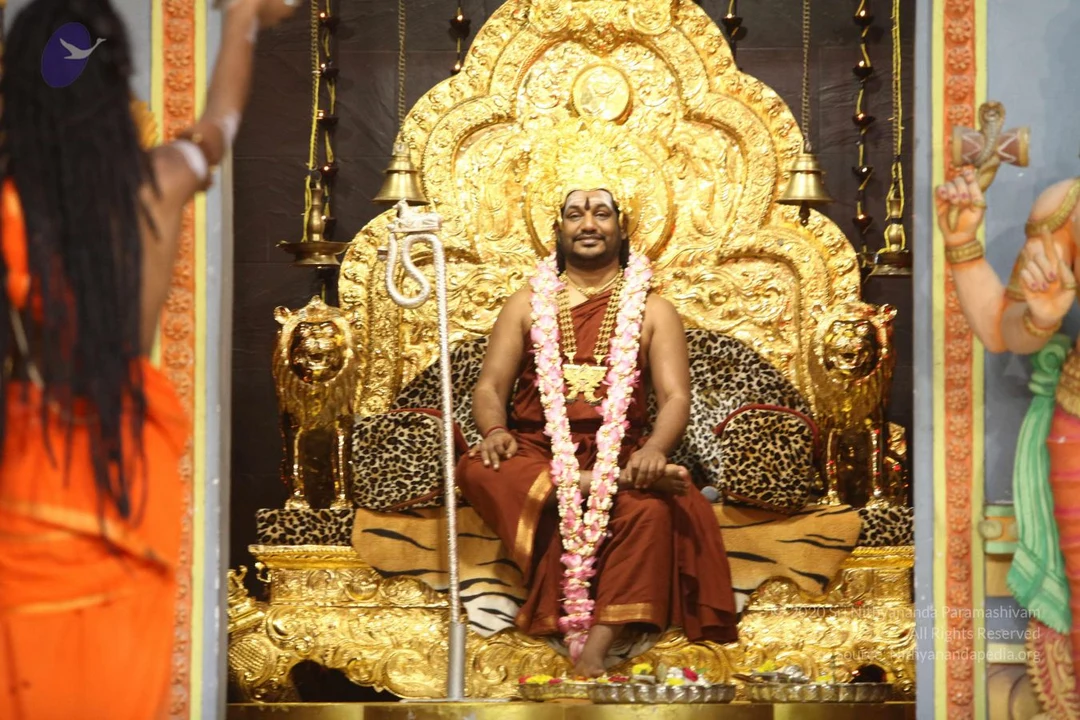
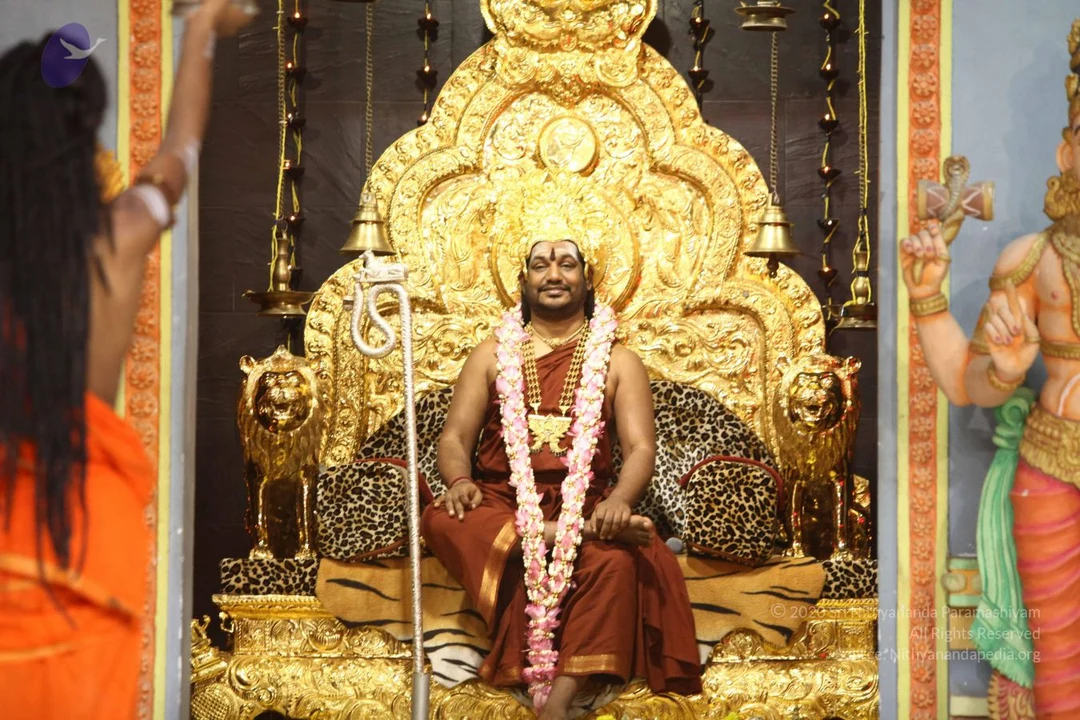
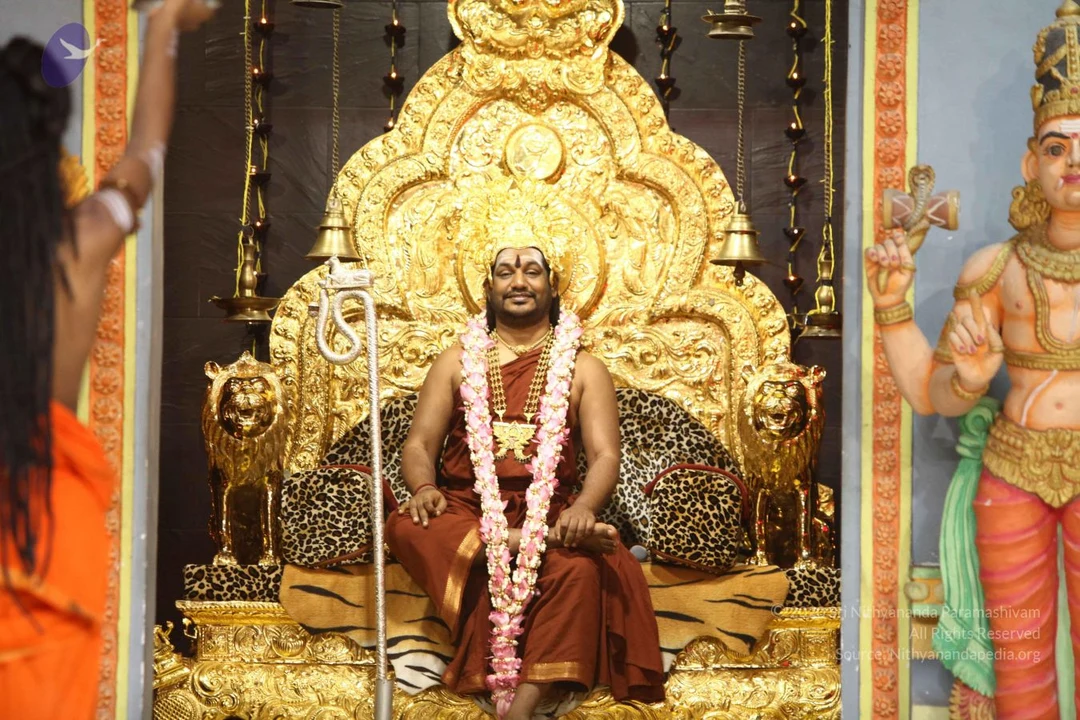
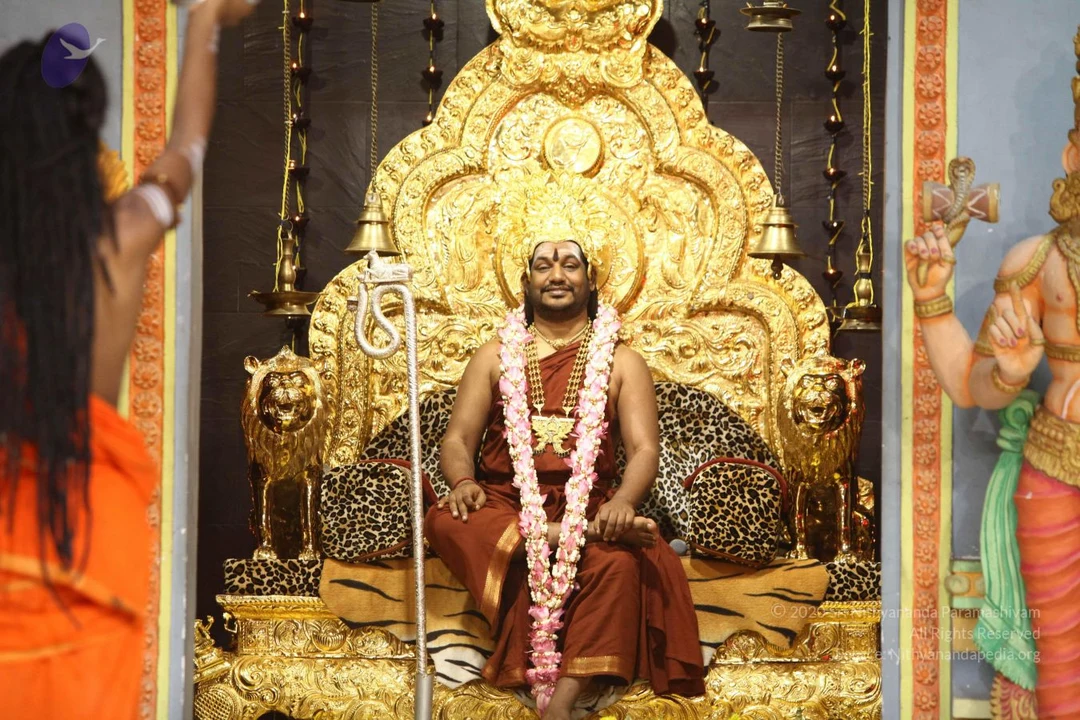
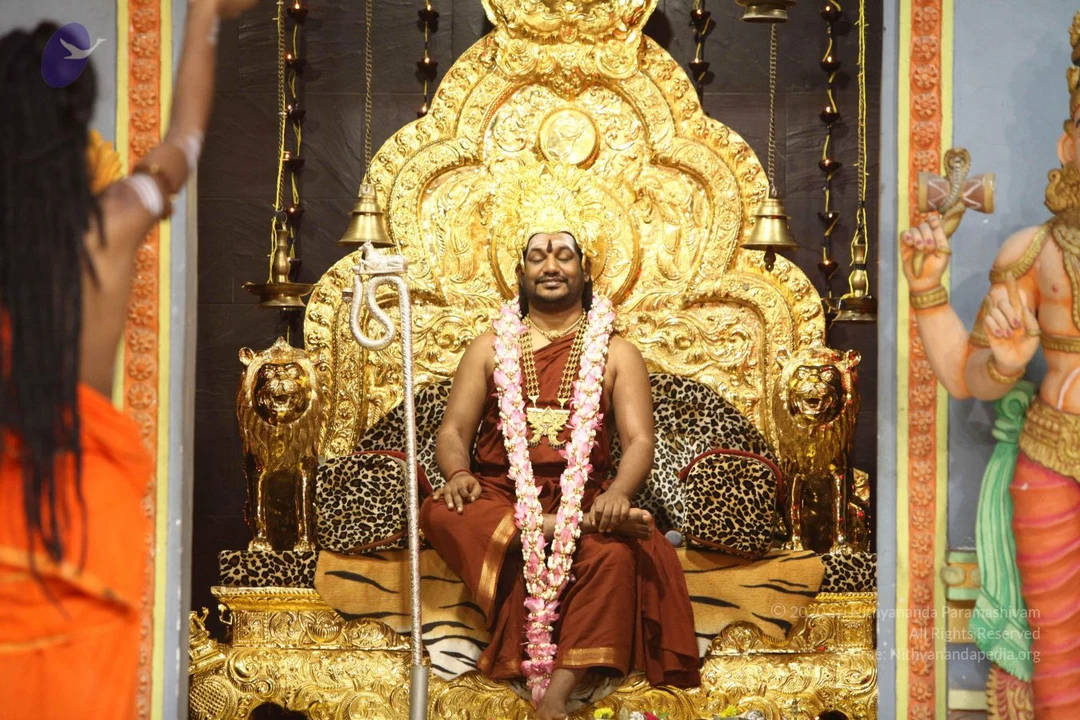
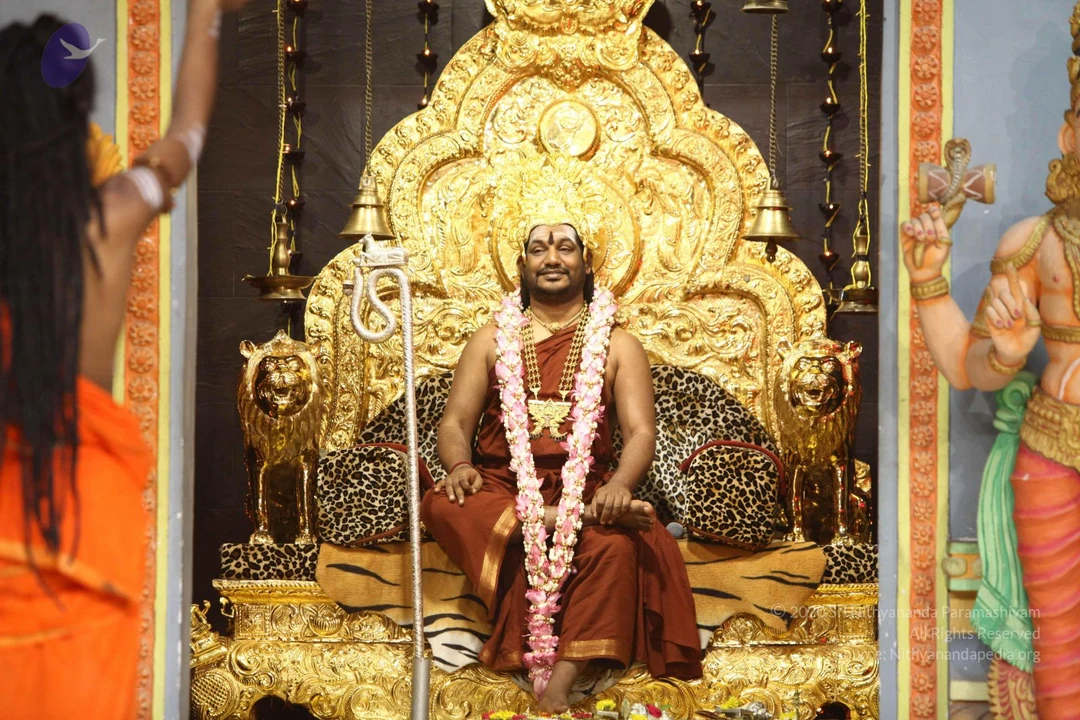
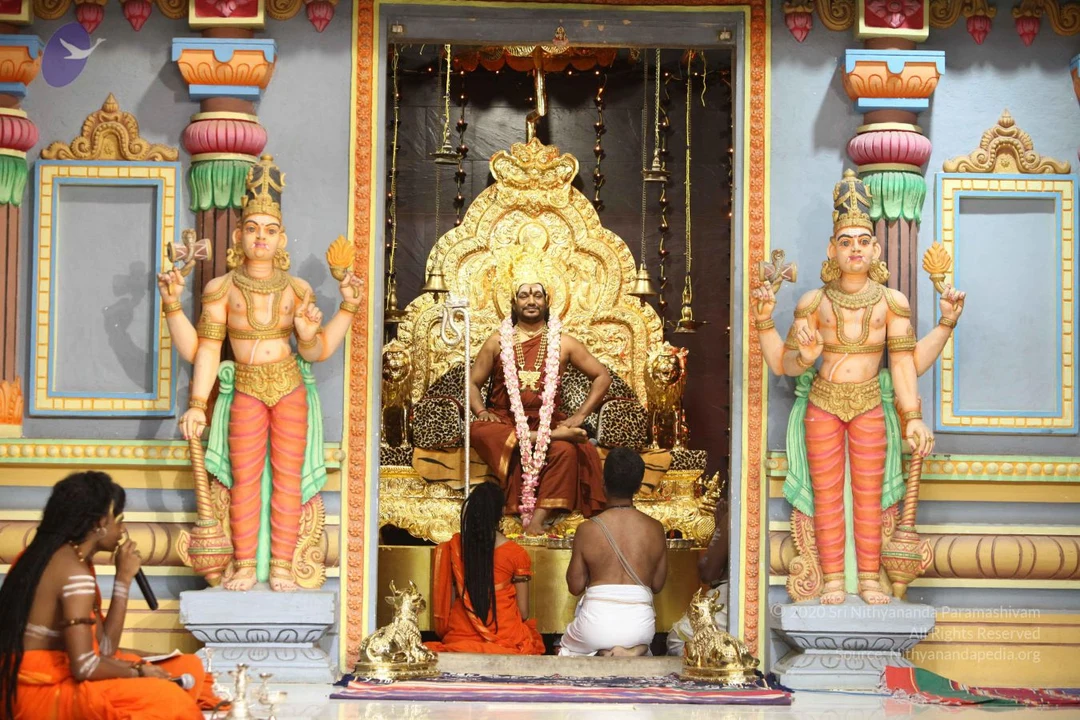
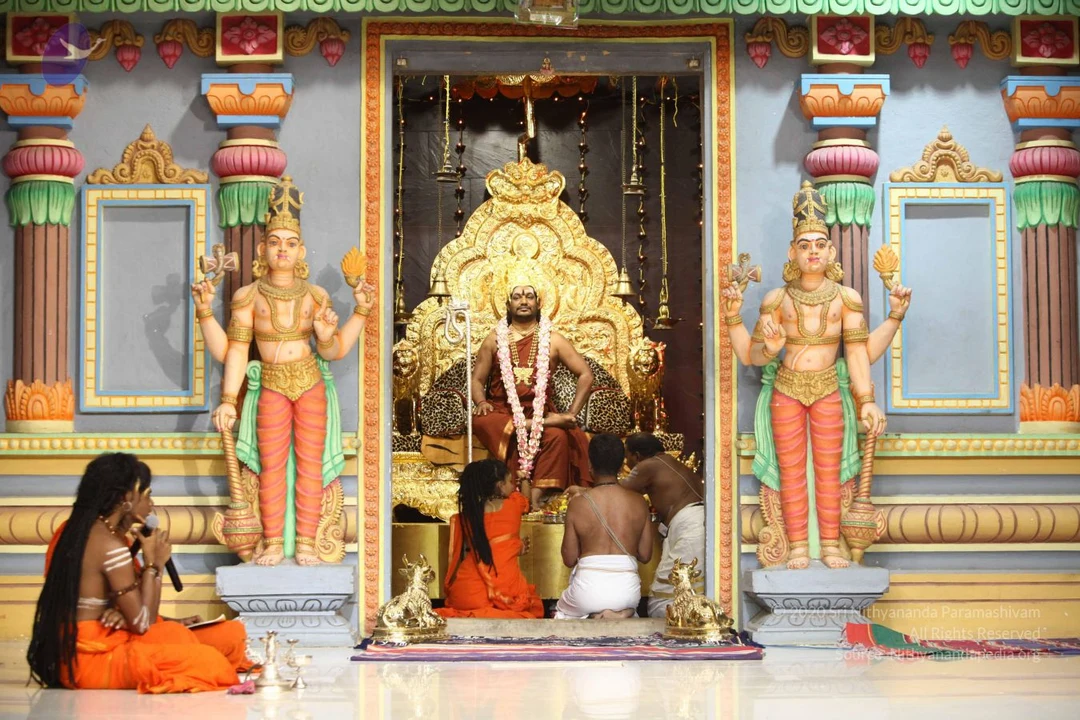
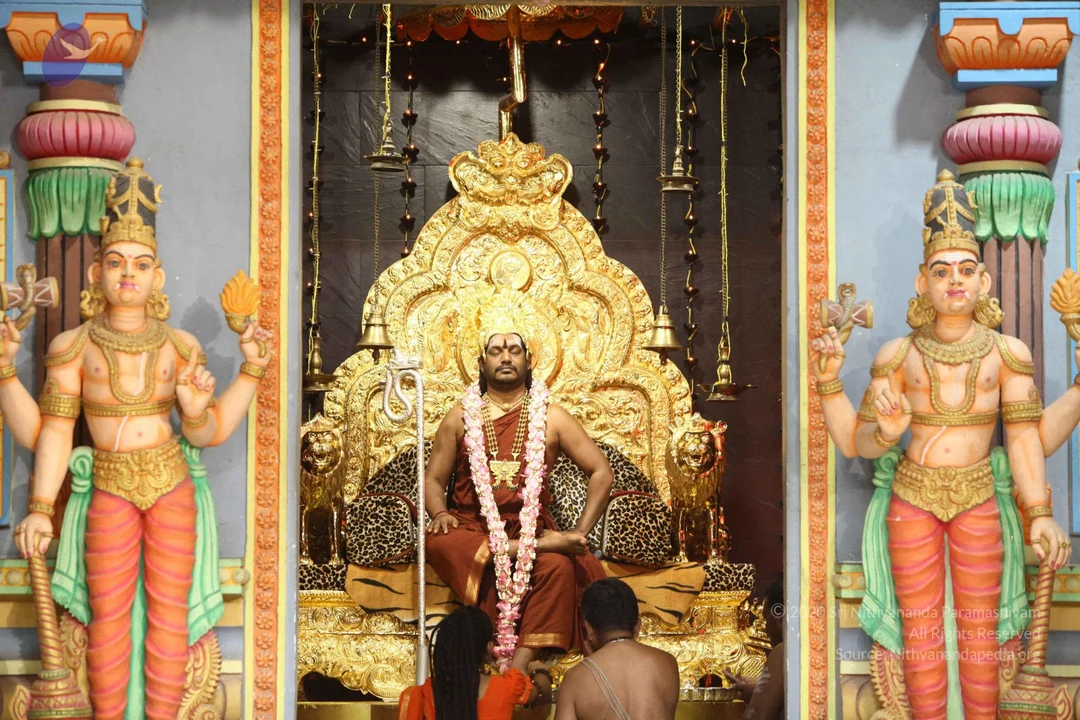
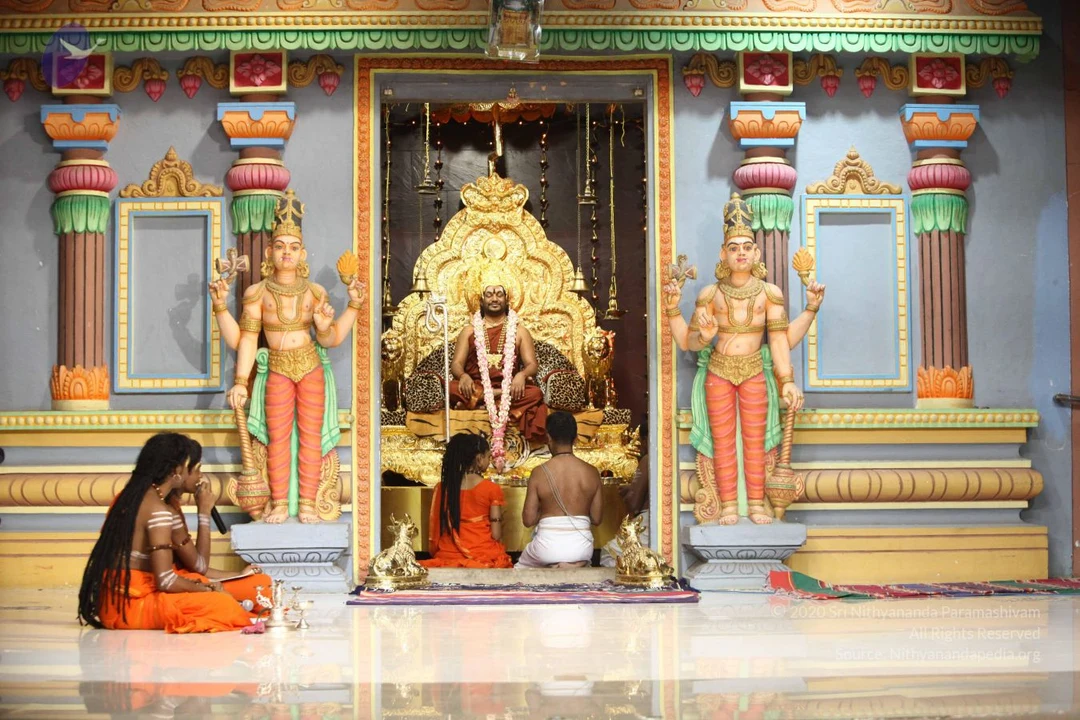
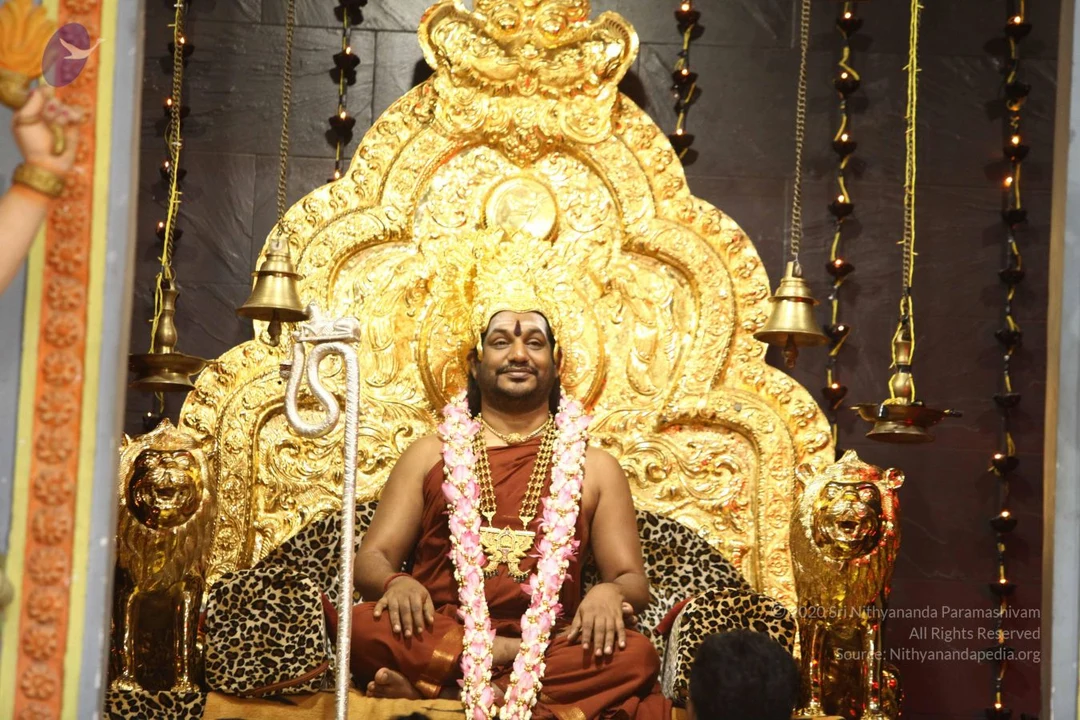
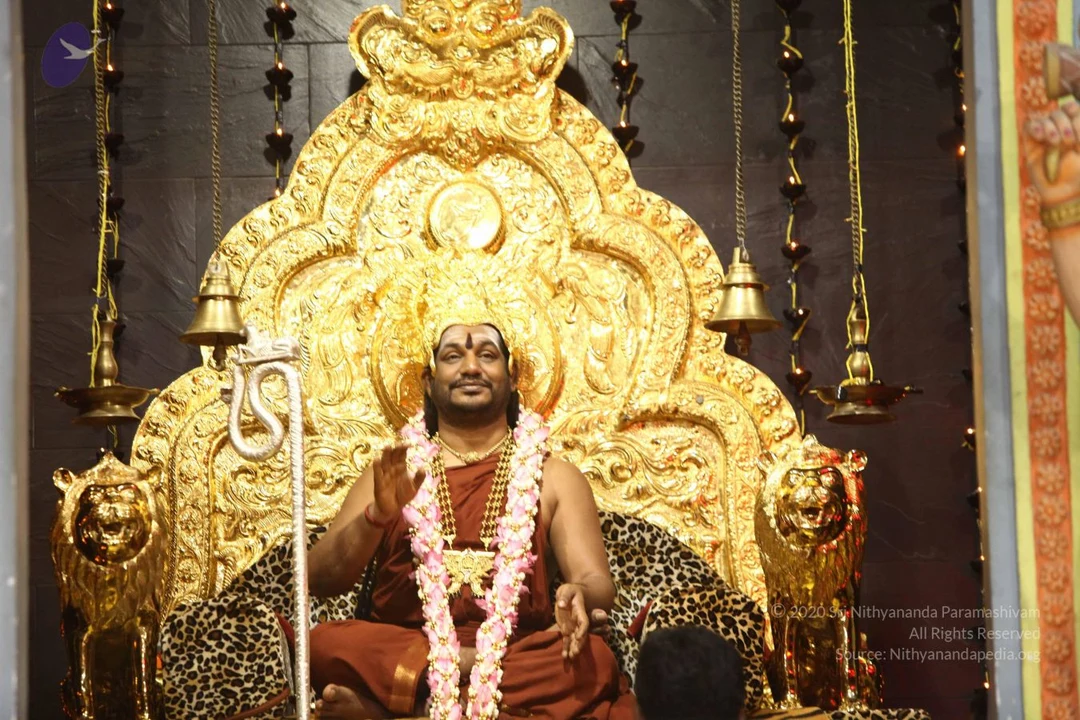
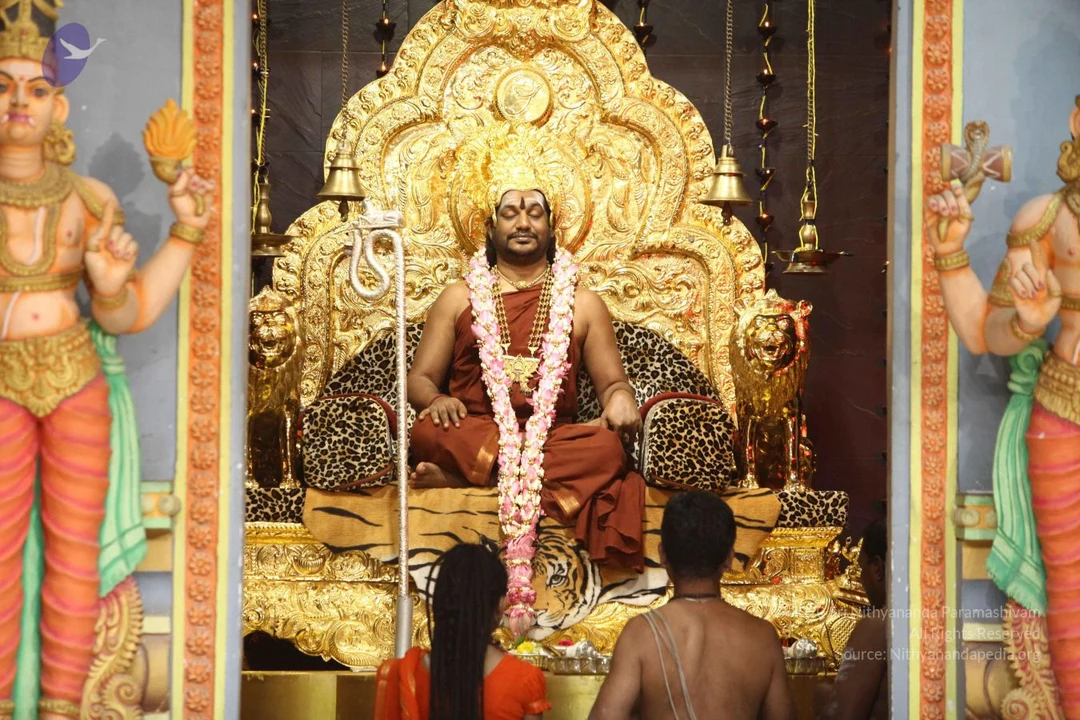
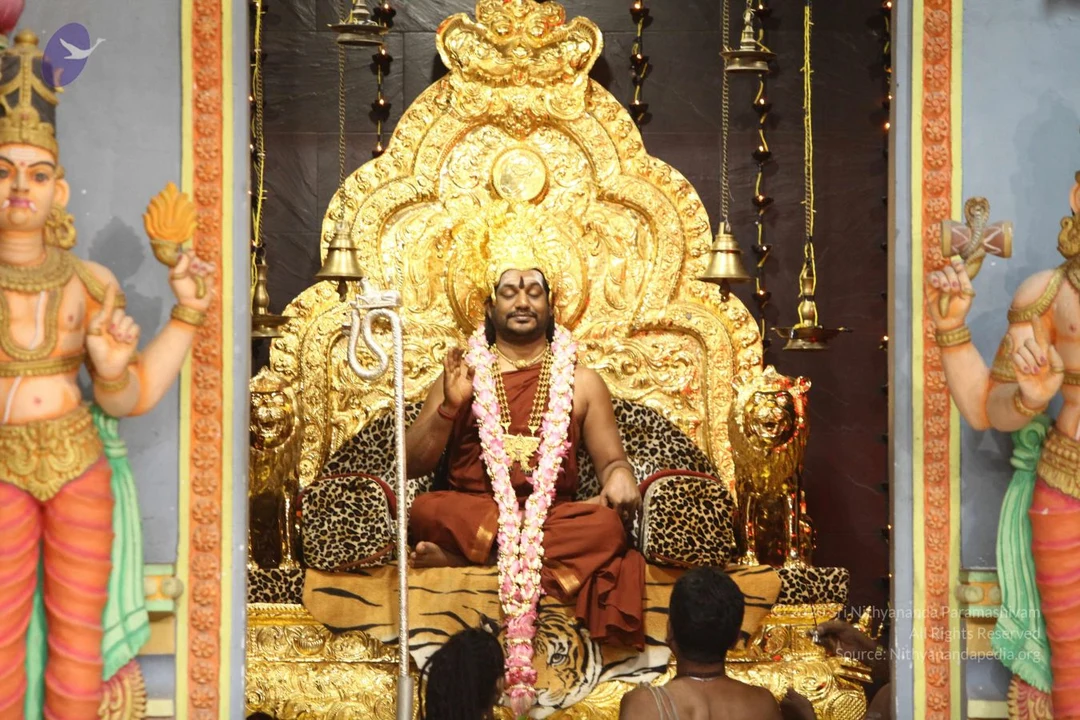
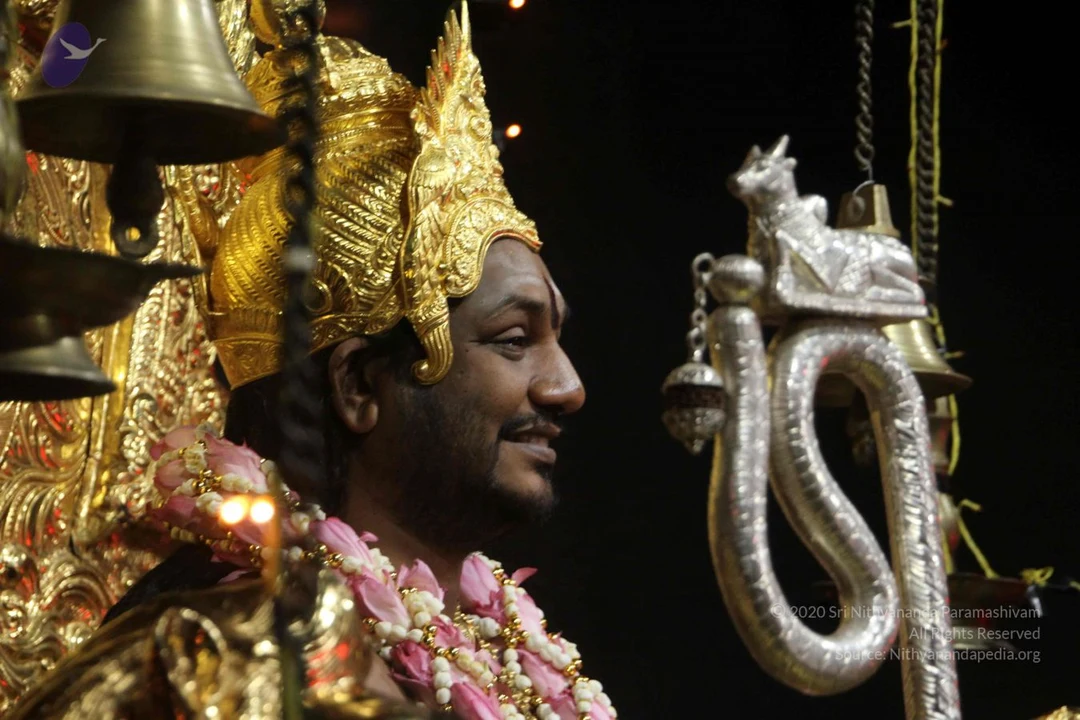
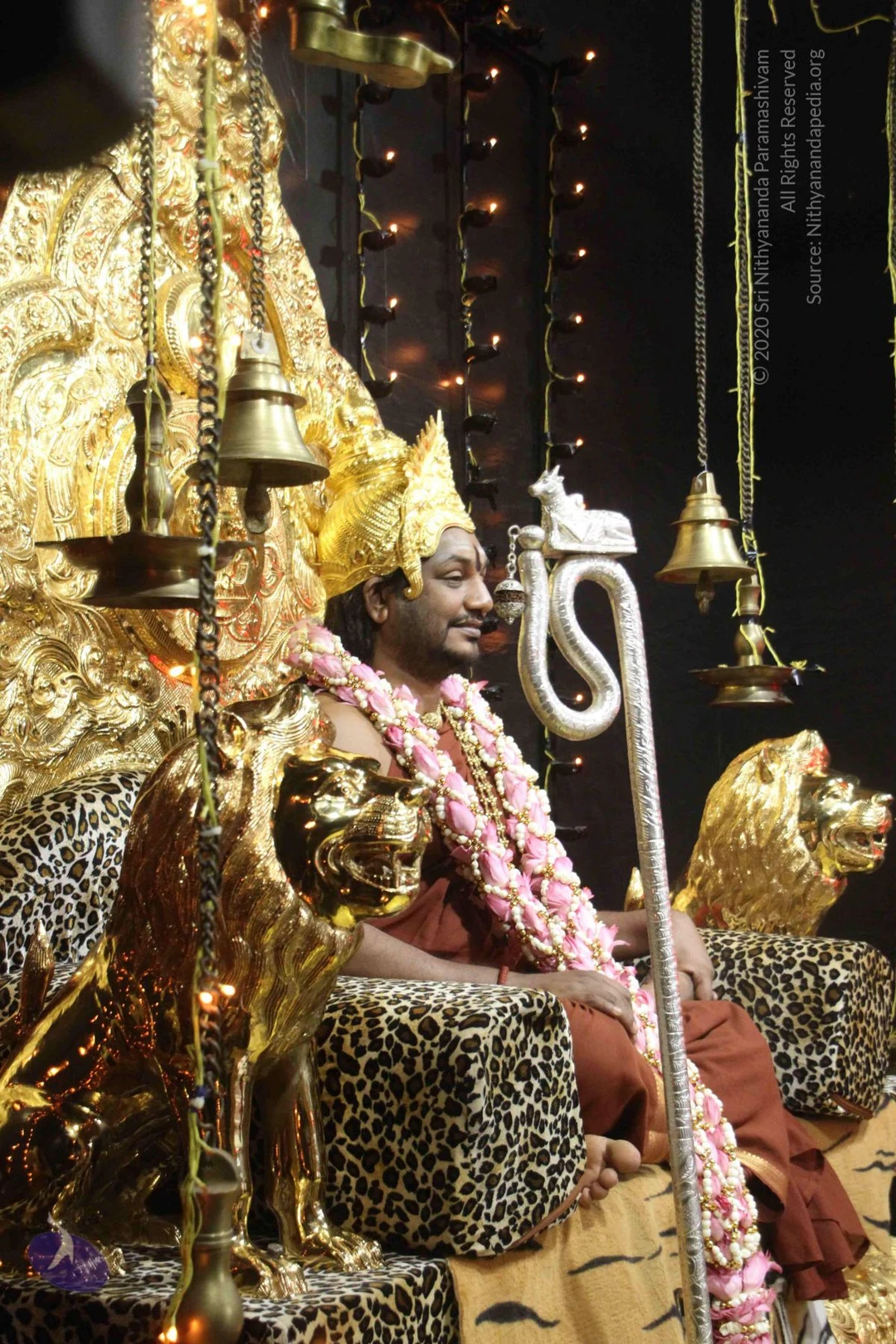
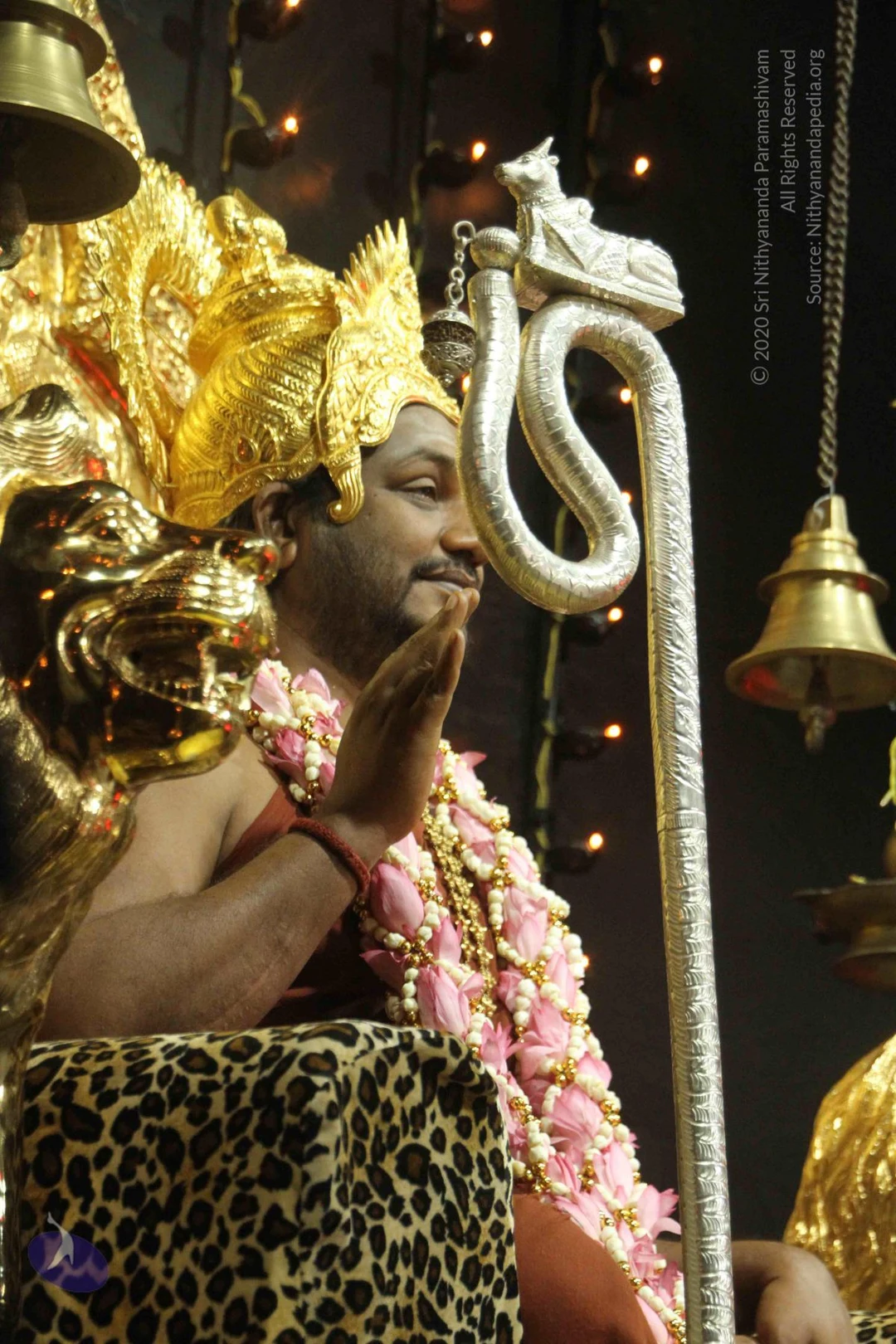
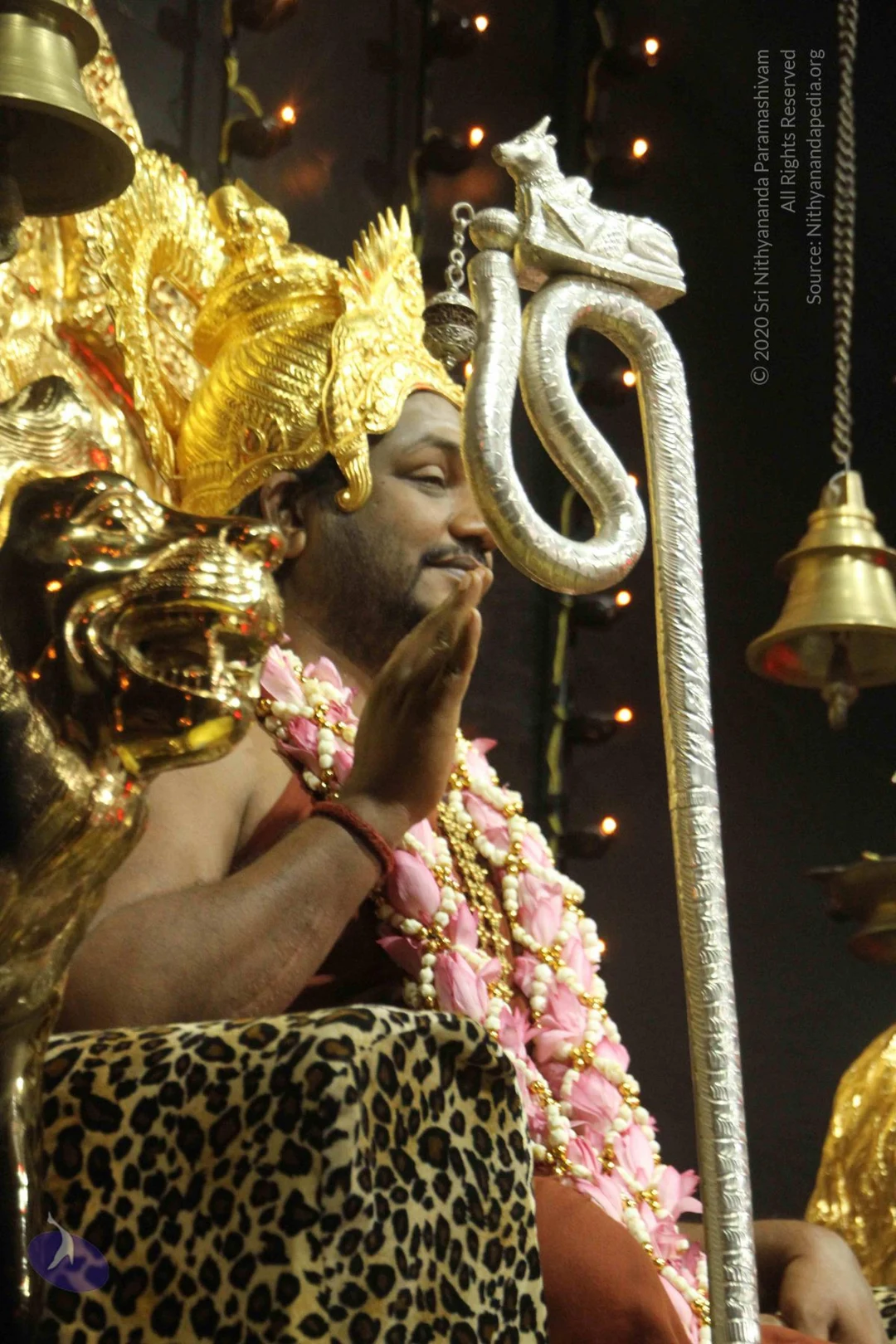
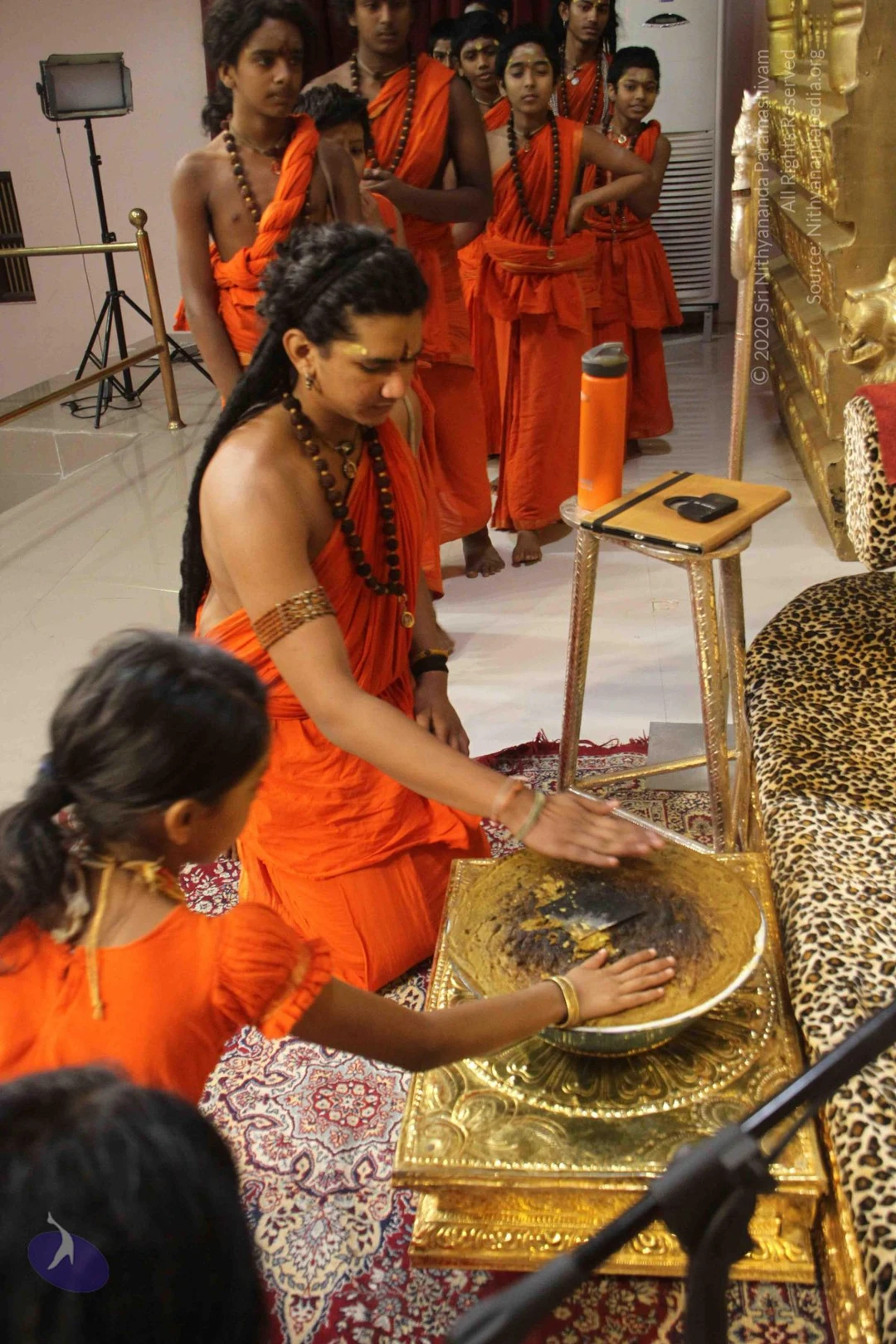
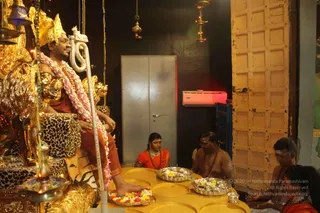
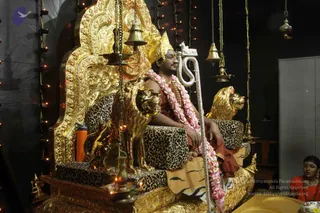
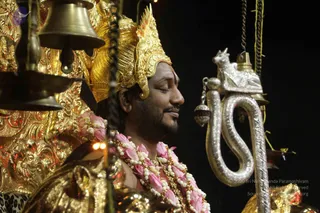
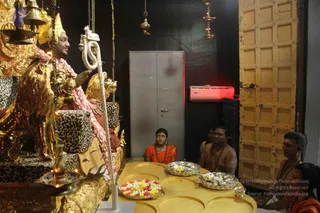
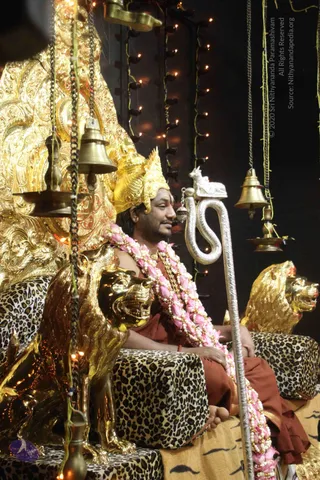
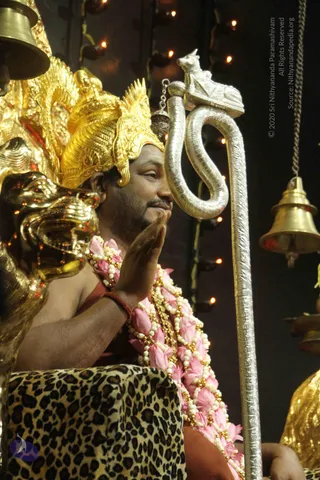
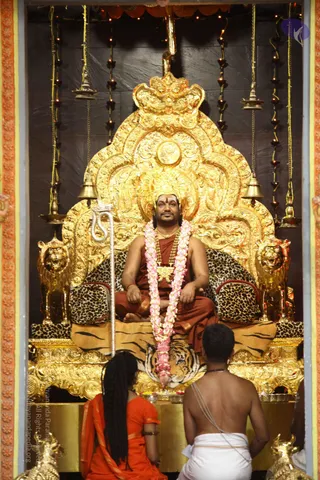
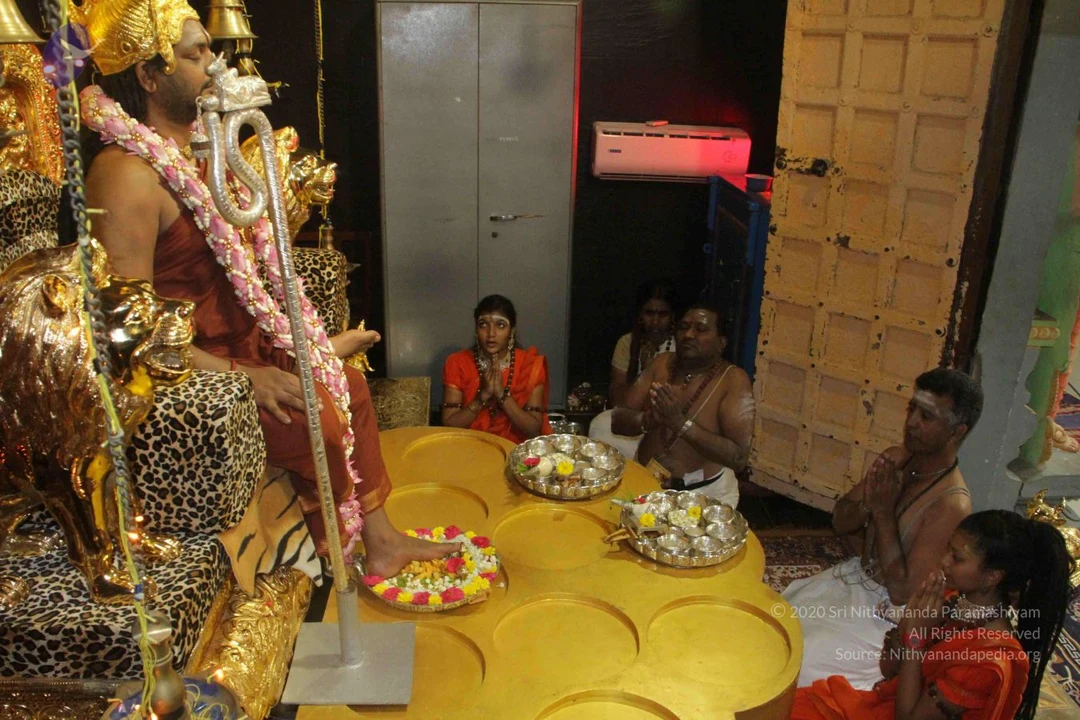
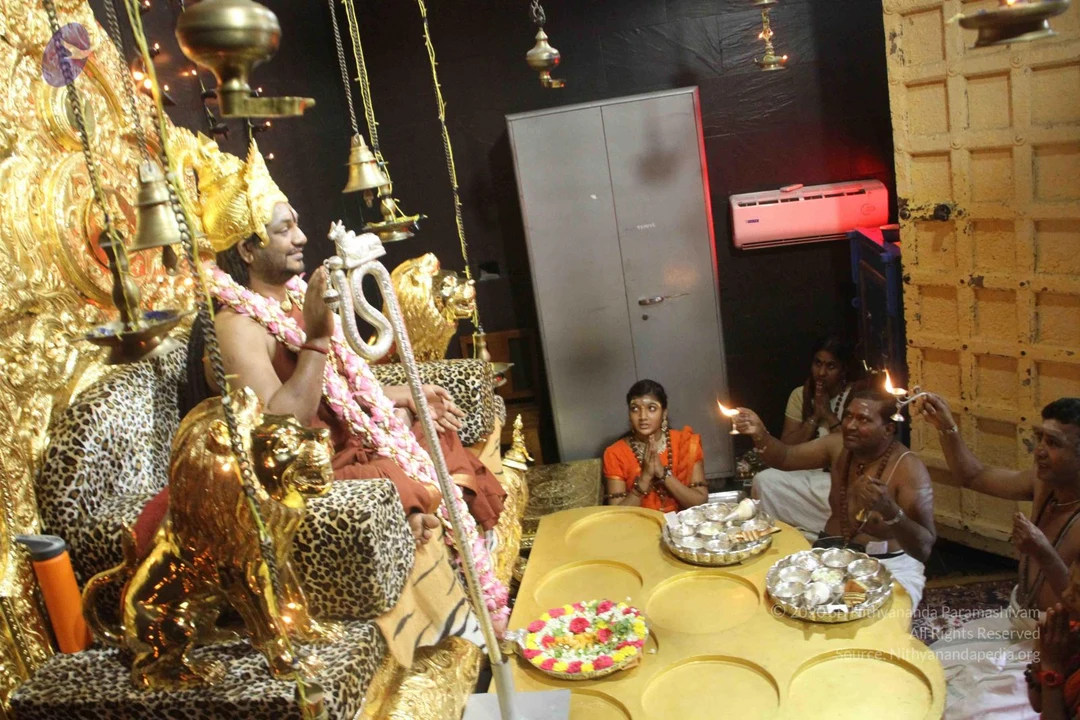
Photograph of an indoor ritual in a dark-walled room with hanging brass lamps and a small air conditioner on the wall. A seated man on the left wears a tall gold crown, a pink and white flower garland, and a rust-red robe; he holds a silver ceremonial staff topped with a serpent-like form. He sits on a leopard-print cushioned seat with gold lion-head armrests. Beside him, a woman in an orange sari with red-and-white bangles and forehead markings sits with palms pressed together. In the lower right, a bare-chested man with white markings on his chest and arms, wearing a white cloth, sits with hands folded near a brass plate of offerings. A wooden panel stands at right.Indoor ritual scene in a dark-walled hall with a grey metal cabinet, a wall-mounted air conditioner and hanging brass bells and oil lamps. On the left, a figure seated on a leopard-print cushioned seat wears a gold crown, a pink-and-white flower garland and a red-orange cloth, holding a silver staff-like ritual implement. Beside him, a woman in an orange sari with a rudraksha-style necklace sits with palms joined. Two men in white dhotis with bare upper bodies, one with vibhuti marks, sit with hands folded. Round silver trays holding oil lamps, flowers and offerings rest on a yellow table in the foreground. A colourful painted deity figure stands at the right edge.A photograph inside a golden-accented shrine room. On the left, a man seated on a gold throne with leopard-print cushioning and a tiger-skin cloth wears a rust-orange dhoti, a pink and white flower garland, and a gold crown, and holds a silver trident-like staff. Golden lion figures flank the throne. In the centre foreground, a golden table holds silver plates of flowers and offering bowls. Behind it sit a woman in an orange sari with a rudraksha mala, and bare-chested men with sacred markings and malas. Hanging brass lamps and an oil lamp are visible, and a gold-studded wooden door stands at right. Probable Swamiji (probable) seated on the throne, wearing a crown, rust-orange dress, garland and rudraksha-style adornment. Attendants perform puja offerings.A man seated on an ornate gold throne with carved golden lion armrests and leopard-print cushions, wearing a gold crown, a pink and white flower garland, a rust-red robe and a gold necklace. He holds a tall silver trident-shaped staff with a serpent wrapped around it. Brass bells hang from chains above, and small oil lamps are lit on the dais. A woman in an orange sari sits at the lower right near offerings on a tray, with a tiger-striped cloth draped over the seat. Swamiji (probable): long swept-back hair, crown, gold ornaments and ornate regal clothing on the throne.A photograph of a man seated in a golden ornate setting with eyes closed in a serene expression. He wears an elaborate gold crown with a winged, floral design and a garland of pink roses and white flowers over his shoulders. Beside him hang a brass bell and an oil lamp, and a silver serpent-shaped rod topped with a small silver Nandi bull figure. Golden embossed decorations fill the background. The man has a sacred tilak mark on his forehead. Wearing gold ornaments and flower garlands in a temple-like setting suggests a ritual or darshan scene. a person: long dark hair not visible, but gold crown, rose garland and devotional setting are consistent with the page.A photograph of a ritual scene in a shrine room. On the left, a figure seated on an ornate gold throne with leopard-print cushions and a gold crown-like headdress wears a pink-and-white flower garland and a saffron-red cloth; a silver staff with a serpent-shaped top and a lit oil lamp stand beside him, and the figure's hand is raised in blessing. In the centre, a woman in an orange sari with a rudraksha mala sits in front of a low golden table laid with brass thalis of flowers and offerings. Two men in saffron and white sit at right, one bare-chested with a mala and one in a dark shirt, with a brass lamp nearby. Hanging brass lamps, a closed grey cabinet and a pink wall air conditioner complete the room.
satsang

66 photosSource gallery
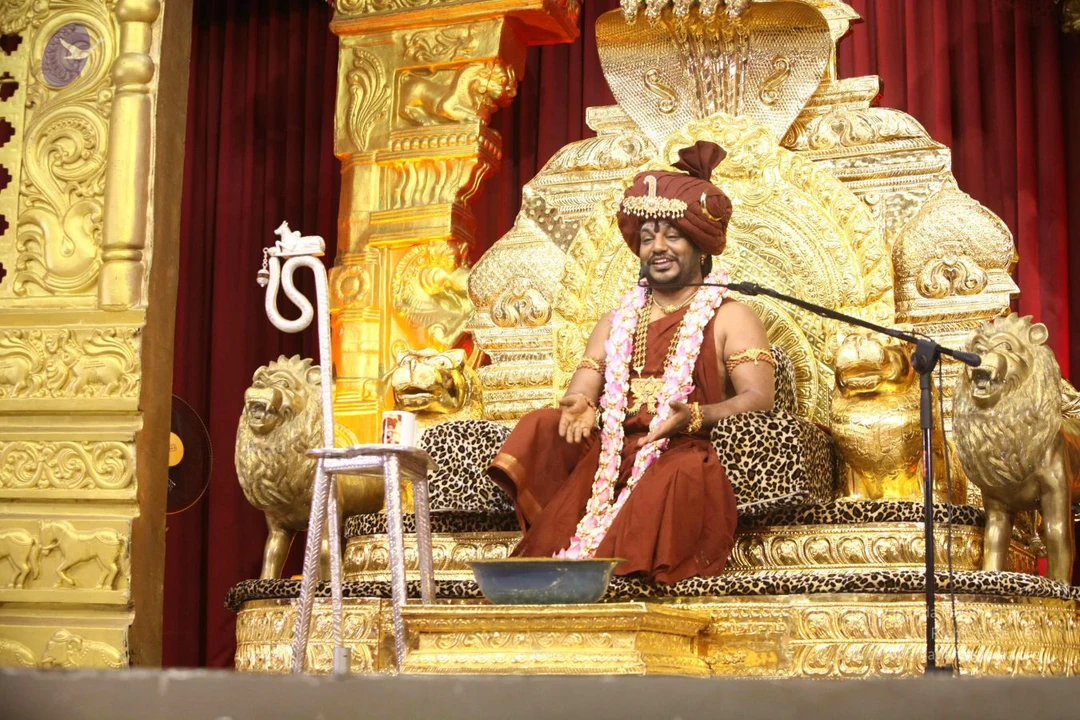
A photograph of a seated figure on an ornate gold throne with carved lion-head arms and a red curtain behind. The figure wears a maroon-red turban with a jewelled gold ornament, a maroon robe, a gold pendant, a pink and white flower garland, and a gold armband. Several blurred bright orange flame-like lights rise toward the left, near a microphone stand. A small inset portrait appears in the lower-left corner. Swamiji (probable): the seated figure has a crown-like turban, saffron-red ceremonial robes, and ornate gold jewellery, consistent with the page's Swamiji reference; the appearance is a probable match only.A photograph of a seated man on an ornate gold throne with carved lion heads and a gilded arched backrest, wearing a rust-red turban with a jewelled ornament, a rust-red robe, multiple gold chains, a pink and white flower garland, and red beaded bracelets. He raises one hand in blessing while smiling, with a microphone stand at right. Two small framed photographs sit on a silver stool at lower left, and a leopard-print cushion covers the seat. Swamiji (probable): the turban, rust-red robe, ornate gold jewellery and garland fit the candidate description, and he is seated on a throne in a discourse setting.A photograph of a seated man on an ornate golden throne with lion-carved armrests and a leopard-print cushion, speaking into a microphone. He wears a maroon turban with a jewelled ornament, a maroon robe, a gold pendant, a gold chain, a rudraksha-style bead necklace, and a long pink-and-white flower garland. His right hand is raised in a blessing gesture and he is smiling. Two small framed photographs sit on a side table at left. Probable Swamiji, seated on a throne in discourse, with cues including the maroon turban, ornate gold jewellery and garland. A copyright line runs along the bottom right of the image.Photograph of a seated man in a maroon-red robe and matching turban with a gold ornament at the front, wearing a pink and white flower garland, rudraksha-style red beaded bracelets, and a gold necklace with a large pendant. He sits on an ornate gold throne with lion-head armrests and a leopard-print cushion, raising one hand in a blessing gesture before a microphone stand. a person: the saffron-red turban, ceremonial gold ornaments and garland match the appearance cues of the page's subject, and the throne setting suggests a discourse. Identity is inferred from appearance only.A photograph of a man seated on an ornate golden throne with lion-head armrests and a leopard-print cushion, against a red curtain. He wears a maroon turban with a gold crest and maroon robes, a pink and white flower garland, a gold pendant, rudraksha-style beads and red bangles, and raises one hand in blessing while smiling toward a microphone on a stand. A small silver serpent-shaped staff stands at left, and two small framed photos sit on a side table. a person seated on a peetha in a discourse setting.A photograph of a seated man in a golden ornate throne with gilded lion-shaped armrests and a large gilded arched backdrop. He wears a rust-red turban with an ornate gold crown ornament, a rust-red robe, a gold pendant on a chain, and gold bangles, and holds up one hand in a blessing gesture while speaking into a microphone on a stand. A pink and white flower garland hangs around his neck. Two small framed portrait photos sit on a side table at left, and a silver serpent-shaped stand is visible at the left edge. Probable Swamiji is seated on the throne, with the qualifying cues of a crown-style turban, ornate gold ornaments and rudraksha-style adornment.

sadashiva-calls-session

190 photosSource gallery
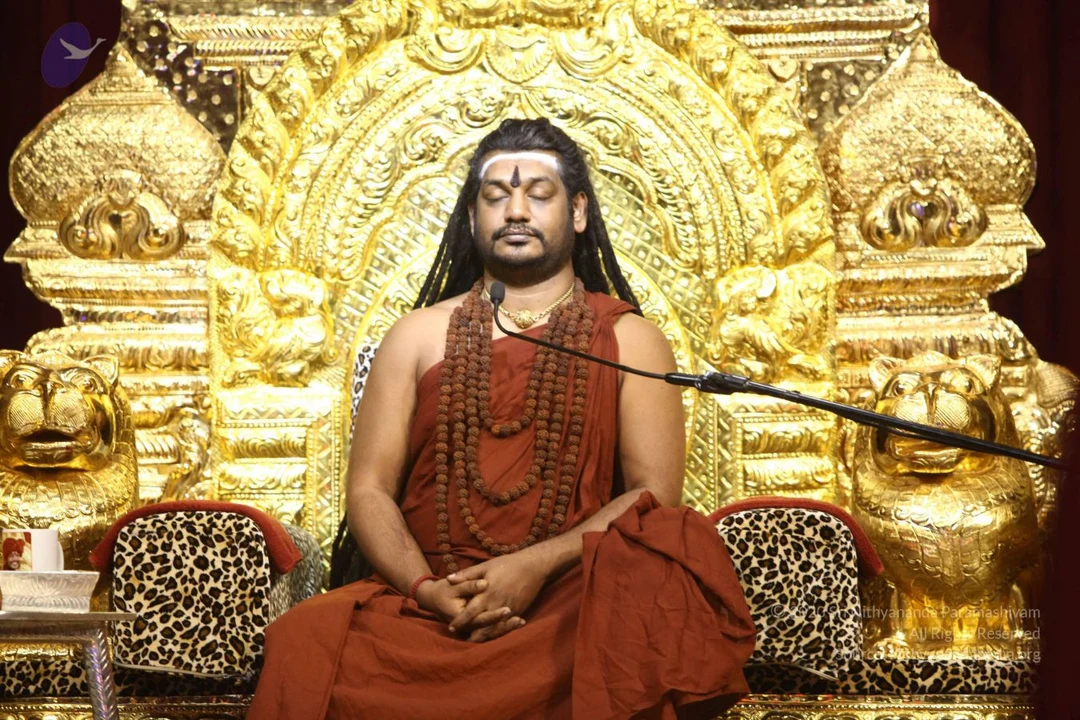
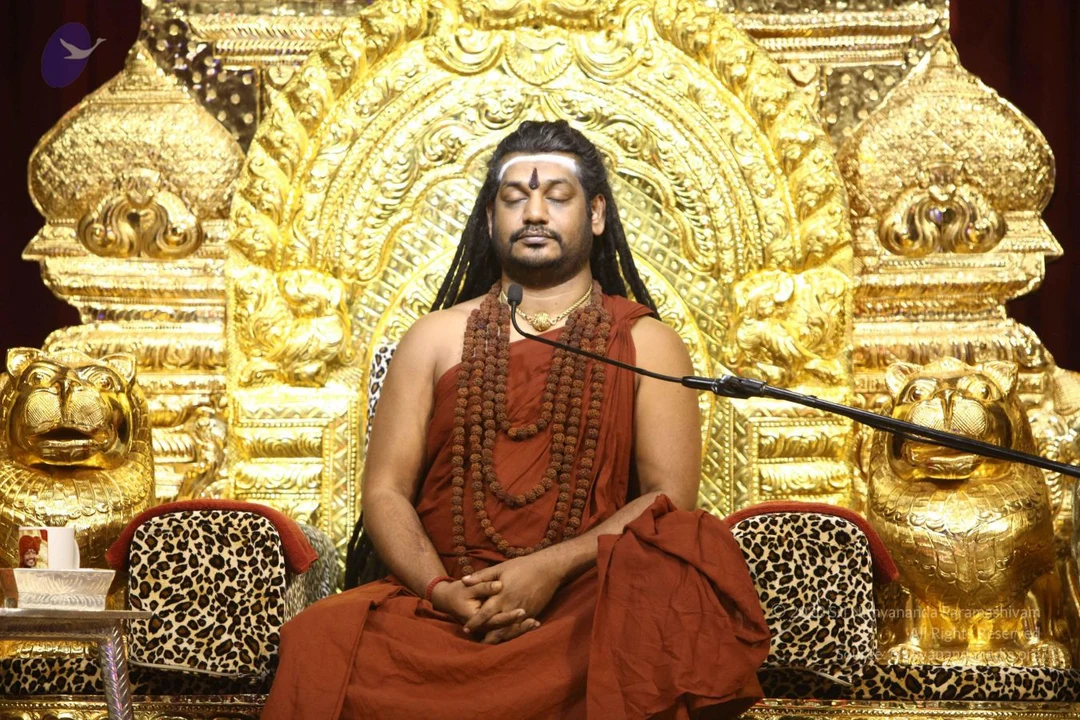
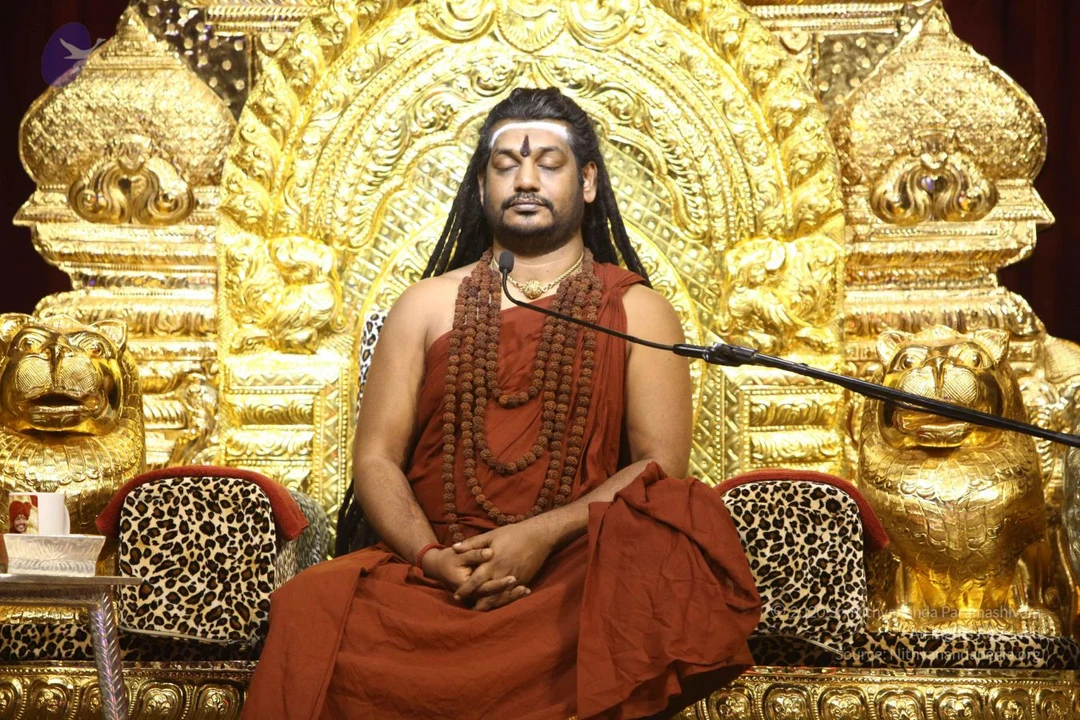
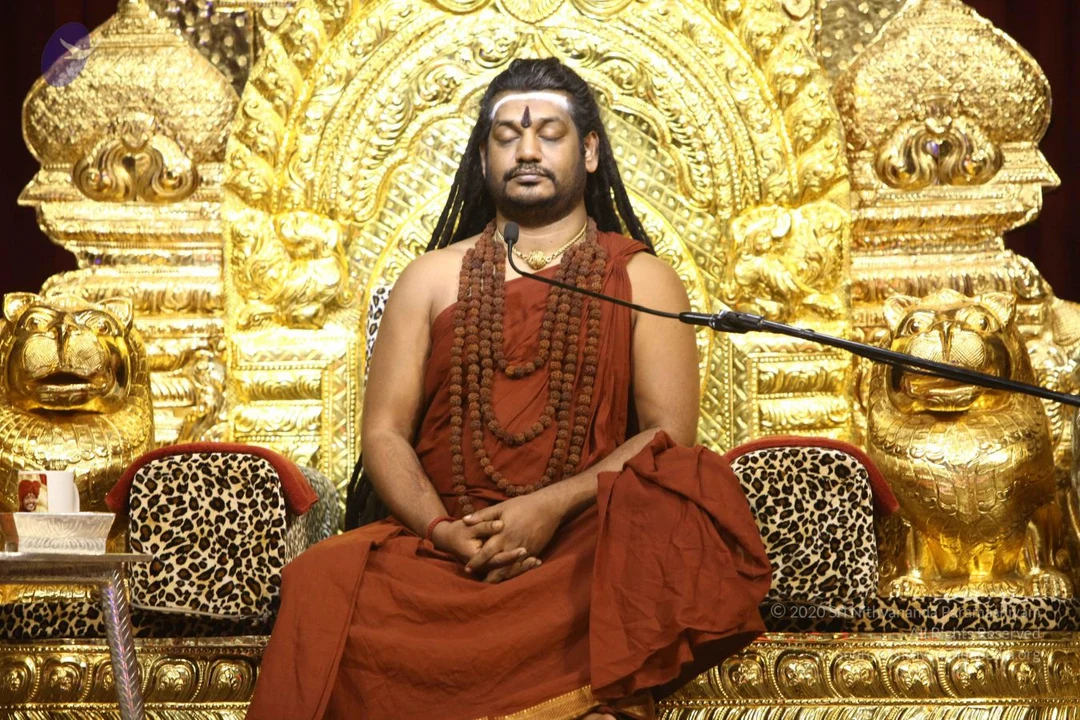
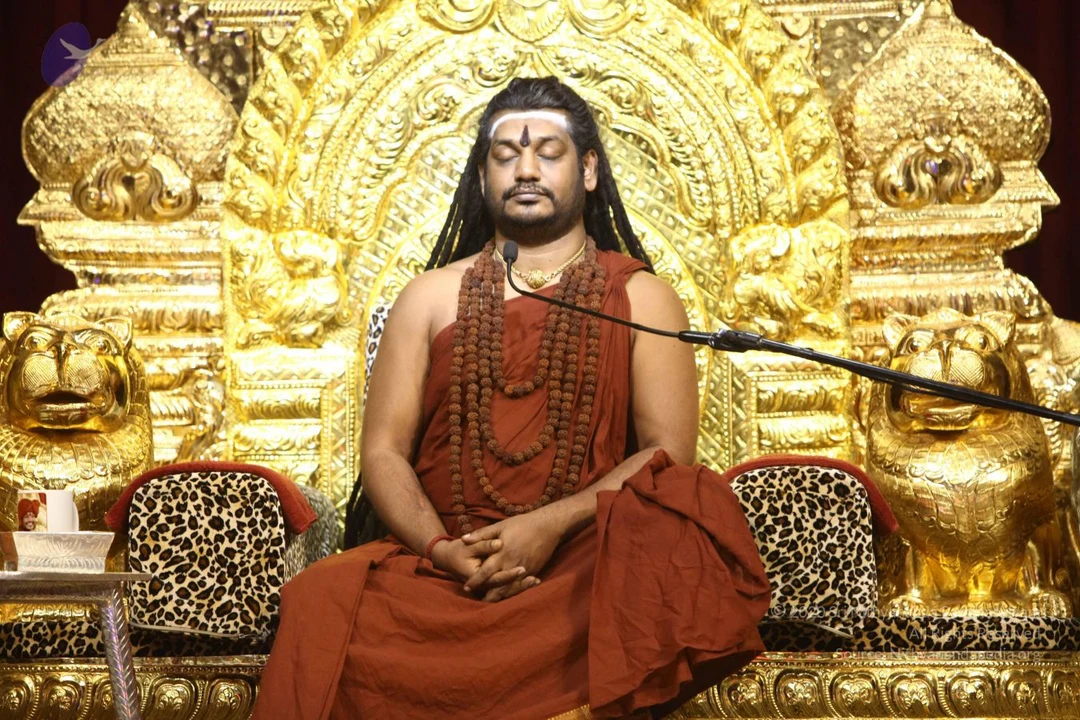
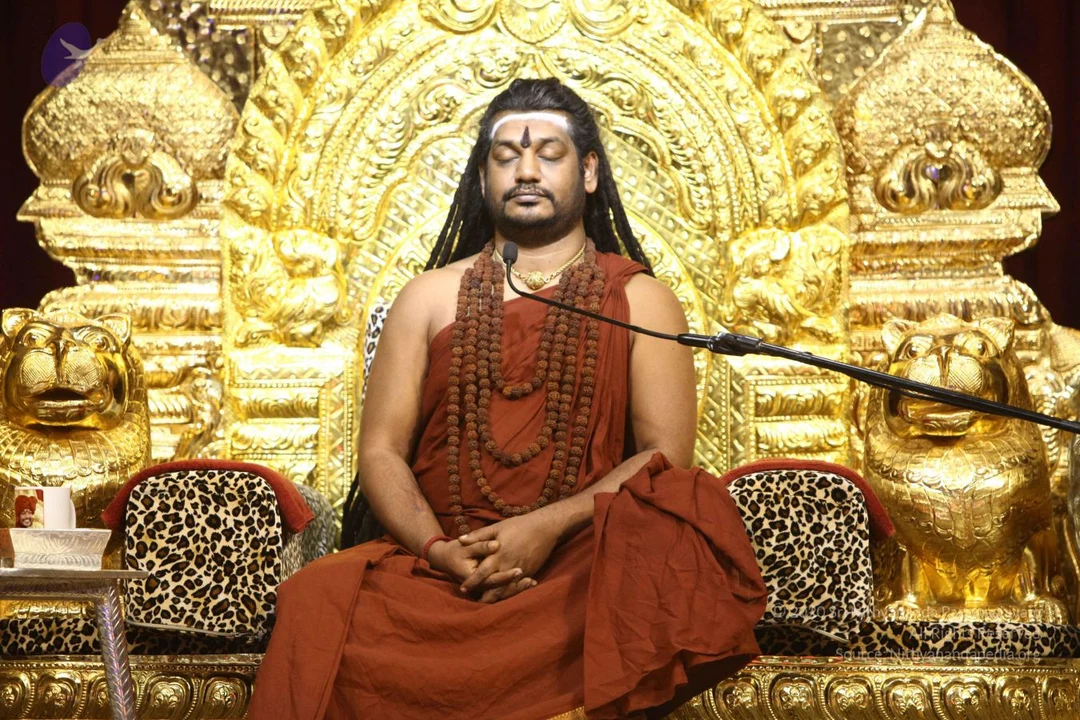
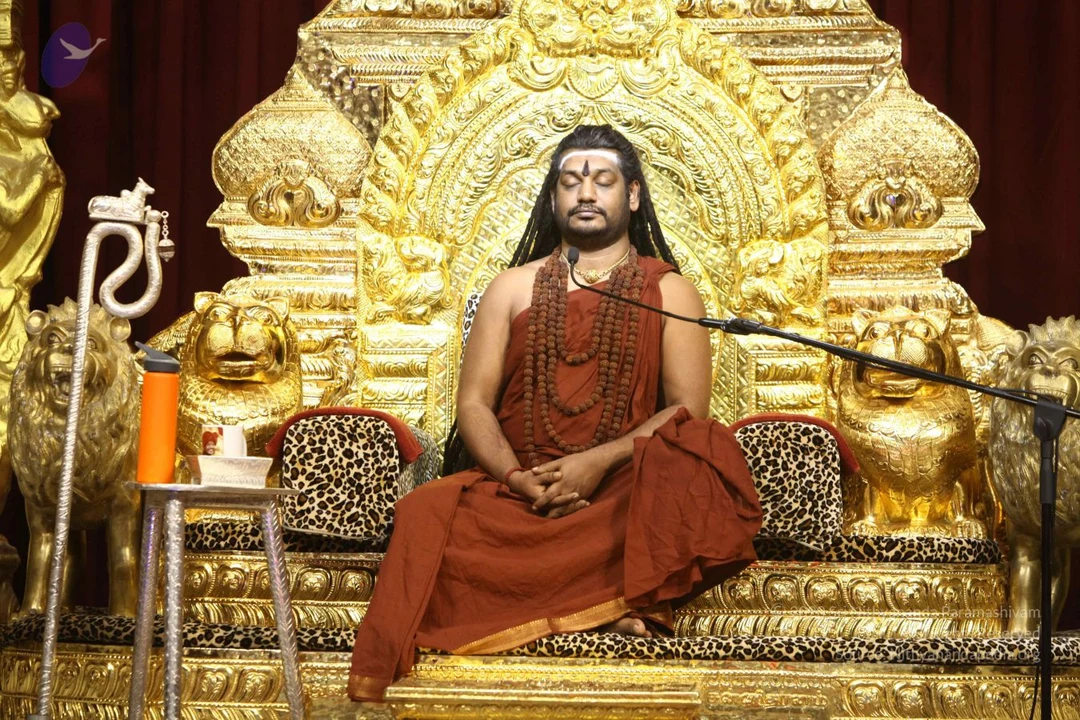
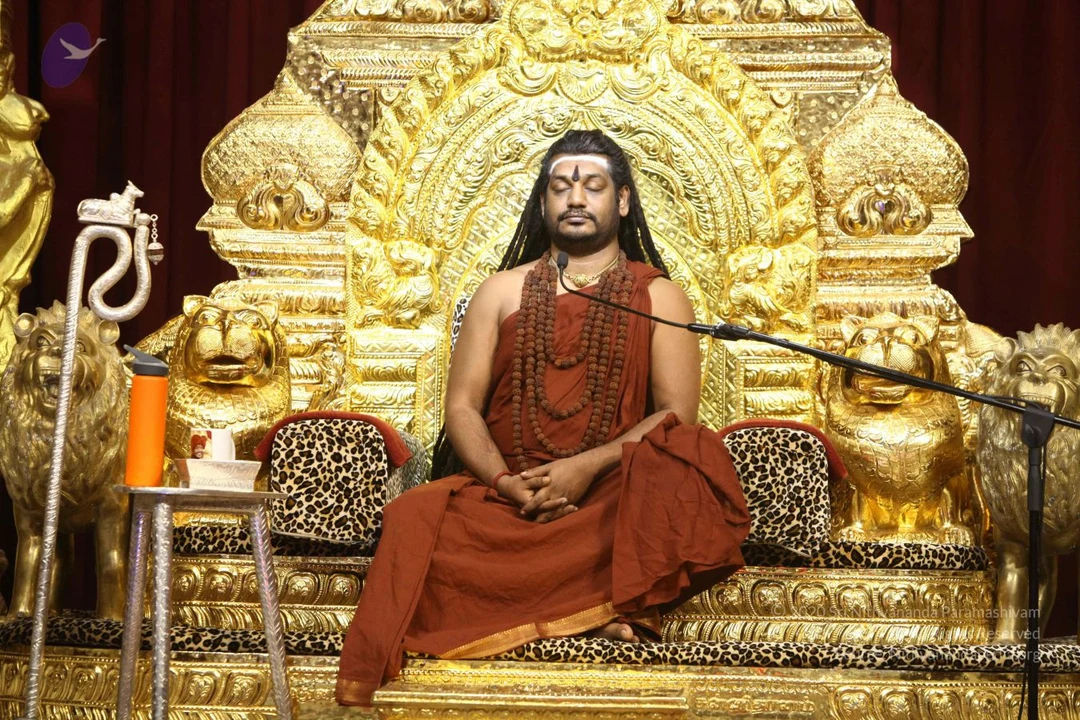
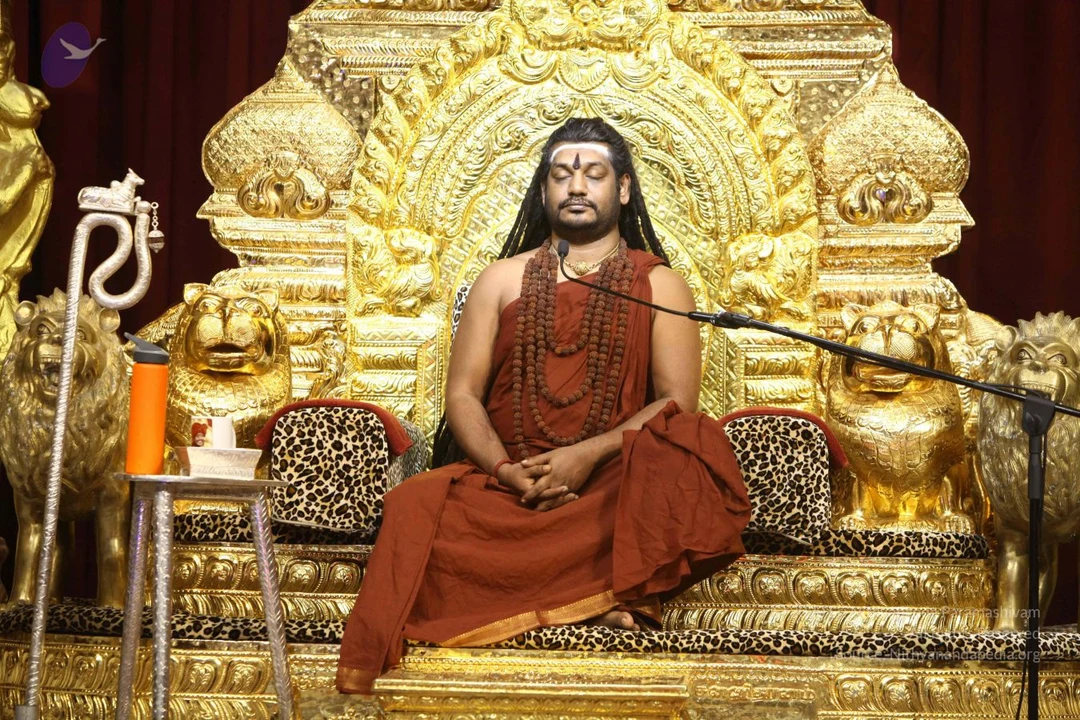
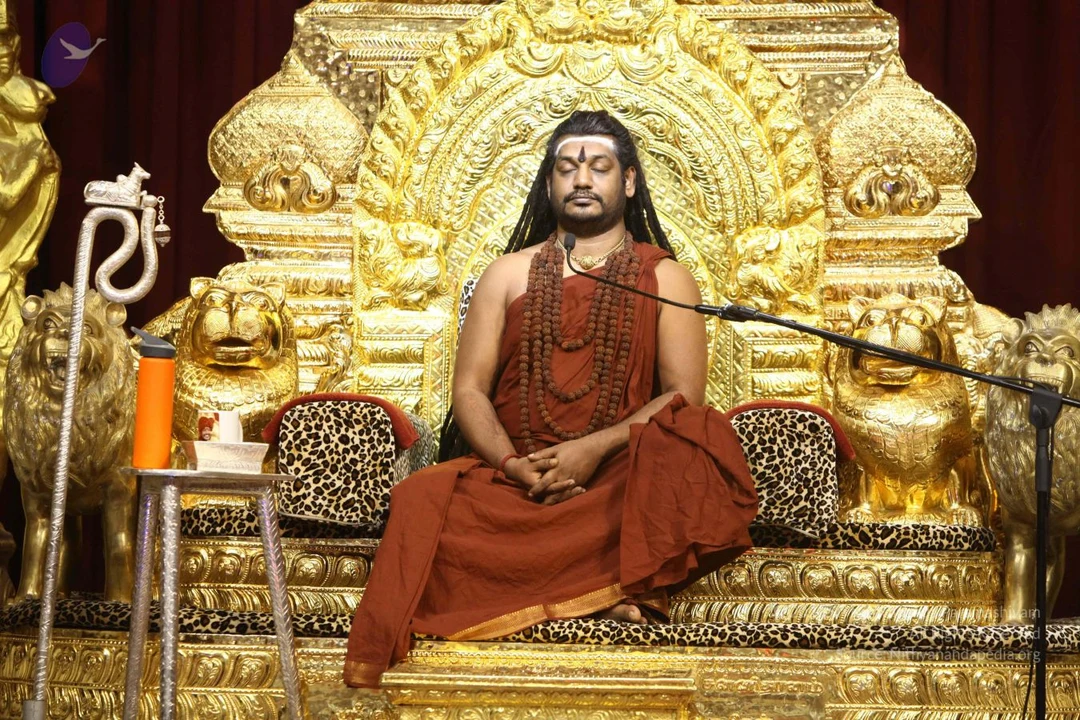
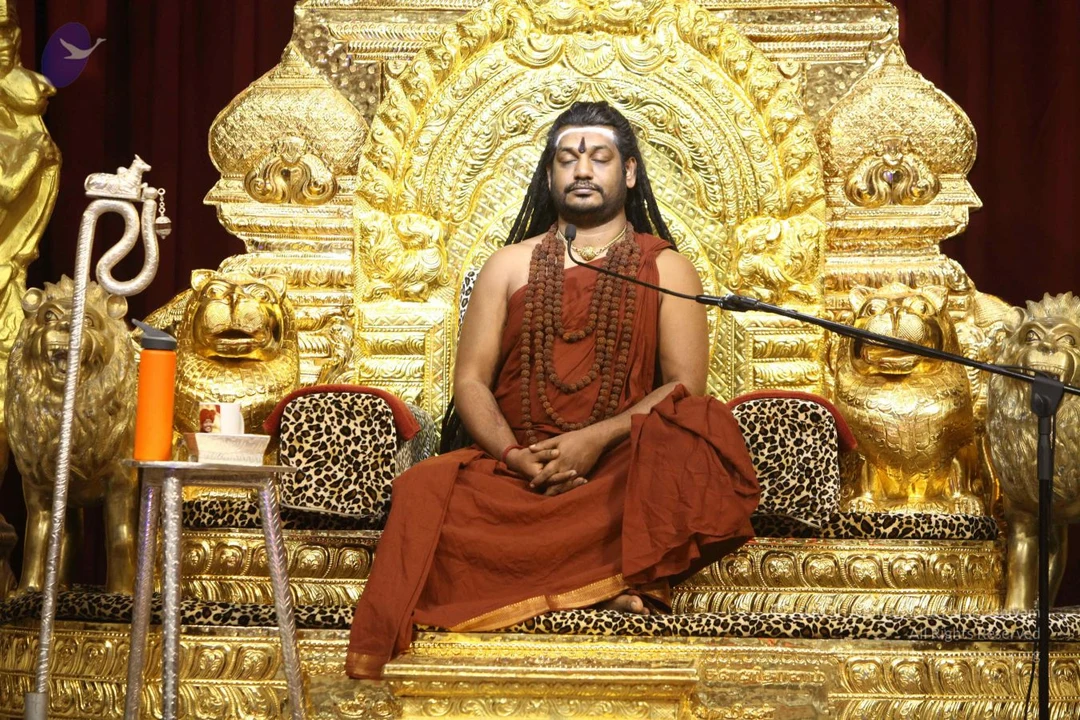
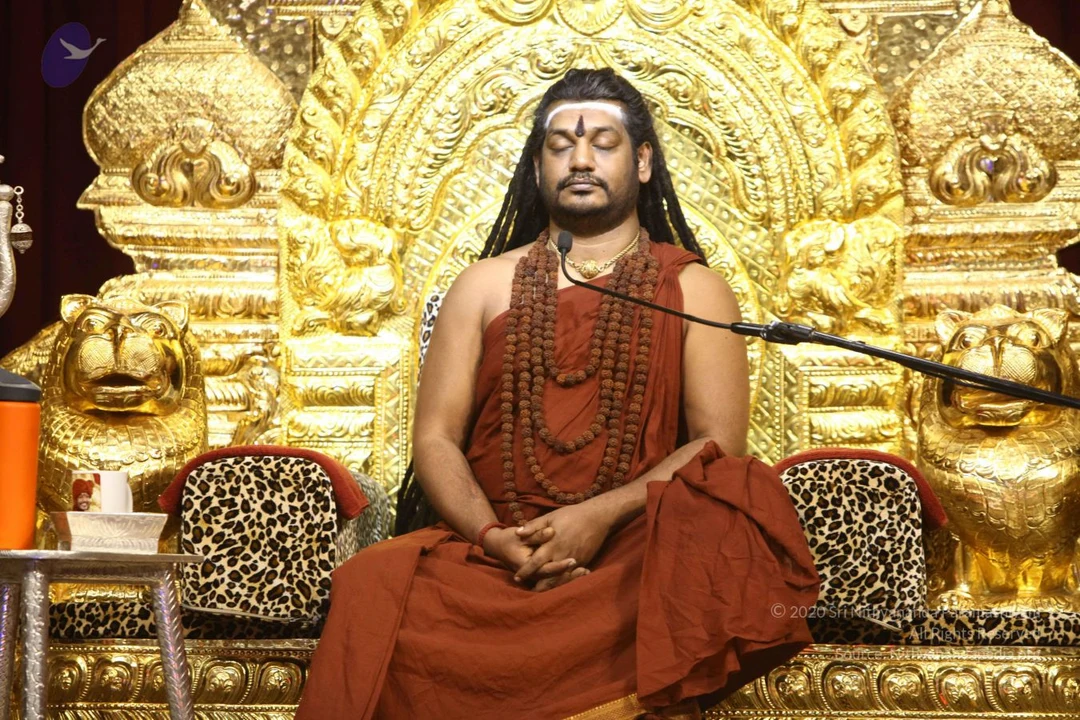
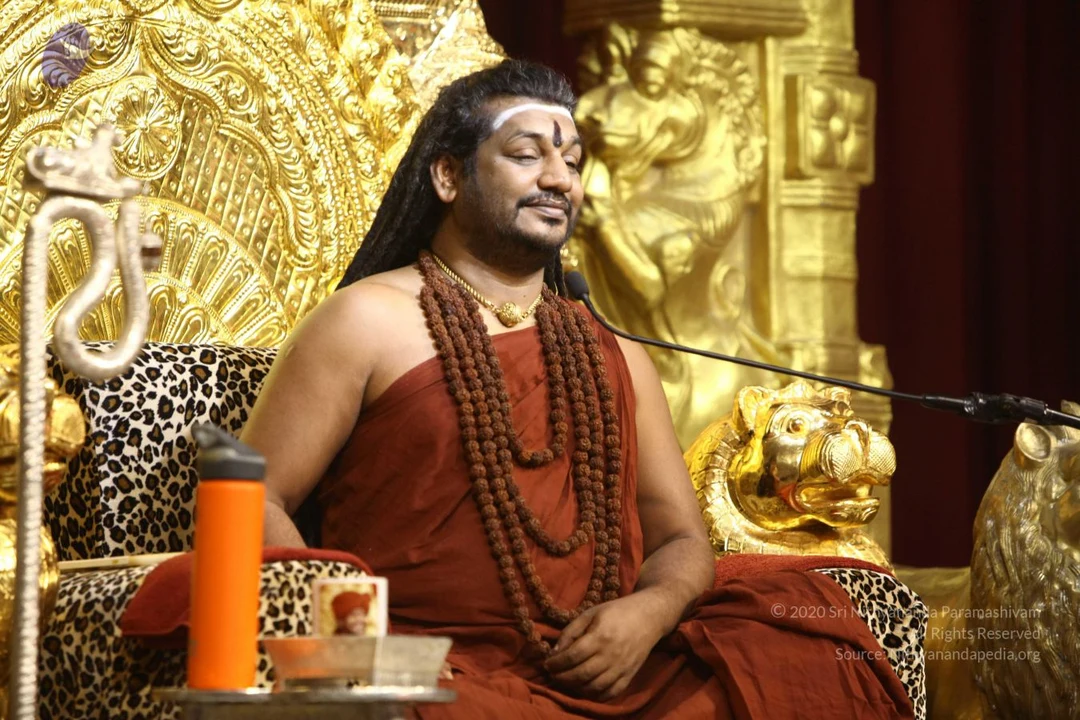
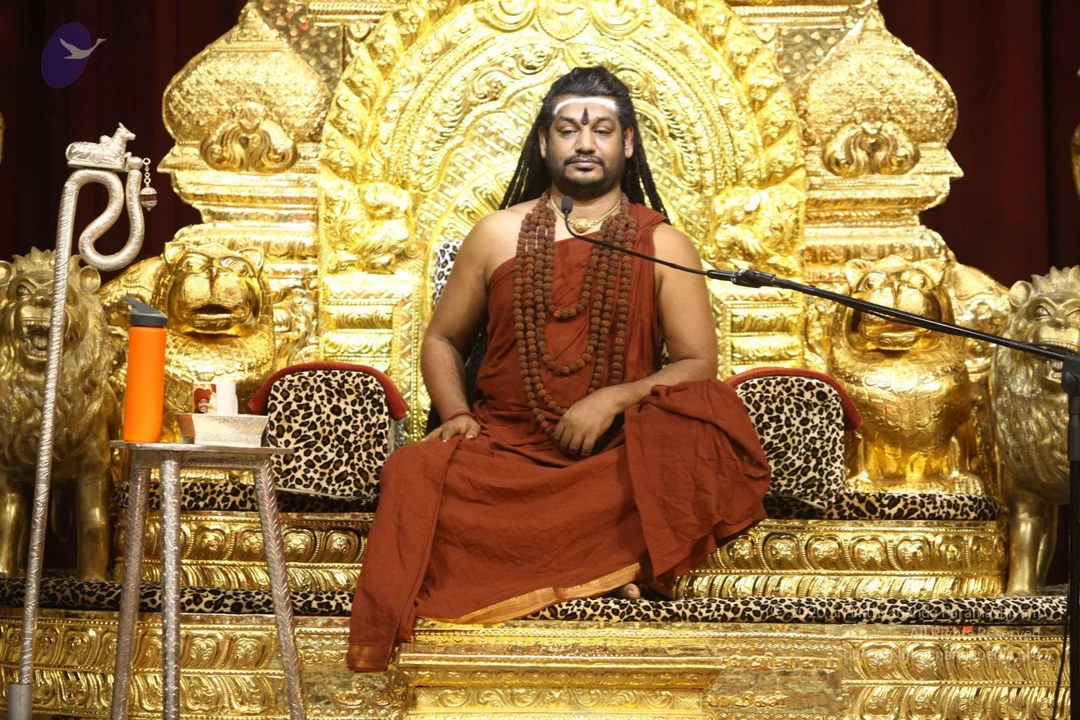
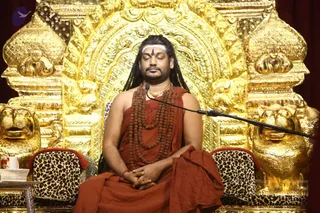
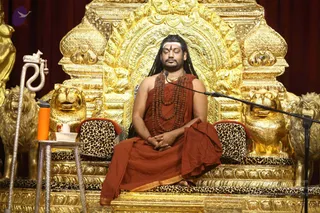
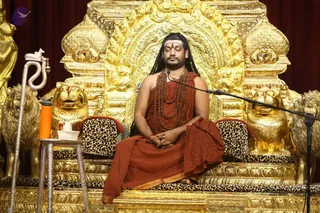
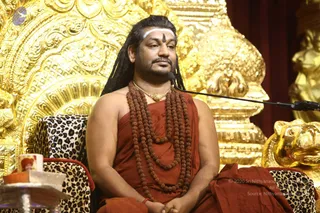
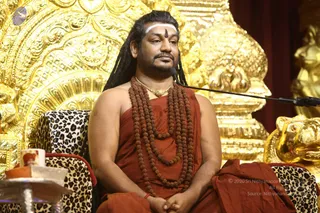
A man with long dark matted hair sits with eyes closed in meditation on an ornate gold throne carved with lions and floral motifs, leopard-print cushions at its sides. He wears a rust-orange wrap over bare shoulders, multiple rudraksha malas, a gold chain, a white forehead band and a red bindi. His hands rest folded in his lap, and a microphone stand is positioned beside him. Swamiji (probable): long swept-back hair, rudraksha malas and orange clothing mark a presiding guru figure seated in satsang. Gold ornate peetha and microphone suggest a discourse setting.A man seated with eyes closed in meditation on an ornate gilded throne decorated with carved lion heads and foliate motifs, with leopard-print cushioned armrests. He wears a saffron-orange robe, a multi-strand rudraksha mala, a gold necklace, a white tripundra with red bindi on his forehead, and a red wristband. His hands rest folded in his lap, and a microphone on a boom stand is positioned near his face. He has long dreadlocked hair falling past his shoulders. a person appears in the photograph, shown in a seated meditative posture with cues including long swept hair, saffron clothing and rudraksha malas. A small teacup and saucer sit on a side table at the lower left.A man sits cross-legged with eyes closed on an ornate golden throne carved with lions and a large arched backrest. He wears a rust-orange sannyasi wrap draped over his shoulders, multiple rudraksha mala necklaces, a gold chain, and a white stripe with a red bindi on his forehead. His hands rest together in his lap, and a microphone stand is positioned beside him. Golden lion figures flank the seat, which is covered with leopard-print cushions. A small table with a cup sits at the left edge. The setting suggests a seated discourse or meditation session. Appearance-based identification is uncertain; the presentation of long dreadlocked hair, rudraksha malas and ceremonial gold ornaments is consistent with a person candidate seated in person.A seated man in saffron-orange robes with long dark locks, a white forehead marking with a red bindi, and multiple rudraksha mala necklaces sits with eyes closed and hands folded in his lap before a microphone on a stand. Behind him, an ornate golden throne with carved lion heads and a large golden arch with floral and figural carving frames the scene, with leopard-print cushions on the side seats. A small table with a lamp-like object sits at left. The setting suggests a discourse or satsang. Swamiji (probable): the long dark hair, saffron robes, rudraksha malas and forehead marking fit the presentation, and the page names this event as one he attended, so this is a candidate seated in person on the throne.A photograph of a seated man in a golden ornate throne decorated with carved lion heads and leopard-print cushions. He wears a saffron-orange draped robe, multiple rudraksha mala necklaces, a gold chain, and a white tilak with red bindi on his forehead, with long swept-back hair. His eyes are closed and his hands rest folded in his lap. A microphone stand is in front of him, and a silver staff with a serpent head and an orange container stand to the left. Gold lion sculptures flank the throne against a red curtain. Swamiji (probable) appears in this image based on the saffron clothing, long hair, multiple rudraksha malas and gold ornaments.A seated man with long dreadlocked hair and a tilak on his forehead sits with eyes closed on an ornate gilded throne decorated with lion figures and leopard-print cushions. He wears a rust-orange robe with a gold-bordered end, multiple rudraksha malas and a gold chain, with hands folded in his lap. A microphone stand is at his side and a silver staff with a serpent-like top and an orange cup sit on a small table to the left. Gilded lion statues flank the throne against a dark red curtain.

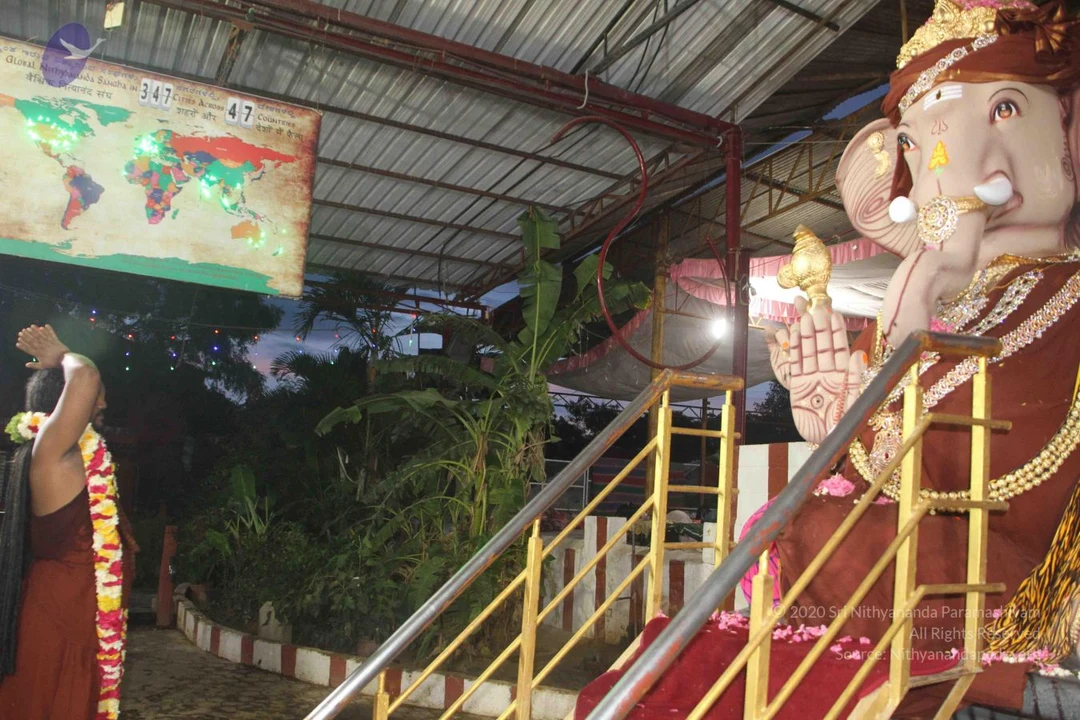
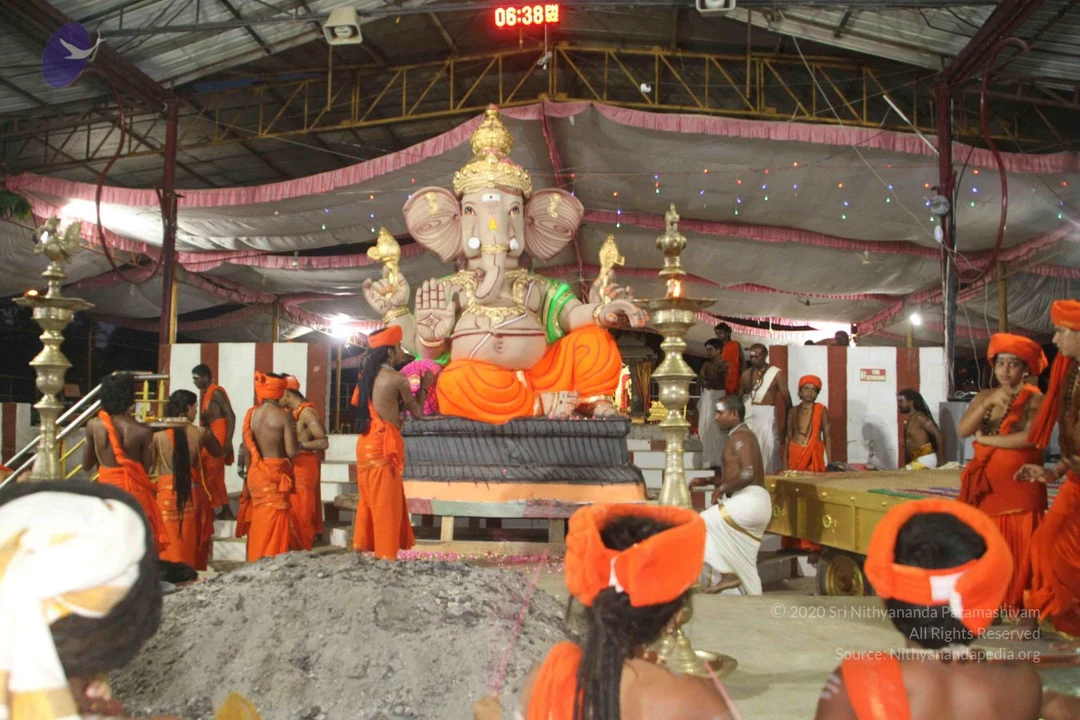
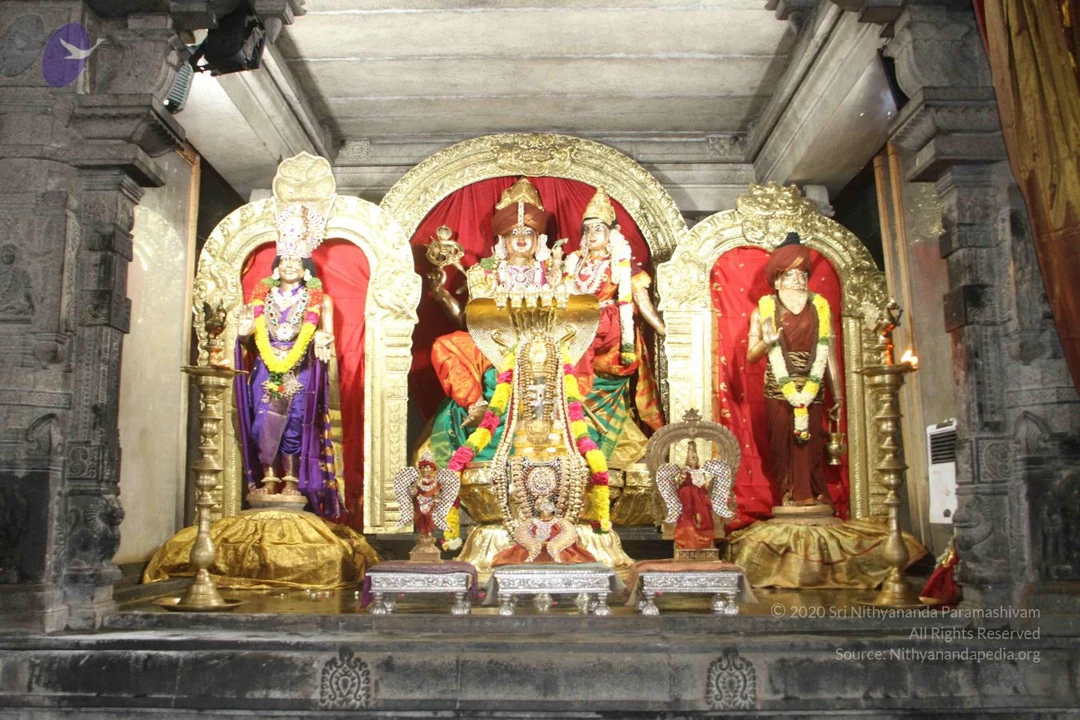
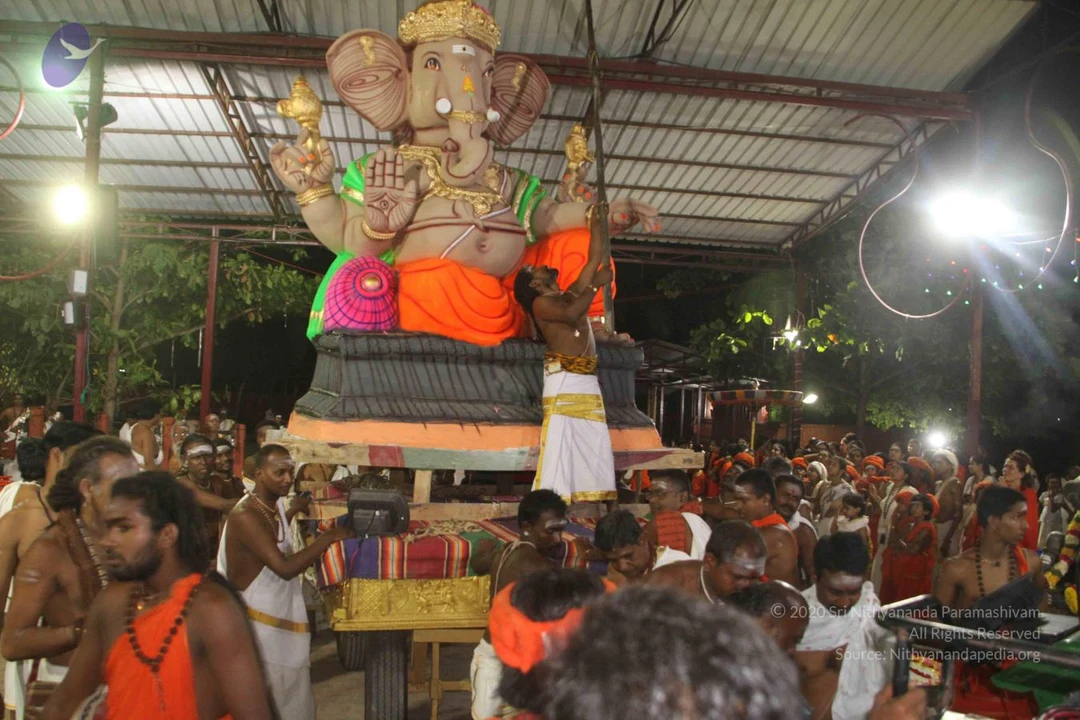
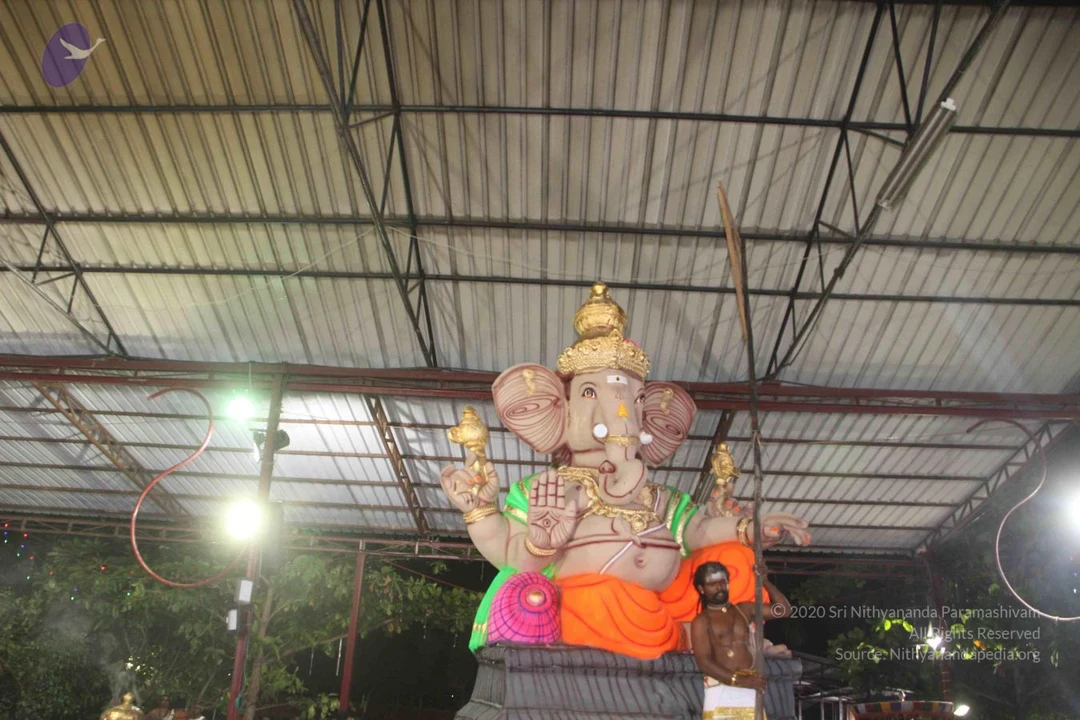
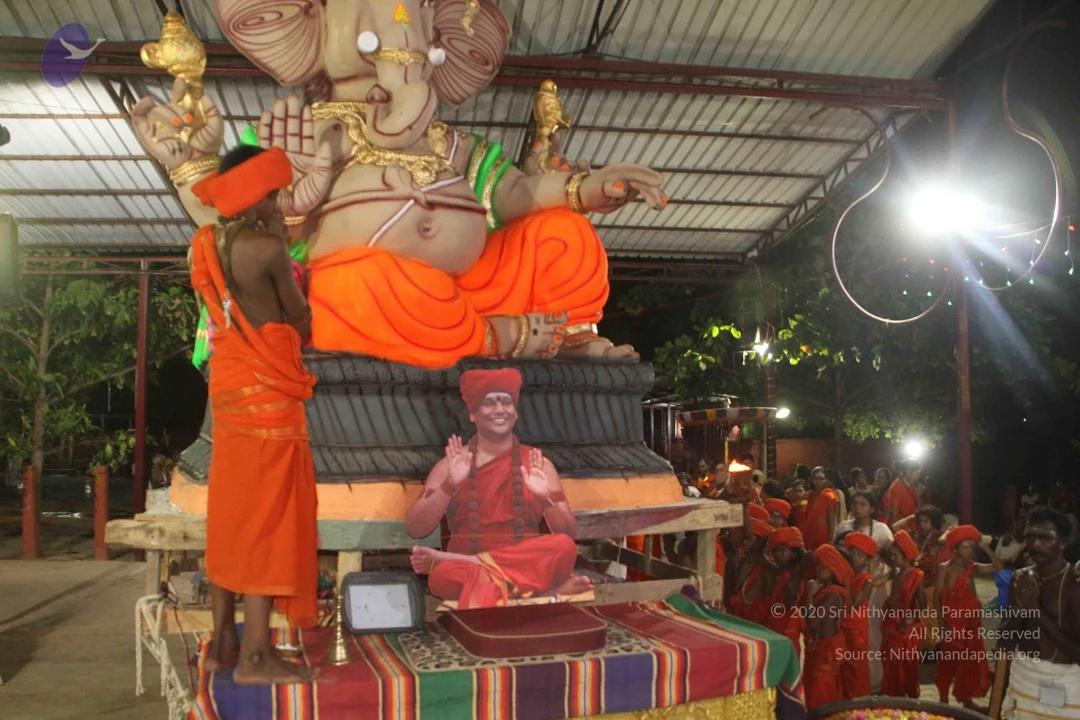
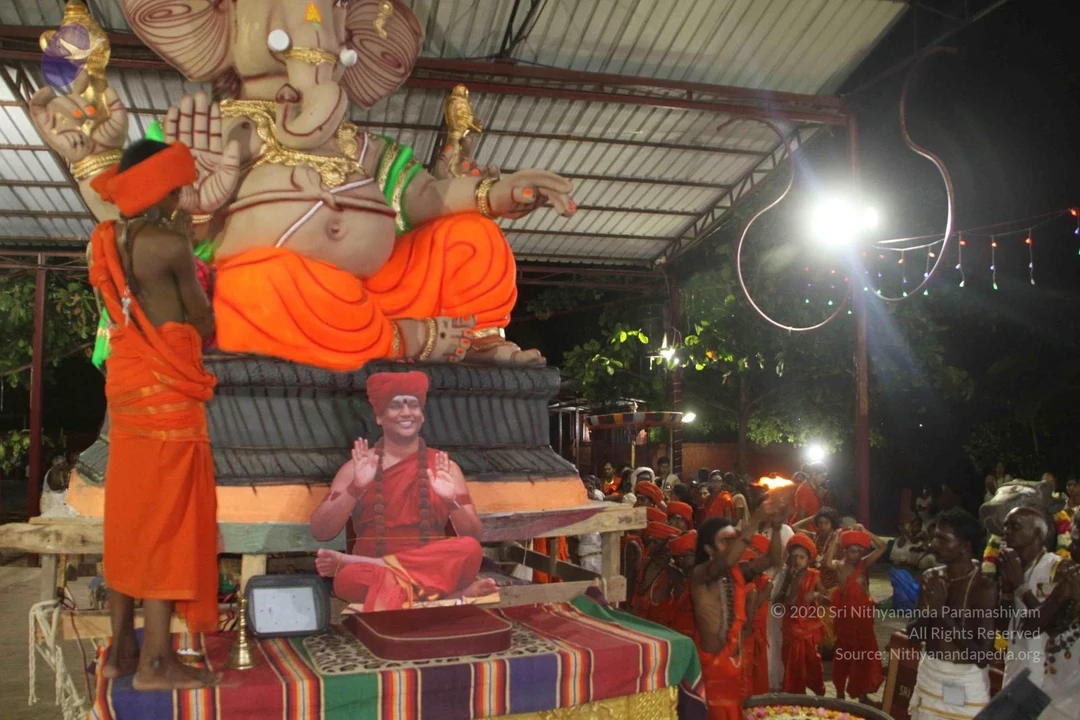
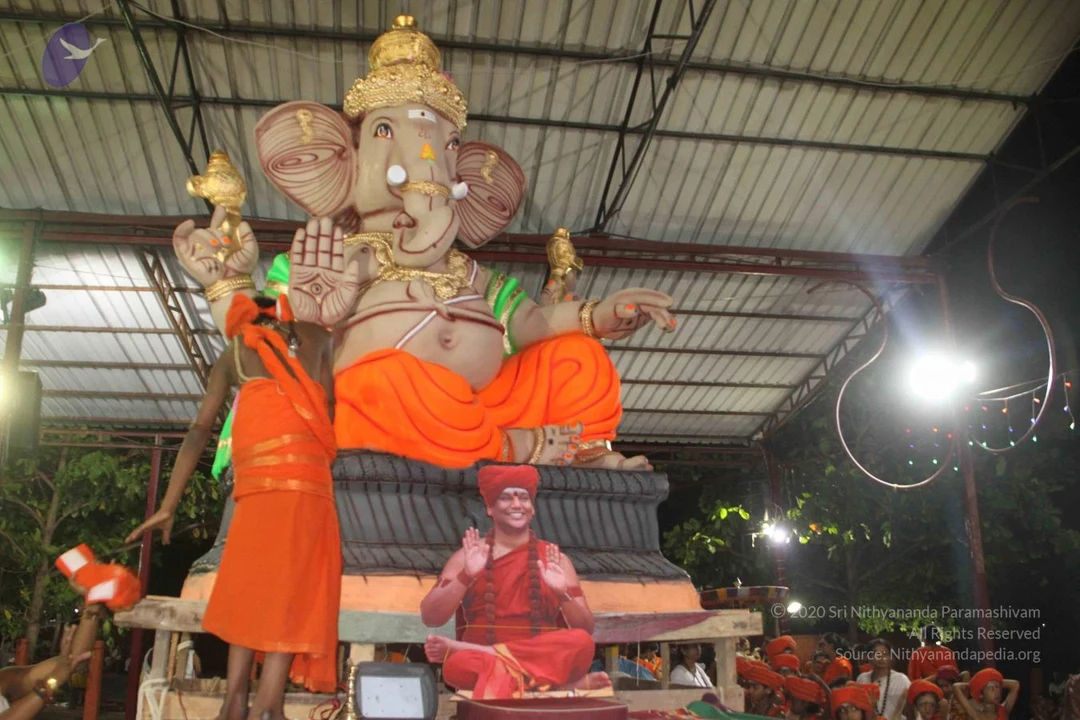
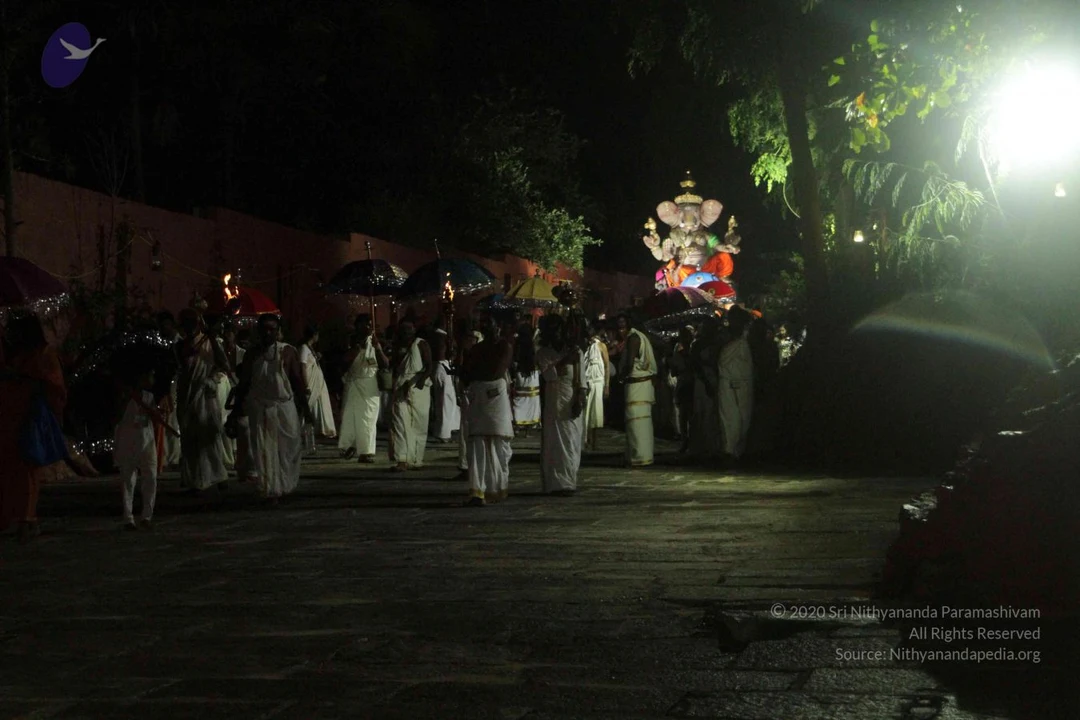
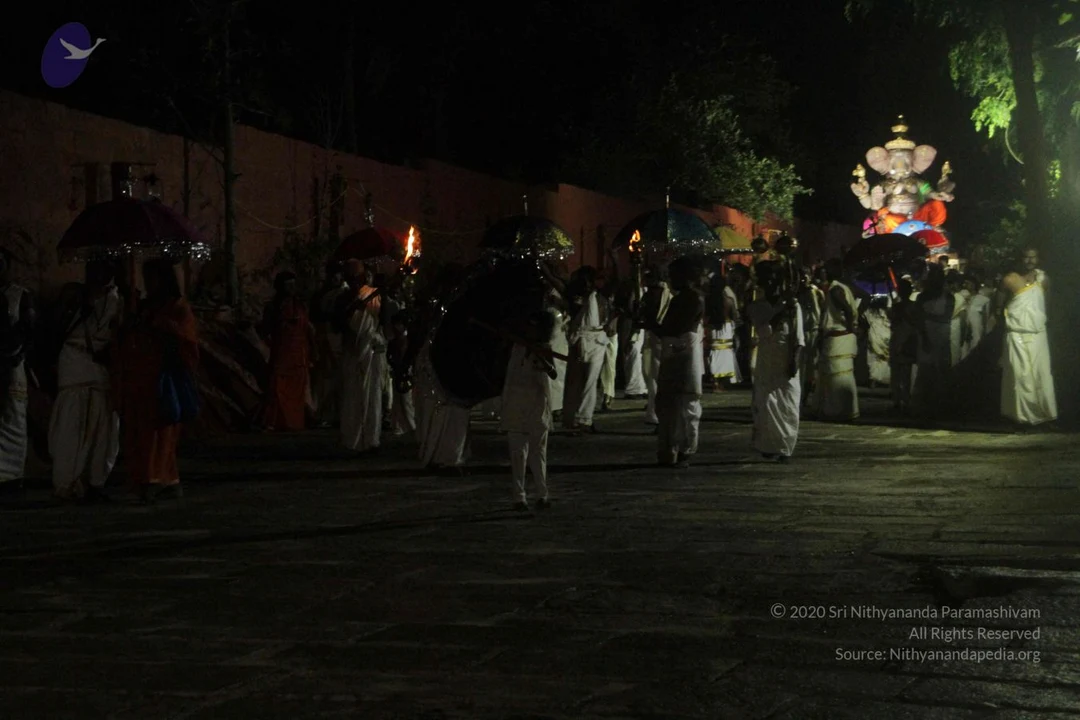
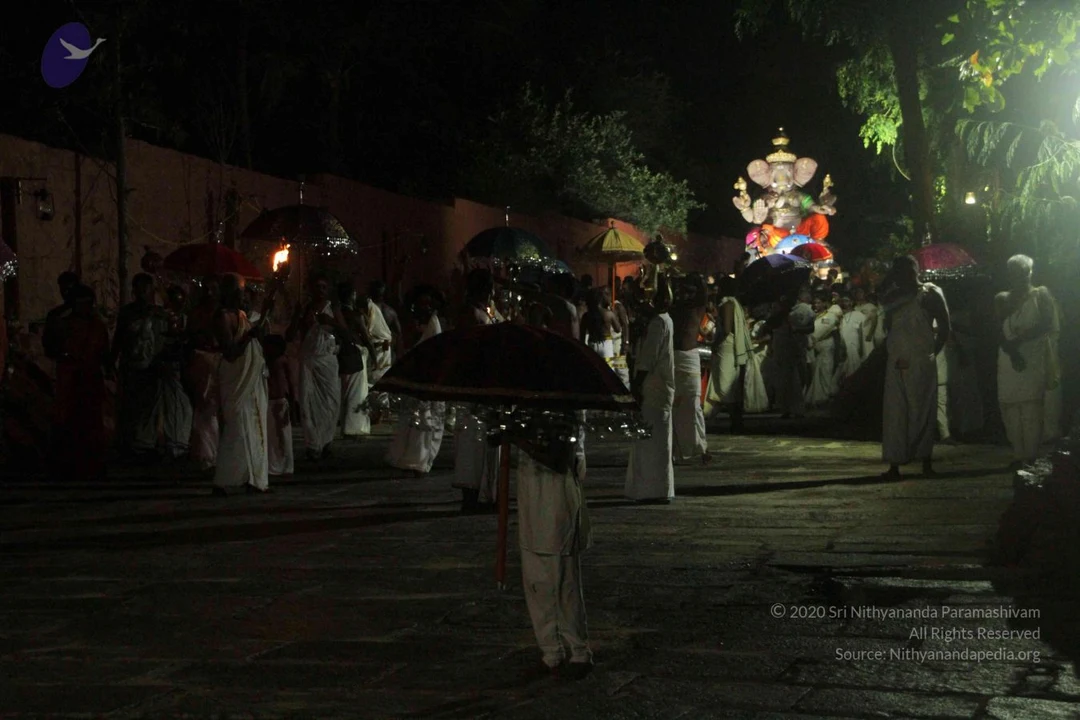
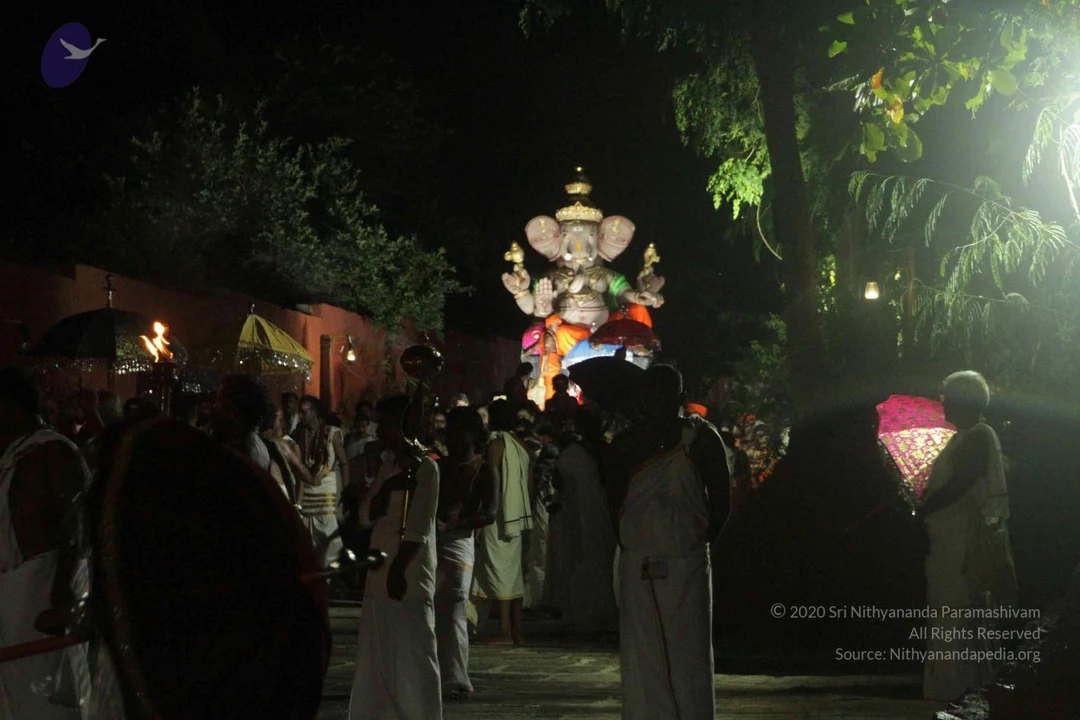
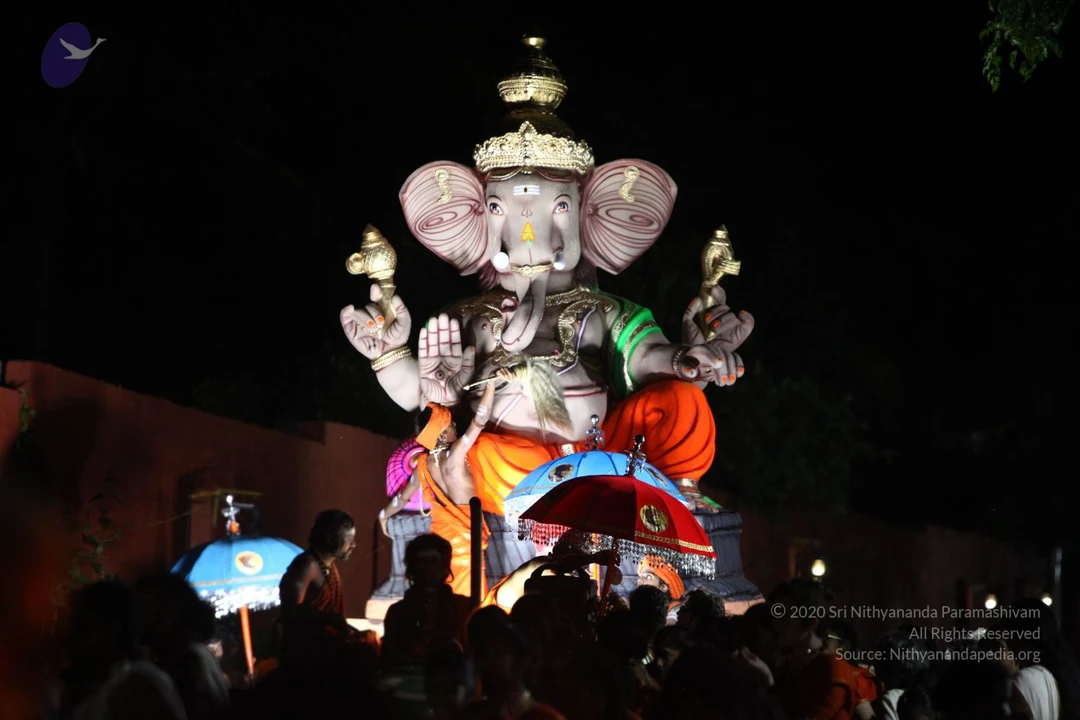
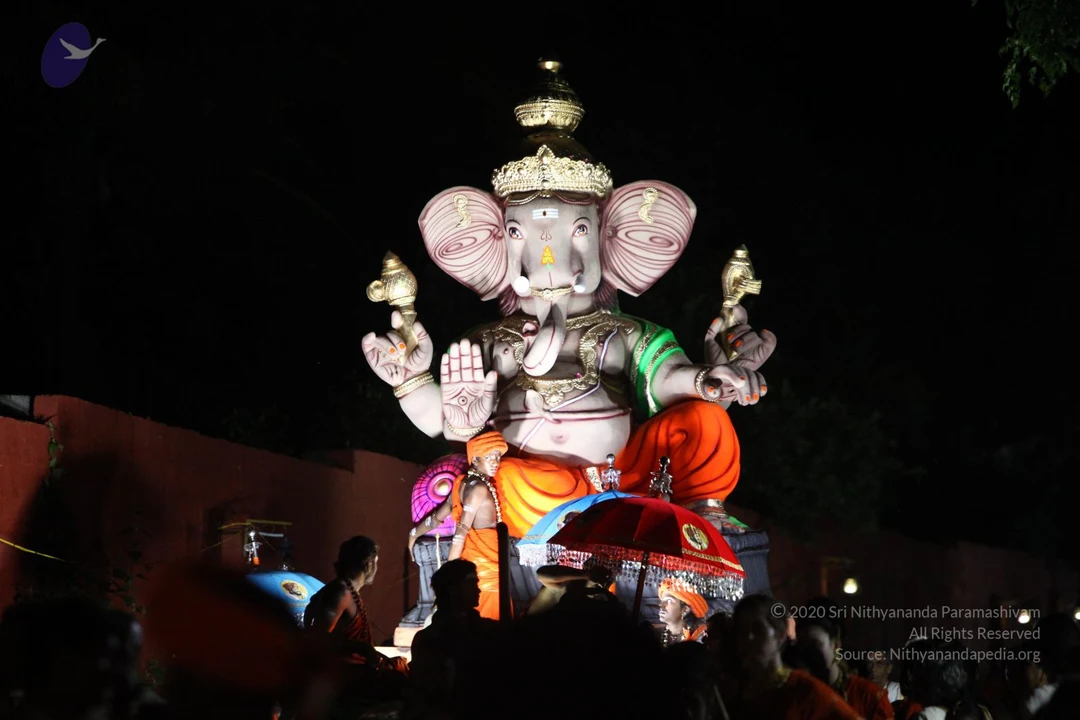
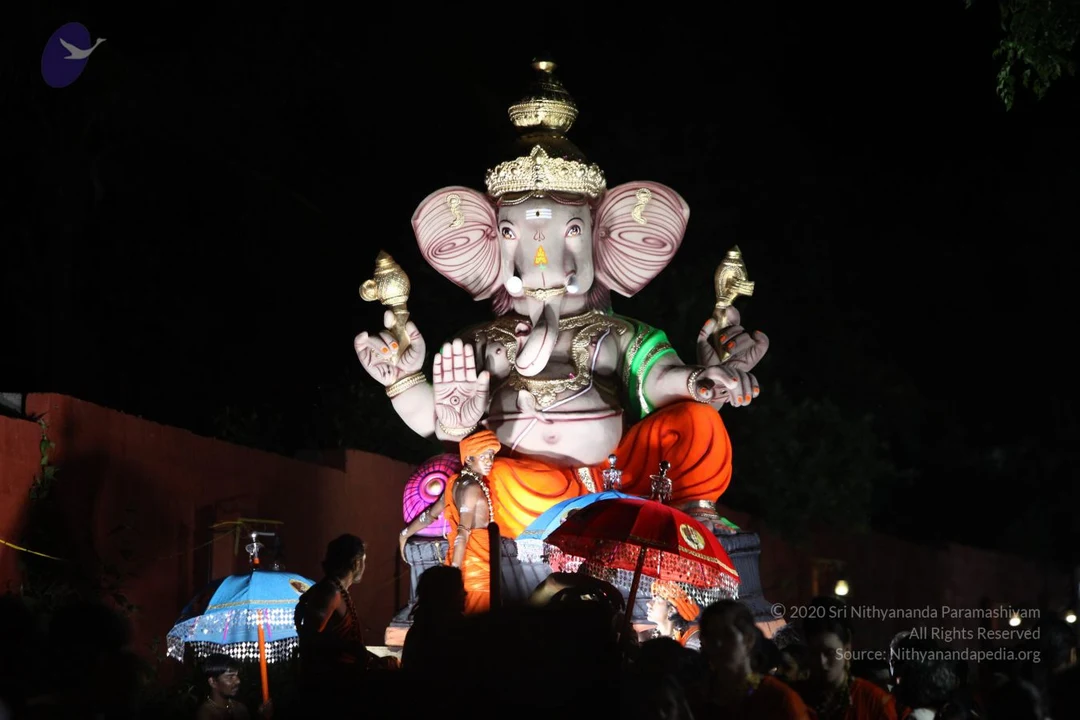
ganesh-visarjan-temple-visit

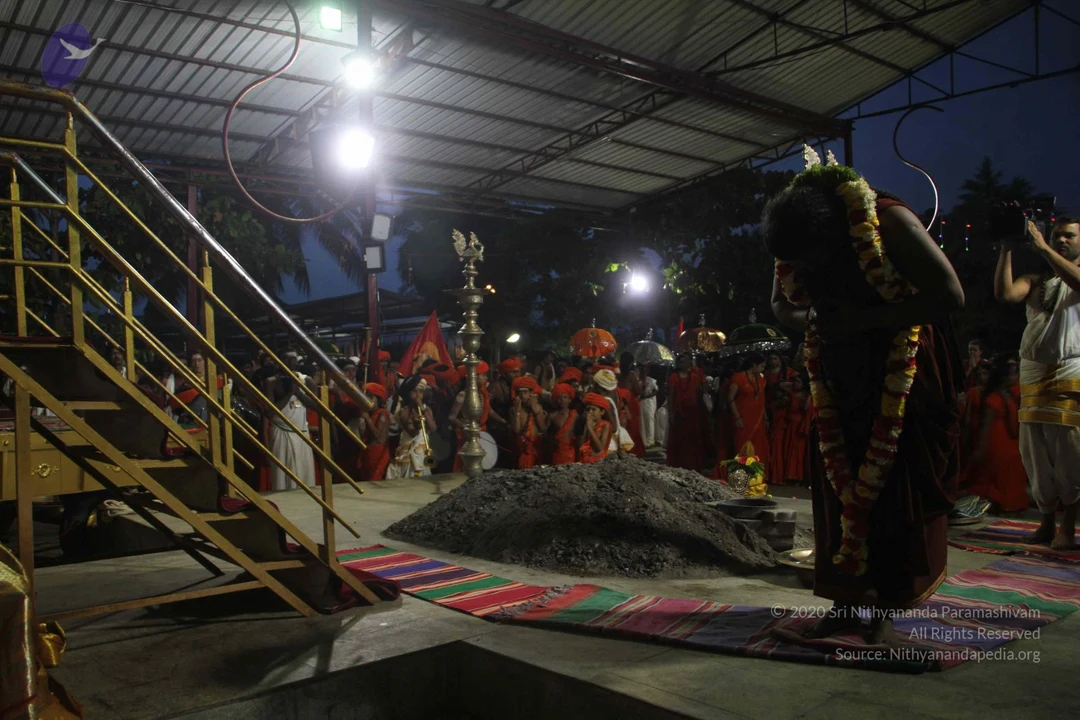
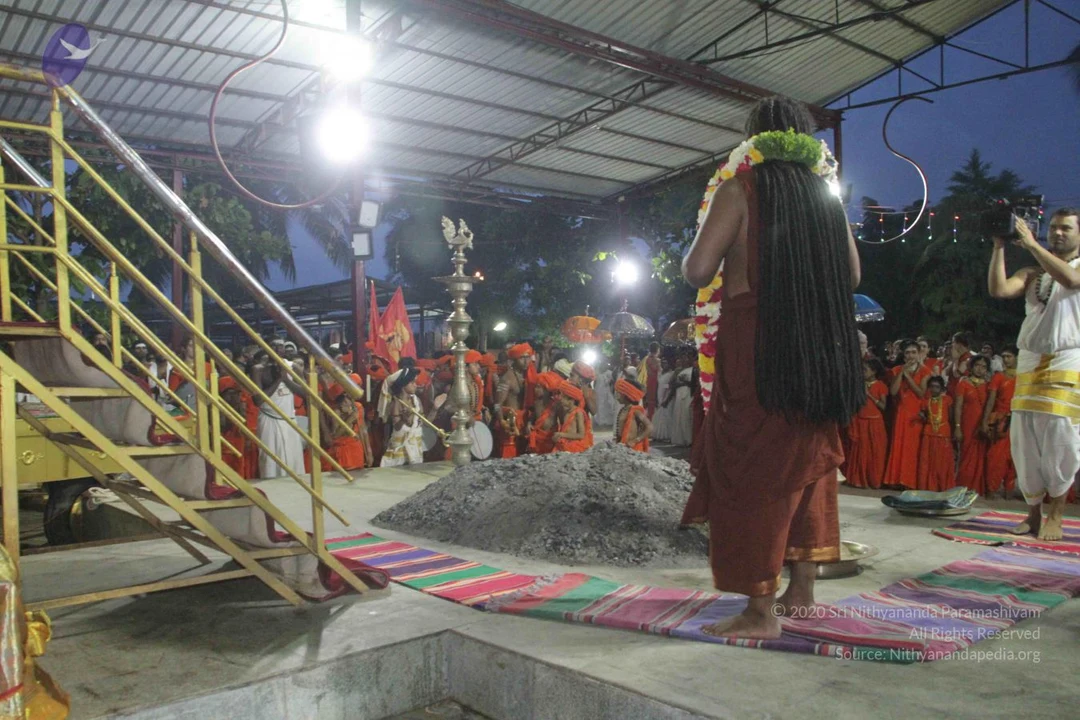
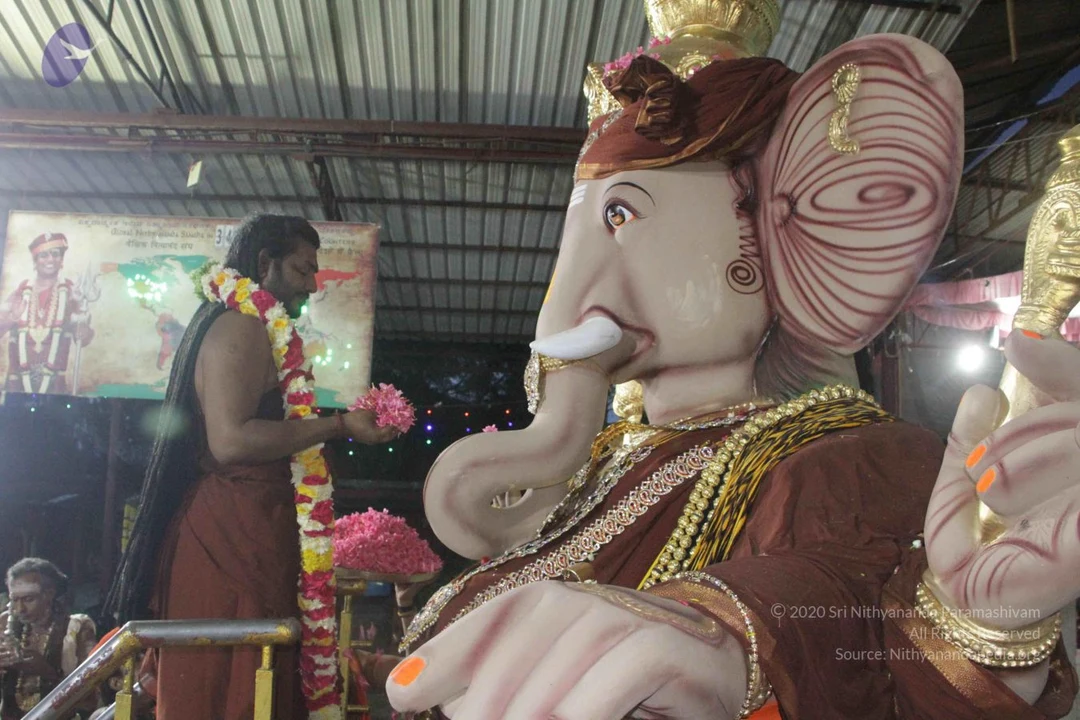
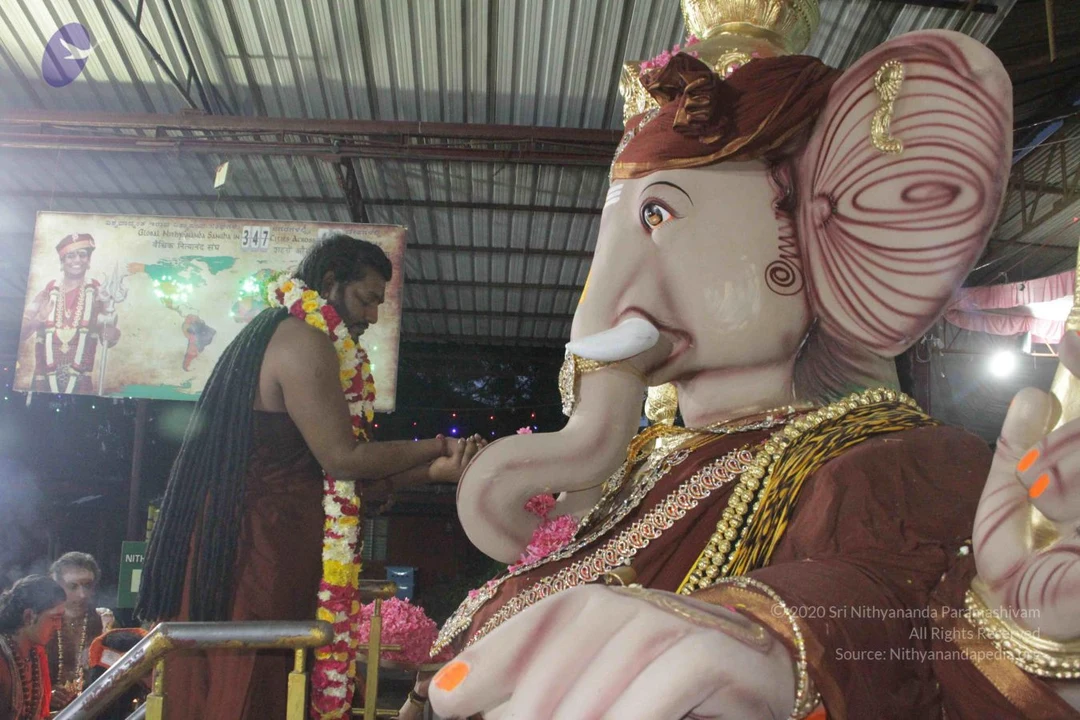
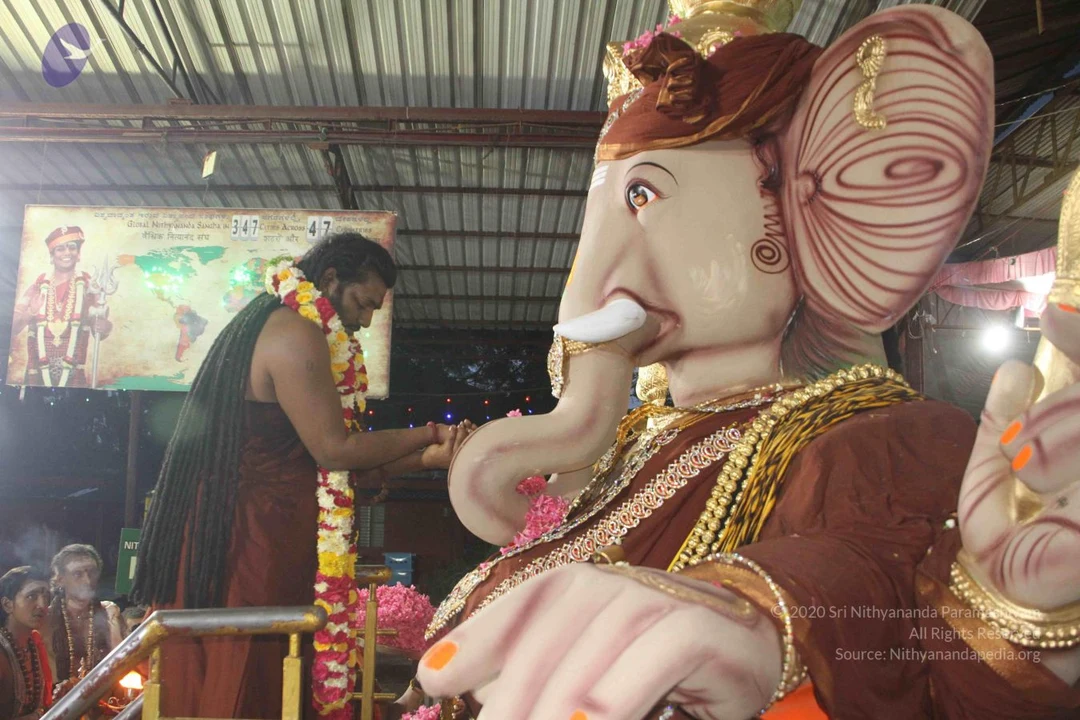
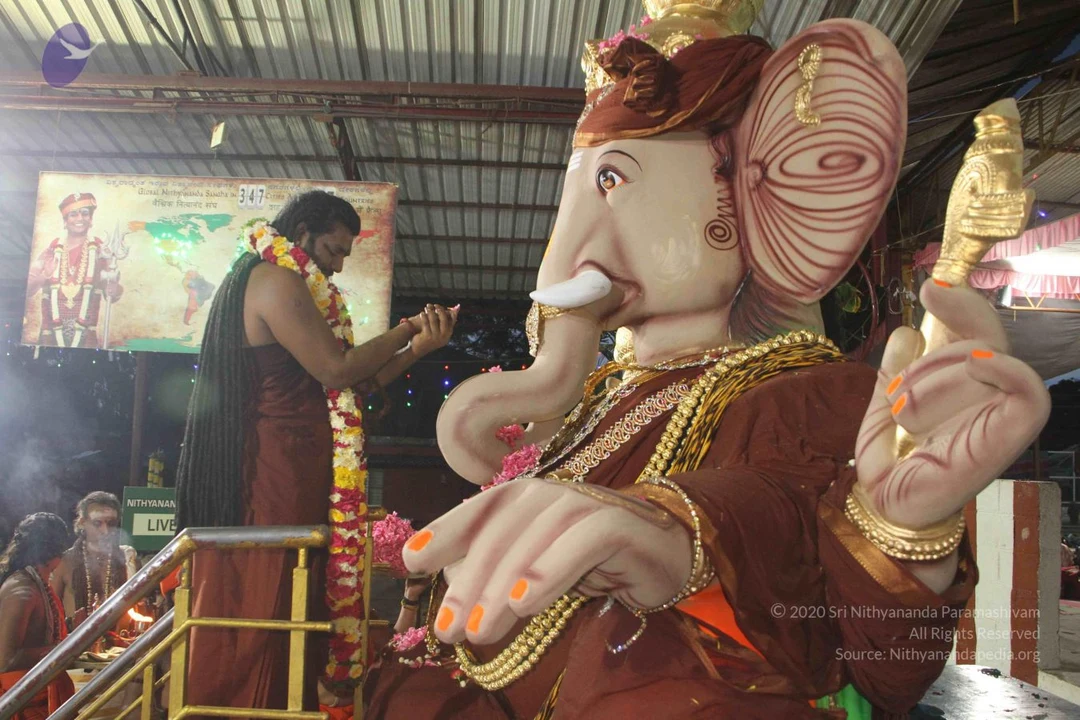
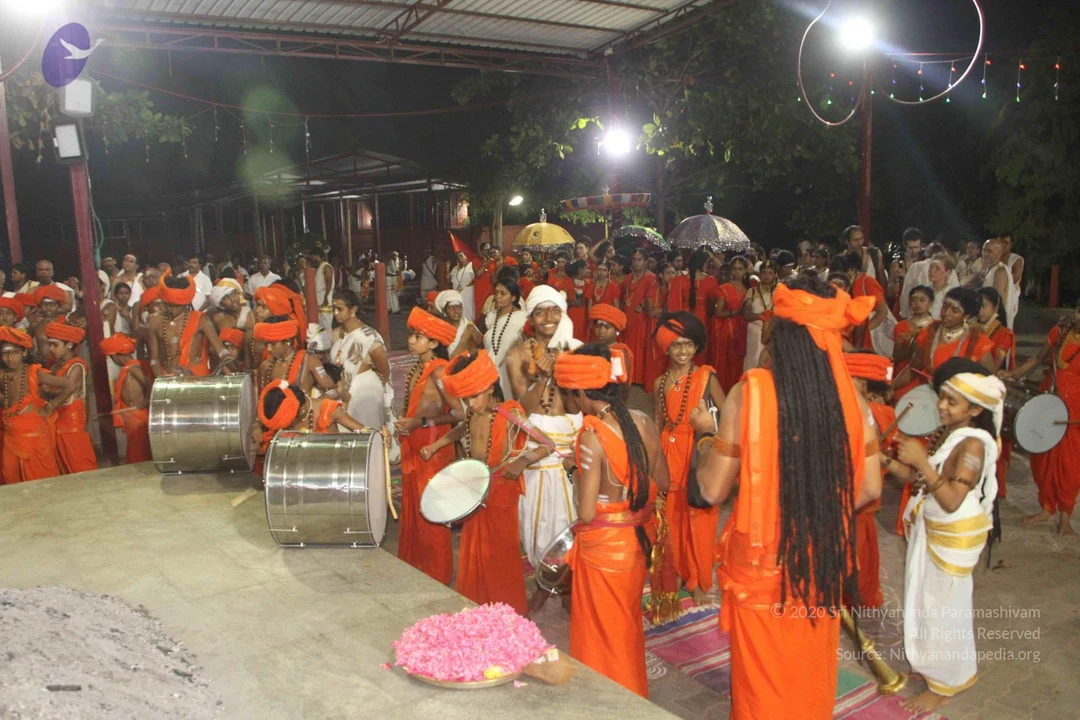
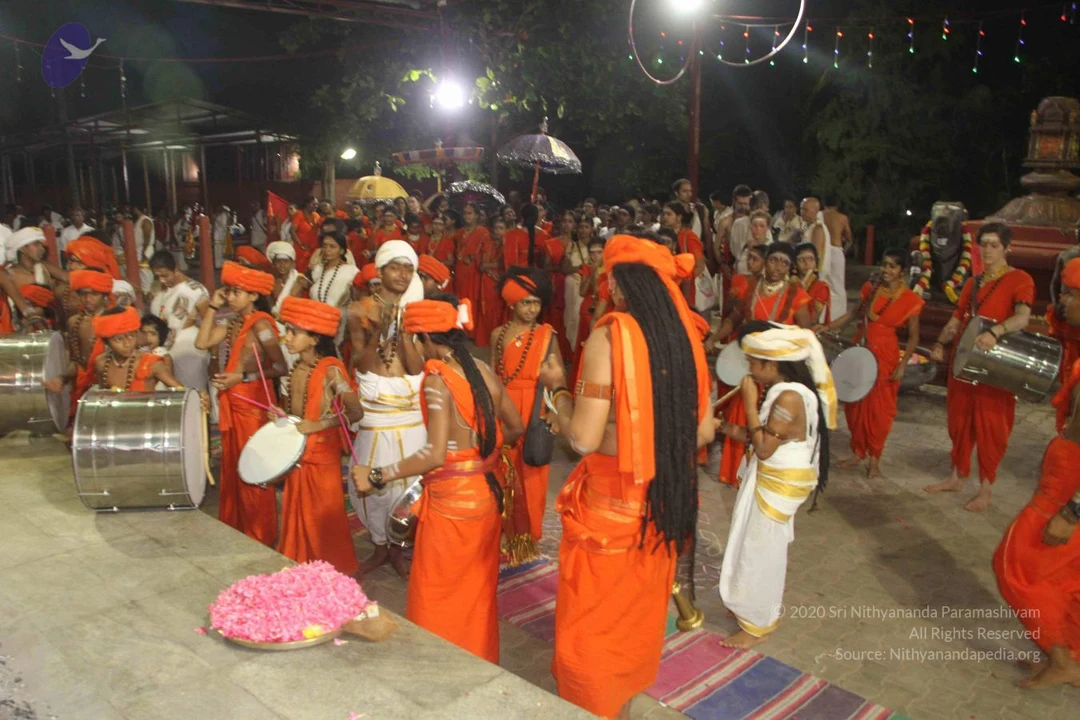
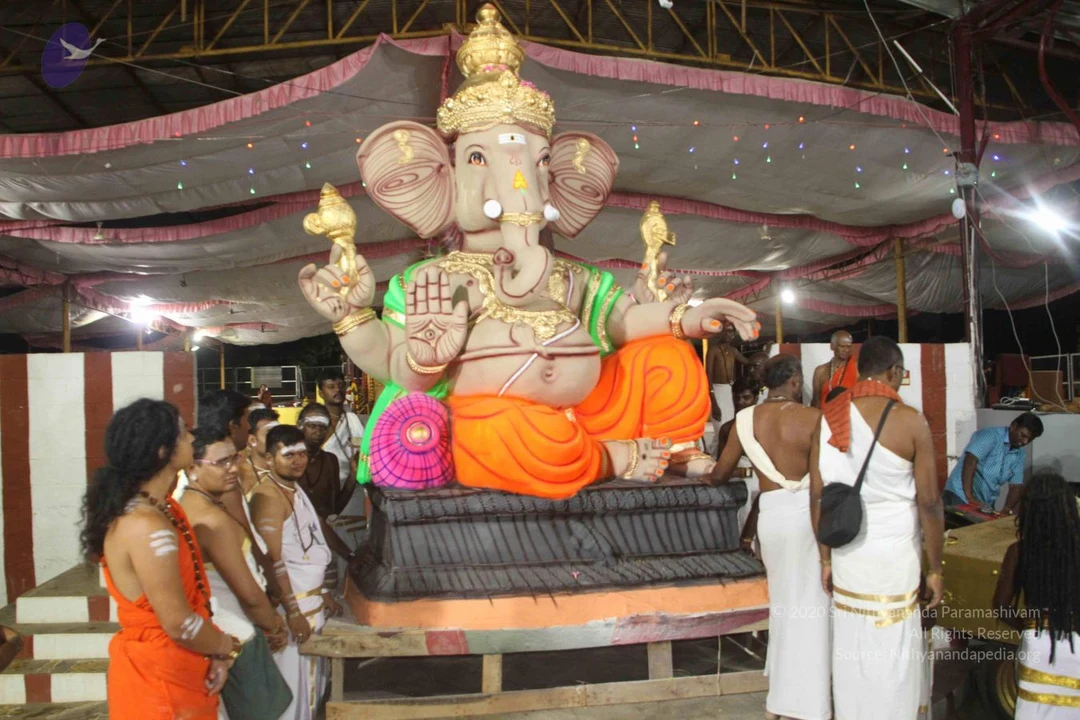
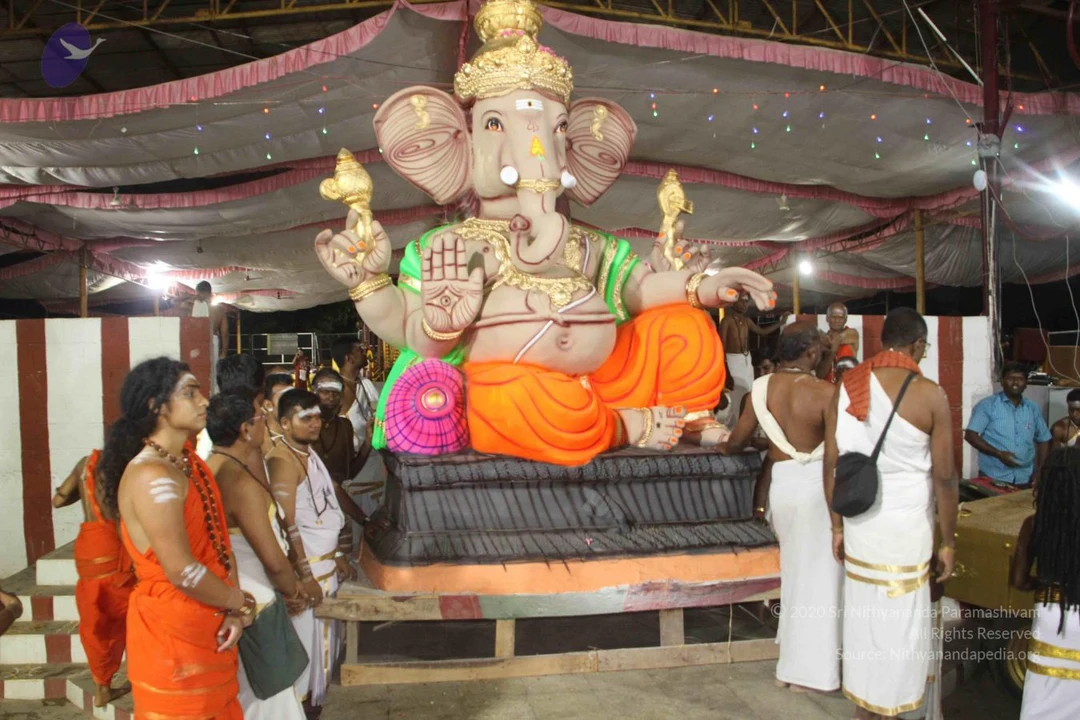
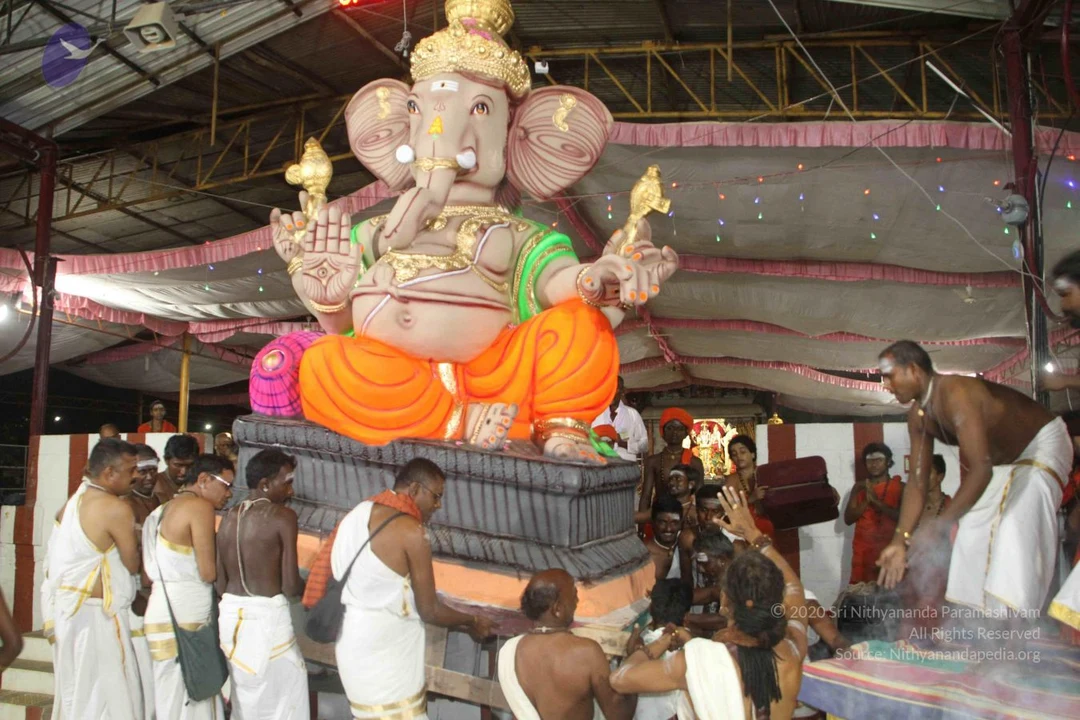
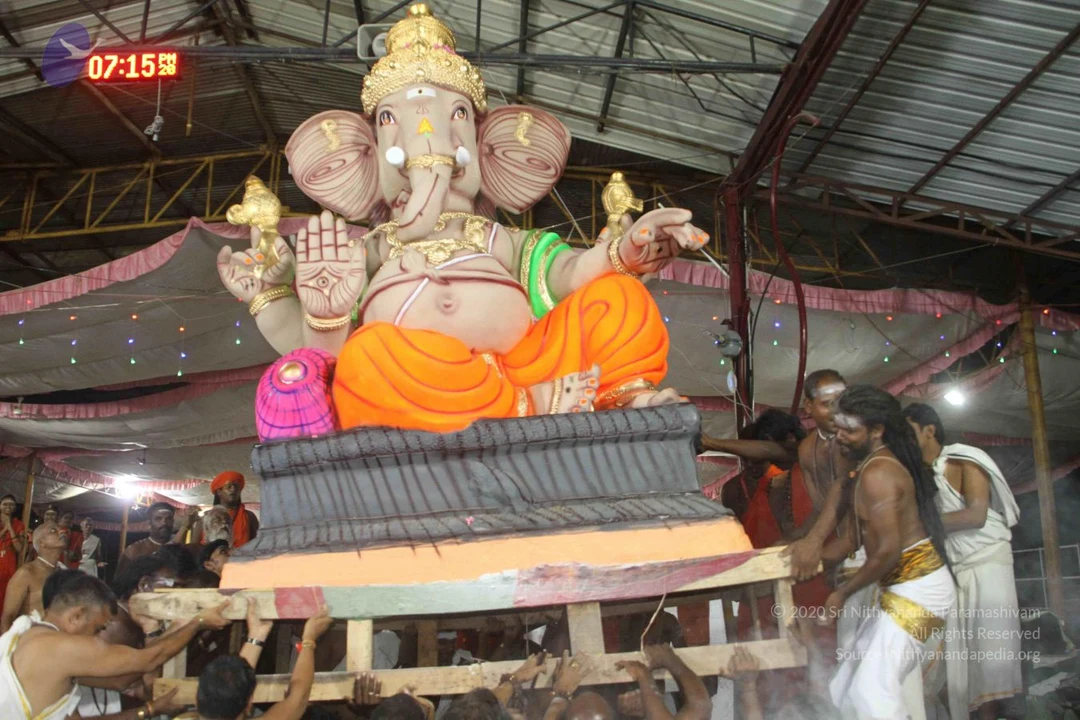
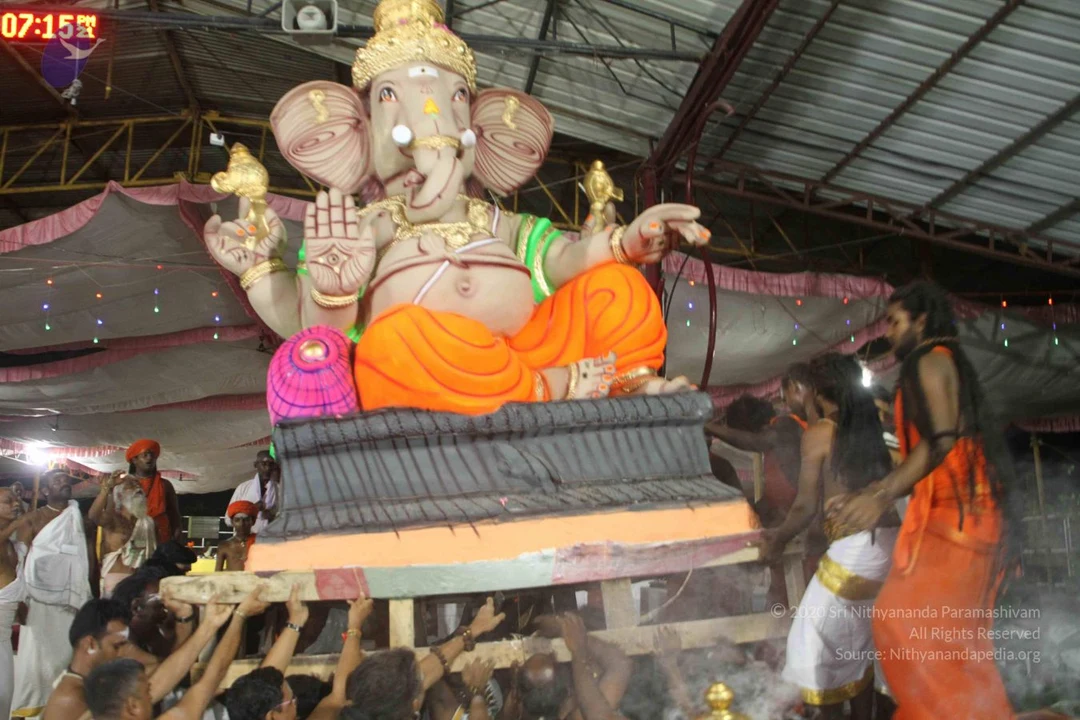
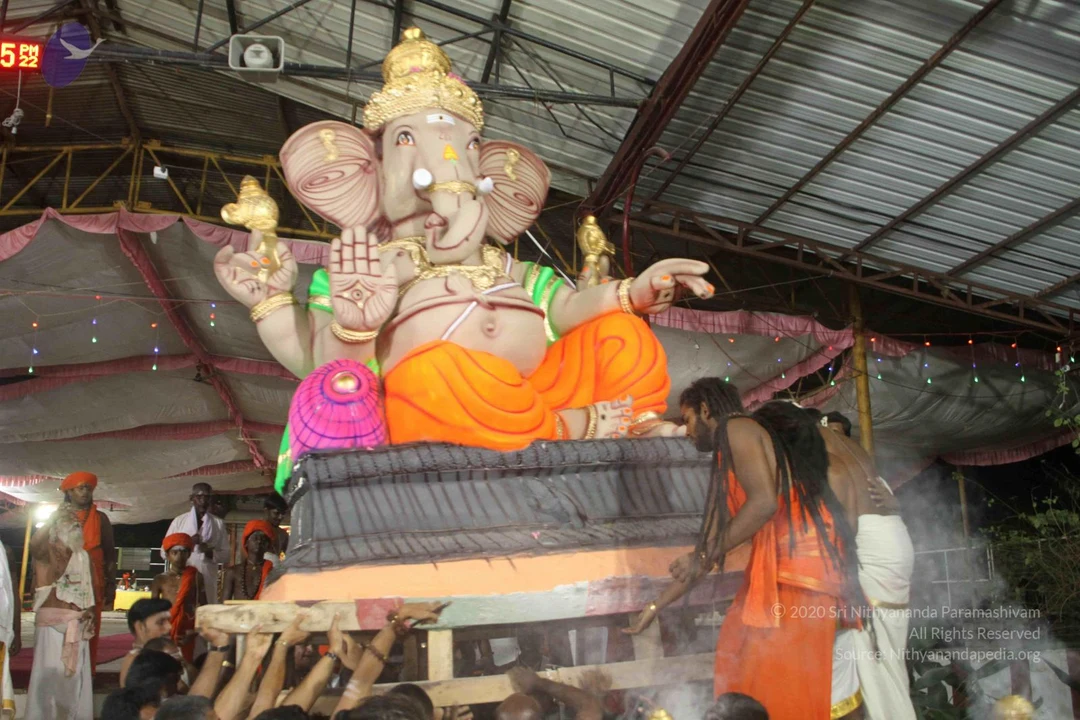
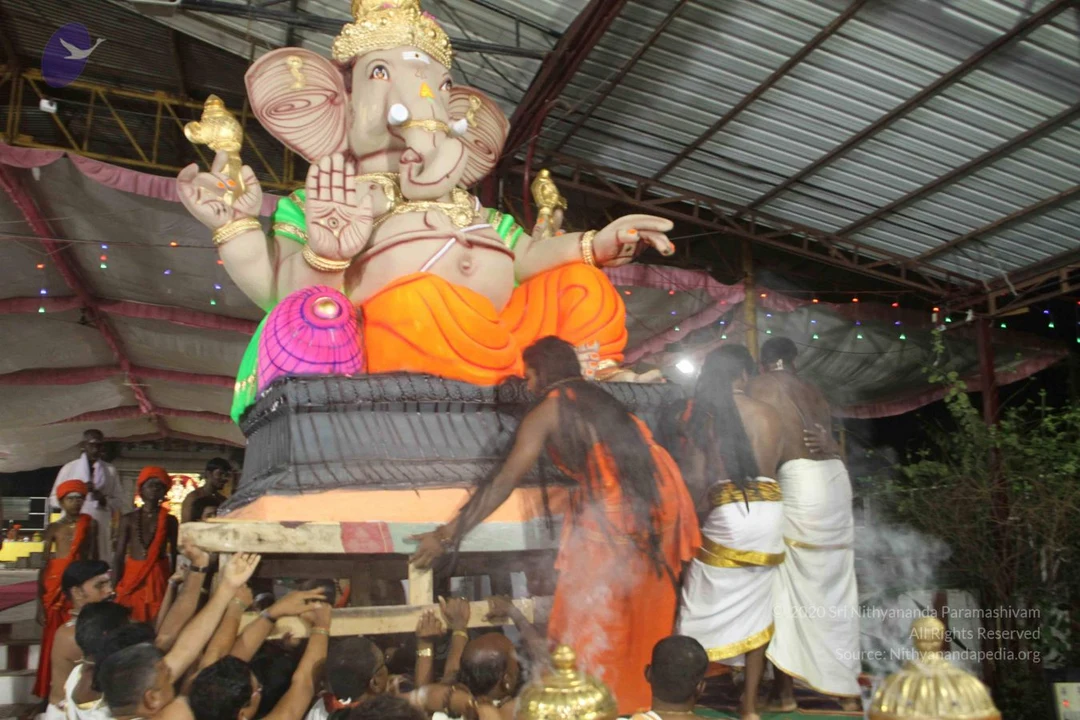
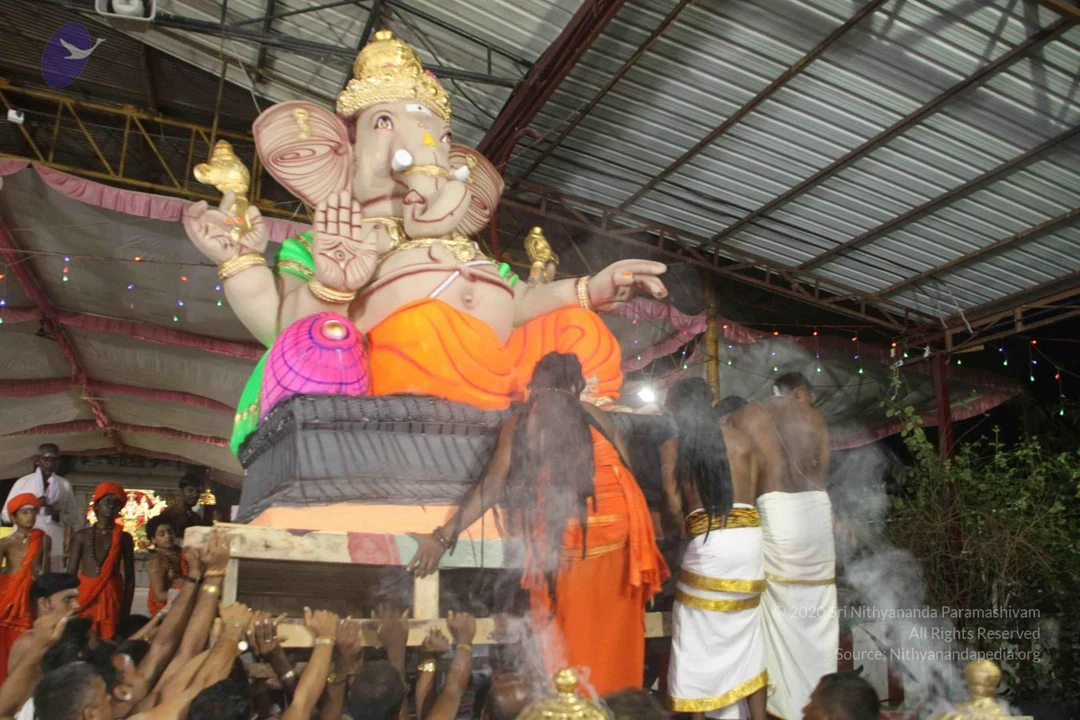
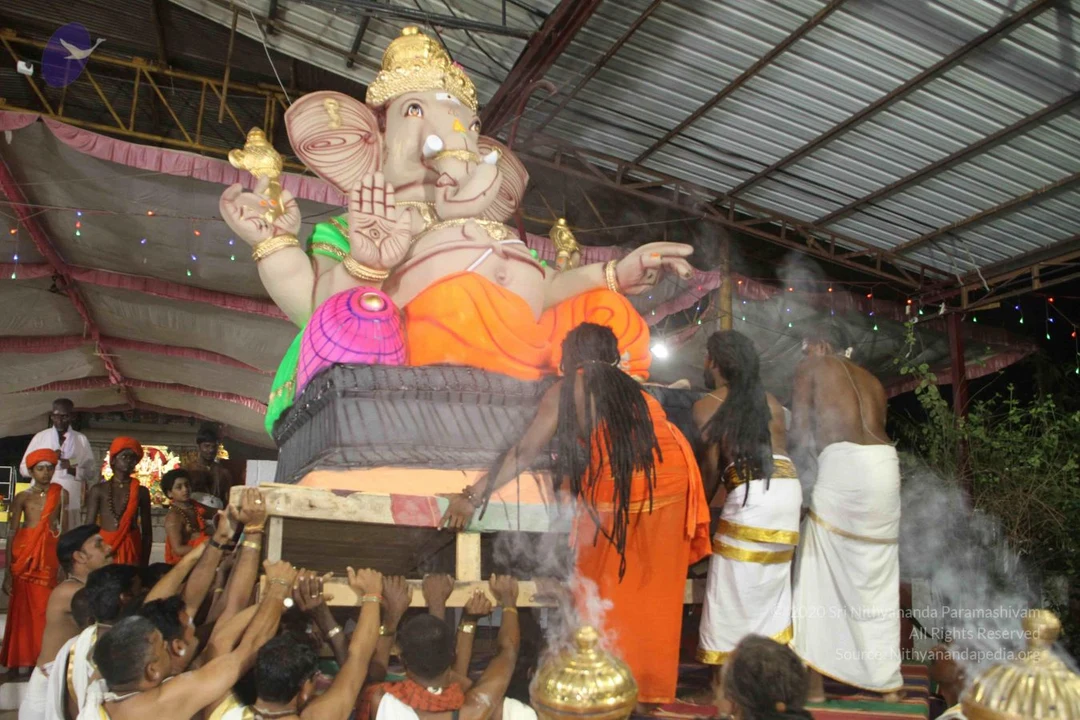
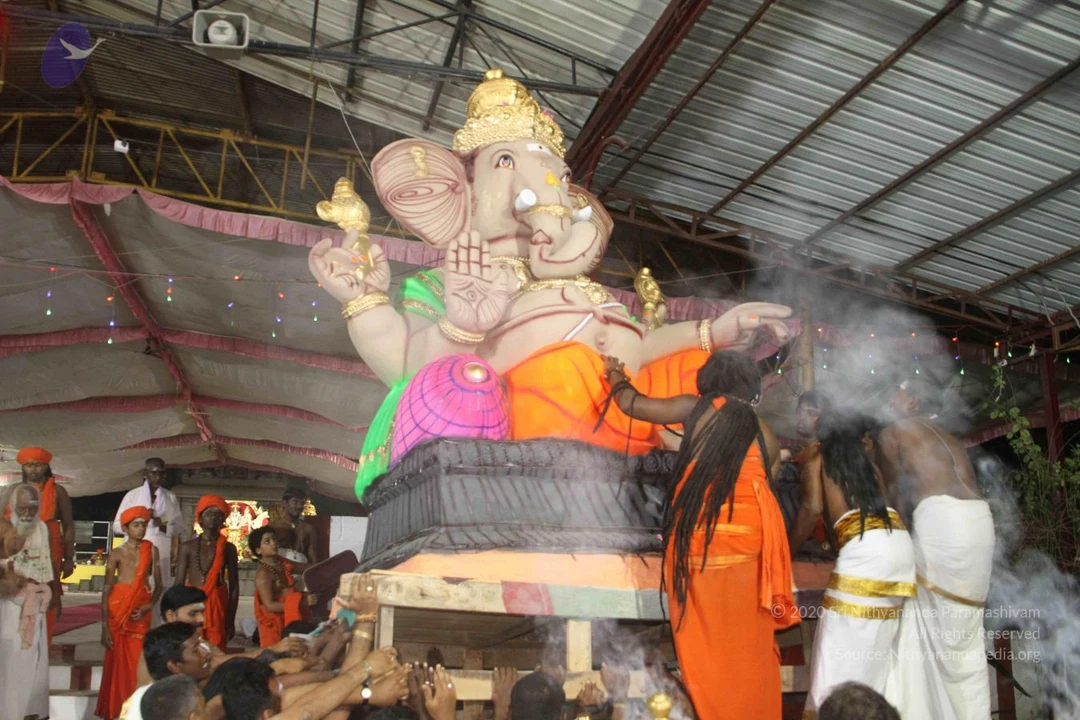
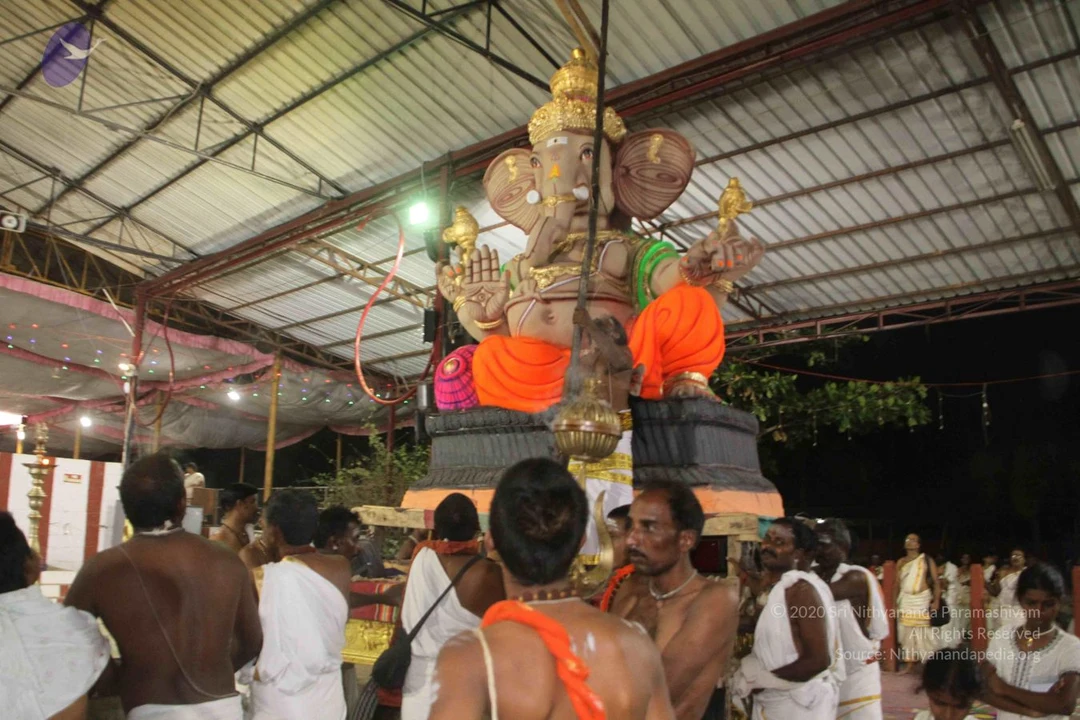
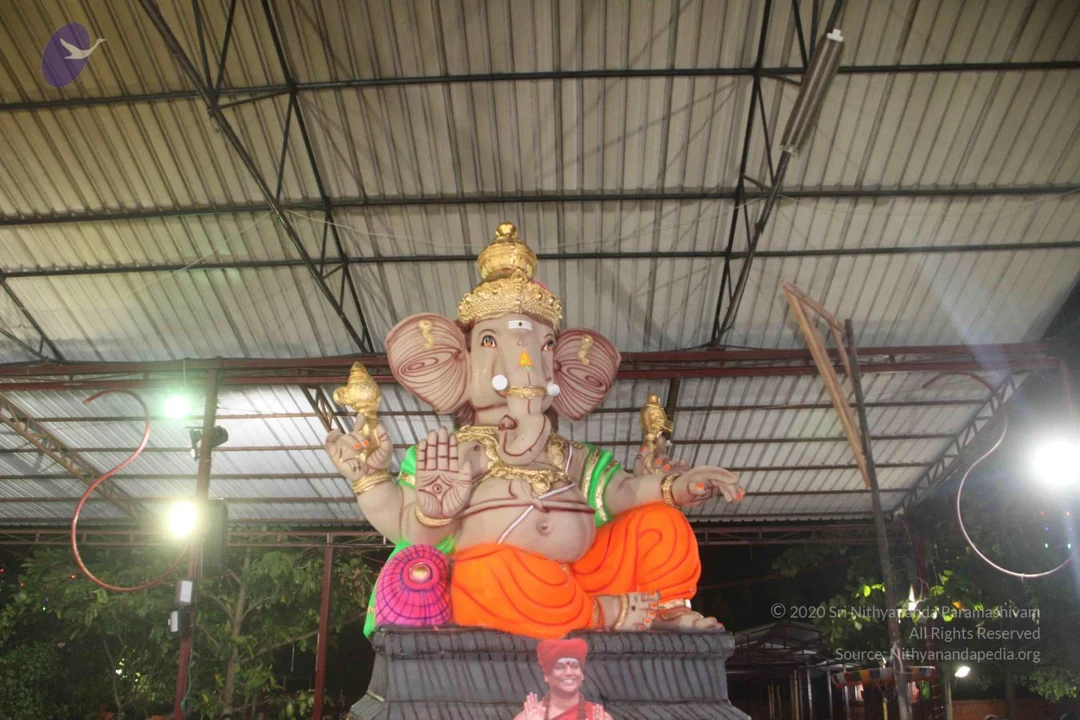
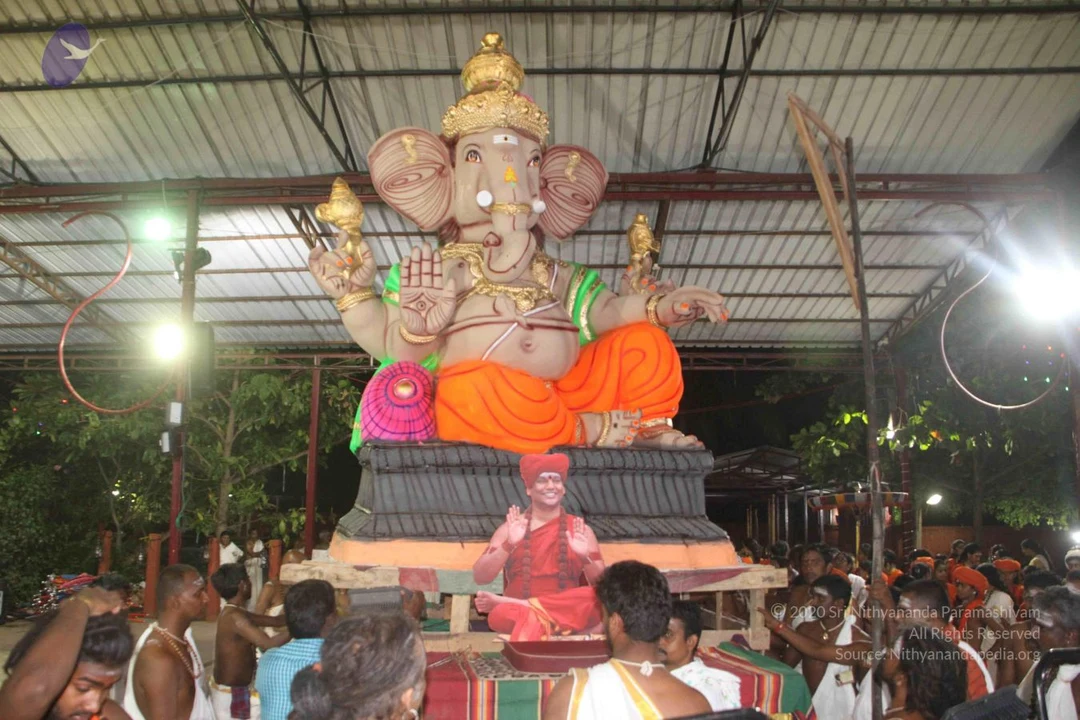
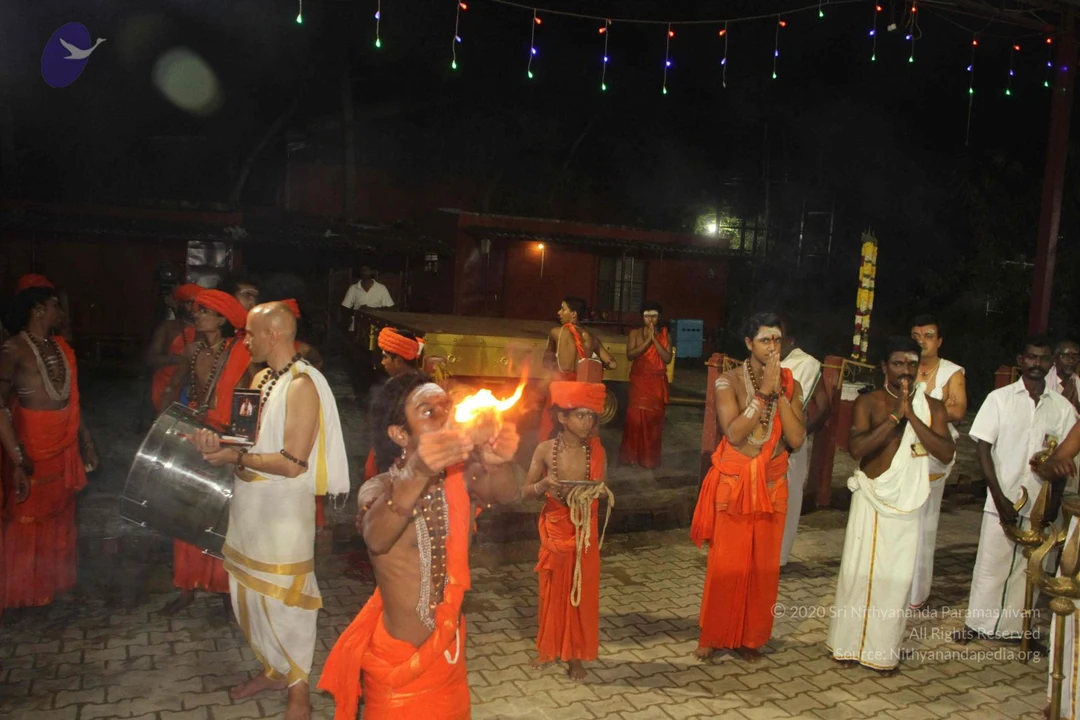
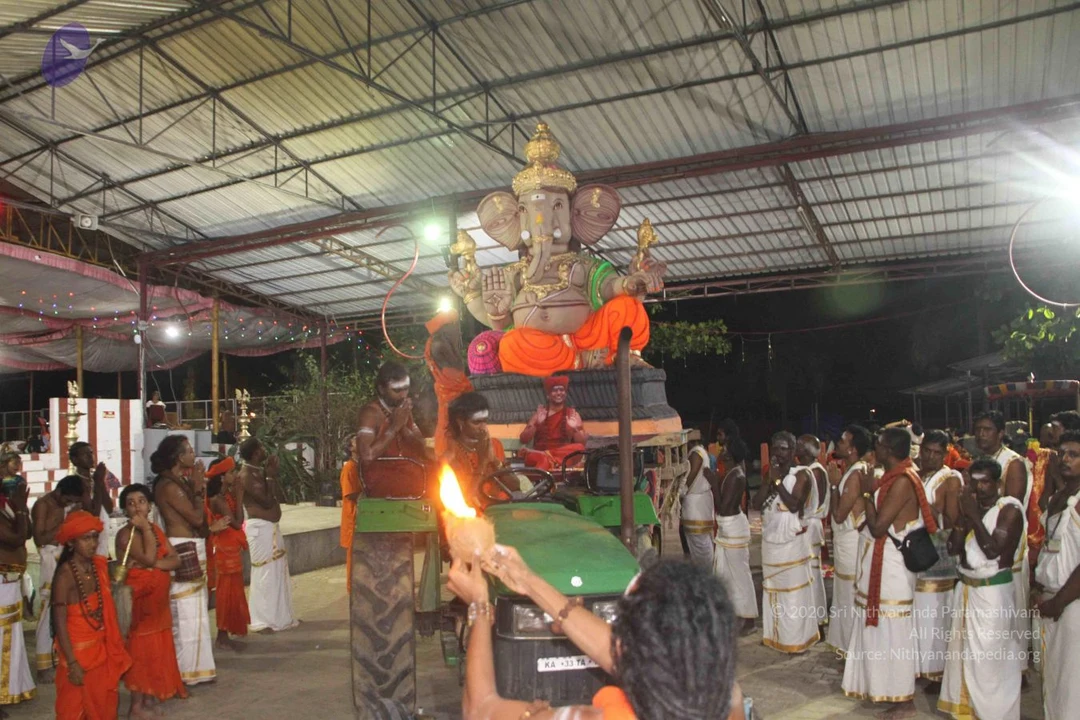
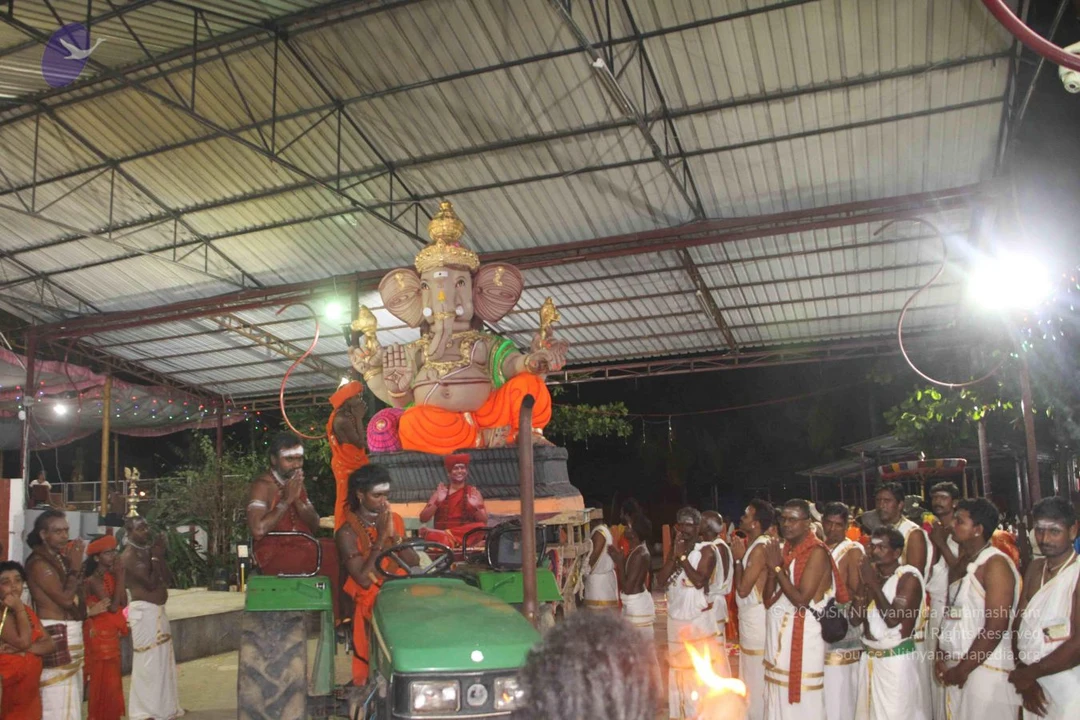
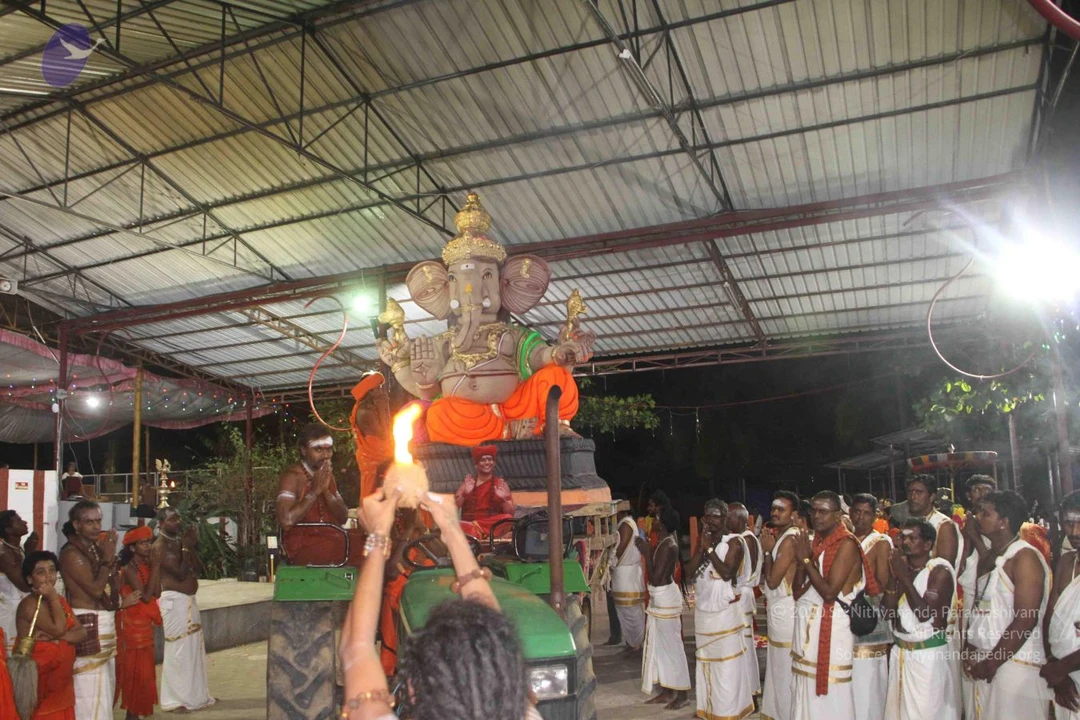
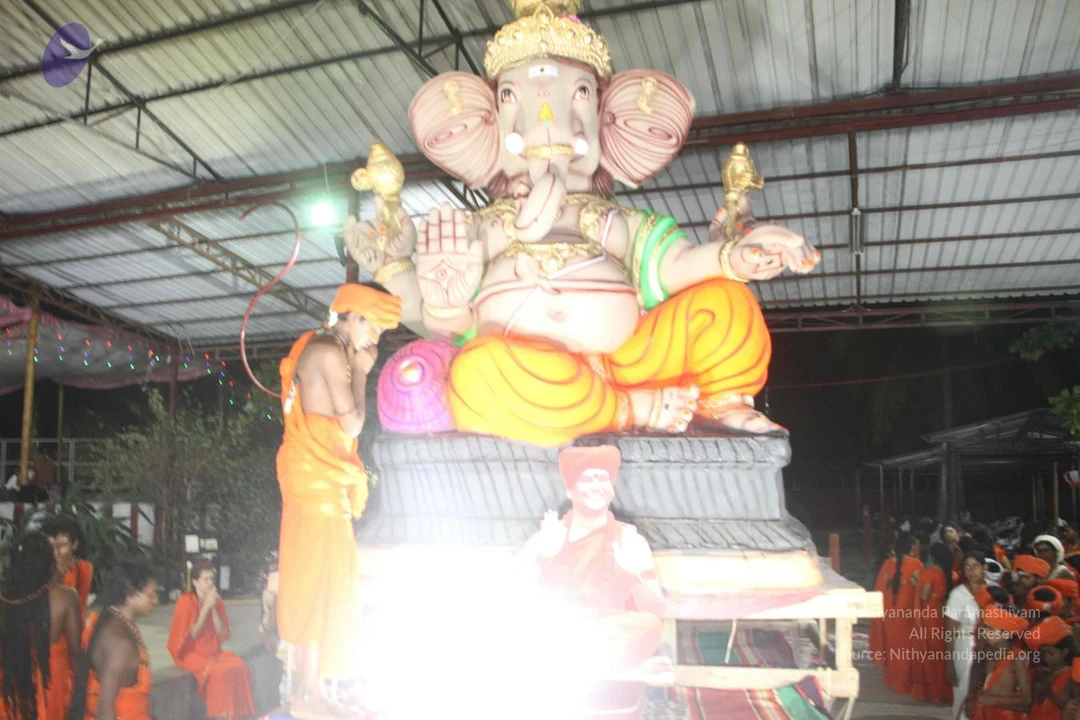
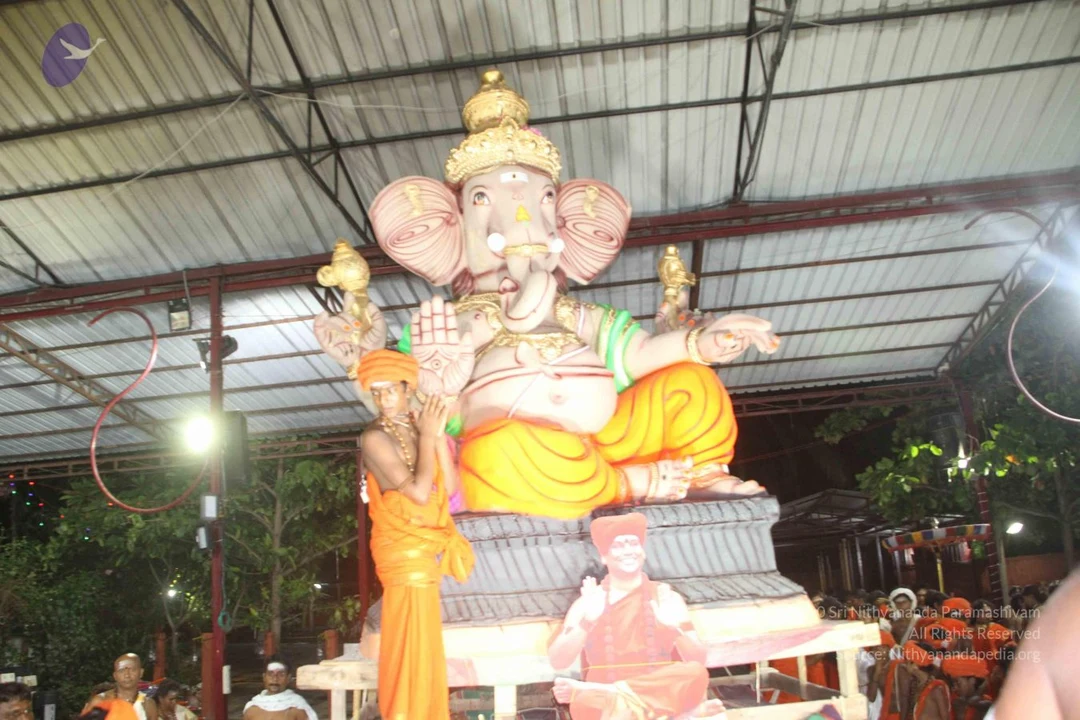
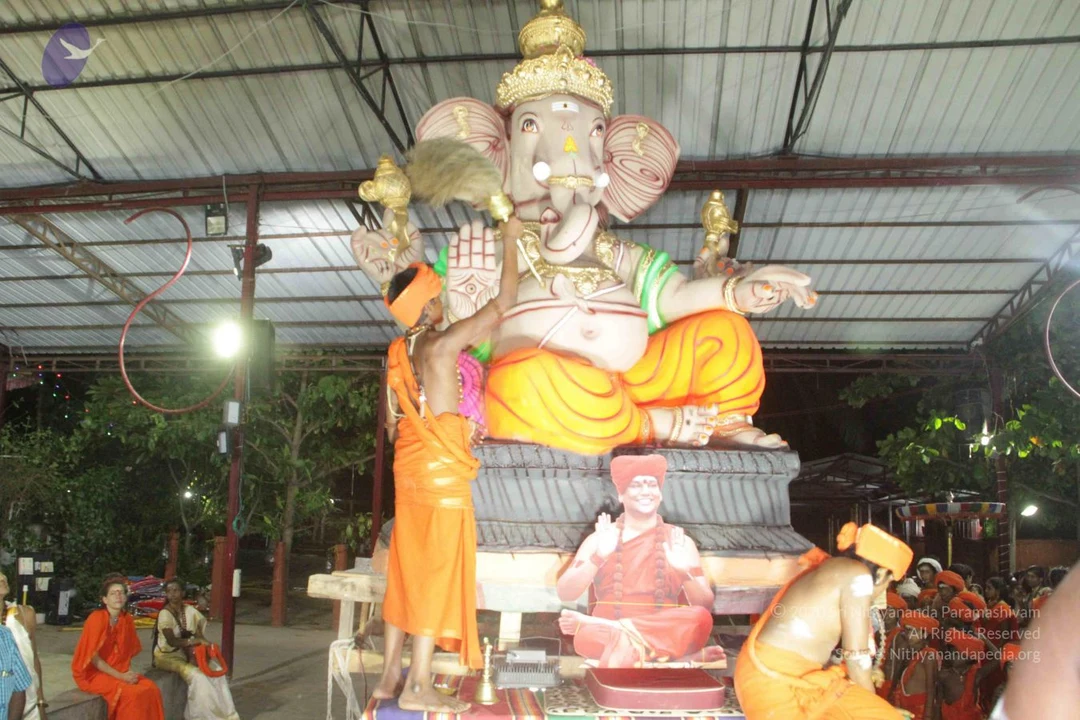
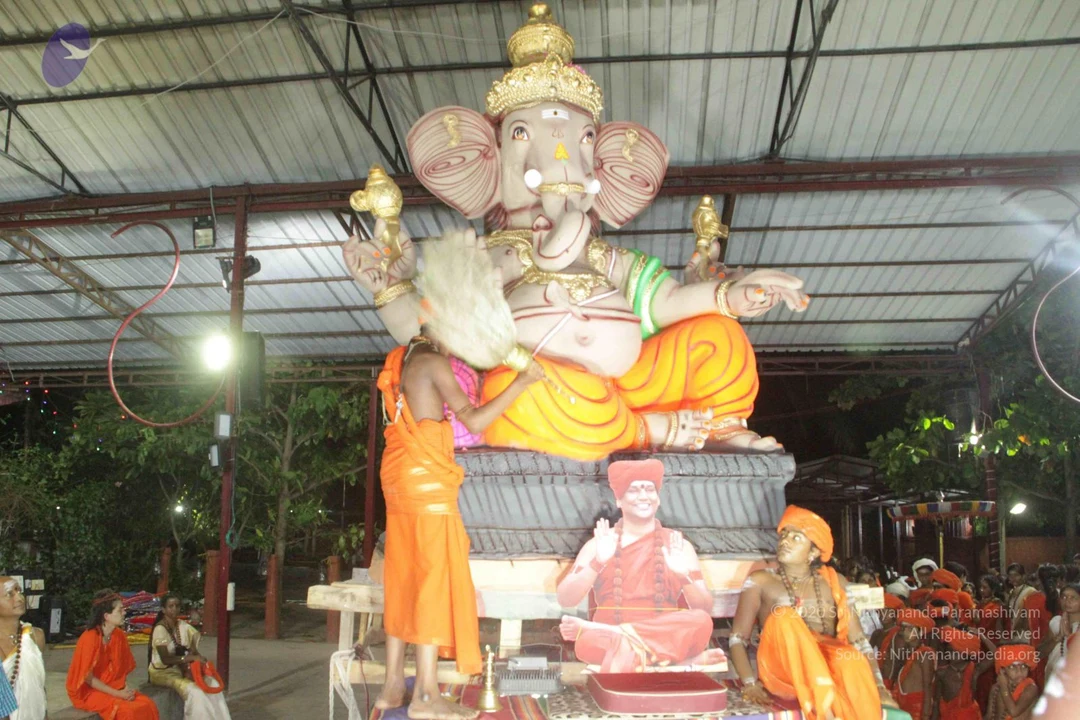
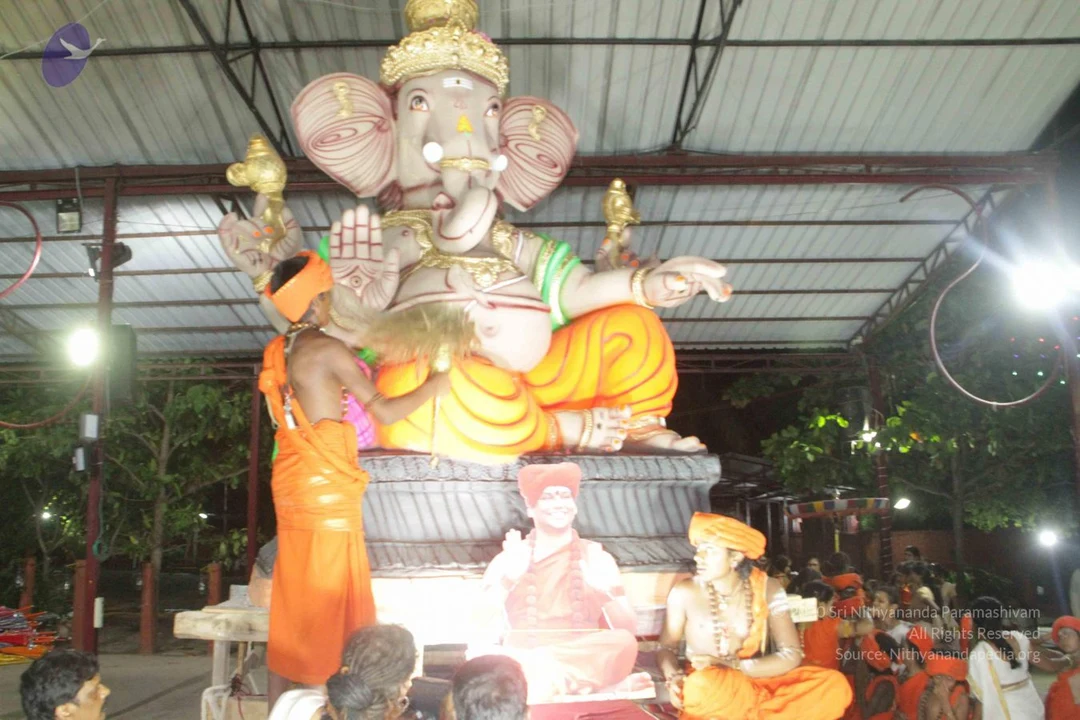
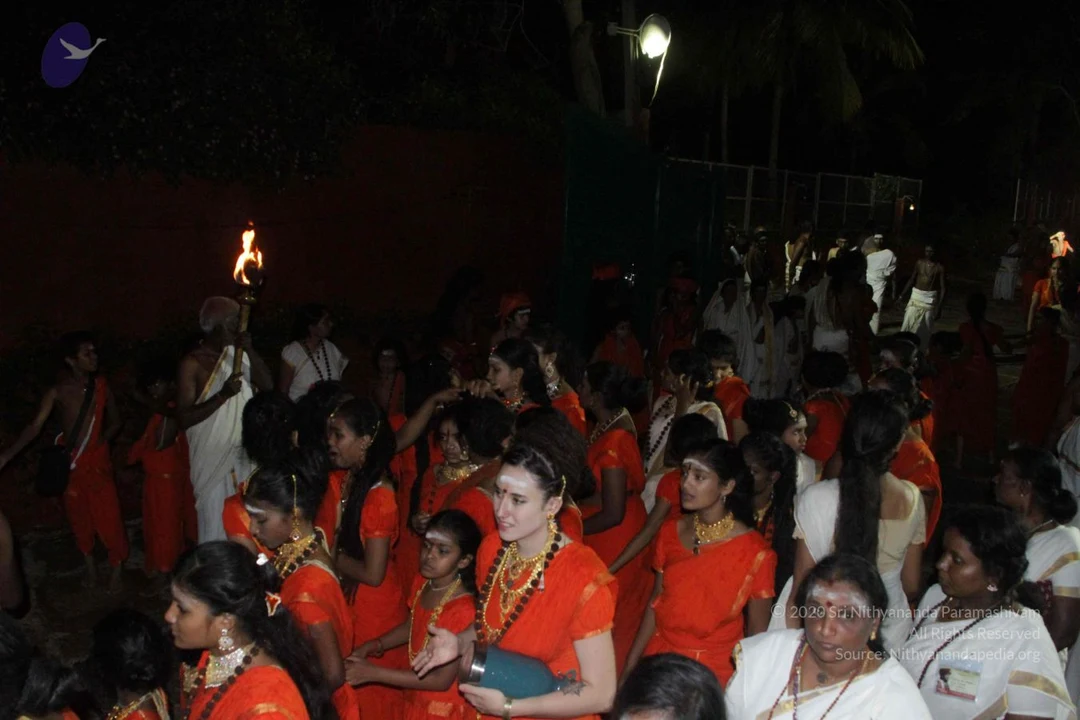
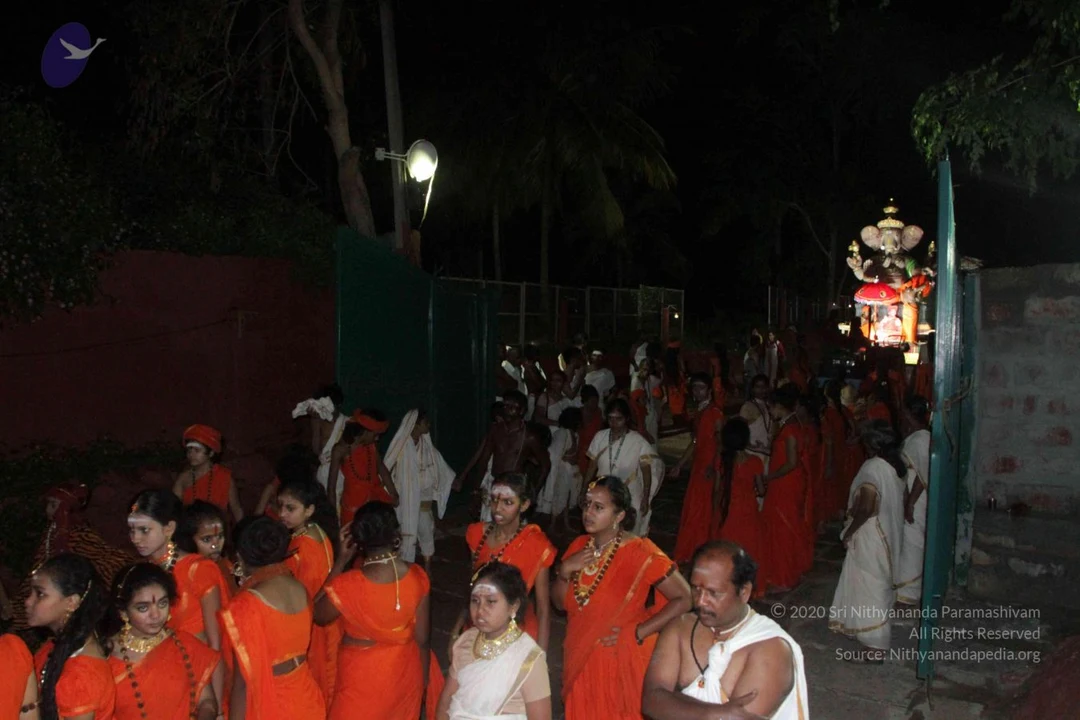
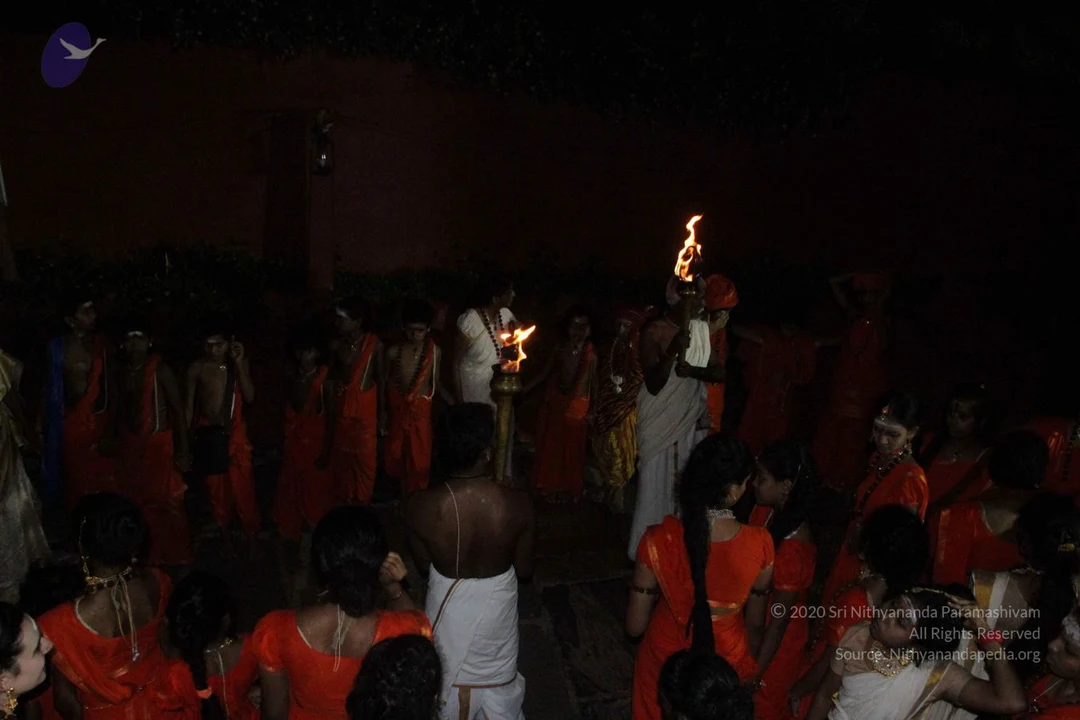
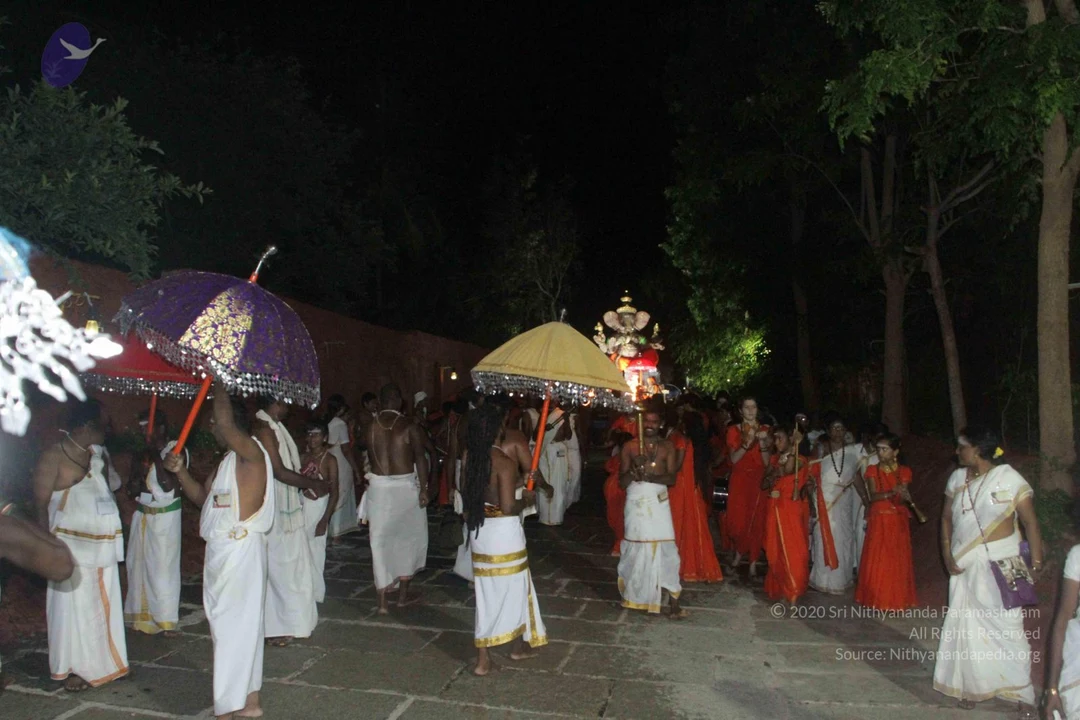
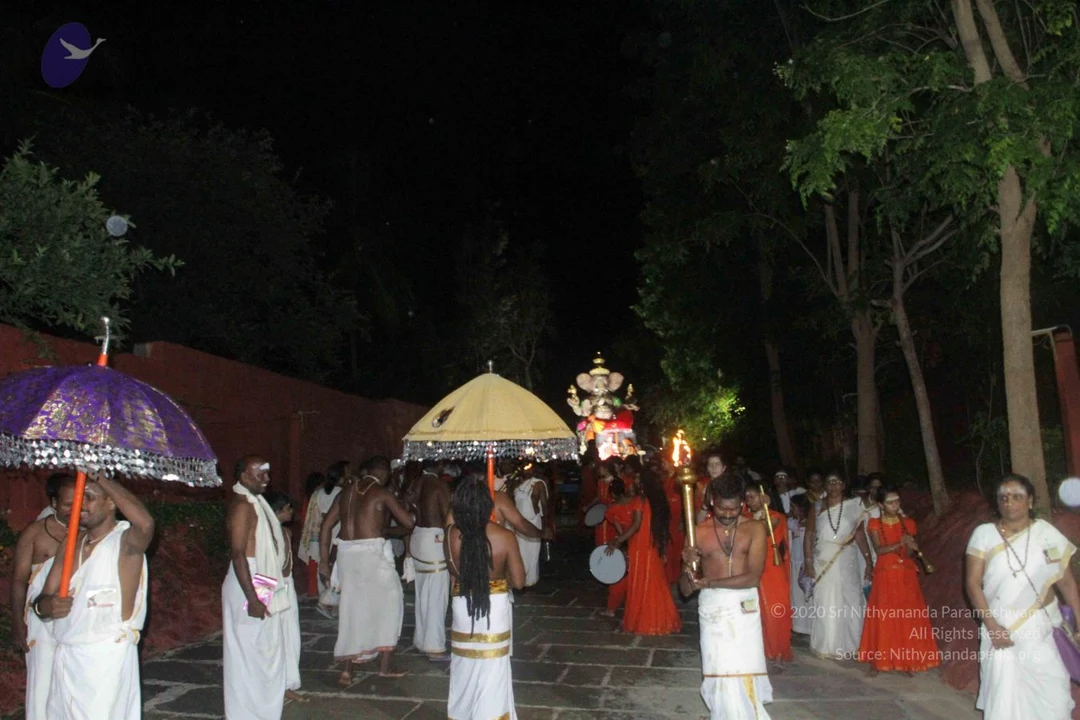
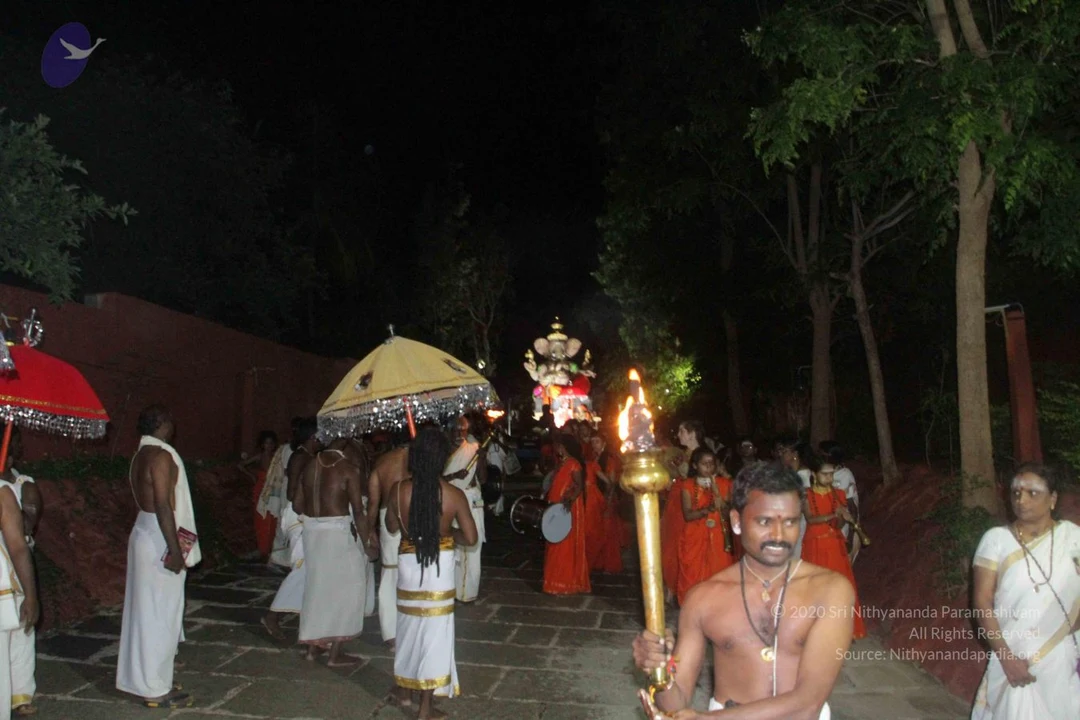
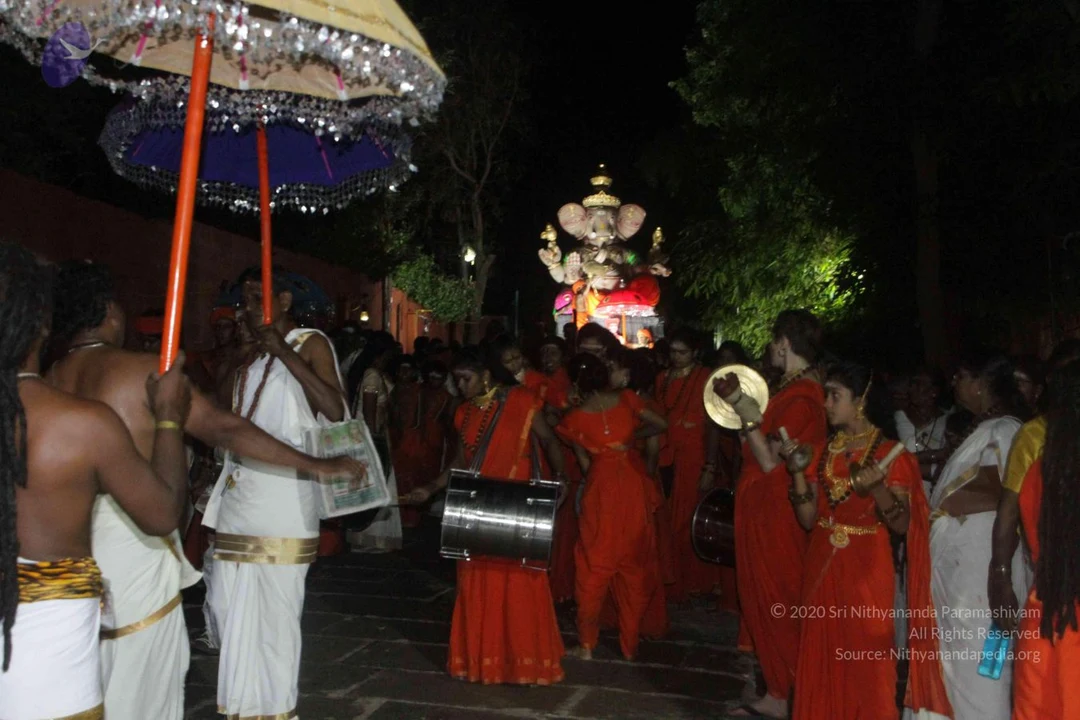
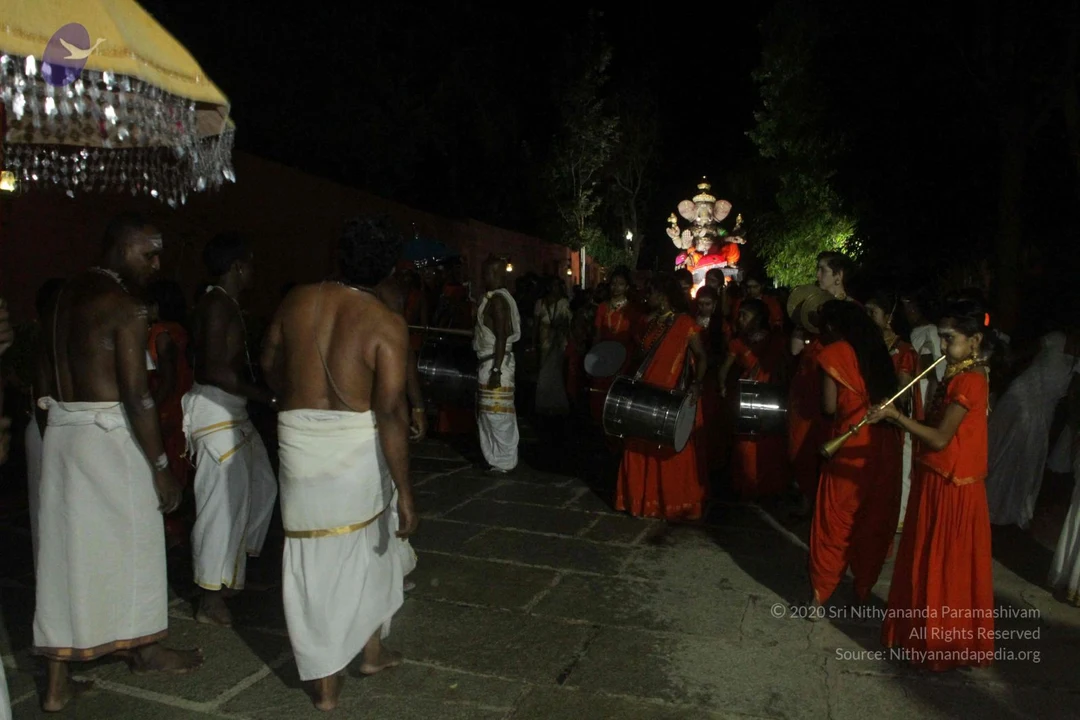
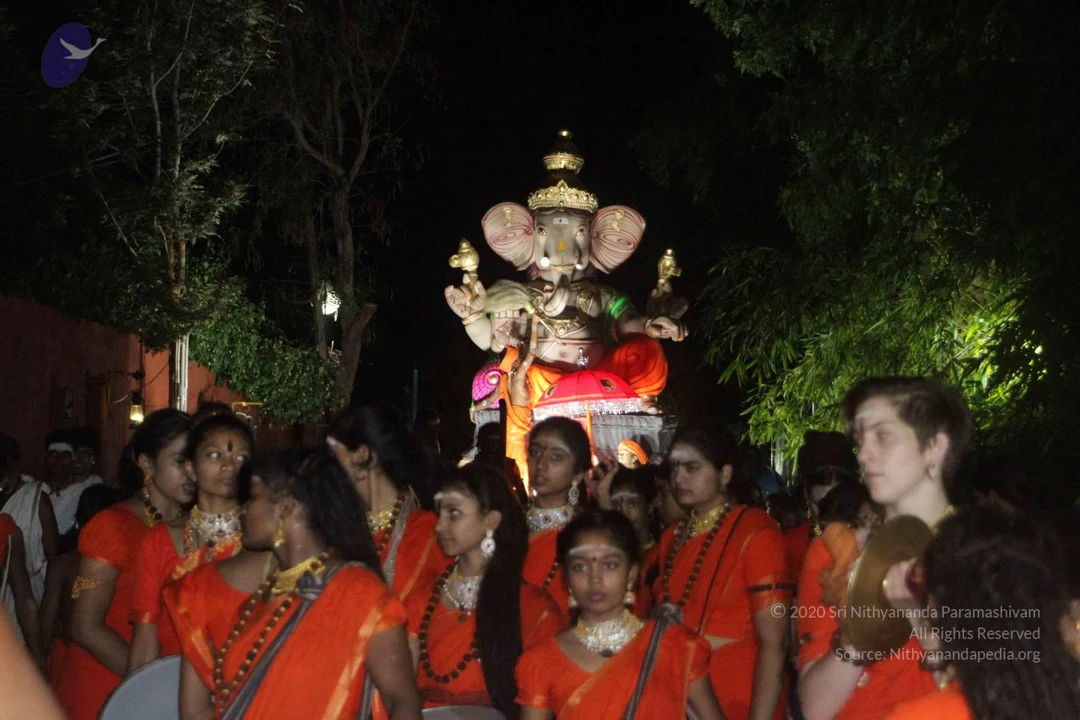
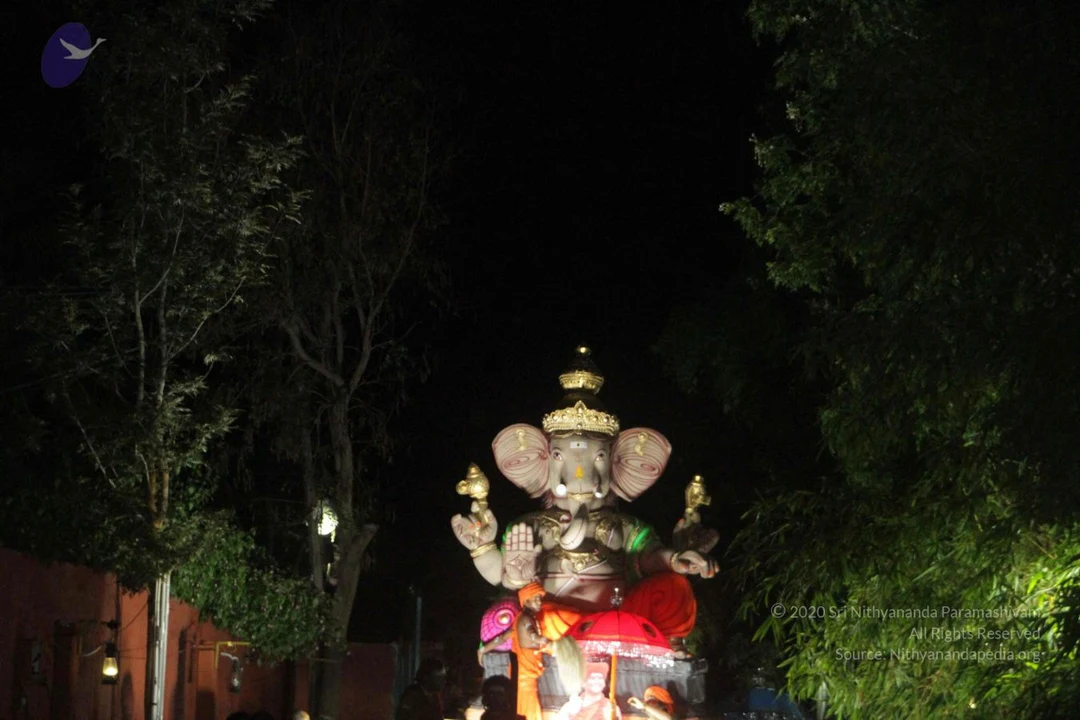
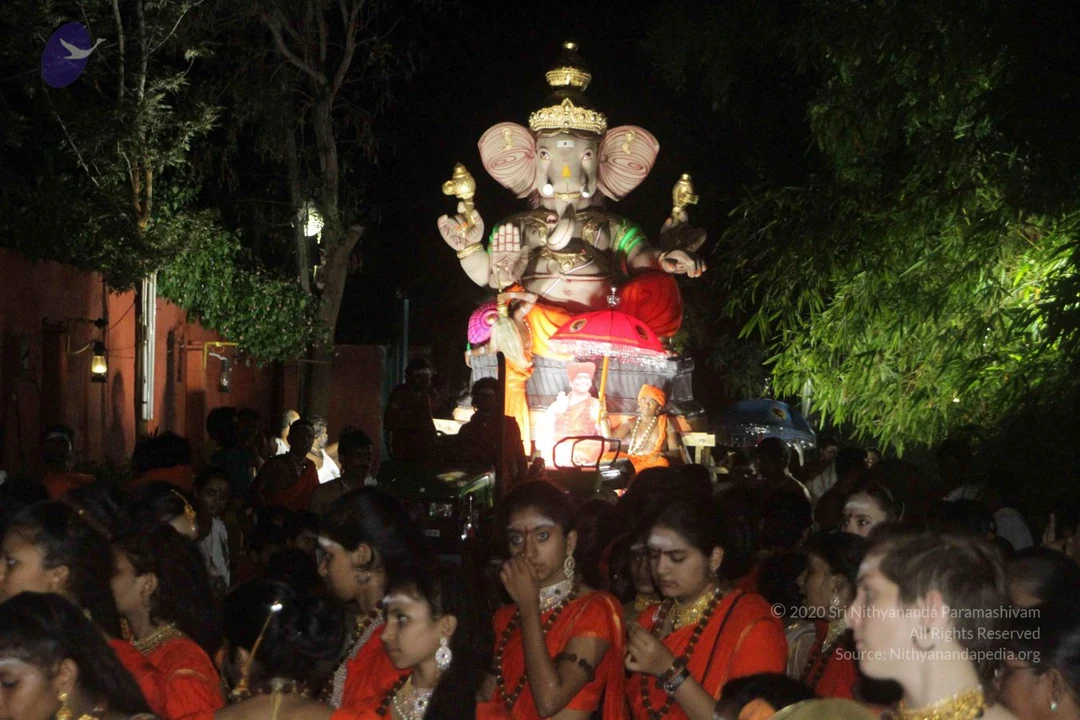
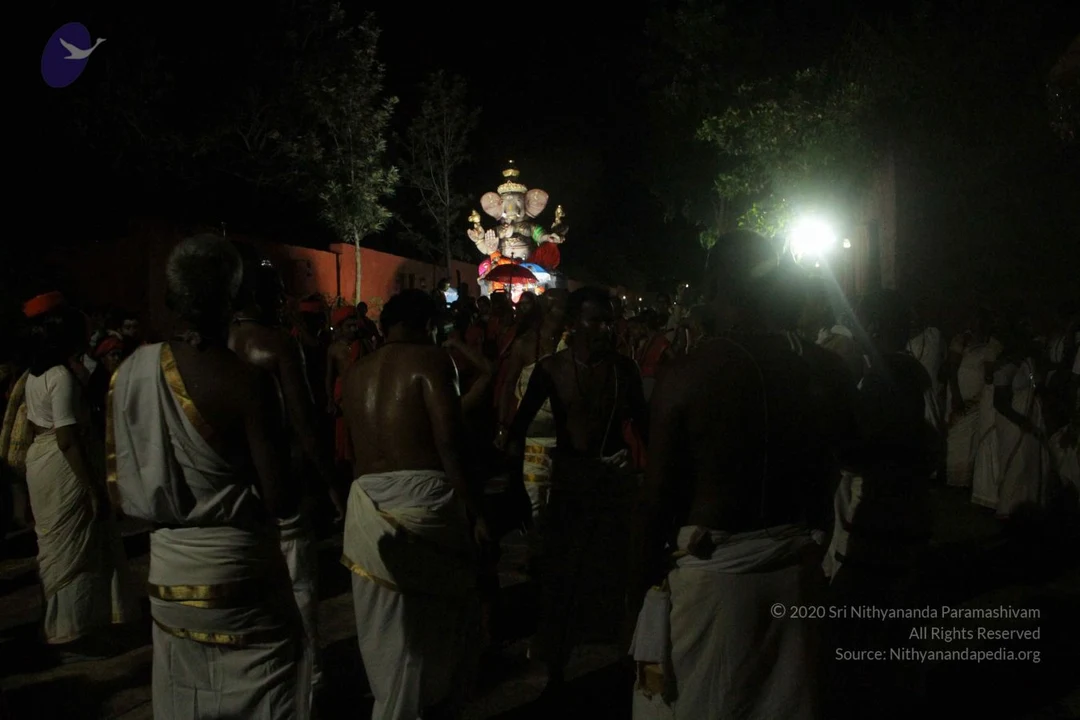
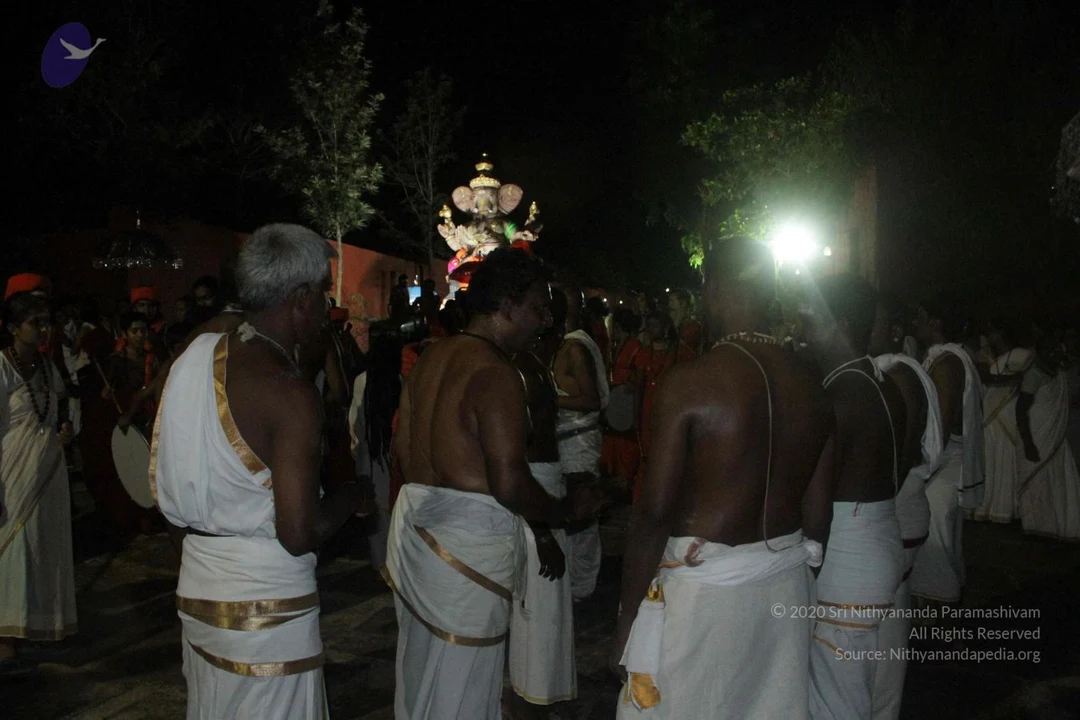
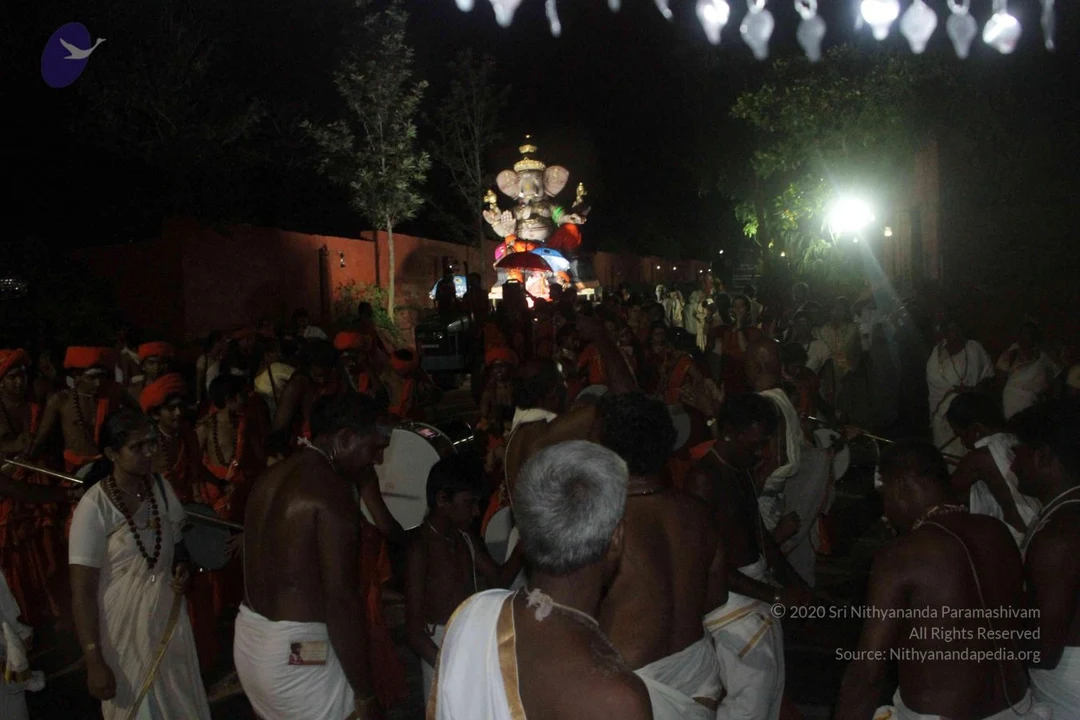
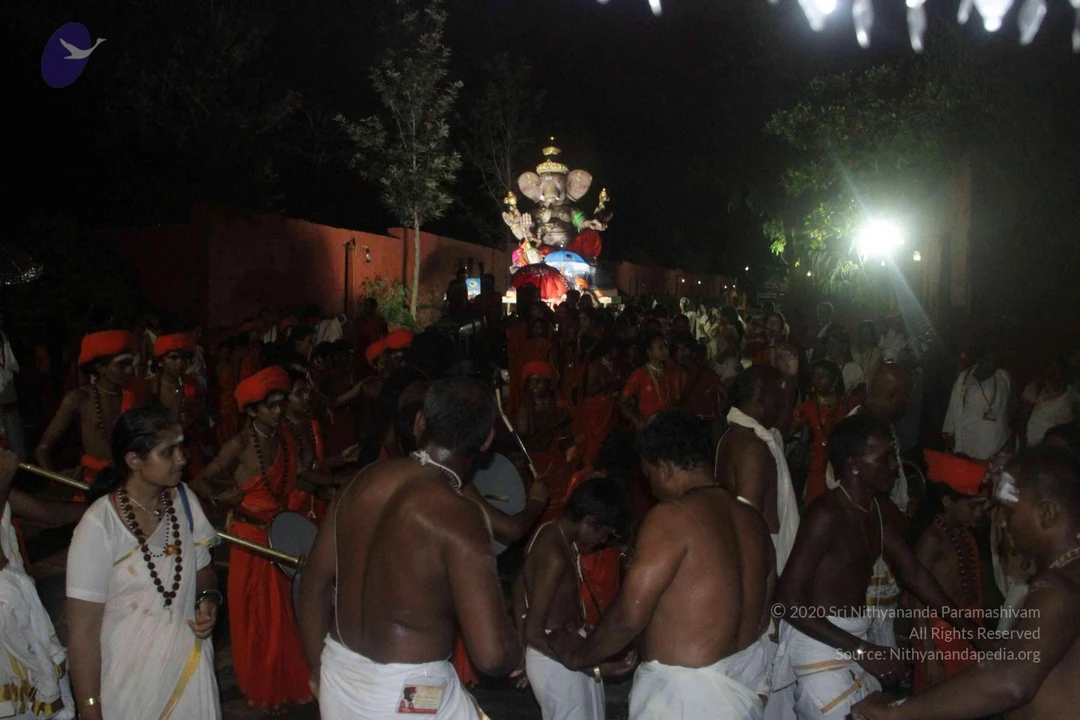
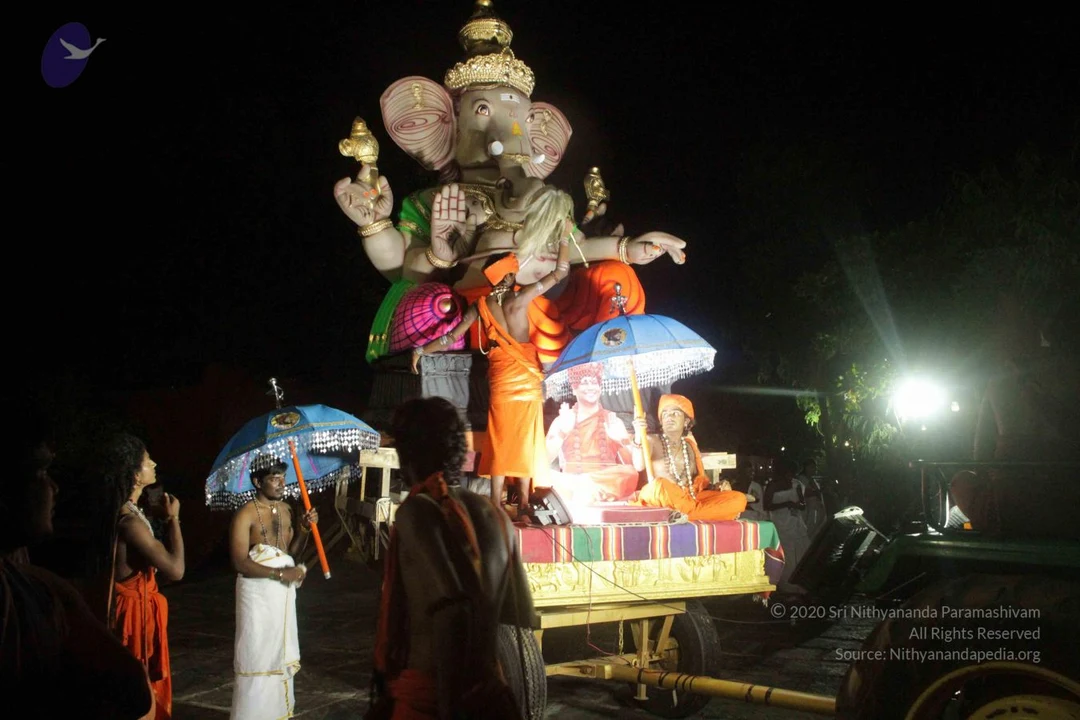
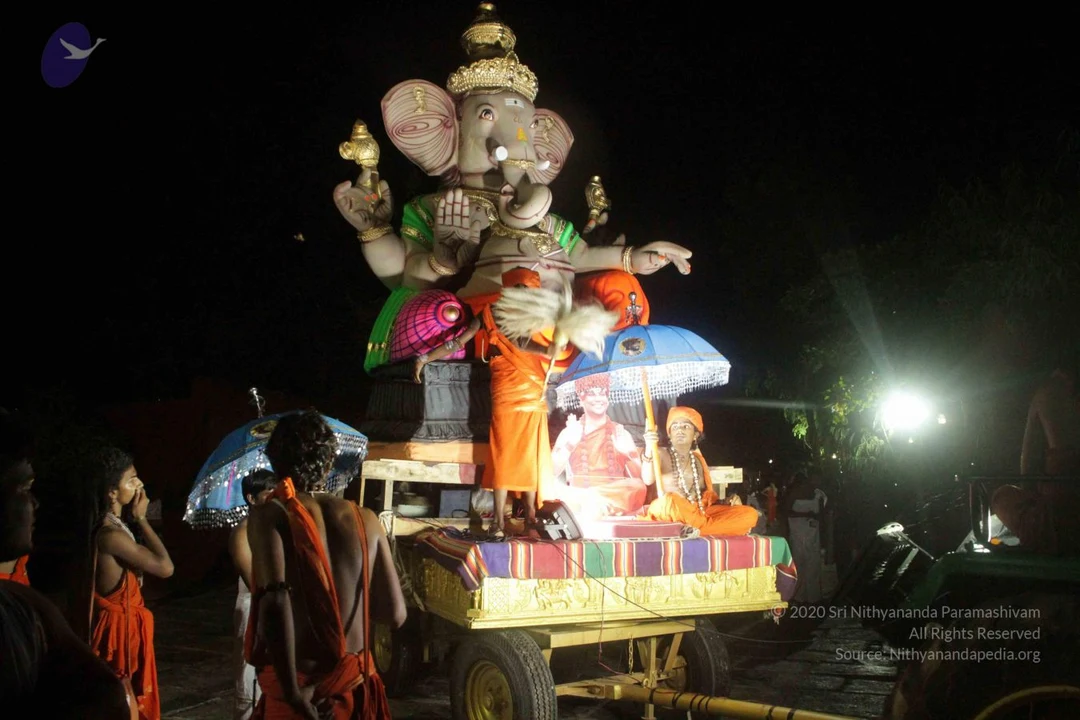
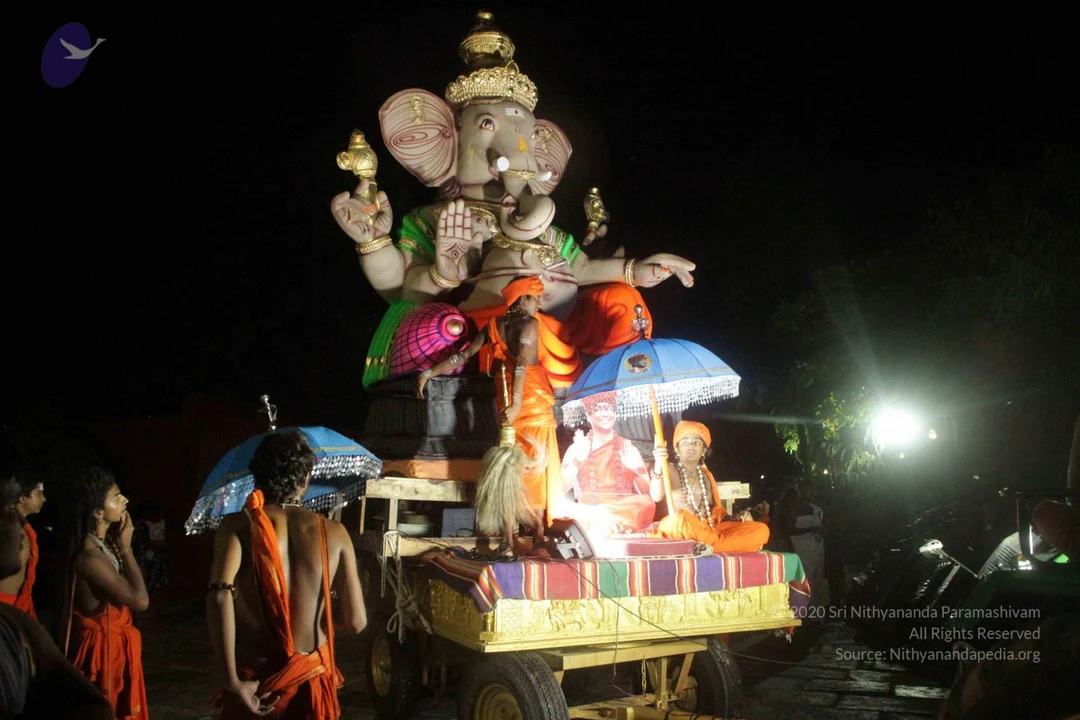
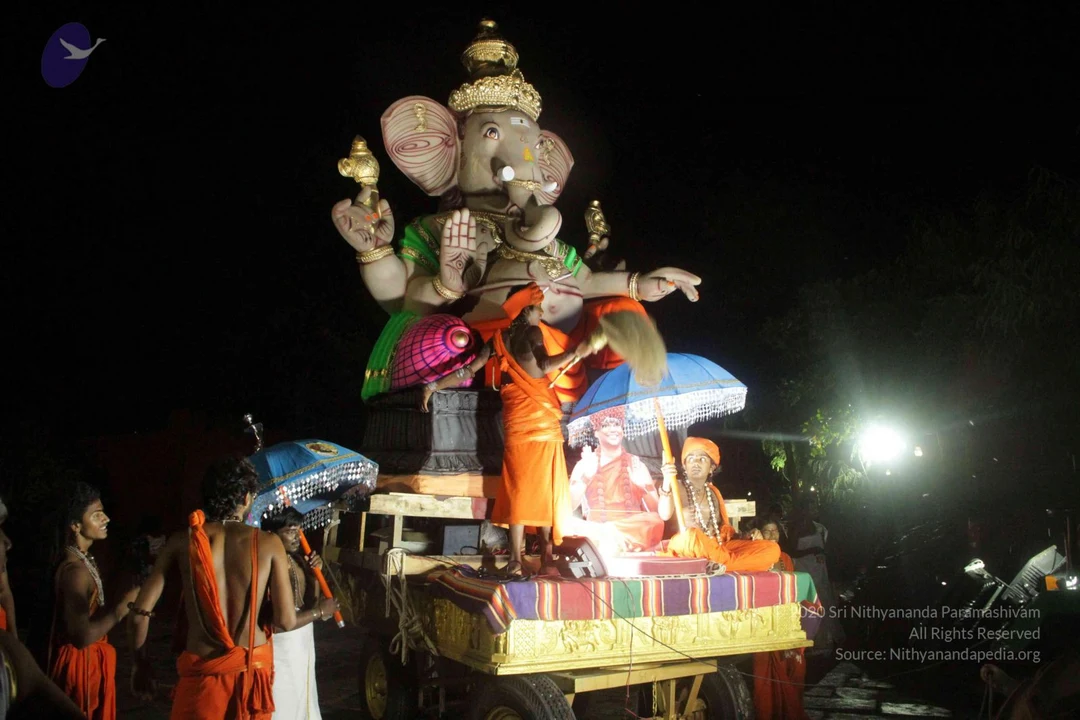
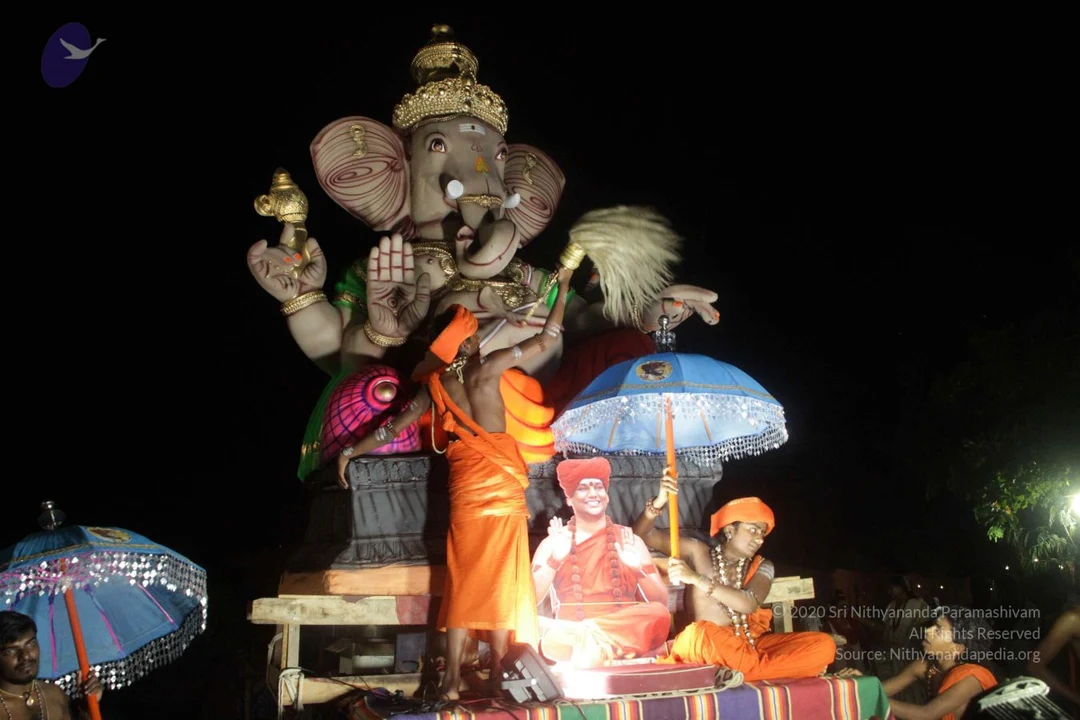
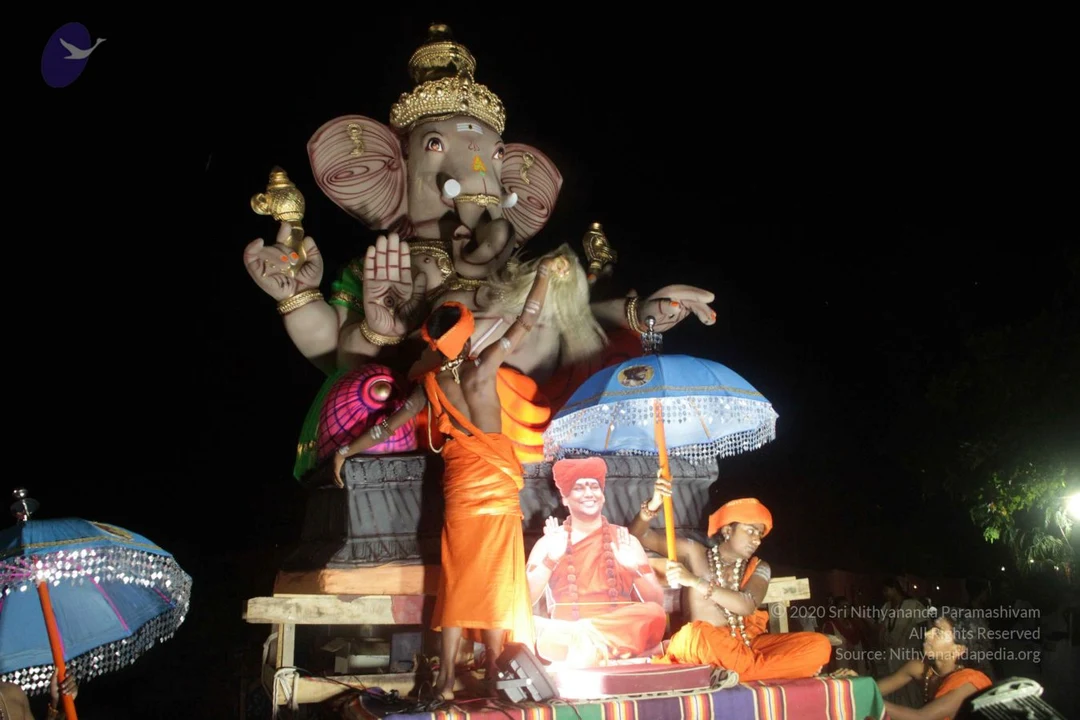
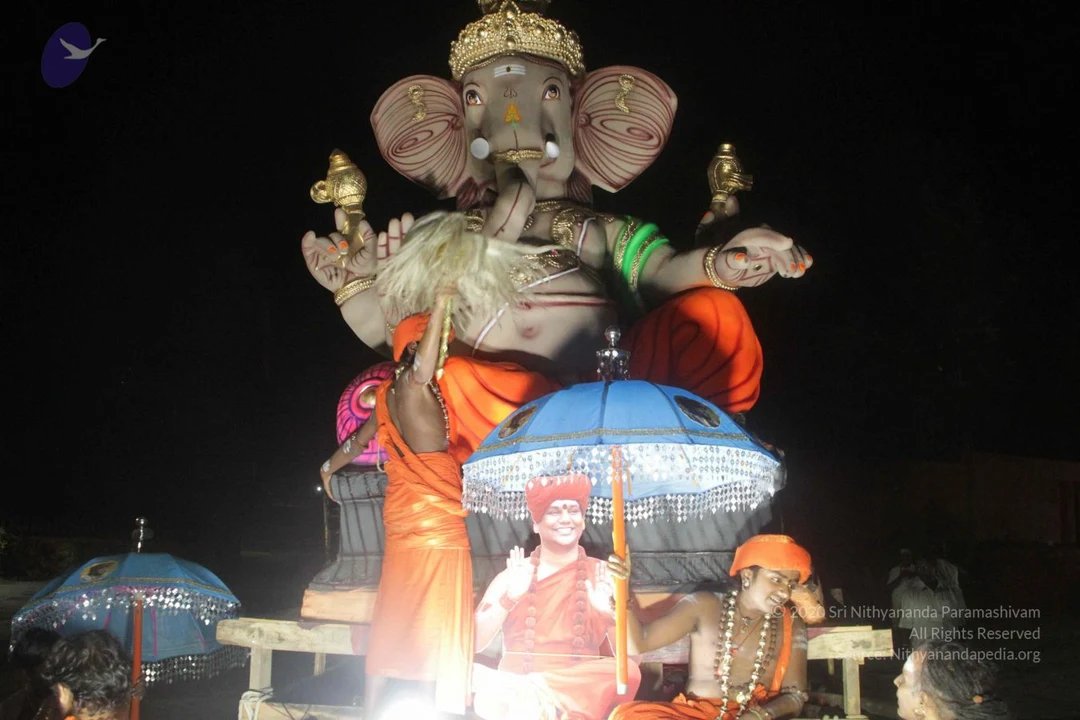
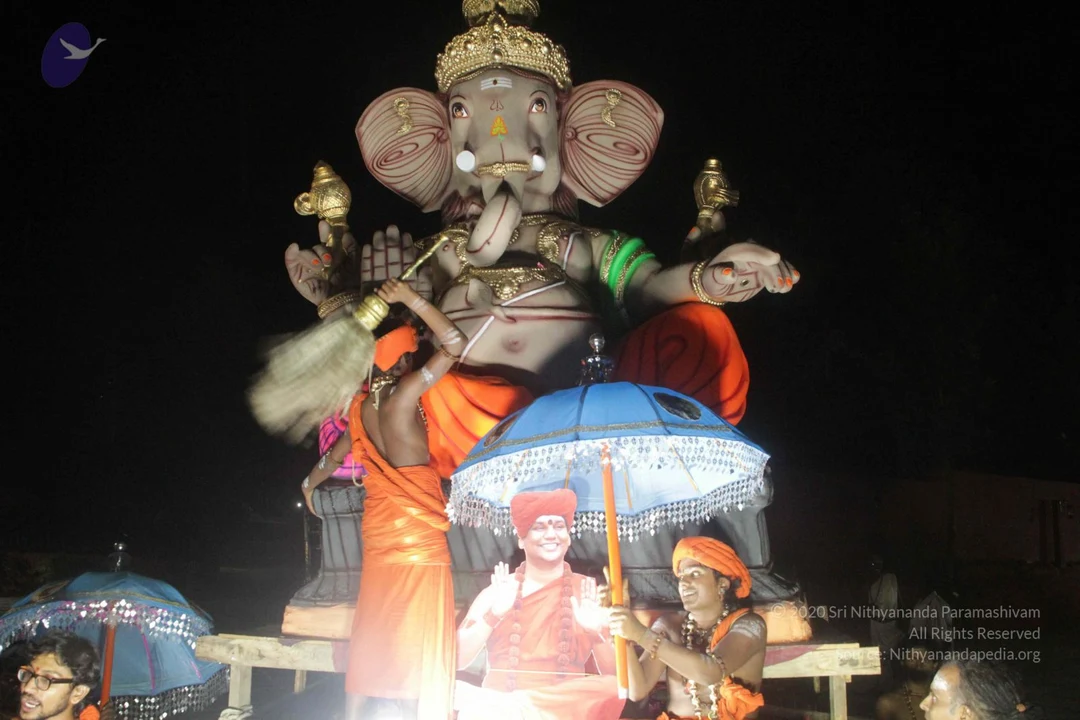
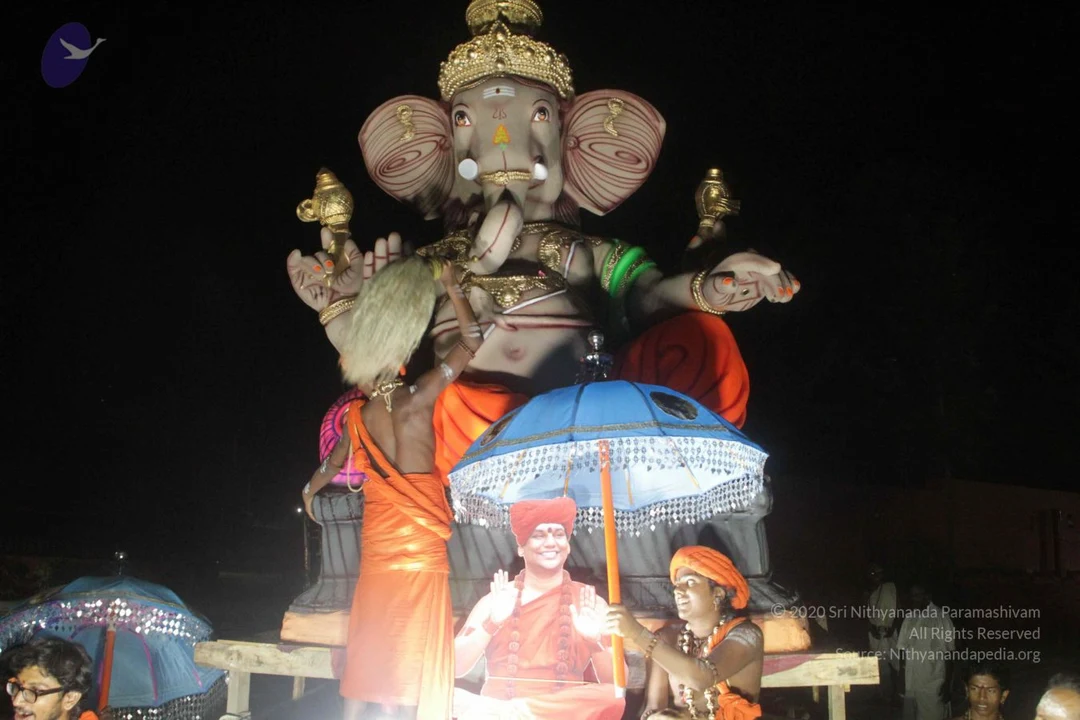
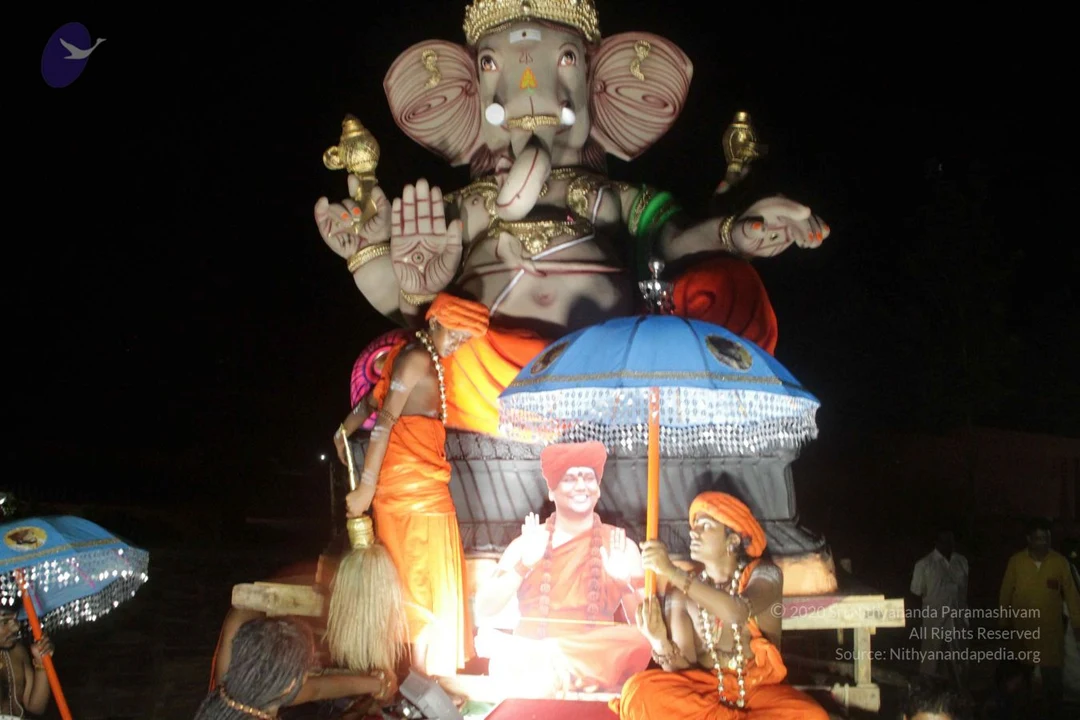
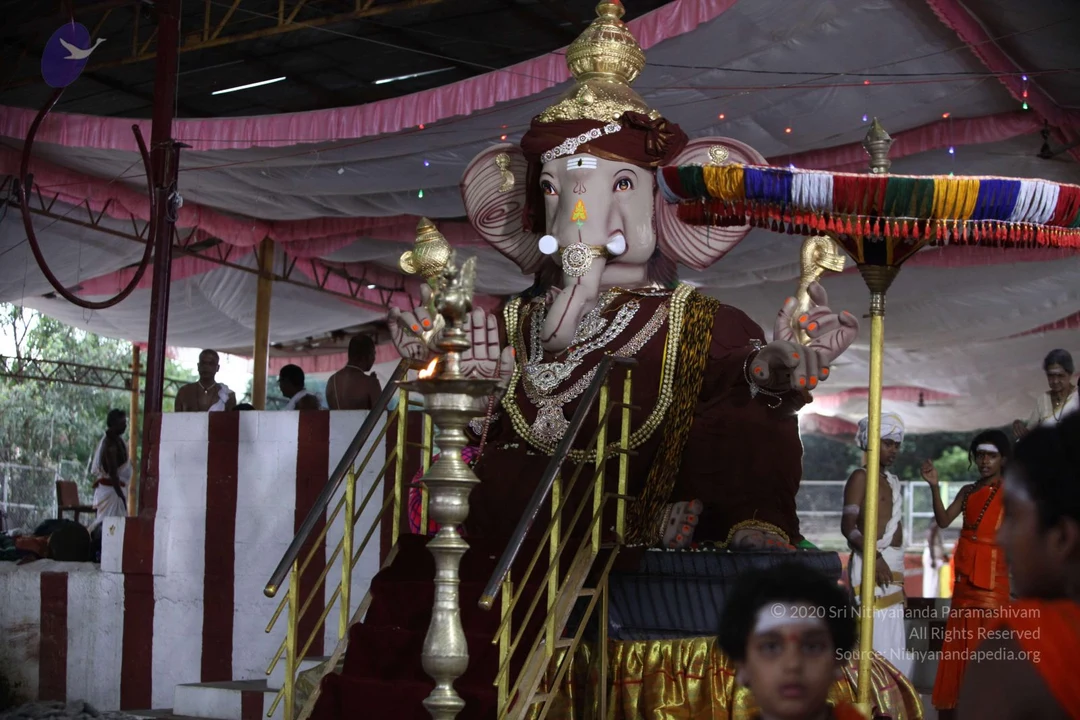
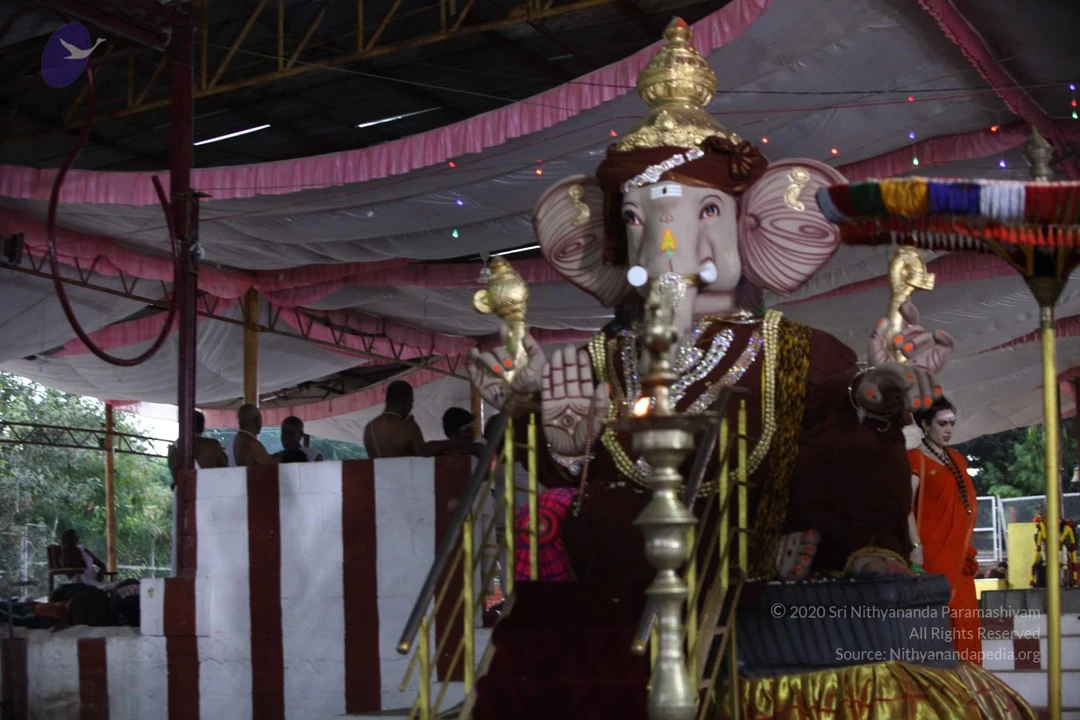
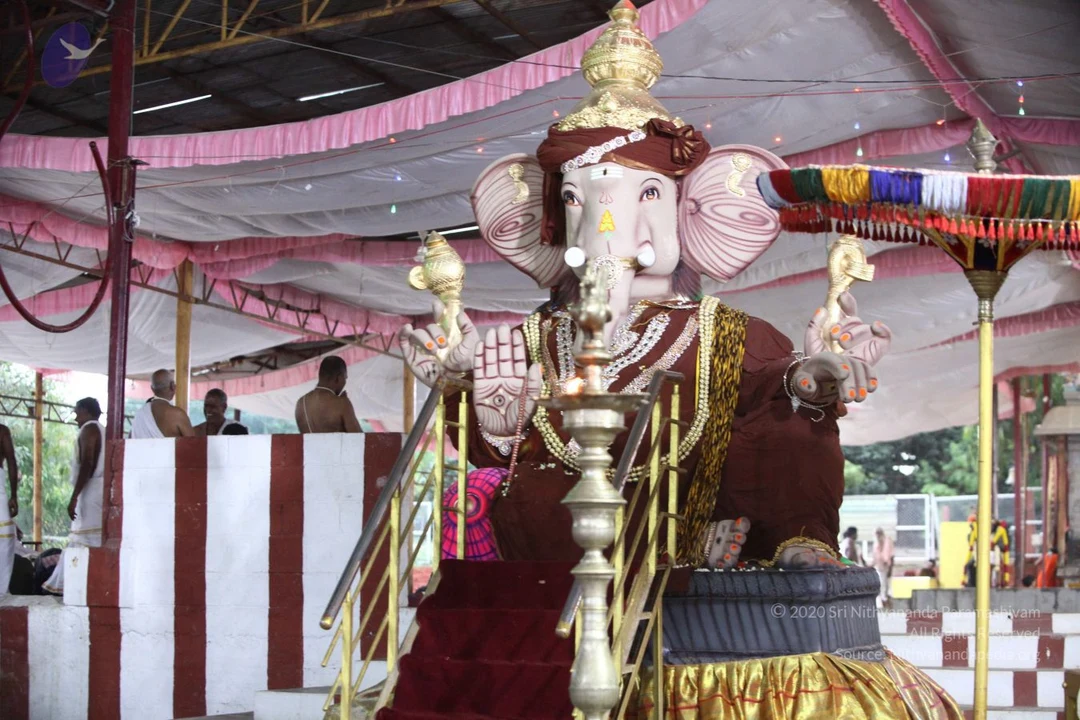
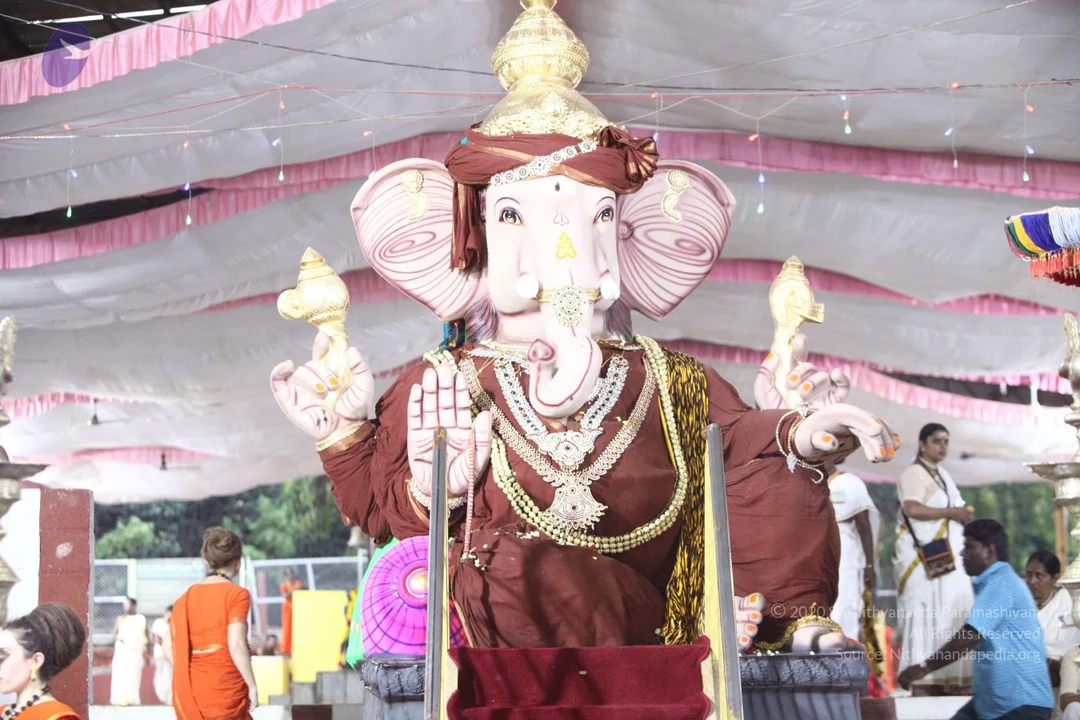
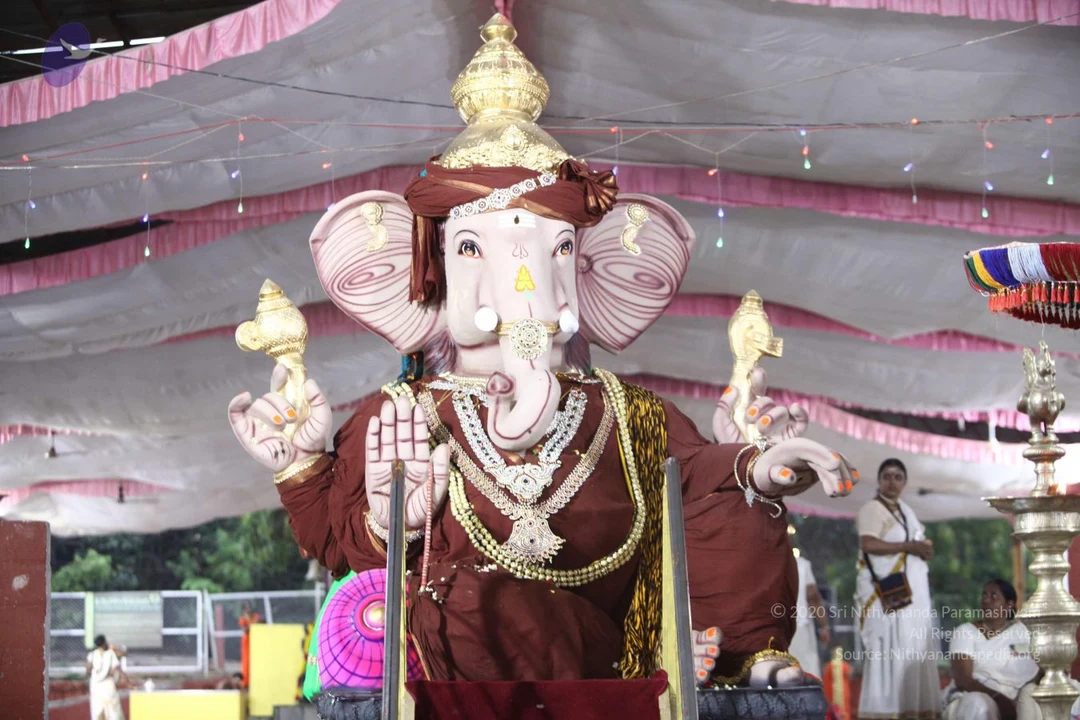
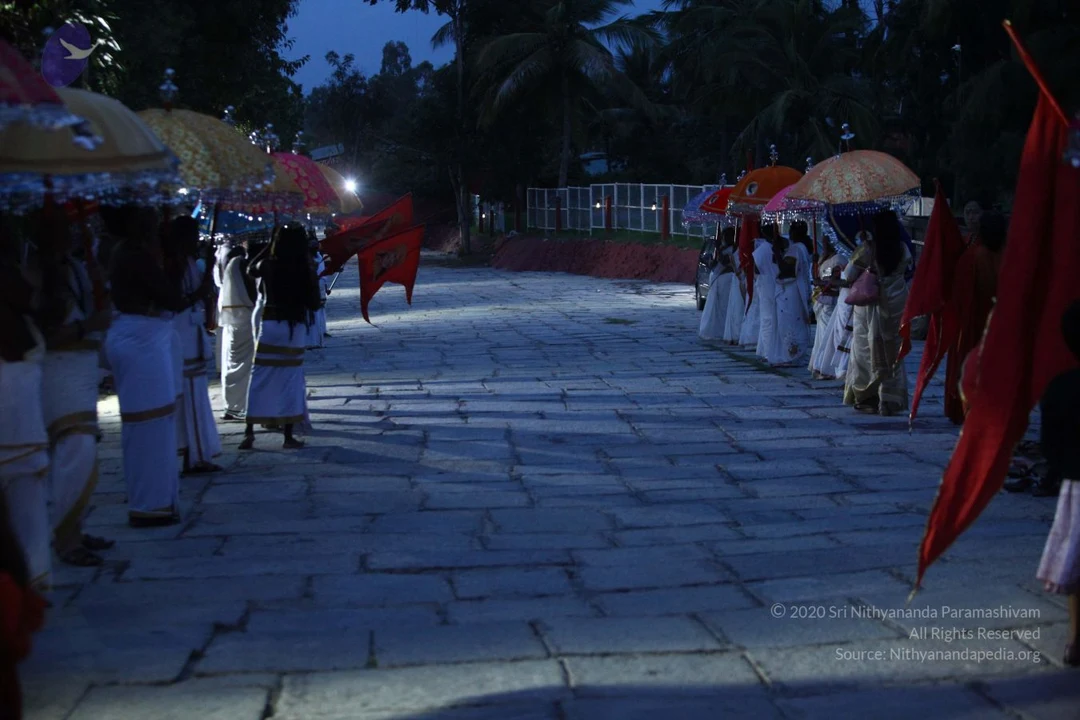
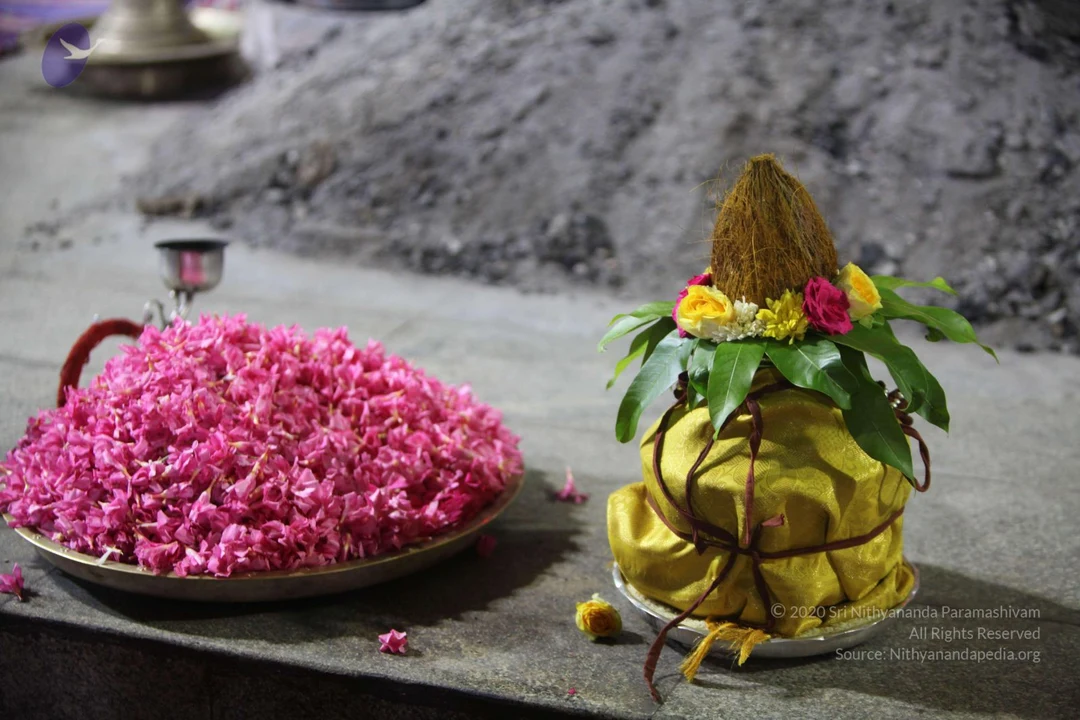
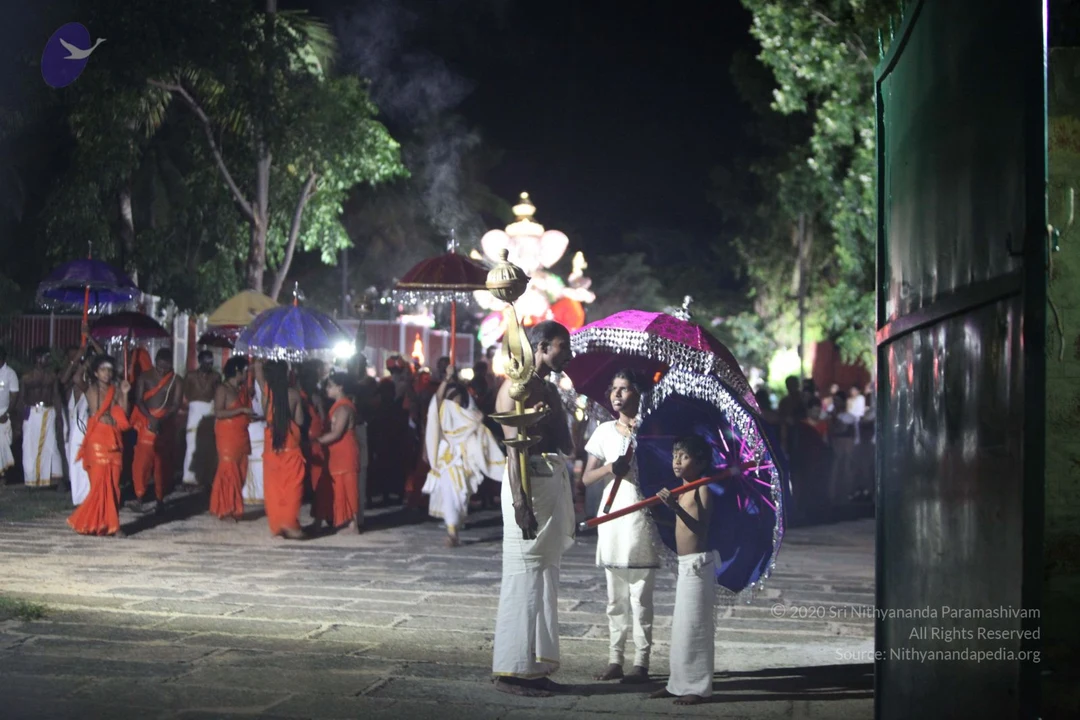
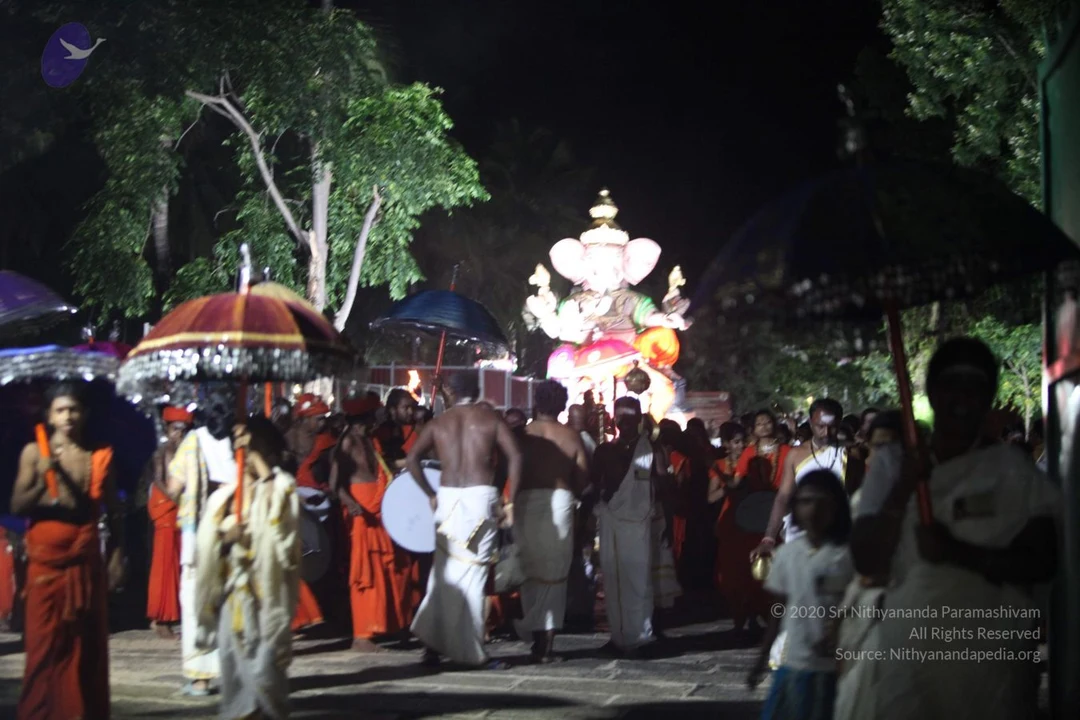
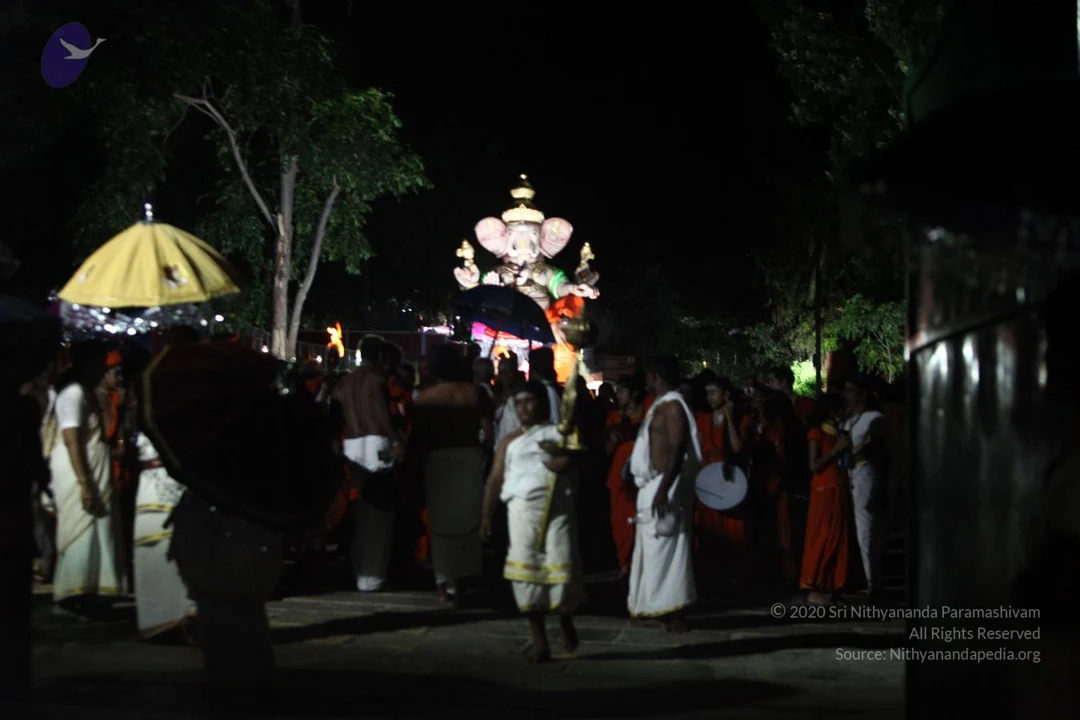
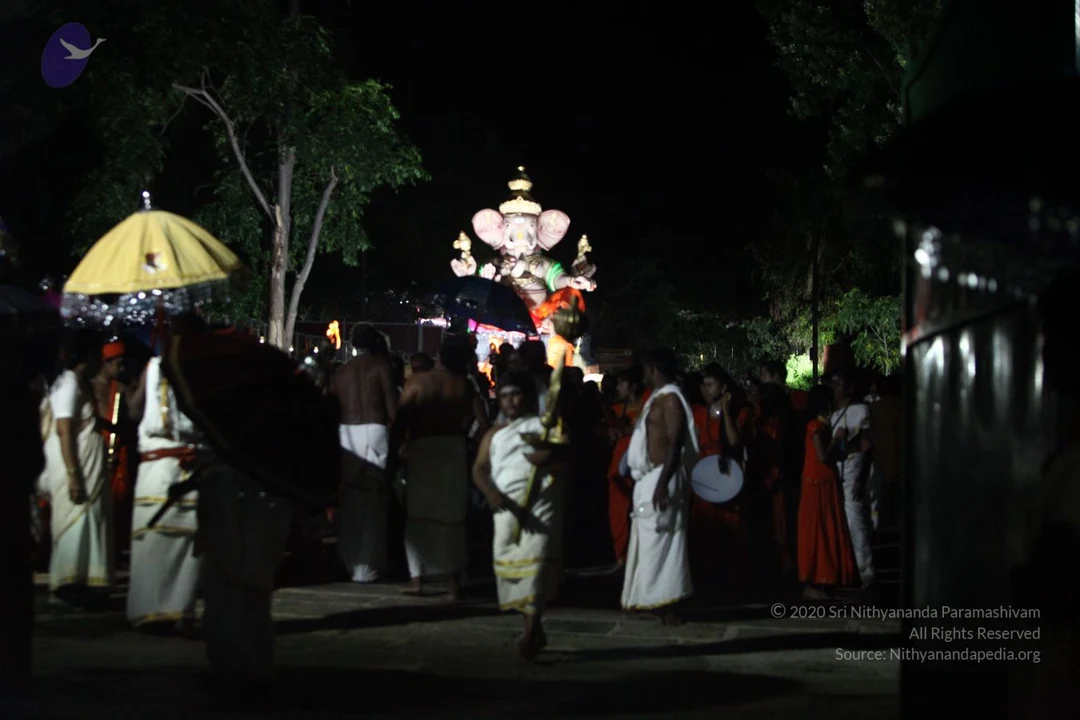
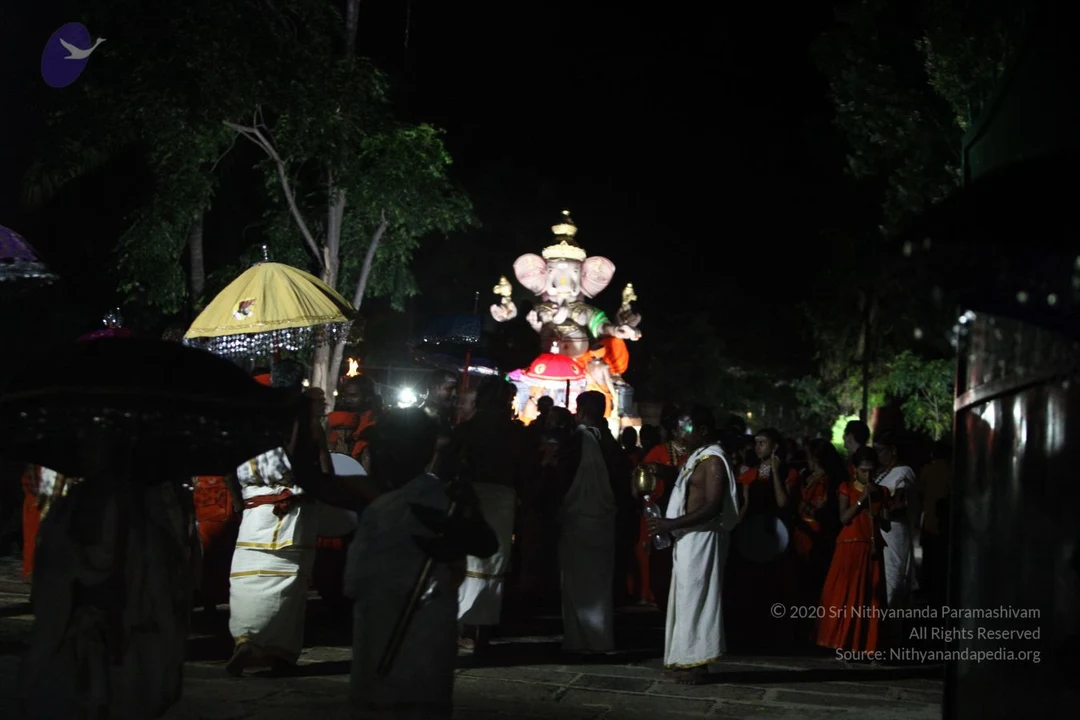
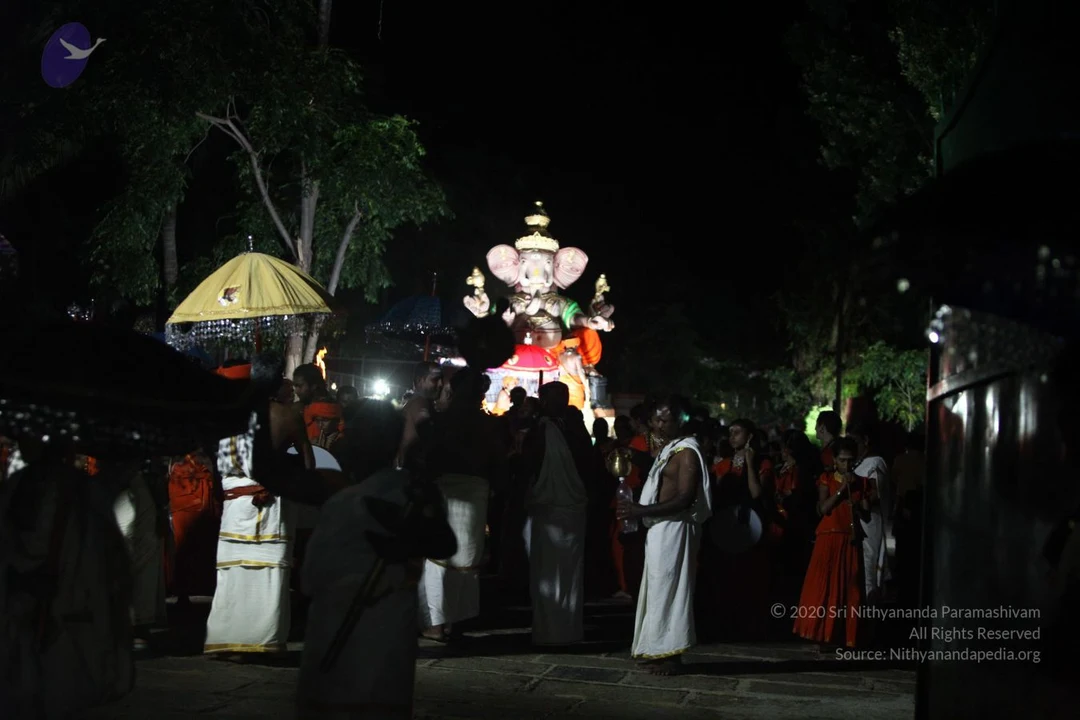
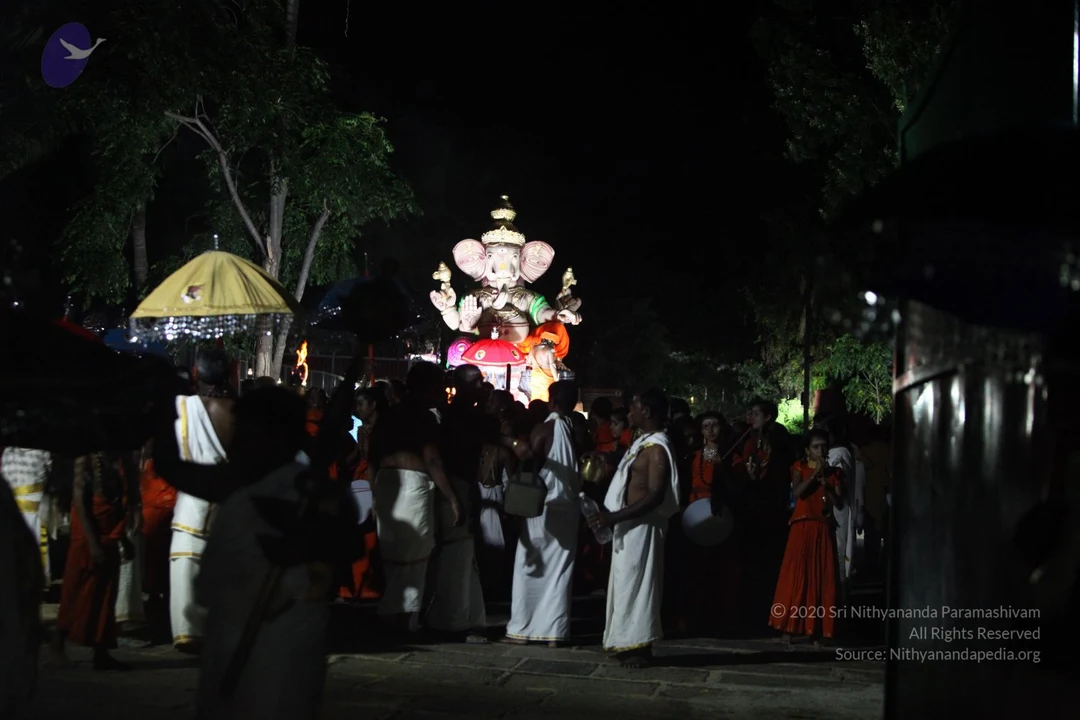
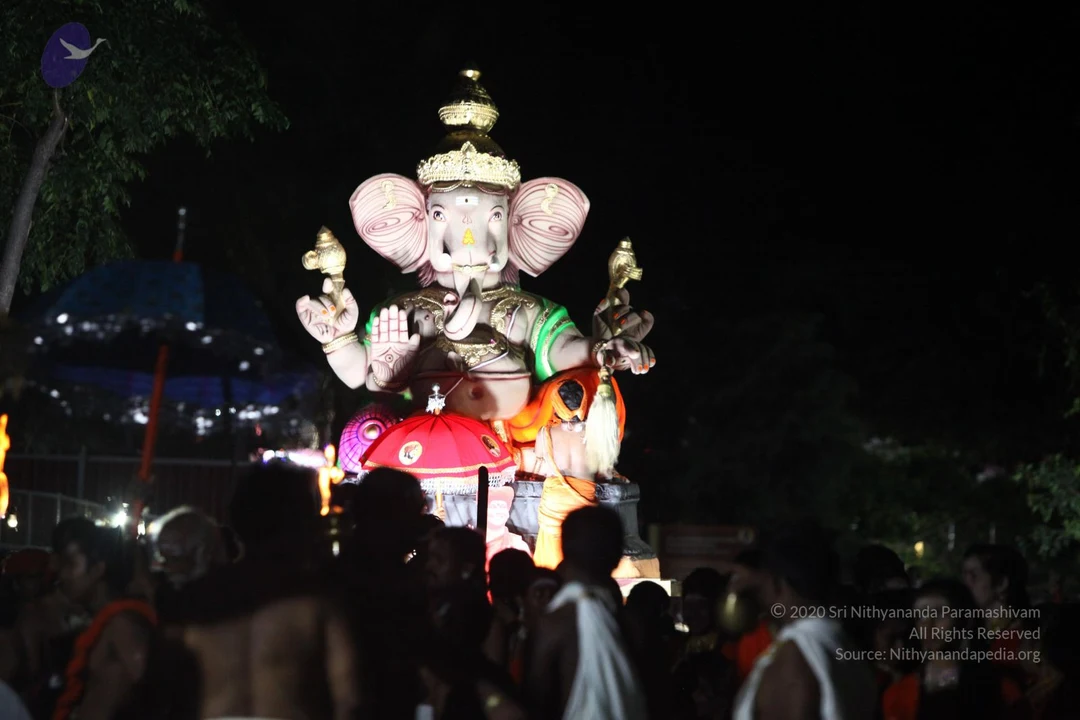
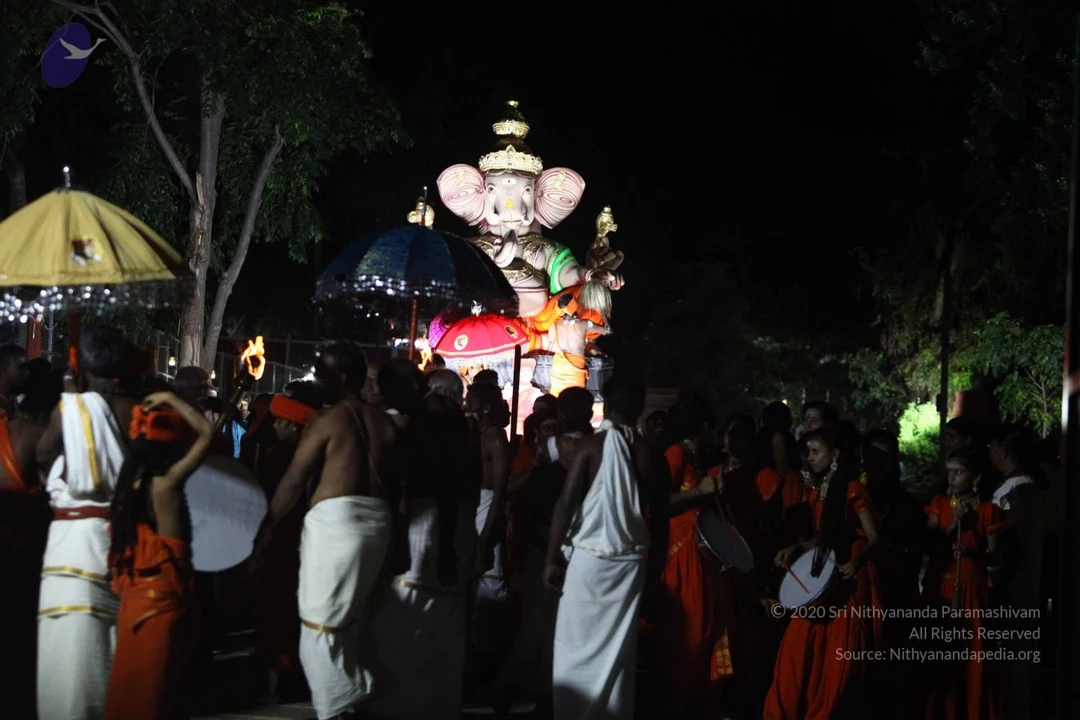
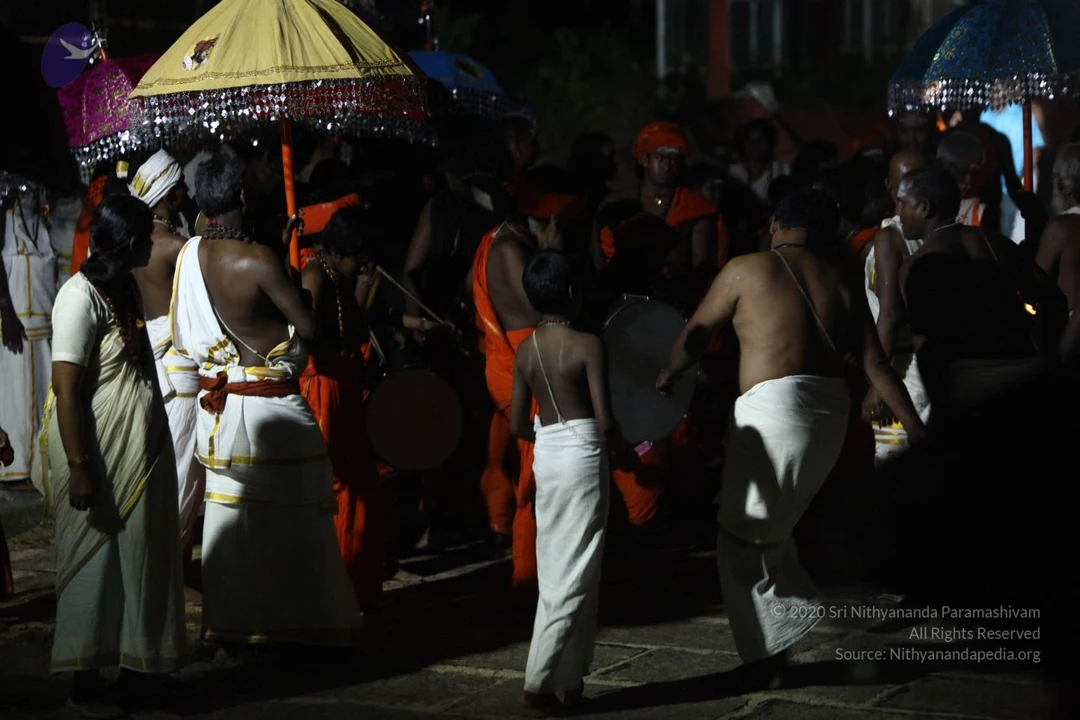
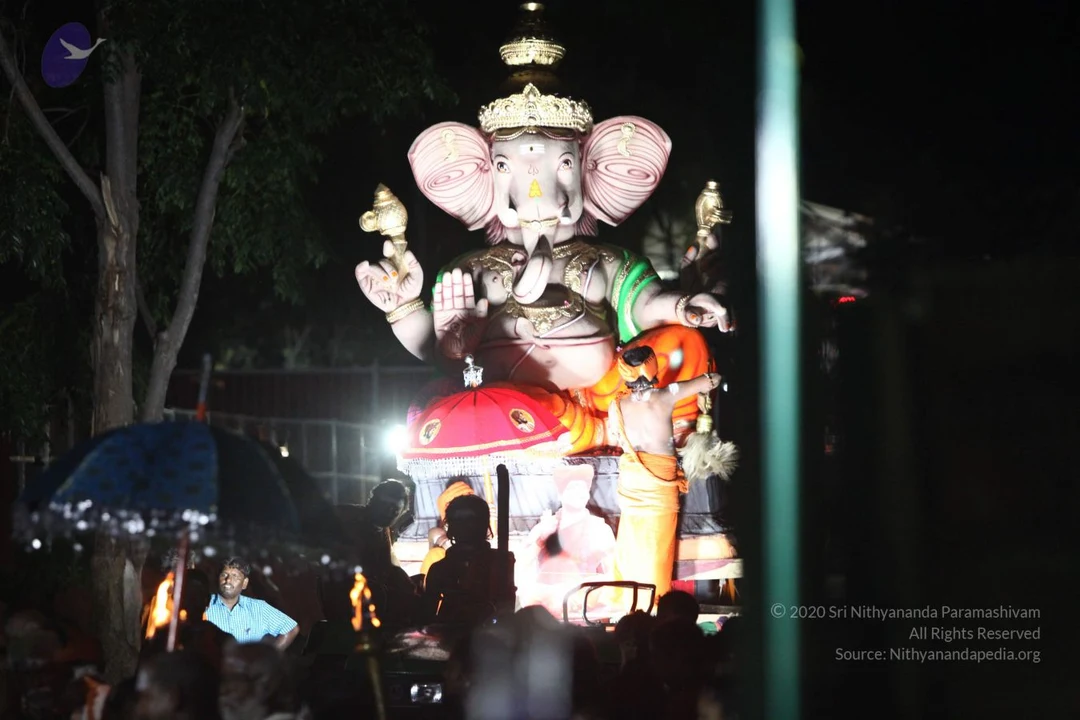
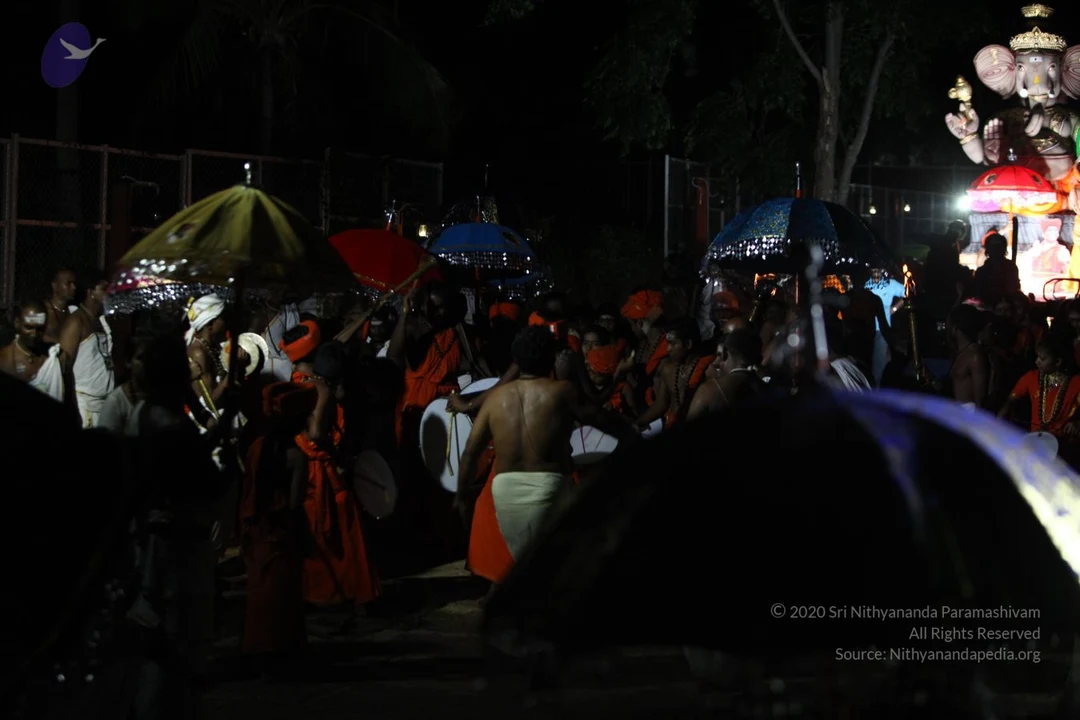
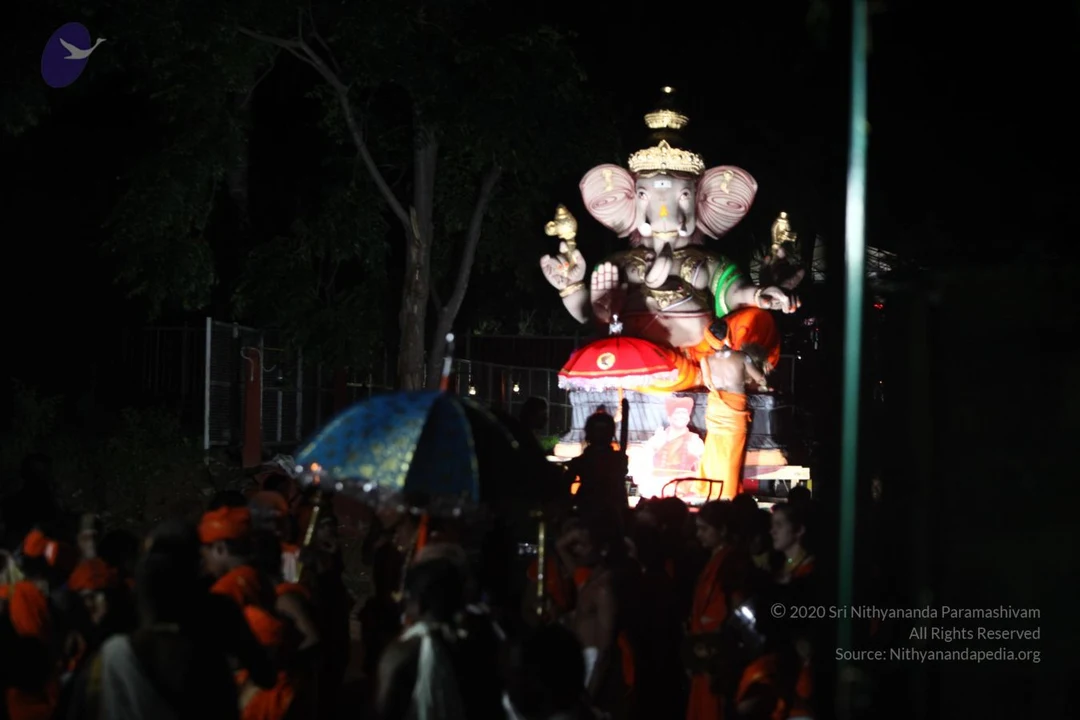
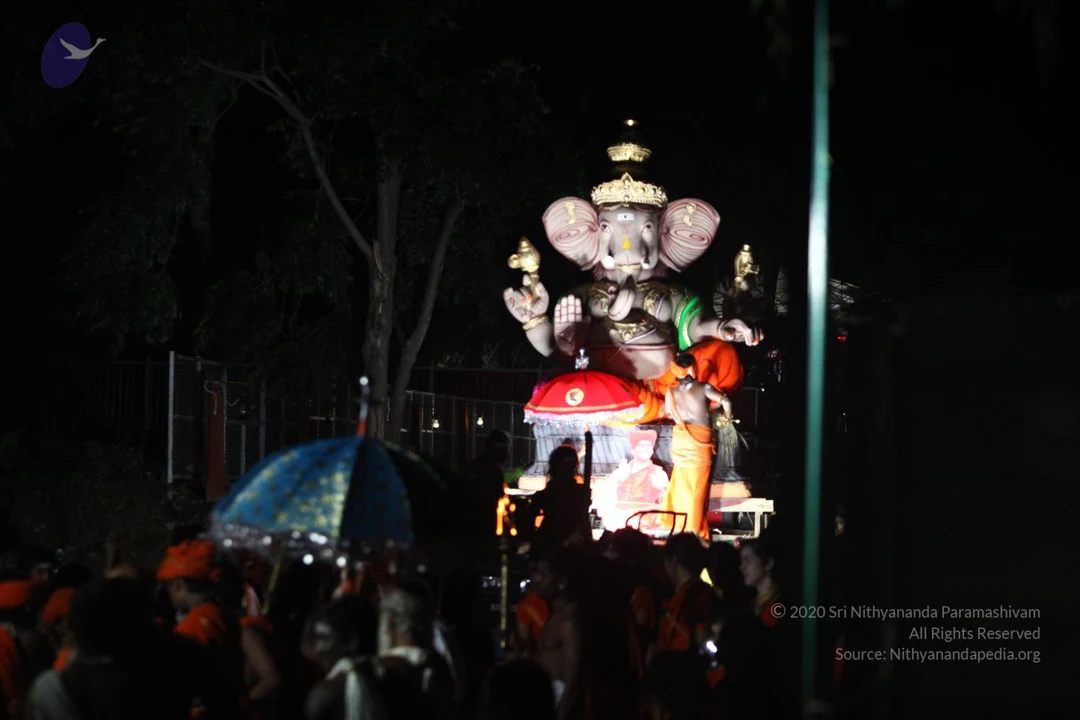
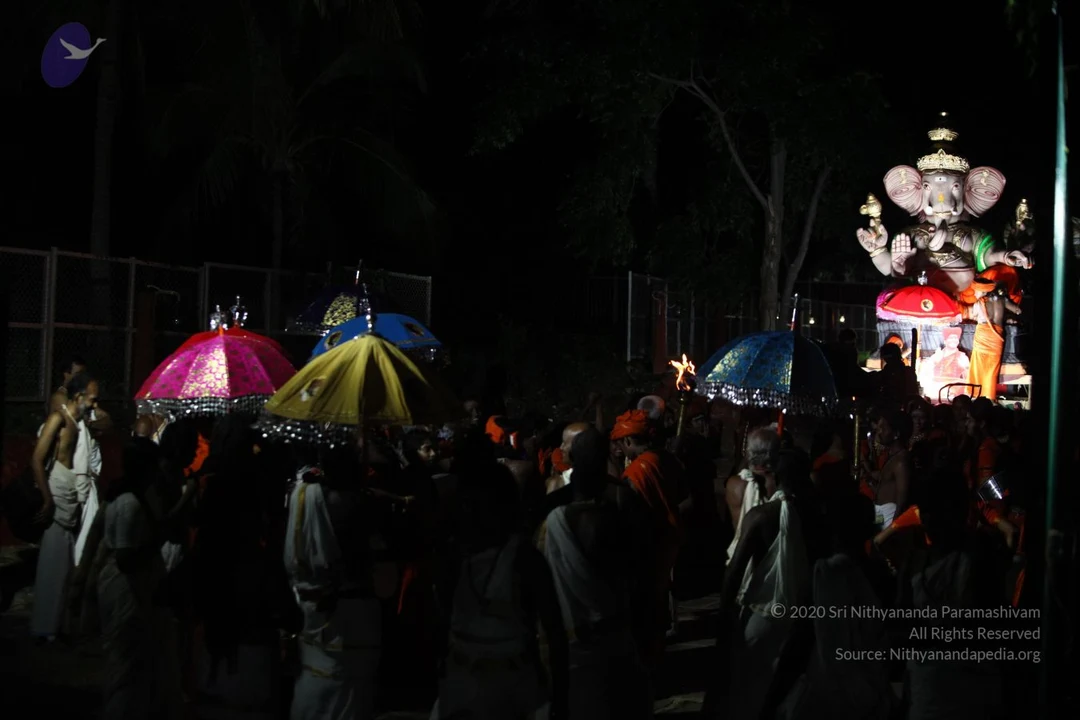
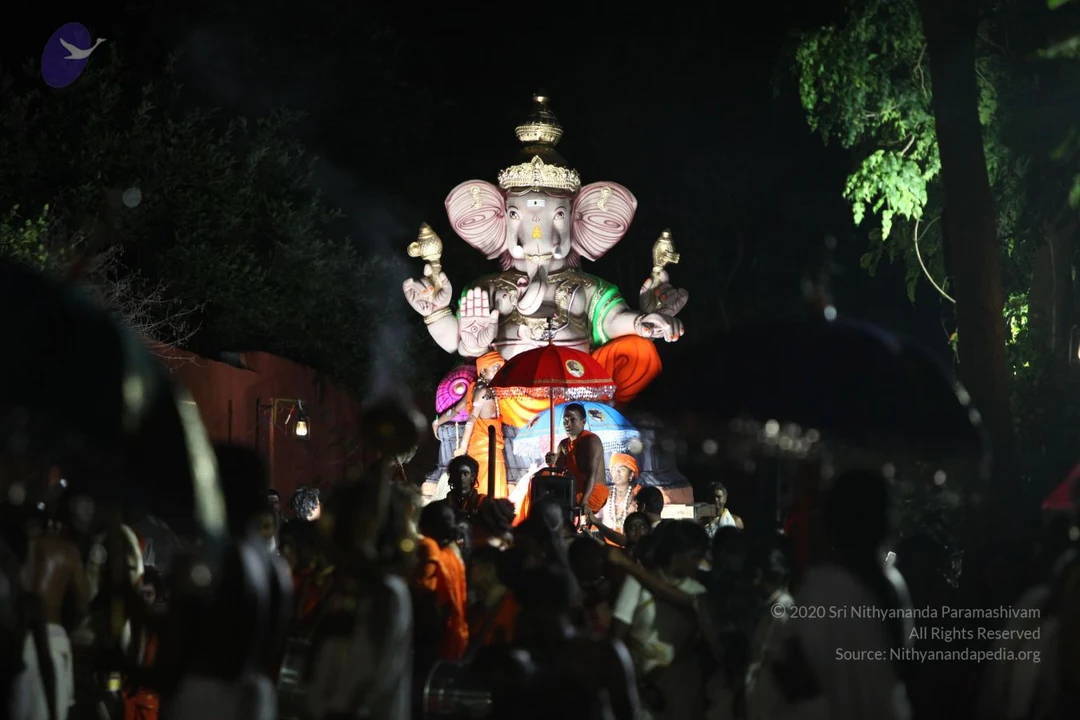
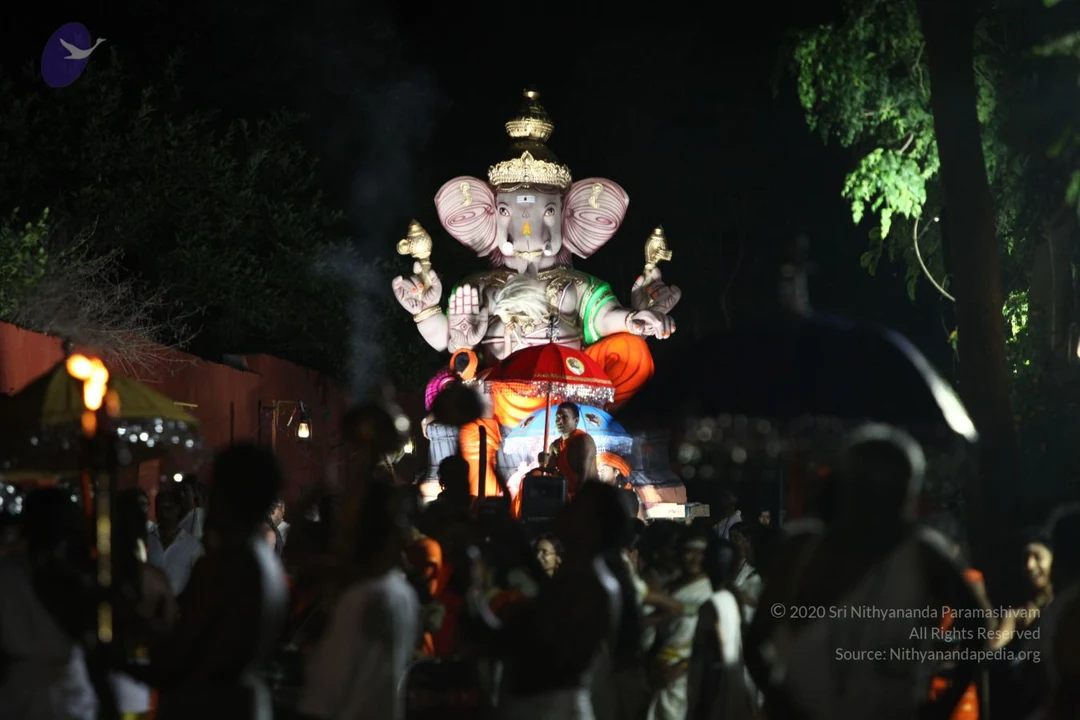
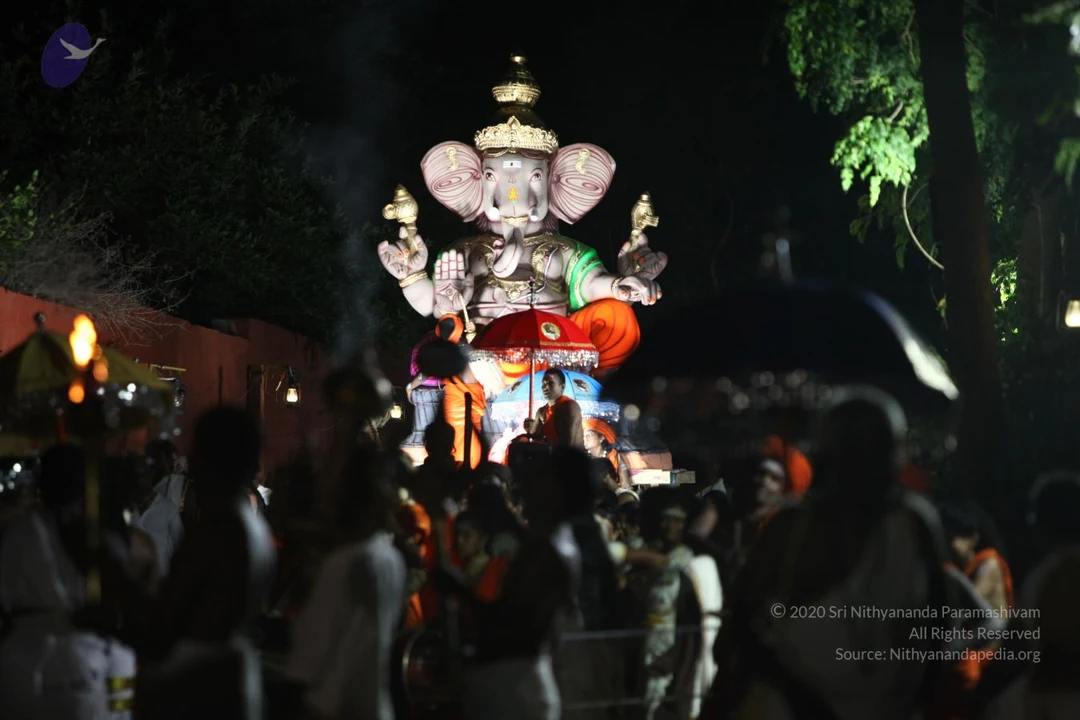
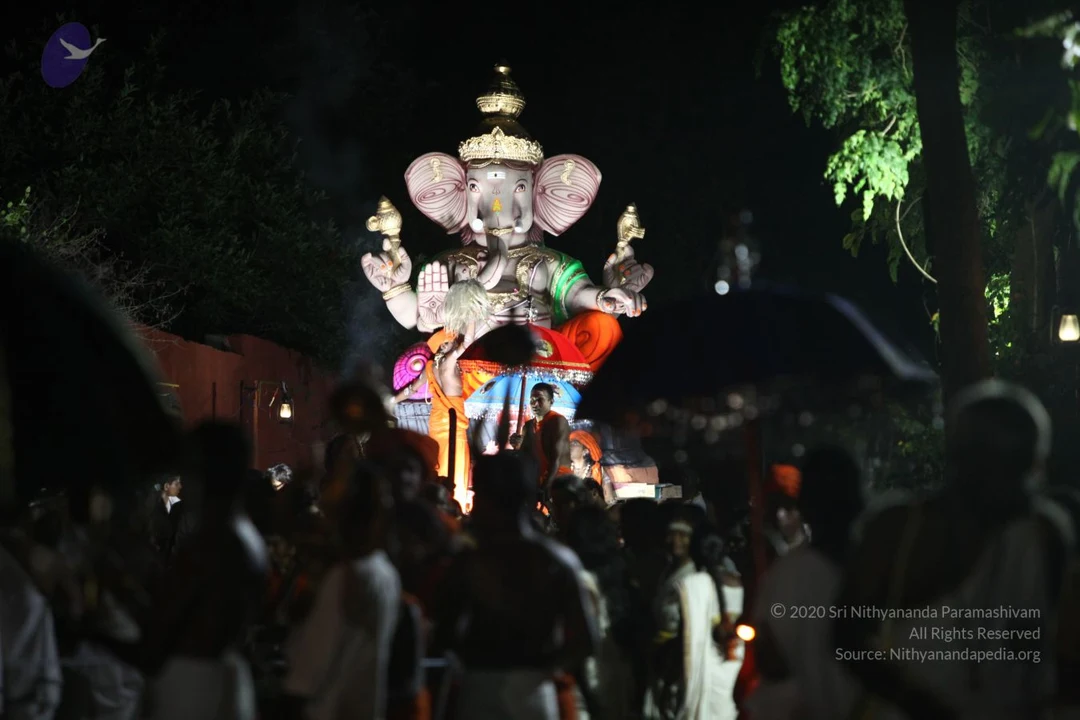
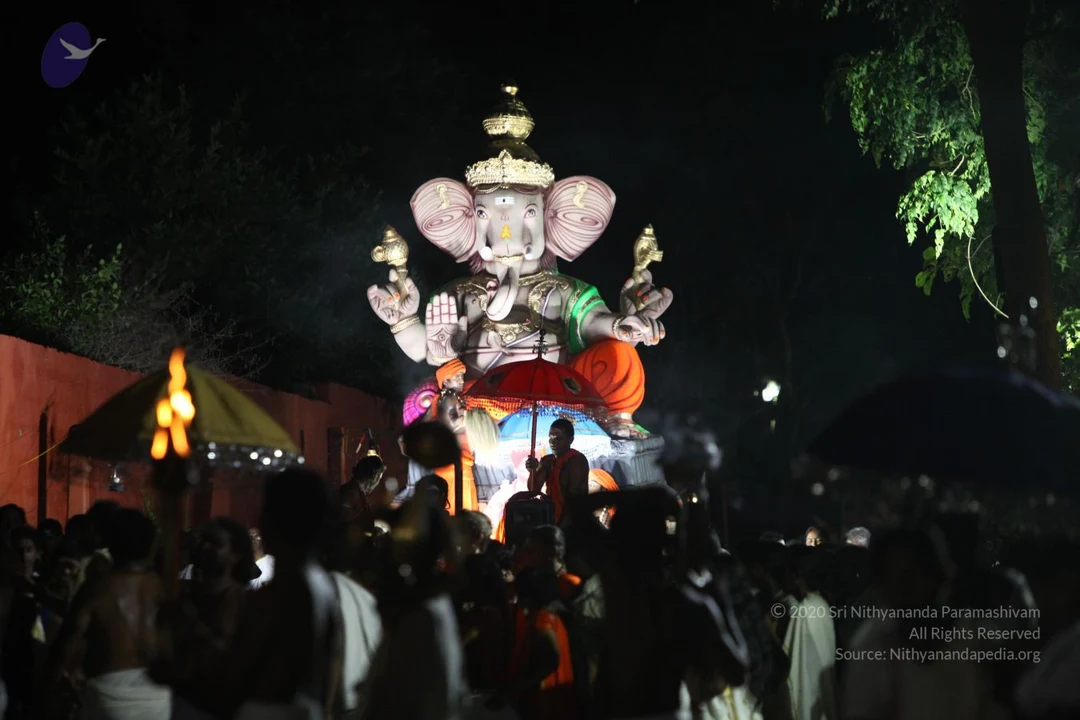
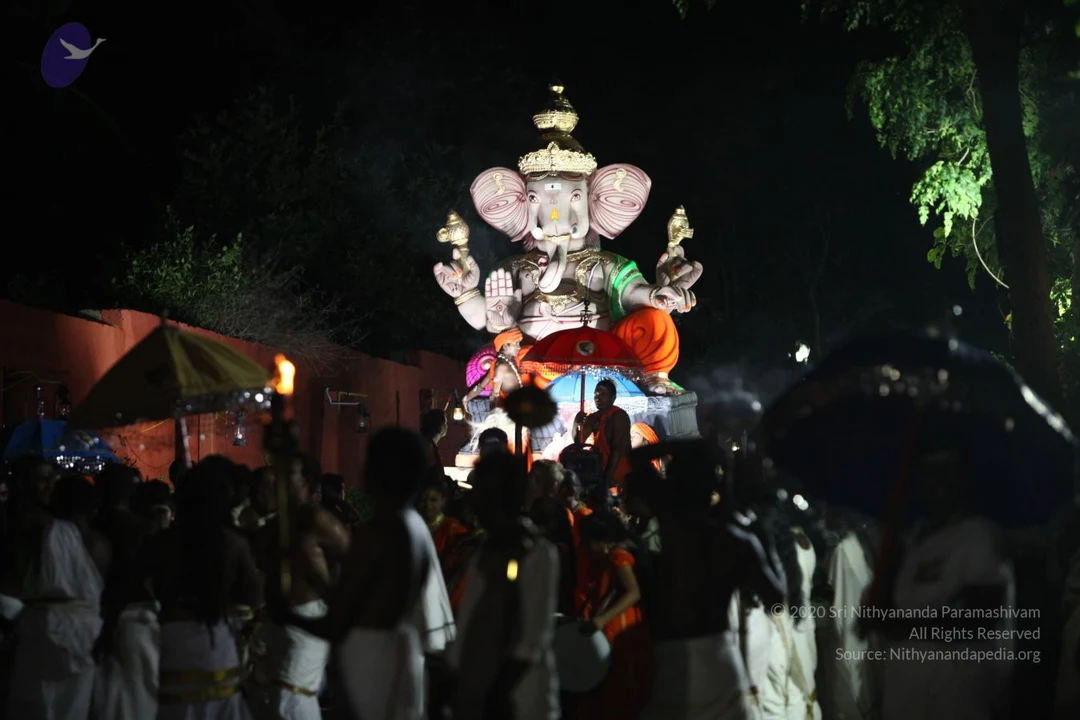
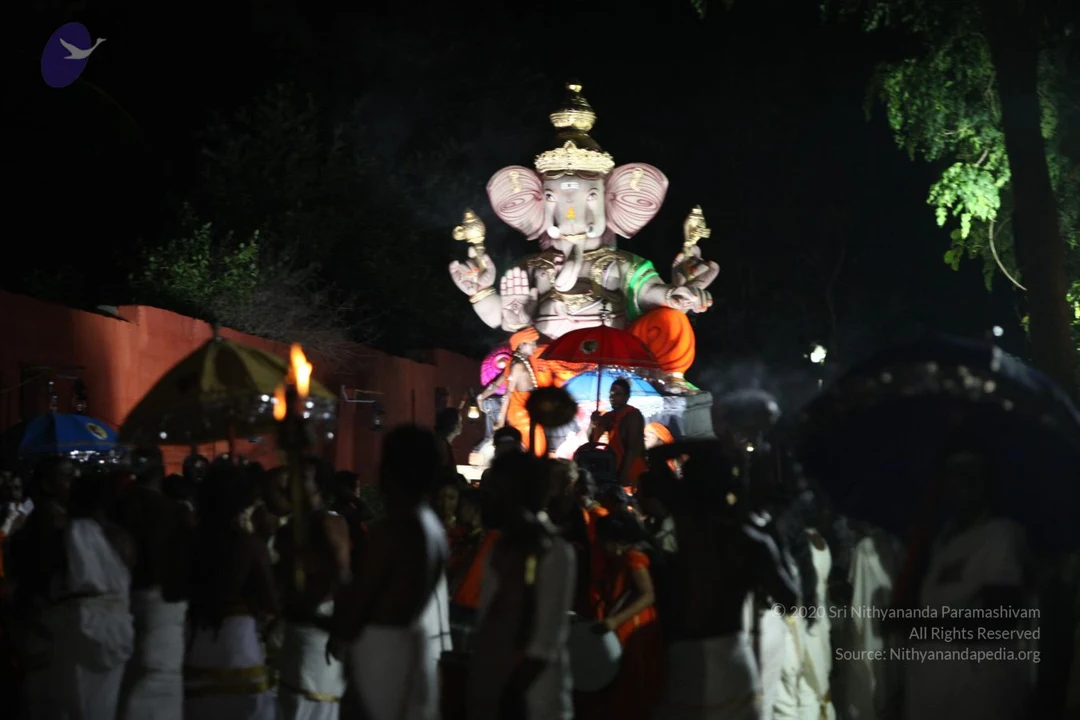
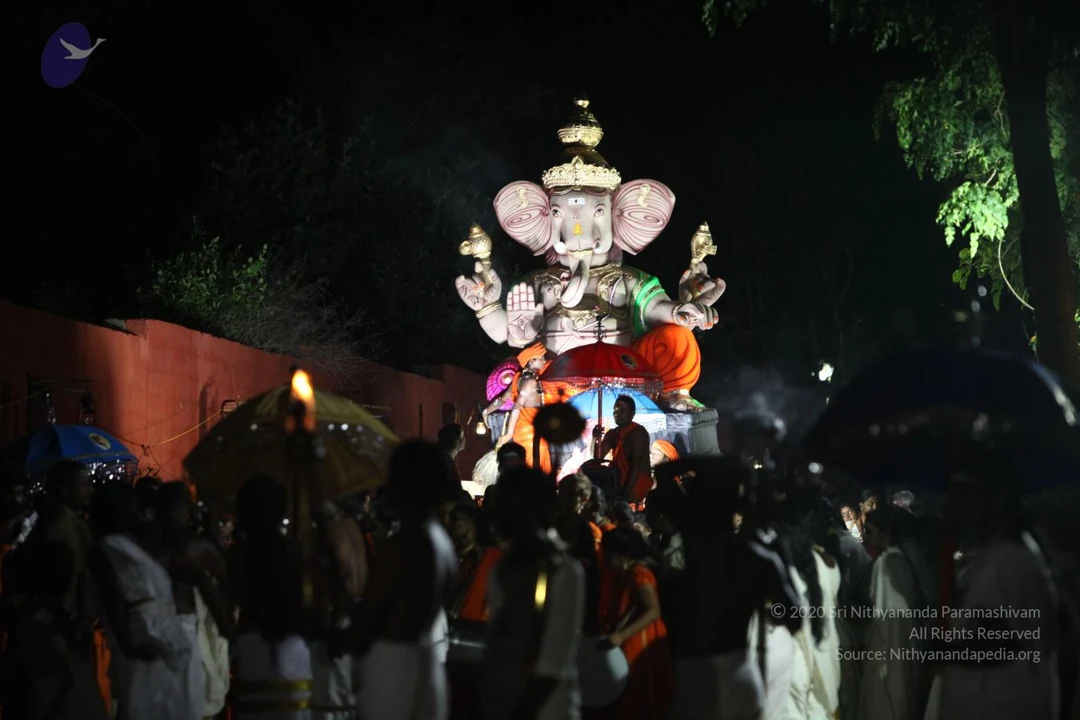
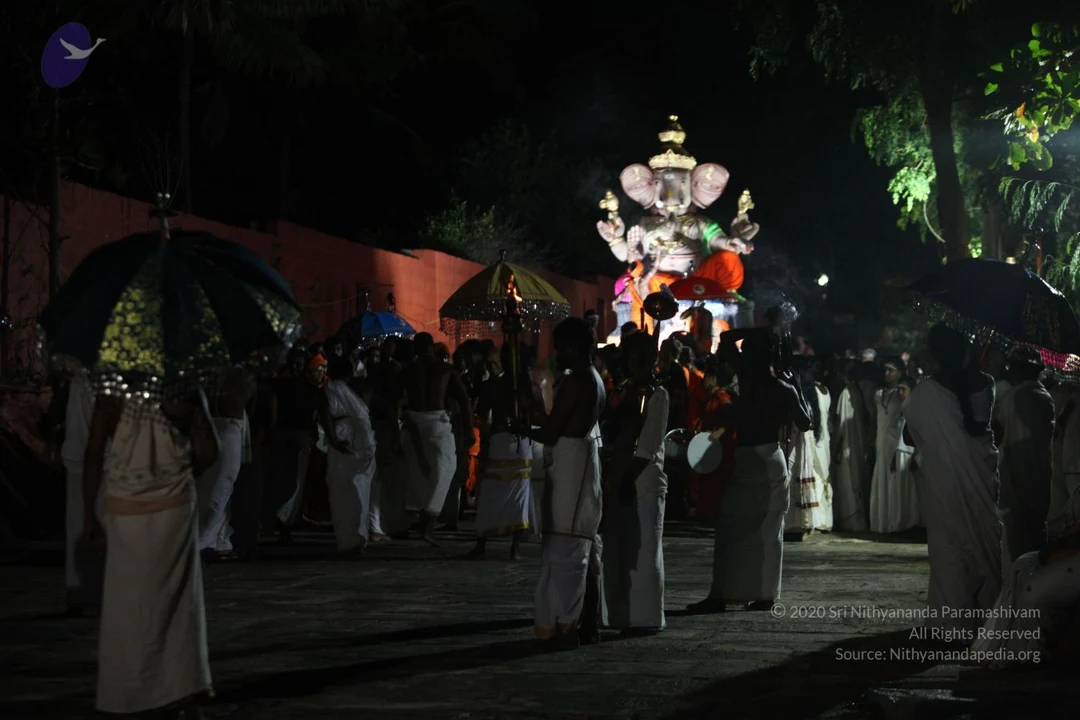
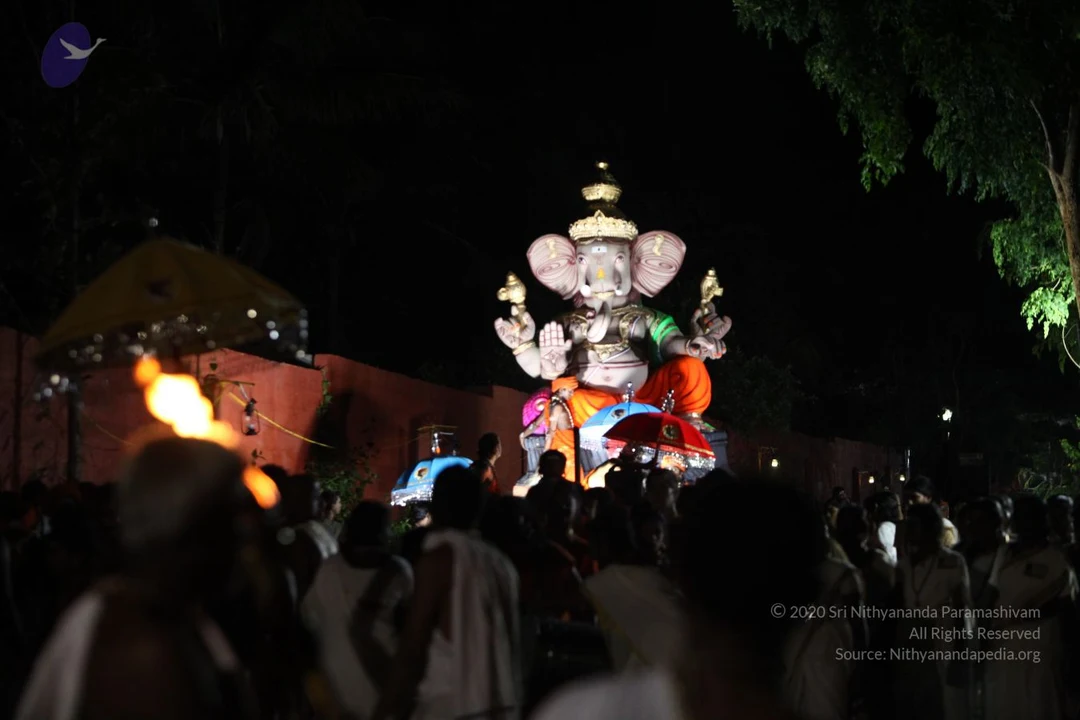
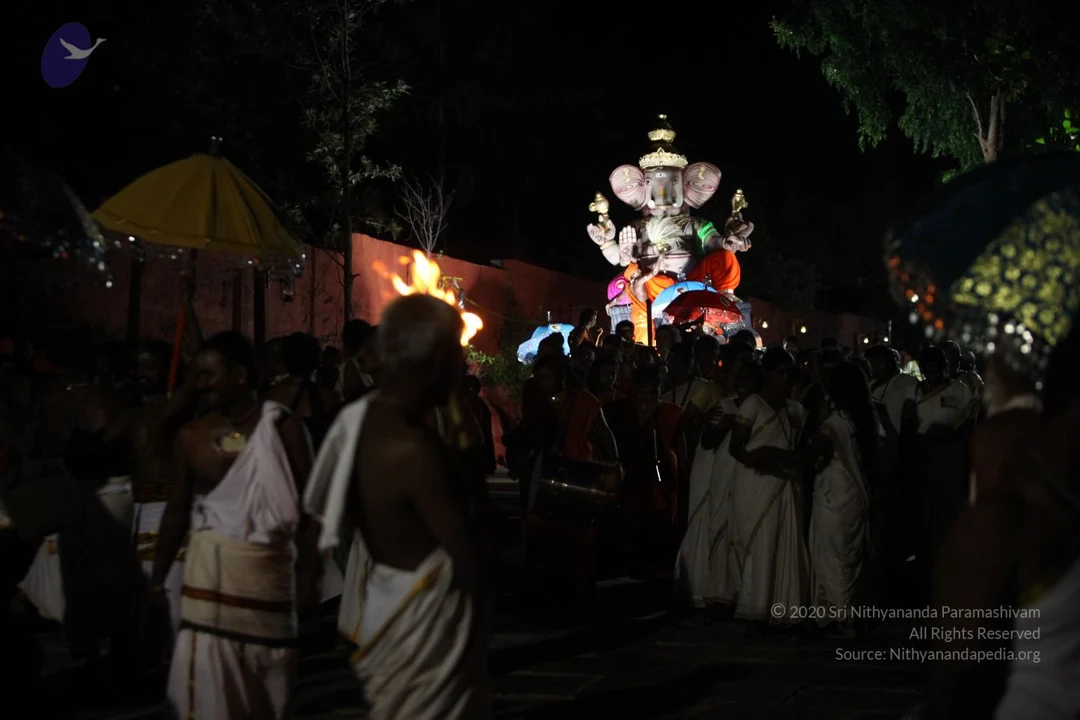
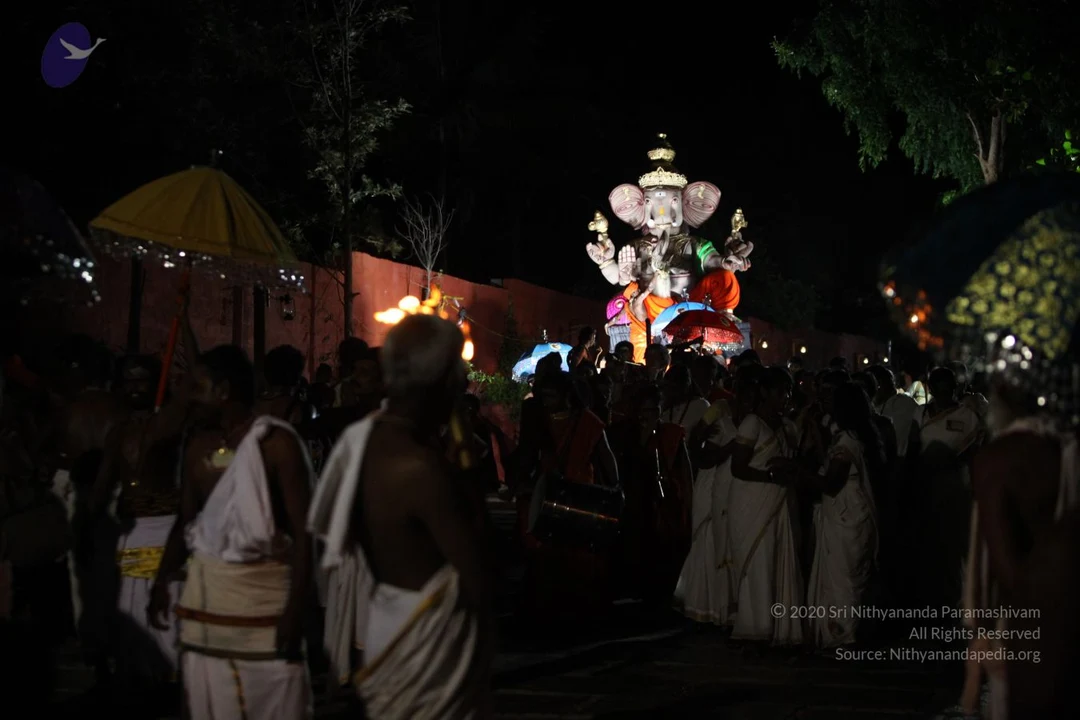
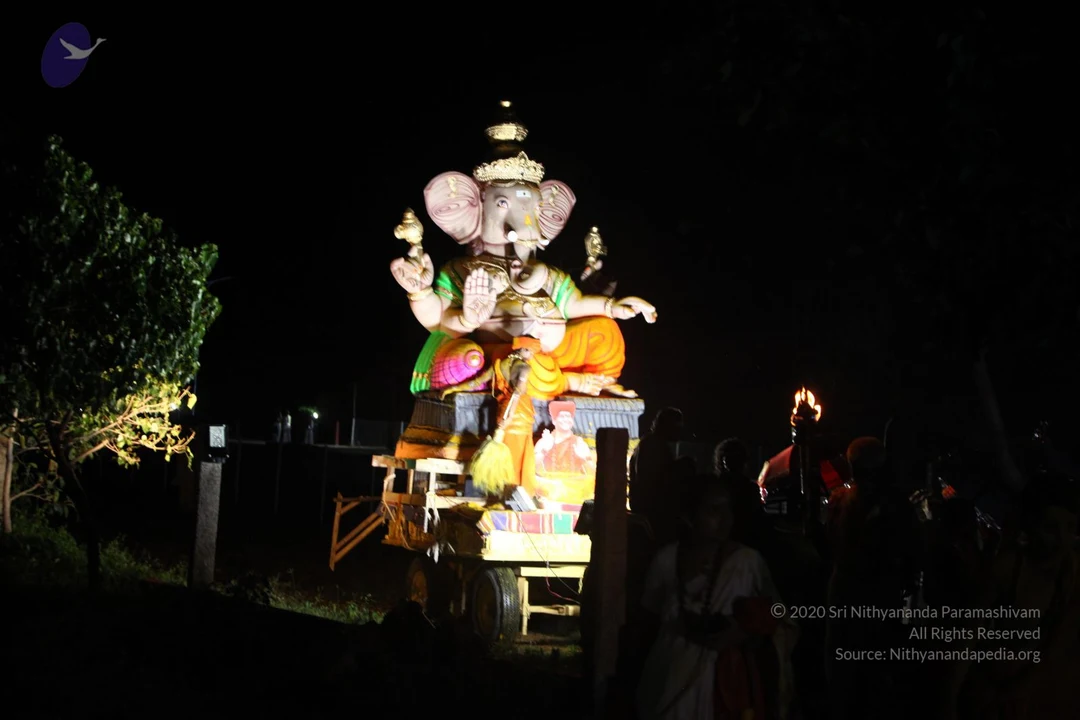
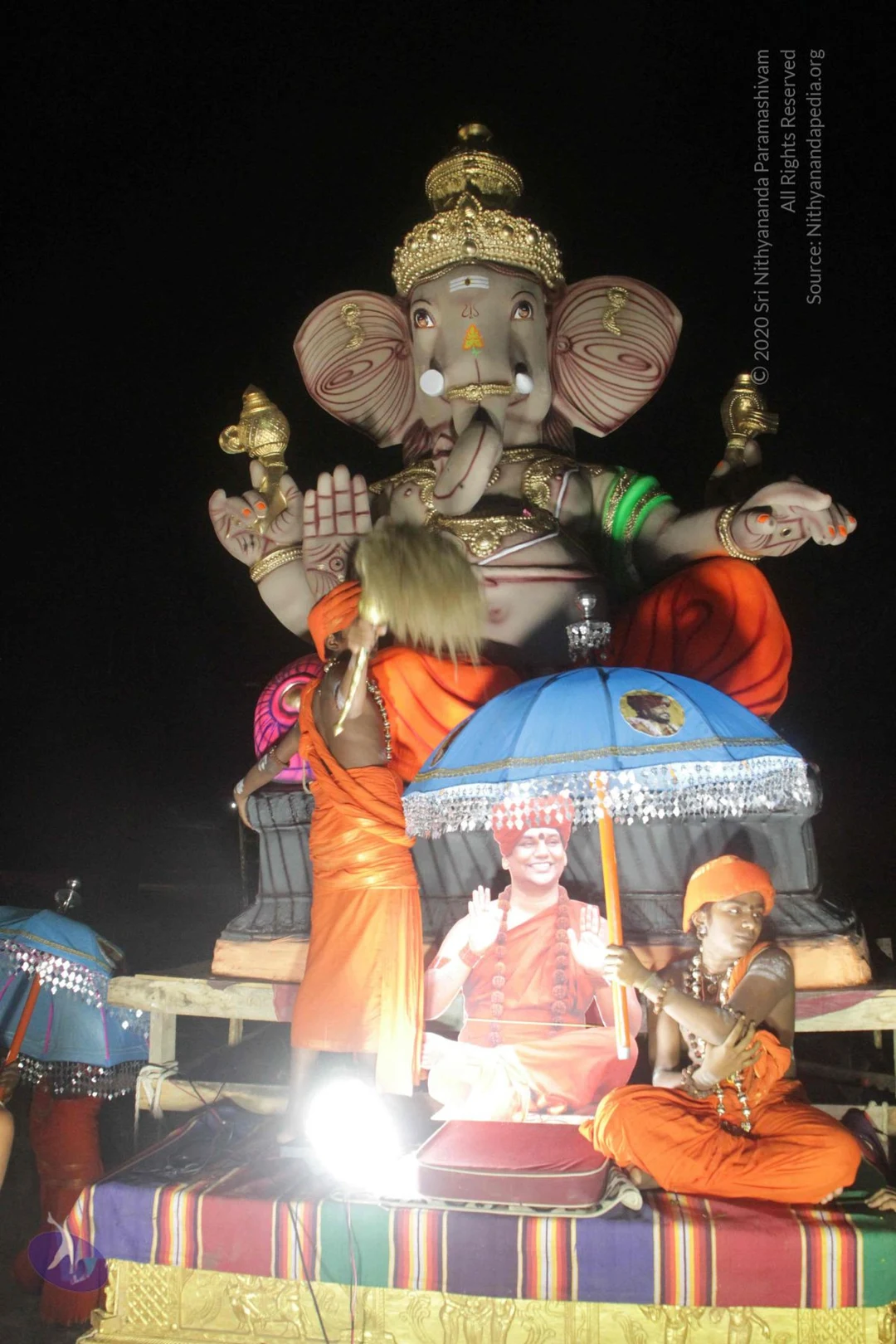
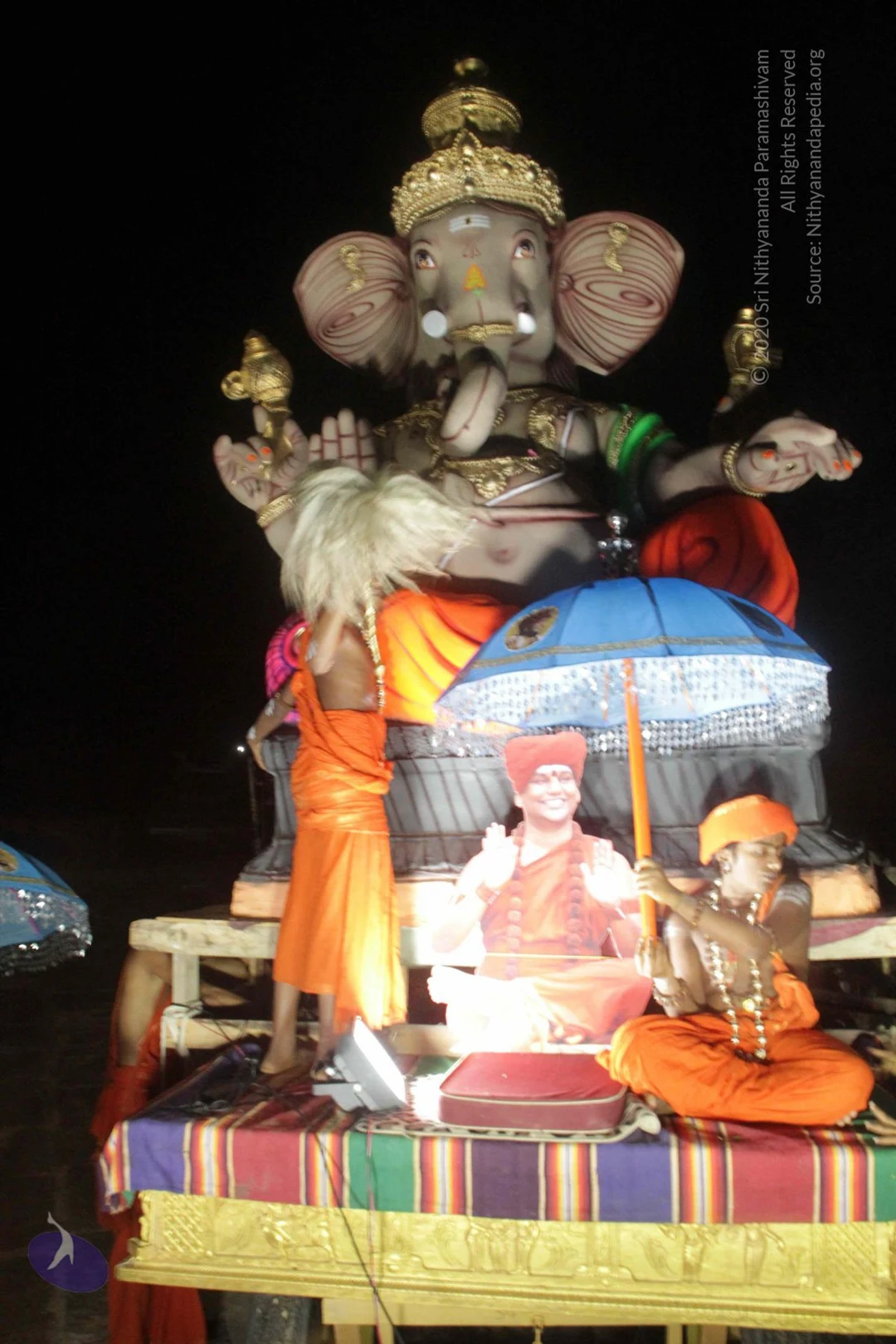
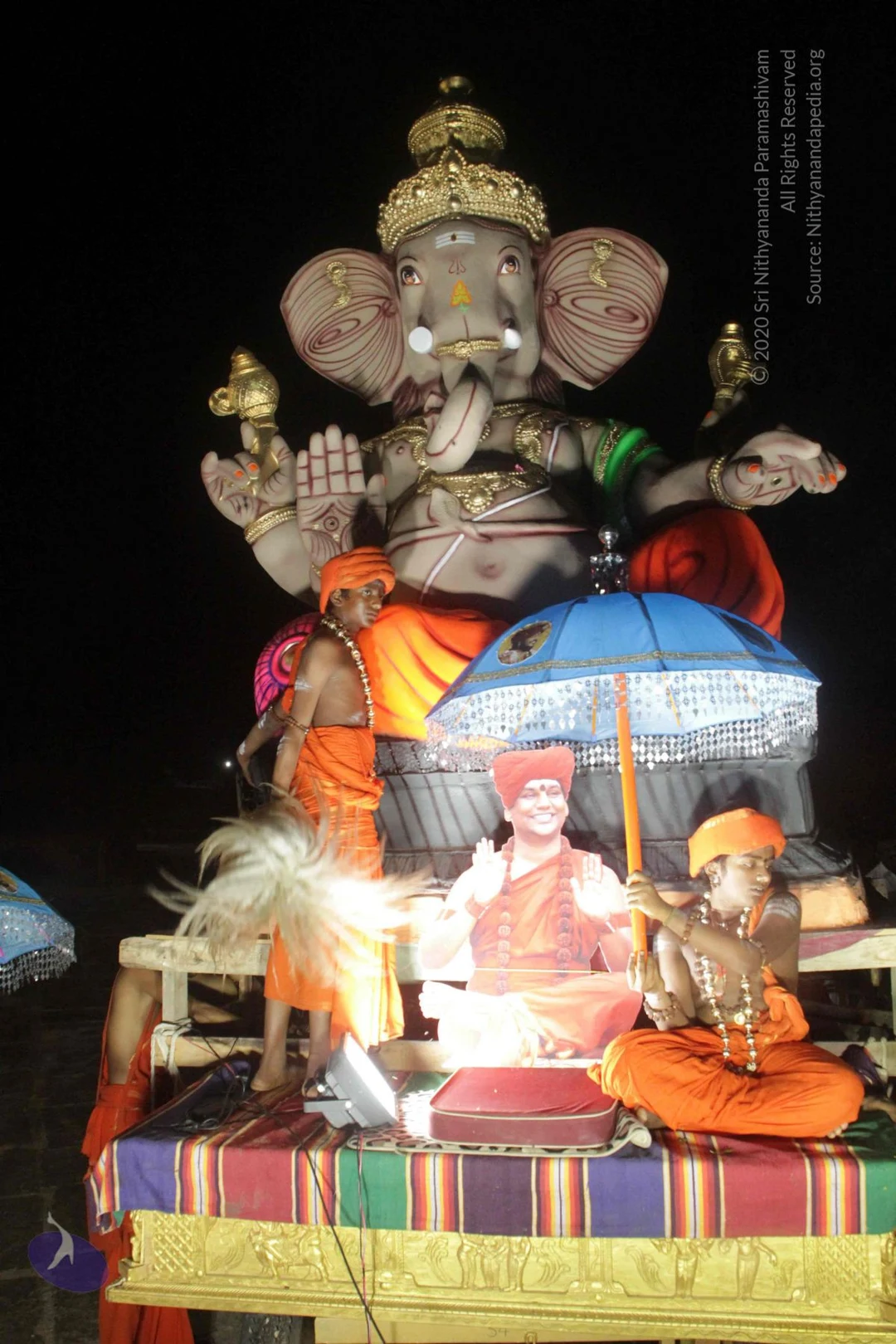
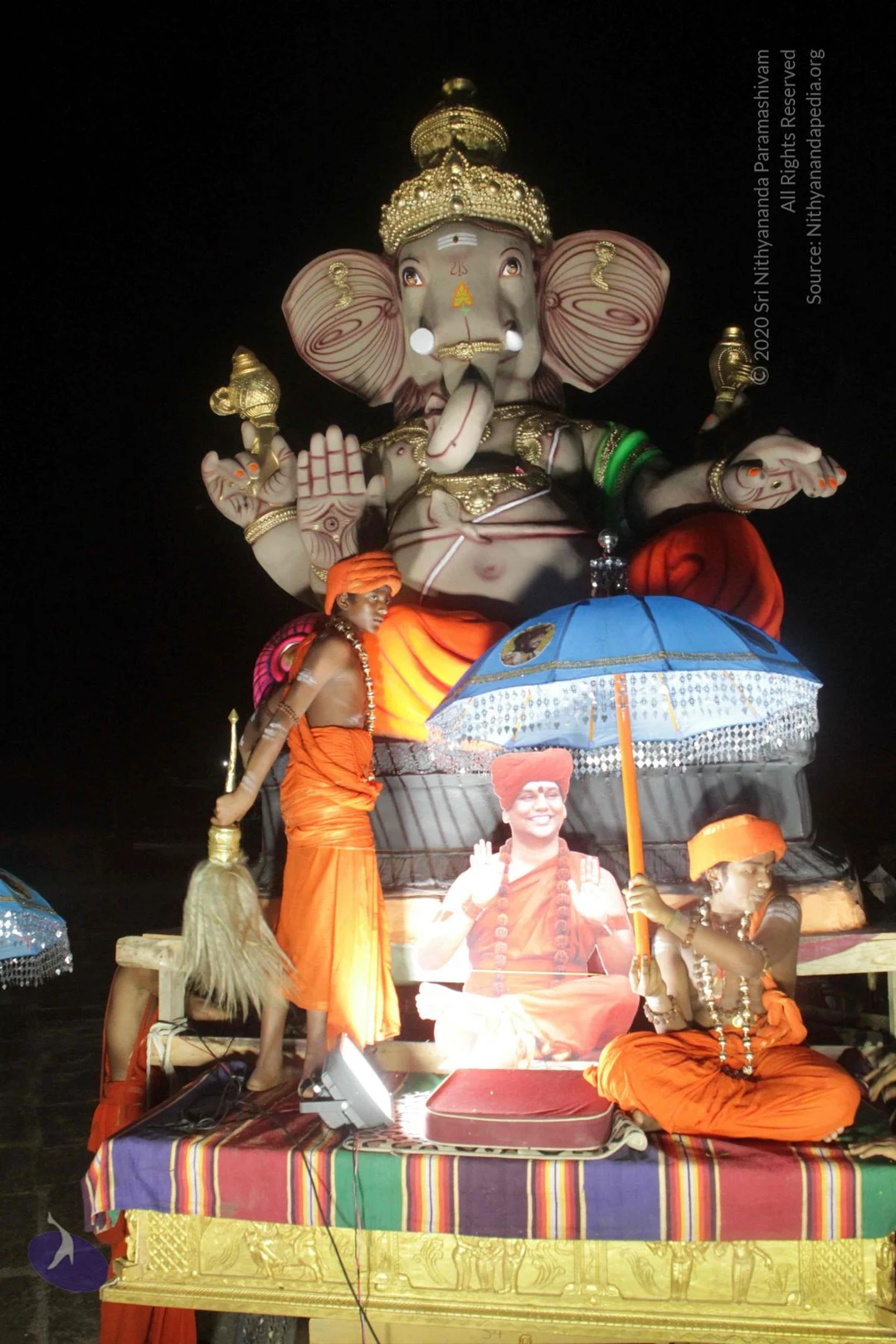
128 photosSource gallery
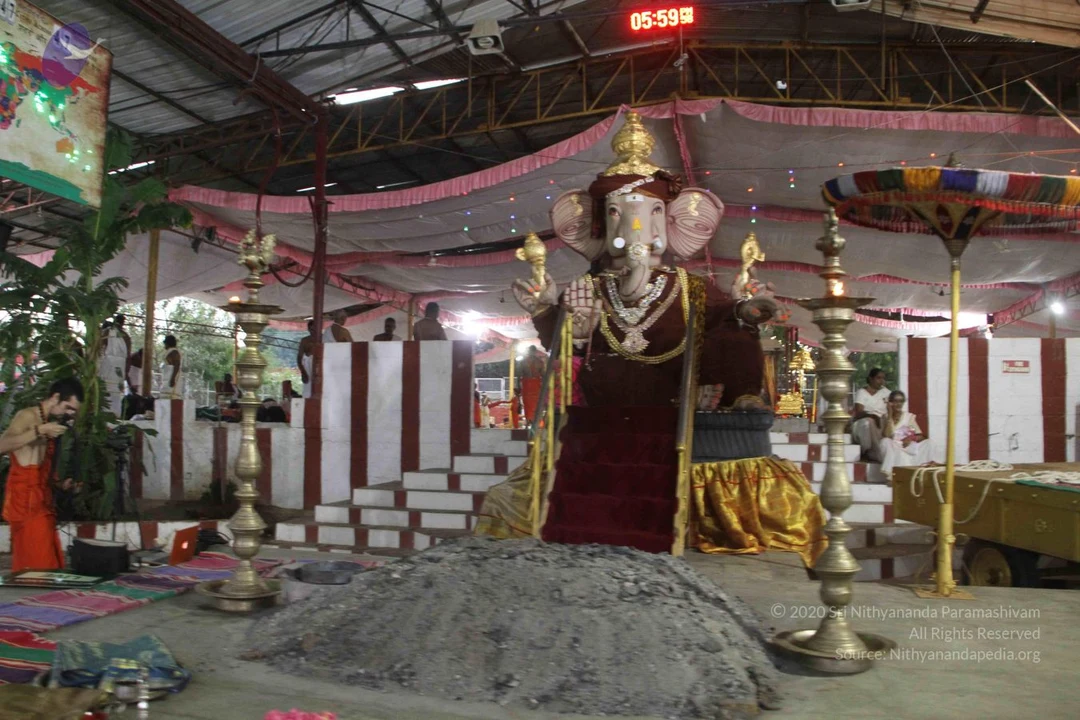
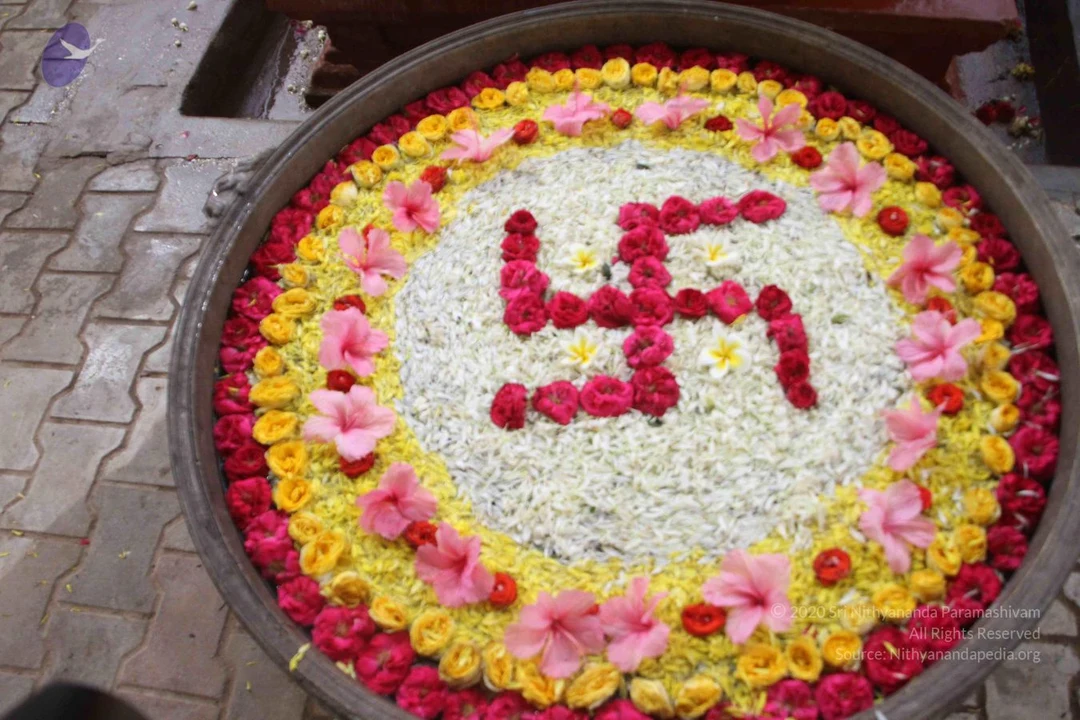
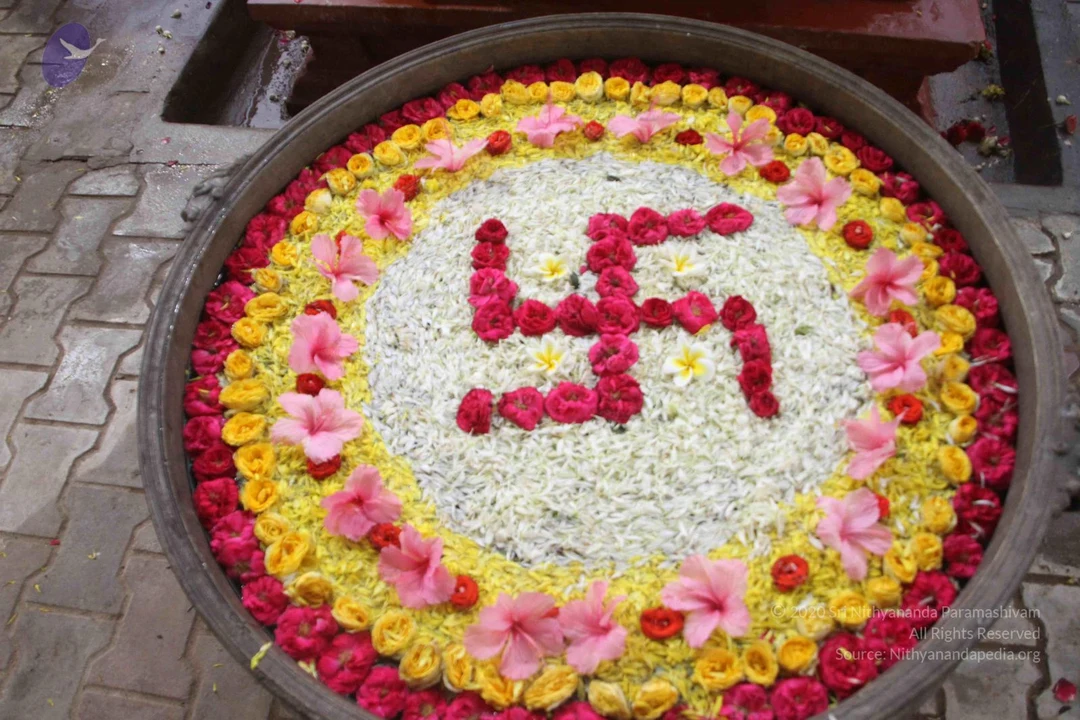
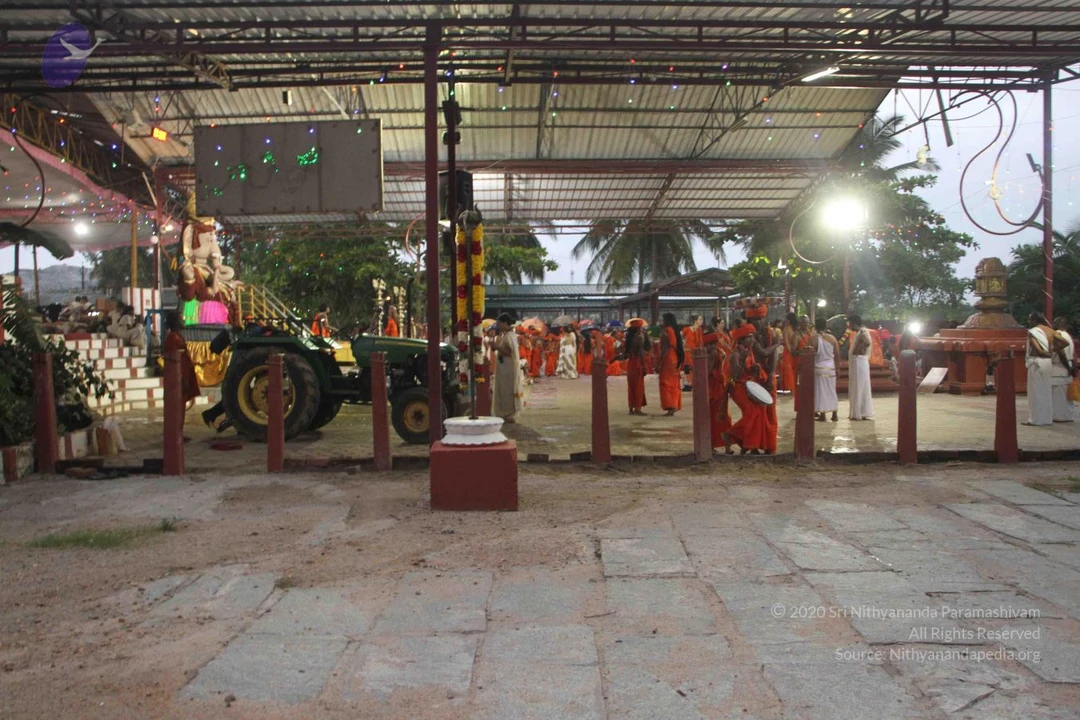
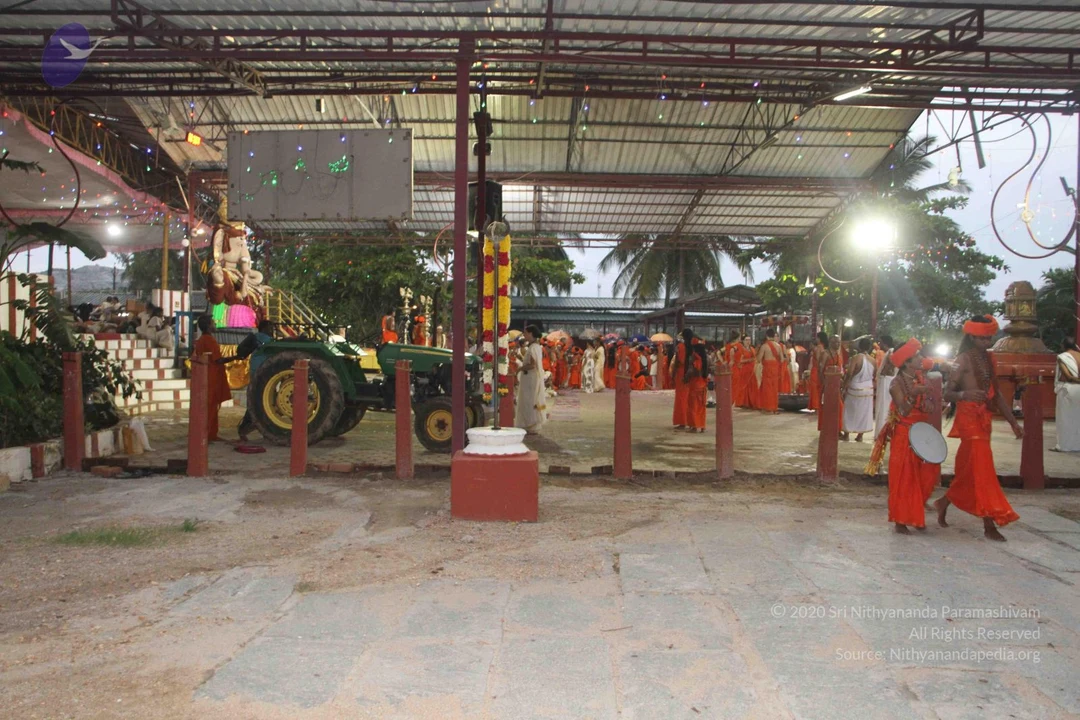
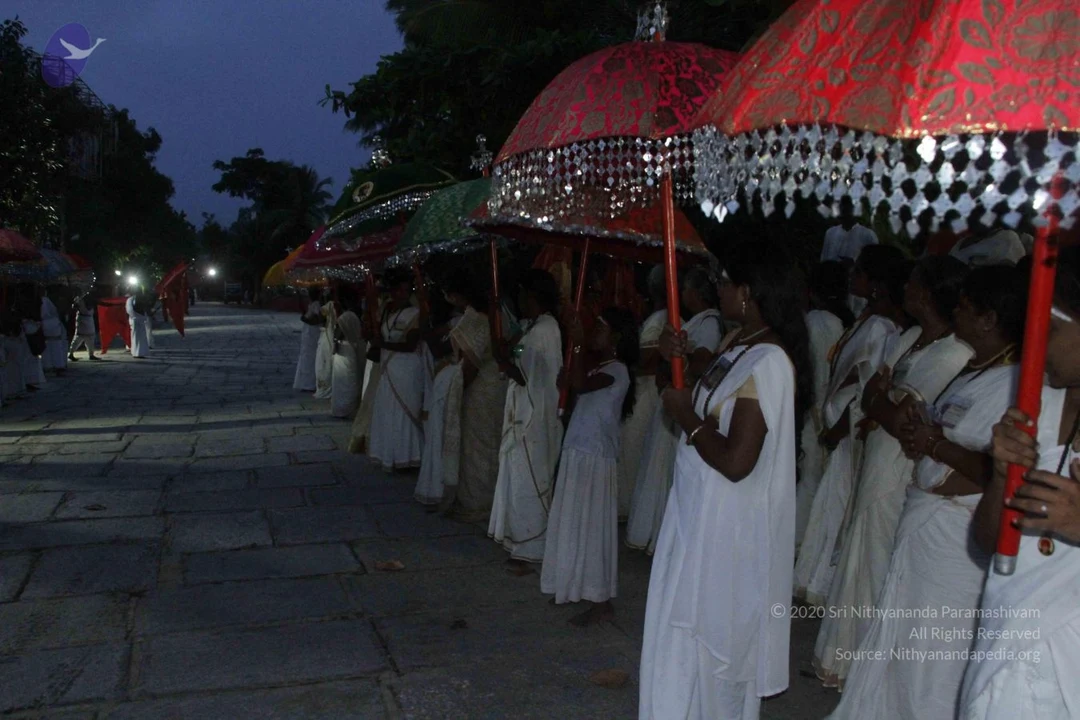
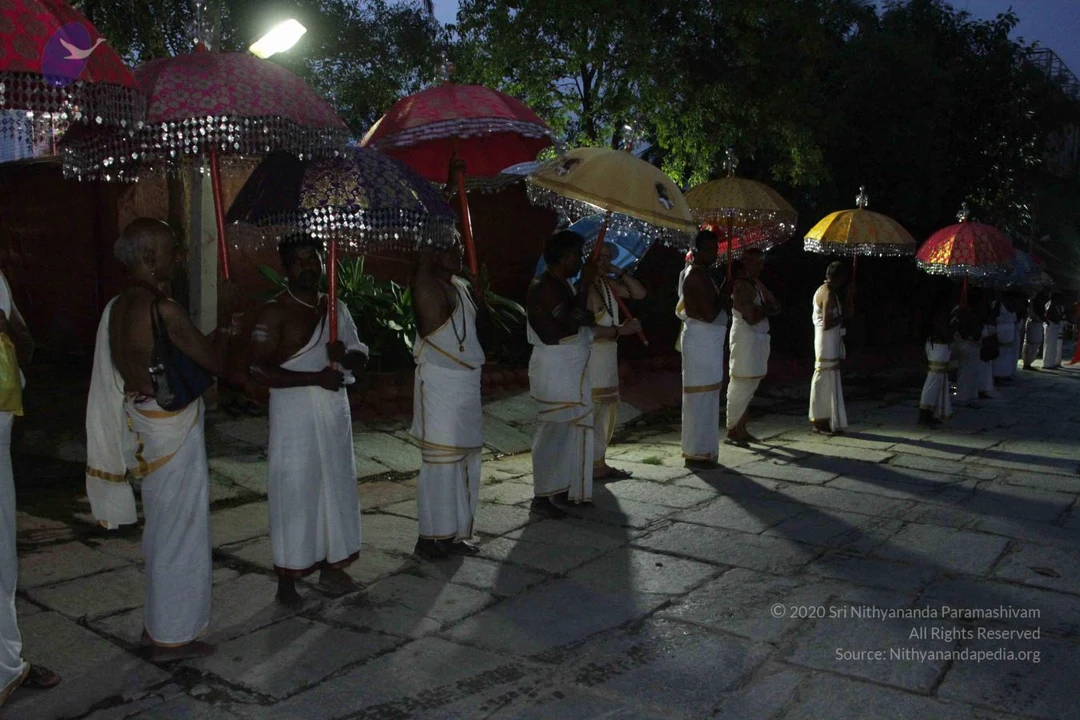
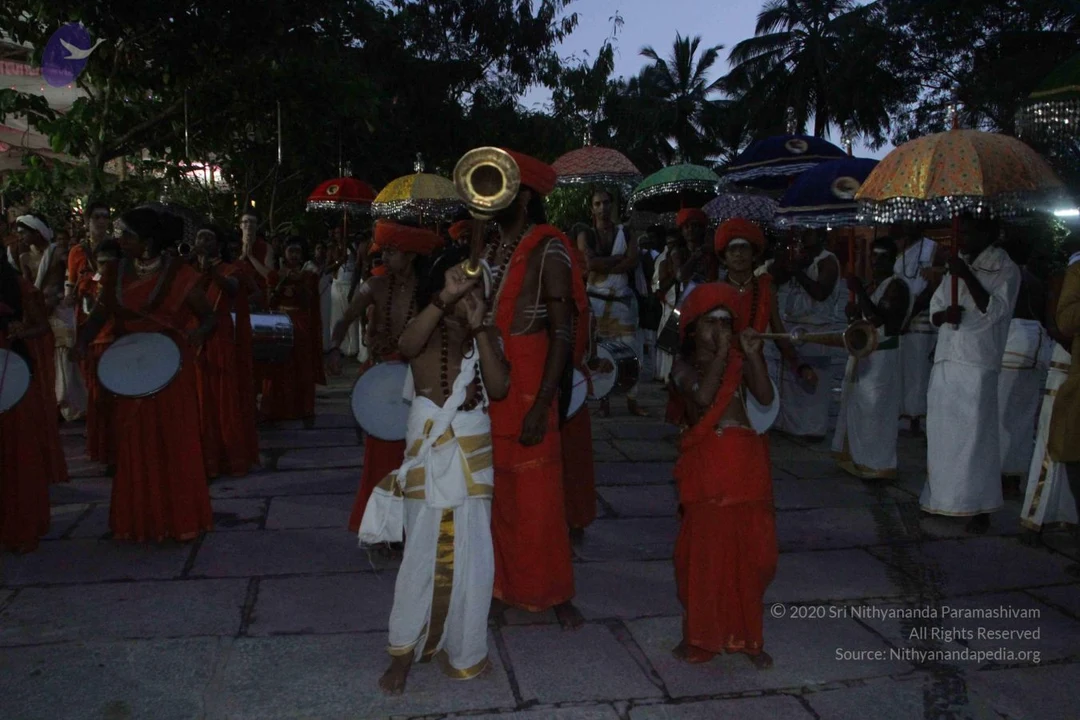
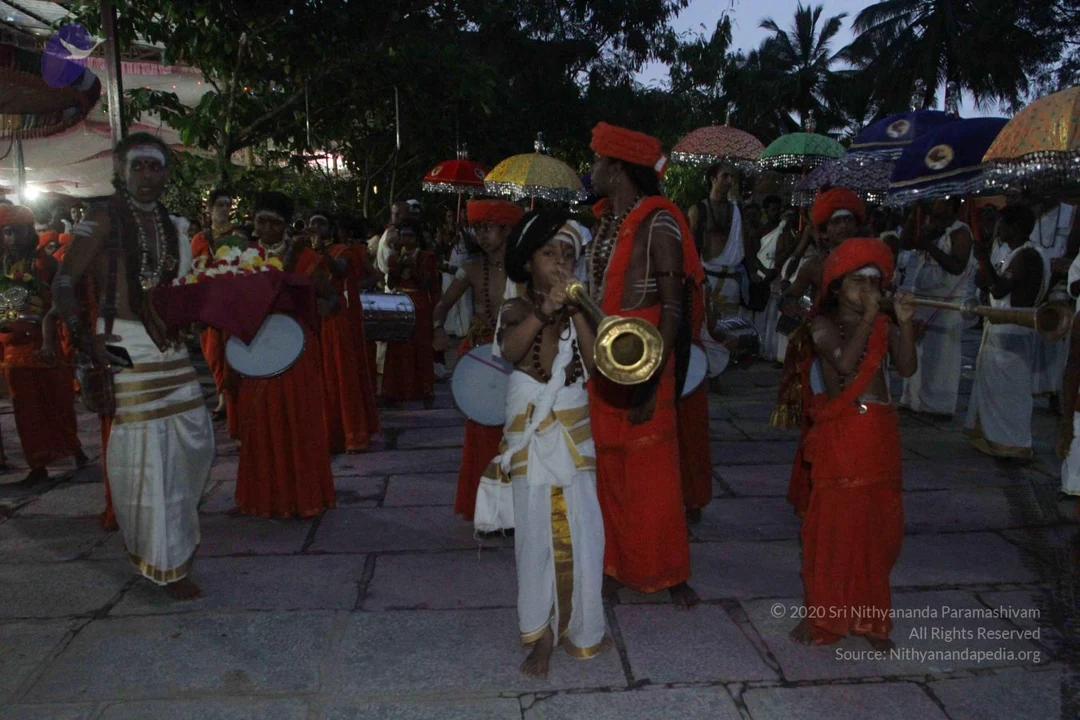
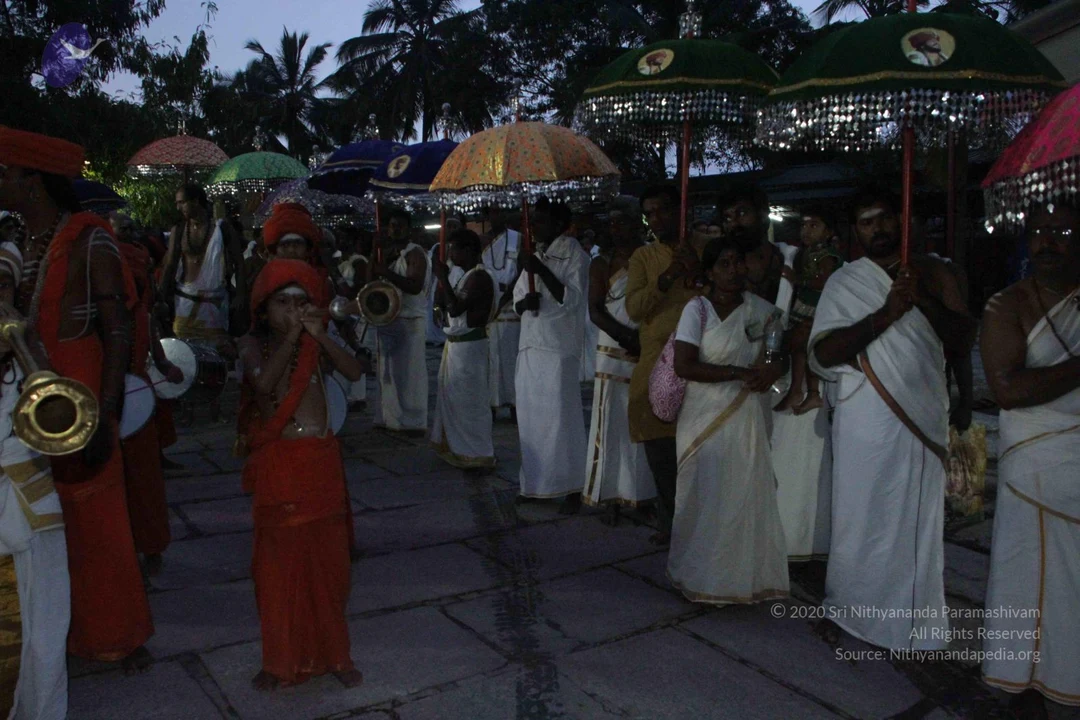
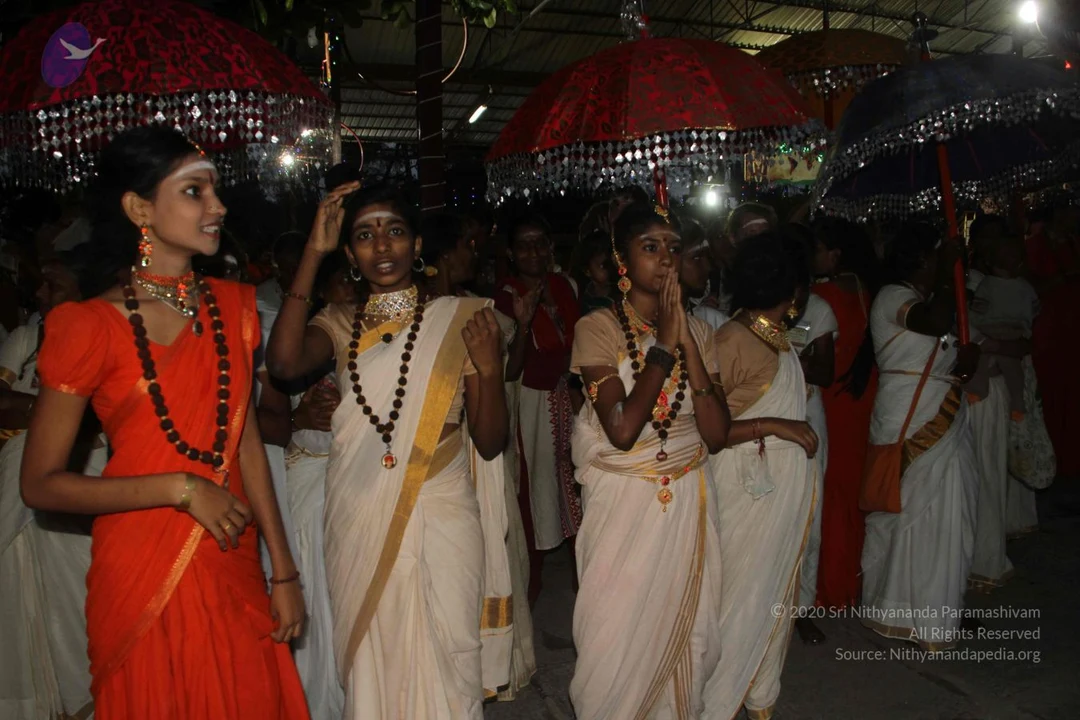
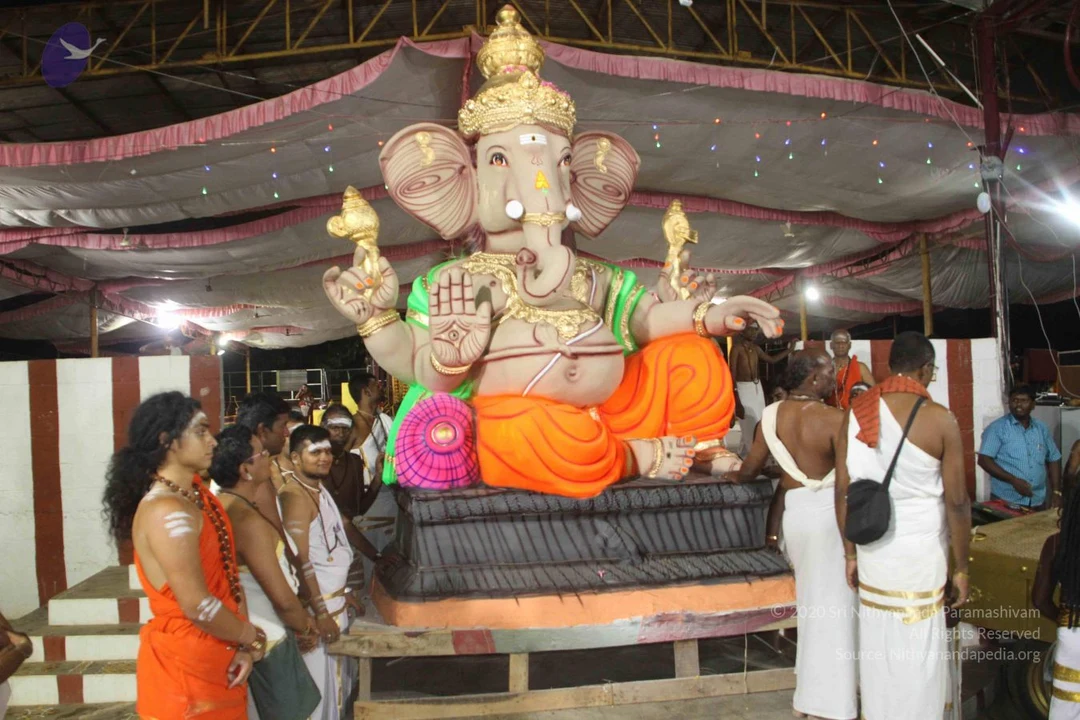
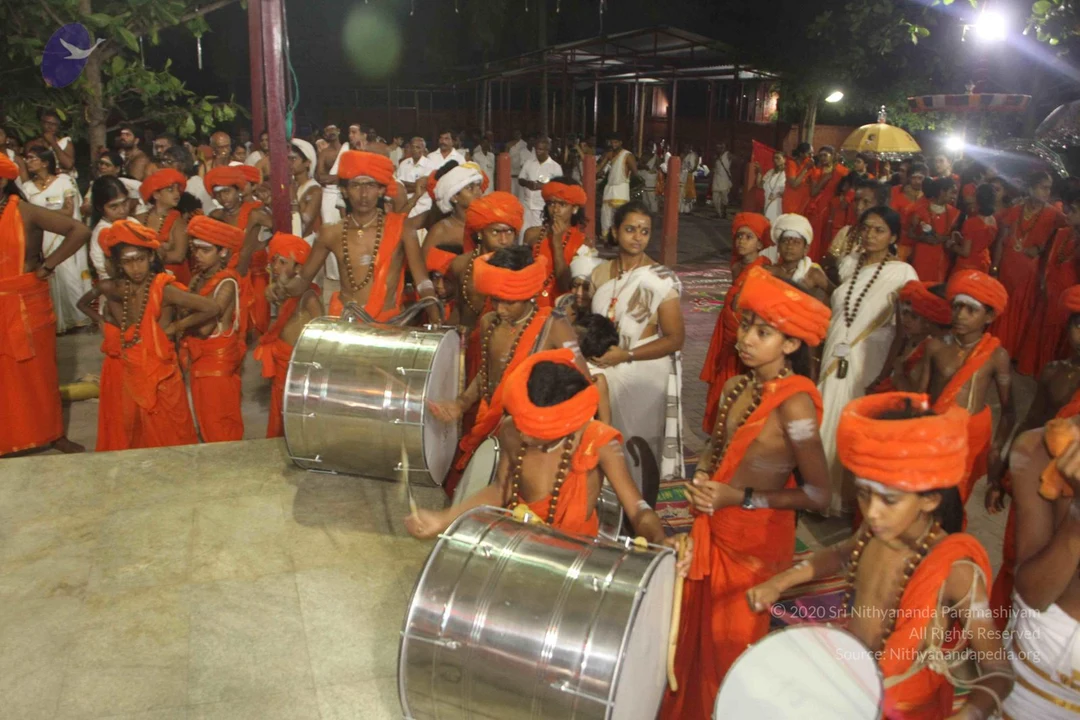
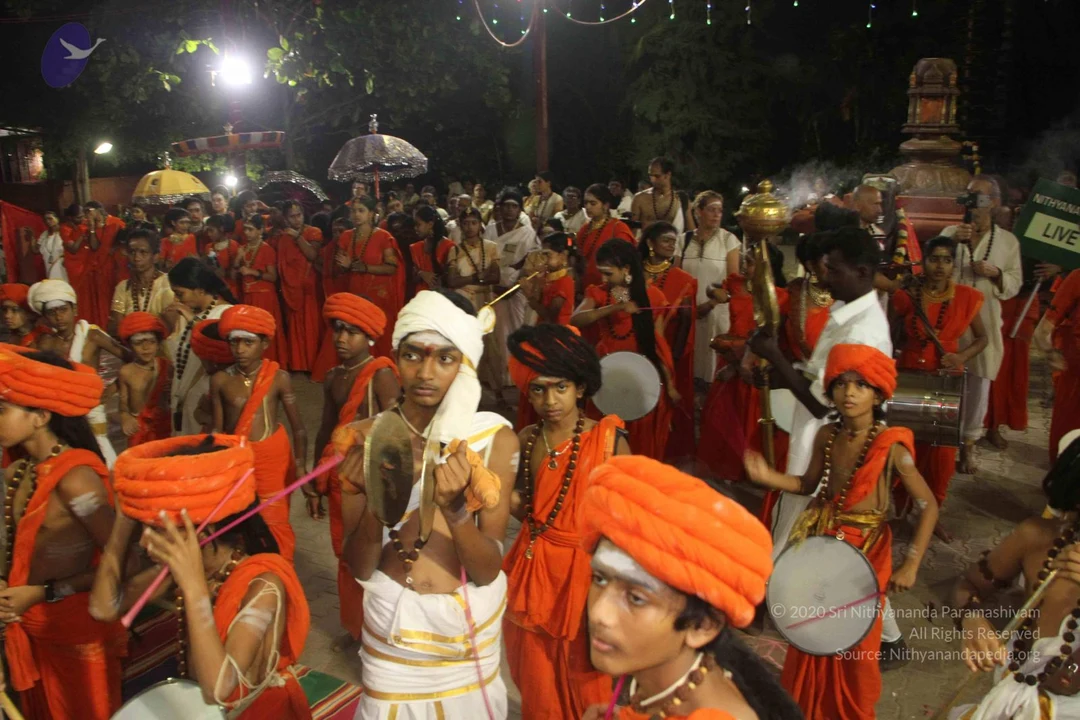
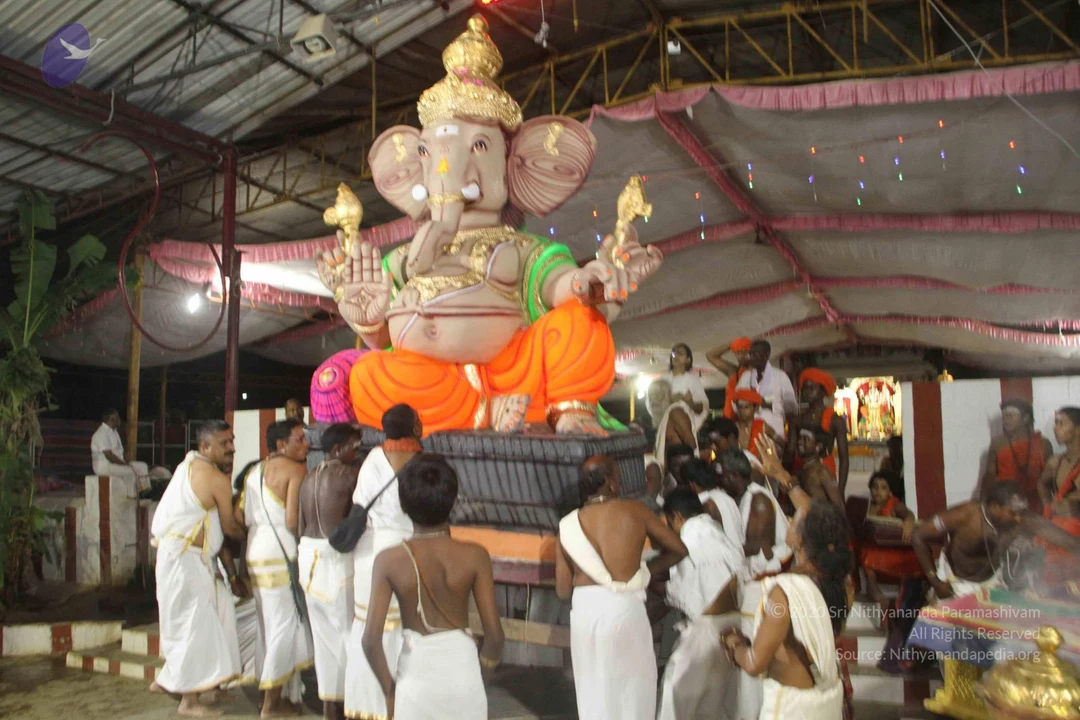
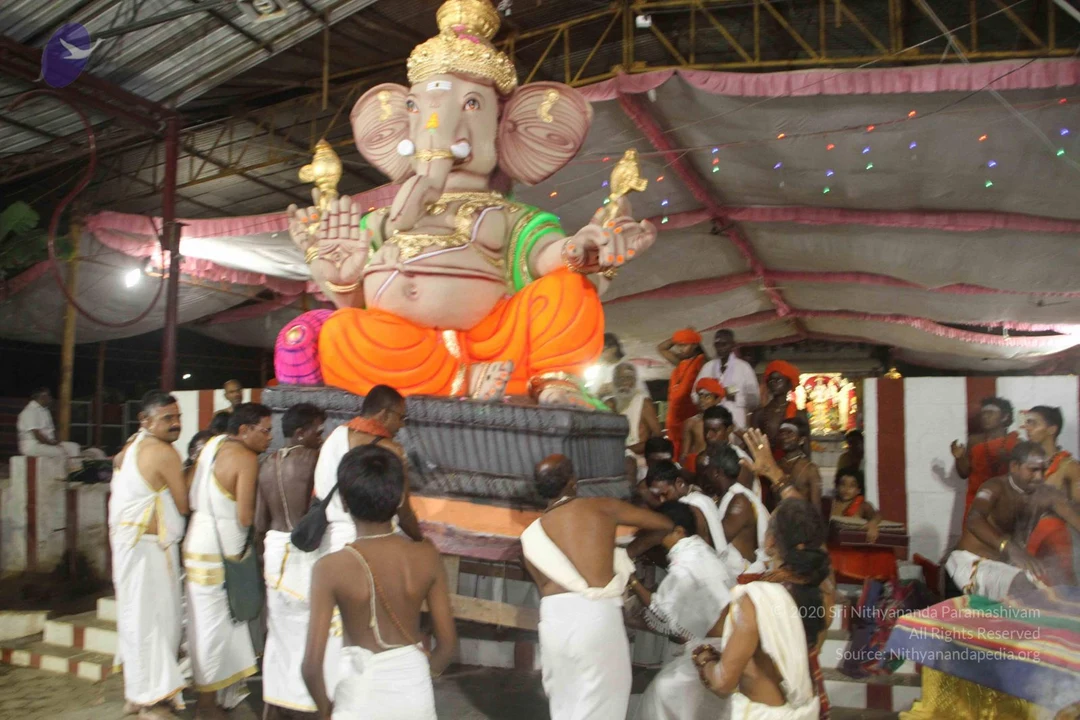
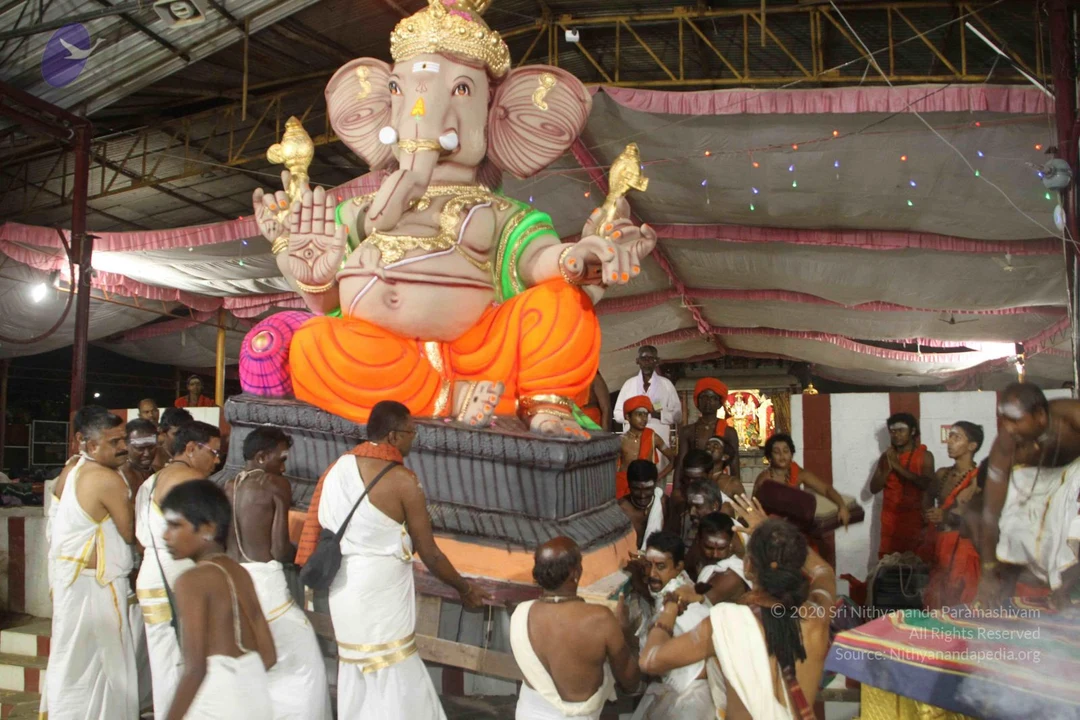
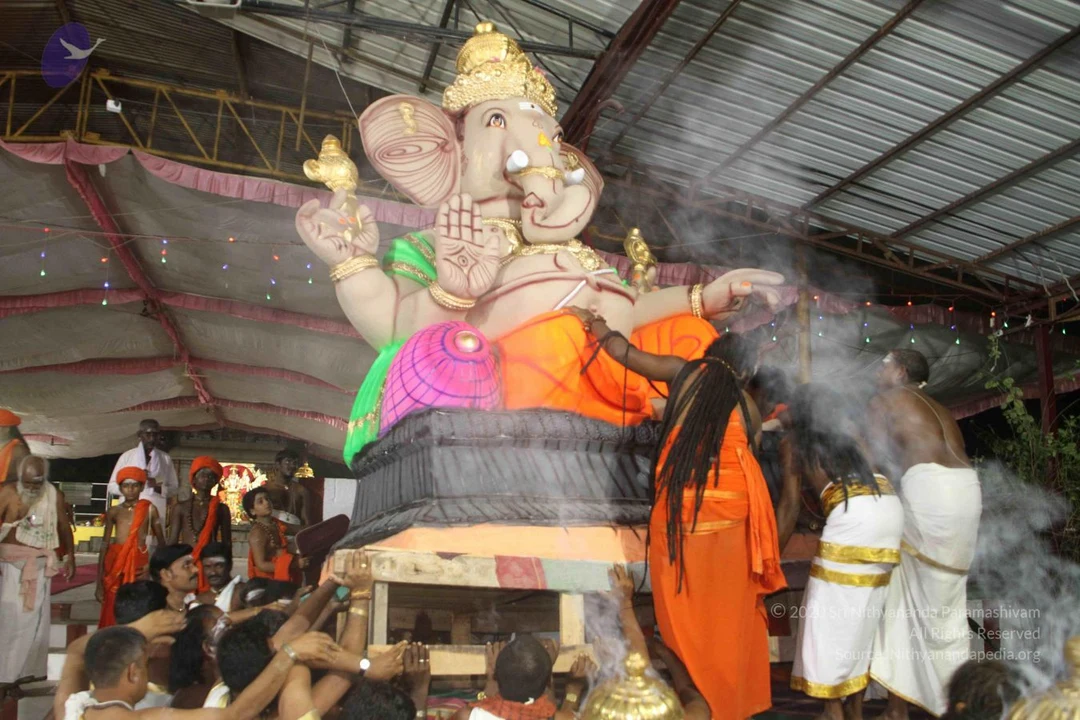
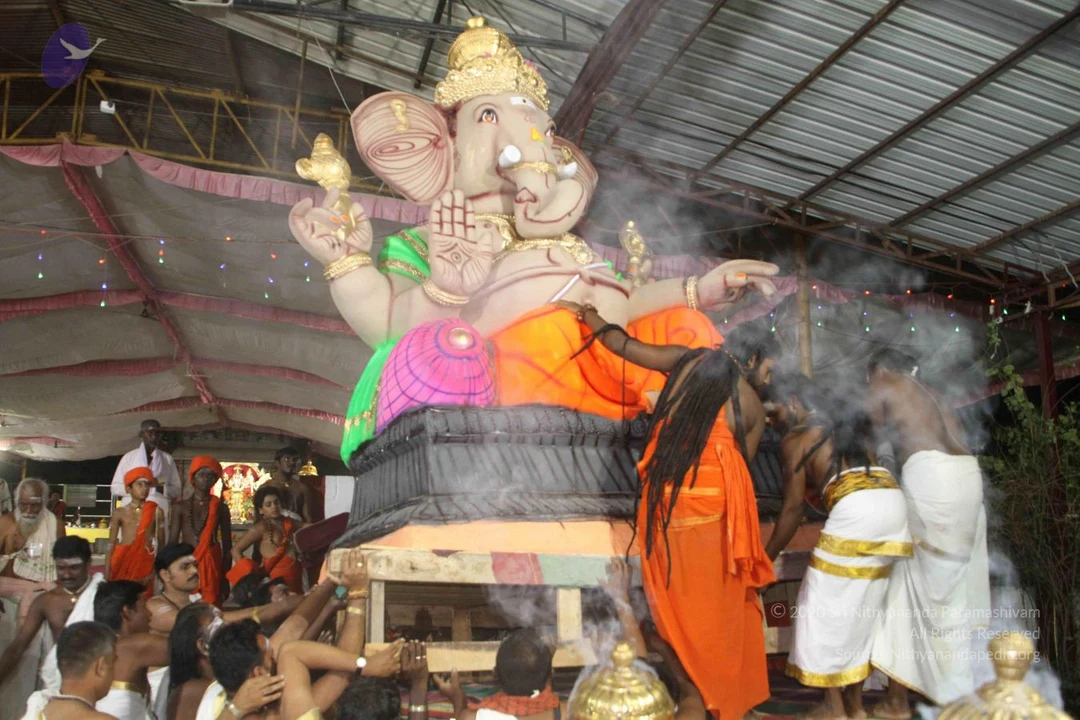
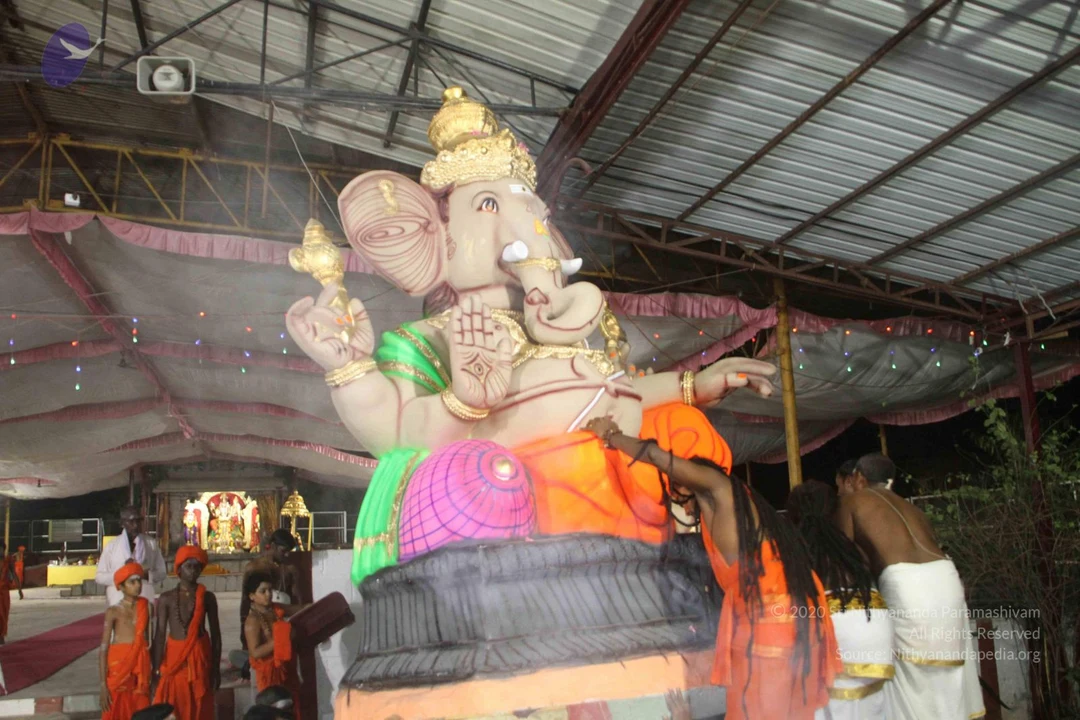
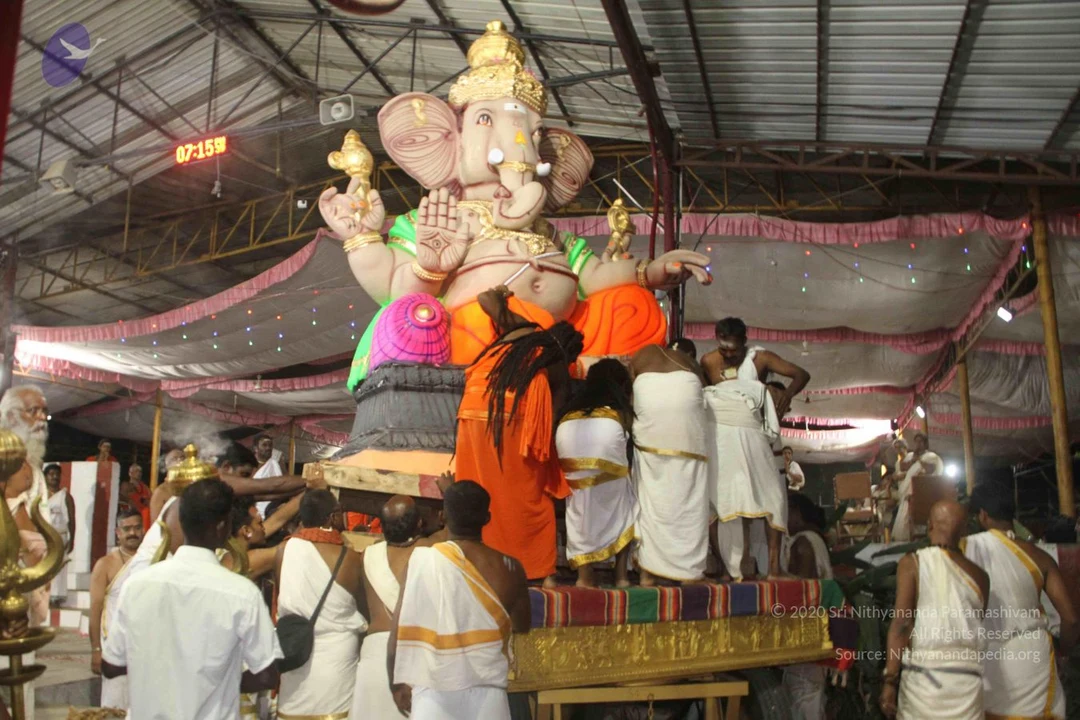
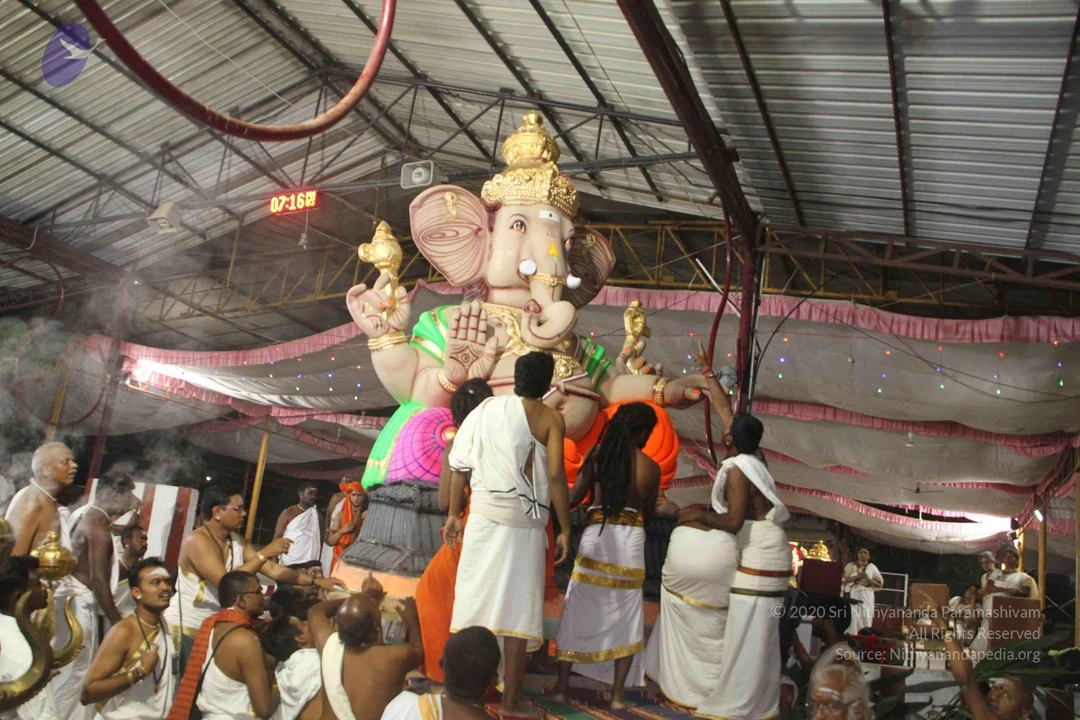
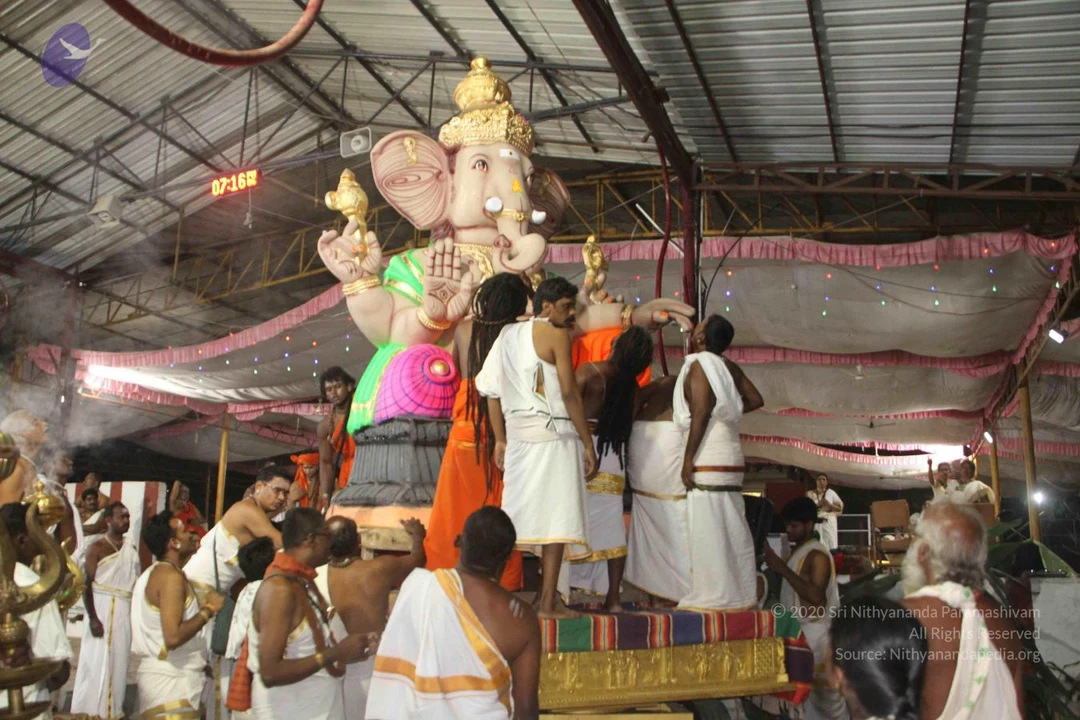
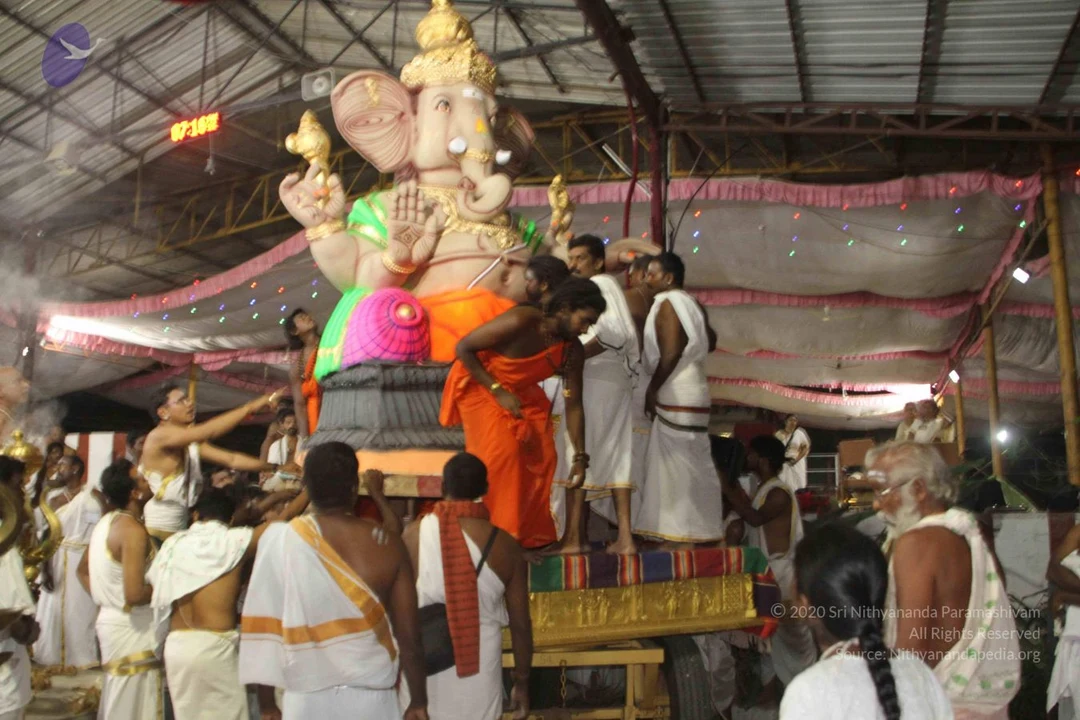
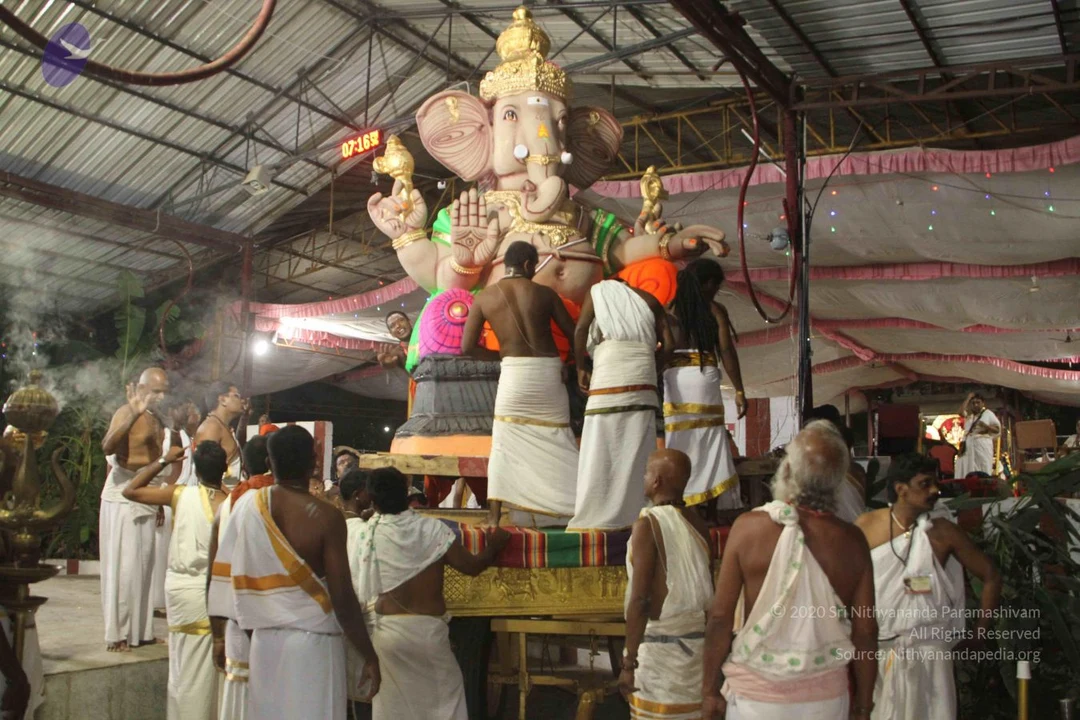
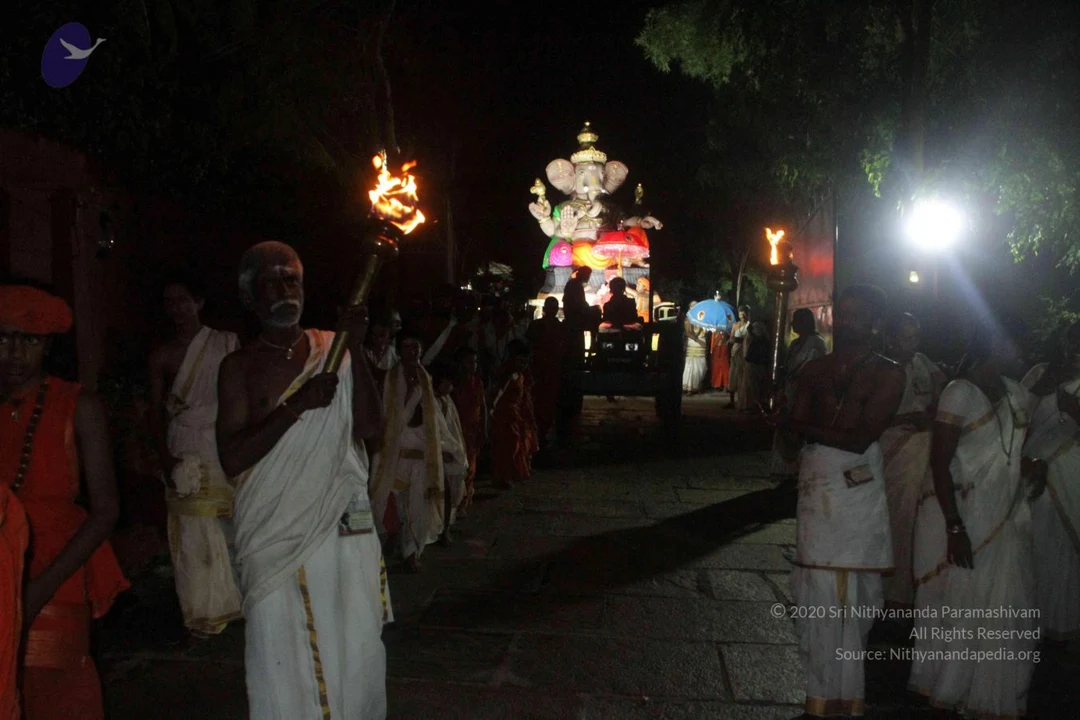
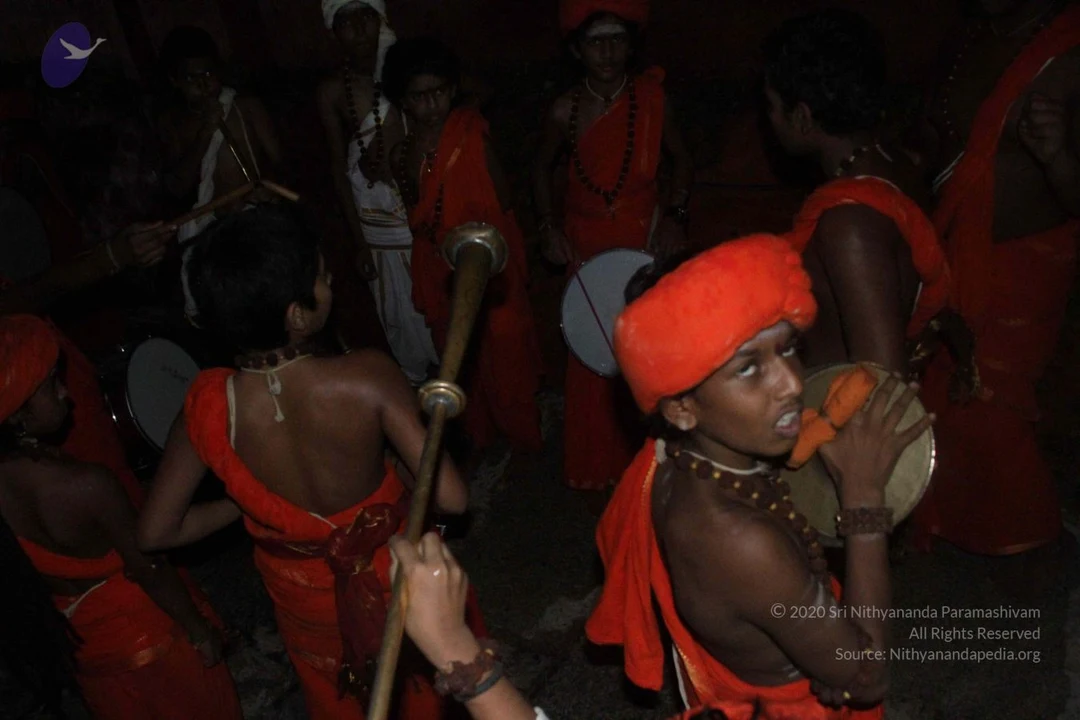
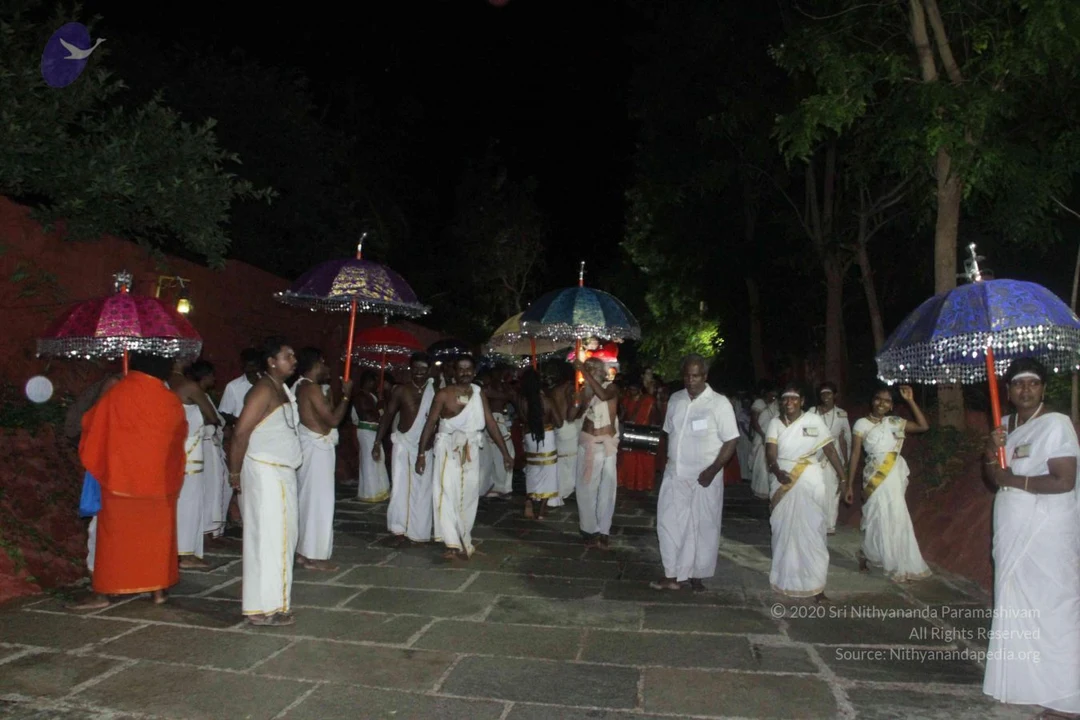
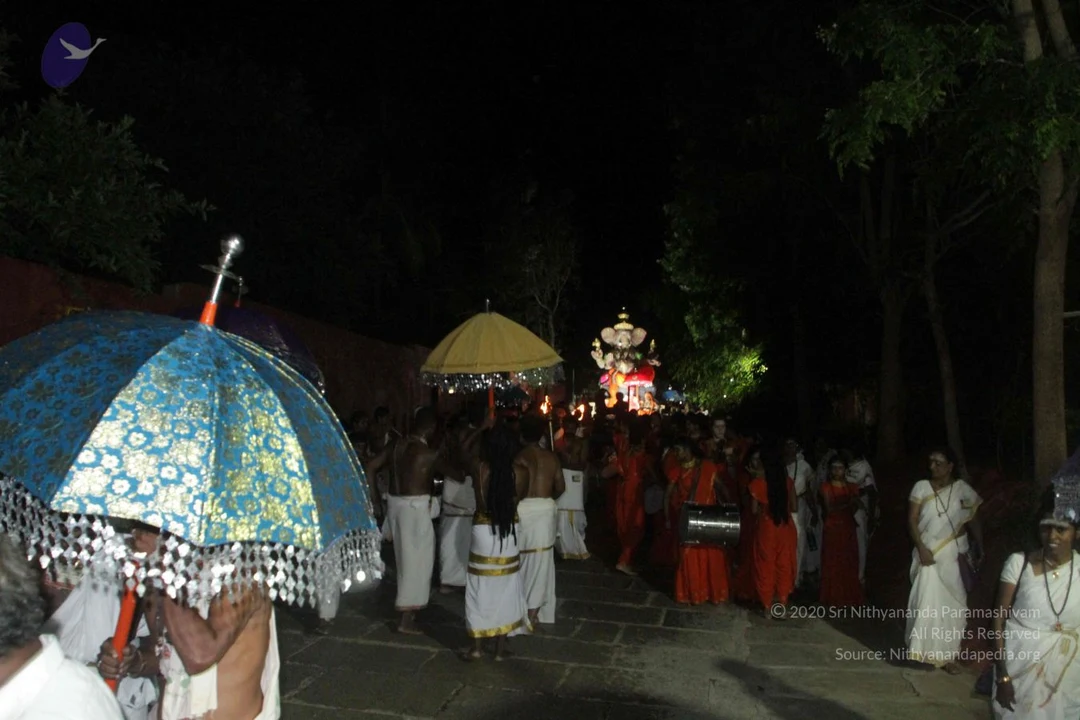
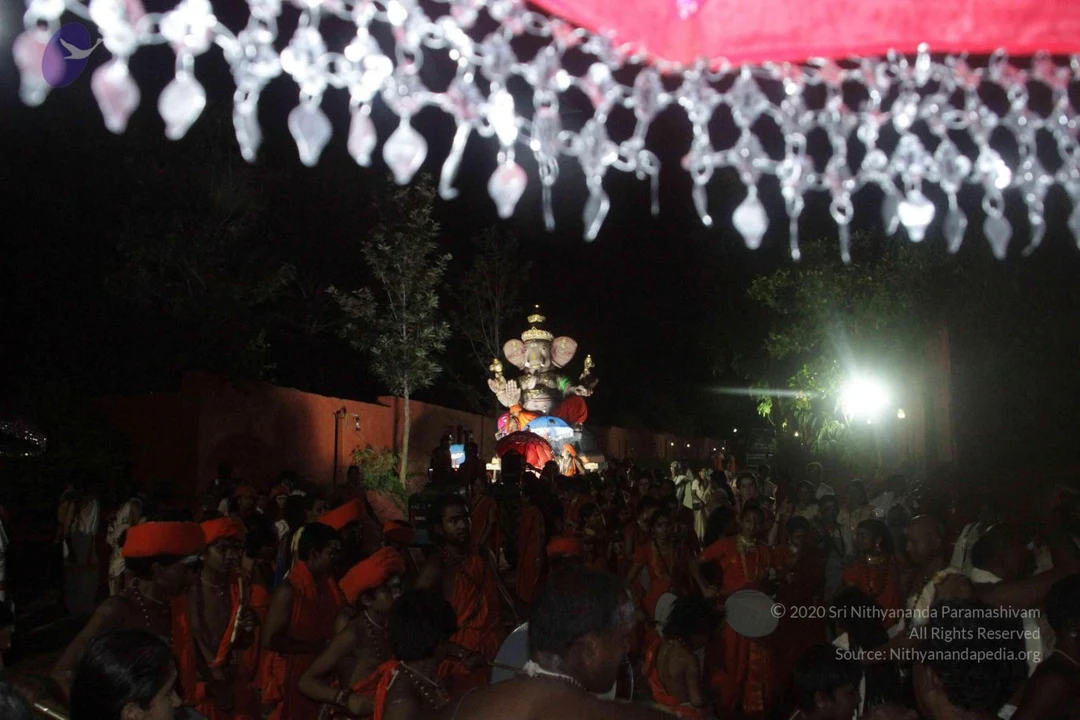
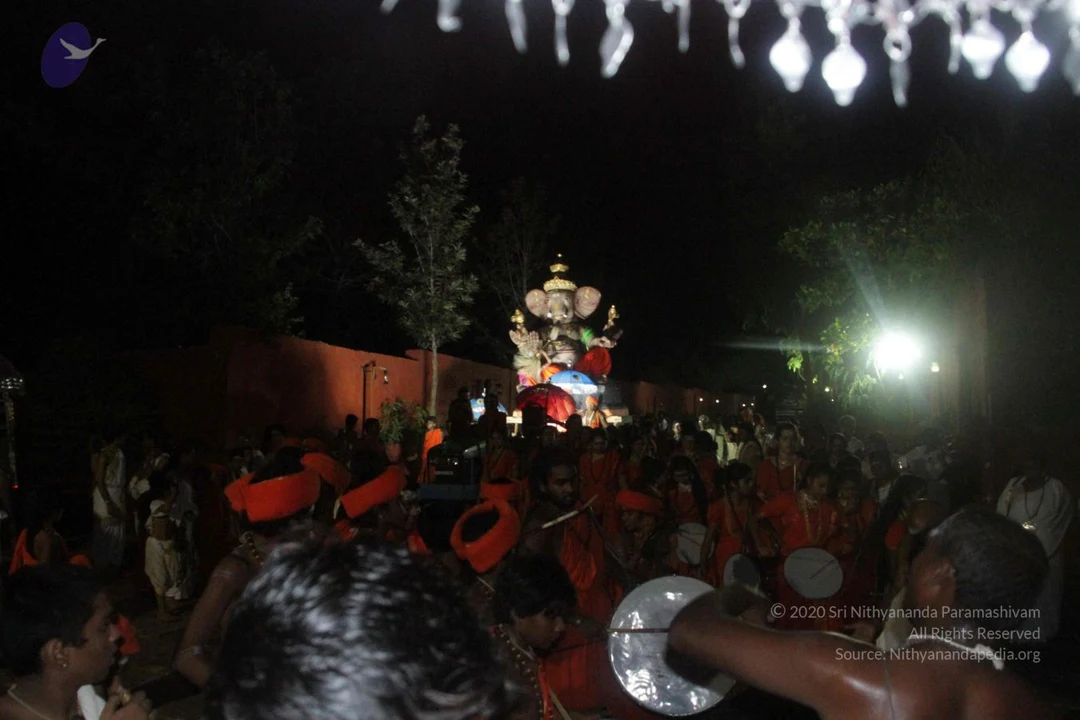
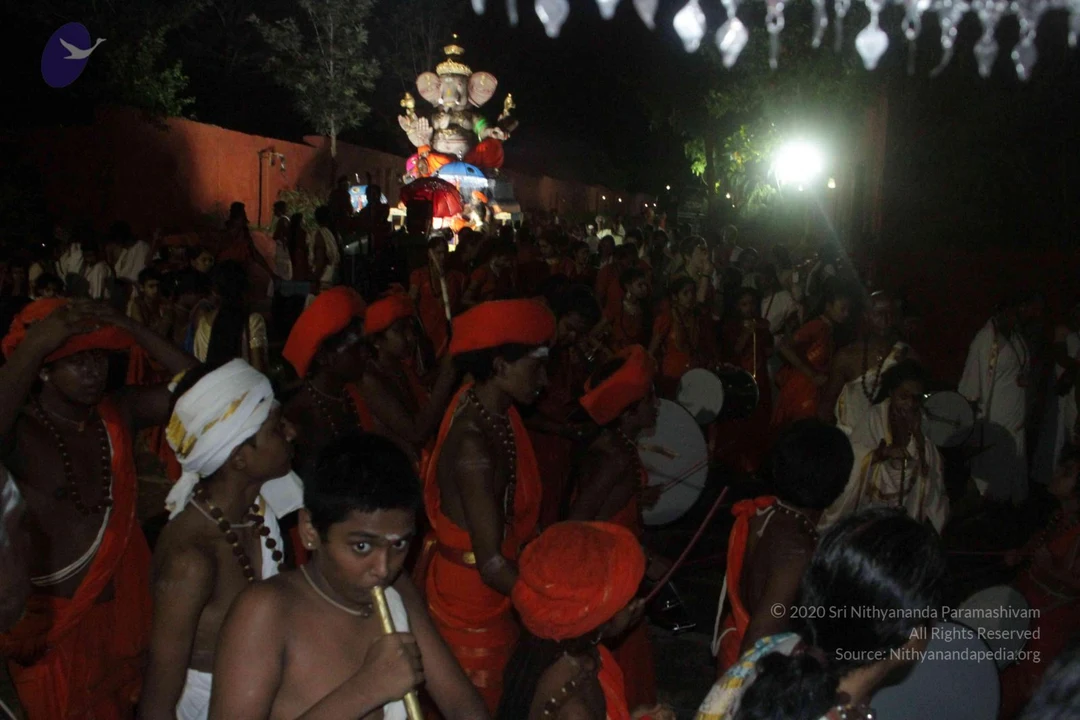
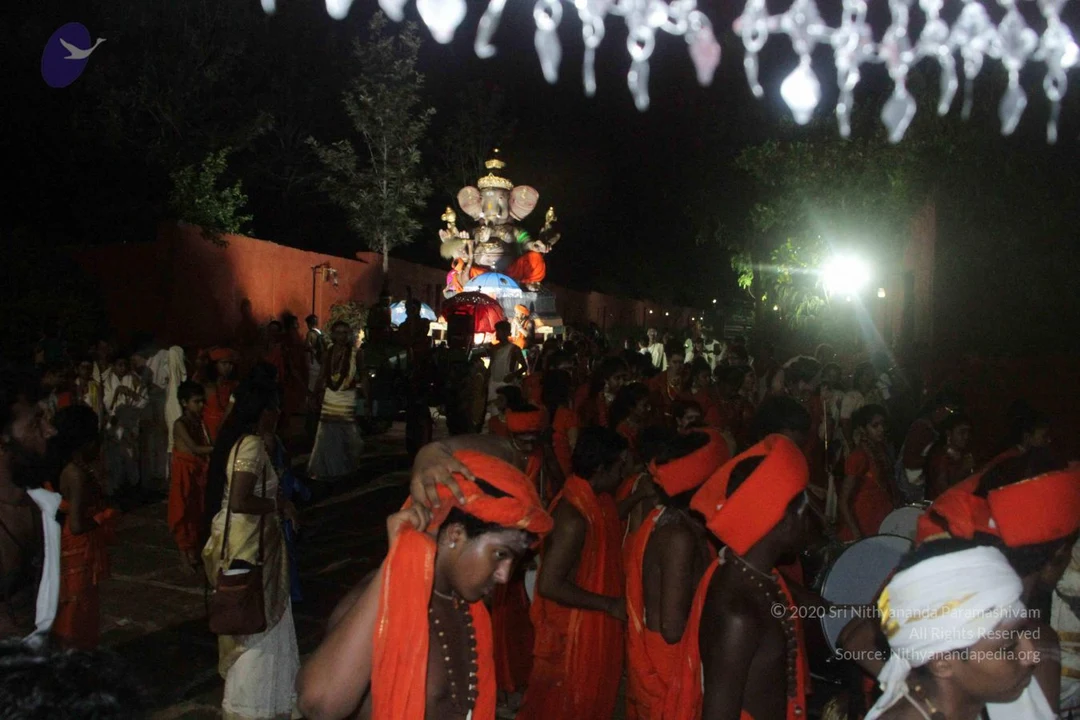
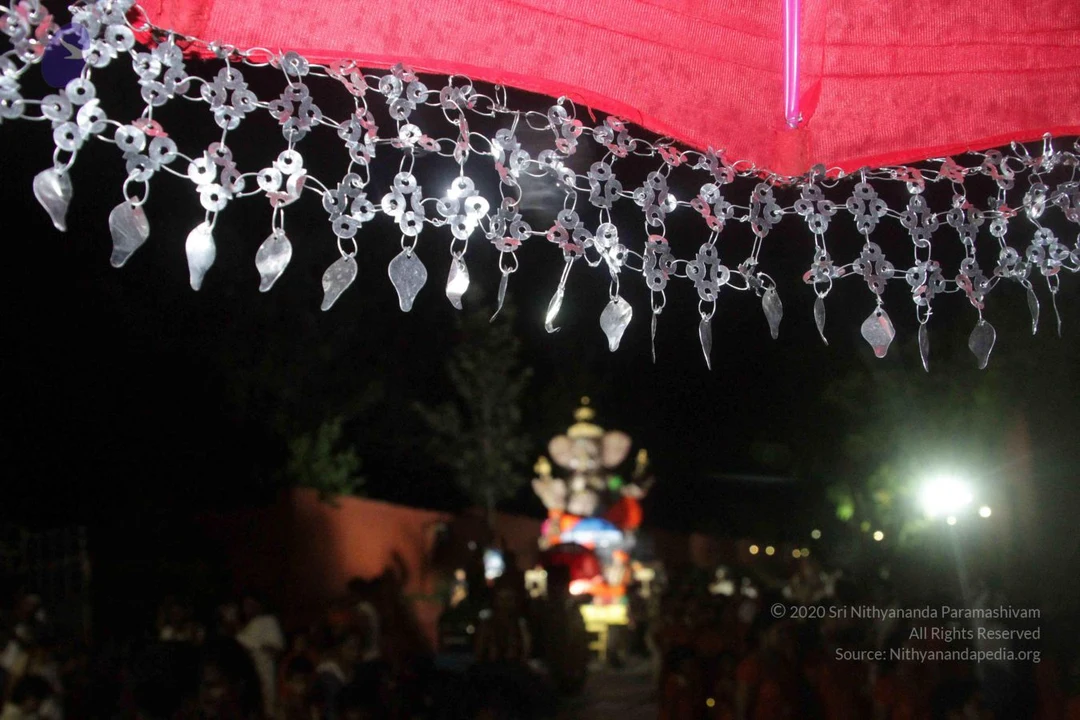
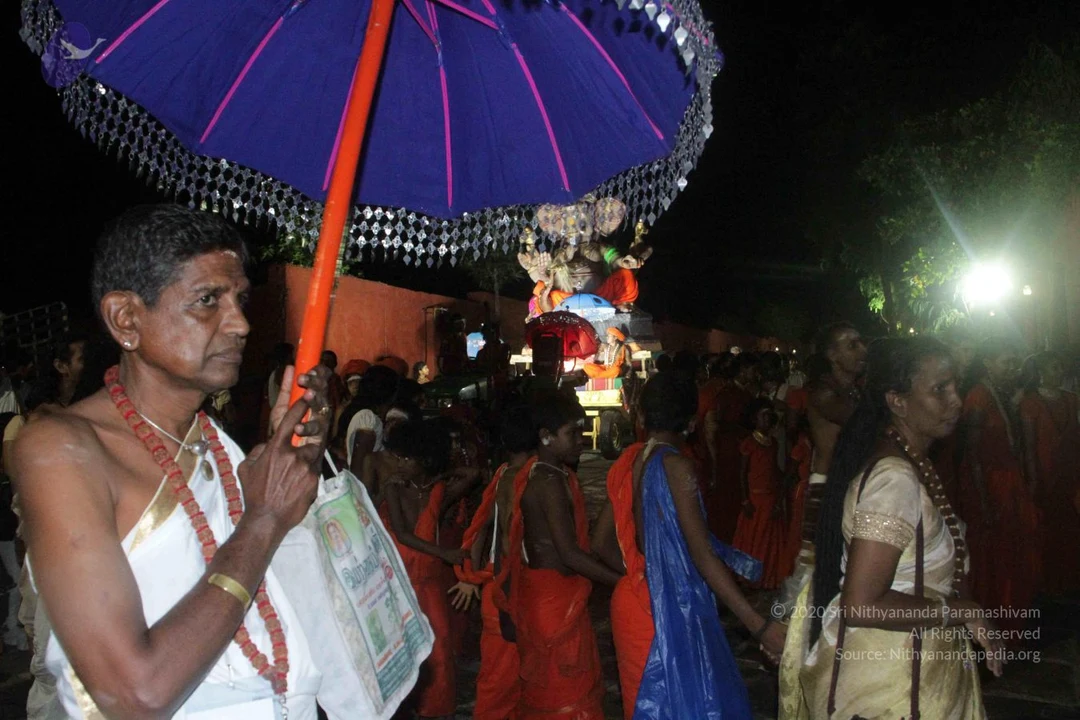
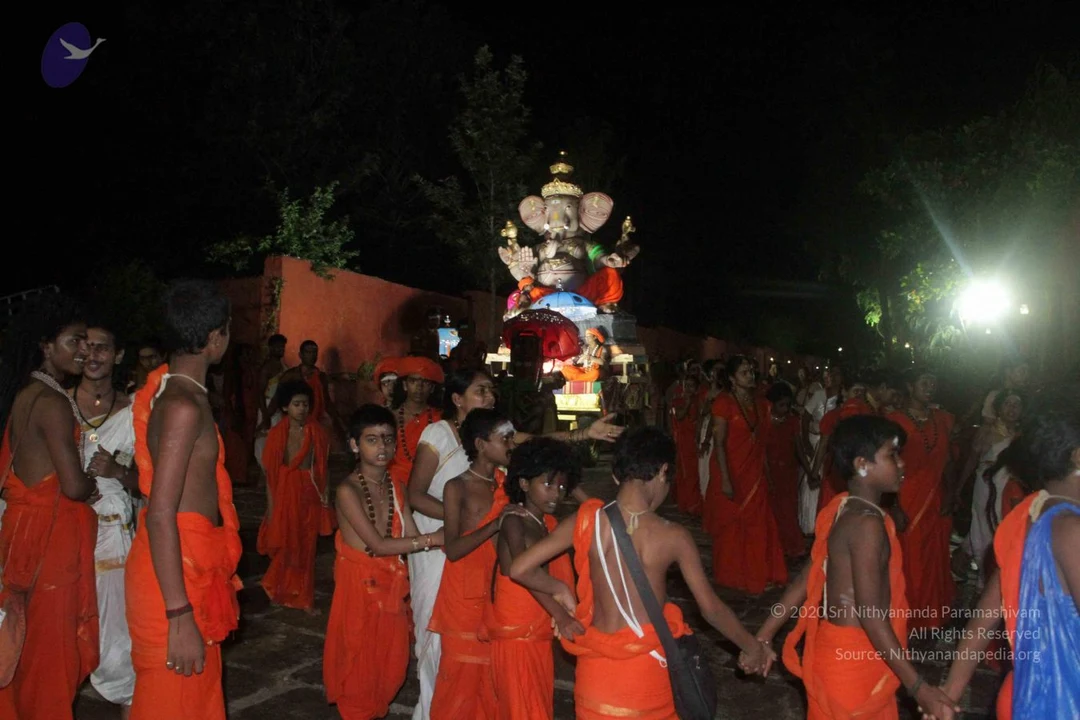
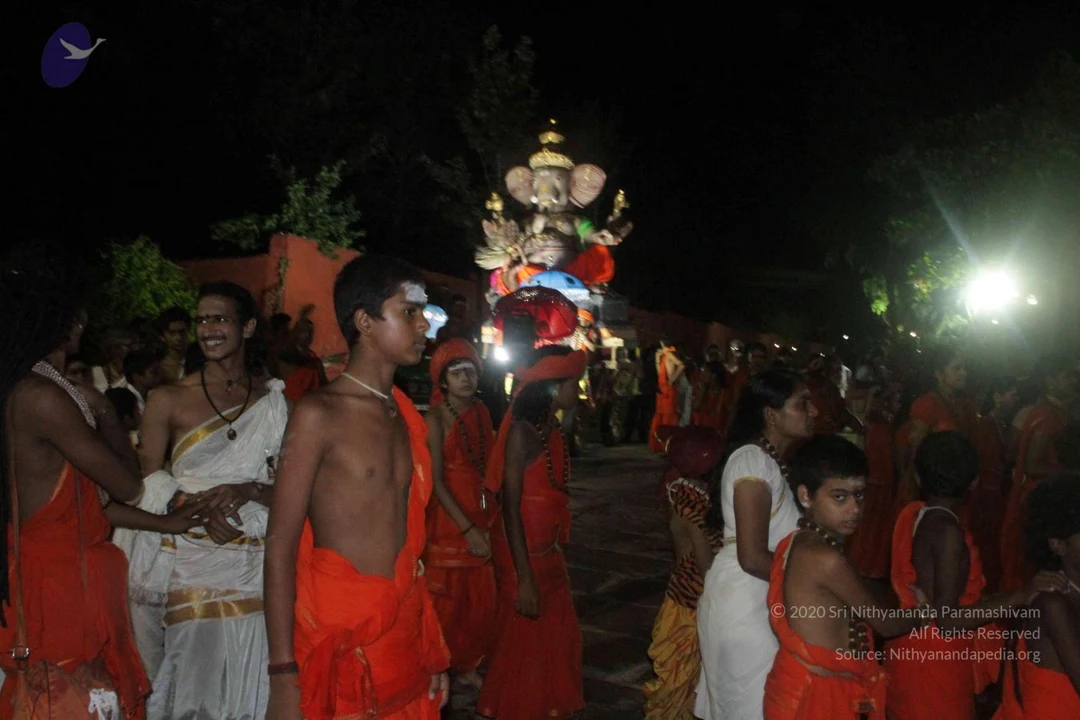
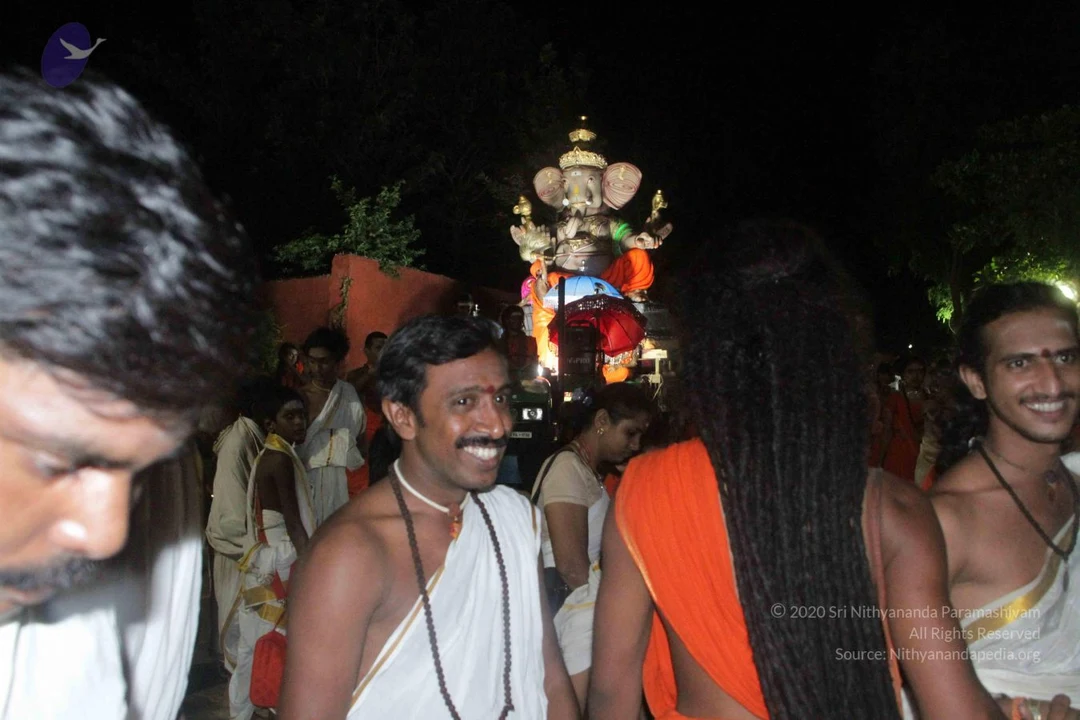
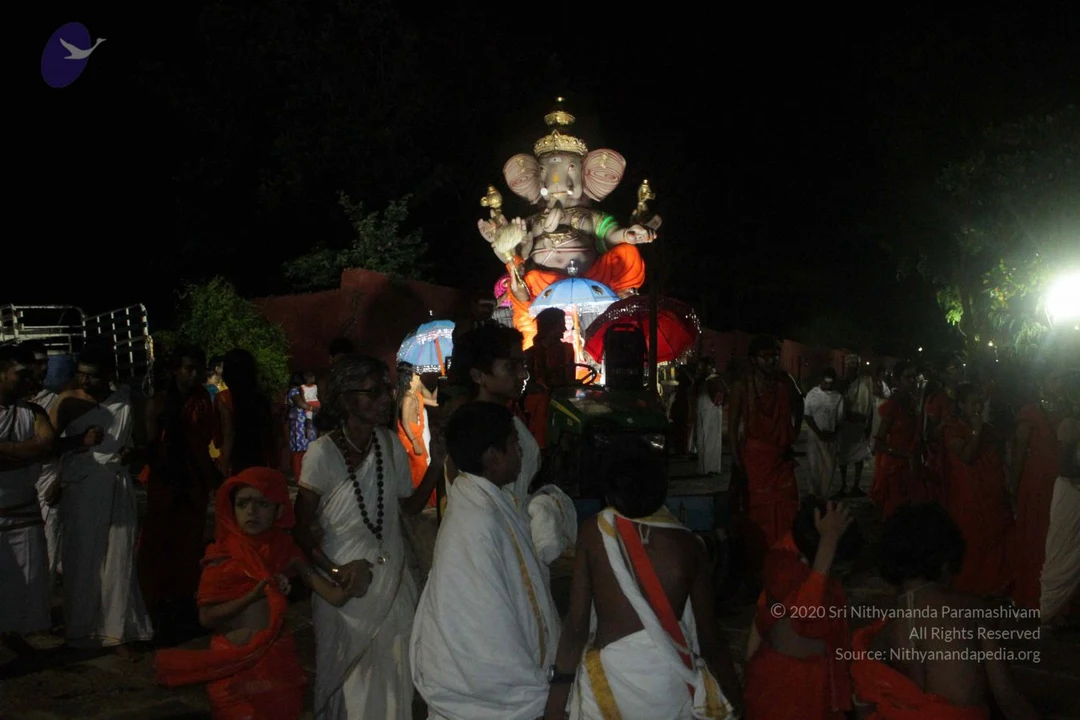
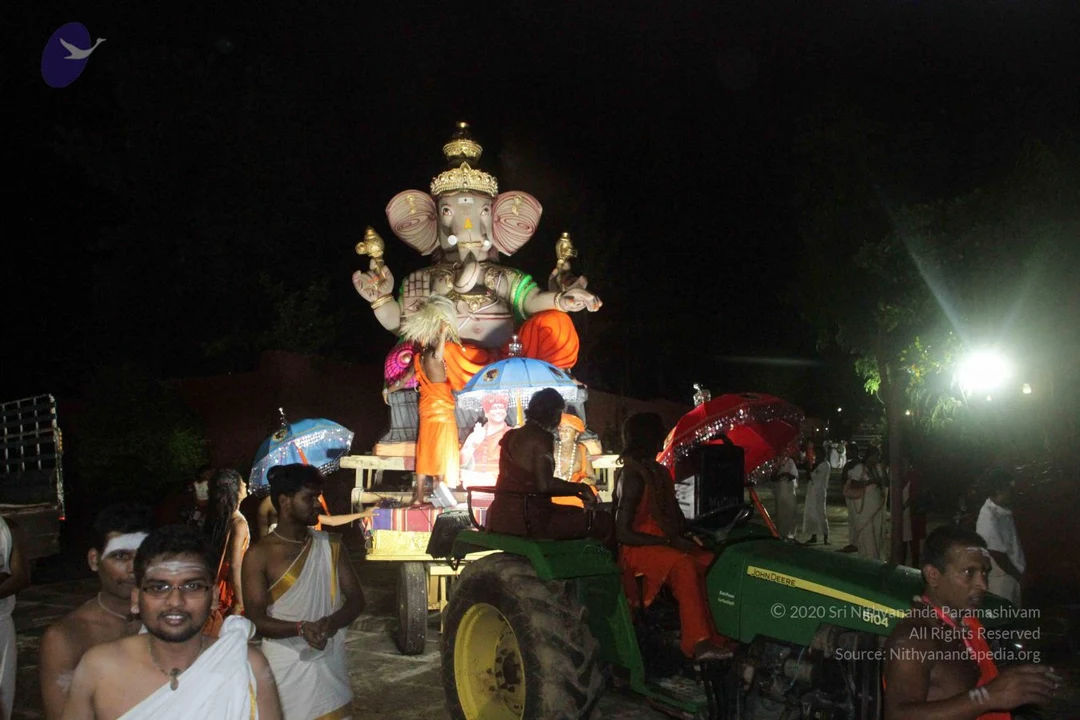
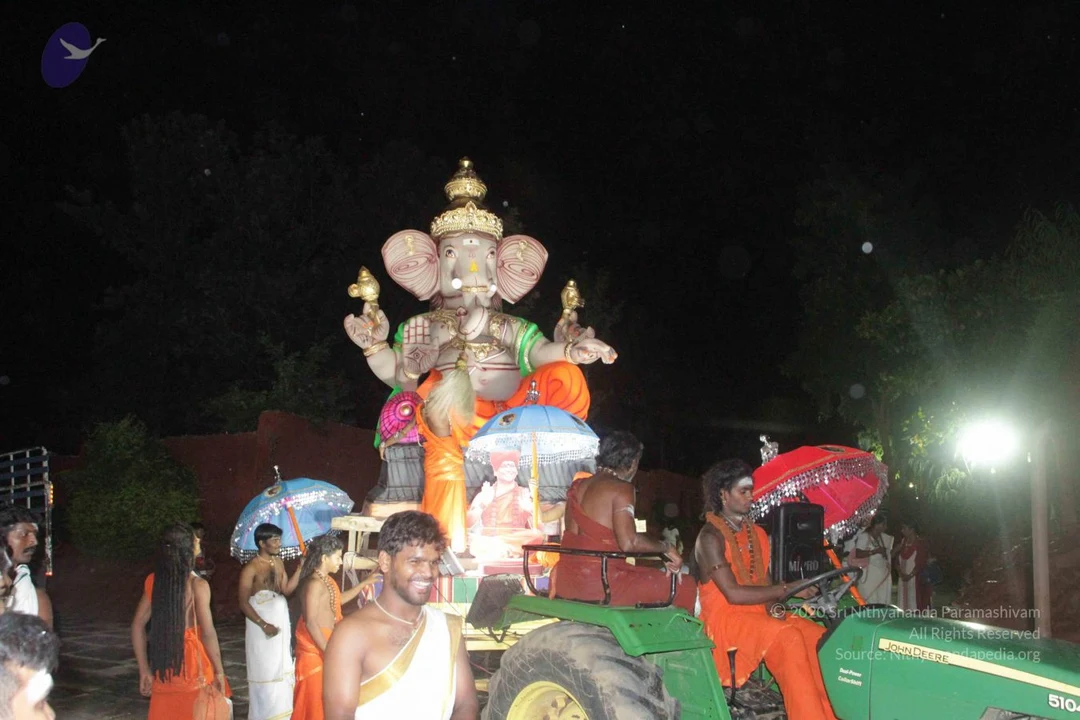
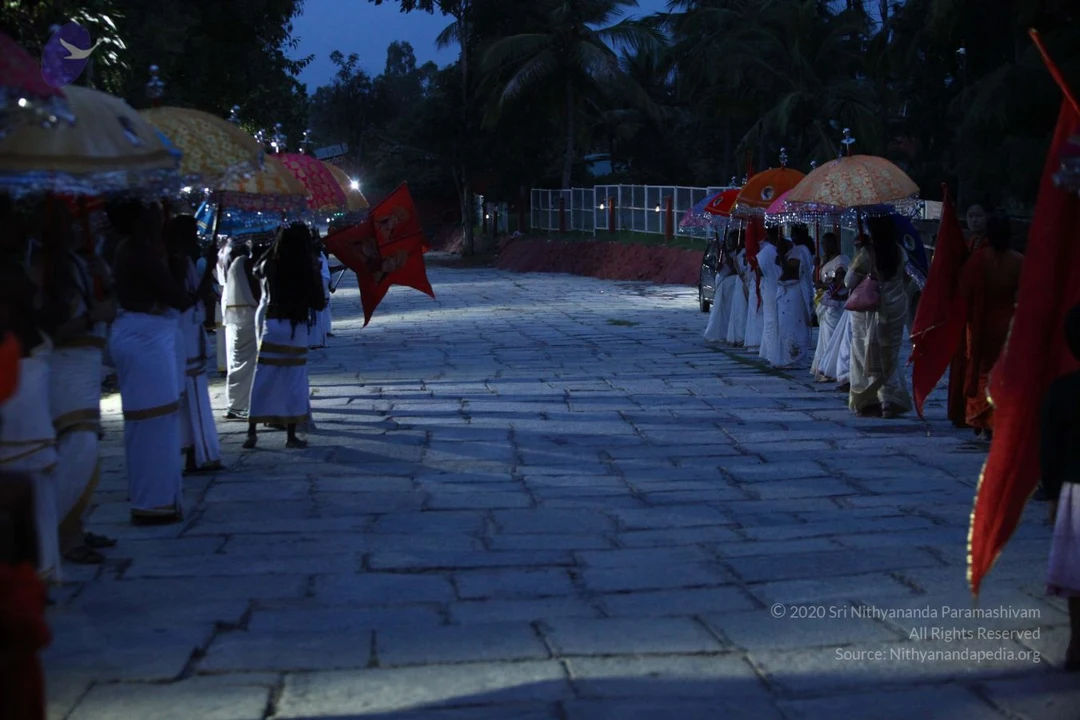
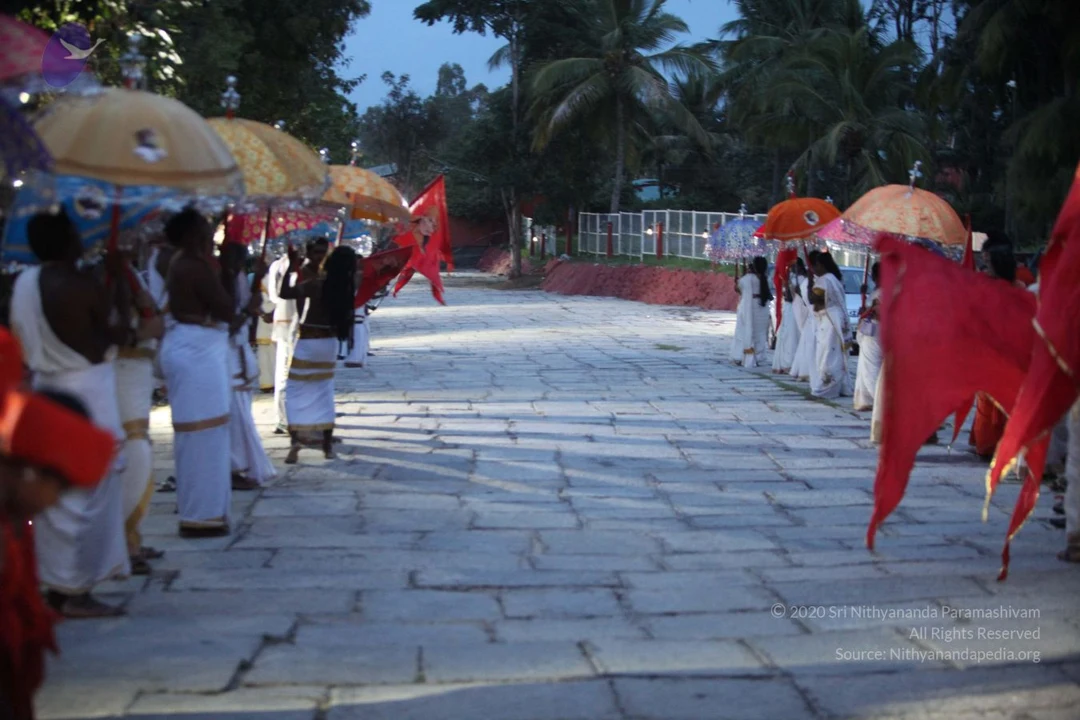
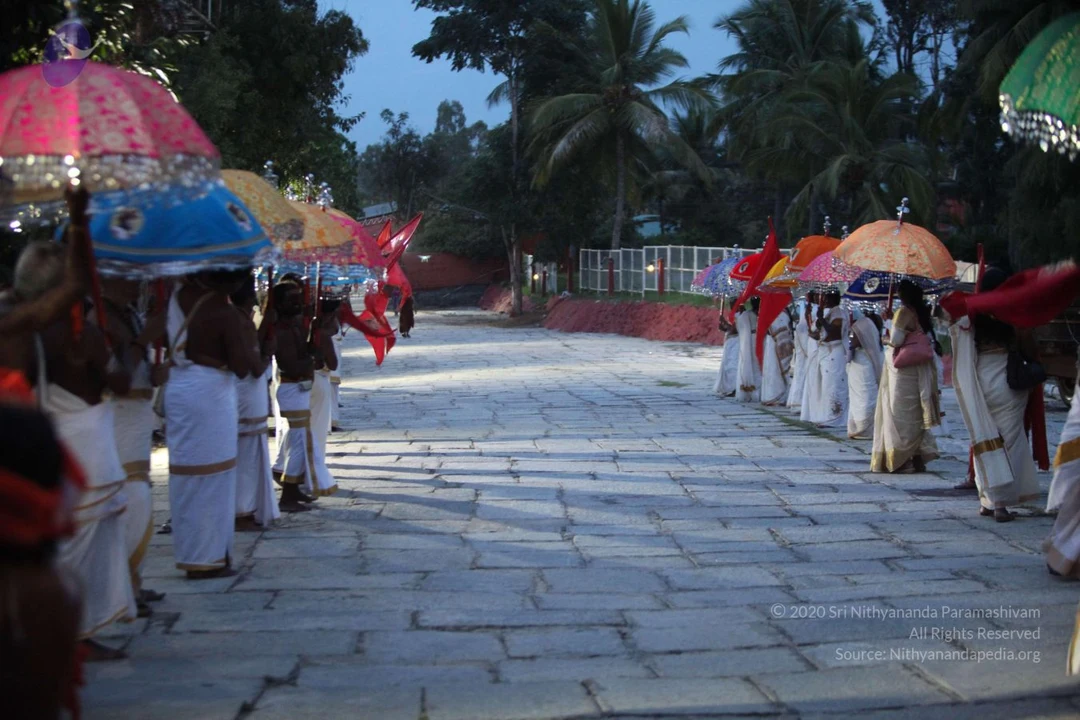
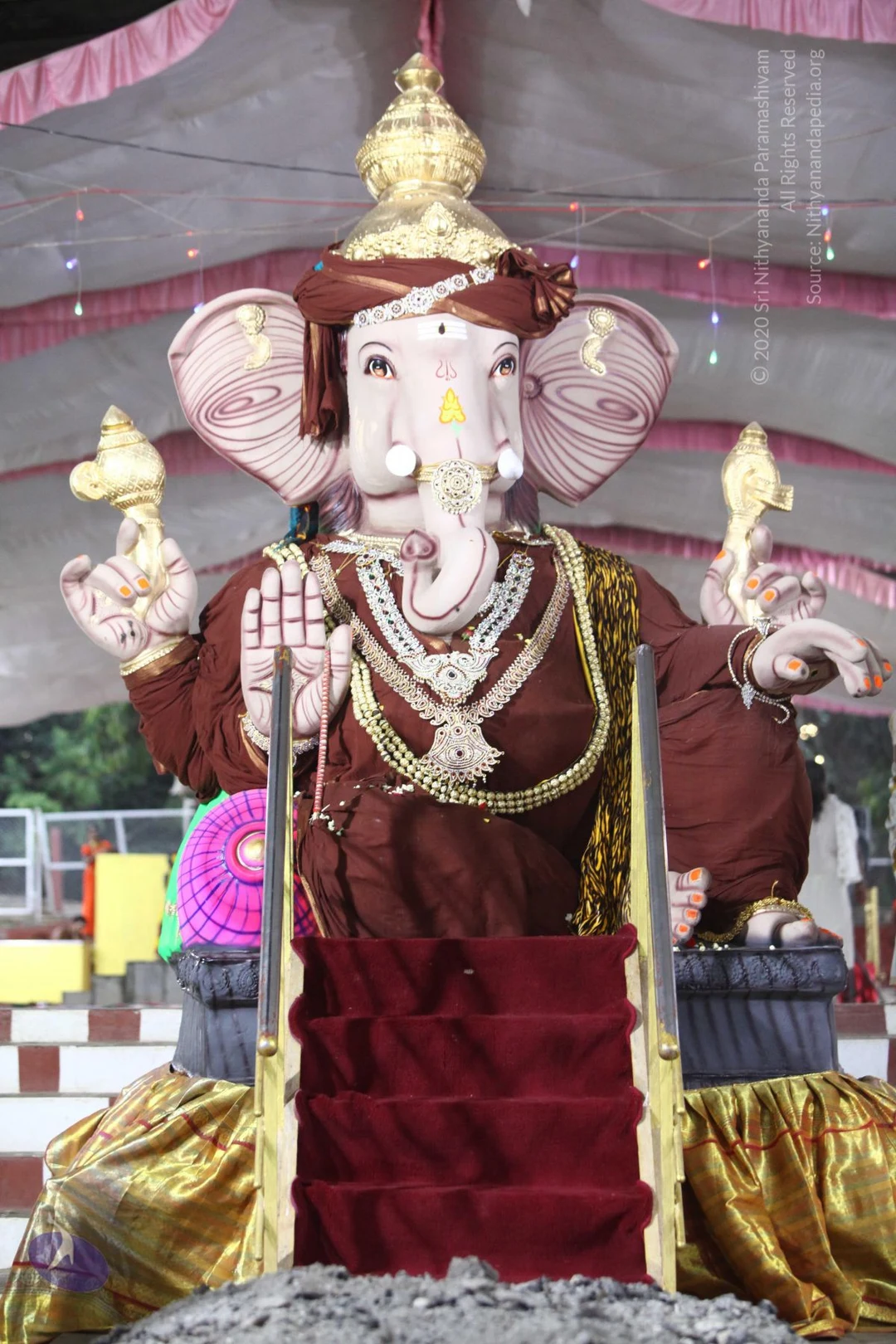
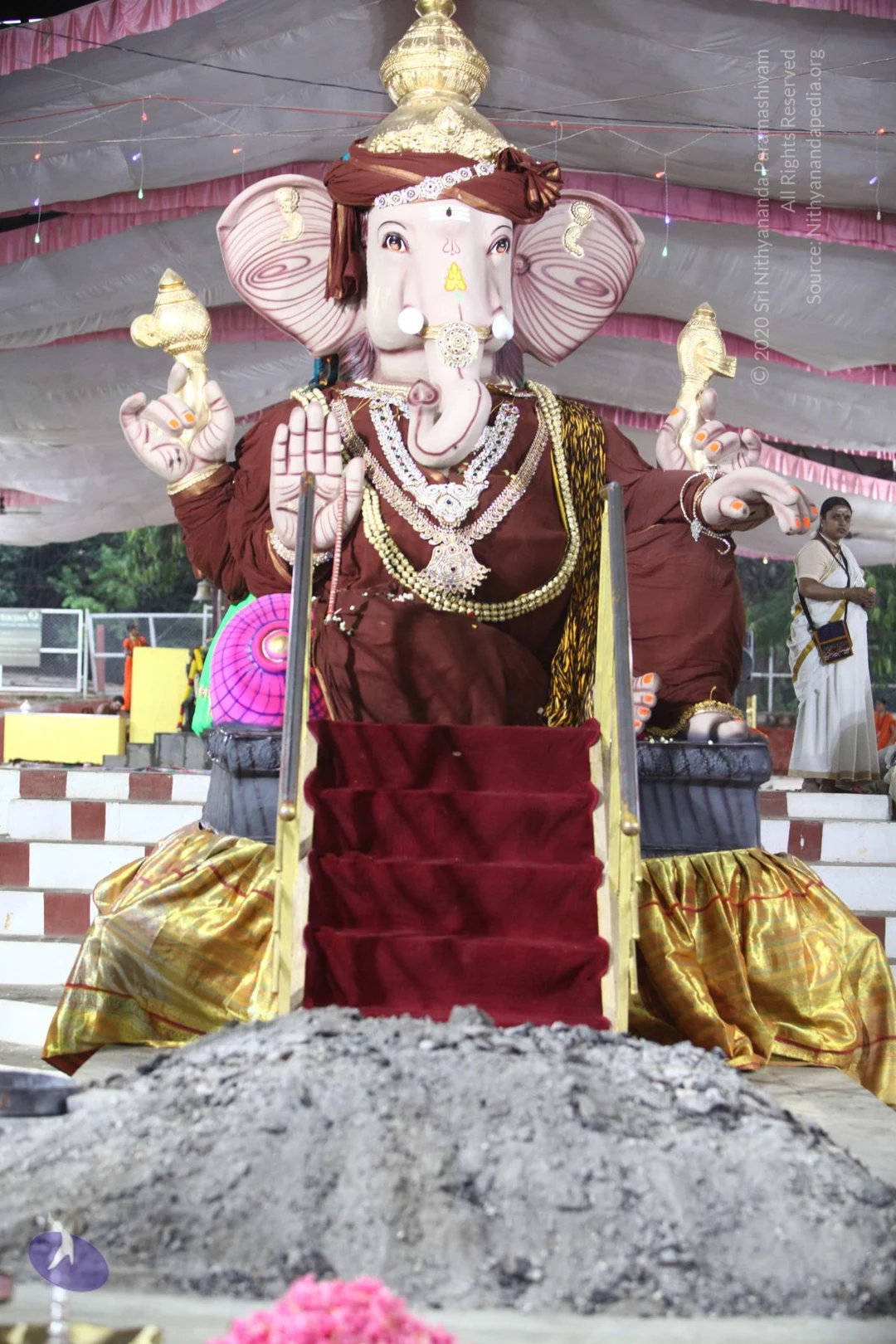
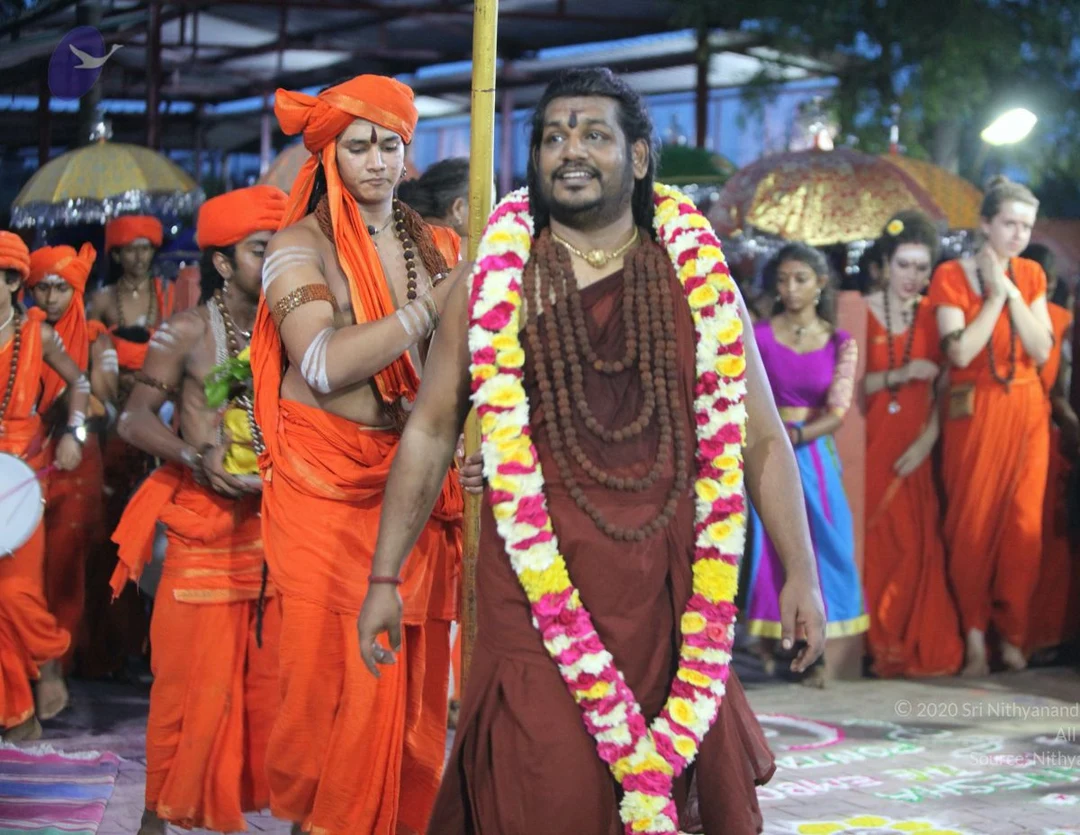
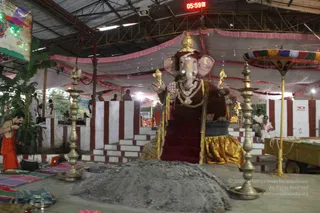
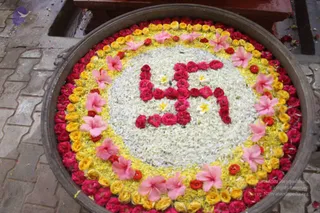
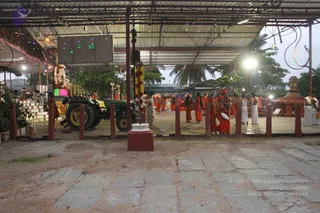
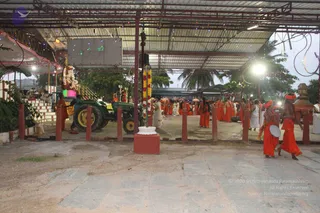
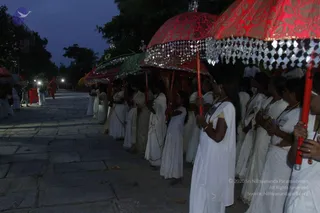
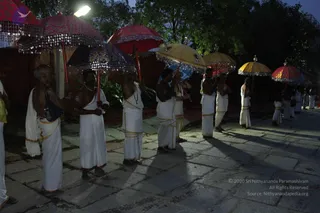
A photograph of a large Ganesha murti seated on a red-draped dais in a covered open-sided pavilion with pink and white draped fabric overhead. The elephant-headed deity wears a gold crown, gold and white garlands and gold ornaments, and sits before a heap of grey ash or sand on the floor. Brass oil lamps with lit flames flank the foreground, and a multicoloured umbrella stands at right. A man in orange robes stands at left, and a few seated people in white are visible at right. A red and white striped wall frames the back. A digital clock reads 05:59 at top centre.A photograph of a large round metal vessel set on a paved ground, filled with a floral arrangement. Concentric rings of red, pink and yellow petals surround a central white field of rice or grains, on which a red-petalled swastika is laid out with white frangipani-style flowers placed at its corners. Pink hibiscus blooms are scattered among the rings. No people are visible, and the scene reads as a flower and grain offering arrangement, possibly for a ritual.Evening outdoor scene under a corrugated metal roof strung with coloured fairy lights. A green John Deere-style tractor sits beside a large white and gold Ganesha statue on a red-and-white stepped platform. Several people in saffron-orange robes and red headwear, some playing a hand drum, walk and gather in a courtyard, while others in white dhotis stand on the right beside a stone lamp pillar. A tall pole wrapped in marigold garlands stands in the foreground. Lit trees and a palm are visible behind the open pavilion. Roughly a couple dozen people are visible across the courtyard and edges.Outdoor evening scene under a corrugated metal roof strung with coloured fairy lights and a tall green-and-white light fixture. A green tractor with yellow wheels stands near a decorated statue of a seated deity murti on a pink-draped platform. Several people in saffron-orange robes walk across a paved courtyard, and a few in white clothes stand among them. Two men in the foreground wear saffron robes and red headwear, one carrying a drum and the other a long stick. Red bollards line the walkway, and a flower garland hangs from a pole in the centre. Palm trees and a dusk sky are visible beyond the structure.A photograph of an evening procession on a paved stone path lined with palm trees. Women in white saris and white blouses carry tall red and green umbrellas with ornate red-and-gold brocade canopies and hanging silver beaded fringe on red poles. Some women hold their hands together in prayer while others walk in a long line. Dim street lights glow in the background. Figures are clearly visible; no a person candidate is visibly present.Dusk procession on a paved stone path beside a dark red wall and trees. Several bare-chested men in white dhotis with golden borders walk in a line, many holding ornate umbrellas with red, pink, yellow, blue and purple canopies edged with sequins and tassels. One man on the left holds a dark bag. A bright lamp glows at the upper left. No individual is clearly identifiable as the a person from appearance.

Pada-Puja
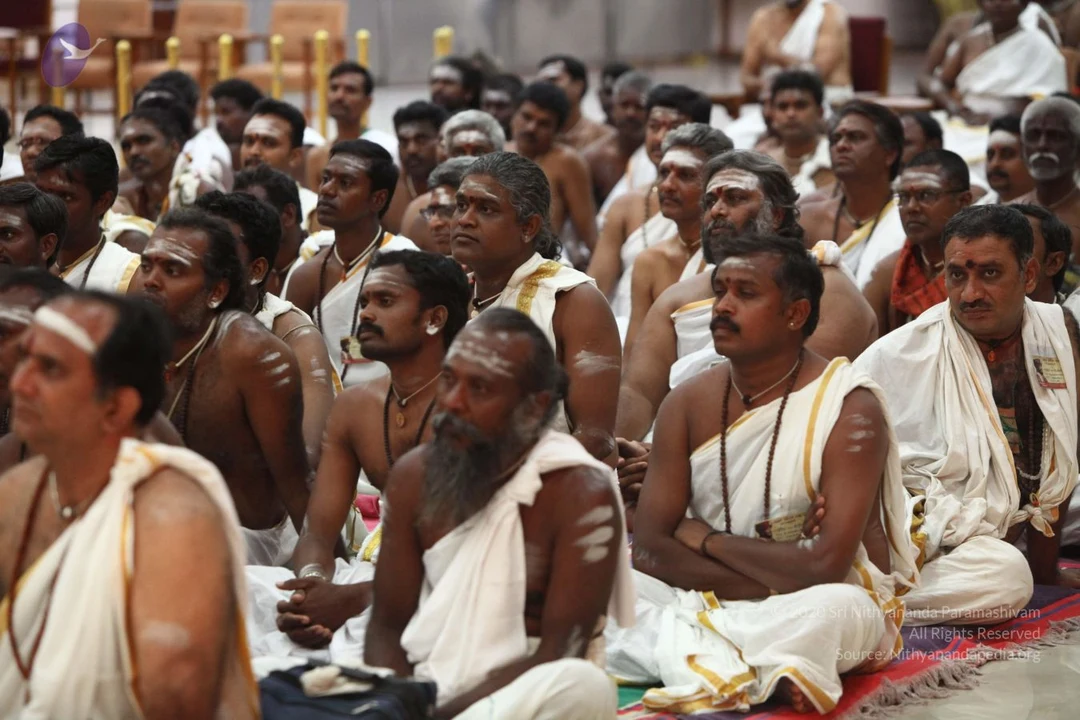
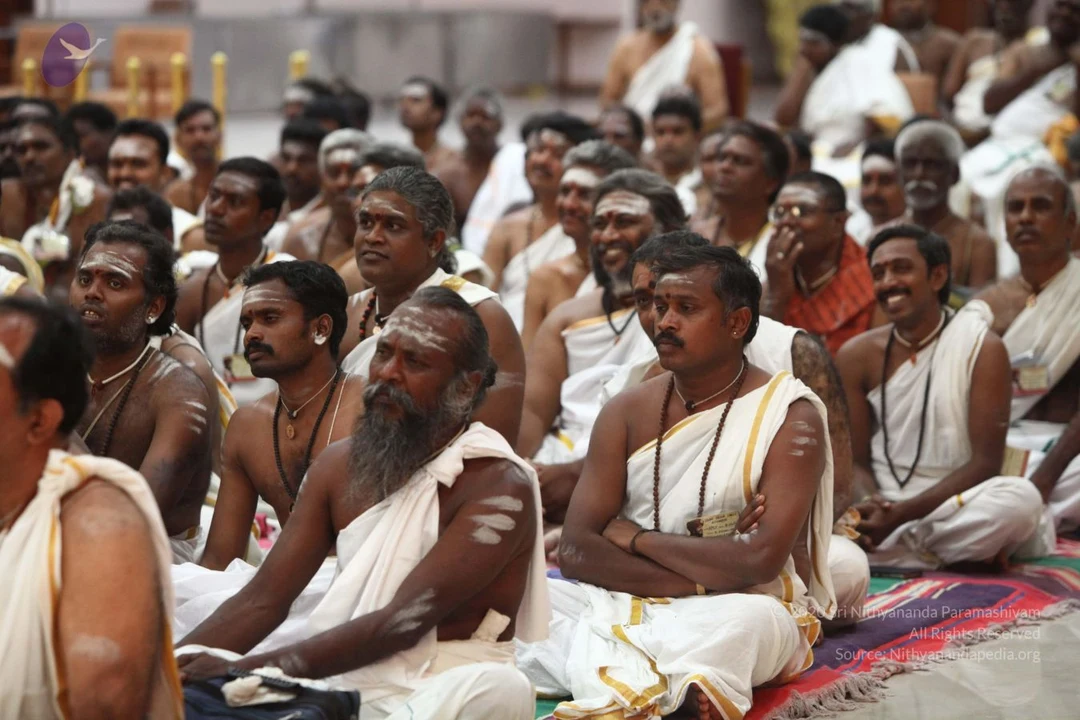
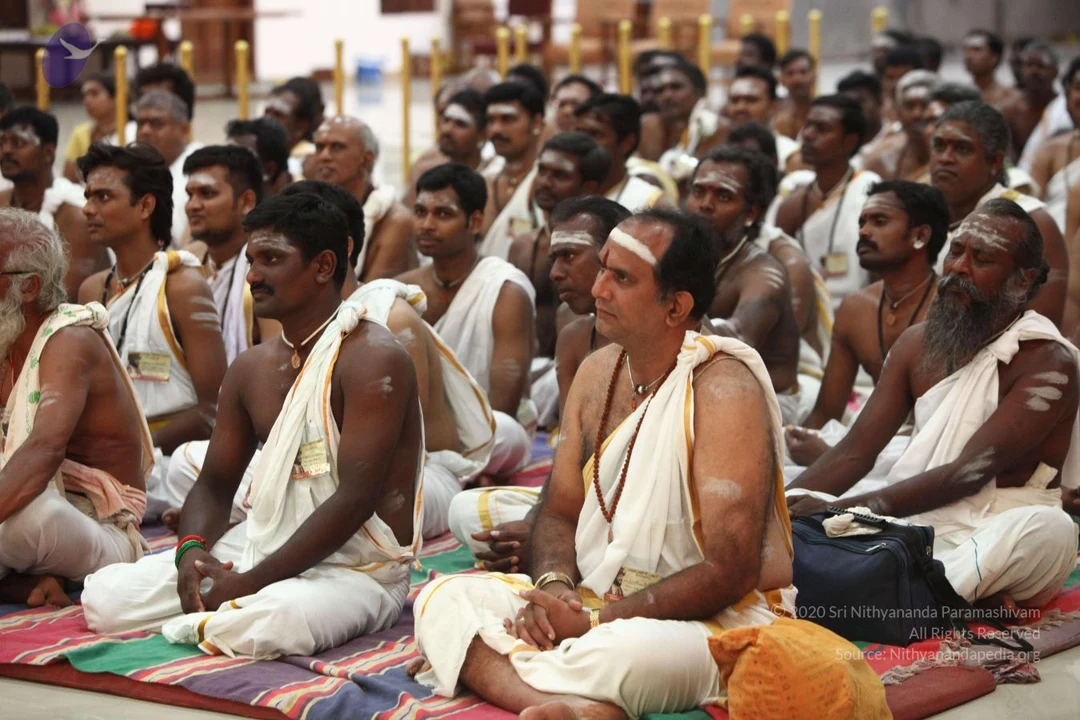
9 photosSource gallery
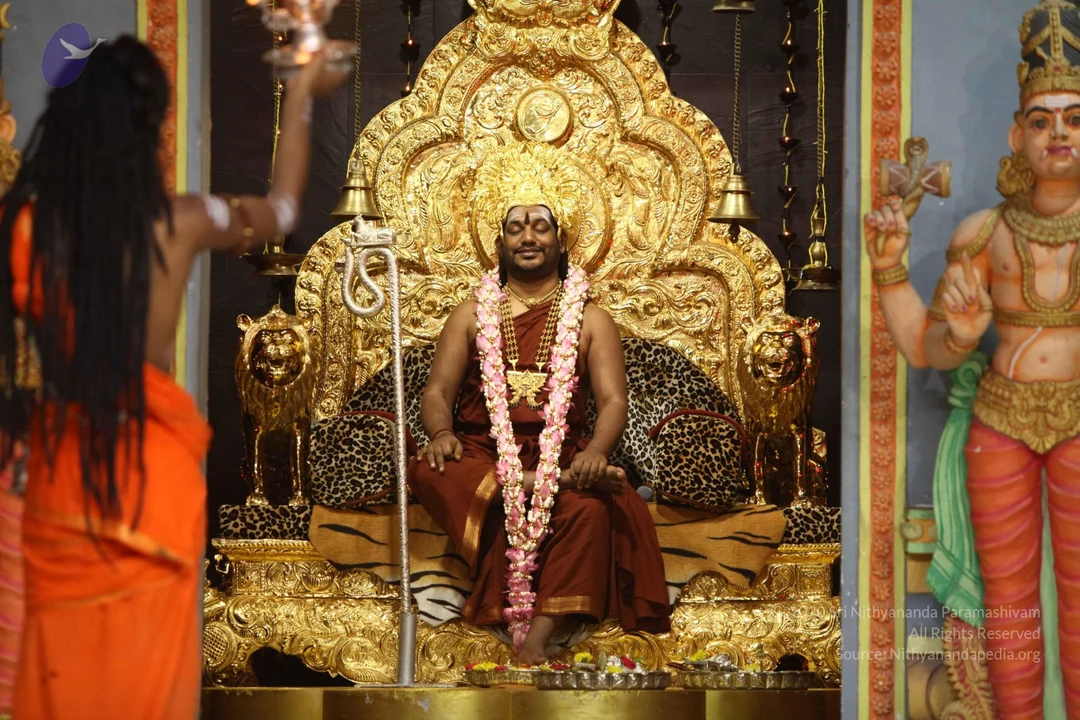
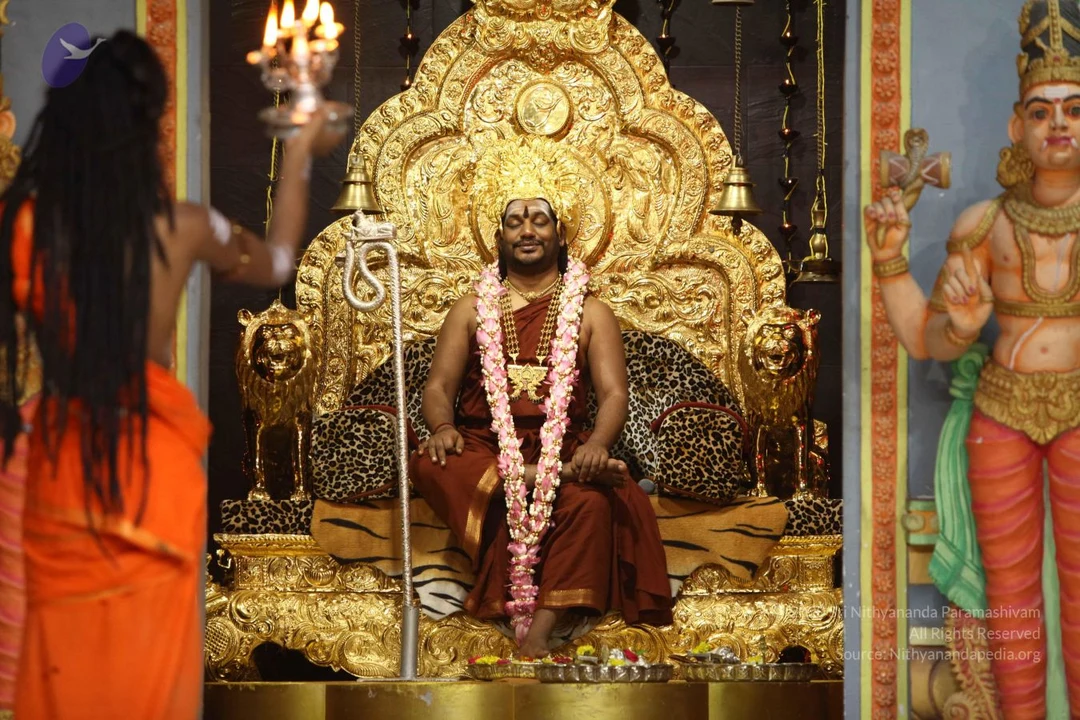
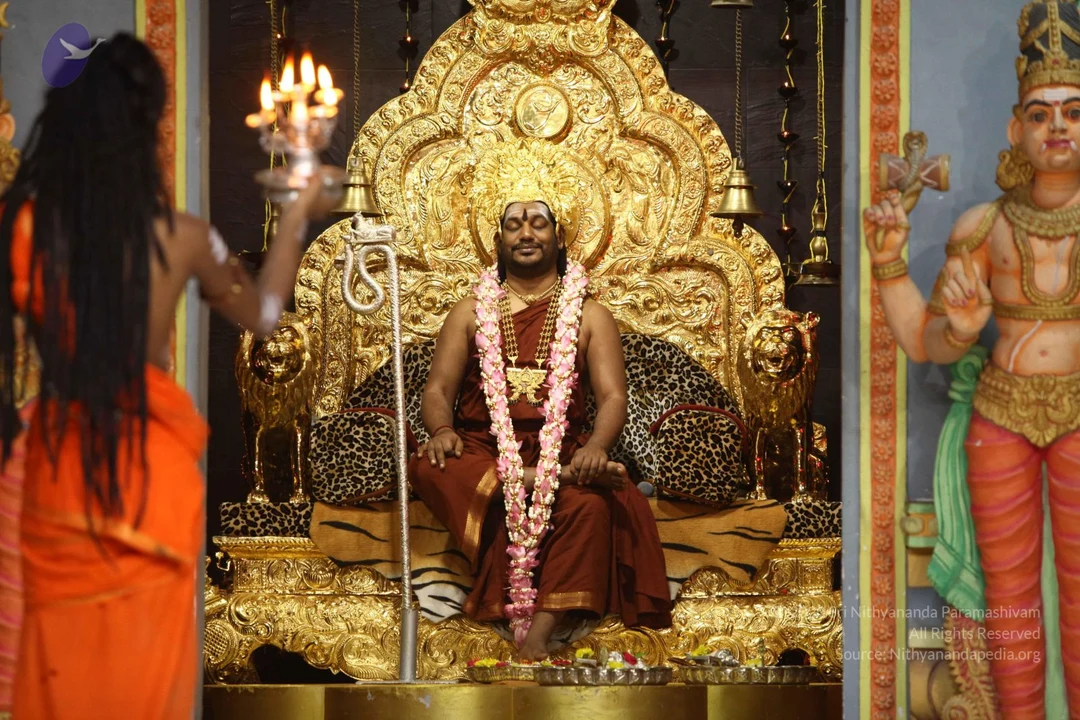
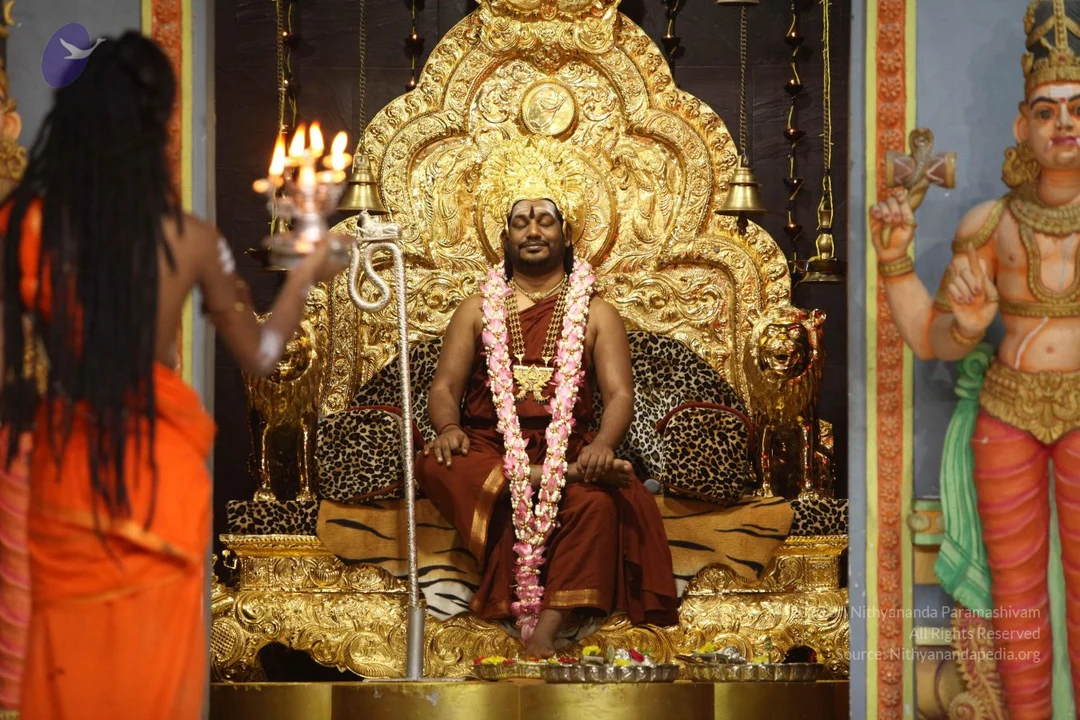
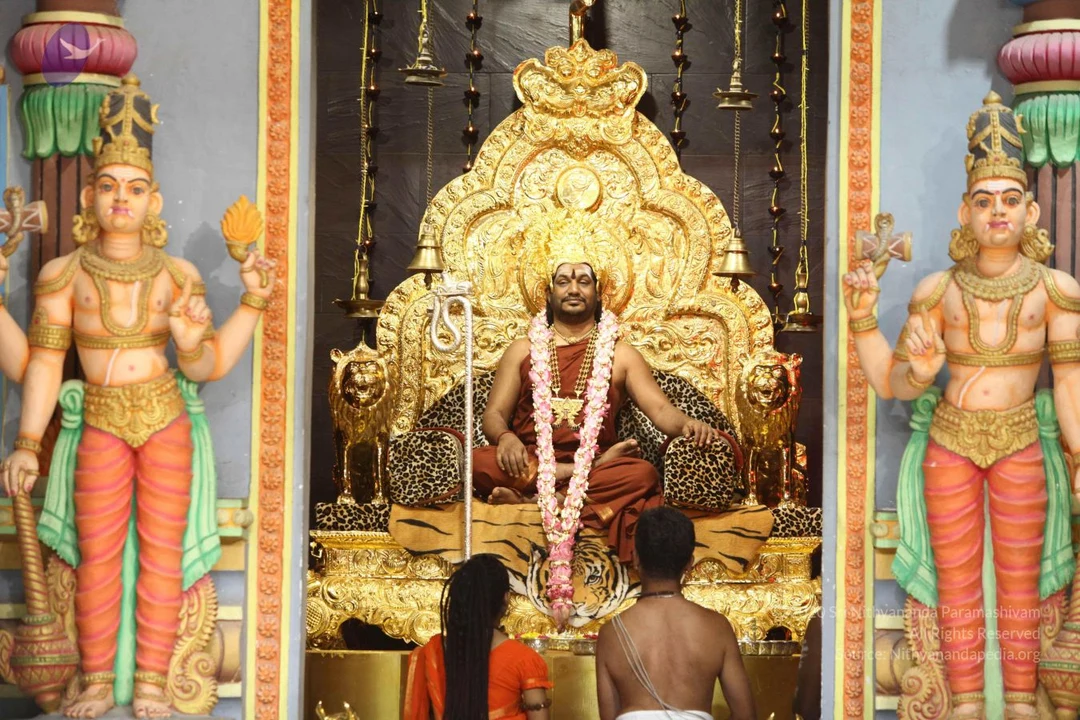
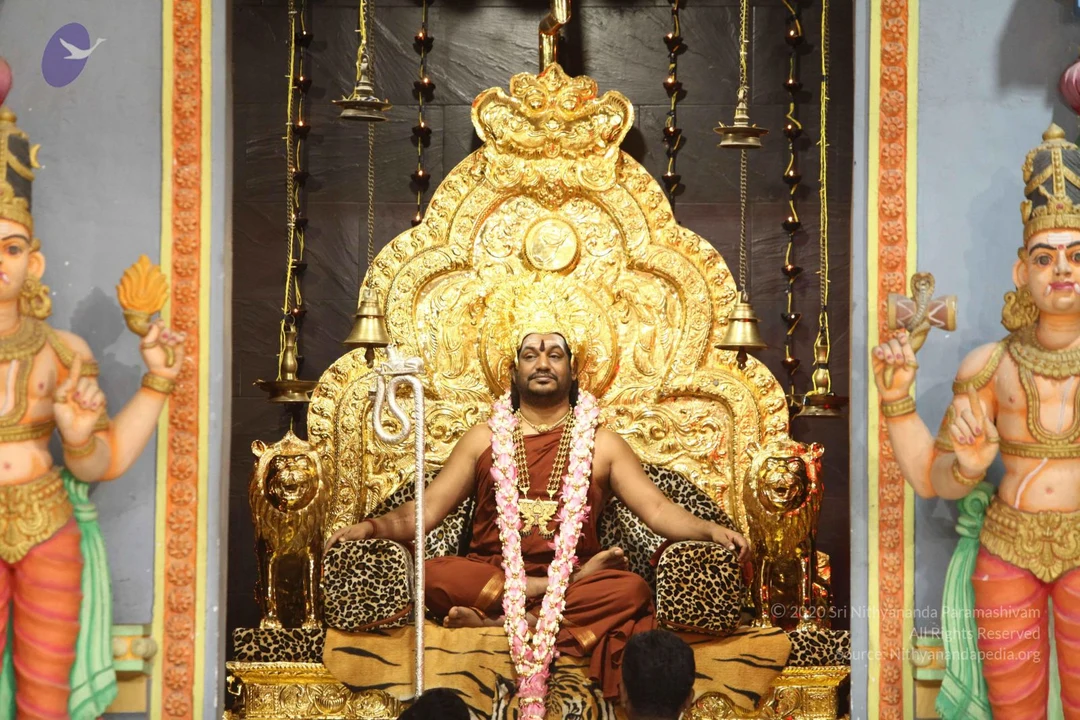
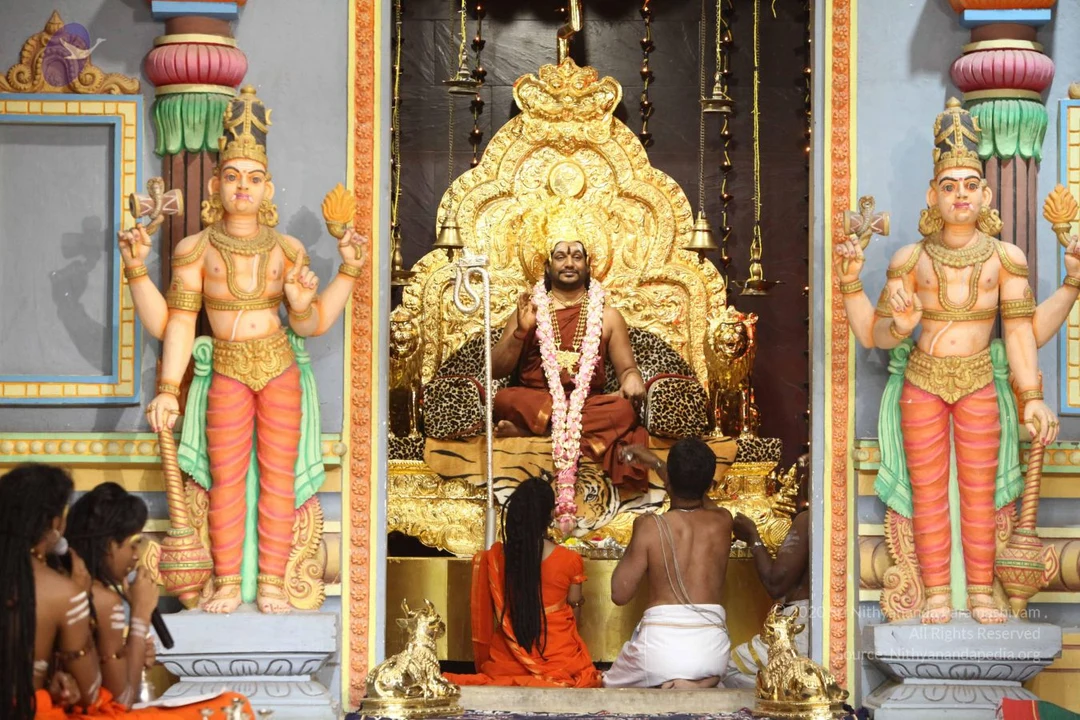
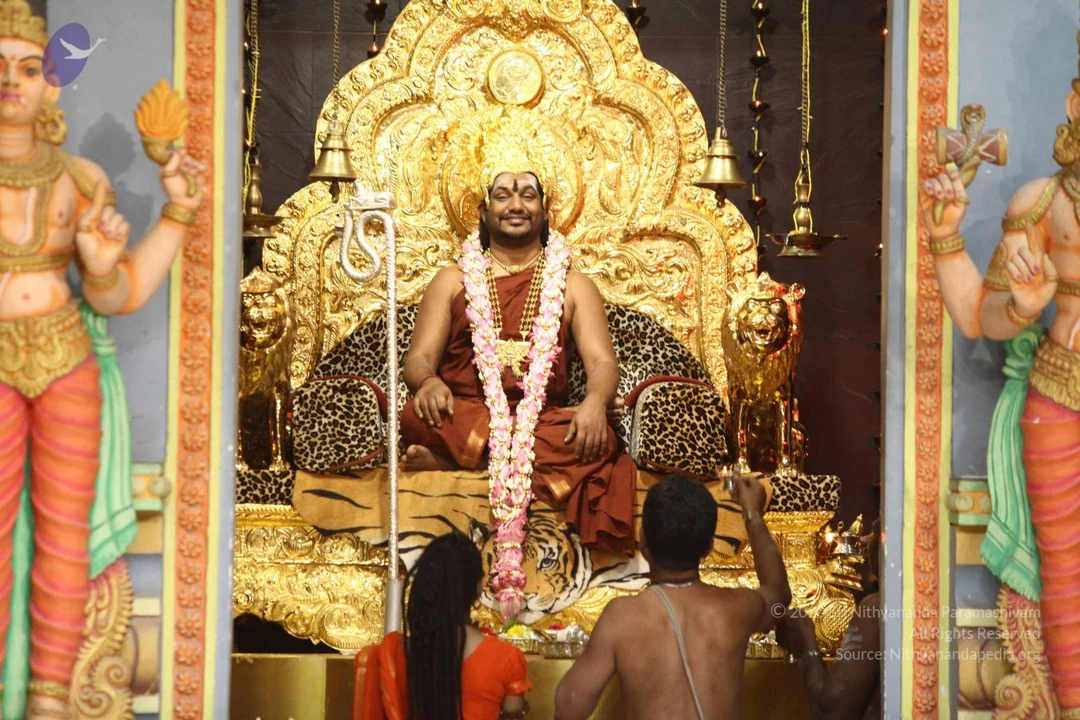
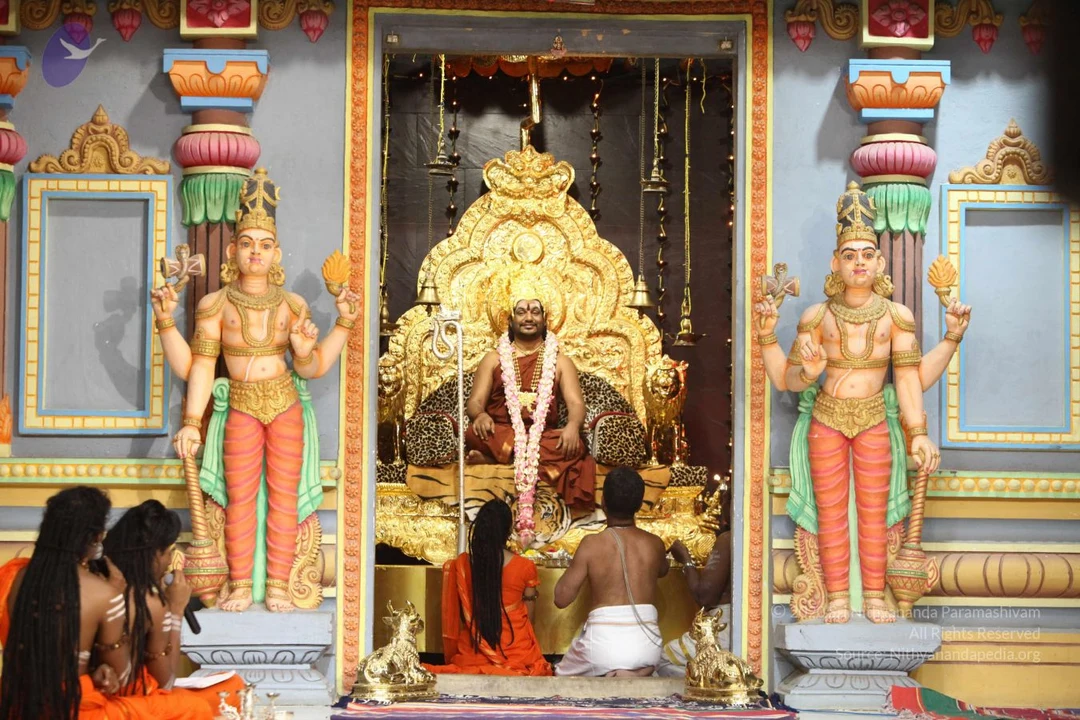
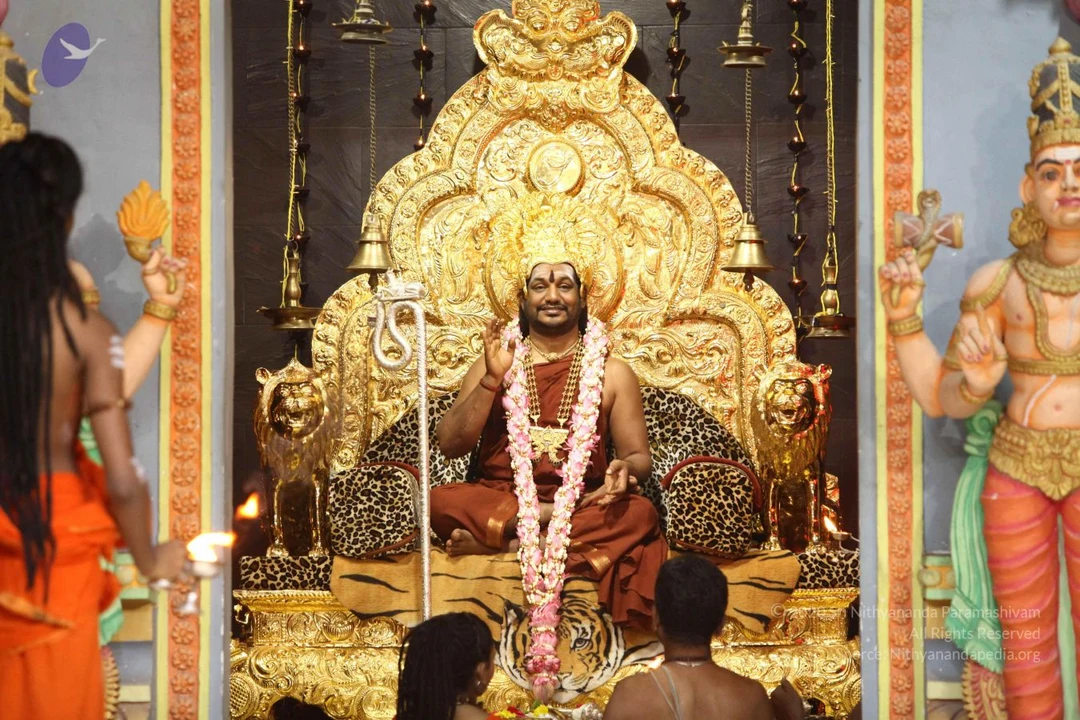
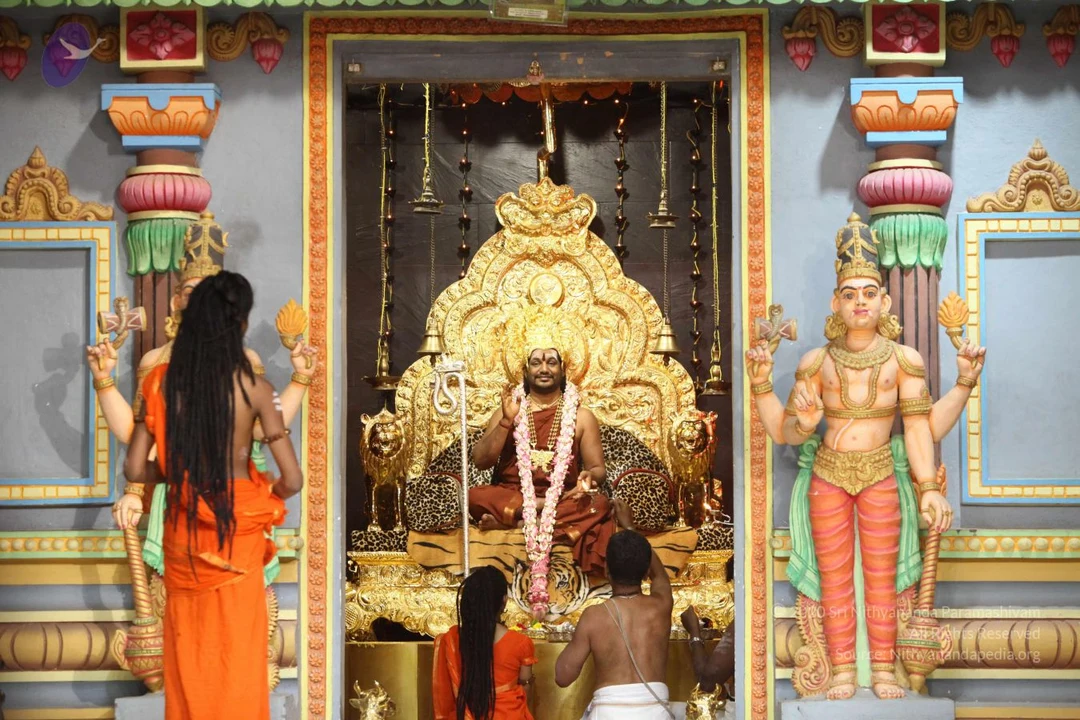
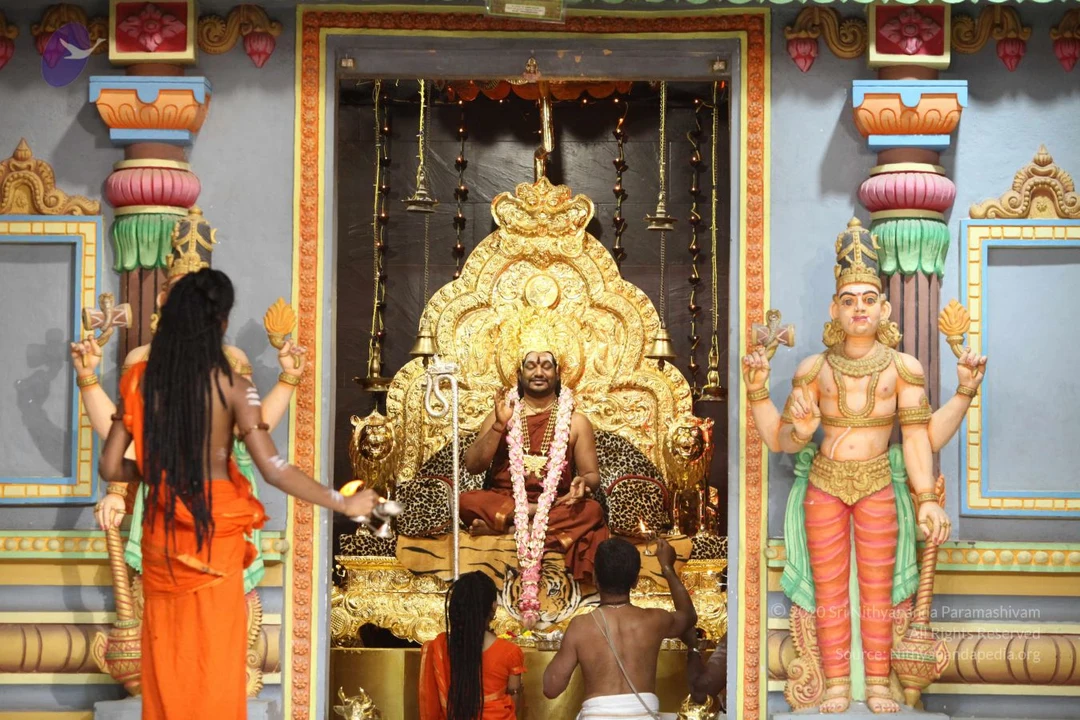
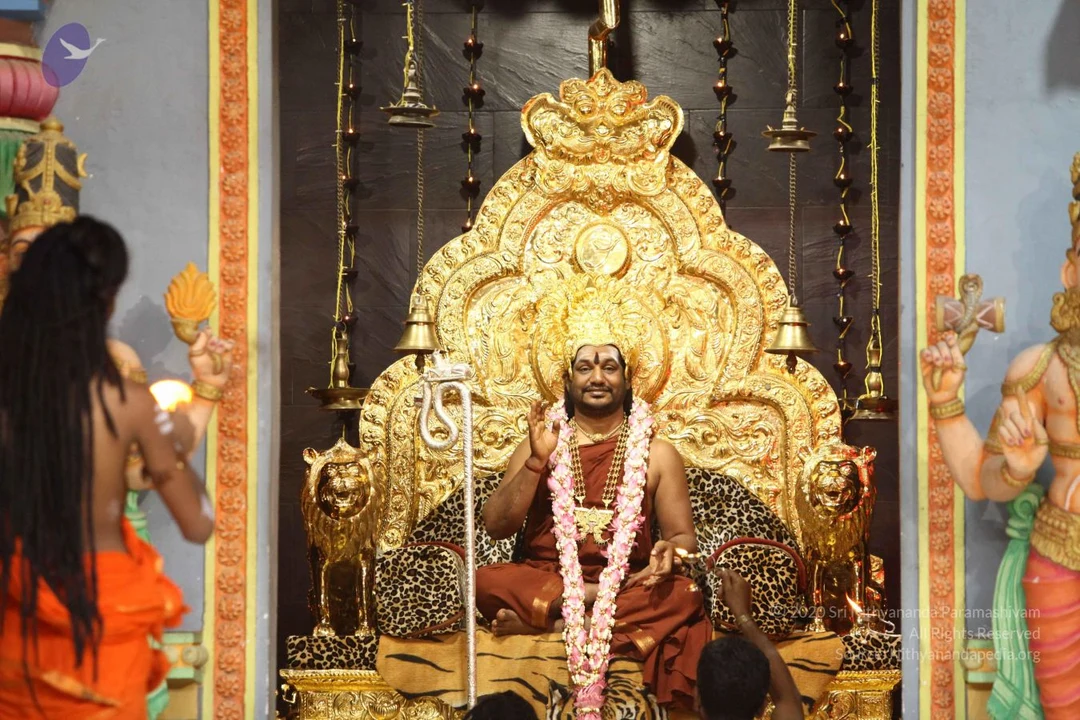
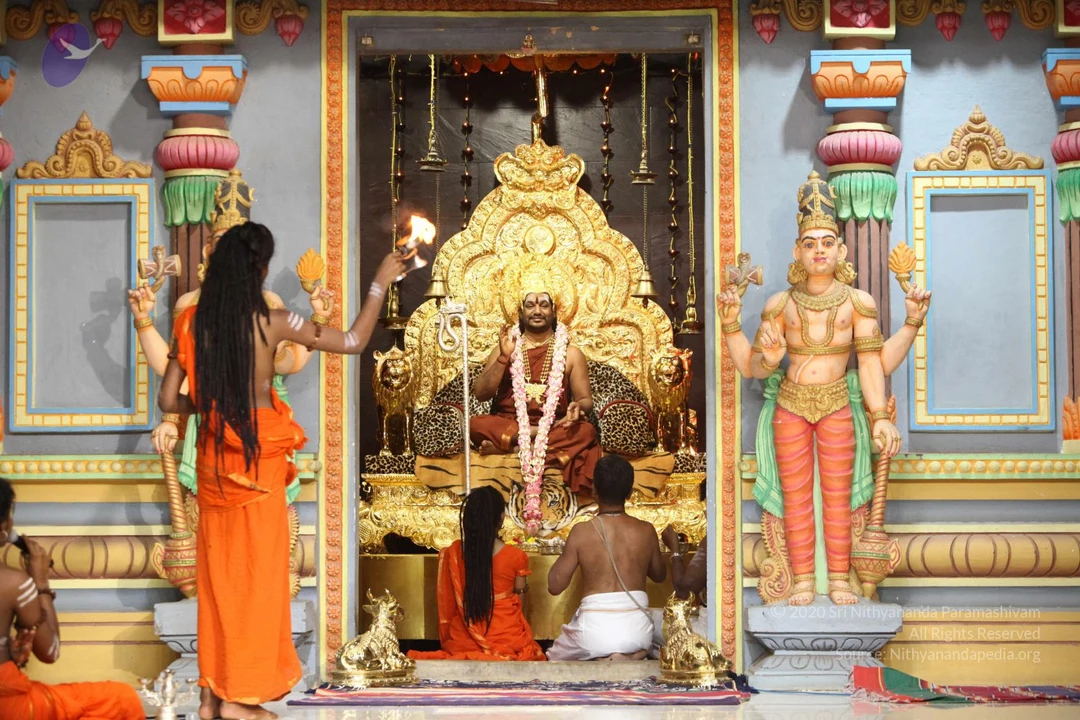
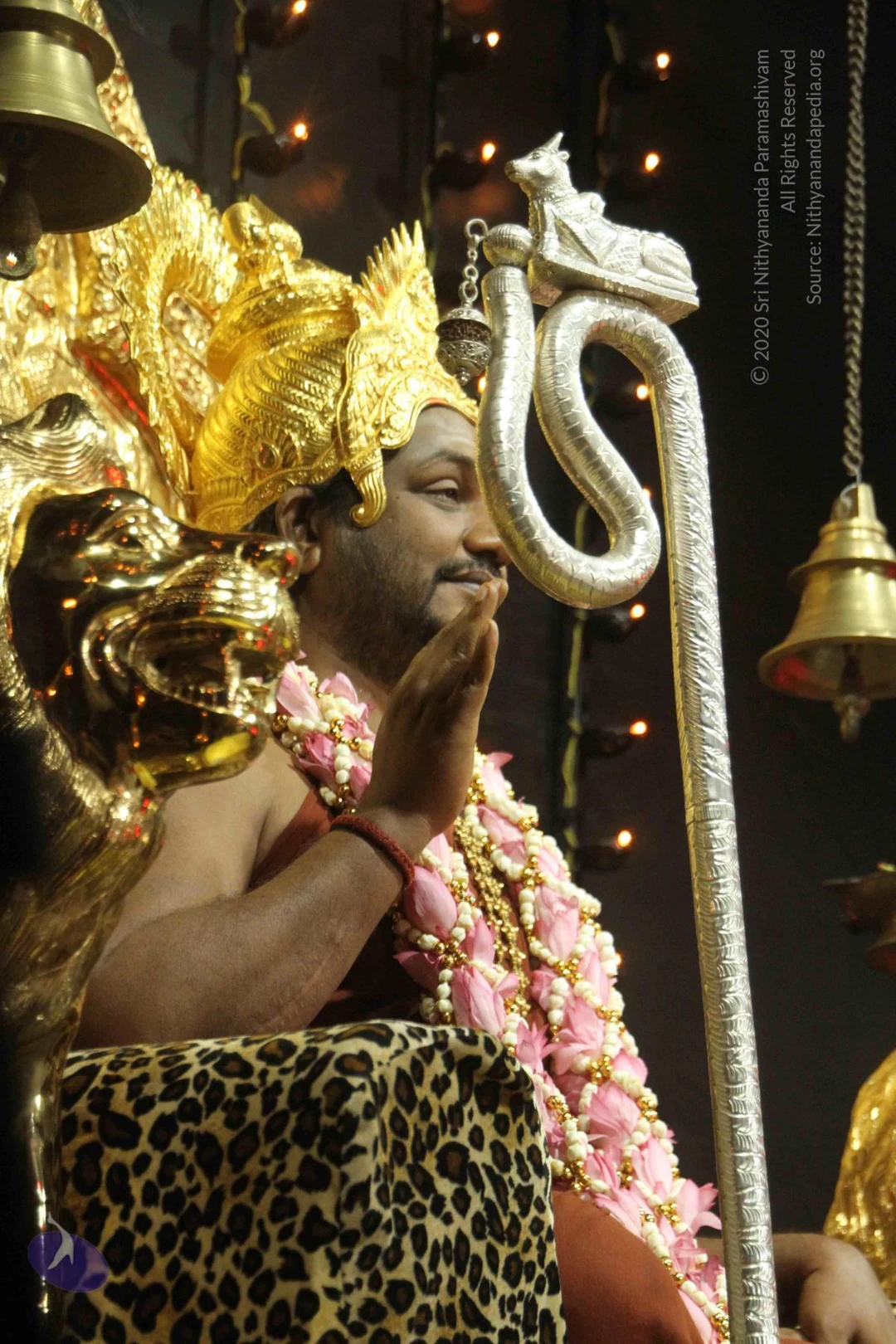
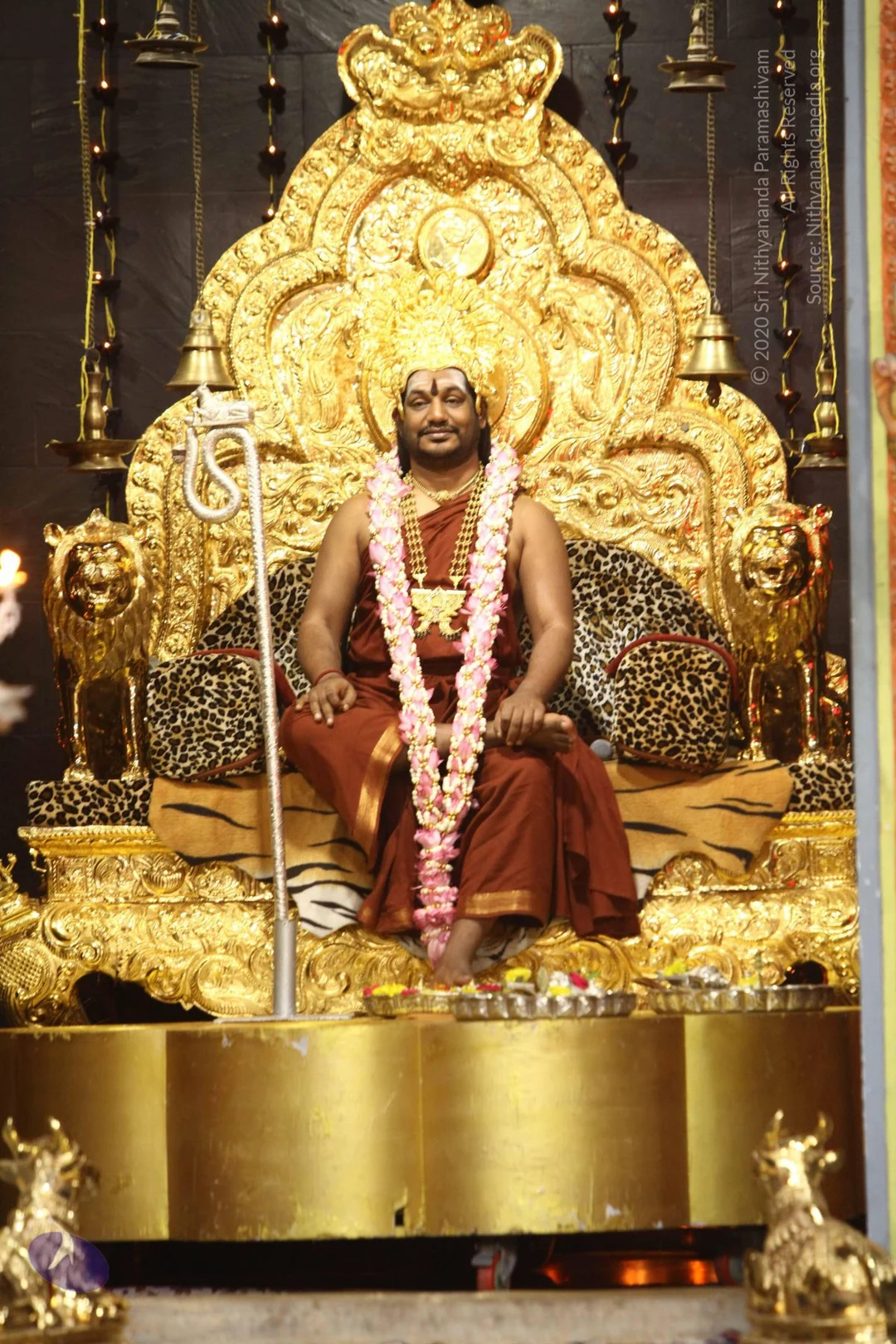
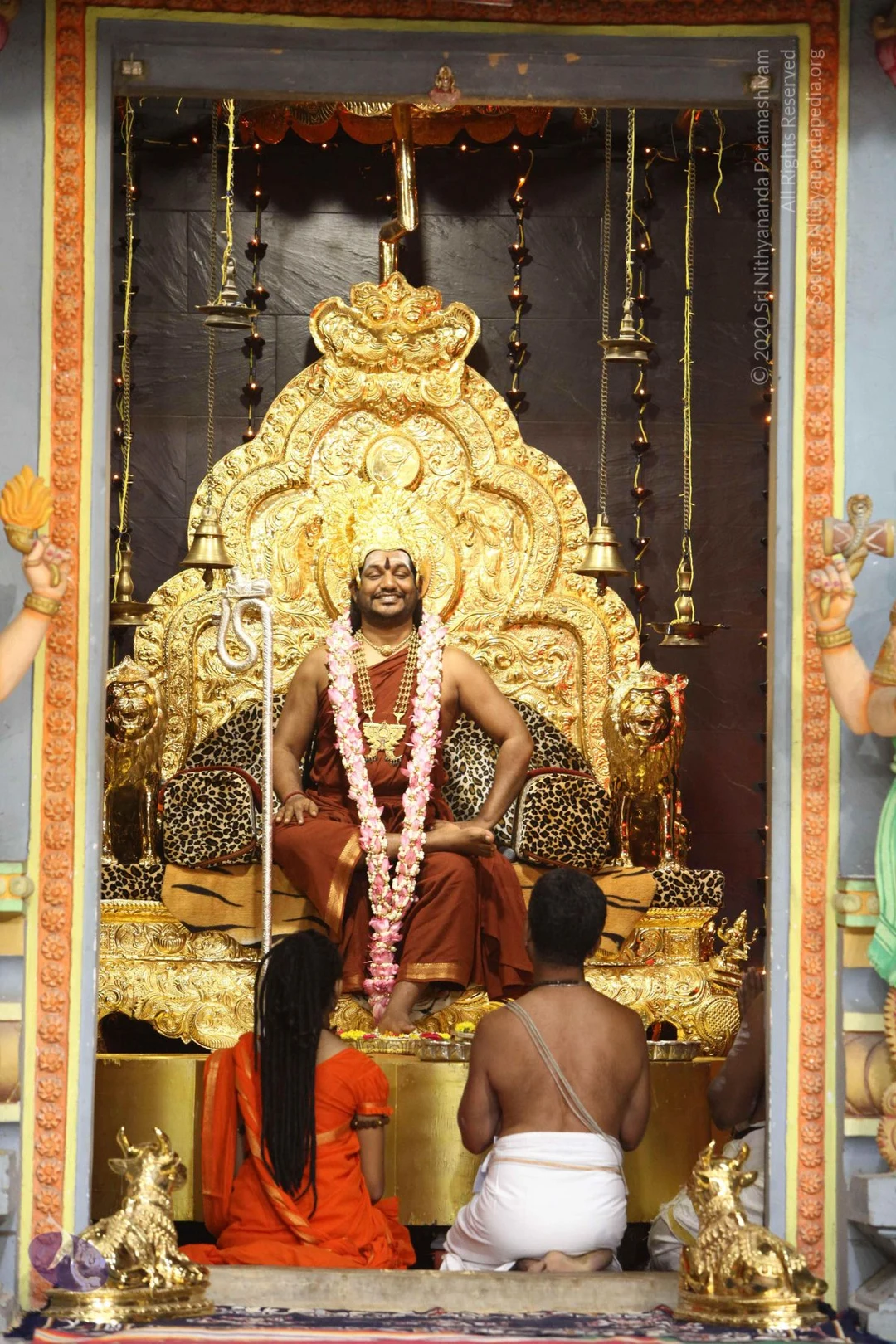
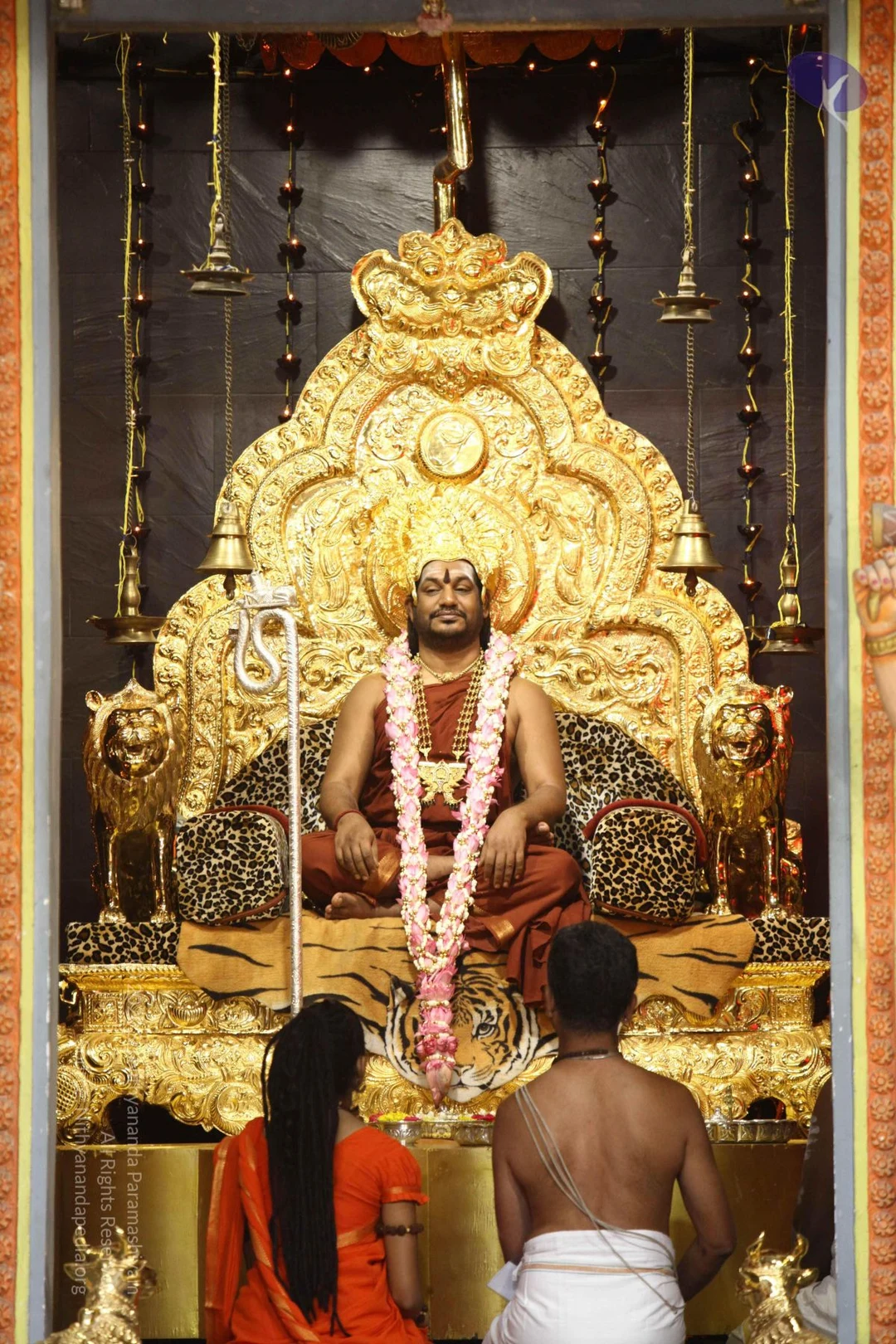
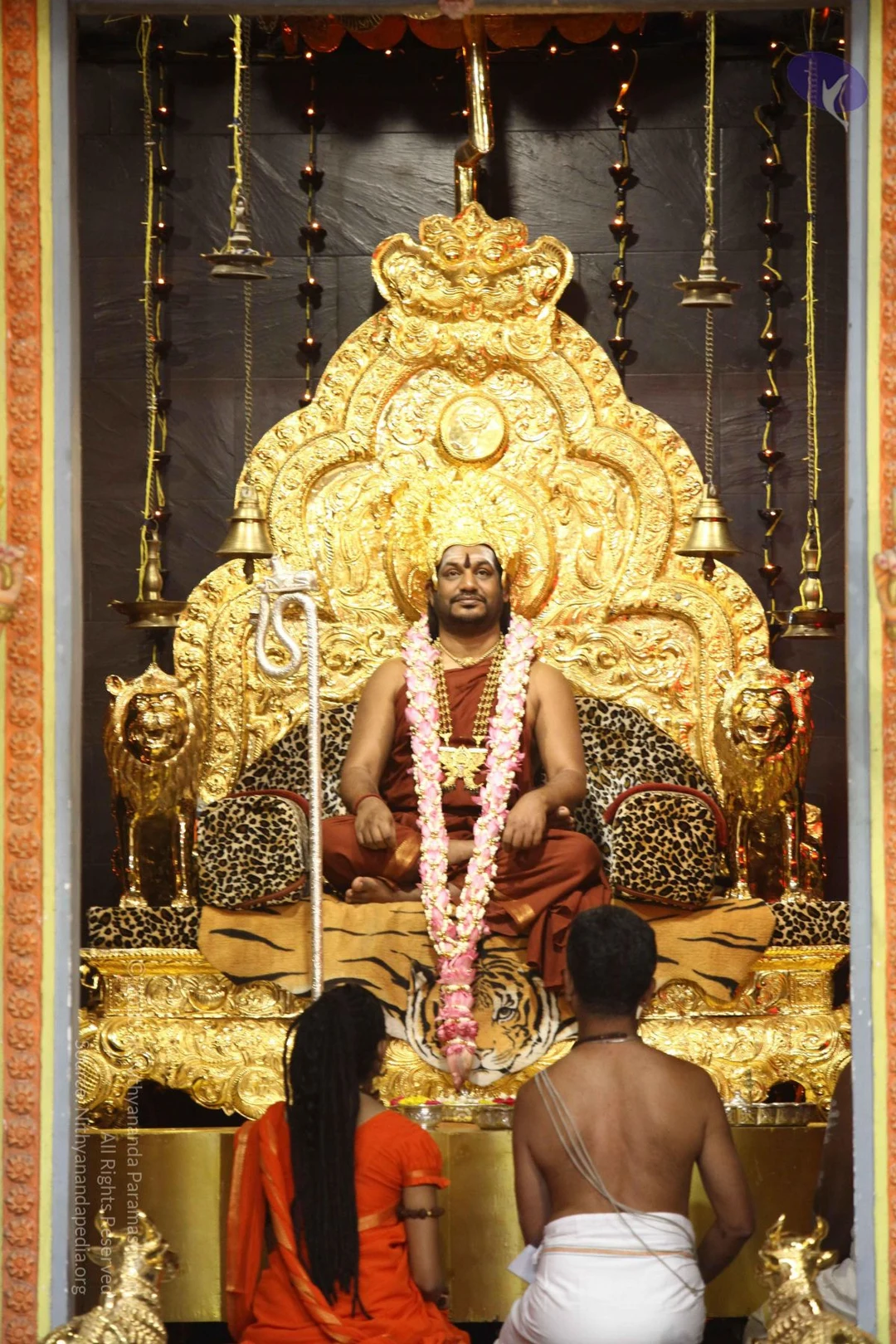
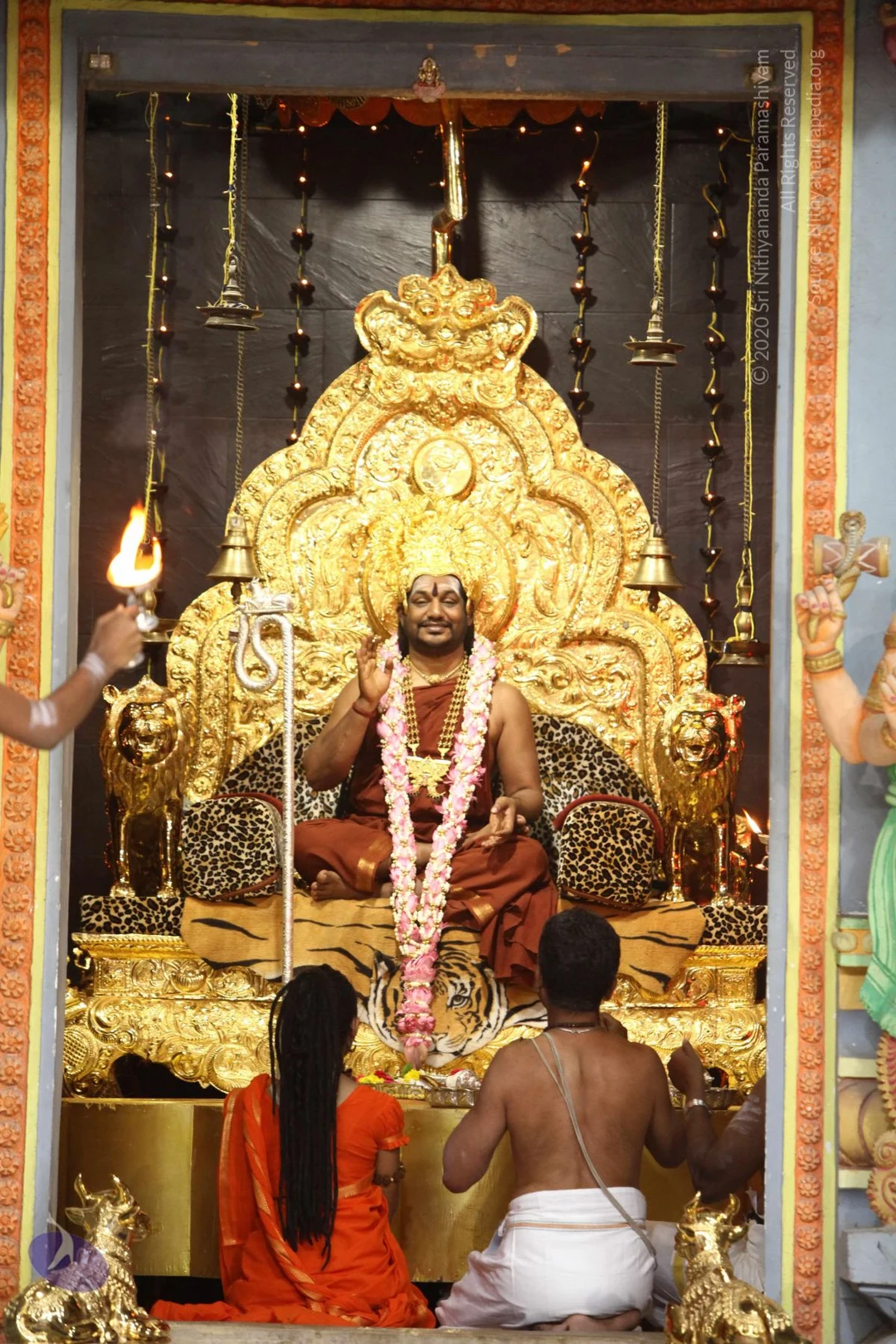
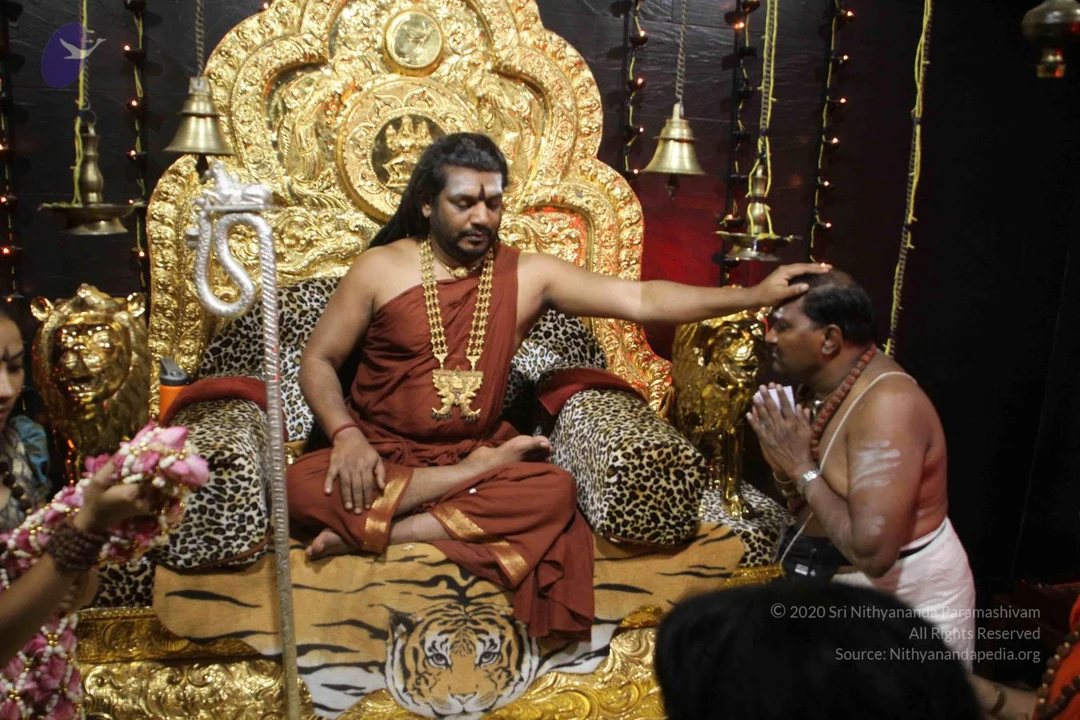
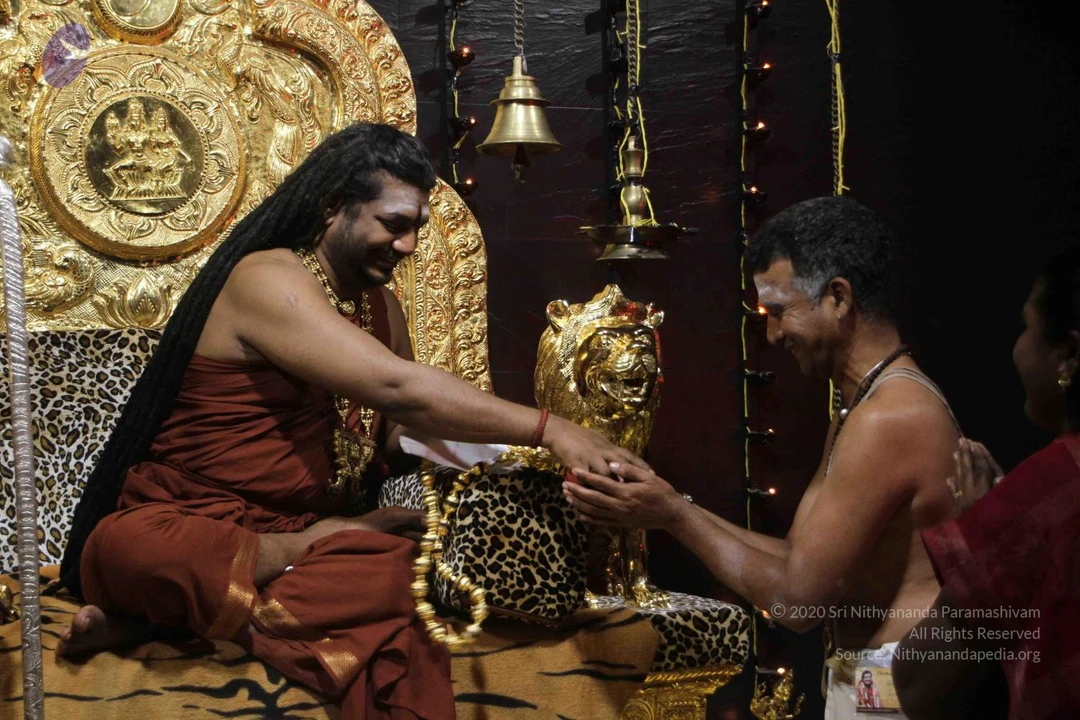
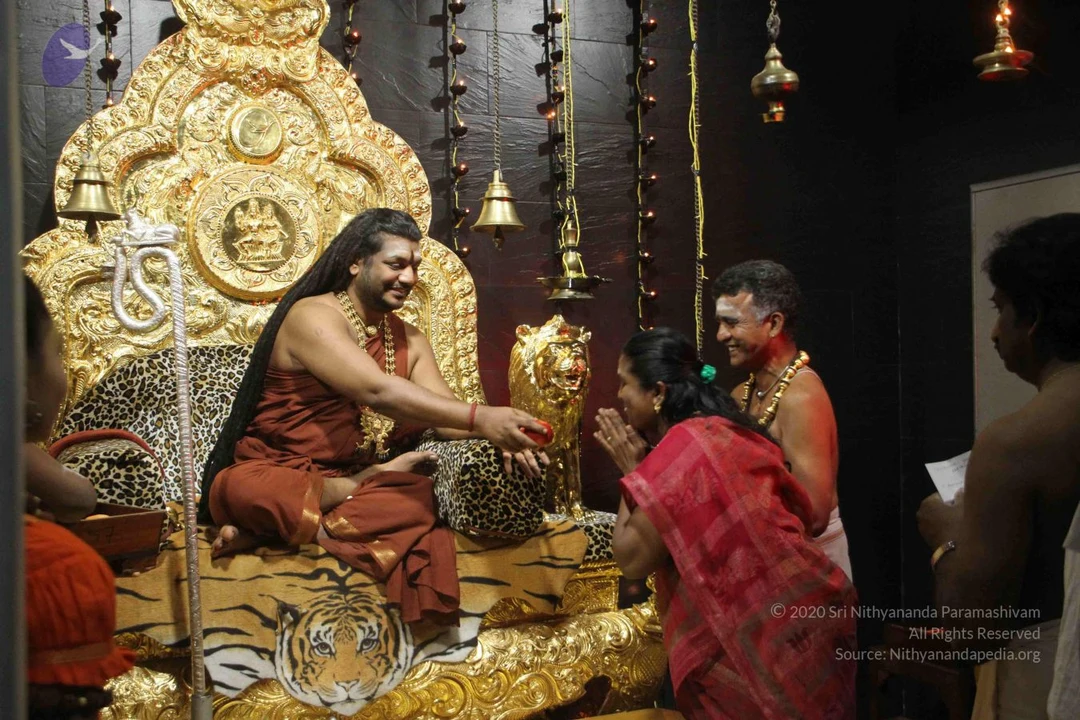
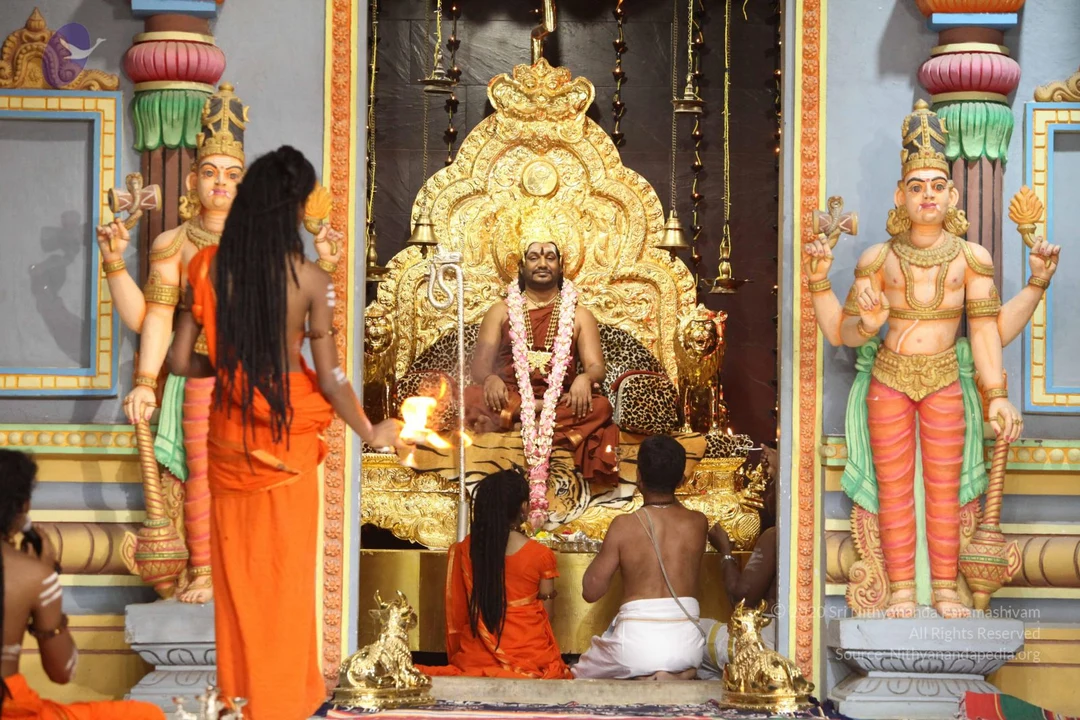
Photo of a seated man on an ornate golden throne flanked by gilded lion sculptures and leopard-print cushions. He wears a gold crown, an orange-red robe, and a heavy garland of pink roses and white flowers, and holds a silver staff topped with a nandi figure. Brass bells and hanging lamps with a string of small lights decorate the background. a person: the figure wears a gold crown, saffron-orange robes, and a rose garland, and sits enthroned as the central figure of the scene.A seated man in a gold crown and rust-orange robe rests his hand near his face, beside a tall silver staff topped with a snake and a small Nandi figure. He wears a pink and white flower garland over gold chains and a red thread on his wrist, seated on a leopard-print cushion. Gold-coloured ornaments and a large golden bell appear in the foreground, with small oil lamps glowing in the dark background. a person seated on a ceremonial throne, with a crown, saffron-coloured robe and floral garland cues.A man seated on a golden throne with a gold lion-head carved armrest, wearing an ornate gold crown and a leopard-print cloth over his lap. He wears layered pink lotus garlands with gold beads and a red thread on his wrist, and raises one hand near his face in a gesture while holding a tall silver staff topped with a silver Nandi figure. Brass bells hang nearby and lamps glow in the dark background.A man seated on an ornate golden throne with a leopard-print cushion, speaking into a microphone on a boom stand. He wears a maroon-brown turban with a jeweled ornament and a gold crescent, a maroon-brown dhoti-style garment with gold border, a gold necklace, a rudraksha bracelet and a gold armlet. A large pink and white flower garland hangs around his neck and across his lap. A gold lion sculpture stands beside the throne against a red curtain. The seated man is an appearance-based a person candidate with long swept-back hair, crown-like turban and ornate ceremonial jewellery, shown as a discourse speaker on the stage.A seated man in a rust-red sannyasi robe sits on an ornate gold throne carved with floral scrollwork and flanked by golden lion figures, with leopard and tiger skins draped over the seat. He wears a long pink and white flower garland, a gold chain with a pendant, and a red tilak on his forehead beneath a gold crown-like headpiece. He holds a silver staff with a serpent-shaped top to his side. Hanging brass bells and oil lamps frame the throne, and offering plates with flowers sit before it on a gold dais. A dark-clad figure is absent; only this single seated person is visible.A seated man in a rust-red robe sits cross-legged on an ornate golden throne with lion-shaped armrests, a leopard-print cushion and a tiger skin draped over the seat. He wears a pink and white flower garland, gold necklaces and a red-and-white forehead mark, with a crown-like golden arch behind him and hanging brass lamps and bells. Two devotees kneel in front: one in an orange sari with long braided hair, the other bare-chested in white dhoti with a sacred thread. A silver staff rests beside the throne.
Satsang
14 photosSource gallery
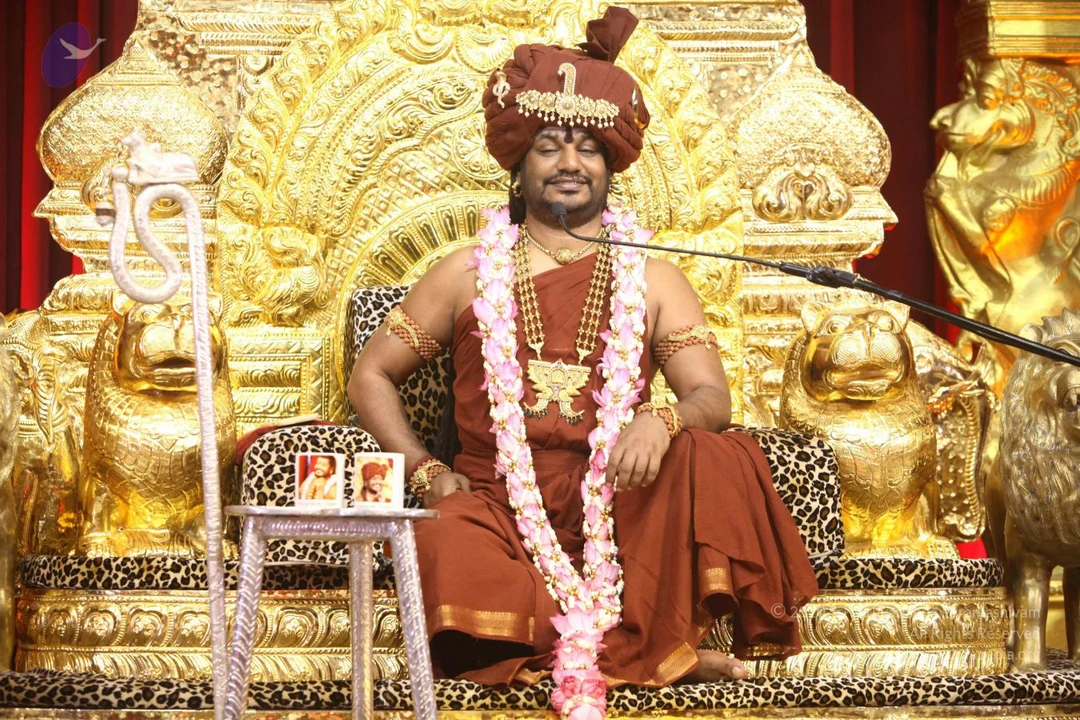
A man seated on an ornate golden throne with a leopard-print cushion, speaking into a microphone on a stand at right. He wears a maroon-red turban with a gold ornament at the front, a maroon-red dhoti and upper cloth, a pink and white flower garland, a gold necklace with a gold pendant, and red beaded bracelets on his wrists and upper arm. His right hand is raised in a blessing or teaching gesture. Behind him is gilded carved throne ornamentation with lion or simha motifs at right. Two small framed portrait photos sit on a silver side table at left, and a blurred ornamental silver stand is in the foreground. The image is a photograph from a discourse setting, and a faint logo appears at top left.A man seated on an ornate gilded throne with lion-head armrests and a leopard-print cushion, wearing a maroon turban with a jewelled ornament, maroon robe and a long pink-and-white flower garland. He wears a gold pendant with a deity-like figure, multiple gold necklaces and bangles, and raises his right hand in a blessing gesture before a microphone on a stand. A small framed portrait sits on a silver side table nearby. A man in an appearance-based probable Swamiji identification is seated, wearing a maroon turban, maroon robe, pink flower garland and gold pendant; this is a physical person at a discourse. The setting is a stage with a gold and red backdrop.A seated man in a maroon-red turban with a gold ornament at the front, wearing a maroon-red robe, a pink and white flower garland, a gold necklace and beaded malas, raises one hand in a teaching gesture while speaking into a microphone on a stand. He sits on an ornate gold throne with carved lion figures and a leopard-print cushion, with a silver-coloured cobra-shaped staff at left. Two small framed portraits sit on a silver side table at lower left. A stage with red drapes forms the background. Appearance-based cues of long swept hair and distinctive ornaments are not clearly visible, so the identity of the speaker is uncertain.A man in a maroon-brown turban with a gold ornament and a sweeping peacock-style tail sits on an ornate gold throne with leopard-print cushions and gold lion-head armrests. He wears a maroon robe, pink and white flower garlands, layered gold necklaces, a gold chest pendant, and beaded wrist and upper-arm bands. He rests one hand on the armrest and holds a silver-tipped staff with a serpent-shaped top. A silver stand in front holds two white mugs printed with small portrait photos. A microphone is at the right. The figure is a person with distinctive turban, flower garlands and gold ornaments, seated in a ceremonial setting.A seated man in a rust-brown turban with a jewelled ornament and a gold crescent brooch speaks into a microphone on a stand. He wears a brown robe, a pink and white flower garland, gold necklaces and a rudraksha bracelet on his upper arm. He sits on an ornate gold throne with gilded lion-head armrests and a leopard-print cushion, against a red curtain and gold carved panels. Probable Swamiji, seated on the throne and giving a discourse, identified by the turban, crescent ornament, garland and rudraksha cues.A seated man in a maroon-brown turban with a gold crescent ornament and a jewelled gold brooch sits on a golden throne decorated with lion heads and a leopard-print cushion. He wears a pink and white flower garland, gold necklaces, a rudraksha mala on his arm, and a bare-shouldered maroon wrap, and speaks into a microphone. a person: long hair, ornate turban and gold ornaments indicate the presenter role. Behind him is an ornate gold backdrop and red curtain.

Sadashiva-Calls-Session

13 photosSource gallery
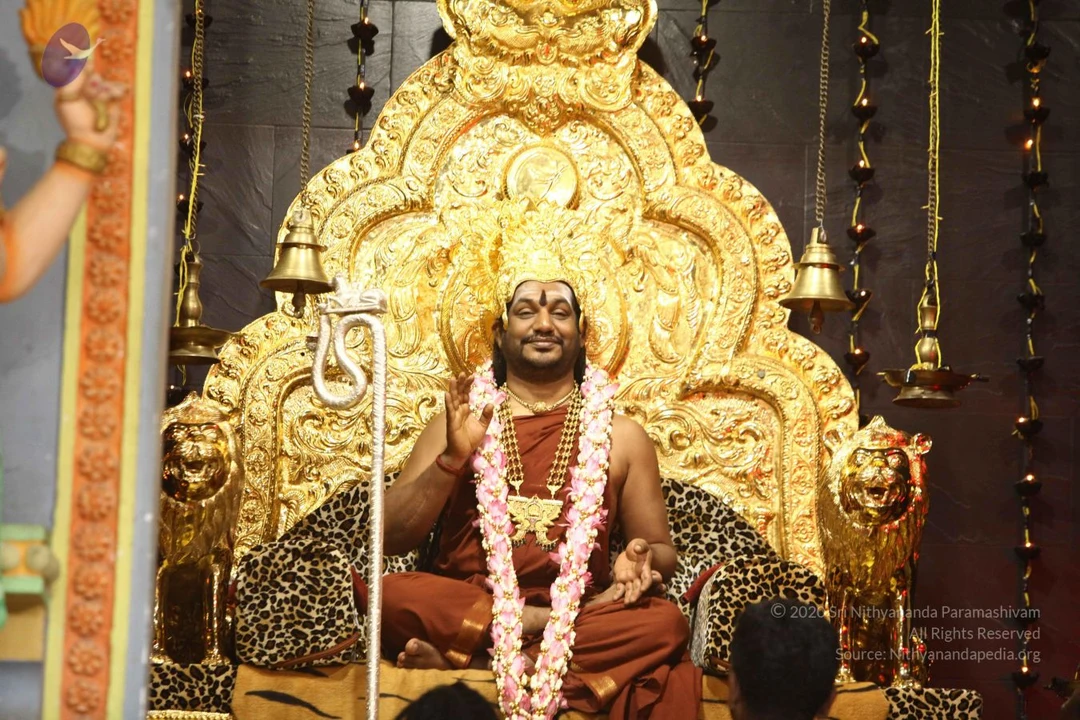
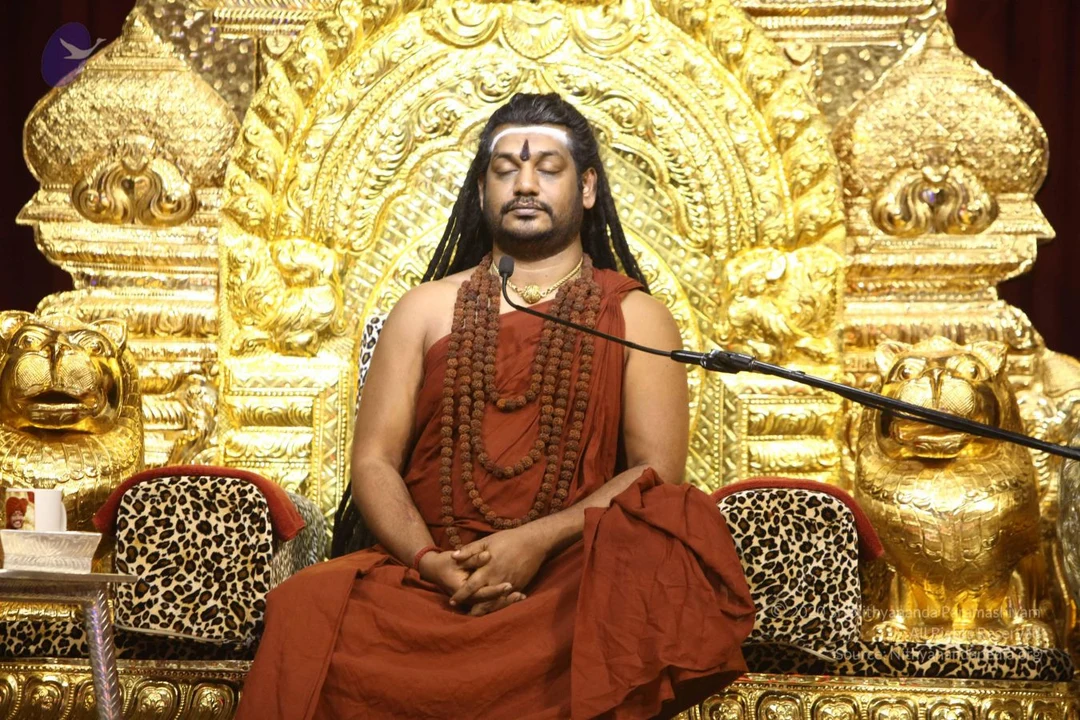
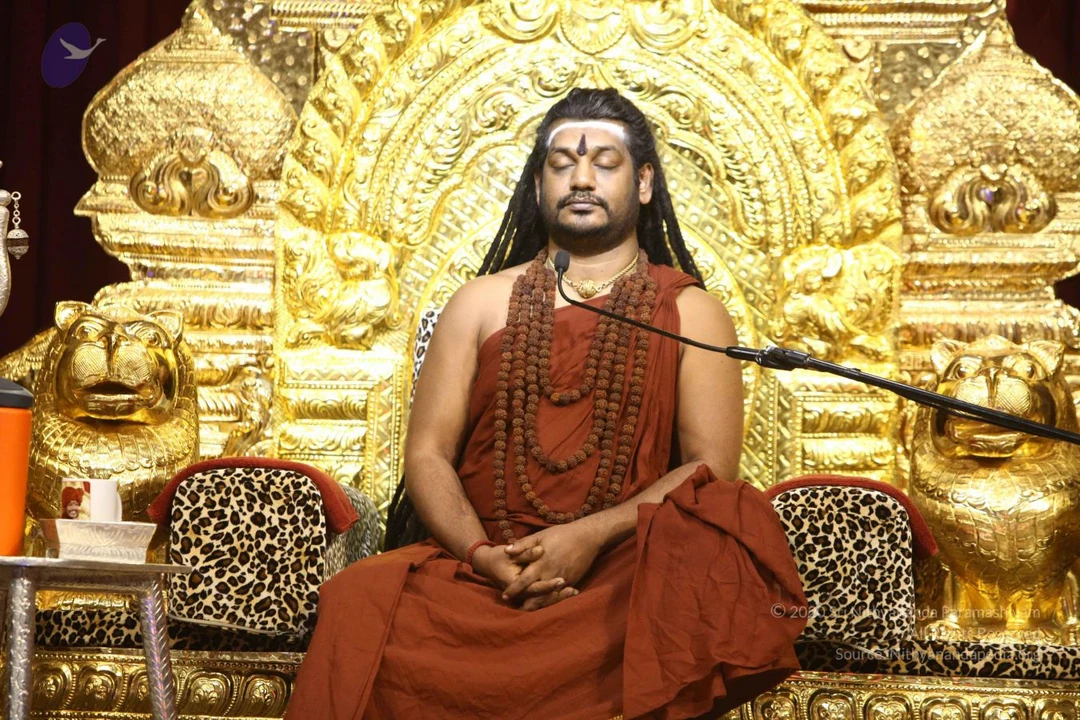
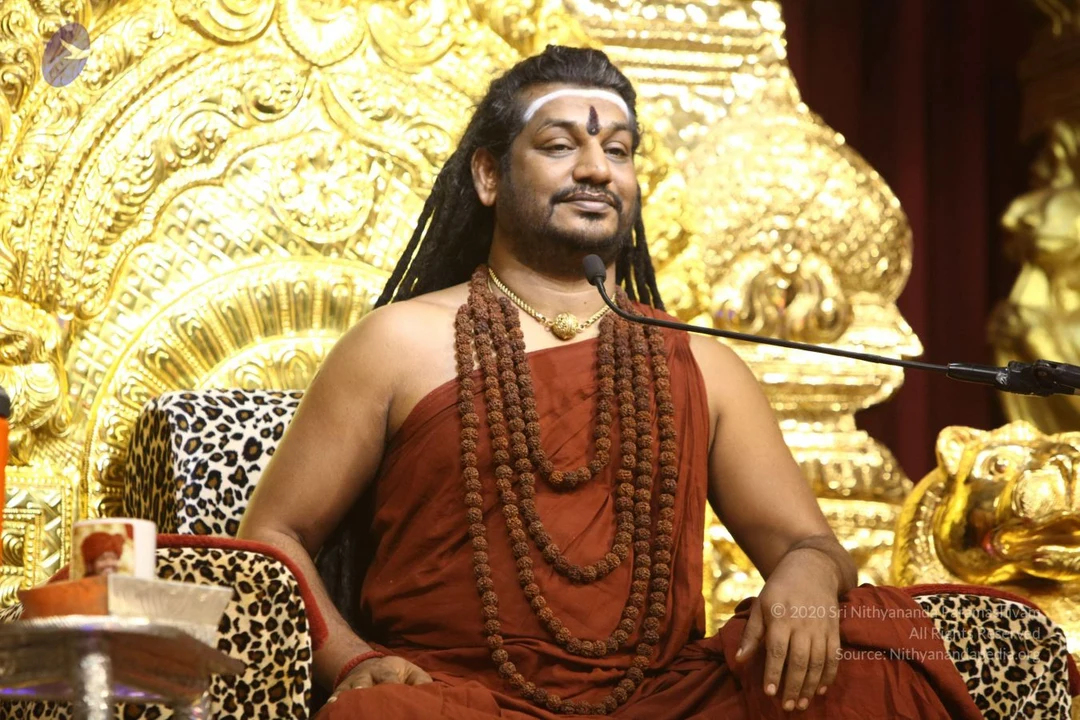
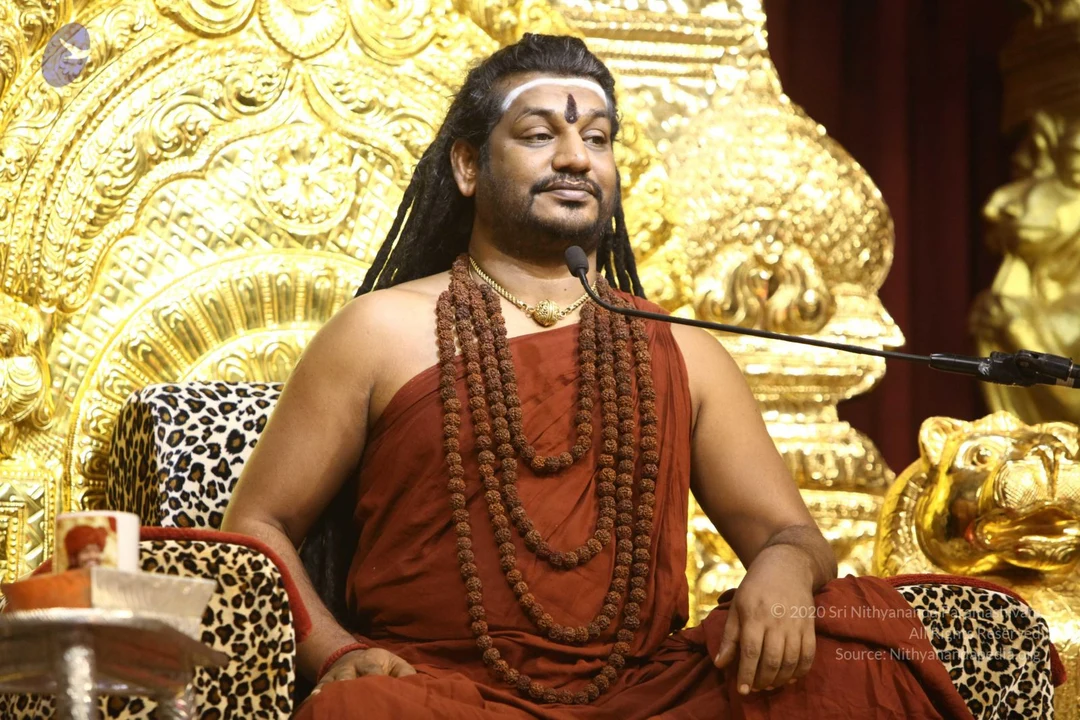
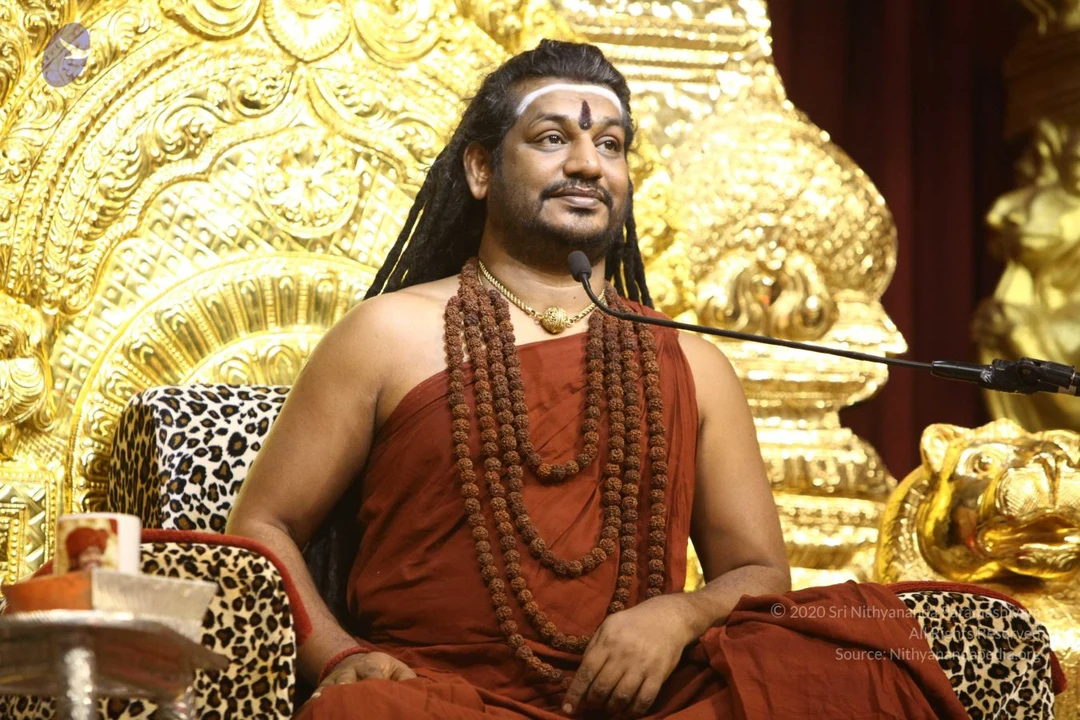
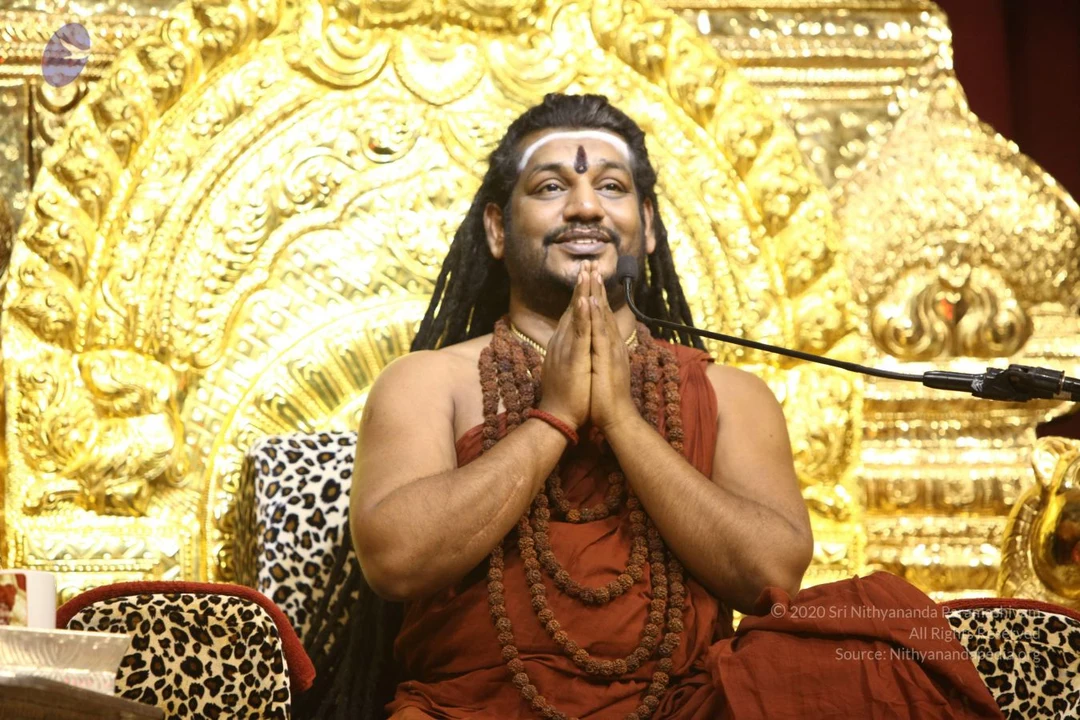
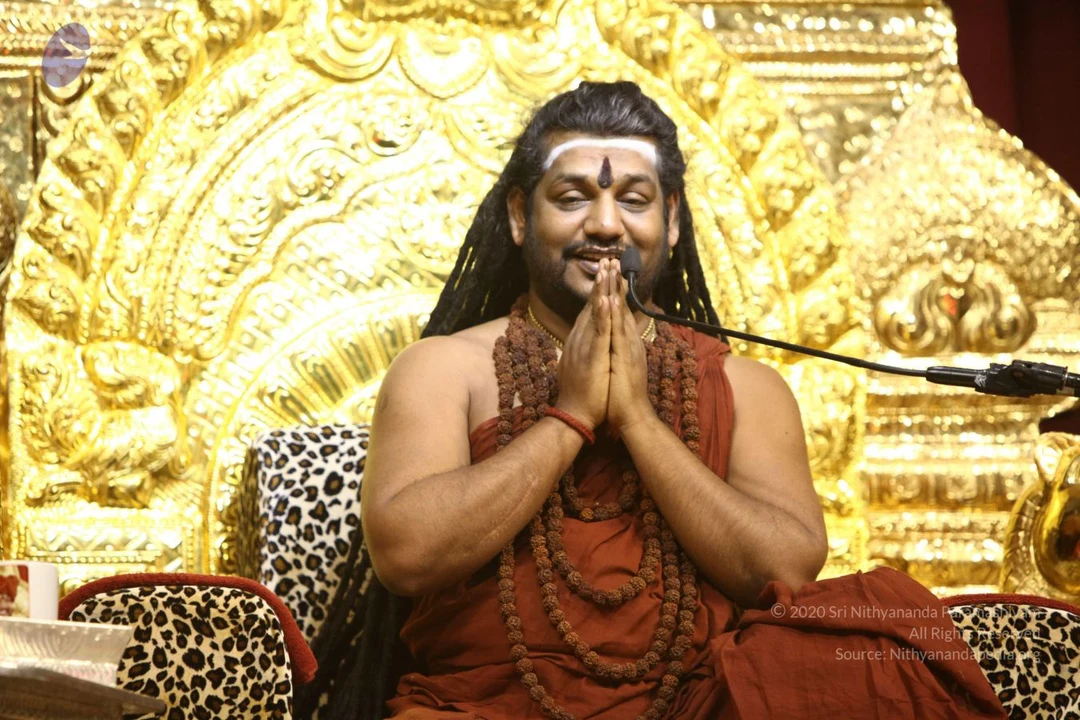
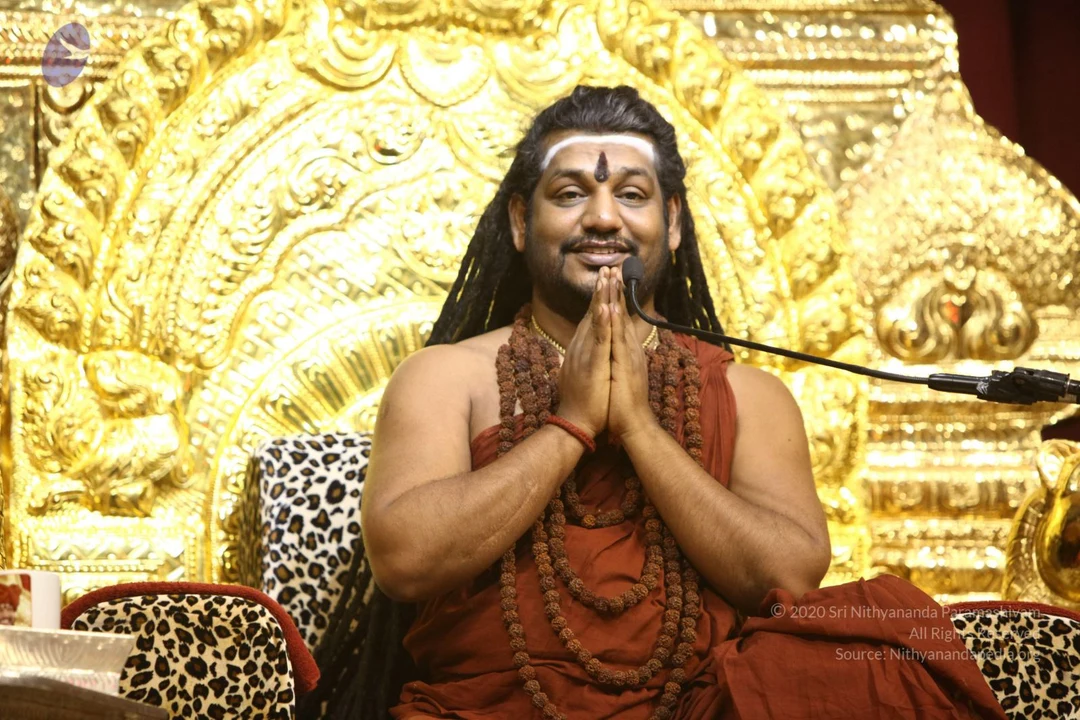
A seated man in a rust-orange sannyasi wrap sits on a leopard-print cushioned chair in front of an ornate gold-leaf throne with carved lion heads. He wears multiple strands of brown rudraksha beads, a gold pendant necklace, and a white tilak with a dark bindi on his forehead. His long dark dreadlocks fall past his shoulders, and a microphone stands beside him. A small brass tray sits on a side table at left. Swamiji (probable) is seated for a discourse; the flag-free evidence is his long matted hair, rudraksha malas, and ornate gold necklace.A seated man in a rust-orange robe sits on a leopard-print chair in front of an ornate gold throne backdrop with carved lion heads. He wears long strands of rudraksha malas, a gold necklace, a white horizontal forehead band with a central dark mark, and his long dark hair is loose. A microphone on a stand is near his face, and a small brass and cup offering sits at the lower left. The figure is an appearance-based a person seated during a discourse, with hands folded in his lap.A seated man in rust-orange robes and a draped orange shawl sits in a leopard-print armchair before a large gold repoussé backdrop with a golden lion sculpture at right. He wears long dreadlocks, a white forehead band with a central dot, and multiple strands of rudraksha beads plus a gold pendant necklace. His hands are clasped in his lap, and a microphone stand is positioned beside him. A small table holds an orange water bottle and a small framed photo.A photograph of a bearded man with long dreadlocked hair seated on an ornate gold throne carved with lion heads and floral motifs. He wears a rust-orange robe, a long rudraksha mala, a gold chain and a white tilak with a red dot on his forehead. A microphone stand is positioned beside him, and a leopard-print cushioned chair sits at his side. a person is seated centrally as the speaker, with his hands resting in his lap. The image is an event photograph from a discourse setting.A man with long dark dreadlocked hair sits on an ornate gold throne carved with lion heads and floral motifs, with a leopard-print cushioned seat on each side. He wears an orange-red saffron wrap, a long rudraksha mala and a gold necklace, with a white tilak on his forehead and a red kumkum dot between his brows. A microphone on a stand is near him. Partly visible at the lower left is a small framed photo beside a candle. a person: the long dreadlocked hair, saffron wrap, rudraksha malas and gold necklace match the cues for the teacher, seated in discourse.A photograph of a seated man in an ornate golden throne with carved lion heads and a leopard-print cushion, speaking into a stand microphone. He wears a rust-orange robe draped over one shoulder, multiple rudraksha mala beads, a gold necklace, and a white tripundra with a red bindi on his forehead. Long dreadlocked hair falls behind him. A small framed photo and a candle sit on a side table at left. a person seated in a discourse setting; the figure is a single physical person.

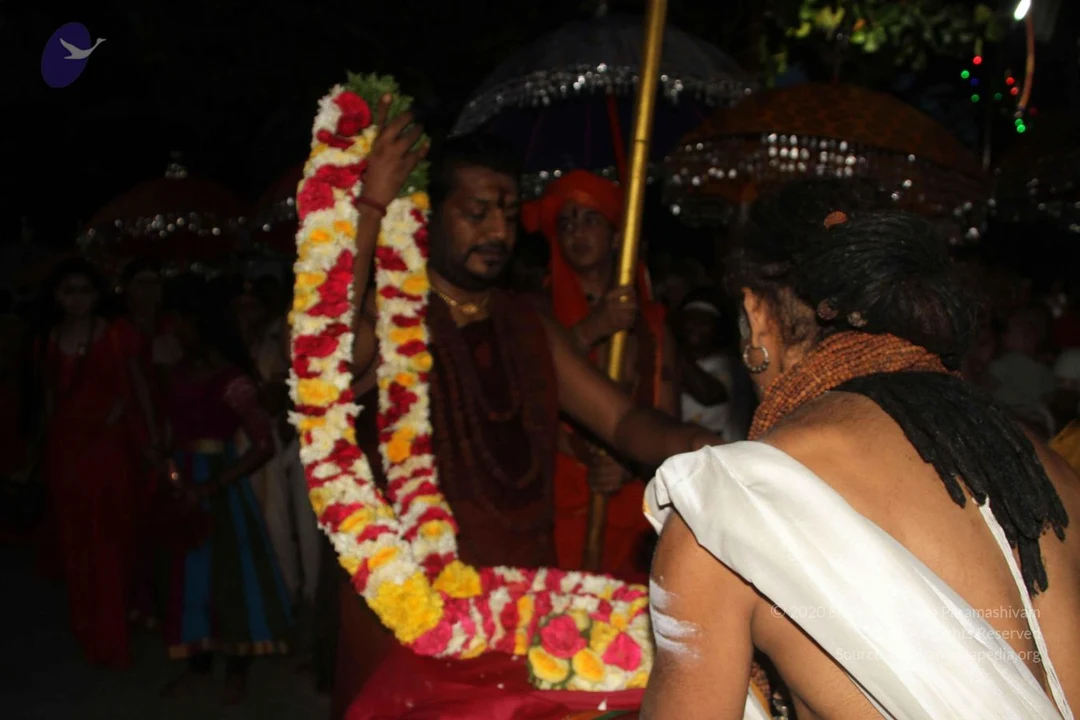
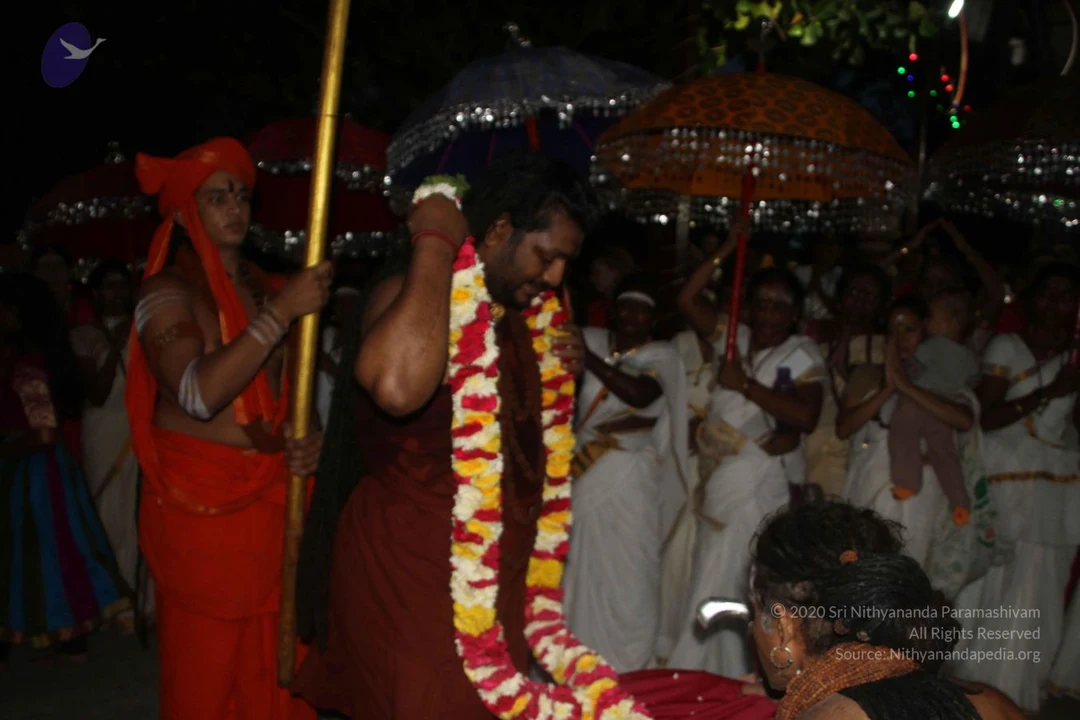
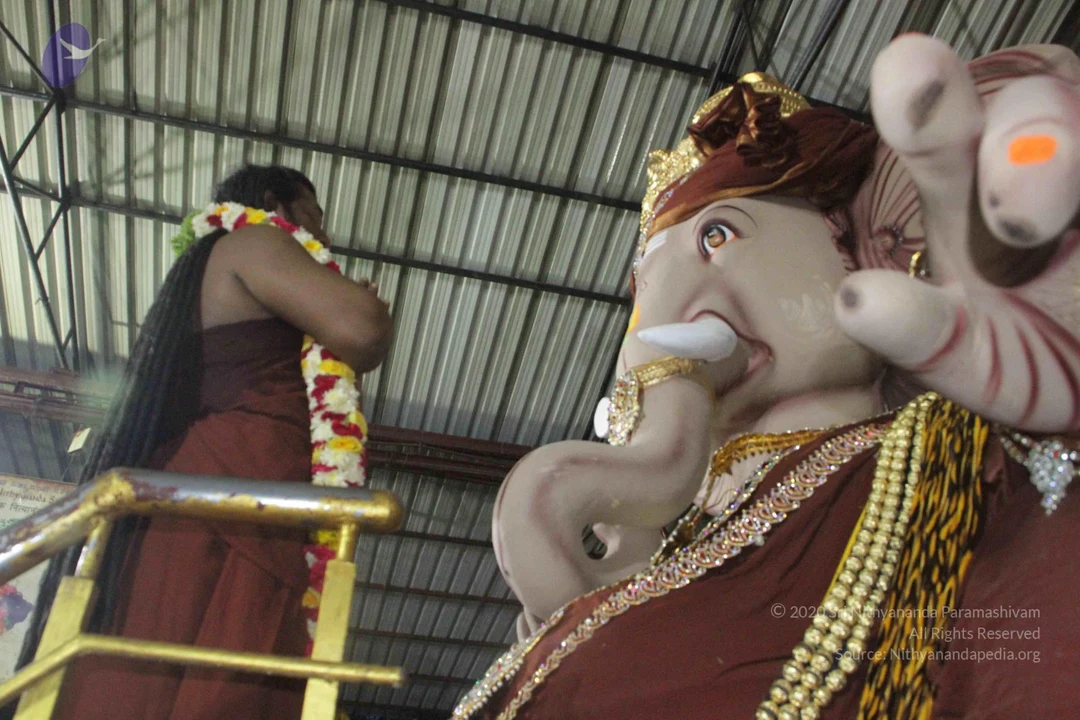
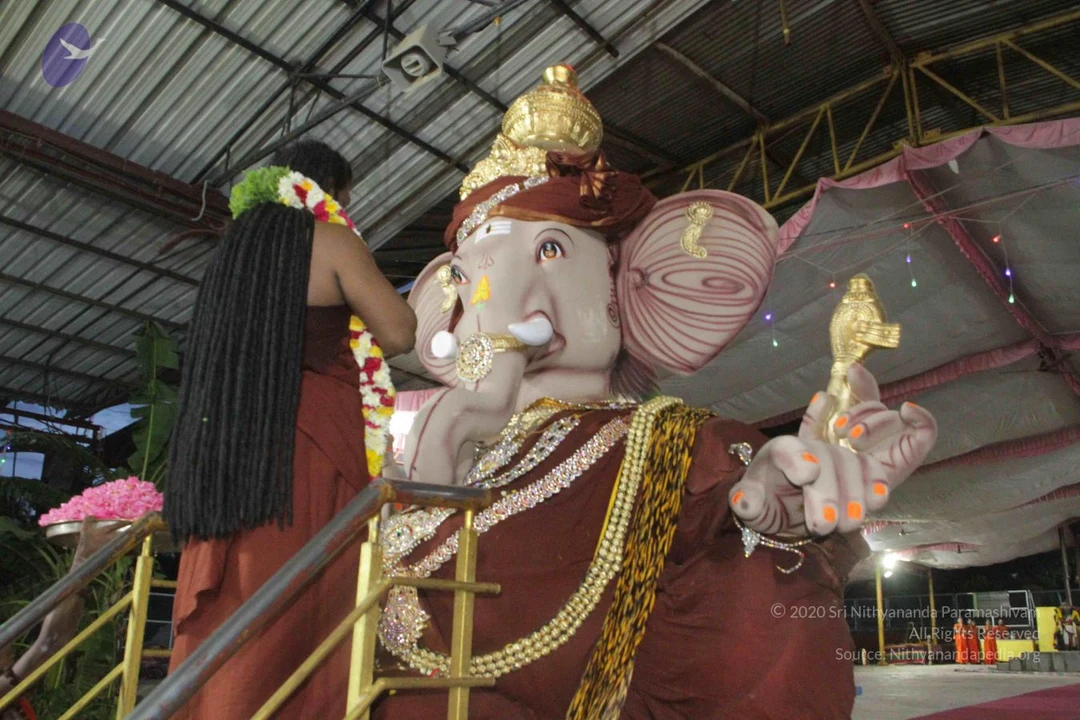
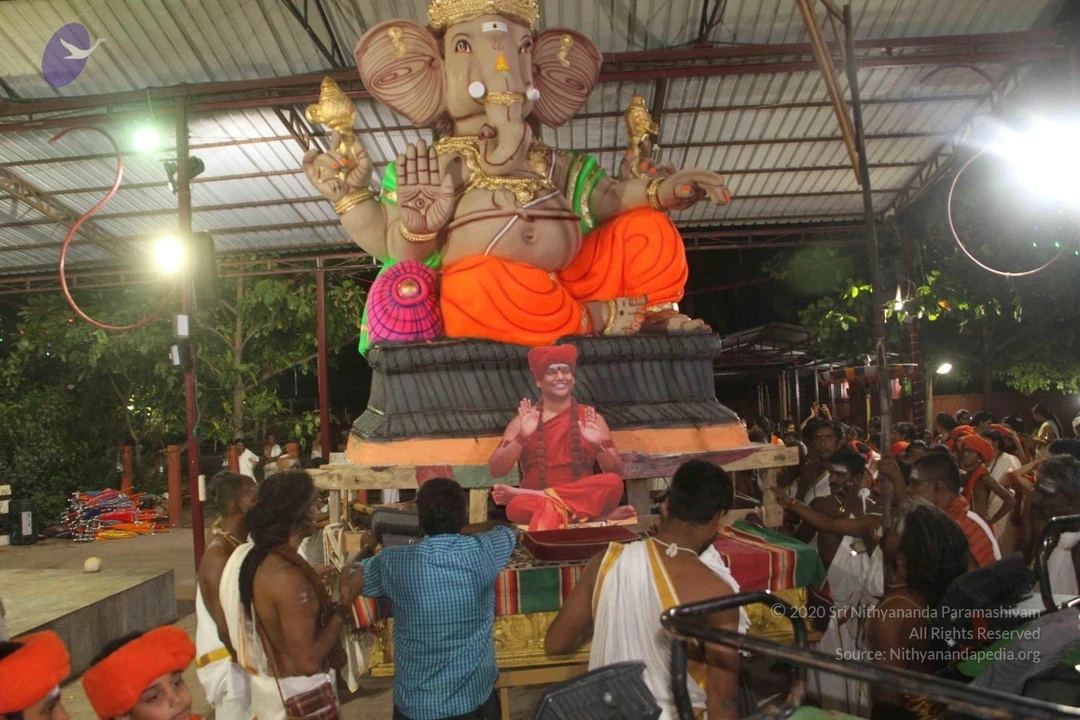
Ganesh-Visarjan-Temple-Visit

13 photosSource gallery
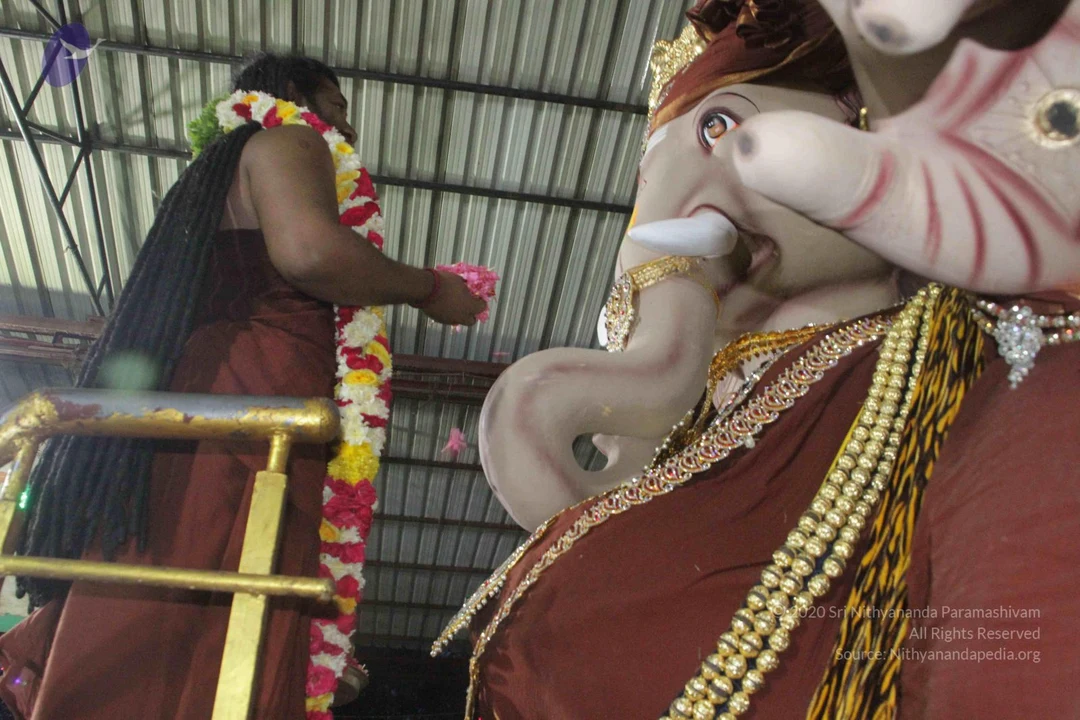
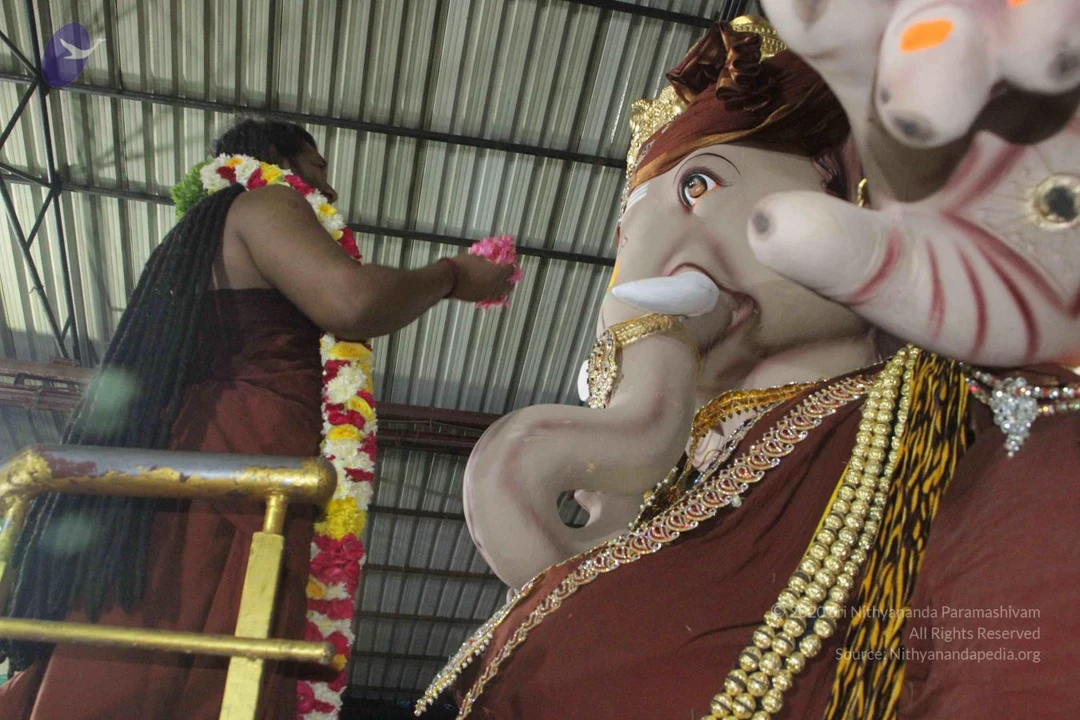
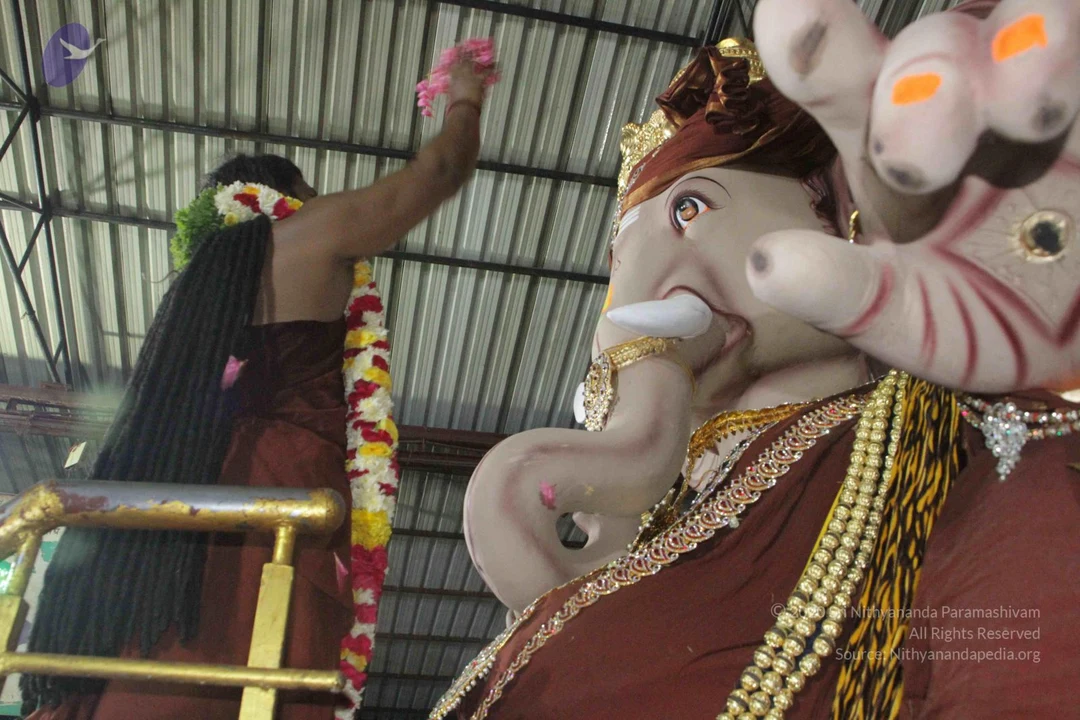
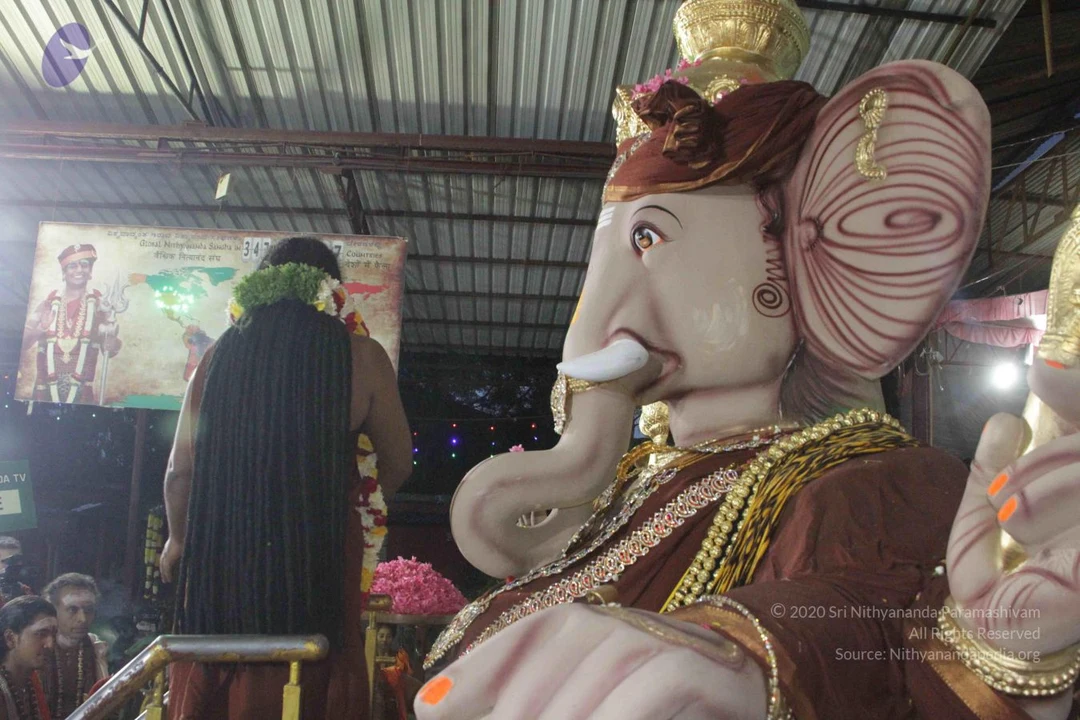
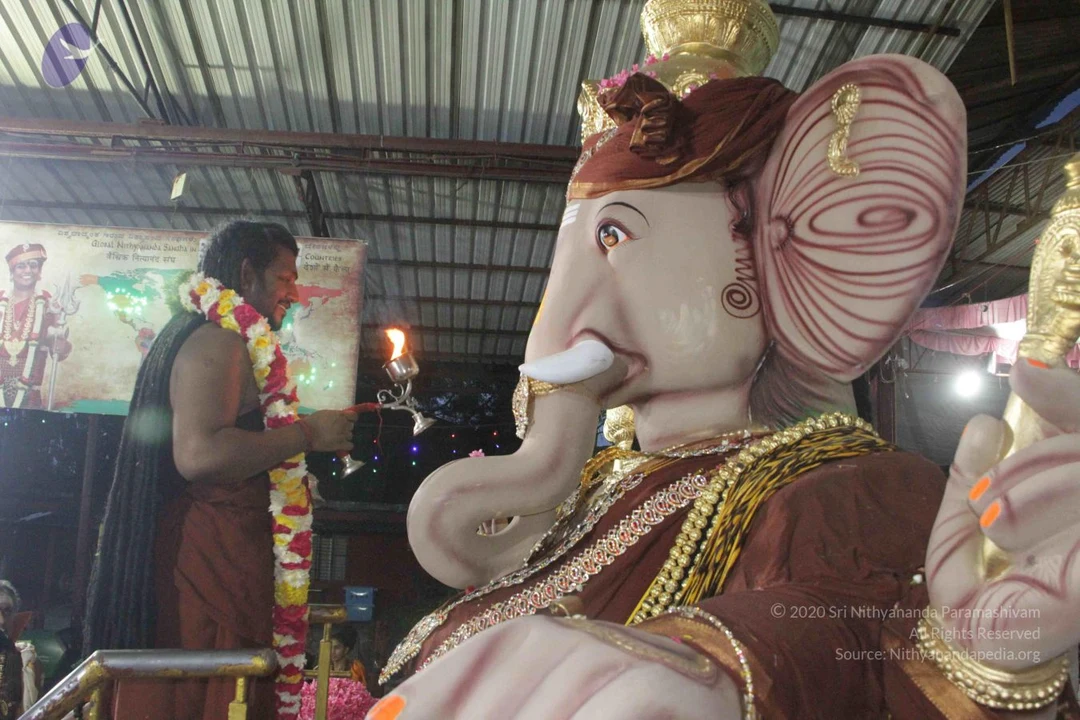
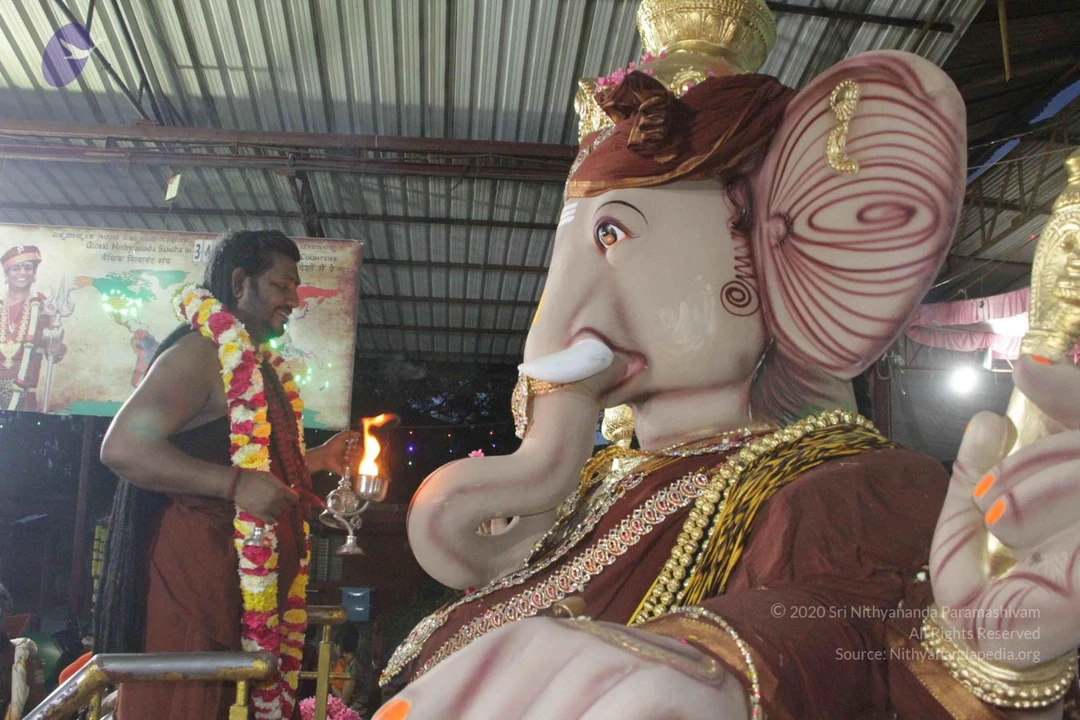
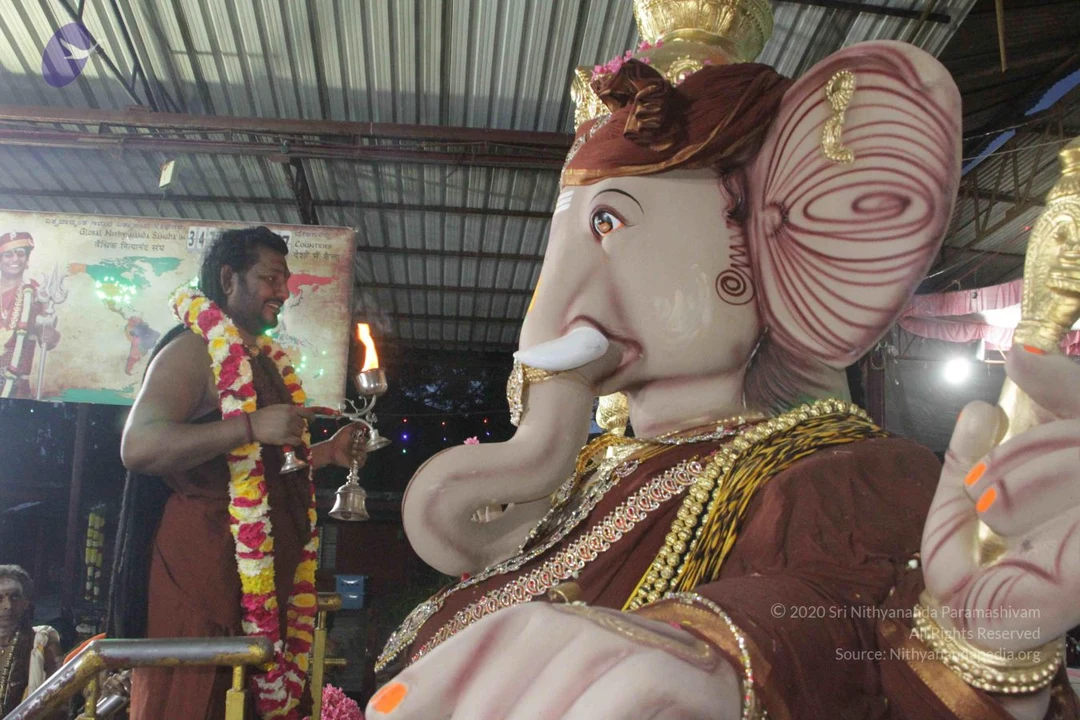
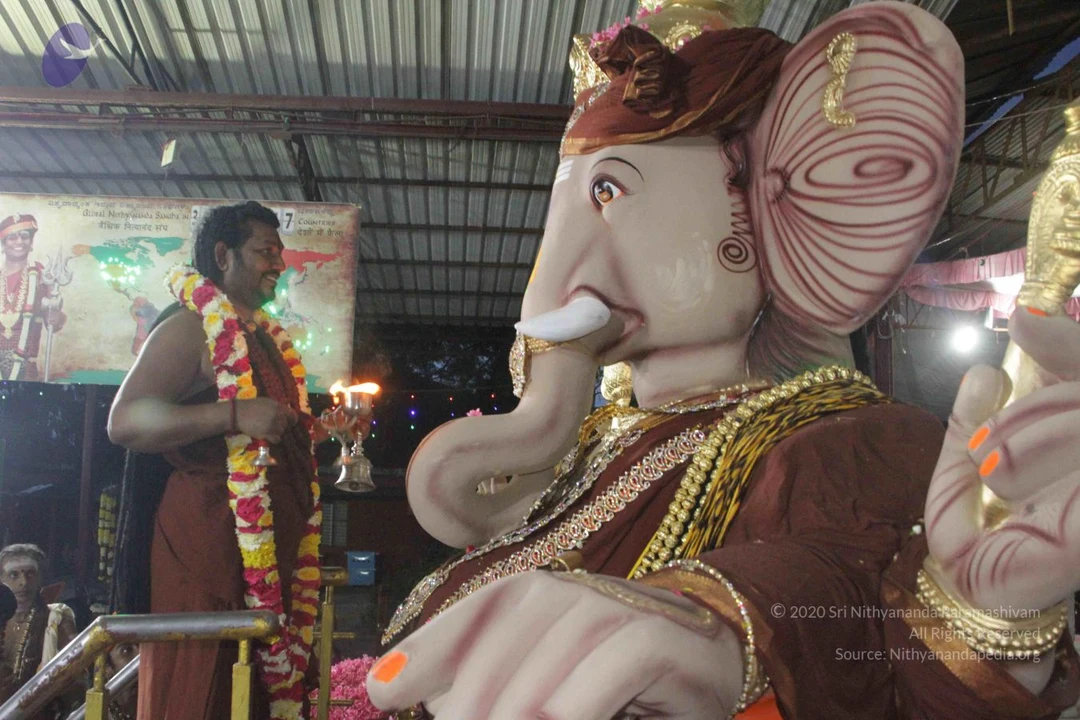
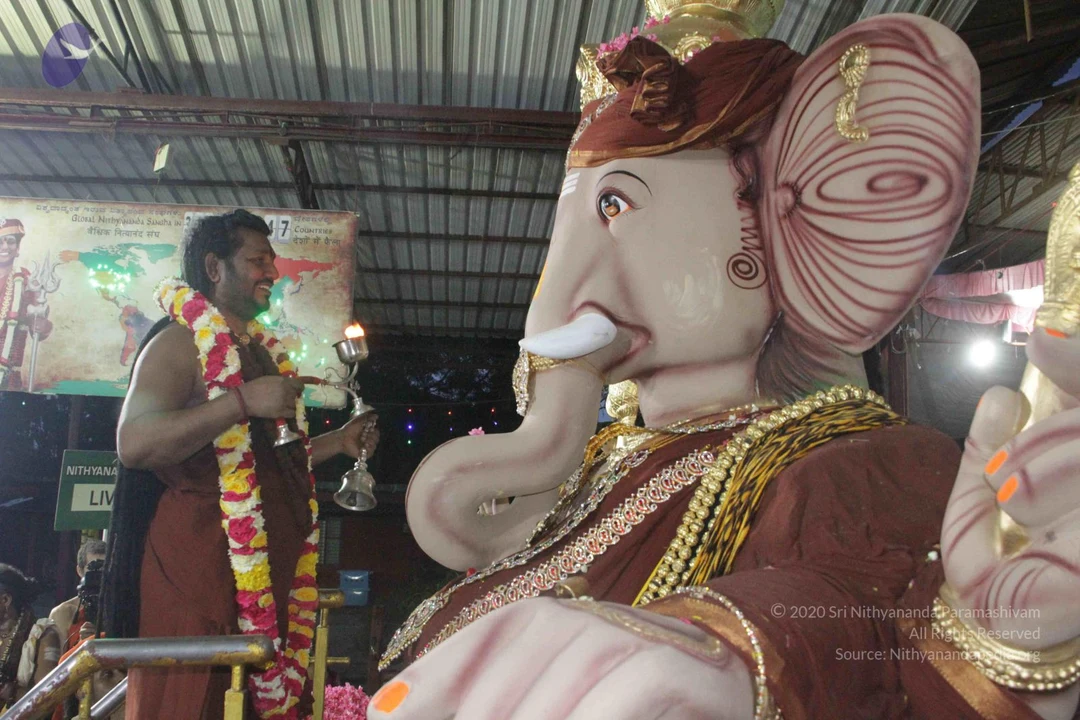
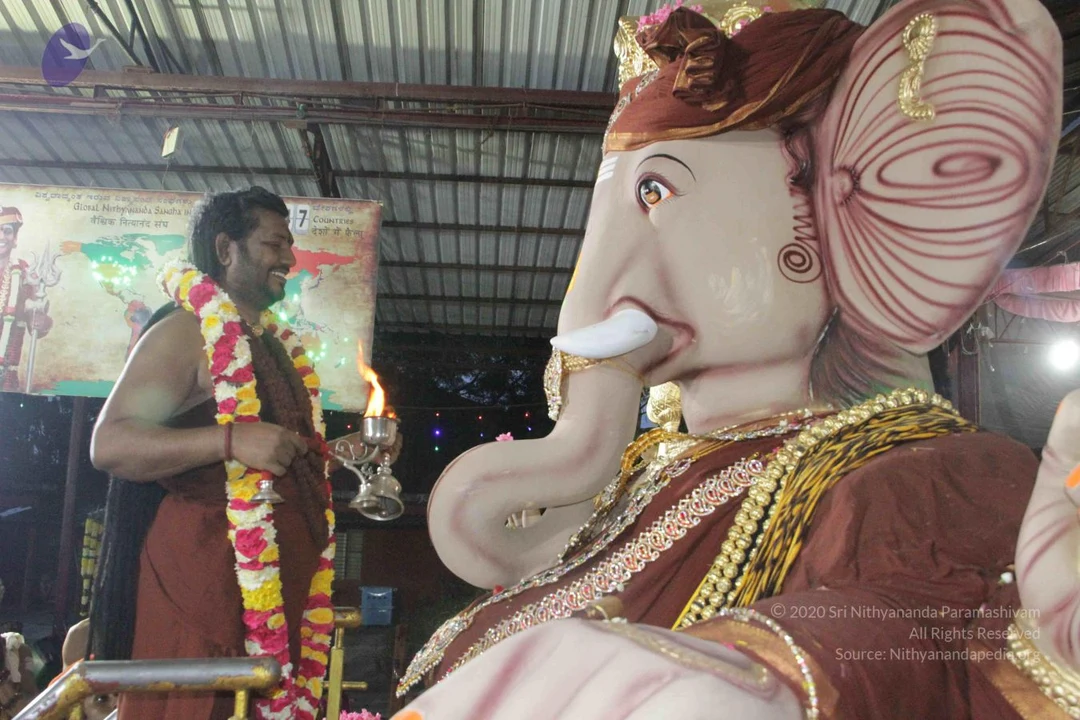
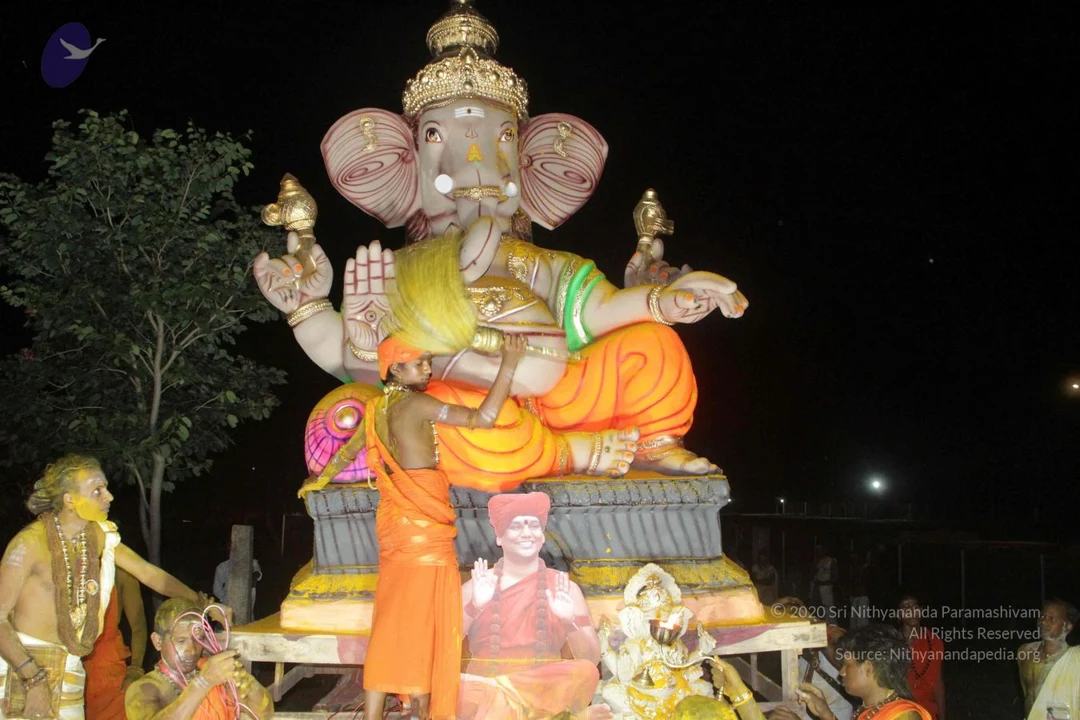
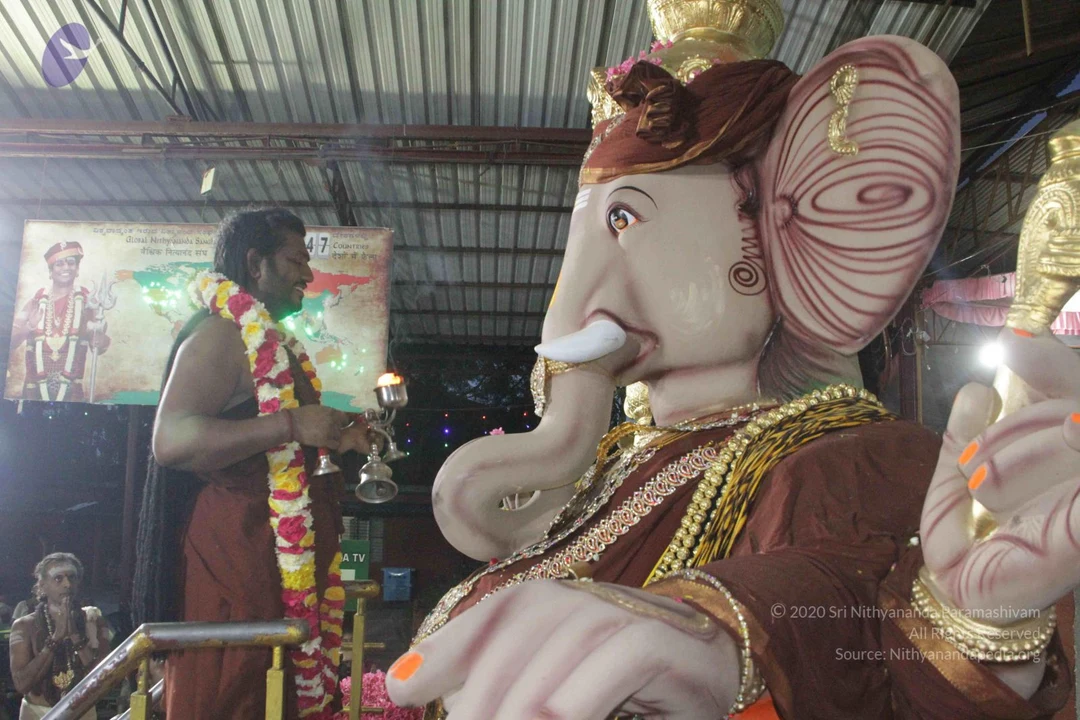
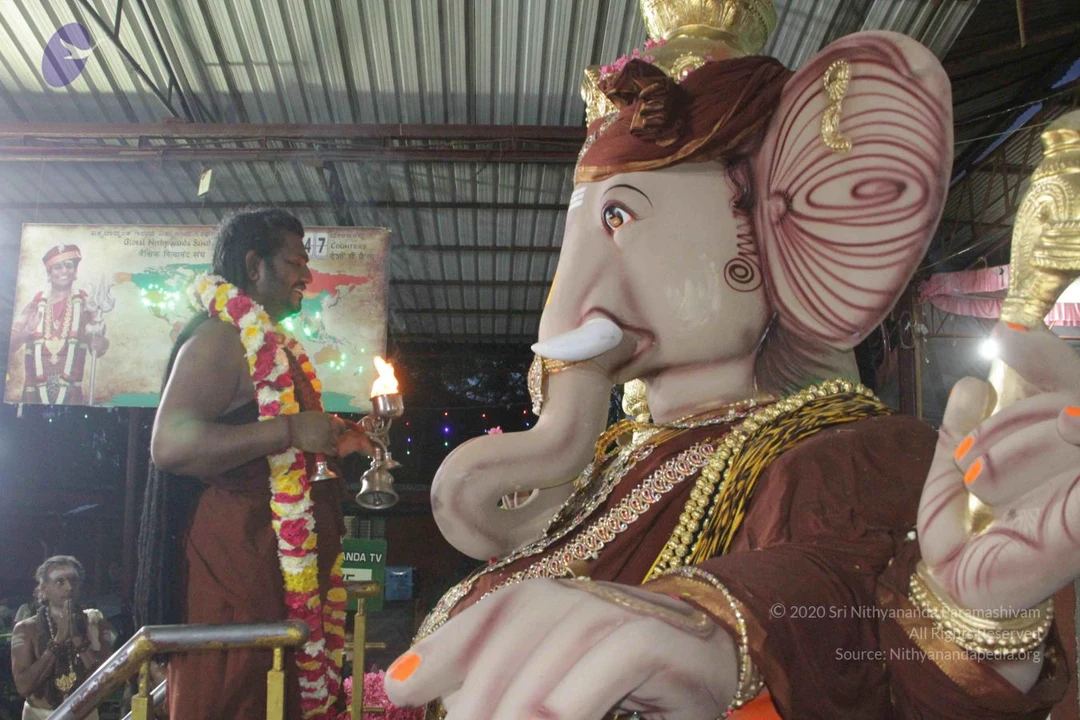
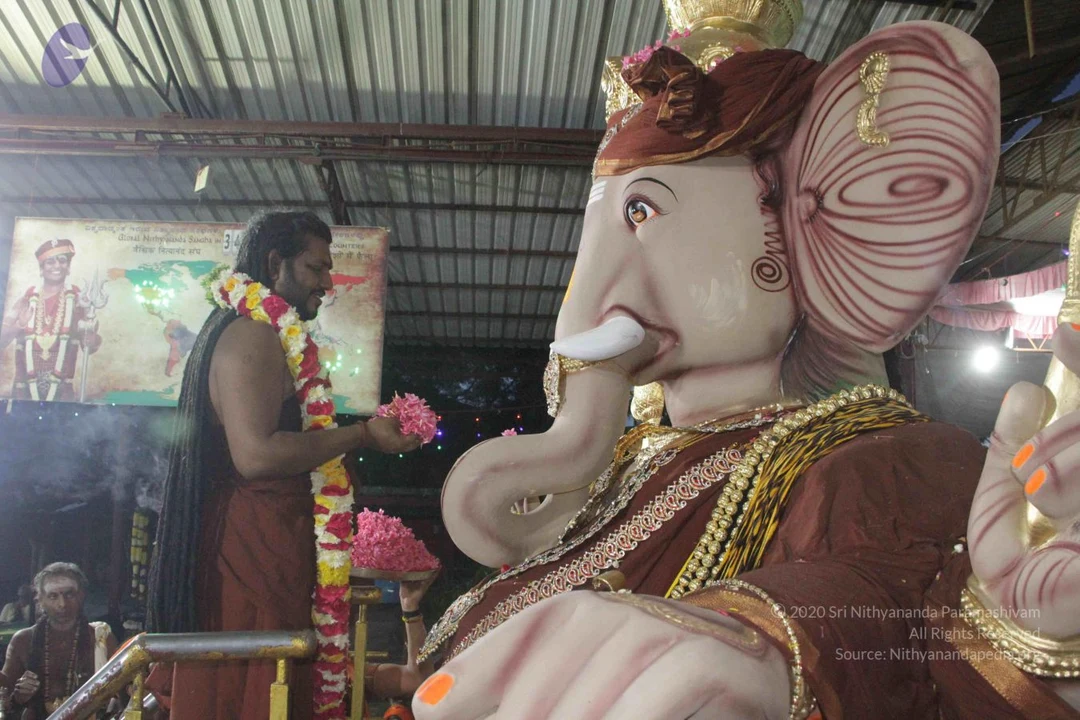
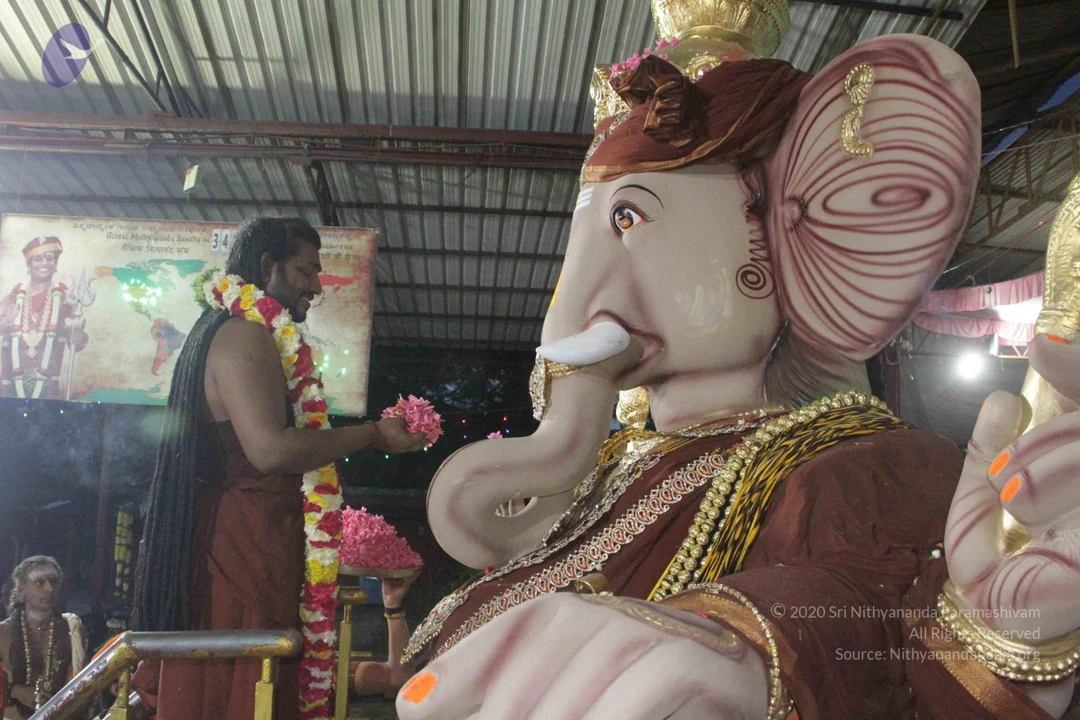
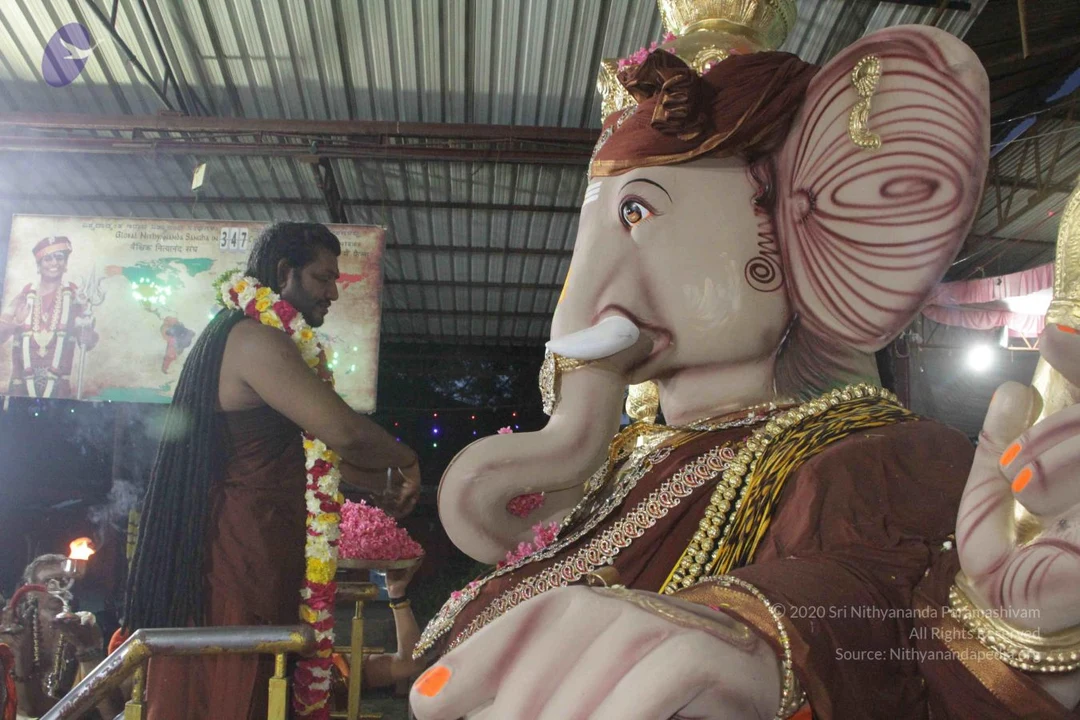
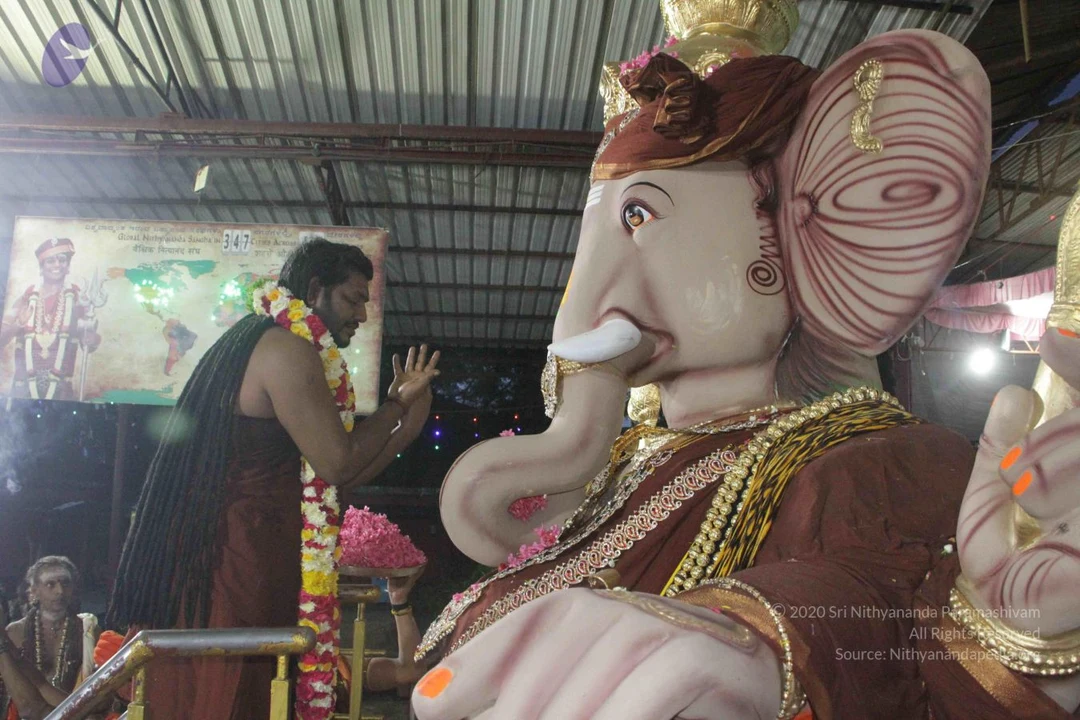
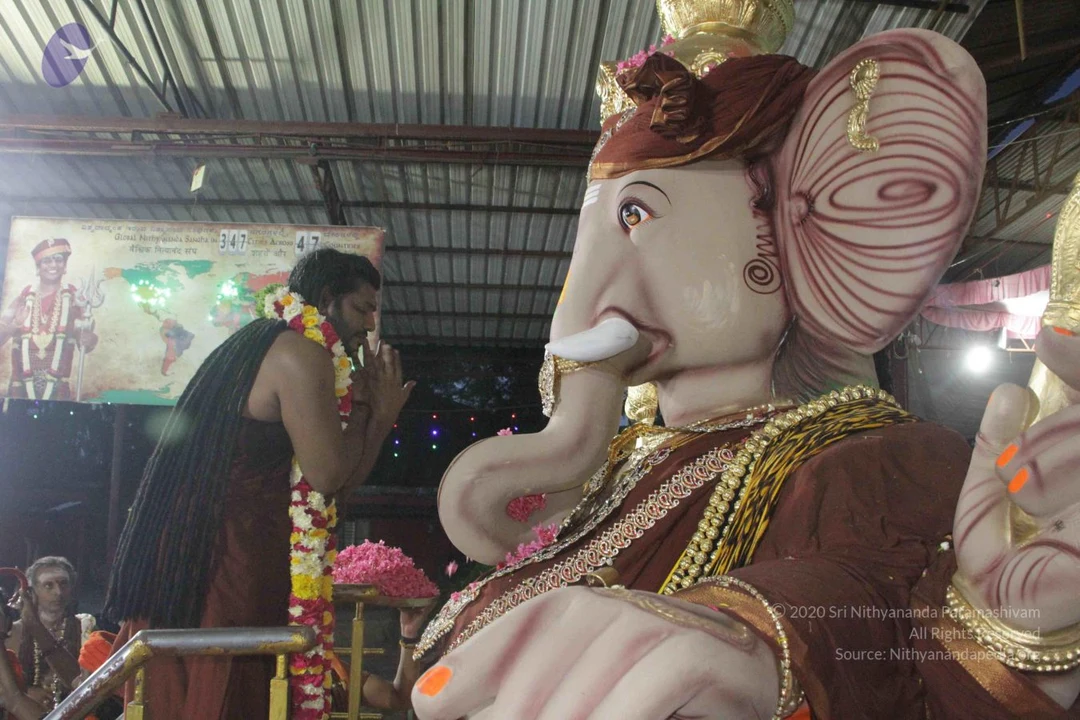
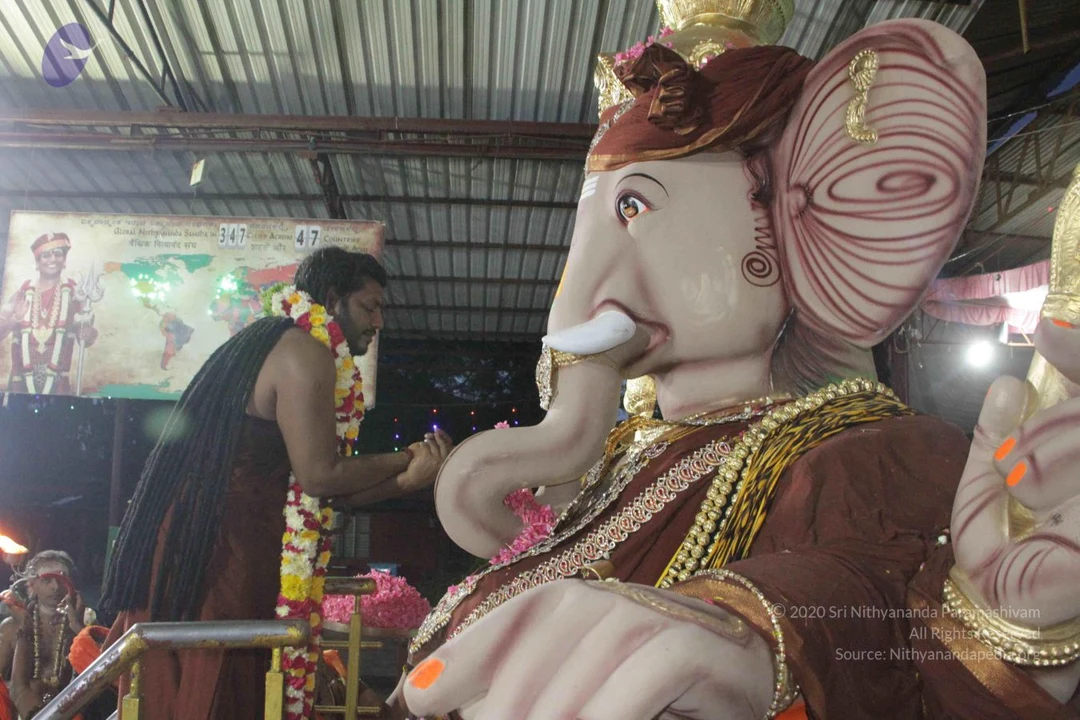
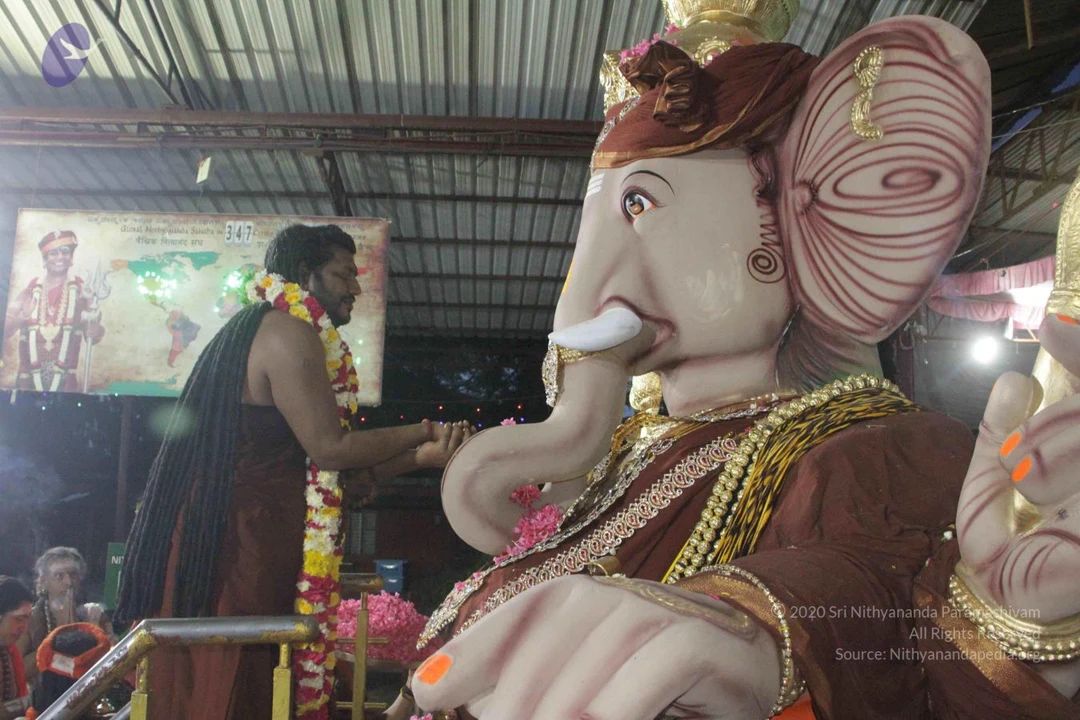
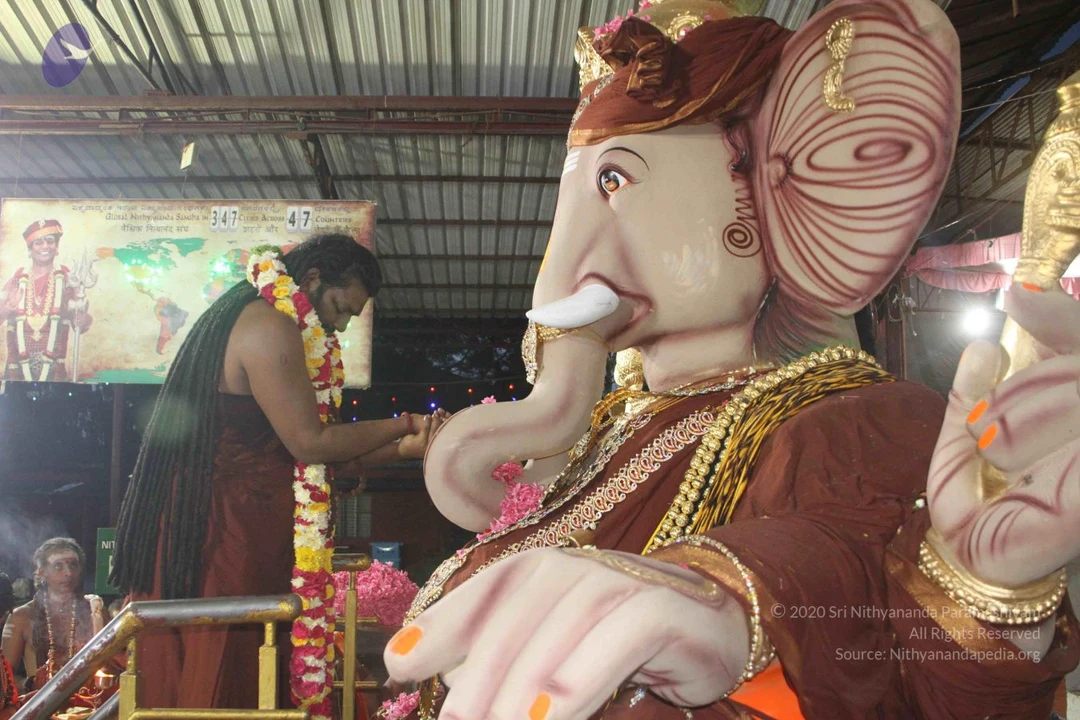
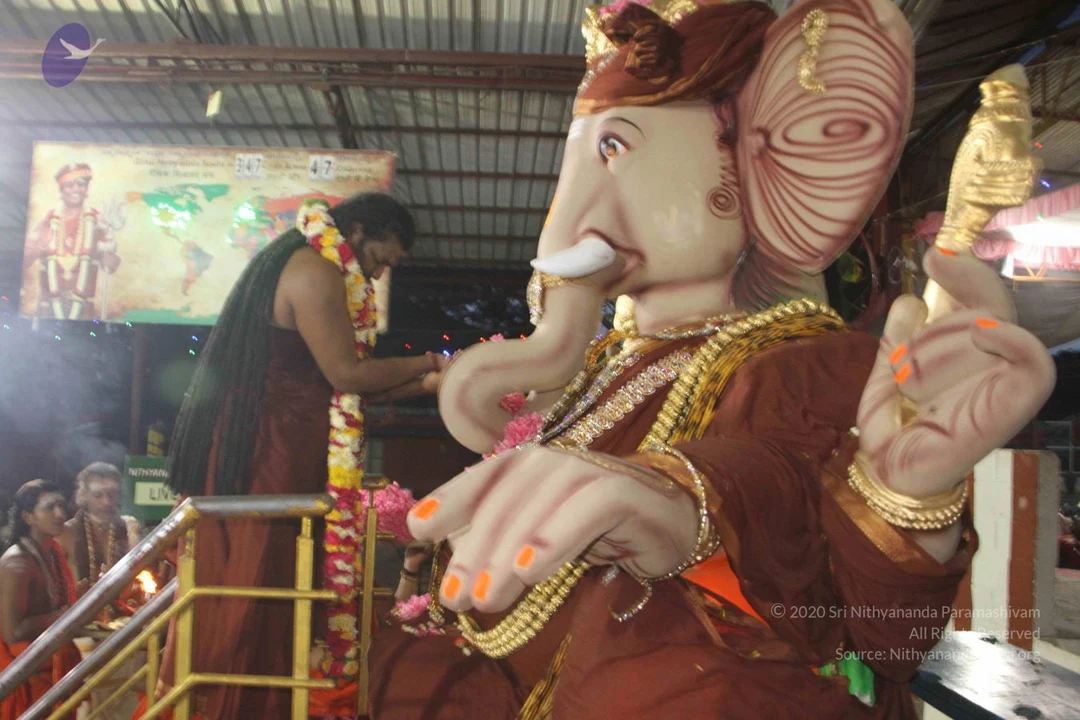
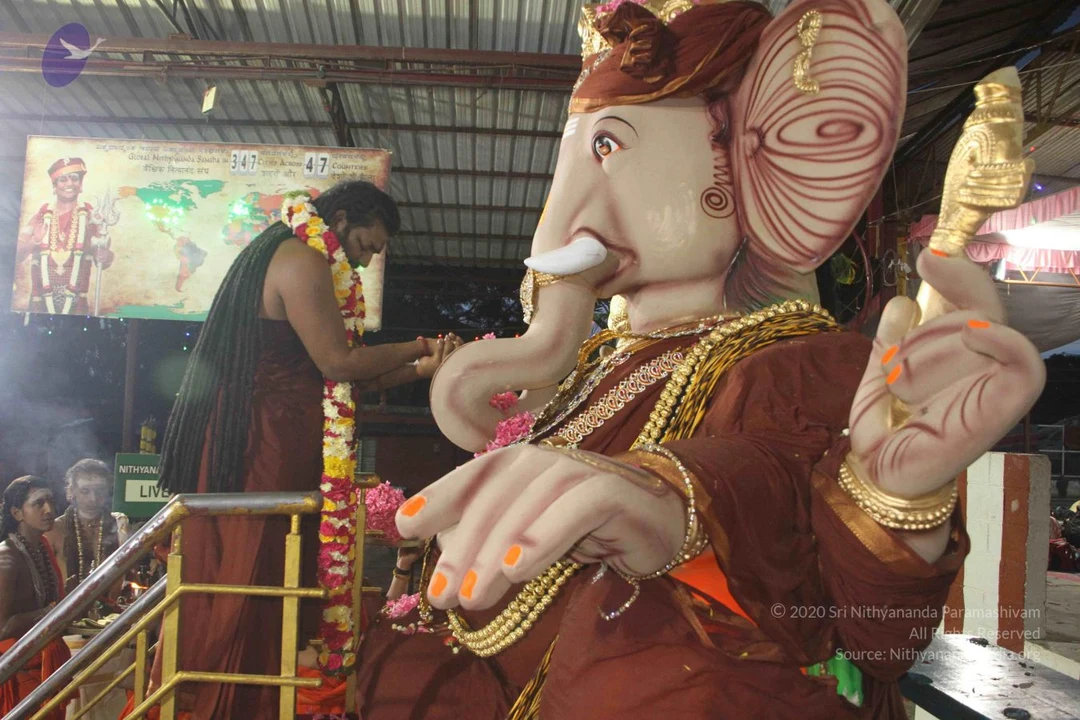
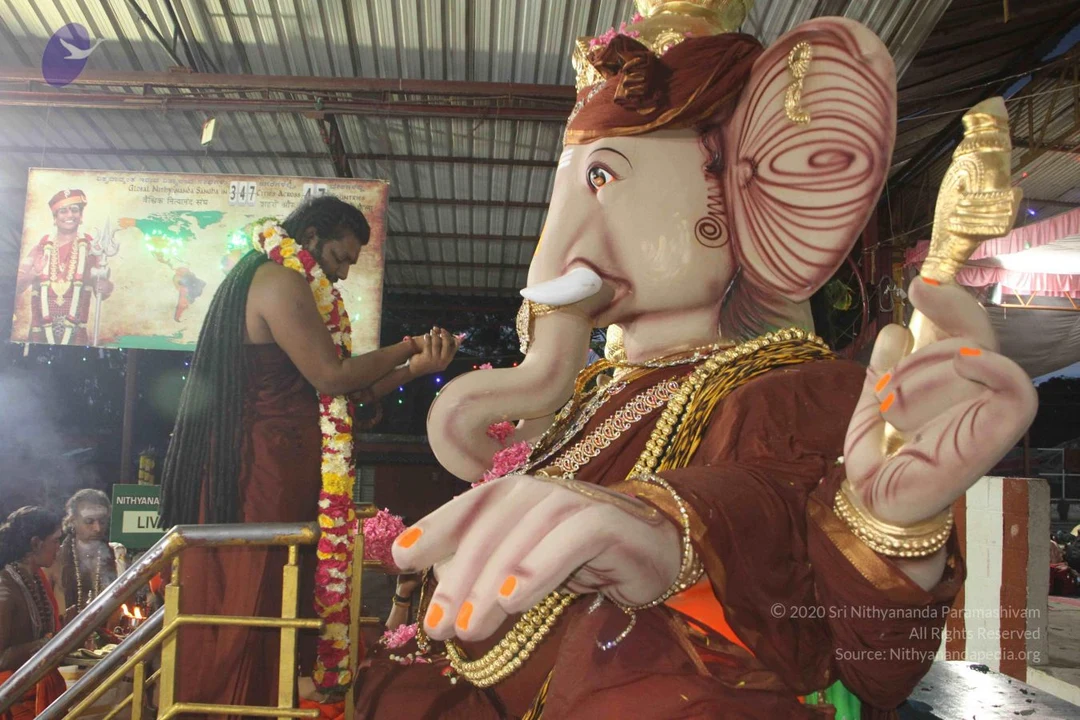
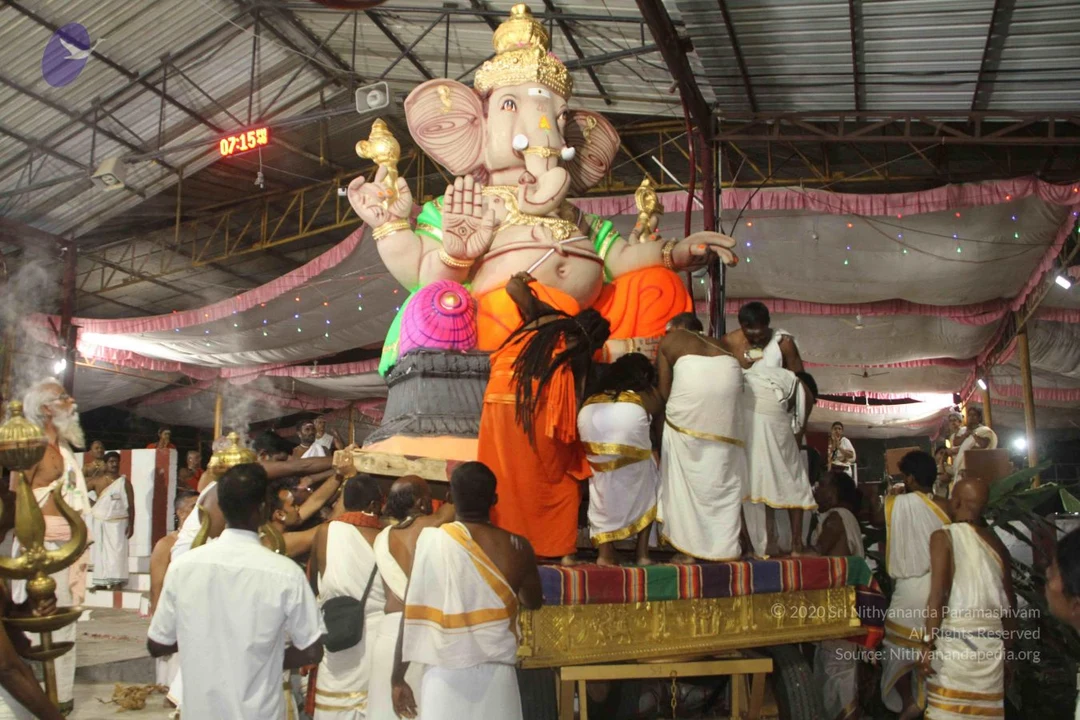
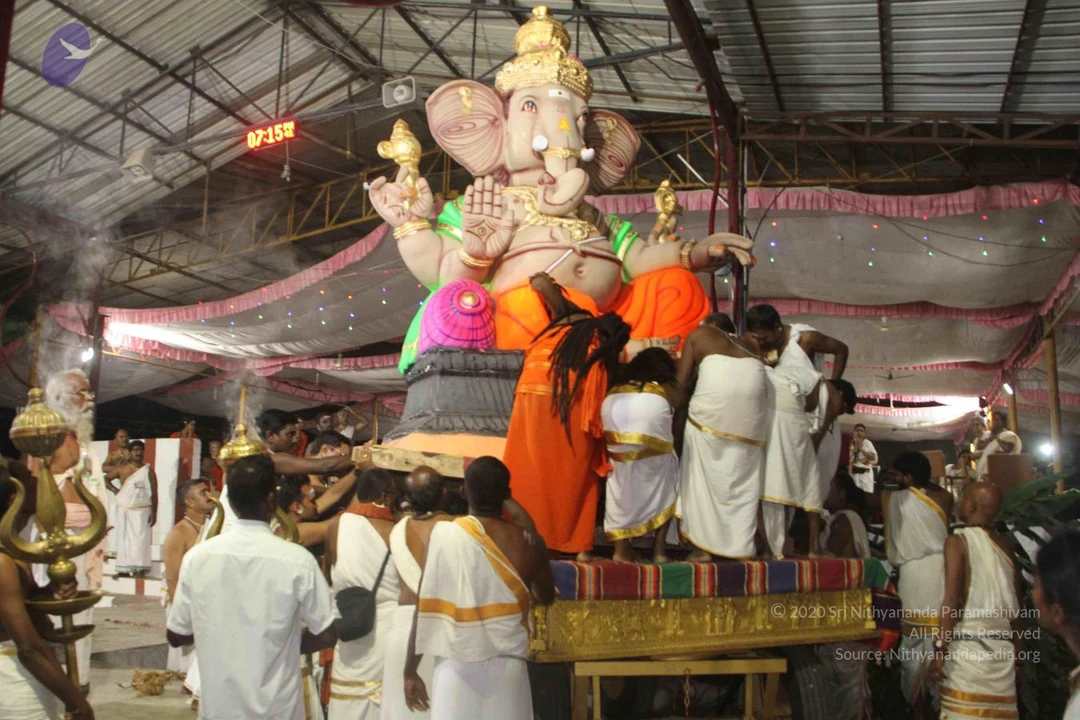
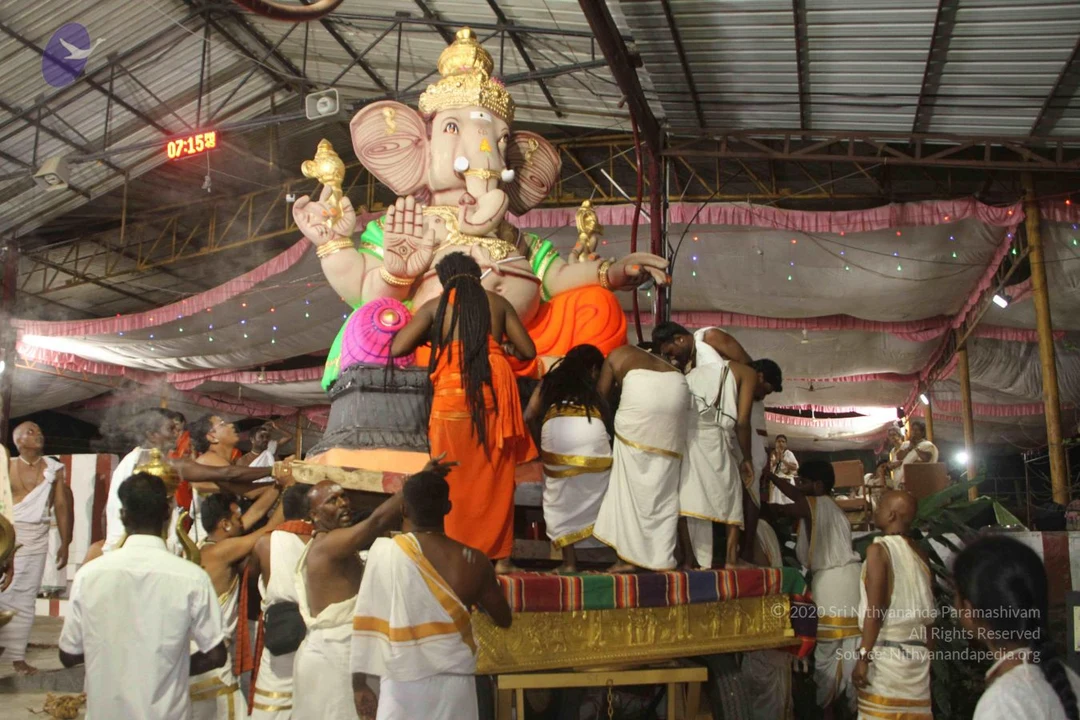
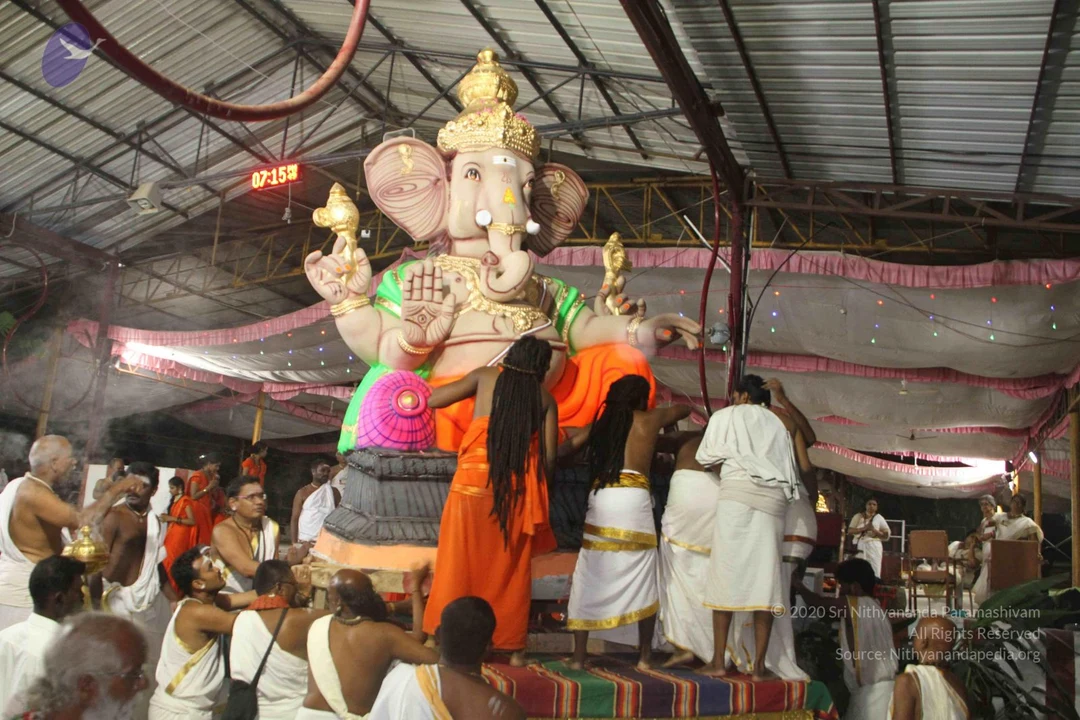
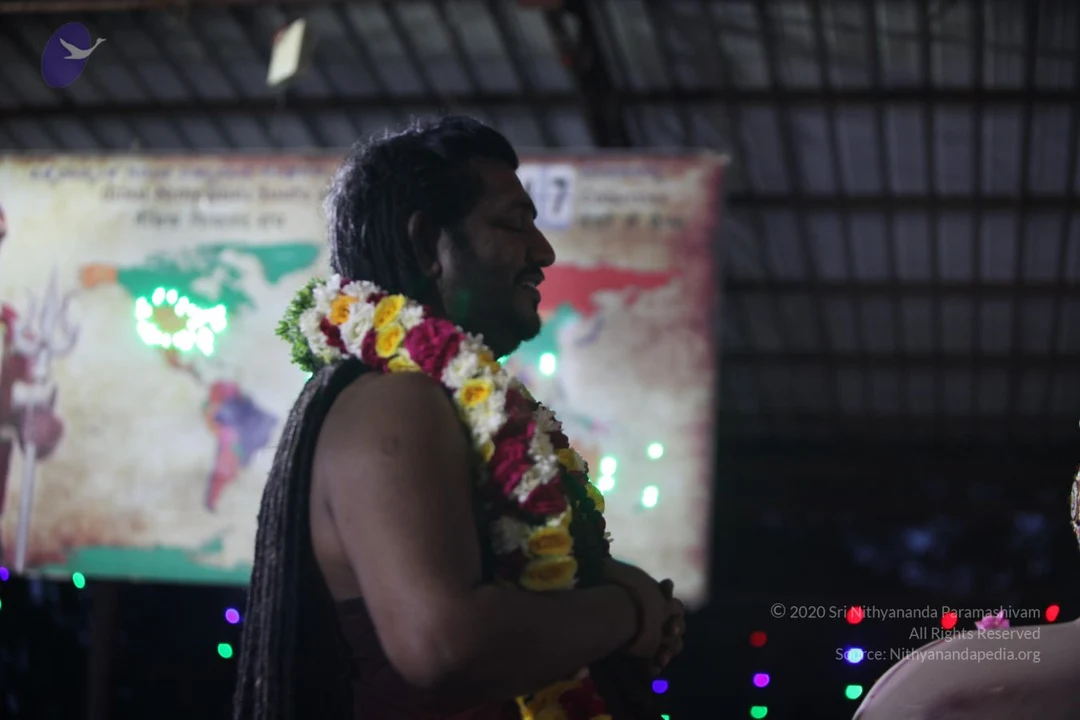
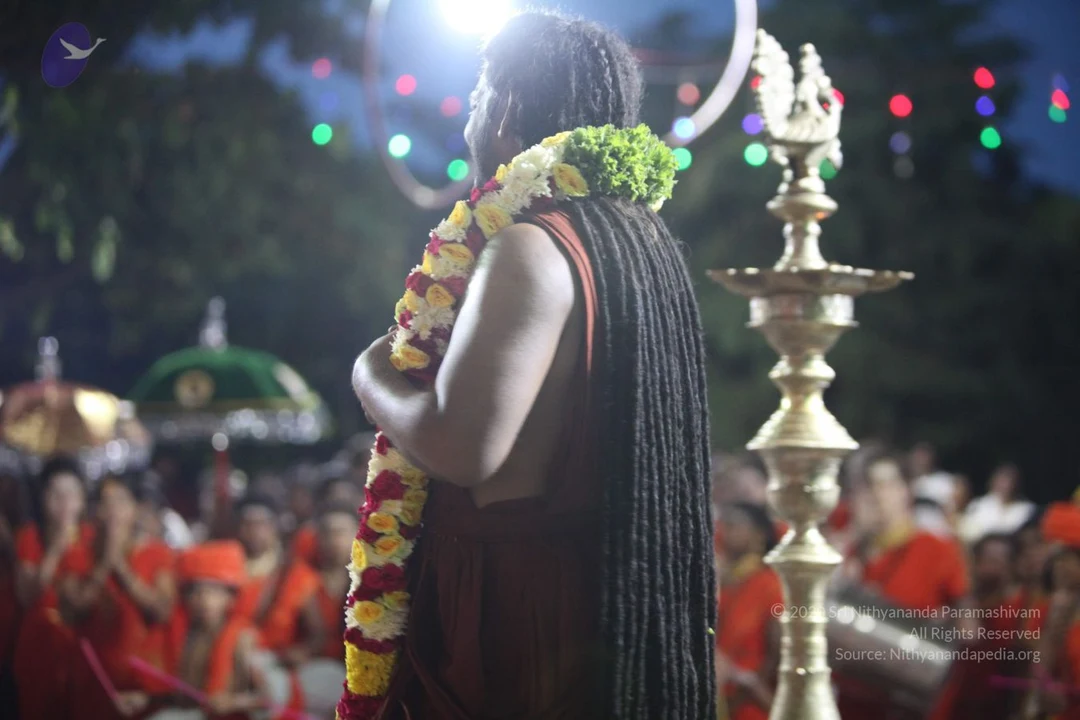
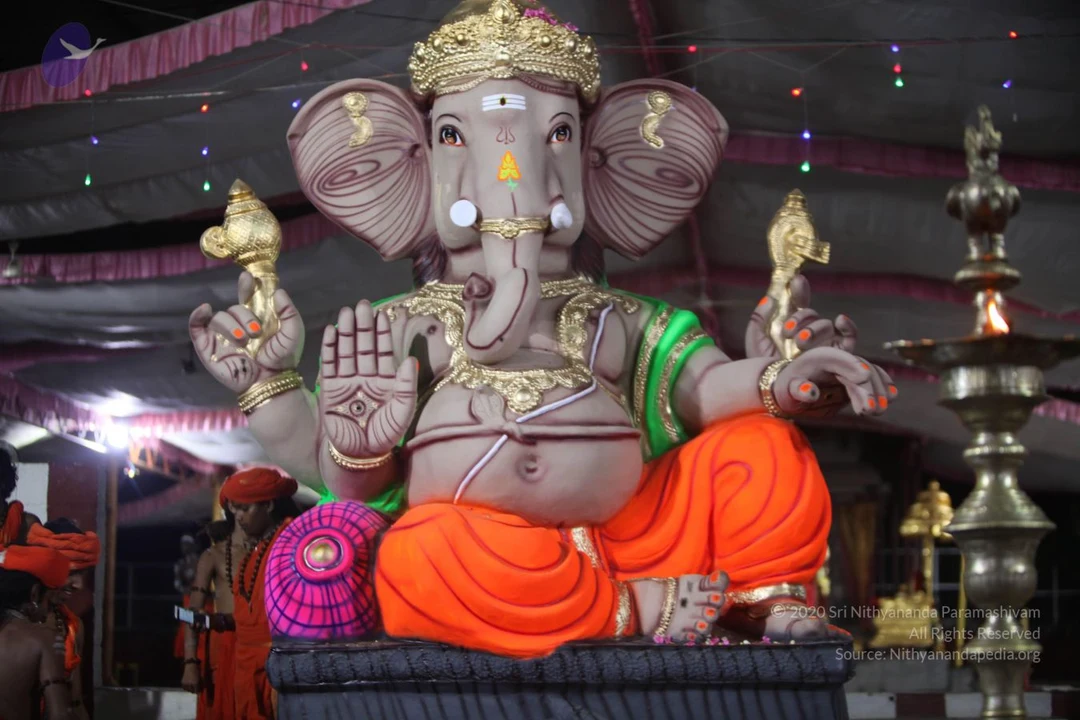
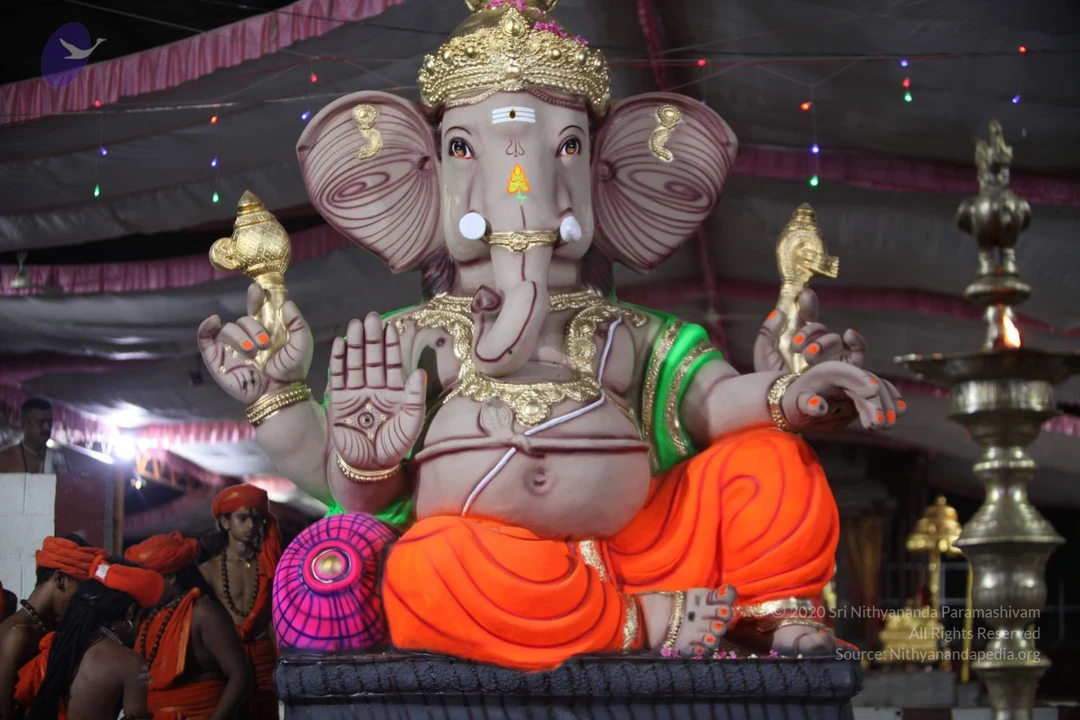
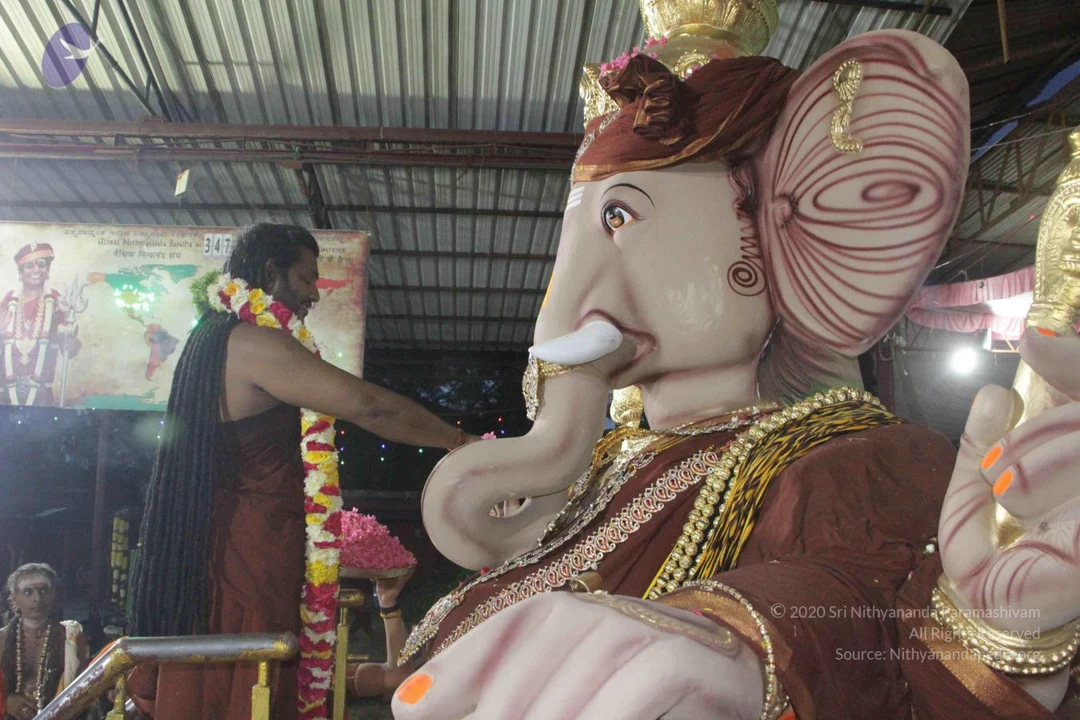
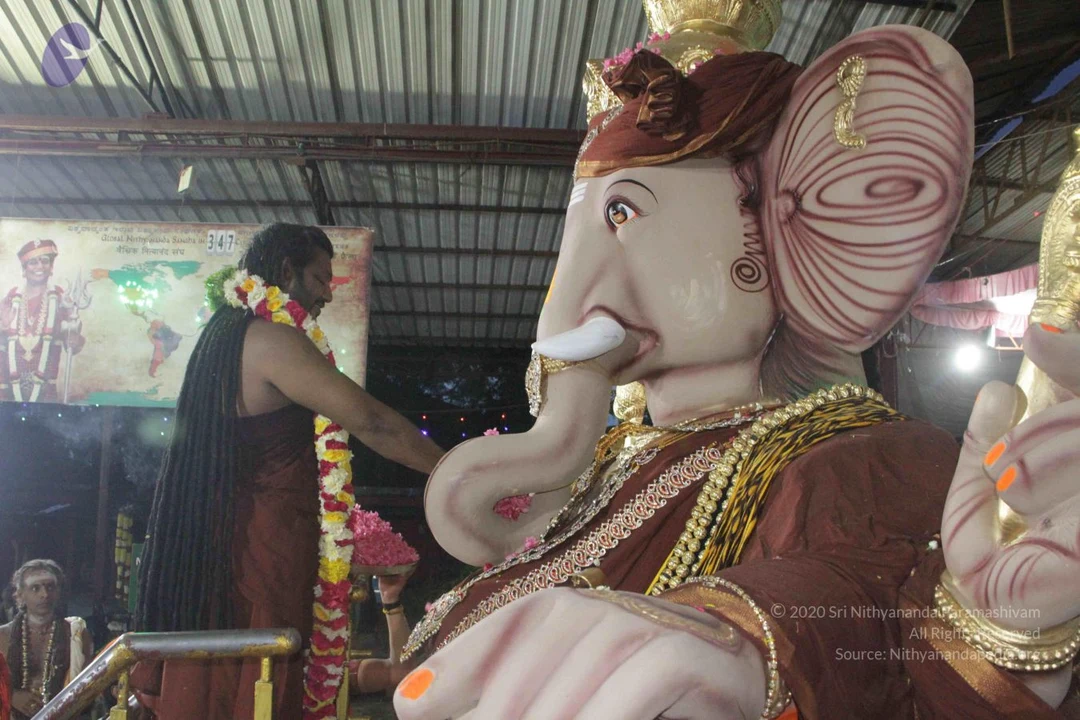
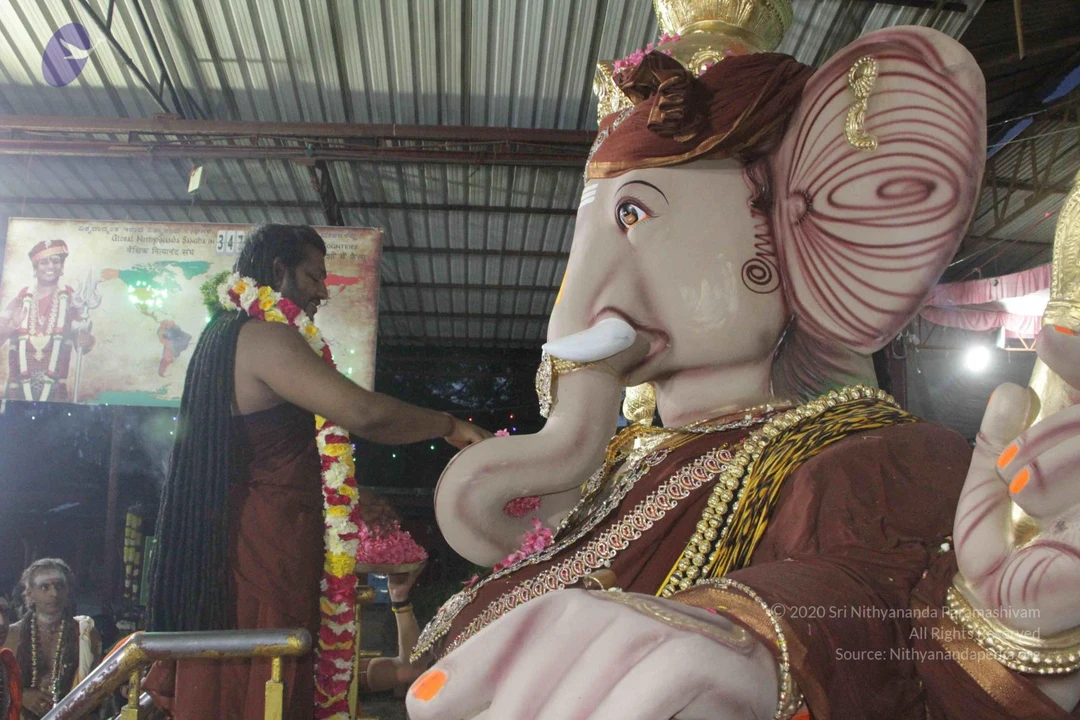
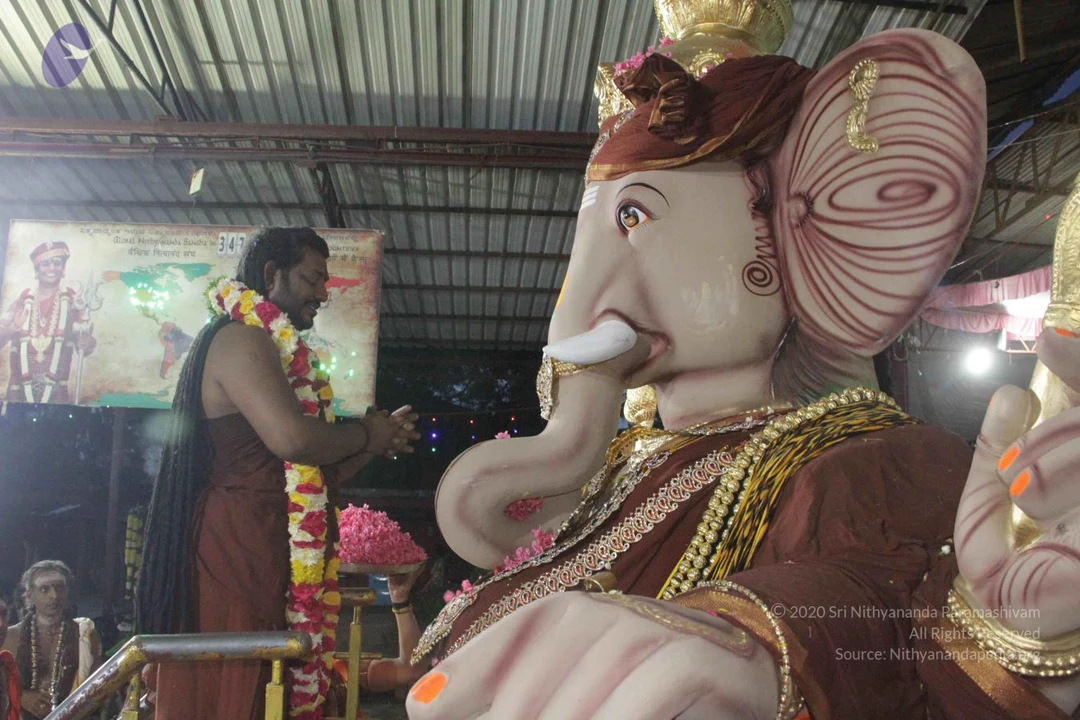
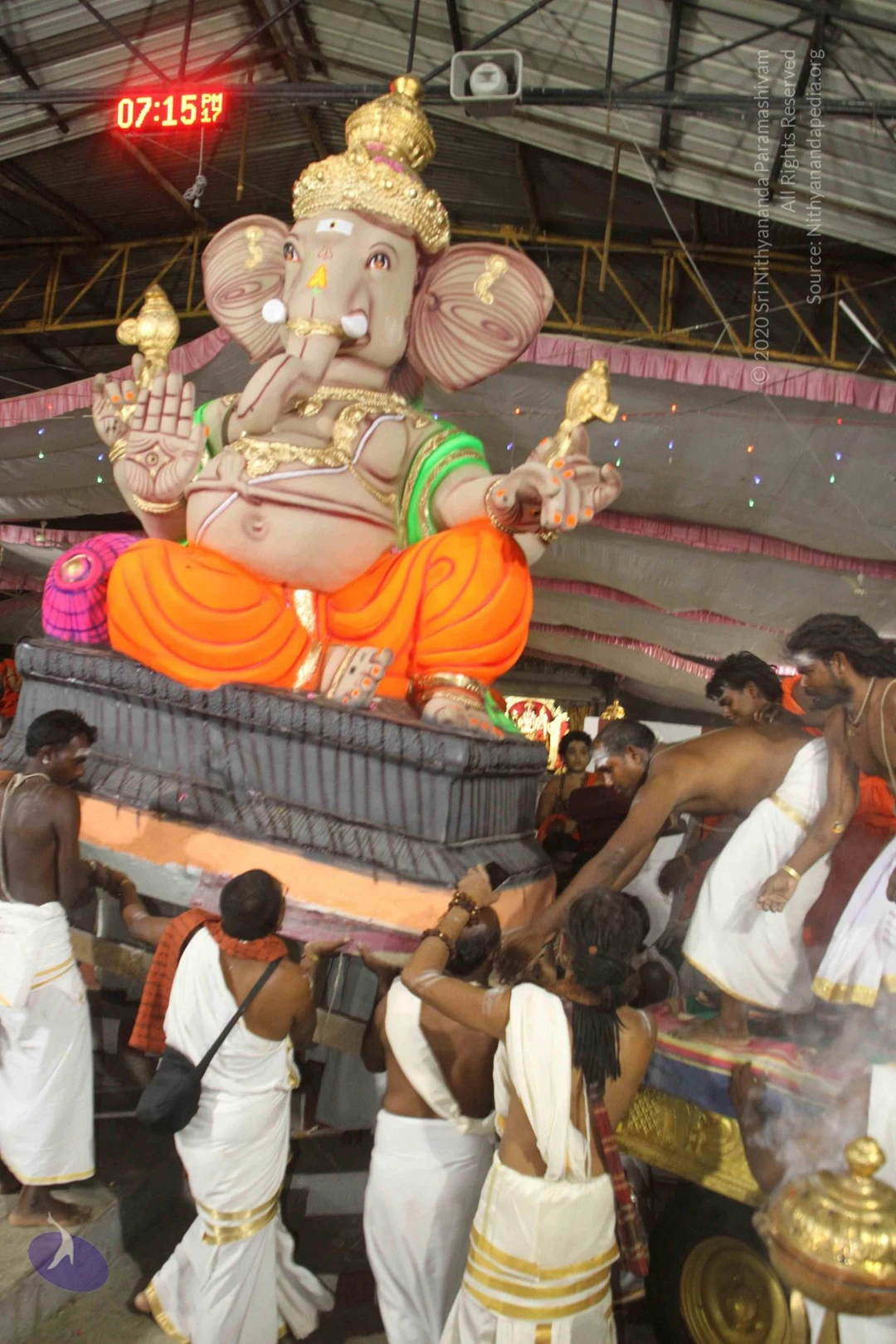
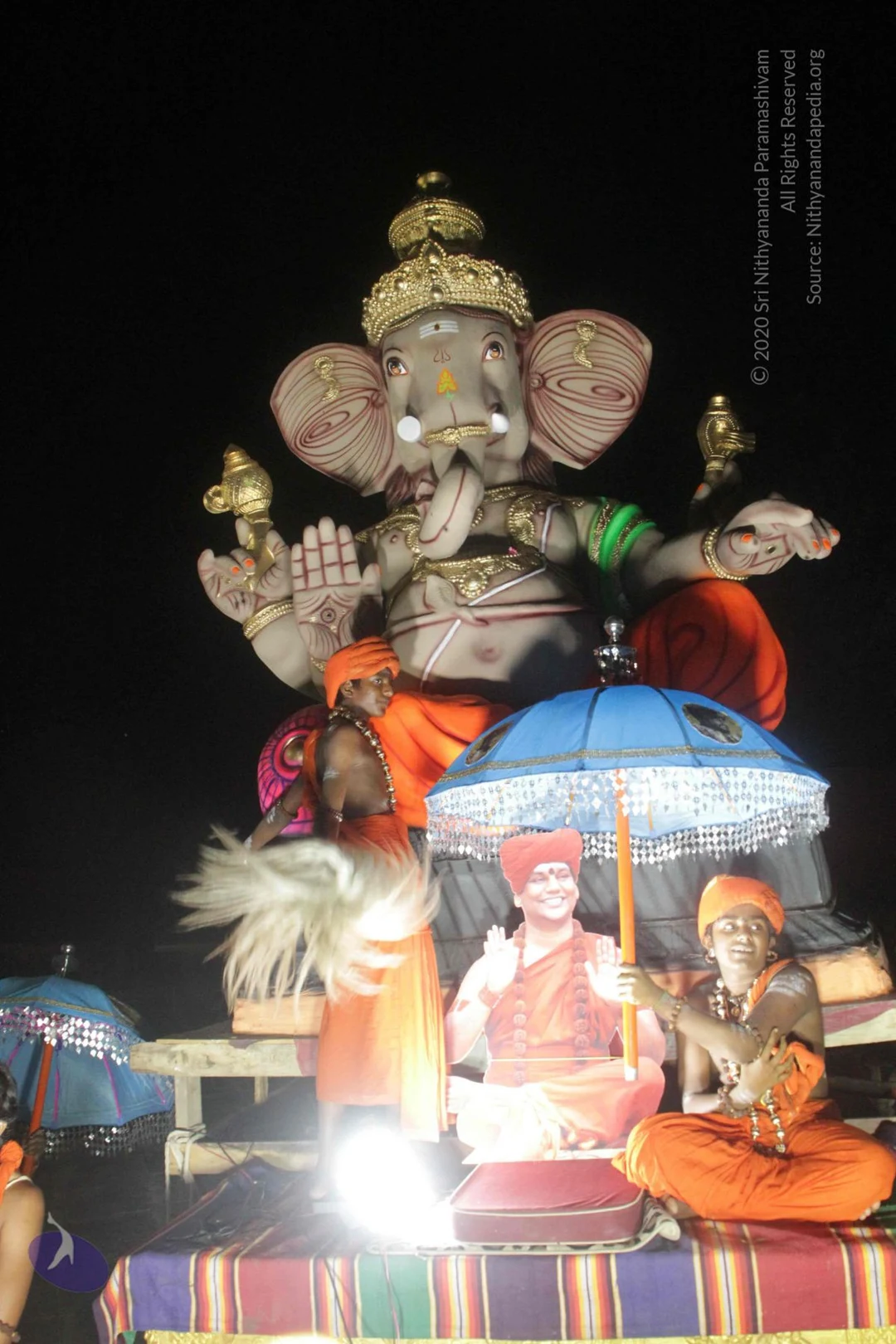
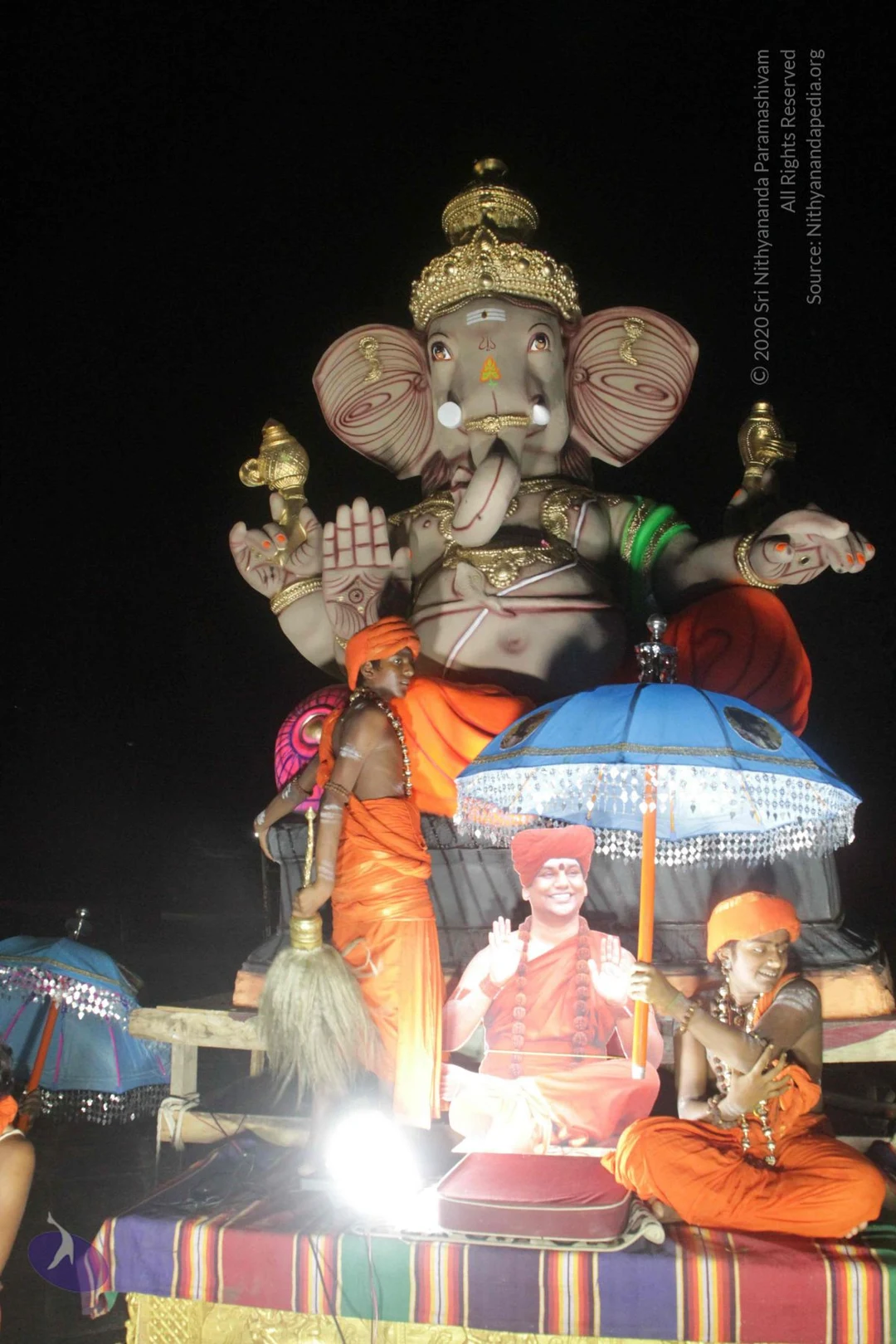
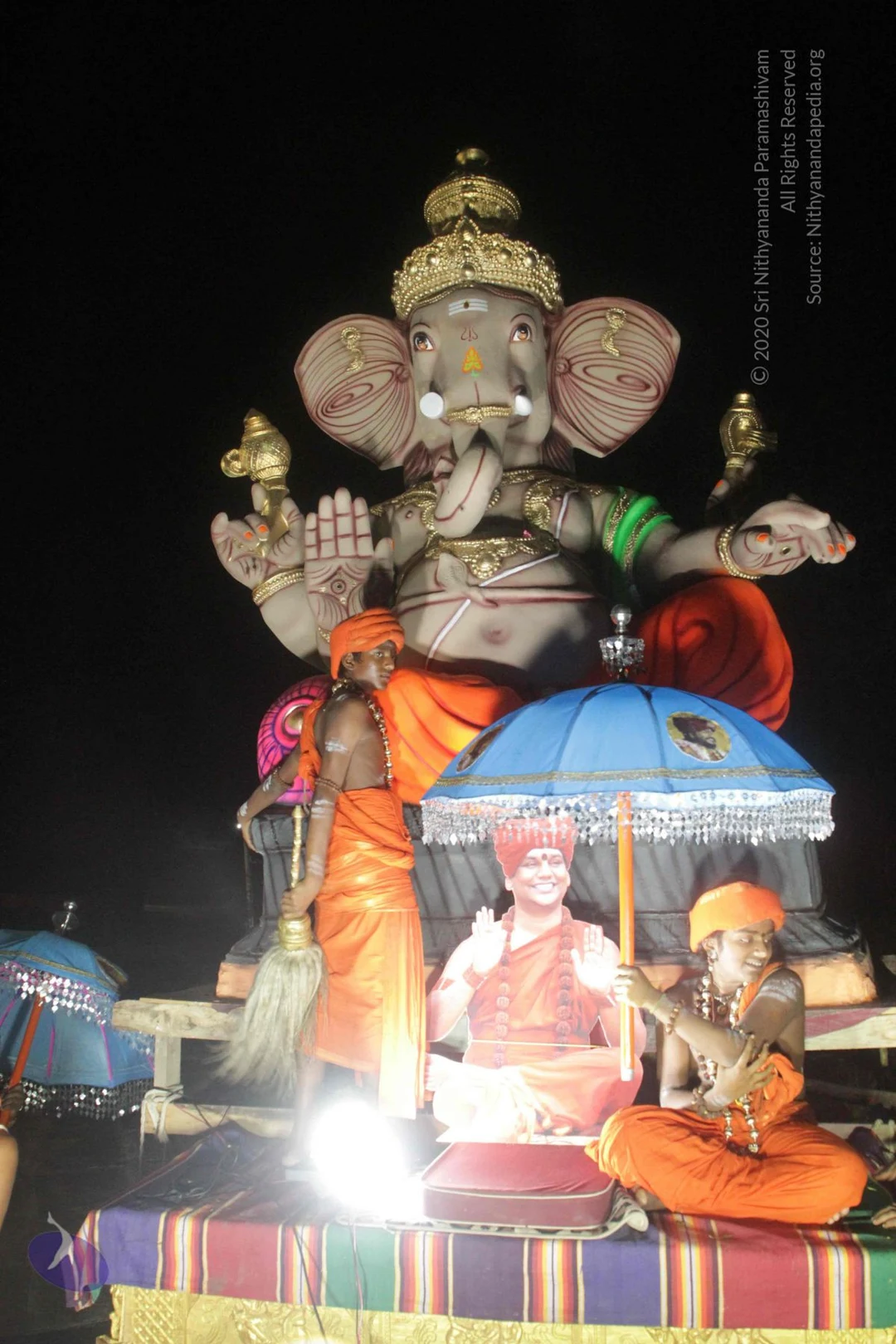
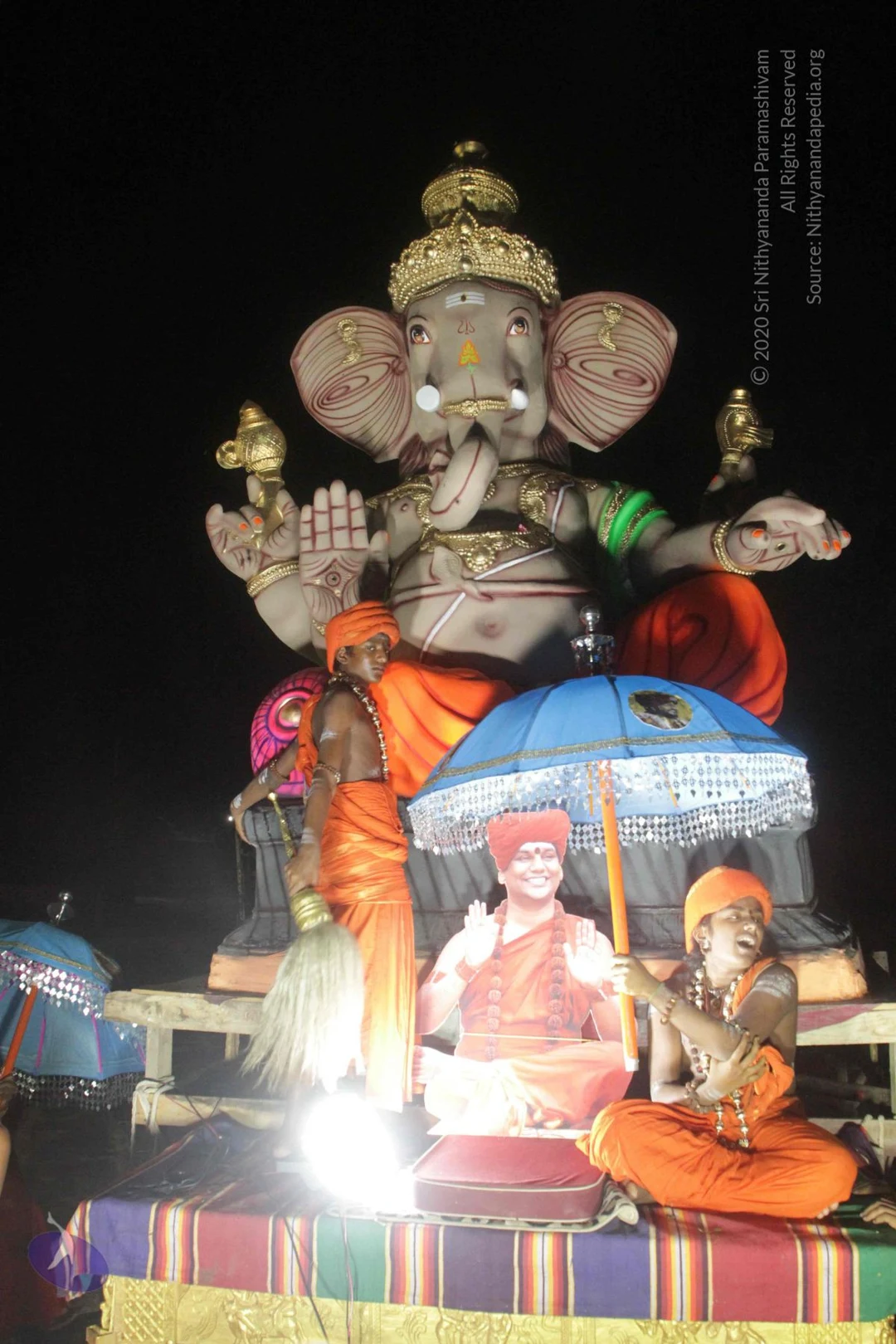
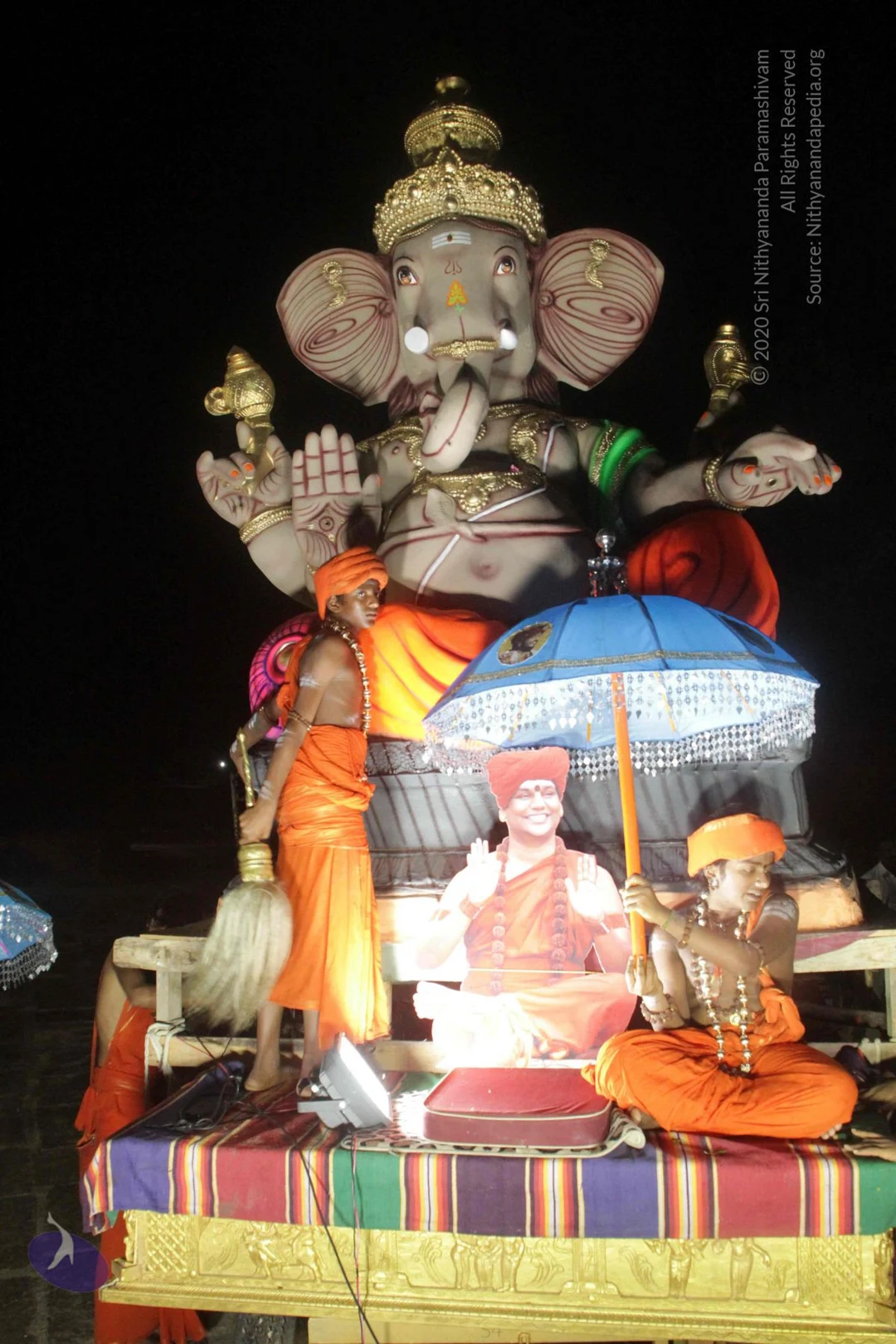
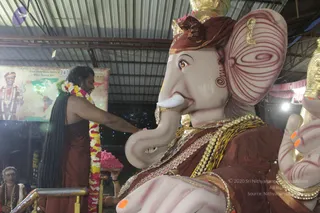
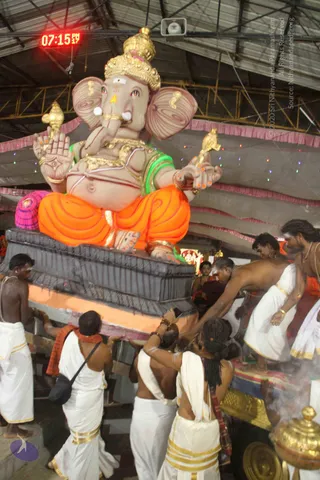
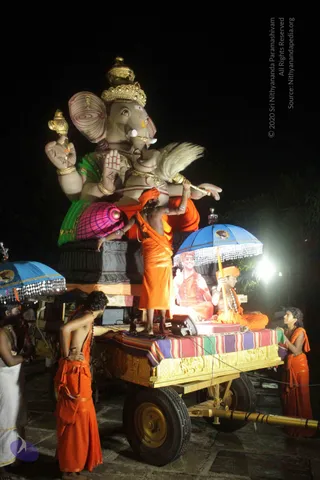
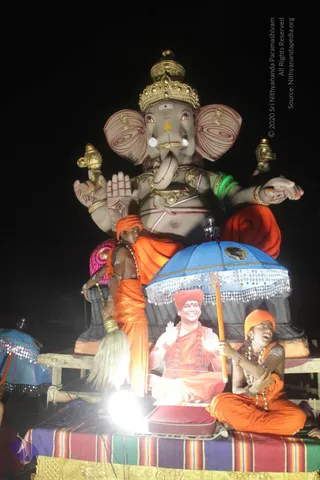
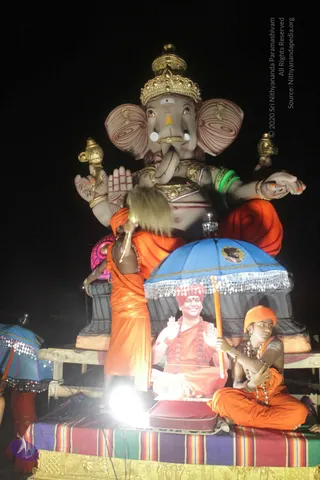
A large white Ganesha murti with a red-brown cloth draped over its shoulders and gold ornaments, trunk curled, is the main subject in the foreground. A standing man with long dark hair, bare-chested with a reddish-brown cloth wrapped around his waist, holds a long white and orange garland and rests his hand on the murti's trunk area. Behind him a pink flower offering is held in a tray. A metal-roofed structure with a portrait of a man in red and a rudraksha mala on a banner in the background, and an elderly woman with a garland visible at the lower left edge. Festive lights and pink cloth hang in the background.Close-up photo of a large Ganesha murti with a pale pink face, gold crown, gold ornaments and a rust-brown draped cloth. A man with long dark hair and a red-brown robe, wearing a flower garland of red, yellow and white blooms, stands at left, reaching toward the elephant trunk while holding a tray of pink flowers. A small figure in white and a gold necklace sits at the lower left edge. A banner on the wall behind shows a figure in red with a garland beside a world map. The setting is a metal-roofed hall with a metal railing and hanging lights.A large golden-crowned Ganesha murti with a pale pink trunk and orange dhoti sits on a grey pedestal under a tented hall with a red digital clock reading 07:15. Several men in white dhotis, some bare-chested with sacred threads and tilaks, push and steady the platform from the front and sides, and a golden kalasha-style vessel appears at the lower right. Strings of lights and pink draping decorate the ceiling.Night procession on a decorated golden chariot with a large pale Ganesha murti wearing a gold crown and holding a modak and an axe, adorned with green and gold cloth and a pink-patterned base. Several men in saffron-orange robes stand on and around the cart, one standing beside the idol with raised arms, while another seated figure in saffron clothing with rudraksha beads sits in front of a large blue umbrella with sequined trim. A printed banner portrait behind shows a seated figure in orange robes. A bare-chested attendant in orange and a man in white dhoti pull and guide the cart, and a striped cloth covers the platform.Night photograph of a large grey Ganesha murti with a gold crown, red tilak, gold ornaments and multiple arms, seated above a decorated float. A standing young man in orange cloth and orange turban holds a white whisk fan beside a blue canopy with silver tassels. A life-size cutout or printed image of a smiling man in orange robes, red turban and rudraksha mala sits in front, hands raised in blessing, with a red cushion below. A seated man in orange robes and orange turban holds an orange-handled parasol, his head tilted back. A striped cloth covers the platform. Probable Swamiji depicted as the printed cutout, based on the orange robes, red turban and rudraksha mala.Night photograph of a large Ganesha murti with a golden crown, red-and-white tusk-patterned features and multiple arms holding golden objects, adorned with green bangles. In front, a man with blond-tinted hair in an orange dhoti and orange turban stands with his back to the camera, holding a white fan. Beneath a blue umbrella with silver fringe stands a framed portrait of a smiling man in a red turban and orange robes with rudraksha mala, hands raised in blessing, set on a red cushion. A seated attendant in orange robes and an orange head wrap sits to the right on a striped cloth. The scene is a festival procession or ritual display.