Skip to content
Saturday

25 March 2017

Password to instantly manifest powers

Dated photos
265
Source pages
1
Media
3
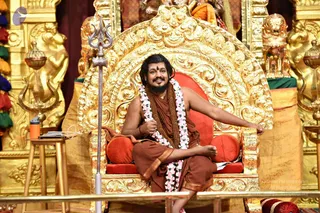
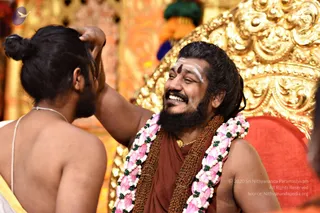
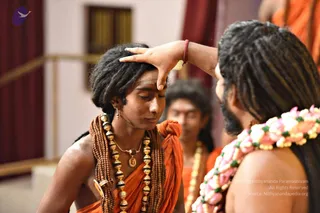
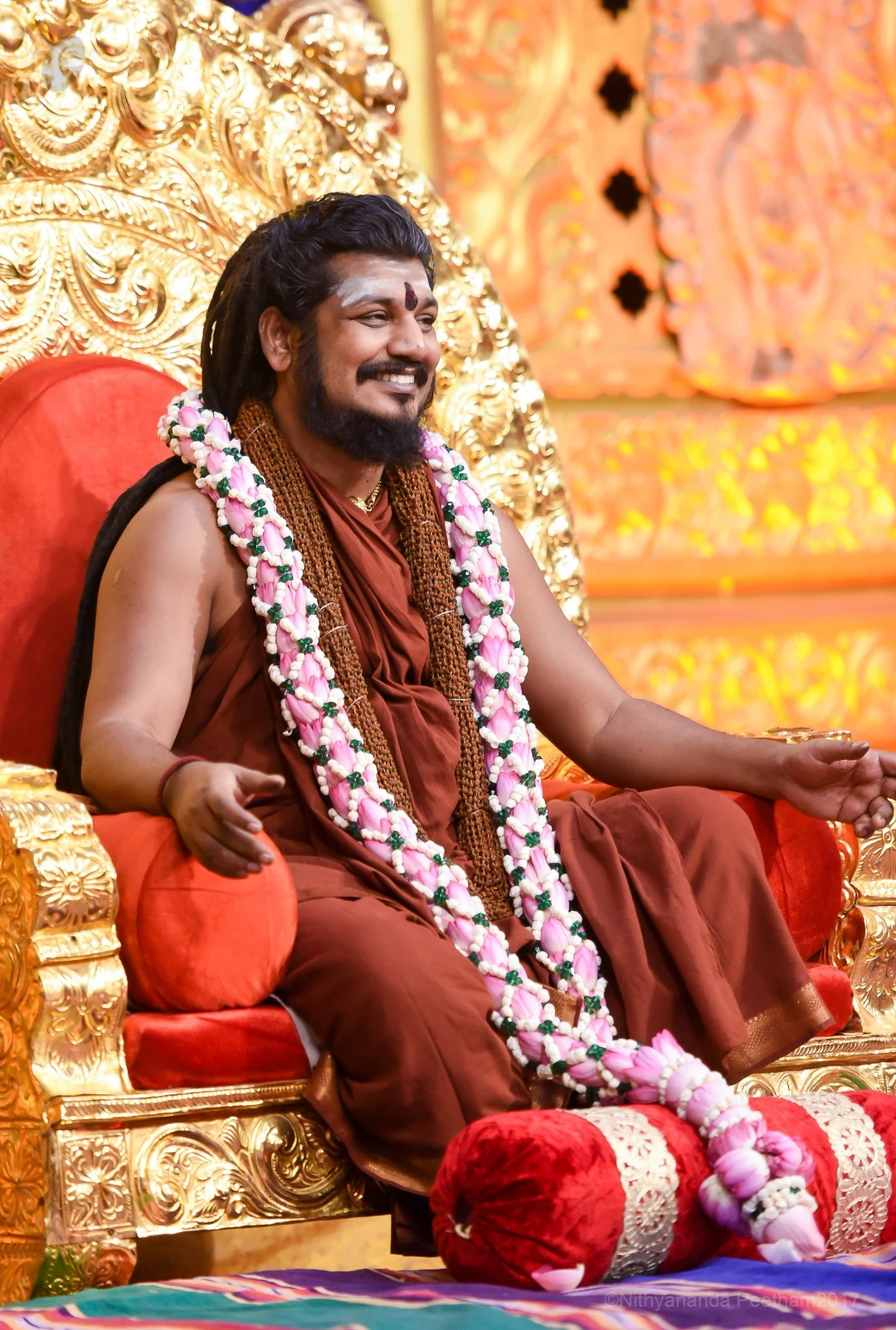
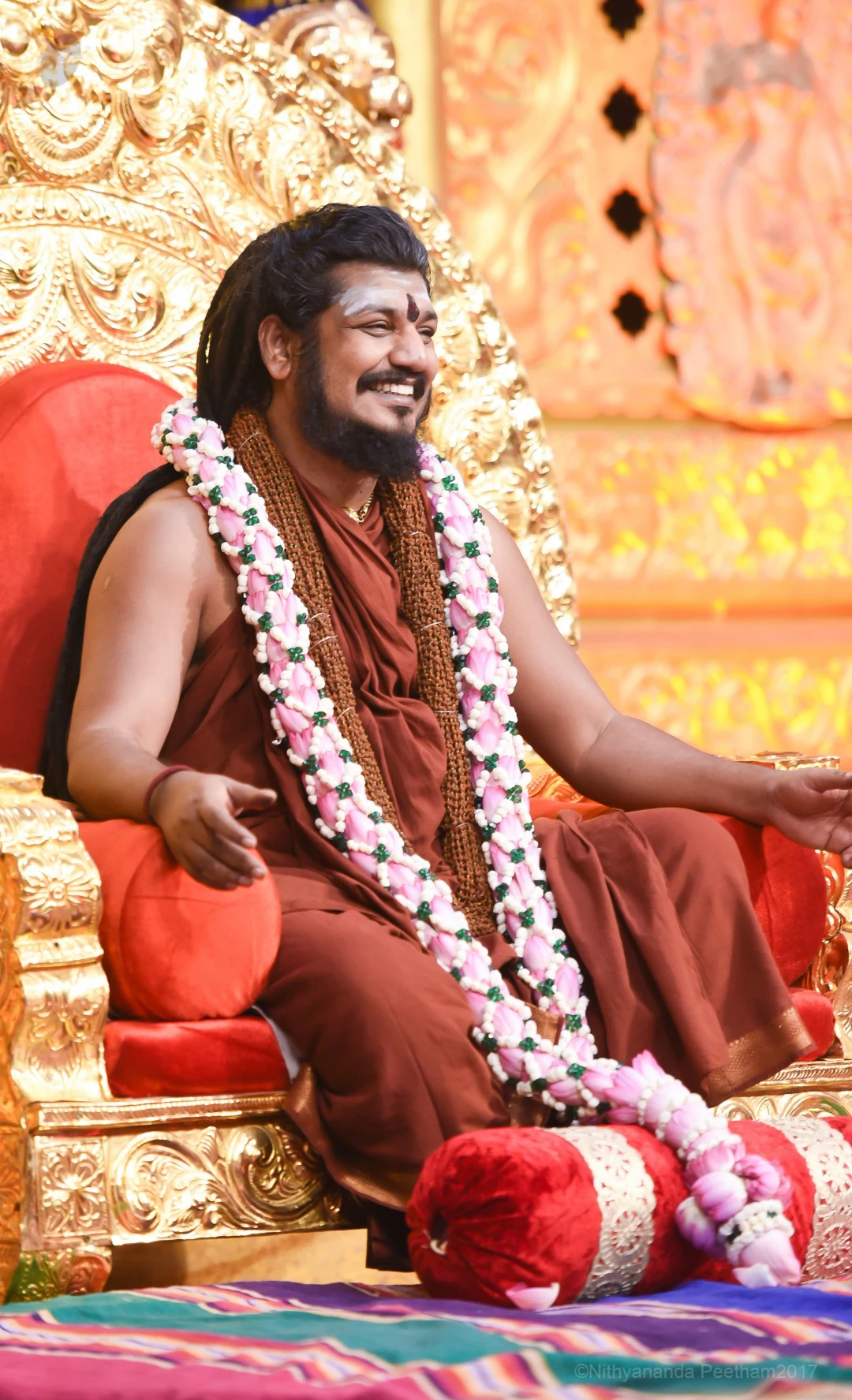
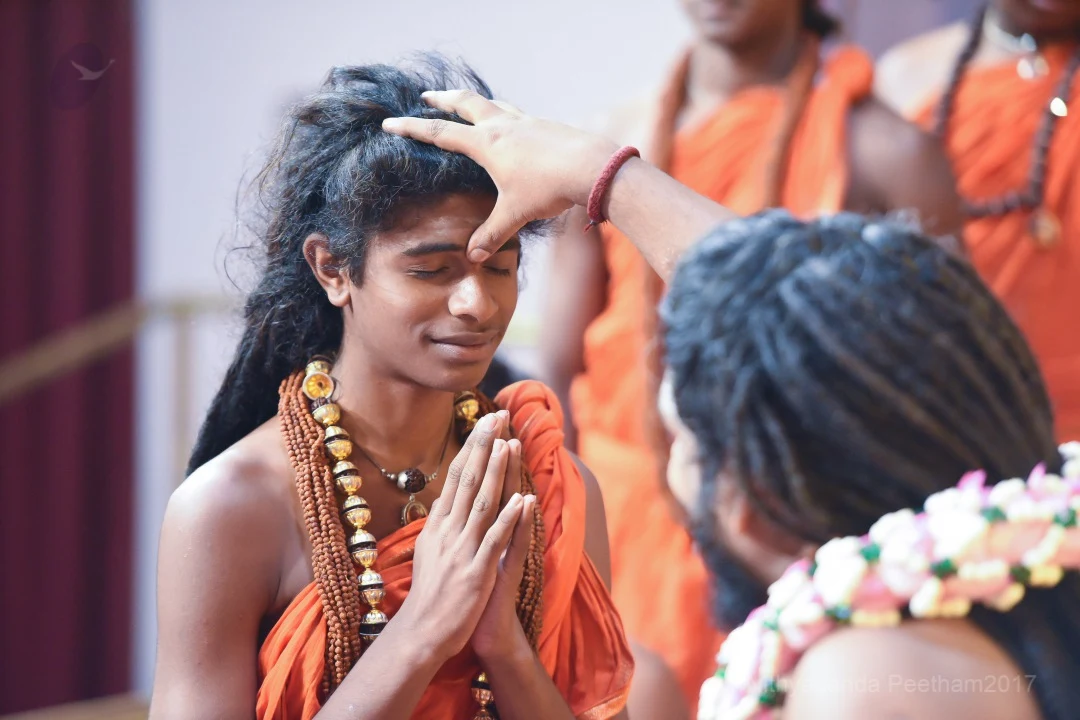
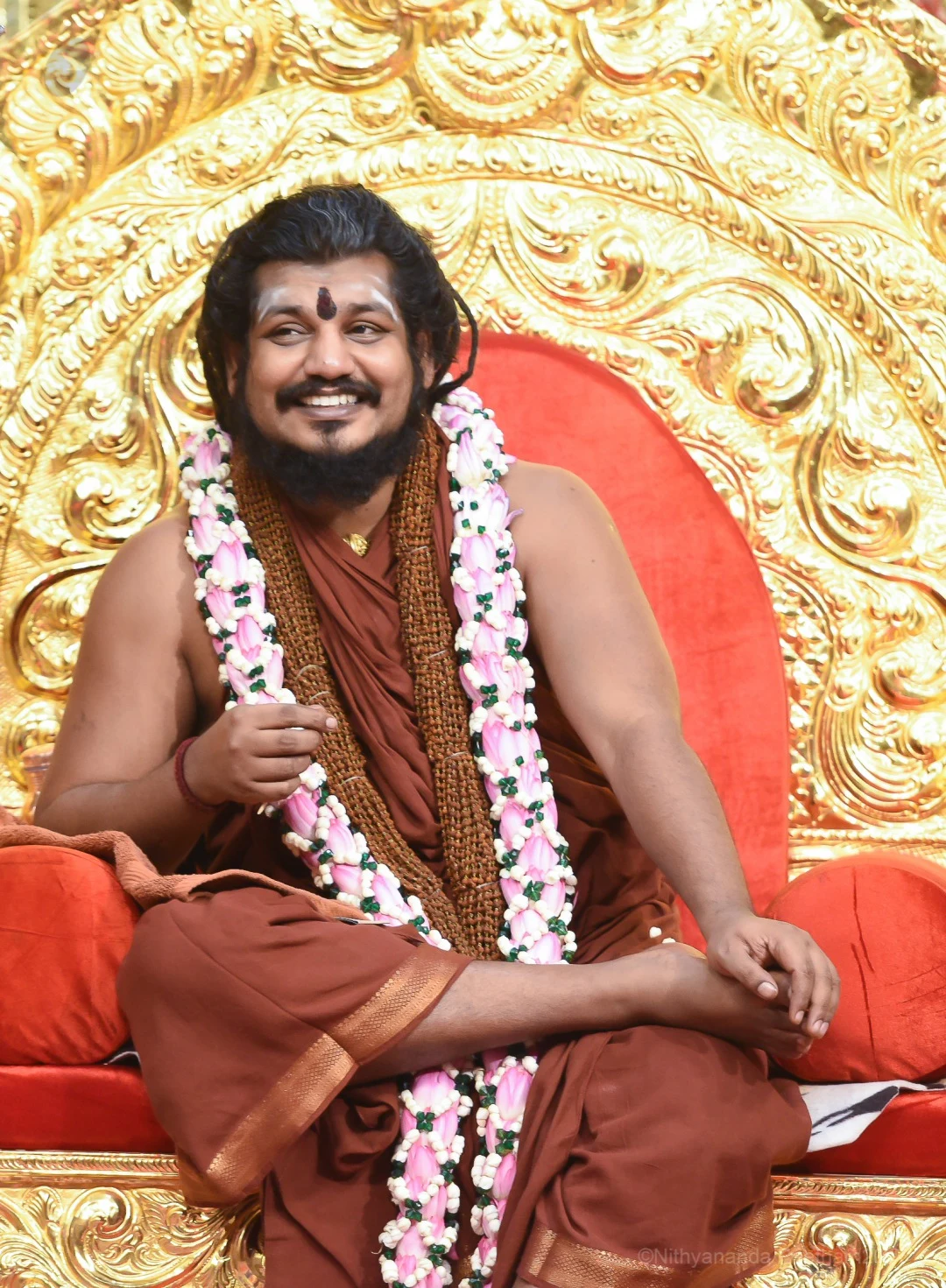
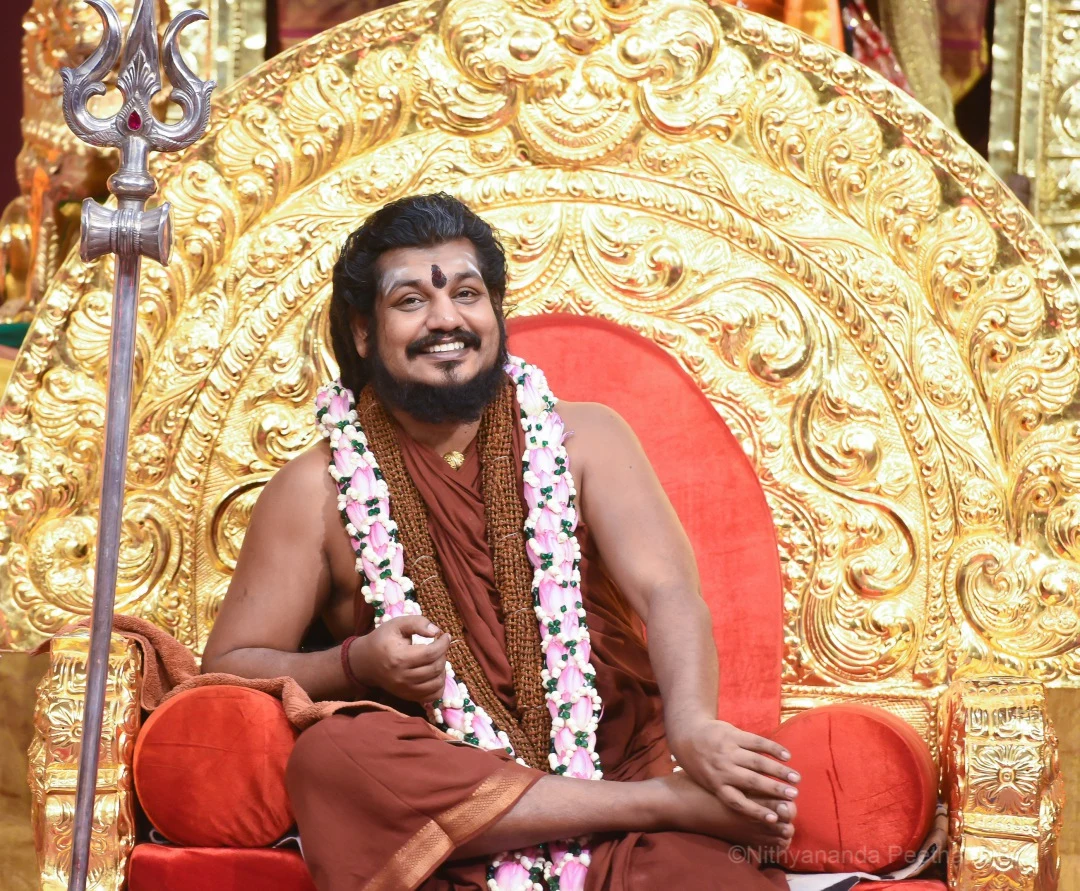
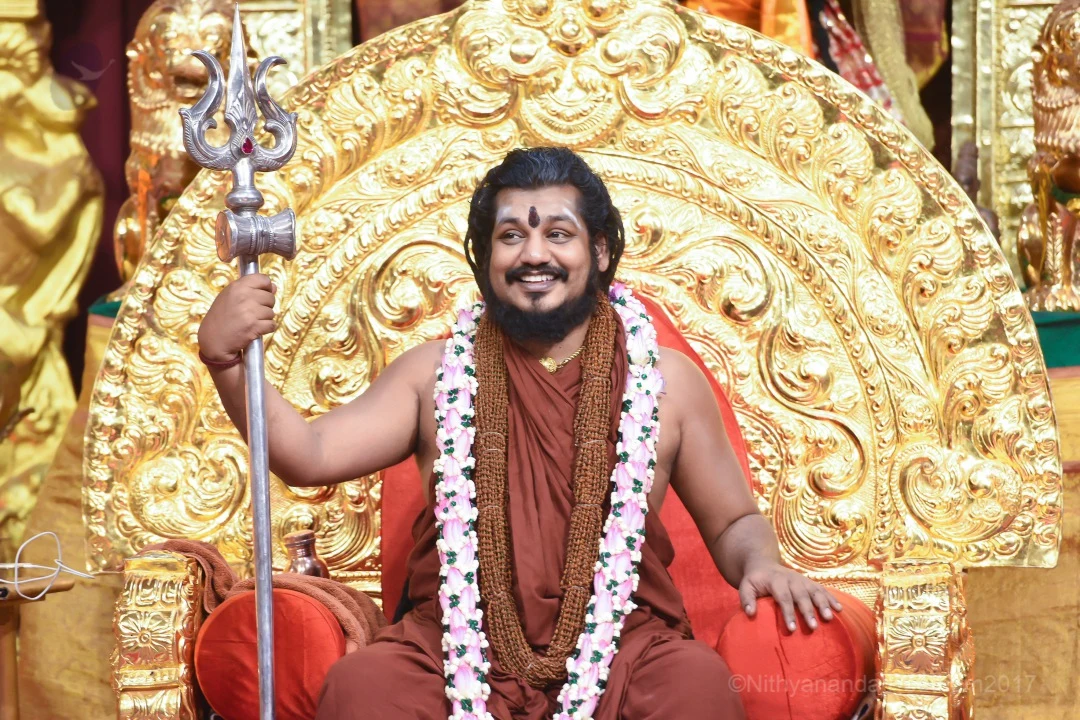
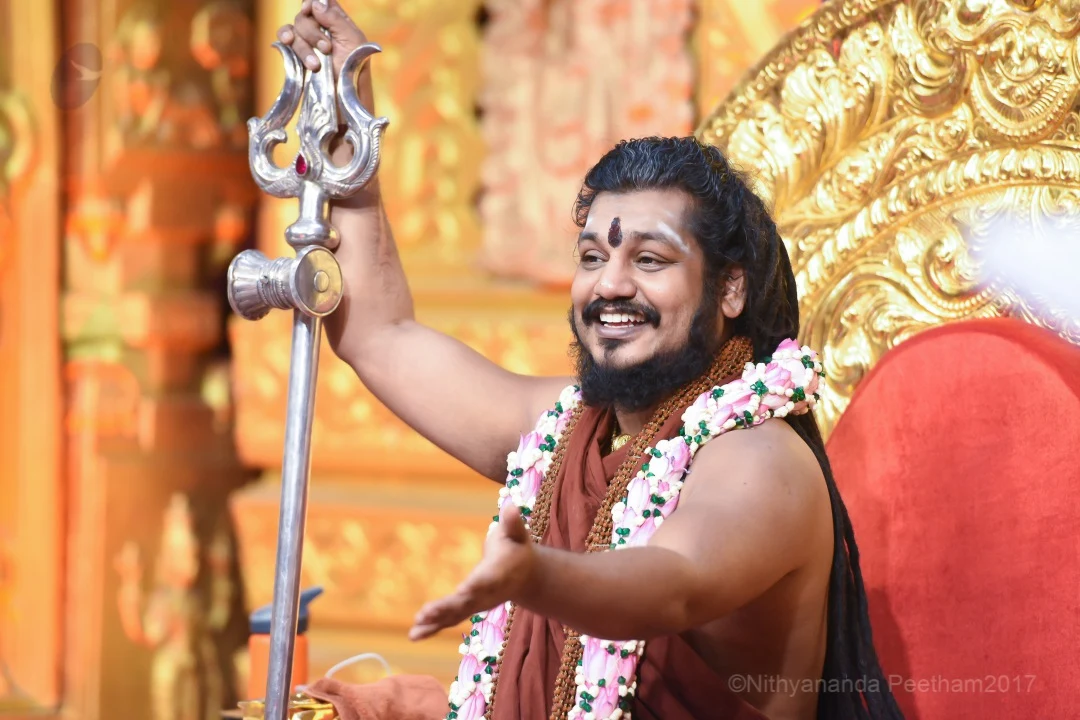
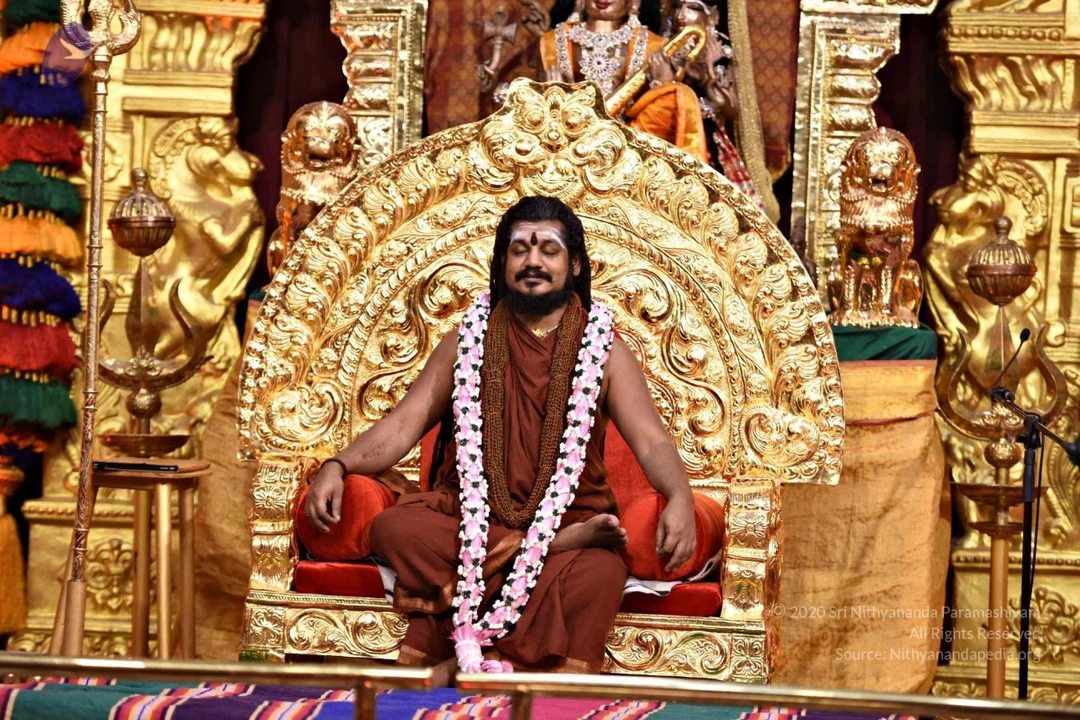
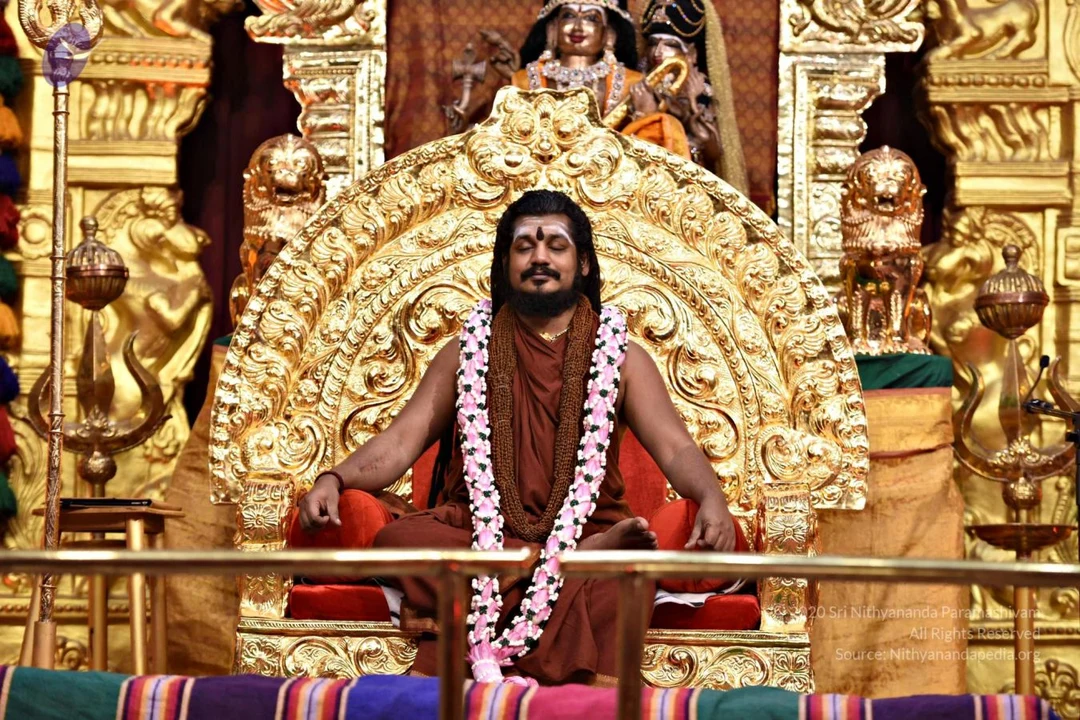
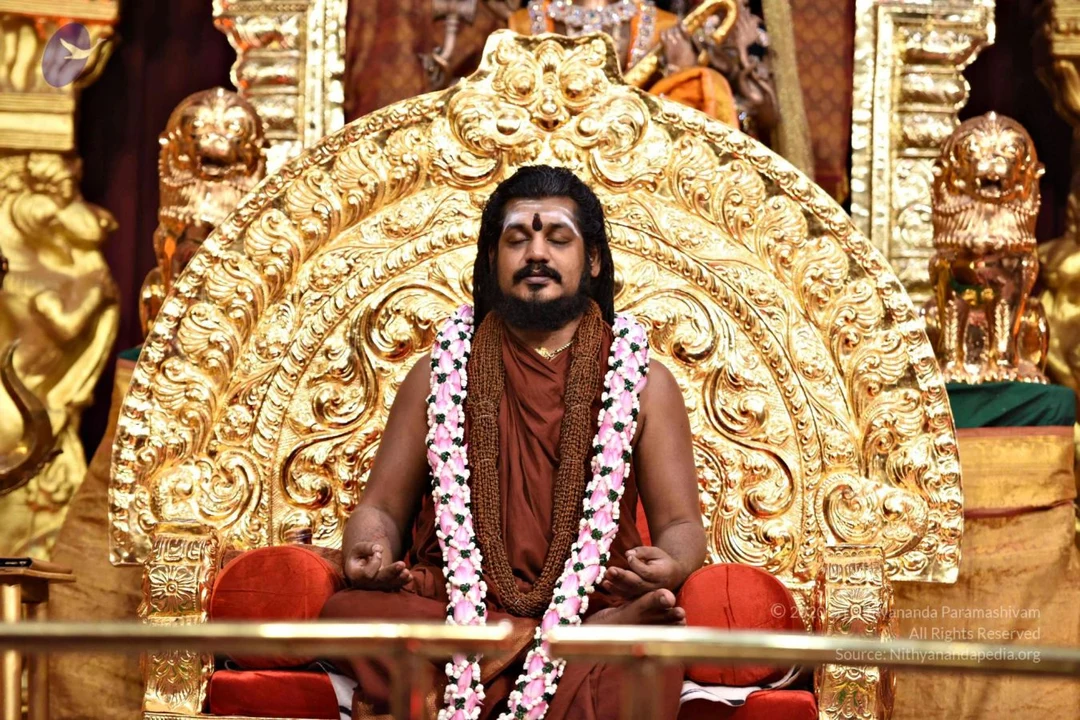
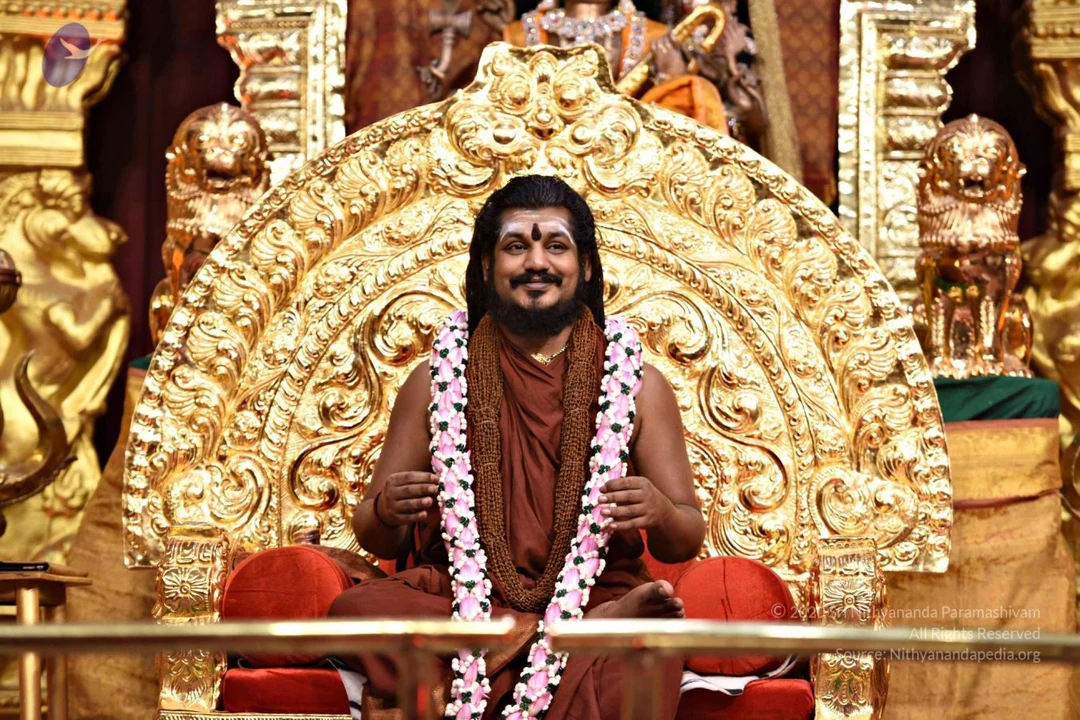
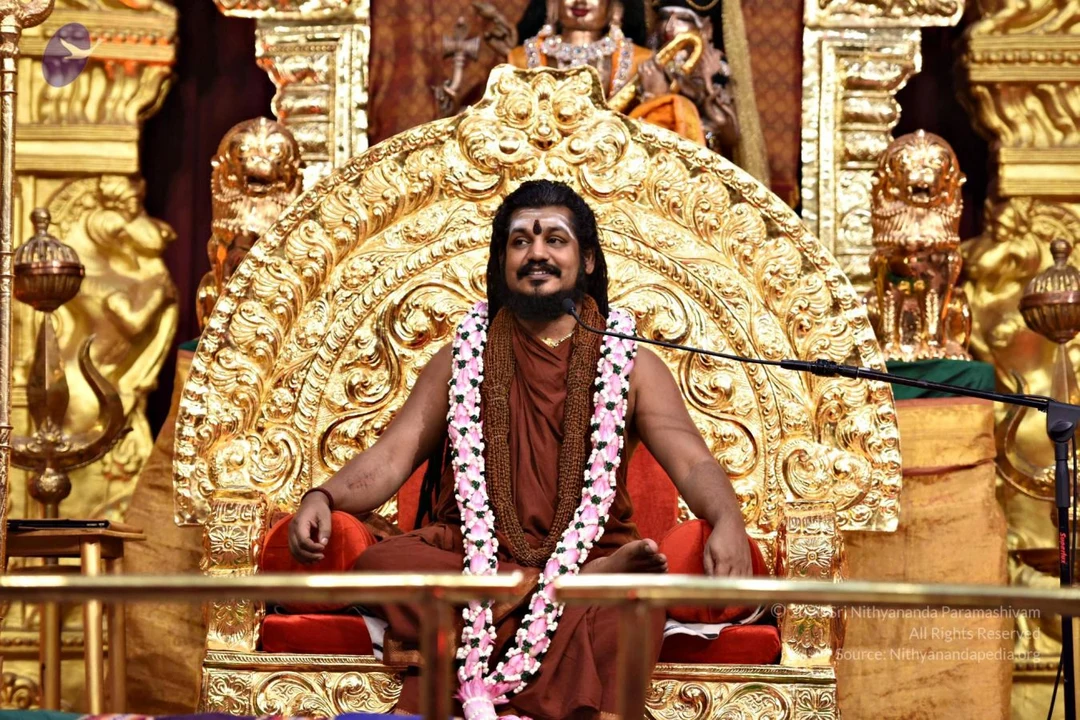
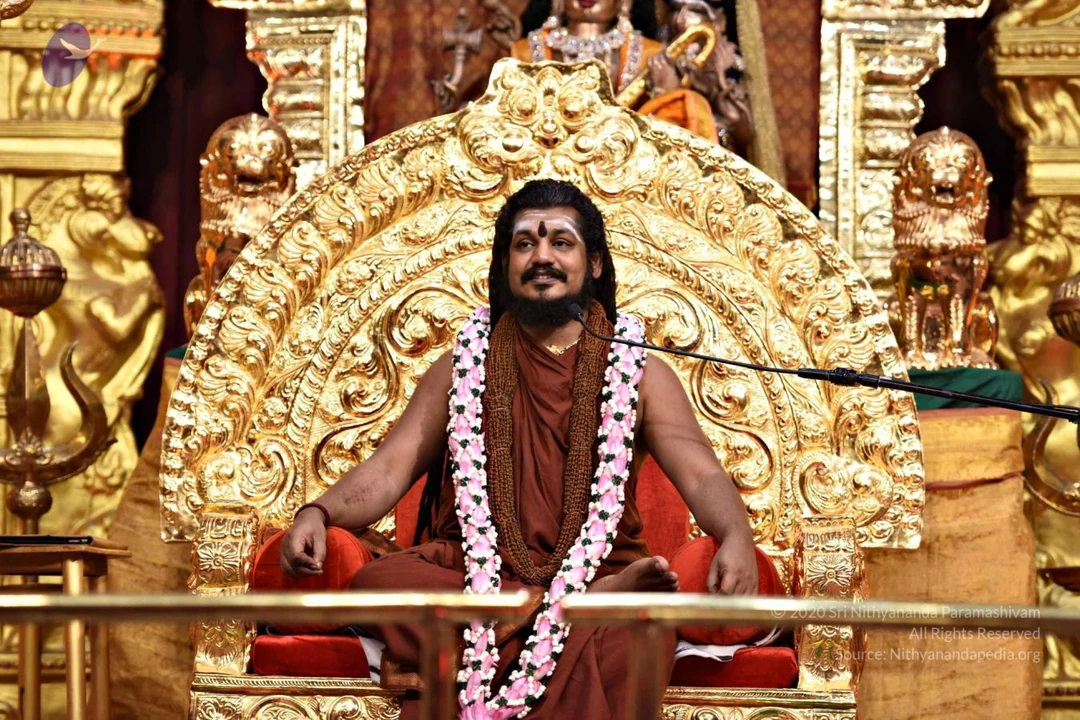
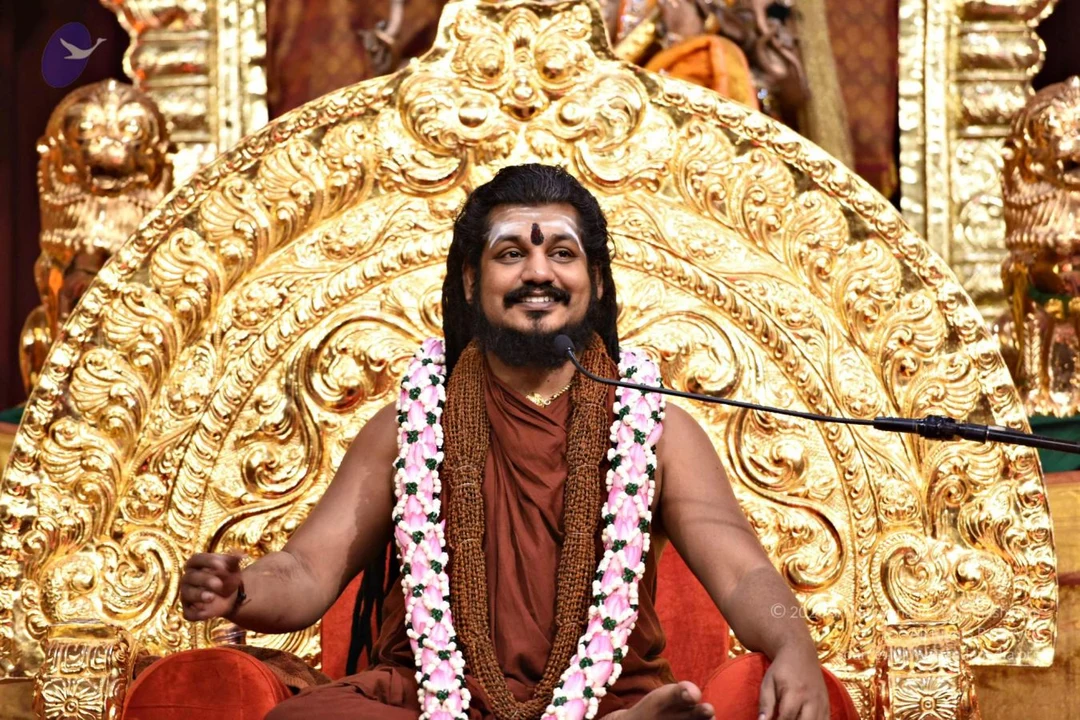
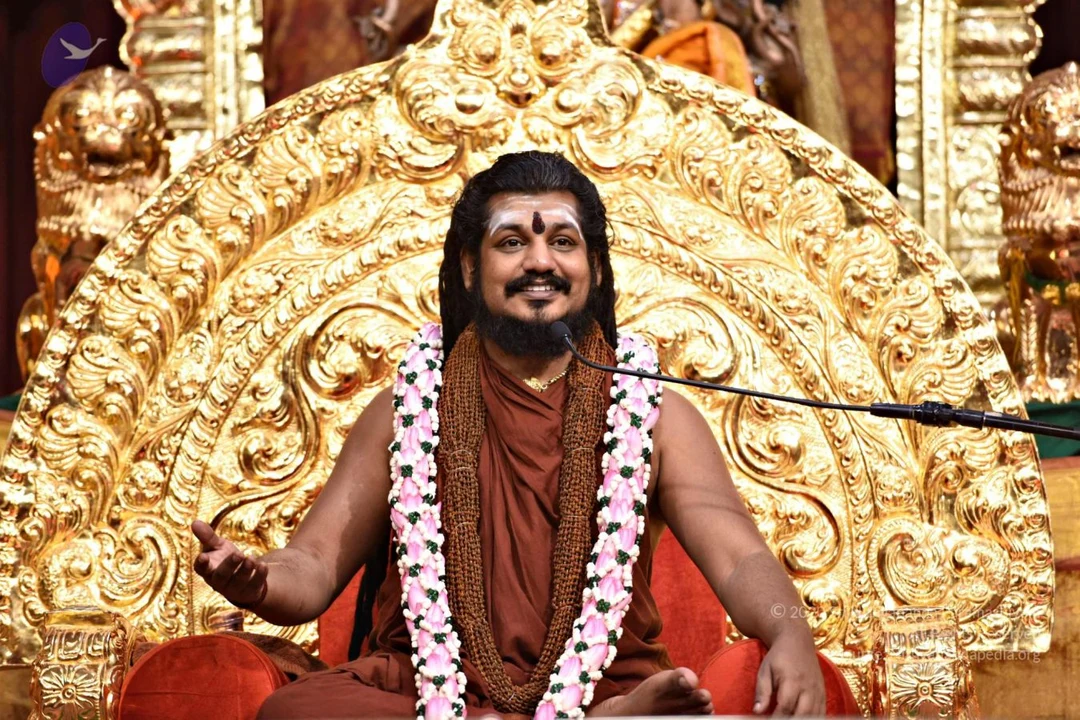
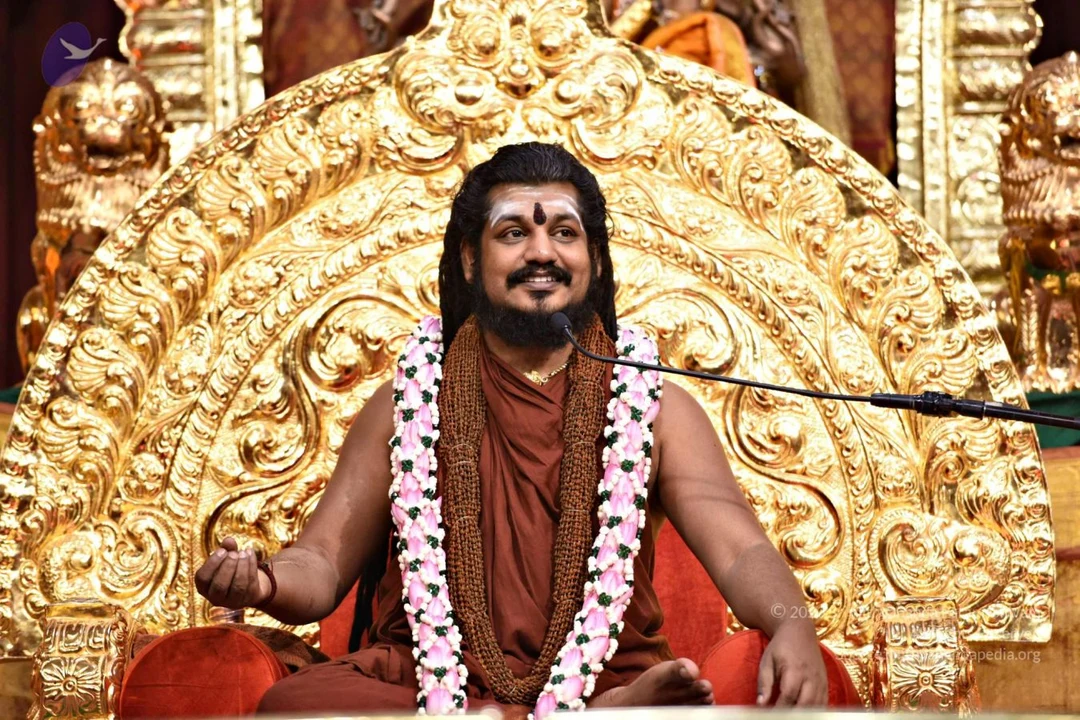
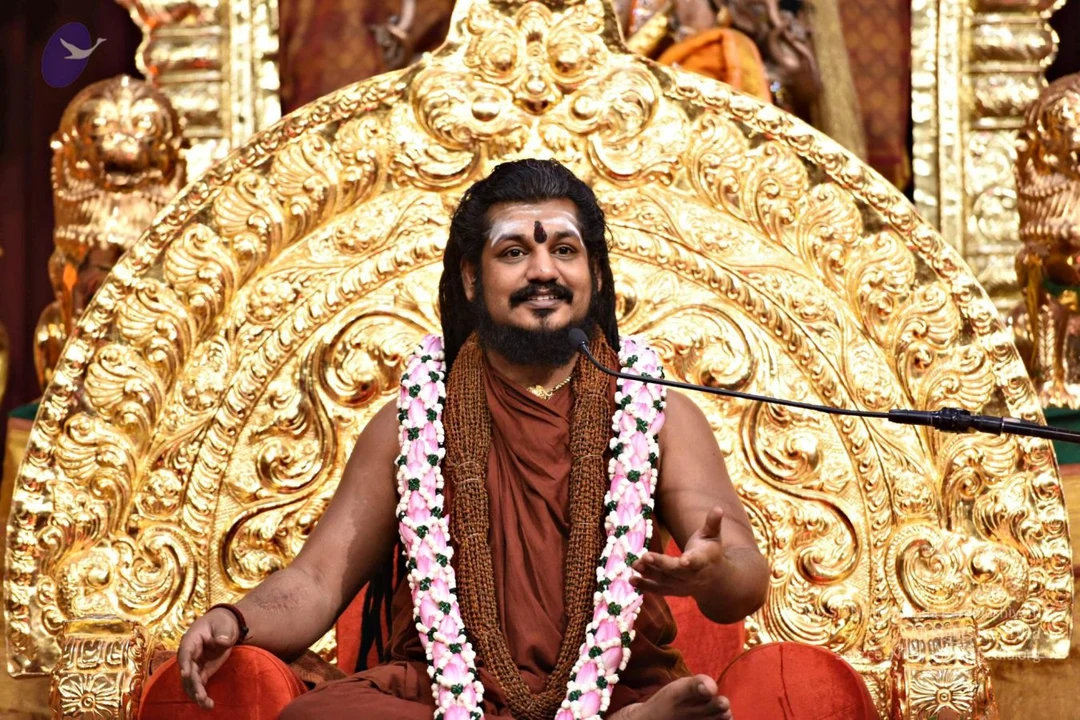
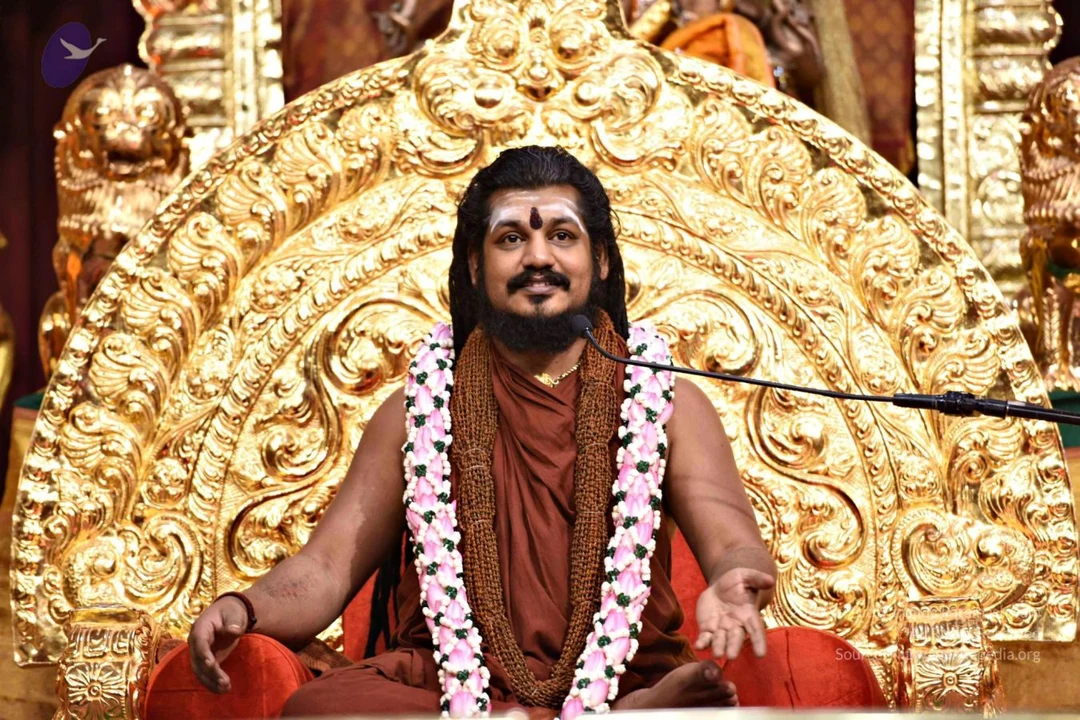
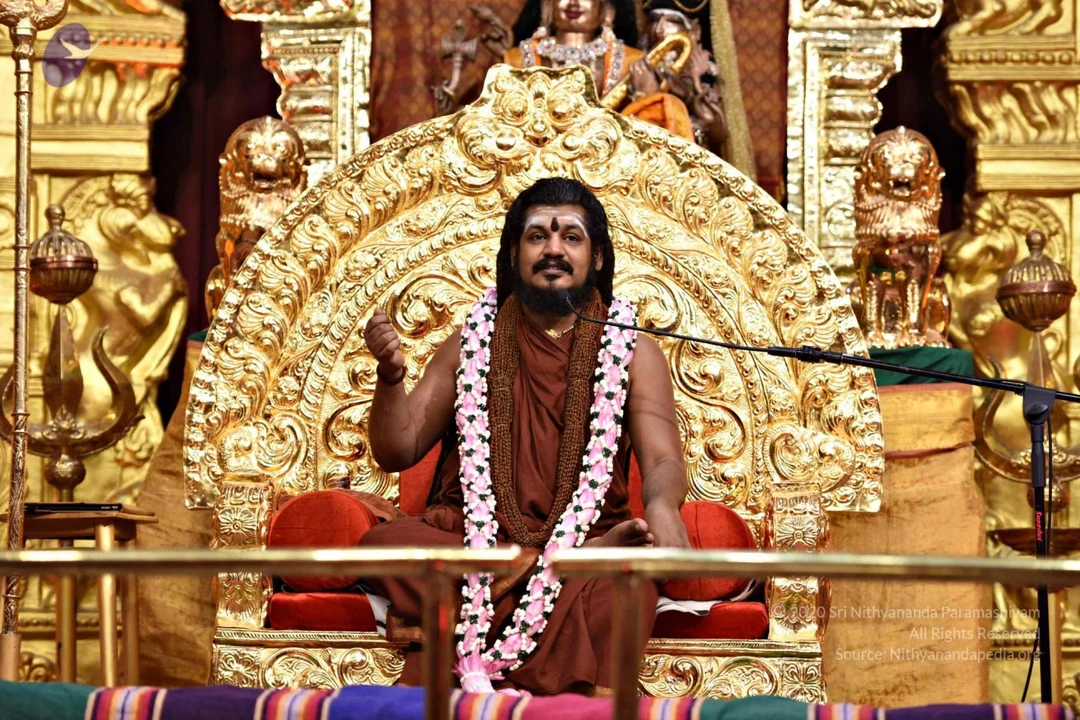
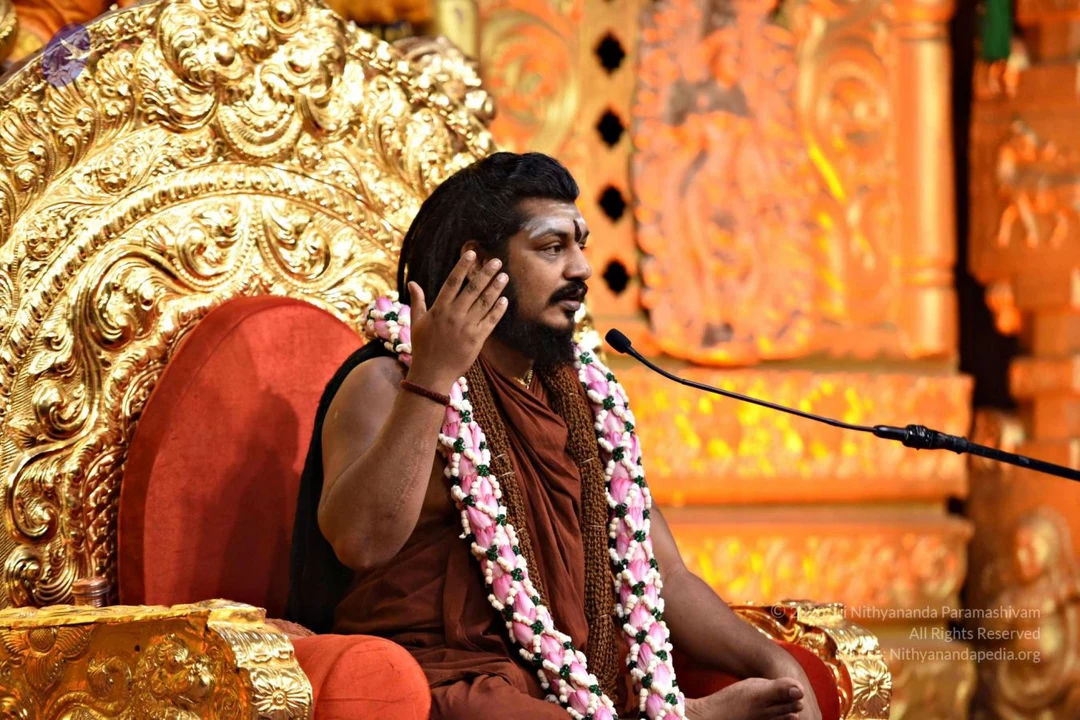
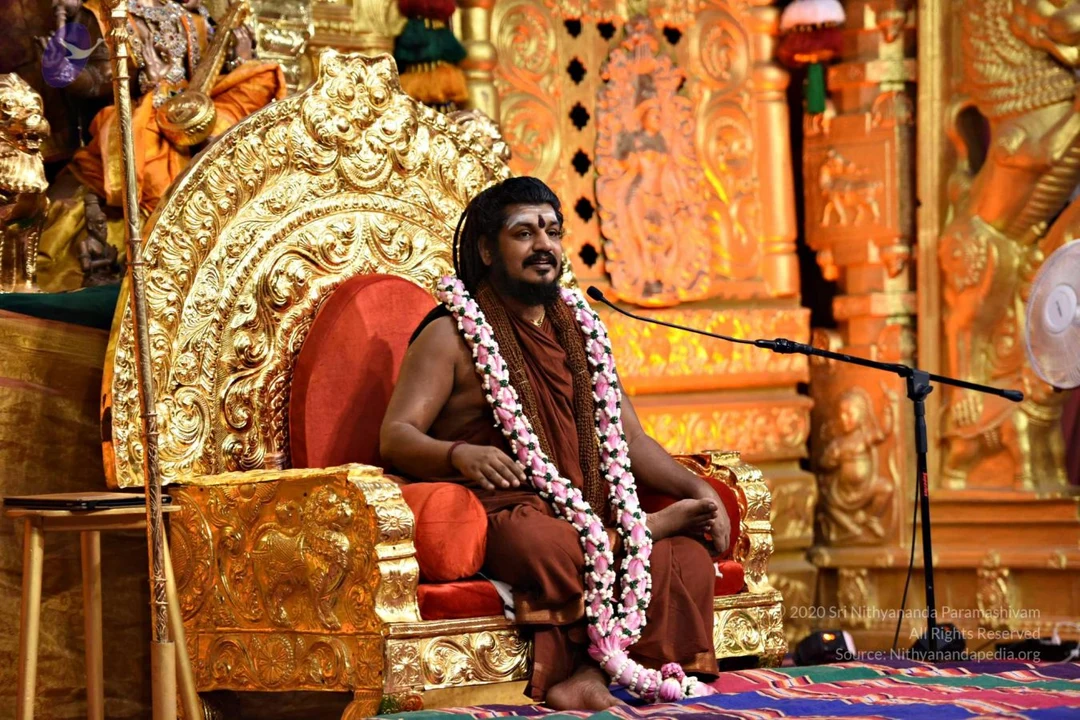
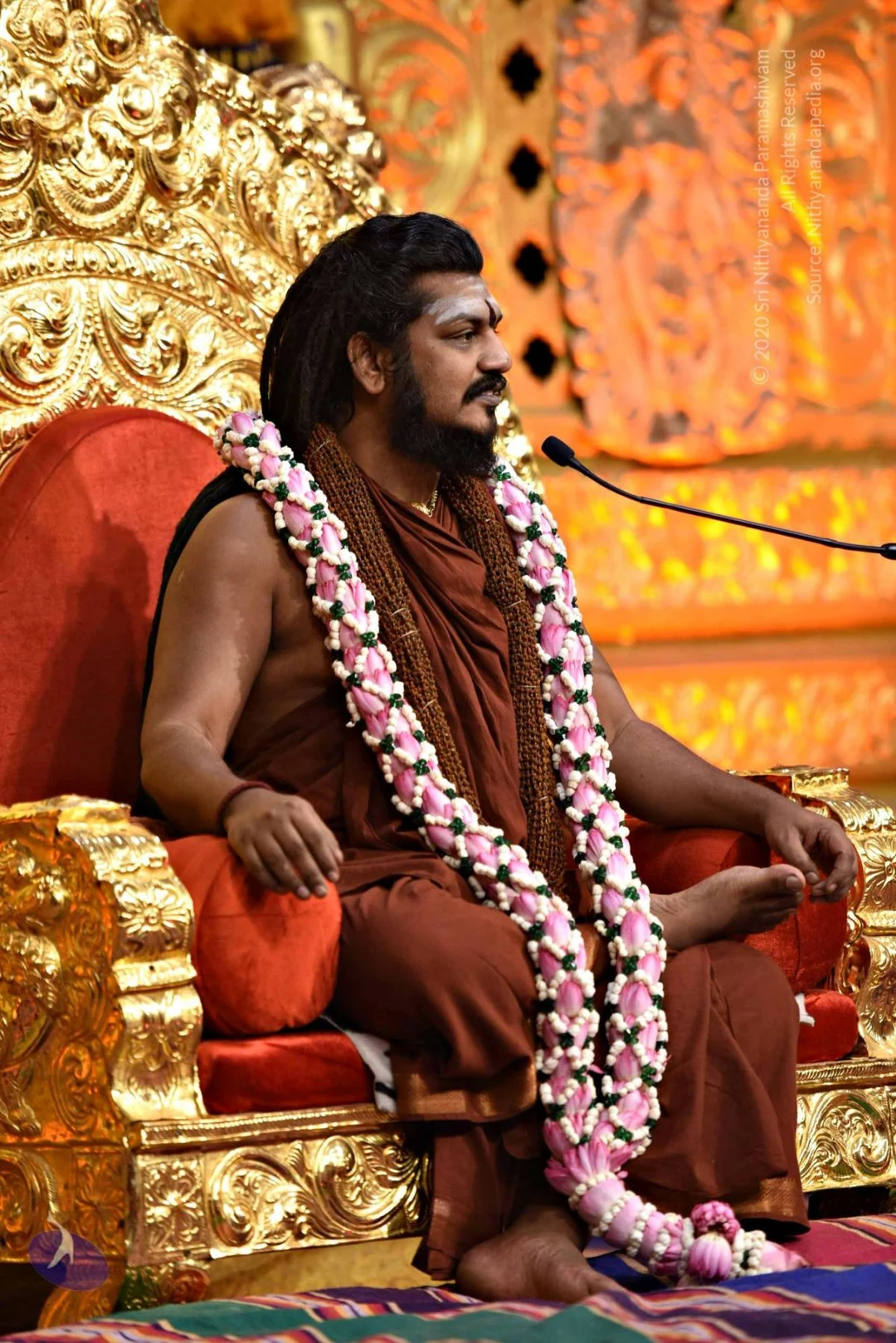
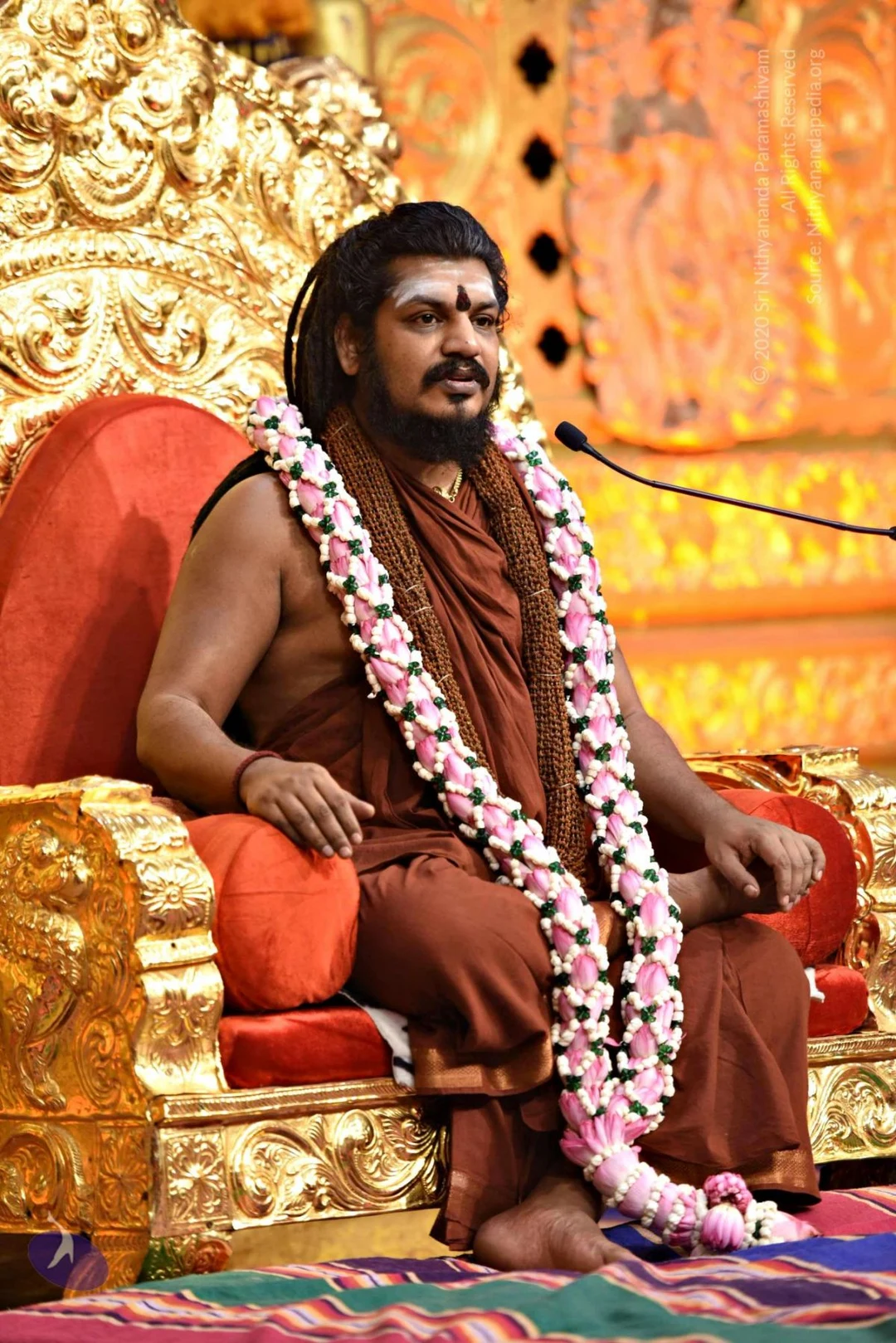
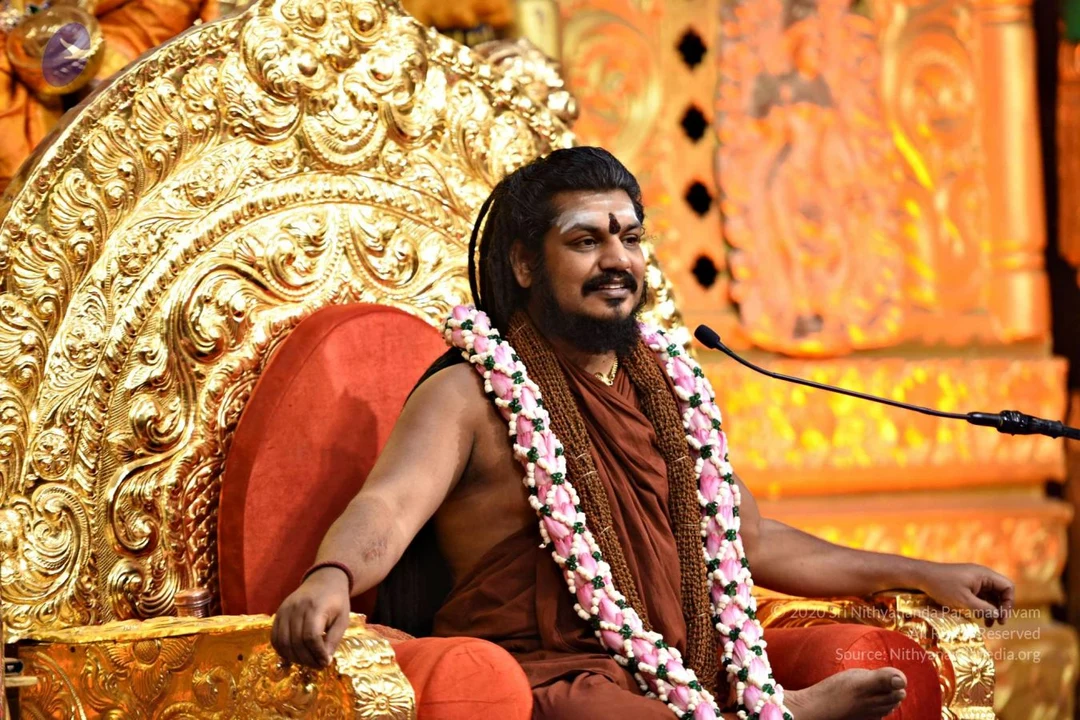
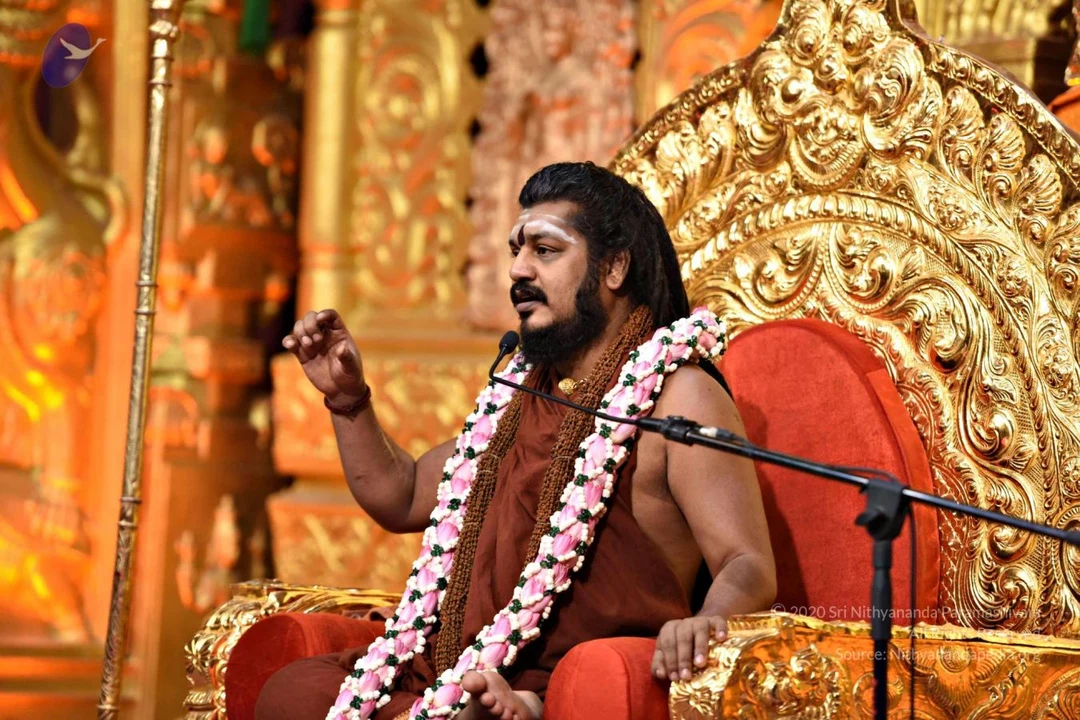
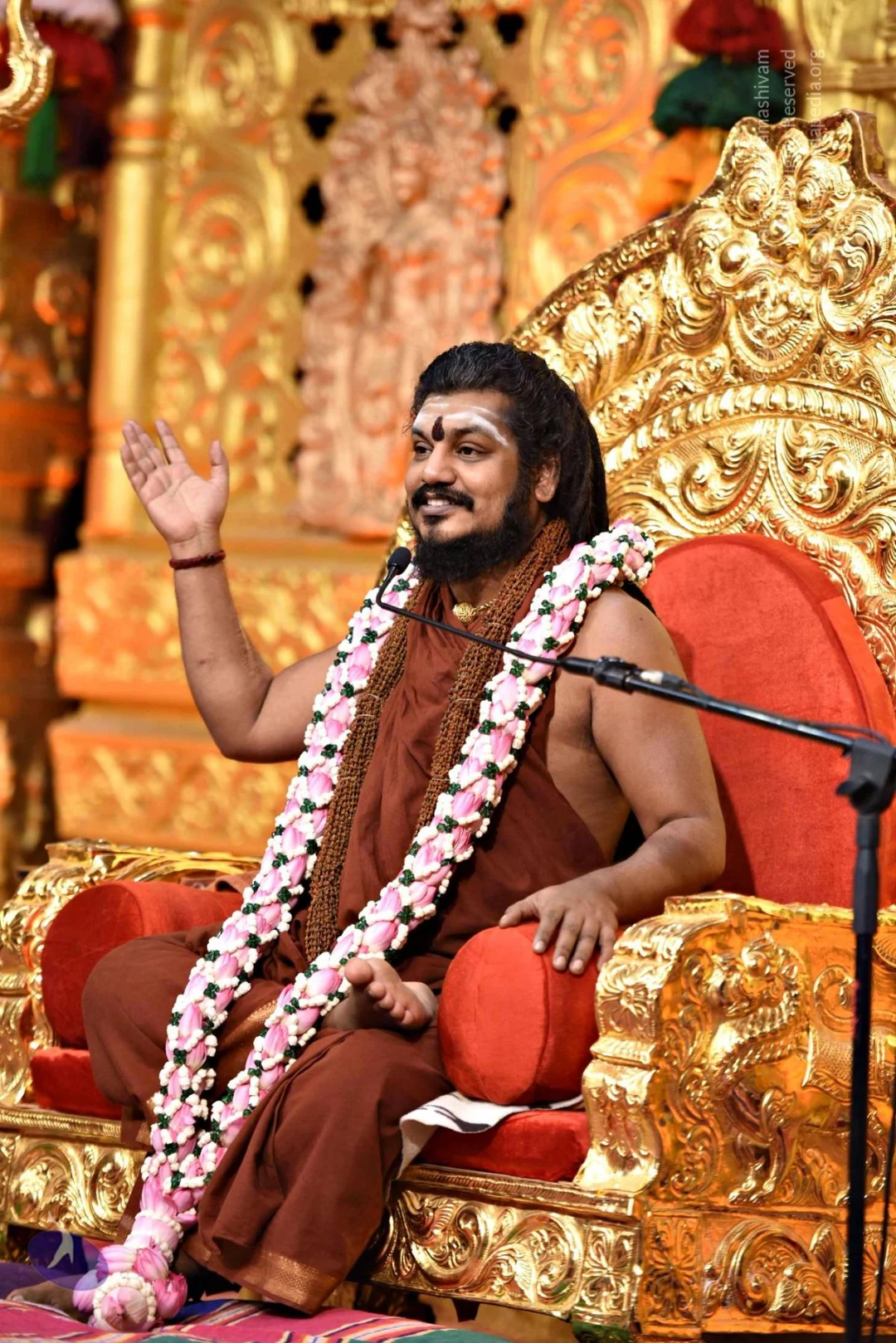
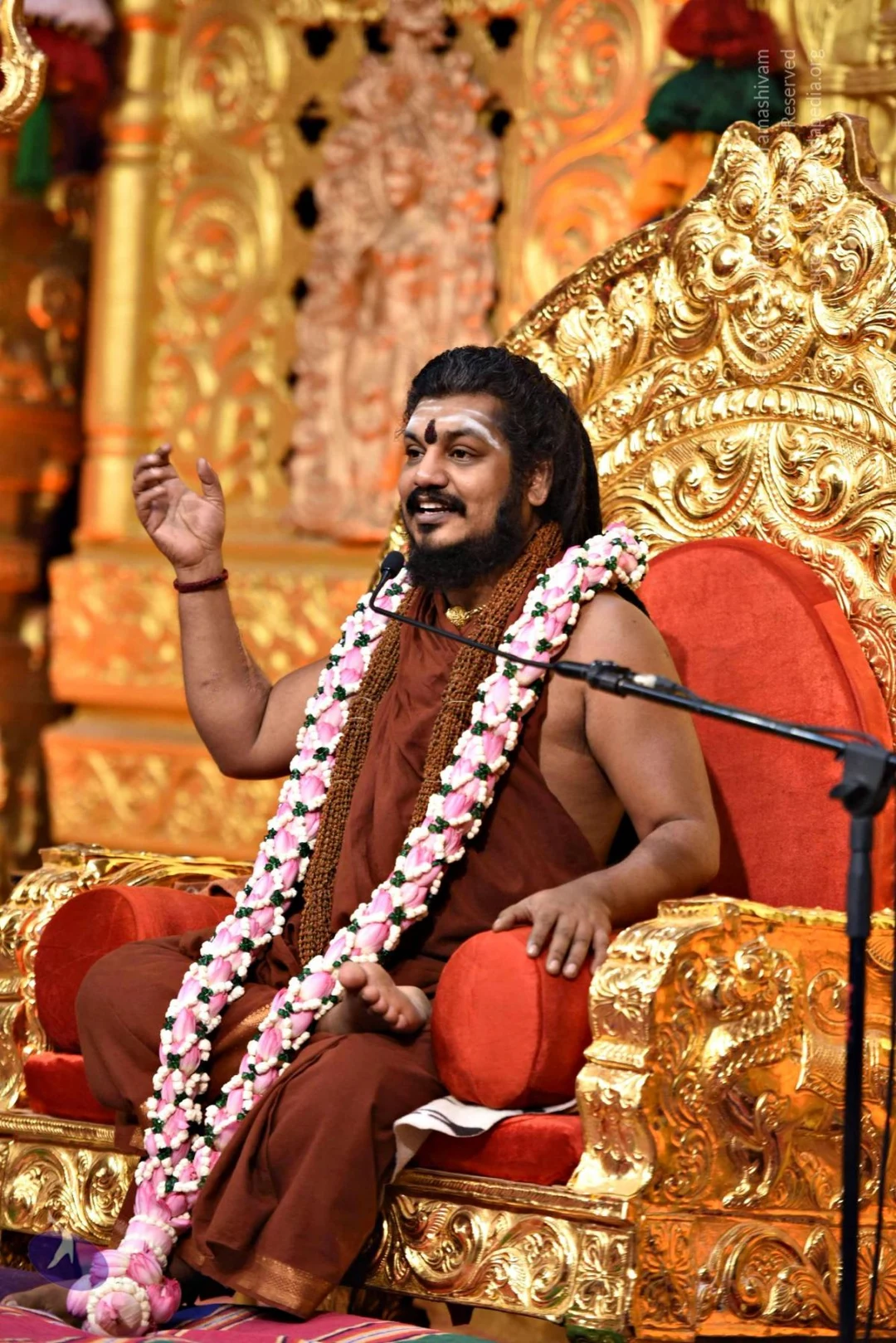
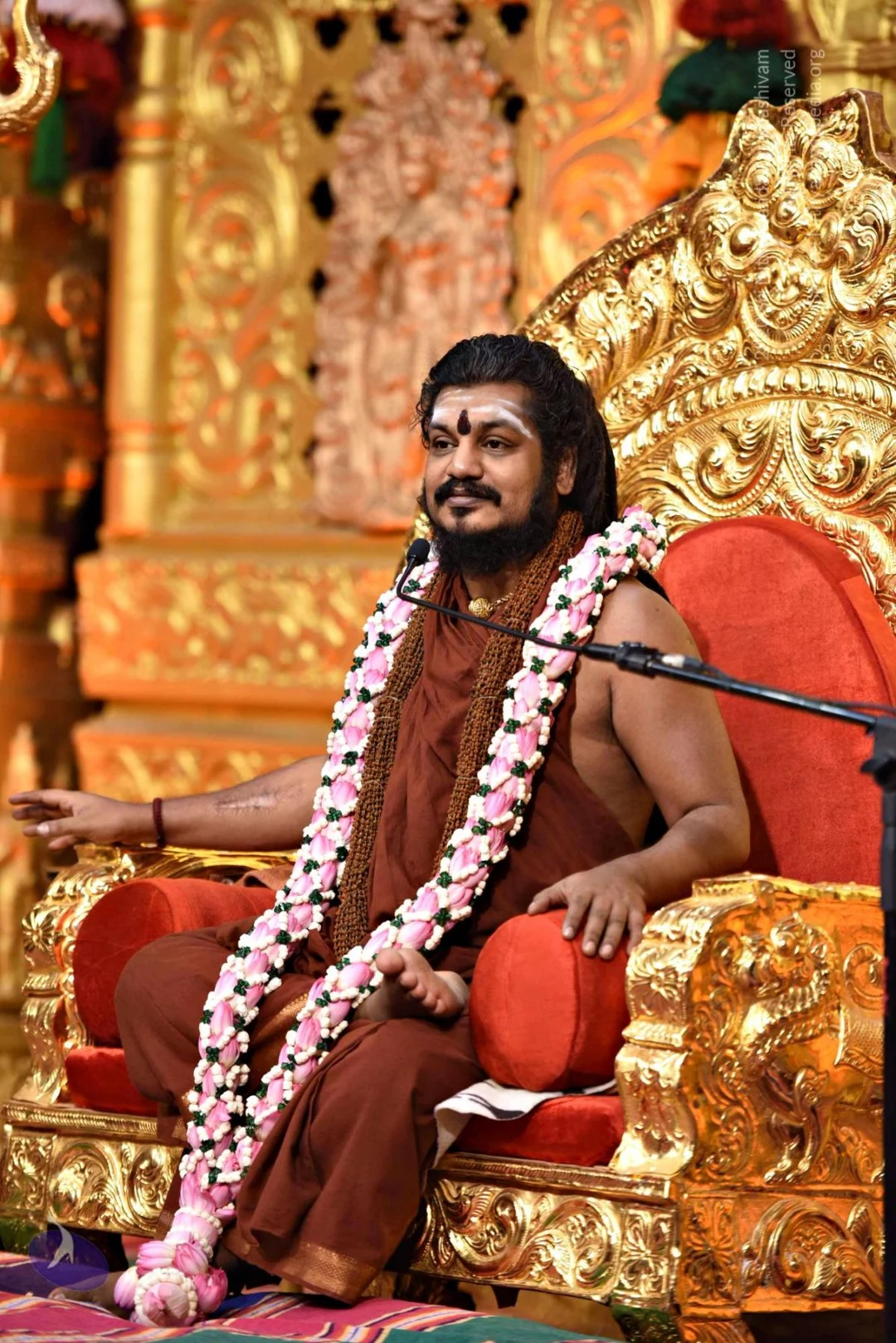
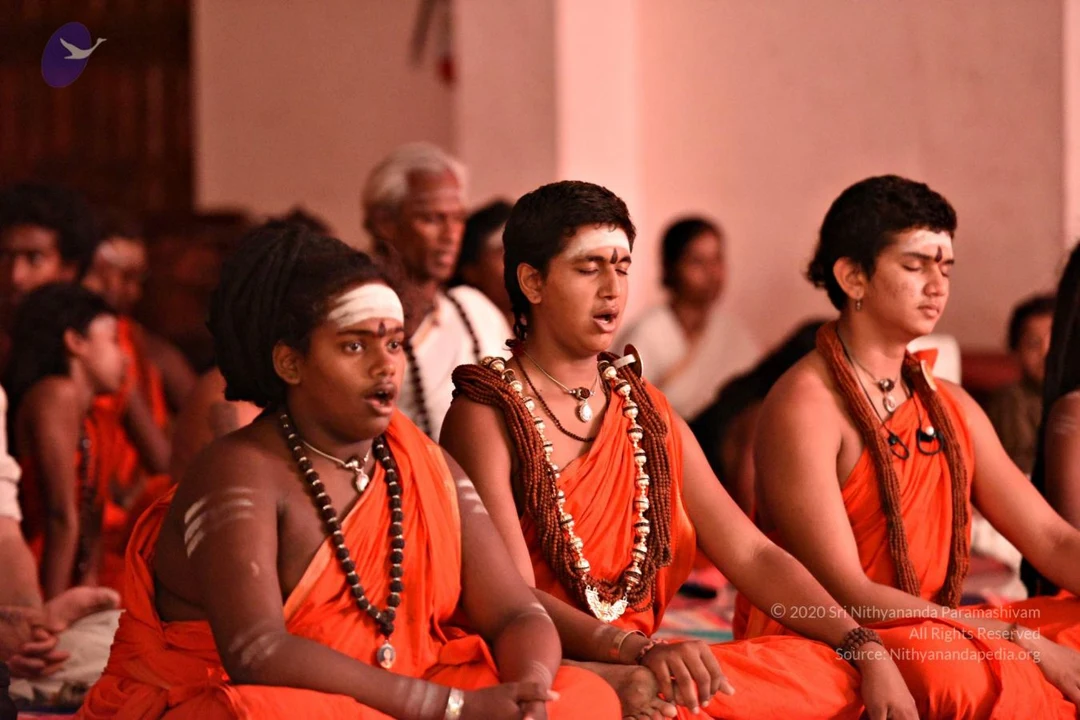
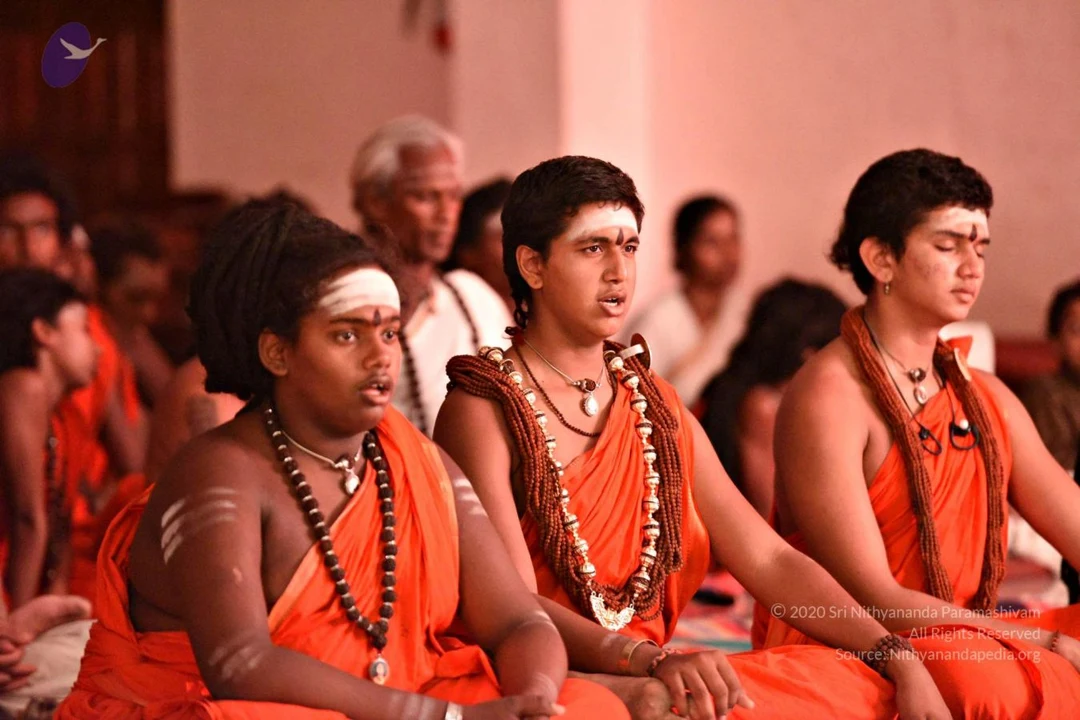
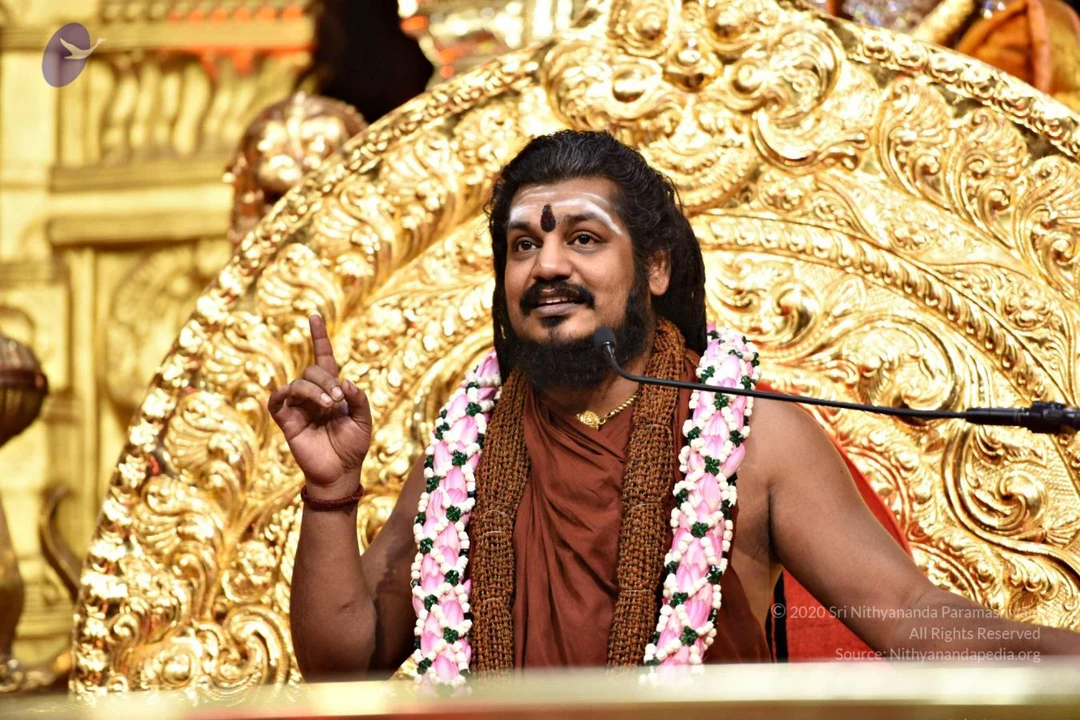
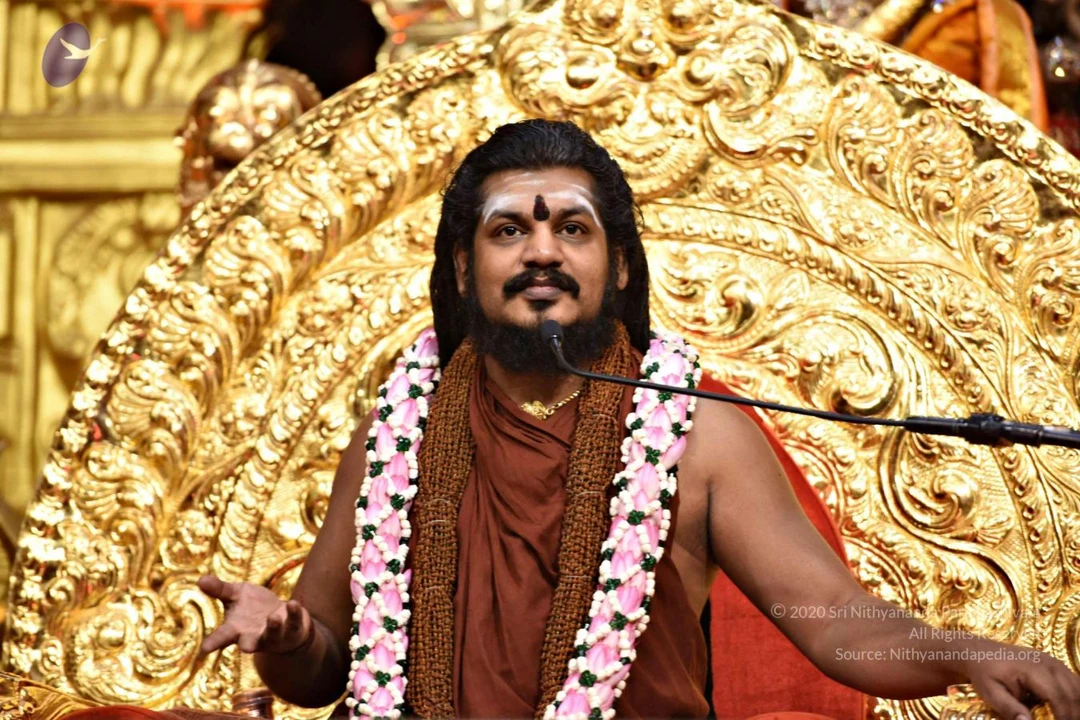
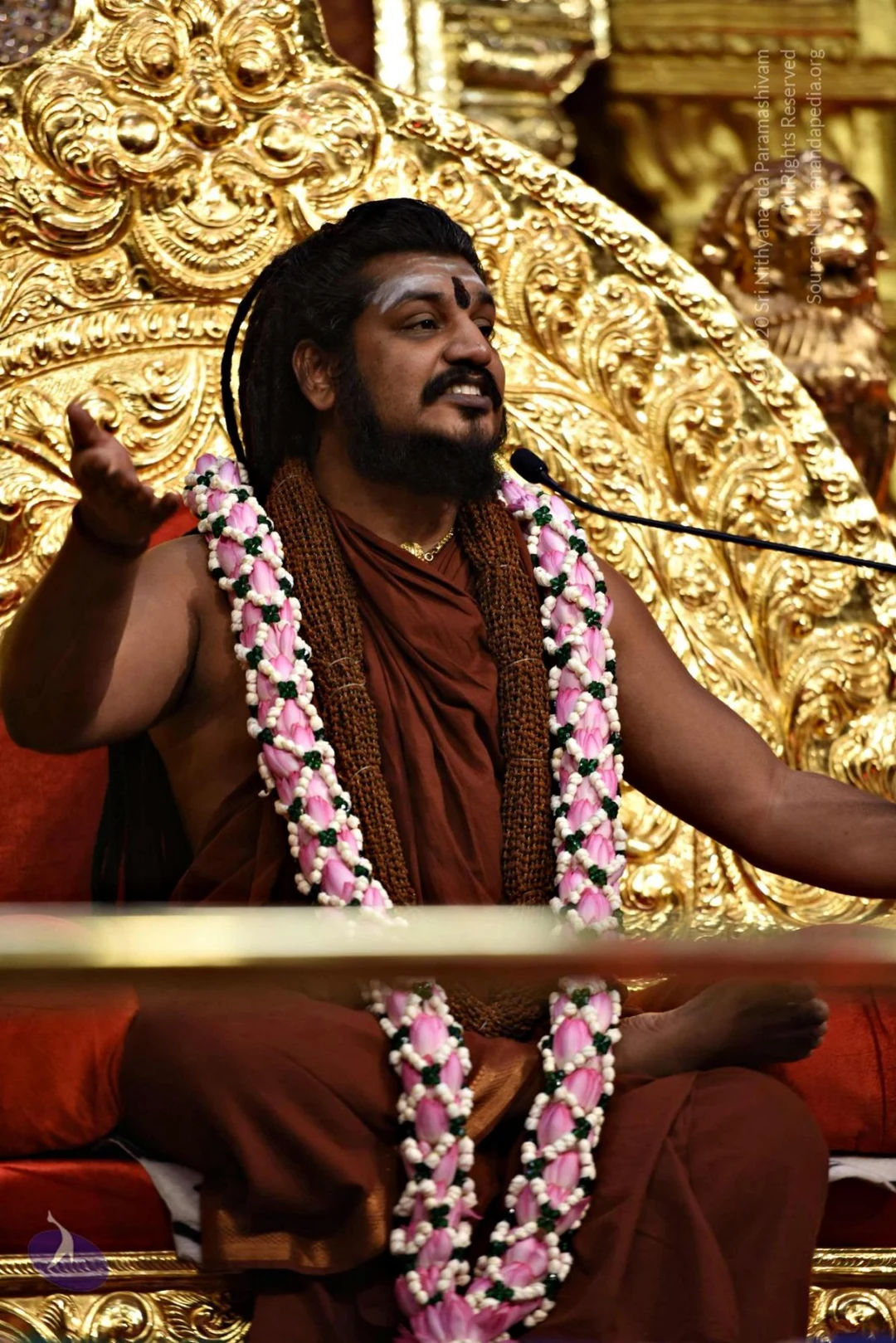
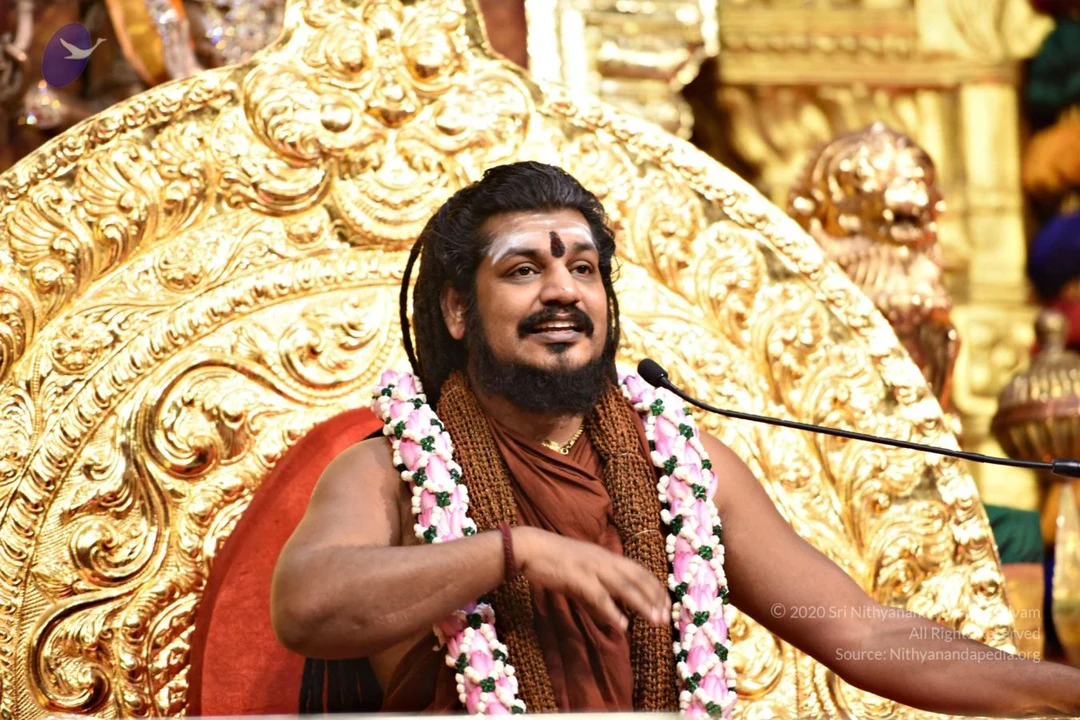
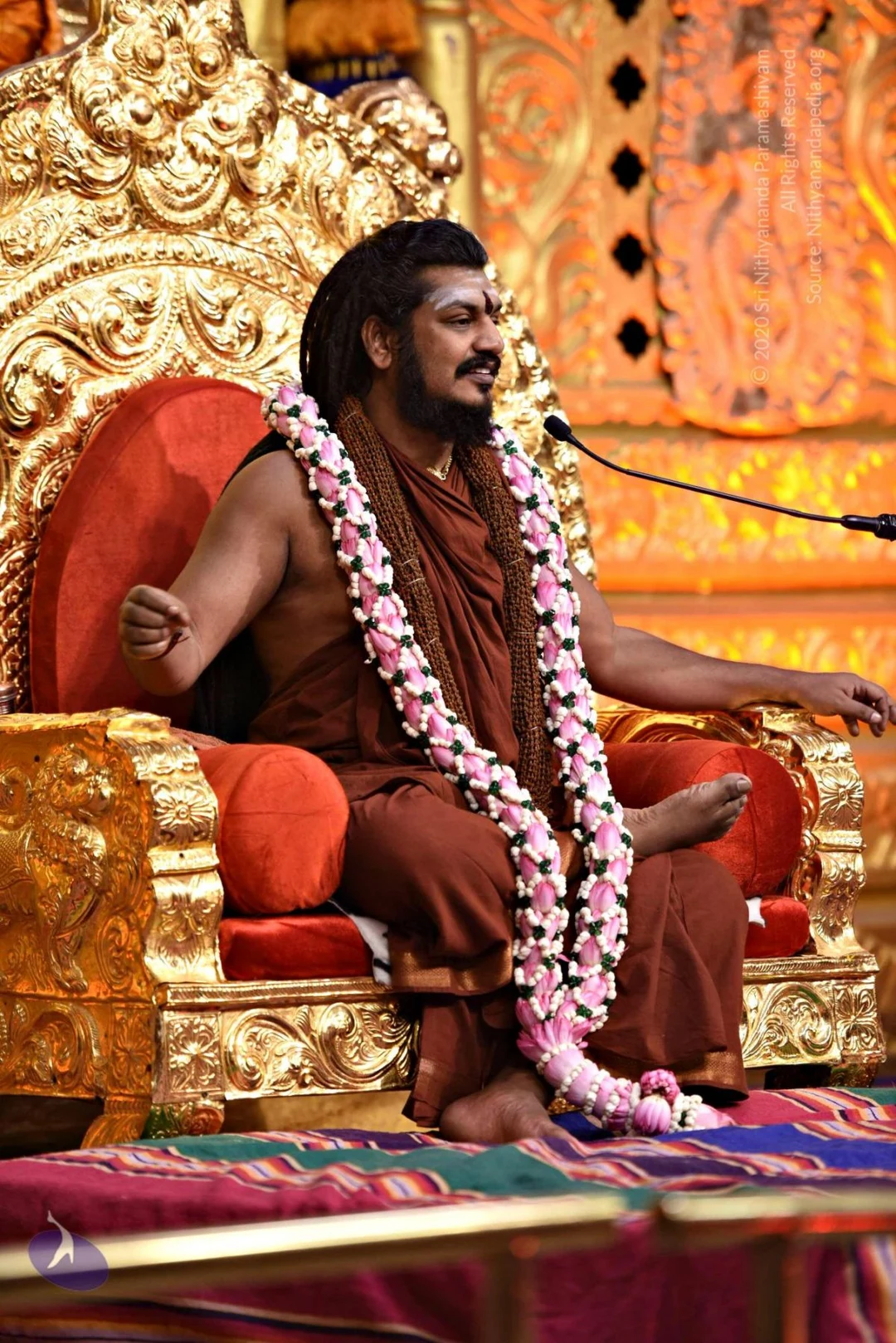
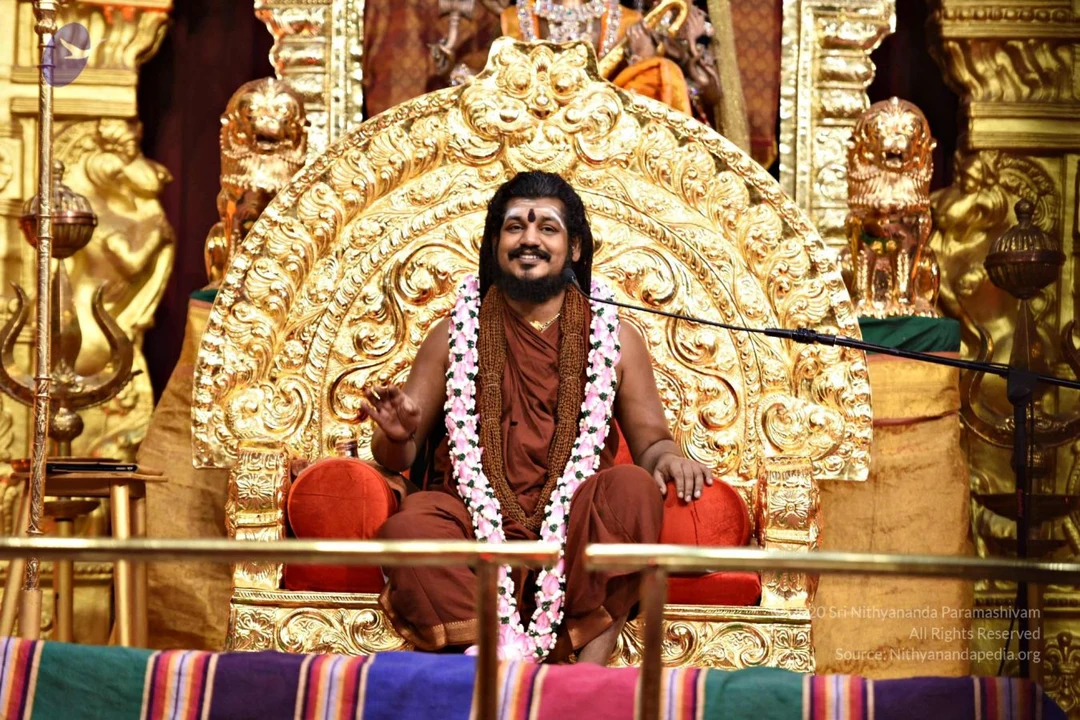
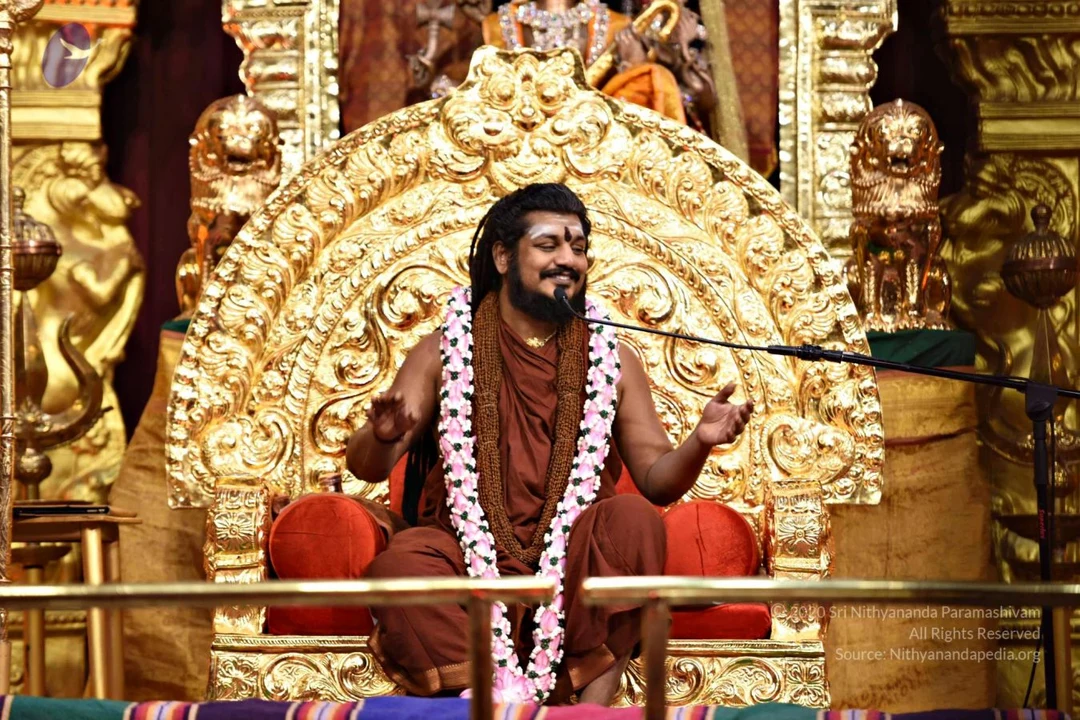
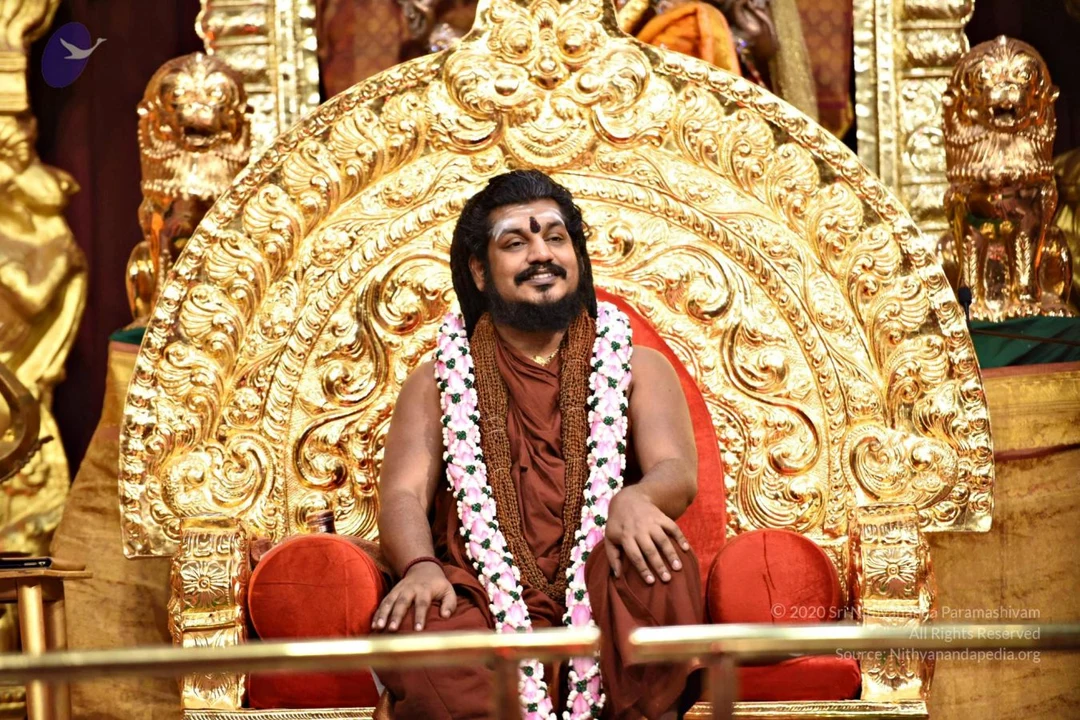
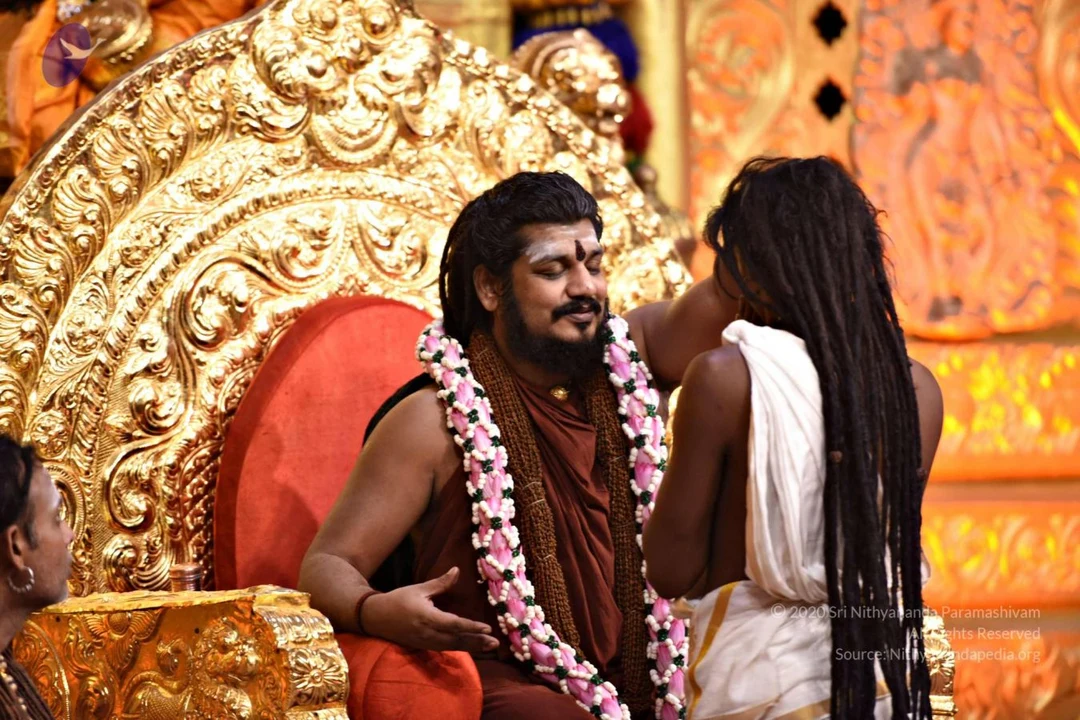
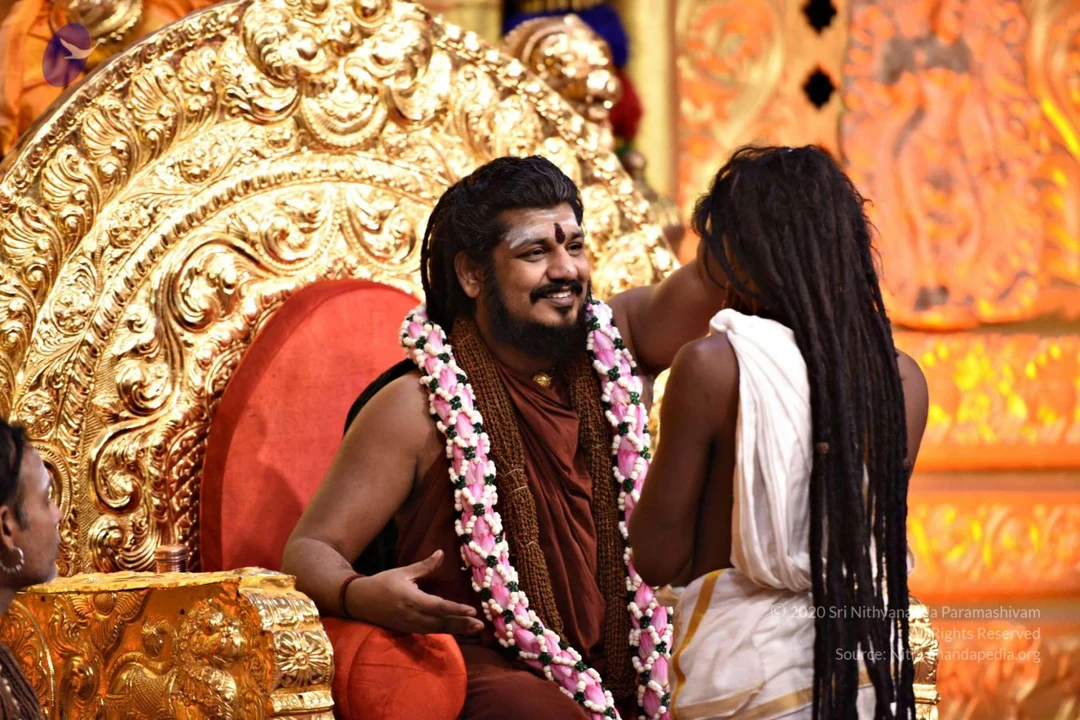
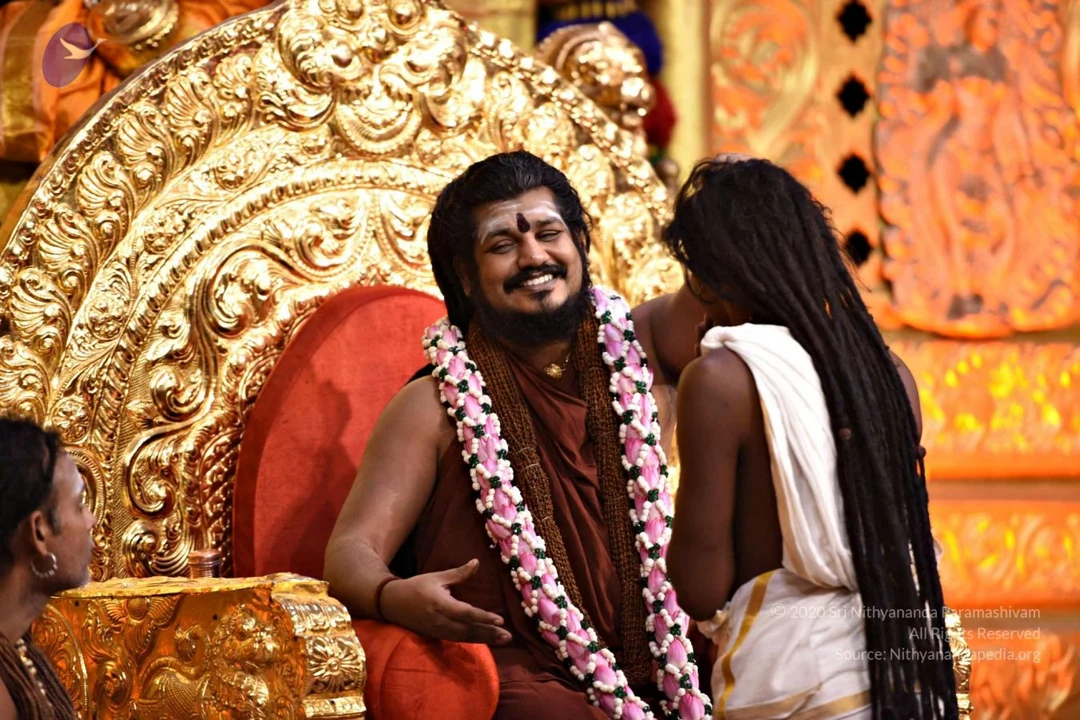
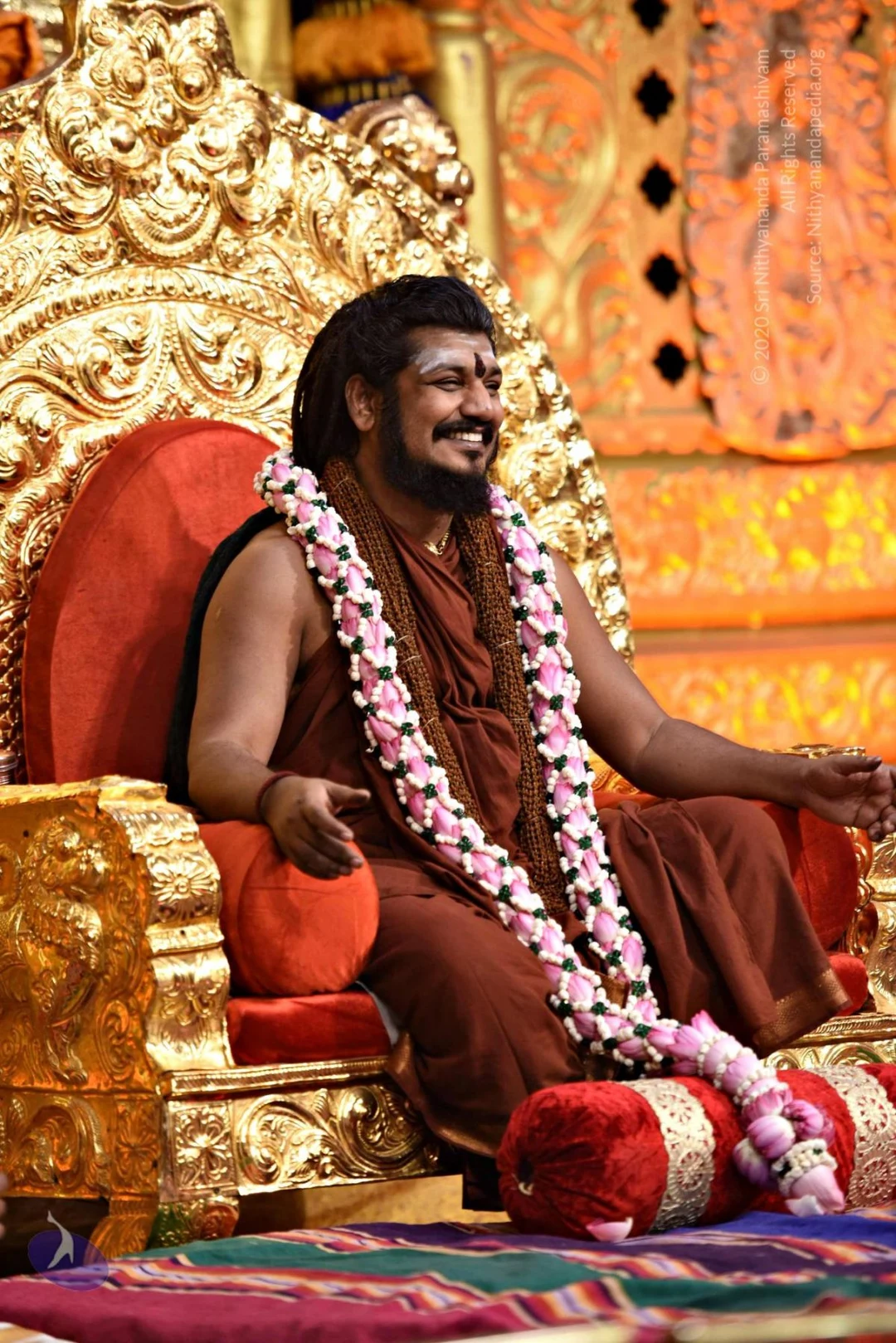
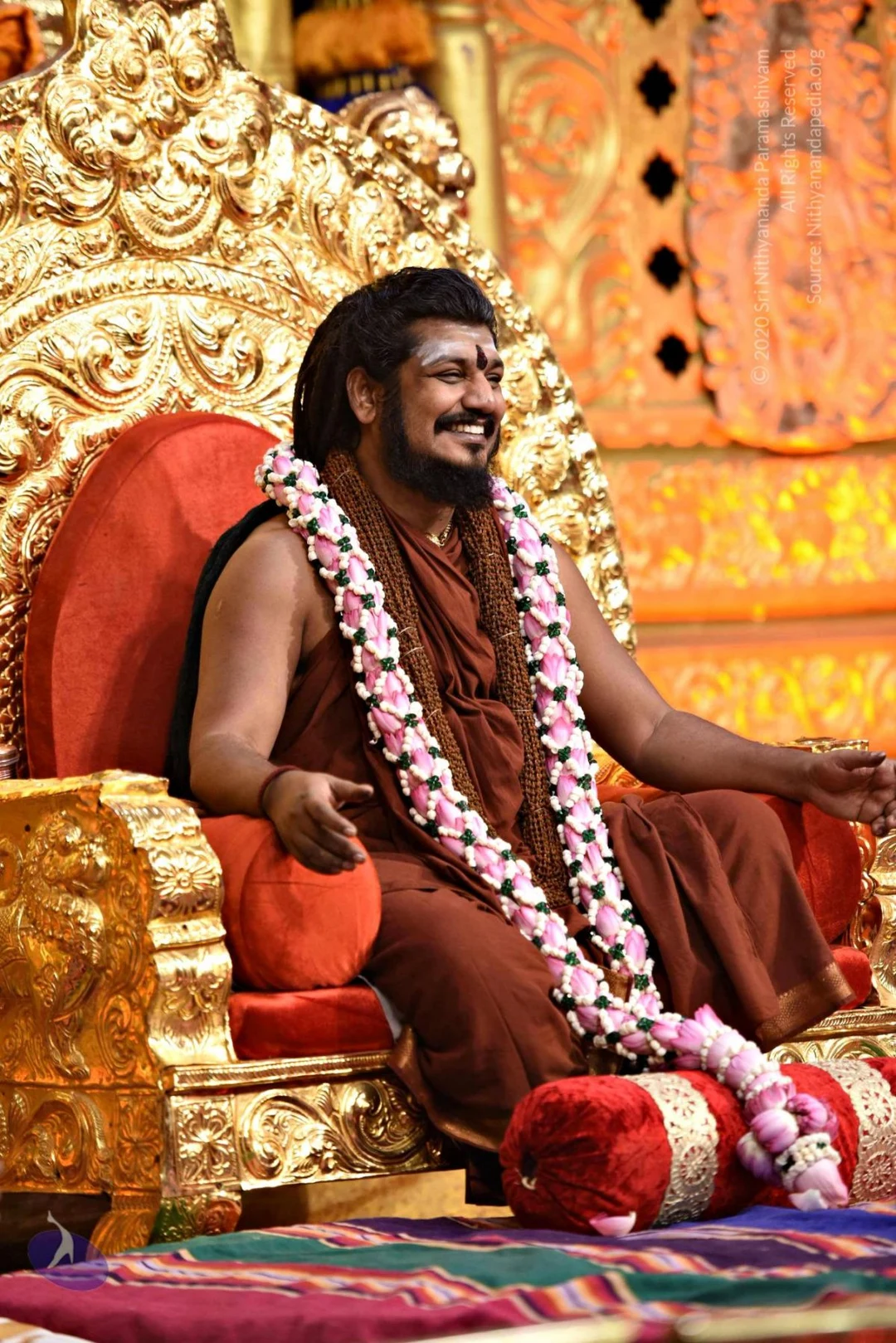
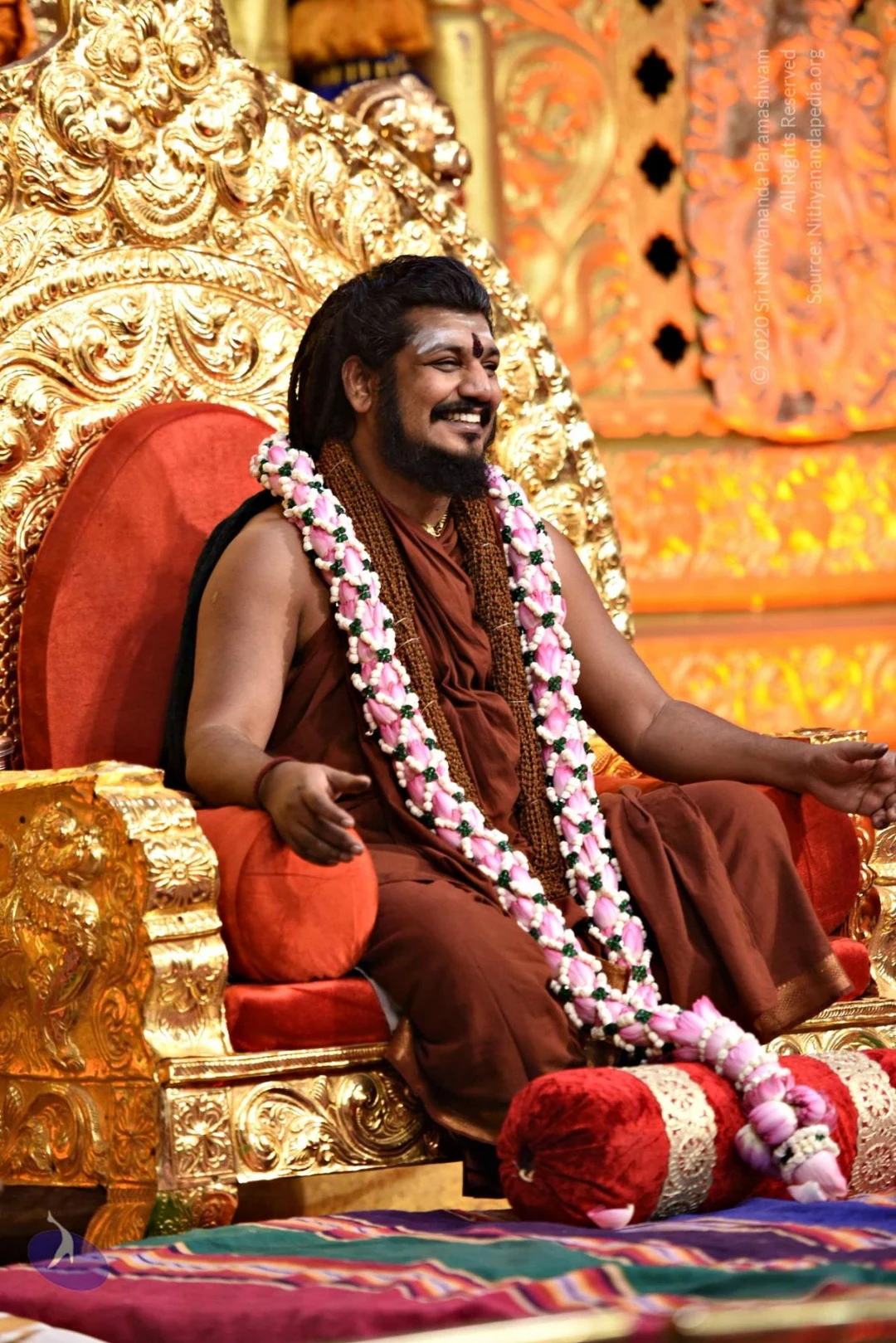
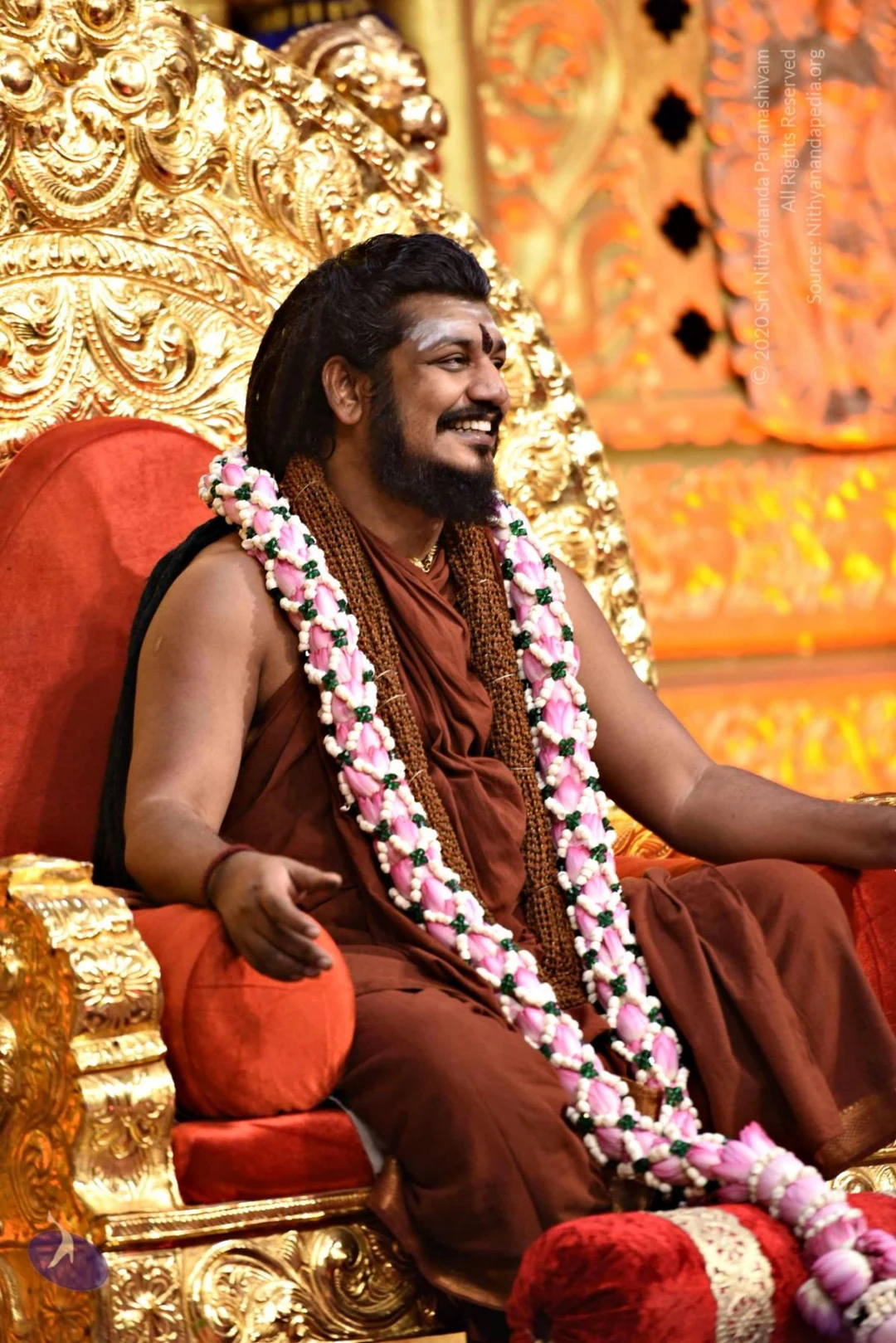
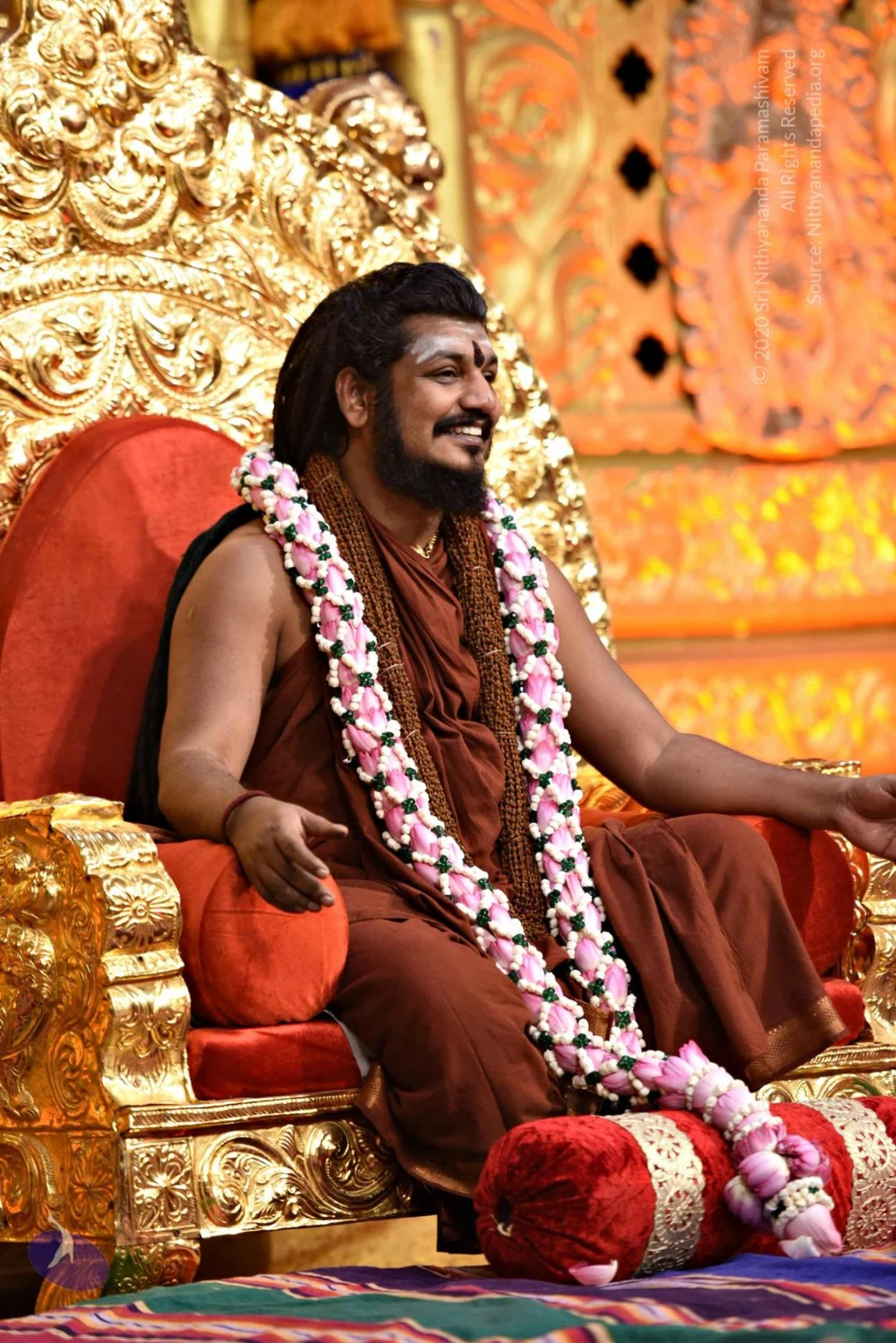
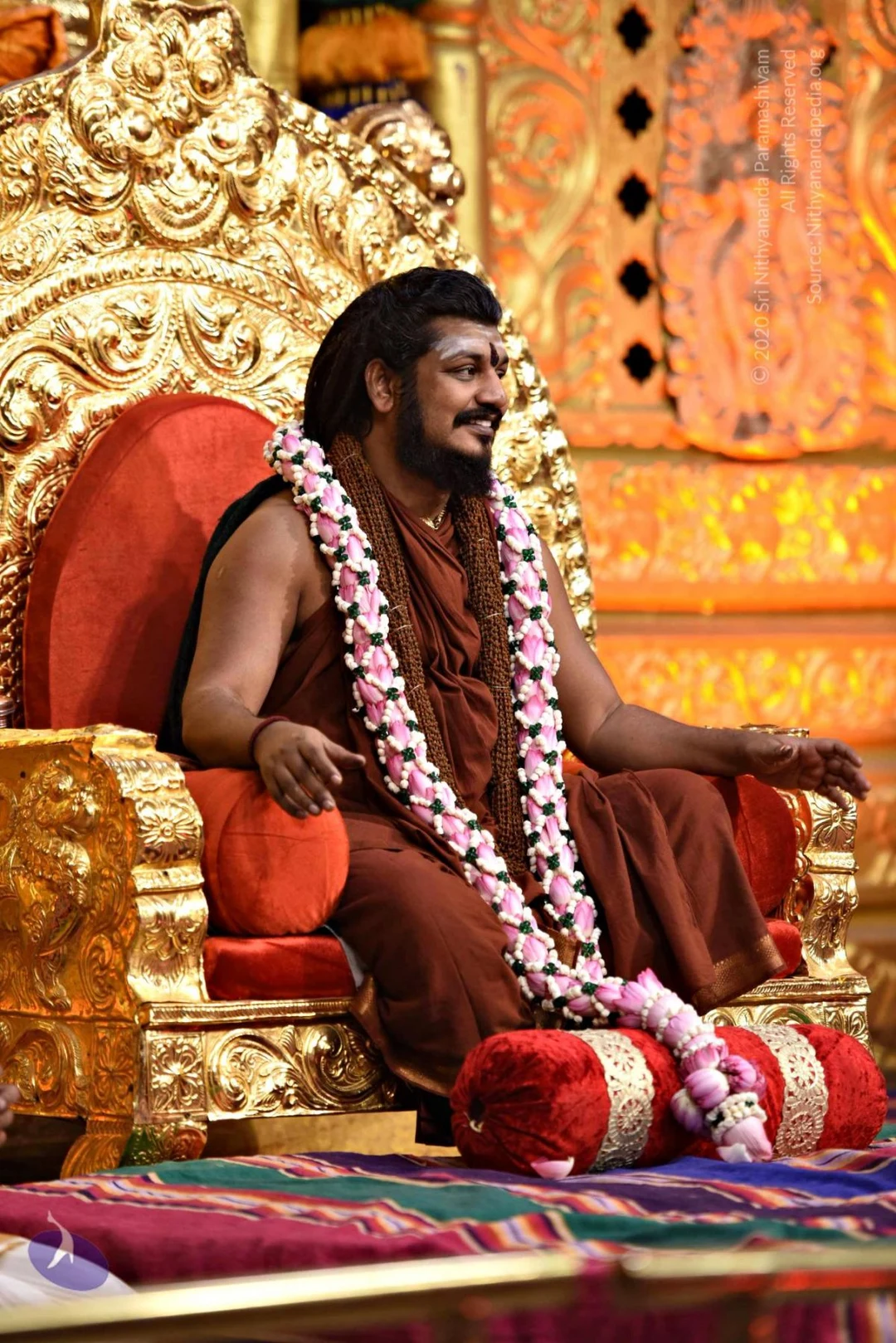
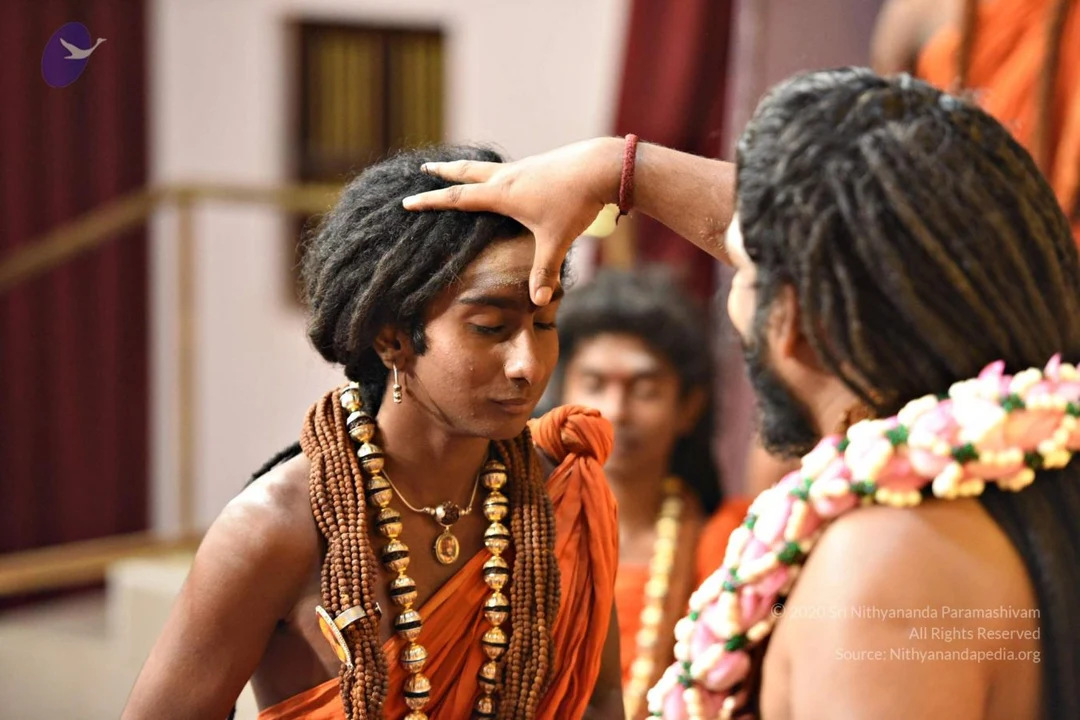
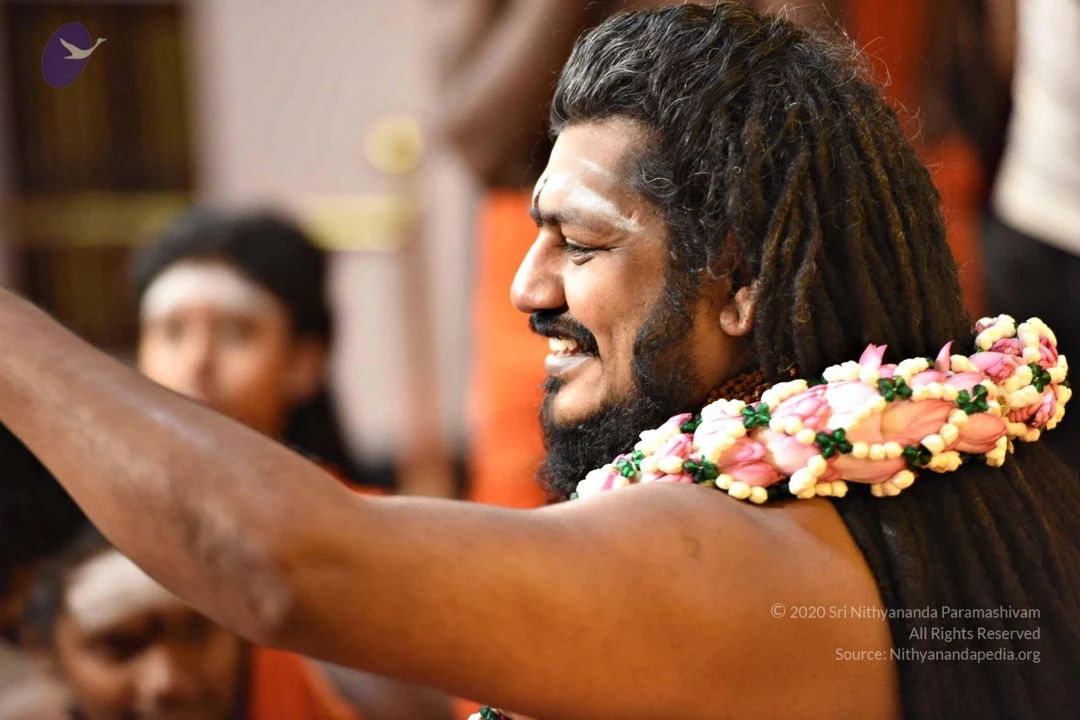
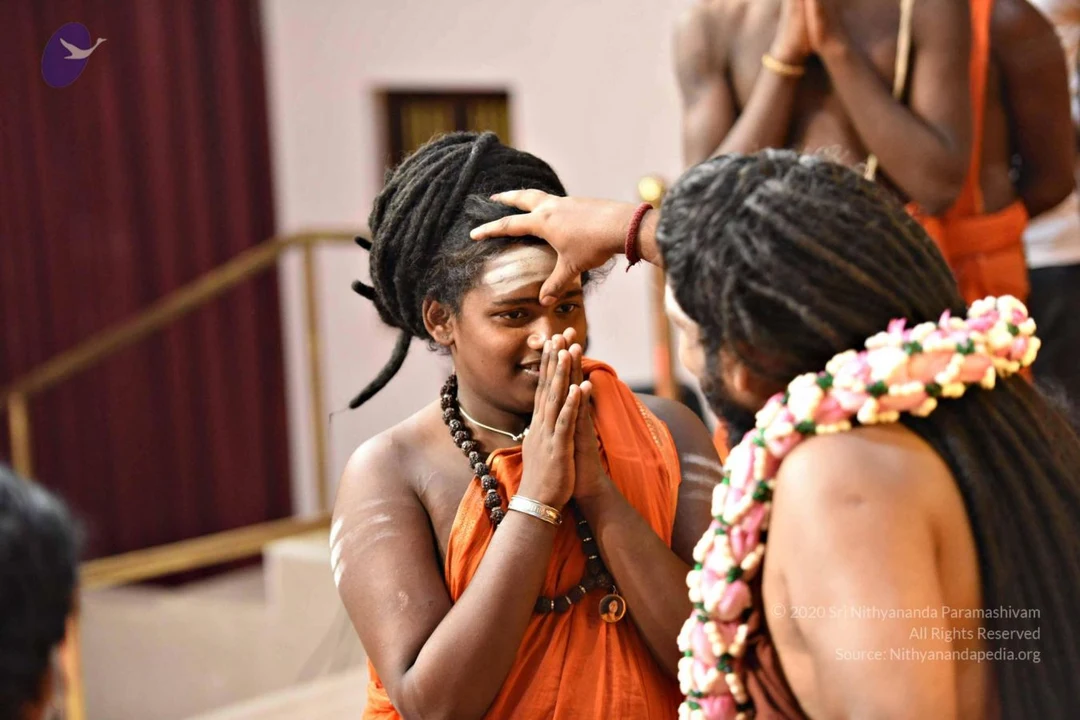
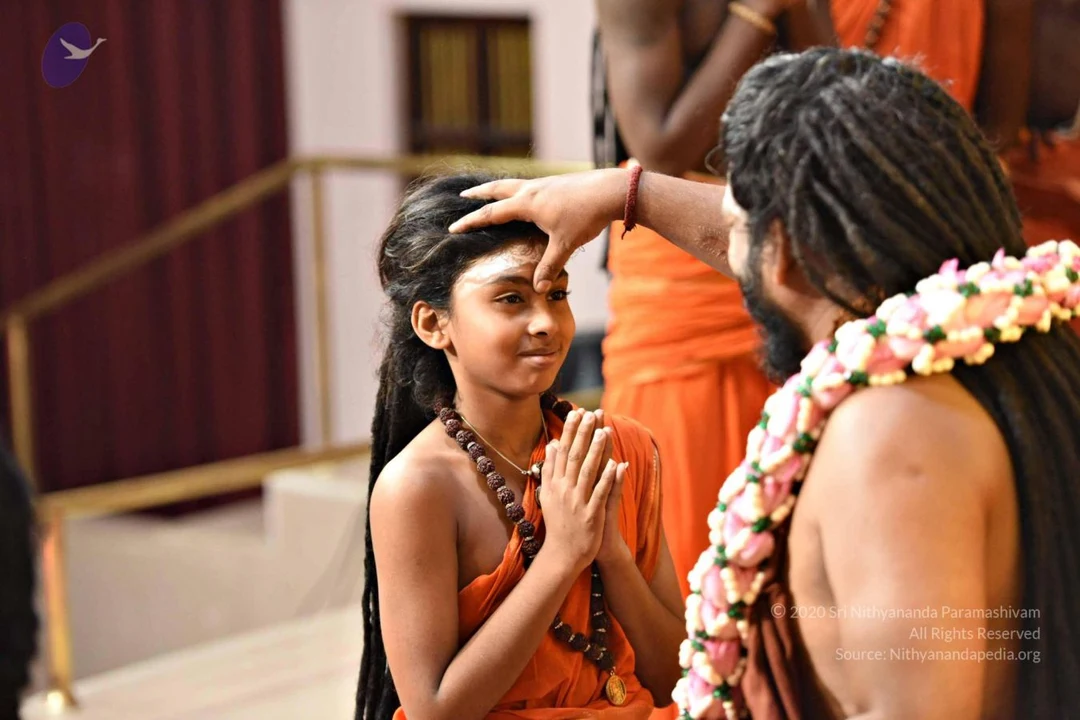
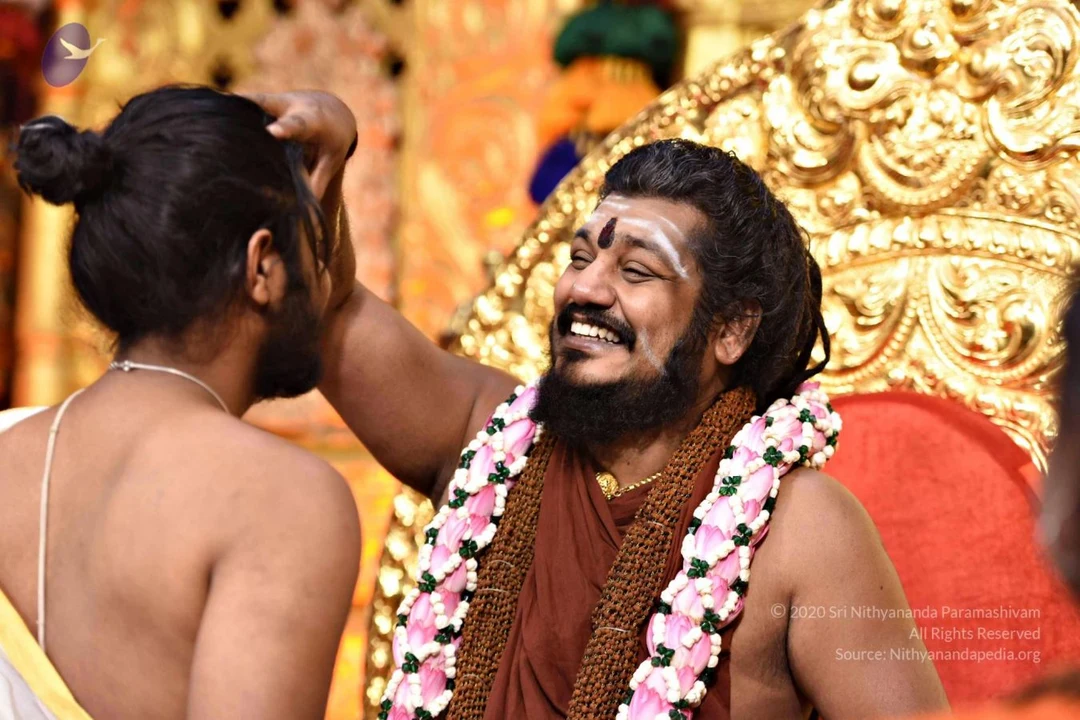
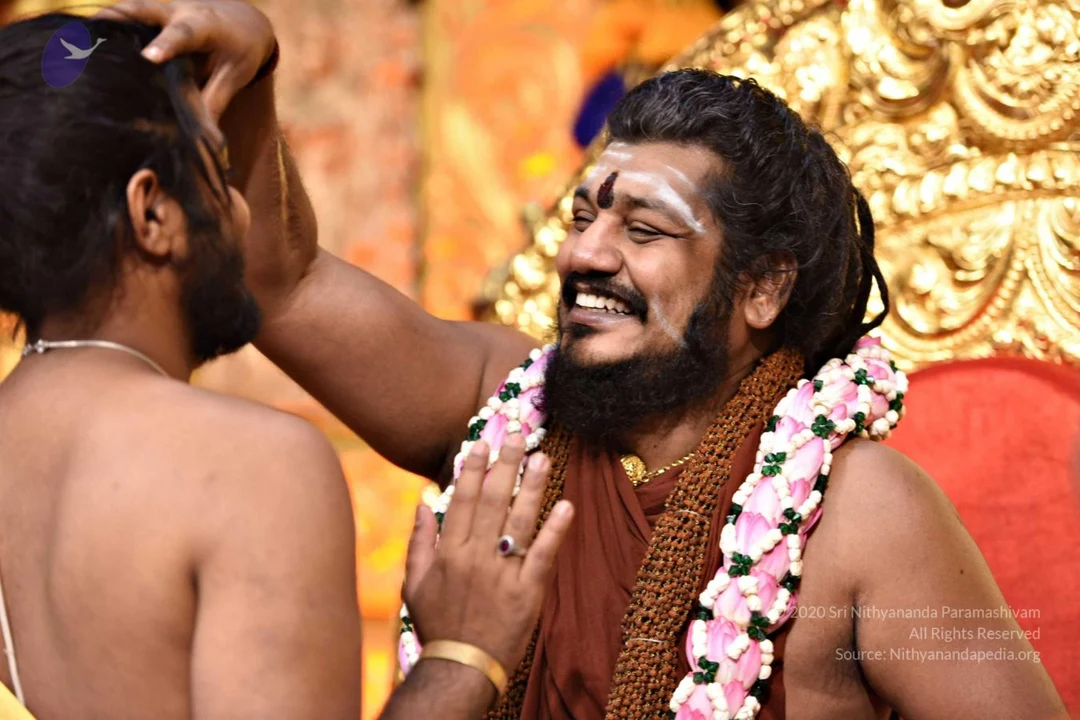
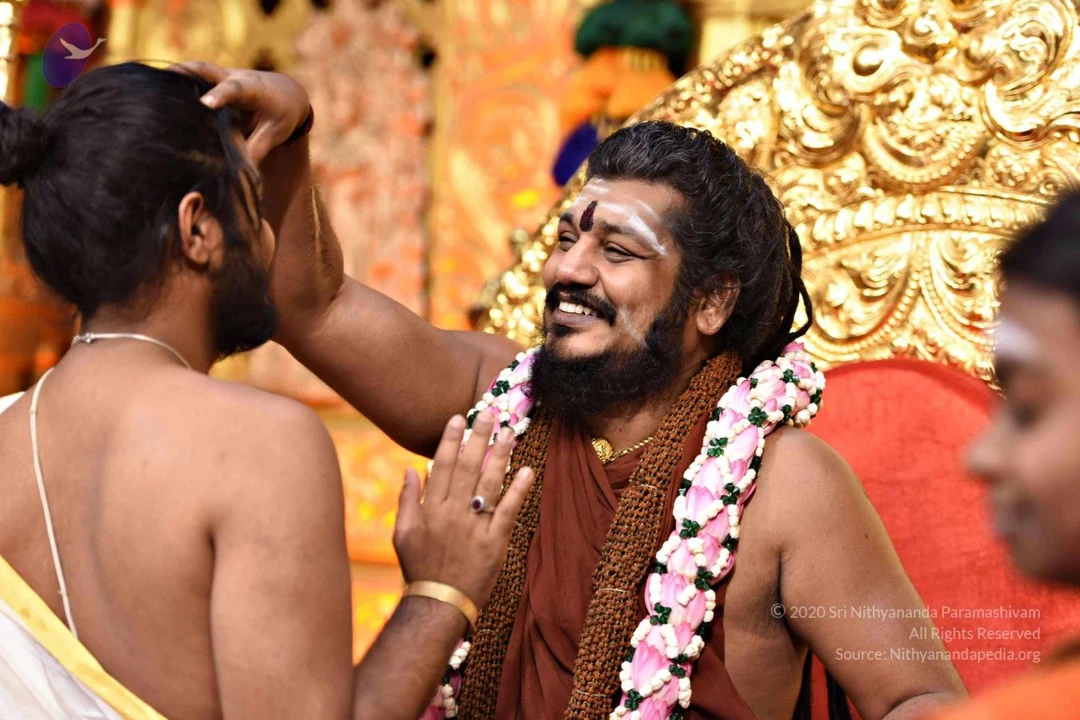
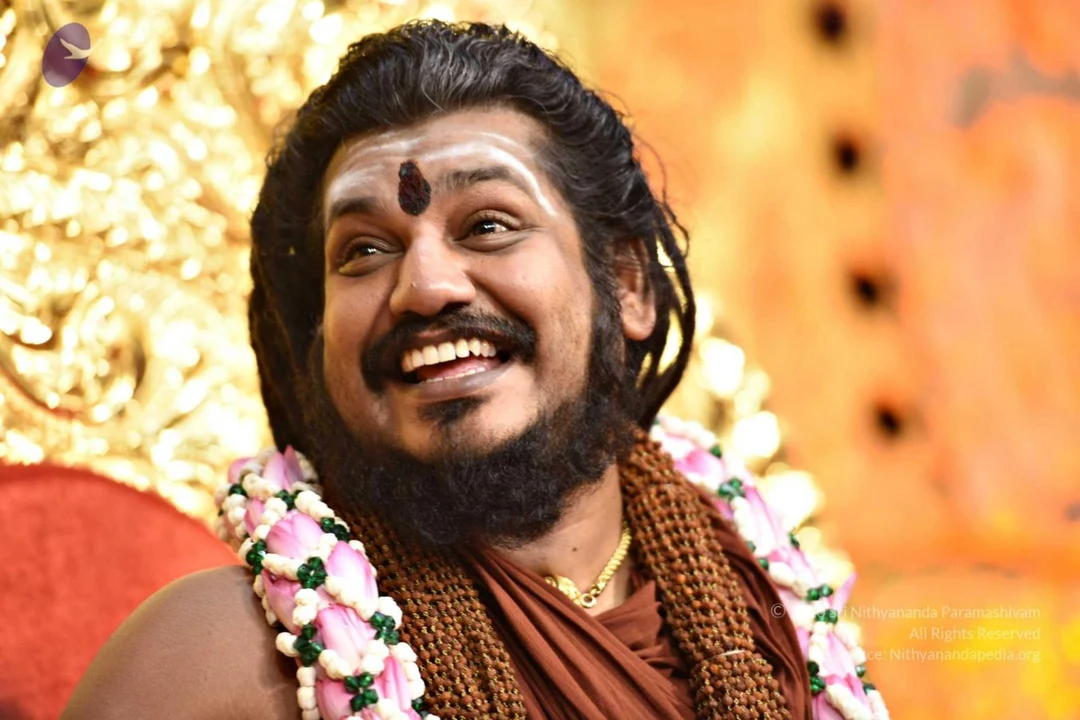
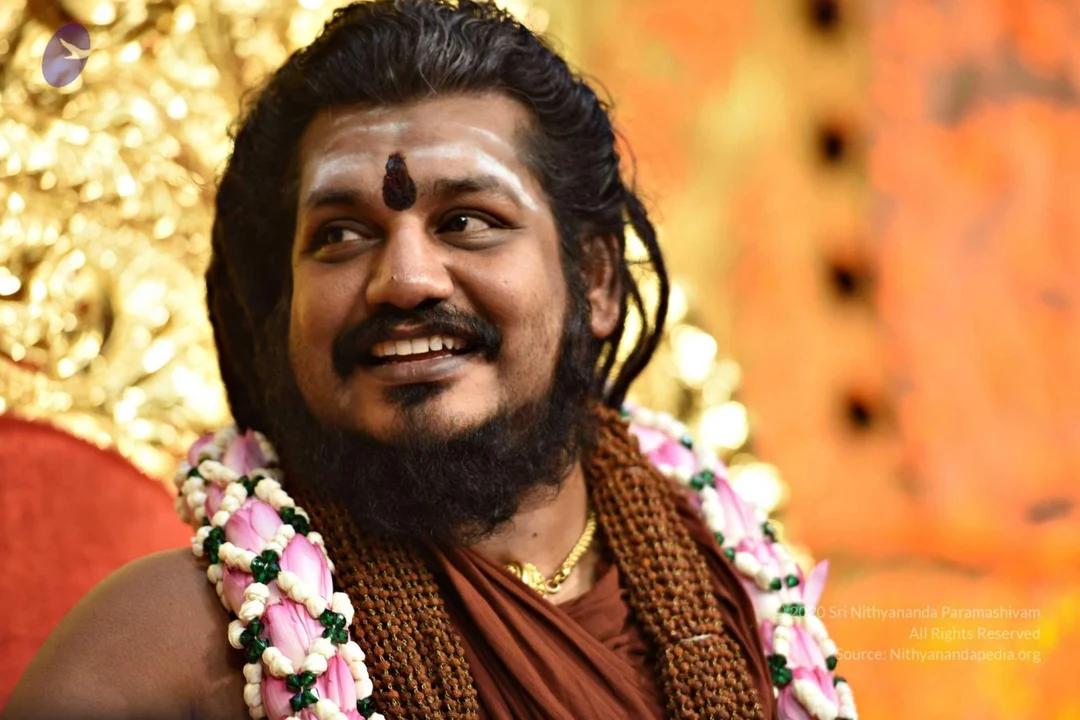
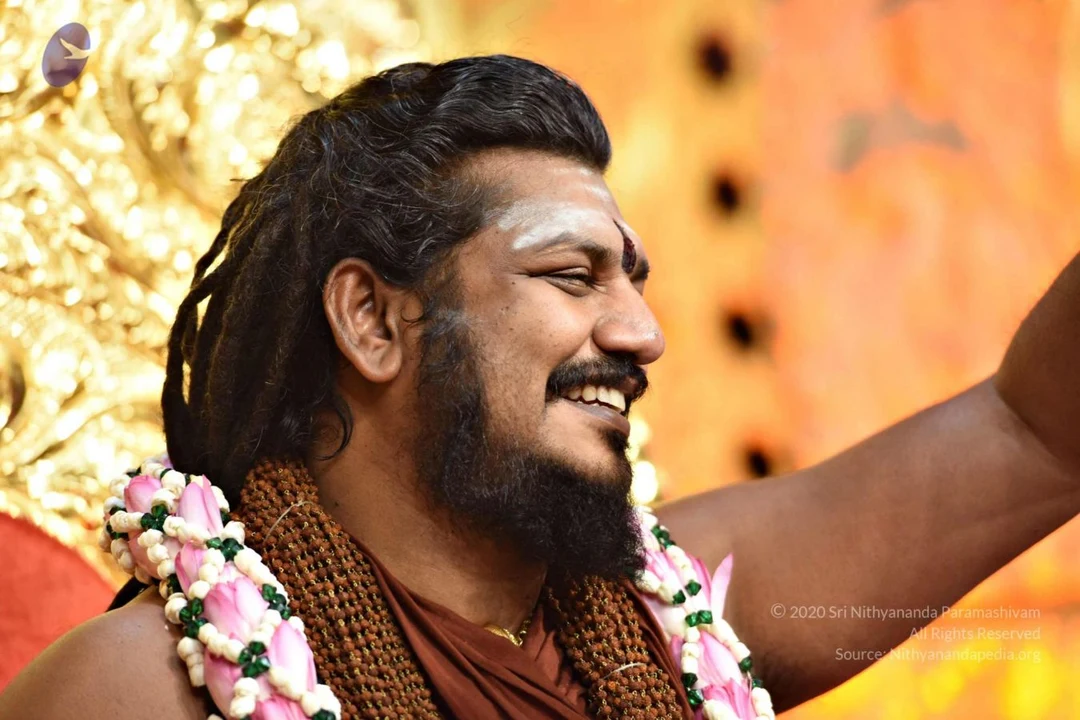
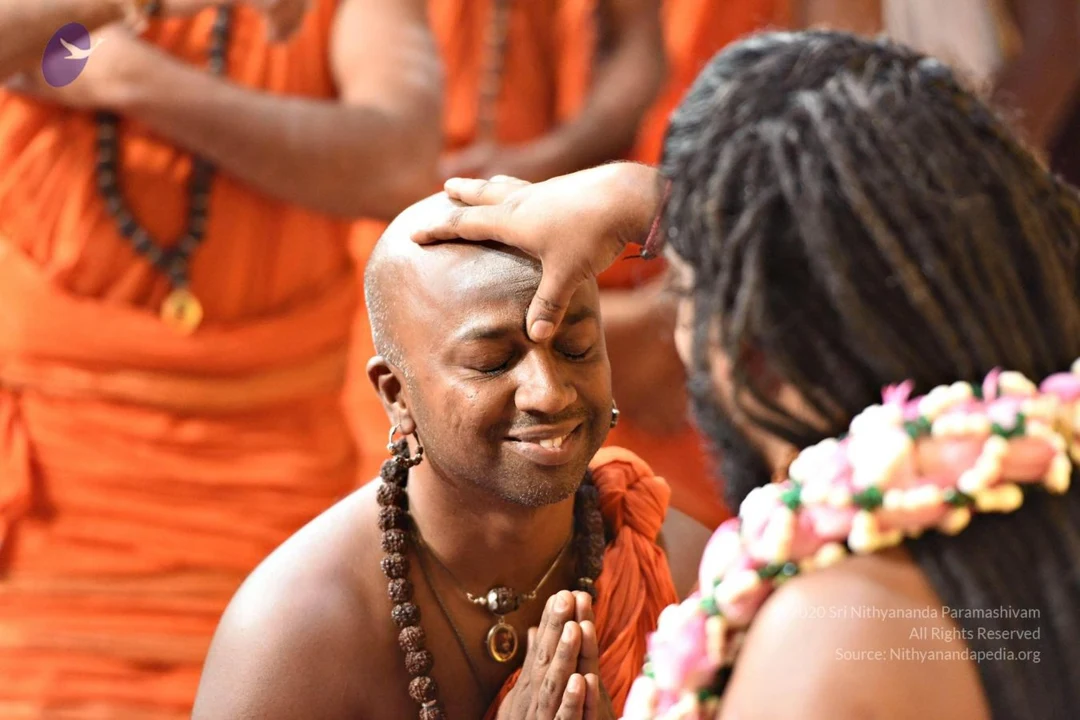
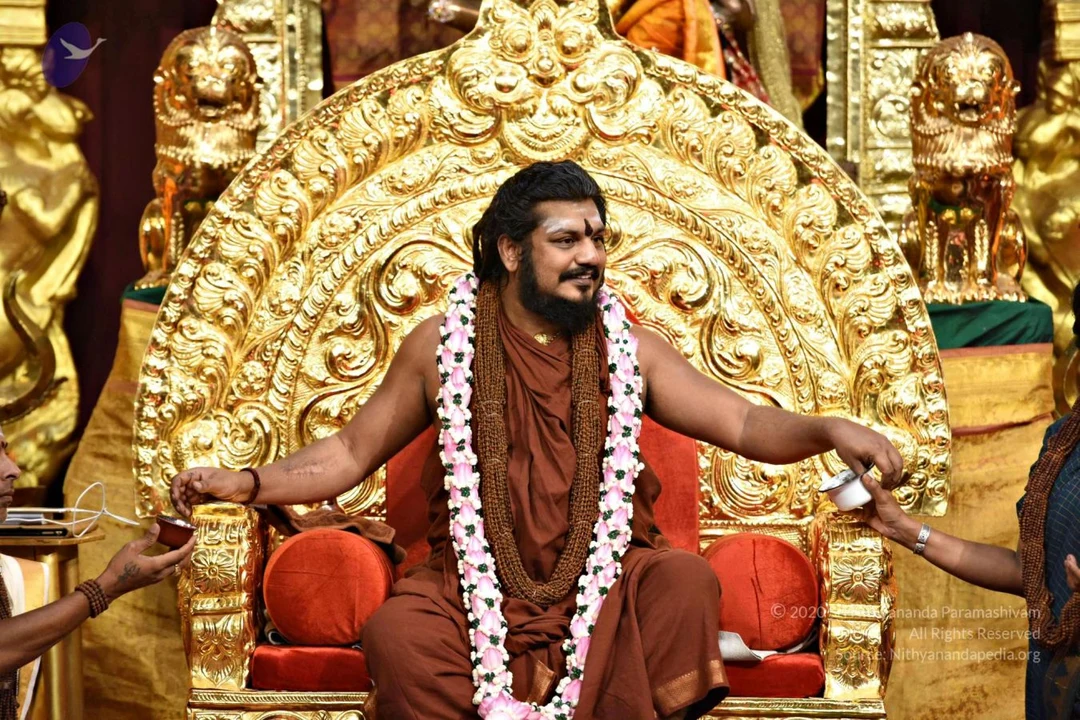
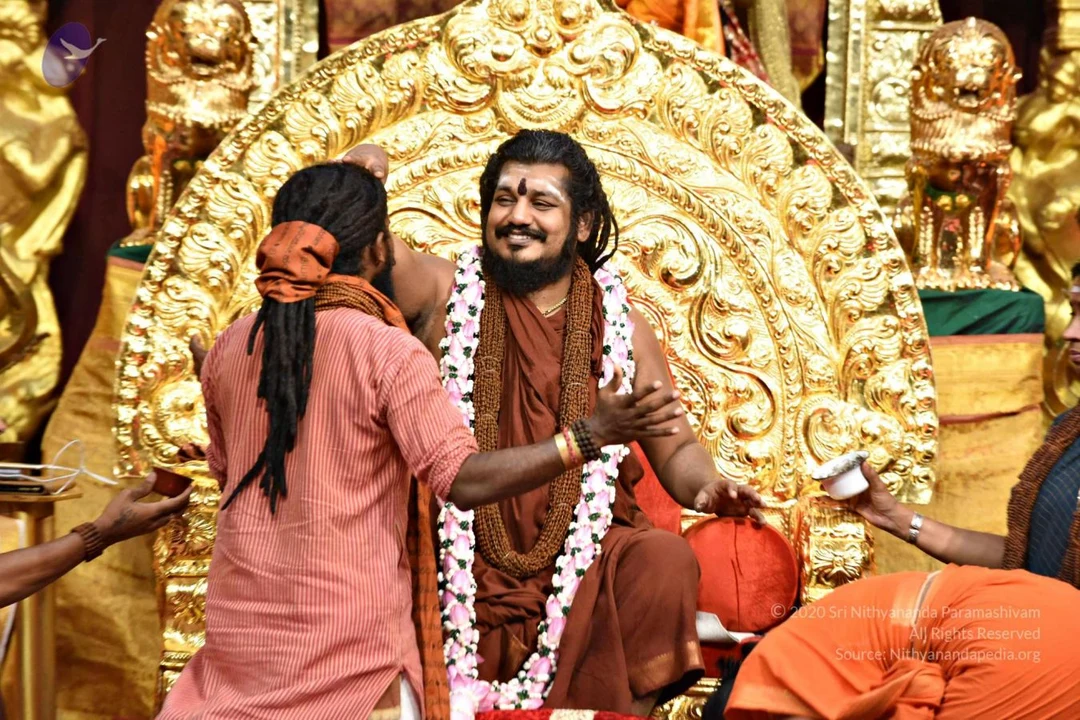
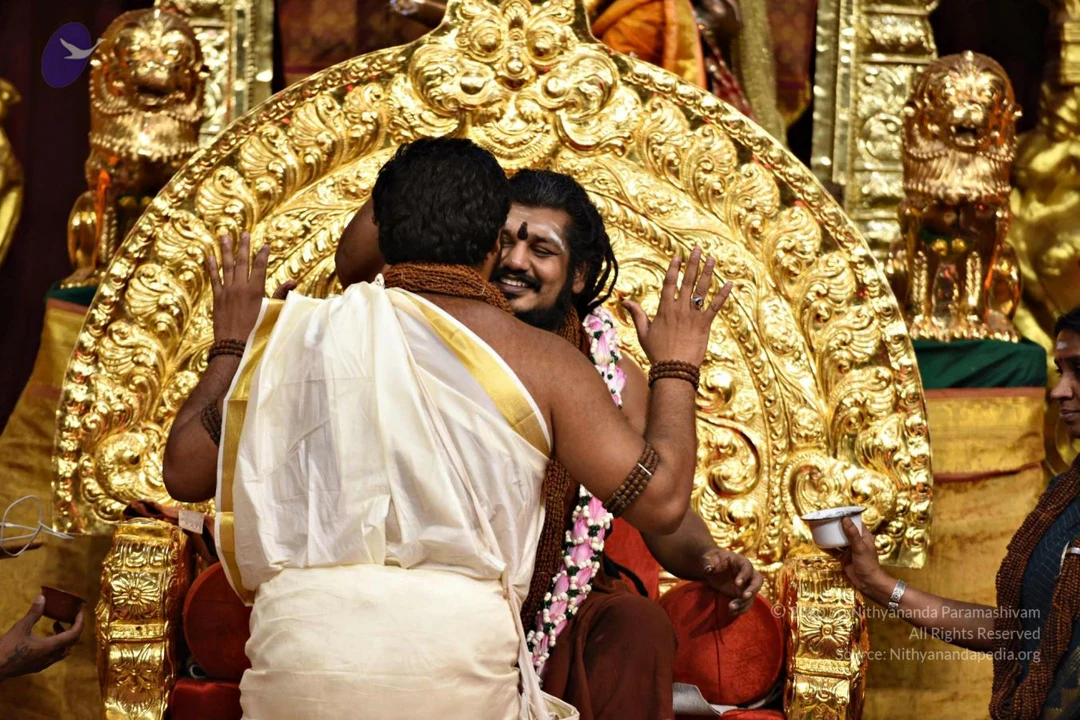
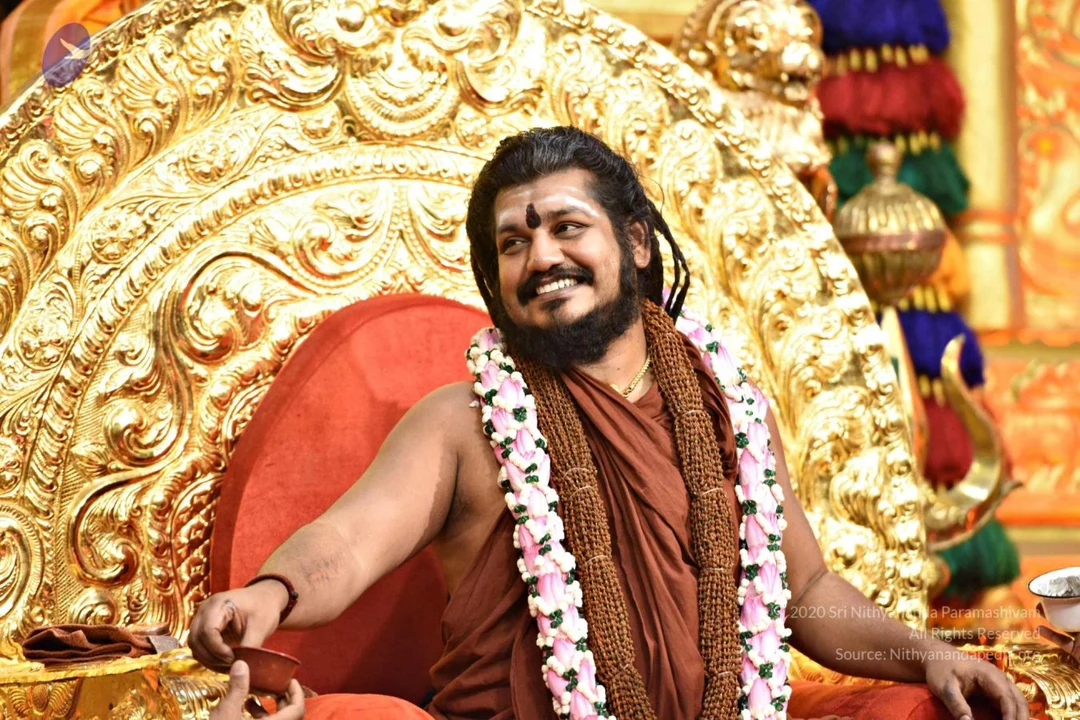
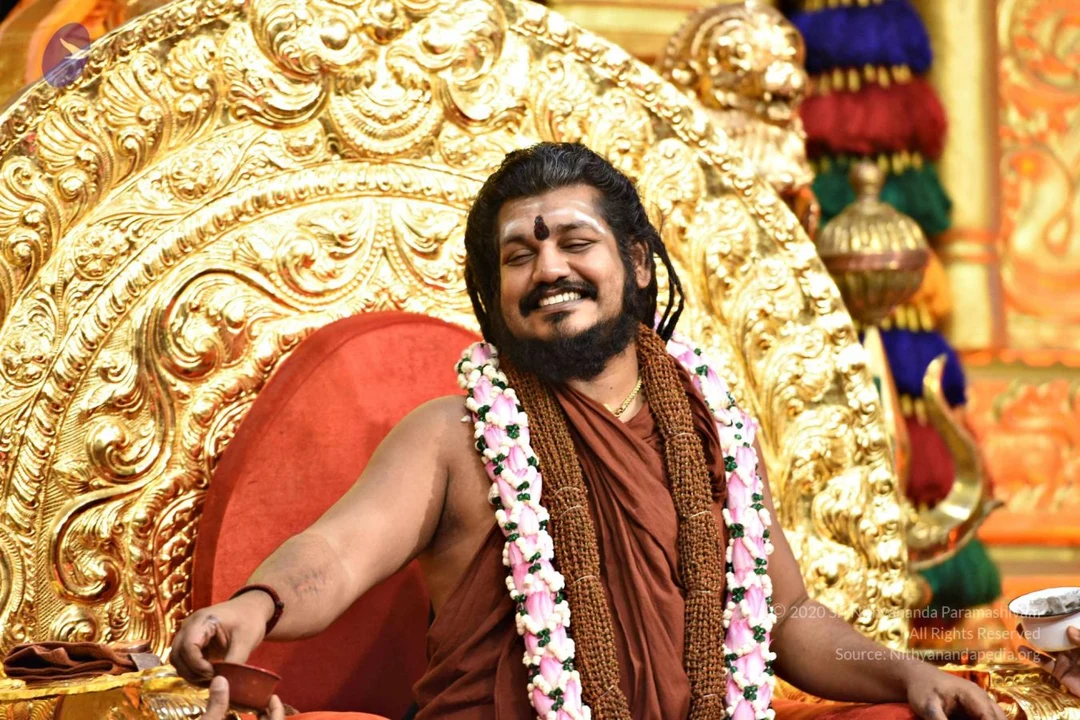
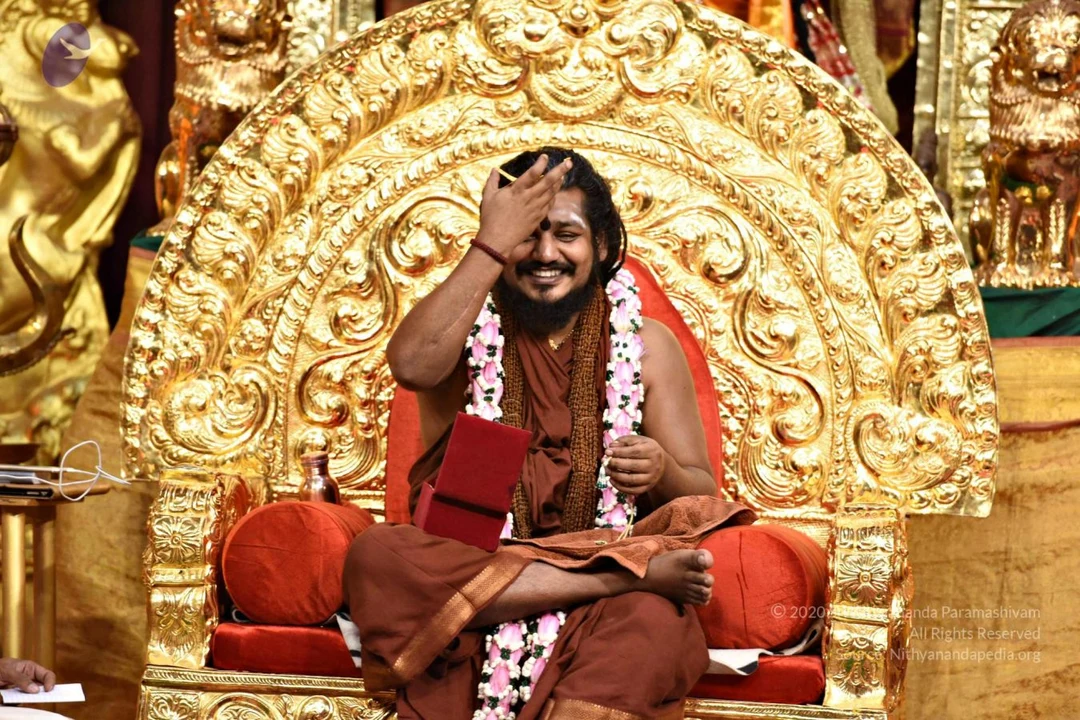
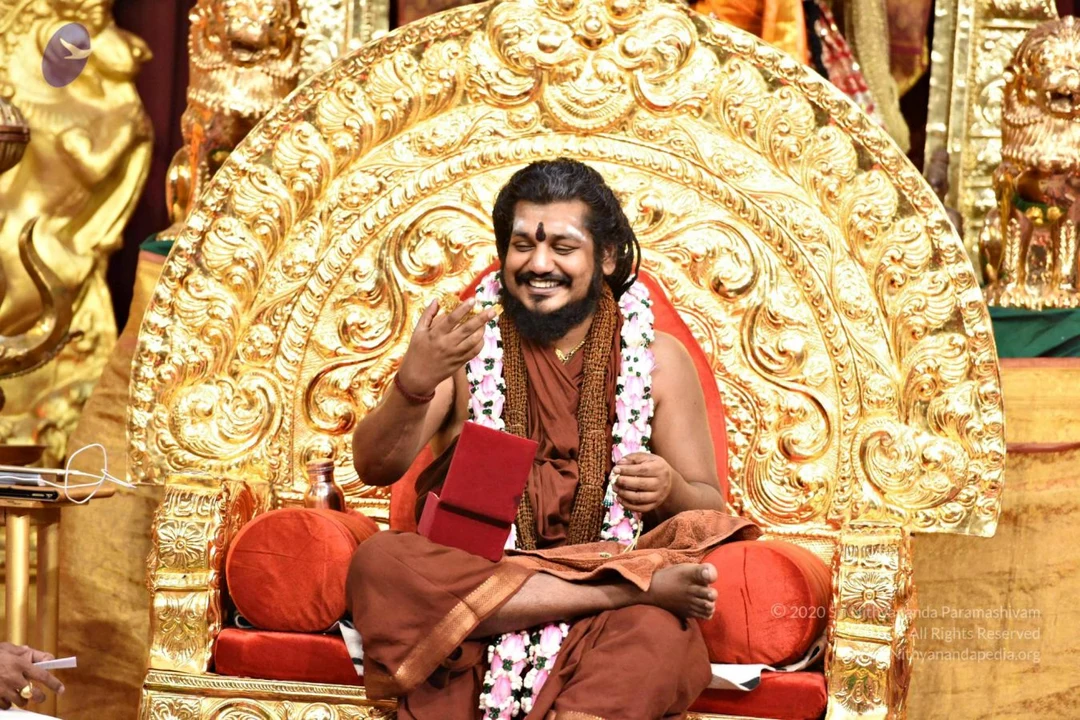
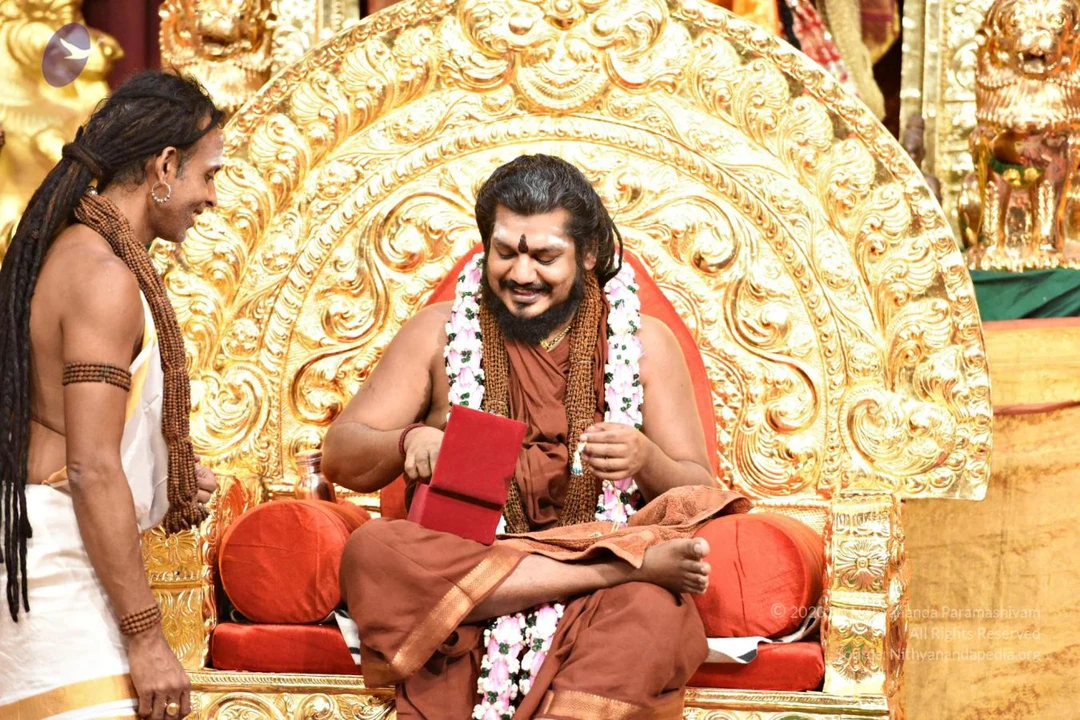
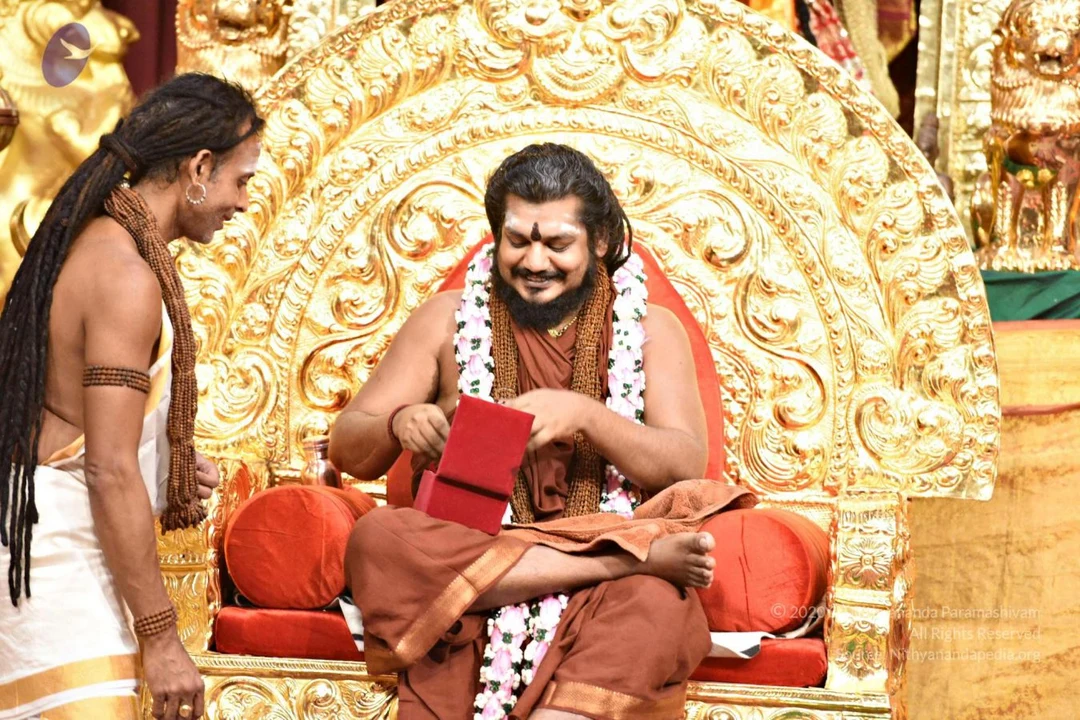
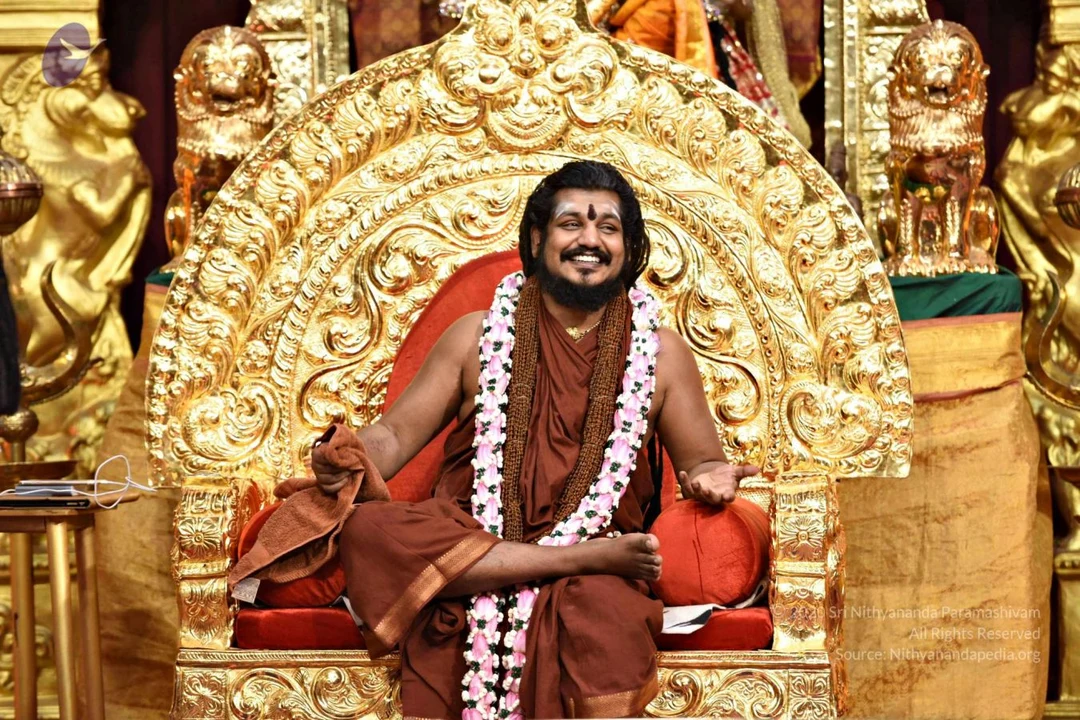
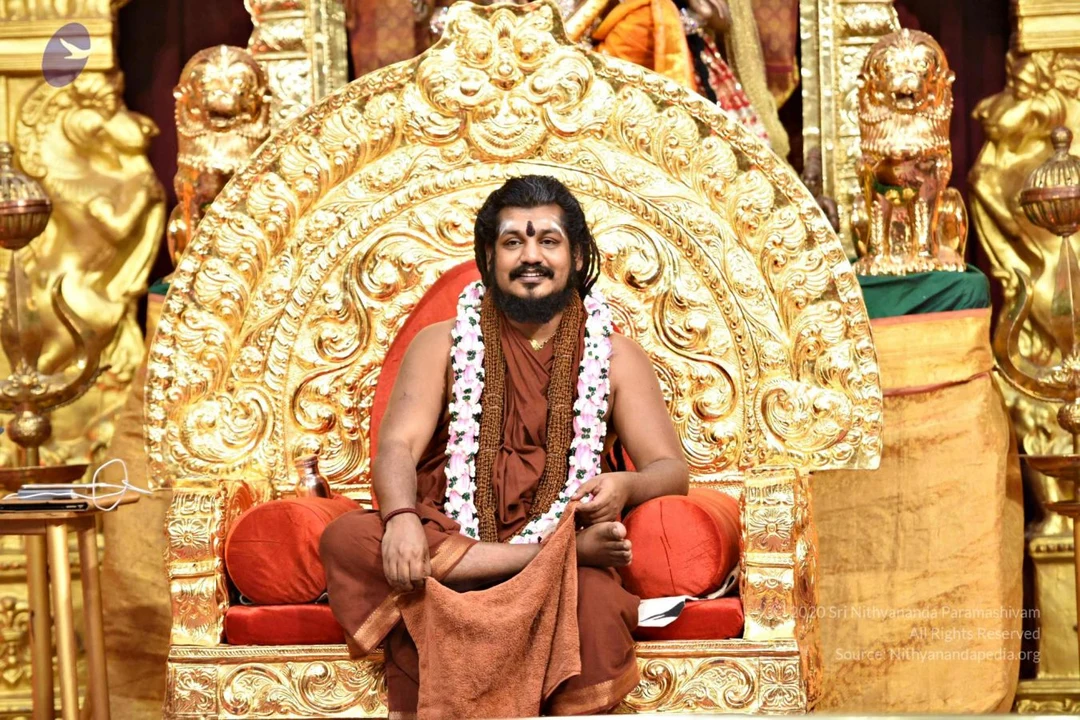
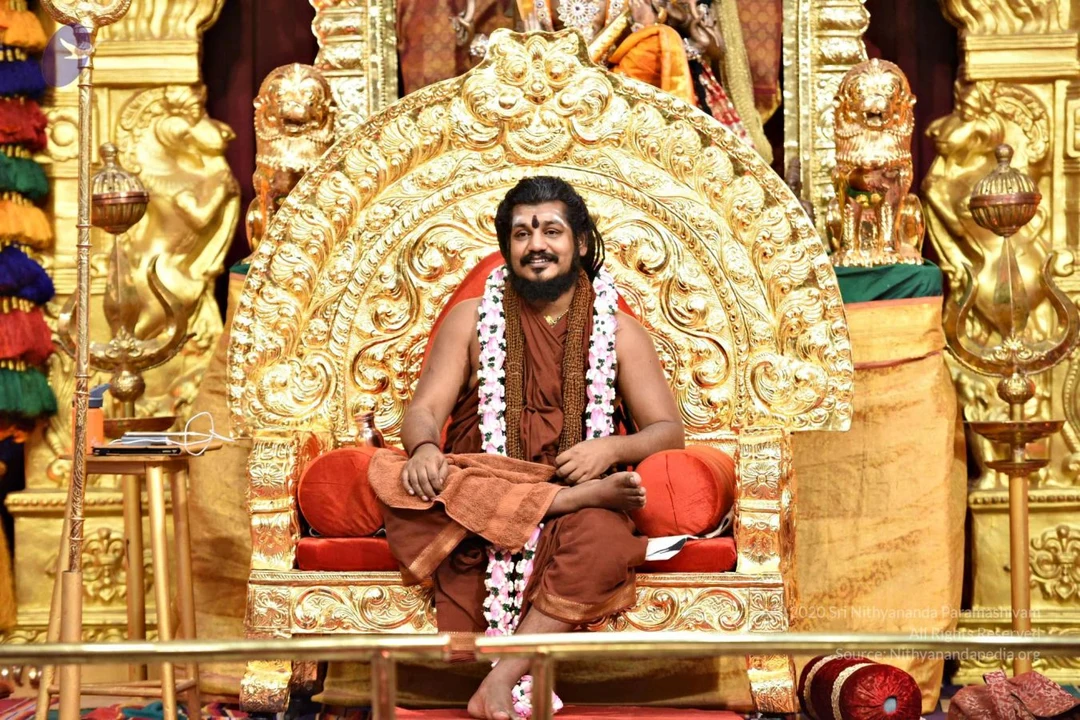
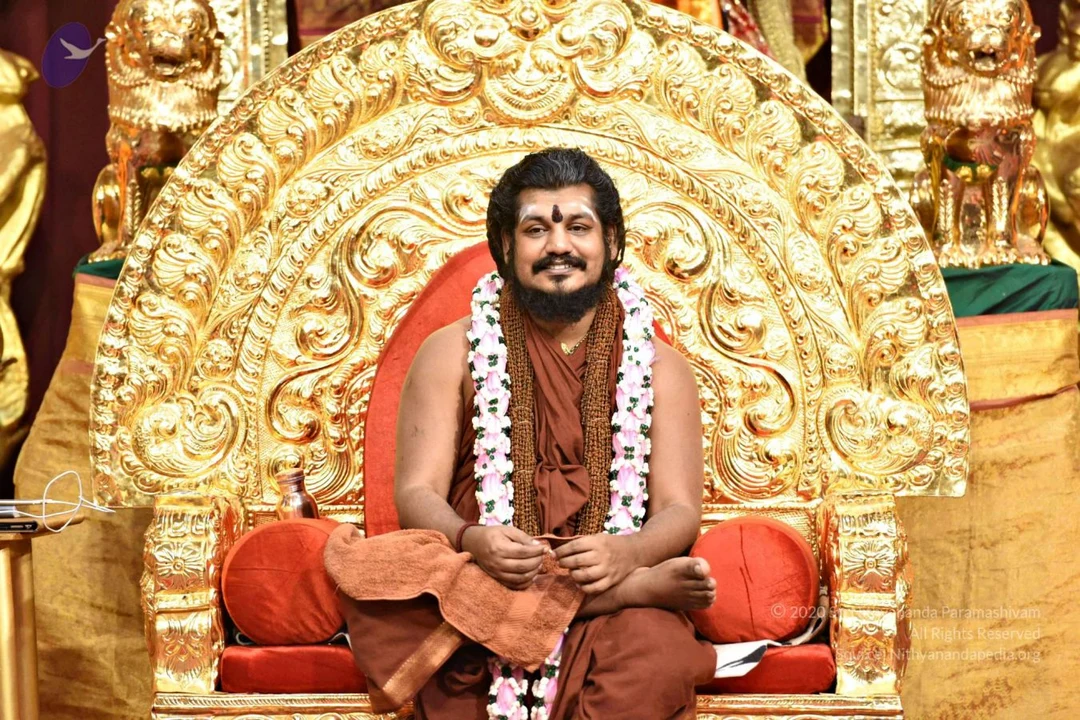
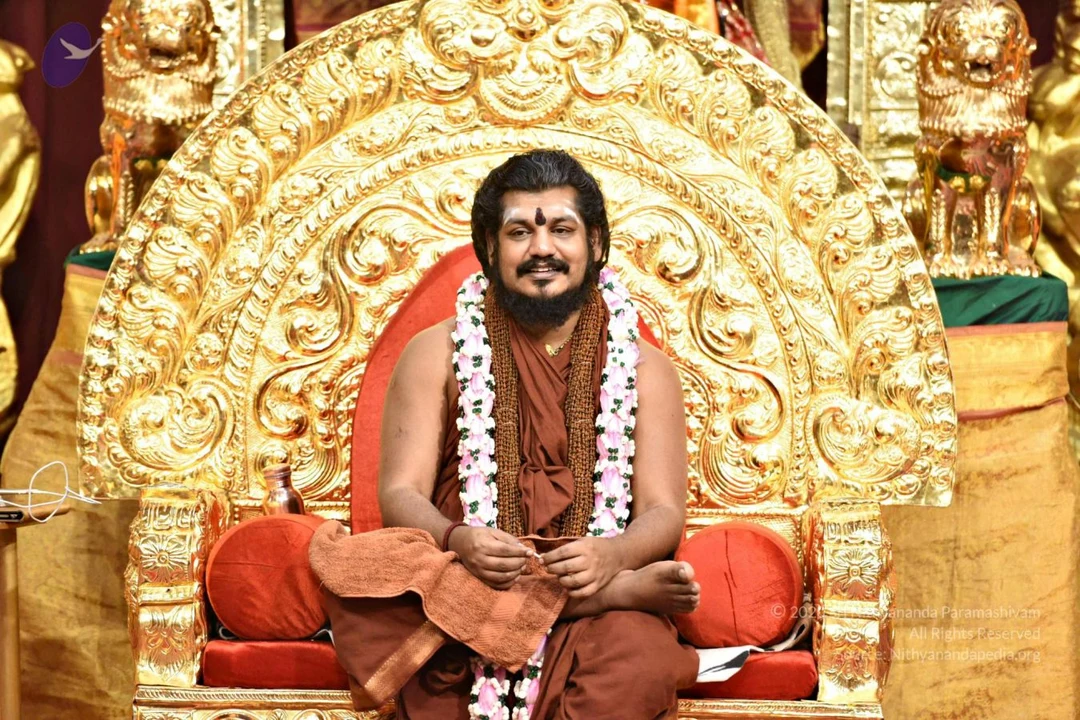
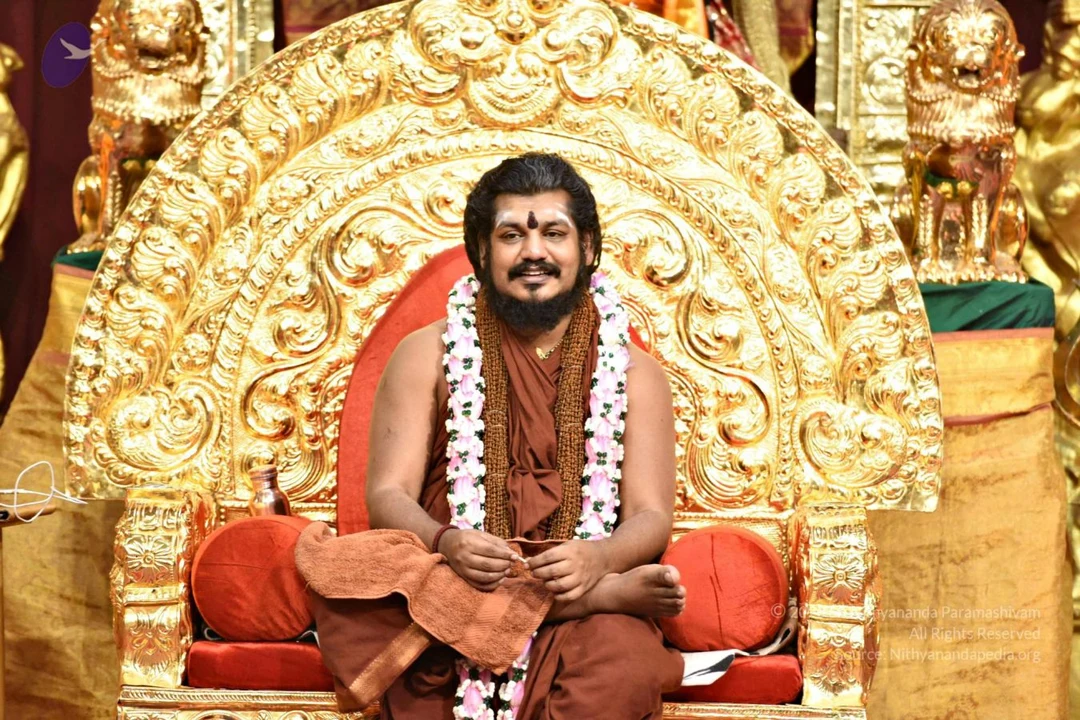
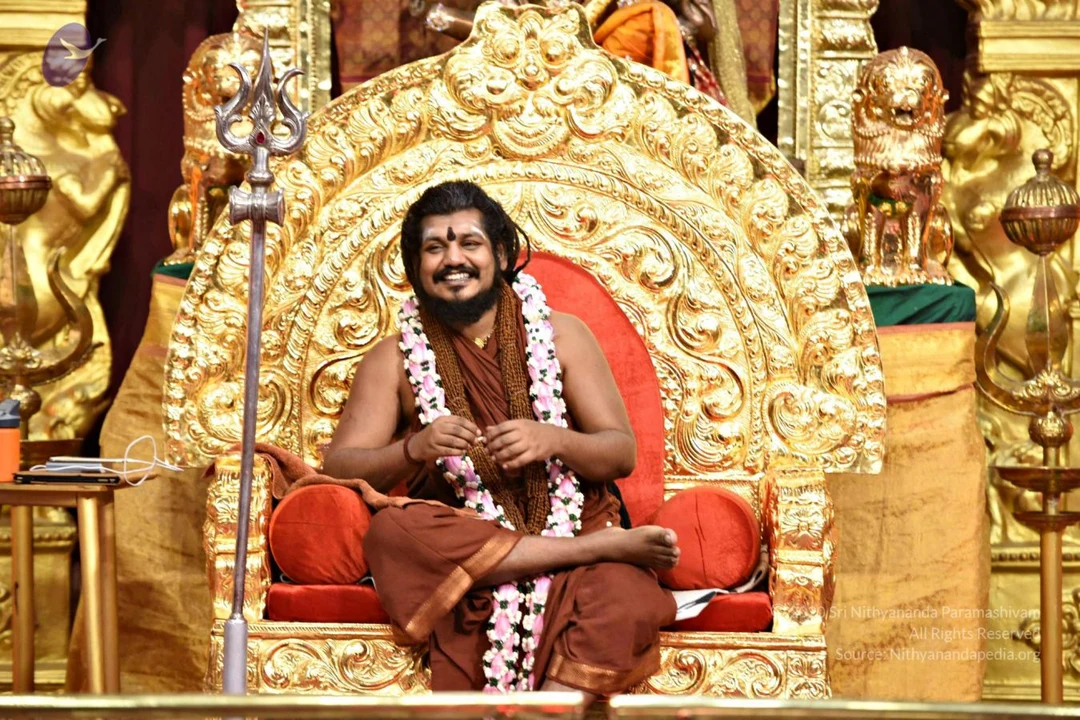
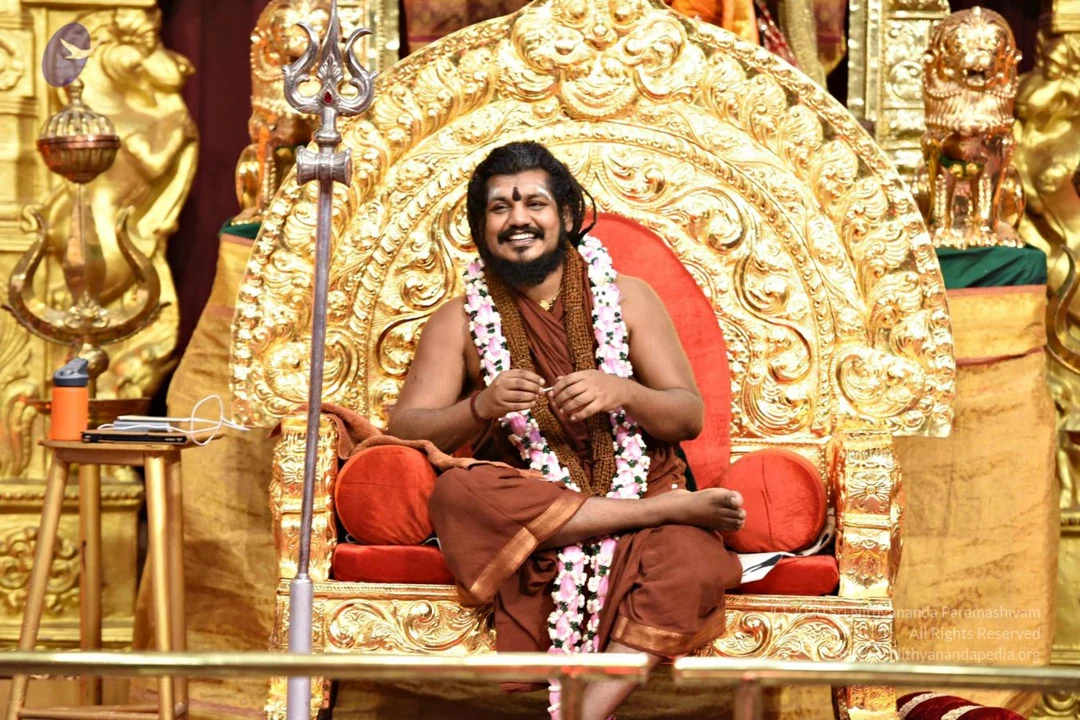
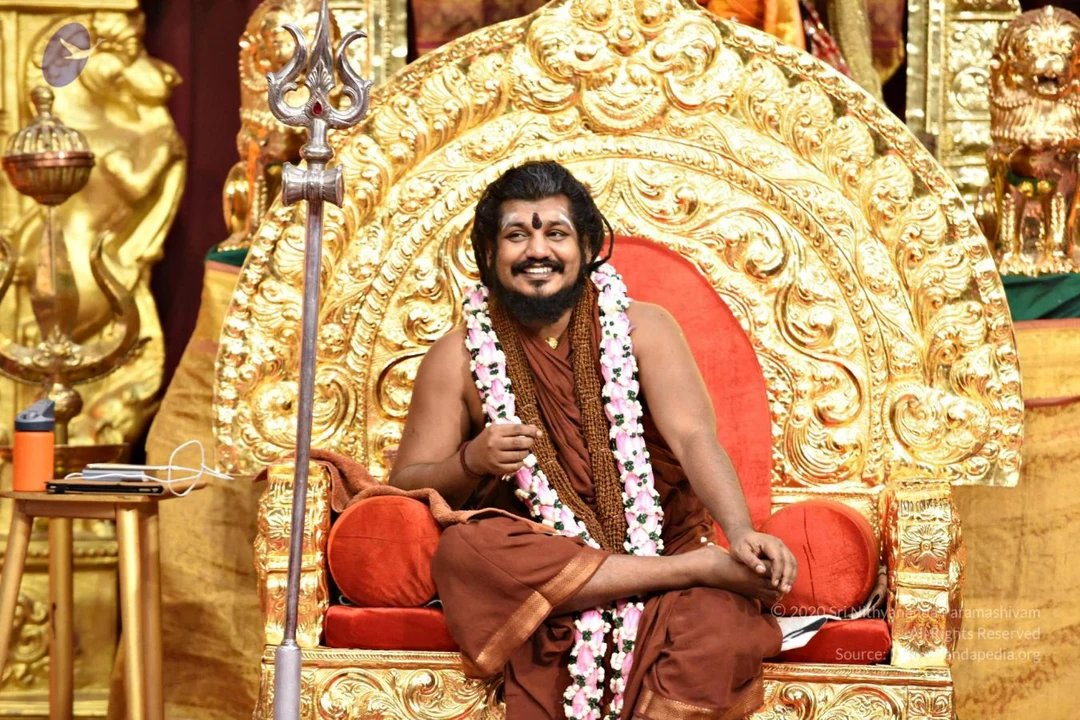
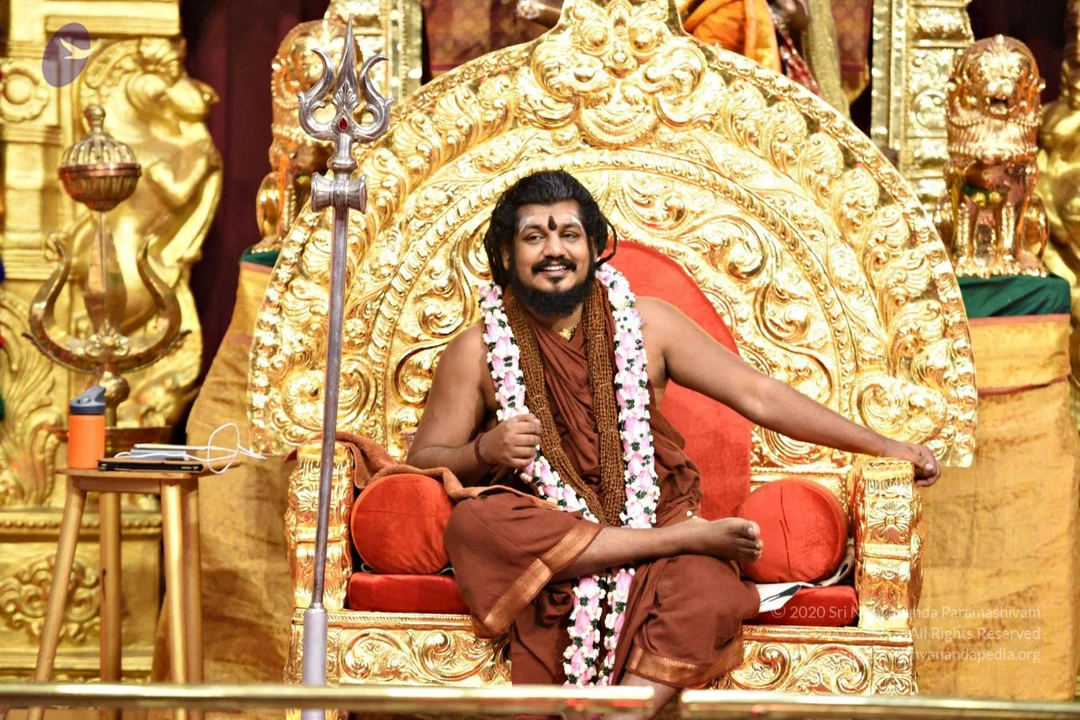
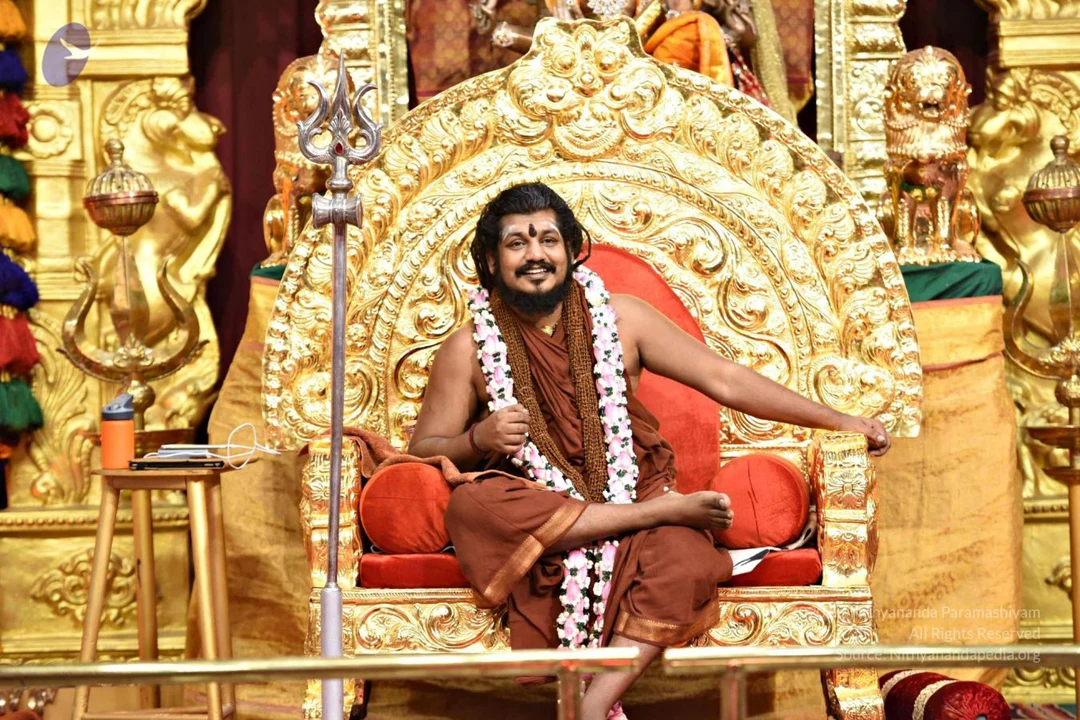
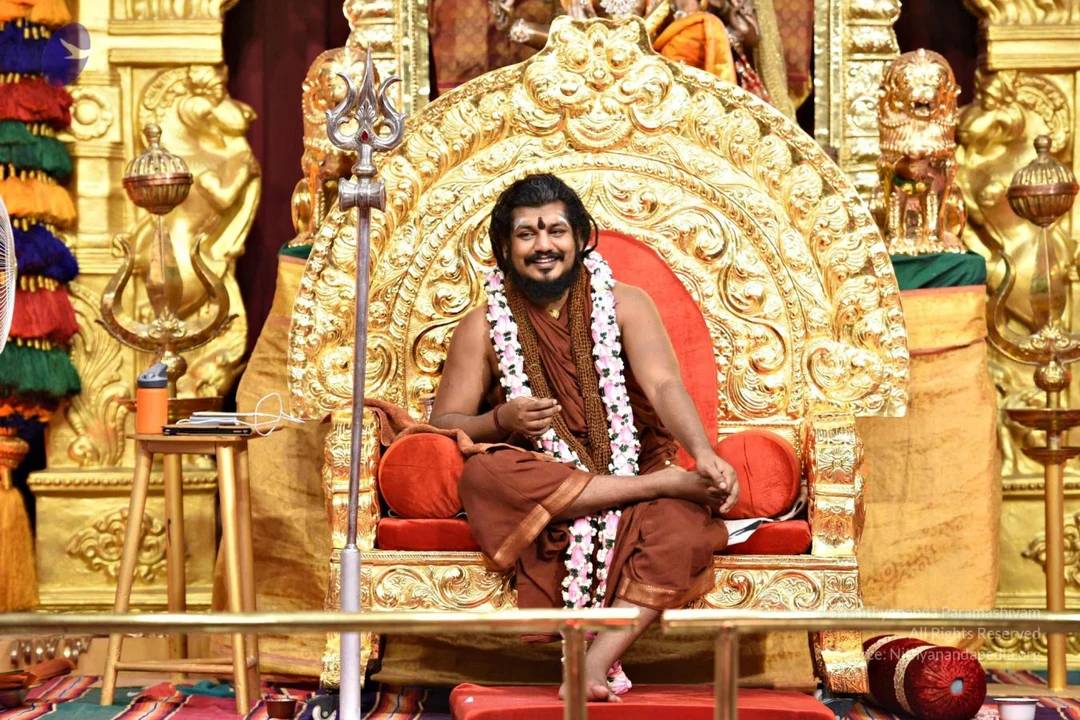
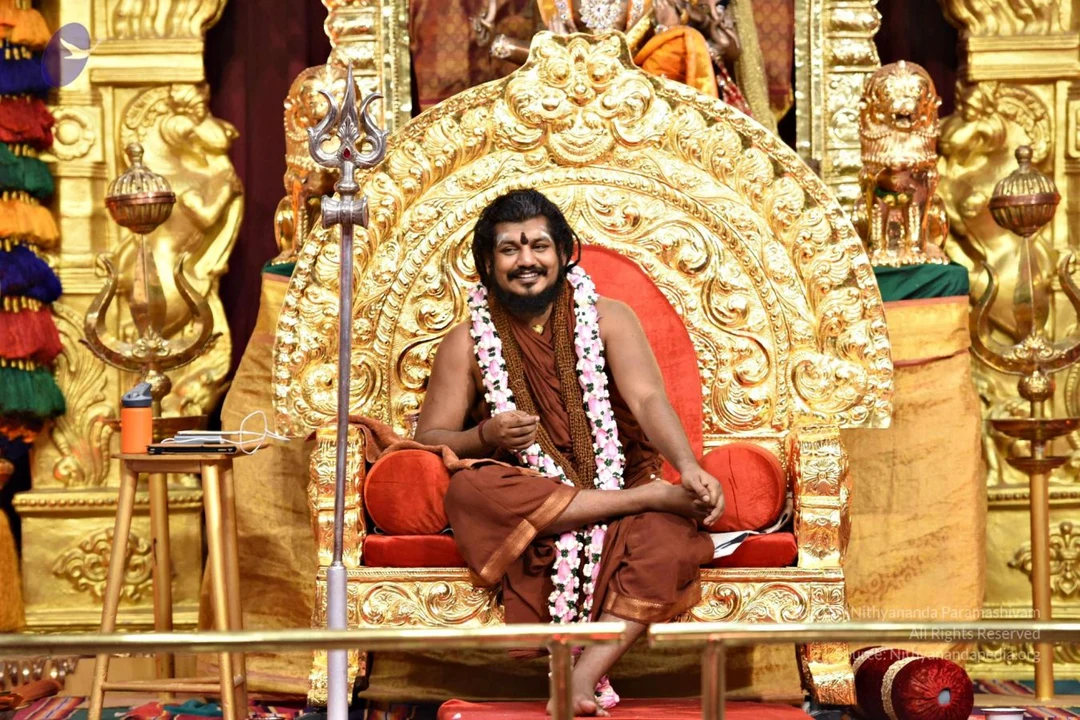
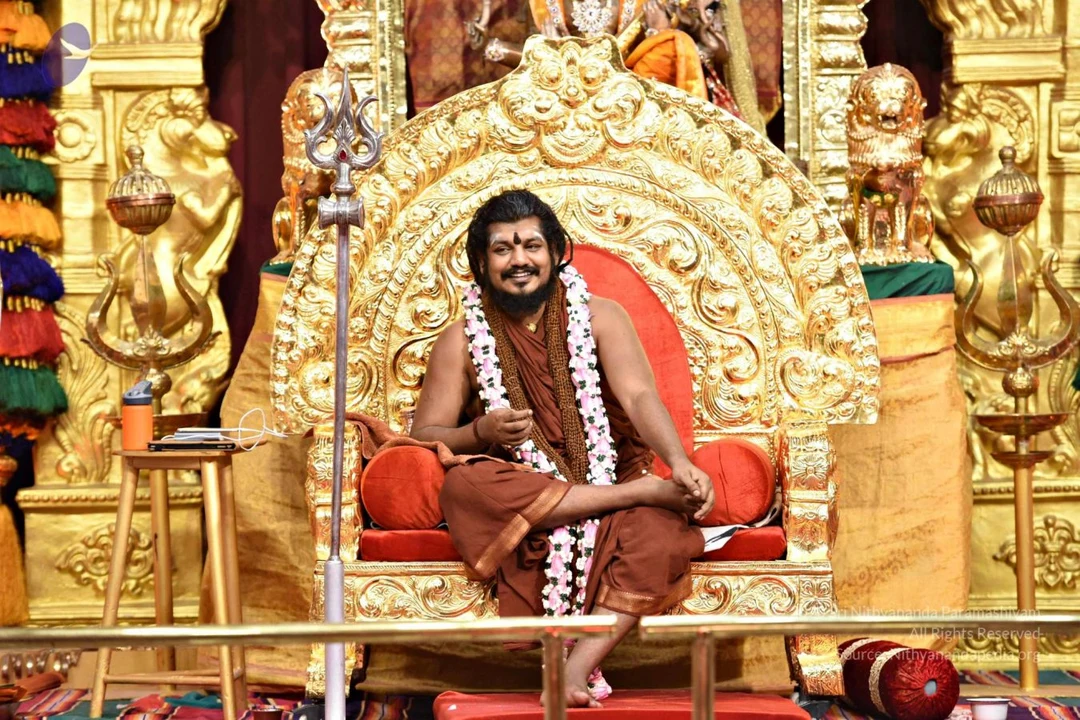
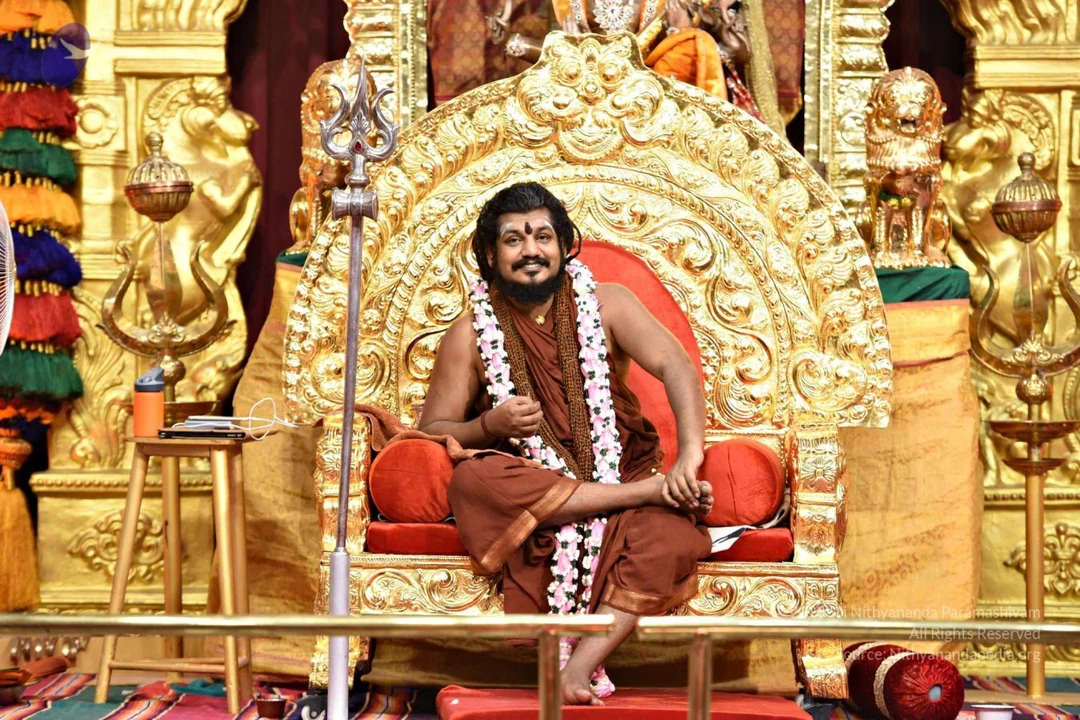
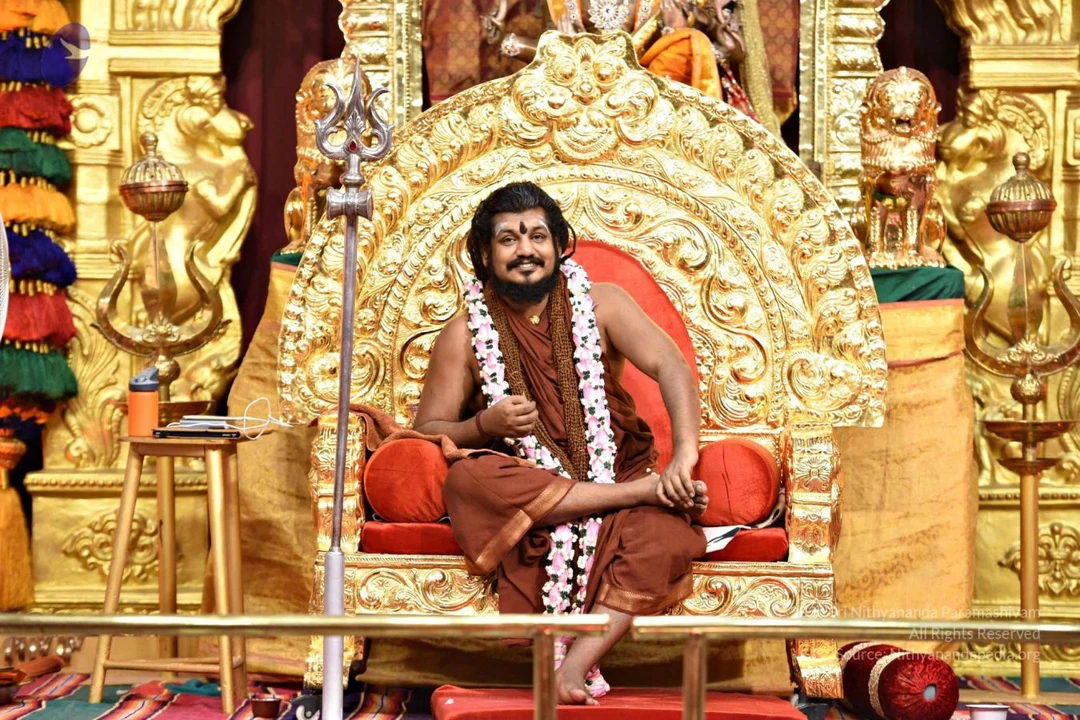
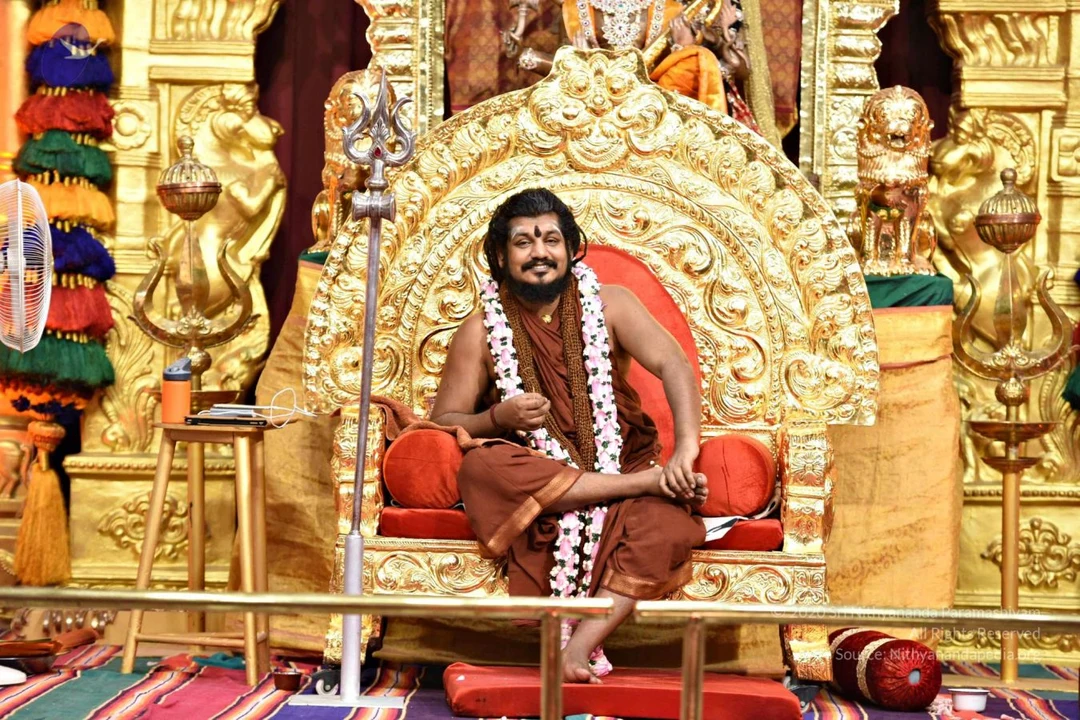
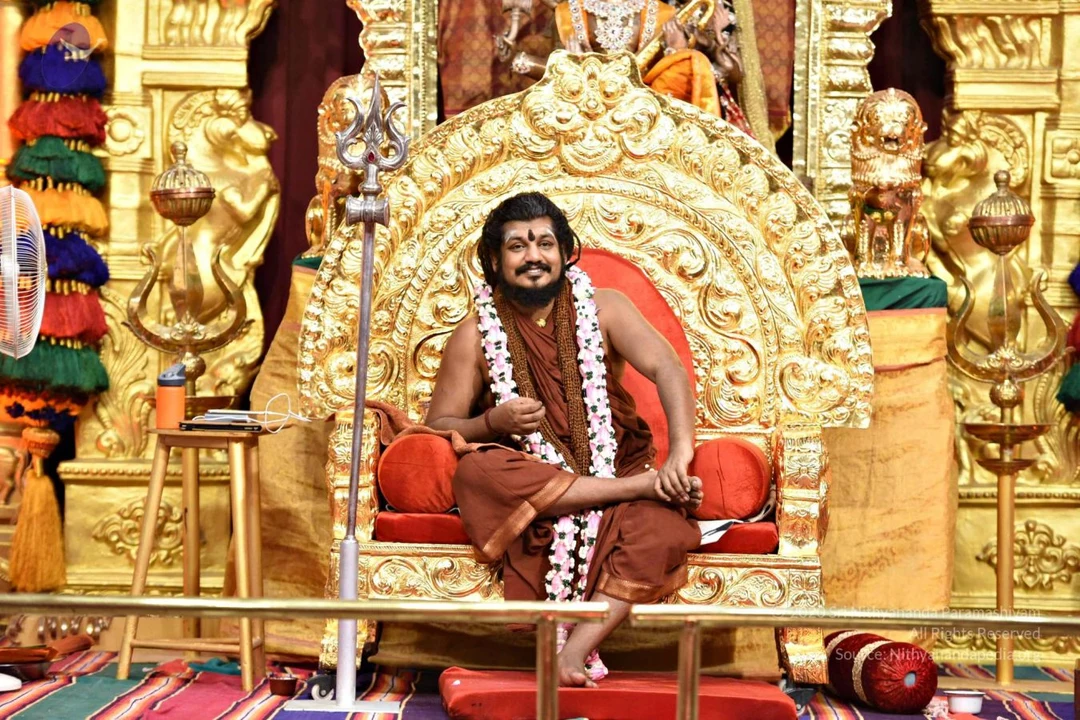
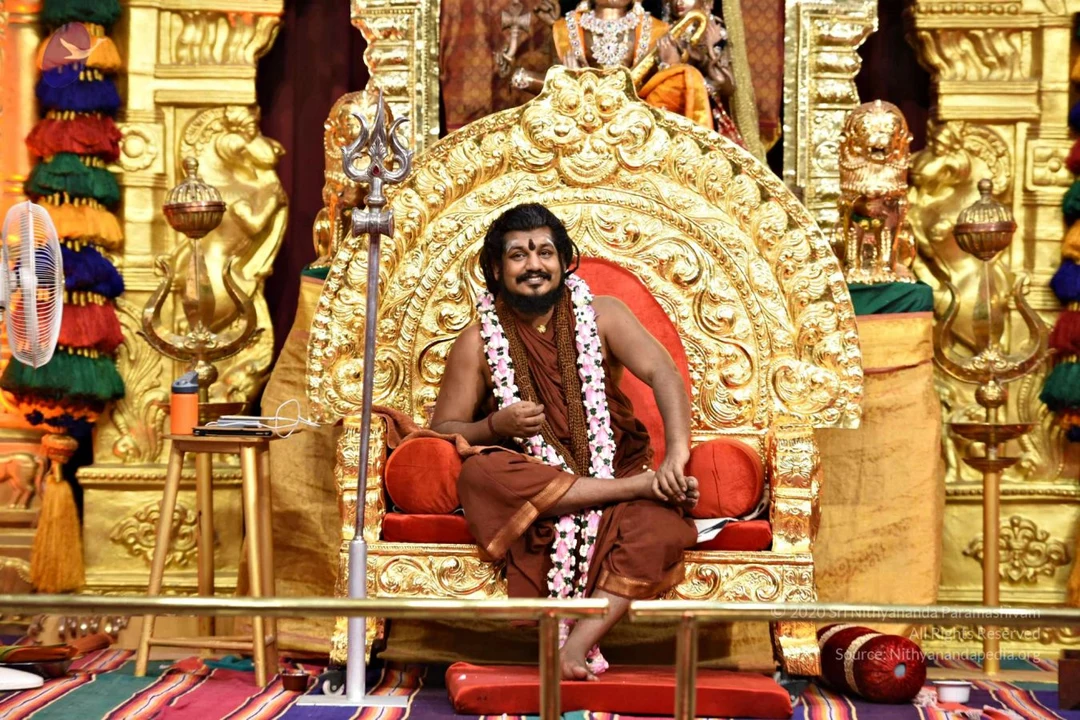
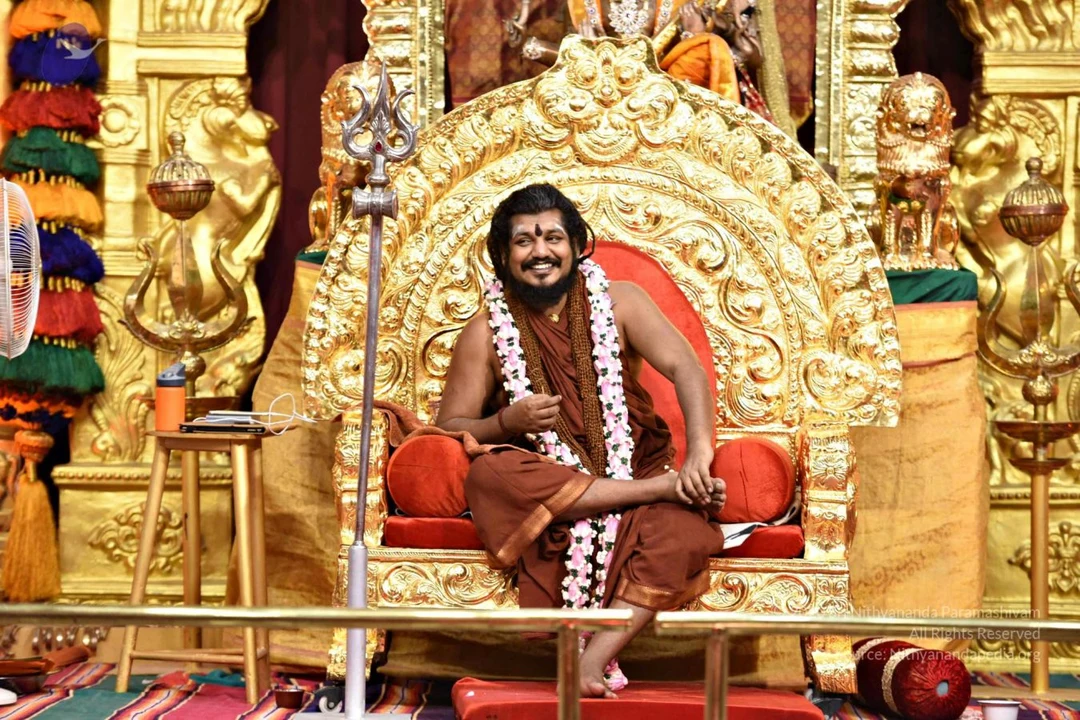
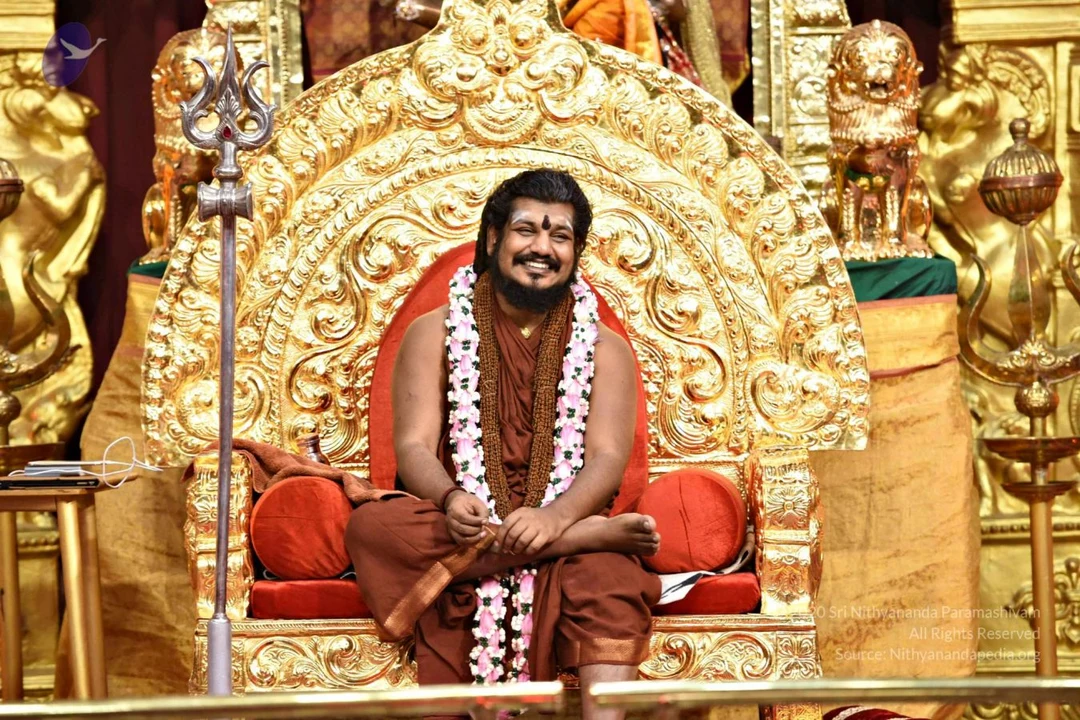
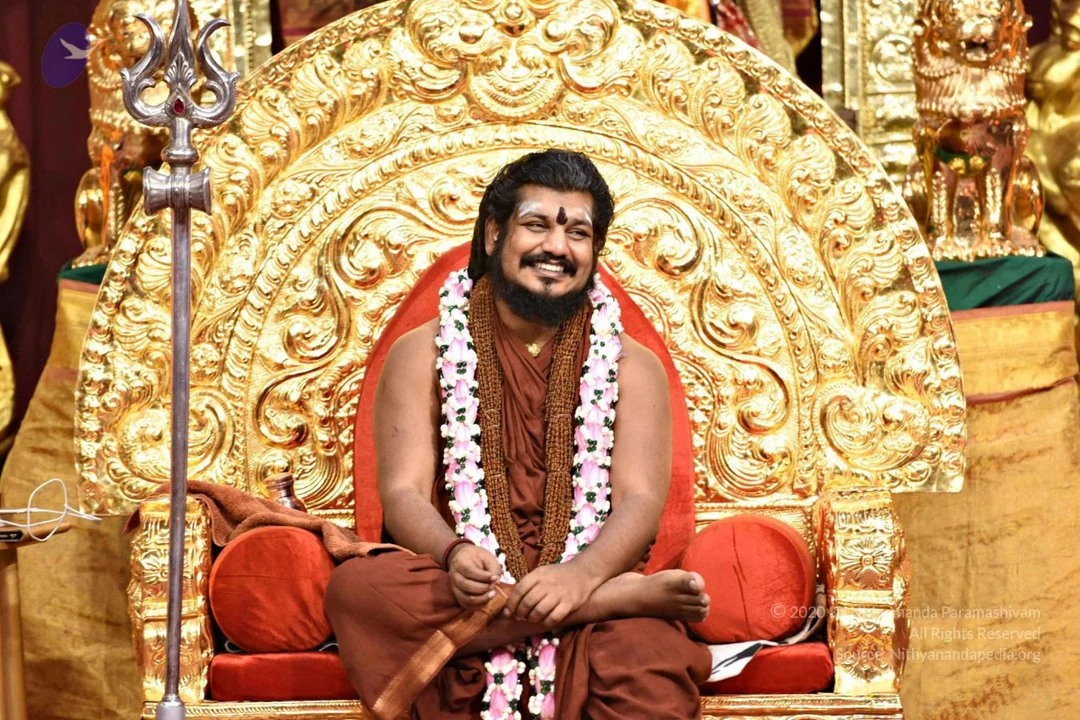
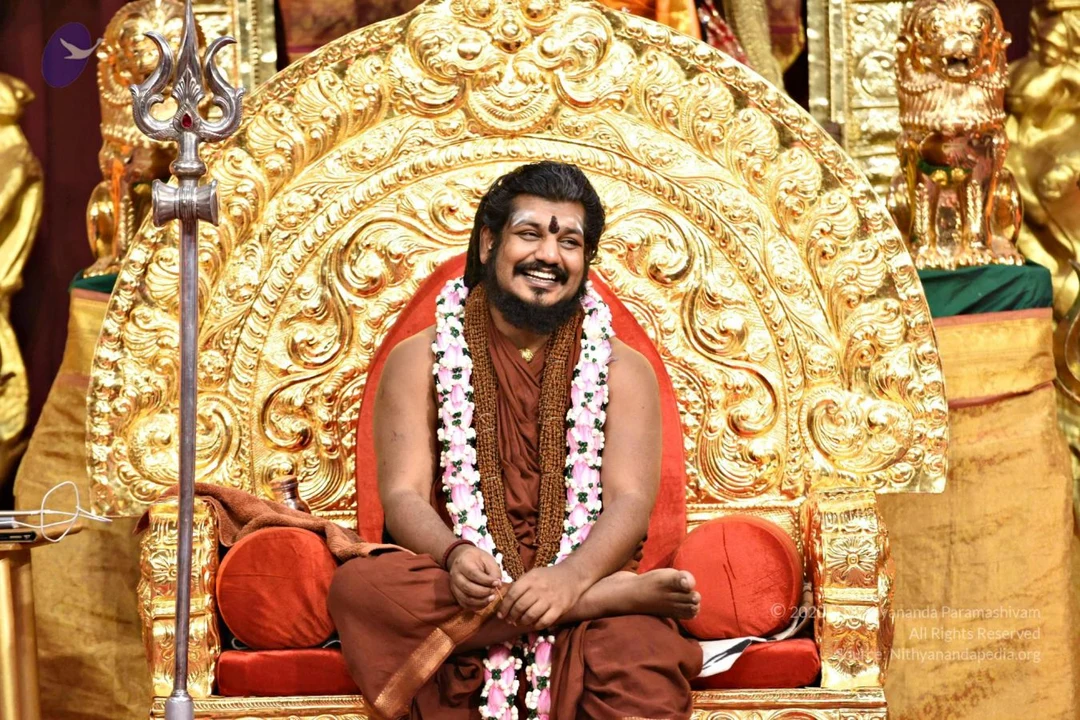
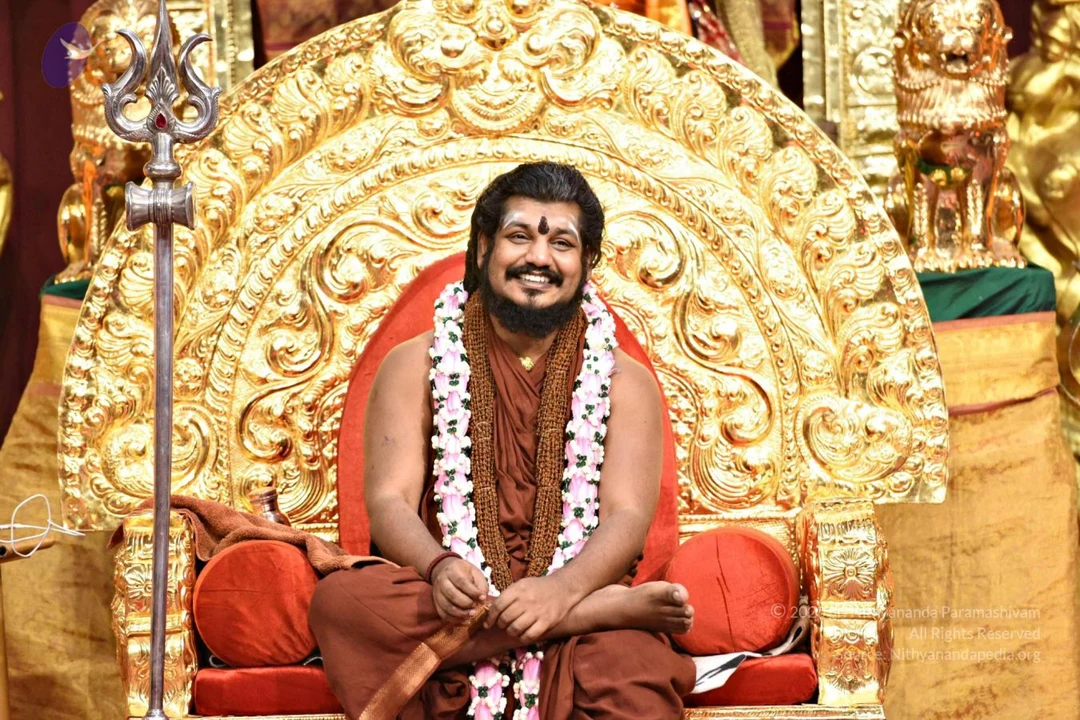
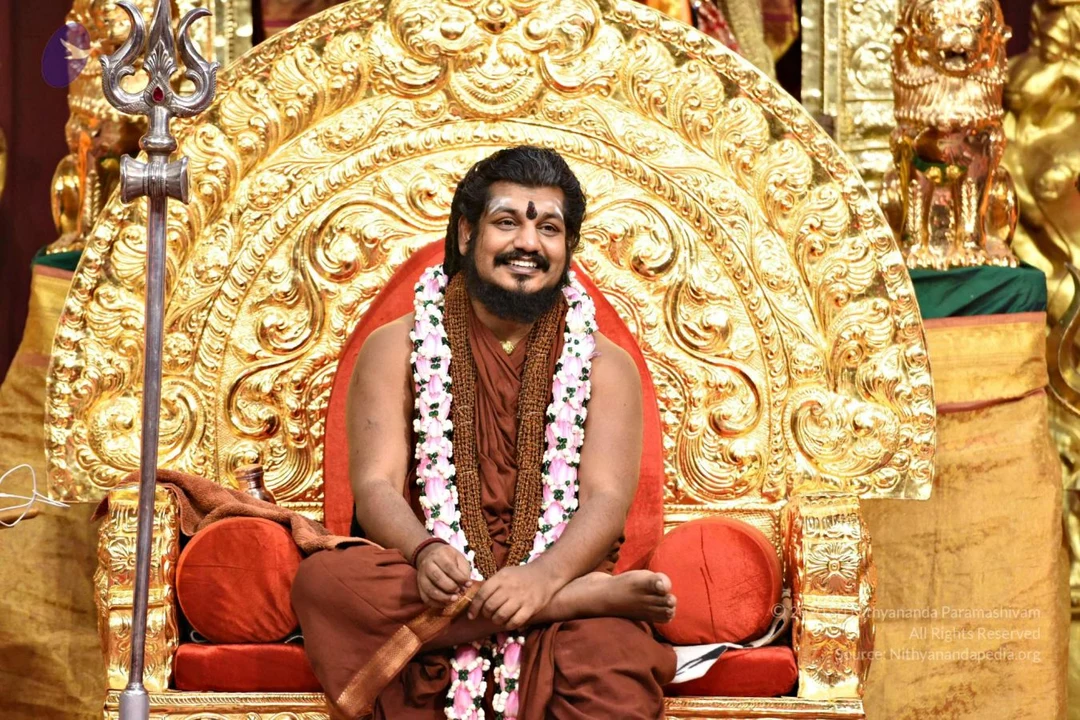
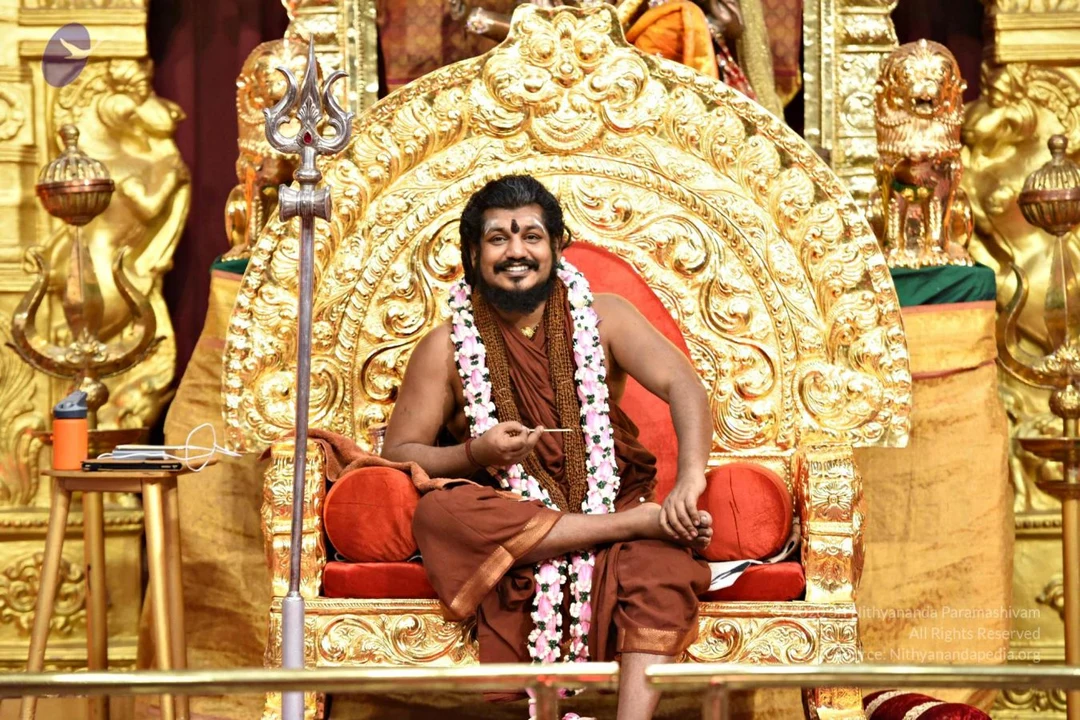
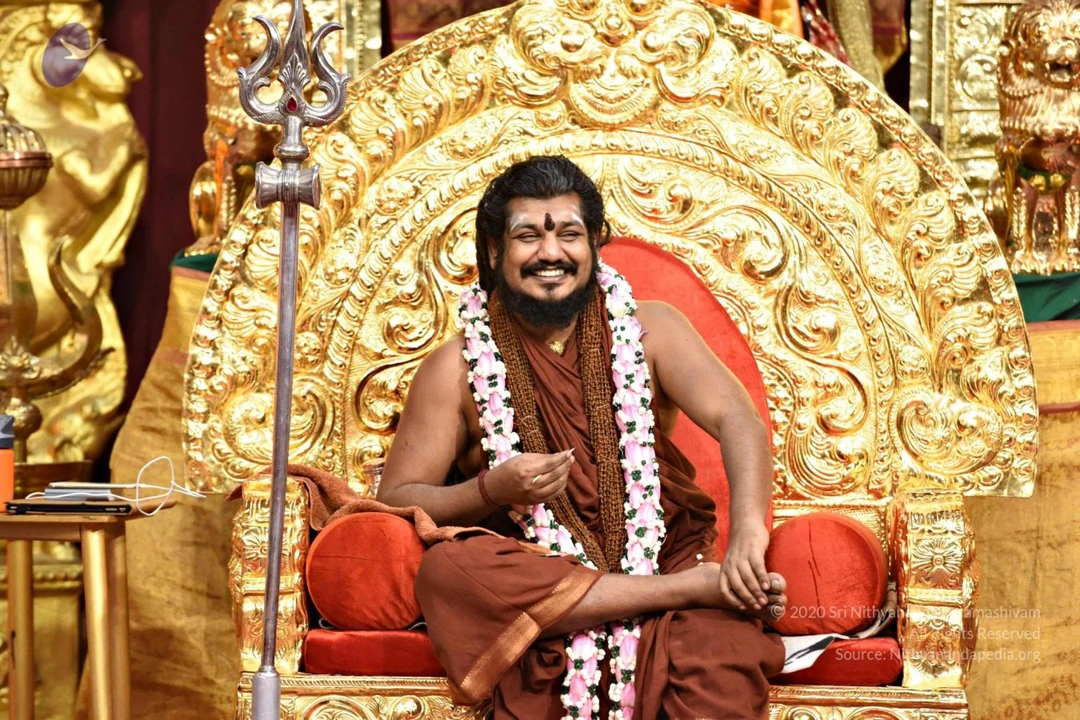
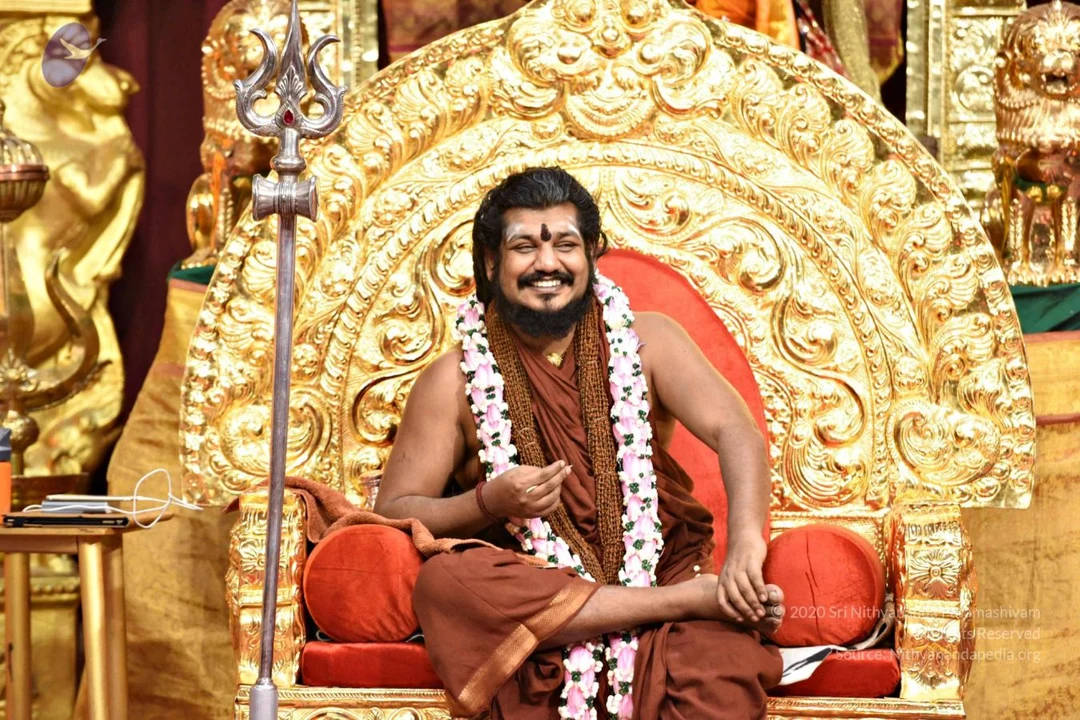
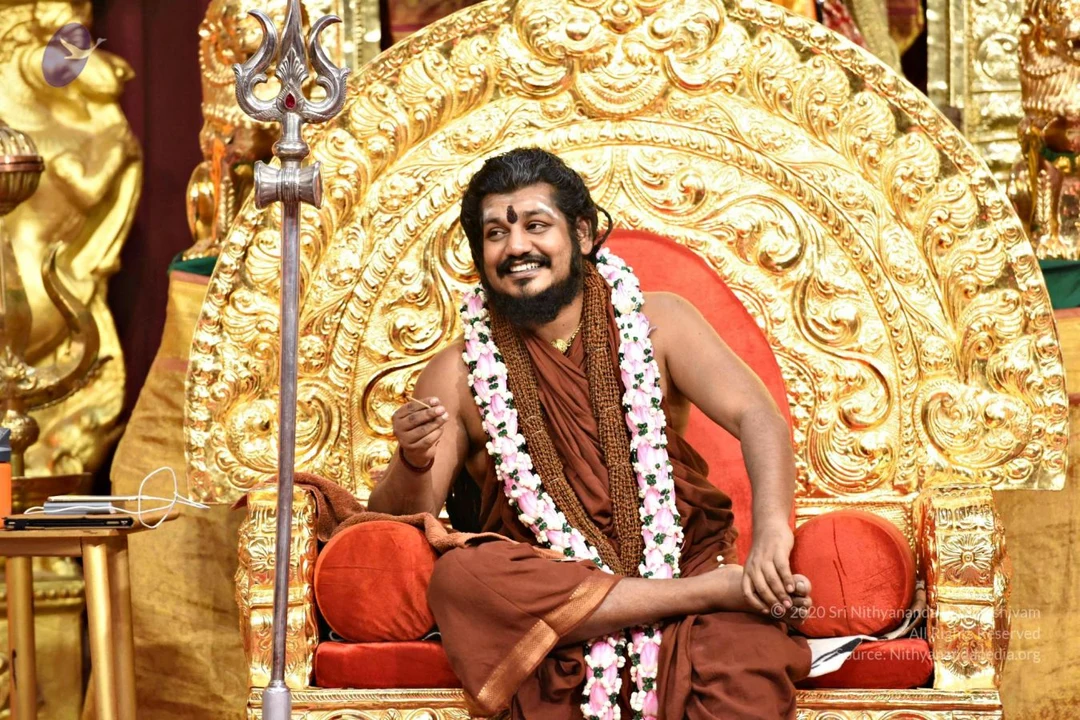
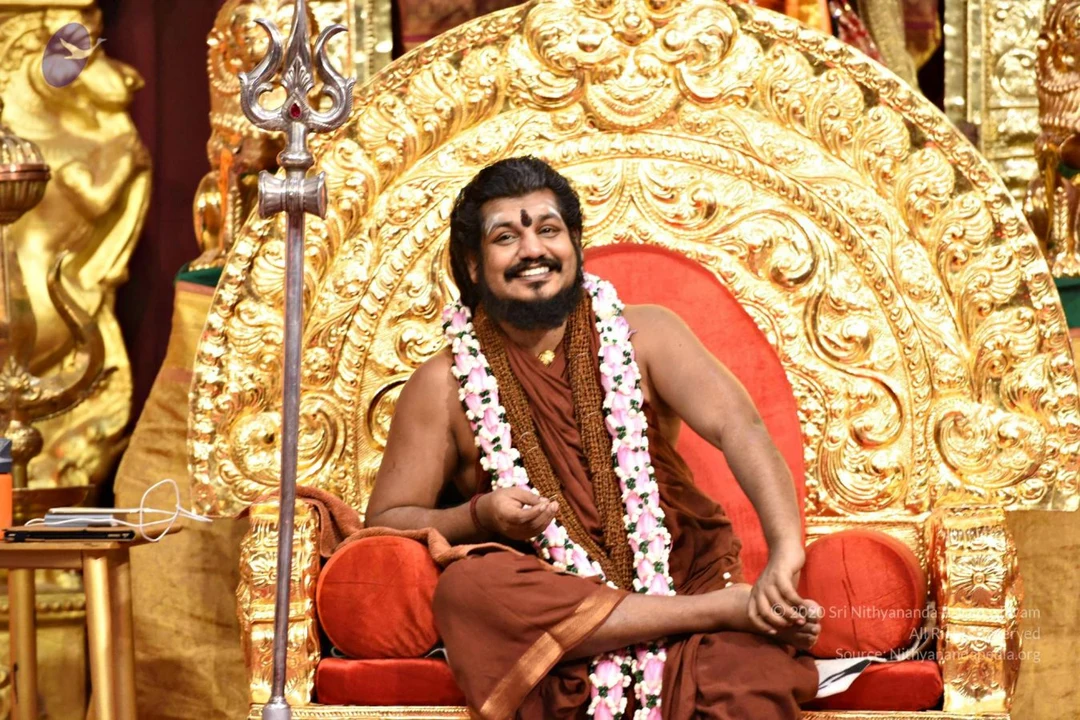
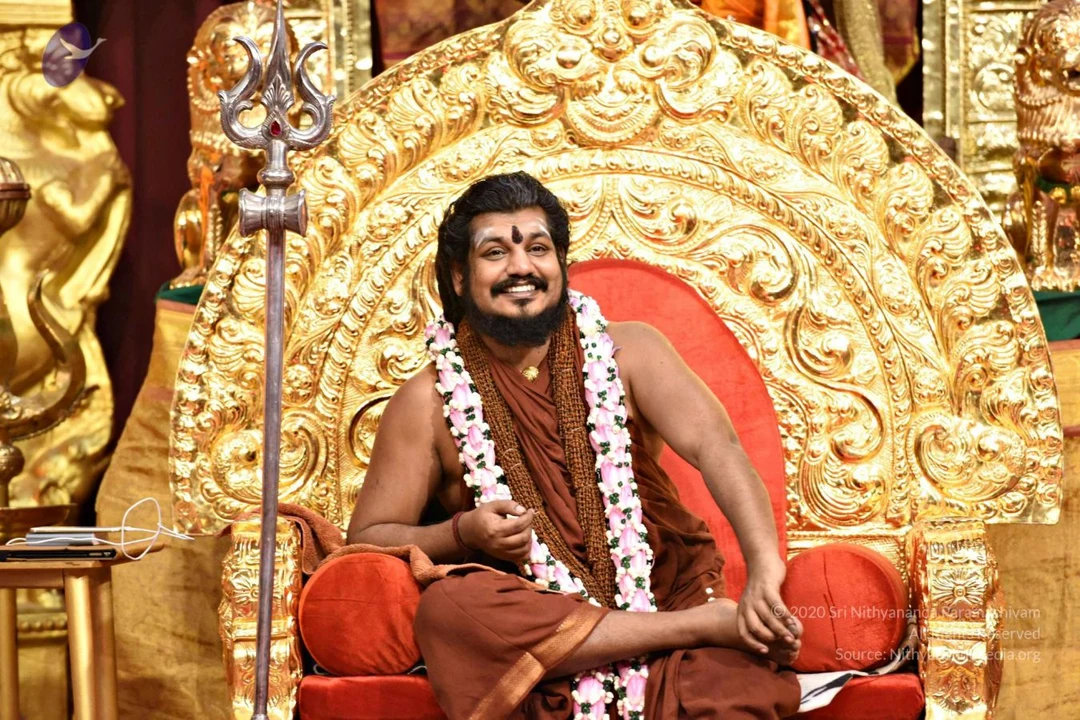
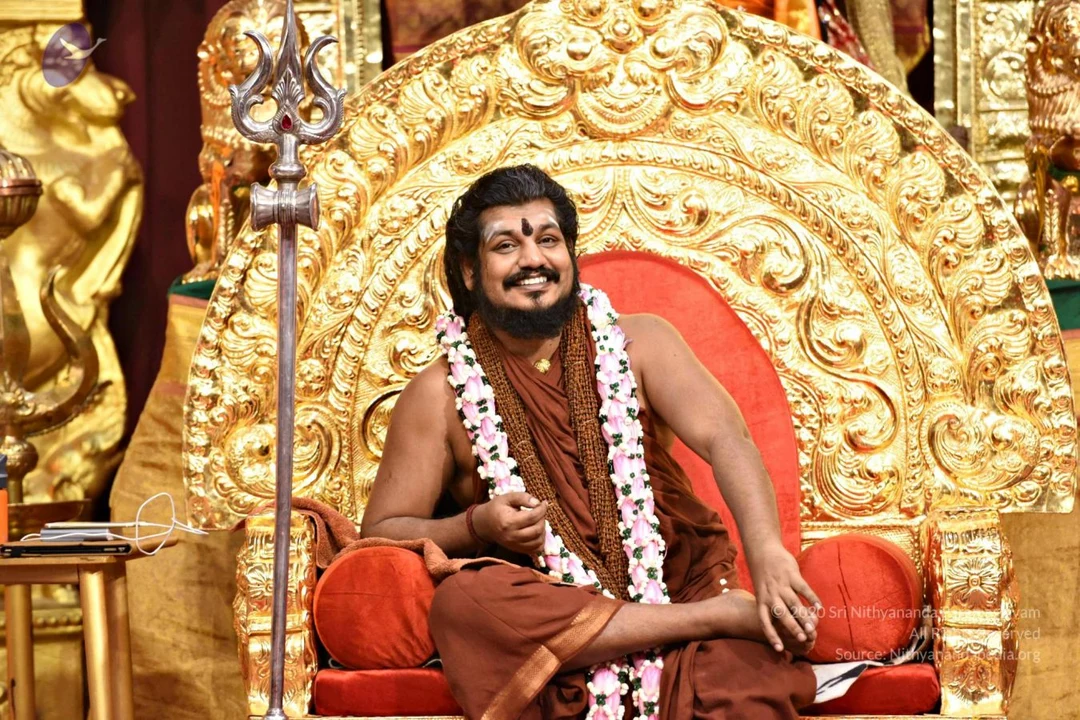
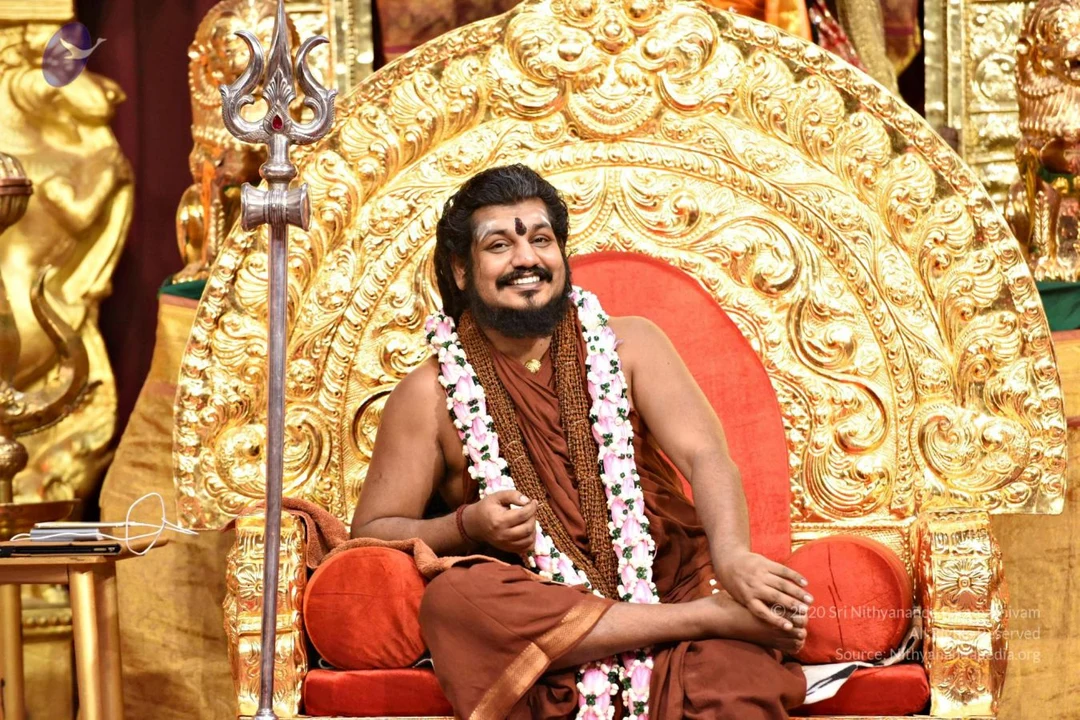
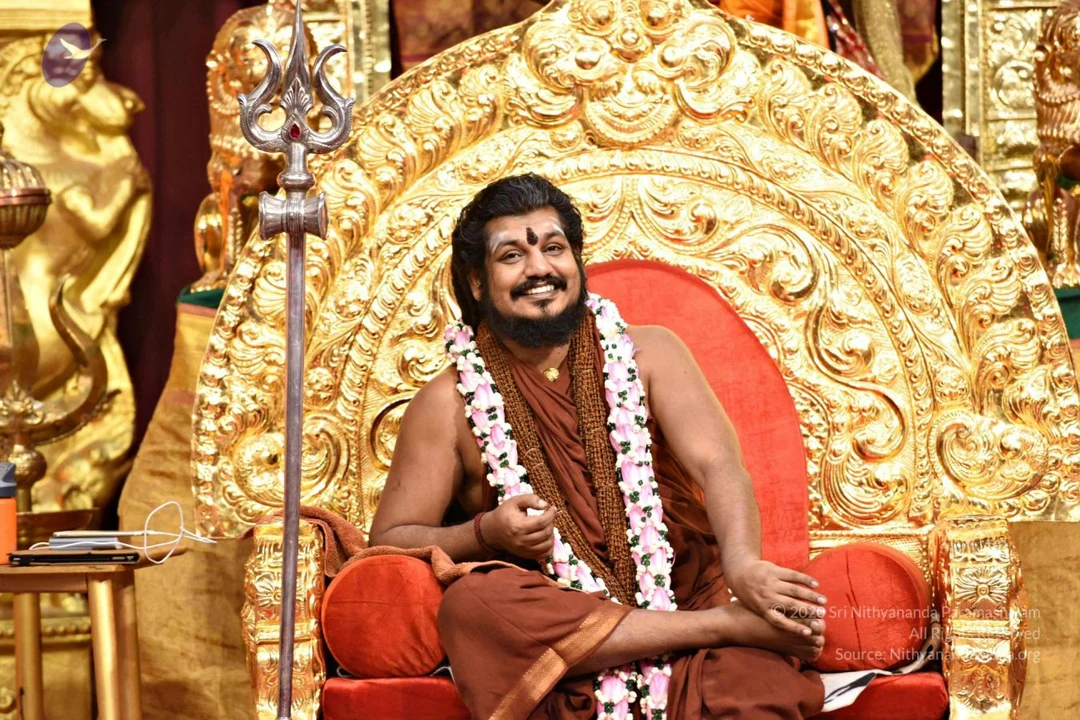
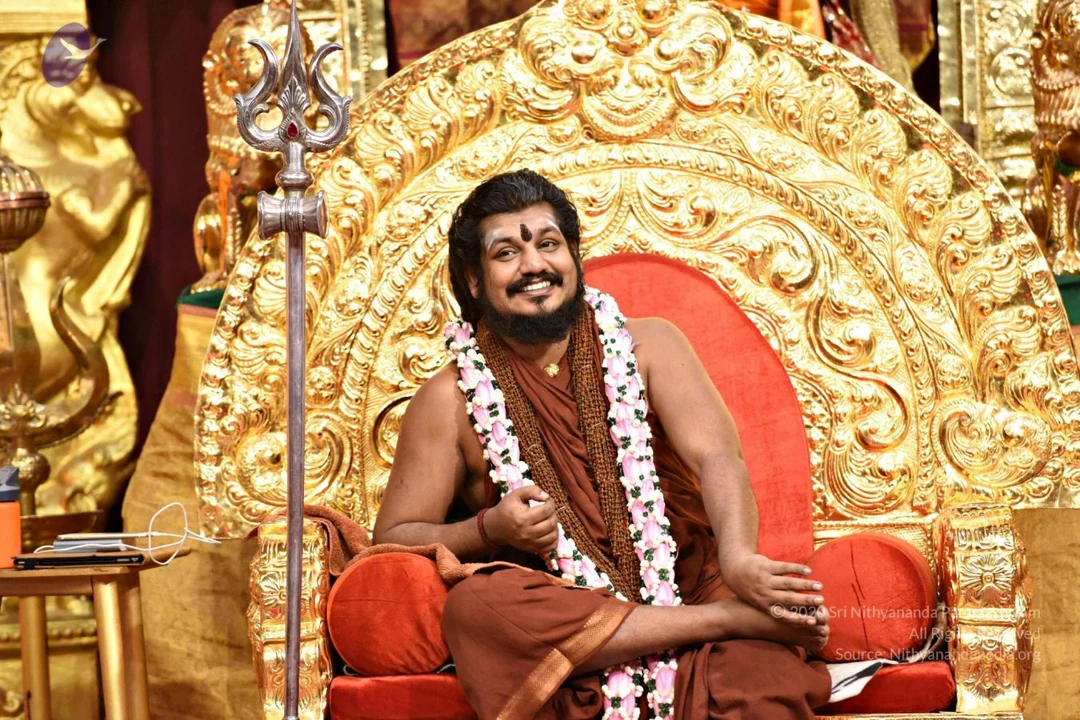
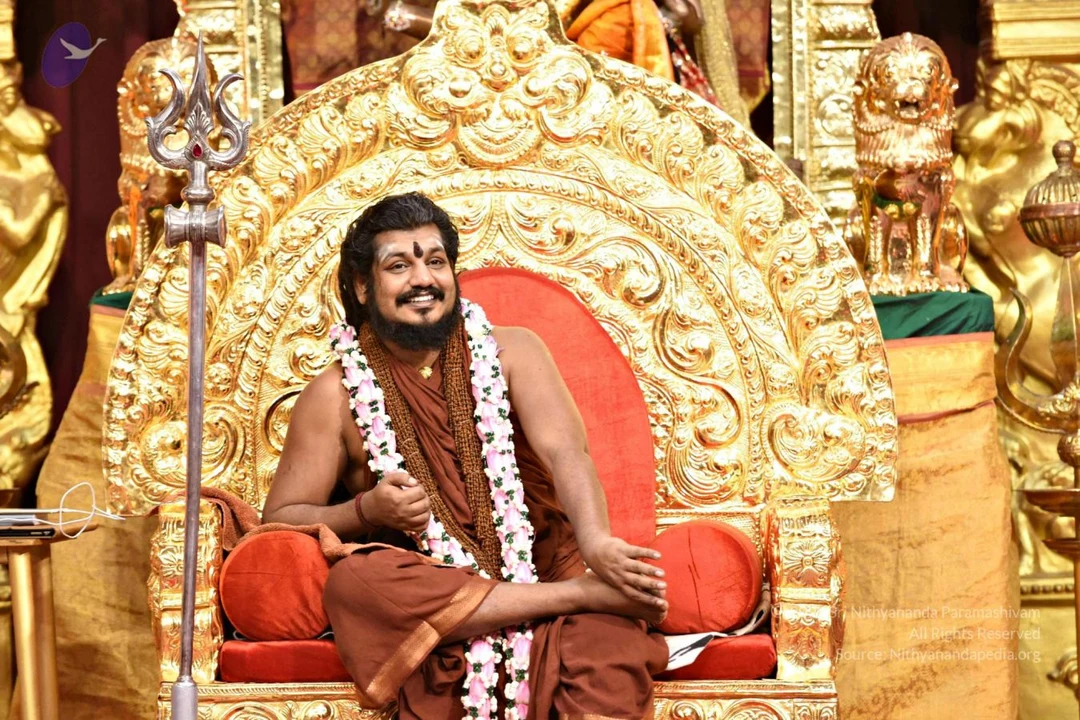
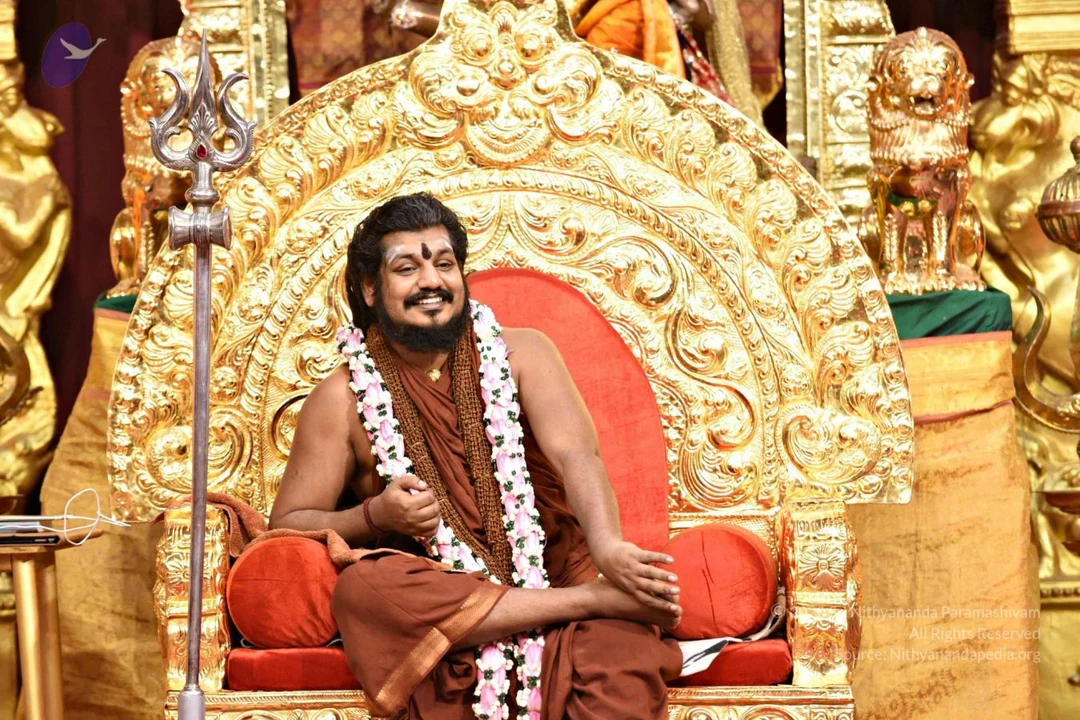
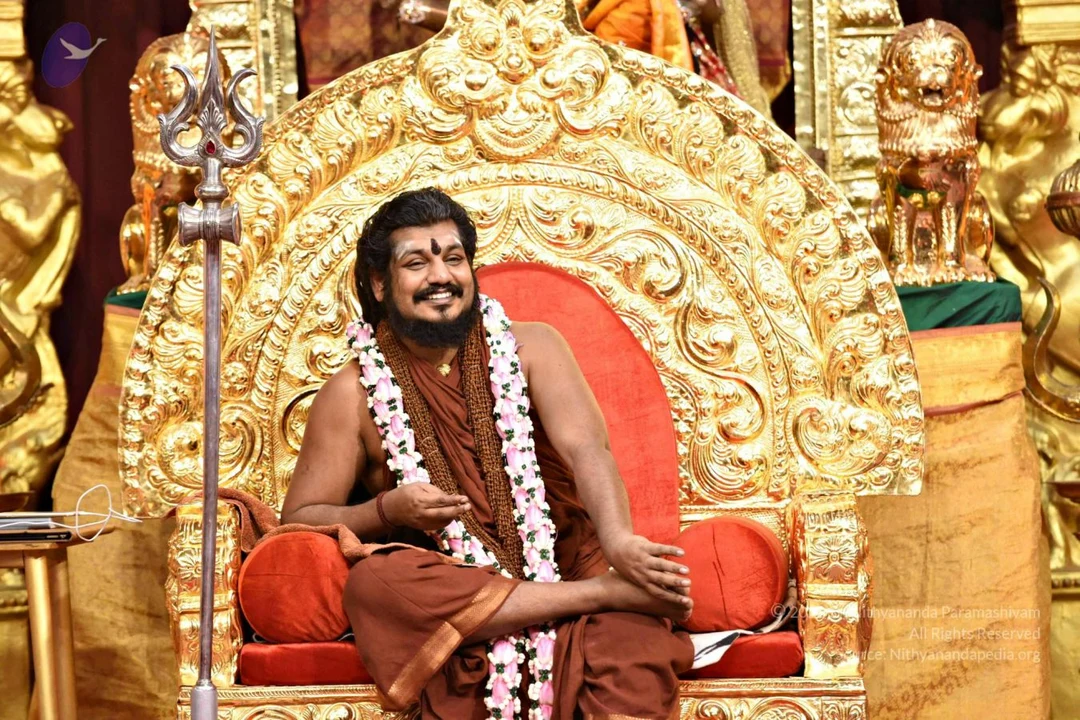
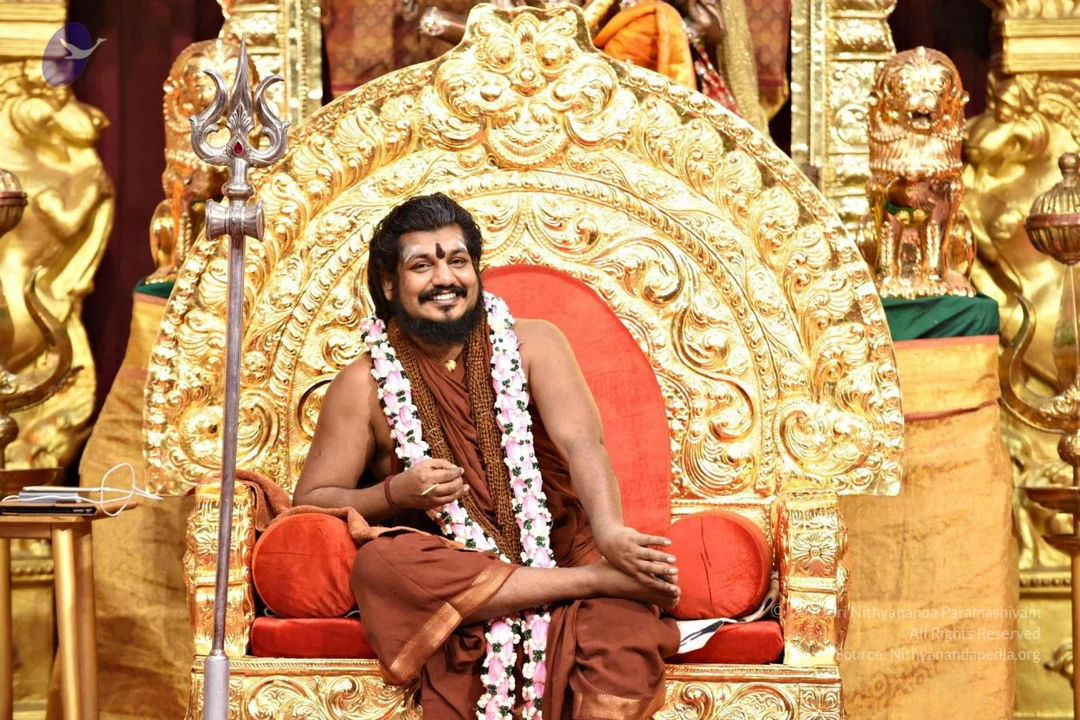
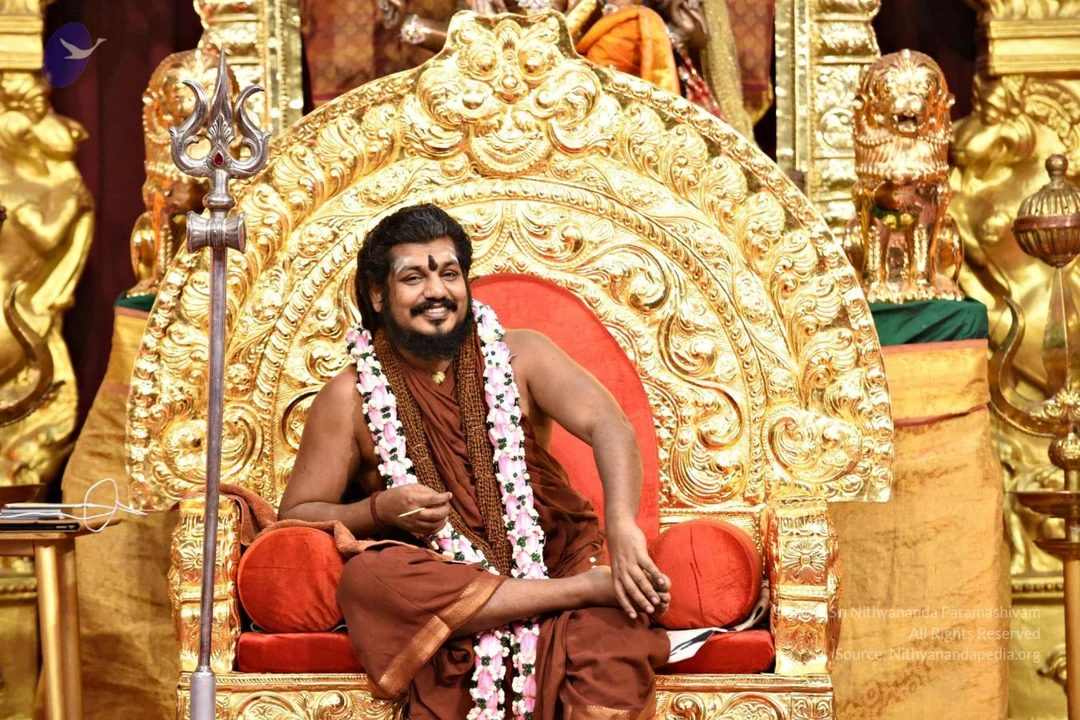
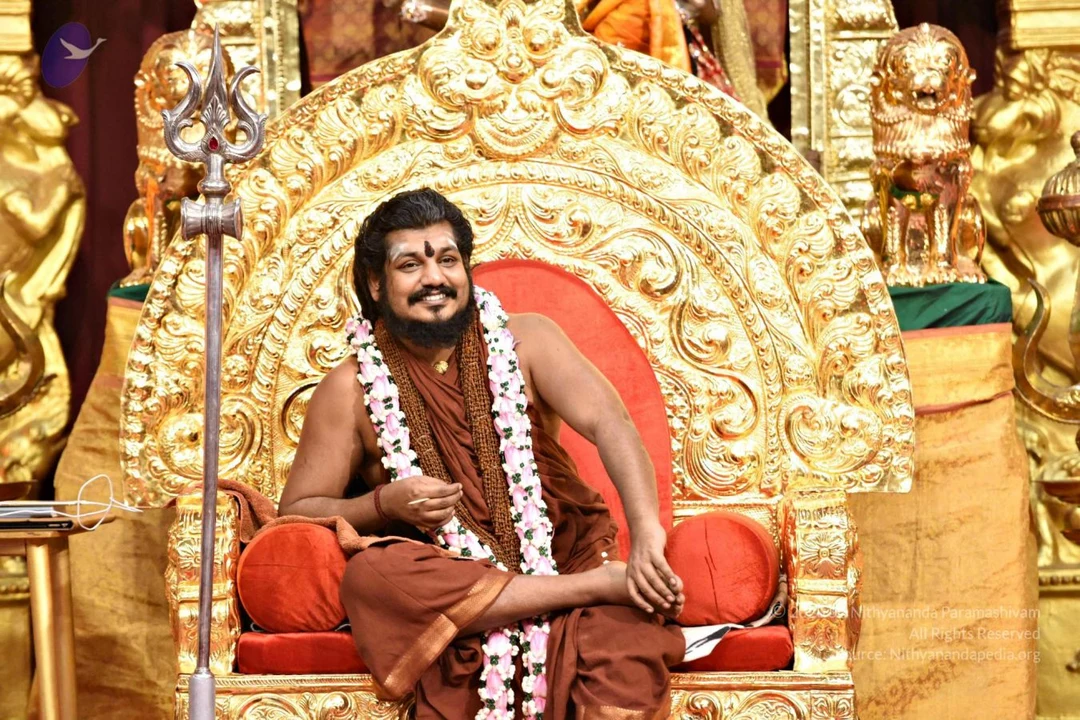
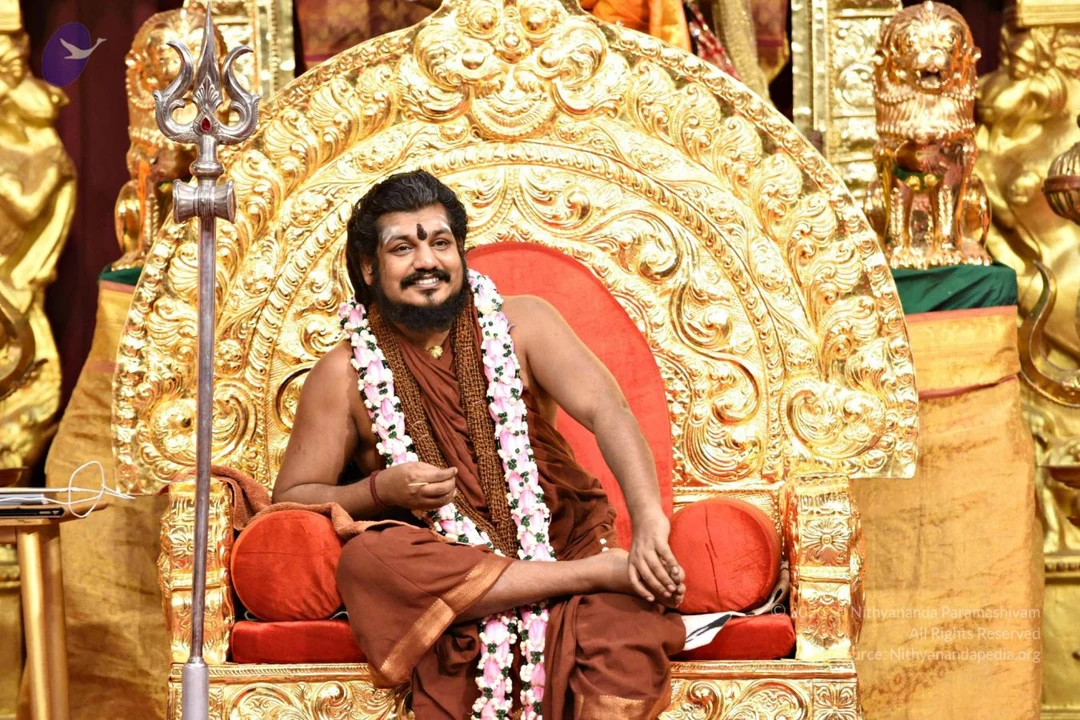
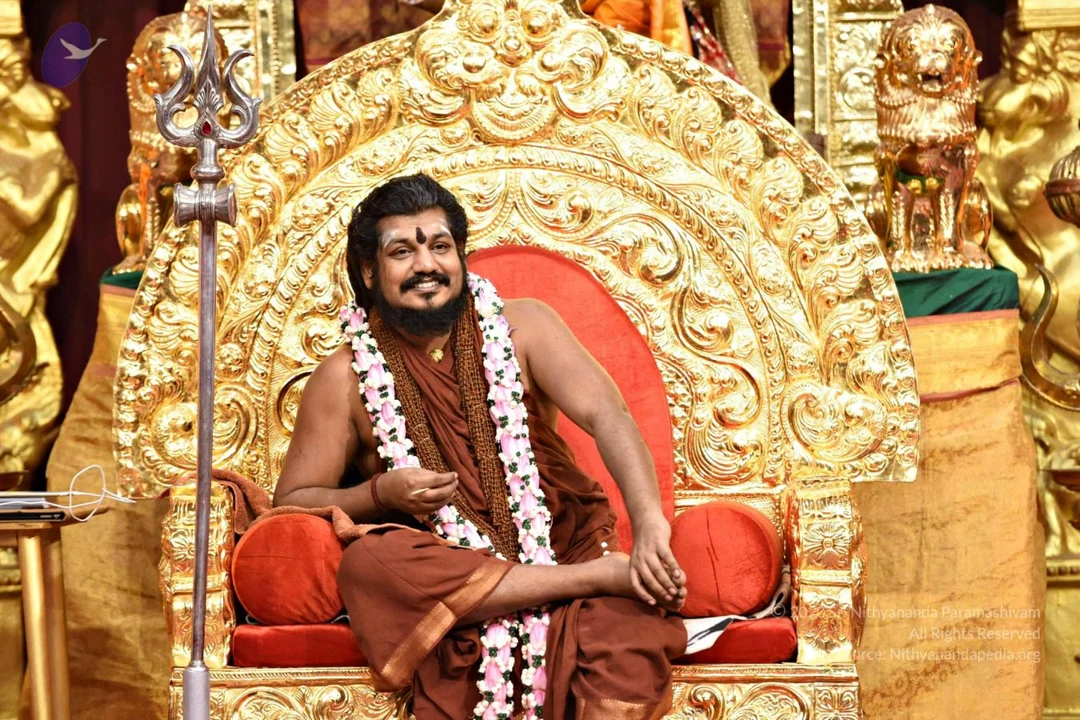
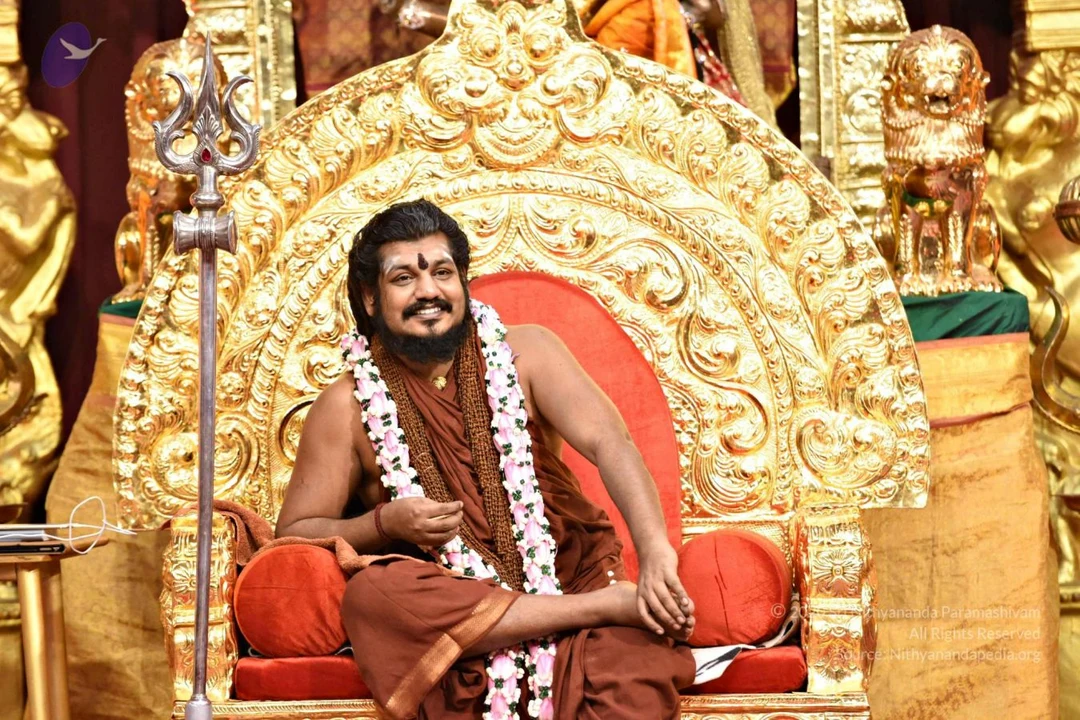
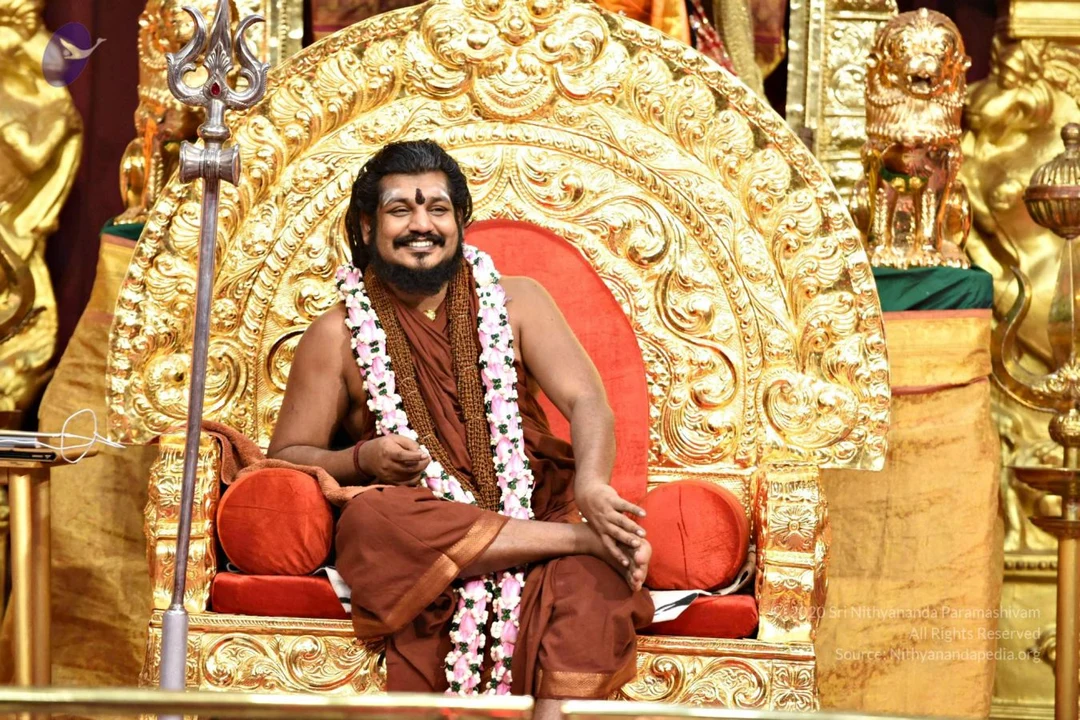
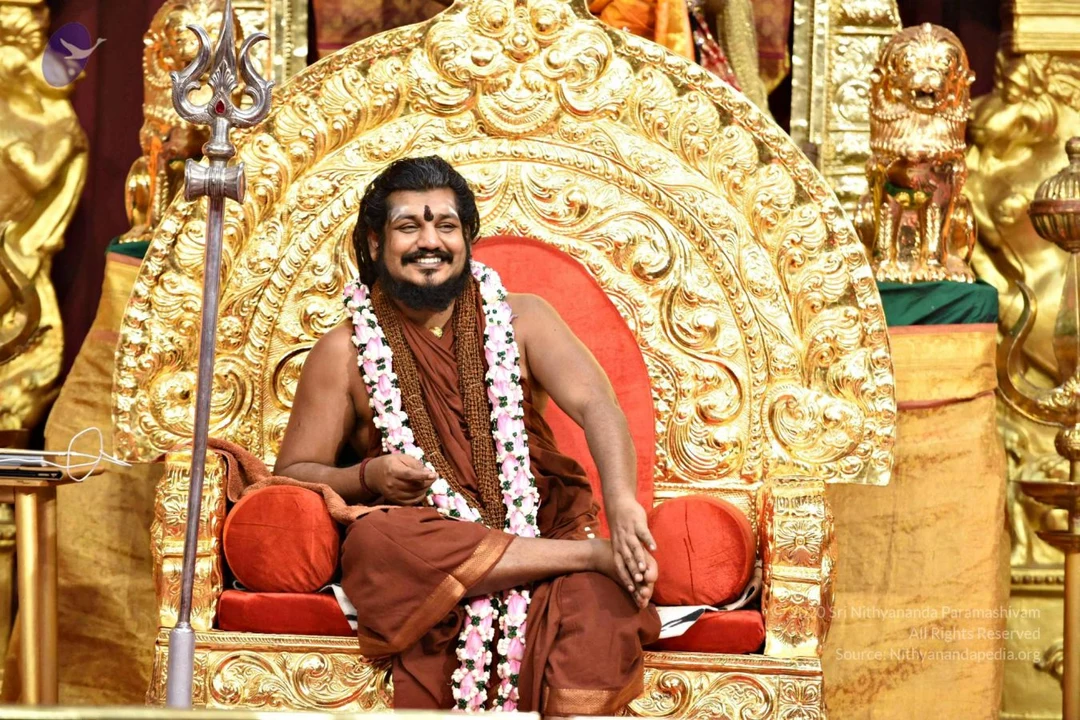
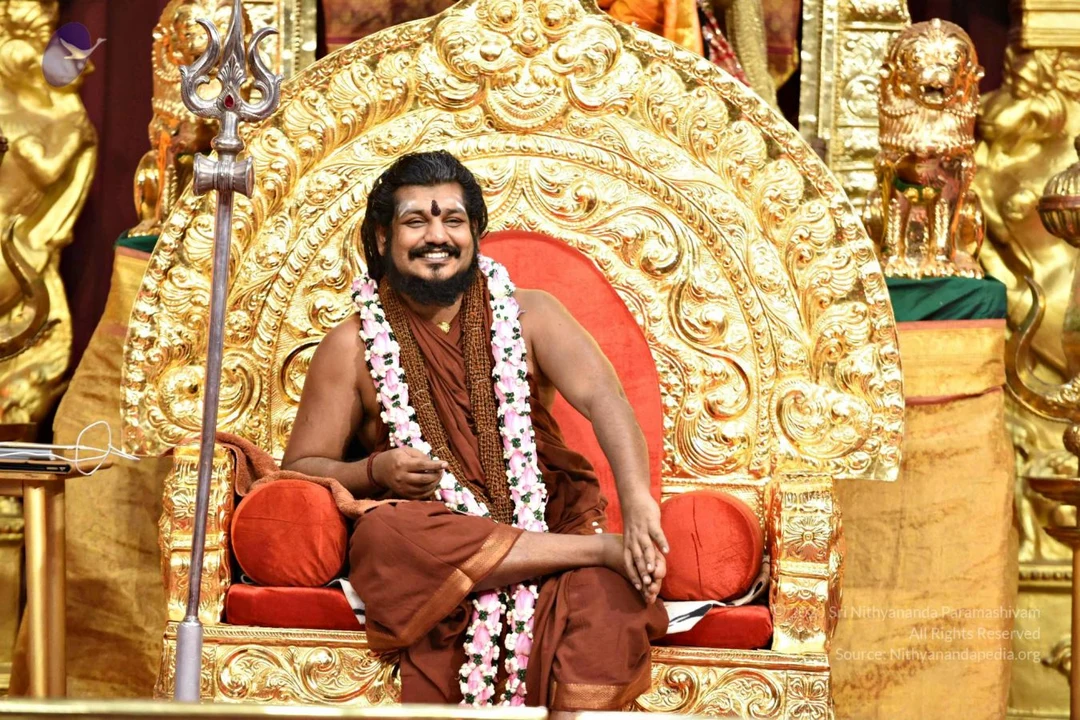
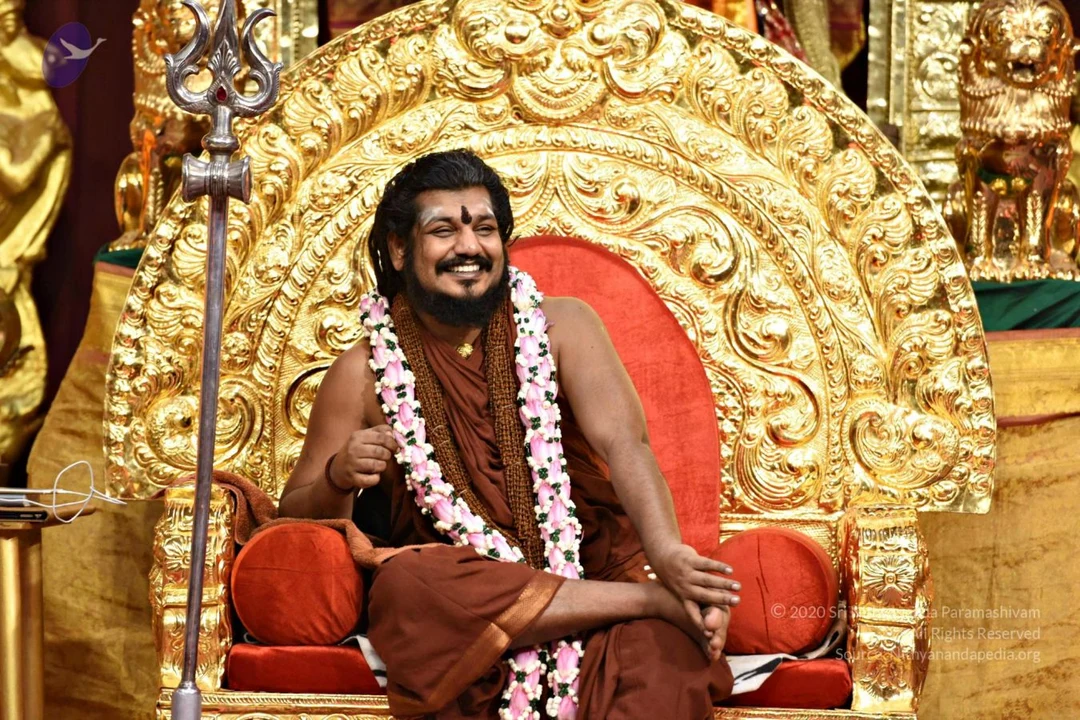
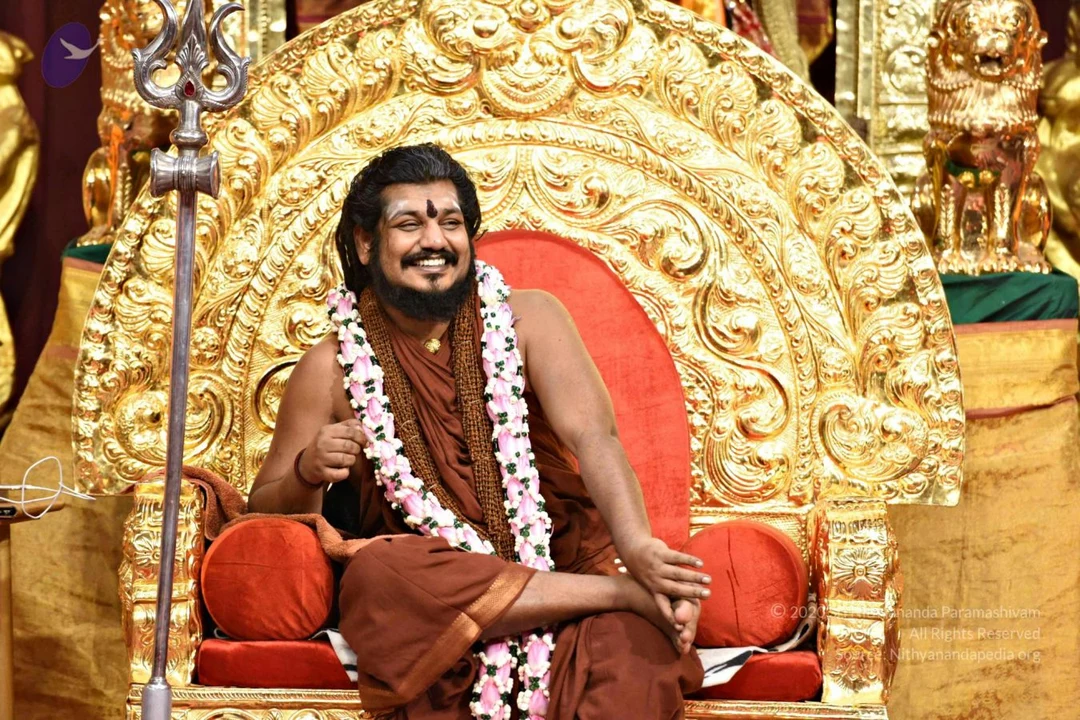
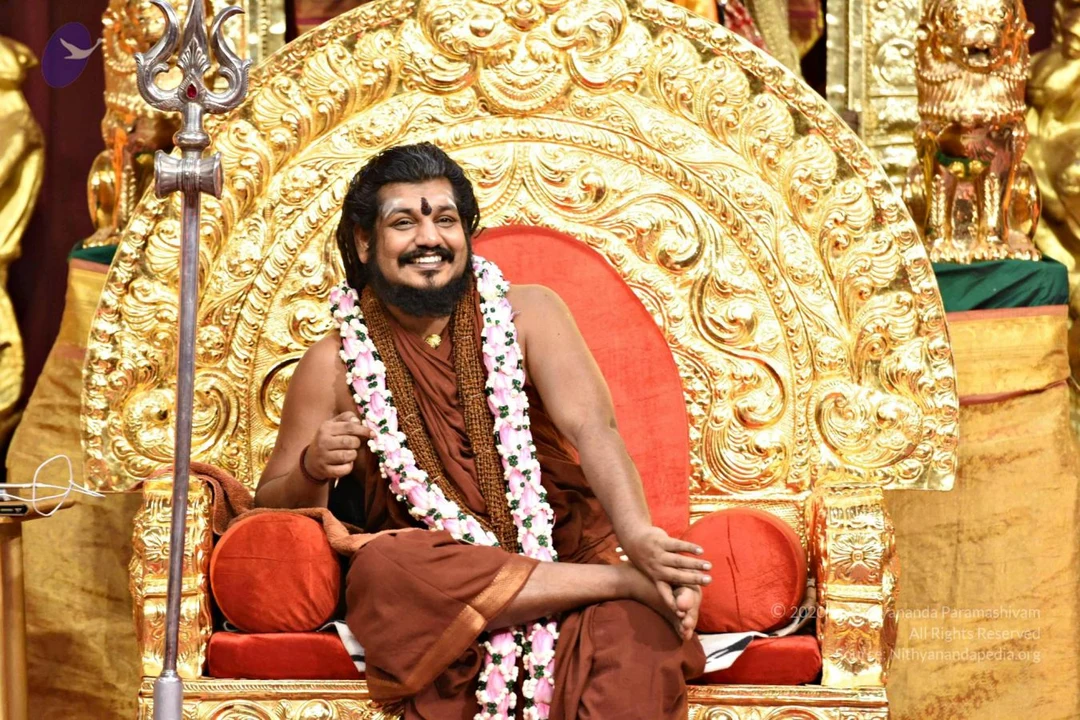
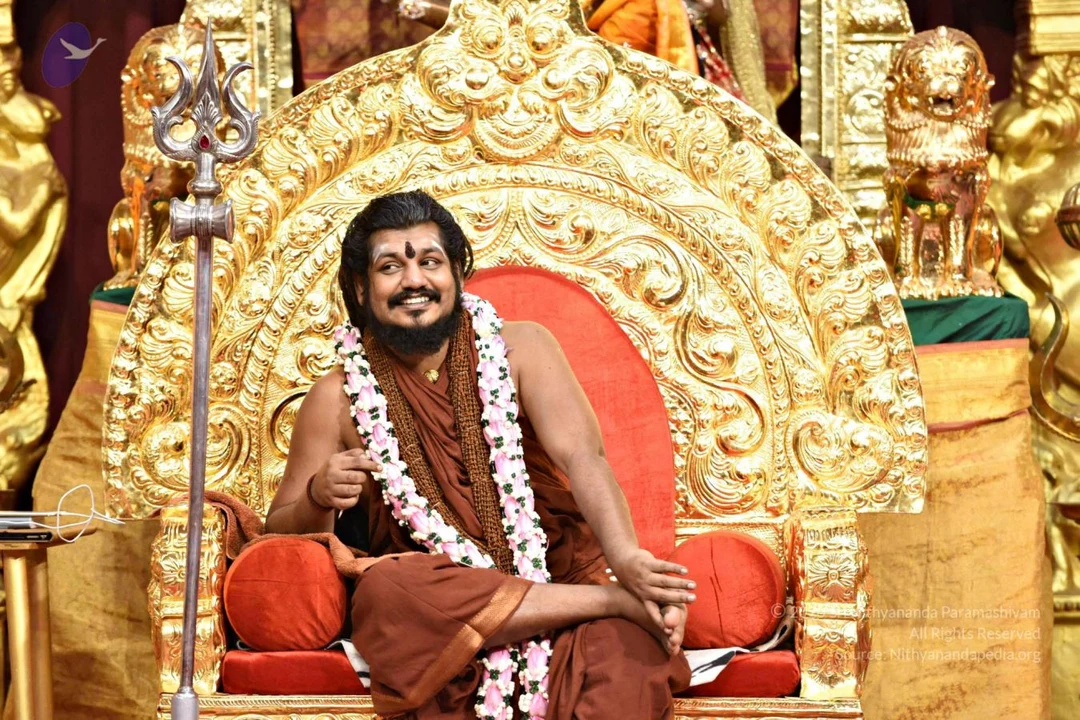
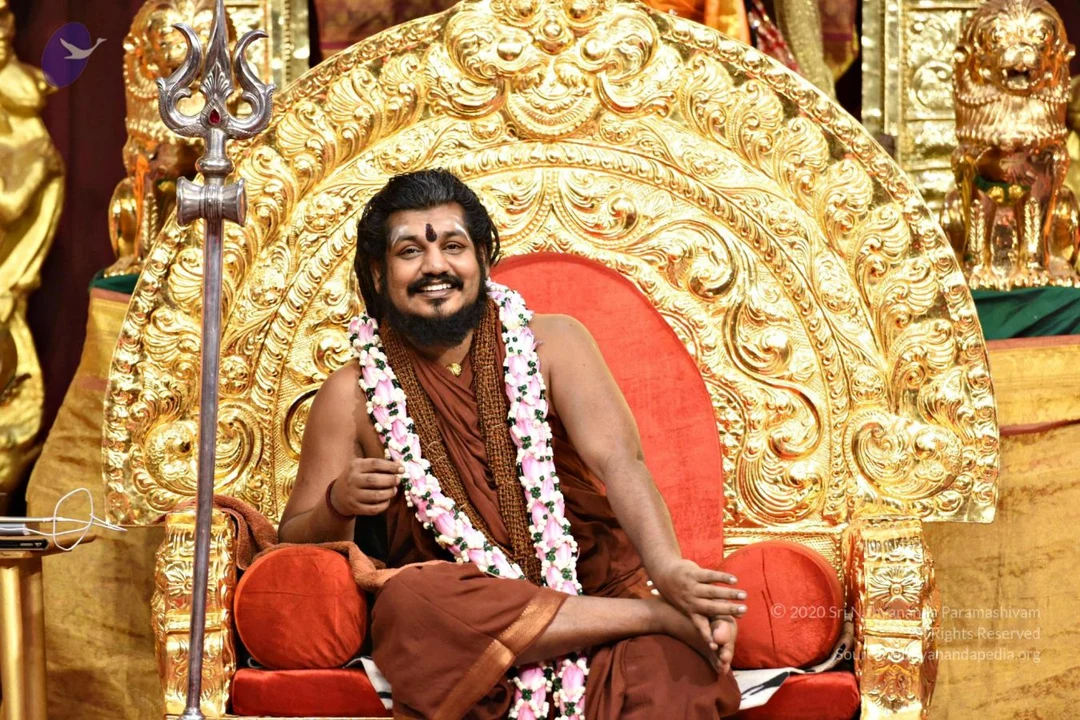
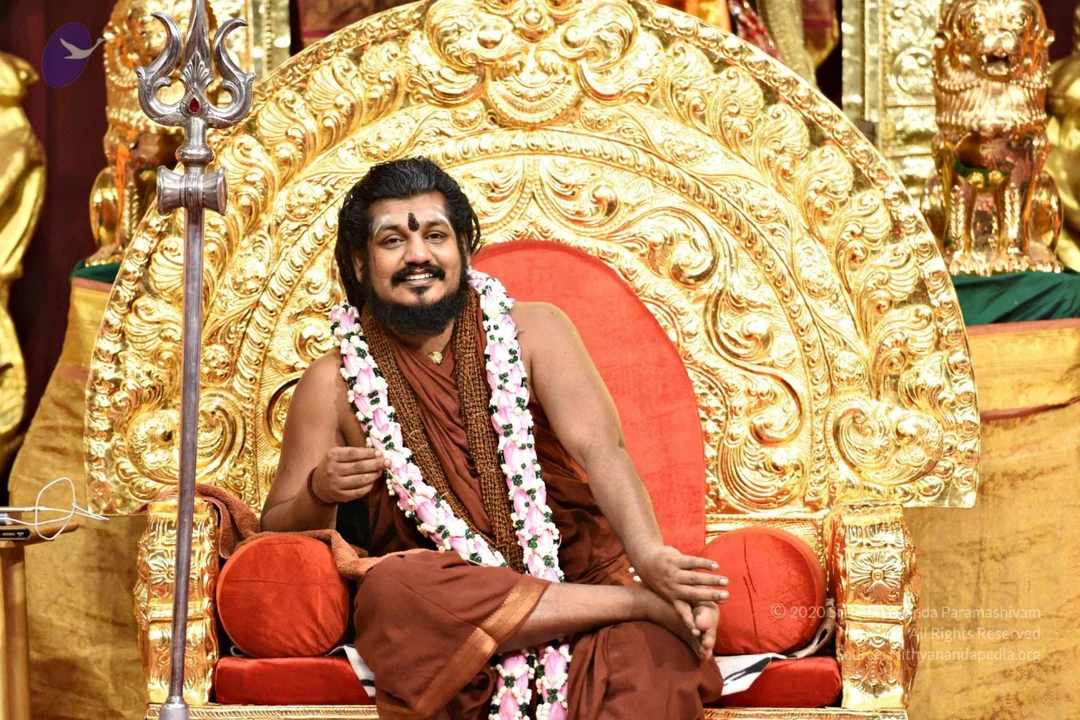
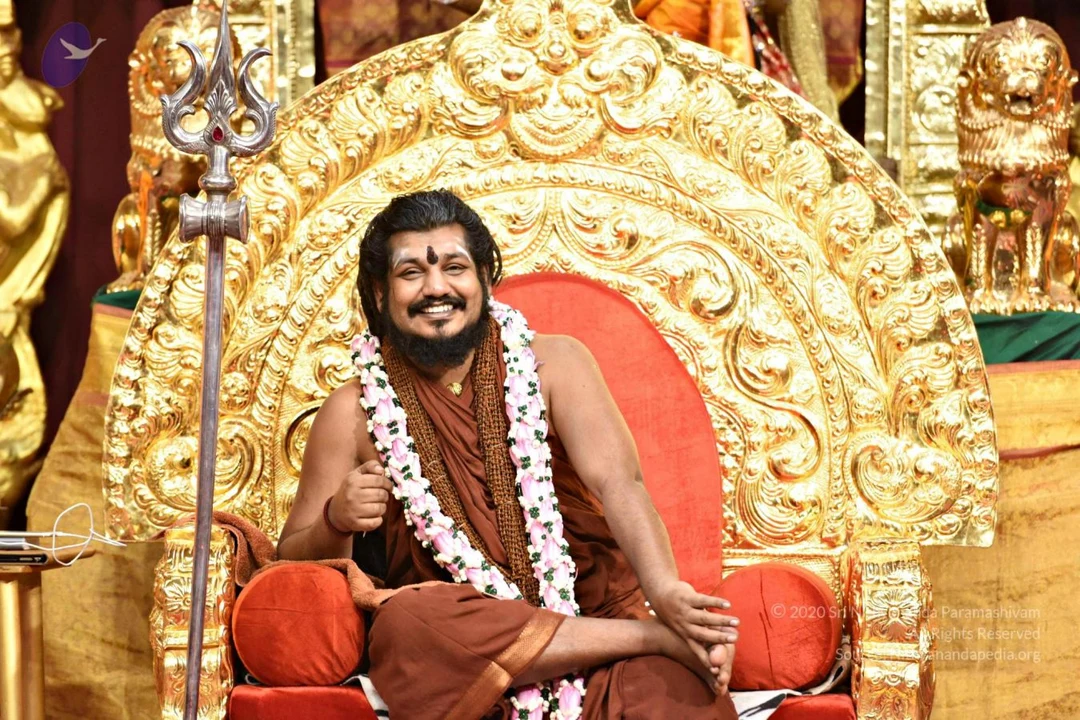
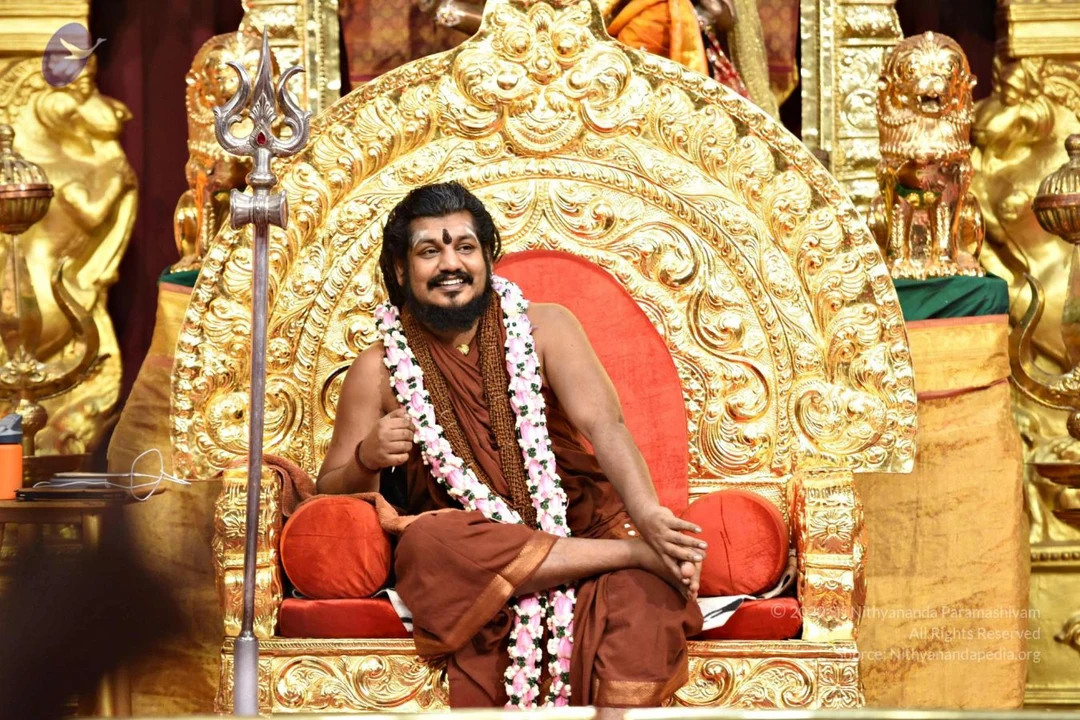
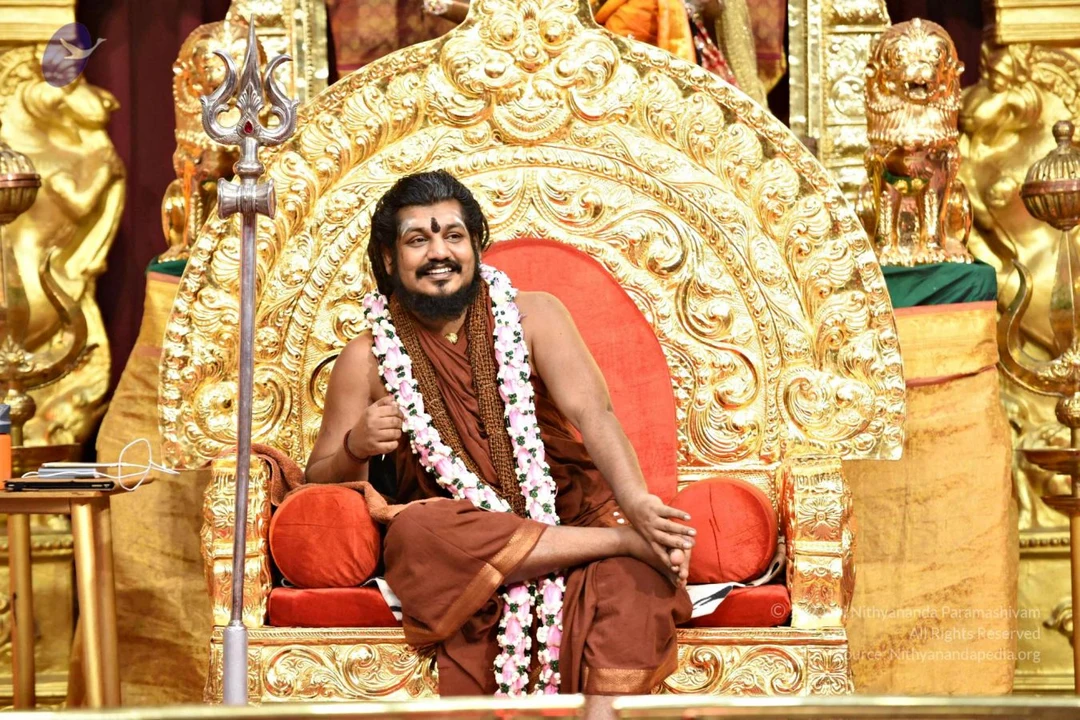
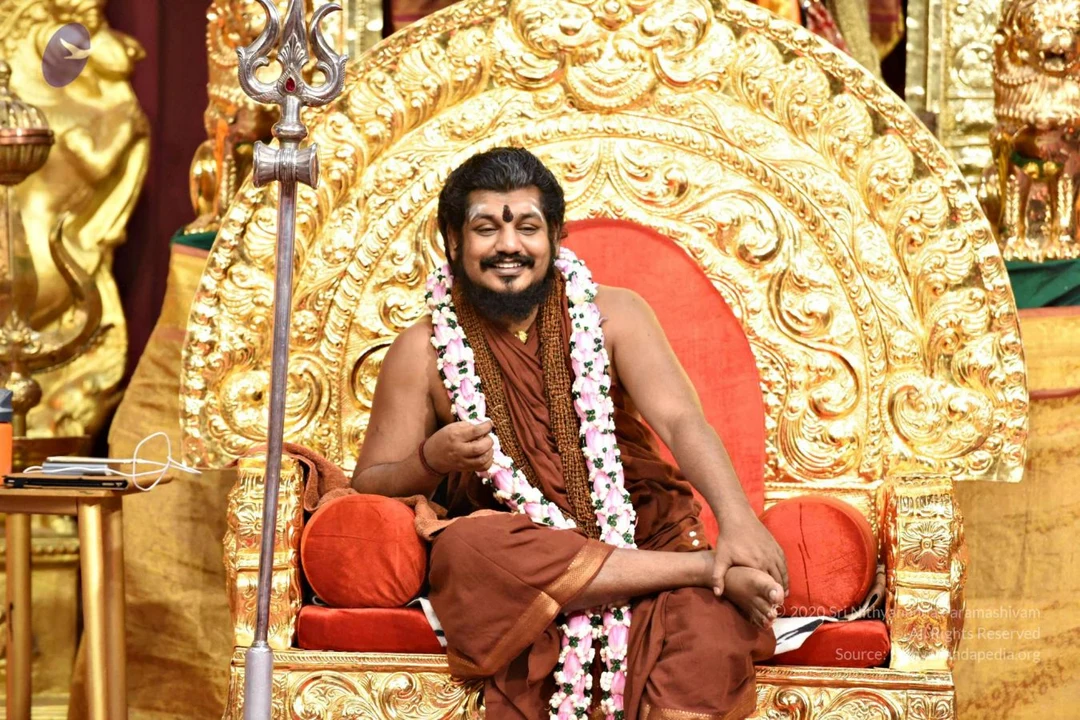
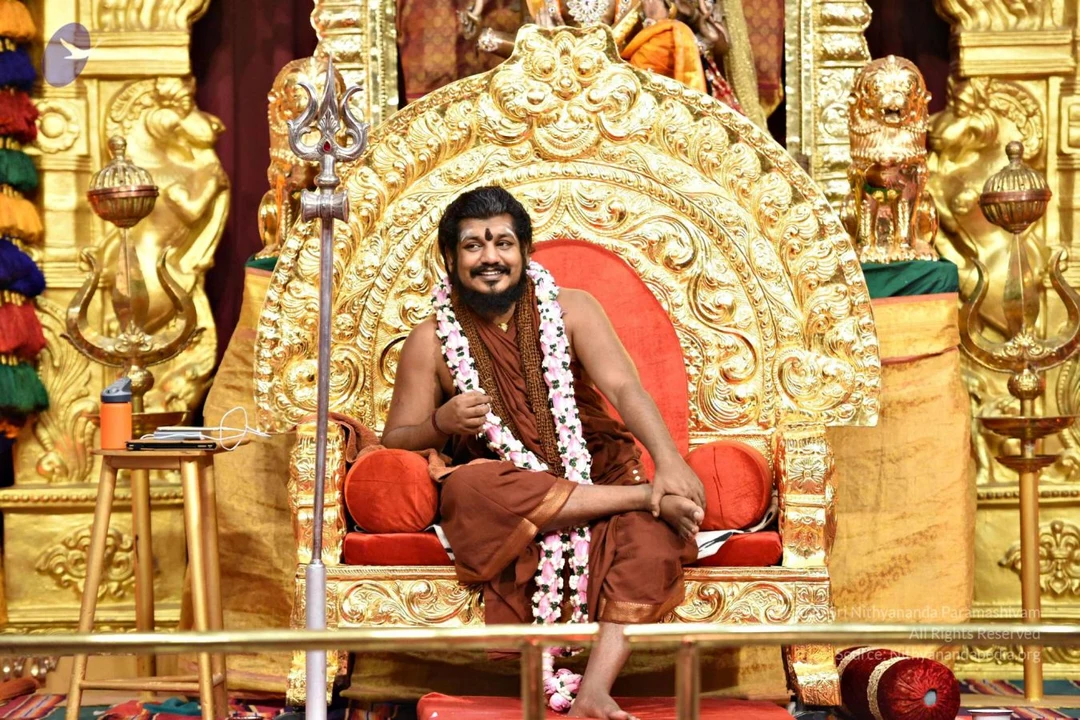
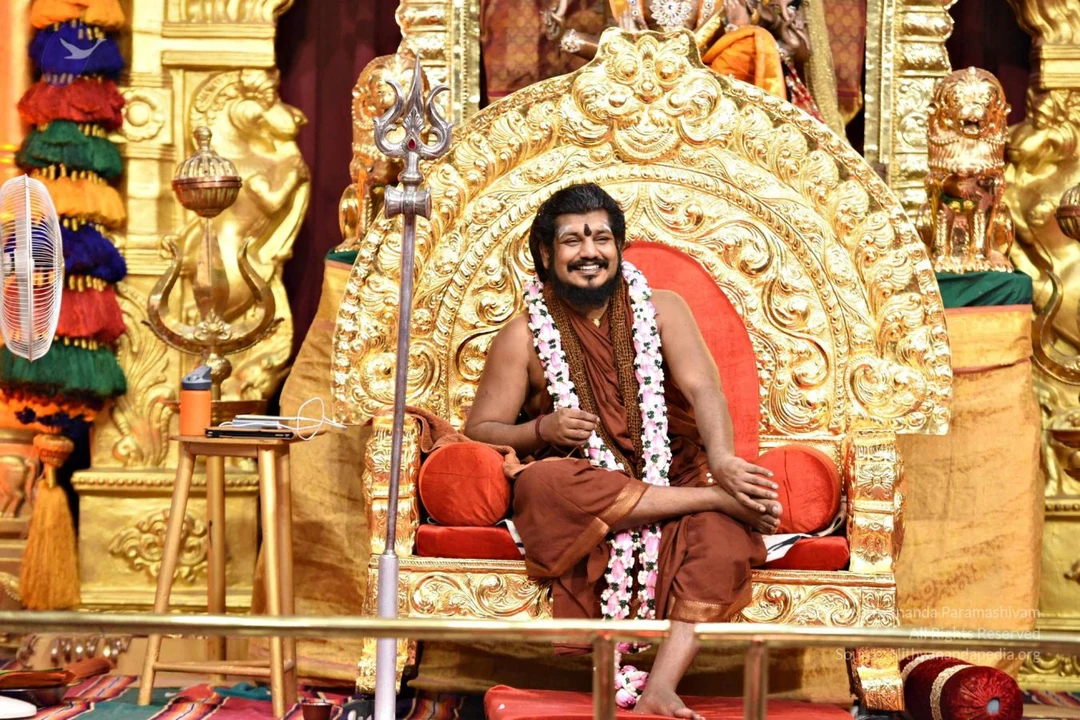
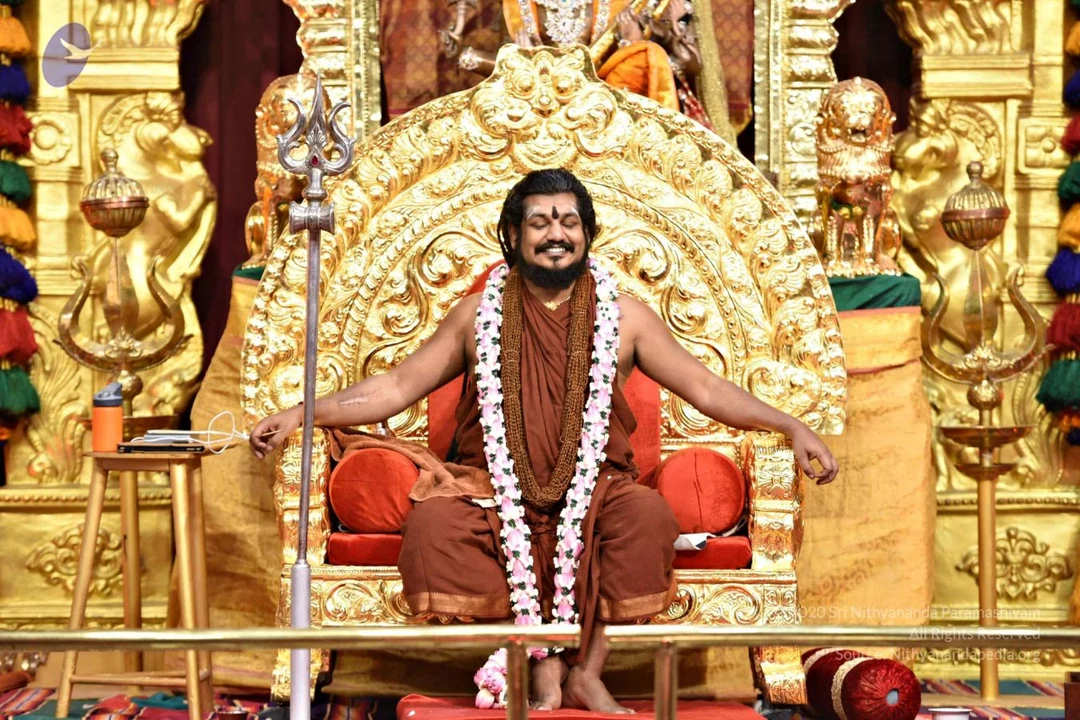
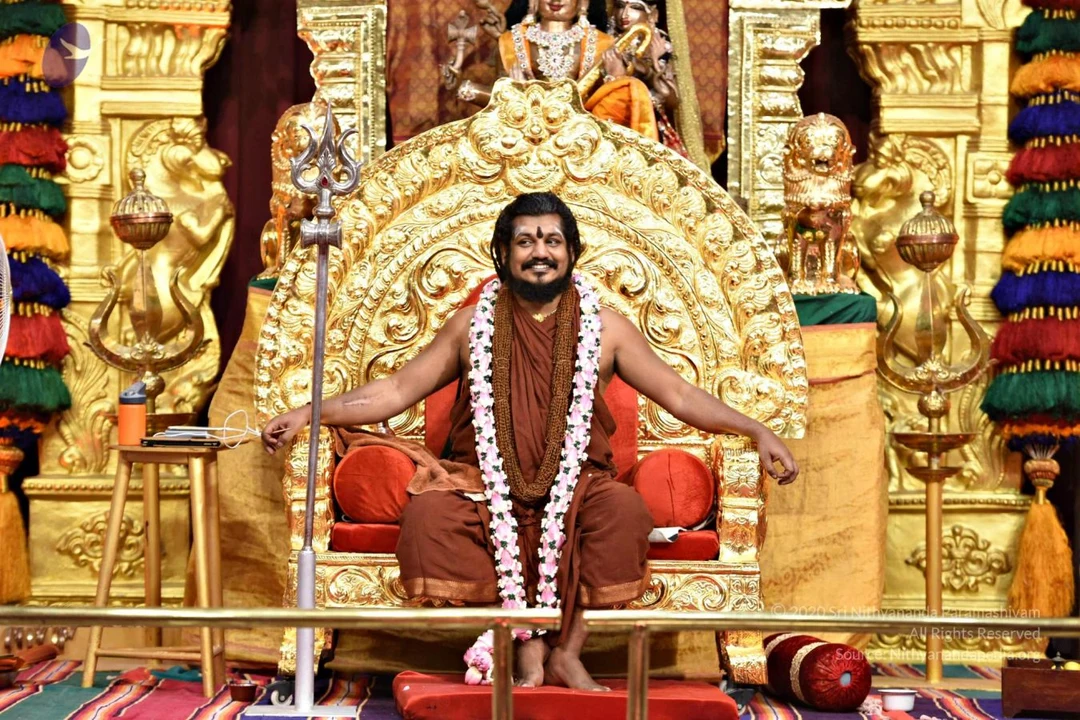
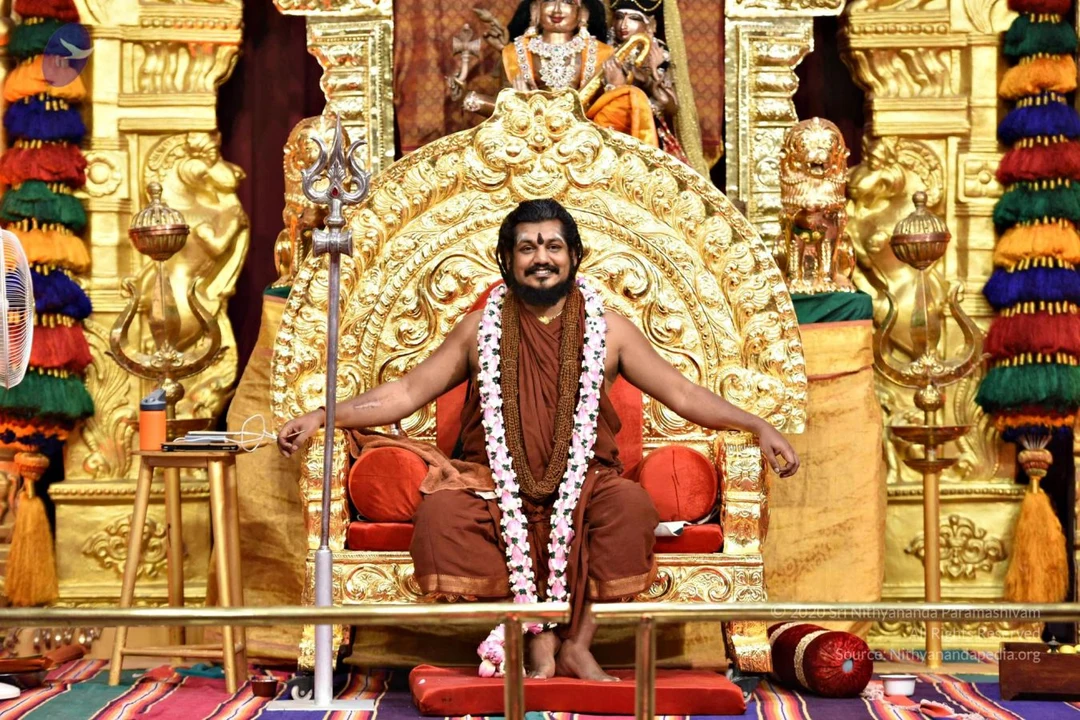
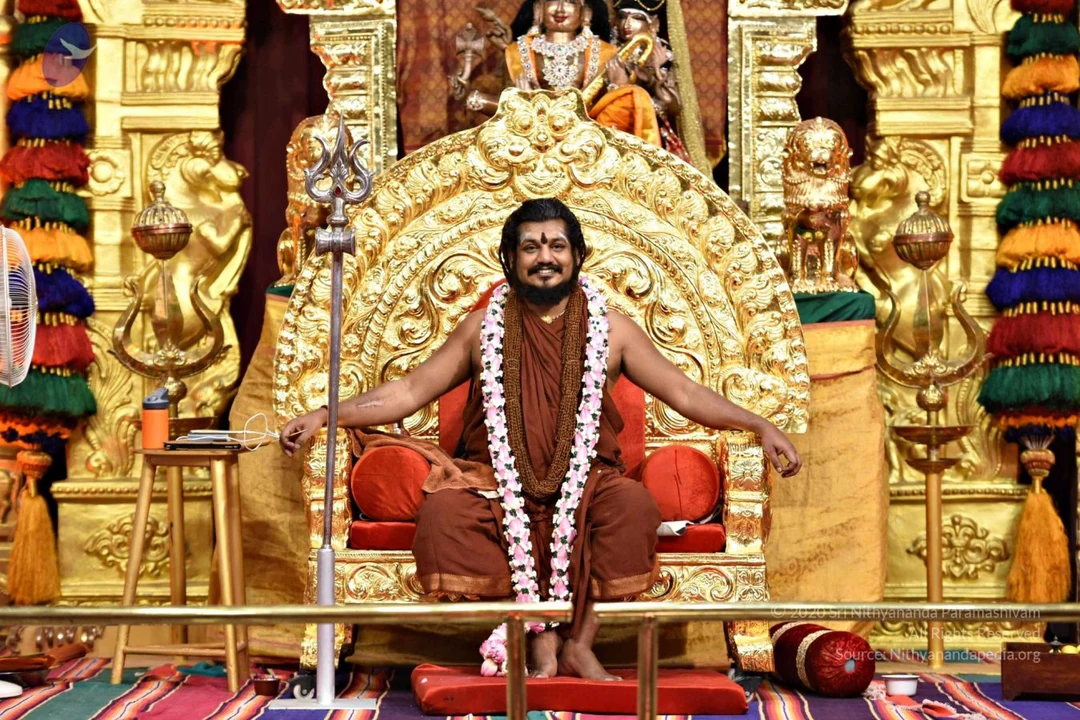
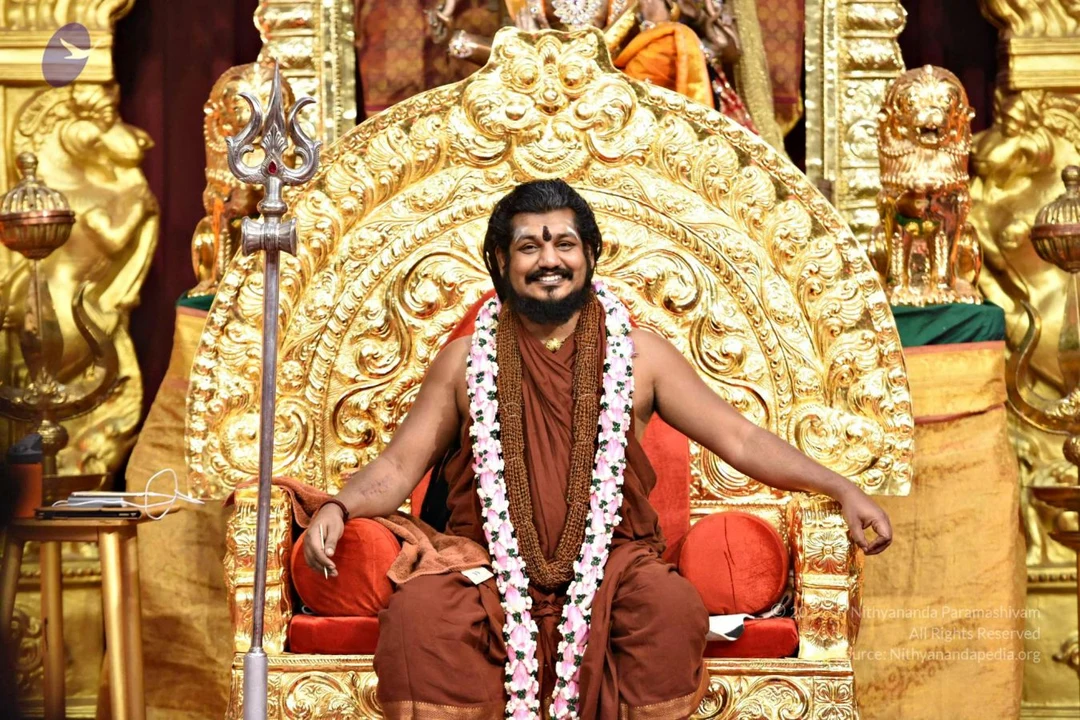
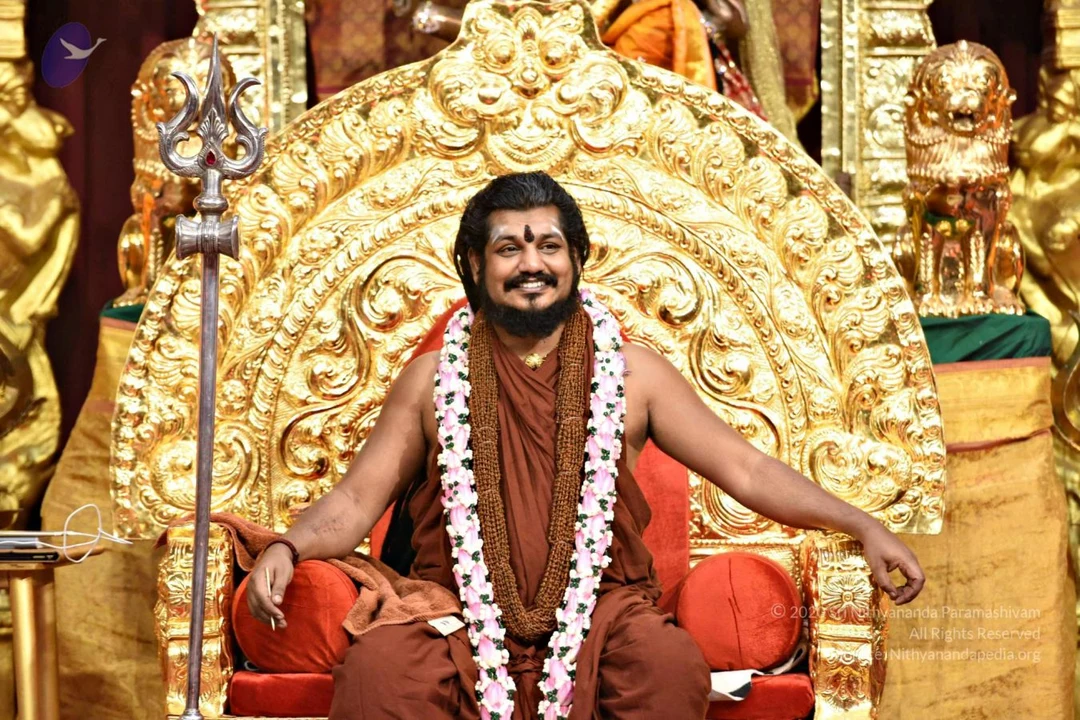
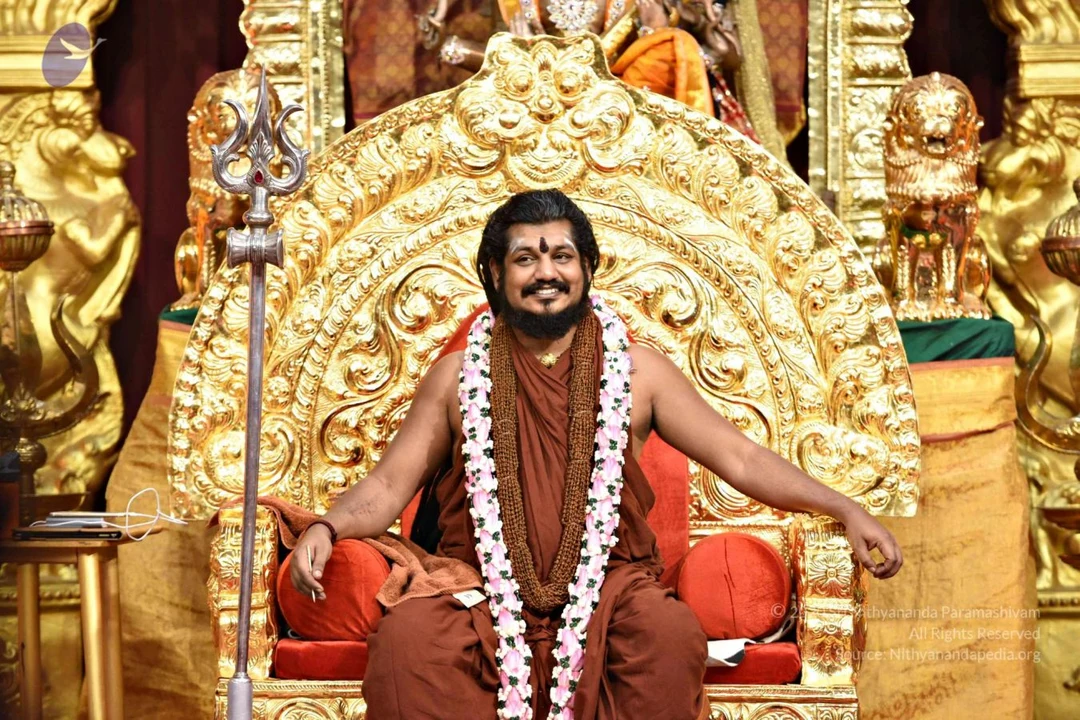
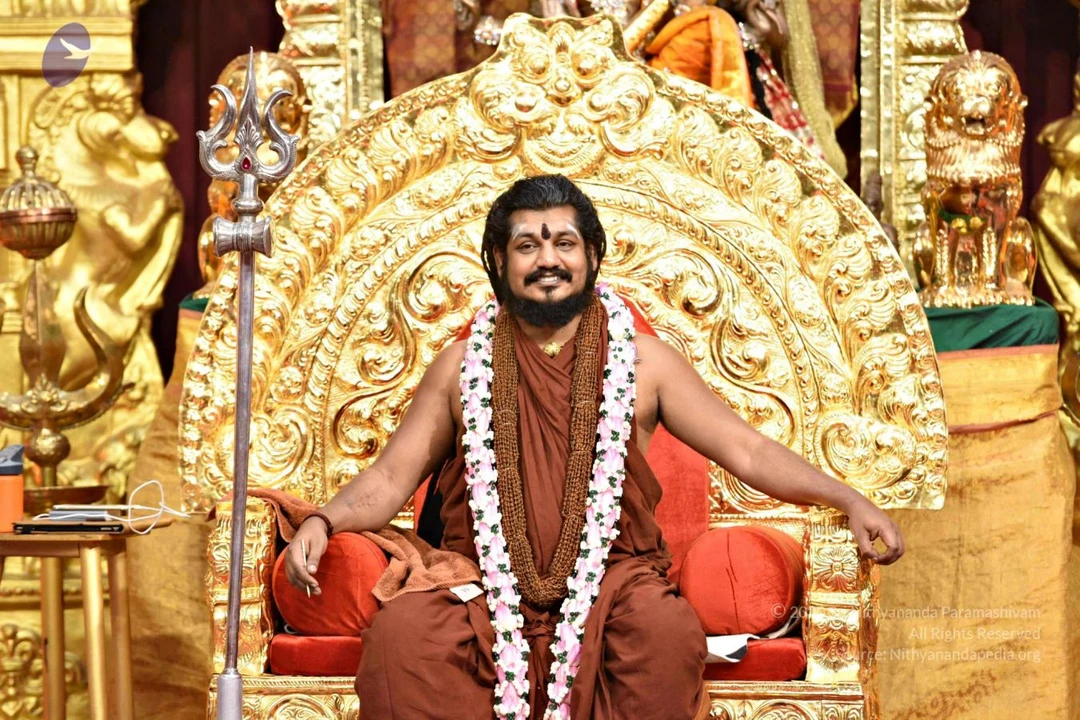
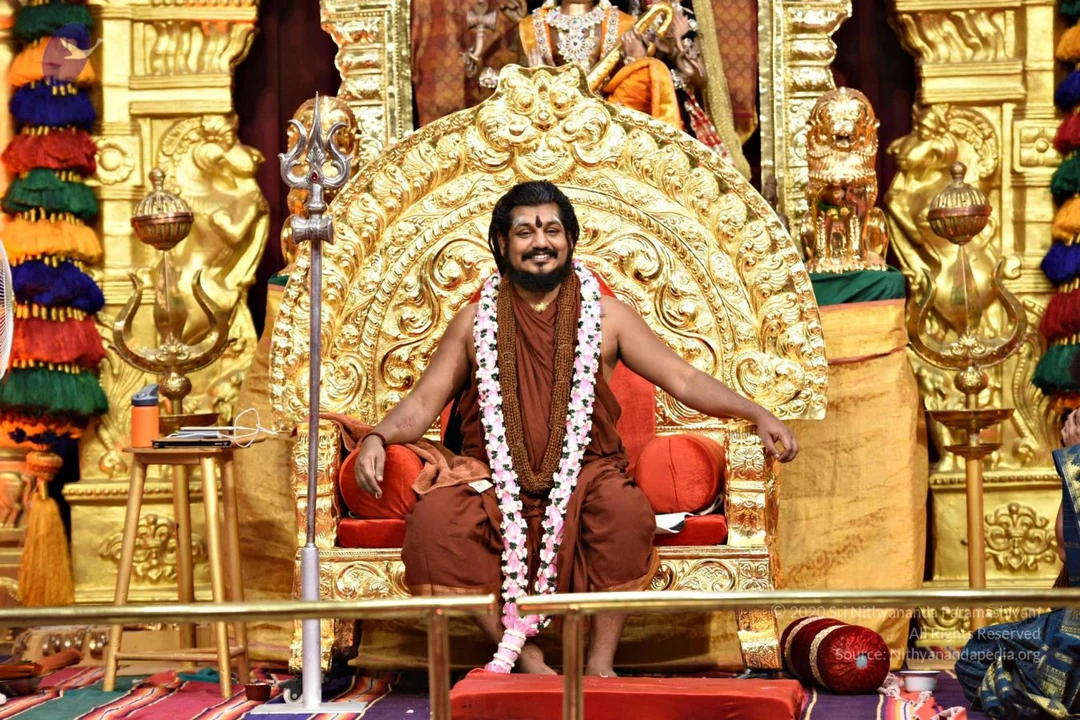
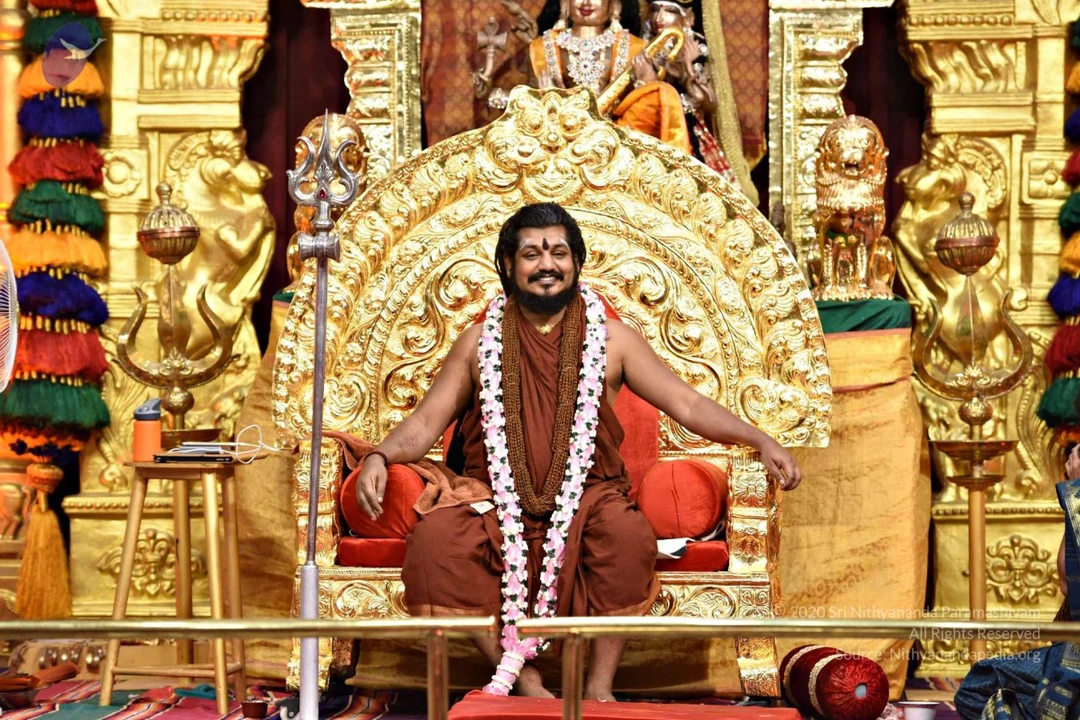
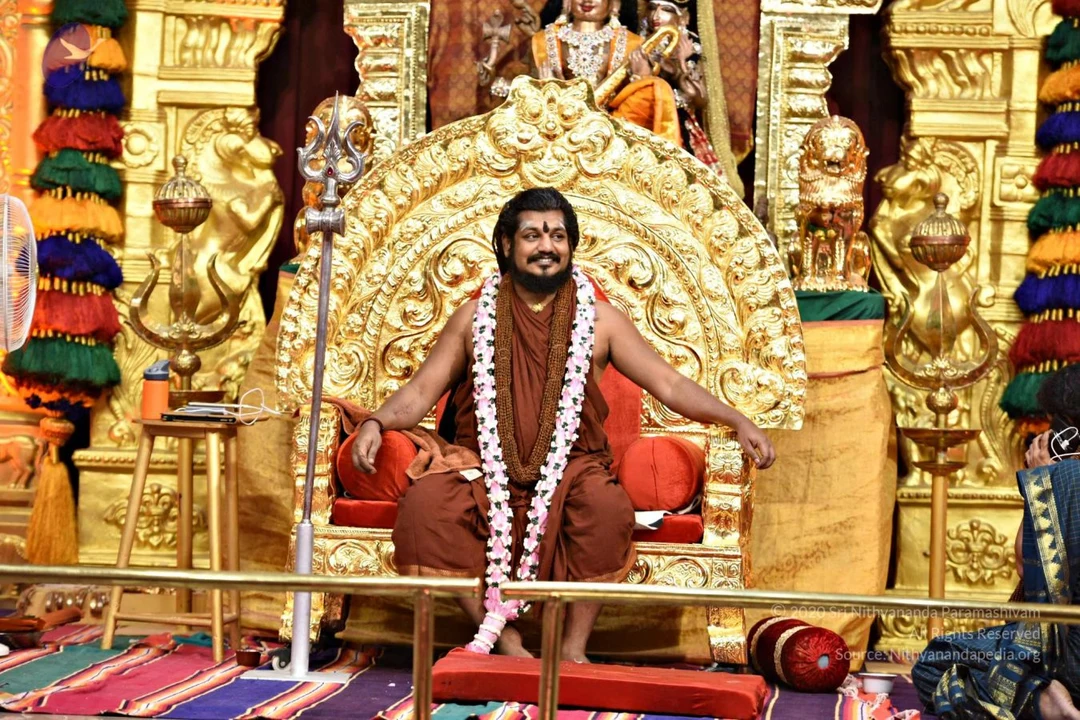
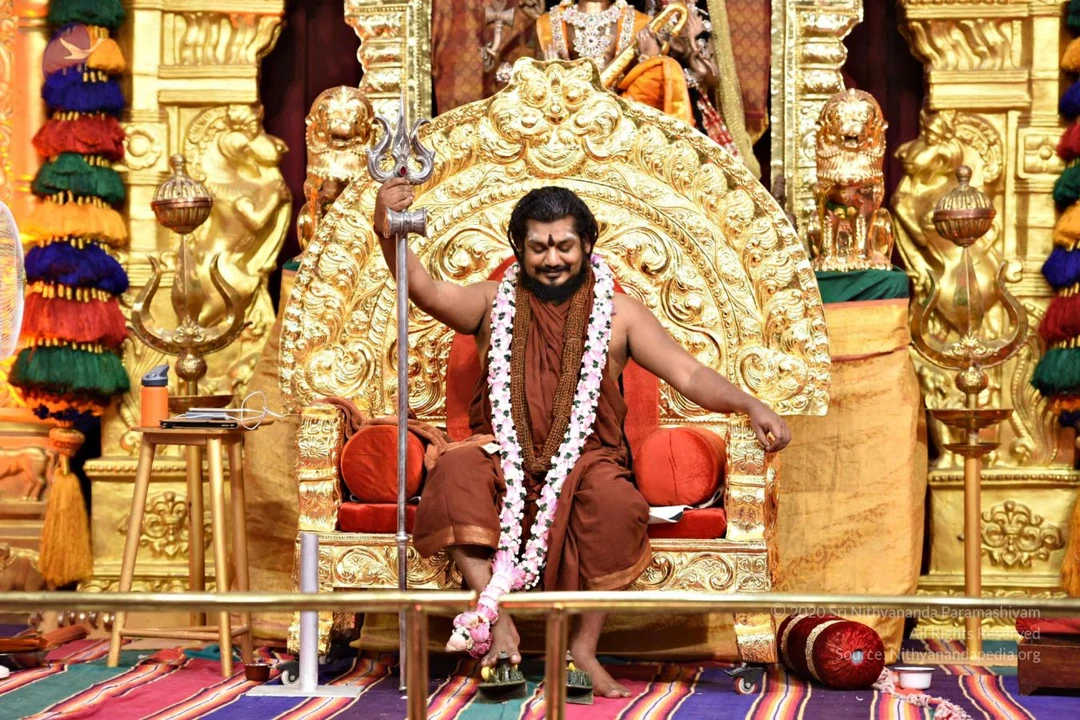
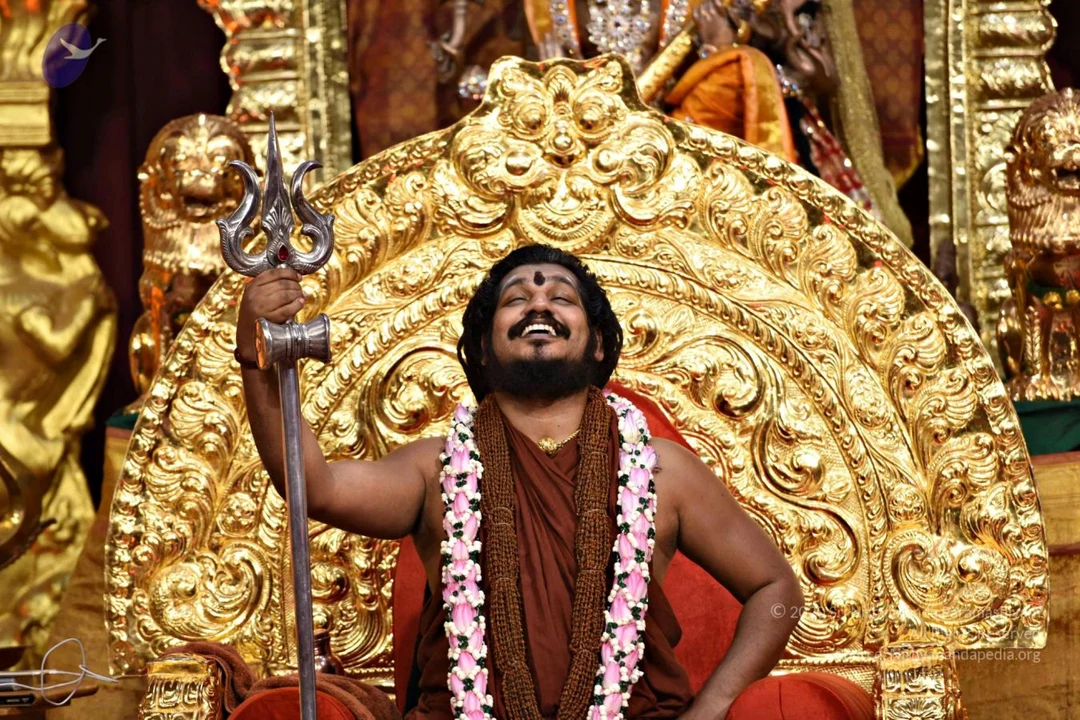
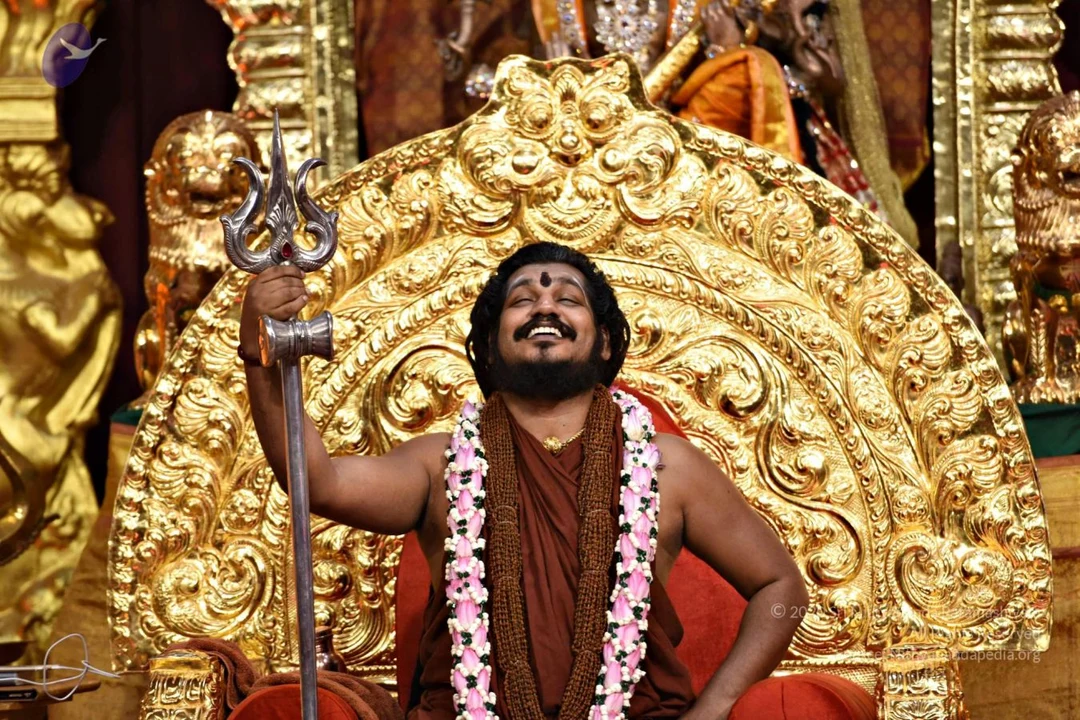
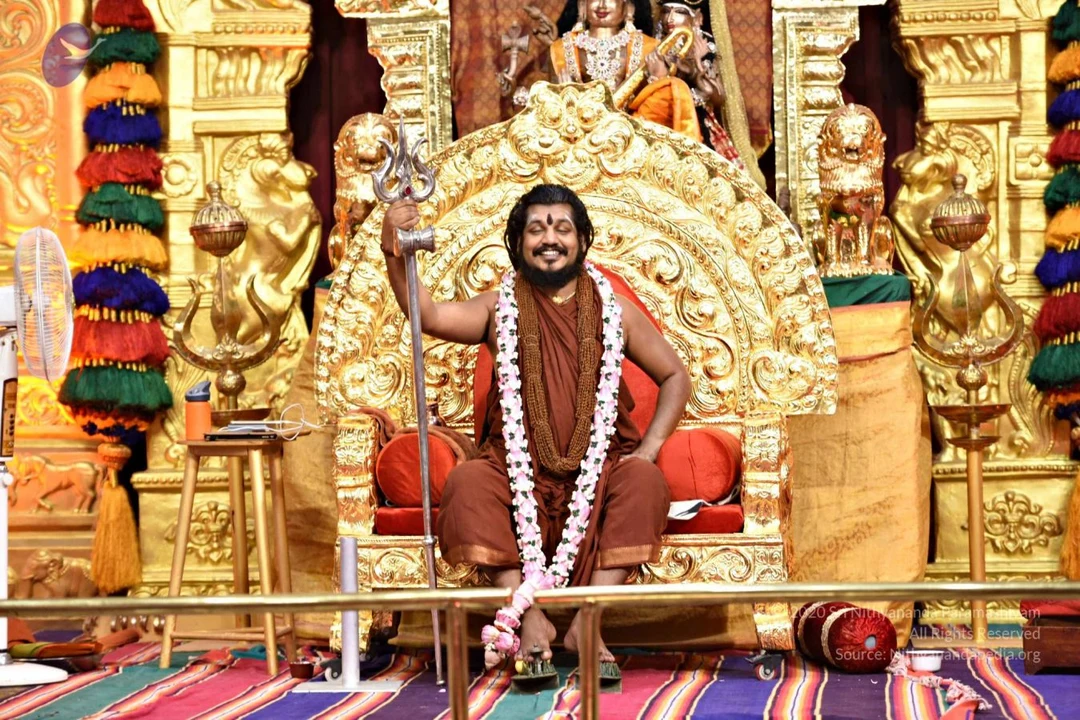
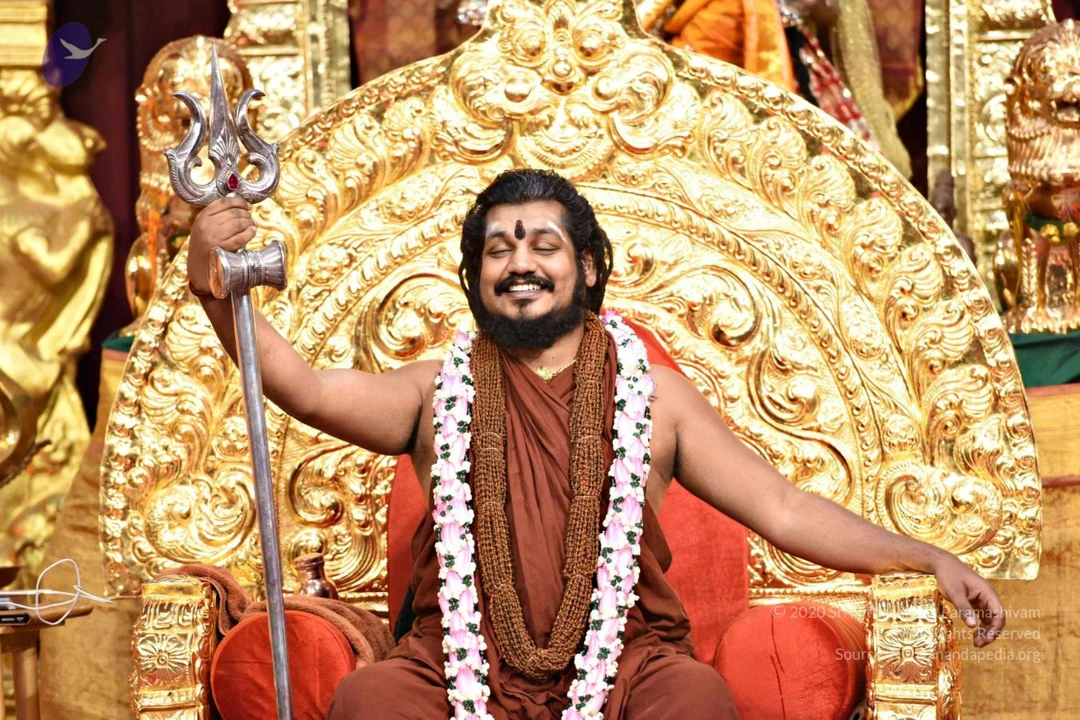
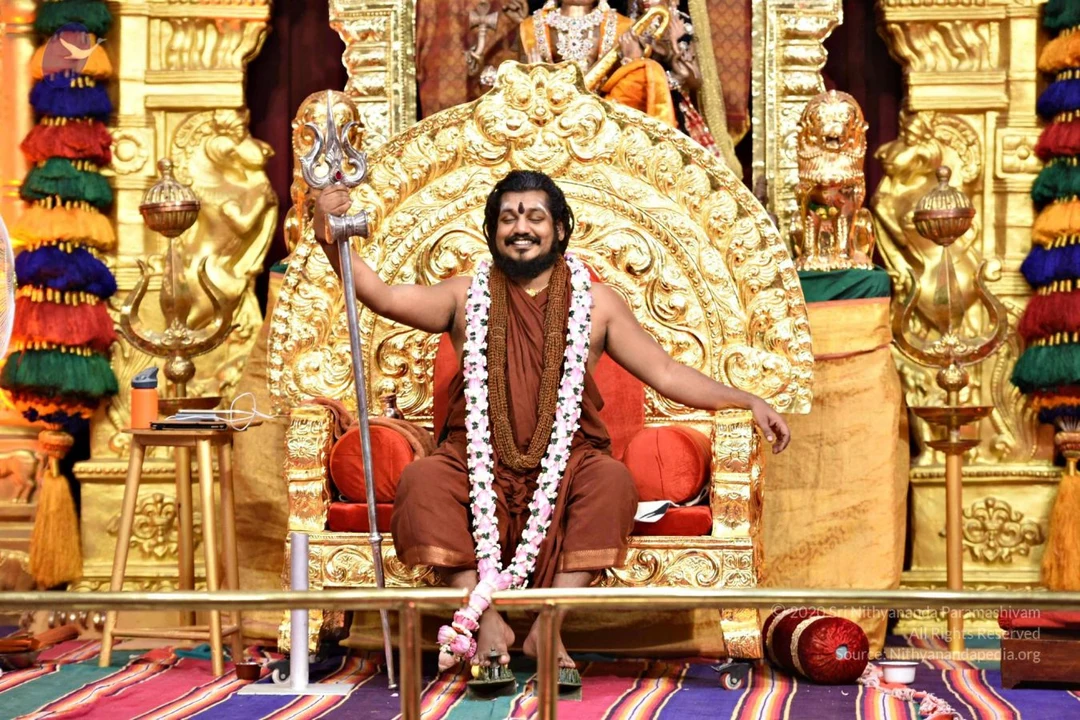
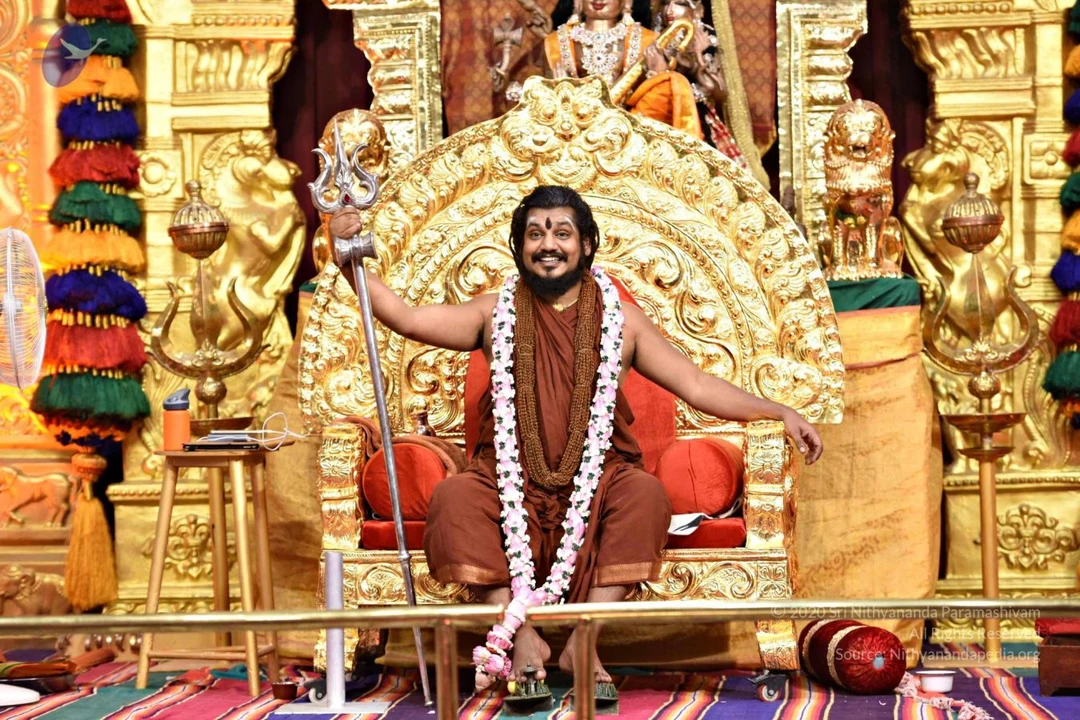
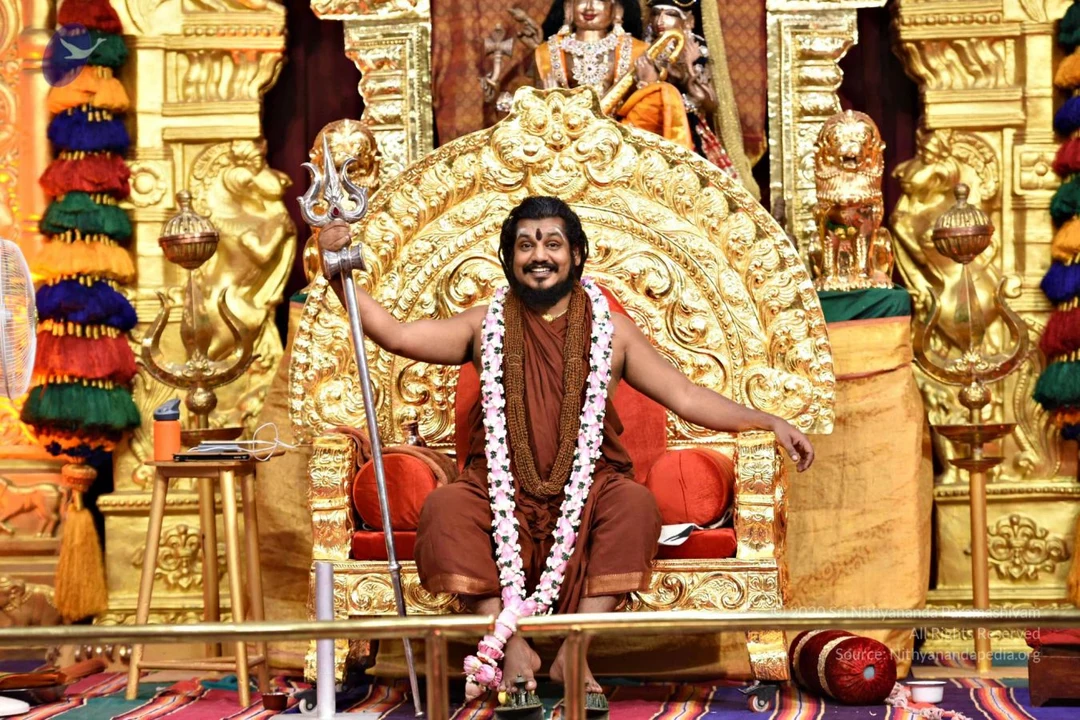
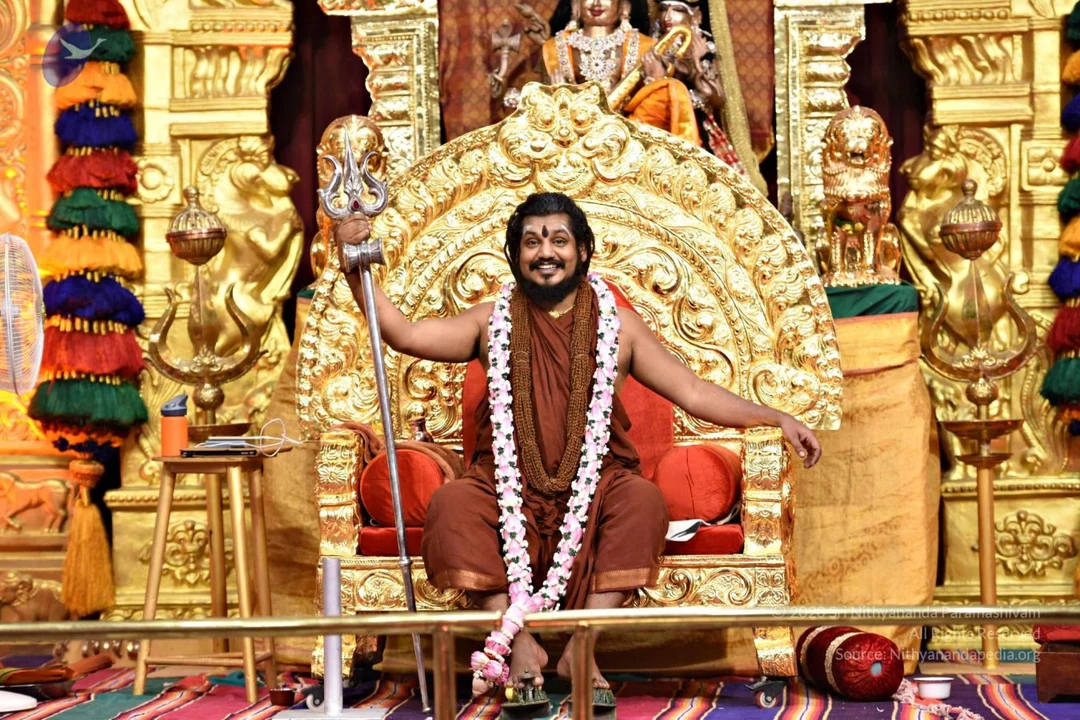
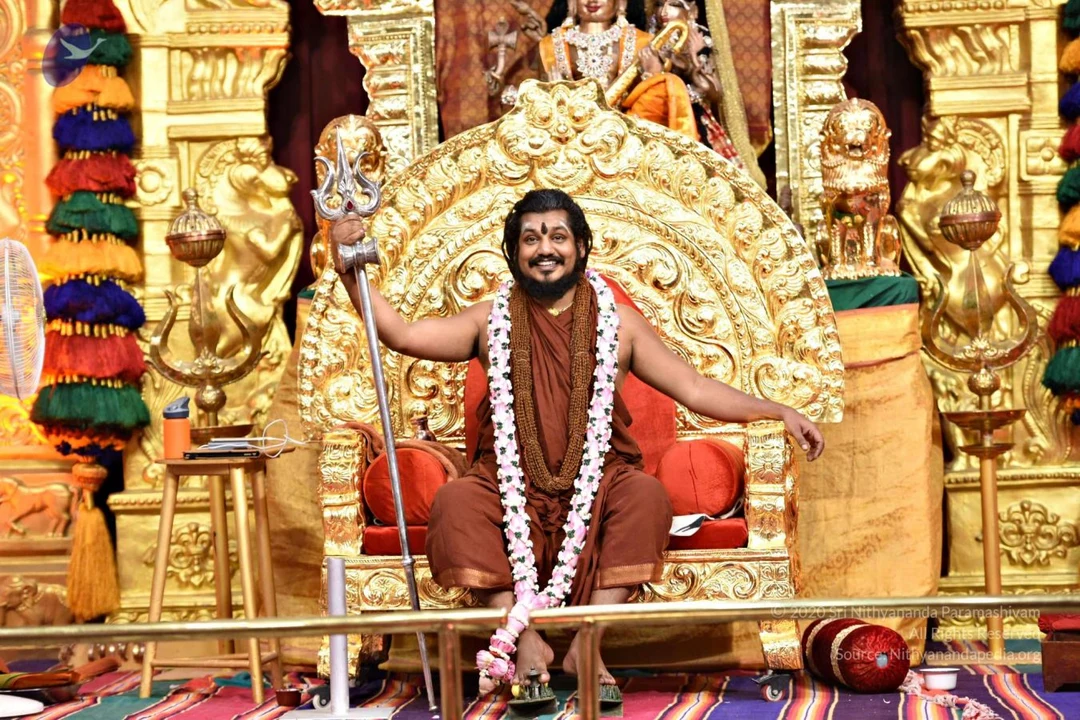
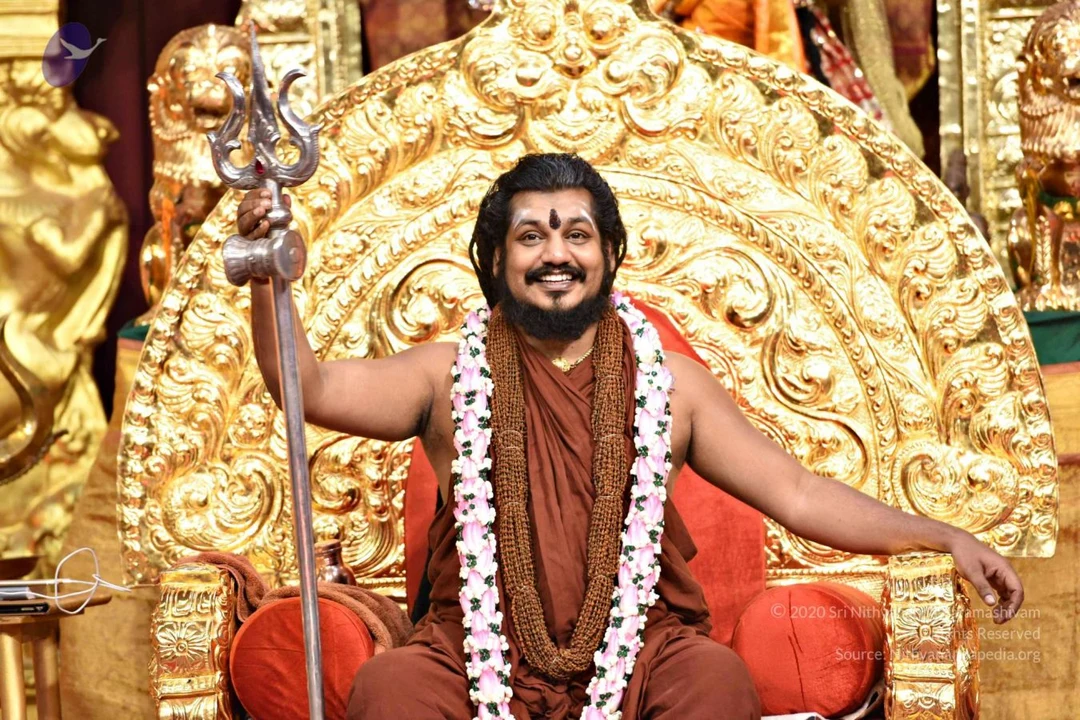
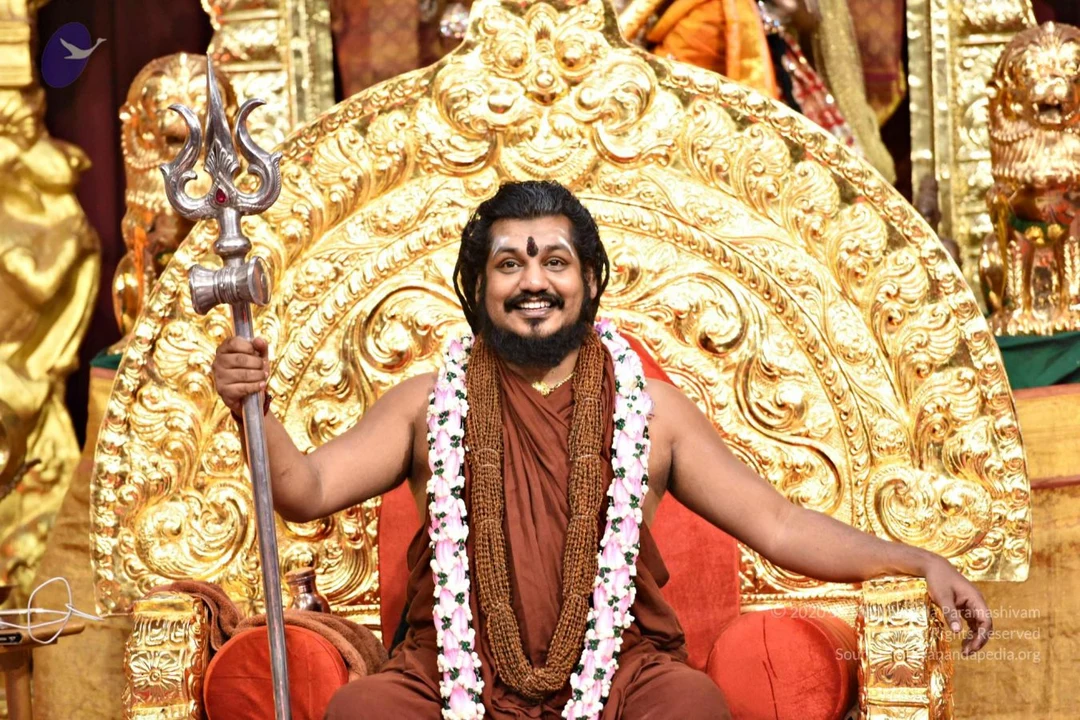
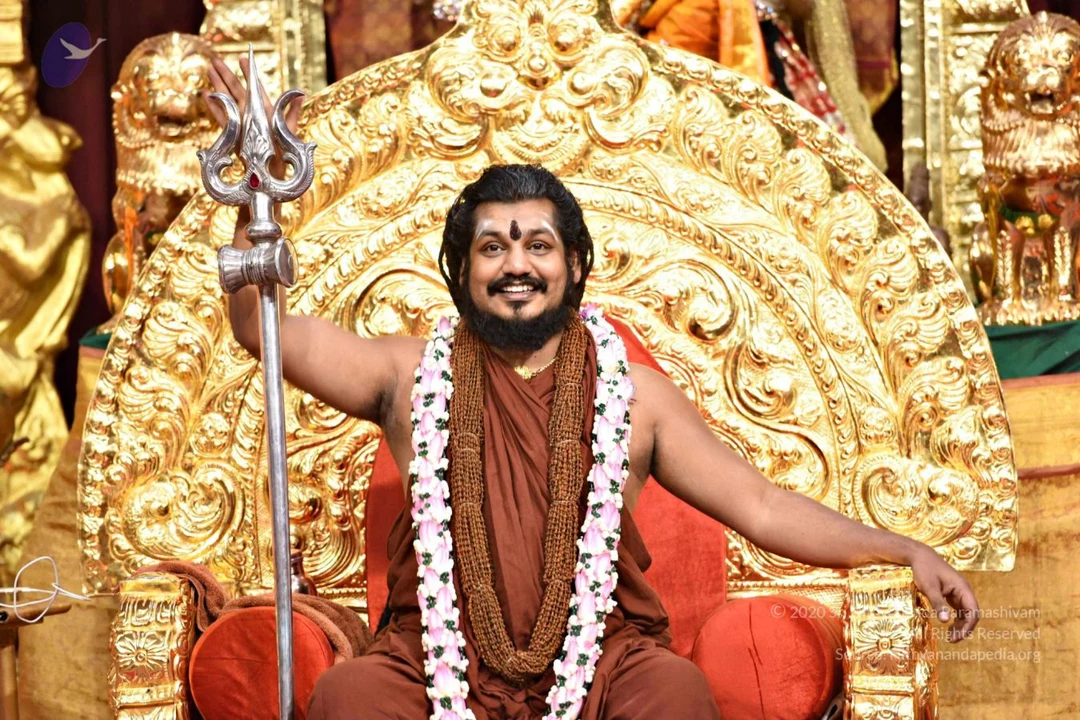
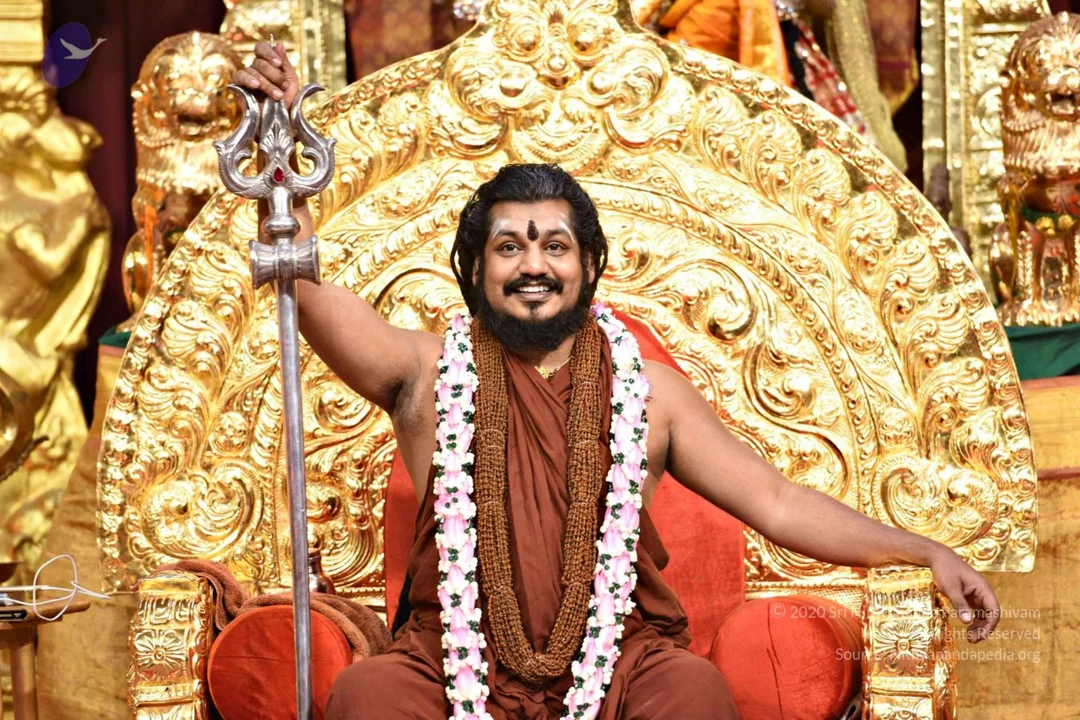
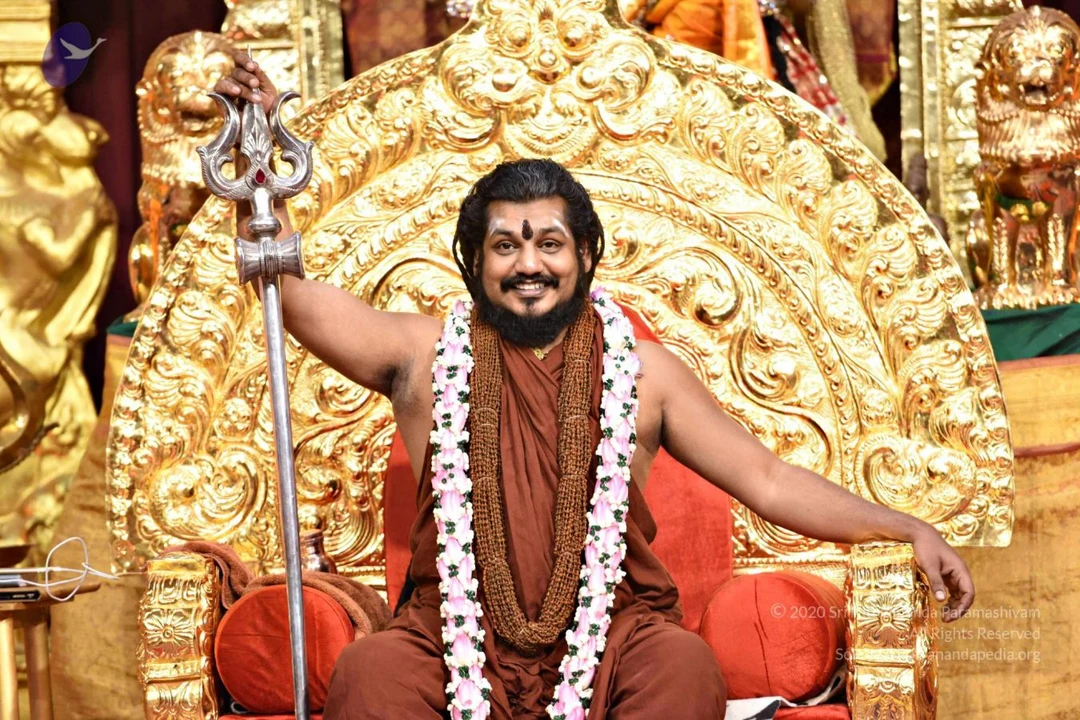
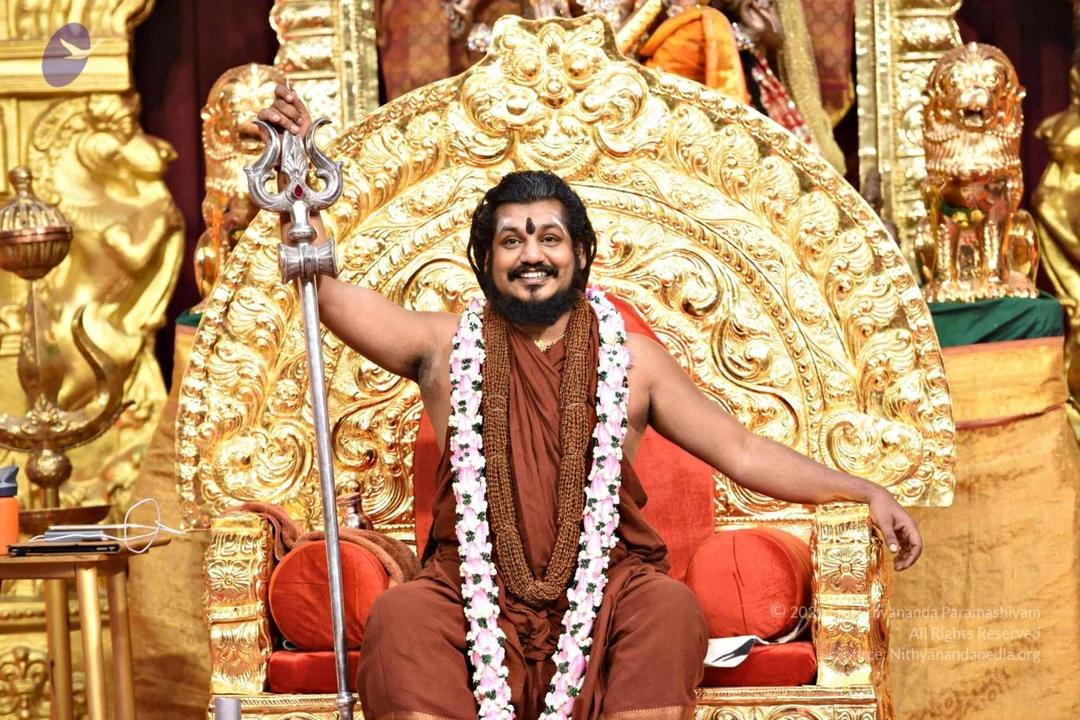
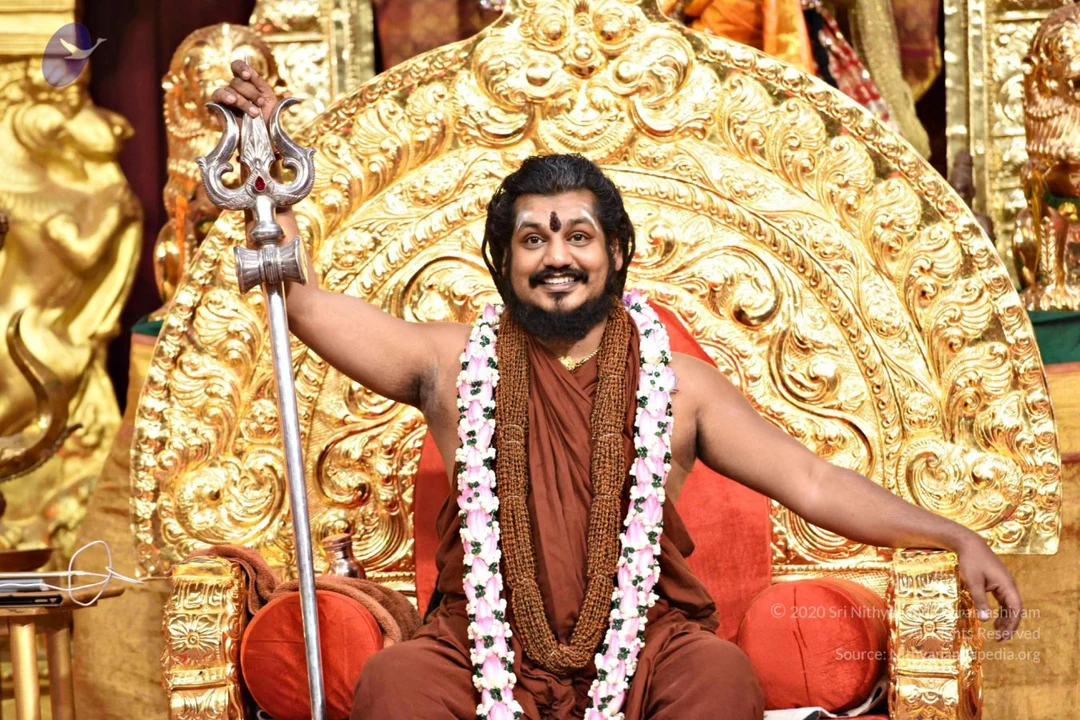
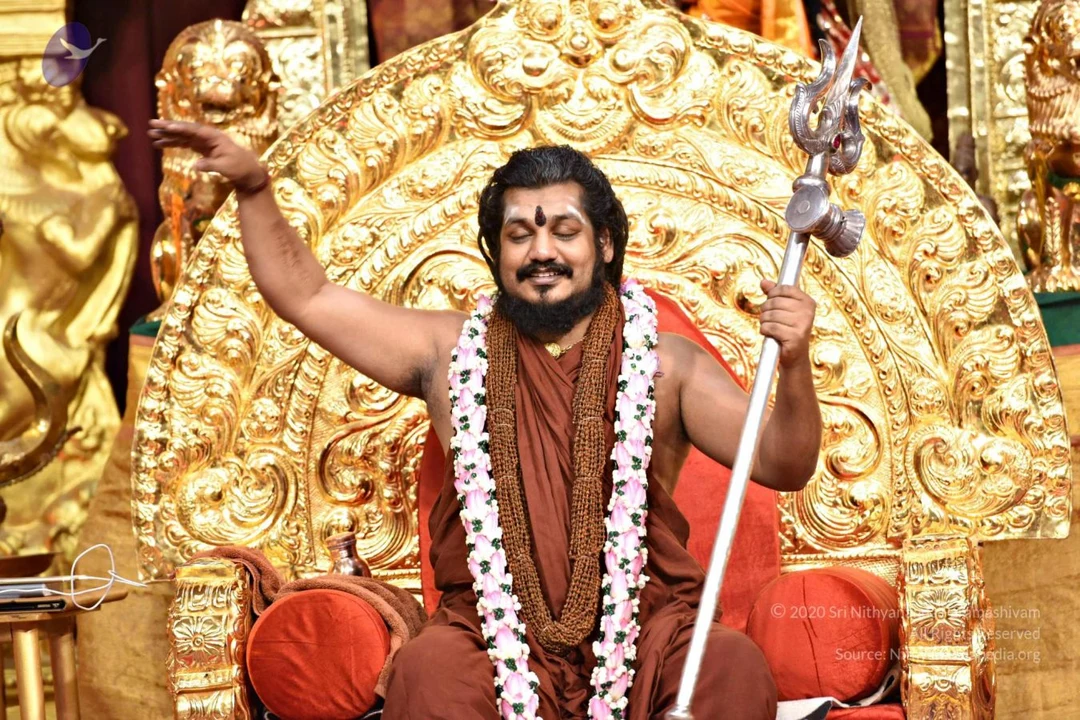
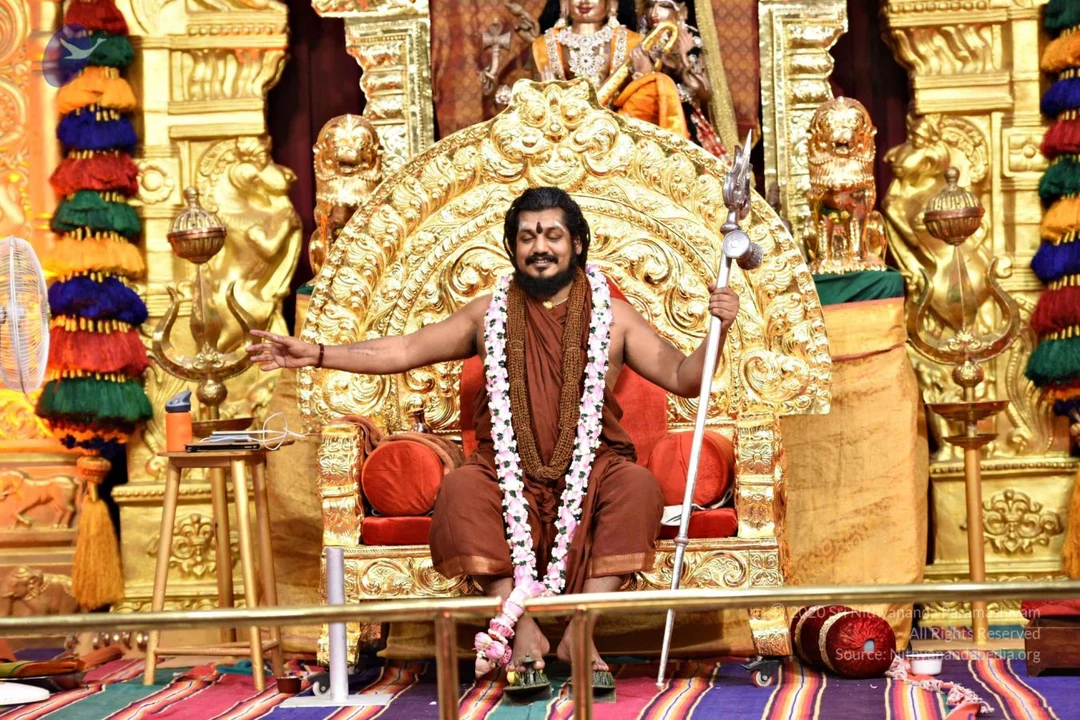
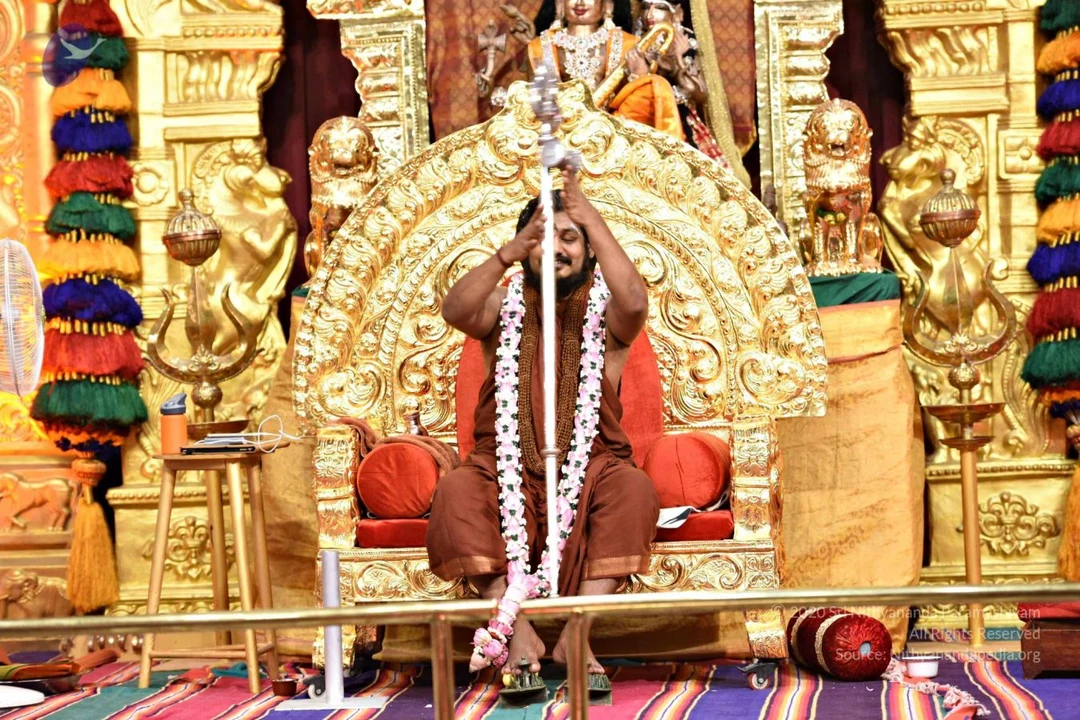
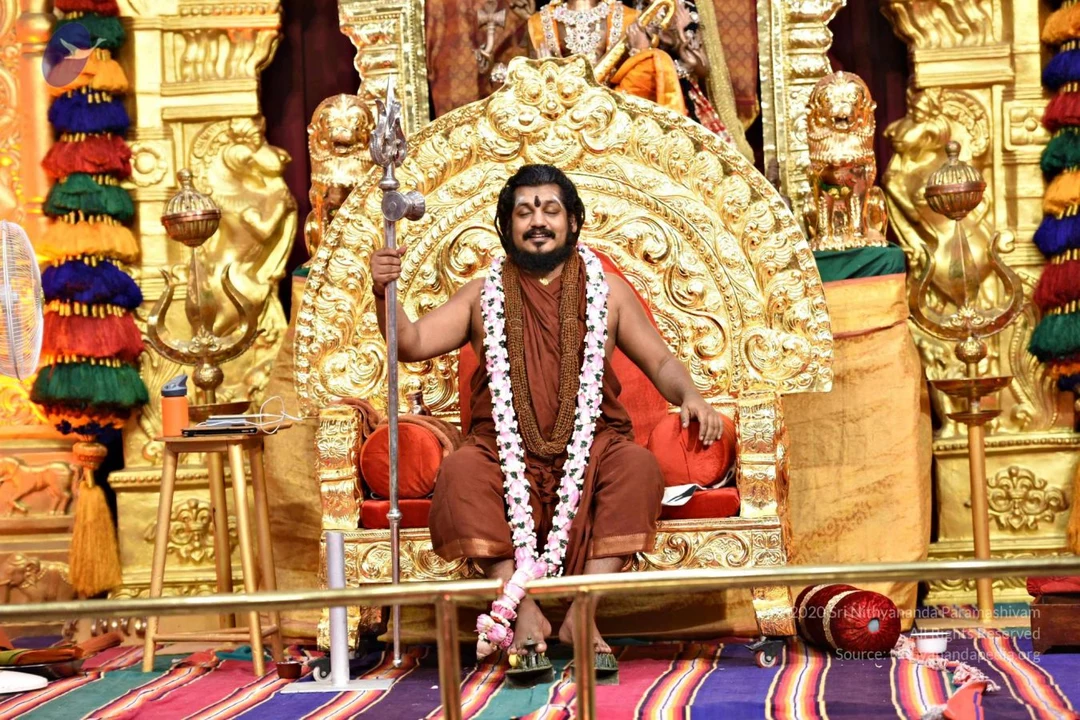
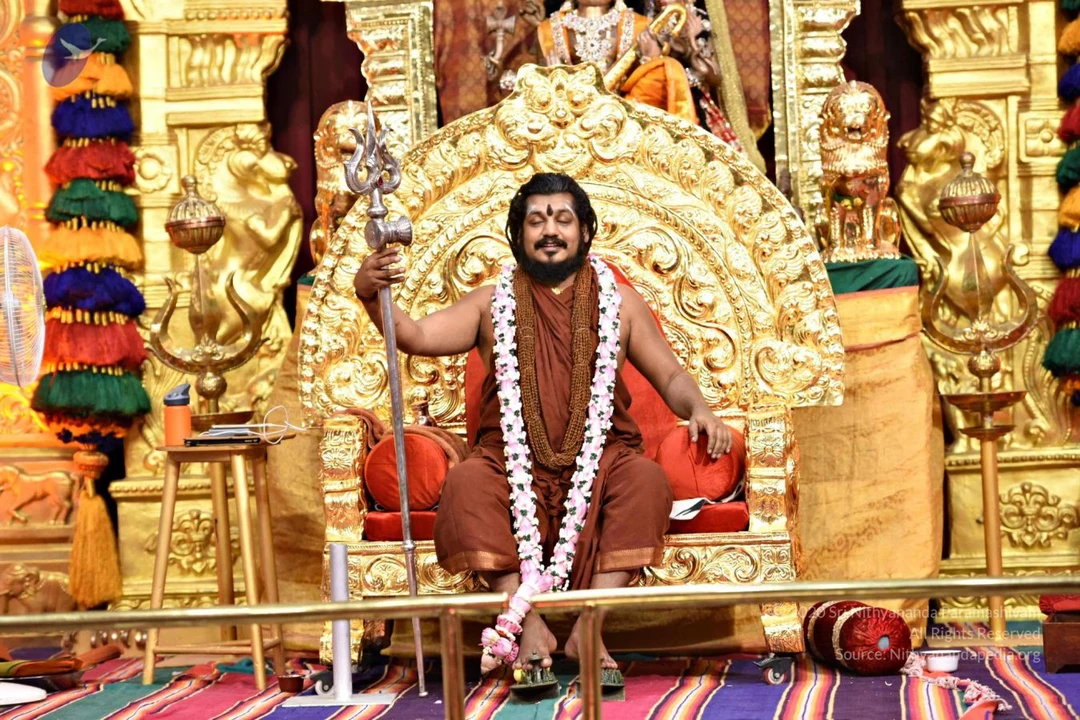
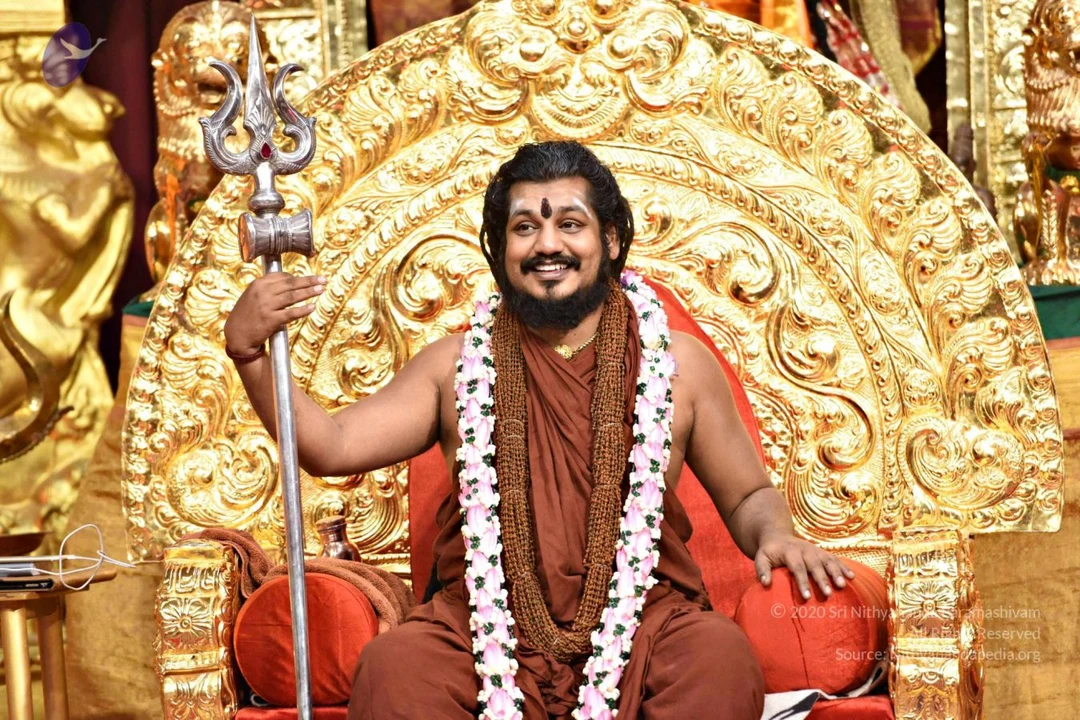
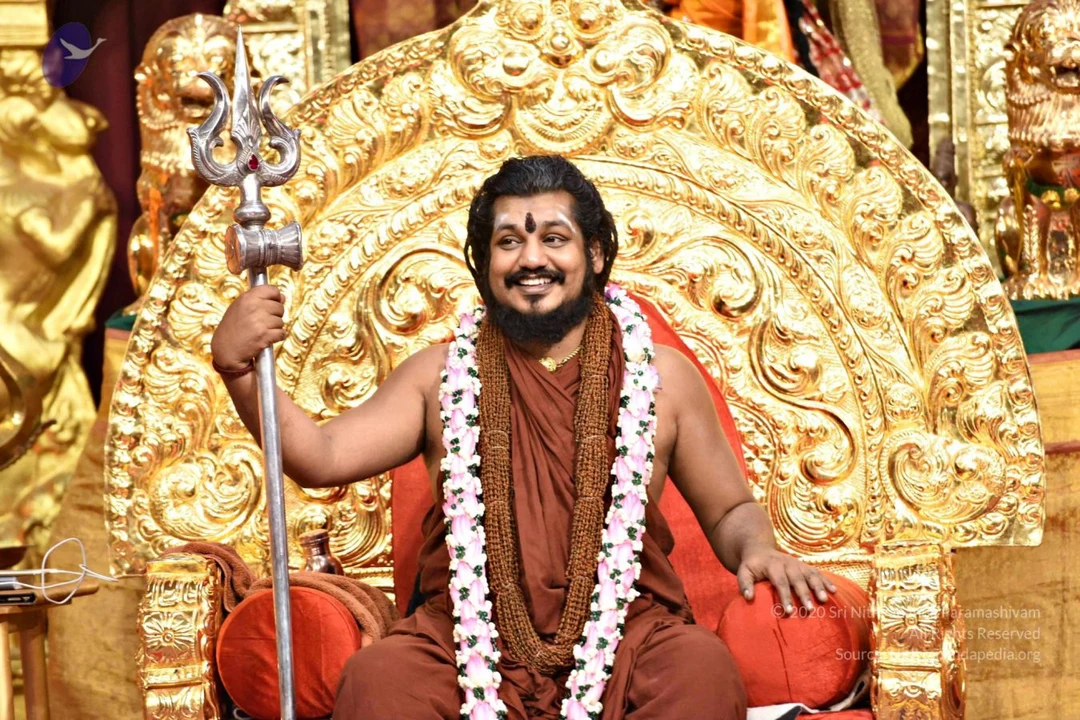
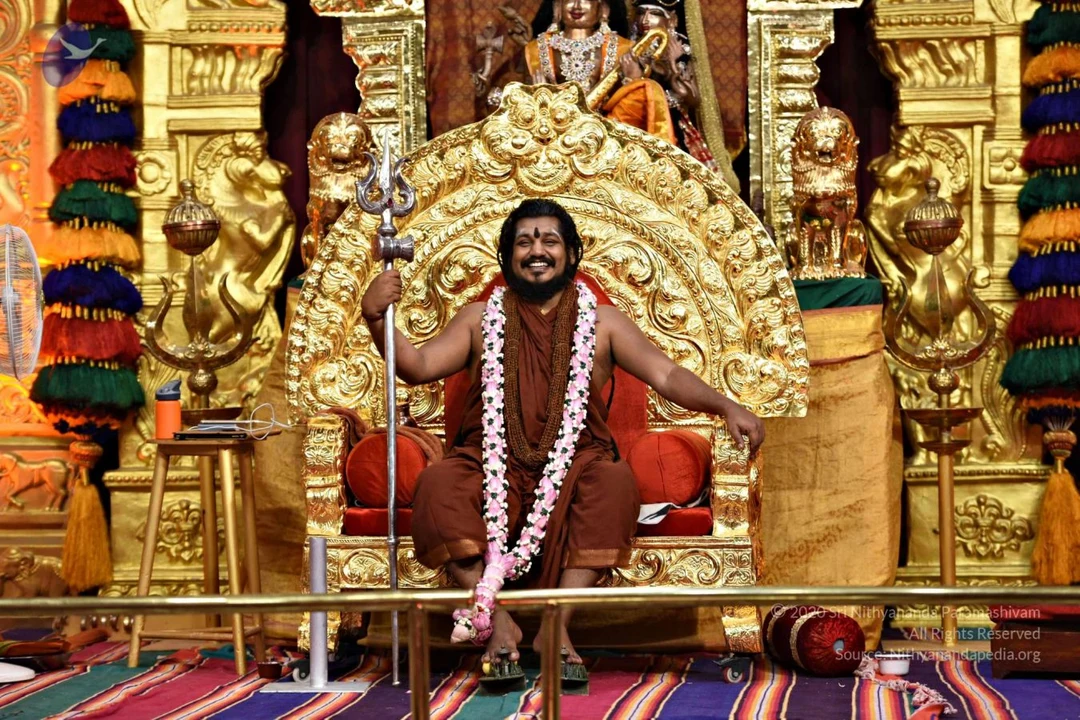
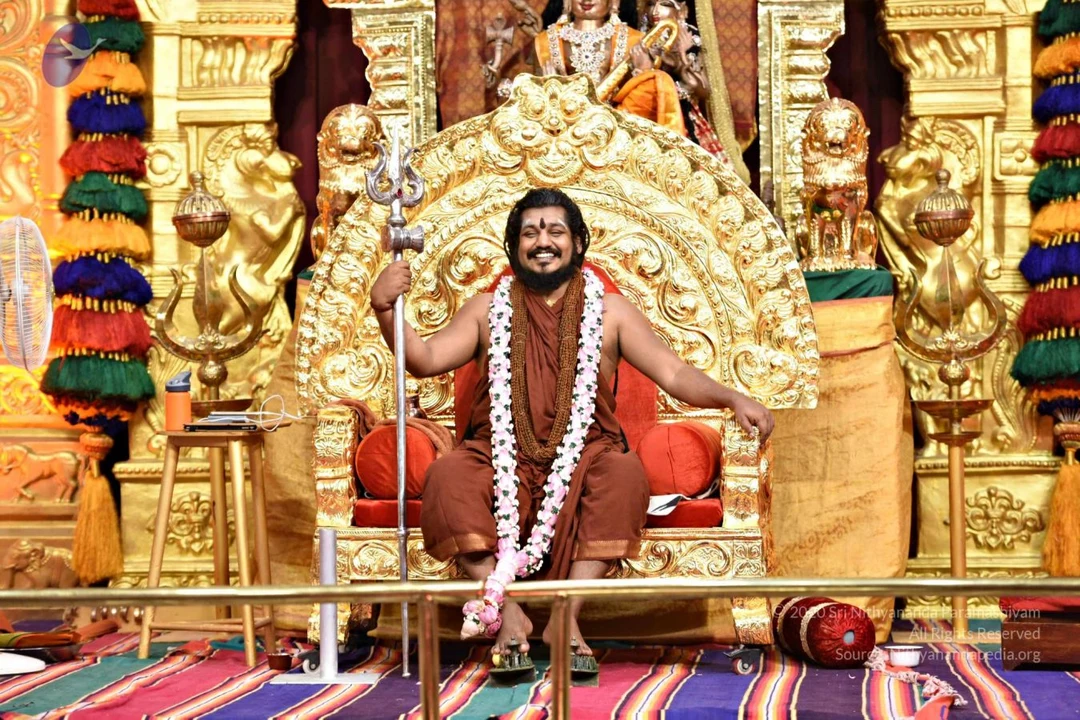
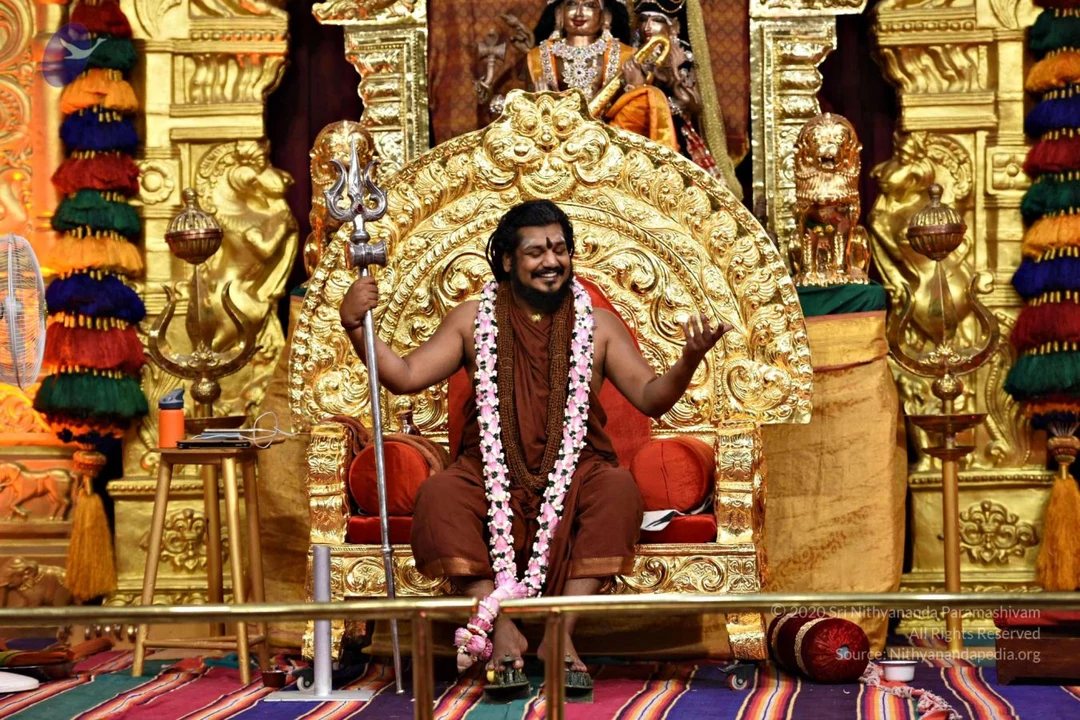
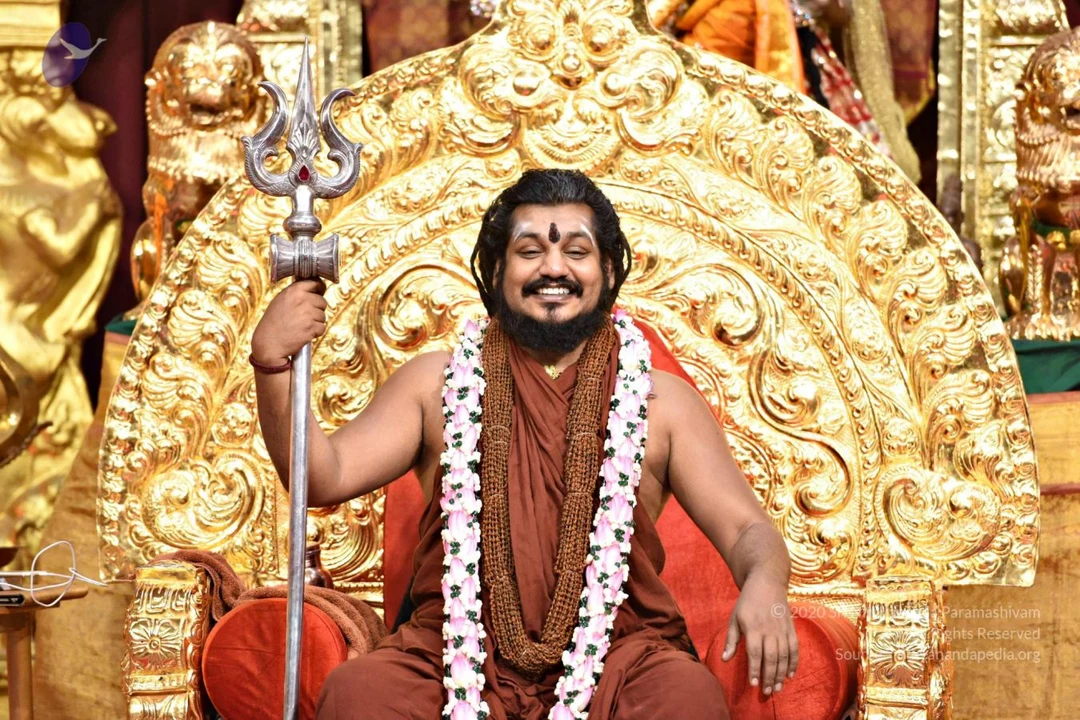
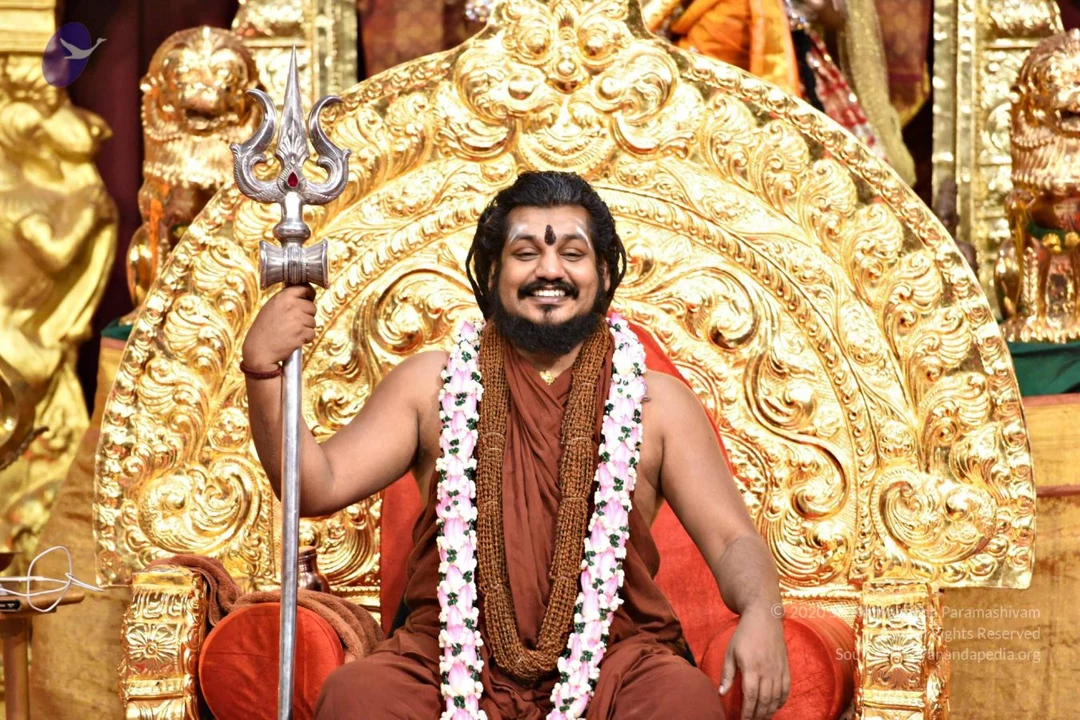
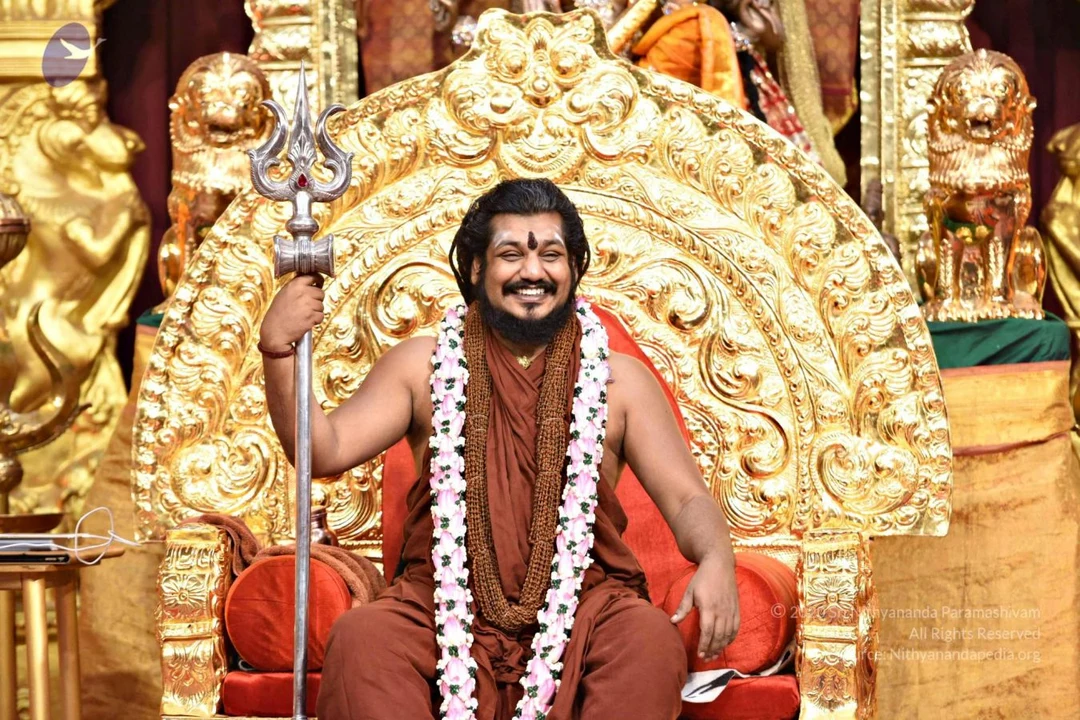
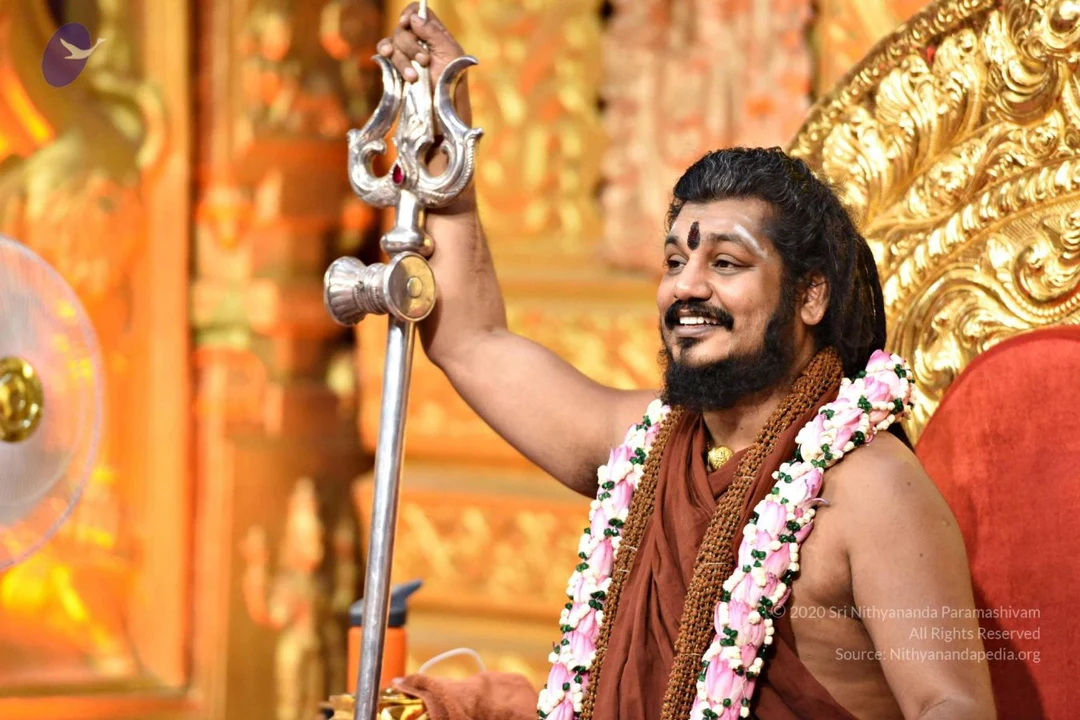
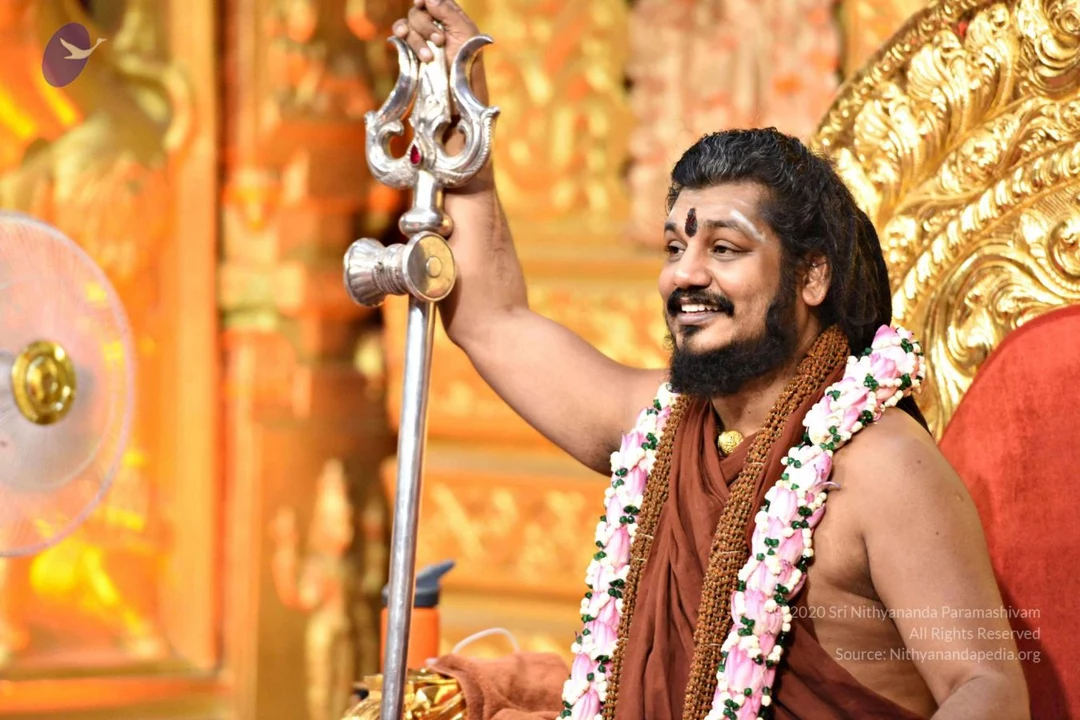
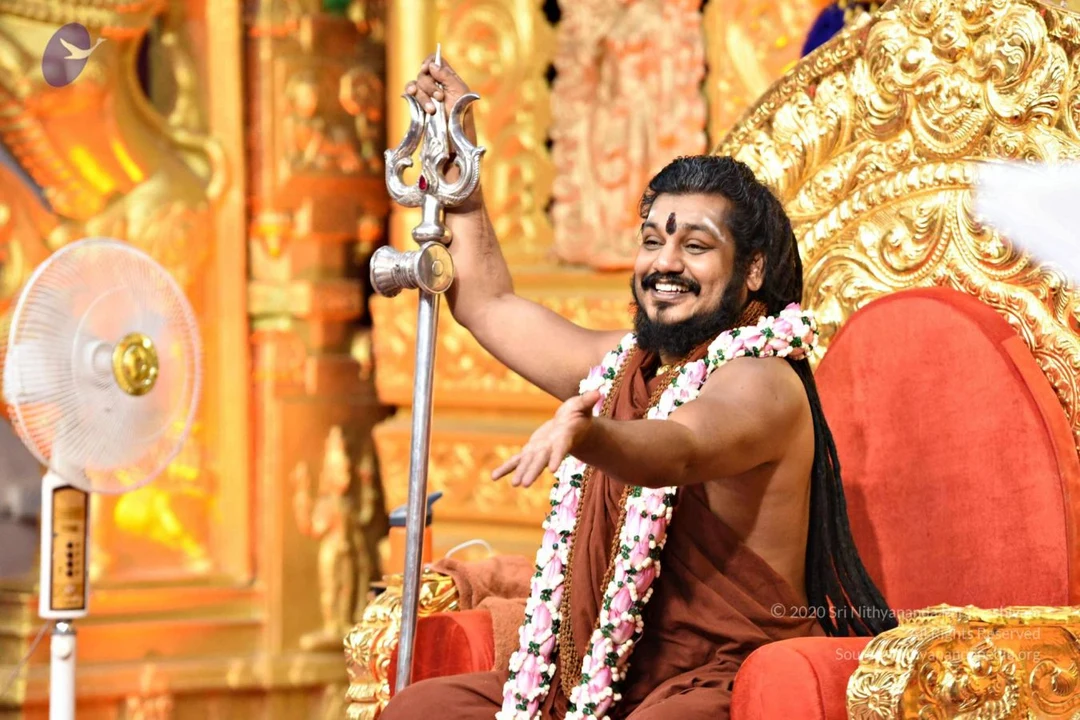
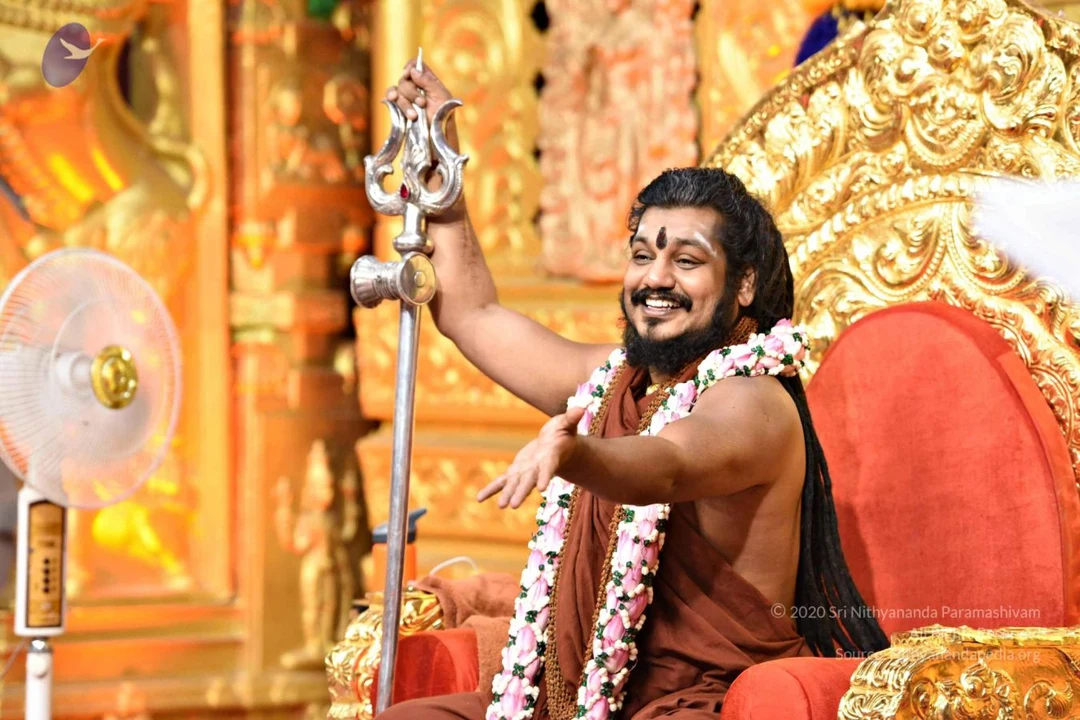
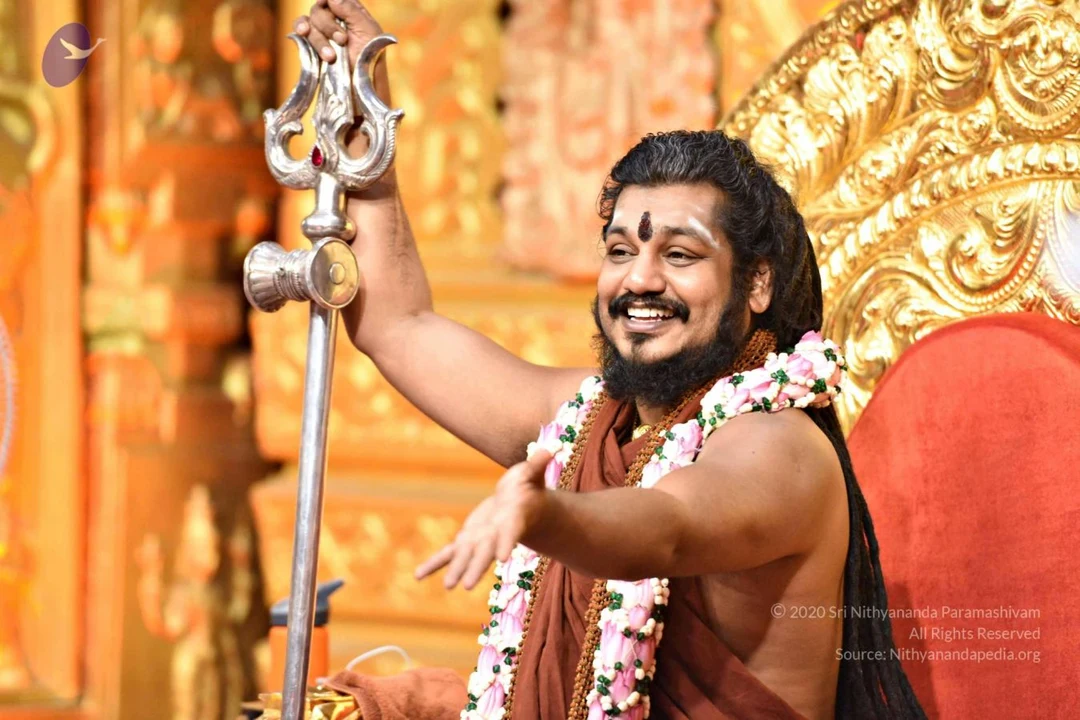
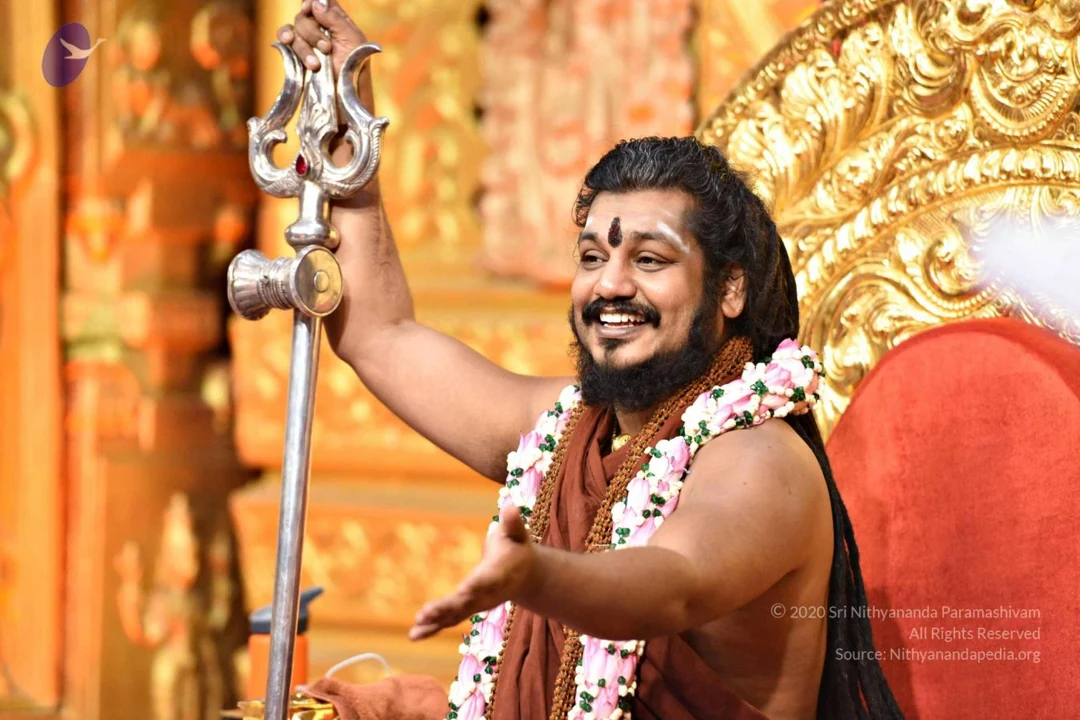
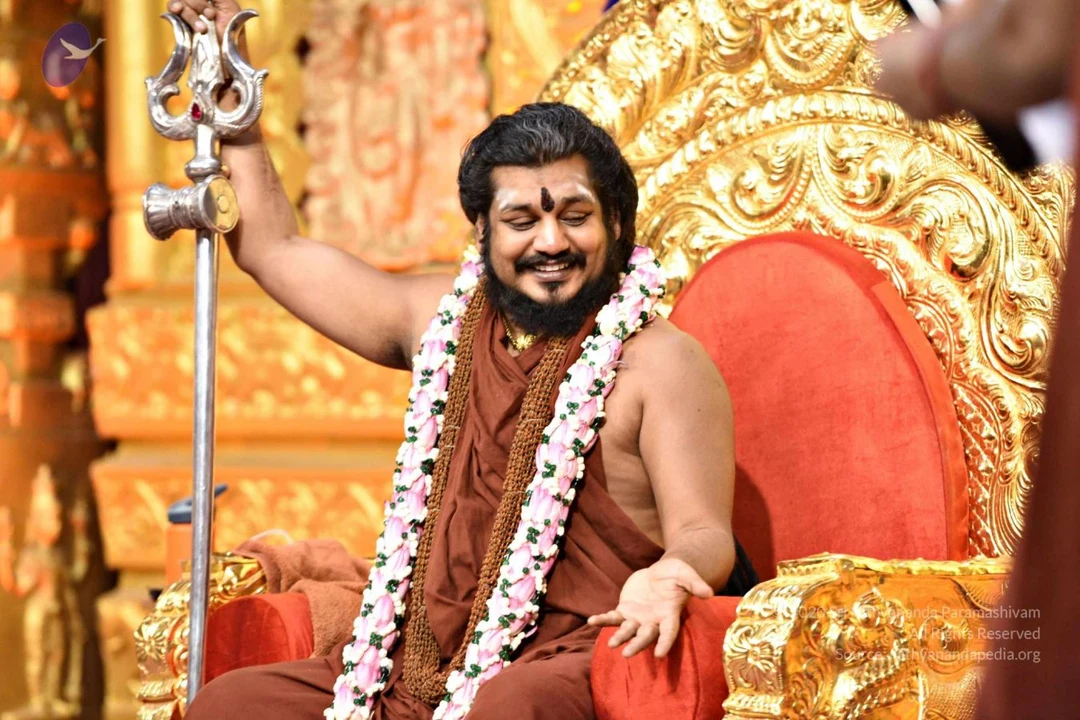
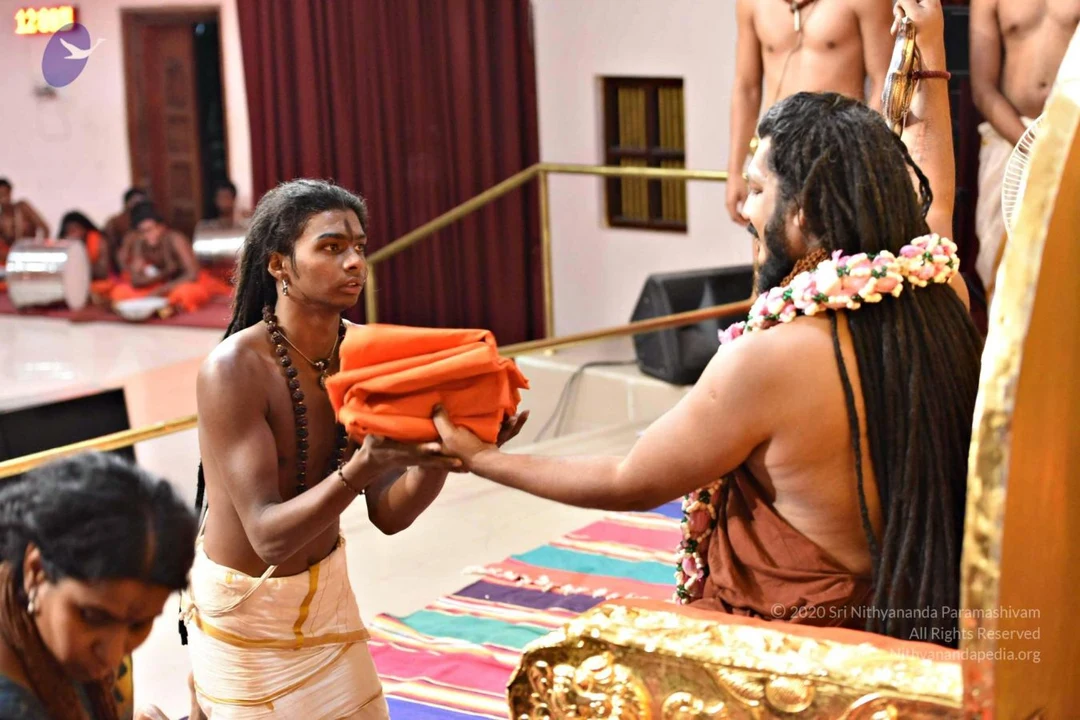
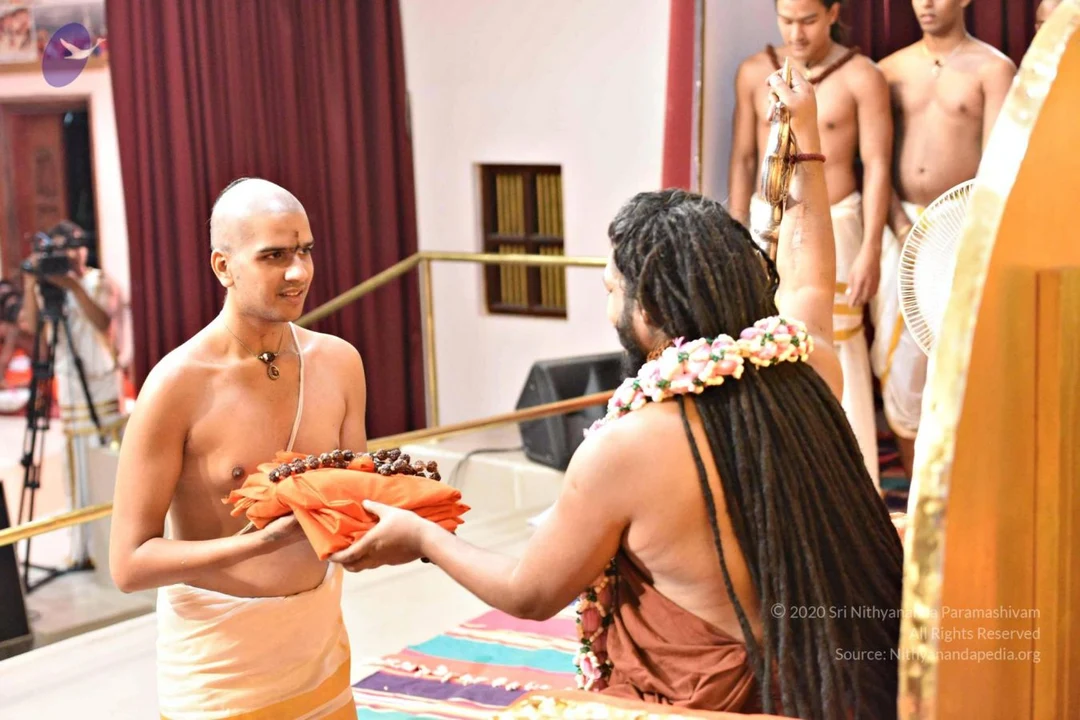
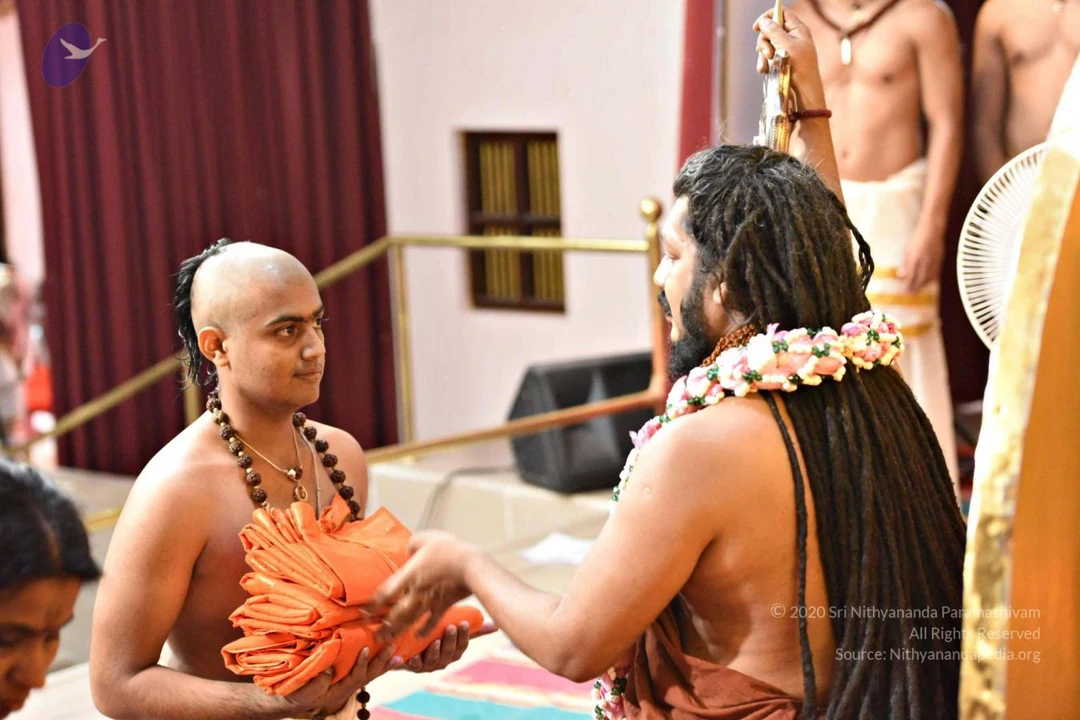
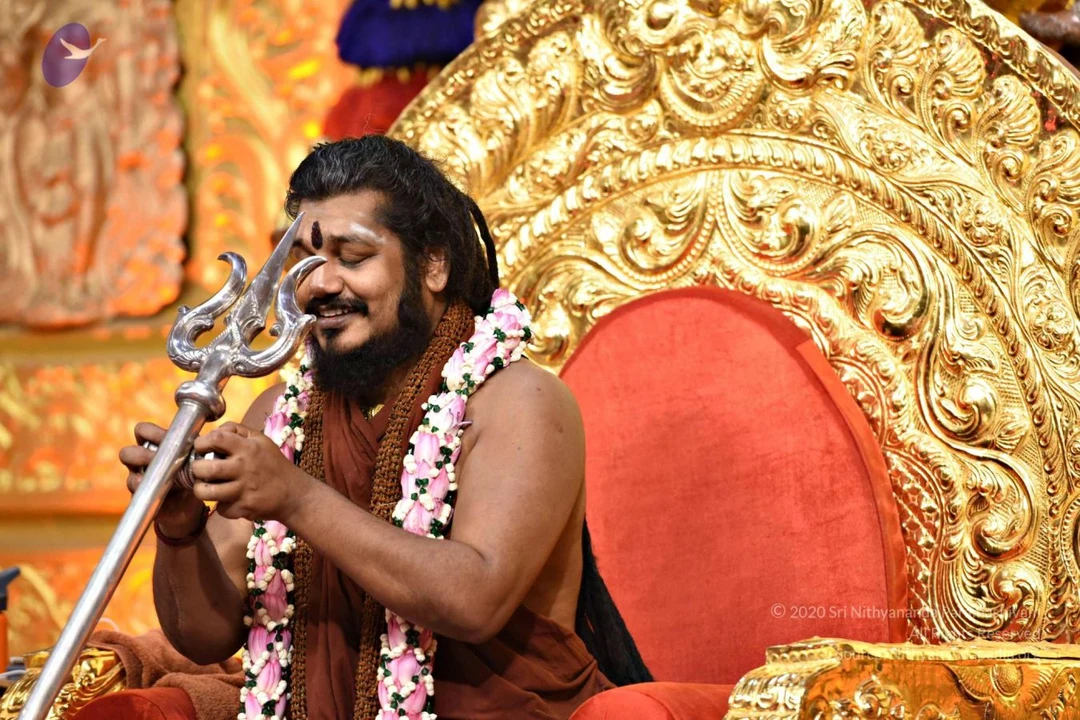
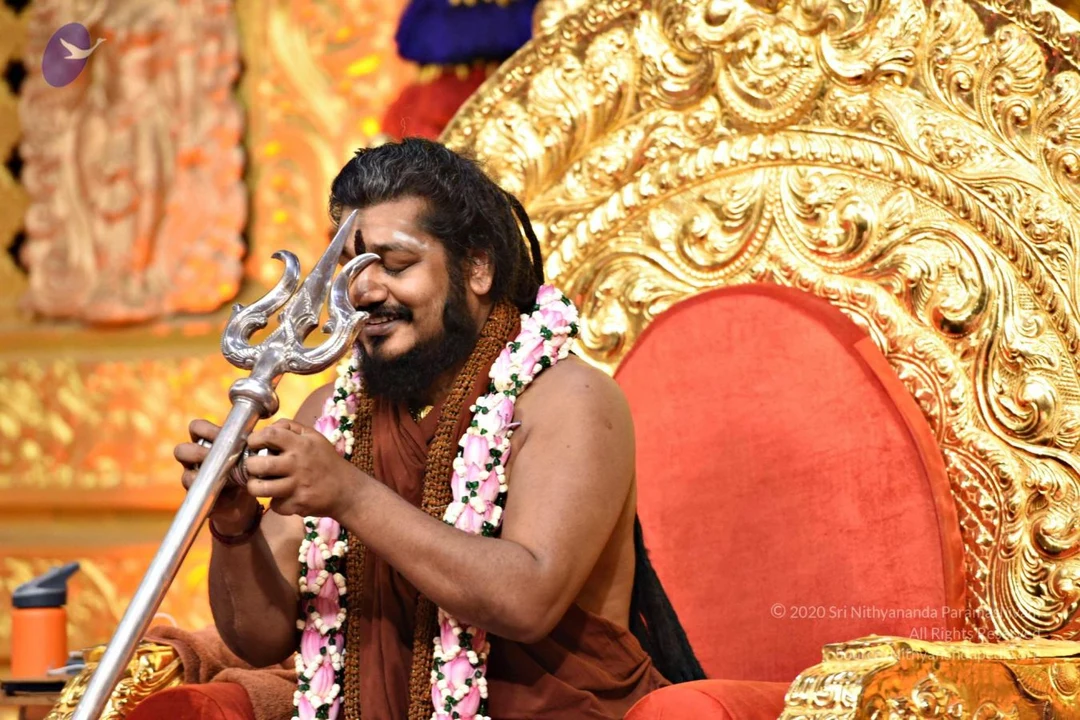
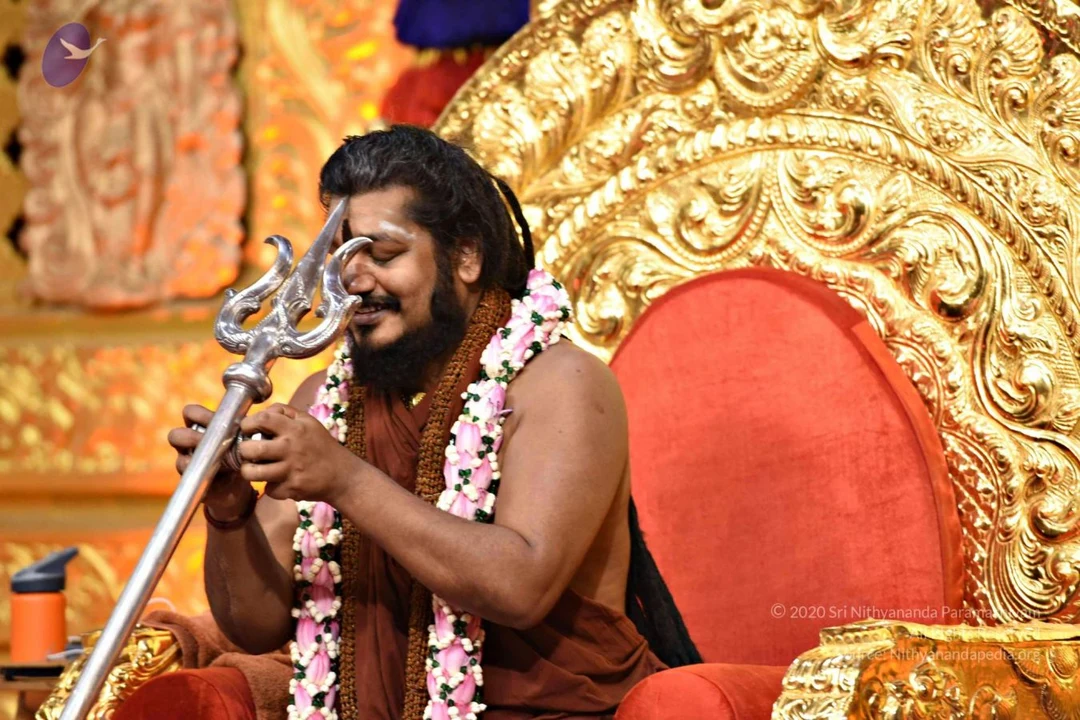
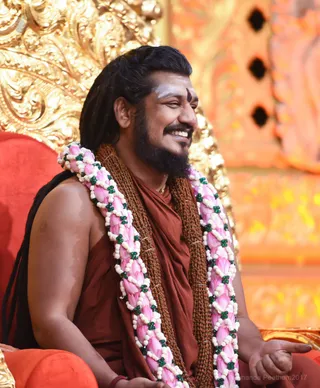
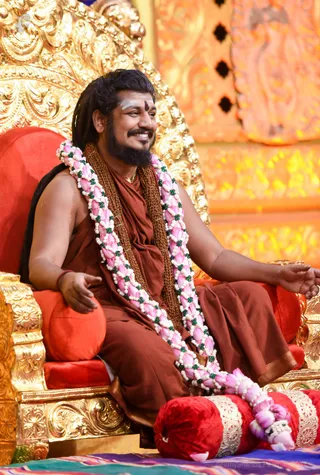
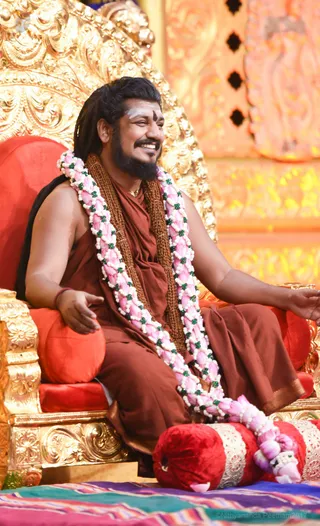
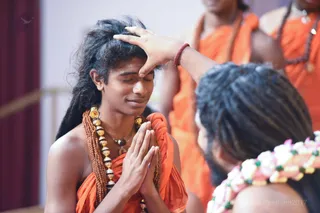
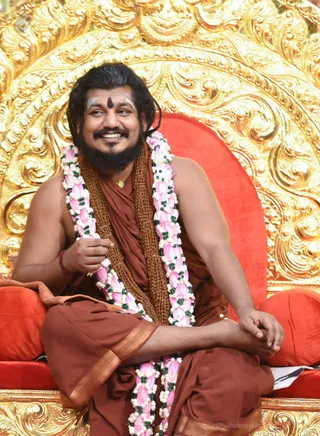
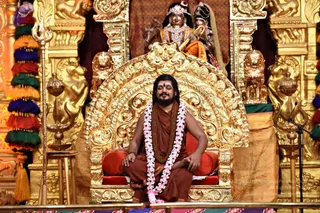
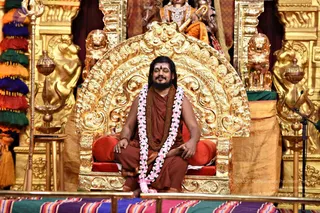
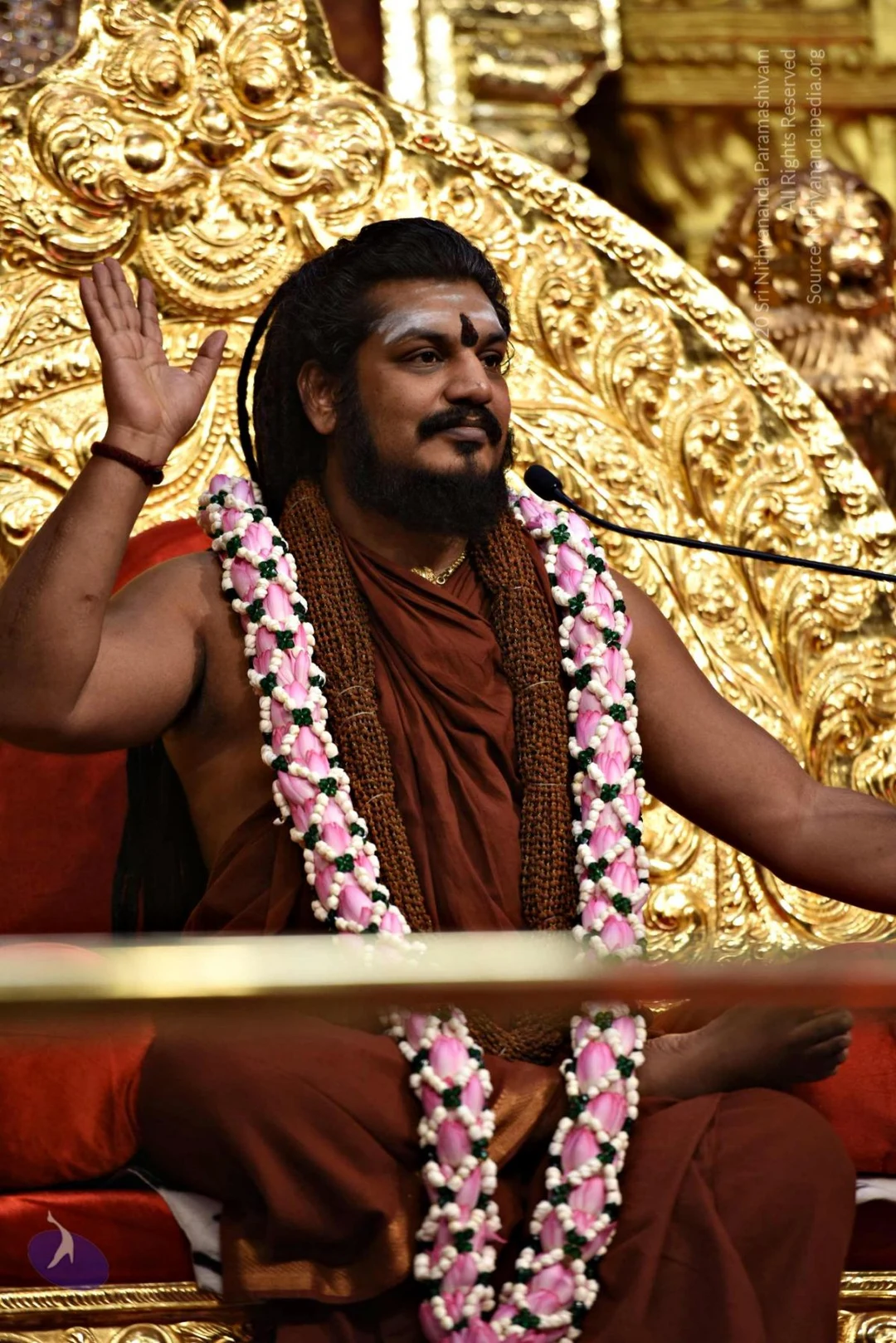
A photograph of a bearded man with long dark hair seated cross-legged on an ornate gilded throne with red cushions. He wears a rust-orange wrap and dhoti, a multi-strand brown rudraksha-style mala, a red bindi on his forehead, and a long white and pink flower garland. He is bare-armed and smiling, one arm extended along the armrest. A golden trident stands to his left, and golden lion sculptures and gilded carvings surround the throne. Behind him are gold-and-red decorative panels, and a small brass lamp stands at the right edge. A thin wooden stool with a water bottle is at the left. The setting appears to be a satsang stage.A photograph of two men in a golden ornate setting. In the foreground, a man seen from behind with hair in a topknot and bare shoulders wears a white and yellow cloth, and he is reaching up to touch the head of the man seated before him. The seated man smiles broadly, wearing a rust-brown robe, a brown rudraksha-style mala across his shoulders, a long garland of pink flowers with green leaves, and a gold necklace. He has a white tilak line on his forehead with a red dot and a long beard. Behind him is a gold-carved throne with an orange cushion, and orange and gold decorations fill the background.A young man in saffron-orange cloth with long dreadlocked hair, multiple rudraksha mala strands and a gold-toned necklace with a pendant stands with eyes closed while a bearded man in a pink-and-white flower garland places his hand on the young man's forehead. The garland-wearer's bare shoulders and long hair are visible in the foreground. Behind them, another saffron-clad figure with a gold necklace stands in a hall with dark red curtains and a pale wall. A small purple bird logo appears in the upper left corner.

March 25 2017

Original wiki page
Contents

Title

Password to instantly manifest powers

Narration

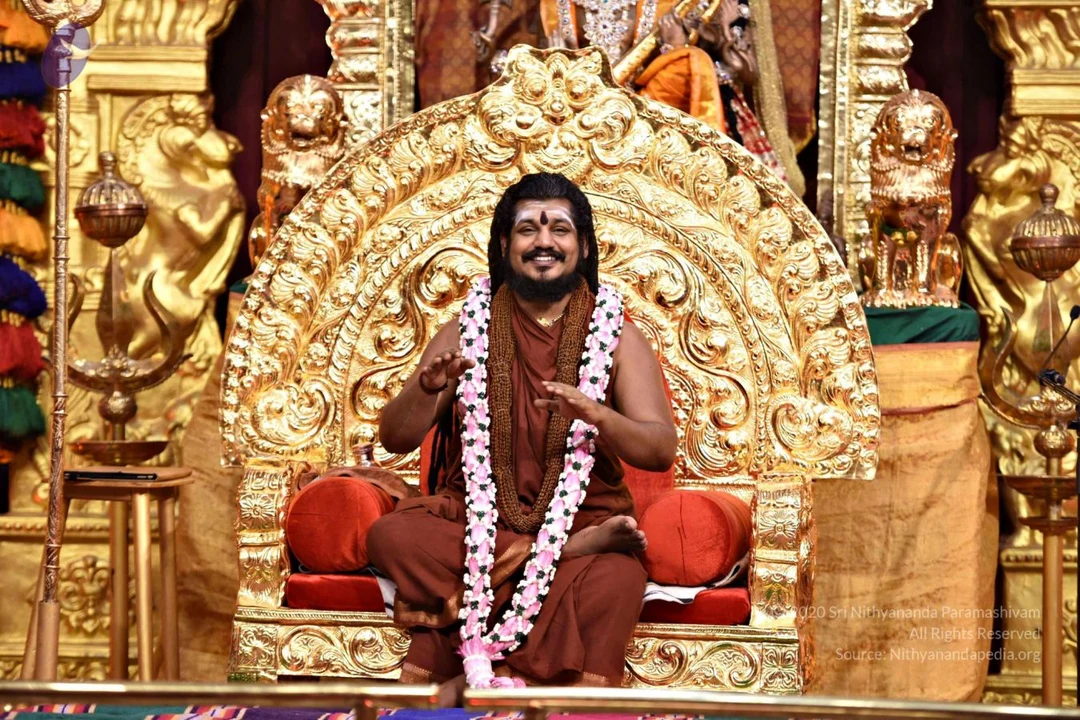
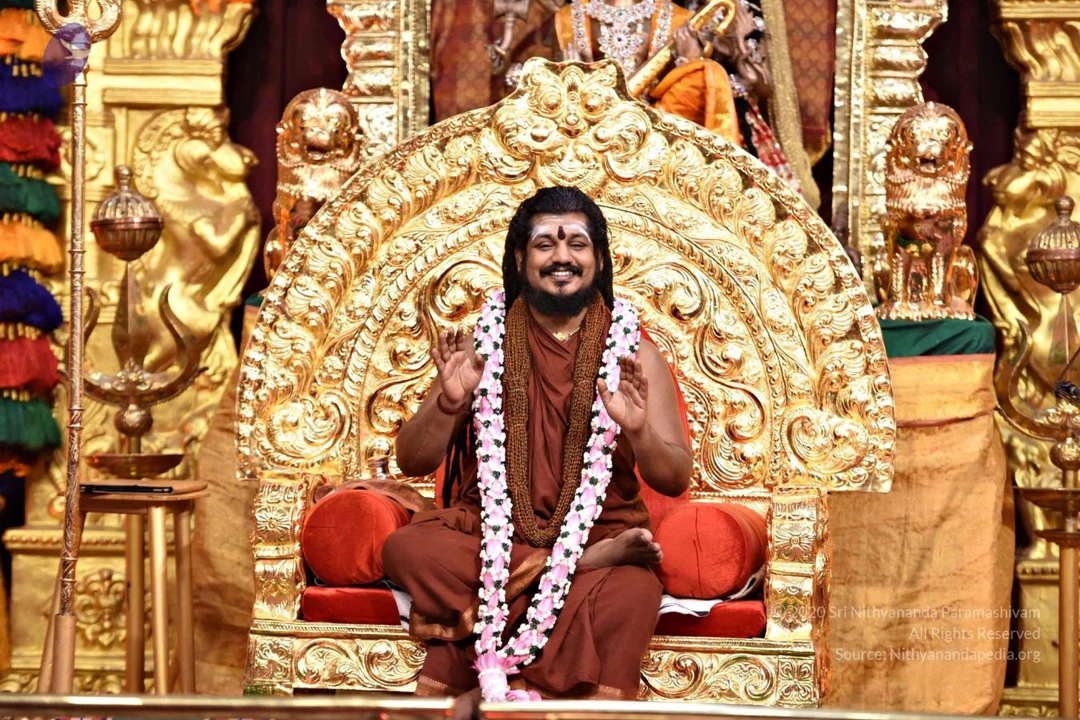
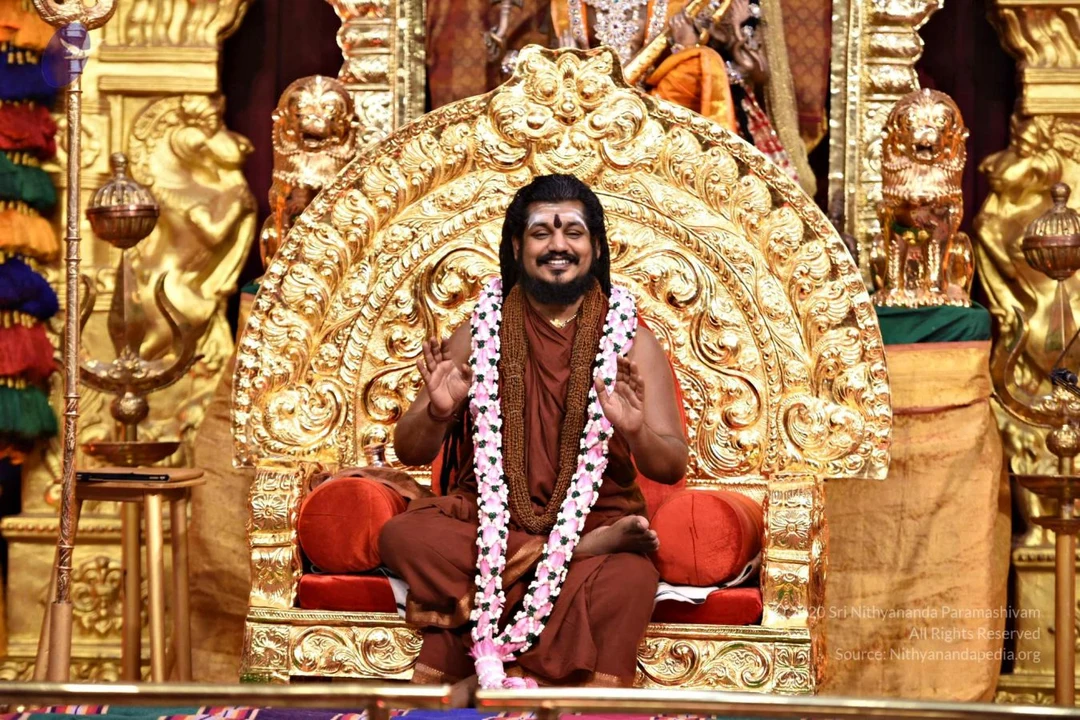
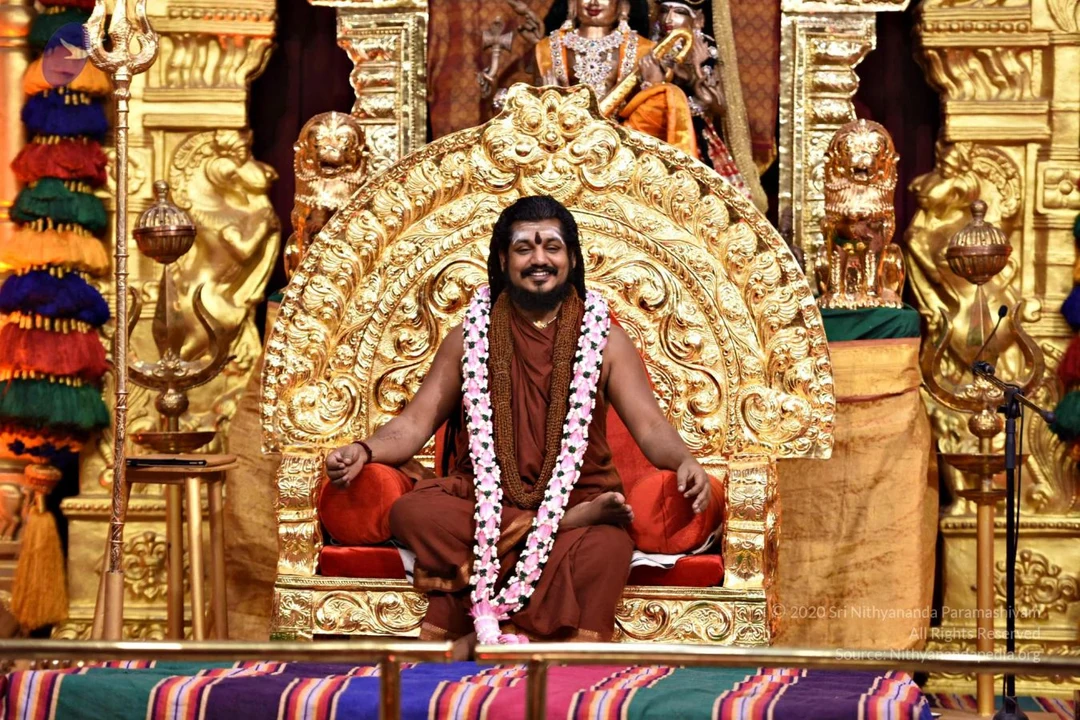
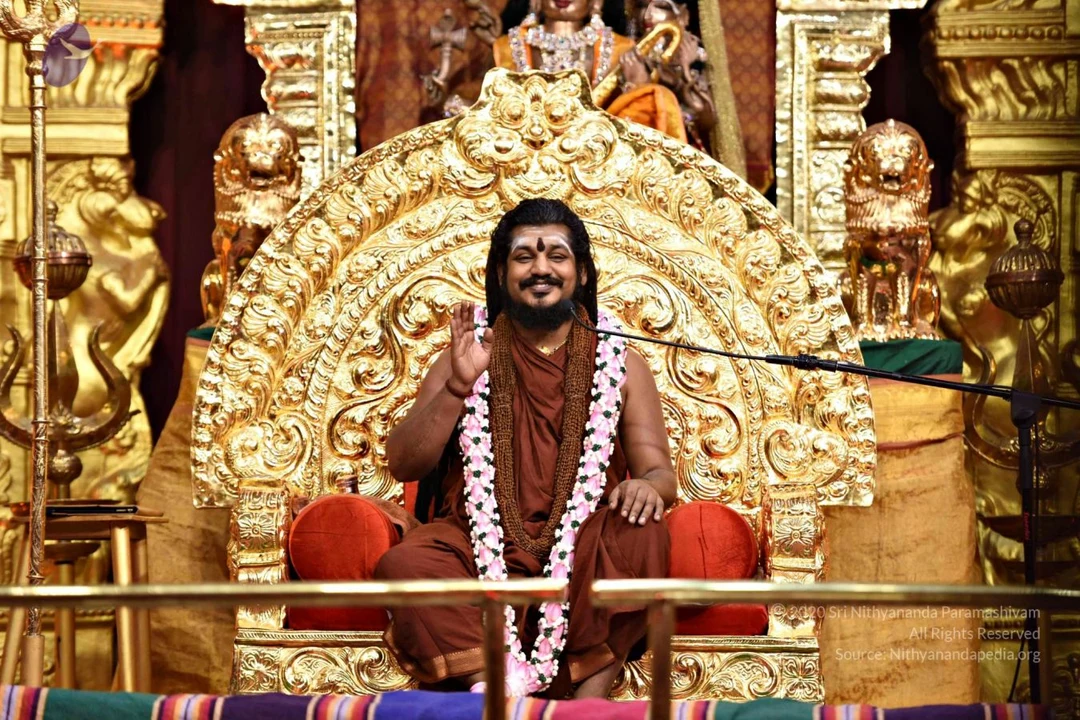
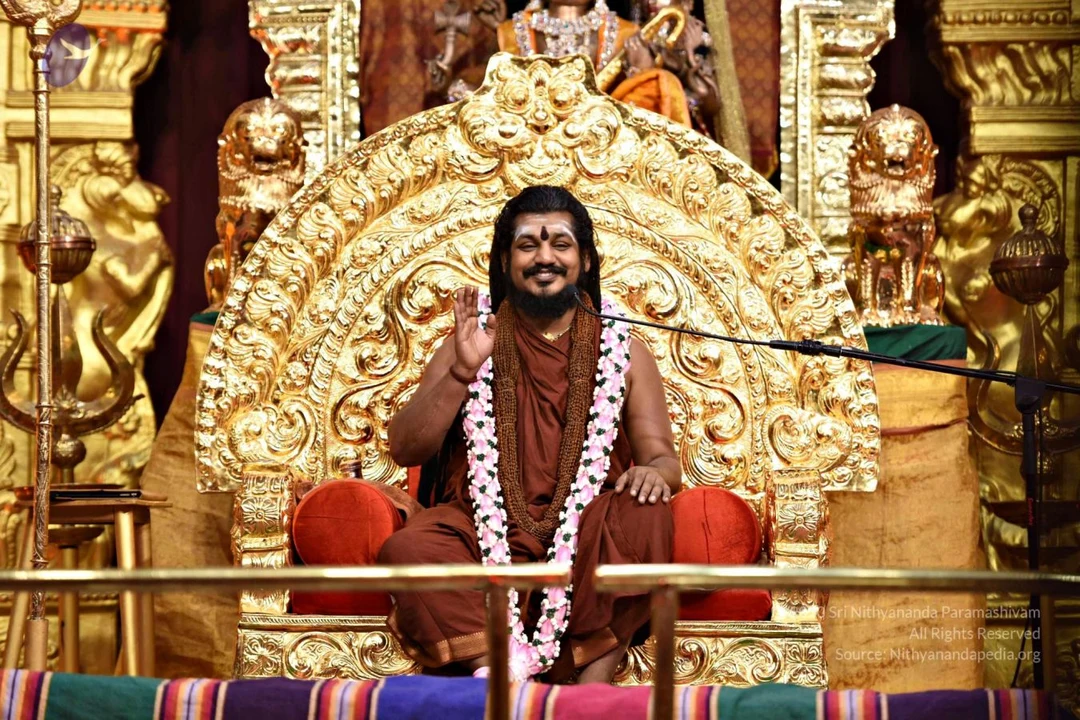
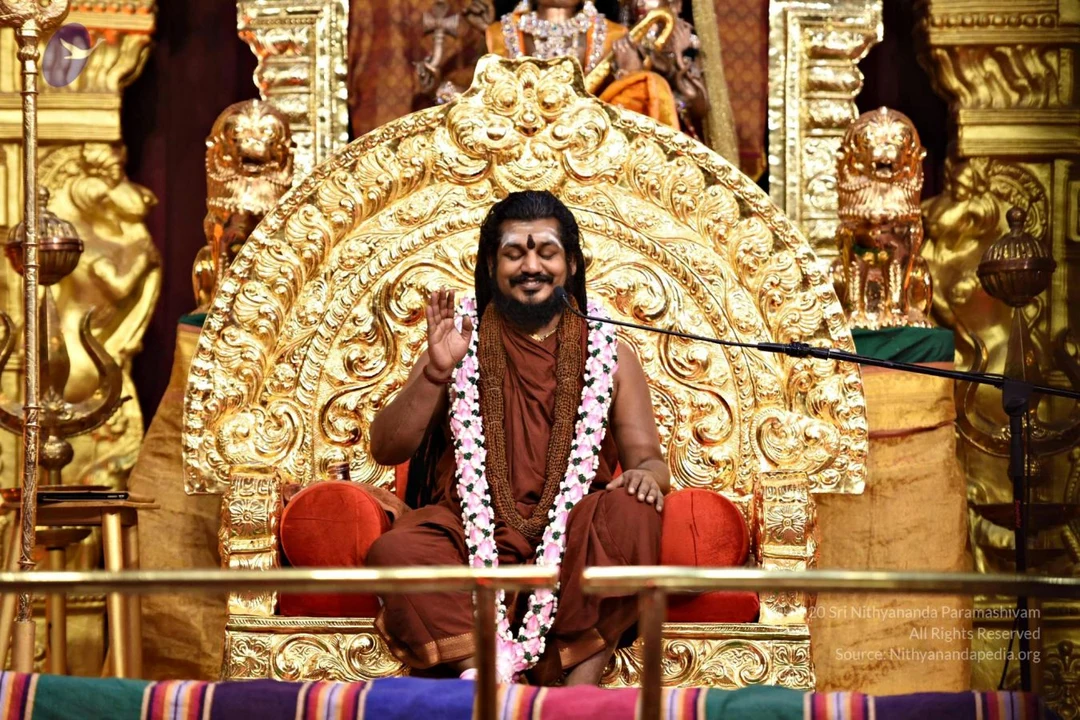
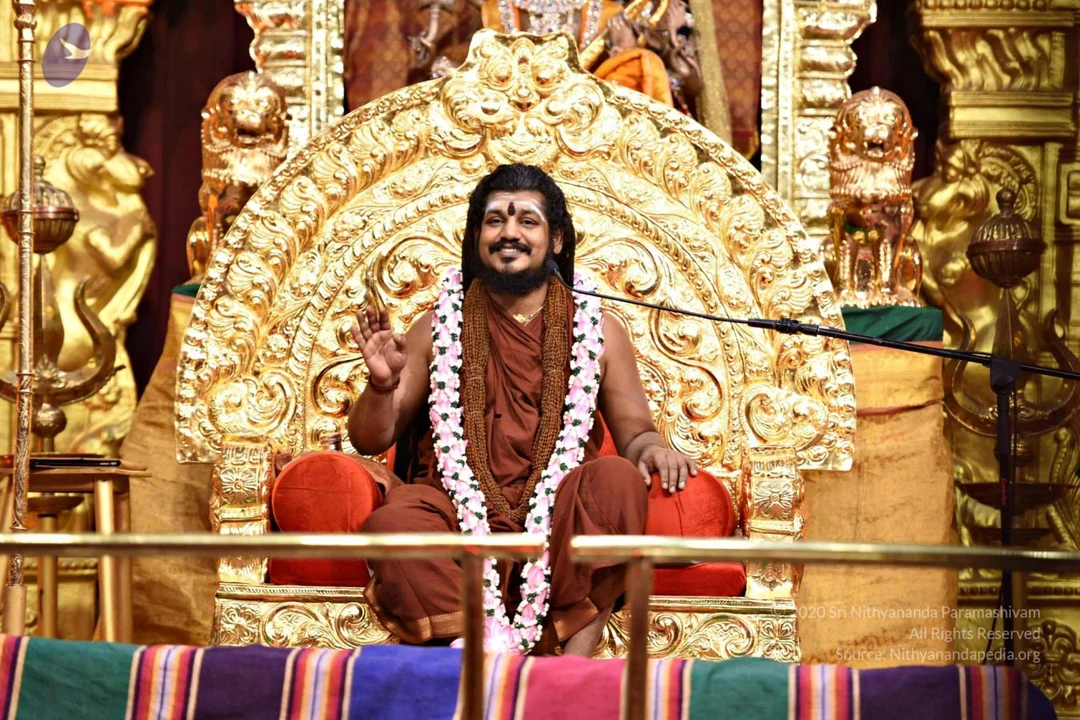
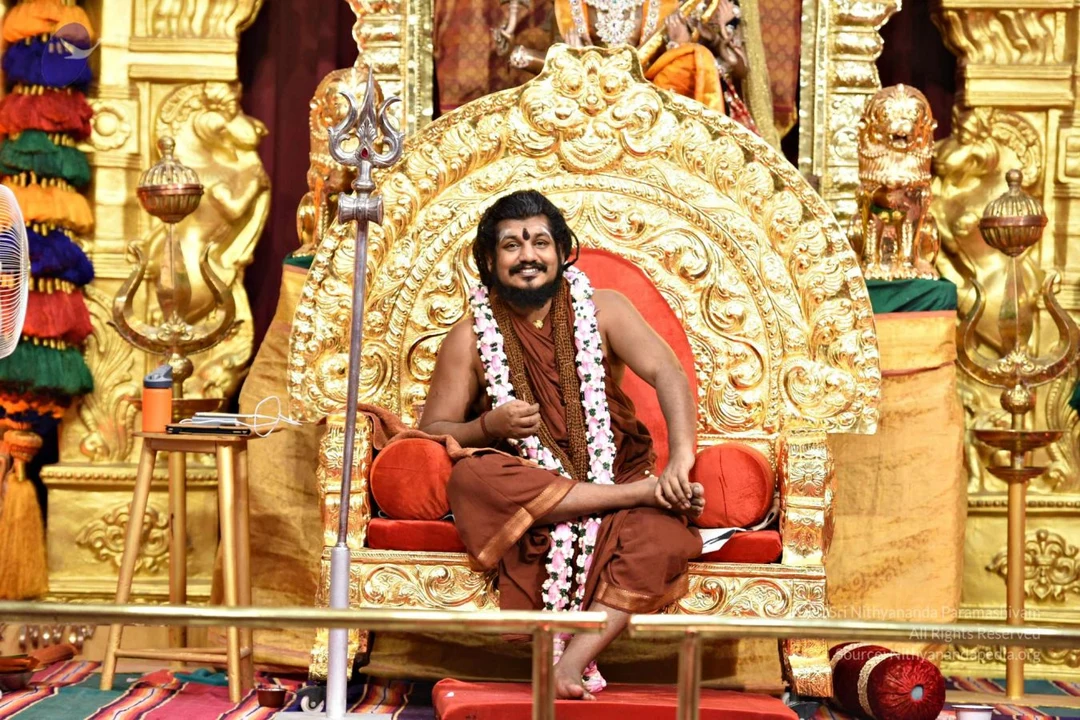
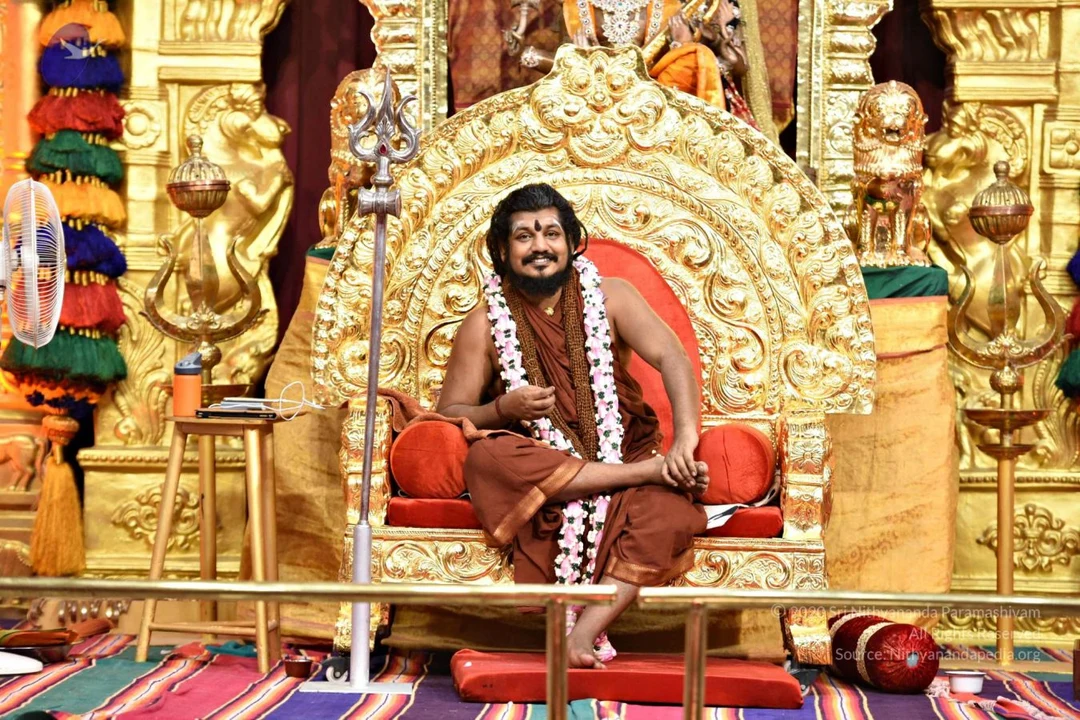
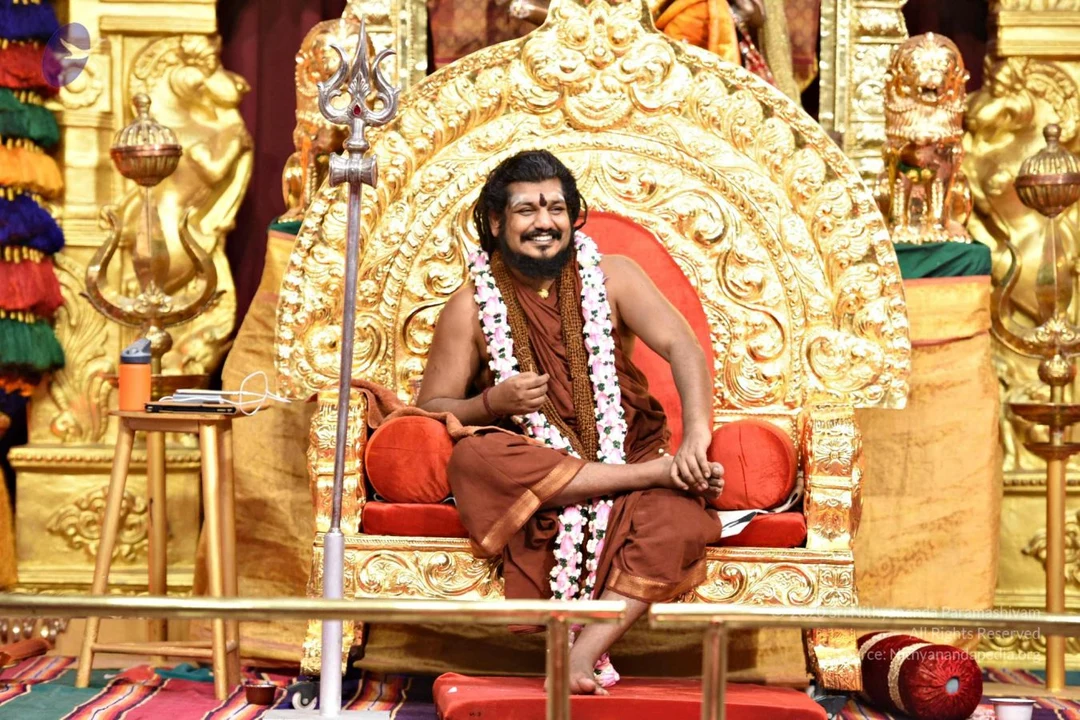
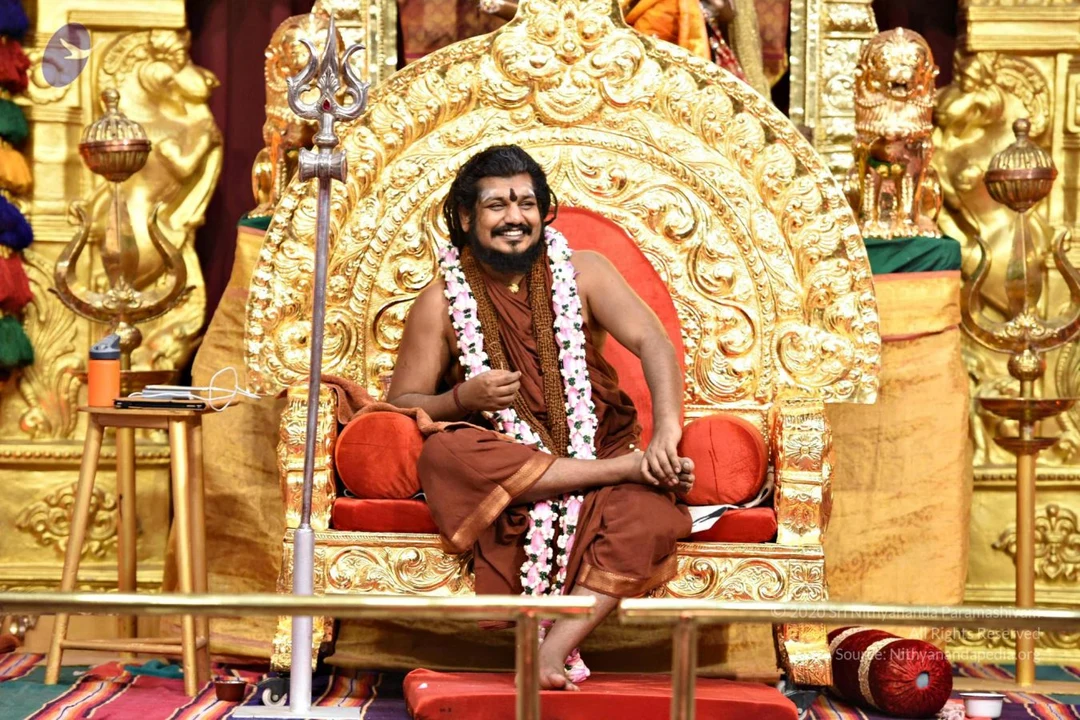
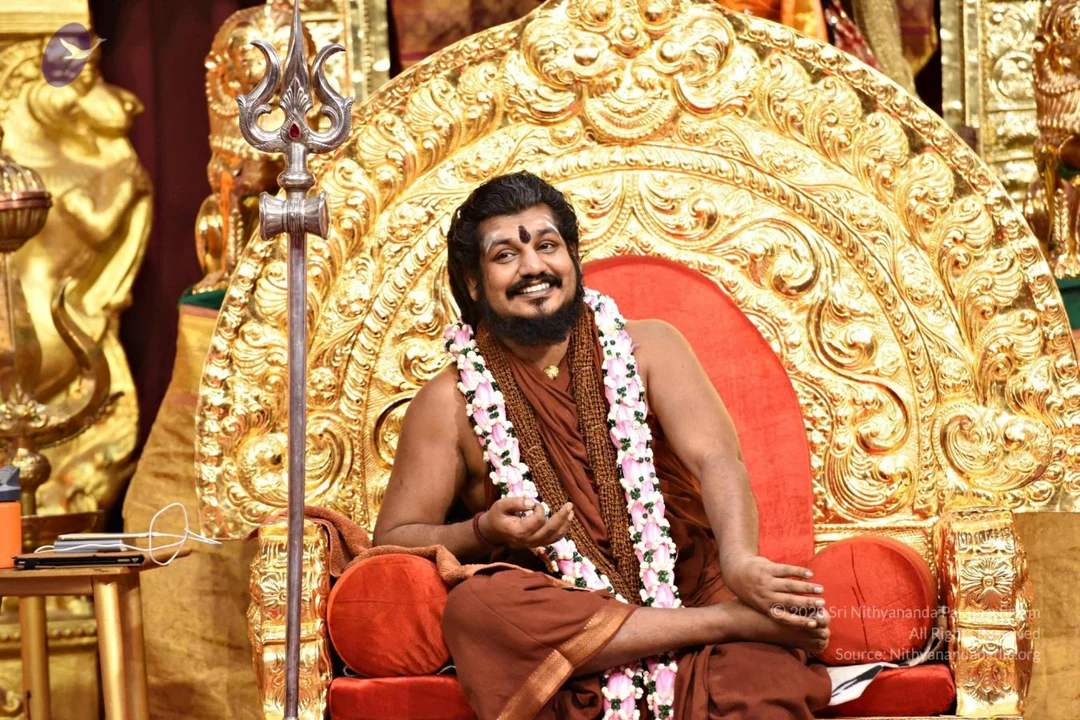
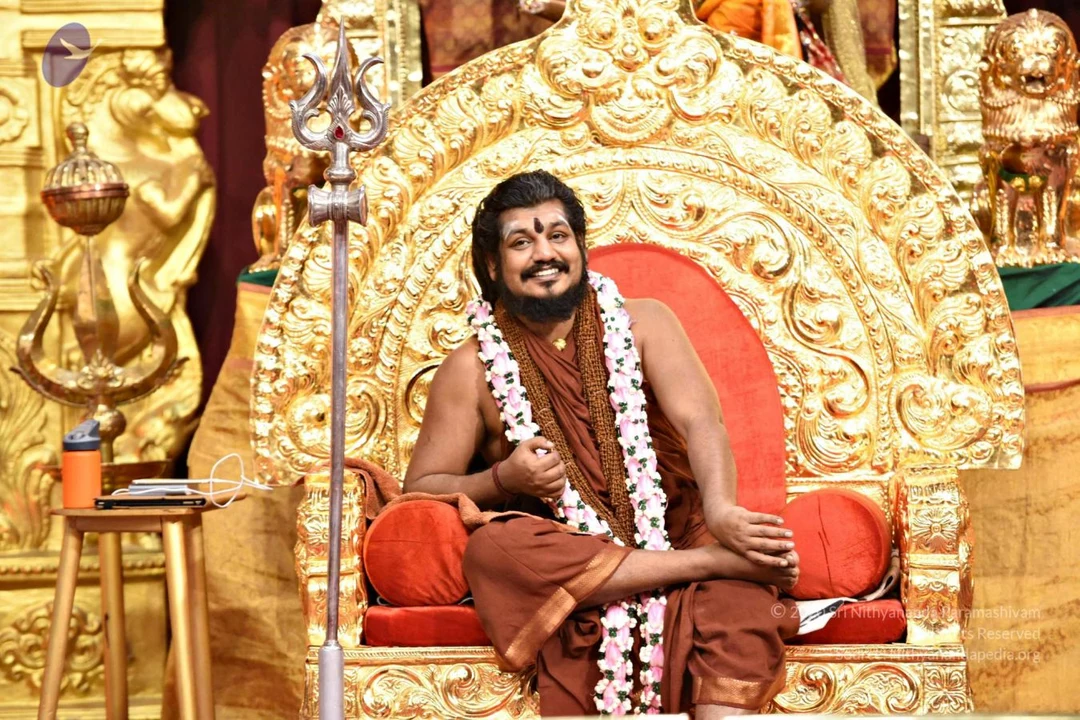
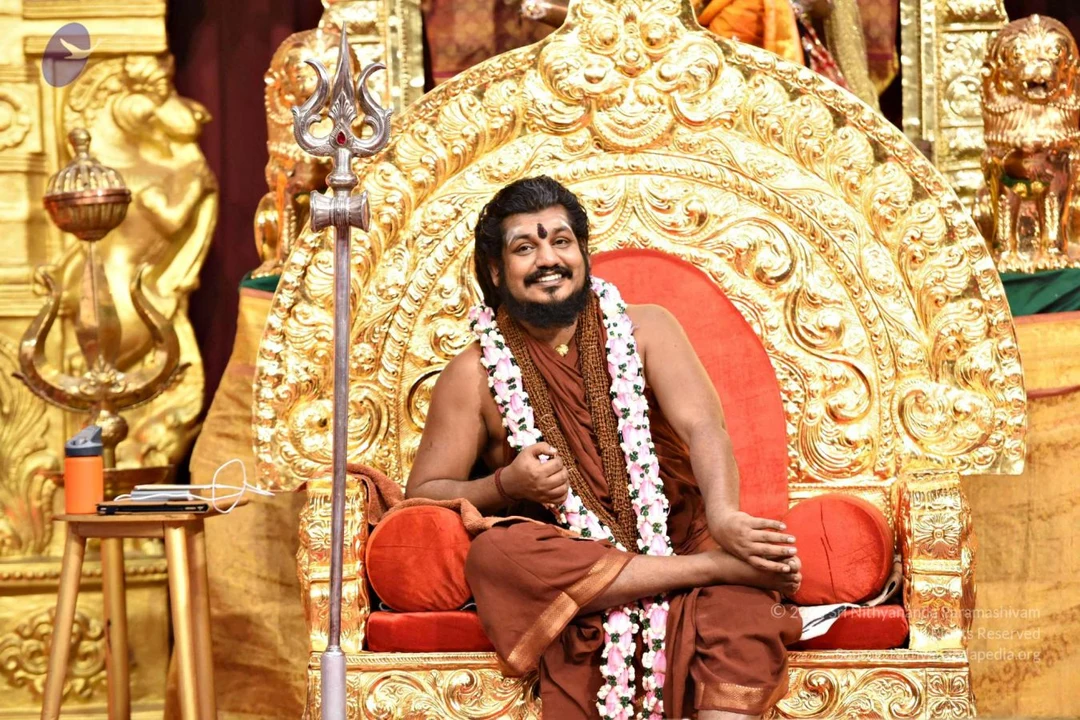
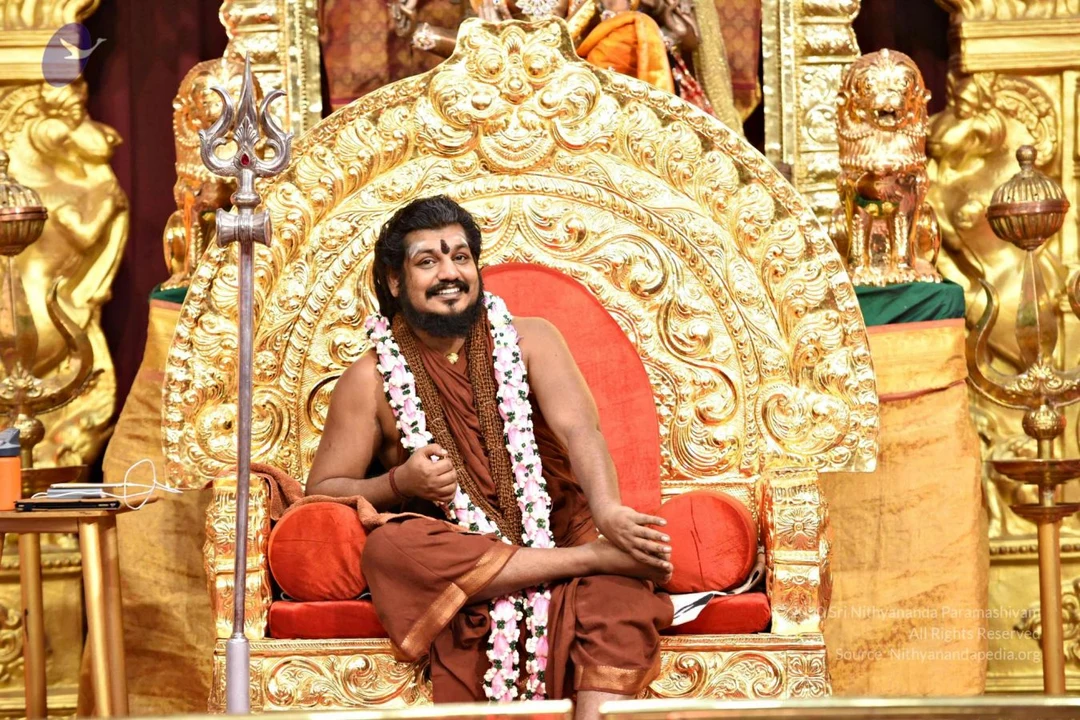
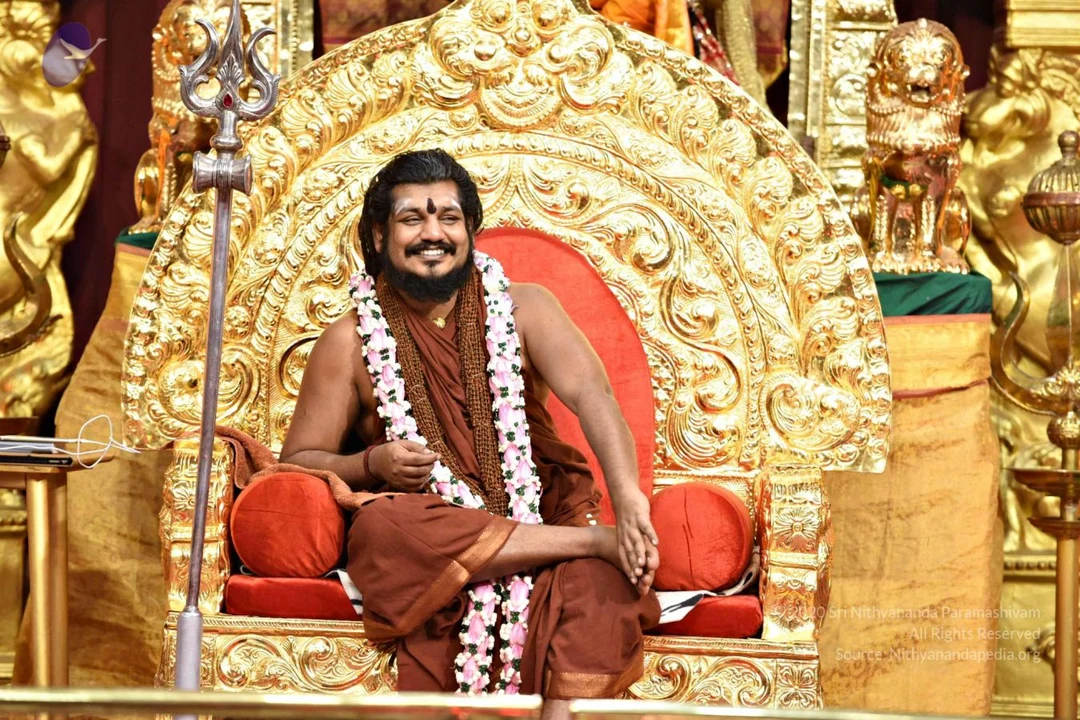
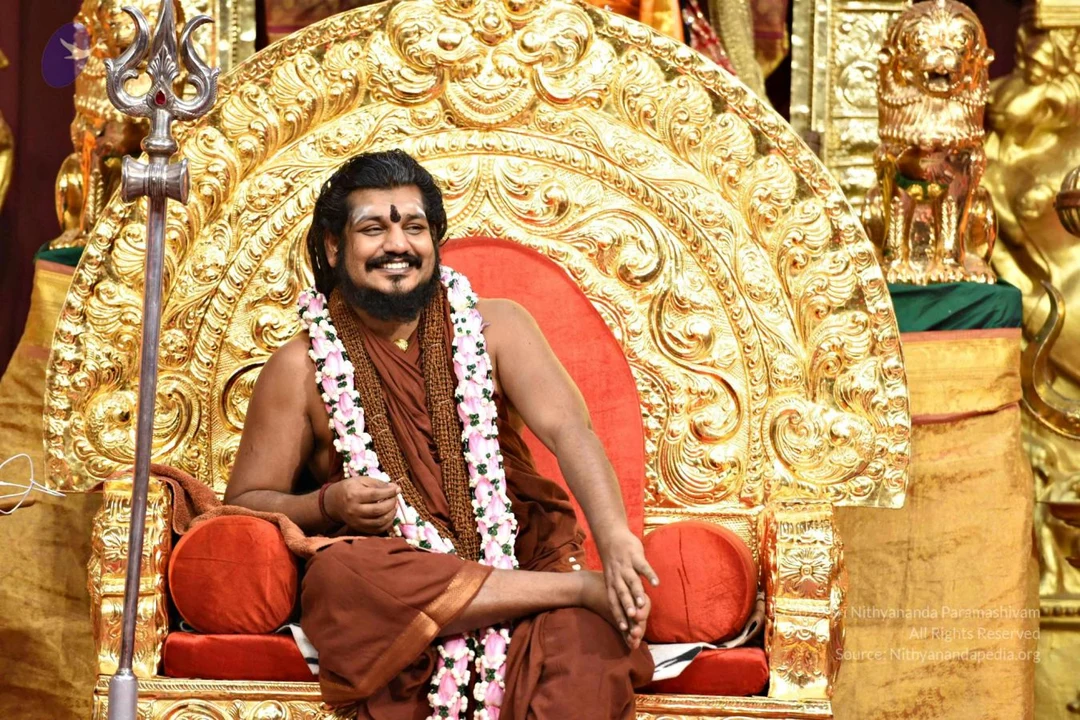
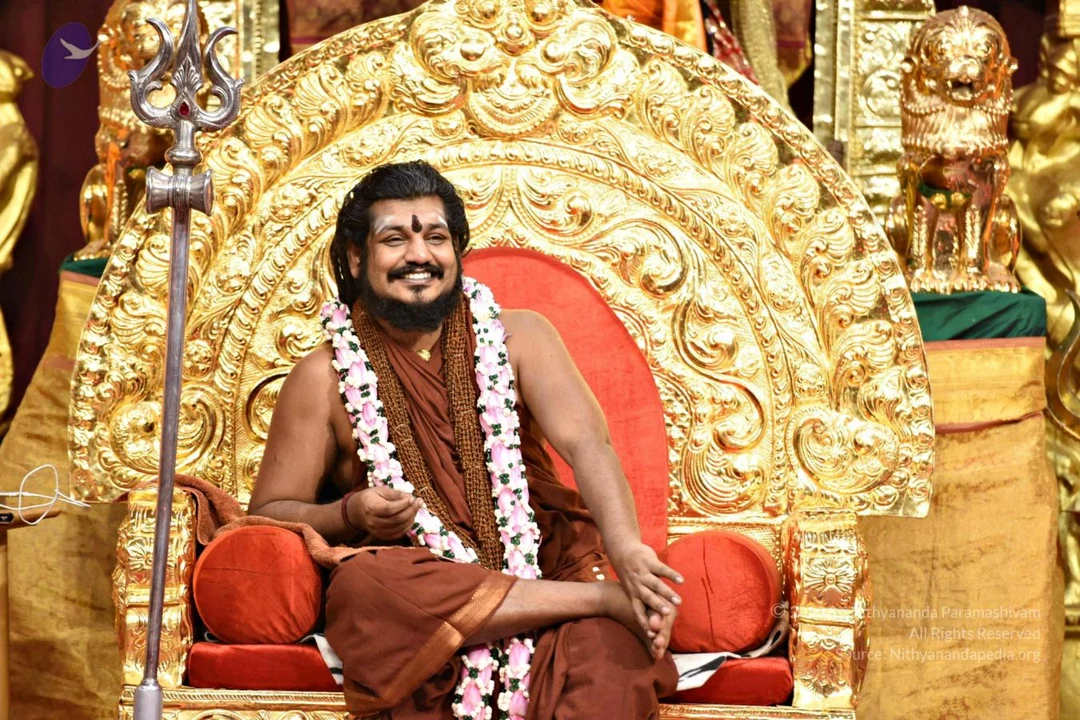
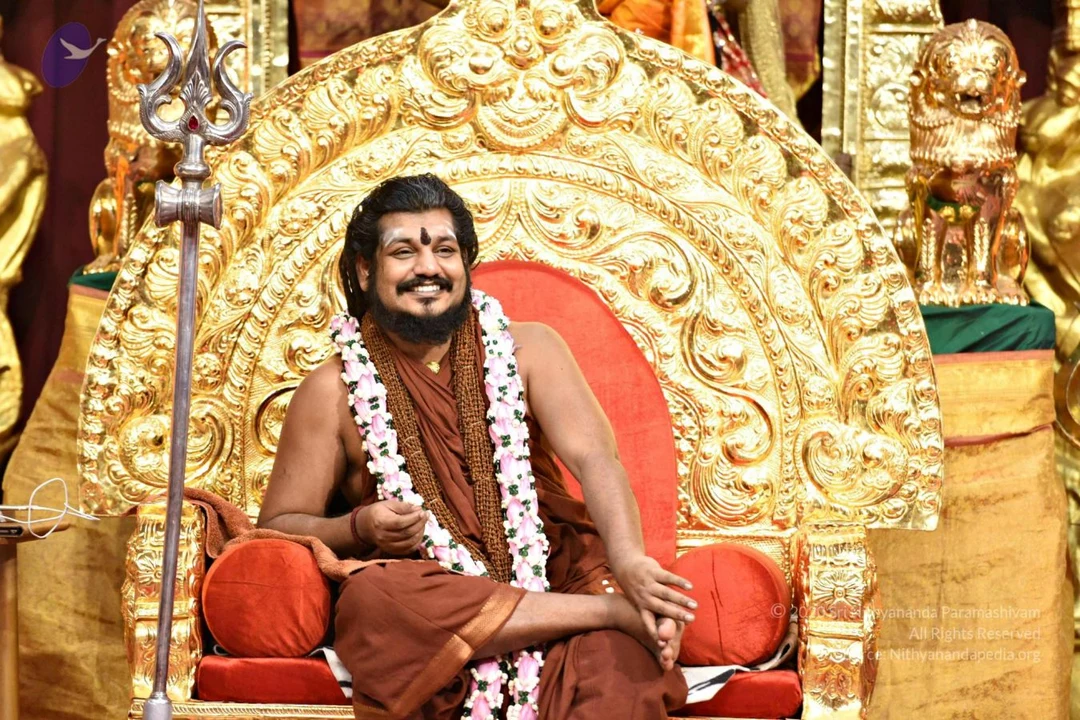
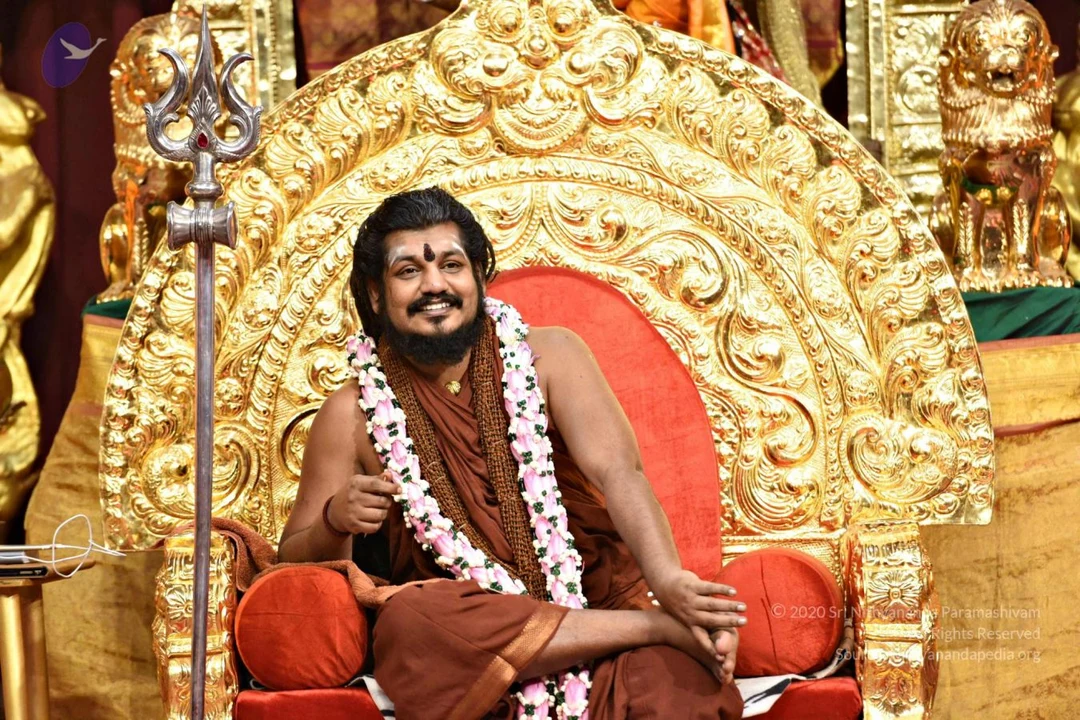
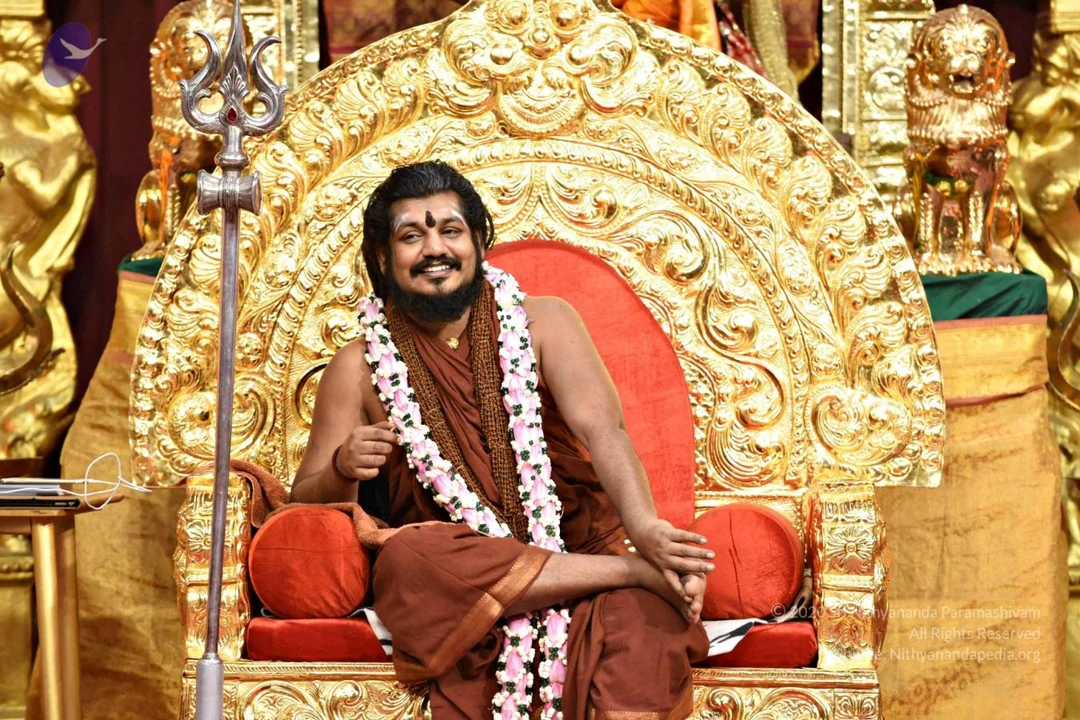
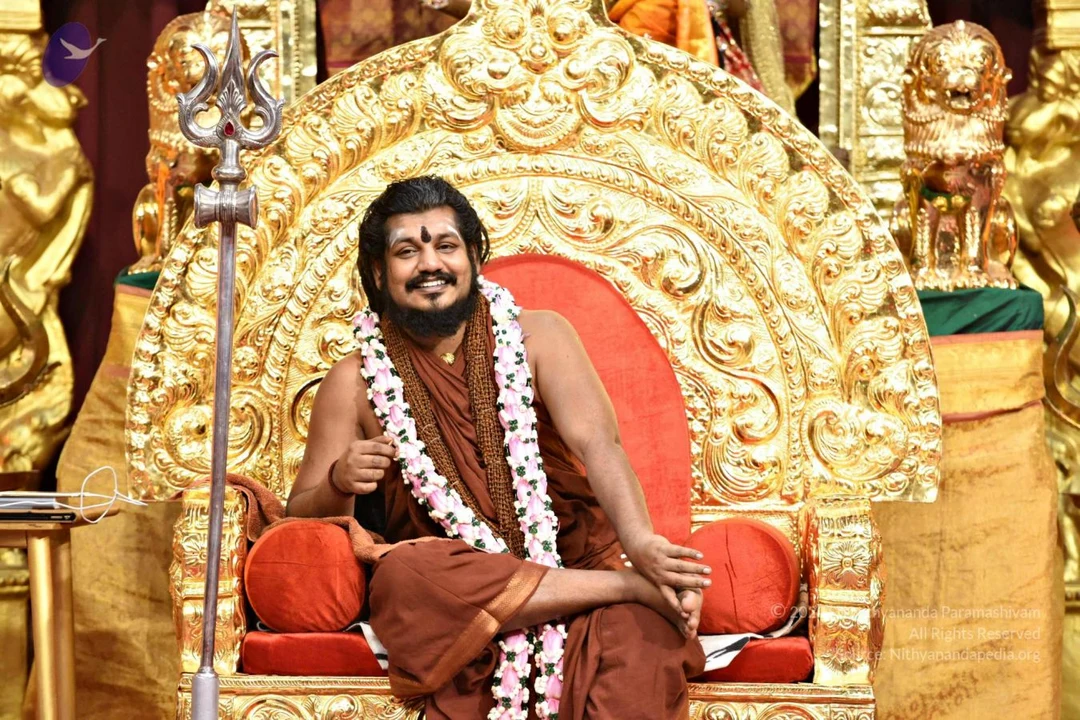
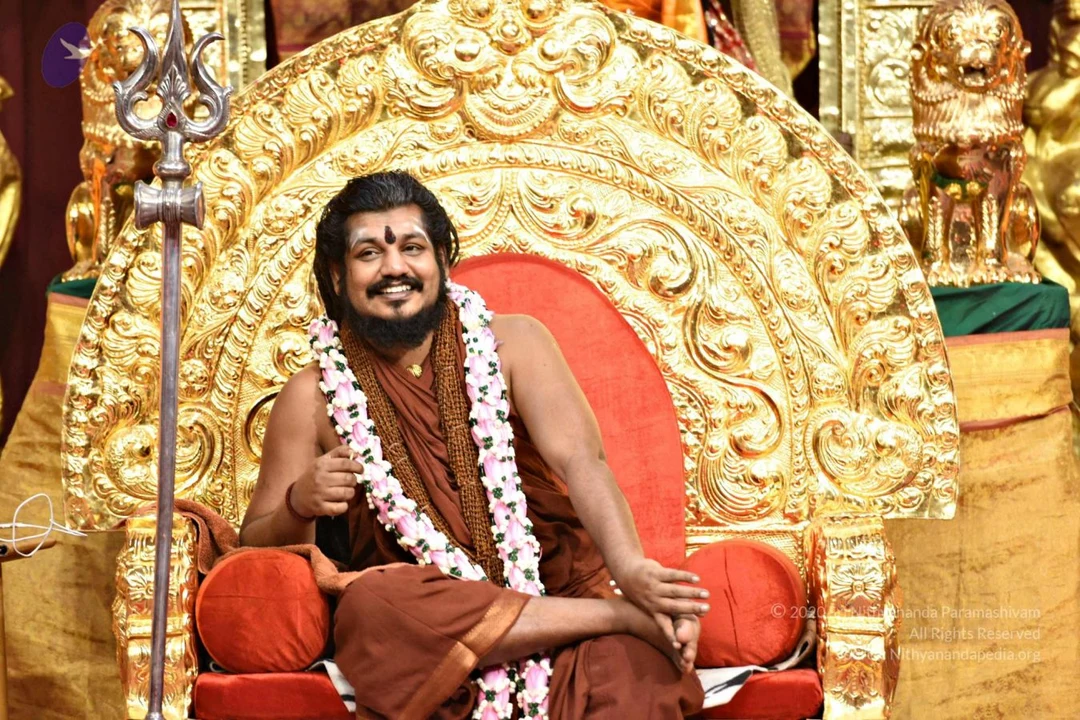
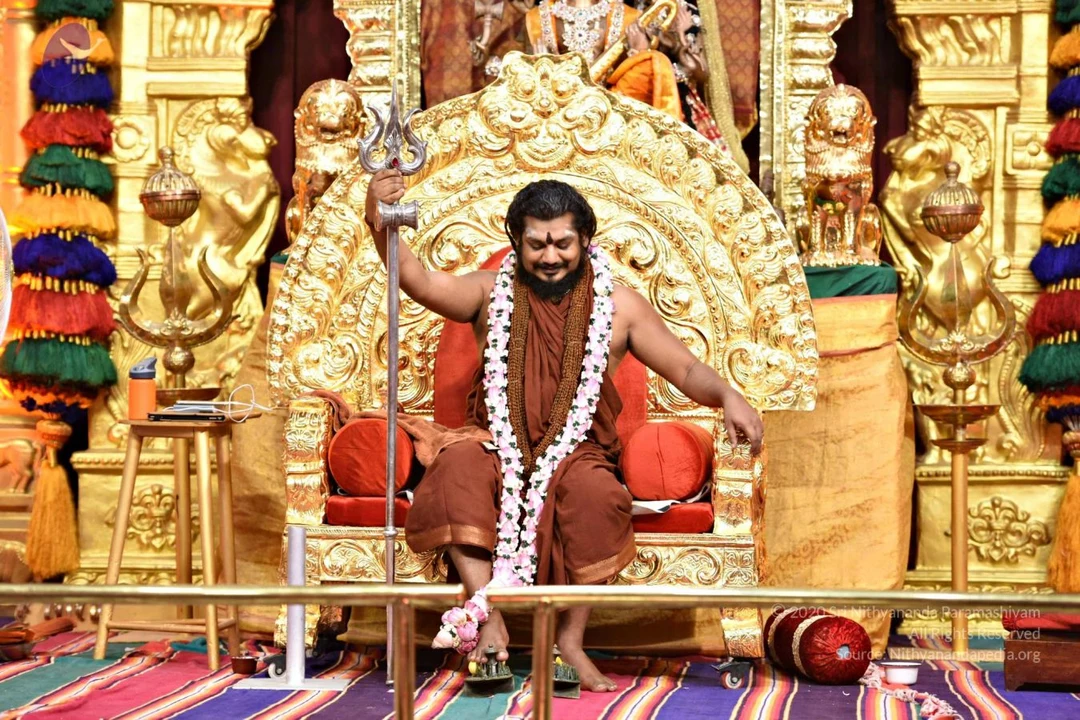
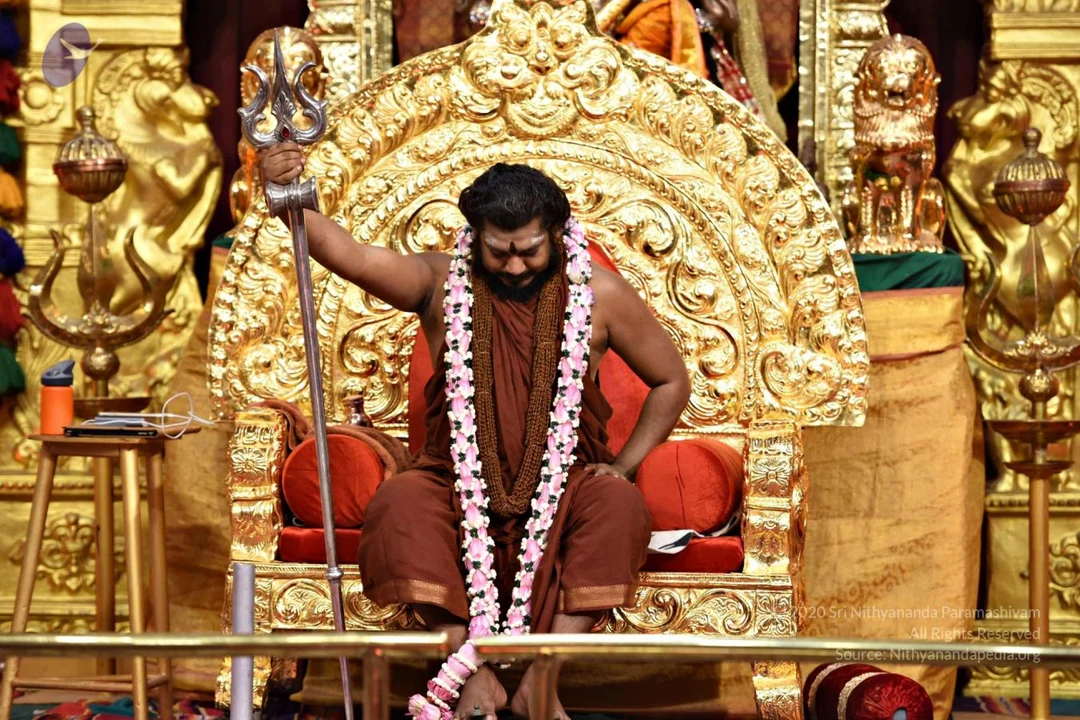
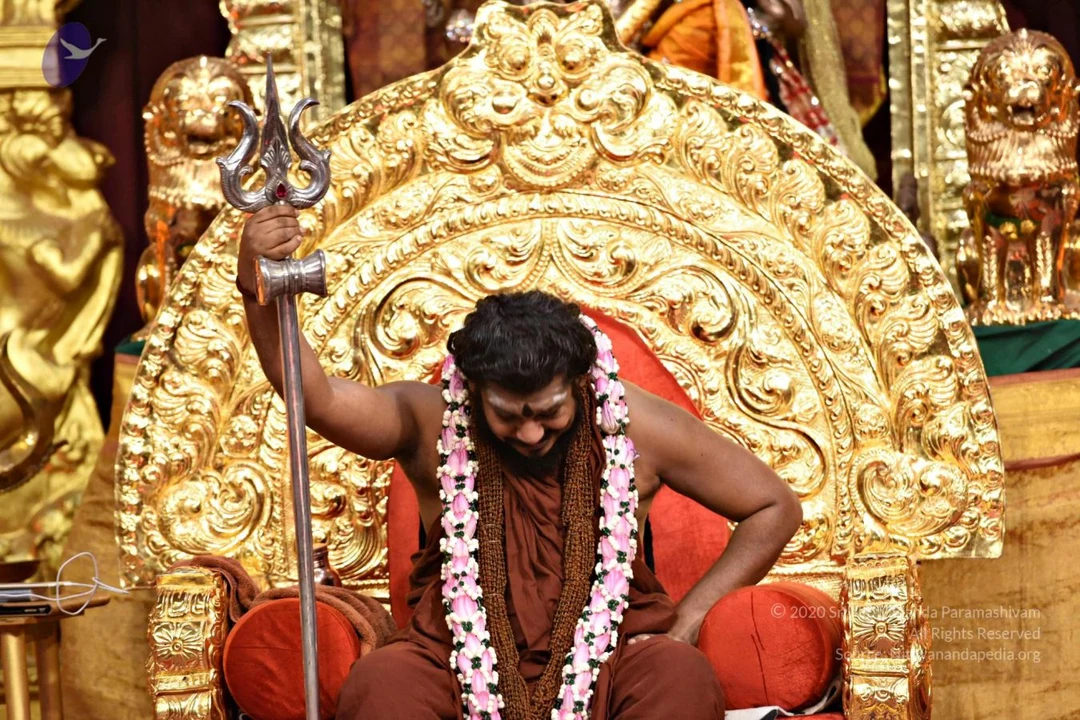
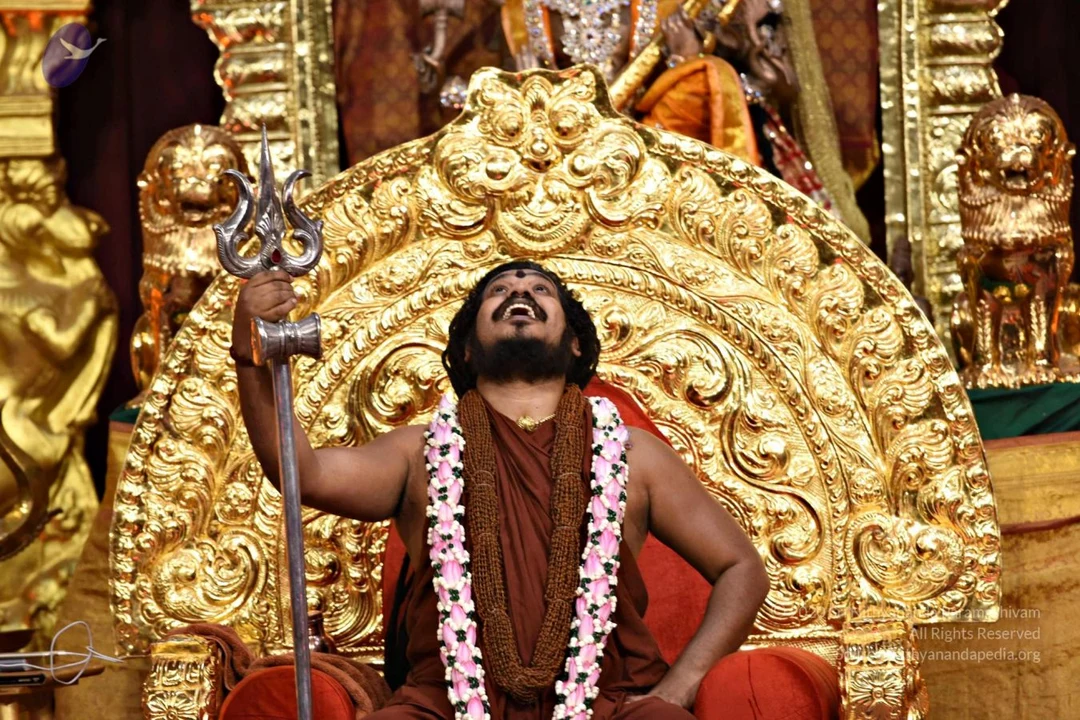
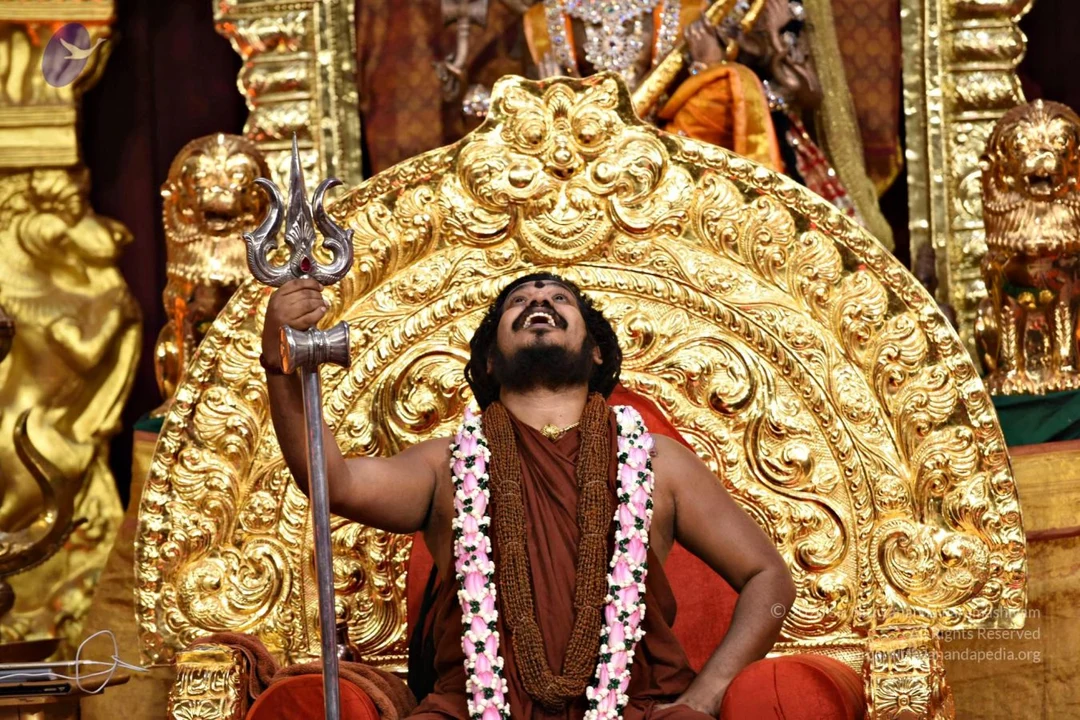
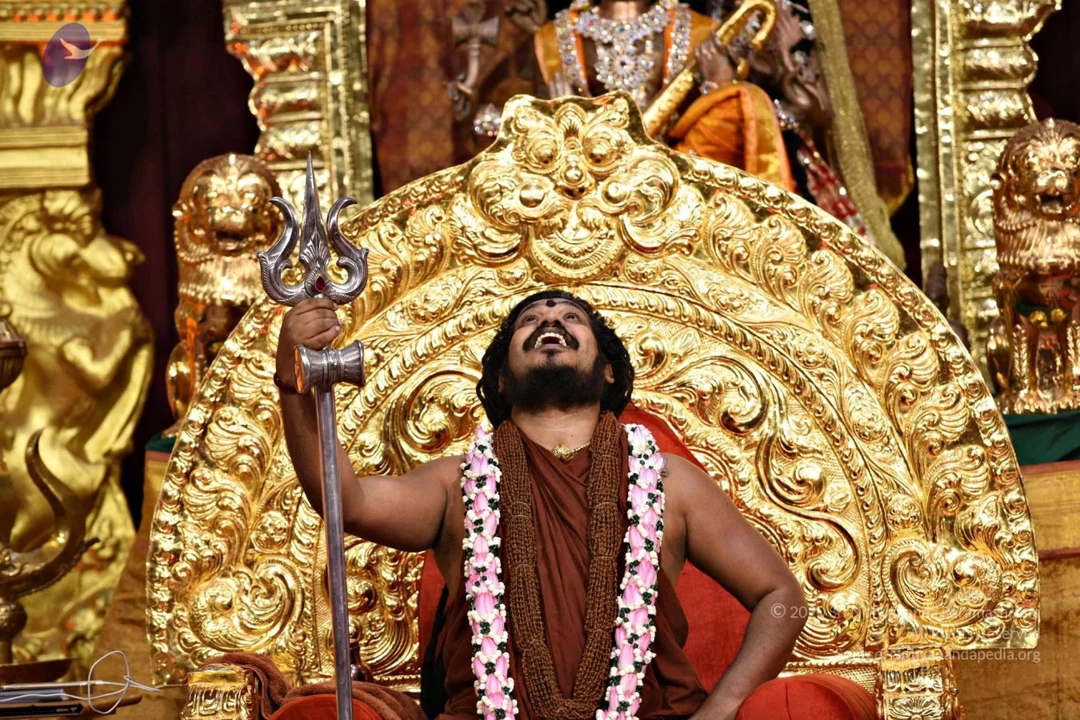
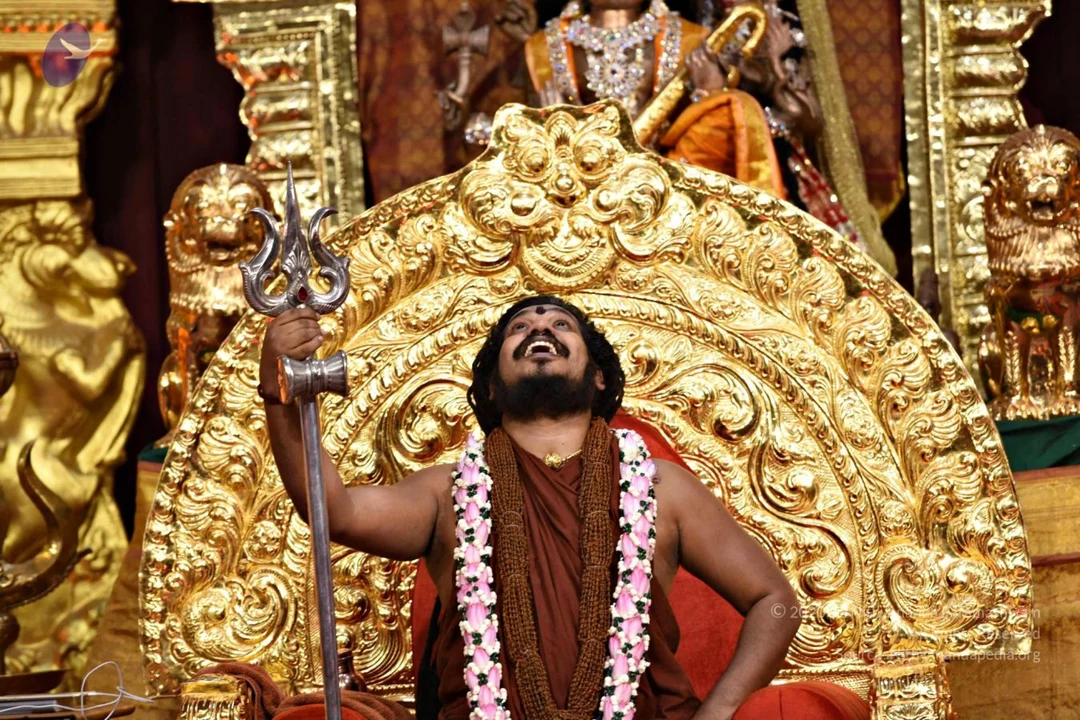
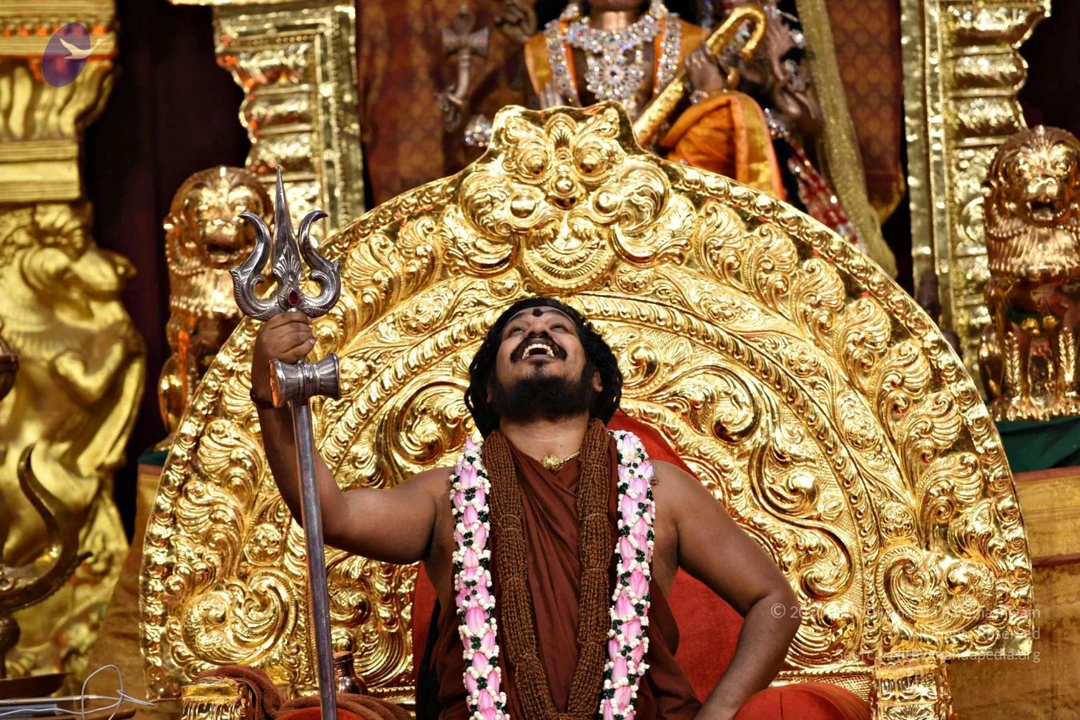
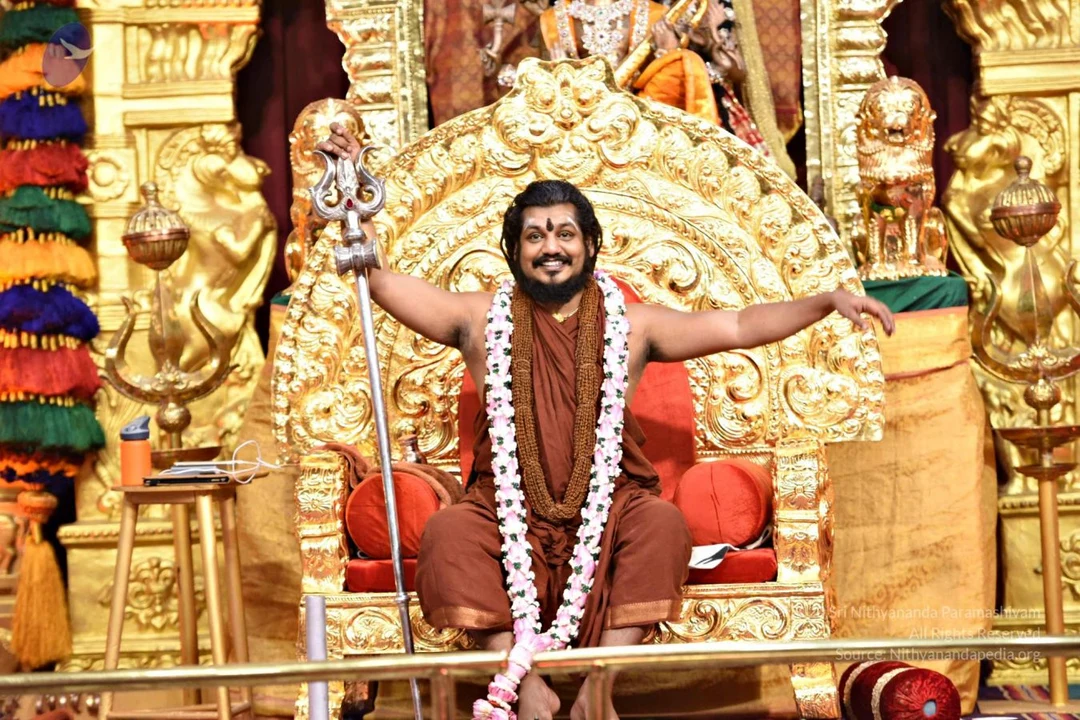
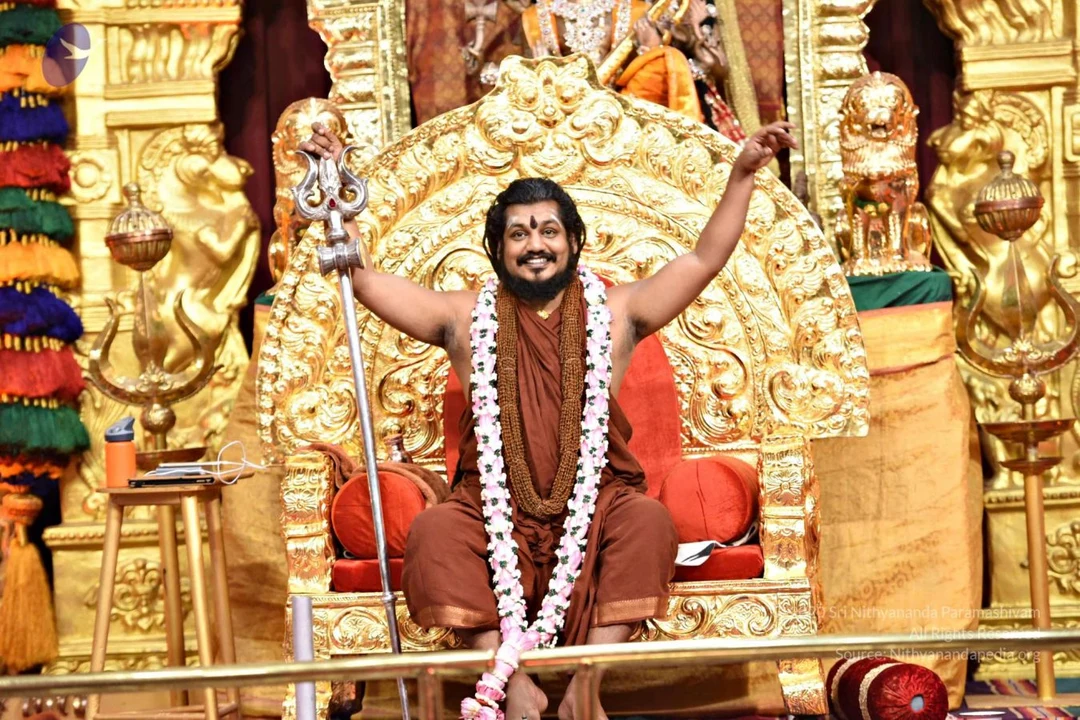
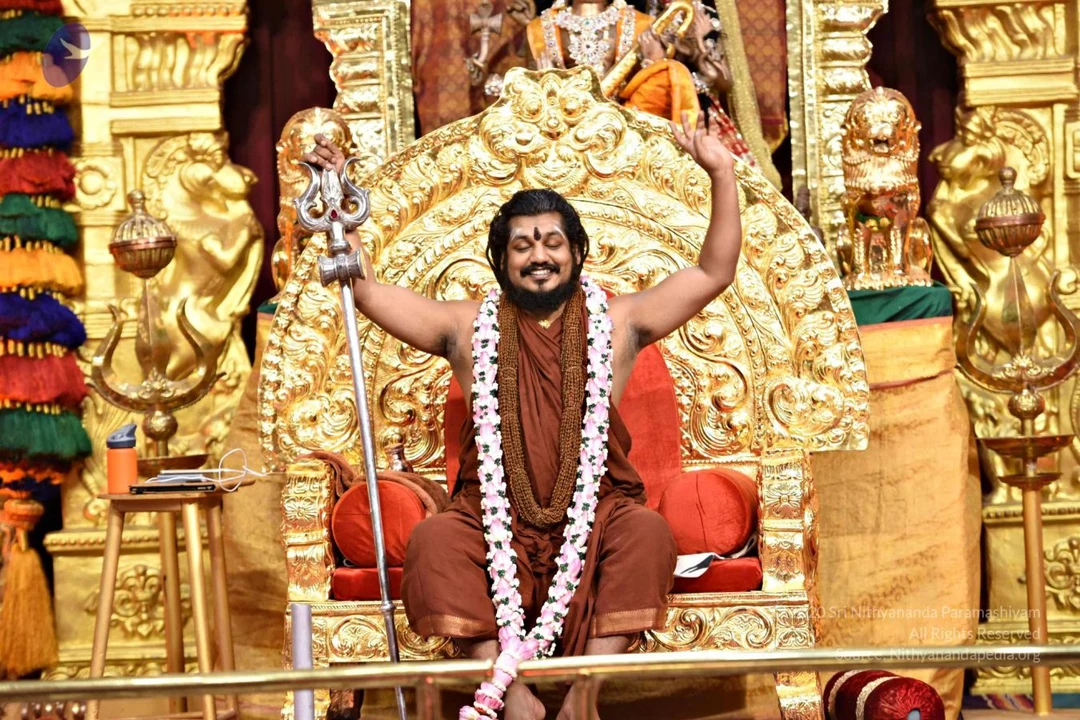
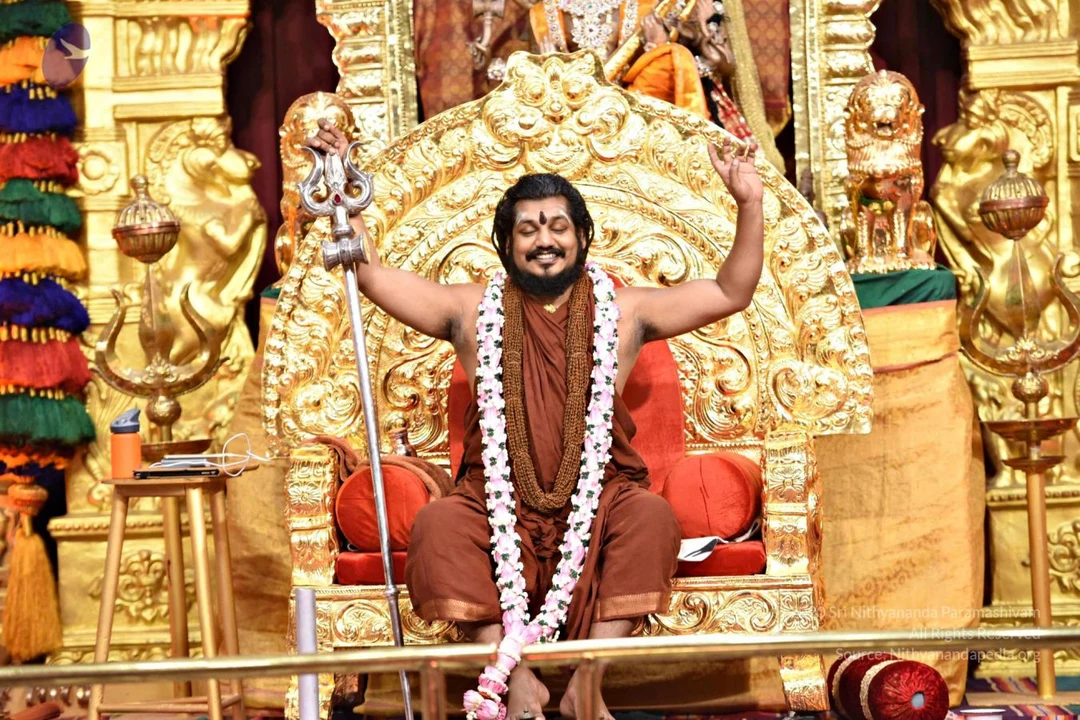
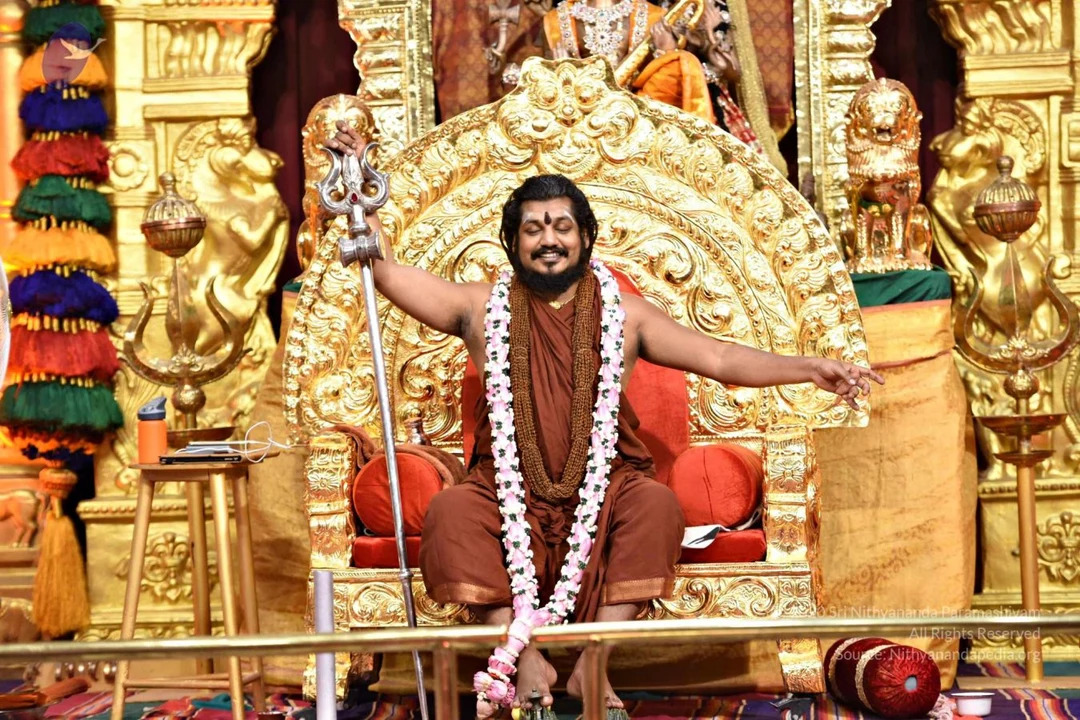
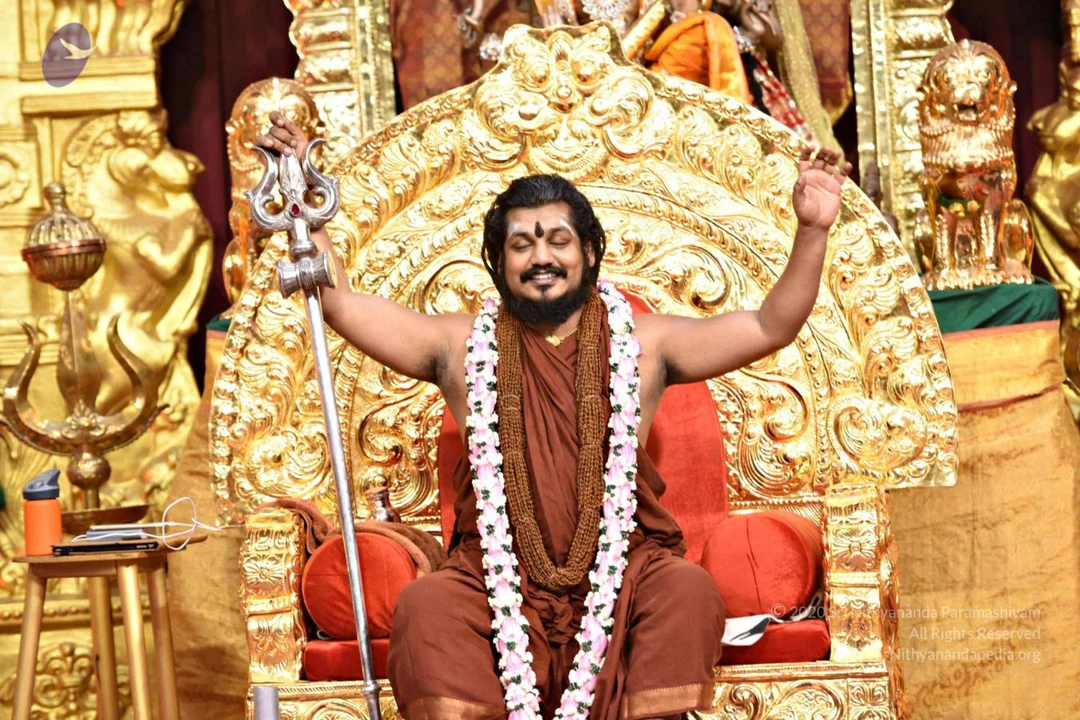
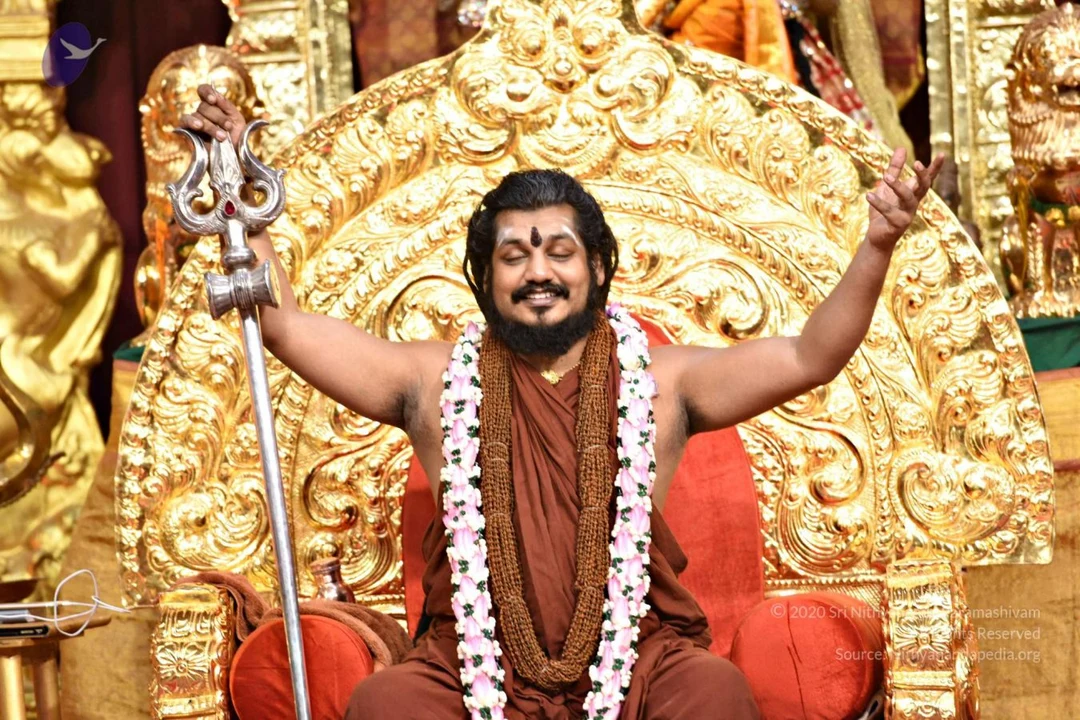
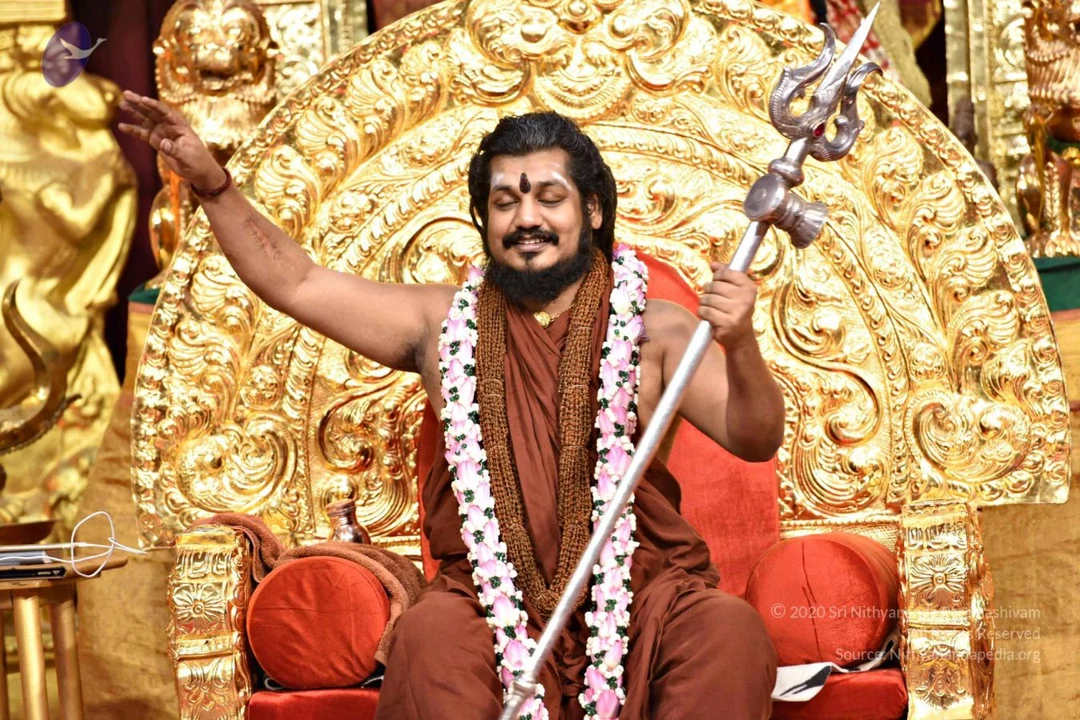
On this day, the Supreme Pontiff of Hinduism (SPH), Bhagavan Nithyananda Paramashivam described about a revelation He received from Sadashiva about the easiest way to be in the space of oneness with Sadashiva. It came in the form of a sound, which upon chanting will instantly establish one in the space of Oneness and let them manifest powers. This 'password'-the Mahavakhya revealed by Sadashiva works beyond our state of mind and incompletions, instantly manifesting Sadashiva through us. SPH shared that every time when we declare this mantra, this password, Sadashiva who is in us, Mahasadashiva, He just breaks, He opens up through us and starts manifesting. He breaks all that small human identity in us, He over takes, He just possesses us, takes over us and He starts manifesting. SPH furthermore encouraged everyone to use this like a password and declaration for any power manifestation.

That day’s Presidential Address-Nithyananda Satsang was conducted by the Supreme Pontiff of Hinduism Bhagavan Nithyananda Paramashivam on 25 March 2017 in Adi Kailasa, Bengaluru, Karnataka, India.

Satsang Video

VideoAudio

Transcription

(0:08)

It’s one of the very important revelation by the Sadashiva. All the electronic equipments work when the electrons are made to vibrate, that happens by the light. When the electricity is supplied, the light particle vibrates, the electronic equipment starts working. Just like that this spiritual power and the umbilical cord connection, spiritual umbilical connection between you and Me... it works with sound particle. For example, My Integrity with the Cosmos – Sadashiva – MahaSadashiva, it reverberates in certain level of frequency. When you are integrated to Me you also start reverberating in the same frequency. If your integrity goes down that is when you start connecting with Me only as a Manager or this Organization Head, or your purvashram father, mother; your connection with Me goes down to the lower level if the integrity gets reduced. I was wondering what is the way we can bring people to the higher Integrity immediately and the feeling connection, so they start manifesting the powers, they start staying in the space of Sadashivatva.

Sadashiva revealed a beautiful sound; I can tell you this is like a password. At any point if you are not able to bring yourself to Oneness, you are little shaken, disturbed or for some reason you are not able to bring yourself to Oneness, this is like a password, you type, whether your mind feels connected or not the energy will start flowing in you beyond the Depth dimension. You see all mind oscillation, restlessness, all mental idea based feeling connected or not feeling connected is only Length, Breath, Depth level not in the Space level. But this sound will straight infuse energy from the Space level. Like a for example, if the power goes off, automatically the generator will get switched on and the power supply will be going on, so end result will not be lost; whether government power supply or the generator power supply, end result will not be stopped. So whenever you feel little that Oneness is... you are not catching it, just feed this password. Immediately the Oneness will be open up and you will start manifesting the powers, energy and the whole space will shift.

(3:27)

It’s directly from Sadashiva; it’s a beautiful sound. I don’t even want to say it is a mantra; it is not even a mantra because there is no meaning in it. You can’t derive a meaning for it. It just flashed like a password for all the initiations I am giving. One single password for all the initiations I am giving... and... initiations I gave, I am giving I will be giving, for all that. This is like one password. Don’t even repeat like a Mantra; just feed like a password and it will just open up. Your whole Being will open up. Listen carefully its starts with the Vibration “Aum” Listen and then repeat.

(4:20)

Aum... (Participants repeat) Very deep Aum (Participants repeat) Nithyananda (Participants repeat) Nithyananda (Participants repeat) Maha (Participants repeat) Sadashivoham (Participants repeat) Because it just came out like a password neither I bothered to find a meaning nor I think we can have a any logical meaning to it. May be we can set our own context like a, because through the form this form, and the name Nithyananda you’re feeling connected... with that Mahasadashiva the Whole, the Cosmos. And it is not even namah, it is a Aham. It’s concluding with Aham, means, asserting your Oneness, declaring your Oneness to the Cosmos. So there is no logical meaning to it. I cannot say this is mantra because all mantras are supposed to end only the seven end -Namaha, Voushat, Vashat; these are the seven ends Swaha, Swadha... all mantras have to end only with that seven ending. But this is not ending with any of that seven. So I cannot call this as mantra. I should only call this as a password just got delivered by Sadashiva. The moment you declare this frequency the umbilical cord connection will become fully alive, awakened, opened up and the powers will start manifesting, the Sadashivatva, that real Oneness will start manifesting.

(6:30)

It’s like an every time the life inside the egg declares its authority and comes out. So every time when you declare this mantra, this password, Sadashiva who is in you, Mahasadashiva, He just breaks, He opens up through you and starts manifesting. He breaks all that small human identity in you; He over takes, He just possesses you, takes over you and He starts manifesting. So use this as a declaration like a password, like a password and declaration for any power manifestation.

Before doing anything - whether power manifestation or eating or sitting or walking or talking, before doing anything declare this and then start doing. Not as mantra... understand, mantra means unconsciously Aum Ham Haum Shivaya Namaha, Aum Ham Haum Shivaya Namaha, Aum Ham Haum Shivaya Namaha... thinking about brinjal and chanting mantra. It’s not like mantra; just declaration. You’re telling who you are. How do you remember who you are? This is you now. This is me. This is me. So this is the declaration of password about you.

(8:03)

Adi Kailaasa Photos

Darshan
Sannyas
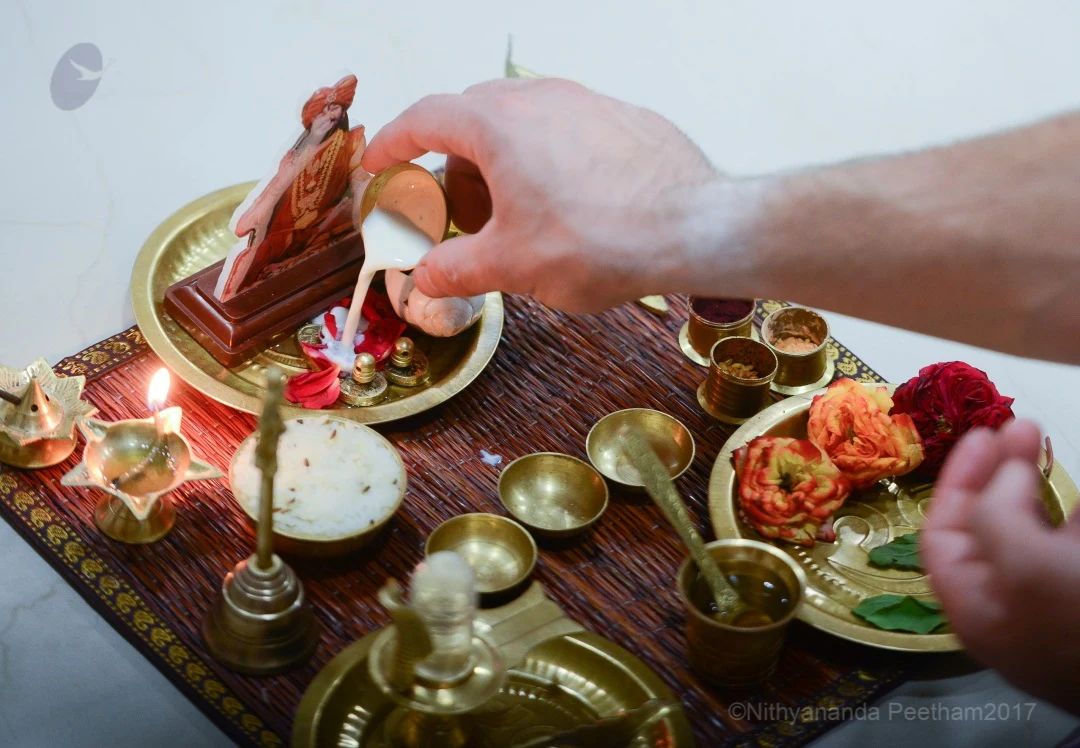
Puja
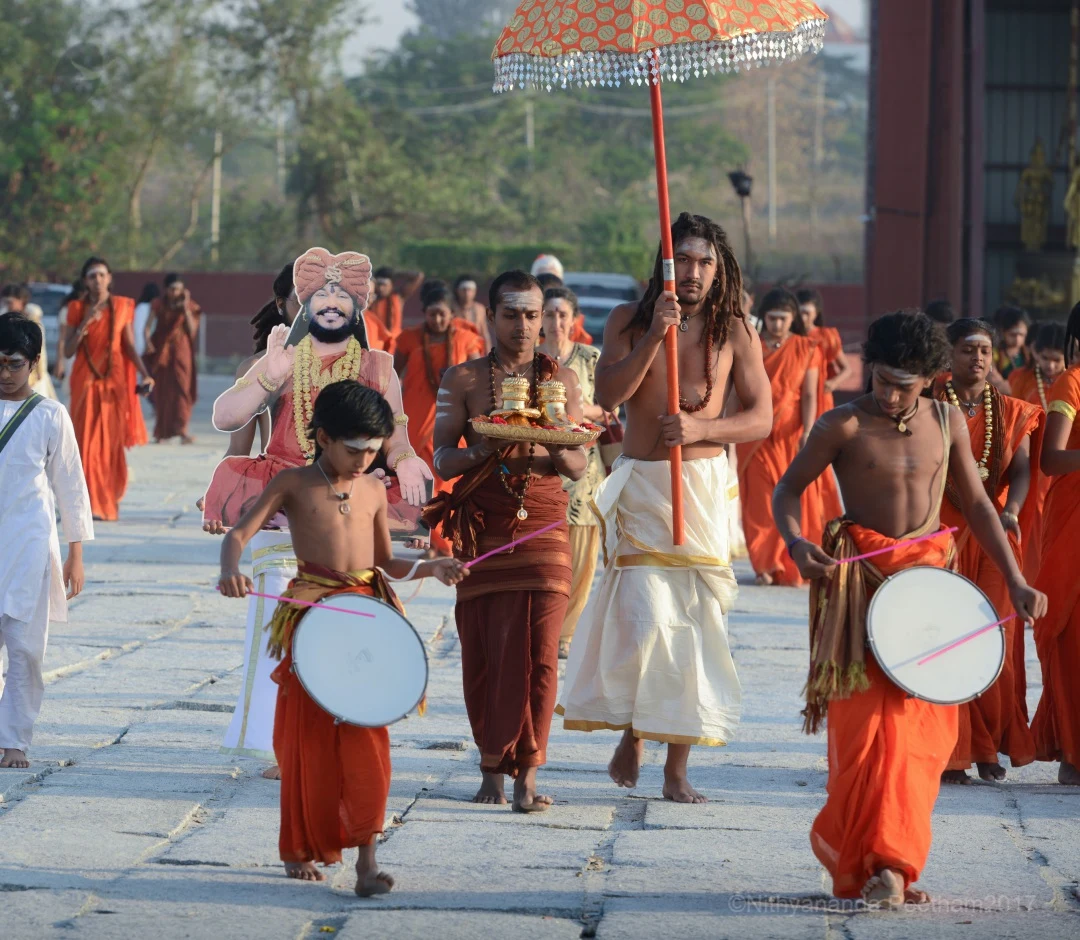
Procession
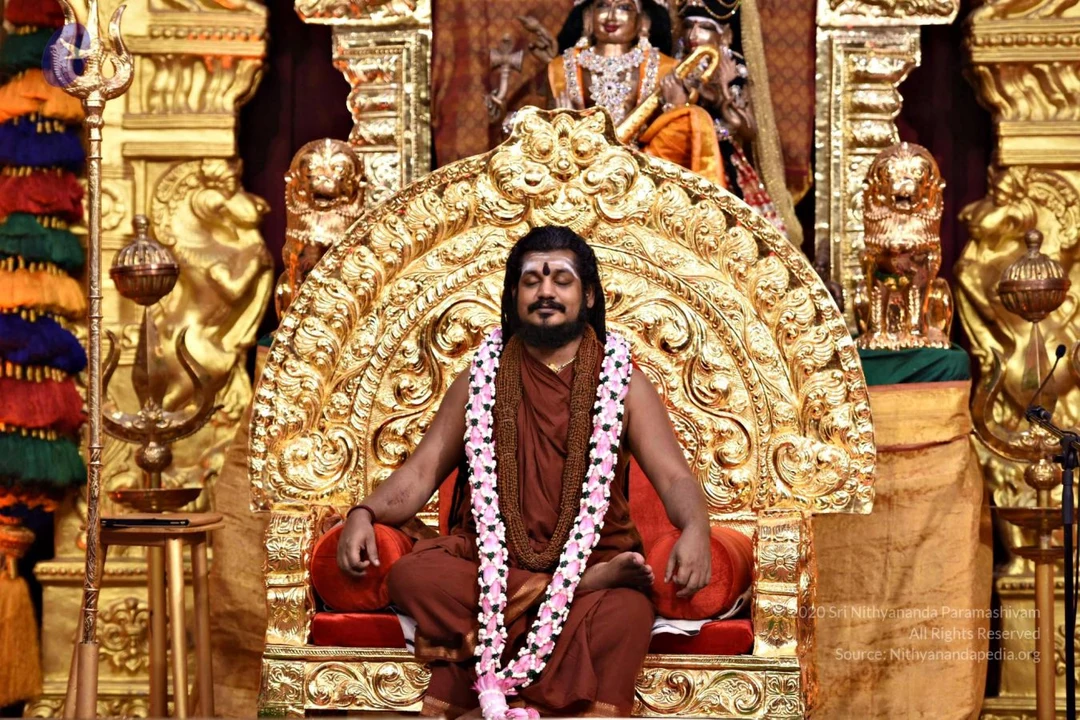
Photos of the Day
SPH meets with the Adheenavasis and gives Darshan

Sakshi Pramana Video:

Power of Puja and Mantras Testimonial

Facebook Link

https://www.facebook.com/ParamahamsaNithyananda/posts/1482437018510810,

Photos from this day
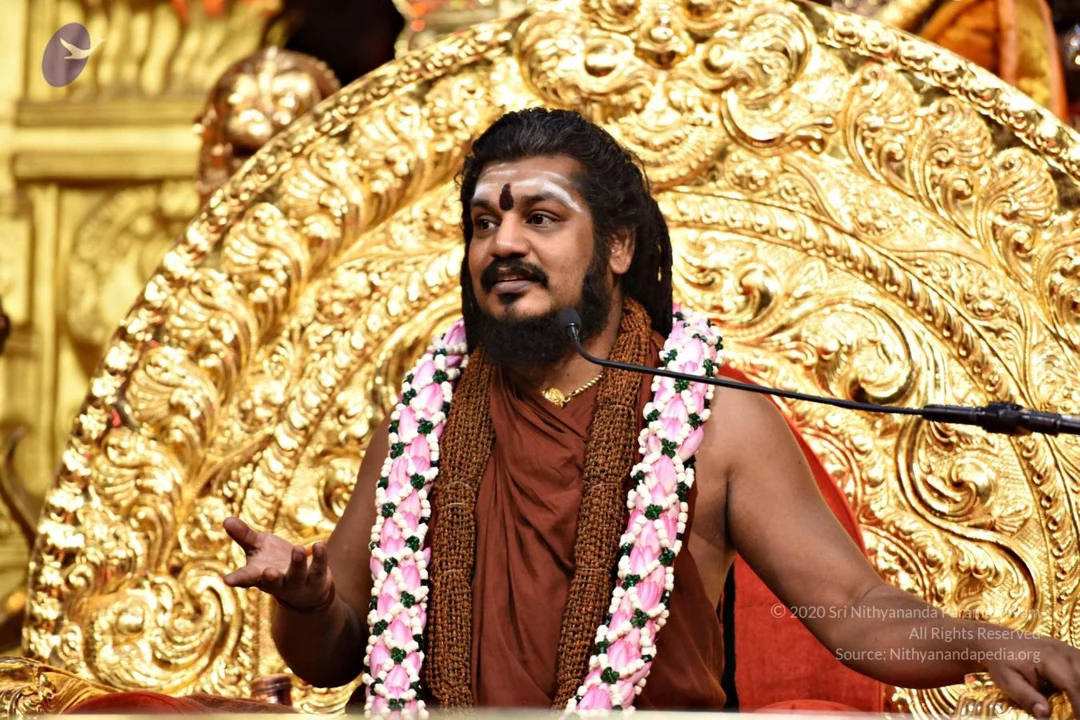
View all 265 photos

Darshan

8 photosSource gallery
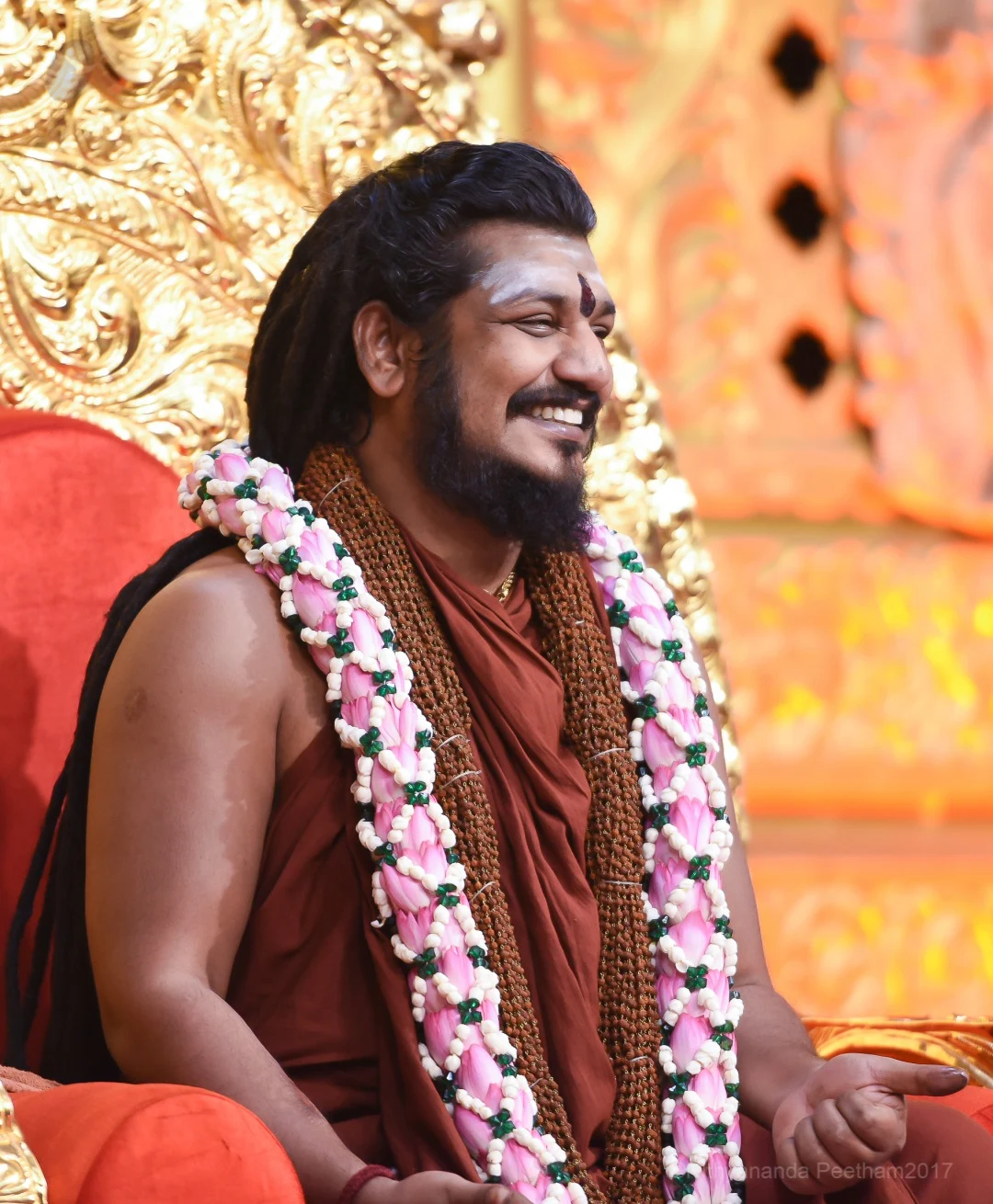
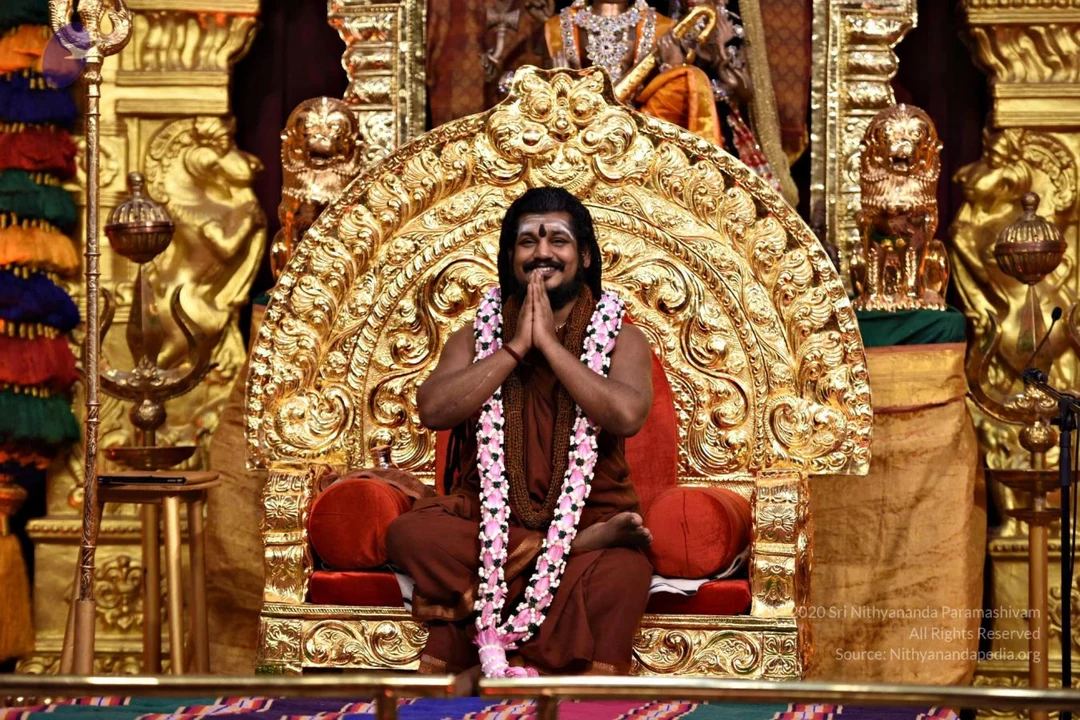
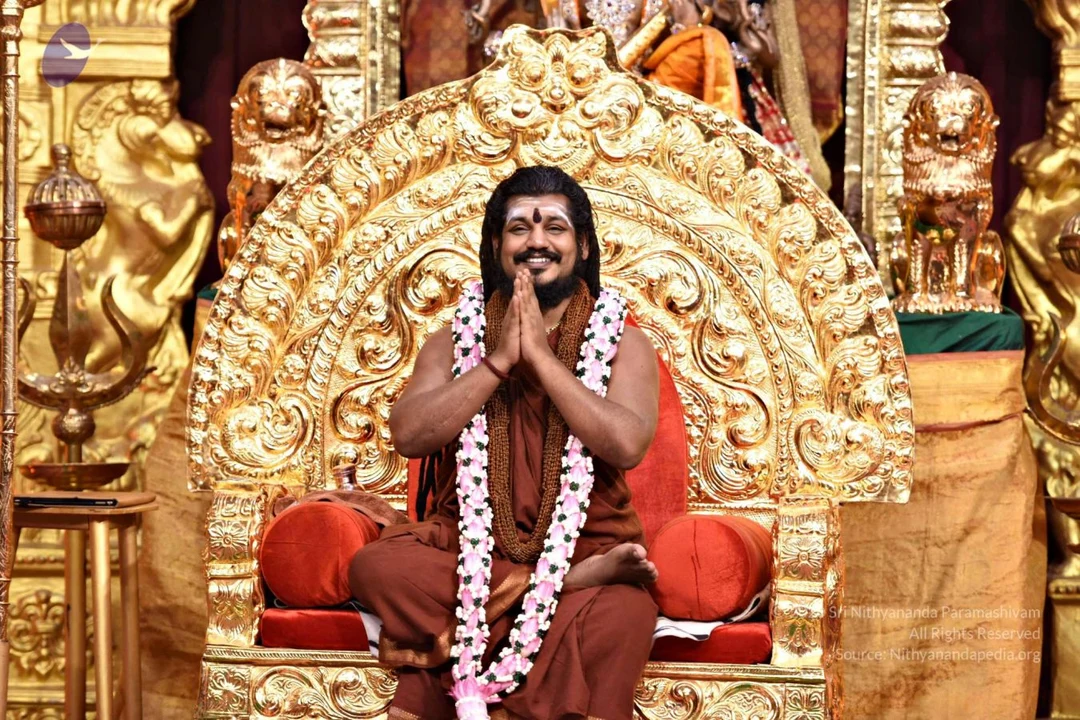
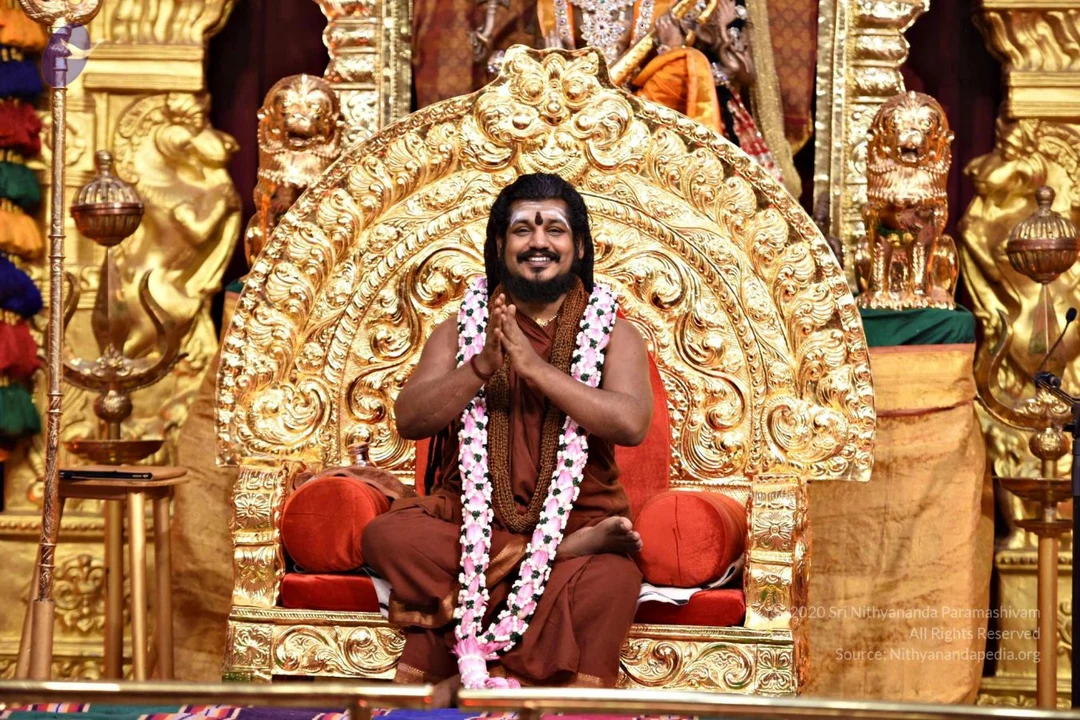
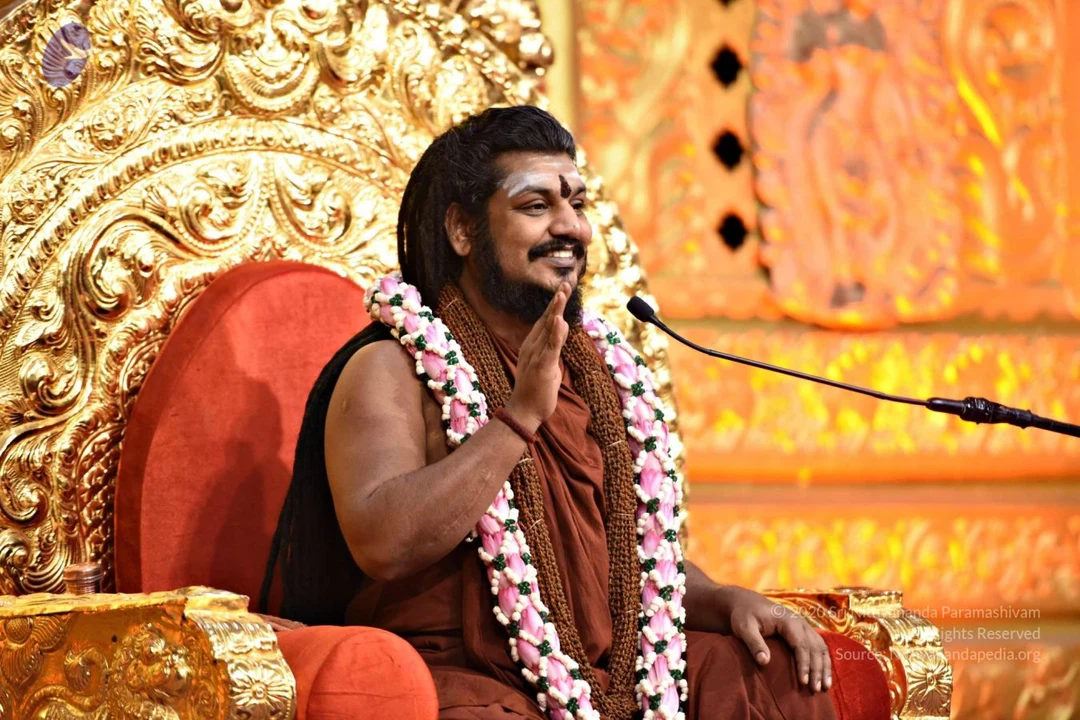
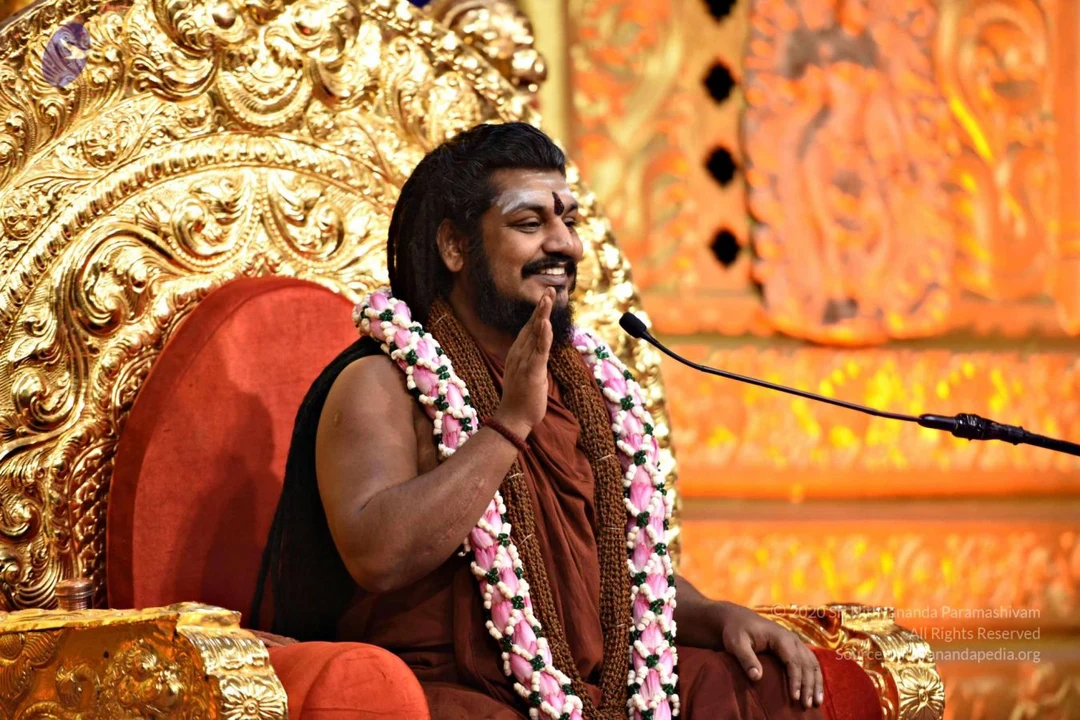
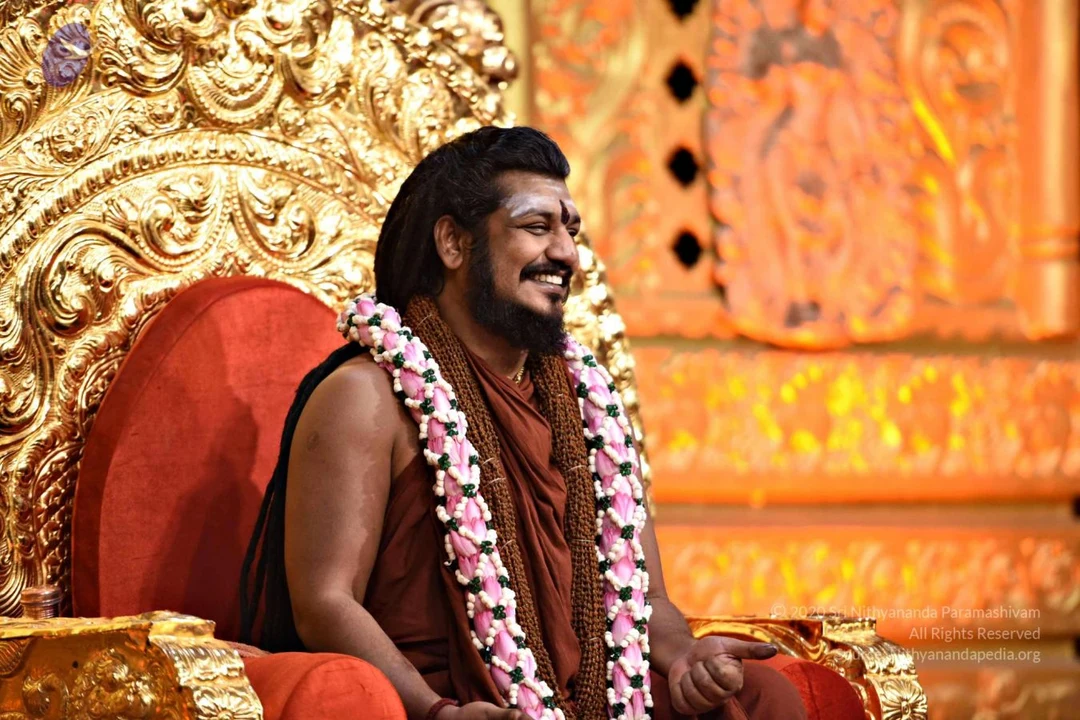
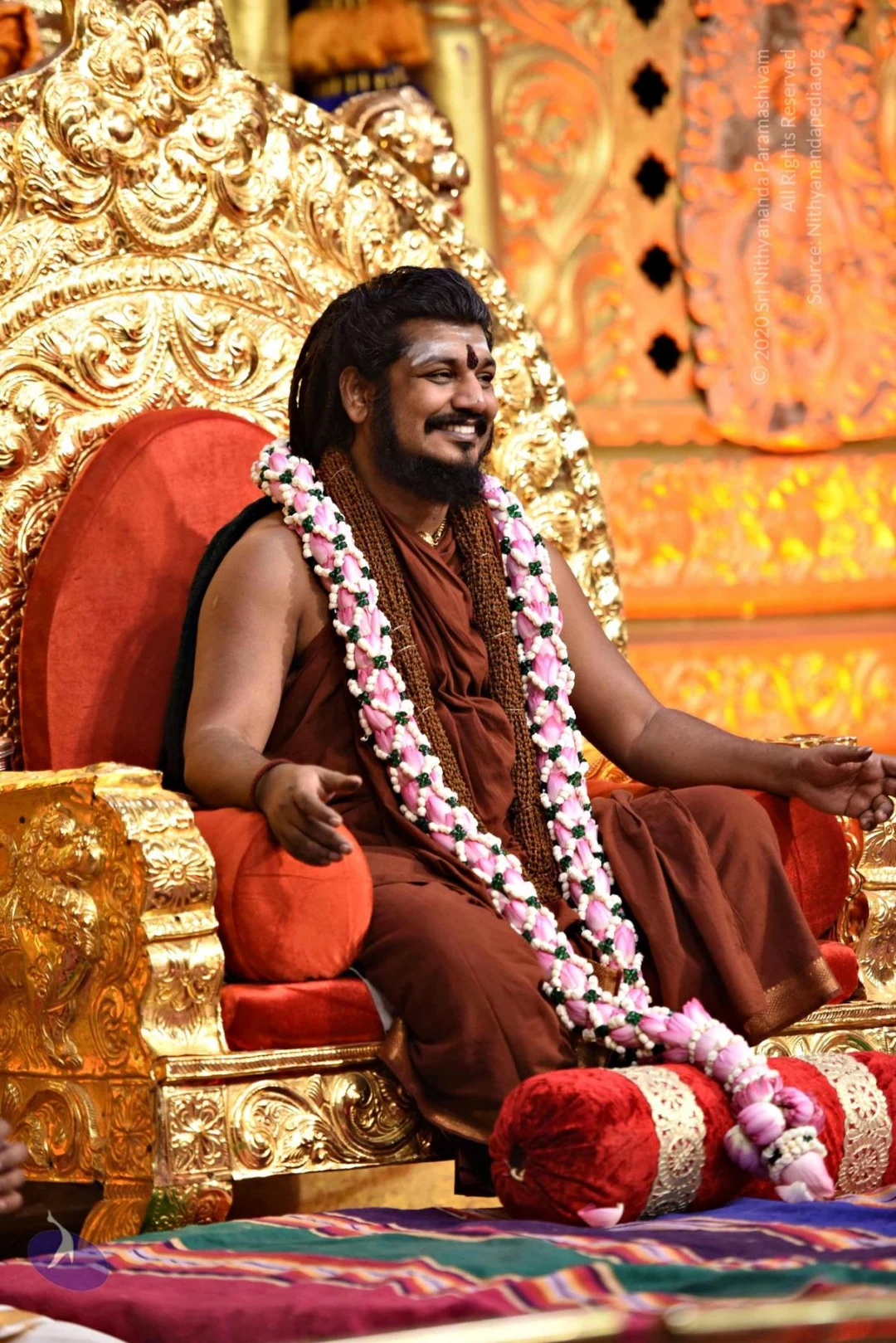
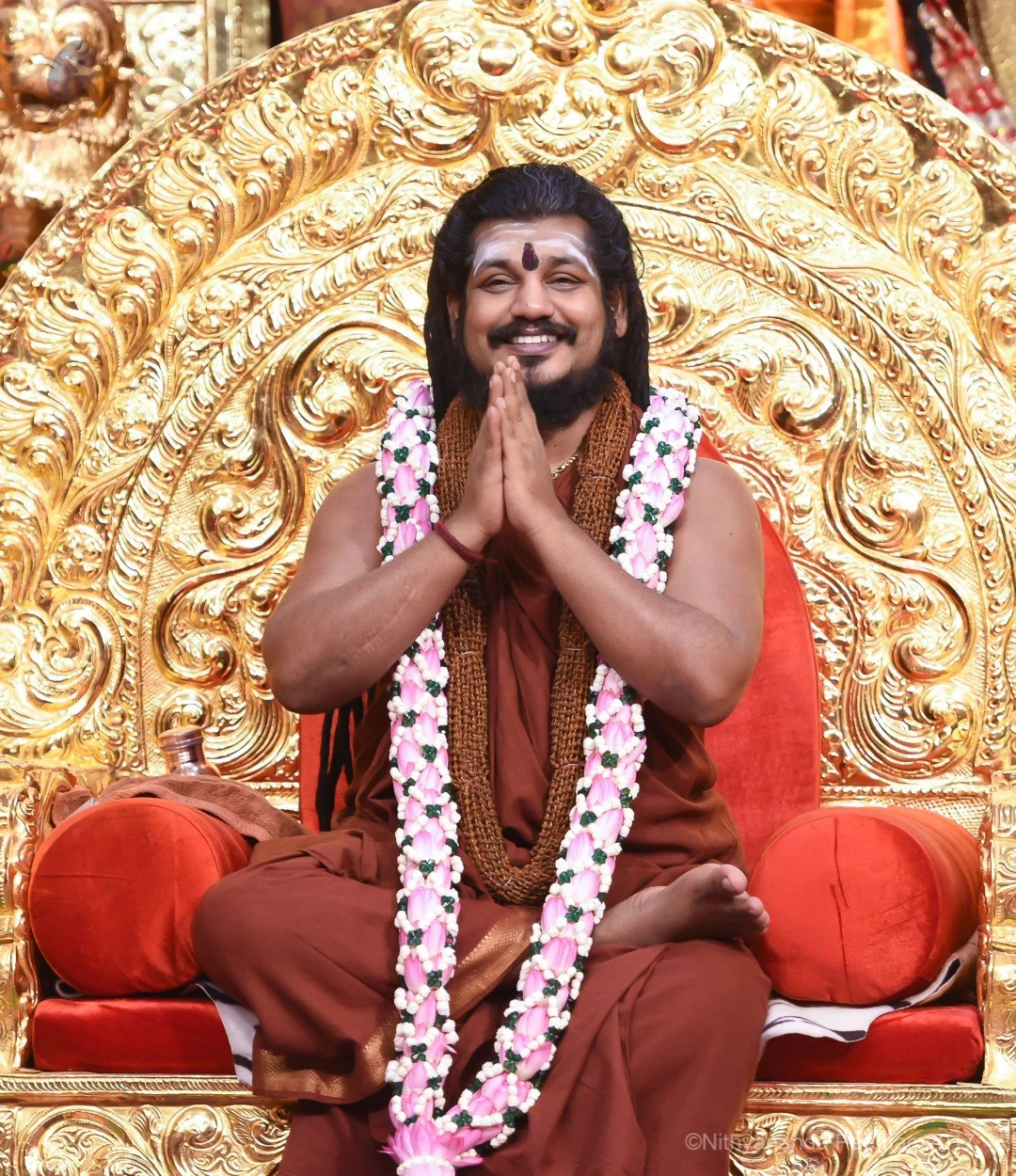
A smiling man seated on an ornate gilded throne with elaborate scrollwork and red velvet cushions, hands pressed together in namaste. He wears a rust-brown sleeveless robe, a coarse brown rudraksha-style mala across his chest, and a long pink-and-white flower garland with green accents. A white vertical tilak and red bindi mark his forehead, and a red thread is tied on his wrist. Swamiji (probable): long dark hair, saffron-brown robes, rudraksha mala and ceremonial garland, seated on a throne in an in-person setting. A small brass pot sits to the left of the throne.A smiling man with long dark dreadlocks and a short beard sits on an ornate gold throne with red cushions. He wears a rust-brown sannyasi robe with a brown crocheted shawl, a pink and white lotus garland with green accents draped across his shoulders, a white and red forehead mark, and a thin gold chain. His right hand is raised in a gesture while the background shows gold carvings and orange decor. The figure is a seated teacher on a peetha throne, appearing at a satsang gathering.A photograph of a smiling man with long dark hair and a full beard seated on an ornate gold throne with red velvet cushions. He wears rust-brown robes with a brown knitted shawl and a rudraksha-style mala, and a large pink and white flower garland drapes over his shoulders and across his lap. A red bolster with lace trim rests at his feet on a patterned cloth. The background is gold and orange ornamental decor. The image appears to be a Swamiji (probable) figure seated at a satsang, based on the long hair, rudraksha mala and ceremonial throne cues.Swamiji (probable) seated on an ornate gold throne with red velvet cushions, smiling, wearing a rust-brown robe with a brown knitted shawl and a long pink-and-white flower garland with green accents. He has long dark hair, a beard, white forehead markings and a red bindi. His right hand rests on the armrest and his left arm is extended. A red velvet bolster with lace trim and a colourful striped cloth sit in the foreground. The setting is a golden, carved temple-style stage.A young man with long, dark, matted hair sits with his eyes closed and palms pressed together in namaskar, wearing an orange saffron cloth draped over his shoulders and a multi-strand rudraksha mala with gold-toned bead spacers. A person in the foreground, wearing a saffron garment and a ceremonial pink-and-white flower garland, places a hand on his forehead in a blessing gesture. Two more people in orange robes stand behind him, and a red curtain is visible at the left. The setting appears to be an indoor satsang or darshan hall.A seated man smiles on an ornate gold-carved throne with a red velvet back and red cushions. He wears a rust-brown robe over his shoulders, a brown woven shawl, and a long garland of pink lotus-like flowers with white jasmine and green accents. He has a white tilak with a dark bindi on his forehead, a full beard and long swept-back hair, and a gold pendant at his neck. His right hand rests on his crossed leg while his left holds a garland strand. a person appears in this photo, seated in an in_person setting with the saffron-brown sannyasi robe, garland and throne cues.

Sannyas

2 photosSource gallery
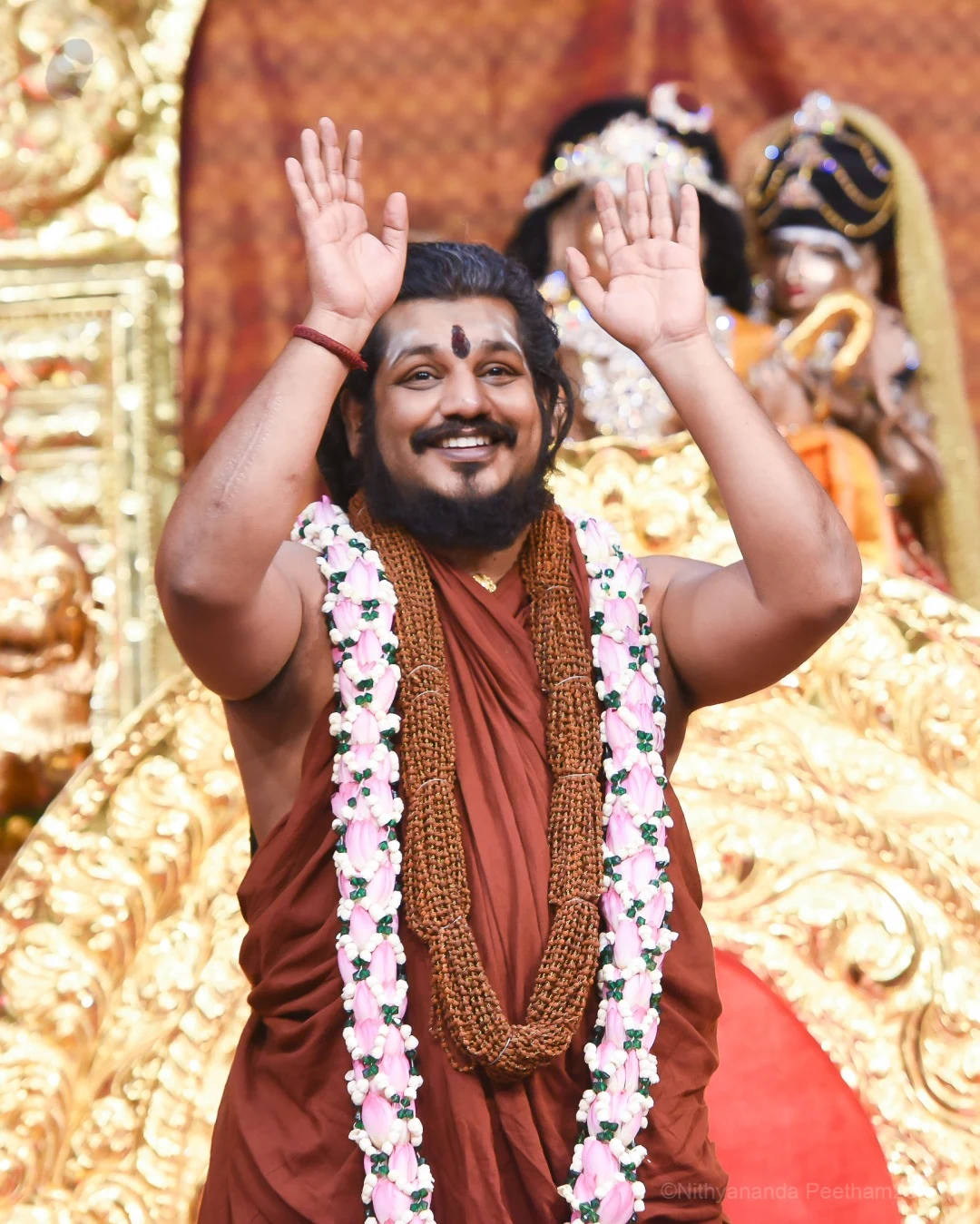
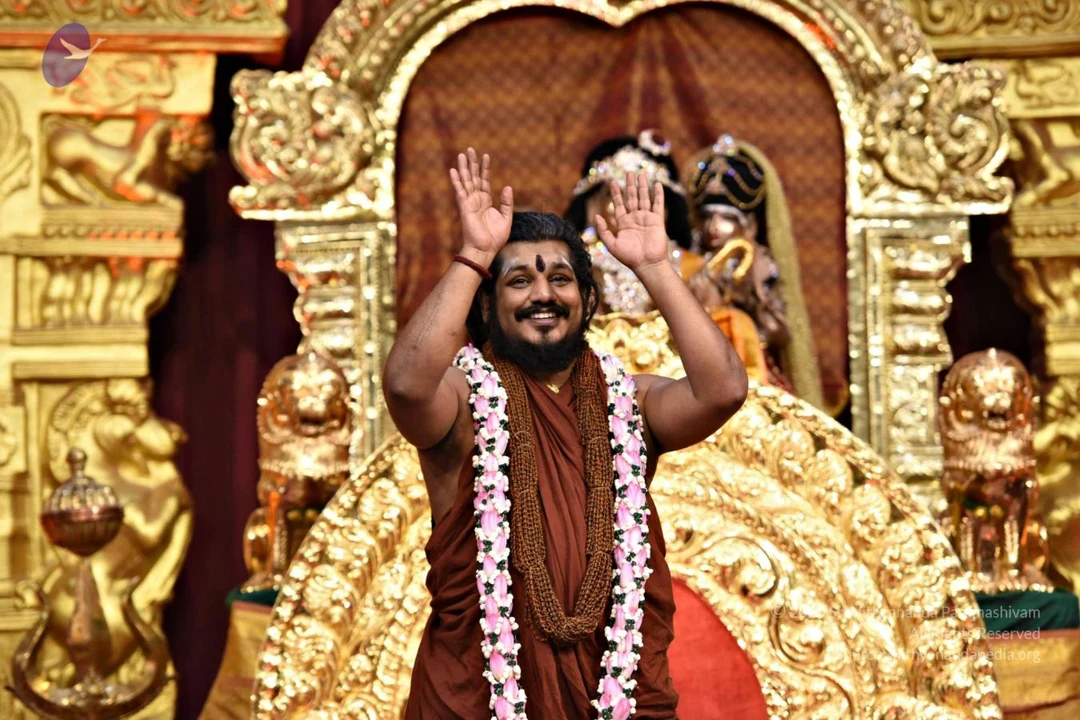
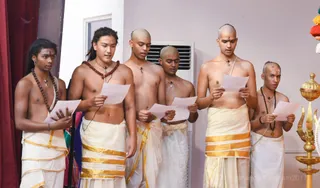
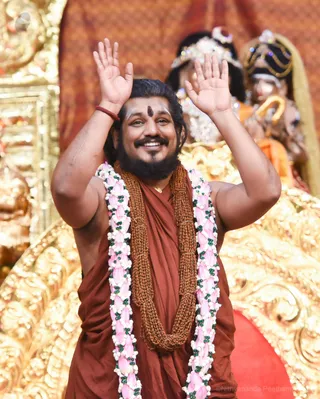
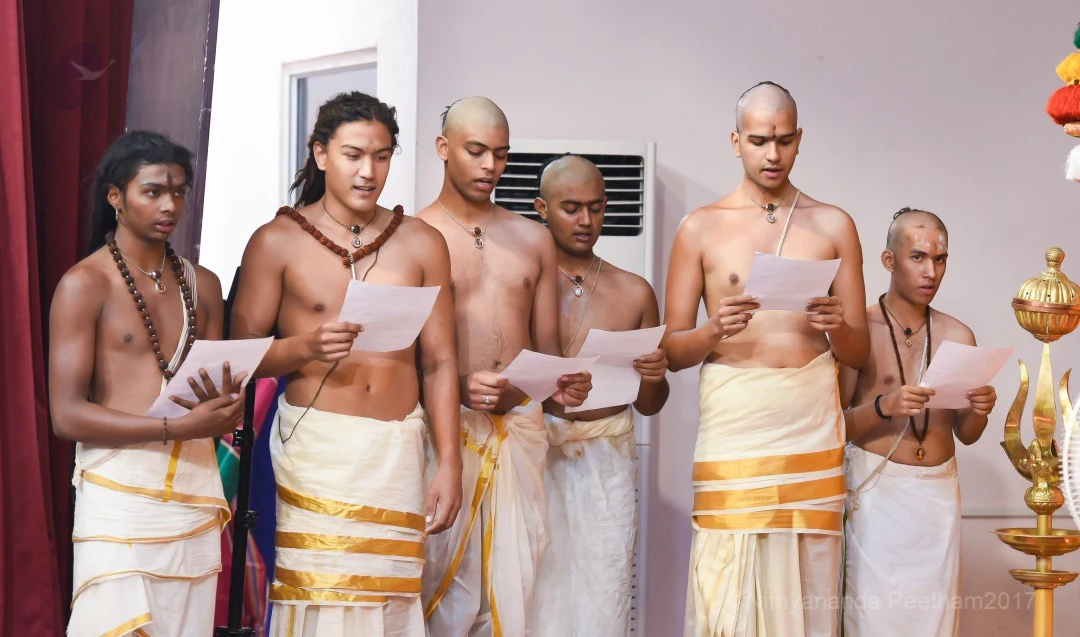
Five young men stand in a row on a stage reading from sheets of paper while chanting. All are bare-chested and wear white dhotis with gold borders, several with rudraksha malas and small pendants; one at left has a rudraksha mala and a long braid at the back. Two shaved-headed men at centre and right hold their pages at chest height. A gold trident and a brass lamp stand at the right edge, and a red curtain hangs behind. A white wall air conditioner is visible. No figure is identified as a person.A smiling man with a dark beard and long dark hair raises both hands, palms open, in a greeting or blessing gesture. He wears a rust-brown saffron-toned cloth draped over one shoulder, a thick brown woven rudraksha-style mala, a long garland of pink and white flower buds, a small dark tilak on his forehead and a red thread on his wrist. Behind him, gold ornate throne decoration frames deity murtis with crowns and jewelled adornments. The setting appears to be a stage with a gilded dais.

Puja

5 photosSource gallery
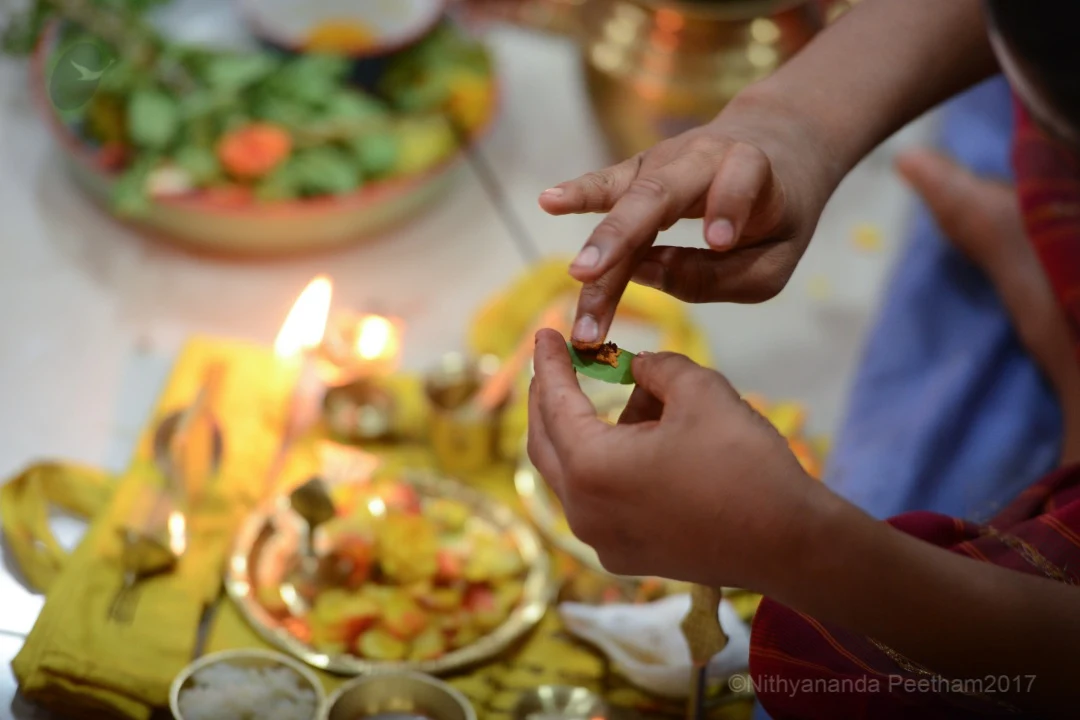
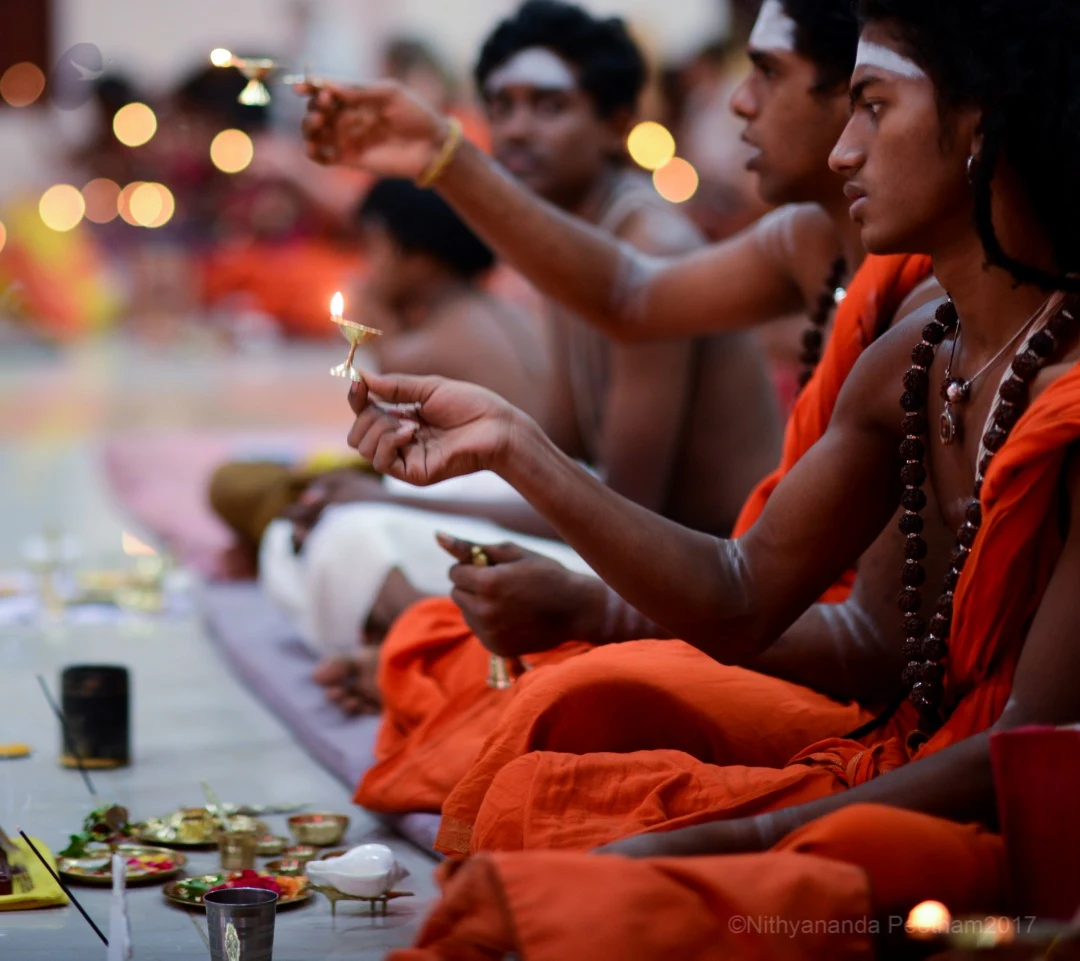
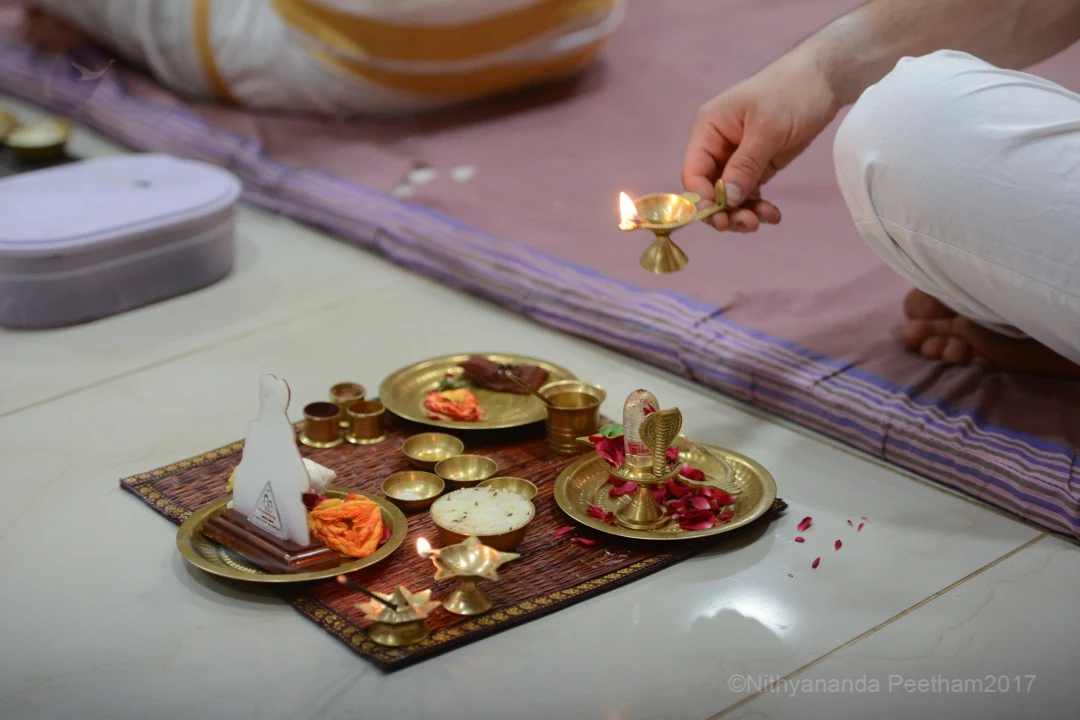
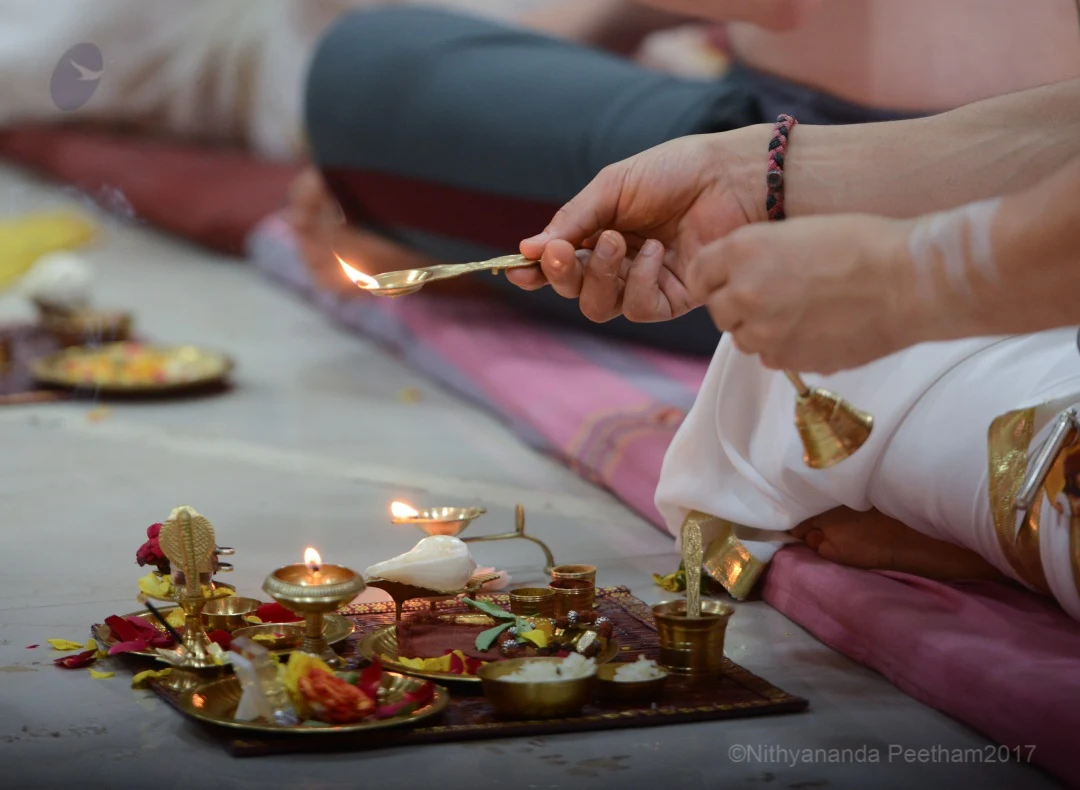
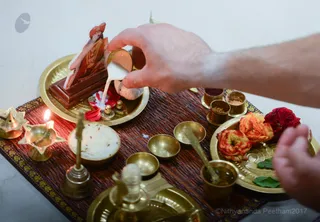
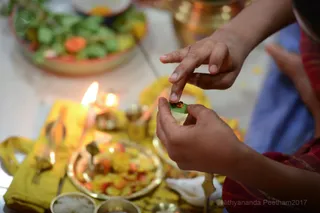
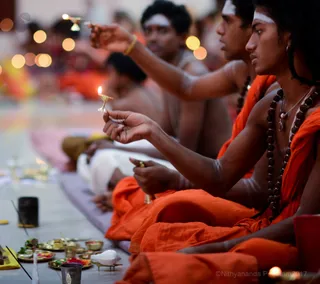
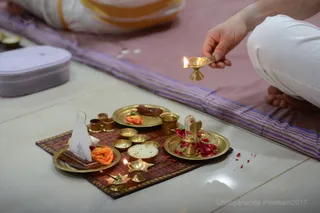
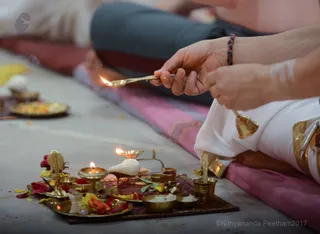
A close photograph of a home puja setup on a woven reed mat with gold-toned plates and bowls. A hand pours milk from a small brass vessel over a figurine of a seated man in orange and red robes with a turban, set on a brown base within a gold plate. Around it are red and orange roses, rose petals, a small brass shivalinga, a lit oil lamp with a flame, a bowl of white offering, a brass cup with a spoon, leaves and small dishes of red and yellow powder. A second hand rests at the right edge. The figurine is a statue and is not an in-person presence; no person's face is visible.Close-up photo of a child's hands placing a small portion of food onto a green leaf over a brass puja plate. Nearby, a brass plate holds yellow and orange cut fruit or sweets, a flame burns from an oil lamp on a yellow cloth, and small brass bowls hold rice. A bowl of green leaves and vegetables sits in the background. The child wears a red and maroon striped garment. The scene suggests a puja offering or prasadam being prepared.Several young men in saffron-orange robes sit cross-legged in a row on a white floor during an evening ritual. Their faces and arms bear white tilak markings, and they wear rudraksha malas. The nearest man holds a small lit oil lamp in one hand and raises the other hand, while those behind also hold lamps or gesture toward them. In the foreground are brass plates with flowers, fruit and offerings, a small silver vessel, a brass cup and incense sticks. Soft golden bokeh lights fill the background.Close photograph of a puja setup on a tiled floor. A person in white trousers sits cross-legged on a striped purple and white mat and holds a lit brass oil lamp with a flame in one hand. In front lie brass plates with small brass cups and bowls, a rose-petal-strewn brass Shivalinga with a cobra hood, scattered red petals, a small brass lamp with a flame, and a plate with saffron-orange cloth and a white conical object with a printed triangle. A brown woven mat sits under the plates. Only the hand, arm and legs of the person are visible.Close photograph of a puja being performed on a grey floor. A pair of hands holds a brass spoon-shaped lamp with a lit flame, while a second hand rests near a brass bell. Beside them stands a brass aarti plate with a lit oil lamp, a conch shell, flower petals, small brass cups, kumkum and a rudraksha-like bead cluster. A lit lamp sits on a brass stand nearby. The person's legs wear white dhoti-style cloth with a gold border, seated on pink and purple mats. Only partial limbs are visible, so no full person is shown.

Procession

6 photosSource gallery
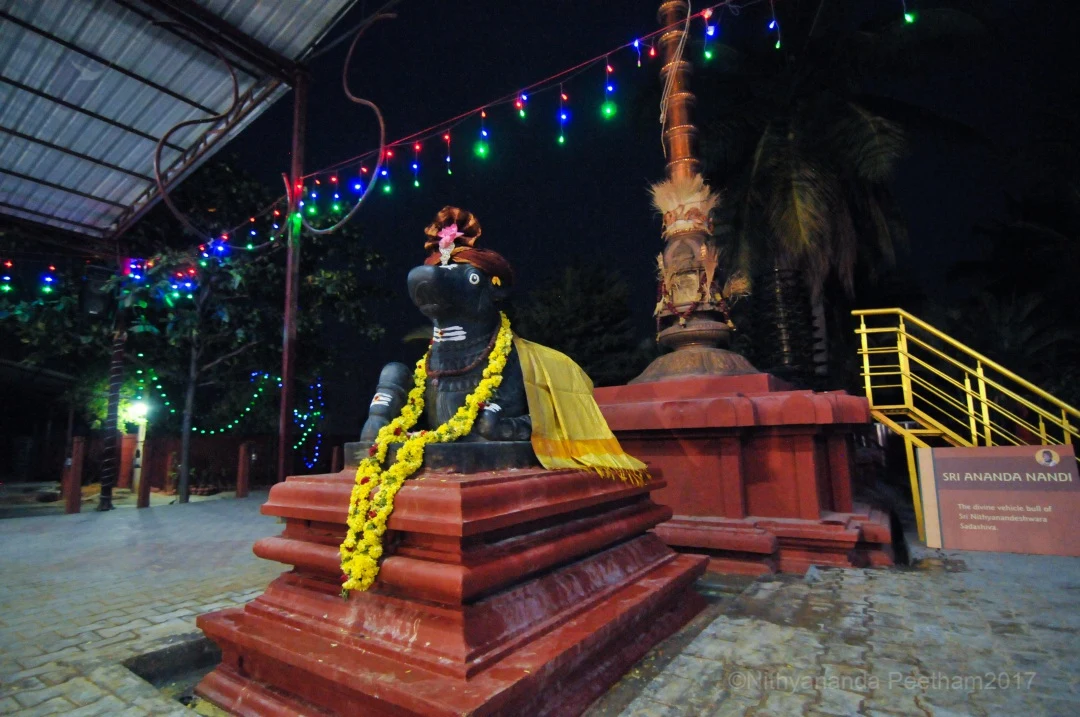
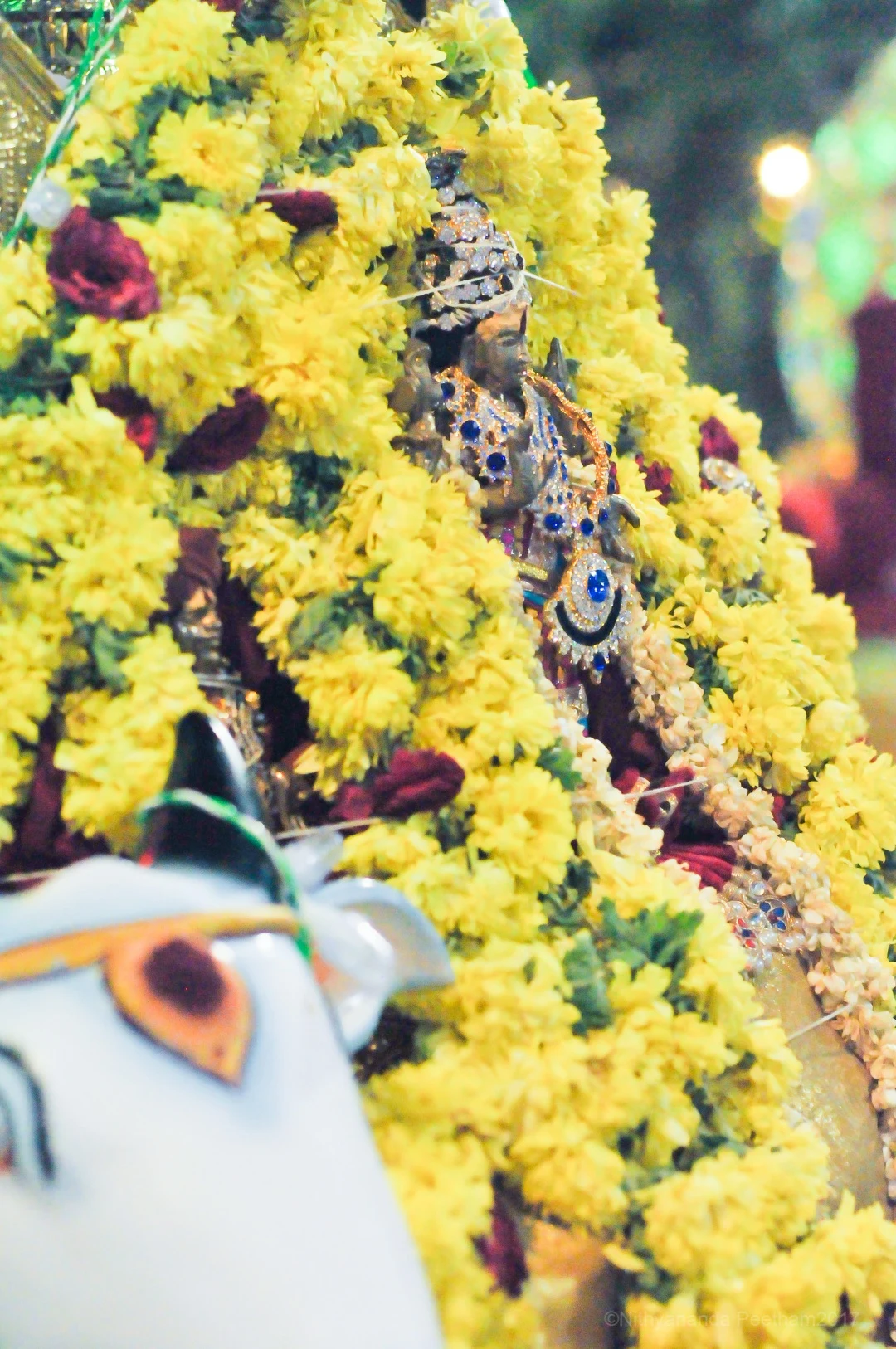
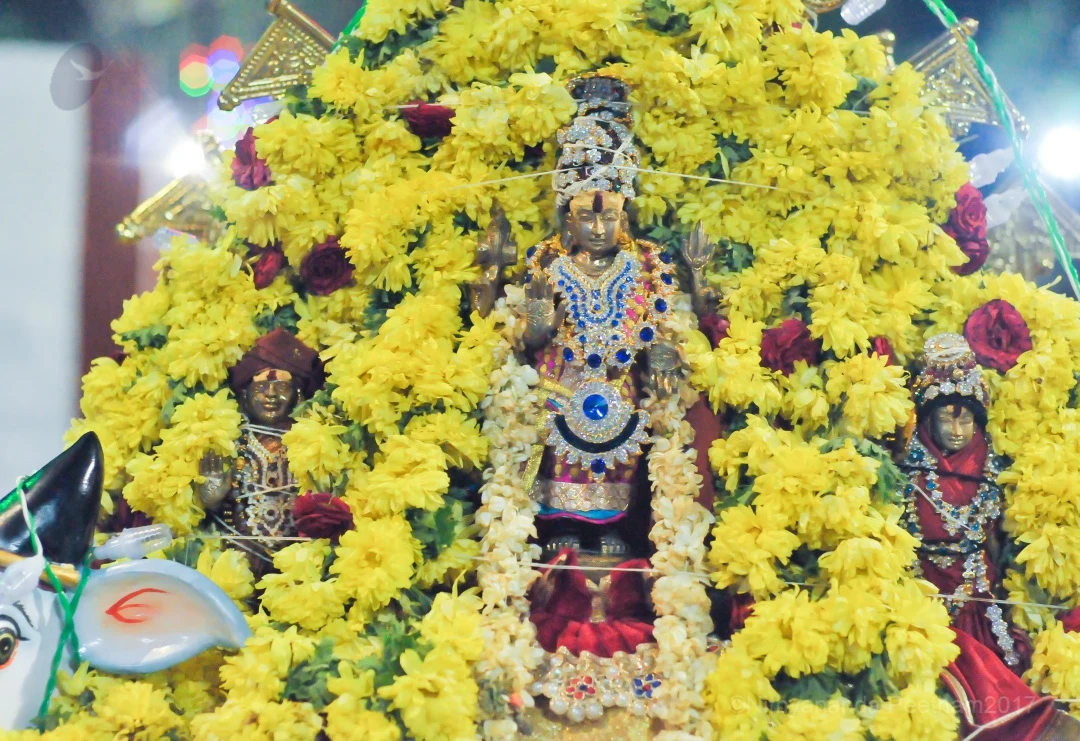
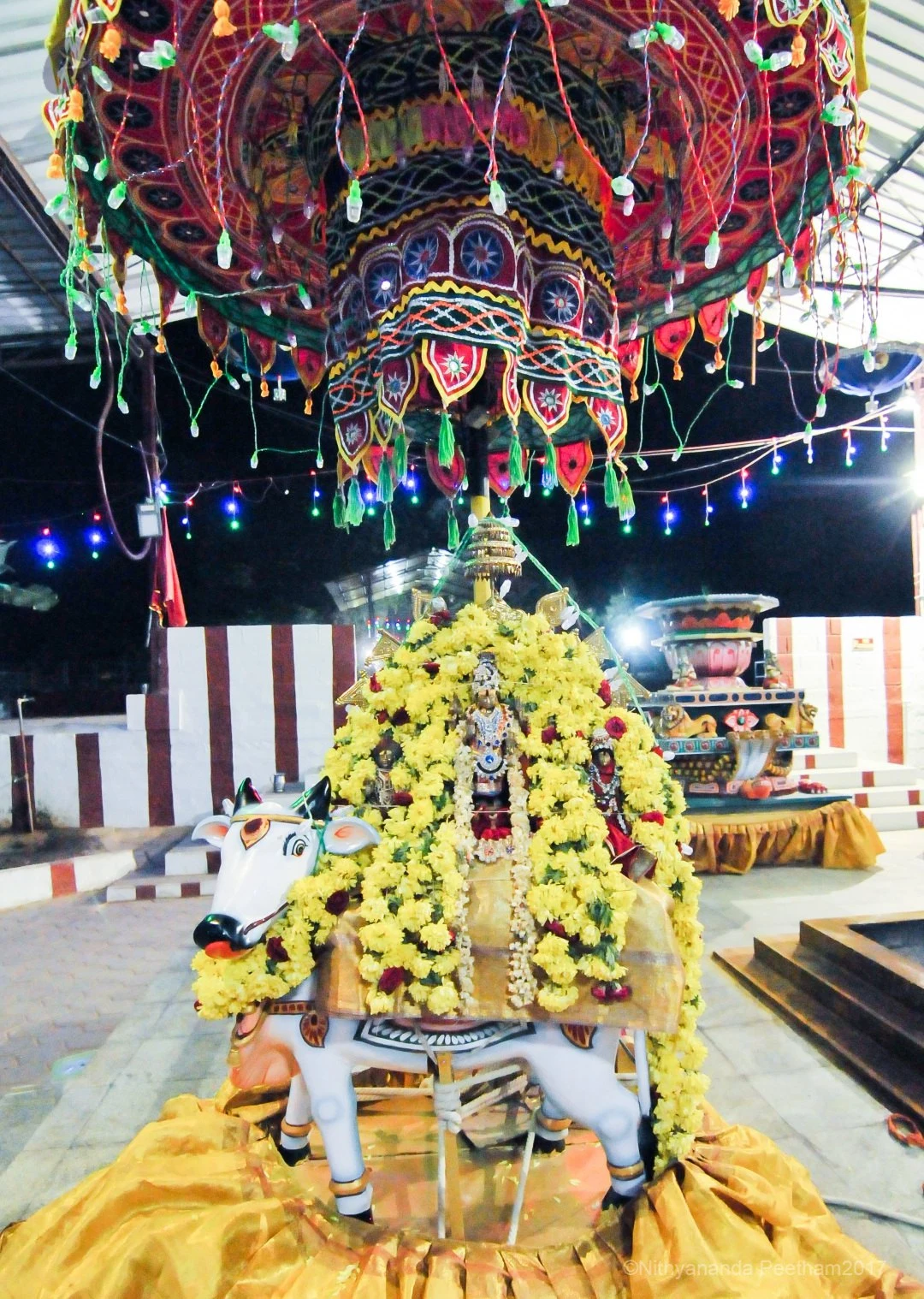
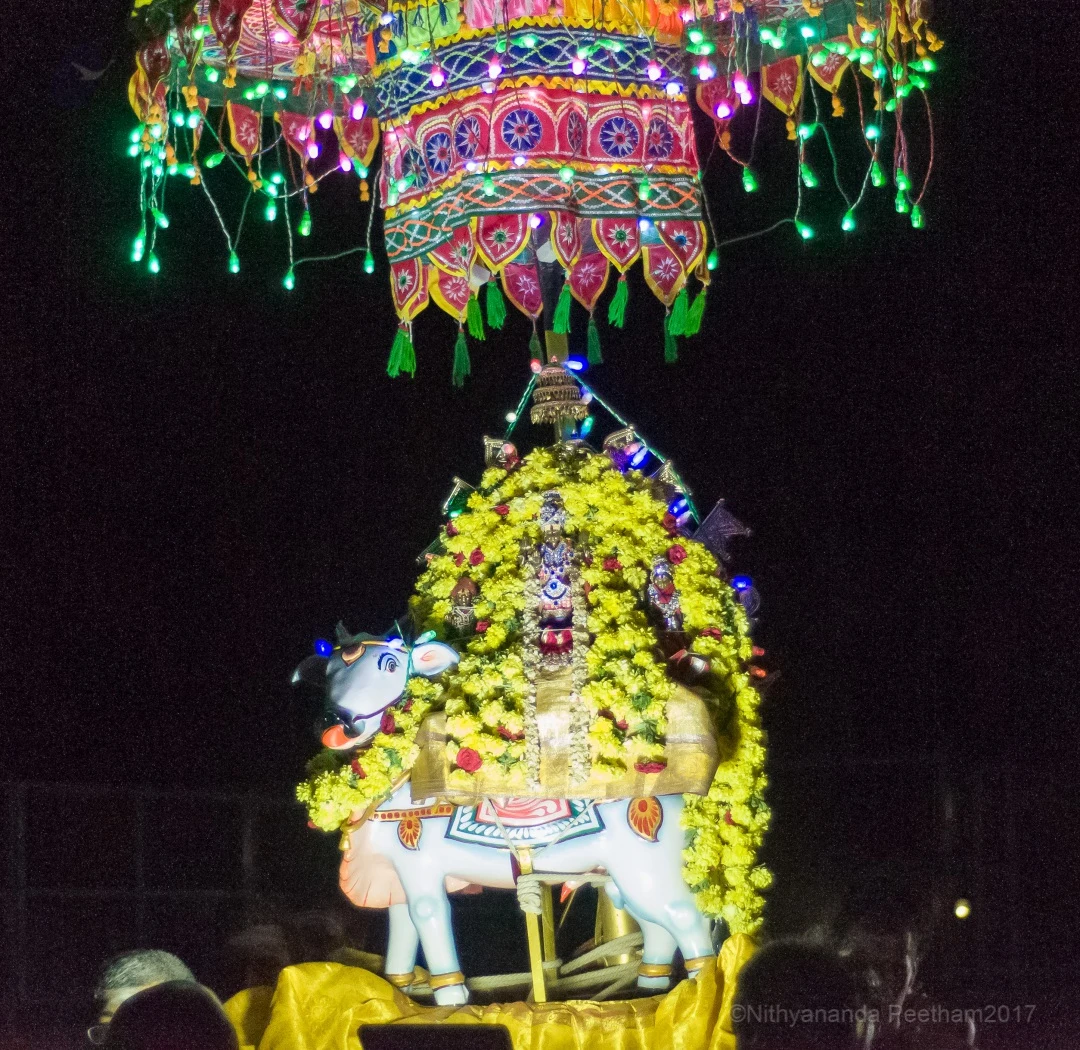
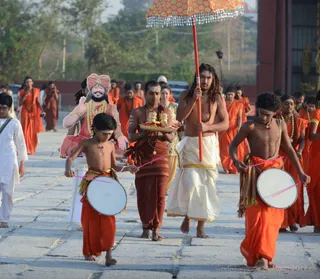
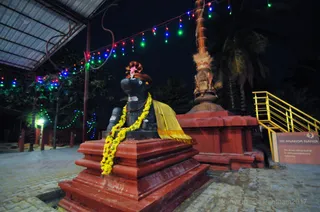
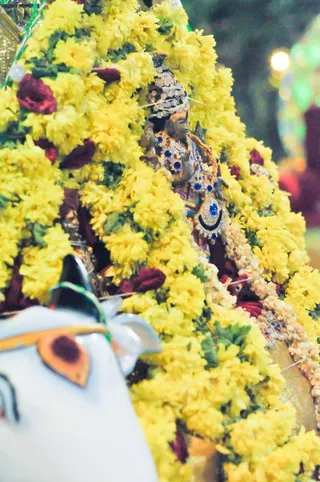
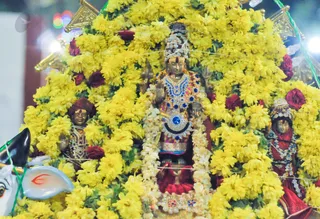
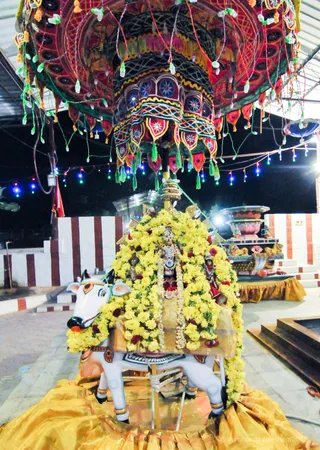
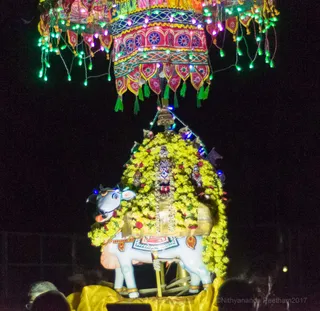
Outdoor procession on a stone-paved path with saffron-robed devotees walking behind a red and gold parasol carried by a bare-chested man with long dreadlocks and a white dhoti. In front, a boy in orange drums on a white drumhead with a pink stick, and a bare-chested young man in a maroon dhoti carries a brass tray of lamps and flowers. A large paper cutout of a bearded figure in a pink turban and garland is held aloft at left. Several children in orange and white walk nearby, and a red building stands at right.Night photograph of a dark stone Nandi statue on a red stepped plinth in an open courtyard at Adi Kailasa, Bengaluru. The bull sculpture wears a yellow cloth draped over its back, a yellow and orange marigold garland around its neck, a flower and a red-and-brown crown-like headpiece, and white tripundra markings on its forehead. A tall red and gold decorated kalasha or pillar stands to the right, with a yellow metal railing beside it. Strings of multicoloured fairy lights hang overhead beneath a corrugated roof. A pink-and-white sign beside the statue reads Sri Ananda Nandi. No people are visible.Close view of a deity murti heavily decorated with yellow marigold garlands and red rose accents, adorned with a silver crown, blue and white gemstone necklaces and a jewelled pendant. A white bull figure with orange and maroon painted eye details. Blurred green and warm lights fill the background.A photograph of a deity murti on a procession float, decorated almost entirely with yellow marigold garlands and red roses. The central metal murti wears a tall jewelled crown, a blue and gold jewelled chest ornament, white jasmine garlands, and holds ritual objects in its raised hands. Two smaller murtis flank it: one on the left in a red turban with a bull-like vehicle partly visible at the lower left, and one on the right in red drapery with layered beaded necklaces. Gold ornamental triangles and bright lights appear at the top of the frame. No living people are visible.A night procession vehicle decorated with yellow marigold garlands and red flowers. A white painted Nandi bull statue stands at the front, and a small deity murti dressed in ornaments and garlands sits on the carriage. Above hangs a large ornate red and gold canopy with dangling beads and tassels, strung with coloured fairy lights. Behind is a decorated pink and red chariot or ratha platform, a striped temple wall and a lit stage area. No physical people are visible; the scene is a procession vehicle rather than a person.Night procession photograph of a decorated festival chariot. A large canopy overhead has red, pink and blue patterned panels edged with green tassels and strung with multicolour fairy lights. Below, a white bull (nandi) statue, its horns and neck wrapped in yellow marigold garlands and red flowers, carries a small deity murti decorated with flowers and garlands on its back. Yellow cloth covers the base, and a few people's heads are visible at the bottom edge of the frame, partially cropped.
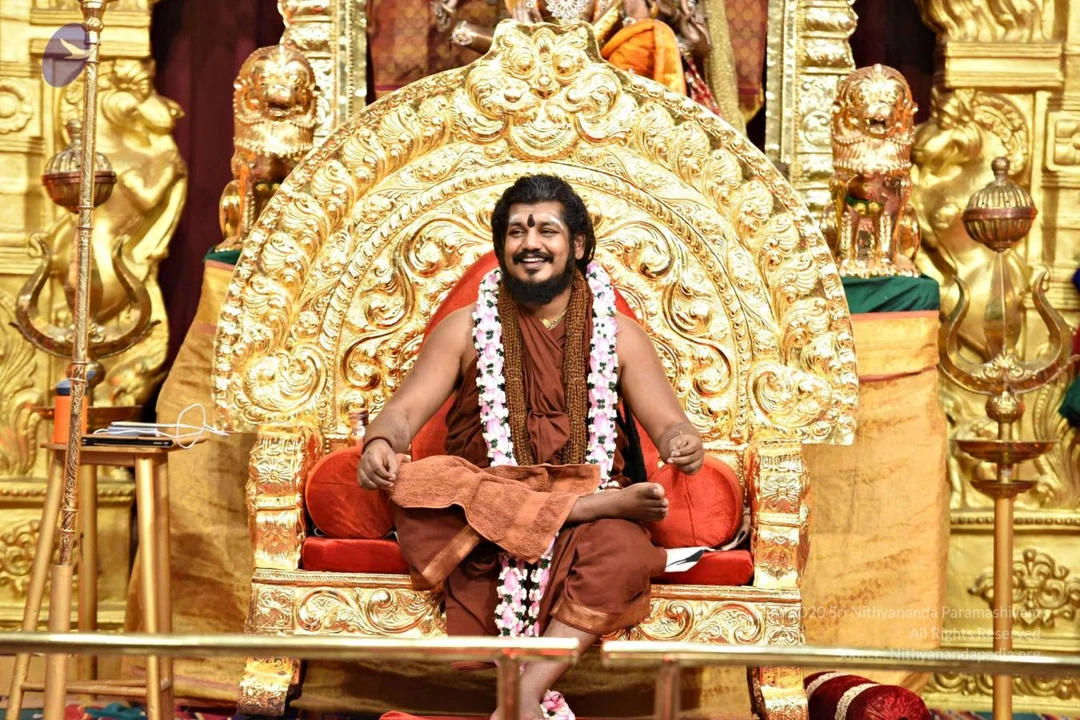
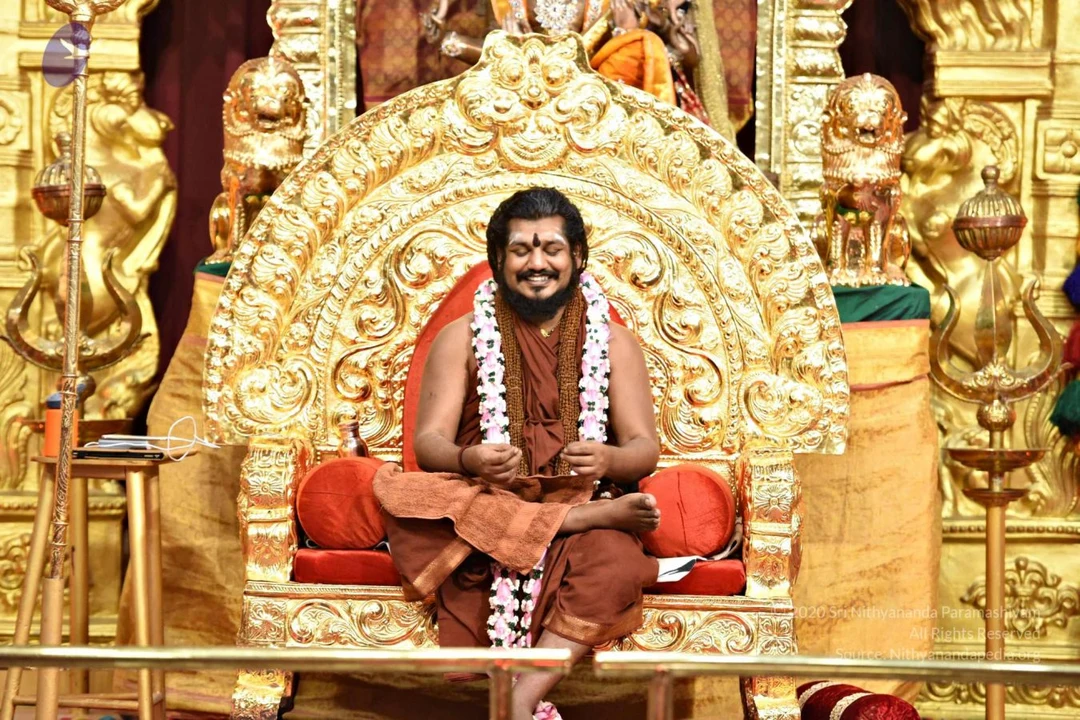
SPH meets with the Adheenavasis and gives Darshan

244 photosSource gallery
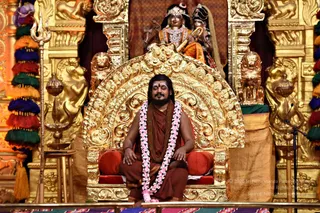
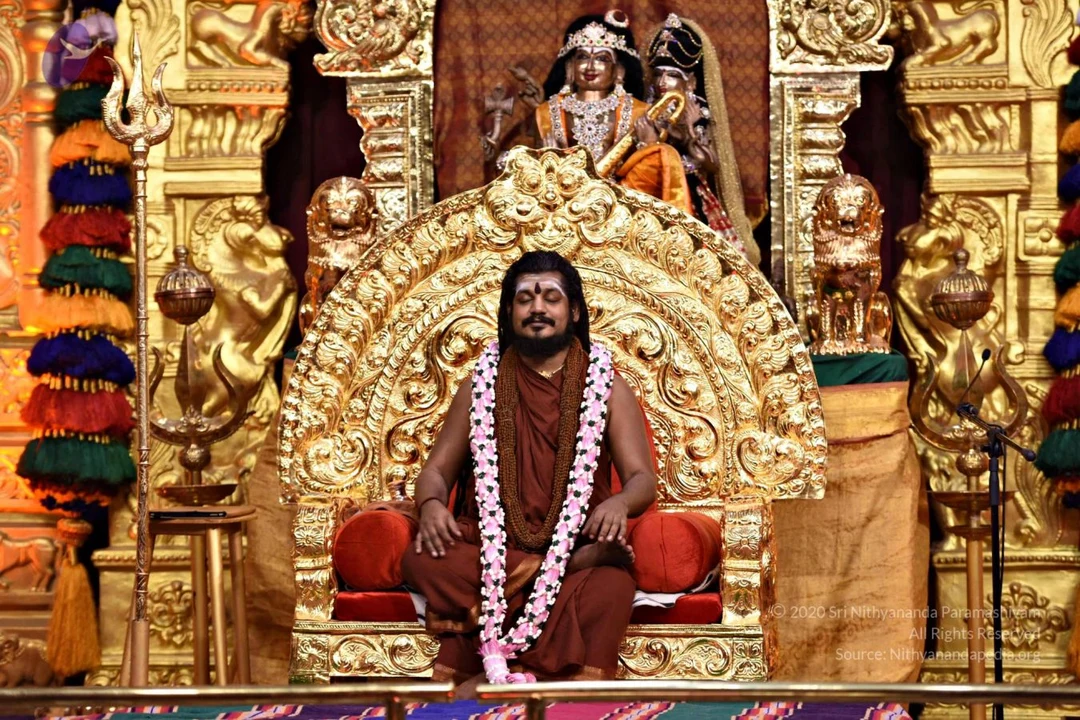
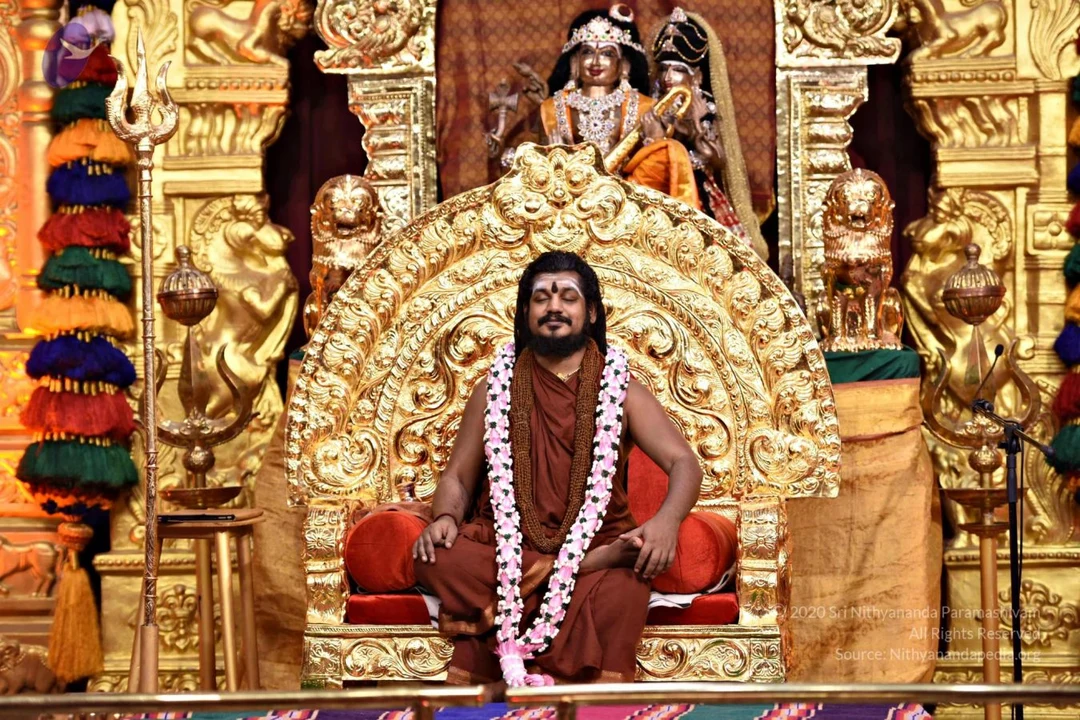
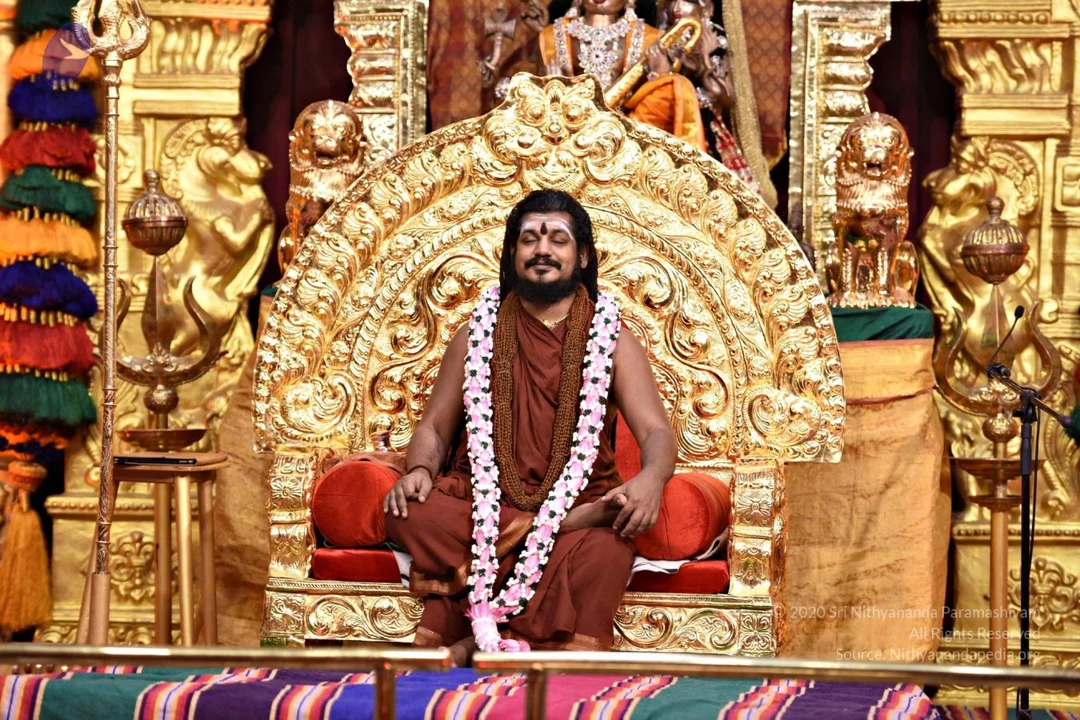
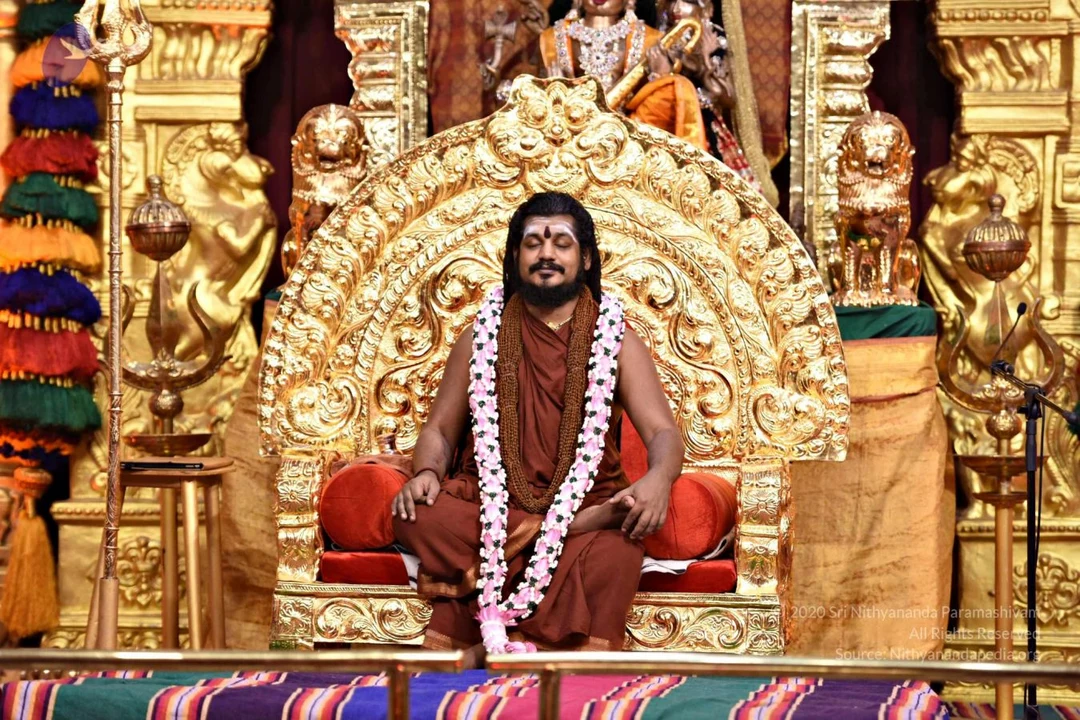
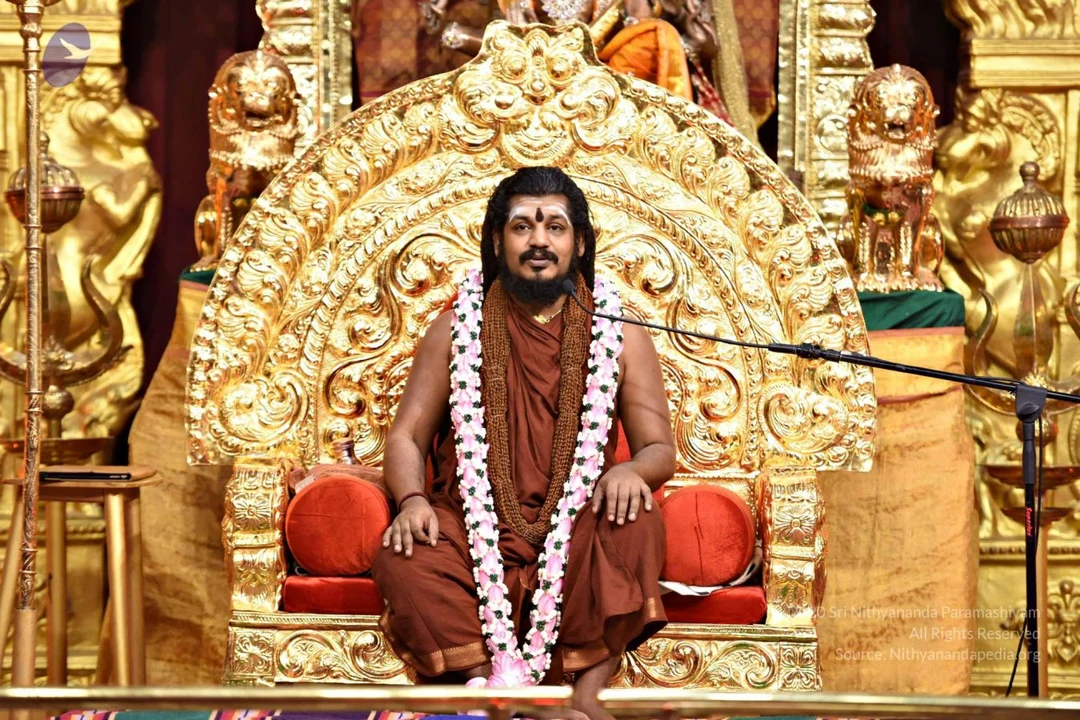
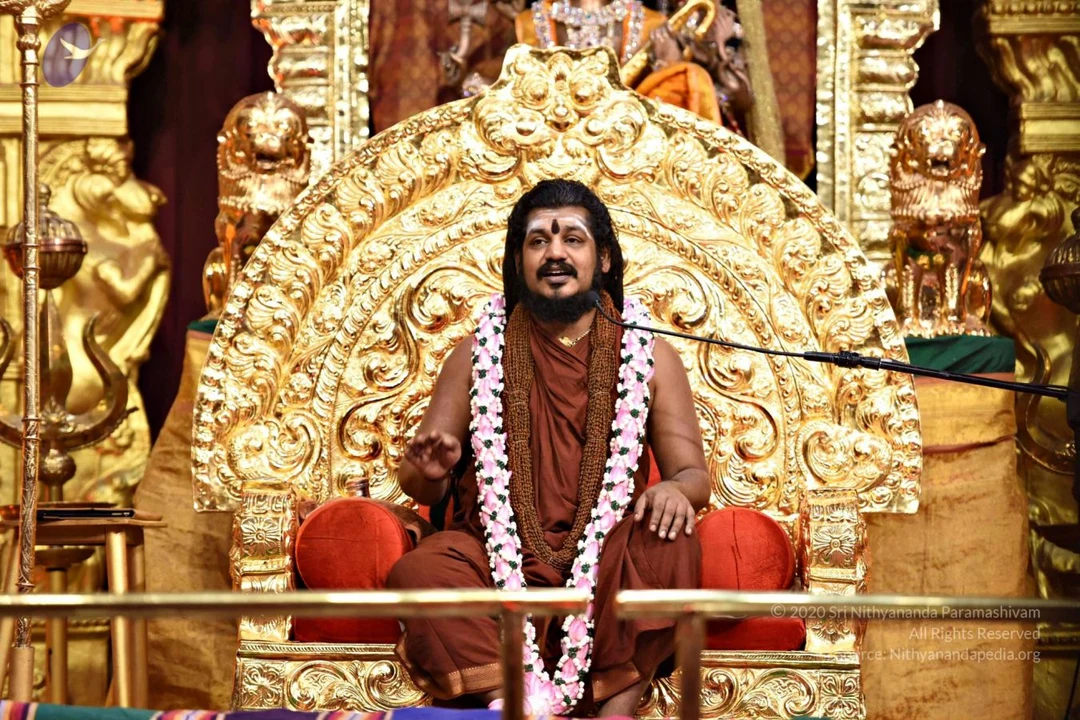
A seated man with long dark hair, a red-brown saffron-toned robe and a rudraksha mala sits cross-legged with eyes closed and hands resting on his knees on an ornate golden throne with a carved arched back and red cushions. A pink and white flower garland hangs around his neck. Flanking golden lions, a deity murti with a crown and trident stand behind, and a golden trident and kalasha-style lamps frame the stage. This satsang-style setting suggests a dais discourse. Swamiji (probable): the seated man has long swept-back hair, rudraksha mala and saffron-toned robes, seated on a throne with a garland.A seated man in rust-brown ochre robes sits cross-legged on a large ornate gold throne with red cushions, eyes closed and hands resting on his knees, wearing a long pink-and-white flower garland and a dark rudraksha-style bead necklace. Behind him, gold-carved panels frame a gilded statue pair of a crowned deity and a consort. Gold lion figures flank the throne, a trident stands at left beside a brass lamp, and multicolour tasseled garlands hang at the edges. A microphone stands at right. Swamiji (probable): the man has long swept-back hair, a bead necklace and ochre robes, so the appearance-based candidate is the seated speaker on the throne. Five-line text in the bottom right reads a copyright credit, which is excluded from the text field. One seated person is visible on a stage.A bearded man with long dark hair sits cross-legged on an ornate gold throne with red cushions, eyes closed in meditation, wearing a rust-brown robe, a brown rudraksha mala, and a pink and white flower garland. Behind him stands a gilded backdrop with a deity murti of a crowned Shiva-like figure with a tall crown and orange-saffron drapery, flanked by carved golden lions. A gold trident stands at left beside a colourful tasselled rope of red, green, blue and yellow, and brass oil lamps sit on stands near the throne.A seated man with long dark hair and a full beard sits cross-legged with eyes closed on an ornate gold throne with a red cushion. He wears a rust-brown robe, a rudraksha mala and a pink and white flower garland, with a tilak on his forehead. Gilded lion figures flank the throne, a deity murti in orange and gold stands behind him, and brass lamps and a microphone stand are in view. The image appears to be a photograph of a satsang setting, and the man is a probable Swamiji by appearance: long hair, rudraksha mala and saffron-brown clothing.A bearded man with long dark hair sits cross-legged with eyes closed on an ornate golden throne with carved lion armrests and a curved backrest. He wears a rust-orange robe, a brown rudraksha mala around his neck and a white-and-pink flower garland, with a red tilak on his forehead. Behind the throne stand golden lion statues, a golden deity murti in orange drapery, and a tall golden trident-topped staff on the left with colourful tassels. Brass oil lamps stand on either side, and a microphone is set at the right. The throne sits on a colourful striped rug at a stage edge.A seated man with long dark hair and a beard, wearing a rust-red sannyasi robe, rudraksha mala and a pink-and-white flower garland, sits with palms pressed together in namaste on an ornate gold throne with red cushions. Gold lion figures and carved gold panels frame the throne, with a deity murti above and ceremonial lamps and a staff at the sides. The man appears to be a person, seated as the presiding figure of the satsang stage. Striped fringed cloth hangs at the left edge.