Skip to content
Friday

25 March 2016

THE SUPREME PONTIFF OF HINDUISM BHAGAVAN NITHYANANDA PARAMASHIVAM

Dated photos
10
Source pages
1
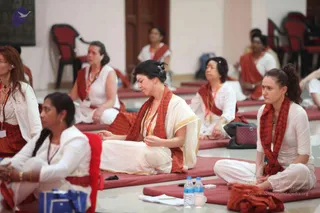
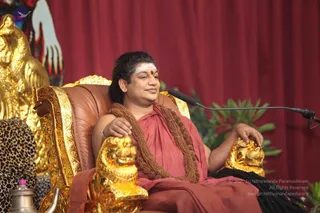
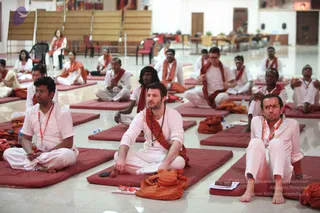
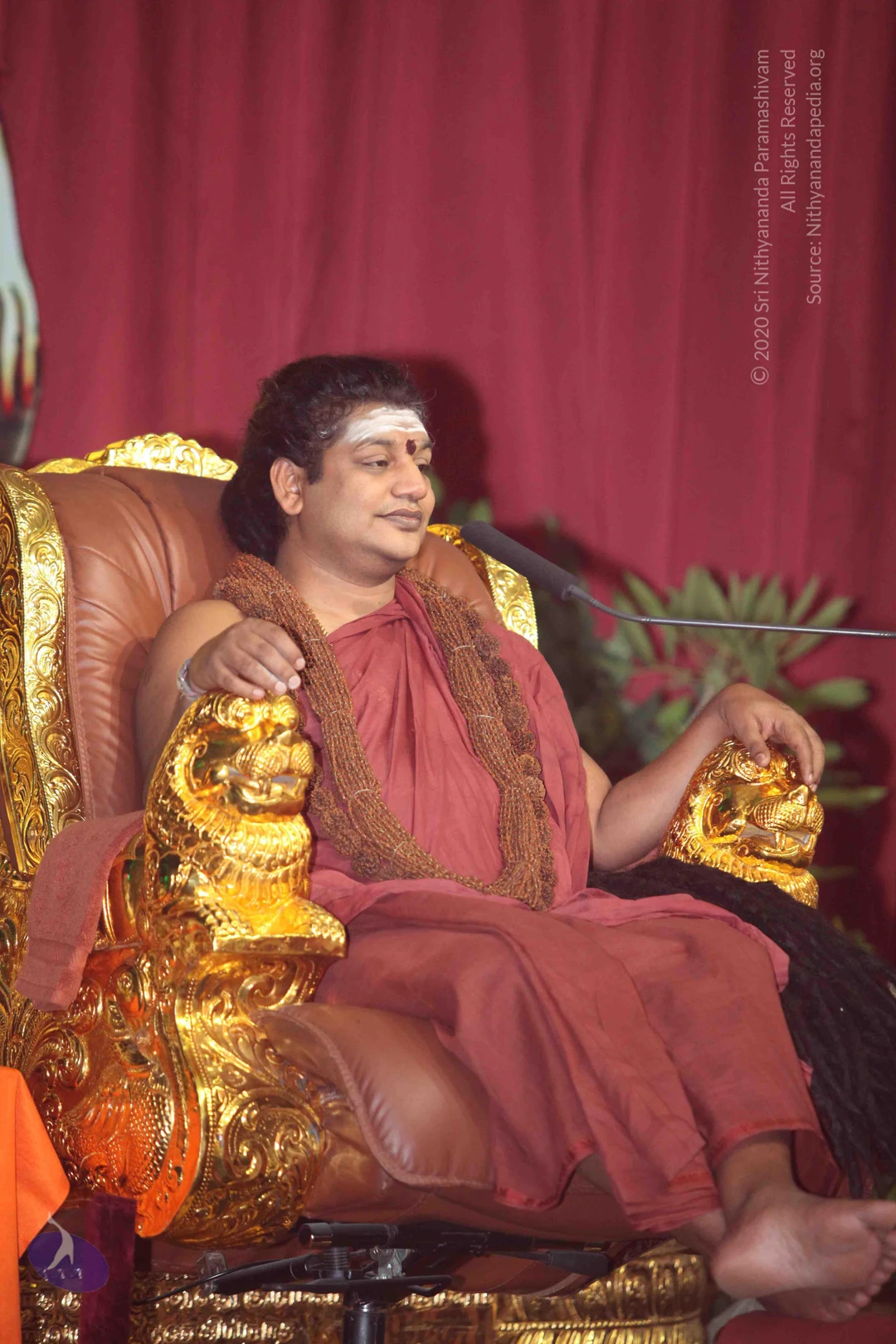
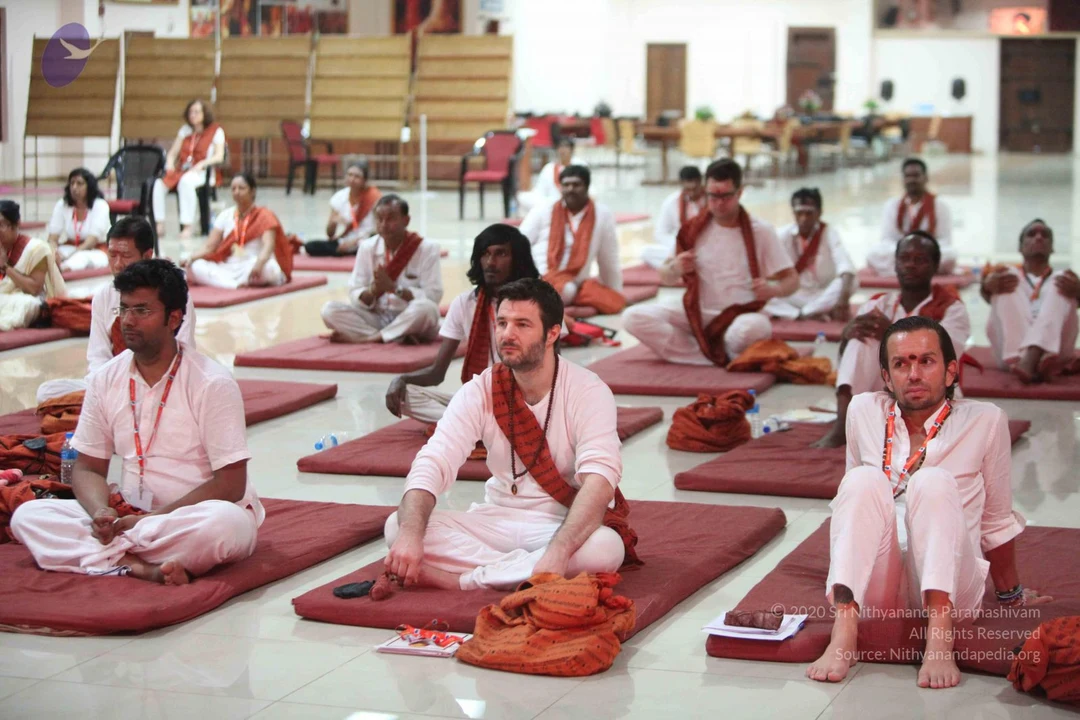
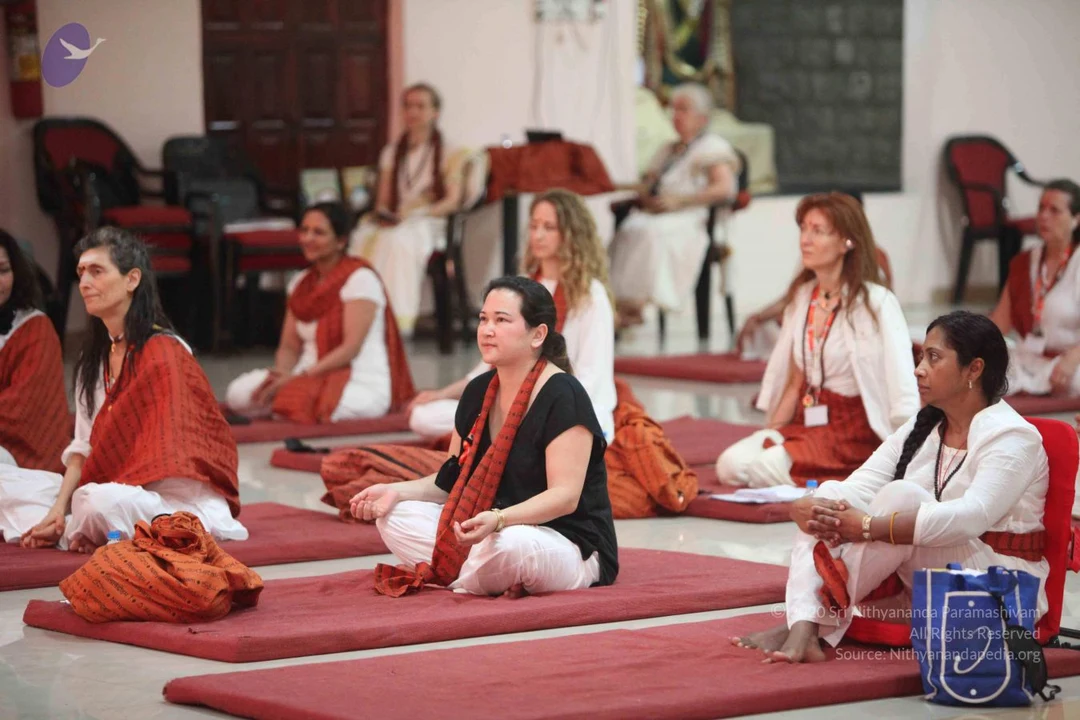
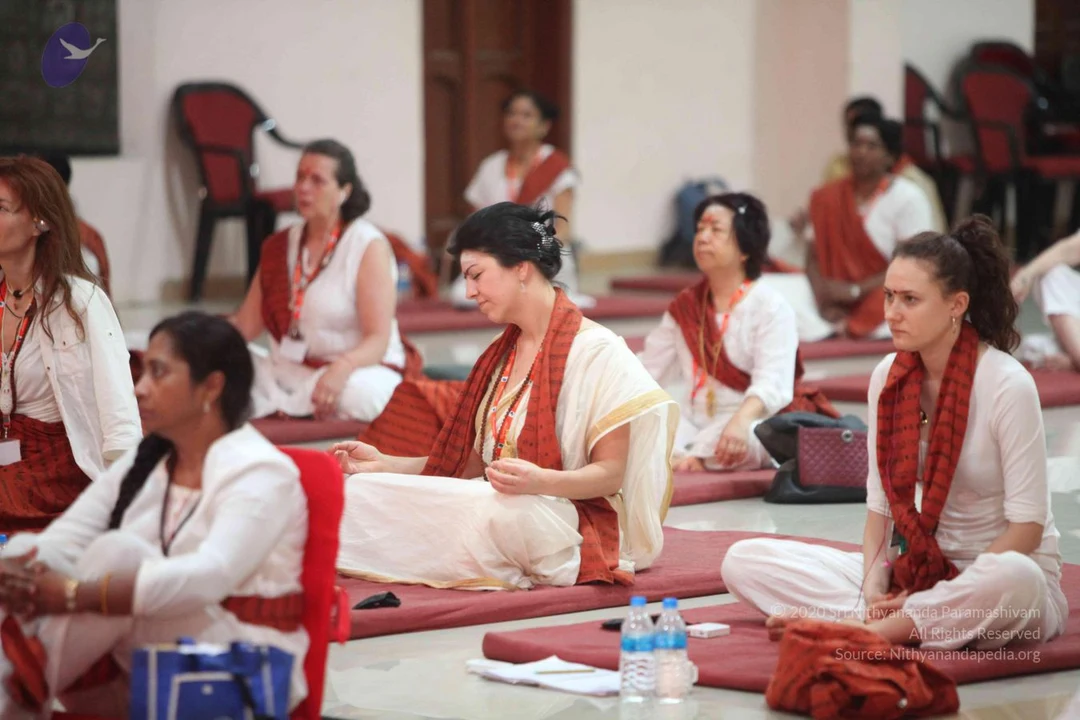
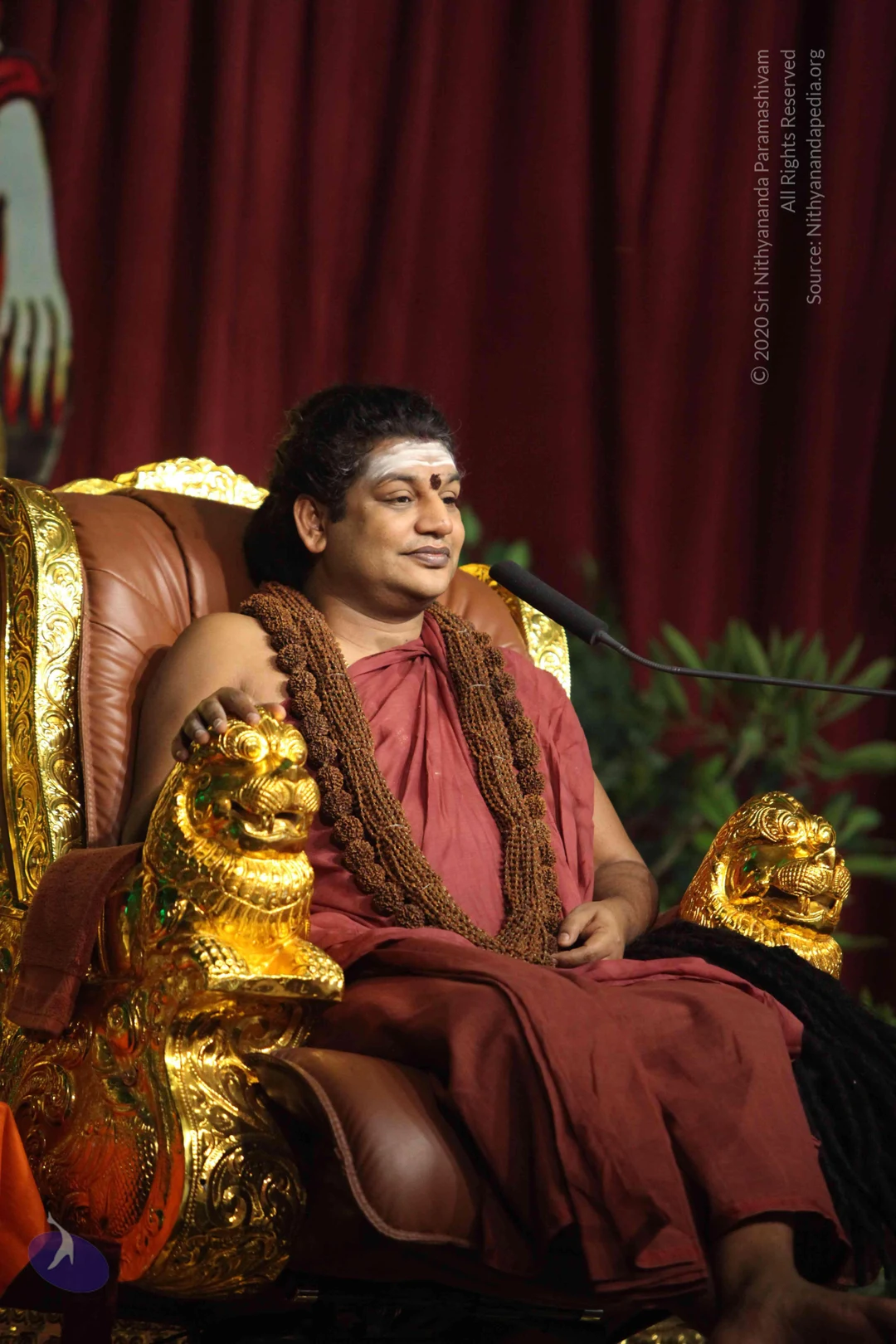
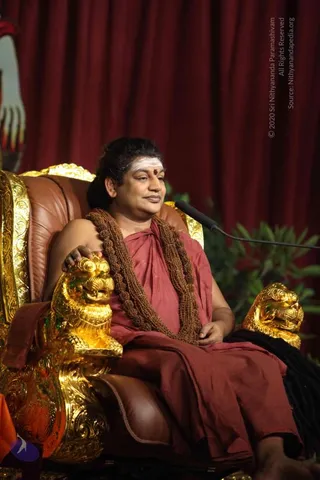
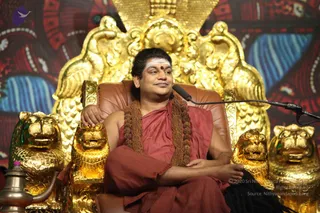
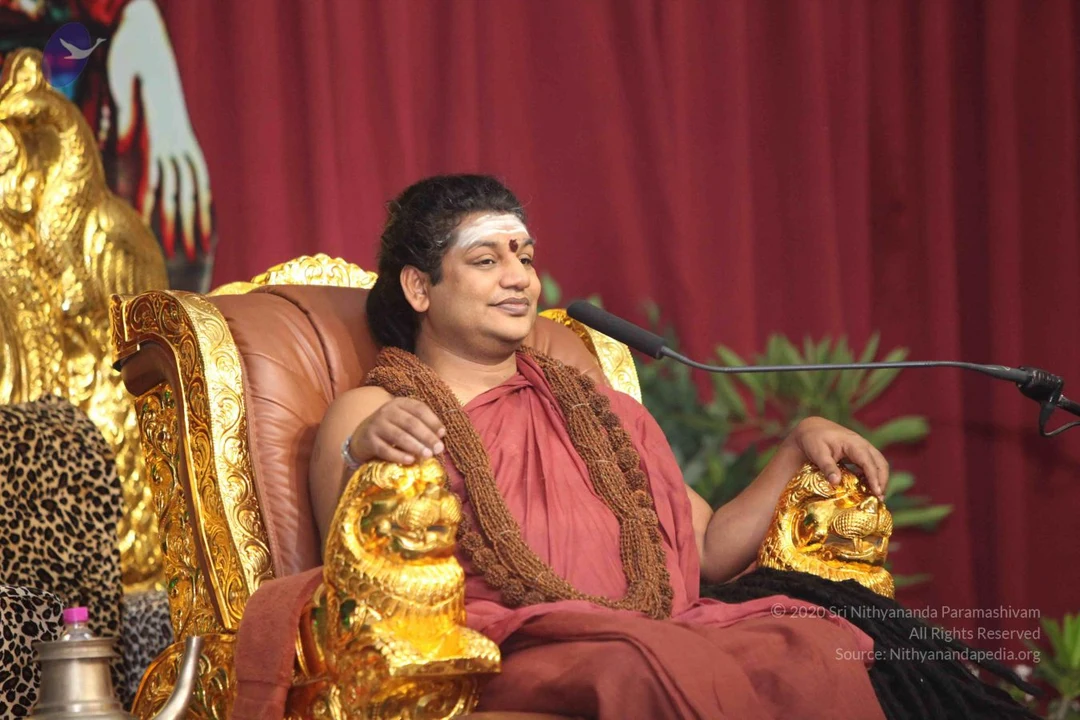
Participants sit on red mats in a bright hall during a seated meditation session. Most wear white clothing with red-and-orange shawls draped over their shoulders and orange-beaded lanyards around their necks. In the centre, a woman with dark hair in a bun sits cross-legged with eyes closed and hands resting in her lap. Other attendees sit nearby on mats and red chairs, with water bottles and bags placed in the foreground. No a person figure is visible in this image.A photograph of a man seated on an ornate brown leather throne with gold-carved lion-head armrests, in front of a deep red curtain and a microphone on a stand. He wears a red-maroon robe, a long brown rudraksha mala draped over his shoulders, and white and red tilak marks on his forehead, with long swept-back dark hair. He rests his hands on the lion armrests and smiles toward the audience. A leopard-print cushion and a metal vessel sit at the lower left, and gold carvings and a painted red-and-flame backdrop appear at the left edge. The appearance is consistent with the page's Swamiji designation, with cues of long hair, rudraksha mala and ornate throne, so this is a probable depiction in person.A seated group of meditation participants in a bright hall on red mats, dressed in white kurta-style clothes with orange-red shawls and orange sashes. Several wear lanyards and one has a tilak on the forehead. Many sit cross-legged with eyes closed or lowered, and bottles of water and orange cloth bundles lie on the floor. Behind them, a woman in white sits in a chair near wooden slat screens and dining furniture. The scene reflects a death meditation session at a person ashram program.

March 25 2016

Original wiki page
Contents

Title

THE SUPREME PONTIFF OF HINDUISM BHAGAVAN NITHYANANDA PARAMASHIVAM

--Narration== On this day, the Supreme Pontiff of Hinduism (SPH), Bhagavan Nithyananda Paramashivam conducted the Day 11 of the Inner Awakening Convention. During the Inner Awakening SPH revealed some important truths about Death, carried the participants through a deep Completion process known as the Death Meditation. This meditation is one of the most powerful, deeply transformative processes during the program. Many report deep healing, seeing visions, and other experiences of the states of Consciousness. Anybody who consciously allows the dying process and stares into the eyes of Death is a Dheera, the courageous one, a Shiva Bhakta (Shiva’s devotee). Shaivism is the tradition that educates us to stare at death while we are alive and never allows us to divert our attention from Death.

That day’s Inner Awakening Convention was conducted by the Supreme Pontiff of Hinduism Bhagavan Nithyananda Paramashivam on 25 March 2016 in Adi Kailasa, Bengaluru, Karnataka, India.

Photos Of The Day:

ia-death-completion
Photos from this day

View all 10 photos
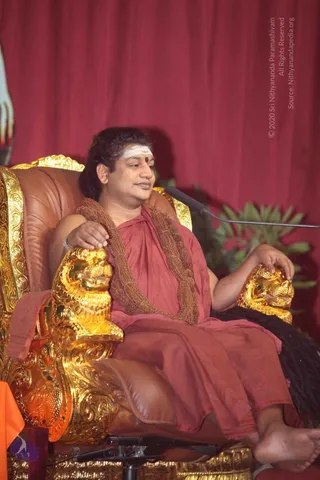
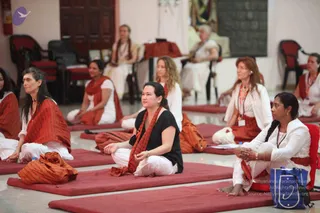
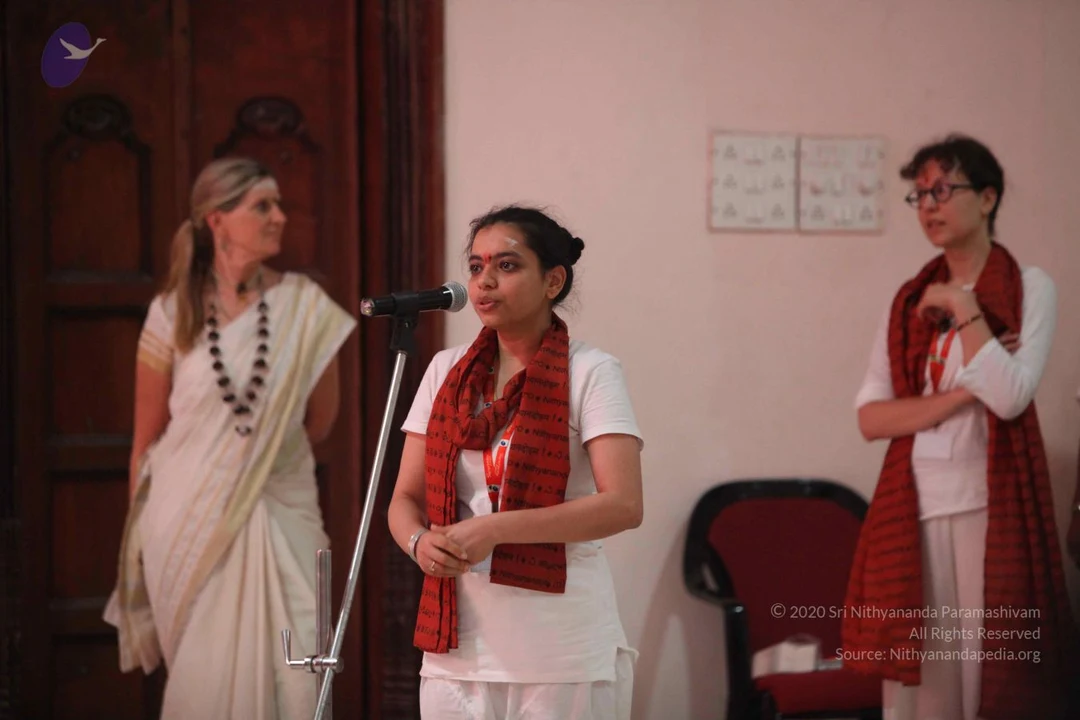
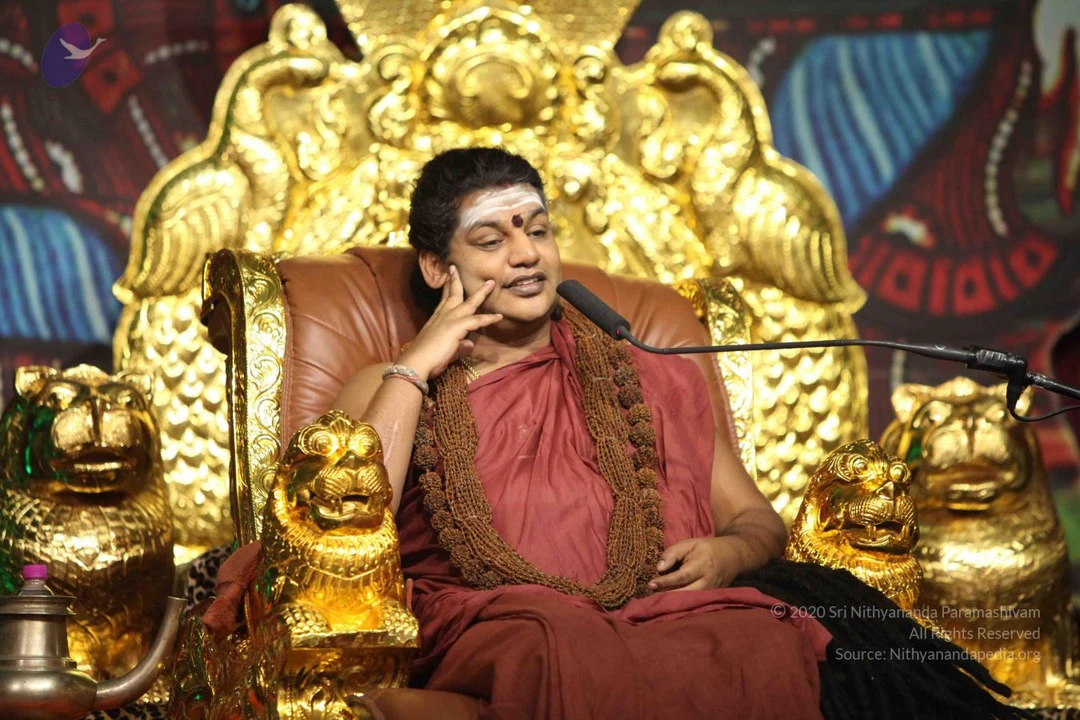
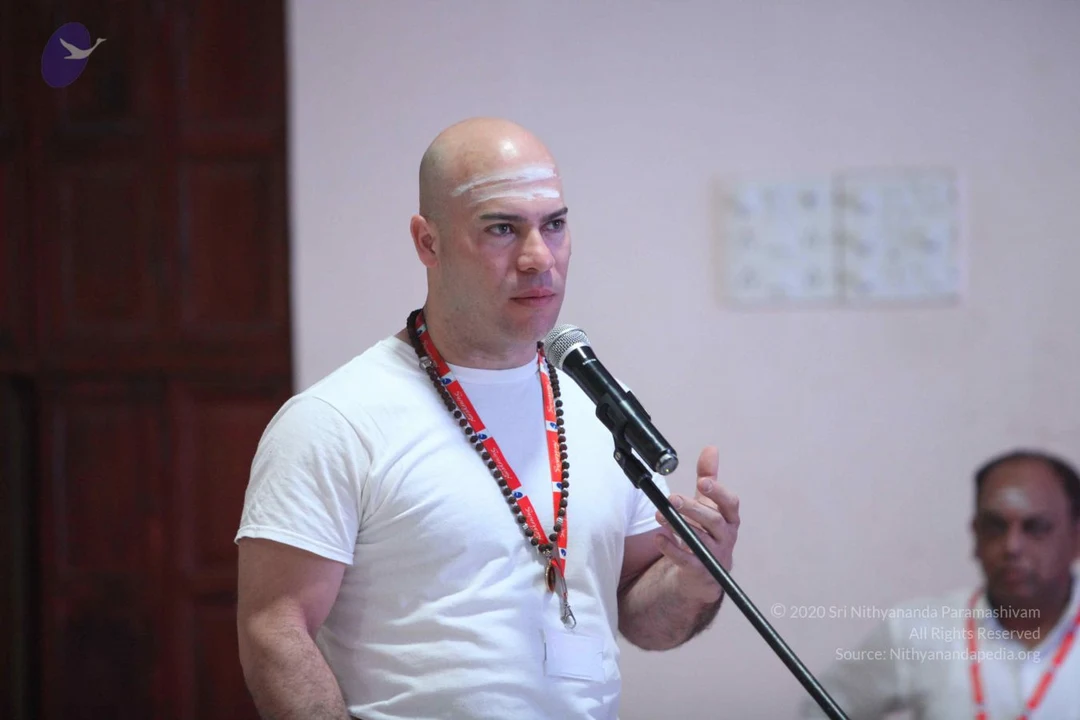
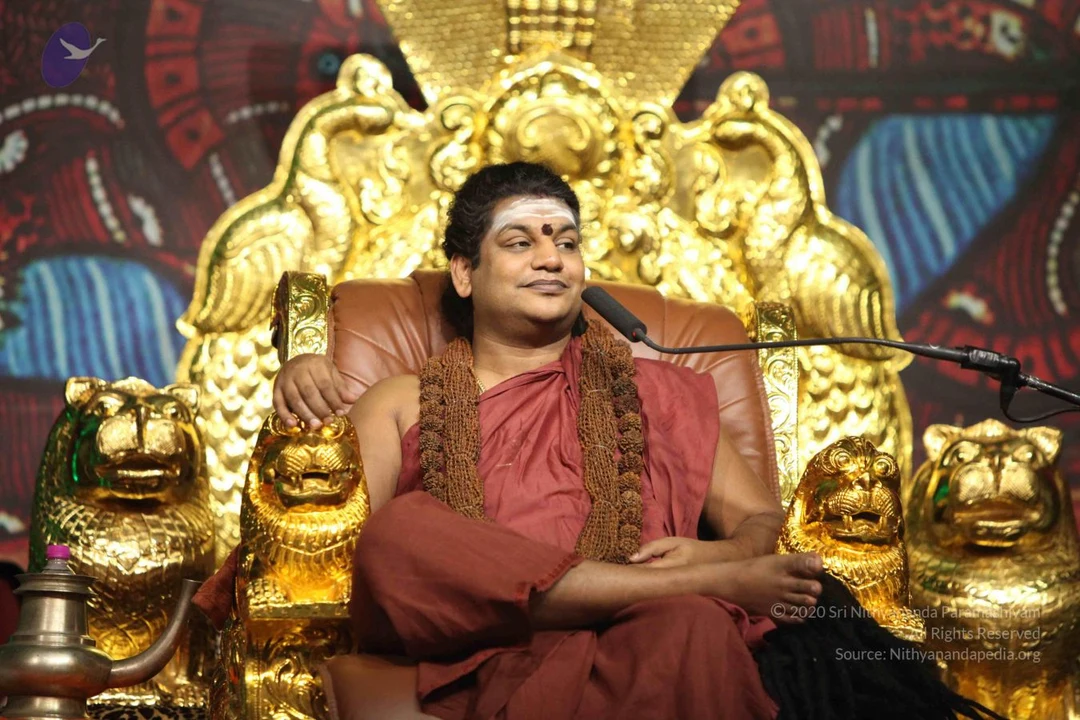
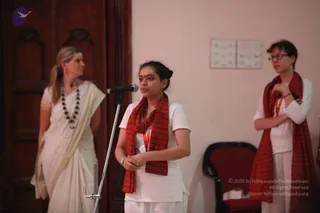
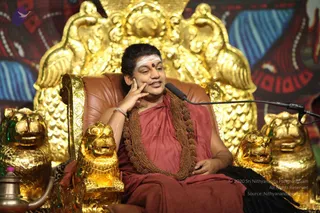
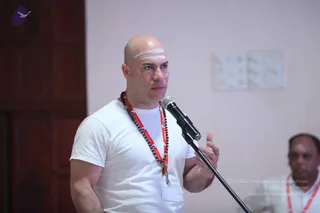
A photograph of a man seated on an ornate brown leather throne with gold-carved lion-head armrests, in front of a deep red curtain and a microphone on a stand. He wears a red-maroon robe, a long brown rudraksha mala draped over his shoulders, and white and red tilak marks on his forehead, with long swept-back dark hair. He rests his hands on the lion armrests and smiles toward the audience. A leopard-print cushion and a metal vessel sit at the lower left, and gold carvings and a painted red-and-flame backdrop appear at the left edge. The appearance is consistent with the page's Swamiji designation, with cues of long hair, rudraksha mala and ornate throne, so this is a probable depiction in person.A man with dark curly hair, white vertical tilak and a red bindi sits on an ornate gold-carved brown leather throne with lion-head armrests in front of a deep red draped backdrop and a plant. He wears a rust-red robe draped over his shoulders and a long brown rudraksha mala around his neck, with bare feet and a microphone on a stand beside him. Only his appearance and attire are visible; the page describes a person candidate and a convention discourse, but the photo shows one seated speaker with a microphone.A seated group of meditation participants in a bright hall on red mats, dressed in white kurta-style clothes with orange-red shawls and orange sashes. Several wear lanyards and one has a tilak on the forehead. Many sit cross-legged with eyes closed or lowered, and bottles of water and orange cloth bundles lie on the floor. Behind them, a woman in white sits in a chair near wooden slat screens and dining furniture. The scene reflects a death meditation session at a person ashram program.A seated group meditation in a bright hall with light stone floors and red mats. In the foreground, a woman in a black top and white trousers sits cross-legged with a red-and-orange shawl draped over her shoulders and hands resting together. Beside her, a woman in white with a red-orange shawl and a braid sits on a red chair, and other participants in white clothes and red-orange shawls sit on mats and chairs behind them. Several wear beaded necklaces. A dark chalkboard and wooden doors stand on the back wall, and an orange bag rests on a mat in front.Participants sit on red mats in a bright hall during a seated meditation session. Most wear white clothing with red-and-orange shawls draped over their shoulders and orange-beaded lanyards around their necks. In the centre, a woman with dark hair in a bun sits cross-legged with eyes closed and hands resting in her lap. Other attendees sit nearby on mats and red chairs, with water bottles and bags placed in the foreground. No a person figure is visible in this image.A seated man in a brown-red unstitched robe and a long rudraksha mala sits on an ornate brown leather throne with gold-painted lion-head armrests, a microphone on a stand beside him, in front of deep red drapes and green foliage. He has white and red forehead markings, is looking to the side and his right hand rests on the lion armrest. The setting suggests a discourse stage. Probable Swamiji appears here, seated on the throne with long dark hair, rudraksha mala and ceremonial robe cues.Three women stand in a room with pale pink walls and a dark wooden door. In the centre, a young woman in a white top and white trousers, with a red bindi and a red-and-black printed scarf, speaks into a microphone on a silver stand. To the left, an older woman in a white sari with dark beaded necklaces stands by the door, and to the right a woman with glasses wears a white top and red scarf with her arms folded. A red-cushioned chair and a small wall chart are visible. No swami is visible.A photograph of a man seated on a brown leather chair set before an ornate gold throne carved with lions and scrollwork. He wears a rust-red robe, a long brown rudraksha mala draped over his chest, and white and red forehead markings, and rests one hand near his face while speaking. A microphone stands at right, and a brass vessel sits at left. The backdrop shows painted red, blue and white patterns. Probable Swamiji seated on the throne: long swept-back hair, rudraksha mala and ceremonial gold lion-throne cues are visible, so the appearance-based label applies. One person is physically present.A bald man in a plain white t-shirt stands at a microphone on a stand, speaking, with a white horizontal tilak line across his forehead and a dark rudraksha mala with a red lanyard around his neck. Behind him, a man in a white shirt with a red lanyard sits partially visible on the right. The wall is pale pink with a small framed notice and a wooden door on the left.A photograph of a man seated on an ornate gold throne with carved lion-headed armrests and a brown leather seat, in front of a colourful patterned backdrop of red, blue and white. He wears a red-brown ochre robe draped over his shoulders, a long brown rudraksha mala around his neck, and a white forehead marking with a red dot. A microphone on a stand is positioned beside him, and a brass vessel with a spout sits at the lower left. He sits with one hand resting on the armrest and the other on his lap, looking off to the side. Appearance-based label: a person, seated on a throne with rudraksha mala and ochre robe.