Skip to content
Tuesday

10 May 2016

Science of Levitation

Dated photos
334
Source pages
1
Media
5
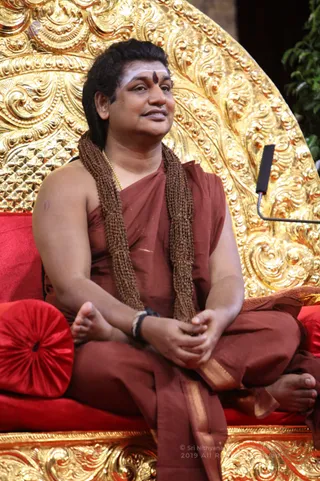
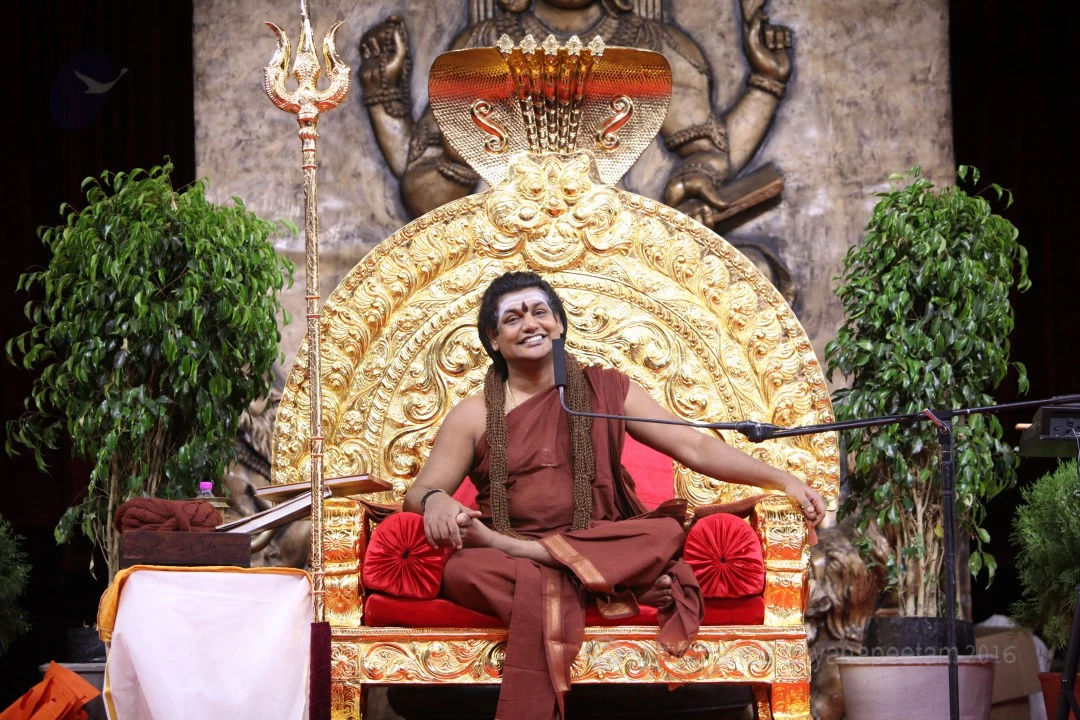
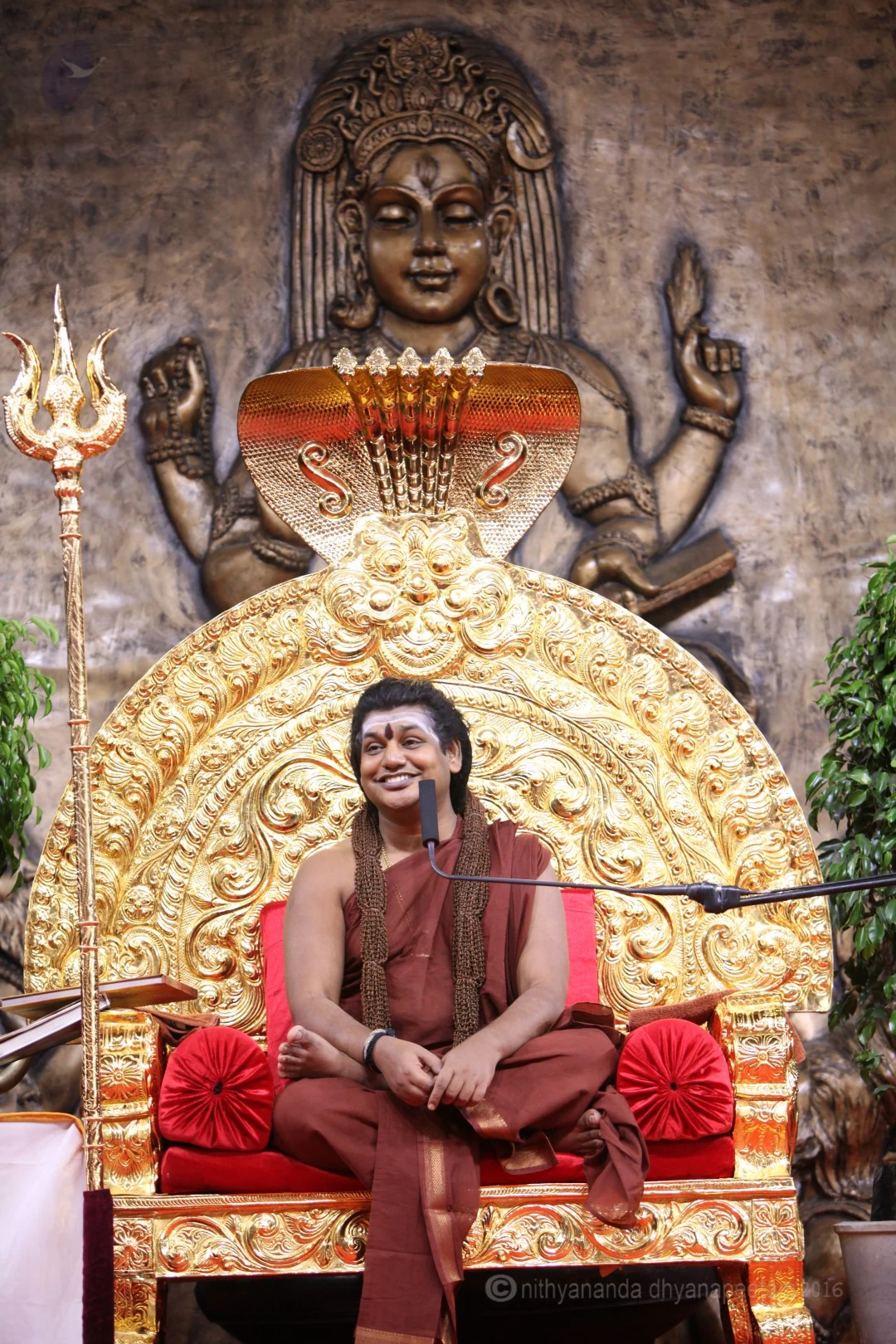
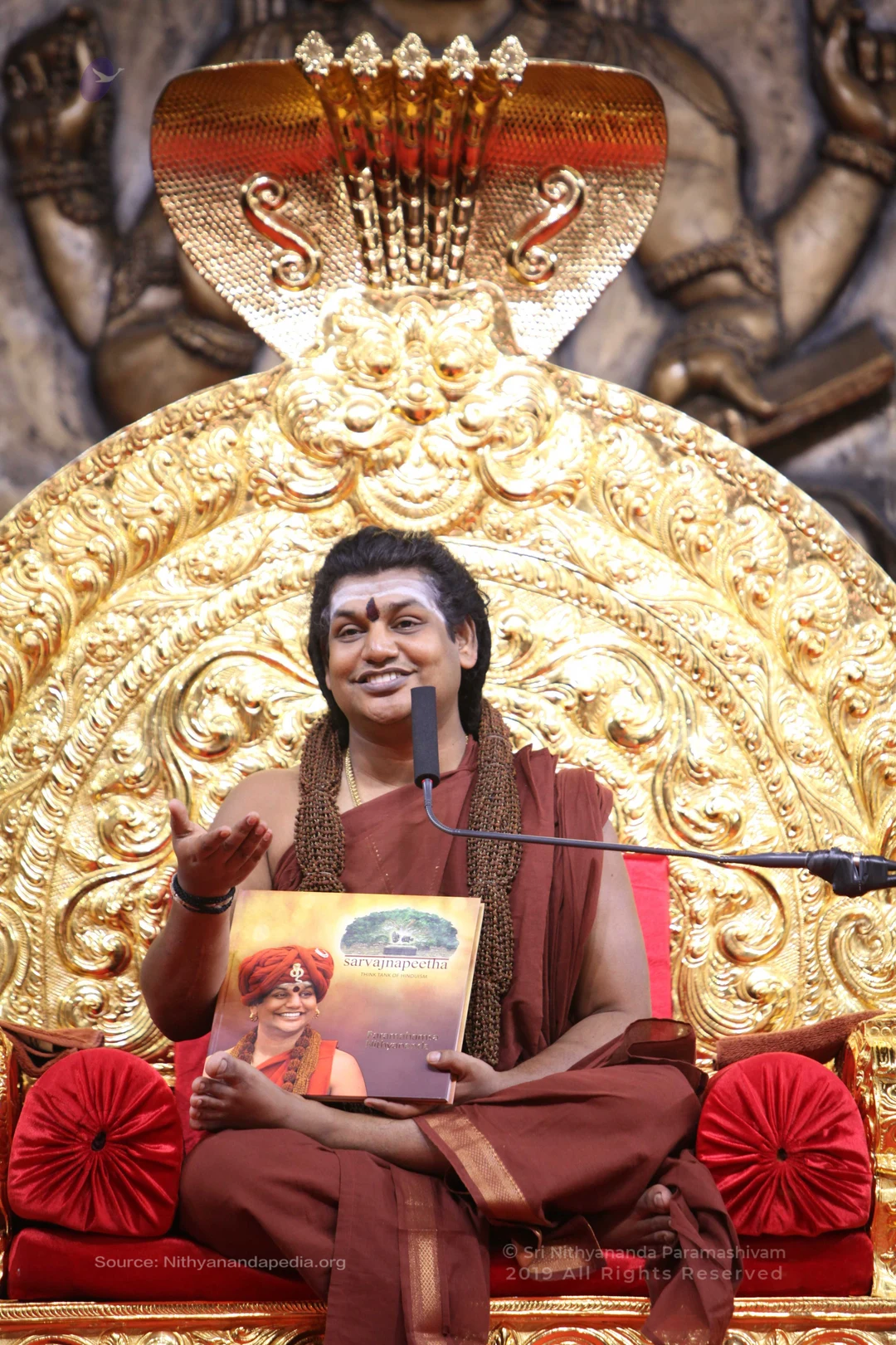
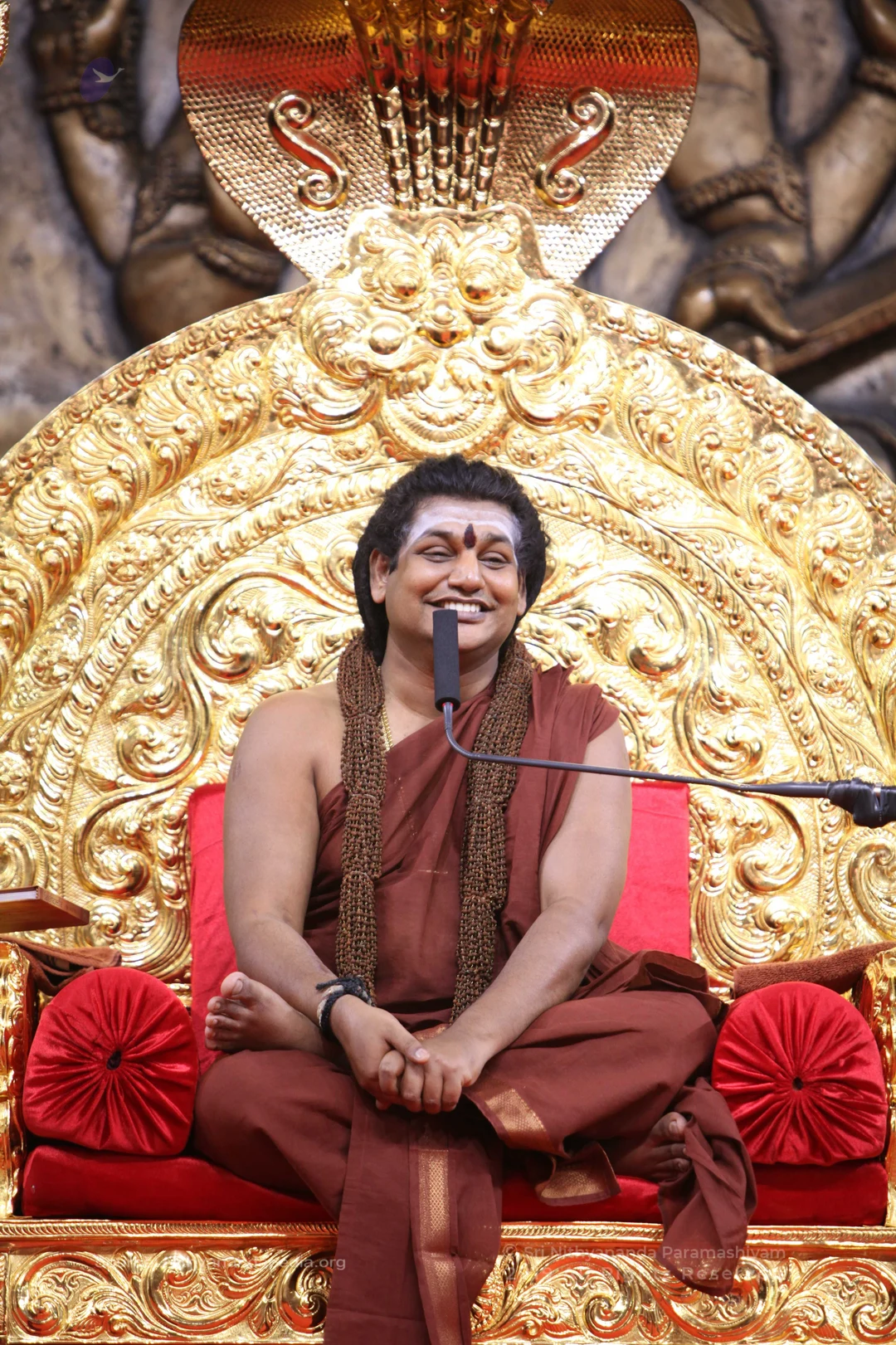
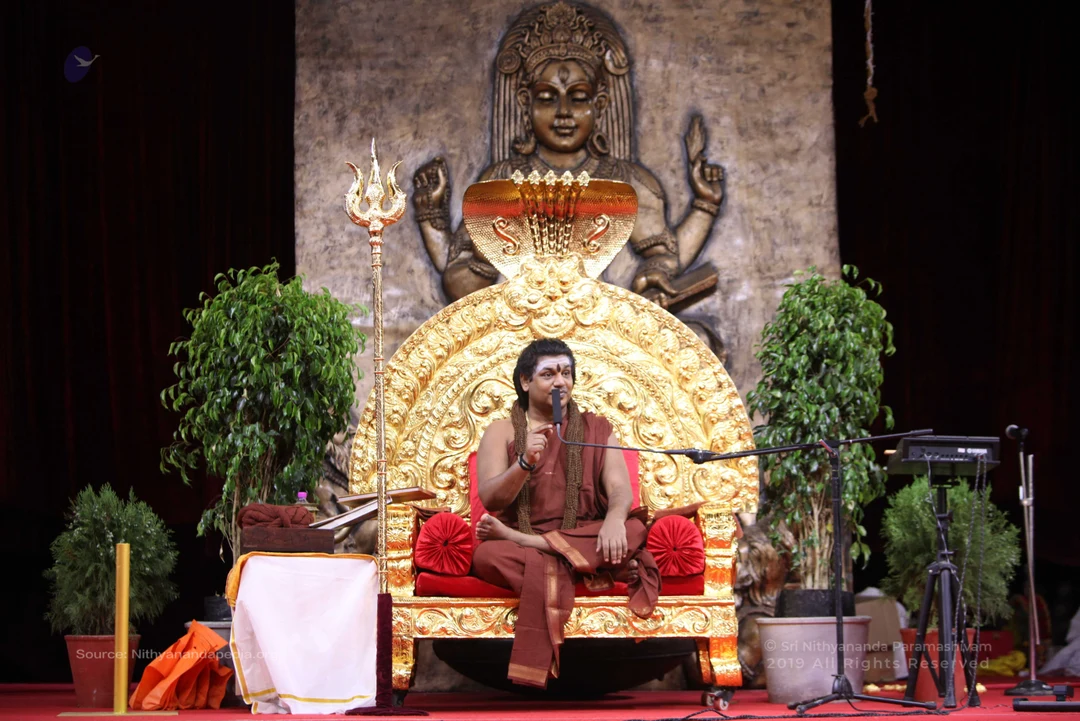
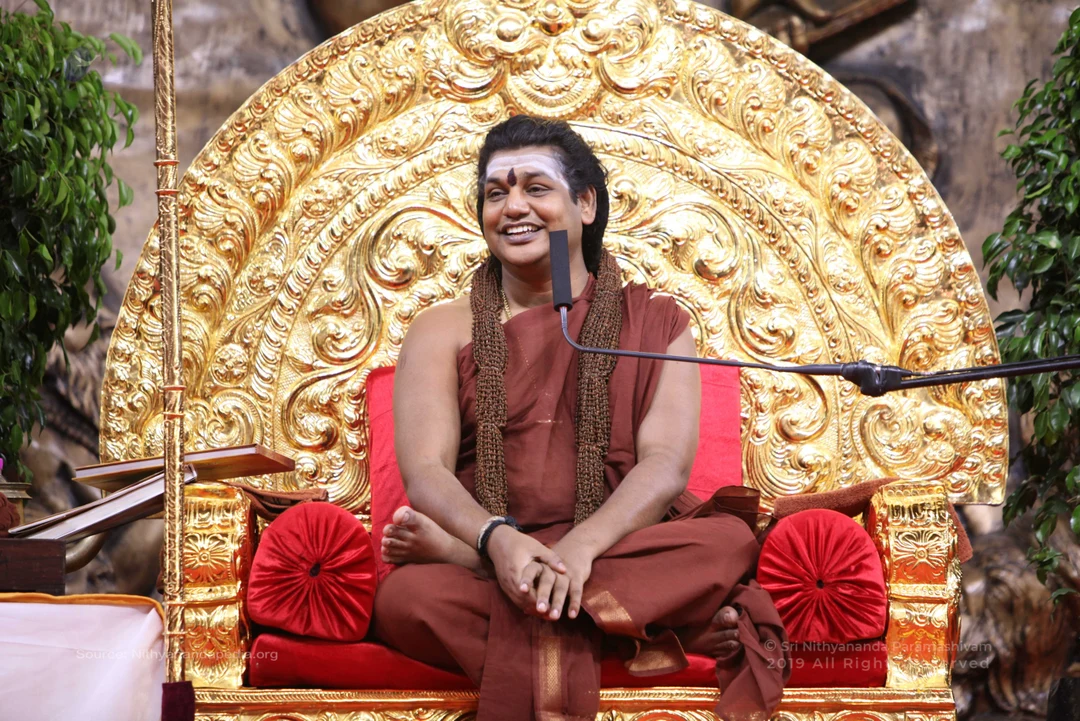
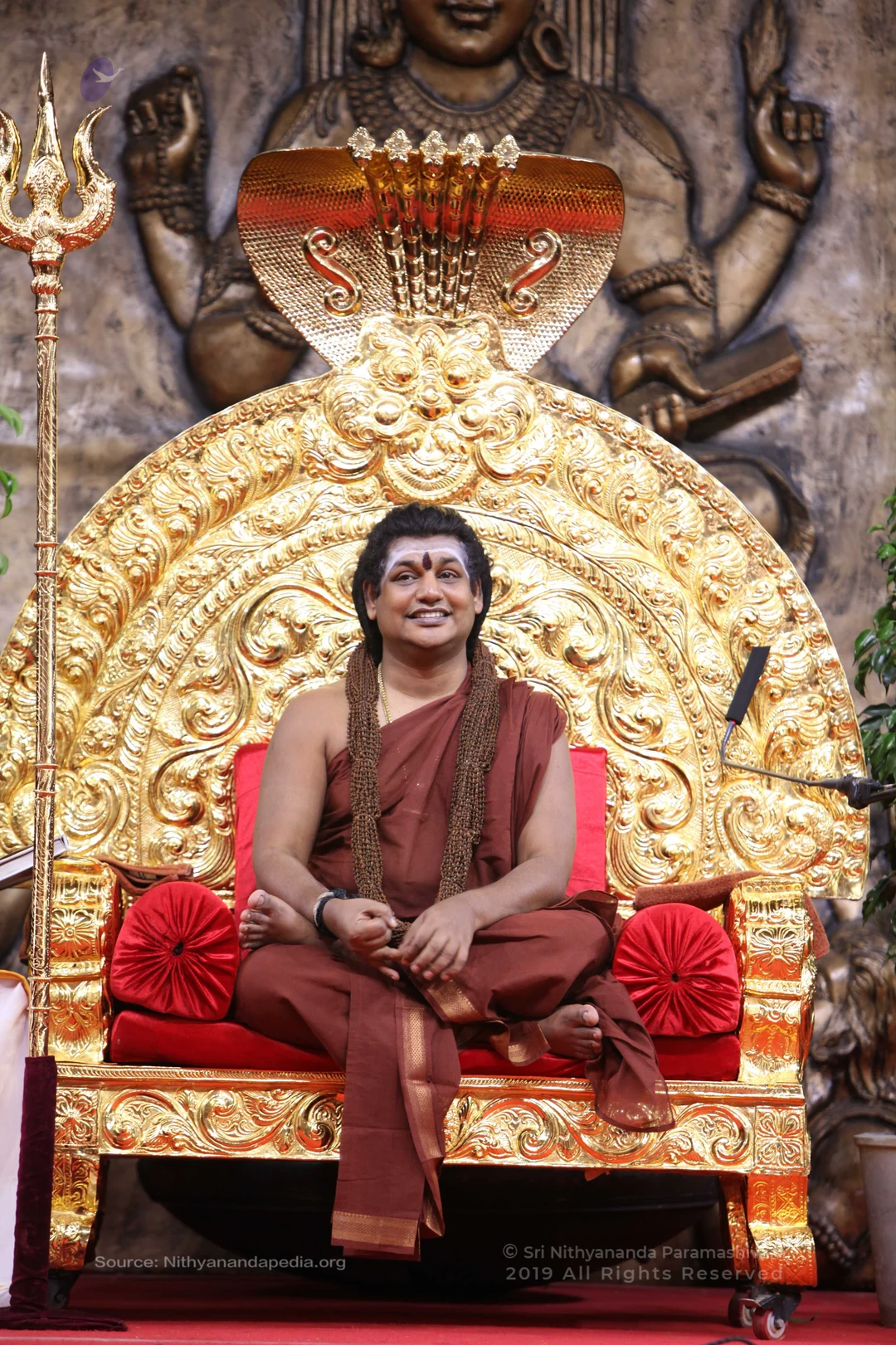
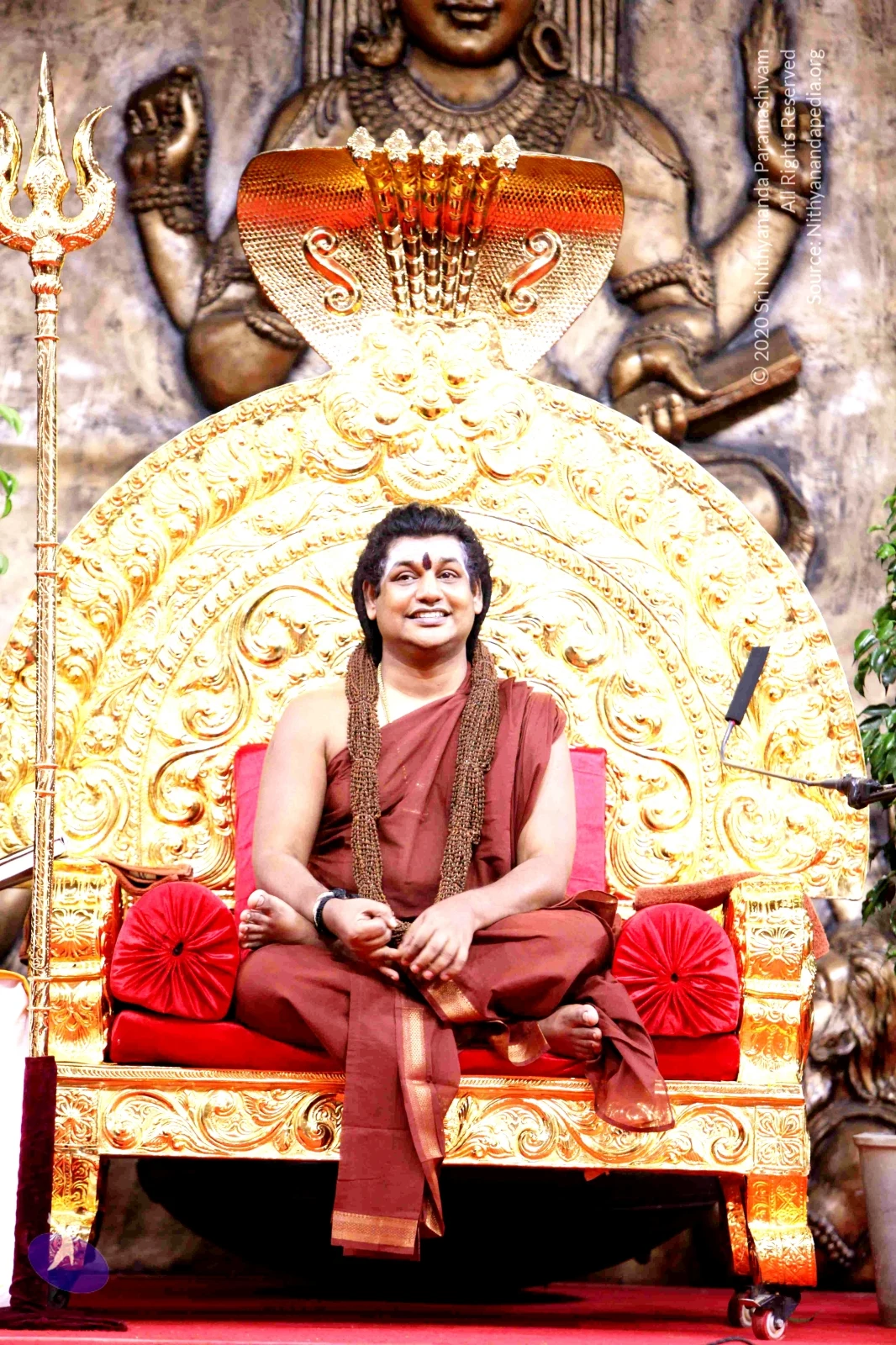
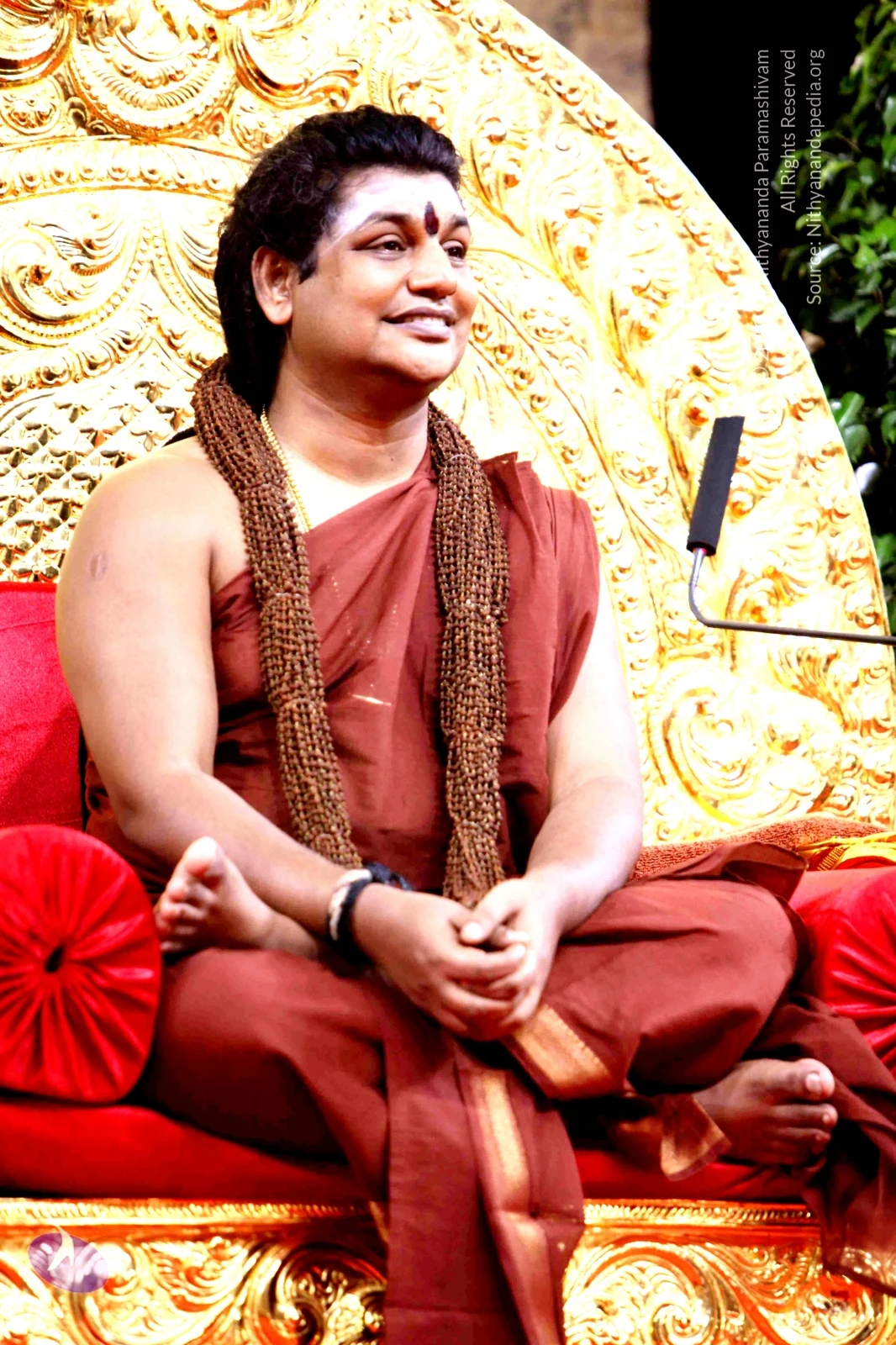
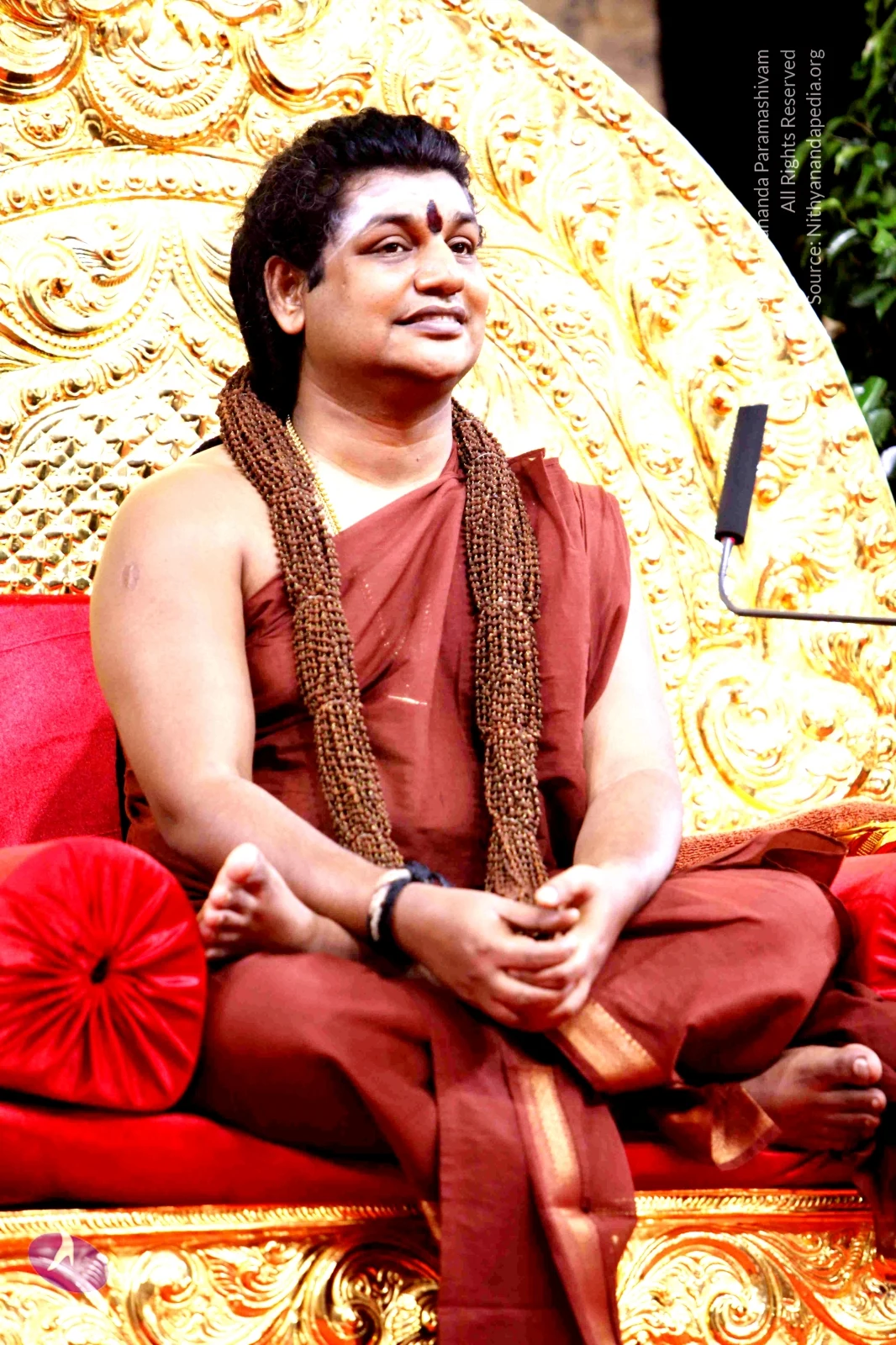
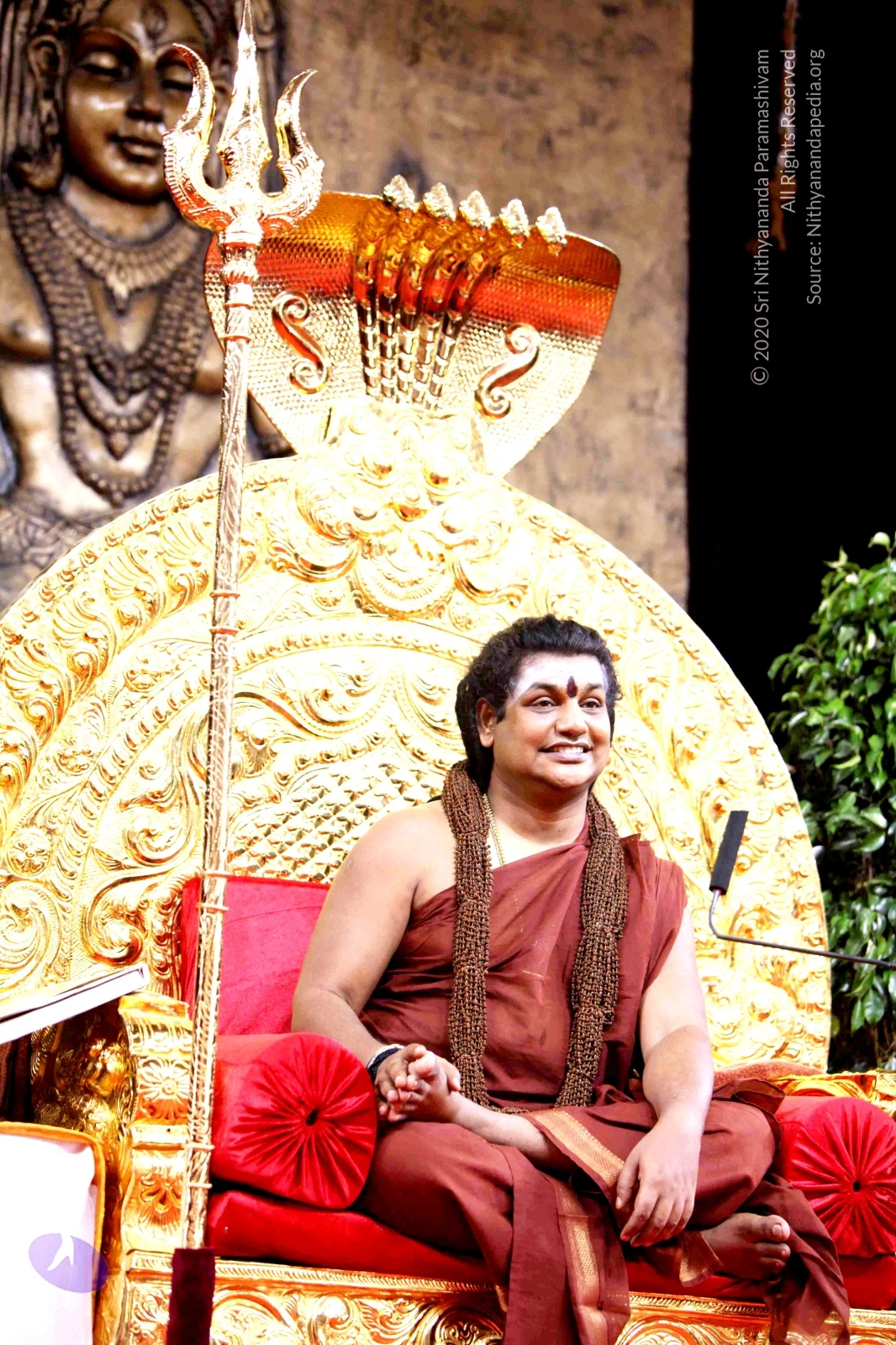
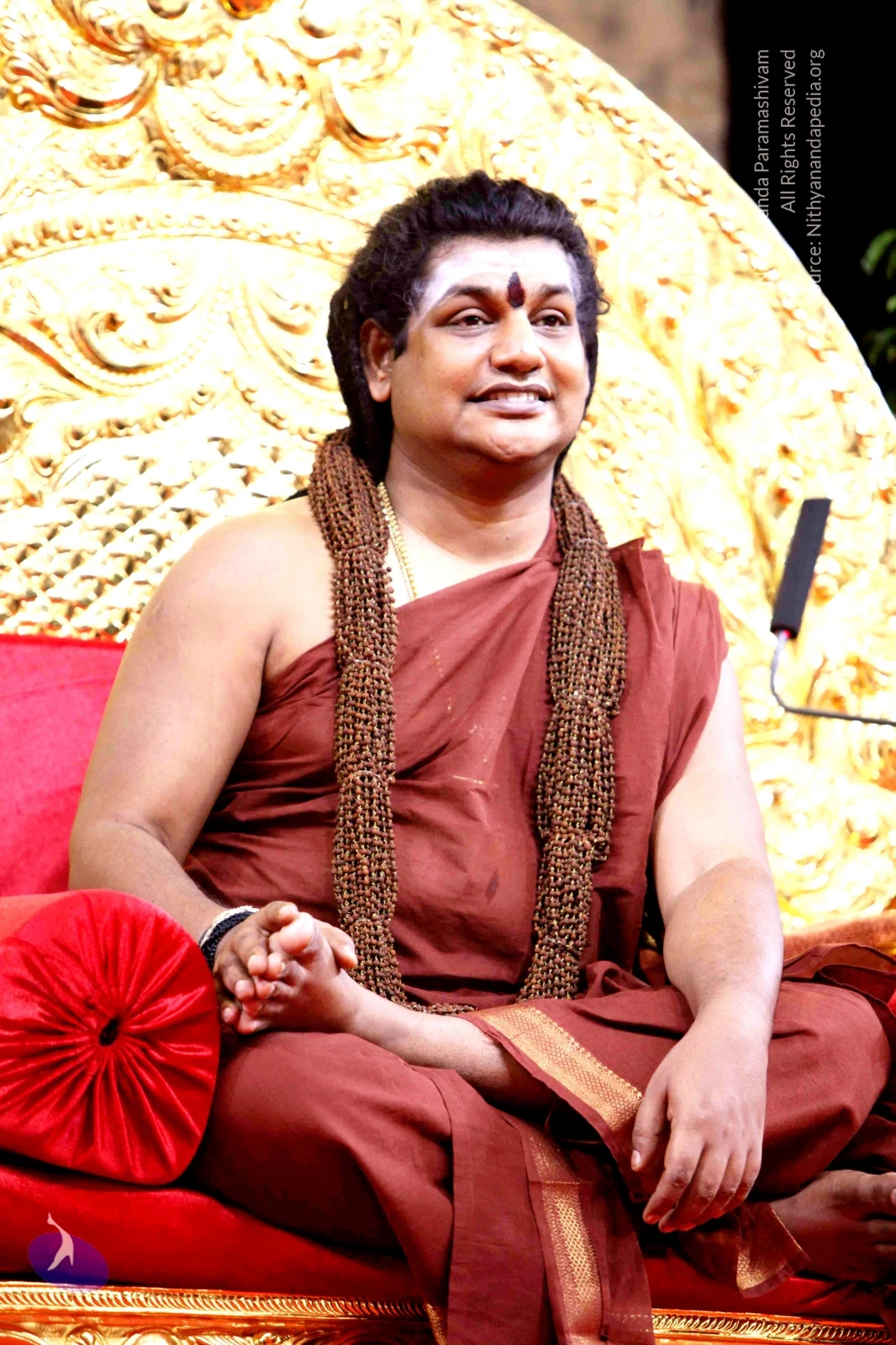
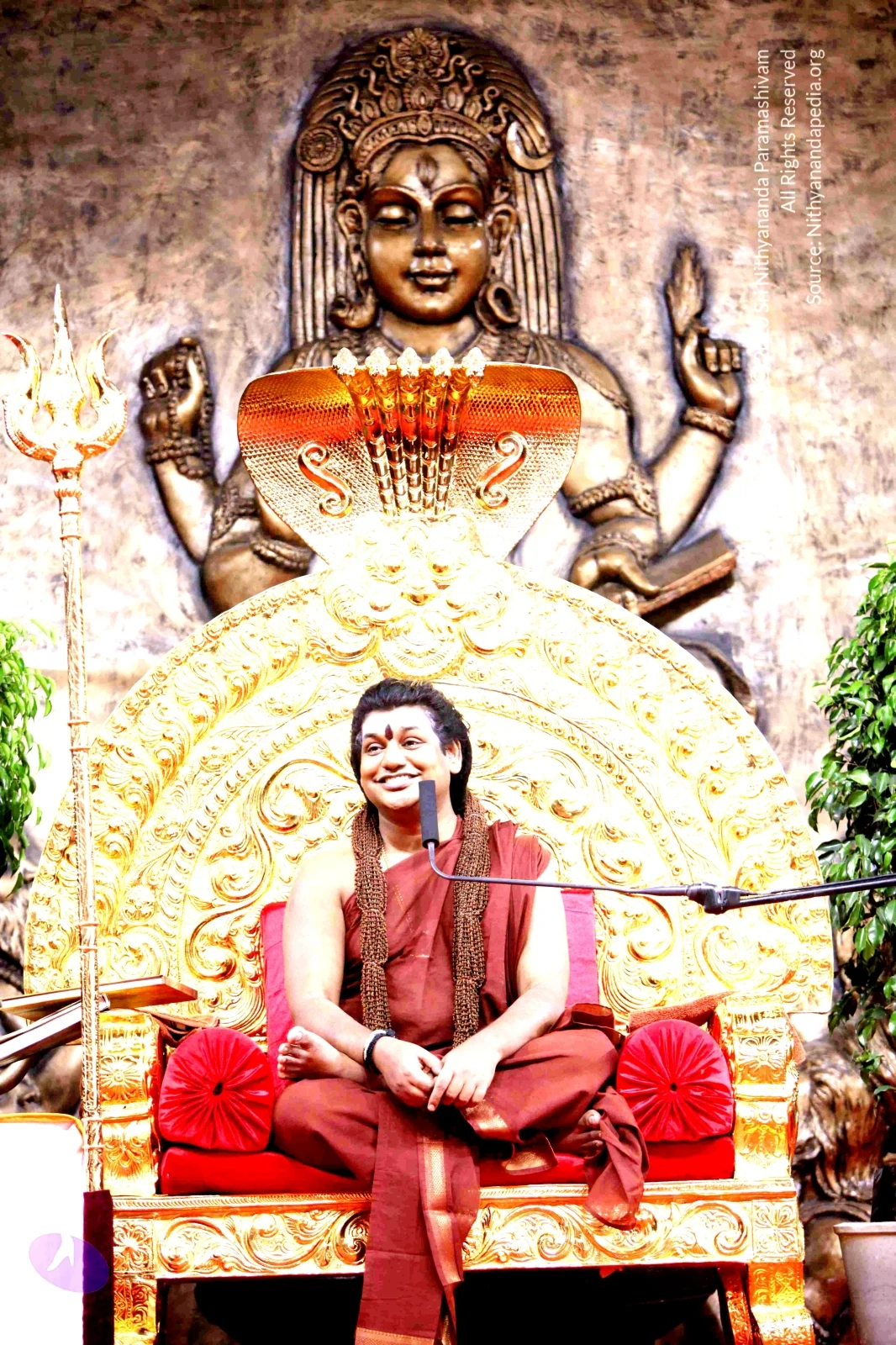
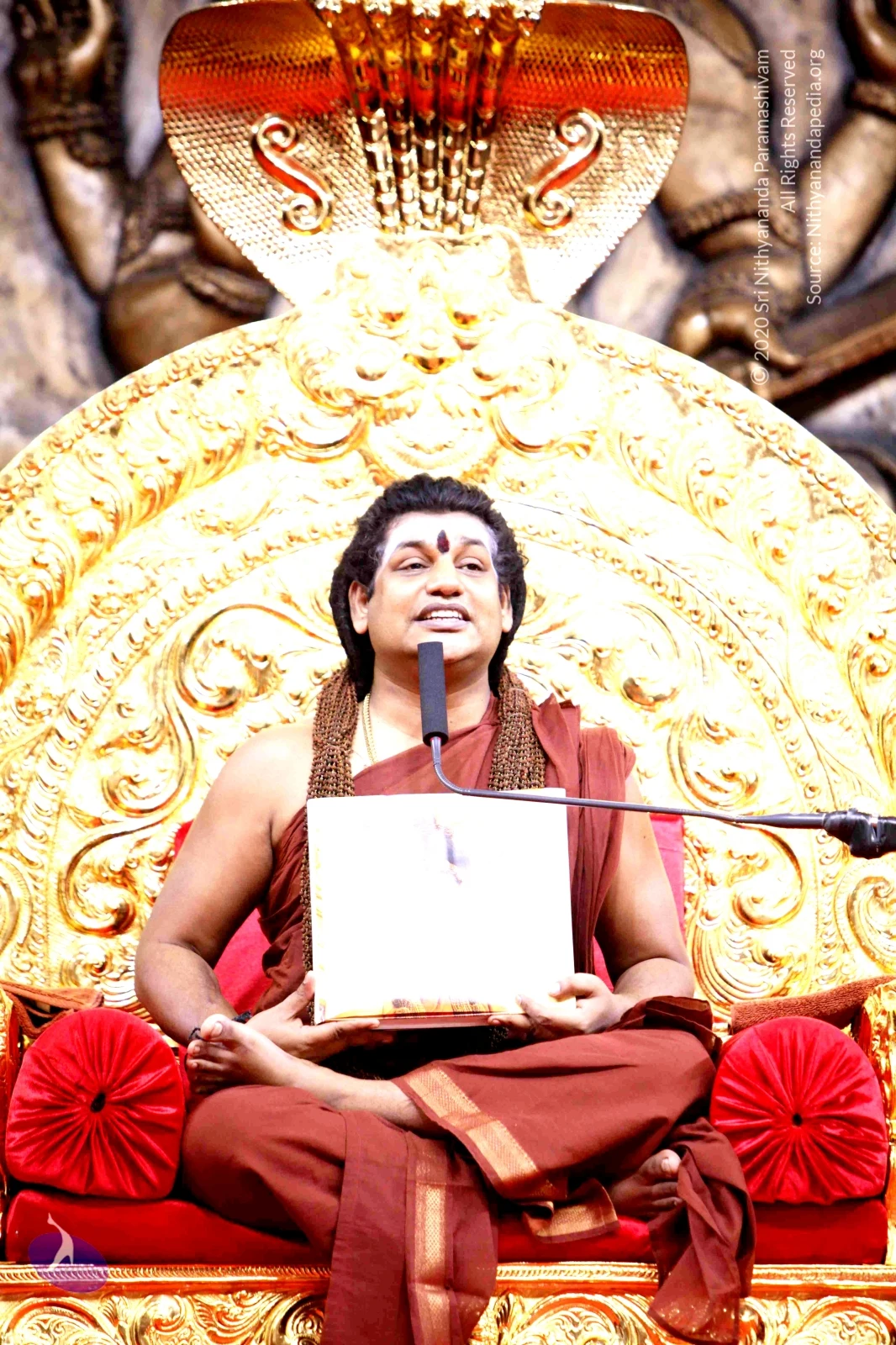
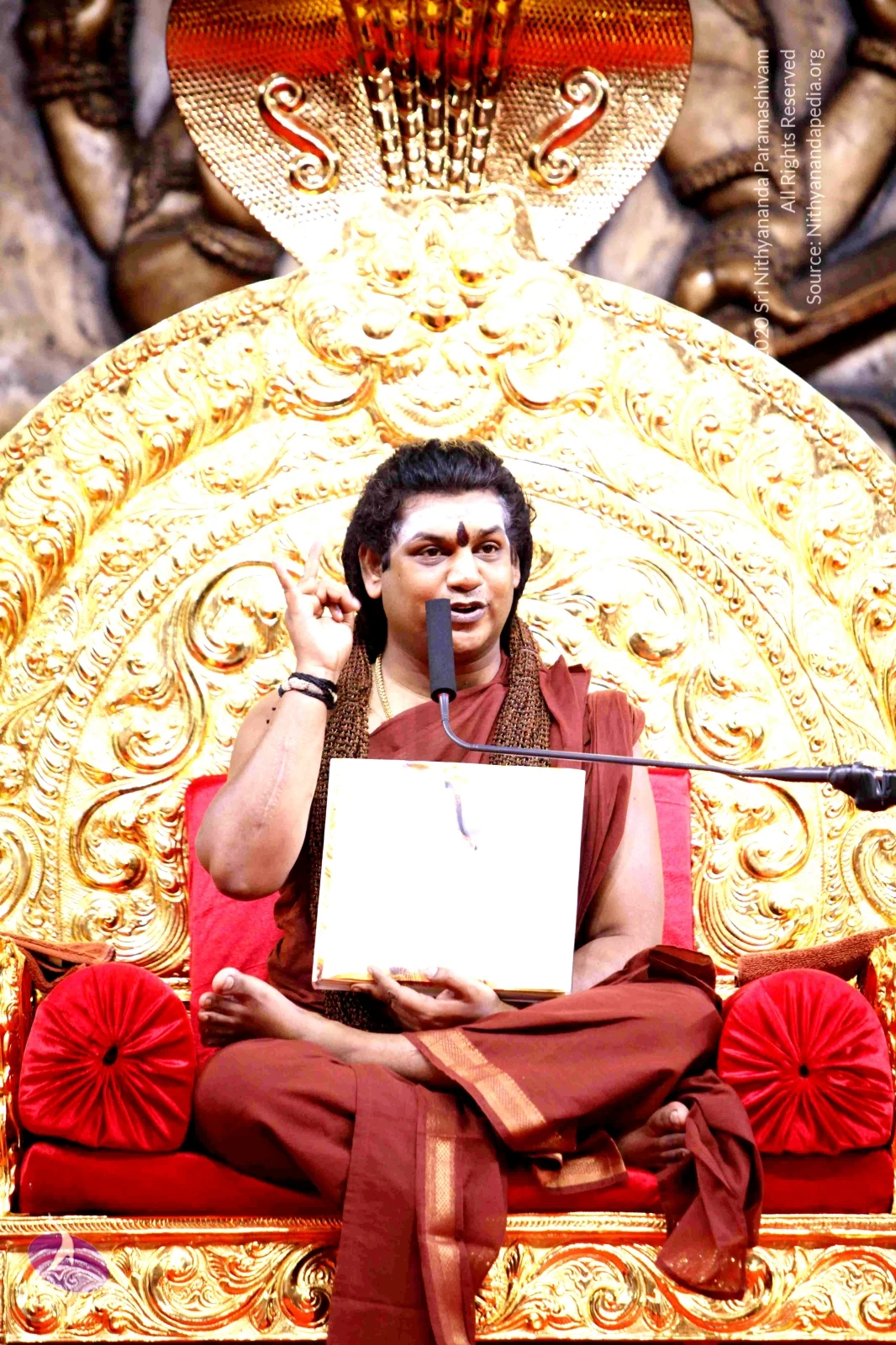
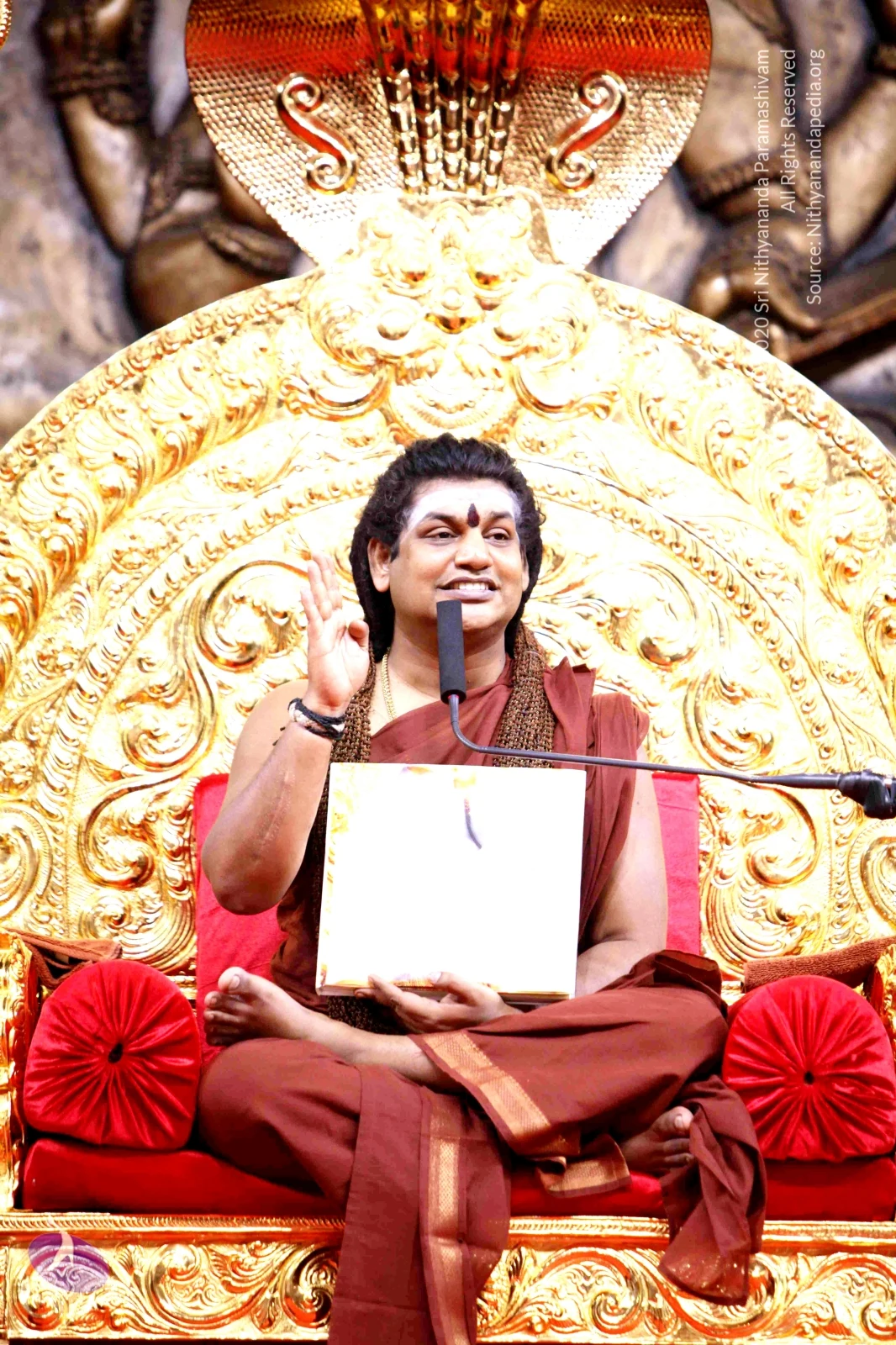
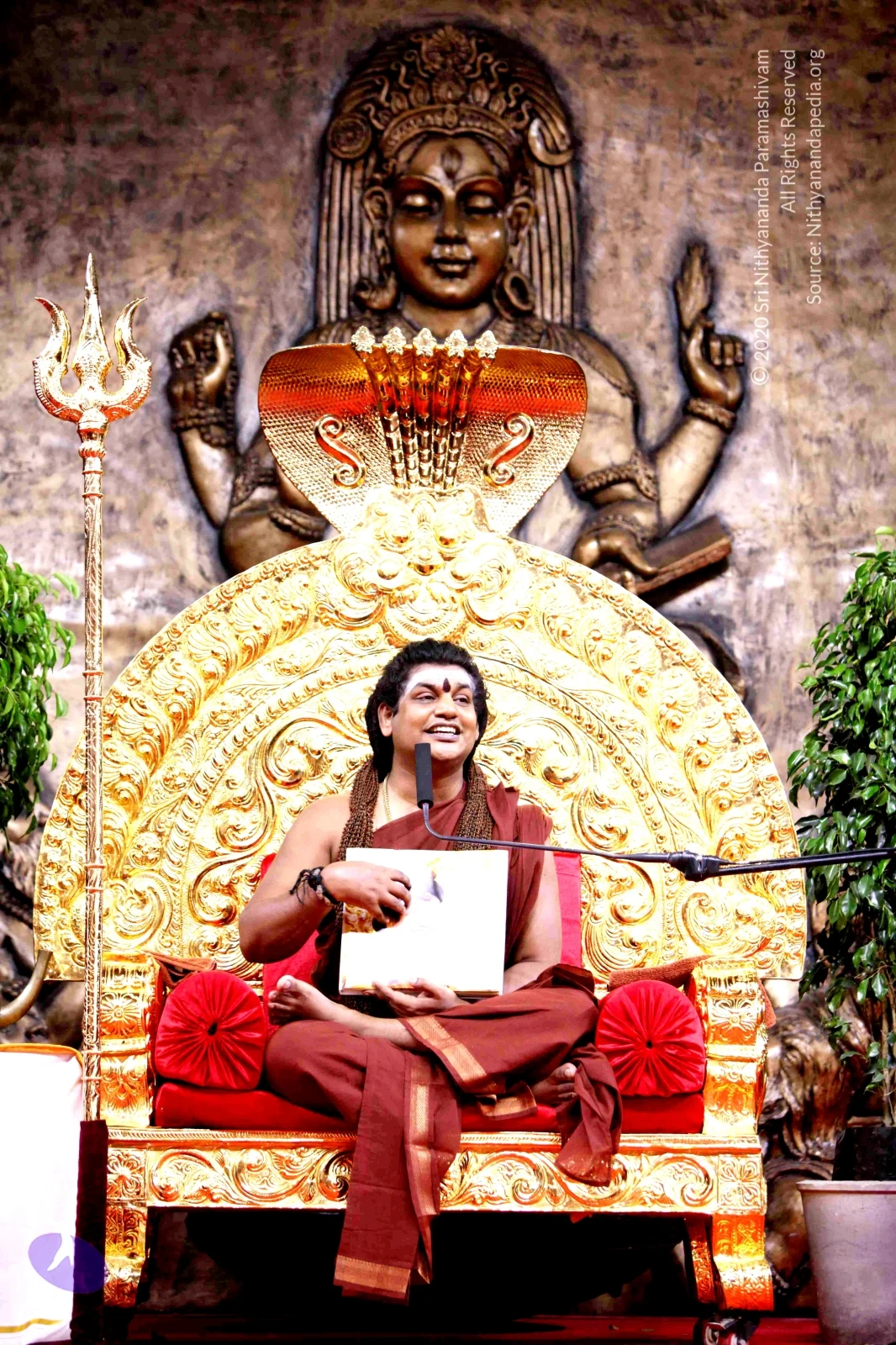
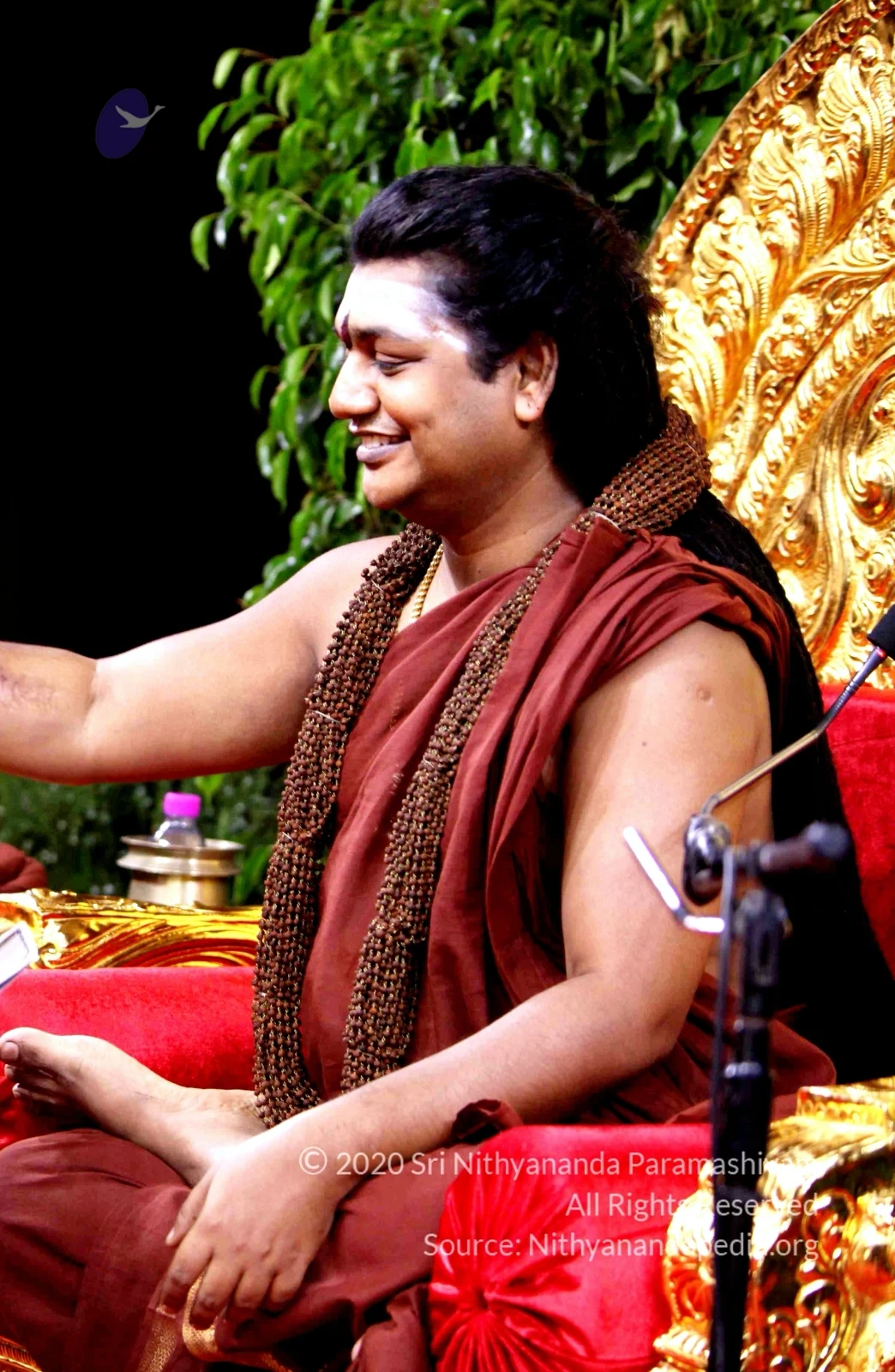
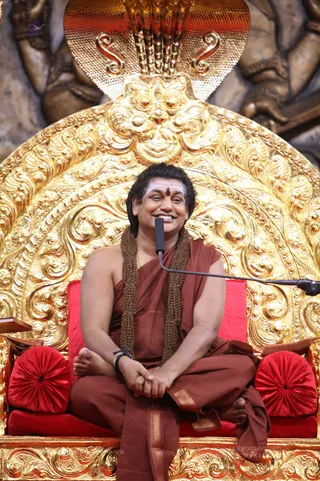
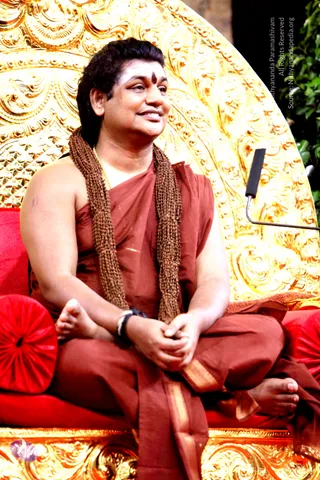
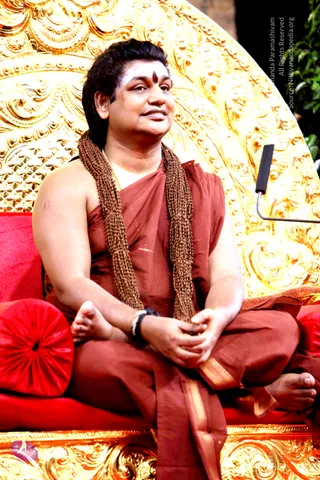
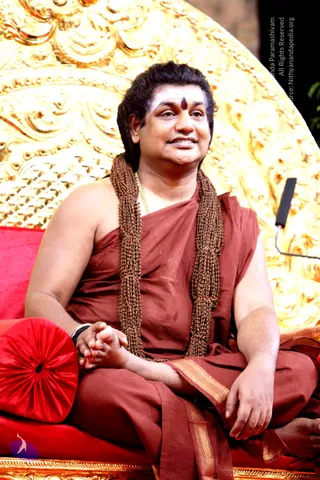
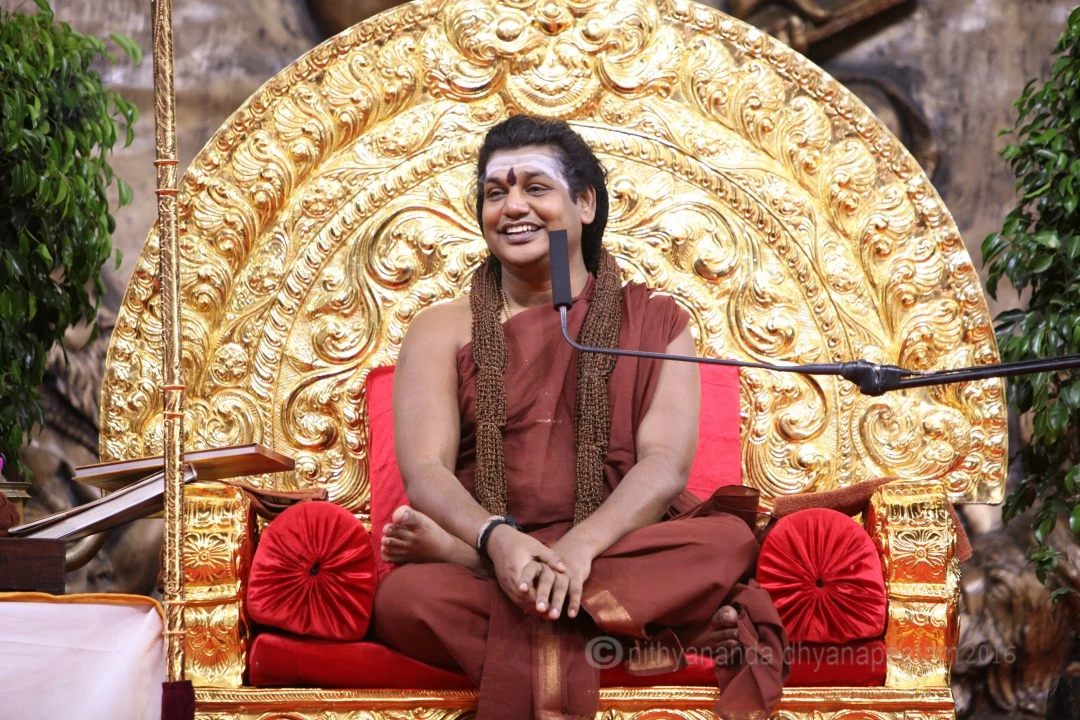
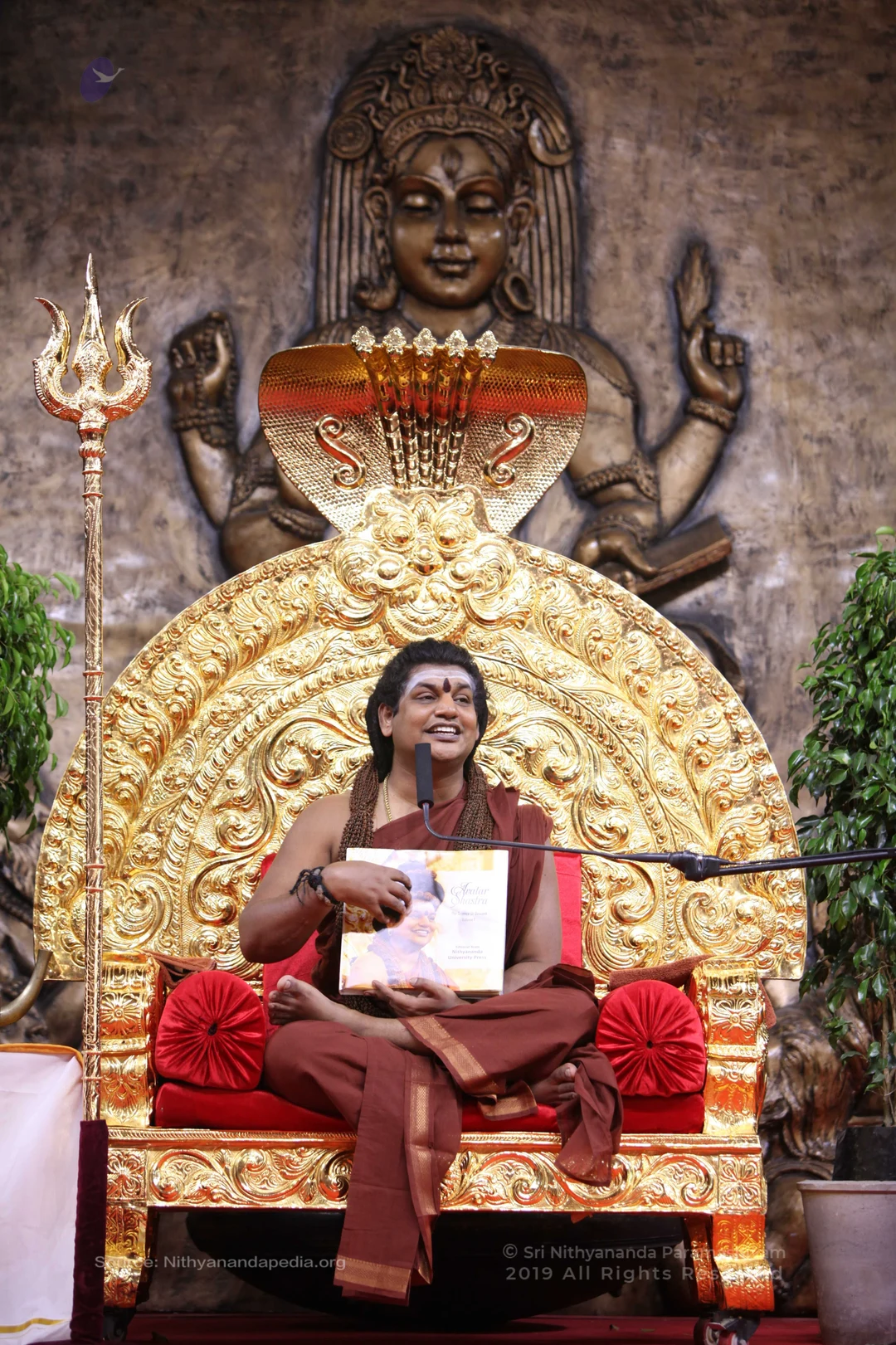
A man sits cross-legged barefoot on a red cushioned seat in front of an ornate gold repoussé throne back. He wears a rust-maroon unstitched robe draped over one shoulder with a gold-bordered dhoti, a long brown rudraksha mala hanging across the chest, a thin gold chain, and a red-brown bindi on his forehead. His hands rest together in his lap and a black microphone stand is visible at right; green foliage is at the upper right.

May 10 2016

Original wiki page
Contents

Title:

Science of Levitation

Link to Video:

A short video clip from the Kumbh Mela Shuddhadvaitam program about the Science of Levitation. Paramahamasa Nithyananda speaks on psychological, physiological, and physical levitation.

VideoAudio

Transcript

Please understand, the next initiation is levitation - Psychological levitation and physiological levitation. These 2 are the powers related to Sahasrara. Before the initiation, you have to finish the samskara dahana kriya, means, you have to burn all your pain patterns.

Listen carefully, I am explaining the principle. When you breathe with thinking, means your breathing is happening, thinking is also happening - that is called Prana.

Your breathing is happening, thinking is not happening, like in the deep sleep, the night deep sleep your breathing will happen, but thinking is not happening - that is called samana.

Now even while you are awake, I am going to infuse samana in you.

Listen carefully, while you are breathing and thinking together, the process is called prana. While you are breathing but not thinking, example is in the mid night deep sleep, when you don’t even have a dream. You are breathing, but you are not thinking, that process is called samana. Now I am going to infuse samana in you, even while you are wake, while you are awake. So naturally what will happen... your whole psychology will become so light, you will feel like it is flowing, it is floating on the air. When the psychological levitation happens, automatically physiologically levitation starts happening, means the body will start jumping, then the physical levitation, it will raise and be there in the air for quite a few minutes.

(3:00)

Understand this is a 3 step

Psychological levitation - feeling so much of lightness. You will feel as if your whole being is floating Second: Physiological levitation - means your intra organs will become light and it will start jumping, like a equivalent to your weight the samana will get filled in you. So it will jump but in few seconds you will fall back. It will jump and you will fall back. That is physiological levitation. Then comes Physical - means more than your physical weight, the samana energy will stay in you. So for that many seconds or minutes, you will be able to be in the air.

And don’t think “I don’t think... I cannot levitate.” No!! Anyhow you are not going to, I am going to make it. So you just be free from your idea of whether you can or not. If you can sit in Padmasana, that will be great. If you can’t, listen, listen carefully. If you can’t sit in padmasana, sit in ardha padmasana. If you sit in this posture, you will not doubt whether you are lifting or it is doing it by itself. In this posture you can never lift yourself. Even normally you cannot lift yourself. ☺

In this, surely you can’t lift yourself. In this any movement happens, it is only because of Kundalini. If you can't do both, it's ok, sit in the chair. I’ll make the whole chair levitate. Listen carefully, you have two activity happening - inhaling and exhaling. You put your awareness and effort only on inhaling, like a … Automatically body will exhale. Let the body exhale automatically, you don’t touch your nostrils. Just mentally put your awareness only on inhaling. Let body automatically exhale. I am going to awaken the samana energy in your system even while you are awake. Means I am going to relieve you from all your patterns, pains, samskaras, incompletions. You are going to literally have the shivabodha - the joy of patternlessness, joy of auspiciousness.

Title

Sarvajnapeetha & Avatar Shastra Book Release || KAILASA'S Contributions || 10 May 2016

Link to Video:

Photos

Bhandara
Shuddhadvaita Process
Link to Video:

Paramashivoham Oneness Capsule 290 (10 May 2016 photo)

Sakshi Pramana:

Sharing from Kumbh Mela Program

Photos Of The Day:

Session

Photos from this day

View all 334 photos

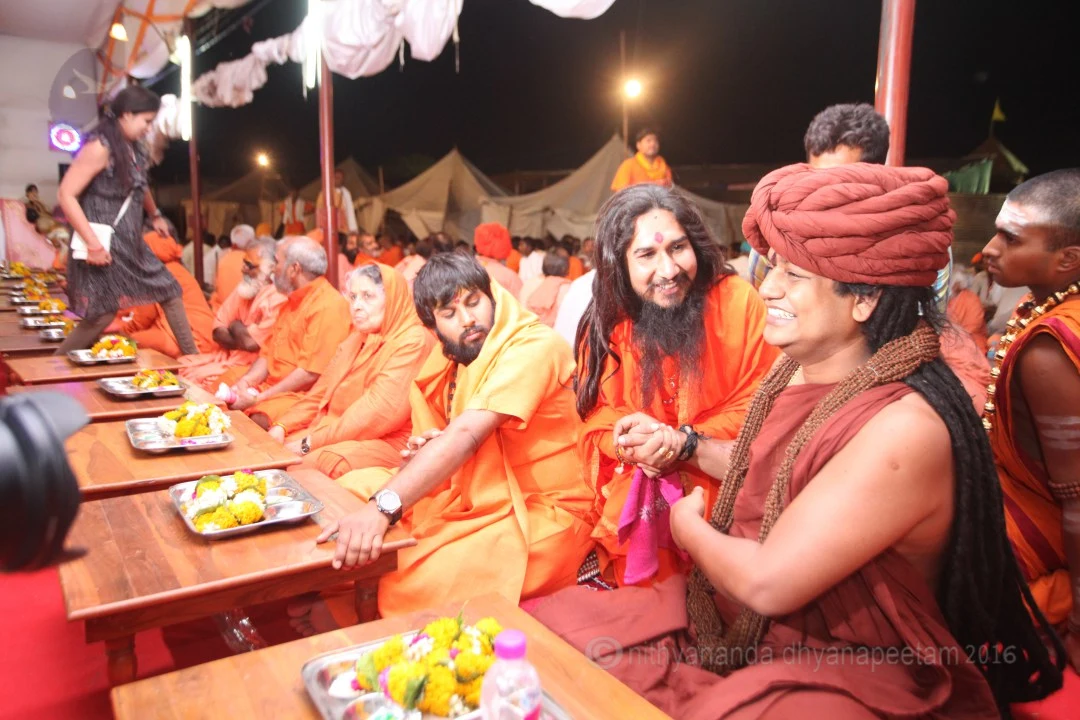
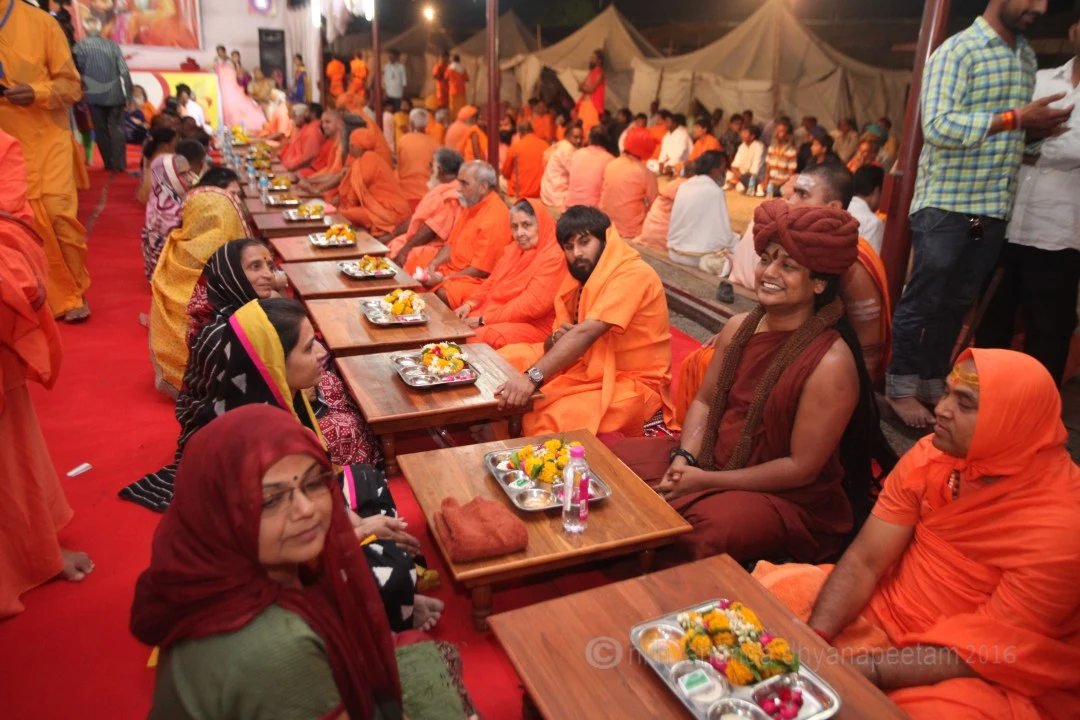
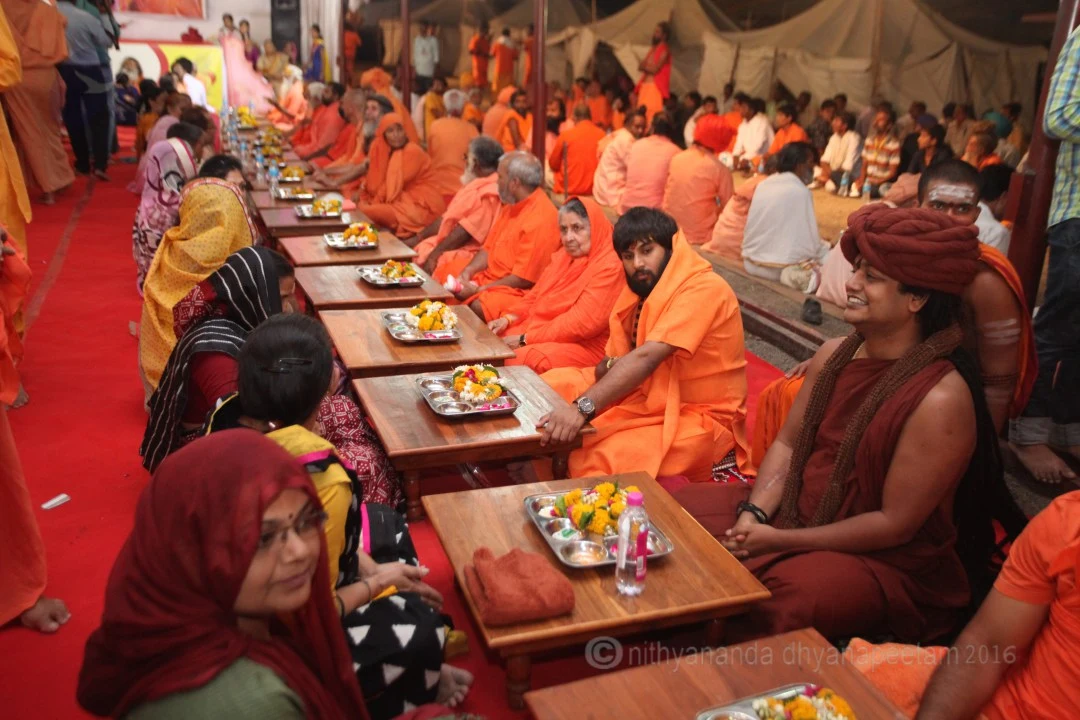
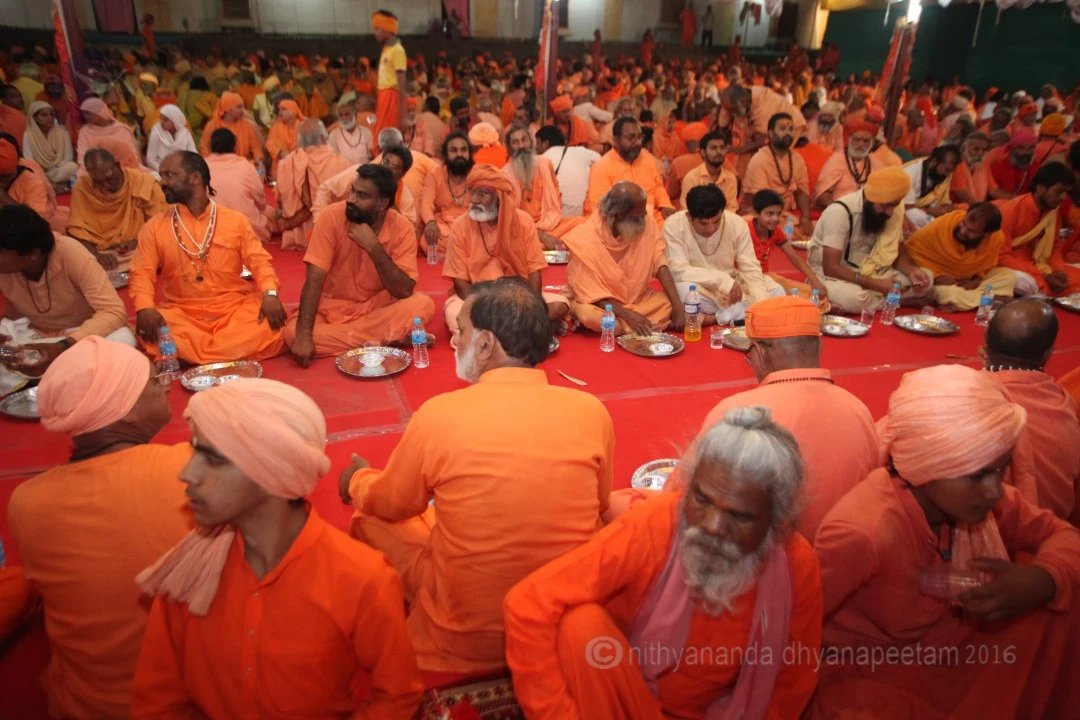
Bhandara

4 photosSource gallery
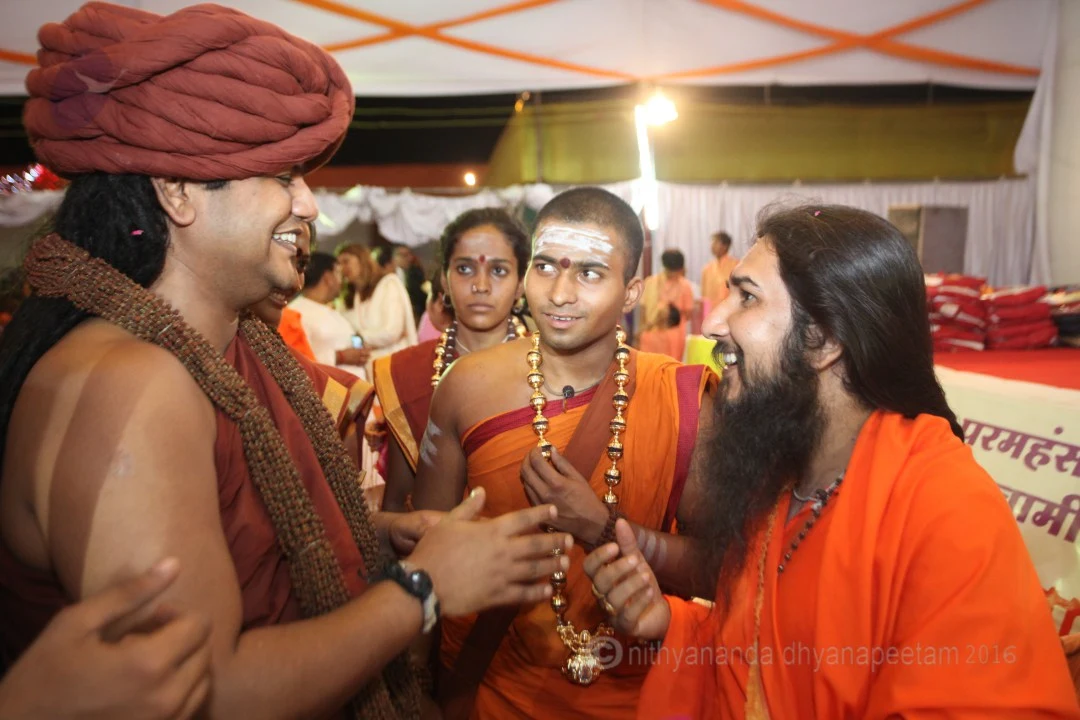
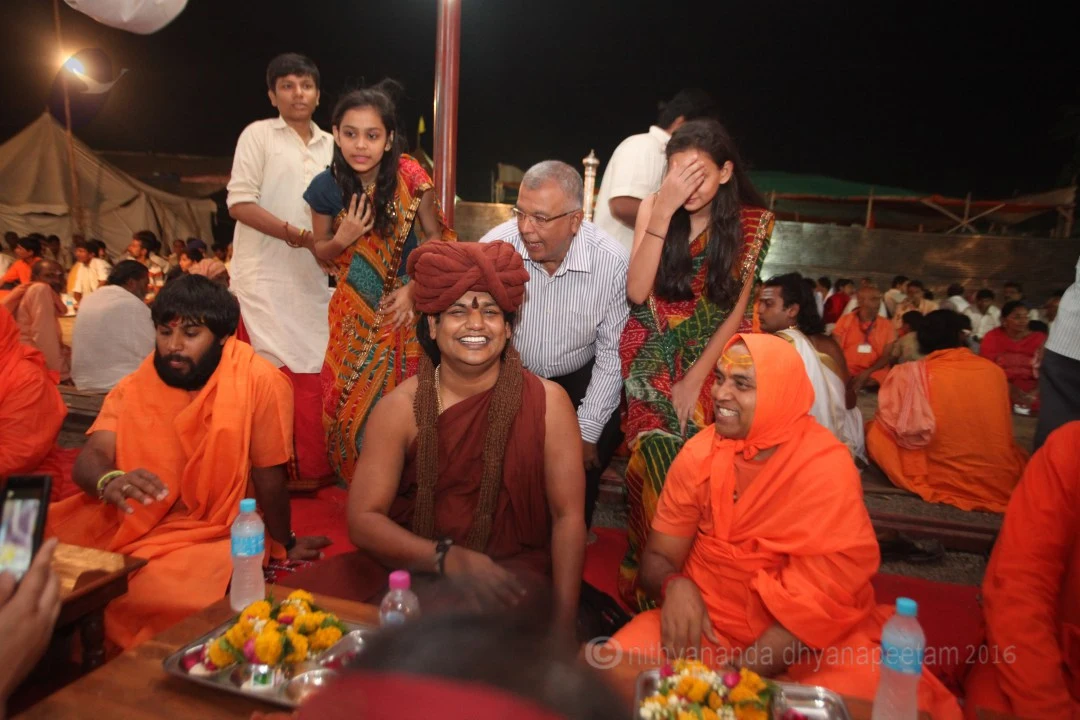
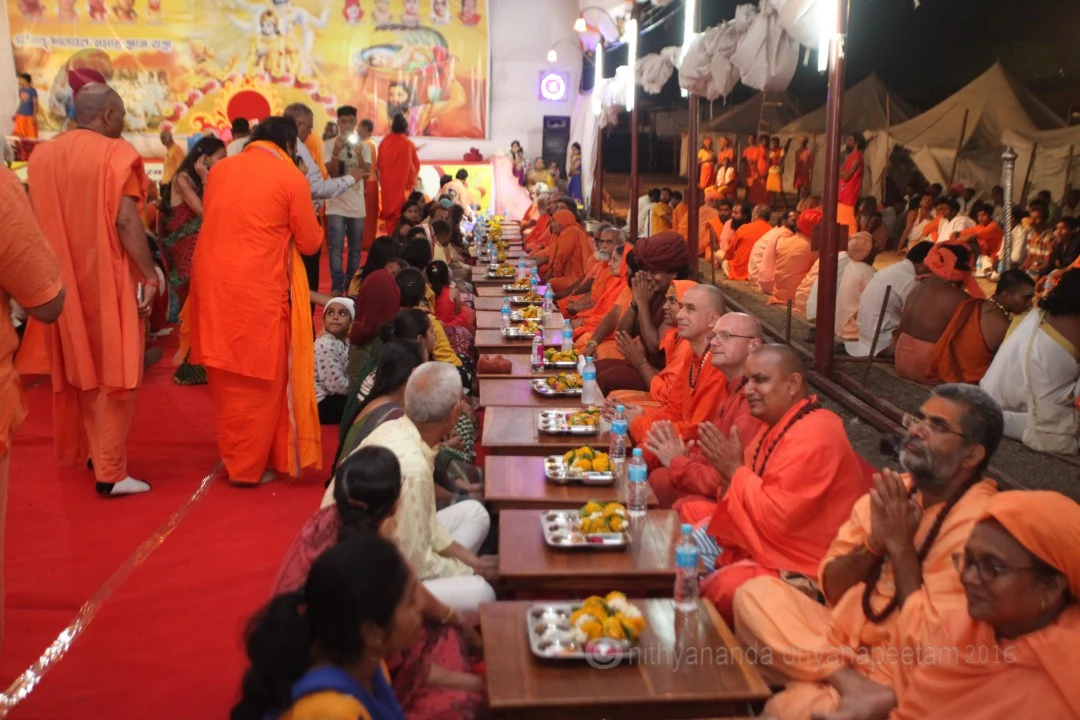
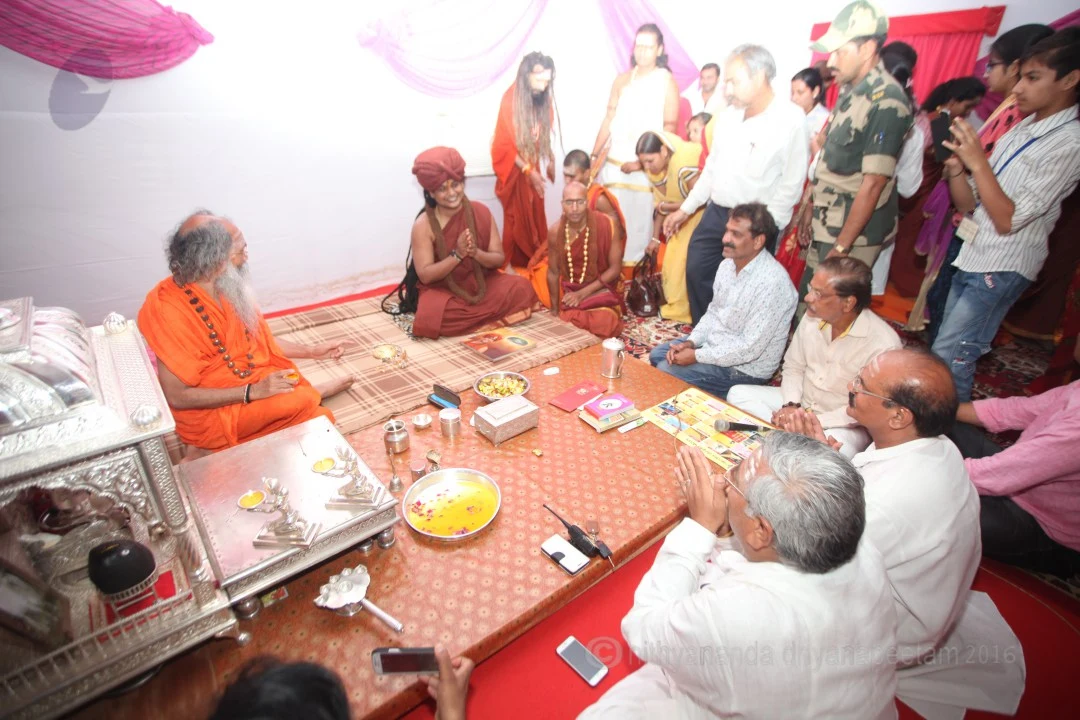
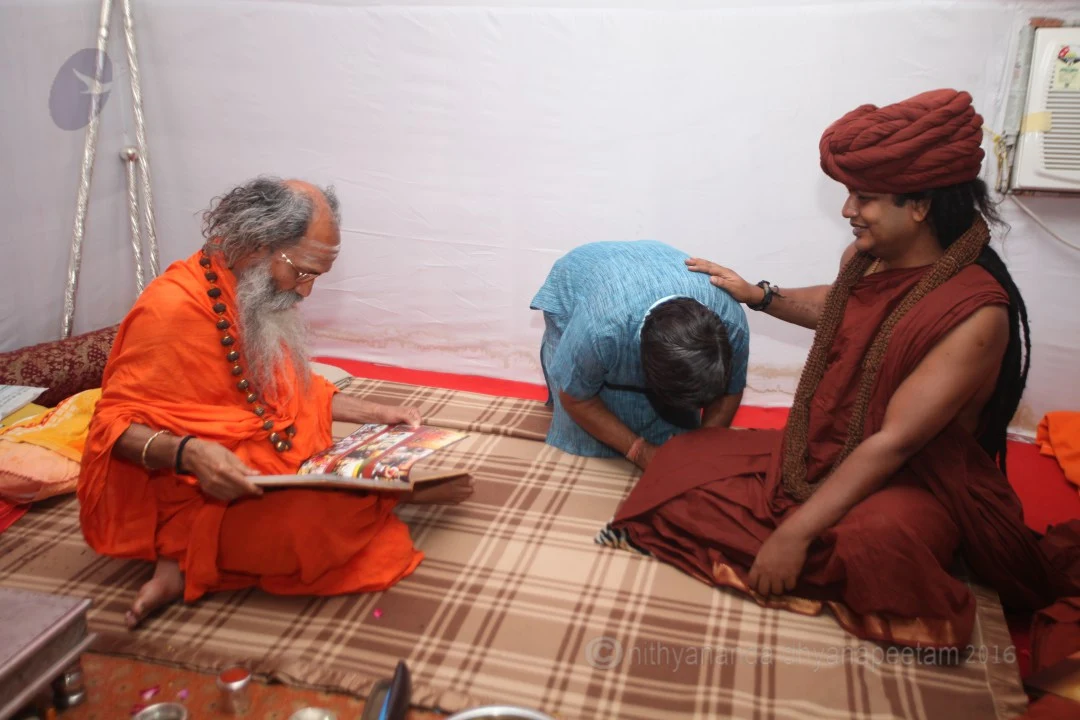
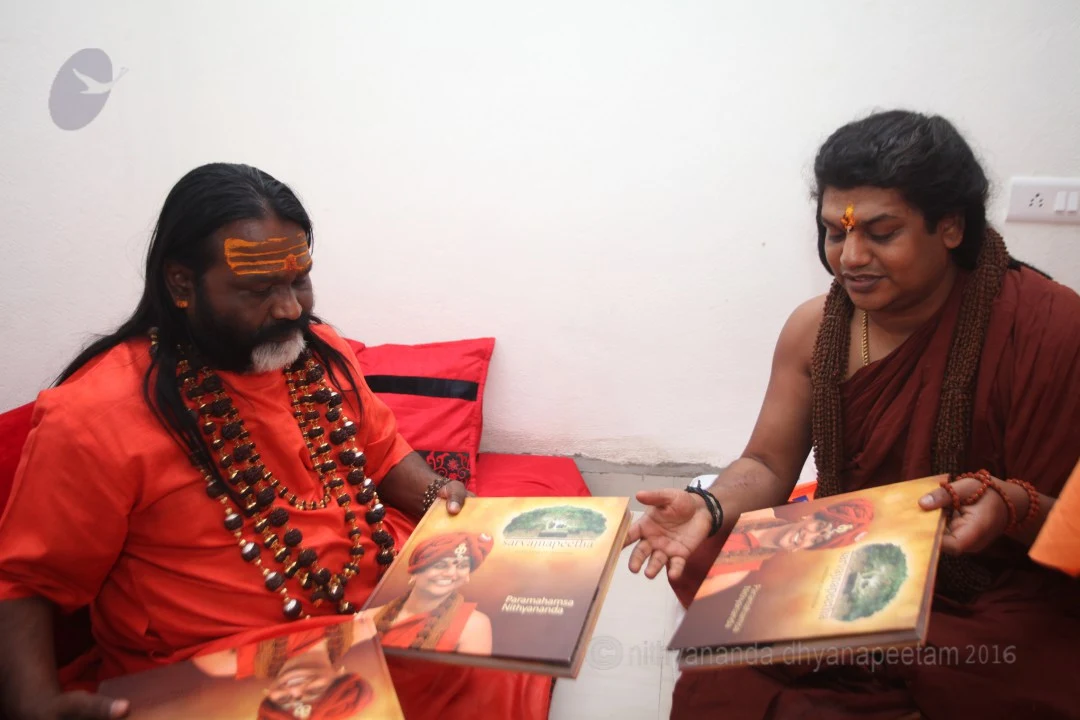
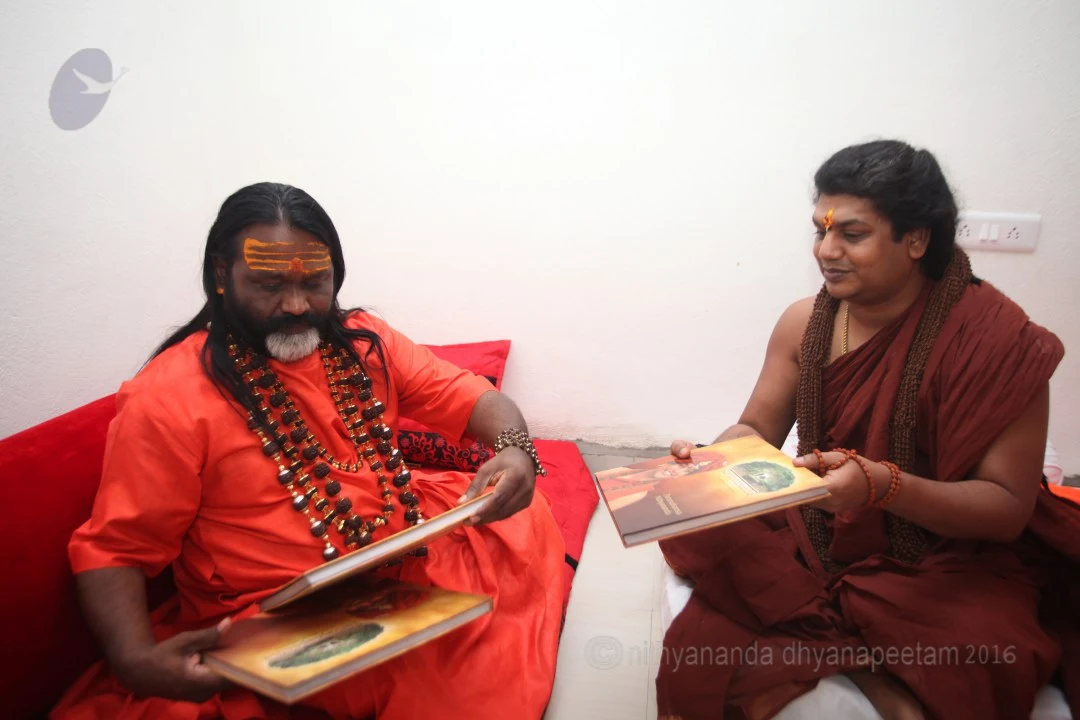
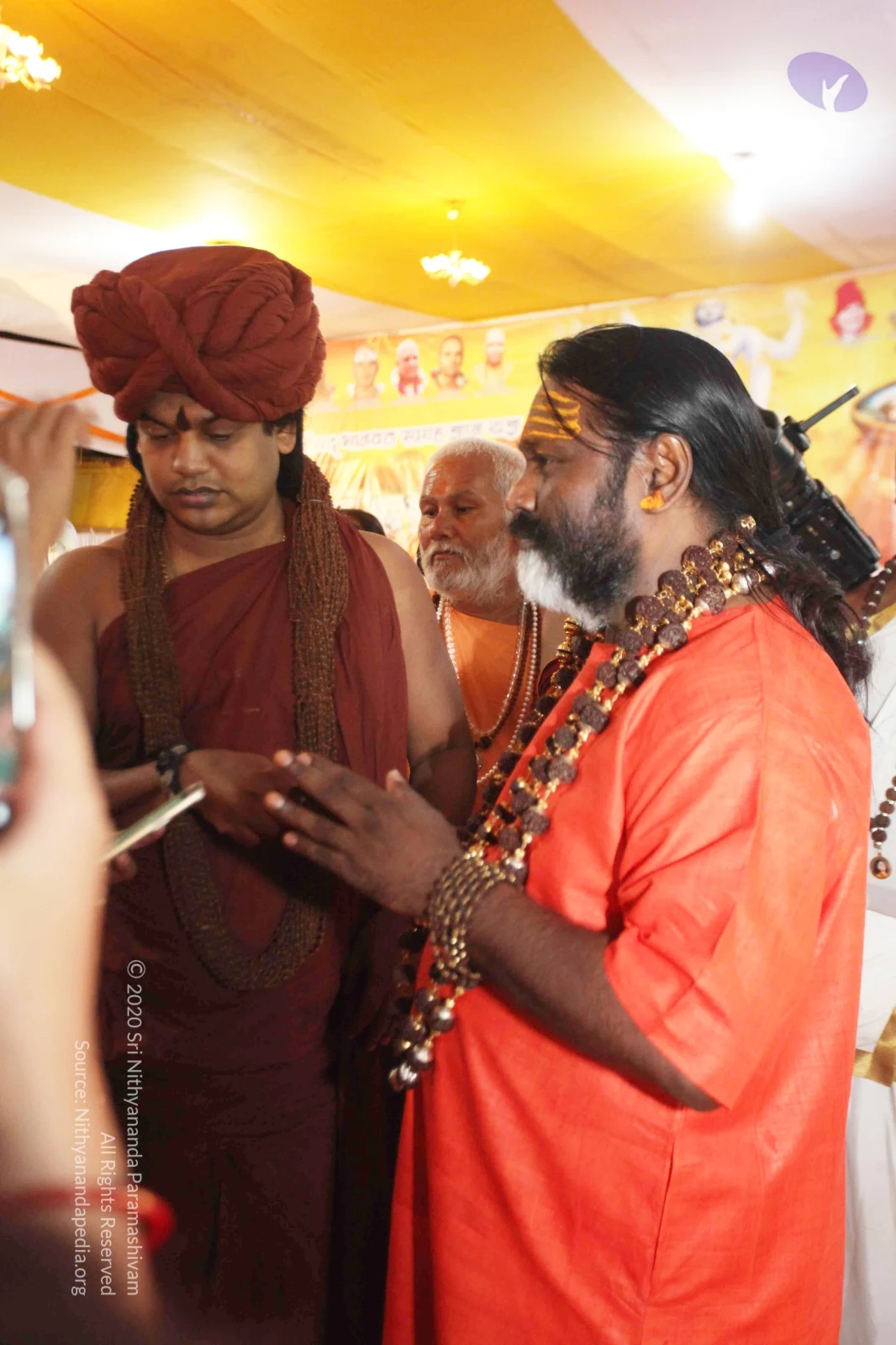
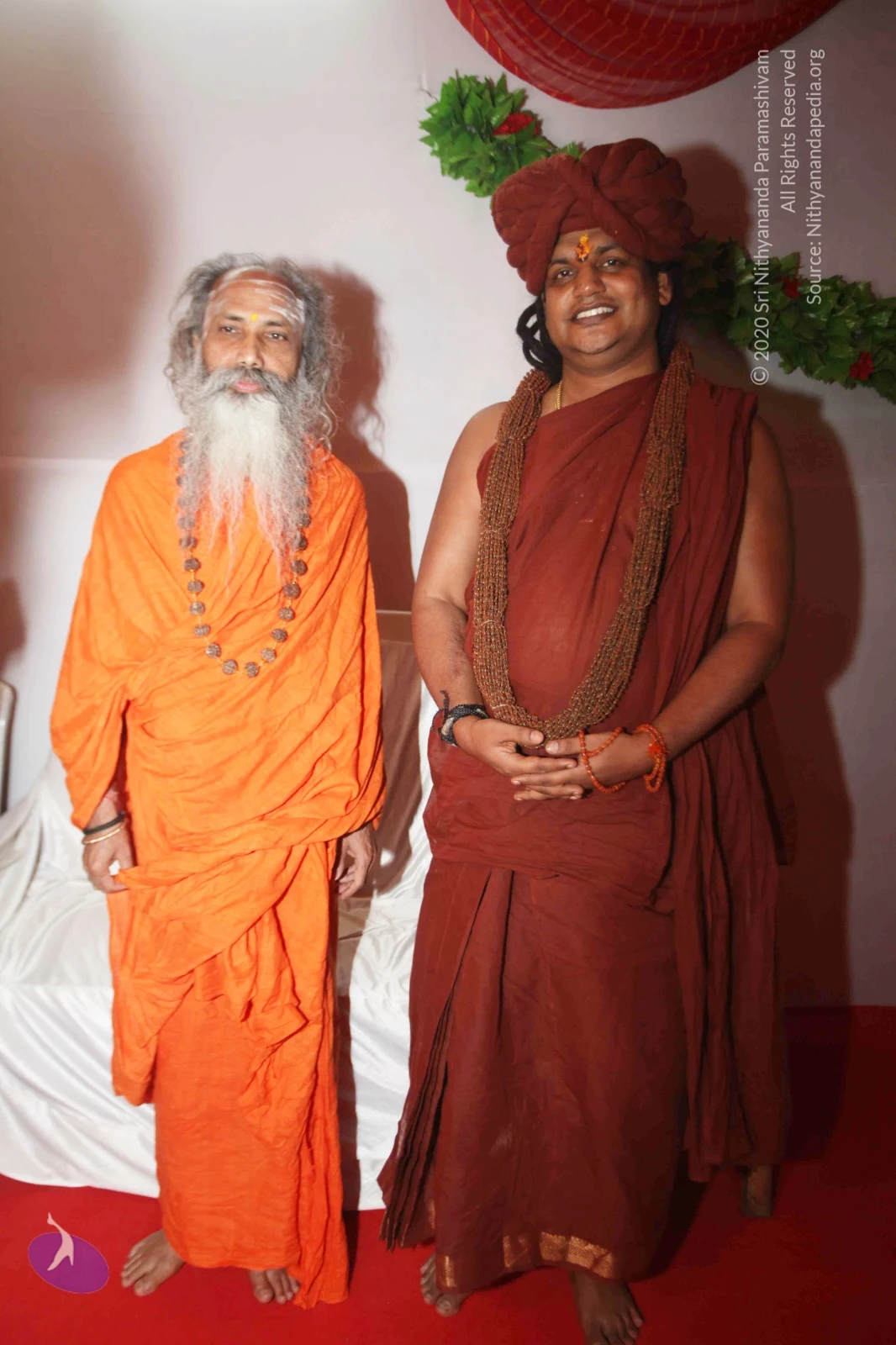
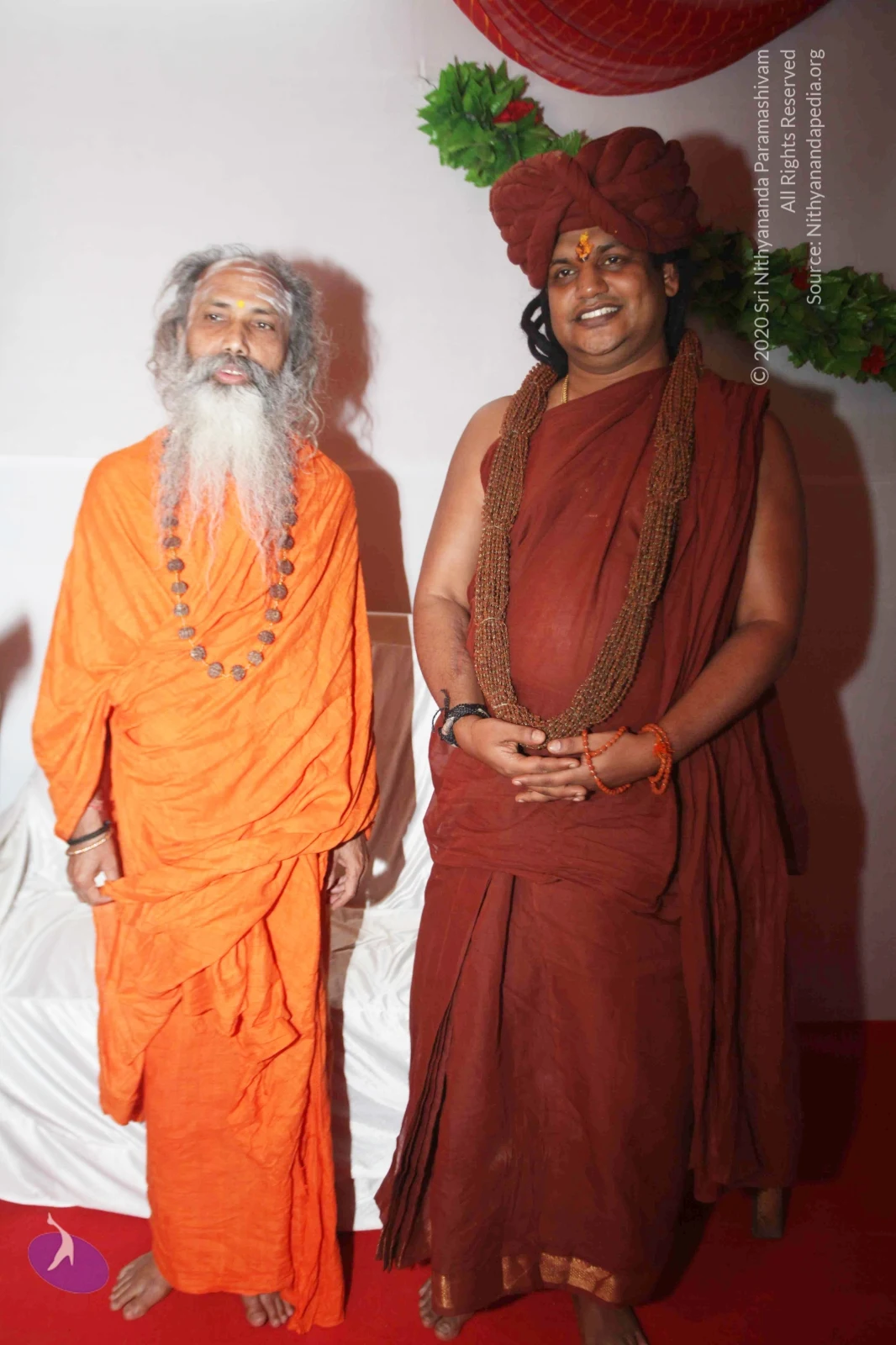
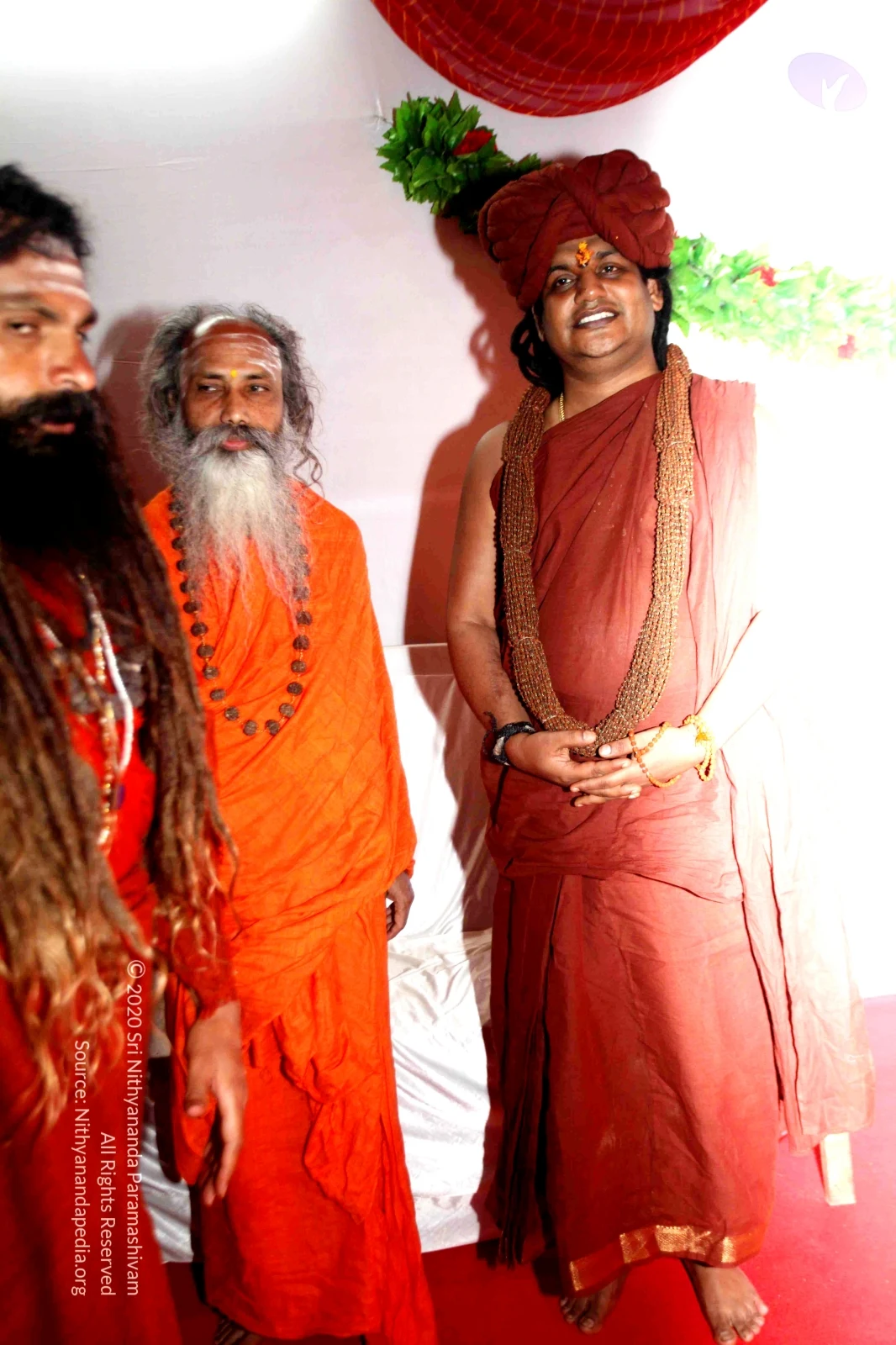
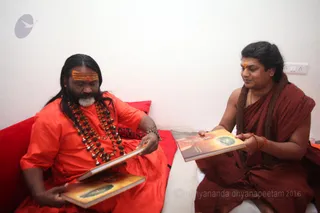
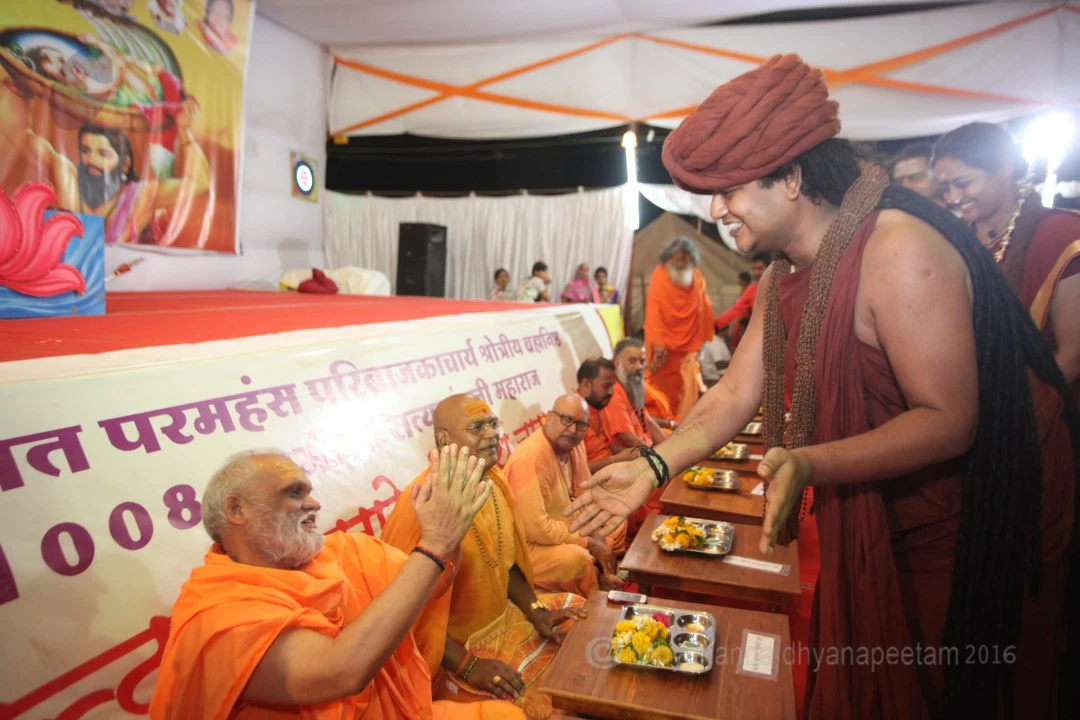
A photograph at a tented Kumbh-style gathering. A man in a rust-red turban and reddish-brown robe with long dreadlocks and a beaded necklace stands at right, smiling, extending his hand toward a seated elder in orange robes with white beard who presses his palms together in greeting. Other seated sadhus in orange and saffron robes sit behind a long table with brass plates of yellow flowers and offerings. A woman in a red-brown sari stands at far right. Behind them a banner shows painted figures of saints and a large hanging curtain. Several people are visible in the background, including another orange-robed figure.Photograph of four men in a tented event space with white and orange draping and warm lights overhead. At left, a smiling man in a maroon turban and a rudraksha-bead necklace over a bare shoulder laughs and gestures toward a young shaved-headed man in an orange robe with a gold-bead mala and white tilak marks on his forehead. At right, a bearded man with long dark hair, wearing an orange robe and rudraksha mala, smiles and holds hands together while speaking with the younger man. Behind them a woman in a dark outfit watches, and more people and red-covered bedding are visible. A readable Sanskrit banner partly appears at right, and the photo credit reads 'nithyananda dhyanapeetam 2016'. Appearance-based identification is not established for any individual.Night-time outdoor gathering at a camp with white tents and string lights, where saffron-robed sadhus sit at long wooden tables set with steel trays of marigold garlands. In the foreground a bearded man in a saffron robe and a man in a dark red turban and rust-coloured wrap sit side by side, both with long dark hair; the man in the dark red turban is smiling and clasping hands with a bearded saffron-robed companion. A younger man in yellow-orange clothing sits beside them. A woman in a grey dress walks past on the left, and a man with a shaved head and white tilak stands on the right wearing marigold garlands. Other devotees in orange sit along the rows behind.Two seated sadhus on a white-walled floor with red cushions, each holding a hardcover book with a golden-toned cover. The man on the left wears an orange robe, a long rudraksha mala with multiple strands, a bangle on his wrist, and a horizontal orange-and-white tilak on his forehead; his long dark hair falls past his shoulders and he has a white beard. He looks down at his book. The man on the right wears a maroon-brown robe over bare shoulders, a rudraksha mala, a small orange tilak on his forehead, and a thin gold chain, and smiles as he holds his book open. Both appear to be looking at the books together. Two physical people visible in the scene.

Shuddhadvaita Process
13 photosSource gallery
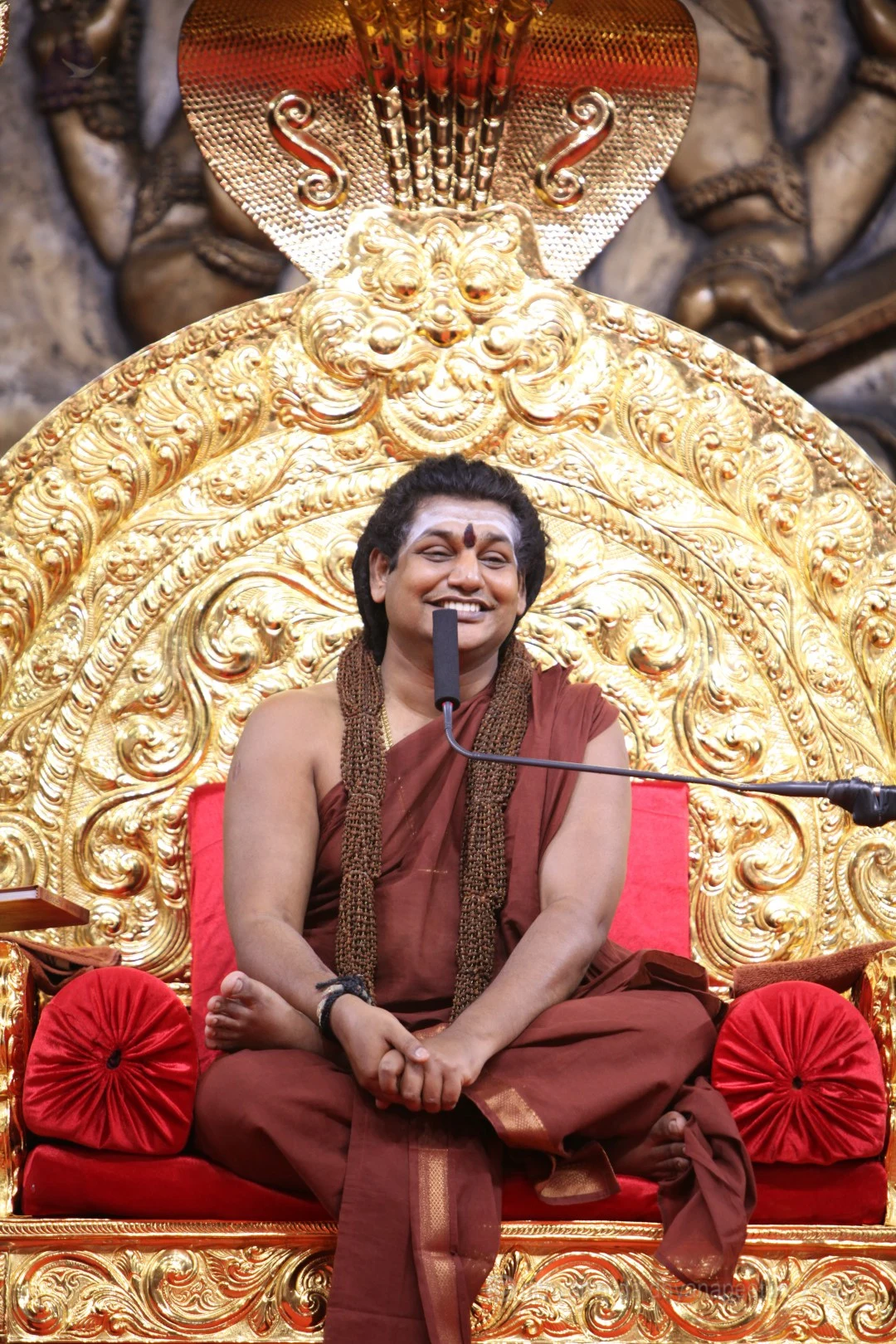
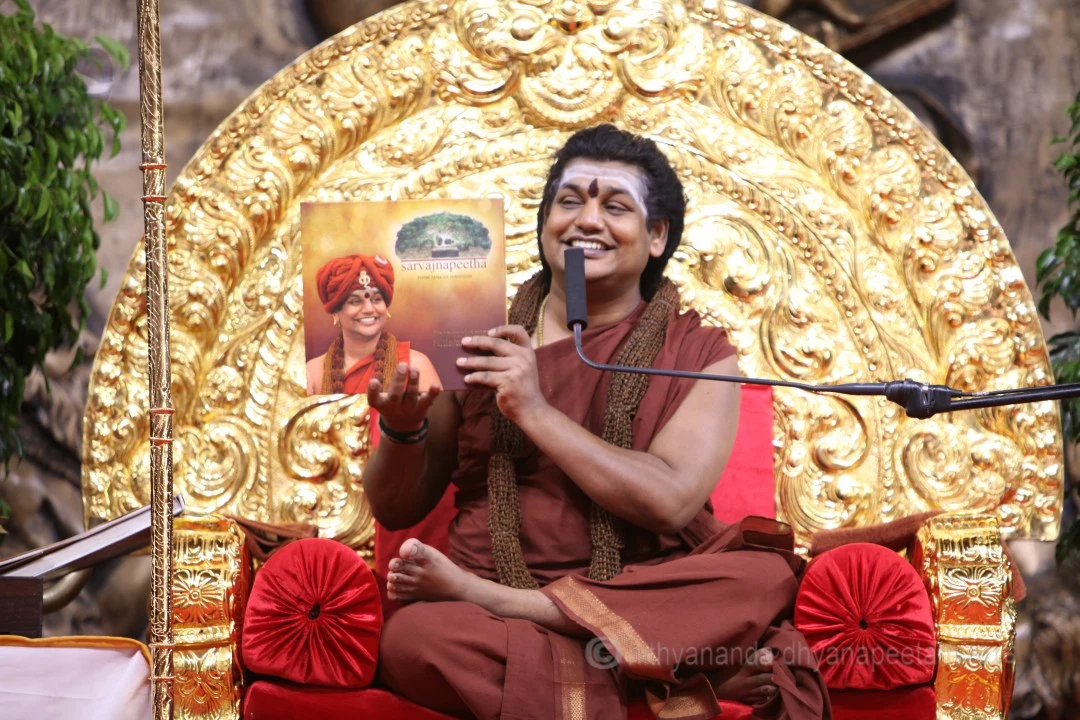
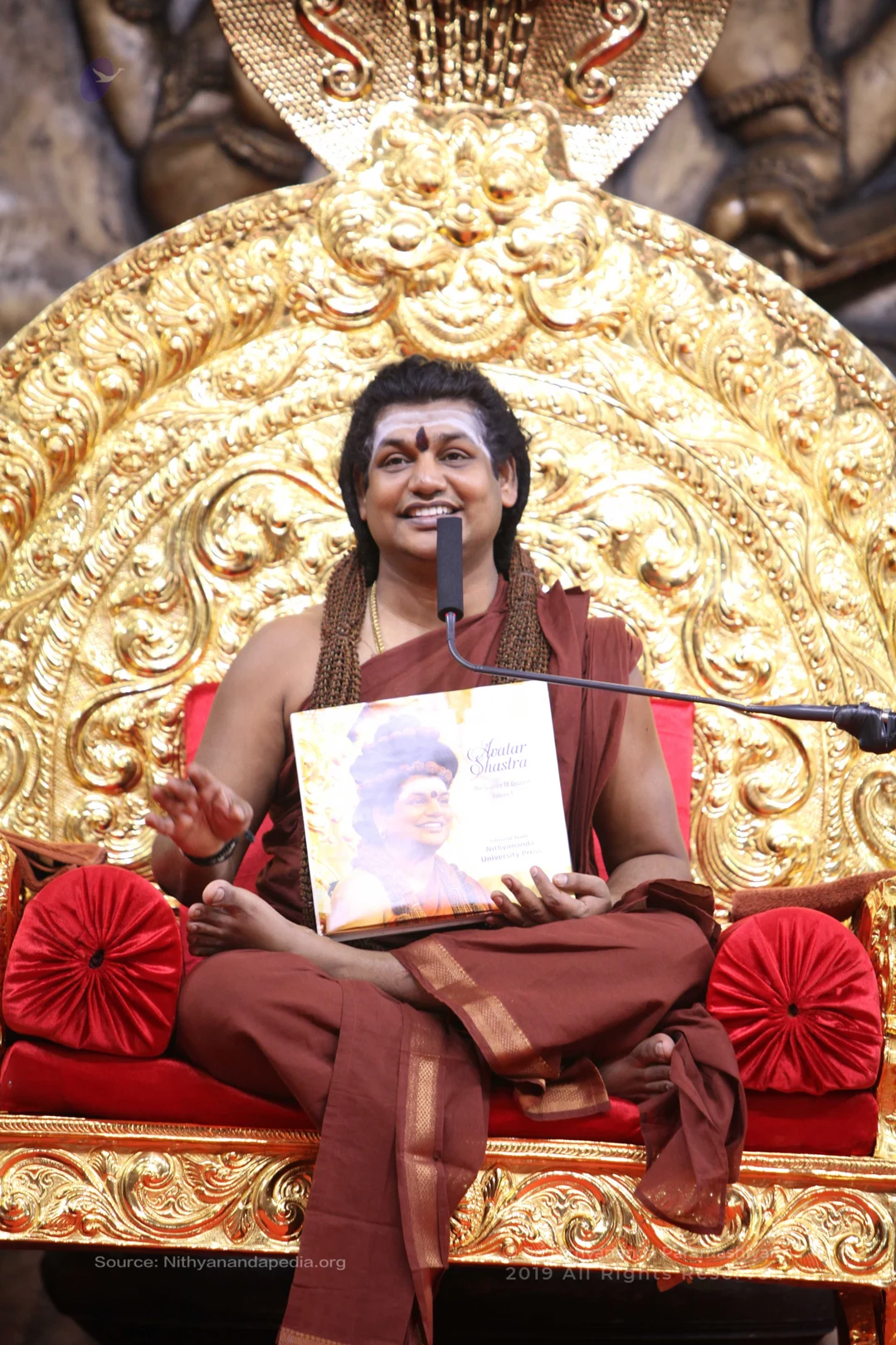
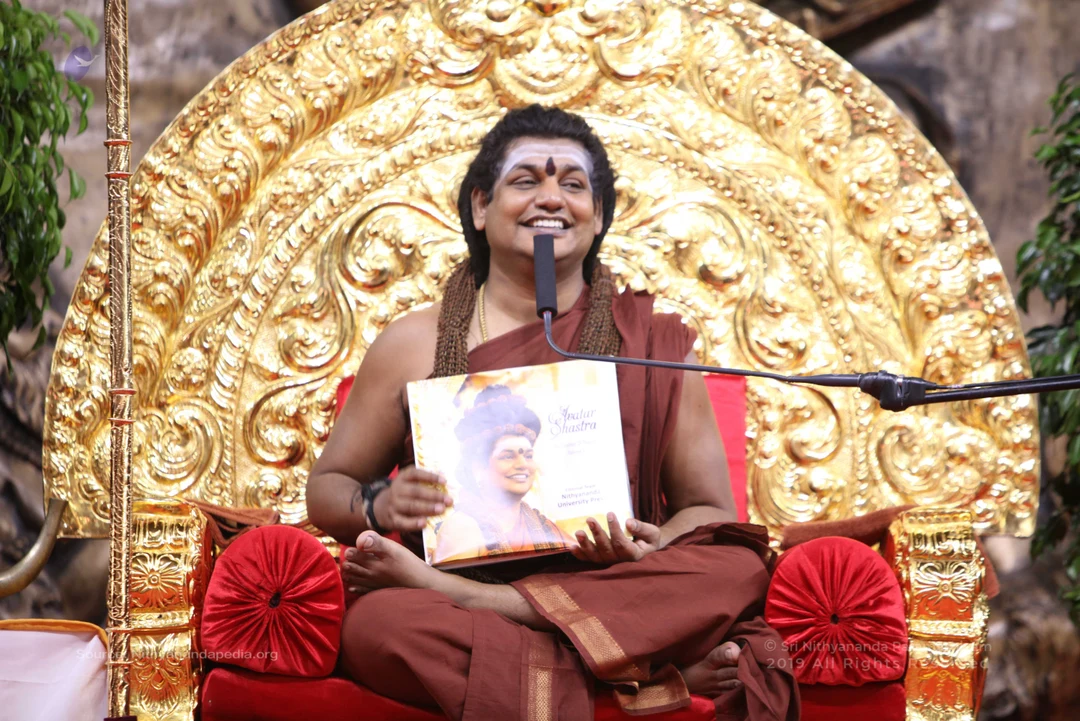
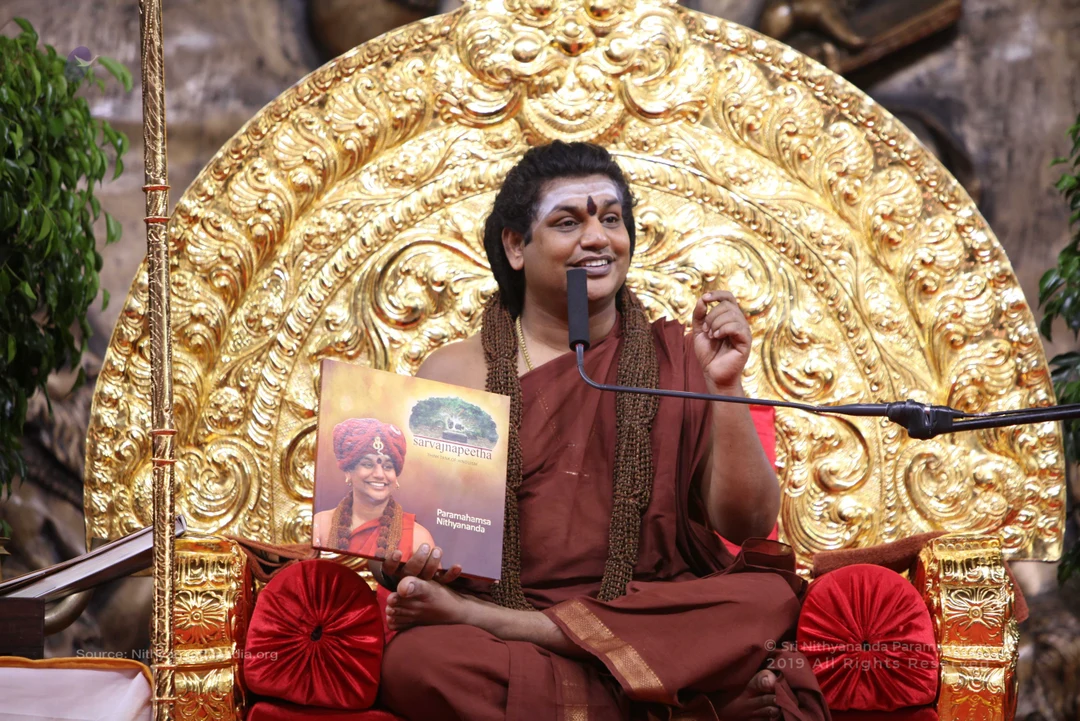
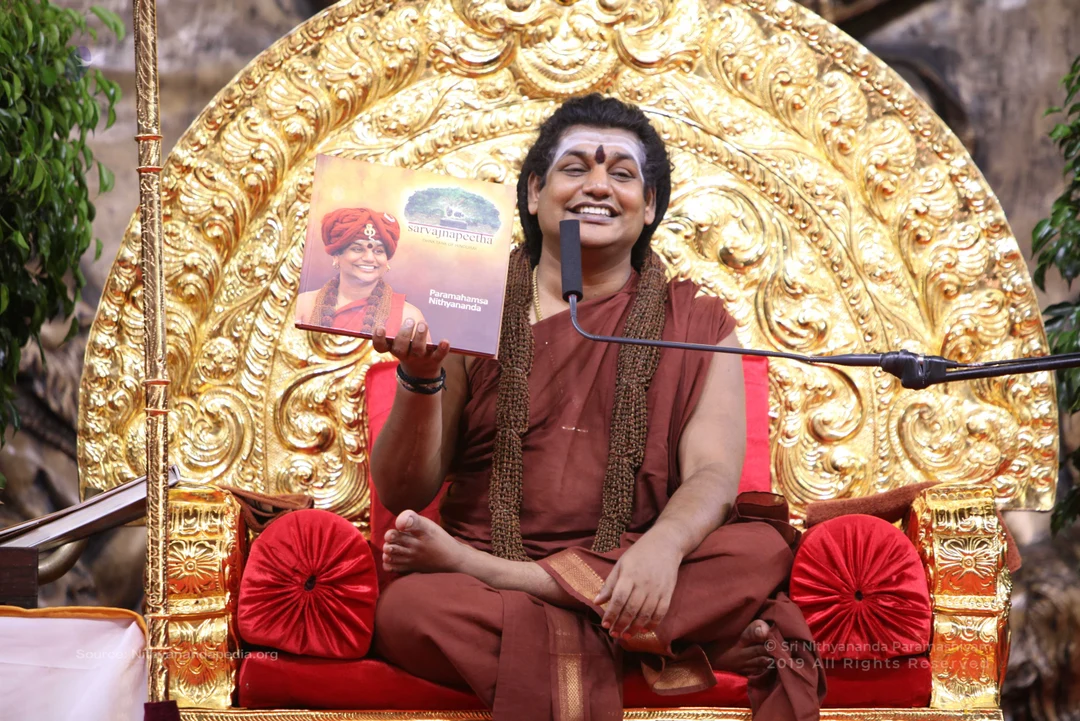
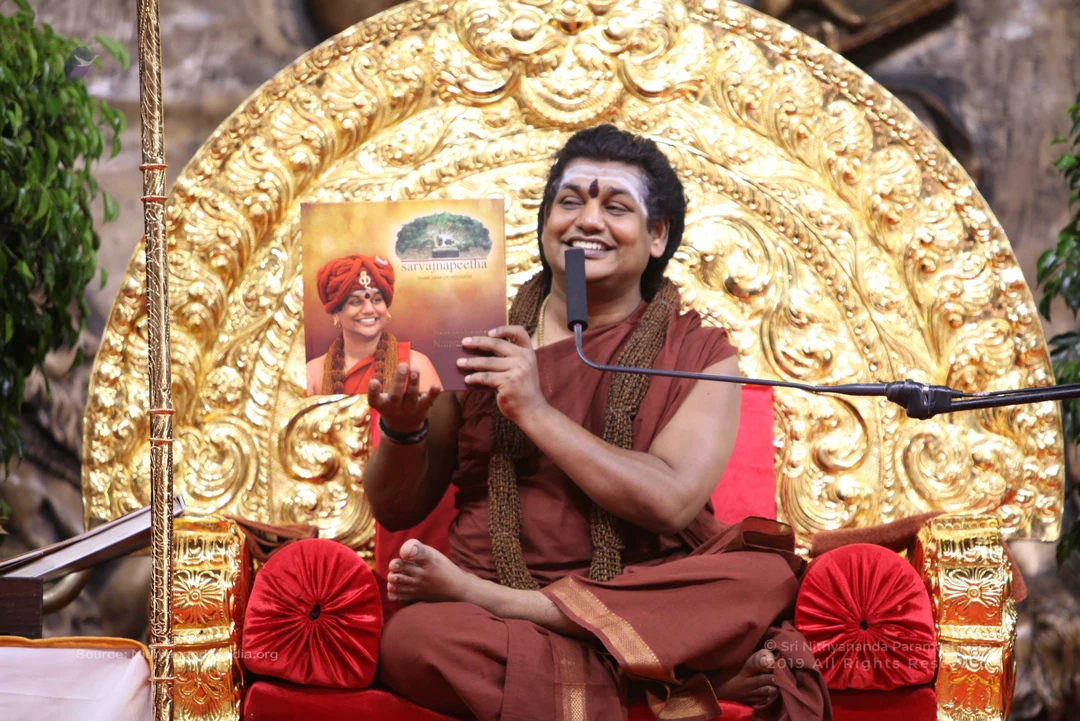
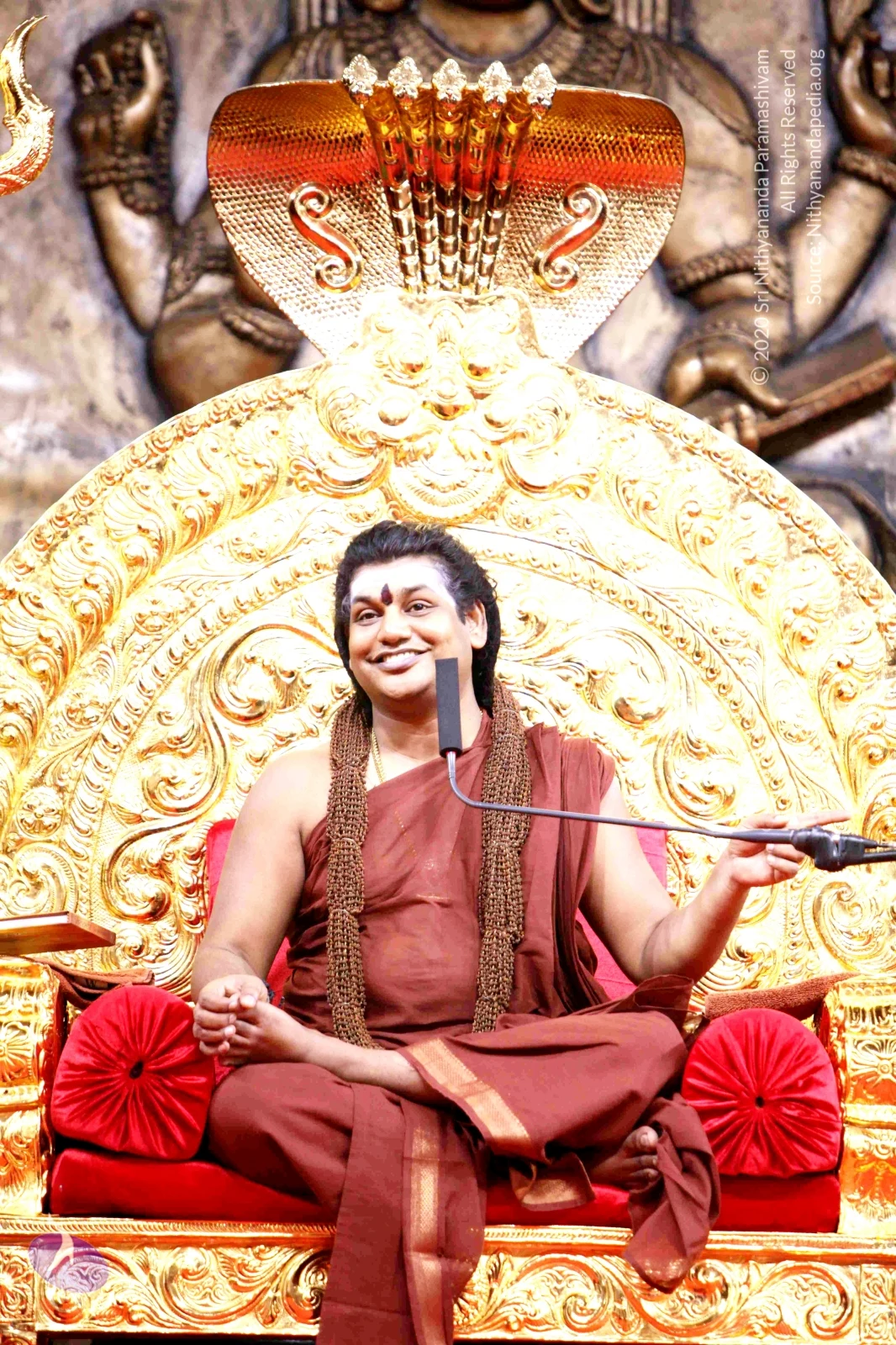
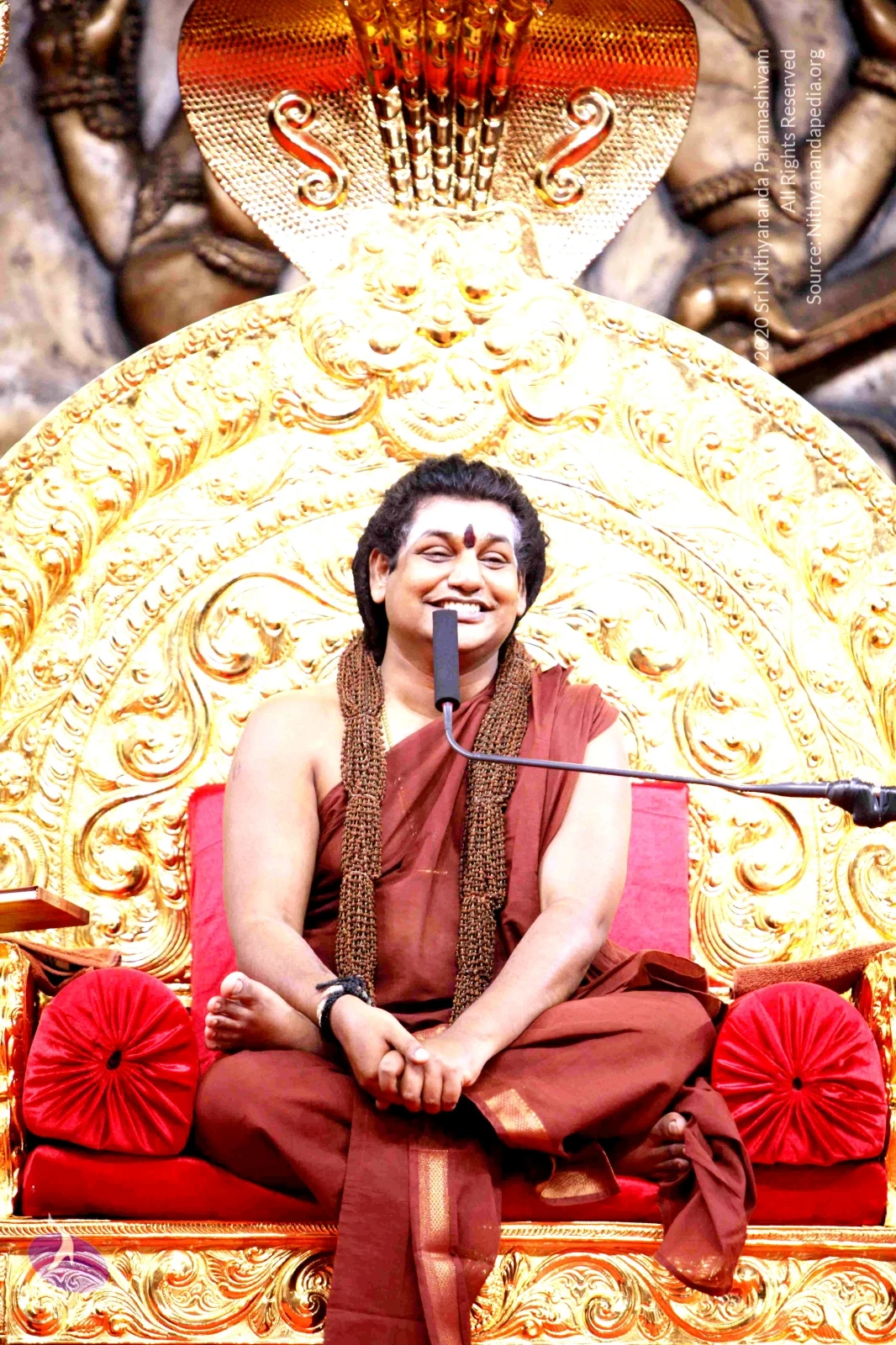
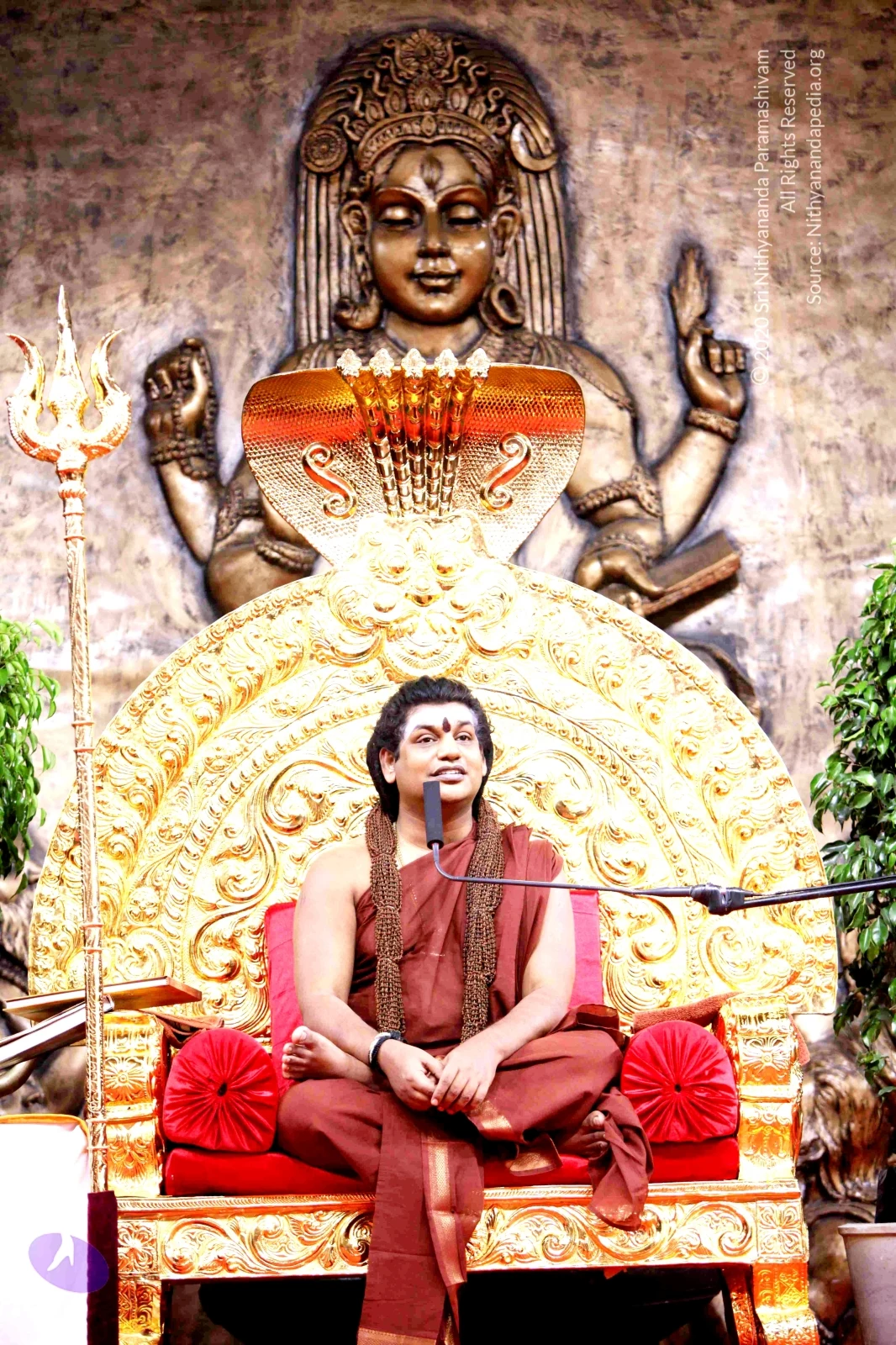
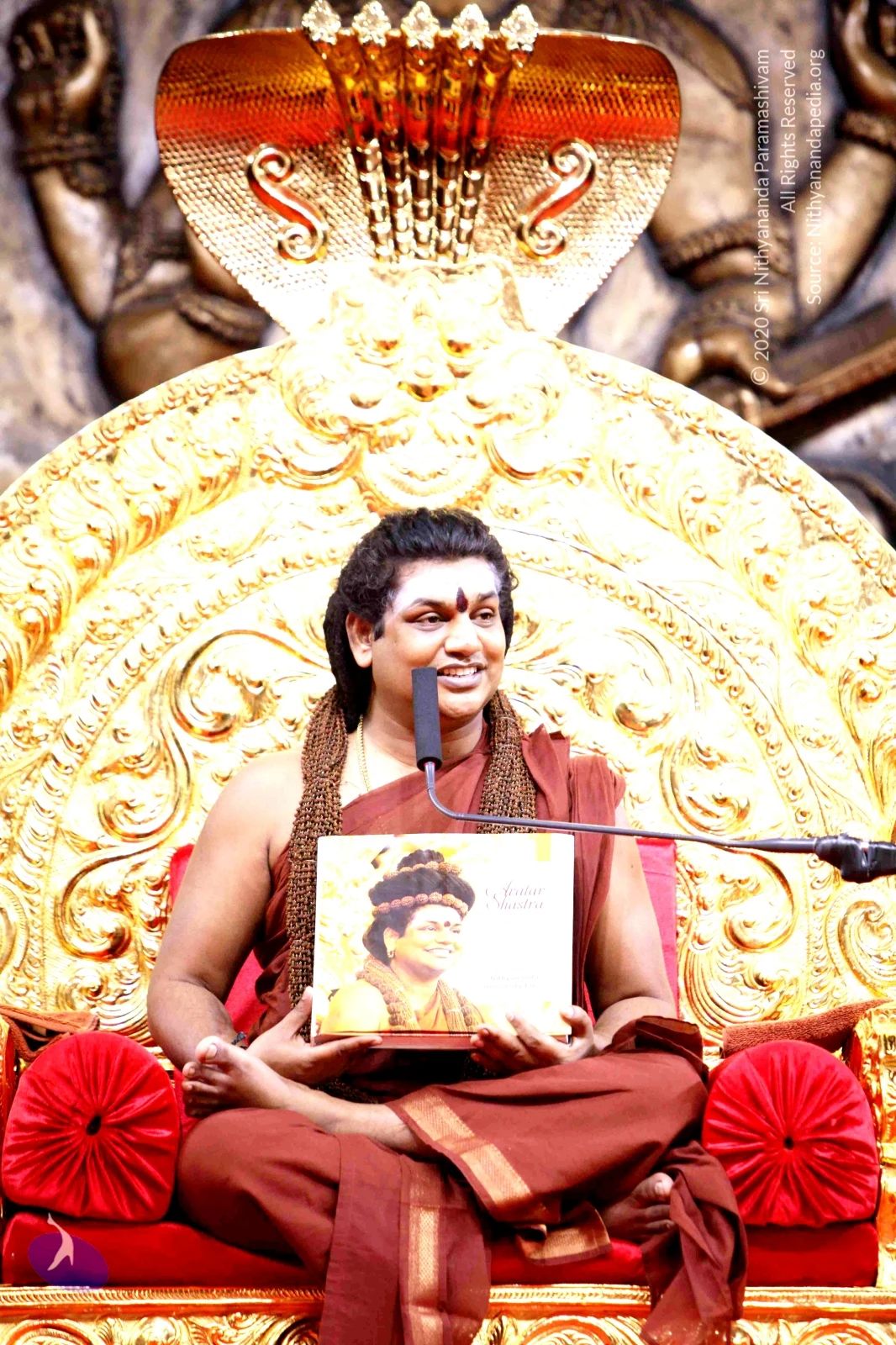
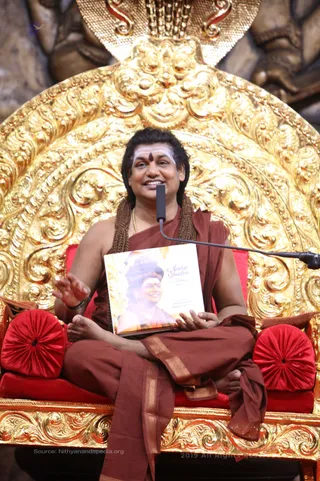
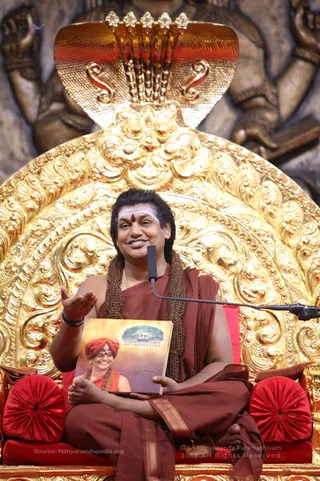
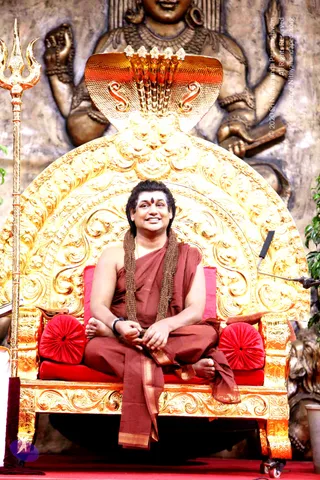
A man sits cross-legged on an ornate gold throne with red cushions, smiling and seated before a microphone stand. He wears a rust-red dhoti and shawl, a beaded brown mala around his neck and a bracelet on his wrist, with a red-and-white forehead mark and white body markings. Behind him a golden cobra hood rises above the throne, and a large relief sculpture of a multi-armed deity mural fills the wall. A golden trident stands to the left and green potted plants frame the right.A man seated cross-legged on an ornate gold throne with red velvet cushions, smiling and holding a book titled Amar Shastra with a child's portrait on its cover. He wears a maroon-red robe with gold border, a rudraksha mala and a sandalwood-coloured forehead mark, and a microphone stands in front of him. Behind the throne a large golden cobra hood rises above a gold relief of a multi-armed deity holding a crown and implements. A golden trident leans to his left and potted green plants flank the stage.A man seated cross-legged on an ornate golden throne with a carved gilded backrest and a cobra hood motif at the top, with red cushions on either side. He wears a rust-maroon unstitched cloth draped over one shoulder and a maroon dhoti with a gold border, wooden rudraksha-style mala beads hang on his chest, and he has white ash markings with a red dot on his forehead. He holds a open book with a cover showing a portrait and a title, while gesturing with his left hand as he speaks into a microphone on a stand. Behind him a carved stone relief of figures is visible. The book cover reads 'Avatar Shastra' with a publisher line reading 'Nithyananda University Press'. a person, speaking to the audience in a discourse setting.A seated man in dark maroon robes, with a white forehead band and red bindi, sits cross-legged on an ornate gold throne carved with a cobra hood above and red velvet cushions. He holds a book with a portrait of a man in an orange turban and a cover reading sarvajnapeetha, gesturing with one open hand toward a microphone on a stand. Behind him, carved gold and stone sculptural figures with raised hands fill the background. The man is speaking to an audience while holding the book.Photo of a smiling man seated cross-legged on an ornate gold throne with a large carved cobra hood canopy behind him and red velvet cushions. He wears a maroon-brown robe over the shoulder, a long rudraksha mala draped to his waist, a red bindi and white forehead markings, and holds his hands clasped in his lap. A microphone on a stand is close to his face. Behind the throne are carved gold and bronze figures. The scene is a single seated speaker with no other physical people visible. Appearance-based candidate for a person, based on the rudraksha mala, maroon robe and seated speaker role on the throne, with some uncertainty.

Session

26 photosSource gallery
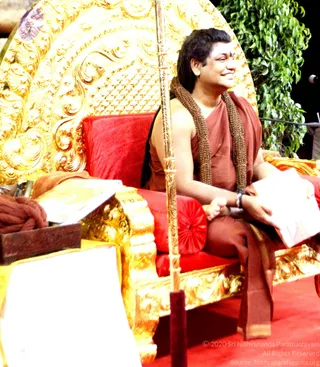
A man with swept-back dark hair and a red tilak on his forehead sits smiling on an ornate gold throne with a red velvet seat and red cushion. He wears a maroon-brown robe draped over his shoulder, a long brown beaded rudraksha-style mala around his neck, and holds a sheet of paper. A tall wooden staff stands in front, with greenery and a microphone stand behind him on a red carpeted stage. Papers and a folded brown cloth lie on a side table. Whether this figure is the a person is uncertain from appearance alone.A seated man sits cross-legged on an ornate gold throne with red cushions, a golden trident leaning at the left edge and a golden hooded cobra canopy above. He wears a rust-red robe with gold-bordered edge, a long brown rudraksha mala draped to his waist and a red tilak on his forehead. Behind him a large bronze relief of a multi-armed deity murti is visible. A microphone stand sits at the right, and potted plants frame the stage.A man seated cross-legged on an ornate gold-carved throne with red velvet cushions, wearing a rust-red dhoti and a matching shawl draped over one shoulder, with a long brown rudraksha mala hanging across his chest. He has a red bindi and white forehead marks, smiles toward the side, and holds his hands clasped in his lap. A microphone stand is visible at the right edge, with green foliage behind the throne. Swamiji (probable): the appearance cues of a rudraksha mala, rust-red robes, and a ceremonial throne with long swept-back dark hair are present, so this is an in-person candidate seated as the speaker.A man sits cross-legged on a red cushioned seat in front of an ornate gold-embossed throne back, smiling and gazing to the side. He wears a rust-red unstitched robe with a gold-bordered dhoti, a long rudraksha mala draped over his shoulders, a thin gold chain, a red bindi on the forehead and a dark beaded bracelet. A black microphone stand is visible at right and foliage at the top right. Appearance-based cues including swept-back hair, rudraksha mala and saffron-toned robes suggest a probable Swamiji seated for a discourse.A seated man in a maroon-red robe and rudraksha mala necklaces sits on an ornate golden throne with a cobra hood backrest and red cushions. A gold and silver trident stands beside him, and a carved stone deity relief with a bare-chested figure and beaded necklaces appears behind. A small red tilak marks his forehead, and he smiles while seated with his hands clasped. Green foliage and a microphone stand are visible at the right edge.A seated man in a maroon-red robe with a gold-bordered wrap sits on a red cushioned seat in front of an ornate gold-embossed throne back. He wears a long multi-strand rudraksha-style mala of brown beads, a gold chain, a red tilak mark on his forehead and a black bracelet, and holds his hands together in his lap while smiling and looking to the side. A red bolster lies beside him and a microphone stand appears at right. a person, seated in ceremonial dress with distinctive rudraksha mala and gold ornaments, appears to be giving a discourse.

May 10th 2016

291 photosView all
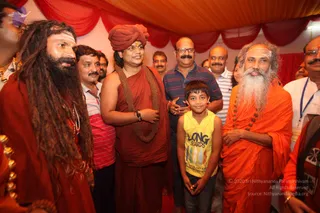
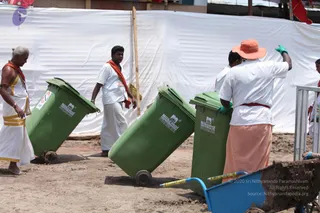
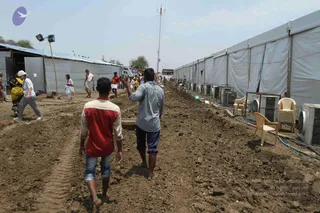
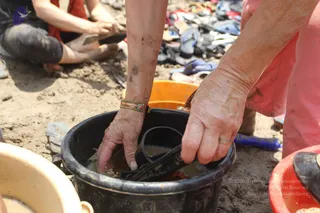
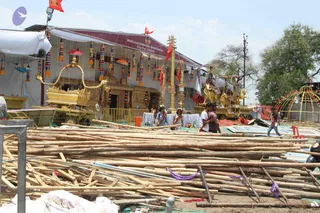
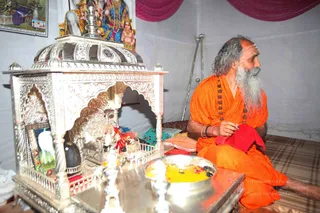
A photograph of ashram volunteers outdoors on bare, muddy ground in front of a white tarpaulin wall. Three people roll large green wheeled bins labelled Nilkamal. On the left, an older woman with grey hair wears a white dhoti with a yellow border and an orange-red shawl. In the centre, a man in a white shirt and white dhoti wears an orange-red shawl. On the right, a person in a white top, pale orange skirt, orange sun hat and green gloves gestures upward. A blue wheelbarrow filled with mud sits at the lower right, and a red flag appears at the top edge.A photograph of a muddy dirt lane between corrugated-metal sheds on the left and a long row of white tent-like structures on the right, with outdoor air-conditioning units and beige plastic chairs placed along the tent wall. Two young men walk away from the camera along the mud path; the one in the foreground wears a red and cream top and jeans, and the one beside him wears a blue checked shirt and dark shorts. Further back, several people in white and saffron clothing walk among the sheds, and a woman in a white cap and a woman in a yellow sari are visible on the left. A tall antenna mast and floodlight stands are visible in the background under a pale sky.A photograph of a crowded indoor gathering under a red and orange draped tent ceiling. In the centre, a smiling man wears a deep red turban, a maroon robe and a long brown-beaded necklace, with his hands clasped at his waist. To his left, a man with long dreadlocks and a full beard wears a rust-red robe with metal bells at his waist. On the right, an elderly bearded sadhu in orange robes and rudraksha beads stands beside a young boy in a yellow sleeveless shirt printed 'LONG BOARDS'. Behind them, several men in striped polo shirts and glasses stand close together. The scene reads as a devotional or ashram gathering.A close photo of two hands, one with a bangle and one with a ring, washing dirty sandals in a black plastic bucket of muddy water on bare ground. Behind them a pile of muddy footwear and other buckets sit on the dirt, and a person in red trousers and a person in dark clothing are partly visible, seated and working. The scene suggests cleaning up after rain at an ashram.A daytime outdoor photograph of a temple grounds setup. In the foreground a large stack of cut bamboo poles and wooden planks lies on the ground. Behind it stands a building with a maroon sign reading Nithyaneshwara Devasthanam, hung with colourful tassel decorations and white cloth. Golden ceremonial palanquin-style carts and a gilded chariot with a canopy are parked near the entrance, with an ornate golden pole and a gilded lion-like figure visible. Several people walk through the area, including a man in a white shirt and a woman in a light blue sari. A small wooden shrine structure sits near the centre, and a tall gold yellow arch frame stands at the right edge. Red and orange flags fly from poles.A photograph inside a tent-like shrine space. In the foreground stands an ornate silver temple-shaped shrine with a domed roof and arched niches, holding small deity figures and a dark stone idol. Behind it, a framed picture of deities hangs on the wall, and a silver bowl of yellow offering is placed on a silver tray. On the right sits a bearded elderly man with long grey hair and a horizontal tilak on his forehead, wearing saffron-orange robes, a long rudraksha mala across his chest, and a bangle on his wrist. He sits on a striped mat holding a red cloth and appears to be doing a small ritual task at the shrine. Pink drapes hang at the top of the tent. The page does not indicate a person's presence, so the seated man is described only by his role and attire.