Skip to content
Sunday

1 February 2015

Don't be Afraid of Change

Dated photos
522
Source pages
1
Media
5

February 01 2015

Original wiki page
Contents

Title:

Don't be Afraid of Change

Description:

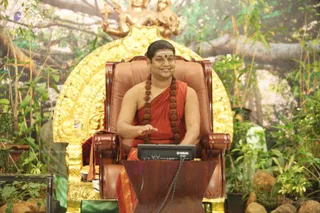
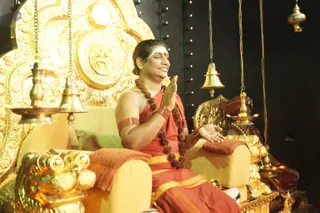
Today’s (1st February, 2015) Morning Satsang continues with the Upanishads Series - Living Advaita. Isha Upanishad–Verse 1 īśāvāsyam idaṁ sarvaṁ yat kiñca jagatyāṁ jagat | tena tyaktena bhuñjīthā mā gṛdhaḥ kasya svid-dhanam || In this profound delivery of the Isha Upanishad, Verse 1, Paramahamsa Nithyananda delivers the next sacred secret of this verse: Whatever we hold onto, having fear of losing it, life will take exactly that away from us. Anything we want to retain in our lives, we just need to renounce the fear of losing it. Anything that creates powerlessness in our inner space will be taken away just to make us understand that we can live without that and we are powerful beings.

VideoAudio

Transcript:

[00:14]

nithyānandeśvara samārambhām nithyānandeśvari madhyamām | asmadāchārya paryantām vande guru paramparām ||

[00:39]

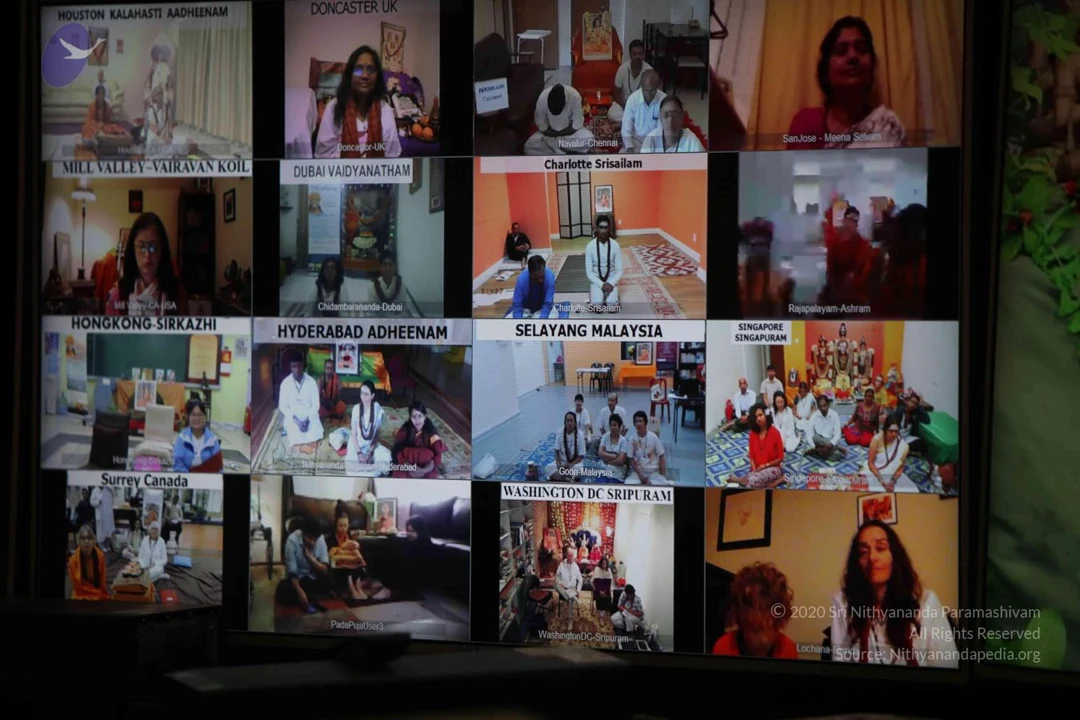
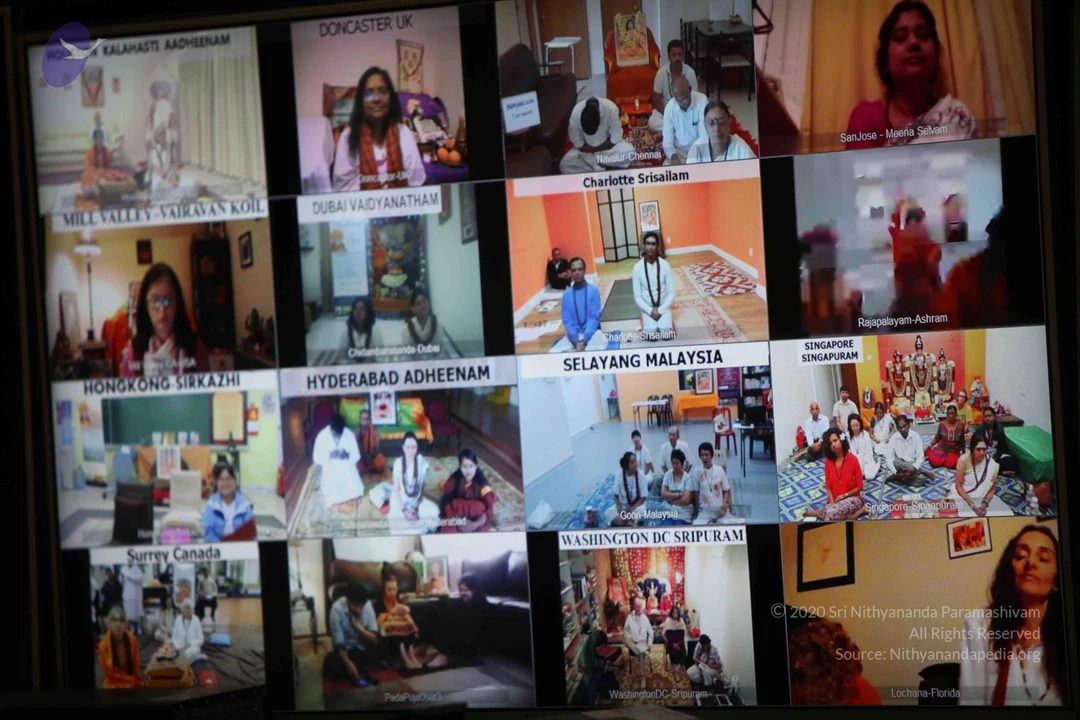
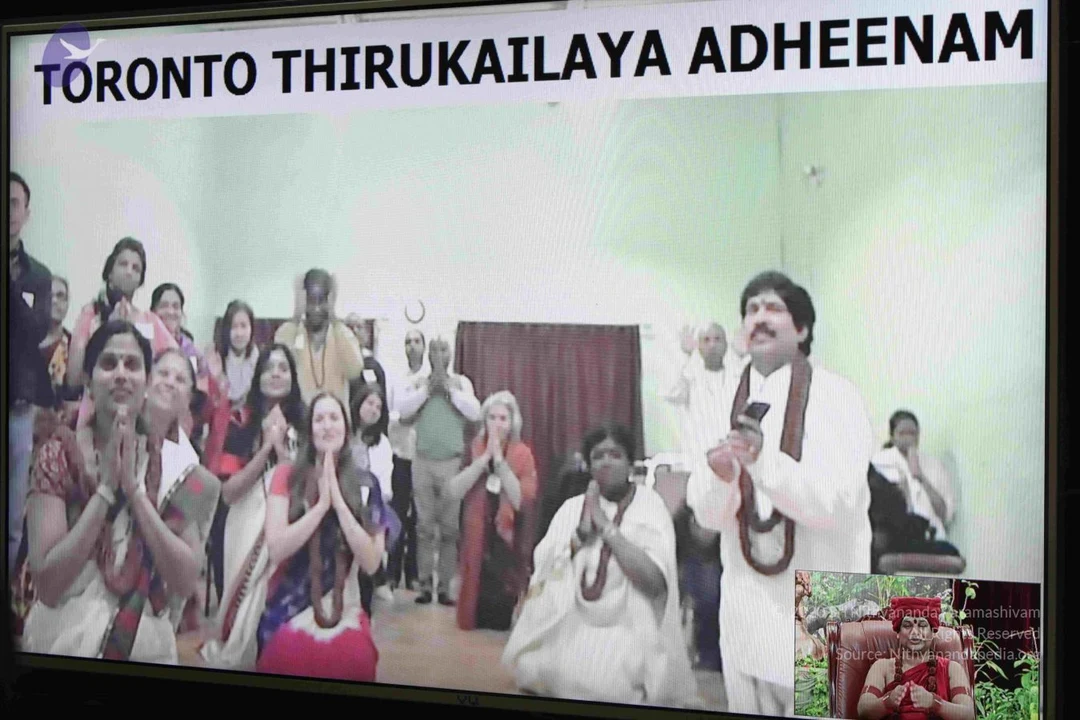
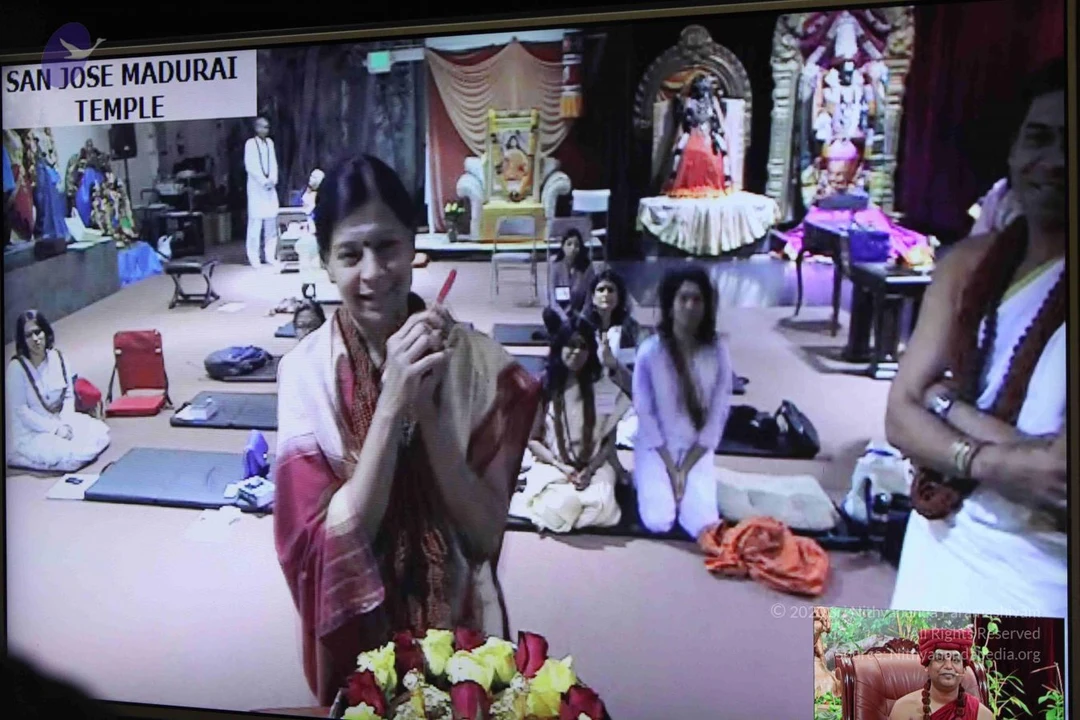
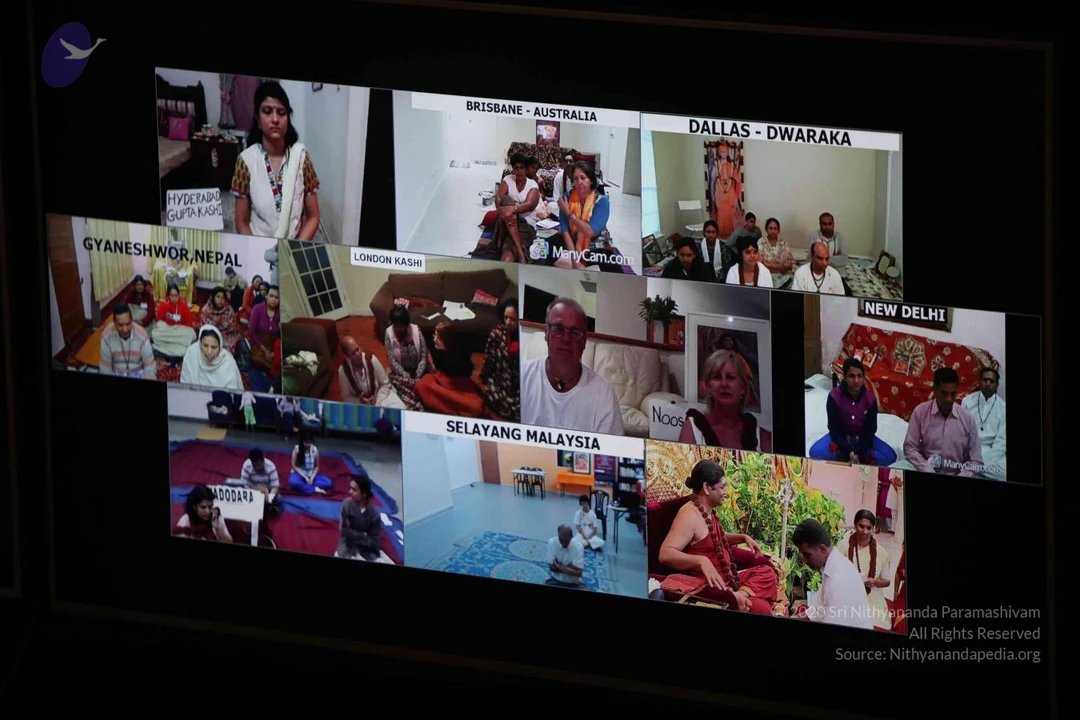
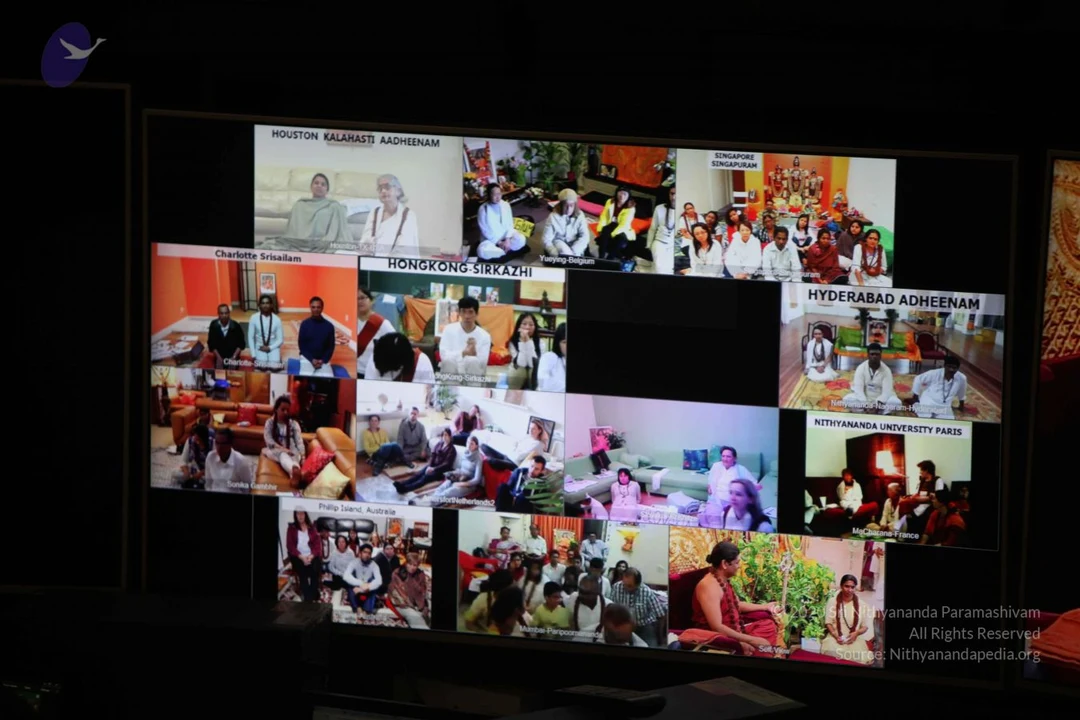
I welcome all the devotees, disciples, Samajis, Satsangis, Sri Mahants, Mahants, Thanedars, Kotharis, NDY participants, visitors, viewers, sitting with us all over the world through Nithyananda TV, Sadhana TV, two-way video-conferencing. Cities sitting with us, Hyderabad-Gupta Kashi, Oklahoma-Somanatham, Enriching Temple, Guadeloupe, New York, London, Oman, Slovakia, Seattle, <English Obrazok (may be not sure ) 01:19>-Slovakia, Los Angeles, Ponca City-Oklahoma… “Tanuja… I think! Huh?” Kuala Lumpur, Port Washington, Dubai, North San Antonio, Selayang, Devon, Rajapalayam, Doncaster-UK, Washington DC-Sripuram, Singapore-Singapuram, Madurai, Coimbatore, Winston-Salem, Ohio, Surrey-Canada, Slovakia, Mill Valley, Charlotte, Baroda and many more cities are joining… Selayang-Malaysia, Hong Kong. “Other Centers! Put your names. I will read”.

[02:30]

I welcome all of you with My love and respects. Let’s enter into Ishavasya Upanishad. The first verse, which I am expanding on last few days. ईशावास्यमिदं सर्वं यत्किञ्च जगत्यां जगत् । तेन त्यक्तेन भुञ्जीथा मा गृधः कस्य स्विद्धनम् ॥ १ ॥

īśāvāsyamidaṃ sarvaṃ yatkiñca jagatyāṃ jagat | tena tyaktena bhuñjīthā mā gṛdhaḥ kasya sviddhanam || 1 || By the Consciousness all this is filled, whatever moving thing there is in the ever-moving world.

[03:53]

As I was explaining last few days, “Perception”, “Fact”, “Truth”, “Reality”. Listen; listen to this four words: Perception – Within the limitations of Time and Space, your senses operating; perception.

Fact – With a larger amount of Time and Space, your Perception coming to certain understanding is Fact.

Truth – Time and Space changing the way you perceive, and both of them come to Completion where your perception’s hindrance does not stop the reality being perceived because of the larger amount of Time and Space perceived. I know it’s going above the head. Let Me give you examples then you will understand. The Reality; the fourth word – Without the limitations of the Perception and Time and Space, whatever is, is reality.

[05:44]

I given the example –

Perception is Earth is flat and Sun is going around the Earth. Fact is Earth is round, and Earth is going around the Sun. Truth is, Earth is not exactly round, it’s more or less resembles Orange fruit and Sun is going around the Earth. Please listen, I have explained that day because the whole Solar System is not stagnant, even the whole Solar System is moving around centered on something else. Sun goes round the Earth in billions of years. Earth goes round the Sun every one year. Sun goes round the Earth every billion year; few billion years, that is truth. Reality is Earth has no defined shape and Earth and Sun both go around each other because every billion year Sun goes around the Earth, every year Earth goes around the Sun. The Reality cannot be half, just Earth going around the Sun or Sun going around the Earth. Both are going around each other is Reality. When you restrict your Perception to a limited time, you are caught either in Fact or in Truth. Both are not ultimate.

[08:11]

Listen; listen. I am moving to the next line of this Upanishad. Please understand this next line: तेन त्यक्तेन भुञ्जीथा मा गृधः कस्यस्विद्धनम् ॥ tena tyaktena bhuñjīthā mā gṛdhaḥ kasya sviddhanam || The literal translation is, “With this renounced, you may enjoy. Covet not the wealth of anyone at all”. Looks very simple moralistic instruction but it is not. Please understand, if this instruction is moralistic instruction, I would not have even chosen to speak on Upanishads. I am not against morals but order never comes by morals and discipline in the Cosmos. It is by intelligence and Reality, order happens. Please understand, order of the Cosmos never happens by moral and discipline. Order of the Cosmos always happens by Intelligence and Knowledge, Truth, Reality.

[09:40]

Here, the word, the statement: तेन त्यक्तेन भुञ्जीथा मा गृधः कस्यस्विद्धनम् ॥ tena tyaktena bhuñjīthā mā gṛdhaḥ kasya sviddhanam || With this renounced, you may enjoy. Covet not the wealth of anyone at all. I have to set the context from which you need to look into this reality, this statement. Understand, the so-called moral people can never face the change of the changing world. Please listen, they will be completely imbalanced because the moral is a set of understandings of “Vidhi-Niṣēdha” – what to do, what not to do in particular situations but the world is, “Jagathyām Jagath” – changing which is established in changing. Understand, change established in changing. When there is so much of change, the person who is trained in certain morals will always be shaken, confused. He will not be able to handle life. He will not be able to handle situations because at some places, vegetarian food is moral, at some places non-vegetarian food is right. What will you do? I am telling you, the person who is established in morals will be constanty… constantly struggling internally and confused. The person who is established in Truth, Reality; only he can constantly play with life, only he can wage war.

[12:21]

Kuchela, established in morals, maybe he can live a peaceful life with the wealth he was gifted by Krishna but only Krishna who is established in Reality can wage war and win the game. I am telling you, in the modern-day, even a common man’s life is a war. It is no more a goody-goody, peaceful, relaxed life. Nobody is going to let you live in your cozy space. Listen, this line is not moral lesson. It may bring some morals in your life, I am not saying, “No”. When you internalize this line – तेन त्यक्तेन भुञ्जीथा मा गृधः कस्यस्विद्धनम् ॥ tena tyaktena bhuñjīthā mā gṛdhaḥ kasya sviddhanam || It may bring you some morals but this line should be understood as life strategy, not from the context of moral because if you literally translate, it looks like – “With this renounced, you may enjoy. Covet not the wealth of anyone at all”. It may look like a moral teaching. Please understand, if you look at this from the context of moral teaching, you will miss the whole truth revealed by Upanishadic Rishis. I am not interpreting the Upanishads, I am just intercepting the conversations happened between the Rishis when this Upanishads were revealed. I am just downloading and releasing it in the language you understand, that’s all. I am just an interceptor, not interpreter. I am not interpreting, I am just intercepting.

[14:58]

Listen! तेन त्यक्तेन भुञ्जीथा मा गृधः कस्यस्विद्धनम् ॥ tena tyaktena bhuñjīthā mā gṛdhaḥ kasya sviddhanam || Cognizing whatever is, is change established in changing and this whole thing is filled with Consciousness and intelligence. Don’t think only the planet on which you are standing is moving, the whole Solar System in which planet is established, even that whole Solar System is moving. So, understand not only what you perceive as the world, even the perceiver is changing. The biggest fear all the human-beings go through is, “If the perceiver changes, what will happen?”

[16:22]

See, your whole life you conclude something as pleasure, something as pain, and you plan, act, work, build everything based on that. Suddenly, at some time, the perceiver who gives you the understanding which is pleasure, which is pain, he seems to be changing, that is what frightens you, that is what makes you shiver, that is what shakes you. I tell you, the person who knows even the perceiver changes and accepts this change, updates himself. You might have spent ten years on your career, maybe IT Engineer, a Lawyer, Doctor, Activist. Suddenly, when your inner-space changes, the concepts of your pain and pleasure... I am not saying give up the career you built. I am only saying, don’t be afraid of that change; don’t be afraid of that change of your perception because that change of perception is the gift given to you for your sincerity in supporting your perception. If your perception has told you, “Being a doctor is the best”, and you built your career on that, suddenly your perception changes and it says, “Being a doctor is no more a pleasure, no more a desirable”. I am not even saying, give up being a doctor. I am only saying, don’t be afraid of that perception and don’t try to snub that perception, it is a gift happening to you.

[18:52]

Please understand, the perception evolving, evolution of the perception is a gift happening to you, which is just happening from Fact to… Perception to Fact, Fact to Truth, Truth to Reality and anybody stops the evolution of perception commits spiritual suicide, “Atma Hatya”. Understand, “Atma Hatya” that’s the word I will use. Killing the soul, the possibility. Killing the soul and possibility. I am telling you not to frighten you, not to correct you, not to control you, not even I am interested in guiding you and I know nobody listens to Me. After talking 12,000 hours, last fifteen years, I am very clear on My conclusion, nobody listens to Me. I am talking for Me to listen to Me. Understand, with this clarity I am declaring this truth. Upanishads just declare their own strength by their own statements. They don’t need any author to authenticate them, sameway whatever I am talking, the Dharma, the truth, I am revealing it for Myself. The listener’s listening does not need to authenticate what is being uttered. With this clarity I am uttering these words.

[21:08]

Listen, whatever you hold with fear of losing it, exactly that will only be taken away from you. I am telling you people ask Me, “What is this, Swamiji? I am such a good person. I never cheated anybody but my wealth is taken away but these guys who cheat everyone, their wealth and all is not taken away. They are all living wealthily”. Please listen, somebody’s wealth is not taken away means he doesn’t have fear of losing it. If he has a fear of losing name and fame, exactly that will be taken away. The law of life is whatever you hold on with fear of losing it, exactly, exactly, precisely that will be taken away from you. It will be a most precise operation. Just like how Osama Bin Laden was removed. It’s not a large scale operation of huge number of death. No, very precise. I tell you, life does precise operations. Exactly what you are afraid of losing, that will be taken away from you. I am telling you, if you want to retain anything in your life, just renounce the fear, just renounce the fear of losing it.

[23:14]

Kalabhairava’s eyes, when they look at you, the only thing He does not like is fear and powerlessness. Just stand in front of Him without any fear or powerlessness, you will become Him, you will see you in Him. It is law of life. If you are afraid your name and fame will be taken away, precisely only that will be taken away. Your wealth will not be touched. If you are afraid your credibility will be taken away, precisely only that will be taken away, nothing else will be touched, everything else will remain with you. If you are afraid of… afraid that your house may be taken away, precisely that will be taken away. You may have your bank balance, car, everything else, only that will be removed. The law of life is, life is not sadistic and it does not want to see any powerlessness in your inner space. Anything which create po… creates powerlessness in your inner space, precisely that will be taken away just to make you understand you can live without that. Understand not to punish you. Kalabhairava is not sadistic. Life is not sadistic. He will not take away something from you just to torture you. No, He wants to tell you, “Fool, don’t be powerless thinking that you will lose this, if you lose that, you will lose everything in your life or you will become powerless in your life. Now I am taking that away, see, without that you are able to live your life beautifully”.

[25:45]

And I tell you, I tell you… please listen, at least you can remember and pen down ten items in your life which you really, really protected, were afraid, without that you may not be able to live, without that you may not be able to be, you were holding on to but after it was taken away, you even forgot the name of it. Look in, you will see you will have at least ten items in your life. It may be money, it may be name and fame, it may be a man or woman, or it may be a person in your life, it may be anything. It may be your credibility, it may be your city, it may be your bedroom, it may be your house, it may be your car, it may be anything. You can look in and remember and pen down easily ten items in next ten minutes. If I give you ten minutes, you will be able to remember and recollect and write ten items about which you really thought, “If you lose that, you are lost, life is lost, nothing is left for you. No, I can’t, I can’t let go of this. This is my life”. You held on to something like that, when it was removed, not only you did not miss, after few days you even forgot it. To remind you, your innate strength, the renunciation does not make you weak, something getting removed from your life does not make you powerless. Kalabhairava takes away things from you, removes things from you.

[27:56]

I tell you, I am telling you from My experience, from My very experience, the one thing I was so clear in My life anything removed from Me or added to Me is only done for My fulfillment and joy, not to punish Me but life is celebrating, fulfilling itself through Me, that’s all. There are tons of things in My life which I thought, without that I won’t be able to live. I never imagined I can live after My Gurus left body. I never imagined I can survive after Arunagiri Yogishwara stopped giving Me Darshan. The kind of a love I was in with Him, the kind of a connection I was celebrating, cherishing with Him. Even when I was sitting next to Him, I will just be holding His leg, His feet, thinking that energy will come. Such innocent, such strong connection. I felt if He stops seeing Me or giving Darshan to Me, I will just die, I will leave the body but when He stopped giving Darshan to Me, I forgot He existed separately.

[29:51]

I am telling you, there are tons of things in My life I felt, if it is removed from My life, “Oh, what will happen?” I can… I could never imagine after the death of… after both My Gurus left the body I will be able to be alive, I will be able to survive. I could never imagine leaving Tiruvannamalai I can live anywhere but I tell you, when all that was removed from My life, I only understood without any of that, I am, I am existing and celebrating My life. I even forgot them, forgot those people, forgot those places, forgot those everything. At least, last two… two and a half years I have not entered into Tiruvannamalai. I have not seen Arunachaleshwara. 2012 January… sorry 2011 only I saw, not even 2012 which I can never imagine. Actually, when I was leaving the house, My whole family, the only blackmailing point they had is, “Eh! Let us see how many days you will be able to be away from Arunachala?” That was their only strength and blackmailing point. They all know I don’t care about anything else but Arunachala is too much for Me. Let’s see how many days you can be without seeing Arunachala? But when I left, I left, that’s all. When it was taken away from Me, not only I did not become powerless, I forgot once upon a time I had that kind of an attachment with Arunachala.

[31:59]

I tell you, everything when it was removed from Me, just this one understanding, “Hey, not only it cannot make Me powerless, I will even forget I had this once upon a time as part of My life”. Be very clear, this is what I call, this is the definition of Renunciation, “Remembering nothing can make you powerless”. Anything removed from your life cannot make you powerless is Renunciation, Vairagya. Rāga means feeling obsessed, completely overpowered by the desire. Desire is Rāga; attachment is Rāga; obsession is Rāga. Arāga means detachment, hatred. Virāga means knowing very clearly, whatever you think as even core of your life, even those things if they are removed you will not become powerless, you will not miss them, you will not become empty, you will not be disappointed, you are not going to become dead, you will even forget you had those things or beings as part of your life. Having this clarity is Renunciation. Understand, having this clarity is Renunciation.

[34:13]

I tell you, this clarity, when it becomes your strategy in your life… Business is war. Your living is war. Relationships are war. Everyone is in their own Kurukshetra, understand. Kurukshetra has never ended! Everyone has their Kurukshetra. Let this be your strategy for your Kurukshetra. No one can win you. No one can shake you. No one can frighten you. Be “Vedanta Kesari” – “The Lion of Vedic Strength”. I tell you, because I have applied this strategy, I applied this cognition in My life again and again and again and I saw, I always won the game. I always won the game. Your fe… The moment you have a fear that if something is removed from your life you will become depressed, you will become empty, you will lose life, that fear becomes strength of your enemy. When he knows you can’t be frightened, he becomes powerless. Understand, if you can be frightened, your enemy is powerful. If you can’t be frightened, your enemy becomes powerless. I tell you, this simple understanding of Me, and this simply cognition of Me – “Anything can be removed from Me, I will not become powerless, I will not become depressed, I will not lose anything, I will not be lost, I may not even remember that I had that in My life”. Be very clear, the spiritual truth, when it become part of your cognition and strategy, anywhere you go, Krishna is driving your chariot.

[37:13]

Understand, internalize just this one truth. तेन त्यक्तेन भुञ्जीथा tena tyaktena bhuñjīthā Thyāga, the word, “Thyāga” is used here. “Tena” means with this understanding, from this context. तेन त्यक्तेन भुञ्जीथा मा गृधः कस्यस्विद्धनम् ॥ tena tyaktena bhuñjīthā mā gṛdhaḥ kasya sviddhanam || Please listen, the world is ever-changing but it is filled with Consciousness, īśā. The Consciousness is independently intelligent and compassionate. If something is removed from you, don’t curse the life. It is done with tremendous compassion. It is done with tremendous compassion.

(38:26)

I am telling you, here Upanishads are declaring you to do Thyāga, renounc… renouncing you to renounce with this context of, ईशावास्यमिदं सर्वं यत्किञ्च जगत्यां जगत् । īśāvāsyamidaṃ sarvaṃ yatkiñca jagatyāṃ jagat | – means world is changing, and it is established in changing and it is filled with Consciousness. Sacchidānanda which is intelligent, truthful, blissful and compassionate. I tell you, a blissful being will always be compassionate being. When you are blissful, you will see all the good things, best things comes out of you. When you are blissful, you will be such a good person. Only when you are frustrated, you will express all bad qualities, violence, cunning strategies. A blissful person is always compassionate person. īśā, Consciousness, Independent Intelligence which has its own will, functions out of pure compassion. So, understand, renunciation is not supposed to be done out of frustration or inability or powerlessness.

[40:26]

Whenever anything was removed in My life, I always saw life is only making Me pure and pure and it is celebrating itself through Me, it is providing opportunities to reinvent Myself. Understand, when life removes something from you, it is providing opportunity for you to reinvent yourself and when you are clear that nothing can frighten you, nothing can make you lost, nothing can put you in powerlessness and depression and I also want to tell you, you will understand exactly who is the exact enemy. You will exactly pinpoint who is your enemy, where things need to be done. You will not be confused. You will not overestimate your enemy. When you are frightened, you overestimate your enemy because you overestimate your enemy, you become powerless. Because you become powerless, it becomes easy for your enemy to destroy you. It’s a vicious circle and I am telling you, when you are clear, you will not be lost, you will not become powerless. Just have this one word in your throat all the time, “So What?” Keep this as a Mantra, “So What?”

[42:35]

Know clearly, nothing removed from you can make you powerless and life removes it only to make you understand you can live without it. Reinvent yourself. Wake up. Please understand, I am not giving you any moral lesson. I am not giving you any self-development lesson. I am not giving you any self-help lesson. I am least interested in all… all of that. I am not even interested in you. I am interested in Truth. I am just interested in truth. I am singing it whoever wants to catch it, catch it.

[43:51]

Understand this one truth, internalize, internalize, internalize. Today’s homework for all the Satsangis, list out ten items which you really, really thought, if it is removed you will be lost, your life will collapse but it was removed, not only you are living your life now, you even forgot you had that once in your life as part of you and I guarantee, you will have ten things, either persons or things or place. At least ten things will be there. Pen them down and put it in your Facebook as a status. Pen the ten things down, put it in your Facebook as status with your own understanding of today’s Satsang. You paraphrase it. Now whatever I shared, you paraphrase it and put this ten things which was part of your life, which you really felt if it is removed, you will collapse but now it is not there in your life and not only you are… you have not collapsed, you even forgot that they were part of your life at one time and I tell you, everything when it is removed from your life, just life is giving you the beautiful chance to reinvent yourself, and just to remind you, “Fool, without that also you will be powerful.”

[45:50]

Kala; Time; Time can tolerate anything but He is allergic to powerlessness. Even if He sees there is some possibility of powerlessness in you, He just pulls it out and I tell you, when He sees fear, when Kala sees fear in you, He tells, “Hey, don’t bother. Whatever you are afraid of losing, you will see now I am removing it but you will not become powerless, you will not be depressed. Without that you will be living, and after sometime you will even forget this was part of your life. Learn this”. Understand the next line in the Upanishad, next word, “Bhuñjīthā”. Understand, तेन त्यक्तेन भुञ्जीथा मा गृधः कस्यस्विद्धनम् ॥ tena tyaktena bhuñjīthā mā gṛdhaḥ kasya sviddhanam || Whenever you are centered on the fear, whenever you are centered on the fear of losing something, you will become violent, grabbing. How to become non-violent, how this, the second part of that statement can become strategy in your thinking, can become strategy for your life, I will continue in the next verses. I am telling you, grabbing will never fulfill you and the people who try to grab will never be powerful.

[49:06]

Listen, I will expand on this, the second part of the second line – भुञ्जीथा मा गृधः कस्यस्विद्धनम् ॥ bhuñjīthā mā gṛdhaḥ kasya sviddhanam ||

– in the further verses because just the “Tena Tyaktena” has taken today’s Satsang. I will expand and I just wanted to leave you with this one concept.

Today, you will do this homework. Ten things, all of you will have minimum ten things, I am telling you, which you really felt without that your life will be lost, you will fall into depression, you will collapse but when that was removed, not only you have survived, you lived. Maximum two-three days you would have missed, because you have been taught you have to miss otherwise not even that and after that, you won’t even remember that and I tell you guys, make this list and put it in the Facebook. Everyone will read. You will read everyone’s then you will understand the kind of a strength, inner strength and understanding will evolve in you.

You will become a “Vedantha Kesari”, “The Lion of Vedanta” – the lion with the strength of Vedanta. You will become a Shiva Gana.

Come back tomorrow with this strength. I will explain the remaining part “bhuñjīthā mā gṛdhaḥ kasya sviddhanam” and I will tell you, the power of “Thyāga” in any field, in any field. I tell you the power of Thyāga…

[52:03]

So with this, I bless you all. Let you all radiate with Integrity, Authenticity, Responsibility, Enriching, Causing, living Advaita.

Eternal bliss, Nithyananda. Thank you.

[52:22]

Title

"Why ?" Has no Answer || Part 1 || Nithya Dhyan Yoga || 01 February 2015

Link to Video:

Title

"Why?" Has no Answer || Part 2 || Nithya Dhyan Yoga || 01 February 2015

Link to Video:

News

Link to Video:

Link to Facebook Page

https://www.facebook.com/ParamahamsaNithyananda/photos/a.321615927926264/782937888460730/?type=3 https://www.facebook.com/ParamahamsaNithyananda/photos/a.321615927926264/782941215127064/?type=3

Photos

Nithya Satsang
Nithya Dhyan Yoga Session

Kalpataru Darshan

Shivoham Process

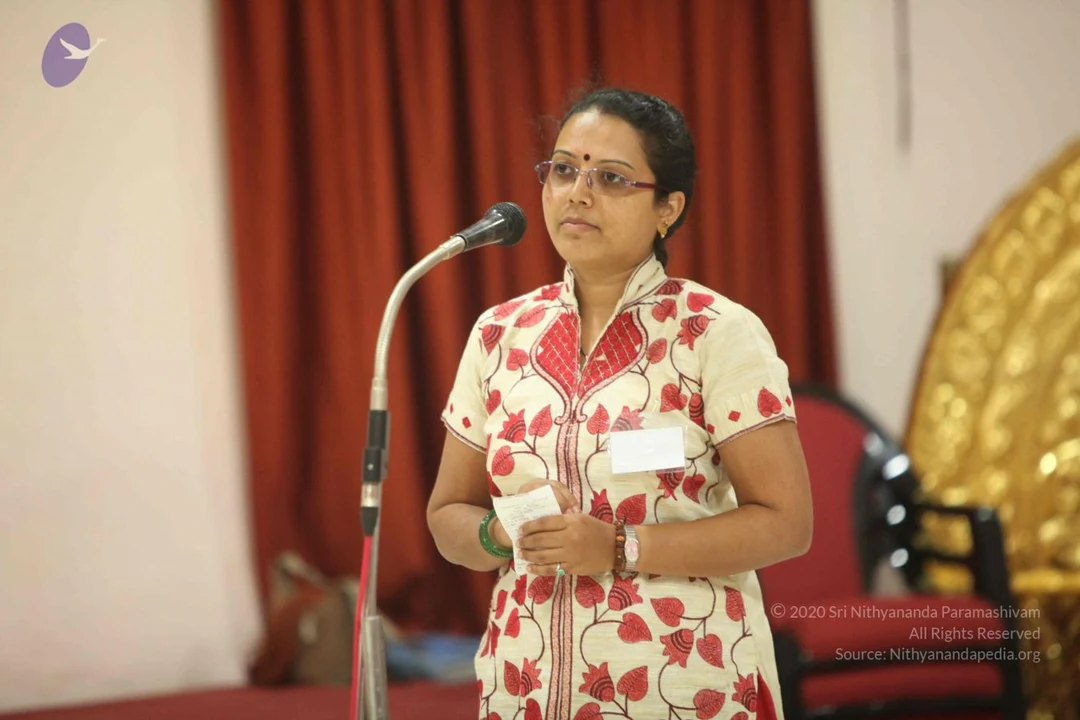
=== Q&A Session and Sharing from Participants

Pada Puja

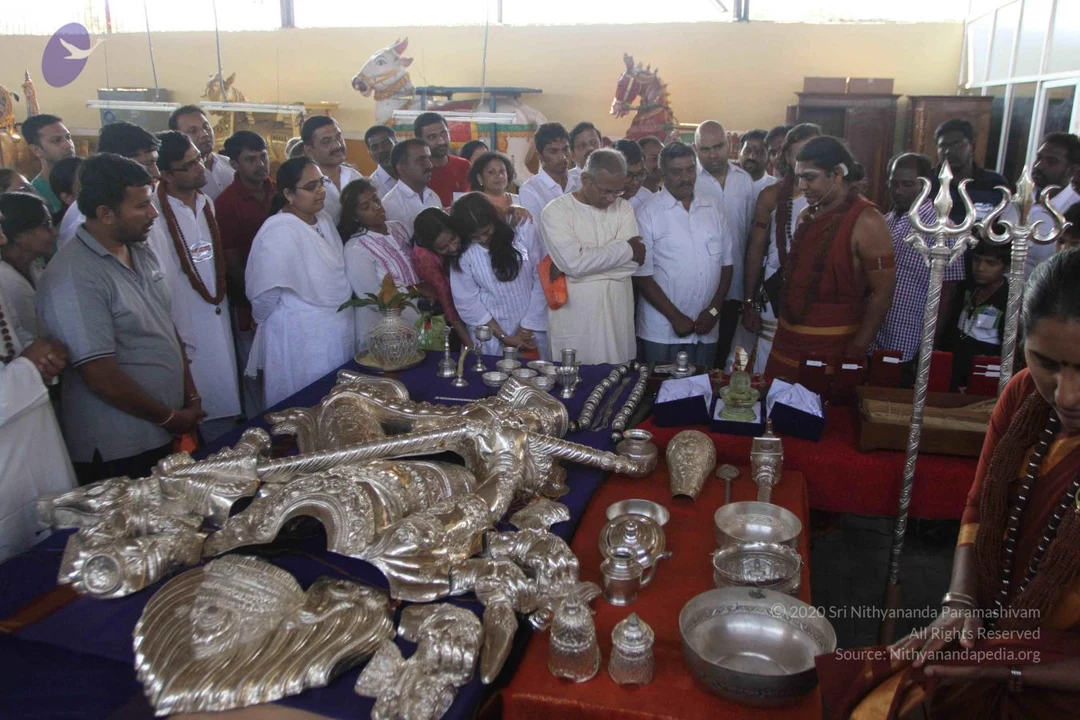
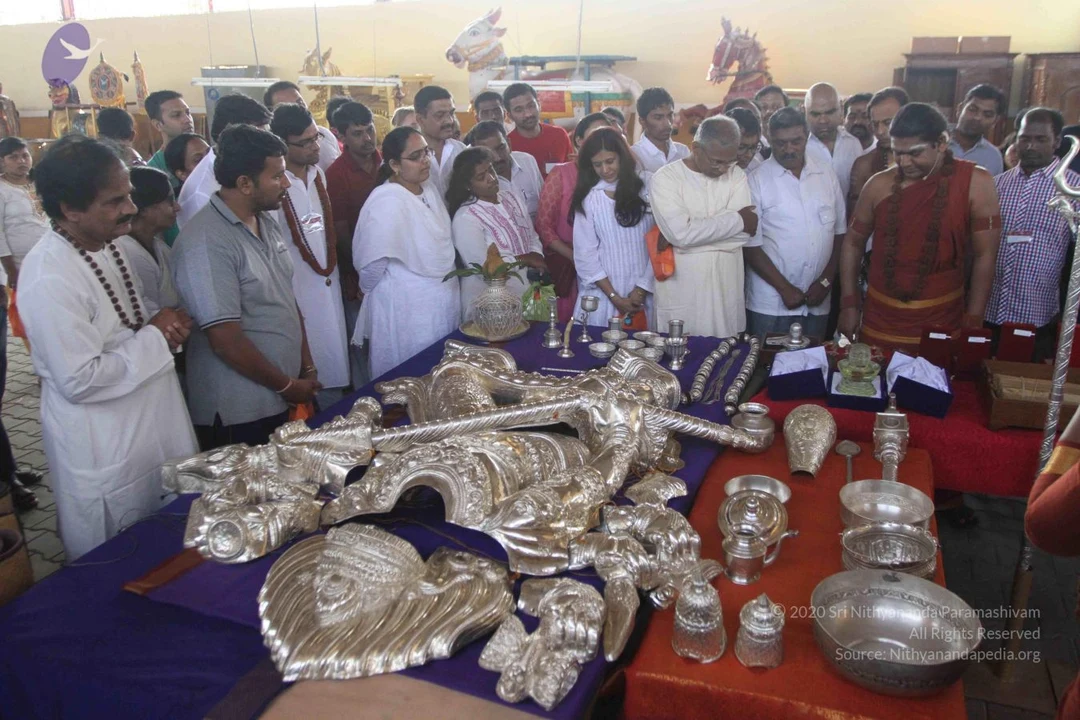
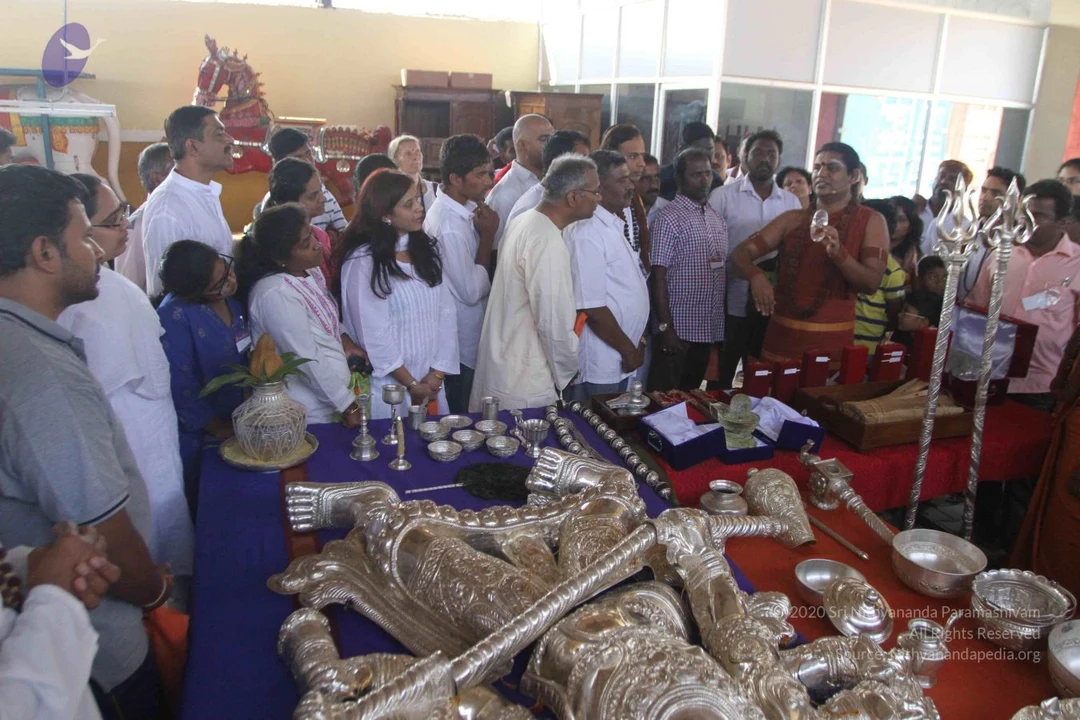
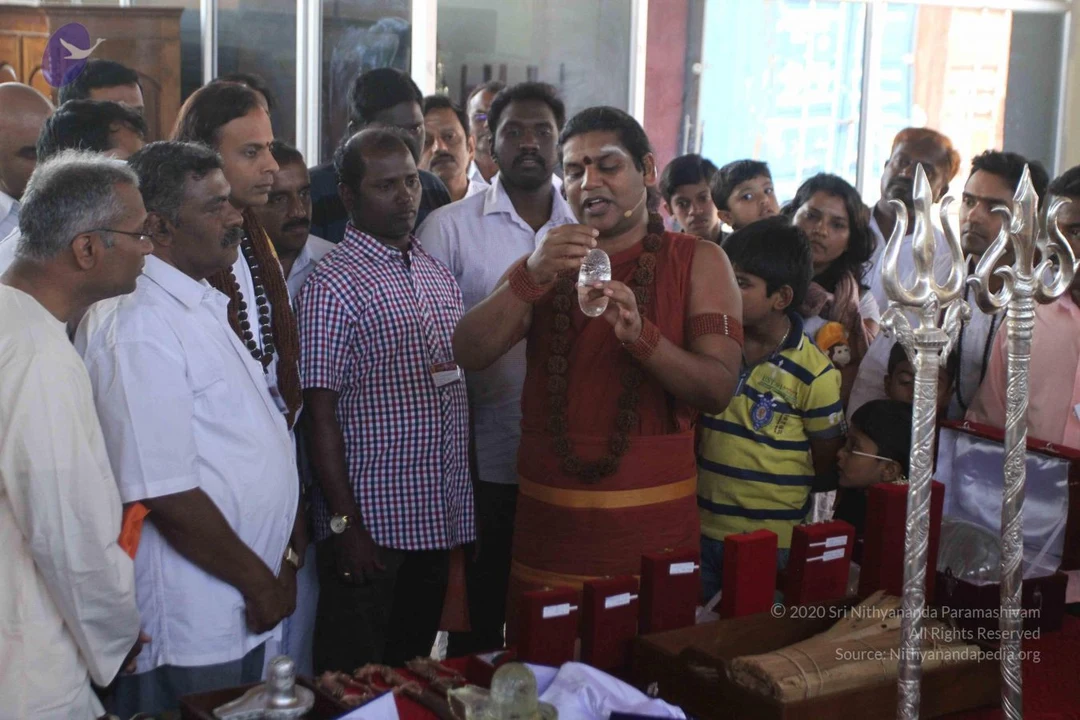
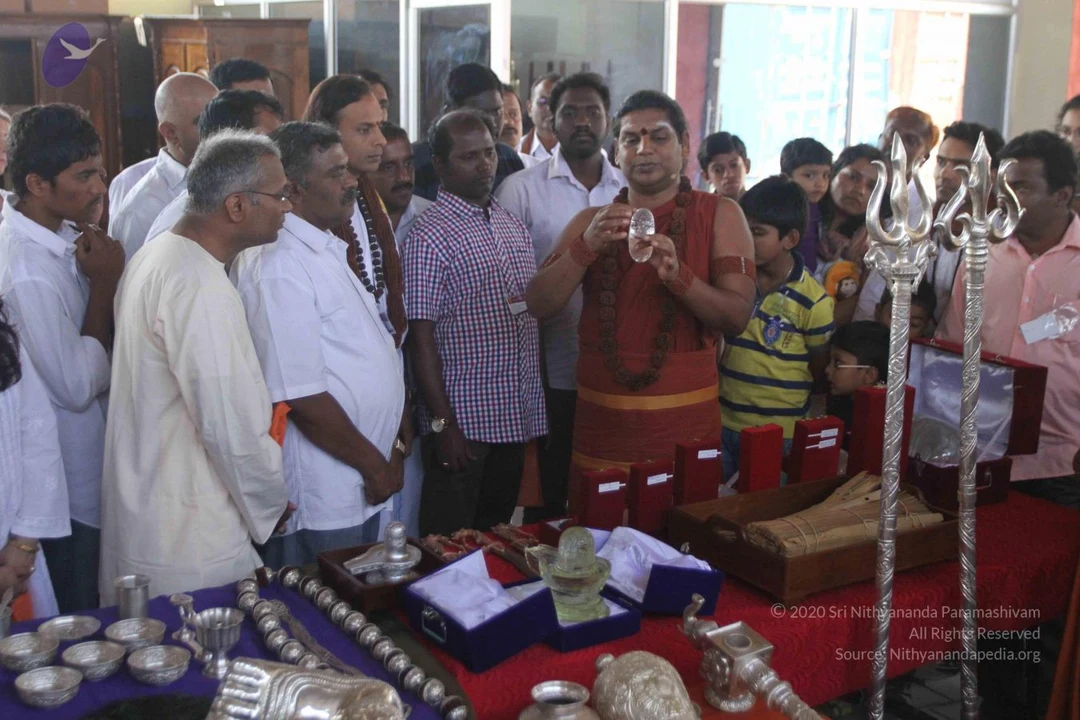
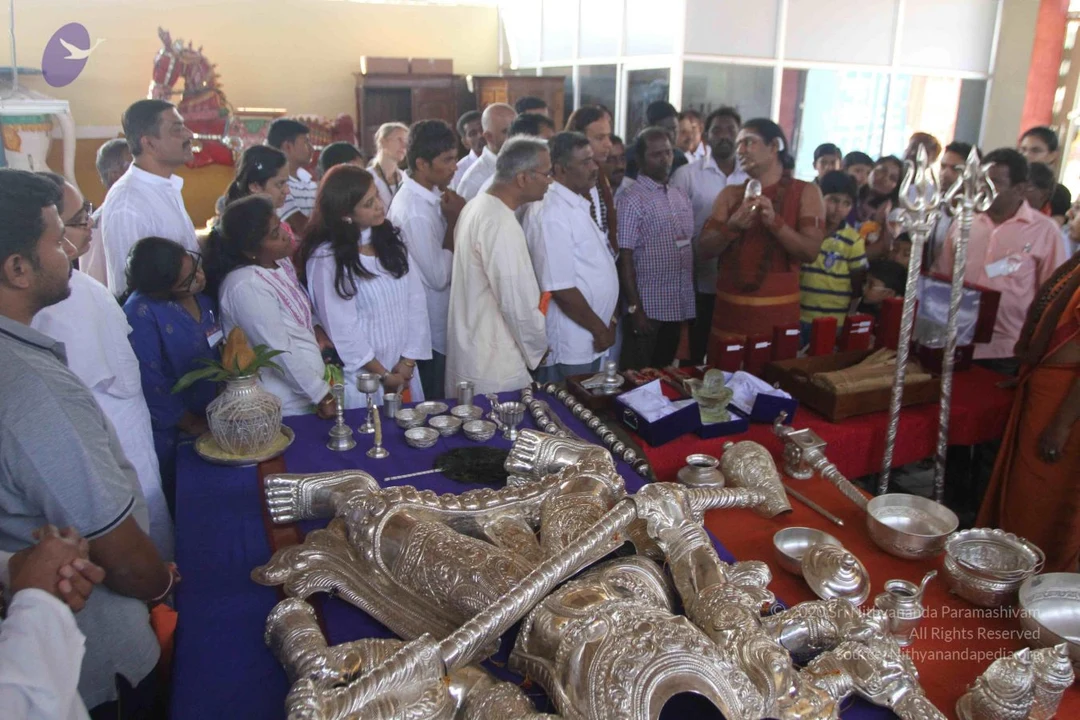
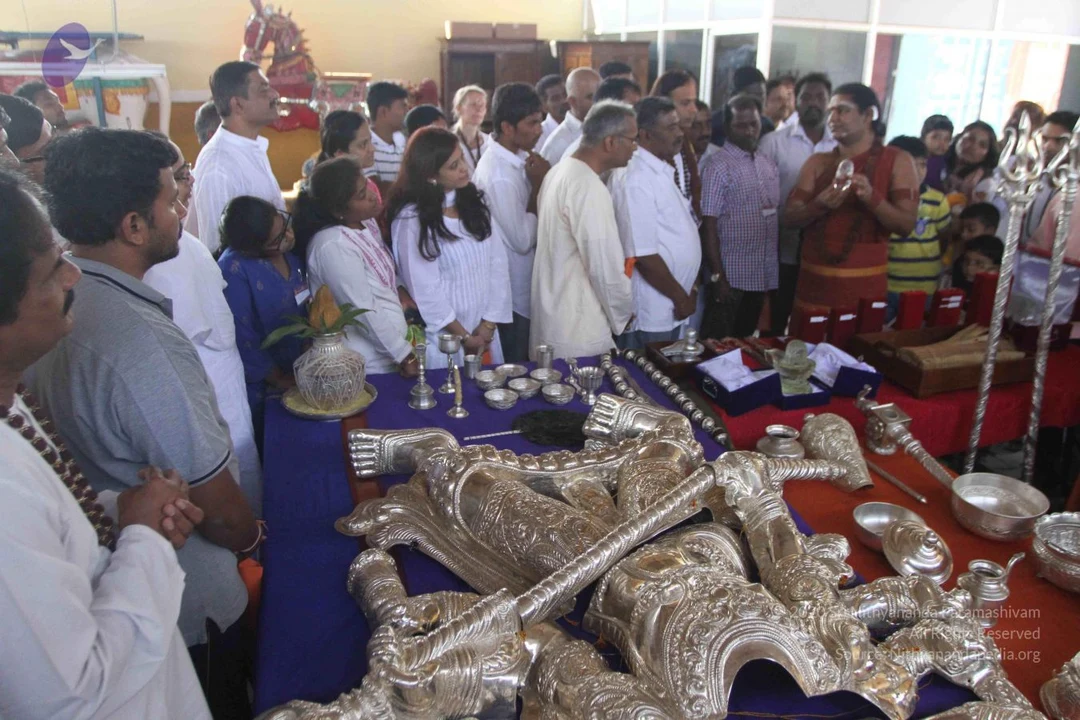
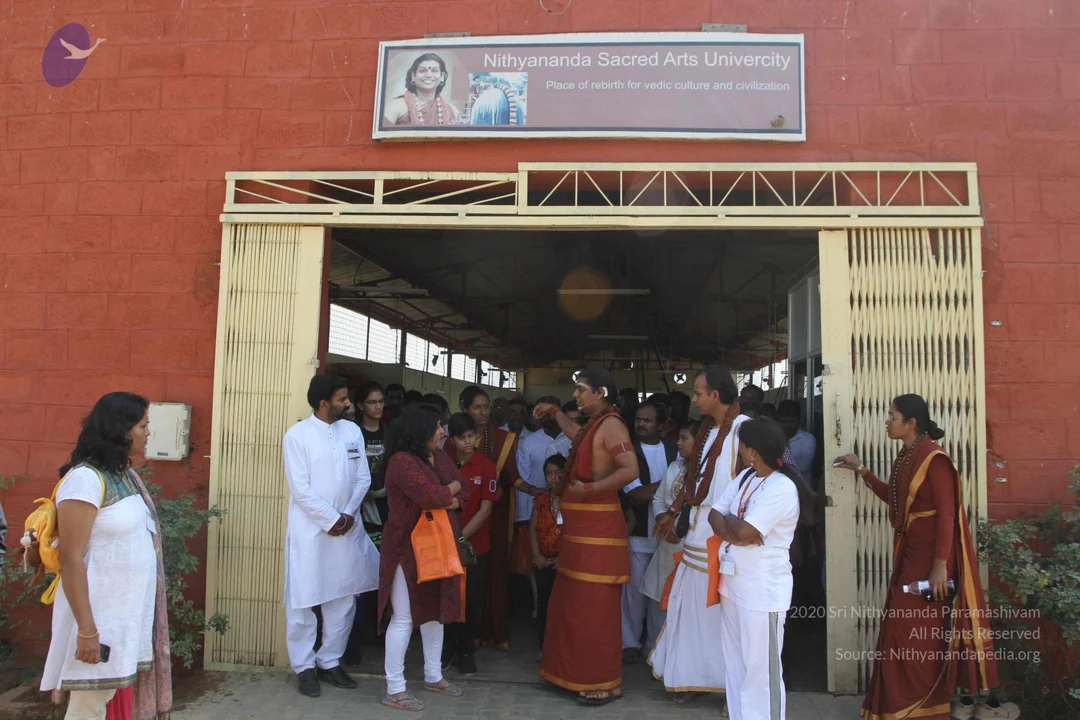
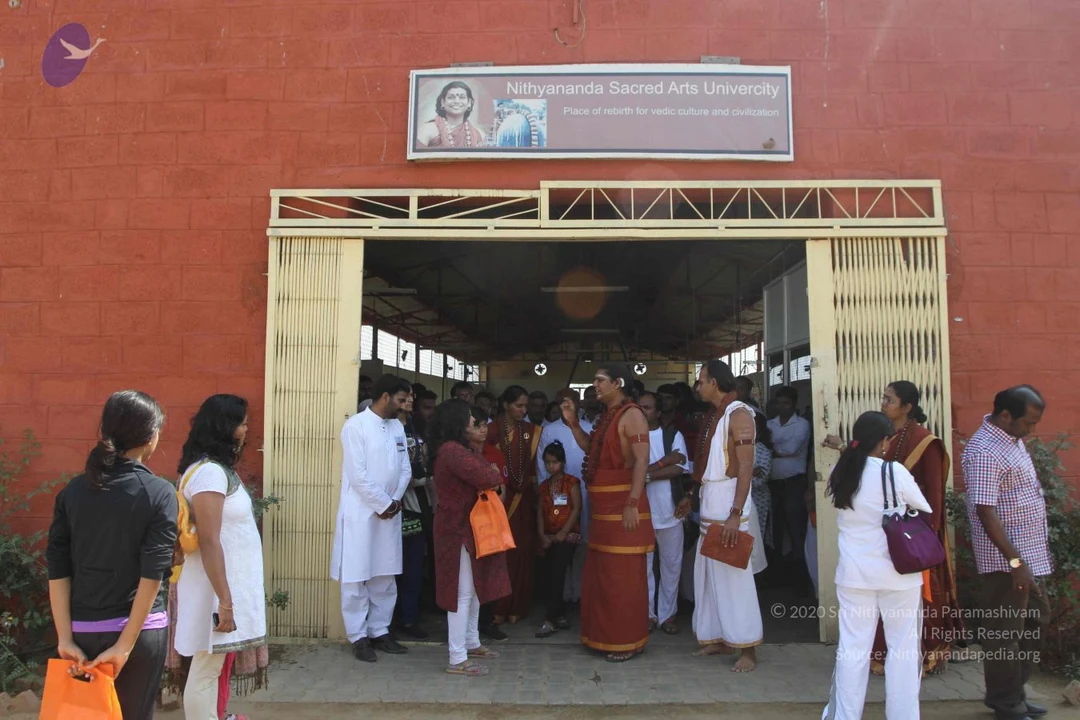
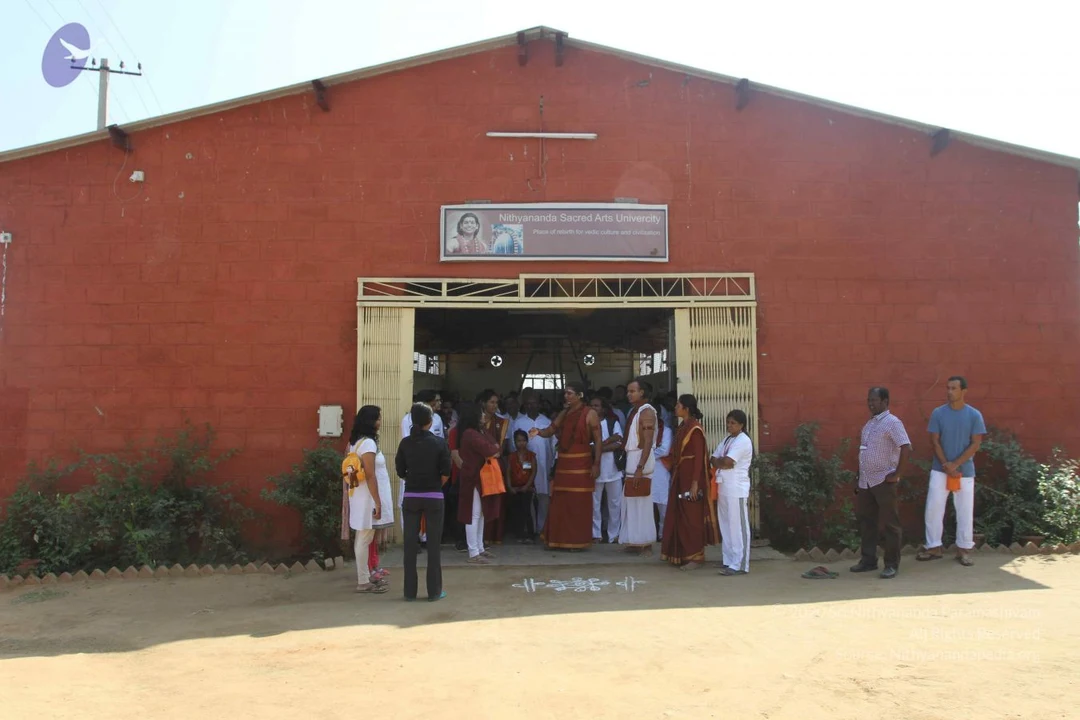
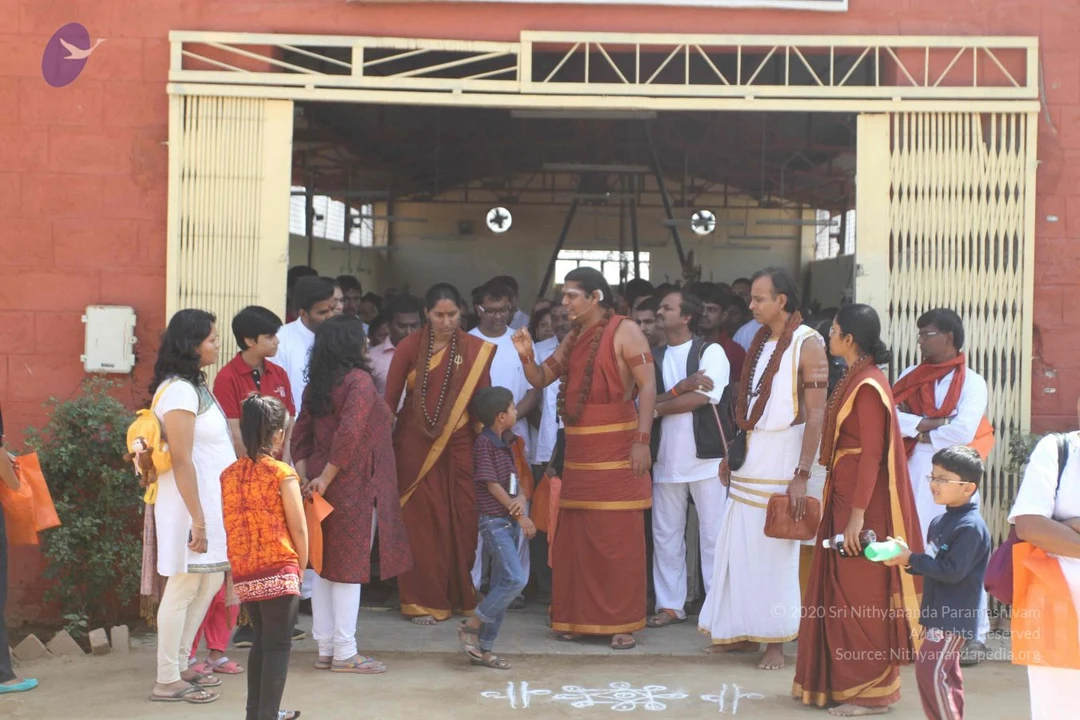
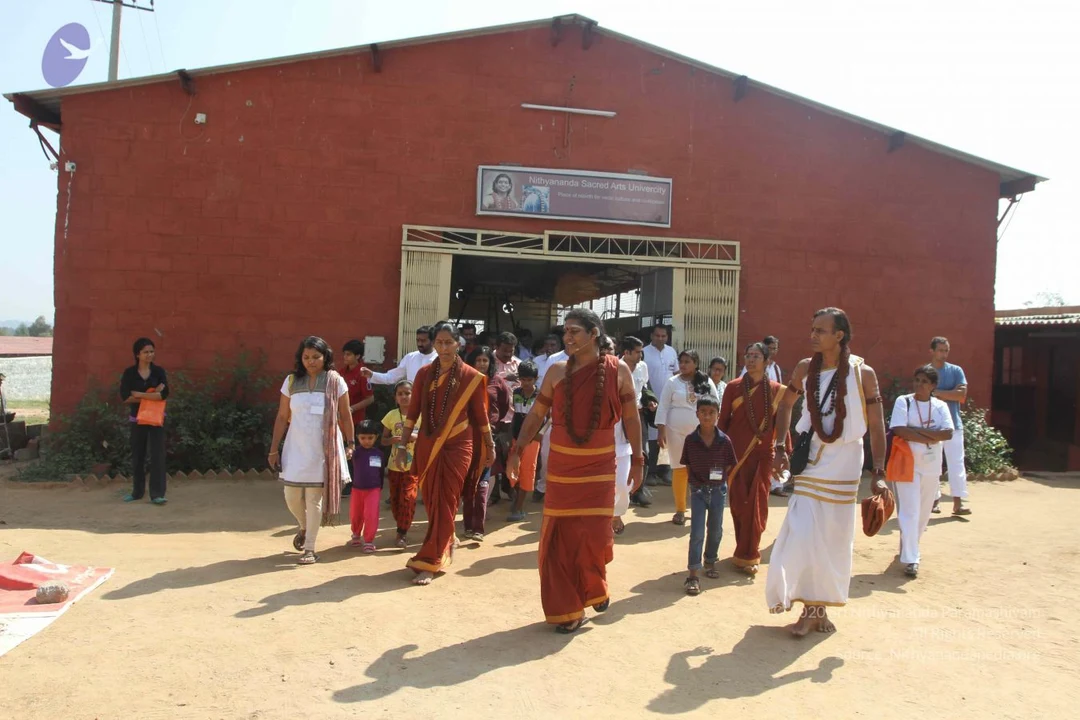
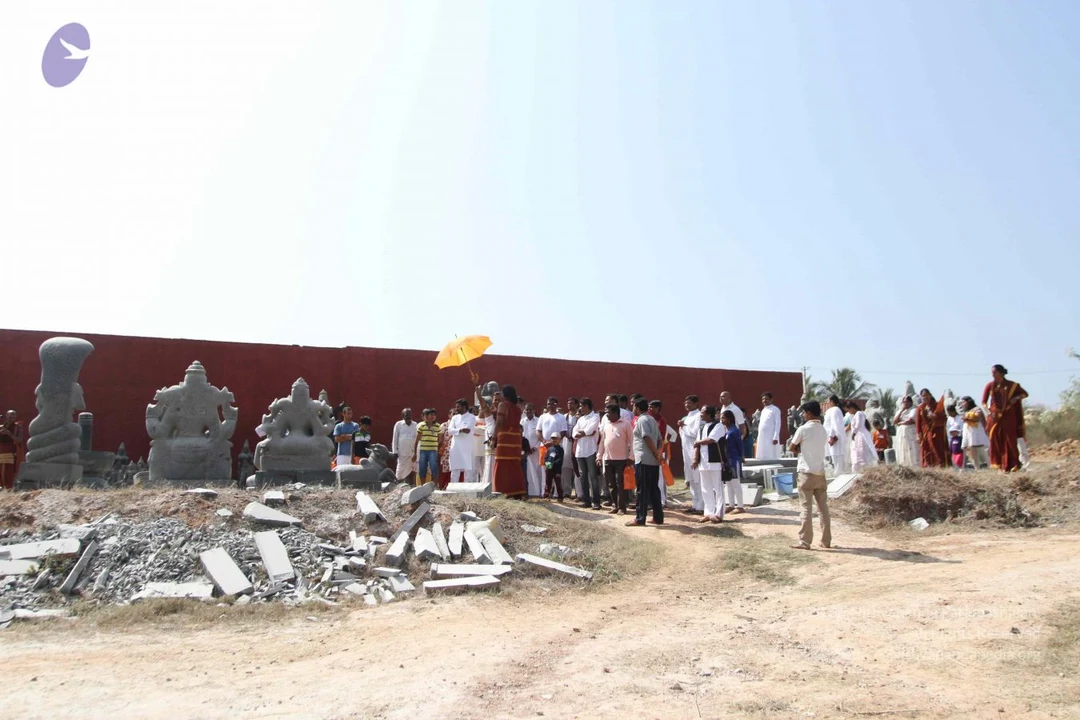
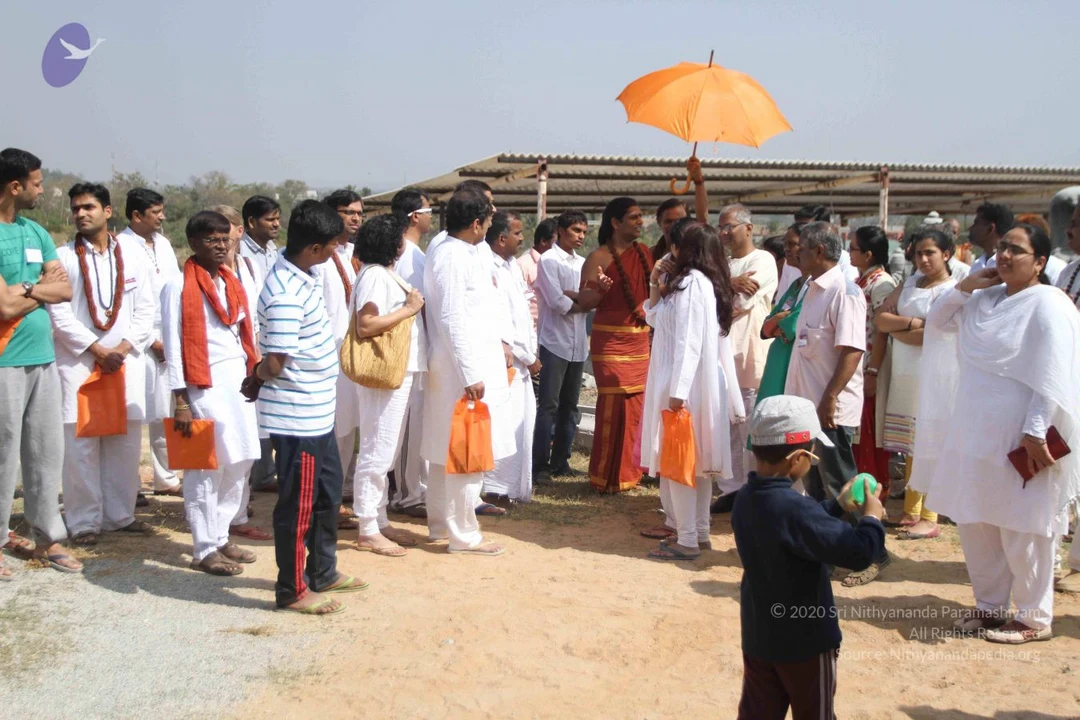
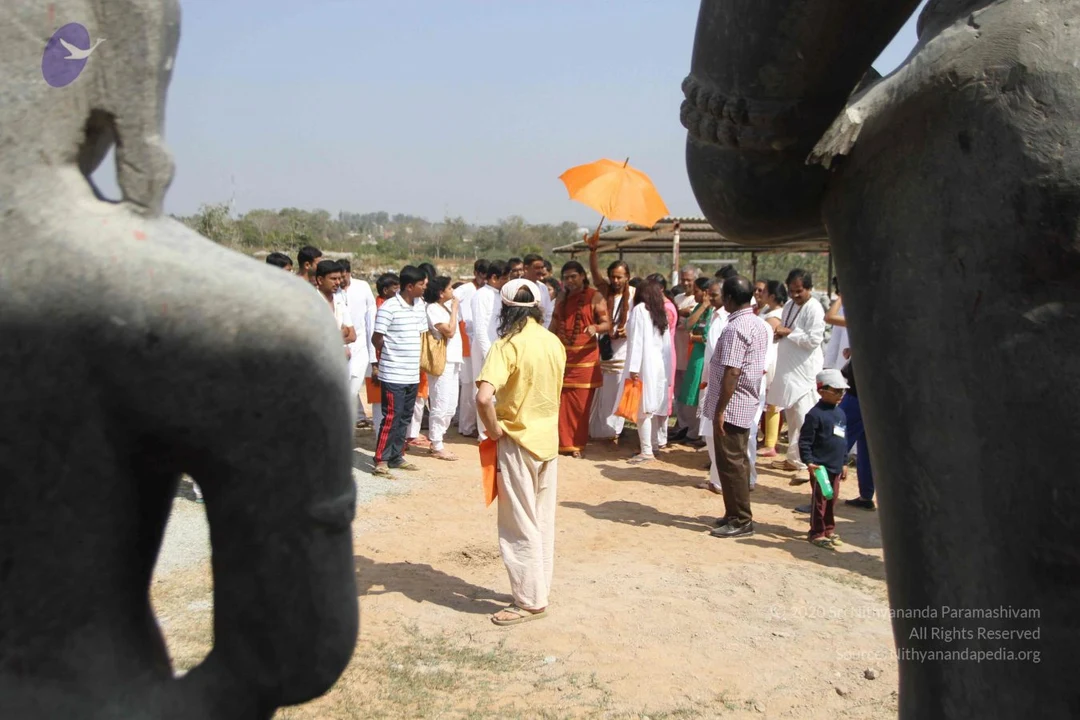
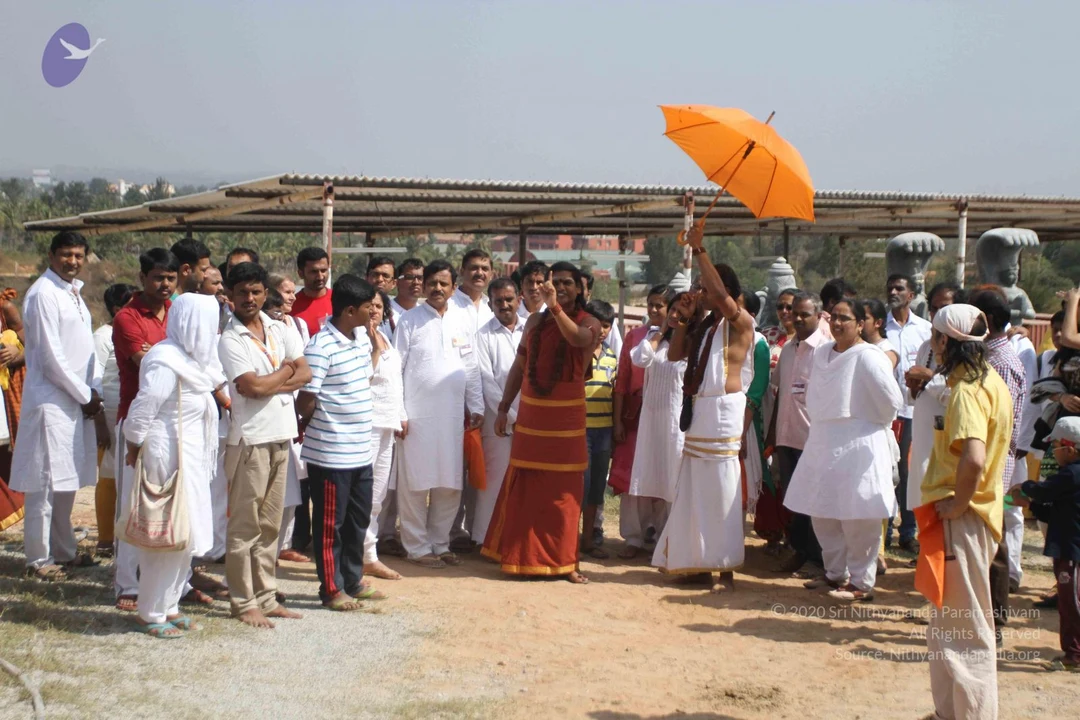
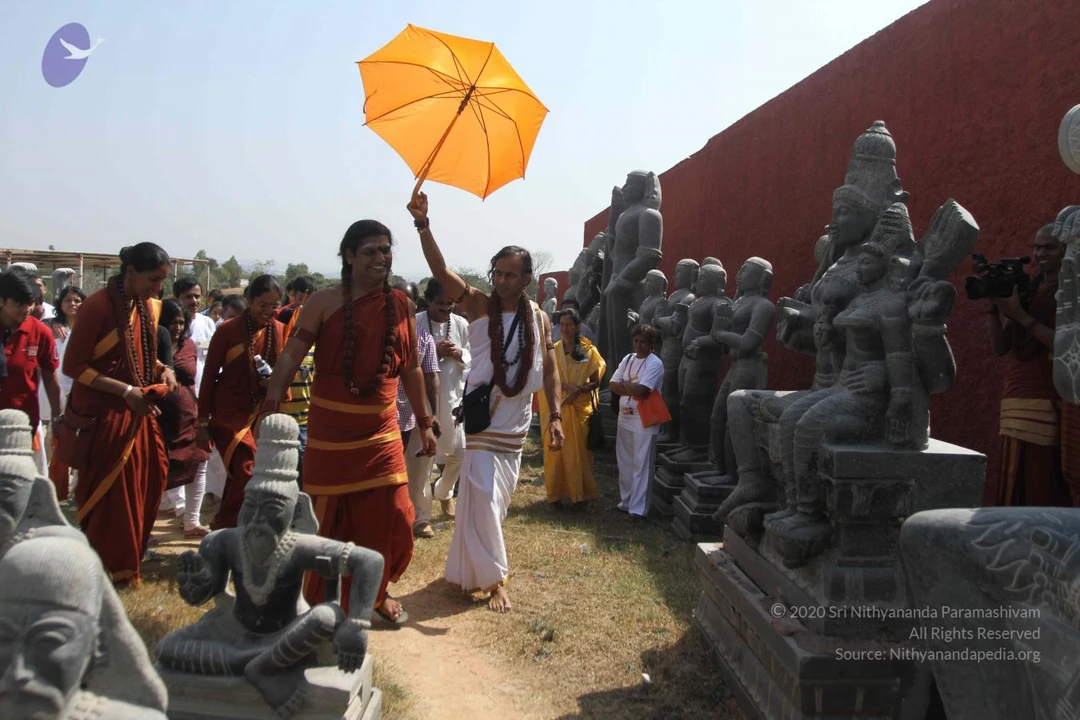
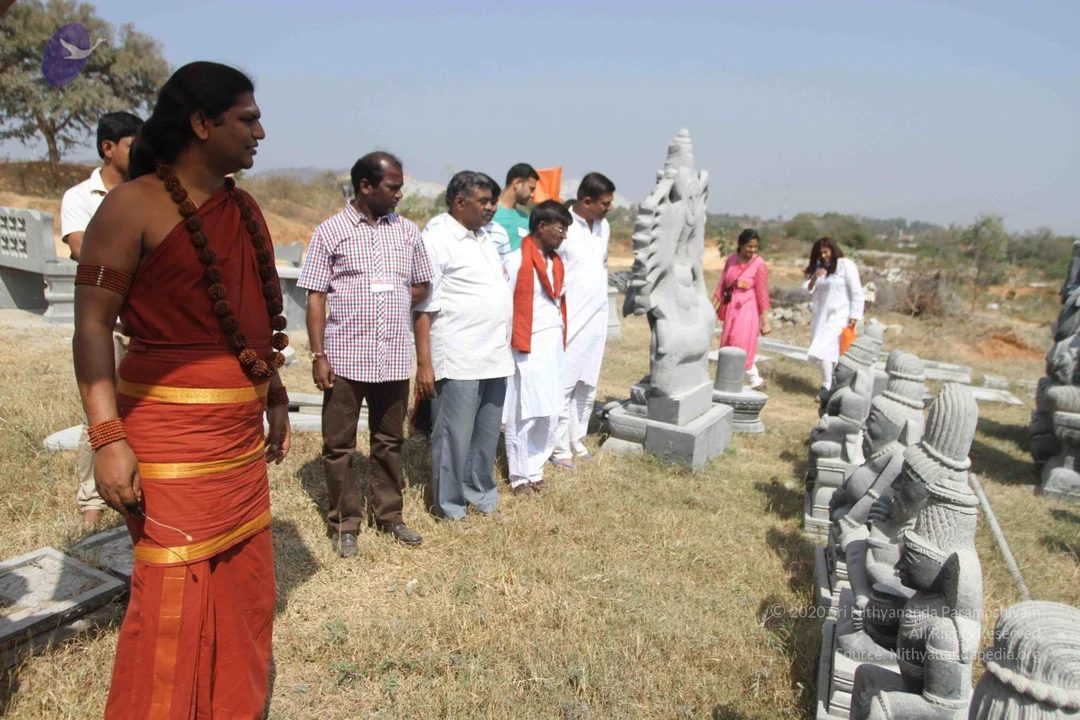
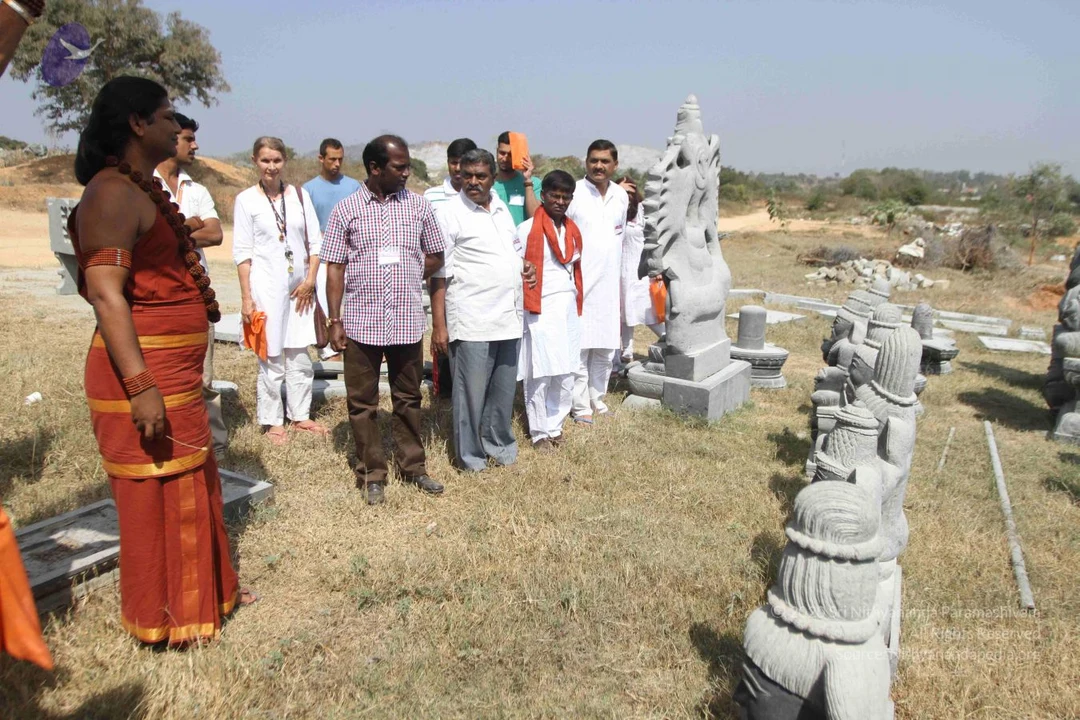
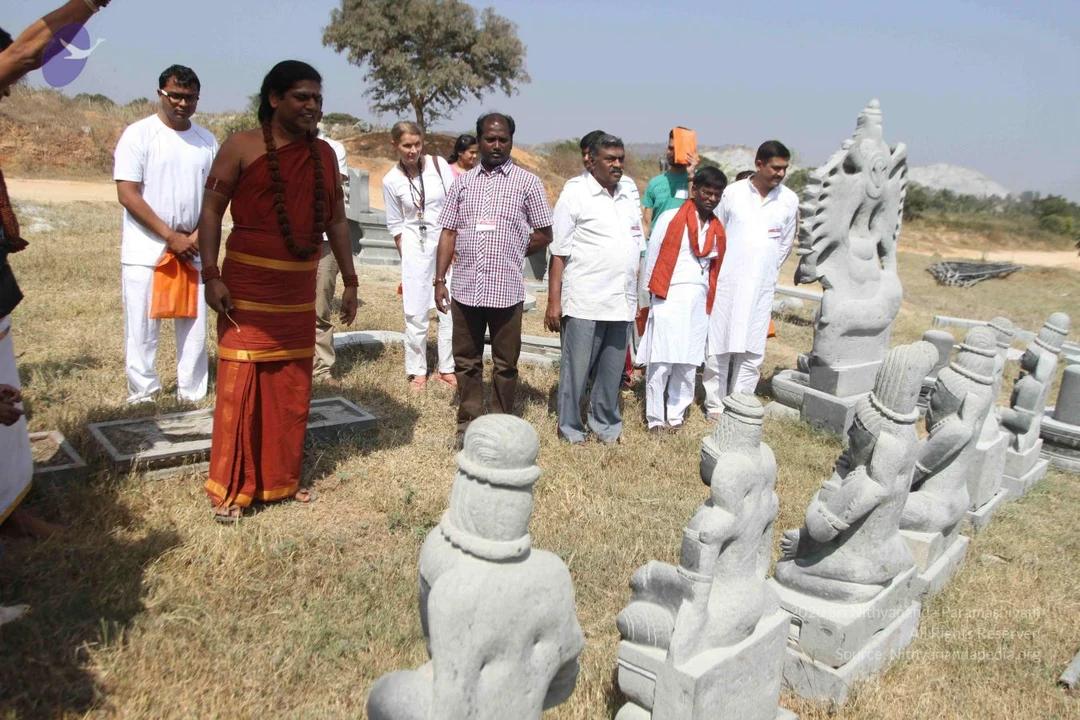
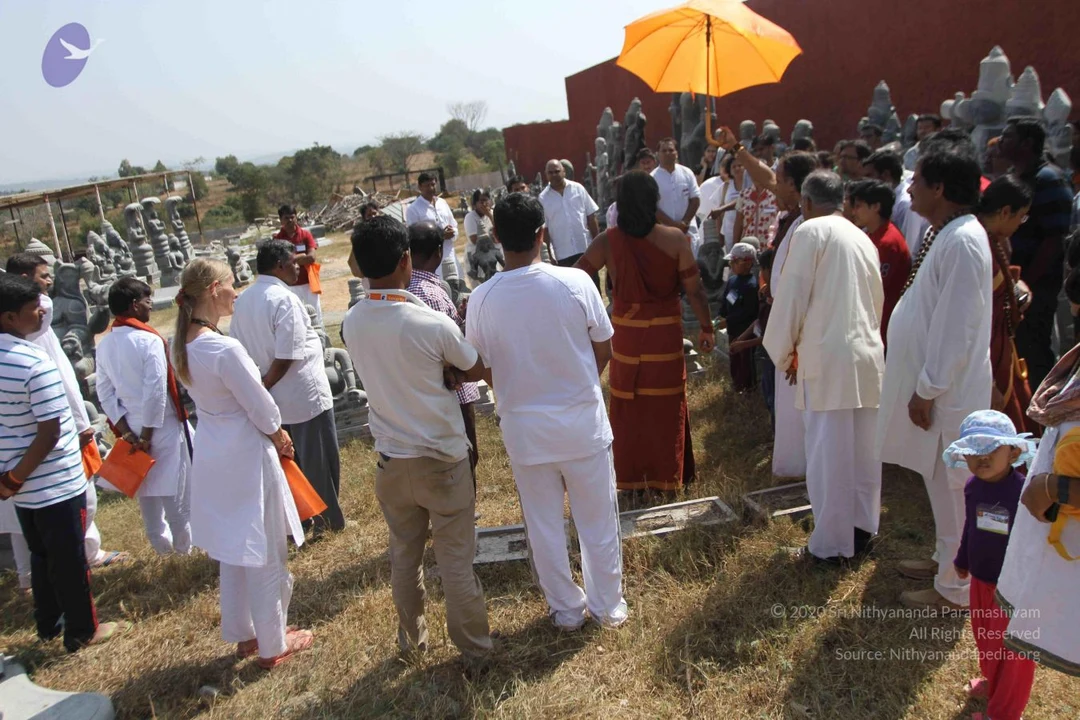
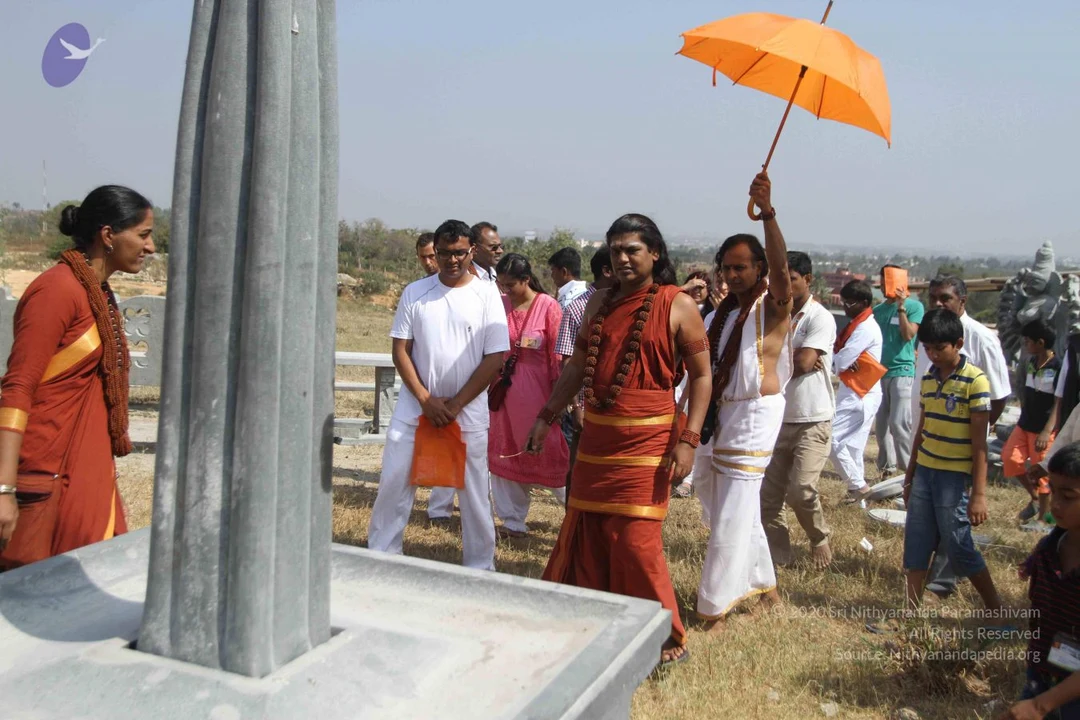
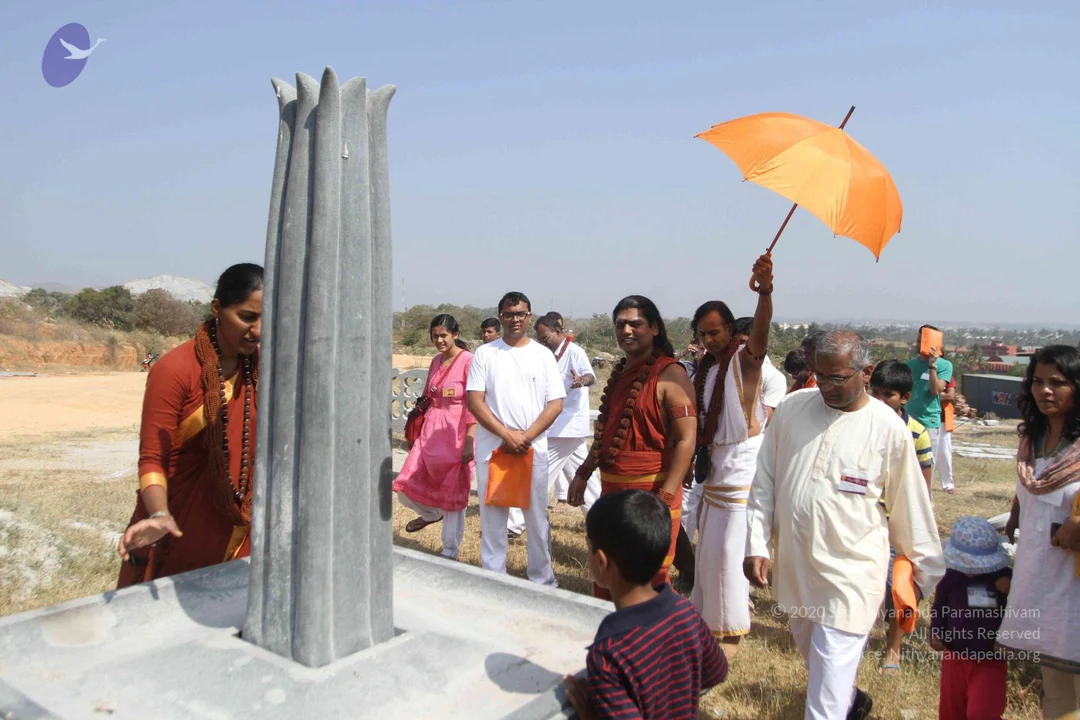
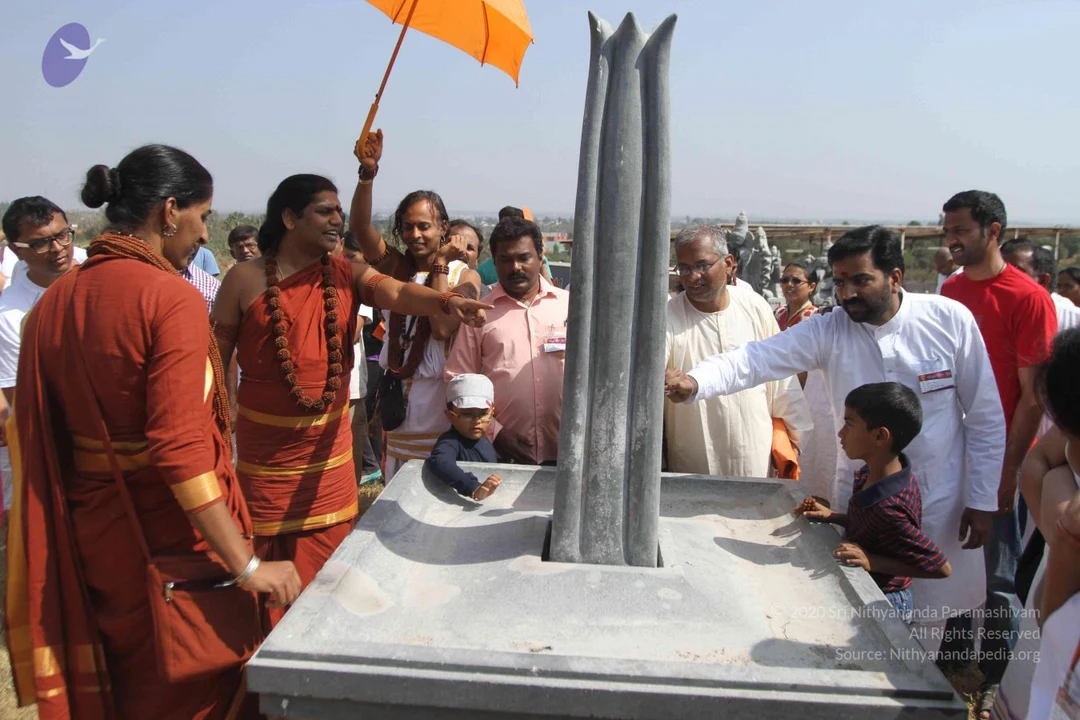
Sacred Arts Tour

Photos Of The Day:

Pratyaksha-Pada-Puja

Nithya-Kirtans

Nithya-Satsang

Kalpataru-Darshan

NDY Day 2, Session 1 Q&A and Sharing by Delegates

Sacred-Arts-Tour

NDY-Day-2-Darshan

NDY-Day-2-Kundalini-Shivoham-Last-Session

Temple

FB-Photos-of-the-Day

Photos from this day

View all 522 photos

Nithya Satsang
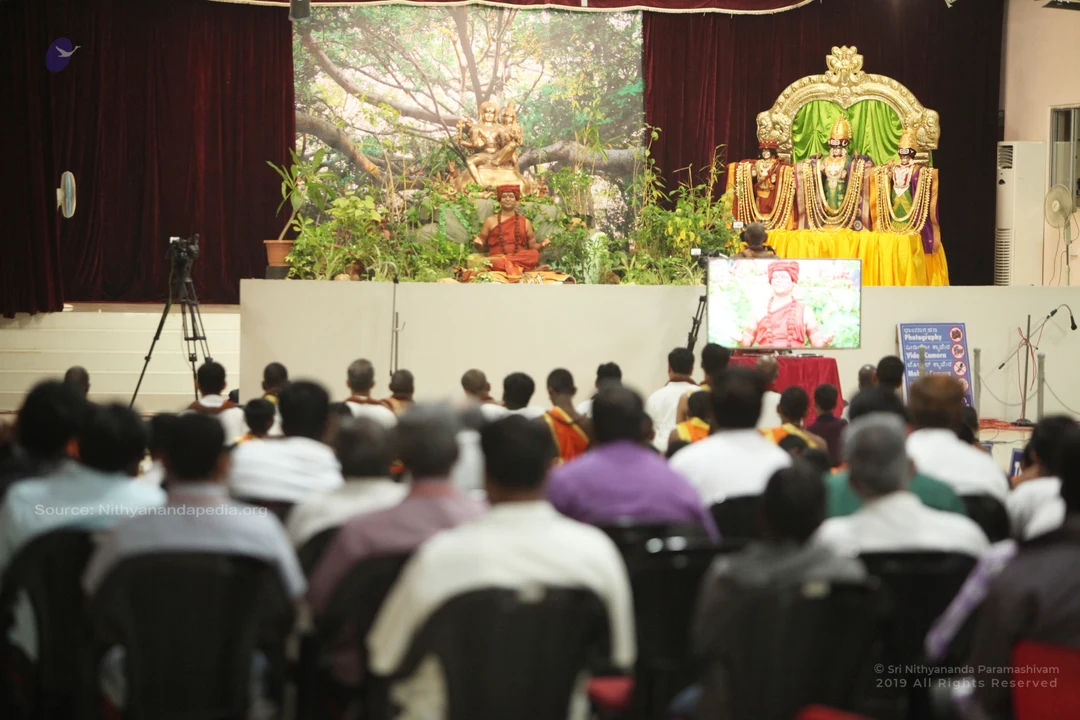
15 photosSource gallery
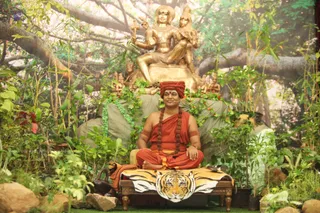
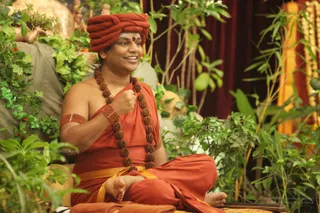
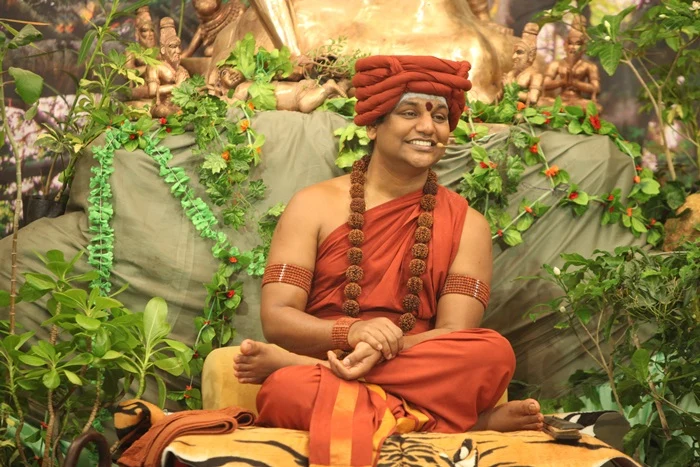
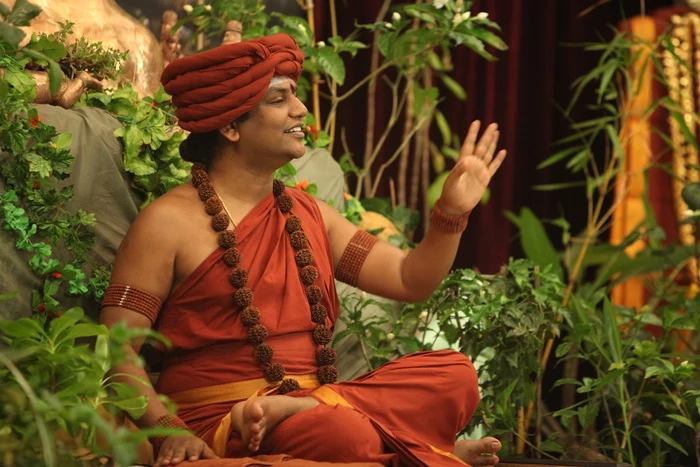
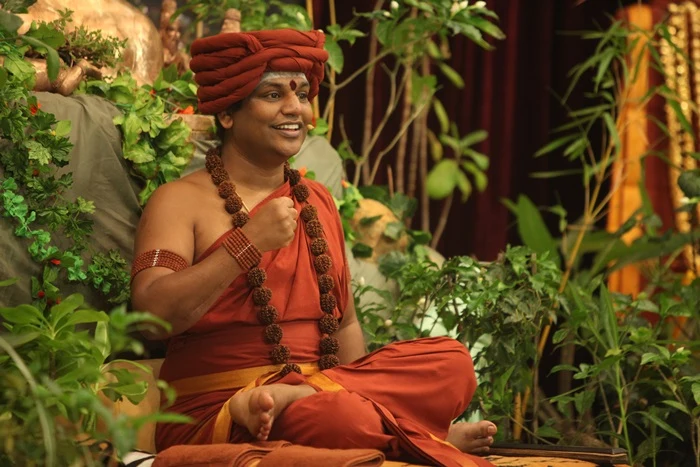
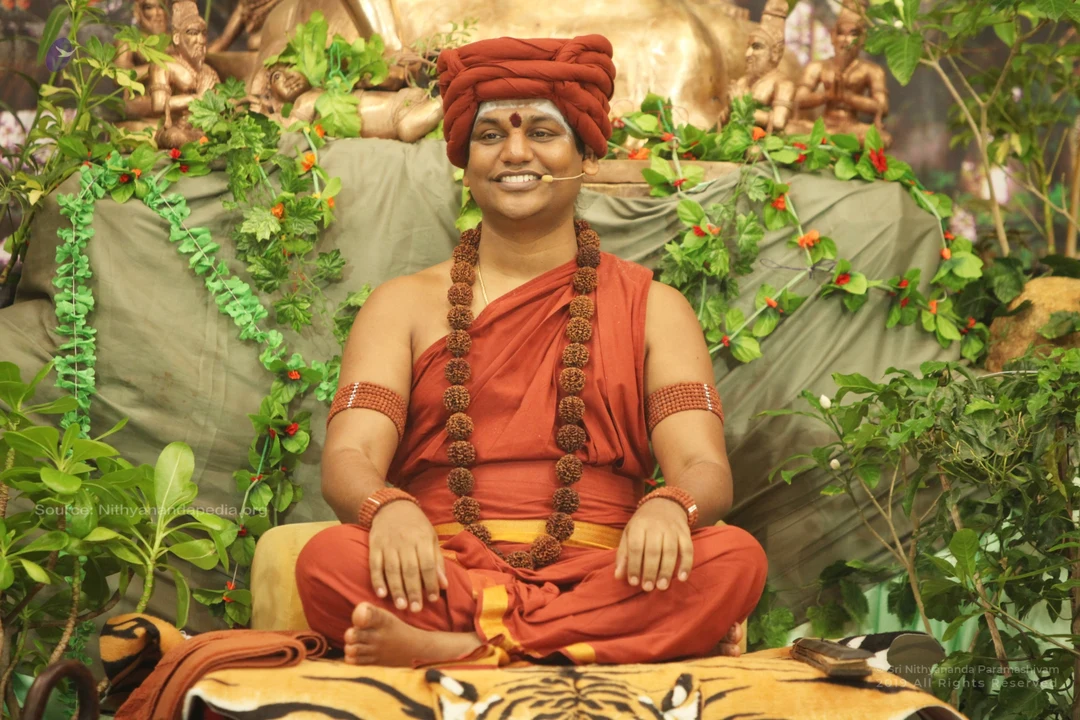
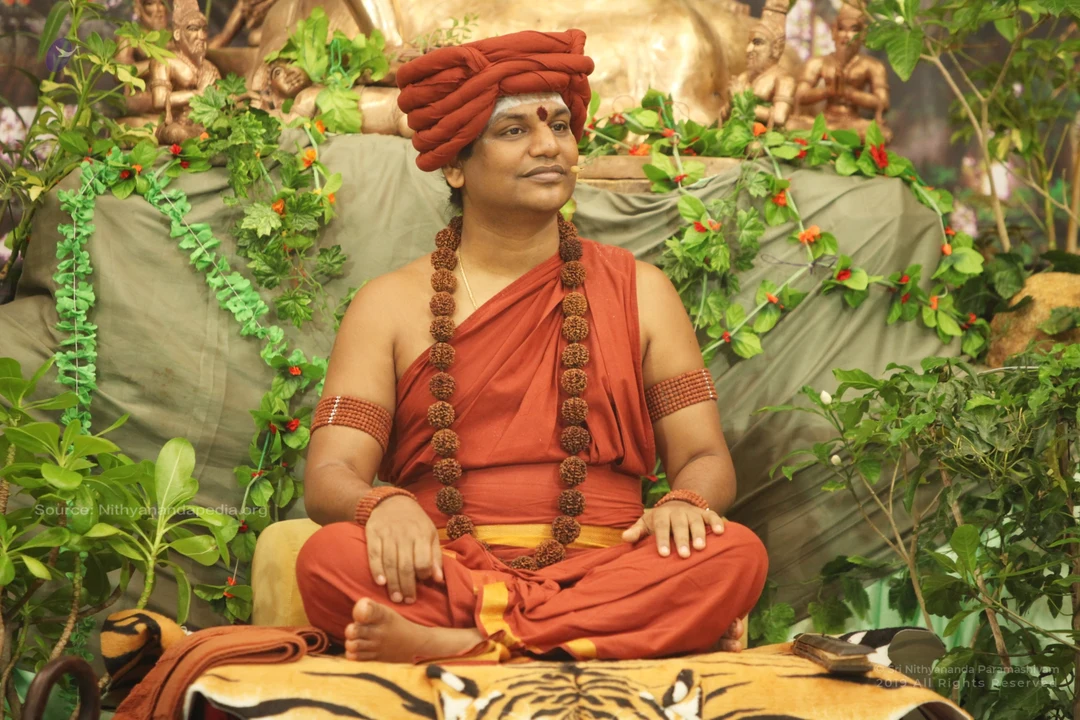
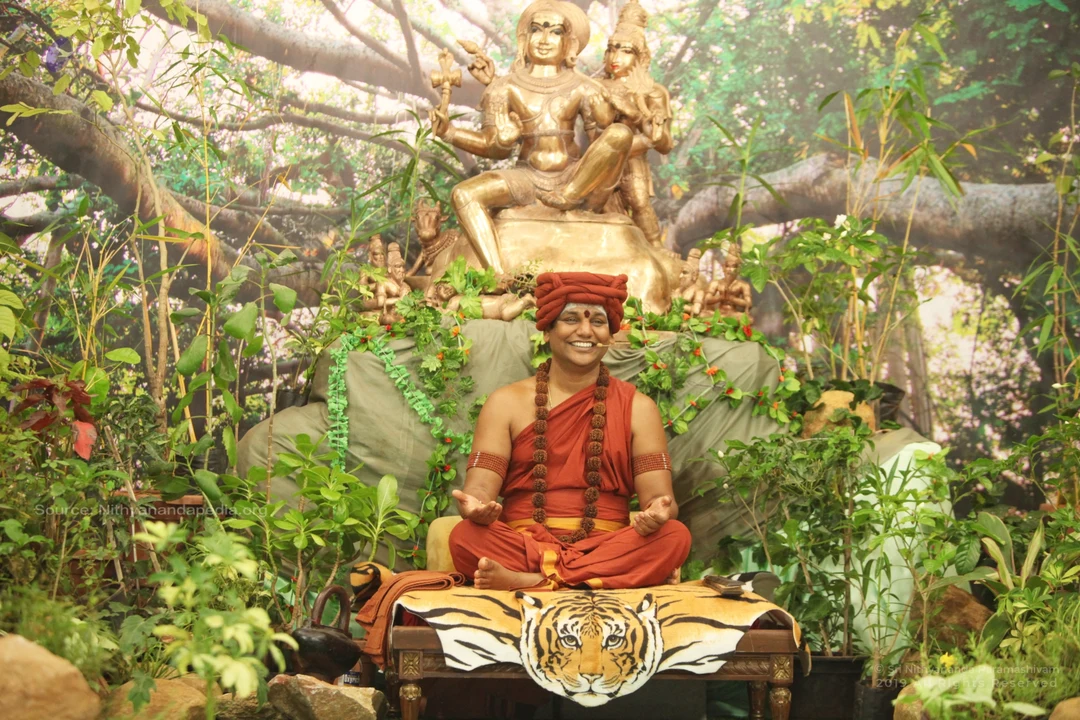
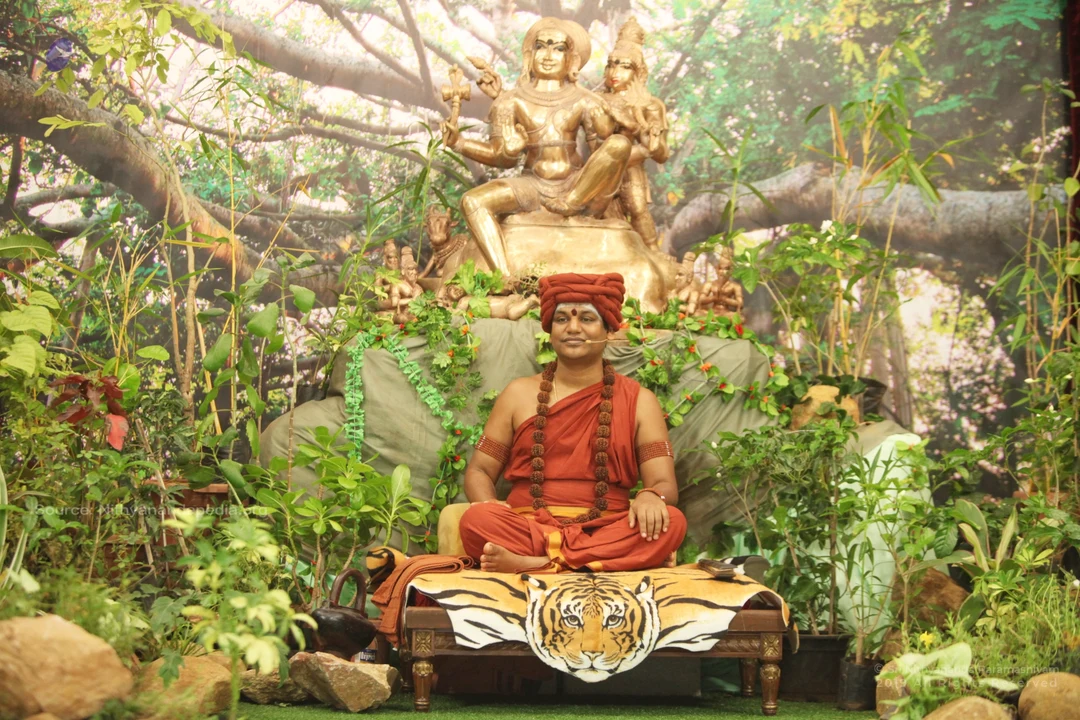
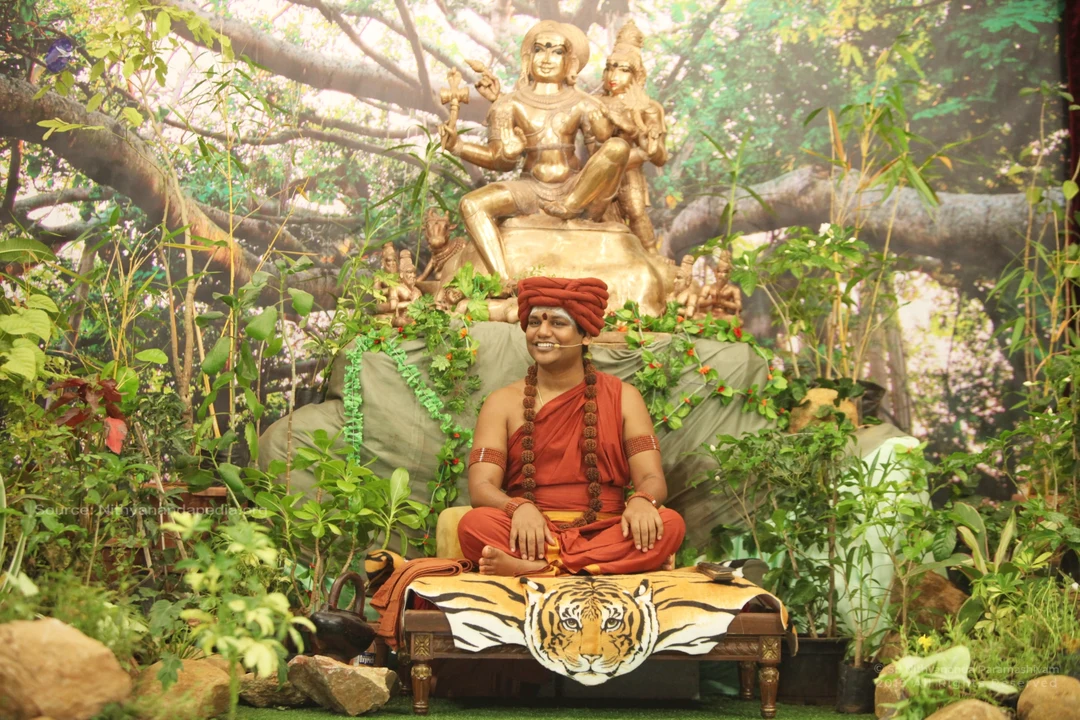
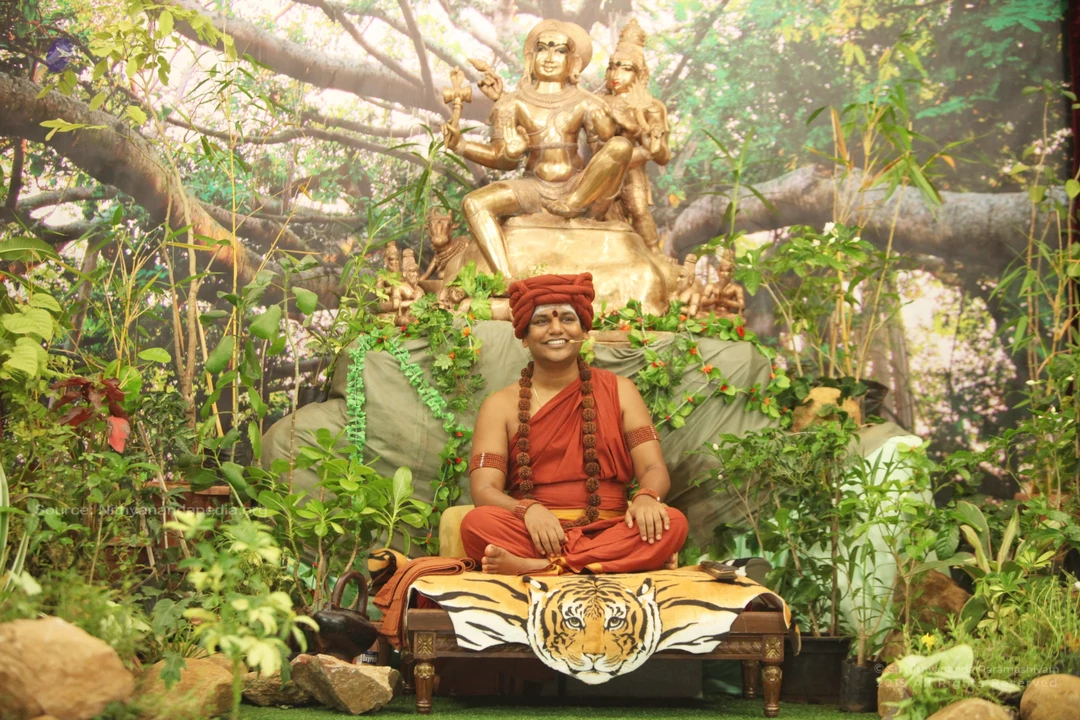
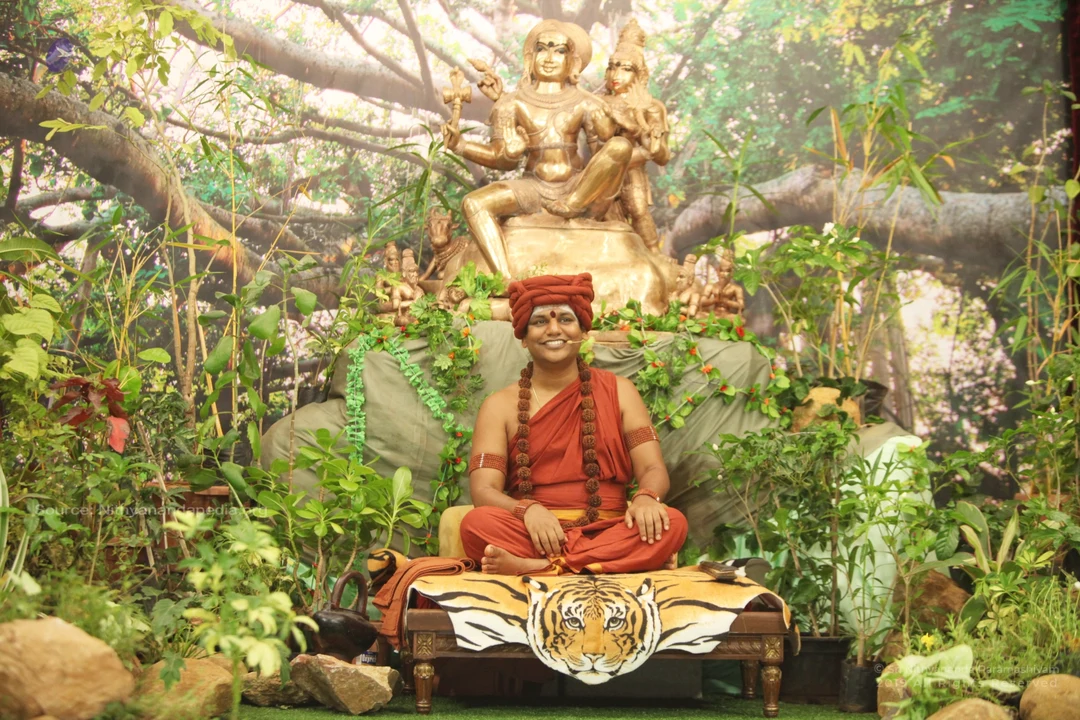
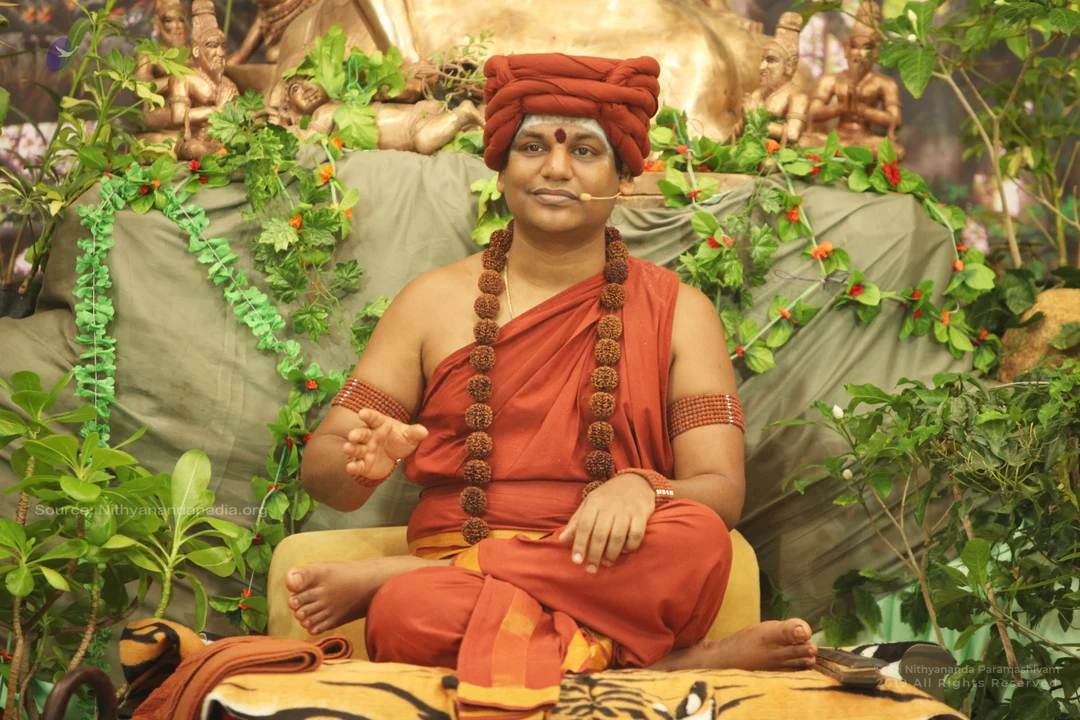
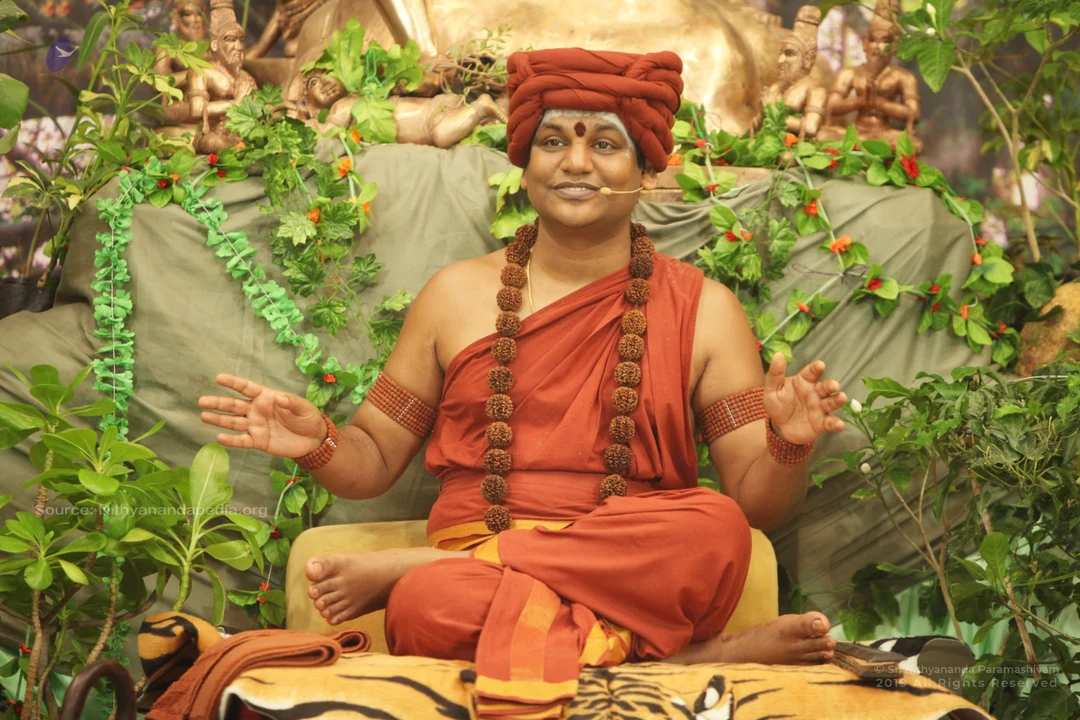
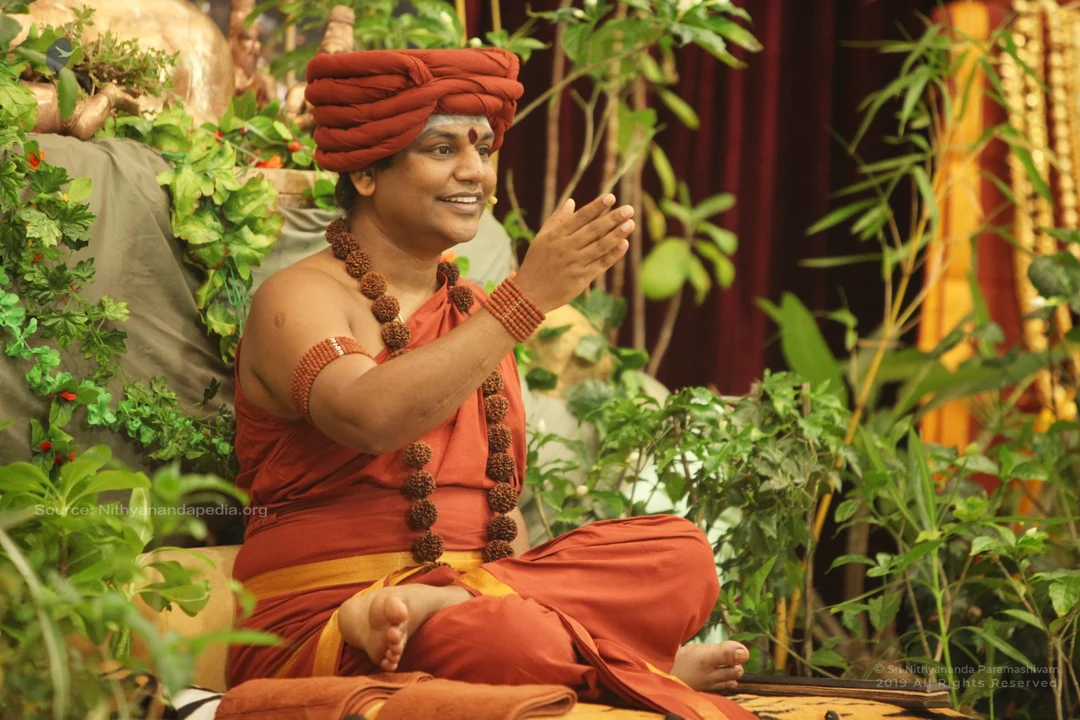
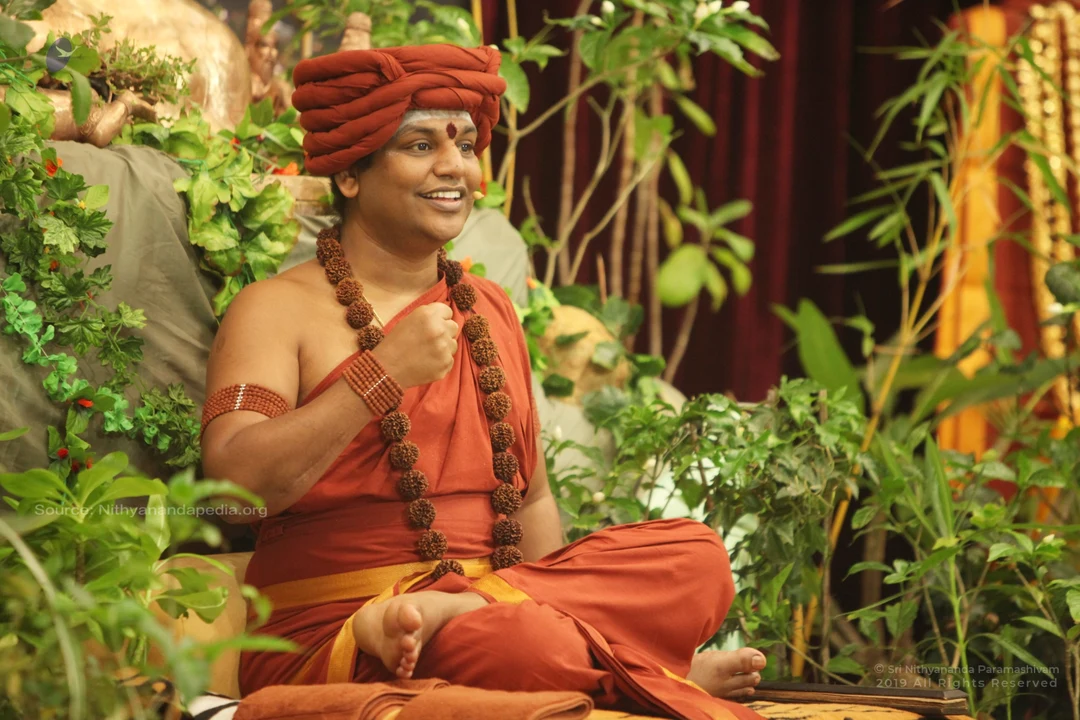
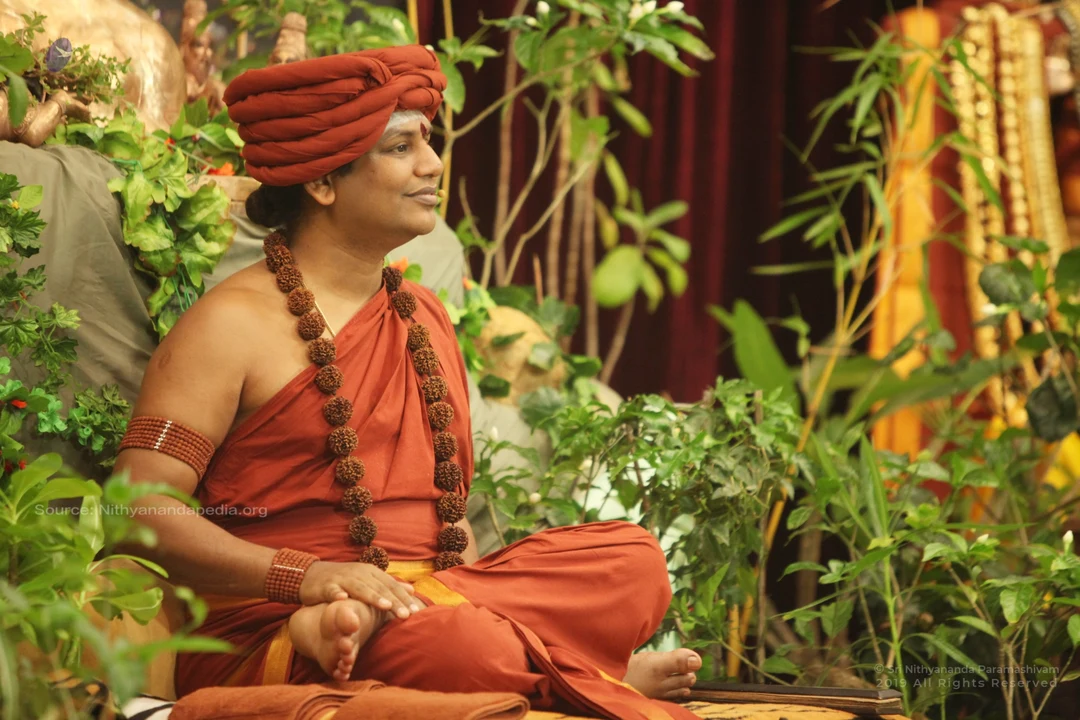
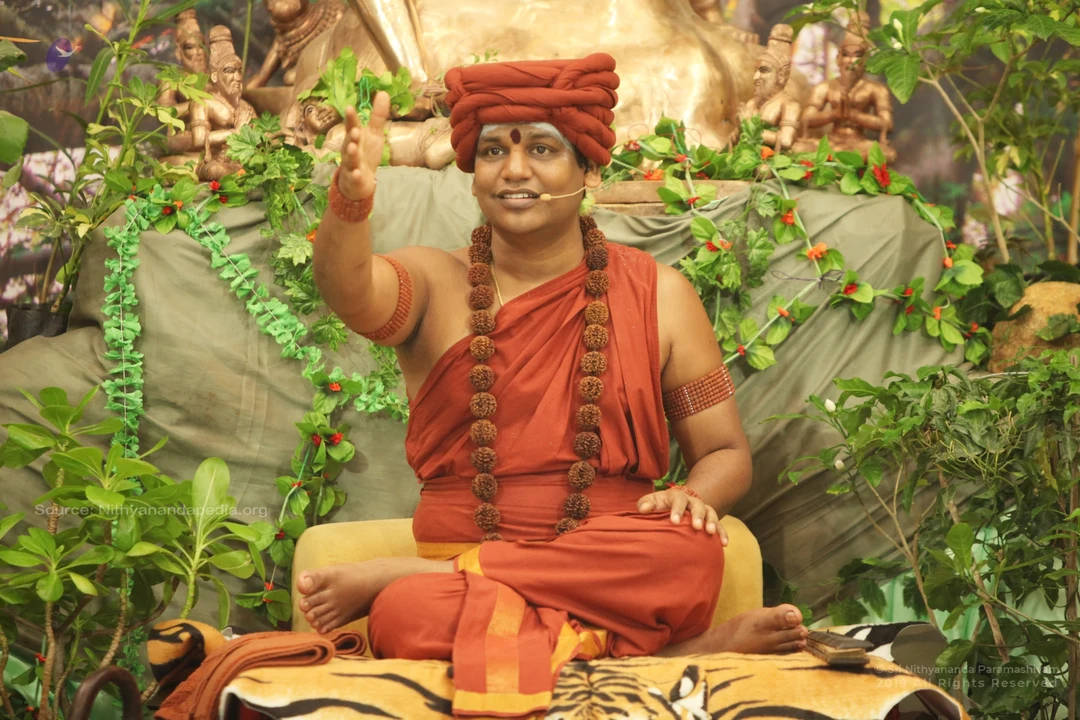
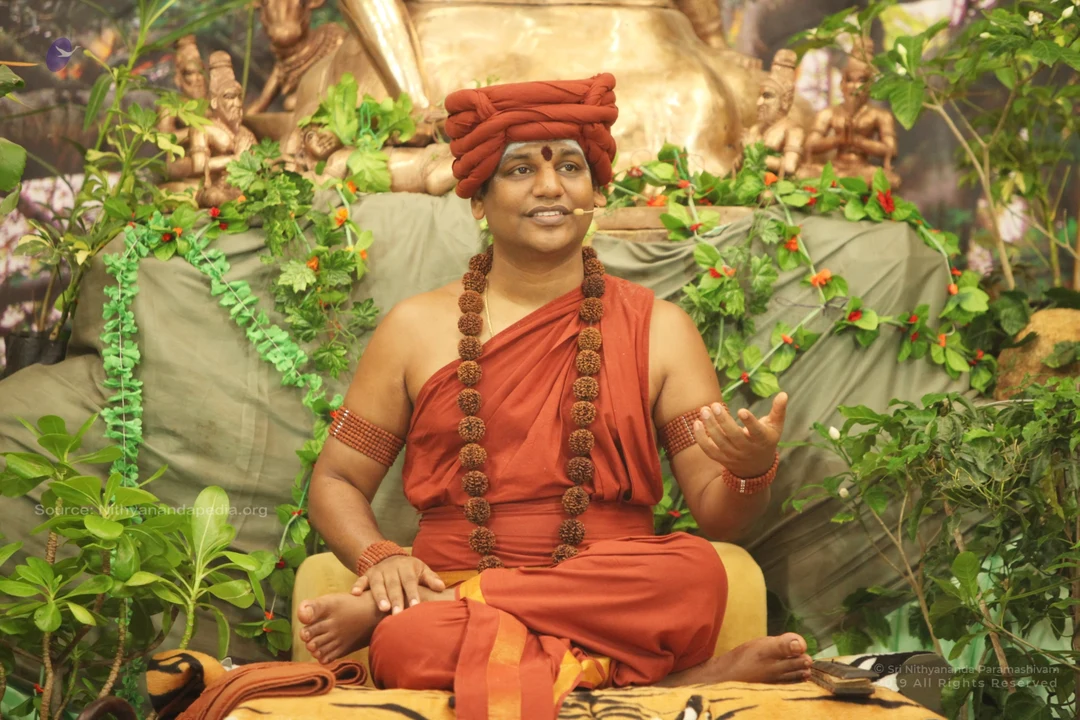
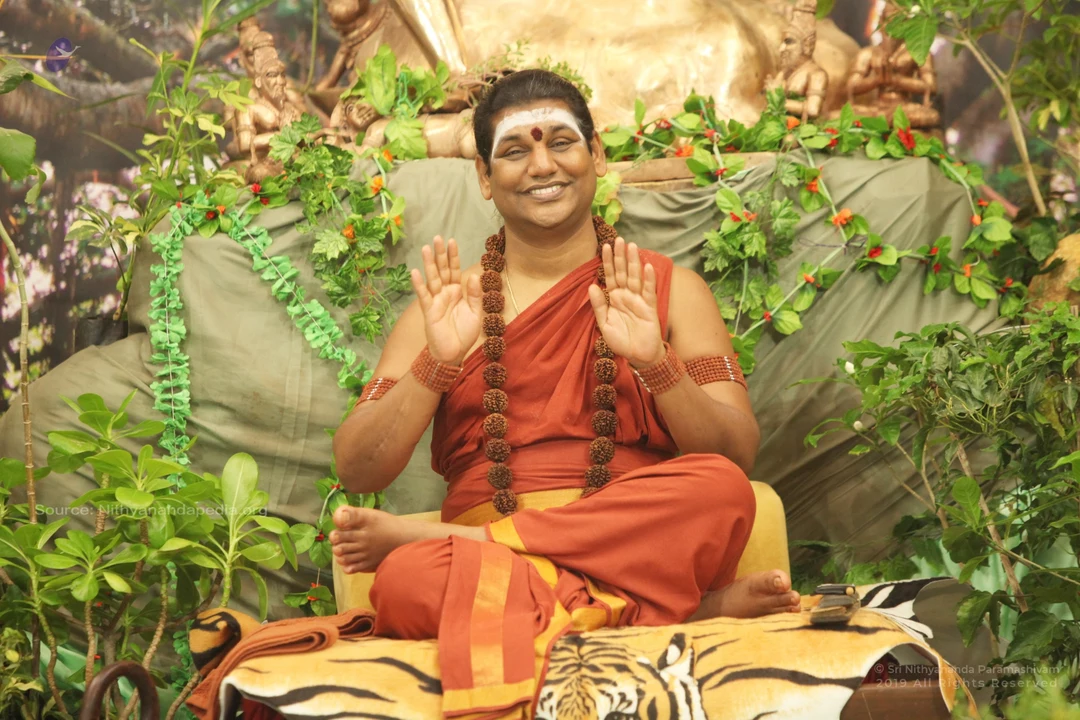
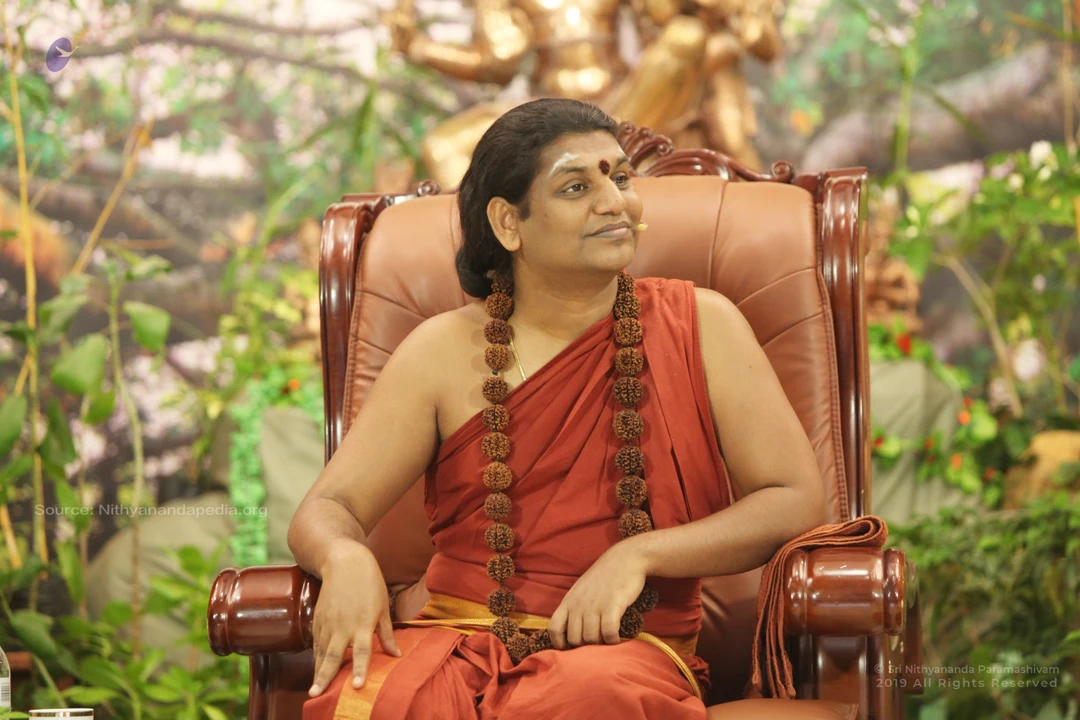
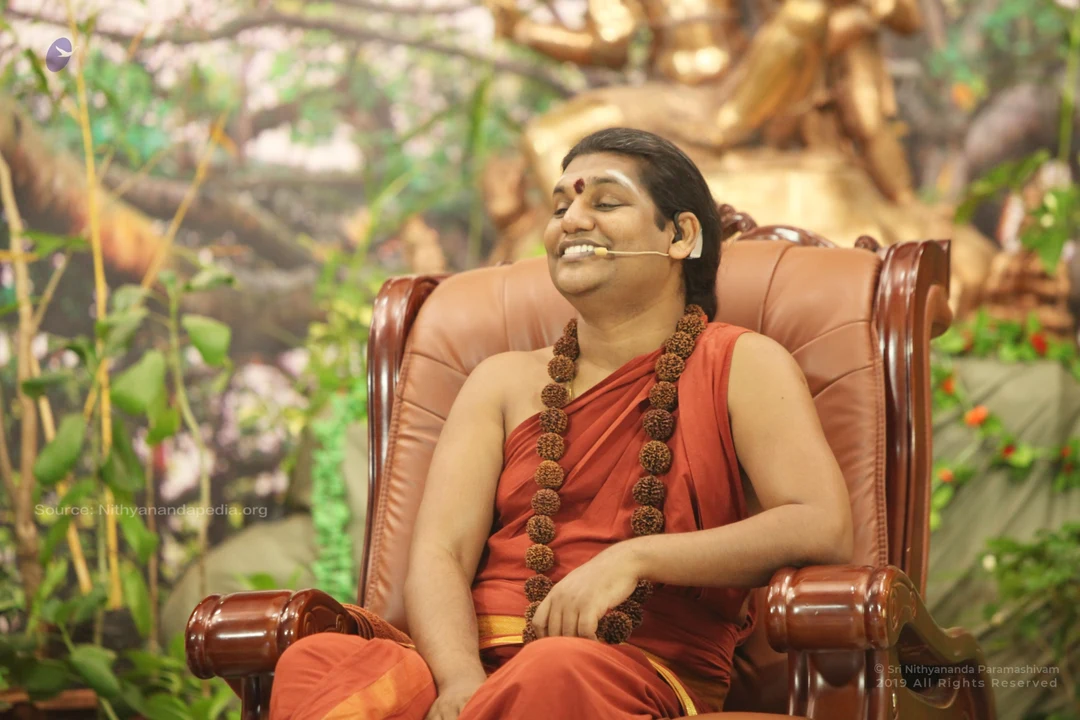
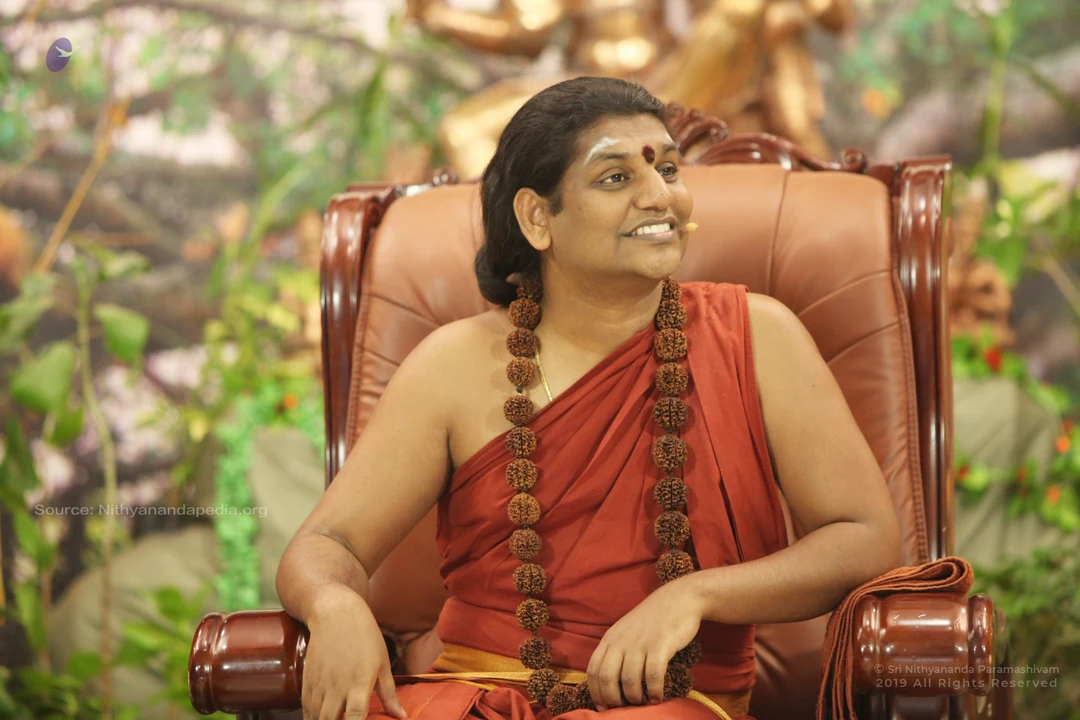
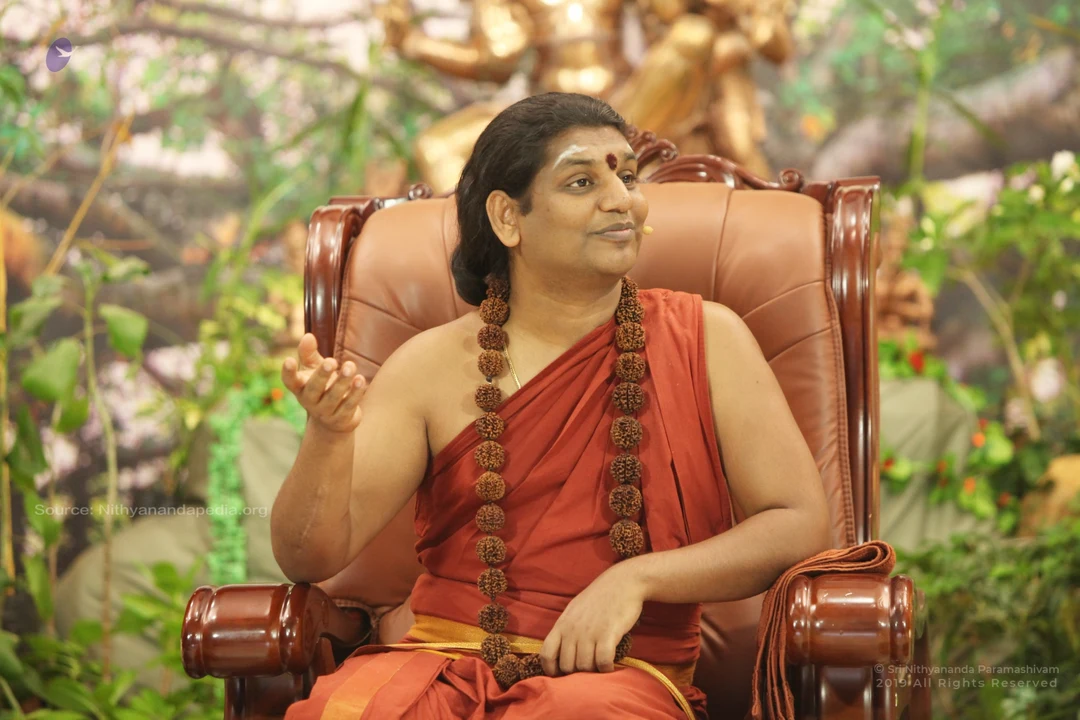
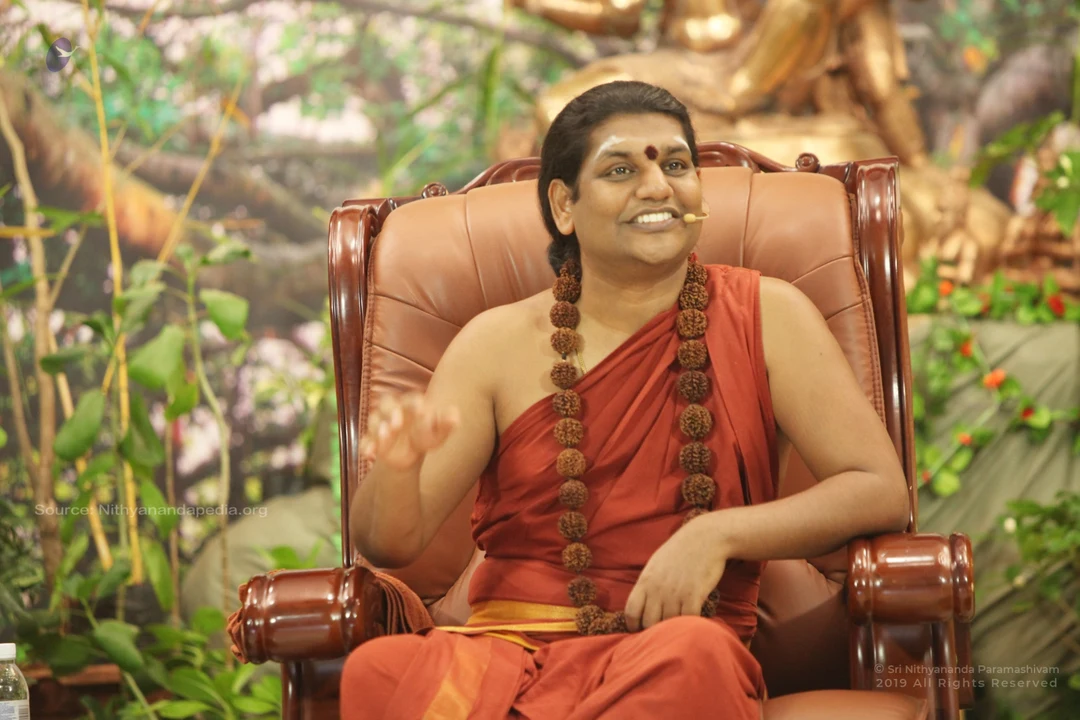
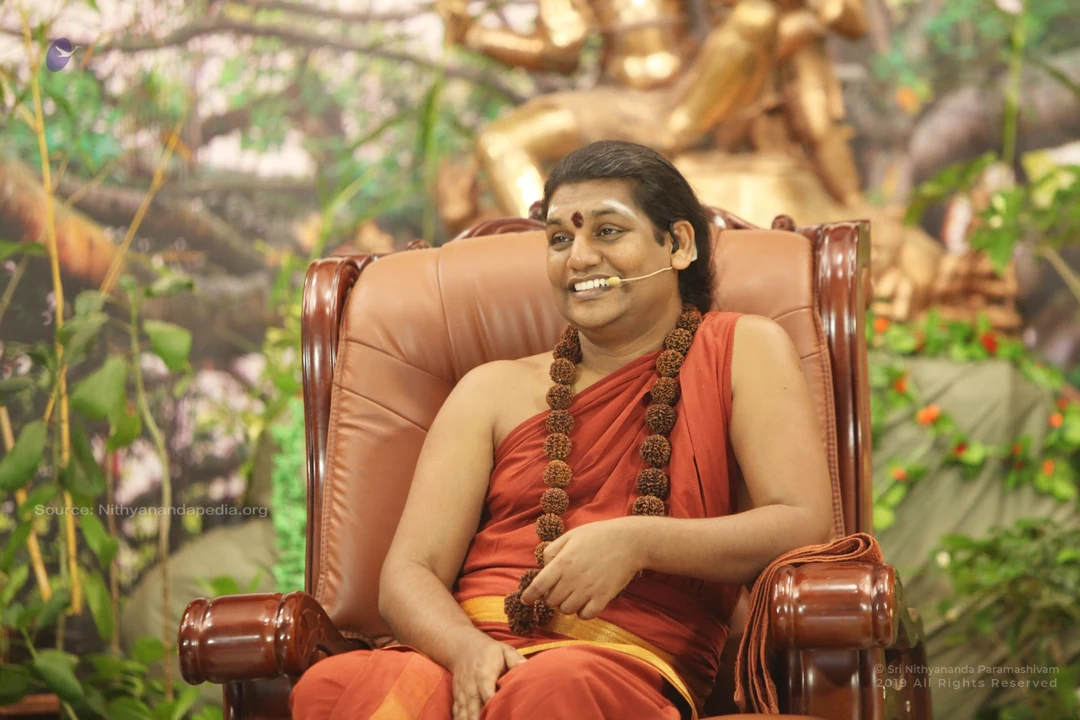
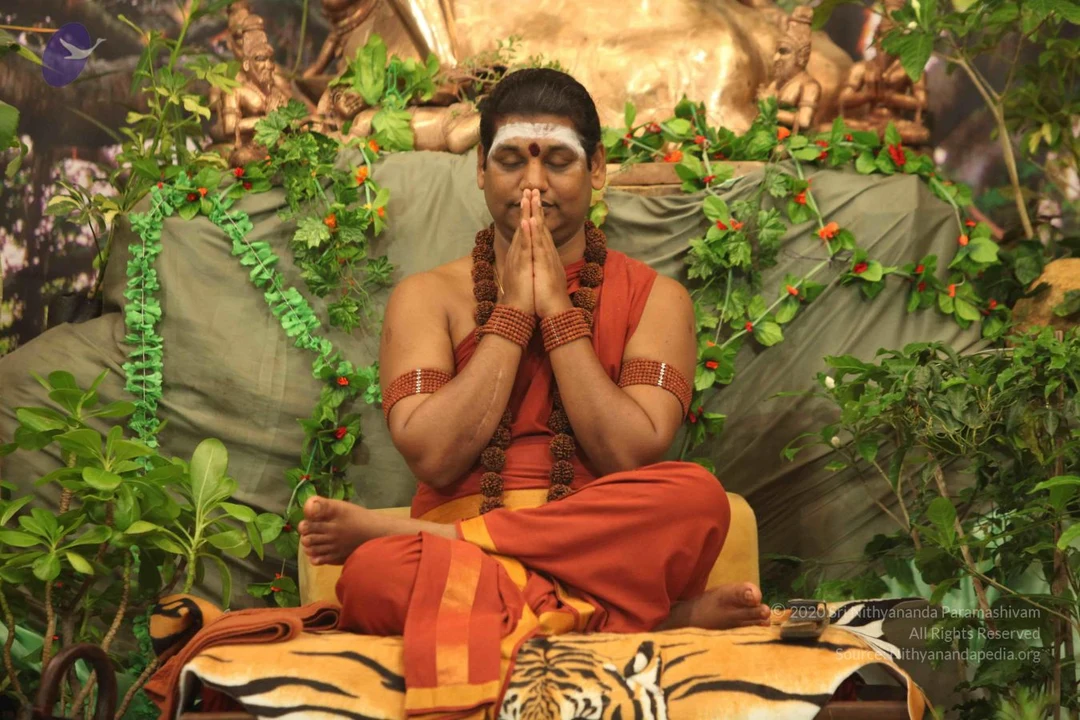
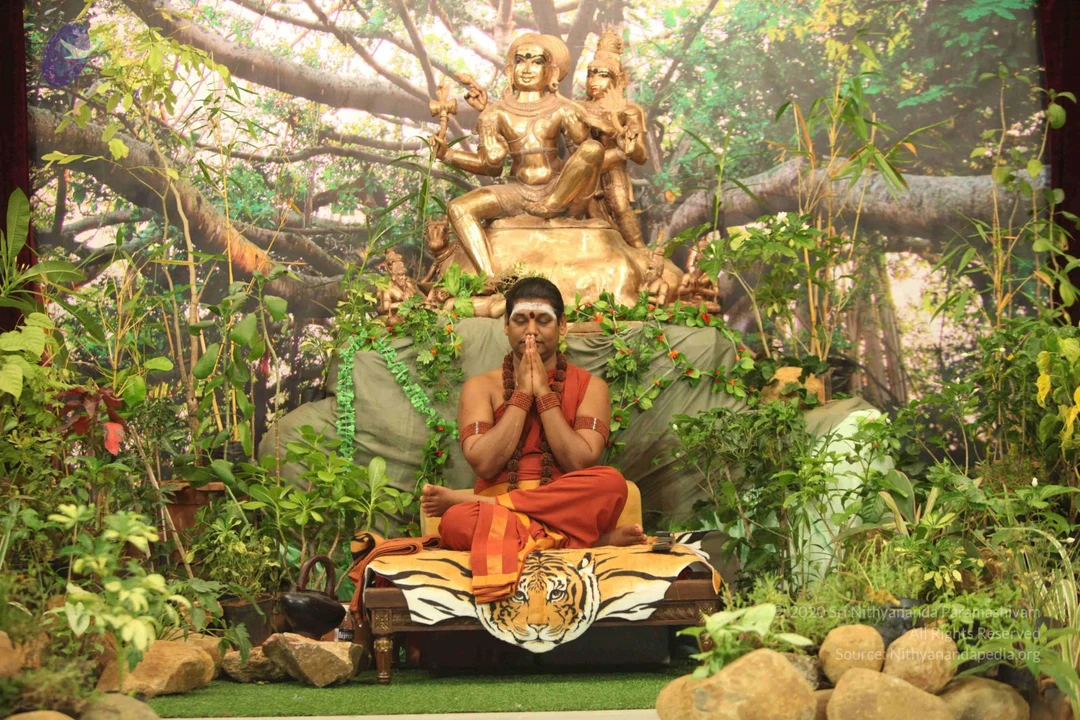
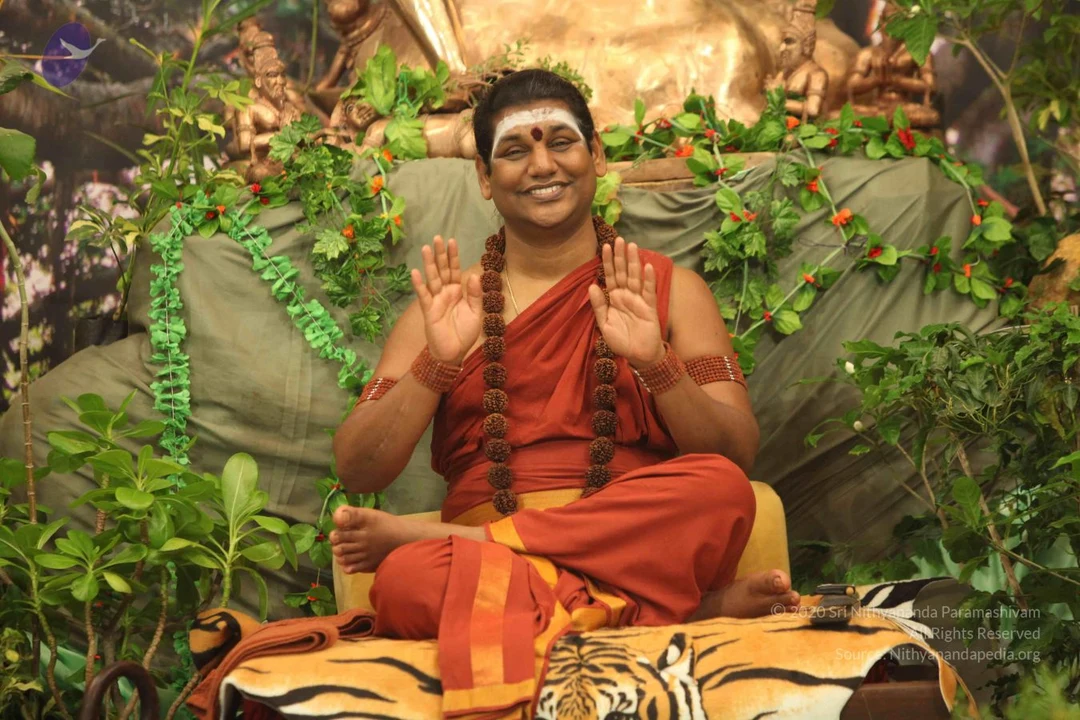
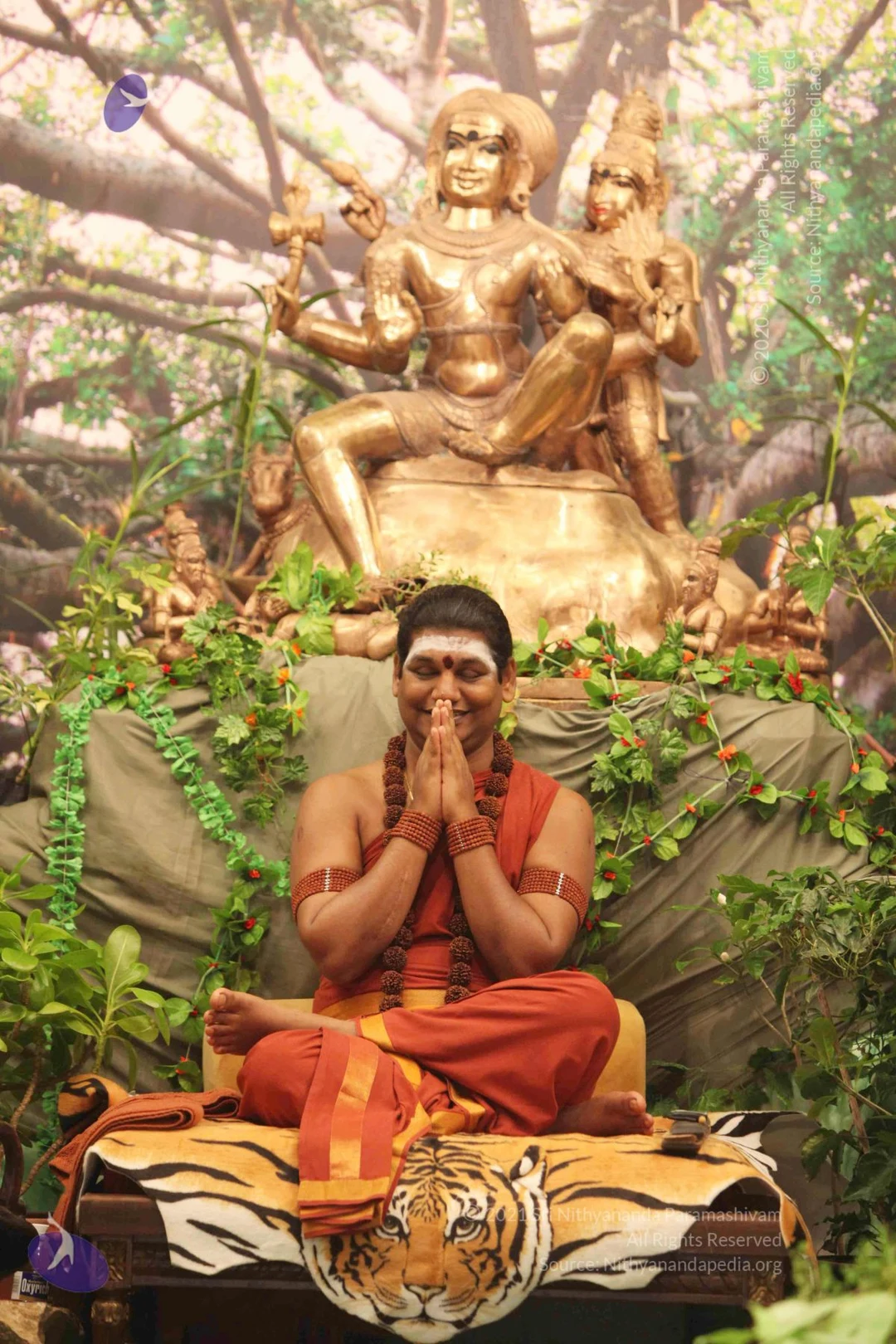
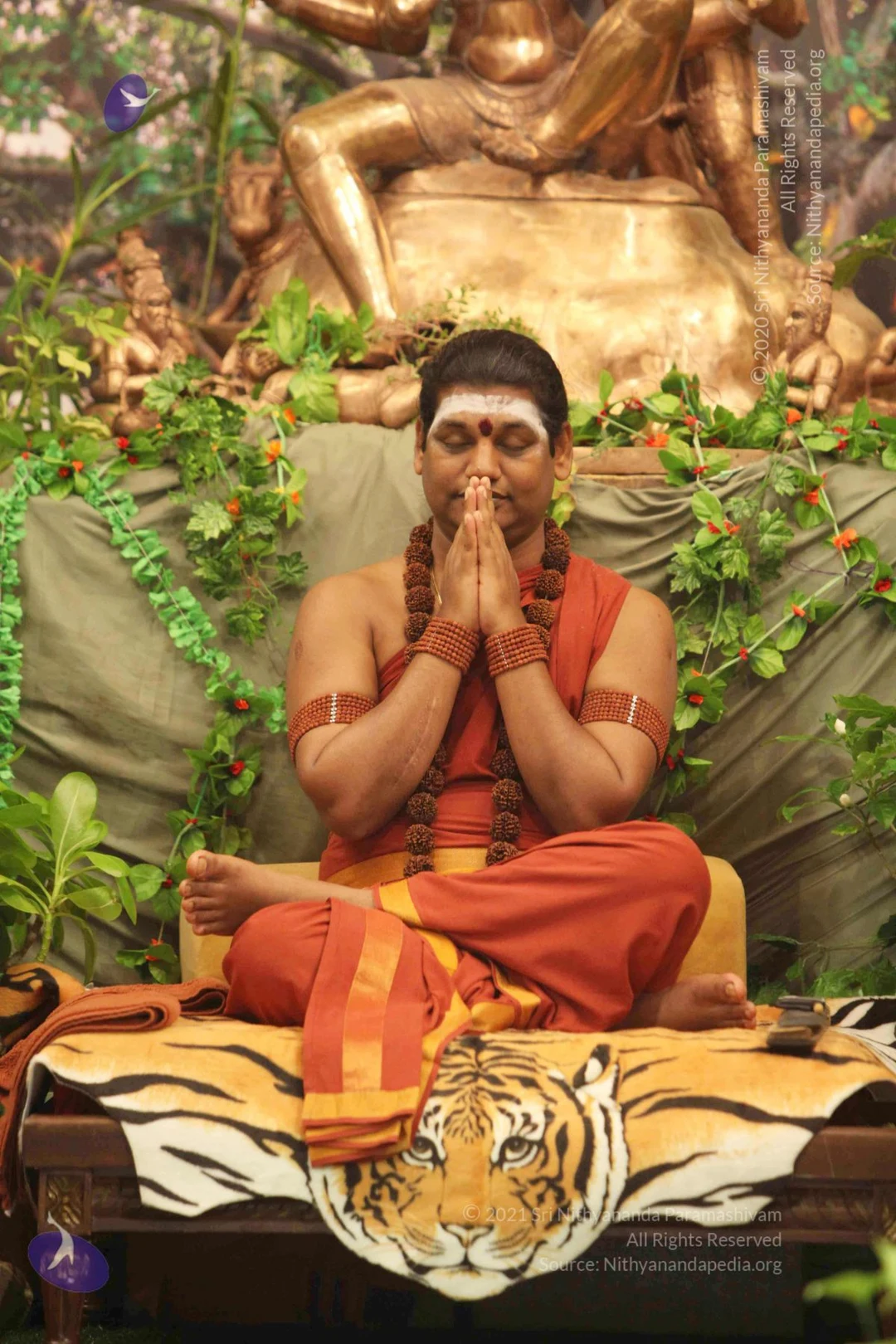
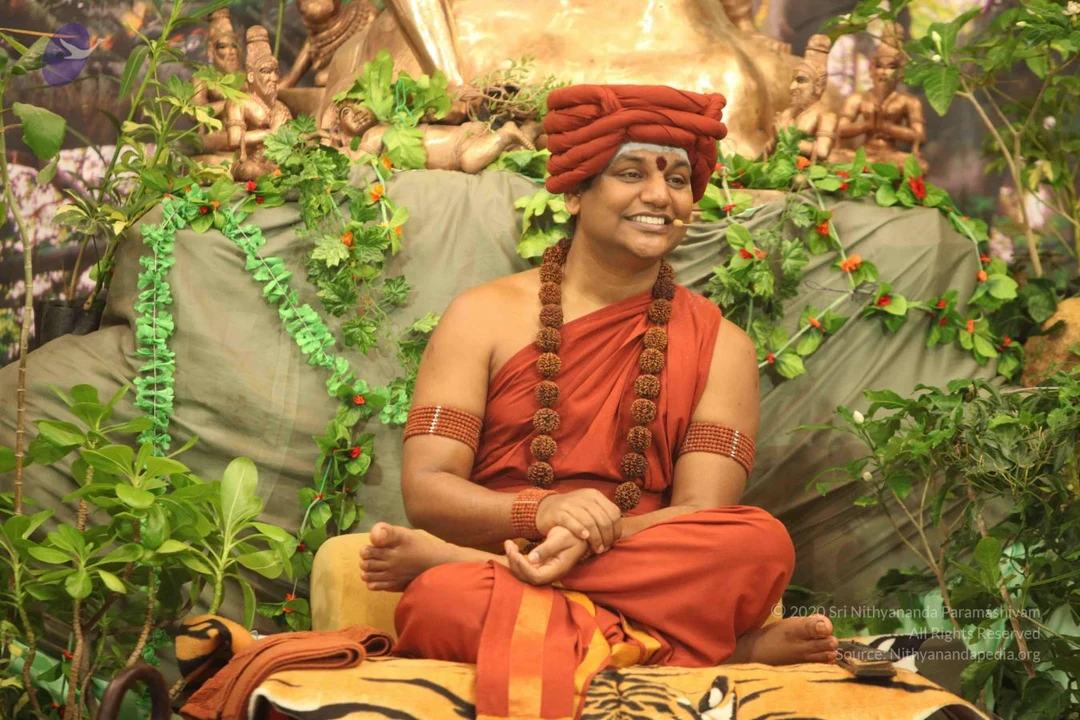
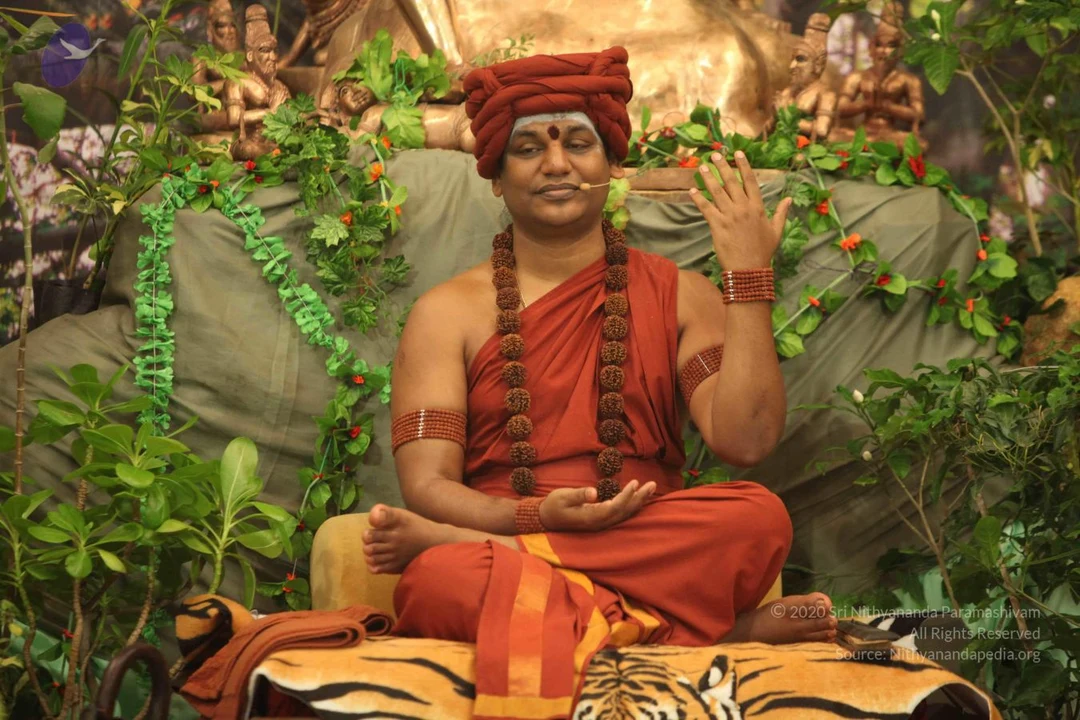
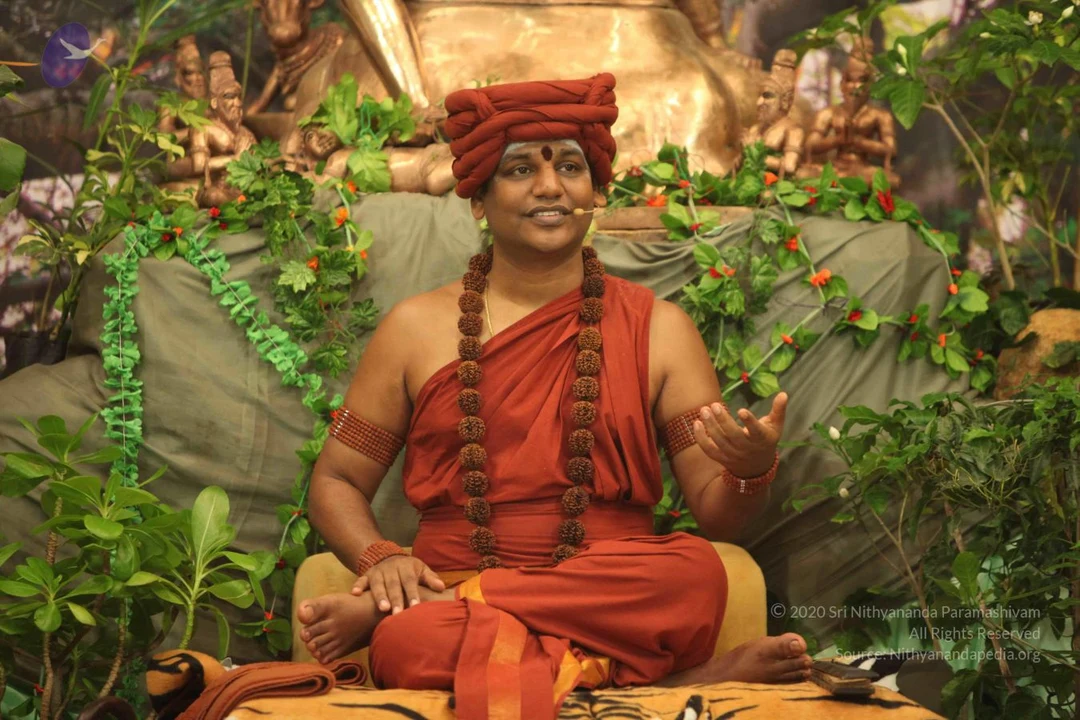
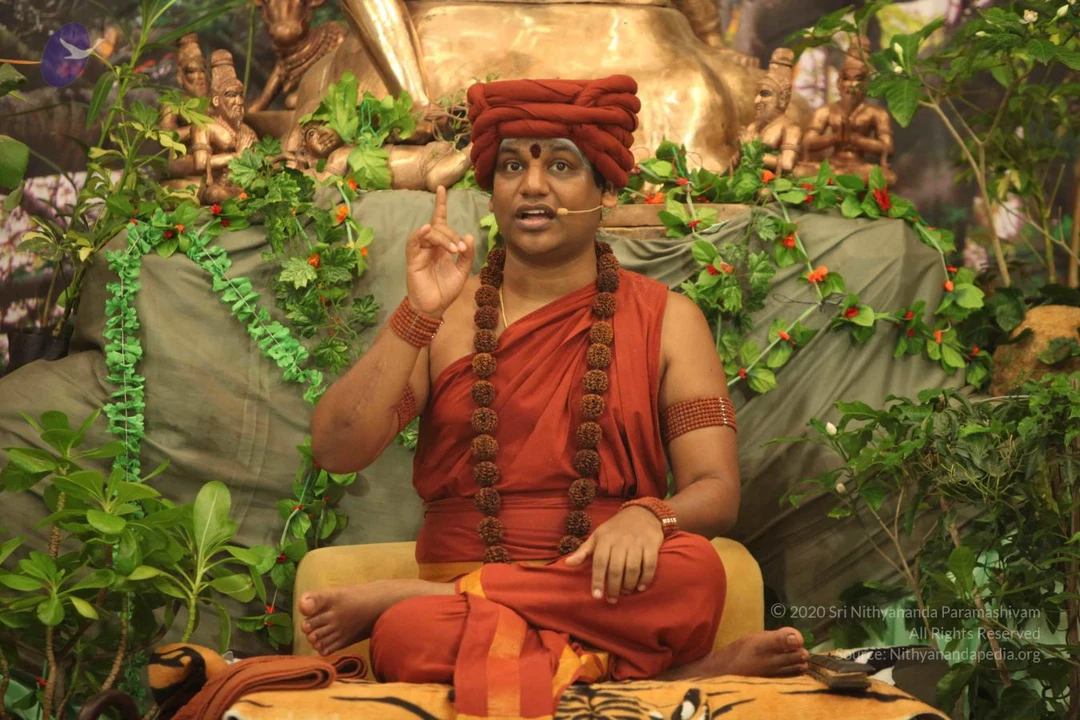
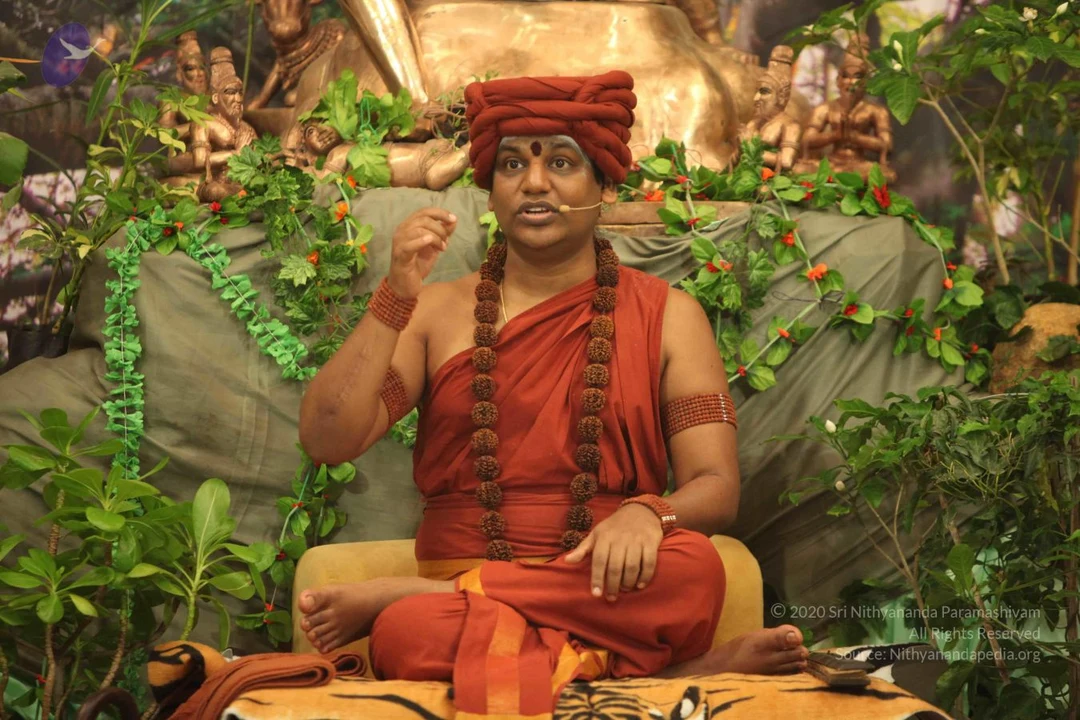
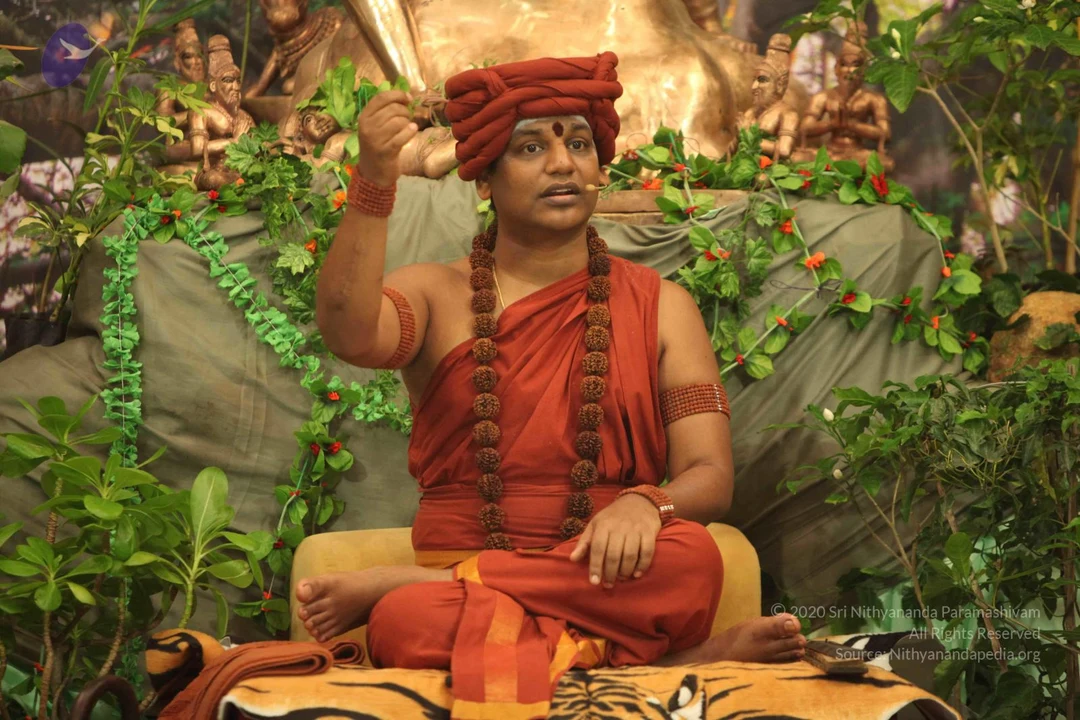
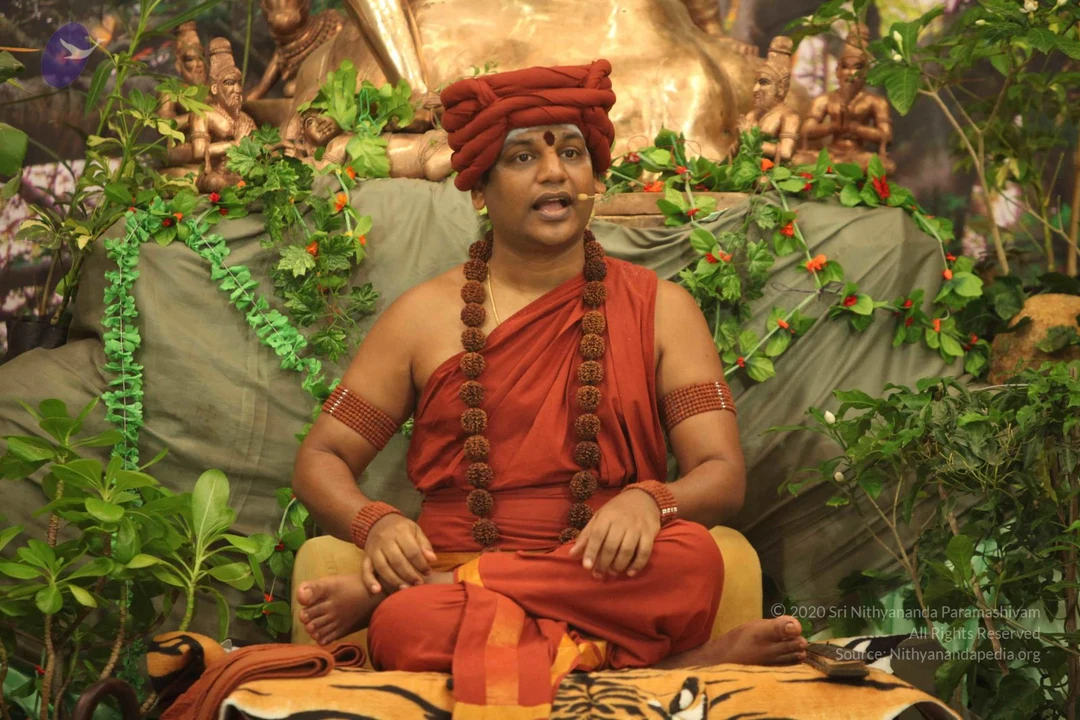
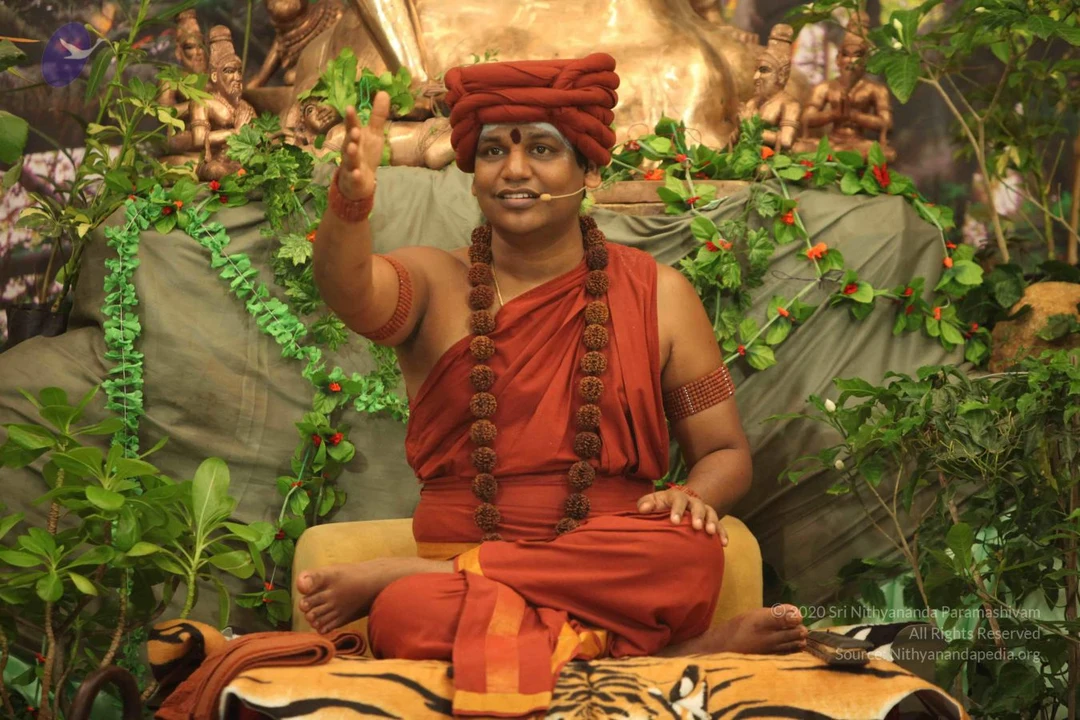
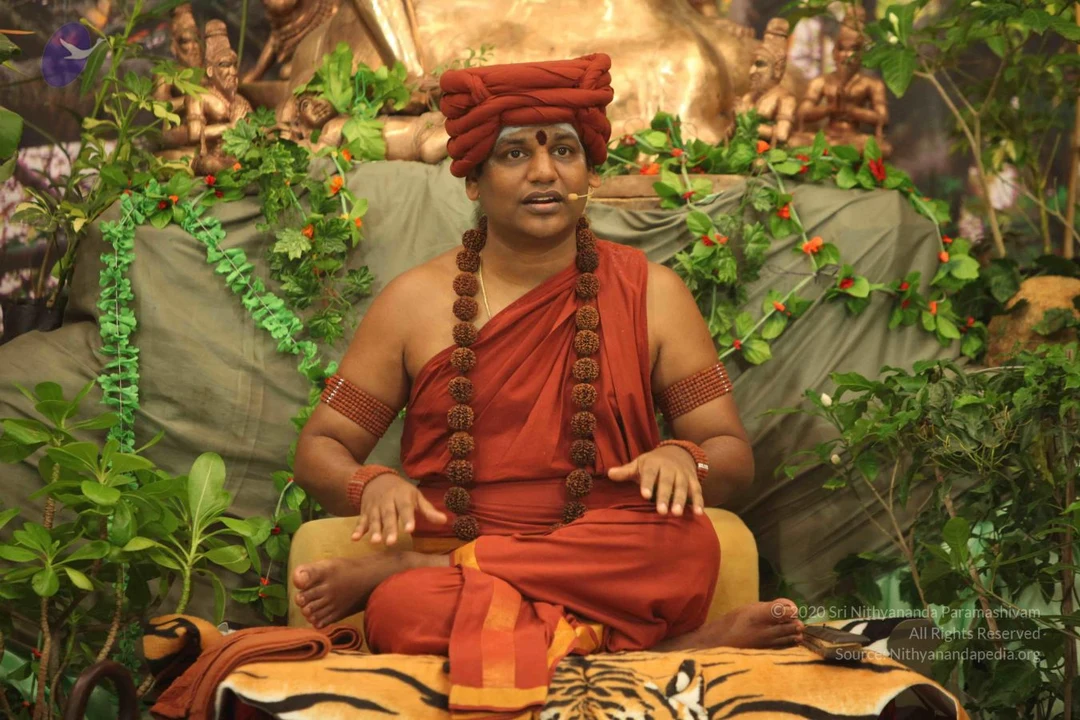
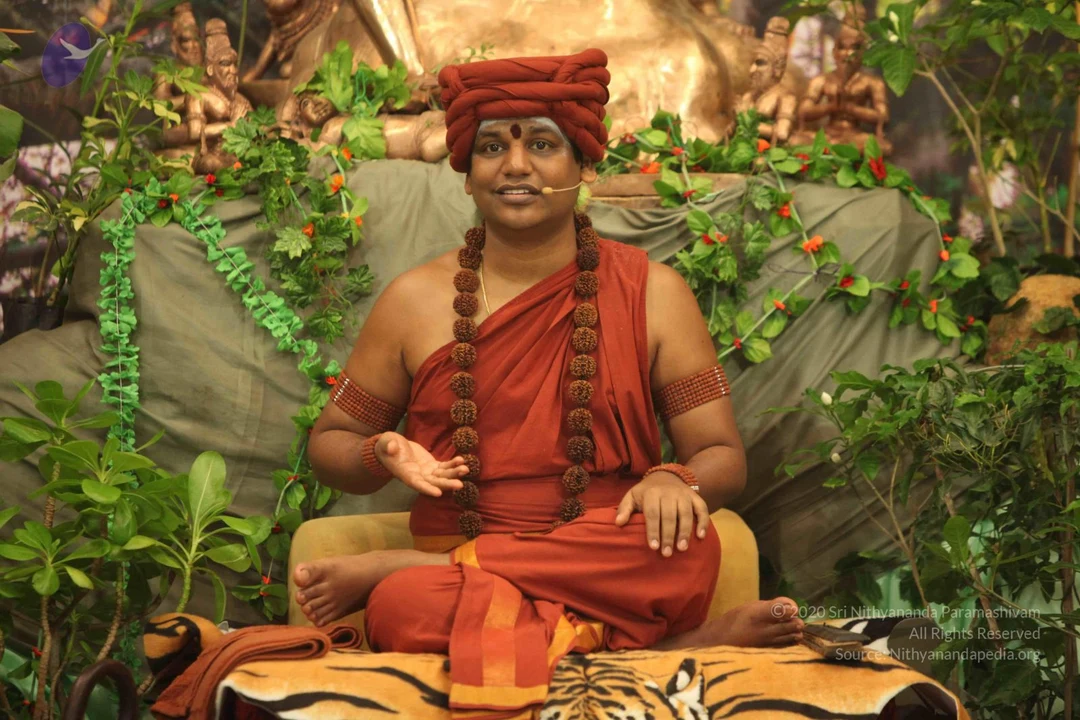
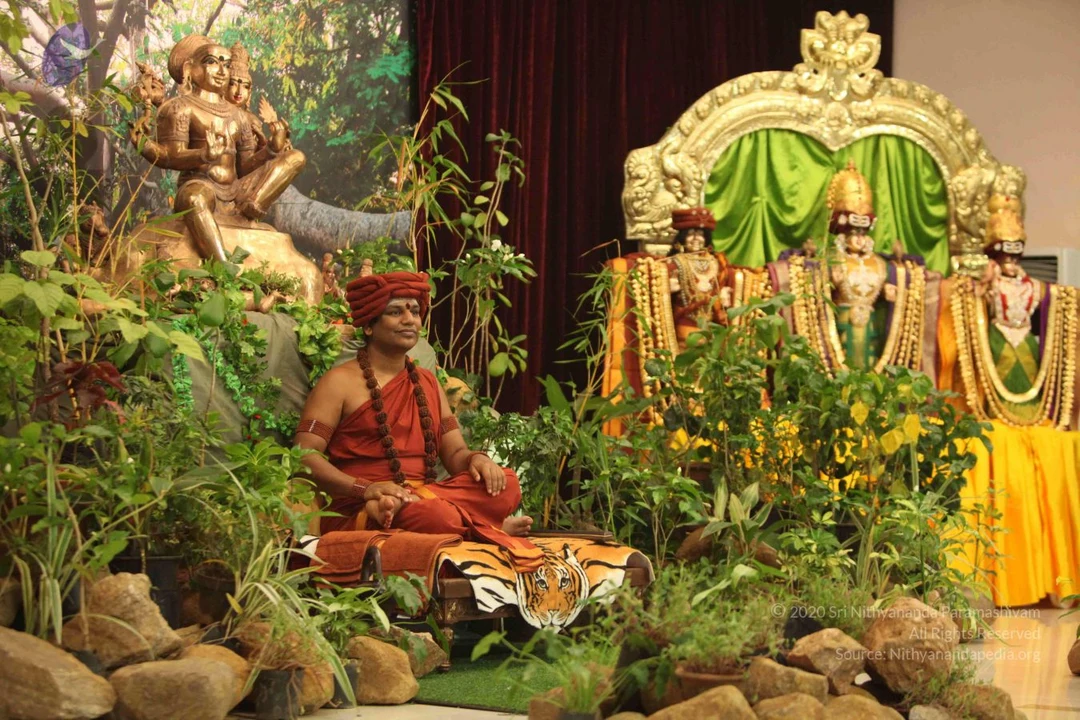
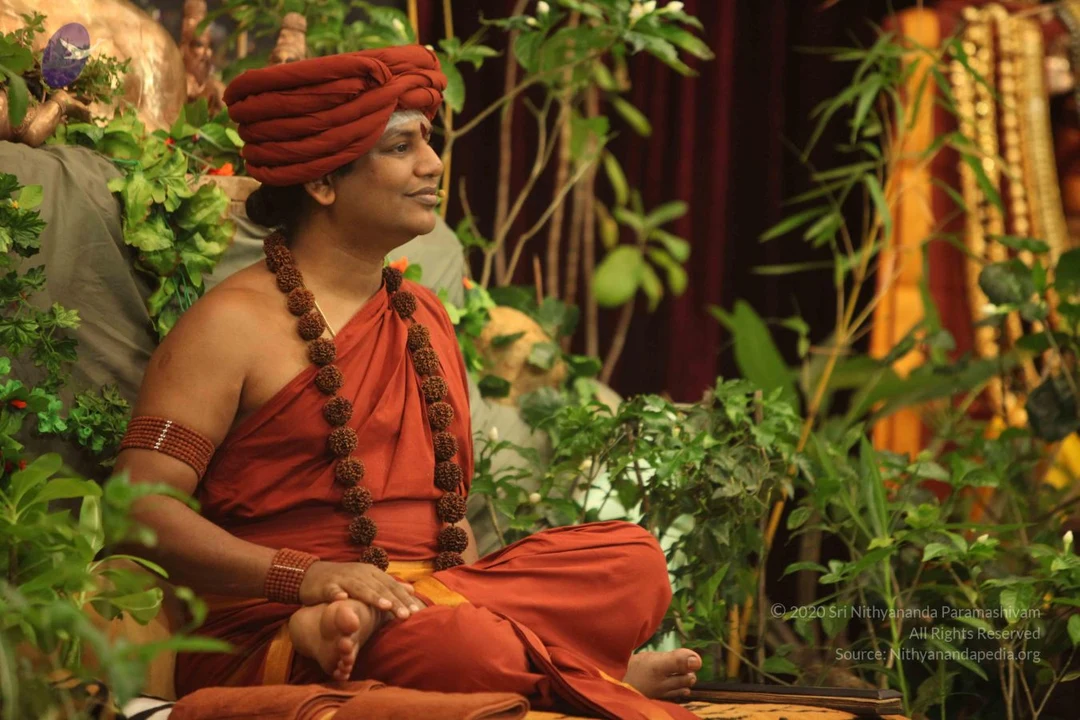
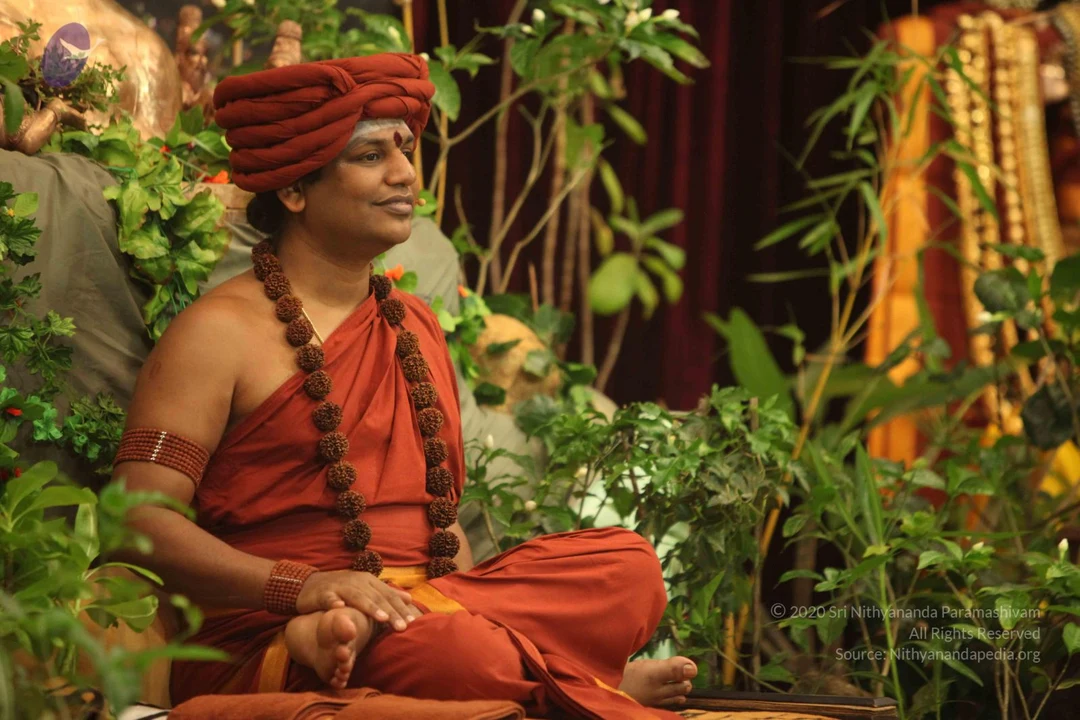
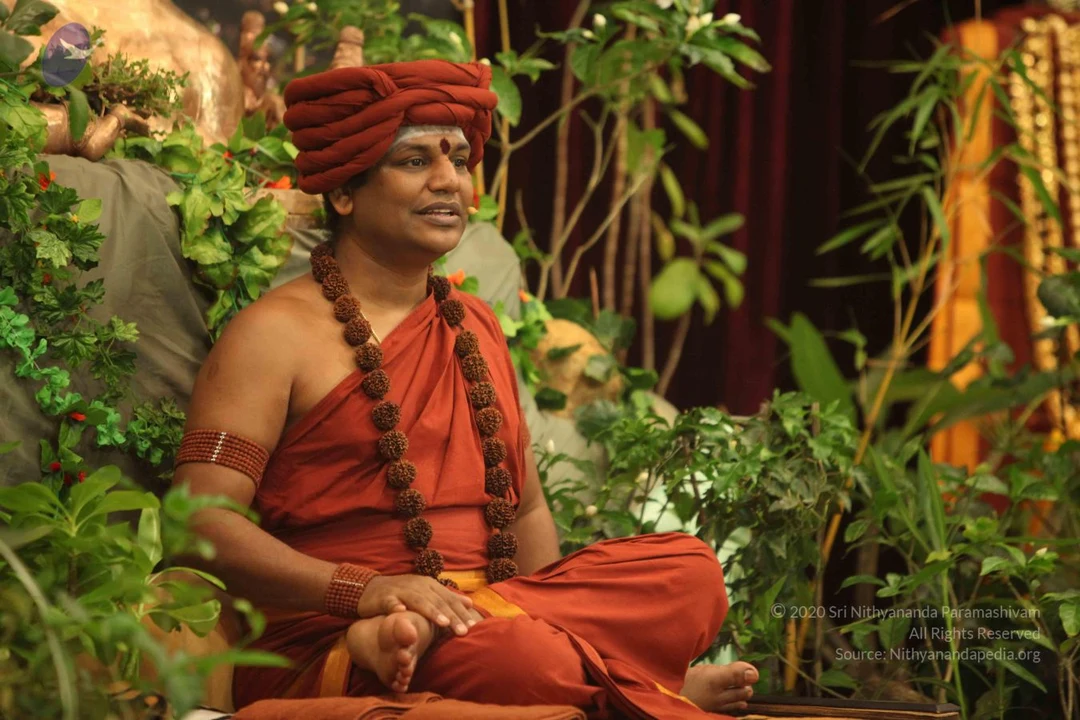
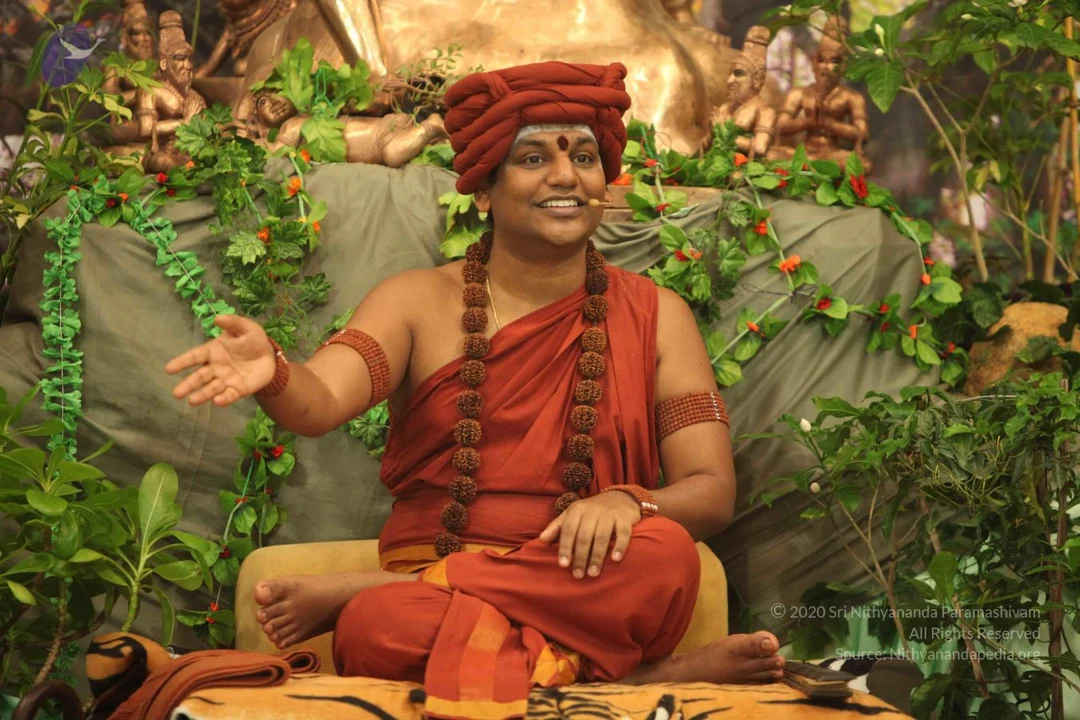
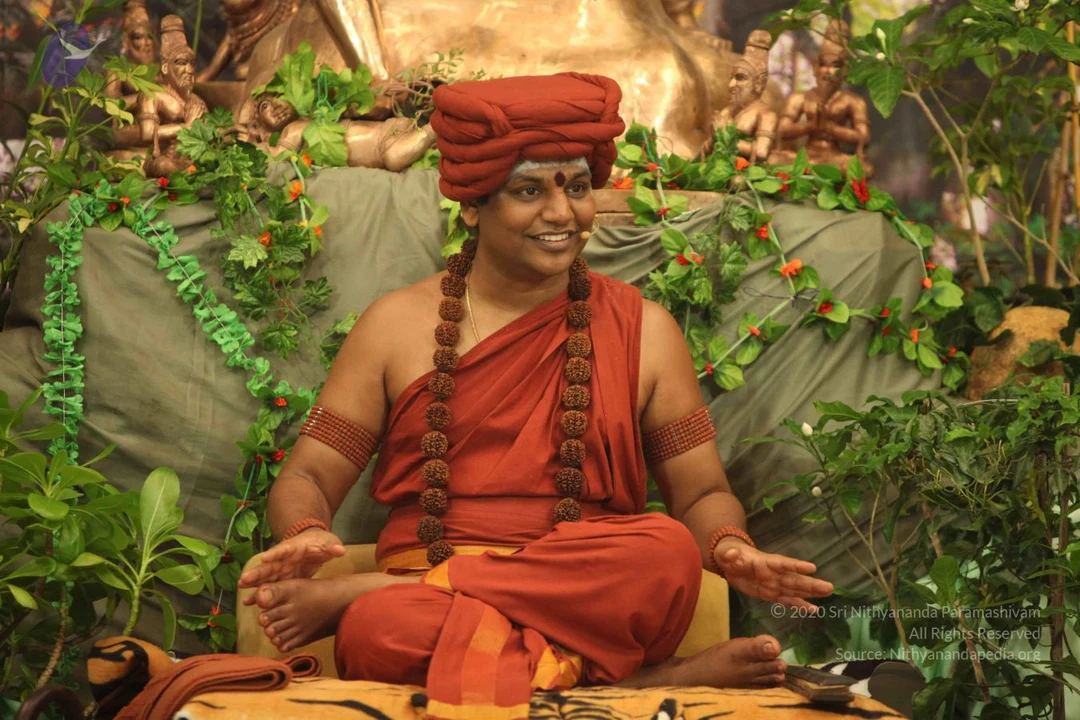
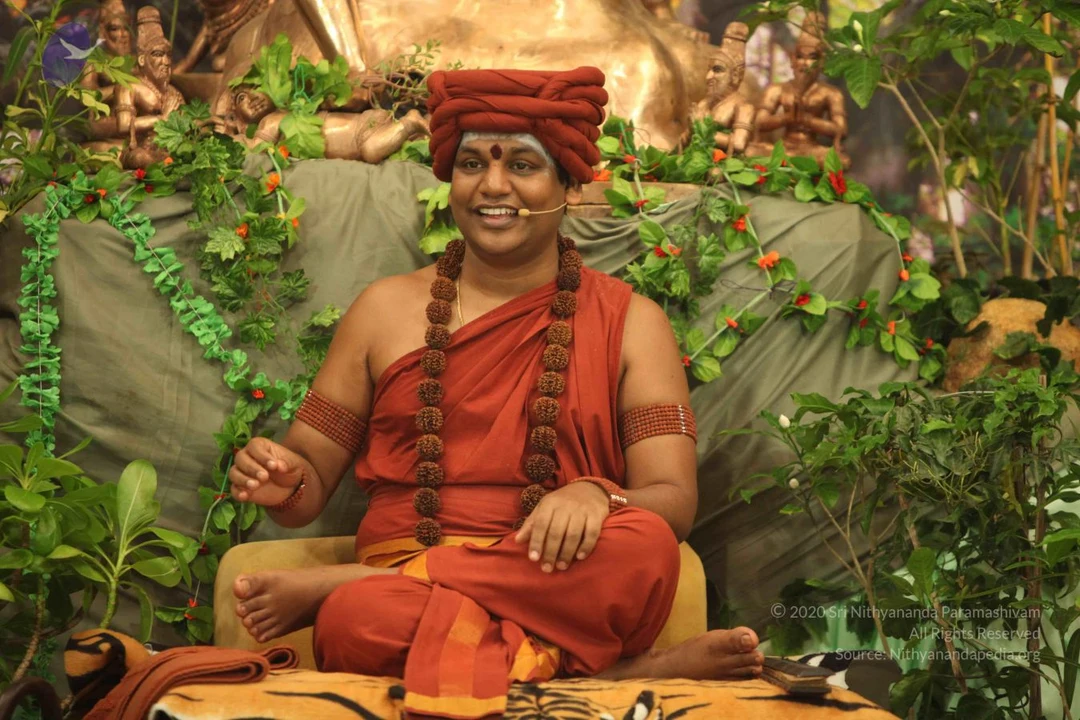
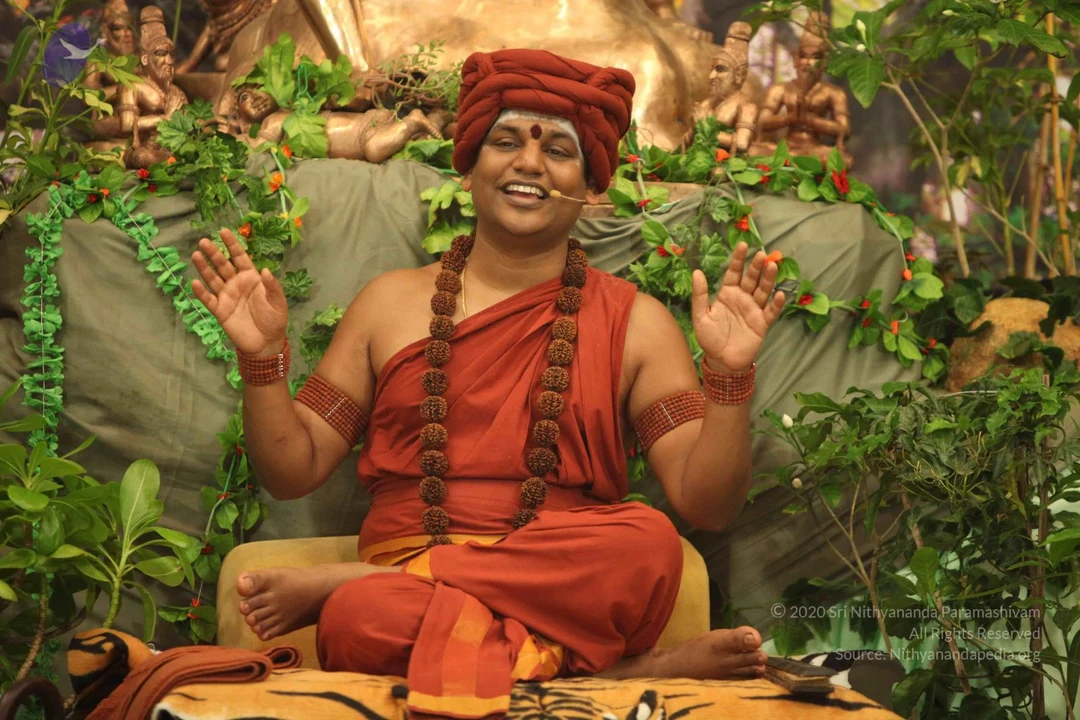
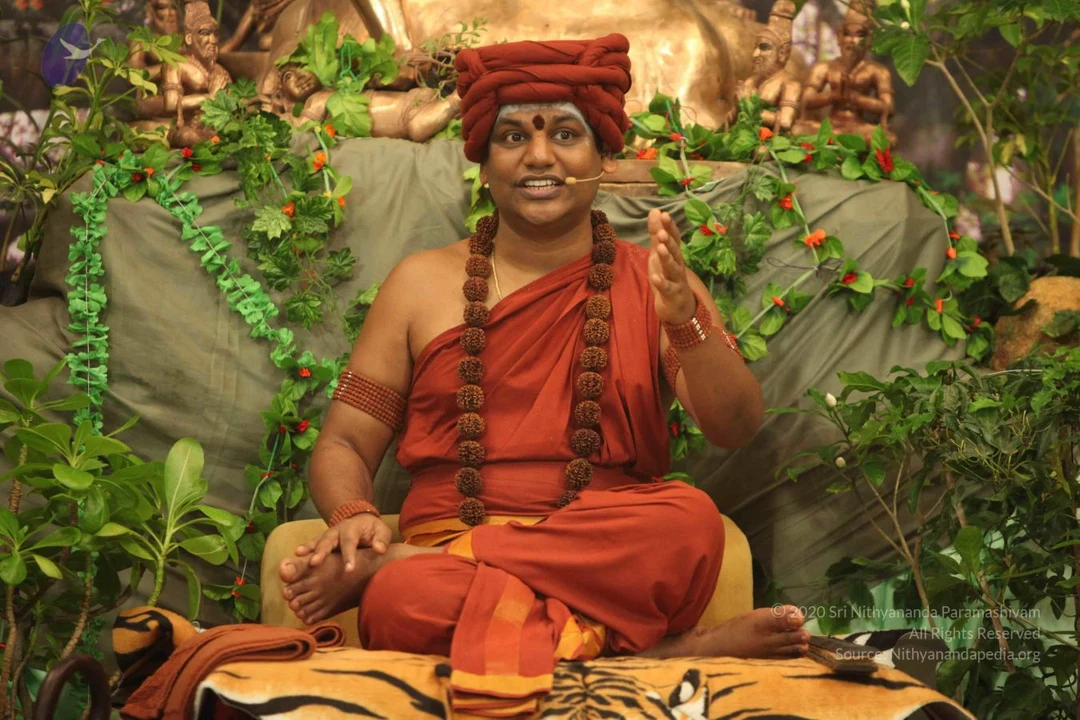
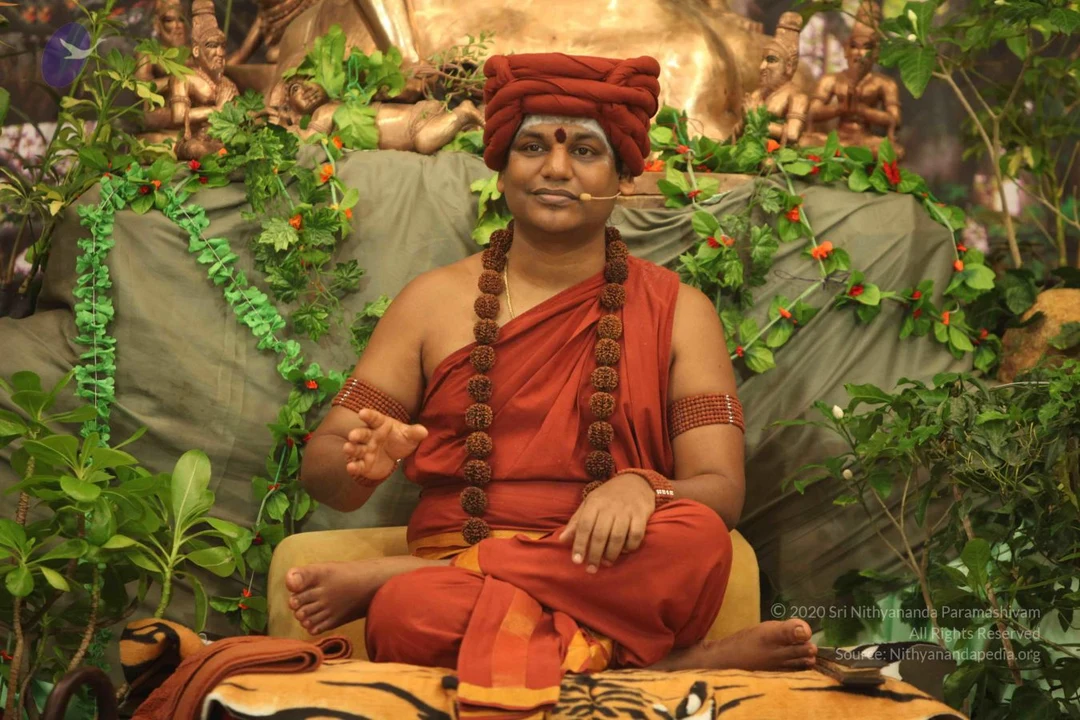
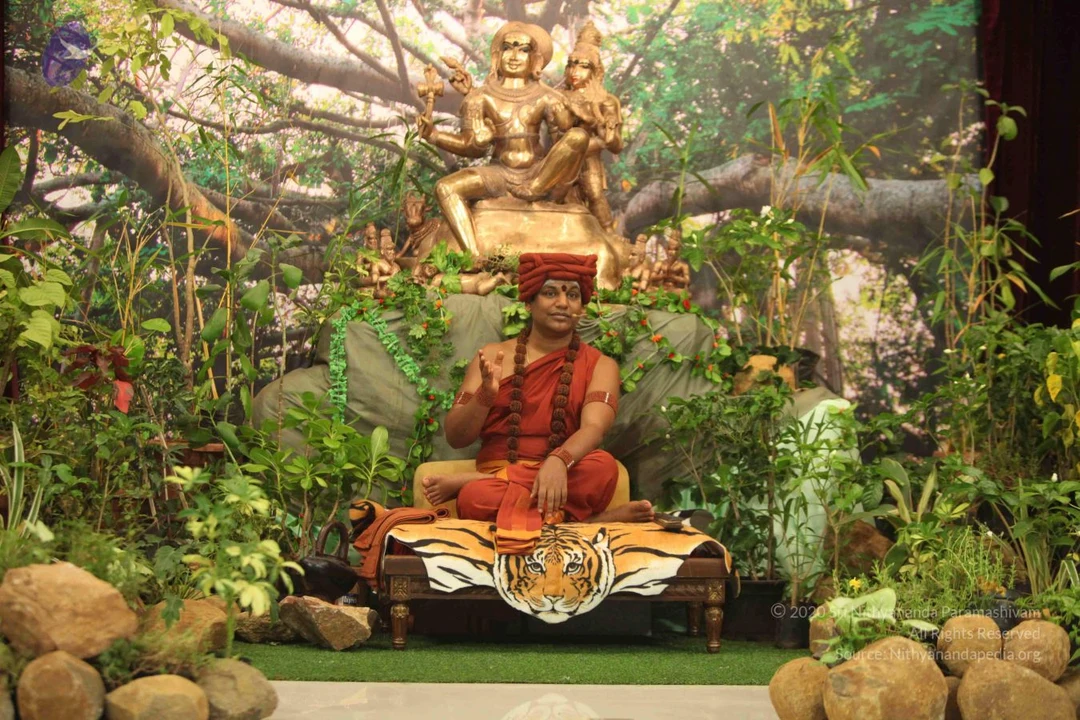
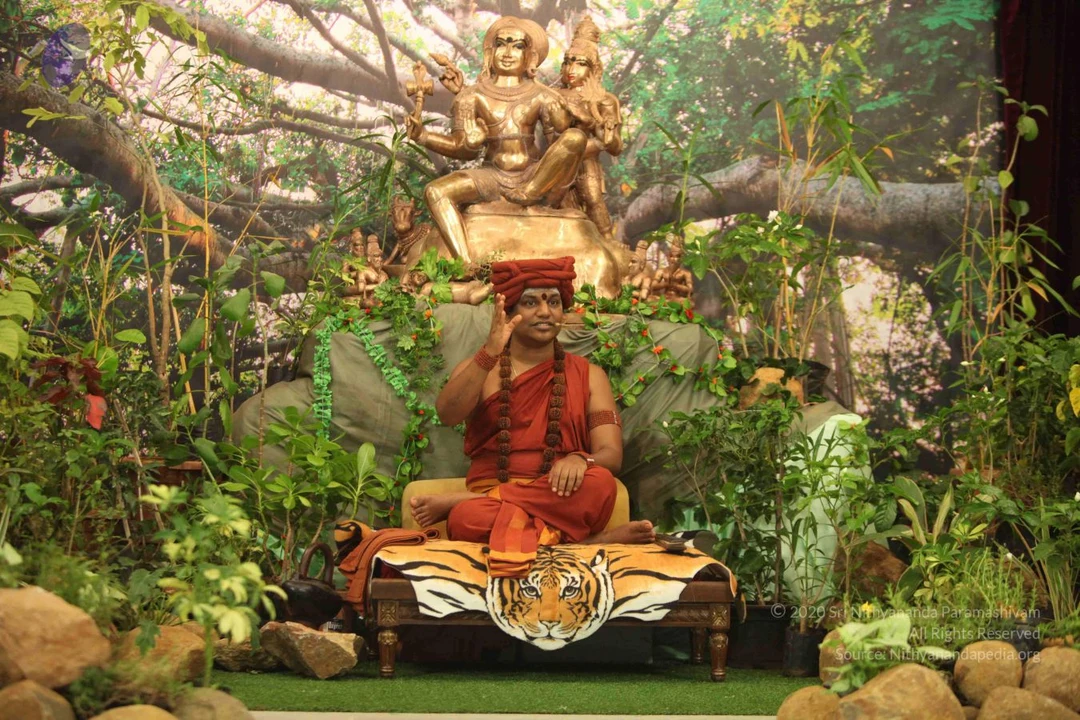
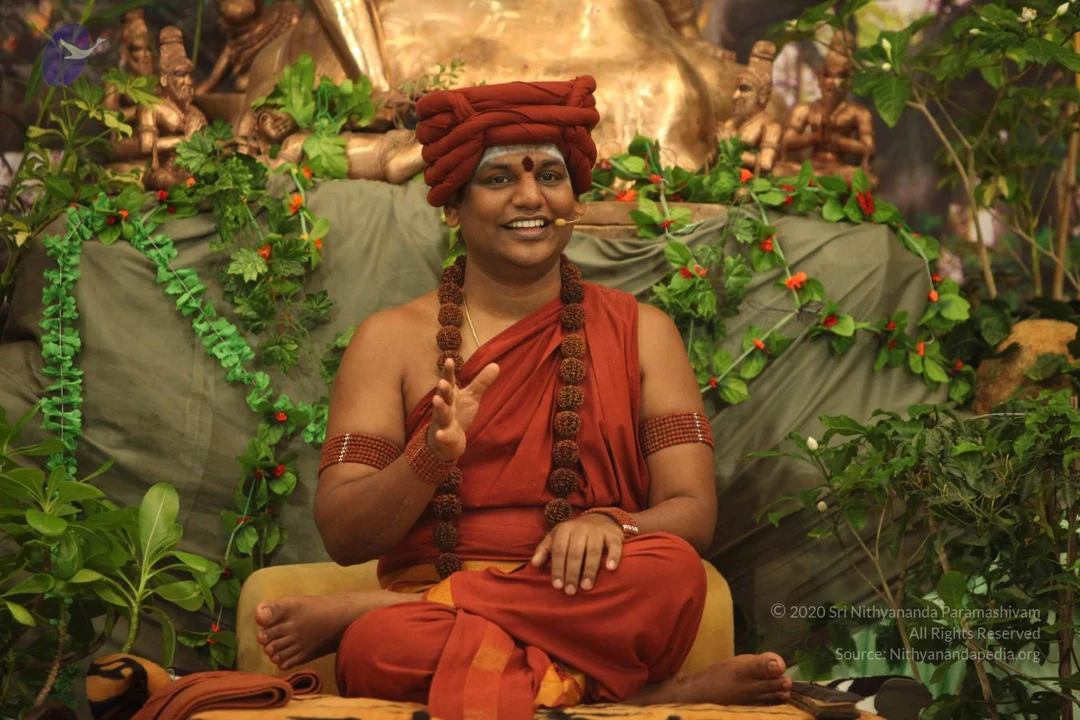
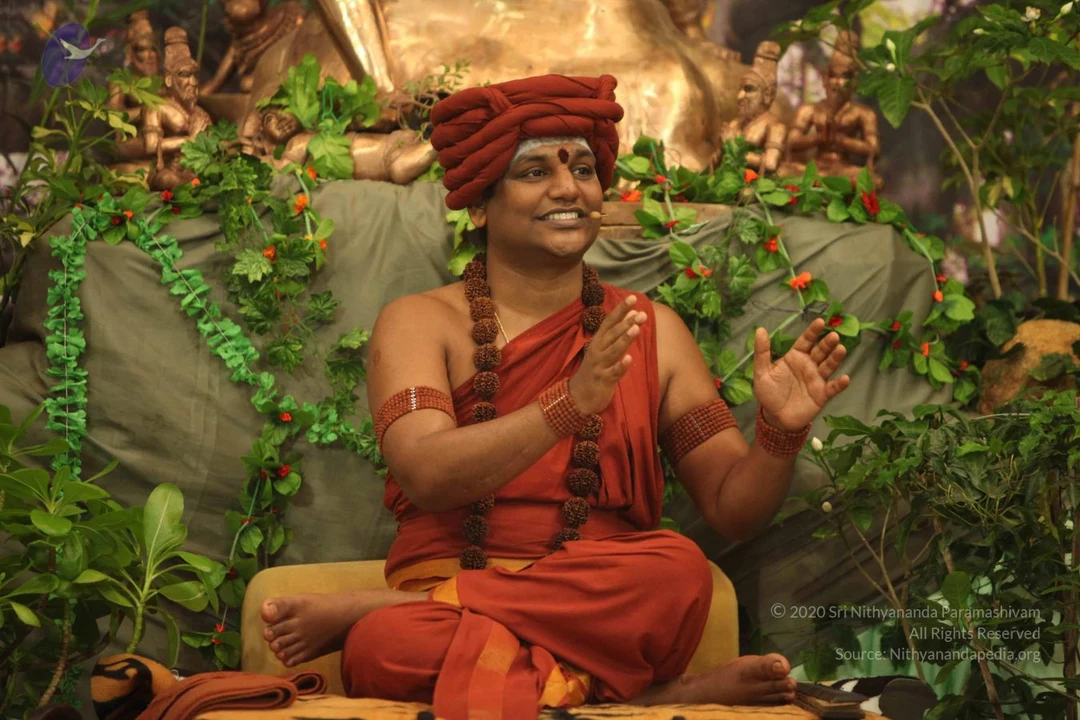
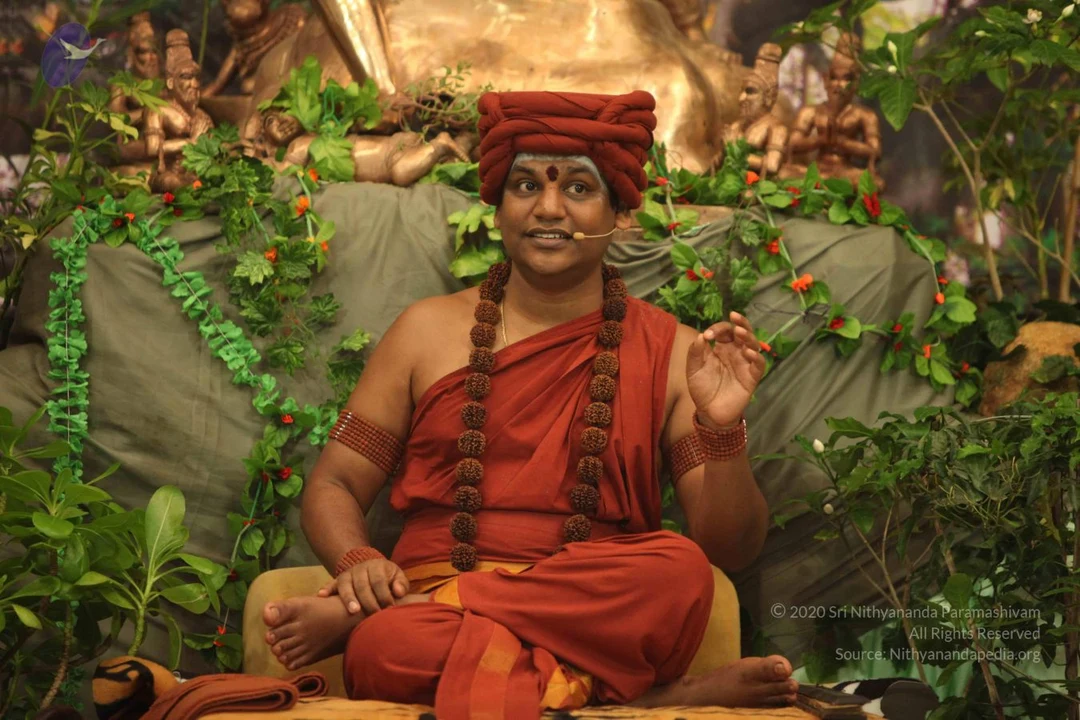
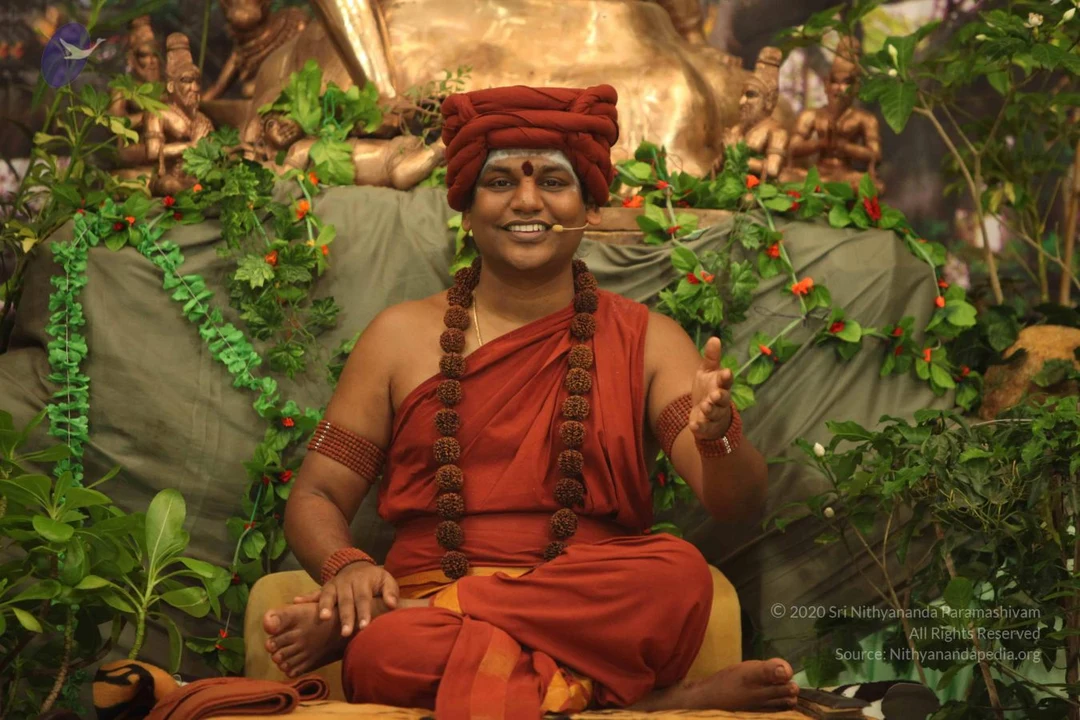
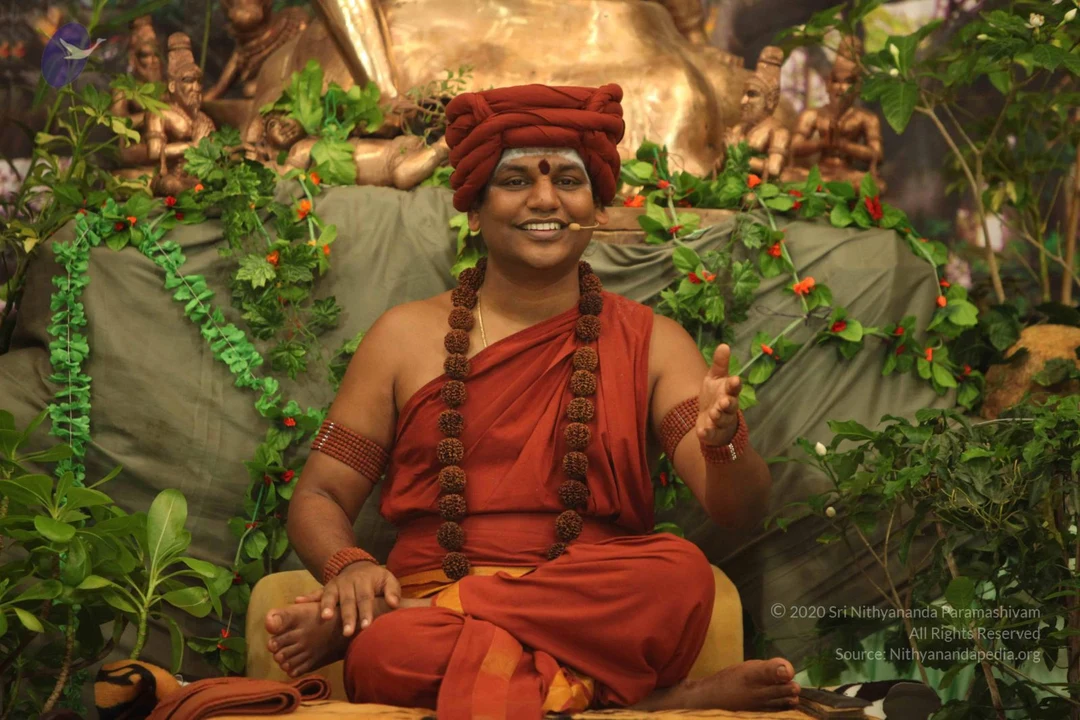
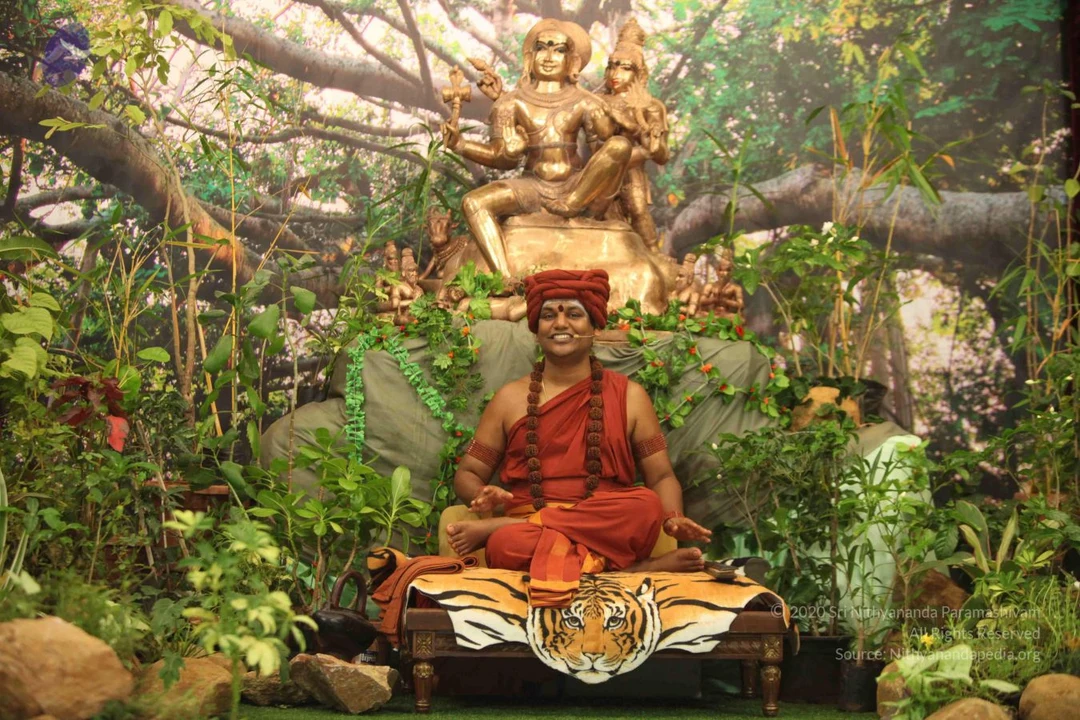
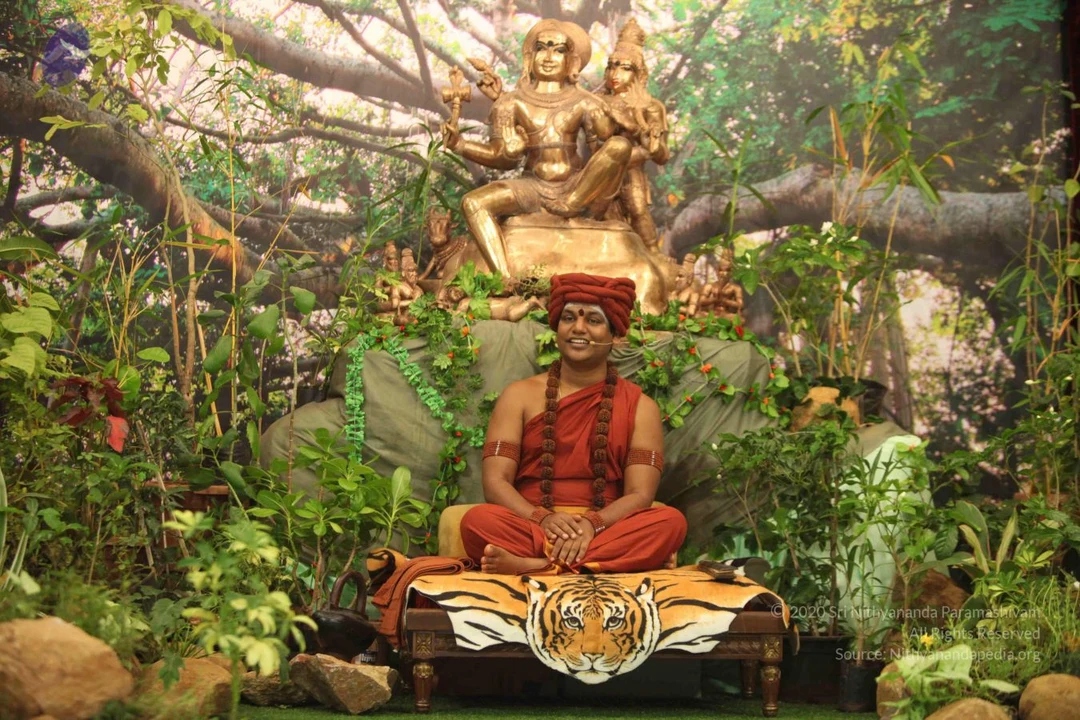
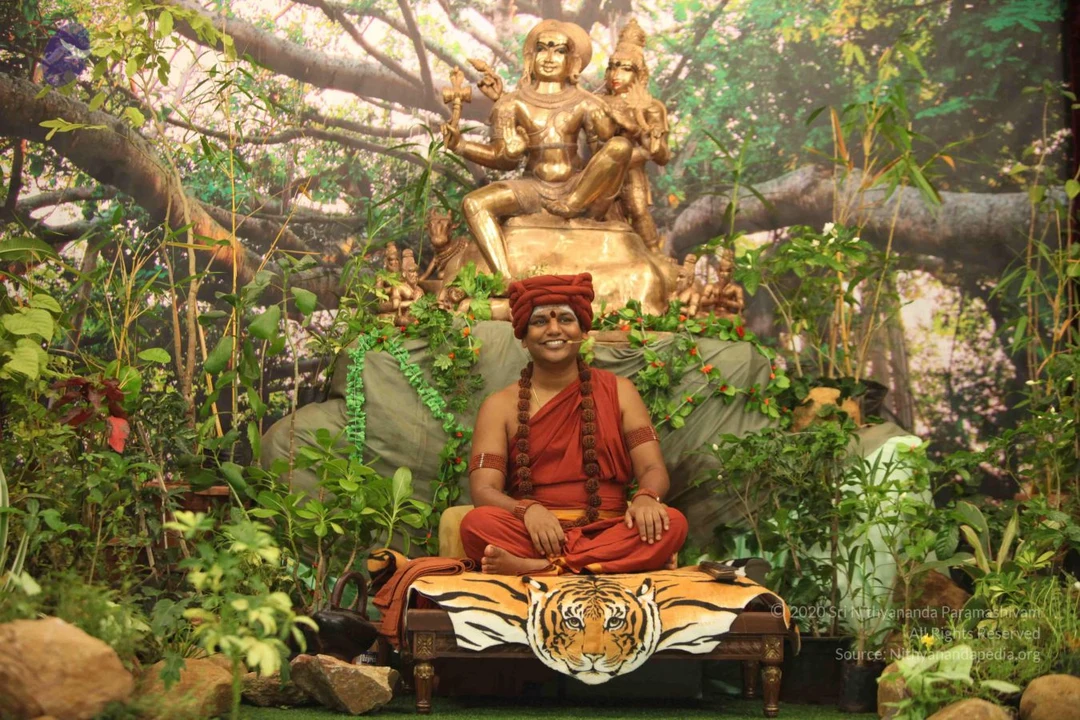
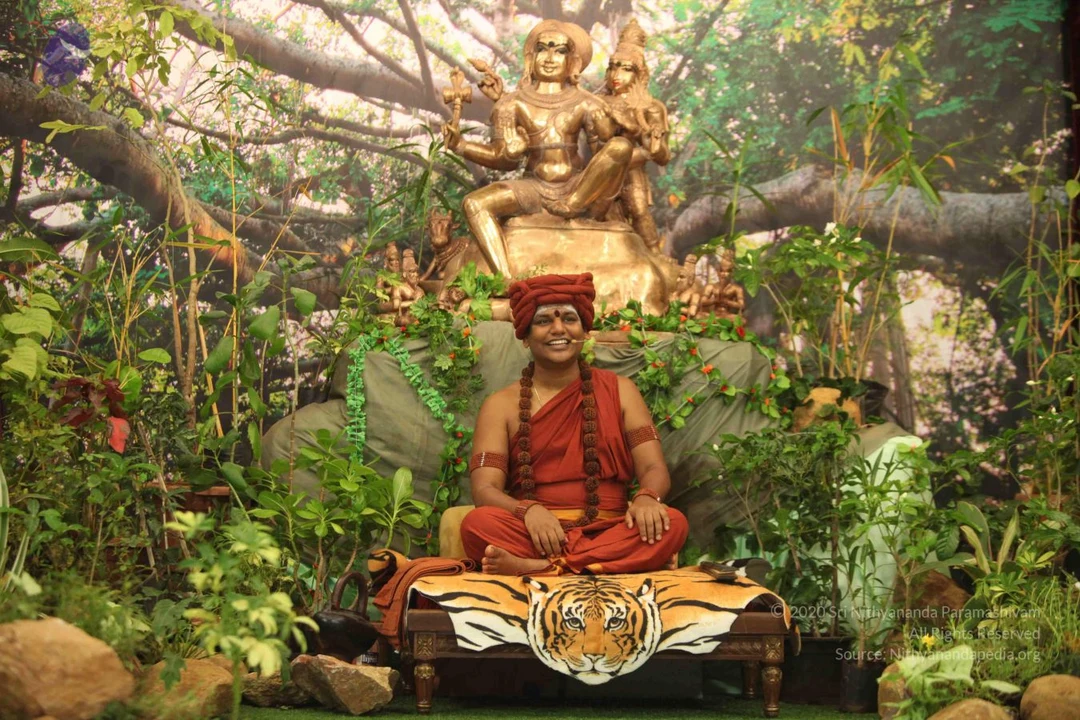
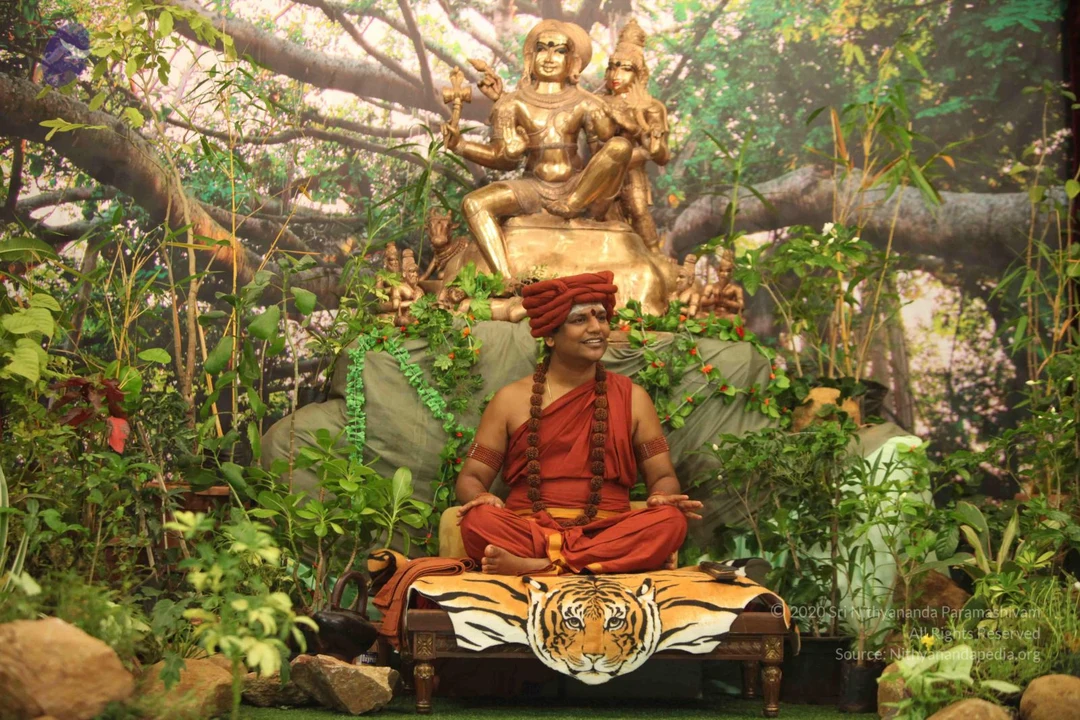
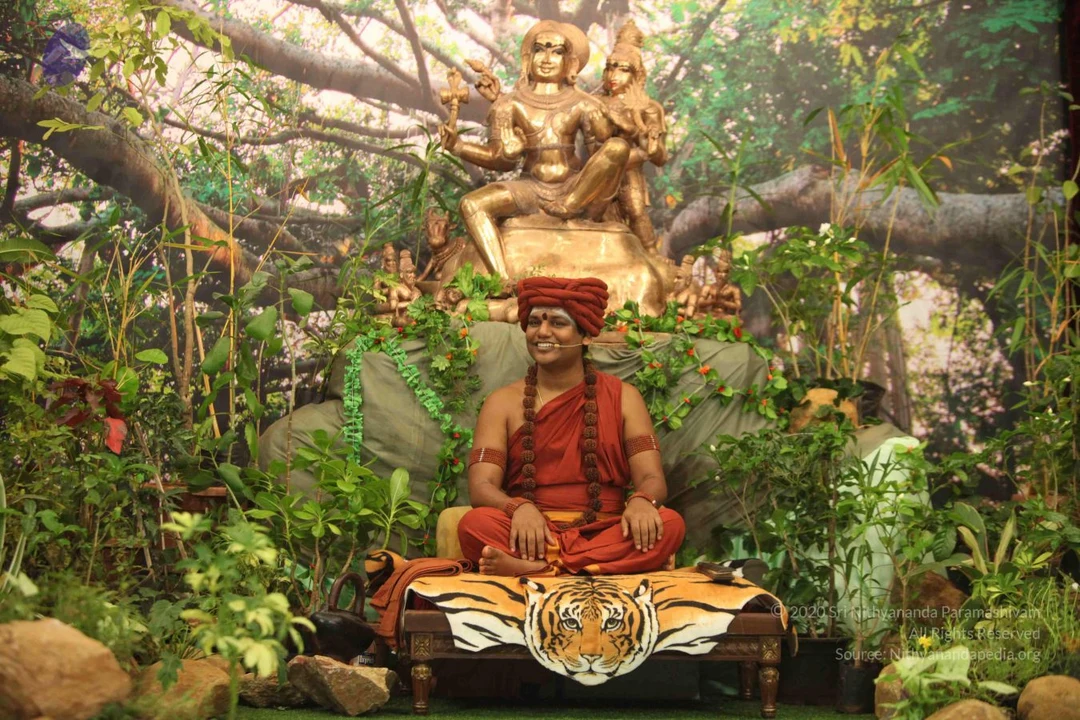
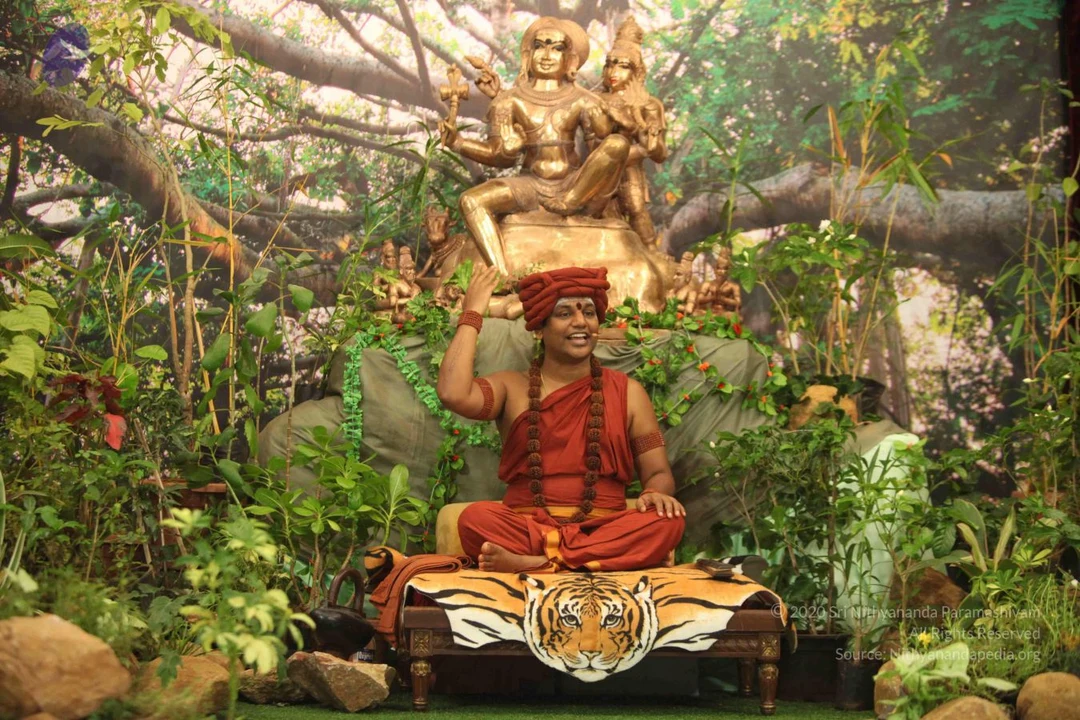
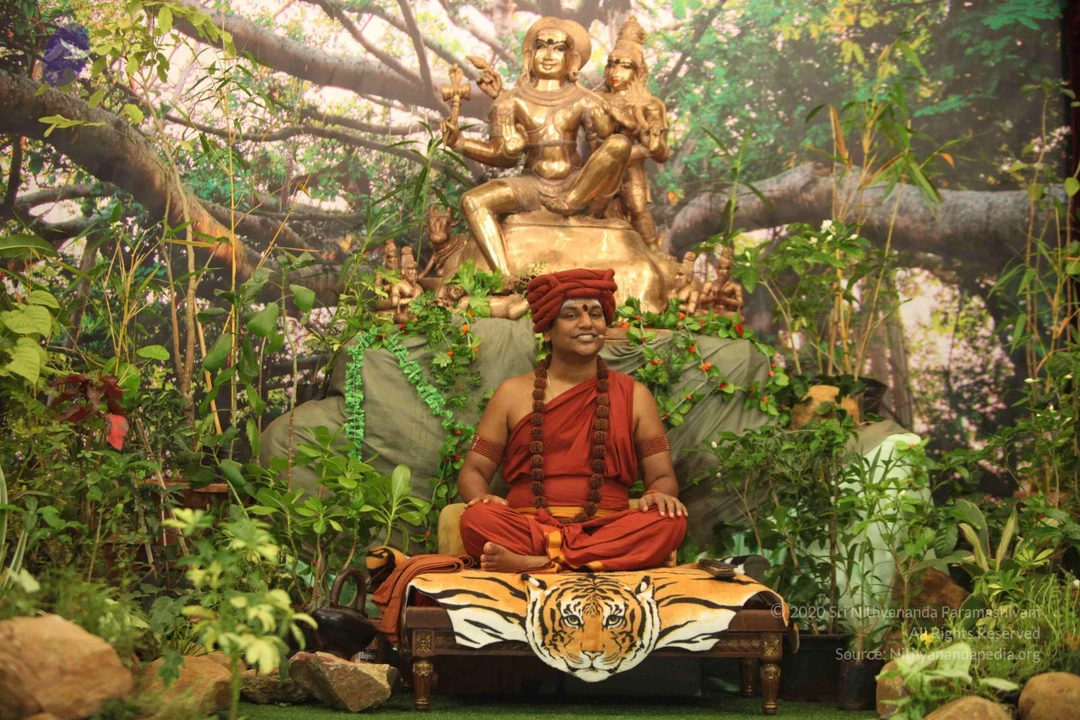
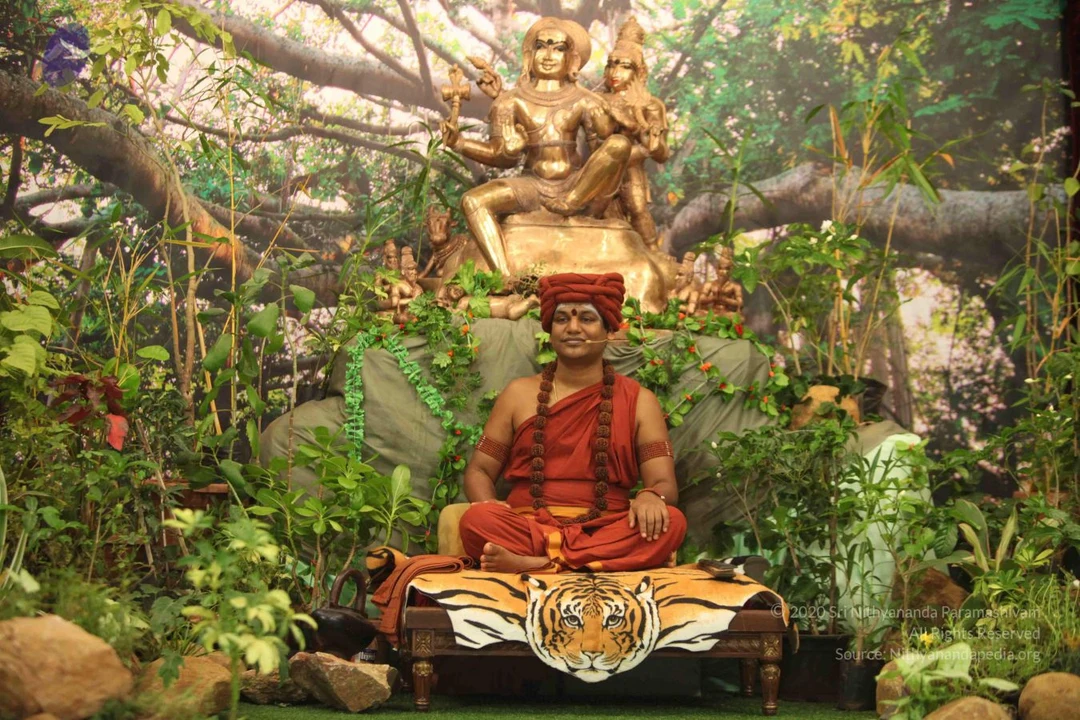
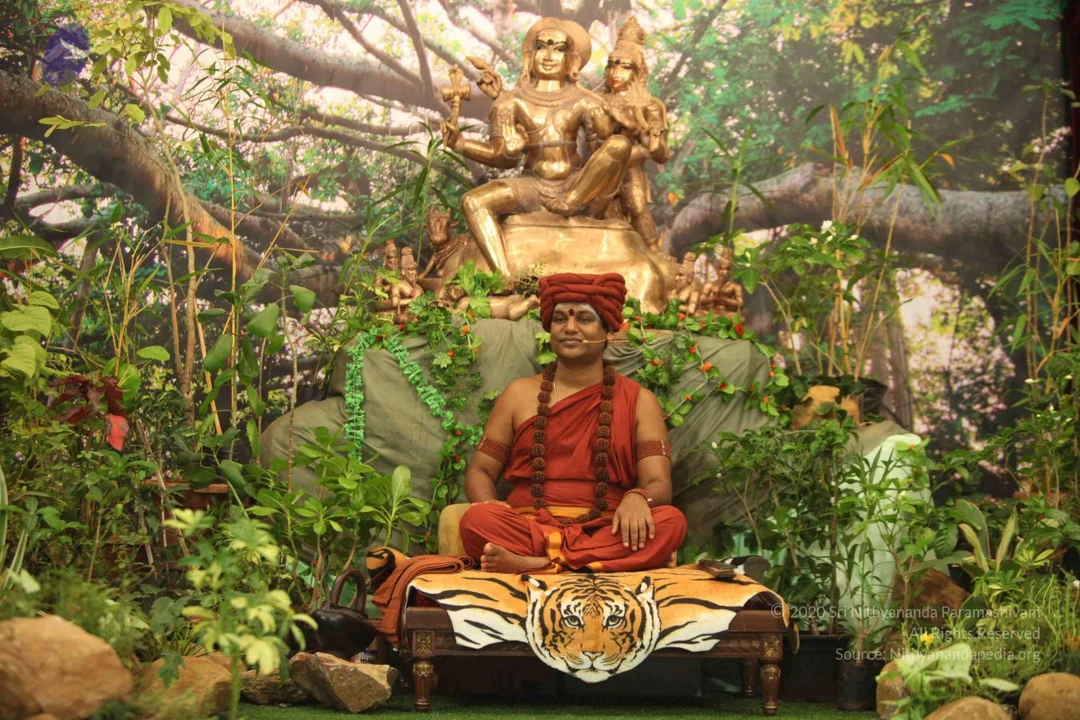
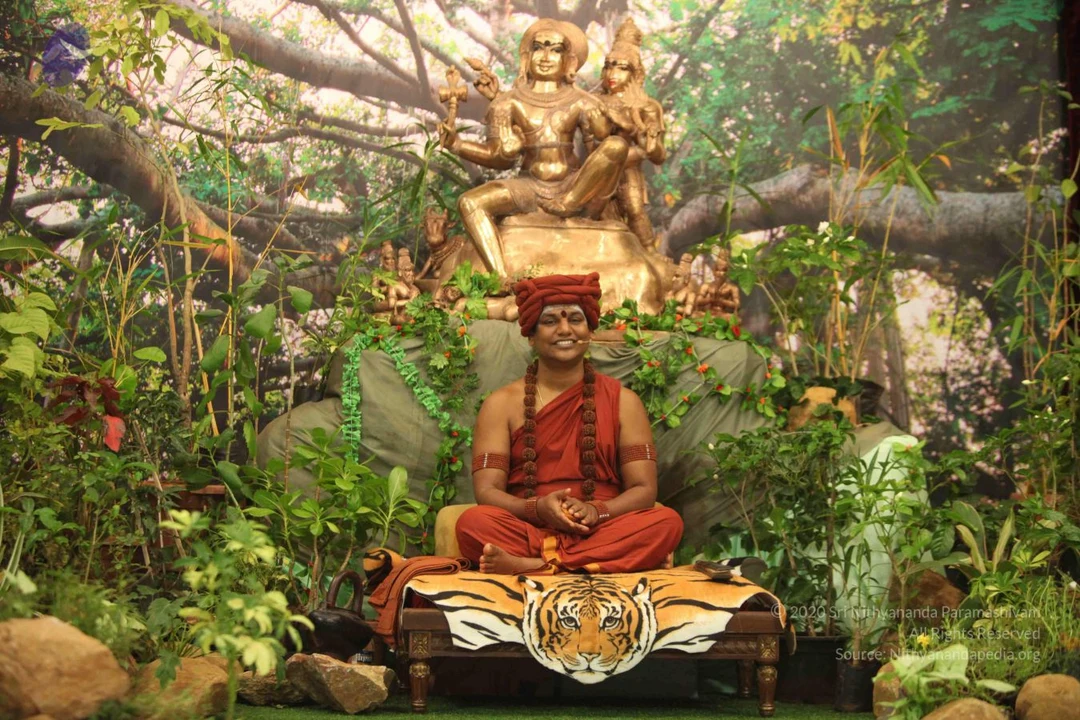
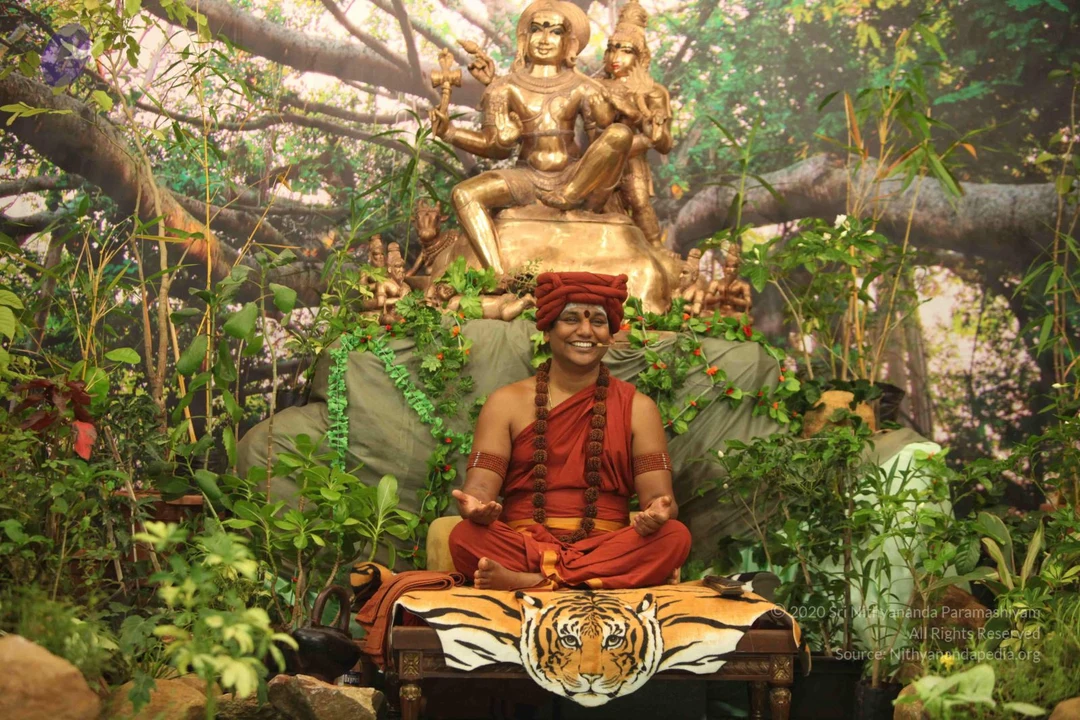
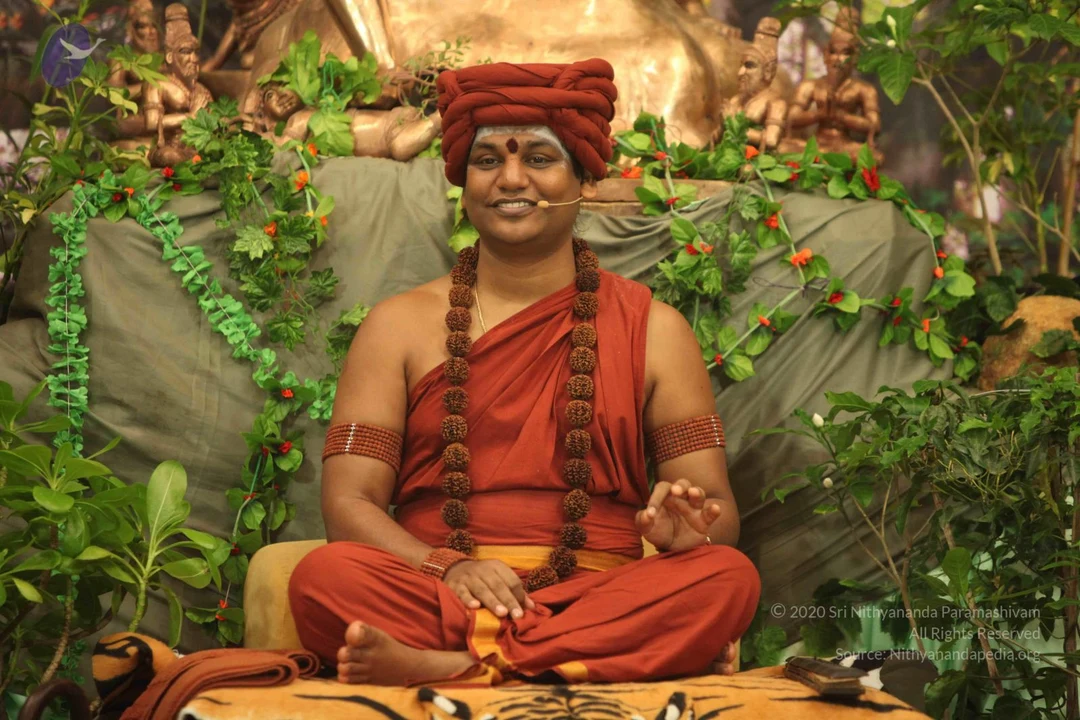
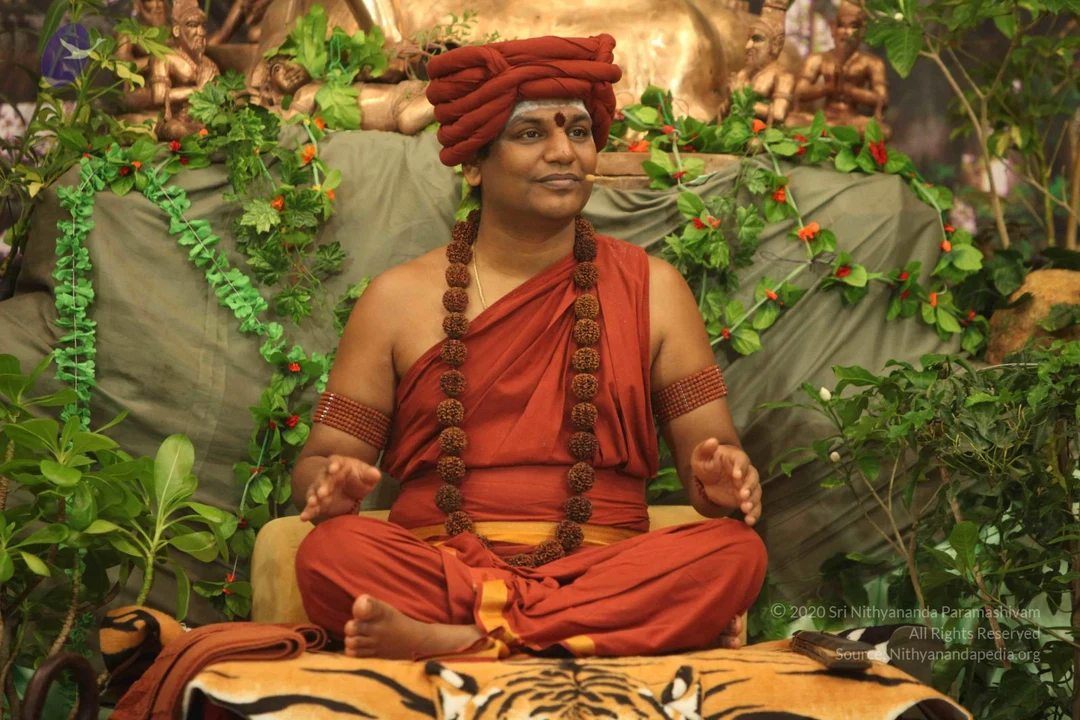
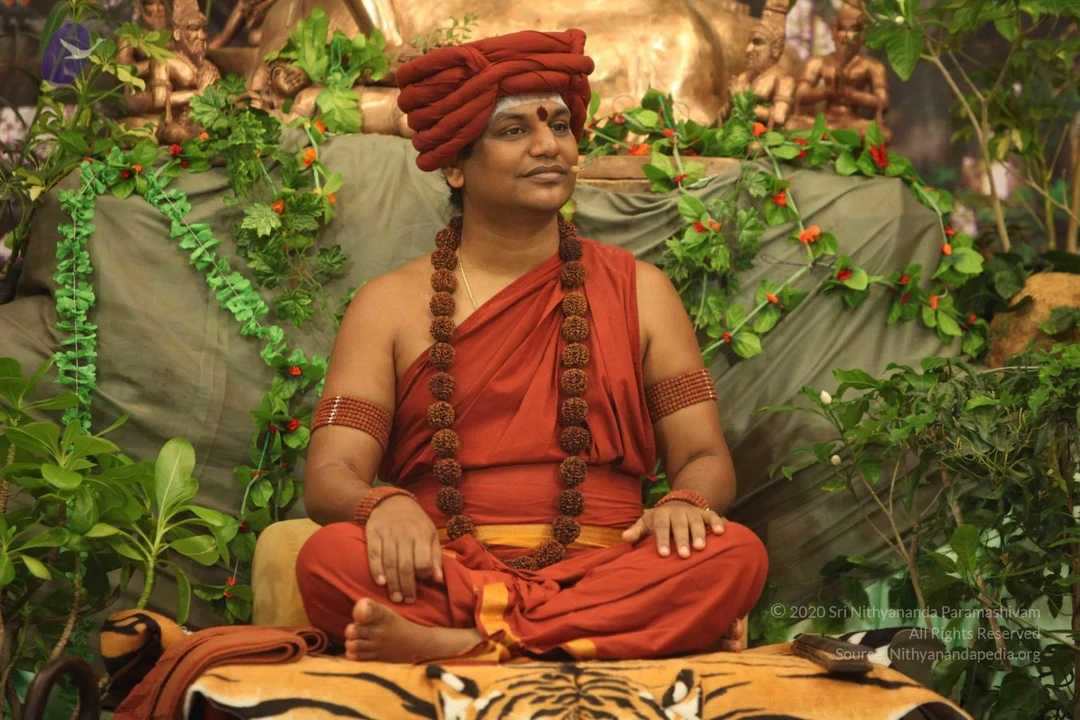
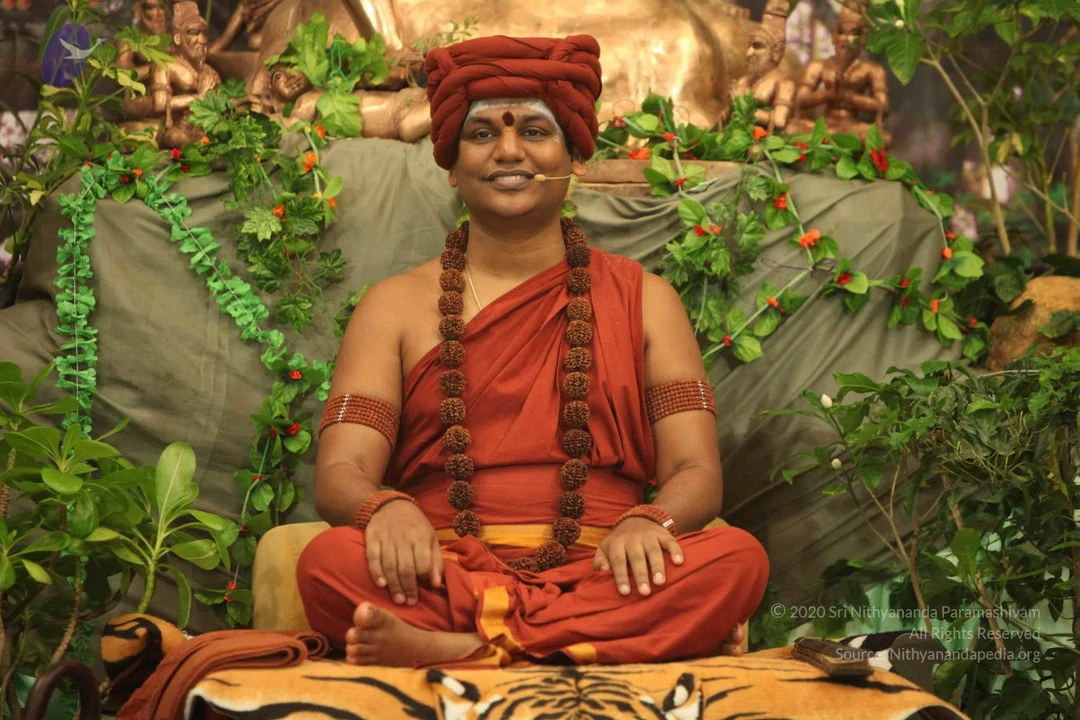
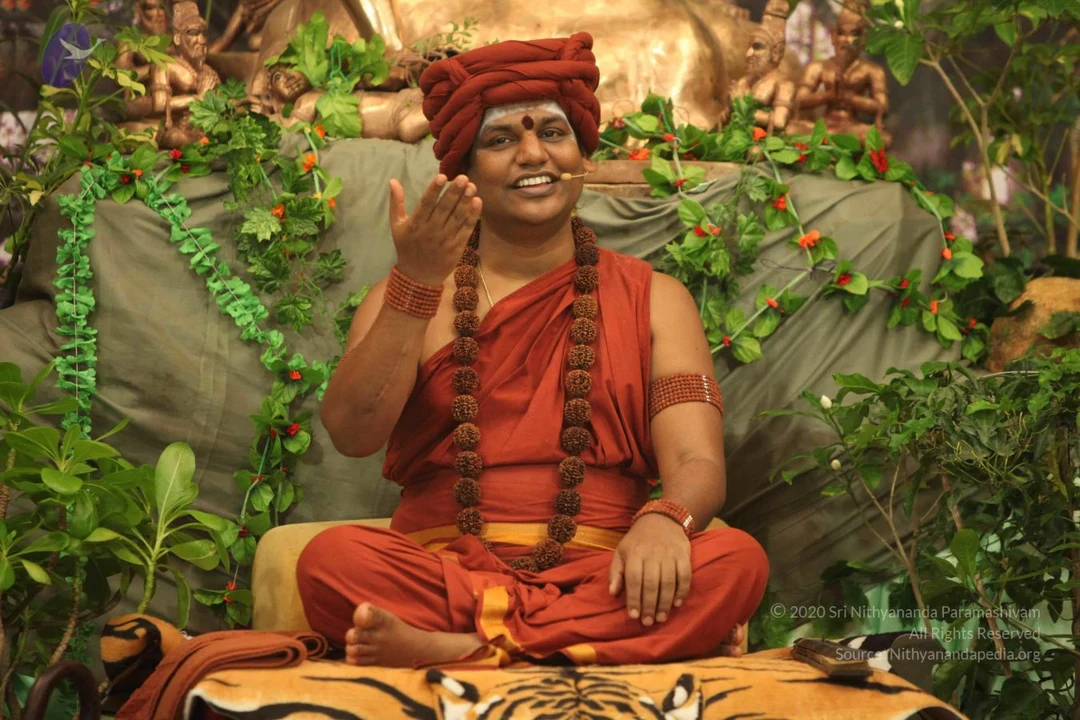
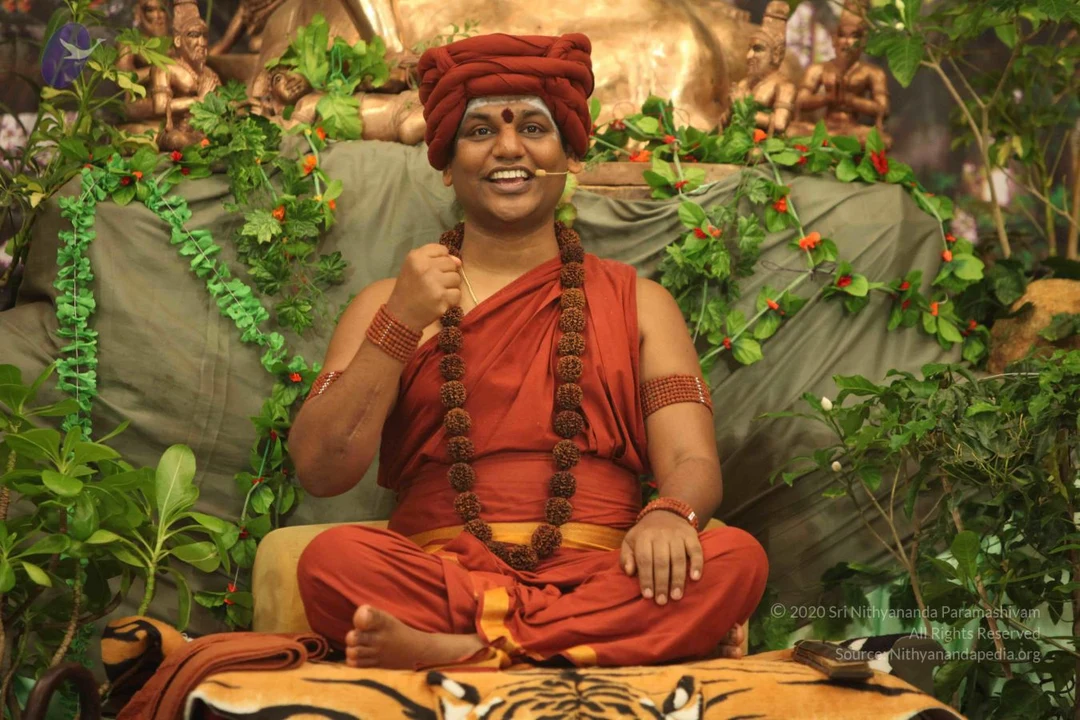
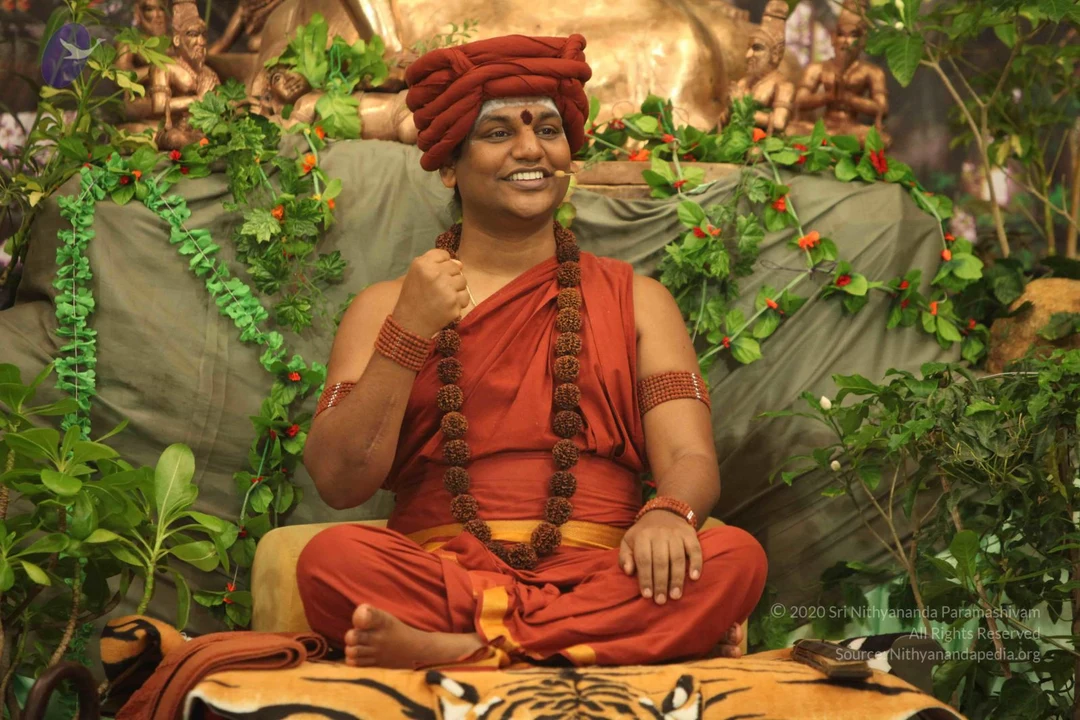
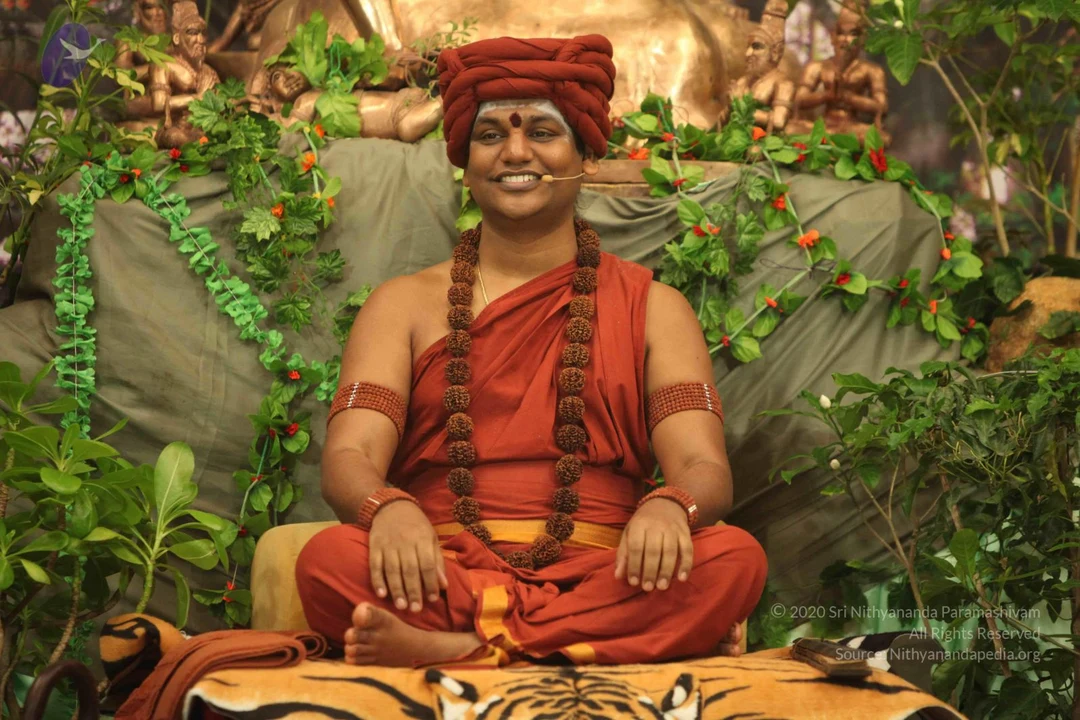
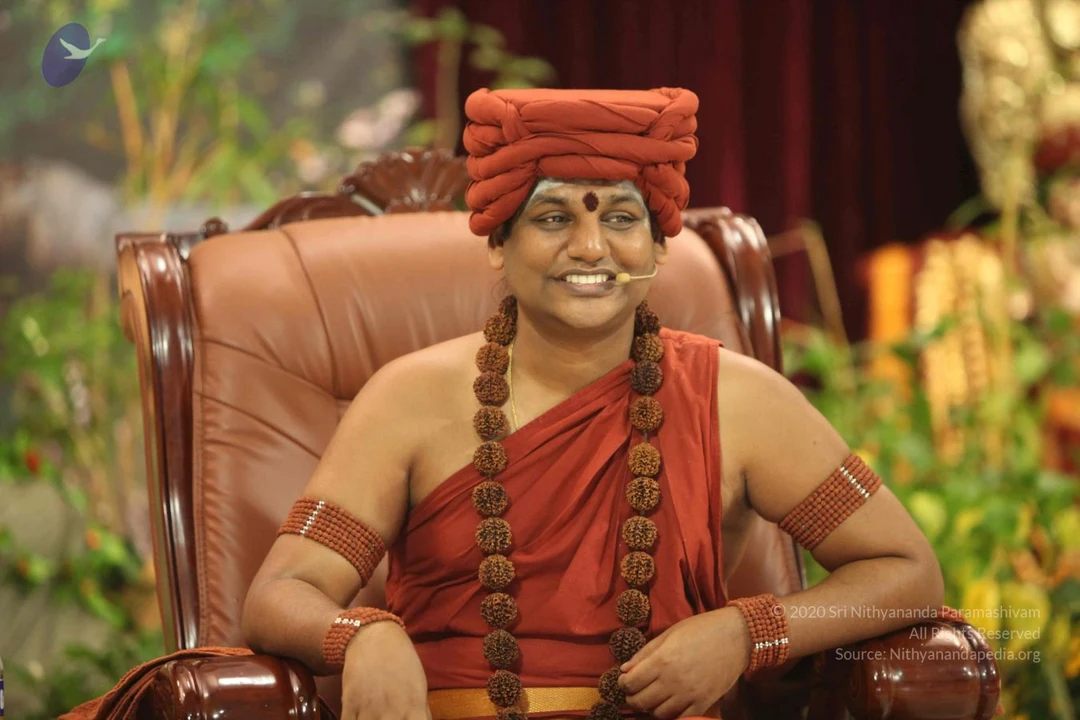
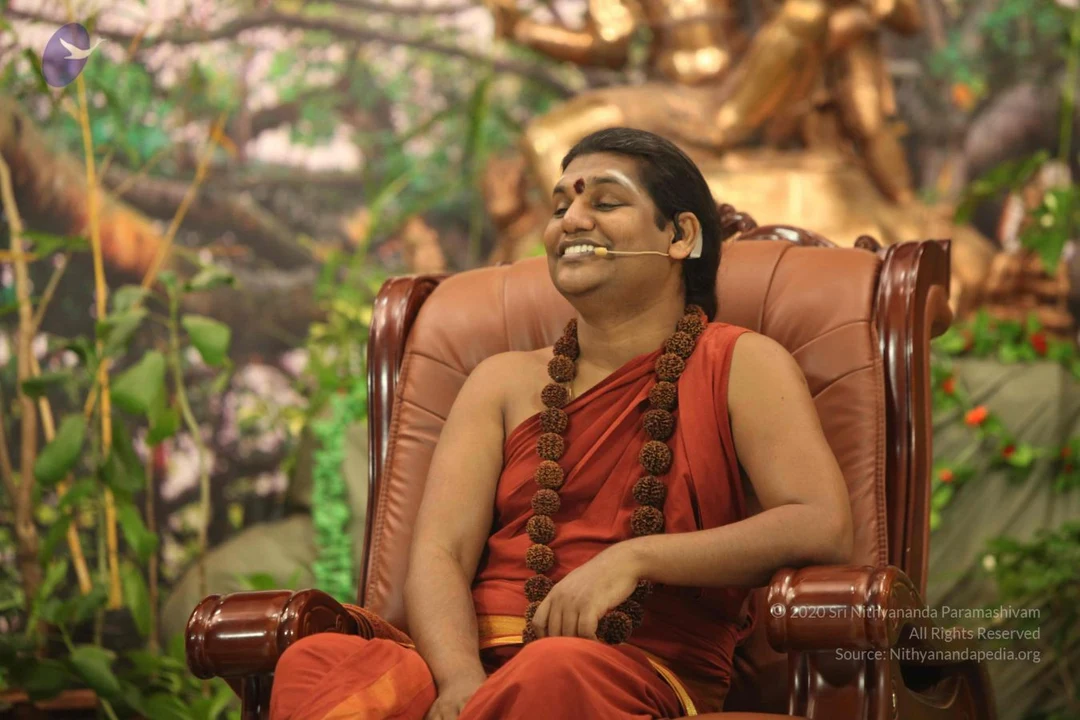
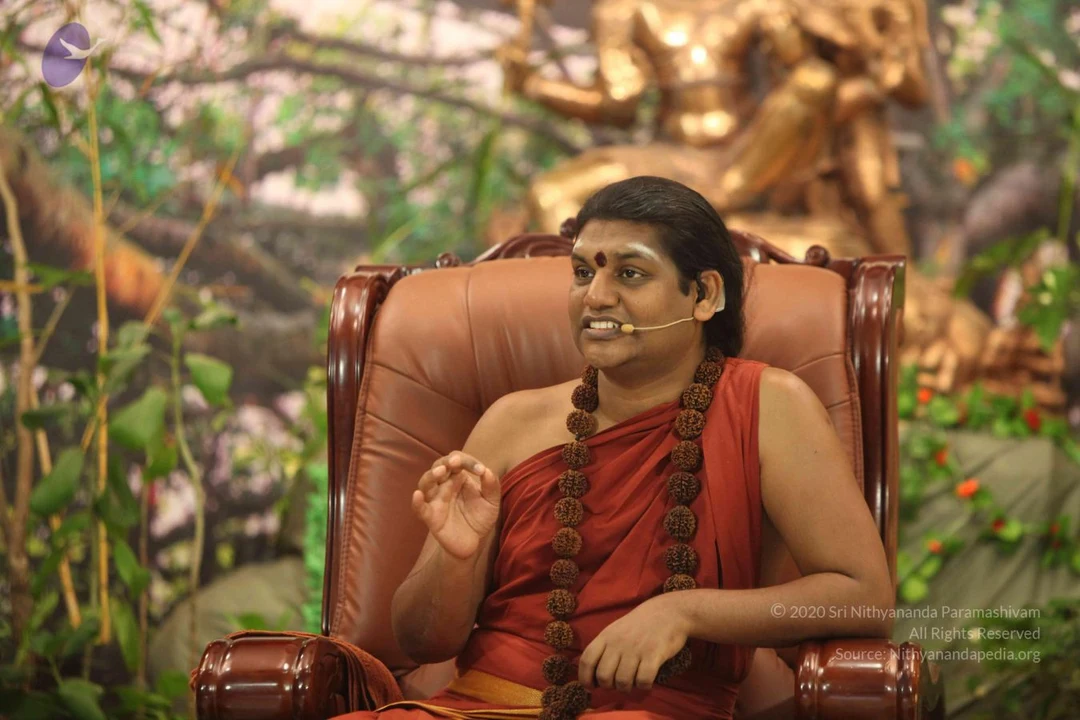
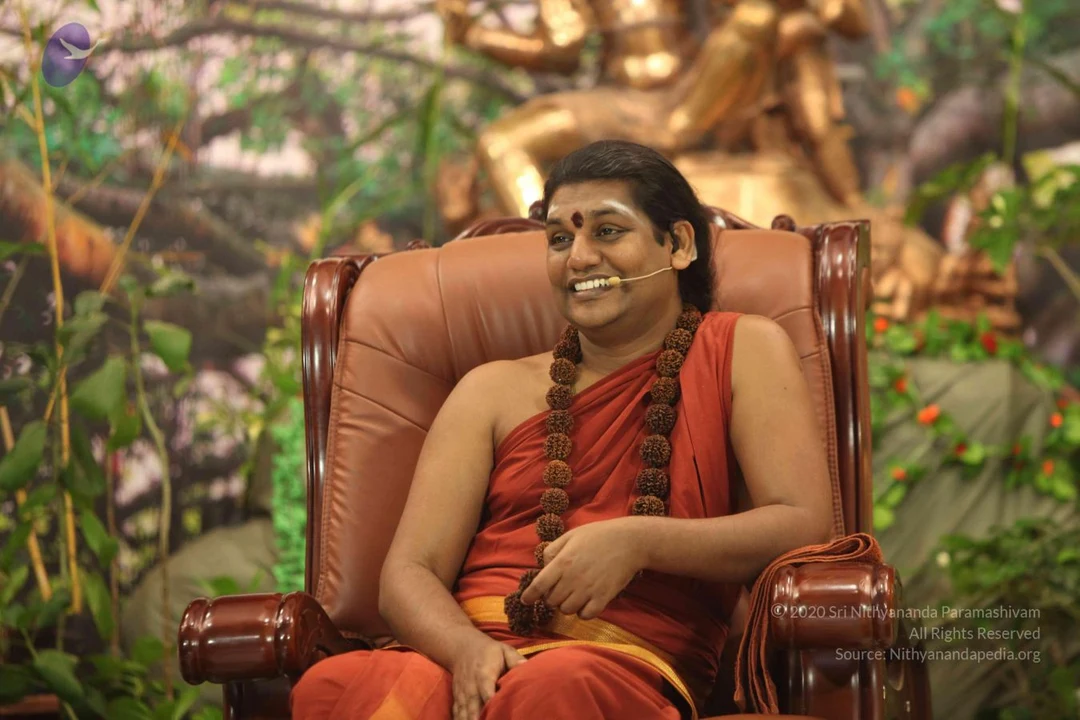
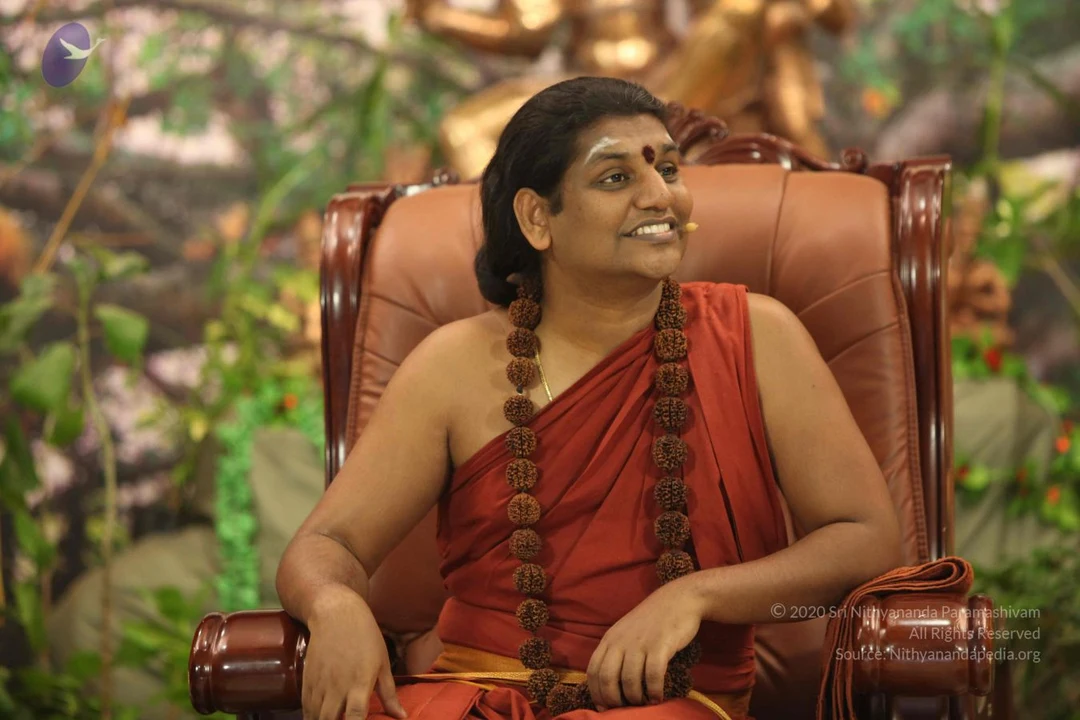
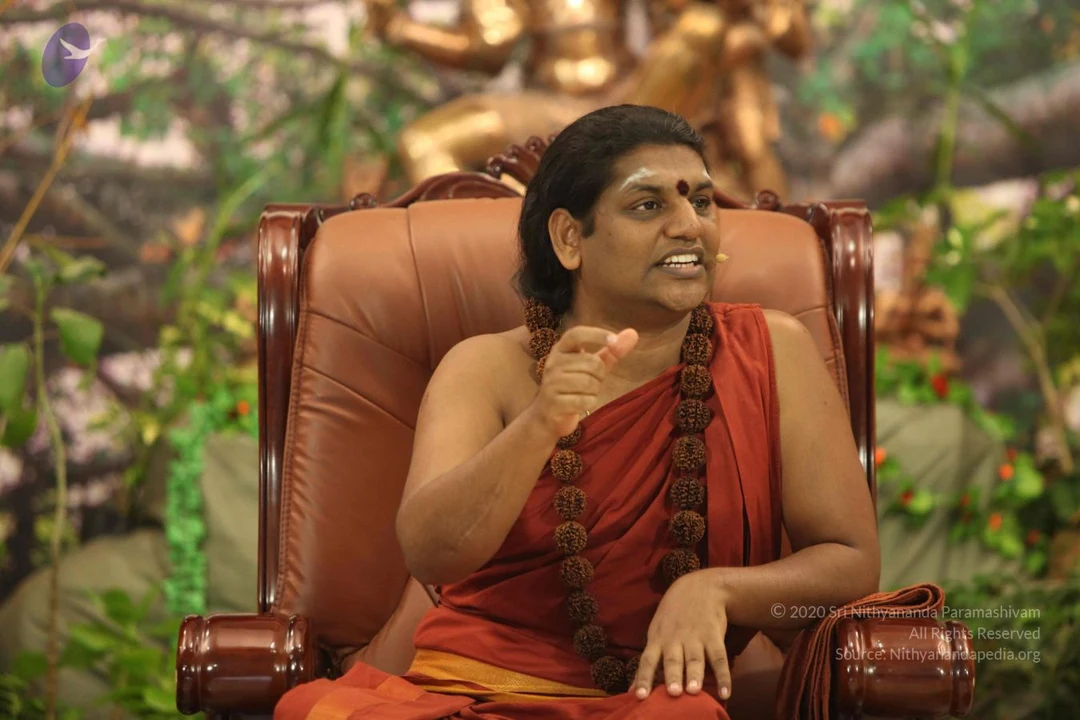
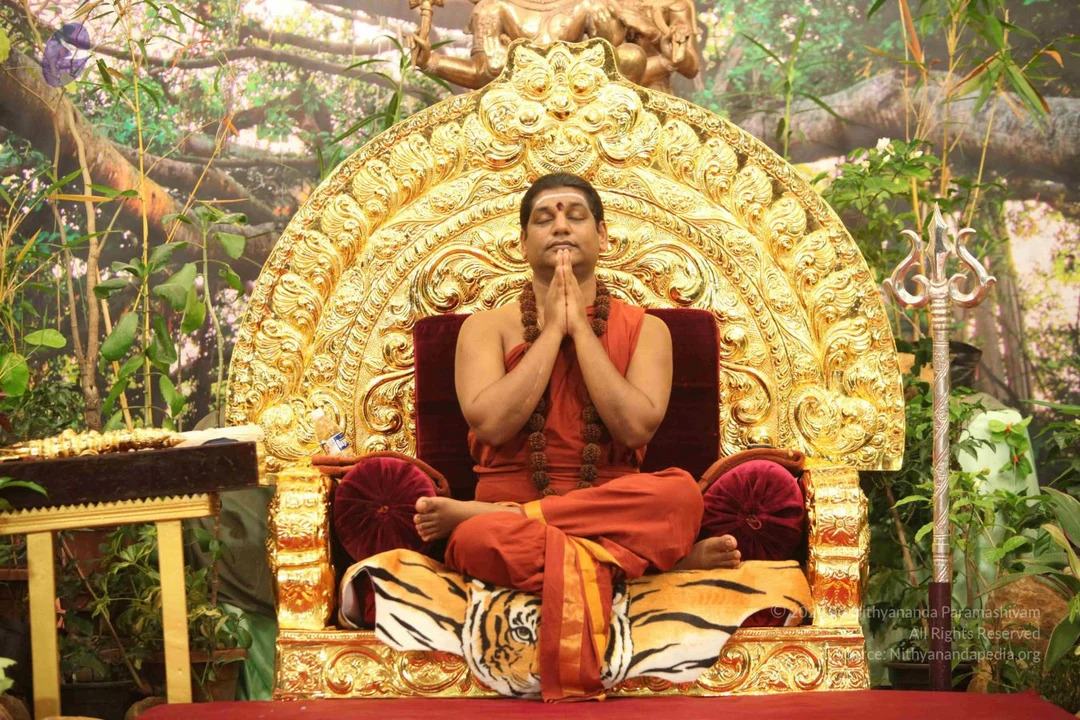
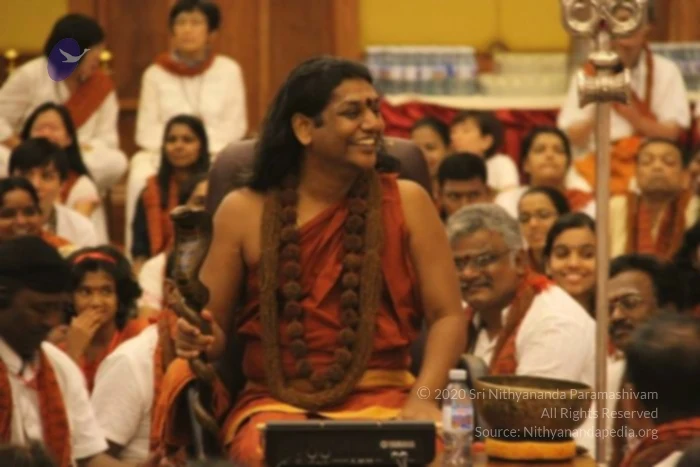
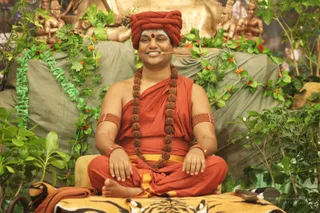
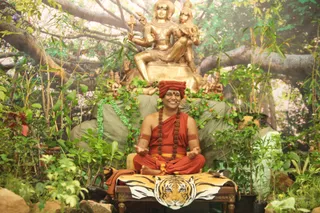
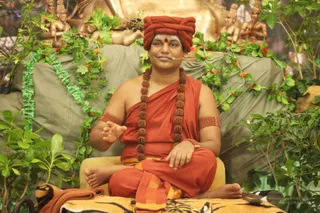
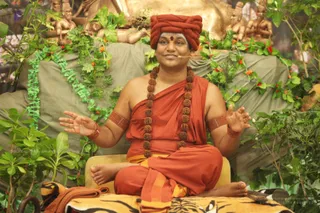
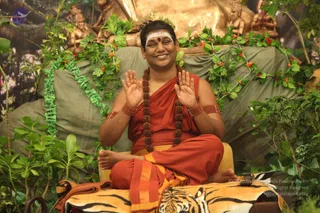
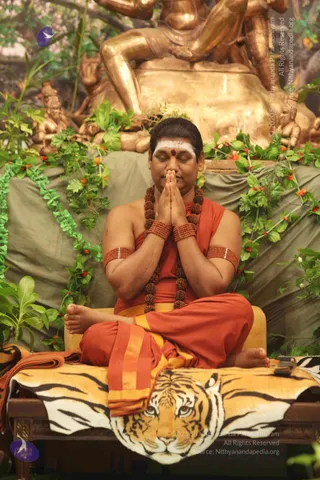
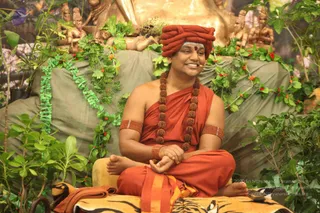
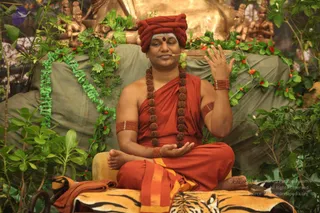
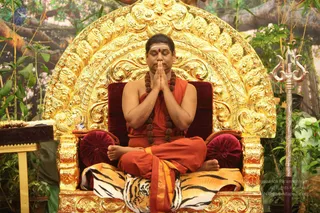
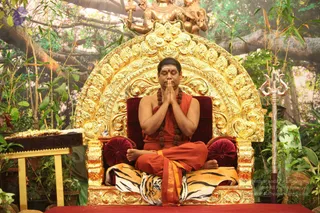
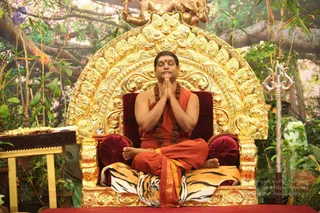
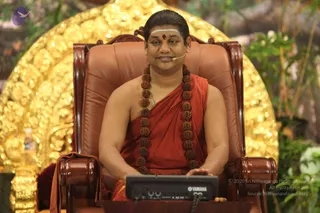
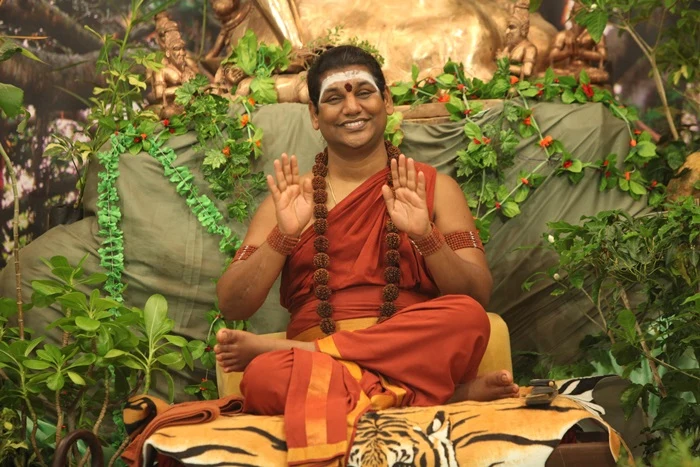
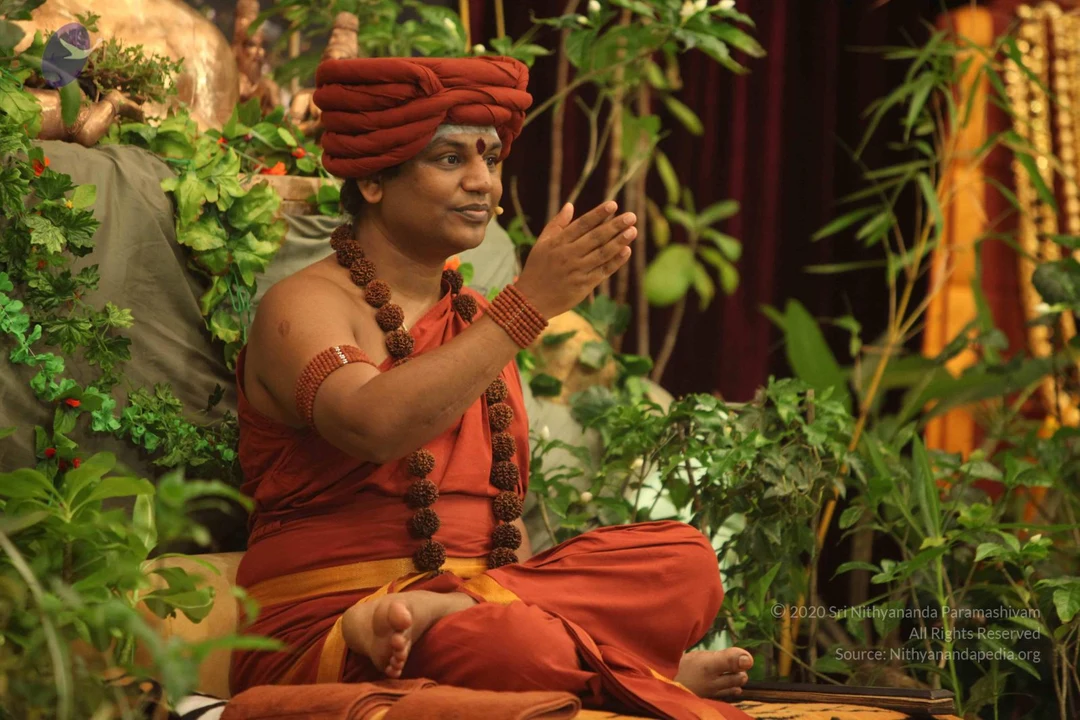
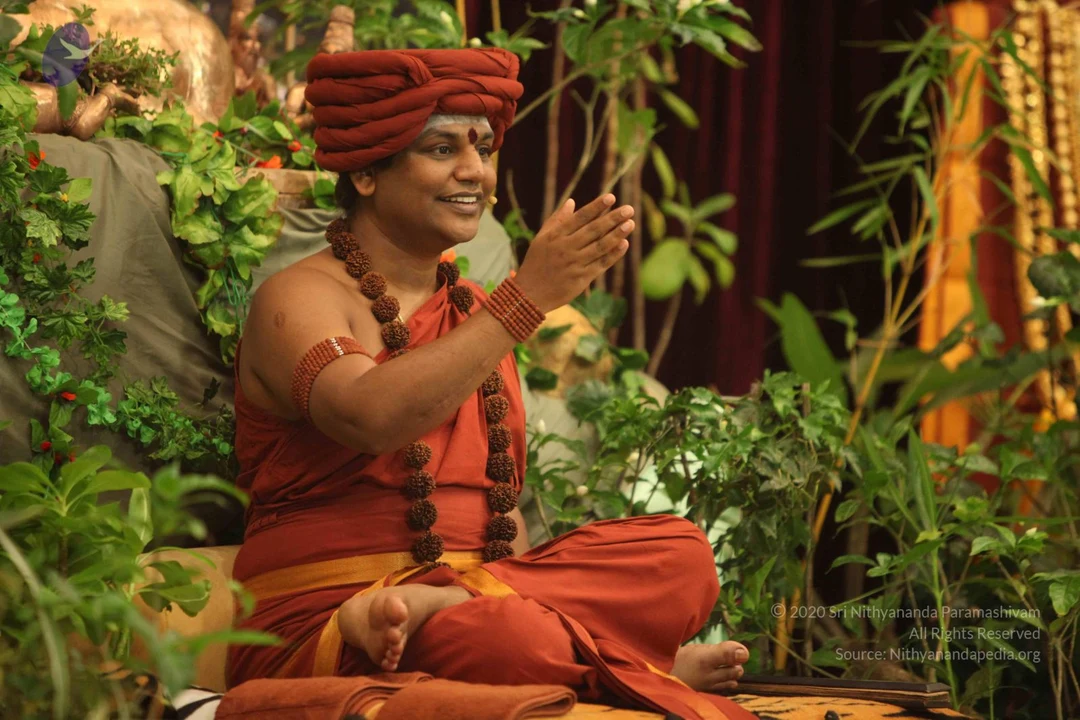
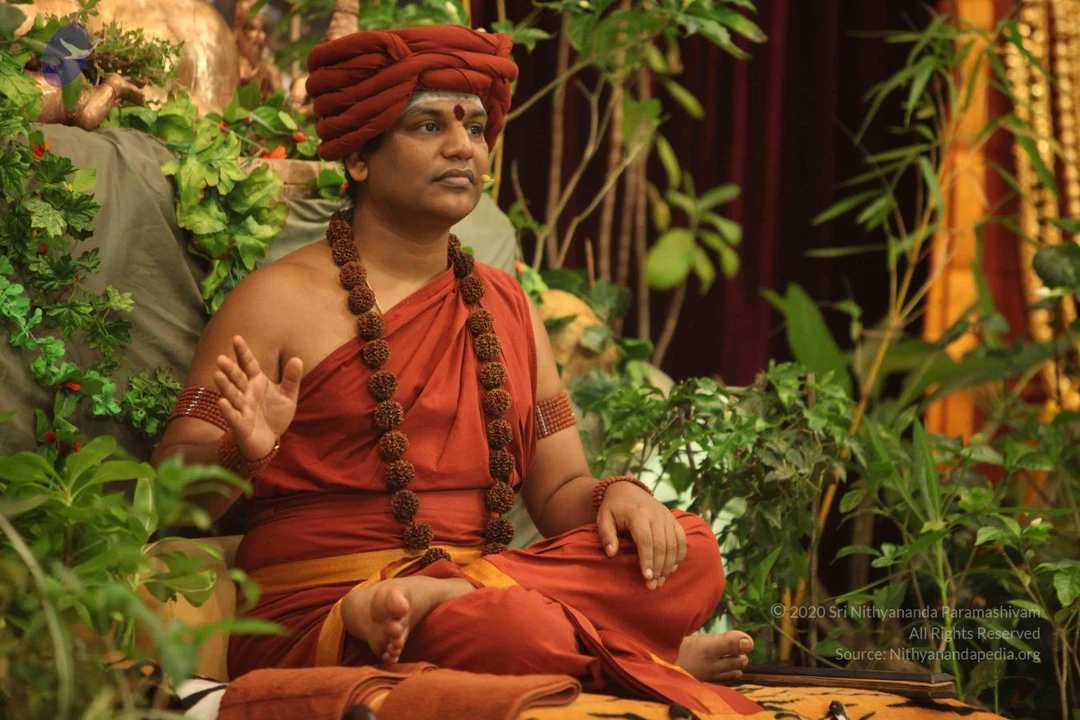
A smiling man sits cross-legged on a tiger-striped mat before a golden figure and carved stone figures, surrounded by green foliage with small orange berries. He wears a red-orange turban, orange-red robes with a yellow waistband, a long rudraksha mala, rudraksha armlets, and a red tilak on his forehead. A small microphone is clipped near his mouth. Swamiji (probable) is present, seated in the centre as the teacher, identified by a rudraksha mala and turban with saffron clothing. The scene is an ashram satsang setting.A seated man in orange-red robes sits cross-legged on a wooden seat draped with a tiger-skin rug, hands open in meditation mudra, smiling. He wears a red turban, rudraksha mala beads and red-orange armbands. Behind him stands a large golden statue of a deity seated on a pedestal, flanked by smaller golden figures, set within a painted backdrop of banyan-like trees, green foliage, potted plants and rocks. A green garland hangs near the seat.A seated man in saffron-orange robes sits cross-legged on a wooden peetha draped with a tiger-striped cloth in a lush garden-style set. He wears a red turban, a long rudraksha mala with beads hanging to his waist, and copper-colored armlets, and he smiles with hands resting on his knees. Behind him stands a large gold-colored statue of a deity seated with a consort, set against a painted banyan-tree backdrop with green foliage, potted plants, and rocks in the foreground. Appearance-based cues (rudraksha mala, saffron robes, turban) are consistent with Swamiji (probable), seated as the teacher.A seated man in an orange-red turban and saffron robe sits cross-legged on a yellow cushion over a tiger-striped mat, with green foliage and red flowers around him. He wears a long rudraksha mala with a white vibhuti mark on his forehead and a small red bindi, and a small microphone clipped near his face. His right hand is raised in a teaching gesture while his left rests on his lap. Behind him are golden deity and figure statues.A man seated cross-legged on a tiger-skin covered platform in front of a leafy green backdrop with orange flowers and golden figurines behind him. He wears a red-orange turban with a red bindi, a matching red-orange cloth over his shoulder and body, and a long necklace of brown rudraksha beads. He has a small microphone at his cheek and his hands are open and raised as he speaks during a discourse. Golden sculptural figures and gold-toned decorations appear at the top of the frame, and a dark wooden staff rests near the lower left.

Kalpataru Darshan
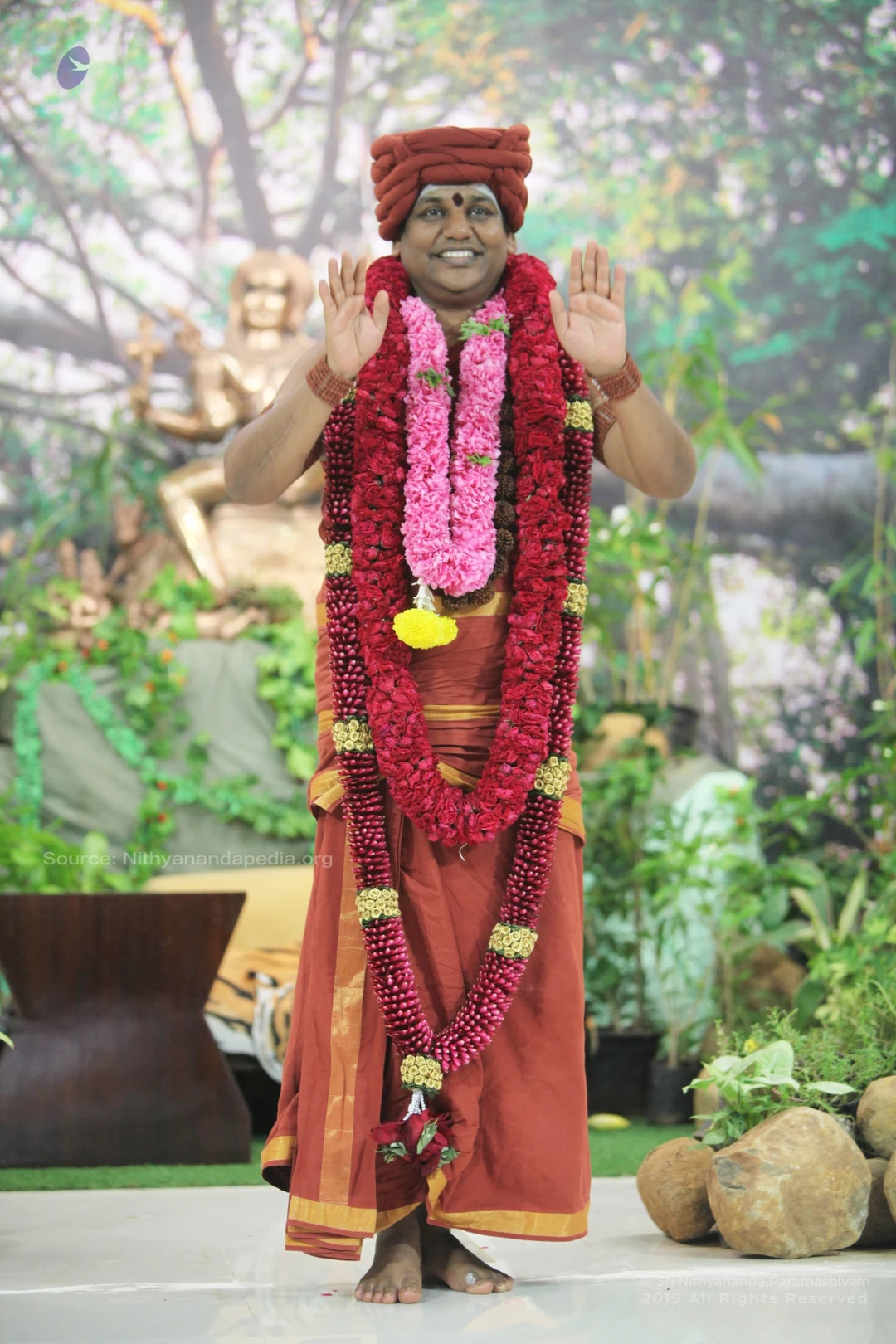
9 photosSource gallery
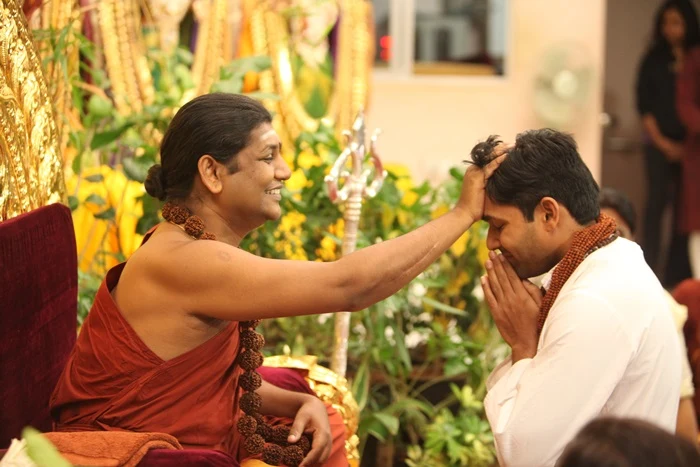
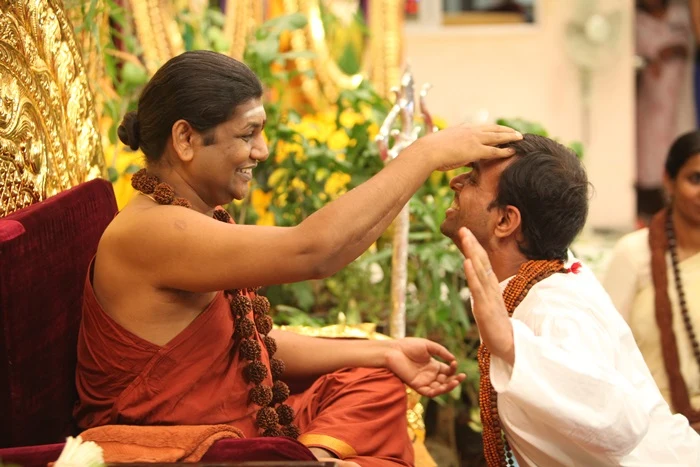
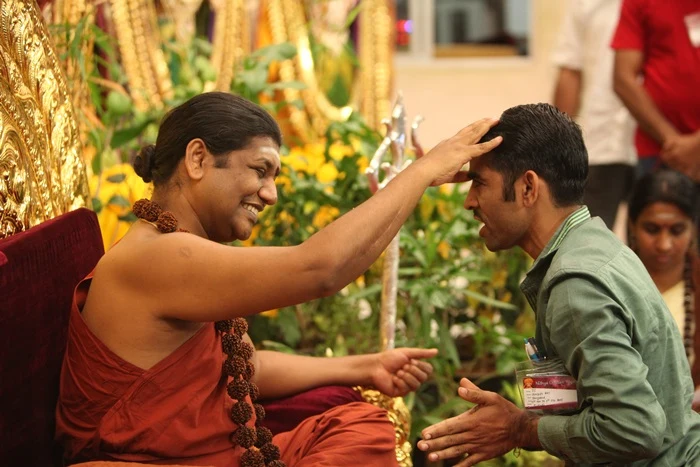
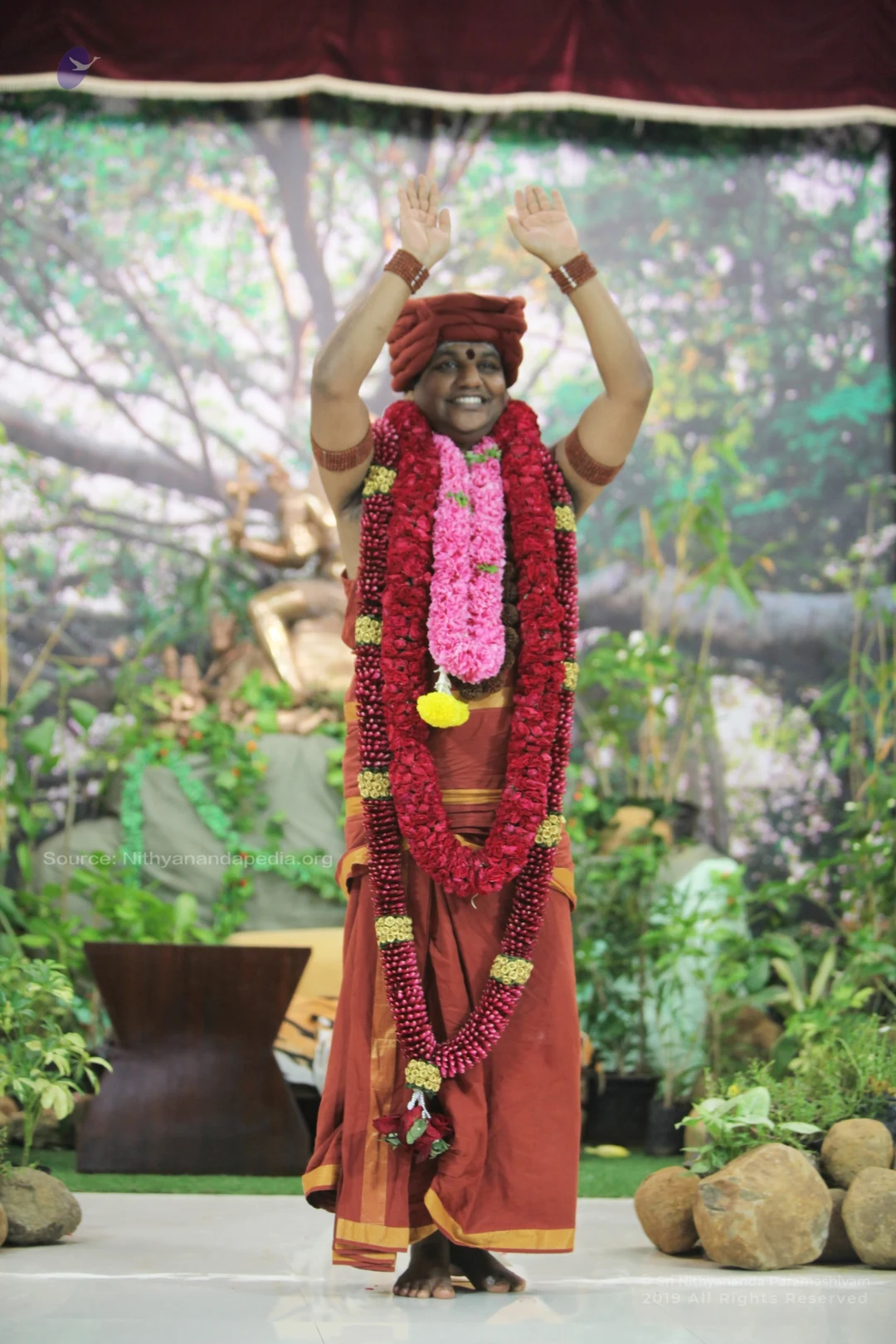
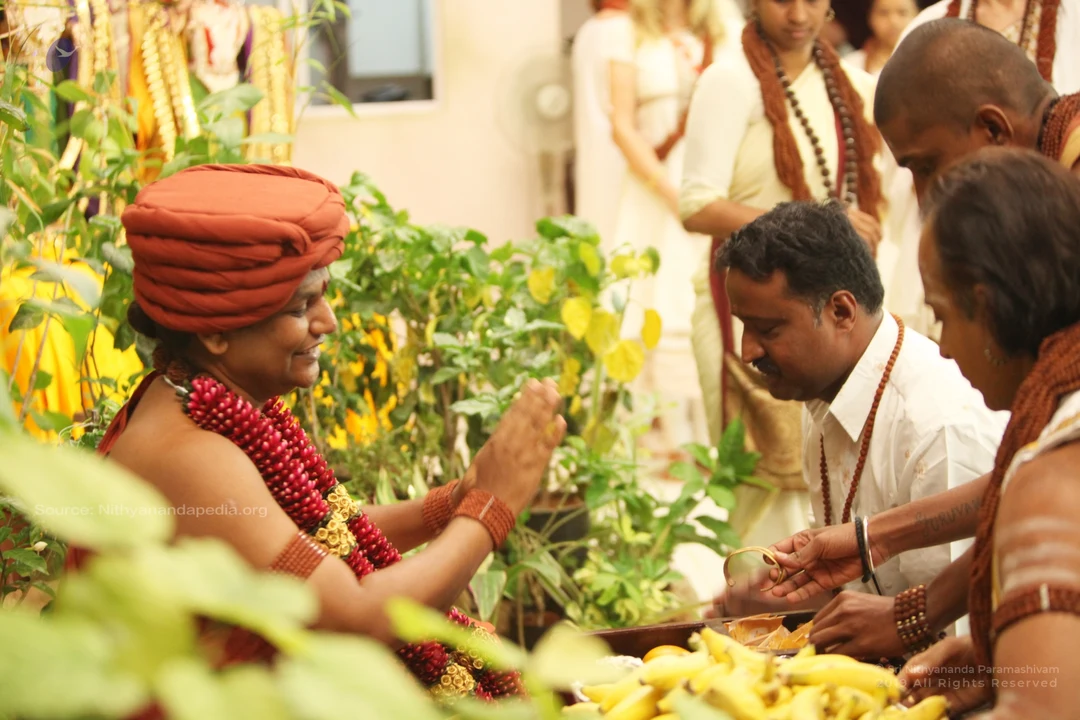
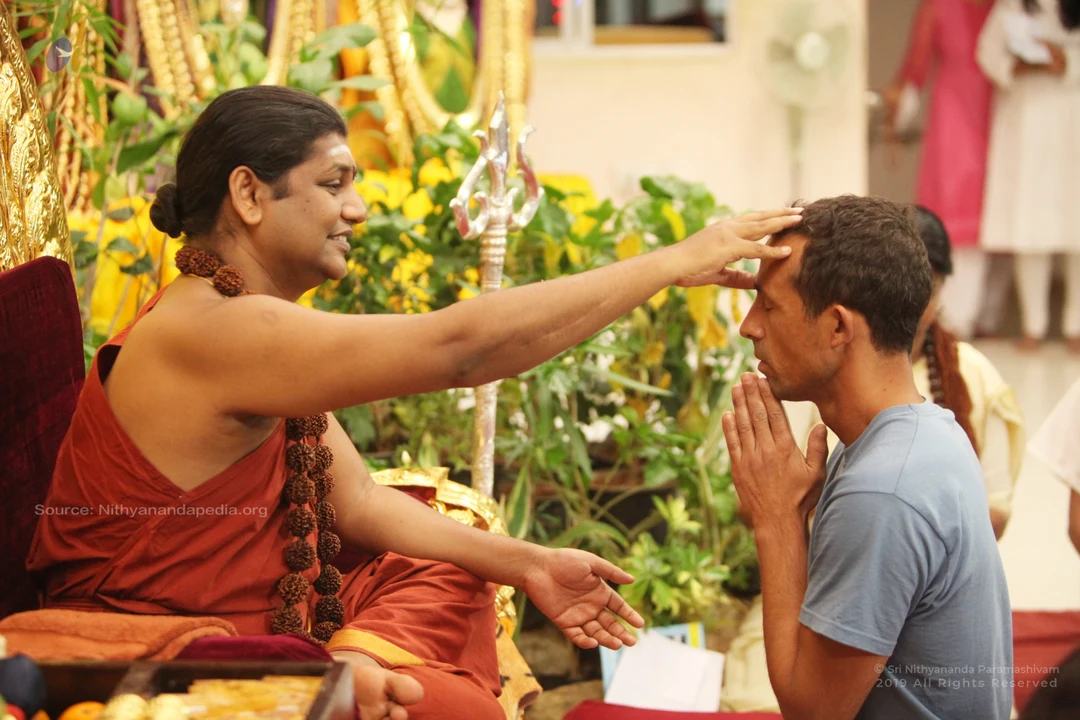
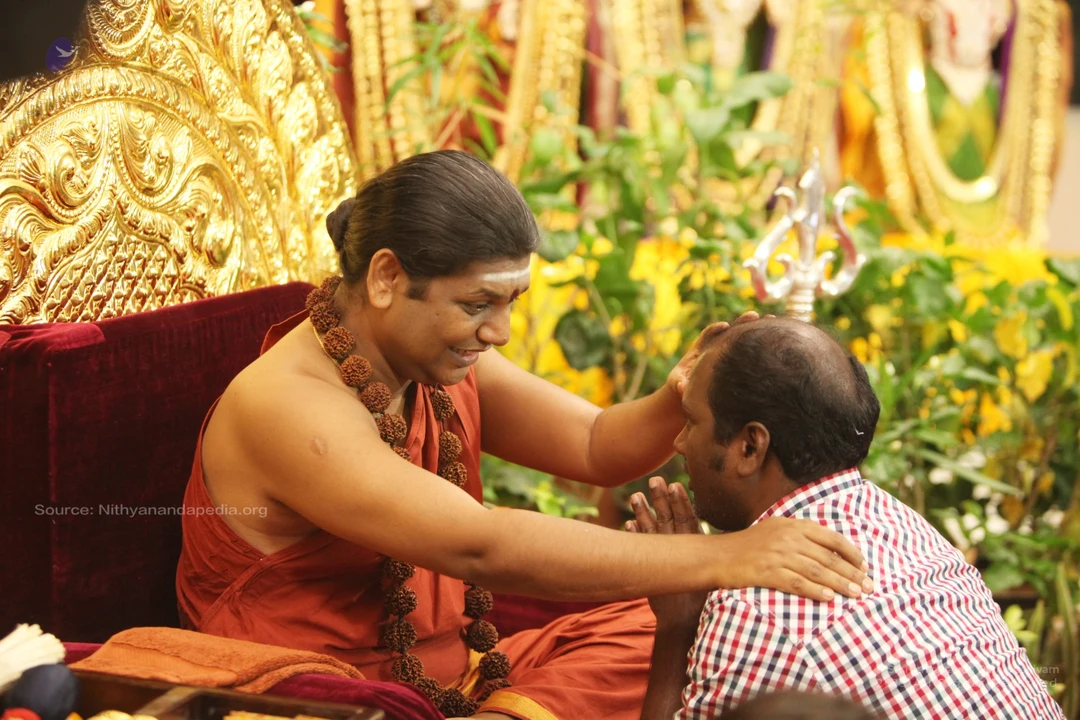
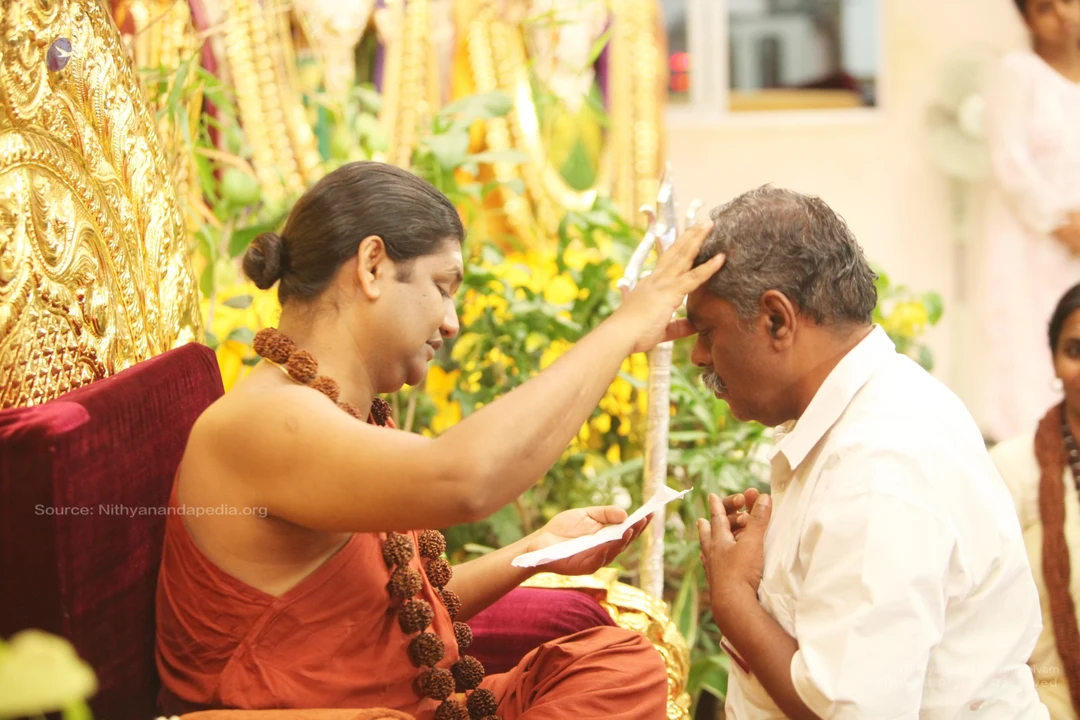
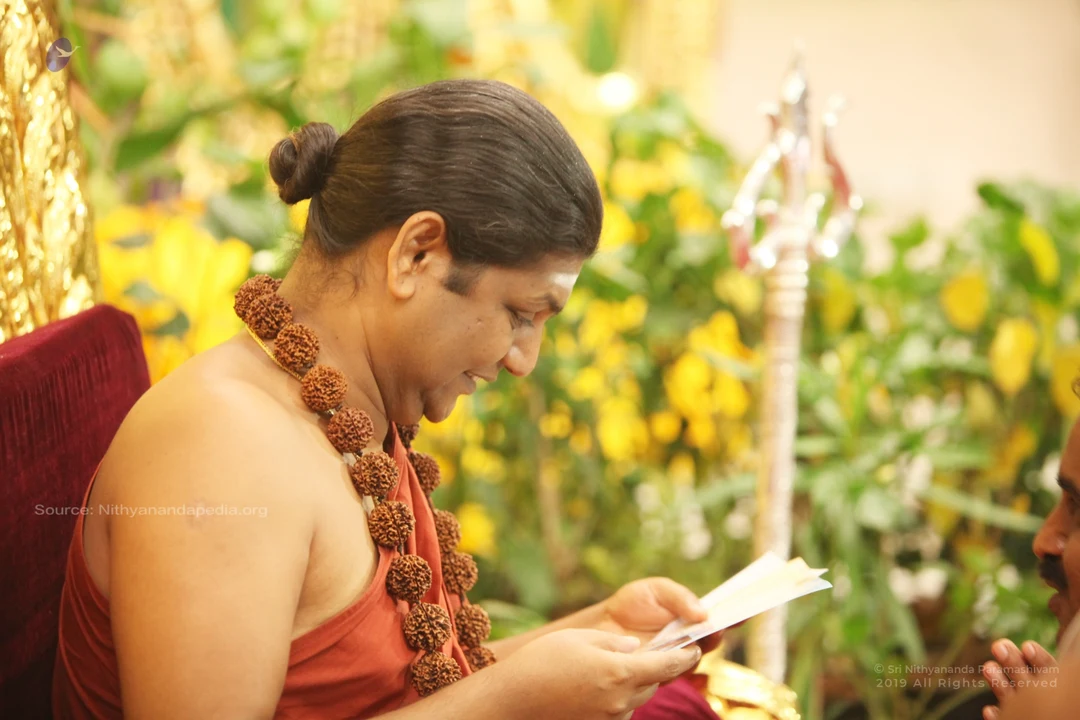
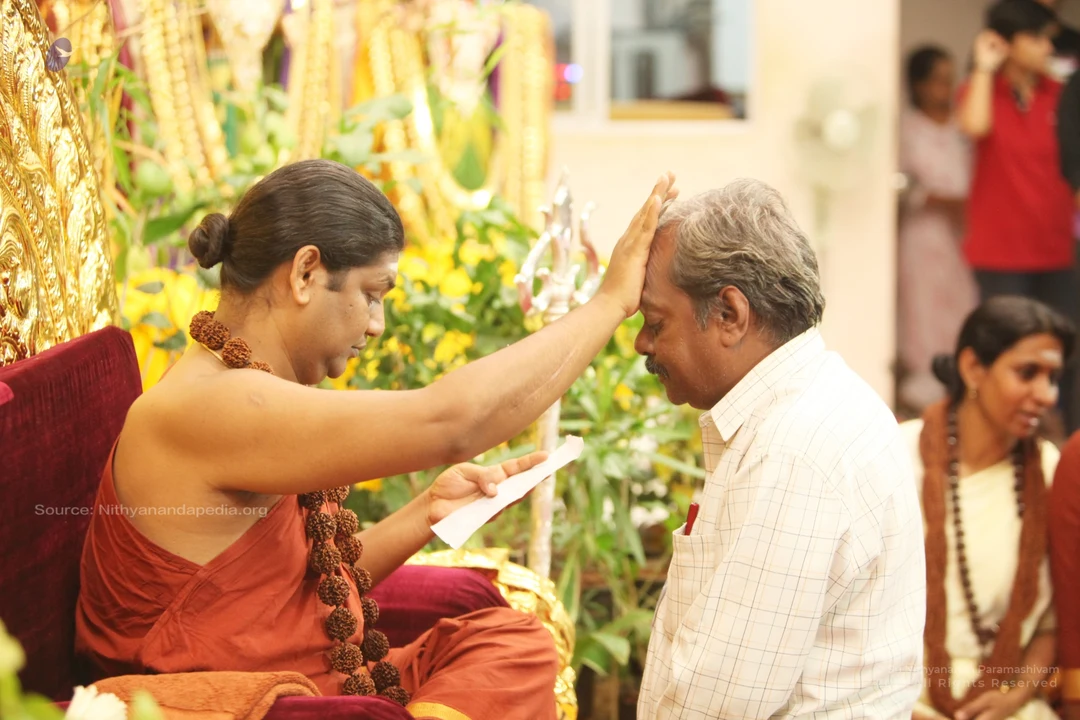
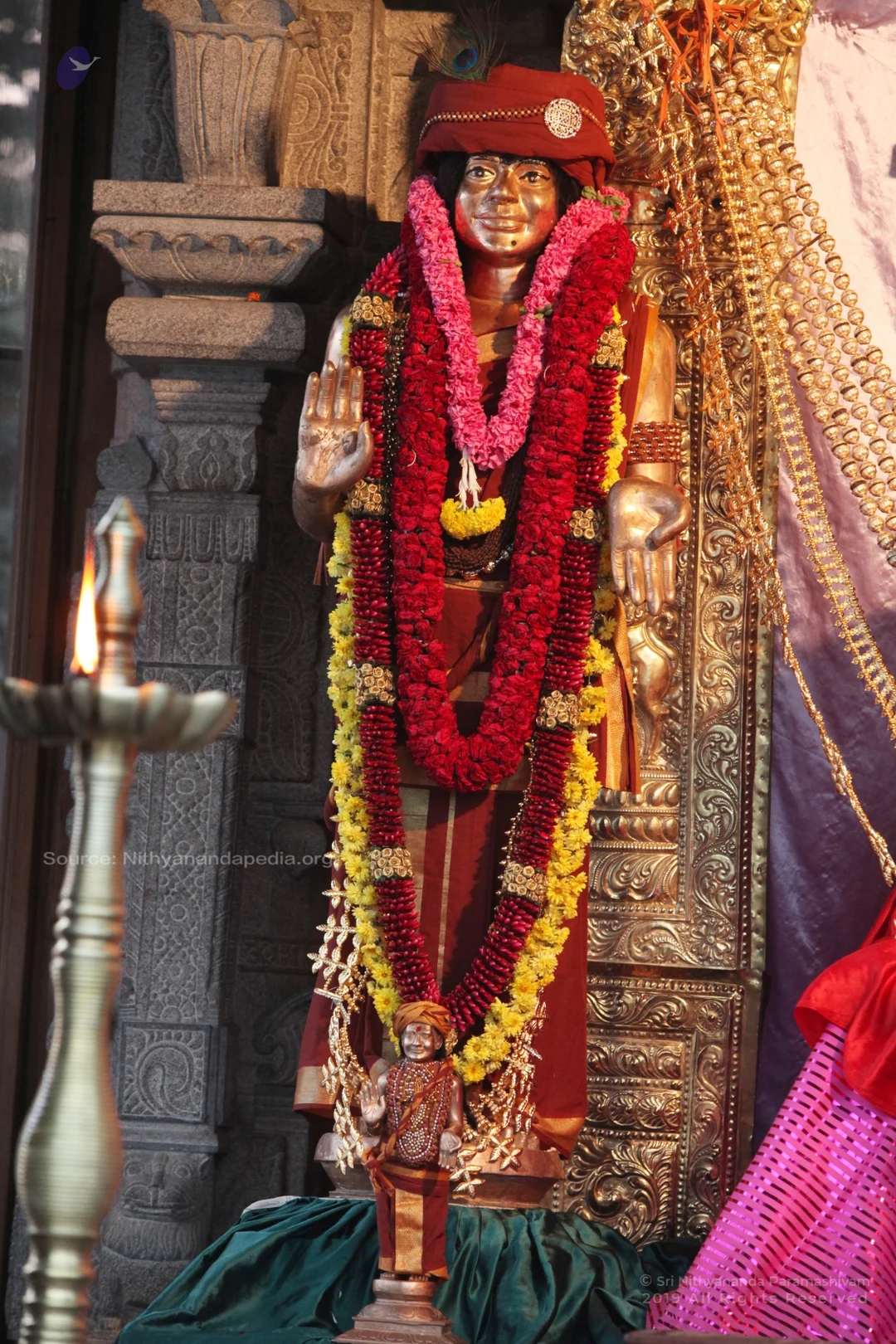
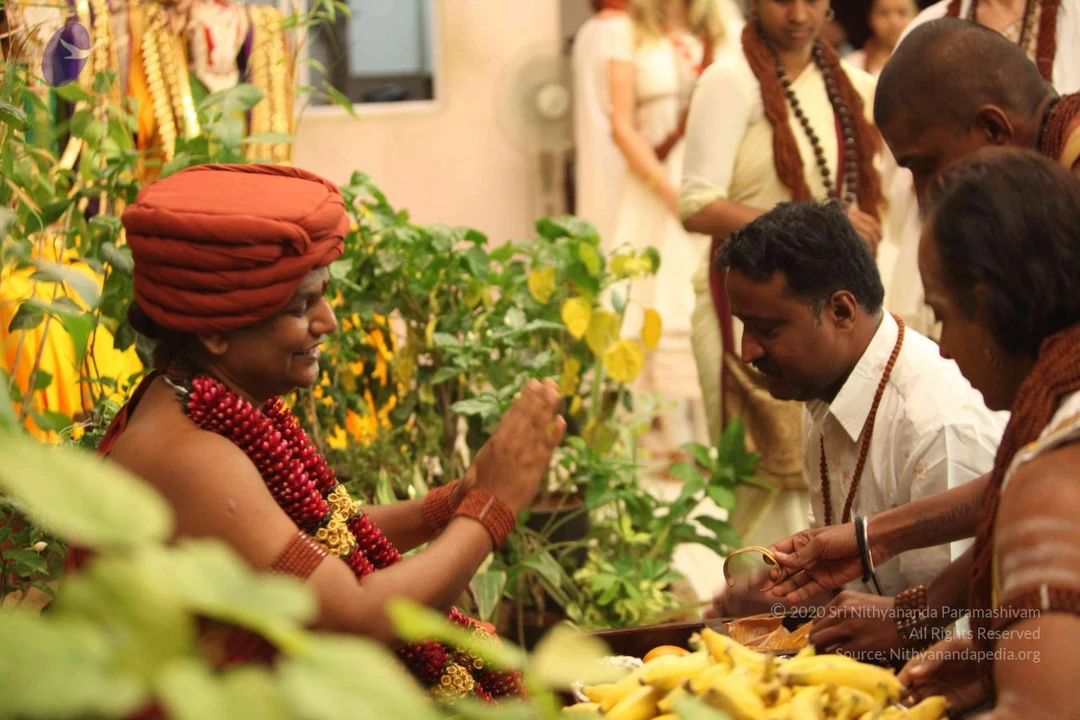
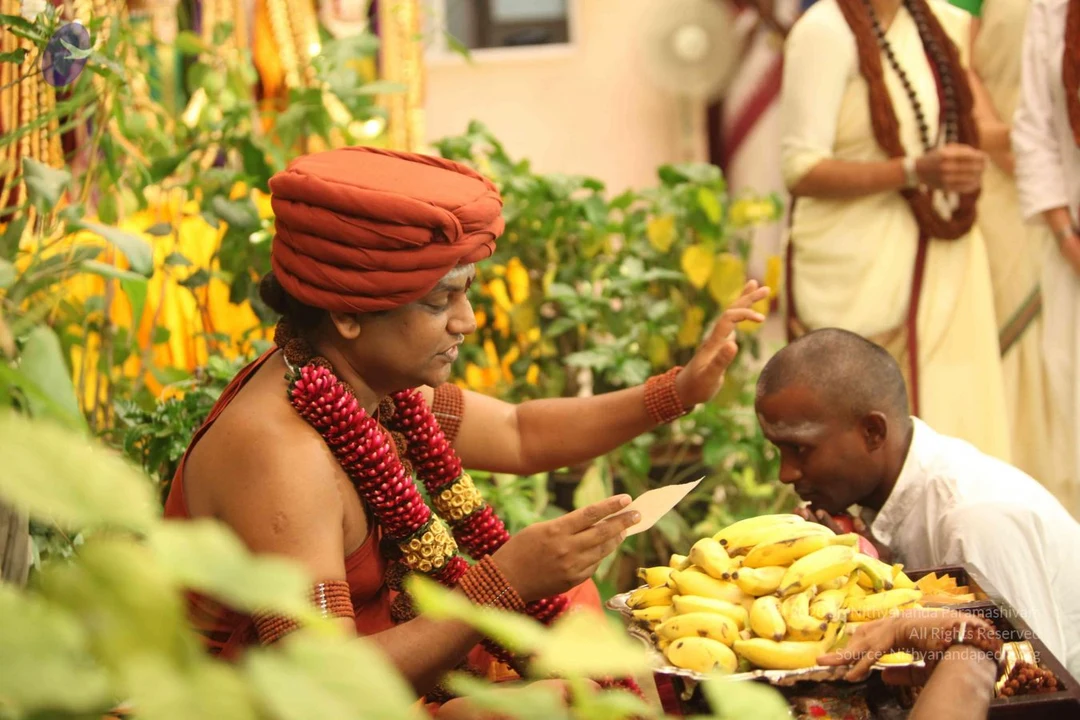
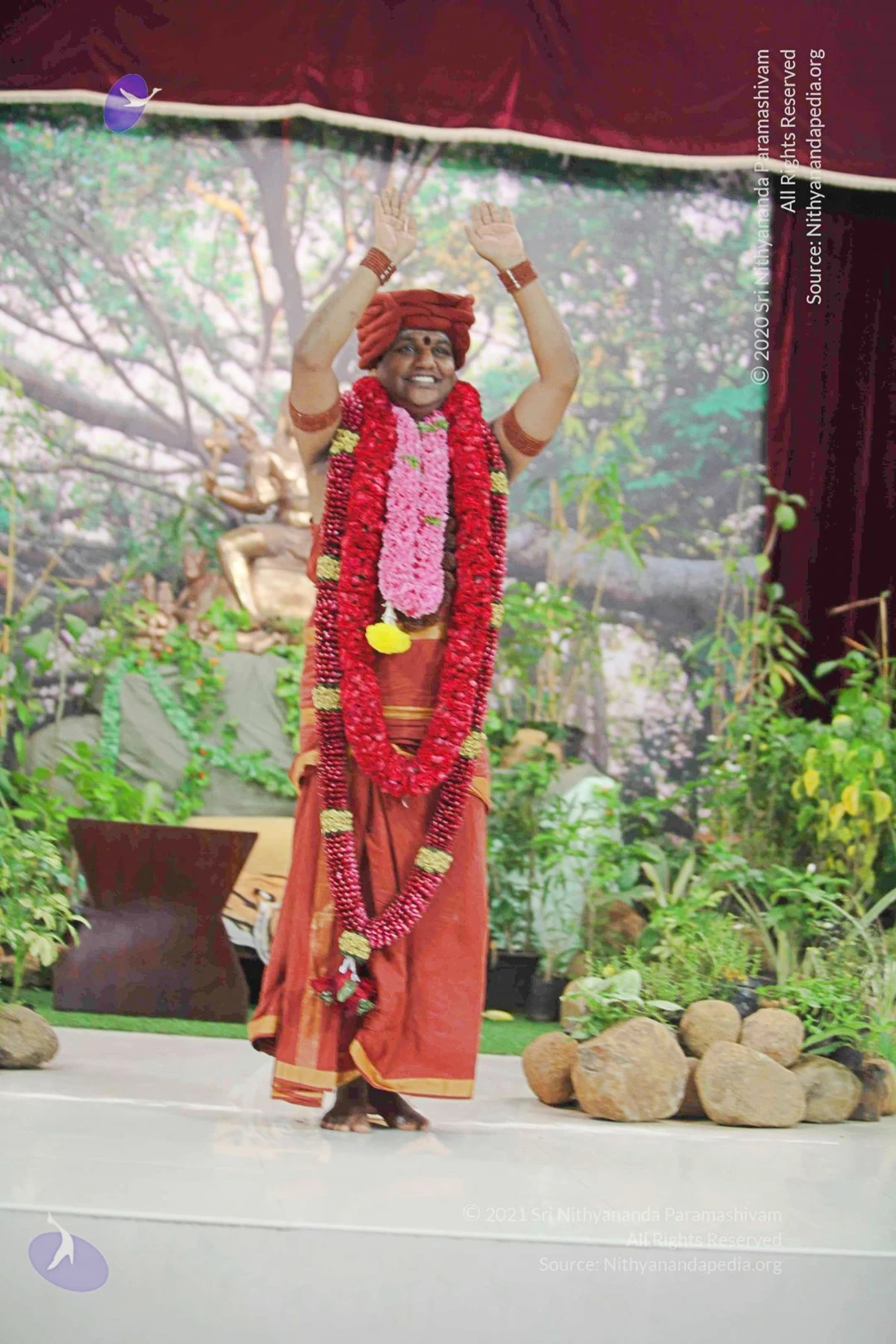
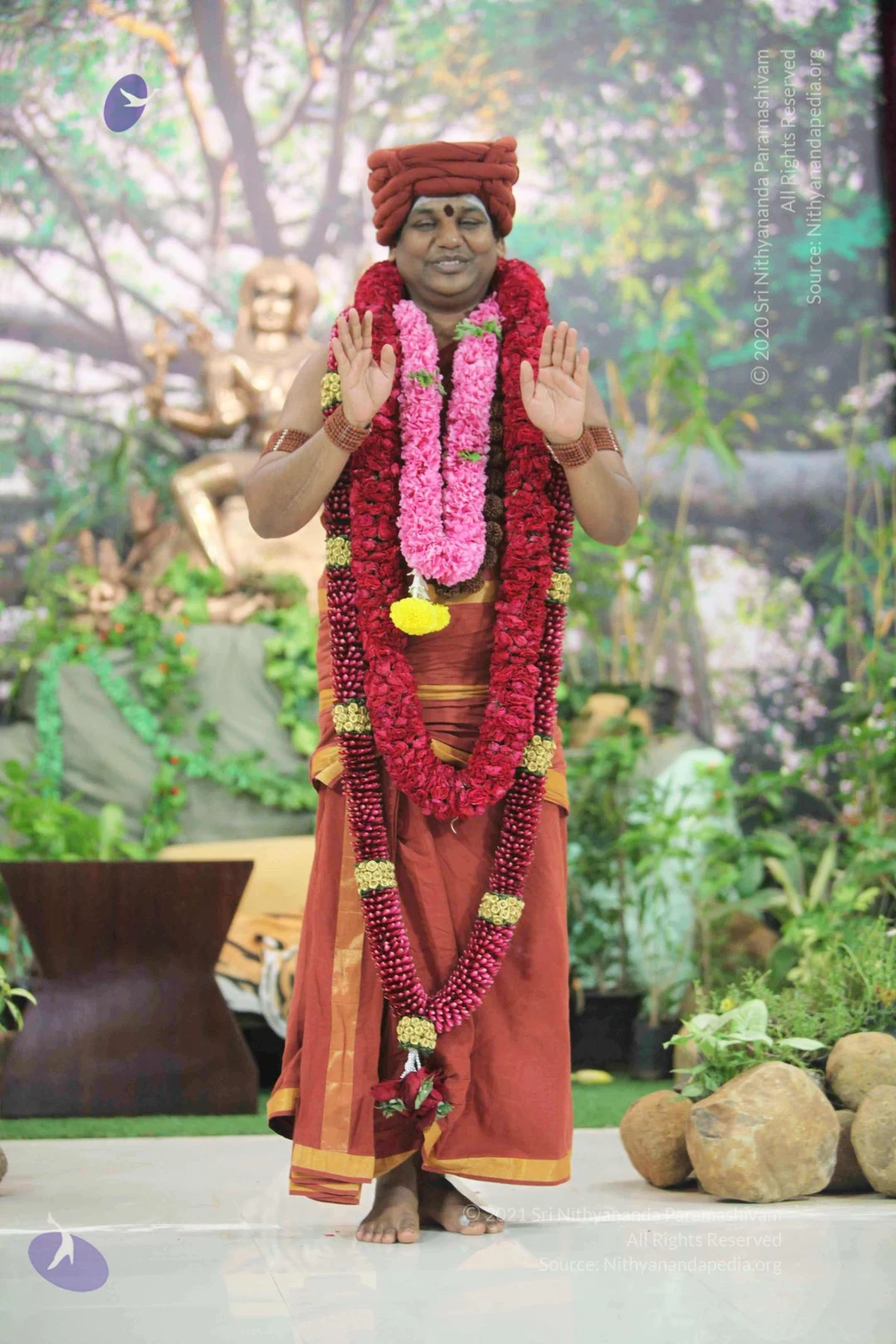
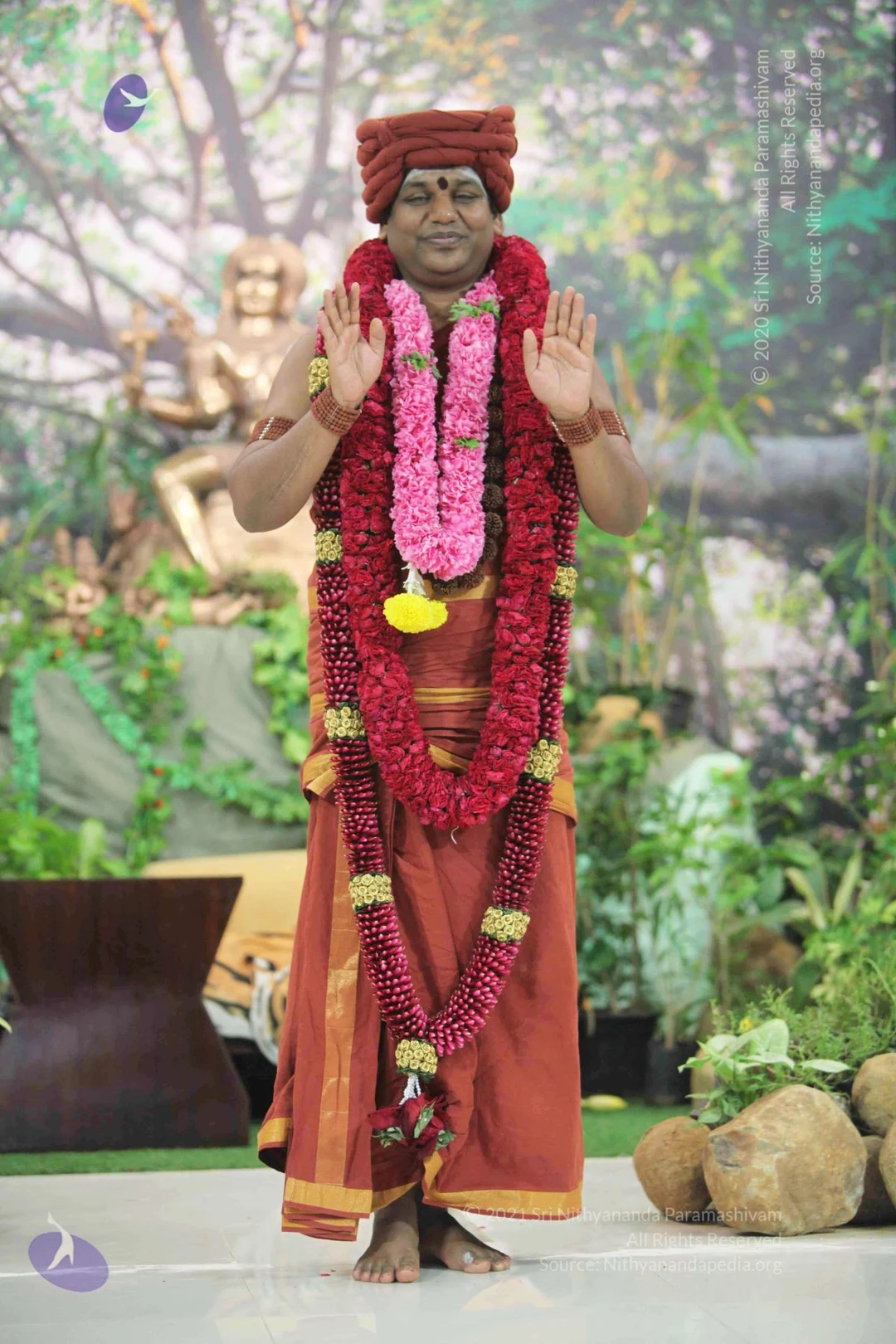
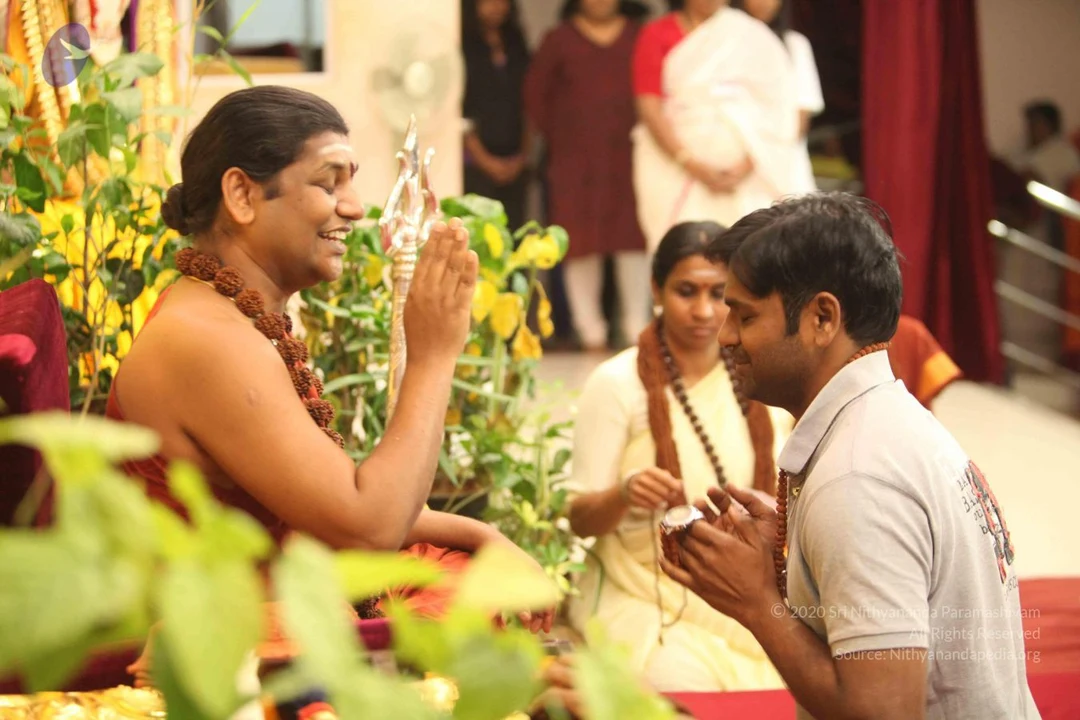
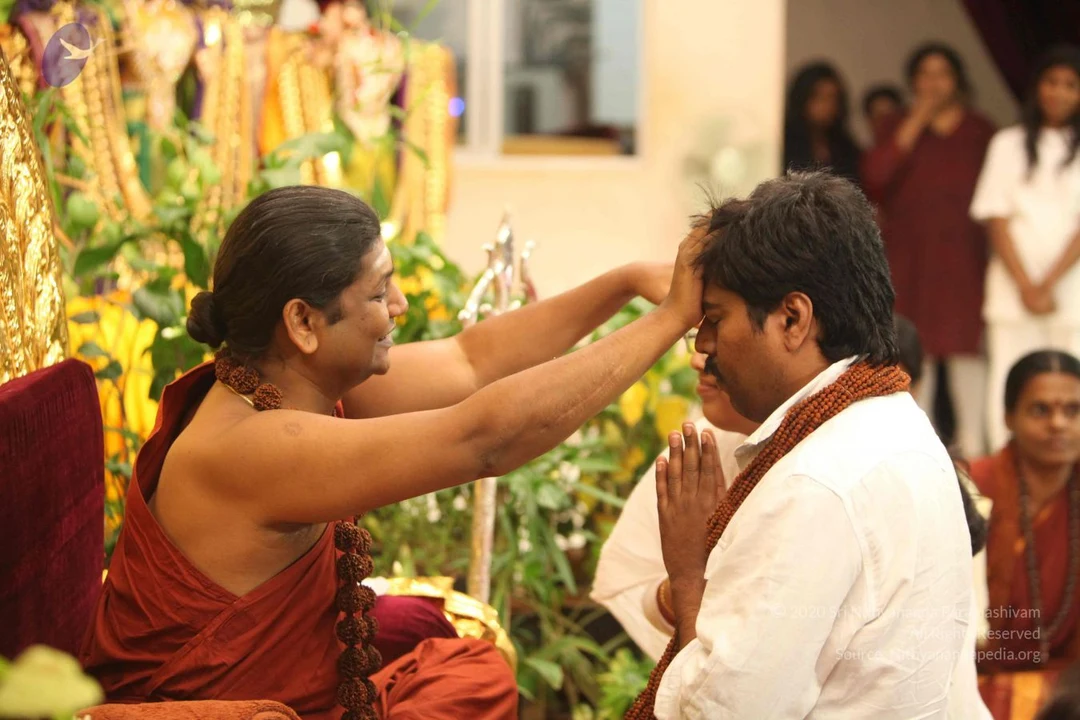
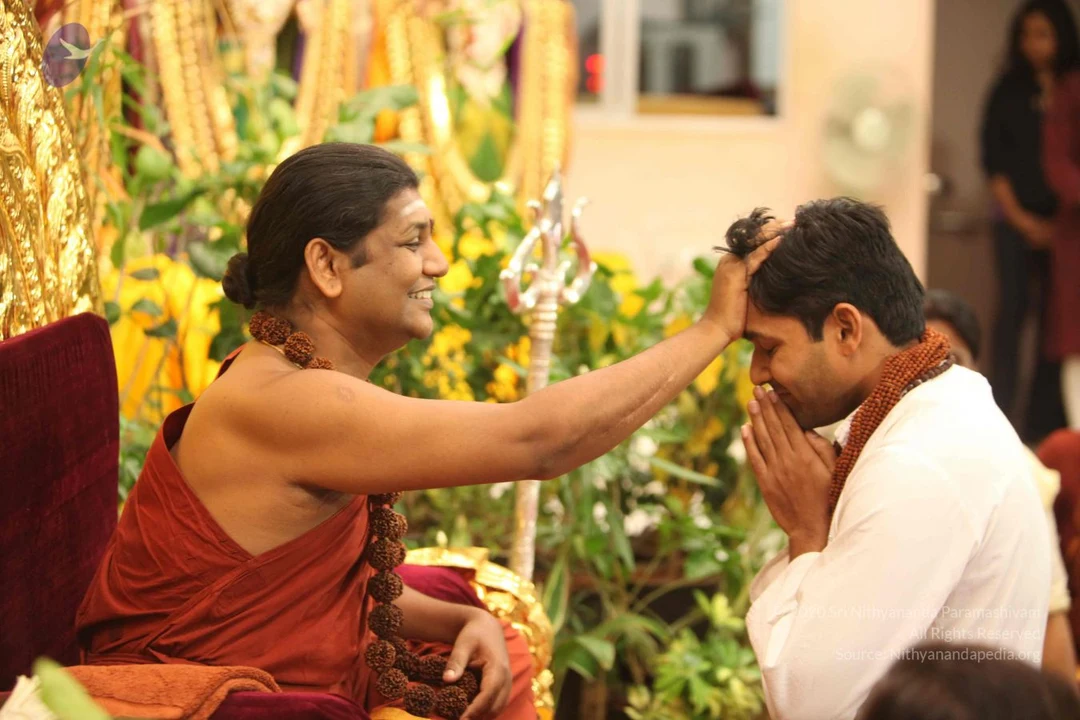
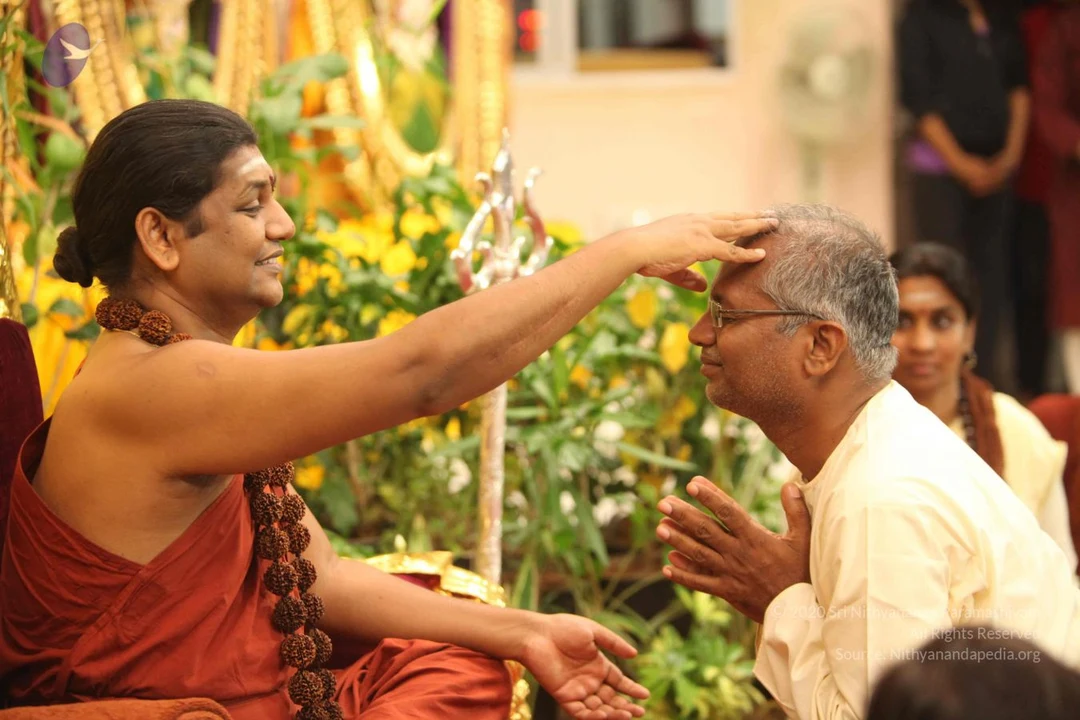
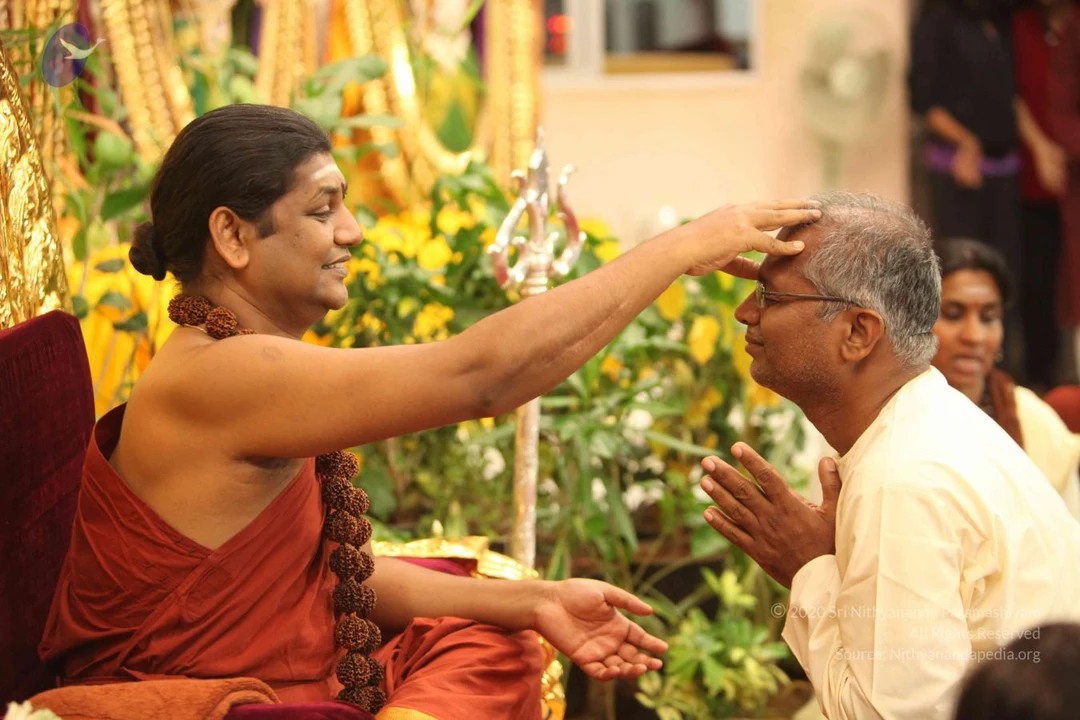
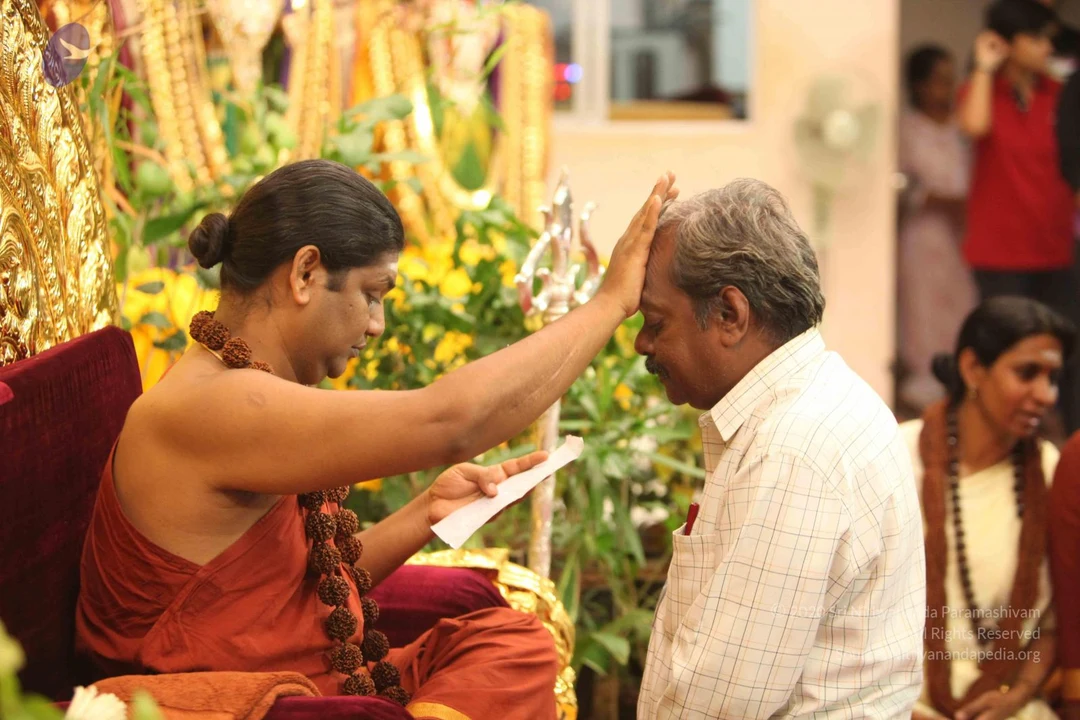
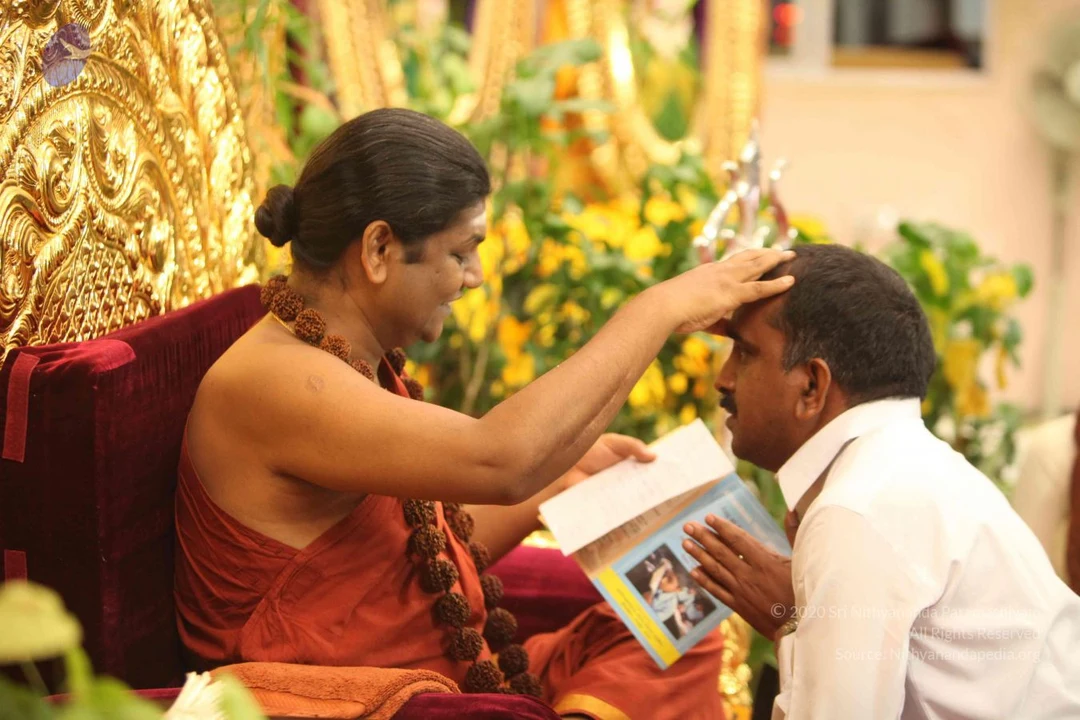
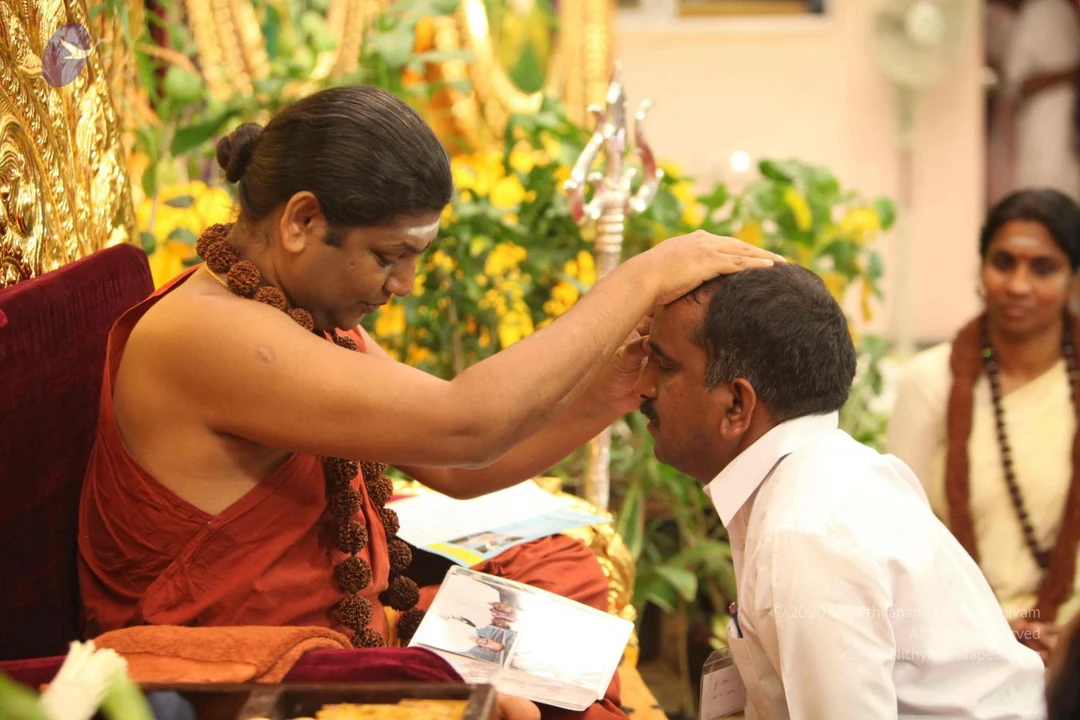
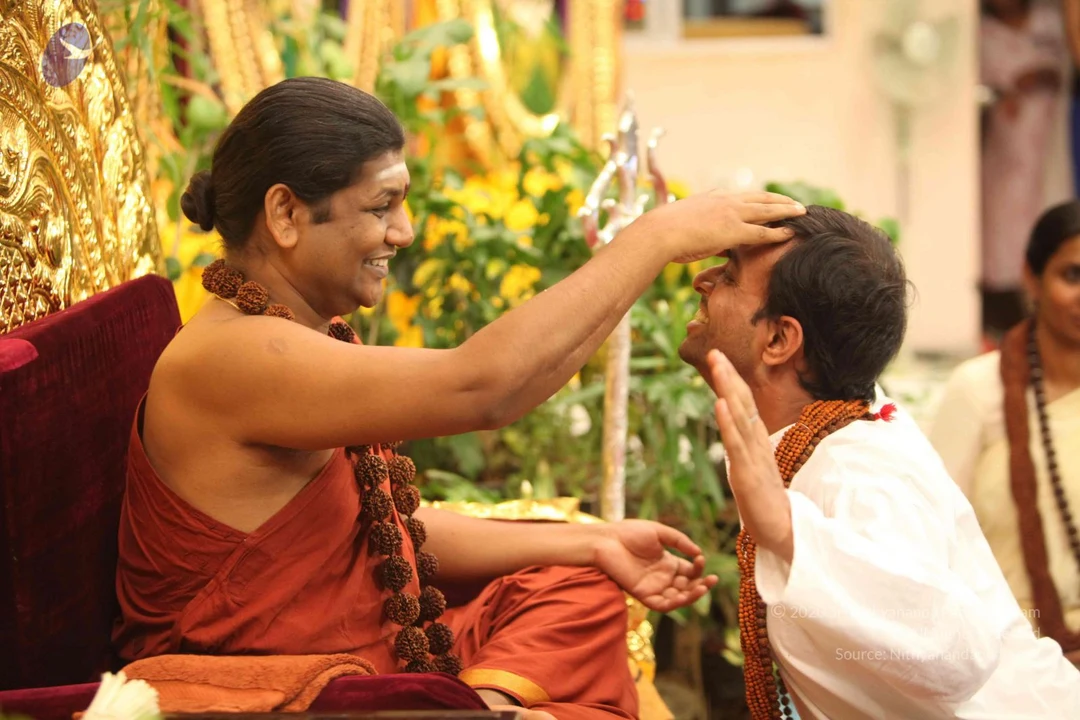
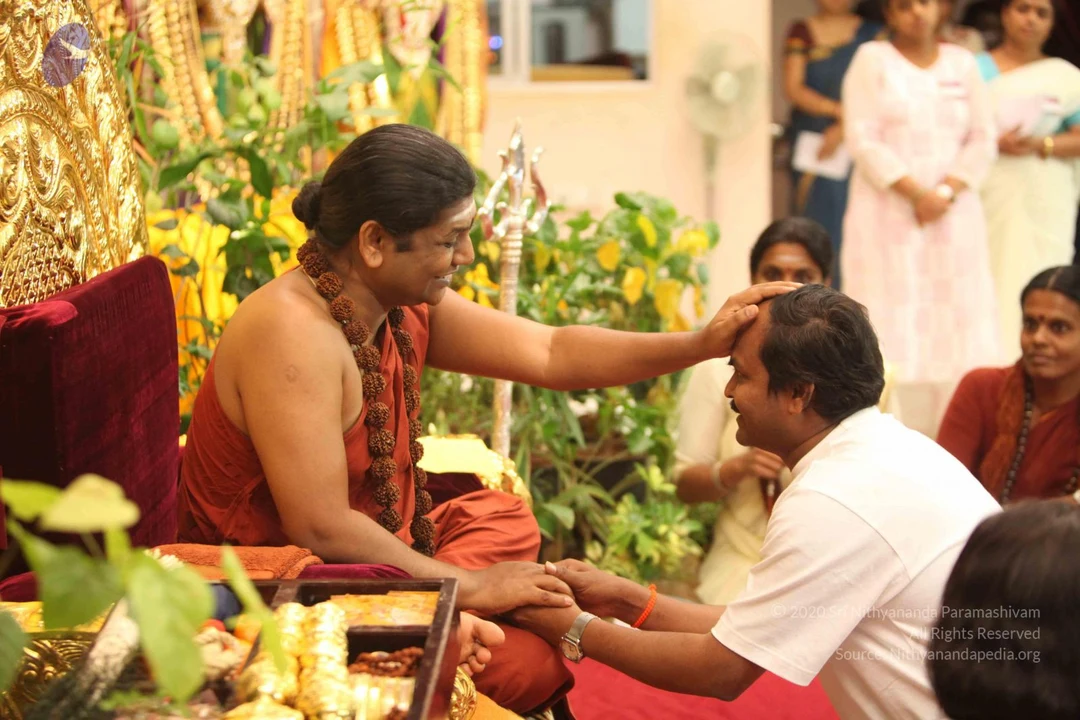
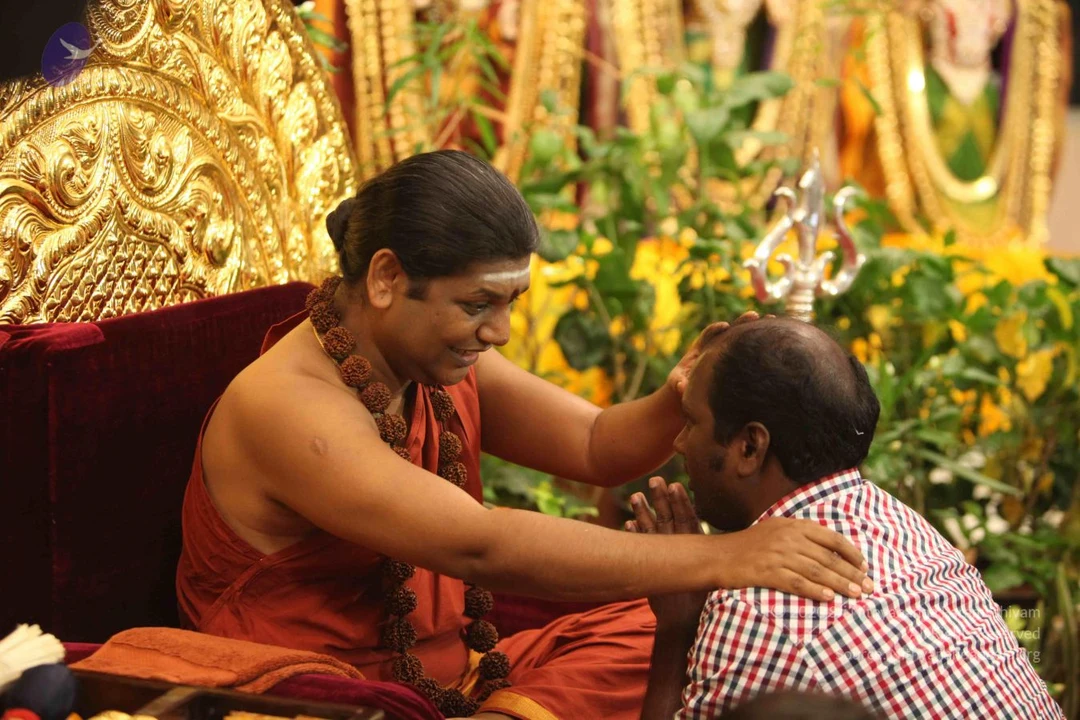
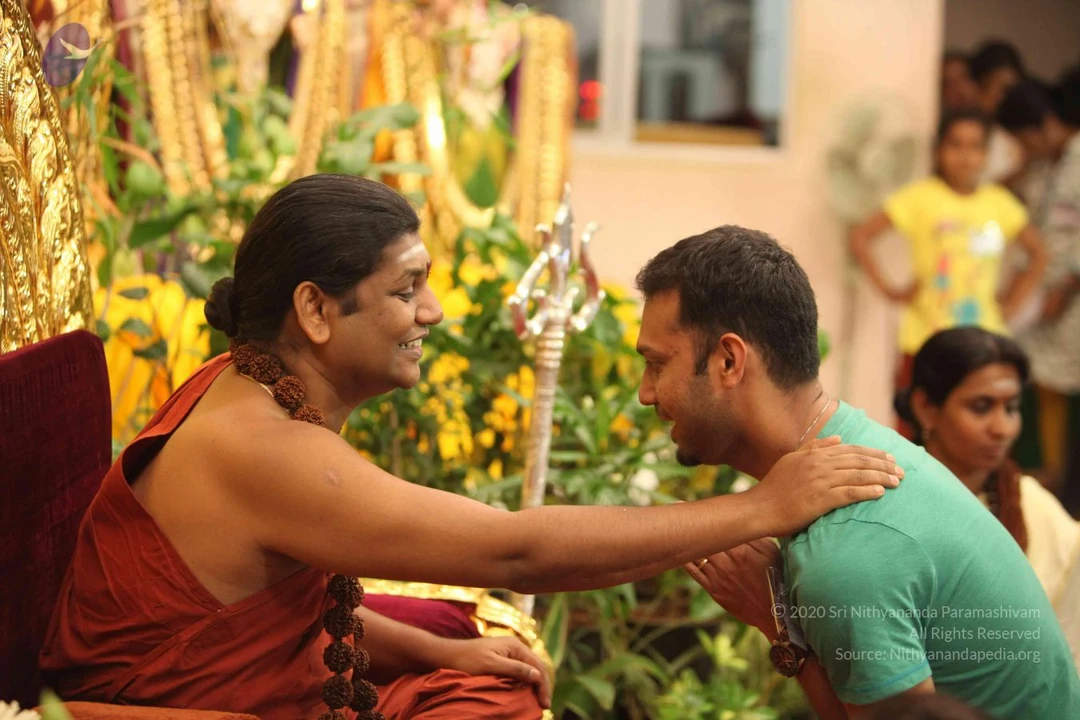
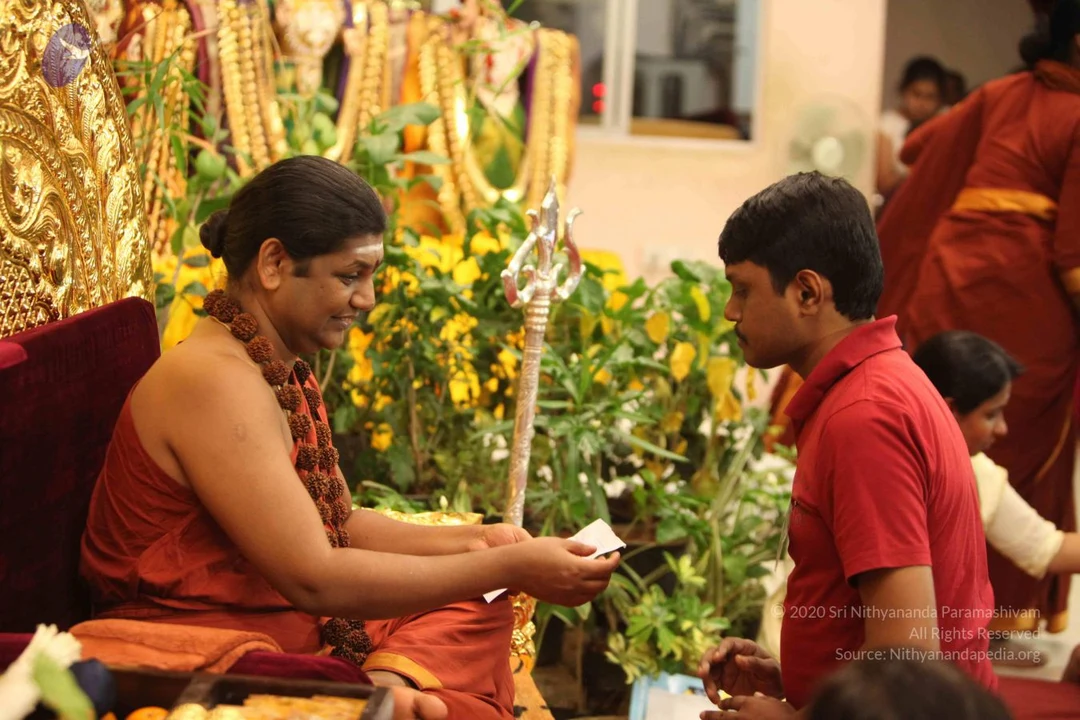
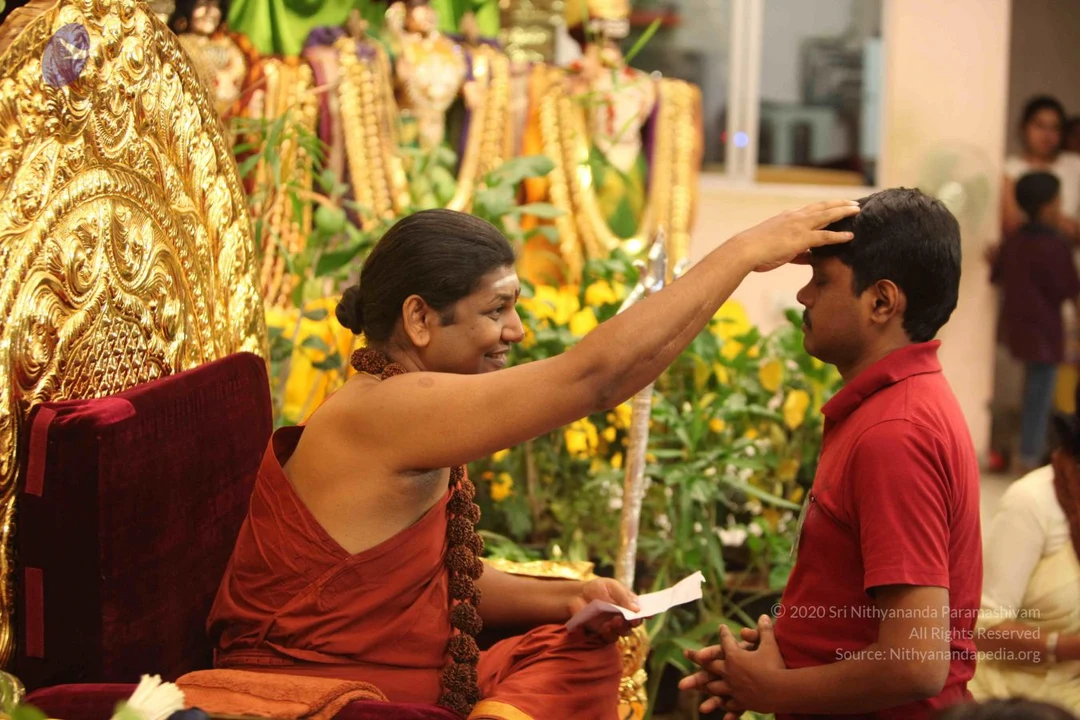
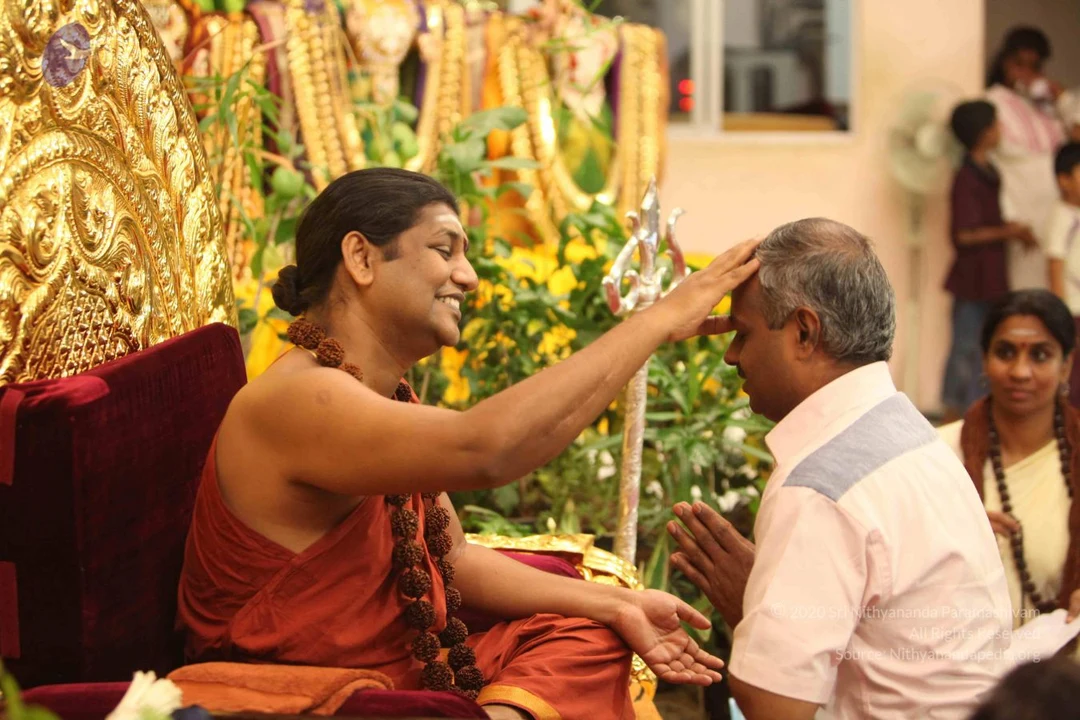
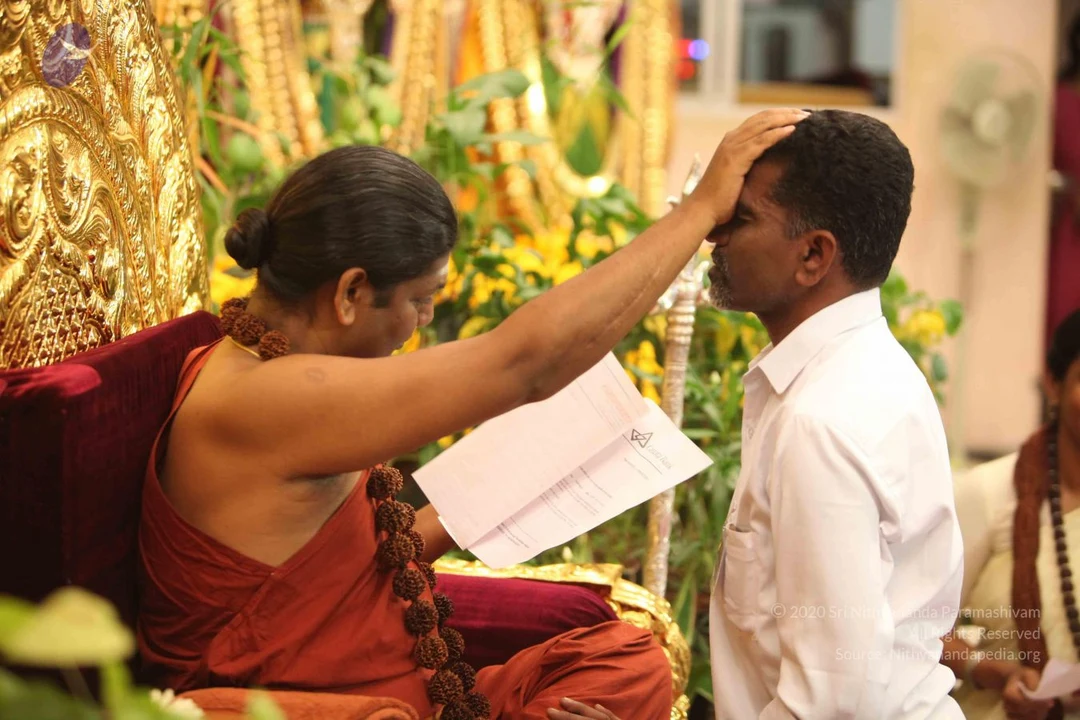
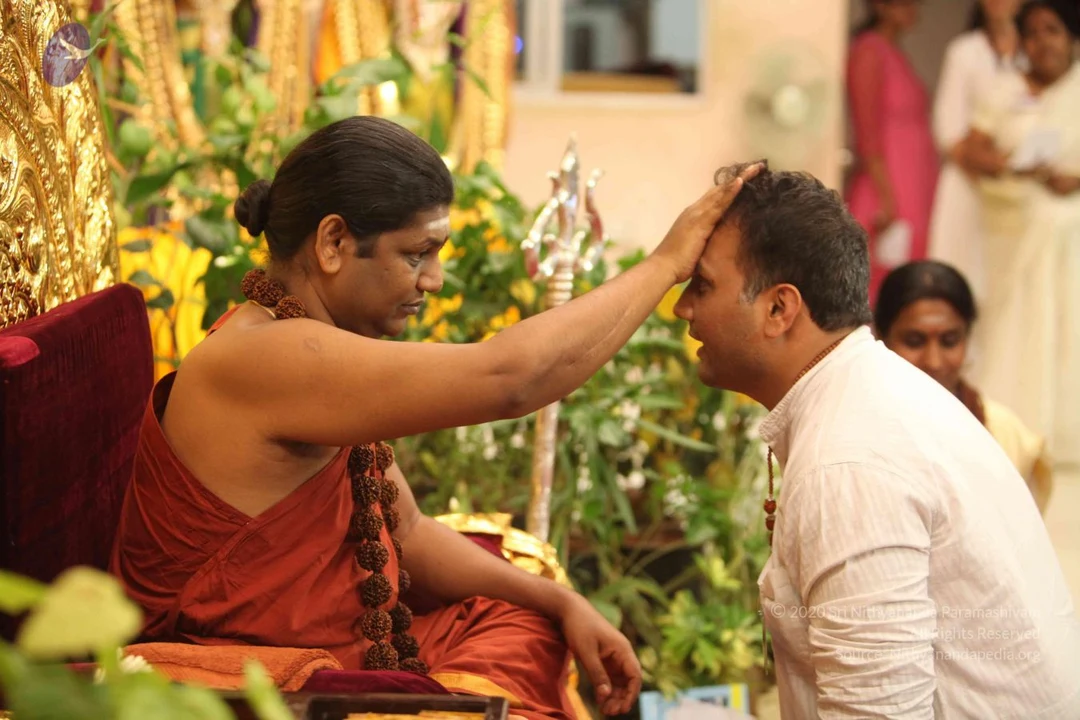
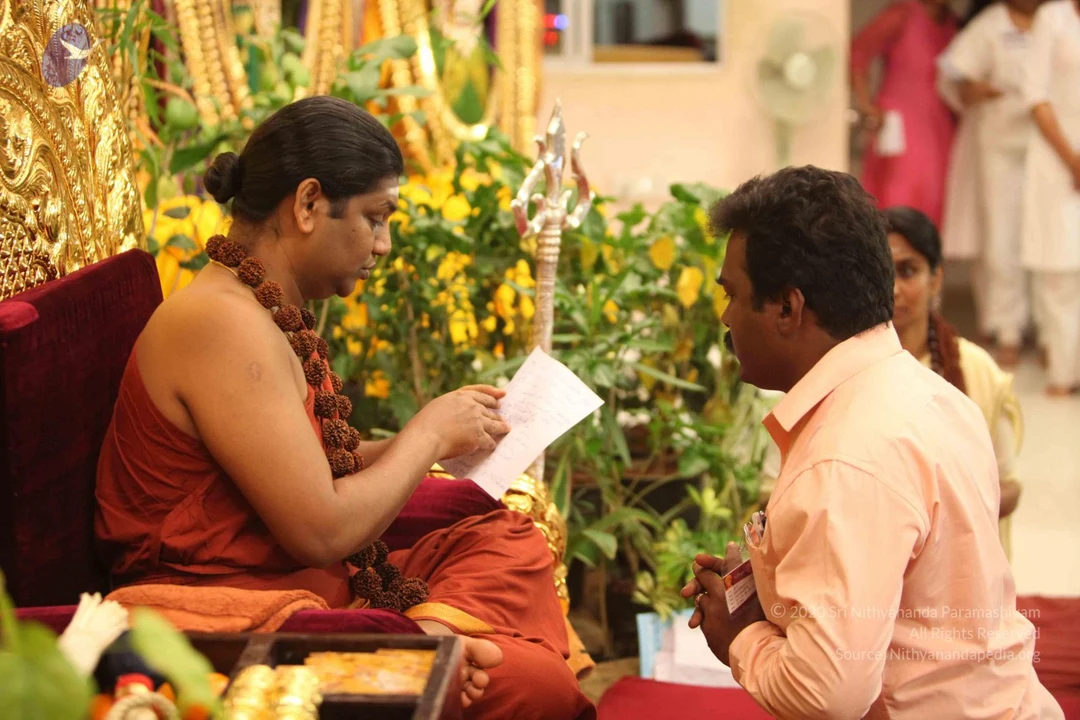
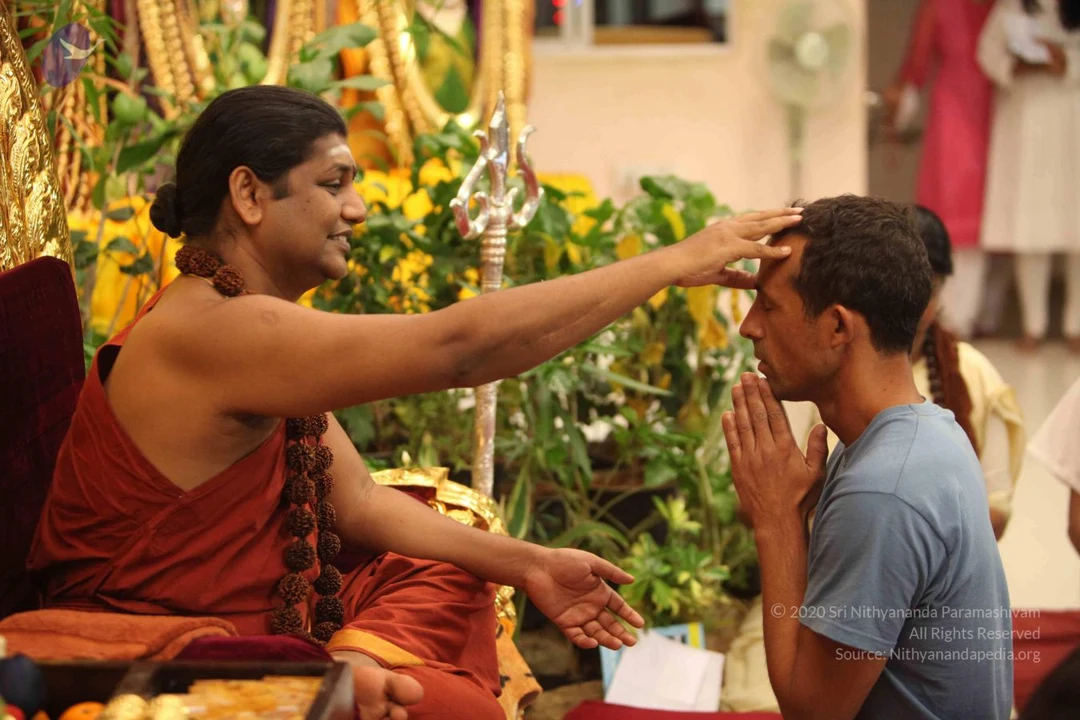
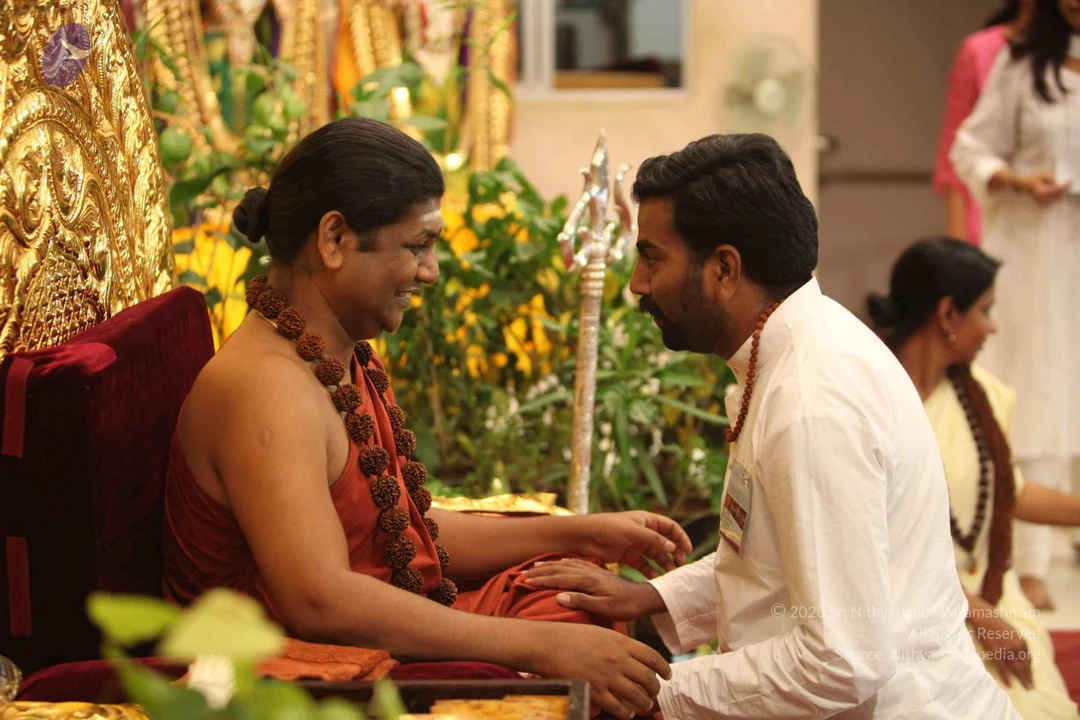
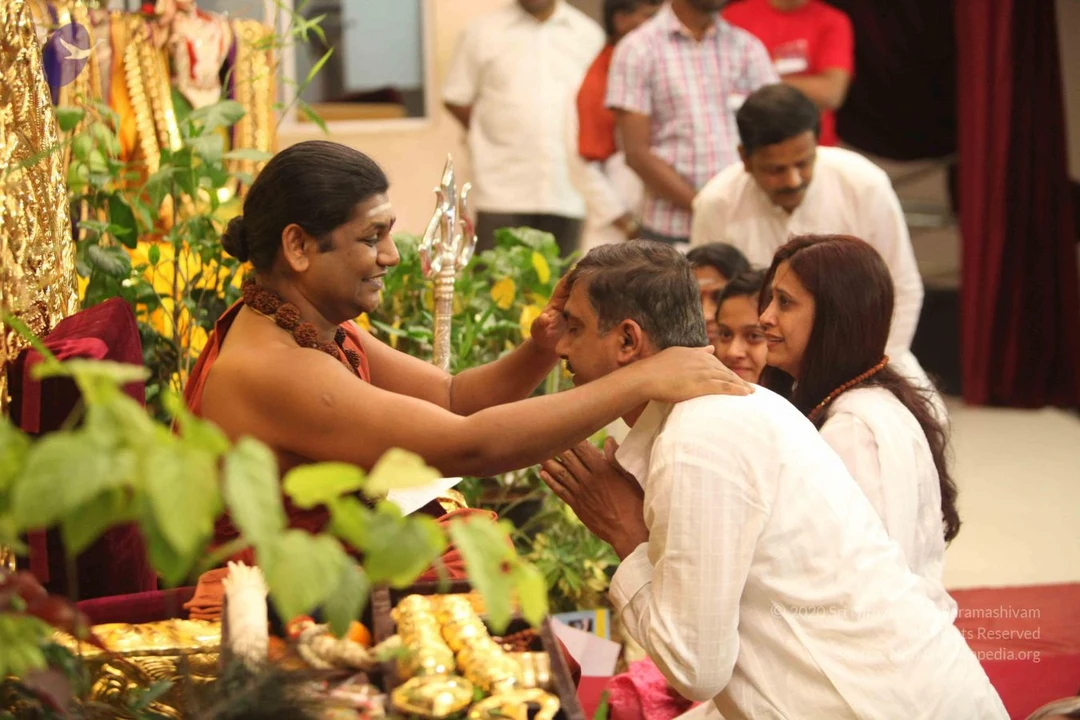
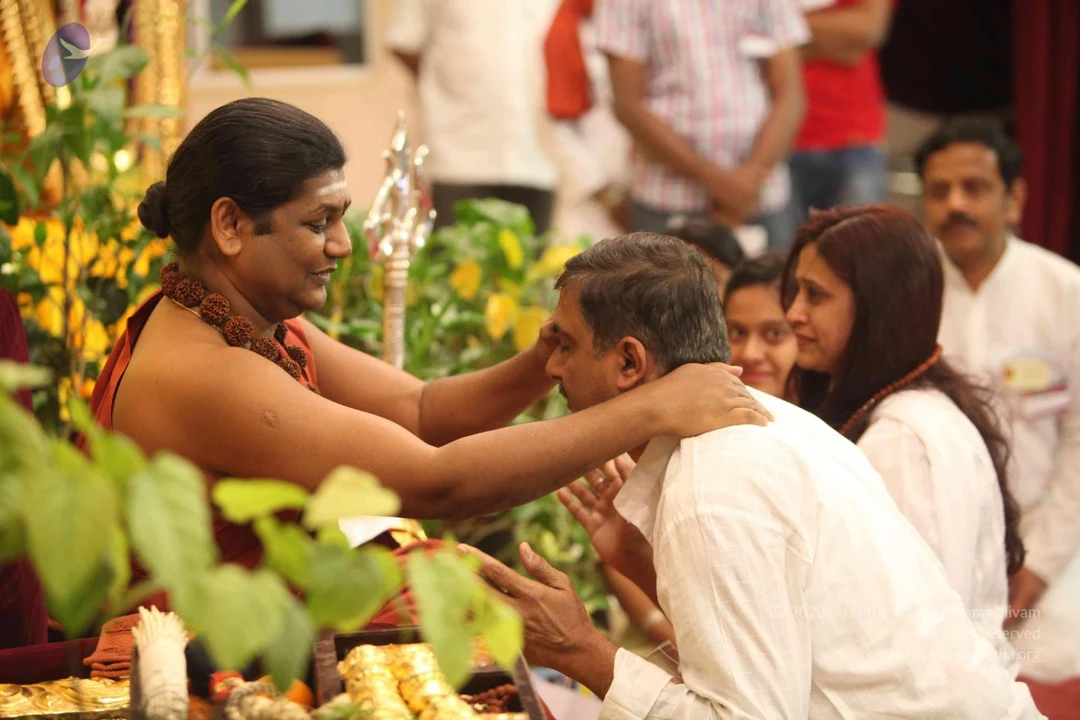
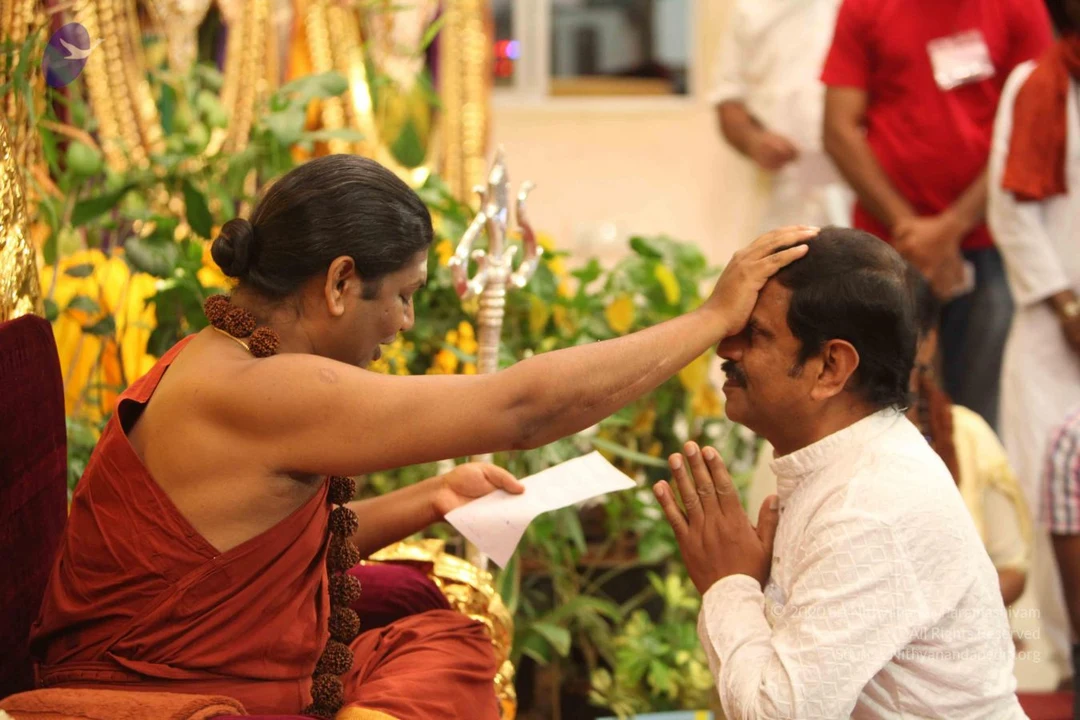
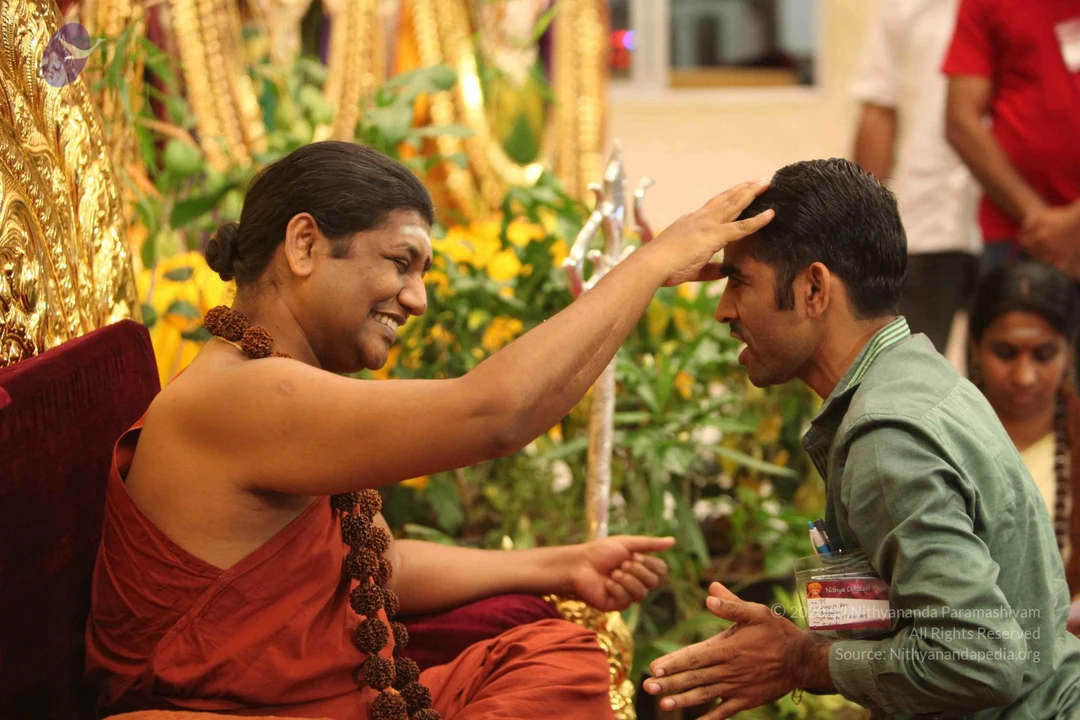
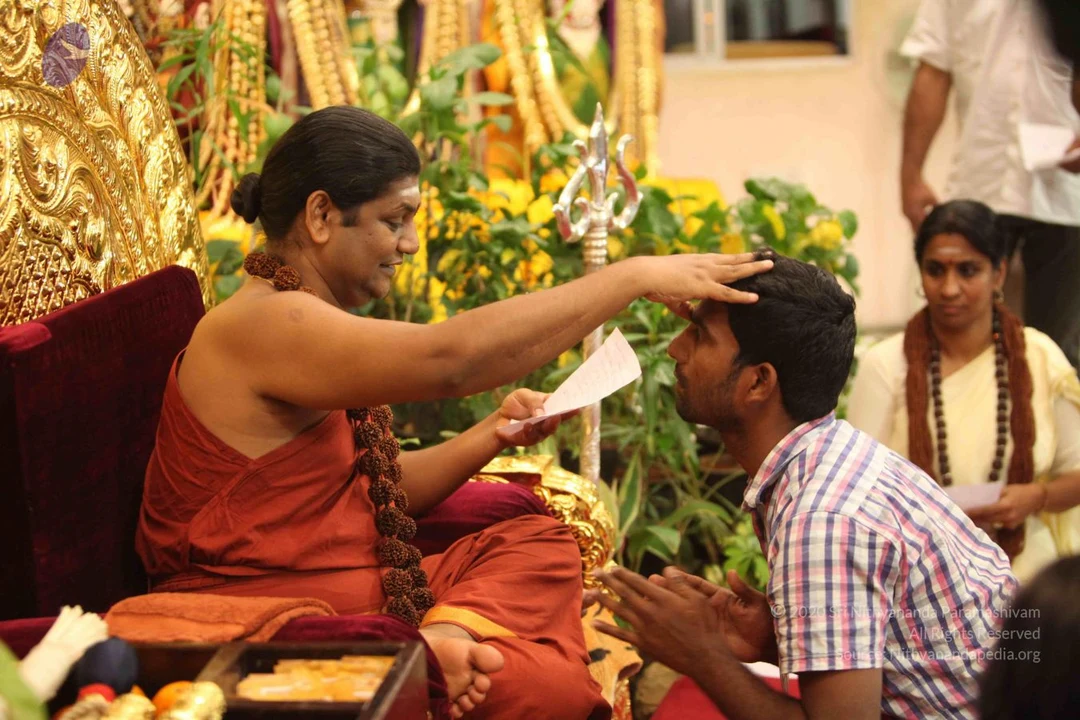
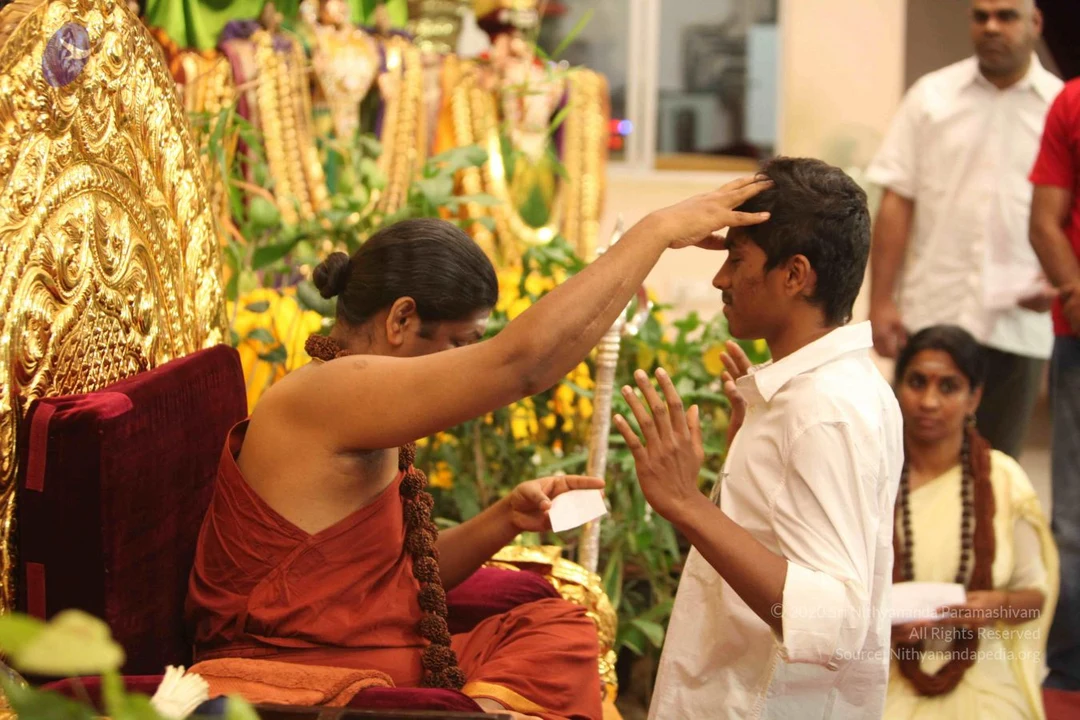
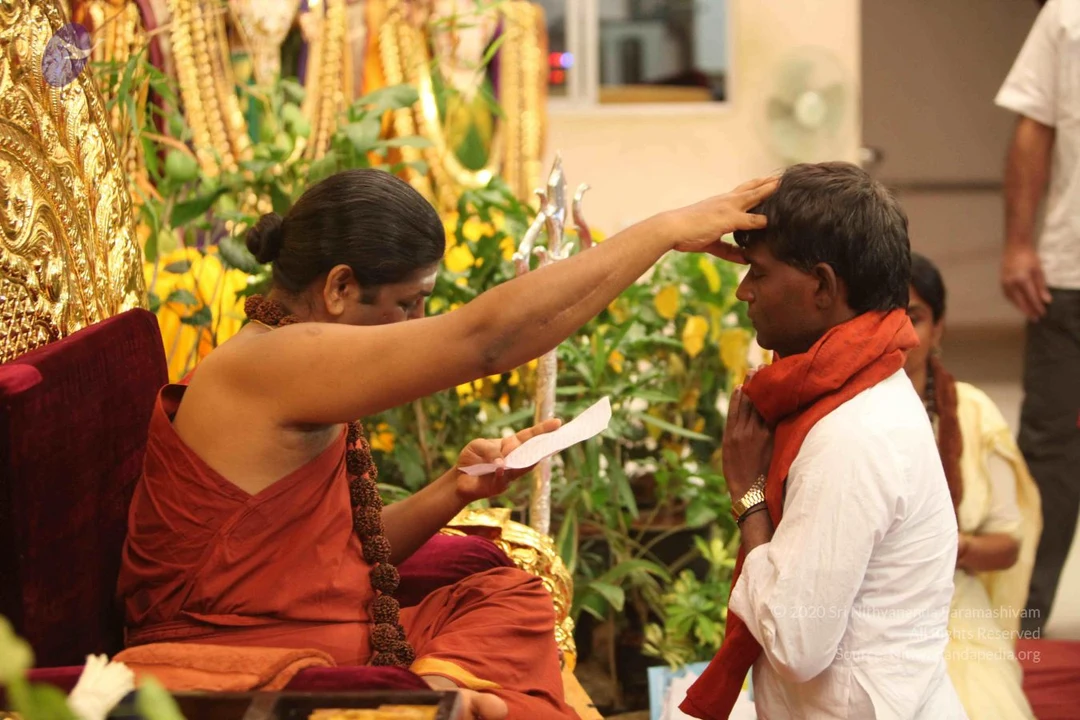
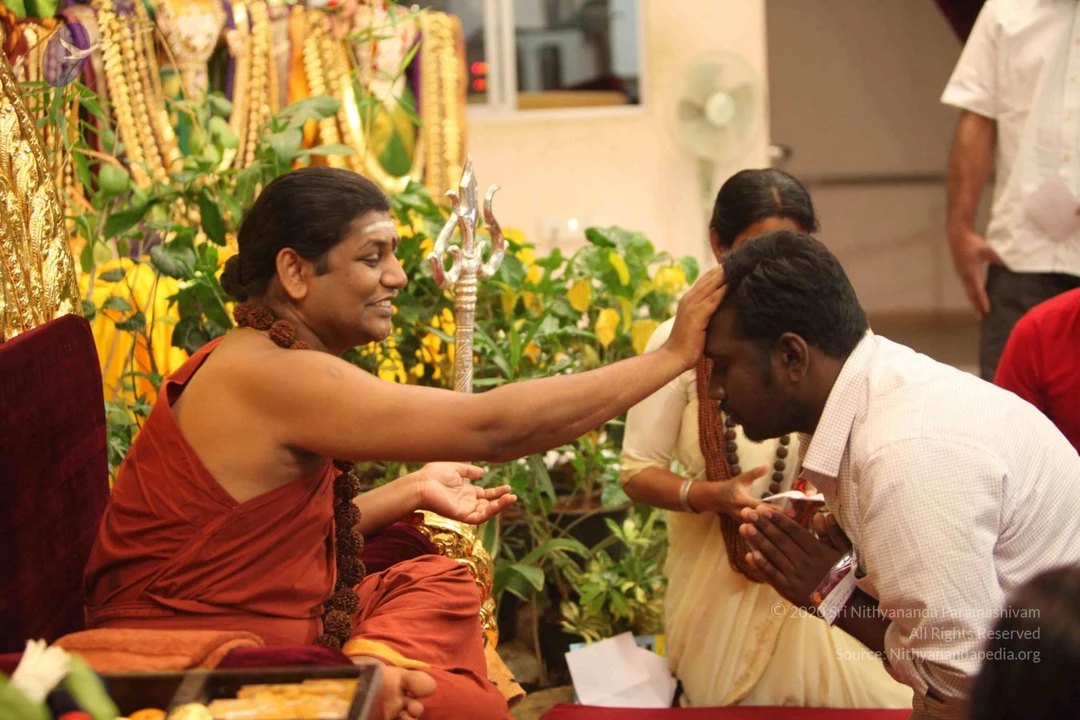
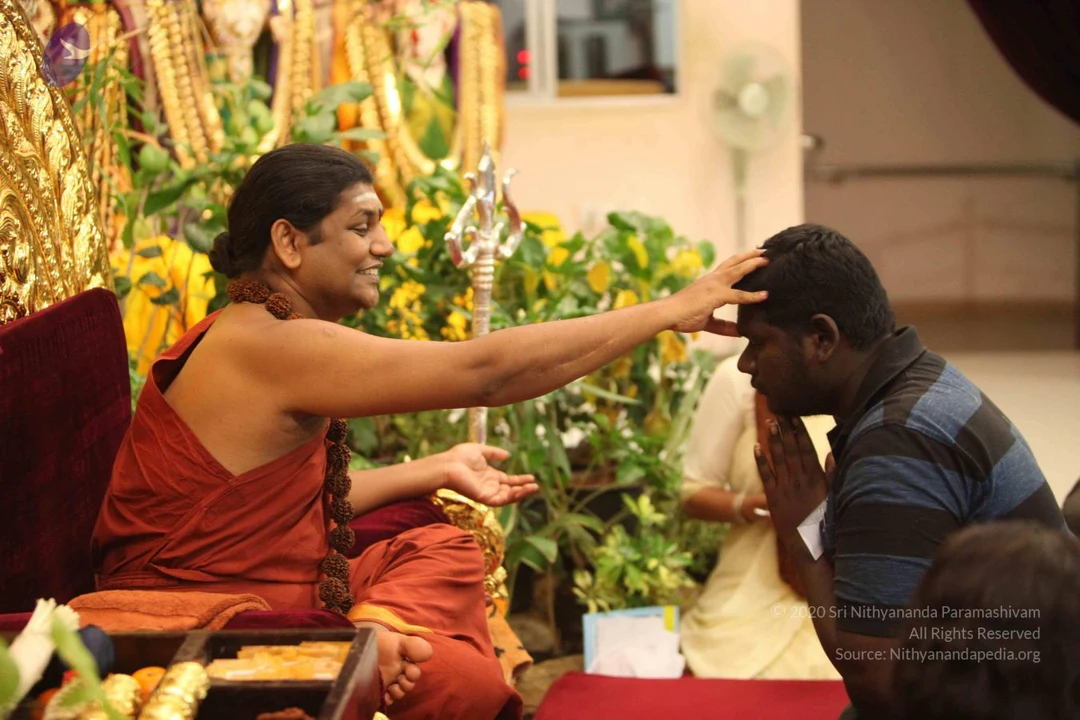
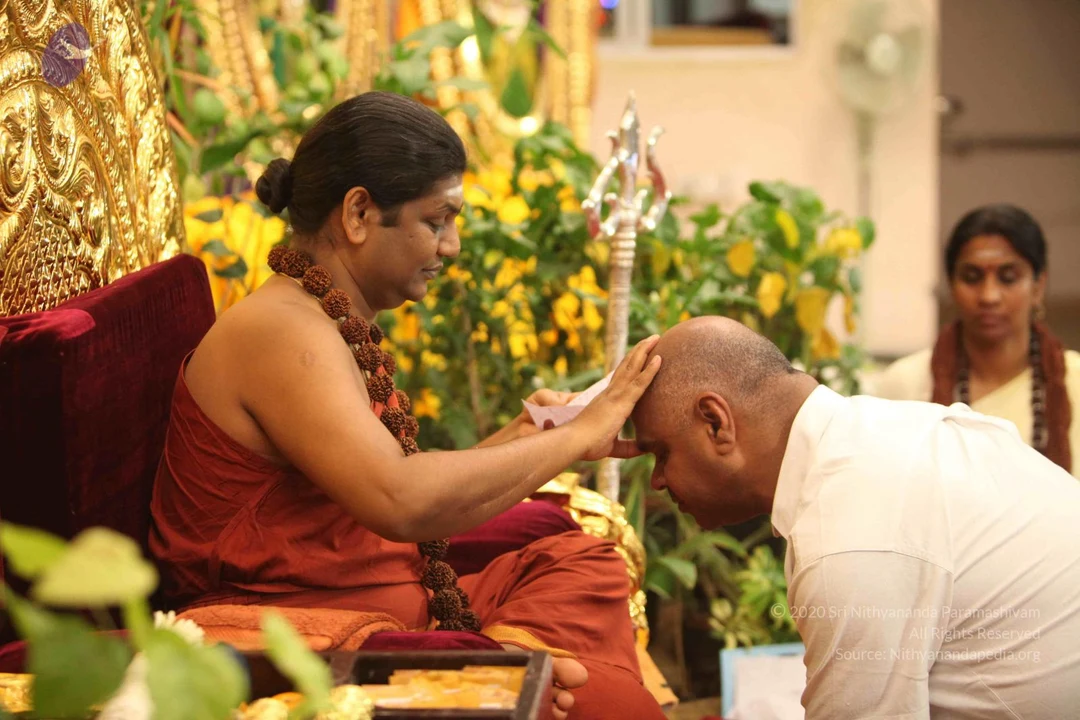
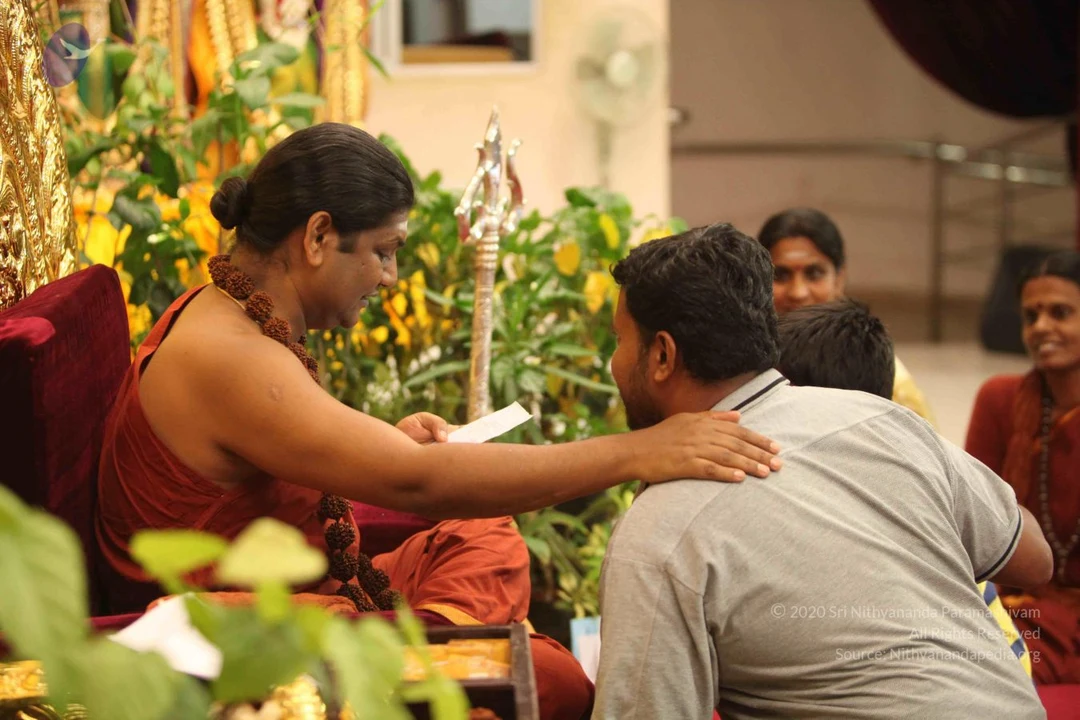
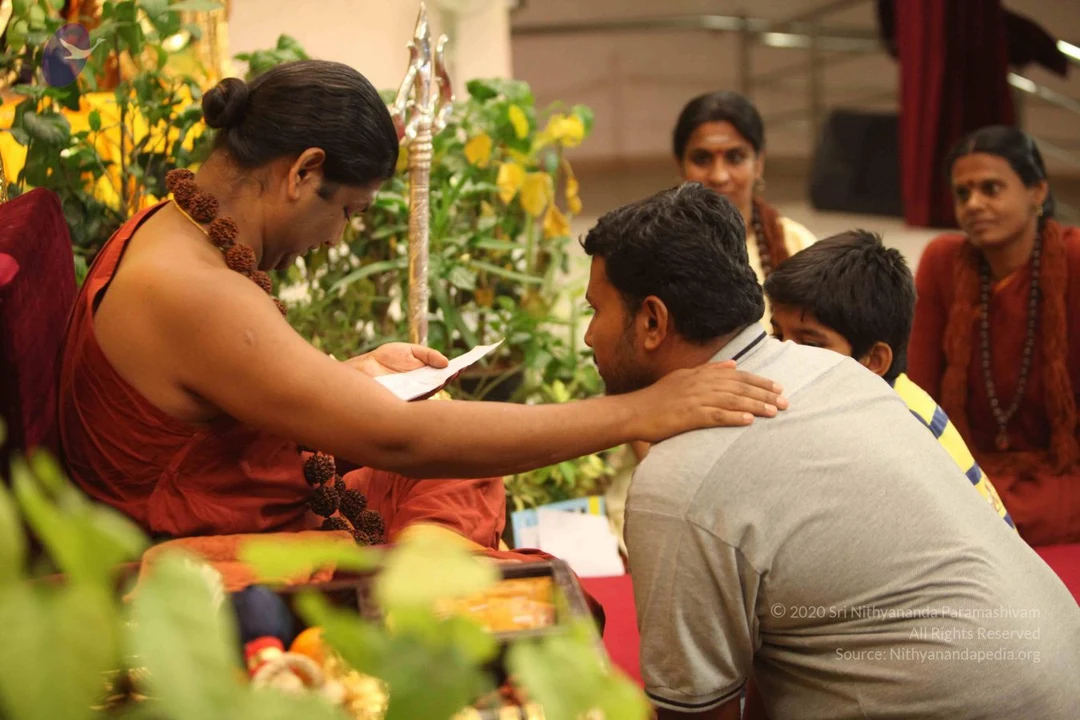
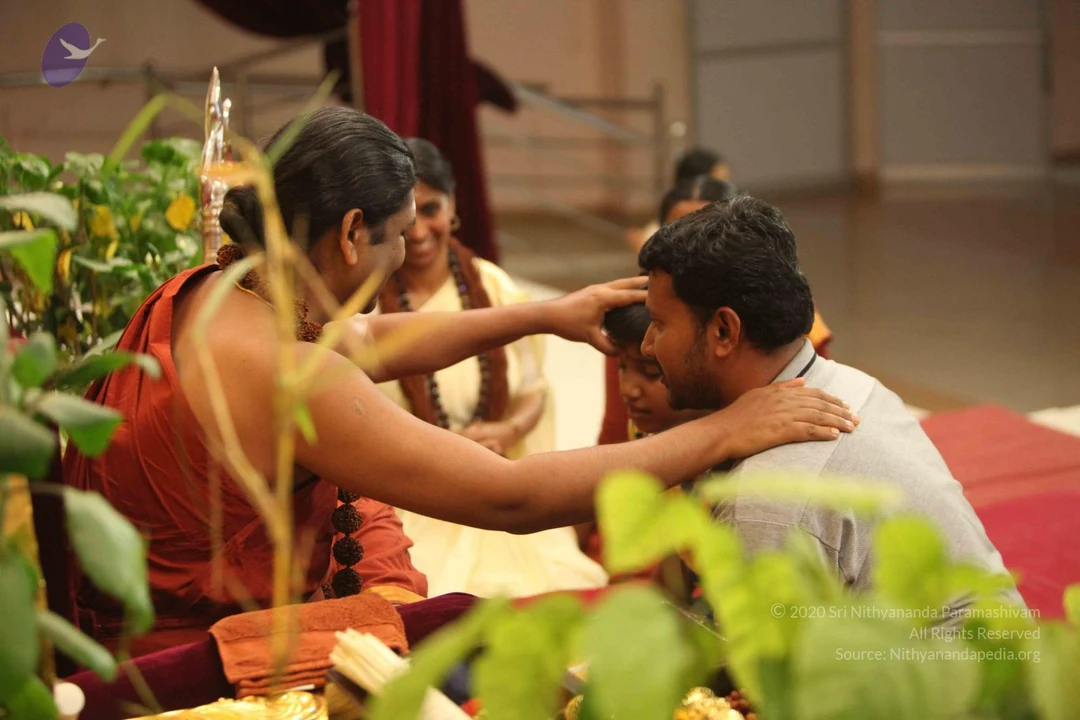
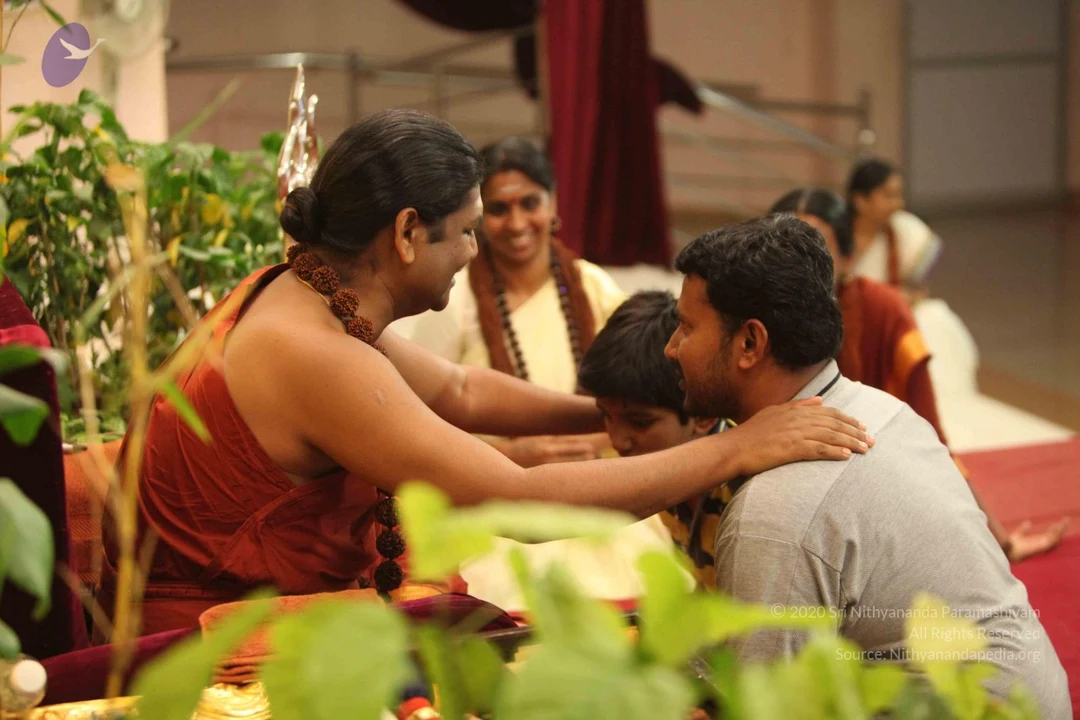
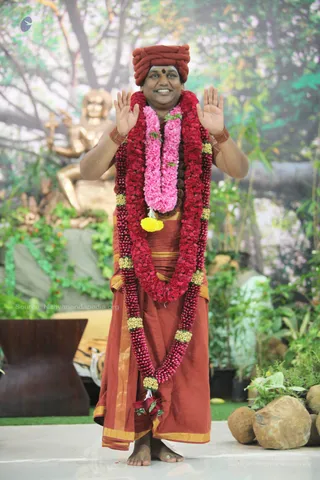
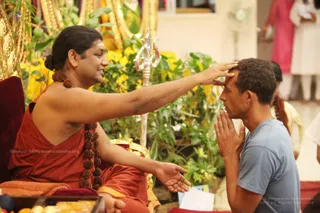
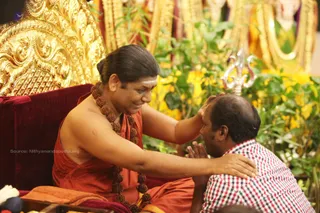
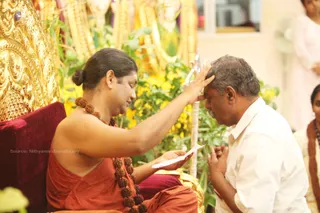
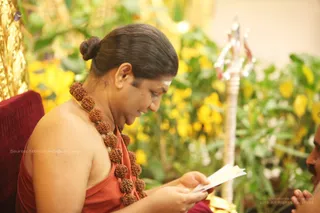
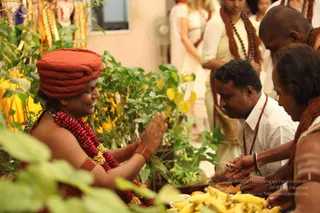
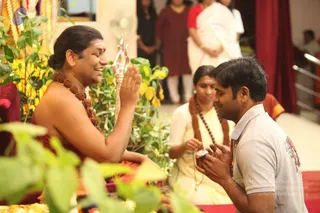
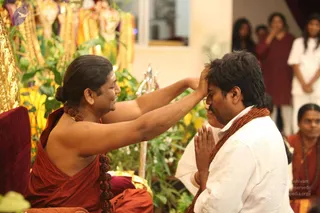
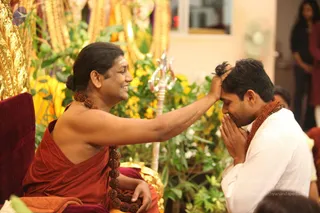
A photograph of a smiling man standing barefoot on a light stage in front of a leafy garden backdrop, raising both palms open at shoulder height. He wears a rust-red turban with a red bindi, layered garlands of red roses, pink carnations and yellow pompom flowers draped around his neck, and a rust-red dhoti with gold borders. Behind him stands a golden statue of a seated figure, with potted plants and large rocks at the sides. The setting suggests a satsang or darshan stage. a person: the man's appearance, with a turban, dark bindi and a garlanded satsang presentation, matches the page's reference to a person.A photograph of a ritual scene outdoors beside potted green plants and yellow flowers. A figure on the left wears an orange-red turban, a bare upper body, thick red and gold beaded garlands, and orange-red armbands, and is smiling while reaching toward a tray. Beside the tray, a man in a white shirt with a rudraksha mala kneels and holds a small brass vessel, and a woman in an orange-red shawl and beaded necklace leans over a bowl. Ripe bananas and yellow fruit sit on the tray. Other people in white and cream clothing stand in the background. Visible overlay text reads Nithyananda Paramashivam andA seated man in an orange-red robe with a large rudraksha mala around his neck extends his right hand to rest on the forehead of a kneeling man in a blue t-shirt, whose hands are pressed together in anjali. A silver trident stands behind them among yellow flowers and green foliage, with a gold-coloured throne at left. Two people in white and pink clothing stand in the background. Setting suggests a darshan or blessing moment.A seated man in saffron-orange robes and a long rudraksha mala with a white forehead mark places his hand on the head of a kneeling devotee in a red-and-white checked shirt. The robed man sits on a red velvet seat before an ornate gold throne backdrop with gold garlands, yellow flowers and a silver trident. Swamiji (probable): the robed man has swept-back hair, saffron clothing and a rudraksha mala, a blessing gesture with the devotee; identity is appearance-based only. Two physical people are visible.A seated figure in a rust-orange saffron wrap and multi-strand rudraksha mala with a swept-back bun places a hand on the forehead of a kneeling man in a white shirt with palms pressed together. The seated figure holds a folded white paper or cloth in the other hand. Behind them are golden carved throne panels, a deep red velvet seat, yellow flowers and garlands. A woman in a brown shawl is partly visible at the right edge.A seated man in a rust-orange shawl over bare shoulders, wearing a long rudraksha mala with large beads and a short topknot, looks down and reads a folded sheet of paper he holds in both hands. A white vibhuti line marks his forehead. Beside him, a man in profile with a moustache leans in at the right edge. Behind them stand a silver trident and a background of yellow flowers and green foliage, with a gold draped cloth at the left edge. Appearance-based label: a person, seated and reading, wearing rust-orange shawl and long rudraksha mala.

Shivoham Process
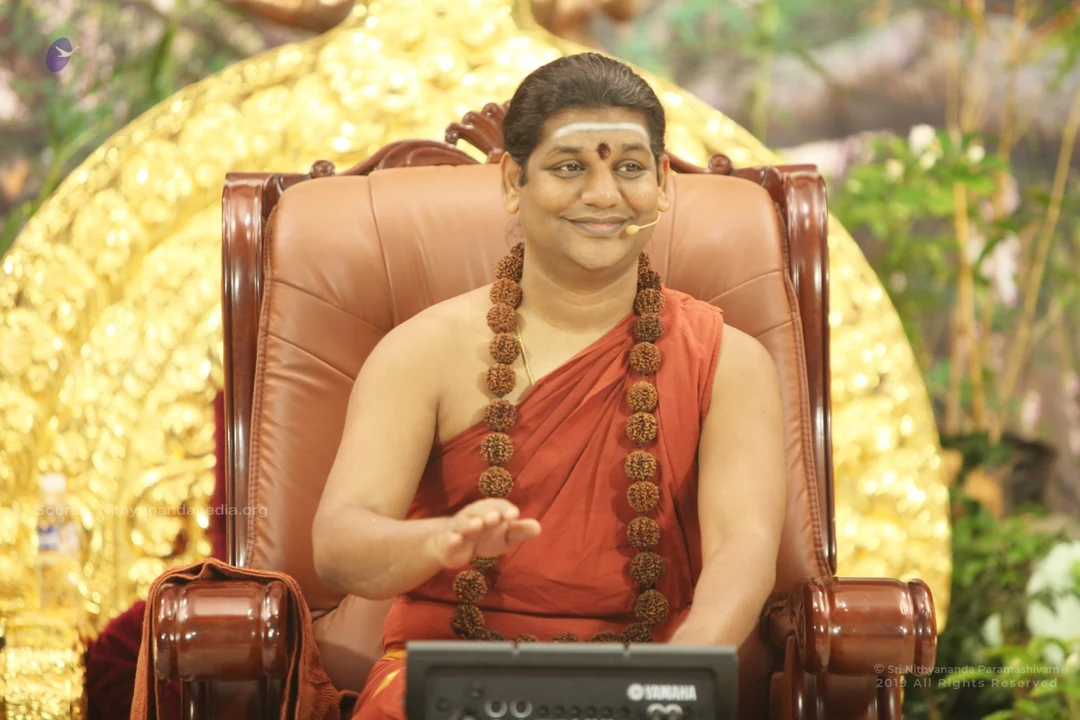
7 photosSource gallery
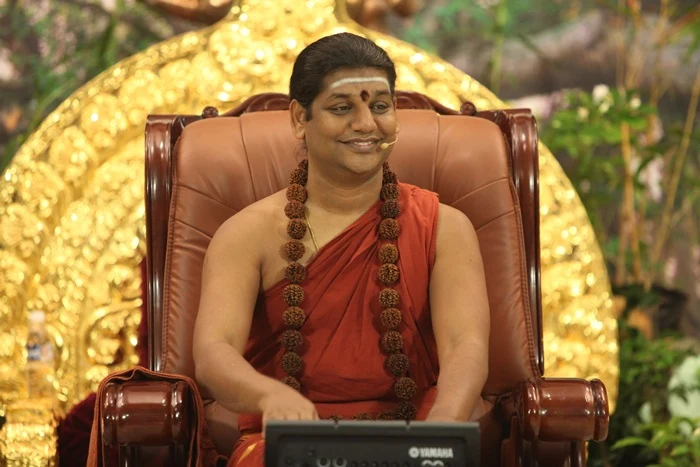
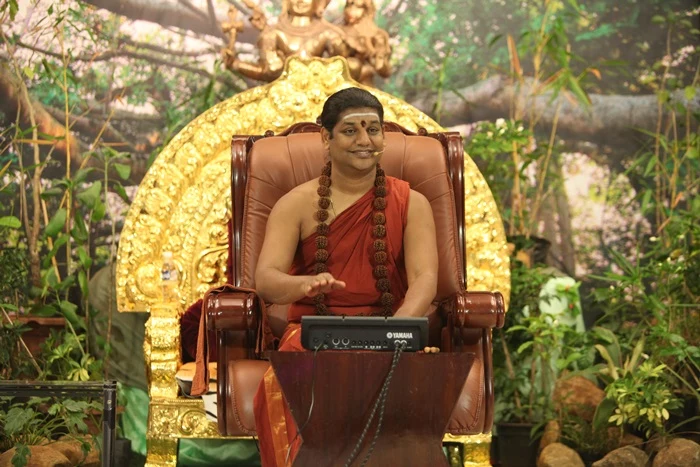
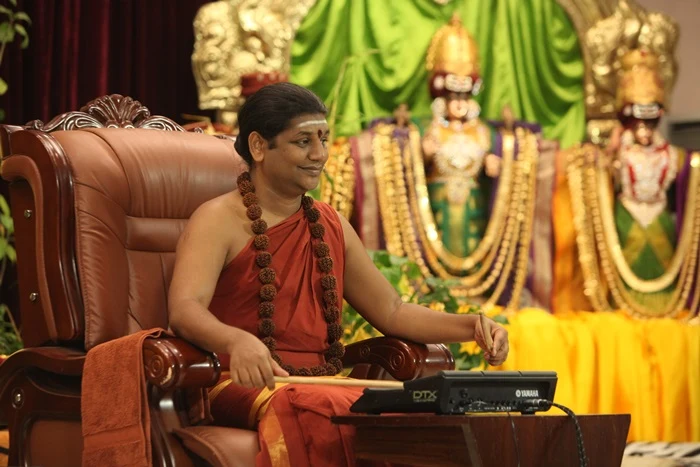
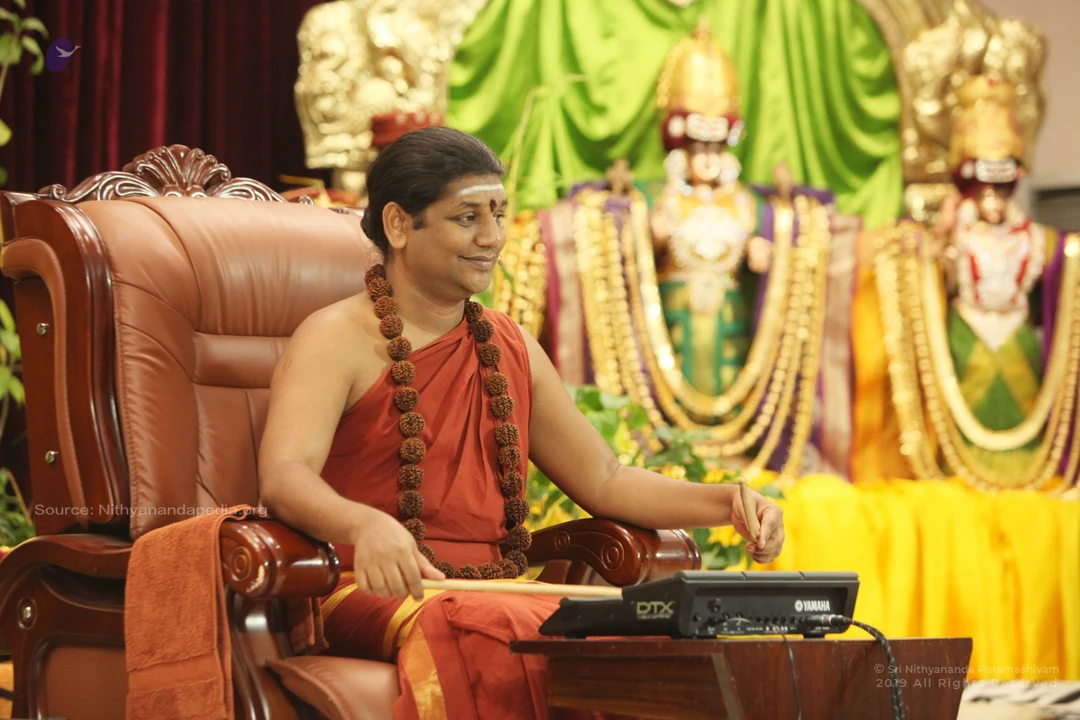
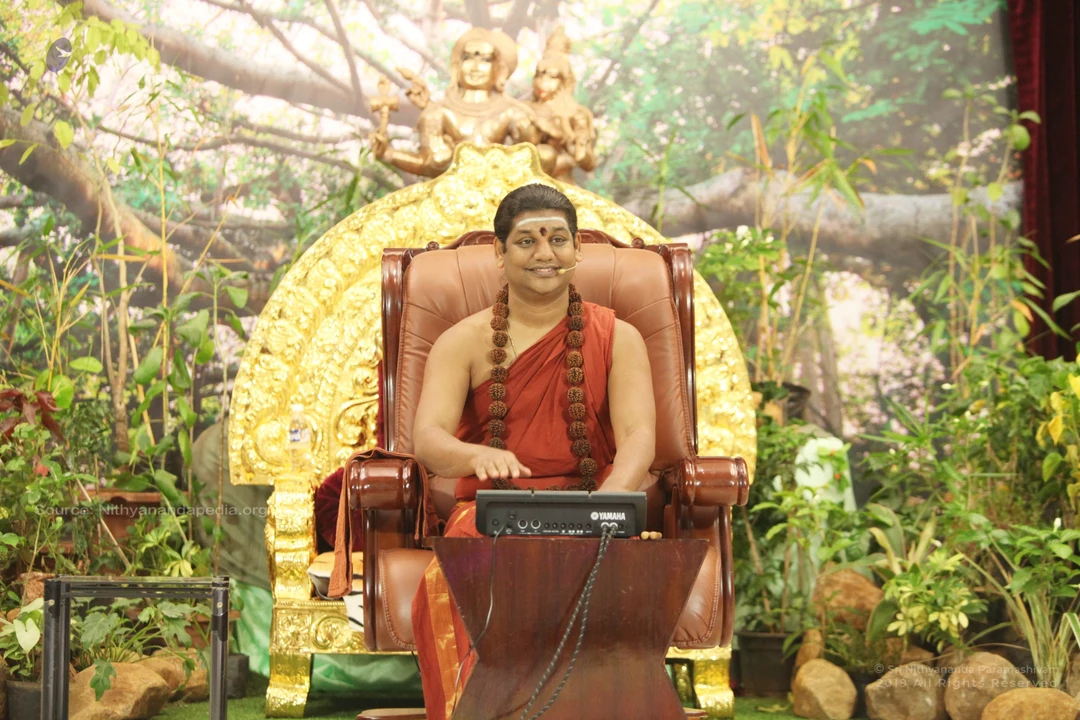
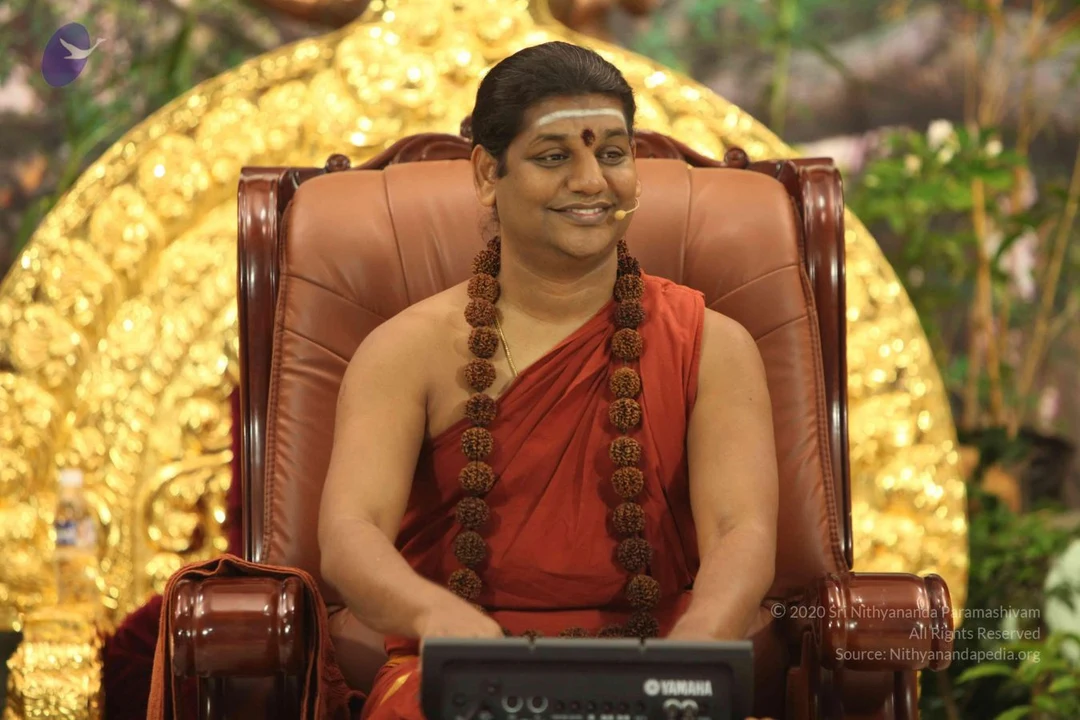
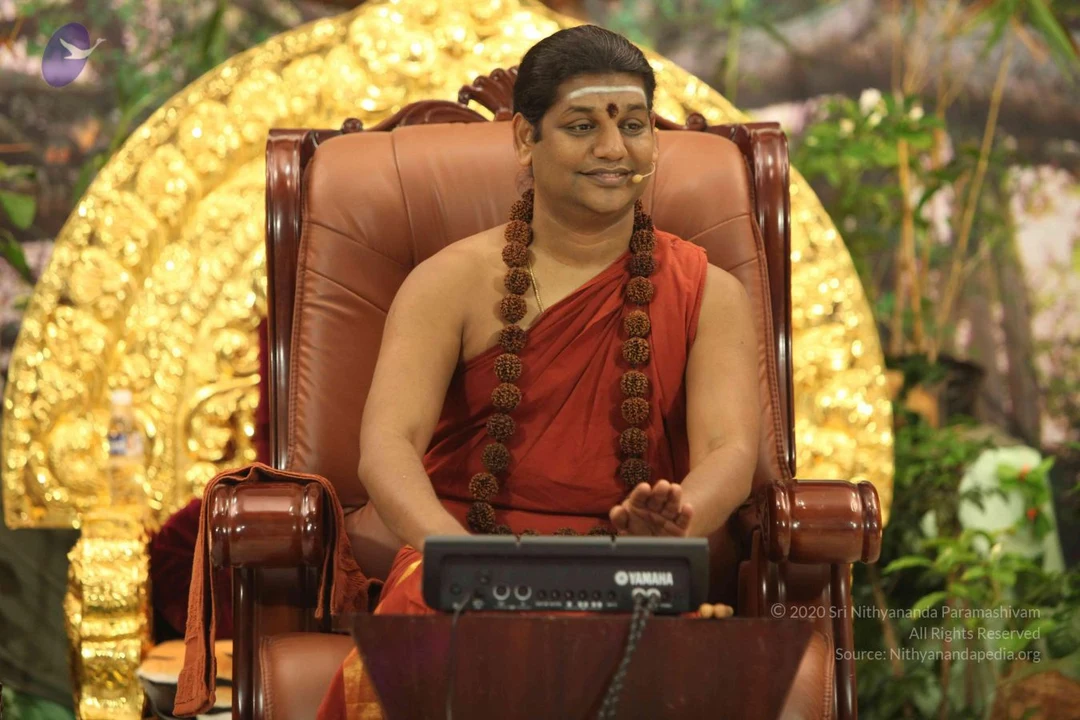
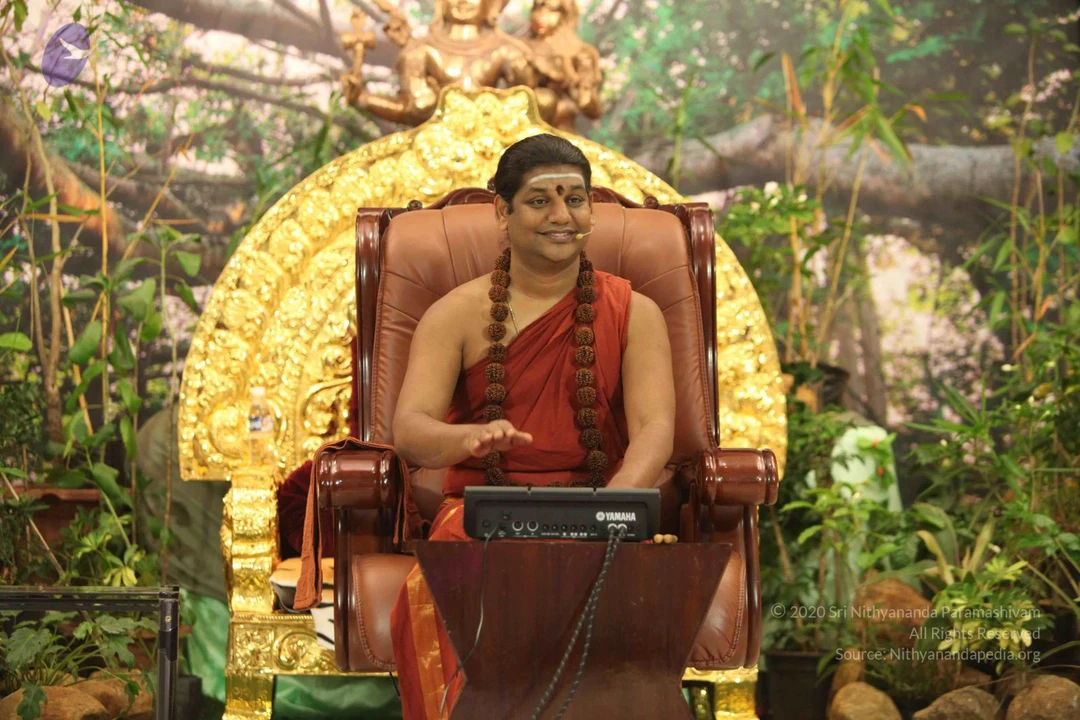
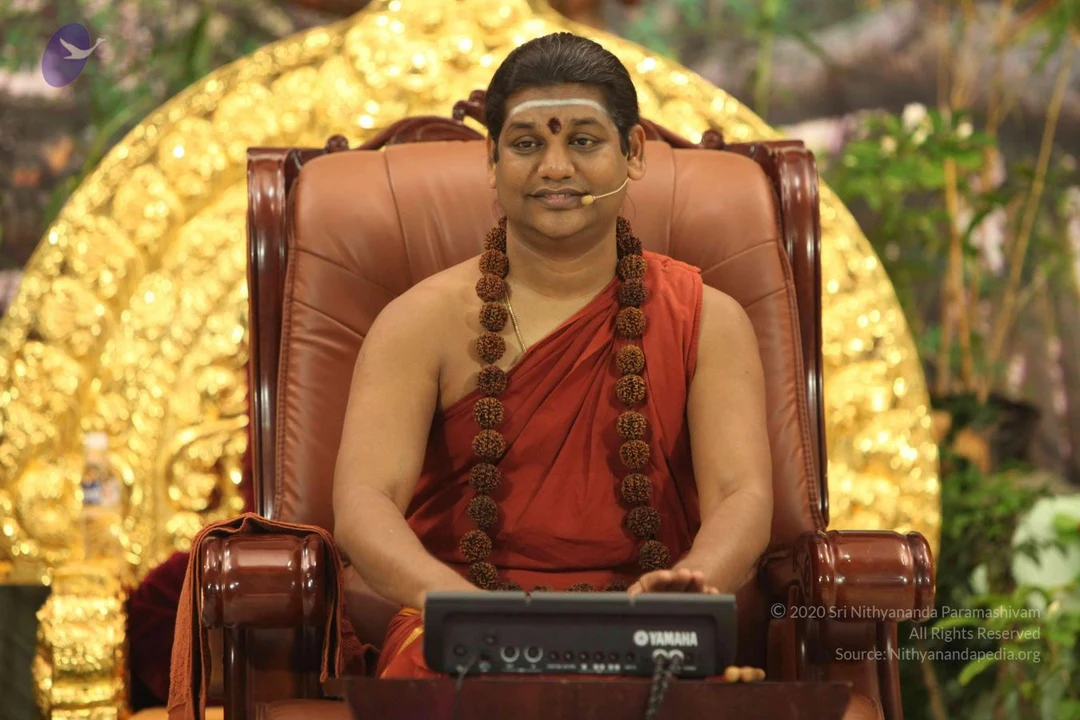
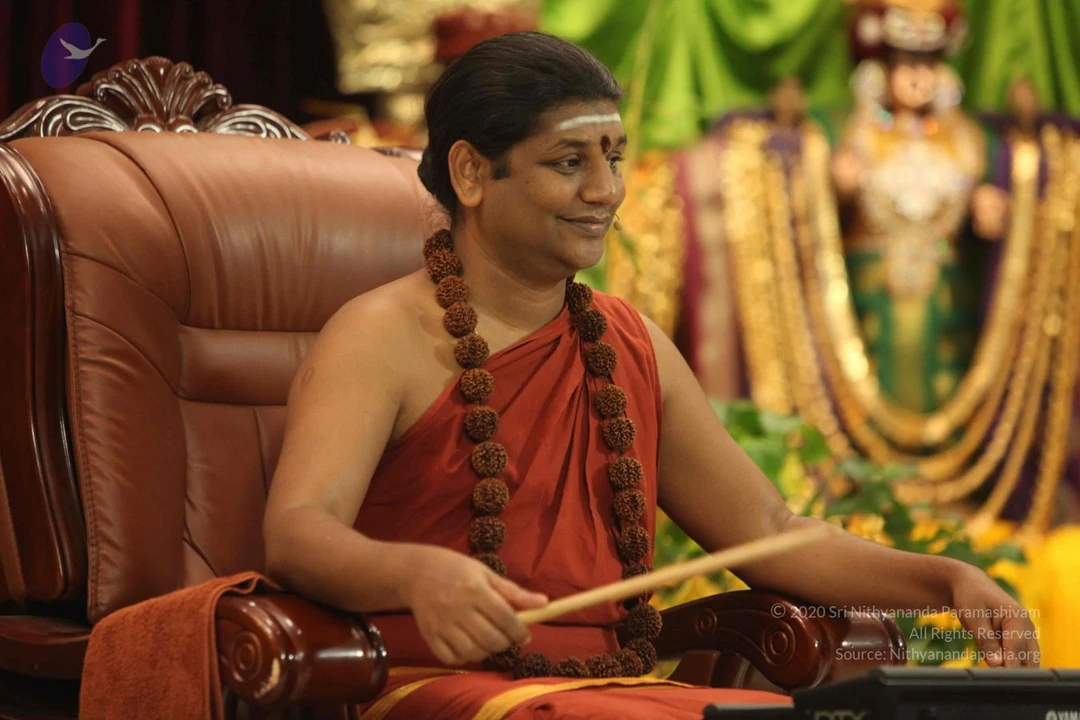
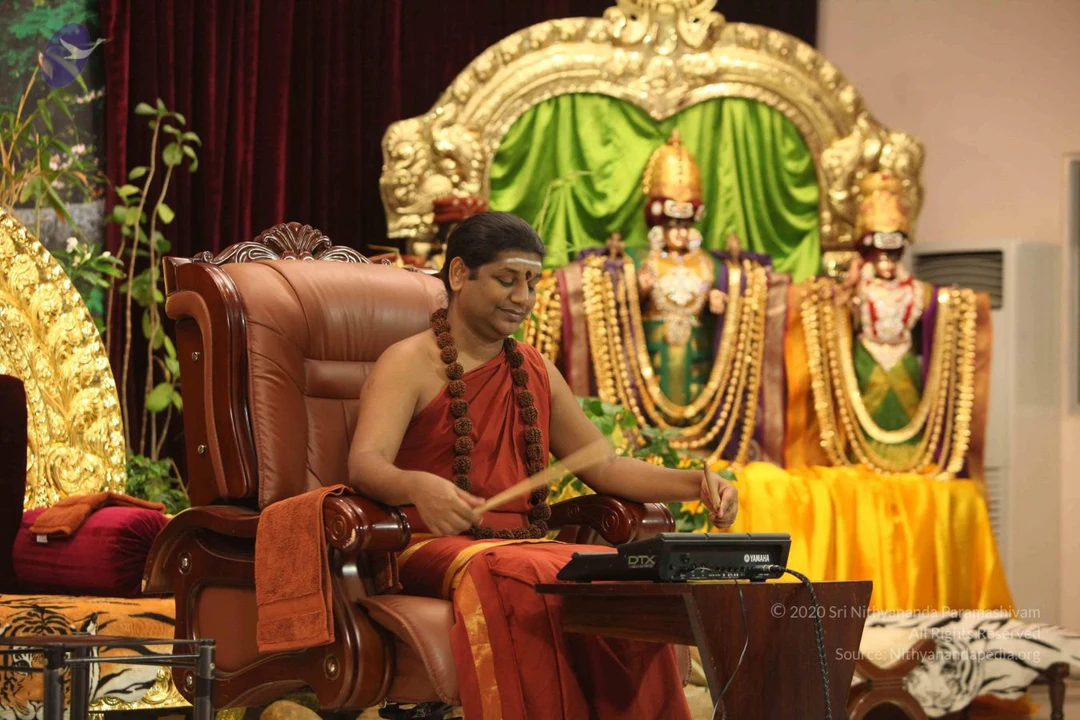
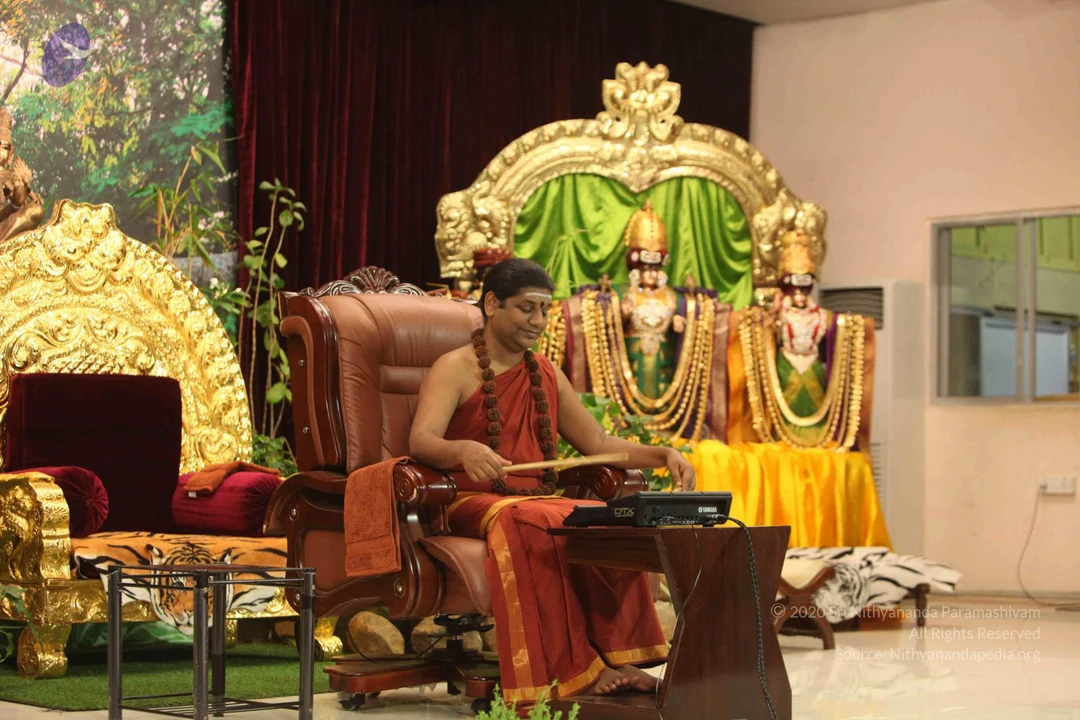
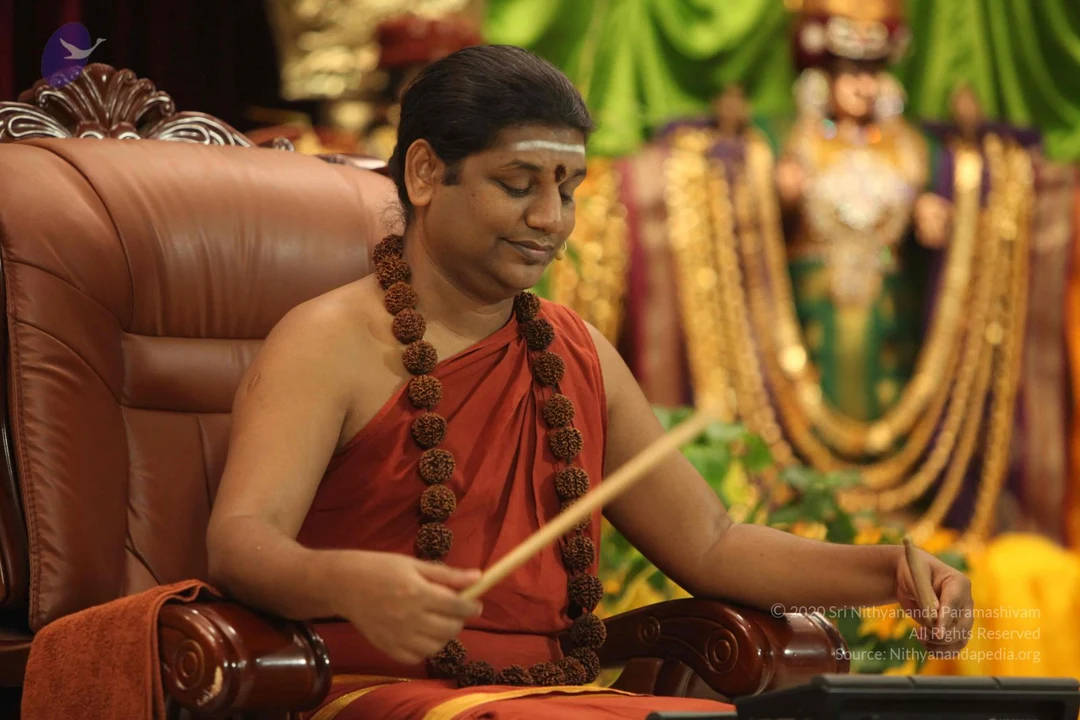
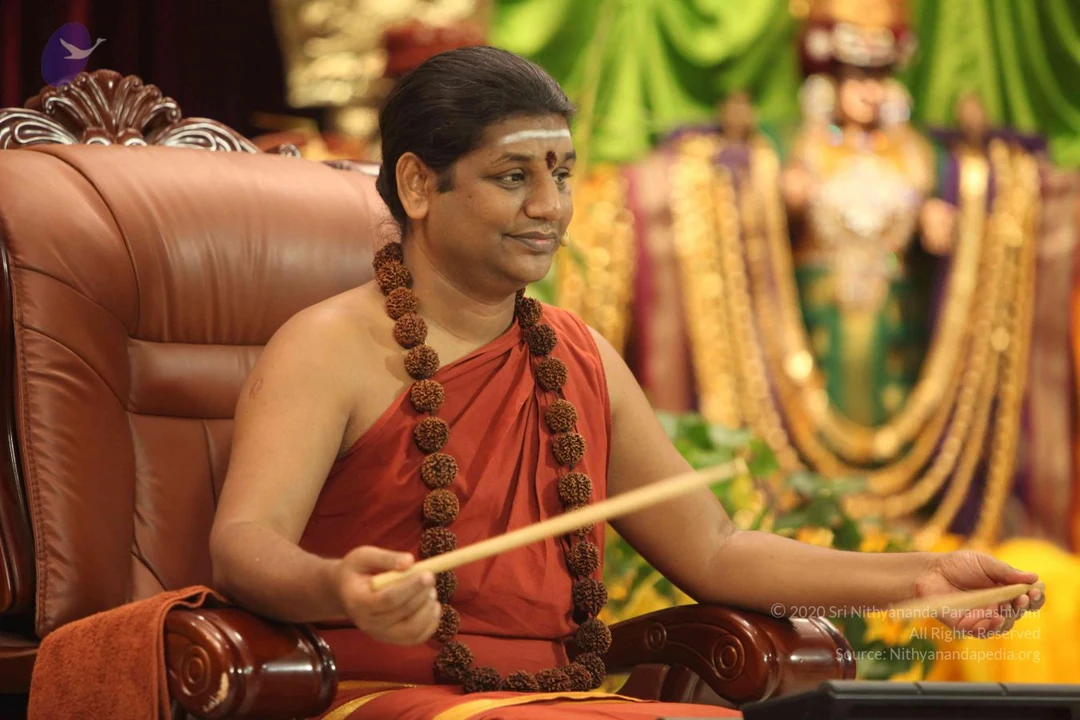
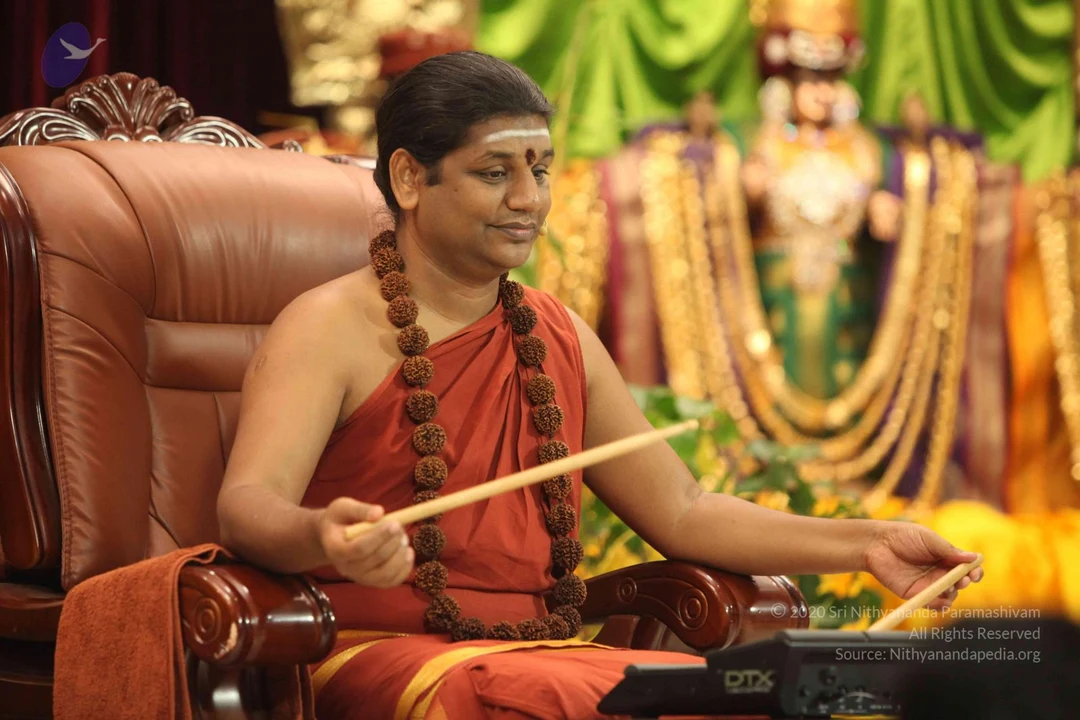
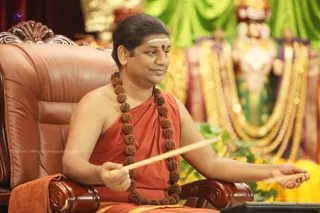
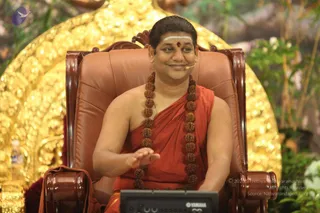
A man sits in a brown leather throne-style chair, wearing a rust-orange unstitched cloth draped over one shoulder and a long strand of rudraksha beads reaching his chest. He has a white tilak on his forehead and a red dot between his brows, and he holds a thin wooden stick in each hand, gesturing outward. Behind him, blurred deity murti are adorned with heavy gold garlands and green and purple fabric, with yellow flowers and green leaves in the foreground.A man sits in a large brown leather throne-style chair before a wooden lectern with a Yamaha audio mixer on top, a small wired headset microphone at his cheek. He wears a rust-orange shawl draped over his bare shoulder and a long necklace of dark brown rudraksha beads reaching his chest, with a thin gold chain beneath. He has a white horizontal tilak on his forehead with a red dot at the centre. Behind him a large ornate gold-leaf backdrop frames the seat, and green leafy plants and pink flowers fill the set. The seated figure is shown in a discourse setting, with a small plastic water bottle visible at the left edge. a person is identified by appearance cues: an orange shawl, rudraksha mala and a throne-like seat.A man seated in a large brown leather armchair with carved wooden armrests, wearing an orange-red saffron dhoti and shawl draped over one shoulder, a long rudraksha mala of brown beads across his chest, and a white tilak with red bindu on his forehead. He sits with a wooden stick resting across his lap and a Yamaha DTX electronic drum pad on a small table beside him. Behind him are gold-adorned murtis of deities in green and purple garments wearing gold crowns, decorated with garlands, against a green drape and yellow cloth. a person: the seated man has a shaved-back swept hairstyle, rudraksha mala, saffron clothing and a ceremonial setting, consistent with the page's reference to a person attending this satsang.A seated man in orange-red robes and a long rudraksha mala sits in a brown leather armchair on a raised stage, smiling with his hands resting on a wooden lectern that holds a black Yamaha mixing unit. Short hair and a tilak mark on his forehead are visible. Behind him stands a gold-framed throne back with a golden statue of a seated deity figure with a raised hand and a consort figure. The backdrop is a painted forest of trees and foliage with potted green plants and rocks on the floor. Only one physical person is visible.A smiling man sits on a tan leather throne-style chair in front of a large gold-leaf backdrop with green plants and white flowers at the right. He wears a red-orange saffron wrap over his bare shoulder, a long necklace of rudraksha beads, a white tilak on his forehead and a red bindi, with a headset microphone near his face. A Yamaha laptop sits on his lap, and a water bottle is visible at the left edge.A seated man in a brown leather throne chair before a wooden lectern with a black Yamaha audio mixer, speaking into a headset microphone during a satsang. He wears a red-orange ochre robe with a golden border, a long rudraksha mala of brown beads over his chest, and a white vibhuti line with a red kumkum dot on his forehead. He gestures with one open hand. Behind him stands an ornate gilded arch with carved designs, and above it a golden sculpture of figures. Lush green plants, bamboo and a stone-lined base surround the stage. Appearance-based label: a person, seated on the throne as the satsang speaker. Only one physical person is visible.

Shivoham Process
2 photosSource gallery
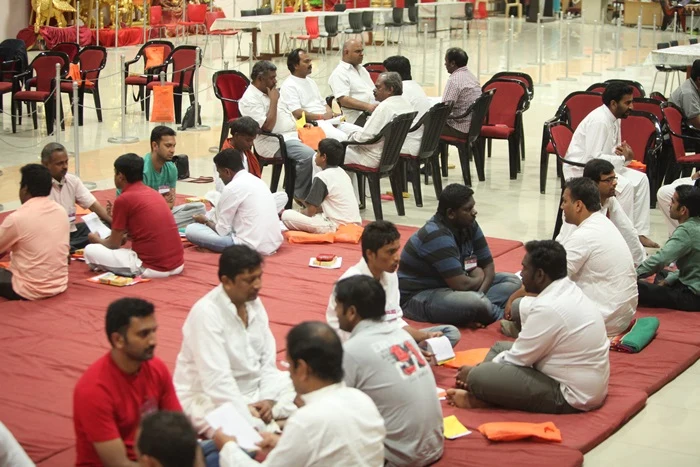
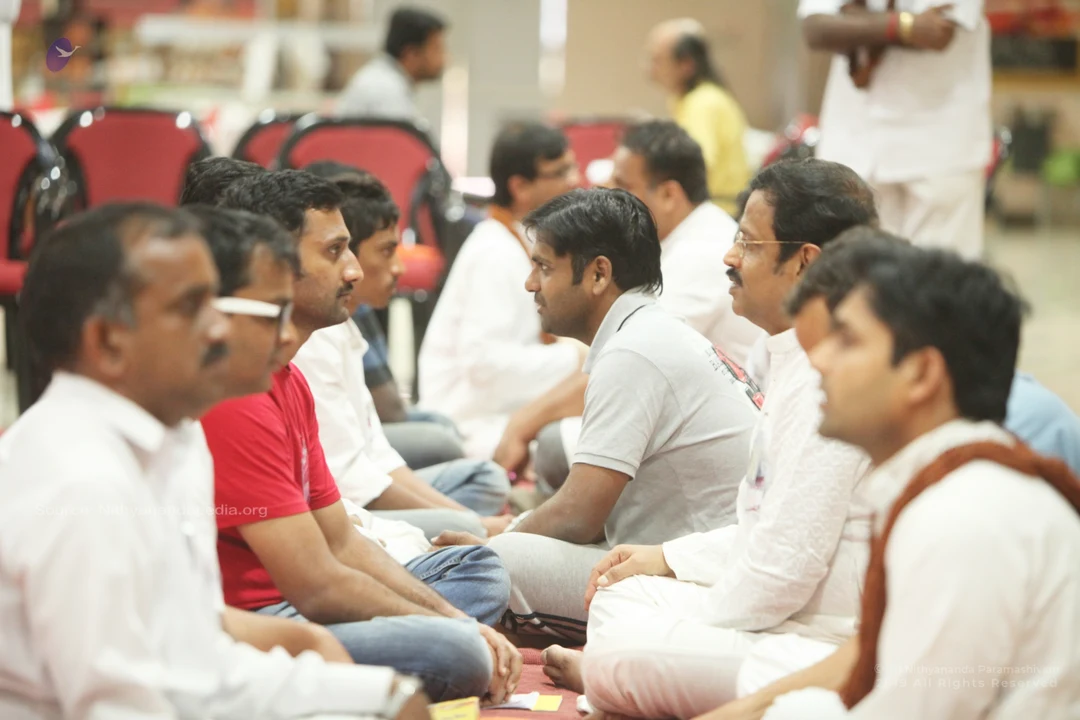
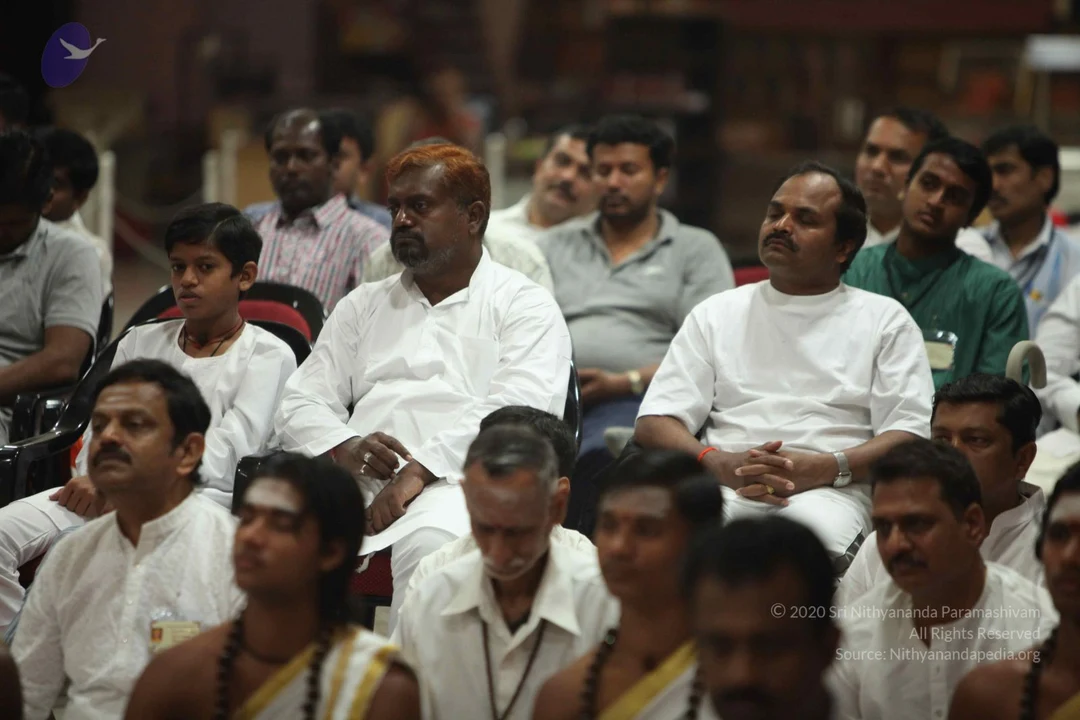
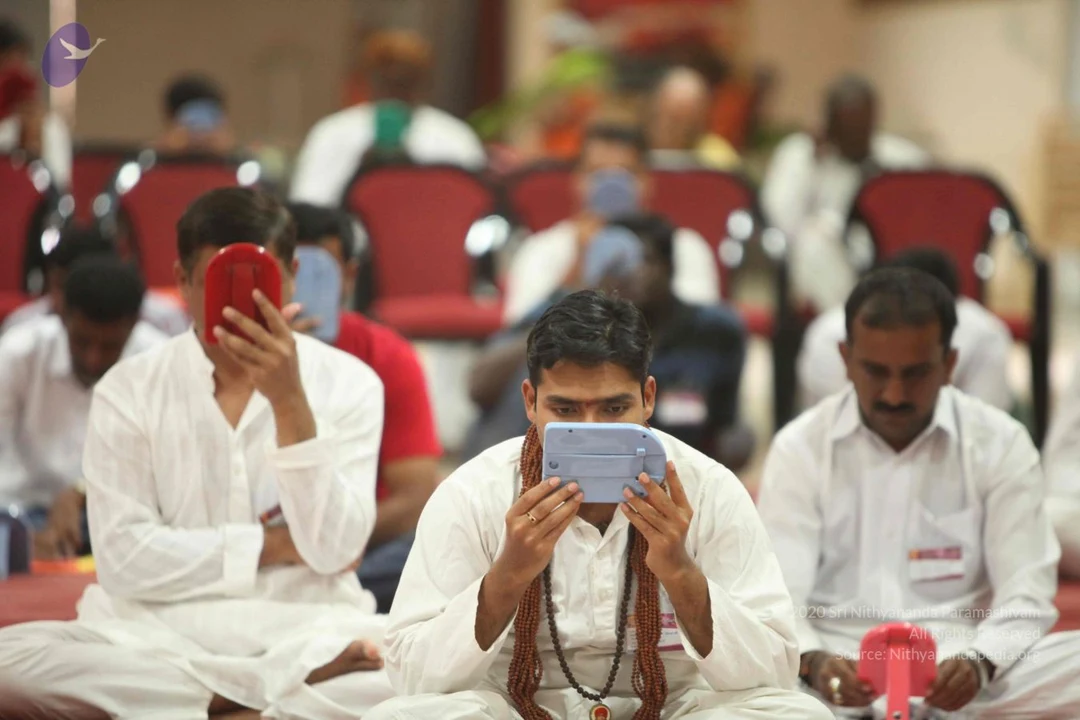
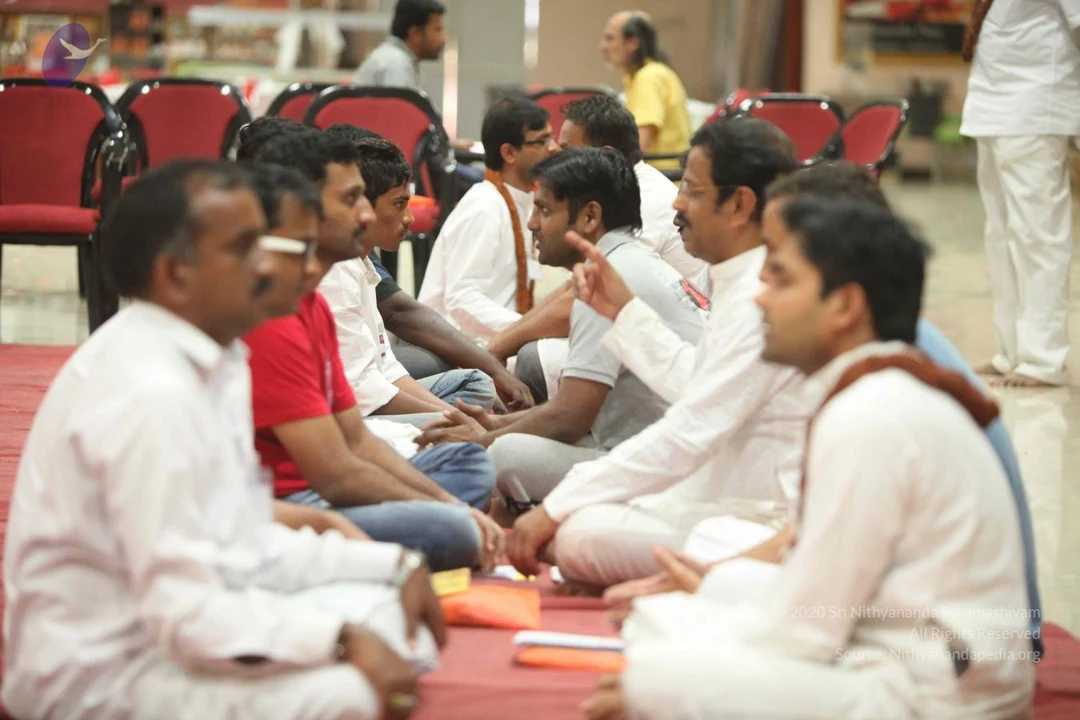
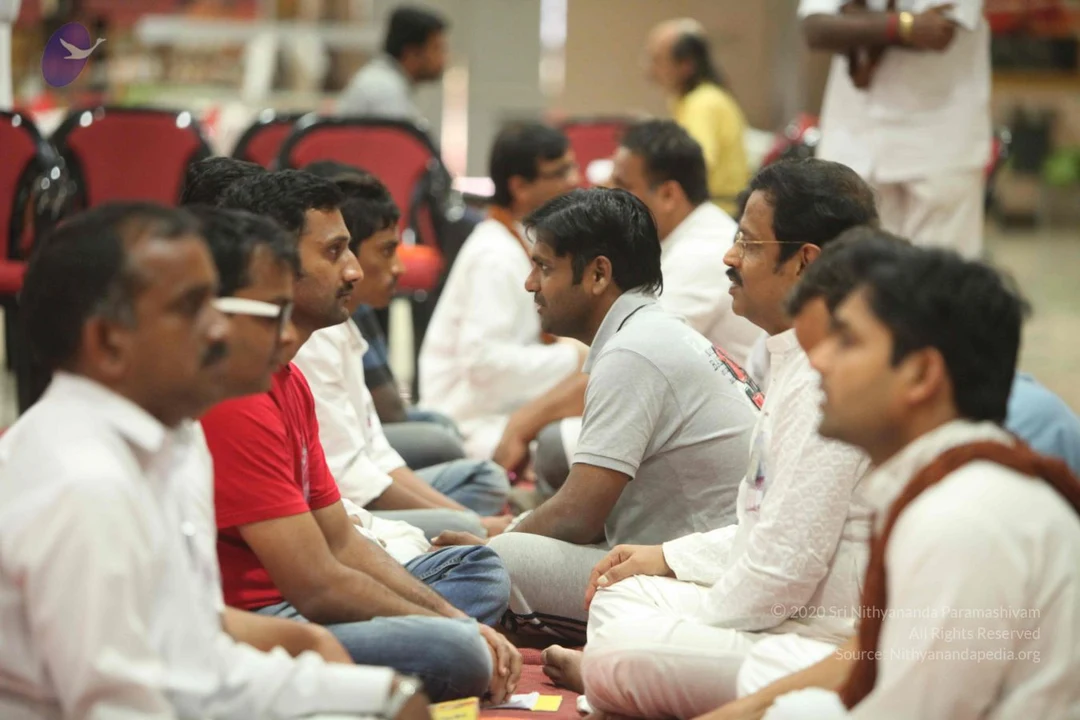
A man seated in a brown leather armchair with carved wooden arms, eyes closed and smiling broadly, wearing a headset microphone. He wears a sleeveless saffron-orange robe with a gold-bordered dhoti, a long rudraksha mala of brown beads hanging to his lap, a red bindi and white forehead markings. Behind him is a lush painted backdrop of green leaves, branches and blossoms, with a large golden sculpture of a seated deity figure partly visible. Orange flowers appear at the right edge. The setting suggests a satsang seating arrangement. Swamiji (probable): the seated man has long swept-back hair, a saffron robe and a long rudraksha mala, consistent with the page's reference to Swamiji at this satsang.Men sit cross-legged in rows on the floor of a hall during a satsang, facing right toward an unseen speaker. In the foreground a man in a white kurta and a man in a red t-shirt with glasses listen attentively. Beside them a man in a grey polo shirt and grey trousers sits near a man in white kurta, and at the far right a man in white kurta has a saffron shawl draped over his shoulder. Red chairs line the background, with a few other people standing or sitting further back.

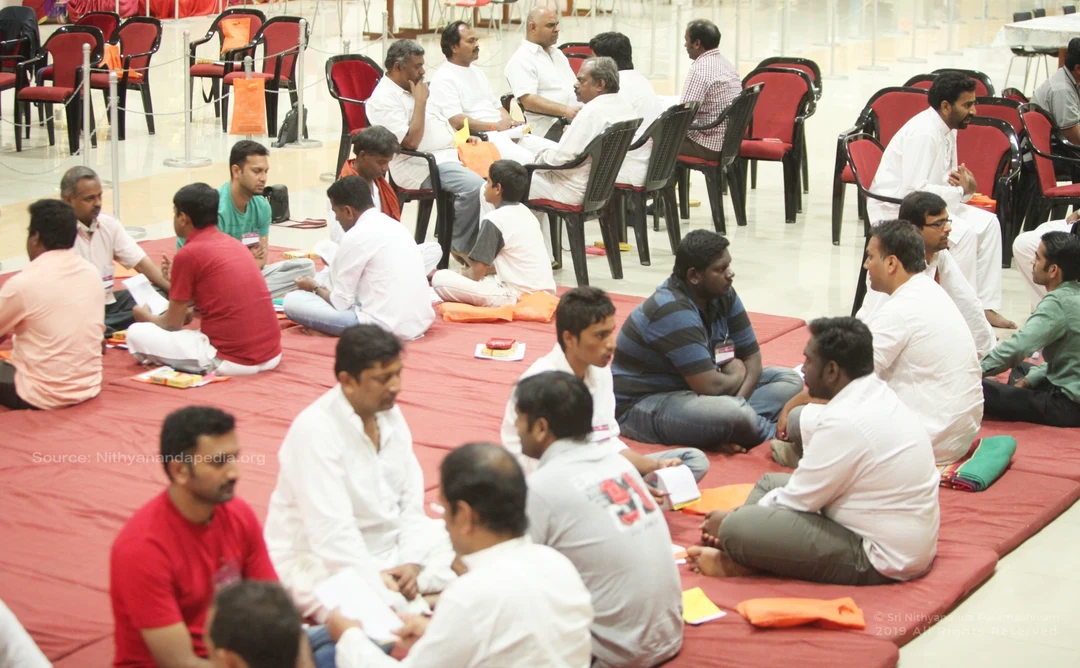
Pada Puja

2 photosSource gallery
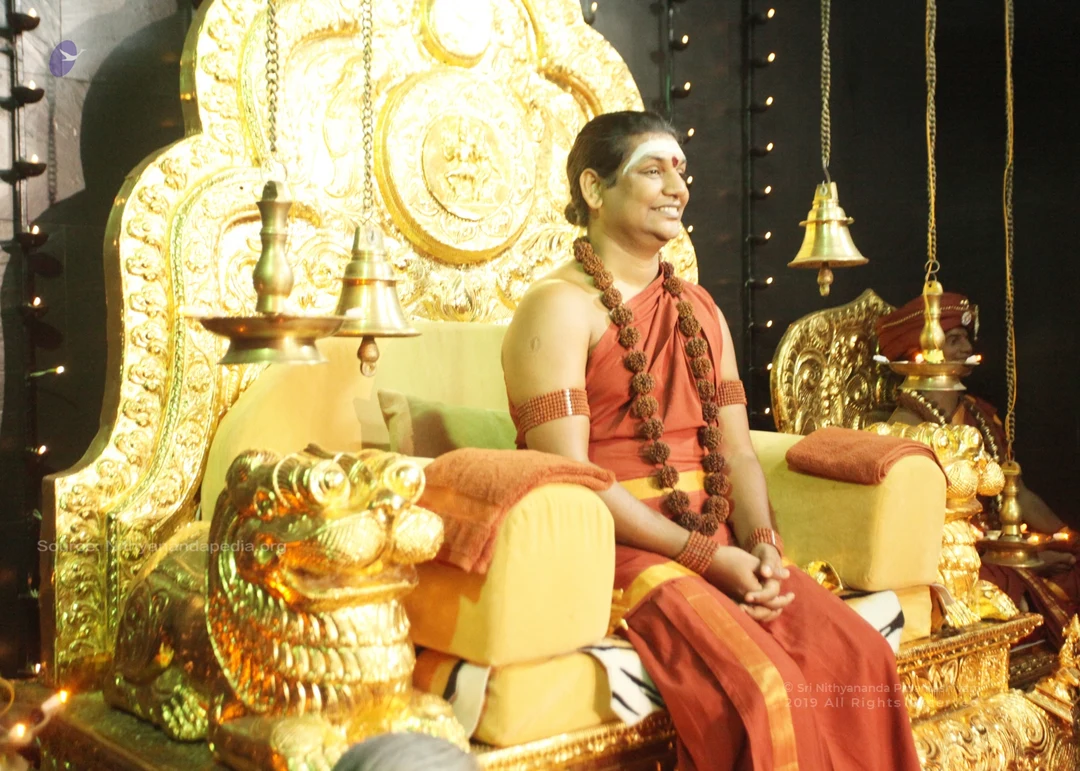
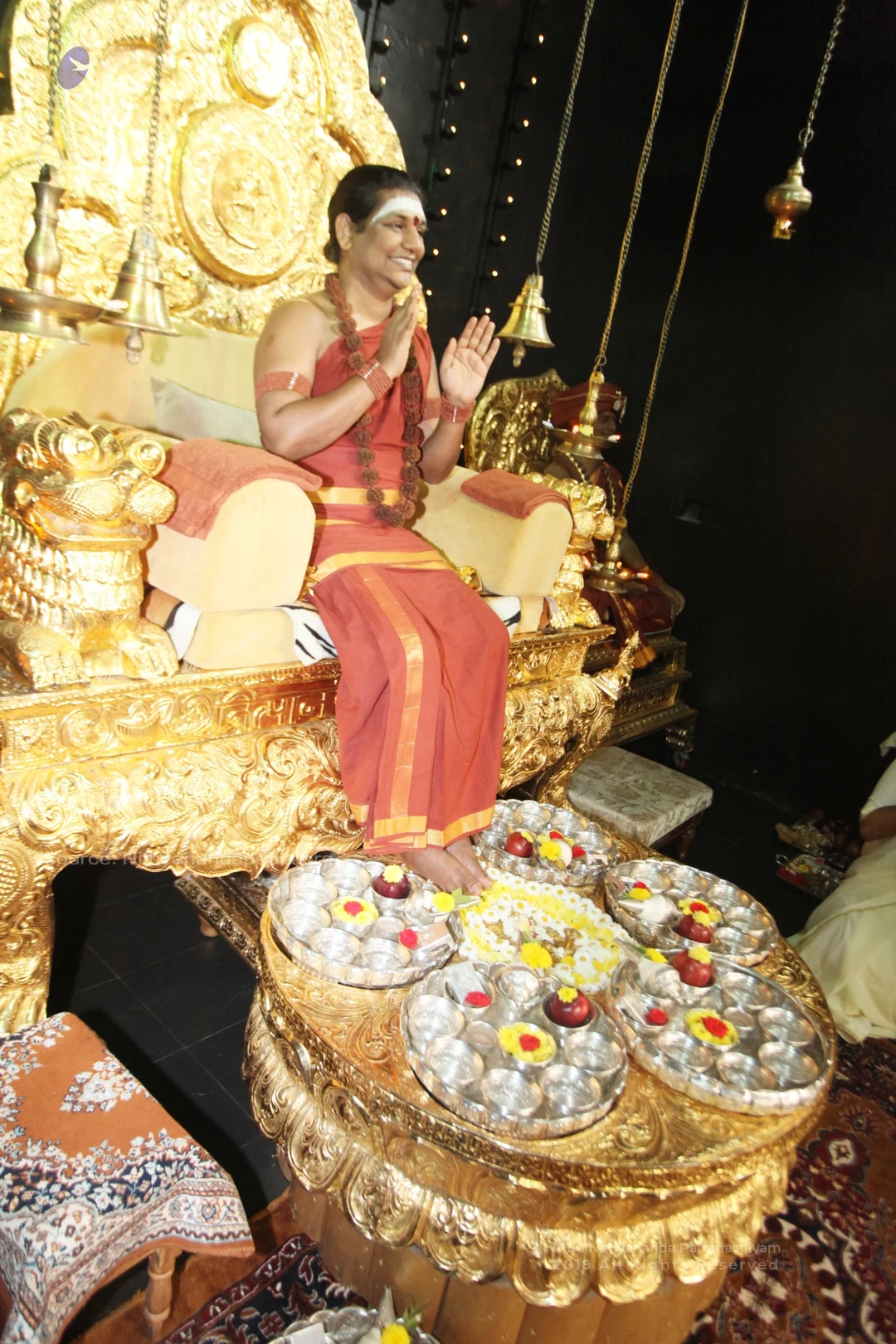
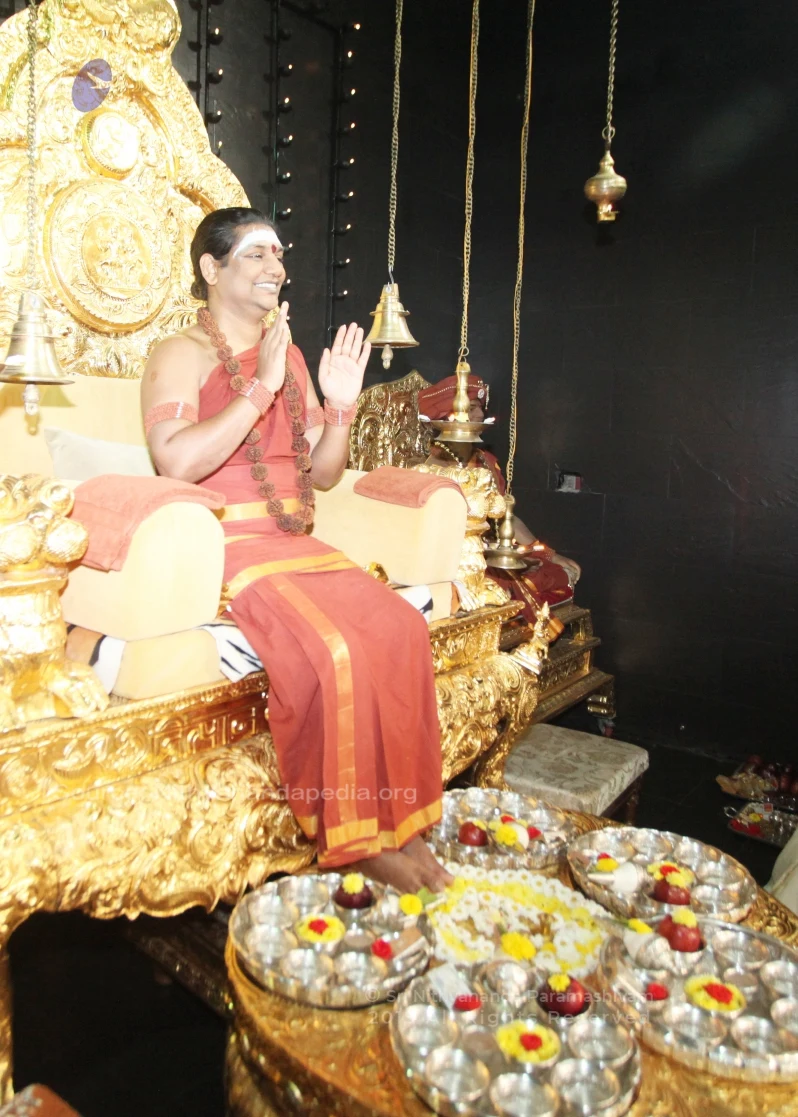
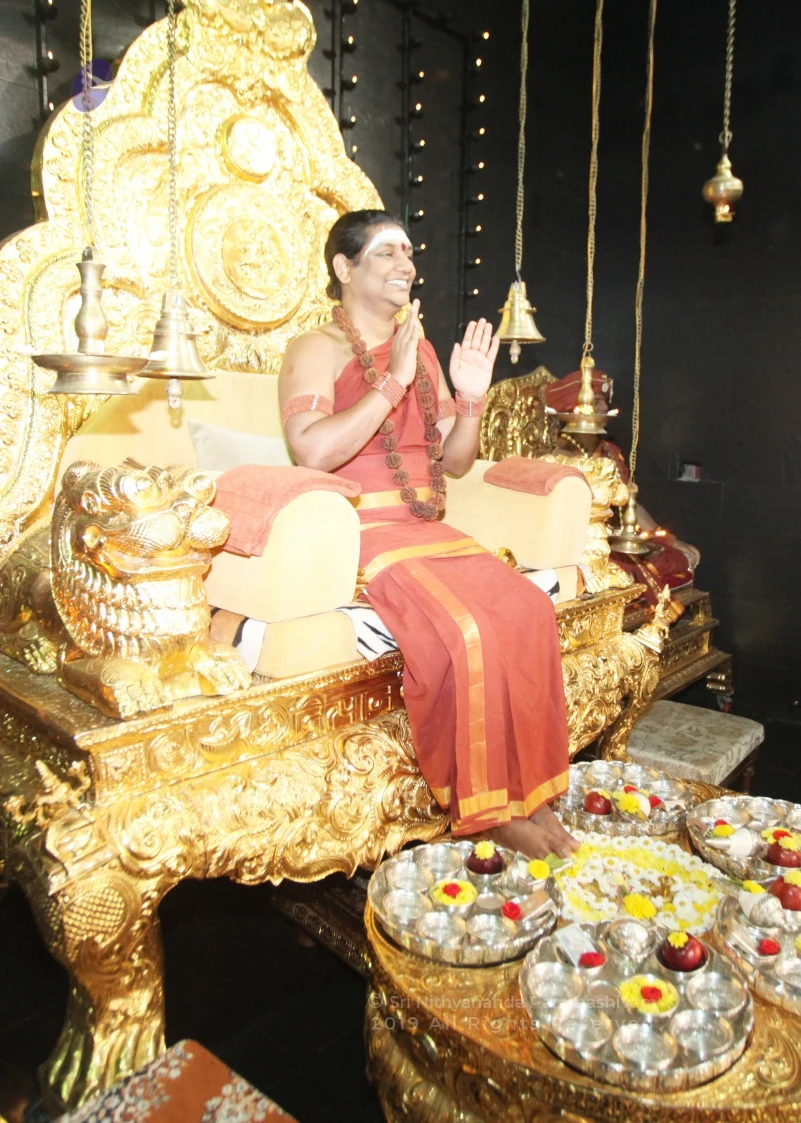
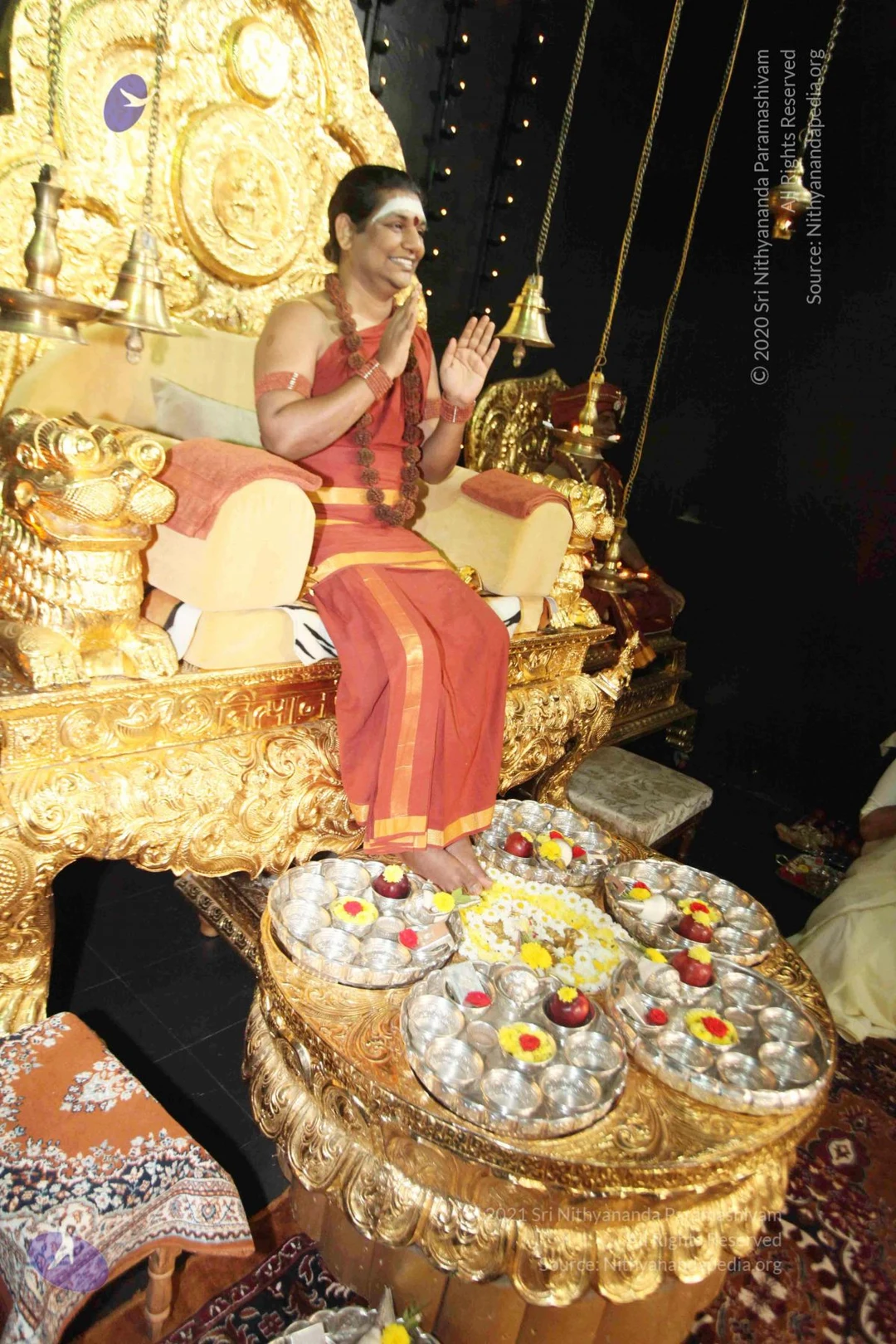
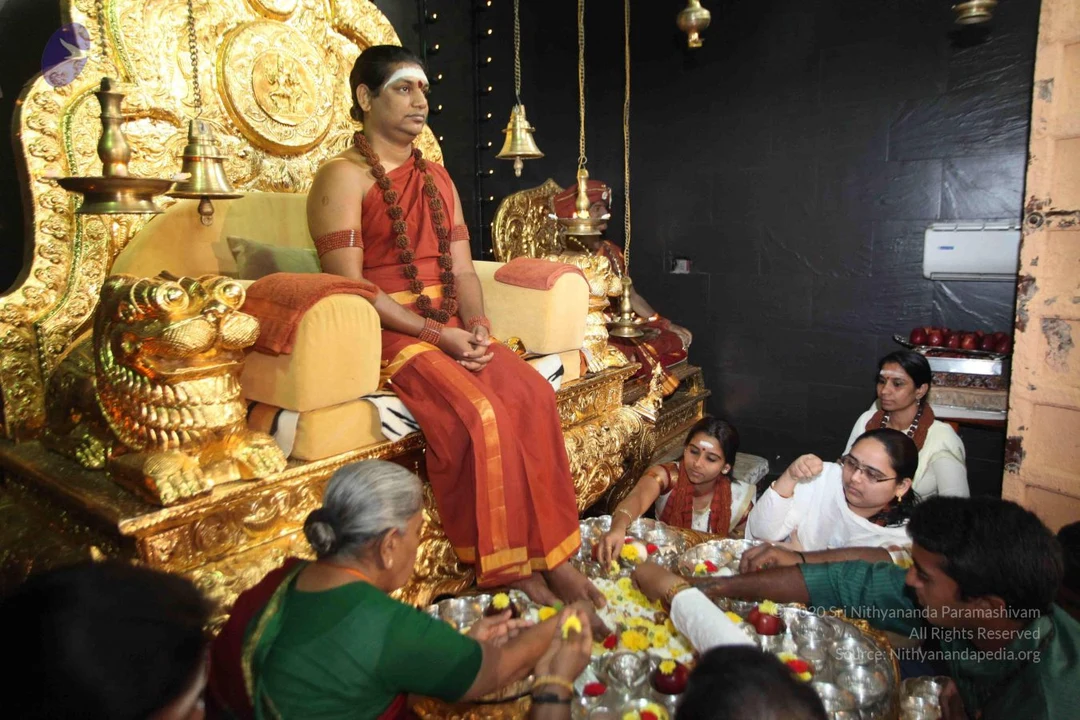
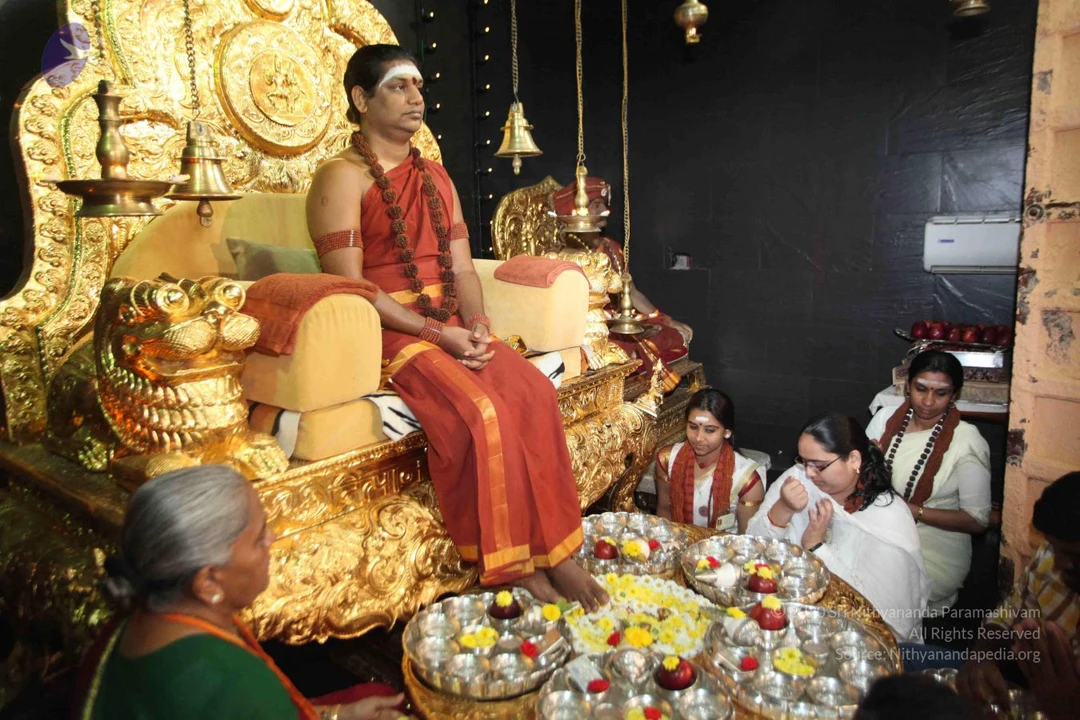
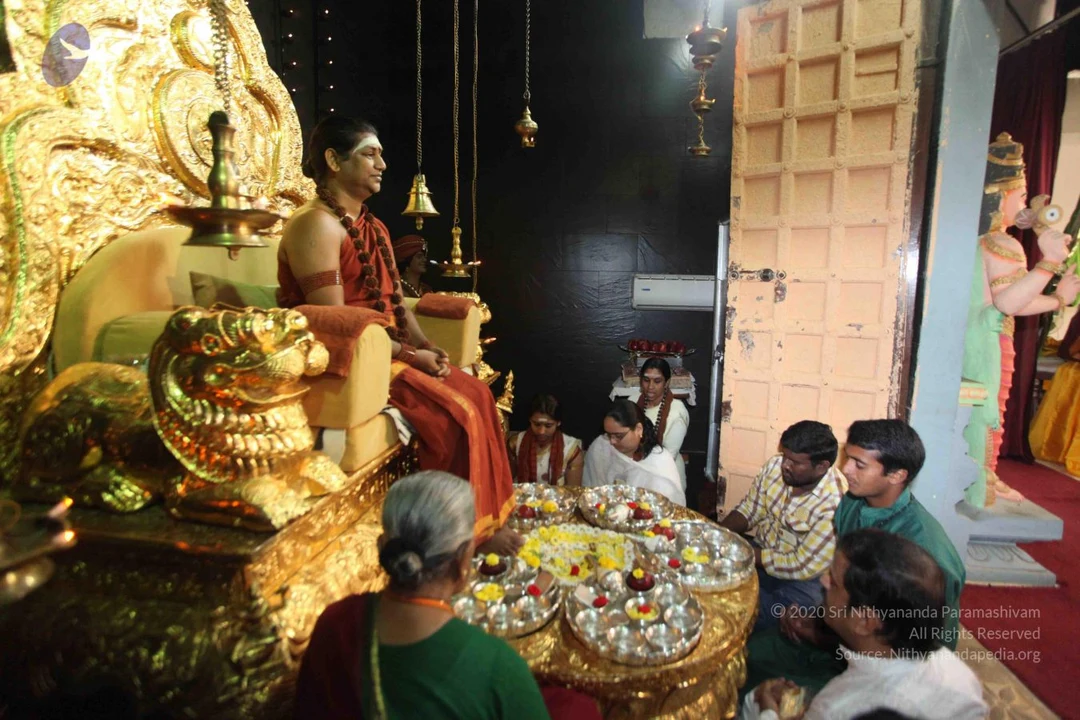
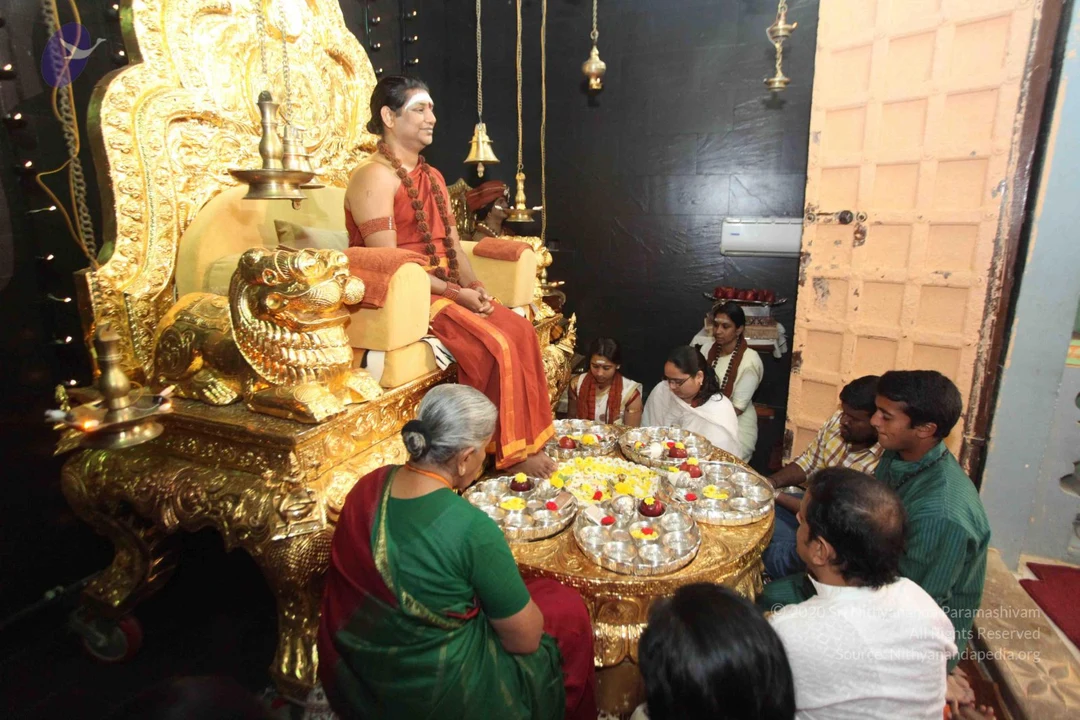
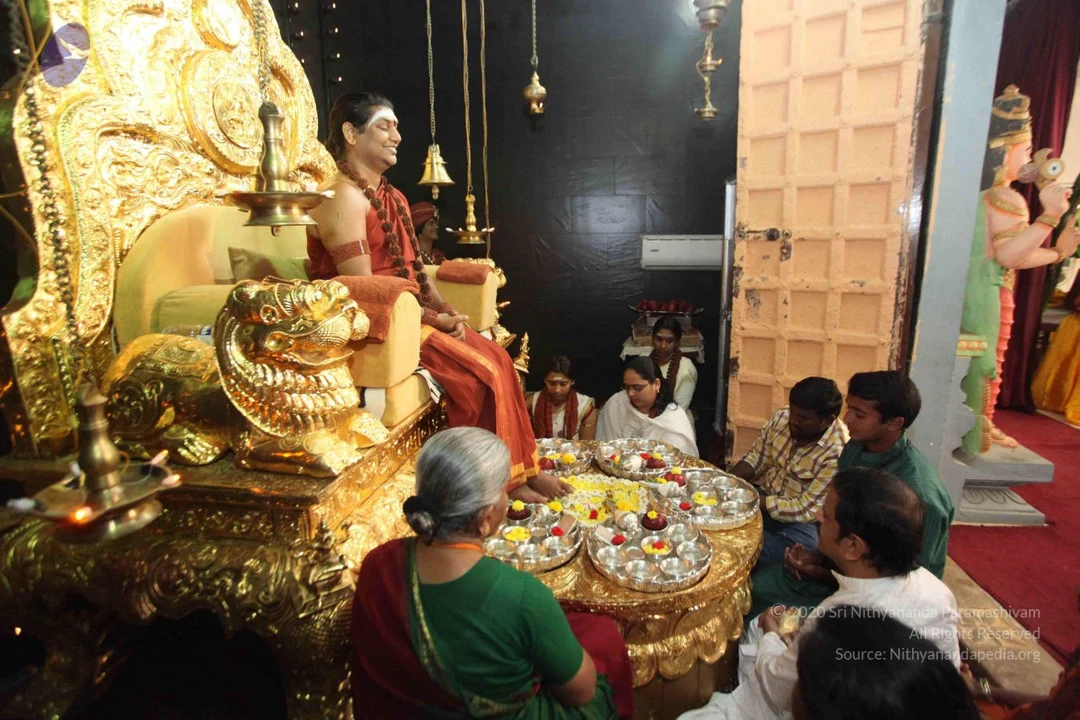
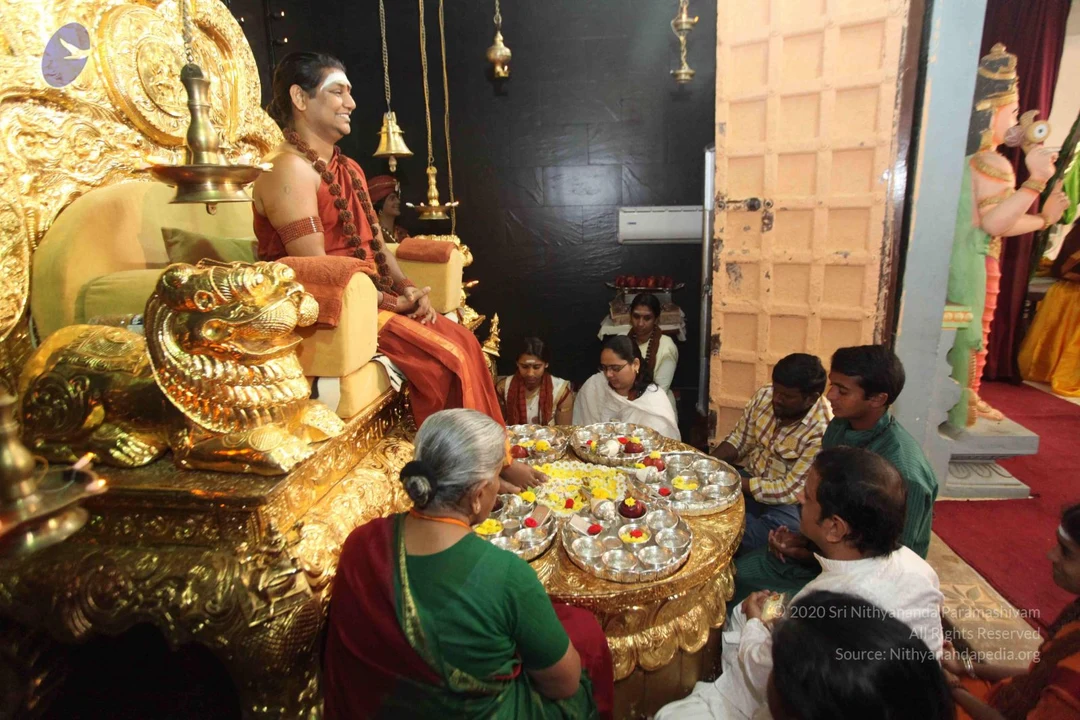
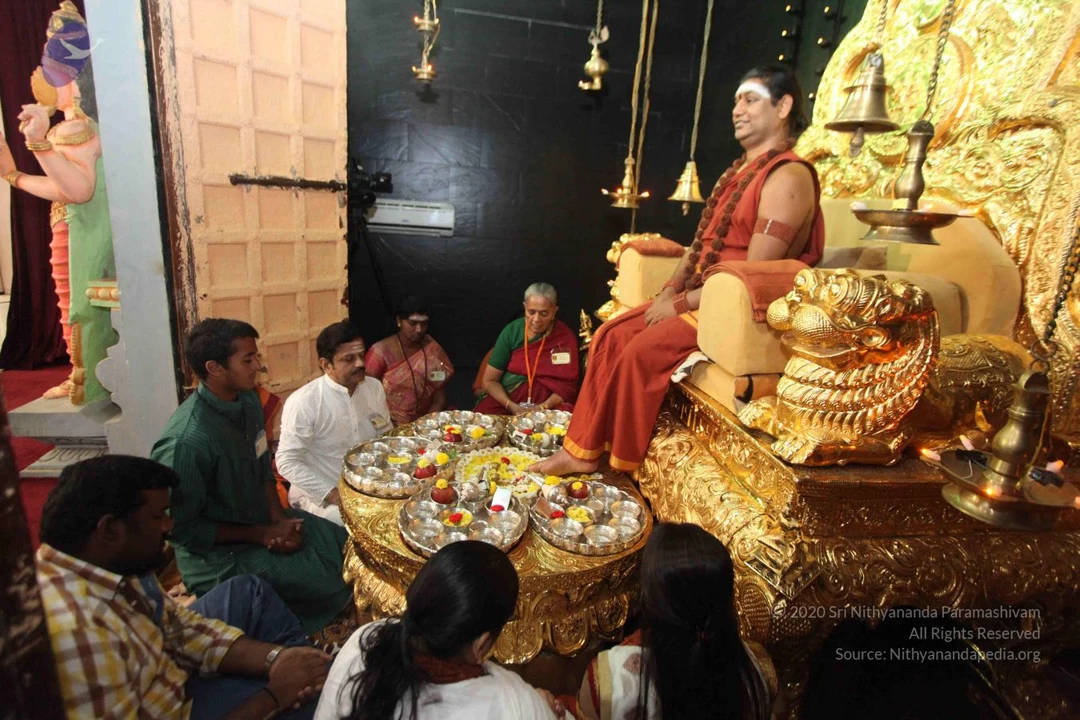
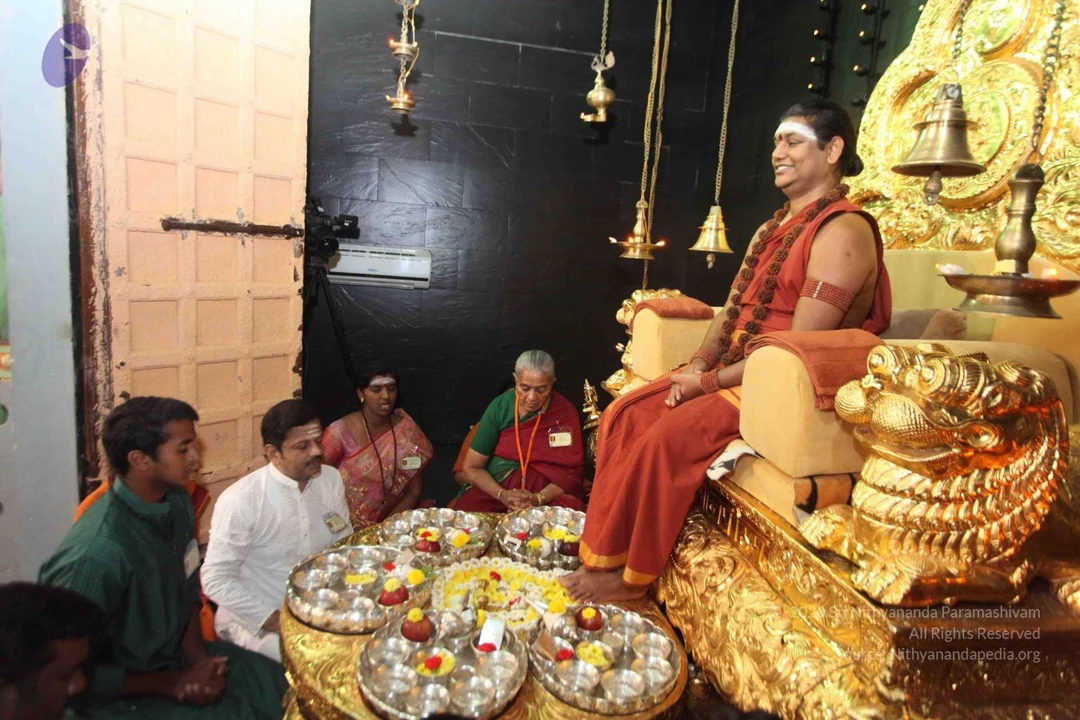
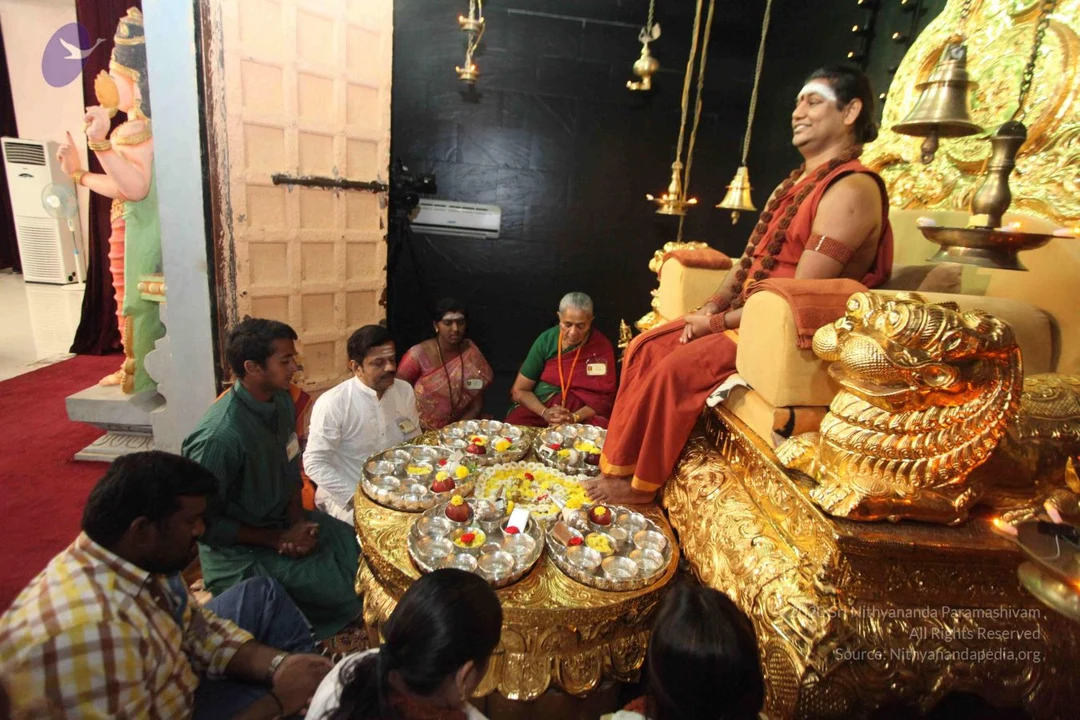
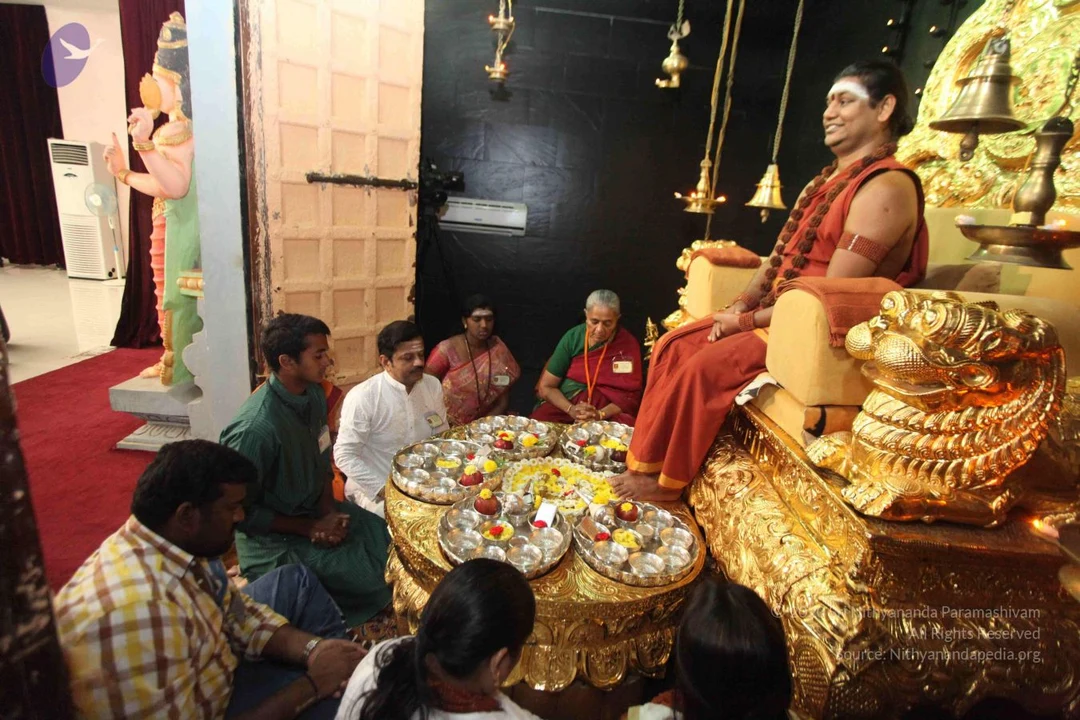
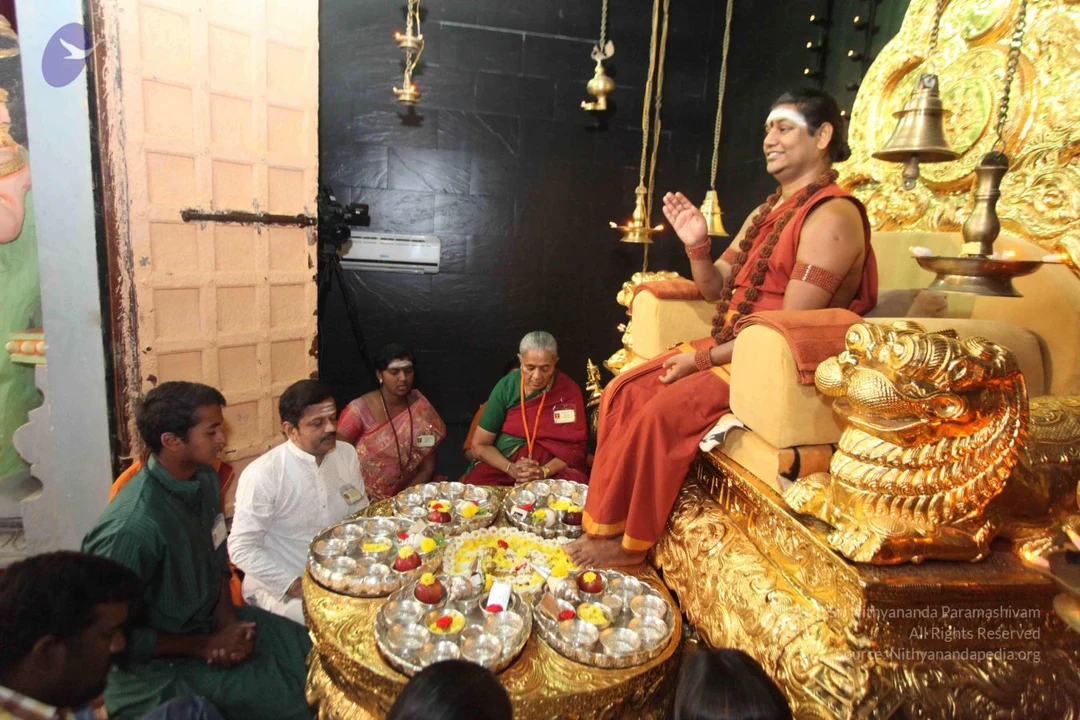
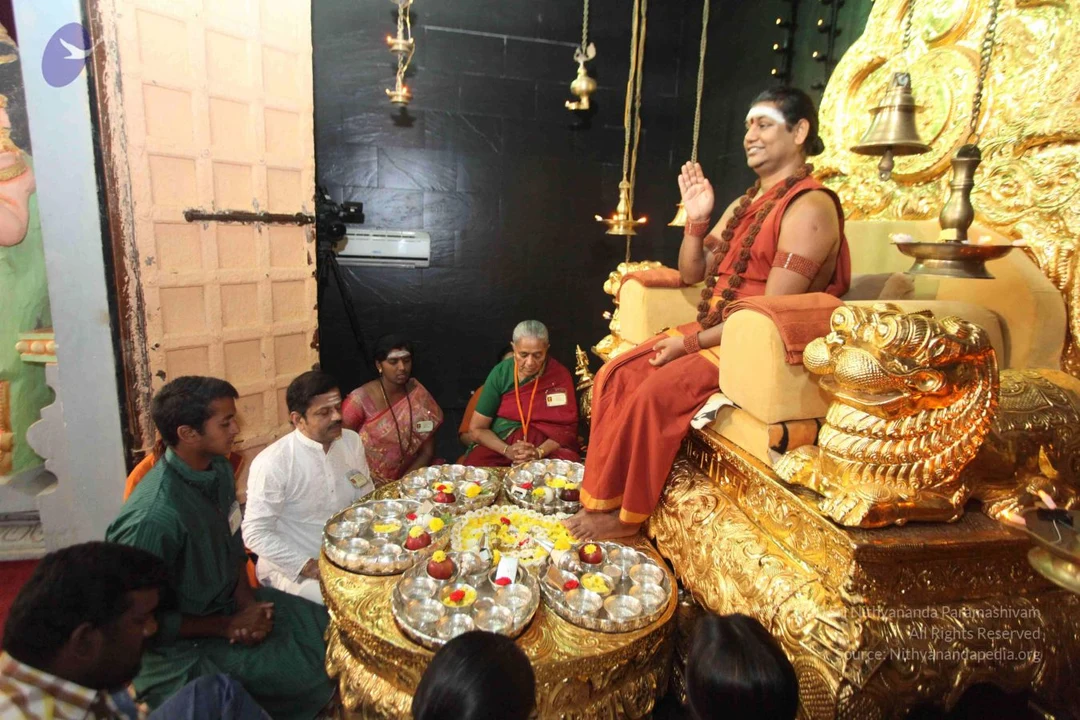
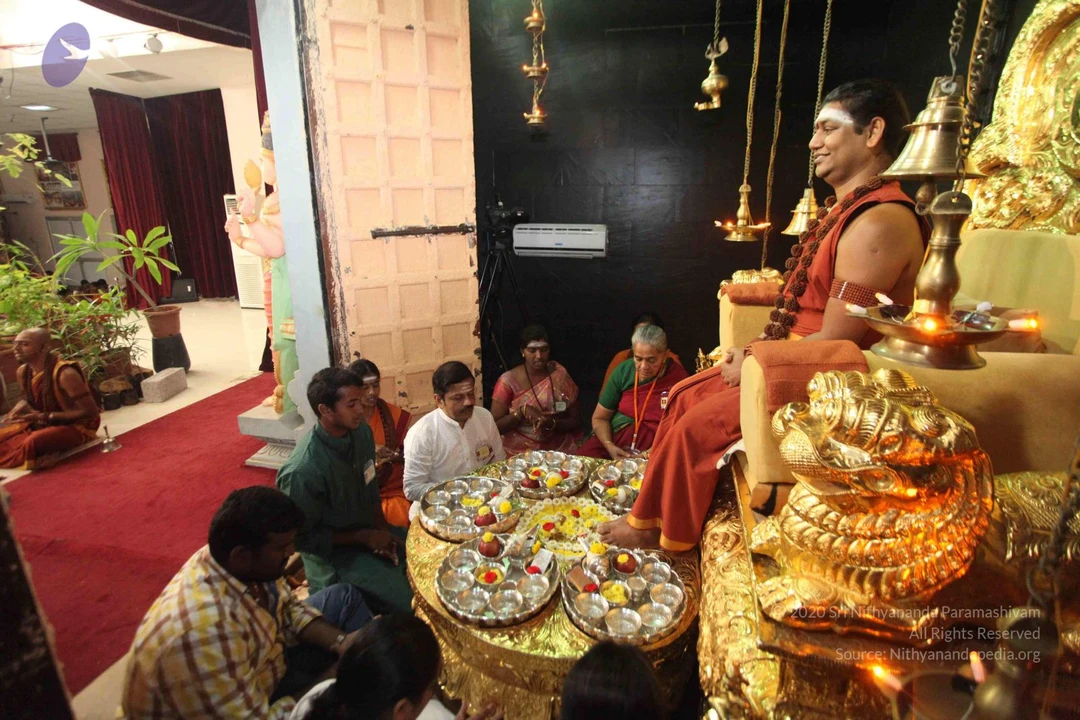
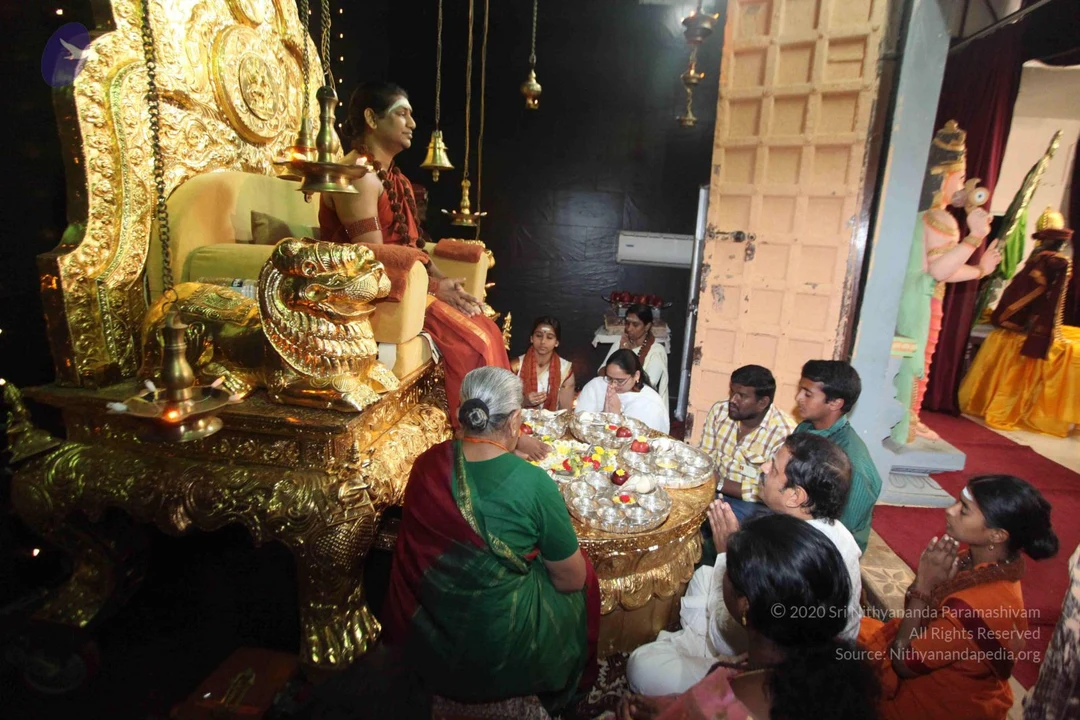
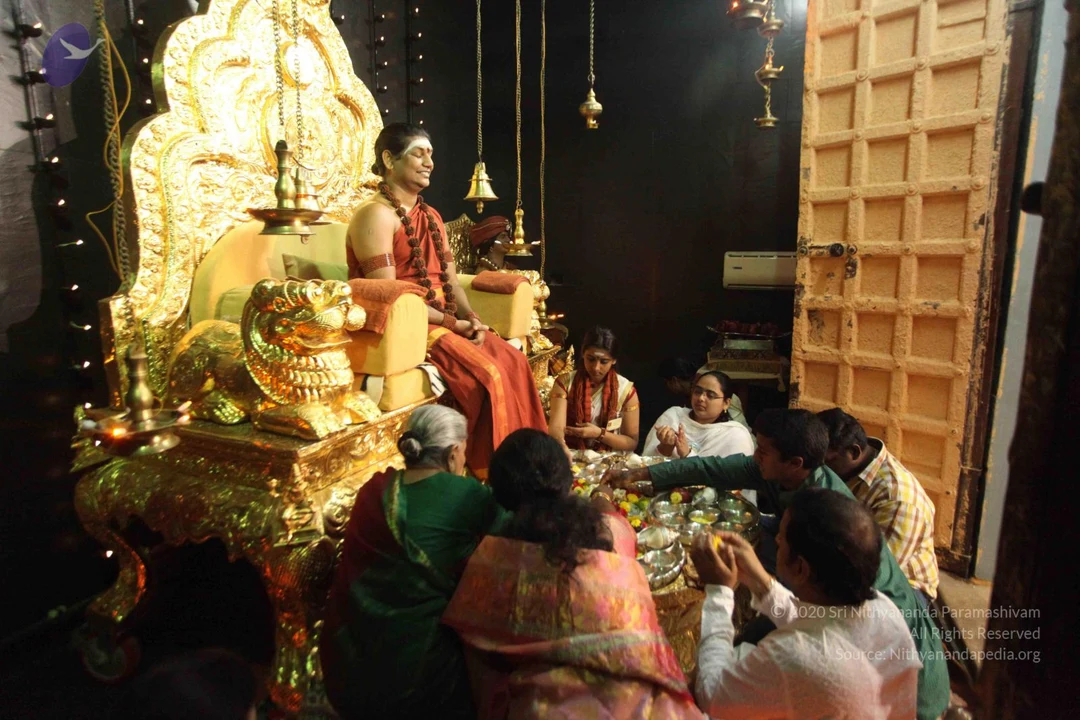
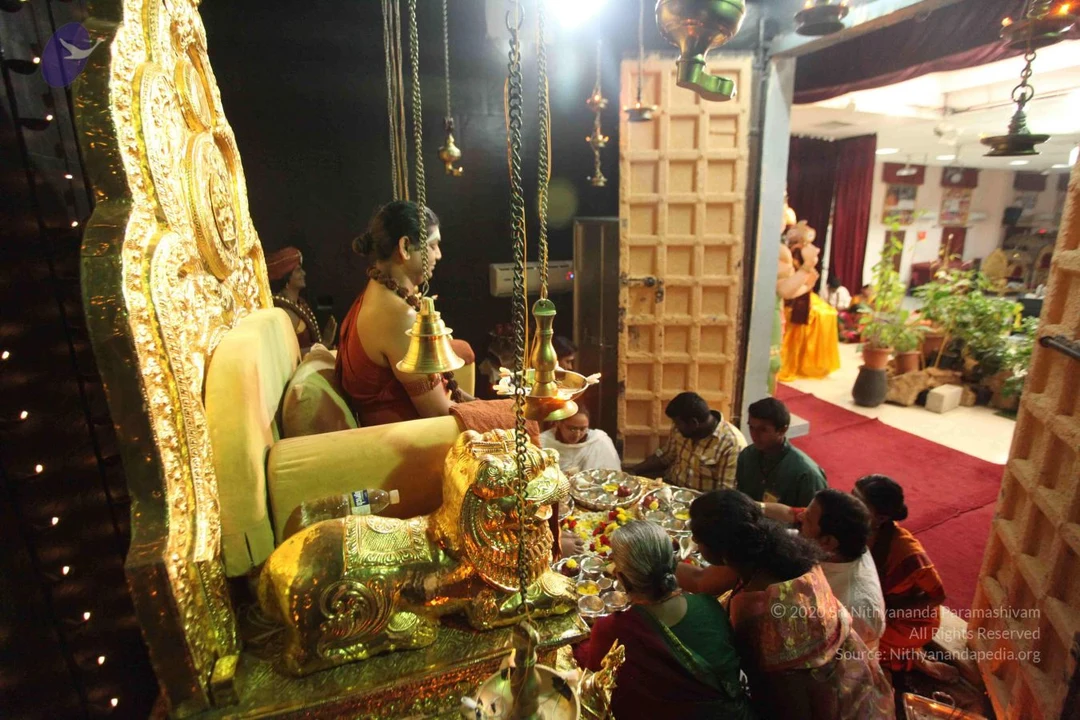
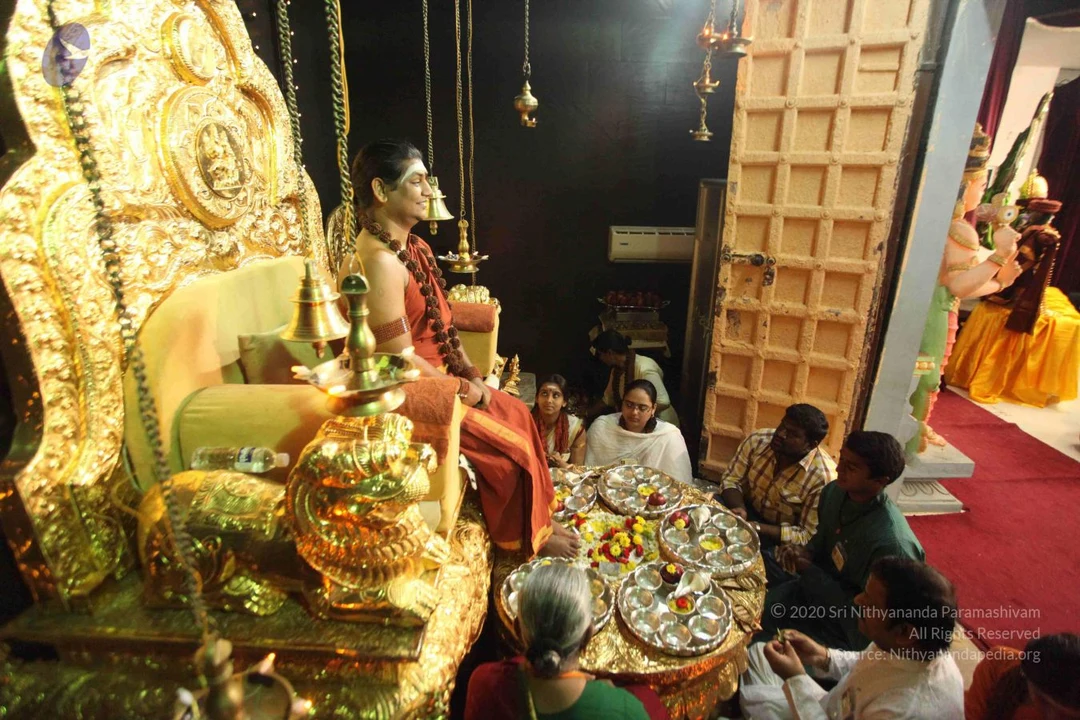
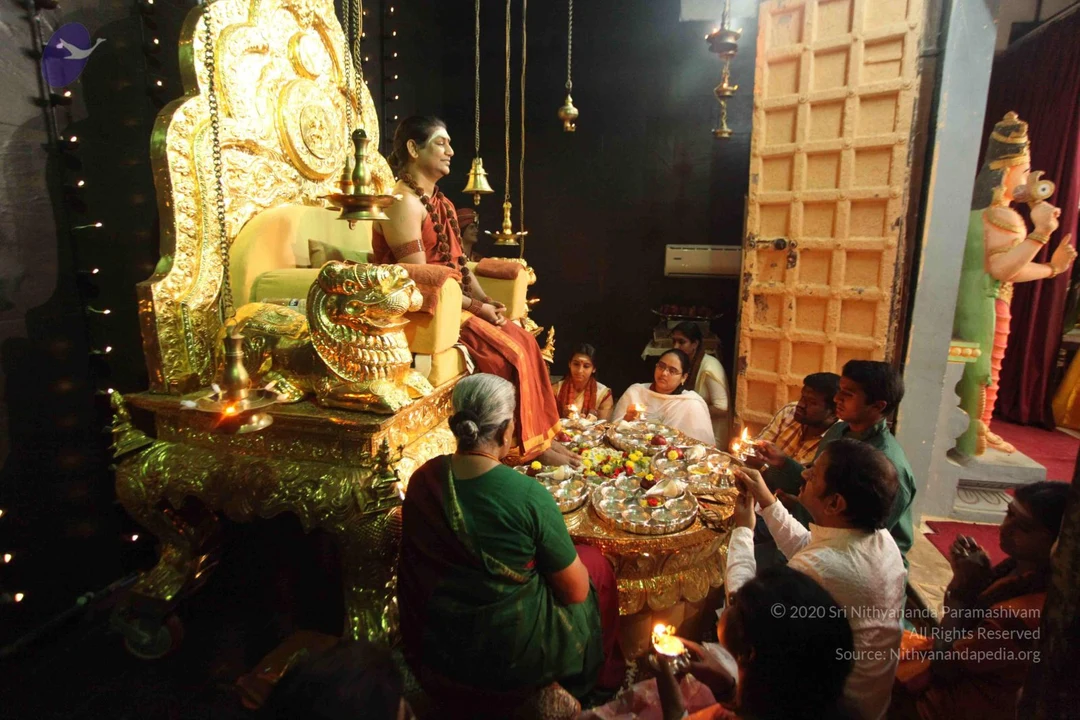
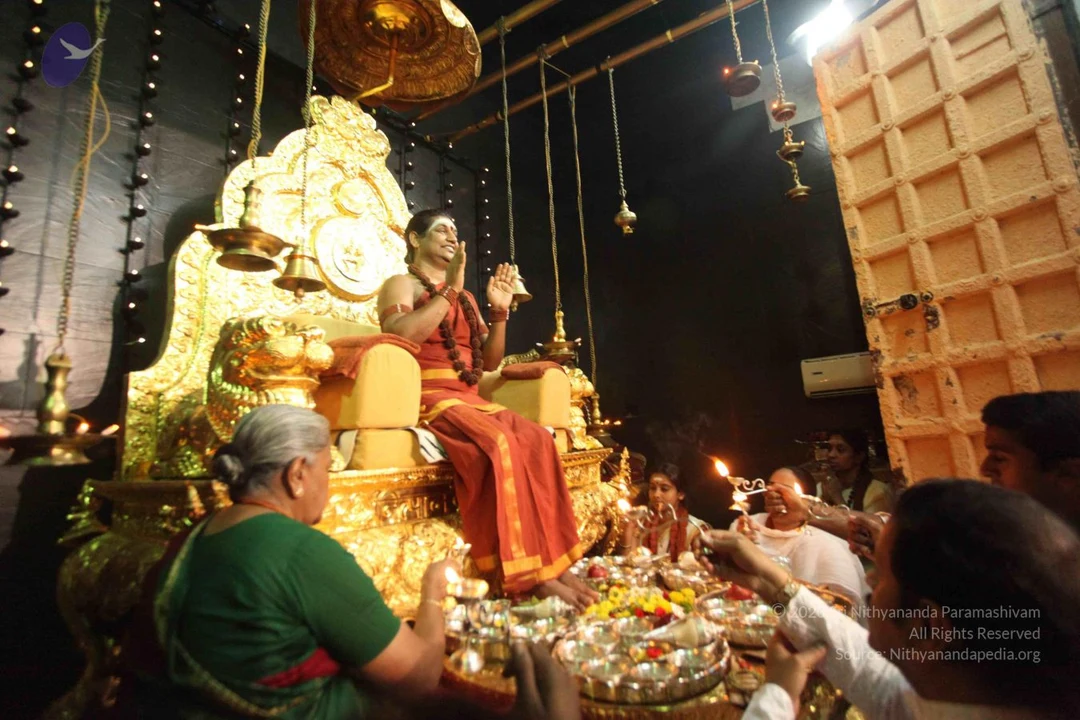
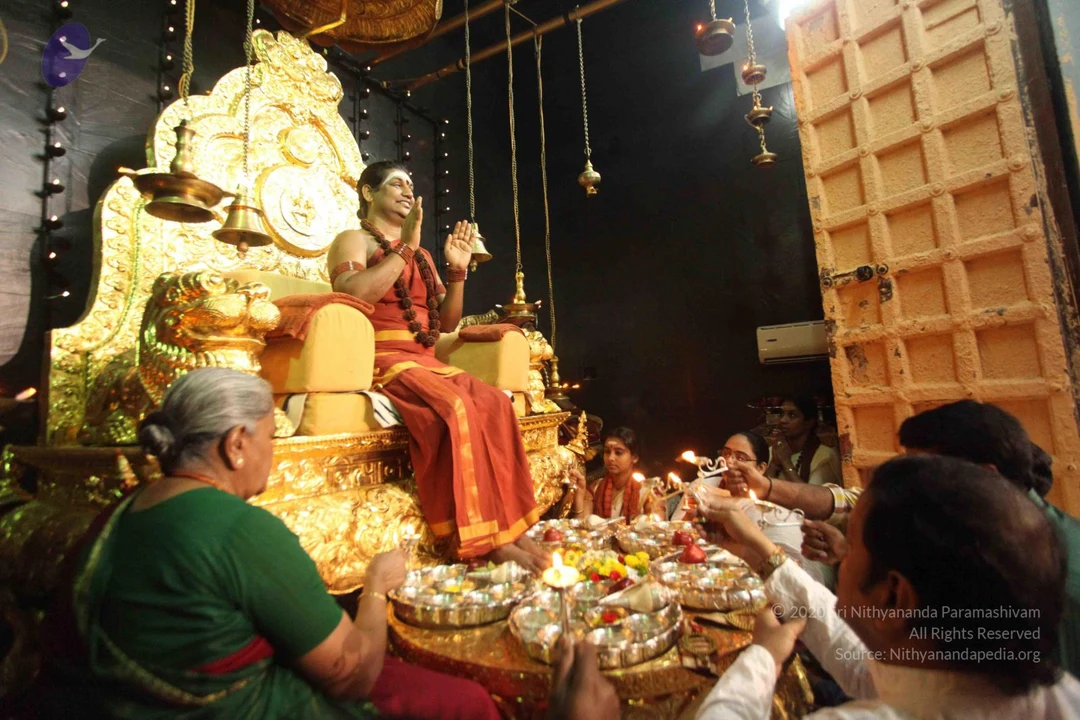
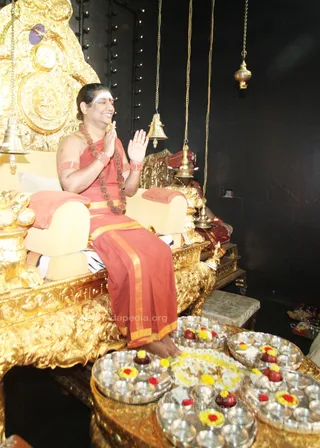
A photograph of a man seated on an ornate gold-and-cream throne with carved gold backrest and lion-head armrests. He wears a saffron-orange dhoti and a matching shawl, a red-and-gold border, a rudraksha mala necklace, beaded arm bands and a white forehead mark with a red bindi. He sits with palms pressed together in a greeting gesture and smiles. Hanging brass bells and oil lamps frame the scene, and a seated figure in red garments with a gold necklace is partly visible at right. a person: the orange robes, rudraksha mala and ceremonial throne presentation match his appearance, so this is an in-person candidate.A photograph of a seated figure on an ornate gold throne with carved gold panels, with hanging brass bells and oil lamps overhead against a black backdrop. The figure wears a rust-orange robe with a gold-bordered shawl draped over one shoulder, a long rudraksha mala, gold-colored armbands, and a white tripundra with red bindi on the forehead, hands raised in a joined greeting. Trays of brass plates holding flowers, fruit and small lamps sit at the foot of the throne, and a second seated figure in red appears beside the throne in the background. a person is the central figure, seated in a satsang-style setting.

Sacred Arts Tour
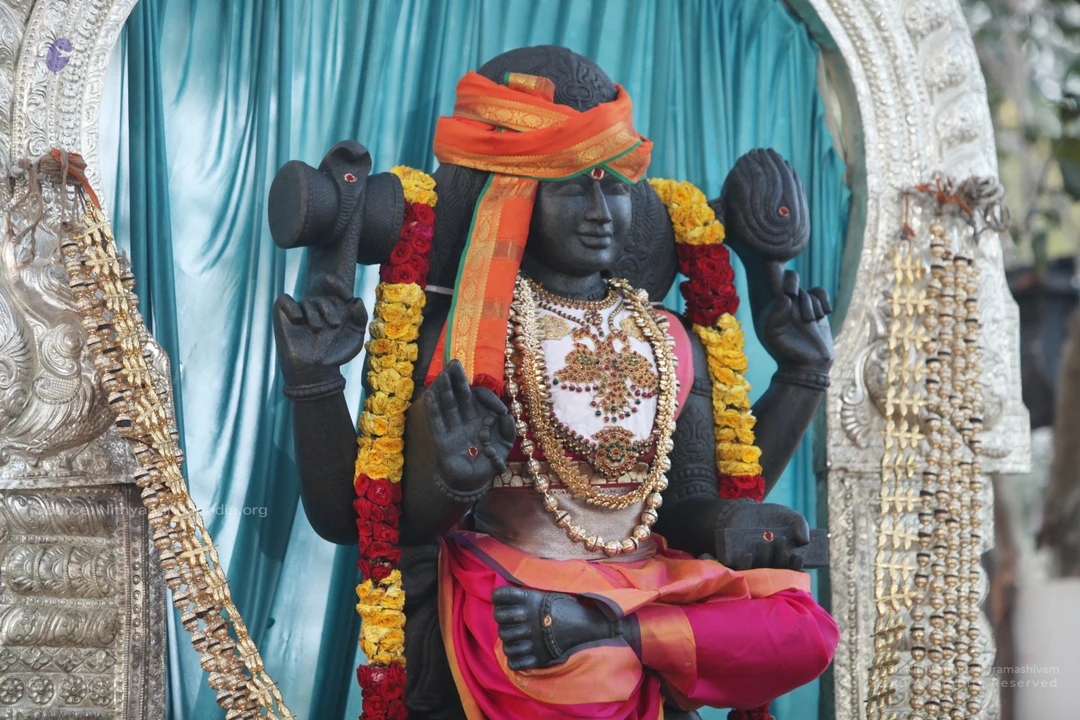
5 photosSource gallery
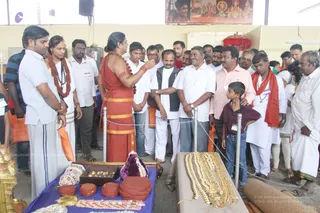
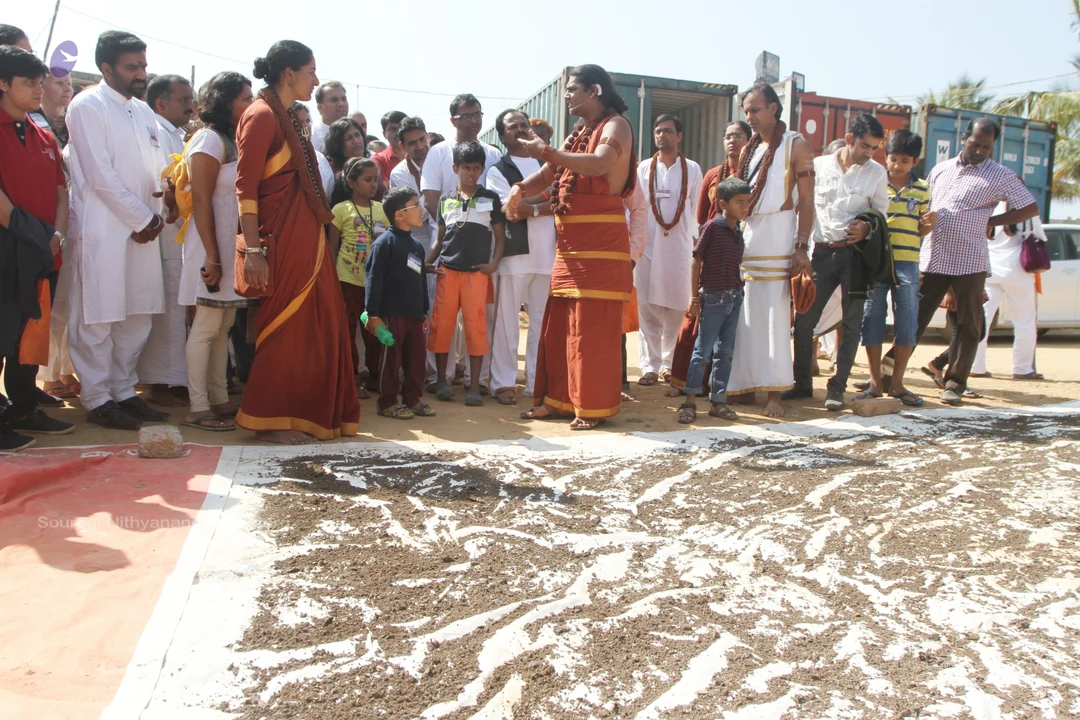
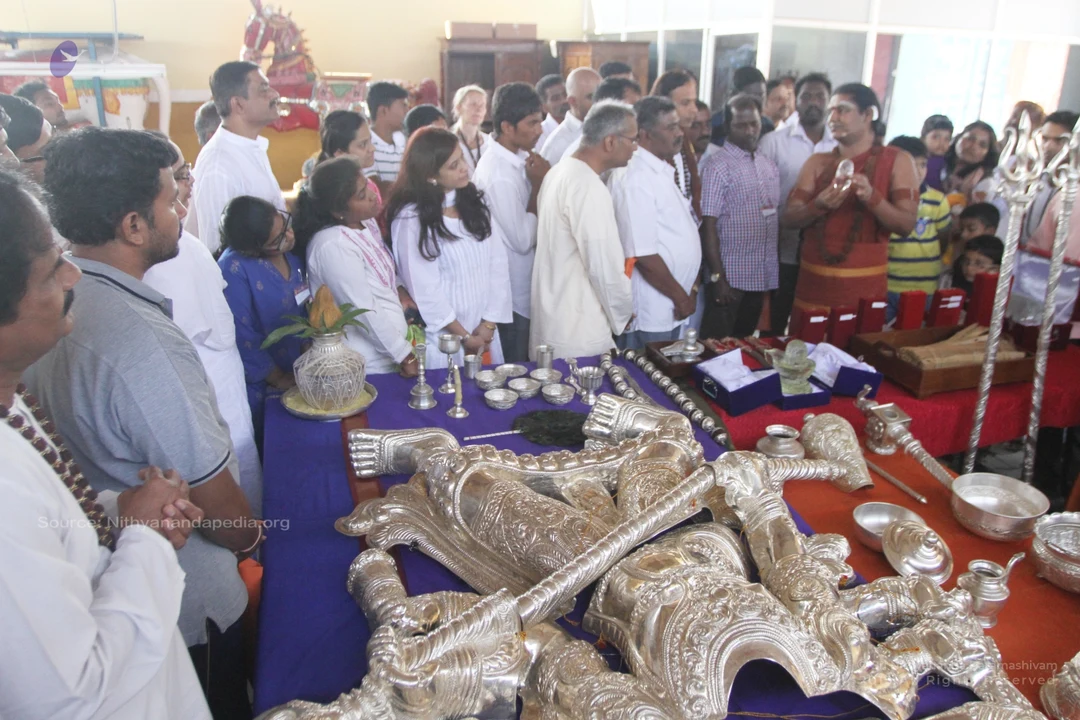
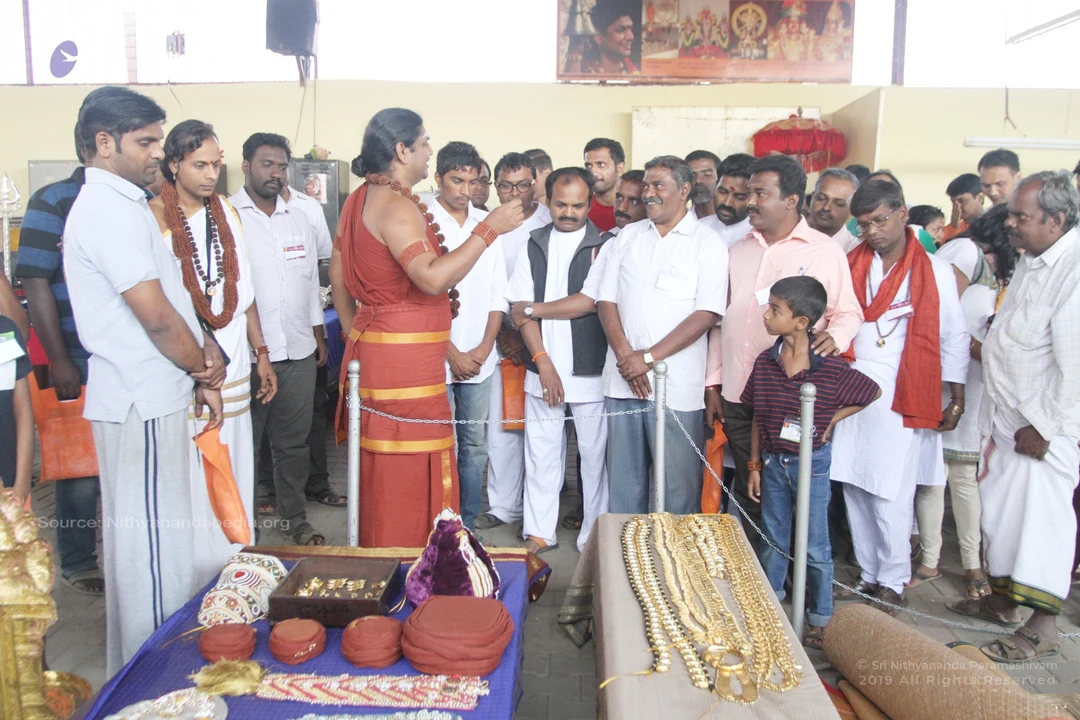
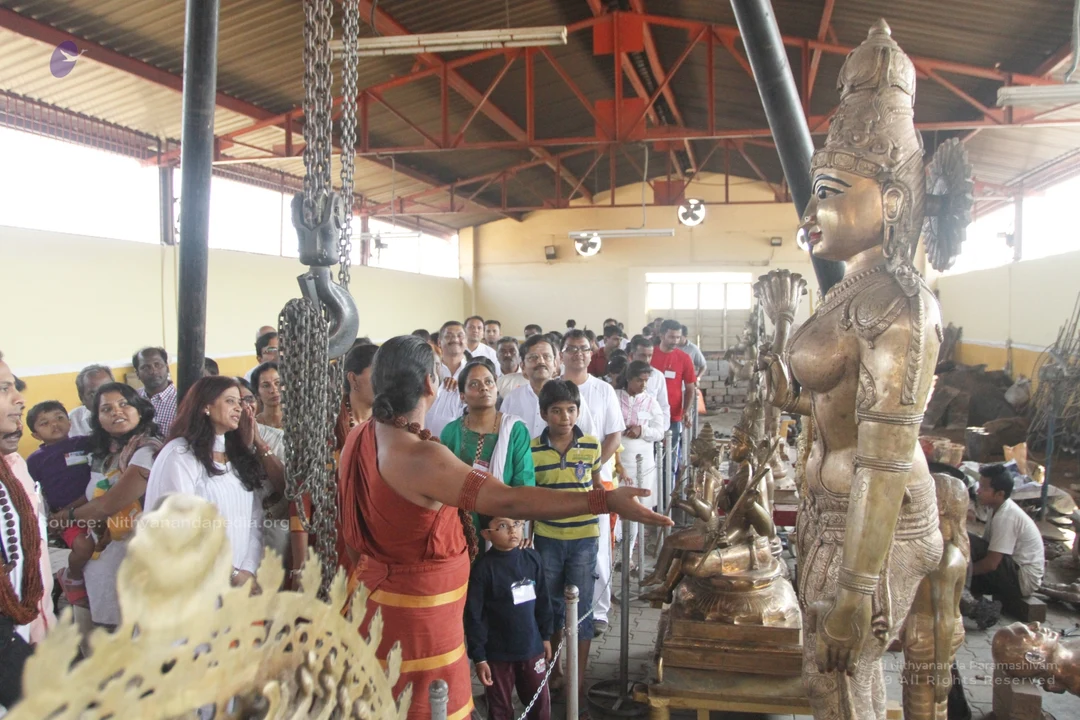
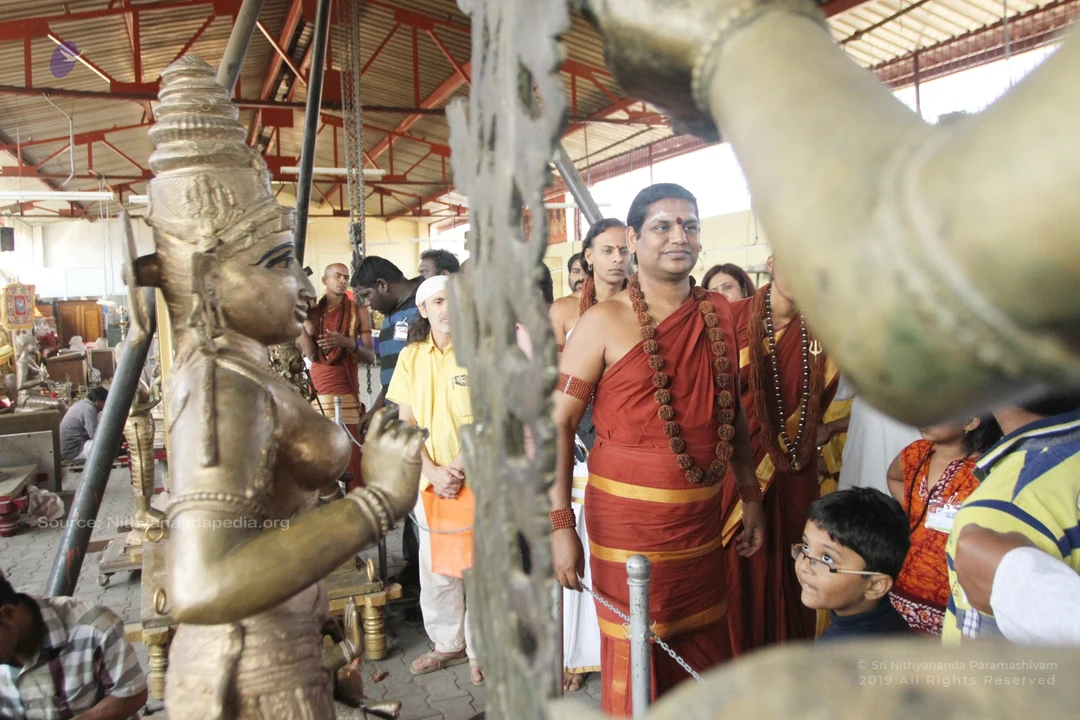
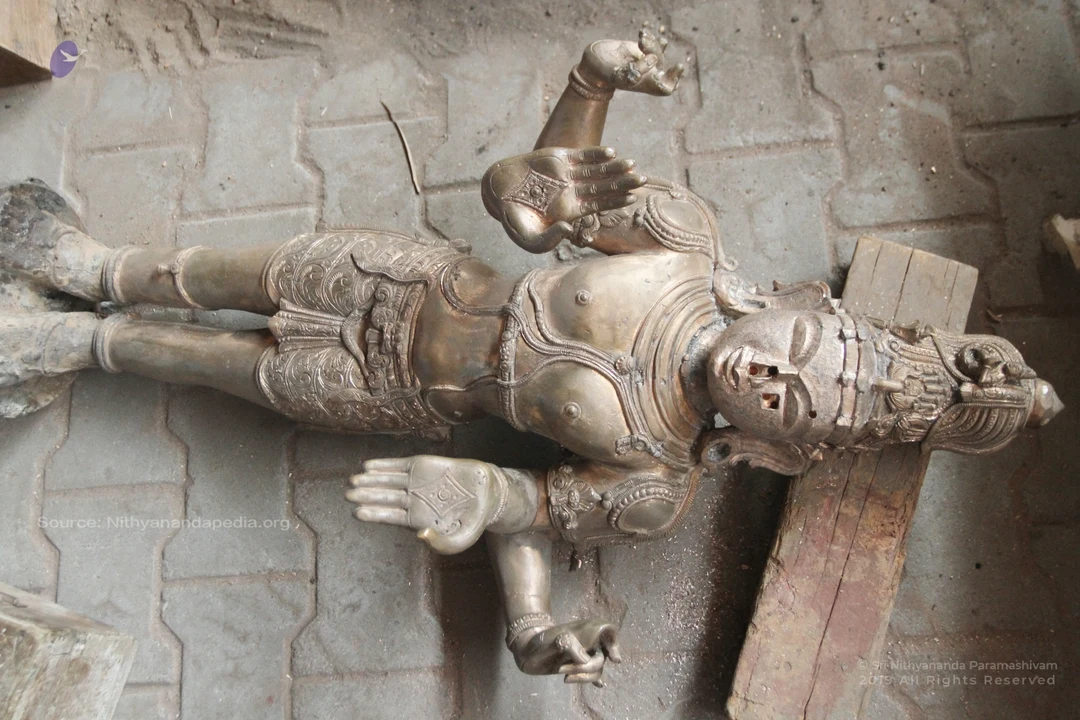
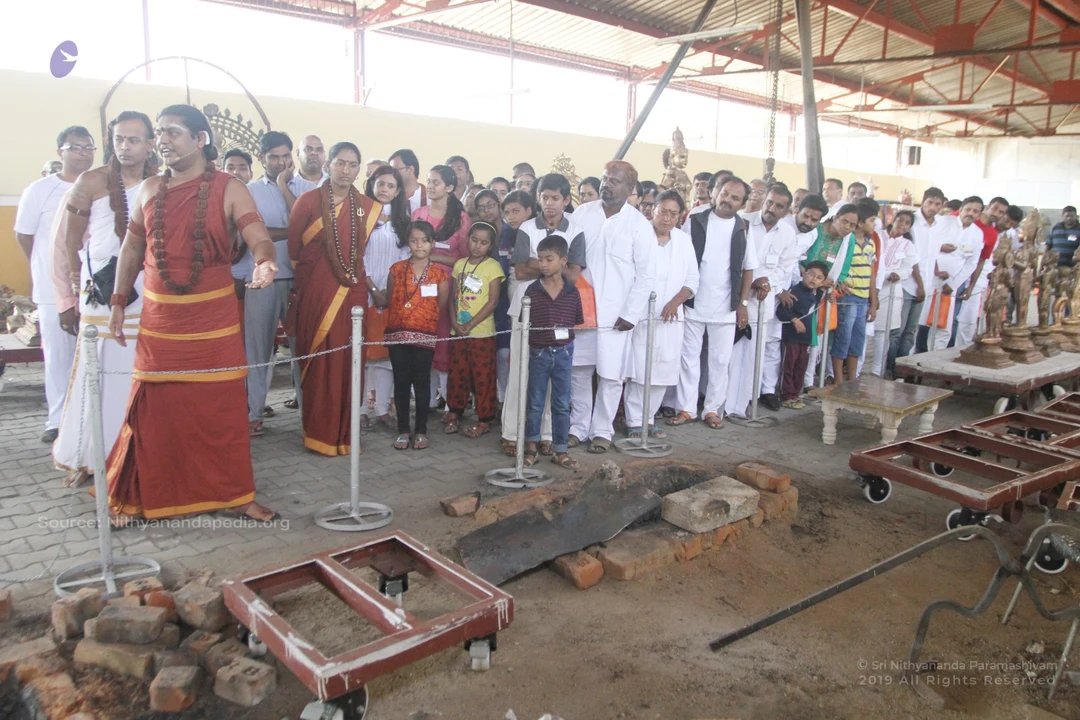
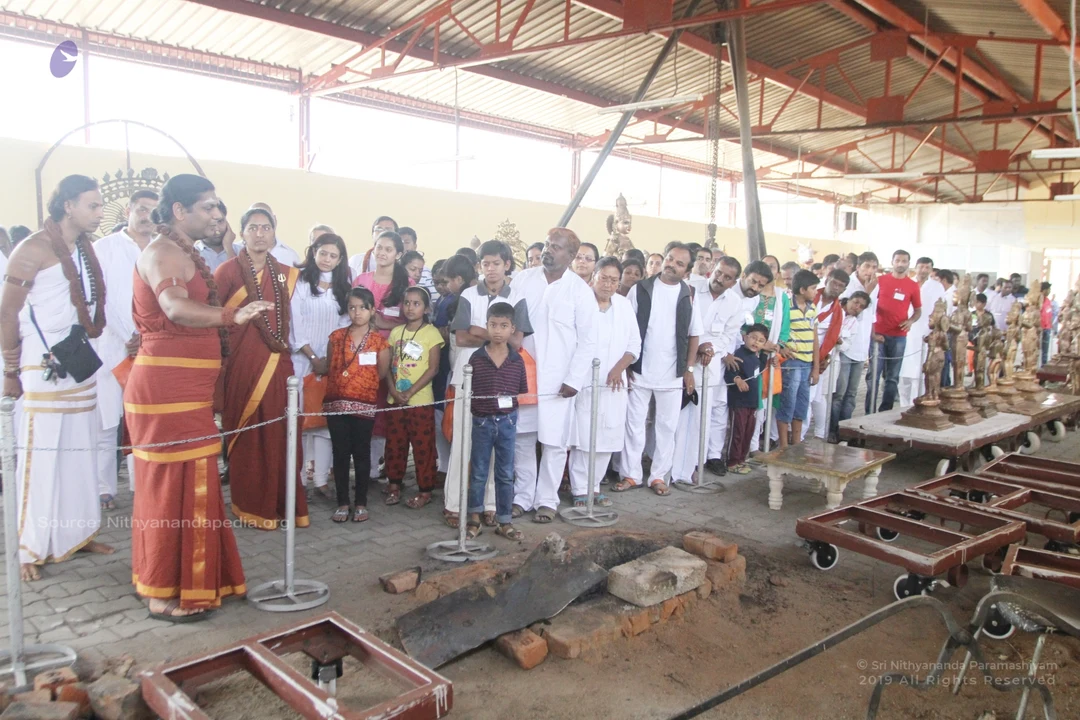
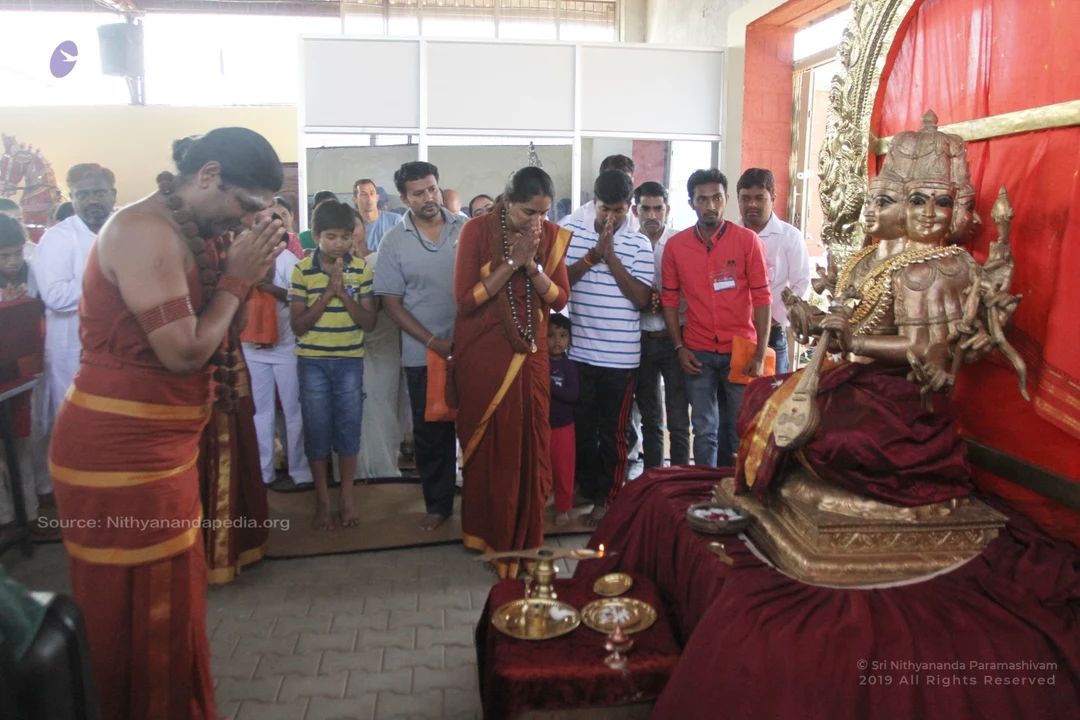
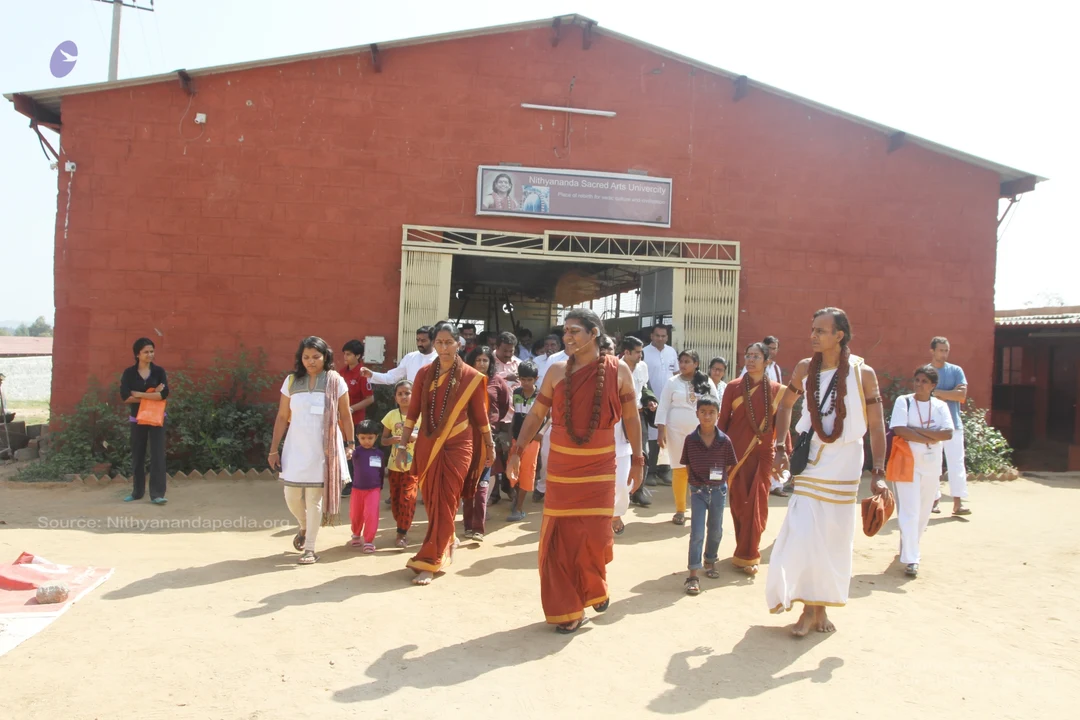
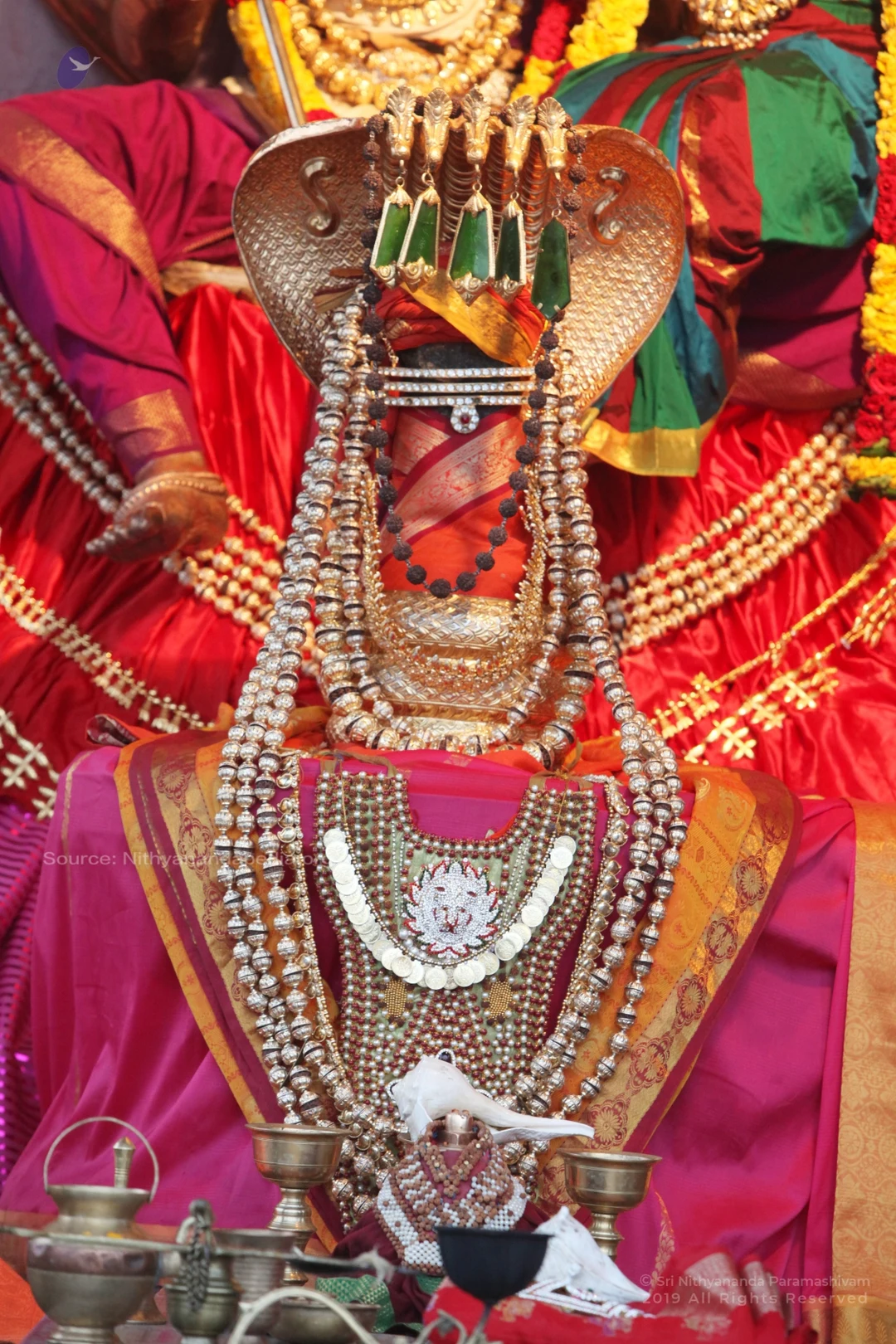
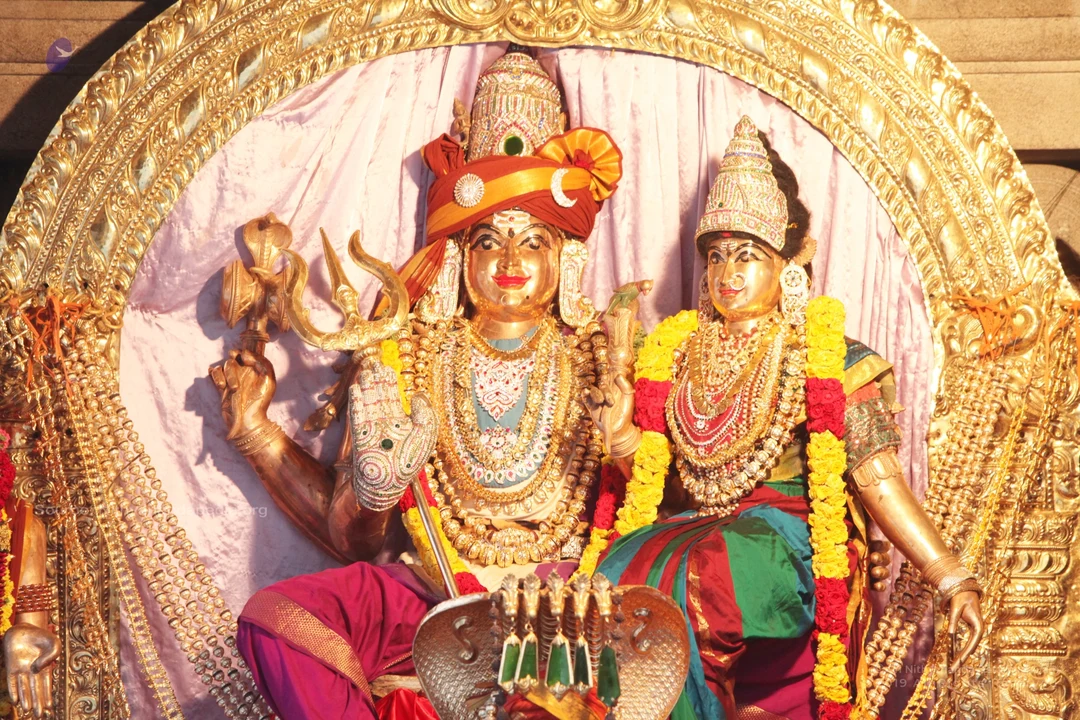
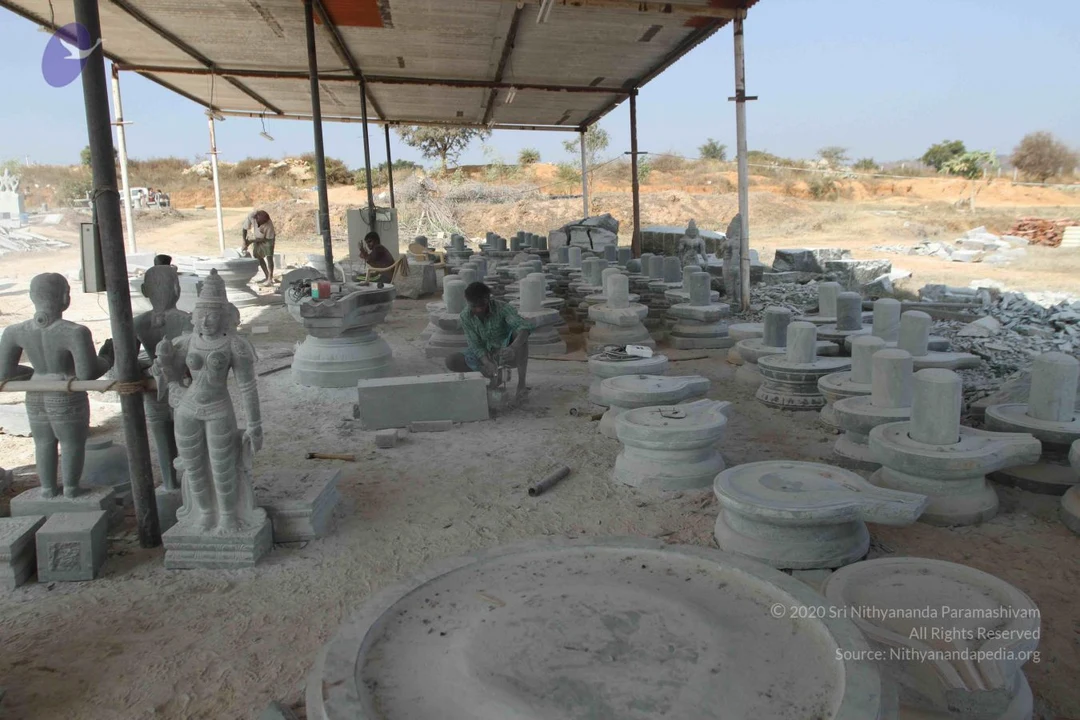
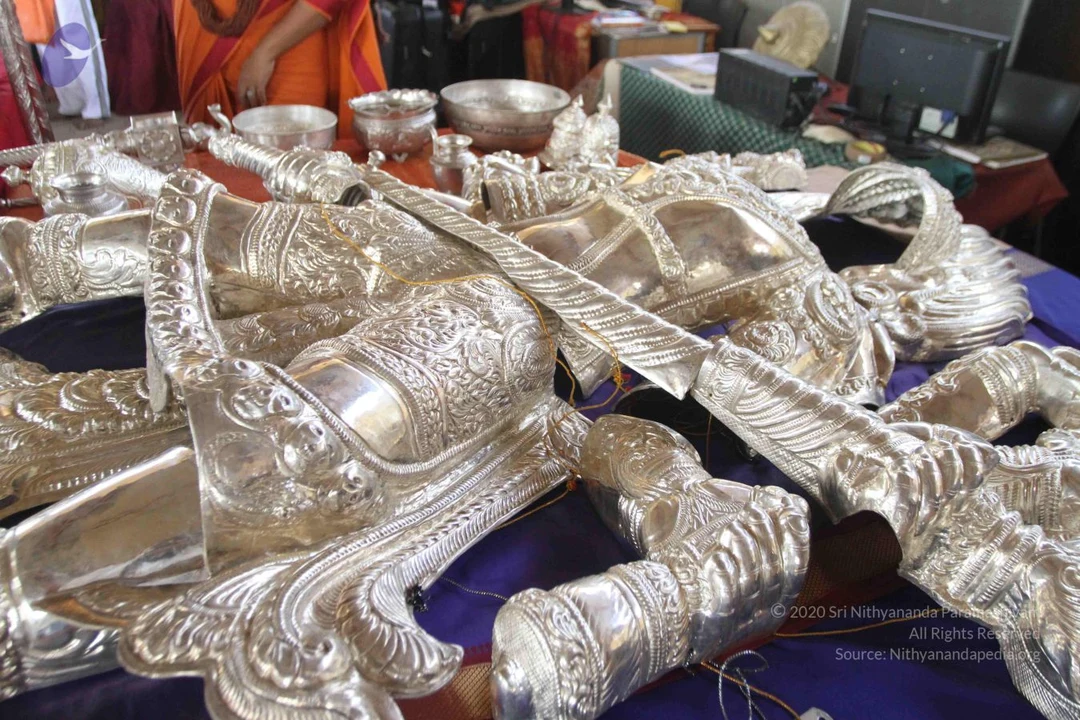
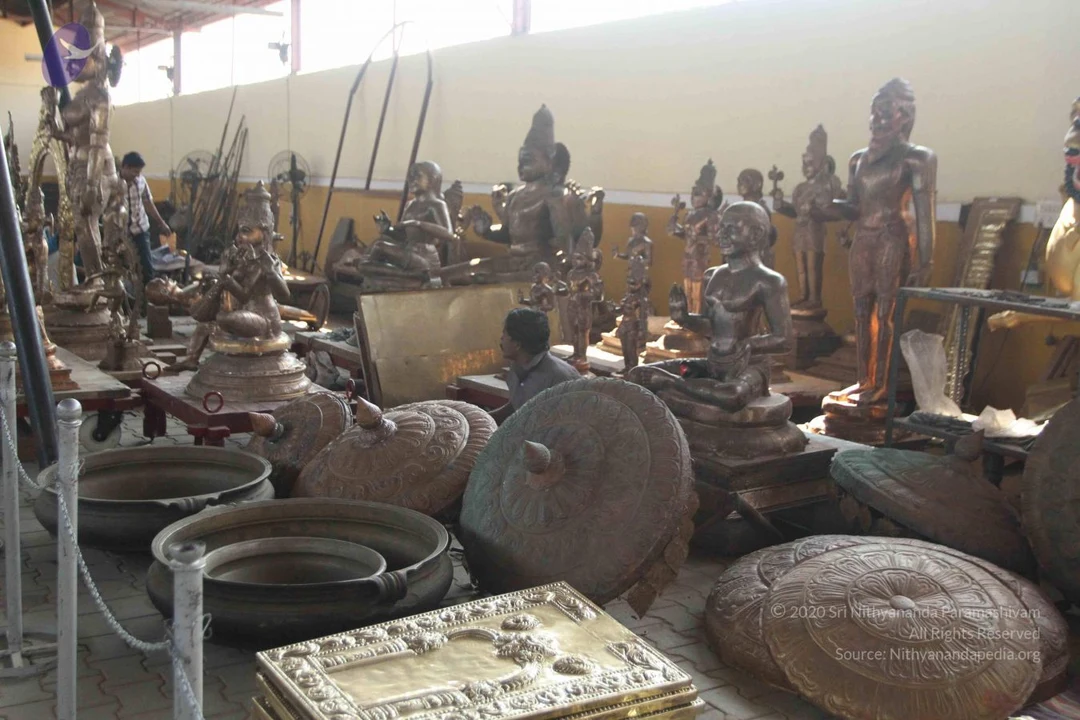
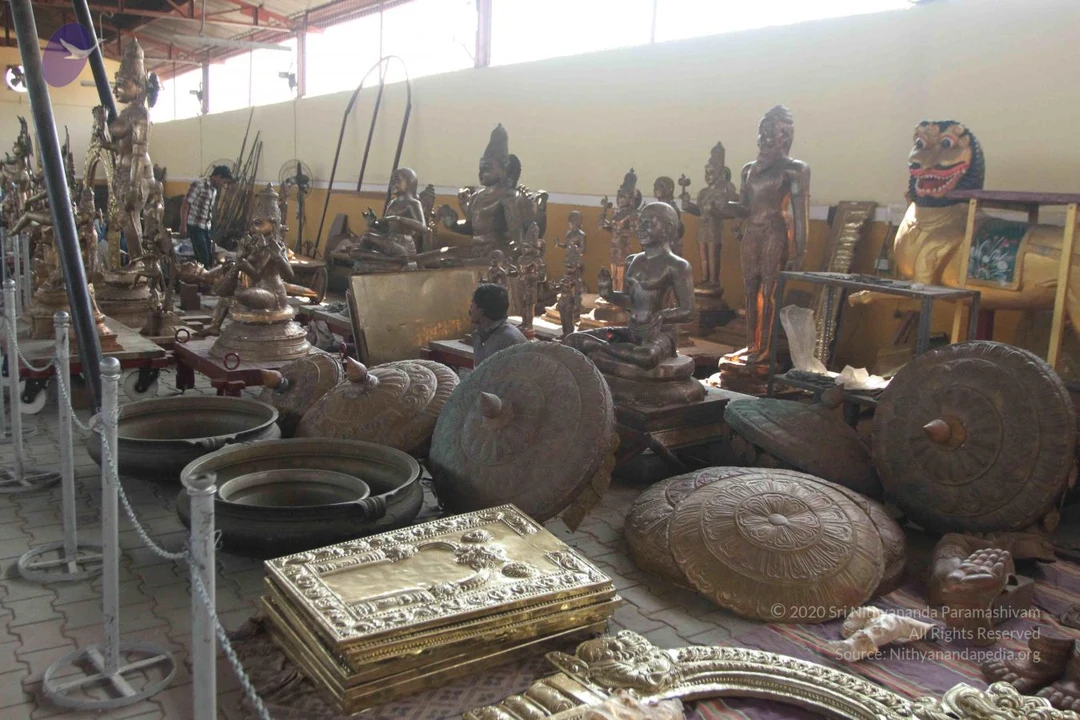
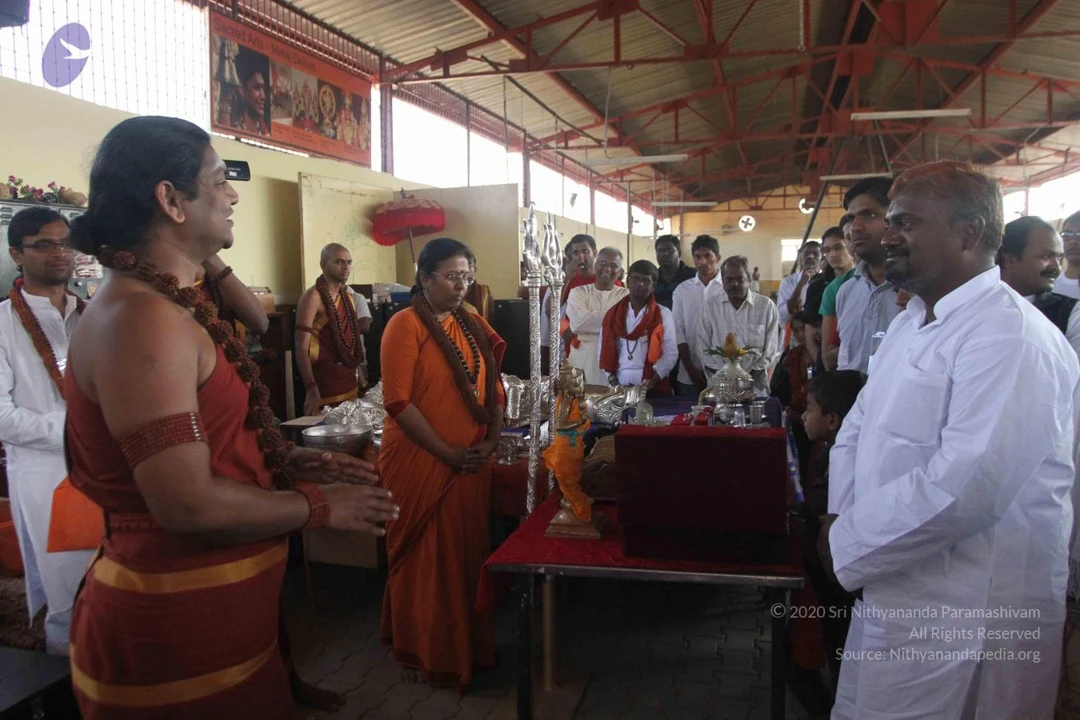
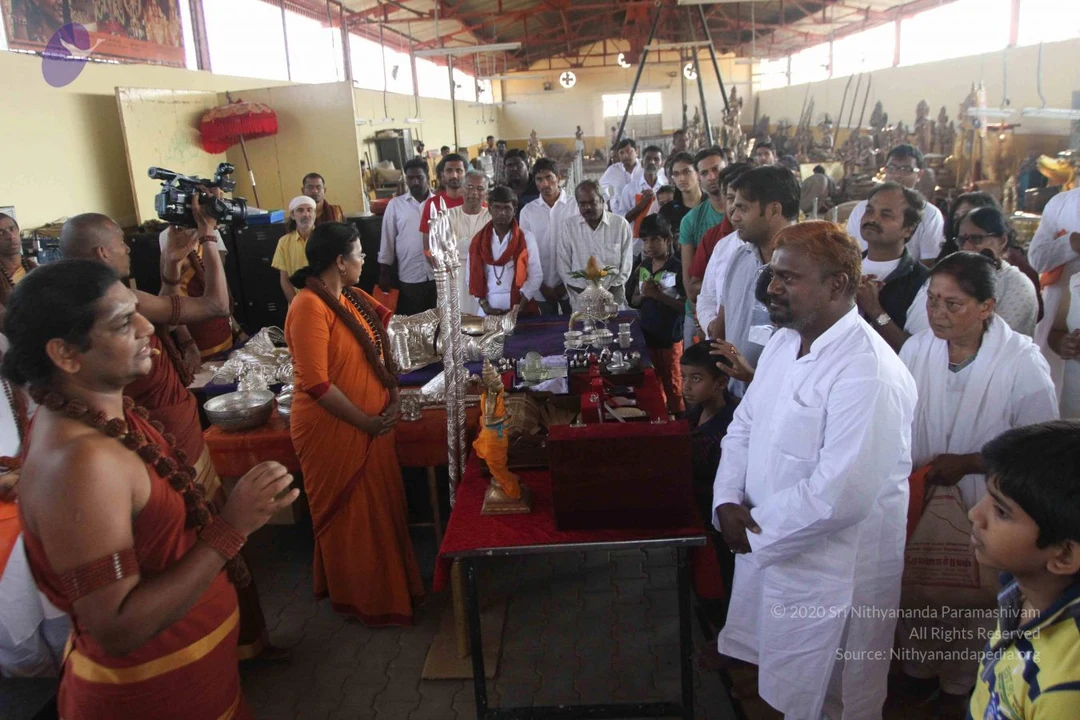
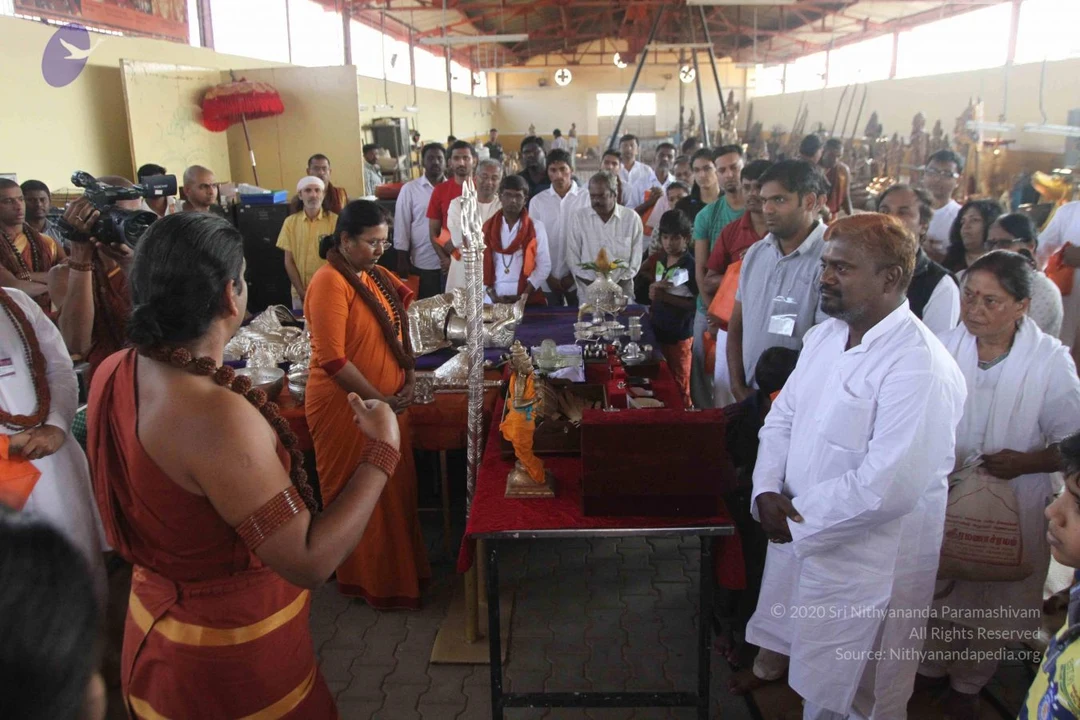
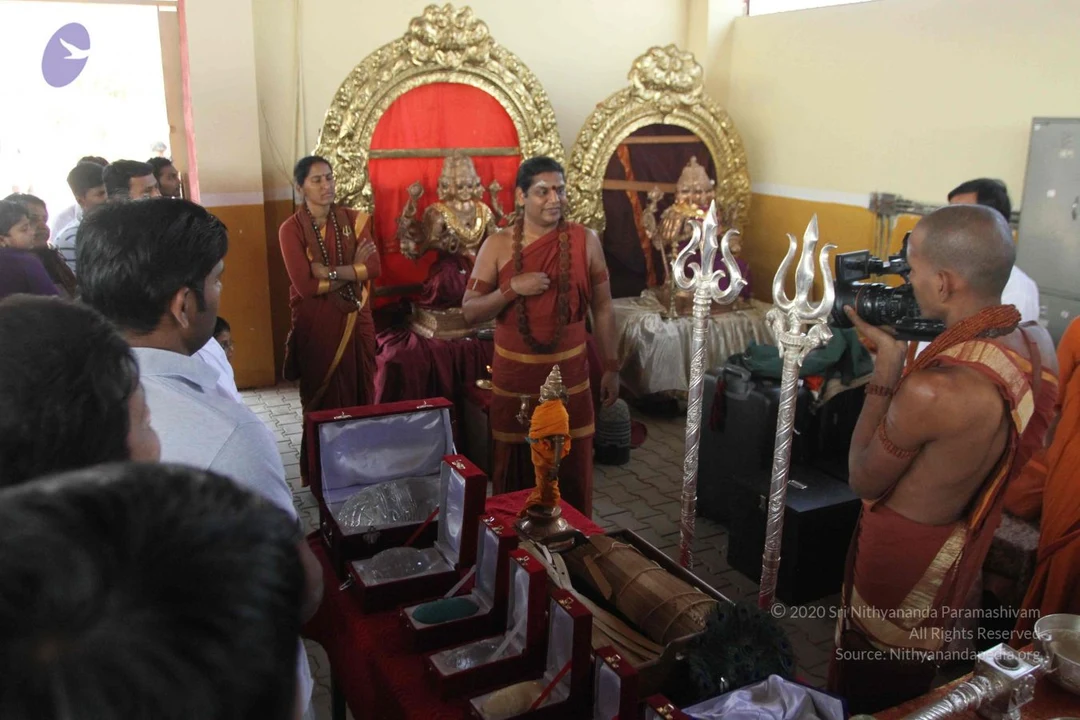
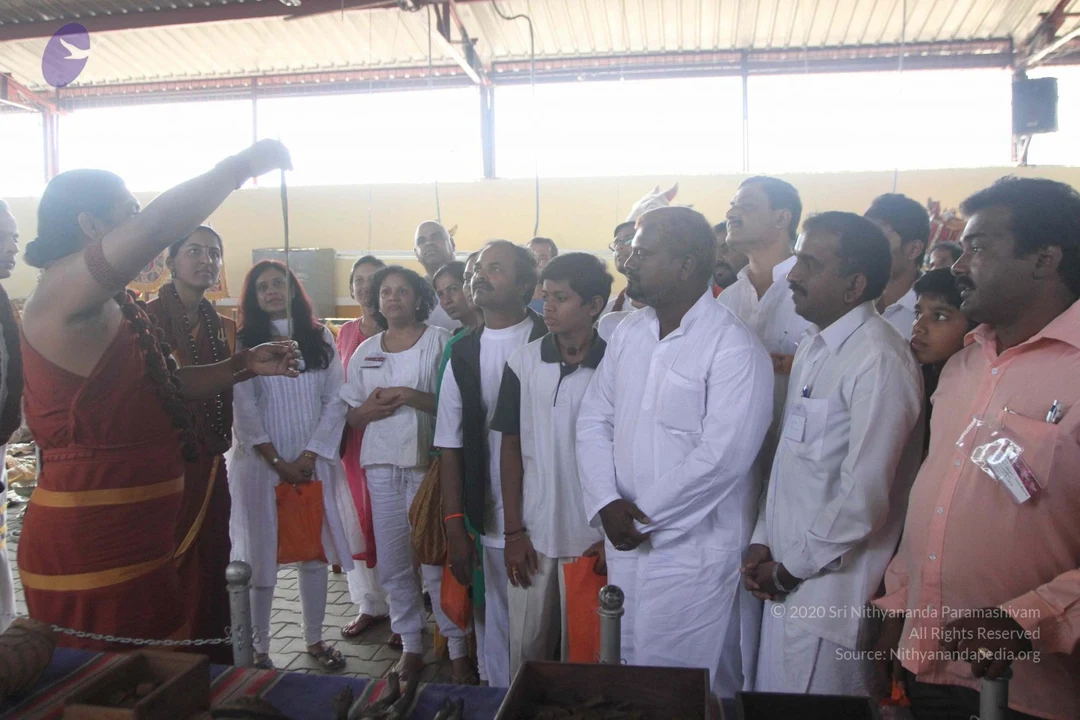
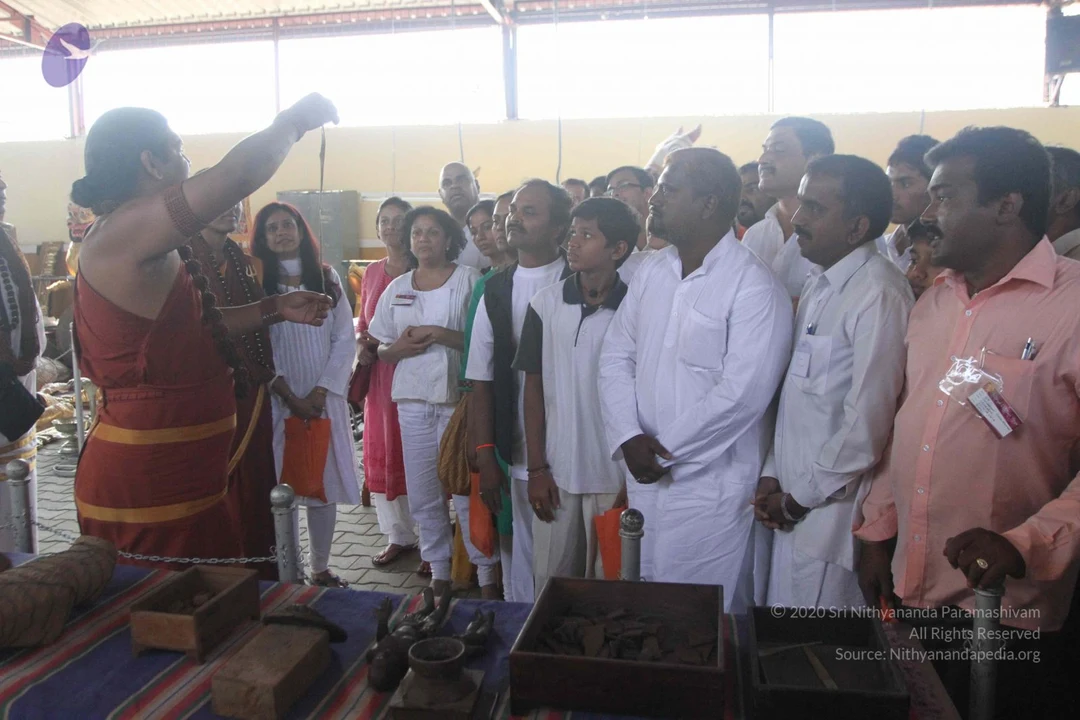
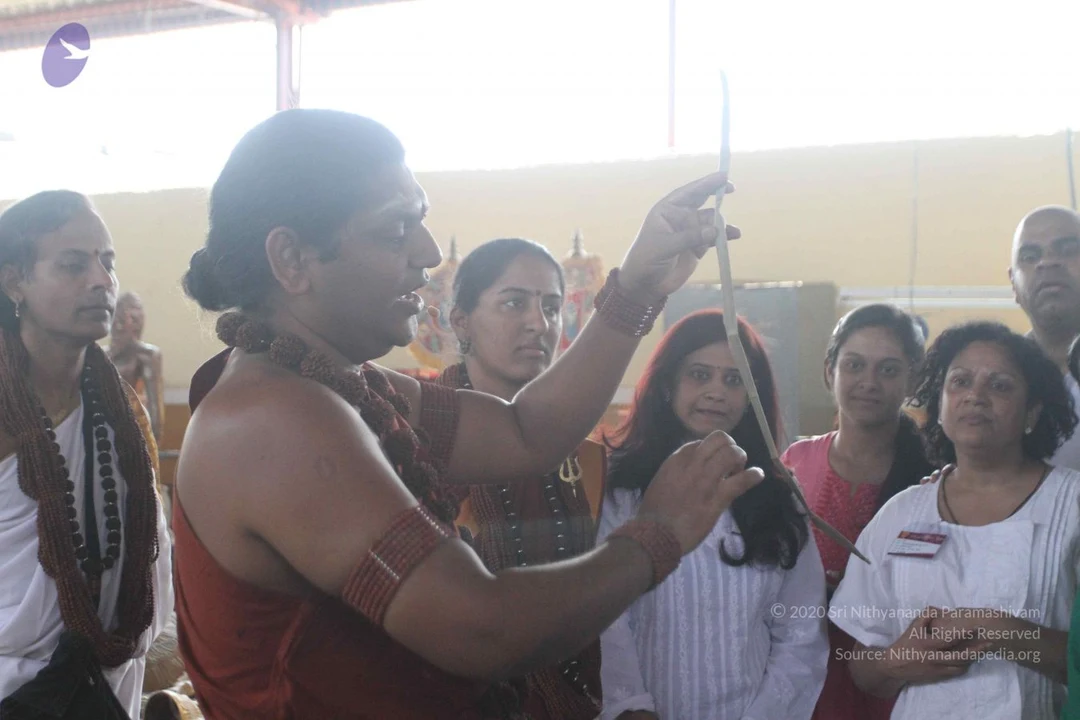
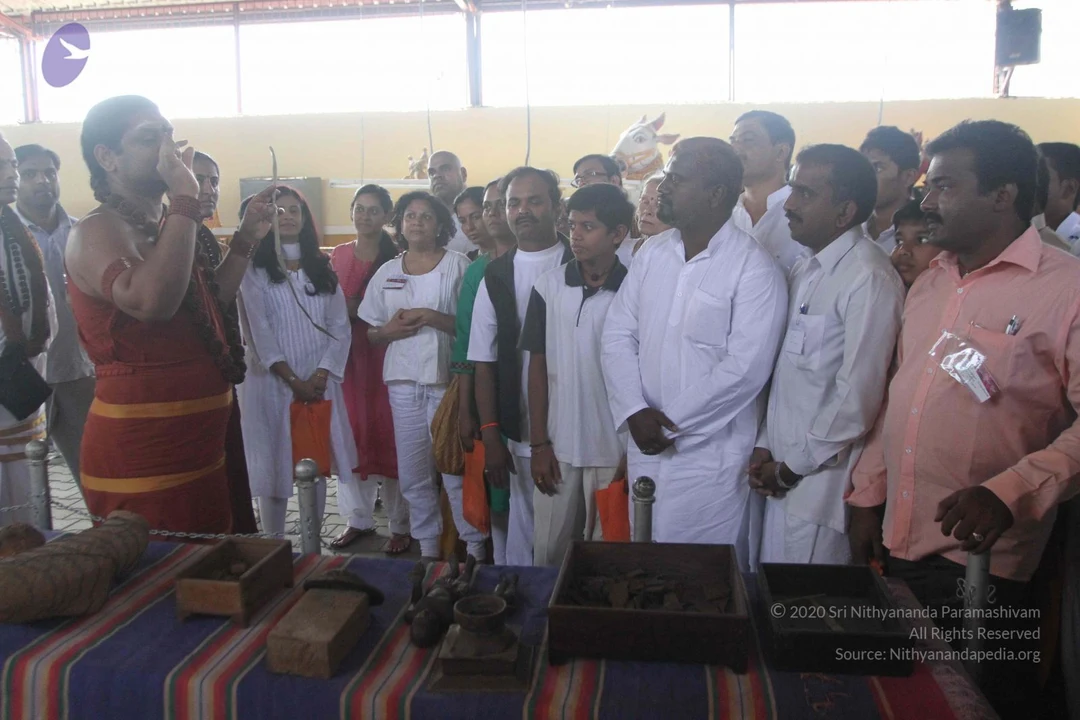
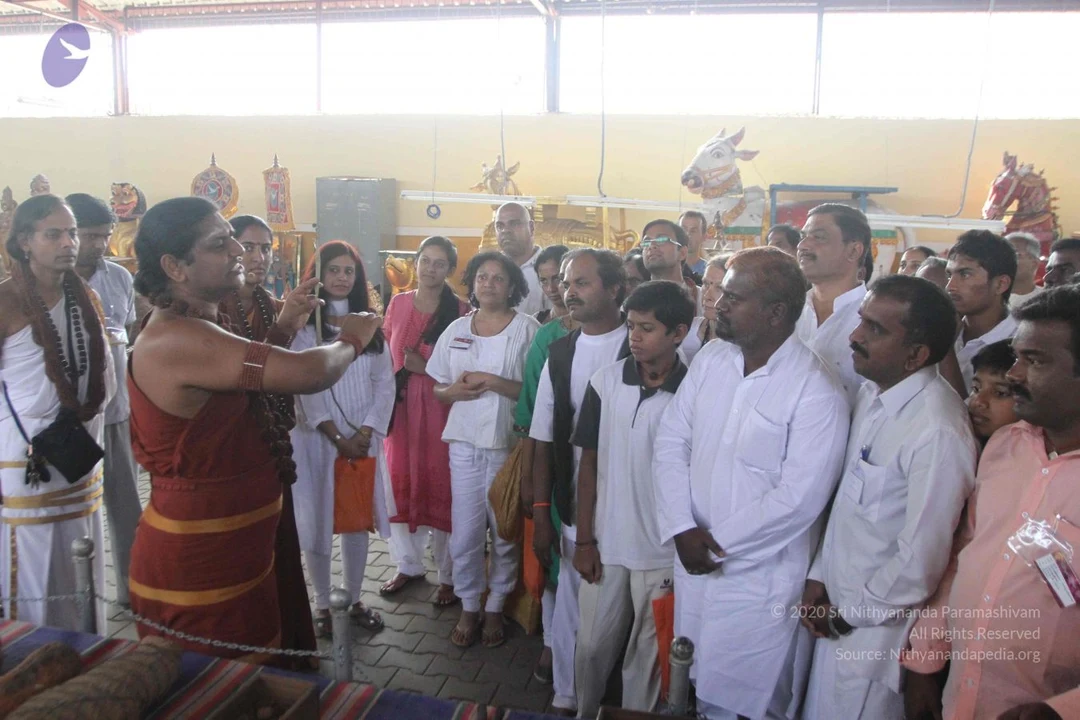
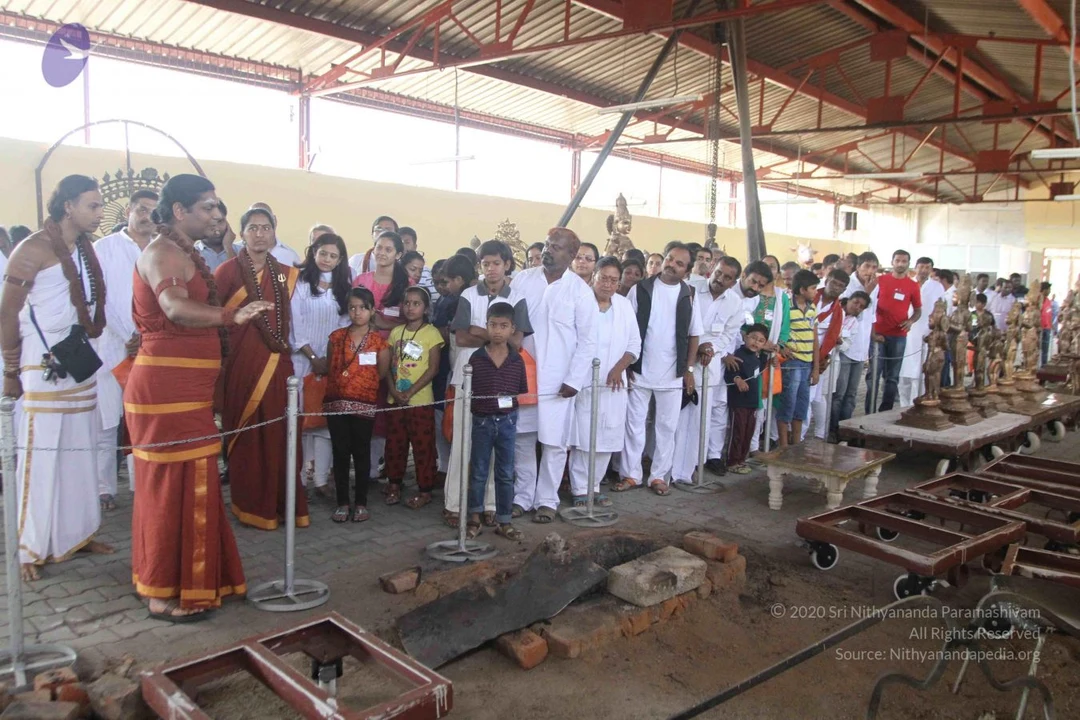
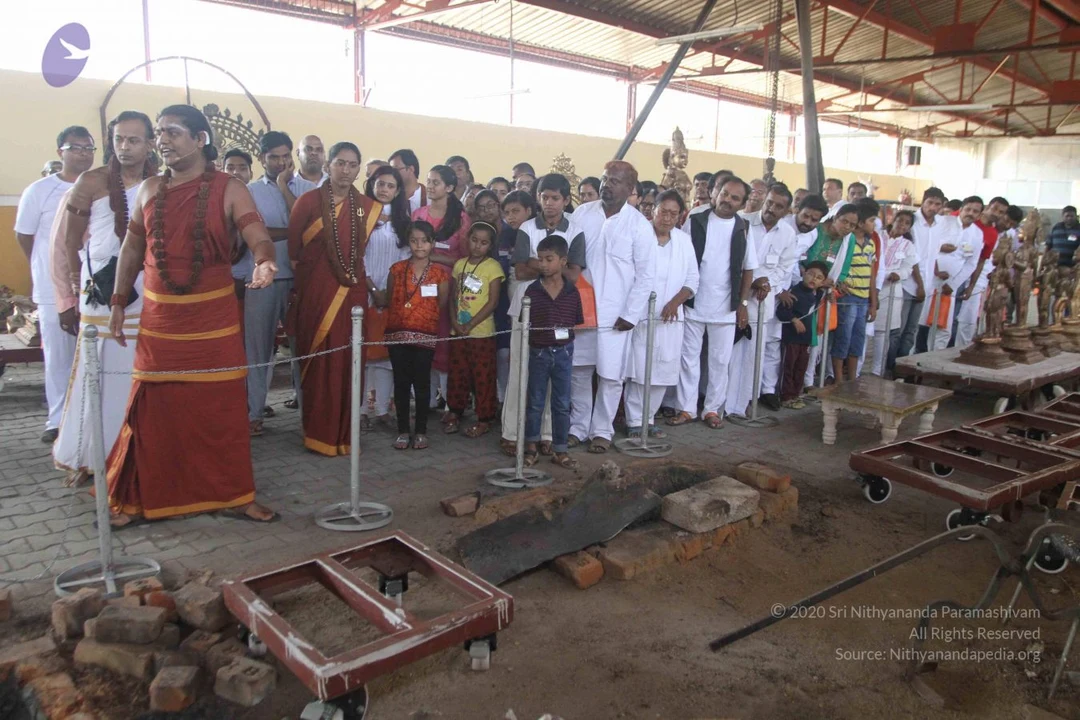
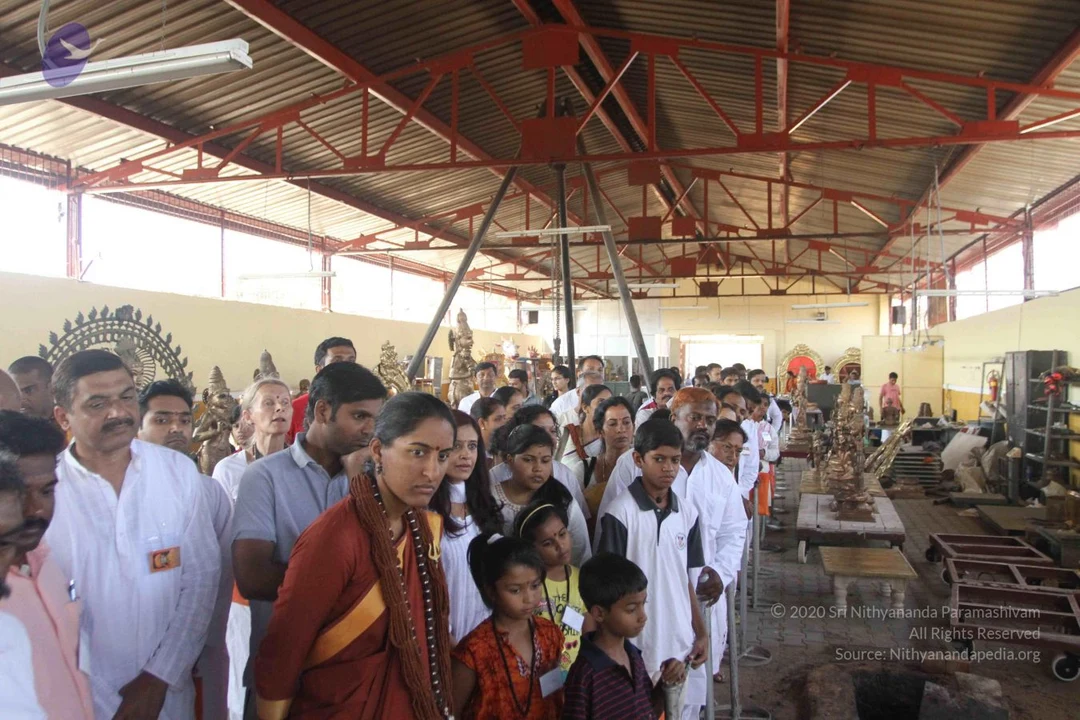
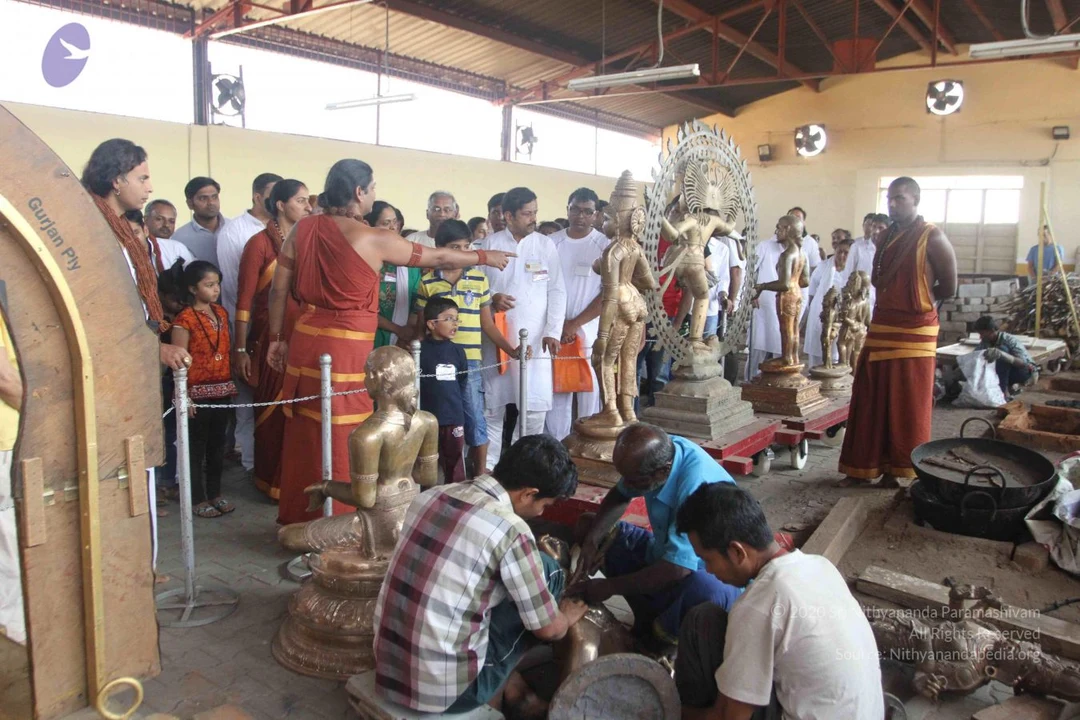
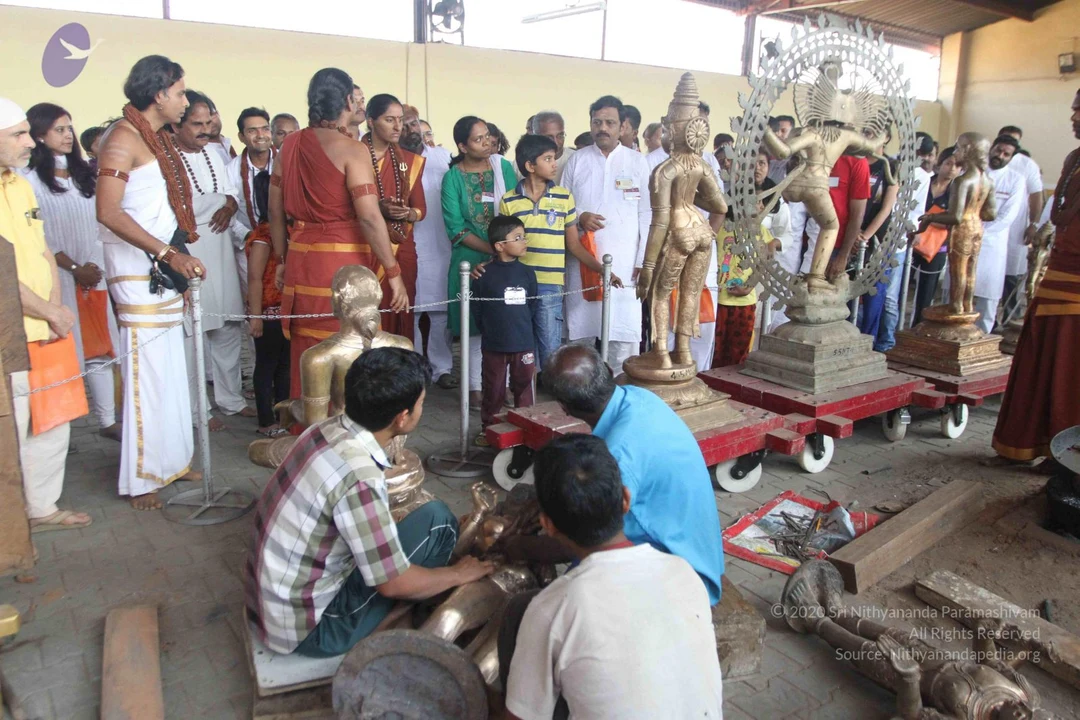
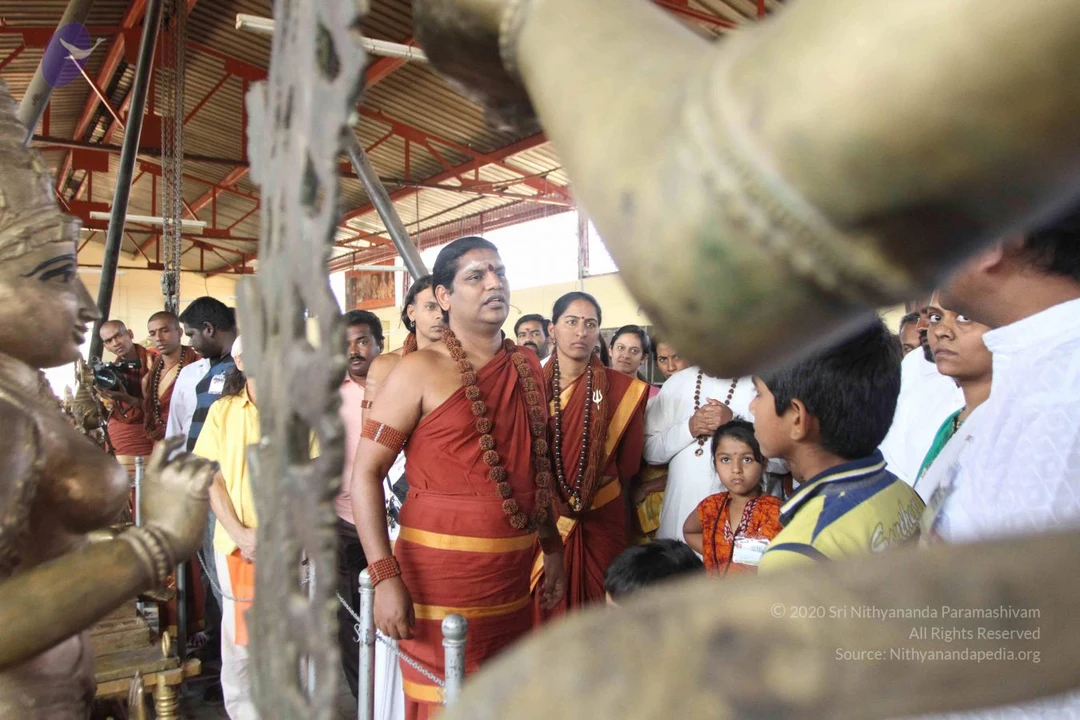
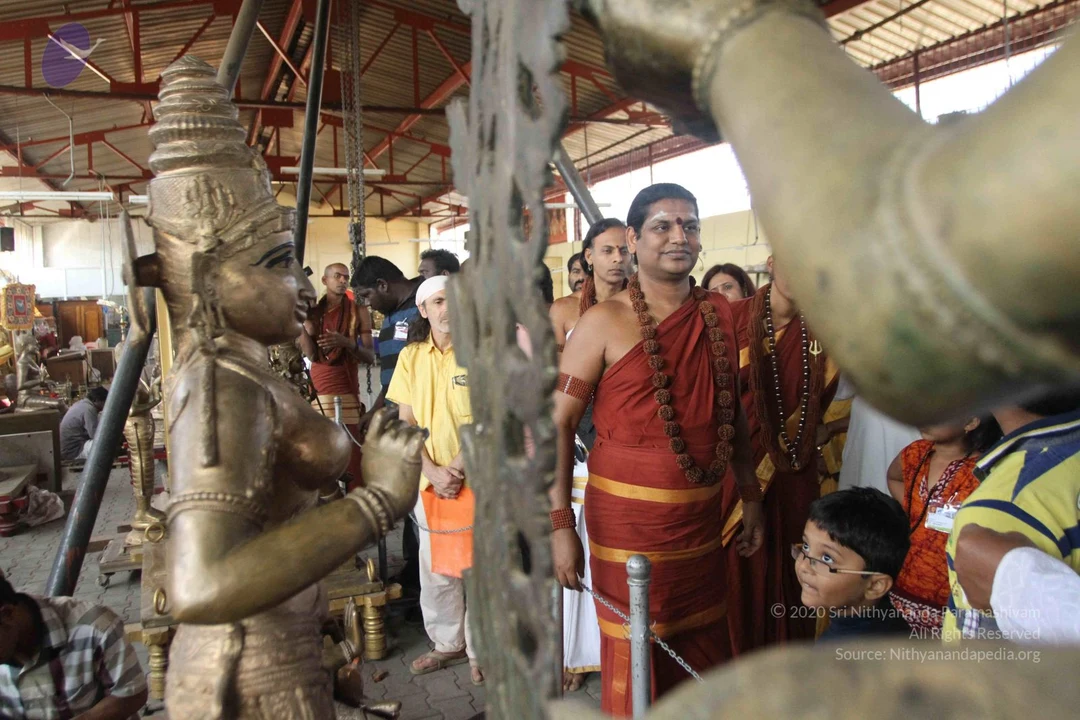
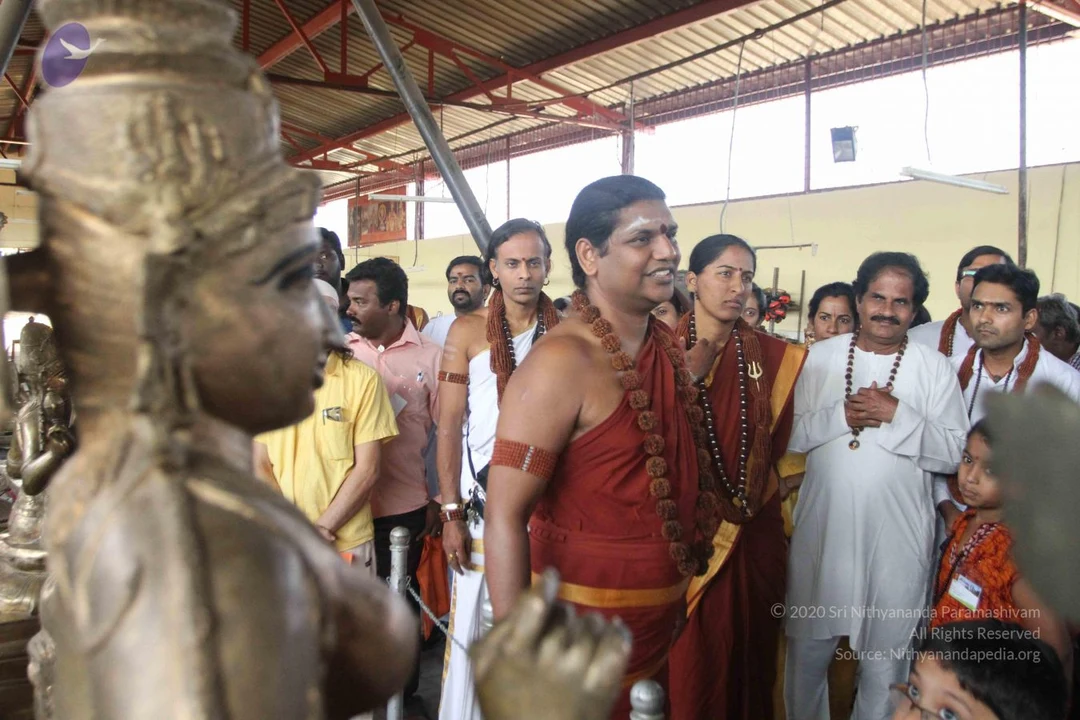
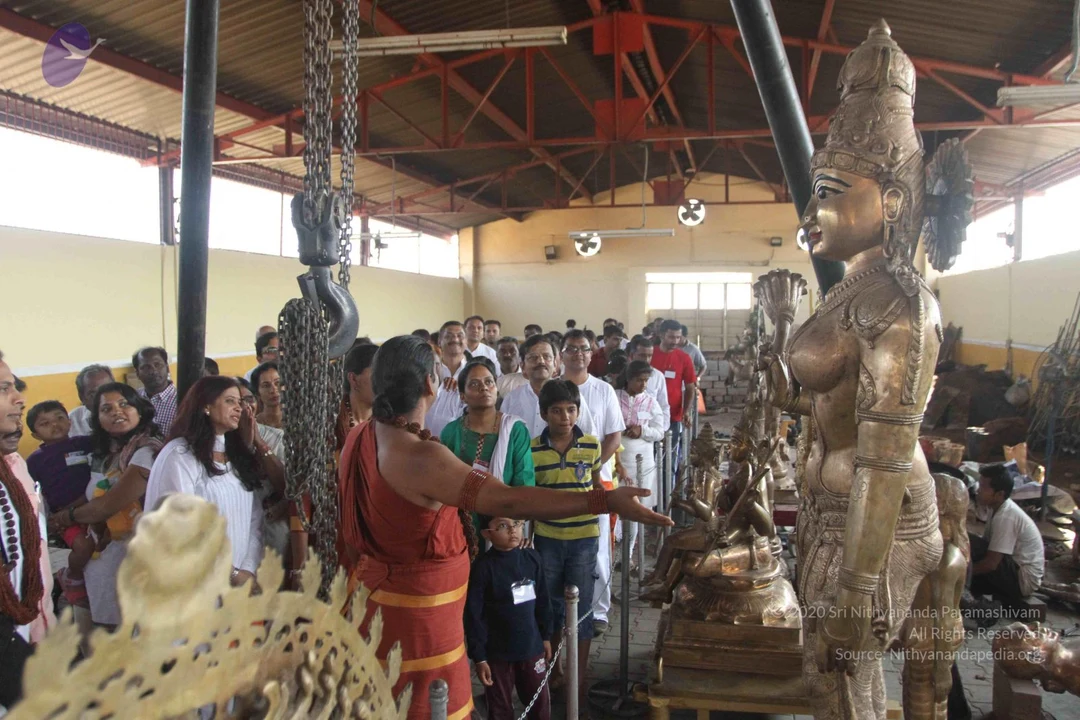
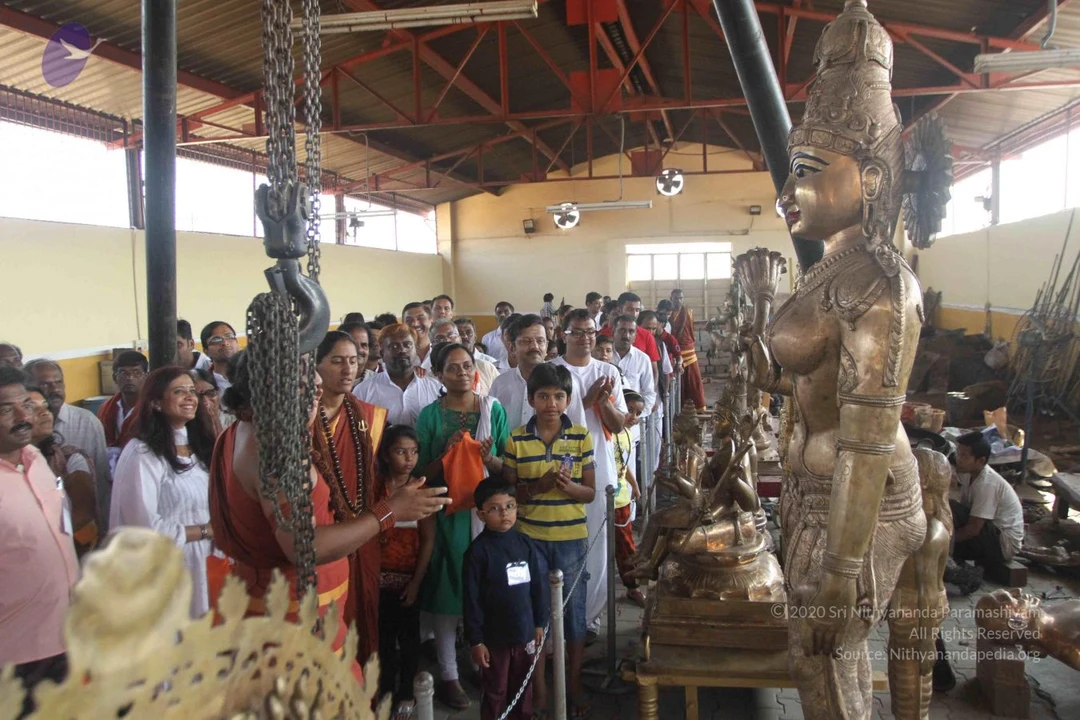
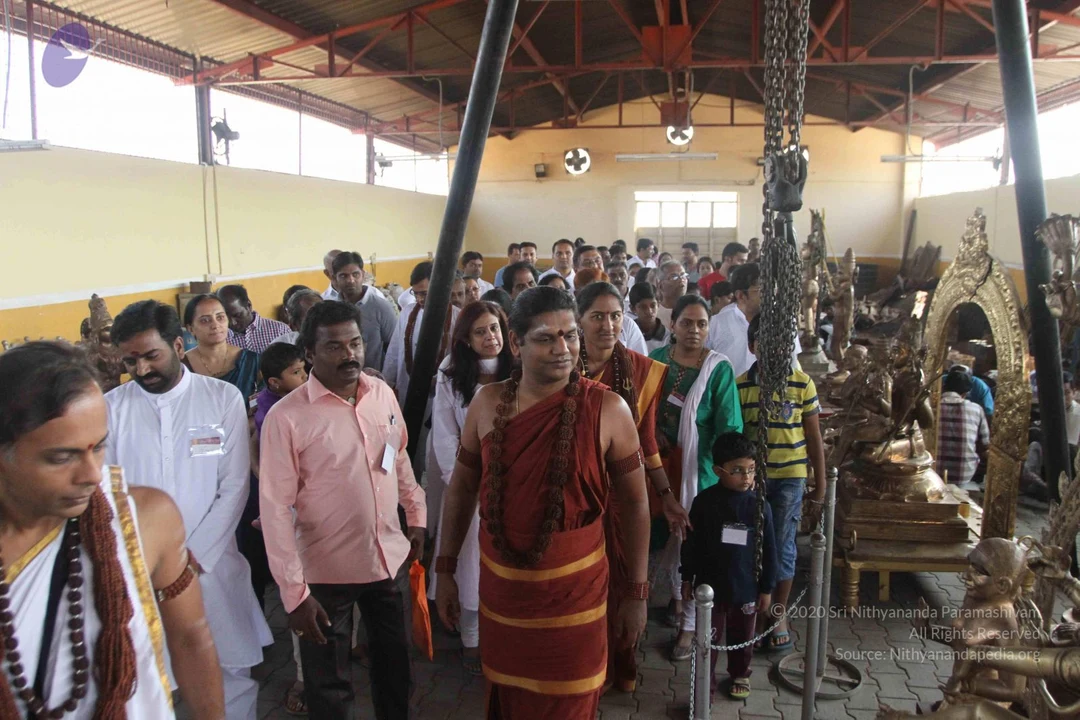
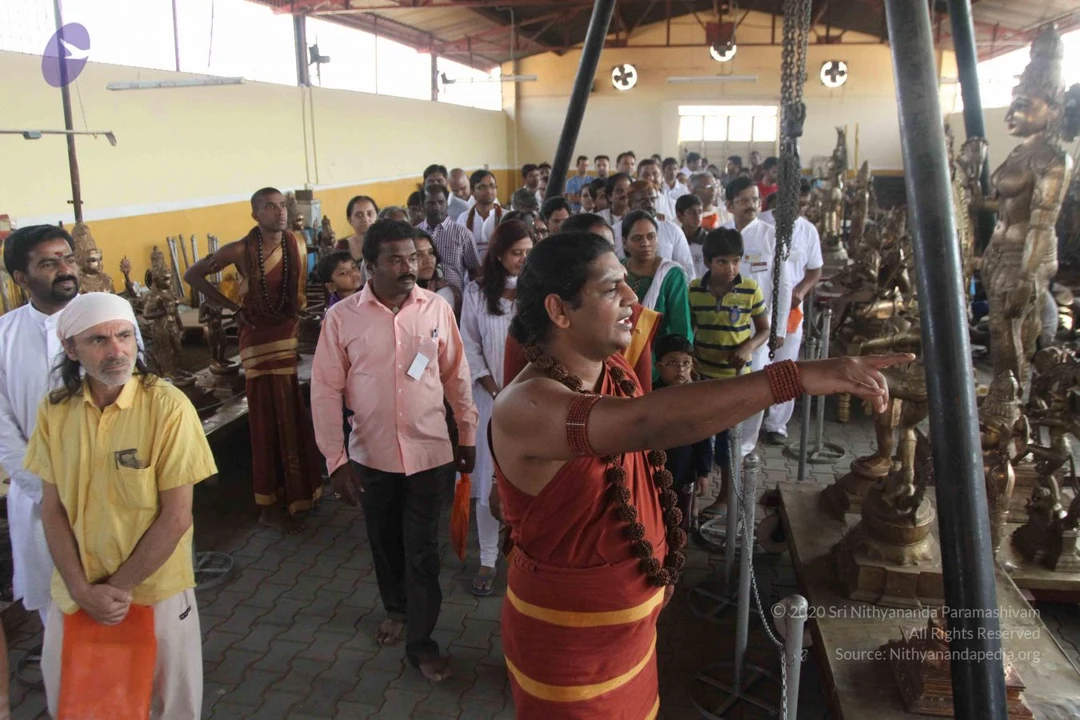
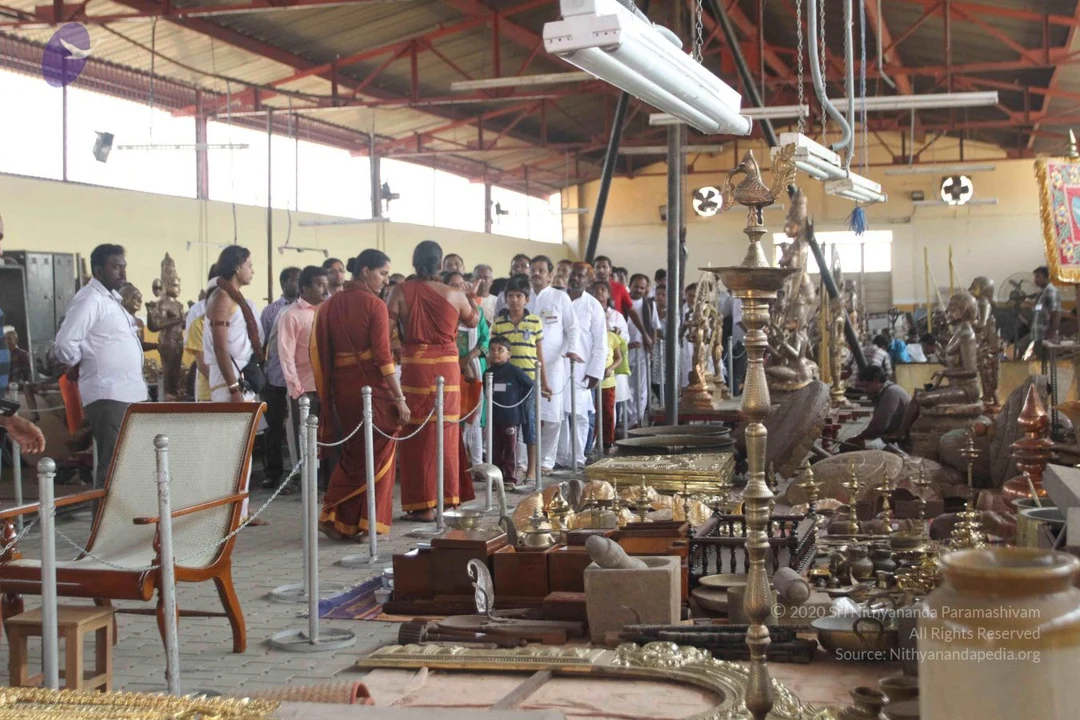
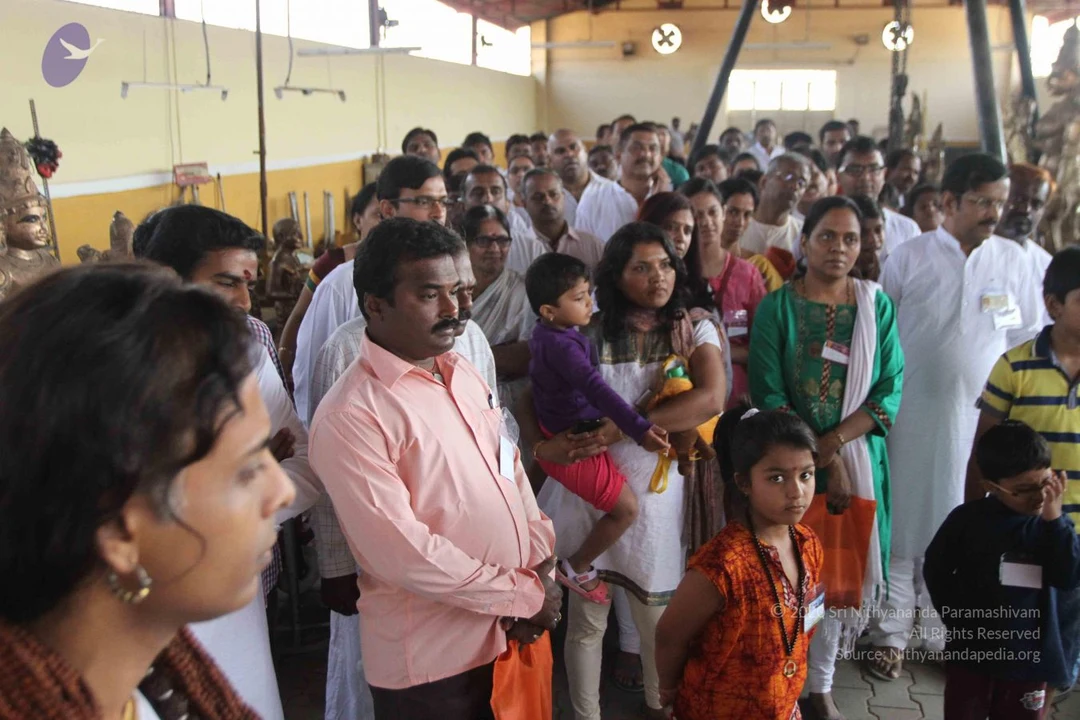
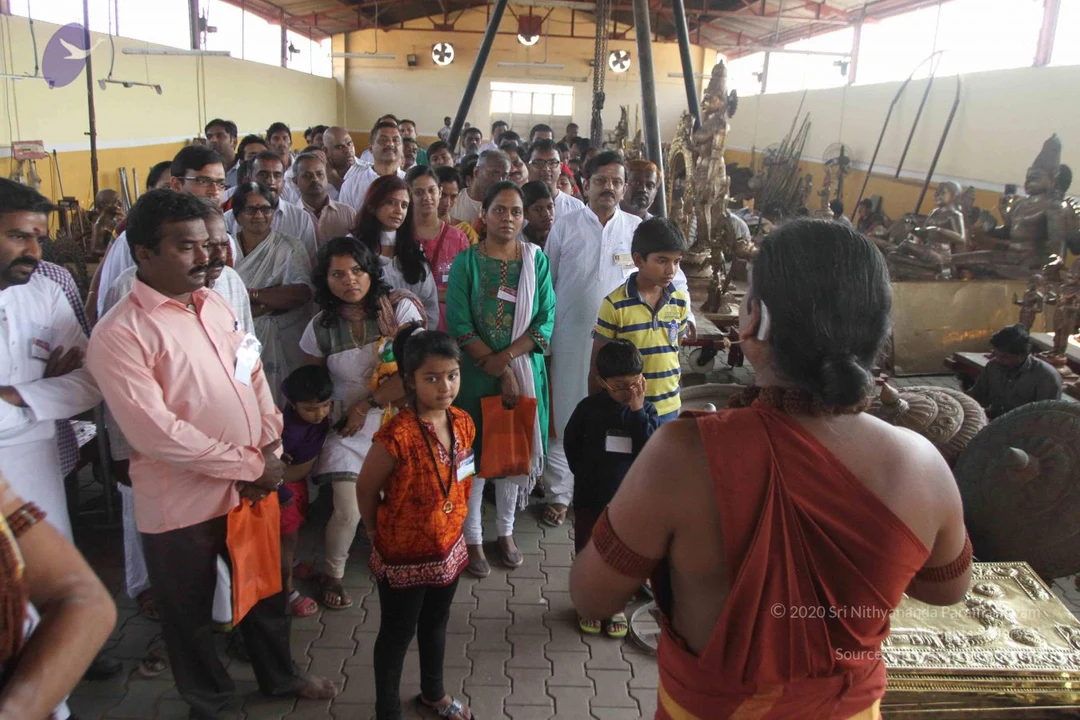
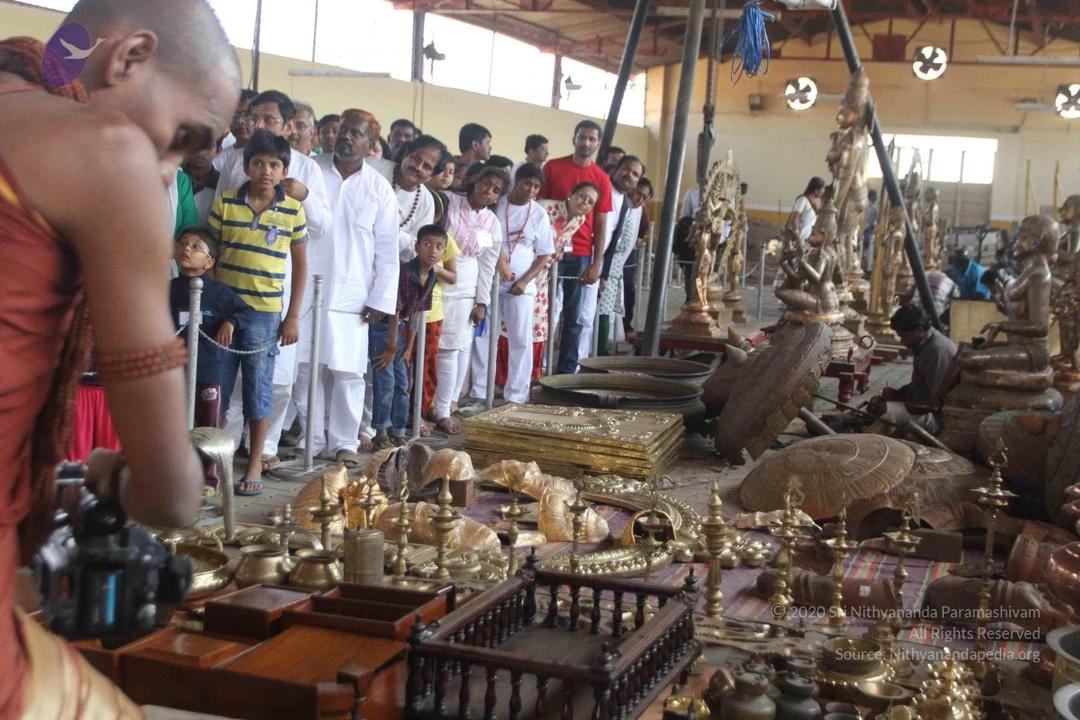
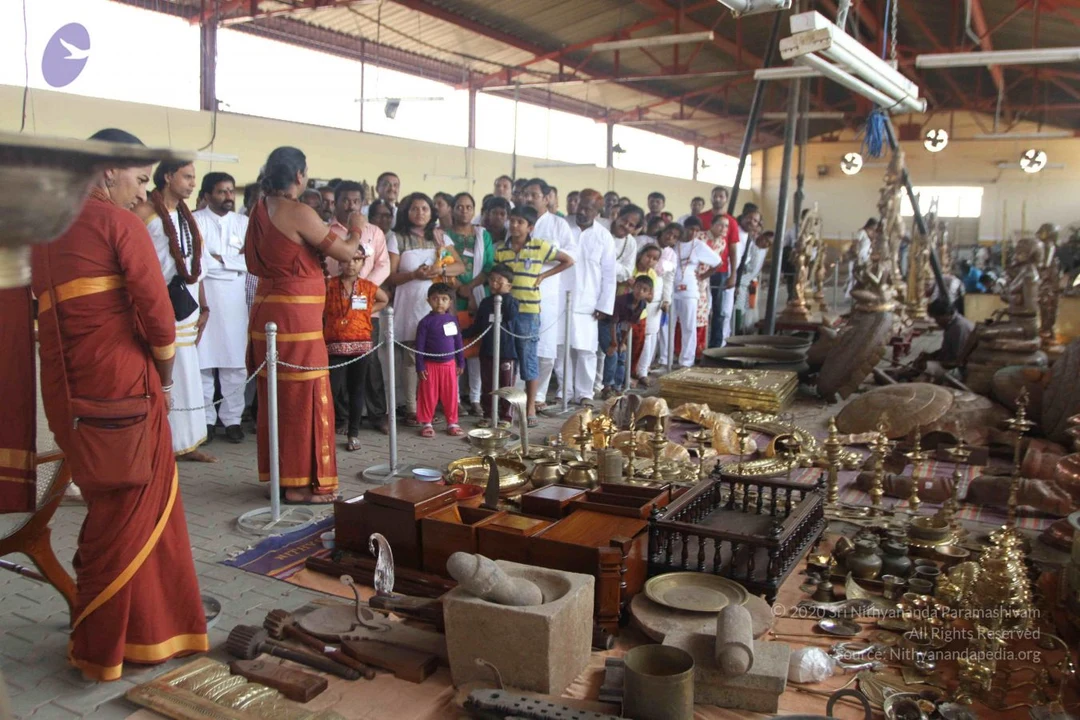
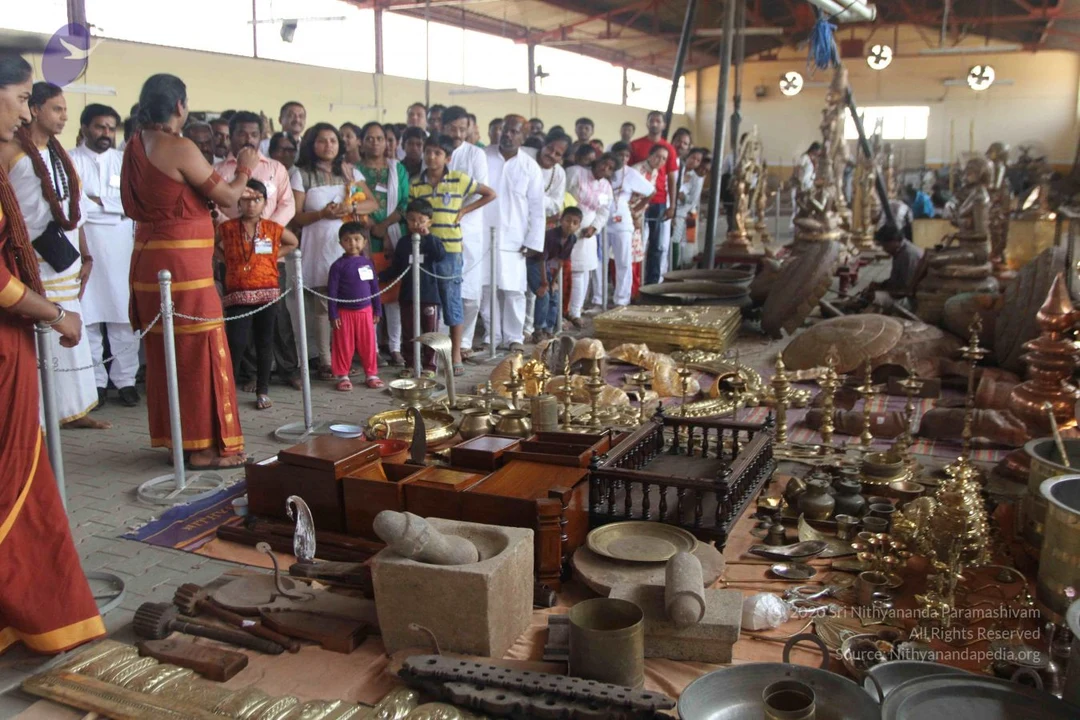
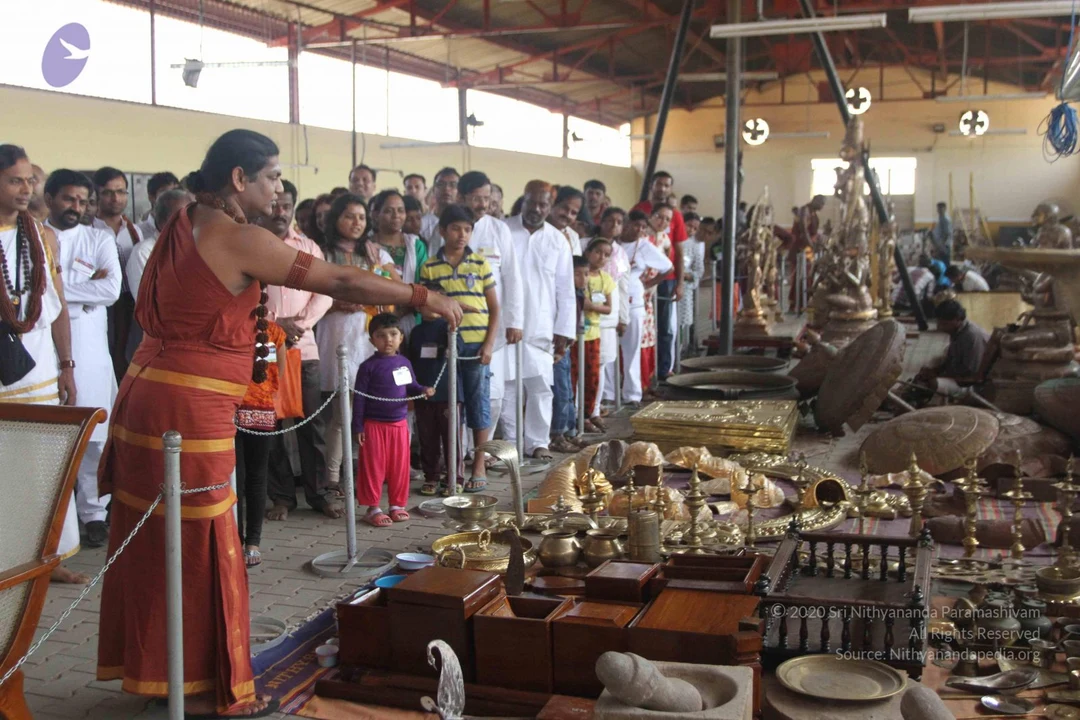
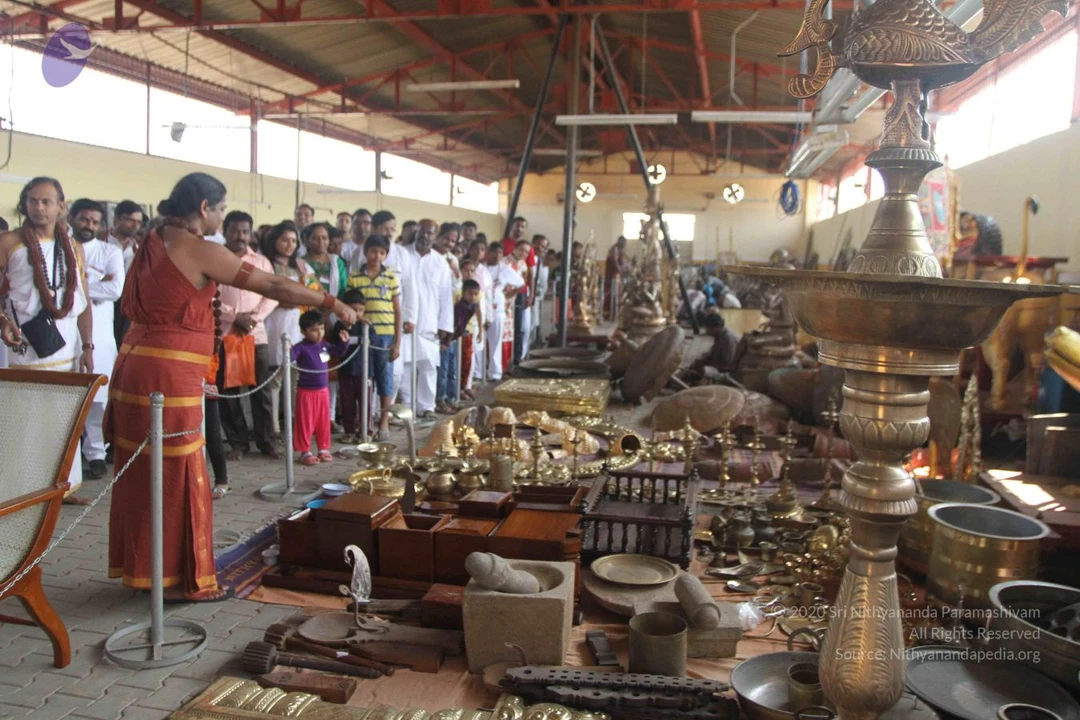
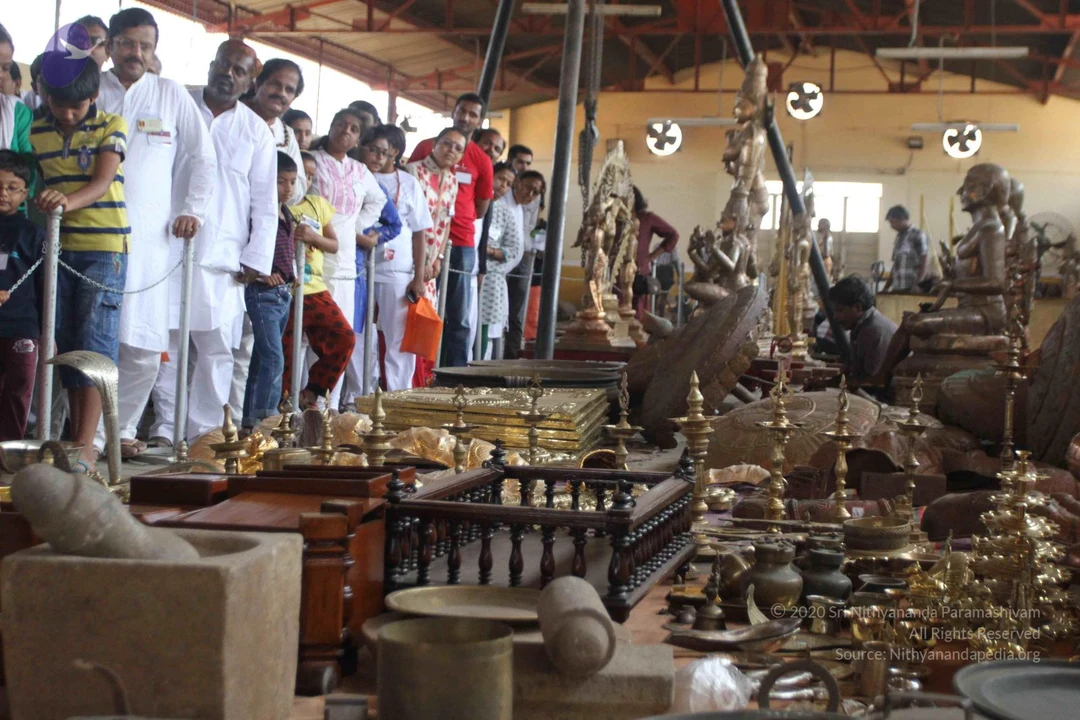
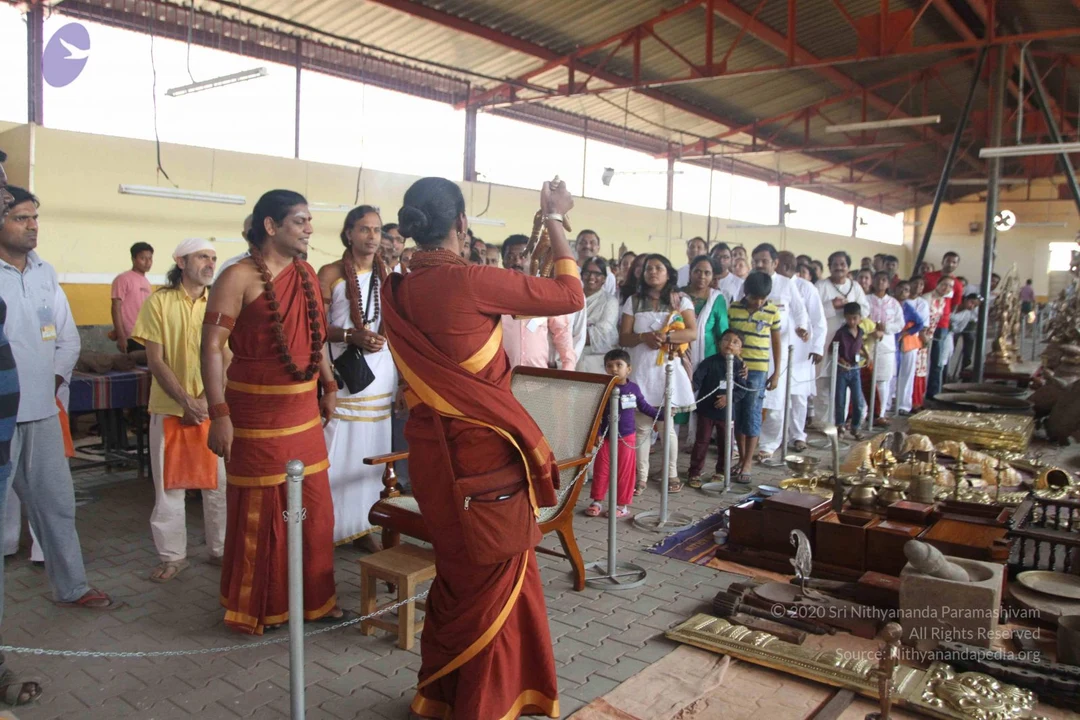
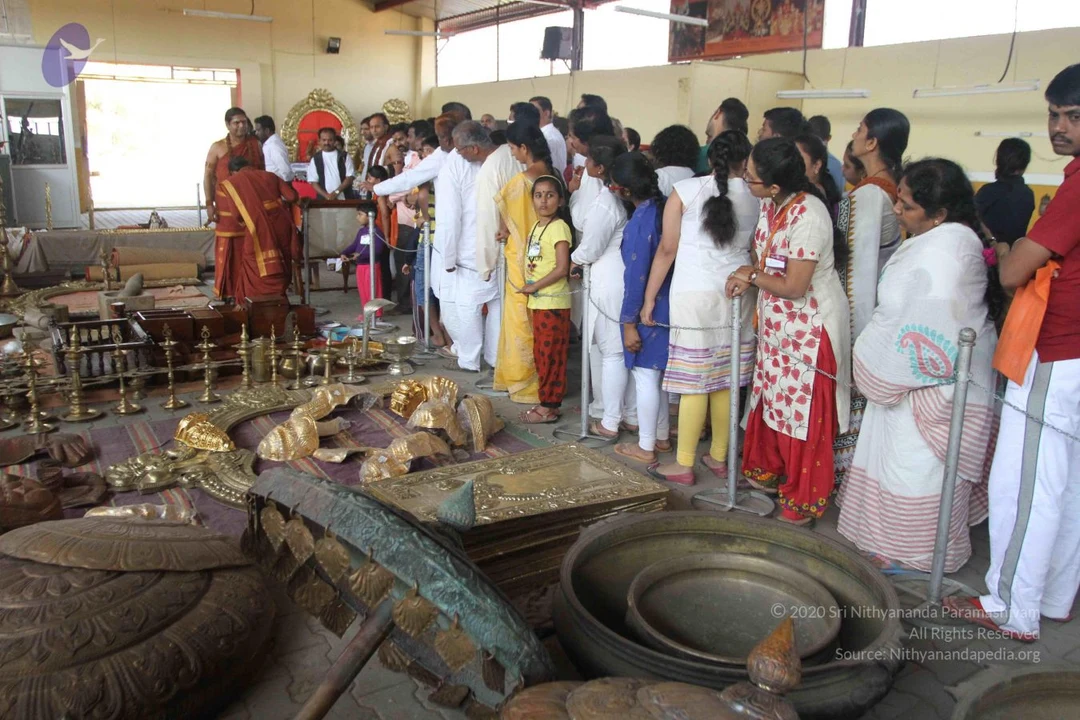
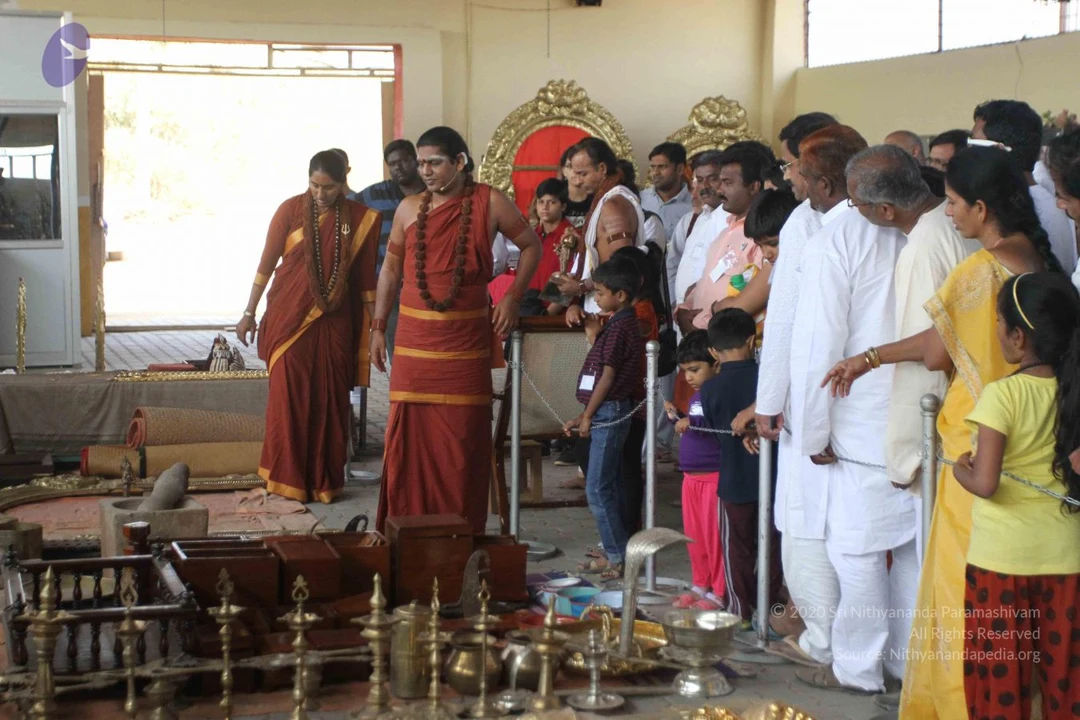
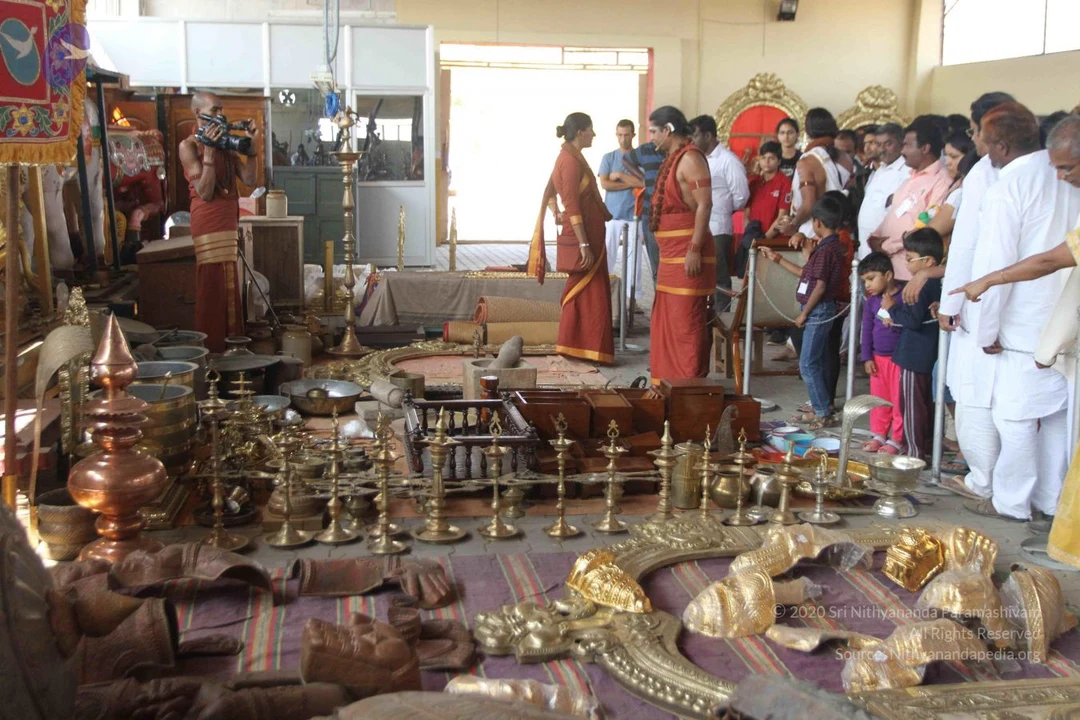
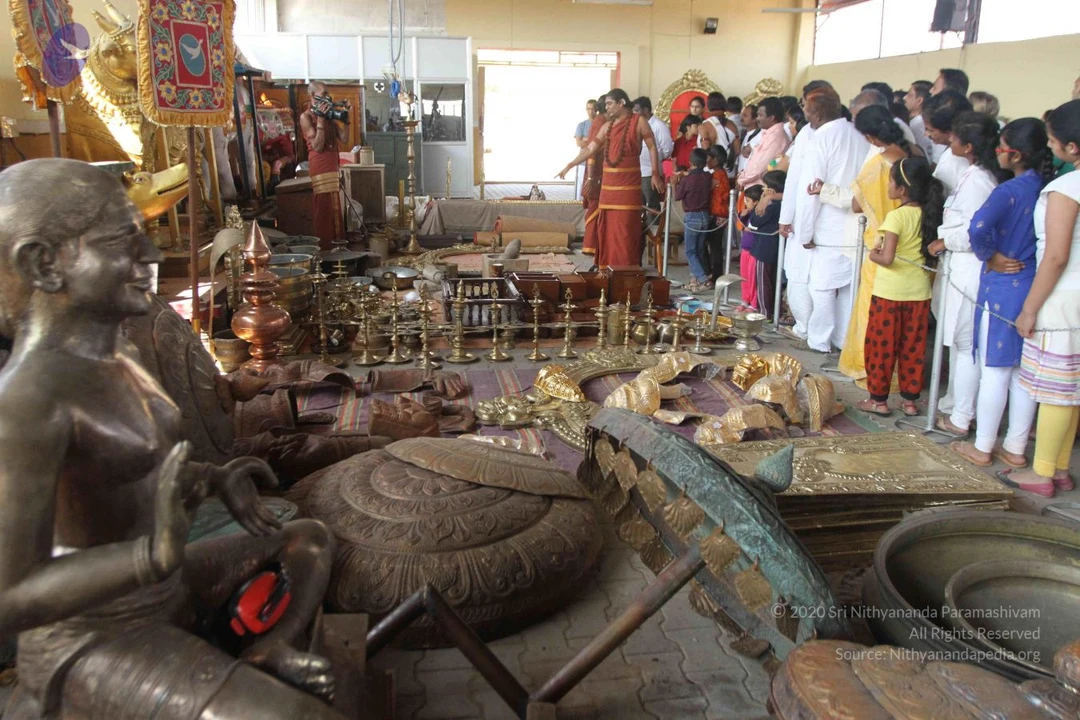
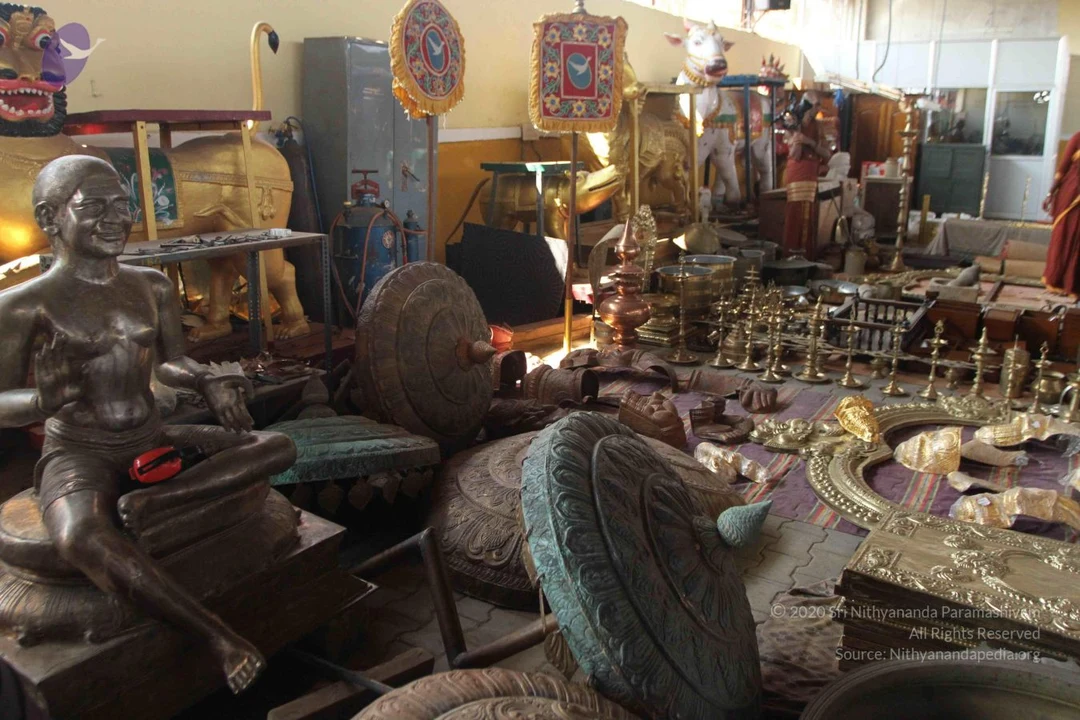
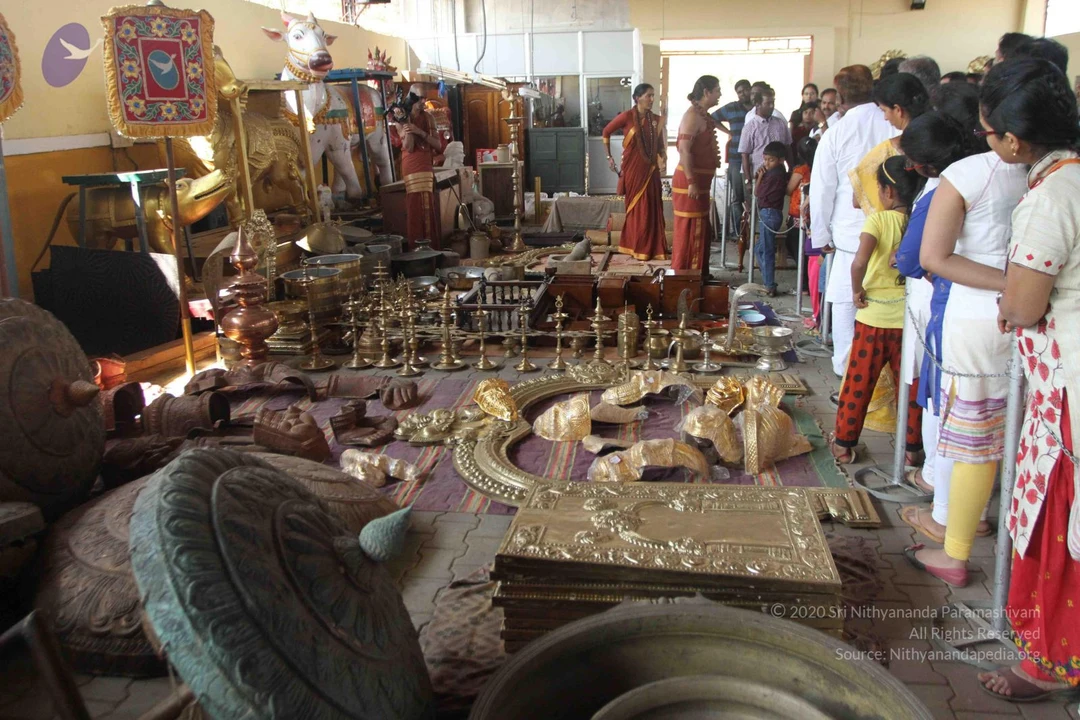
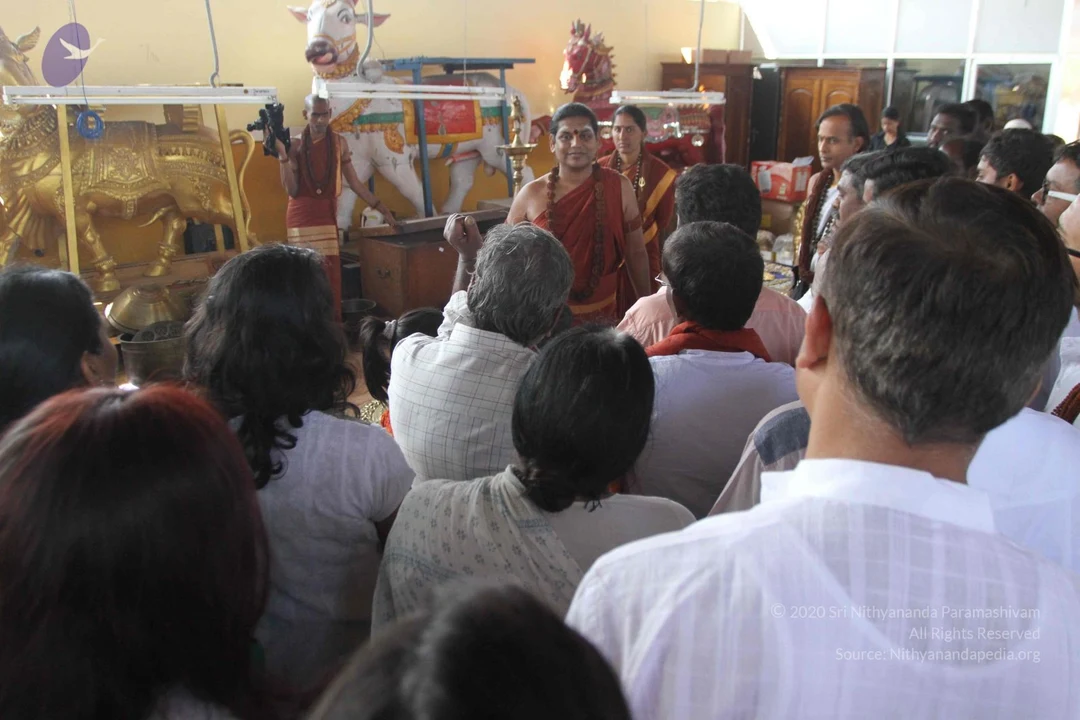
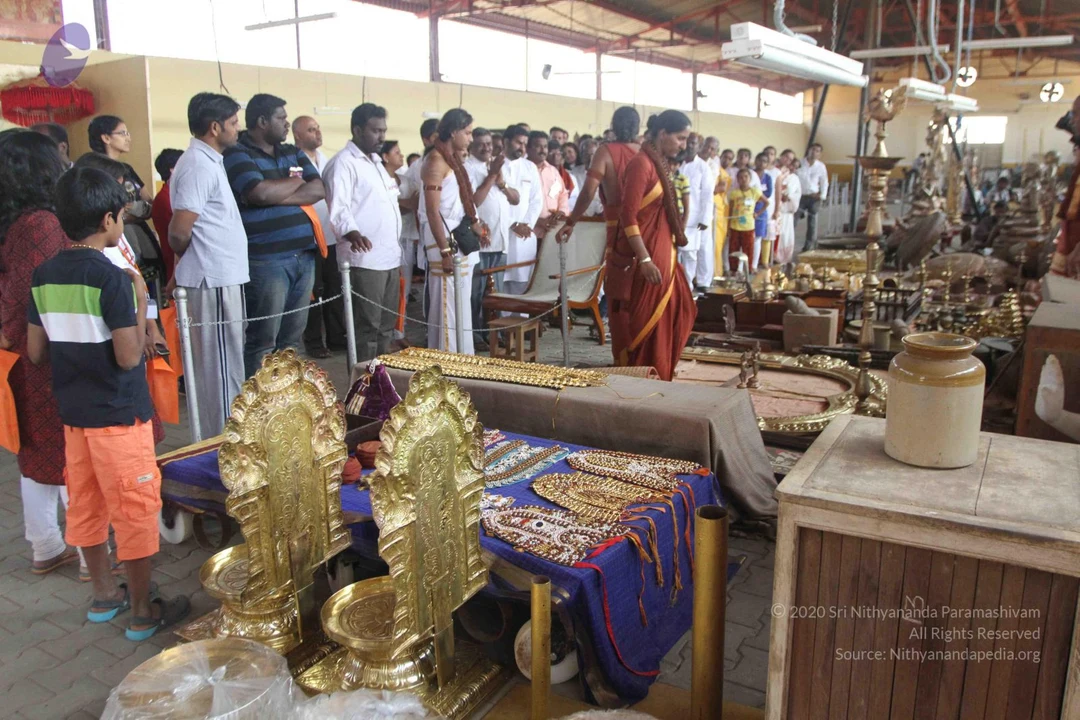
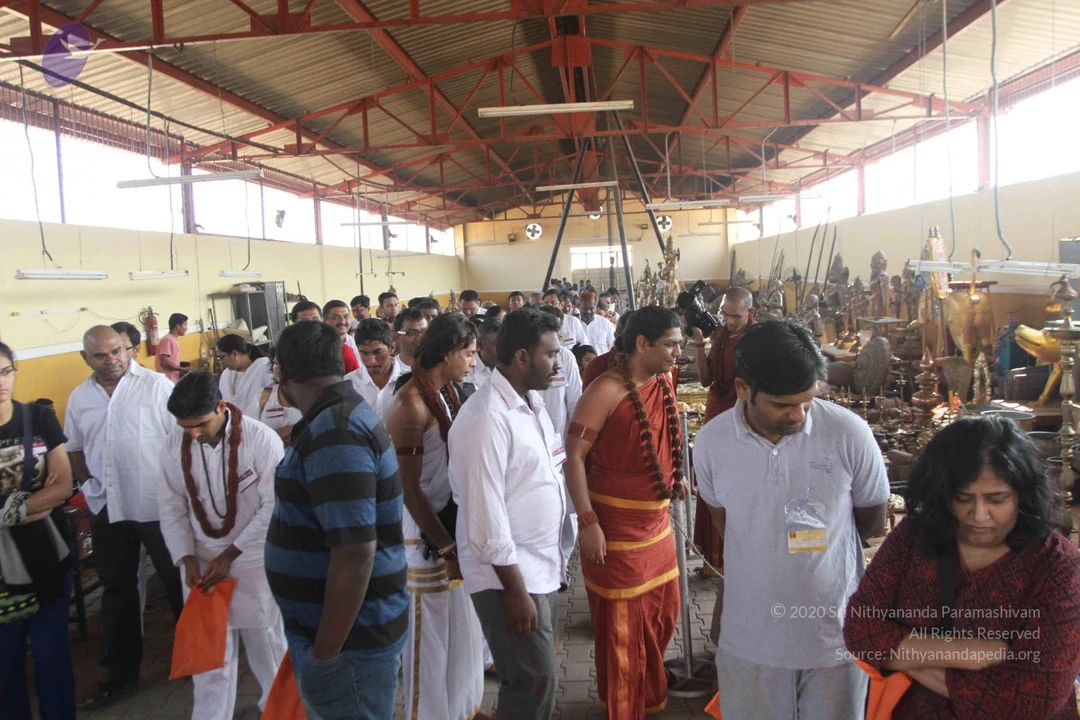
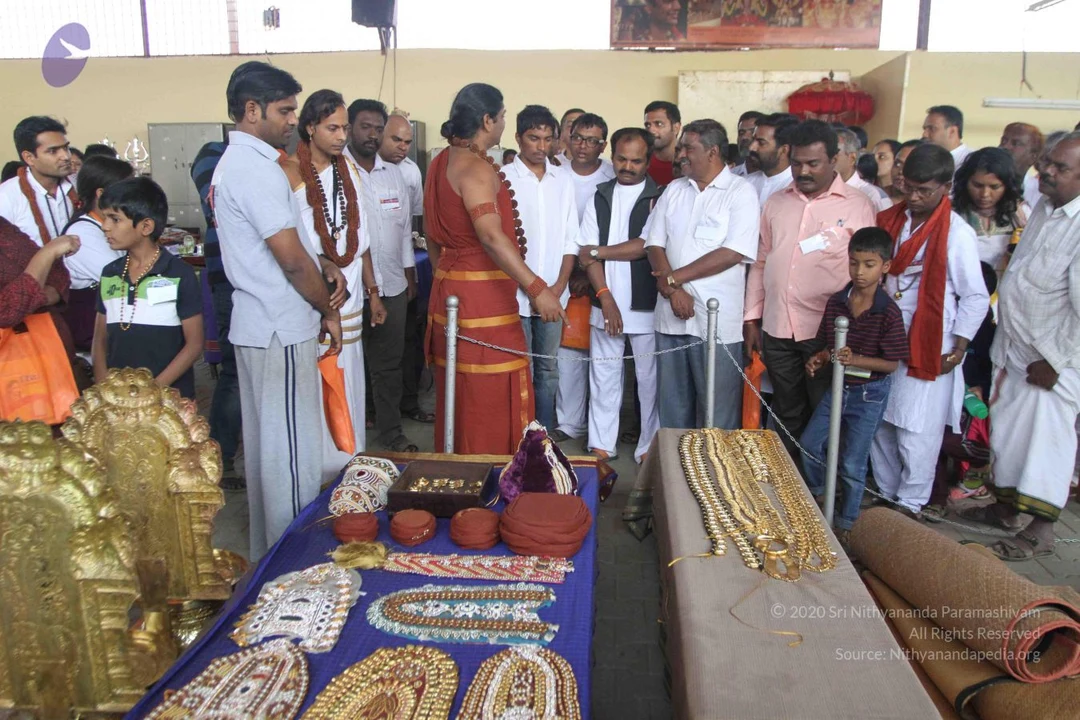
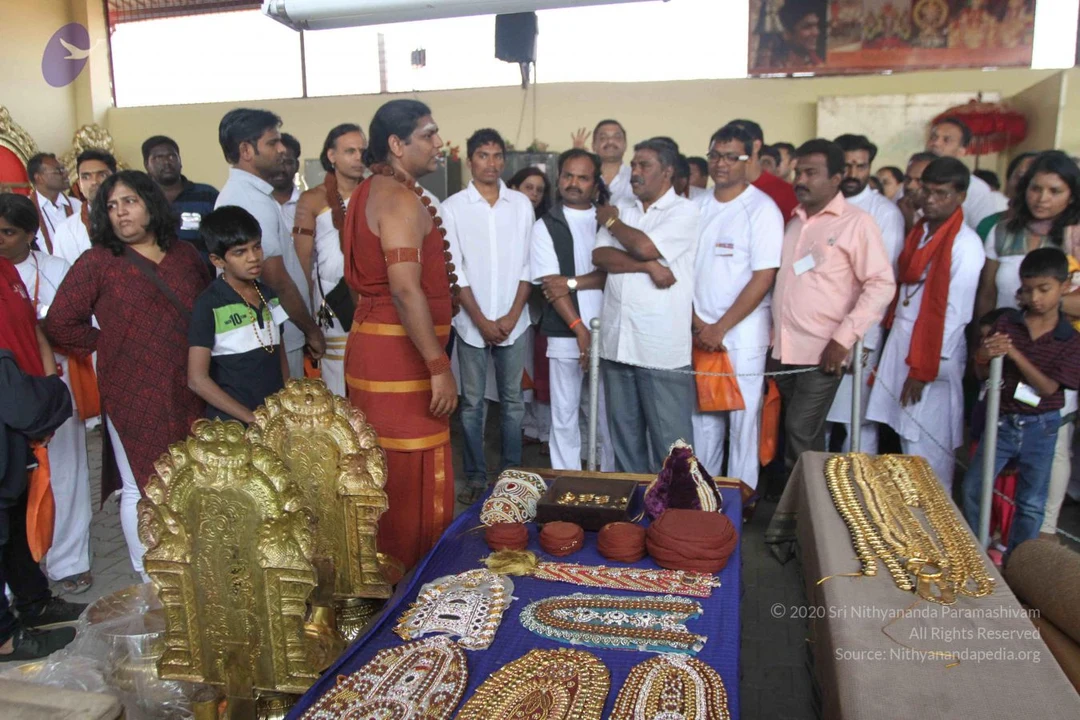
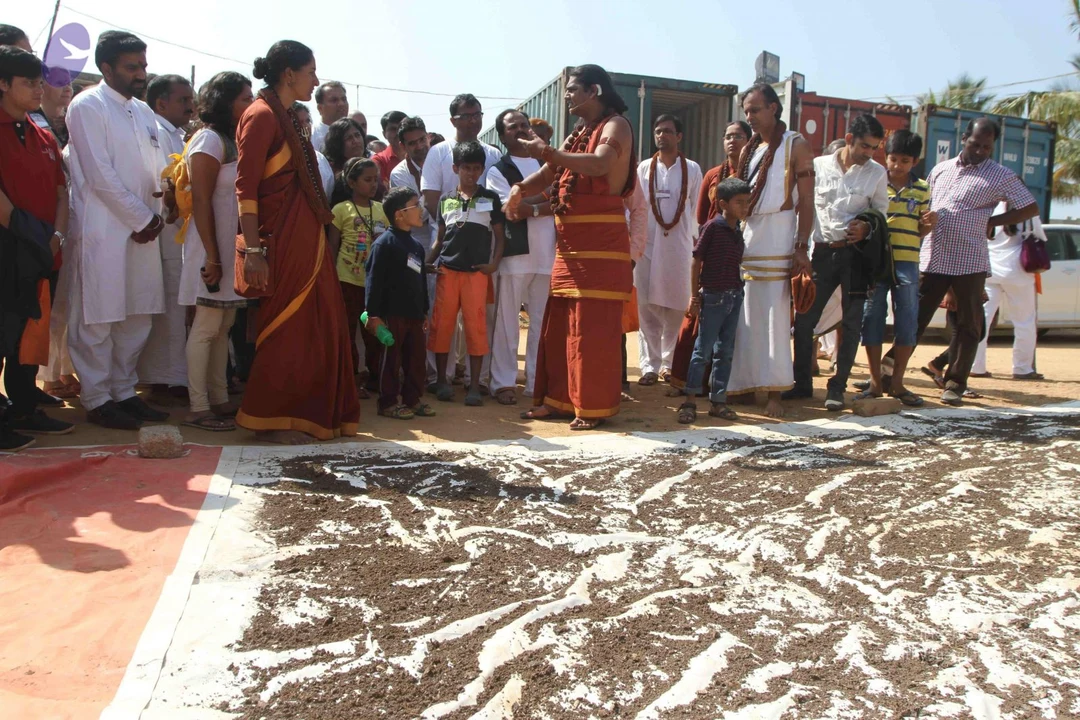
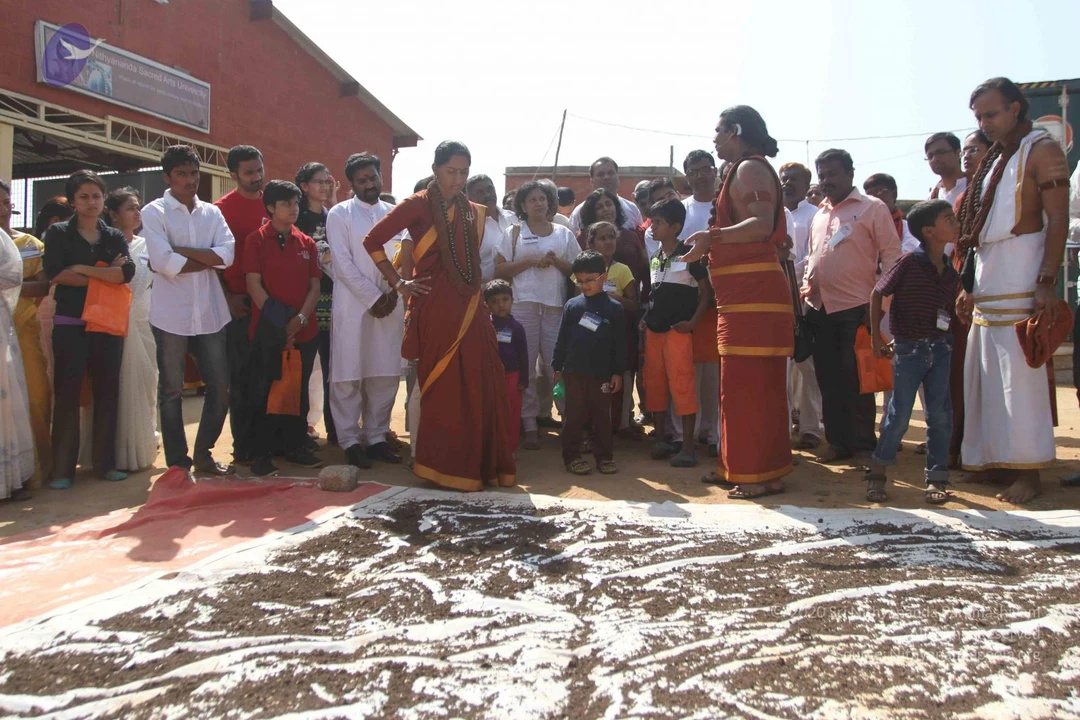
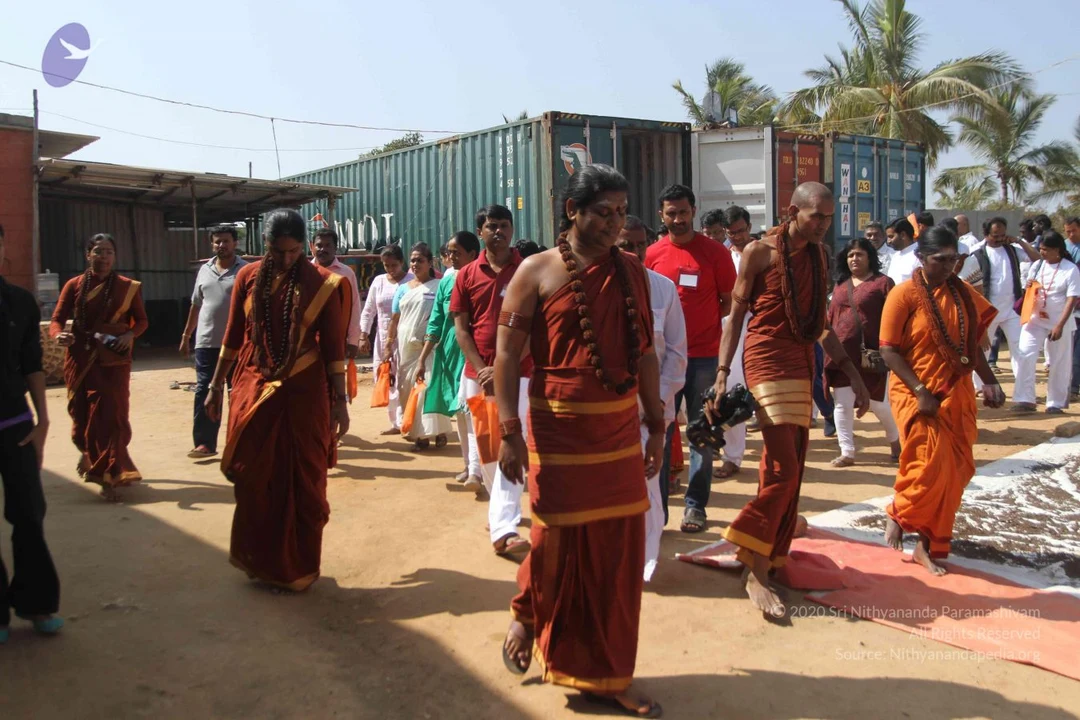
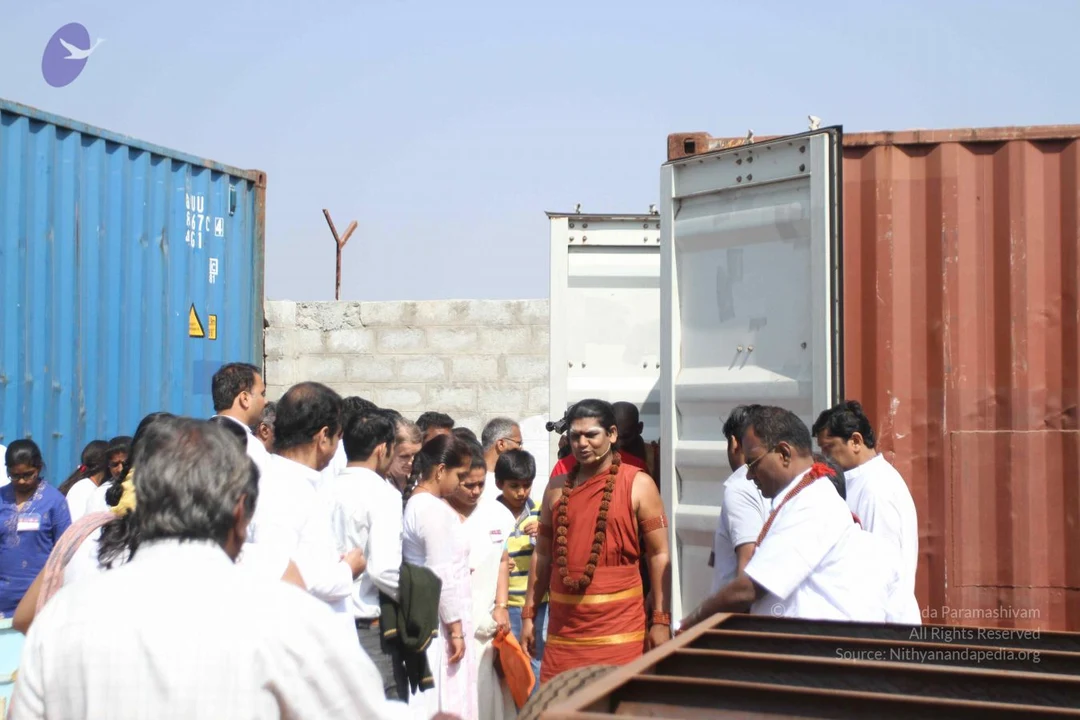
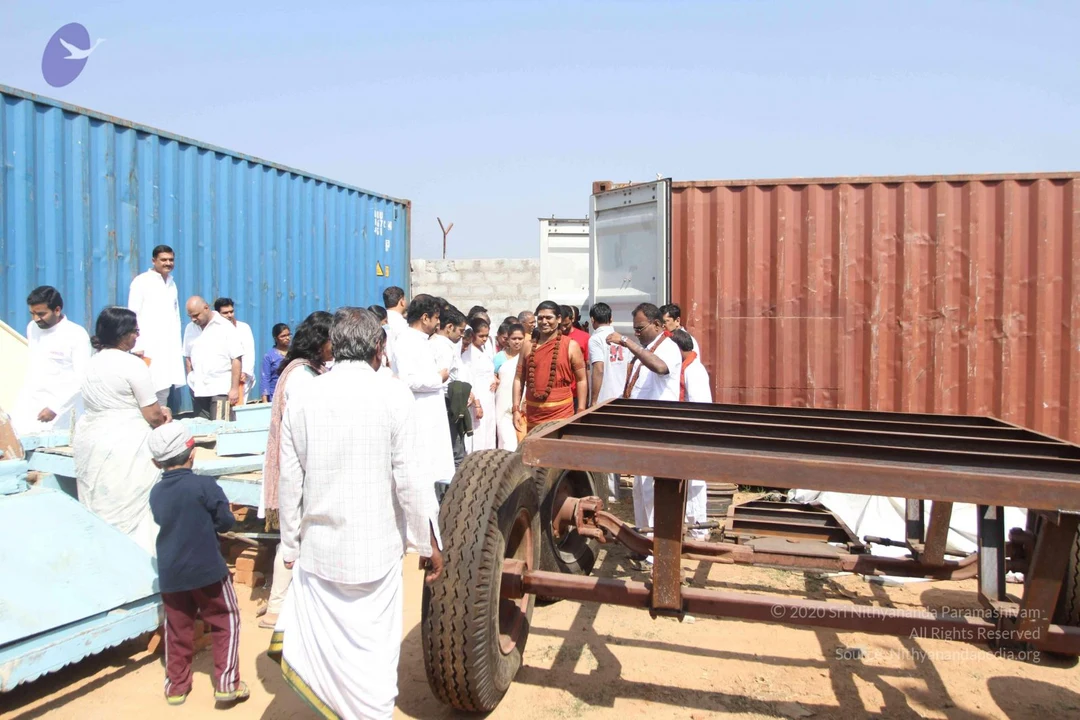
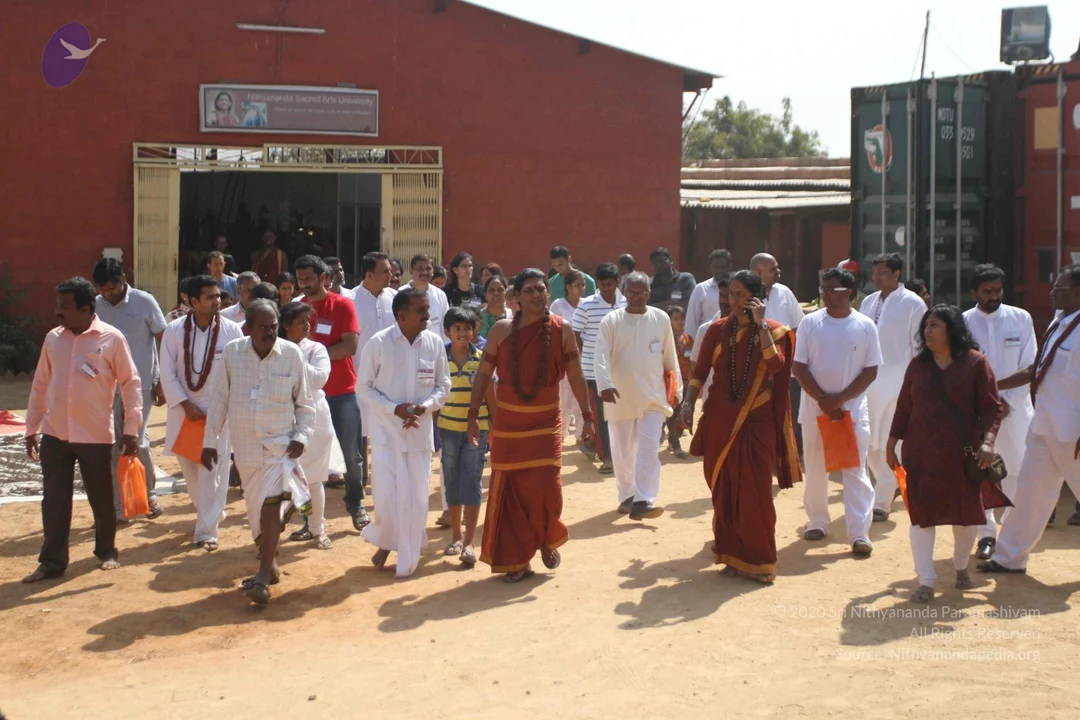
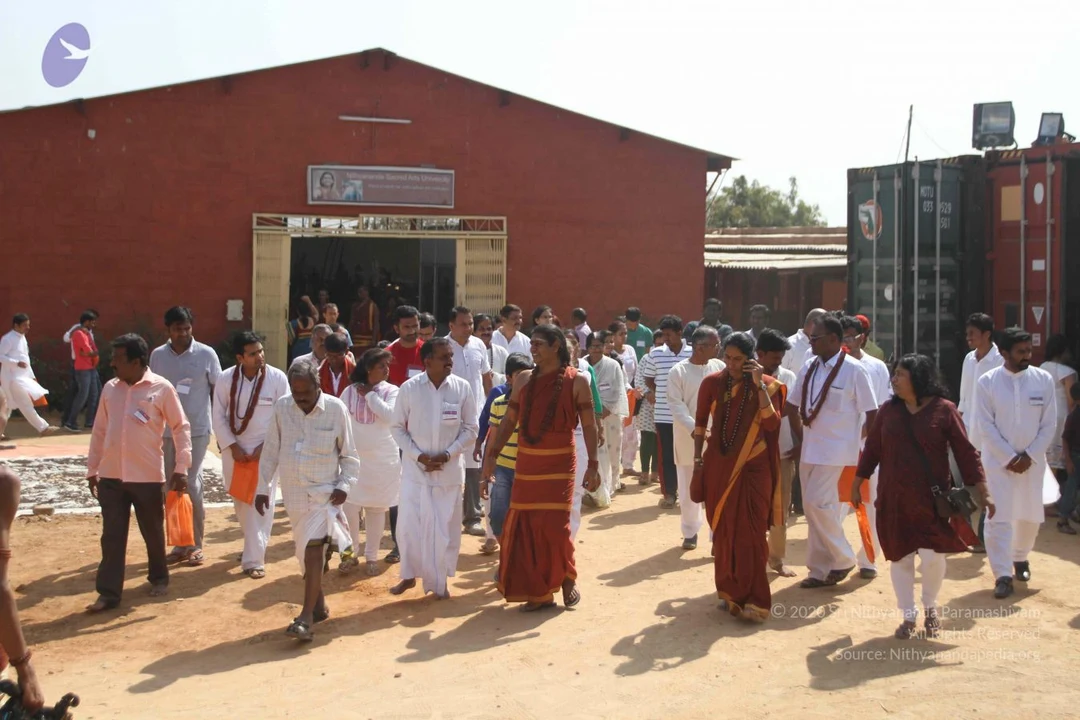
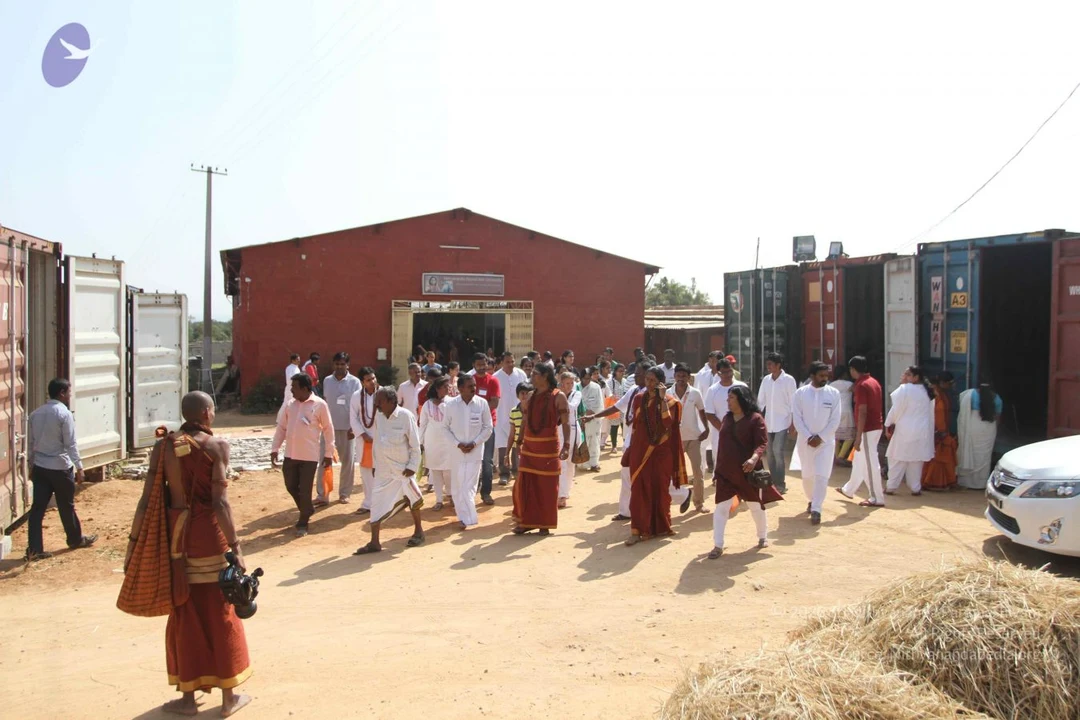
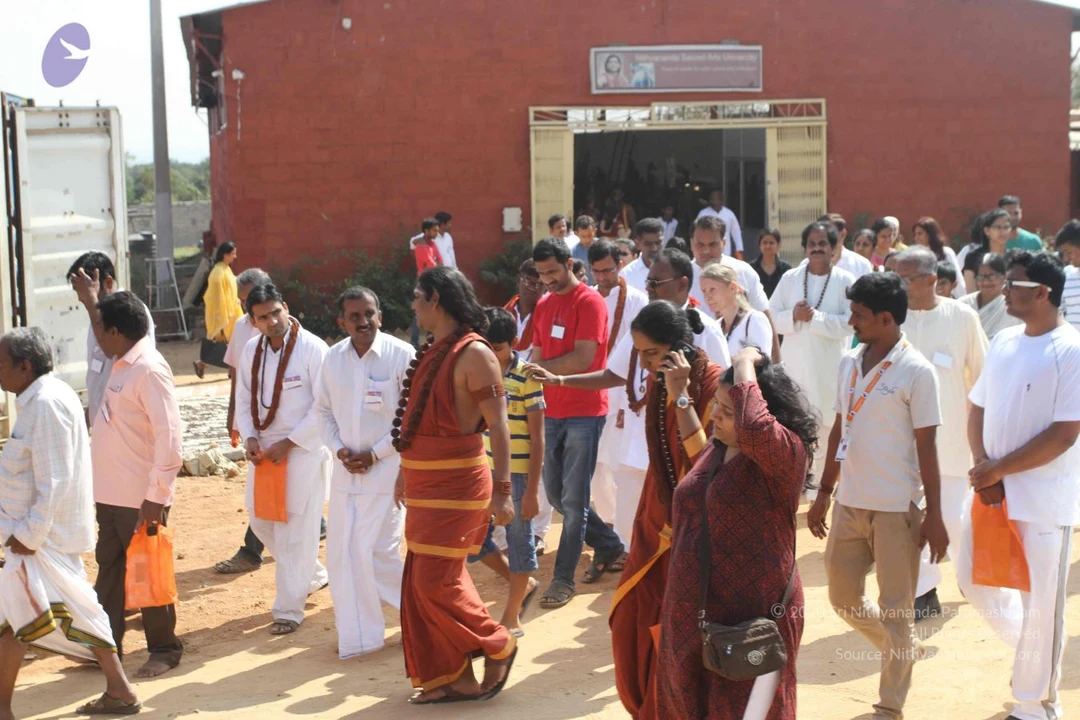
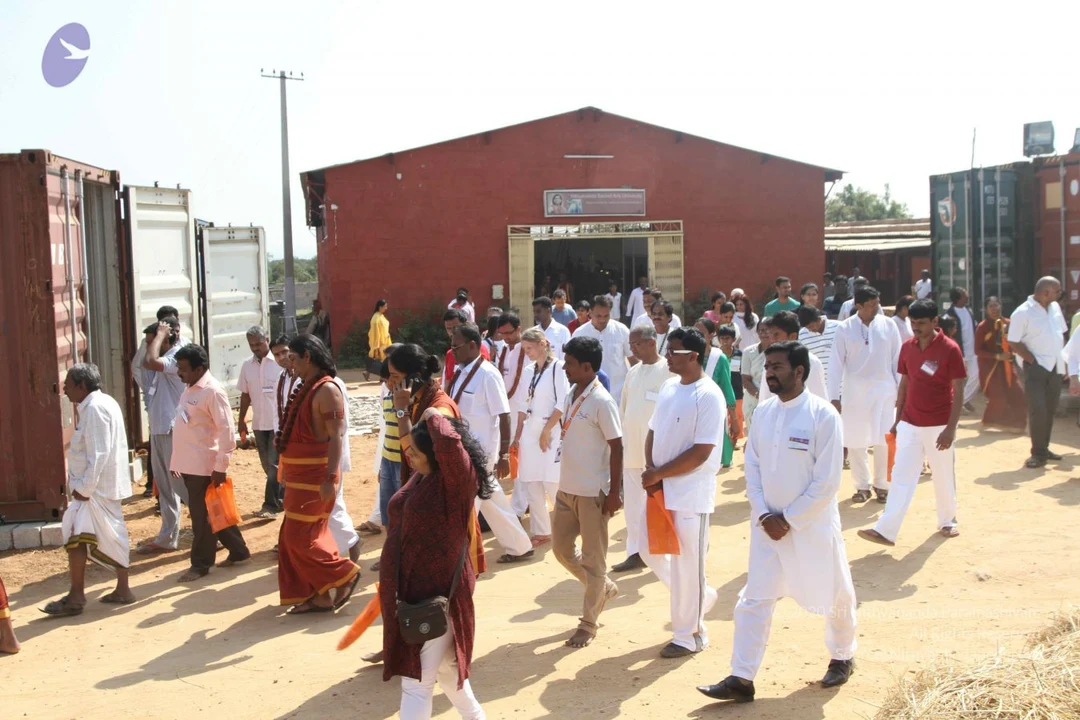
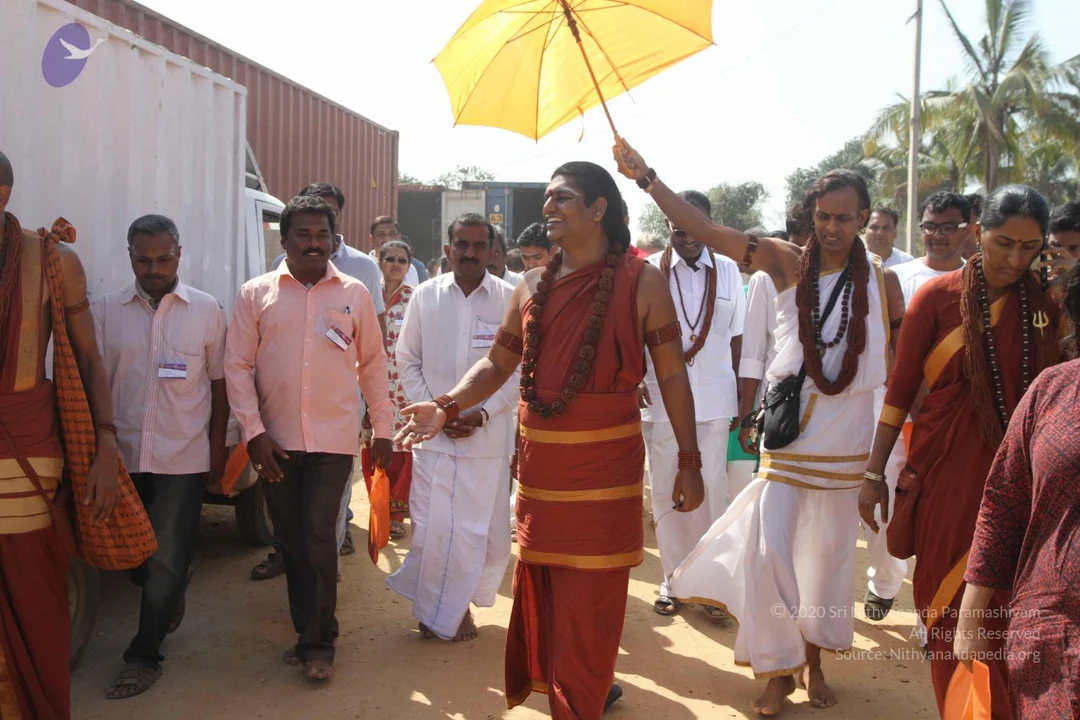
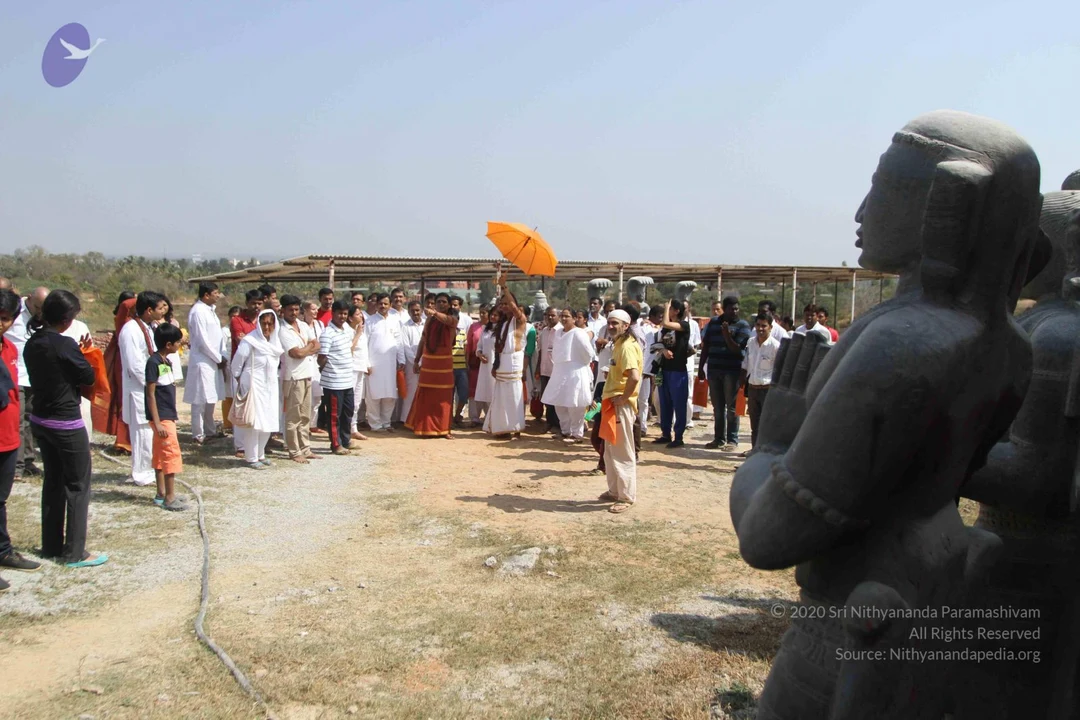
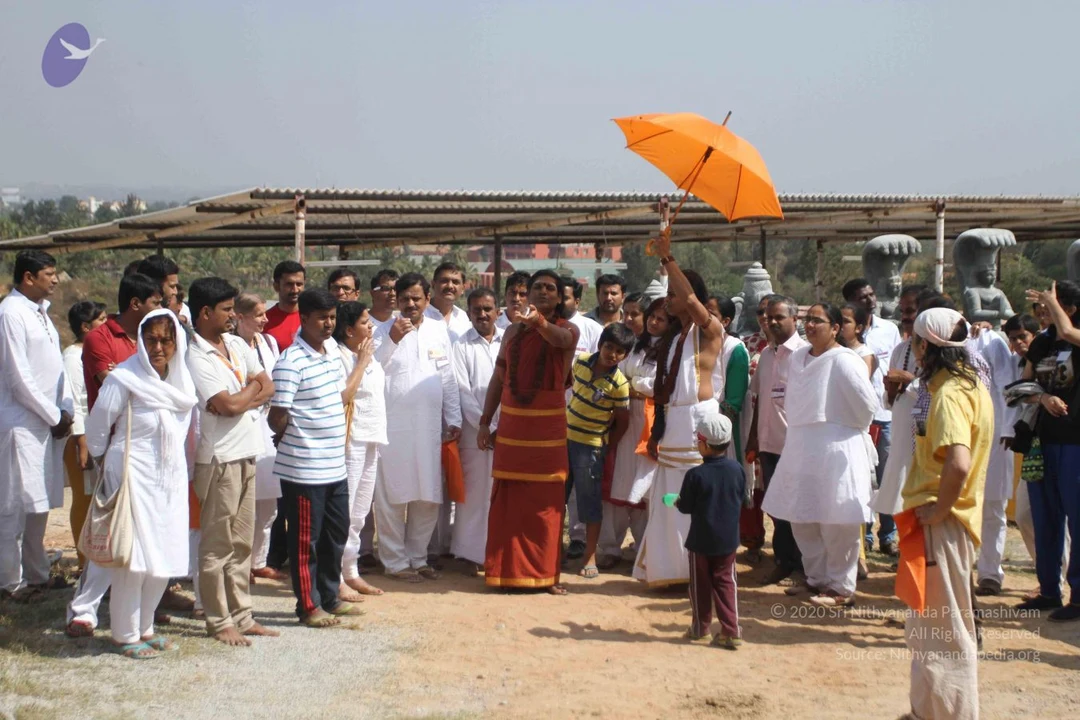
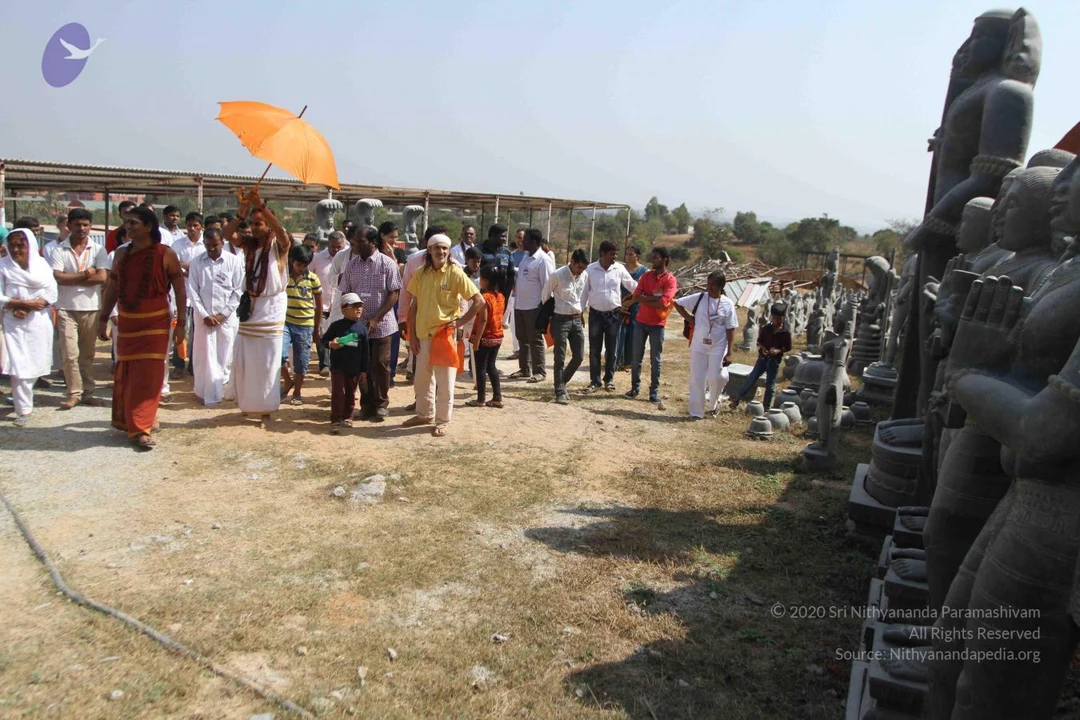
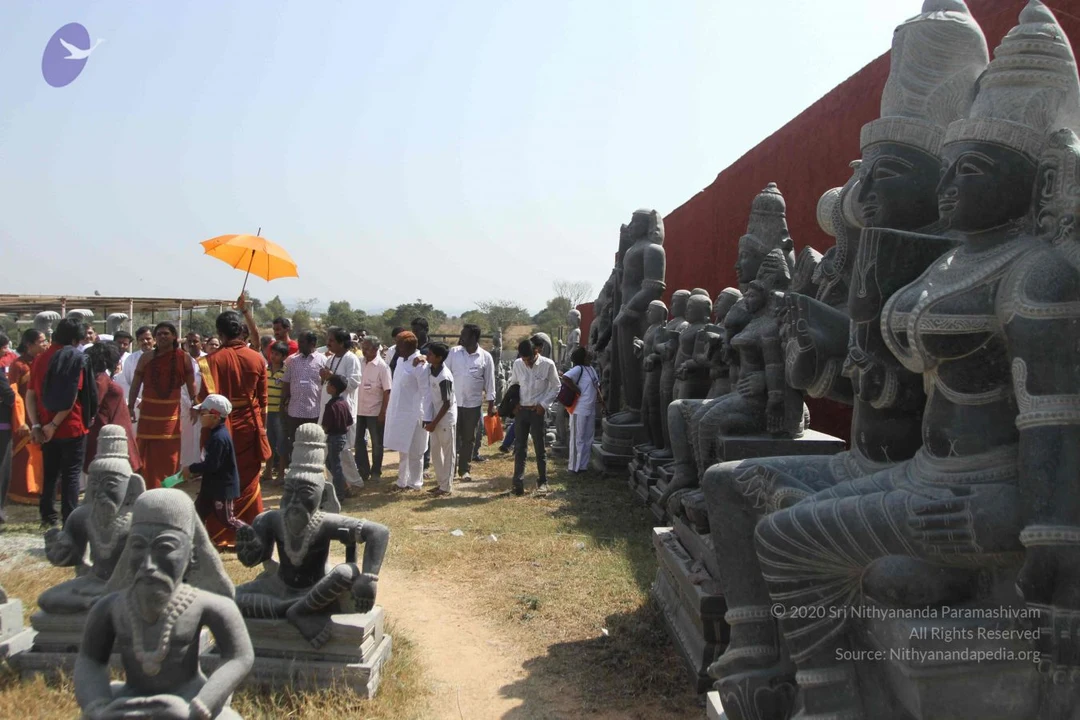
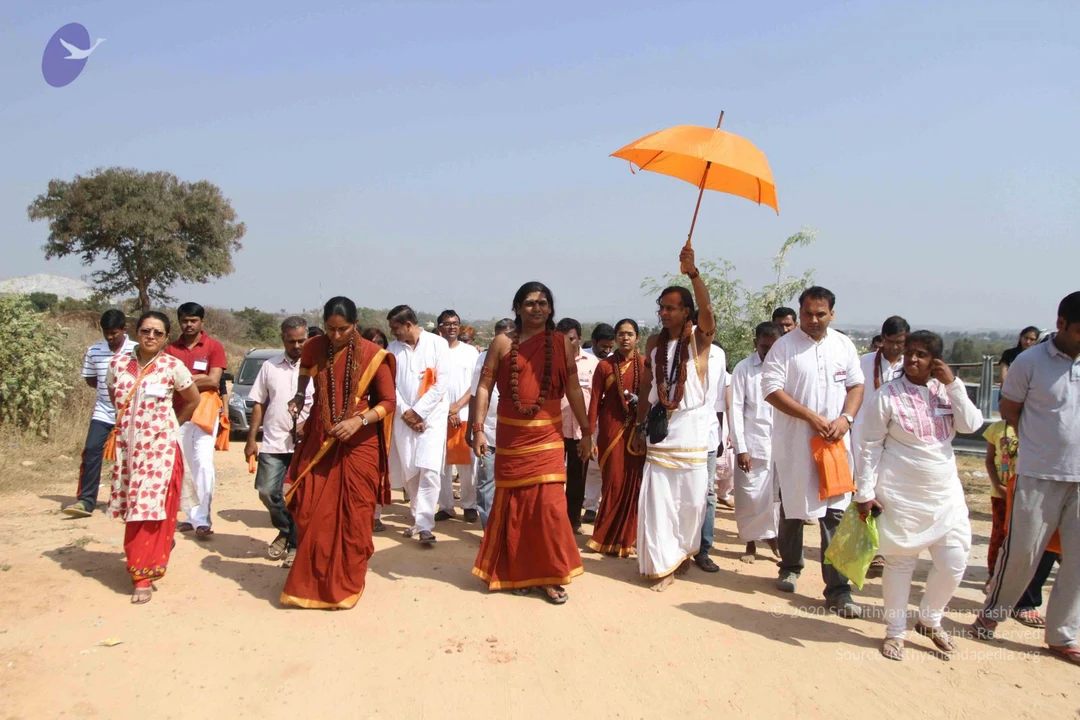
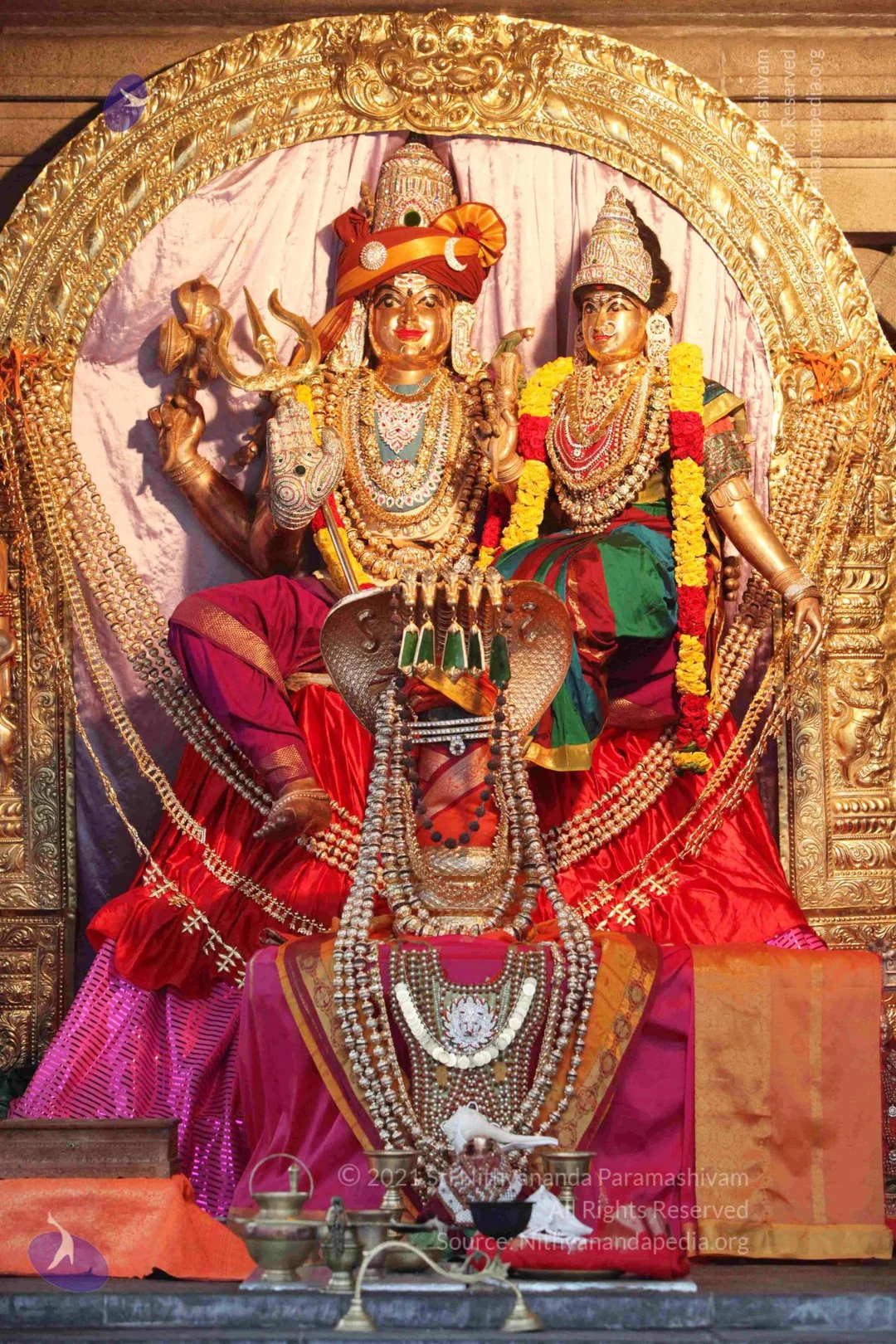
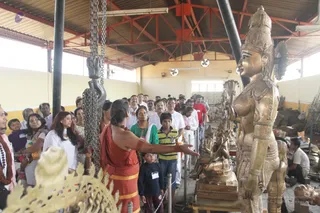
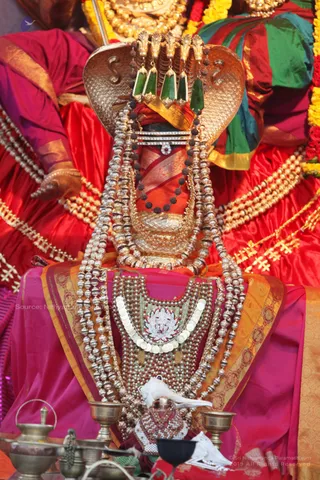
A photograph inside a high-roofed workshop with red steel trusses, where a crowd of visitors stands in a line watching a guide. In the foreground a woman in an orange-red garment with yellow borders, wearing a red-beaded necklace and red bangles, gestures outward with her arm toward a large polished brass deity statue on the right, a female figure with a crown and jewelry. Several people in white clothing, green and striped shirts stand among the visitors, including a young boy in a striped yellow-green shirt and a small child in a dark sweater. Hanging chains and a hoist hook appear on the left, with a bronze metalwork piece in the lower left corner and other brass statues along the right. A workman in a white shirt sits near the back right.A crowd of devotees stands behind metal stanchions and a rope barrier in a large open-sided hall with a red corrugated roof. In the foreground, two figures in saffron-orange robes stand at left: one bare-chested man with long hair and rudraksha beads, the other a woman in an orange sari with a rudraksha mala and dark hair. Several people in white ritual clothes and children in bright shirts look on. Along the right side, rows of brass deity murti statues rest on wooden tables, and a sunken brick-lined pit with a dark metal slab lies in the front, beside empty red wheeled carts. Some onlookers wear white and saffron-striped garments. The scene appears to be a tour or display of ritual objects.A richly adorned deity murti. A gold cobra hood with five green stone pendants and rudraksha beads rises above the figure. Multiple strands of silver and gold beaded necklaces, a large white and gold floral pendant and a red-and-white beaded collar cover the chest. Brass oil lamps, a conch shell and flower garlands in yellow and orange sit in front, with red and gold textiles behind. No physical people are visible, and no portrait of a person is shown.

Pratyaksha-Pada-Puja
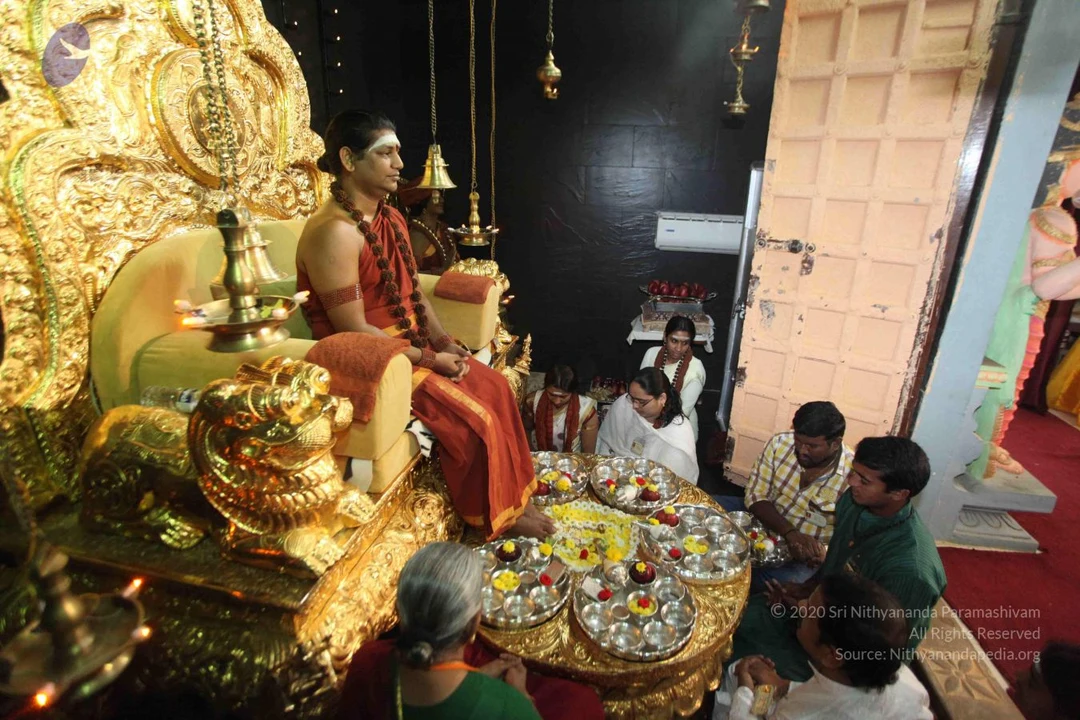
75 photosSource gallery
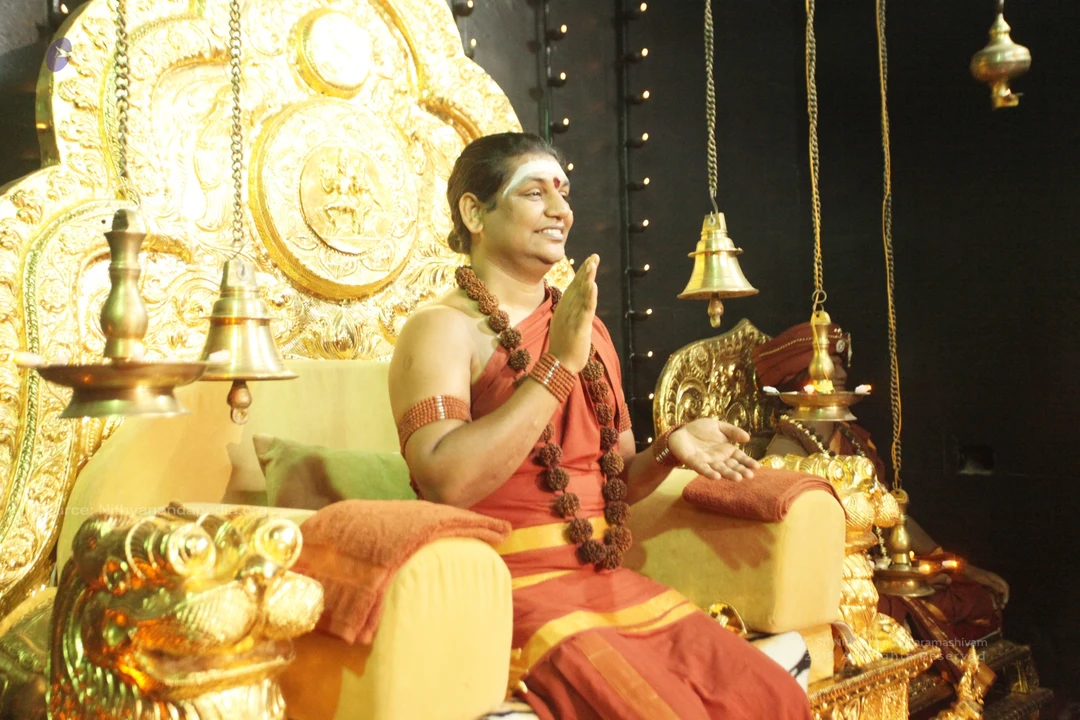
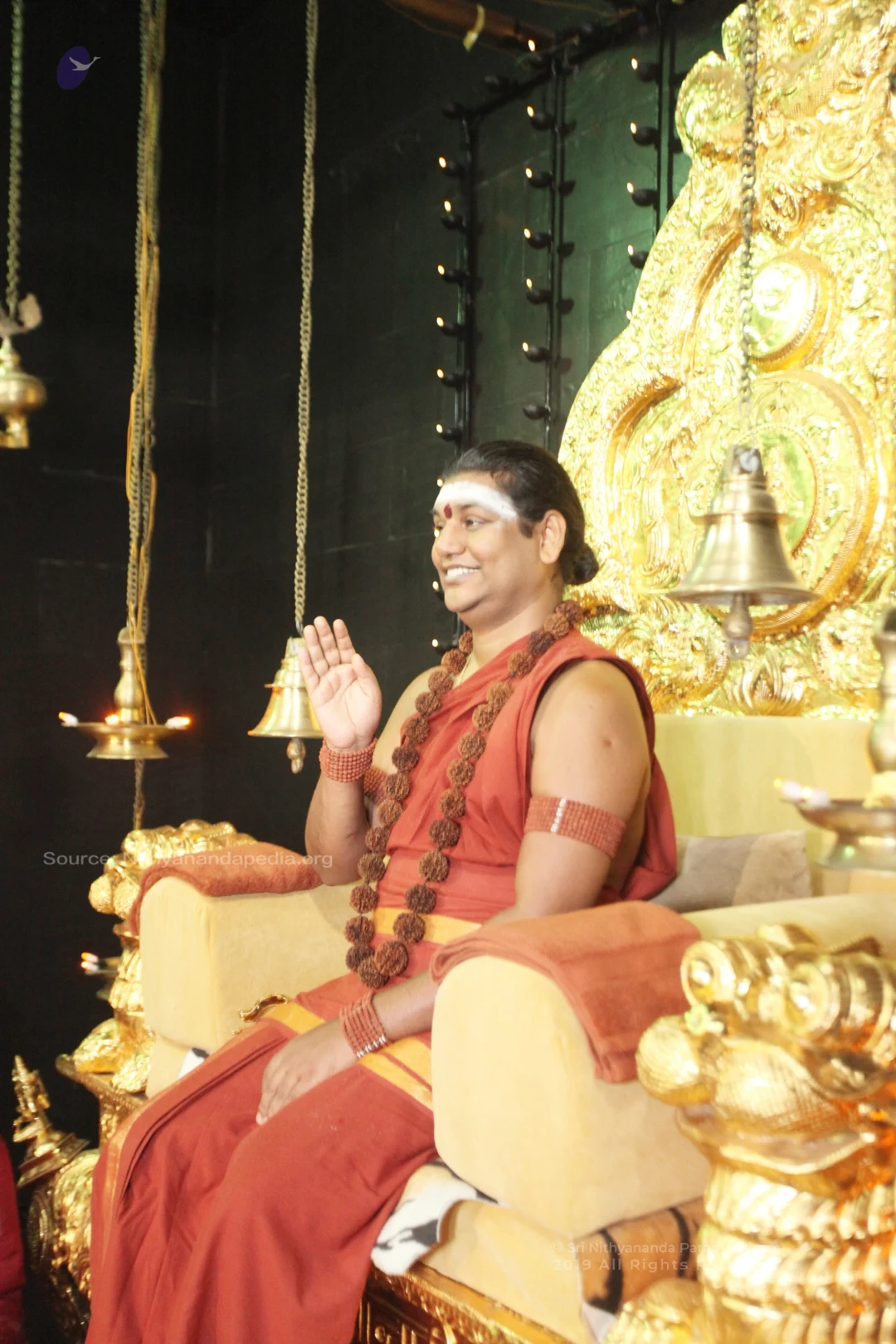
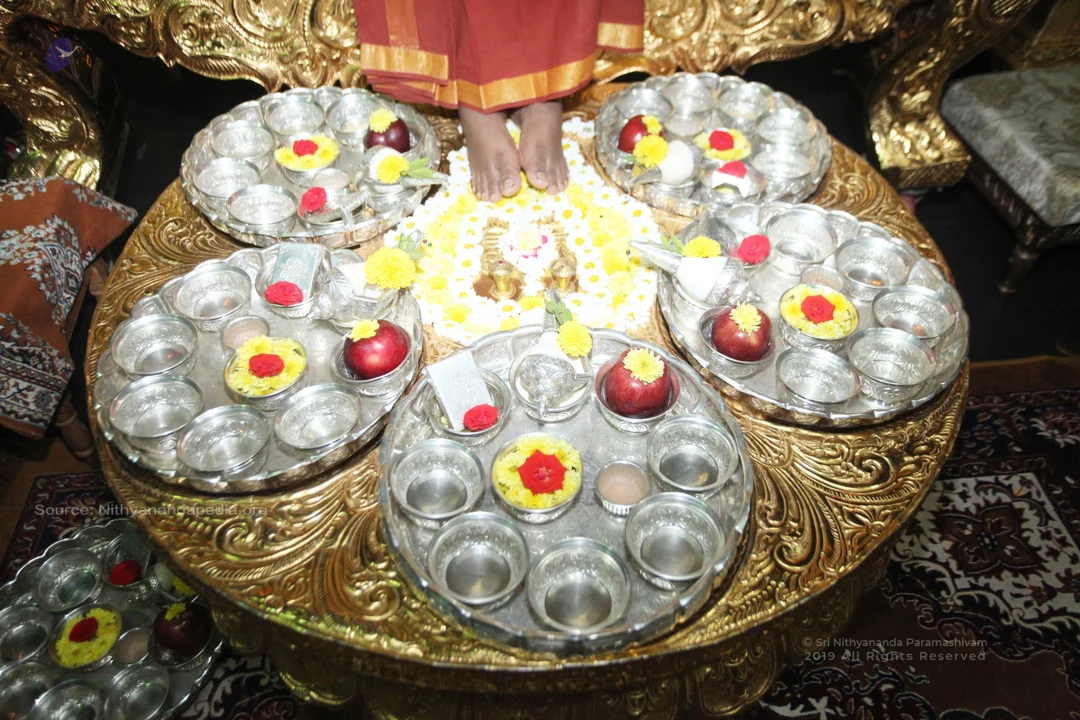
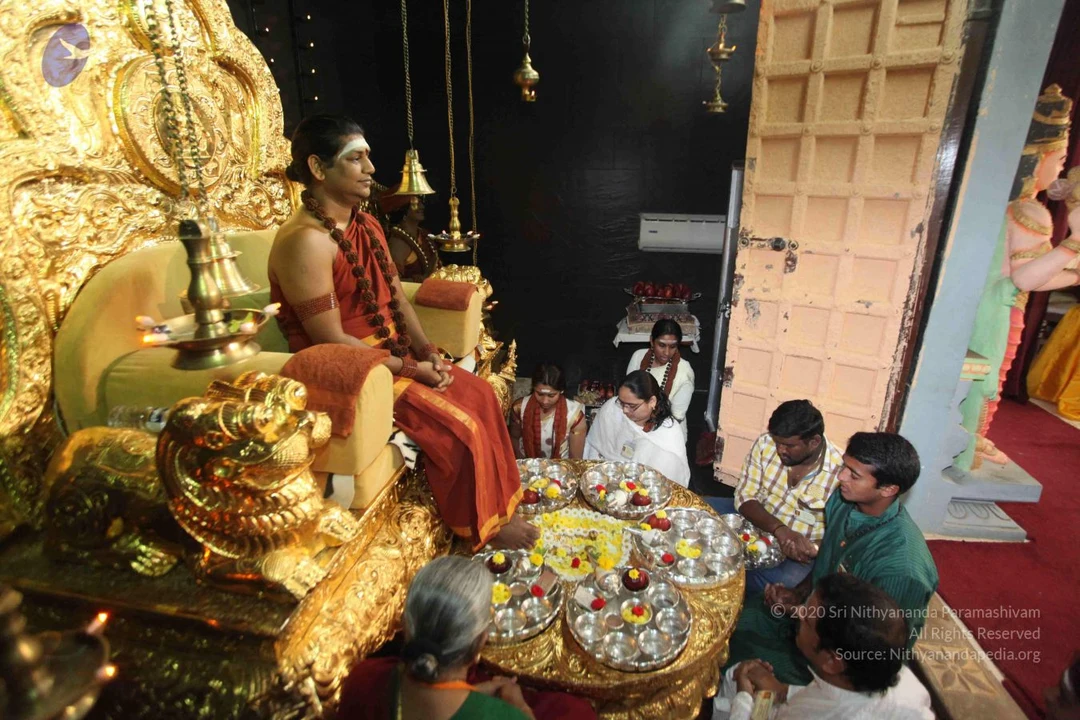
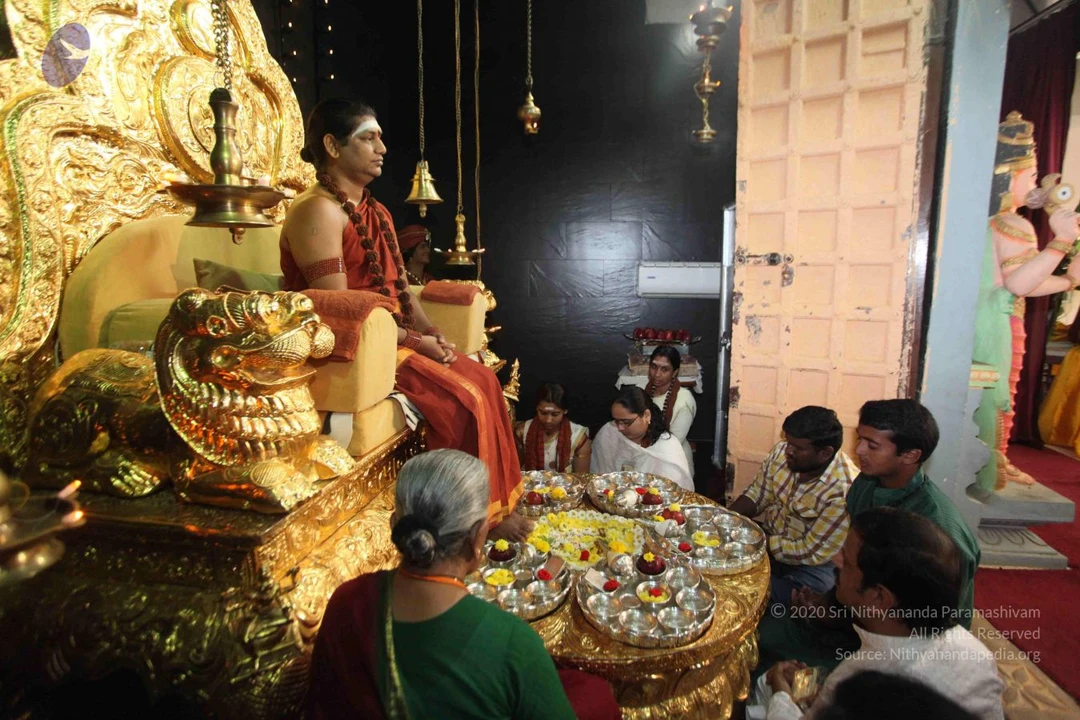
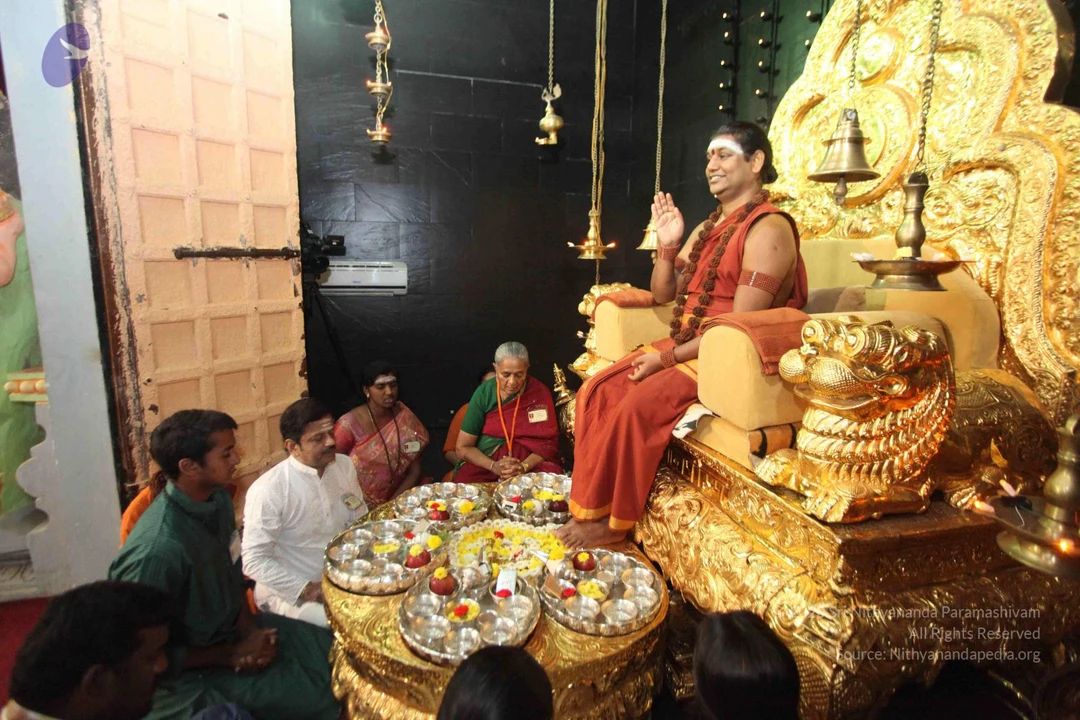
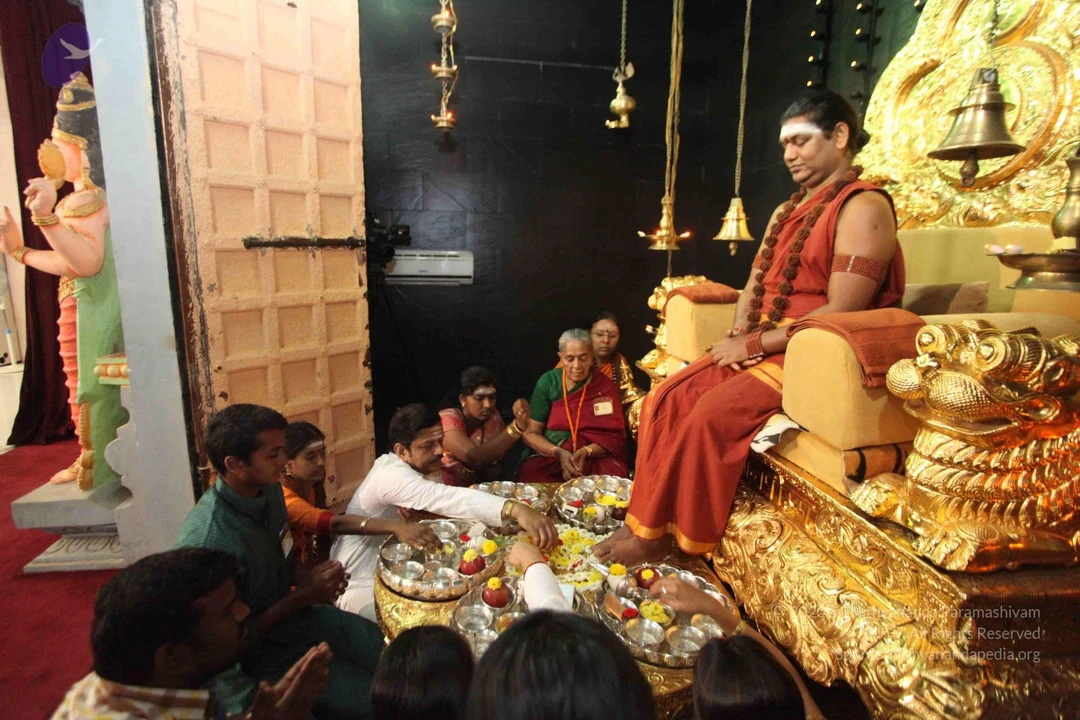
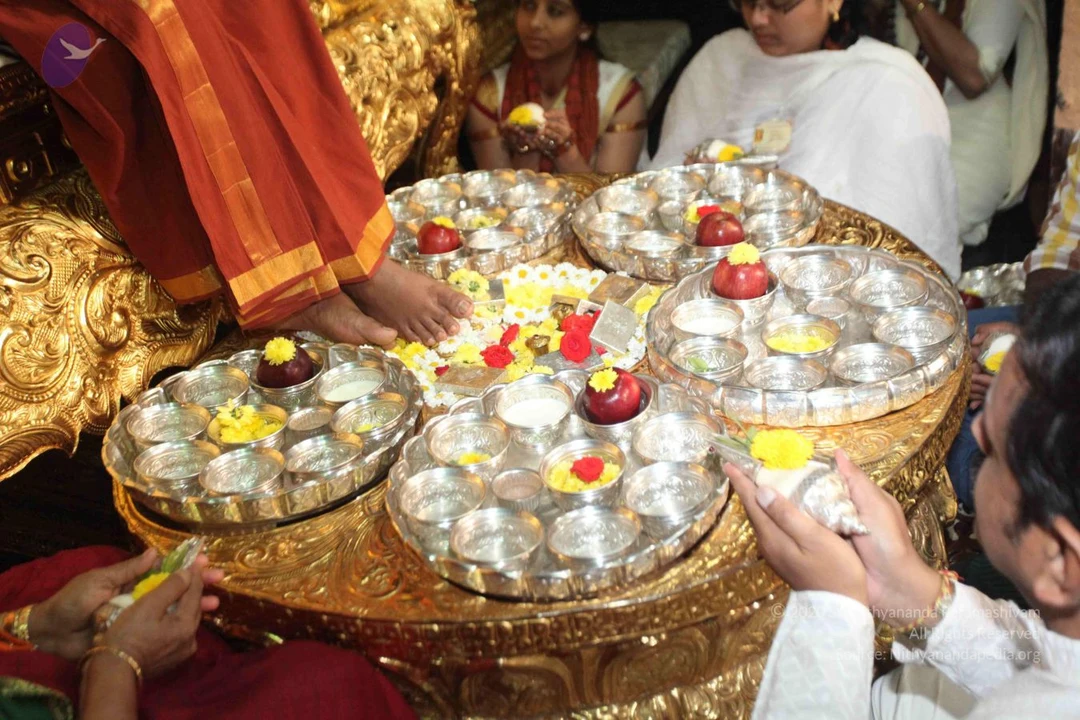
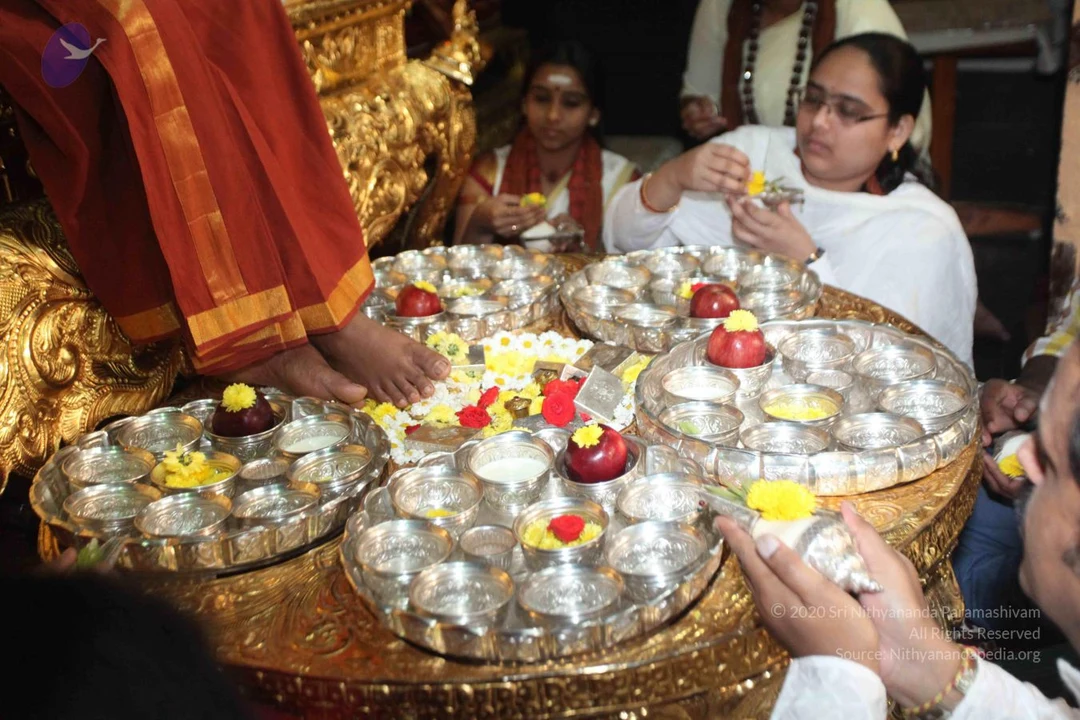
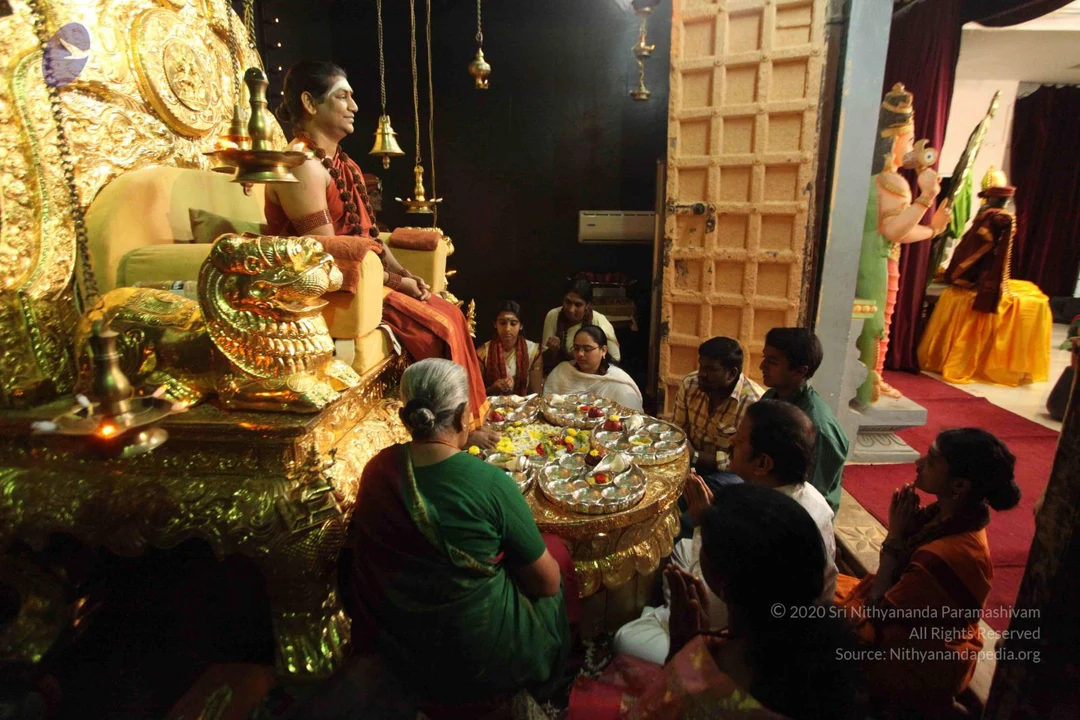
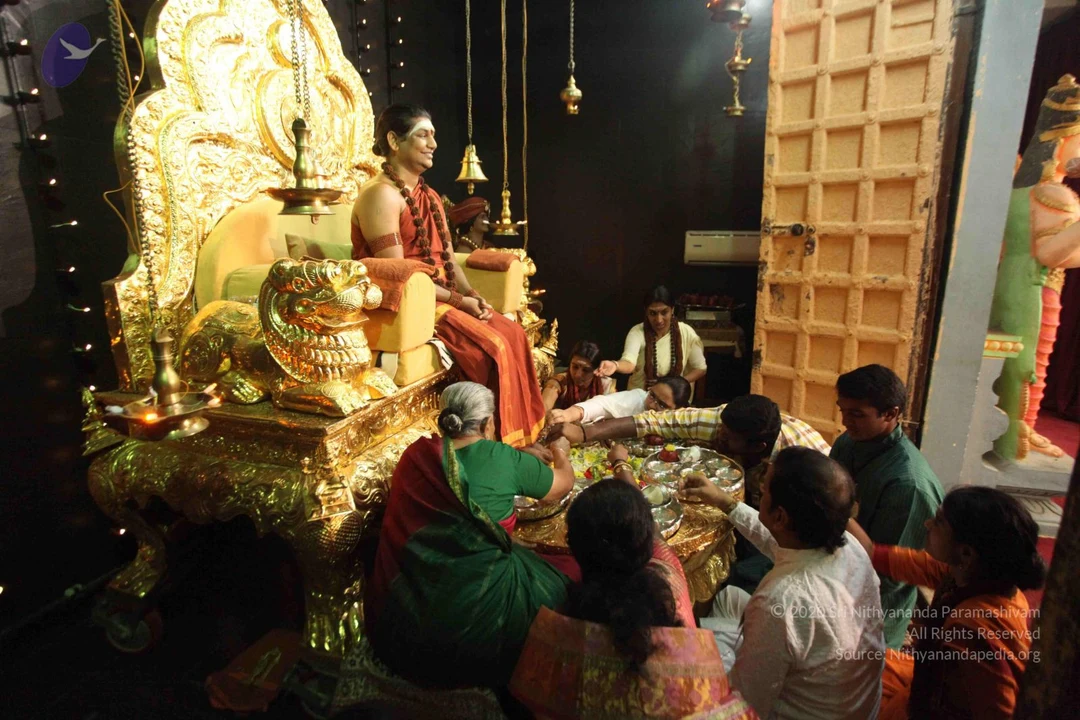
Overhead view of a ritual arrangement on an ornate gold-engraved round tray. Four silver plates surround a central floral pattern of white daisies and yellow marigolds, with bare feet of a person in orange-and-gold clothing visible at the top. The centre holds small brass vessels and a figure. Each silver plate holds small silver bowls filled with marigold petals, red hibiscus flowers, whole red apples, and small silver offerings, possibly for puja or abhishekam. No people are fully visible beyond the feet.Close view of a golden ceremonial stand arranged with silver offering plates. Bare feet in red-and-orange silk garment stand on a white and yellow flower-petal rangoli surrounding small brass ritual vessels and a deity murti at centre. Silver bowls hold yellow marigold and red flower garlands, red apples and white coconut-like items. Only the lower body and feet of one person are visible; no face shown. Ornate gilded furniture and a patterned rug frame the scene.A ritual puja setup on an ornate gilded golden stand. Silver offering plates hold red-and-yellow marigold flower garlands, red-tipped petals and whole red apples or fruit. A central white and yellow flower arrangement surrounds a small brass or gold ritual object. A bare foot in a rust-red and gold-bordered cloth rests at the left edge. At top right, a person in white robes with a rudraksha mala sits with hands pressed in namaskar. The background shows a gold-carved chair and a patterned red carpet.A photograph of a seated man on an ornate gilded throne with a large carved golden backrest decorated with deity relief panels. He wears a saffron-orange dhoti-style garment and an orange wrap, a long multi-strand rudraksha mala, a white tripundra mark on his forehead, and orange arm bands; he smiles and sits with hands resting in his lap. Hanging brass bells and lamps are suspended beside the throne, and a second seated person in orange-red clothing and a red headcloth appears partially at the right edge. Brass oil lamps stand on the armrest area. The photo is sourced from the archive, with the setting a dark-backed ceremonial hall. Appearance-based label: a person, seated on the throne with the rudraksha mala and saffron clothing.A seated man in a golden ornate throne with lion-carved armrests, wearing a saffron-orange dhoti with gold borders, a bare upper body, a long rudraksha mala, multiple beaded bracelets and a white tripundra mark with a red dot on his forehead. He sits with hands folded in greeting and smiles. In front of him, a large silver-trimmed gold tray holds silver plates with flowers, red fruit and small cups, and his bare feet rest on flowers at its edge. Brass hanging bells and oil lamps hang beside the throne against a dark background.A man seated on a cream upholstered throne with an ornate gold-leaf carved backrest, smiling and raising one hand in a blessing gesture. He wears orange-red robes, a long rudraksha mala with a ceremonial necklace, red bangles, a white horizontal forehead band with a red dot, and his hair swept back. Brass hanging bells and lit oil lamps with chains hang nearby against a dark background. Appearance-based candidate for Swamiji (probable), seated on a throne with saffron robes, rudraksha mala and swept-back hair.
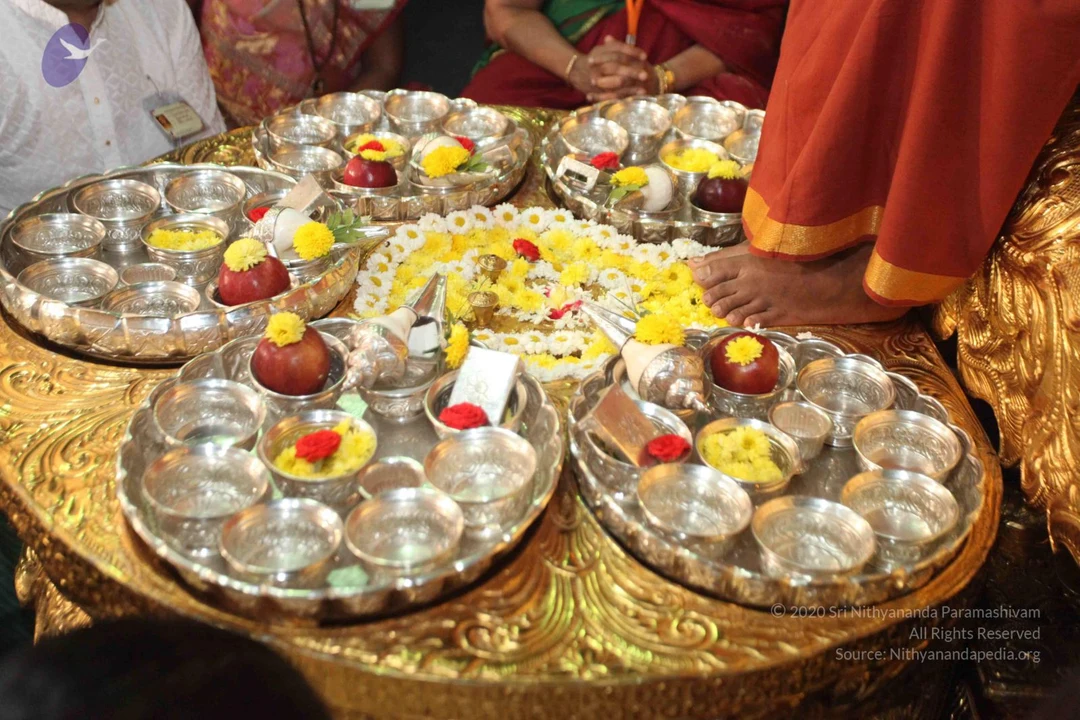
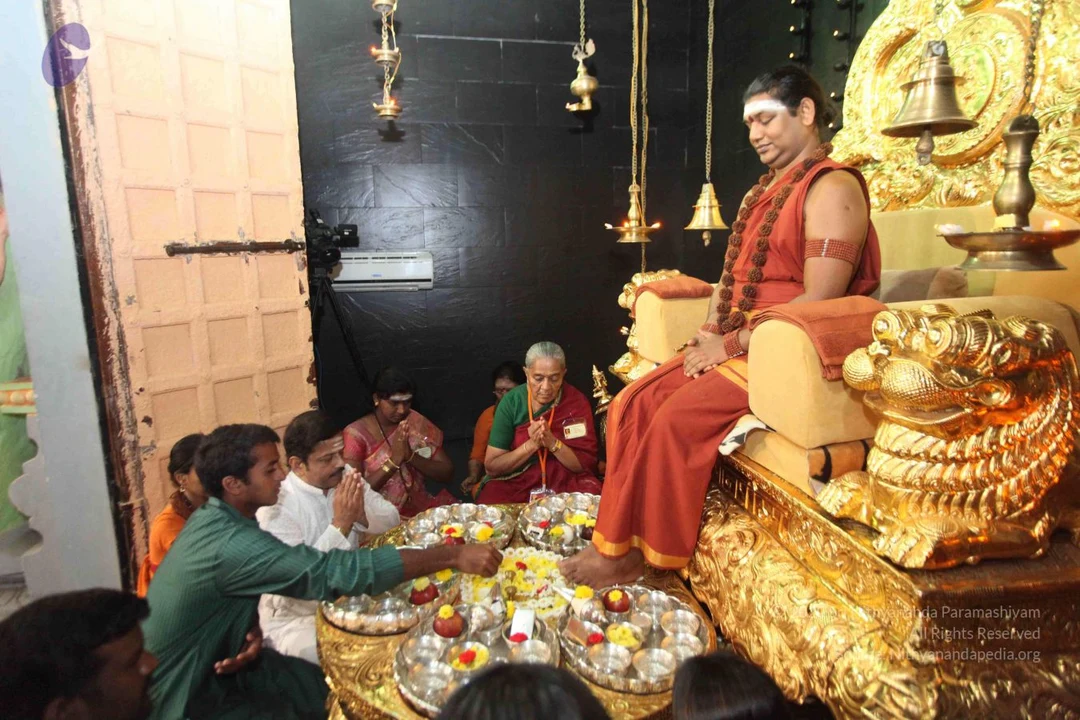
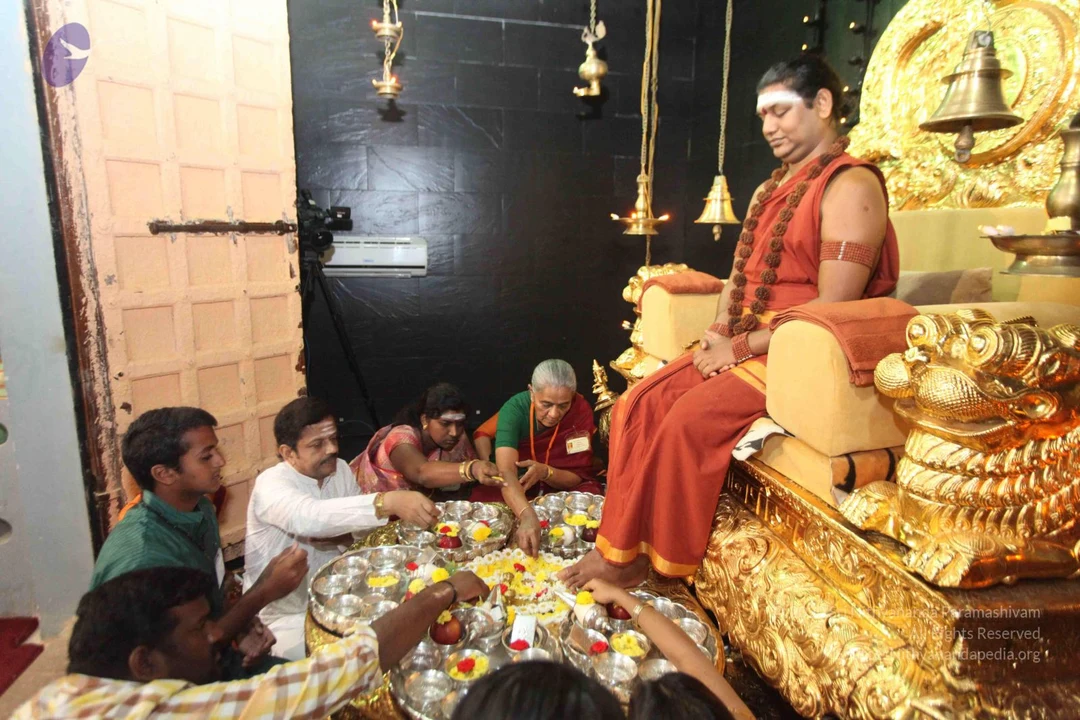
Nithya-Kirtans
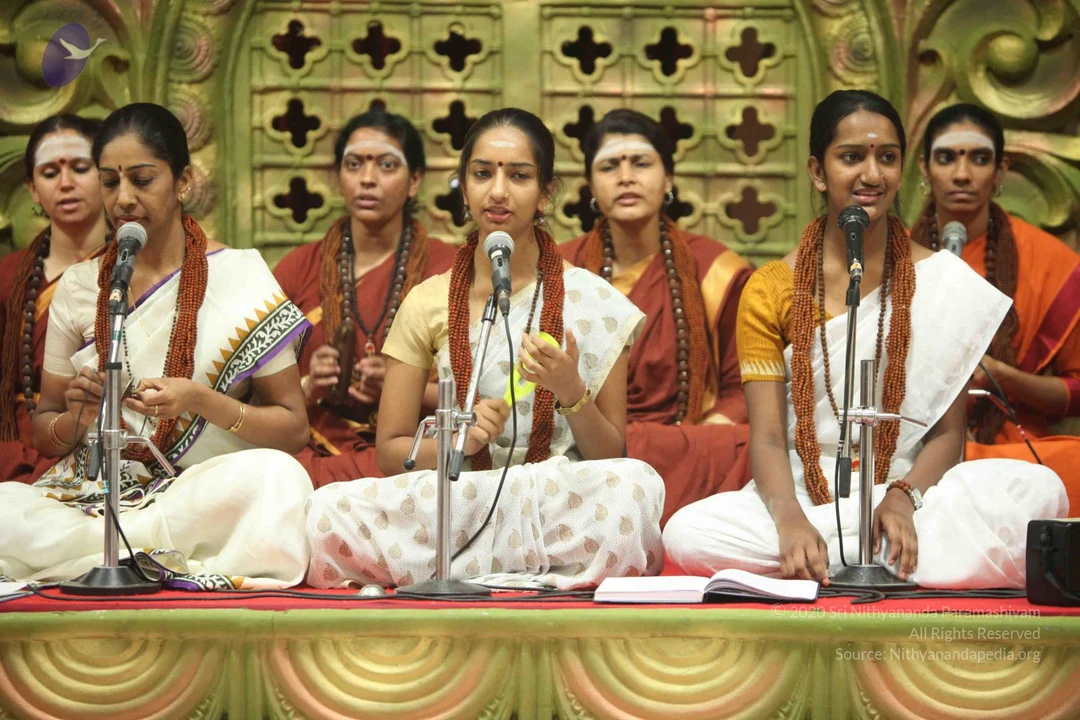
8 photosSource gallery
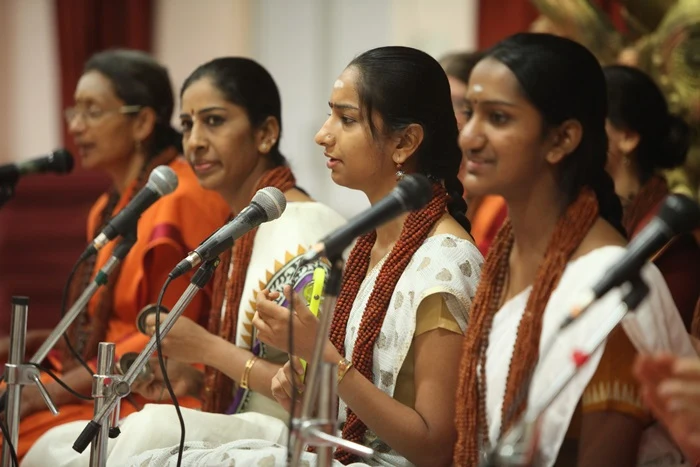
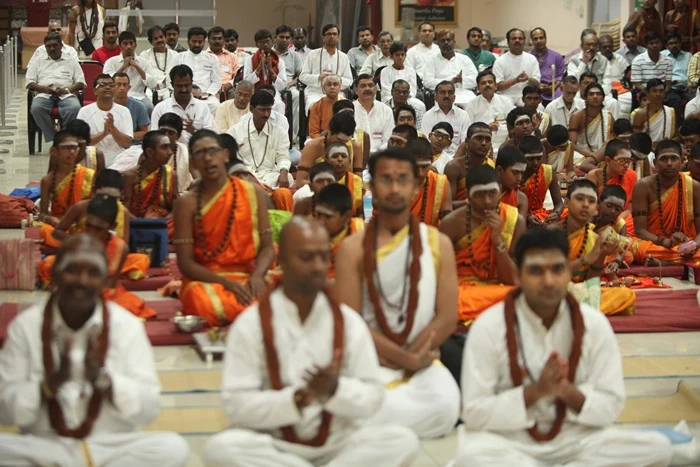
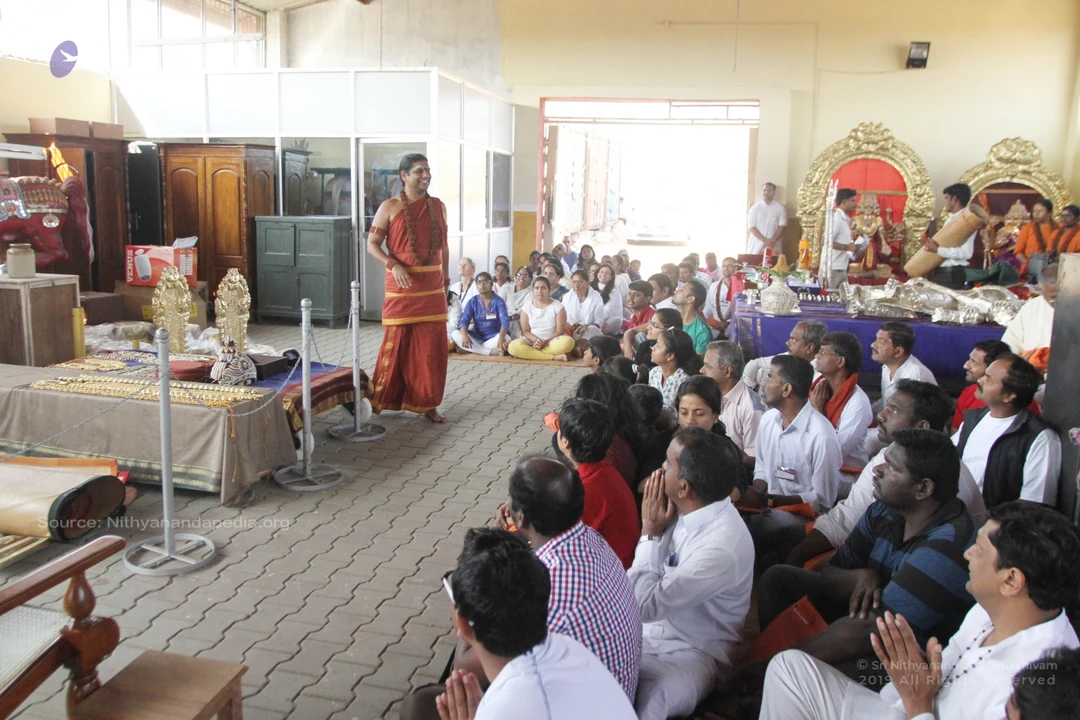
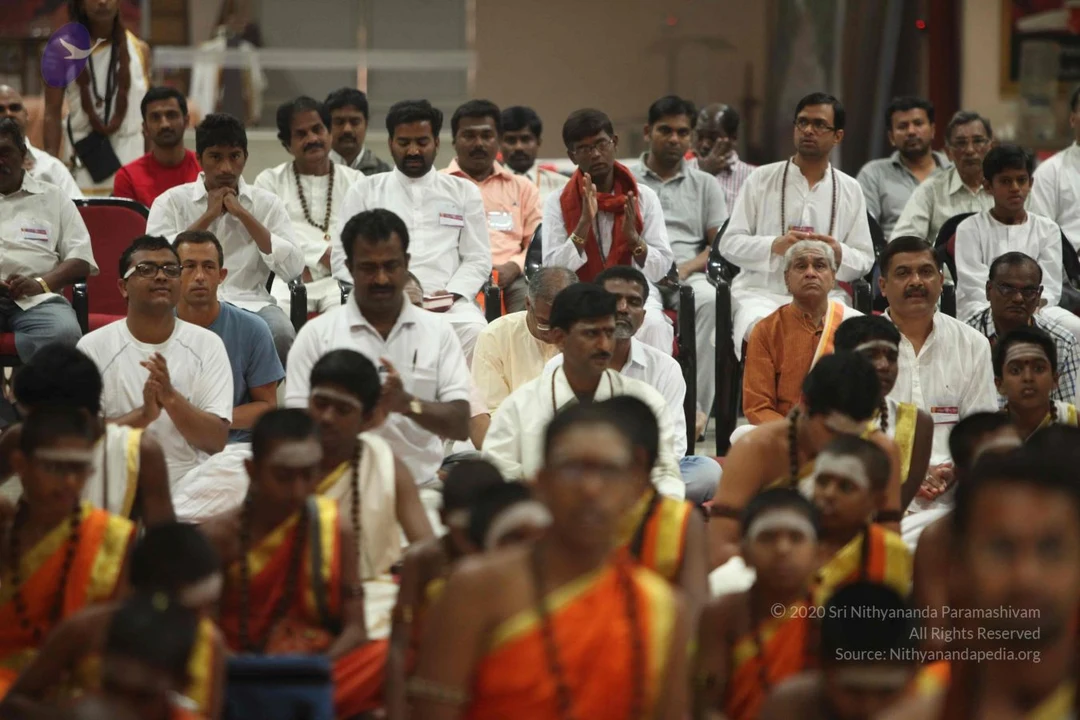
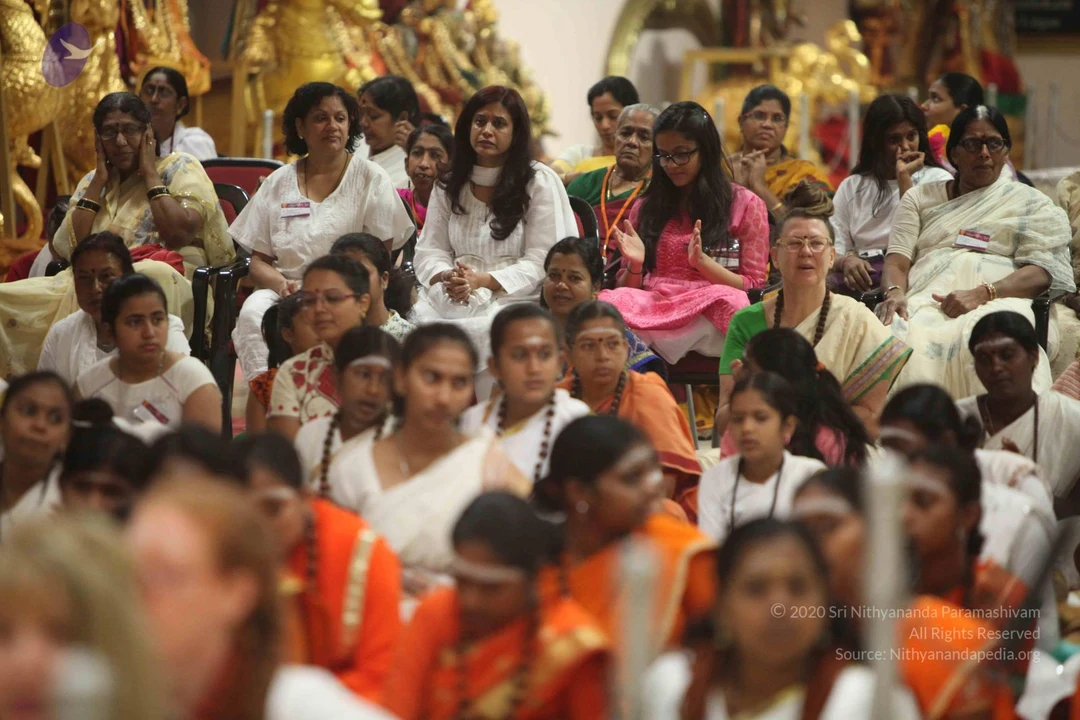
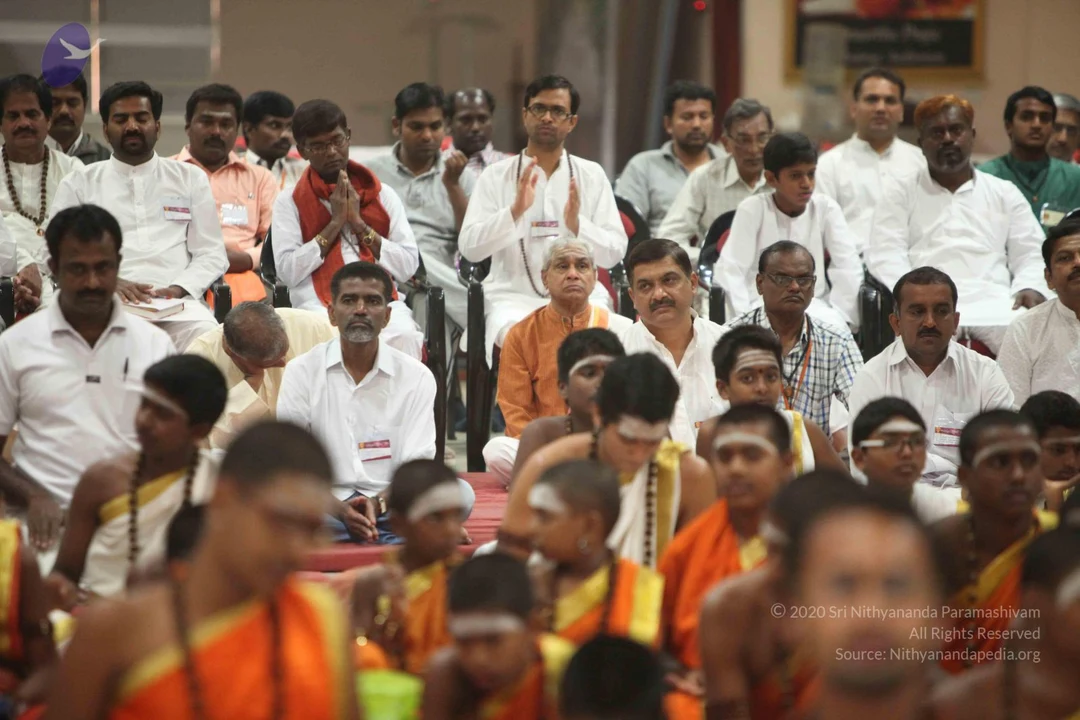
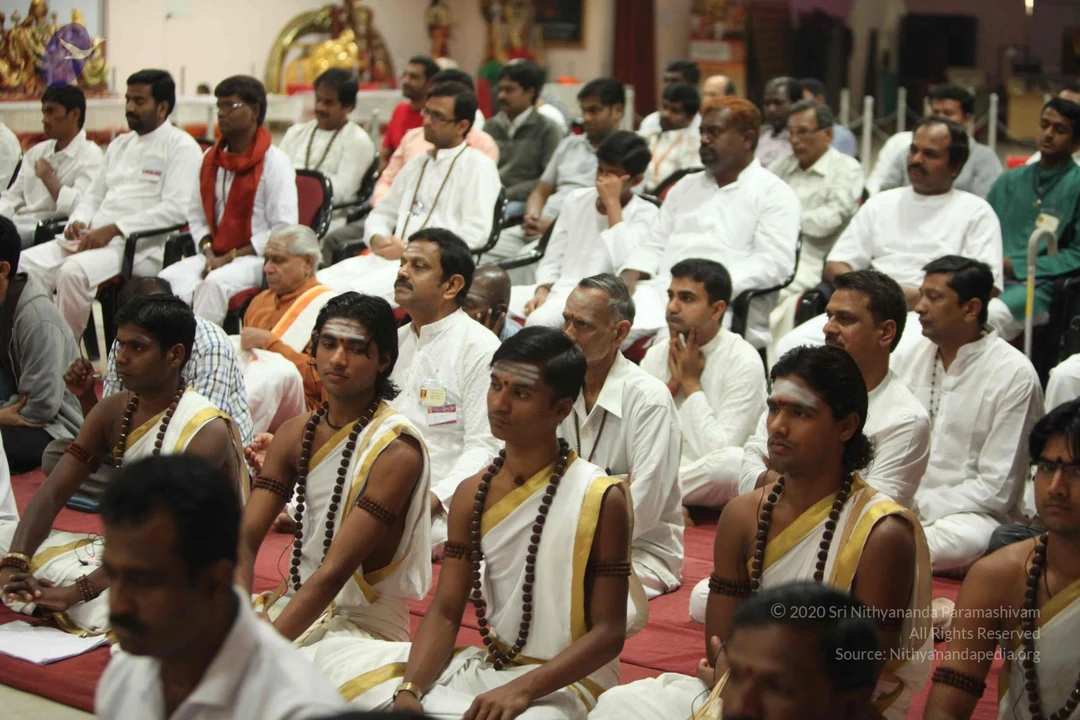
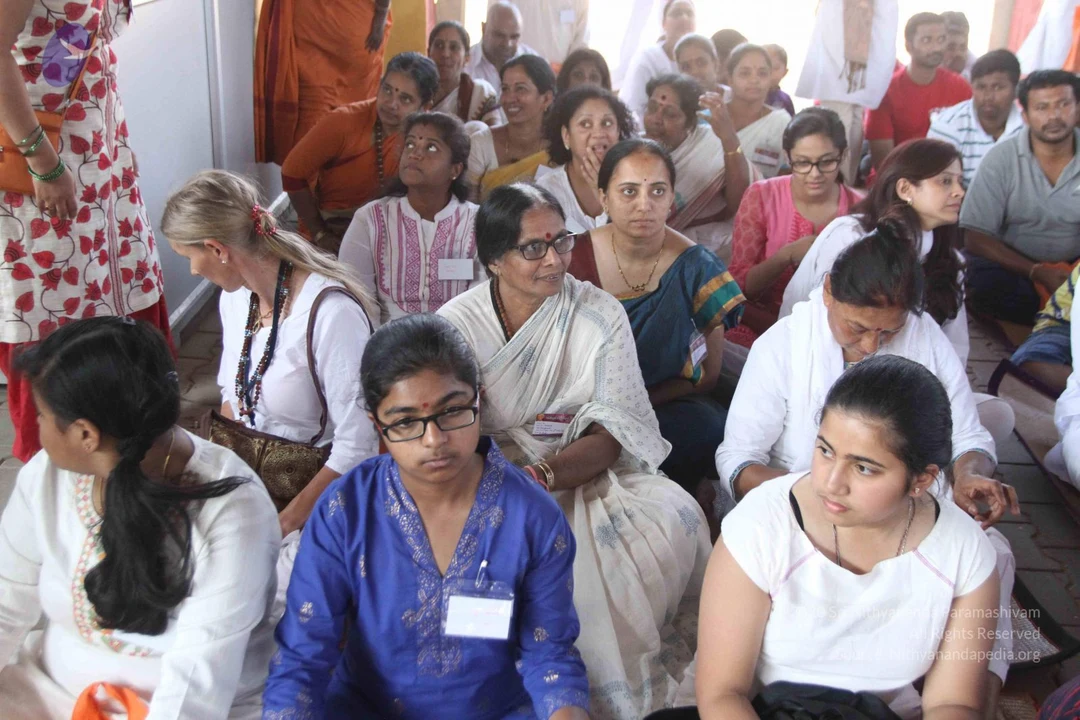
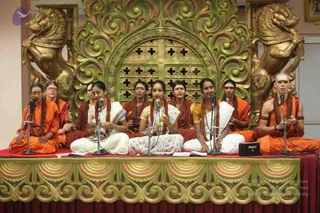
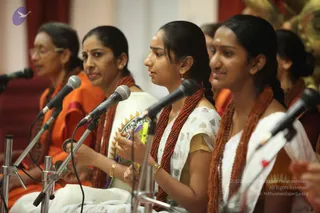
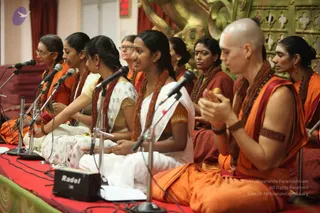
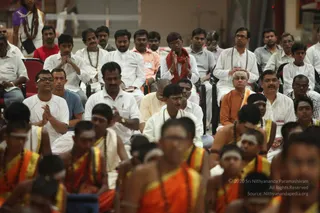
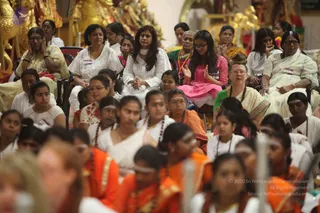
Several women sit cross-legged on a red-draped stage before a gold-and-green carved wooden screen, chanting into microphones on stands. Front row: a woman in a white sari with a purple-and-gold border holds a small book; a central woman in a white sari with gold border chants holding a yellow object; a woman in a gold blouse and white dress holds an open book and a paper. Behind them, women wear orange and maroon robes, rudraksha malas and white vertical forehead markings. Their wrists show gold bangles. The scene looks like a group recitation of verses at a satsang.A group of about ten women and young men sit cross-legged on a red-draped stage, chanting from open books before microphones. Most wear saffron or orange robes with rudraksha malas; several women wear white saris with gold borders, and a bald young man in orange at right has white vibhuti marks on his forehead. Behind them is an ornate gold and green carved wooden doorway flanked by two golden lion-like yali figures. A small black speaker labelled Radel sits on the stage.Four women sit in a row at microphone stands, singing or chanting at a satsang. The woman on the far left wears glasses and an orange blouse with a rudraksha mala. Next to her, a woman in an orange top and white sari plays a small hand-held instrument with a purple and yellow body. In the centre, a young woman in a white patterned top with a gold-toned border wears a red rudraksha mala and a small white tilak on her forehead. On the right, a young woman in a white sari with a gold border wears a long red rudraksha mala and a bindi, and her hair is in a long plait. Other people in orange and red are partly visible behind them, and a purple logo appears in the top-left corner.A seated group of women in orange, maroon and white clothing sits behind microphones on a red cloth-covered platform, a satsang-style gathering. The nearest woman, with a shaved head and orange robe with a rudraksha mala, presses her palms together in front of her. Others wear white saris with gold borders, rudraksha malas and beaded necklaces, and some have hands folded in laps. A gold carved wooden panel stands behind them and a small Radel recorder sits on the platform. No figure here shows the distinctive presentation cues needed for a person identification, so the seated participants are described by role only.A seated satsang audience in a hall, with many men in white kurtas and dhotis and some in saffron or orange clothing. In the foreground, rows of young boys wear orange-and-gold robes, white forehead bands and rudraksha malas, seated on the floor. Several older men in white with rudraksha malas sit with hands folded in anjali. A man in the middle row wears a red-orange shawl and holds his palms together. A man in an orange robe sits in the middle distance. Chairs with red cushions line the room. No clear visible presenter stands out.A seated congregation of devotees in a temple hall during a satsang, with gilded deity murtis and ornate golden figures in the background. In the foreground, women and girls wear white saris and white kurtas, several with white forehead markings, and some younger girls wear saffron-orange saris with rudraksha malas. A woman in a pink dress with dark hair sits with her palms together, and an older woman in a green sari wears a rudraksha mala. Many seated women have their hands folded or raised in prayer, and some hold photo lanyard badges. The mood is attentive devotion as the group listens to the discourse. No a person candidate is clearly visible among the people shown.

Nithya-Satsang
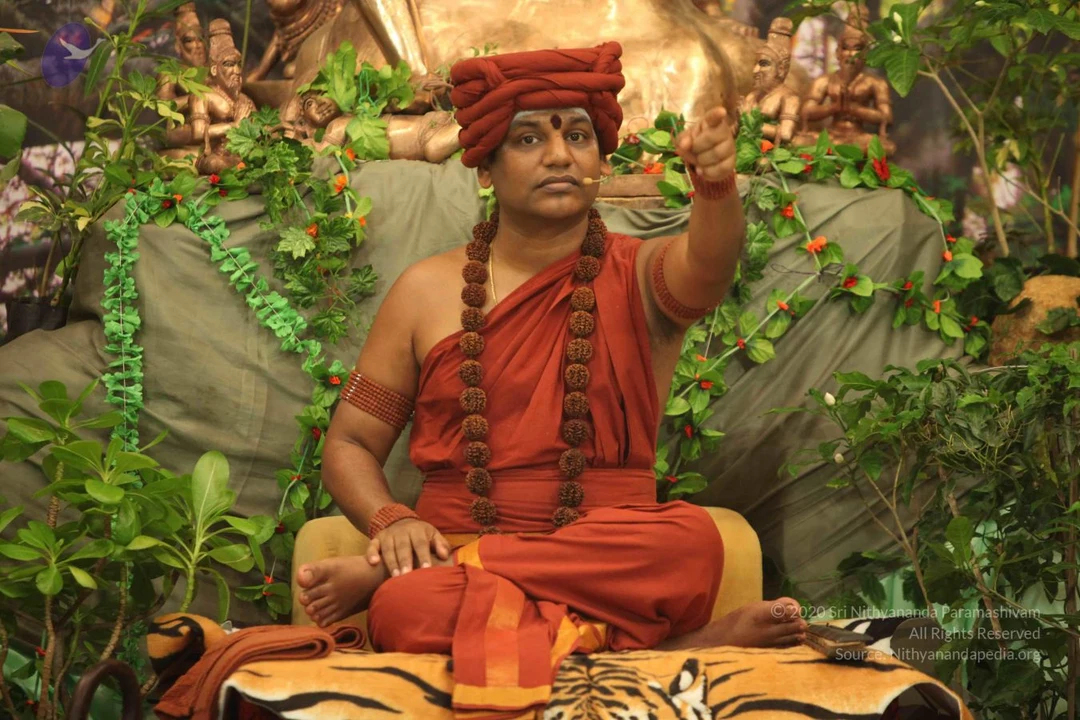
59 photosSource gallery
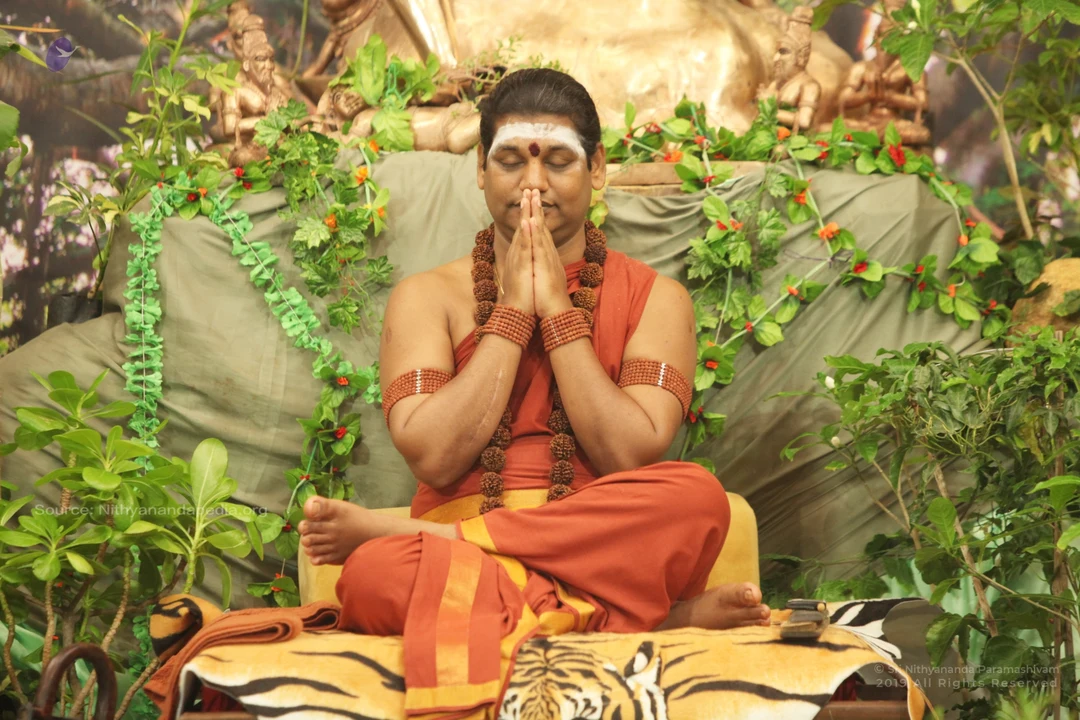
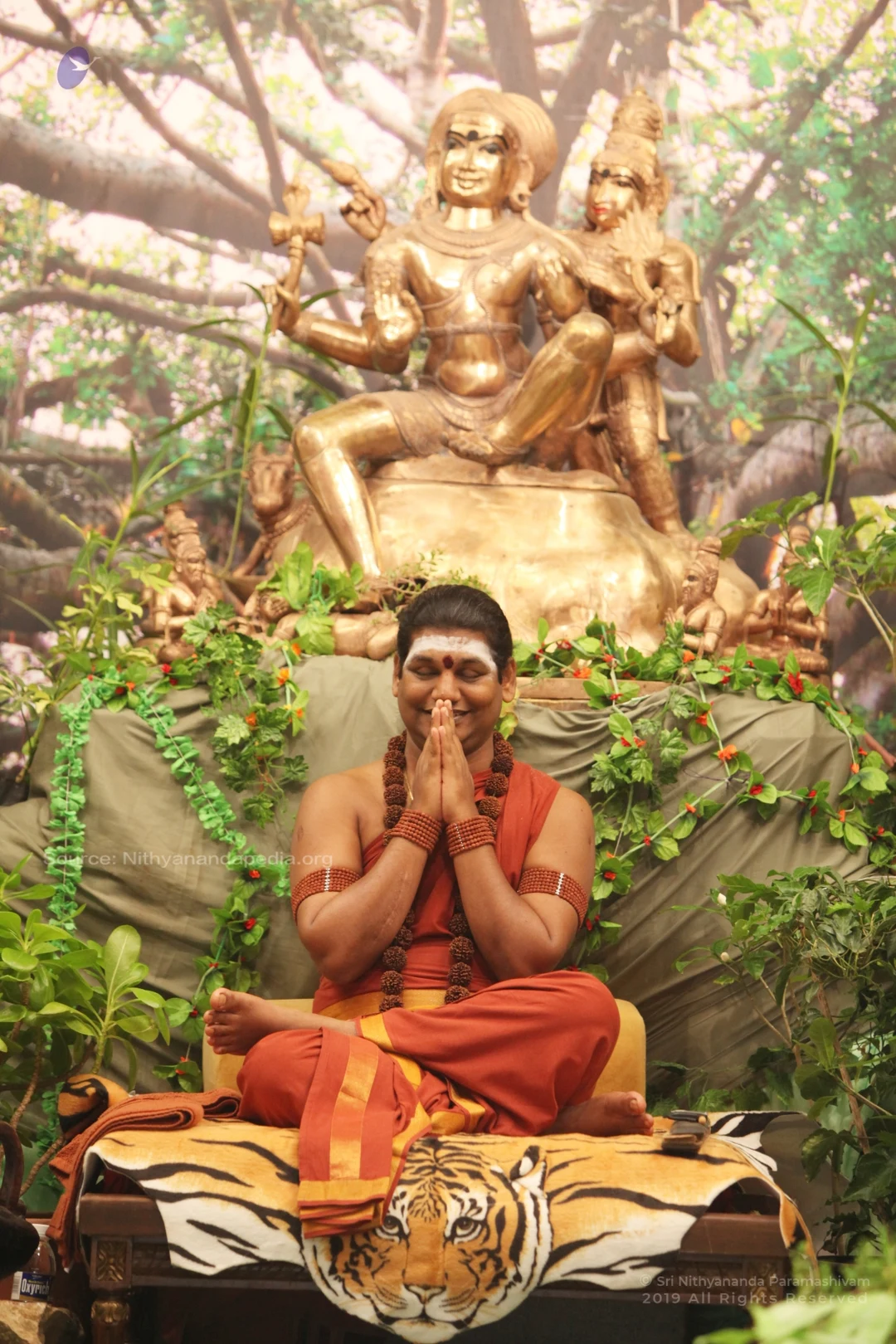
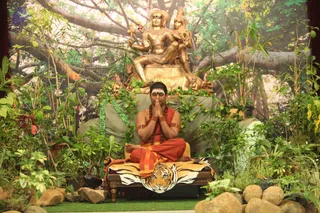
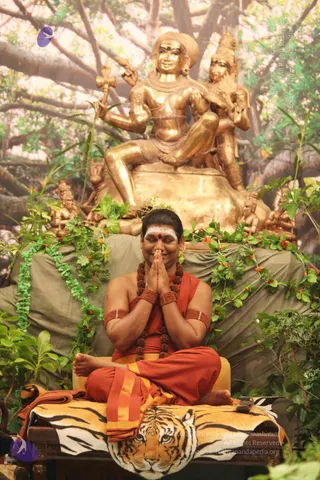
A seated man in orange-saffron robes sits on a wooden platform draped with a tiger-striped cloth, hands pressed together in namaste at the chest. He wears white forehead markings, rudraksha beads, and a red-and-gold beaded necklace, with orange armbands on his upper arms. Behind him stands a large golden statue of a deity with multiple arms, accompanied by a seated consort figure, set against a painted backdrop of a banyan-like forest. Green foliage, potted plants, and rocks surround the stage, and a few offerings or implements sit on the platform.A seated man in orange-red robes sits cross-legged on a golden throne-like seat draped in green cloth, surrounded by leafy green plants with small red berries and a green garland. He wears a long rudraksha mala, multiple beaded bracelets, a white forehead marking with a red bindu, and bare feet rest on a striped tiger-skin cloth. He smiles and raises both palms outward in a blessing gesture. Gilded deity sculptures appear behind him.A photograph of a seated man in orange-red robes with a bare upper body, hands pressed together in namaste with eyes closed. He wears a long rudraksha mala and several rudraksha armbands, has a white vibhuti marking with a red kumkum dot on his forehead, and sits cross-legged on a tiger-skin rug over a yellow cushioned seat. Behind him a large gold-coloured deity murti of a seated multi-armed goddess and an attendant figure stands before a backdrop of banyan tree branches, with green vines and flowering plants decorating the platform. A small logo appears in the upper left. The setting suggests a satsang stage arrangement.A seated man sits cross-legged on a tiger-skin rug over a wooden seat, eyes closed, palms pressed together in anjali mudra. He wears an orange-red dhoti and upper cloth with gold borders, a rudraksha mala draped across the chest and rudraksha bands on the wrists and upper arms, and a white vertical marking with a red bindi on the forehead. Behind him stands a golden deity murti with green foliage and red berries in the setting. a person: the seated man wears orange-red clothing with a rudraksha mala and bands, and sits in a devotional setting. Scene is a satsang or meditative sitting.A man sits cross-legged on a tiger-striped mat before a golden deity murti and a green-and-grey backdrop, surrounded by leafy plants, vines with red flowers and green garland strands. He wears a red-orange turban with a red tilak, a red-orange robe, a multi-strand rudraksha mala and matching rudraksha armbands, and holds his hands in his lap in a mudra. Appearance-based a person in a seated satsang setting, with a visible lapel microphone.A seated man in a red turban with a vertical red-and-white forehead mark sits cross-legged on a tiger-striped mat before a golden figure and carved deity murti. He wears a red-orange robe, a long rudraksha mala with large beads, and red-beaded bracelets on his arms and wrists. His right hand is raised in an explanatory gesture while his left rests on his lap; a small lapel microphone is visible. Green vines with orange flowers and leafy plants frame the seat. Swamiji (probable): the appearance cues of a red turban, long rudraksha mala and saffron-toned robe fit the page's description of a discourse giver, so the figure is labelled as the discourse giver in a satsang setting.
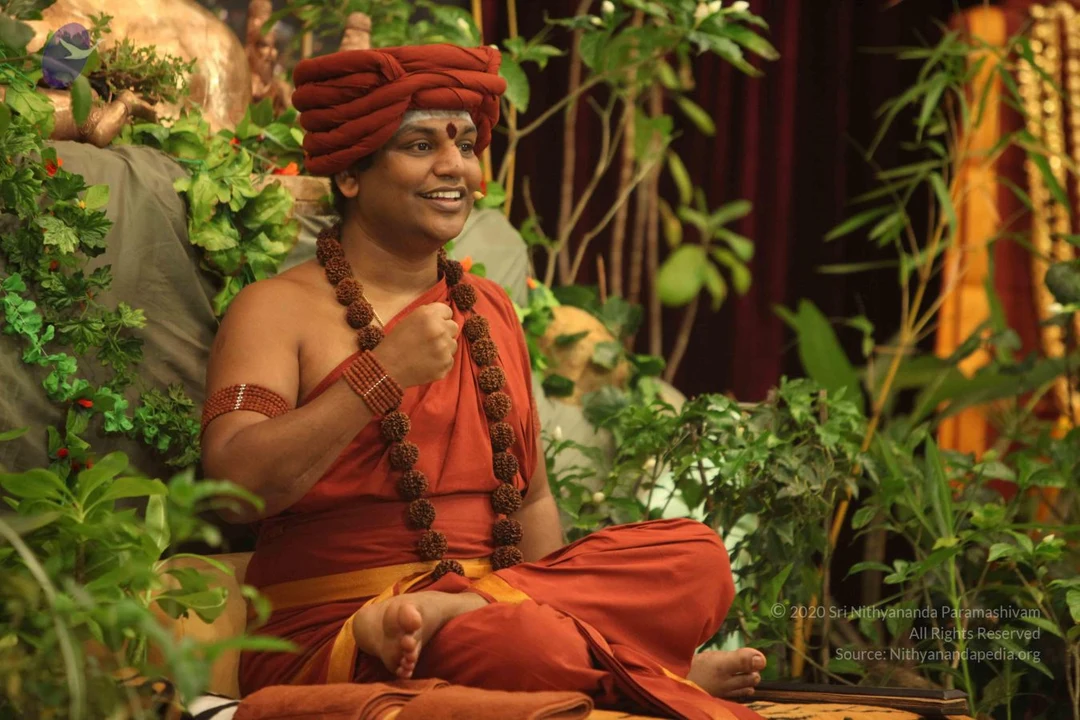
Kalpataru-Darshan

31 photosSource gallery
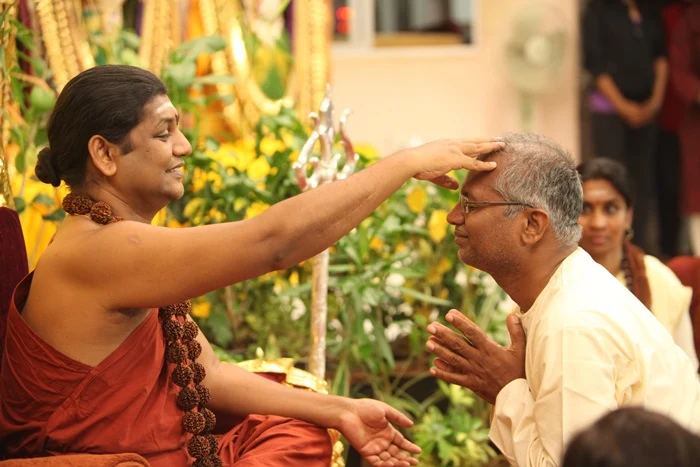
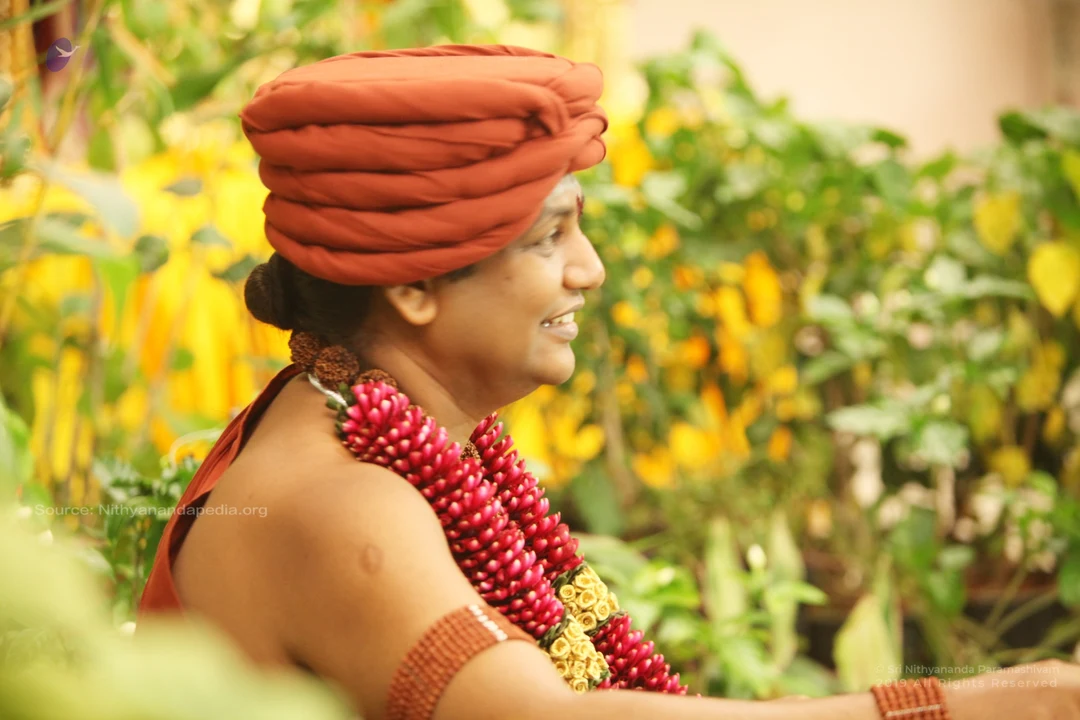
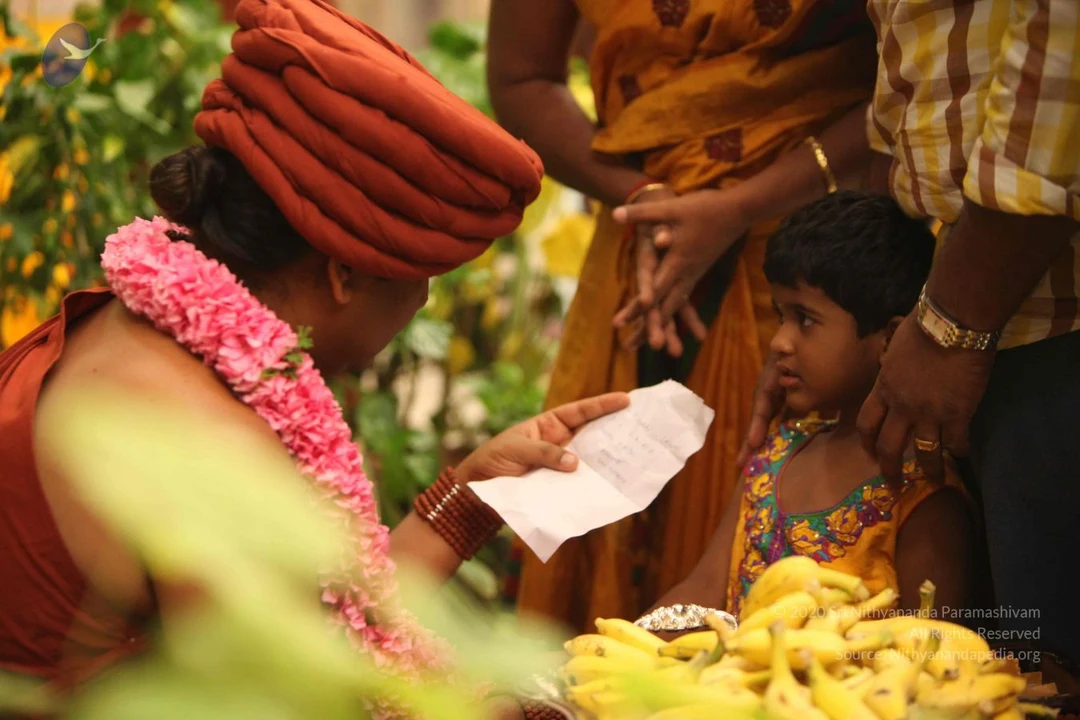
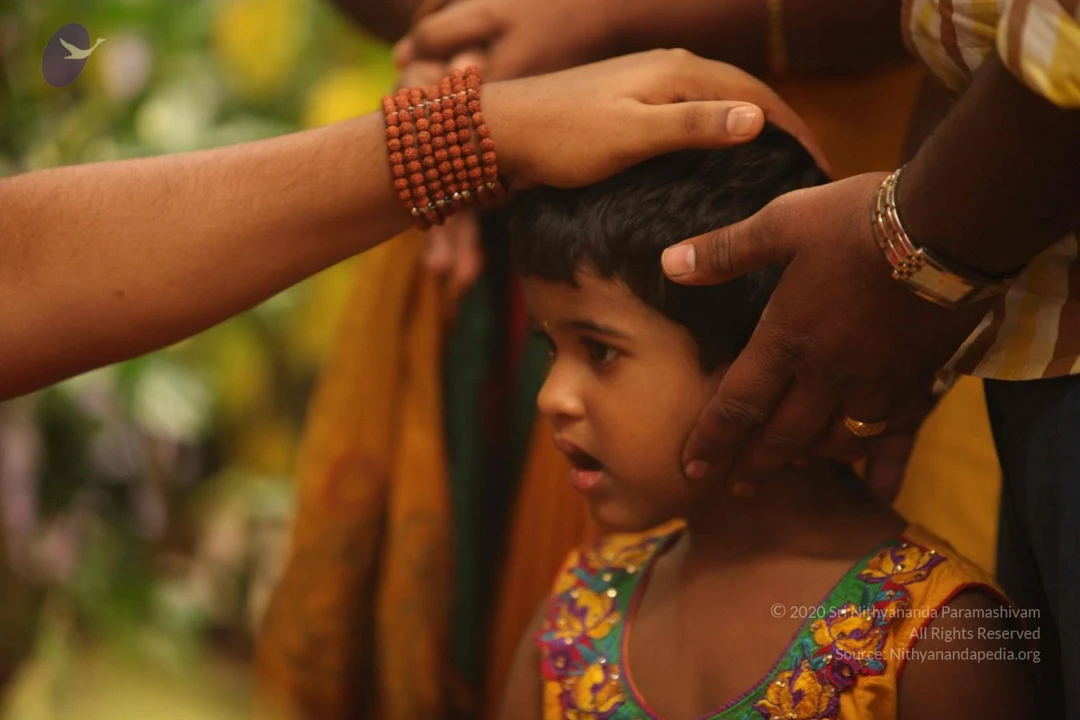
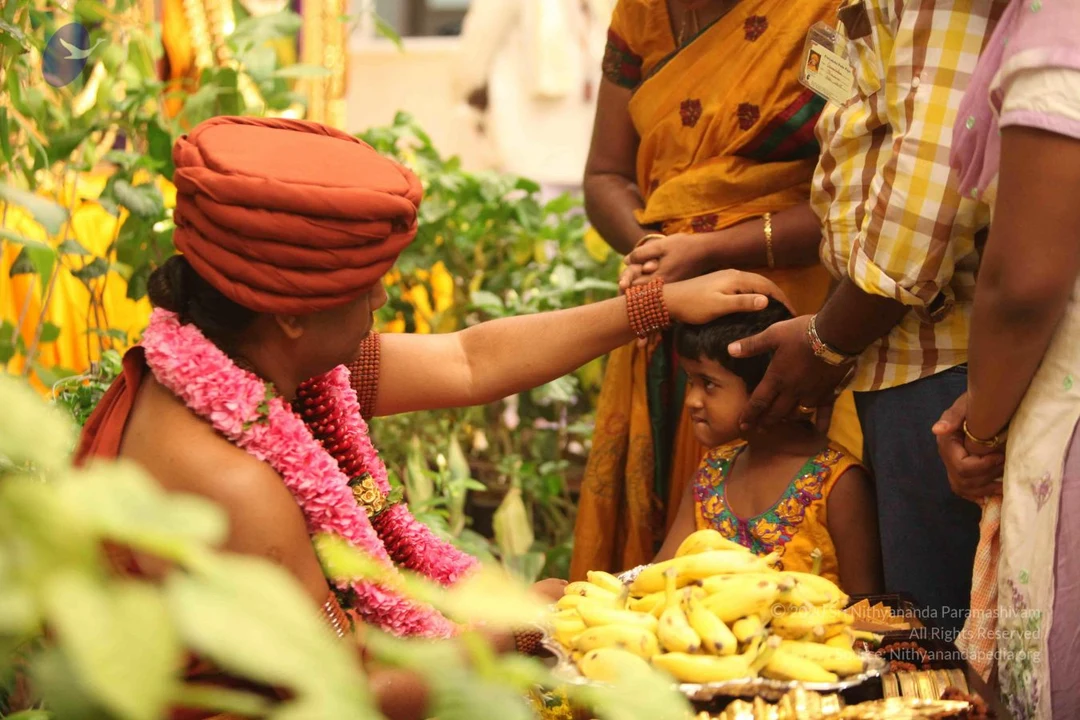
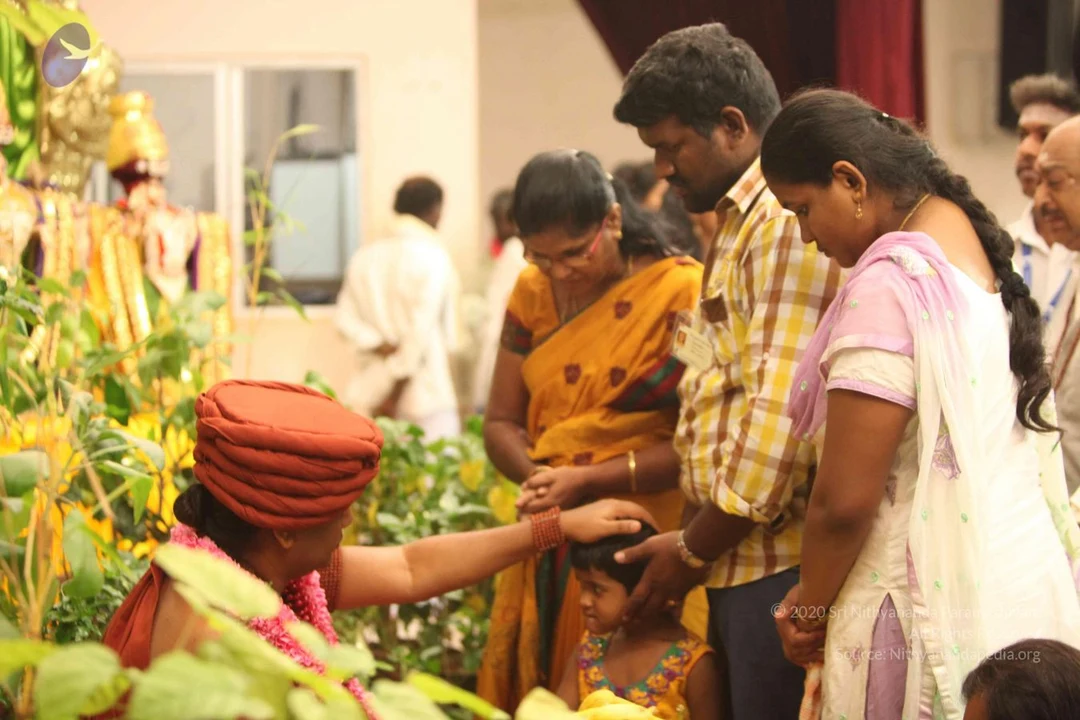
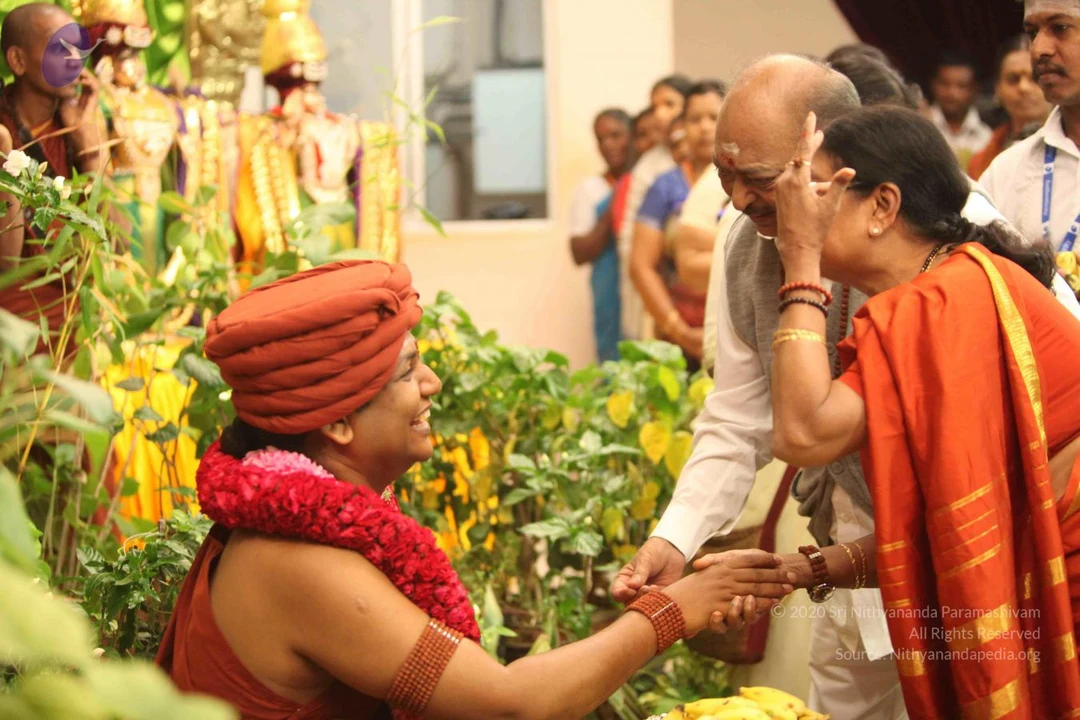
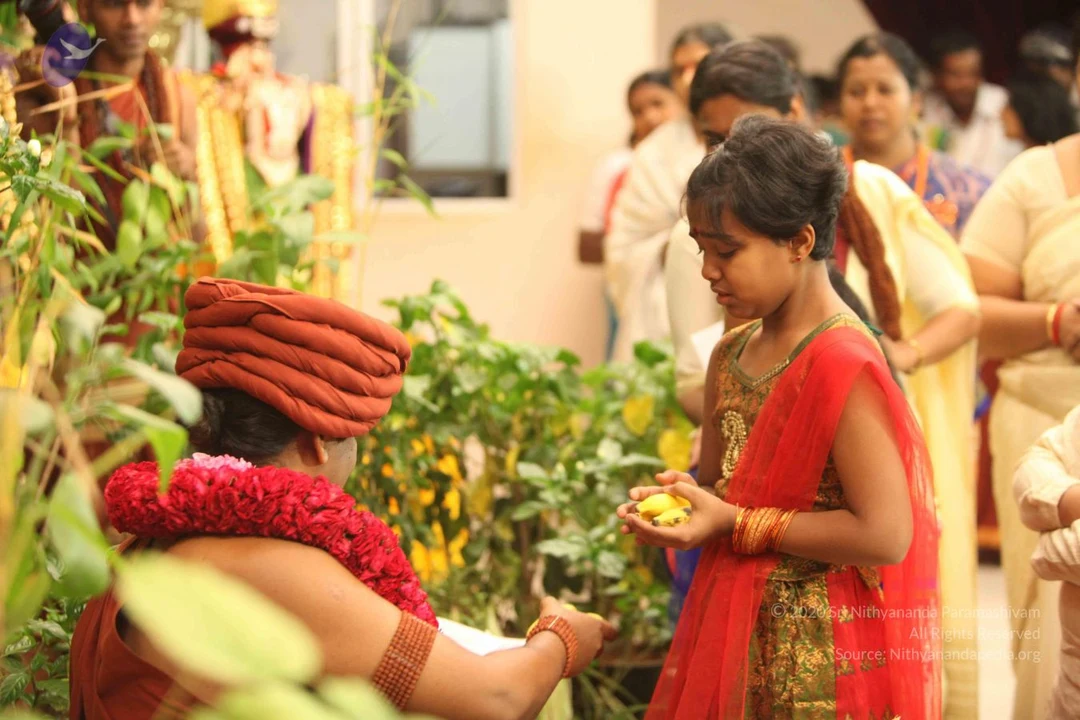
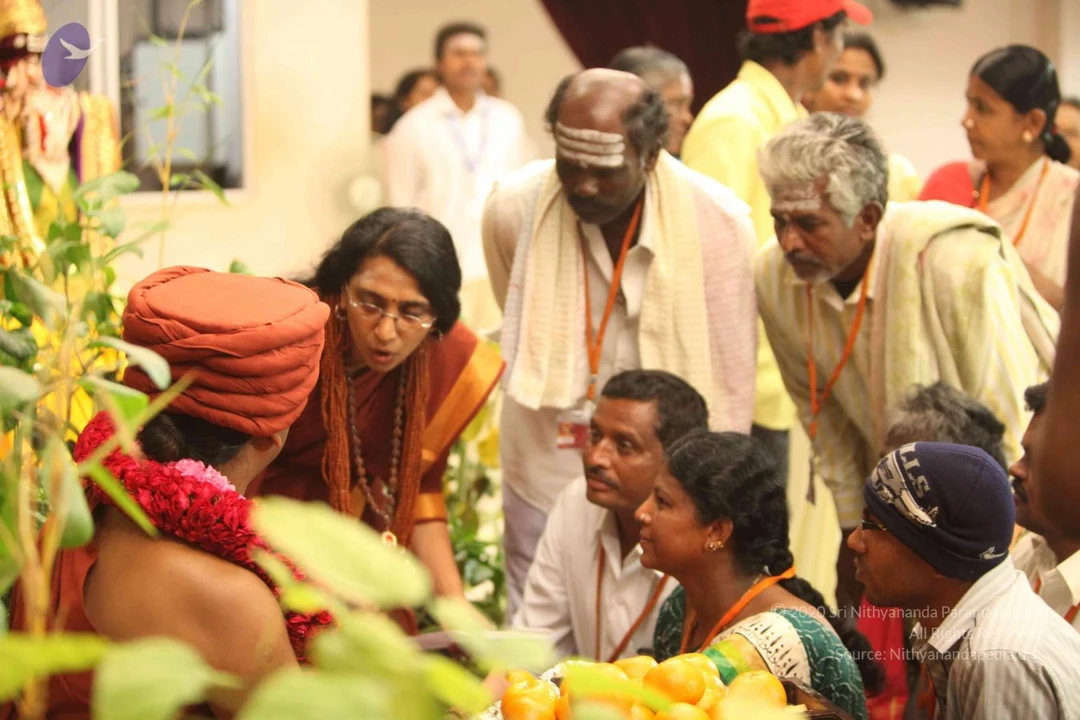
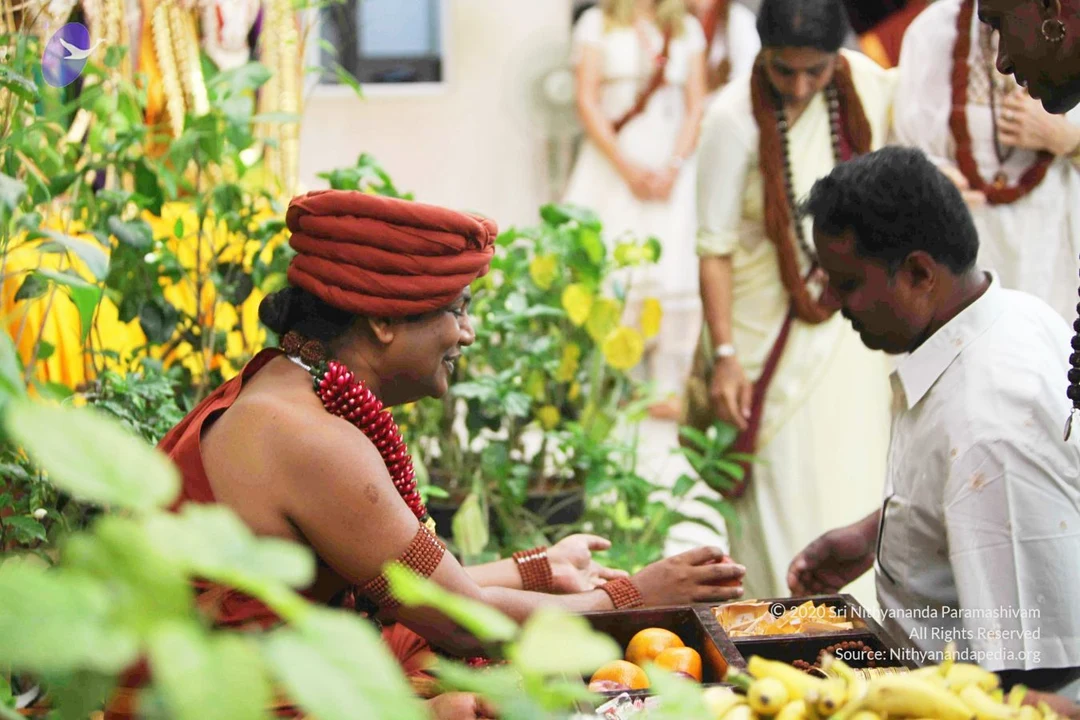
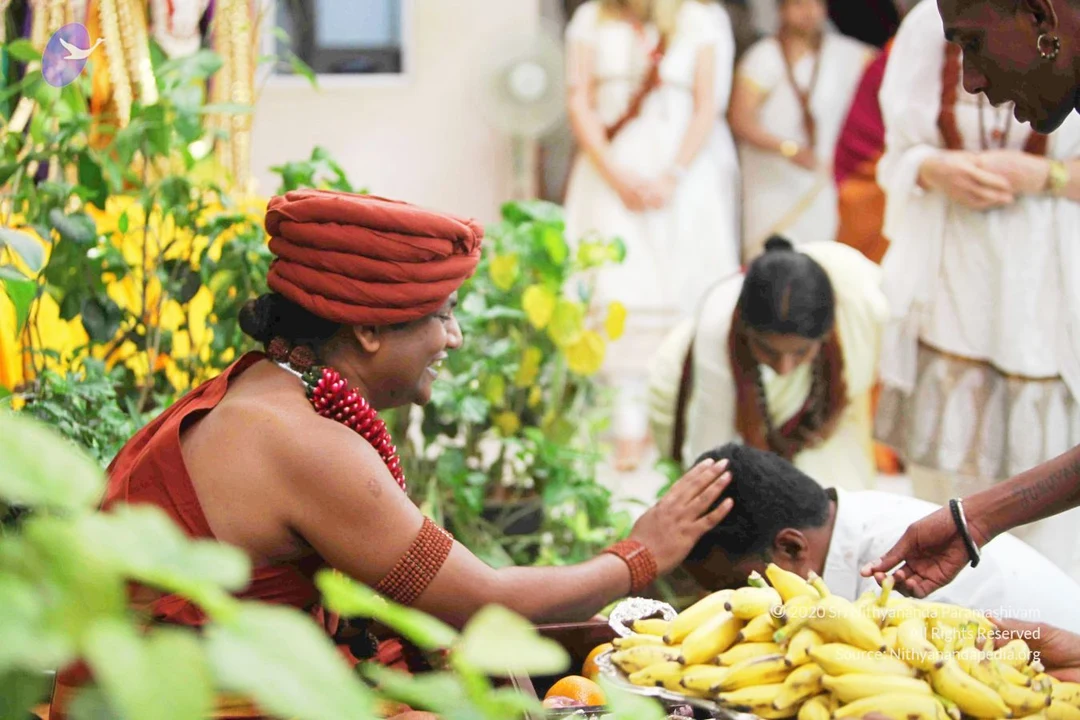
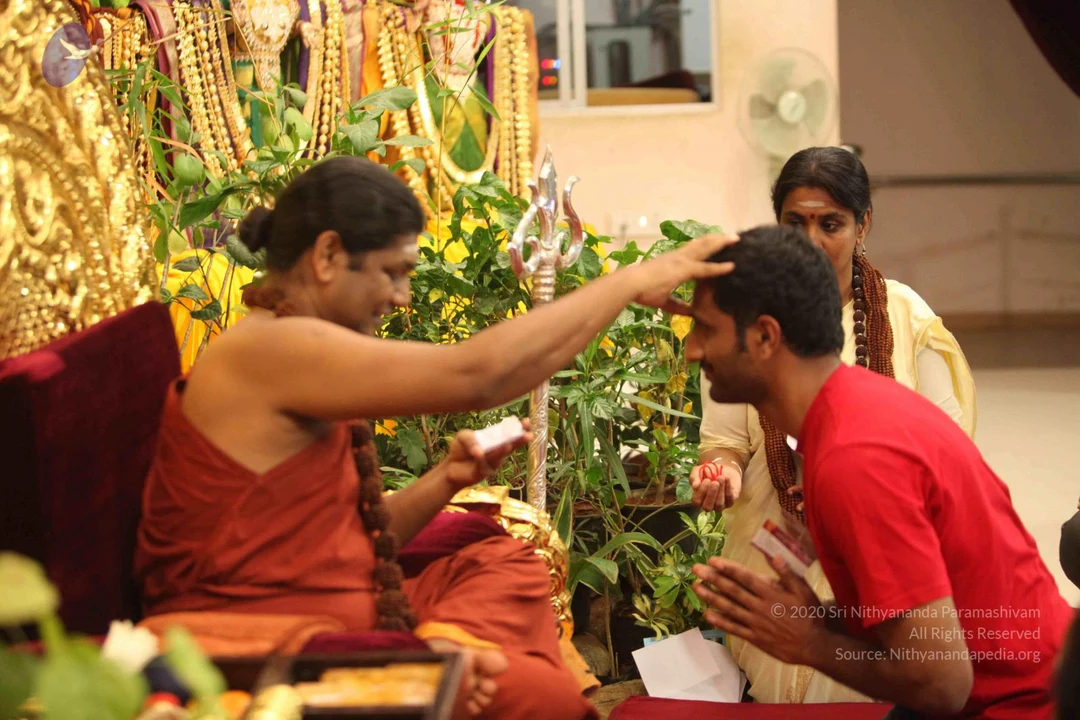
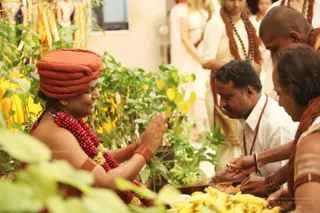
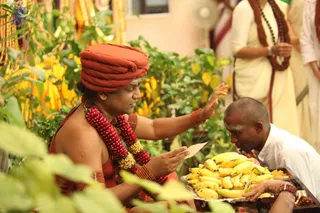
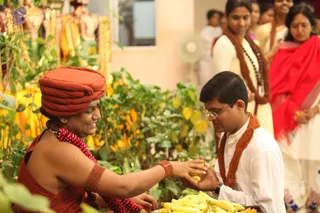
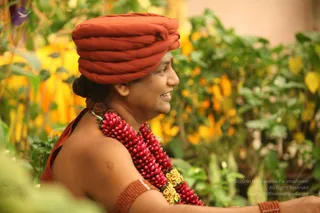
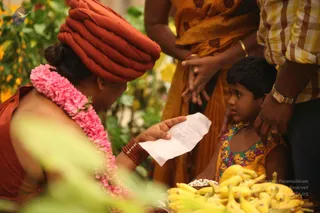
A photograph of a ritual offering scene outdoors among green leafy plants. In the left foreground a woman in an orange-red turban and bright red and gold beaded necklaces, with rust-coloured armbands, smiles and extends her hands over a tray of ripe bananas. To the right a man in a white shirt with a brown beaded mala kneels and reaches toward a brass vessel, while a woman in a rust-coloured shawl and a bare-armed devotee stand nearby. Behind them other attendees in white and cream clothing and rudraksha-style malas stand among flowers and garlands, with a deity murti partly visible at the upper left. Several people are visible, and the scene suggests a puja offering. No a person candidate is distinctively identified from appearance.A man in an orange-red turban and saffron-orange robe, with a thick red and gold rudraksha-style garland and matching orange bangles, sits among green foliage and yellow flowers while holding a small white paper and gesturing with his right hand. In front of him is a silver tray heaped with ripe yellow bananas, and a kneeling man in a white shirt bends over the offering. Behind them, two people in cream and maroon shawls stand with hands folded amid hanging yellow garlands. a person candidate is the central figure seated in orange with a red turban and rudraksha garland, presiding over the banana offering.A photograph of a devotional offering in a flower-decorated shrine area. A person in an orange-red turban, orange-red wrap, and layered red beaded necklaces and bangles holds out a yellow banana toward a man in white kurta with rudraksha-style brown beads, wire-rimmed glasses, and a wristwatch, who receives it over a tray of bananas. Behind them, women in white and red saris and shawls stand near garlands and yellow flowers, with deity murti partly visible in the upper left.A close side-profile photograph of a man in a rust-orange turban and an orange-red cloth draped over one shoulder, leaving the other shoulder bare. He wears a long necklace of red flower buds and small yellow roses, a rudraksha mala at the nape, and an orange beaded armband on his upper arm. He smiles while looking to the right, with a red tilak on his forehead. Behind him are blurred yellow flowers and green foliage. Swamiji (probable): the turban, ornate garlands and saffron-toned clothing with rudraksha are the cues for this identification in appearance.A photograph of an outdoor or open-air setting with a woman in saffron-orange clothing and a matching orange turban, wearing a pink flower garland around her neck. She leans forward and hands a folded white paper slip to a young girl in a colourful floral-print top. The girl, with dark hair, looks up at the woman. Behind them stand two other people in orange and yellow-checked clothing, with bangles visible. In the lower right are bunches of yellow bananas, and green leaves and yellow flowers fill the background. A small bird logo appears in the upper left corner. No a person candidate is clearly identifiable from appearance alone, so the woman is described by role as a devotee in ceremonial dress.A photograph of a small girl with short dark hair, wearing a sleeveless top with colourful floral embroidery in green, pink and yellow, being blessed. Hands rest on the top of her head: one arm wears multiple strands of rudraksha beads in reddish-brown, the other wears a gold bangle and a gold ring. Behind her is a saffron-orange cloth and a blurred green and yellow background. Watermarked archive photo; no a person candidate is visible, only hands of unseen adults.
NDY Day 2, Session 1 Q&A and Sharing by Delegates

22 photosSource gallery
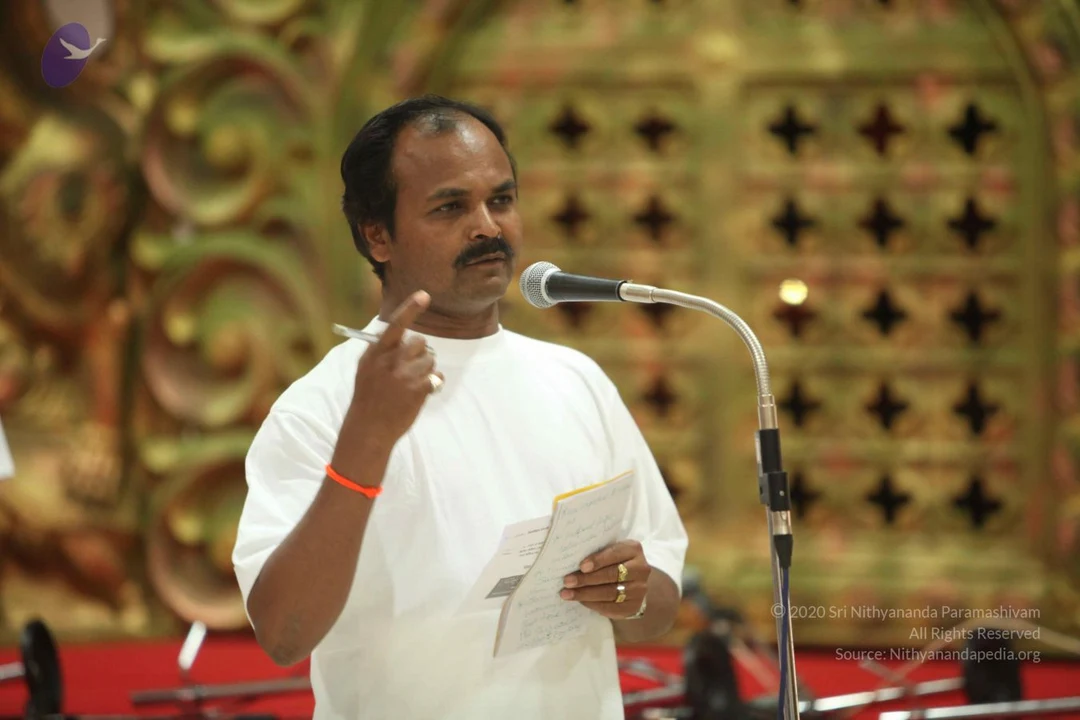
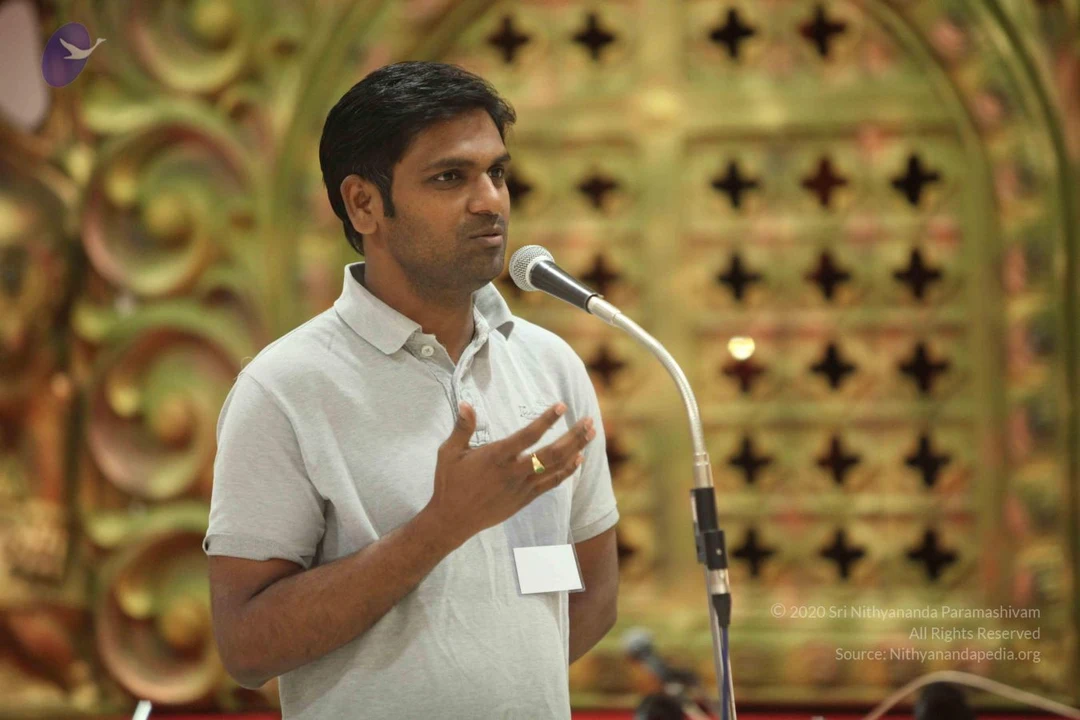
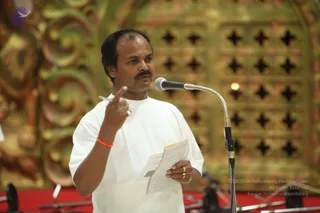
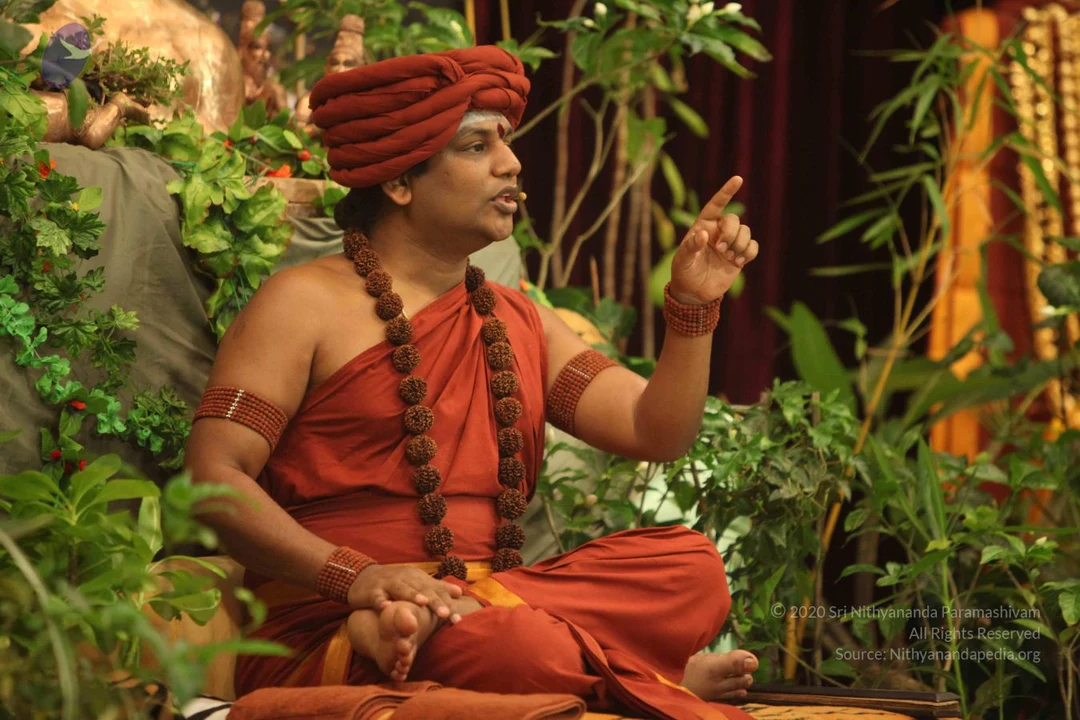
Photograph of a seated man in a large brown leather armchair in a satsang setting with a jungle-style painted backdrop of leaves, branches and golden sculptural figures. He wears saffron-orange robes draped over one shoulder, a long necklace of rudraksha beads, a red bindi and white forehead markings, and a small headset microphone. He smiles and gestures with his right hand while speaking.A man seated in a large brown leather armchair with carved wooden arms, gesturing with one hand while smiling during a satsang. He wears a saffron-orange robe draped over one shoulder, a long rudraksha mala of beads hanging to his waist, and a red bindi with white tilak on his forehead; a small lapel microphone is clipped to his face. Behind him stand a golden deity murti and green foliage. Swamiji (probable) is a person with a long dark hair and rudraksha mala in saffron robes seated on the throne, so the swamiji value is in_person. A water bottle sits at the left edge.A smiling man with eyes closed sits in a large brown leather armchair in a satsang hall. He wears a saffron-orange shawl over one shoulder, a long rudraksha mala of brown beads around his neck, and a red bindi with white tilak on his forehead. A small clip-on microphone is attached near his mouth. Behind him, a golden seated deity murti and green foliage decorate the set. Swamiji (probable): long dark hair, saffron-orange shawl and rudraksha mala match the appearance cues; the seated role is a devotee-facing teacher. Single person in frame.A man in a plain white shirt stands at a silver gooseneck microphone on a red-carpeted stage, speaking while holding a sheaf of papers in one hand and raising his index finger with the other. He wears an orange-red wrist thread and a gold ring. Behind him is an ornate gold-and-green patterned panel with dark star cutouts. The setting resembles a satsang discourse. The man's appearance does not clearly match any candidate, so he is described by role only as a speaker.A man seated on a brown leather armchair with carved wooden arms speaks into a head microphone during a satsang. He wears a red-orange shawl draped over bare shoulders, a long necklace of rudraksha beads, and a red bindi with white forehead markings. His left hand is raised in a gesture while the right rests on his lap. Behind him are a green foliage backdrop and a large gold-coloured sculpture of a figure. Swamiji (probable) in the seated speaker role, based on the red-orange robe, rudraksha mala and dark swept-back hair; the appearance cues are reasonably distinctive but not conclusive.A man seated in a large brown leather armchair with carved wooden arms, smiling and speaking into a small headset microphone at a satsang setting. He wears an orange-red shawl over a bare upper body, a long rudraksha mala of brown beads hanging to his lap, and a red bindi with white markings on his forehead. Behind him is a painted jungle-style backdrop of green leaves and vines, with a golden figure partly visible at the top. Swamiji (probable) is seated as the speaker, wearing orange-red robes and a rudraksha mala, with his long dark hair swept back.

Sacred-Arts-Tour

143 photosSource gallery
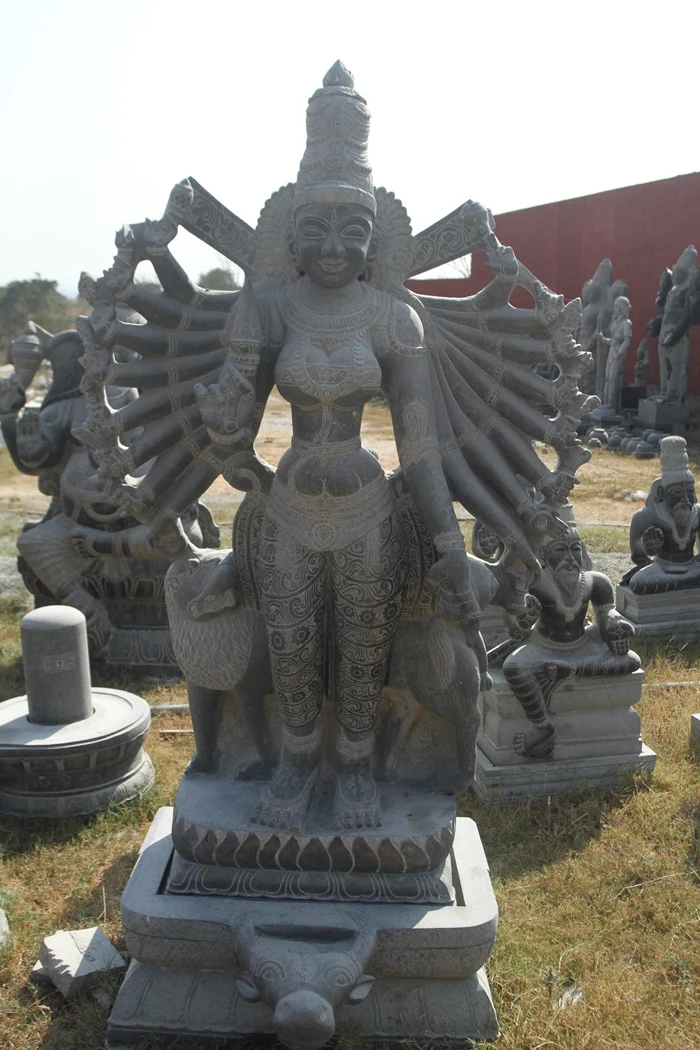
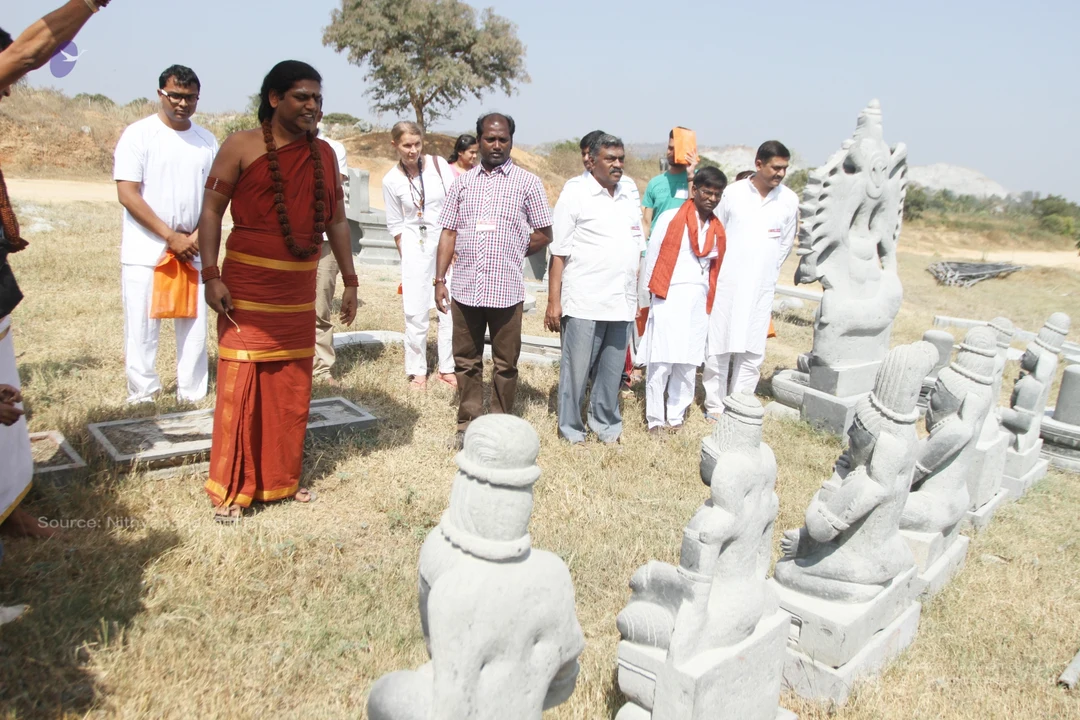
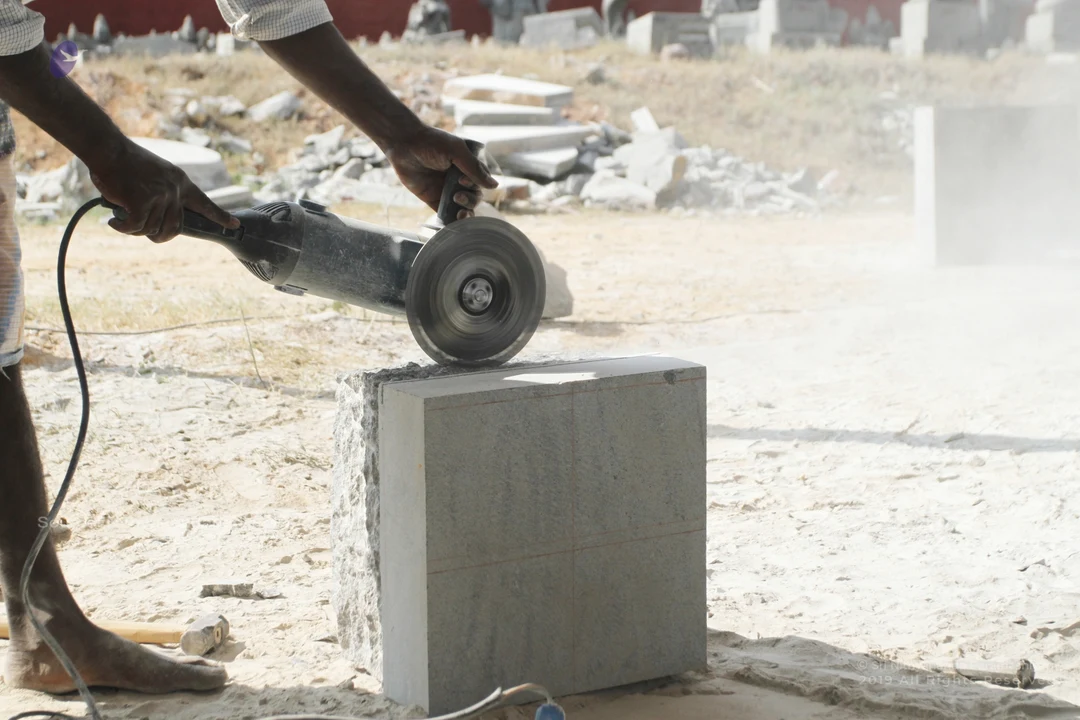
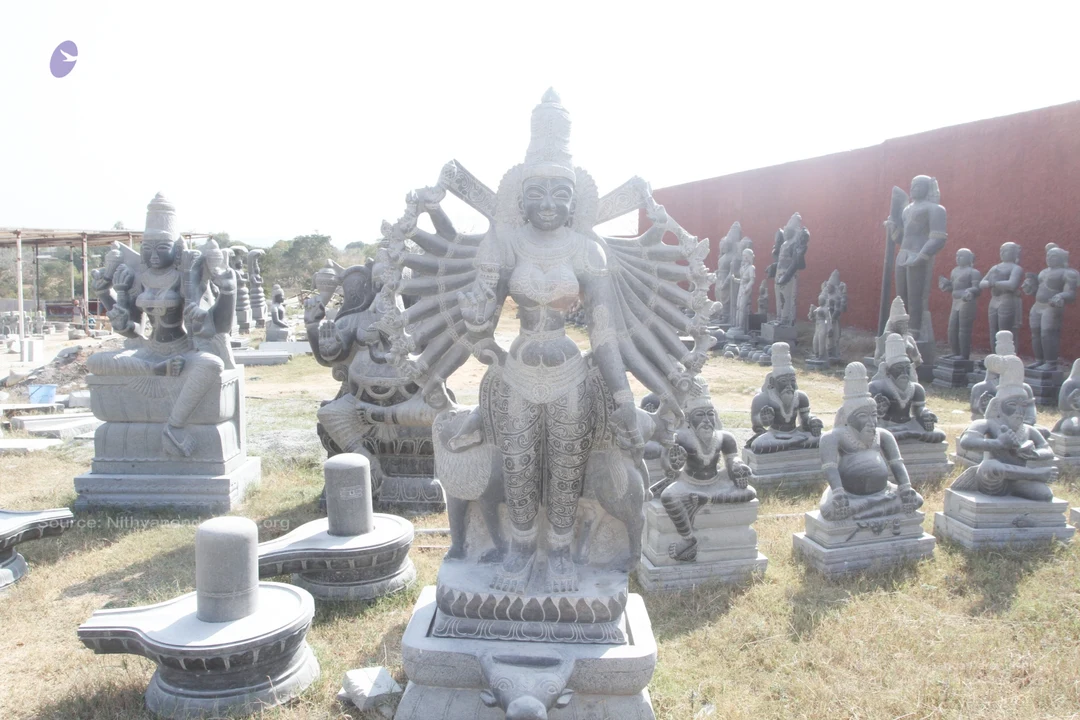
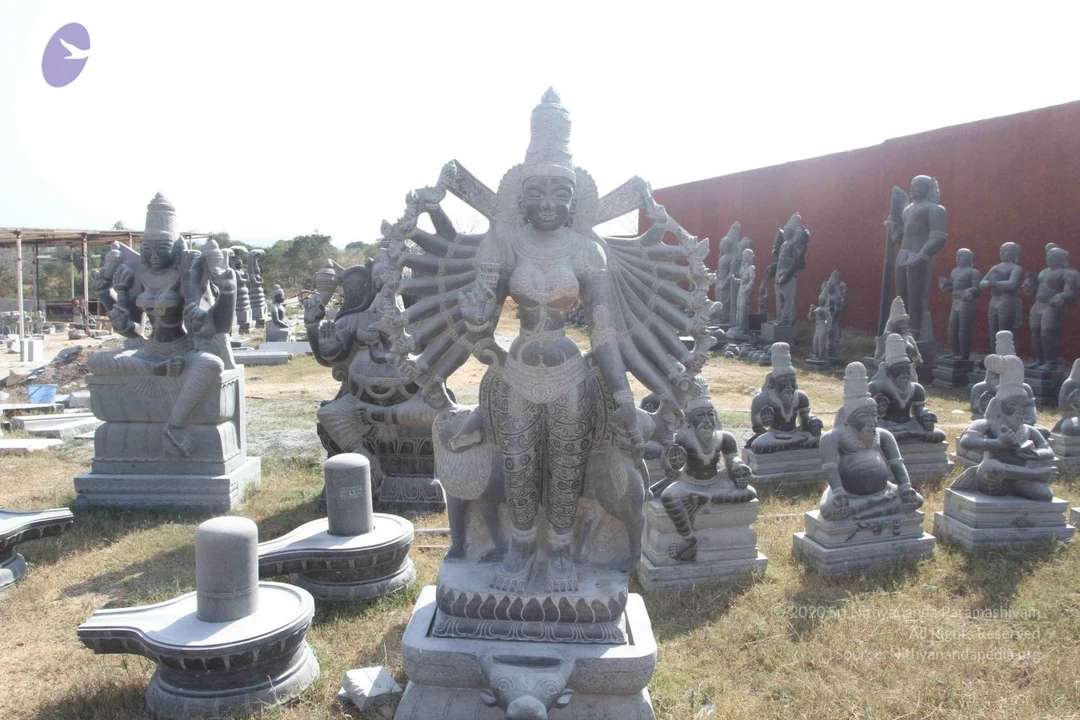
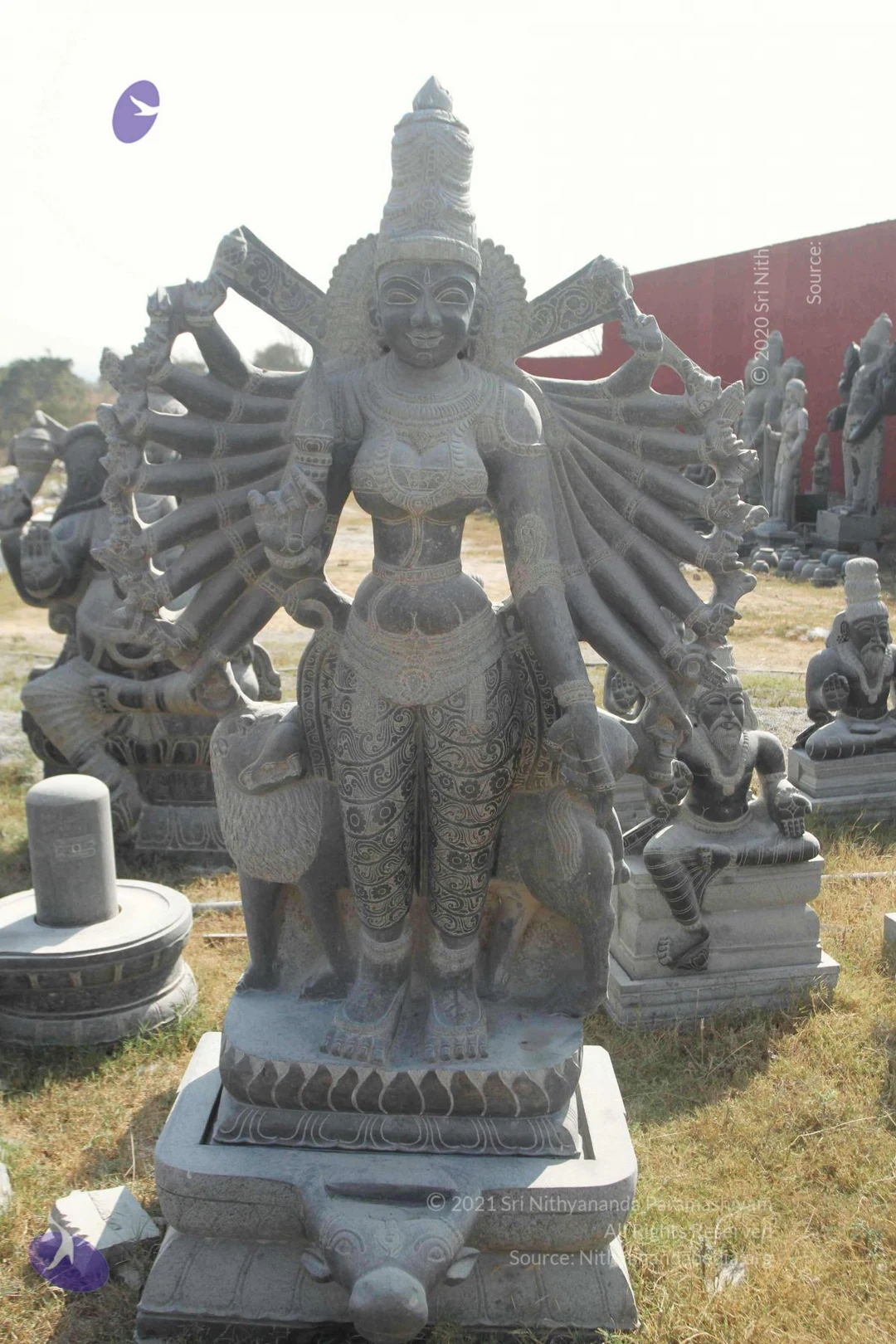
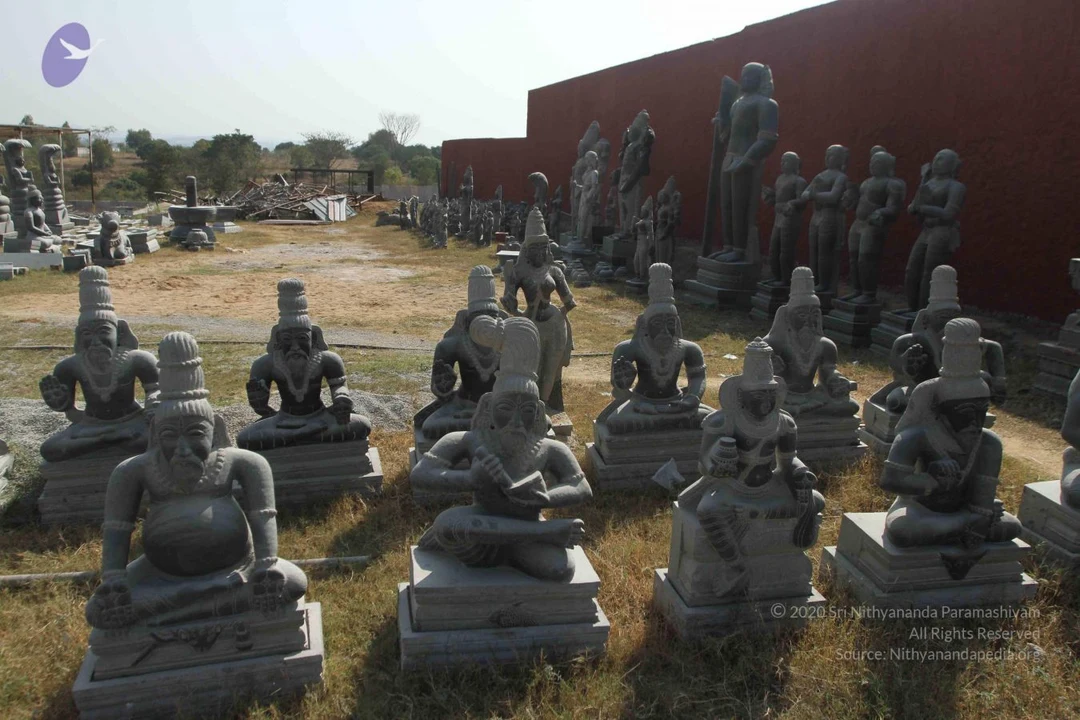
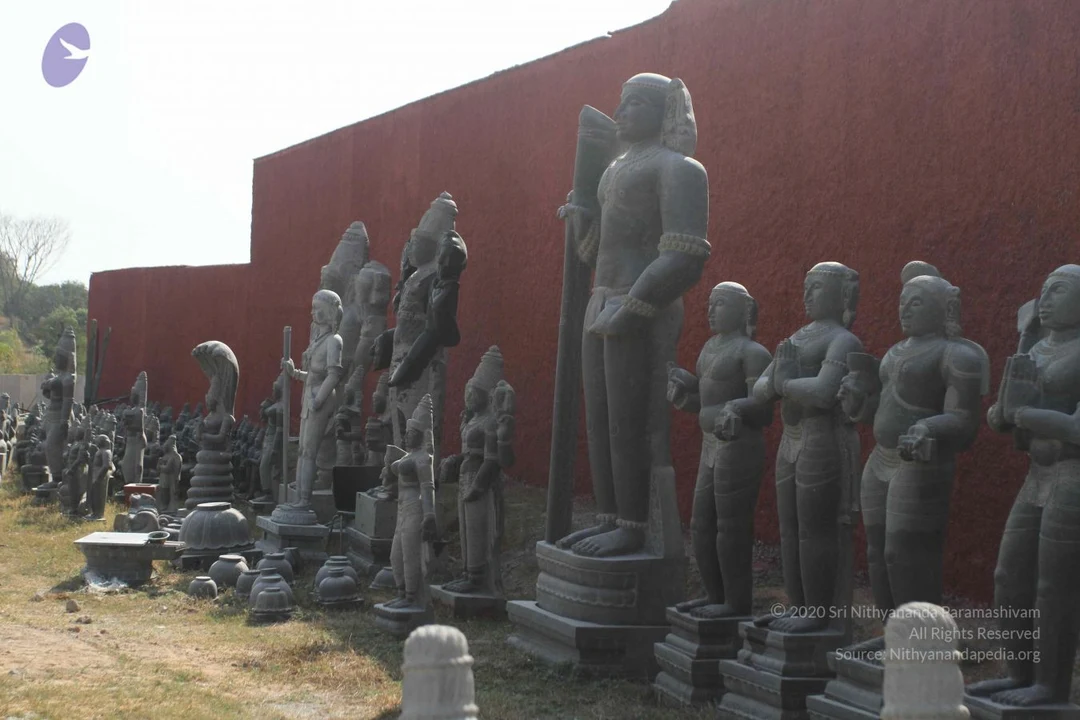
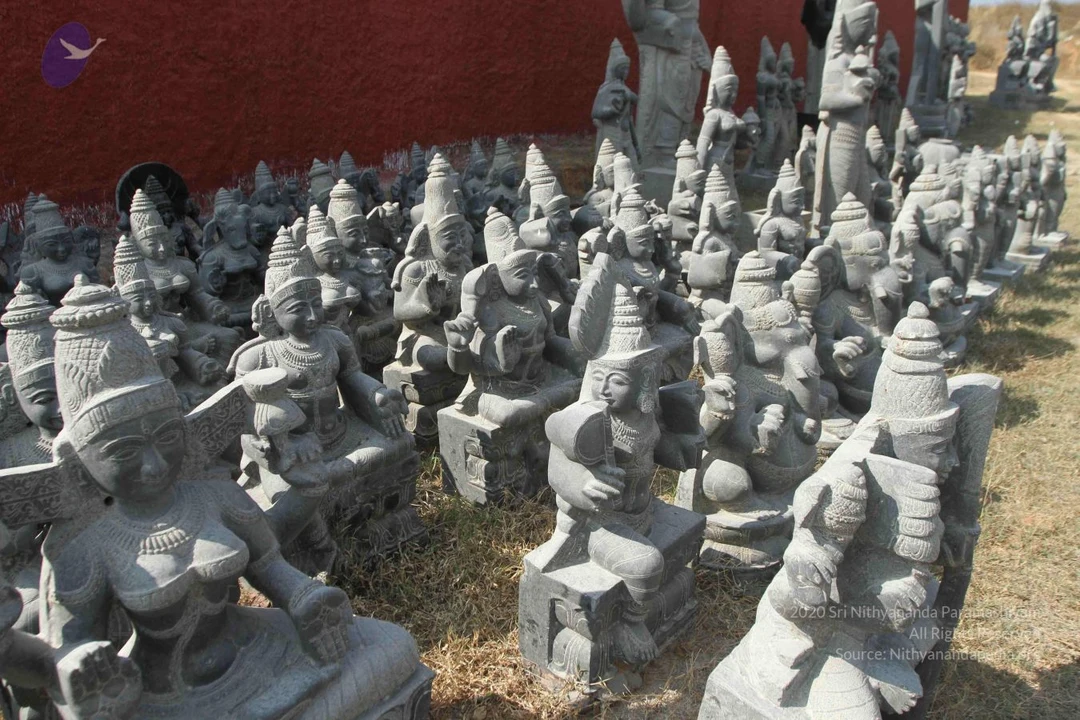
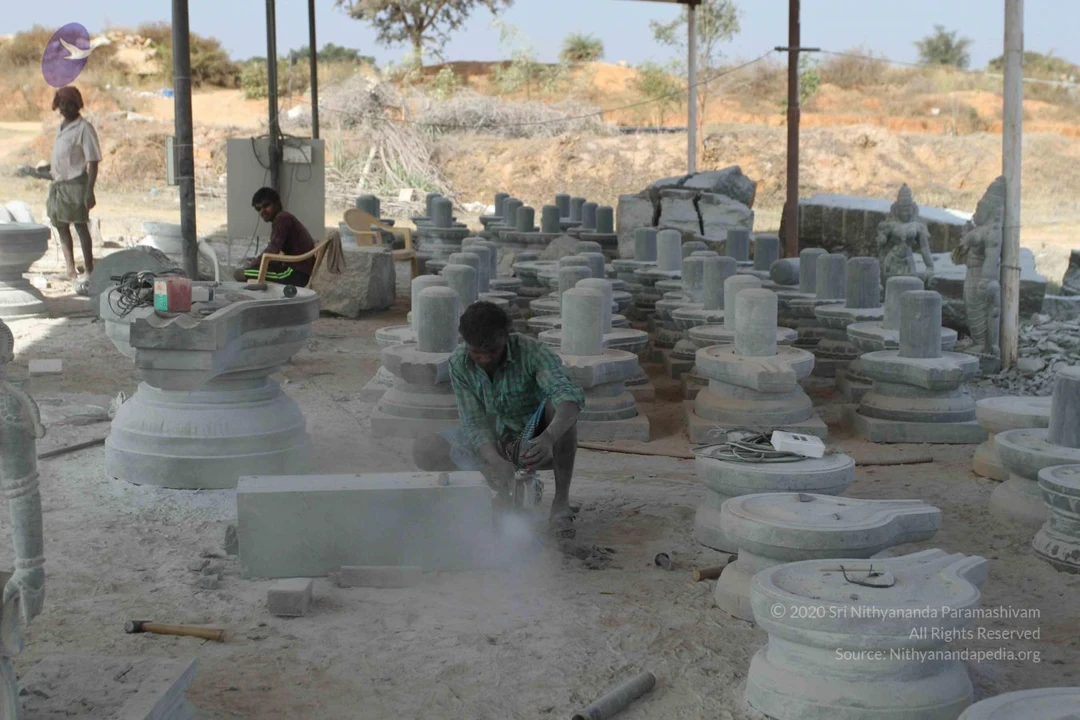
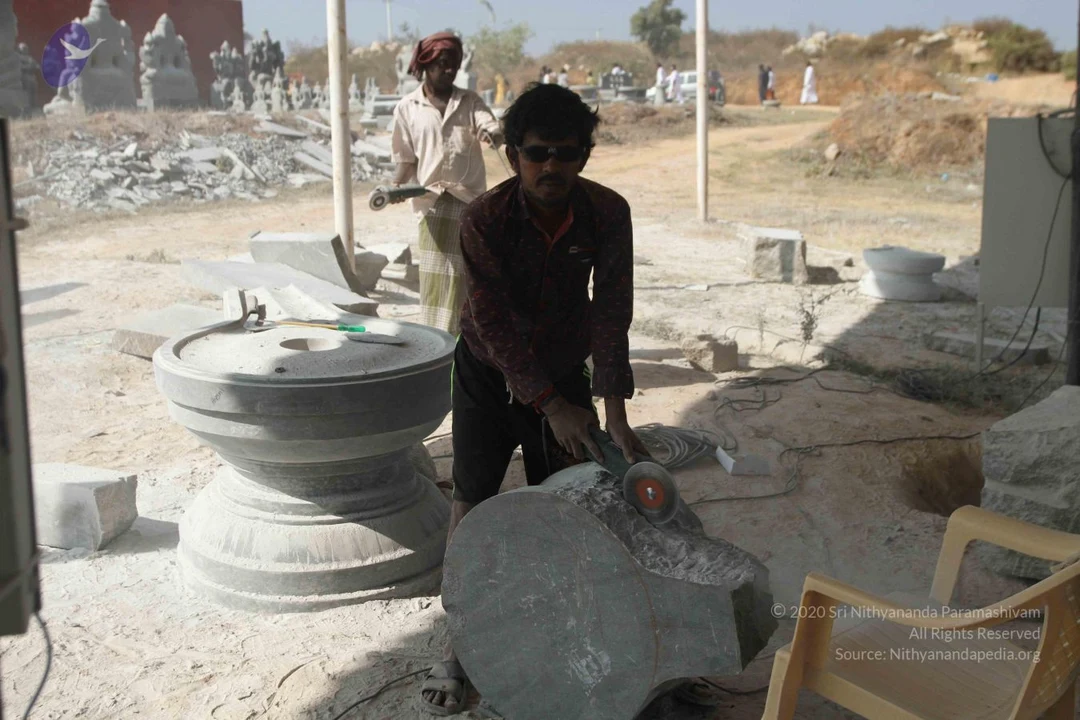
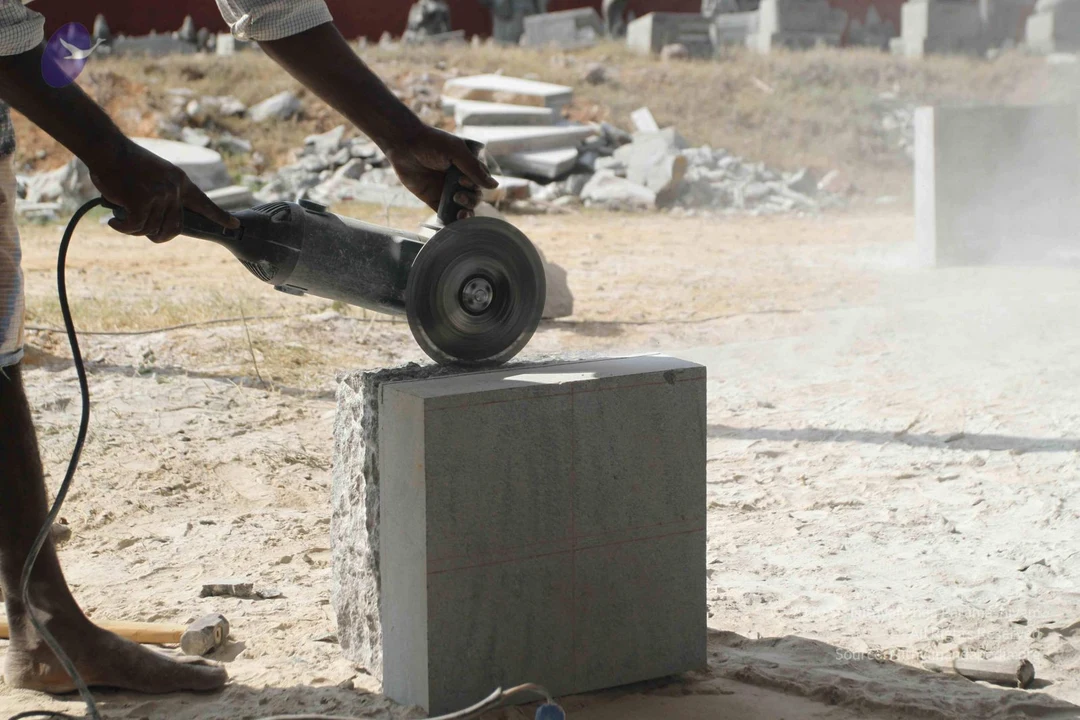
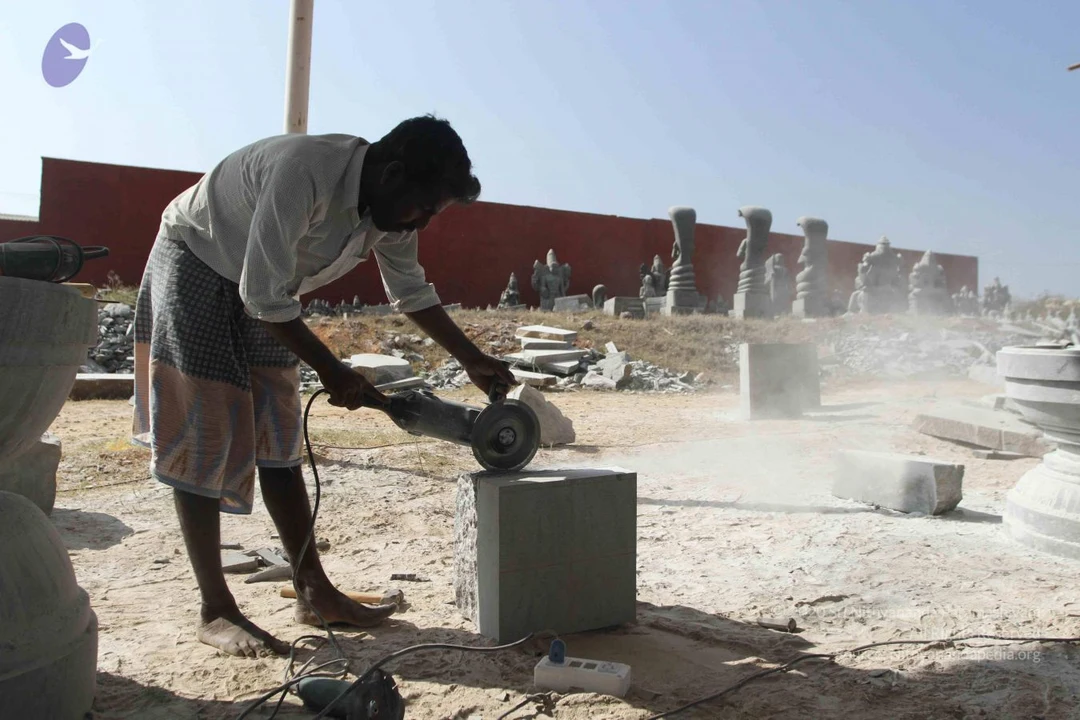
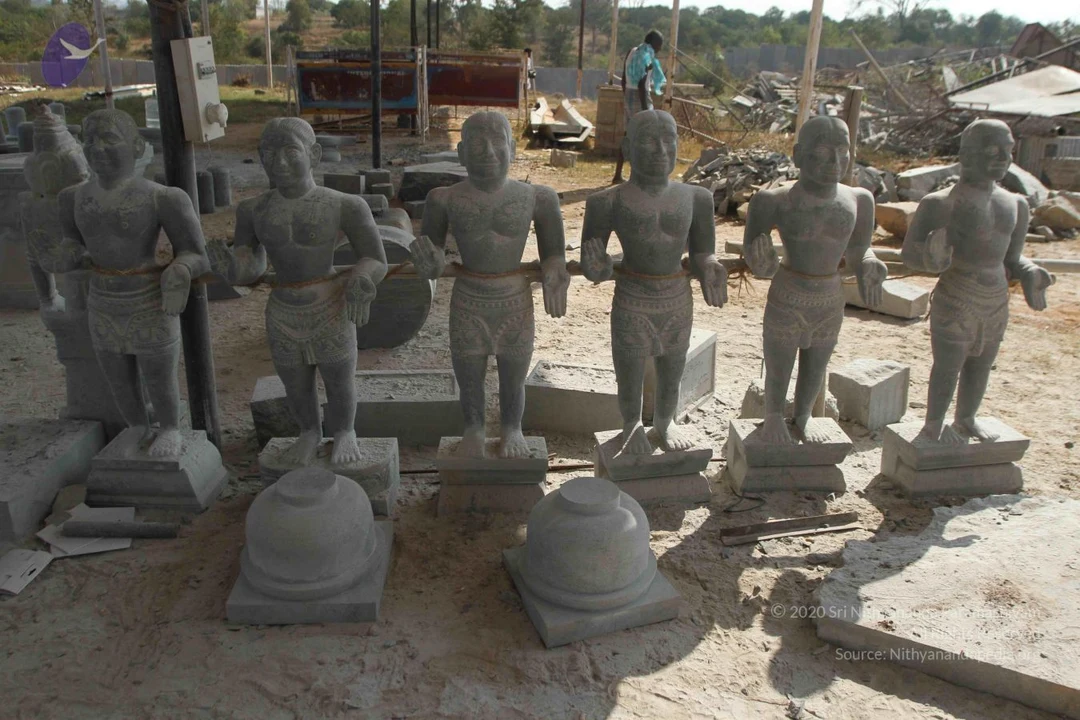
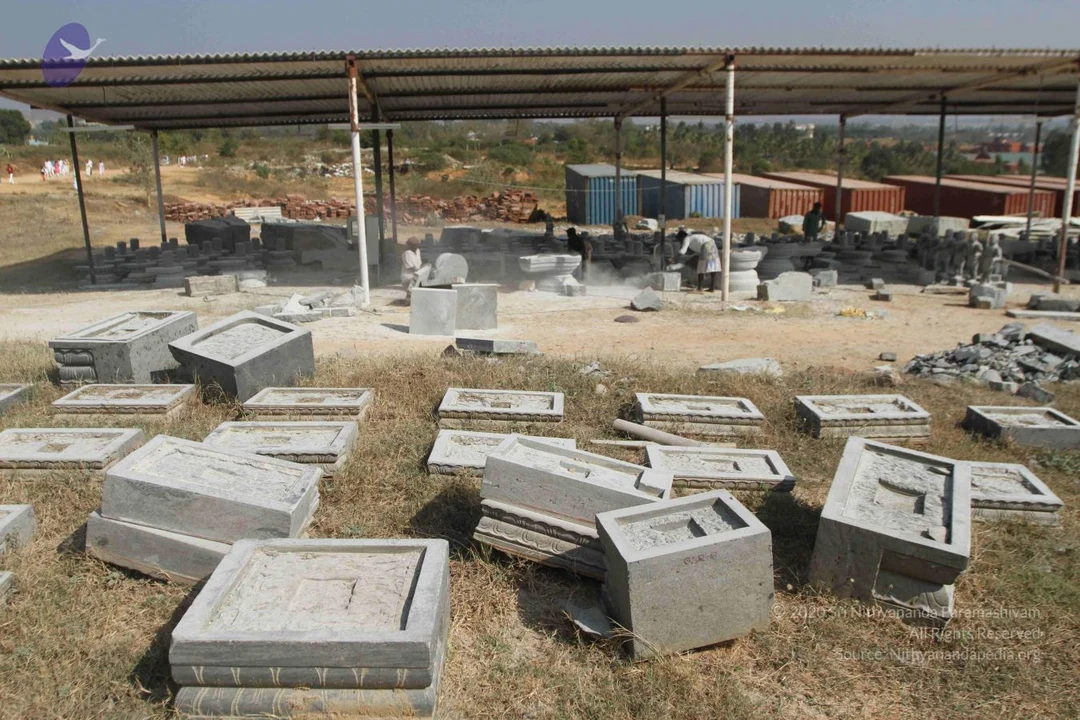
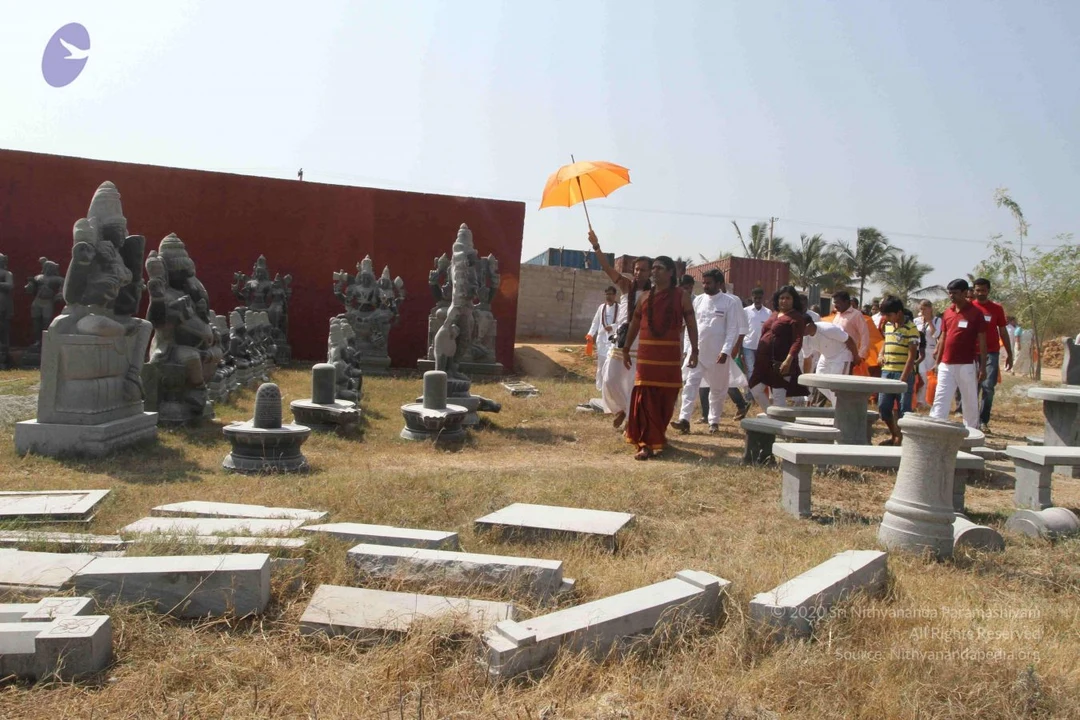
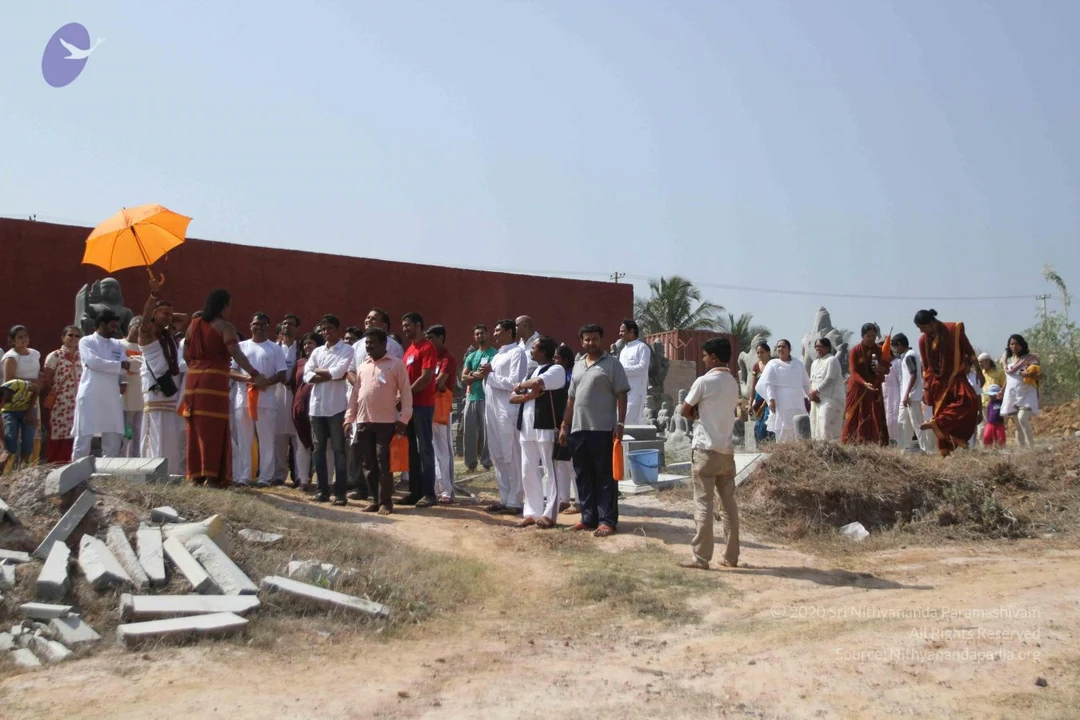
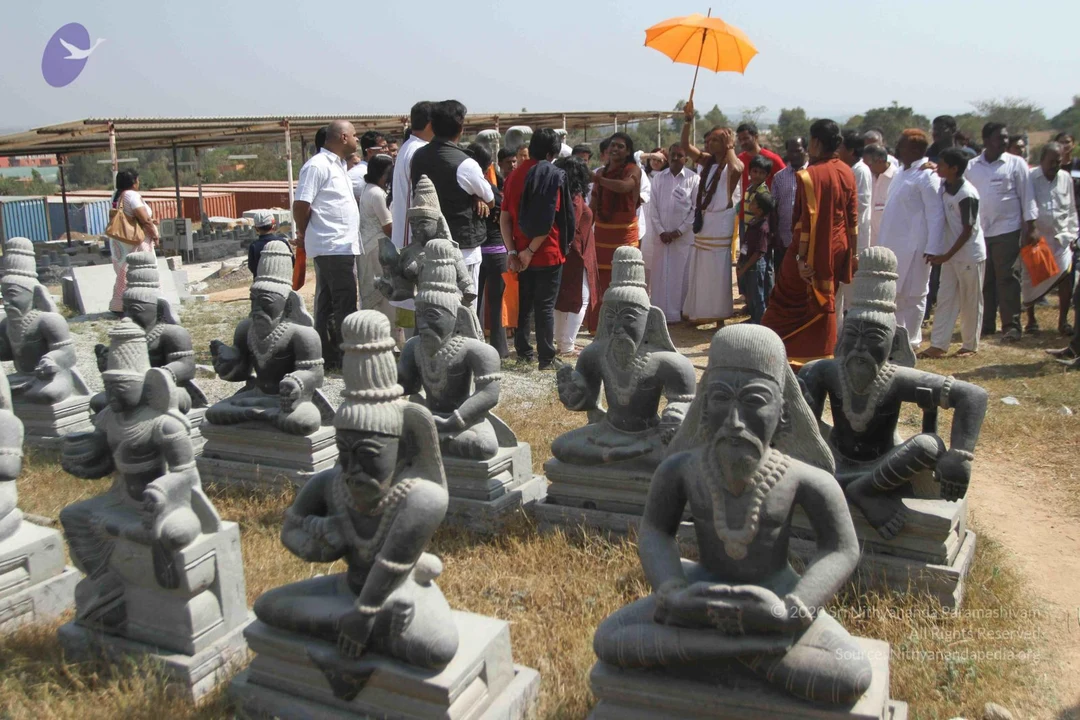
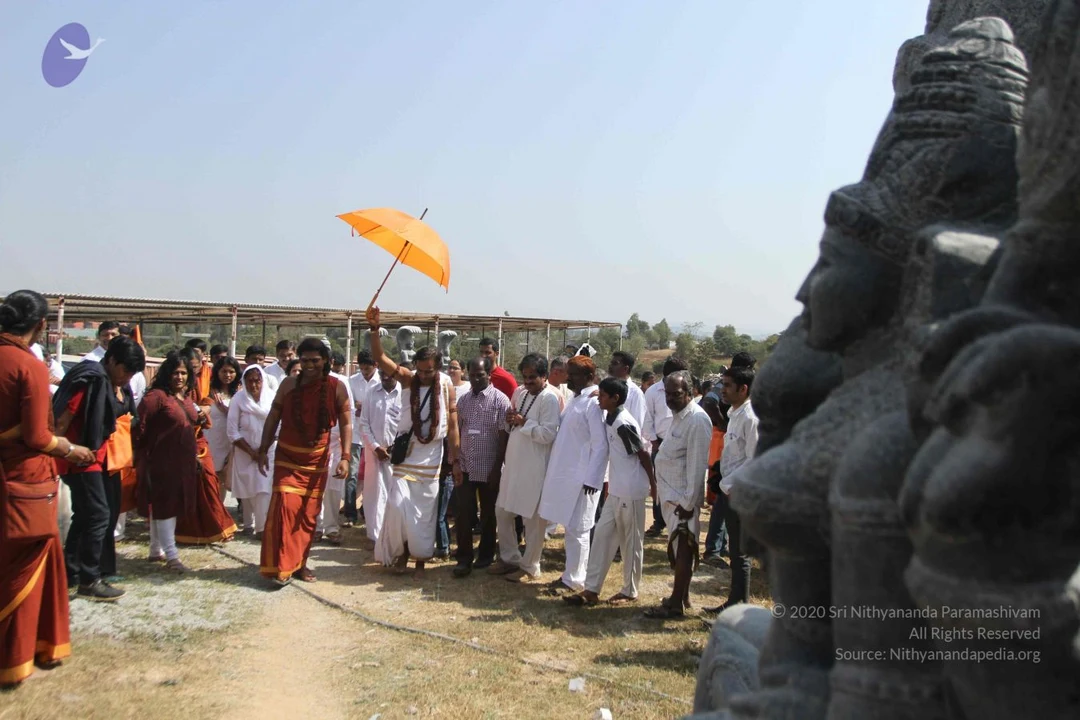
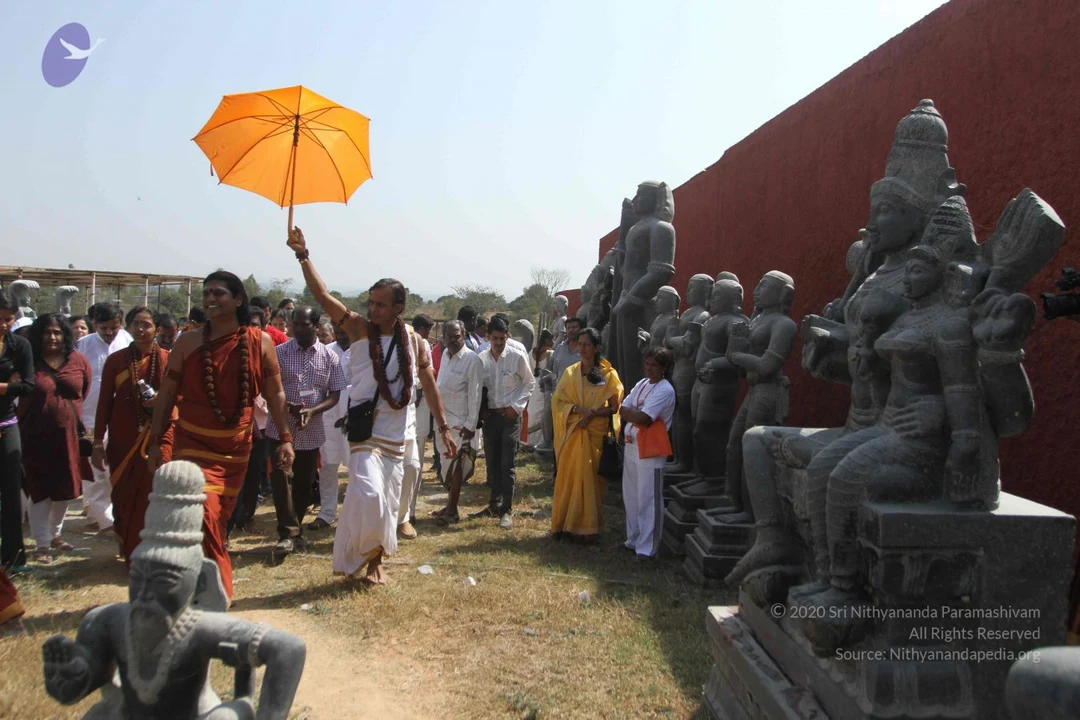
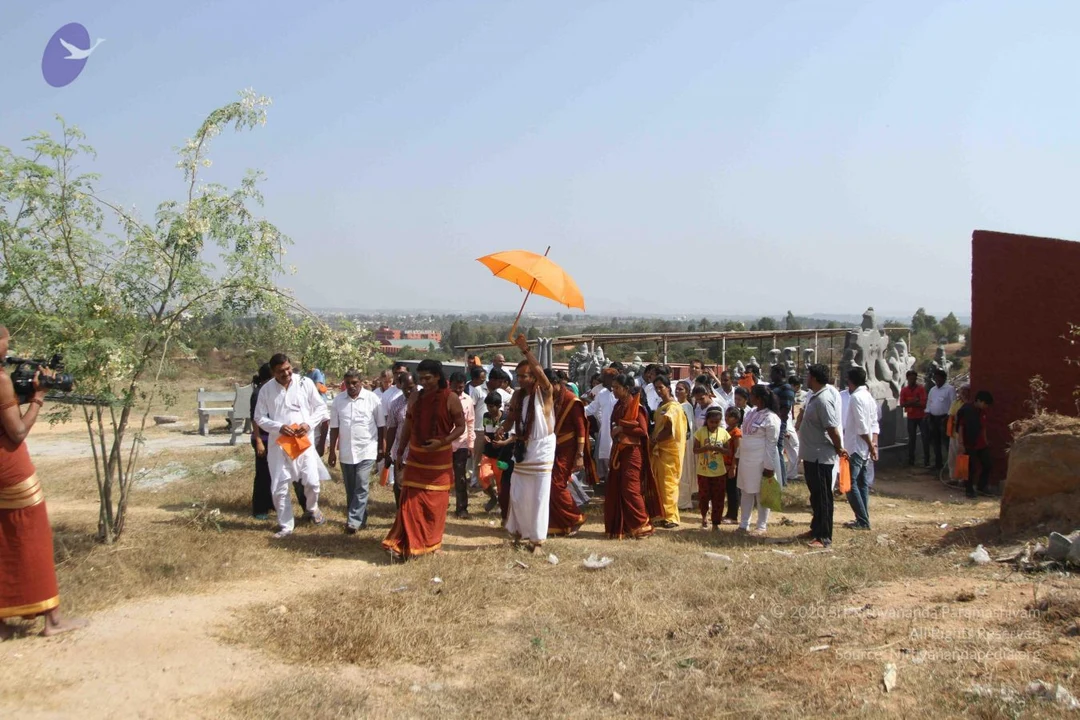
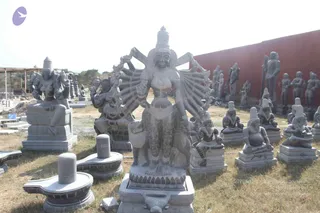
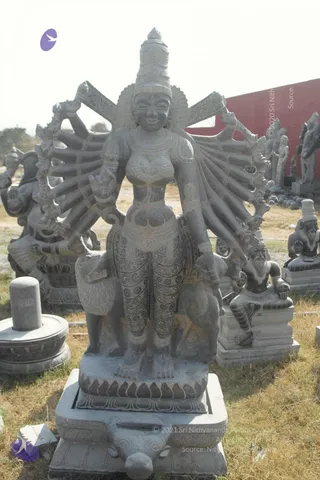
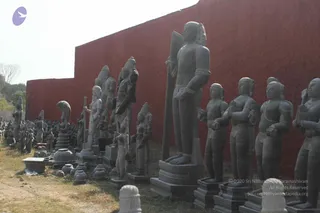
A stone-carving yard with many grey granite statues on dry grass. In the centre stands a large multi-armed goddess murti with a tall crown, many raised arms fanning outward, and a bull figure at her base on a lotus pedestal. Around her are seated and standing deity and sage statues, several shivalingas on yoni-style bases, and a red boundary wall behind. No people are visible.A large dark stone sculpture of a multi-armed deity murti stands outdoors in a stone yard, its many arms fanned out behind a tall crowned head. Smaller carved stone figures and pedestals surround it, with a red wall and a hazy pale sky behind. No living people are visible in the scene.A large grey granite statue of a multi-armed goddess stands on a carved lotus pedestal above a Nandi-style bull base in an outdoor stone-carving yard. She wears a tall crown, a broad necklace and ornate patterned skirt, with numerous raised arms fanning behind her. Beside her are a black shivalinga on a round base, a seated bearded sage figure and other unfinished sculptures. A red wall and dry grass fill the background. The figures are statues, not living people.Outdoor photograph of a large dark stone statue of a multi-armed goddess standing on a lotus-petal pedestal, with many raised arms radiating behind her and a tall crown on her head. Smaller grey stone statues of seated and standing figures, some with crowns, stand in rows to the right against a red wall under a bright, hazy sky. No physical people are visible; the statues are the only figures in the scene.Outdoor photograph of a stone-carving yard with rows of grey granite statues on square plinths set on dry grass under hazy sky. Seated figures with tall conical headdresses and long beards, some holding books or instruments, dominate the foreground. Standing deity murti line a red-painted boundary wall at the back, with scattered debris and stone pieces at left. No people are visible.Outdoor photograph of a row of grey stone sculptures set against a tall red-painted wall in a dry, grassy yard. Standing deity and figure statues, some with raised hands and one holding a tall staff, stand on square plinths, alongside smaller carved figures, urn-shaped vessels and a coiled serpent sculpture. No physical people are visible; the statues are the only figures and no one in the scene is a candidate for a person.

NDY-Day-2-Darshan
64 photosSource gallery
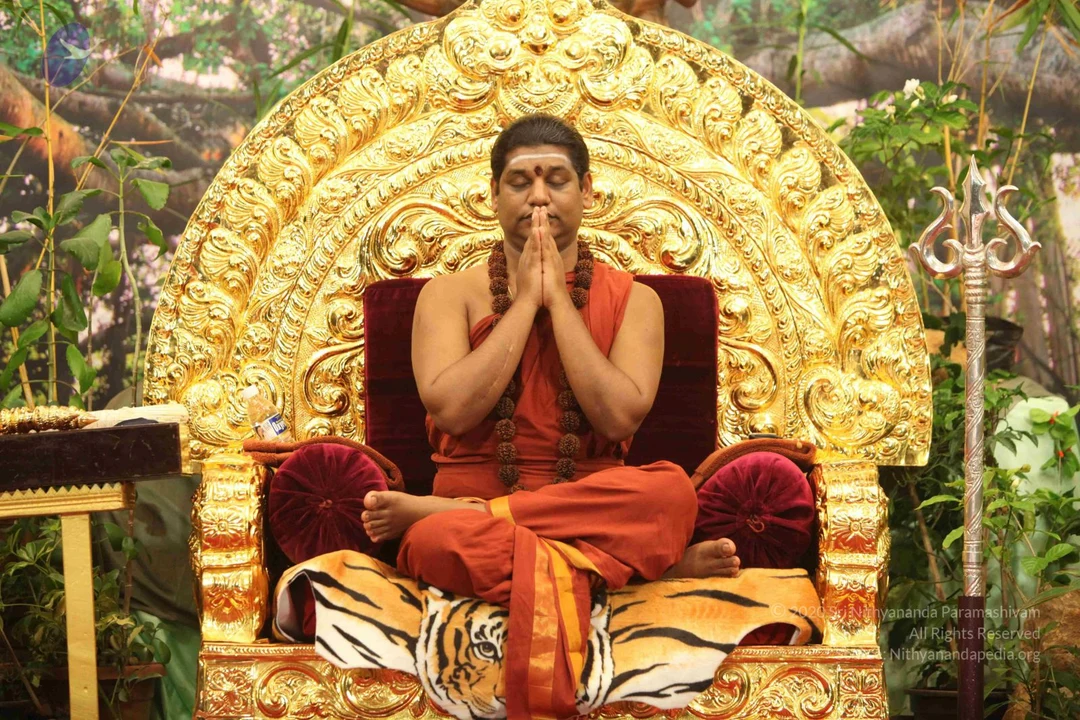
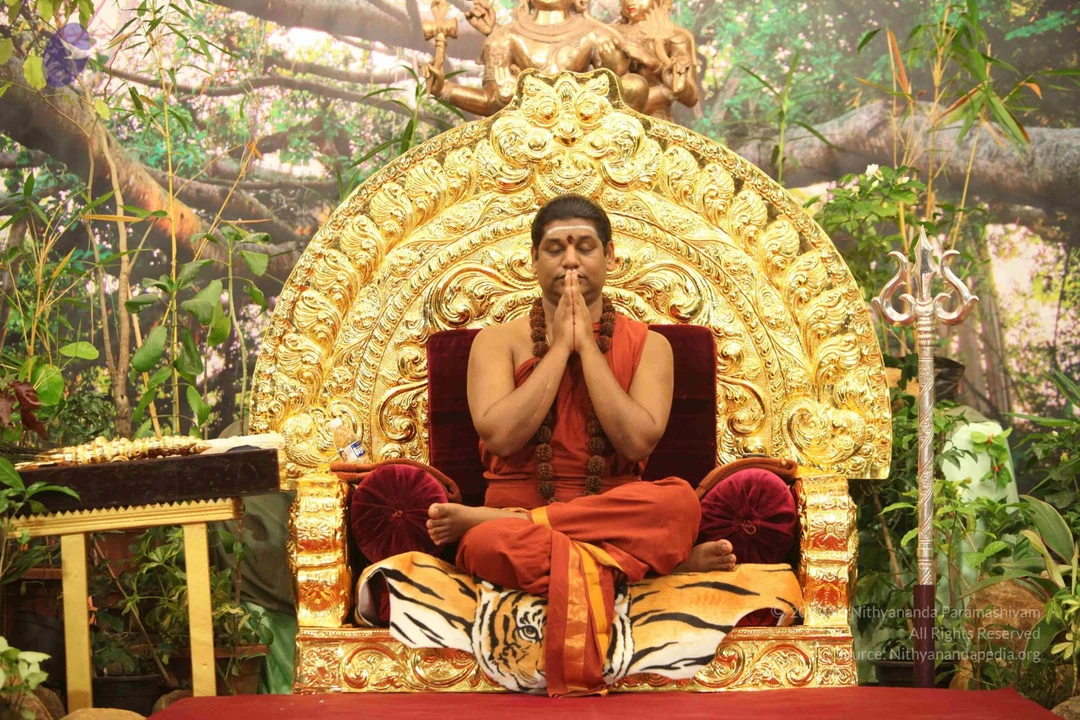
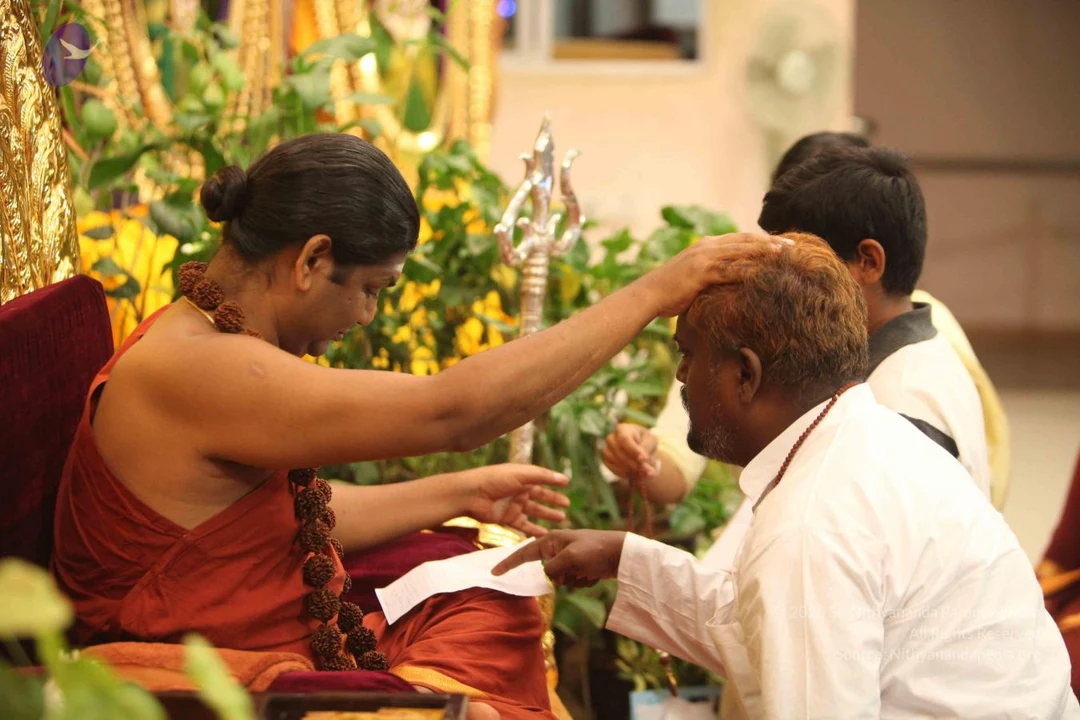
A seated man with a shaved head and a white vertical tilak on his forehead sits cross-legged on an ornate gold throne with a deep maroon cushion, his palms pressed together in namaste and eyes closed. He wears a saffron-orange garment wrapped over the shoulders and a long mala of rudraksha beads around his neck. A tiger-striped skin covers the seat beneath him. Behind the throne are leafy plants and a painted forest backdrop, and a silver trident stands to the right.A seated man in saffron-orange robes sits cross-legged on an ornate gold throne with a red velvet back and cushions, draped with a tiger-striped cloth. His palms are pressed together in namaste, eyes closed, with a rudraksha mala around his neck and a vertical tilak on his forehead. Behind him stands a golden deity murti of two figures, surrounded by jungle-like greenery and a painted forest backdrop. A silver trident stands to the right and a gold ritual table with offerings is at left. The scene appears to be a satsang setting. a person: the seated figure wears saffron robes, a rudraksha mala and a tilak, with a golden throne setting, though the appearance is only partly distinctive.A seated figure in orange-saffron robes sits cross-legged on an ornate gold throne with a tall arched gilded back and deep red velvet cushions. The figure has eyes closed and palms pressed together in namaste, wearing a long rudraksha mala with a ceremonial gold necklace and a red tilak on the forehead. A tiger-striped cloth covers the throne seat. Behind is a painted jungle backdrop of trees, vines and green foliage, with a golden deity murti above and a silver trident on the right. A gold-framed table with ritual items sits at the left edge. The figure has long hair and distinctive adornments, which fits a person presence on the throne in a satsang setting.A seated man with a bare upper torso, wearing a red-orange cloth, a rudraksha mala and a white tilak on his forehead, presses his palms together in namaskar and smiles with eyes closed. Beside him stands a ceremonial trident (trishul) among green leaves and yellow flowers. A man in a grey polo shirt kneels before him, hands cupped with a small brass vessel and a rudraksha mala around his neck. Behind them a woman in a cream sari with a rudraksha mala sits holding a small object, and several women in white and maroon stand in the background of a satsang hall. a person: the seated man has a rudraksha mala and a shaved-looking head with a tilak, but the cues are limited, so the candidate is uncertain.A seated figure in a rust-orange robe with a bare upper back and a thick rudraksha mala with a tiered necklace, reaching up with his right hand to place his palm on the crown of the head of a man in a white shirt and rudraksha mala who stands with palms pressed together in namaste. The seated figure has a topknot and a crown-like hair style, and his grip is firm on the devotee's head. Behind them, a golden throne with gilded panels, green foliage, and a silver staff. Women in maroon and white stand in the background, and a woman in a maroon sari sits at the right edge.A photograph of a seated figure in a saffron-orange sleeveless wrap with a rudraksha mala draped over the shoulders, a tilak on the forehead, and hair pulled back, placing a hand on the head of a kneeling man in a white shirt with a rudraksha mala and hands pressed together in prayer. Behind them is a golden throne edge, a silver trident, and yellow and white flower garlands with green foliage. Two more people stand at the right edge, partly visible.
NDY-Day-2-Kundalini-Shivoham-Last-Session
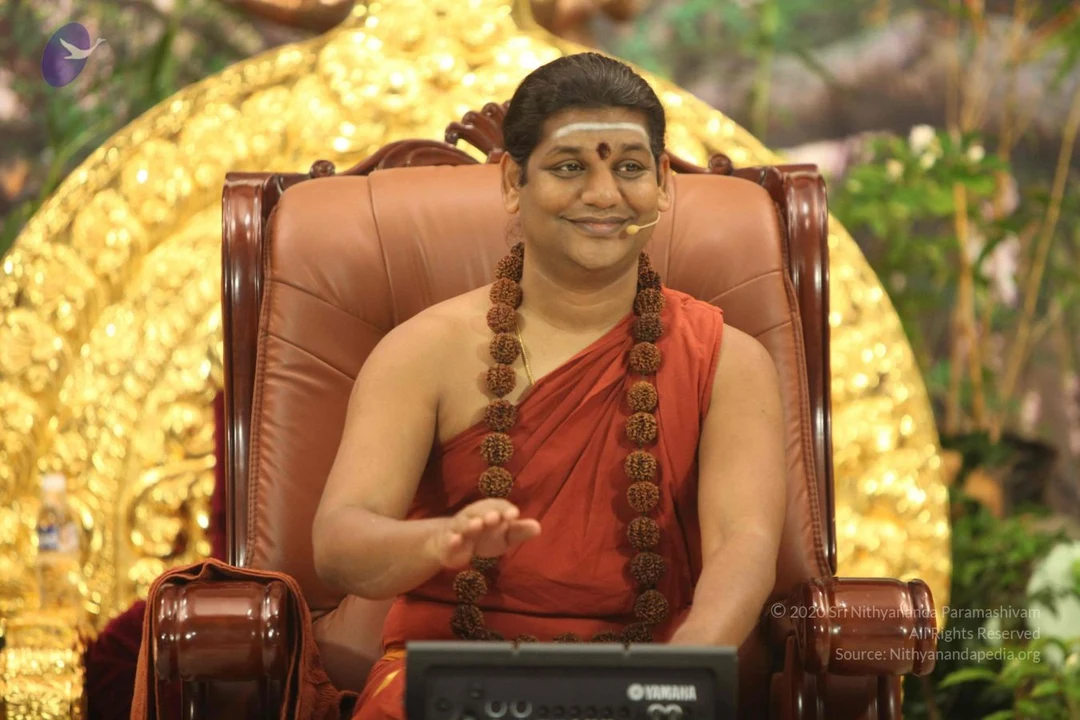
19 photosSource gallery
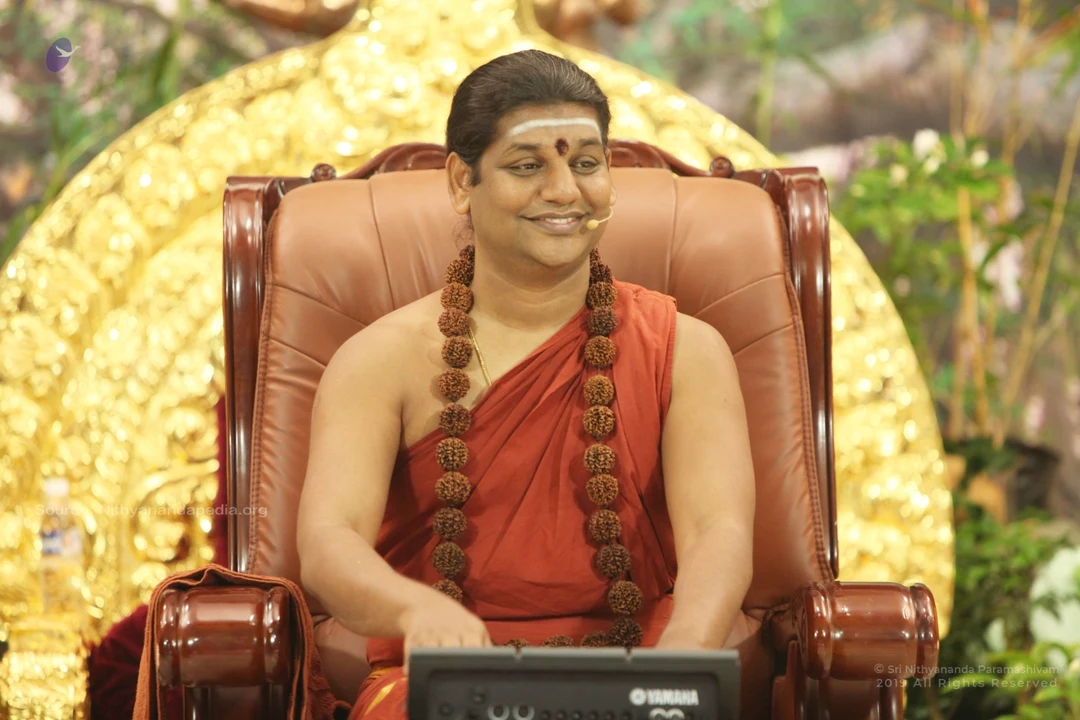
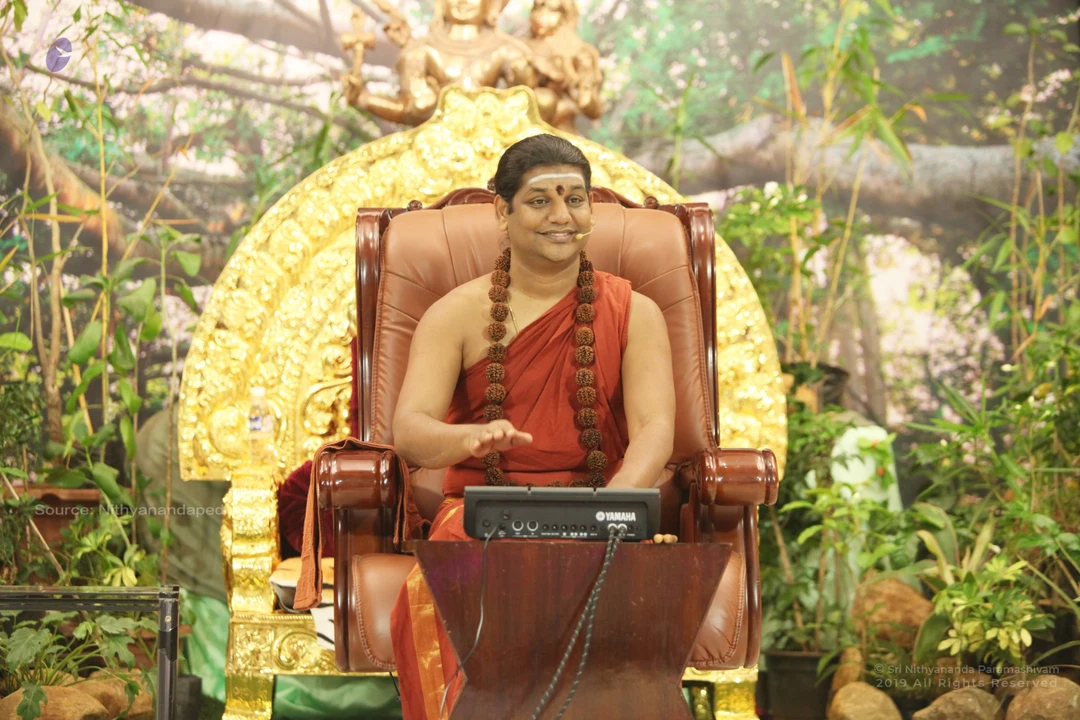
A man seated in a large brown leather throne-style armchair with carved dark wooden armrests, in front of a gold ornate backdrop and green foliage with white flowers. He wears an orange-red saffron shawl draped over his left shoulder and bare chest, multiple long rudraksha mala strands, a thin gold chain, a white vertical tilak and red dot on his forehead, and a clip-on microphone. He smiles and gestures with his right hand. A Yamaha-branded mixing console sits in front of him.A smiling man sits in a large brown leather throne-style chair in front of an ornate gold-leaf backdrop, with green foliage and flowers at the right edge. He wears a red-orange draped robe, a long multi-strand rudraksha mala, a white tripundra with a red bindi on his forehead, and a small headset microphone. His hands rest on a black Yamaha keyboard or lectern. Swamiji (probable): the appearance cues are the long swept-back hair, the rudraksha mala and the saffron robe, and he is presented as the seated speaker of the satsang.A man seated in a brown leather armchair with carved wooden armrests before an ornate gold-leaf backdrop, smiling. He wears a red-orange drape over the shoulder and a long necklace of brown rudraksha beads, with a white tilak and red bindi on his forehead and a small headset microphone at his ear. A dark Yamaha keyboard or laptop sits in front of him, and green foliage and a clear water bottle appear at the sides.A man sits in a large brown leather throne-style armchair with carved dark wooden arms, in front of an ornate gold-leaf backdrop and a green foliage setting. He wears an orange-red garment draped over the shoulders and a long necklace of brown rudraksha beads, with a white tilak and red dot on his forehead. He has a small clip-on microphone near his face and rests his hands on a wooden lectern with a Yamaha audio mixing unit and a bottle of water. Appearance-based label: a person, seated in a discourse setting with a throne, rudraksha mala and saffron-toned robe.A man seated on a brown leather armchair set before a large gold-painted ornate backdrop, with a forest-like scene of green plants, bamboo, and a tree trunk behind him, and a golden deity figure carved at the top. He wears a red-orange shawl over a bare upper body, a long rudraksha mala with a ceremonial necklace, and a white tilak on his forehead, and holds one hand open while speaking into a headset microphone. A dark wooden lectern with a Yamaha mixer sits in front of him. The page describes a morning satsang, but the photo itself shows only the seated speaker and set. a person: the seated speaker, with the rudraksha mala and red-orange shawl, is presenting the satsang as the teacher.A man seated on a brown leather armchair with dark wooden armrests in front of an ornate gold-leaf backdrop, speaking into a headset microphone during a satsang. He wears an orange-red sannyasi wrap over his shoulders and a long necklace of brown rudraksha beads reaching his chest, with a white vertical tilak and red bindi on his forehead. His hands rest on a black Yamaha audio mixing unit on a small wooden table. Green leafy plants and white flowers stand at the right edge.

Temple
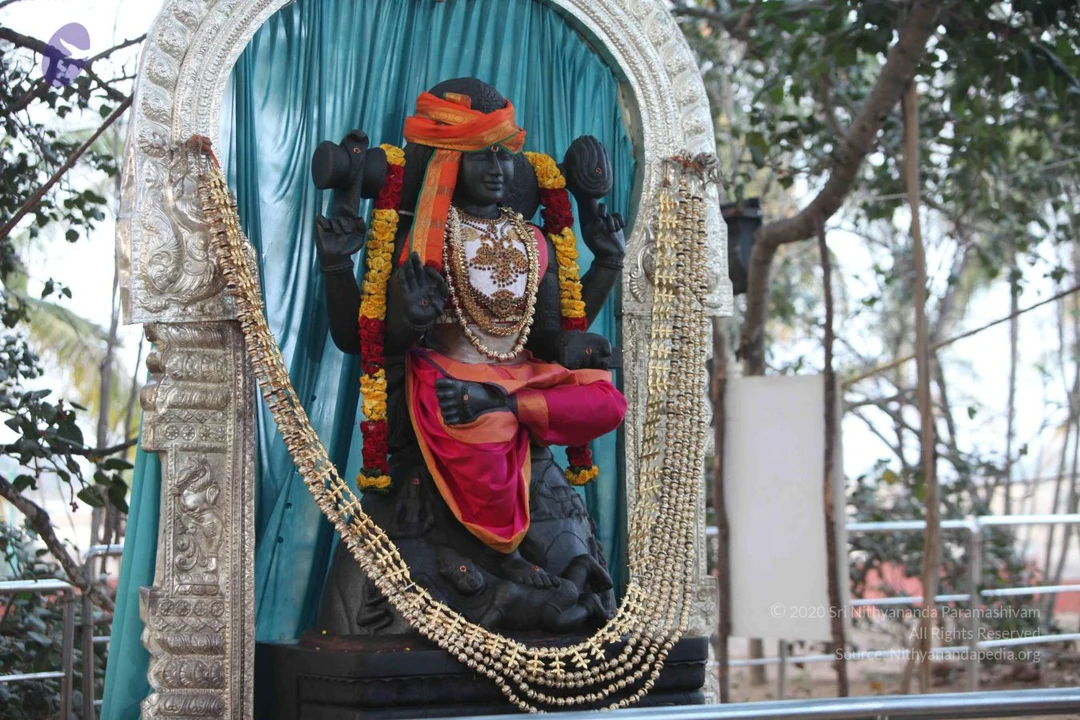
36 photosSource gallery
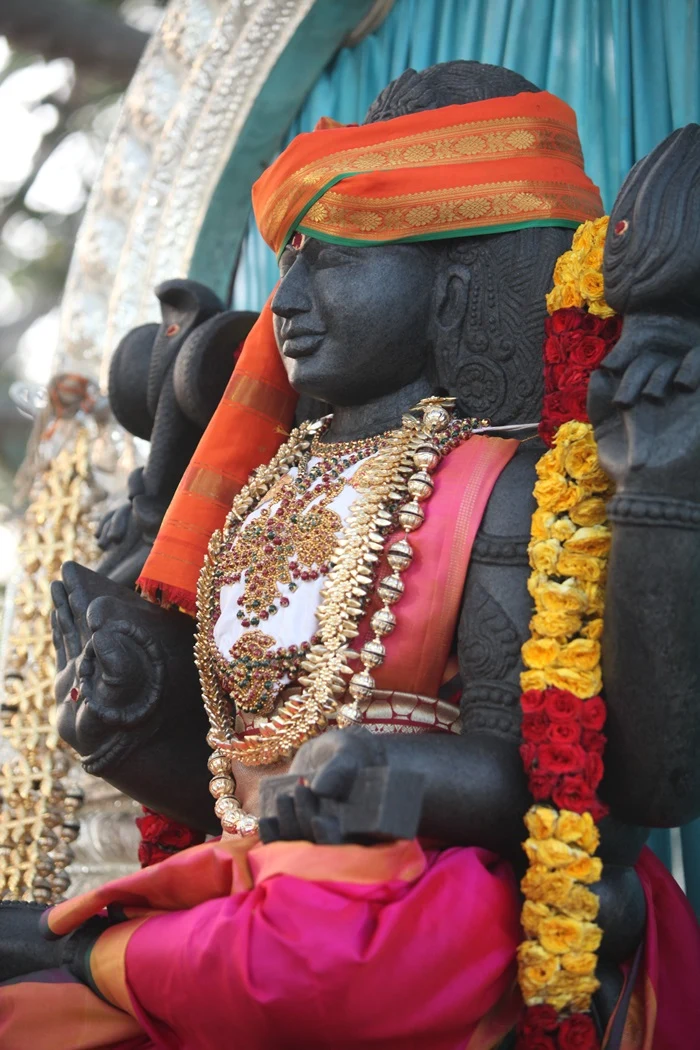
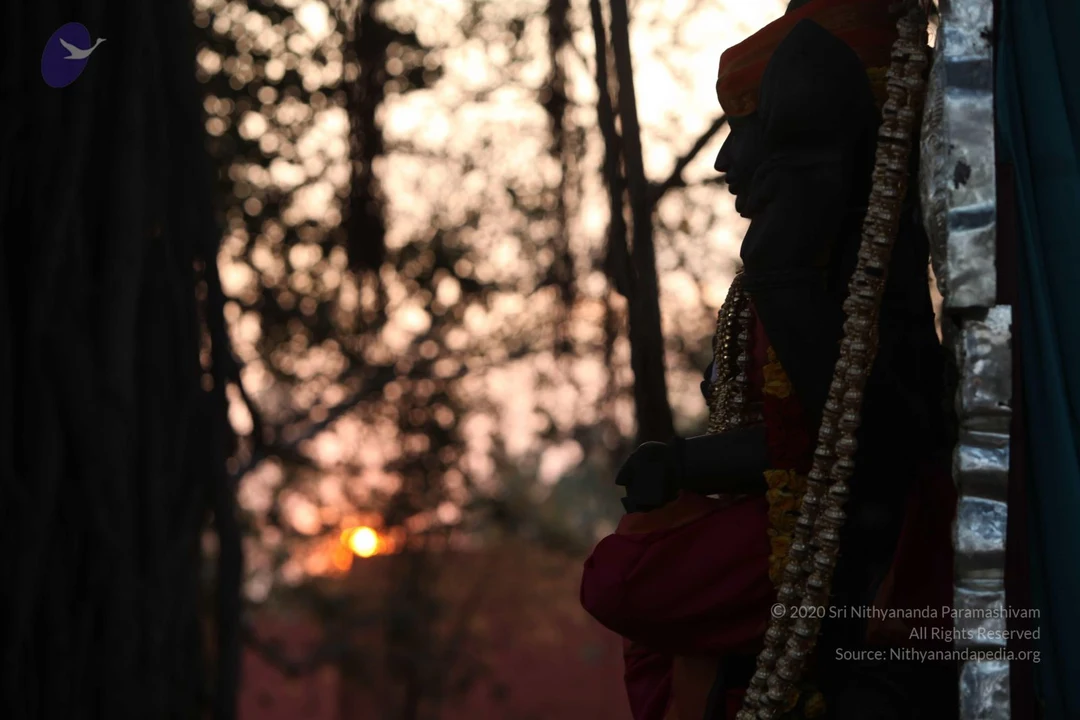
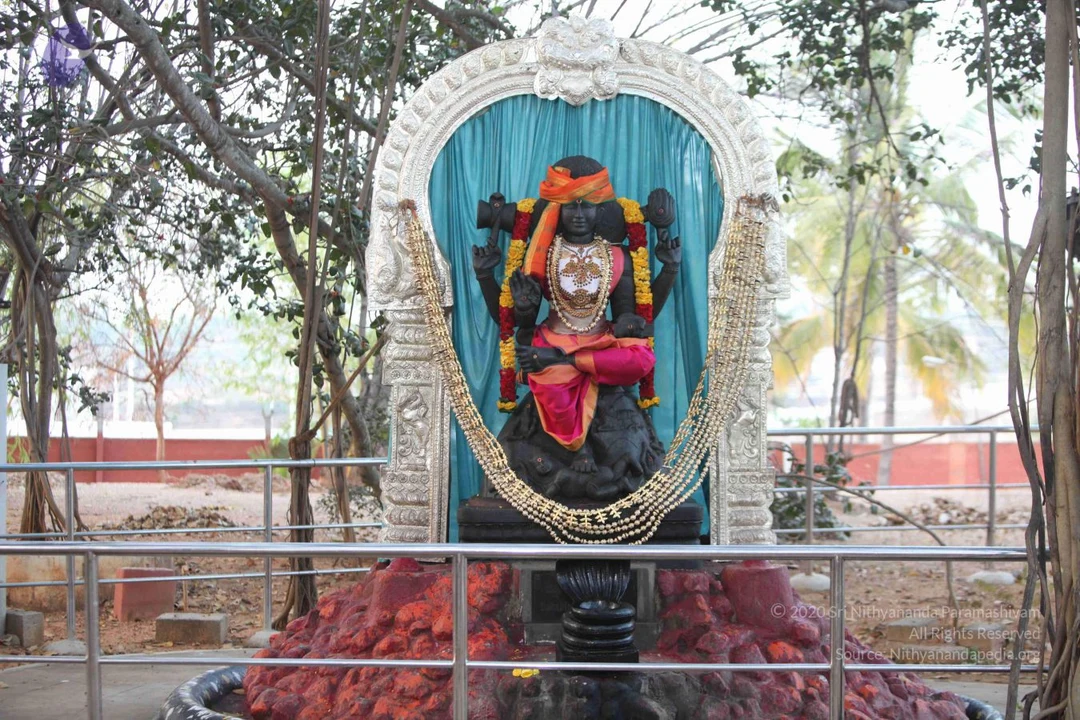
A photograph of a setting sun glowing orange and yellow through dark silhouetted palm fronds and tree branches. A small rectangular sign stands among the dark foliage at right, and low dark shapes fill the foreground. No people are visible in the scene.A photograph of a setting or rising sun glowing orange and yellow in a hazy sky, framed between dark silhouetted palm trees. Fronds fan out on both sides and the ground below is in deep shadow. No people or ritual activity are visible in the frame.A dark silhouette of palm trees frames a low, bright orange sun near the horizon at dusk. Tall coconut palm fronds form the outline on both sides, with a faint orange glow in the sky behind them. Ground and buildings are barely visible in shadow at the bottom of the frame. No people are visible. A small blue bird logo sits in the upper left corner.A dark, low-light photograph taken at dusk or dawn. On the right edge, the silhouette of a standing person's head and shoulder is visible in profile, with no discernible features or clothing colour. Beyond them, through a tangle of bare tree branches, a small warm orange light glows near the ground, with pale sky visible behind. A stone wall with rough blocks runs along the right edge. The scene is quiet and sparse, with no visible ritual activity, crowd or readable event details.Silhouetted photograph at sunset of a seated figure in dark outline beside a stone pillar, with a long beaded mala hanging down. Bare branches of trees frame a glowing orange sun low on the horizon behind them. The figure wears a draped red-orange garment and appears to be seated in meditation or quiet contemplation, with hands resting in the lap. Dark foliage fills the left foreground.Silhouetted photograph at sunset of a dark stone or metal statue of a seated figure in a wooded setting, shown in profile. The figure wears a red and gold cloth and a long beaded garland of white and yellow flowers that hangs down its side, with a bead-and-chain necklace at the chest. Its hands rest in a meditative pose in its lap. Tree trunks and branches frame the warm glowing sun behind them, and a red earthen path runs into the background. No physical people are visible; the figure is a statue, not a living person, so no a person candidate is present.
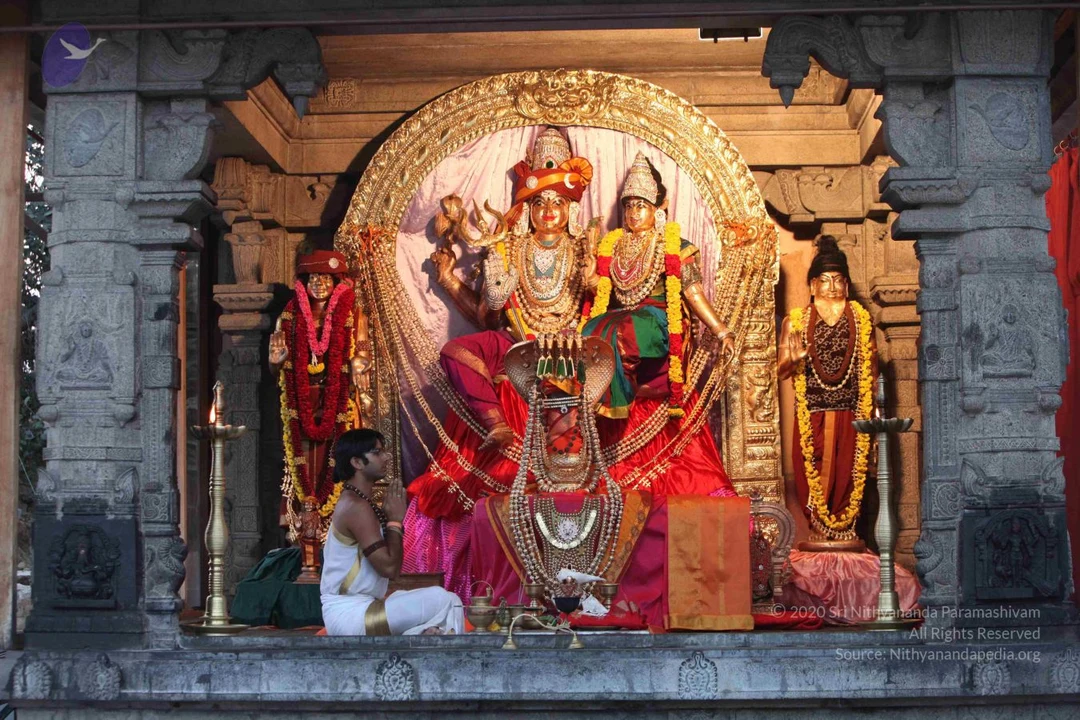
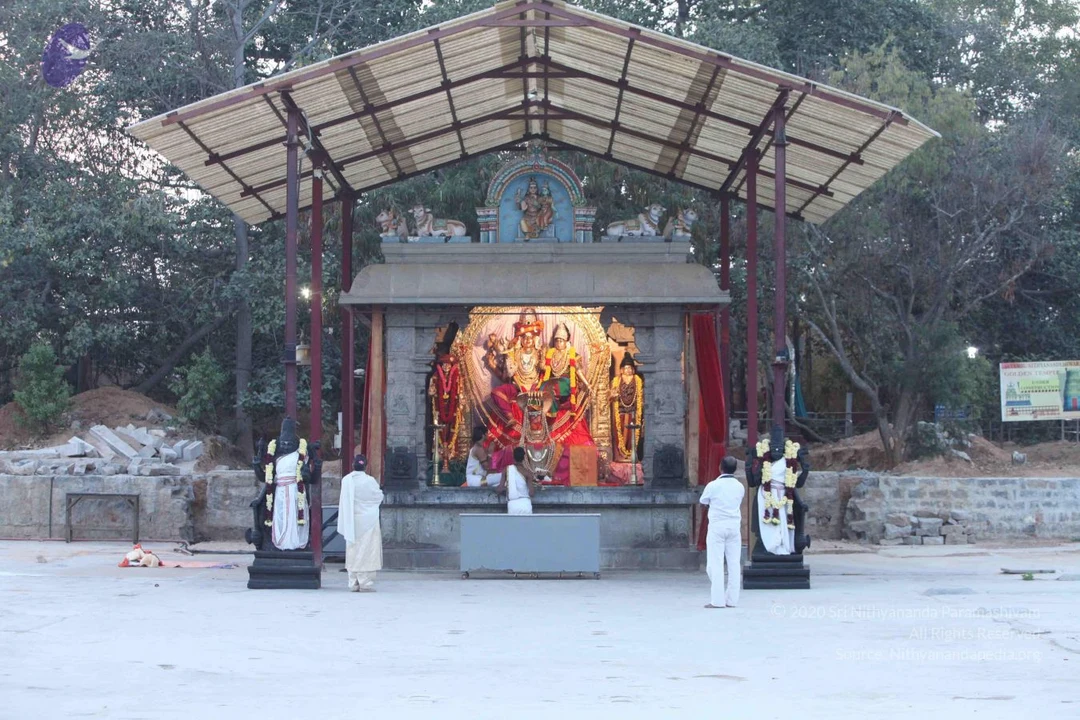
FB-Photos-of-the-Day
3 photosSource gallery
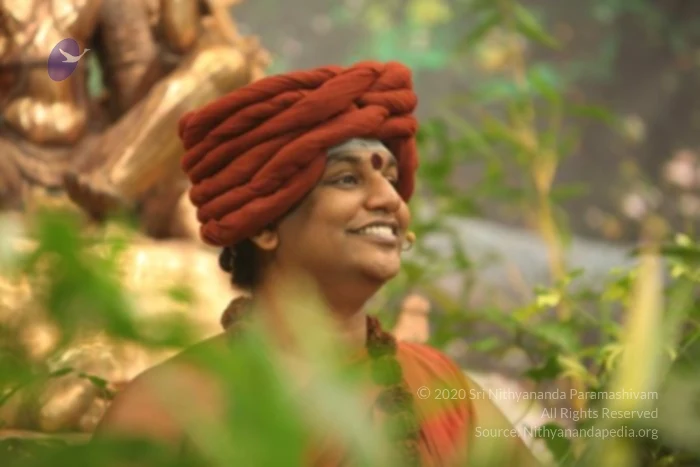
A smiling person wearing a rust-red turban wrapped high on the head and a small red bindi on the forehead sits in the foreground, partly framed by green leaves. Behind them a golden figure. The person wears an orange-red garment and gold earrings. a person appearance cues: a red turban and saffron-toned clothing, with gold ornaments, seated in an outdoor garden setting with a golden deity murti behind.