Skip to content
Saturday

19 April 2014

Dated photos
68
Source pages
1
Media
2
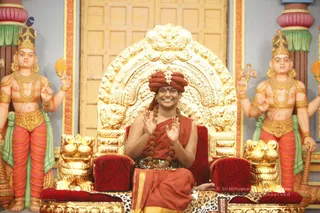
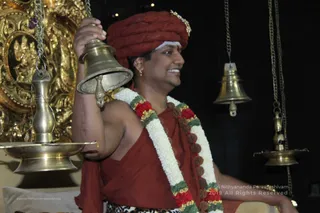
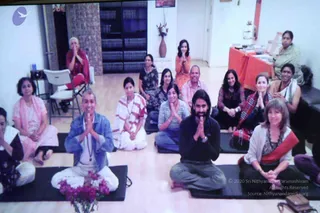
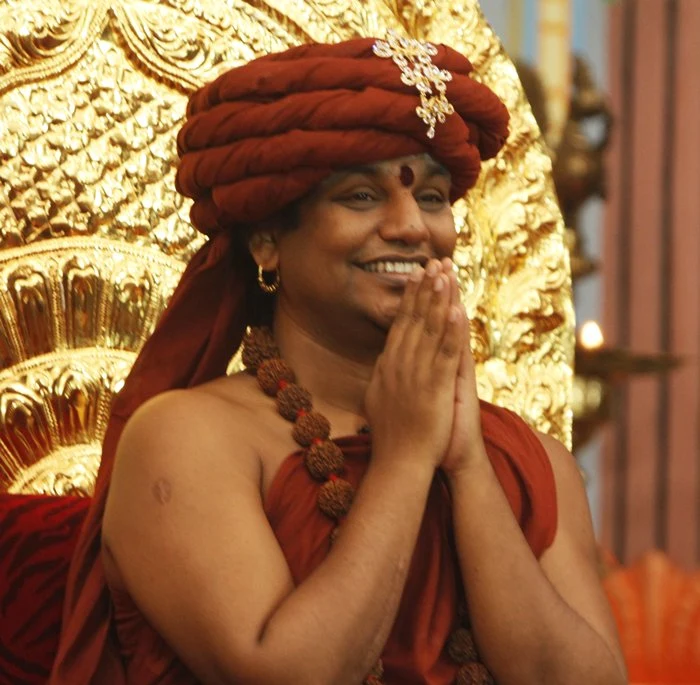
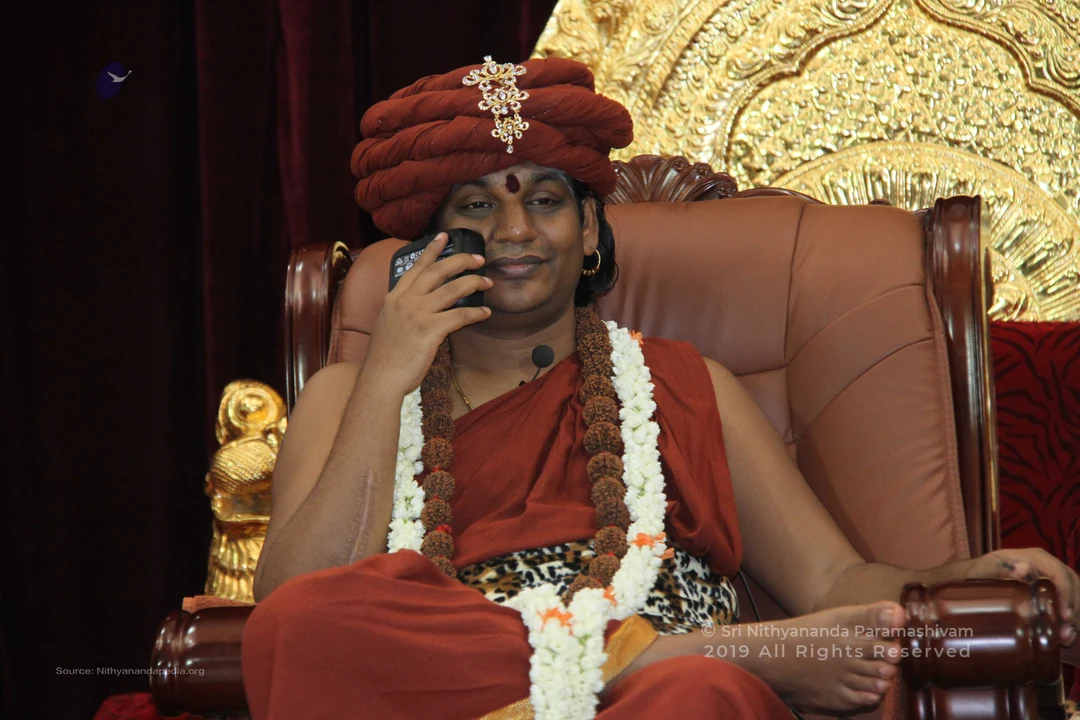
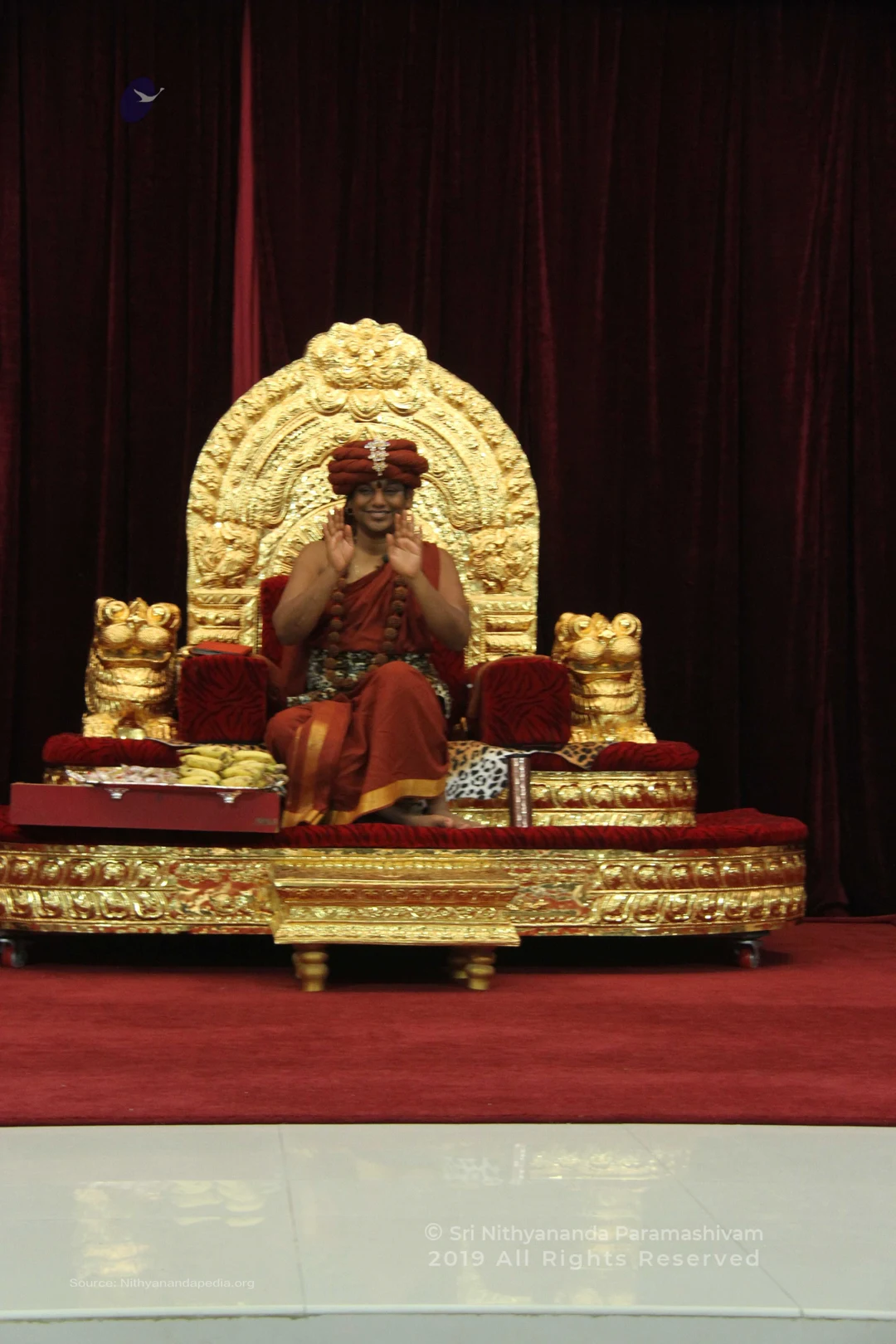
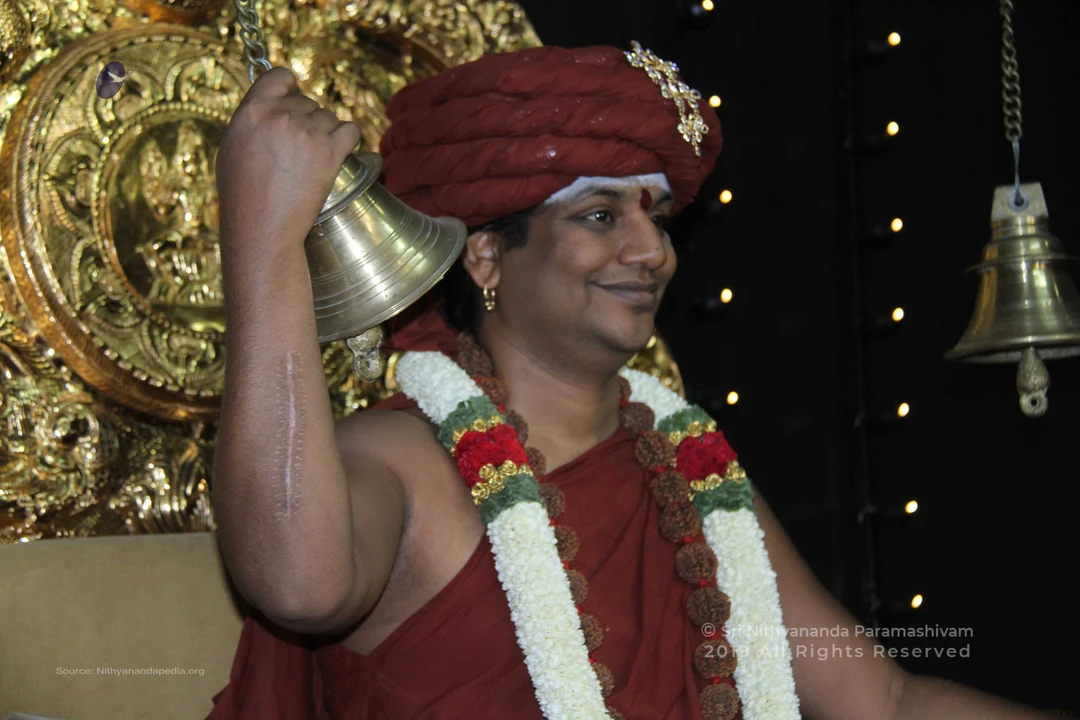
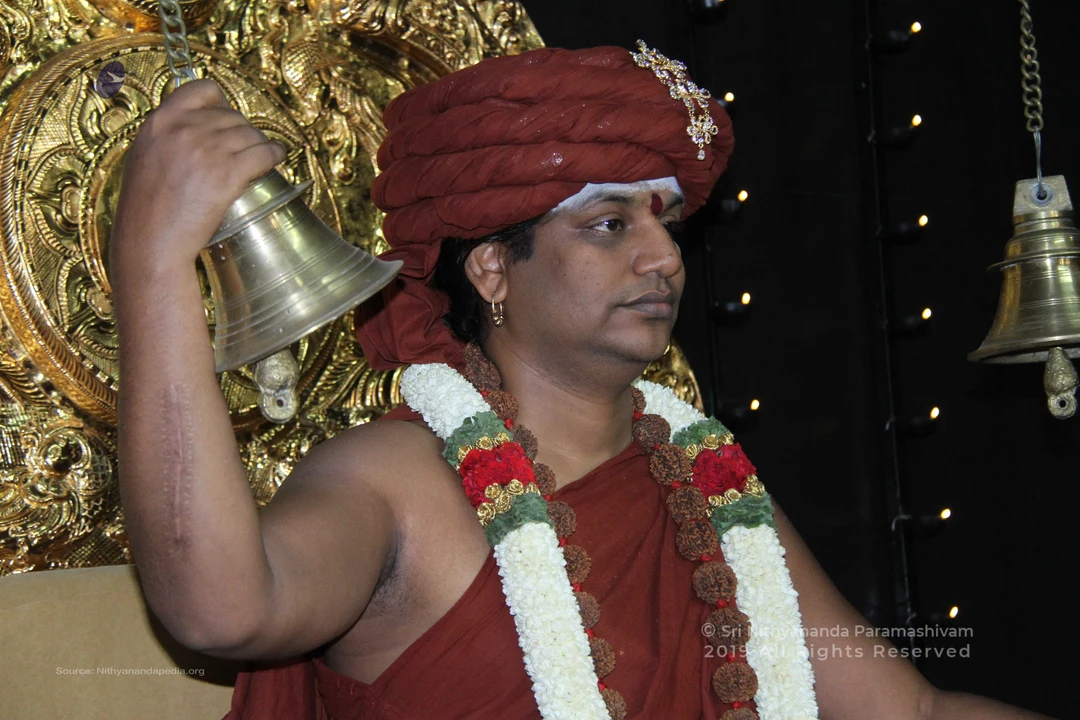
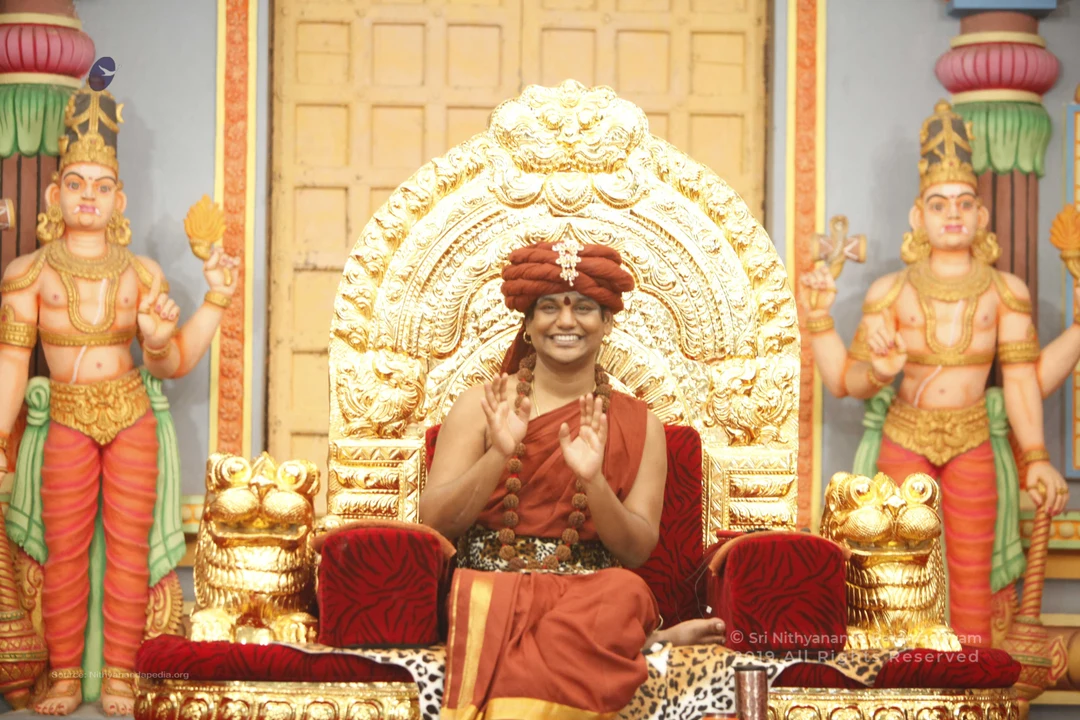
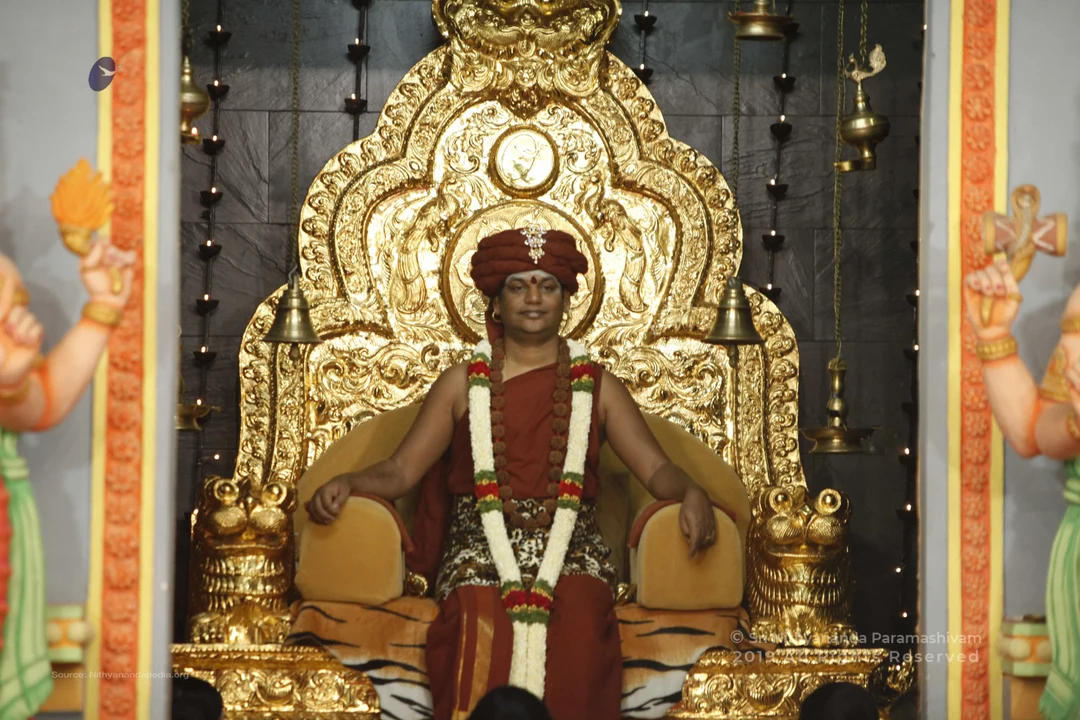
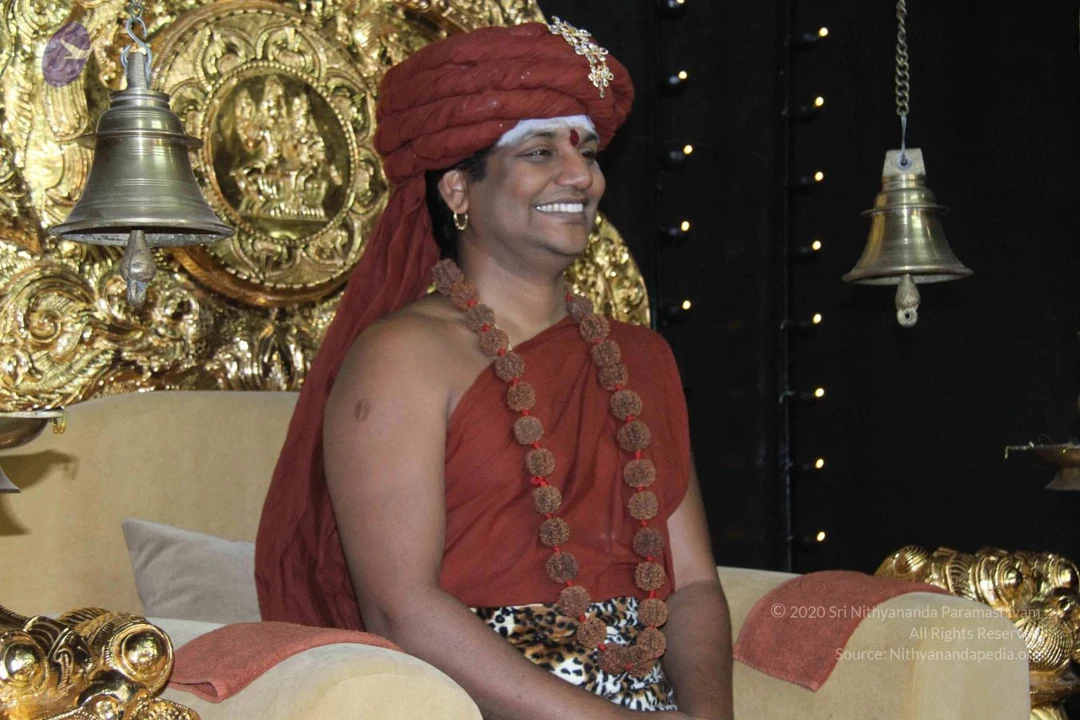
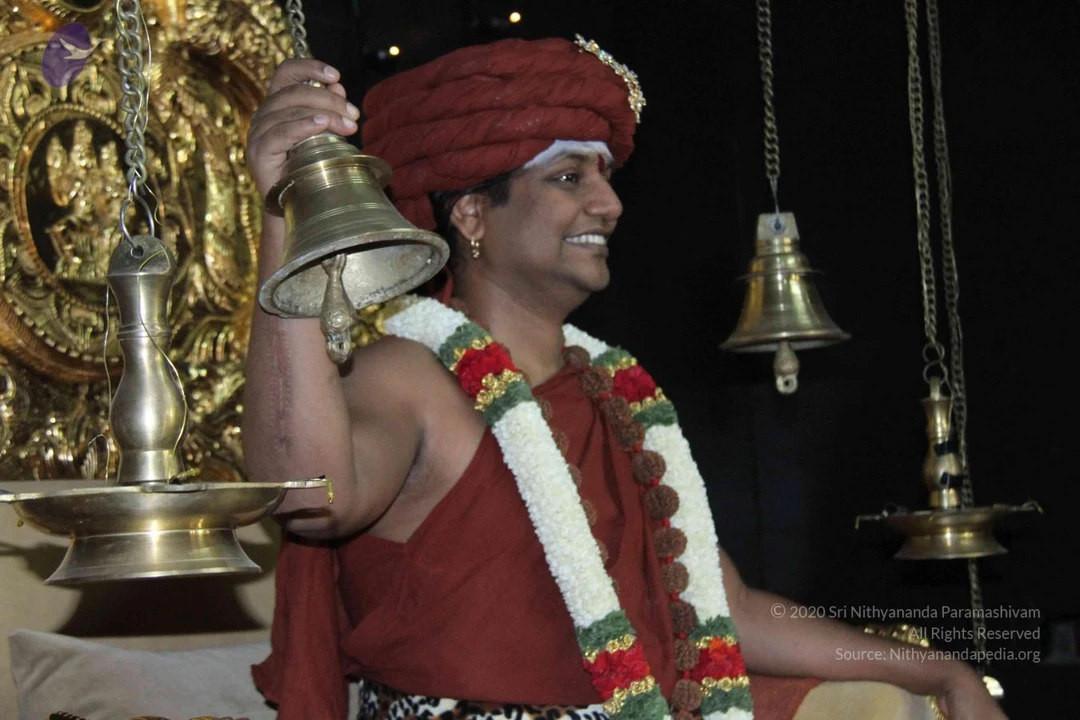
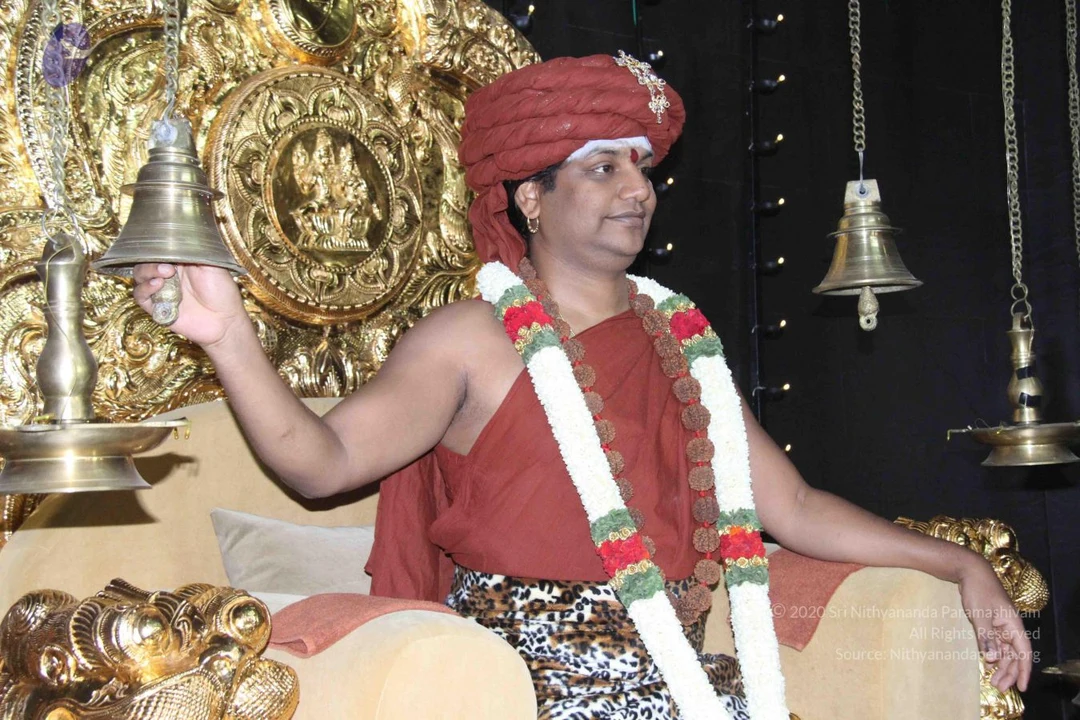
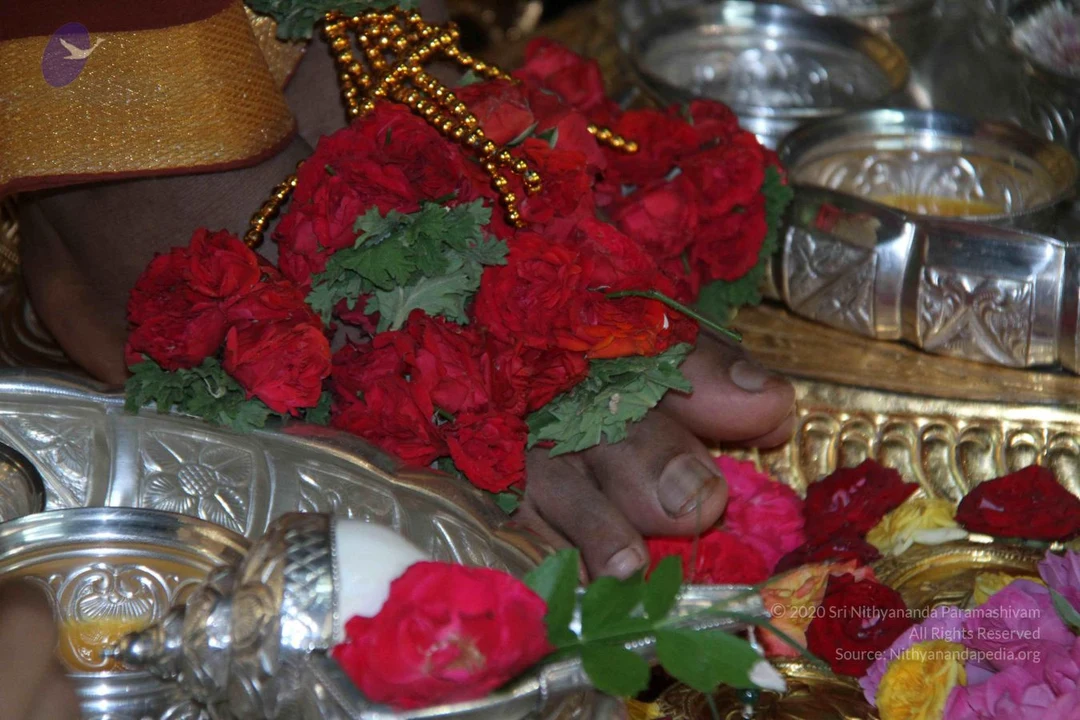
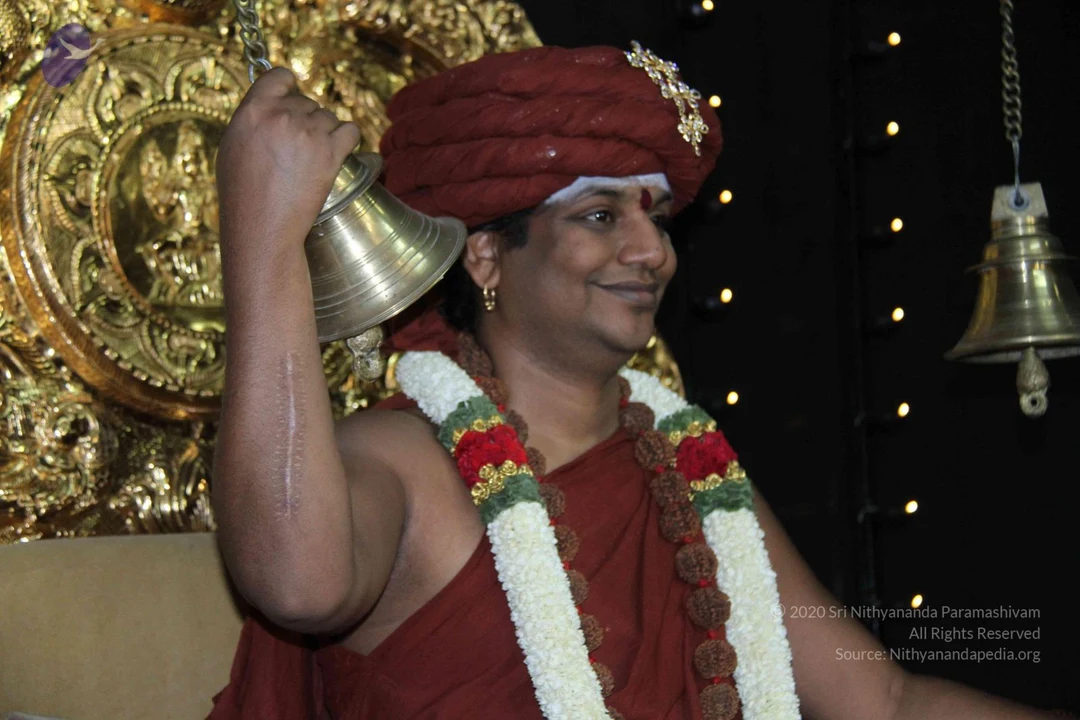
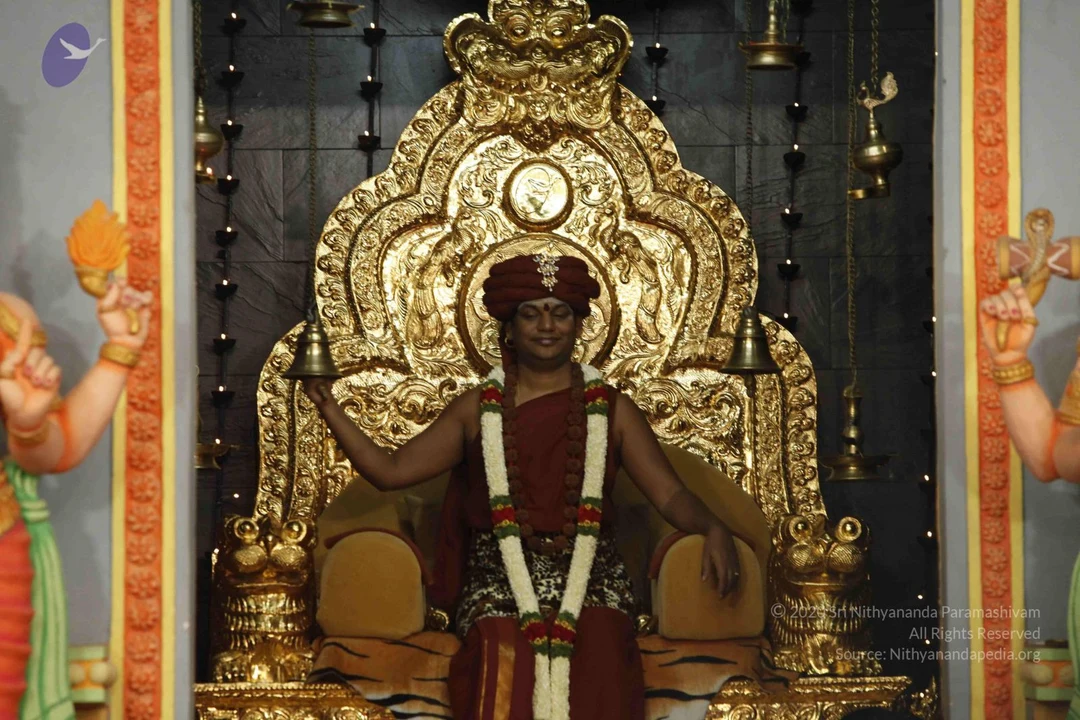
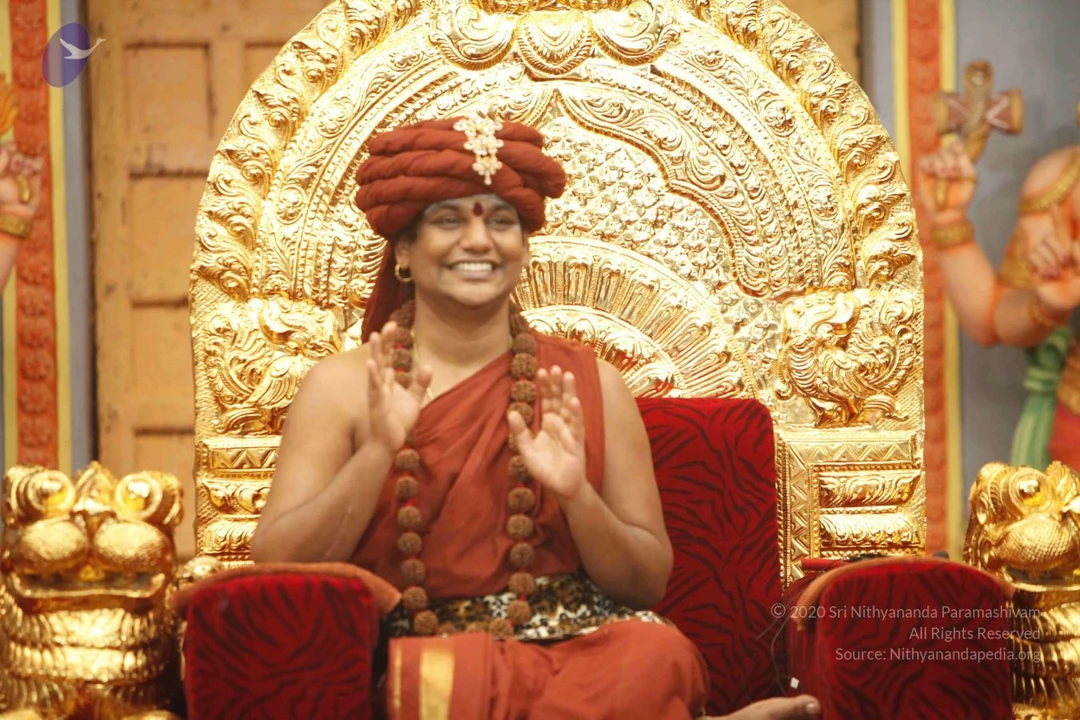
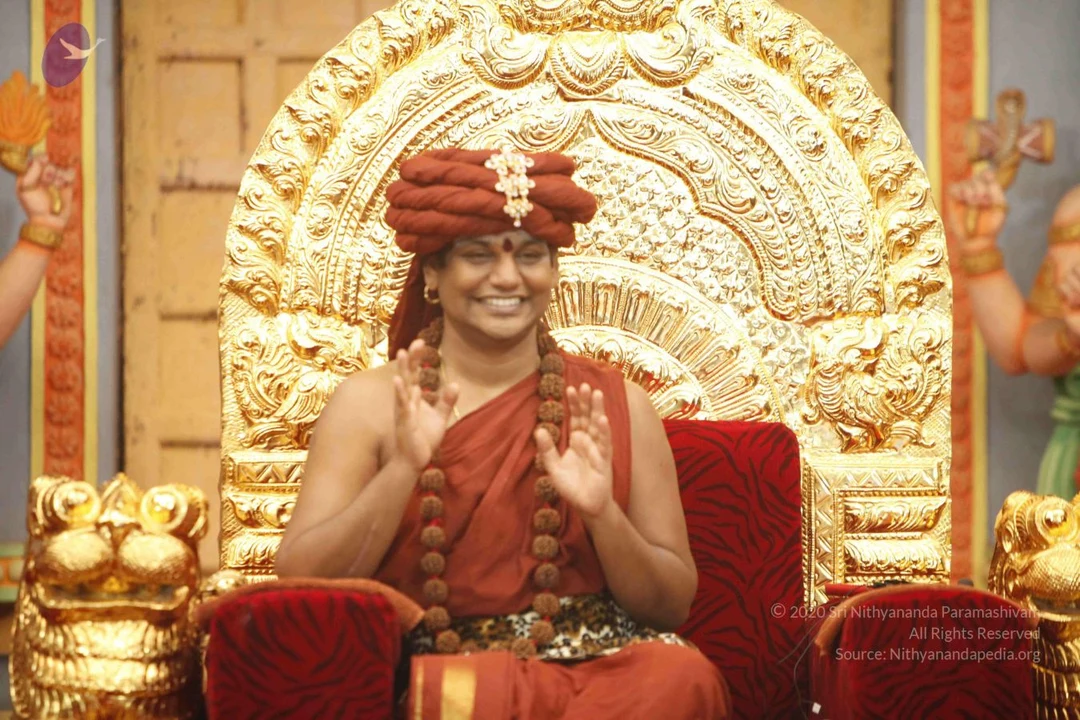
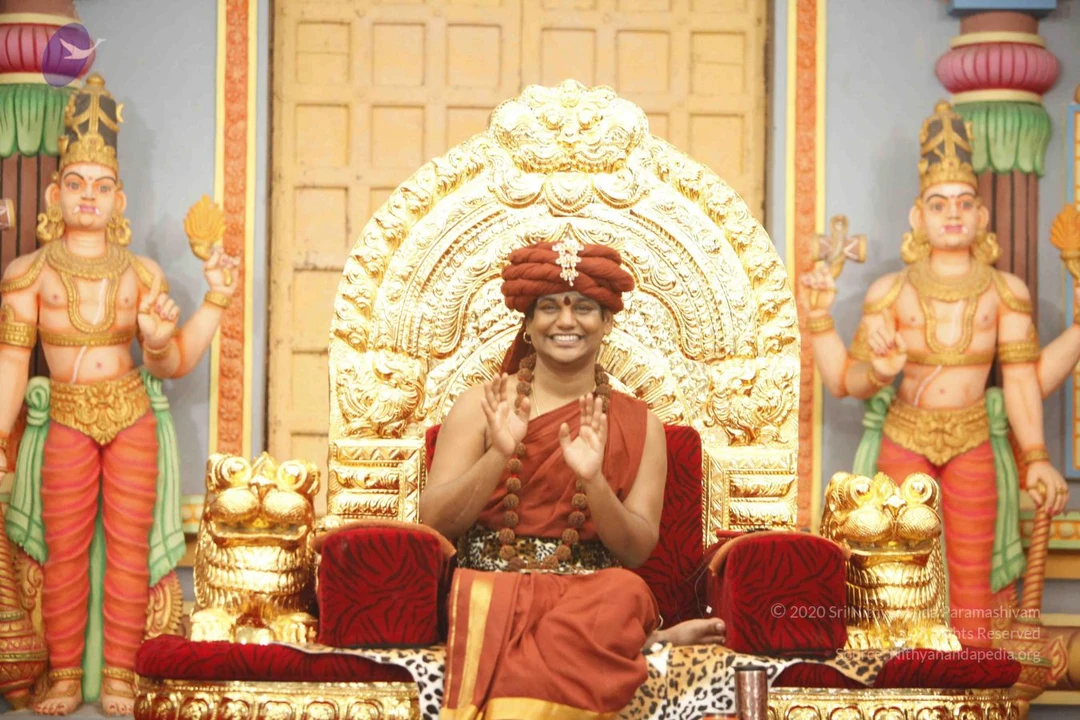
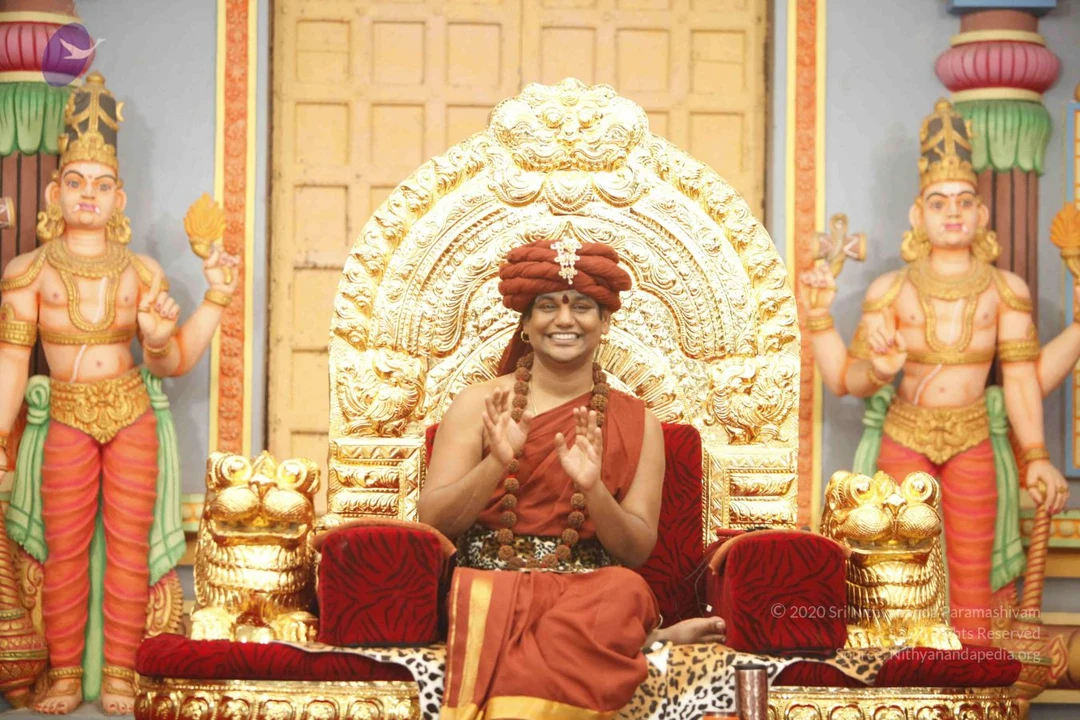
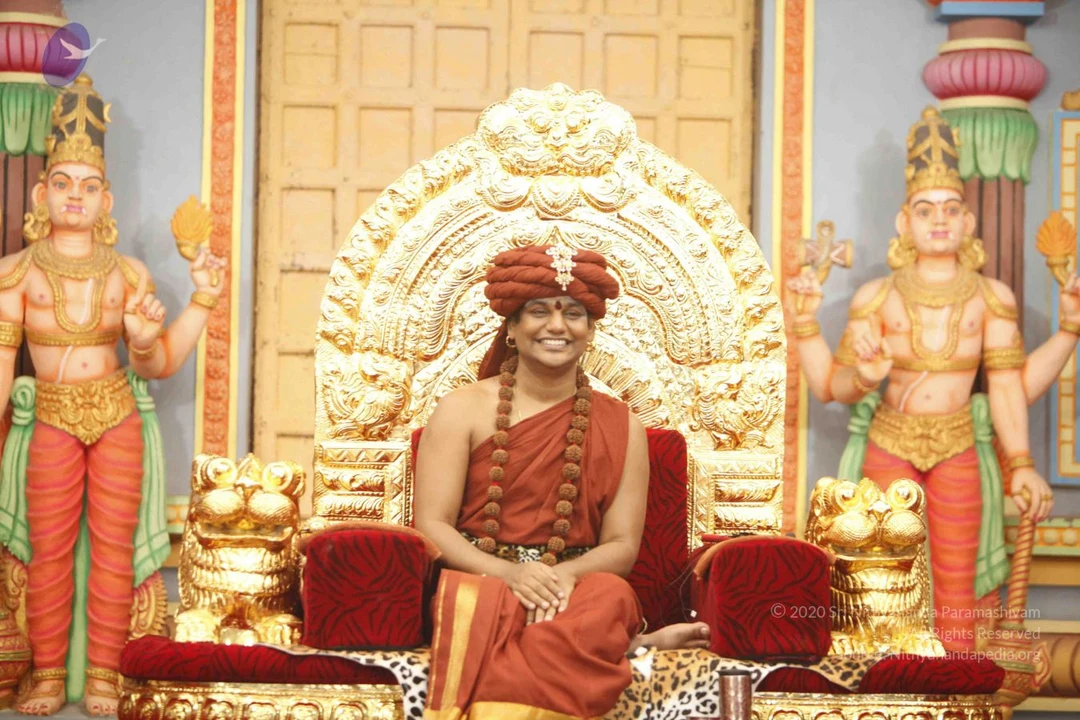
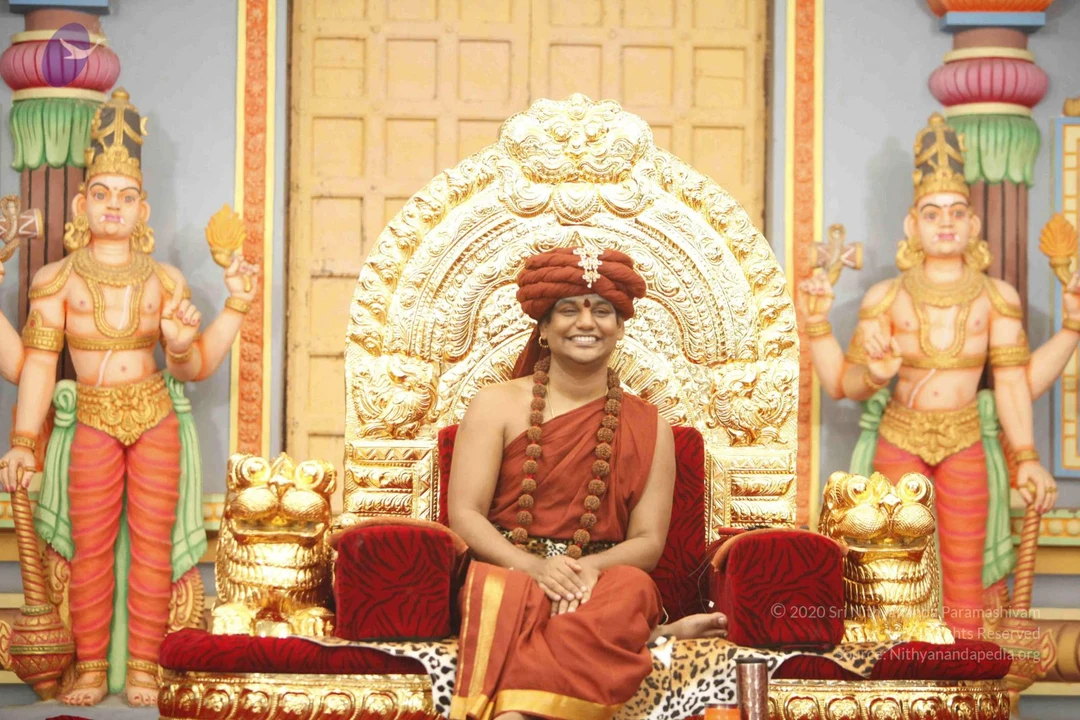
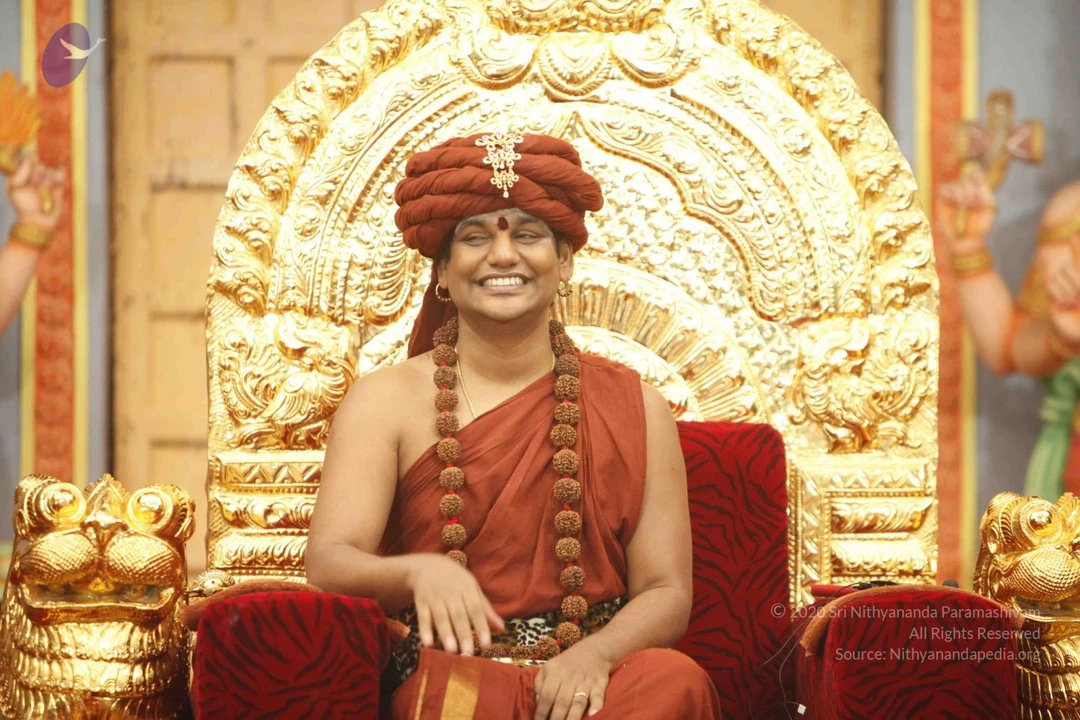
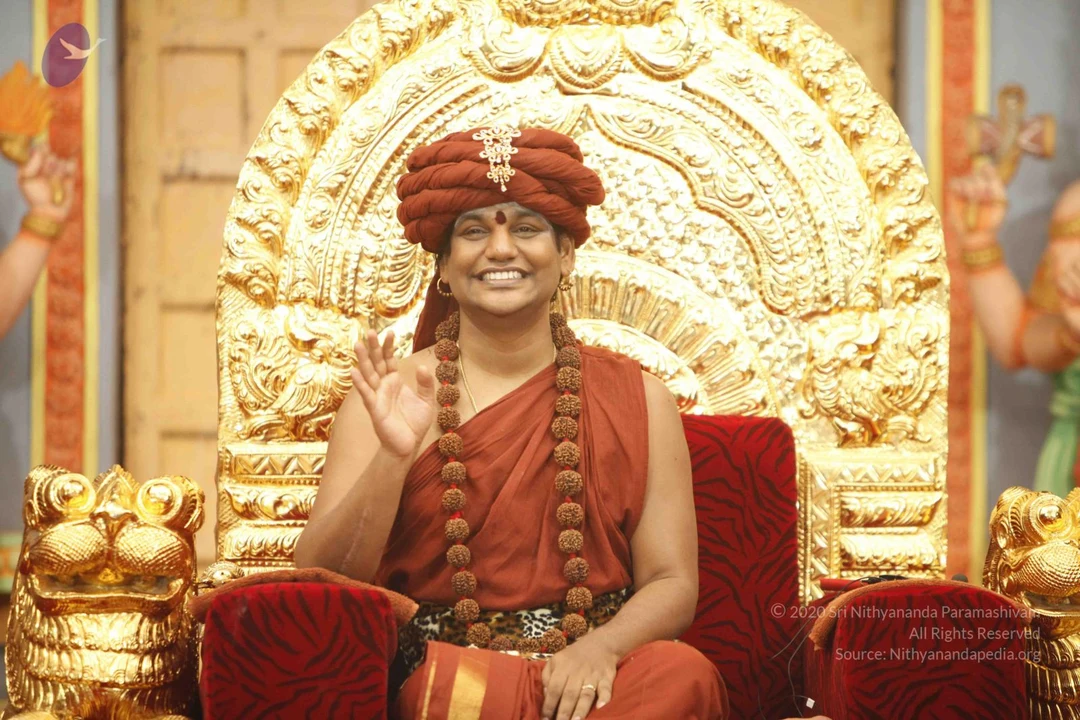
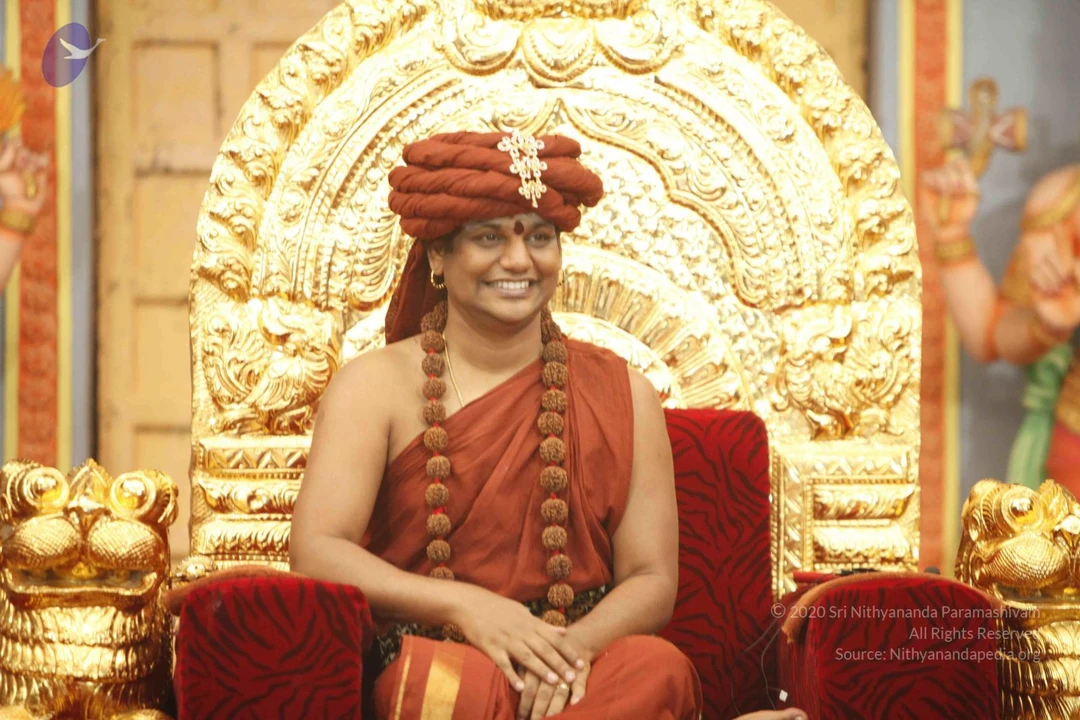
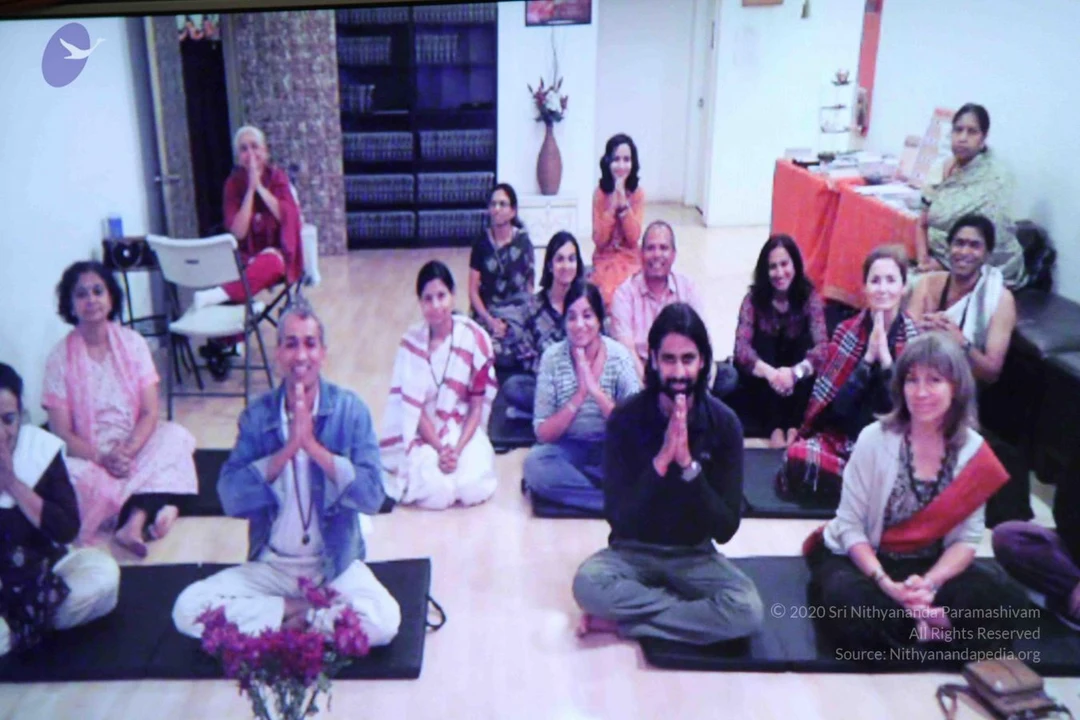
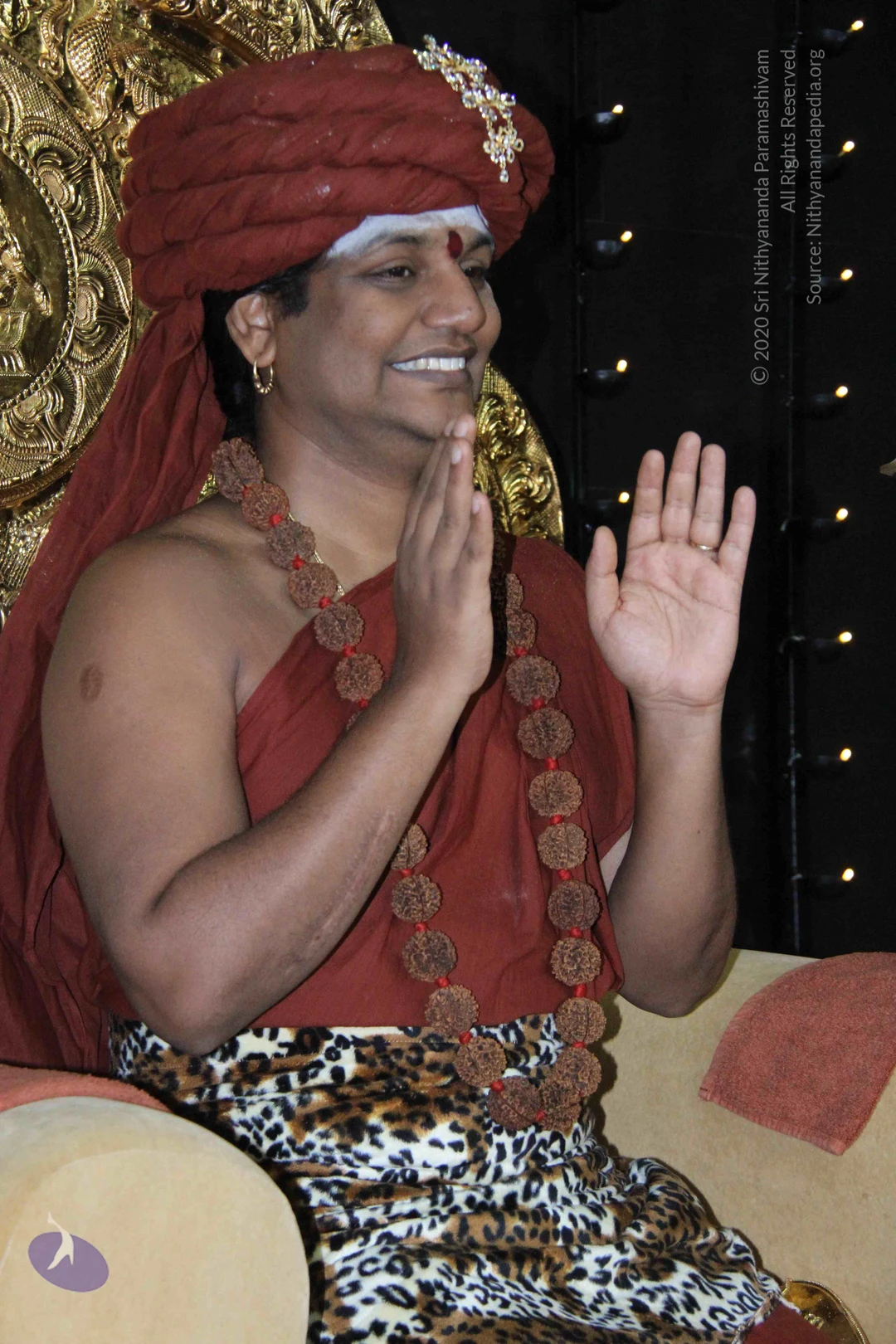
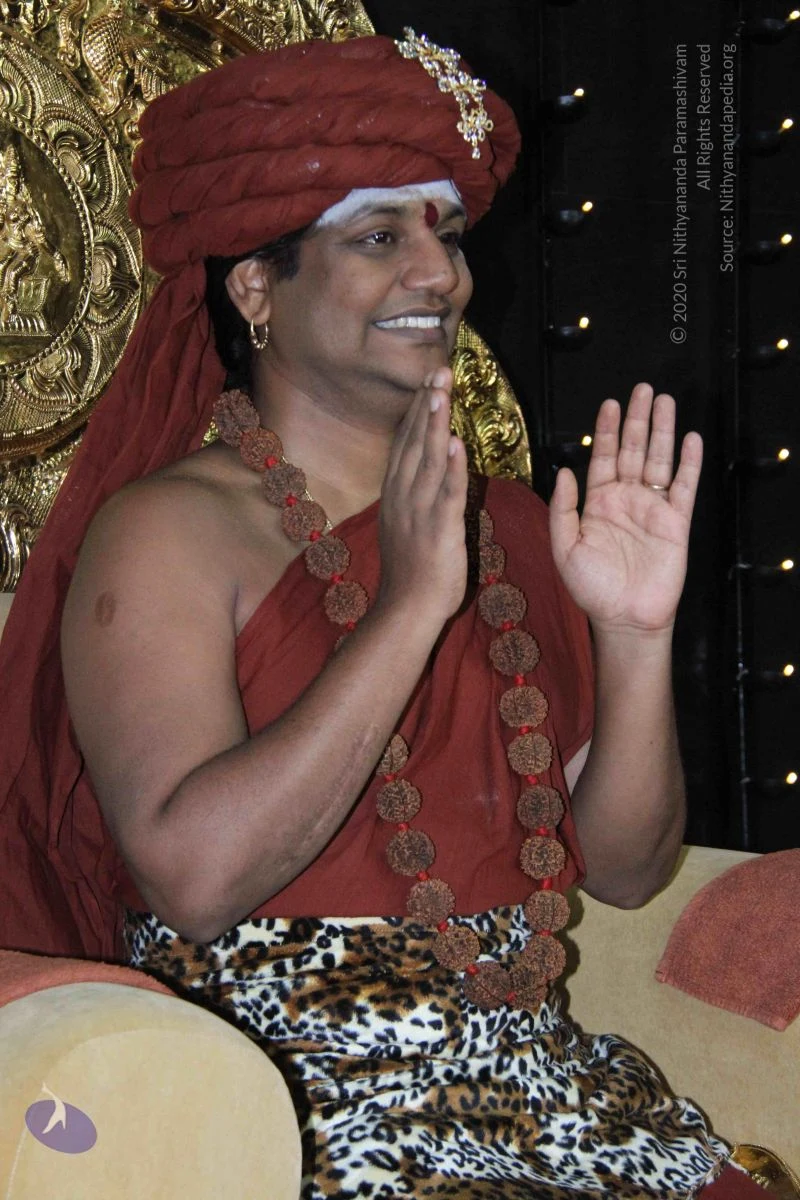
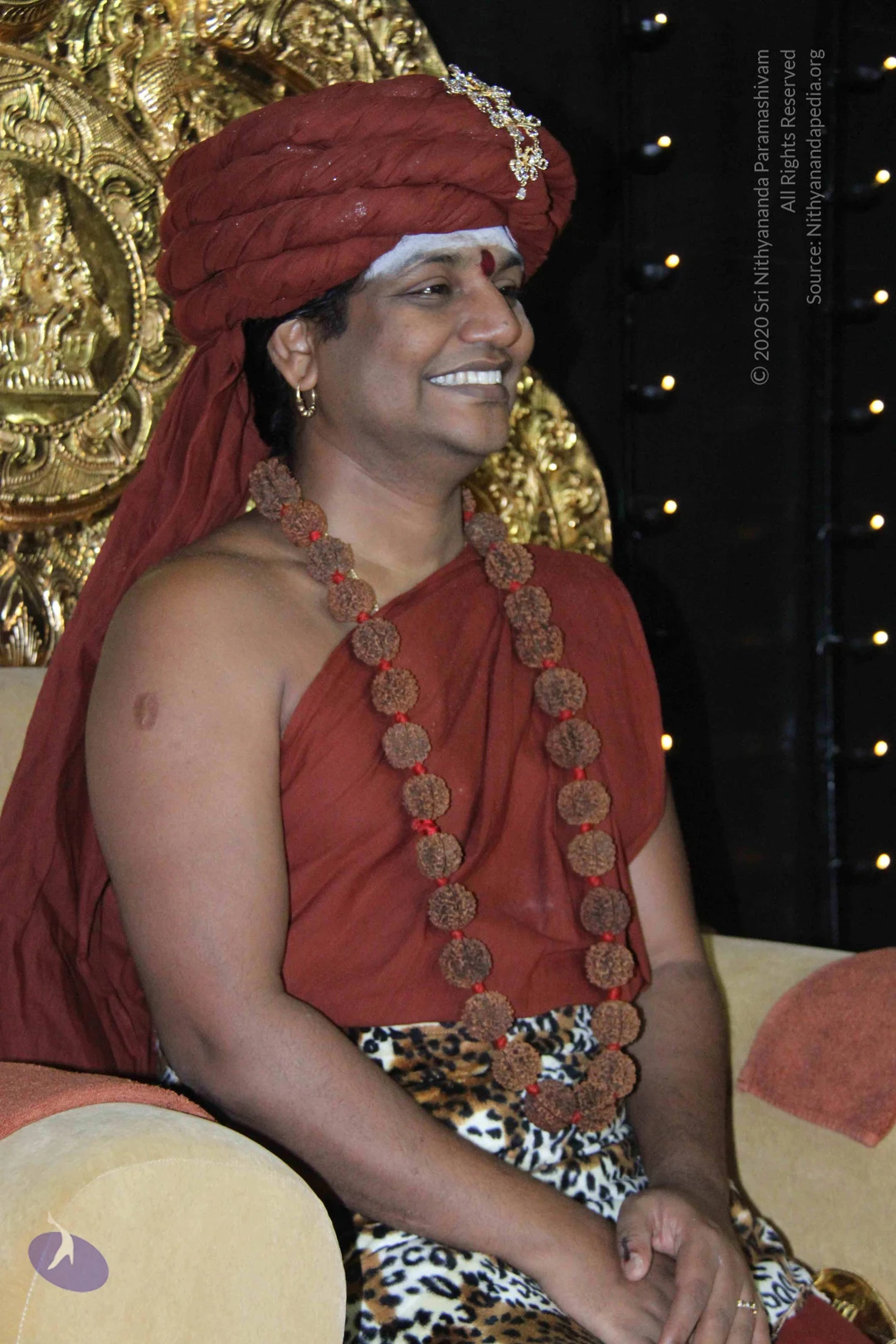
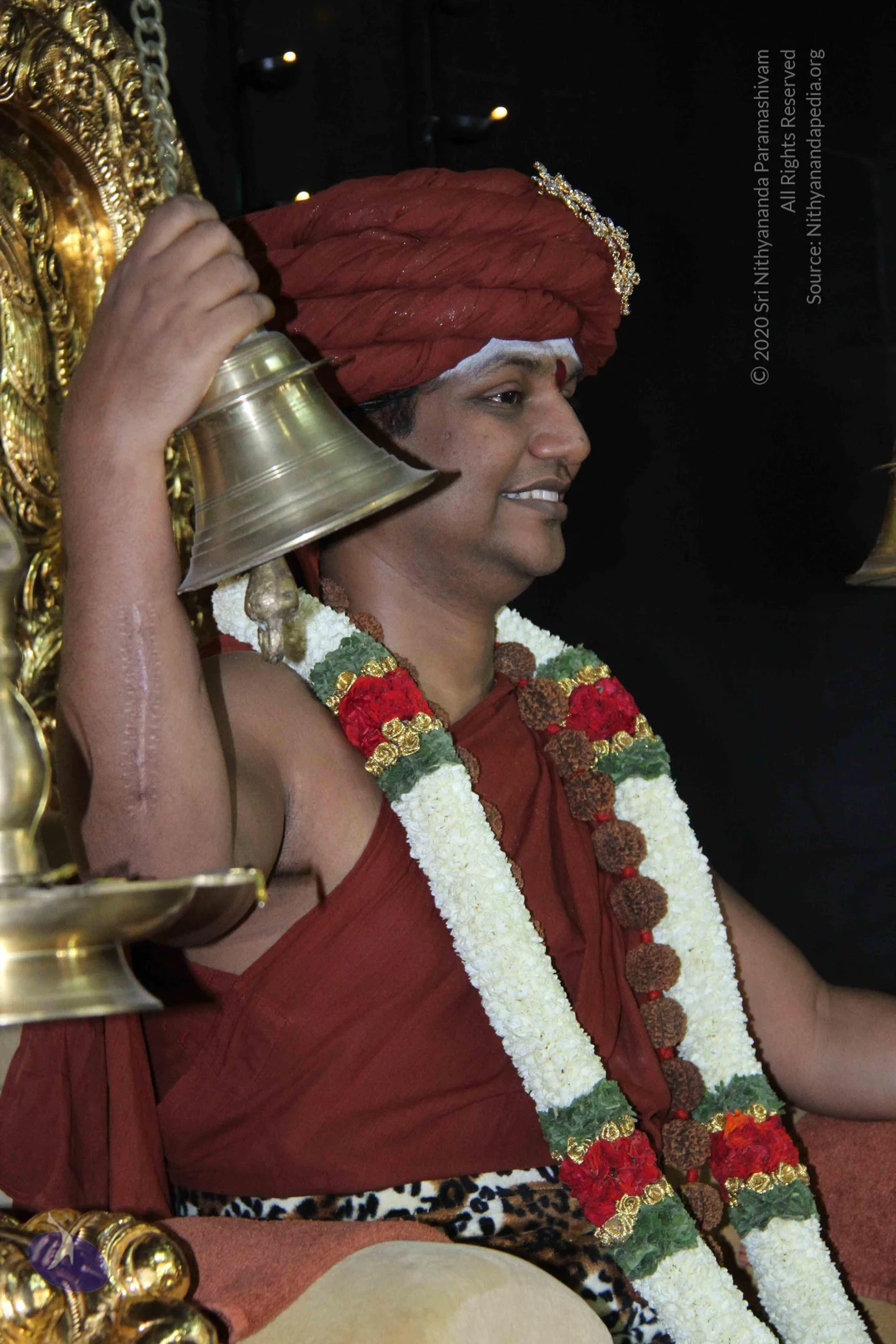
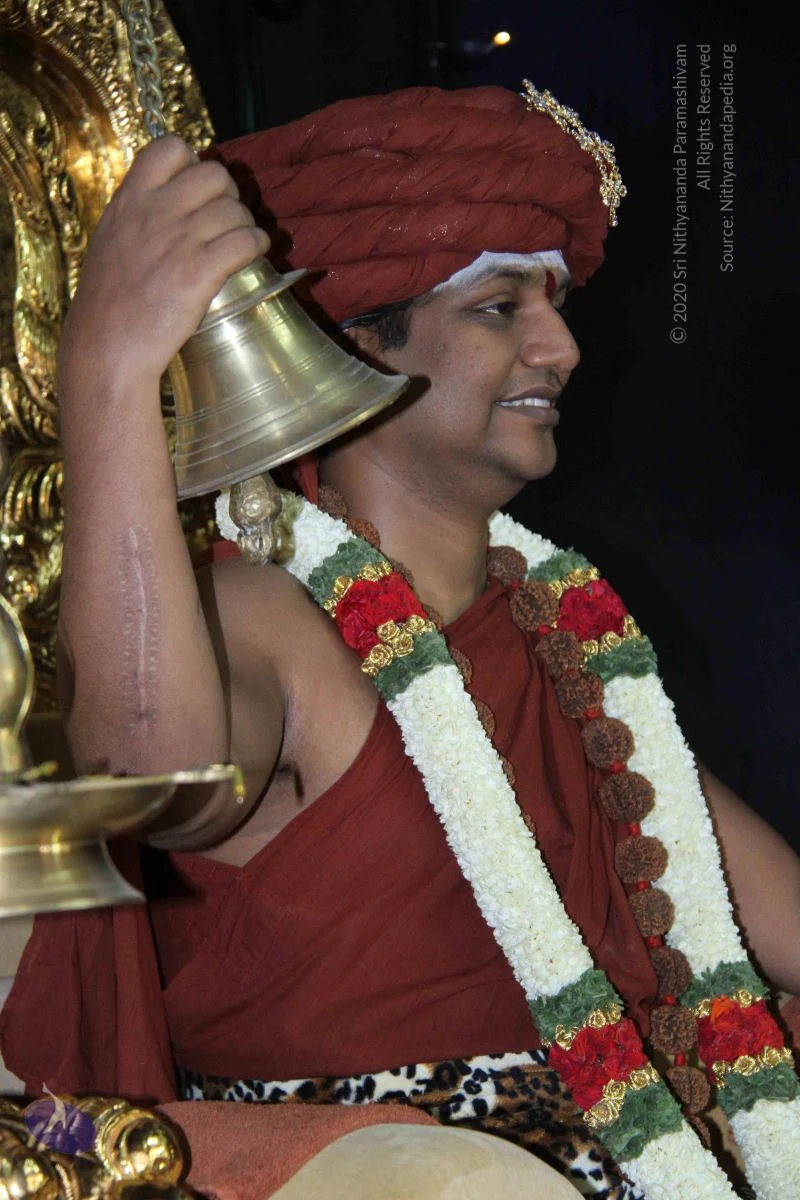
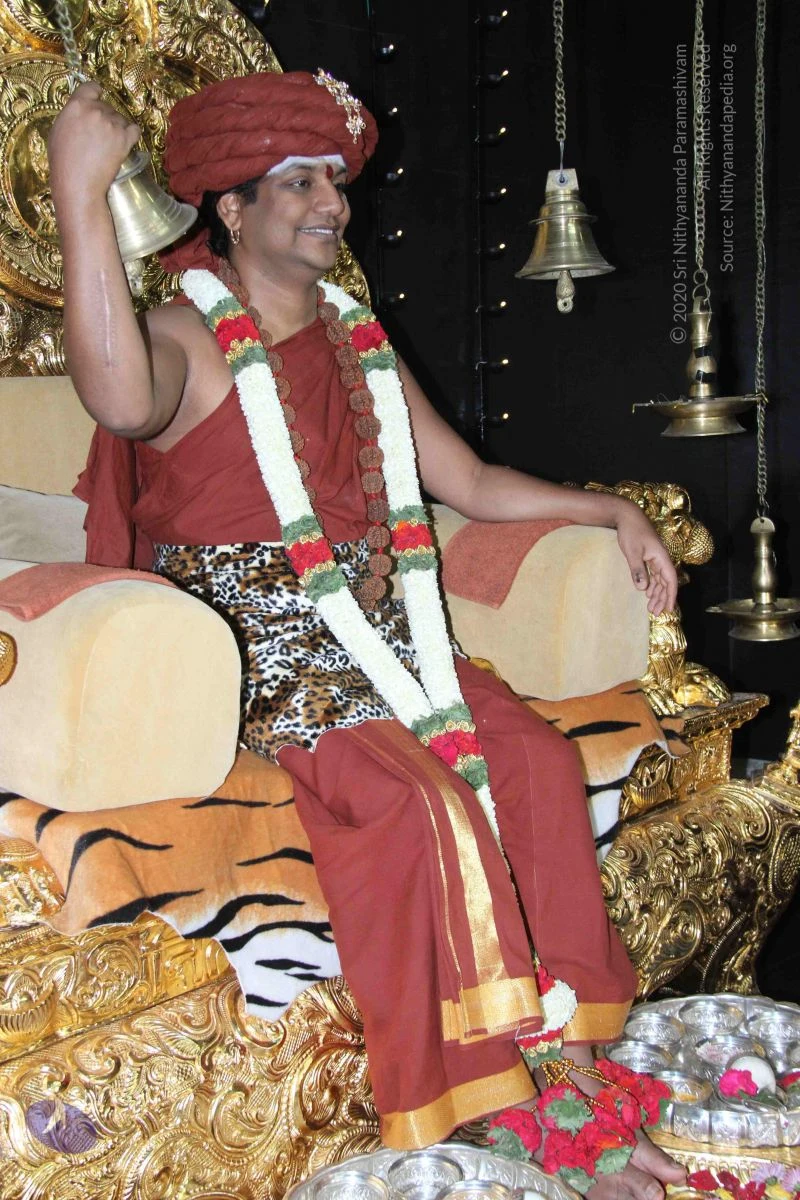
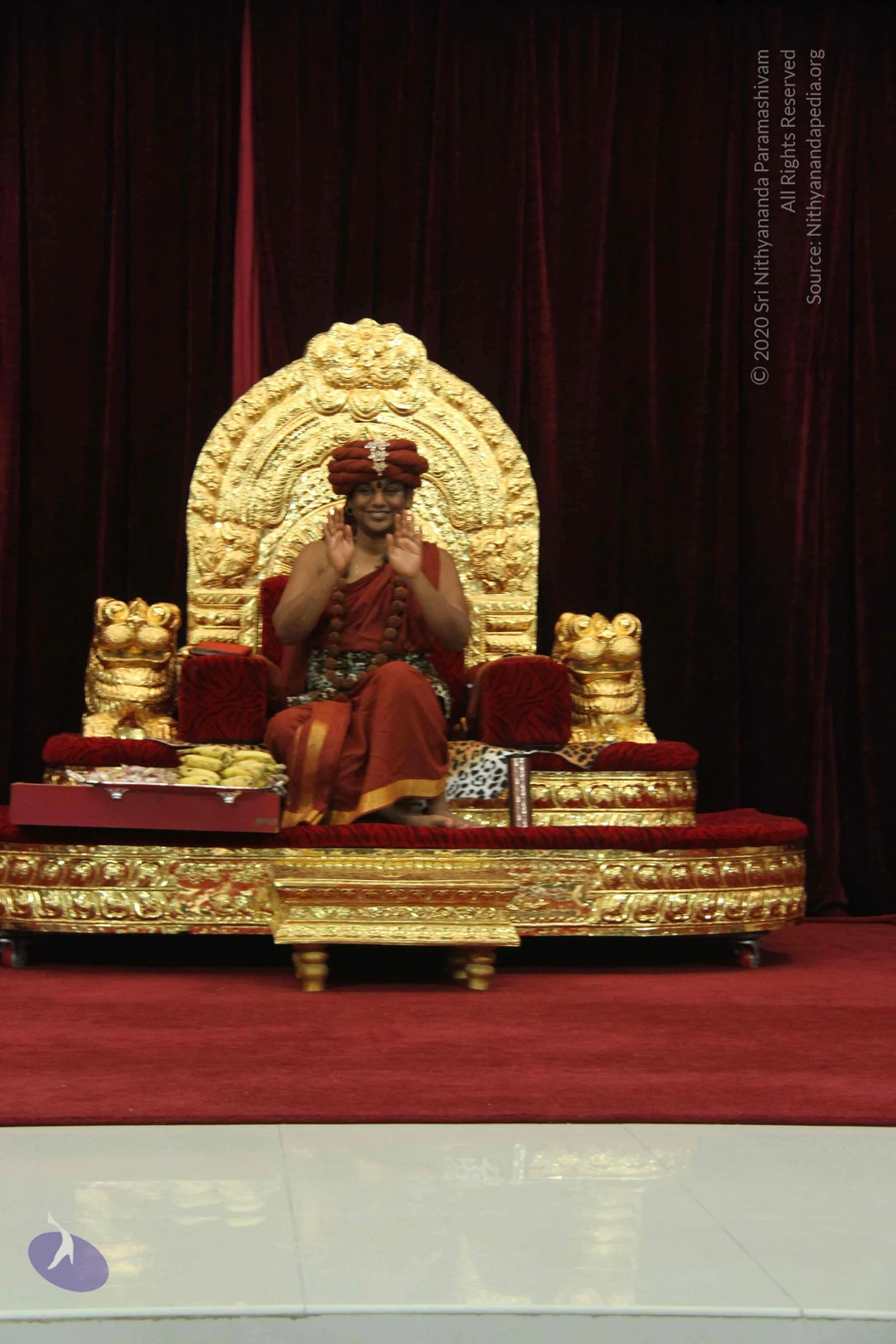
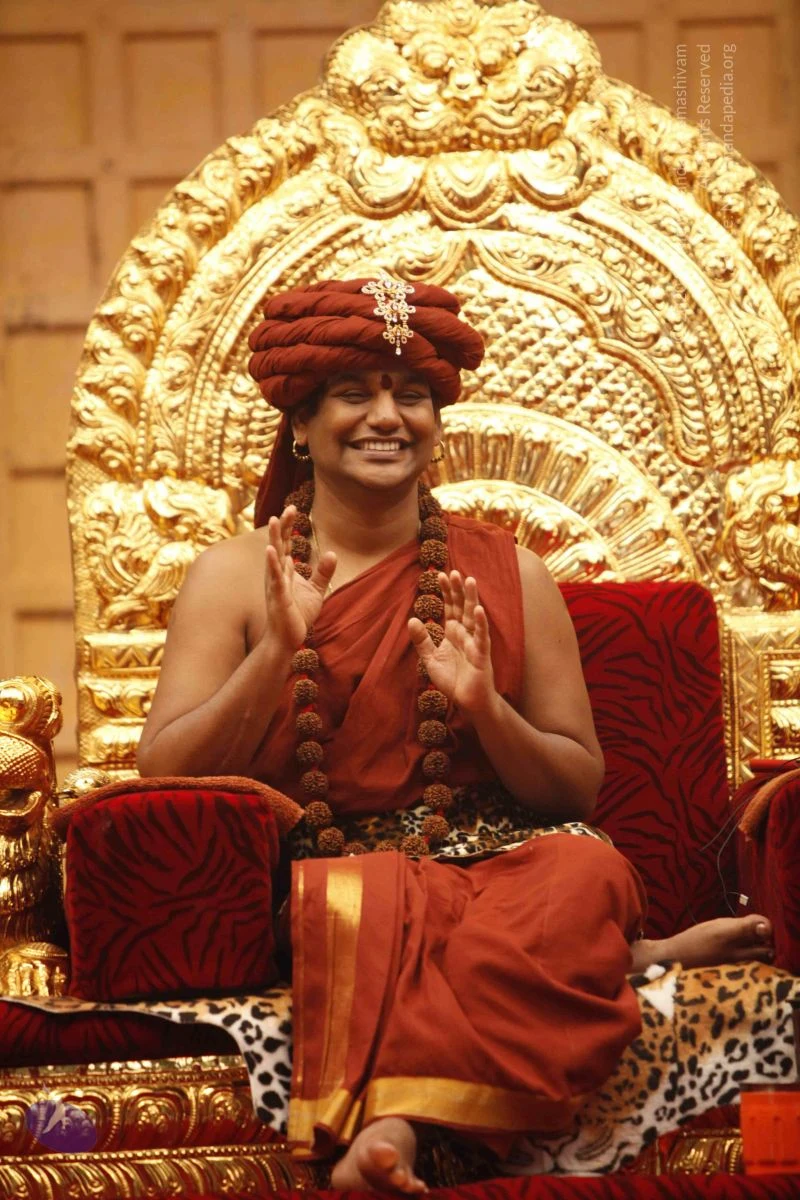
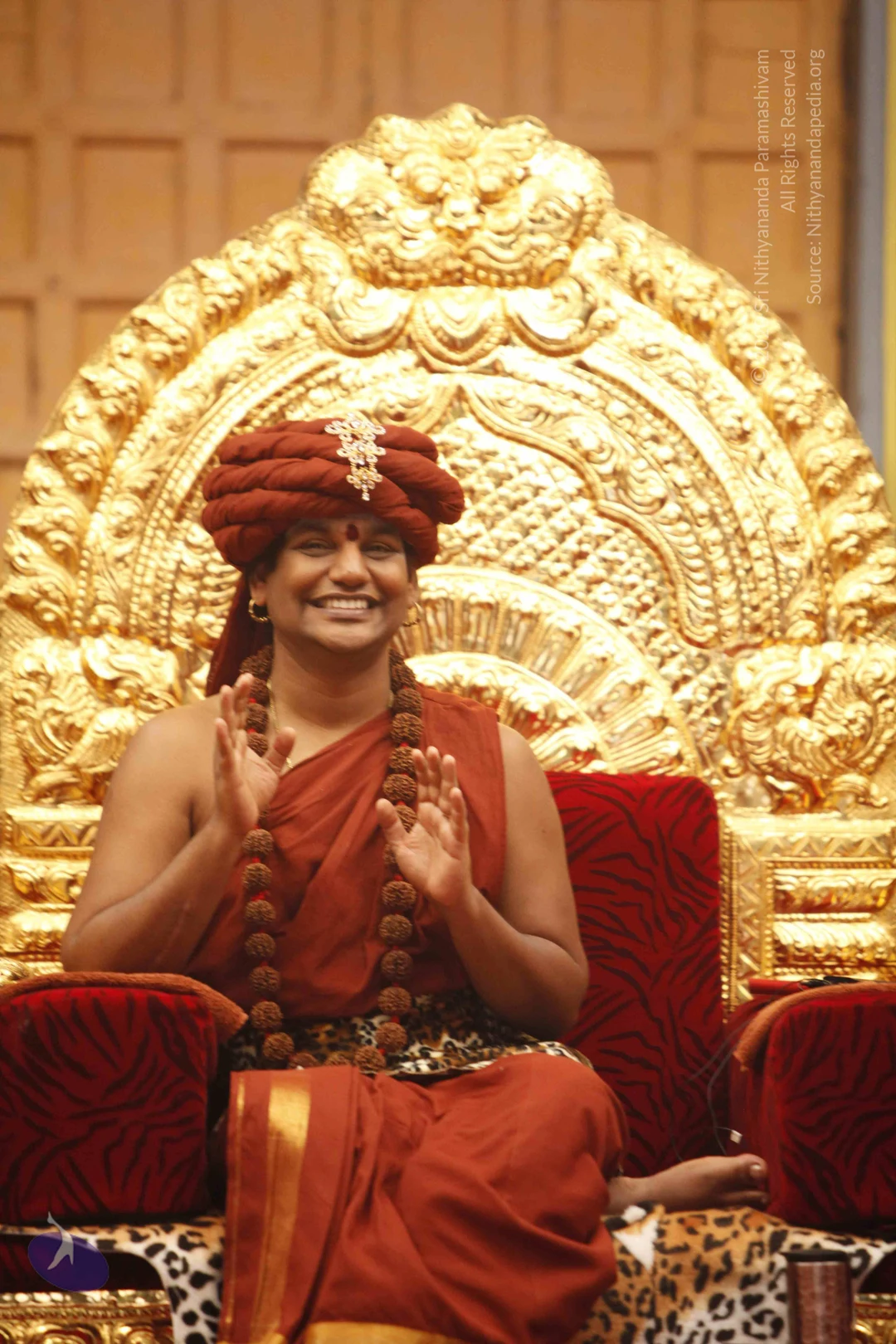
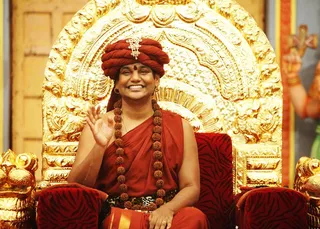
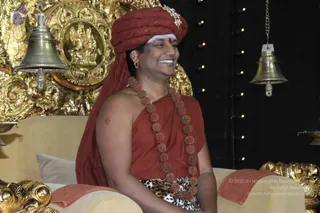
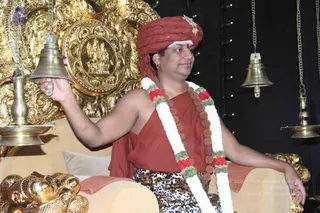
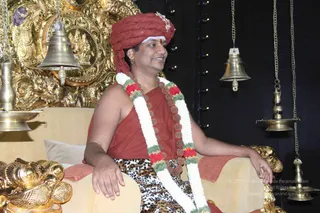
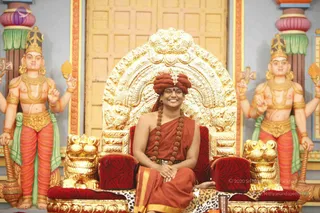
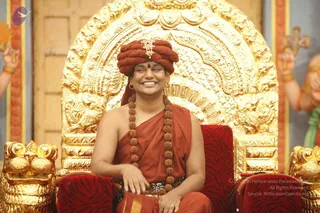
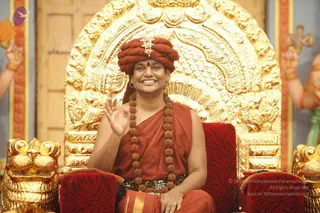
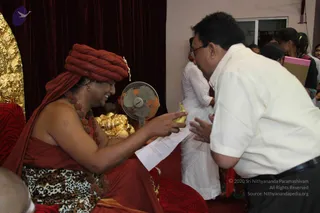
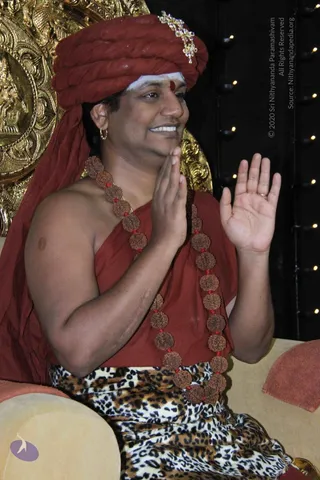
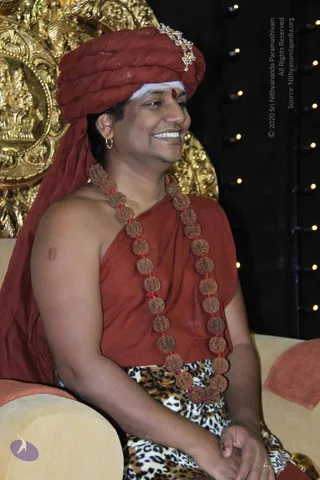
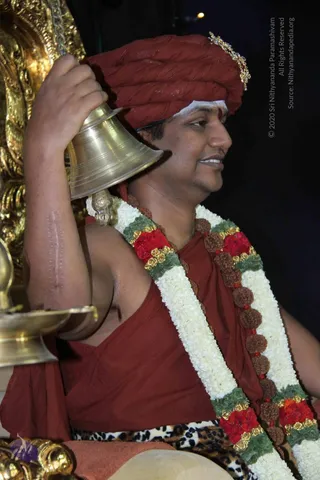
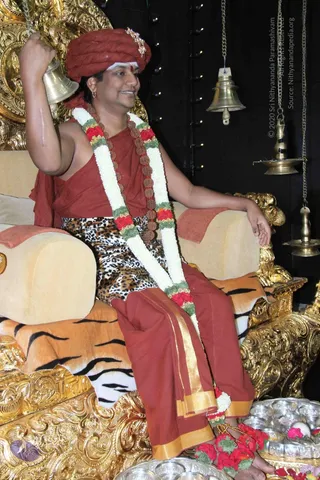
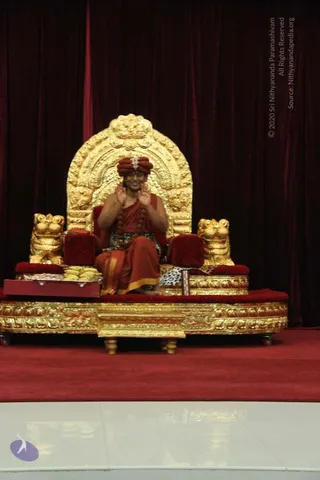
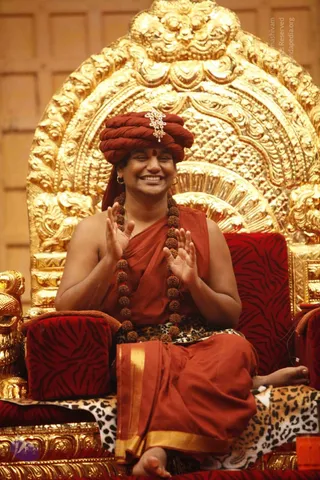
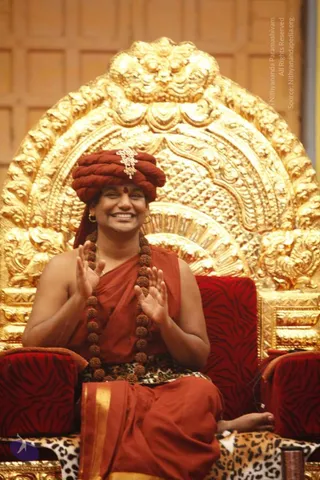
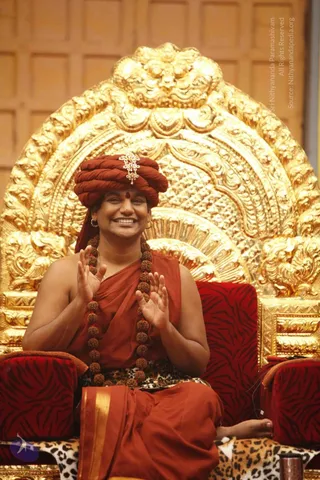
A seated man in a red-orange turban and saffron robe sits on an ornate gold throne with red velvet cushions and gold lion-form armrests, smiling with palms pressed together in greeting. He wears rudraksha malas and a gold ornament on his forehead. Two tall gold-and-red painted guardian figures with multiple arms and gold jewellery stand on either side of the throne, and a wooden door panel is behind. a person is seated in a teaching posture, consistent with a satsang setting, with a leopard-print cloth on the platform.A seated man in a red-orange turban and matching red-orange cloth wrap smiles while raising a brass hand bell in his right hand. He wears a white and green flower garland with red blossoms and a rudraksha mala with brown beads across his chest, plus gold earrings. Behind him, a gold repoussé deity murti is visible, and brass oil lamps and hanging bells hang from chains on the right.A photograph of a seated group of about fifteen people in a bright room with wooden floor, indoors, pressing palms together in anjali. In the foreground a man in a light blue denim shirt and white pants sits cross-legged on a black mat beside a small bunch of pink flowers; next to him a woman in white with a red-and-white shawl sits on a mat. In the centre a bearded man in a black sweater and grey trousers sits with palms folded, and a woman in a red-and-white plaid wrap sits beside a woman in a cardigan and red sash. Behind them a bookshelf, a vase of flowers, and an orange-draped table with books at the right. The image is a screen capture of a video feed, showing a screen-capture border with a copyright line.

April 19 2014

Original wiki page
Contents

Description:

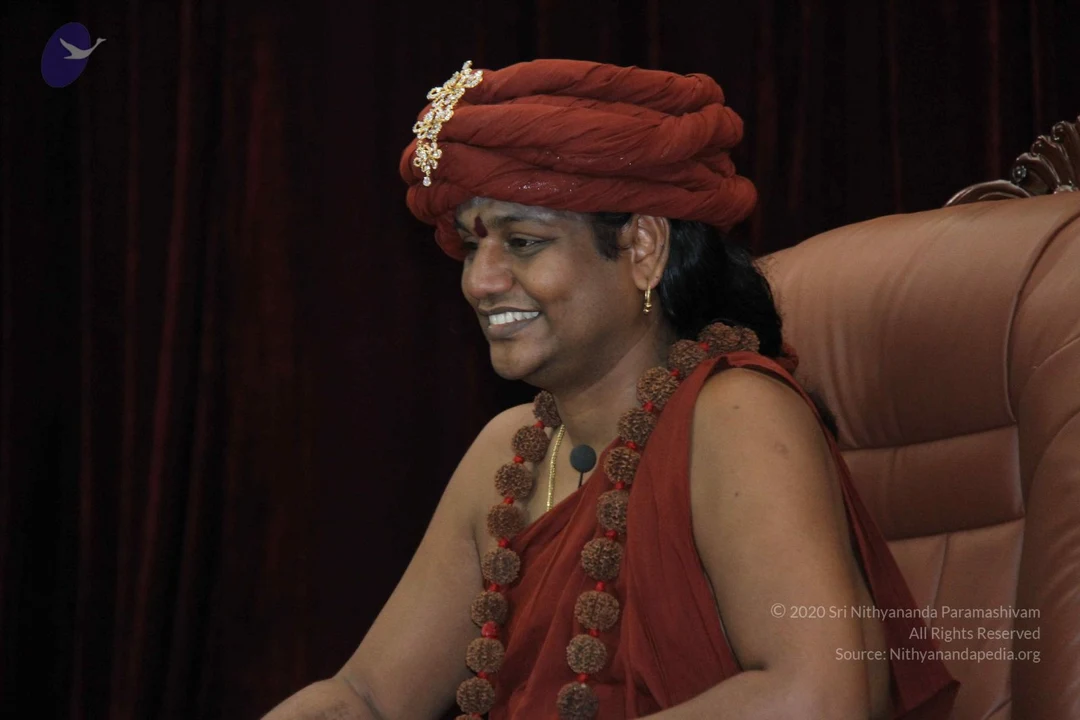
In today’s (19th April 2014) morning satsang Paramahamsa Nithyananda expanded on experiencing advaitha. He explained how the first mistake we make is visualizing ourself with a small boundary. He went on to explain how the alternative identity is not a transformed identity and urged us to track the source of inauthenticities in us and complete with them.

Link to Video:

VideoAudio

Transcript:

nithyānandeśvara samārambhām nithyānandeśvari madhyamām | asmat āchārya paryantām vande guru paramparām ||

[00:40]

Hindi greetings

[00:50]

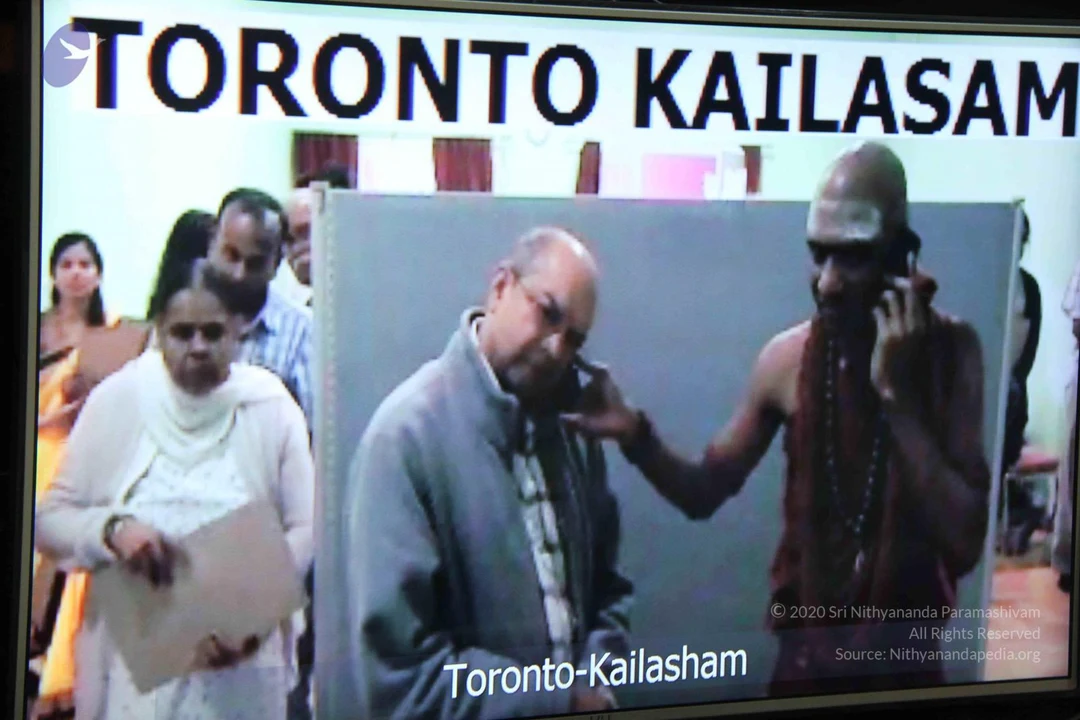
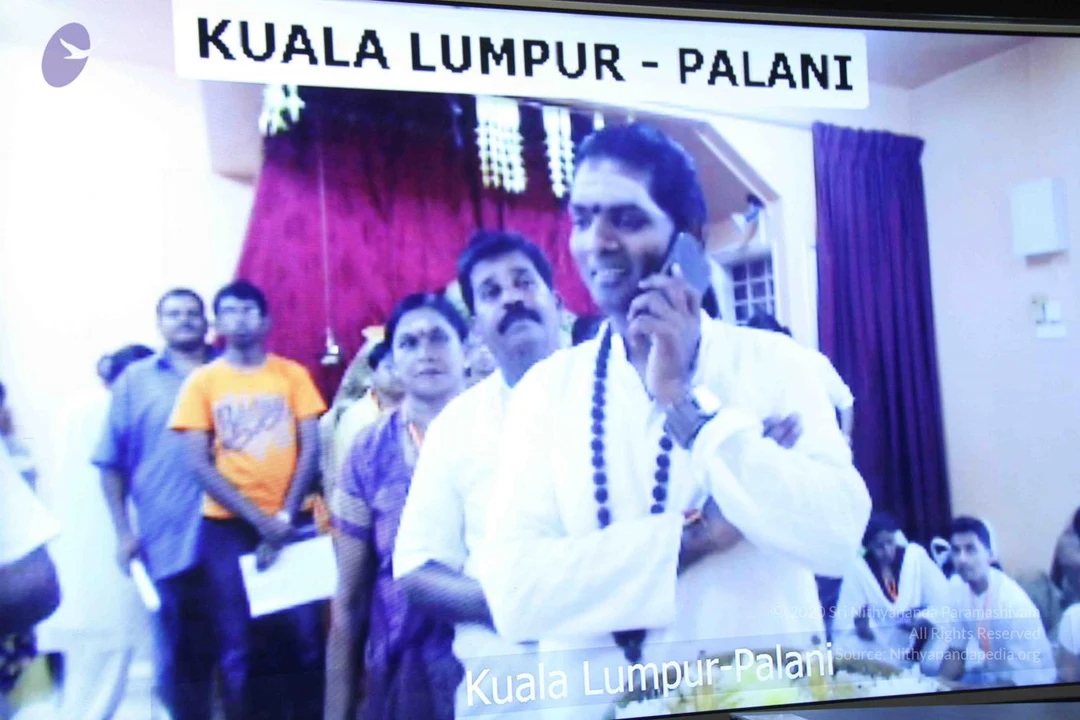
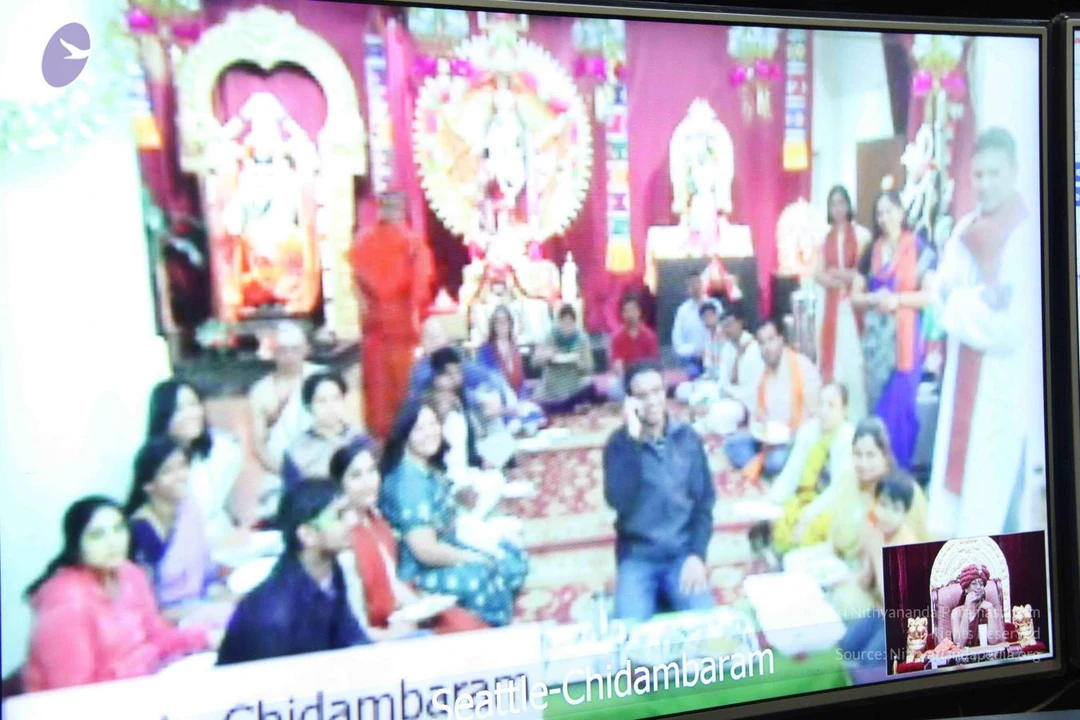
I welcome all the devotees, disciples, samajis, satsangis, Shrimahants, Mahants, Kotharis, Thanedars who are sitting with us all over the world at this time through Nithyananda TV, Lotus News Channel, Sadhna TV, Janashree TV, Eshwar TV, and through two-way video-conferencing having Nayana Deeksha in many cities in many countries around the world. Cities sitting with us through two-way video-conferencing having Nayana Deeksha: Nithyananda University-Los Angeles, Nithyananda University-Paris, Nithyananda Nagaram-Hyderabad, Nithyananda Nagar-Tiruvannamalai, Nithyananda Nagaramu -Hyderabad, Singapore-Singapuram, Varanasi, Ohio-Prayag, Toronto-Kailasam, Oklahoma-Somanatham, Vancouver- Bhubaneswar, Charlotte-Srisailam, Seremban- Sivakasi, St. Louis-Tirumala, Houston- Kalahasti, Kuala Lumpur-Palani, Simi Valley- California, Seattle-Chidambaram, Toon Moon-Hong Kong, Jorpati-Nepal, Hyderabad- Gupta Kashi, Bogotá-Colombia, Abu Dhabi, Oman-Sivagangai, Winston-Salem, North Carolina, Slovakia Pobrat, Bogotá-Colombia, High Point-North Carolina, Guadeloupe- Rameswaram, Vancouver-Bhubaneswar, Scottsdale-Arizona, Kastav-Croatia, San Antonio-Texas, London-Kashi, Port Washington-USA, Tirupattur Dhyanapeetam, umesh, Dubai- Vaidyanatham, Paris-Kalighat, San Jose-Madurai.

[02:50]

I welcome all of you with My love and respects. I will expand on experiencing Advaita. As I committed, I will extend the time for finding your incompletions till… for USA Monday morning. Then it may be only Tuesday (India time) I will be able to lead you to start the Completion process, because I gave a word I will extend the time, helping you all to discover your incompletions. Please listen! The first, foremost incompletion you develop is identifying you with a small boundary. Please listen, identifying you with a small boundary. First, foremost incompletion you experience in your life is identifying you with the small boundary. Just see what you feel about yourself in your dreams, early morning when you wake up, or your default idea about you.

[04:33]

Understand, please listen! Your altered idea about you will never be accepted as you, by the people around you. Your teamily, team + family is teamily. Your teamily is intelligent enough to recognize your default identity, and it will never, ever accept your altered identity as you, because, twenty-four hours you will not be able to hold on to your altered identity, you will fall back on your default identity. So, please understand the only way to get rid of the default identity - recognizing it is not your true identity. Second, completing it. Alternative identity is not transformed identity. Alternative identity is not authentic identity. Just see: What is your default identity? You will see that frightened child, that terrorized child, all the time waiting to get tired, waiting to get bored, waiting to give up, already planning to break. When you start the business, already your default plan is, ‘If it collapses and I go bankrupt, what should I do’? When you tie the knot for the marriage itself, ‘If this marriage breaks and ends up in divorce, what should I do?’ Everything, while you are starting itself.

[06:49]

Please listen! I am not saying don’t be careful. I am only saying, don’t be foolish. This carefulness of a frightened child is nothing but not even getting out of your cradle. From cradle, you directly want to jump into grave; you do not want anything between the cradle and the grave. If both can be two-in-one, you will be more happy. Complete that frightened child inside. Actually, if you talk to your teamily and ask the help of your teamily to identify your incompletions and inauthenticities, actually teamily can suggest only your inauthenticities. You only can find the root of incompletions based on the inauthenticity input. Please understand, identifying your incompletions based on the input from your teamily about your inauthenticities is what I describe, I define in Sanskrit as “Aanava”, “Aanor Bhaavaha” means, the feeling of “belittled”. Not, being little; belittled. Being can never become little. Feeling belittled. “Aanava”, “Aanor bhaavaha.”

[08:59]

Please understand the word “Aanava”, we always have a wrong meaning. We portray Ravana, or Hiranya, Hiranyaksha, Kamsa, Sishupala, to portray “Aanava”. No! Understand, of course, they are all embodiments of Aanava, no doubt, but not the context from which you understand. You always think Aanava means showing more than what you are. But Aanava means feeling lower than what you are. Only then you start showing more than what you are. Feeling belittled. Please understand there is a big difference between these two. If you understand Aanava as showing more than what you are, you will start doing completely wrong exercise, trying to show yourself as very humble. I have seen in My life, these so-called humble people are the most poisonous fellows on the Planet Earth. They are the most dangerous people on the Planet Earth. Just to prove they are humble, they will do any nonsense. Aanor bhaava. This so-called humble people are the worst criminals, poisonous people, understand.

[10:51]

Humility is not thinking less about you, it is thinking about you less. Humility is not thinking less about you, it is thinking about you less. Whether you identify yourself as bigger or smaller, thinking less about it, is humility. Means humility is all about the quantity of the time you spend on you, not about the quality of time you spend on you. Understand humility is all about the quantity of time you spend on you. I am defining humility. Understand, when you take the help of your teamily, when they suggest all your inauthenticities, you tracking the origin of those inauthenticities in you, discovering those incompletions, is what I call the process of discovering Aanava, Aanor bhaavaha - Aanava. In the great tradition of Shaivism, the Aanava is the original sin, that is the first separator of you and Pashupathi, Mahadeva - Shiva. The Aanava means feeling of belittled, feeling of belittled is the first separator that first separates you and Mahadeva. The original substance of Existence, that is the definition I want to give for Mahadeva. The original substance of Existence!

[13:44]

Listen! The Aanava cannot be identified just by you alone, nor it can be identified only by people around you. When there is a cooperation between the people around you and you, you discover Aanava. Understand. Only people around you, if they… just they point out your incompletions without your cooperation, it will only lead to more and more pain, suffering, fight, incompletions. The people around you, your teamily should have tremendous understanding about the possibility of you and help you to identify your incompletions by pointing out your inauthenticities. Understand I am defining the whole process: First thing, you clearly pen down your authentic identity: what is your inner-image, outer-image, life-image, and others-image. You pen down properly and declare it to your teamily. Let your teamily pinpoint all the inauthenticities you are having, why you are not able to achieve your authentic identity. When your teamily points out your inauthenticities, don’t fall into incompletion.

[15:51]

Now, take those inauthenticities and start looking into the origins of that inauthenticity in you. If your teamily says, ‘you don’t have love or compassion or trust’, don’t fall into incompletion. You are not a failure. You might have failed, but you are not a failure. Understand you might have failed from your birth, but you are not a failure, because you have a Consciousness which is born. The Consciousness can never be a failure. Listen! When your teamily points out, you don’t have love, trust, compassion, look back when that ‘feeling belittled' has started in you... feeling small, feeling belittled, that fear, powerlessness, when that started in you? Catch when that Aanava has started growing in you. Aanava I think, I can say one of the best, beautiful word to describe that true happening of feeling belittled, because only when you feel belittled you show you are big, you try to belittle others.

[17:40]

When you track back, when you trace back when you started feeling belittled first, come up with all the incidents when the pattern started and how you built that pattern, it will not be more than fifteen paise worth. You would have started feeling belittled when your brother snatched three candy from you. With that feeling belittled, you gave up your Shivahood itself. You have not lost just three candy; because you have decided to carry on that feeling belittled, you lost Shivahood itself. See when you started building that feeling belittled. Please understand why I am continuously expanding on the incompletion so elaborately; because I want each one of you to identify all the incompletions. You see, if you identify, burning is My work. See, I am like a garbage-lorry owner. I clean all your garbage. But, you have to leave it outside your garage. I cannot come inside your house and take. If I come inside your house and take you will tell I am a thief. You have to separate what is garbage, what is your belongings. So, you have to separate what is incompletion and what is you. You cannot say, “No, no, You Yourself come and separate and take it and go.” Because you are such a cunning fellow, if I enter into your house and I Myself start dividing, you will say, “Oh, I think this fellow wants this furniture. That is why He says this is my garbage.”

[19:53]

Anything I tell is not yours; you think it is useful for Me! And you are so strongly associated with your belongings, you are so attached to them, you forget you gave permission for Me to come in and separate your incompletions and completions, separate your garbage and you. And you forget and start kicking Me out, “Hey, thief you have come inside to steal my items, my life, my belongings.” Human-beings are the most dangerous species to work with baba! No other species cause so much of destruction to all the planets happened. No other planet, Mahadeva has to visit so many times taking human incarnation than this Planet Earth! Because … see there are some kids who are very polite, nice; you leave them in one room. There are some kids who will make hell, every five minutes you have to enter into that room and see. Even if there is no sound from that room, you need to just enter in and see. So, this planet earth is like that. Constantly, you have to peep in ‘What these fellows are doing?’

[21:38]

Only after the Aanava, feeling belittled, the Kanma and Maya, the Karma and Maya starts acting upon you, starts working on you. Please understand, on a stone, seed cannot grow. If there is no Aanava, Karma and Maya cannot grow. Only a fertile land can allow the seed to grow. So, only if you are fertile with Aanava, the Kanma and Maya, the karma and maya, incompletions and delusions can grow. If you complete with this Aanava means feeling belittled, the incompletions called Karma and delusions called Maya will simply disappear. They will not be having any power over you. The Pashu will merge into Pathi and Pashupathi will happen. There are some fools who don’t know what is their Siddhanta; they try to tell I don’t know Shaiva Siddhanta. You may not know your Siddhanta, but I know My Siddhanta!

[23:22]

Aanava - feeling belittled. It is Aanava, feeling belittled, is what you need to trace down by the help of your teamily. Your teamily when they point out your inauthenticities, start tracing back, tracking back when those incompletions… See, the incompletions is the pattern which causes inauthenticity. Track down, trace back the incidents, incompletions you started building in you which is responsible for your inauthenticity. When you track them down, when you trace them back, you will understand the source of Aanava how you started allowing, entertaining Aanava, the feeling of belittled. The feeling of belittled, when it makes you to belittle others, the Aanava has riped into a complete double-edged sword. Aanava has reached its peak when feeling belittled, makes you belittle others. Do not think belittling others is Aanava, if you think in that way you will never get out of Aanava.

[25:53]

Please understand, many people behave in a very humble way to showcase they are humble. I have seen some of the political leaders do this stunt. They try to show they travel in the public transport - train, auto-rickshaw, public transport. But, these fellows to maintain their humbleness, the amount of Government money lost! Have the right understanding about Aanava - feeling belittled, making you make others belittled. When you feel you are little, when you feel you are belittled, when you feel you as a small, you will try to make everyone feel as small by showing you as big. These all happens only in India. These fellows catch the auto-rickshaw in the street, or catch the local bus to go to the airport to get the private jet. 😀😀 From airport to the city! Airport to airport is private jet. But till the airport only is all this auto-rickshaw. All this foolishness can happen only in India. I don’t want to name, because I never made any political statement till now 😀. [27:46] Humbleness is not thinking less about you, it is thinking about you less. It is the quantity of time you spend on you. When the quantity of time you spend on you is reduced, you become humble. You can be humbly arrogant, show your humbleness, but be very aggressive and arrogant to establish your humbleness everywhere. Listen! Anyhow, we don’t need to bother about who is feeling belittled, who is making others feel belittled, all that. Forget about it. Let’s work on our spiritual truth, the true experience about us. I will repeat the instructions: Take the help of your teamily. Ask them to help you to find your inauthenticities. Whatever they think as your inauthenticity, take their input. Then you sit. Only you can track down, trace back the source of those patterns in you which started in you as Aanava - feeling belittled. [29:22] Start penning down for next few days. Till Tuesday morning satsang (India time), I will continue to guide all of you to discover various incompletions, Aanava, Kanma, Maya. Aanava - feeling belittled, Aanor Bhaavaha. Karma - incompletions in your thinking, speech and actions; Maya – delusion means, you yourself start believing the lies you start telling others. That is Maya. I have seen some of these fellows who are in the marketing department, constantly marketing to others, they themselves are believing. Your real swaroopa has to be Jnaana, not Ajnaana. Your swaroopa has to be Jnaana, not Ajnaana, delusion. You should be a Jnana Swaroopa, not Anjaana Swaroopa. Ajnana Swaroopa means, what you go on marketing to others you also start believing. What you show as advertisement, marketing to others, you start believing that. You start showing your advertisement to your Producer itself. That is ‘Ajnana Swaroopa’. You have to complete with that and become ‘Jnaana Swaroopa’. Your advertisements are okay, your trailers are okay to tell the people to see the movie, buy the product. But you should not run your trailer to the Producer itself. You should not run your advertisement to your Producer itself. Then you become Ajnaana. [31:47] Next few days, I will continue to help all of you, guide all of you to find, trace your Aanava, Kanma, Maya – feeling belittled, and incompletions, and delusions which separates you from Mahadeva - Shiva. I bless you all! Let you all radiate with Integrity, Authenticity, Responsibility, Enriching and Causing eternal bliss, Nithyananda! Thank you! [32:28]

Photos

Nithya Satsang
Tags:

advaita, advaitha, Paramahamsa, Nithyananda, identity, transform, boundary, experience, source, authenticity, inauthenticity

Photos Of The Day:

Pada-Puja

Satsang

Kalpataru-Darshan

Photos Of The Day:

Padapuja

Satsang

Photos from this day

View all 68 photos

Nithya Satsang
12 photosSource gallery
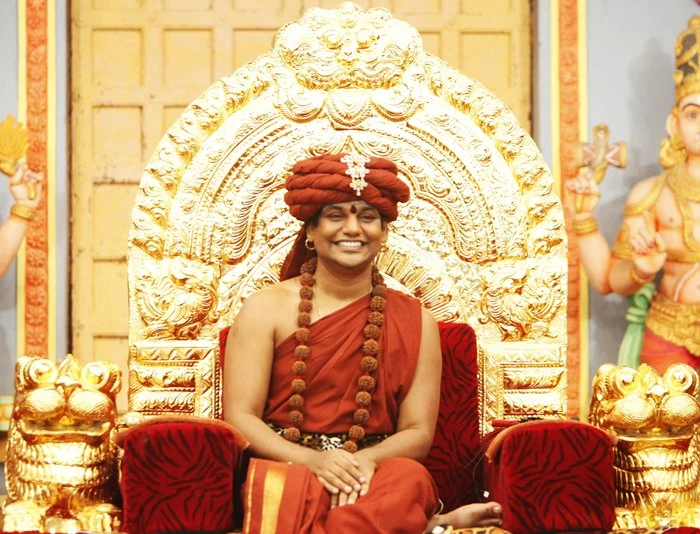
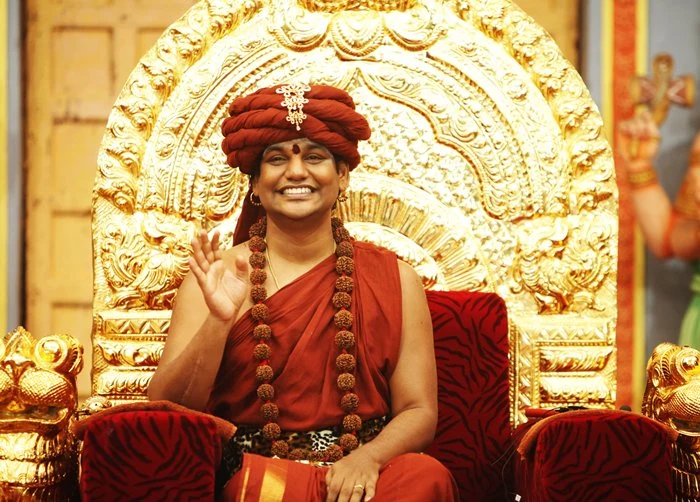
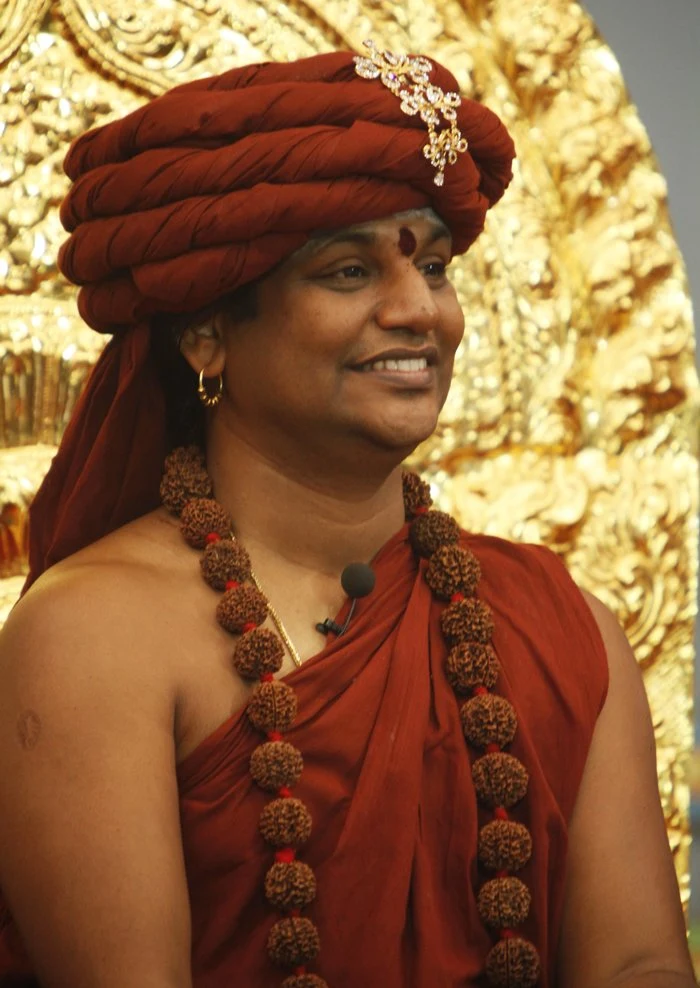
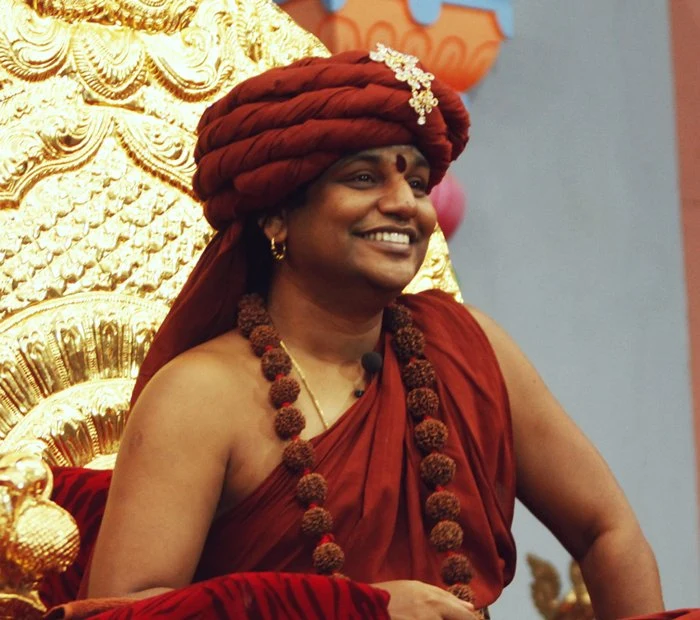
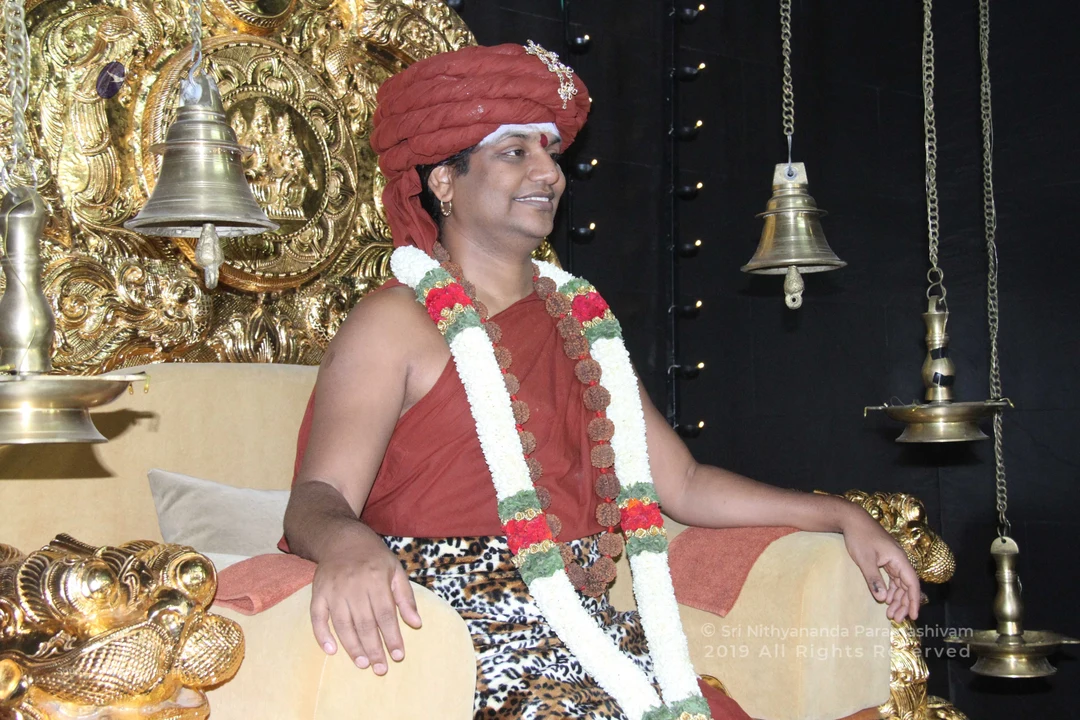
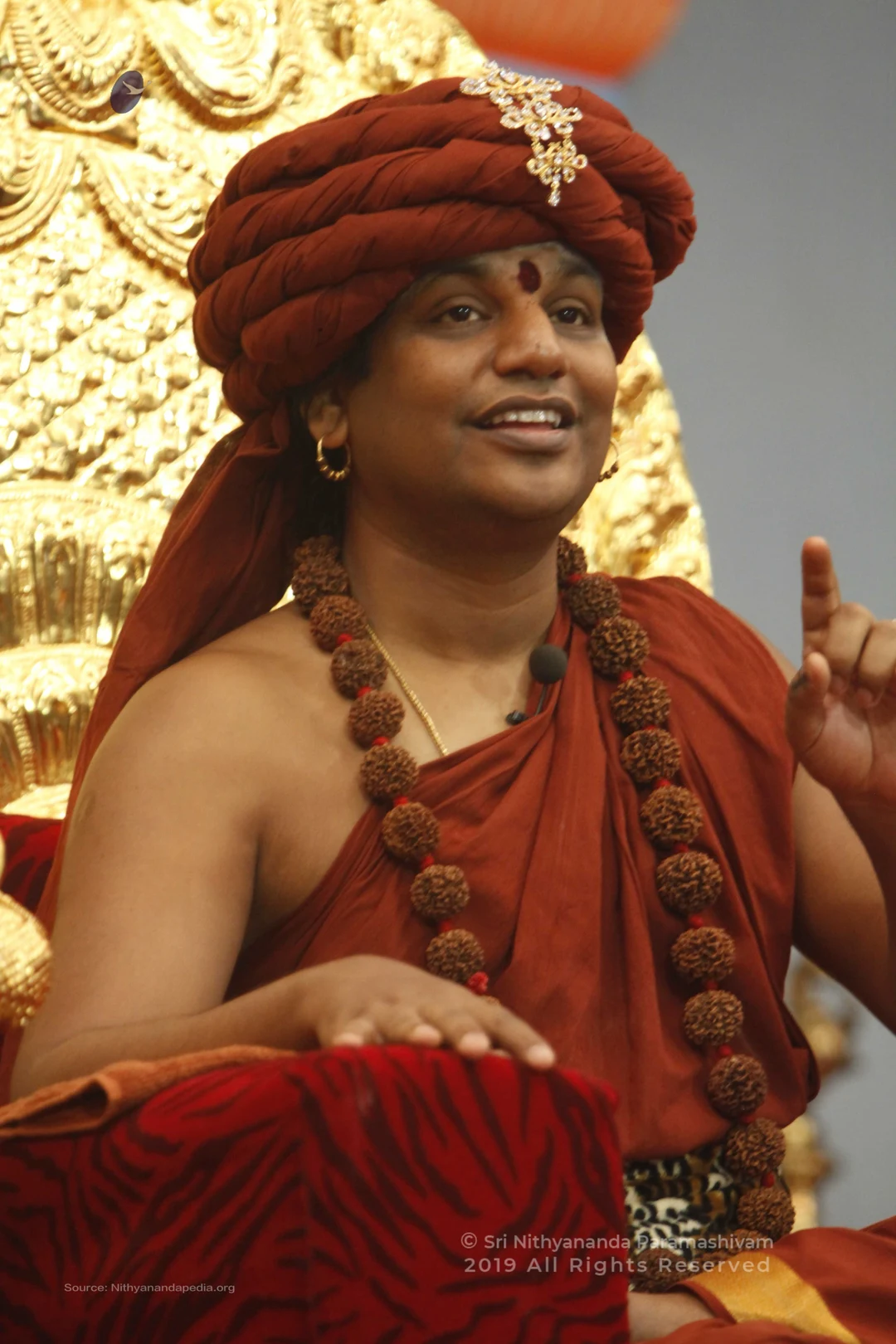
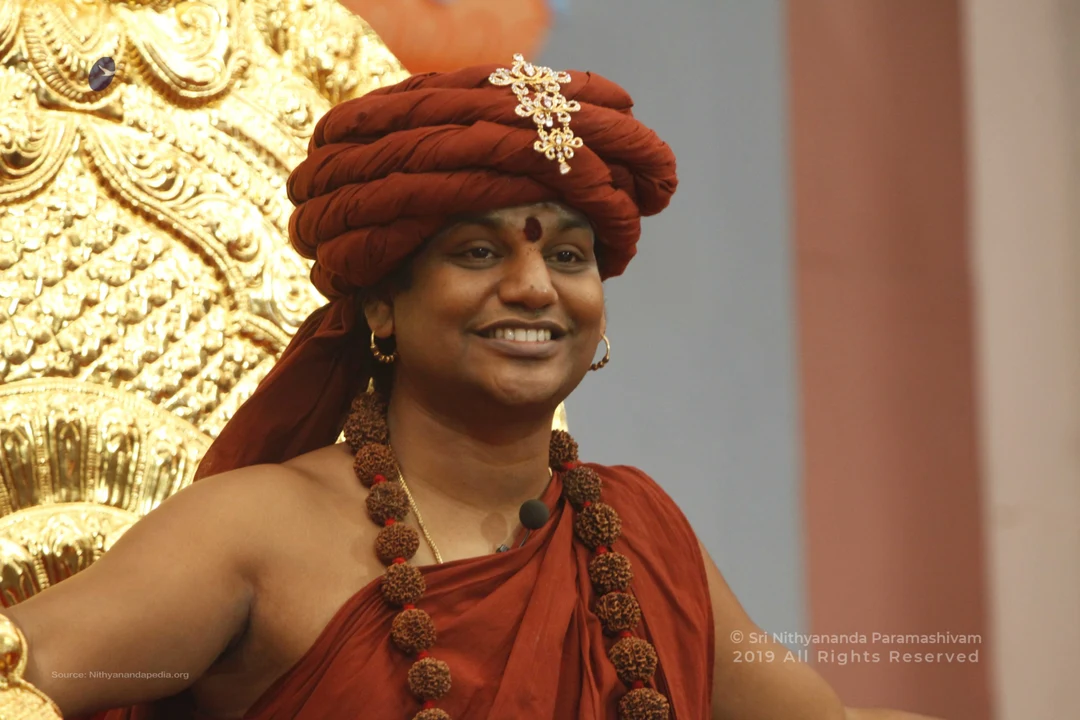
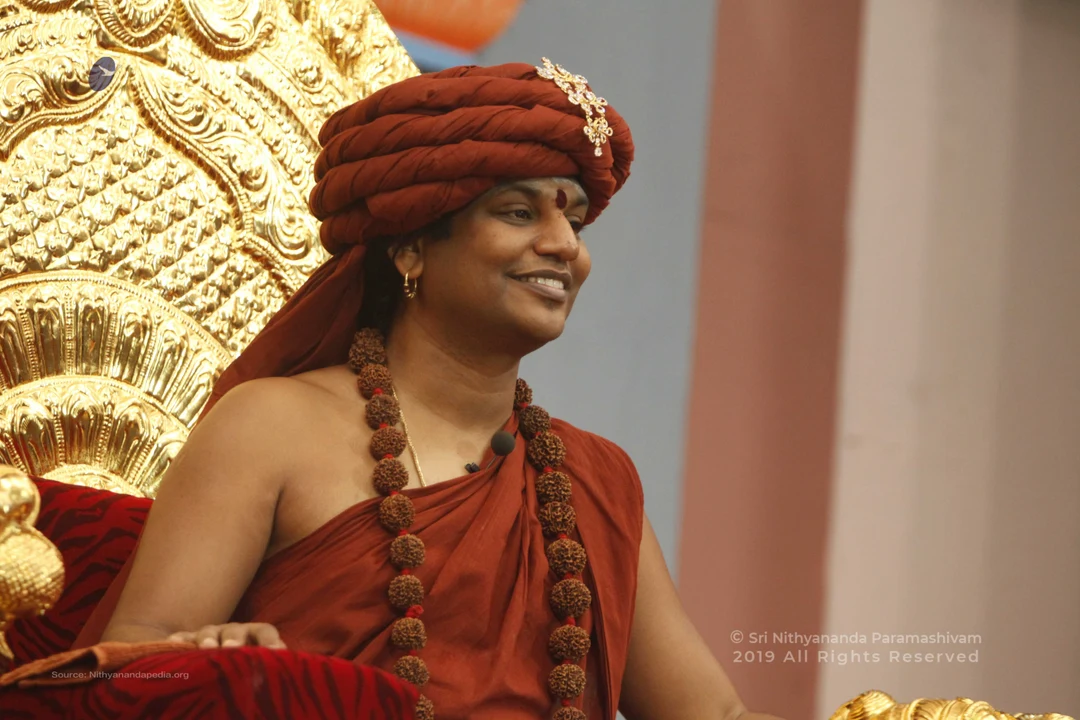
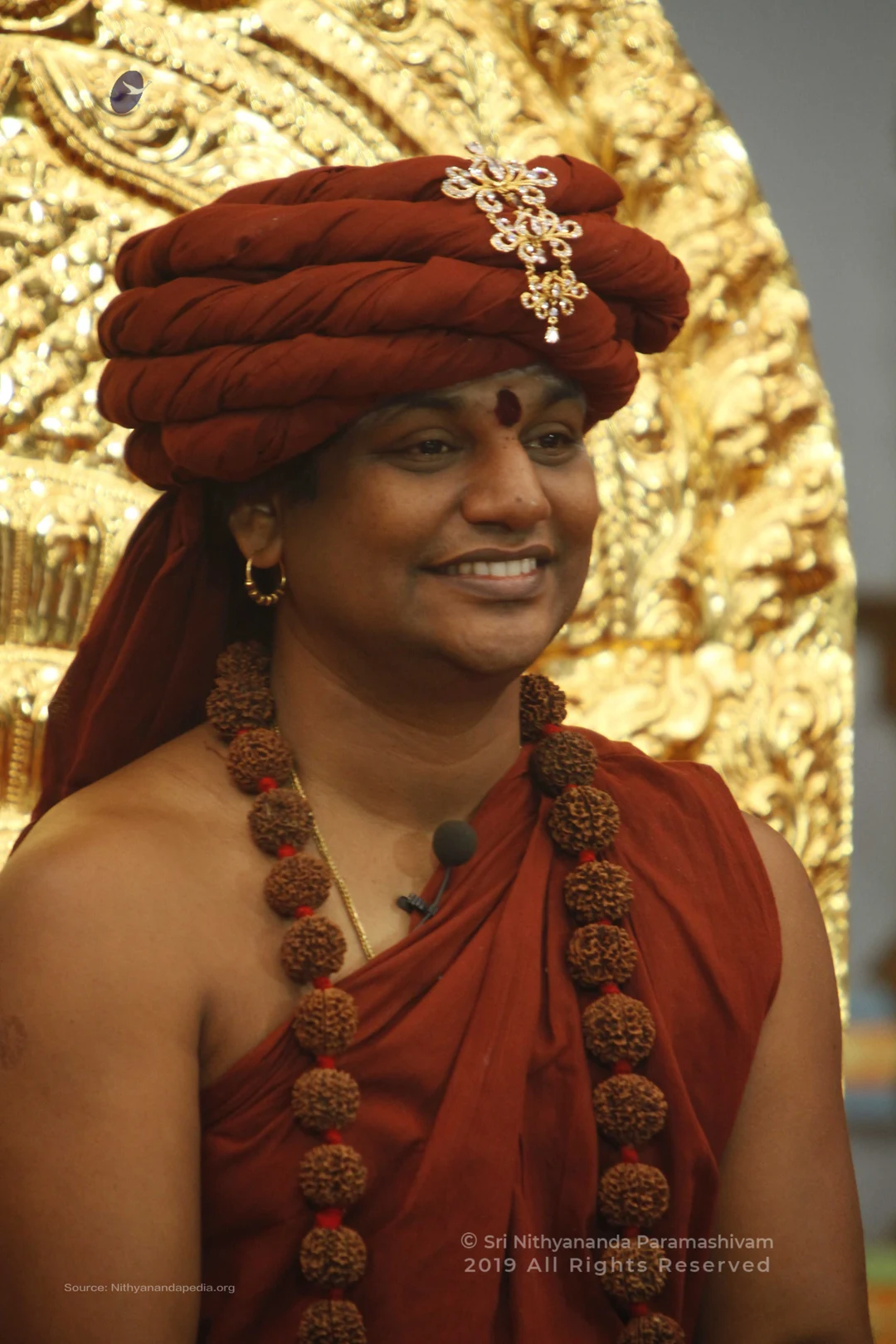
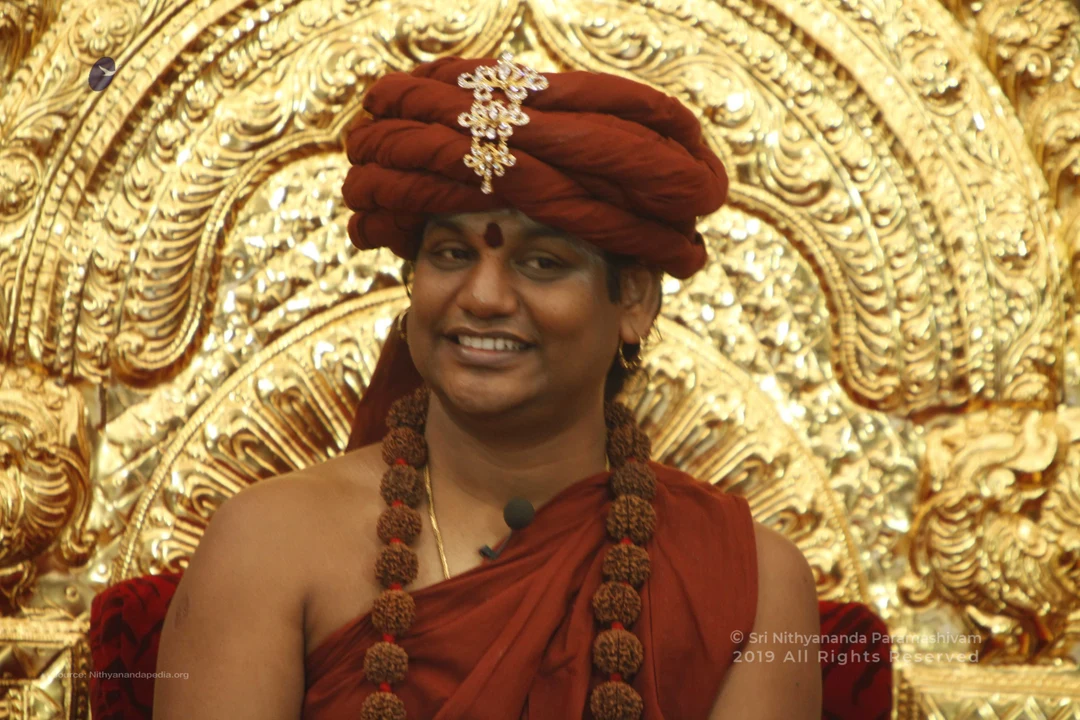
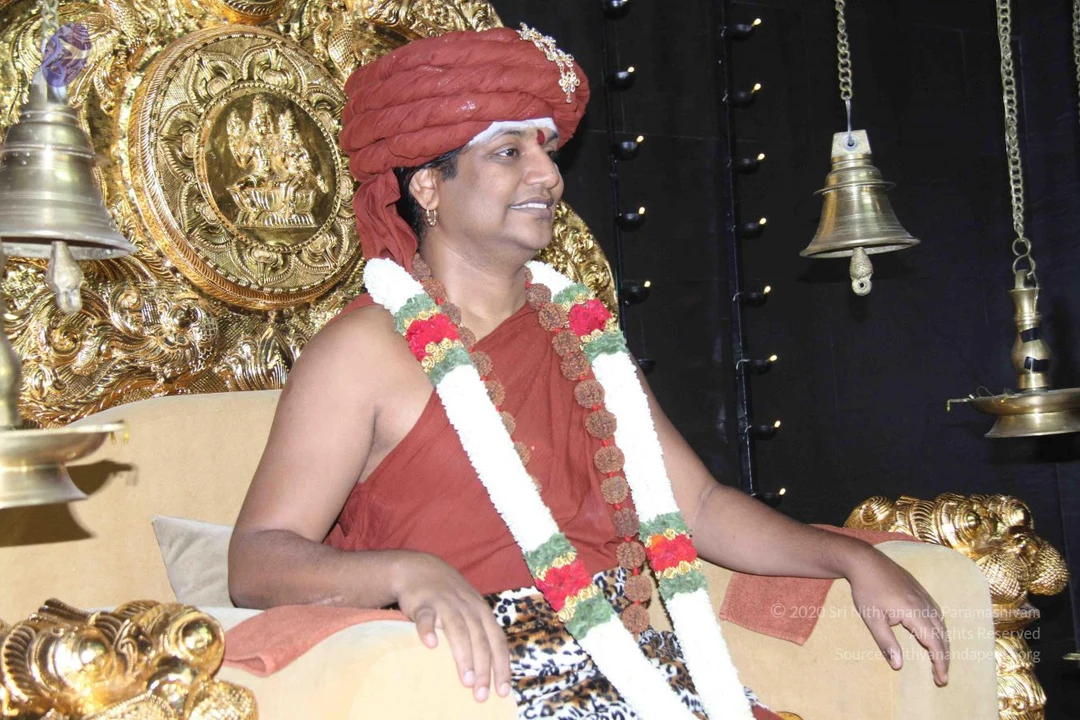
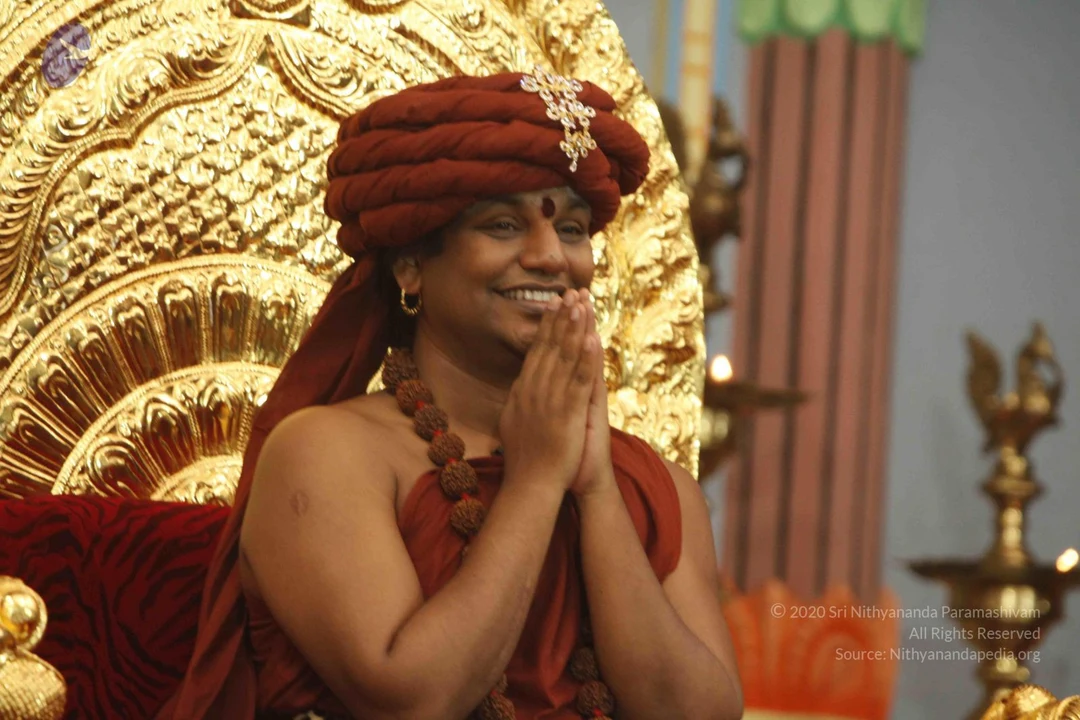
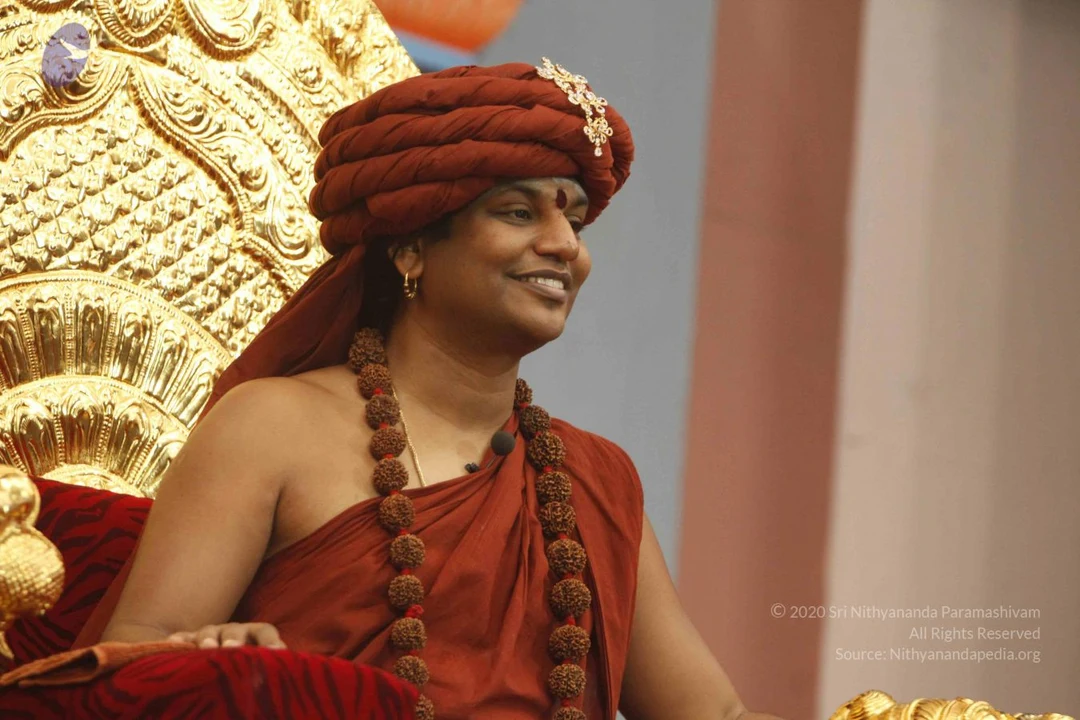
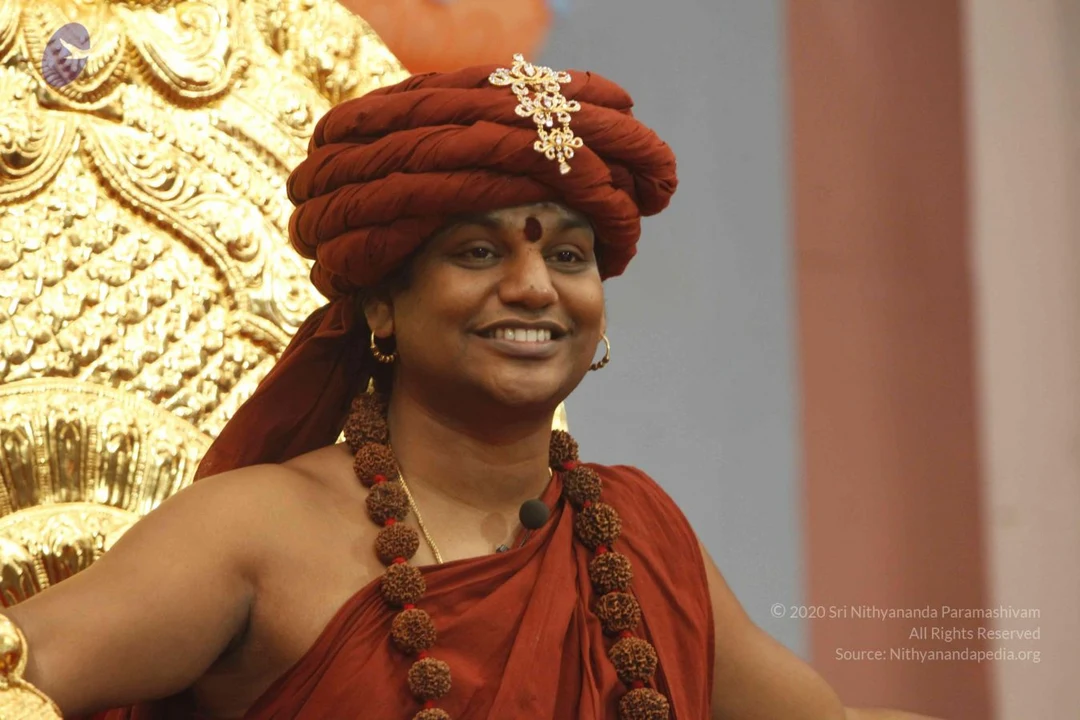
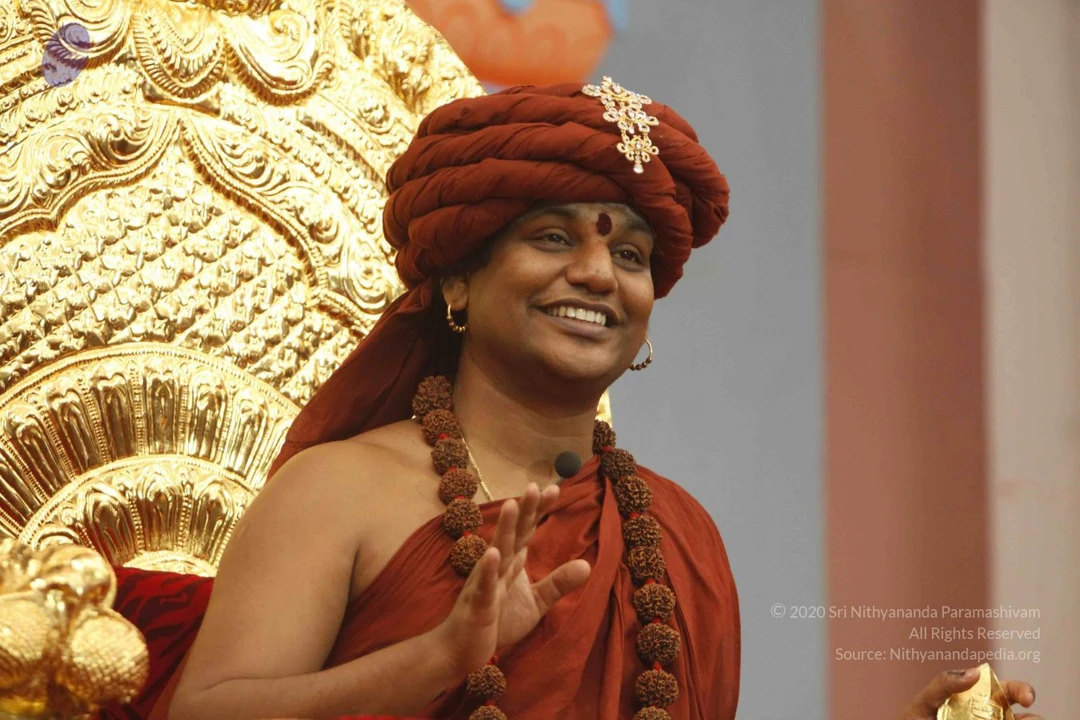
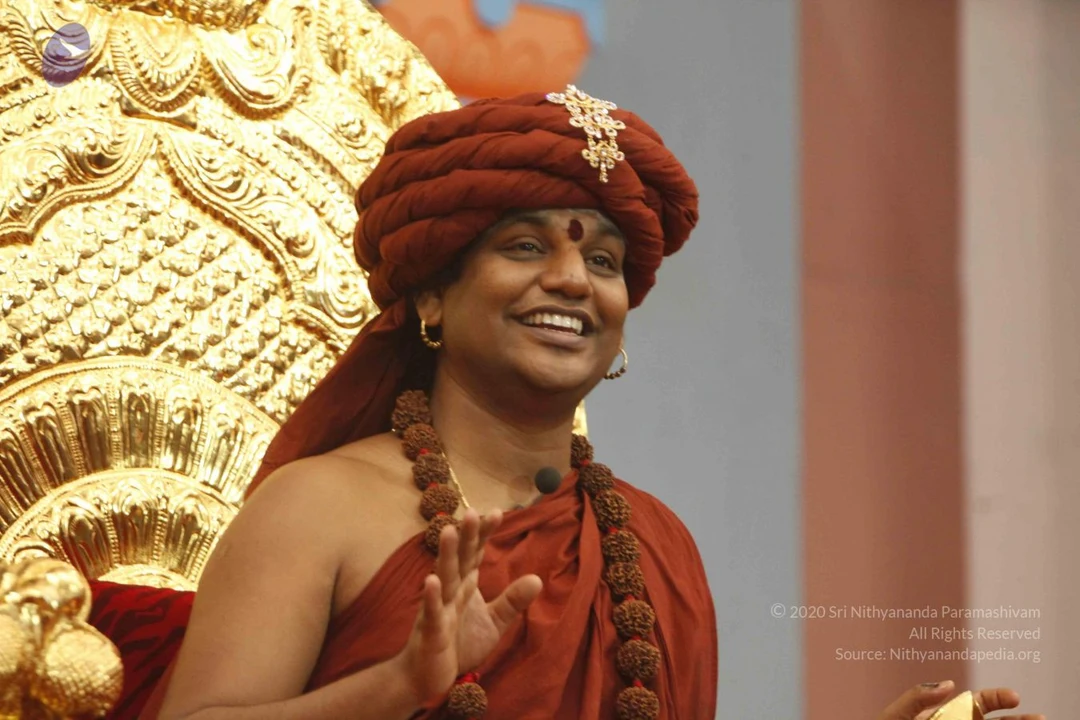
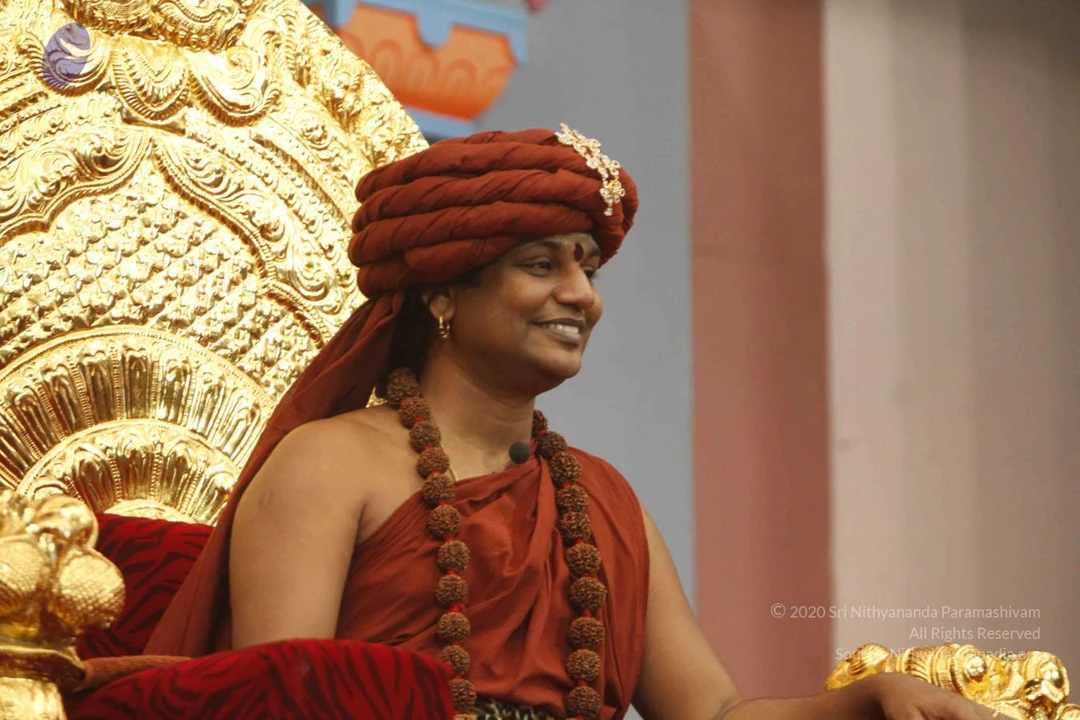
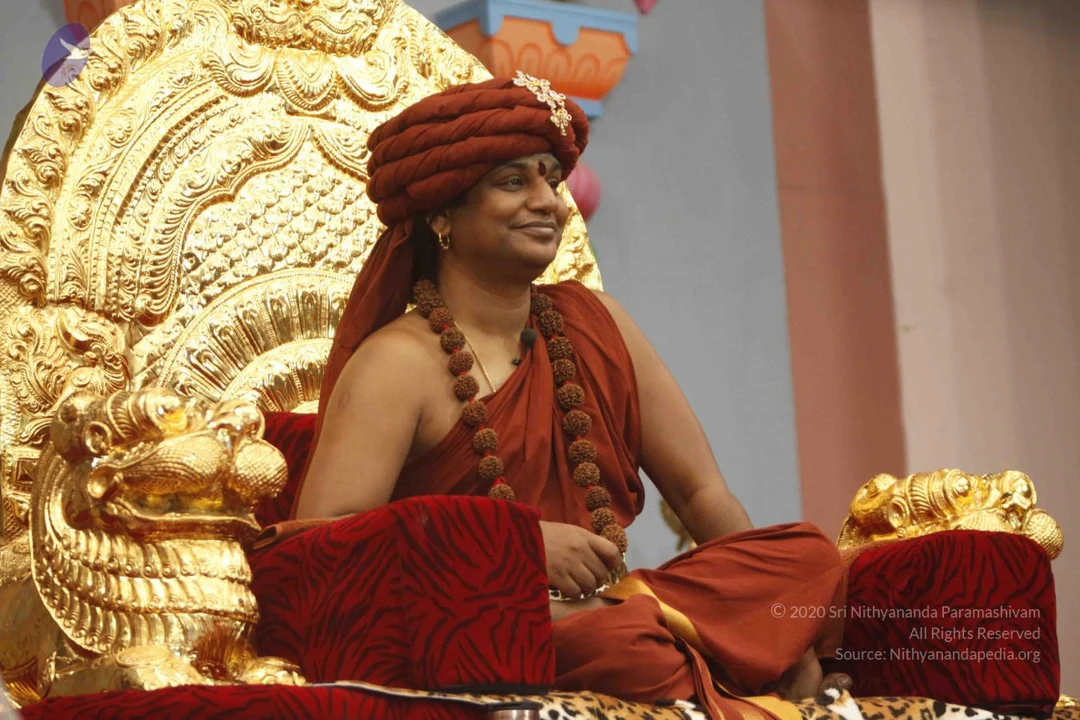
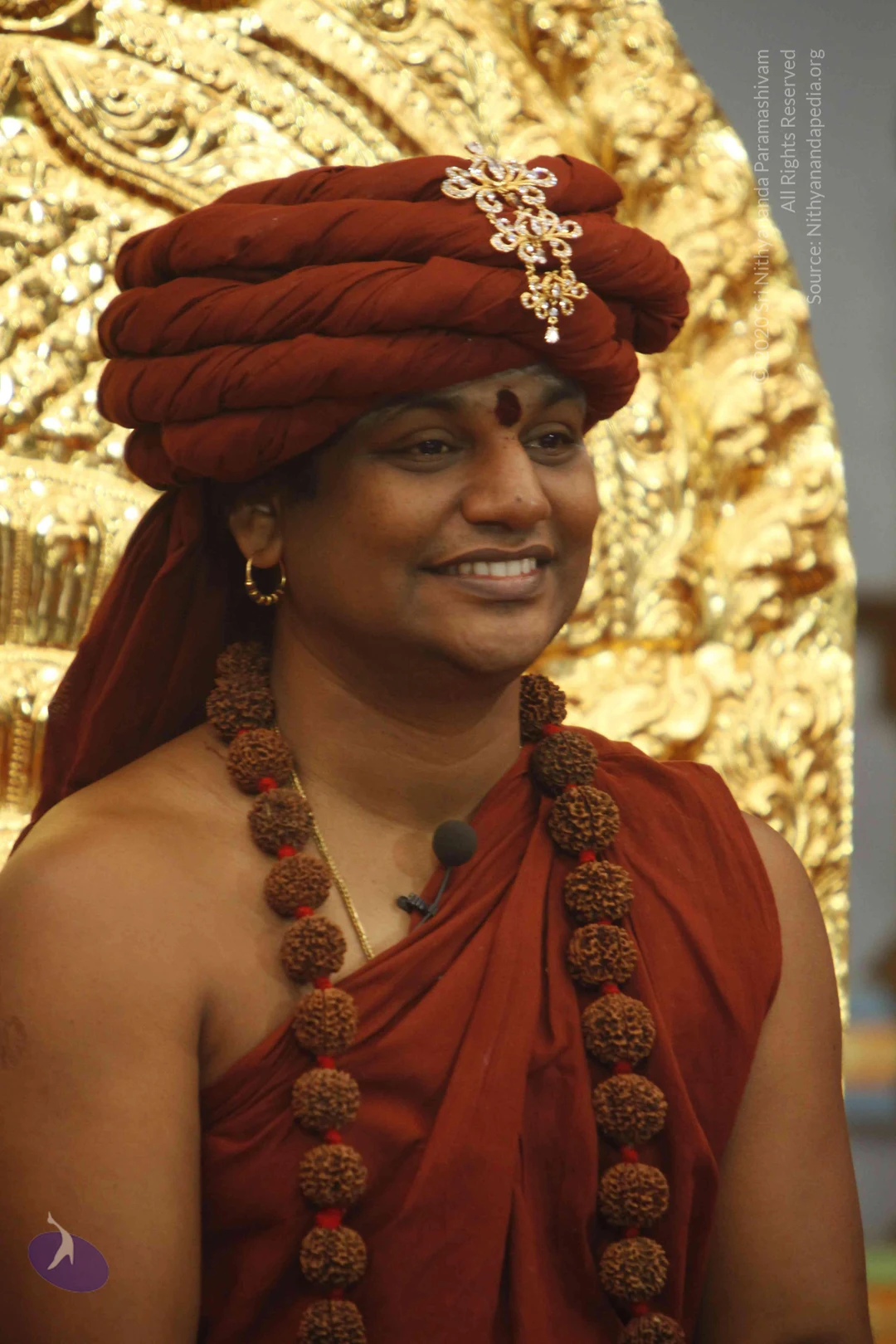
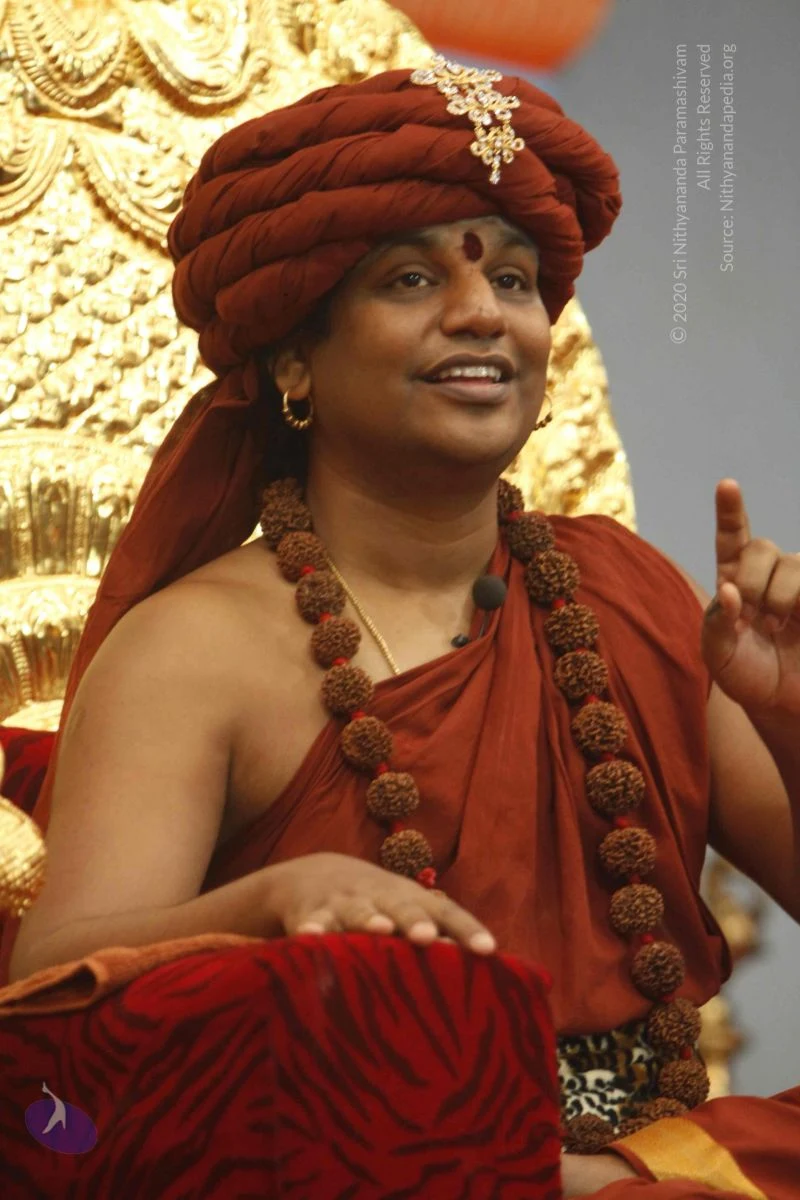
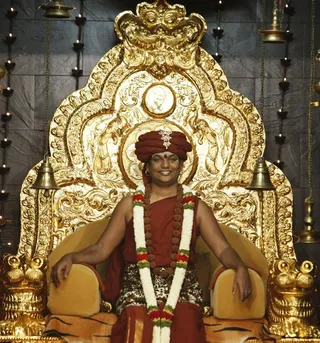
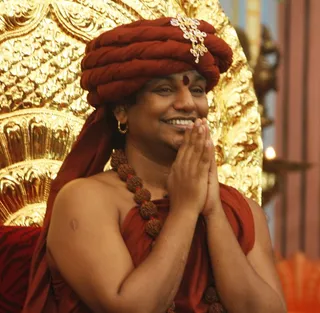
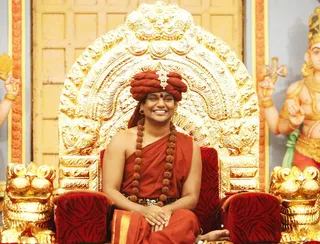
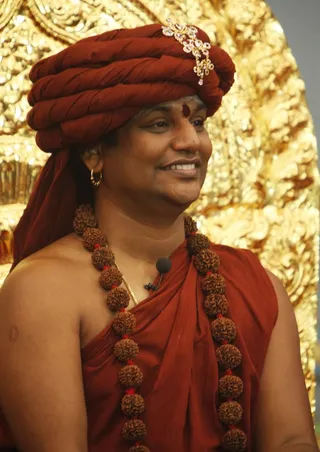
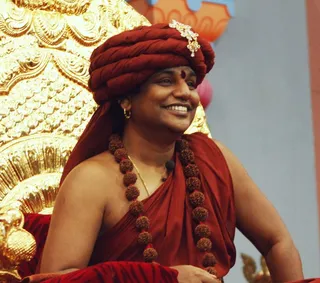
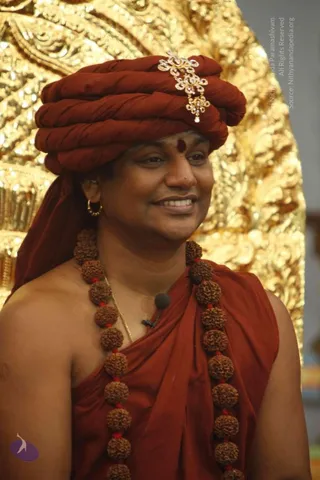
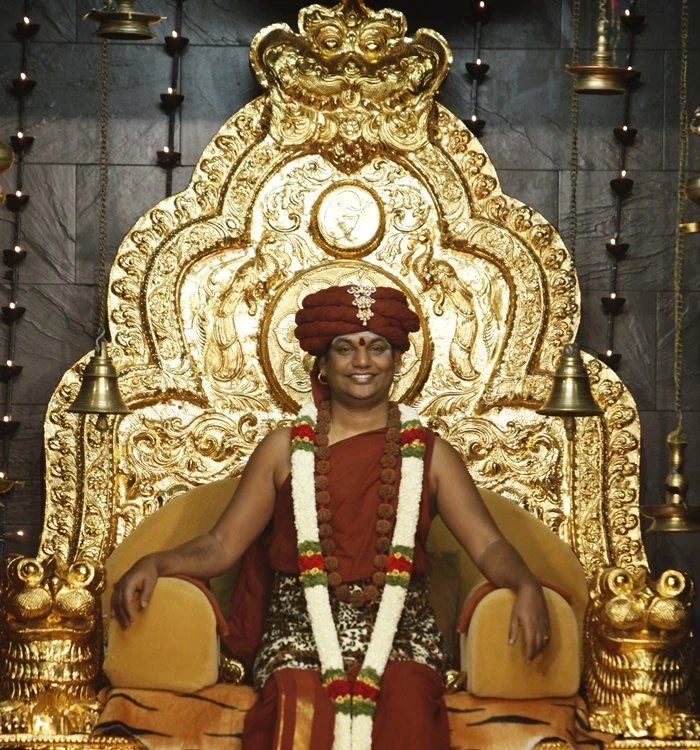
A seated figure sits on an ornate golden throne with elaborately carved, repoussé floral and figural panels and a carved lion-head armrest at each side. He wears a deep red turban with a silver ornament at the front, a red garment, a rudraksha mala, and a white and multicolored garland, with a striped patterned cloth over the lap. Hanging brass oil lamps and small bells flank the throne against a dark grey stone wall. The figure smiles with hands resting on the armrests. Judging by the appearance cues of a swept turban, rudraksha mala and ceremonial garland on a throne, this is Swamiji (probable), seated in person as a satsang or darshan setting.Close photo of a smiling man in a red-maroon turban with a jeweled ornament and a red bindi, palms pressed together in namaste. He wears a red-maroon shawl draped over one shoulder and a multi-bead rudraksha mala with large brown beads. He sits before an ornate gold throne with embossed floral patterns, with a lit oil lamp and a warm pink wall behind him. Swamiji (probable): the turban, saffron-red robes, rudraksha mala and throne are consistent with the page's identification, though the face is not used to confirm it.A smiling man sits on an ornate gold throne with a carved arched back and red velvet cushions, flanked by gold lion-face armrests. He wears a red-orange turban with a jewelled ornament, a red-orange robe, a long rudraksha mala draped to his waist, and bangles. His hands rest in his lap and his bare feet are visible. Behind and beside him stand gilded statues, one of a bare-chested figure with raised hands and gold jewellery, and a golden wooden door. Swamiji (probable): the appearance-based cues are the red-orange robe, turban and long rudraksha mala on a throne, consistent with the page's satsang description, though the face is not used for identification.A smiling man in a red turban with a jeweled ornament at the front sits on an ornate gold throne with carved scrollwork and red tiger-striped cushions. He wears a red shawl over his body, a long rudraksha mala of dark beads hanging to his waist, and a black-and-gold waist belt over red dhoti-style cloth. He raises one hand in a greeting wave. Golden lion heads flank the throne, and a painted deity figure with orange and gold tones stands partly visible at the right edge. Swamiji (probable): the figure wears a turban, rudraksha mala and red-saffron ceremonial dress seated on a throne, consistent with the page's satsang context.Photo of a smiling man in a rust-red turban decorated with a jewelled gold ornament at the front, wearing a red-orange shawl draped over one shoulder and bare chest on the other. He wears long rudraksha mala necklaces with red thread spacers, a gold chain, small gold hoop earring, a red bindi, and a small clip-on microphone at his collar. Behind him a large ornate golden carved backdrop fills the frame. Appearance-based label: a person, seated or standing as a speaker during satsang.Swamiji (probable) seated on an ornate gold throne, smiling and turning his head to one side. He wears a deep red turban with a small white jewelled ornament, a red shawl draped over bare shoulders, and a long strand of rudraksha beads with gold accents across his chest. A small red dot marks his forehead. A microphone is clipped near his collar. The gilded carved throne fills the left side, with a pale blue wall and orange decorative backdrop behind him.

Pada-Puja

13 photosSource gallery
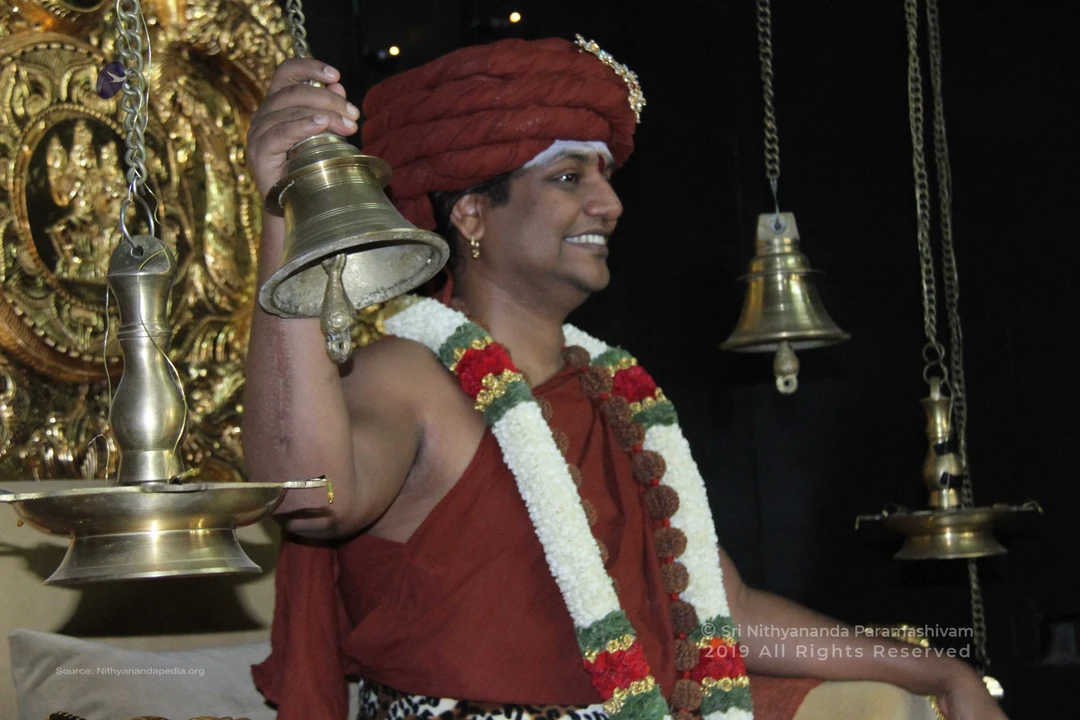
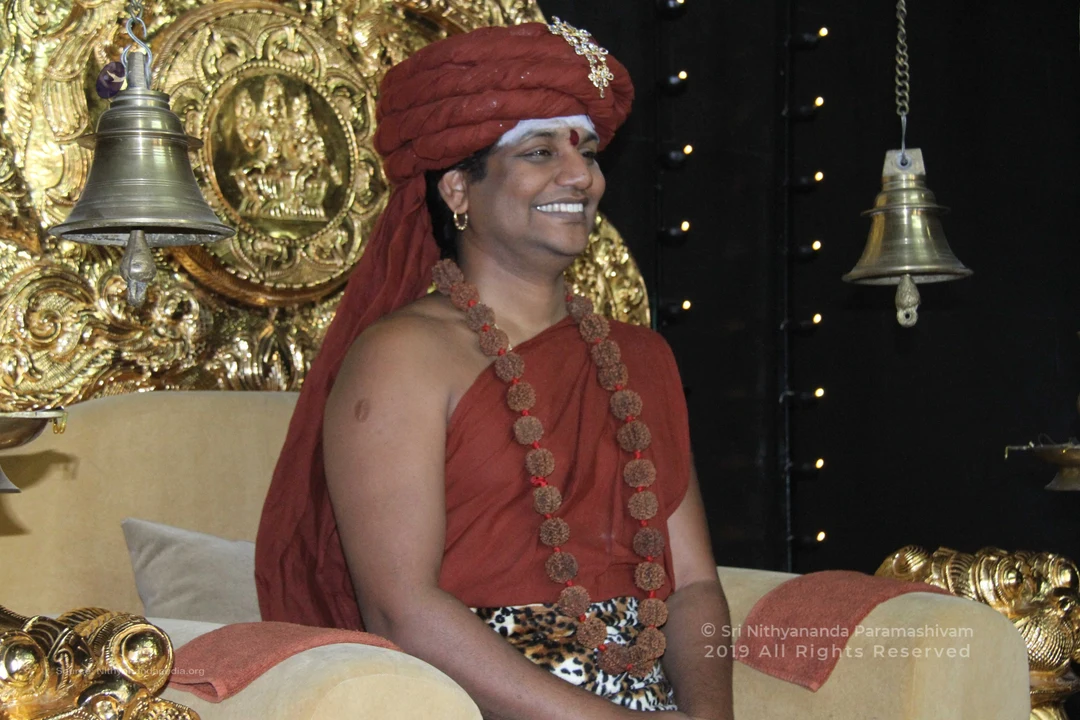
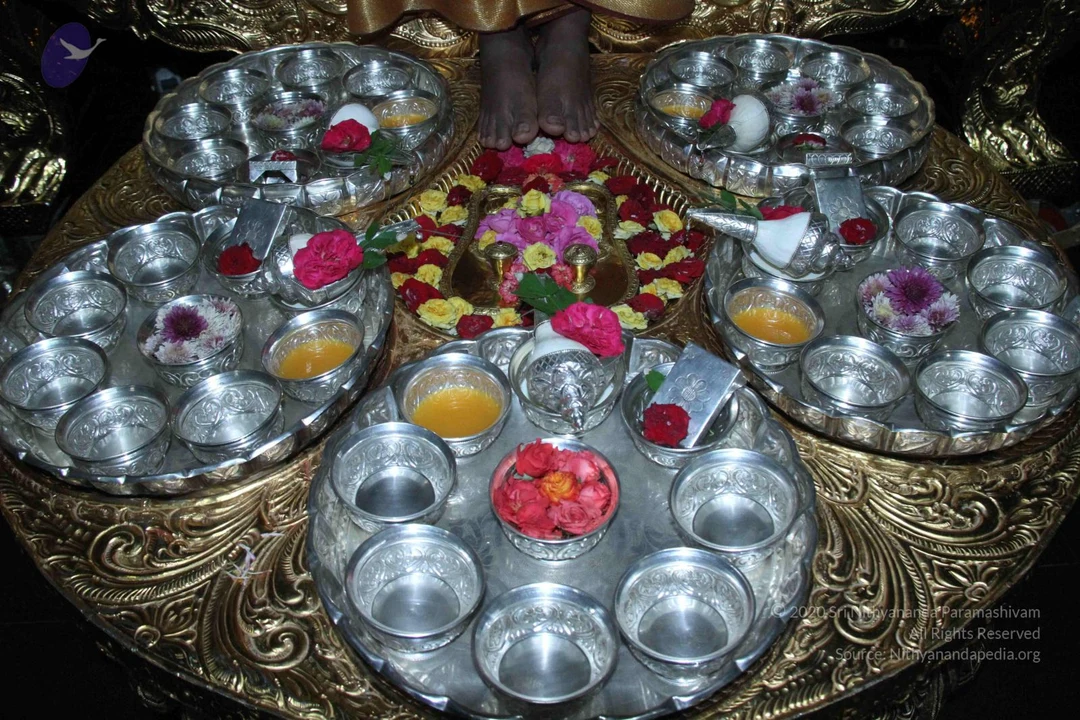
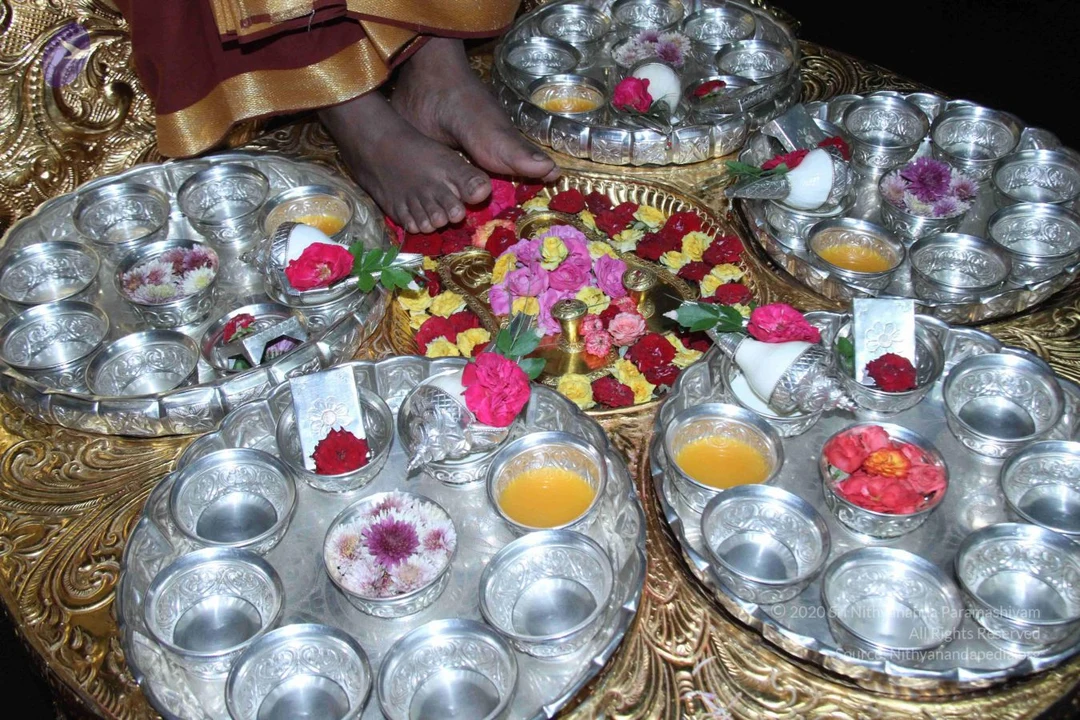
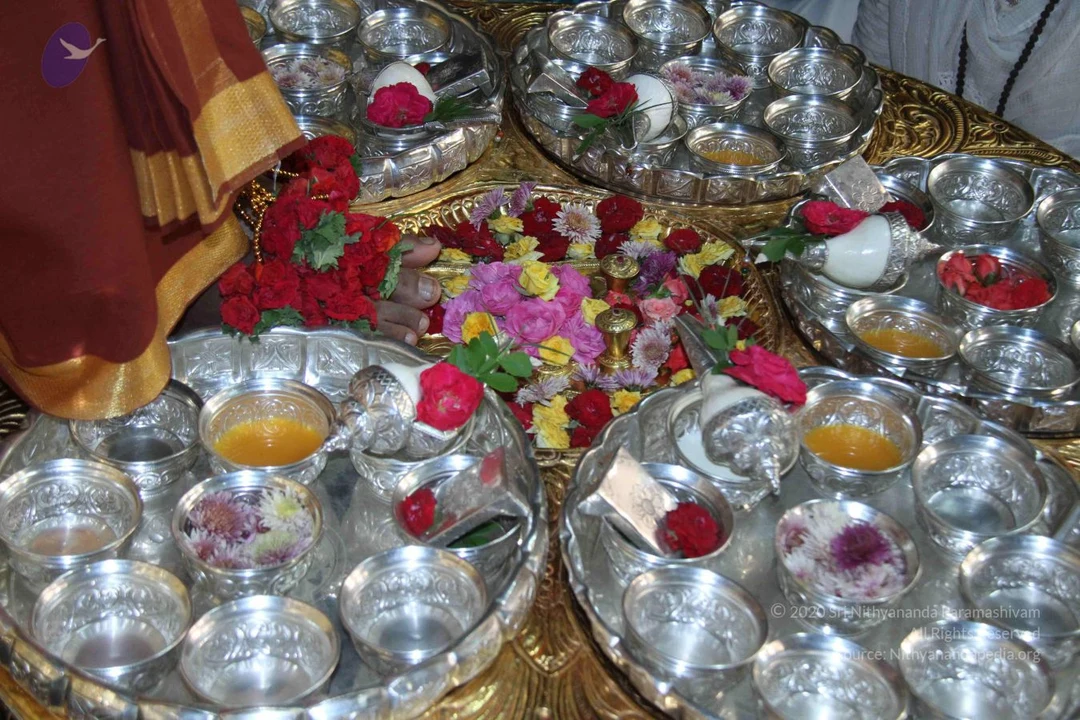
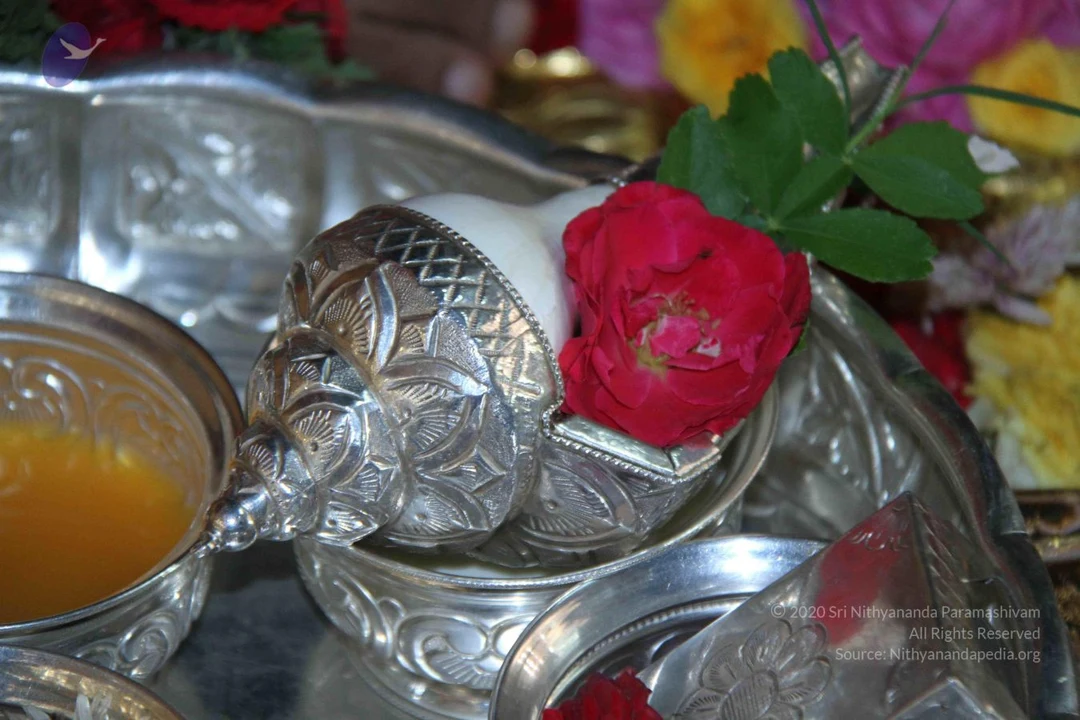
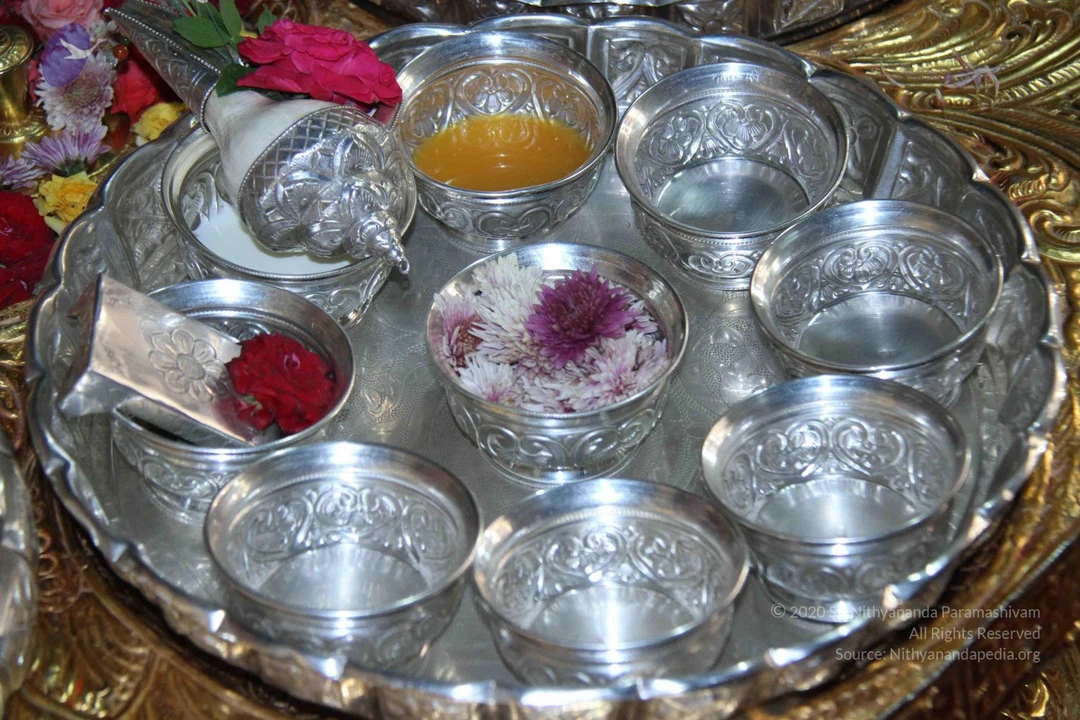
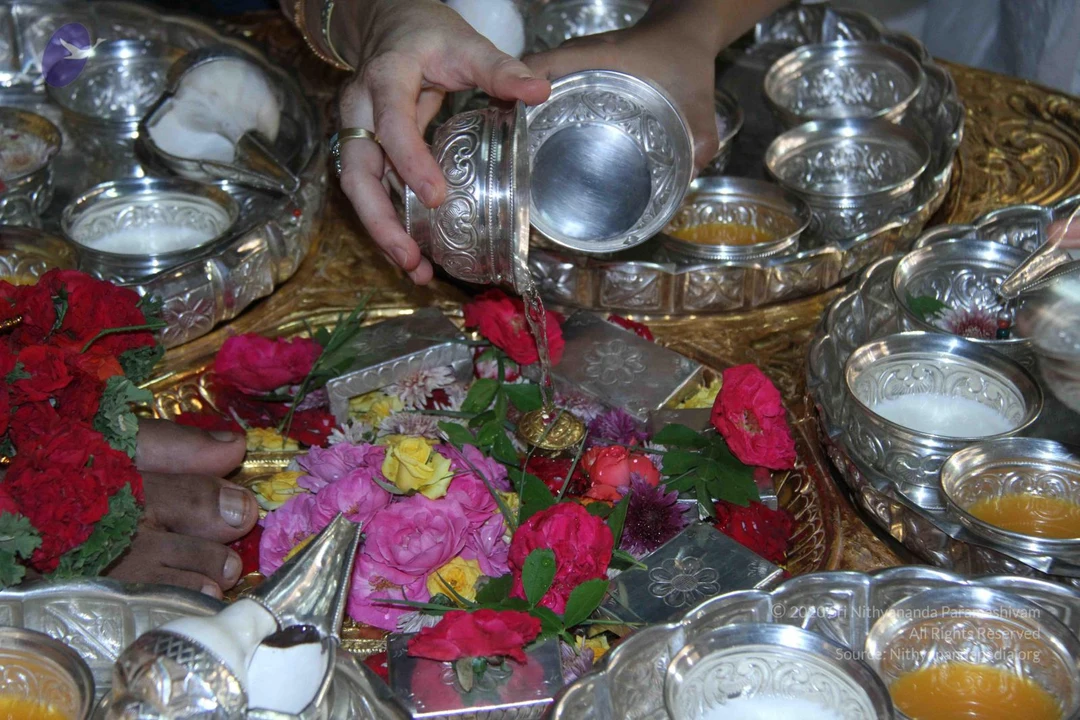
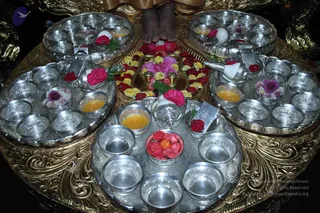
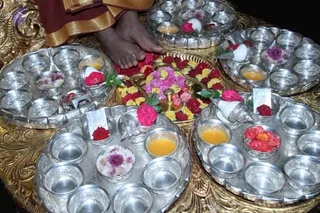
Close-up photograph of a ritual arrangement on a brass tray with ornate gold-toned engraved edges. Bare feet of a standing person are visible at the top of the frame. Around the central platter are several round silver bowls holding orange liquid, flower petals and offerings, with red roses, yellow marigold-type petals, purple flowers and a silver spouted vessel on a tray. Rose petals and yellow flowers are scattered in a circle on the central plate. No legible names appear in the image, and no people are fully visible.Close-up photo of a ritual arrangement on a gold-embossed cloth. Bare feet of a person in a maroon and gold garment rest on a bed of red, pink, yellow and white flower petals. Around them are polished silver plates holding small silver cups of saffron-yellow liquid, rose and marigold petals, white flower heaps, a white conch-shaped vessel with a red flower and green leaves, and a brass kalasha-style vessel in the centre. Pale silver plates with white flower offerings and small silver tokens surround the central offering, consistent with a puja or padapuja setting.A smiling man sits on a cream-upholstered throne-like seat in front of an ornate gold-embossed backdrop depicting a deity scene. He wears a red-orange turban with a jeweled ornament, a red-orange shawl draped over his bare shoulder and chest, a long rudraksha mala with red threads, and a leopard-print lower garment. A red tilak and white markings are on his forehead. Two hanging brass bells flank him, and gold-trimmed cushions with orange cloths rest on the armrests. Swamiji (probable): the figure wears a red-orange turban, a rudraksha mala and a shawl, with ceremonial gold-trimmed seating.A seated man in a red turban and rust-red robe sits on a cream throne with gold carved armrests before an ornate gold backdrop bearing a deity relief. He wears a white and red flower garland with rudraksha beads, a red tilak and white forehead marking, and leopard-print lower garment. He raises a brass hand bell in his left hand while a second brass bell and an oil lamp hang nearby. Swamiji (probable): long-haired presentation in red turban and red robe with rudraksha garland and throne seating.A man seated on a cream-upholstered throne-style chair in front of an ornate gold carved backdrop, with hanging brass bells and brass oil lamps on chains beside him. He wears a red-orange turban with a small jewelled ornament, a red-orange shawl over his body, a long multi-strand garland of white, red and green flowers with rudraksha beads, and a leopard-print lower cloth. A red tilak mark is on his forehead. Swamiji (probable): the red turban, saffron-red shawl, rudraksha mala and ceremonial garland fit the candidate appearance, seated in a throne-like setting, in person.Close-up photograph of a bare foot resting on a silver tray during a padapuja ritual. The foot is decorated with a heavy garland of red roses and green leaves, with a gold beaded chain draped over the ankle. Scattered red, pink and yellow rose petals and silver bowls with yellow offerings surround it, and a corner of a gold-and-red cloth is visible at the top left.

Satsang

14 photosSource gallery
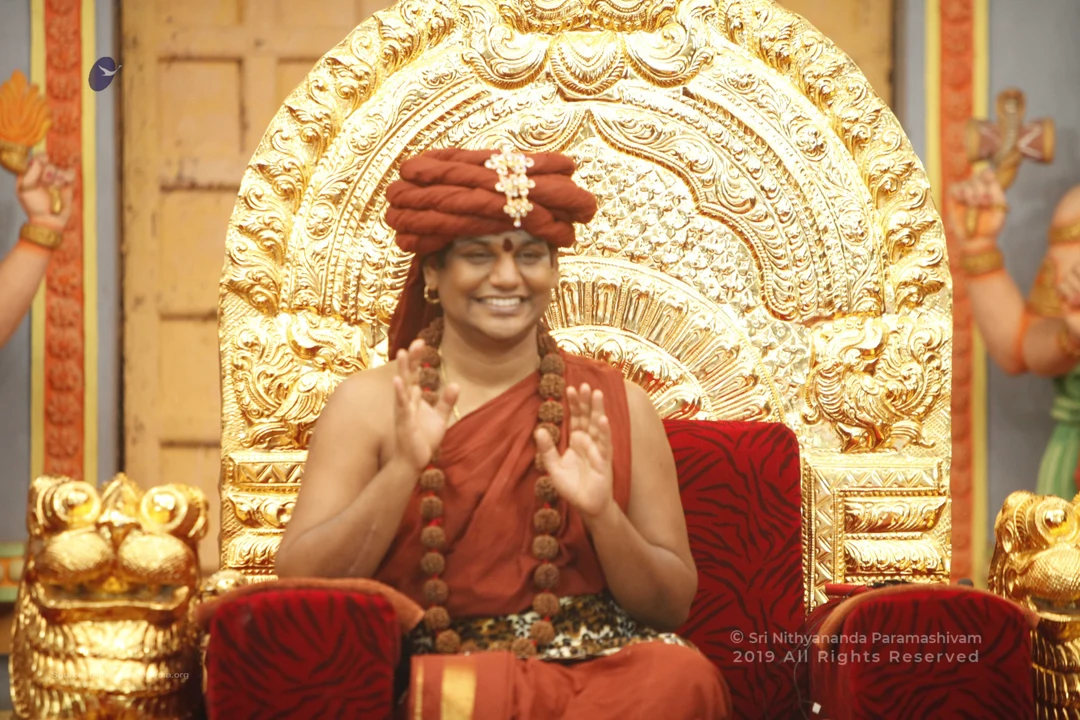
A smiling man seated on an ornate golden throne with carved gilded backrest and red velvet armrests flanked by golden lion heads. He wears a red-orange turban with a jewelled ornament, a red-orange shawl over the shoulders, a long rudraksha mala of large brown beads, and a patterned lower garment. He has his palms raised together in front of his chest. Probable Swamiji seated on the peetha in a satsang setting; the appearance cues are the swept-back long hair, turban, saffron-orange clothing and rudraksha mala. A deity murti with raised arms stands at the right edge. The image carries a copyright line in the lower right.A seated man in a red-orange turban with a small white jewelled ornament, wearing a rust-red shawl over a bare torso, a long rudraksha mala and gold earrings, sits on an ornate gilded throne with red tiger-striped cushions and golden lion-head arms. He smiles and raises both palms in a gesture of welcome during a satsang. Carved gold lion heads flank the throne, and a painted pillar and sculpted deity figures with raised hands stand at the edges. Swamiji (probable) is shown in this seated teaching posture, identified by the turban, rudraksha mala and saffron-red robes.A seated figure sits on an ornate golden throne with a carved arched backrest, flanked by two painted standing deity statues with multiple arms holding objects, and golden lion-shaped armrest supports with red velvet cushions. The seated person wears a deep red-orange turban, an orange-red shawl, a long rudraksha mala and a small white ornament on the turban, and smiles with hands folded. a person appears in this seated pose on the throne, wearing the saffron-red turban, rudraksha mala and orange robe. The setting is a temple-like hall with pastel pillars and a wooden door behind the throne.A seated man in saffron and orange robes sits on an ornate golden throne with red velvet cushions and golden lion-form armrests. He wears a red-orange turban with a small ornament, a long rudraksha mala, and a gold chain, and smiles with hands resting in his lap. Flanking him are two large painted deity murti figures with multiple arms, gold crowns, and gold jewellery, holding staffs and lotus-like objects. A leopard-print cloth covers the dais, and a golden door stands behind.A smiling man seated on an ornate gold throne with carved lion-head armrests upholstered in red tiger-stripe fabric. He wears a red-orange turban with a jewelled ornament at the front, a red bindi, gold earrings, a long rudraksha mala and an orange-red robe with a leopard-print cloth at the waist. Behind him are carved gold panels and painted deity figures with raised hands and orange-red garments. a person, seated on the throne, shown in a satsang-style setting.A smiling figure seated on an ornate gilded throne with a carved golden back and red-and-black striped cushioned armrests, flanked by golden lion-head arm ornaments. The person wears a rust-red turban with a small gold ornament at the front, a red bindi, gold earrings, a long rudraksha mala of brown beads, and a rust-red robe over the shoulder with a patterned waistcloth. The right hand is raised in a waving gesture. a person is seated centrally, with the throne and lion ornaments as the main setting. Partially visible painted panels with raised hands frame the edges.

Kalpataru-Darshan
15 photosSource gallery
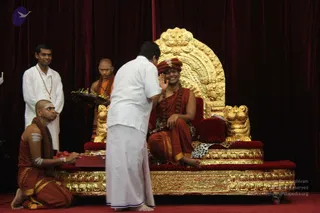
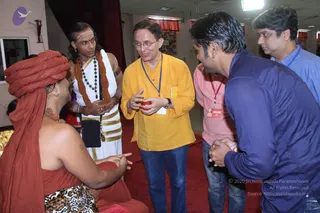
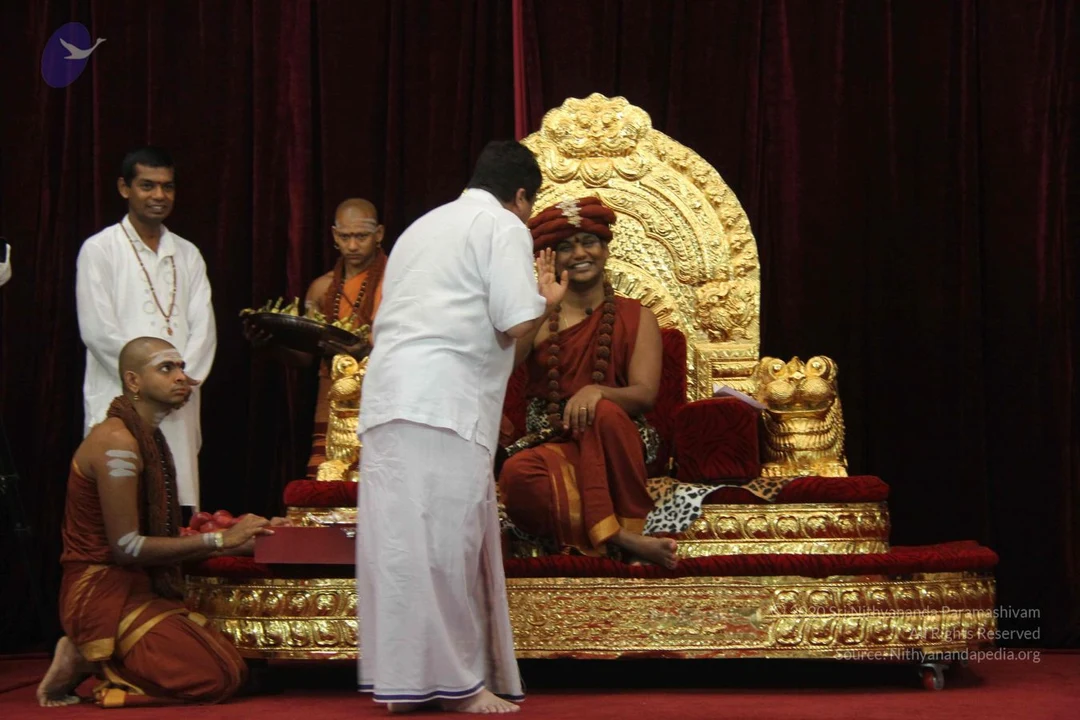
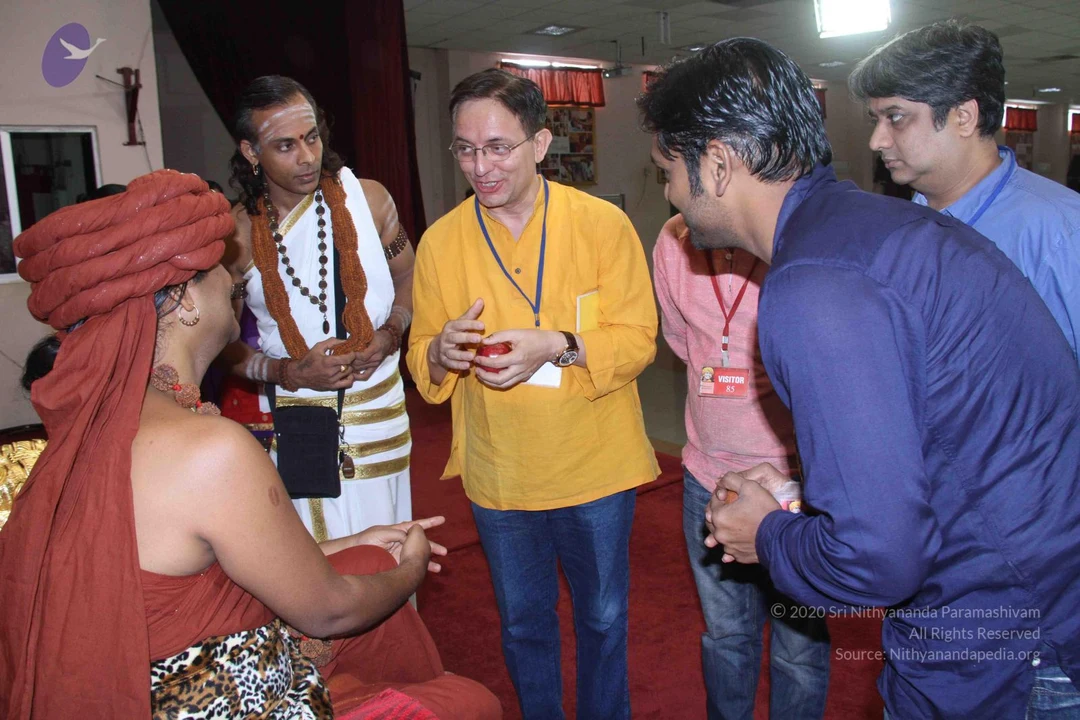
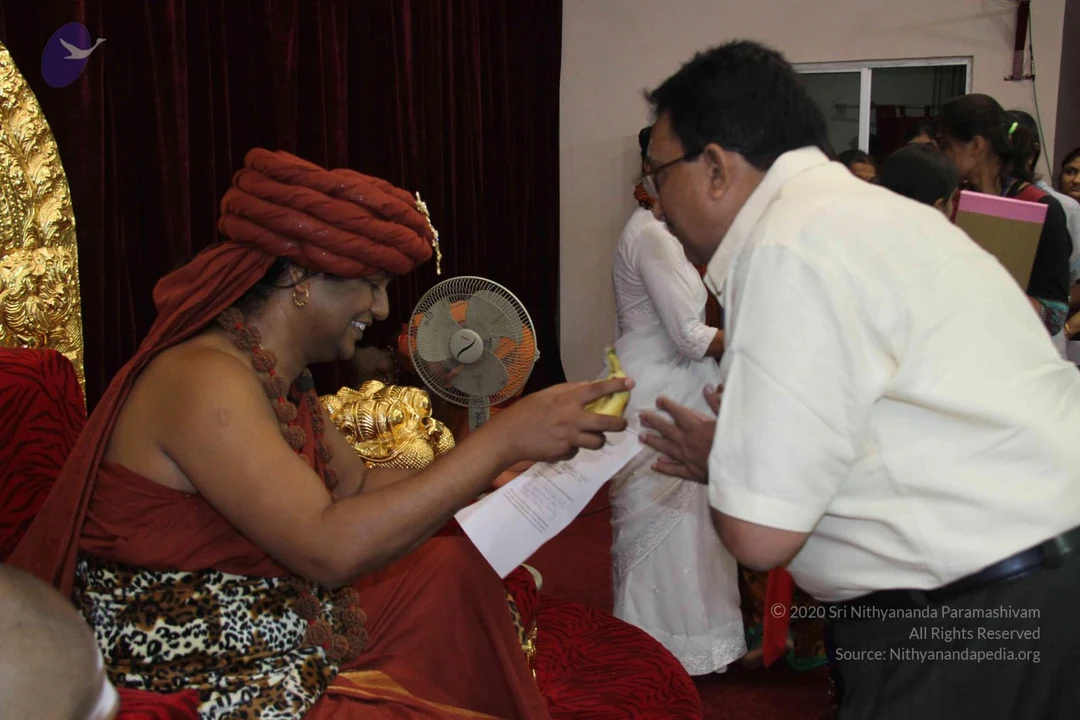
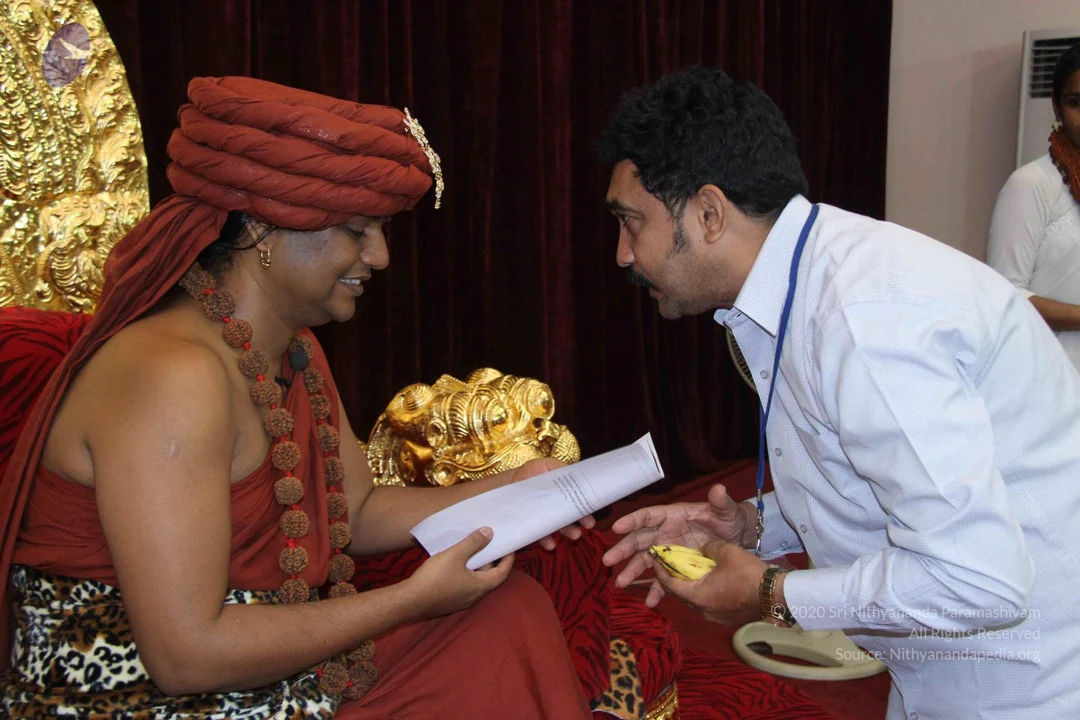
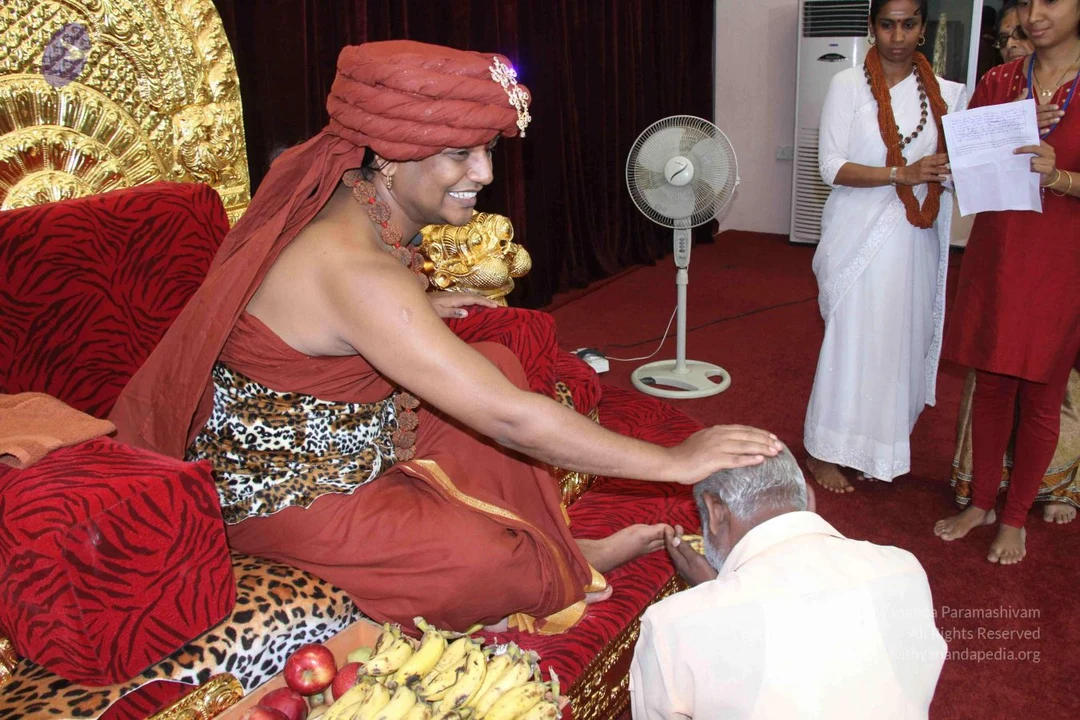
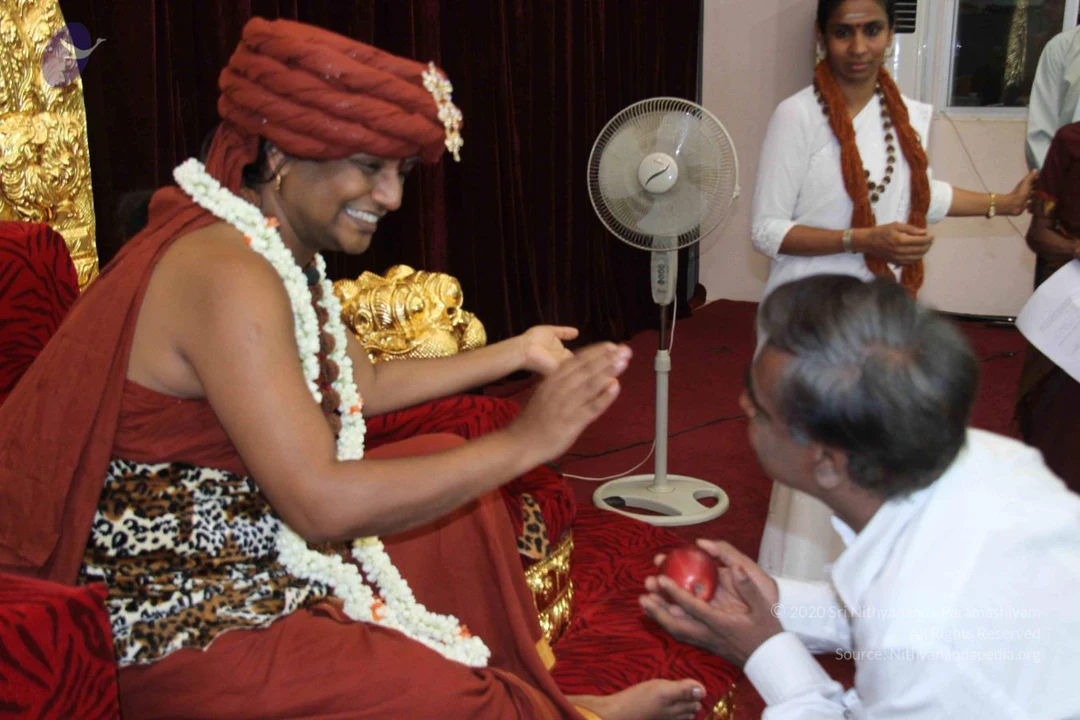
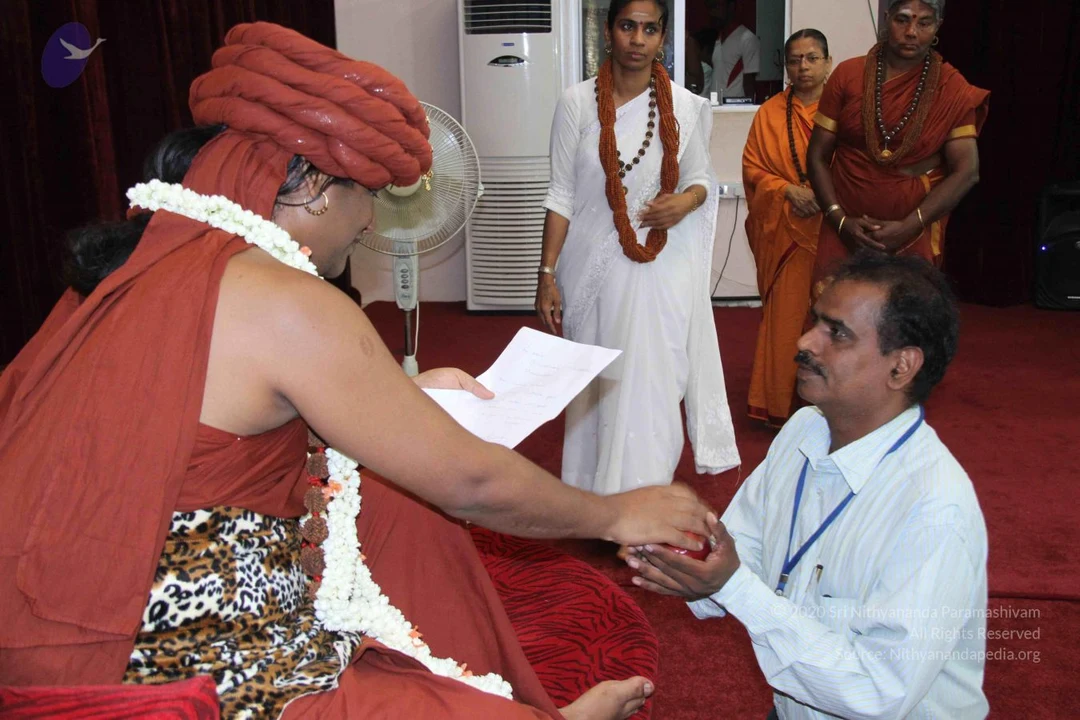
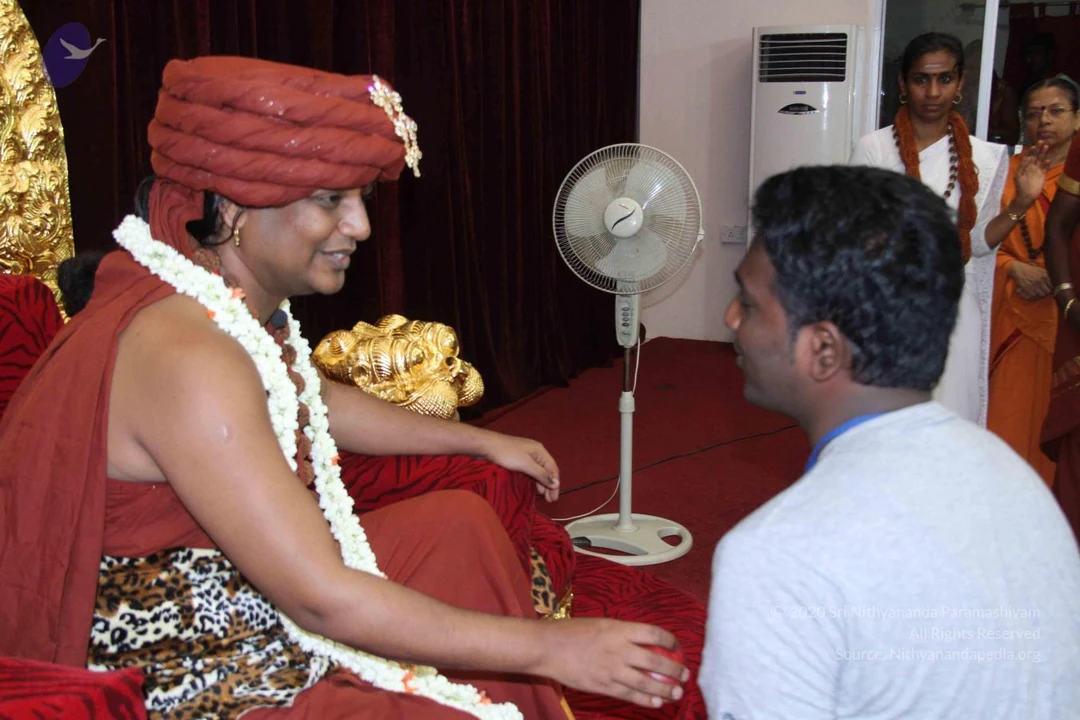
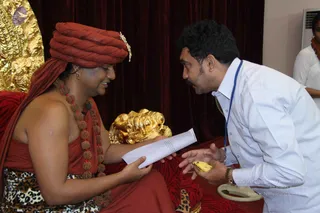
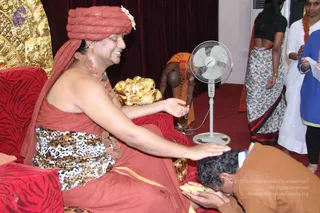
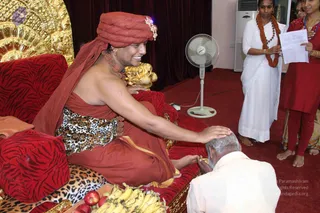
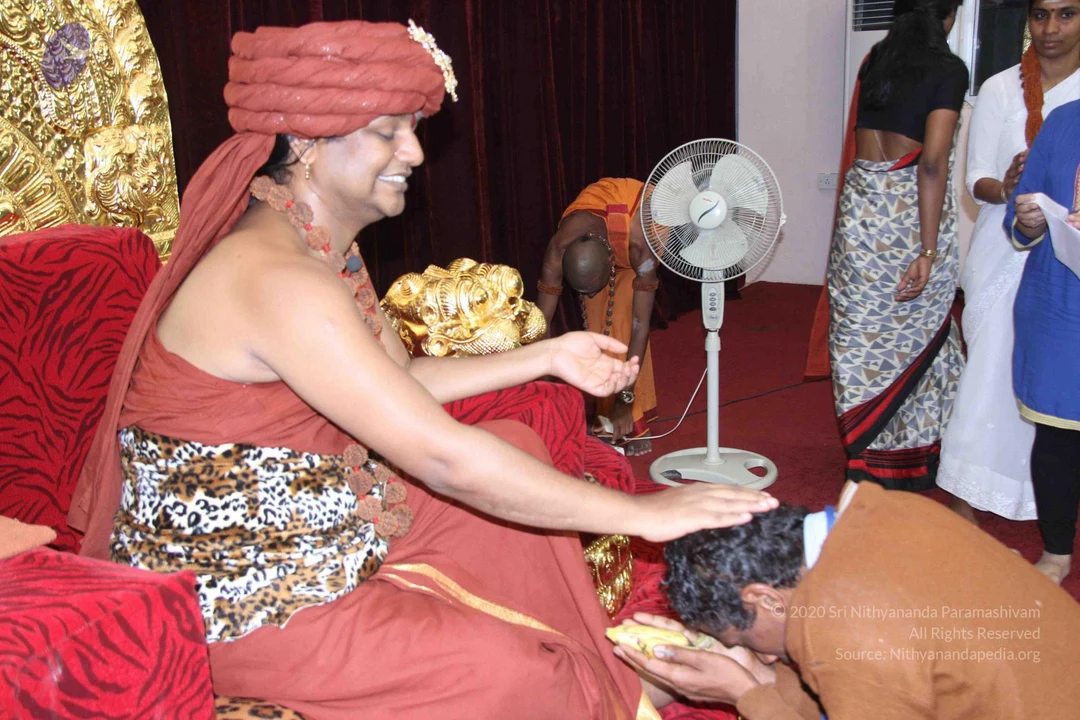
A photograph of a ceremonial scene on a red-carpeted stage before a dark red velvet curtain. A seated figure on an ornate gold throne with lion-head armrests wears an orange-red turban with a white mark, an orange-red robe and a long rudraksha mala, and smiles with a raised hand as a man in white shirt and dhoti bows toward him with hands folded. To the left, a kneeling priest with white tripundra markings and bare chest wears orange-red cloth and holds a tray of red fruit; behind the throne, another priest in orange-red robes holds a metal plate of offerings, and a man in white shirt and mala stands at the back left. Swamiji (probable): the seated figure has a turban, orange-red robes and a rudraksha mala on a gold throne, consistent with the page's identification.A photograph of an indoor hall with a red carpet. A seated figure on the left wears a red-orange turban and a red-orange wrap over a bare shoulder, and is facing away from the camera, gesturing with one hand. Standing behind them, a man with long swept-back hair wears a white garment with gold stripe borders, an orange-brown shawl, a rudraksha-style bead mala and a small black pouch, with white and red marks on his forehead. To the right, a man in a yellow kurta with a blue lanyard holds a red object and talks to three men in casual shirts, including one in a pink shirt with a red visitor badge and one in a dark blue shirt, all listening attentively. Red curtains and posters are visible in the background.A photograph of a seated figure in red-orange turban and draped red-orange cloth with a leopard-print garment and rudraksha mala, smiling and handing a yellow banana and paper to a man in a white short-sleeved shirt and dark trousers who bends forward with hands together. Behind them a white-clad woman stands, a red-cushioned seat, a golden ornate throne panel, a golden figure, a small electric fan and maroon curtain are visible. The seated figure with rudraksha cues and saffron-red turban is a person candidate receiving an offering.A photograph of an indoor ceremony with a gold-and-red throne backdrop and a dark red curtain. A figure seated on a red-cushioned throne wears a rust-red turban with a jeweled ornament, a red-orange wrap, and a long necklace of large rudraksha beads, and holds a sheet of paper. In front of them, a man in a light blue collared shirt with a blue lanyard leans forward, holding a yellow banana and gesturing toward the paper. A gold lion-shaped object sits beside the throne, and a woman in white stands partly visible at the right edge.A seated figure in a red-orange turban and draped red-orange garment with a leopard-print waistband and beaded necklaces raises a hand in blessing over the head of a man bending forward, hands clasped and forehead lowered toward the figure's feet on a red carpet. Behind them, a golden ornate throne-like backdrop, a standing fan, and a monk in orange robes with a rudraksha mala bend at the side. Two women in white and grey-patterned saris stand at the right, one holding folded hands in greeting. Scene reads as a devotee seeking blessing during a satsang setting.A seated figure on a red and gold throne wears a red-orange turban with a gold ornament, a red-orange draped garment with a leopard-print waist cloth, and red beaded necklaces. The figure smiles while placing a hand on the head of an elderly man in a white shirt who bows at their feet. Before the throne sit a tray of bananas and apples. Behind, a standing woman in white garments wears a rudraksha-style mala, and a woman in red holds a sheet of paper. A pedestal fan and a tall air conditioner are visible. a person: the seated figure has a red turban, red-orange draped clothing and multiple beaded necklaces, consistent with the page's satsang context of a seated teacher receiving a devotee's obeisance.

Padapuja

6 photosSource gallery
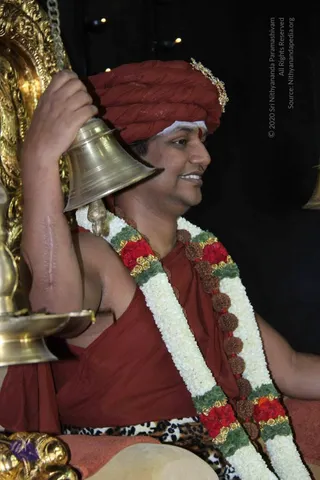
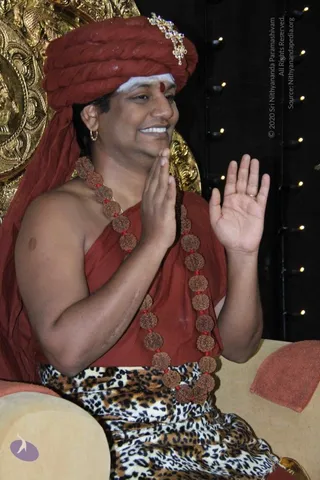
A seated man in a red turban with a jewelled ornament and a red bindi, wearing a red shawl over one shoulder, a long rudraksha mala with red beads, and a leopard-print lower garment. He smiles and presses his palms together in greeting while raising his other hand in blessing, seated before an ornate gold carved backdrop with a row of small lights.A man seated on an ornate gold throne with carved gilded panels, smiling with palms joined in anjali at his chest while his right hand is raised in a blessing gesture. He wears a deep red turban with a jeweled ornament and a red vertical mark on his forehead, a red shawl draped over one shoulder and a leopard-print lower cloth, and multiple large rudraksha malas. Dark backdrop with small warm lights and a cushioned seat are visible. Appearance-based cues of a turban, rudraksha malas and ornate ceremonial setting match the Swamiji (probable) candidate in this satsang context, seated in a teaching role.Photograph of a smiling man seated on an ornate gold throne-style chair against a dark backdrop with small warm lights. He wears a deep red turban with a jewelled ornament, a red-brown cloth draped over one shoulder, a long multi-strand rudraksha mala with red threads, and a leopard-print lower garment. He has a small red tilak on his forehead and hands resting together in his lap. Swamiji (probable): the red turban, rudraksha mala and ornate gold setting are visible cues for a seated sannyasi, and the page notes Swamiji at this satsang.A seated man in a red-maroon turban with a jewelled ornament and a white-and-red vertical tilak raises a brass bell with his right hand while smiling. He wears a maroon-red robe, a long garland of white jasmine, green leaves, red flowers and gold trim, and multiple rudraksha malas over his chest. He sits on an ornate gilded throne beside a brass oil lamp. The background is dark.Photo of a man seated on an ornate gold throne, holding a polished brass handbell raised in his right hand. He wears a rust-red turban with a gold jewelled ornament and a red-orange bare-chested wrap over a leopard-print cloth. Long garlands of white flowers, green leaves, red blooms and gold beads hang across his chest, interspersed with rudraksha beads. A white tilak and red mark show on his forehead. Dark background. Appearance-based label: a person, seated in a ritual satsang setting.A seated man in a red-maroon turban with a jewelled brooch and red-maroon sleeveless robe with a leopard-print waist cloth sits on an ornate golden throne draped with a tiger-striped cloth. He holds a brass handbell raised in one hand and wears a long garland of white flowers with red and green blooms, plus a rudraksha mala. Behind him hang brass bells and a brass oil lamp on chains, and silver trays of flowers and offerings rest at his feet.

Satsang

8 photosSource gallery
A seated person in a red-orange turban and matching saffron-red robe with a gold-bordered dhoti sits on an ornate gold throne with carved lion-head armrests and a high arched backrest. The figure wears a rudraksha mala across the chest and a jewelled ornament on the turban, and raises both palms in a blessing gesture. The throne sits on a red-carpeted stage in front of dark red velvet drapes, with a tray of bananas and fruit beside the left armrest. Appearance-based candidate: Swamiji (probable), seated in a satsang setting, identified by the saffron-red turban, rudraksha mala and ornate throne; the page describes a morning satsang discourse.Photograph of a smiling man seated on an ornate golden throne with a carved gold backrest and red tiger-striped cushions, a leopard-print cloth beneath him. He wears a deep red-orange turban with a silver ornament, orange-red robes, gold earrings and a long rudraksha mala, with hands raised together in an animated gesture. a person: a red-turbaned figure with long rudraksha mala and ornate ceremonial seating, seated as a teacher in satsang. The golden throne and red cloth suggest a ceremonial setting.A smiling man seated on an ornate gold throne with a carved arched back, palms pressed together in a greeting gesture. He wears a deep red turban with a silver ornament, a red-orange robe draped over one shoulder, and a long rudraksha mala with a gold chain. A gold earring and a red tilak are visible. Red and black zebra-print cushions and a leopard-print mat surround the throne.A seated man in a rust-red turban with a silver ornament and a red bindi, wearing a rust-red robe over a bare shoulder and a long rudraksha mala of brown beads, sits on an ornate gold throne with red zebra-print cushions and a leopard-print mat. He smiles and holds his palms together in front of his chest. One person is visible in the photograph.Close-up photograph of a smiling man in a rust-red turban decorated with a jewelled gold brooch, a red-orange shawl draped over bare shoulders, a long necklace of brown rudraksha beads with red threads, a gold chain, a gold hoop earring and a red bindi on his forehead. A small clip-on microphone is attached to his garment. Behind him is an ornate gold-leaf carved backdrop. Appearance-based candidate: Swamiji (probable), shown in person with turban, saffron-orange shawl and rudraksha mala cues, speaking at a satsang setting.A smiling man in a rust-red turban decorated with a gold and jewelled brooch sits before an ornate gold-leaf backdrop. He wears a rust-red shawl over his shoulder, a long double-strand rudraksha mala, a small gold chain, gold hoop earring and a small red bindi, with a lapel microphone clipped to his shawl. The photo is a close portrait from a satsang setting.